Hill of Slane

abbey + college

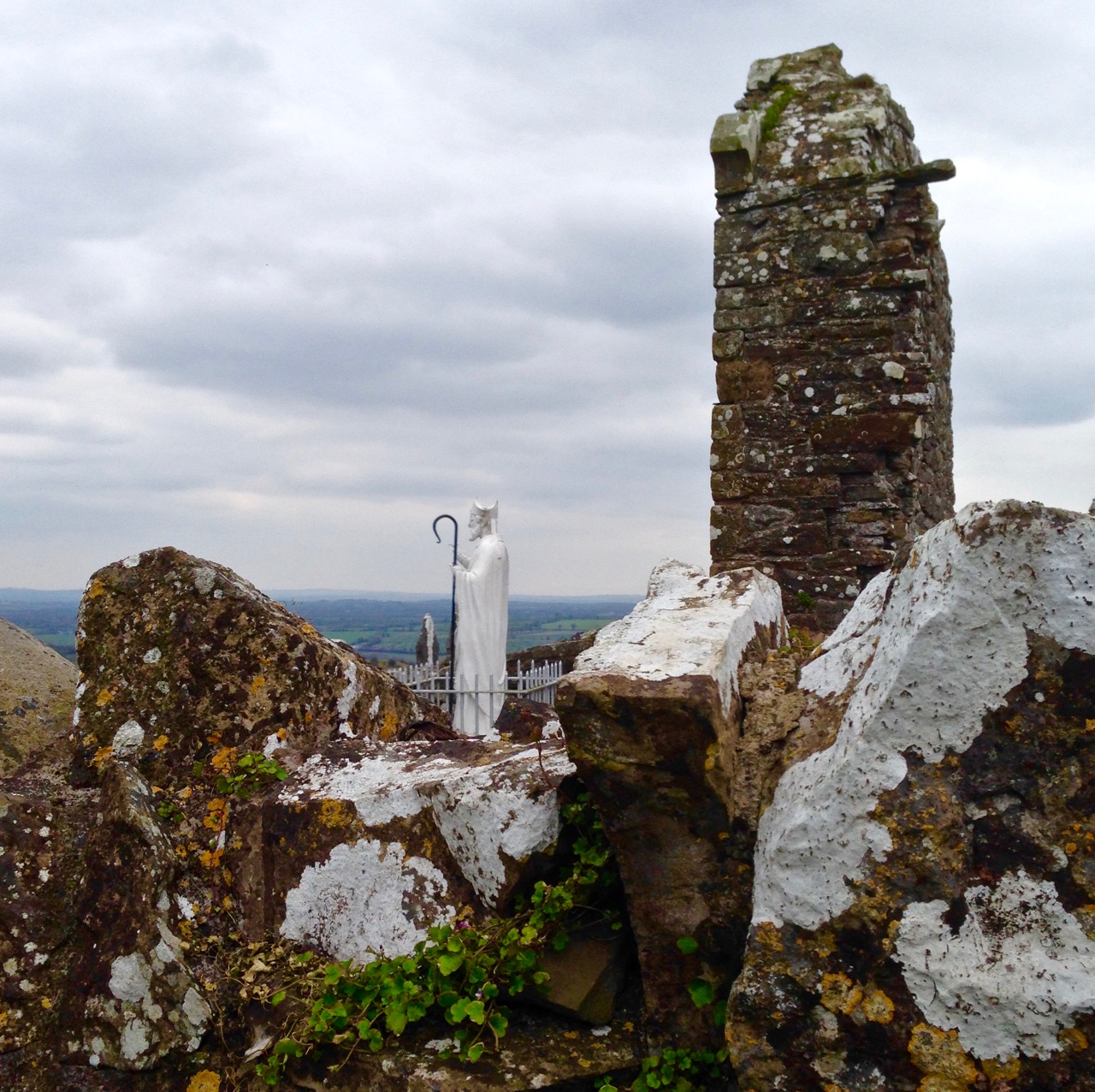
Our travels took us to the Hill of Slane. On its summit overlooking the River Boyne a depleted Saint Patrick (he’s lost his hands) looks forever out to the east, facing towards the mound of Millmount at Drogheda, about 15 kilometres away according to our Crow. Millmount is reputed to be the site of an ancient passage grave – and the burial place of Amhairgin mac Míled, who was regarded as the originator of the arts of song, poetry and music. The very first Irish poem The Song of Amhairgin was recited by him as he entered Ireland from the River Boyne, below the mound. Here’s a version of it translated (from the original Irish) by Lisa Gerrard:

I am the wind on the sea
I am the stormy wave
I am the sound of the ocean
I am the bull with seven horns
I am the hawk on the cliff-face
I am the sun’s tear
I am the beautiful flower
I am the boar on the rampage
I am the salmon in the pool
I am the lake on the plain
I am the defiant sword
I am the spear charging to battle
I am the god who put fire in your head

Who made the trails through stone mountains?
Who knows the age of the moon?
Who knows where the setting sun rests?
Who took the cattle from the house of the Warcrow?
Who pleases the Warcrow’s cattle?
What bull, what god created the mountains’ skyline?
The cutting word – the cold word?

The Saint lit the Pascal Fire on the Hill of Slane soon after his mission in Ireland began (the flame is still lit at Easter). That seems to me a symbolic action: a challenge issued, perhaps to the pagan traditions that had gone on for generations before the new religion arrived. Patrick’s fire-raising activities are also a comparatively recent addition to the lore of the hill: according to the Metrical Dindsenchas – combining poems from the Book of the Dun Cow, the Book of Leinster, the Rennes Manuscript, the Book of Ballymote, the Great Book of Lecan and the Yellow Book of Lecan – all sources well over a thousand years old and themselves most likely compiled from the timeless oral traditions of the Bards – Slane is the burial place of an ancient king:

…Slaine, whence the name? Not hard to say. Slaine, king of the Fir Bolg, and their judge, by him was its wood cleared from the Brugh. Afterwards, he died at Druim Fuar, which is called Dumha Slaine, and was buried there: and from him the hill is named Slaine. Hence it was said: Here died Slaine, lord of troops: over him the mighty mound is reared: so the name of Slaine was given to the hill, where he met his death in that chief abode….

(Translated by Edward J Gwynn in 1903)

The ‘mighty mound’ must surely be the enigmatic earthworks hidden in the trees to the west of the abbey and college ruins: these are variously described as a barrow or a motte.
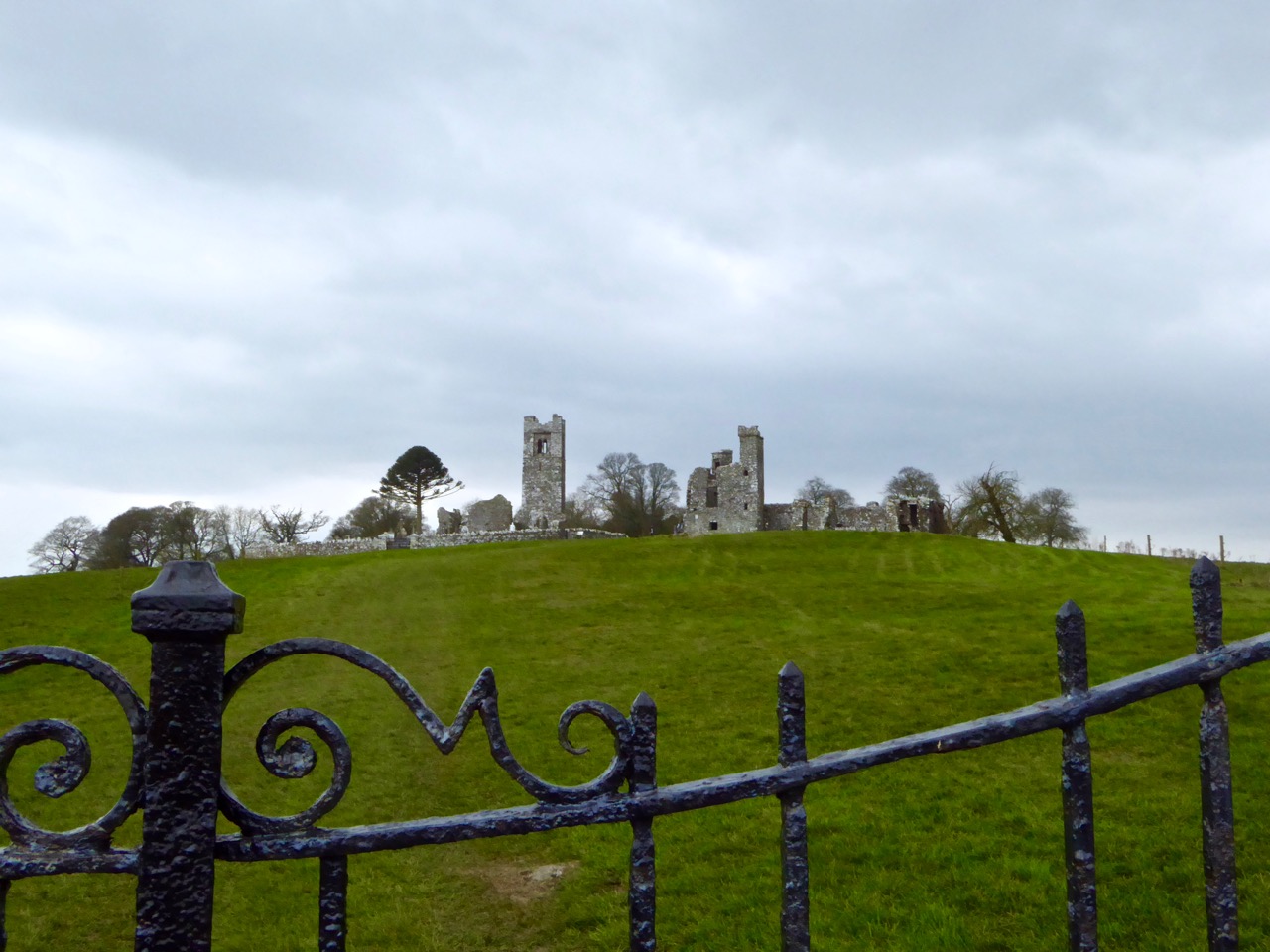
Over the gate

Top: medieval profile; Above left: ‘Creature of Slane’ decorating the walls of the old college, and Above right: the tower of the monastery which dates from the 16th century

Mostly what we see today on the summit here is medieval: the hill remained a centre of religion and learning for many centuries after St Patrick. A friary church was established on the site of an earlier monastery in 1512: it was abandoned in 1723. Beside it is a medieval college, probably also 16th century. The stonework here includes some extraordinary carvings, sadly much dilapidated.

I musn’t shy away from another tradition associated with Slane Hill: the authors of this book make a convincing case for an alignment right across Ireland that takes in several historically important sites:
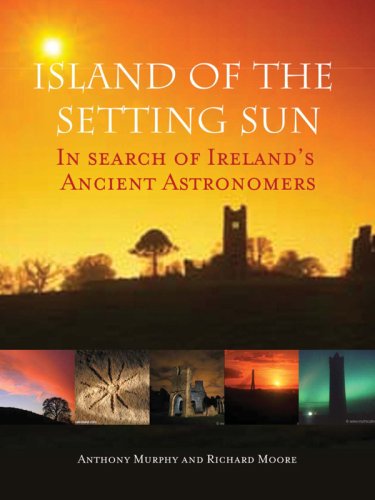
41s5jHsihjL…The Millmount-Croagh Patrick alignment stretches over 135 miles from the east coast of Ireland to the west, and has significant St Patrick associations … we found that the line from Millmount to Slane westwards travels all the way to Croagh Patrick, perfectly intersecting the little chapel on the summit of The Reek with breathtaking accuracy. Significantly, this line skirts the hills of Loughcrew on its way, and also travels directly through Cruachan Aí, one of the largest archaeological complexes in the whole world, with 200 monuments located in a 10-mile radius. Croagh Patrick, known in prehistoric times as Cruachan Aigle, is the place where, according to legend, Patrick banished the serpents from Ireland…

If nothing else, the theory at least demonstrates that St Patrick’s influence stretches the length and breadth of the country: witness his statue looking out from the Hill of Slane and another looking across from the lower slopes of The Reek!
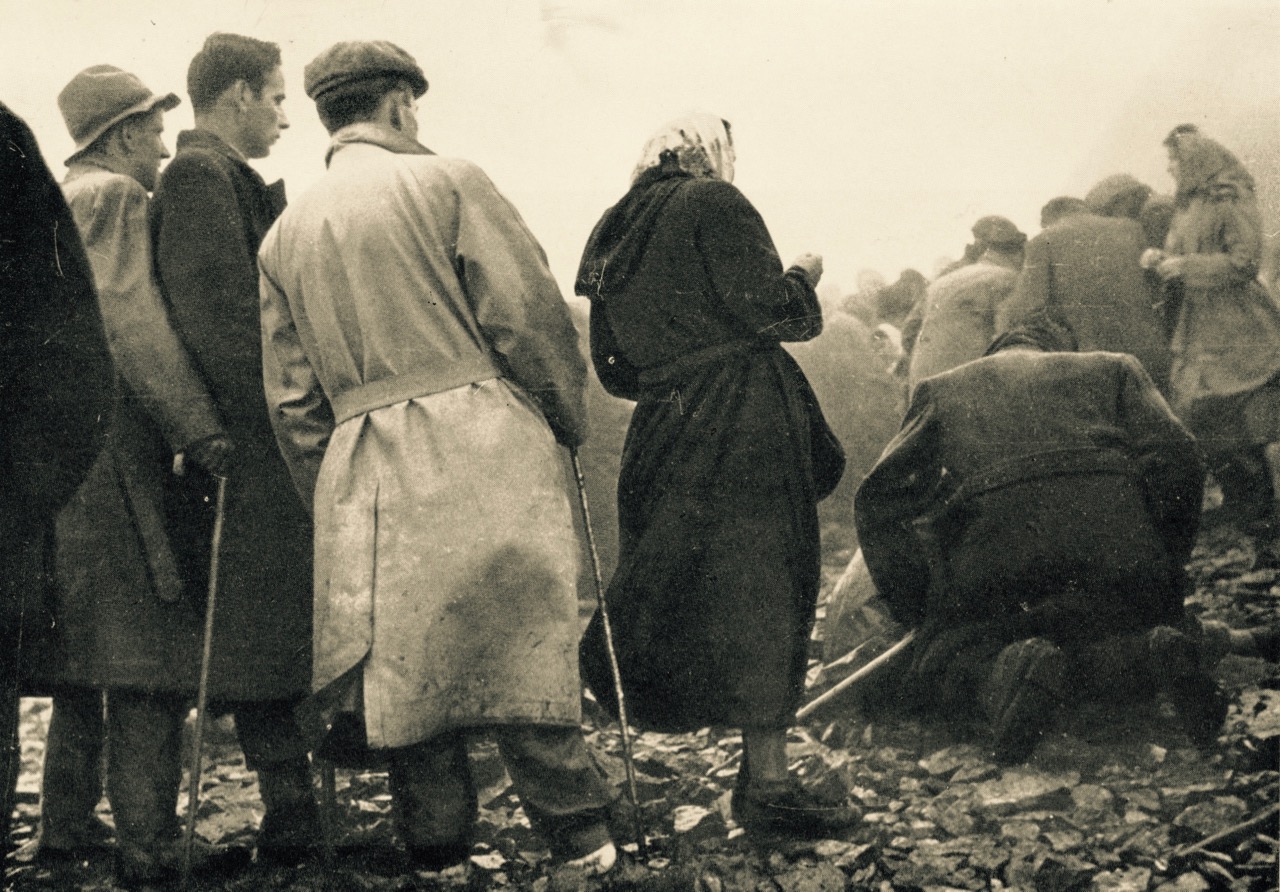
croagh patrick 6

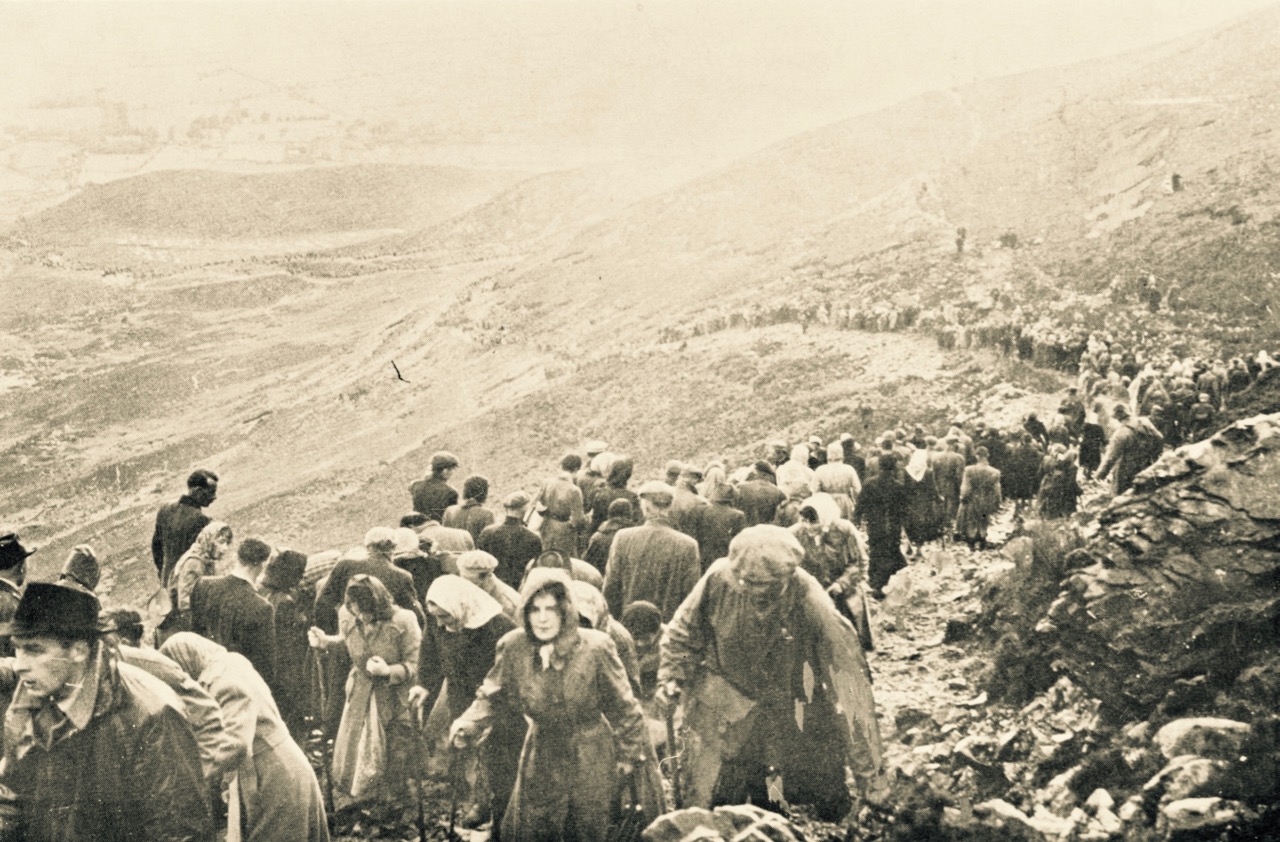
croagh patrick 5

Pilgrimage for St Patrick on The Reek: Photos from the collection of Tomás Ó Muircheartaigh, who documented life in rural Ireland between the 1930s and the 1950s

St Patrick (his day was last week), Easter (this weekend), the Boyne neolithic monuments, Irish poetry, ancient kings and their battles, a little bit of astro-archaeology, the commemoration of the 1916 uprising in Dublin, the fight for Irish freedom… All seem to have joggled along beside each other in our recent explorations. Somehow they fit together and define an Irish-ness which is all-encompassing but not overwhelming. History is dancing all around us: alive and relevant.
watching saint p


Canty

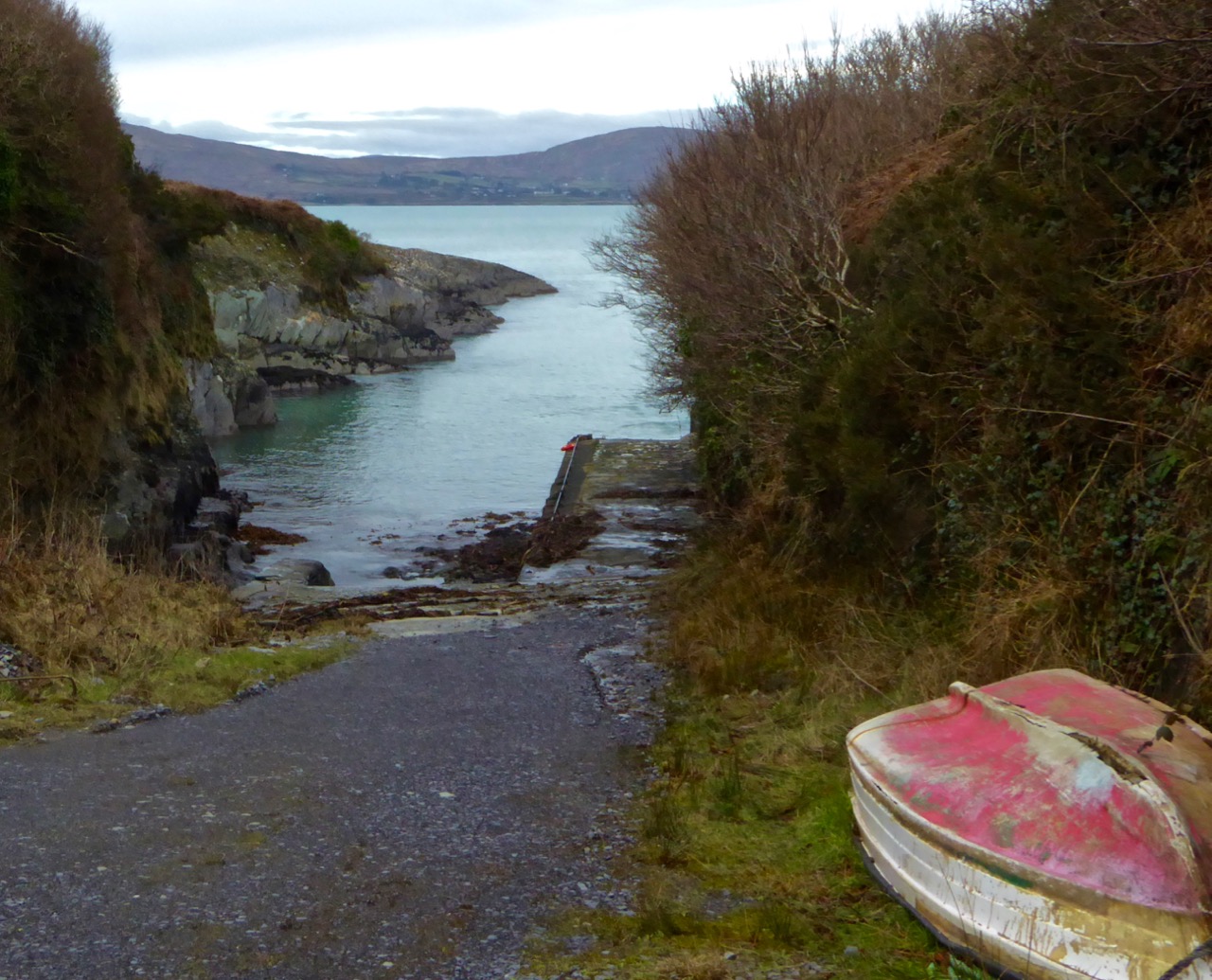
slipway 2

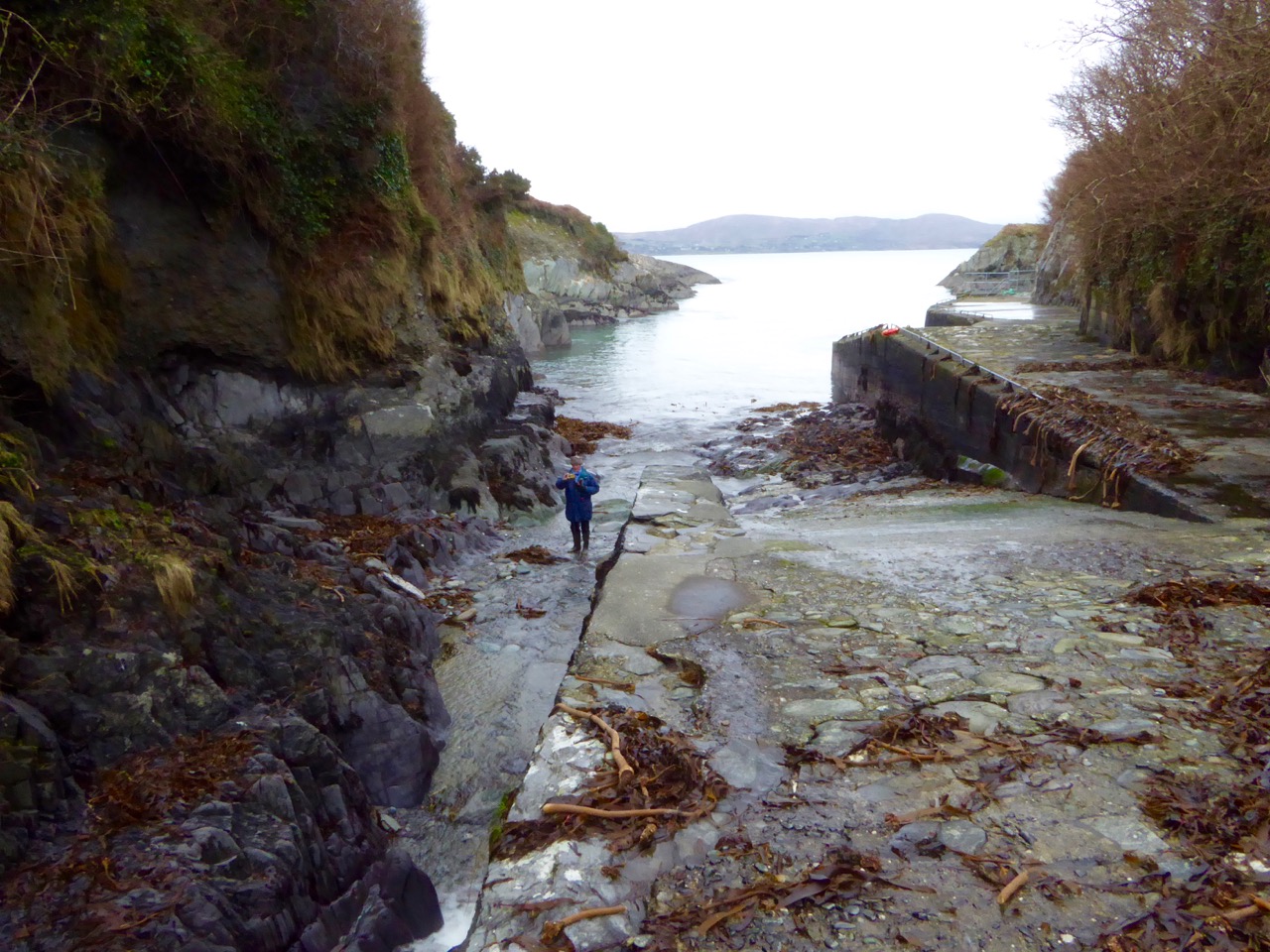
On the north side of the Mizen we found Canty’s Cove. The little road which approaches the Cove from the west has been recently resurfaced, and there have been some major restoration works on the stone jetties and steps there. Don’t try to reach the Cove from the east side: a trackway is shown on the OS map (88), but it is virtually impassable – even on foot – at this time of the year, as the harsh winter storms have waterlogged the ground and submerged parts of it.
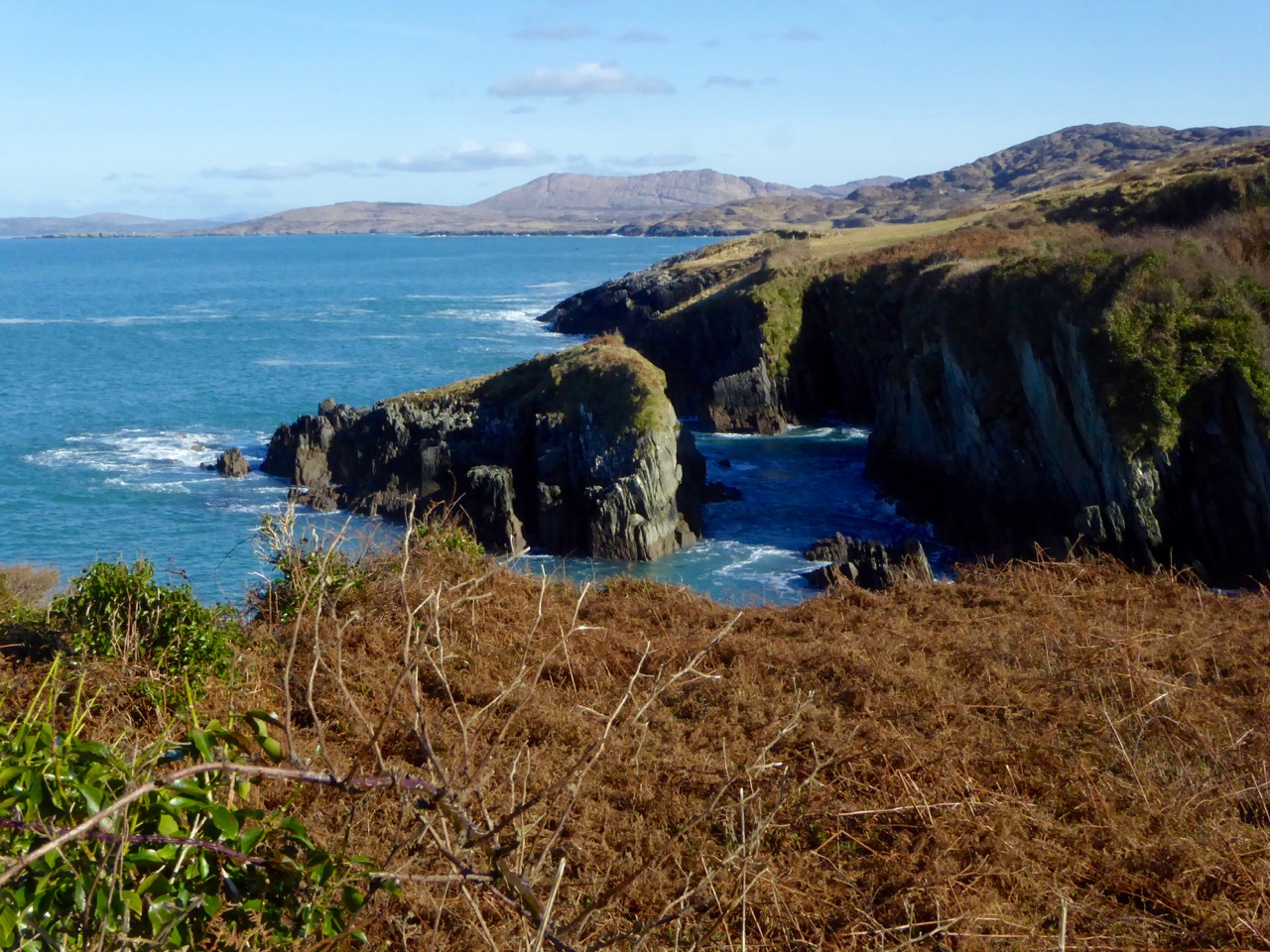
wild water

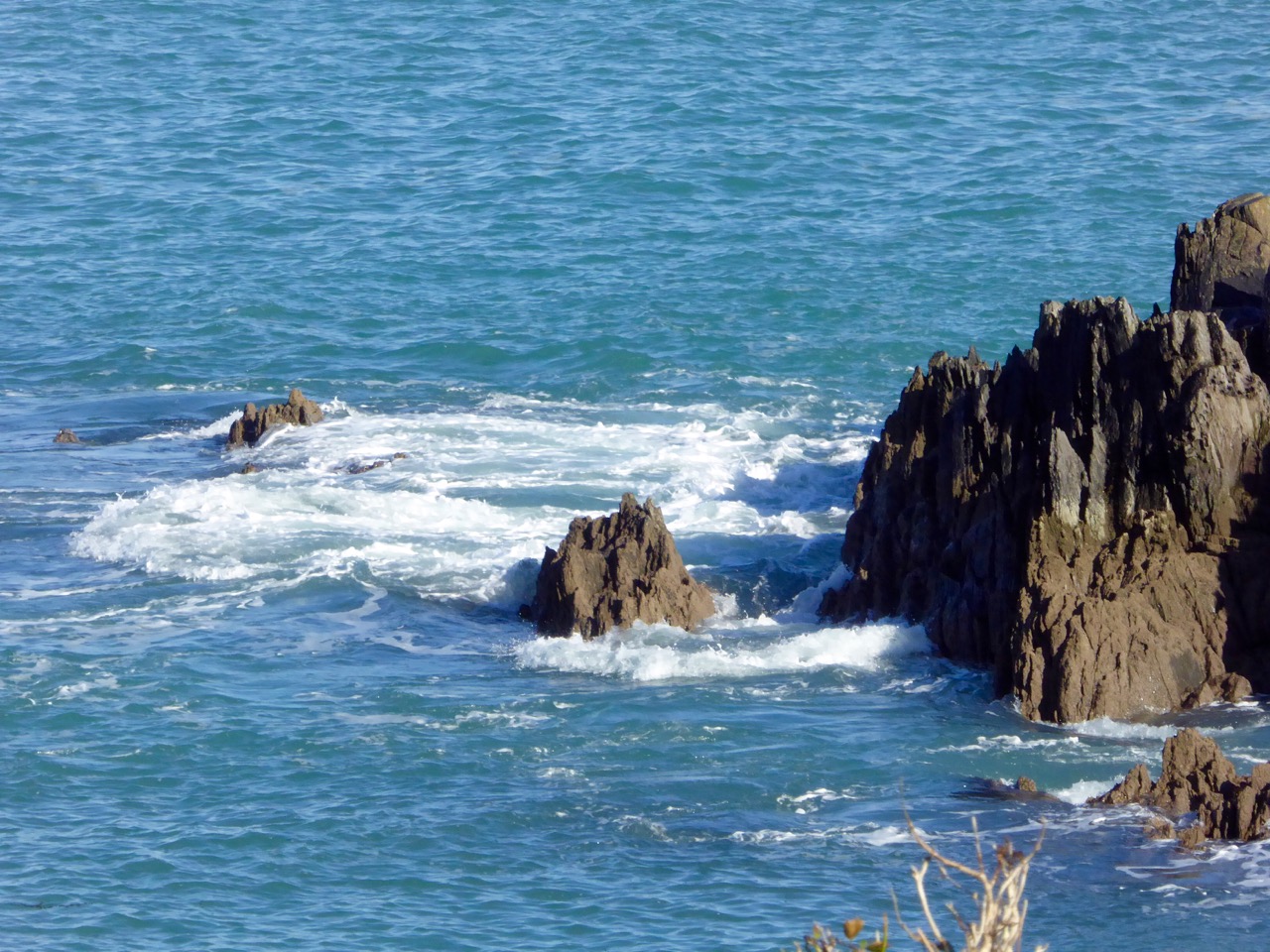
Wild coast beyond Canty’s Cove

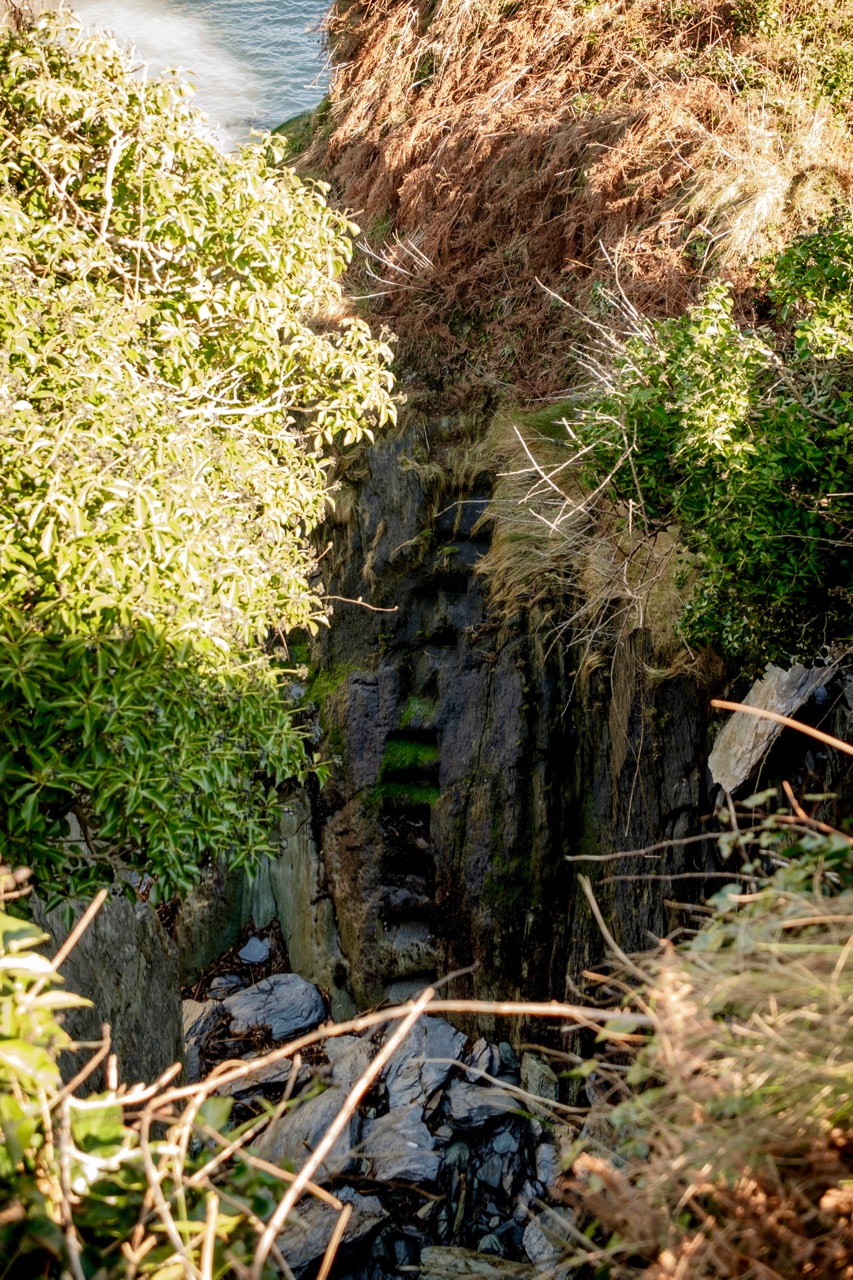
Our reason for visiting the Cove? We were looking for pirates! Or, at least, for traces of them… We had heard that there are ‘pirate steps’ in the vicinity of the Cove, and we had unearthed some legends of Canty himself: a notable pirate and all-round rogue.

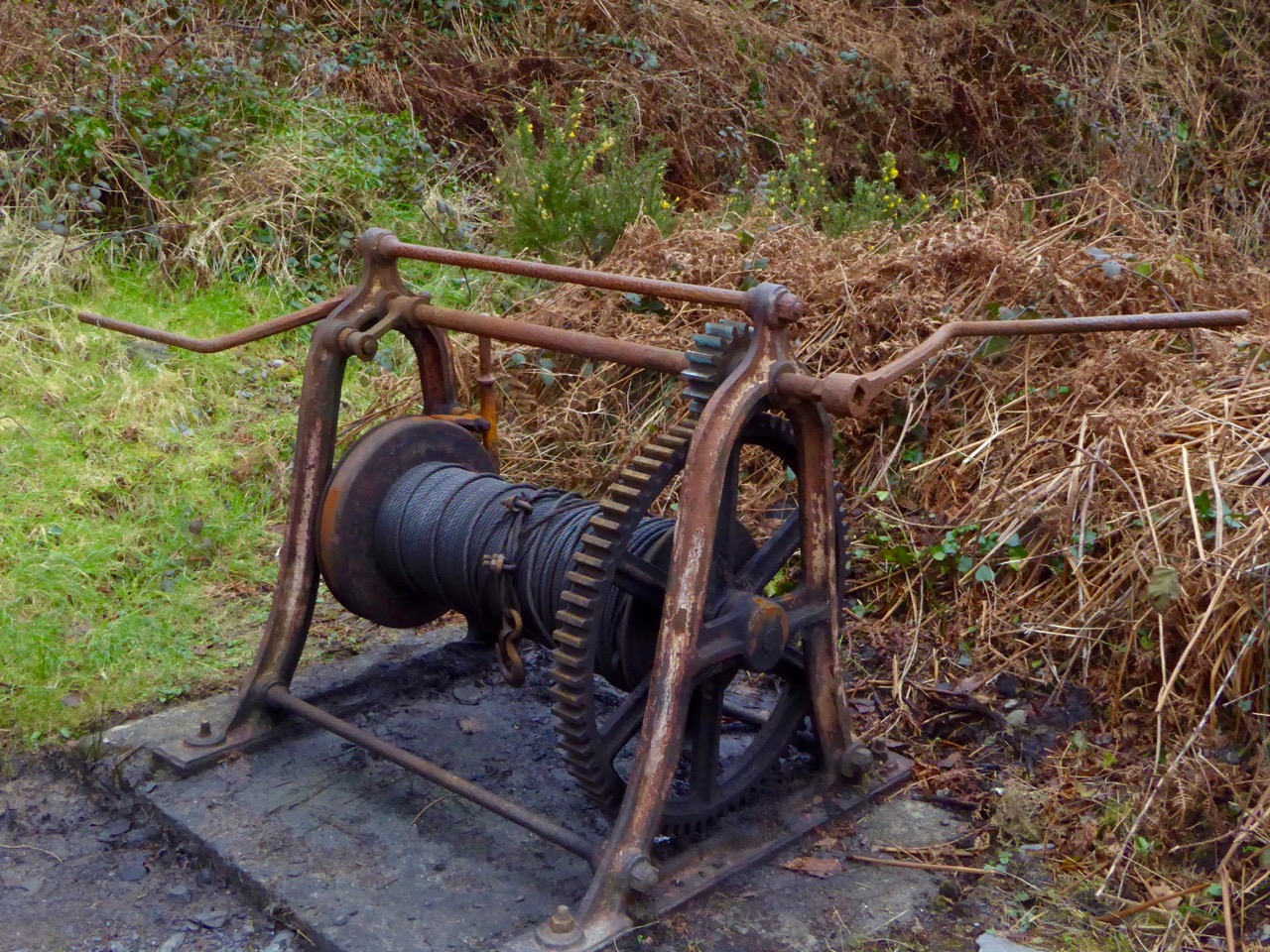
windlass

As with many of the ‘secret’ quays hidden away around the rugged and heavily indented coastline of West Cork, Canty’s Cove was used primarily by fishing boats, either working individually for shellfish or, communally, seining for pilchards, mackerel and herring. We have touched on seining in a previous post. It seems to have been brought to Ireland’s west coast by fishermen from Cornwall back in the sixteenth century. The shoals of pilchard, first seen in Mount’s Bay and around Land’s End in the early spring, naturally moved west and the fishing fleet from Cornwall followed them in July or August. Traditionally it was St James’ Day (1 July) that saw the start of the seining season in West Cork. For the next three months the pilchards were …dark, fat and full of oil… With the onset of winter the seine boats were laid up and the nets repaired and hung out in the lofts. The pilchard industry on Ireland’s west coast is said to have been most productive between 1550 and 1750, with millions of pressed and salted pilchards going by the barrel load to Spain, Portugal and France. Seining survived well beyond those days, although mainly then for mackerel. Northside of the Mizen records a very active industry within living memory:

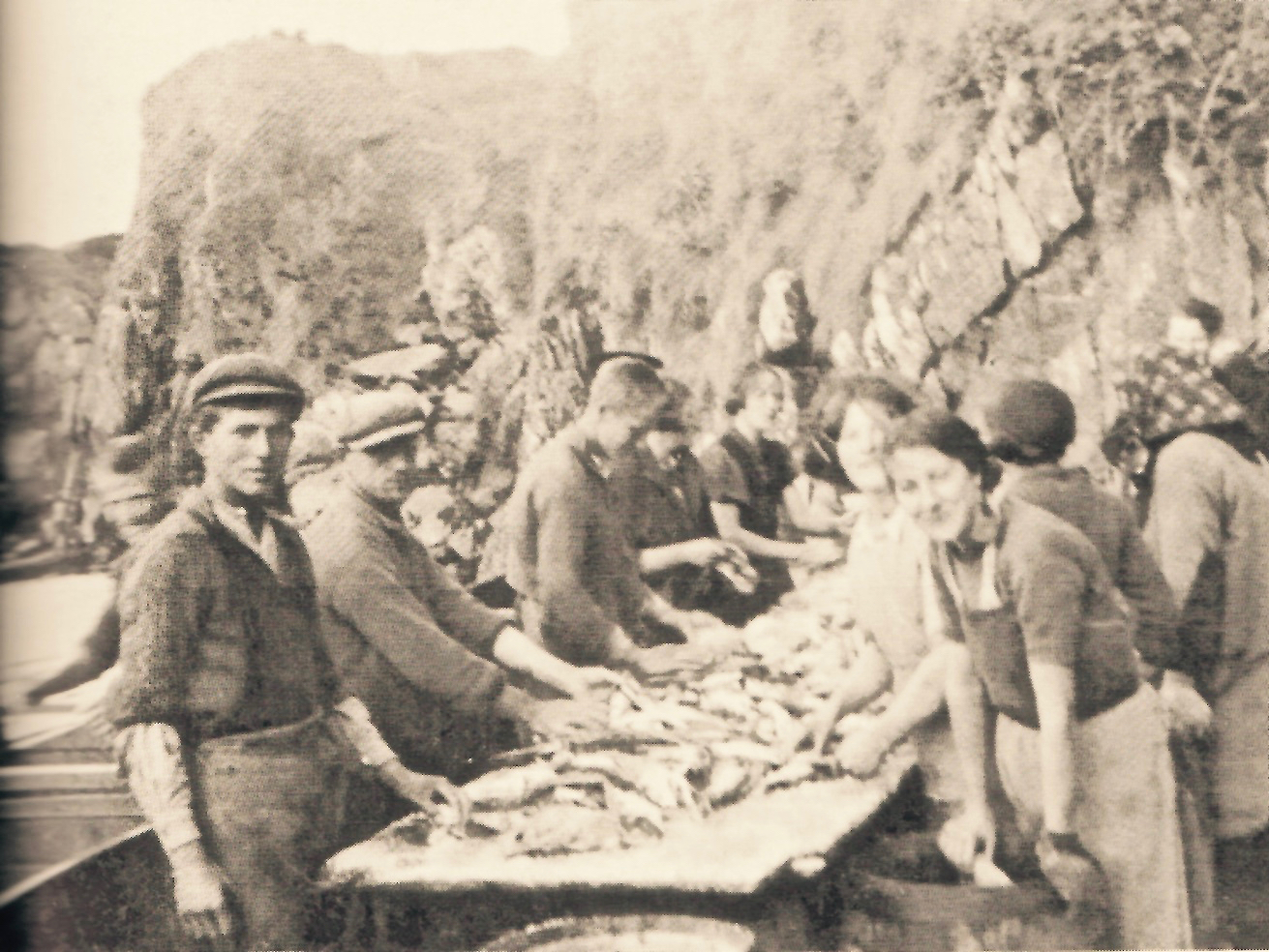
…Both Canty’s Cove and Gurthdove had streams and the waters from them were used in the cleaning of the mackerel. When grading, the fish were sorted into bloaters (big), rags (damaged), medium and small grades, and you were allowed so many of each grade per barrel. The fish were then salted by rubbing coarse salt into them, and this happened twice with the second salt on the tenth day. On the second salt, the fish were packed flat into the barrel, and pickle was poured over the fish until the barrel was full. After the second salting the lid of the barrel was then put down, sealed with an iron hoop and the barrel was branded with the mark of the buyer, along with its weight and number of fish. The barrels were left on their sides and a hole was made three-quarters of an inch in diameter, which was closed with a wooden stopper. Tom Collins of Dunkelly West, as a boy, would earn one shilling a week by topping up the barrels with pickle after school. Salt added to water made a pickle that had to be strong enough to float a medium size potato with a six inch nail through it. The barrels were constantly filled with pickle until they went for export, when the wooden stopper was hammered home and the barrel stood up. One Cash and Tally of 132 fish would sell for five shilling in the nineteen-thirties. There could be up to 1000 barrels lined up in Canty’s Lane until November Dark…

fish table

Fish processing on the pier at Canty’s Cove, taken in the 1920s. This photo and the one below are from Northside of the Mizen

On the west coast, the last working seine boat was said to have put out from St Finan’s Bay, Kerry, in 1946. This was remembered by Mike Séamus O’Sullivan and recorded in The Kerryman in 2003:

…the place was alive with fish. We put out the seine and in no time at all it was full. We arrived below at the pier in The Glen with 24,000 mackerel and every man made £24 pounds that night – a fortune in those days…

dunkelly fishers

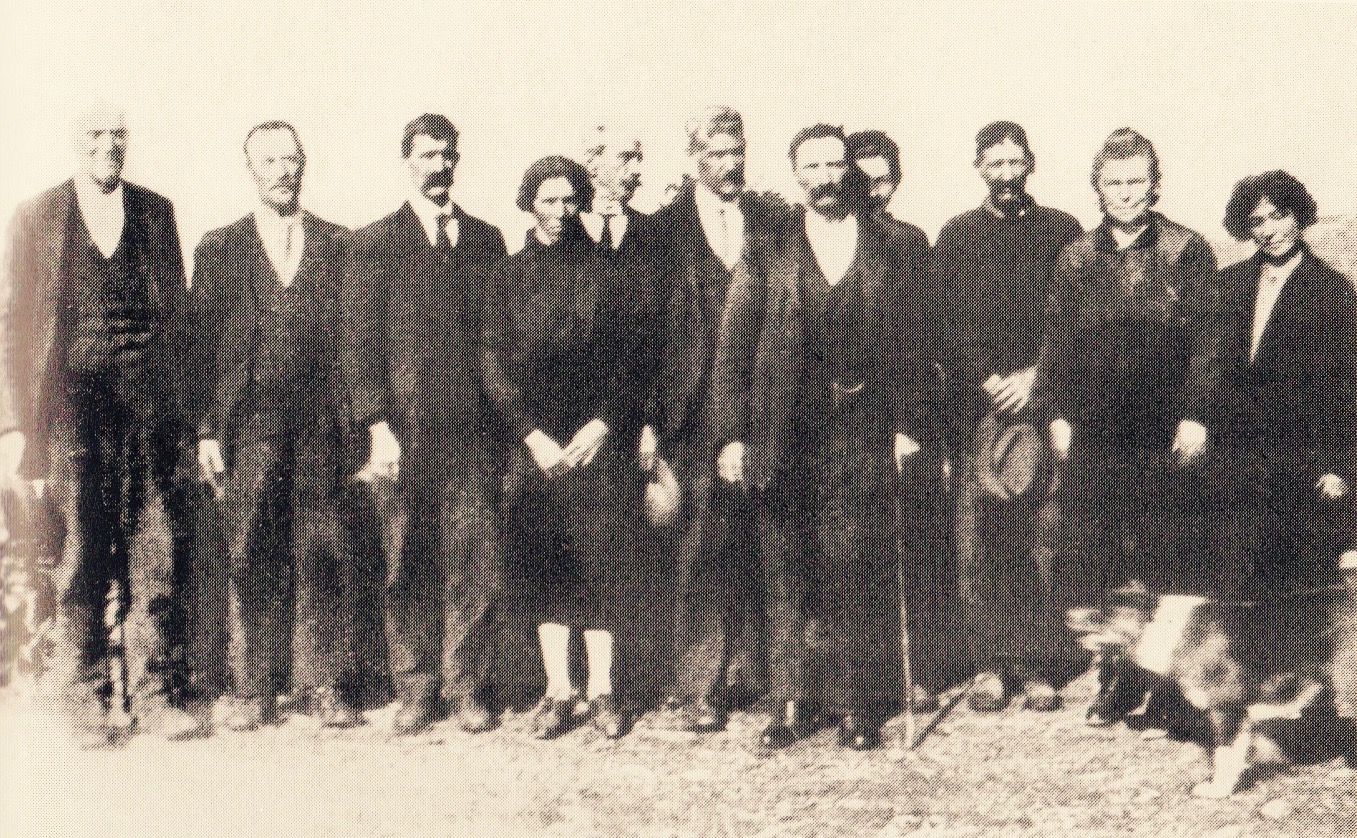
The fishing community of Dunkelly, late 1920s

But what of the pirates? I hear you all cry… And, is there any buried treasure…? Of course there is! According to an excellent article by John Hawke in the now defunct Mizen Journal, Jeremiah McCarthy of Dunkelly (who died in 1989) recalled how he and his forefathers had dug for gold as a boy – “The old people spoke of ‘Canty’s Gold’ that lay buried seven ridges from one of the walls and many have dug for it – it was great exercise, but we never found it.” Jeremiah told the story of how Canty was a pirate and robbed people who came to buy goods from him and then threw them over the cliff into the sea, from the door of his house in Canty’s Garden. In the Collection of Irish Folklore dating from the 1930s this story was recorded from a Richard Moynihan of Dunbeacon, then aged 59 years:

…Another secret building was situated in Goleen Parish. It was built across the quay leading from a hotel which was owned by a man named Canty. Lodgers often came to the hotel and the man used to take them back to the secret room. Whilst they were talking to him, he shifted a lock in the trap door which was in the room which caused the floor of the room to go to the side and the lodger was thrown down into the tide. He then had a net with which he hauled up the corpse and took whatever money he possessed. Around this place is ever since haunted. Lights were frequently seen there and cries were often heard…

Many other similar stories connected to the Cove have been told or written down over the years. Today, the place still has an otherworldly feel to it: partly it’s to do with remoteness and the barren coastline in this wild place. ‘Canty’s House’ and ‘Canty’s Garden’ can be identified on the cliffs above the Cove: they are marked on old versions of the OS map. All that’s left now are a few stone walls and a steep drop into the sea. It’s not hard to picture Canty himself disposing of his victims over the edge, nor to hear their cries on the wind, wailing across the centuries.

Canty's Cove

There are Cantys living in West Cork today. We shouldn’t brand them with the reputation of one who was possibly a forebear: after all, many centuries have passed since the time of Canty the Pirate – and we do live in a more civilised age, don’t we? In fact, the Cantys – sometimes O’Cantys (O an Chaintigh) – had a prestigious past: in the age of the castles they were bards, like their O’Daly neighbours across the water on the Sheep’s Head (it’s only four miles away as the seagull flies). Interestingly, I have heard it suggested that Canty’s House is actually the remains of the ‘lost’ O’Mahony castle at Dunkelly: the site is certainly impregnable.

Canty's Garden

The approach to Canty’s Cove seen from Canty’s Garden. The building on this site may once have been a ‘lost’ O’Mahony castle

Pirates, castles, seining, treasure – there are also the ‘Pirate’s Steps’, although they are very hard to find (and on private land, so seek permission if you go looking) and – evidently – the Buan, or ‘perpetual well’ (which we couldn’t trace): in all, a wealth of history and legend. We have to respect Canty for lingering in folk memory a good few hundred years…

For this research I am indebted to Northside of the Mizen by Patrick McCarthy and Richard Hawkes, Mizen Productions, 1999, Canty’s Cove – Legend and History by John Hawke, The Mizen Journal No 5, 1997, and also local memories, still alive. The fine view of the Pirate Steps (below) was taken by Peter Clarke, at great risk to life and limb…

Pirate Steps Canty's

The Holy Wells of Cork

Kealkill Holy Well

There’s a new blog on the scene – and it’s just the sort of thing to appeal to Roaringwater Journal readers. Holy Wells of Cork is the brainchild of Amanda Clarke. We’ve written about Amanda before – she often comes along on our adventures and she and Peter are the team behind the book Walking the Sheep’s Head Way and the website Sheep’s Head Places.

Amanda on a holy well trip

Amanda’s always been fascinated by holy wells. We’ve gone to see quite a few over the last couple of years – often a case of hunting down an obscure reference or a dot on a map. She decided that the perfect day to launch her blog was, of course, St Brigid’s Day, February 1st, and that, in order to do it properly, she should visit a St Brigid’s well on that exact day. I tagged along as the recorder.

The holy well is up there?

It’s up there? And I have to go up on my knees?

St Brigid’s well, Tobar Breedy, is on private land on the side of Lough Hyne, south of Skibbereen, and Amanda had sought and been granted kind permission by the landowner to visit the site. You can read her account here – it’s all in her signature chatty style that manages to make you feel as if you’re on the adventure as well. 

Amanda at Tobar Breedy

As a bonus, there’s a tiny ruined medieval church, also dedicated to Brigid (Templebreedy).

Temple Breedy

However, all is not well in the land of holy wells. A recent post is about four holy wells that were once the focus of veneration in Cork City. Read how they have weathered the passage of time, and be glad that she is recording them before some of them disappear from public consciousness altogether.

The first time I went to this secluded holy well in Castle Haven I was afraid to venture over the crumbling bridge. But when we returned, the bridge had been replaced. Local people are often proud of their holy wells and keep them up

Amanda will be posting regularly so go on over and sign up so you will get the updates as soon as they are on the blog. There’s lots of background information as well.

Finding Tobar Abán

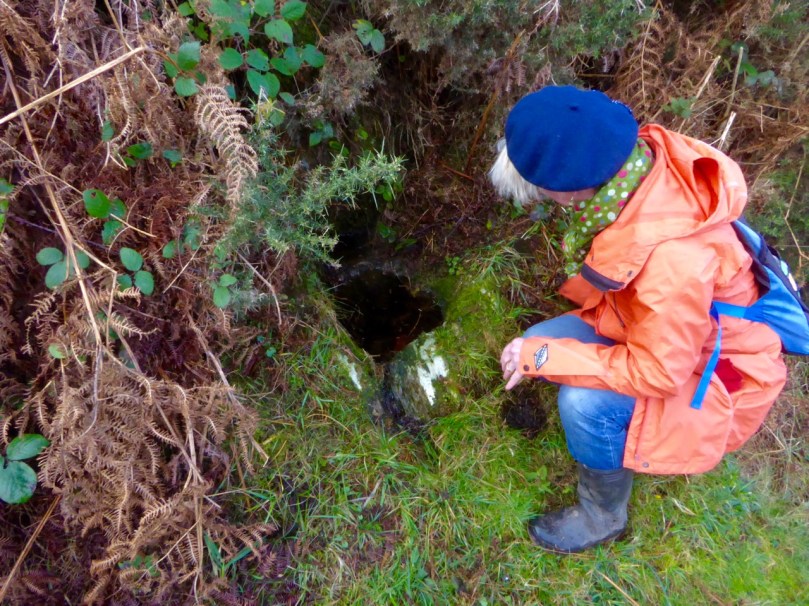
Believe it or not there’s a tiny well under all that decaying foliage

We’ve featured holy wells ourselves from time to time. One of our favourites was this time last year, just outside Ballyvourney, where we found the well of St Abán , who may have been St Gobnait’s brother.

altar at the well

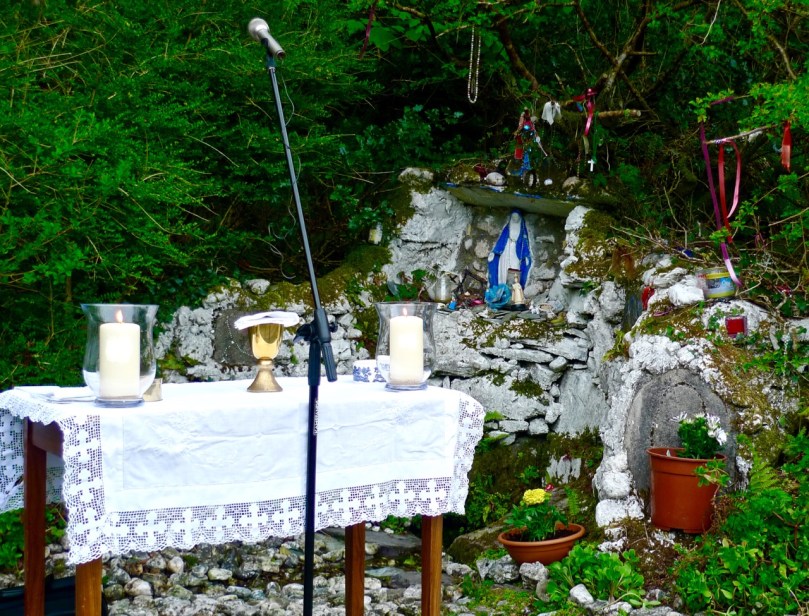
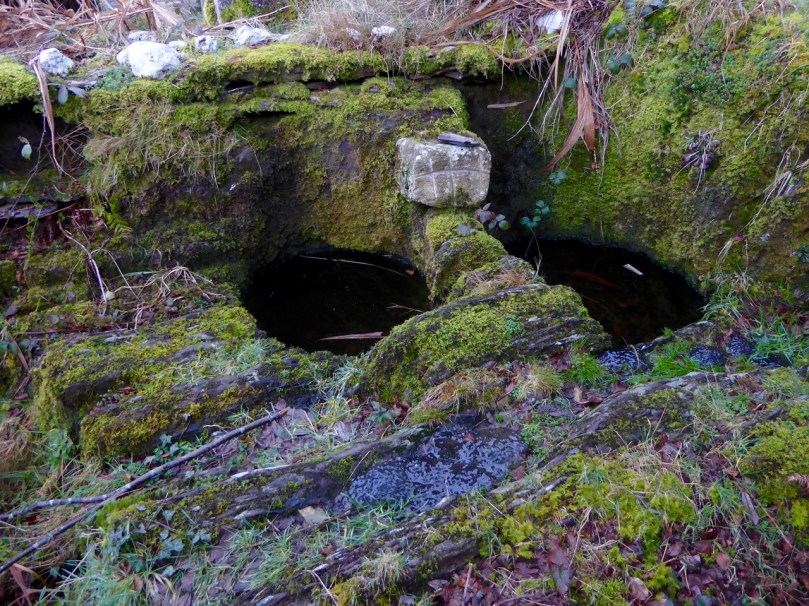
Robert wrote about the other holy wells near Lough Hyne, one a Lady’s Well and one dedicated to curing eyesight. Last year, he attended the mass which is still said here every May.

Tiny holy well in the woods

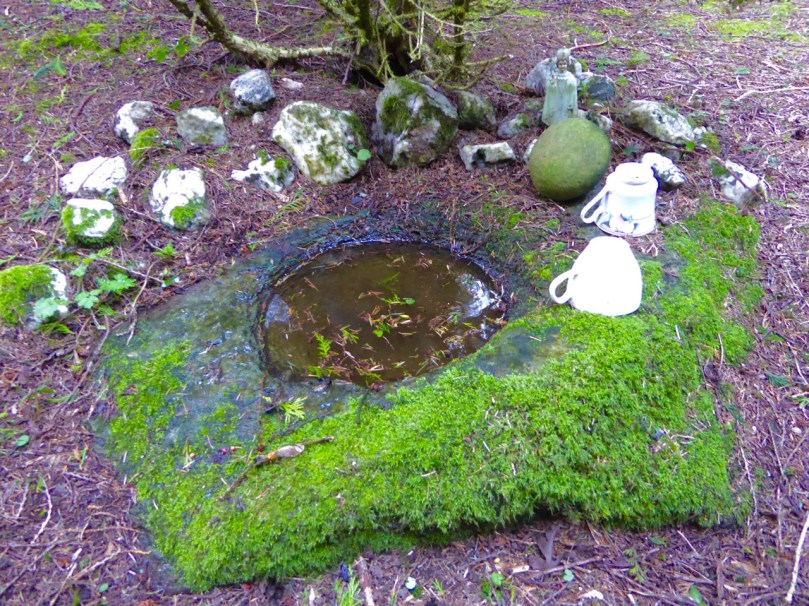
This little well is in the middle of a small wood, with evidence it is still in use. Note the white quartz stones around it – white quartz is often found at prehistoric sites too

No doubt Amanda will record all of this properly in time. I’m looking forward to her future posts and to going along on the field trips!

Offerings at a holy well

I love the offerings that you see at Holy wells. Sometimes you get extras too. In the case below, St Lachtan’s Well, it’s frogspawn. Holy frogspawn, of course.

St Lachtan's holy well

Gather Your Seaweed

collecting sand

Today is Oiche Fhéile Bhríde – St Brigid’s Eve. The Saint’s festival – tomorrow – marks the beginning of Spring: we will feel the lengthening of the days, and we have to be alert for so many portents.

Firstly – Hedgehogs. Watch out for your Hedgehogs: to see one is a good weather sign, for on Brigid’s Eve the Hedgehog comes out of the hole in which he has spent the winter, eyes up the weather and, if he likes the look of it, starts his foraging. If he goes straight back in again, then you’ll know that the storms will continue! This is according to Kevin Danaher, a frequent contributor on our seasonal folklore. The wind direction on the eve of the festival ‘…betokens the prevailing wind during the coming year; the festival day should show signs of improving weather, although an exceptionally fine day is regarded as an omen of poor weather to come…’

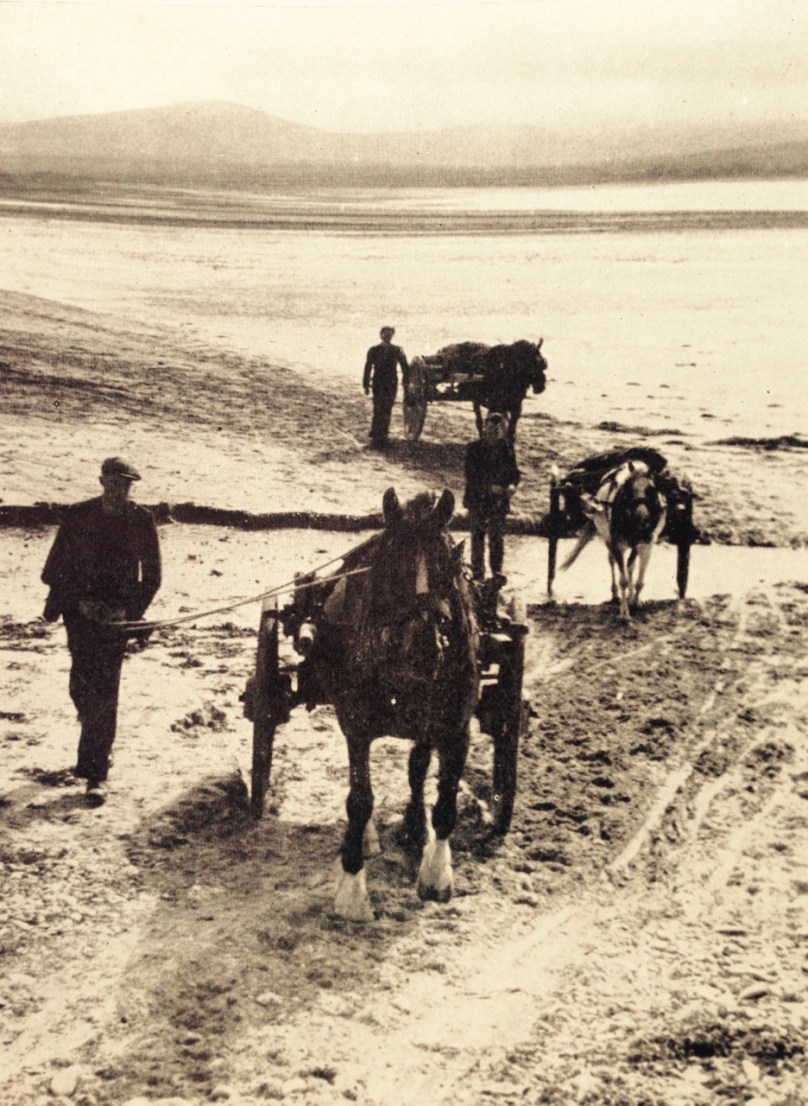
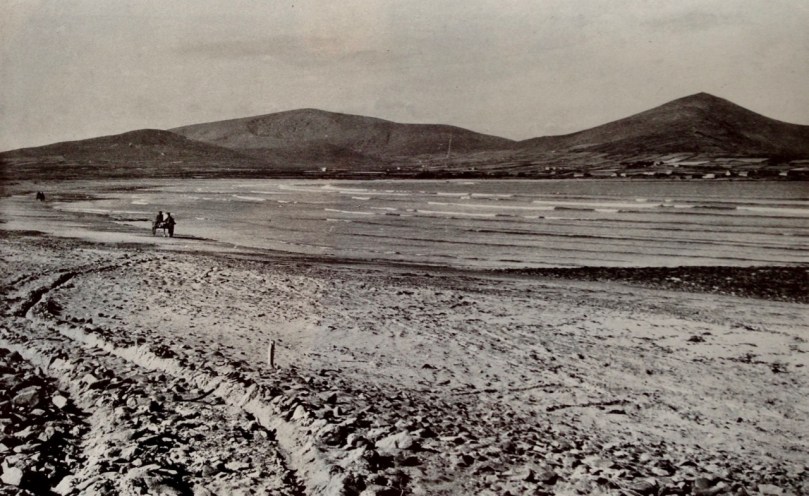
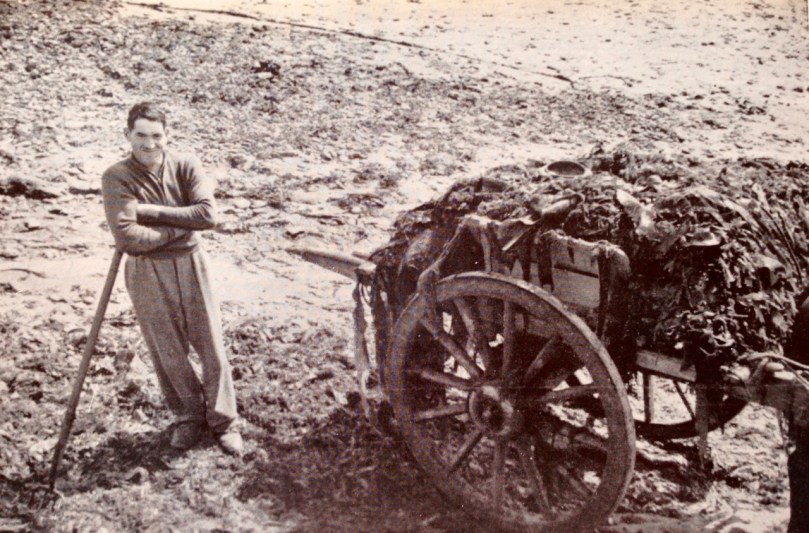
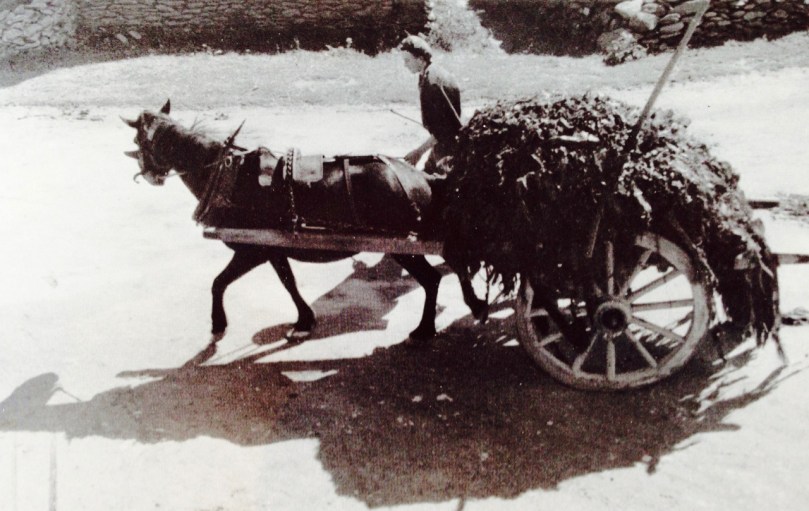
For those of us who live by the sea we have to be alert for Rabharta na Féile Bríde, the spring tide nearest to St Brigid’s day, as it is said to be the most significant one of the year – that’s when the difference between high and low tide is the greatest. Danaher, The Year in Ireland, Mercier Press 1972, notes: ‘…The people were quick to take the opportunity of cutting and gathering seaweed to fertilize the crops and of collecting shellfish and other shore produce. In a few places a live shellfish, such as a limpet or a periwinkle, was placed at each of the four corners of the house, to bring fishing luck and ensure plentiful shore gathering…’ But don’t forget that it’s not until Good Friday that you harvest the Mussels.

along the strand

All the photographs in this post are from the collection of Tomás Ó Muircheartaigh, who documented life in rural Ireland between the 1930s and the 1950s – an invaluable pictorial record of the times

This is the day to make – and eat – your bairin-breac: ‘…On St Brigid’s Eve every farmer’s wife in Ireland makes a cake, the neighbours are invited, the madder of ale and the pipe go round, and the evening concludes with mirth and festivity…’ (Danaher). I’m holding out hopes that Finola will oblige and get out her delicious barm-brack recipe. Of course, the mirth and festivity will follow as she soaks the fruit in whisky! The Saint travels around the countryside on the eve of her festival, bestowing her blessing on the people and their livestock. We must be sure to leave out for her a piece of our cake: ‘…Often a sheaf of corn was put beside the cake, as refreshment for the Saint’s favourite white cow which accompanied her on her rounds. Others laid a bundle of straw or fresh rushes on the threshold, on which the Saint might kneel to bless the house…’ (Danaher).

collecting seaweed

Tonight we will hang a piece of red ribbon outside our door: ‘…One traditional story says that St Brigid wove the first cloth in Ireland and worked into it white healing threads which were said to have kept their healing power for centuries. In many places in Ireland it was customary to put a piece of silk ribbon, red being the preferred colour, outside the house on the Eve of St Brigid’s Day, much in the same way as articles of clothing or cloth left out on the saint’s eve would be endowed with St Brigid’s blessing when they became known as the Brat Bhríde (Brigid’s cloak). It was believed that St Brigid, when travelling around the country on the Eve of her Day, would see and touch the ribbon, so endowing it with her blessing and conferring on it some of her healing power. After this it was referred to as the ribín Bhríde…’ from Brigid: Goddess, Druidess and Saint Brian Wright, The History Press 2009. This reminds me very much of another saint – Gobnait – who also has a February festival. It’s going to be a busy month! To start it off it’s essential that we make our bogha Brídhe – St Brigid’s Cross.

carrying the seaweed

Priests and Poets, Part 2

BVM

Last week we concentrated on Father James Barry and the poetry he could well have inspired. But there’s a lot more to Stouke graveyard and this post will cover some of the other history revealed  by a wander round this atmospheric place.

IMG_0988

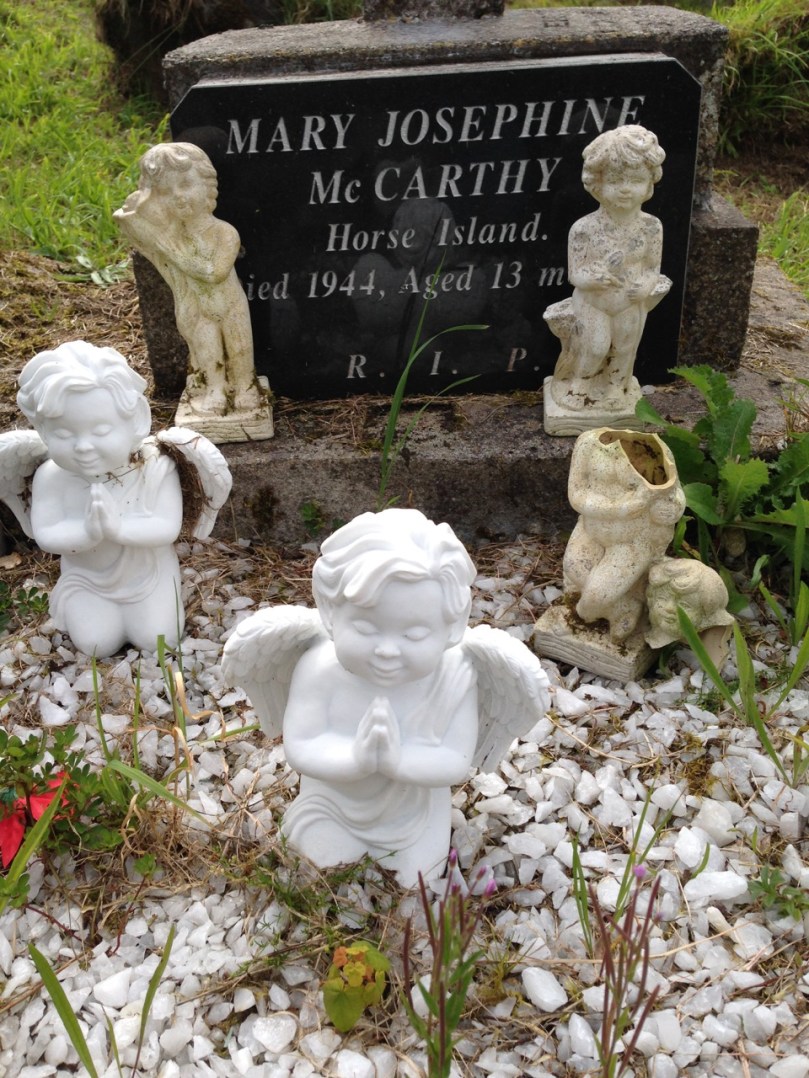
This graveyard is the traditional burial site of many from the islands of Roaringwater Bay. There’s a poignancy to the place names on the headstones – many of these islands are now uninhabited, so these are the last headstones that will bear such inscriptions. As with many West Cork graveyards, much of the ground is scattered with rough, uninscribed, stones, while other graves have modern memorials with full inscriptions. It is customary to visit graves on anniversaries, or at certain times of the year, and always you will find that a few graves still have fresh flowers or other evidence of recent visits.

IMG_0987

The old Irish name for this place is Cillín Stuaice, or Little Church of the HeightThere is a suggestion that somewhere in the graveyard is the site of an early church, but if it is here, there is no evidence of it. Except for one thing – a bullaun stone. Robert has written before about the folklore and beliefs associated with bullaun stones, but what exactly are they? Bullaun is an Irish word for bowl – these are bowl shaped depressions in rocks, sometimes portable, sometimes carved into rock outcrops. Although some may date to prehistoric times, many are believed to have originated in the medieval period for the purpose of grinding (acorns, for example) or for crushing ore. Whatever their origin, they are often found in association with medieval churches or other sacred sites such as holy wells, and have assumed their own sacred mantle of meaning. The water that collects in them is often believed to be curative.

P1110096

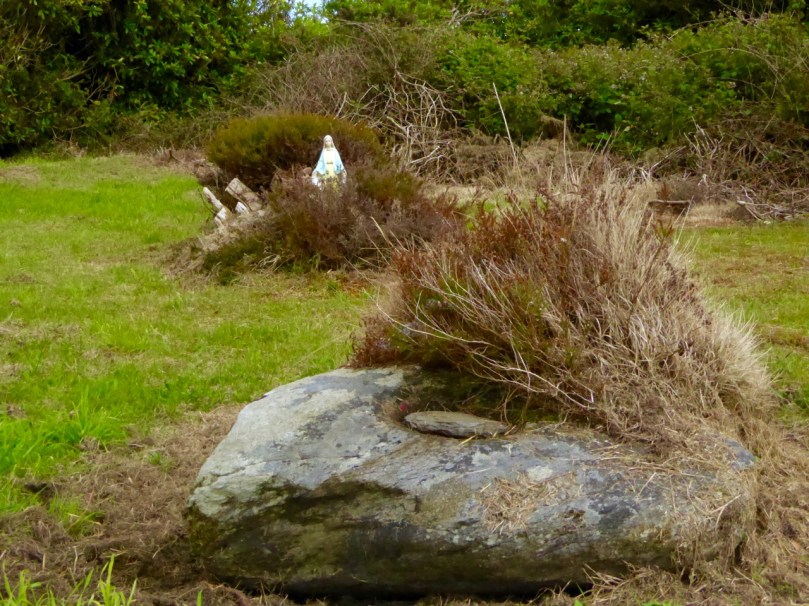
The bullaun stone in Stouke graveyard is known, according to the Historic Graves account, as the Bishop’s Head. The informative plaque erected by the Fastnet Trails folk tells us that an older name for the townland is Kilaspick Oen, meaning Church of Bishop John. Perhaps this was the Bishop for whom the bullaun stone is named. The story goes that during the time of the penal laws the Bishop was confirming children nearby when the redcoats got wind of his activities and came to arrest him. He was beheaded. The bullaun stone commemorates this act and has been a focus of devotion locally, with people leaving coins and tokens to pay respect and perhaps ask for consideration for special intentions. Additionally, rounds were performed here on St John’s Night – although I am not sure if this tradition has persisted.

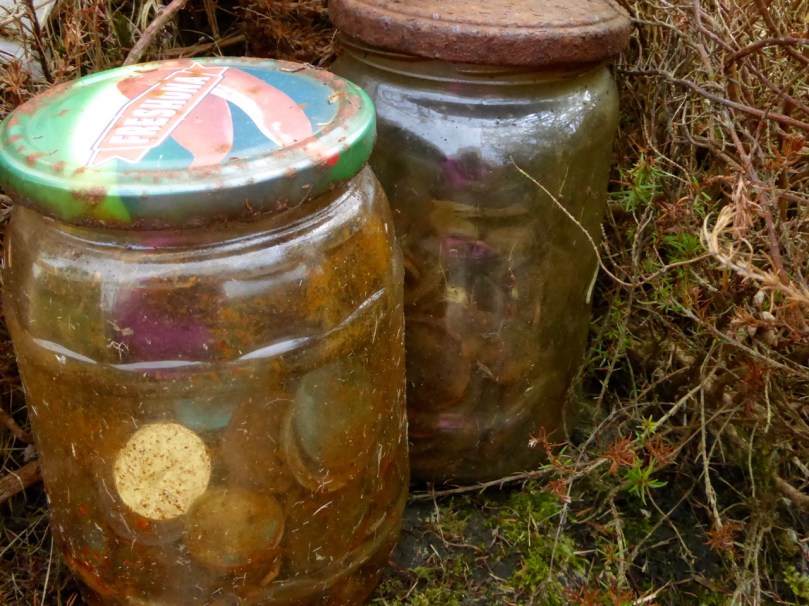
Money jars

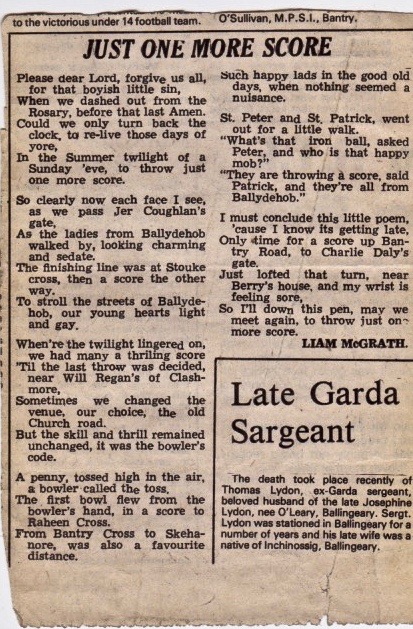
But last week I promised you more poetry! Inside the gate is a grave of the McGrath family, including the ashes of Liam McGrath who emigrated to Australia but never forgot growing up in Skeaghanore, near Ballydehob.

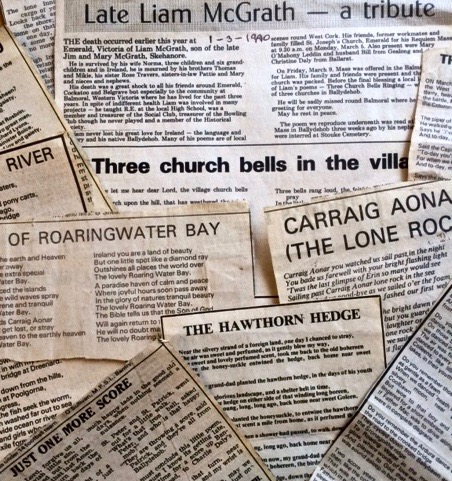
Although he was active on a number of fronts, his delight was to remember the old times and to capture his memories in verse. He was a true ‘folk poet’ – recalling the past with nostalgia and trying to capture what he saw as the golden scenes of his young life in rural West Cork. Over the years, several of his poems were published in the Southern Star. Local historian Teresa Hickey generously shared with me those she has collected over the years – a real treasure since they are not available online.

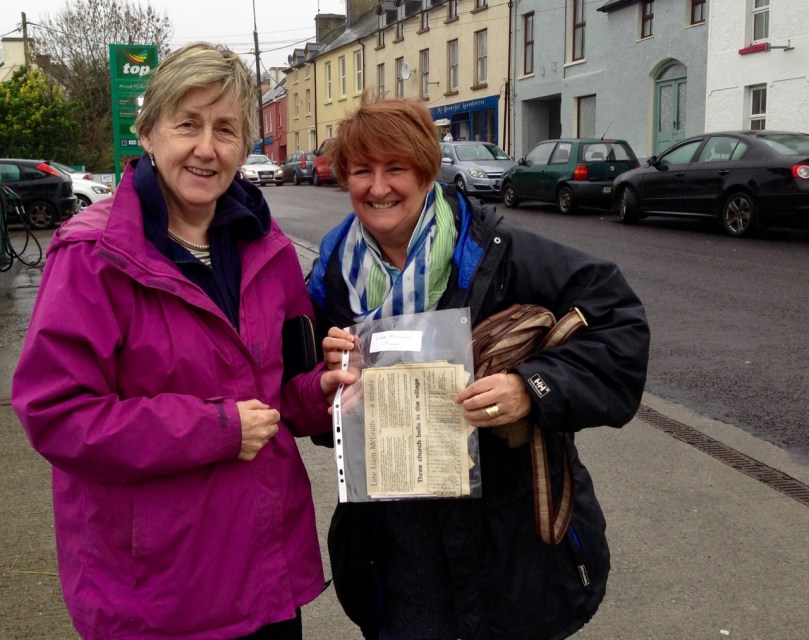
Teresa Hickey and poems

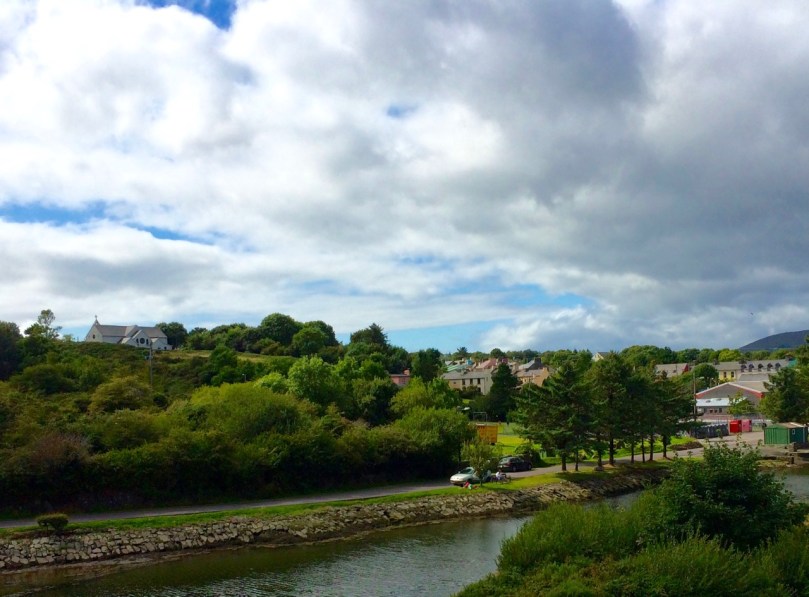
Liam McGrath cuttingsTeresa’s personal favourite is Three Bells. It describes the sound of the bells on Sunday morning from Ballydehob’s three churches – Catholic, Church of Ireland and Methodist. Sounds, of course, trigger deep memories, and this poem captures Liam’s recollections of traditional Sunday mornings in the village. Sadly, the Methodist Church has fallen into ruin, so those bells will never again peal over Ballydehob.

Ballydehob showing church on hill


St Matthias CoI Ballydehob

Above: The Catholic Church dominates the skyline of Ballydehob. Middle: St Matthias Church of Ireland. Below: The Ballydehob Methodist Church, gradually falling into dereliction

The one I’ve decided to reproduce here is called One more Score and it’s about the unique West Cork pastime of Road Bowling (rhyme bow with cow). For Liam, it was a precious memory, made all the sweeter by a recitation of the roads and locations where the game was played. 

McGrath Poem Just One More Score

The sport of Road Bowling – the object is to get the bowl down the road to the target in as few throws as possible

No doubt I will drop by Stouke Graveyard many more times in the future. I wonder what further history lessons will be revealed…

The Seven Whistlers

curlew title

While researching for this post I picked up the excellent book by Niall Mac Coitir, Ireland’s Birds – Myths, Legends and Folklore and got diverted by a section on Eagles: why wouldn’t I, as we live up here in Nead an Iolair, Eagle’s Nest? I was delighted to discover from this book that Adam and Eve are reincarnated as Eagles and live on the island of Inishbofin, at the mouth of Killary Harbour in Galway. This adds to the list of important people of the world who have ended up in Ireland, including St Valentine in Dublin and Santa Claus (St Nicholas) who rests in Jerpoint Abbey. I’m hoping to discover many more…

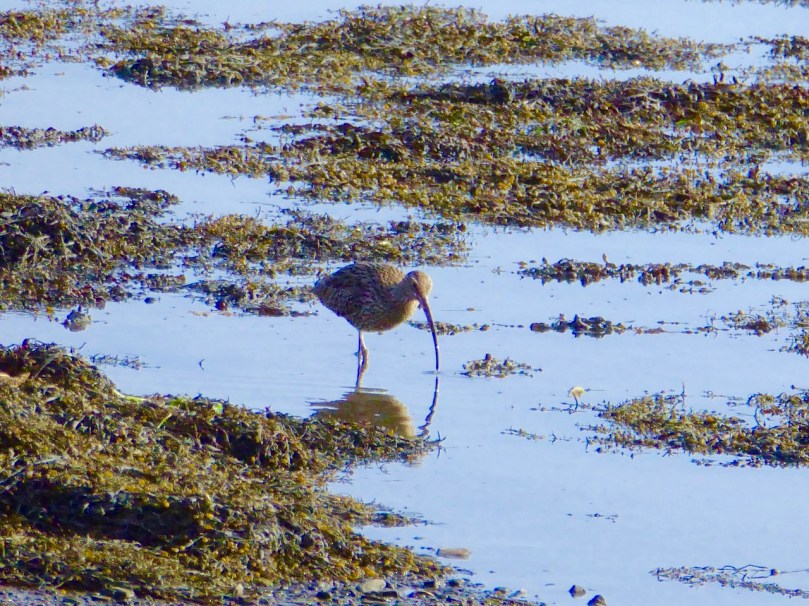
My real subject today is the Curlew: we have seen a few of them lately below us in Rossbrin Cove. They are winter visitors from Scandinavia. There is a small breeding population in Ireland, mainly centred in Galway and Mayo, but this has declined catastrophically in recent times, and the bird is now red-listed as a globally threatened species, according to Birdwatch Ireland. Every Curlew sighting, therefore, is an important one.

In Irish bird folklore, the Curlew does not come over in a good light. It has a very distinctive and haunting call, and this has probably contributed to associations with the Otherworld.

Mac Coitor says: …The Curlew was famous for its whistling and screeching calls, which were believed to foretell the arrival of rain or stormy weather… while Scottish poet Norman Alexander MacCaig (1910 – 1996) describes the Curlew’s voice:

Trailing bubbles of music over the squelchy hillside… music as desolate, as beautiful as your loved places, mountainy marshes and glistening mudflats by the stealthy sea…

Curlews fly at dusk, sometimes in groups: this has given rise to accounts of The Seven Whistlers in both Britain and Ireland. One of the earliest collectors of folkore in these islands, Jabez Allies (1787 – 1856), wrote:

…I have been informed that the country people used to talk a good deal about the ‘Seven Whistlers’ and the late John Pressdee, who lived at Cuckold’s Knoll, in Suckley, said that oftentimes, at night, when he happened to be upon the hill by his house, heard six out of the ‘Seven Whistlers’ pass over his head, but that no more than six of them were ever heard by him, or by any one else to whistle at one time, and that should the seven whistle together the world would be at an end…

Another account, from William Henderson, Folk-Lore of the Northern Counties of England and the Borders:

‘I heard ’em one dark night last winter,’ said an old Folkestone fisherman. ‘They come over our heads all of a sudden, singing “ewe, ewe,” and the men in the boat wanted to go back. It came on to rain and blow soon afterwards, and was an awful night, Sir; and sure enough before morning a boat was upset, and seven poor fellows drowned. I know what makes the noise, Sir; it’s them long-billed curlews, but I never likes to hear them.’

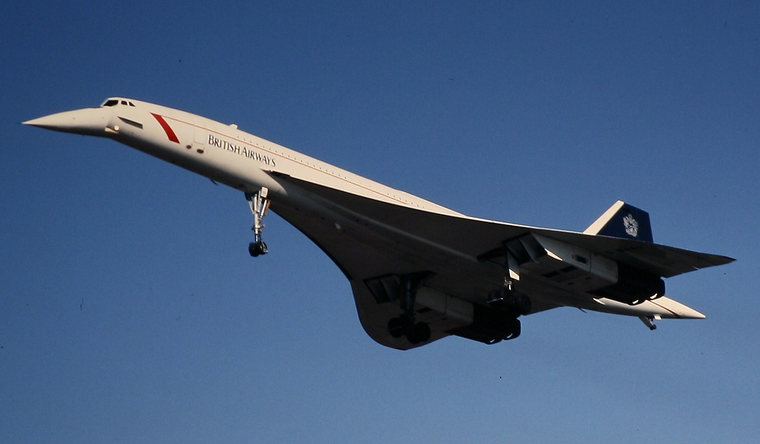
It’s that long, curved bill that makes the Curlew so distinct a figure down on the mud flats at low tide. The slim, pliable beak is used to probe in mud and shallow water for worms, crustaceans, and insects, and for exploring stones and shells. In flight the bird has a wonderful aerodynamism and reminds me of that beautiful aircraft – now extinct – Concorde. In my younger days, growing up in Hampshire, I watched the test flights of that plane at Farnborough, and always admired its drooping ‘Curlew’ nose.

JgxBY6H

Irish poetry has been enriched by images of the Curlew. Seamus Heaney’s From the Republic of Conscience:

When I landed in the republic of conscience
it was so noiseless when the engines stopped
I could hear a curlew high above the runway.
At immigration, the clerk was an old man
who produced a wallet from his homespun coat
and showed me a photograph of my grandfather.
The woman in customs asked me to declare
the words of our traditional cures and charms
to heal dumbness and avert the evil eye.
No porters. No interpreter. No taxi.
You carried your own burden and very soon
your symptoms of creeping privilege disappeared…

We can’t leave out W B Yeats – He reproves the Curlew:

O, CURLEW, cry no more in the air,
Or only to the water in the West;
Because your crying brings to my mind
Passion-dimmed eyes and long heavy hair
That was shaken out over my breast:
There is enough evil in the crying of wind.

Four of Yeats’ poems, including Curlew, were set to music by the eccentric English composer Philip Heseltine, who took the name Peter Warlock. The Curlew is a chamber song-cycle setting written for tenor voice, flute, cor anglais and string quartet. Heseltine spent some time in Ireland, including a period on a ‘Gaeltacht island’ (perhaps Cape Clear?) where he sought to learn the Irish language.

Heseltine / Warlock’s The Curlew brings us full circle, as the composer also spent time in Cornwall under the shadow of another Eagle’s Nest – near St Ives – in an area frequented by artists, writers and mystics including D H Lawrence, Aleister Crowley, Virginia Woolf and Patrick Heron. From Eagle’s Nest in West Cork to Eagle’s Nest in West Cornwall… The Curlew is a much-travelled bird… Be careful of the Seven Whistlers!

view from Eagle's Nest

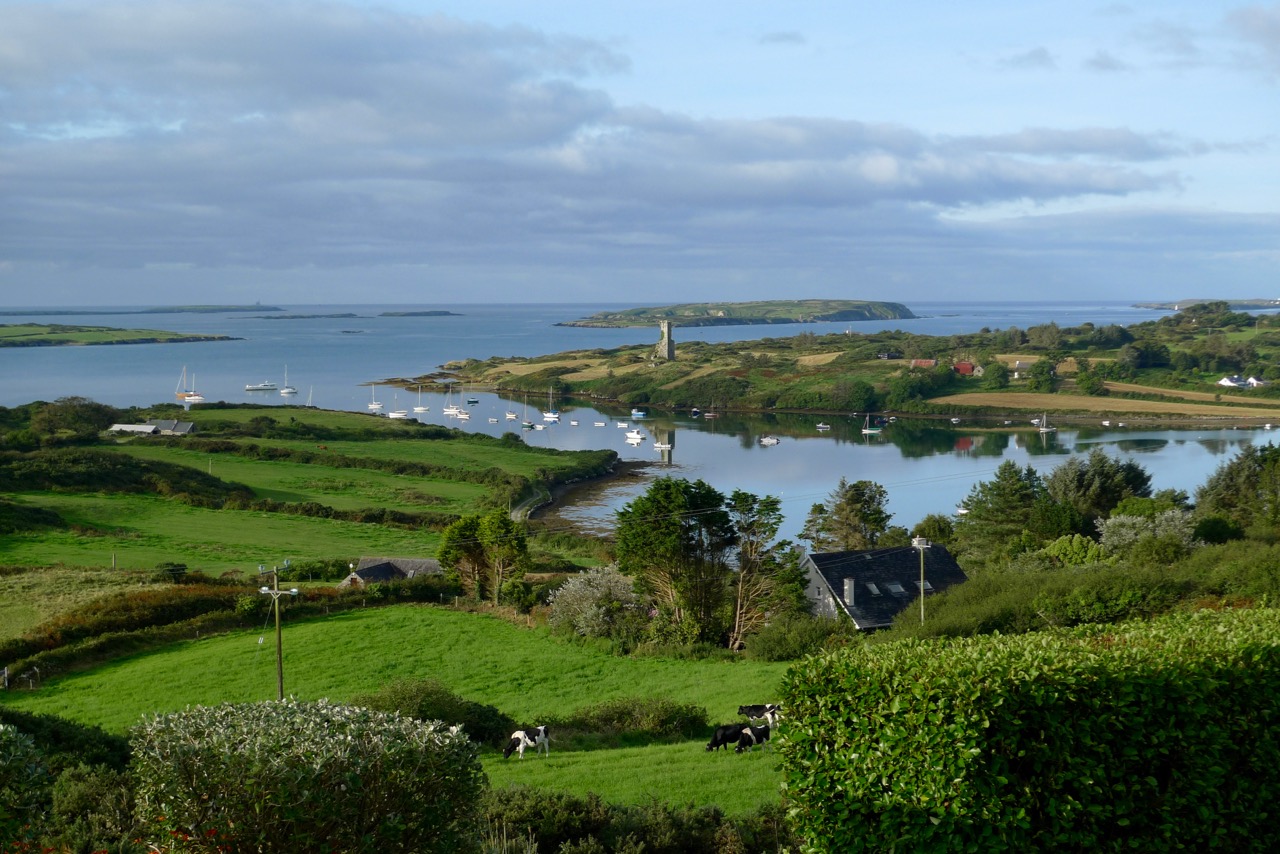
Curlews be here… view of Rossbrin Cove from Eagle’s Nest, West Cork