Say Cheese!

Cheese Bundle

Goats Cheese, that is: creamy, delicious – and home-made! Goats cheese is what I made today at our friend and neighbour Nick’s Rossbrin Permaculture Farm on the shores of Roaringwater Bay. The ingredients? Happy goats, a couple of ingenious WWOOFers and eager students.

Nick and Goats 2

Nick bringing the goats home in the evening

Nick has a smallholding and tries to be as ecologically sensitive, environmentally friendly and sustainable as possible. His WWOOFers seem to like the place and some stay for extended periods or keep coming back. (For those of our readers who are not familiar with the concept of WWOOFing – take a look at the WWOOF Ireland website.) Jasmine from Taiwan has become a keen forager and cheesemaker, and Helene from France loves to experiment with natural flavours. Recently there was a Slow Food event on the farm (wild garlic pesto – forage and make) which we couldn’t attend, so when this opportunity came up I jumped at the chance to sign up to learn how to make goats cheese.
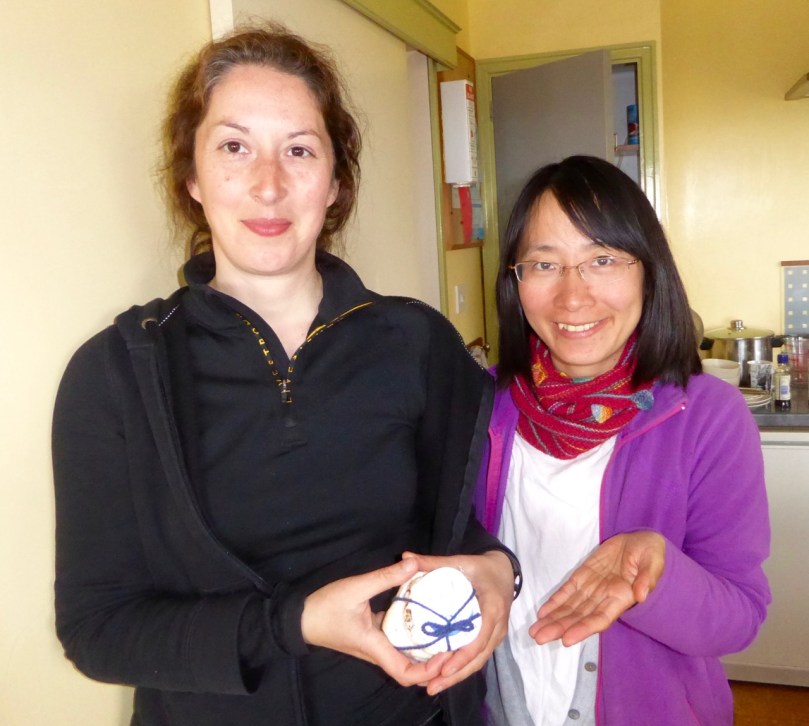
Helene and Jasmine

Helene and Jasmine – cheese makers extraordinaire!

I had this idea that cheese was a long slow process involving ageing in caves and something called rennet so I was intrigued that we would make and take away goats cheese in one afternoon.
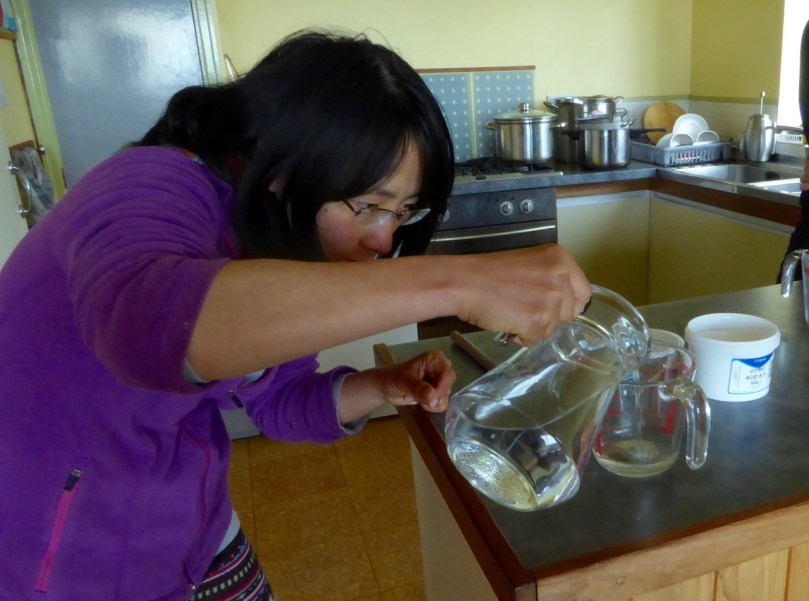
Diluting the citric acid

Jasmine dissolves the citric acid – available in any pharmacy

Jasmine and Helene had milked the goats that morning so the milk was fresh, although it can also be a few days old – the older the milk the stronger the distinctive chèvre taste. We started by adding dissolved citric acid to the milk, drop by drop, and stirring, while it sat on a moderate heat. The idea is to add the citric acid very slowly while the temperature rises to 180-190F. This process pasteurises the milk and starts the process of making curds.

Left: Jasmine and Helene and students Manon, Bríd and Maria. Right: adding the citric acid drop by drop and patiently stirring

Once it has reached the proper temperature the milk is allowed to cool a little then poured into cheesecloth-lined colanders to separate the curds and the whey. Since the next step is to let it drip slowly through the cheesecloth, we enjoyed some tea and cake and then we took ourselves off for a wander around Nick’s farm.

Julian straining

Through the cheeseclothUpper: Julian strains the heated milk. Lower: left to drain

We walked down to Jasmine’s seaweed-gathering beach and made a quick inspection of Nick’s ingenious vegetable island. Why grow vegetables on an island? Easy – no rabbits and no slugs! Nick practices Hügelkultur on this plot.

Once back in the kitchen we inspected the cheese and saw that the whey had drained away to our satisfaction. To continue the process we tied the cheesecloth up to make a ball and suspended the cheese over pots for a while longer.

All tied up

During the next wait period Jasmine and Helene showed us how to make seaweed appetisers. Jasmine had harvested sugar kelp and sea spaghetti that morning and together we made seaweed crisps and sea-spaghetti bruschetta. It sounds a bit weird, I know, but honestly, they were delicious.

Jasmine had washed the sugar kelp and hung it out to dry along with the other washing. The recipe for the crisps and bruschetta is at the end of the post

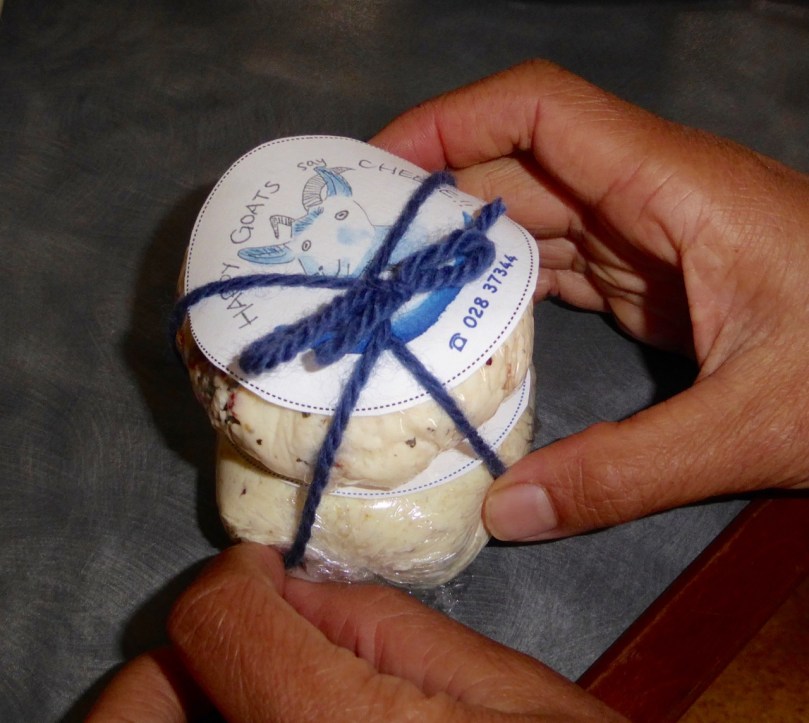
By then, we were ready to finish the cheese. First we added a little salt and then decided on the flavouring. On Helene’s advice we selected cumin and mustard for one and sundried tomatoes and basil for the other. A little tasting, a final lesson in wrapping, and we were done!

I love goats cheese and have several favourite recipes so I’ll be trying out a couple this week. It’s going to feel really good to casually drop into the conversation that, oh yes – I made it myself. And if that’s not totally and strictly true, I’m sure none of you will tell on me. Right?

Recipes

Moongazy Pie

Ready for cooling 2

Moongazy Pie – an original Roaringwater Journal recipe

Each year around this time we look forward to the annual Cornish Invasion – a group of men and women from Cornwall who come on a cultural exchange to sing and tell stories around West Cork. Some are old friends of Robert’s and we inevitably end up in pubs, singing and playing our hearts out until all hours.

A Cornish Quartet

A Cornish Quartet in O’Donovan’s Hotel, Clonakilty

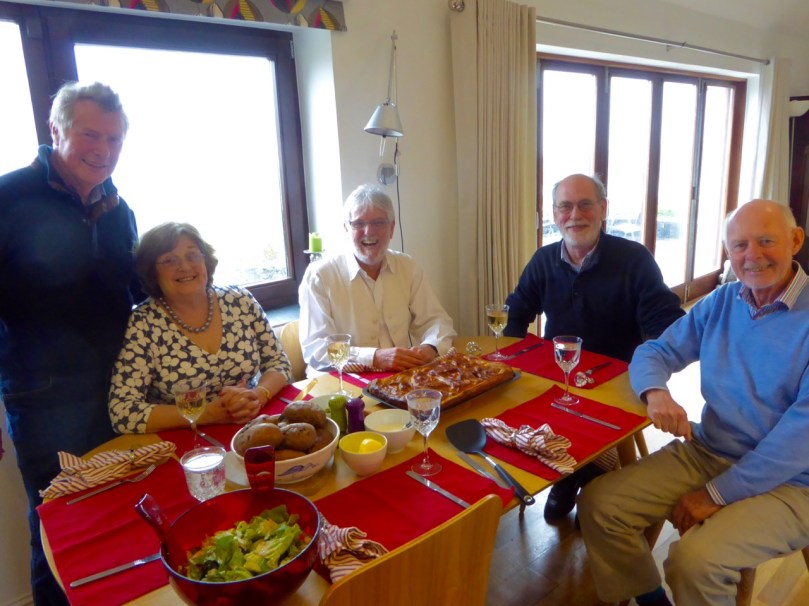
This year we managed to get a couple of them and their Irish hosts to sit still long enough to eat dinner with us. To celebrate the theme of our Irish/Cornish friendship, we made a special dish – Moongazy Pie.

Dinner Group

Robert, Majella O’Callaghan, Jonathan Ball, Nick Blood, Brendan O’Callaghan

Have you heard of the famous Cornish dish, Stargazy Pie? It’s an arresting looking dish, with pilchards’ heads peeking out of a pastry crust as if gazing at the stars. Of course, there’s a whole legend to go with it and lots of traditions.

stargazy

Photo from http://www.jusrol.co.uk/pastry-recipes/stargazy-pie/

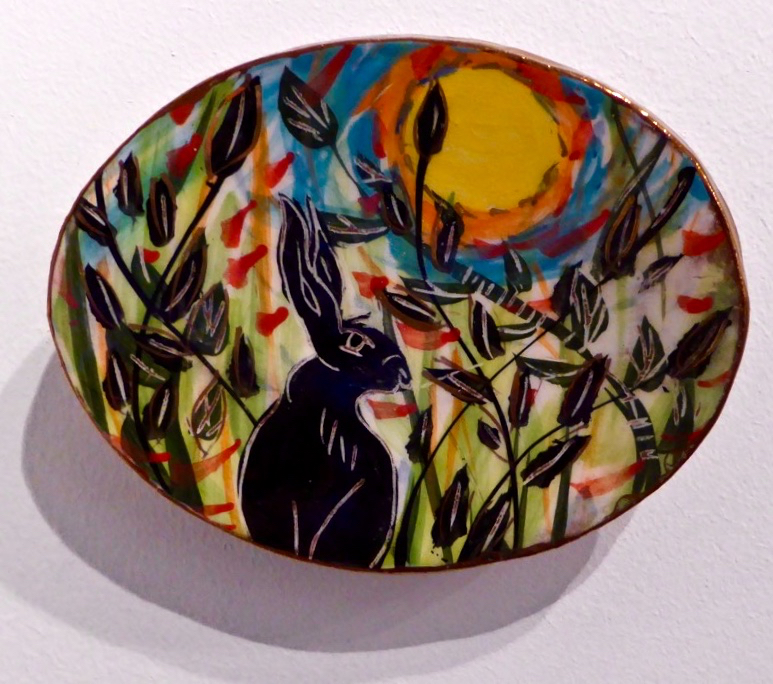
Regular readers will know by now that Robert is a hare fanatic. (In fact, he thinks he is a hare, but don’t tell him I told you that.) What better way to combine his Cornish heritage and his hare obsession than with the symbol of the moon-gazing hare – one of the classic, universal images with which we associate hares.

oval

One of Etain Hickey’s wonderful moon gazing hares

So here is the recipe we devised! I’m not sure who likes pilchards (not me!) so don’t worry, there isn’t a pilchard in sight – just beautiful salmon and lots of leeks. Although this is an easy recipe give yourself time to make it, as part of the process involves cooling the ingredients and then the pie itself before baking. It’s a great dish to make in the morning for a Sunday lunch, or in the early afternoon for dinner.

Ingredients

MOONGAZY PIE

6 leeks

2 tbs butter

A side of salmon (1 – 1.5k/2.5 – 3.5lbs), skinned and boned (we got our fishmonger to do this for us).

A large handful of fennel fronds (I happen to have this in the garden and I love the aniseedy aroma  but you can substitute fresh dill)

Freshly grated zest and juice of one lime

1 large egg

1 tablespoon water

2 packs ready-made puff pastry sheets – You’ll need about 900g/2lbs in total.

PREPARE

Take the puff pastry from the fridge so it will be at room temperature when you are ready to roll it out.

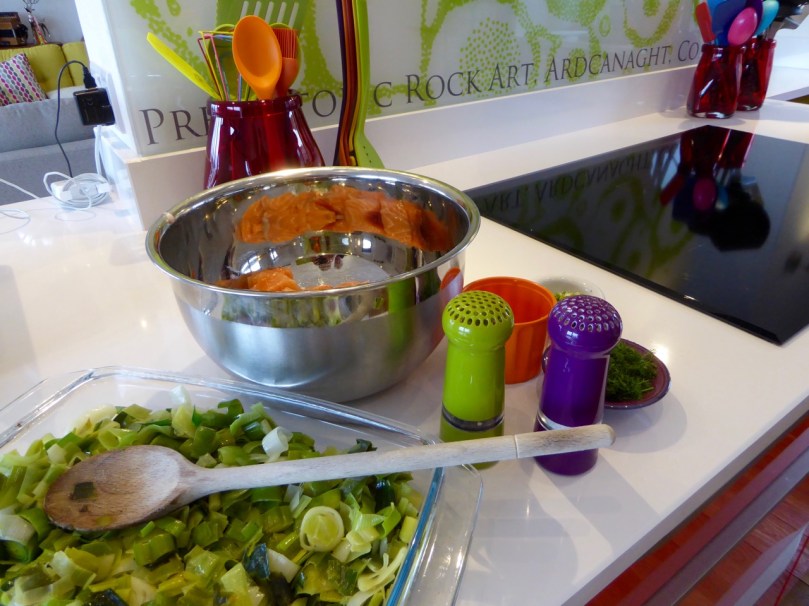
Wash the leeks very well, making sure to separate the leaves and hunt for that pesky soil that lurks between them. Drain them, pat them dry and cut them into rounds approx half inch or 1.5cm long. Sauté the leeks in butter over moderate heat, stirring, until tender, about 20 minutes. Set aside to cool.

Zest and juice the lime.

Cut off the coarser stalks from the fennel (or dill) and chop the fronds finely.

Cut salmon into pieces – about 2”/5cm square.

Once the leeks are cool, mix the leeks, salmon, lime zest and juice and fennel/dill in a bowl.

Whisk together egg and water to make an egg wash.

Dust a baking tray with floor. A 35 x 25 x 2cm (14″ x 10″ x 1”) works well.

Filling the pie

ASSEMBLE

On a lightly floured surface with a lightly floured rolling pin roll 1 puff pastry sheet (about 300g /10oz) to fit the baking tray with some overhang. Once rolled, transfer it to the tray. Roll a second sheet the same size. Mound the salmon mixture on to the pastry in the tray and spread carefully to fill the tray. Brush the edges with some egg wash and drape the second sheet over top. Roll the edge of the bottom sheet over the edge of the top sheet to form a seal and press it down all the way around with the tines of a fork.

Roll out a third sheet of pastry. Use a plate or saucer to cut out the moon shape. For the hare, we found a suitable silhouette on the internet and Robert used the printer to make one the right size to use as a template. There are various ways you can do this – make it your own, as long as you use the image of a hare gazing at the moon.

Cut four steam vents on top and brush all over with the remaining egg wash. Then cool the pie in the fridge for at least an hour and up to 3.

BAKE

Preheat oven to 205C OR 400F.

Bake pie in middle of oven until pastry is golden brown, about 30 minutes.

Ta Da!

Black Pudding

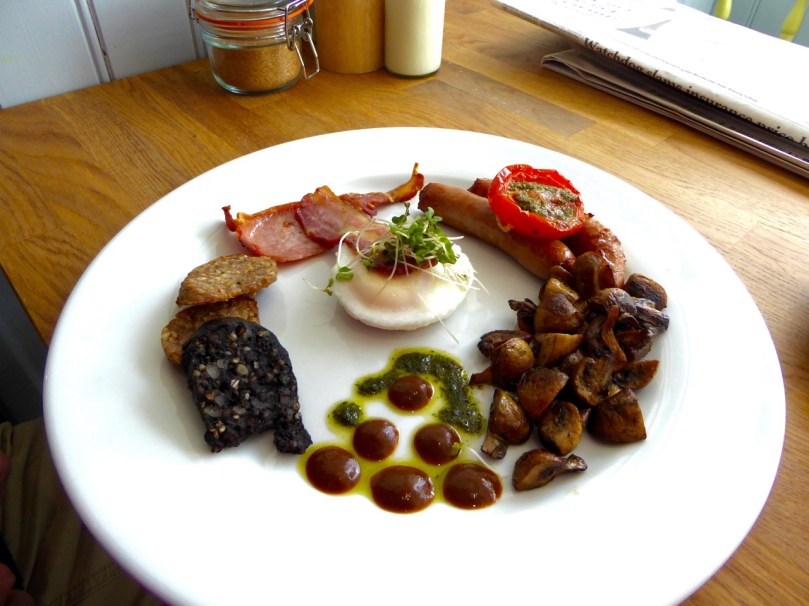
Breakfast at Budd's

Breakfast at Budd’s of Ballydehob – all local ingredients

When did black pudding assume foodie status?

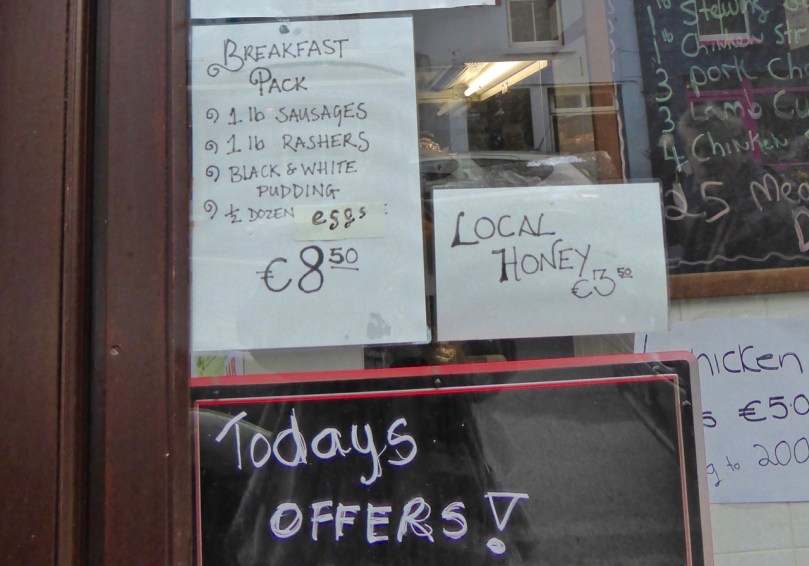
Breakfast Pack

Black pudding (a blood sausage) was always a popular breakfast staple in Ireland – served in all decent bed-and-breakfasts on a ‘Full Irish’ plate along with white pudding, sausages, rashers and eggs, and sometimes tomatoes and mushrooms, accompanied by homemade brown soda bread. I never liked it – “Please, no black pudding on mine.”

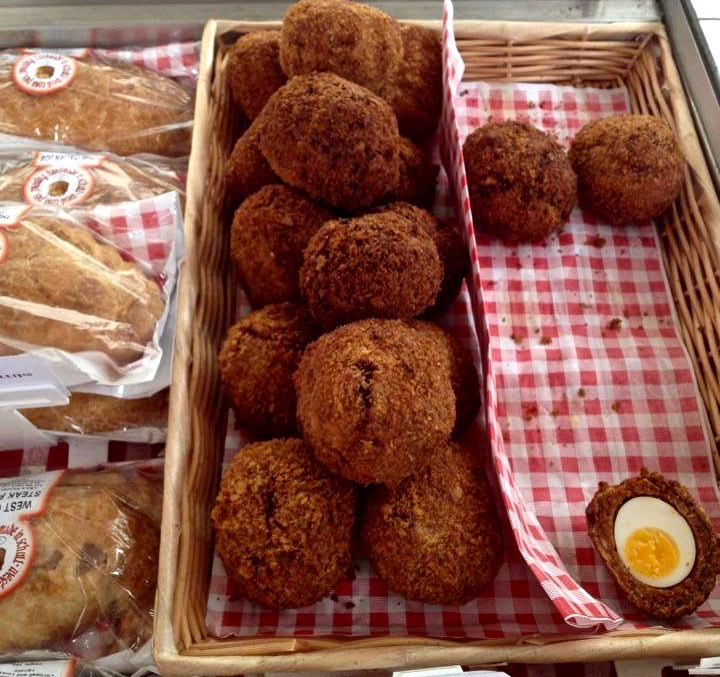
West Cork Pies' Black Pudding 'Brunch' Scotch Eggs, at the Skibbereen Market

West Cork Pies‘ Black Pudding ‘Brunch’ Scotch Eggs, at the Skibbereen Market

But somewhere in the last ten years black pudding has been transformed into the gourmet must-have ingredient du jour: added to scallops or crab, used to lend interest to staid sausage rolls and scotch eggs, served as canapés with the requisite goat’s cheese and caramelised onions.

The black pudding selection at Field's of Skibbereen

The black pudding selection at Field’s of Skibbereen

And it’s delicious! Artisan butchers and food producers all over the country have been developing their own recipes and flavours, although the basic ingredients (pig’s blood and oatmeal) have remained the same. Some credit Clonakilty Black Pudding with leading the charge. They use beef rather than pork and their exact formula is a closely guarded secret. Their website has lots of recipes and the history page features a video on how the pudding is made. This has become such a celebrated West Cork product that there has been talk of a Black Pudding Visitor Centre!

Clon web page

Nowadays, every supermarket meat section will sport an array of artisan black and white puddings. Here in West Cork we find local varieties such as McCarthy’s of Kanturk, Putóg De Róiste (an Irish-speaking black pudding from the Ballyvourney Gaeltacht), Hodgins of Michelstown, as well as Rudd’s from County Offaly, further afield. There are mass-produced varieties too, and supermarket chain generic puddings, all of which have their fans.

Avril Allshire at a function in Rosscarbery, handing around her black pudding swirls – our first taste of them; The Rosscarbery Recipes range of products on sale at Fields

My own favourite is made by Rosscarbery Recipes. This is totally attributable to Avril Allshire, the cheerful producer whom I have met on numerous occasions demonstrating ways to eat their black pudding or serving it up at events. She’s always up for a chat and she loves to share her enthusiasm and her recipes. She and husband Willy and two sons run Caherbeg Free Range pig farm (the Facebook page is full of adorable piggy pics), as well as the Rosscarbery Recipes food range and are totally committed to food quality, to provenance control, and to traditional curing methods that result in delicious pork products. They’ve even developed a gluten-free black pudding!

The Allshire Family with awards for their food products. Avril, William and the two boys are totally involved in all aspects of the business

The Allshire Family with awards for their food products. Avril, William and the two boys are totally involved in all aspects of the business

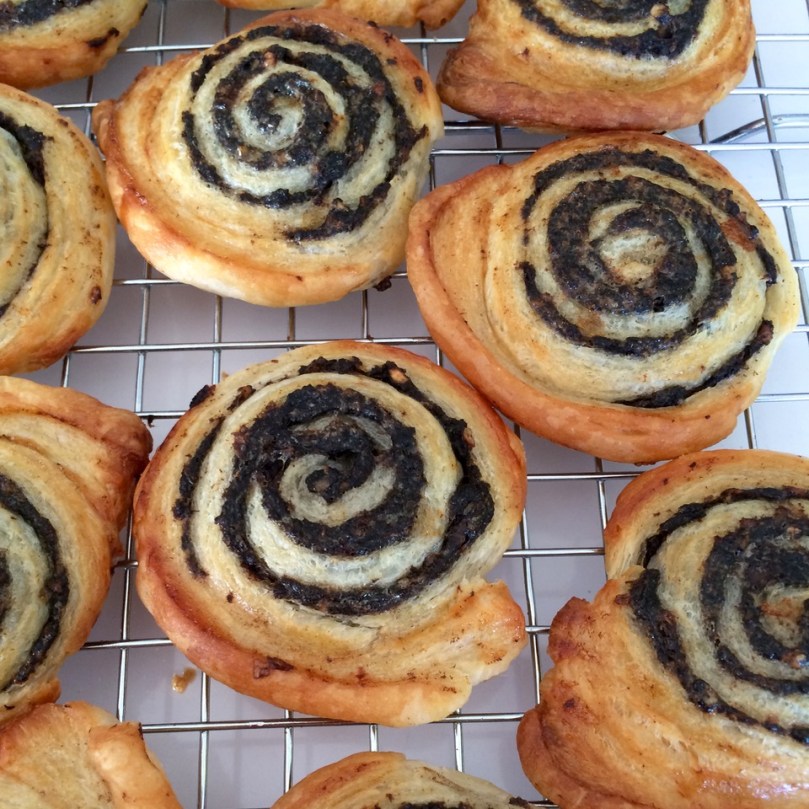
Avril’s Black Pudding Swirls have become my go-to appetiser recipe and I am sharing it at the end of the post, taken directly from her website but adapted for our non-West Cork readers.

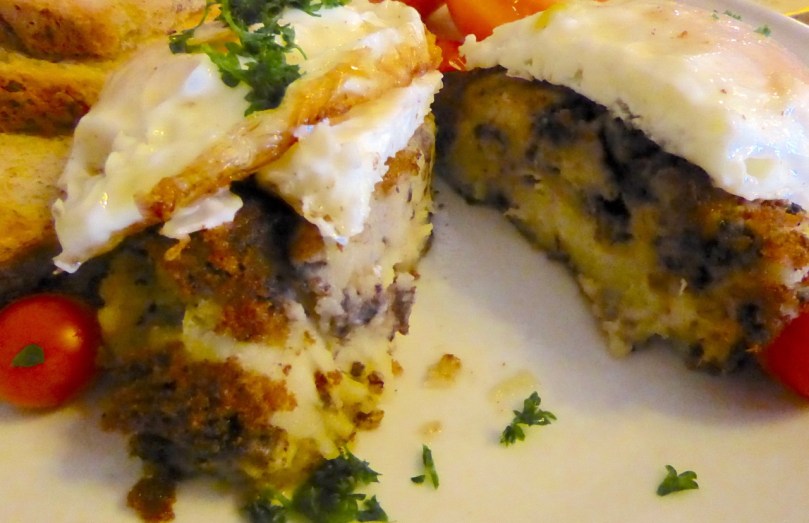
An Chístín Beag's black pudding potato cakes.

An Chístín Beag’s black pudding potato cakes

The other way I have come to love black pudding is in potato cakes. As served by the fabulous An Chístín Beag (The Little Kitchen) in Skibbereen, this is a way to start your day off right, especially if you’re planning a hike! According to Pauline, you simply add chopped up black pudding to mashed potato, shape it into cakes, and fry. There’s got to be more to it than that, I insist – egg? flour? But no, that’s it. I think it helps if you leave them in the fridge to chill and firm up a bit before you cook them.

The choir Christmas get-together at Rosie's Pub. My contribution was the black pudding swirls, recipe below.

The choir Christmas get-together at Rosie’s Pub. My contribution was the black pudding swirls, recipe below

What about you and black pudding? Love it? Hate it? Got a favourite? Figured out how to get hold of it outside Ireland or the UK?
Making the swirls

Making the swirls

Rosscarbery Recipes’ Black Pudding Swirls

By Avrill Allshire (additional notes by Roaringwater Journal)

Ingredients:

1 pack of Field’s Puff Pastry; (any ready-to-bake puff pastry will do, 500g or 1lb)

1 Rosscarbery Recipes Black Pudding; (Any good-quality black pudding can be substituted, 300g or 11oz)

1 large egg.

Method:

About an hour beforehand, take the puff pastry and the black pudding from the fridge and allow to come to room temperature.

Preheat the oven to 200°C/ 400°F/Gas Mark 6.

Whip the egg.

Roughly chop the black pudding and blitz in the food processor with half the whipped egg. If you don’t have a food processor, use a fork or wooden spoon. The idea is to get it to a spreadable consistency.

Dust your rolling surface with flour and roll the puff pastry into a large rectangle. Lay the Black Pudding mixture on the puff pastry. Spread it out evenly but not to the edge of one long side which should be brushed with a little of the whipped egg. Roll from the other side. Finish the roll by pressing gently onto the whipped egg end. Slice in 1cm slices and place on a sheet of greaseproof paper on a baking sheet. Brush each slice with the whipped egg.

Put in the oven and bake until a golden brown. This will take anywhere from 12 to 15 mins, so keep an eye on it.

Remove and allow to cool. Makes about 50 swirls.

swirls finished

Yummers!

Shauna and Robert tasting

A Carnivore in West Cork

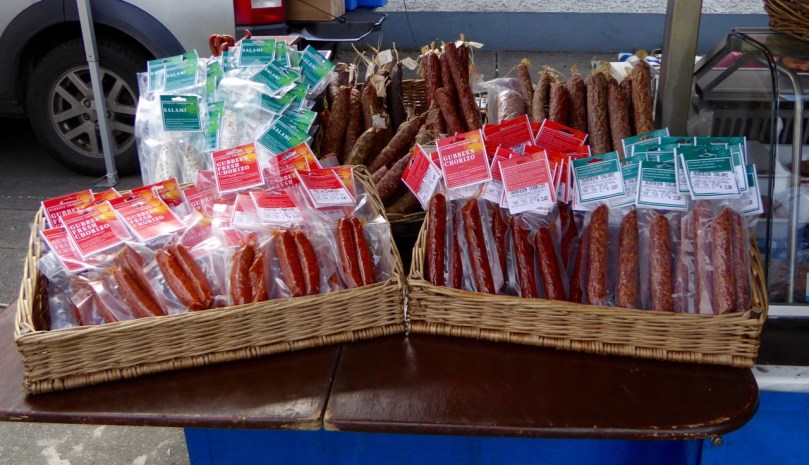
Gubbeen's Chorizo and Salami

Gubbeen’s Chorizo and Salami

Why am I writing about meat?

Well, for starters, Robert and I are omnivores. Given that I do eat meat (walk away now, all my vegetarian friends!) I want it to be good quality and tasty. I want to know where it comes from and how it was raised. Living in a large Canadian city, I was aware that here and there there was a butcher shop – either an old-fashioned hanging-on-for-dear-life shop in a traditional neighbourhood, a stall in one of the large markets, or latterly a smart shiny artisan establishment staffed by trendy young men in striped aprons. But, like everyone else, I didn’t have time to drive across town to seek out places like this and just bought my meat in the supermarket.

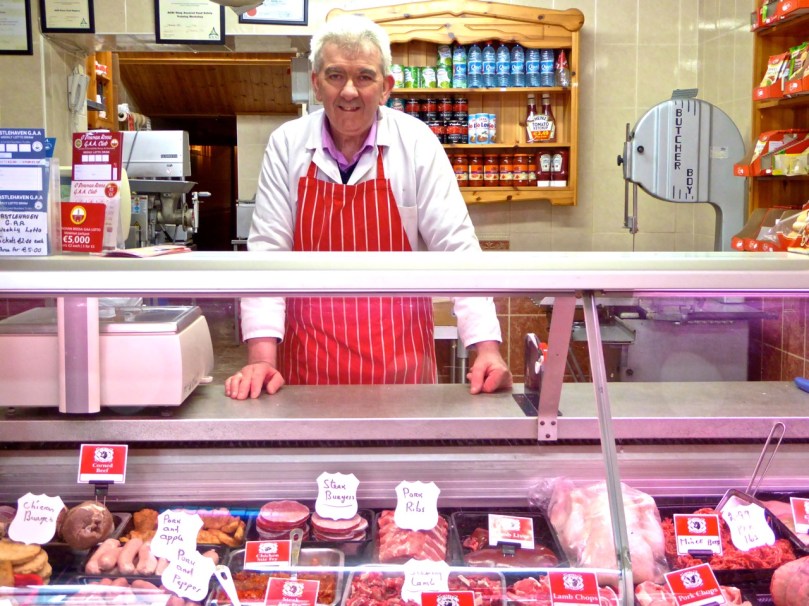
One of the things that surprised me, coming back to live in small-town Ireland, was that butcher shops are alive and well and thriving still – even if there is also a large supermarket in the town.

They are a friendly lot, these butchers. They love to offer advice on how to cook the meat you’re buying, or to give suggestions for dinner. They will cut a piece exactly as you want (wafer thin for stroganoff) or disappear into the back and reappear with a huge haunch because you want something that isn’t on display (shanks, with the marrow intact), or trim every last ounce of fat off a joint. “Years ago,” one butcher told me, “all cuts were sold with bone and fat. But, sure, you have to move with the times.”

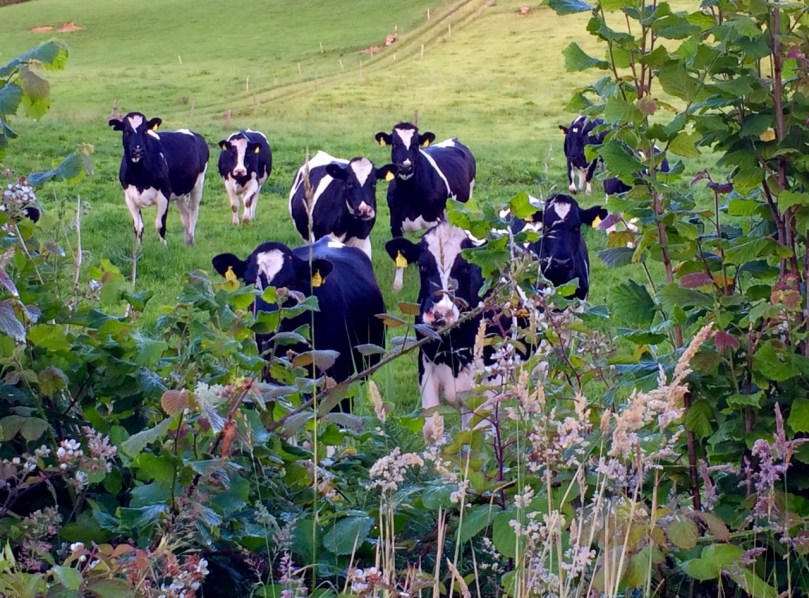
Over the years there have been lots of exposés and scandals about the provenance of meat sold in Europe (horse meat, anybody?) and concerns about foot-and-mouth and other diseases, but our local butchers know the source of all the meat they sell, down to the farm it came from, or the herd. “It’s from our own farms,” one butcher told me, indicating an area north of Skibbereen where contented cattle spend their days in lush green fields.

Micheál Daly of Skibbereen - the meat comes from their own farms

Micheál Daly of Skibbereen – Daly’s meat comes from their own farms

“We get our lamb from out by Fohorlagh” said another. We know the cattle spend their lives grazing on rich grasses – we are surrounded by them in Nead an Iolair – and we think that’s the secret to the taste. We don’t want to eat meat that’s been factory bred and fed.

Happy cattle in the field next door

Happy cattle in the field next door to us

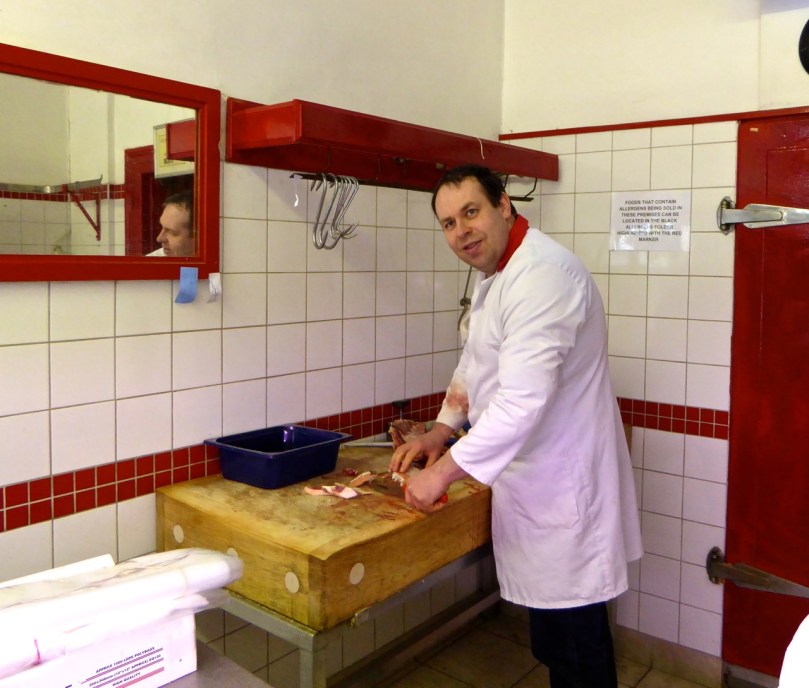
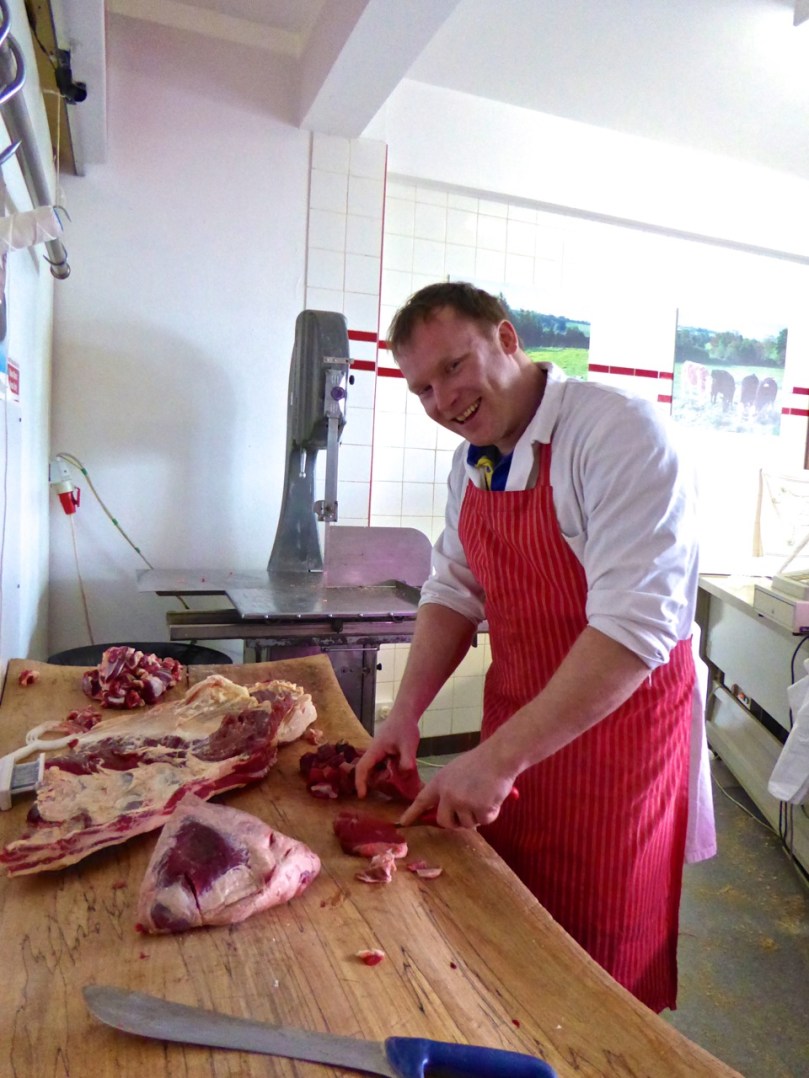
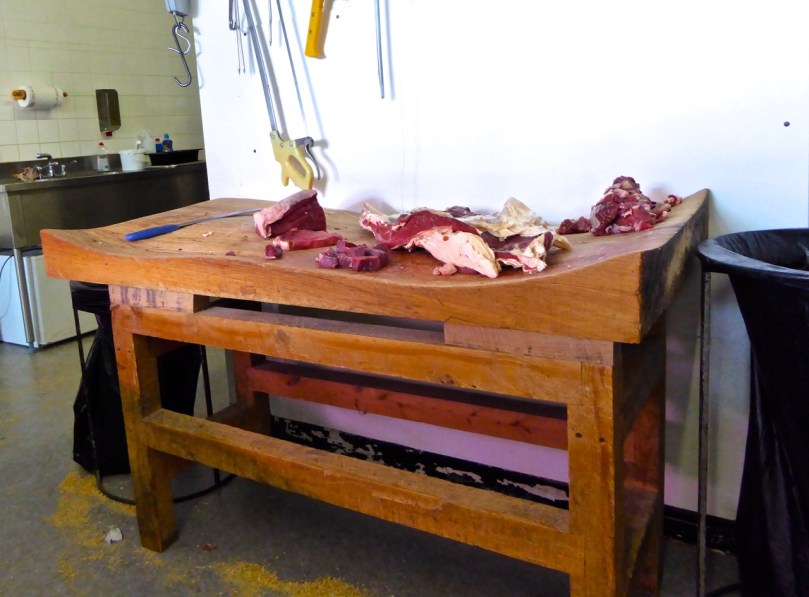
Most of the local butchers work on well-worn wooden butcher blocks. I’m fascinated by these – they seem like such old technology and indeed some have switched to dense plastic blocks. But the ones who still use the wooden ones tell me that lots of research has been done on them and that they are as safe as or safer than plastic.

John Barry, our local butcher in Schull, working at his 40 year old butcher's block

John Barry, our local butcher in Schull, working at his 40 year old butcher’s block

Time worn beauty

Time worn beauty

As our readers know, the food scene in West Cork is terrific. At our Saturday market in Skibbereen we have a great choice of artisan meat products. We get our breakfast sausages from Frank Krawczyk – he was a charcuterie pioneer here before any of us knew the meaning of the words.

The fabulous West Coast Pies is our go-to resource for pork pies, scotch eggs, gourmet dinner pies (chicken and leek, beef bourguignon) and wonderful salmon quiches. They do lots of vegetarian stuff too. Paul is so insistent on the quality of his pork that he has decided to raise his own and is now an organic pig farmer on top of everything else.

Paul Phillips of West Cork Pies

Paul Phillips of West Cork Pies

We met Avril Allshire of Rosscarbery Recipes at a recent concert, serving her uber-delicious black pudding swirls. We loved them so much she told us where to find the recipe and so we made up a batch ourselves. Yummers! (And I am not normally a black pudding fan.)

And of course there’s Gubbeen! They’ve been making cheeses forever, award-winning and delectable, and built a smokehouse to produce a smoked version of their famous farmhouse cheese. From there, Fingal Ferguson has produced an array of chorizo and salamis that are firm favourites with all the locals. We buy his bacon and hams – we always cook an enormous one at Christmas and have to book it weeks in advance.

Read about Gubbeen’s food philosophy on their website – it might be the most profound expression of the importance of real food you will find anywhere.

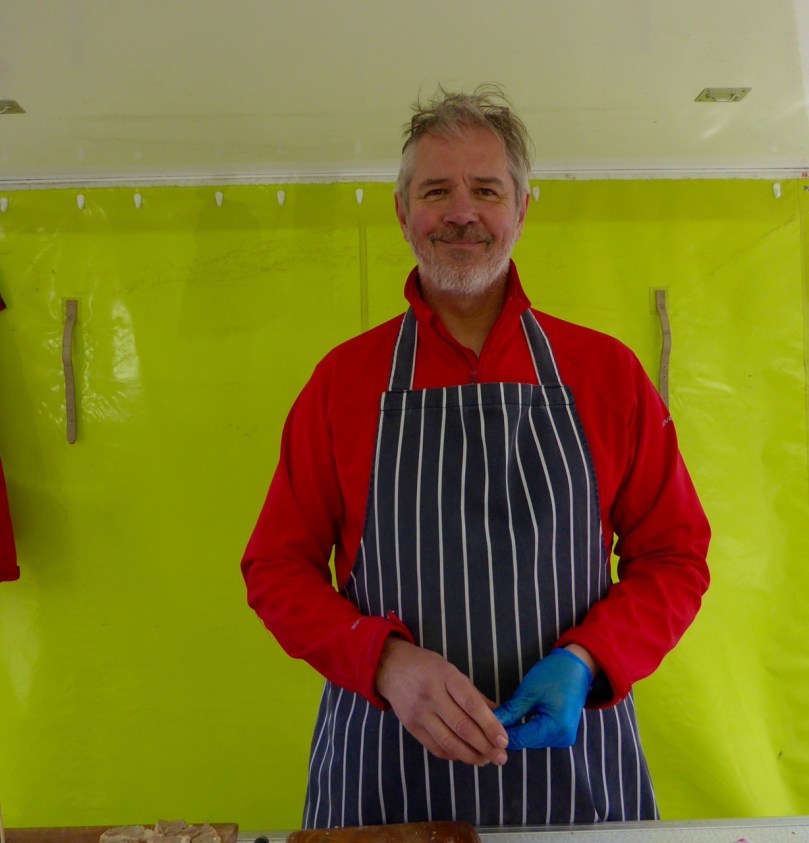
Andy O'Sullivan of Skibbereen. He's been a butcher all his life and says the 5 year apprenticeship offers excellent training.

Andy O’Sullivan of Skibbereen. He’s been a butcher all his life and says the 5 year apprenticeship offers excellent training


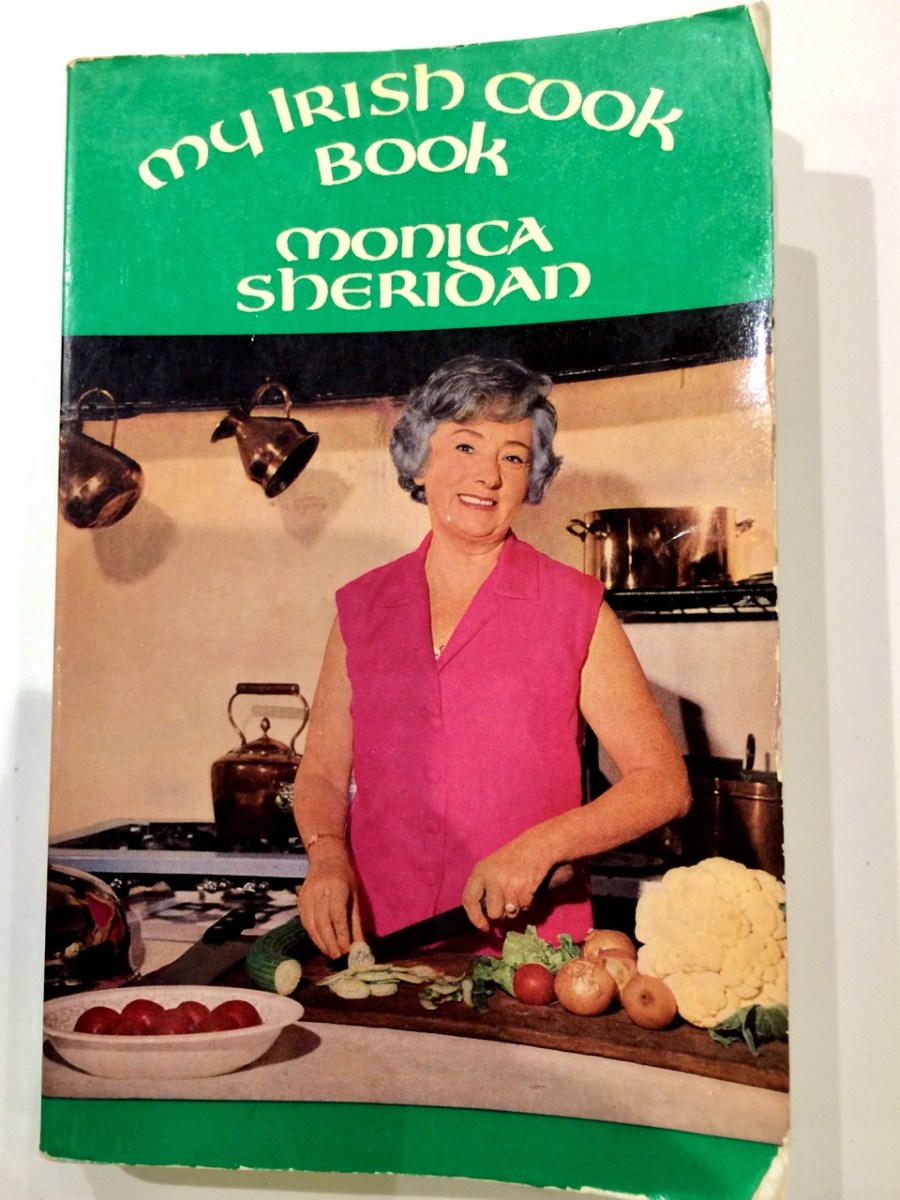
Monica Sheridan’s My Irish Cook Book

Last year I decided to make Christmas cake according to Monica Sheridan’s recipe, which I remembered from my childhood. A comment from a reader got me curious about her other Christmas recipes and I got out my dog-eared copy of My Irish Cook Book to look up how to make a traditional plum pudding. Fatal mistake! Instead of cracking eggs and and soaking fruit I have been chuckling over the book and insisting that Robert listens as I read bits out loud.

I have already posted about Monica’s Kitchen and the delights it contains. The audience for that book was the modern Irish home cook (assumed to be female) of the 1960s. My Irish Cook Book focuses on traditional Irish foods and recipes. The emphasis is on fresh ingredients and fairly simple cooking methods – the kind of thing we call Slow Food nowadays. But because it’s about Irish food it is also an extended piece of nostalgia, replete with dewy-eyed memories of her childhood and her trademark stories and trenchant wit.

The book starts with an essay on the cooking traditions of her family, from her great-grandmother cooking stews in a bastable oven over an open fire, to her grandmother (who actually had running water from a tap!) to her mother who continued to churn her own butter, cure her own bacon, bake her own bread and make the most outlandish hats with feathers purloined from the cock.

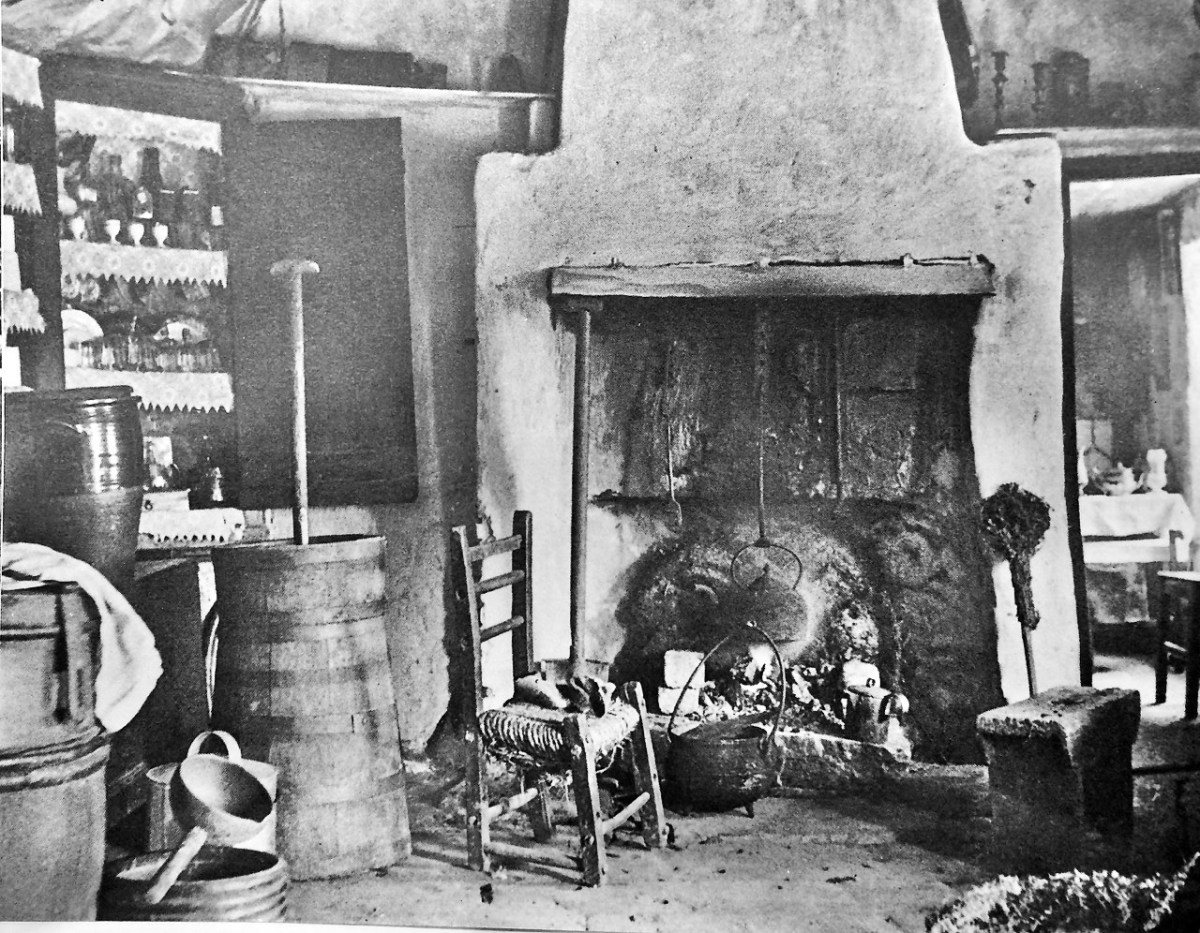
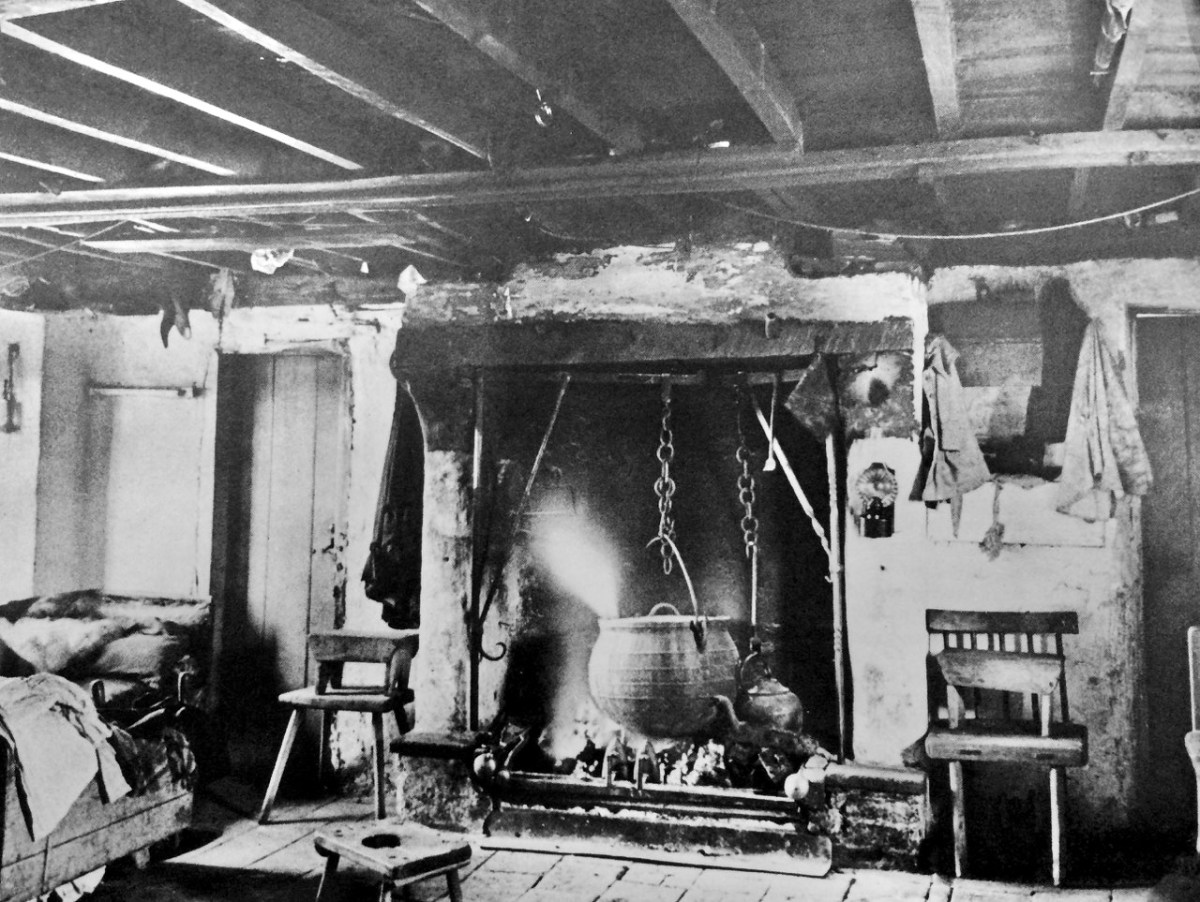
The photographs above and below, by the way, are from my own copy of the book A Taste of Ireland by Theodora FitzGibbon – a book that deserves its own post one day. The photo above is labelled A traditional Irish Kitchen, about 1888, and the one below is of the ancestral home of US President William McKinley in Co Antrim.

Her soup chapter begins thus:

The Geography we learn at school tells us that Ireland has a moderate climate, warmed by the Gulf Stream without any great variations of temperature either in summer or winter. This is a flagrant piece of Celtic exaggeration…

You wouldn’t be long in Ireland before realising that soup is an essential part of our daily fare. Like whiskey it is our internal central heating, raising the temperature of the body and thawing out the gastric juices so that they will be receptive to the delights that are to follow. Remember, in Ireland, except in the cities, domestic central heating is still a rarity (we are a credulous people and believe what we read in the geography books). We need soup to warm us.

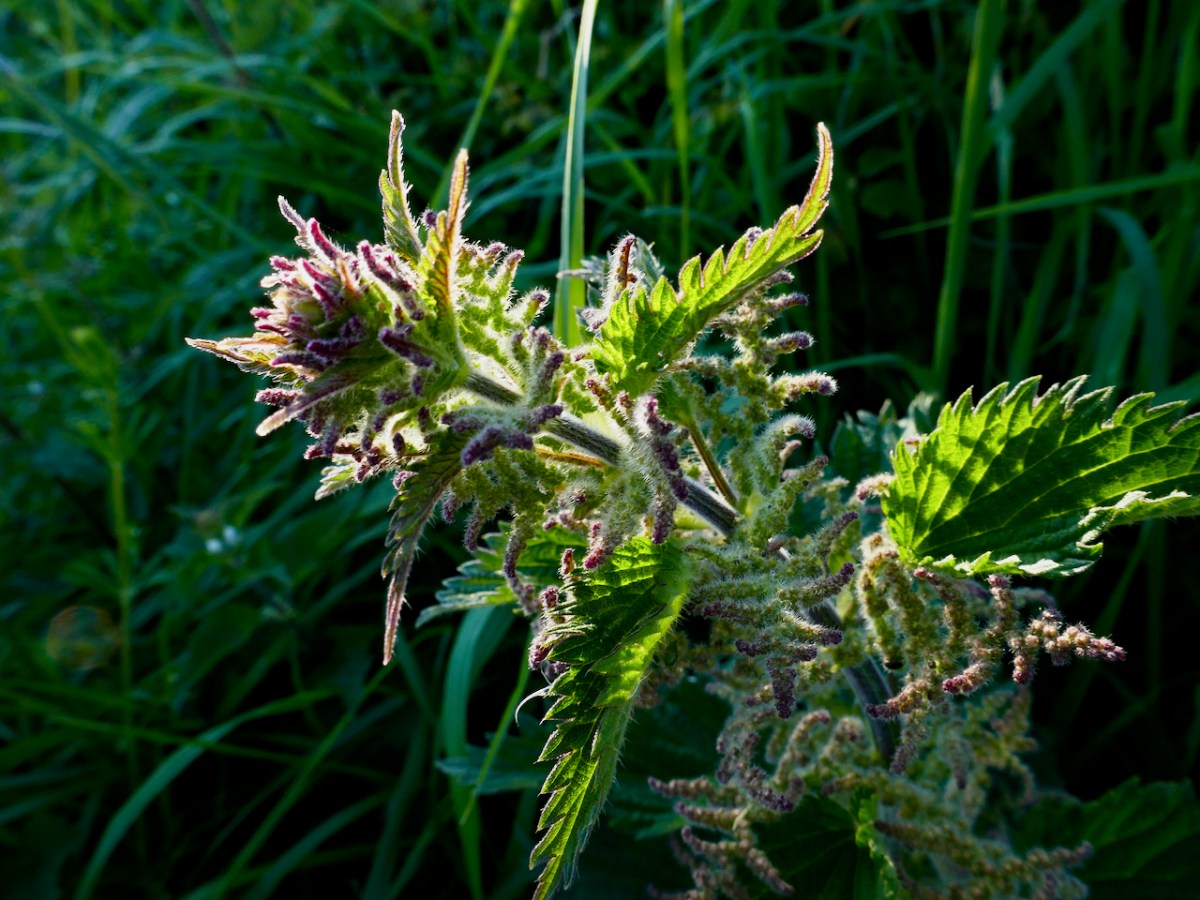
This chapter includes instructions for making a Nettle Tonic. This essentially involves boiling a pound of young nettles in water. Strain and drink a tumblerful, hot or cold, first thing in the morning. Guaranteed to put roses in your cheeks and a glint in your eye. Not pleasant, of course, but you must suffer to be beautiful.

This is the same pre-feminist era woman of Monica’s Kitchen: she gives the following directions for serving steak and fried onions.

Carve the steak by cutting it in thick slices along the grain of the meat. Give a good slice of the fillet to your most important male guest (all men are knowledgeable about steak – all that expense-account eating, I’m sure) and never you mind about his wife. The chances are she is so delighted to be away from her own kitchen stove she won’t mind what she gets.

There are lots of recipes for offal, and indeed as children we ate lots of organ meats – although I drew the line at tripe and my mother finally relented after an epic battle of wills. Kidneys, tongue, liver, sweetbreads, heads, brains, cheeks…all get a look in.

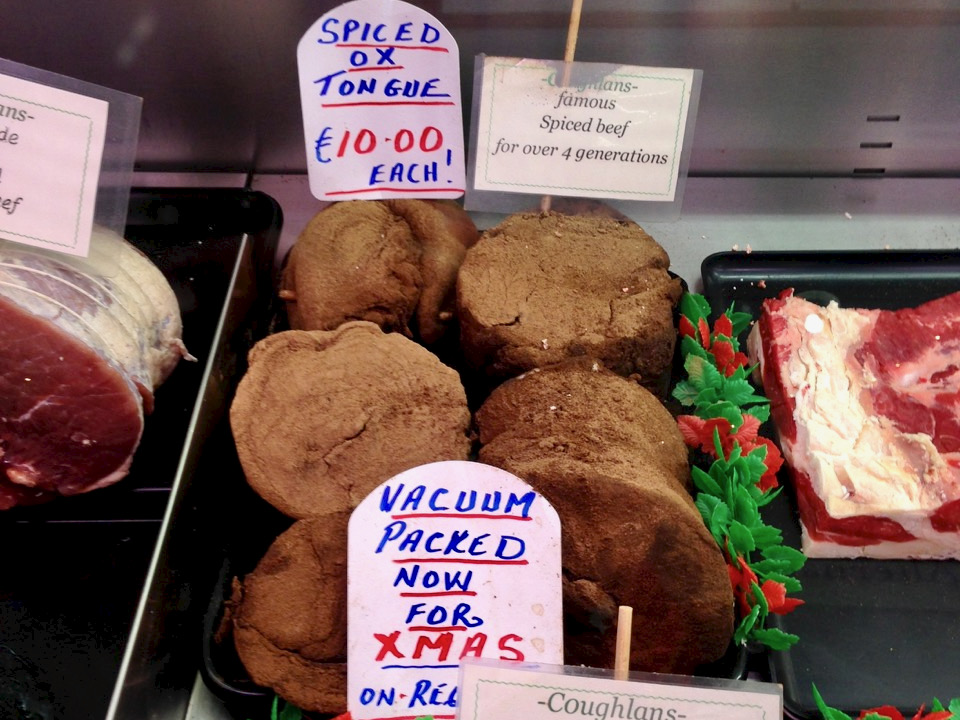
Traditional Cork Christmas Meats at the English Market

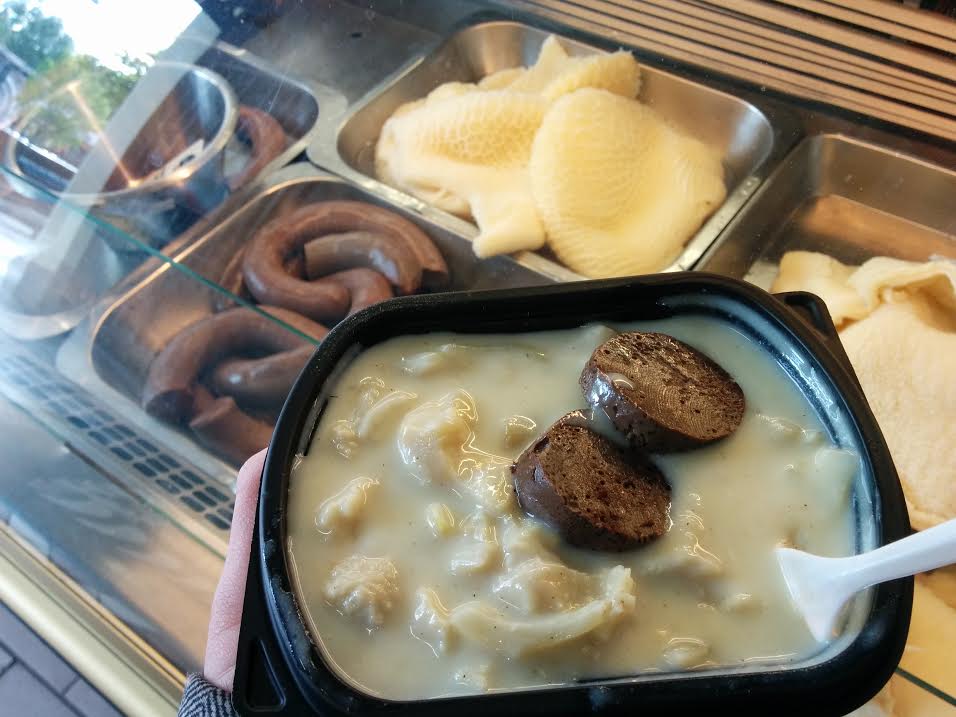
Some Cork specialties get special attention, like Skirts and Bodices. Bodices are pickled spareribs because they are like the boned bodices our grandmothers wore and skirts are the fluted trimmings that are cut away from the pork steak. Drisheens sound, er, appetising: They are made from sheep’s blood. In appearance they resemble a blown-up bicycle tyre, but they have a wonderful texture, like baked egg custard. Serve with butter, she recommends, flavoured with tansy. Crubeens, meanwhile, are pigs’ trotters. Crubeens should always be eaten with your fingers. They lose half of their magic if you attack them with a refined knife and fork. You will need a bath afterwards, of course, but their sweet savour is well worth the extra ablution.

Tripe and Drisheen courtesy of the Eat This Town blog

She finishes the pork section with the following: I will tell you an interesting thing about ham. The true ham epicure will always look for the left ham of a pig. It is considered more tender and delicate. You see, the pig scratches himself with the right leg and consequently exercises it far more. So now you know!

There are many recipes for poultry, some of which involve boiling the fowl, or, in the case of Uncle George’s Turkey, injecting cream into the breast with a syringe. Chickens, of course, must be young – a digression is called for: Describing a woman of certain age, my mother would often say, “She wouldn’t tear in the plucking” (young birds have very delicate skin that breaks easily with inept plucking) or, “A chicken of her age wouldn’t fall off the roost.” Mother had a tongue that would clip a hedge.

Monica in 1968, from the Australian Womens' Weekly
Monica in 1968, from the Australian Womens’ Weekly

When Monica talks about a soufflé (although she doesn’t provide a recipe) she says, it should rise gradually, like a careful civil servant, consolidating its position on the way up. She devotes five pages to talking about soda bread before she even gets to a recipe for it. But that recipe is one I used often, when I lived in Canada, before the days of the internet opened up a world of online recipes. I can attest that it’s a good one.

But, like Monica, I digress – my intention was to give her recipe for plum pudding. Alas, it is hardly a recipe – little more than a list of ingredients followed by instructions to mix it all together, put into greased pudding dishes, and boil for 5 hours. Like many of her recipes, it calls for booze – in this case a glass of whiskey (she has a whole chapter on ‘Drink’). So instead of detailing how to make the plum pudding I will leave you with her approach to serving it.

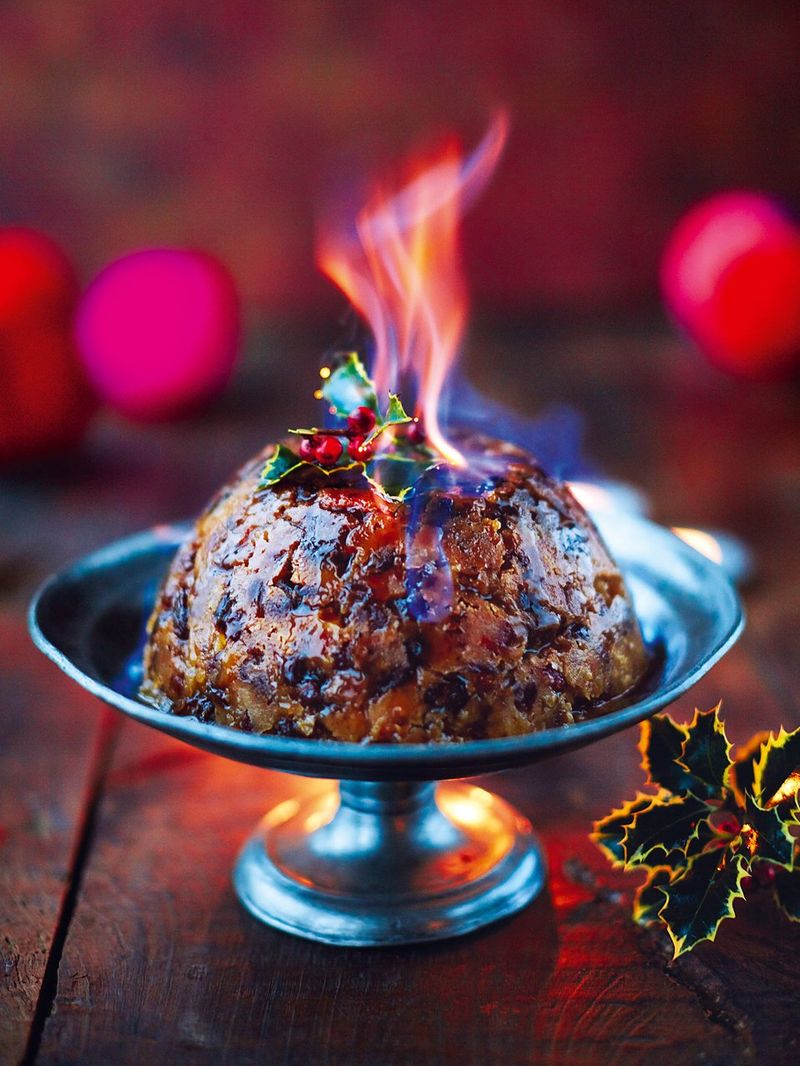
The most exciting thing about a plum pudding is the presentation. To capture the spirit of Christmas it must come to the table lapped in blue flames – and this can be quite tricky with the weak quality of booze nowadays. When I was young we always doused the pudding in poteen and you got a flame that would singe the rafters. To make sure of a good flame it is most important to warm the spirit (cheap brandy is better than whiskey) before pouring it over the pudding.

If you want to make a spectacular entrance to the dining-room with the flaming pudding held on high, this is what you do. Scoop out a hole in the top of the pudding and place half and empty upturned eggshell in the hole. Fill the shell with warmed brandy, ignite and move the dish to spill out the spirit as you enter the dining-room.*

I couldn’t resist this photo of a flaming pudding, which is from Jamie Oliver

In preparing this post I looked up lots of plum pudding recipes, then decided to buy one from my favourite market stall. But if you really want to make a traditional Irish one, Brenda Costigan’s mother’s recipe, from the Independent, looks like a wonderful, rich, boozy pudding that would have done Monica proud.

*Disclaimer: Roaringwater Journal will not be responsible for house fires caused by following these directions.

Snap-Apple Night

November - a time for Fire Festivals

November – a time for Fire Festivals

Hallowe’en is big in Ireland. It has always been celebrated and is, of course, an opportunity for children in wonderful spooky disguises to go out collecting sweets and treats. But this – the ‘Day of the Dead’, and traditionally the beginning of the winter – has generated far more elaborate customs than any I have encountered before. Have a look at this parade which takes place in Shandon, Co Cork.

The origins of Samhain (Oiche Shamhna in Irish) seem to be an old Irish festival marking the first day of winter and the ending of the farming year. All crops had to be in and safely stored – hay, potatoes, turnips, apples – and cattle and sheep were moved from mountain and moorland pastures and brought closer to the farmstead; milking cows were brought inside for the winter and feeding with stored fodder began. Turf and wood for the winter fires must have been gathered and dried. If fires were lit year-round – for cooking – they had to be allowed to go out for the one night and were then lighted again in the morning: this custom still survives in some Irish households.

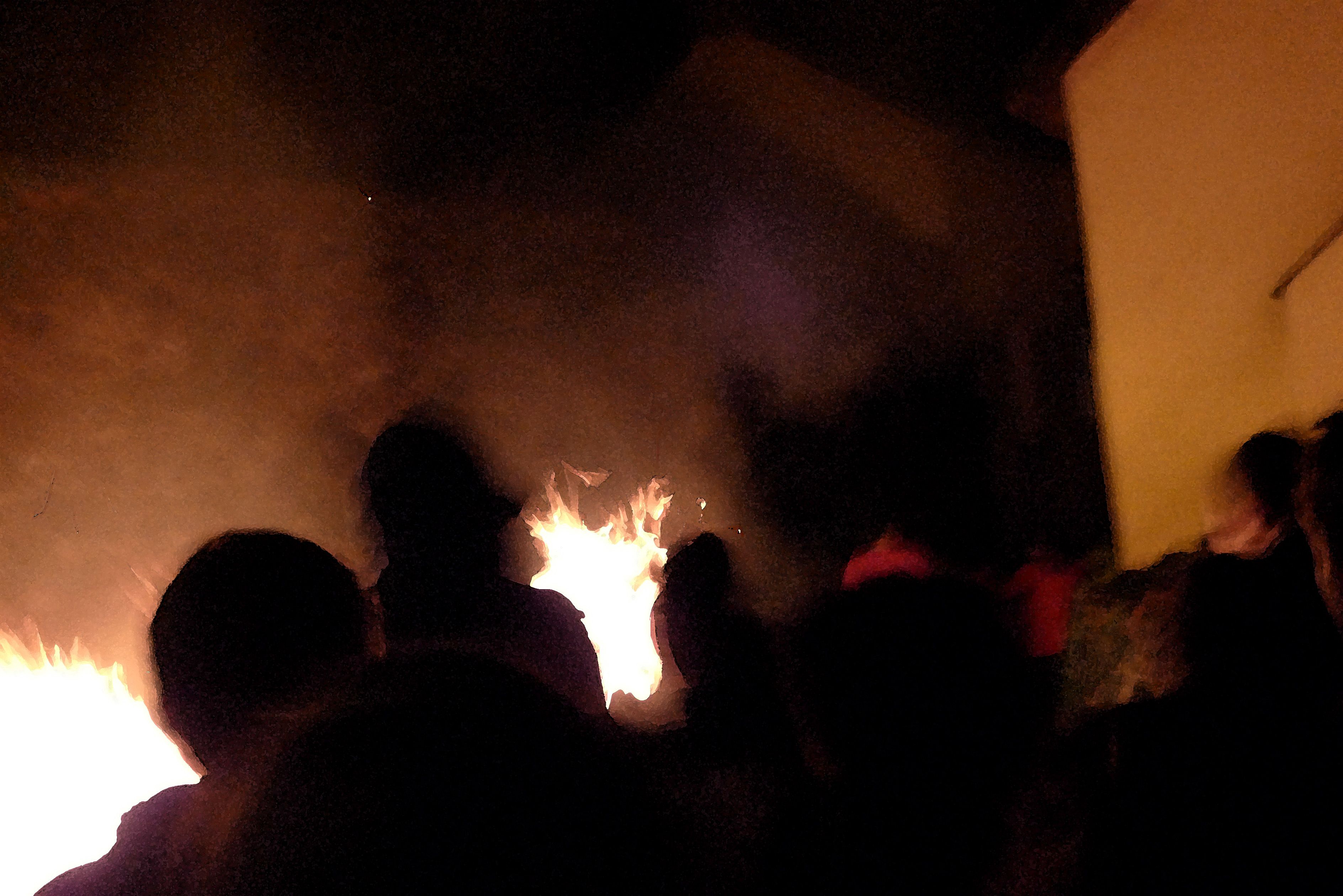
Fire is an essential element in the festival. The word ‘bonfire’ is supposed to be derived from ‘bone fire’ – the burning of the bones of the animals slaughtered before the onset of winter once the meat had been prepared and preserved to keep the larder full through the cold bleak months to come. It’s no coincidence that in England bonfires are lit in early November to ‘remember’ Guy Fawkes and his plot to blow up the House of Lords in 1605: this was just a continuation of fire festivals that already happened then – and are still happening now. When I lived in Devon I came across (and took part in) traditions of pulling burning barrels through the streets (Hatherleigh) or carrying burning barrels through crowds of spectators (Ottery St Mary). West Country carnivals were common at this time of the year, and many were accompanied by flaming torches and fireworks. It has always seemed necessary to ‘lighten’ and warm the darkening year with fire.

Tar Barrels in Hatherleigh, Devon, 2012

Tar Barrels in Hatherleigh, Devon, 2012

November, from Northside of the Mizen by Patrick McCarthy and Richard Hawkes 1999:

‘…The Month opened with Snap-Apple Night and tales of púcas and little folk. From the rising of the moon on November Dark the mackerel would make their way to deeper water; it was the end of the seine season. With the crops all in and hill grazing finished, fires were set on the hills and preparations made for the winter. There was little employment for the months ahead…’

Snap-Apple Night by Irish painter Daniel Maclise, 1833

Snap-Apple Night by Irish painter Daniel Maclise, 1833

Continuing tradition - a modern Snap-Apple, by Coca Cola

Continuing tradition – a modern Snap-Apple, by Coca Cola

‘…The first game of the night was always ‘Snap-apple’ when an apple was hung from a beam in the kitchen and all the children took turns to ‘snap’ the apple. Sometimes the apples were put in a half barrel of water and you had to take one out with just your teeth, with your hands behind your back…’

Two Hallowe’en tales from Northside of the Mizen:

…One fine Halloween, Neddy Hodnett (Gurthdove) was crossing the land on the way back from scoriachting (visiting friends and neighbours), when he came across a Narry the Bog (a heron) at Hodnett’s Sleabh. He caught it and put it under his coat. Neddy knew that Dan Thade Coughlan was out scoriachting and he also knew what route across the fields Dan would take, so he hid in a beillic. It wasn’t long before Dan came from the east, and as he passed the beillic, Neddy knocked a screech out of the Narry. Dan leapt out of his skin with fright and with a roar he leapt over the ditch and away out of sight. Dan didn’t take long to arrive home and he told everyone he had met the devil himself, coming agin him! Dan did not leave the house, day or night, for a week…

The Púca of Knocnaphuca  …The old people would feed the Púca of Knocnaphuca on ‘Snap-apple Night’, or indeed, whenever one had a call to travel up the hill. It was the wise person that fed the Púca the night before going up. Milk and cake would be put on a plate and left outside the house and by the next morning the food had always gone!

The Púca of Knocnaphuca was half horse and half human. One late Snap-apple night there was a young lad out walking the road when he heard a strange, sweet music coming from the hill. He went up and saw the Púca playing on a whistle. As soon as the lad had put eyes on it, it stopped playing and caught him. Away the Púca went to the top of the hill, where a crack opened up in the rock. In they went. They went twisting and turning down through tunnels until the entered a chamber full of gold. “Now,” said the Púca, “you are mine!”…

The next morning the boy was found on the road by the Long Bog. His hair had turned white and he could not speak a word ever after…

I like Finola’s tradition for Samhain: making (and tasting) a Hallowe’en barm brack… Delicious!

barm brack