Schull Sculpture – Anchor, Mermaid and Lunachán

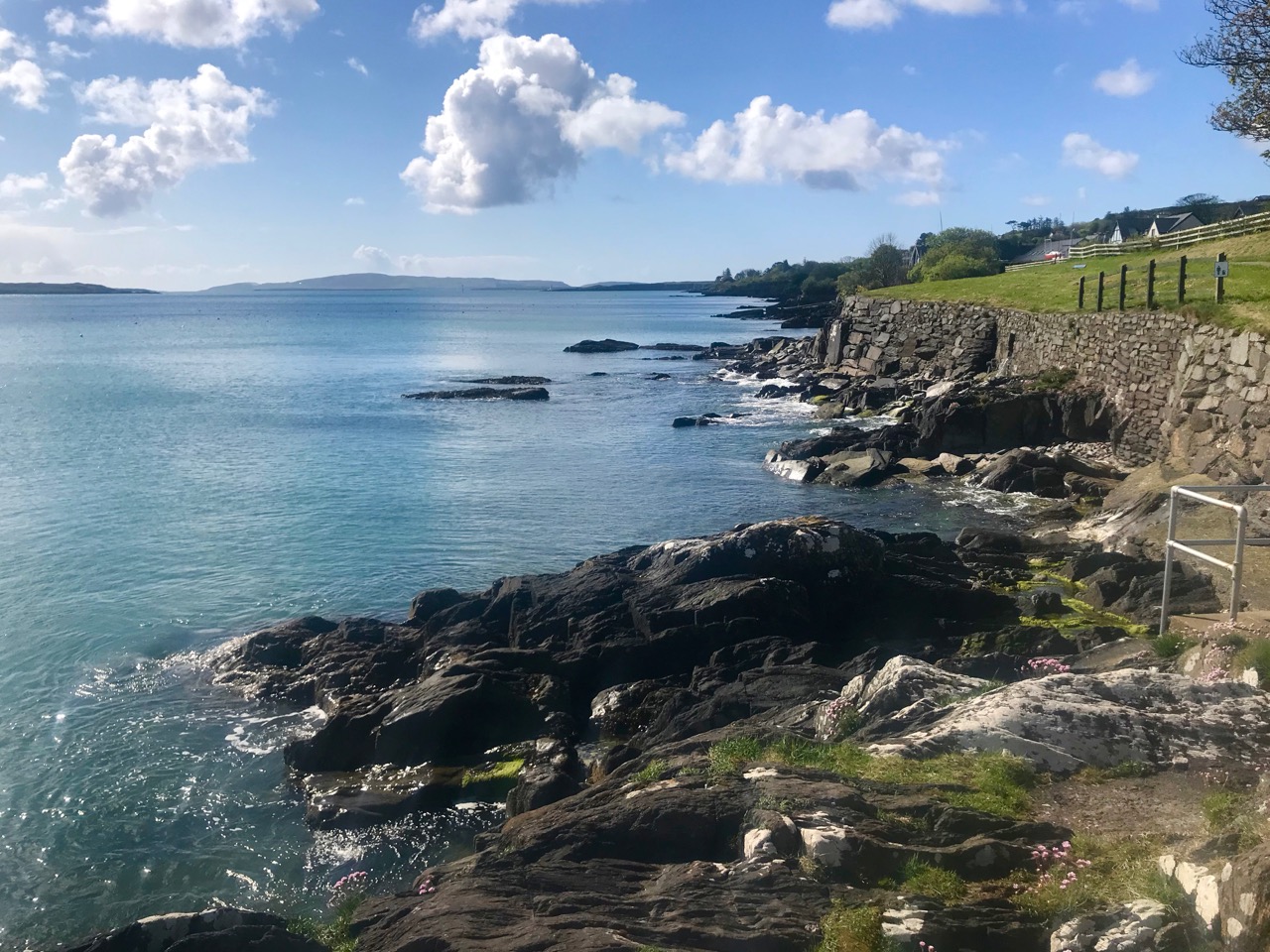
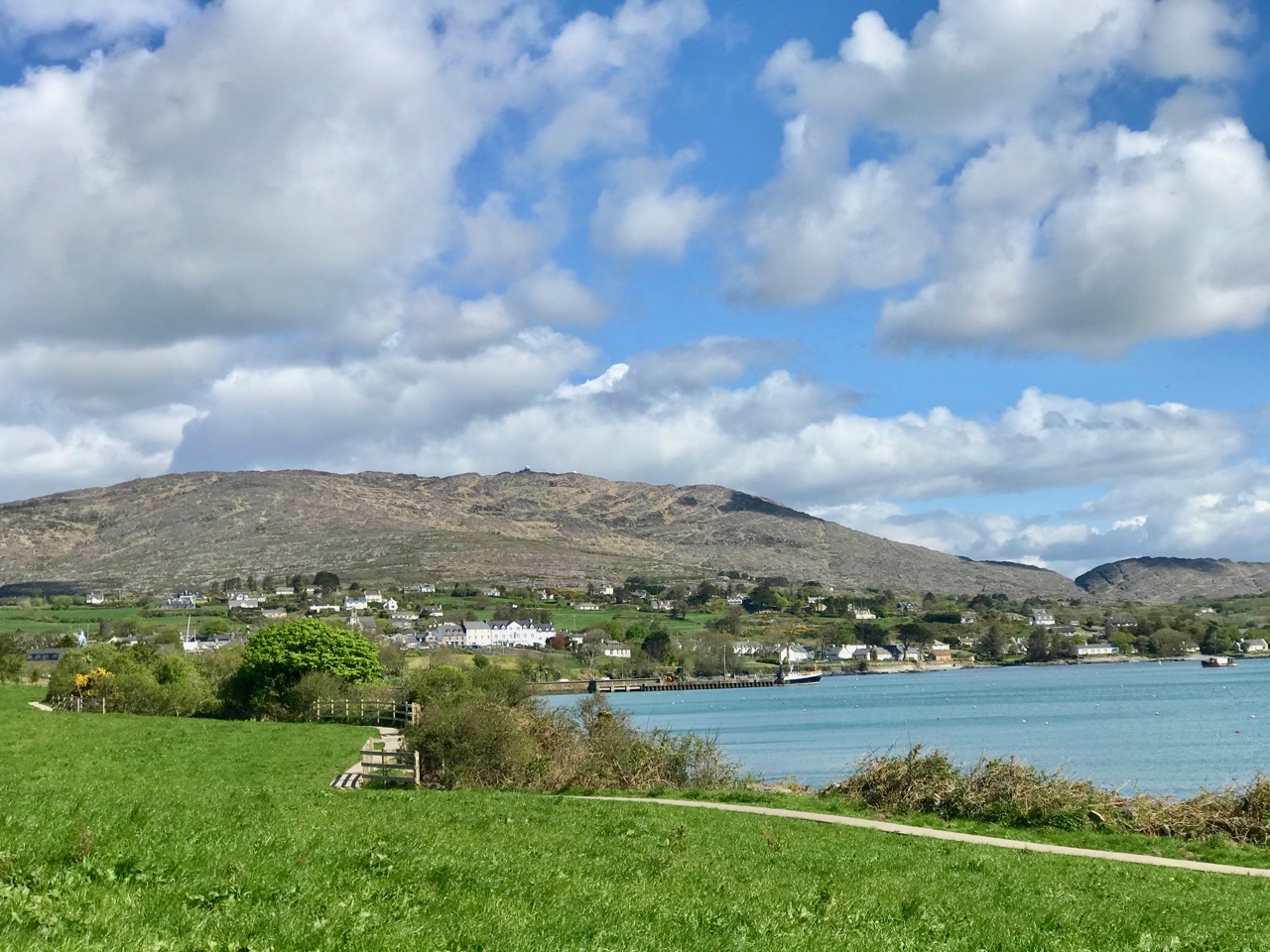
The harbour town of Schull, in West Cork, is wonderfully located on a naturally sheltered inlet looking out to Long Island Bay and ‘Carbery’s Hundred Isles’. From the pier you can take the Foreshore Walk (above) – a significant community asset – and follow a route which encircles the settlement, passing, on the way, another surviving piece of sculpture from the West Cork Arts Centre Living Landscape exhibitions, dating from the 1980s to the 1990s and masterminded by Cóilín Murray. We are indebted to Cóilín for providing an archive of photographs to the Ballydehob Arts Museum, and for being willing to contribute his own memories of the installation of the West Cork Sculpture Trail, which has greatly helped in putting together the story of this venture, over a quarter of a century later.

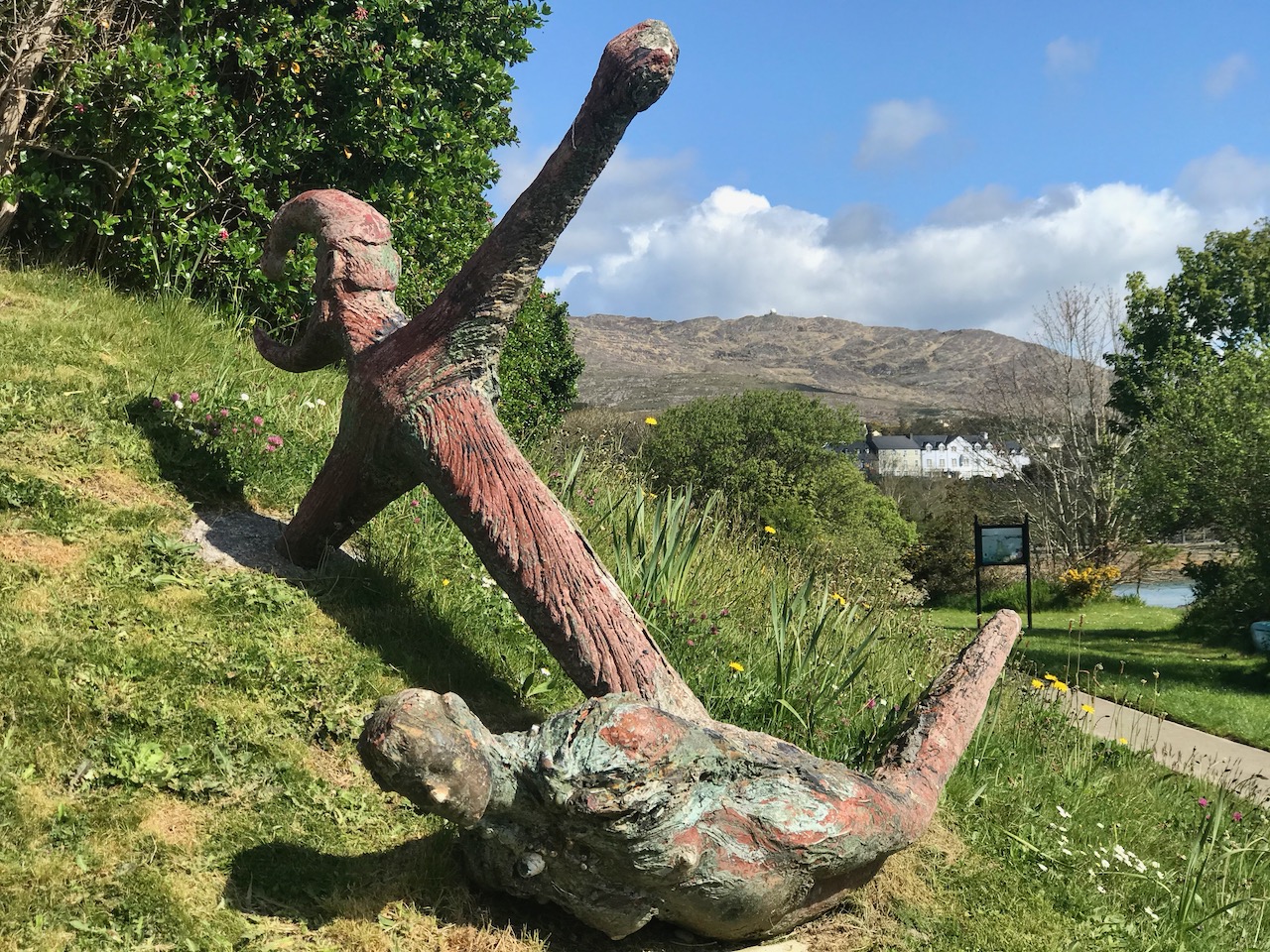
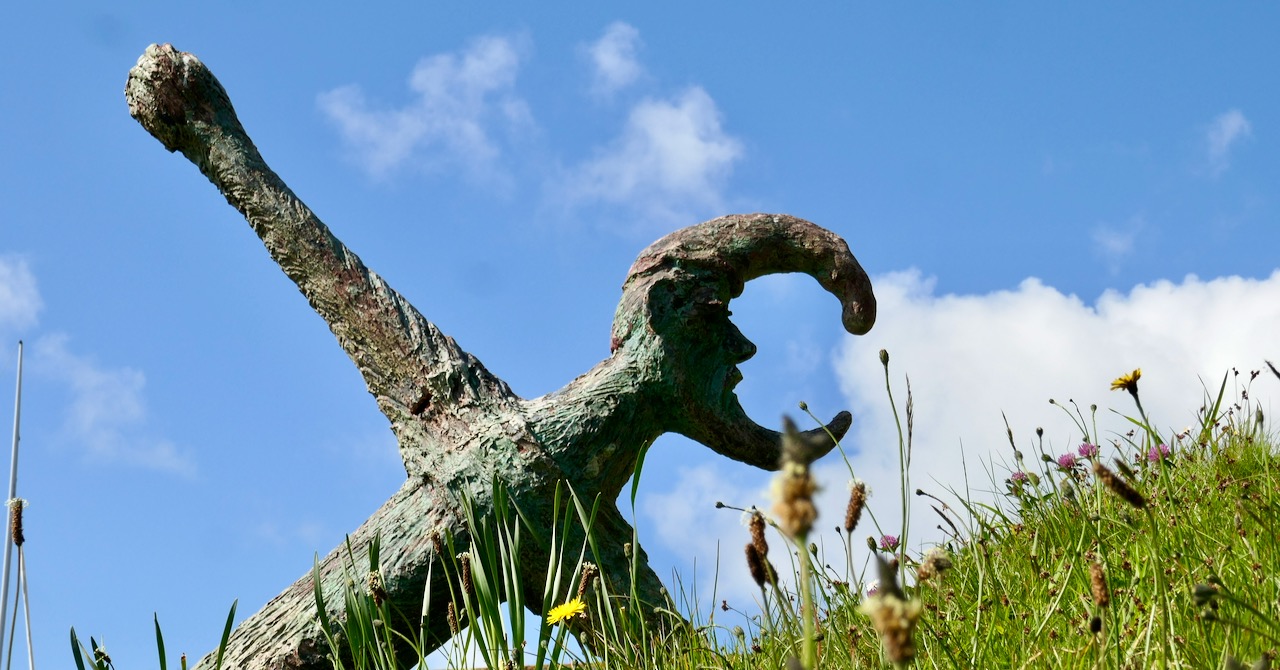
This is the second in a series of posts being published simultaneously by Roaringwater Journal and the Ballydehob Arts Museum, celebrating an important aspect of art history in West Cork. The first article – Behold, Their Bright Shining Future Rising Before Them – discussed Michael Bulfin’s ‘Pyramid’ sculpture beside the N71 road at Skeaghanore East between Skibbereen and Ballydehob. That work can still be seen, but is in a very overgrown state. The subject today is a piece by Mick O’Sullivan, titled Anchor, Mermaid and Lunachán. This is at present a well preserved surviving work from the Sculpture Trail although, like many others, it has suffered in the past from vandalism.

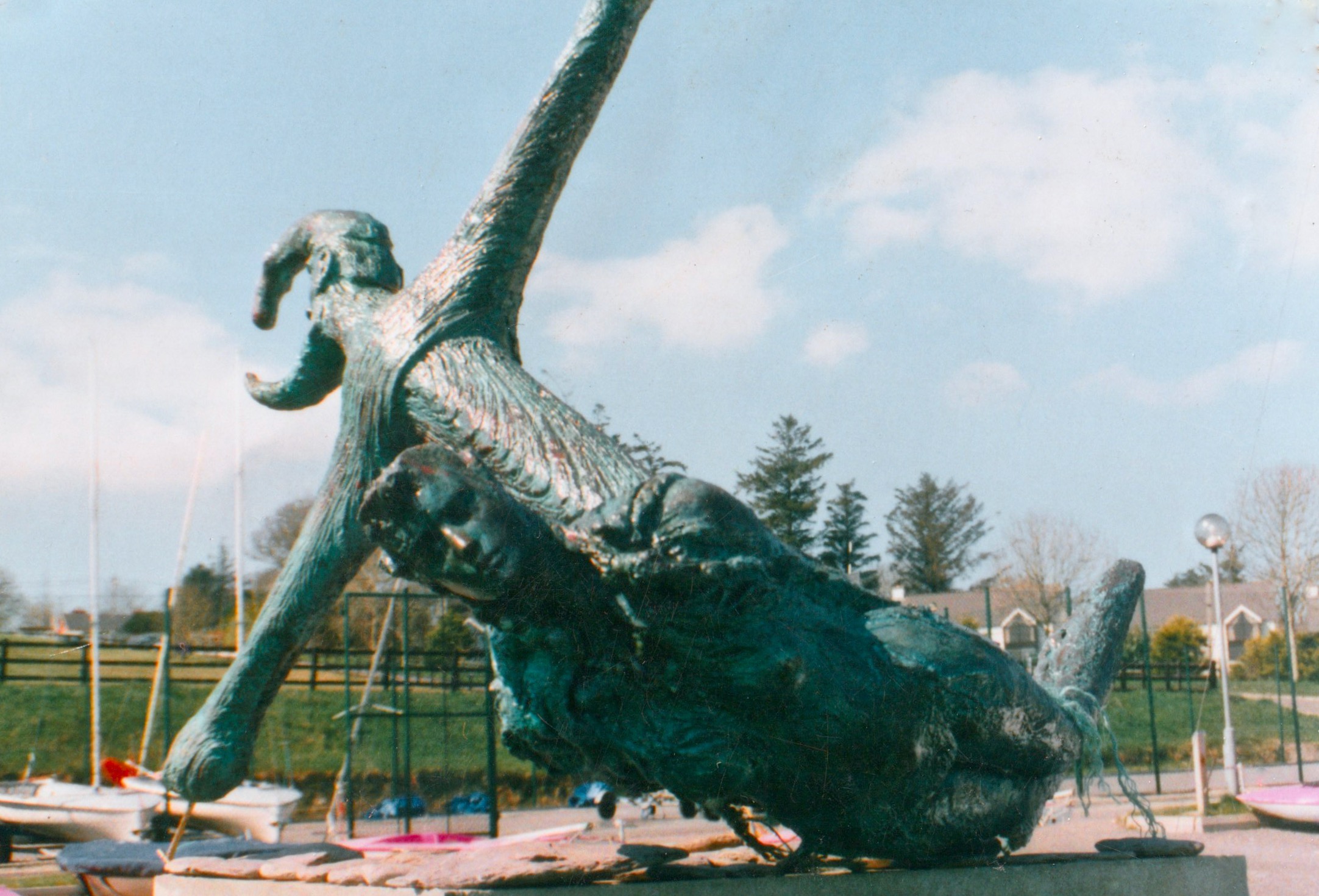
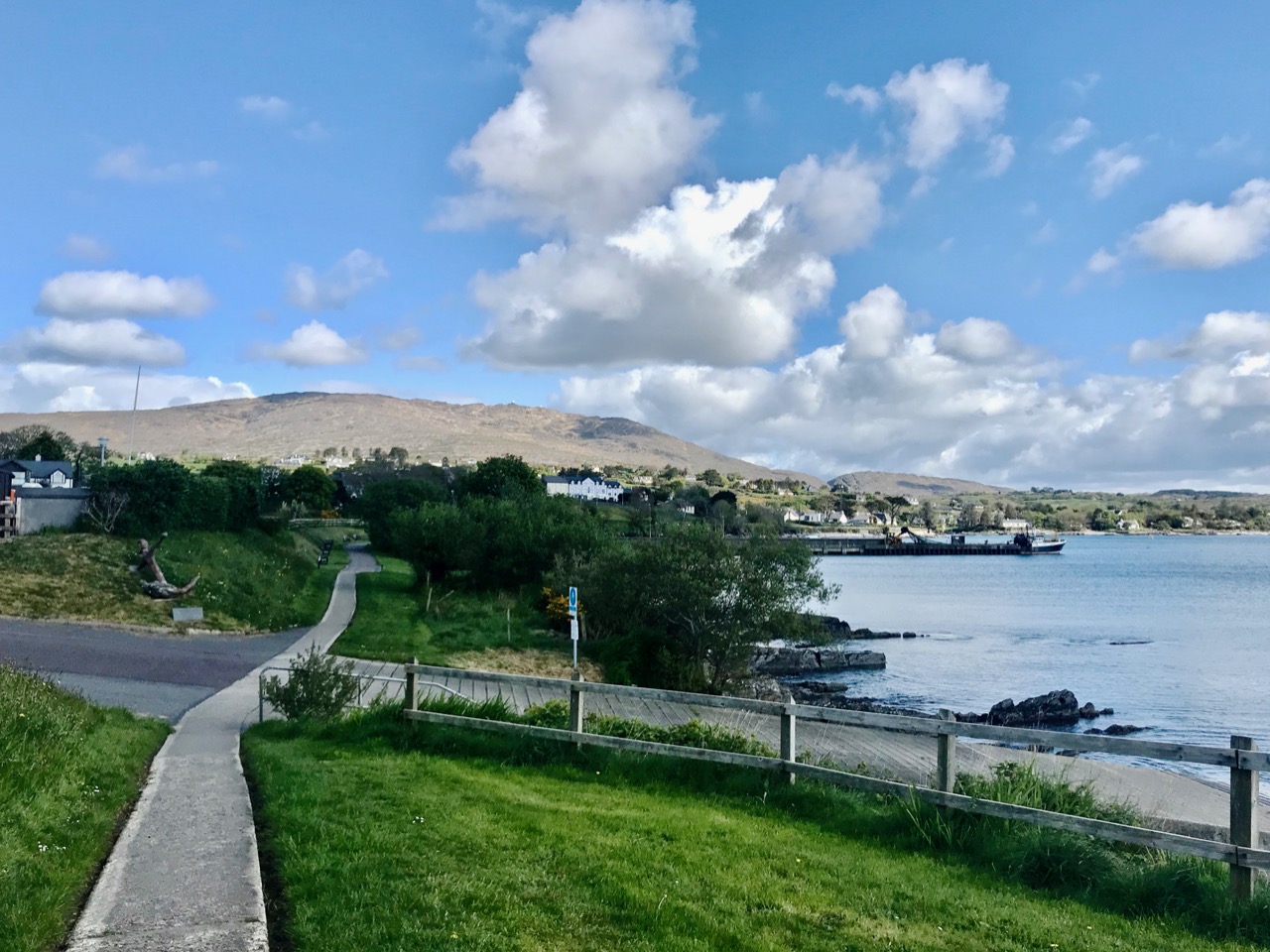
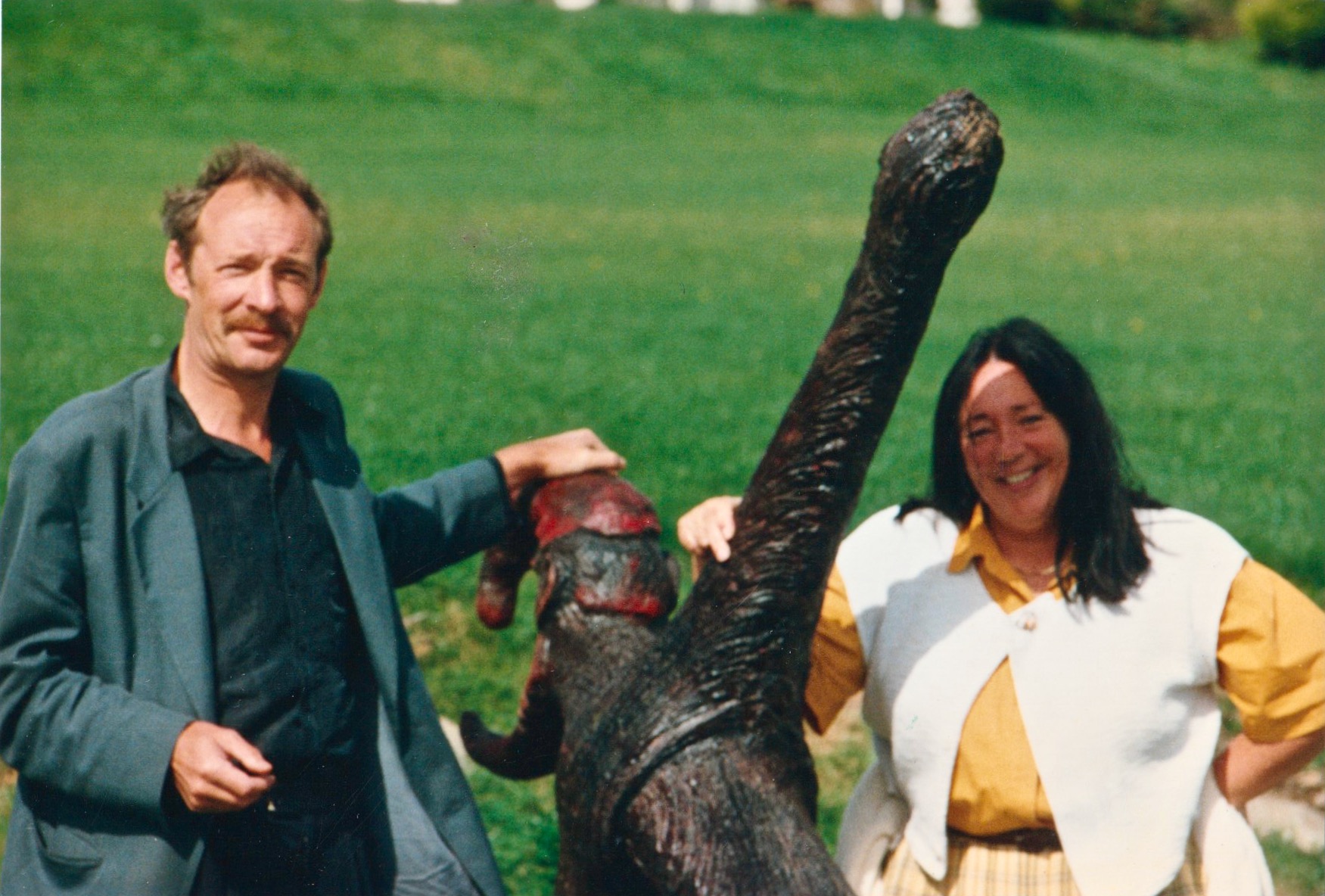
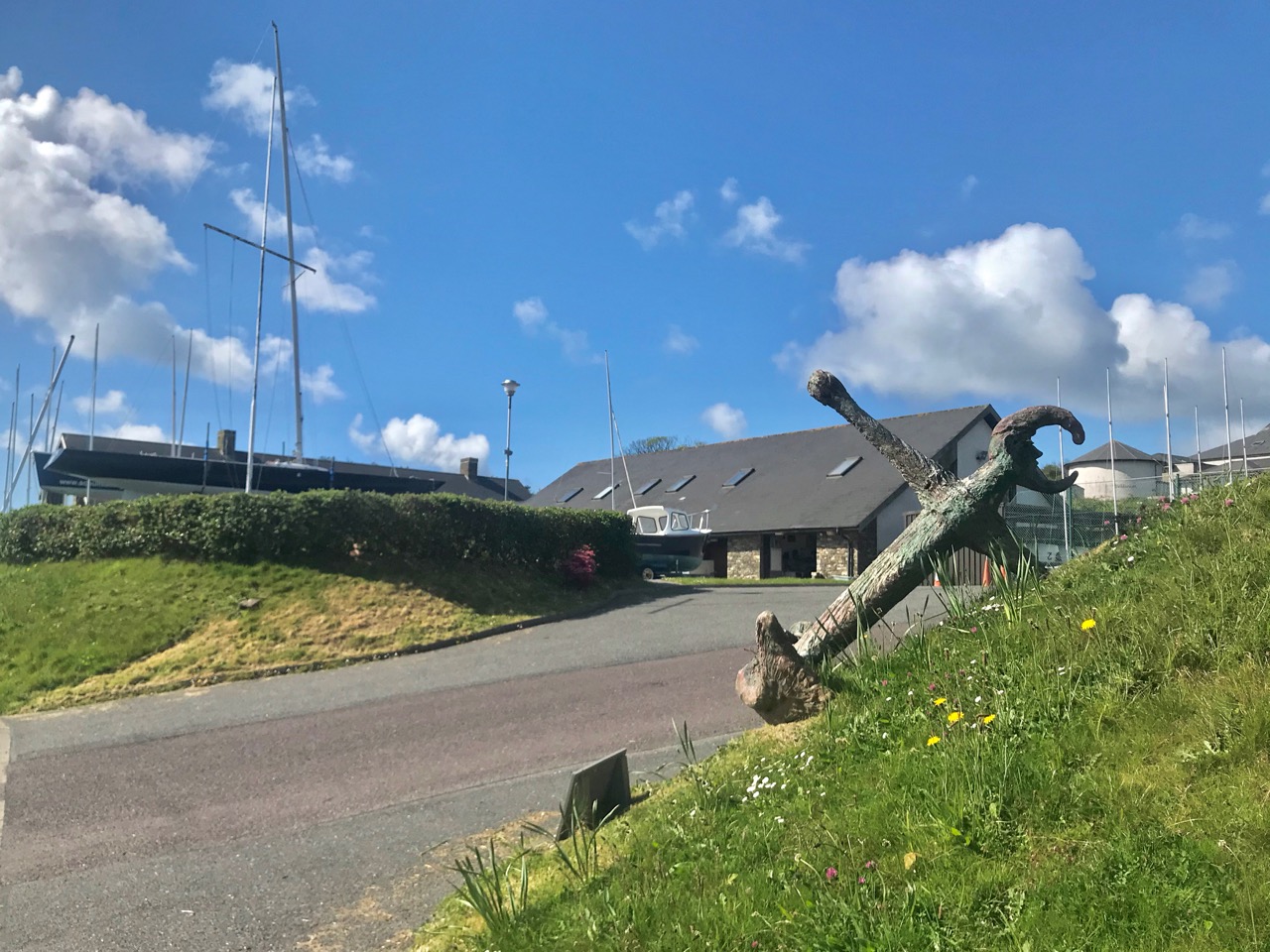
Upper – this photograph dates from the time of installation of the Anchor sculpture in Schull: it was originally situated close to the water below the Sailing School. Lower – the restored Anchor sculpture (far left of picture) is now sited above the Foreshore Walk, by the top of the slipway

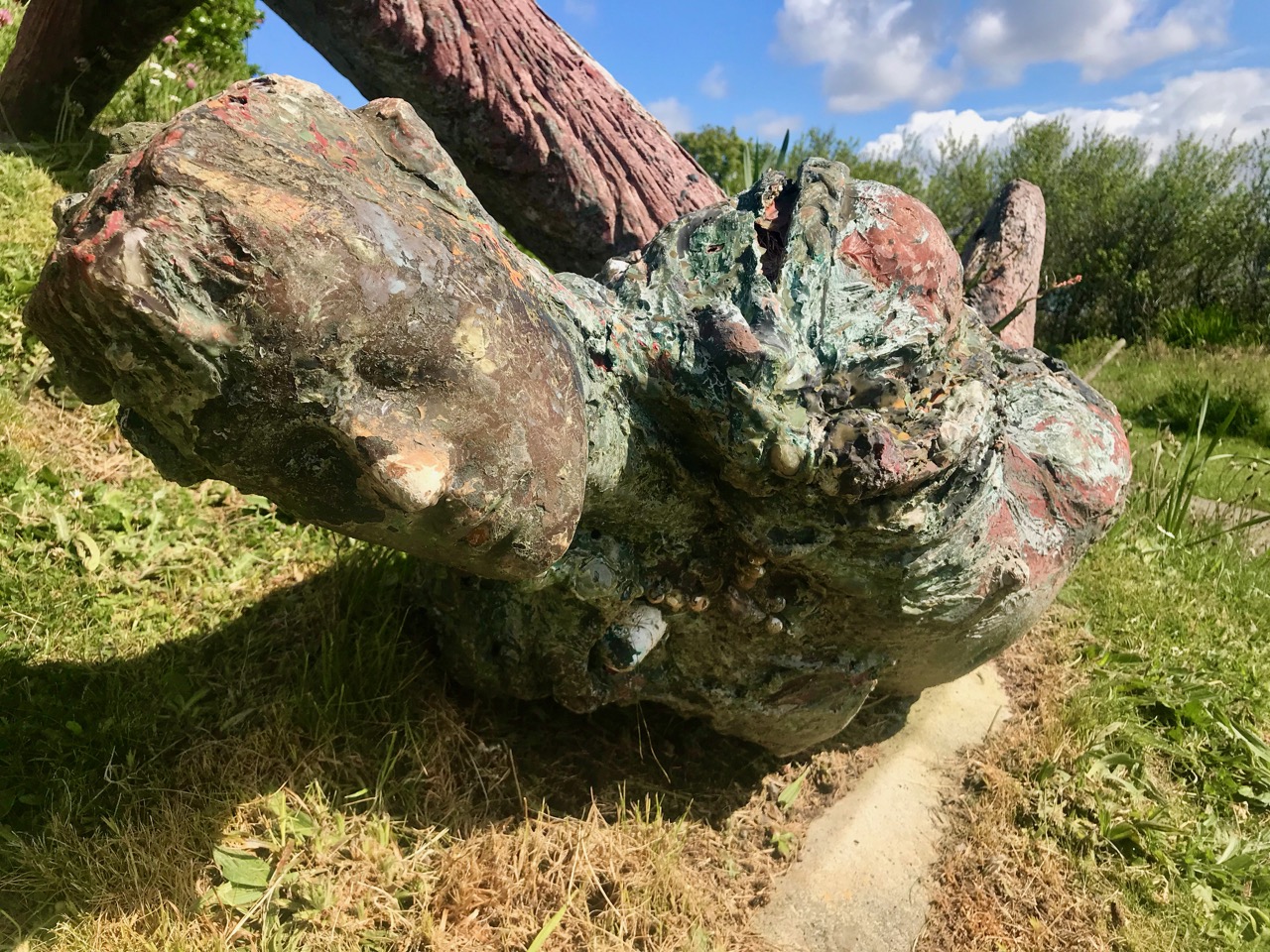
The Anchor has the remarkably realistic texture of a corroded and barnacle-encrusted ancient piece of ironwork which might have rested on the ocean bed for countless years… In reality, it is fabricated from glass-fibre resin and – if dropped into the sea – it would float!

It was, in fact, sent out to sea… Deliberately damaged in the late 1990s, it was broken into two parts and thrown in the water. The two sections ‘sailed’ side by side towards Long Island until they were rescued by one of the Schull fishing boats. Eventually the remains of the artwork arrived in Cóilín’s garden in Skeaghanore, awaiting a saviour.

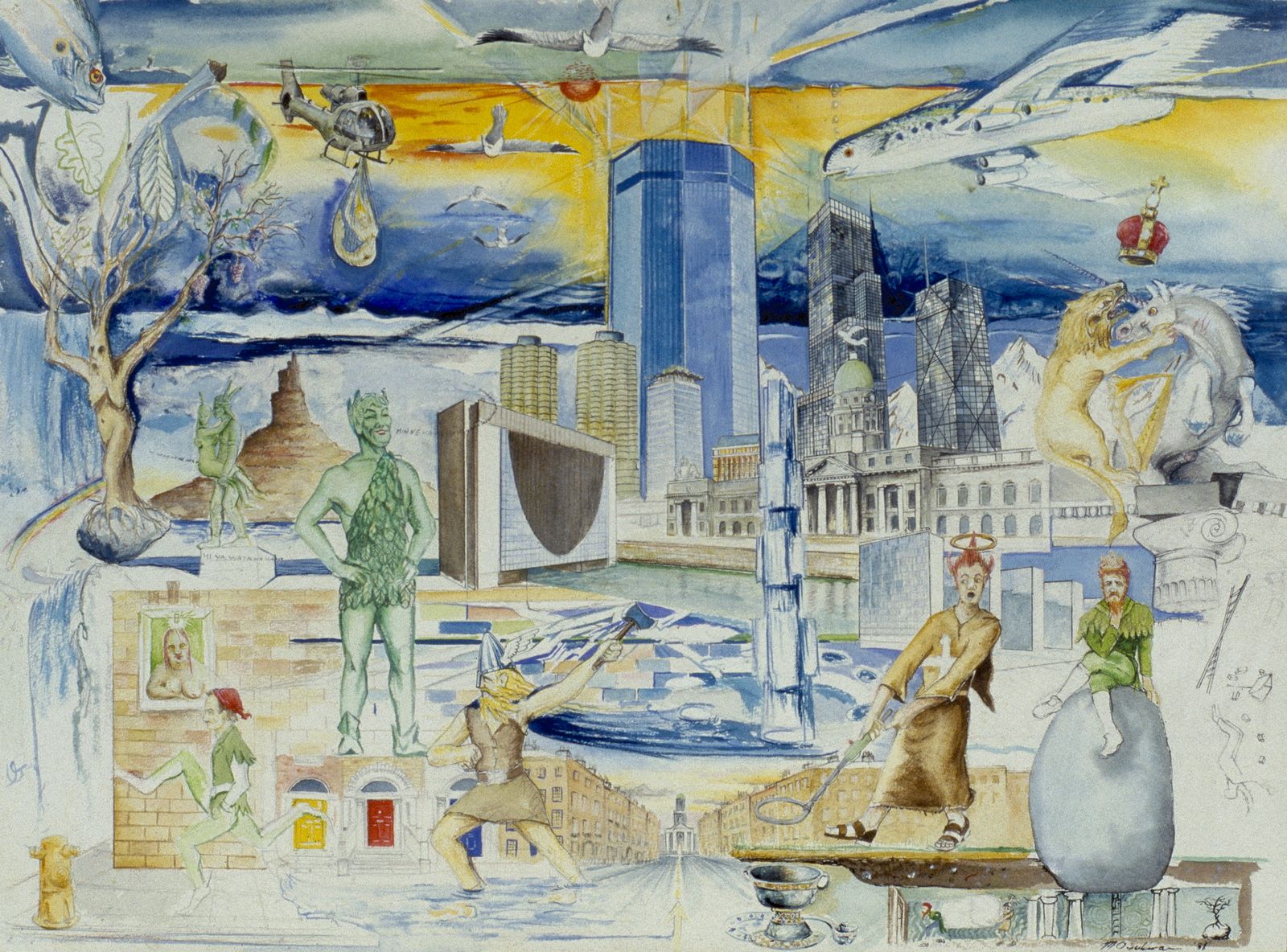
Upper – Michael O’Sullivan at the launch of his ‘Anchor’ sculpture, together with Christine Choice, board member of WCAC. Lower – a 1982 watercolour by Michael O’Sullivan: St Brendan Discovers the Crystal Pool (IMMA Permanent Collection)

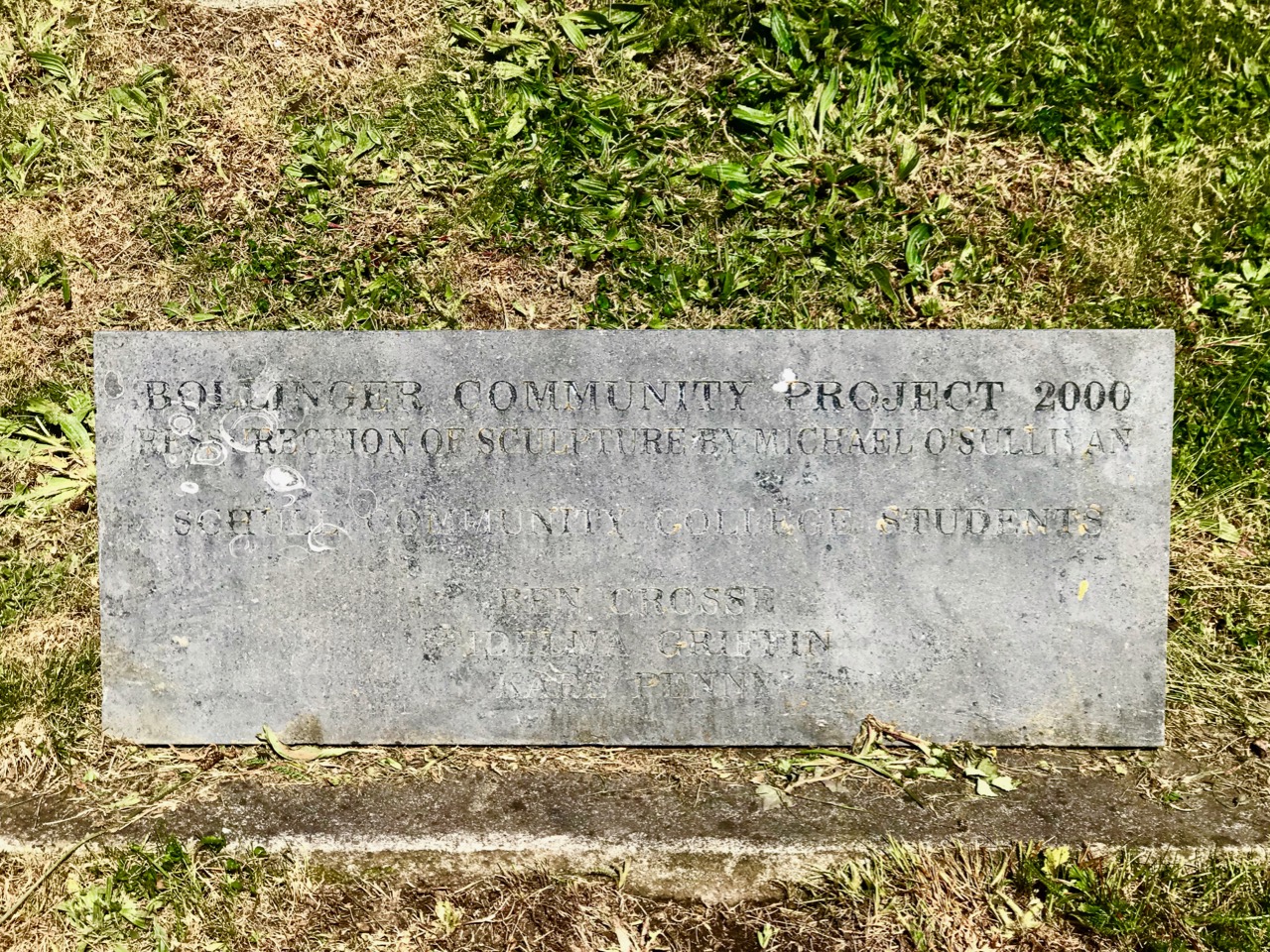
Michael O’Sullivan was born in Dublin in 1945. He gained a Diploma in Sculpture from the National College of Art and Design (NCAD), and was a lecturer there until his retirement. He has been greatly influenced in his life and art by the works of James Joyce, and is a noted scholar and lecturer on Joyce. Cóilín Murray and Michael O’Sullivan remain good friends and when the pieces of the anchor were recovered Michael came back to Schull to help in a restoration project on the sculpture instigated by a staff member at Schull College. The Anchor was reassembled and placed in its present position, where it is hopefully less vulnerable. A plaque there commemorates the 2000 ‘resurrection’ project and gives the names of the students who were closely involved in the reconstruction work.

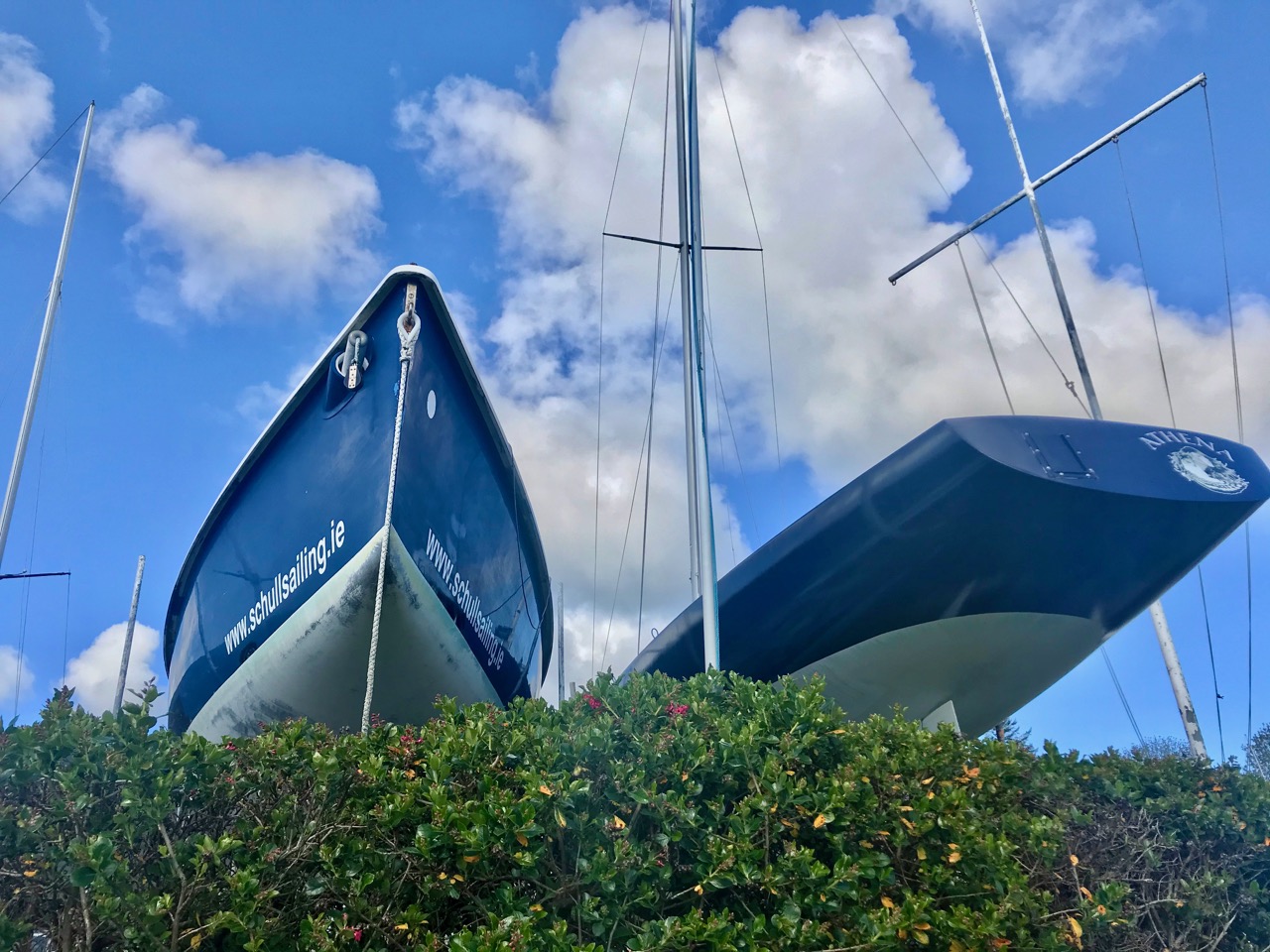
The restored Anchor is appropriately located in the context of the Schull Sailing Centre

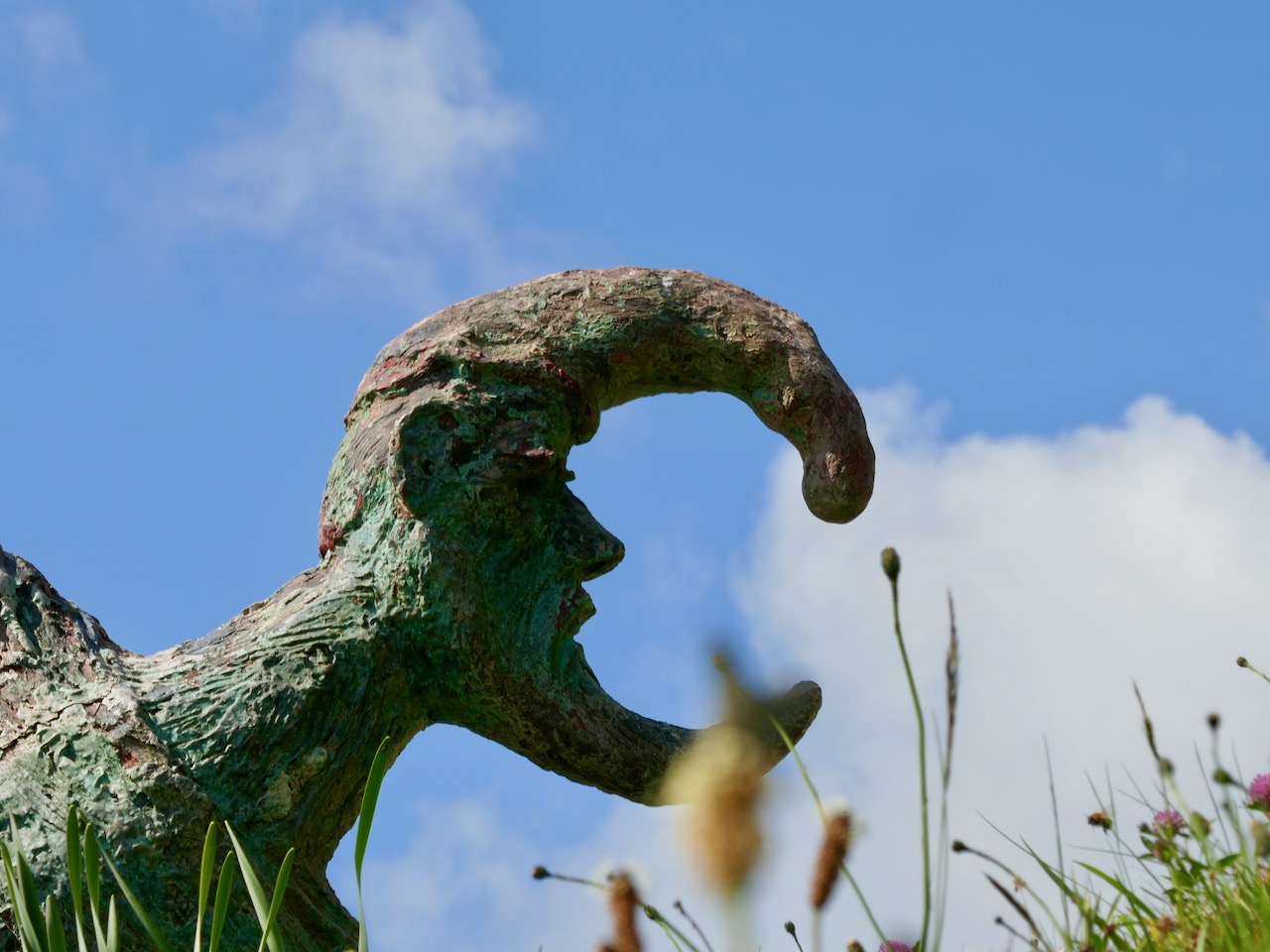
The word Lunachán – referring to the topmost part of the Anchor sculpture – is made up (by Michael)! I asked Cóilín for clarification and here is his response:

The word is an invention of his …Witty? ….
Amadán …in Irish …a bit of a fool …
Luna …the moon …
Lunachán …the reference to the moon and the howling at the full moon etc … Most of Mick’s work has layers and riddles…

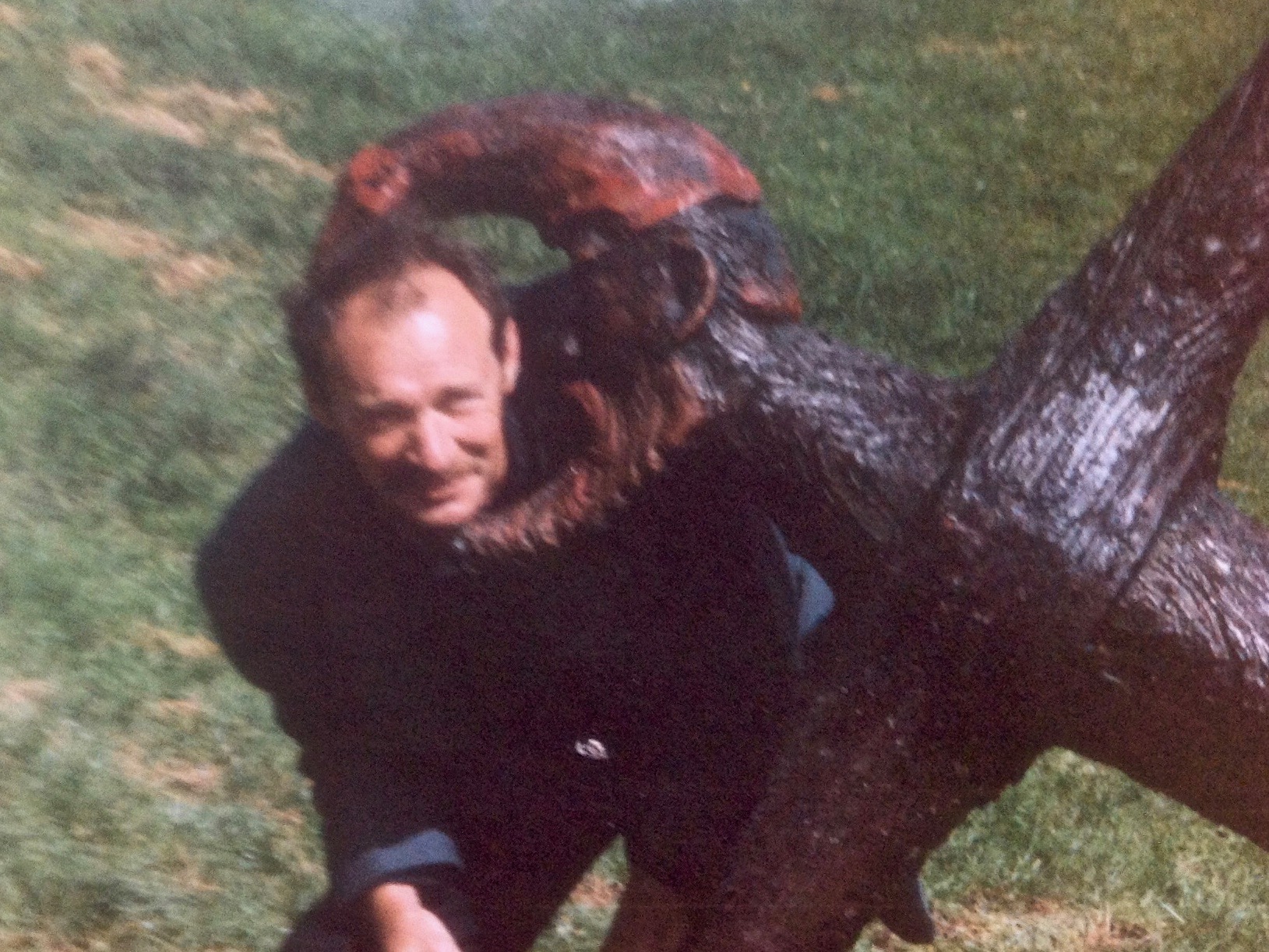
Upper – the Lunachán today. Lower – Michael O’Sullivan and Lunachán – shortly after the sculpture was first installed in Schull

It’s good that the community in Schull was sufficiently enthusiastic about the restoration of this sculpture to support its reinstatement in the Millennium year. Twenty years later, perhaps we should consider a revival of the West Cork Sculpture Trail with new artwork to link in to the few surviving pieces? The overall Living Landscapes project – of which this was just one part – helped to give the West Cork Arts Centre its still vigorous identity and national reputation. Surely – when tourists return to the Wild Atlantic Way post-Covid – such a venture could provide a stimulating cooperation between art and landscape?

Schull-Under-The-Mountain, spring 2020

Mixed Magic Messages

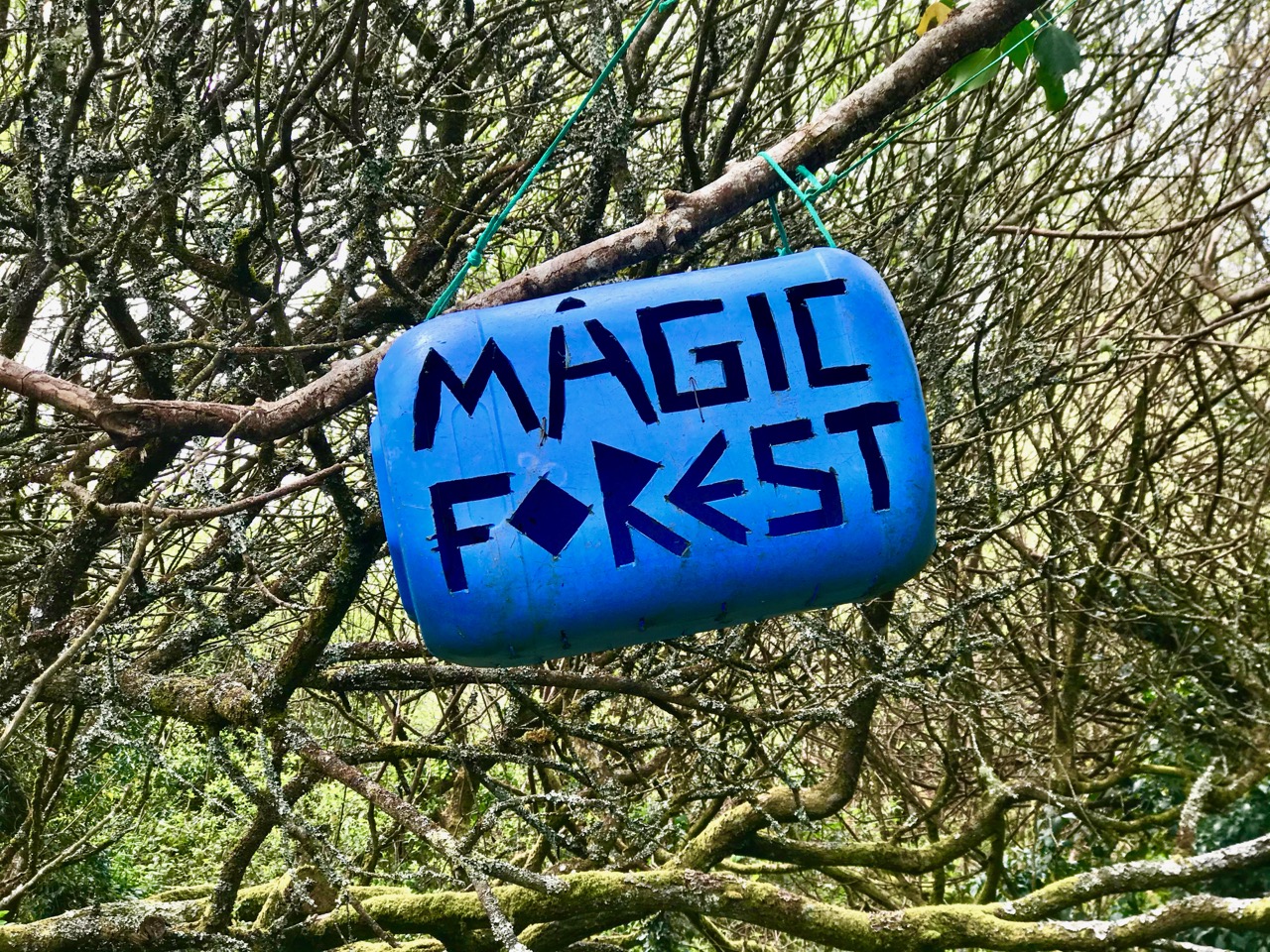
We first visited Thomas Wiegandt’s Magic Forest exactly five years ago. It’s just round the corner and over the hill from Ballydehob. As time has passed the walk has matured and mellowed: it’s the most picturesque and atmospheric place now – true magic! Thank you, Thomas, for creating this and for allowing anyone to access it (subject to lockdown limitations, of course)…

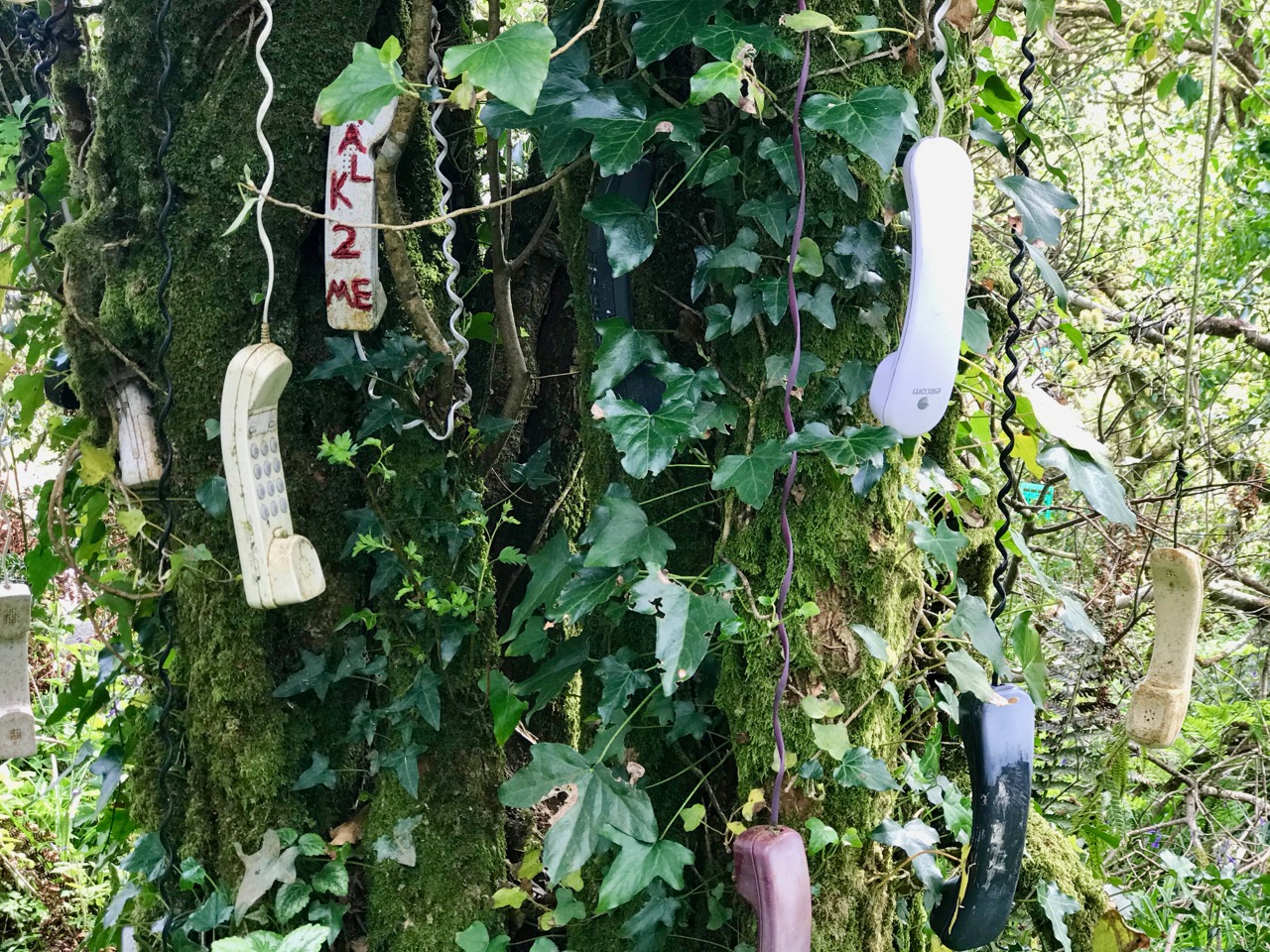
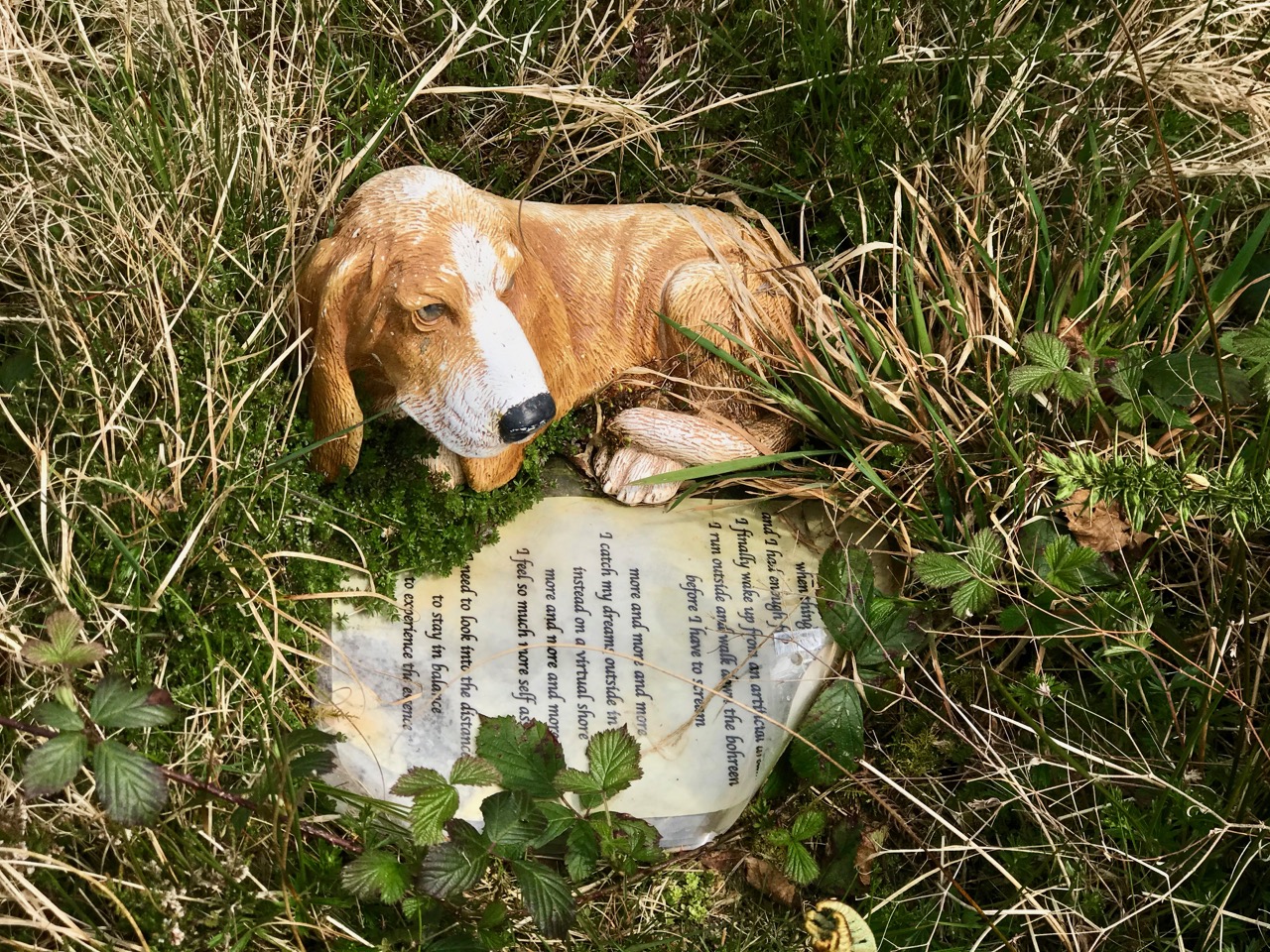
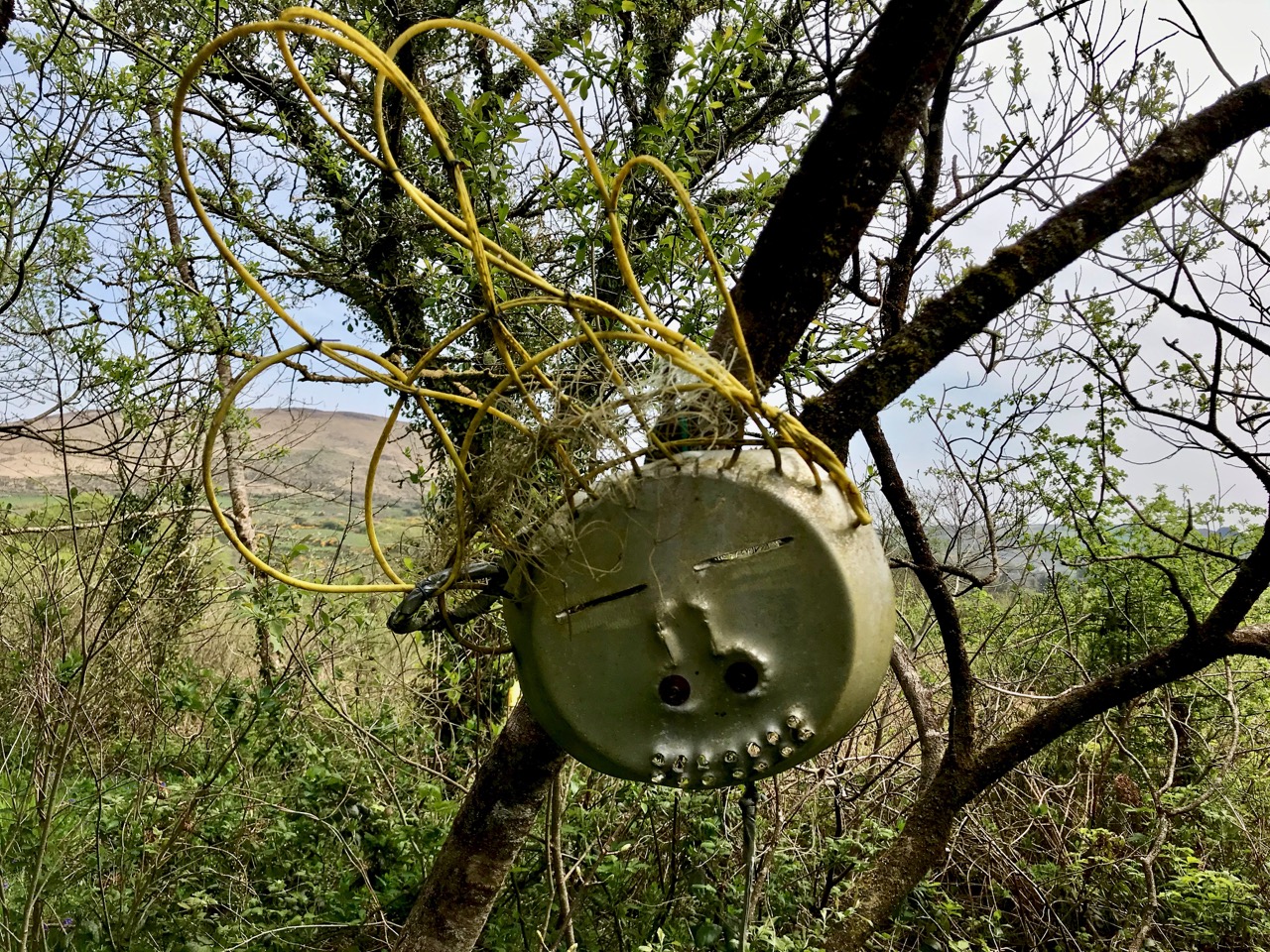
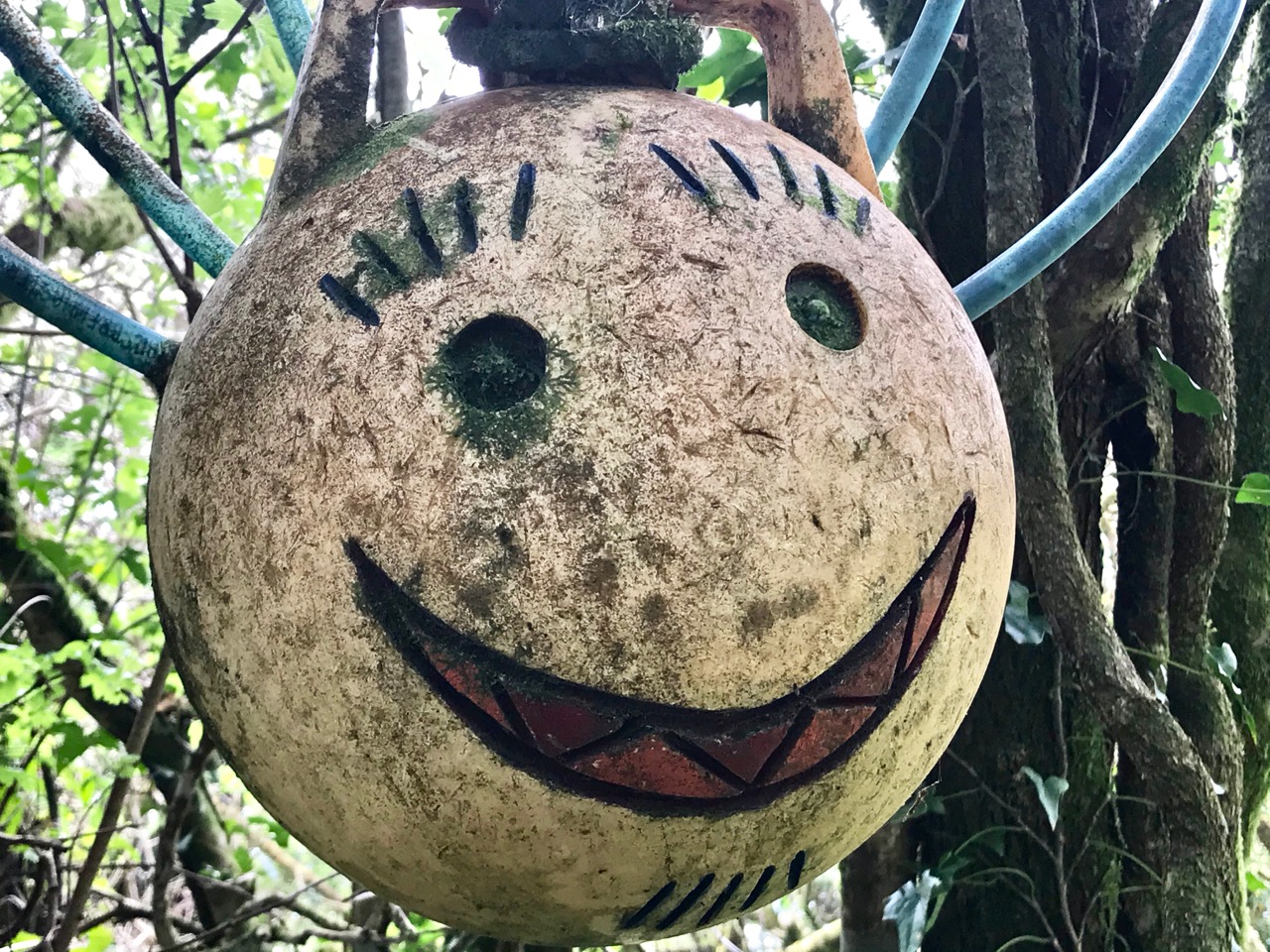
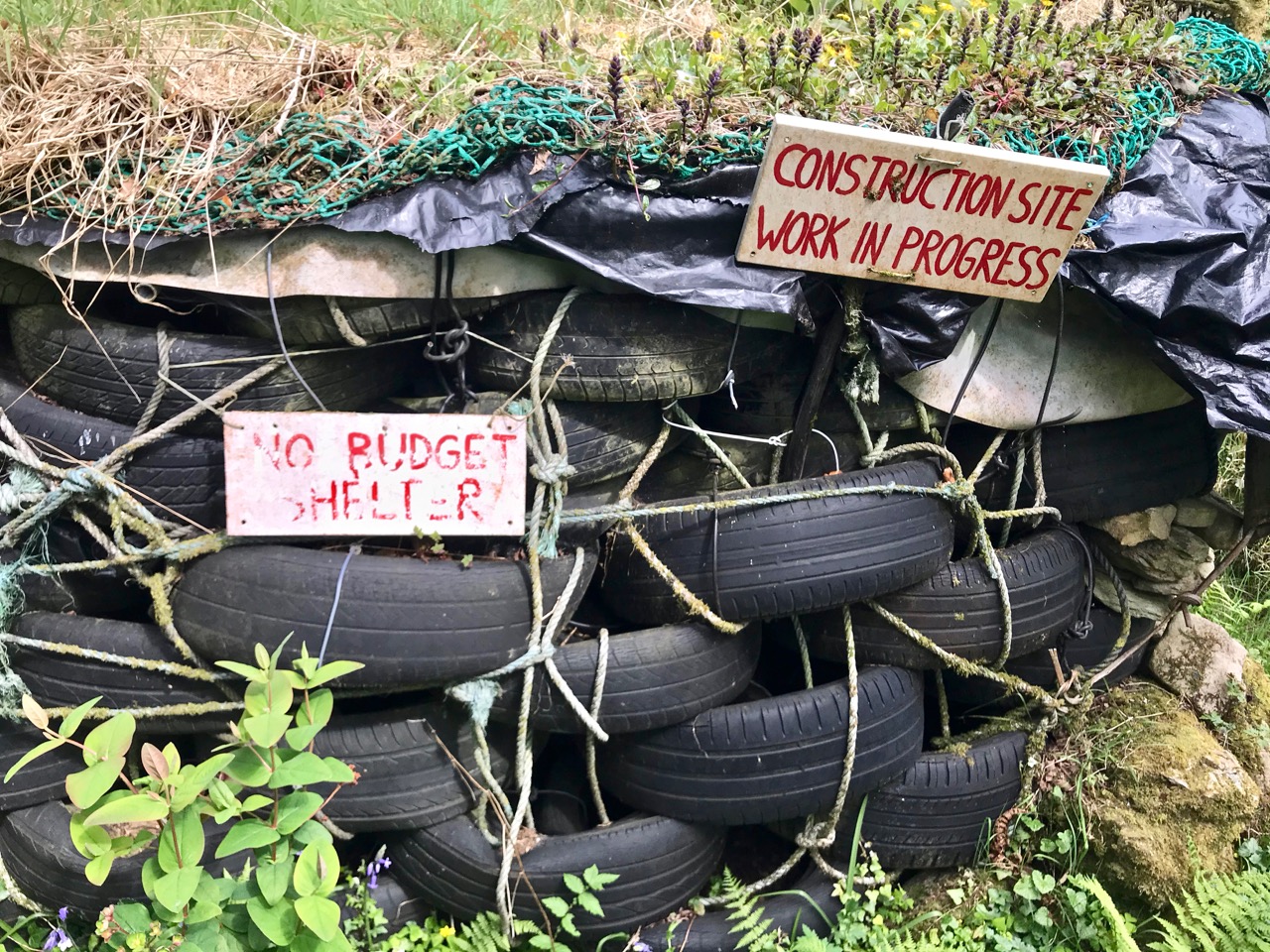
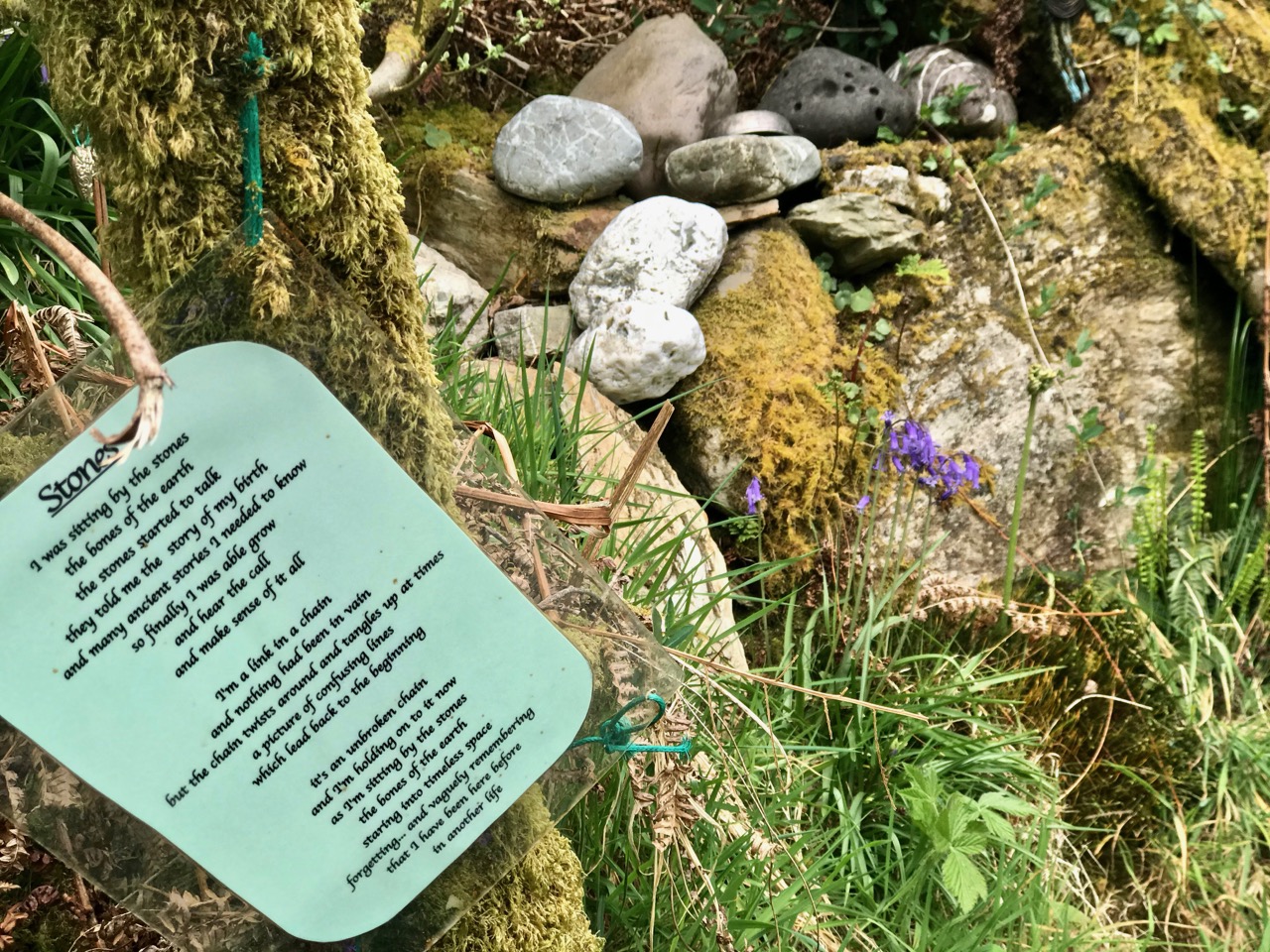
As a connoisseur of Irish signs and signage (have a look at my previous posts over the years), this walk is for me a delight and an abundant source of tangible examples from the world of human communication. There are explicit and comprehensible signs, enigmatic ones, symbolic messages, and allegories. It doesn’t matter whether we understand them, or even relate to them personally: it’s just all part of the magic of the forest.

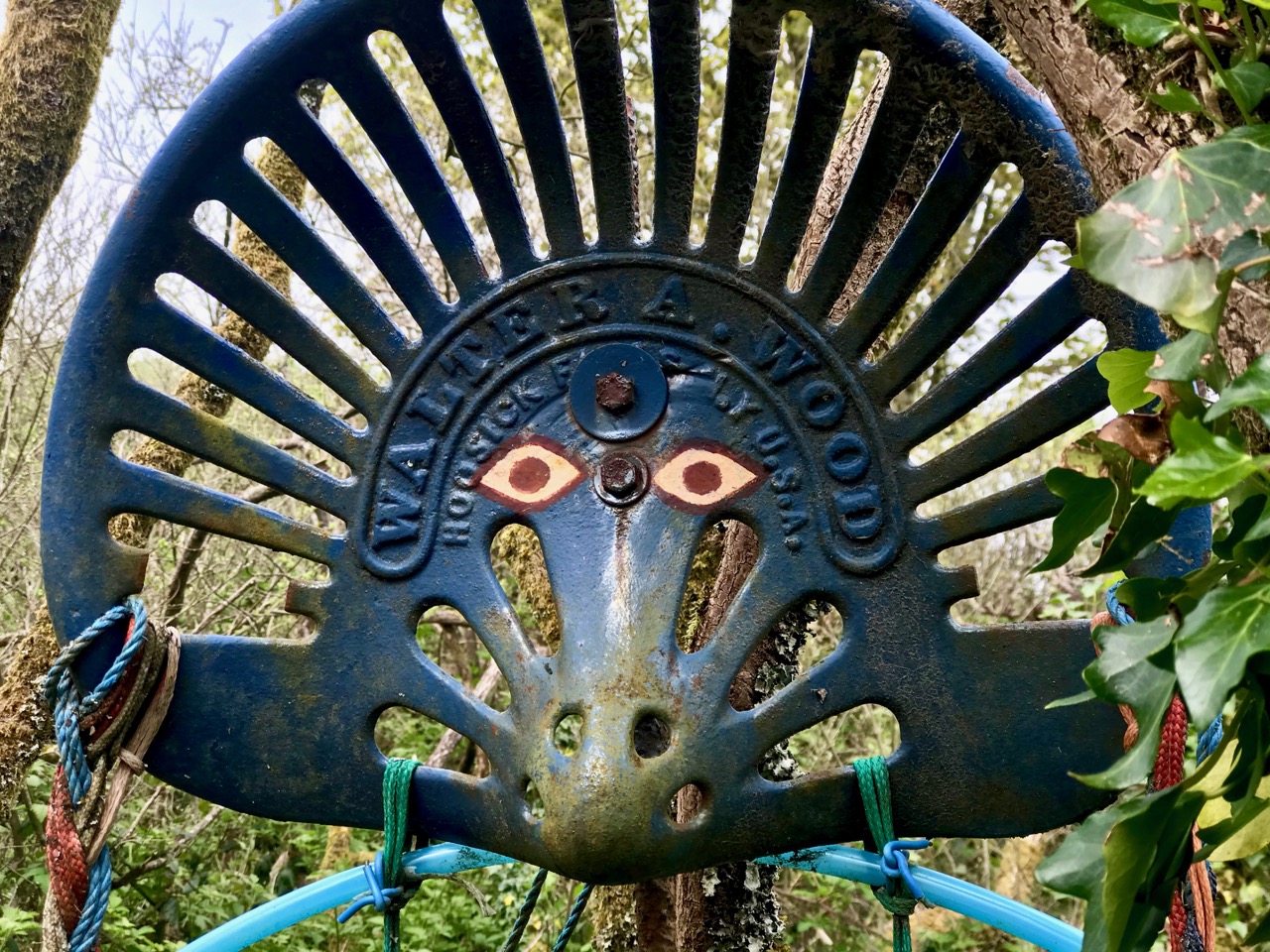
Who are the messengers? That’s really up to you to decide. here are some that I can relate to:

Each time we visit the Magic Forest, we come back with a different set of images. It’s just that there is so much here, you take in what appeals to you at a particular time.

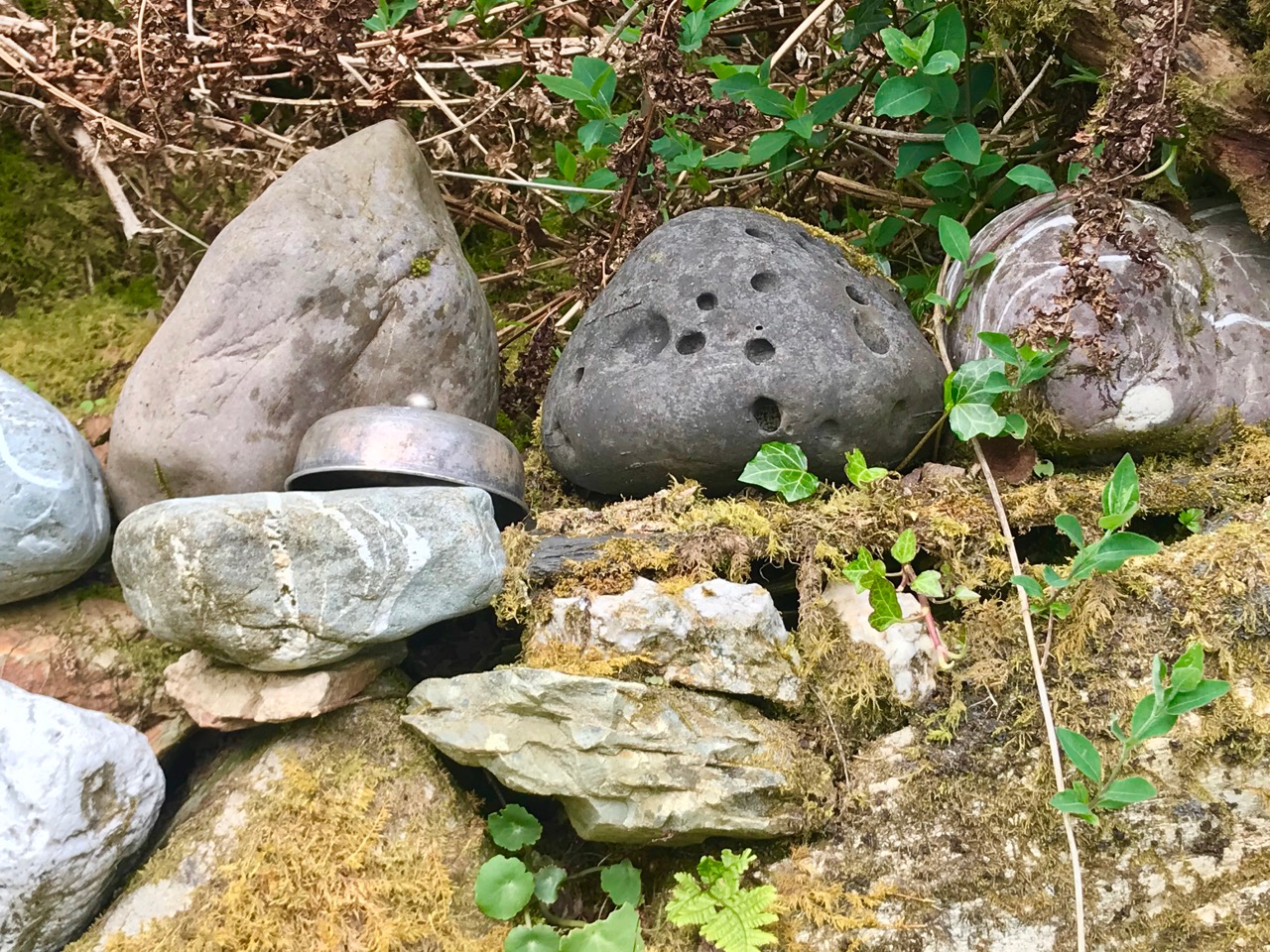
A pantheist might find Gods and Goddesses in this forest… Others might see relics of a fading industrial age. It all depends on your point of view.

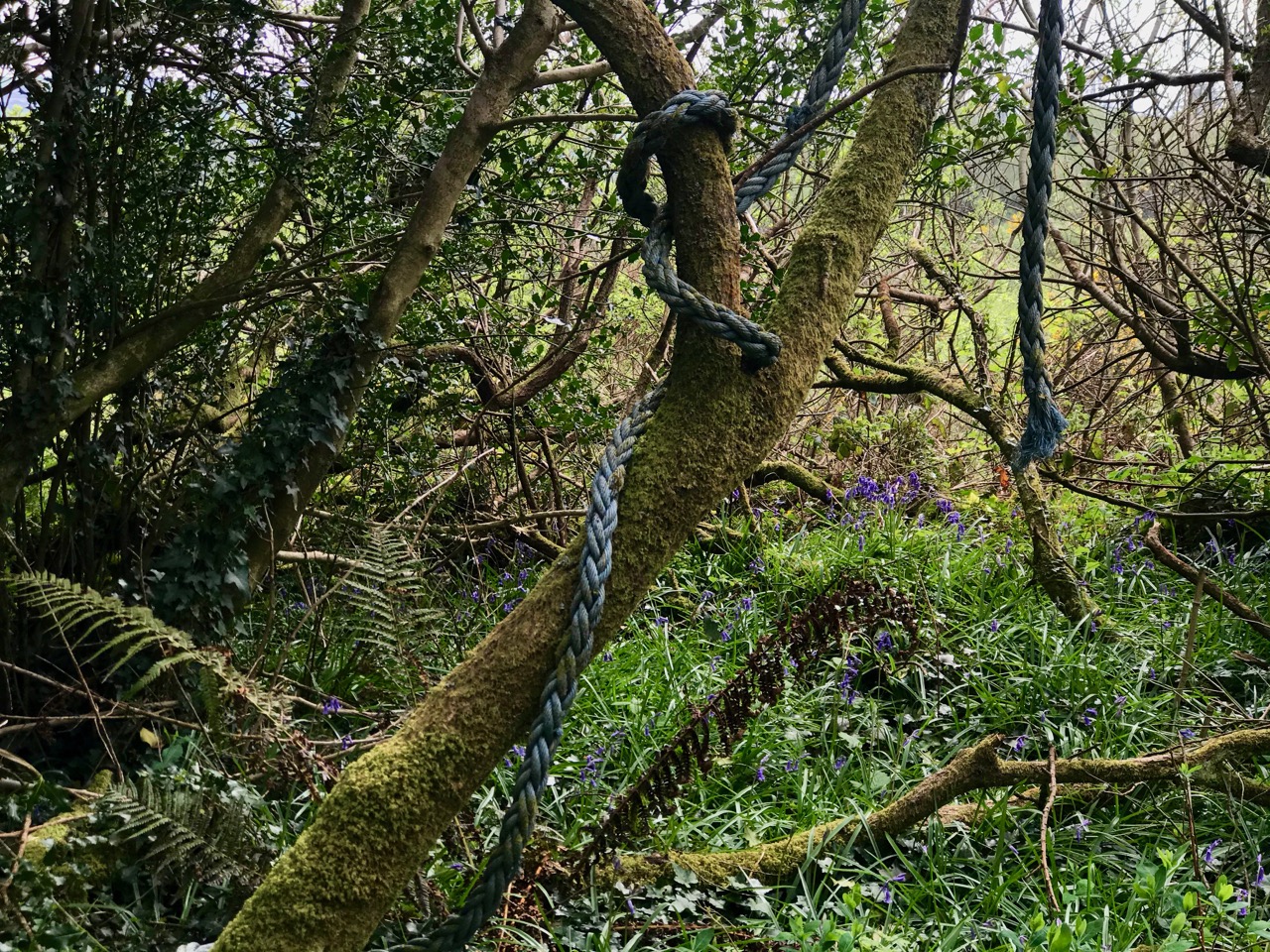
The forest itself will take over in the end. It’s certainly the case that, through the years, nature is absorbing everything. But, surely, it’s not a battle – just a mutual enhancement. Finola is definitely on the side of the natural world.

A place to think, meditate – or make music!

The whole place is a collaboration between the arts and nature. Enjoy the journey!

Behold, Their Bright Shining Future Rising Before Them

This is the first in a series of posts being published simultaneously by Roaringwater Journal and the Ballydehob Arts Museum, celebrating 33 years of an aspect of art history in West Cork. The Living Landscape series of art exhibitions ran from 1987 to 1996, masterminded and driven by the energies of Cóilín Murray. Cóilín has recently donated an invaluable file of photographs to the Museum, connected to a sculpture trail which was set up between Skibbereen and Schull in the early 1990s as part of this project. We are indebted to Cóilín for these items, and I will be using many of them in these posts.

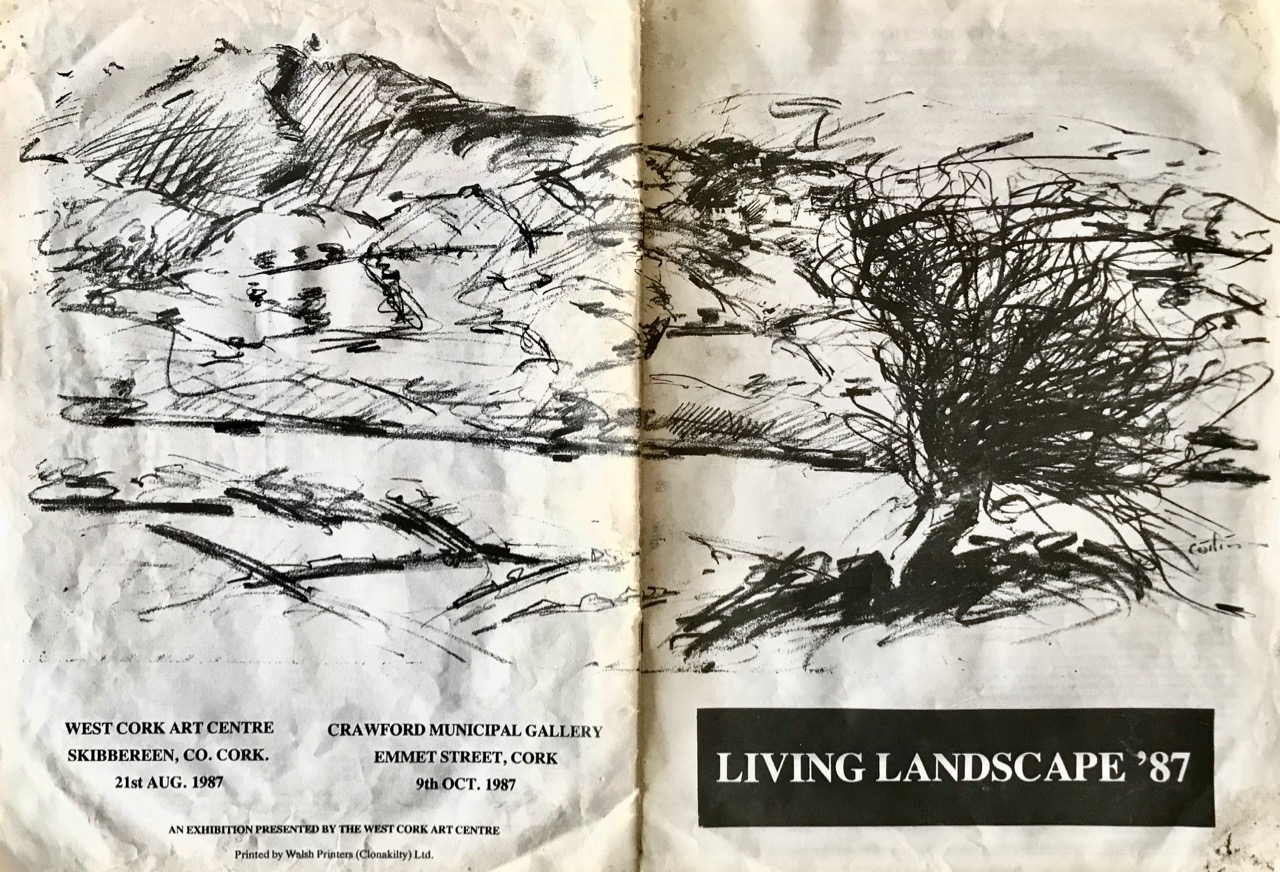
Catalogue from the first Living Landscape exhibition, launched by the West Cork Arts centre and the Crawford Gallery, Cork, in 1987. The cover illustration is by Cóilín Murray

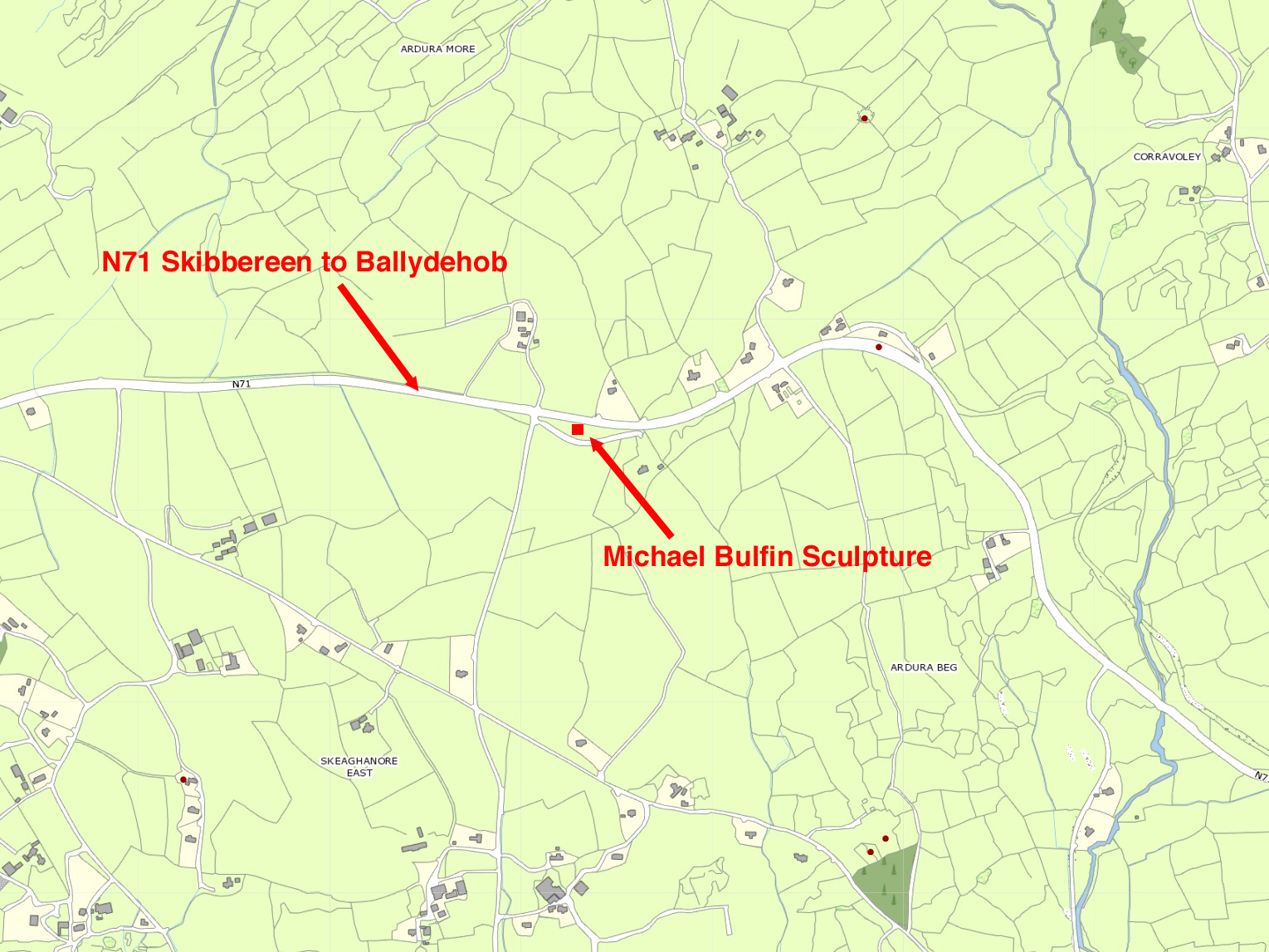
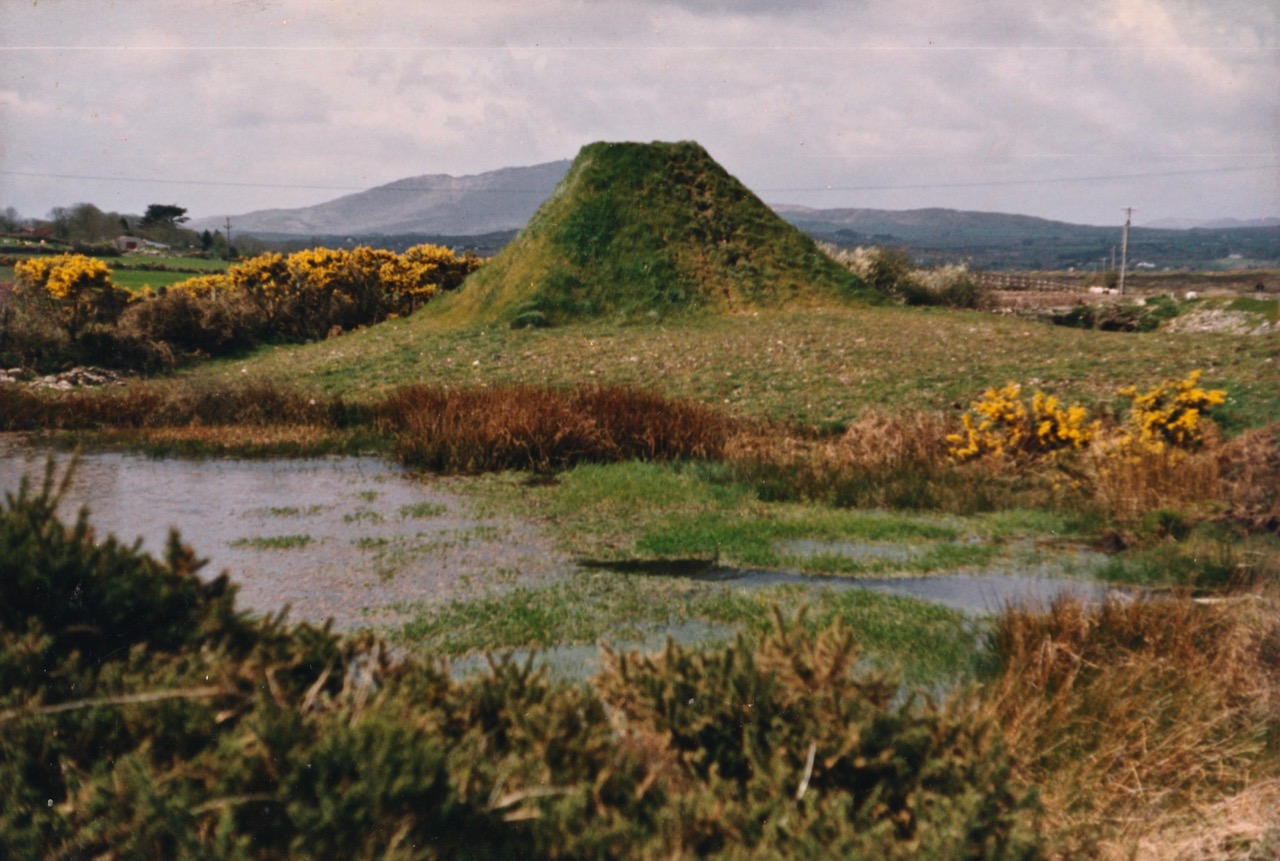
It’s fascinating to trace the sculptures which were set up more than 25 years ago along the N71 and R592 roads connecting Skibbereen with Schull. Most have vanished – some back to nature, some through destruction. But those which remain are now ‘enigmatic’ and must often excite comment and questions. This is particularly the case with the one in our header picture (taken recently), which is the central subject of today’s post. It’s a work by Michael Bulfin, born in 1939, one of Ireland’s most respected artists and a member of Aosdána (an association of artists whose work is deemed to have made an outstanding contribution to the creative arts in Ireland). The title of the sculpture is the title of this piece: Behold, Their Bright Shining Future Rising Before Them. 

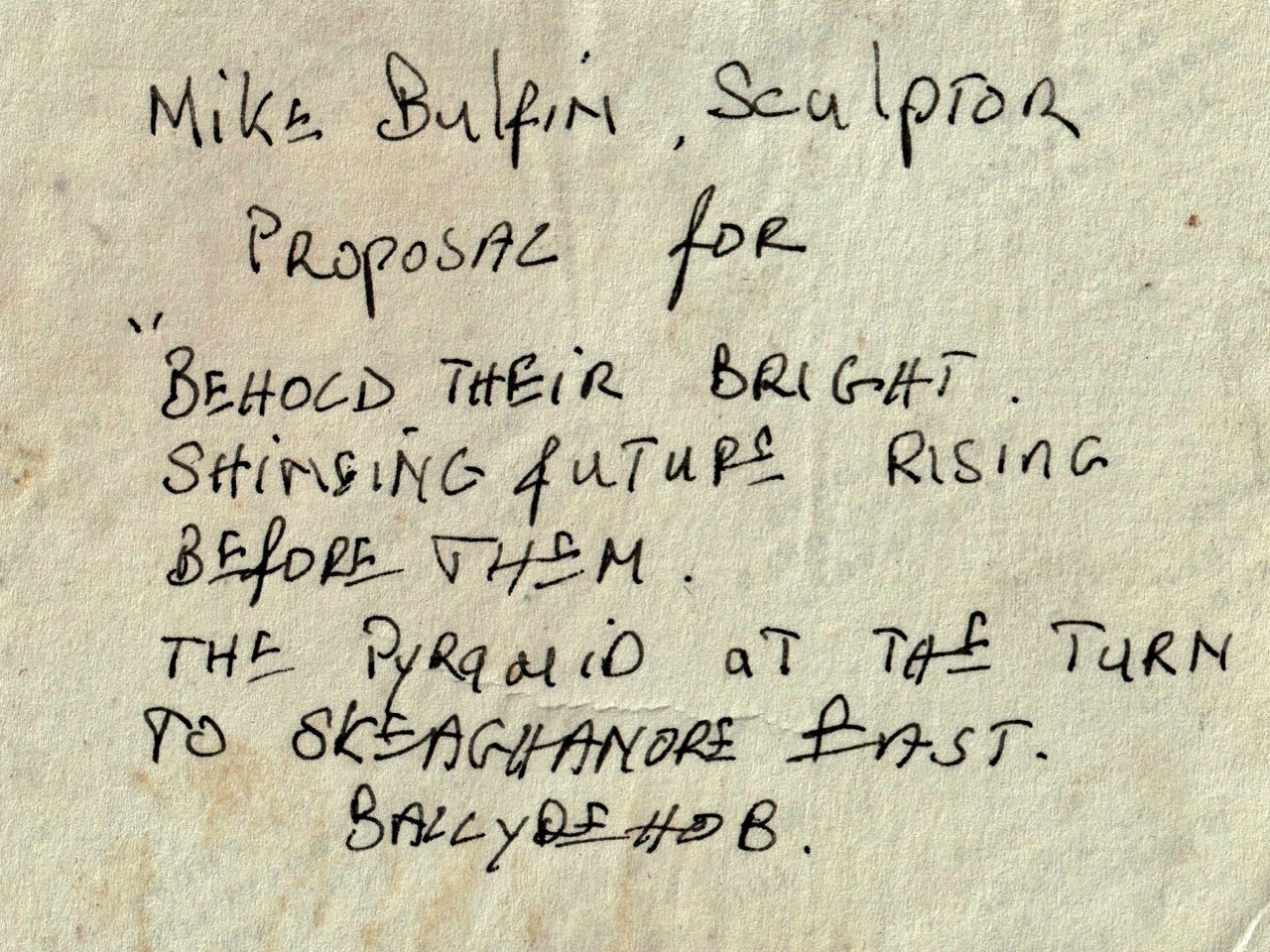
Michael Bulfin’s exhibition proposal was a piece of land art: a giant grass-covered earth pyramid crowned by a stainless steel pinnacle, with a cascade of boulders flowing down the surface – facing on to the main road running through the townland of Skeaghanore East. Upper, the design for the piece was submitted as a model. Lower – the inscription from the back of the original photograph.

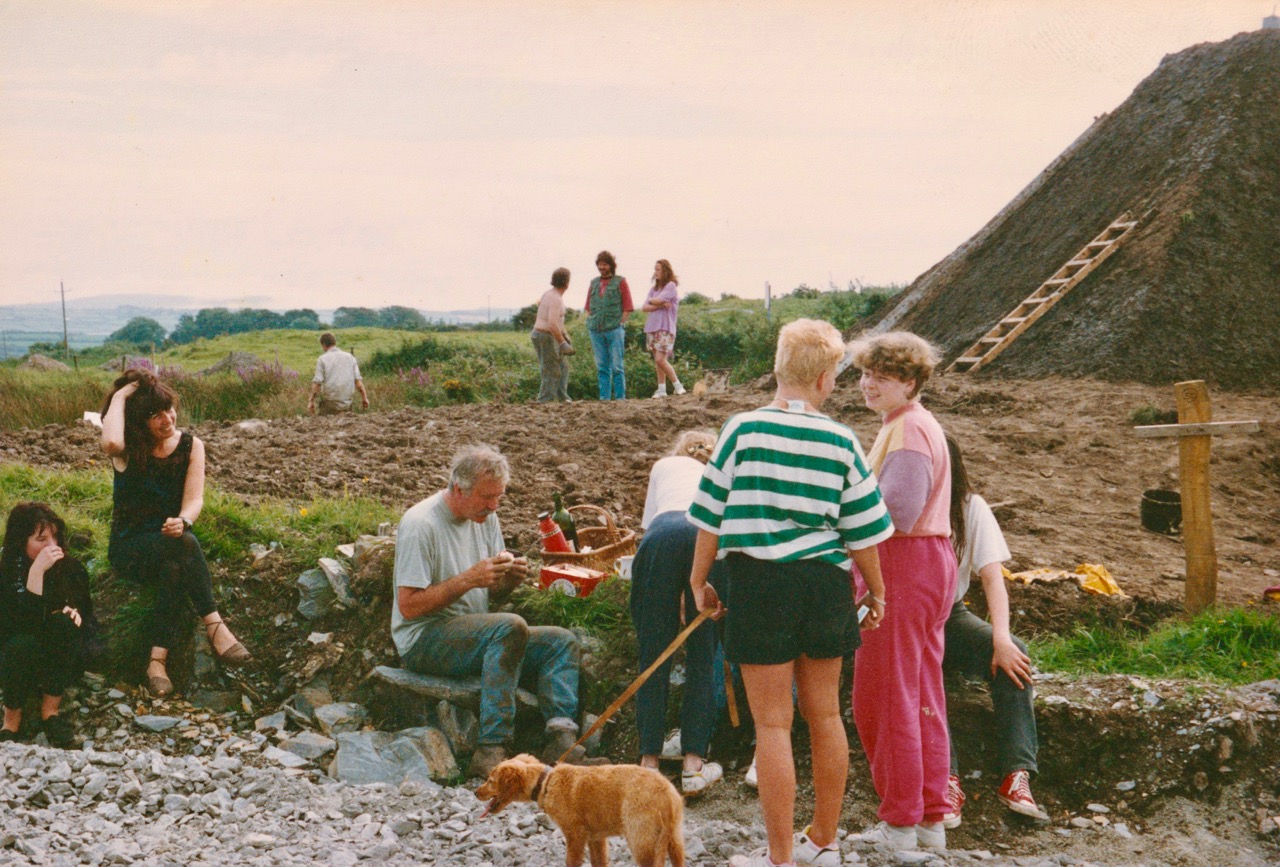
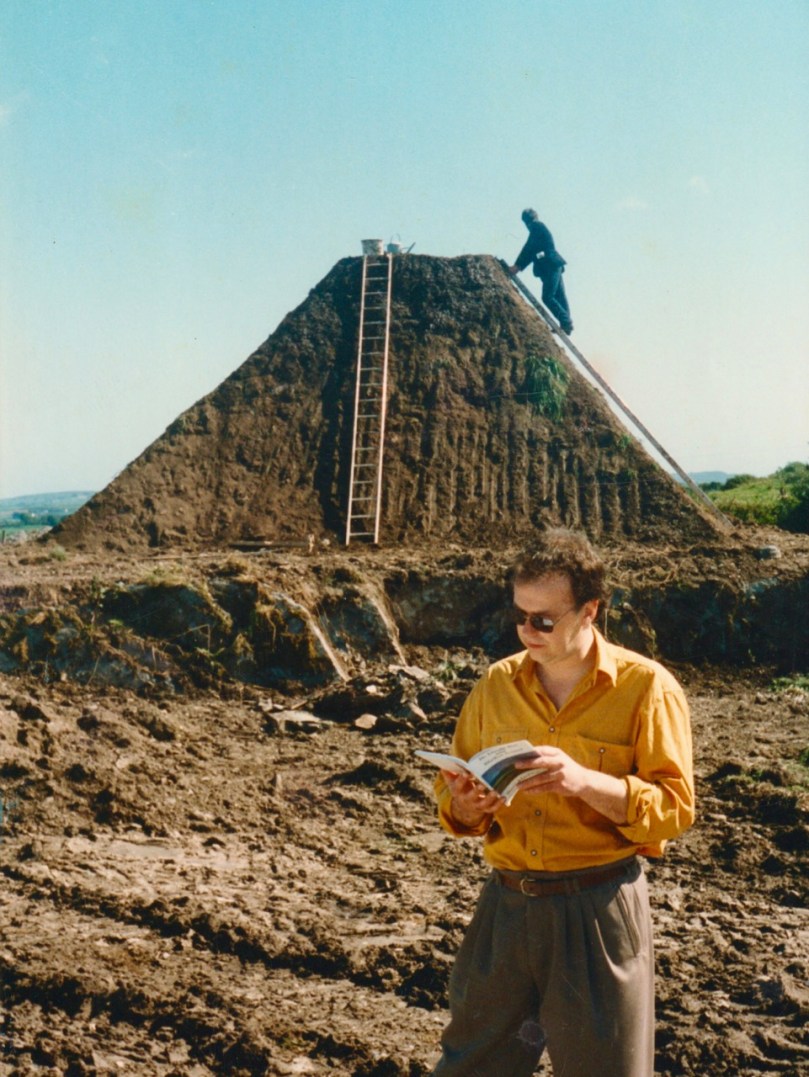
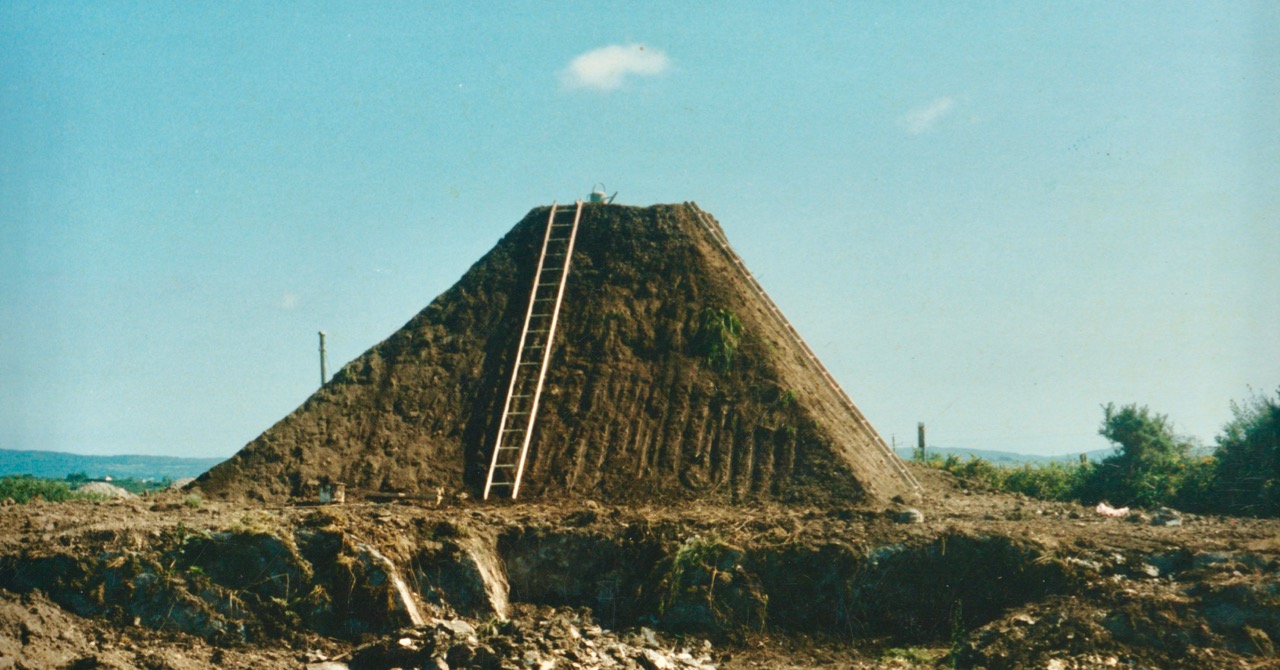
The task of physically realising this monumental piece was the product of many hands, including a number of volunteers from West Cork’s artistic community. The following ‘work in progress’ shots document some captured moments in time.

In this shot, Michael Bulfin is on the ladder, and painter Maurice Desmond watches the process

‘Lunch break on the day the mound was seeded’ – identified in this picture are (foreground left to right): Aoife Desmond, Deirdre Heaney, Mike Bulfin, Rosemary Murray (serving lunch), Ailne Murray and Niamh Murray. (Background): Simon Holler, Cóilín Murray, Gerry Walker and daughter

The project was well publicised; here Mike Bulfin is being interviewed by Anita Whooley for RTE, with Cóilín Murray looking on

The mound ‘greening up’: the stainless steel pinnacle was added at a later date. The ‘cascade of boulders’ is not evident today: I am assured it is still there, shrouded by gorse and brambles

At the official opening of the Living Landscape Sculpture Trail the poet Steve McDonagh, founder of Brandon Books based in Dingle, Co Kerry, read from his work at each location. Steve McDonagh died in November 2010. As can be seen, the pyramid was unfinished on opening day!

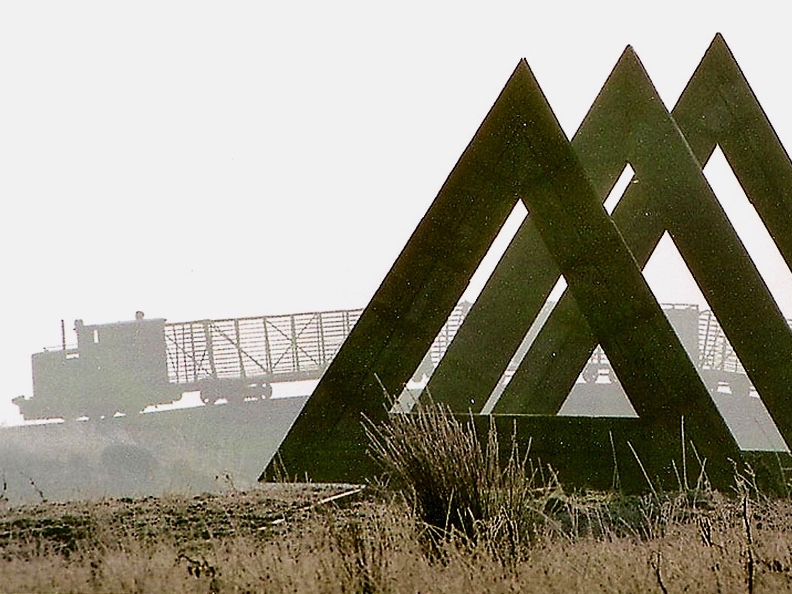
Michael Bulfin remains active in Ireland to this day. He lives in Co Offaly, and there is impressive work from him at the Lough Boora Parklands, including the eye-catching ‘Skytrain’ sculpture:

Something that could be considered in the future is a creative project based on the West Cork Sculpture Trail. This might restore or resurrect some of the pieces from the 1990s, and provide an opportunity for new work to take the place of those sculptures which are now lost.

Painting With Light

What are we seeking right now? If social media is right, it’s distraction. But also beauty, comfort, reassurance… With that in mind, I have created a video slideshow of some of my favourite stained glass windows.

I could have used a totally different selection and perhaps I will do another one sometime. Meanwhile, this took me all day to do – learning how to do stuff like this seems to get harder as the years roll by. Funny how that works.

The music is Sí Beag Sí Mór by O’Carolan and it’s played beautifully by Susan Nares on the harp – thank you, Susie! Susie made this recording for Robert’s Swantonstown Sessions (have you checked in there yet?). The stained glass I’ve chosen is by Harry Clarke, George Walsh, Hubert McGoldrick, Murphy Devitt, Mayer of Munich, Joshua Clarke and Co., Thomas Denny, William Dowling, Richard King, Watsons of Youghal, and Earley and Co. For much more on Irish Stained Glass, including some of the artists I have chosen, have a glance over this page.

Here it is – I hope you enjoy it.

Mosaics and Maharajas Revisited – Part 2

East Window

The more I look into the Church of the Ascension in Timoleague the more fascinating it becomes. In the first  post I concentrated on the mosaics and the story of the Maharaja but in this one – a substantial re-working of the original 2016 post – I look mainly at stained glass and architecture.

As we shall see, the windows were produced by the most famous British stained glass artists of their day. Taken as a whole, in fact, the architecture and decoration of this singular church leads us directly to Augustus Pugin, one of the giants of the Victorian Age, and locates it in the highest echelons of the Gothic Revival Movement. This hidden gem is even more of a jewel than I suspected!
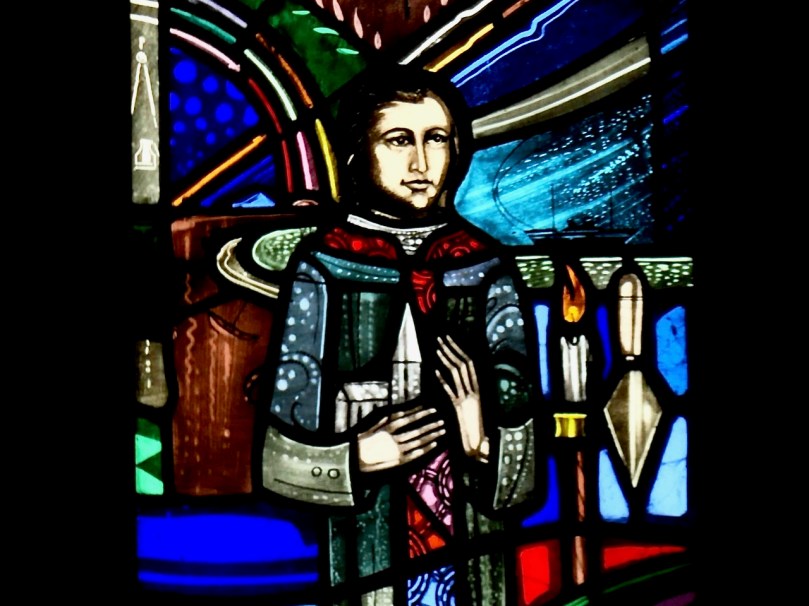
A portrait of Pugin in, appropriately, stained glass. This window is in the Pugin-designed Catholic church in Tagoat, Co Wexford and is by George Walsh

Who was Augustus Pugin? Born in 1812, son of a French emigré draughtsman and an English mother, Pugin trained in his father’s workshop, becoming proficient in design and drafting by aged 9. Conversion to Catholicism and a visit to Nuremberg in Germany convinced him that the greatest expression of church architecture was High Gothic and he set about challenging, and ultimately revolutionising, the prevailing design norms of the Victorian period. He was incredibly prolific and influential, such that today when we think about Victorian architecture and gothic revival, we are really thinking about the work of Augustus Pugin – even though he died in 1852 at the early age of 40.
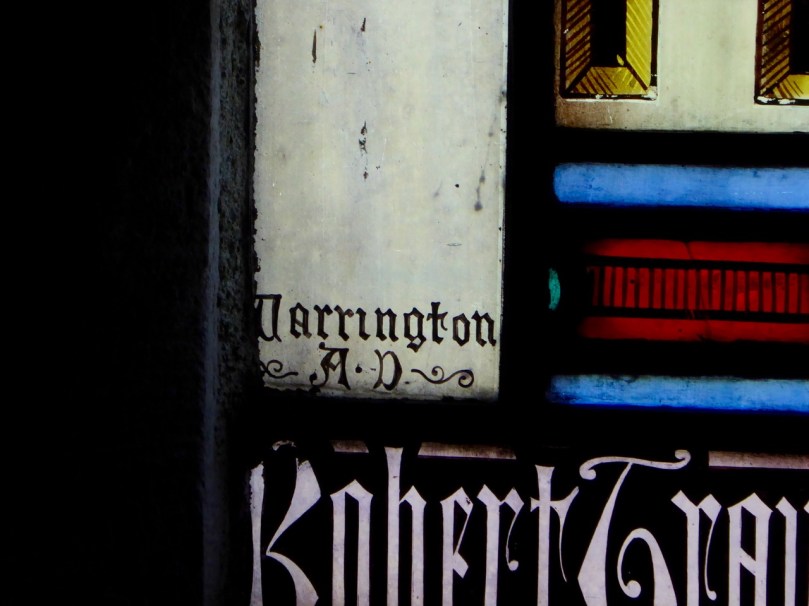
The signature of the Warrington Stained Glass Company on the East Window, dated to 1865 

Pugin designed several churches in Ireland (mostly Catholic), especially in Wexford, where you can follow the ‘Pugin Trail’. (I don’t know who wrote the Wexford Pugin Trail brochure, but it is one of the best explanations of his style and influence that I have read.) While he did NOT design the Church of the Ascension, his influence is everywhere in evidence, along with the use of some of his favourite suppliers – Minton for the mosaics and encaustic tiles and Warrington for stained glass. Later windows by Lavers Westlake and Co, Mayer of Munich and London, and Clayton and Bell follow the traditional patterns for stained glass and add immeasurably to the beauty and interest of the interior.

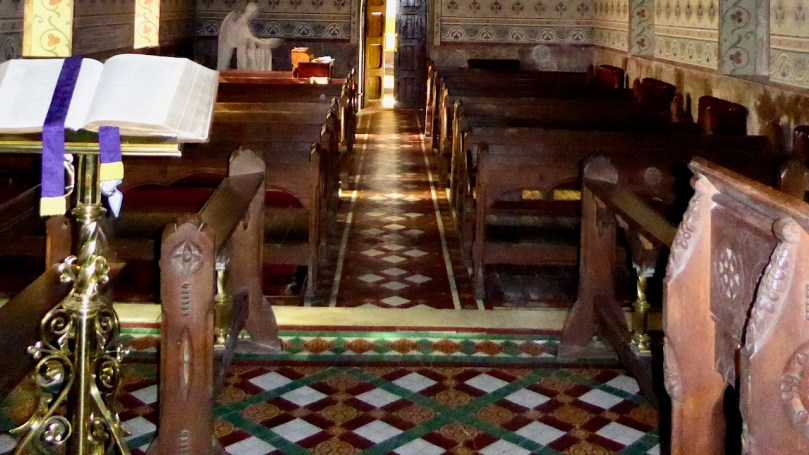
Church interior looking east

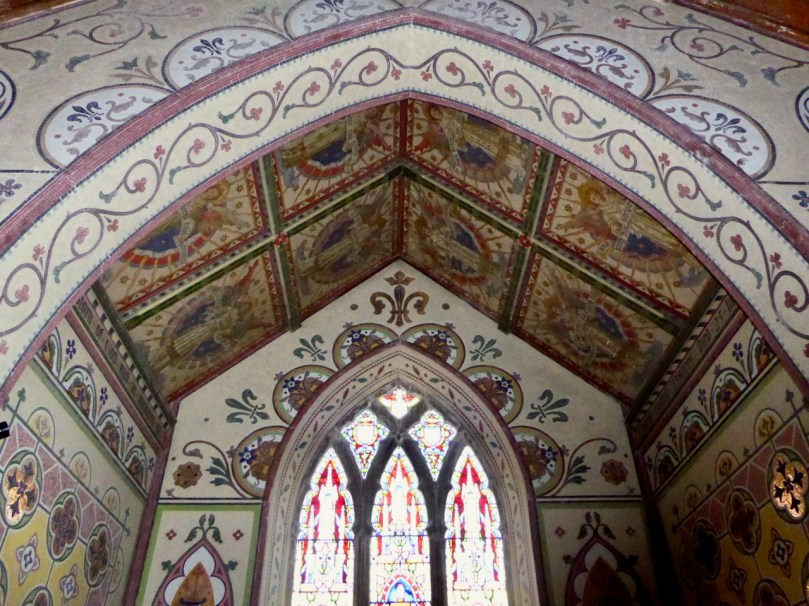
Hallmarks of gothic revival: a beautiful hammer-beam ceiling, tall pointed windows with simple Y tracery, everything to lead the eye upwards

The art of making stained glass in the medieval style had been lost and during the 18th century colour was mostly painted directly on the glass using an enamel technique. But part of the gothic revival ethic was to base manufacturing technology as closely as possible on the original so there was also a re-discovering of real stained glass processes where the colour was fired directly into the material and sections of glass were separated by lead. This art was revived in the 19th century by artists and craftspeople who studied medieval glass and learned through trial and error how to make it again.
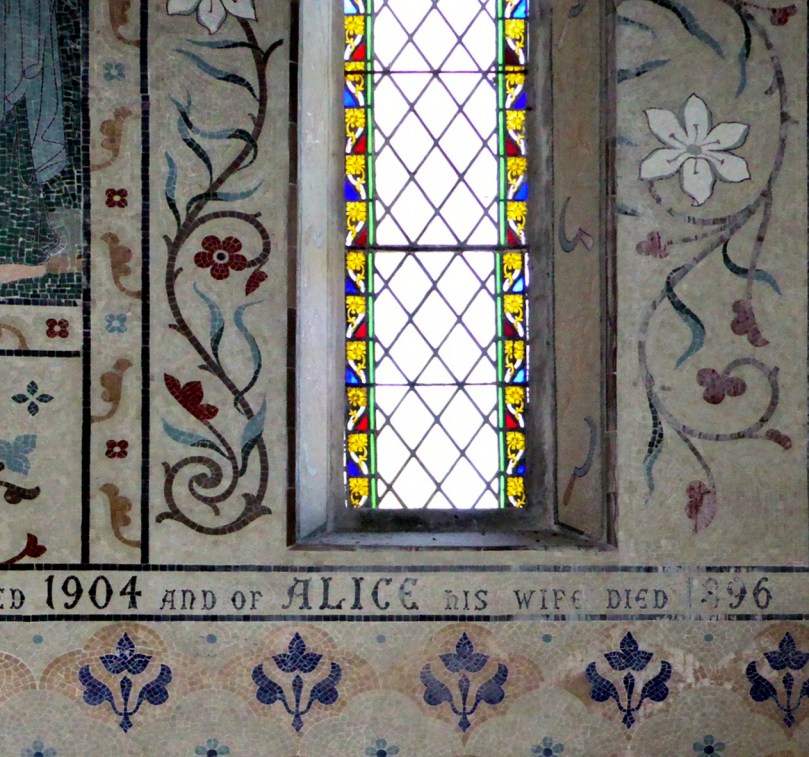
Window by Thomas Willement, originally in the east wall before the chancel was added

One of the first to experiment was Thomas Willement, known as the Father of Victorian Glass, and when the church was completed in 1811, it contained several of his windows. The things is, these were quite plain, as befitted the Church of Ireland ethos of the time, where the emphasis was on an unadorned interior that did not distract from concentration on the Word. Nevertheless, we see the start of a pattern here of ordering stained glass from the foremost British manufacturers of the time. The Willement windows now on the west (entrance) wall were originally in the east wall but were moved when the church was renovated in 1865. They consist of diamond-shaped quarry glass with a decorative border pattern. A third Willement window is situated in the North Transept beside the organ. I can find only one other documented Willement window in Ireland, in Sligo.
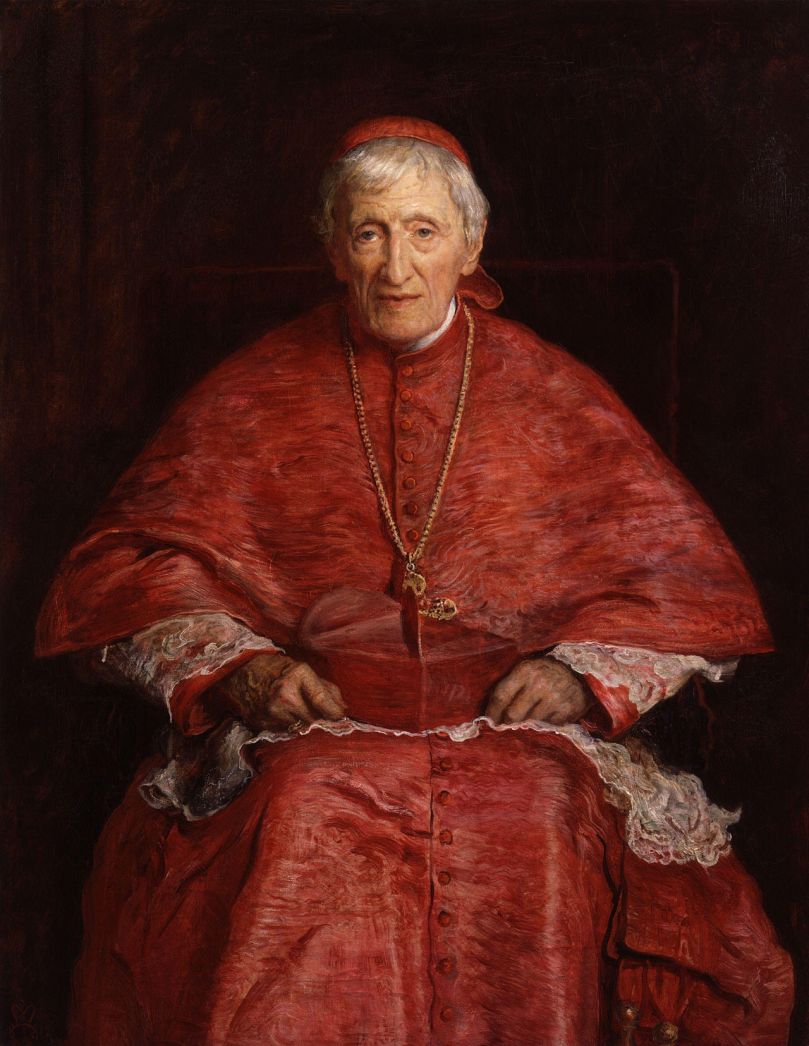
John Henry Newman (1801 -1890) by Sir John Everett Millais. Newman’s Oxford Movement advocated for the return of ‘Catholic’ beliefs and rituals to the Church of England, paving the way for the changes advocated by the Cambridge Camden Society. Newman converted to Catholicism, became a Cardinal, and was recently canonised

The renovations of 1865, which added a chancel, vestry and south transept were all in line with the new thinking about church architecture and liturgy promoted by Newman, Pugin and the Cambridge Camden Society. The emphasis was now to be on the Eucharist and the altar, rather than on the pulpit, and this involved adding a chancel to accommodate the altar. God was to be glorified through sumptuous decoration – a radical change in how a church interior should look, and one that did not meet with immediate acceptance among all clergy and parishioners. Regarding that sumptuous decoration – we’ve already looked at the mosaics so let’s turn our attention now to equally arresting figurative stained glass, a departure from the simple and unobtrusive Willement windows.
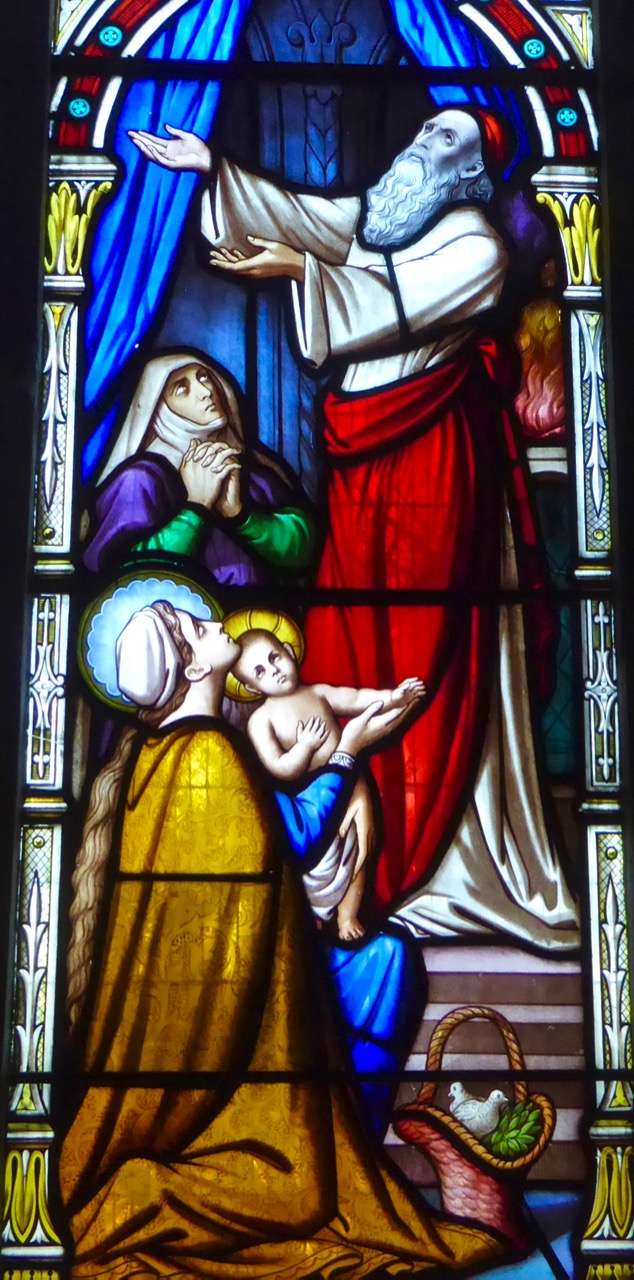
The Presentation, East Window

We’ll start with the East Window, the work of Warrington. William Warrington was one of the leading stained glass artists of his day. There are very few Warrington windows in Ireland (I have found 12 others in Gloine.ie, although that only records Church of Ireland windows) since he was producing windows before the wholesale adoption of stained glass by Irish churches, so the parishioners of the Church of the Ascension were ahead of the curve on this. Like Pugin, Warrington was a student of the gothic style and he strove to reproduce glass work as closely as possible to medieval models. He had trained with his father as a painter of armorial shields, an influence that can be seen in his designs. He wrote a book in 1848 on The History of Stained Glass, but fell afoul of the Cambridge Camden Society (or CCS) who had set themselves up as the arbiters of taste in all things related to church architecture. Partly this was the outcome of class prejudice: the CCS, all university educated men, did not believe that a “mere artisan” should be allowed to have an opinion of what they saw as their own exclusive preserve.
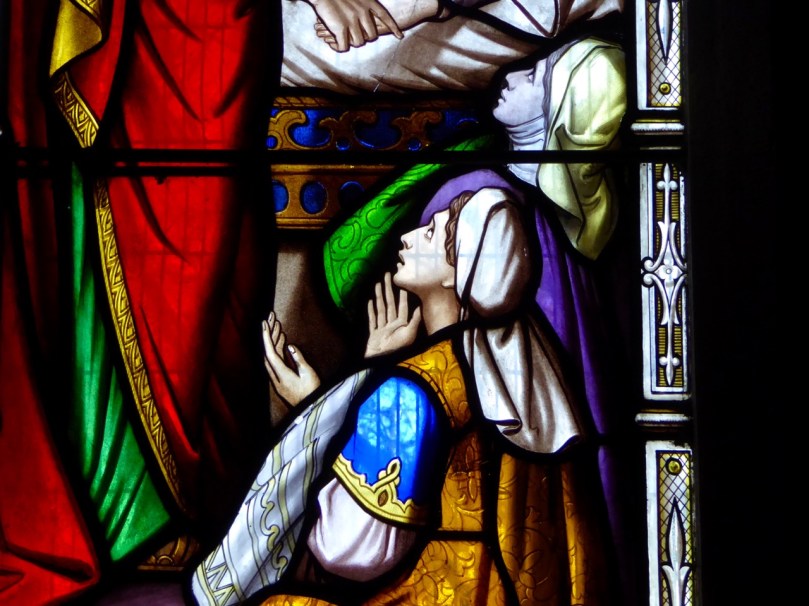
supplicants

Detail from The Raising of Dorcas, East Window

By any standards, this is a beautifully executed window. According to the Wikipedia article, Warrington’s figurative painting strives towards the Medieval in its forms, which are somewhat elongated and elegant, with simply-painted drapery falling in deep folds in such a way that line and movement is emphasised in the pictorial composition. His painting of the details, particularly of faces, is both masterly and exquisite.
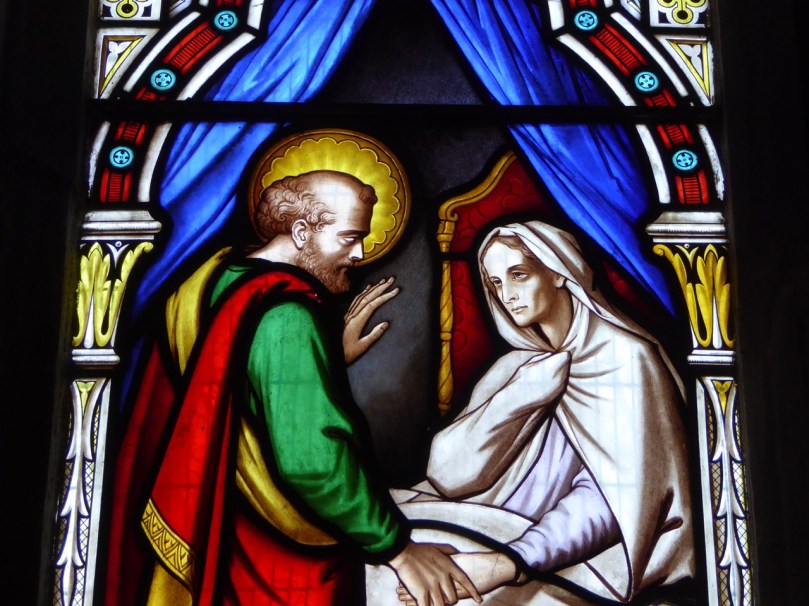
Raising Dorcas

The Raising of Dorcas, East Window. In this story, from the Acts of the Apostles, Peter prays over the dead body of Dorcas, who returns to life

This is all clearly visible in the East Window, a confident set of three lights depicting the Crucifixion in the centre, Raising Dorcas on the left and the Presentation in the Temple on the right. Note the use of heraldic motifs above the main panels, and the tall medieval-style spires of foliage, all typical of Warrington glass.

East Window heraldic

The crucifixion iconography, unusual for a Church of Ireland church, was all too much for the Bishop of Cloyne when he came to consecrate the new chancel in 1861. Cloyne Cathedral itself was a true medieval building but much simpler in its interior decoration. The Bishop obviously had less sympathy with this new style of highly decorated church interiors and objected in particular to the East window, which he viewed as far too Catholic in its influence. In common with many of his Protestant contemporaries he probably felt that stained glass windows were an unwelcome intrusion into this sacred space, but might have been able to tolerate a Bible scene such as that of the Good Samaritan.

On the cross

He refused to conduct the consecration unless the window was covered in a cloth. The cloth, apparently stayed up a long time, and when it came down the window continued to attract opprobrium – it was even attacked and broken on at least one occasion! It’s hard now to understand now how such a beautiful piece of devotional art could have inspired an over-the-top reaction like this, but the High Church movement involved such a total transformation of liturgy and architecture that it took many people a long time to adjust to it.

Jesus Walking on the Sea

The Sermon on the Mount by Lavers and Westlake

Three sets of two-light windows in the nave are by Lavers, Westlake and Co, yet another of the London-based stained glass firms that responded to the huge demand for gothic-revival glass windows in 19th century Britain. The artist who designed these windows, Nathaniel Westlake, was another scholar of stained glass, publishing a four volume work, A History of Design in Painted Glass, and also a decorative painter of wall and ceiling panels. He was considered one of the leading exponents of stained glass art with a style considered to be Pre-Raphaelite. He worked with William Burges for a while – the one who designed every aspect of St Fin Barre’s Cathedral in Cork – who recommended him to the firm of Lavers and Barraud. In 1868 he became their chief designer and was responsible for much of the success of the firm, which captured a large share of the booming stained glass industry. Unlike Warrington, however, Westlake did not clash with the CCS, probably because his partner, Lavers, was a member of that society.
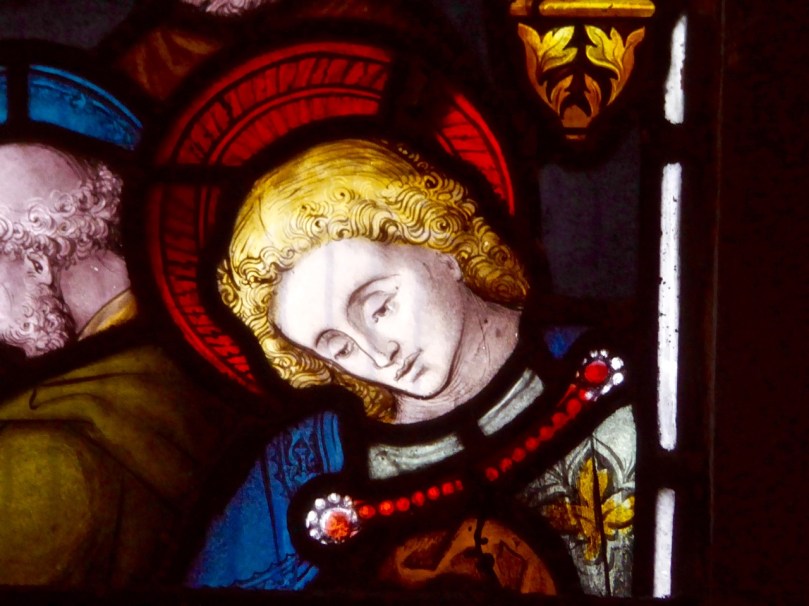
Loaves and Fishes detail

A detail from the Lavers and Westlake Loaves and Fishes window showing Westlake’s Pre-Raphaelite tendencies

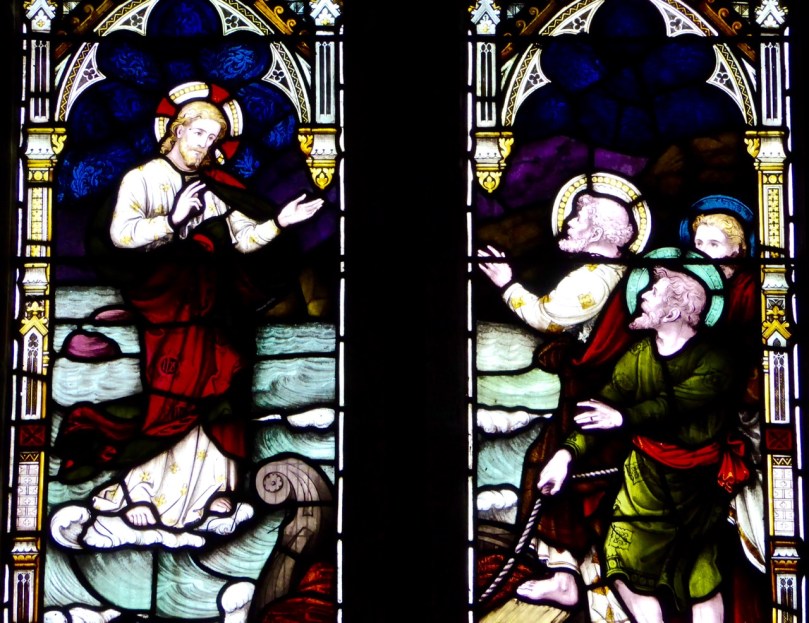
The three windows by Lavers and Westlake are in the nave on the north and south walls and date from 1883. Those on the north wall depicts the Miracle of the Loaves and Fishes and the Sermon on the Mount. That on the south wall is of Jesus Walking on the Water.
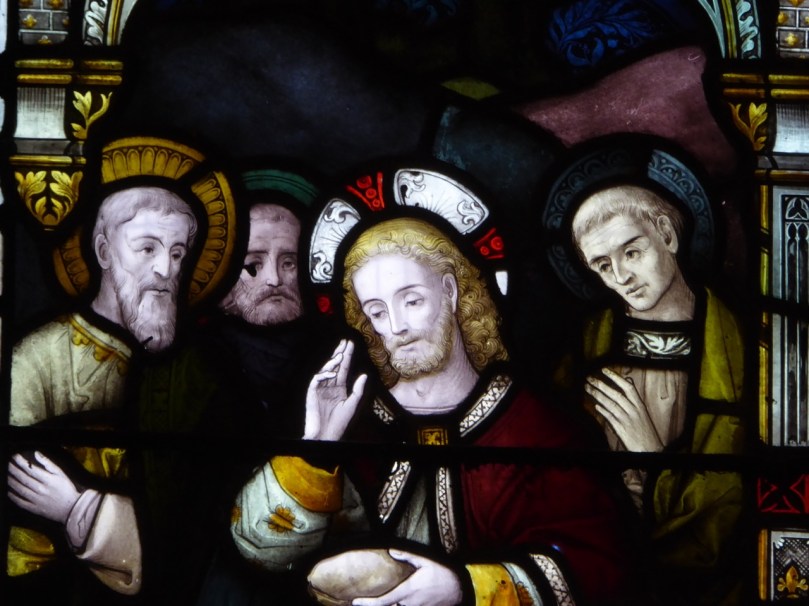
Loaves and Fishes Detail

Jesus Walking on the Sea
Upper, detail from the Loaves and Fishes. Lower, Jesus Walking on the Water

The final window on the south wall is also a two-light one by the firm of Mayer, possibly the busiest stained glass company of all and actually still in business under the name Mayer of Munich. The founder, Franz Mayer, started a company dedicated to “…a combination of fine arts, architecture, sculpture and painting…”. This firm was officially recognised by the Vatican so it was very popular with Catholic churches and there are many examples of Mayer windows throughout Ireland. In 1865 the firm opened a London branch, which supplied this window in 1888.
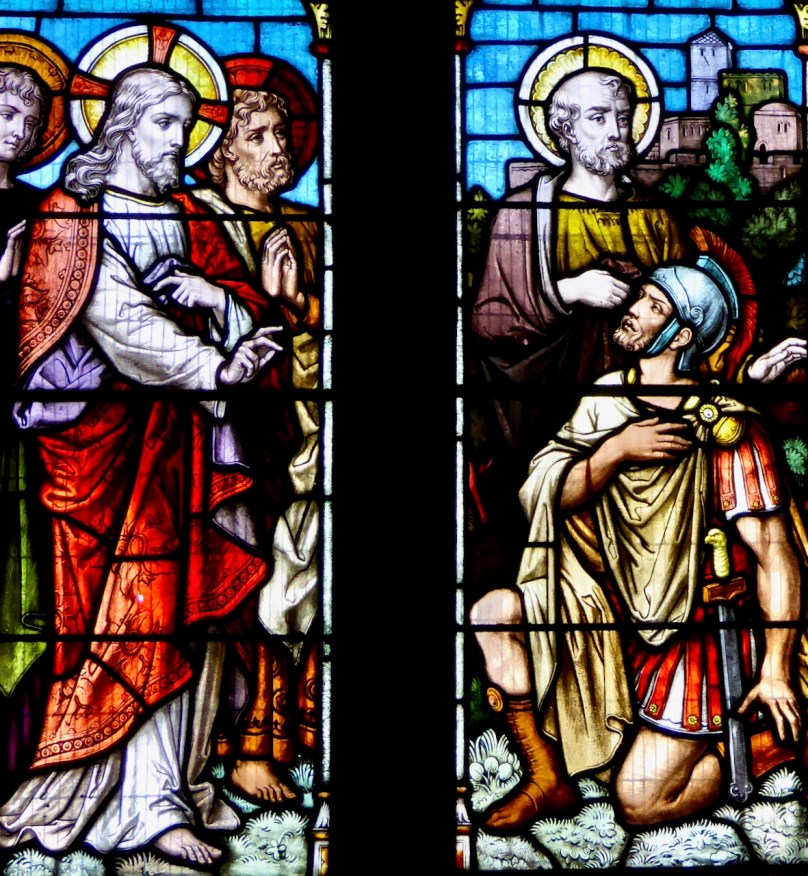
Christ Healing the Centurion’s Servant, a window by Mayer of Munich and London 

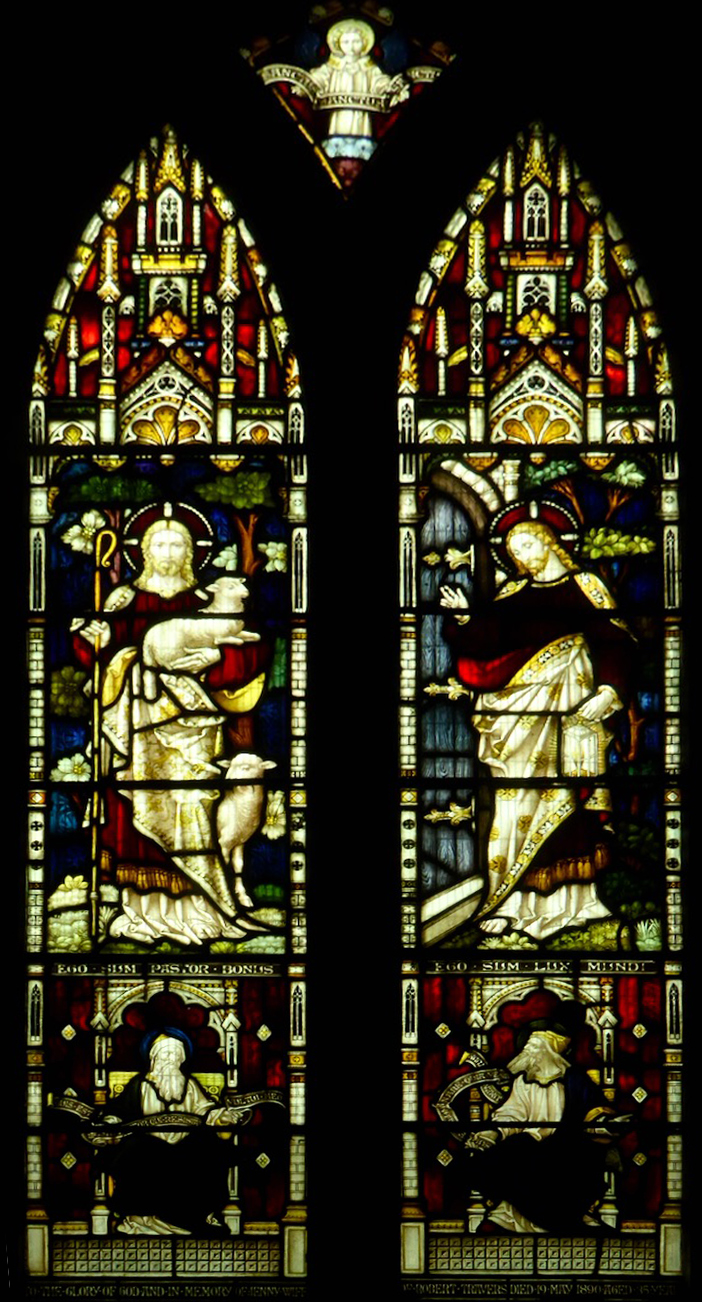
There are three more windows in the south transept, all by the firm of Clayton and Bell, a very productive Victorian stained glass studio. The first is a two light window, dating from 1890 and it depicts Christ as the Good Shepherd and the Light of the World (below). These two images were very much stock-in-trade with all the stained glass studios. The Light of the World was particularly popular – take a look at this post to see just how popular: The First Viral Sensation: How a Pre-Raphaelite Painting Inspired a Generation
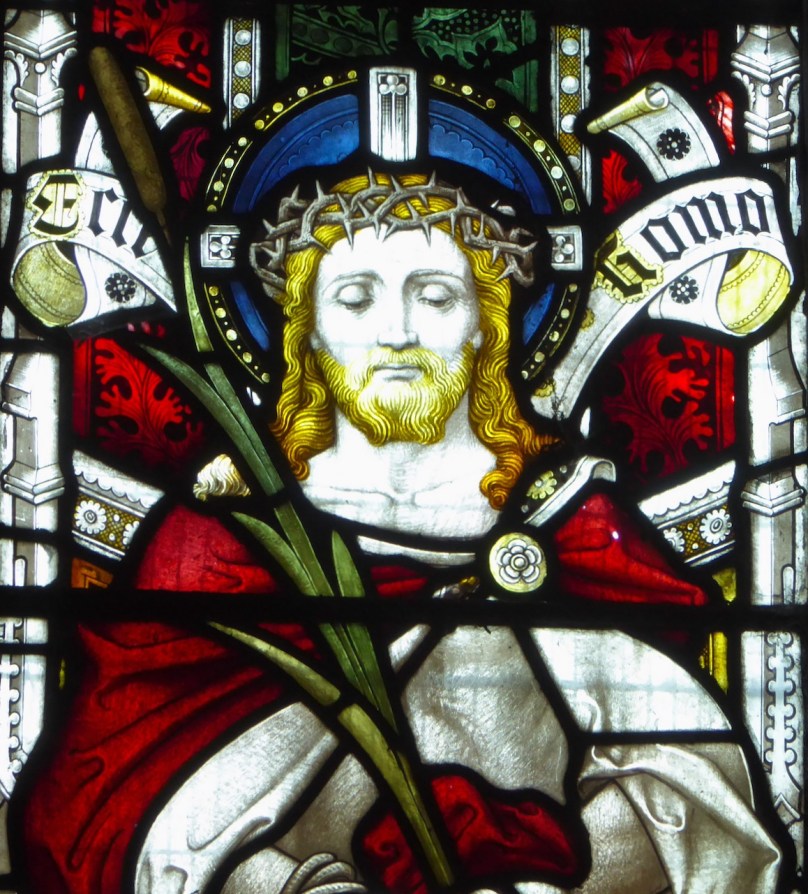
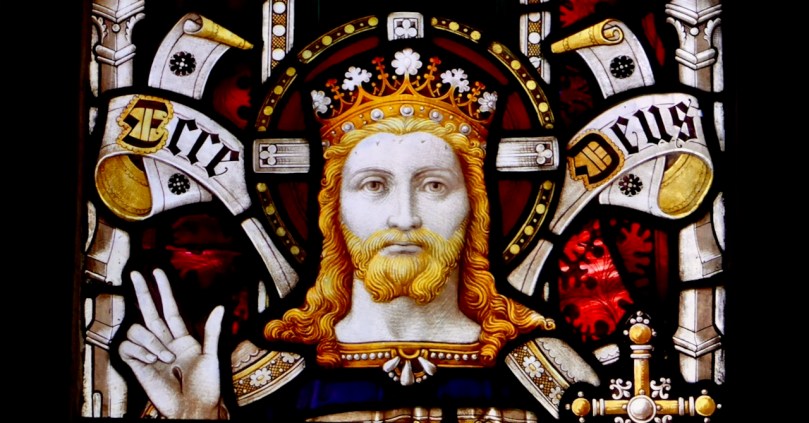
But it’s the other two Clayton and Bell windows, the last to be installed, in 1903, that I find irresistible; indeed they are indeed among my favourite windows anywhere. The artist was George Daniels, whose work is unmistakable. According to David Lawrence:

George Daniels (1854-1940) was perhaps the greatest and most prolifc of all the free-lance cartoonists of the later Gothic Revival period. His style is influenced by late mediaeval and Northern Renaissance sources for both figures and ornament. From around 1880 to 1920, he supplied hundreds of cartoons to the Clayton & Bell studio in London and, from 1895 to 1914, to Mayer & Co. Daniels had a wonderful drawing ability. The vigorous style of his figures and drapery are always particularly characteristic and his compositions are exemplary.*
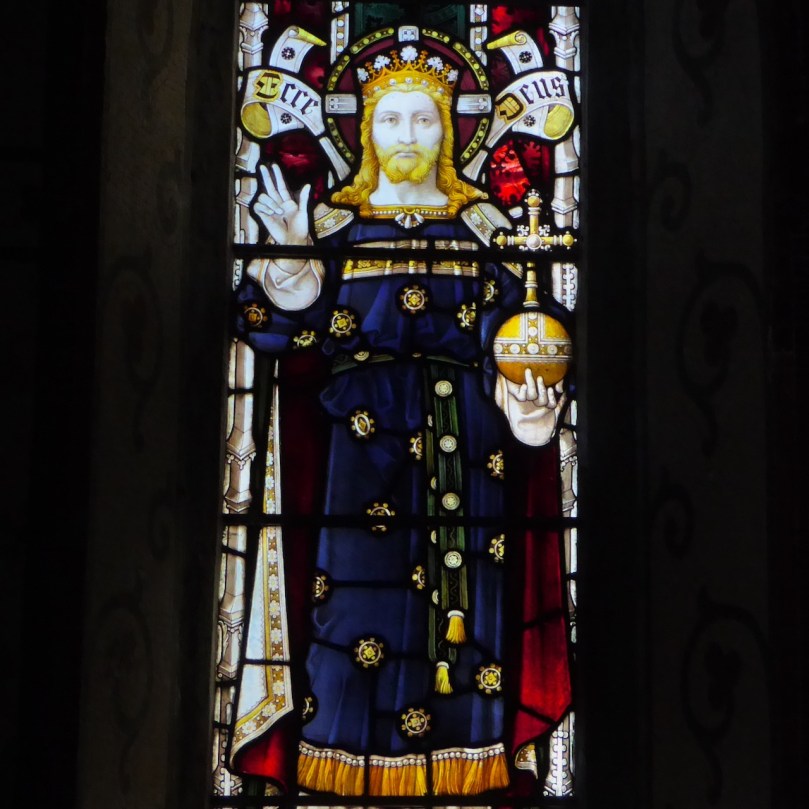
They illustrate two aspects of Christ, Christ the King (above) and Christ Condemned (below).
There are several more noteworthy features of this fine little church (the pulpit, the carved wooden furniture) but I think I will leave it at that for now. I’ve learned a lot about the Gothic Revival Movement through this exercise, and about some of its chief practitioners. I’ve been struck, as the reader might be, at how British (rather than Irish) the influences are in this church, but that of course was very much a function of the times. At some point I will write about the enormous Catholic church that dominates the village, with a view to showing how the great era of Catholic church building in Ireland finally led to an emphasis on Irish architecture and Irish artisans. For a very brief word on that, you can read my post A Tale of Four Churches.
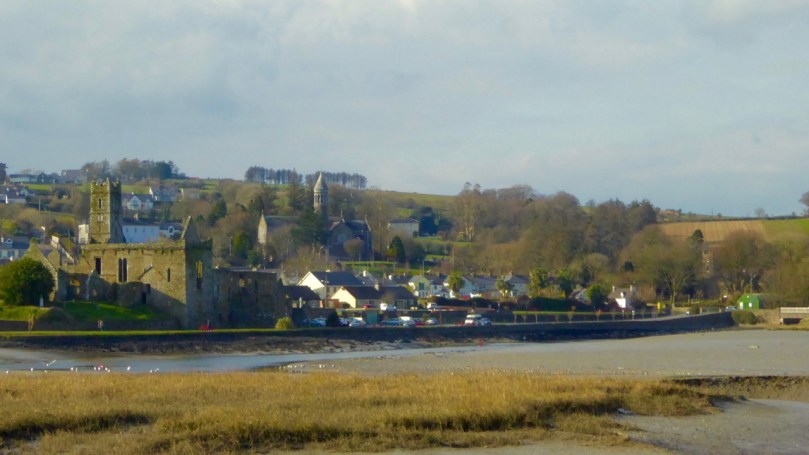
Timoleague. On the left are the ruins of the medieval friary, the Catholic Church dominates the hilltop, and the Church of the Ascension is behind the green building on the far right

For now, I will leave you with a detail from George Daniel’s magnificent Christ the King, with all that gorgeous golden hair.
*Stained Glass Windows in Six Roman Catholic Churches, County Offaly November 2010

Mosaics and Maharajas Revisited – Part 1

We have a particular reason for re-publishing this 2016 post, one of our personal favourites, this week. The church urgently needs conservation and this West Cork gem is in danger. The group trying to save it is looking for help. If you feel like donating, here’s the link: https://www.gofundme.com/f/west-cork-hidden-gem

But no matter if you donate or not, you will love this little church and its amazing features and we encourage you to visit it when you can.

What follows is a substantially re-written version of a post originally published in Feb 2016. 

———–

This week when we were passing though Timoleague I had a fancy to see inside the Church of the Ascension as I had heard it was ‘worth a look’.  Understatement of the century! What we saw was astonishing, beautiful, and overflowing with history and stories.

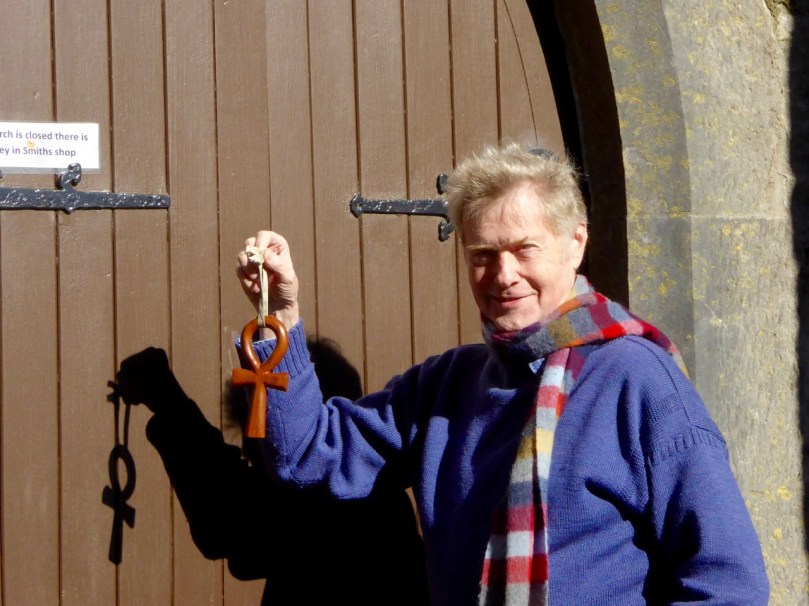
The key is kept at the Post Office on the main street – just ask

This Church of Ireland building is typical of the simple gothic revival style favoured by the funders – the Board of First Fruits. (Read more about this almost-forgotten organisation in a post from the always excellent Irish Aesthete.) Built from the ruins of an earlier (probably medieval) church it was consecrated in 1811 but enlarged later in the 19th century. The pointed-arch windows and the square tower with louvre vents are unremarkable features on the exterior, but open the door and step inside and you enter another world.

The mosaics are the most obvious (although by no means the only) glory of this church. Designed to commemorate members of the Travers family (yes, the same Travers whose memorials dot the walls of St Fin Barre’s) they cover the entire interior of the church, apart from the hammer-beam ceiling in the nave. They incorporate motifs in several traditions – Christian, Jewish and Islamic.

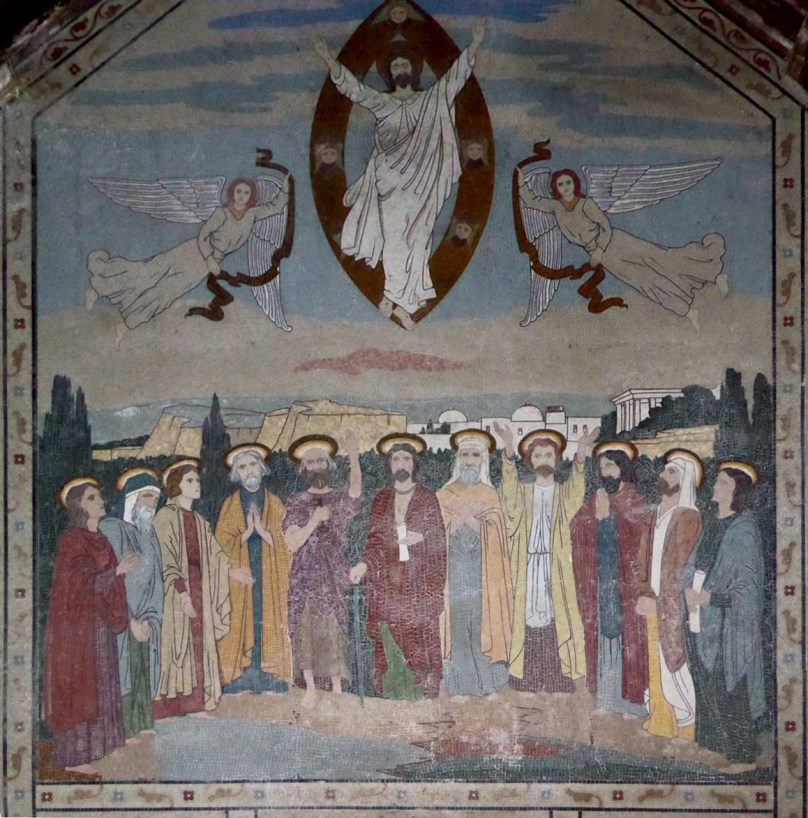
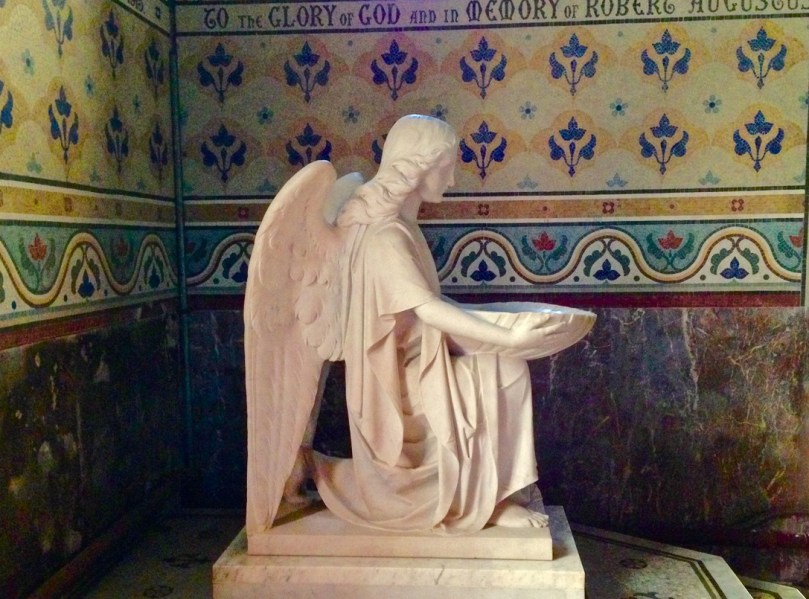
Above the west doorway is the Ascension scene – the apostles are rather conventional but I love their colourful robes and the flower borders. Below them is an angel font, similar to a pair in St John’s Catholic Church in Tralee, made of Carrera marble, with yet more mosaic detail.

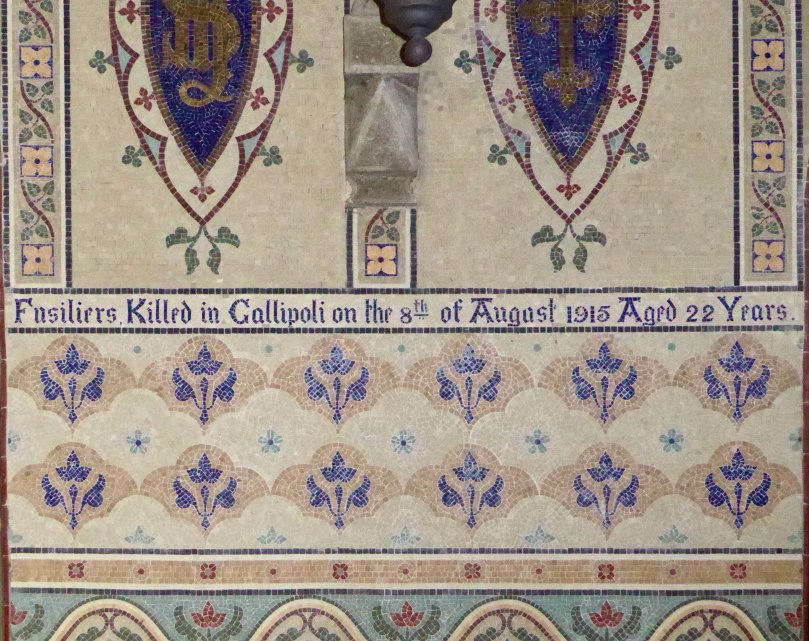
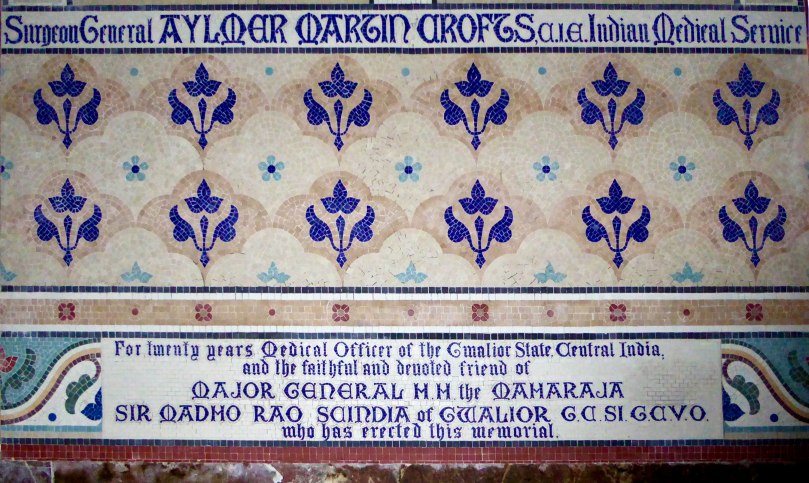
Members of the Travers family are named in mosaic around the walls – Robert Valentine Travers of the Munster Fusiliers was only 22 when he fell at Gallipoli.

The mosaic tiles were made by Minton, as were the encaustic tiles on the floor (below). Minton is known for its bone china but in fact it was also was the leading producer of British ceramic tiles during the 19th century.

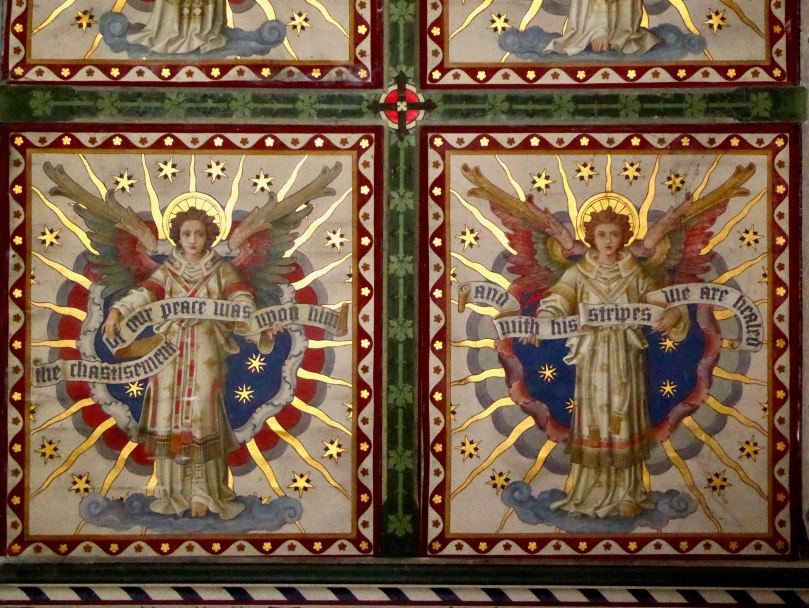
In the chancel, above the marble altar, the ceiling is covered in painted angels, while the walls are mosaic, parts of which have been gold-leafed. The richness of the detail and the vision that dictated such a glorious conjunction of imagery and colour is jaw-dropping, and mark this little provincial church as part of the influential Oxford Movement of the Victorian era that aimed to return ornamentation and beauty to spaces of worship.

This is the great High Church and Low Church debate. A group called the Cambridge Camden Society promoted a return to gothic architecture: the classical style was seen as pagan, while the great gothic cathedrals of Europe represented the apex of Christian architecture. (More about this in Part 2, which will concentrate on the stained glass and the architecture of the church.)

Installing mosaic is a time-consuming and expensive process – this one involved importing artisans from Italy and the parishioners eventually received help from an unexpected quarter. The final series of installations was paid for by an Indian Maharaja!

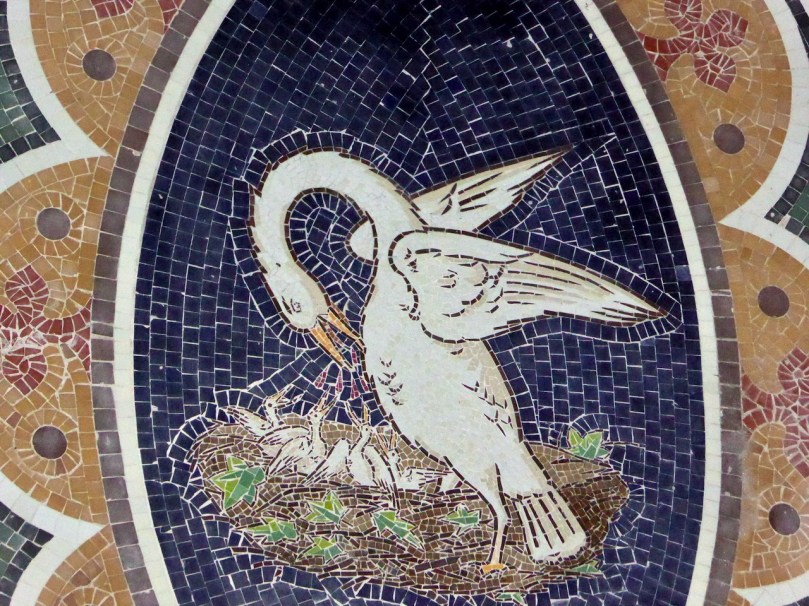
The Pelican is a Christian symbol of sacrifice – the pelican was believed to provide her own blood to her young when no other food was available

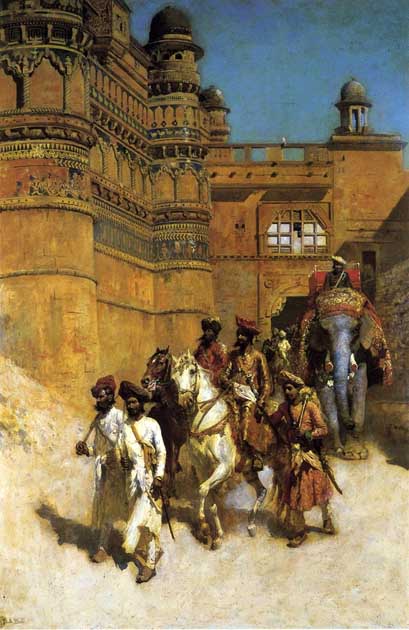
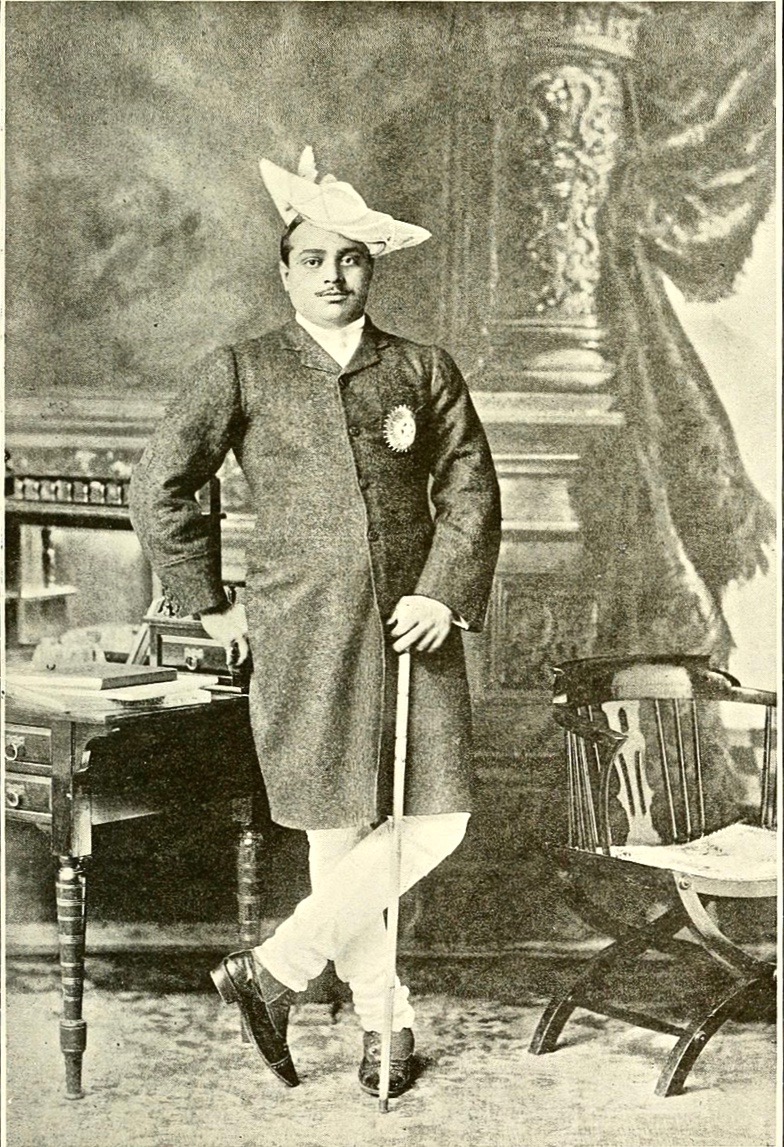
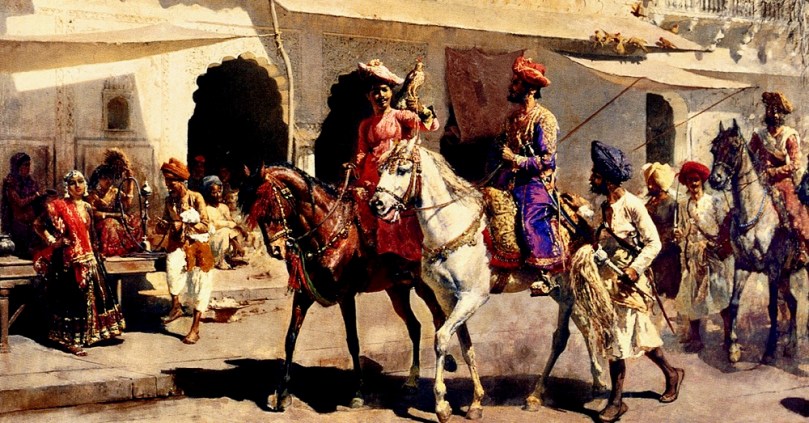
Madhav Rao Scindia was the Maharaja of Gwalior. He was wealthy and looking for places to  spend his money. What, you don’t believe that? Just read this story about the fabulous and secret treasure chambers of Gwalior. No, I jest – in fact, he was a highly-educated ruler who did much to modernise his state but he was only 9 years old when he inherited the title from his father, pictured below leaving his palace in state.

The Maharaja of Gwalior Before His Palace, C 1887 by Edward Lord Weeks

The British appointed as his surgeon and tutor an Irish doctor from Timoleague – Dr Martin Crofts. A long friendship grew, based on mutual respect (and shared tiger-hunting expeditions) and it is said that Crofts saved the life of the Maharaja’s son. 

The Maharaja in his prime

When Crofts died suddenly in 1915, after only a year of retirement, and was buried in Timoleague the Maharaja funded the completion of the mosaics as a memorial to his friend and mentor.

Thus, a tiny and obscure church in Timoleague invokes not only a great architectural movement but, like the memorials last week, echoes of the Empire and an unlikely international friendship. But this is not the last of the story – in the next post we will explore the other glory of this little church, the stained glass windows. In their own way they also link Timoleague to the great artistic trends of their age.

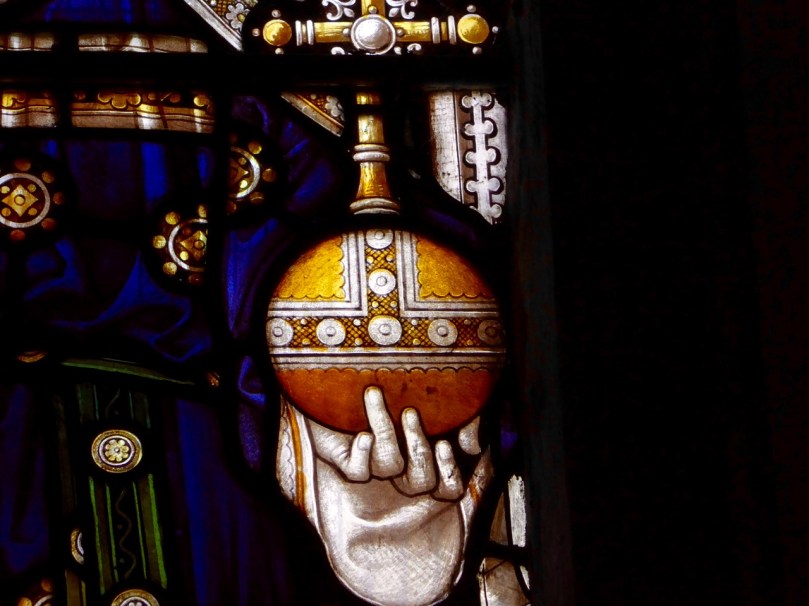
A detail from one of the windows

Part 2 is here.

Leaving for the Hunt at Gwalior by Edwin Lord Weeks