1950s Ireland

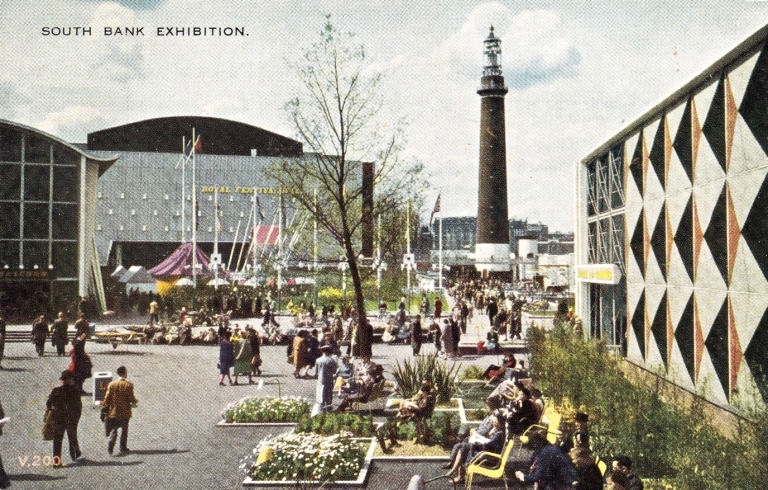
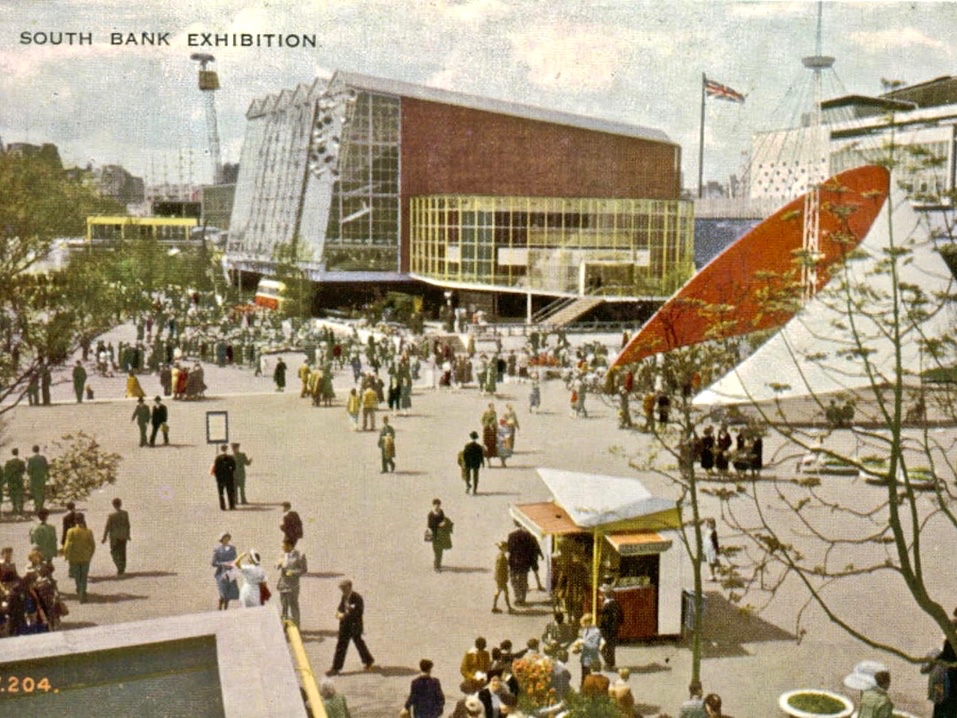
1950 happened 70 years ago – obviously. My earliest substantial recollection of the 50s era was a visit to the Festival of Britain, London, in 1951: I was five years old, and the memory has lasted. Incidentally, that year also saw my very first day at school, a traumatic experience from which I have never fully recovered – but that’s a story for another day!

I suppose that the seeds of an interest in building and engineering structures must have been in me then, because it is the architecture of that Festival that has stayed with me – and which probably influenced me in my own later career. Not that I ever designed a Dome of Discovery, or a Skylon – more’s the pity, but I think I have always related to the throwing off of tradition and the embracing of new and exciting shapes and colours which came out of the Festival. I believe we are overdue a revival of that bravado to lift our spirits once again.

I was pleased to find these contemporary picture postcards of the 1951 Festival of Britain: everything is exactly as I remember!

In the words of the Festival’s Director-General, Gerald Barry, it represented “a tonic to the nation” after twenty years in which Britons had successively endured economic depression, total warfare and acute post-war austerity. However, the Festival of Britain was the product of a left-wing government and it has been said that Churchill (then leader of the opposition) held the view that the whole venture was “three dimensional socialist propaganda”. I’m not sure that this is really true, as he attended the Festival and evidently spent all day riding up and down the escalators – then a novelty – with great delight! I also remember those escalators: we called them moving stairs (I still do – just like I still call the cinema the pictures). Finola clearly remembers riding on Ireland’s first moving stairs, in Roche’s Department Store, Dublin. But that was 1963; today’s post is all about the 1950s, but in rural Ireland.

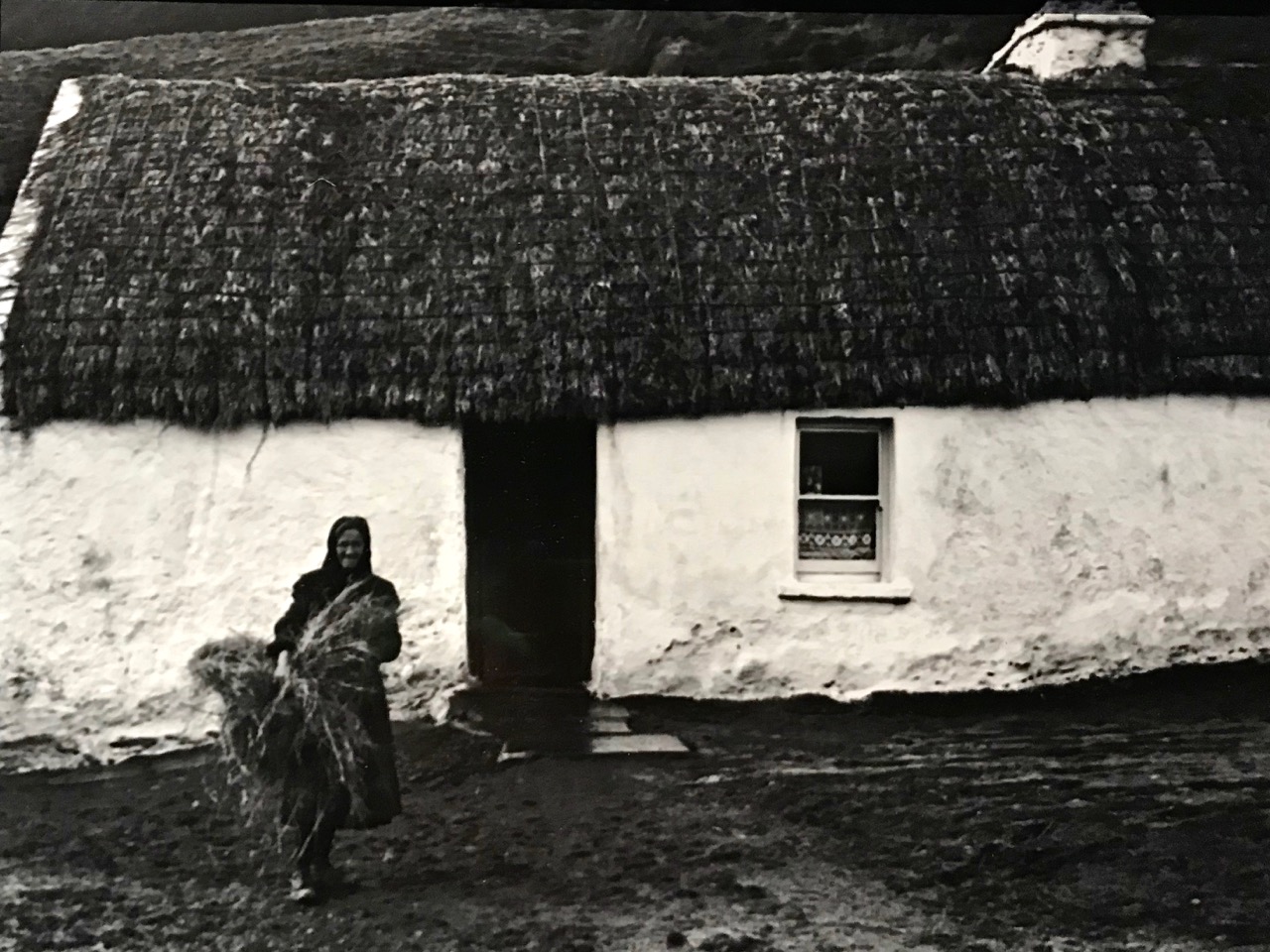
The Half Door, an image from rural Co Clare by Dorothea Lange

On a recent trip to Dublin we visited Ireland’s Museum of Decorative Arts & History at Collins Barracks. We went specifically to see an exhibition: Ireland in Focus: Photographing Ireland in the 1950s. This features “rare images of forgotten Ireland” by three world renowned documentary photographers, one from France and two from North America. Each of them visited Ireland during the 1950s to record a traditional way of life that was perceived to be vanishing as the twentieth century progressed. For anyone interested in Ireland and its recent history, this is not to be missed: it runs until April. In this post I shall show some examples of the work of one photographer: Dorothea Lange. The others will get a showing in future posts.

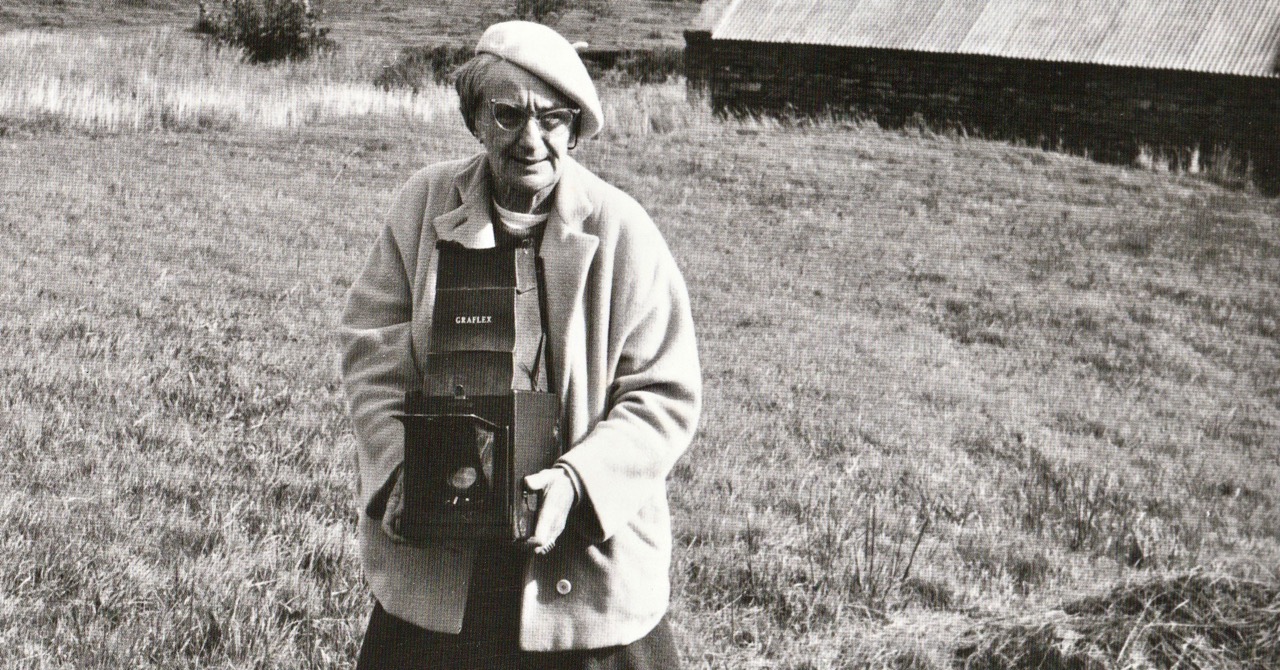
Dorothea Lange, a portrait taken by her husband Paul S Taylor on the Texas Plains in 1935

We had already been introduced to Dorothea Lange as my good friend John (also an expert photographer) recently gave us a copy of a book of her Irish photographs. Sponsored by Life Magazine, she visited the western seaboard in 1954, staying for several weeks in County Clare. She took over 2,400 photographs, which are now fortunately archived in the Oakland Museum of California. In the introduction to the book Dorothea Lange’s Ireland Eliott & Clark Publishing, Washington, 1996, Daniel Dixon writes:

. . . Dorothea Lange was not an avid reader. But among the few books which became her favourites was a description of the sort of culture that drew her attention time and again throughout her career, a rural society where customs, beliefs, and the way of life itself were tied to the soil. The book was called The Irish Countryman. Written in 1937 by a young anthropologist from Harvard, Conrad Arensberg, it documented and analyzed the social and economic traditions of Irish rural life and discussed how they were affected by religion and superstition. In it, Arensberg located the family farm at the hub of this complex system and explained how each generation placed an overriding importance on ‘keeping the family name on the land’ . . .

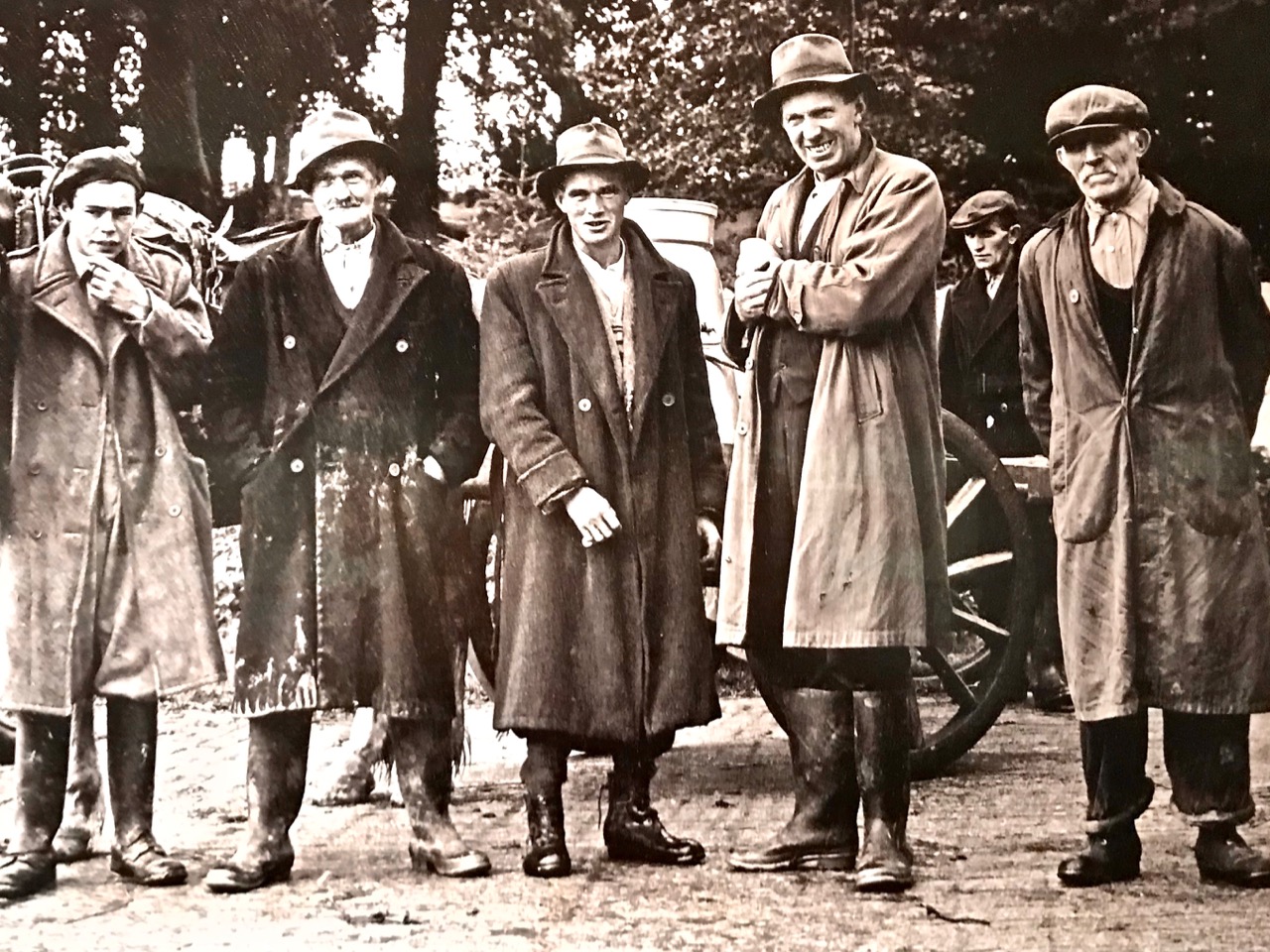
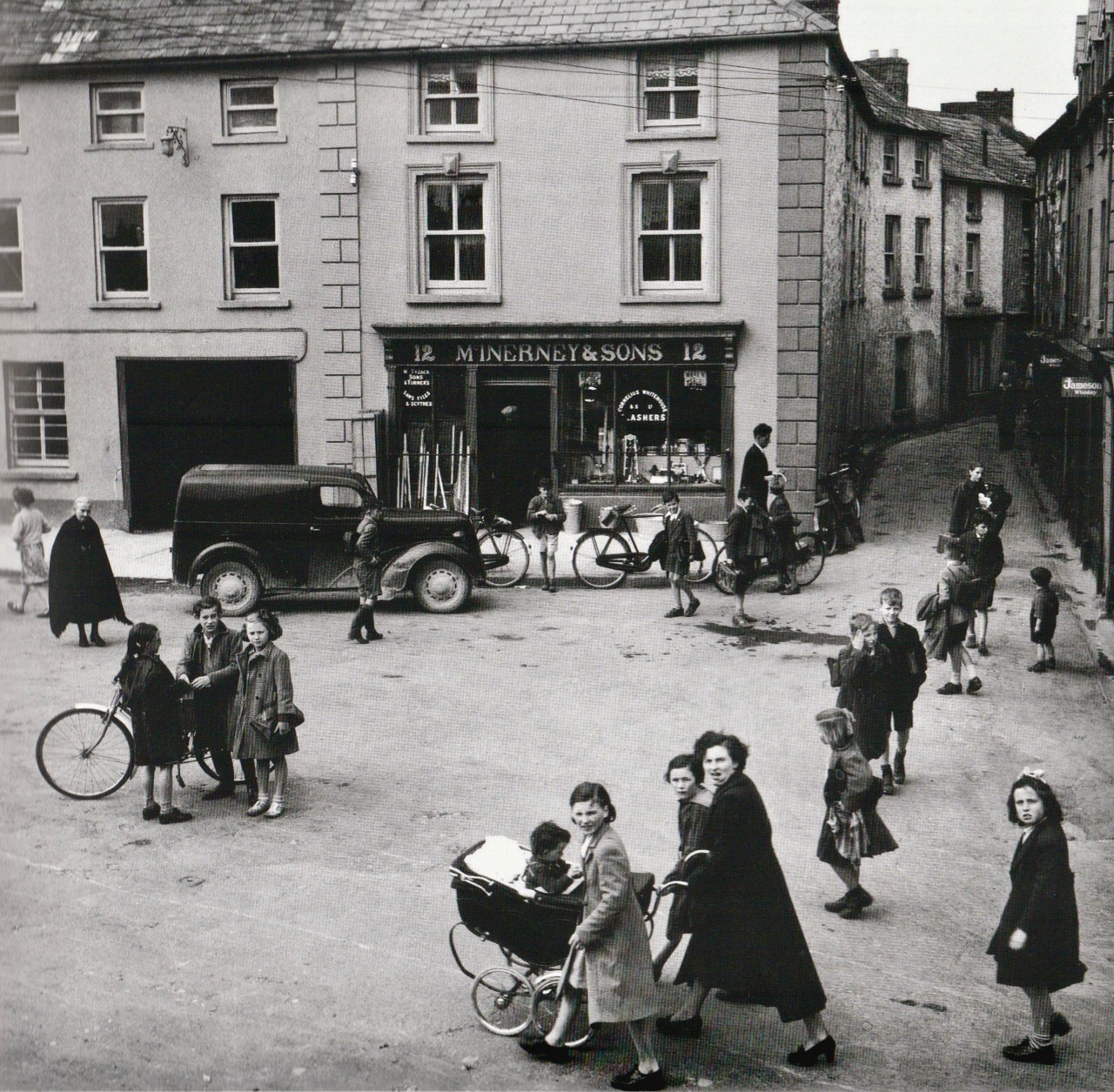
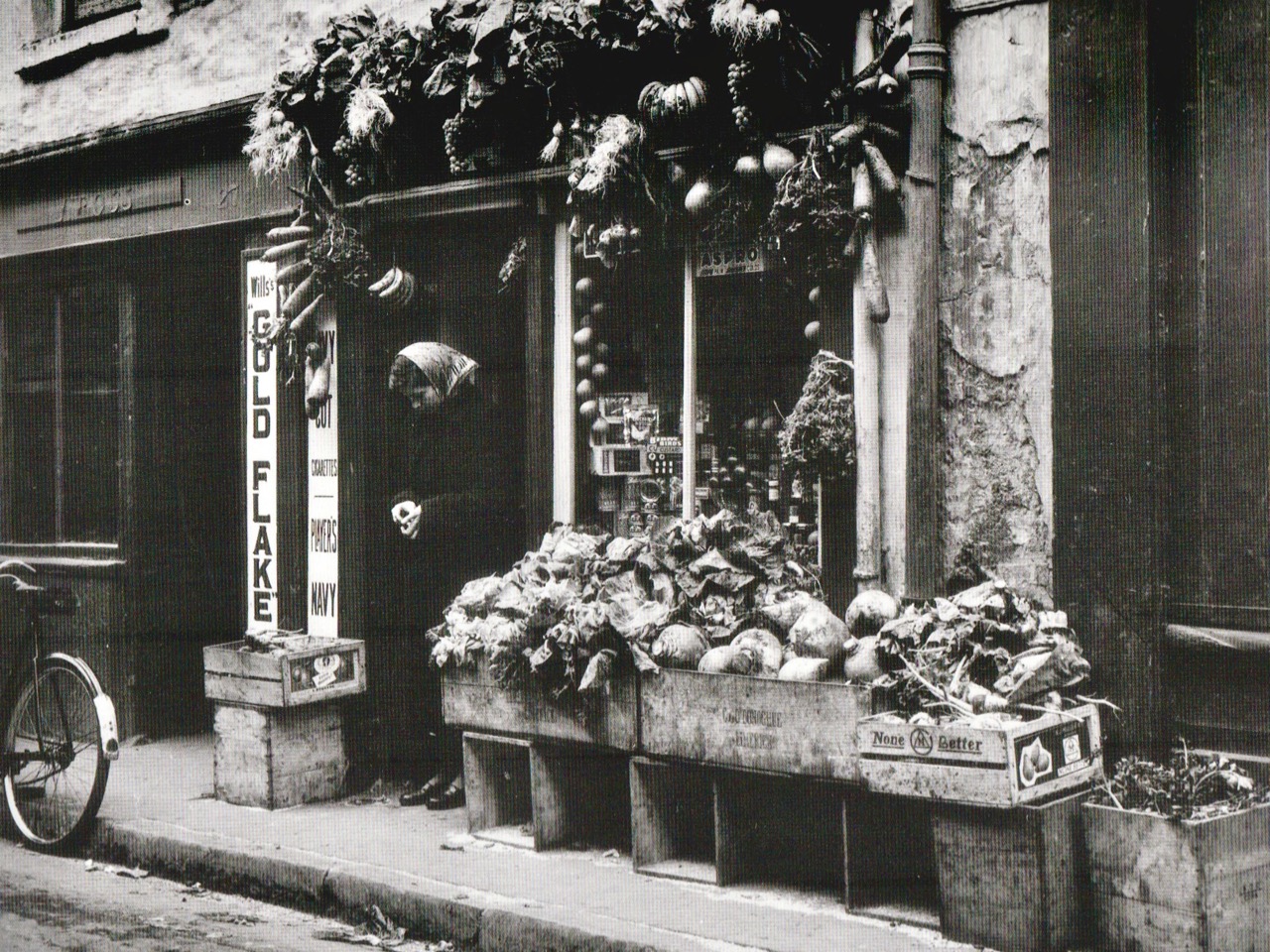
Why is it that we are so drawn to old photographs? Lange’s pictures paint a view of rural life in Ireland that is barely a lifetime away – yet it seems far longer ago. But, living in rural Ireland today, we can so easily relate to those times and – most probably – regret that they have passed. Of course, if we lift the veneer of nostalgia, we know that life was harsh, then and – for all the problems of this world – it is so much easier now. We doubtless have regrets principally for the loss of the people that are portrayed; moments preserved for all time on film, but that can never be recaptured.

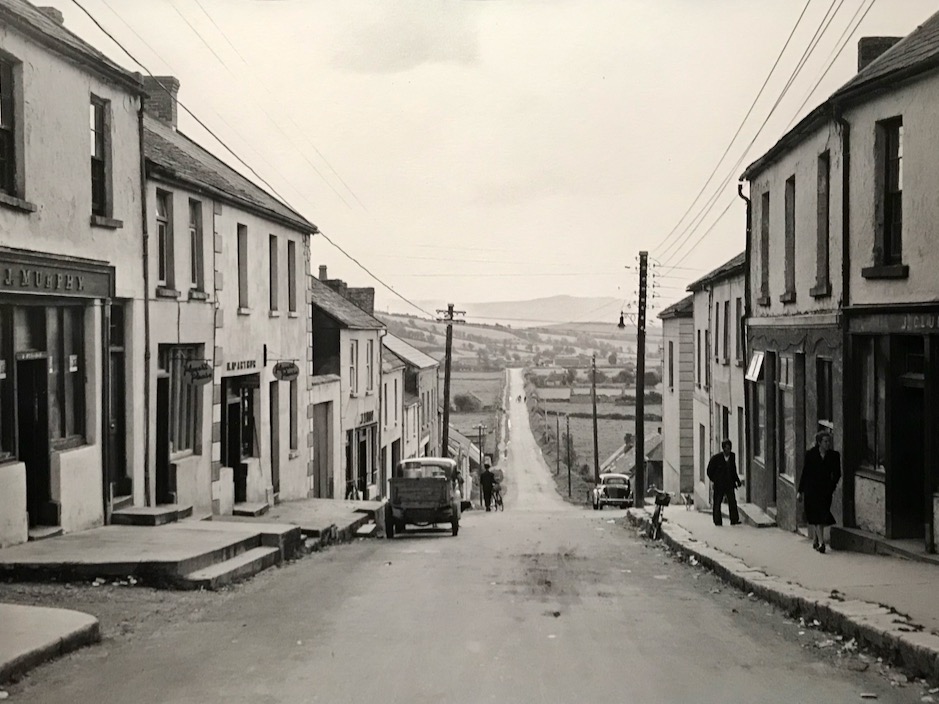
Quite apart from the people, we do like to see how places have changed. These images of 1950s Ennis, now a sizeable county town, hark back to simpler times, for sure, in Lange’s work:

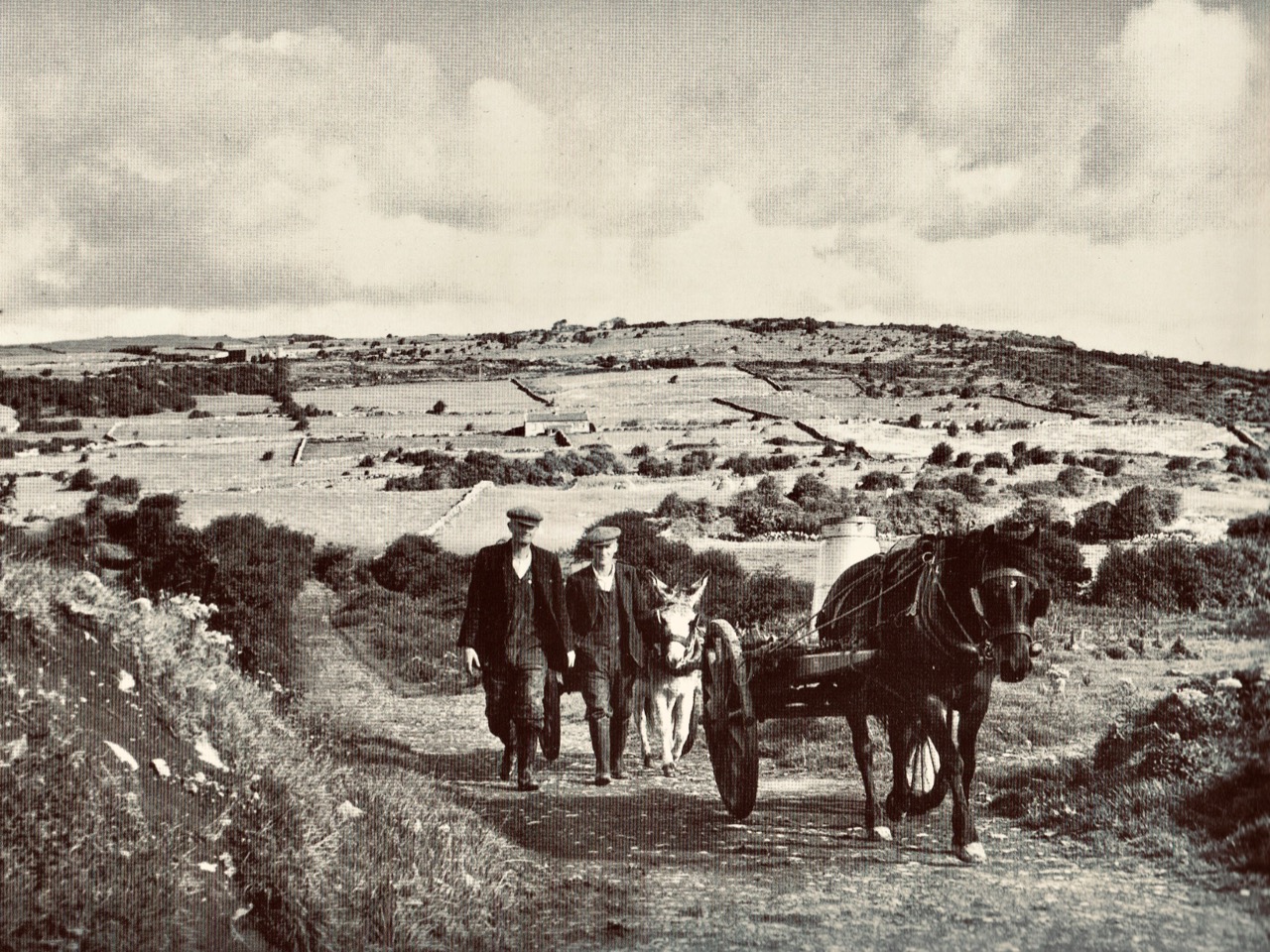
You won’t see every one these pictures in the exhibition – I have taken some from the book. They all complement each other. But it’s all only a small part of what Dorothea Lange recorded. What of the several hundred other images? At least they are kept safe, although not available on line. Lange was born in 1895 and succumbed to cancer in her seventieth year, 1965. A few months after her death the Museum of Modern Art in New York mounted a retrospective of her work. It was the first one-person retrospective by a female photographer held at MoMA. She is remembered far more for her images of the Great Depression years in the American West than she is for her visit to Ireland, but here we should be grateful for her documentary work that has added to our records of Irish rural life in the last century.

Top – Tulla, Co Clare; above – going to the Creamery, Co Clare, 1954. Below: Dorothea Lange in Ireland

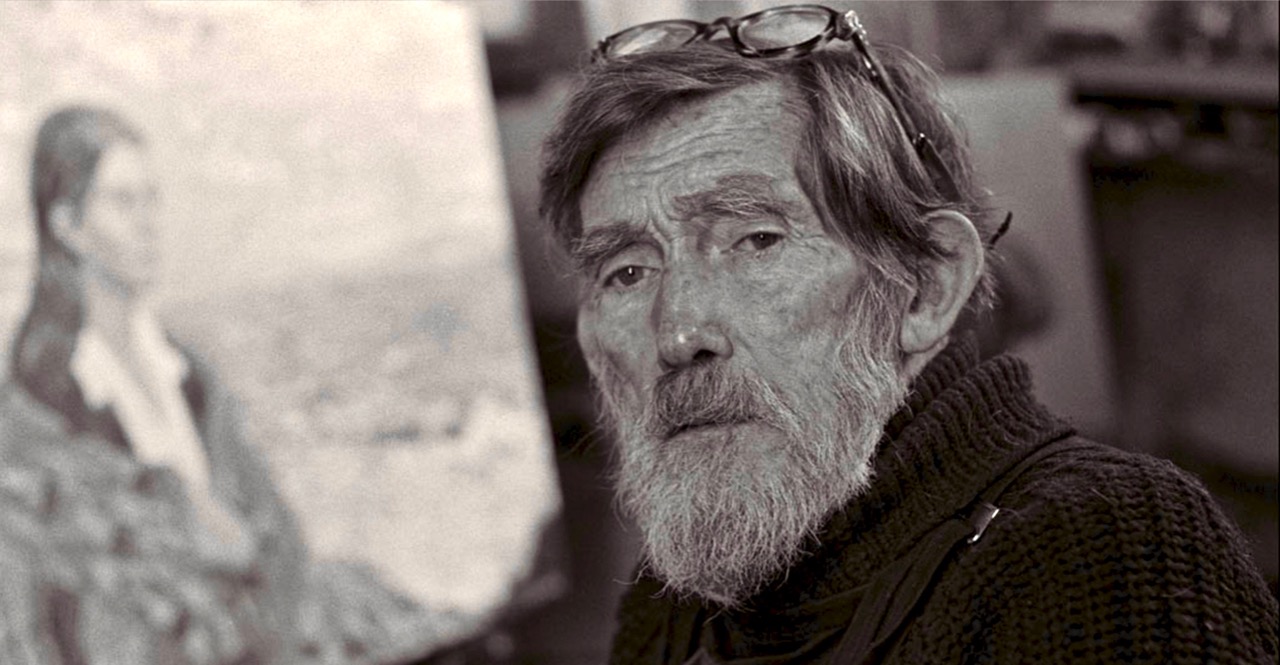
Seán Keating – Escaping the Storm

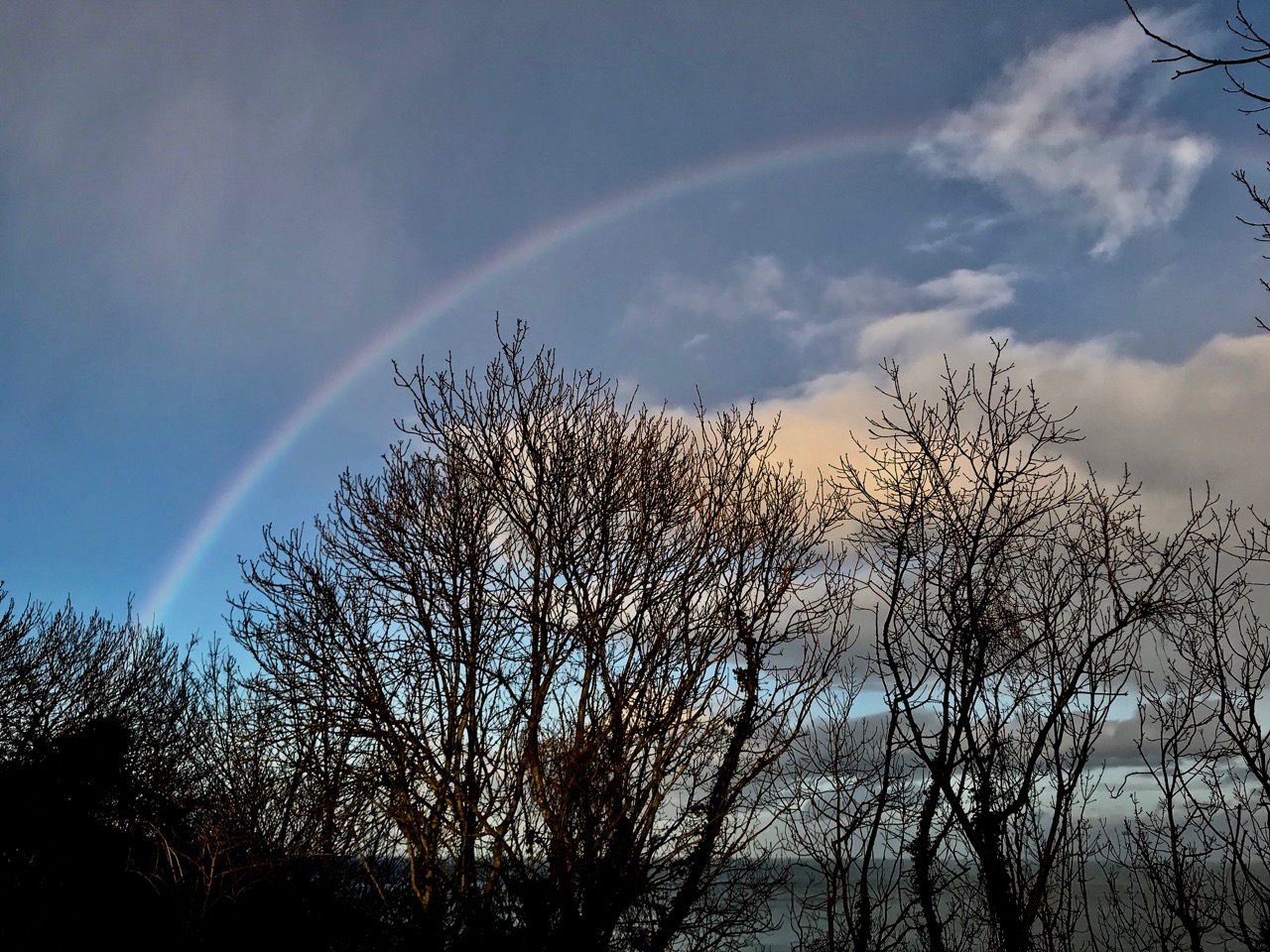
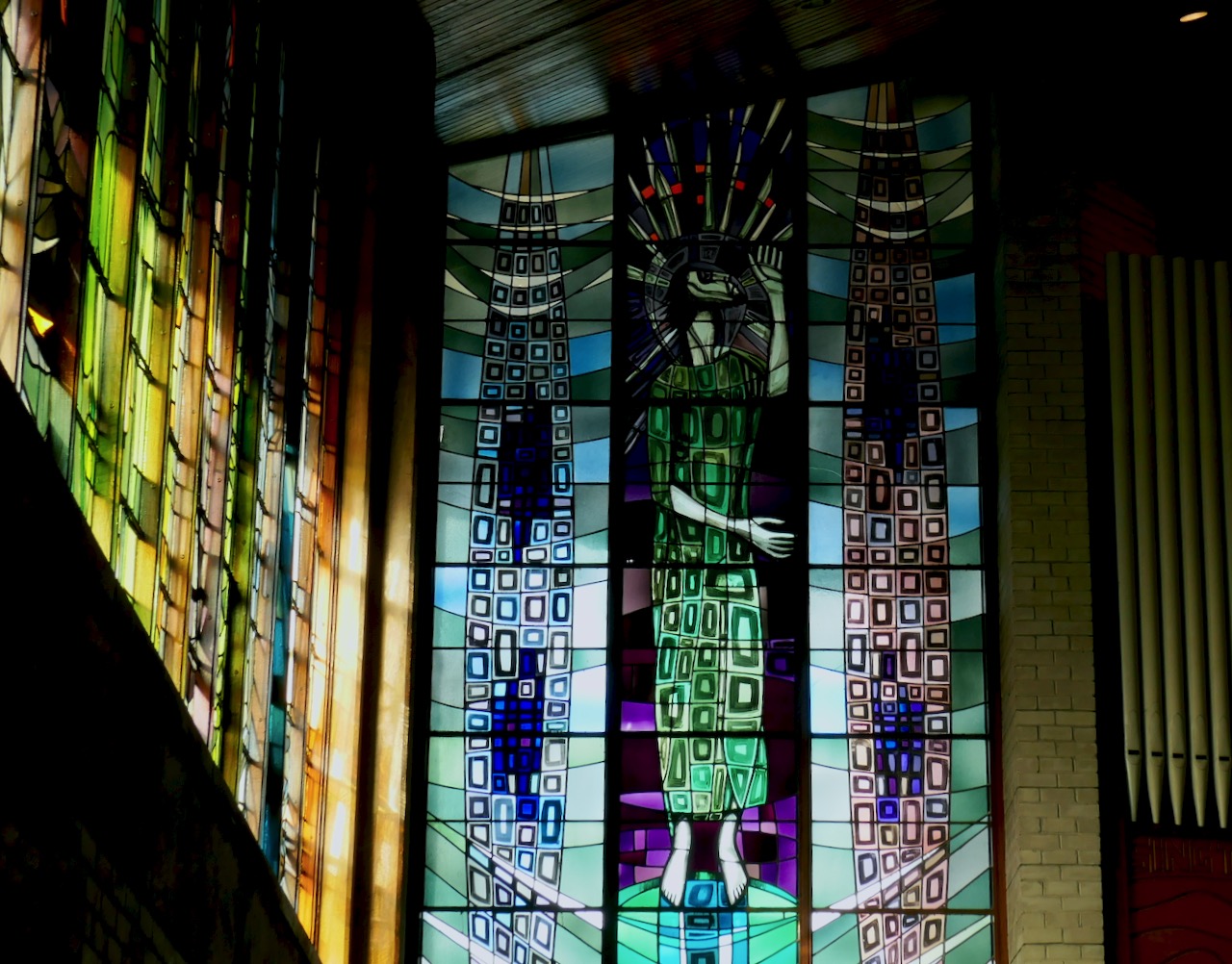
Storm Ciara was upon us as we headed over to the east coast – a mere few hops from Nead an Iolair. But it wasn’t all black clouds and thunder and lightning: winter storms here in Ireland feature high winds and spectacles such as this rainbow (above) which seemed to hang in the sky over County Wicklow for hours. When the rain comes, we often find refuge in a church – especially if it helps Finola’s quest for new stained glass windows. Sometimes they seem to reflect the weather patterns:

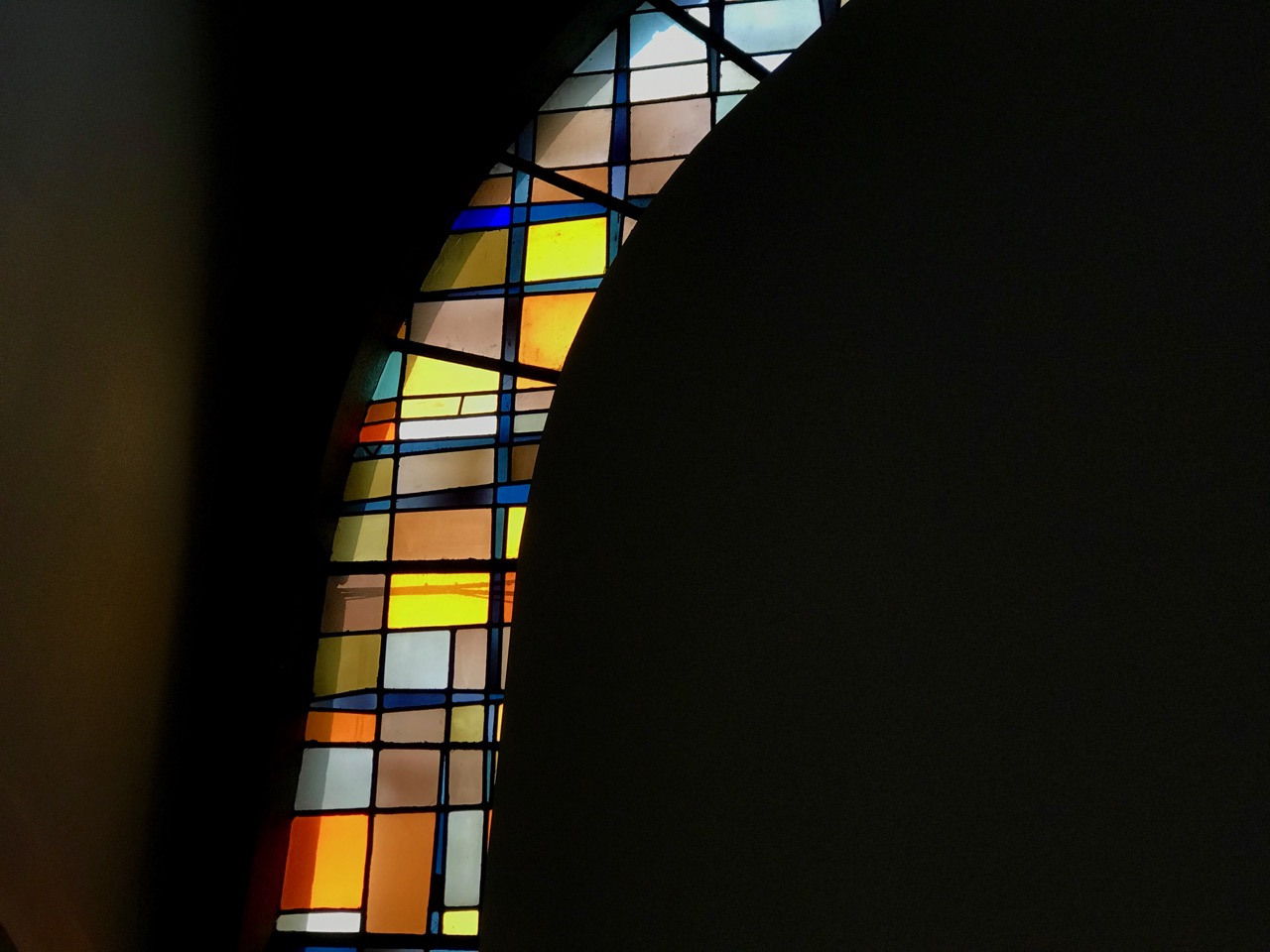
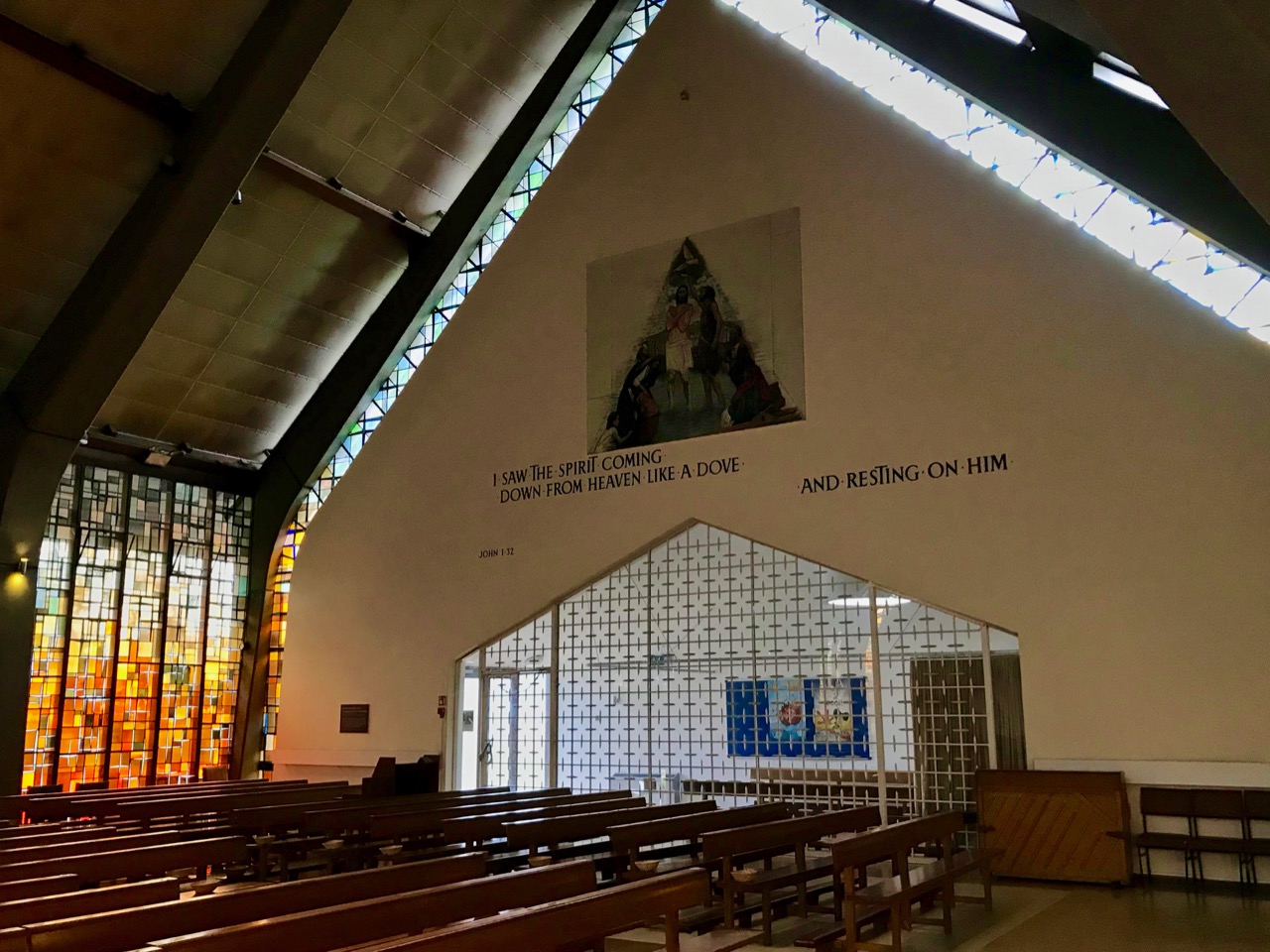
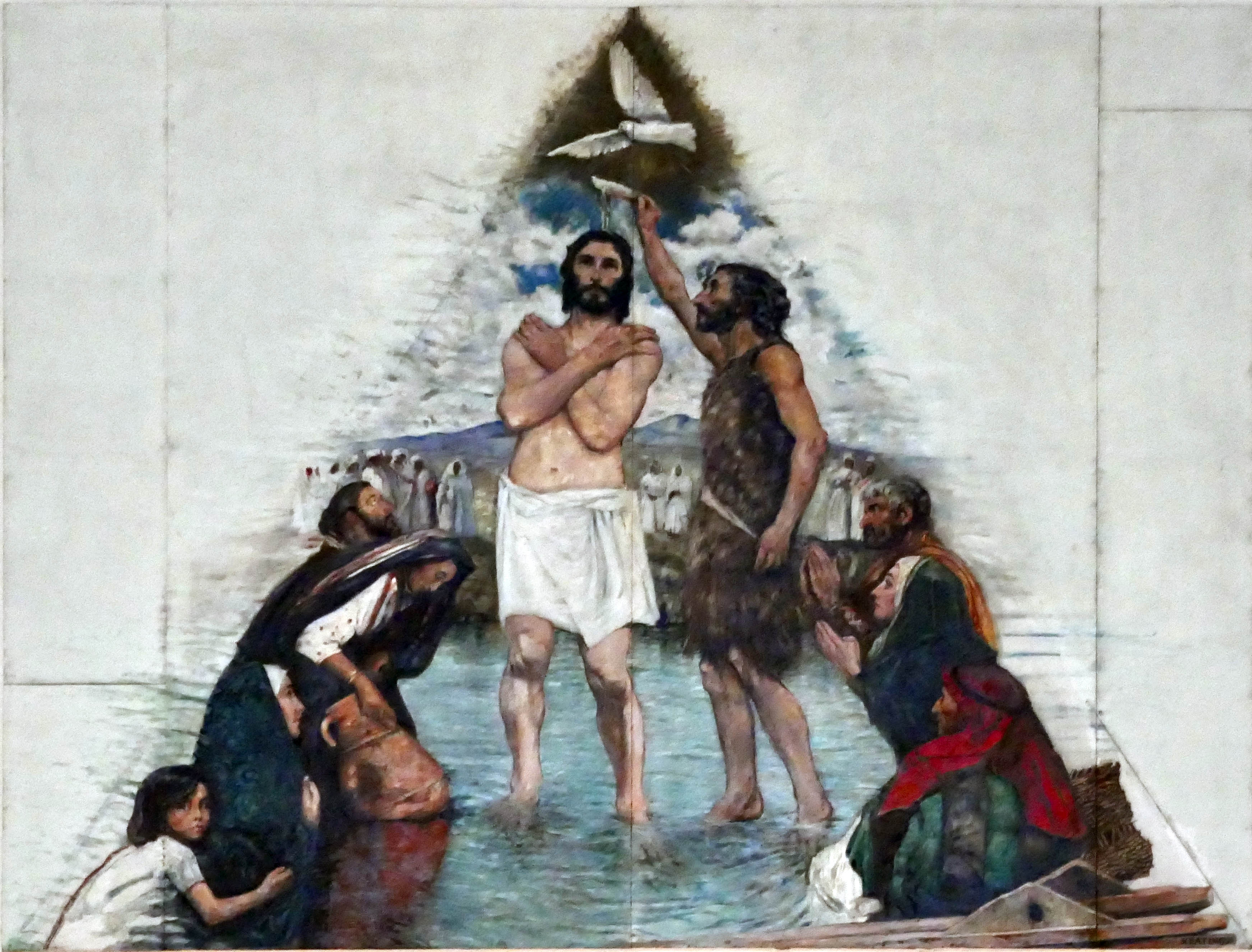
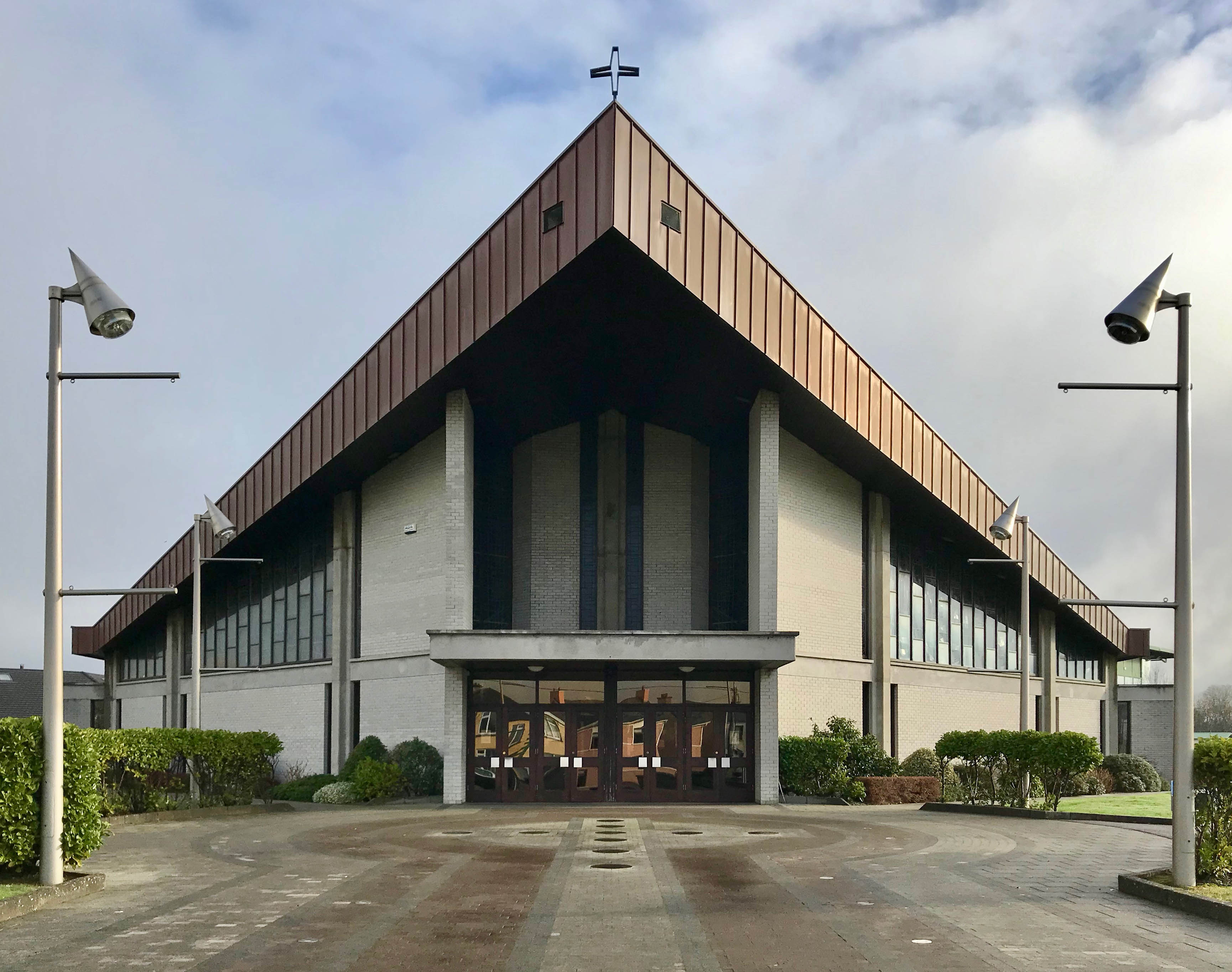
This panel, which could be seen as an indoor rainbow, is in an impressively large church in Ballyroan, Rathfarnham Parish, County Dublin: it was built in 1967 to seat a thousand. What caught my eyes was not the array of windows by Murphy Devitt (Finola has written extensively about this creative partnership), but two murals high on the walls of the crossing. I was delighted to find that these were painted by one of Ireland’s great artists working through the turbulent twentieth century – Seán Keating.

Seán Keating’s ‘Baptism of Christ’ mural in the Church of the Holy Spirit, Ballyroan

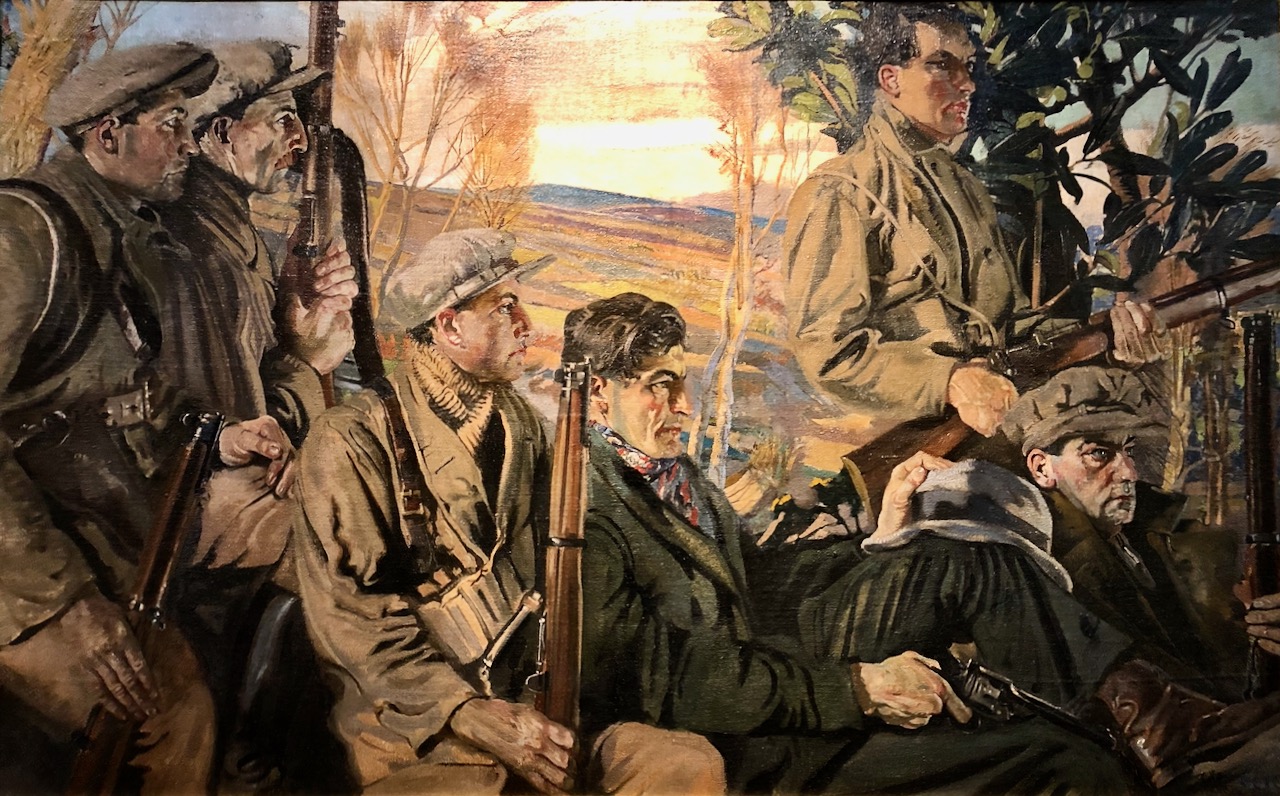
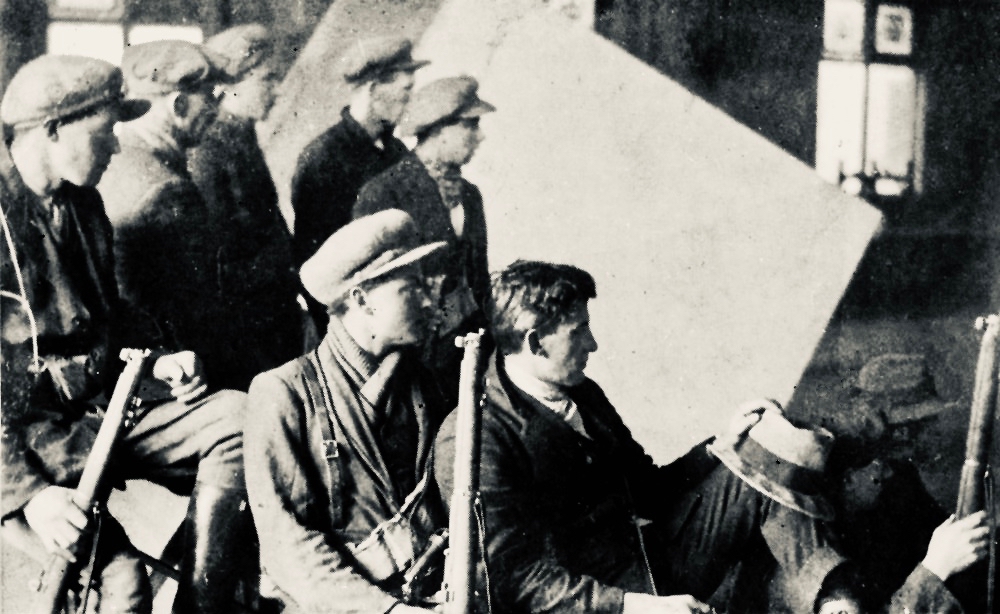
I am always surprised to find that Keating is under-appreciated: yes, he gets mentioned in books of art history, and is reasonably well represented in the state’s galleries. Yet you will also find terms such as ‘not great art’ applied to his work by critics and commentators. This is possibly because he is best known for his documentary work and, particularly, for his raw representations of the tempestuous years of Ireland’s struggle to gain independence. Here is ‘Men of the South’, dating from 1921 when there was a ceasefire in the Irish War of Independence while the Anglo-Irish Treaty was being negotiated and out of which the Irish Free State was born.

Top: Men of the South – Seán Keating’s documentary portrayal of the North Cork Brigade of the Irish Republican Army. Below the painting is one of the photographs taken in Keating’s Dublin studio in preparation for the work. Two versions of this painting were made by the artist: the one above is in the Crawford Gallery, Cork City, while the other (which depicts eight men) is now in Áras an Uachtaráin, the official residence of the President of Ireland.

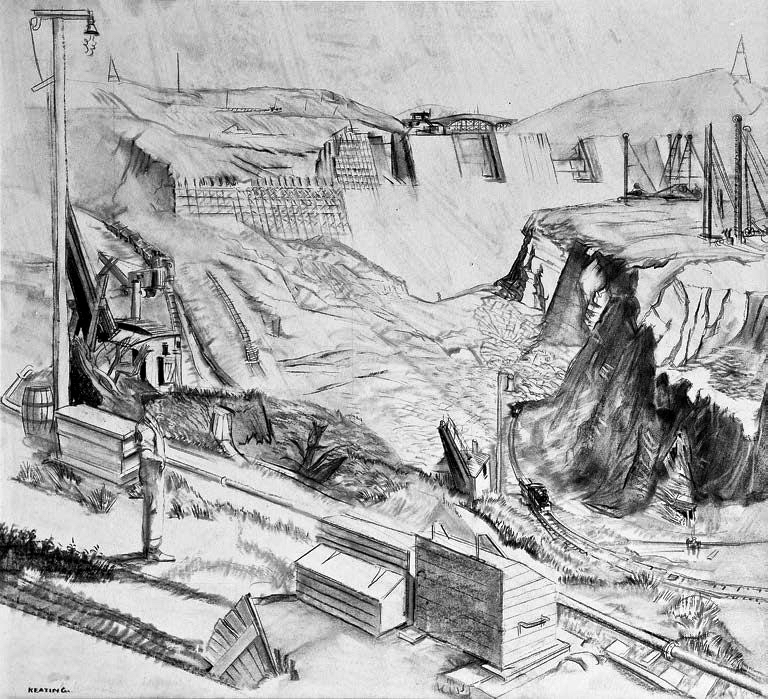
After the War of Independence and the abhorrent Civil War which followed it, Keating’s work concentrated on documenting the founding and burgeoning of the new State. Scenes of conflict were replaced by works showing industrial development, such as Ireland’s largest ever civil engineering contract: harnessing the power potential of the State’s major waterway, the River Shannon. The construction of a dam and hydro-electric generating station at Ardnacrusha, County Clare, together with a country-wide electric distribution infrastructure, was a symbol of major importance to the nation’s fledgling government. Keating began recording the work in 1926, soon after inception. No-one had commissioned him – he saw the significance of making dramatic documentary work of this nature, but his vision was eventually recognised by the Electricity Supply Board (ESB) – which now owns the largest collection of Keating’s paintings in Ireland. Above is one of the artist’s working sketches of the dam under construction.

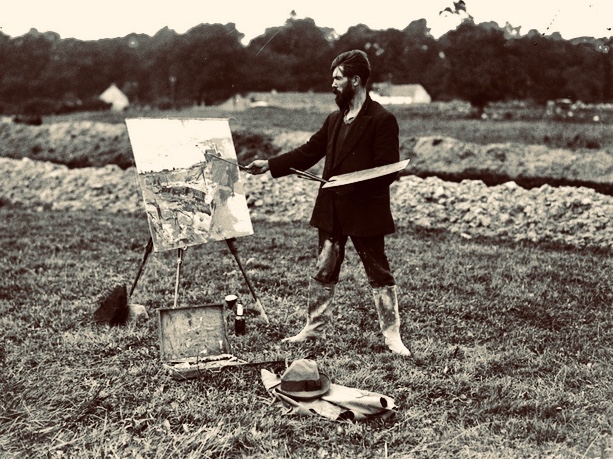
Seán Keating painting en plein air at Ardnacrusha, 1920s

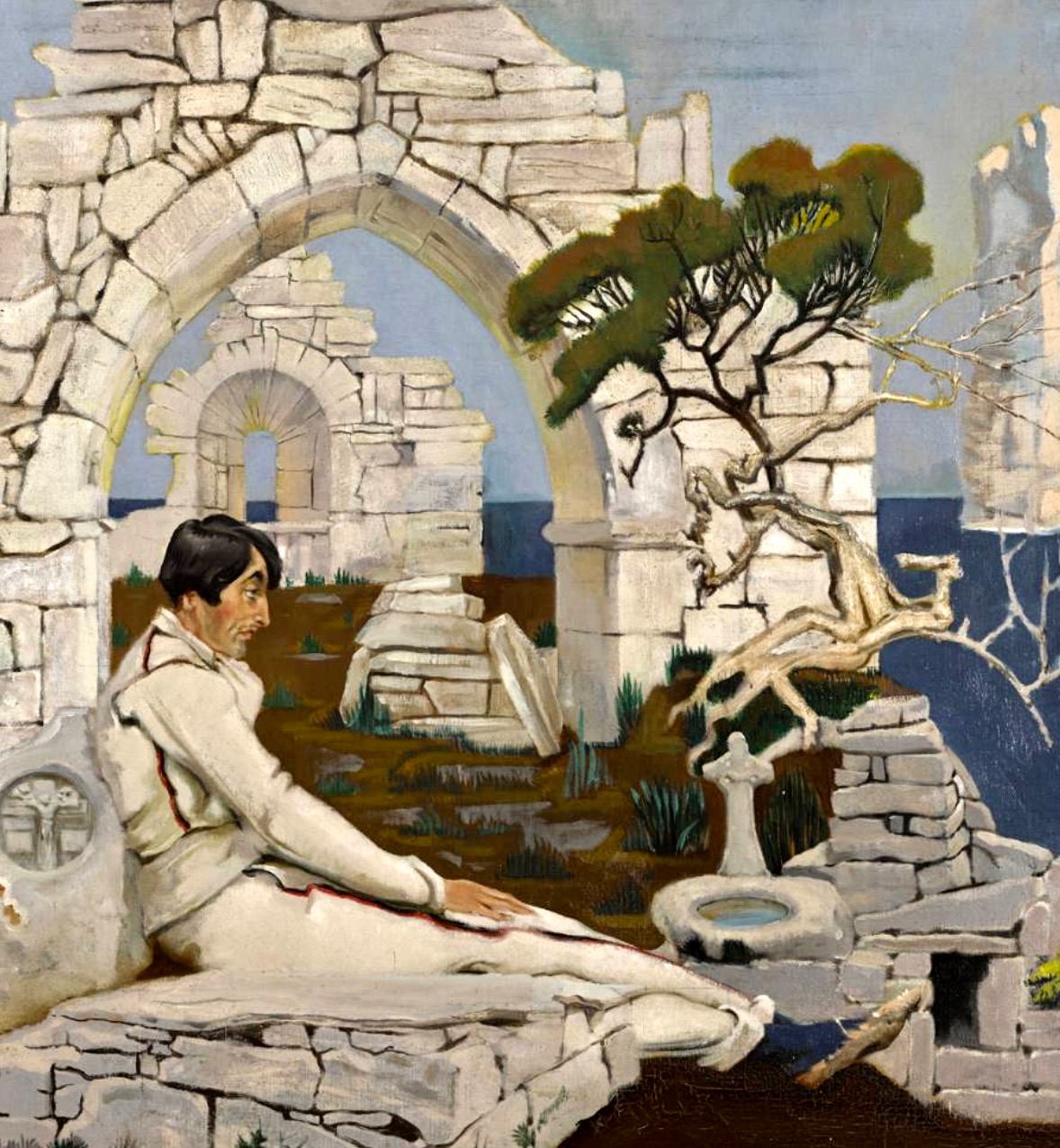
Keating studied under William Orpen in Dublin. He was to become one of Orpen’s important pupils (and, latterly, his assistant) and his documentary painting style owes a debt to his teacher. One of his famous early paintings is Thinking Out Gobnet (below), a portrait of his good friend Harry Clarke, dating from 1917. Keating and Clarke frequently visited the Aran Islands together. The painting shows Clarke sitting on a grave slab within the ruins of Teampall Chaomháin (St Kevin’s church) on Inis Oírr, along with a holy water font at his feet, and a holy well to the bottom right of the image. The suggestion is that Clarke is finding inspiration for his series of eleven windows for the Honan Chapel, Cork, which include a fine representation of St Gobnet. The ‘healing’ symbolism of the holy water and well are deliberate references to Clarke’s TB, the illness which ended his life at the age of 41.

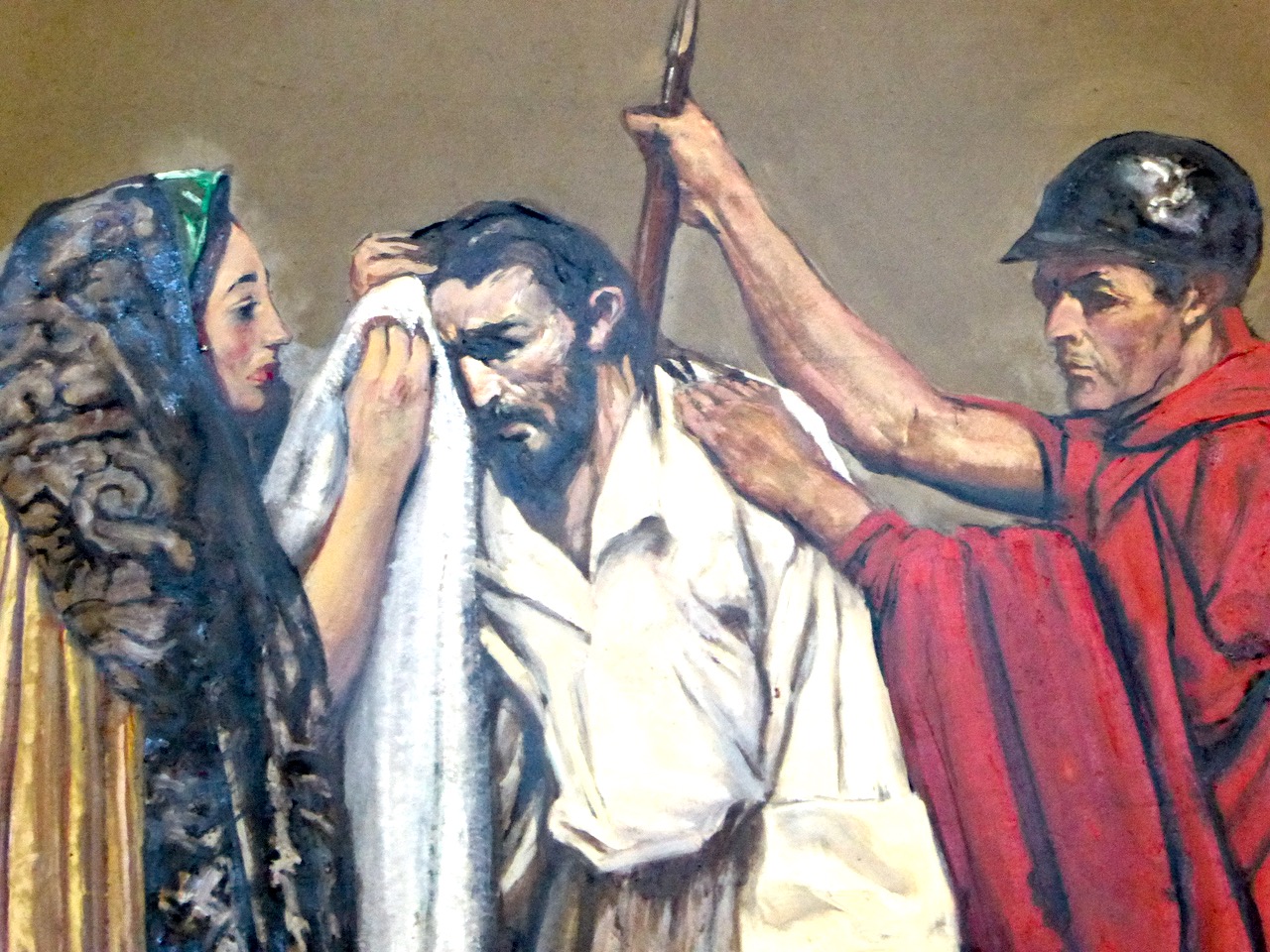
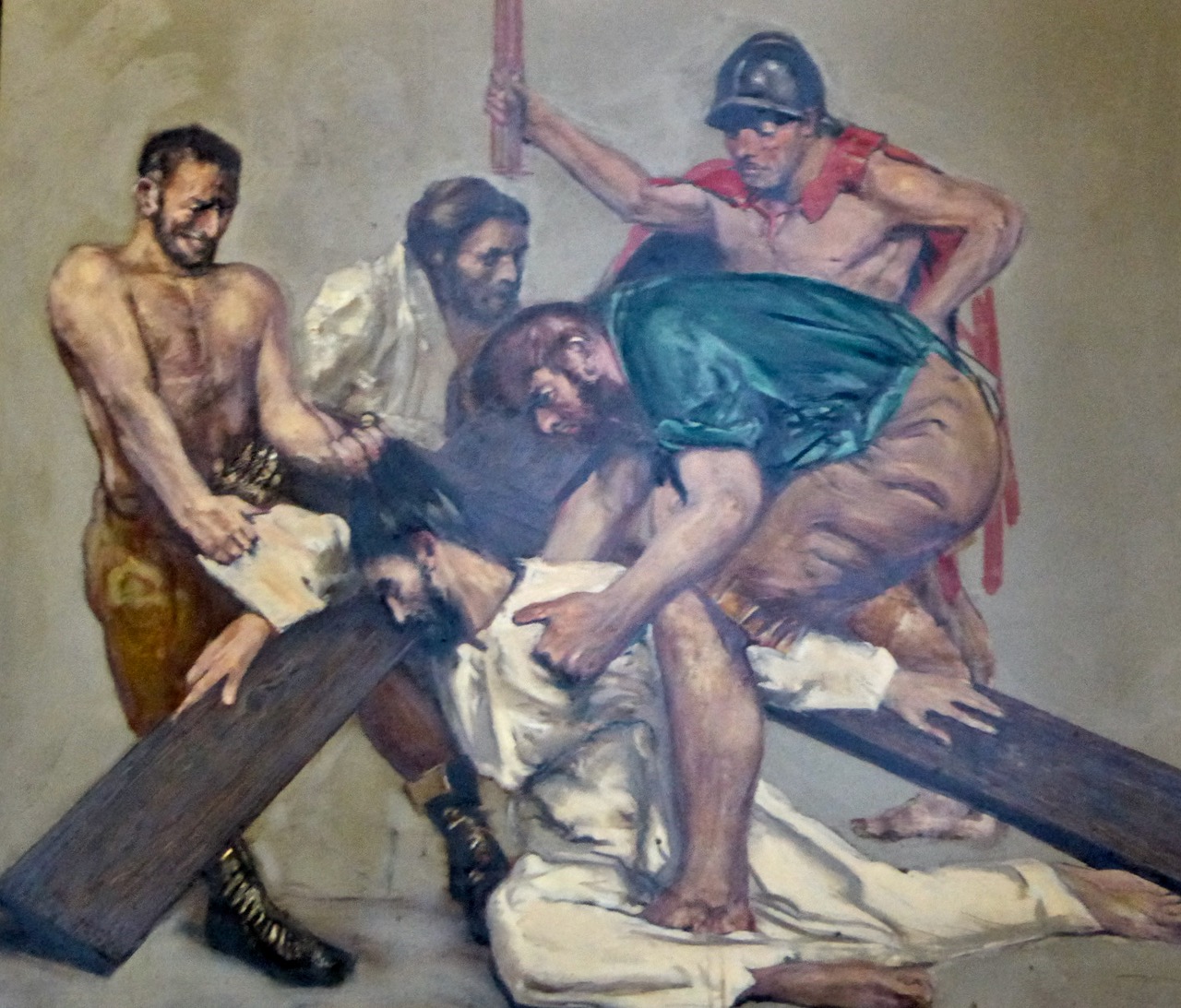
Seán Keating was always a committed Catholic, and we have seen many examples of his artwork in churches, including the murals at Ballyroan. Most striking, perhaps, are the Stations of the Cross which he painted for St John’s Church, Tralee – the church which features in Finola’s wonderful Irish Arts Review article (and RWJ blog post) about Ireland’s Newest Stained Glass Window.

Stations of the Cross by Seán Keating in St John’s Church, Tralee, County Kerry

Back to Ballyroan: while we were sheltering from the tempest and admiring the church architecture, and the murals, I was delighted to find out that Seán Keating had lived for much of his life just down the road, in Ballyboden, in a house which he had designed himself. He attended mass regularly at Ballyroan until his death in December 1977, aged 88.

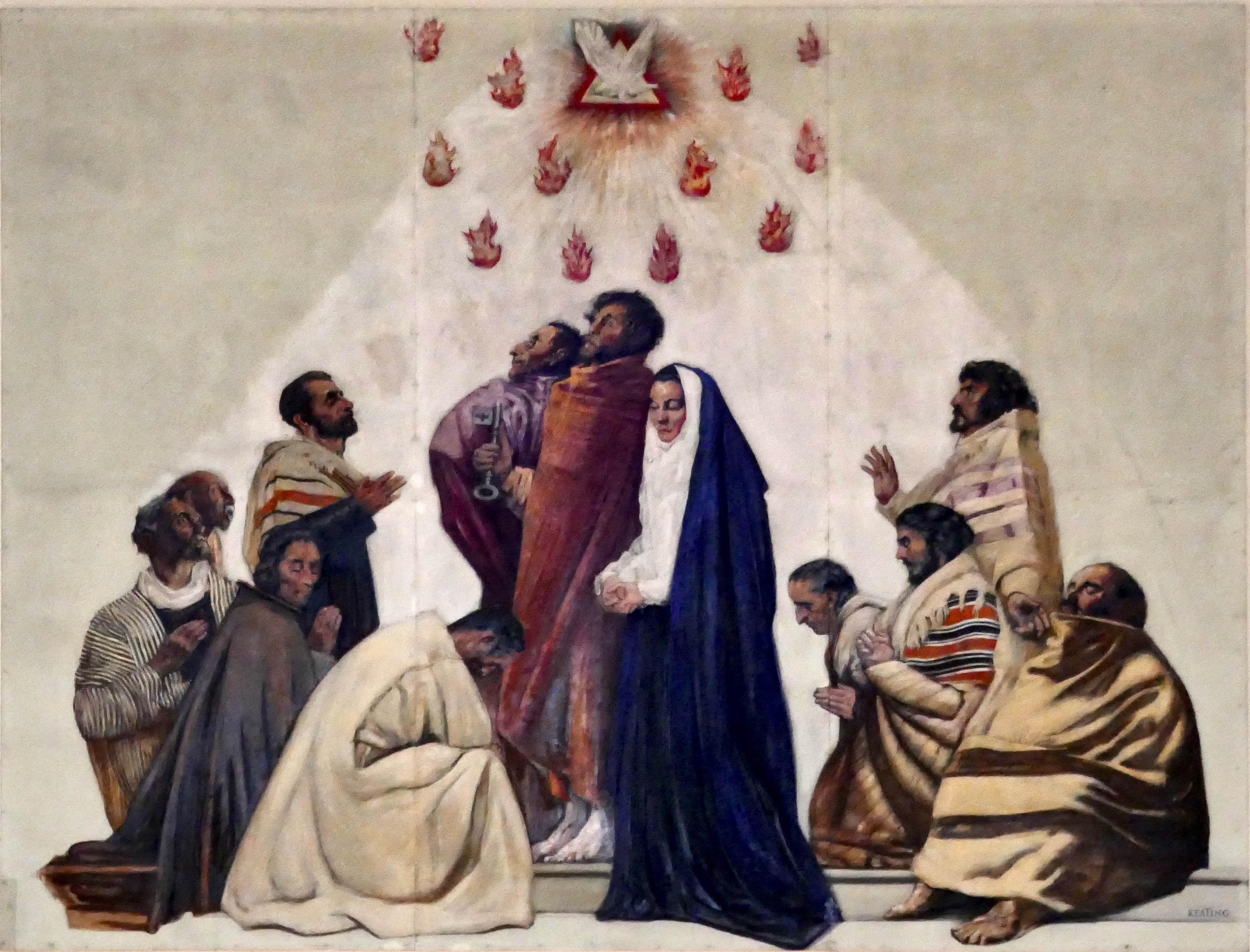
Keating’s mural The Descent of the Holy Spirit in his own church of Ballyroan, Parish of Rathfarnham, installed in 1967

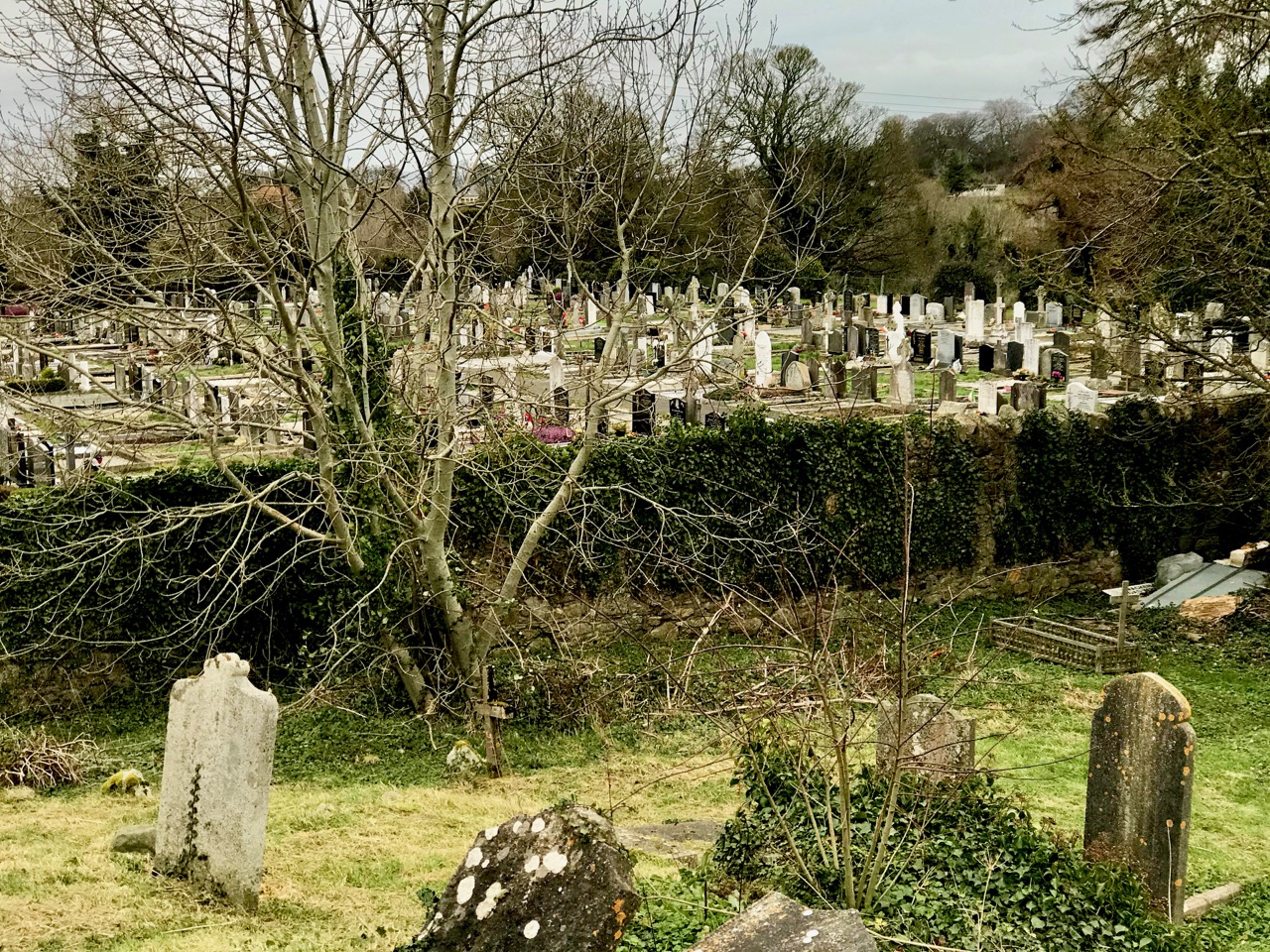
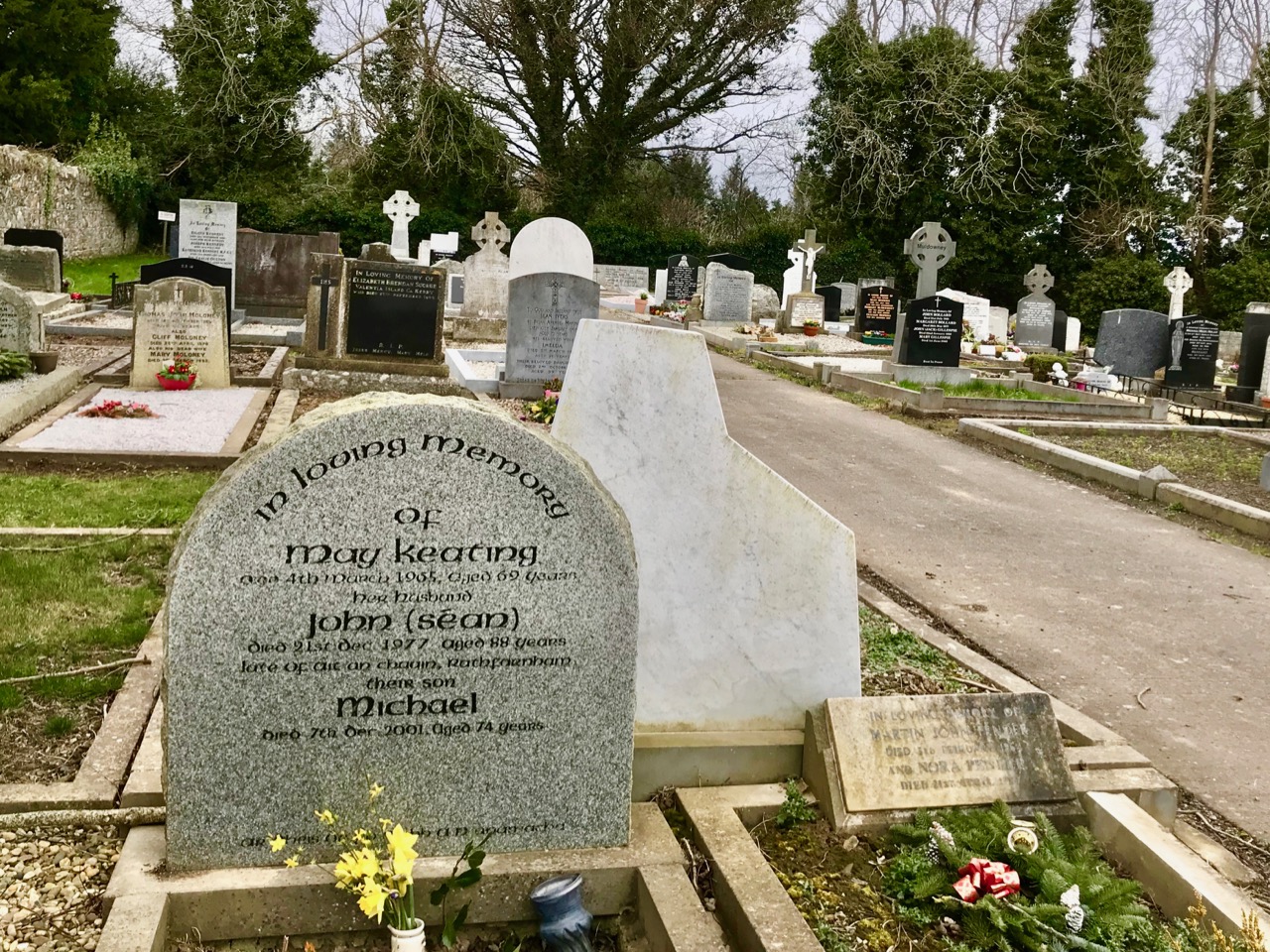
We discovered that Keating is buried in the nearby Cruagh Cemetery, so we had to head out into the storm again to find his grave. It is as unassuming as he apparently was in life: a visitor would not be aware that herein lies one of modern Ireland’s greats.

Cruagh Cemetery, Co Dublin (top) is the resting place of Seán Keating. His grave is shared with his wife, May, and son Michael

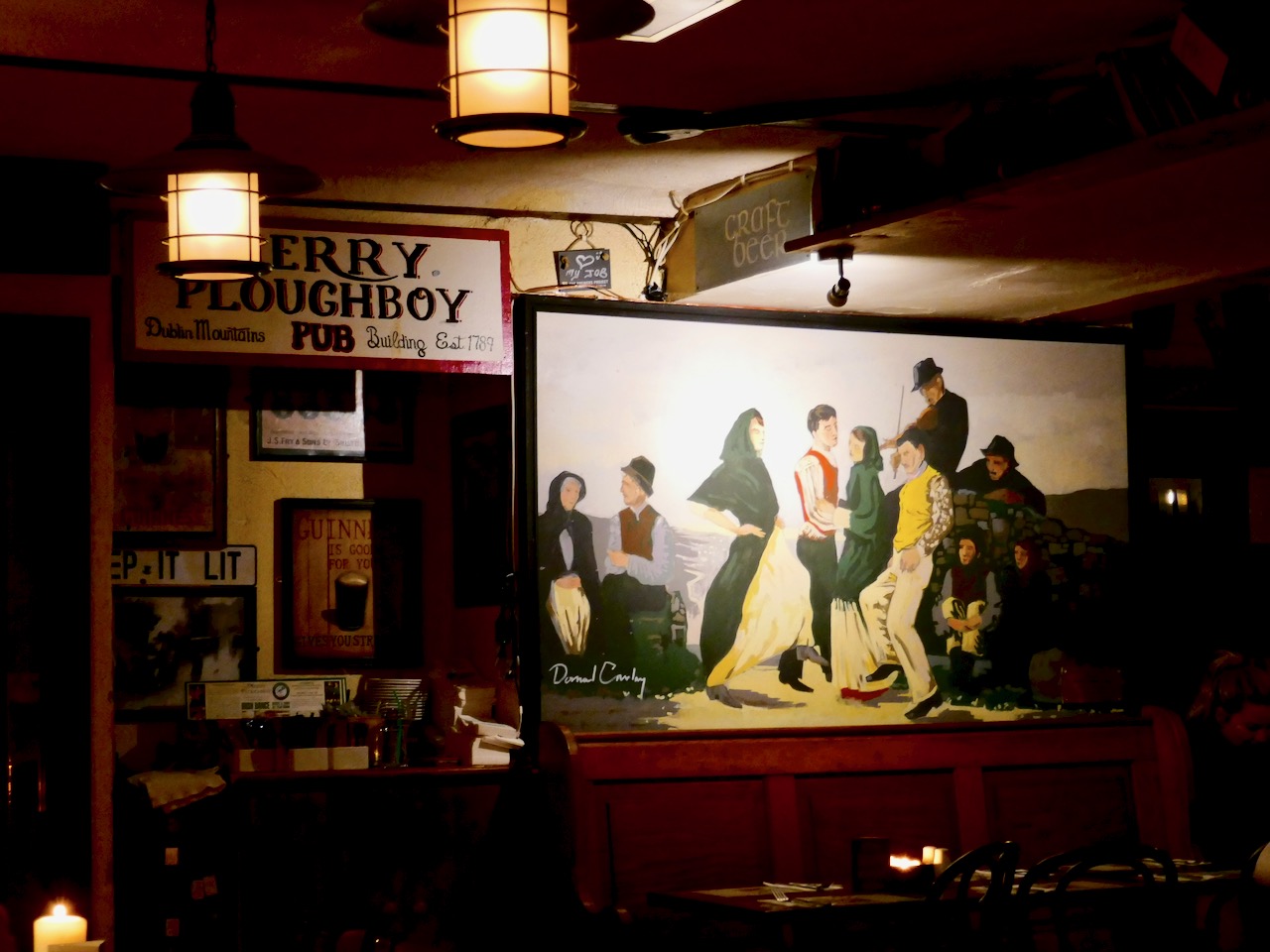
Our little artist’s memoir is almost over. The gale continued with ferocious lashing rain: cold and hungry we made a beeline for the local pub – the Merry Ploughboy, evidently a famous music venue. It was warm and welcoming, and full of a crowd watching Six Nations Rugby on the big screen (Ireland won the match).

In the lounge we were intrigued to find an oblique reference to Seán Keating – a painting which has a nod to his style but is by a different artist!

We agreed that our day trip to the east, in the teeth of the gale, was a memorable way to discover the life, work and death of one of Ireland’s significant artists.

Brendan in Bronze

Do you know the story of St Brendan? He – ‘The Navigator’ – went to North America long before Columbus. Nearly a thousand years before, in fact: Brendan was born in the fifth century. The story of his voyage, and his remarkable adventures with his fellow monks, has inspired art, music and song ever since then. Here’s the beginning of Christy Moore’s version:

A boat sailed out of Brandon in the year of 501
’twas a damp and dirty mornin’ Brendan’s voyage it began.
Tired of thinnin’ turnips and cuttin’ curley kale
When he got back from the creamery he hoisted up the sail.
He ploughed a lonely furrow to the north, south, east and west
Of all the navigators, St Brendan was the best . . .

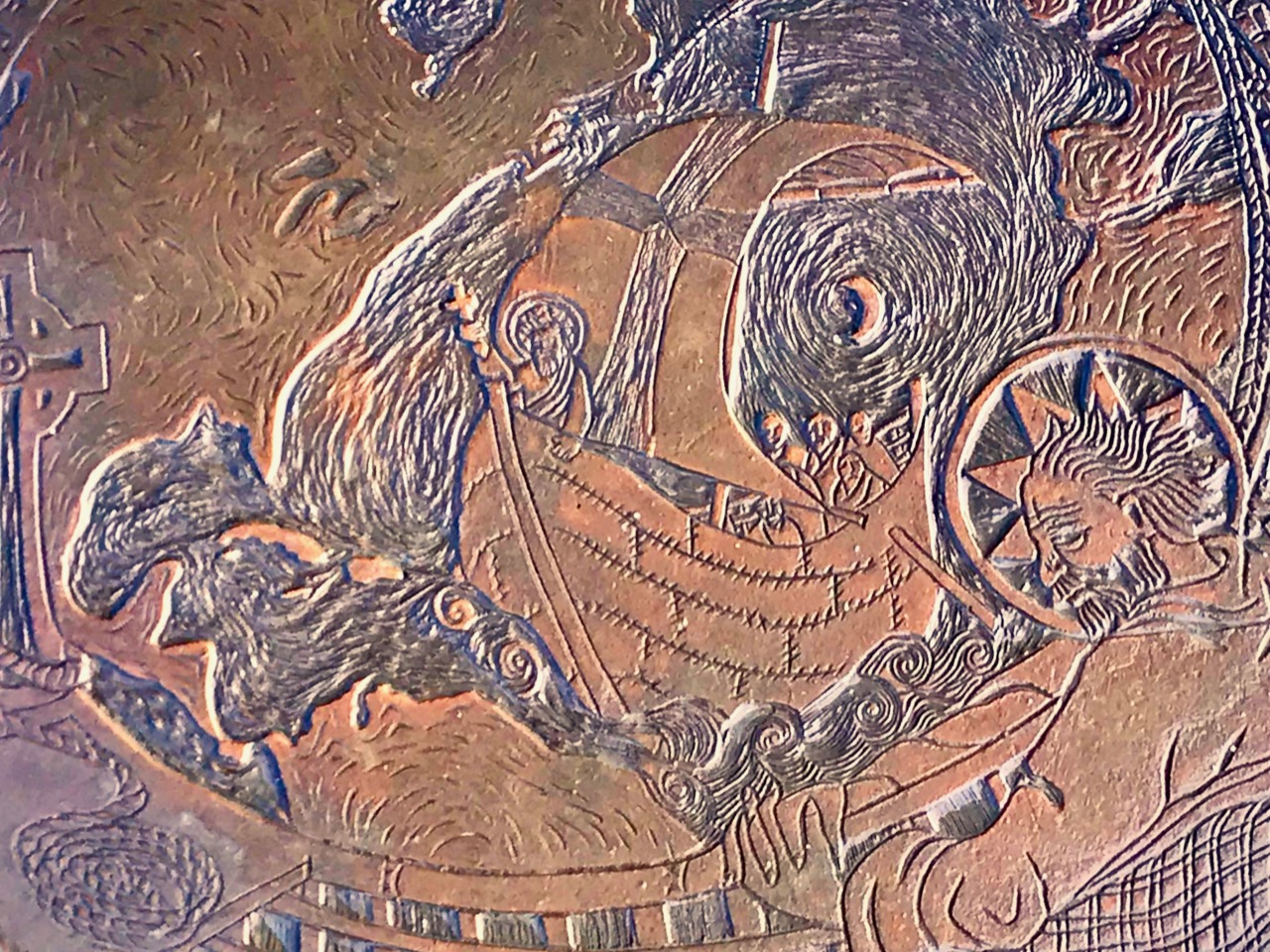
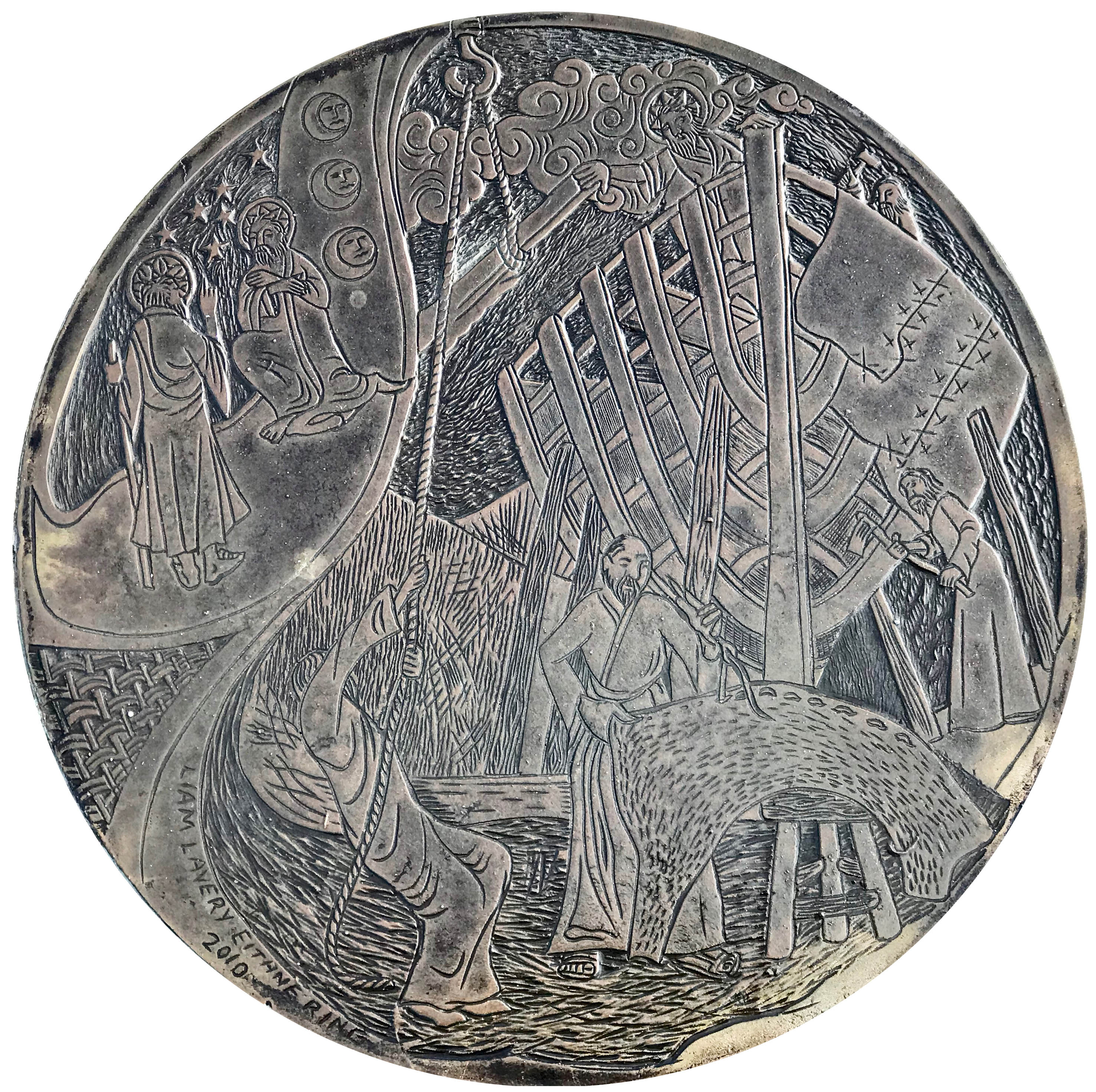
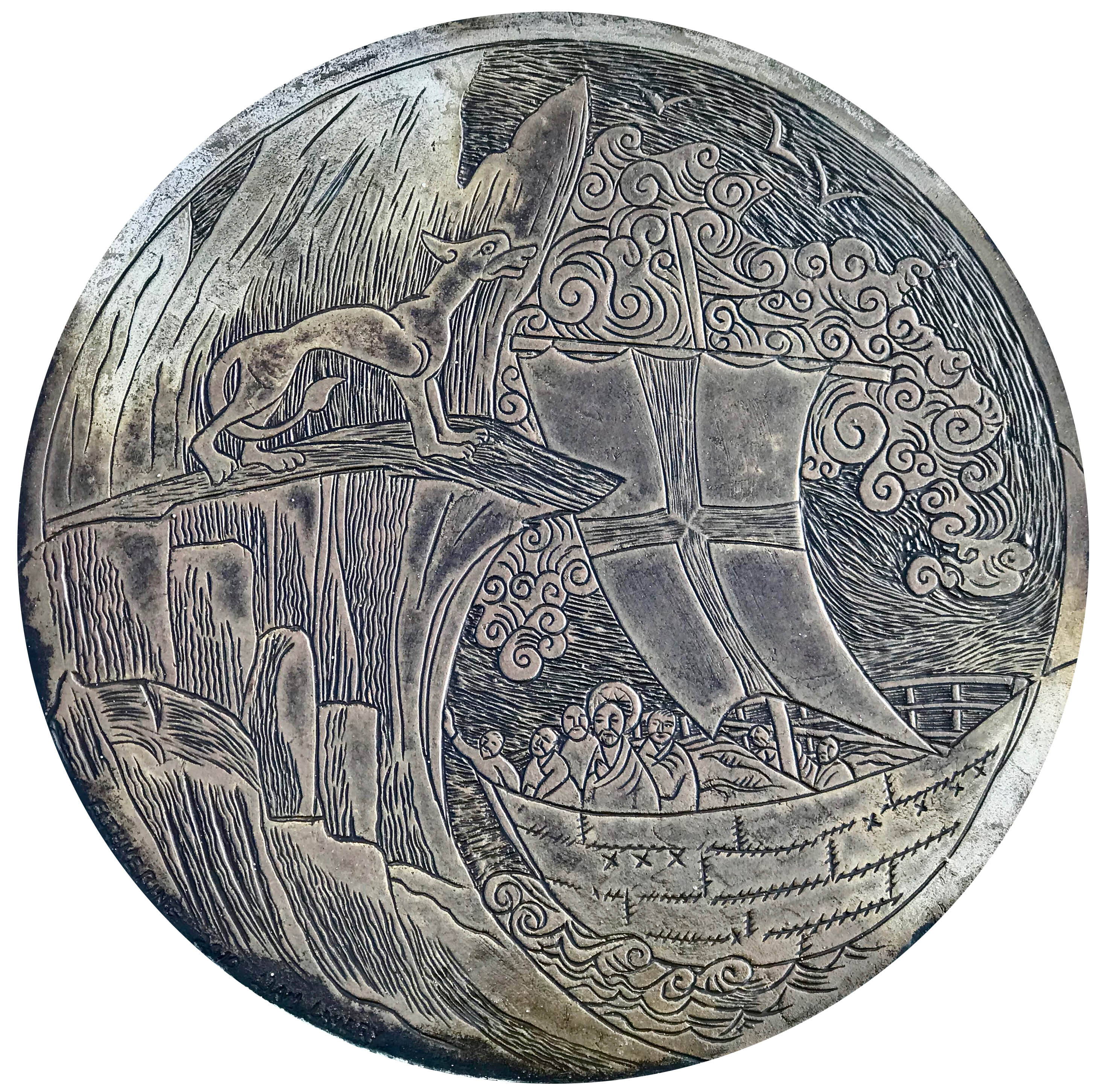
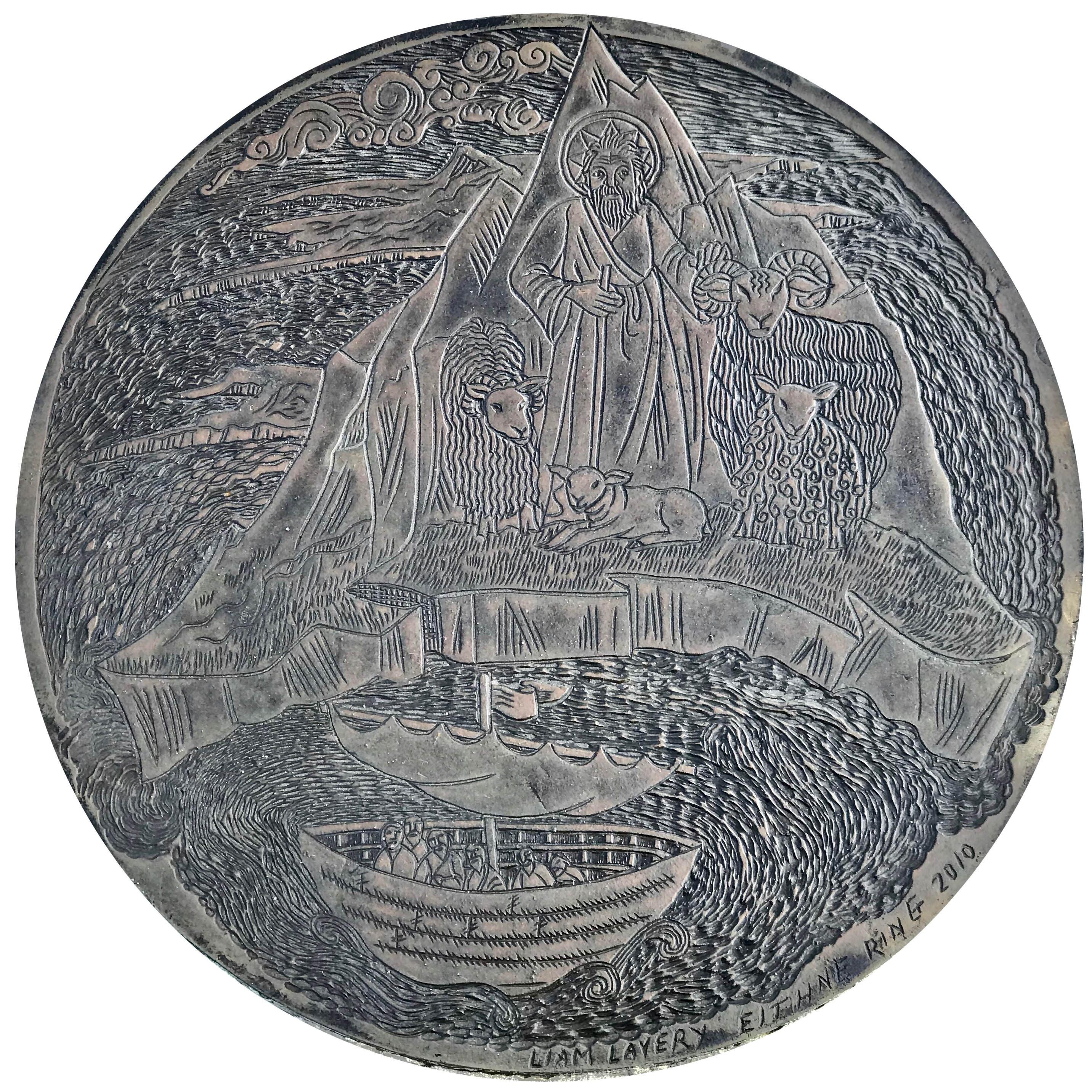
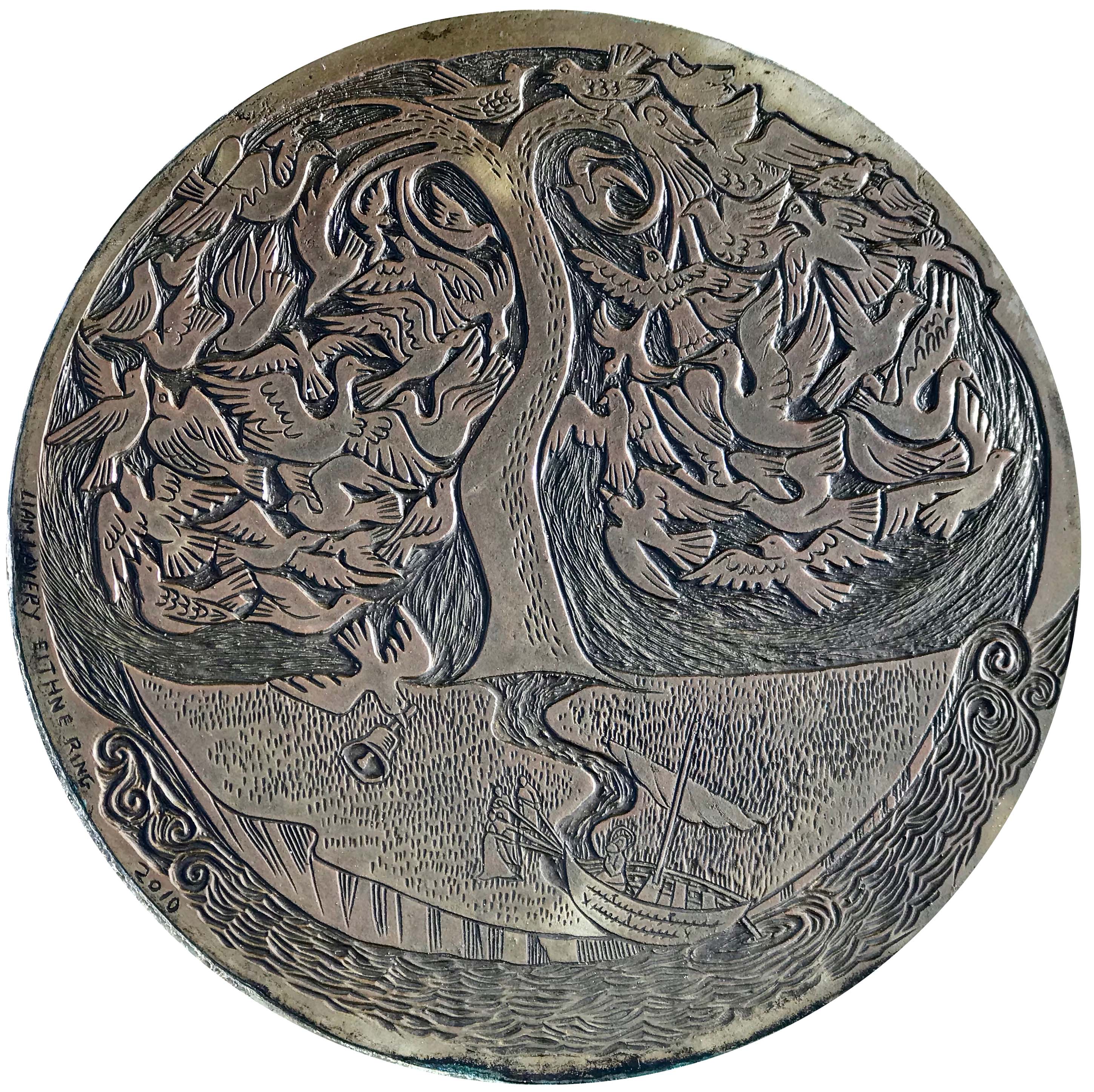
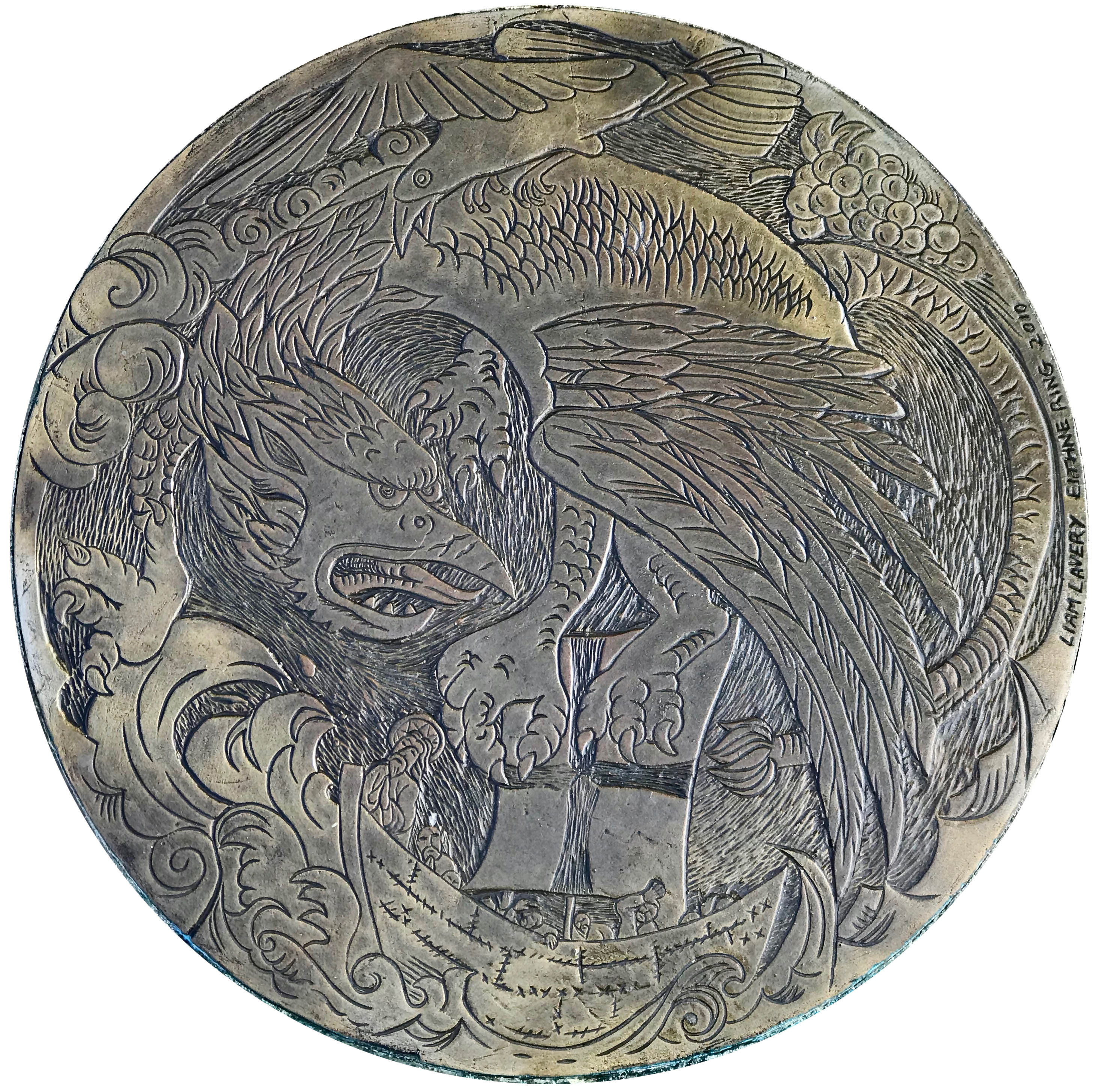
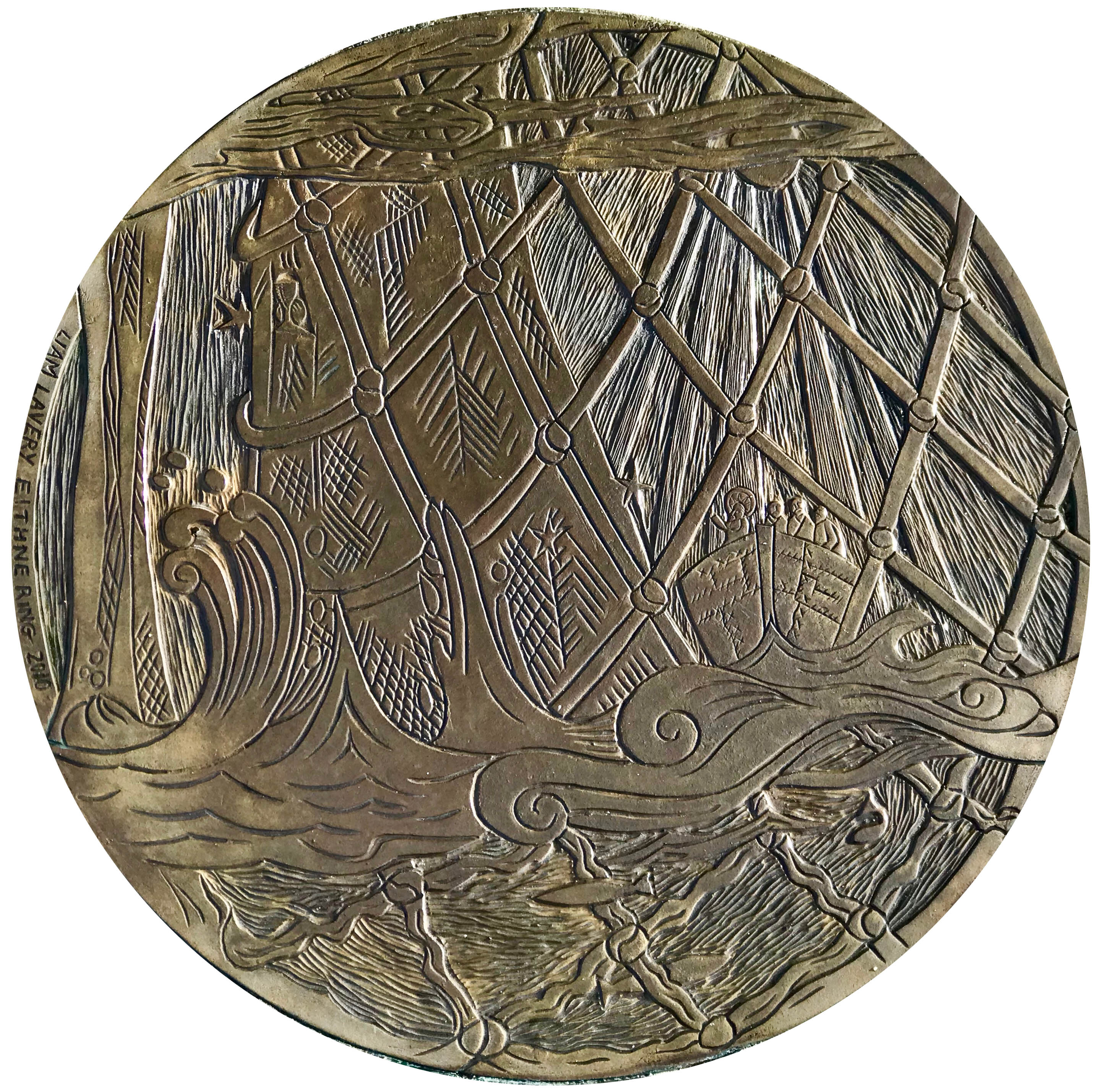
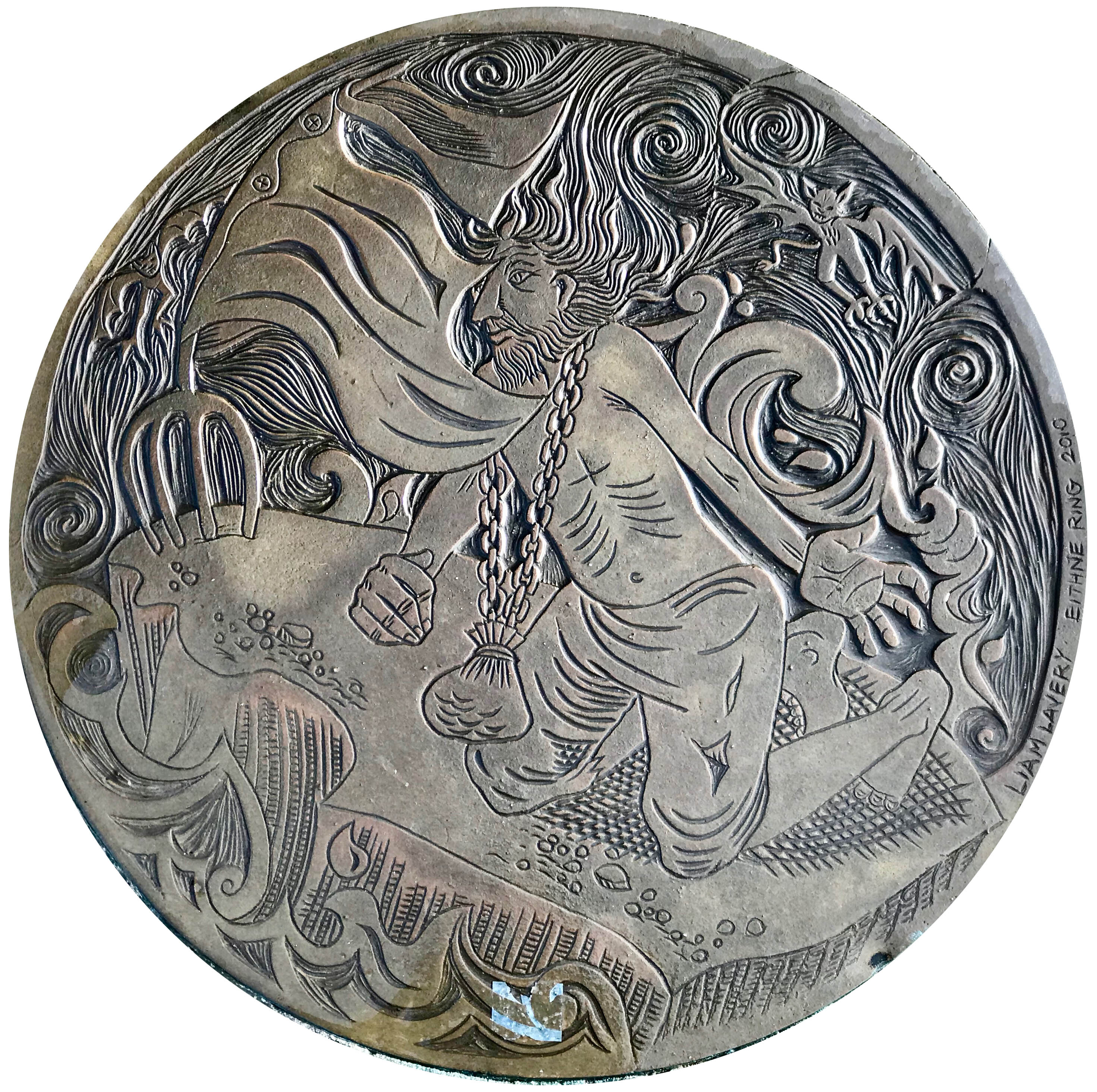
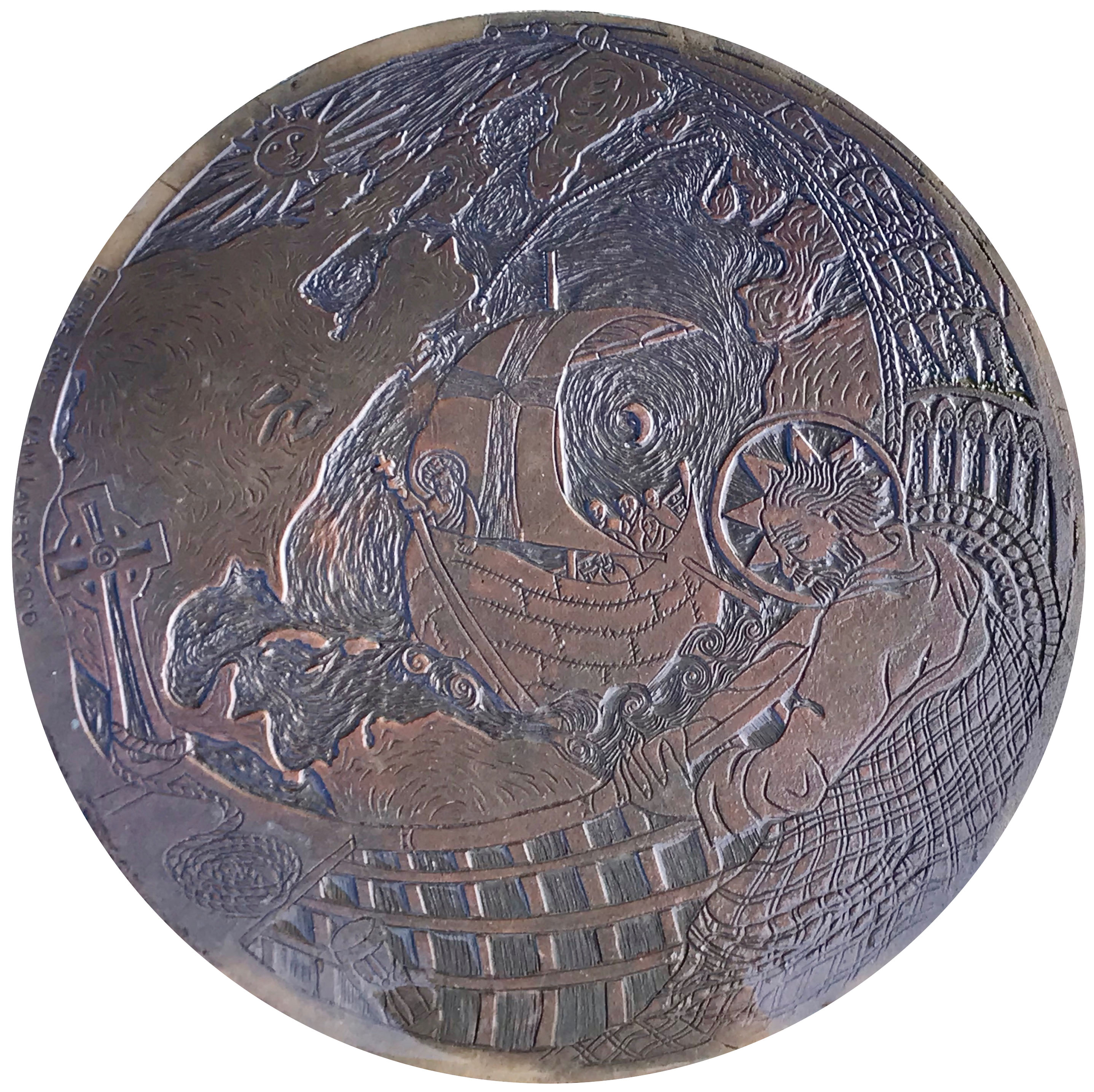
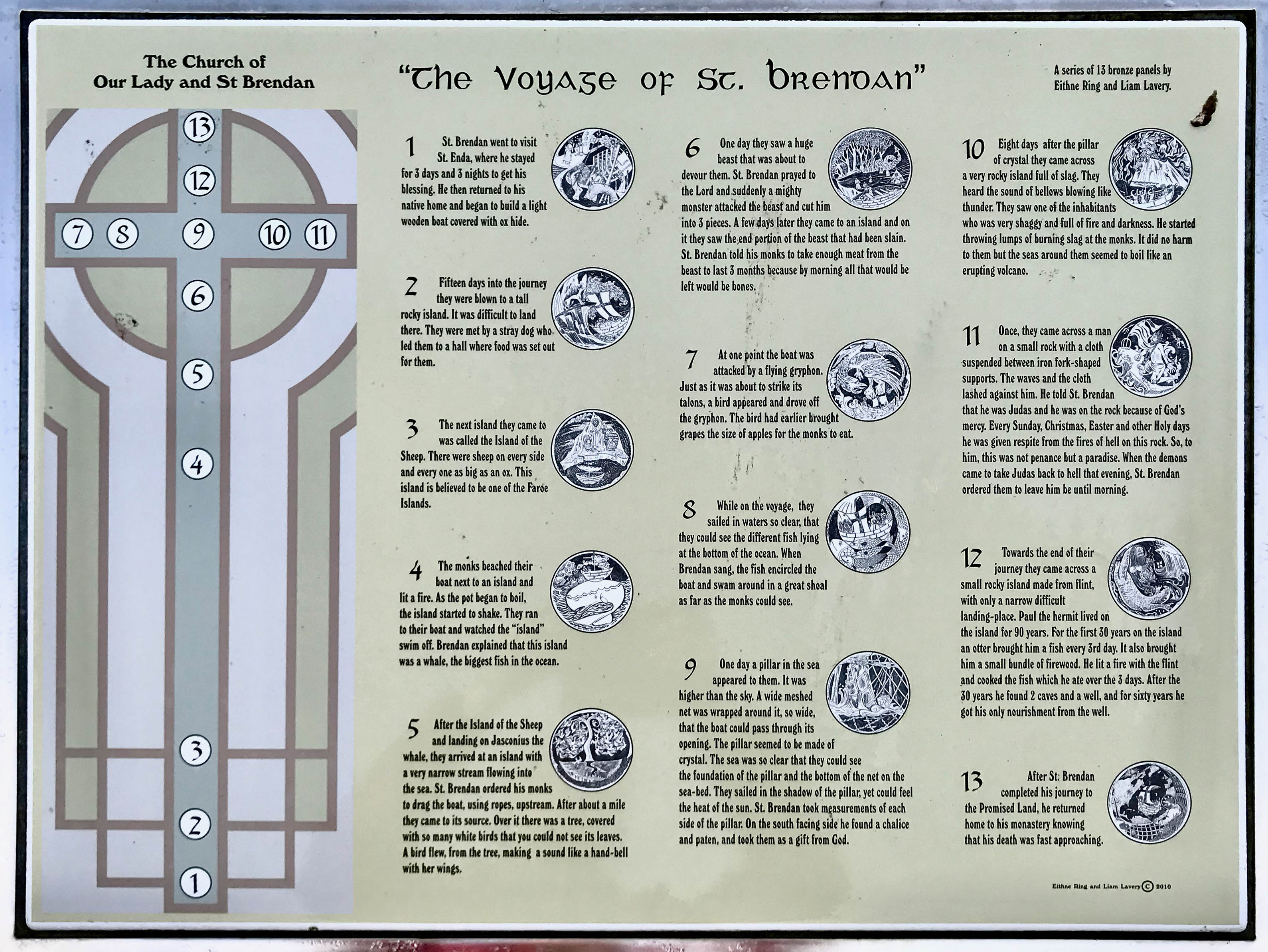
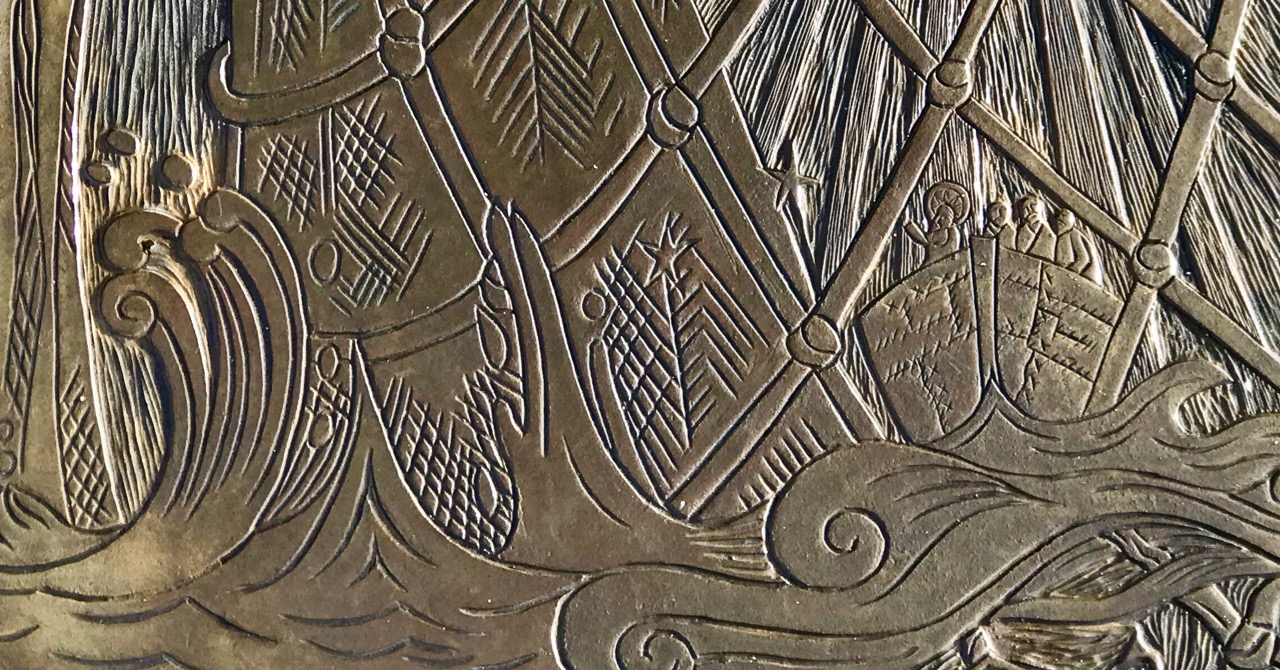
We went to Tralee, Co Kerry, to visit the Church of Our Lady and St Brendan: Finola was looking for windows by Murphy Devitt (which are spectacular) and I chanced upon a set of bronze roundels laid into the paving leading up to the main entrance (above). I felt I had to record them here, as they illustrate and tell the whole story of the Saint so wonderfully well. The large medallions were designed and made by Eithne Ring and Liam Lavery, and were installed in 2010. As far as I know this is a unique record of the voyage: well worth a visit – but don’t miss the windows!

St Brendan: part of a huge stained glass installation by Murphy Devitt in this Kerry church

I’m showing the roundels in the order in which you encounter them as you approach the main doors to the church, and giving a very brief description of the subject of each. At the end you will find a commentary provided by the designers, which gives more detail.

1 St Brendan visits St Enda prior to building his boat

2 On a rocky island, Brendan’s crew are led by a hound to a miraculous hall of food

3 The monks find an island inhabited by giant sheep

4 Brendan and his companions land on an island, light a fire and celebrate Mass; they discover that they are on the back of a whale!

5 An island of white birds: one is ringing a bell

6 The monks take meat from a beast that has been slain by a monster

7 On the Island of Grapes the monks witness a battle between a gryphon and a bird: the bird is victorious

8 All the fish in the ocean come to listen to Brendan while he sings

9 Brendan finds a huge crystal pillar rising out of the sea

10 The sea is boiling like an erupting volcano

11 Brendan and his companions meet the unhappy Judas chained to a rocky island

12 The travellers find a hermit who has been fed by an otter for forty years

13 Brendan returns to Ireland to prepare for his death

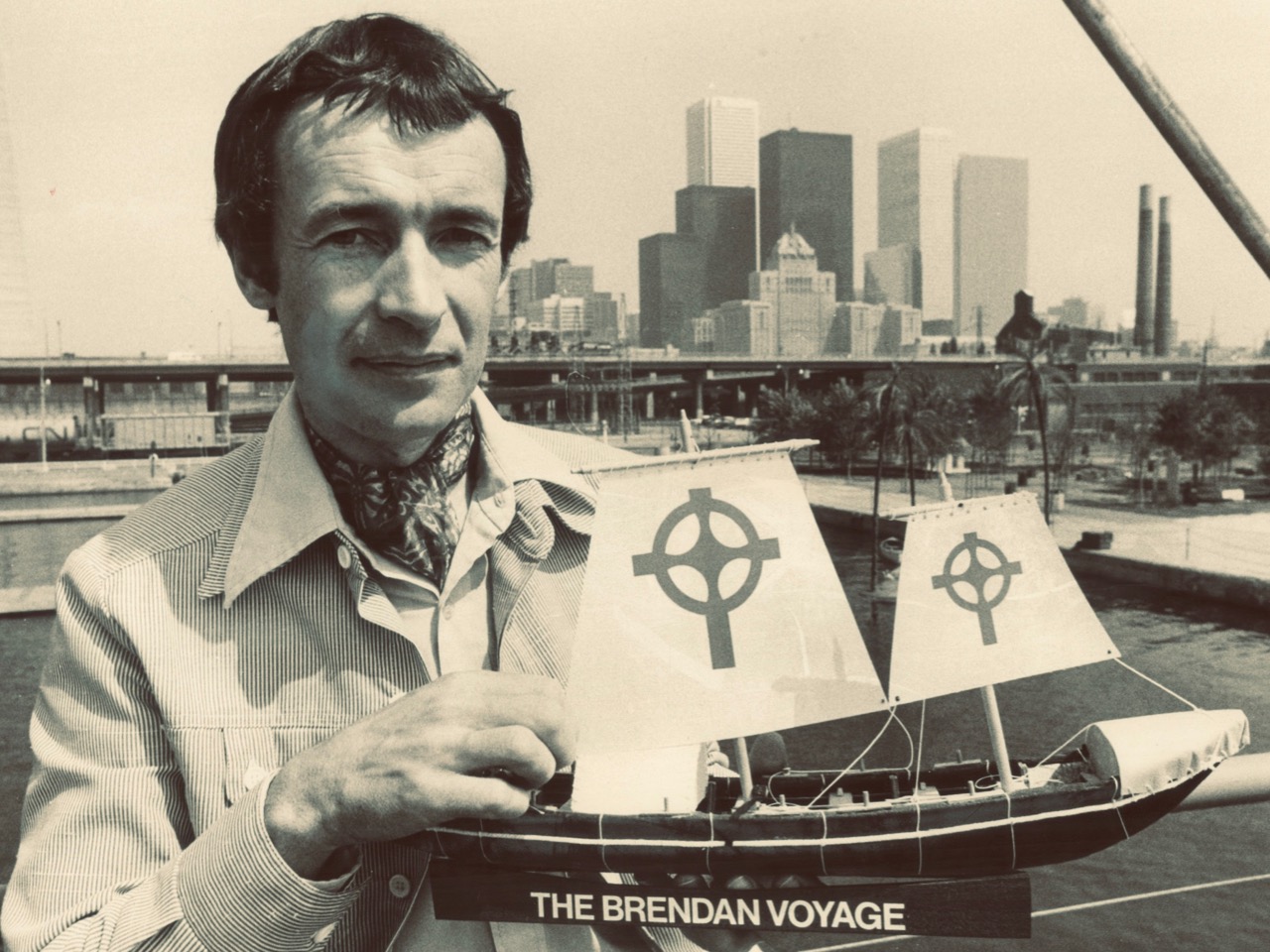
So now you know the bones of Brendan’s story. Now listen to the music! Saun Davey’s Brendan Voyage, a suite for uillinn pipes and orchestra, is a masterpiece inspired partly by the Saint himself, but also by Tim Severin’s 1976/77 recreation of the journey across the Atlantic in a leather clad boat:

Tim Severin pictured with a model of the boat in which he recreated the Saint’s journey

Let’s give the last words to Christy Moore, and the chorus of his Brendan song (you can find all the lyrics here):

“Is it right or left for Gibraltar?”
“What tack do I take for Mizen Head?”
“I’d love to settle down near Ventry Harbour”,
St Brendan to his albatross he said . . .

Murphy Devitt in Cork, Part 3

Our final two Cork churches are a small private chapel and a large public church. Then I will provide some suggestions for where else to go to see Murphy Devitt windows. If you haven’t read them already, Part 1 is here and Part 2 is here.
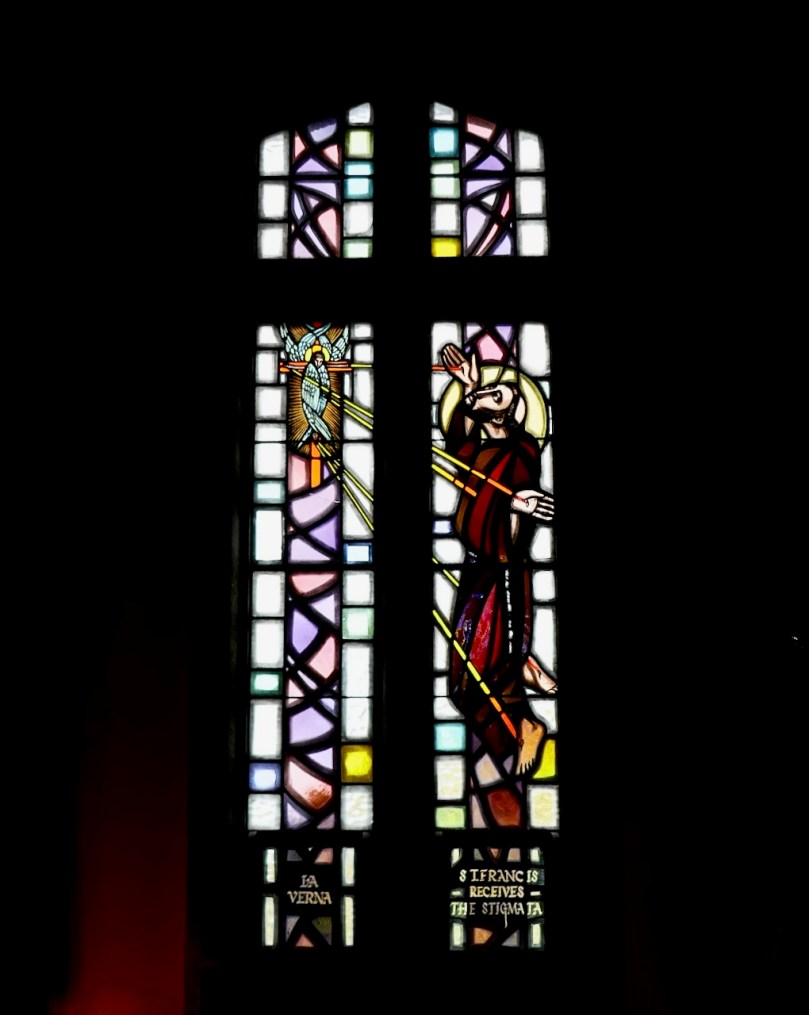
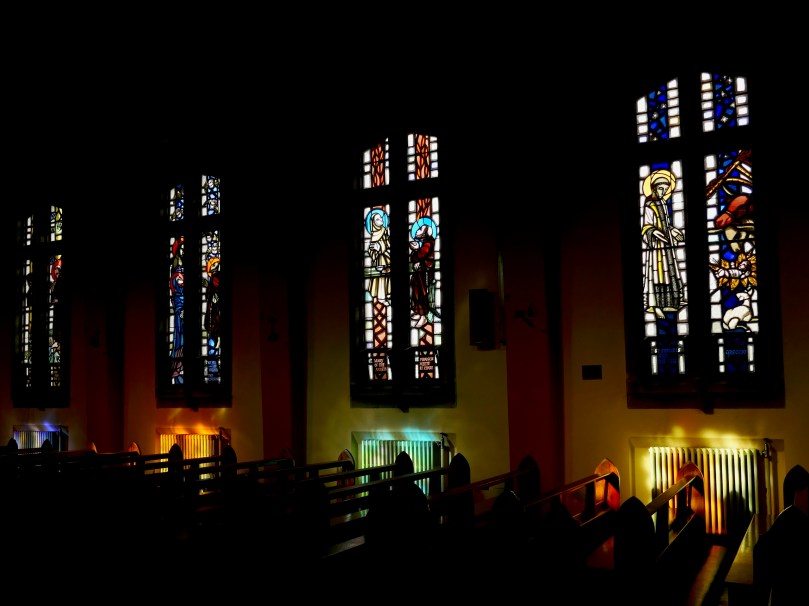
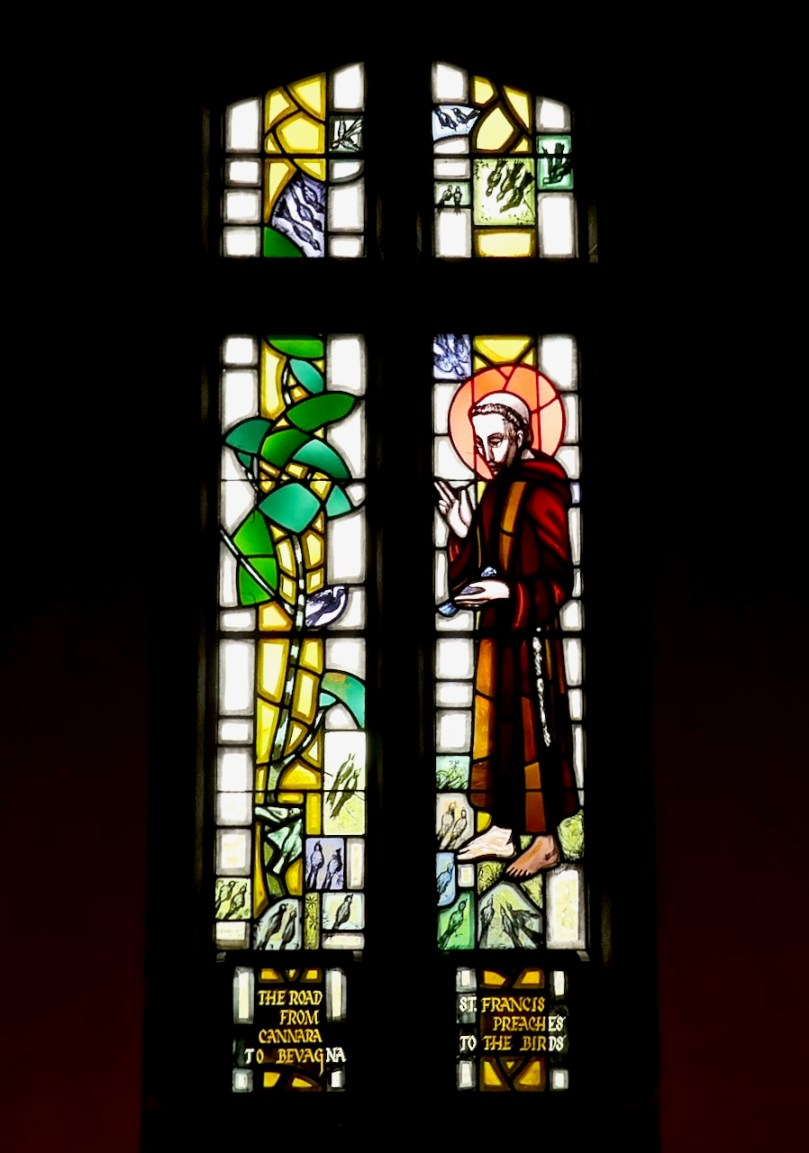
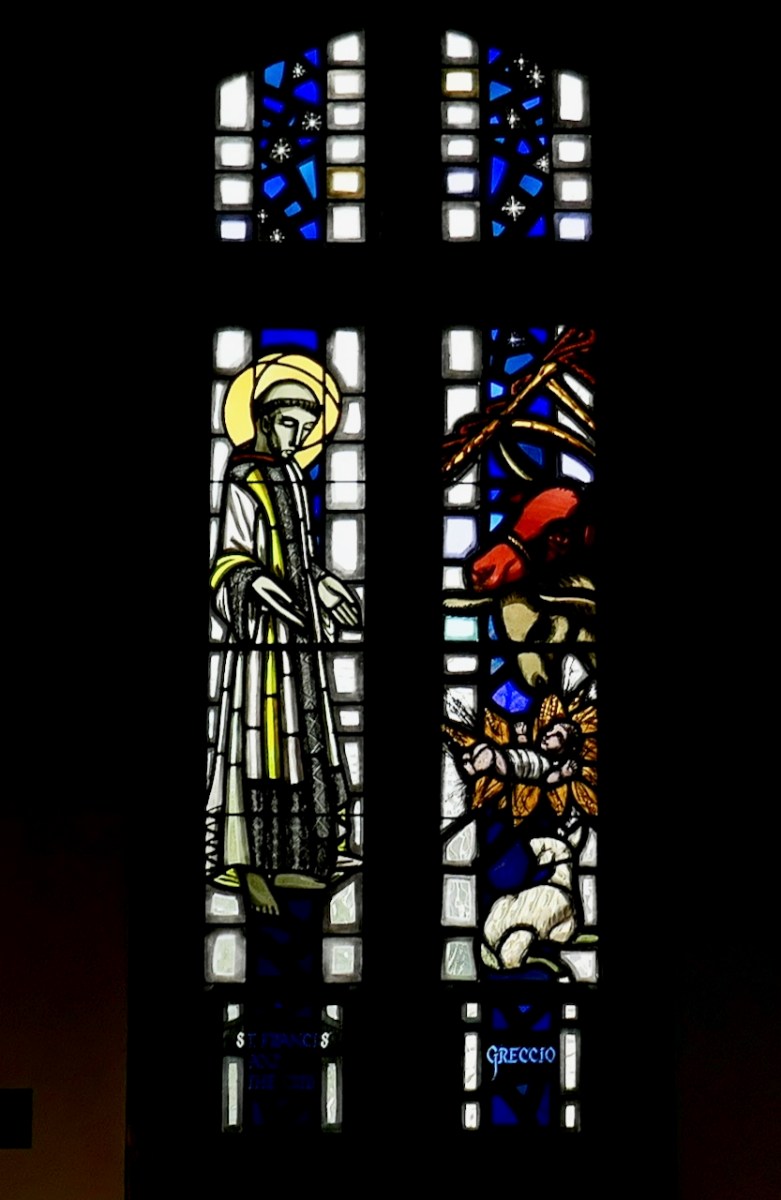
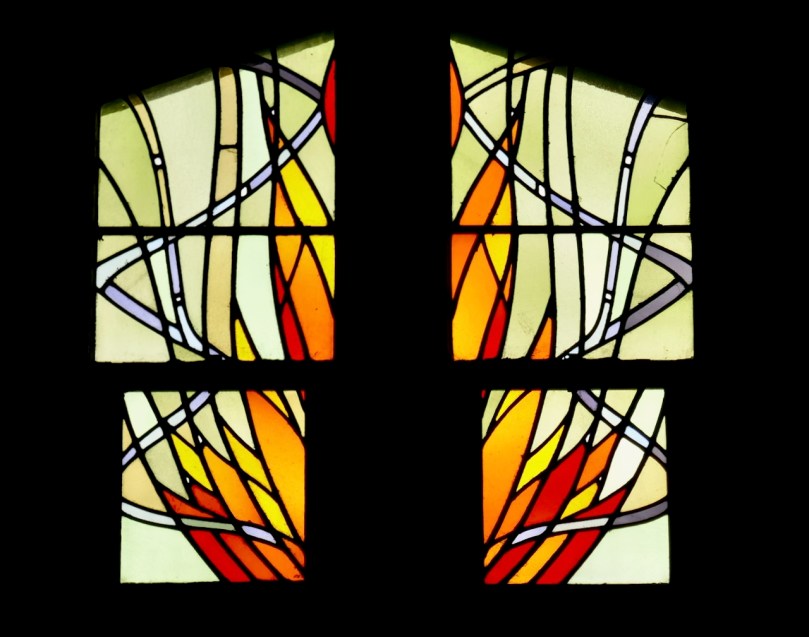
The private chapel first. It’s in Rochestown, attached to a Cappuchin Franciscan school and Friary* and it dates from 1961. It’s all about St Francis – his life and his famous Canticle. Scenes from St Francis’s life make up the large windows on the right side of the aisle. We see him receiving his stigmata, preaching to the birds, setting up the first Christmas crib scene in Greccia.
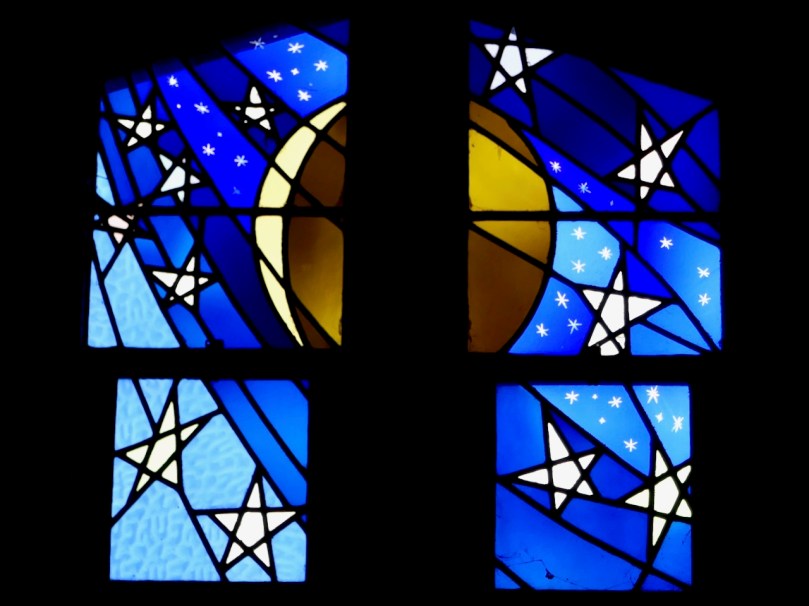
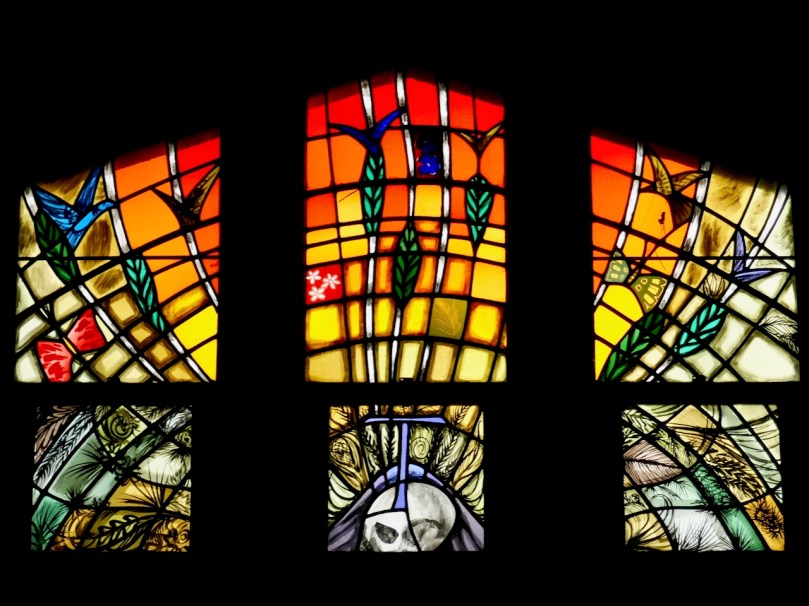
The Canticle references occupy smaller clerestory windows. They are a sensitive response to the well-known lines:

Praised be You my Lord through Brother Fire,

Through whom You light the night

and he is beautiful and playful and robust and strong.
Praised be You, my Lord, through Sister Moon and the stars,

In the heavens you have made them bright, precious and fair.
Praised be You my Lord through our Sister, Mother Earth

Who sustains and governs us, producing varied fruits with coloured flowers and herbs.
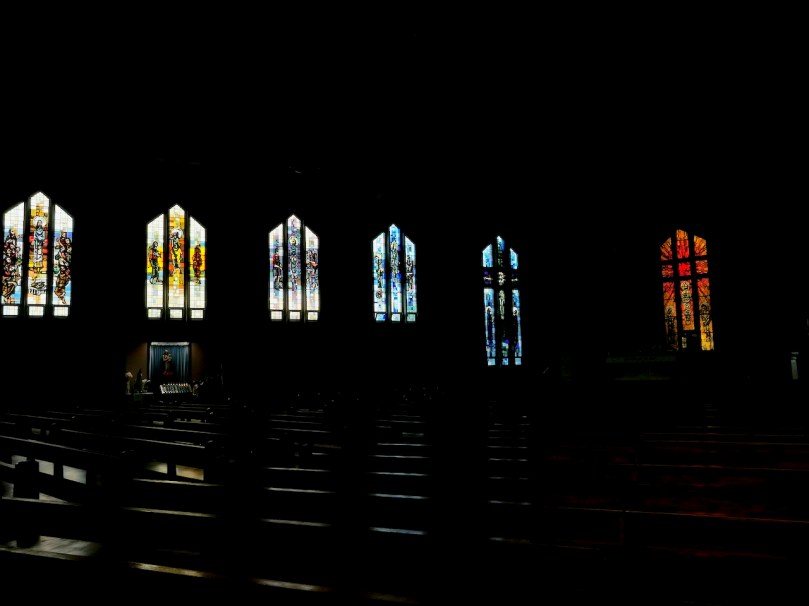
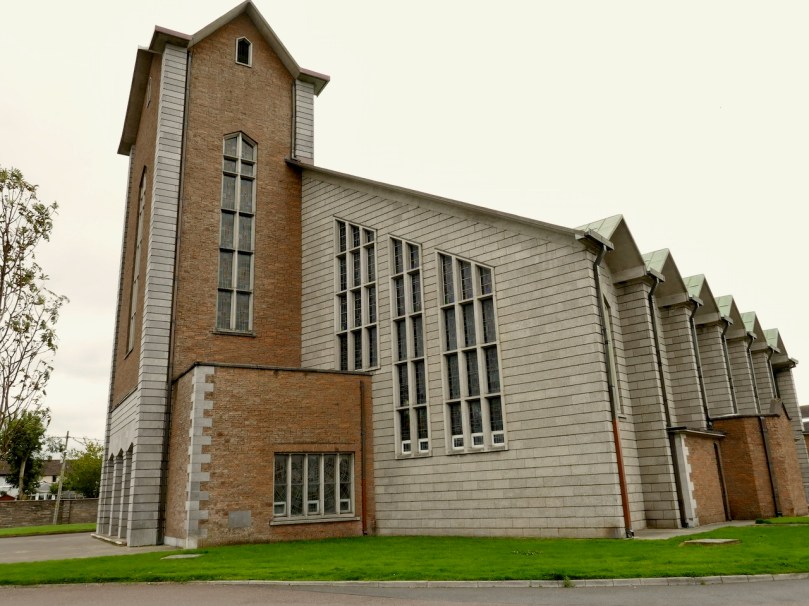
The Church at Mallow is a large and impressive modern edifice opened in 1967. The windows occupy both side walls, with many abstract panes filling in other spaces.
By 1967 Johnny was teaching full time at the National College of Art and  routinely invited his best students to work for the Studios in the summer. In this case, the student was Terry Corcoran, who, while he did some more stained glass windows on his own subsequently, went on to a career mainly as a painter. His website is here

The design was all Johnny’s, and both Johnny and Róisín provided direction to Terry. As a result, it is hard to distinguish a different hand in these windows – as with all MD windows they are a collaboration, but with the powerful and distinctive look and feel we’ve come to expect from their style.
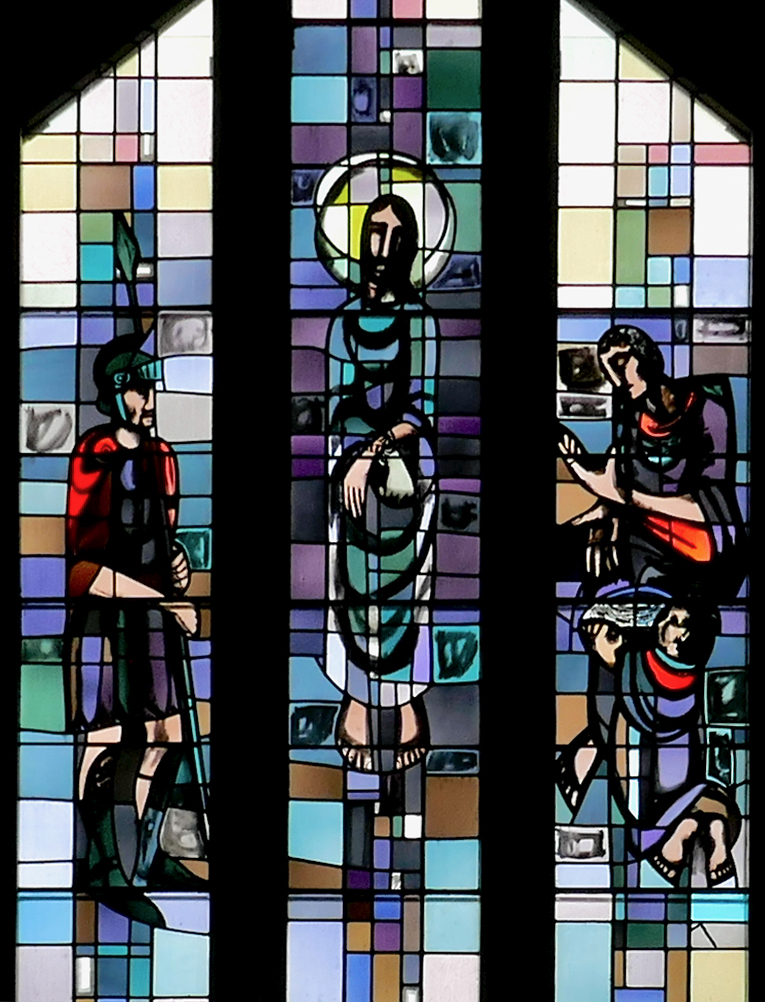
Compare with this window in Mayfield – the figures have become slightly more stylised
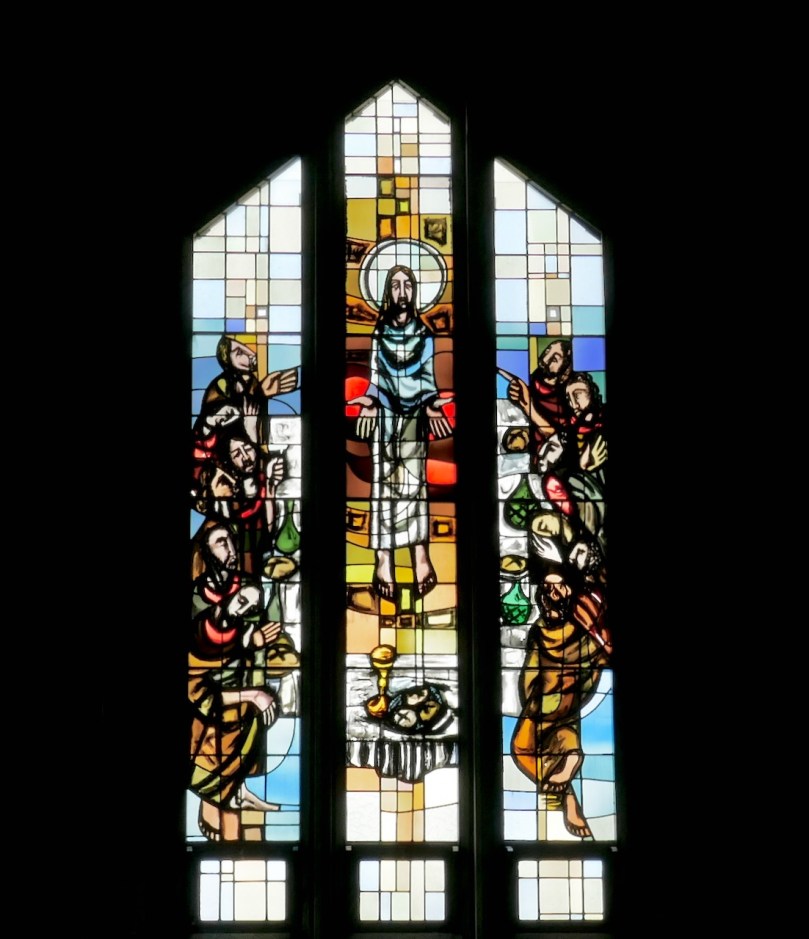
The Last supper – a masterpiece of window design
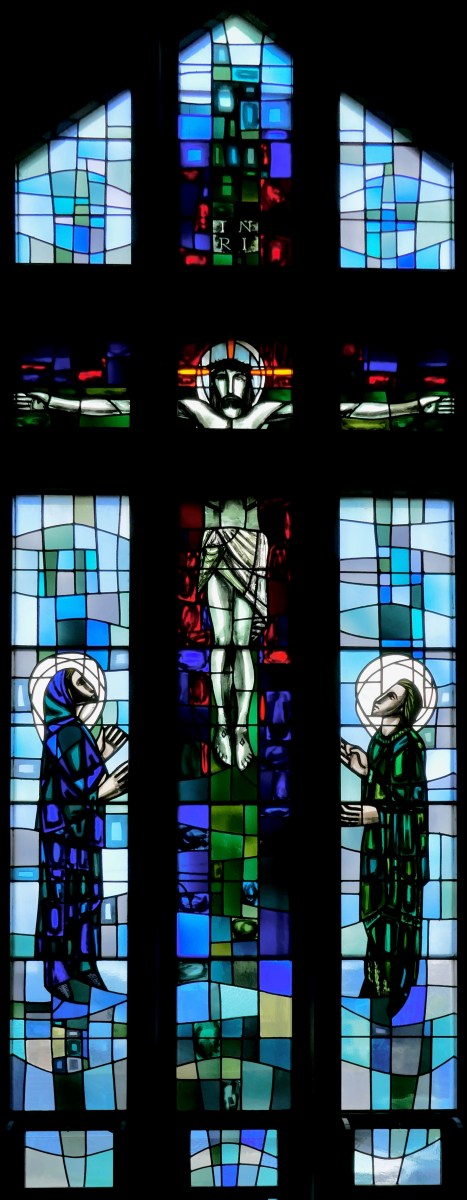
The Crucifixion window with its sombre blues and greens
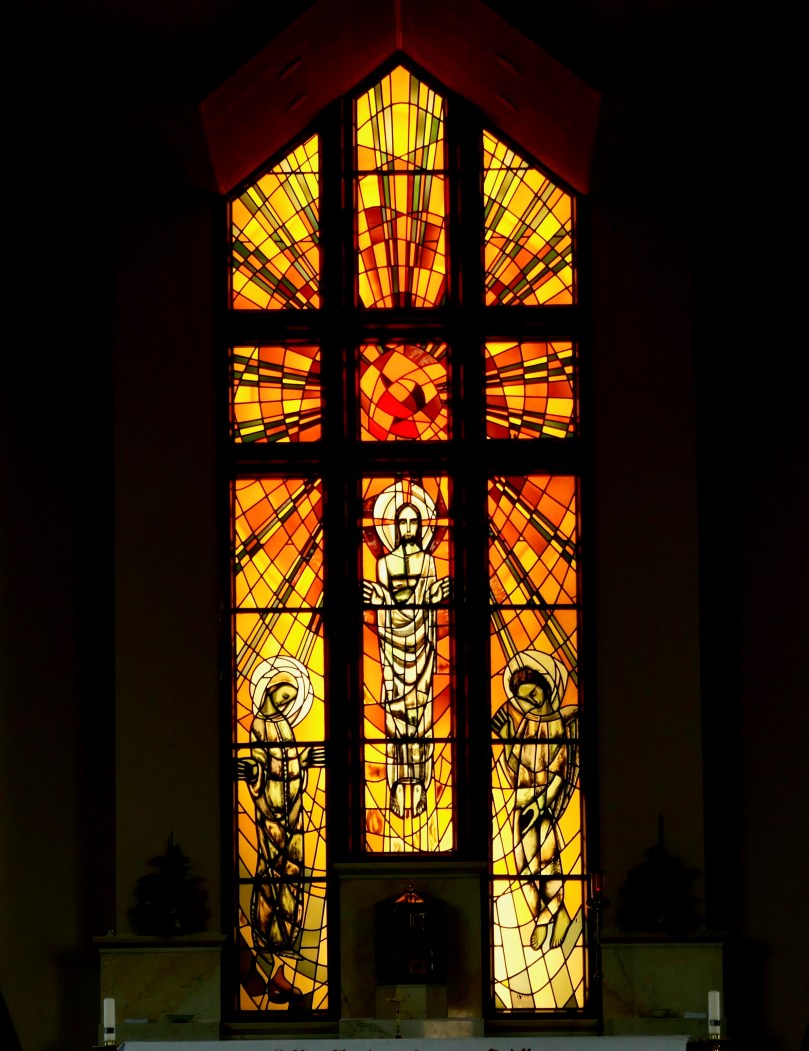
The Resurrection window (above in glorious hues of red and orange) was originally immediately to the right of the altar, but in the late 1980s the Parish Priest had it moved to behind the altar, where it had to be back-lit. This left an opening with no stained glass and the priest turned to Murphy Devitt once more. By then, the Studios had been dissolved, but Johnny and Róisín continued to work with Des under a loose arrangement covered by ‘Des Devitt and Associates.’
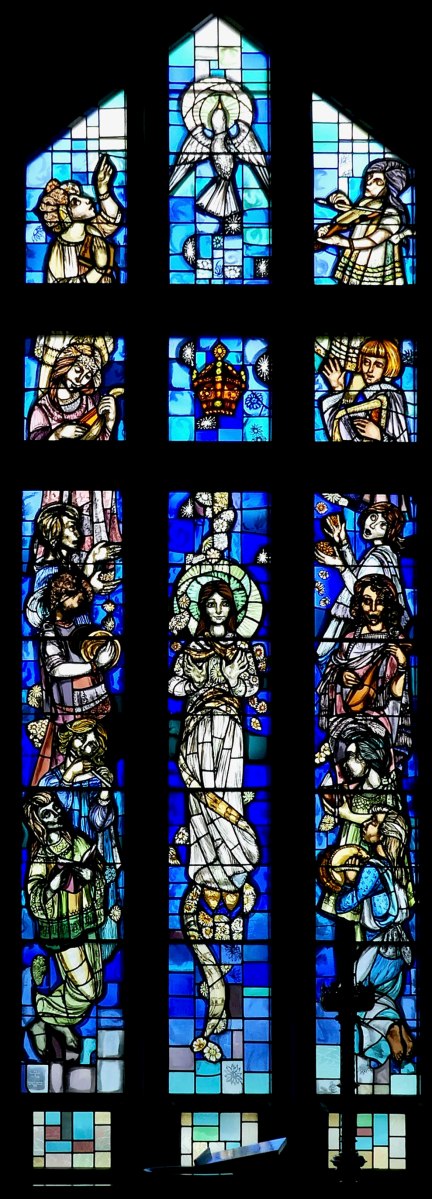
Róisín Dowd-Murphy’s Assumptions window in full

This window is pure Róisín and is quite at odds with all the other windows in the church. To me, it is a delight, as it showcases Róisín’s style in all its Boticelli-inspired emphasis on costume, hair, flowers and musical instruments. Contrast it with the Assumption window in Mayfield (click here for the image). Although she drew the cartoon for both windows, the Mayfield Assumption had to fit with the overall design for that church, whereas in Mallow she simply followed her own inclinations and what we get is unfiltered Róisín.
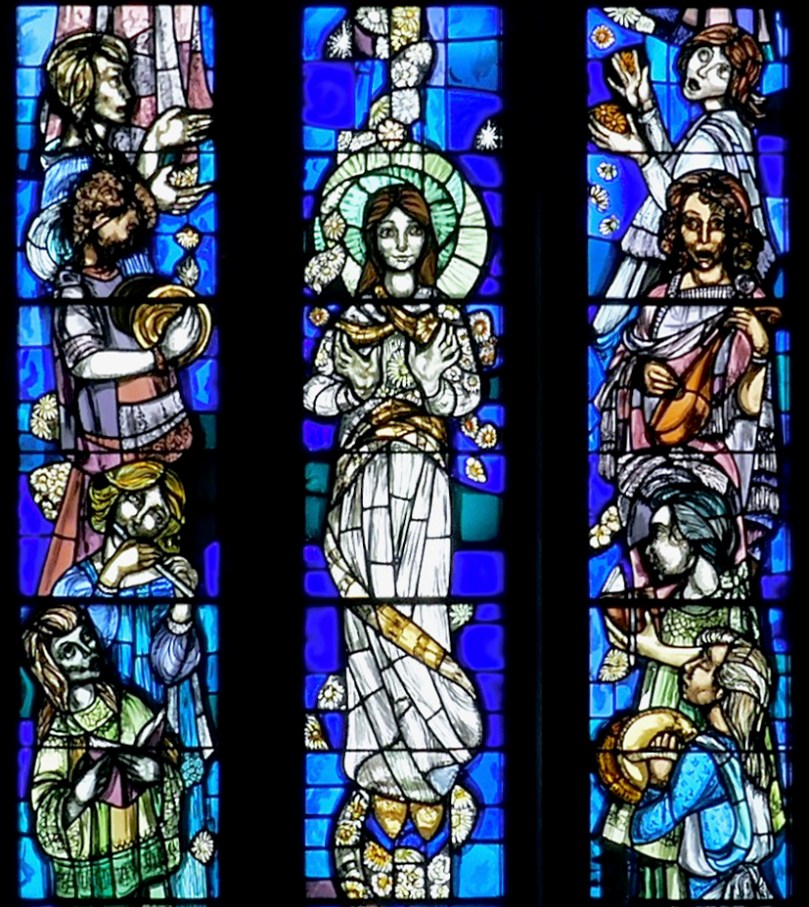
Assumption, a closer look

Not everyone is lucky enough to live in Cork, so I want to include a few non-Cork Murphy Devitt windows before I end this series – windows that are open to visit and which are every bit as spectacular as the best of the Cork examples.

Cahir Catholic Church has MD abstract/symbolic windows, including this little window where Johhny’s love of the wobbly and wavy line is clear – also note the unusual glass

The Church of Our Lady and St Brendan in Tralee has two huge representations of its patrons, as well as extensive and beautiful abstract windows.
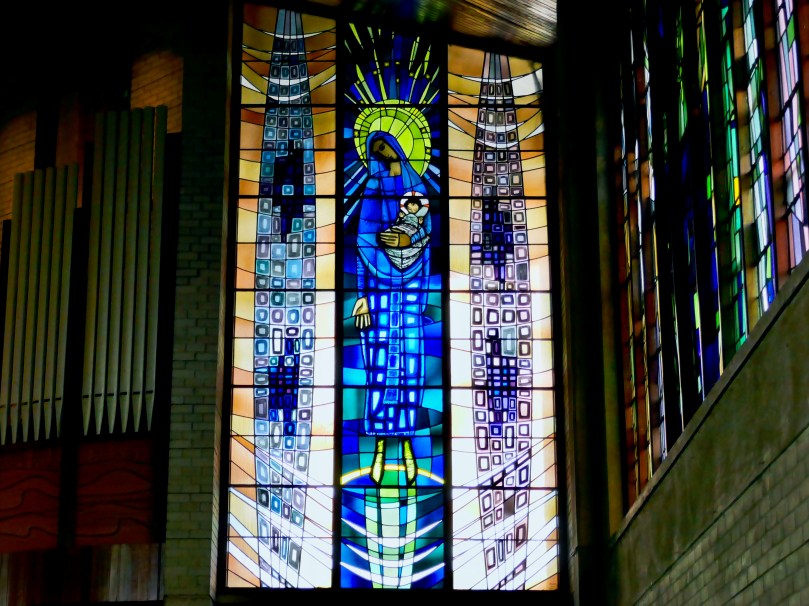
All the glass in St Michael’s, Dunlaoghaire, is Murphy Devitt, done in the early 70s. Soaring panels of abstract colour punctuate the severe interior and bathe the interior in a warm glow. No photograph – you’ll have to see this one for yourselves. In Limerick, the Dominican Church has a floor to ceiling wall of glass (below) that, among other things, depicts the history of Limerick.
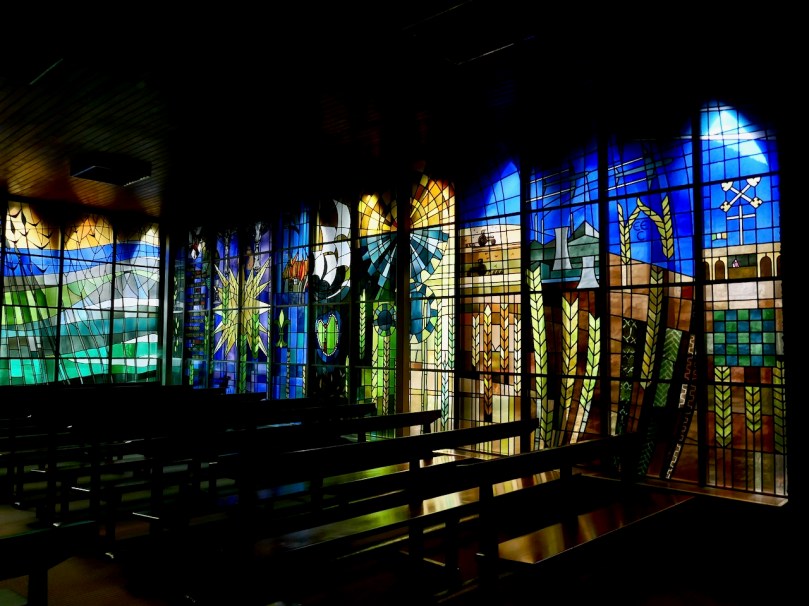
The chapel attached to Newbridge College contains a set of windows based on the Book Of Revelations, an unusual theme for a Catholic Church. My friend and colleague, David Caron, has written a piece on these windows for the Summer 2019 edition of The Irish Arts Review, with brilliant photographs  by Jozef Vrtiel. I recommend that article to you, not least for the erudite and highly readable commentary on the iconography, including the Four Horsemen of the Apocalypse, one of whom is below.
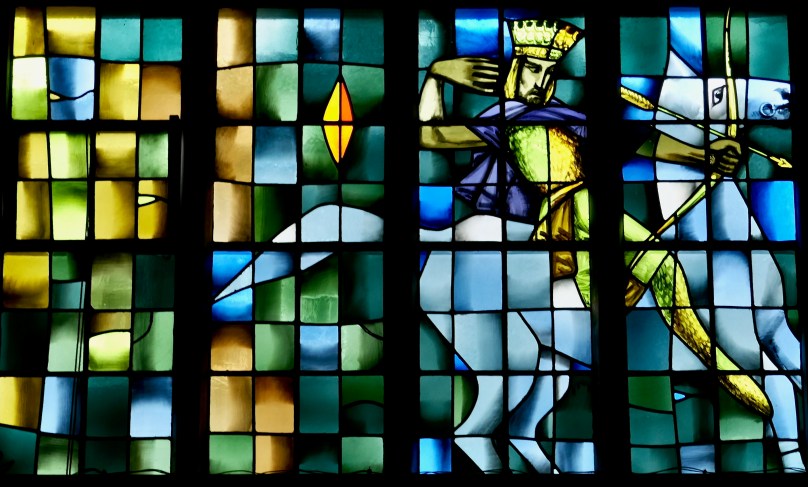
That concludes our exploration of this extraordinary Studio, its artists and craftspeople. It’s been a rare pleasure for me to discover them all, and their brilliant windows. Please take a look at the Murphy Devitt website – it’s a work in progress, but it will give you a list of churches and you may find one near you. Let me know!
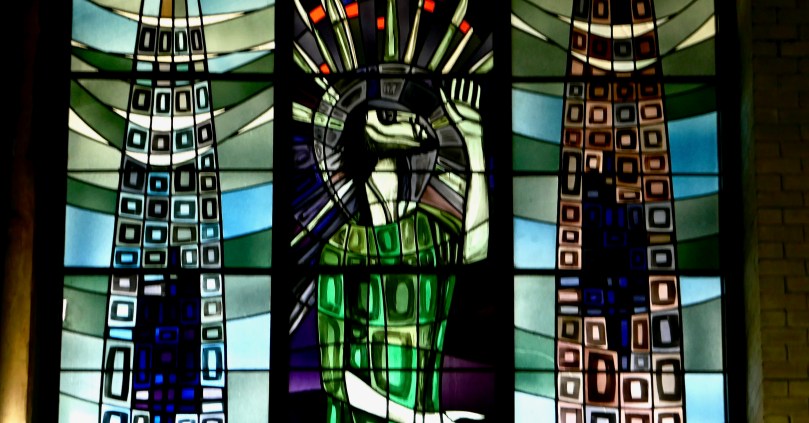
Brendan, in the Church of Our Lady and St Brendan, Tralee

*Thank you to Fr Sylvester of the Rochestown Cappuchin Franciscan Friary for facilitating my photographing the windows. The chapel is private so these windows are not normally available to view.

Looking at Rossbrin

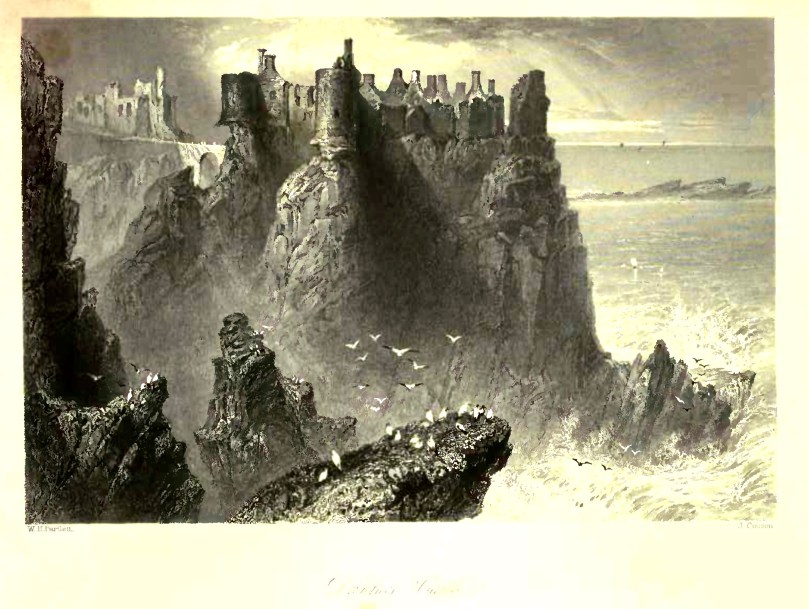
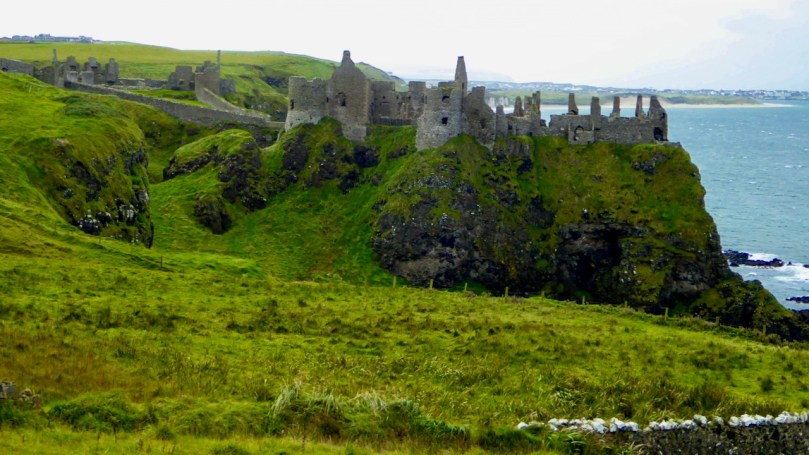
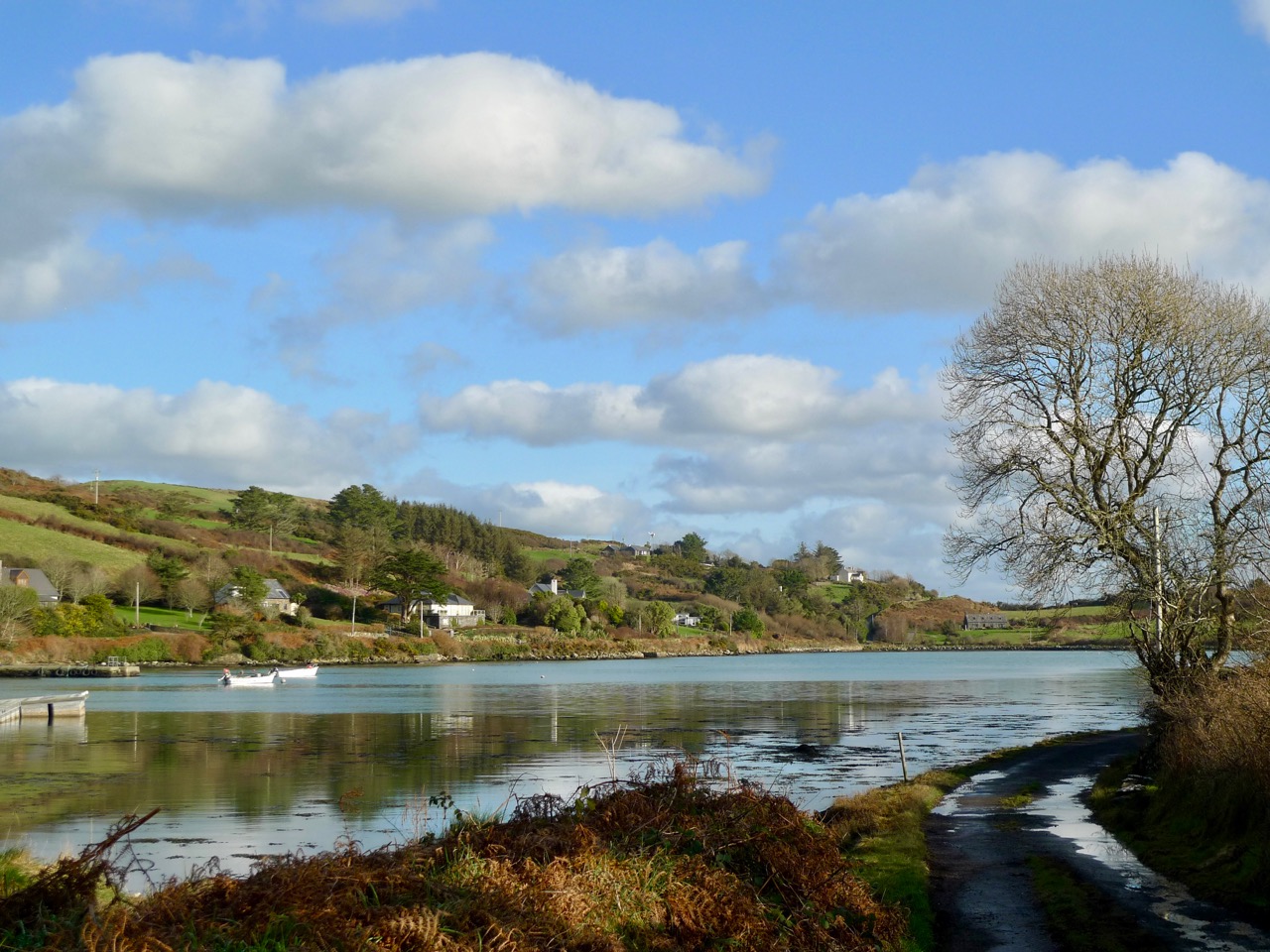
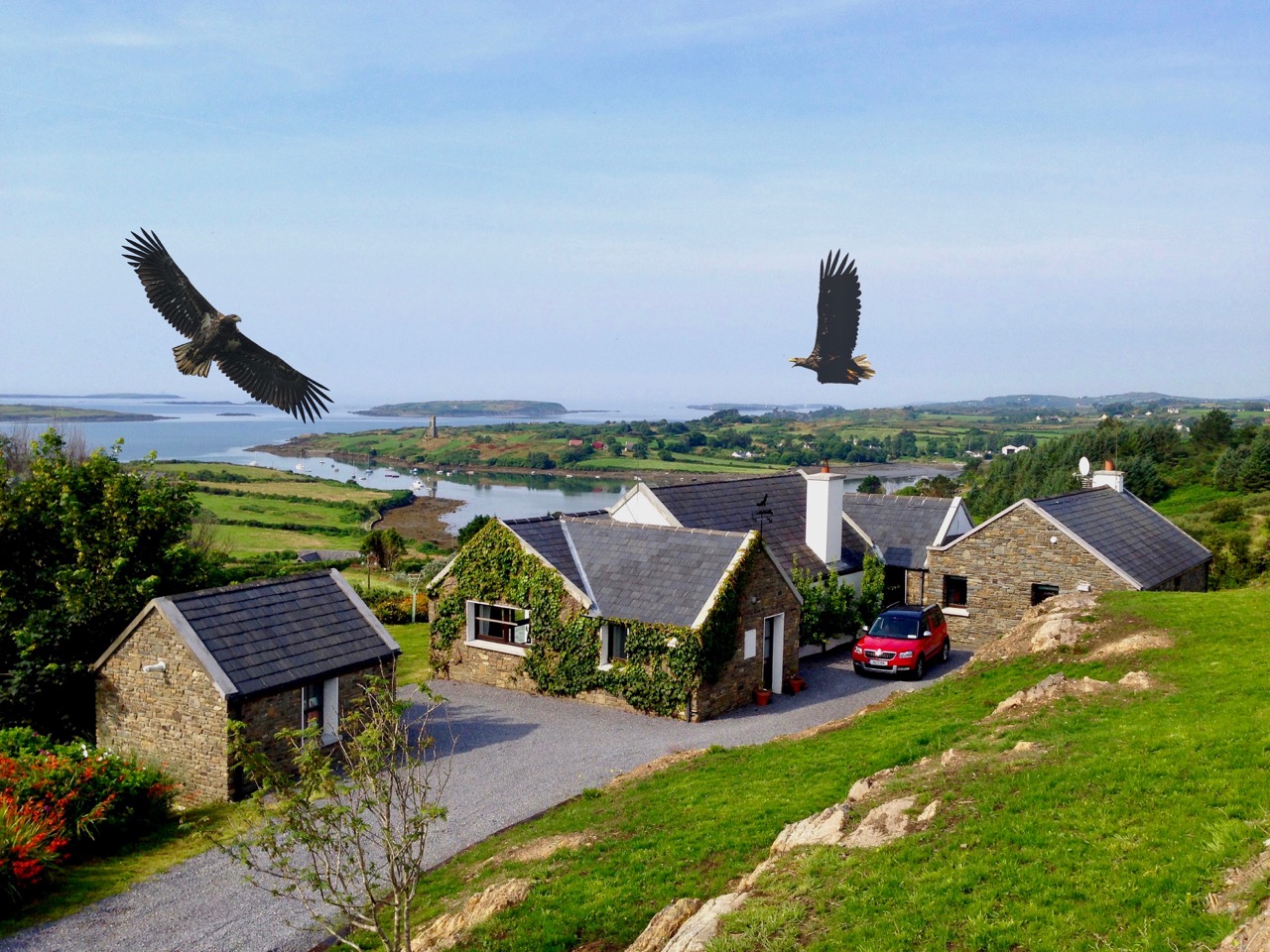
Last week we talked a little about the history of Rossbrin’s medieval castle, and the importance of this natural inlet as a historical centre of fishery, scholarship and European culture. Rossbrin Cove stills serves as an anchorage and refuge for sailing boats on the edge of Roaringwater Bay, but is now a peaceful haven, with only the sounds of the shore birds and slapping masts to lightly disturb an overriding tranquility that gives the place a very particular atmosphere. Our photograph (above) is taken on the boreen going to the castle; on the skyline in the centre is a wind turbine, and just below that is Nead an Iolair (Irish for Eagle’s Nest). The picture below shows the eagles wheeling over our house, with Rossbrin Castle and our view to the Cove beyond.

I have been exploring images of the Cove and its castle – some historic photographs and a few artists’ impressions. As it’s right on our doorstep, we have taken many pictures of Rossbrin during our years here. I am also sifting through a few of these.

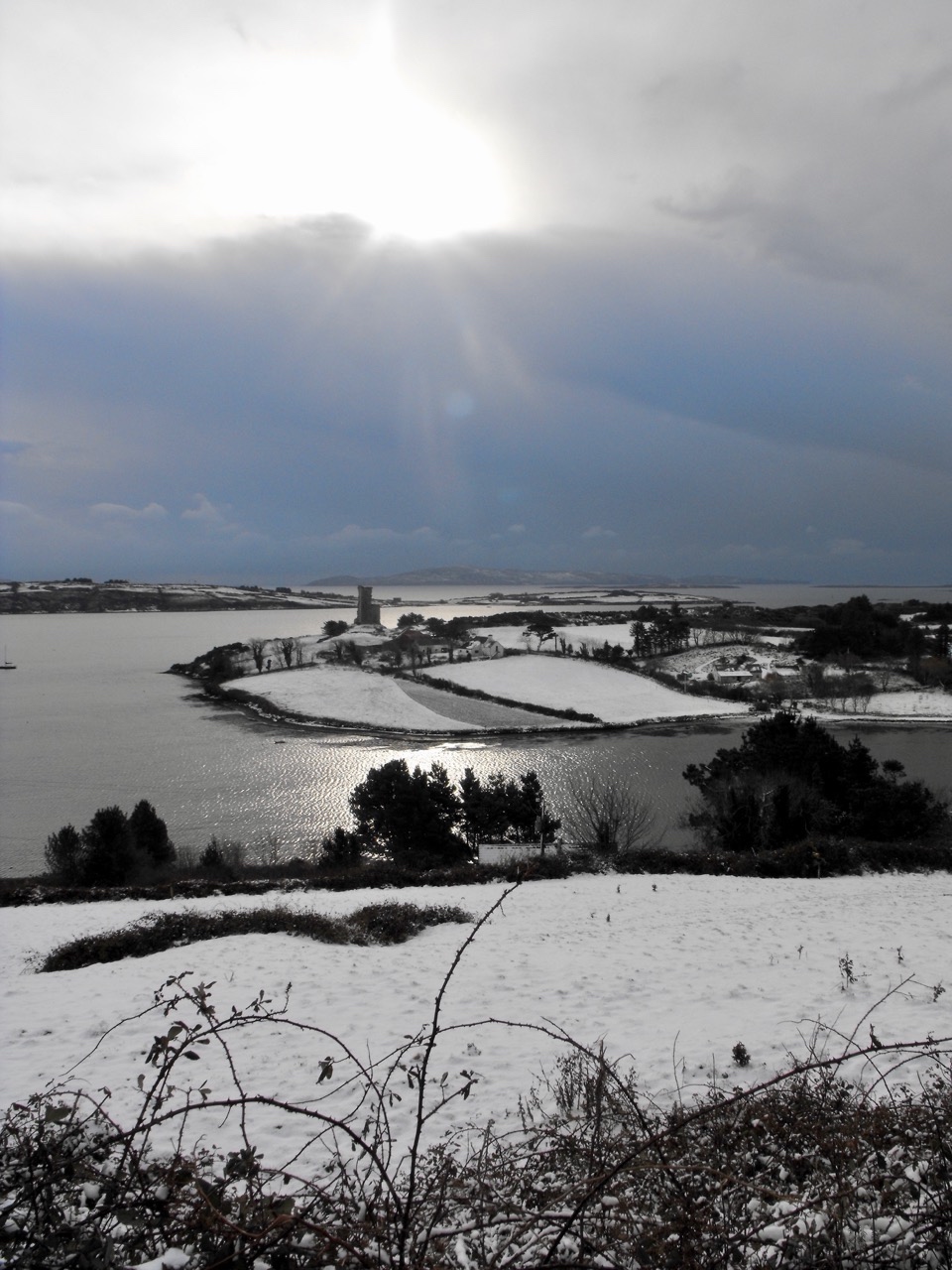
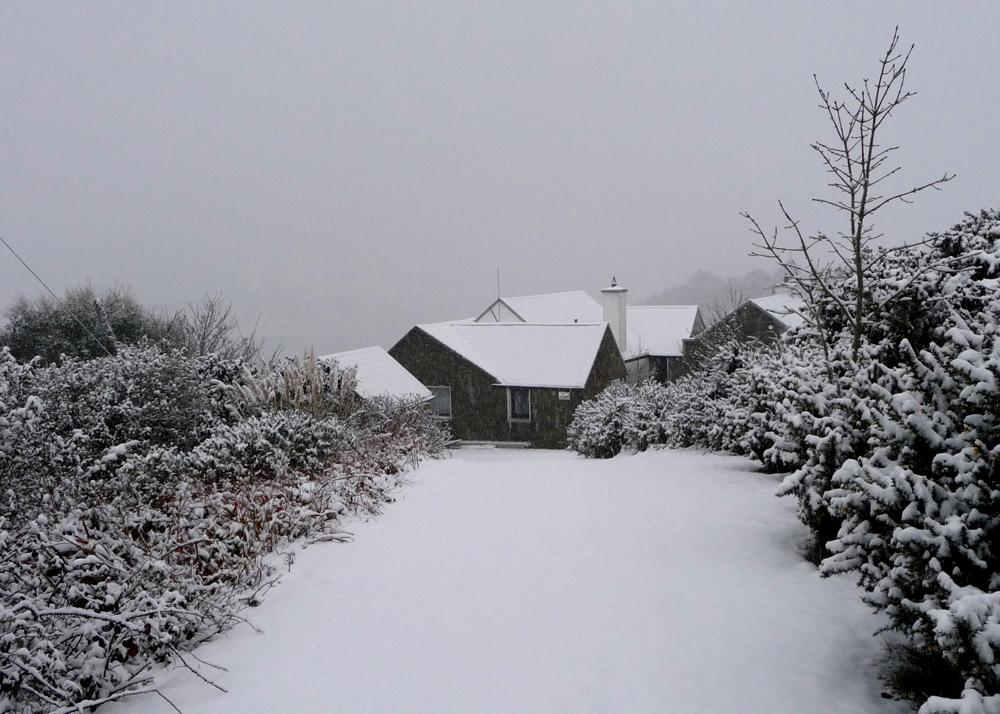
Ten years ago, the west of Ireland experienced an exceptional snowfall, and above is a photograph taken by our near neighbour, Julian van Hasselt, before we arrived. Mostly, our weather is relatively mild due to the effects of the gulf stream on the south-western coast. The castle can clearly be seen here, beyond the fields of Castle Farm. This view of our house (below) was also taken in 2010 by our neighbours Dietrich and Hildegard Eckardt:

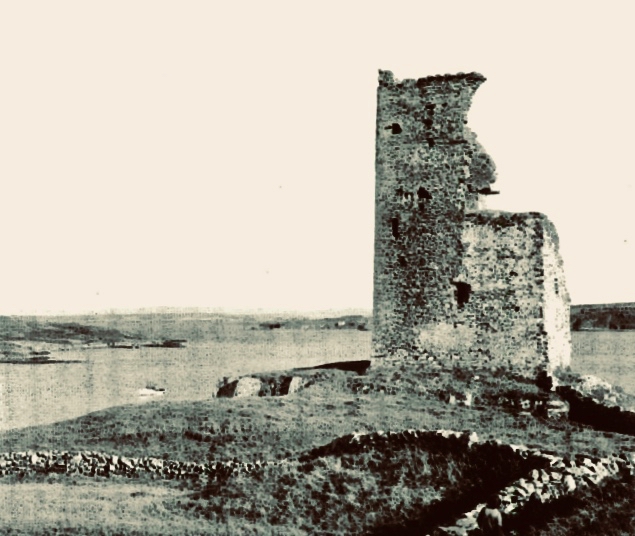
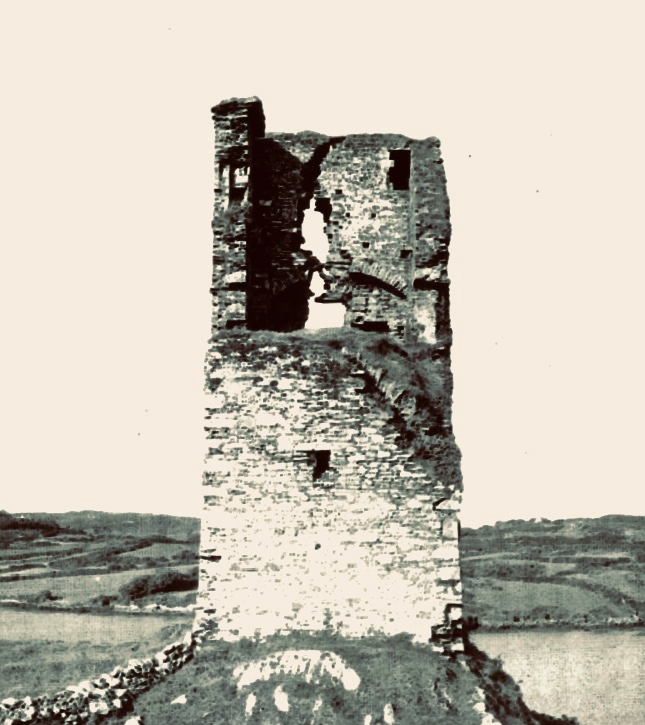
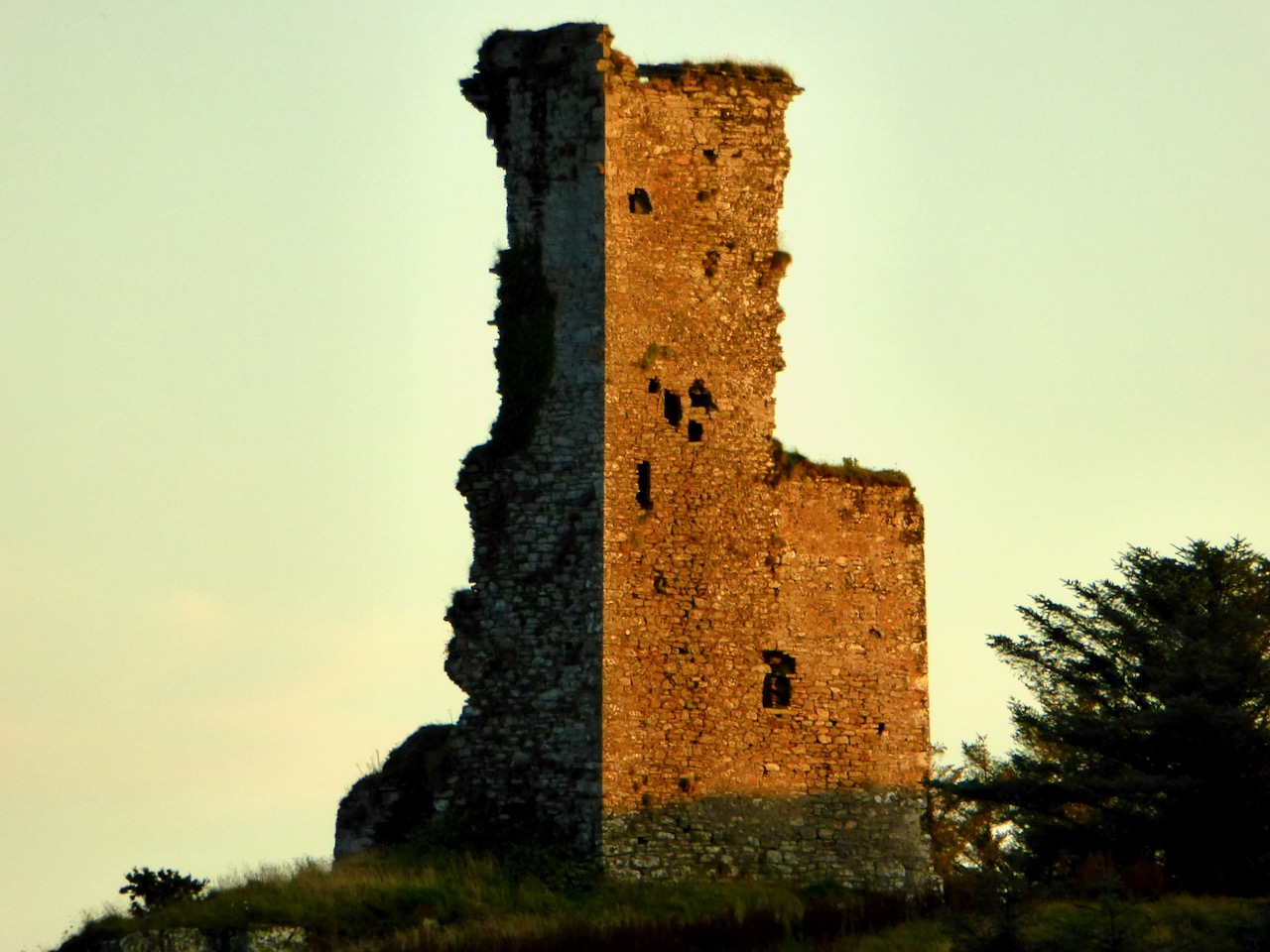
I showed a couple of early photographs of the castle last week. Here are two more taken before a substantial part of the ruined structure was toppled by a storm in the 1970s:

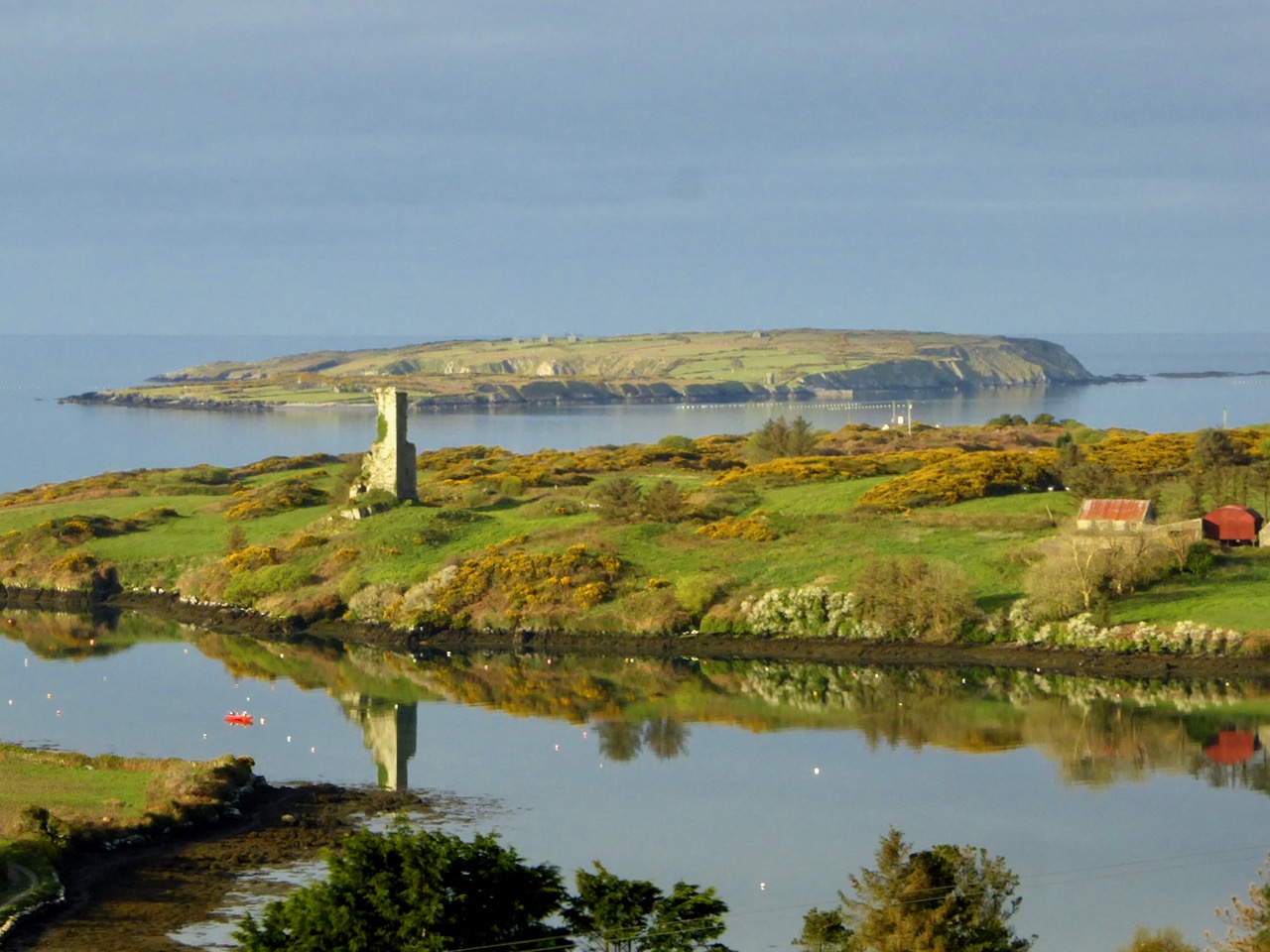
It’s good to see a bit of context, so here is another winter view of the castle on its rock with Castle Island behind. That island was also part of the O’Mahony territory. It is farmed by its present owner but no-one lives there now. You can make out the ruined castle on the island by the shore, just to the right of centre; it’s one of many that can be seen on, or close to, the shores of the Bay.

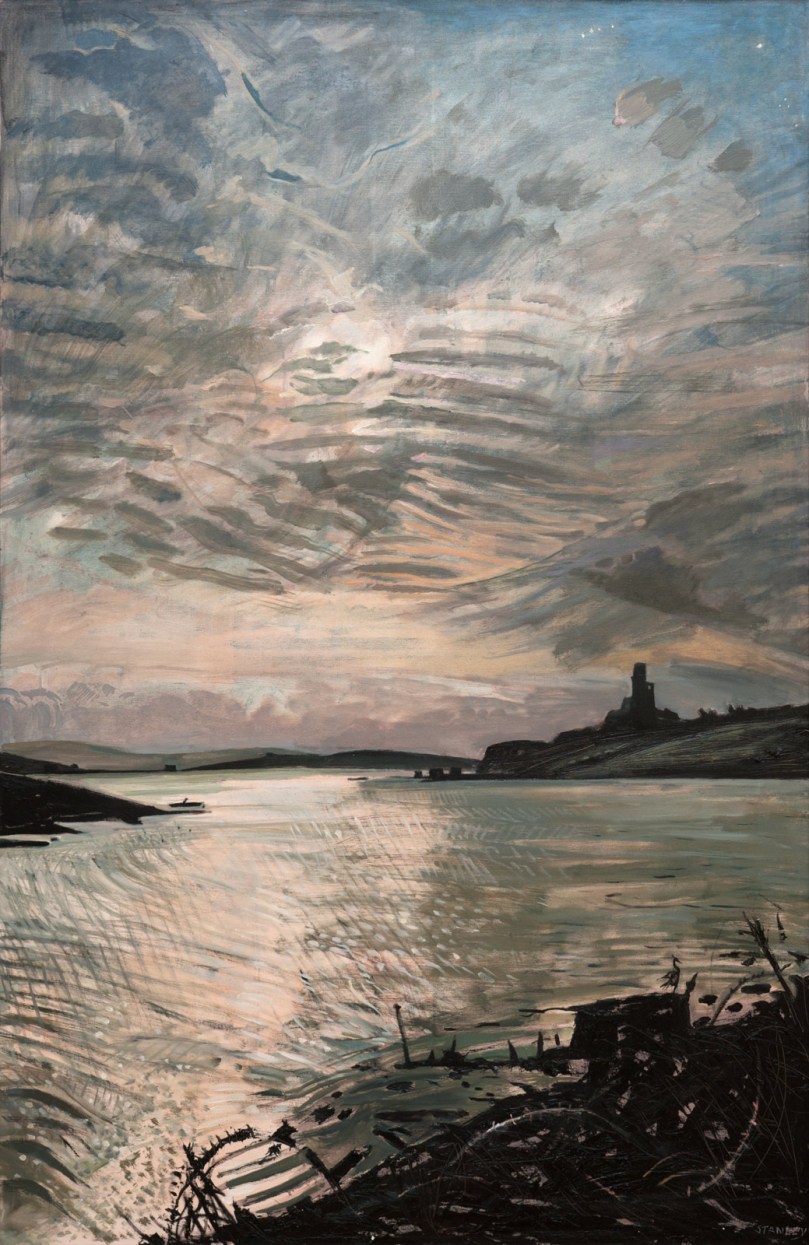
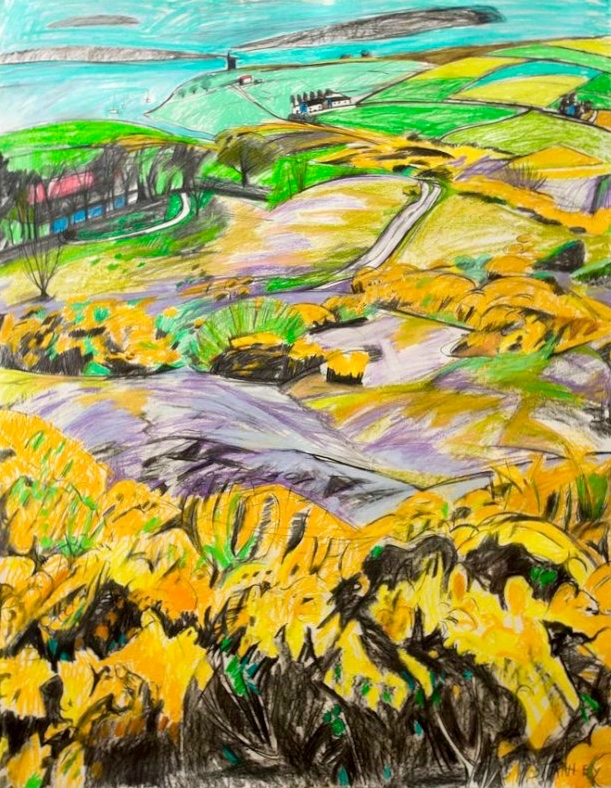
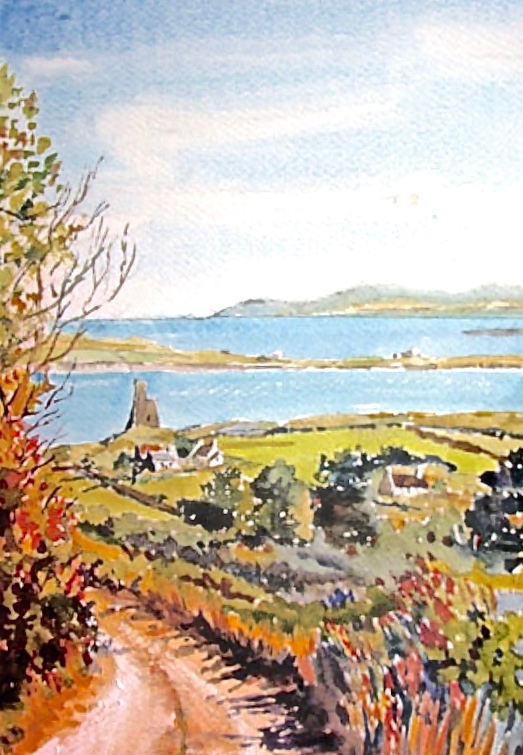
Let’s have a look at some of the art works that feature the Cove and the Castle. Jacqueline Stanley was one of many artists who was attracted to the beauty of West Cork. Now in her nineties, she moved from England to Ireland in the mid 1970s and purchased the old School House at Rossbrin as a country retreat: it has only recently changed hands.Here are two of her works, depicting Rossbrin. You can find more on her website.
I particularly like this view (above) which was painted by Jackie from the vantage point above the high road going down to the Cove, close to the remains of the copper mine at Ballycumisk. Last week I showed a painting by Geraldine van Hasselt, Julian’s mother, also from the 1970s. Every painting or photo is a historical document – and important to retain, in view of the fragile nature of the structure today.

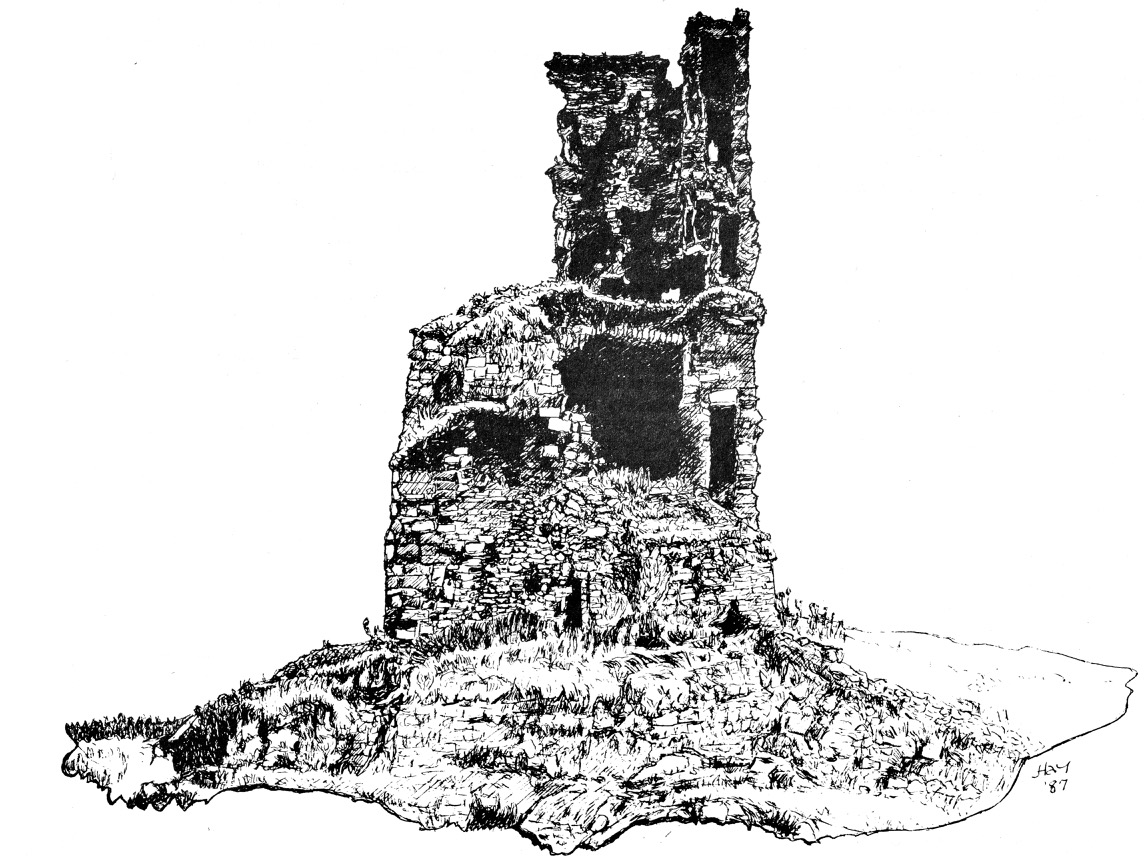
Our friend Peter Mabey is an architect and artist. He has lived in West Cork for a long time: he and I were at college together in Kingston, Surrey, and were surprised to meet each other by chance in Skibbereen market a good few years ago now. Above is one of his attractive watercolours looking down towards the Cove. The vantage point looks remarkably like the one chosen by Jackie Stanley. Below is a drawing of Rossbrin from the monumental work The Castles of County Cork by the late James N Healy, published in 1988 by Mercier:

The ruin is a romantic reminder of past times, enhanced by the changing weather moods of Roaringwater Bay. This photograph, by Finola, emphasises the character of the place:

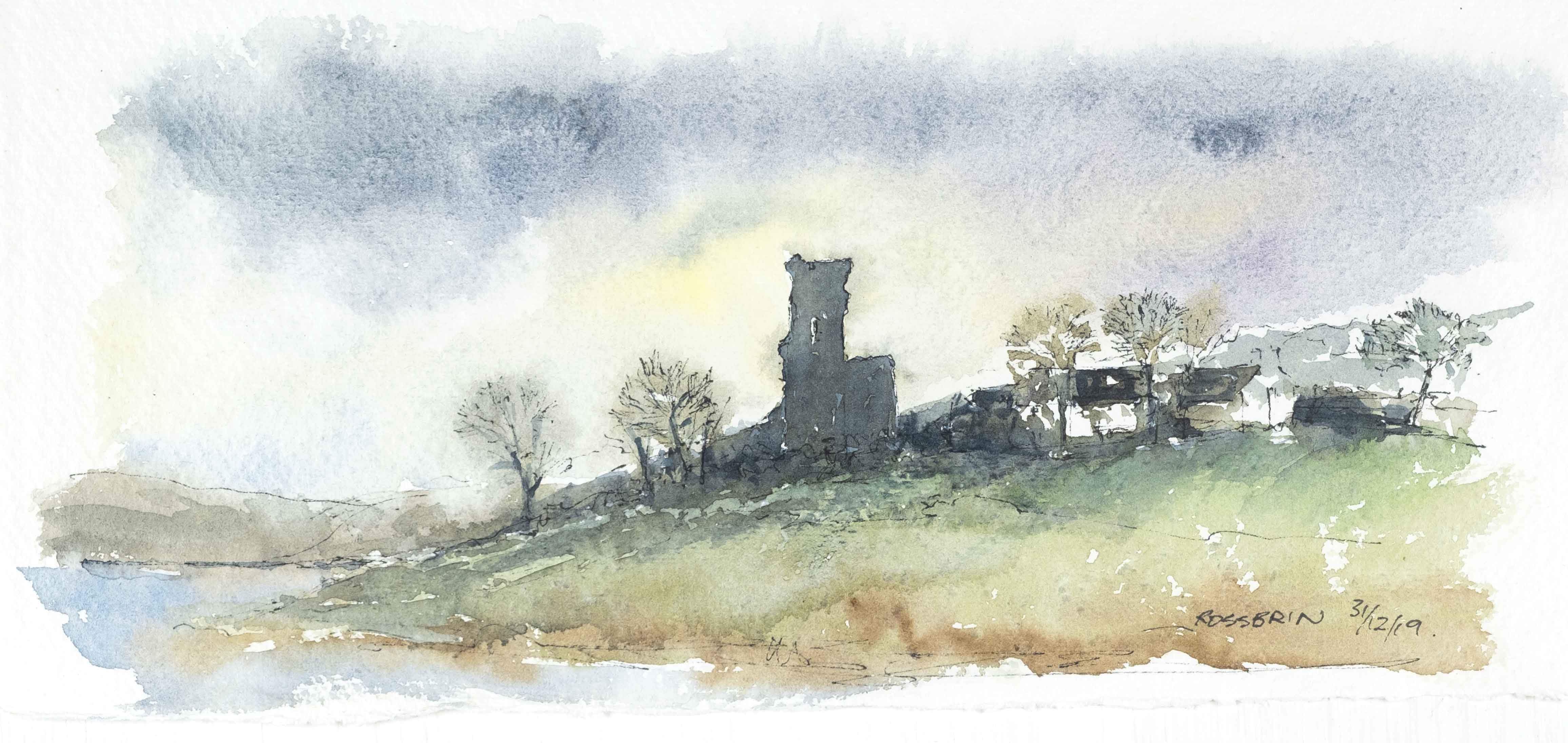
I can’t resist finishing this little two-part foray into the medieval remnants of our historically significant ‘centre of culture and learning’, which now languish on the edge of the waters below us with an artist whose work we admire: Peter Clarke, who writes and illustrates the Hikelines blog. His watercolour sketches are exquisite and always atmospheric. He has kindly allowed me to use his portrayal of Rossbrin Castle as my tailpiece. Thank you, Peter – and thank you to all the other artists who have been inspired by this remote and beautiful part of Ireland.

Murphy Devitt in Cork, Part 2

In Murphy Devitt in Cork Part 1 I introduced you to the main players in the Studio – Johnny Murphy, Róisín Dowd-Murphy and Des Devitt. Together they set about doing something entirely new and different in stained glass in Ireland, bringing with them their art training, their modern aesthetic sensibilities, and their deep knowledge of and commitment to their craft.

Both photographs above are from the Church of St Michael, Blackrock, Cork. The windows comprise large areas of breakouts with small images placed in the top half. A close up of the pictures chosen for this window reveal Noah’s Ark and Christ Calming the Waters (Contrast this with our final photograph in this post, which is in Caheragh)

Although the Studio was dissolved as a business in 1985, the three continued to work together in a loose arrangement, often under the heading of Des Devitt and Associates. This creative partnership went on for over 50 years: it was so finely attuned that Johnny could describe his vision over the phone and Des knew how to actualise it.

Johnny, Réiltín and Róisín – Réiltín was already a fixture in the Studio at this age

Everyone was pulled into the slipstream – Réiltín Murphy had to stand on a box to reach the drawing table when she started out first. Anthony Devitt* was just a kid when Des warned him not to fall off the scaffolding or his mother would kill him. They all loved it, as did the endless stream of students from the National College of Art, where Johnny was now teaching, who came to help in the summer or to learn how to paint on glass or assemble windows. Other artists came to help when the pressure of work got too much – Terry Corcoran, Rosaline Murphy (not related) Celia Harriss, Paul Britton, Ann Fitzgibbon, Michael Biggs, Michael Timlin to name some.

The only different window at Blackrock is this one, and it’s pure Roisín. There was a fire in the church and this window was rescued and re-installed in a side room once all the new windows were installed by Murphy Devitt Studios. We don’t know what the original ones were like, apart from this one

Johnny was the main designer, hugely respected by Róisín, Des and everyone in his orbit. His was the overall vision for a whole scheme for a church or for a one-off window. Róisín was happiest left to paint, either from Johnny’s designs or from her own – she was a painter at heart and exhibited into her 70s.

This window is a whole family project. It dates from 1974: Róisín painted the figure, Johnny did the little scene of Gougane Barra and Réiltín did the lettering. It’s in a convent chapel in Crosshaven, now closed and inaccessible. The photograph is published with the permission of the Presentation Order. 

Des had a couple of years of art college under his belt too but his genius lay in management and in translating Johnny’s designs (or sometimes just thoughts) into finished windows. He pitched for business, kept the budget under control, delivered work on time and ran the Studio in a completely non-hierarchical way that would be the envy of many a modern management guru. All of them read voraciously, educated themselves in progressive art theories and in how the spiritual could be expressed in glass. Perhaps this isn’t so difficult when the subject is the Passion, or the Life of Christ, or a particular saint like Francis. But many churches requested non-figurative windows, whether for budgetary reason or out of preference. Here the challenge became creating a space that suggested the transcendent, without the aid of obvious imagery.

In the same chapel are many windows that are either entirely non-figurative or with small hints of symbolism. This one looks like the lilies often carried by St Joseph

These mostly or entirely non-figurative windows became one of the hallmarks of Murphy Devitt Studios, instantly recognisable, and capable all by themselves of creating an atmosphere of drama or tranquility. An oval becomes the window to the soul, a series of them leads the eye upwards, thus capturing the notion of the elevation of thoughts and prayers. A sunburst denotes the glory of creation, light falling from heaven.

Ballyhooly Church has all non-figurative windows. This photograph is courtesy C Cashman and R Gem

Some have small elements within them that are complete pictures, mostly Christian symbols, sometimes mere hints. There were favourites – I’ve seen similar ones crop up here and there, although their context leads to fresh treatments. Some churches are a mixture of figurative and non-figurative. Although it’s not in my remit for these posts, if you are near Dun Laoghaire visit St Michael’s church and marvel that expanses of ‘coloured glass’ can create such a calm and devotional atmosphere.

Caheragh Church has a mixture of figurative, non-figurative and non-figurative-with-symbols. This window is one of the latter

Anyone who visits Irish churches knows that what we want in them are our own saints – Patrick and Brigid certainly, but after that they must be local. So along with every other stained glass artist who ever worked in Ireland, Johnny had to study the hagiographies of our obscure legendary saints and satisfy a demanding congregation familiar with the stories.

St Kieran of Cape Clear is one of our treasured West Cork saints

At Caheragh (north of Skibbereen) and Rath (just outside Baltimore) in West Cork two small rural churches demonstrate how well he succeeded. The windows in each are quite different, although both were completed in 1963. In Caheragh the figures are situated in the lovely wavy-lined breakouts that we saw Murphy Devitt use to such effect in Mayfield, in tones of red and yellow.

And here is St Facthna of Rosscarbery

In Rath we see the introduction of a new breakout design, the square or rectangle with grey shadow around the edge, seeming like a solid glass brick. It’s another Murphy Devitt innovation, used to great effect in many of their windows. They used it again the following year in Blackrock (see above).

The Sacrament of Confession gets the Murphy Devitt treatment in Rath

A stained glass technique that was introduced to Ireland in the 60s was that of Dal de Verre. Blocks of coloured glass were faceted to increase their reflectivity (this was done by knocking spalls of glass from the edges and surface of the blocks) and then cemented together with resin, and sometimes concrete. Dal de Verre enabled actual walls of glass to take the place of masonry and to create dramatic expanses of colour as an integral part of construction, rather than as windows.

Chunks of coloured glass, faceted for additional refraction, float in a bed of resin. This is a detail from the Lowertown window below

Murphy Devitt were early adopters and we have one of their examples in Cork, at Lowertown, just outside Schull. It’s a dove of peace/Holy Spirit creating a glowing corner in the baptistry.

I still have two churches to tell you about, in Rochestown and in Mallow. They deserve their own post, and that will conclude this series. See you next week.

From Caheragh, across a two-light window, an image of Christ calming the storm. Traditionally, Christ is shown in one boat with the 12 apostles. However, Rembrandt famously included himself in his depiction of this scene, so I am tempted to think that Johnny is in there somewhere, since there are thirteen apostles in the boats

Part 3 is here.

*This post benefitted greatly from information generously shared by Anthony Devitt.