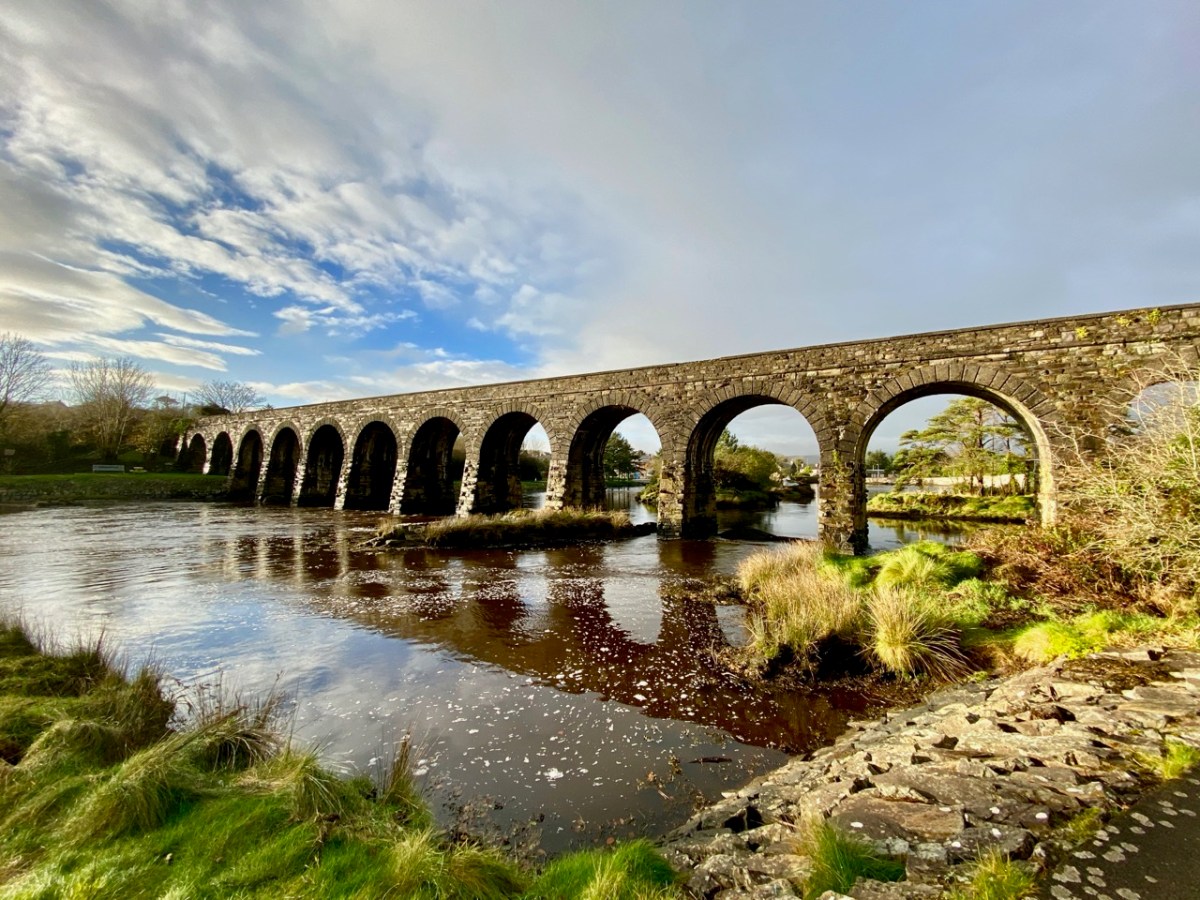
As we are approaching the traditional Twelve Days of Christmas I thought it fitting to give you Twelve views of Ballydehob’s iconic viaduct. Our West Cork village of Ballydehob has many claims to fame. It has been the centre of a great Irish art movement in the mid-twentieth century (have a look at this site). But earlier – between 1886 and 1947 – it was an important stop on the Schull & Skibbereen Tramway. This was a three-foot gauge railway line which must have been a great wonder to those who witnessed it in its heyday. There are fragments of it still to be seen, but its most monumental structure remains with us: the twelve-arched viaduct at Ballydehob.
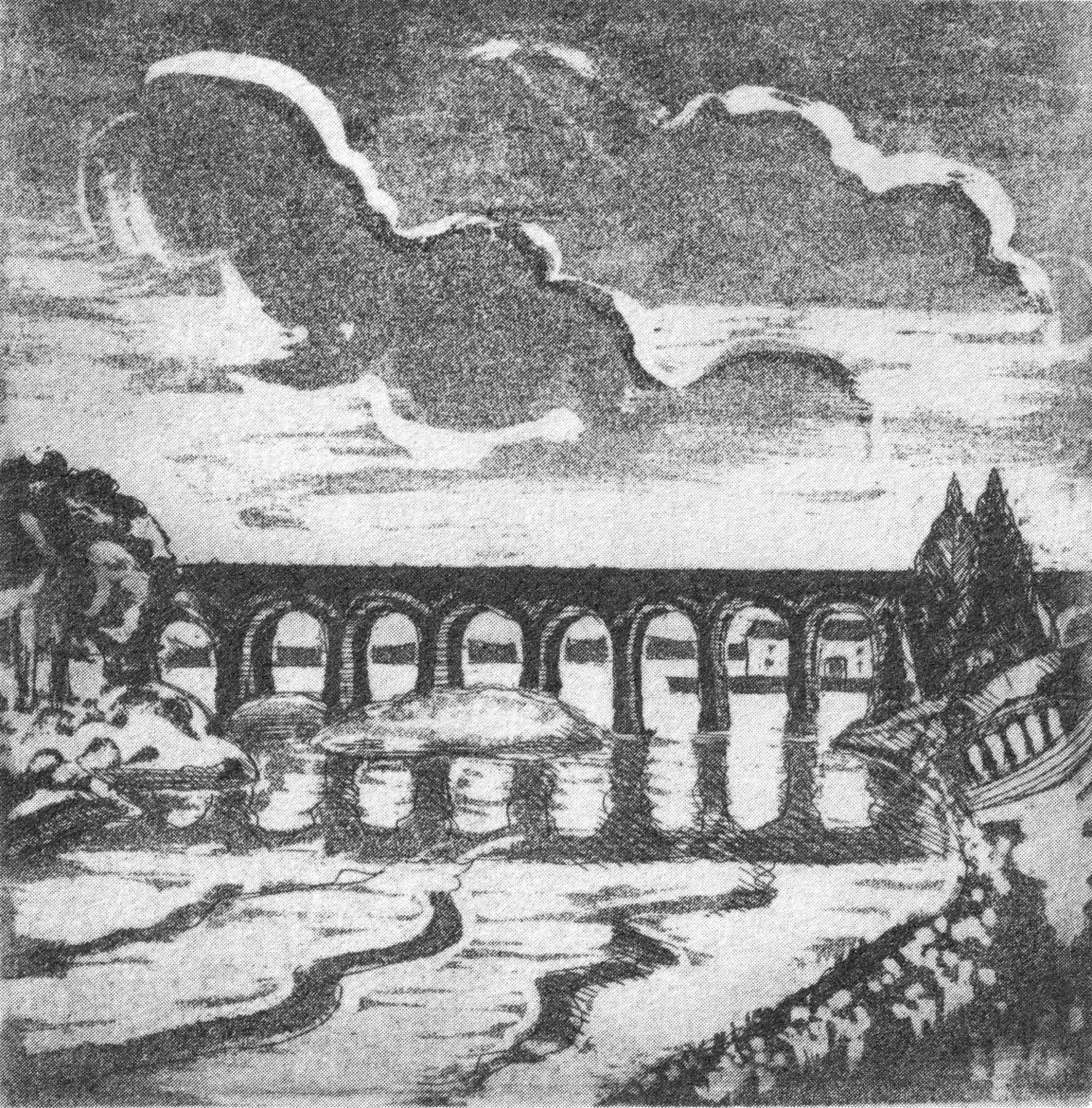
Above: Brian Lalor was one of the creatives who settled in Ballydehob back in the artists’ heyday (he is still here today). The railway viaduct was a great source of visual inspiration to him and to his artist colleagues.
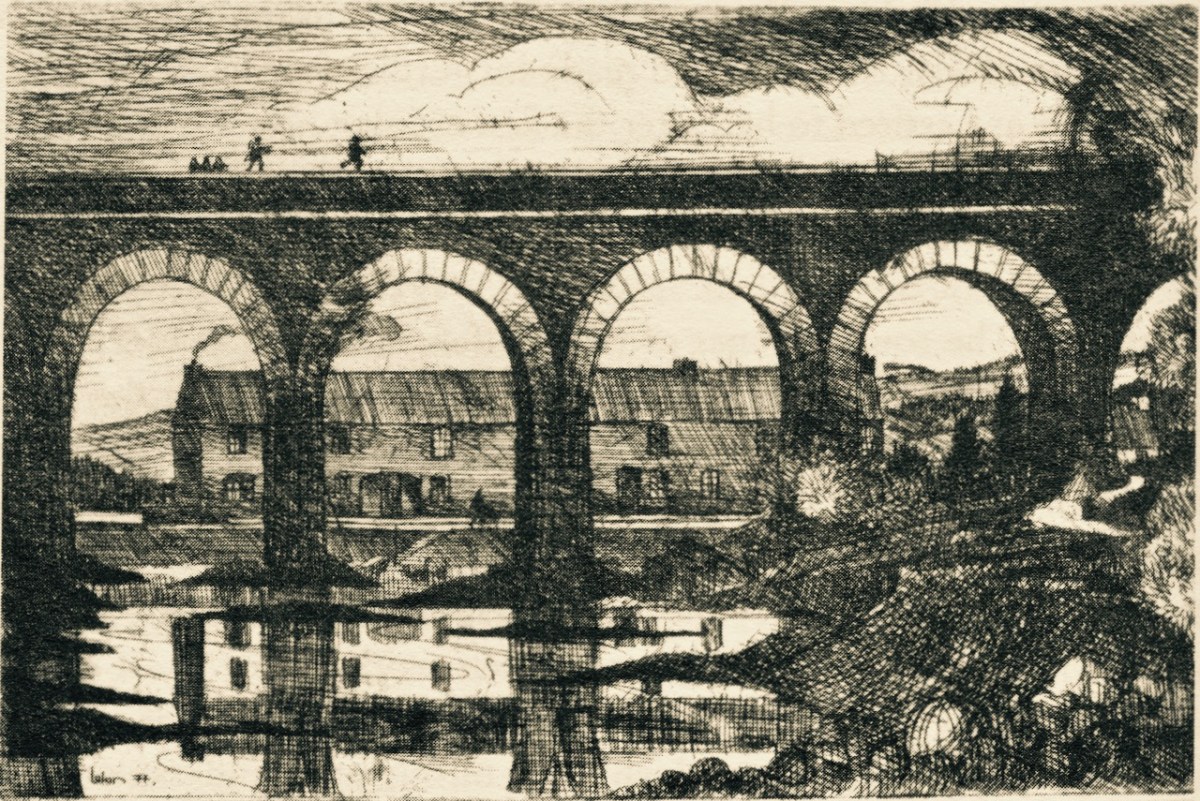
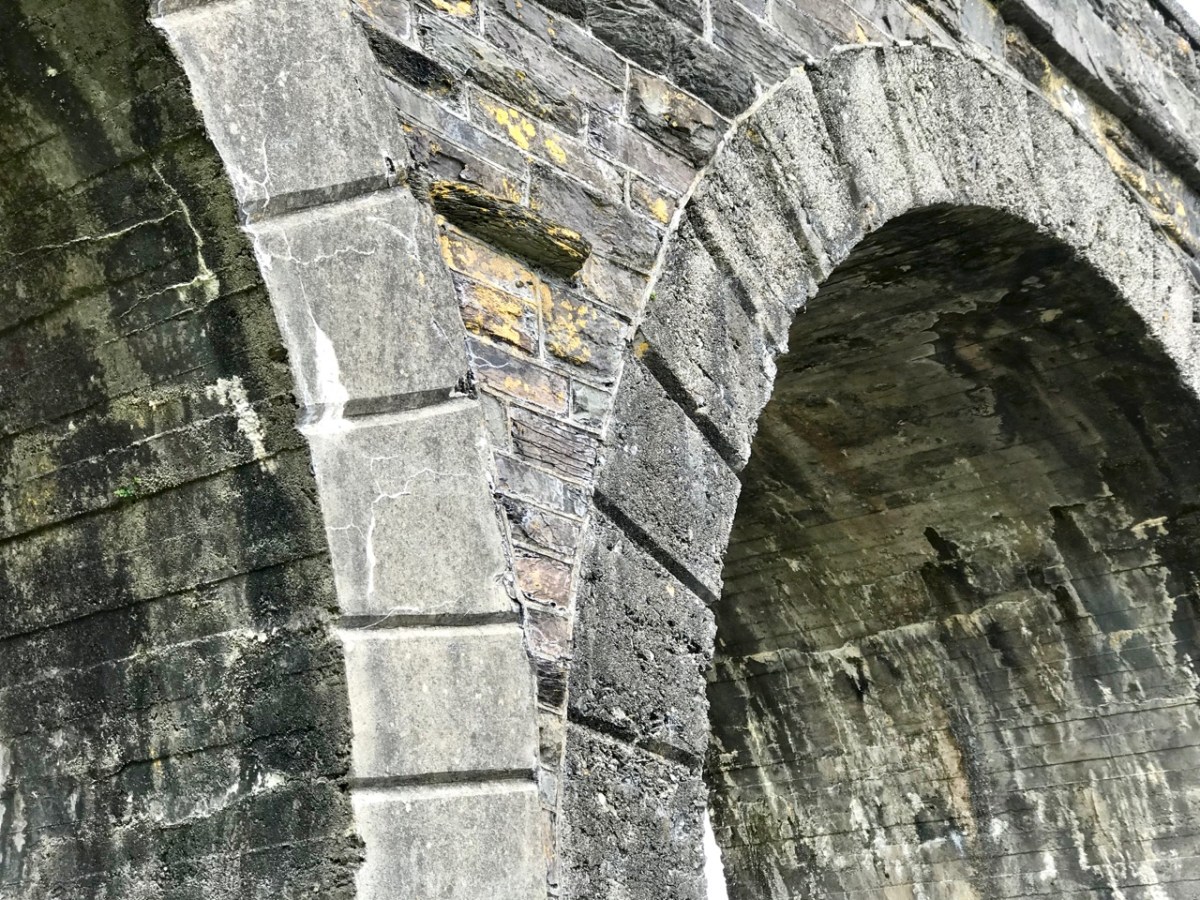
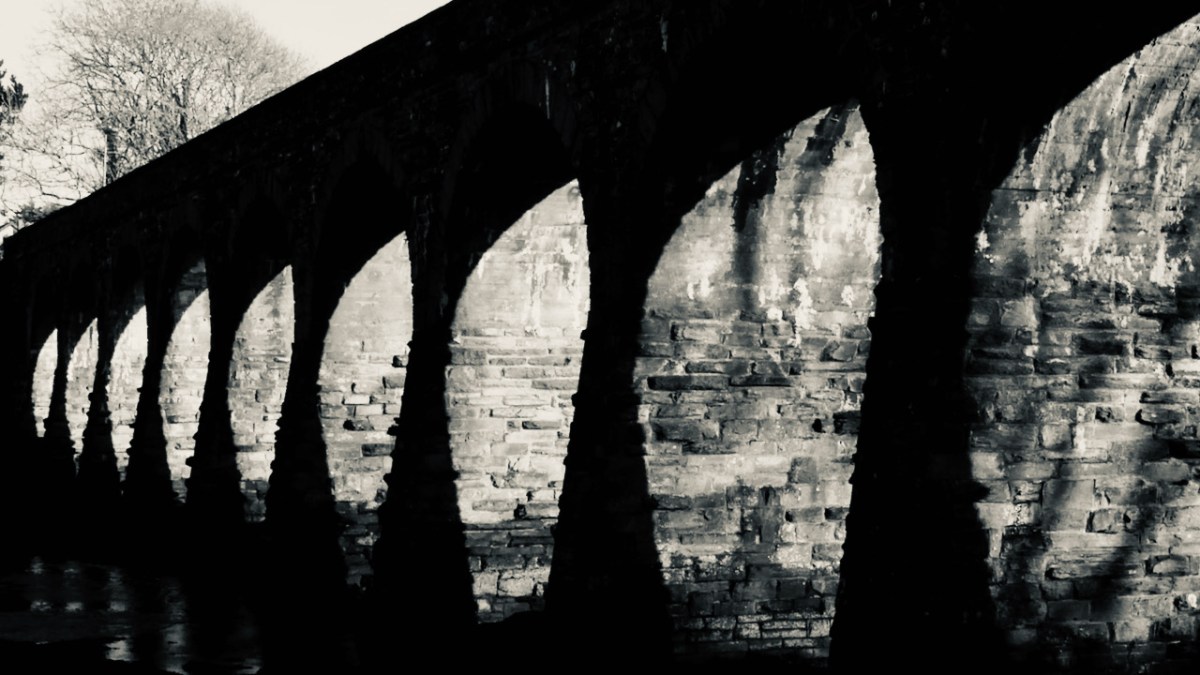
Here (above) is another Lalor work depicting the viaduct (many thanks, Brian). Behind the arches in this print you can see the former commercial buildings on the wharf, now converted to private use. At first glance you might think what a fine masonry structure this is. In fact, most of it is mass concrete. Look at the close-up view of the arches below: they are cast and faced in concrete, albeit the arch-stones are made to look like masonry. Only the facing infills and the parapets are actually of stone. This is quite an innovative construction for its time. Barring earthquake it’s certain to endure.
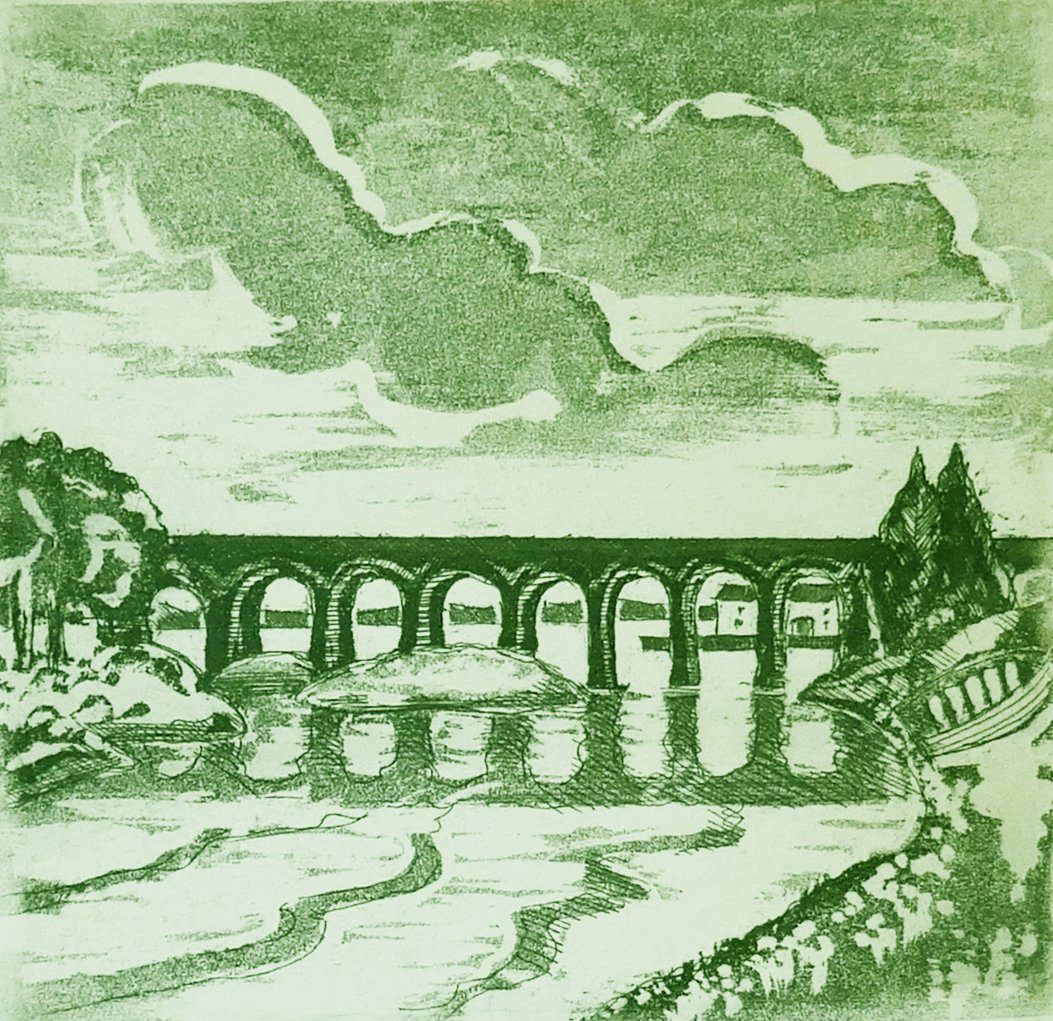
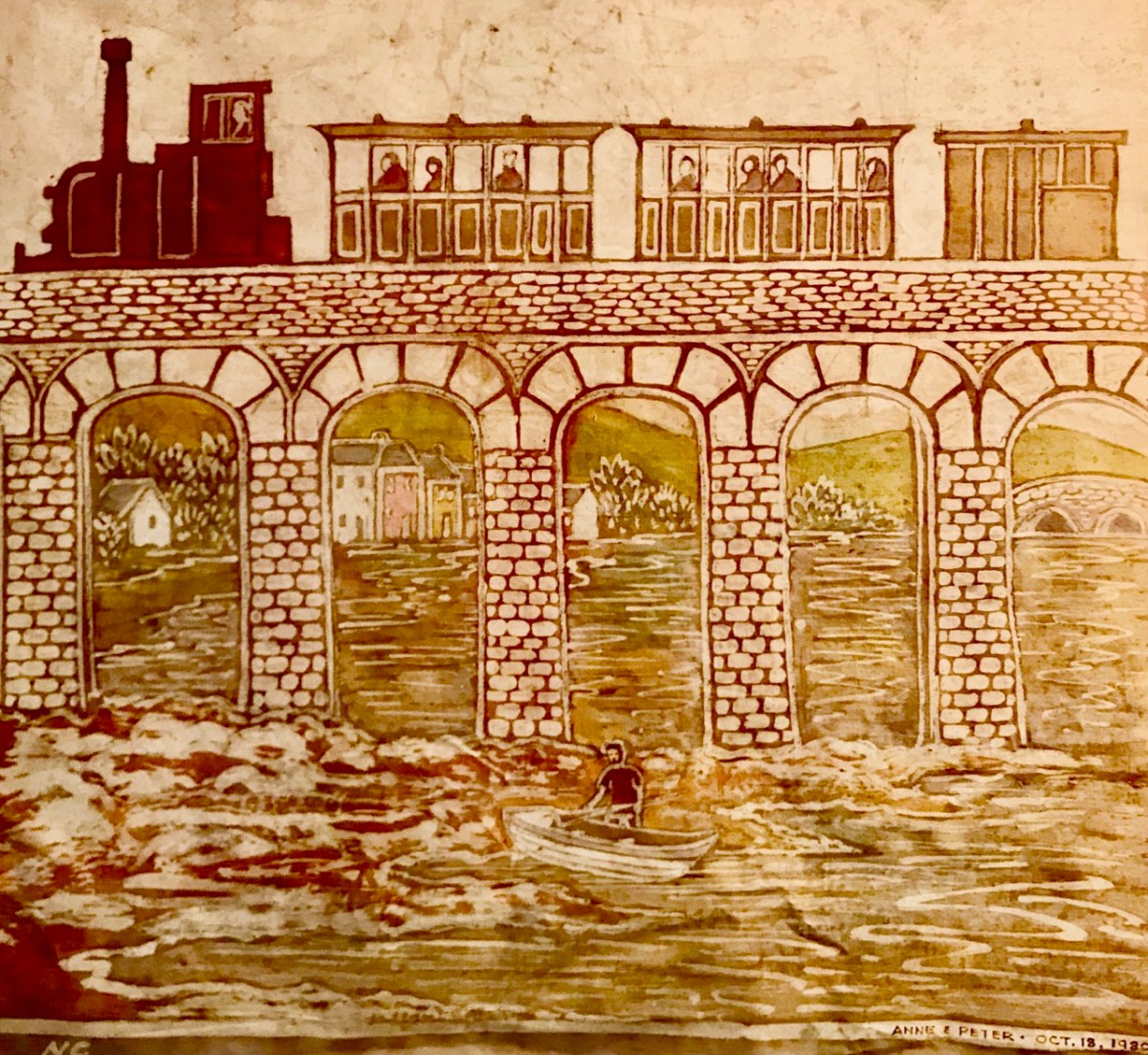
I was not surprised to find how often images of this engineering feat have inspired artists and others working in creative fields. Here’s a particularly fine example from the days of the artist settlement around the village in the mid-twentieth century (below): this one is a batik by Nora Golden.
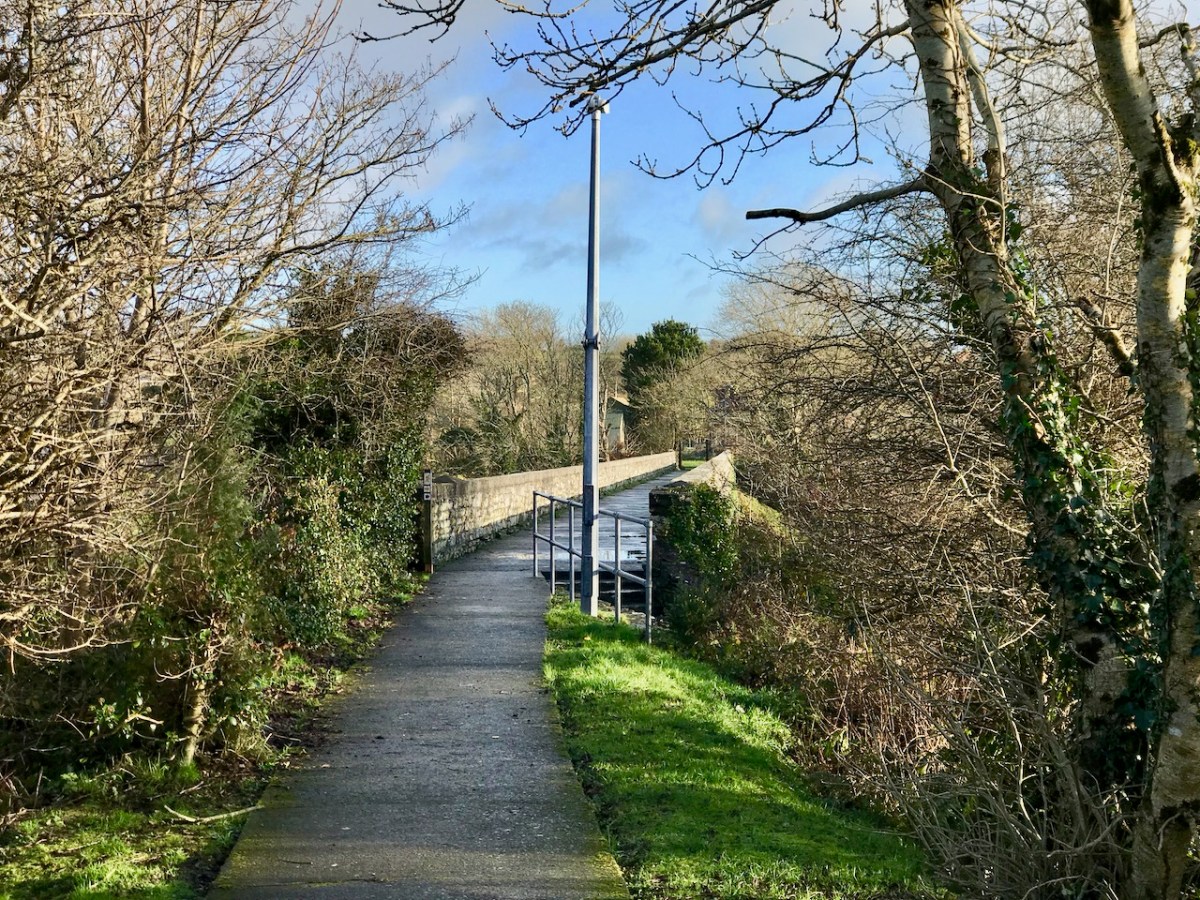
I really like this moody photograph by Finola: it demonstrates the elemental nature which repetition and shadow gives to the scene. (Below): we have to see the way over the top, now a public footpath. The railway was a single track narrow-gauge at this point.
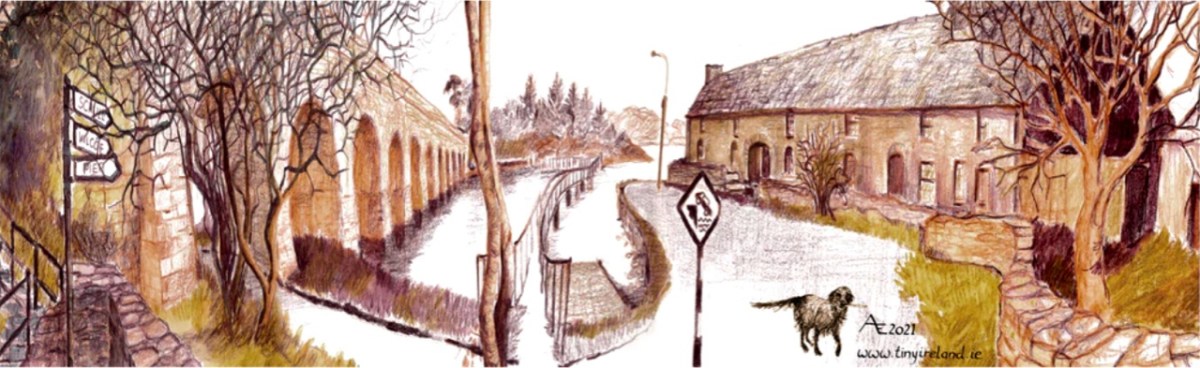
The ‘Tiny Ireland’ creator – Anke – has sketched this wonderful caricature of our wharf area, showing the 12-arched bridge in context. Finola has written about Anke. You can buy your own piece of Tiny Ireland through her website, here.
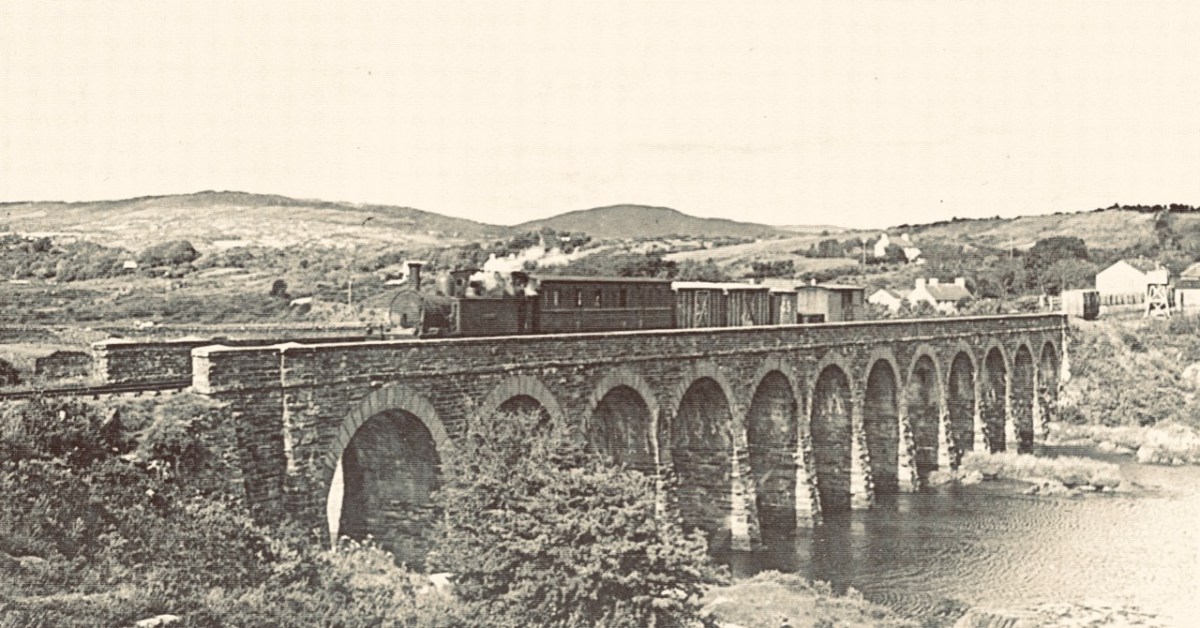
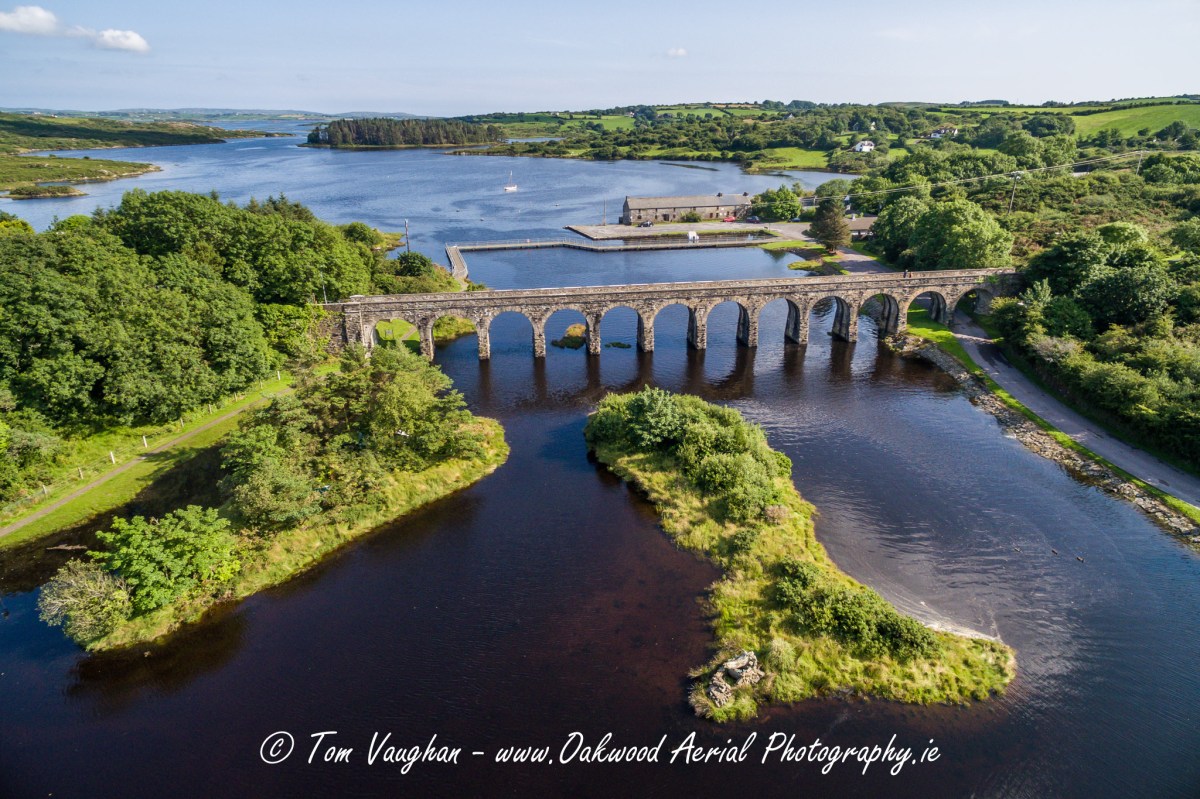
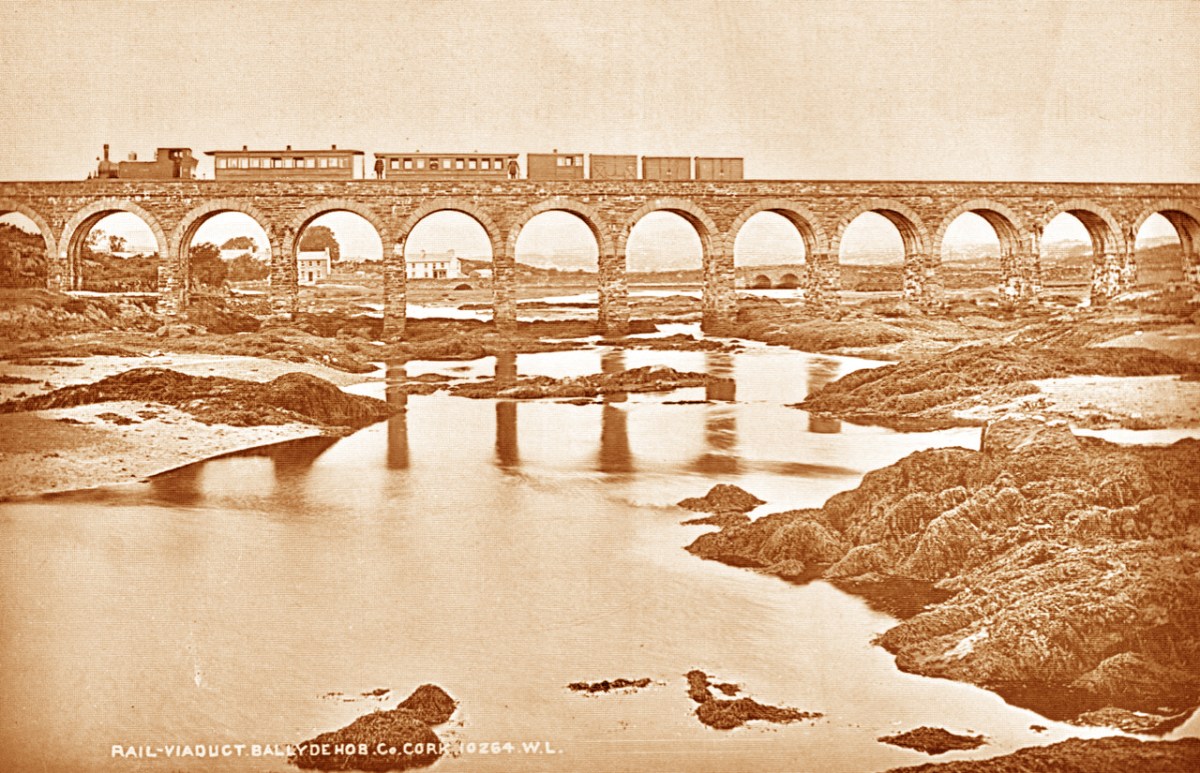
How better to look at the bridge in context than this view from Aerial Photographer Tom Vaughan. Thank you, Tom, for allowing us to use this magnificent image. Here’s the link to his own website. You will find excellent gifts for the connoisseur here. The last of our ‘Twelve Arches’ (for now) has to show us the bridge in its rightful use. I think this postcard – from the Lawrence Archive -dates from the early 1900s. I can’t resist quoting the caption for the rail buffs among you!
. . . A Schull-bound train has stopped especially for the photographer: this is Ballydehob viaduct looking north. The train comprises GABRIEL, bogie coaches Nos 5 and &, brake vans Nos 31, 32 and 38 . . .
The Schull & Skibbereen Railway – James I C Boyd – Oakwood Press 1999
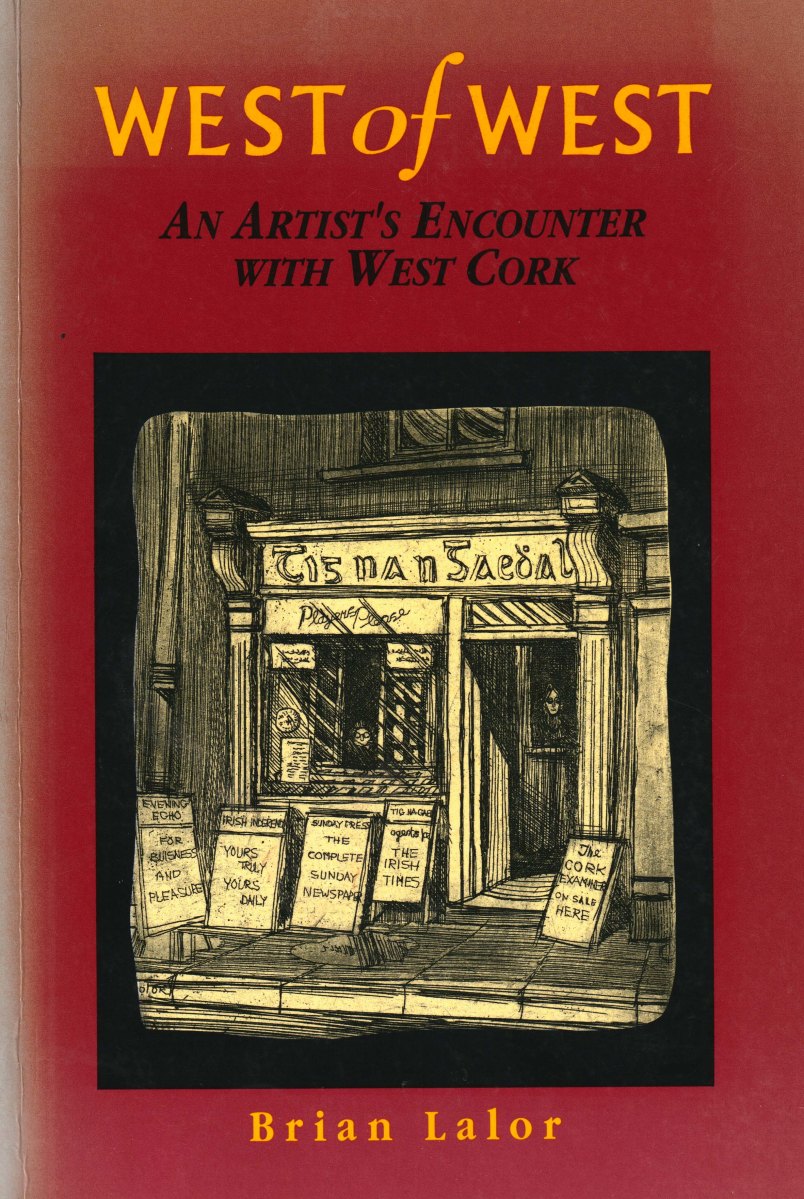
Perhaps this book review is a little late arriving? The book was – after all – published by Brandon of Dingle in 1990: thirty two years ago! The artist, and I, were in our forties then. But – don’t hesitate – although it’s out of print you can find copies readily available on many booksellers’ websites. You can spend a Euro (the postage will cost four times that!) or many Euros: but it’s well worth whatever you have to pay.
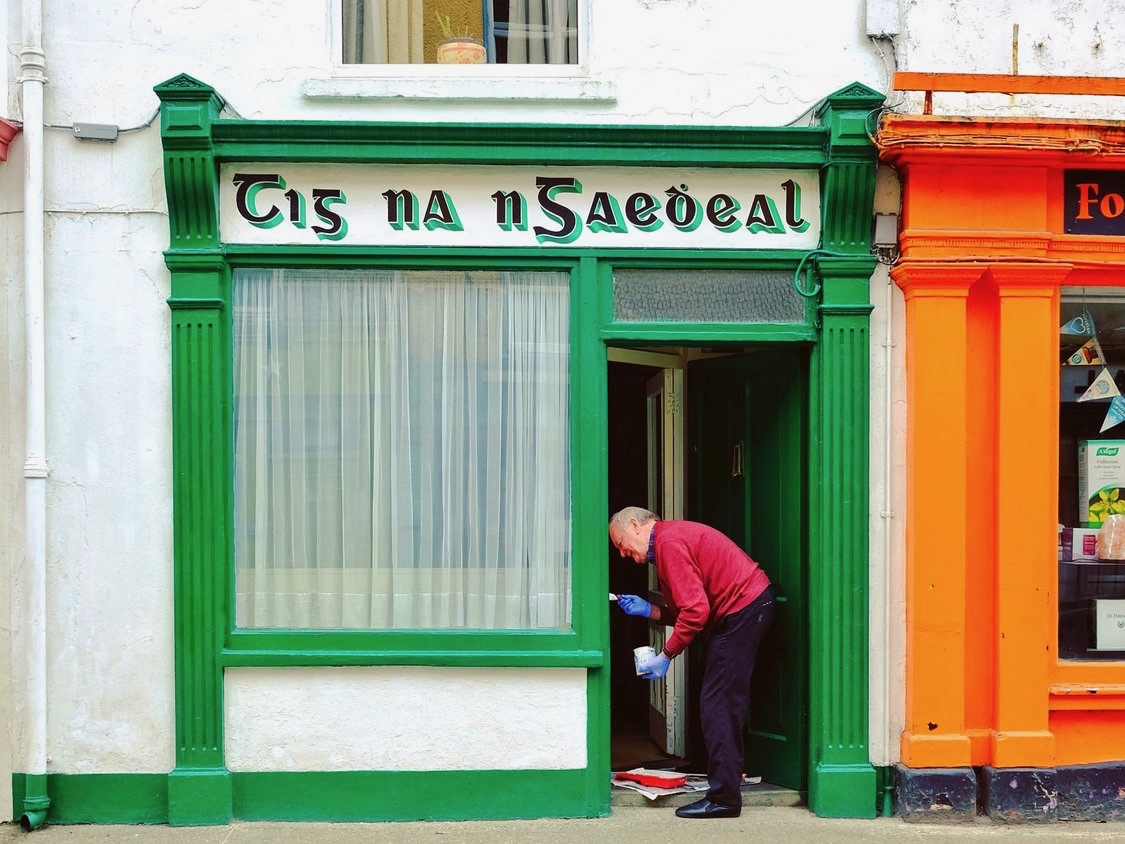
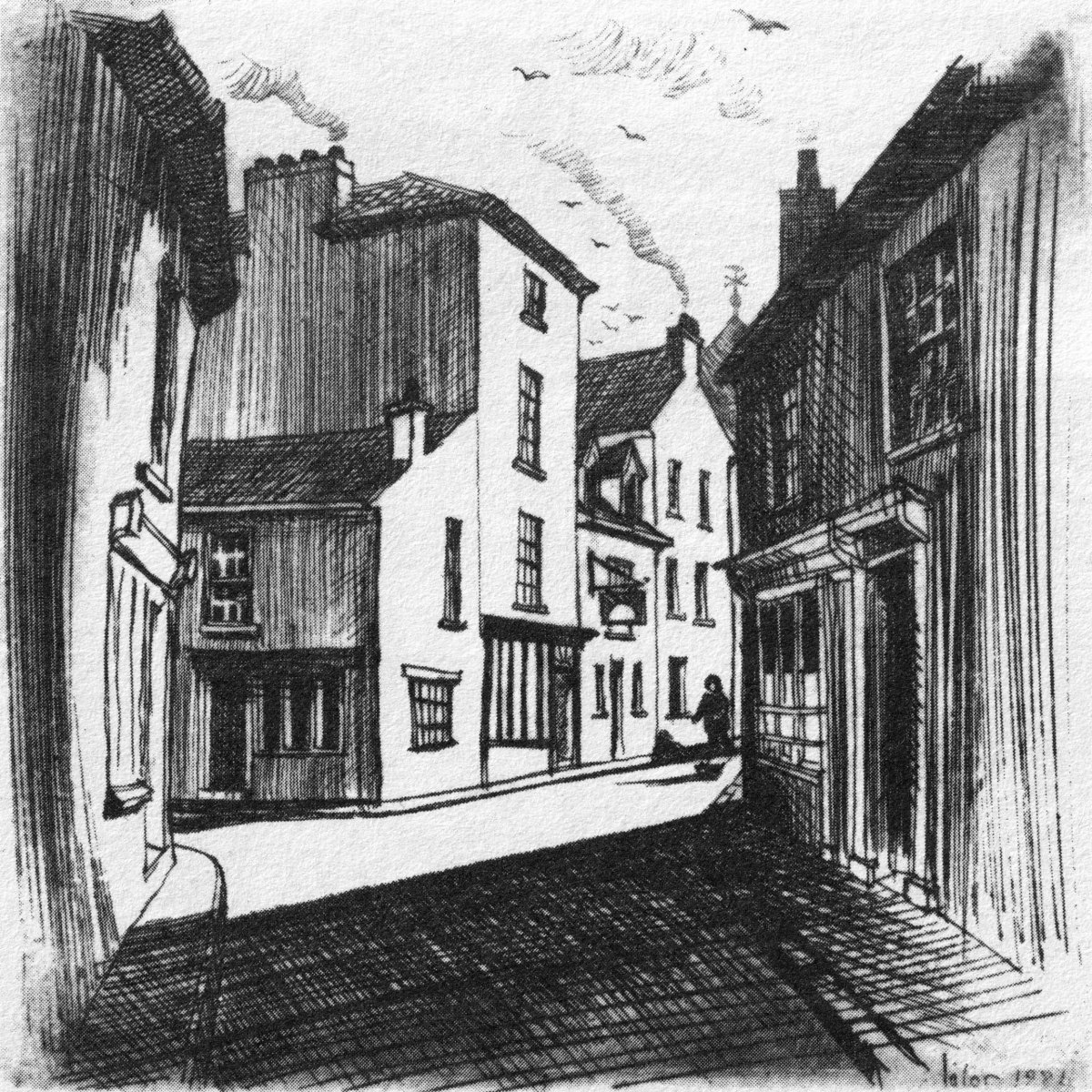
Here it is: a modestly sized paperback volume. But it punches well above its weight. It is beautifully written, and exquisitely illustrated. For everyone who is interested in West Cork, Ireland or the art of engraving it’s a must for your bookshelves. And, historically, it’s fascinating: the cover picture, above, shows Tig na nGaedheal (locally known as Brendan’s) – once described as ‘the greatest and most famous sweet shop ever in Skibbereen’. Sadly, Martha Houlihan, who ran it with her husband Brendan, passed away a little while ago and the shop is no longer trading. It’s still a significant feature in the town streetscape (below). Note the figures looking out of the door and window in Brian’s etching – a typical humorous touch.
The book includes nigh on a hundred of Brian’s engravings. This is only a fraction of the huge body of work he has created in his lifetime to date, and he’s never idle. It’s good to know that Uillinn – the West Cork Arts Centre gallery – has a retrospective of Brian’s work in the pipeline. It will be impossible to show more than a fraction of the art he has produced so far, but we certainly look forward to experiencing that selection.
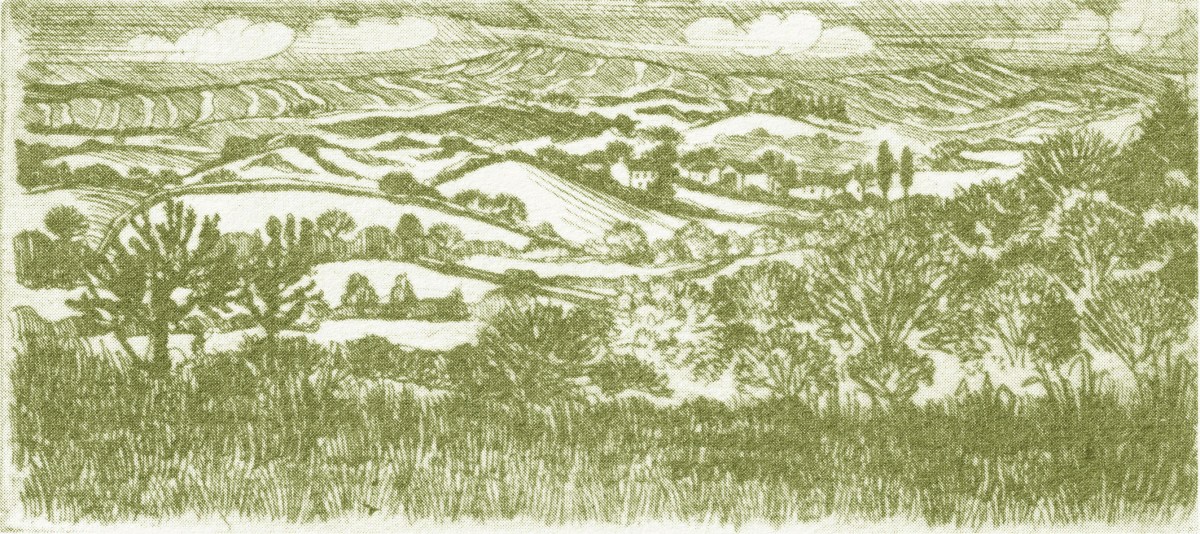
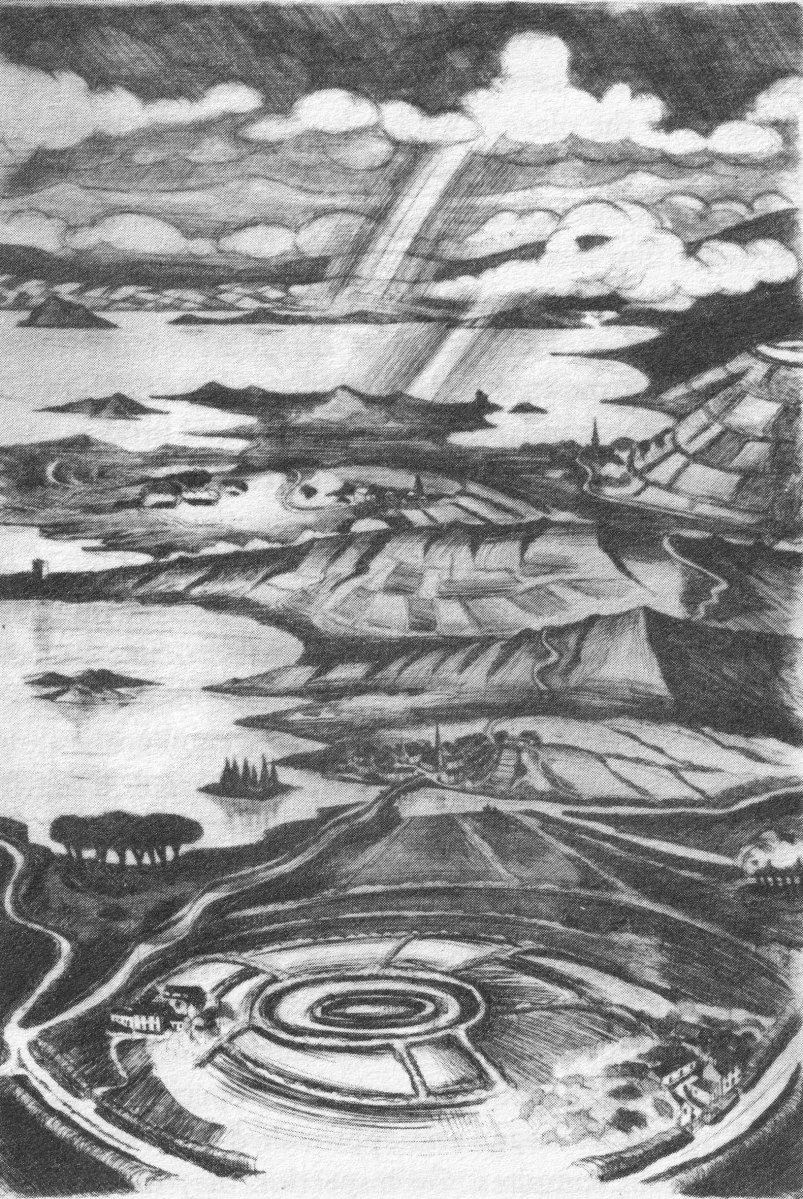
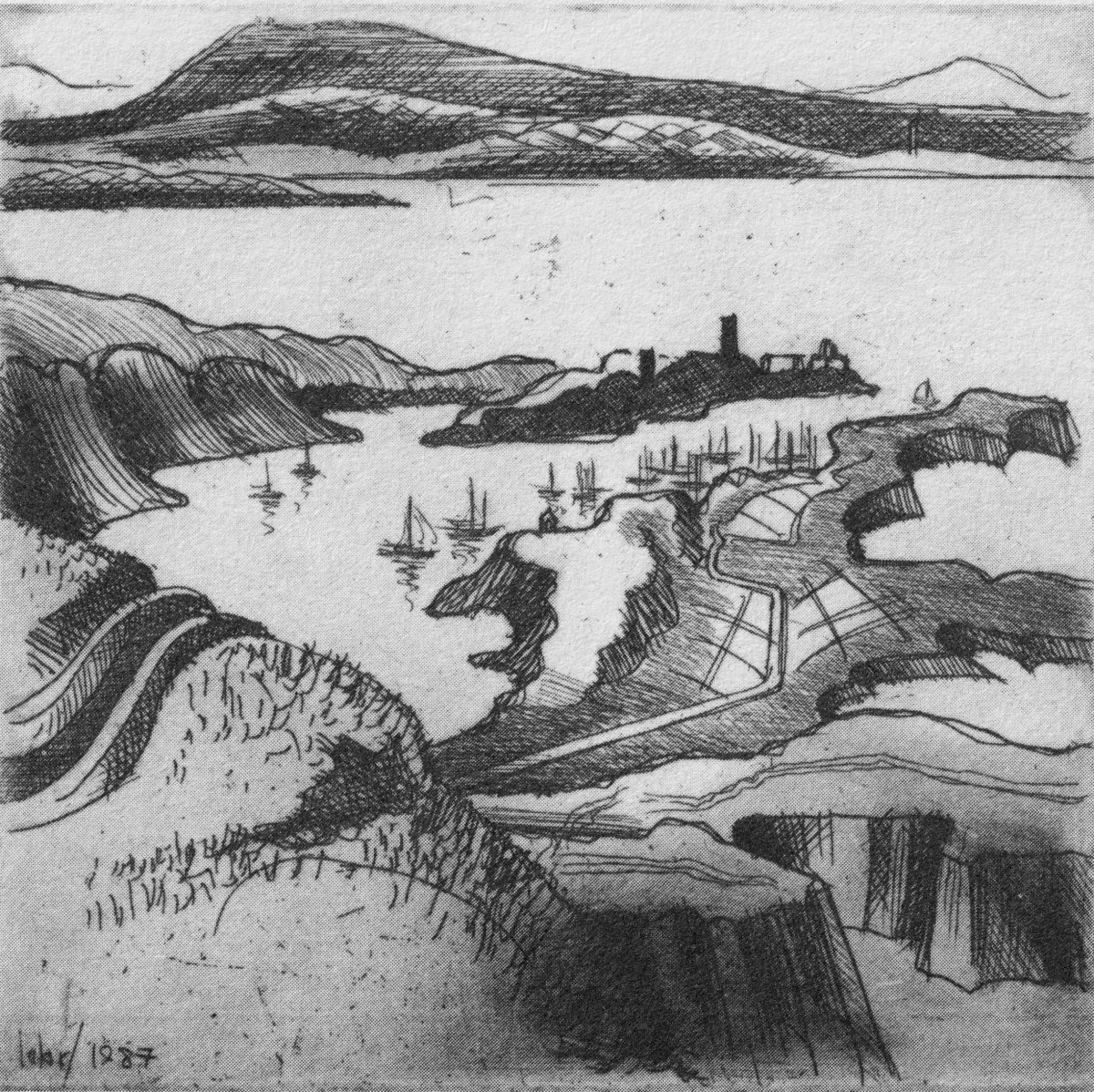
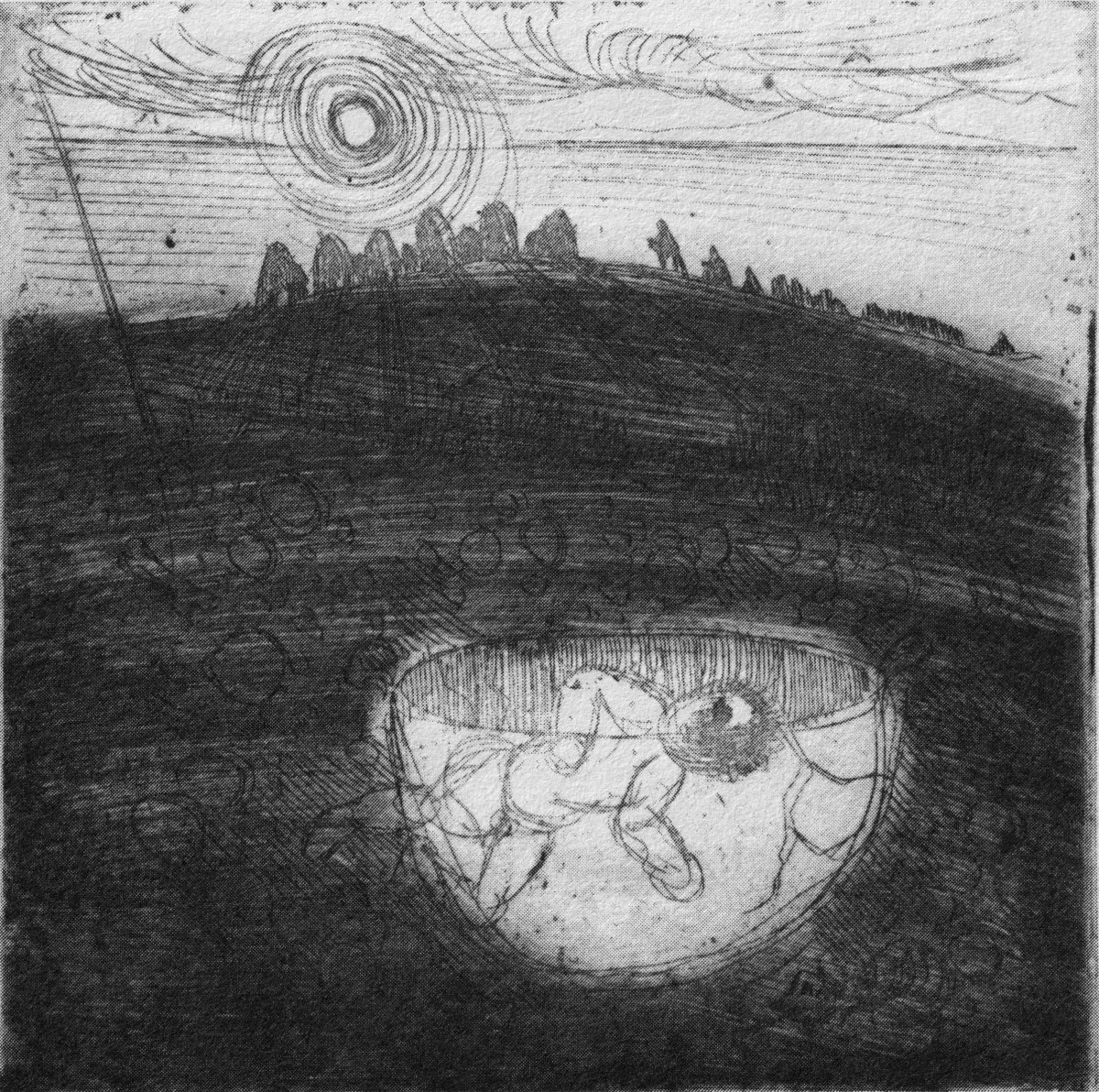
What I personally enjoy about Brian’s works in this book is the atmospherics that they create. Take, for example, The Dark Edge of Europe, above. The breadth of its content is overwhelming: it’s the landscape of West Cork summed up in gradations of grey, with coastline, lanes, settlements, hills and distant mountains, focussed on a foreground which features an ancient hill-fort. A tale of occupation and morphology: an eternal human story. The illustrations in the book are accompanied and amplified by wonderfully crafted written descriptions.
. . . Defining the high spots in the ribs of land, and distributed with apparent regularity all over this landscape, were lush green rings. Single, and occasionally double or triple concentric rings of grassy banks, these features resembled a giant’s game of quoits, forgotten and left to decorate the landscape. The gargantuan quoits are of course the ring forts or fairy rings of the Irish countryside, and outlined the forms taken by the rural farmsteads and dwellings from pre-Christian times down to the sixteenth century. Each ring represented an earthen rampart on high ground, with perhaps a dry moat or further rampart encircling some wattle huts. Simple and utilitarian, this form of dwelling satisfied the political and practical exigencies of the day – or aeon, for that matter. Rural life was lived in the midst of the land, without congregating in towns or villages . . .
The Land of Heart’s Desire: West of West, Brian lalor
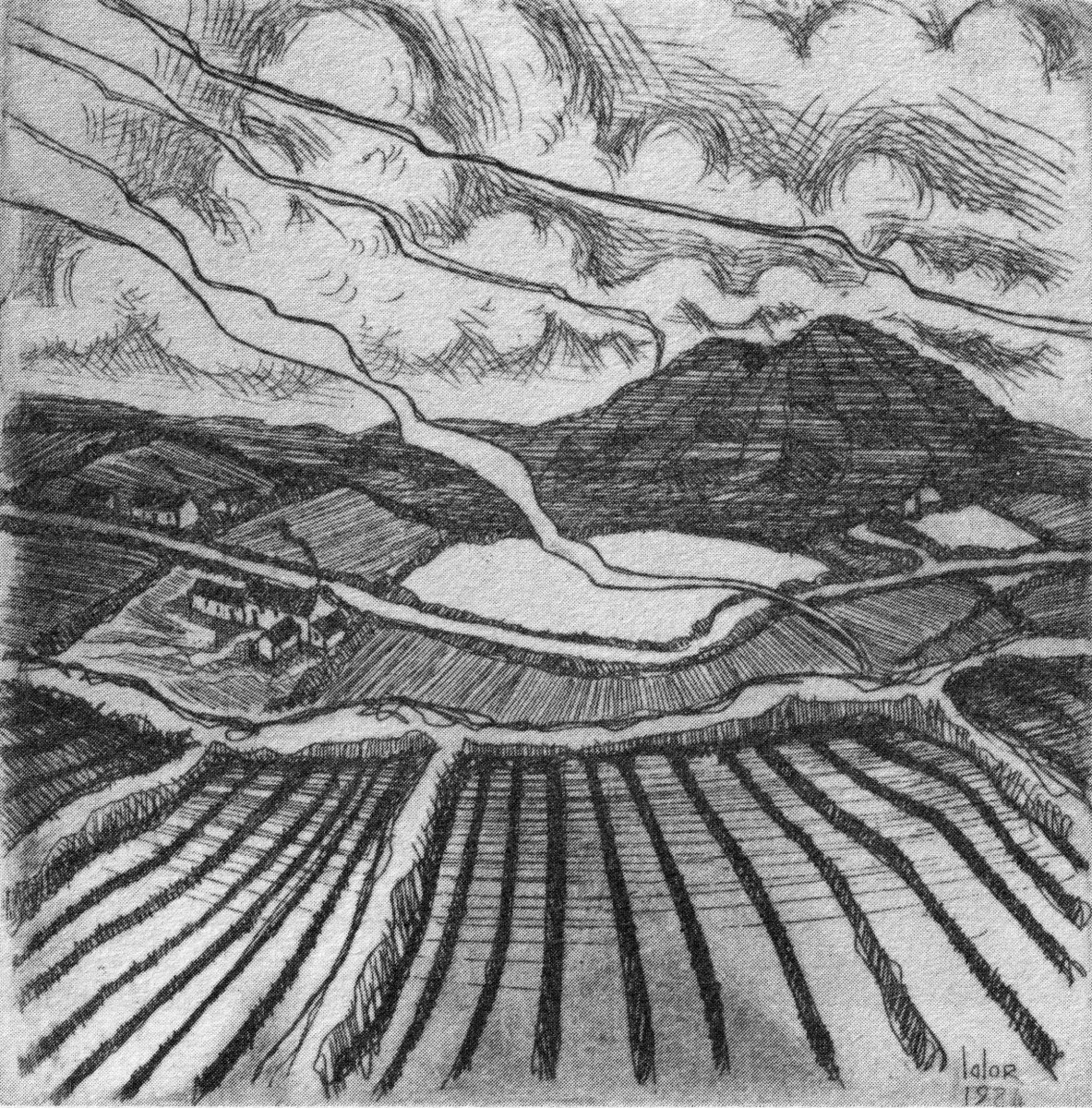
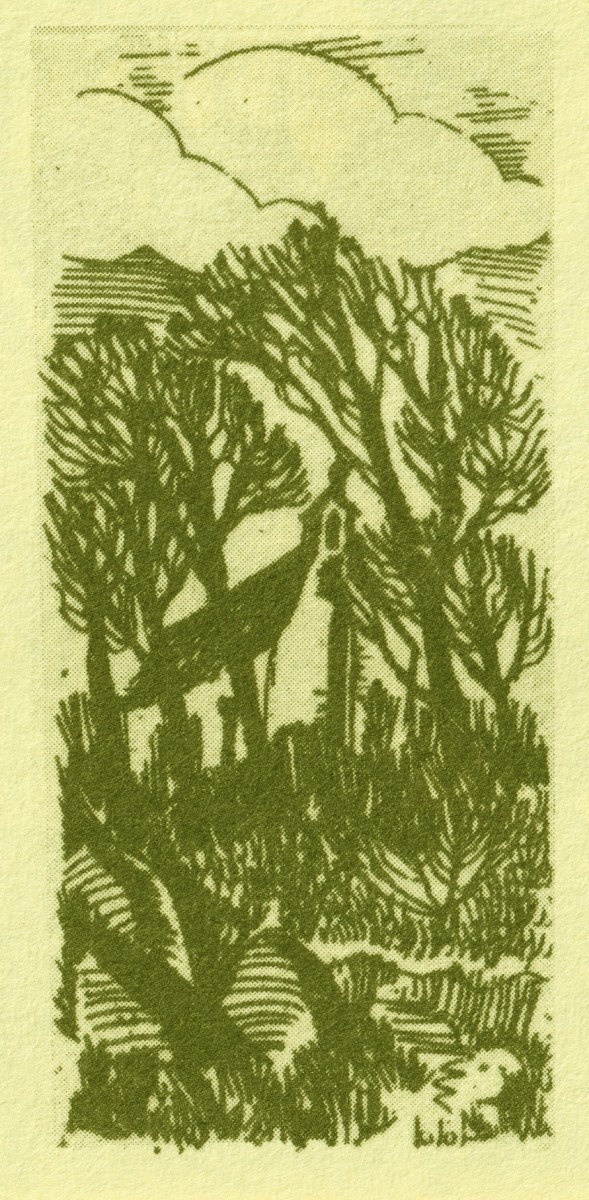
Mount Gabriel dominates much of the landscape in our part of West Cork. Brian’s view, above, is titled Mount Gabriel Gorse Fires. The artist ‘discovered’ remote West Cork back in the 1970s. In the book he describes the journey:
. . . The road wound away into the distance, a ribbon of reflected light, and the weaving shapes of the blackthorns threw a black Gothic tracery across the landscape. The immediate surrounding had a silvery sharpness, the precision of a lunar landscape; brightly outlined walls enclosed pools of darkness. We were no longer at the door to West Cork but in its very interior. We had arrived . . .
Well Met By Moonlight: West of West, Brian Lalor
Essential to the intimate knowledge of West Cork’s landscape is the sea – and the coastline which encompasses it. This view is titled Rock Island & Crookhaven. Brian enhances the rendering with a description:
. . . From the heights of Brow Head the outline of Rock Island at the mouth of the harbour resembles a partially submerged submarine, its twin customs-observation buildings the conning towers of this strange naval mammoth. An ill-assorted collection of buildings adhere like barnacles to the back of this submarine: the roofless lighthouse barracks, a defunct fish factory and an abandoned, rambling Victorian mansion suggest an unfavourable location. Wedged in the little cove in front of the mansion is the hulk of an old wooden trawler. A graveyard of vanished days and forgotten hopes . . .
Coastline: West of West, Brian Lalor
Ballydehob’s 12-arch bridge – or railway viaduct – must be one of the most profusely illustrated and photographed features of West Cork. The Schull, Ballydehob and Skibbereen tramway was a significant piece of transport infrastructure that ran from 1886 until 1947. It’s a fascinating piece of Victorian engineering, the first 3ft gauge railway line to be built in Ireland. Everything about it was eccentric: here’s one of my RWJ posts setting out the history of the line. Brian has a little anecdote well worth the recounting:
. . . As it is one of the most pleasing architectural features of the local landscape, I drew the Twelve Arch Bridge on many occasions and it reappears in a variety of forms amongst these etchings. One village magnate commissioned me to do a large picture of this monument for his new house. The price was agreed and the picture eventually produced. I had chosen an angle which showed the bridge emerging as it does from thickets of brambles and conifers on either side of the water. Delicate fronds of foliage wound in the foreground of the picture and the subject itself basked in the distance, looking solid and ancient. I was quite pleased with the results. When I presented it to my patron he gazed at it in silence for a long time. Then with a large and calloused hand he ran his index finger across the view a number of times, shaking his head slowly as he did so. ‘No. no good at all, It won’t do,’ he muttered more to himself than me. He had been counting the arches. In my enthusiasm for the atmosphere of the piece the accurately rendered number of the arches had become obscured, those on the extreme edges becoming partially lost in the undergrowth. The commission was rejected. If you are paying for twelve arches you don’t want to be short-changed with ten and two halves!
Coastline: West of West, Brian Lalor
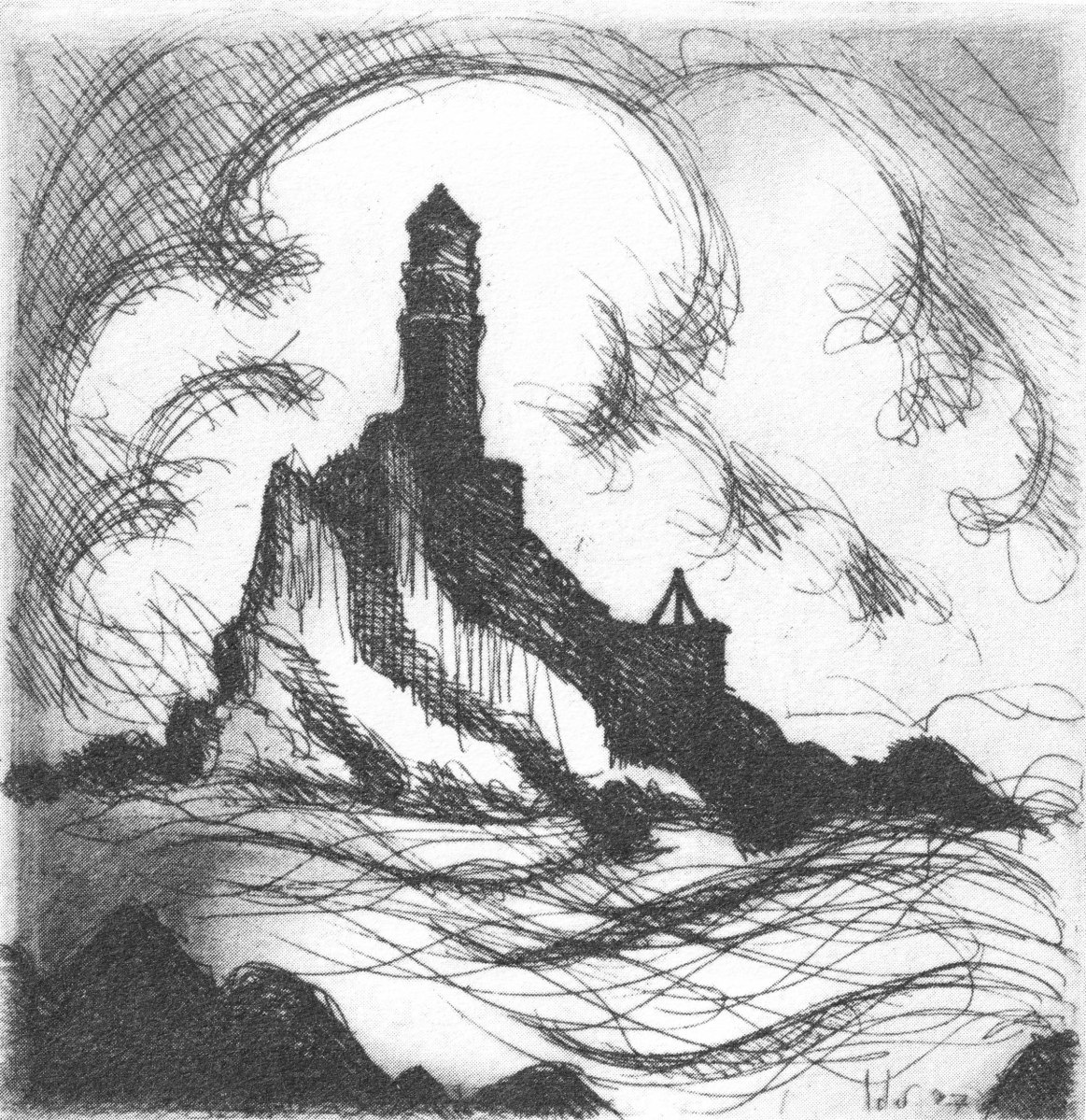
Fastnet. An iconic silhouette – perhaps a fish-eye view? The lighthouse is a ubiquitous element of structure which can be seen from all the waters and islands of Roaring Water Bay. Brian’s words:
. . . Roaring Water Bay encompasses an area of about a hundred square miles of water between Baltimore in the east and Crookhaven in the west. The tortuous coastline of the bay, as of much of the rest of West Cork, is punctuated by small coves, each with an old stone pier or miniature harbour. Up to the mid-nineteenth century these were the arteries of communication and trade and a wide array of lighters, barges, rowboats and yawls plied the coast, ferrying freight around the rim of the land rather than through it. Never far from the safety of land, they darted from port to port with the assurance of safe harbours at frequent intervals to reduce the threat from treacherous seas. Today, however, only the yachtsman holds this perspective on the land; it is a medieval cartographer’s view of the world: good on outlines, vague concerning the interior . . .
Coastline: West of West, Brian Lalor
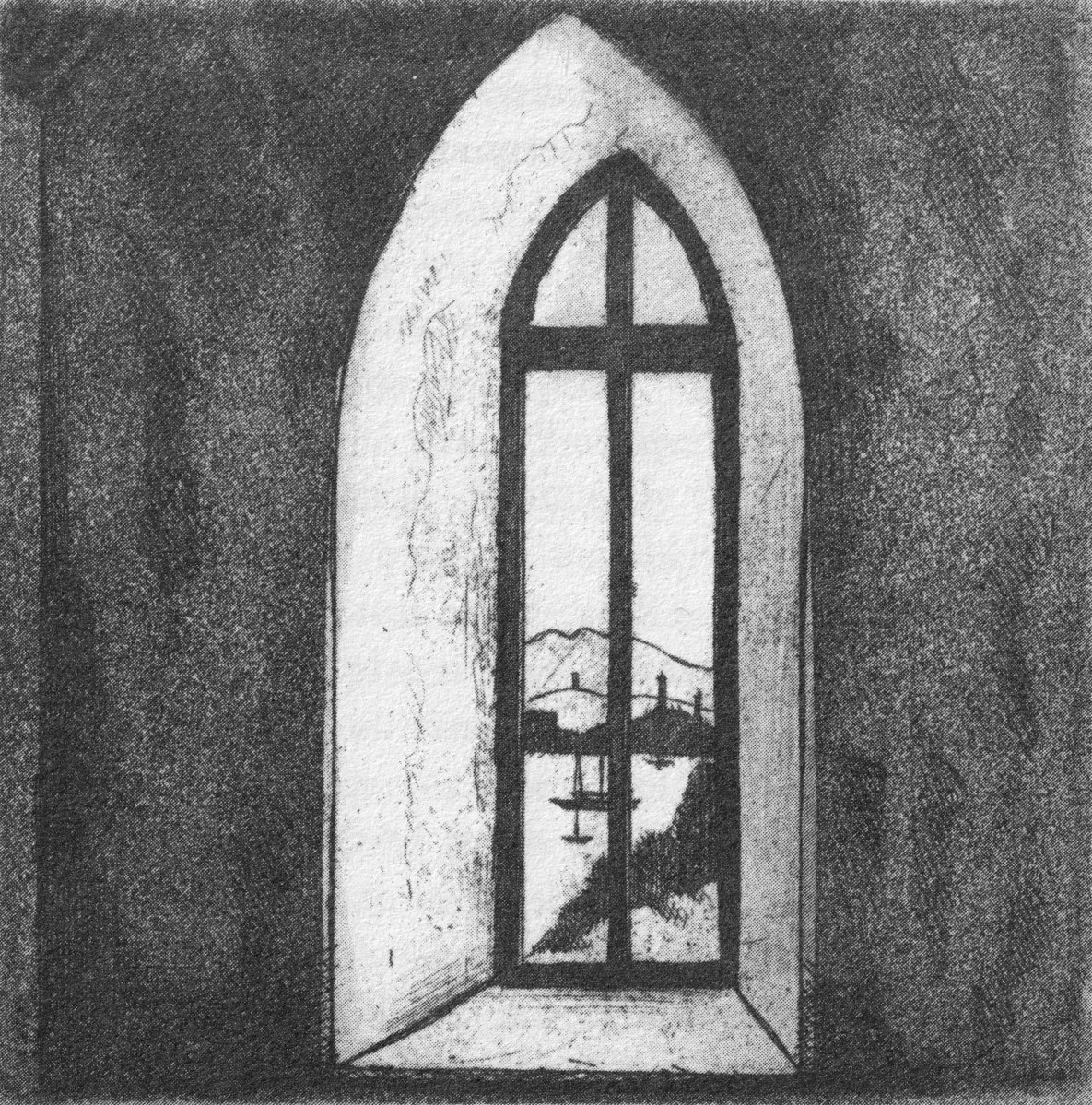
The eye of the artist searches out ways to tell a story or unfold a scene in graphic simplicity. This is St Brendan Crookhaven: a simple church that is dear to the hearts of mariners, and has long been so.
Stone Circle and Child Sacrifice is a thought-provoking piece. These ancient sites date back thousands of years: there are many here, beyond the West. We wonder at them, and can only guess at the significance they had to their constructors.
. . . The Landscape of the mind, which co-exists, interlocks and overlaps with the geographer’s vision, is an intangible, ephemeral thing. You may encounter it unexpectedly on a moonlit night or on some deserted headland, or perhaps in the dim light of a public bar. In this part of the world, soaked in memories and half-memories of the past, much is implied rather than stated. Like the collective unconscious, the landscape, too, is composed of a multitude of intertwining details. This collection of etchings of West Cork is concerned with those details: with small corners of towns and villages, with oddly-shaped fields and erratic skylines. Each etching is a vignette of landscape, architecture or environment. The pictures are organized around a number of themes yet the material as a whole has such an overall unity that what illustrates one section also has relevance for another. The point which they make is a collective one . . .
WELL MET BY MOONLIGHT: WEST OF WEST, BRIAN LALOR
Brian’s book is as much about the human side of West Cork as it is about the natural or supernatural. He illustrates towns – Kinsale, above – and the landscape. For me, this is a very significant little volume: the travels described within it echo my own journeying through this most special of places. Thank you, Brian, for so vividly enhancing my appreciation of West Cork.
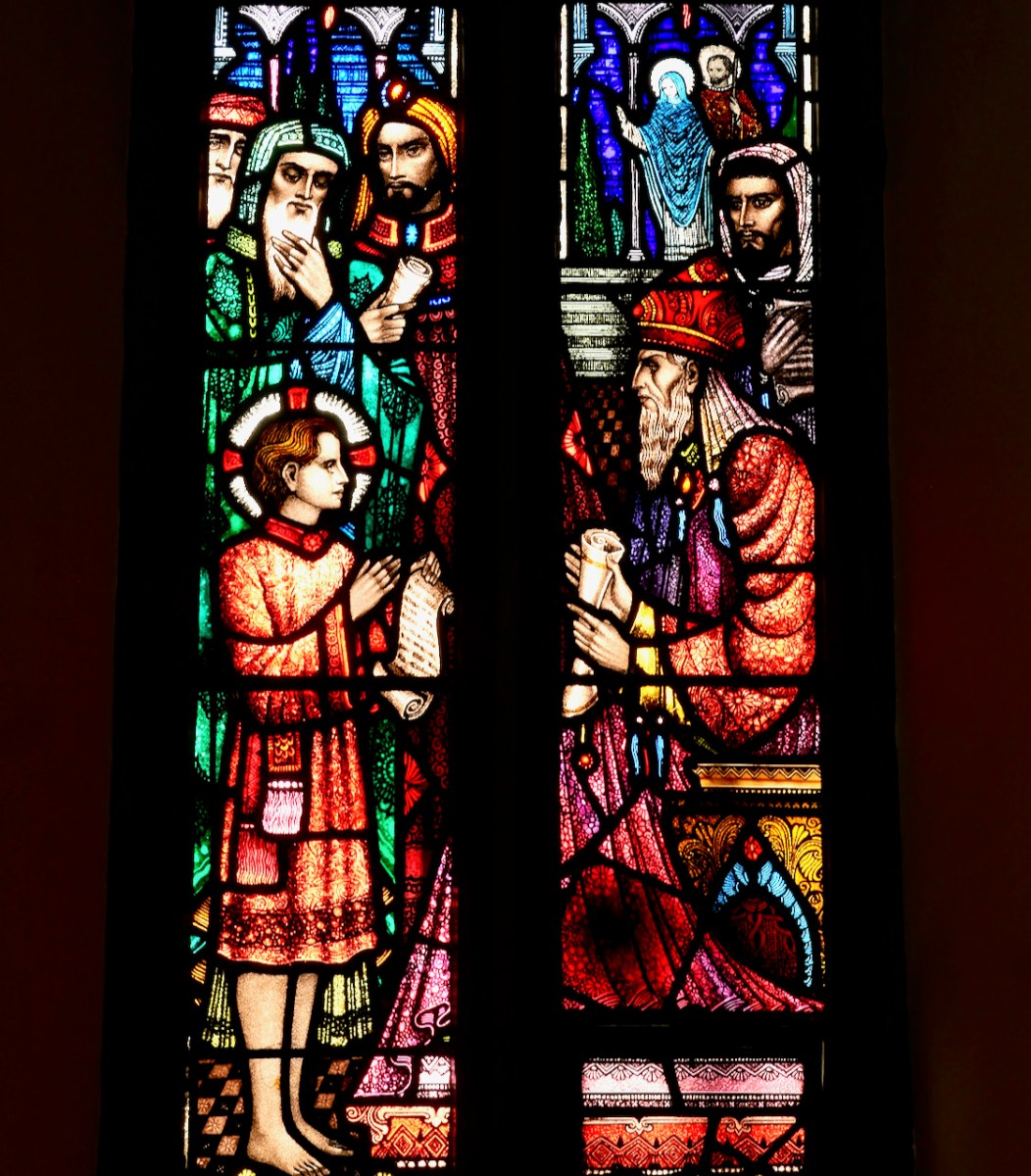
The first story is about a boy, Bobbie Bole, a student at Drogheda Grammar School in the 1940s. He’s the part of this account we don’t know much about, but he must have been a special boy. When he died, in 1942, many people donated money to create a memorial in his memory. It was decided that a stained glass window would be a good way to remember him,
Story 2: The Competition
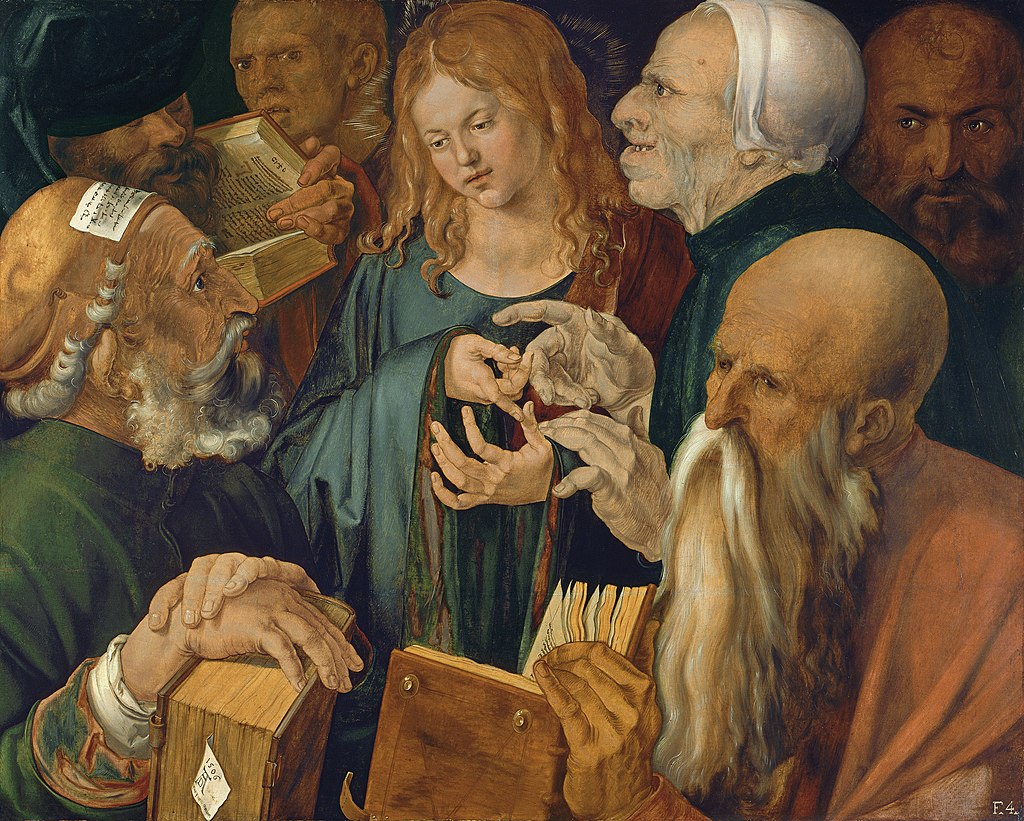
The school established a competition for the window, and invited stained glass artists to submit designs. The subject was to be Christ Among the Doctors, also known as The Finding in the Temple. Here’s the story, from the King James Version (just because I love the language of it):
Now his parents went to Jerusalem every year at the feast of the passover. And when he was twelve years old, they went up to Jerusalem after the custom of the feast. And when they had fulfilled the days, as they returned, the child Jesus tarried behind in Jerusalem; and Joseph and his mother knew not of it. But they, supposing him to have been in the company, went a day’s journey; and they sought him among their kinsfolk and acquaintance. And when they found him not, they turned back again to Jerusalem, seeking him. And it came to pass, that after three days they found him in the temple, sitting in the midst of the doctors, both hearing them, and asking them questions. And all that heard him were astonished at his understanding and answers. And when they saw him, they were amazed: and his mother said unto him, Son, why hast thou thus dealt with us? behold, thy father and I have sought thee sorrowing. And he said unto them, How is it that ye sought me? wist ye not that I must be about my Father’s business? And they understood not the saying which he spake unto them. And he went down with them, and came to Nazareth, and was subject unto them: but his mother kept all these sayings in her heart. And Jesus increased in wisdom and stature, and in favour with God and man.
It’s a Biblical Verse that is, for obvious reasons, associated with students and scholarship, making it an appropriate subject for this occasion. It’s been the subject of many famous paintings, including this one by Albrecht Dürer.
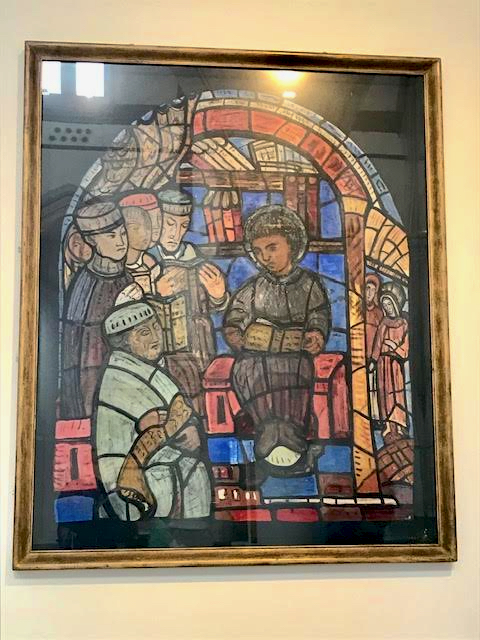
There were two submissions that we know of, and the first was by none other than Evie Hone. We know this because her full-size sketch for the window is displayed on the wall of the Holy Cross Church in Dundrum, having been acquired for the church by Fr Kieran McDermott. I am grateful to David Caron, General Editor of the Gazetteer of Irish Stained Glass, and administrator of Irish Stained Glass on Instagram, for the photograph and information. The accompanying text refers to the drawing as a cartoon and states that it was done for the Drogheda Grammar School, but ‘never realised.’ It does indeed look like a cartoon, in that glass cutlines have been included, and is very recognisably in her 1940s style.
The second submission was by the Harry Clarke Studios. The Studio won the commission on the merits of the sketch they submitted, but that bit comes later.
Story 3: Erasmus
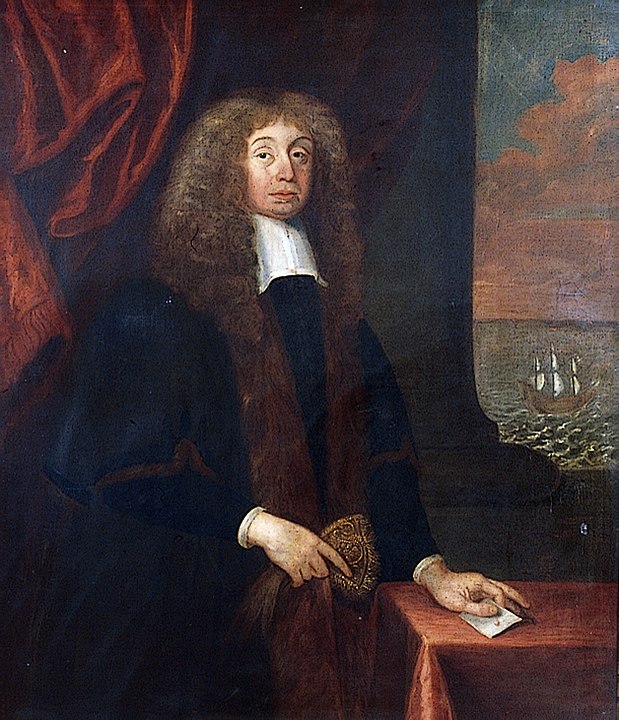
The window was duly installed in the chapel in the Drogheda Grammar School, an academic institution originally part of the Erasmus Smith Charter Schools. Erasmus Smith made his money supplying Cromwell’s army. In part payment he was given land in Ireland. After the Restoration, this put him in an awkward position with the Crown and so he
manoeuvred to protect his position and to further his essentially Puritan religious stance, which he modified to suit the religious sensibilities of the new Royalist regime. He achieved this in part by creating an eponymous trust whereby some of his Irish property was used for the purpose of financing the education of children and provided scholarships for the most promising of those to continue their studies at Trinity College, Dublin
Erasmus Smith By Circle of John Michael Wright Public Domain
One of the schools that was established under the Trust was the Drogheda Grammar School – which is both ironic and fitting, given that Drogheda was one of the towns notoriously devastated by Cromwell.
Story 4: The School
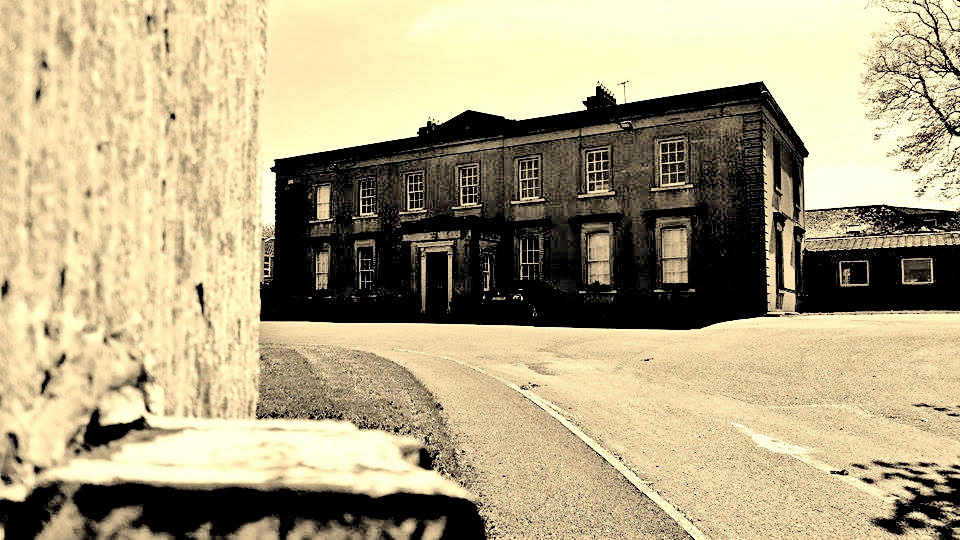
Today, Drogheda Grammar School is a respected non-denominational, co-educational secondary school. It is operated under a management committee and subscribes to a Quaker ethos. Originally a boys’s boarding school, up to 1976 it occupied a prominent place in the town centre, right beside St Lawrence’s Gate, but even by the 1950s was becoming in need of refurbishment.
When it moved out to the present site, the window was put into storage, where it remained until 2012 – out of sight, but not forgotten. A brand new school was completed in 2012 and the window was installed into a Reflection Room.
Story 5: Brittas Bay Antiques
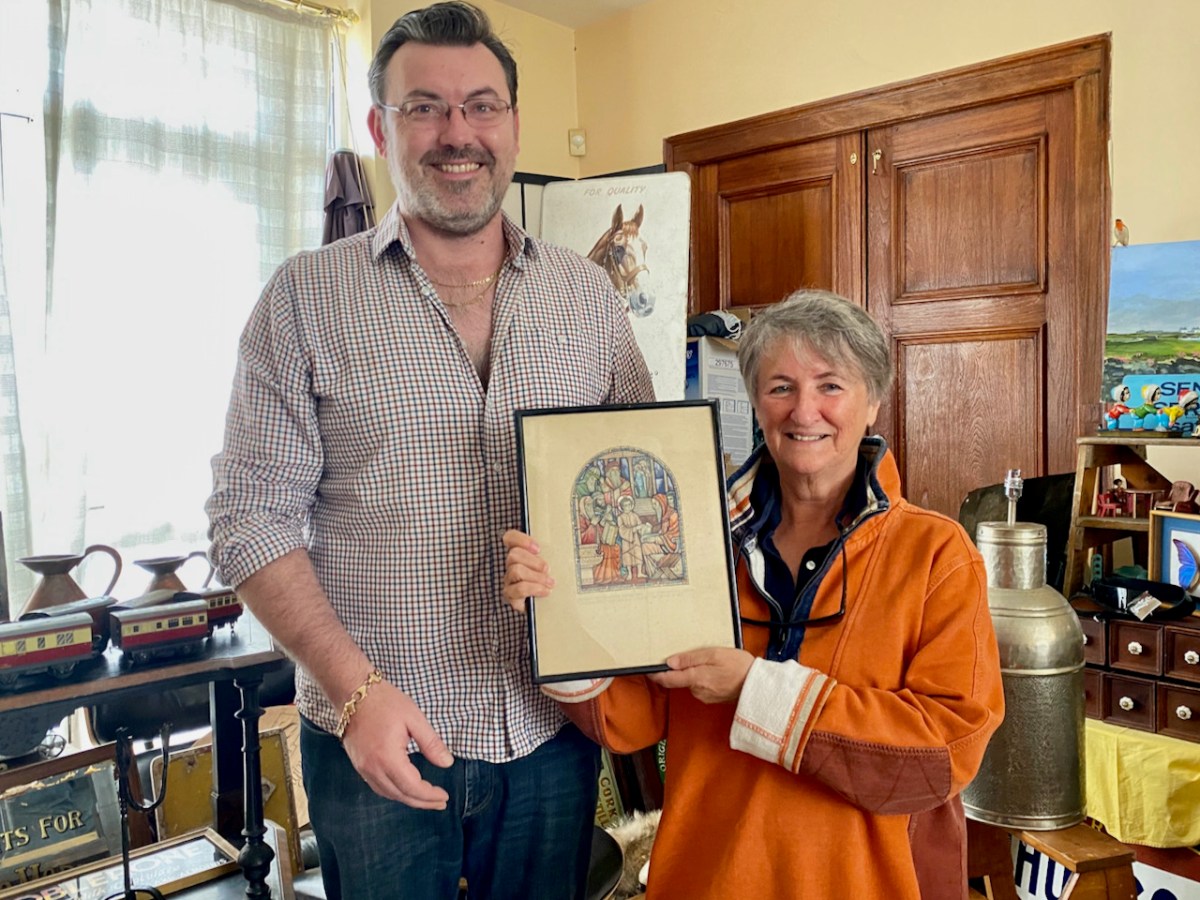
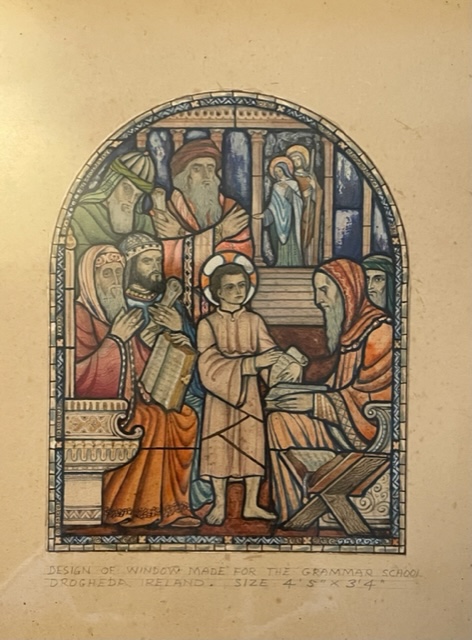
Wait – how did this story manage to wind its way to a quirky antique store by the beach in Wicklow? Well, at some point in the last couple of years Niall (below and yes, he really is that tall) and Chrissie, the proprietors, picked up a box of curios from someone, and discovered a Harry Clarke Studio sketch inside it. They advertised it online and someone stumbled across it, paid for it, and asked me to pick it up for her. I was happy to do so. (The shop is an Aladdin’s Cave, by the way – most enjoyable browsing I have done in years!)
Story 6: Etain
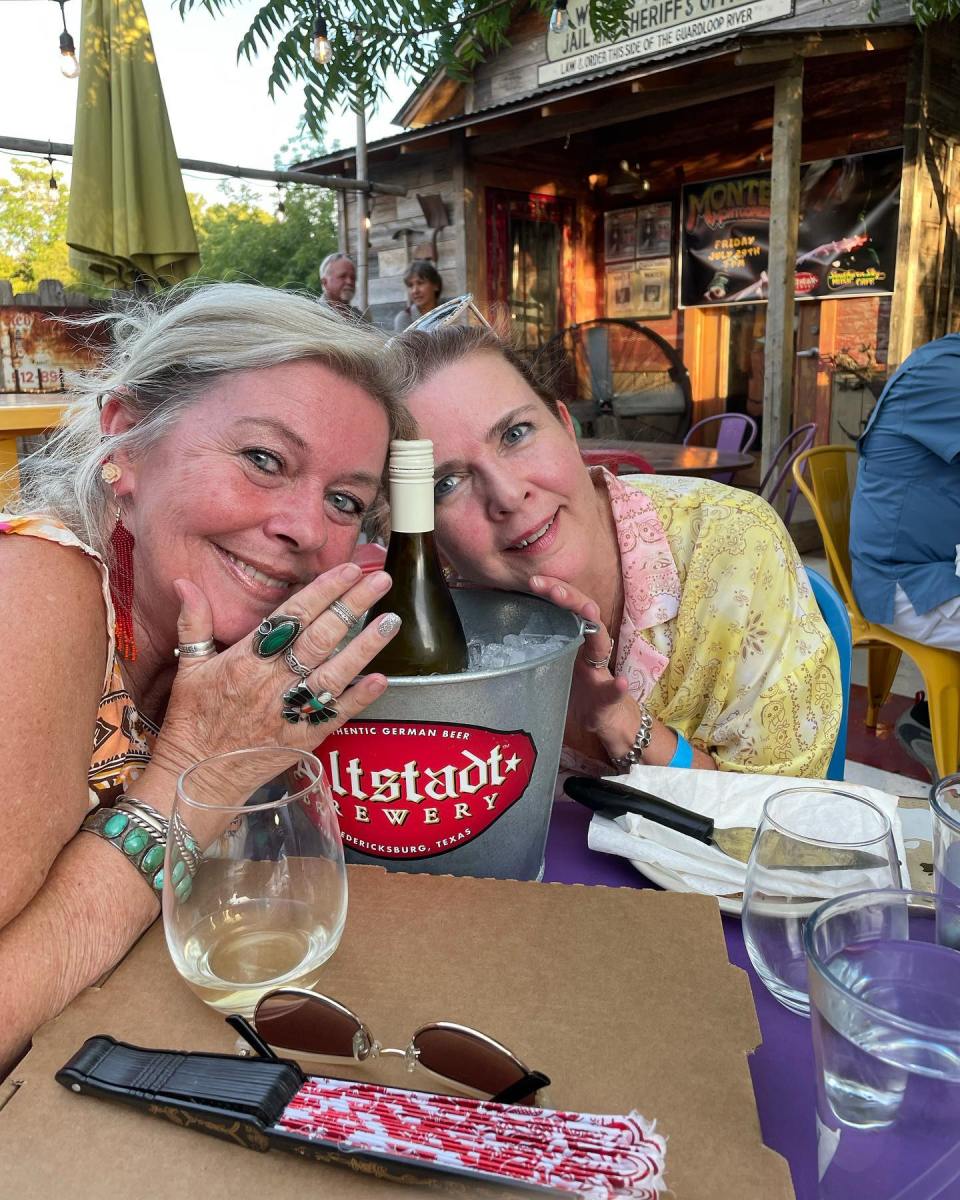
So c’mon Finola – ‘someone’ asked you to pick it up? Who exactly? It was my friend, Etain Clarke Scott, daughter of David Clarke and grand-daughter of Harry Clarke and Margaret Clarke. She and her siblings live in Texas, although they grew up in Dublin and make frequent visits over here. It was on her last visit, with her sister Veronique, that she asked me to pick up the sketch.
This is Etain (left) and Veronique (right) – as you can see they are both beautiful, and lots of fun! (And she will probably kill me from stealing this photo from her Facebook page.)
Story 7: The Research
At this point, we knew that the sketch was a window design produced by the Harry Clarke Studios for the Drogheda Grammar School – it said so right under the sketch, but we didn’t know whether the window had ever been made or whose work it was. The first question was easy – a quick Google led us to the school website and to the story of the window. I suspected that the artist was the Studio’s manager and chief designer, William Dowling, who took over the role from Richard King upon King’s departure in 1940. Regular readers will know by now that long after the death of Harry (in 1931) the Studios had continued with what I have called The House Style since what people wanted was ‘A Harry Clarke’.
I consulted with my stained glass colleagues – David Caron, Paul Donnelly, Jozef Voda and Ruth Sheehy, all contributors to the Gazetteer of Irish Stained Glass and all very knowledgeable indeed on the work of the Studios during this period. I offered in evidence a couple of examples of Dowling windows of the same subject – Christ Among The Doctors or The Finding in The Temple. The one above is in Wicklow and the one below in Balbriggan.
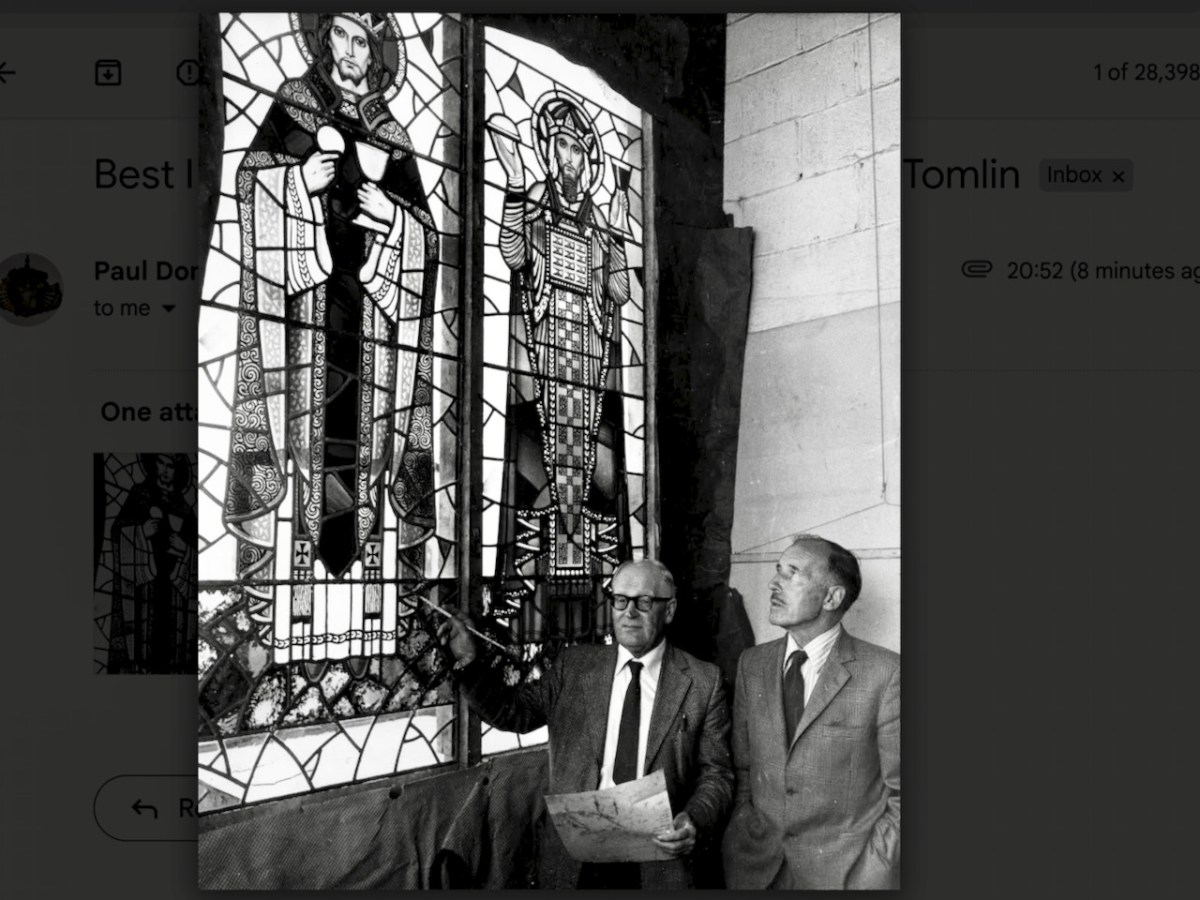
There was much helpful discussion by email: it was at this point David contributed the information and photograph about the Evie Hone cartoon, and both Paul and Ruth identified the handwriting as Dowling’s and agreed that the style was his. Etain remembers Willie Dowling well as a kind and avuncular presence in the studio, always impeccably dressed, and she was pleased at this attribution. That’s Dowling below (left), with Stanley Tomlin, at the Studios at a later date.
Story 8: Taking the Photographs
We had the sketch and now we knew whose work it was and also that it was in situ in the school. What we didn’t know was what the window actually looked like. Was it exactly as the sketch has intended? Had changes been made to the shape or dimensions of the window? This often happens when older windows are inserted into newer openings. I contacted the school and asked for permission to come and photograph the window, which was graciously given.
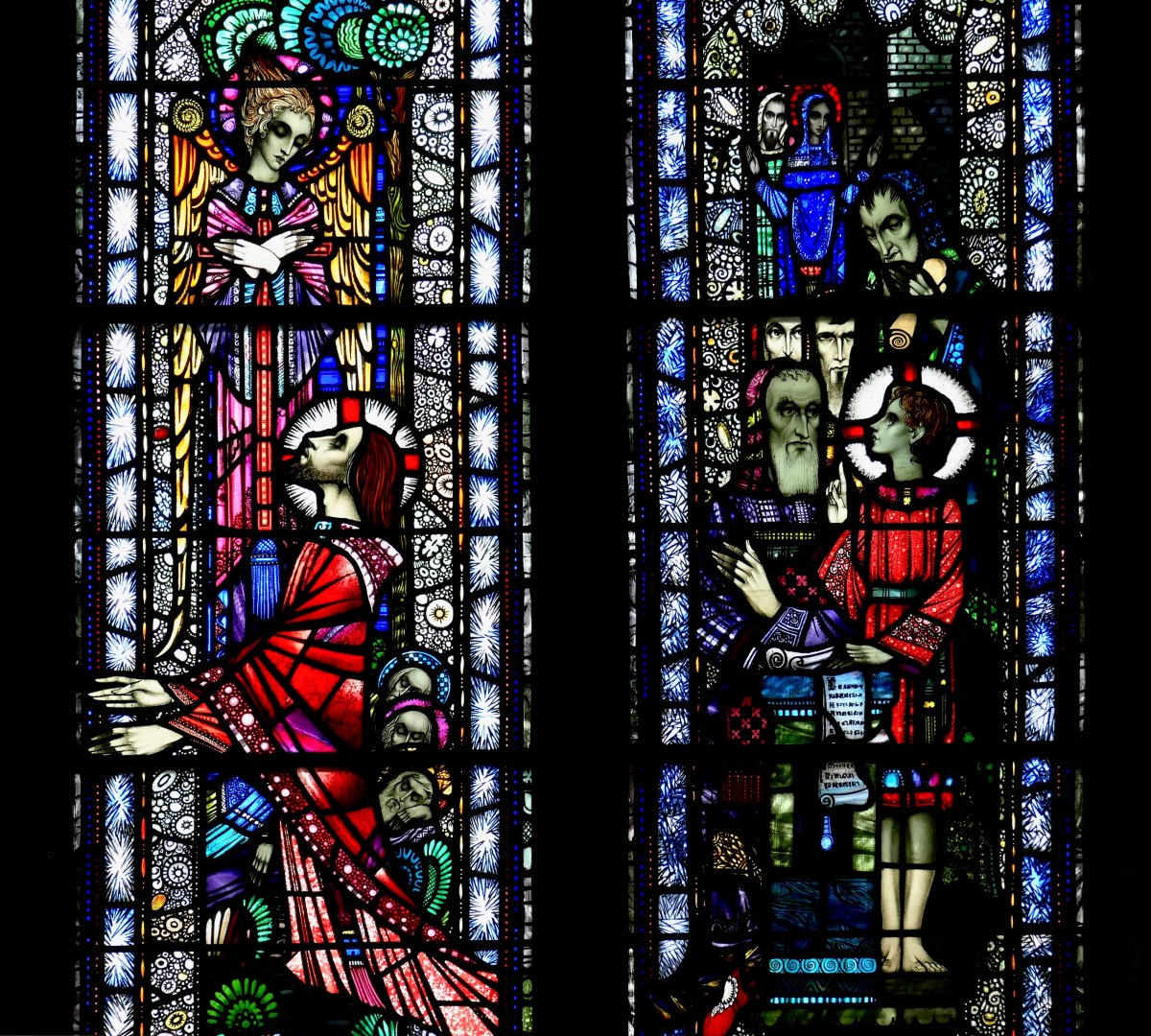
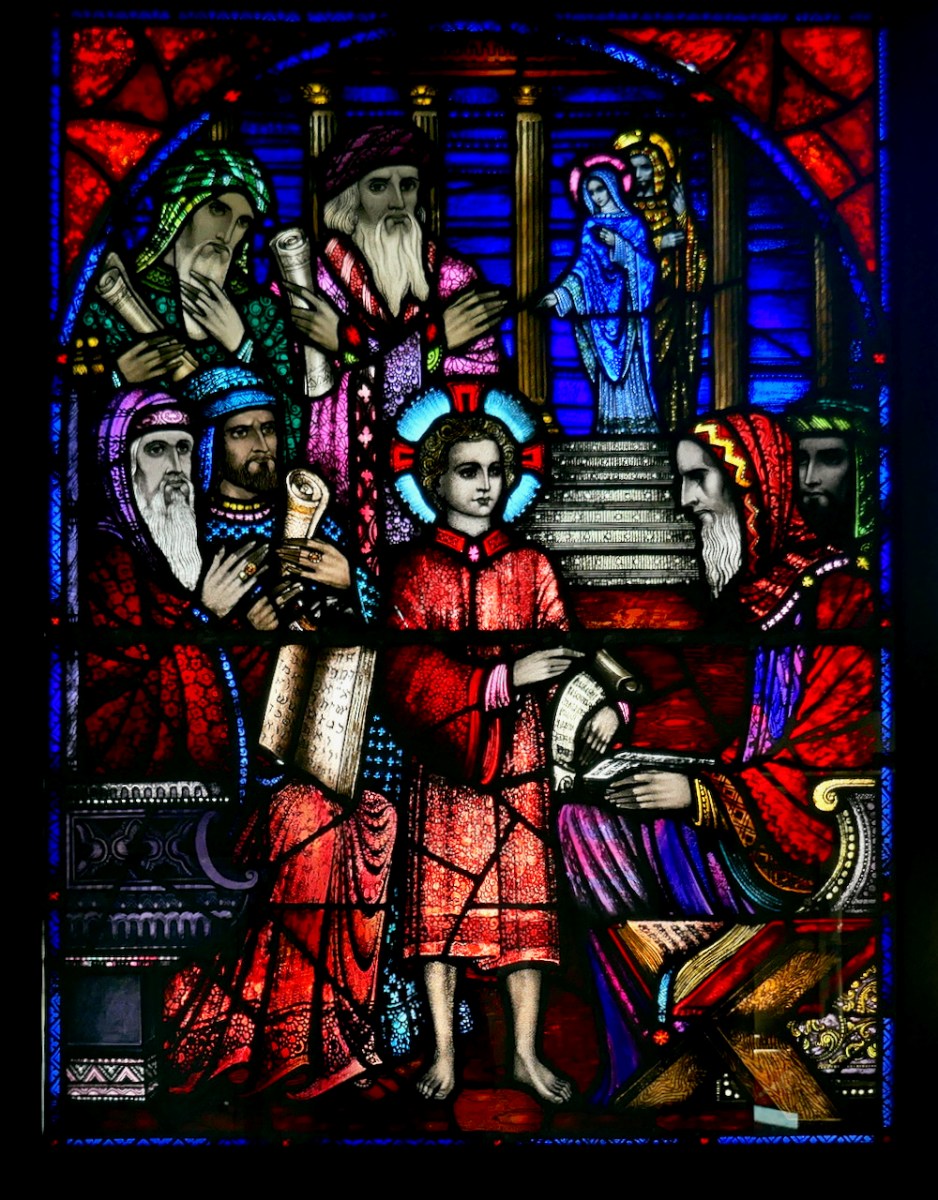
What I found was that the stained glass had been carefully inserted into a larger window, protected front and back with toughened glass, and the story of the Bole Memorial Window was provided in a framed script on the wall. Although Etain’s sketch shows a window with a rounded top, this opening was square. If the window had been changed to fit more recently, it had been done so skilfully that it was not obvious or indeed detectable.
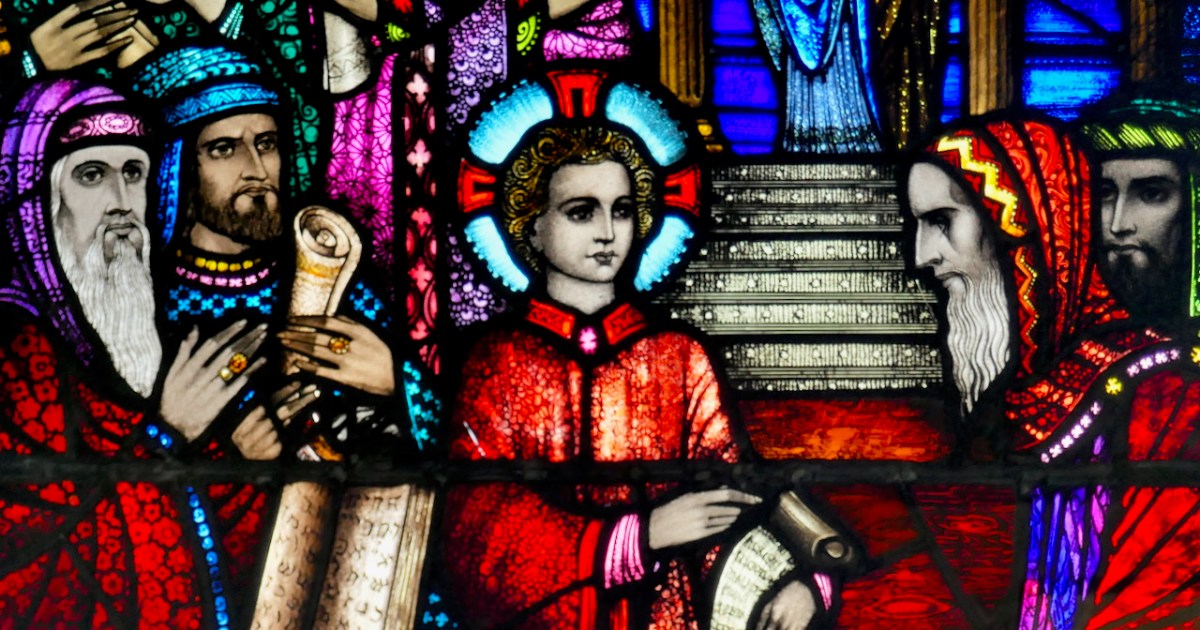
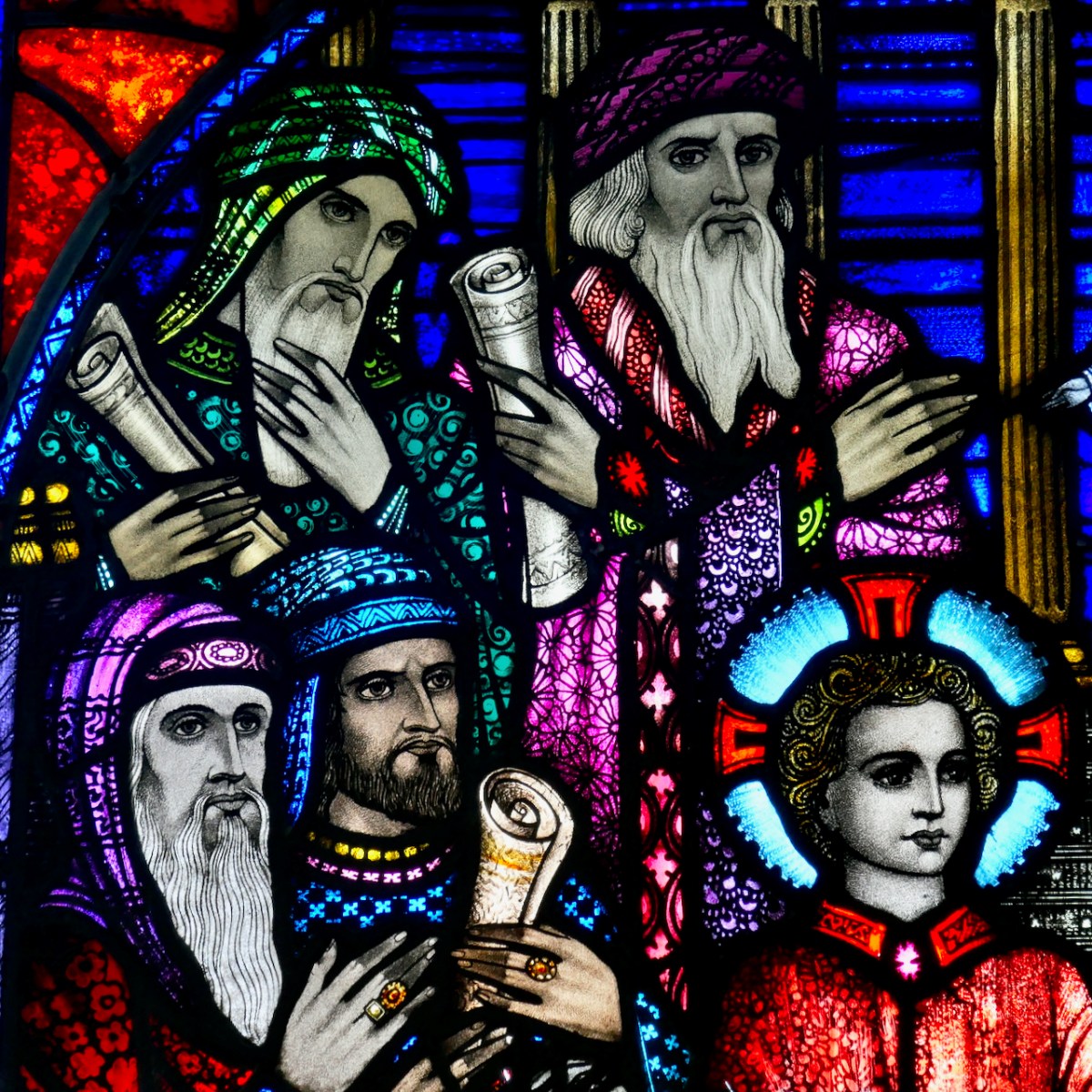
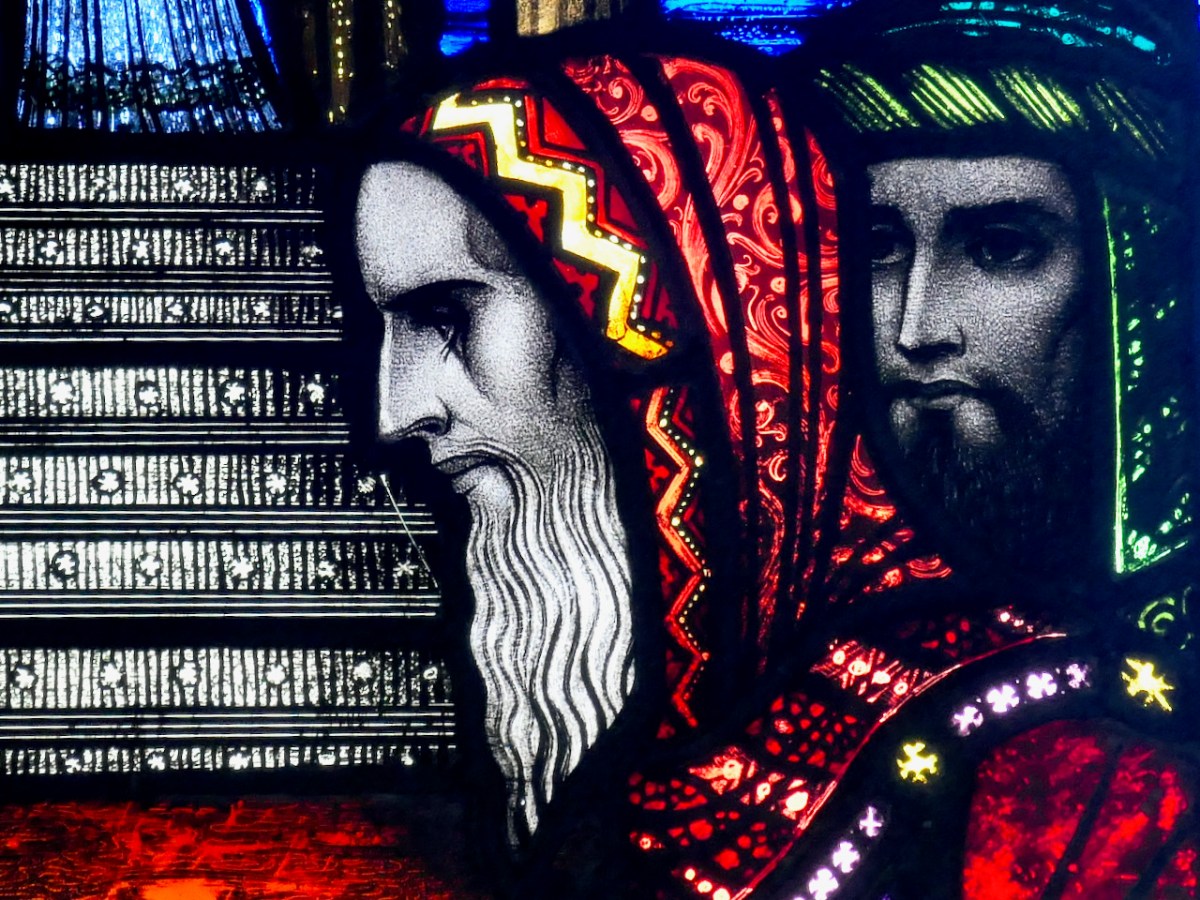
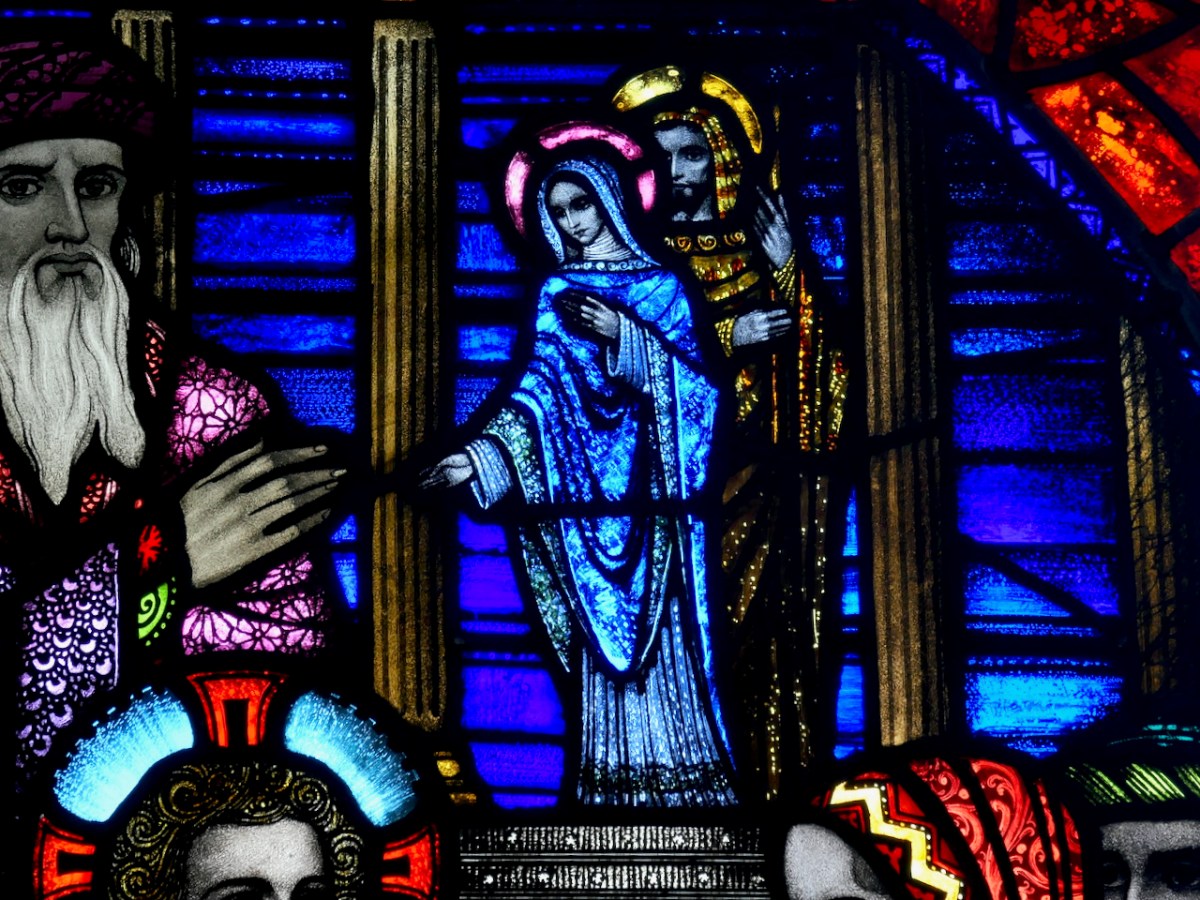
In fact, the window far exceeded my expectations. It is beautiful. Dowling had used good glass and the effect is jewel-like and vibrant. He has gone to town on every panel, painting, aciding, scratching, and filling even the smallest piece with decorative detail.
The figures of the Doctors are expertly rendered, while the small Joseph and Mary are similar to his Balbriggan and Wicklow panels. Jesus looks suitably solemn and earnest, as befits the good model that was intended for the students.
Afterword
Thank you to the Drogheda Grammar School for facilitating the photographic session. It was wonderful to hear, from the school Principal, Hugh Baker, that the window is treasured. Thanks to my collegial group of stained glass scholars for their advice and additional photographs. Most of all, thank you to Etain for entrusting me with the sketch and sending me down this story lane.
I’m fascinated by how artists captured Ireland through the centuries and have recently discovered a new one – Thomas Creswick. We mostly know Creswick’s Irish work through the engraving of his Irish landscapes for nineteenth century books on Ireland.
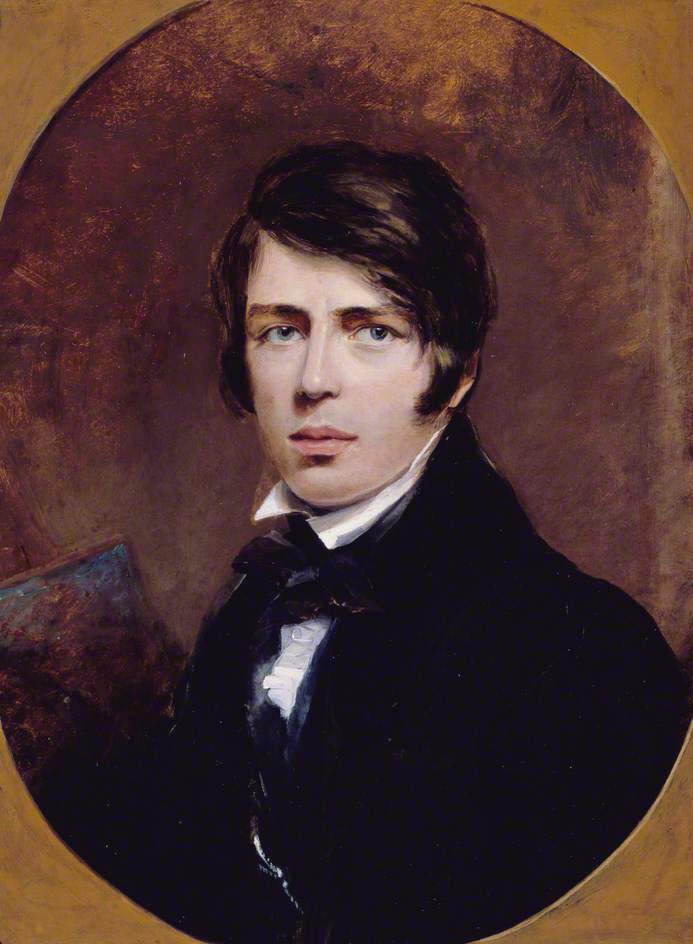
First – who was Thomas Creswick? He was born in Sheffield in 1811, but is always associated with the Birmingham School of painters. Victorian loved their romantic landscapes and Creswick was a favourite, thanks in large part to the innovation of engraving, through which paintings could be reproduced in black and white and mass-produced. His self portrait shows a darkly handsome young man, fashionably dressed and coiffed.
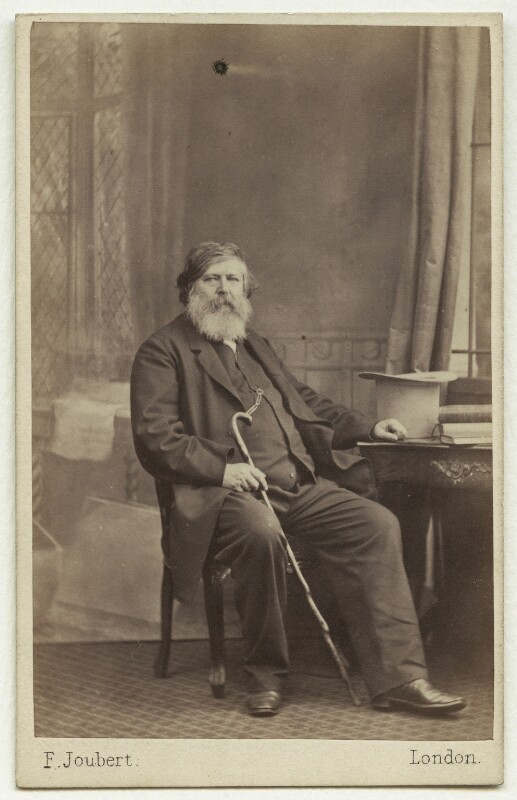
Here he is as an older man, in a photograph from the British National Portrait Gallery (used under license). He was painted at around this time by his friend William Powell Frith and the painting shows the same distinguished gentleman. However, the painting, on the Royal Academy website, is accompanied by a pen-portrait which is less complimentary than the painting.
William Powell Frith counted Creswick as one of his best friends, describing him as ‘good nature personified’. This tasteful portrait, composed in muted tones, certainly depicts a man of benevolent appearance and dignified bearing. However, this portrayal is at odds with many accounts of Creswick’s appearance and personality. Frith’s daughter recalled a ‘festive, rollicking and amusing’ man whose conversation was peppered with swearwords and who ‘was too fond of both food and drink to be always in the best of health’. Creswick’s larger-than-life character was not universally appreciated. Other landscape artists, in particular, accused him of exerting his influence amongst the Academicians to exclude his rivals from the institution. Creswick’s detractors made much of his unkempt appearance and reputed aversion to soap and water, nicknaming him ‘the big unwashed’.
Whatever about his personality, his skill as a painter was never in question, and drew high (and rare) praise from Ruskin for his attention to detail and his ability of draw directly ‘from nature’. The only other landscape artist Ruskin praised was Turner. Creswick did indeed draw from nature, doing many of his sketches and some finished paintings en plein air, a rare enough approach in those days.
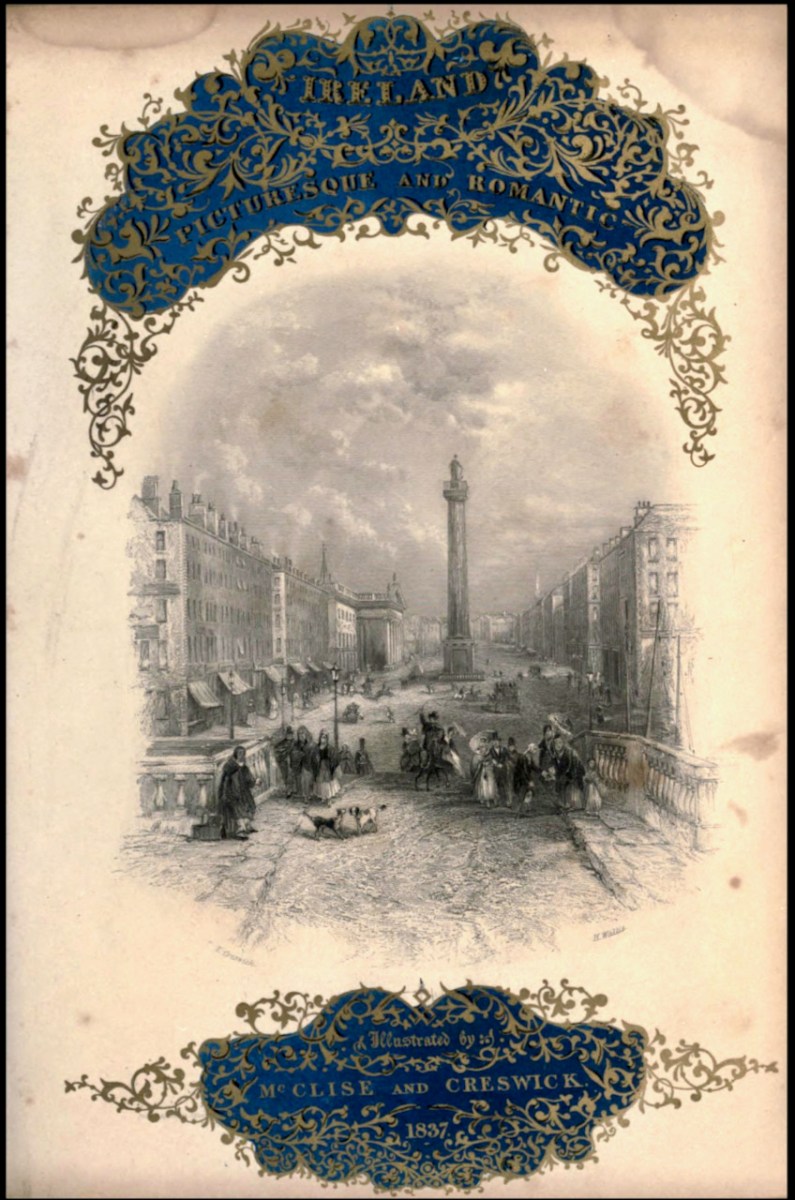
Although most of his paintings were of rocky glens and pastoral river scenes in England and Wales, he travelled to Ireland and visited many of the famous beauty spots then becoming favourites with British tourists. His illustrations (engravings of original paintings) can be found mainly in two volumes. The first is Picturesque Scenery in Ireland (no publication date) with all the illustrations by Creswick, and the accompanying text by “A Tourist”. The other is Ireland, Picturesque and Romantic, published in 1837/38 with text by Leith Richie. Both are available on the marvellous Archive.org. Some of the illustration are the same in both books and some are different.
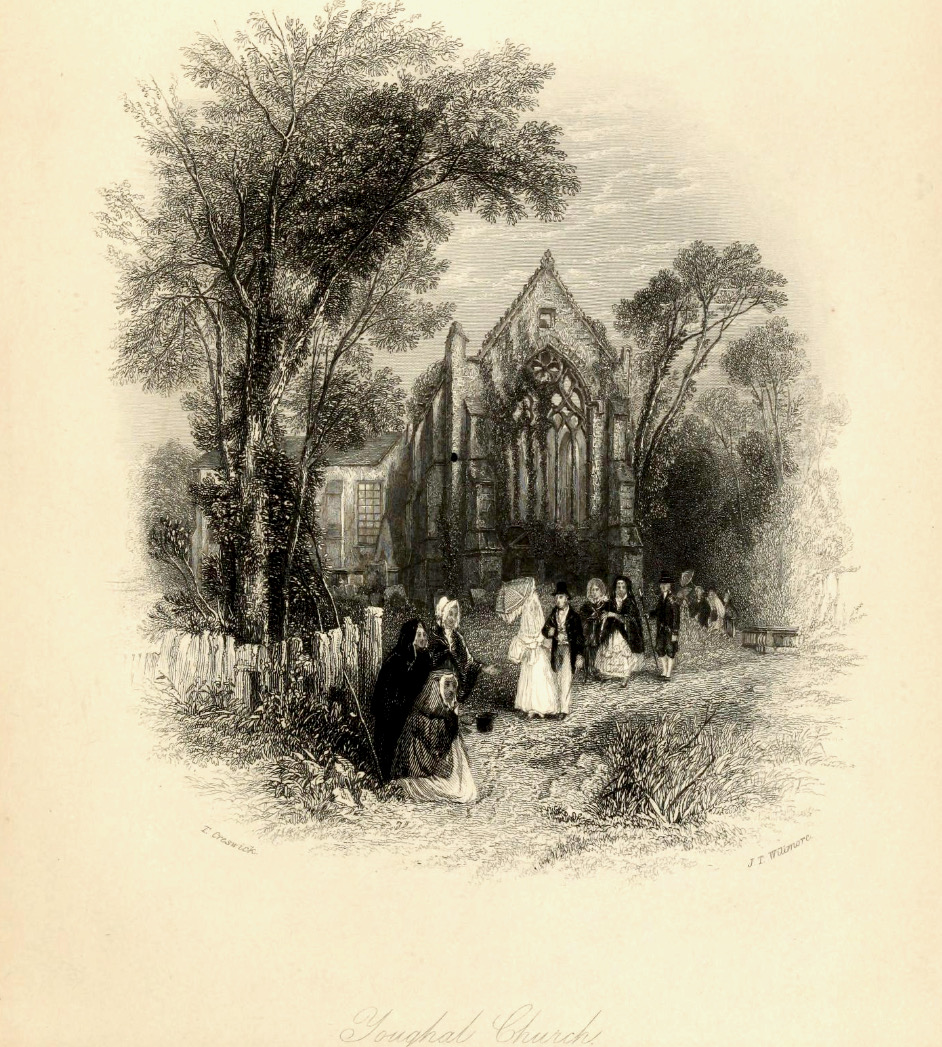
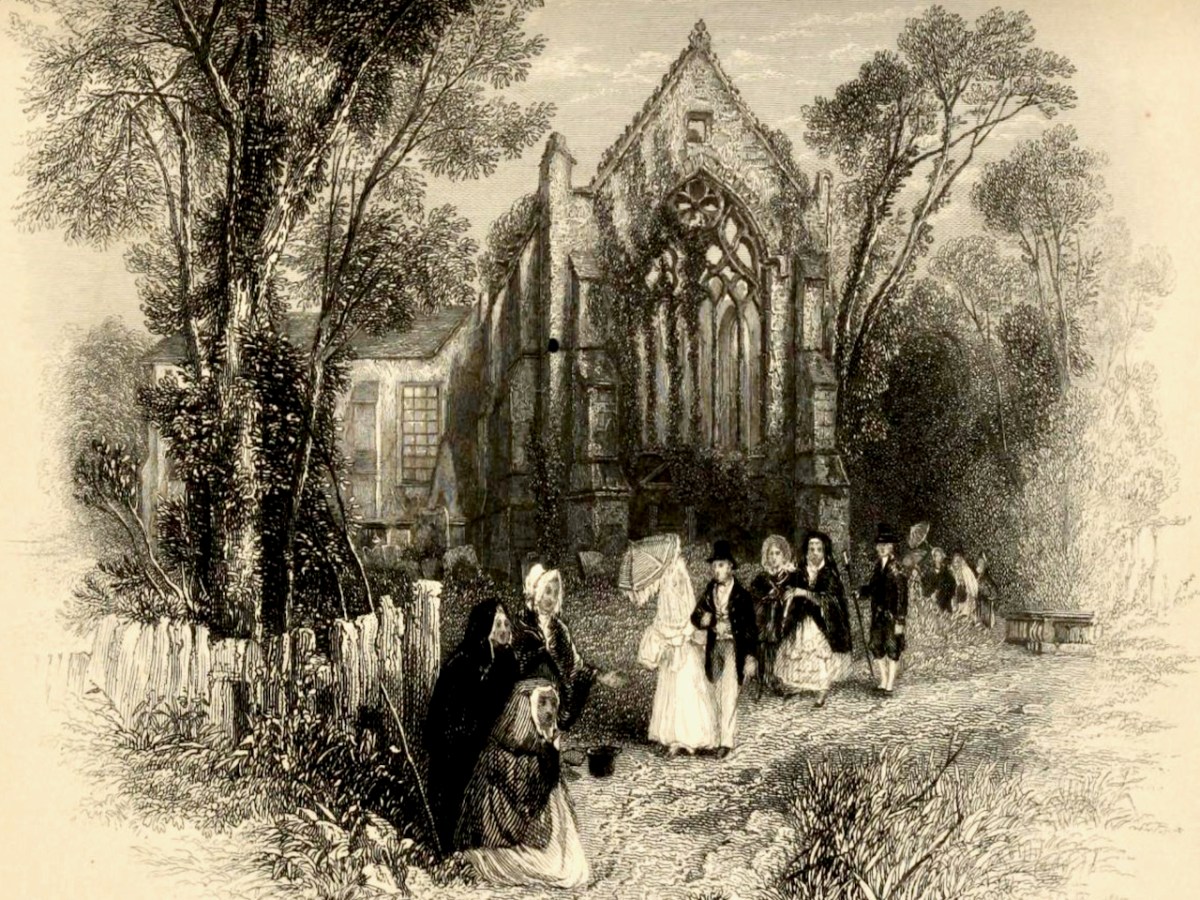
I’ve chosen to confine the illustrations I’m using for this post to Cork. Let’s start at the far east of the county and move west. So – first up is Youghal. Having been in Youghal recently for the excellent Youghal Celebrates History, which concentrated on St Mary’s Collegial Church and its 800 years of history, I loved Creswick’s depiction. He captures the roofless (now roofed) ruin, rendering the complex tracery of the tall window very accurately. His polite and well dressed ladies and gentlemen, visiting the romantic ruins, must run a gauntlet of begging women, one of who is wearing the Cork hooded cloak.
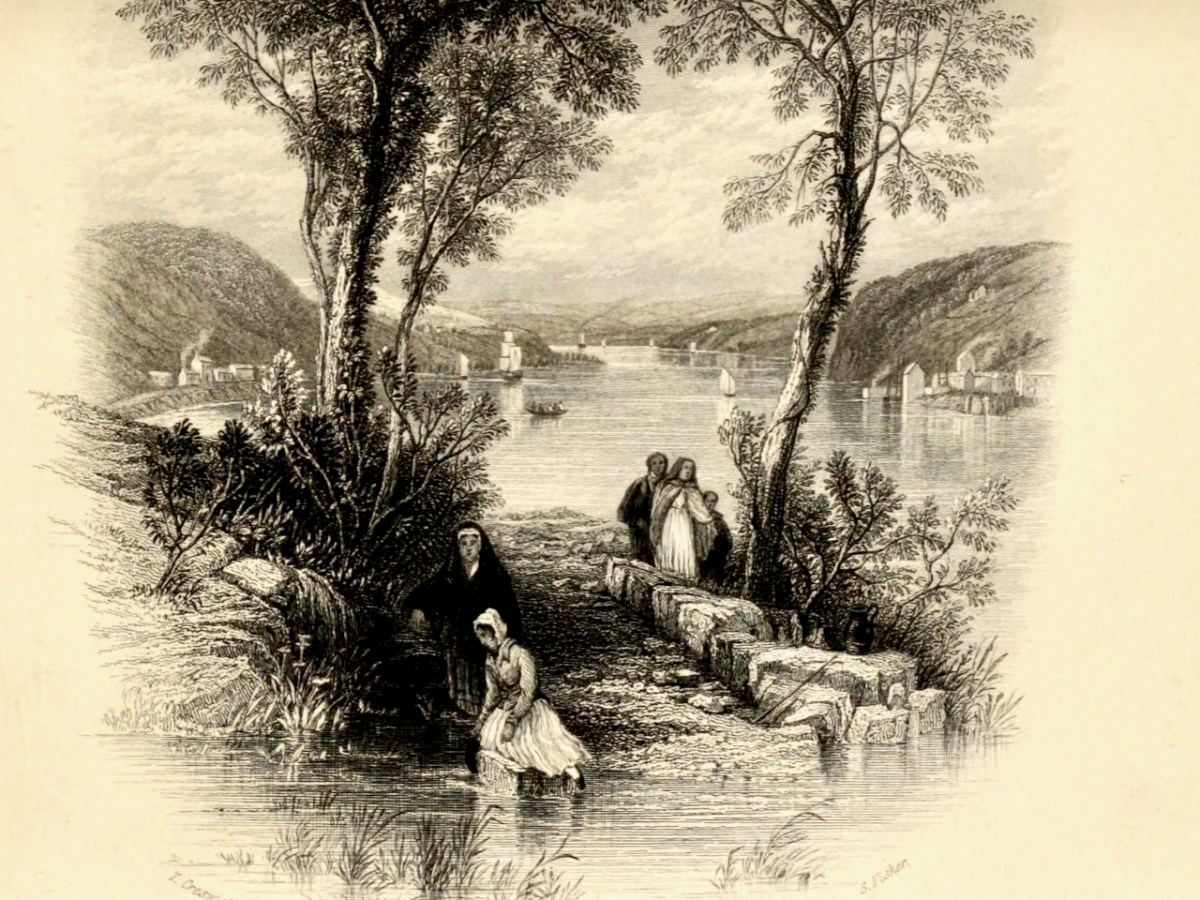
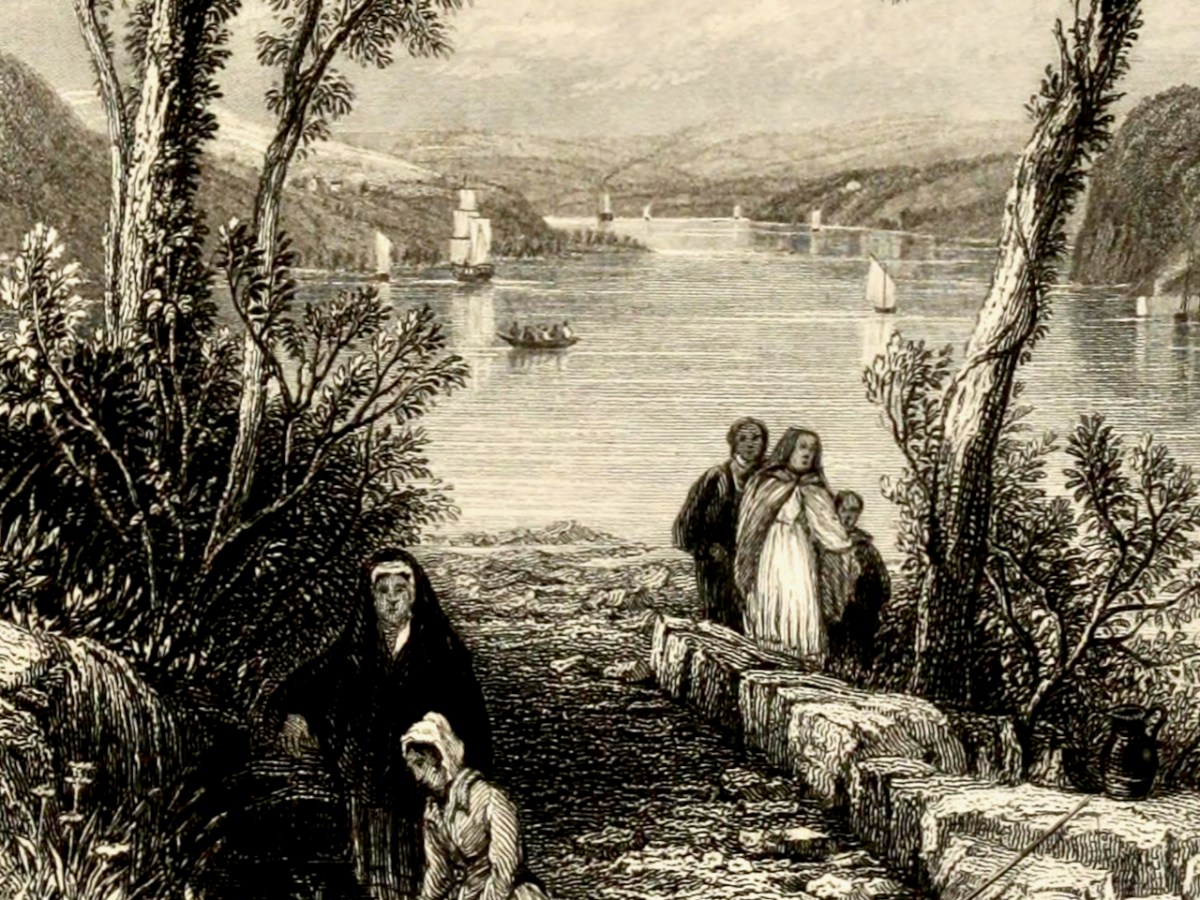
Moving westwards, we come to the ferry at Passage West – a journey Robert and I took only yesterday. For us it was a quick trip on the ultra-efficient car ferry, but Creswick shows an altogether more leisurely affair involving a rowing boat. The view of the boat is framed between trees. Figures in the foreground include a woman drawing water from the River Lee in a ewer – not something I’d want to do today.
The Passage Ferry Scene is a good example of the Picturesque Idiom, which had its conventions. According to Simon Cooke on The Victorian Web, artists such as Gainsborough and Constable
followed the compositional rules of the Picturesque and Creswick similarly adheres to its iconography. Drawing on the many examples of the type, he deploys a semiotic made up of trees (typically placed as framing devices), a well-defined foreground (usually populated with peasants or cattle), a stream, river or pathway, an architectural feature (castle, house, church), a large expanse of sky, and a prospect (often of mountains), or a vista reaching into the far distance.
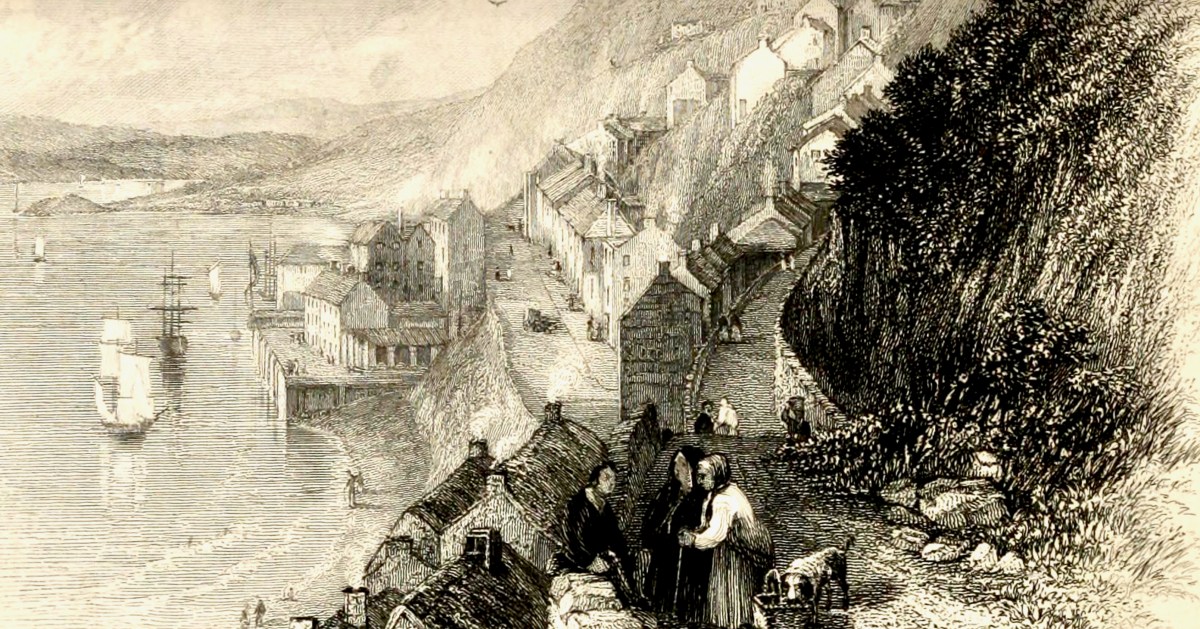
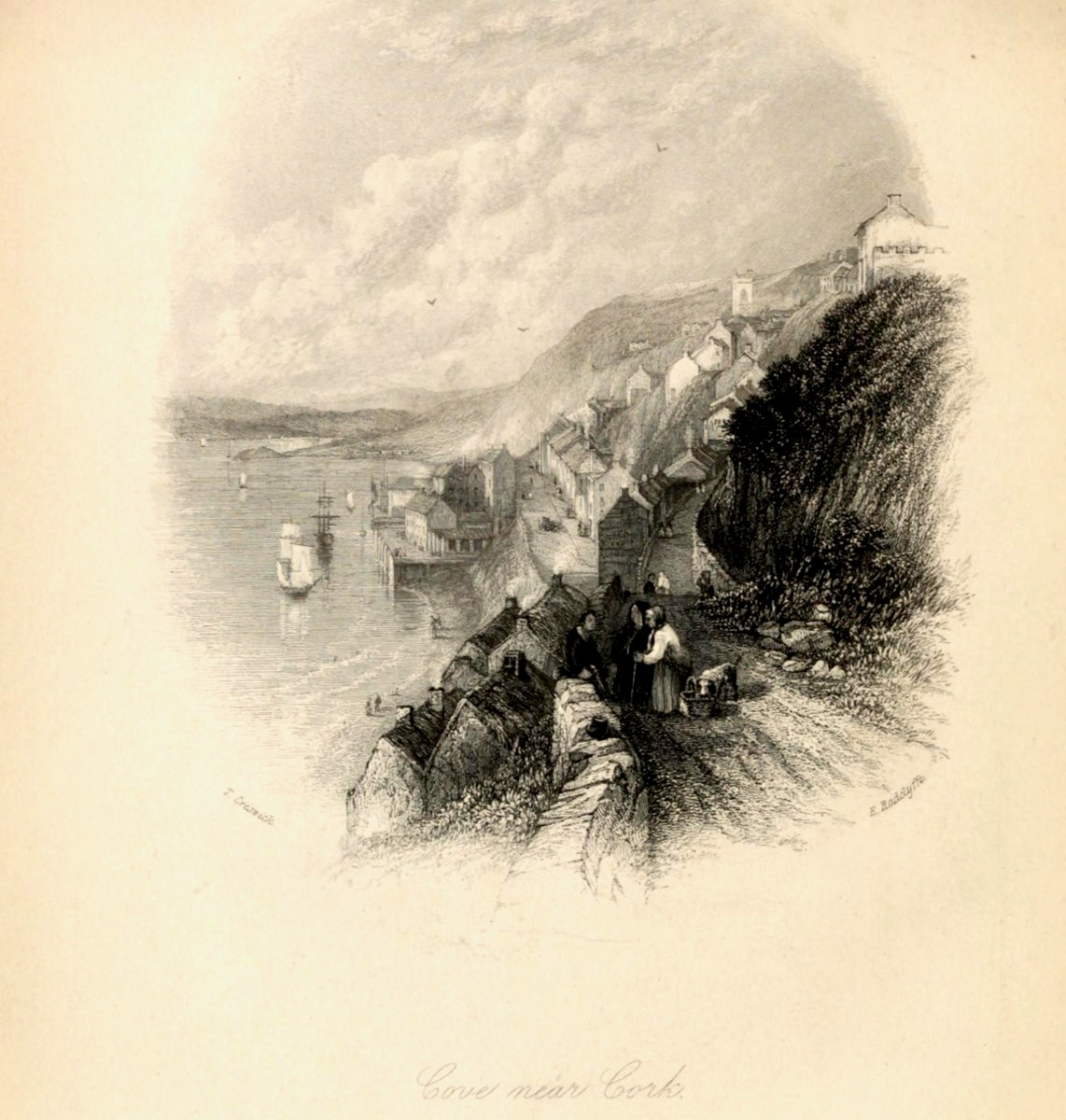
Next stop is Cobh (below, then called Cove, afterwards rechristened Queenstown, and finally reverting to Cobh). Creswick’s image is of an older town, before extensive docks were built, and captures the steepness of the roads and the precipitous way the houses cling to the hills.
Those steep narrow streets are still there, in Cobh. Below the seated figures is the area of fishermen’s cottages known as The Holy Ground. There’s no sign yet of the magnificent St Colman’s Cathedral, which didn’t get started until the 1860s. See the lead image in this post for a closer view of Cobh.
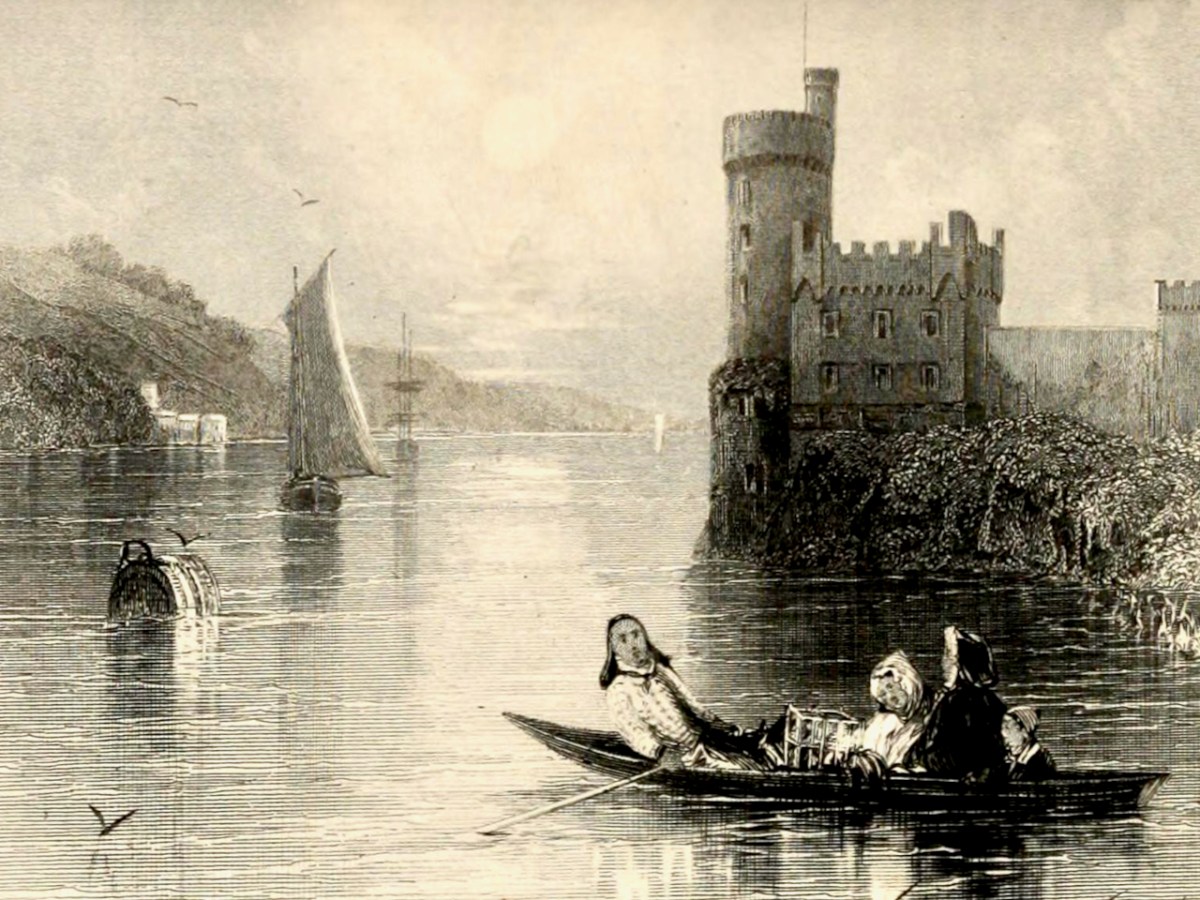
Blackrock Castle has to be one of the most painted pieces of scenery in Cork – so romantic, as it sits on its watery outcrop on a bend of the River Lee. In the foreground a family rows out to do what – set a lobster pot? – while a gaff-rigged sloop makes its way upriver.
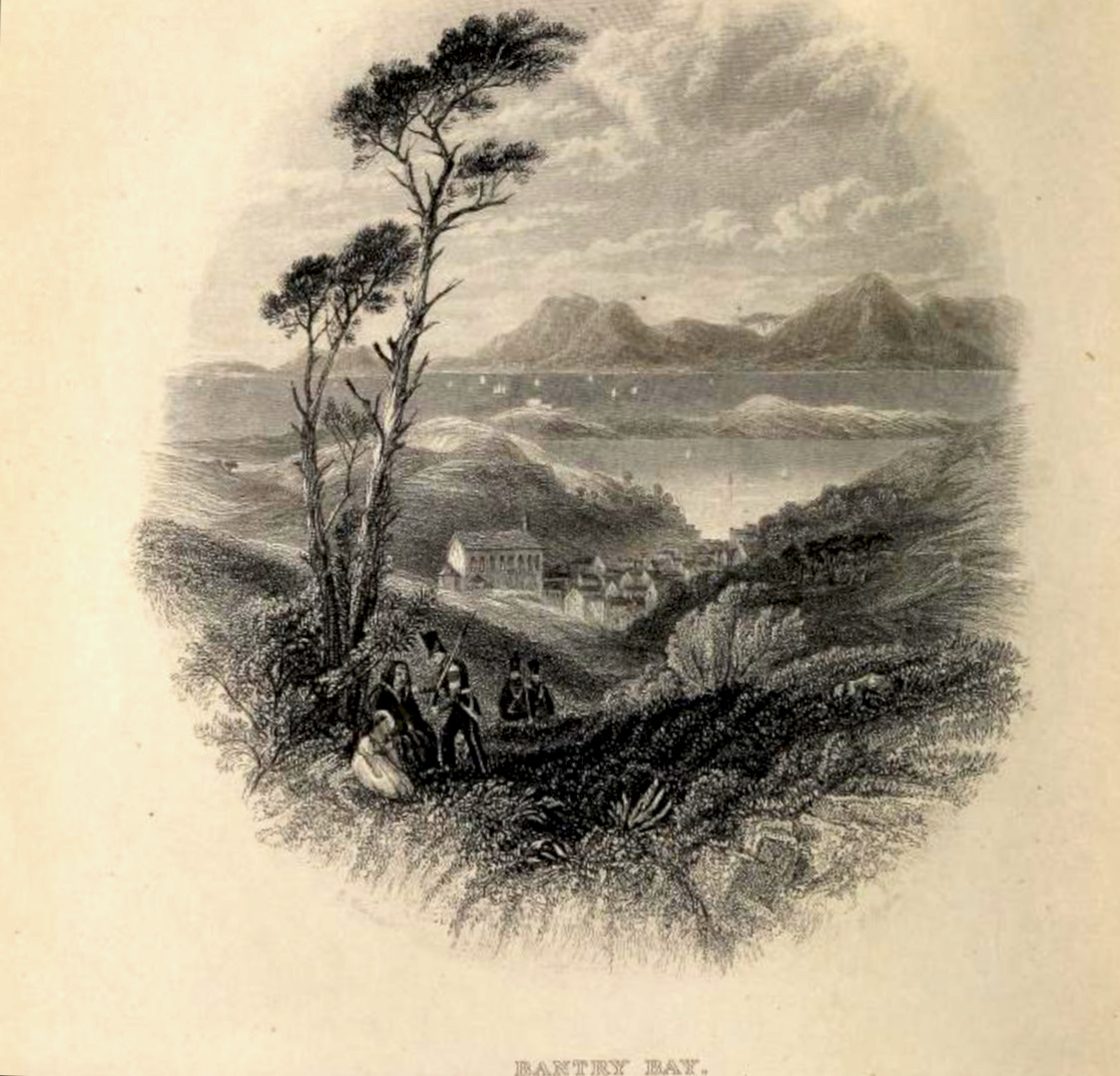
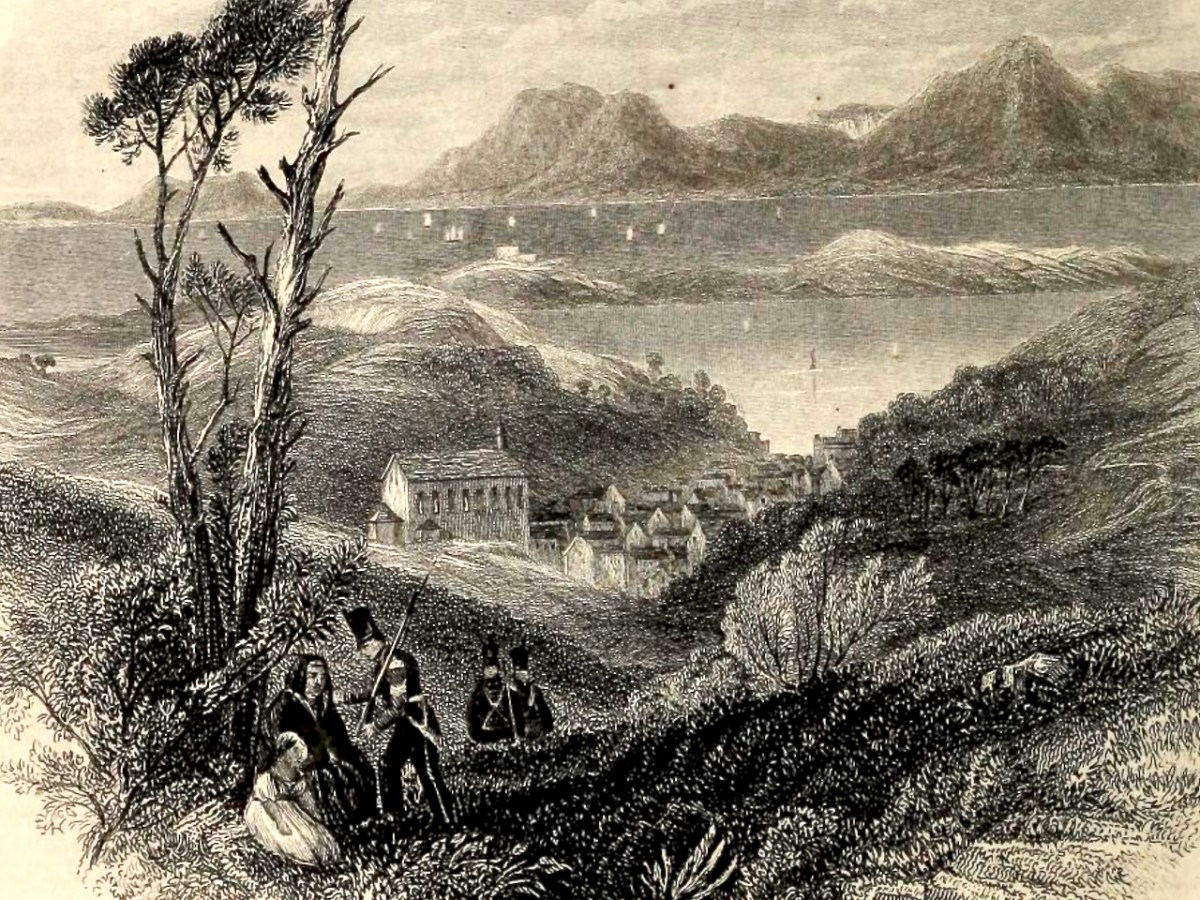
Our final scene is Bantry Bay. St Finbarr’s Church was built already in the 1820s, even before Catholic Emancipation, and sits proudly on an eminence above the town. In the foreground is an enigmatic scene in which a soldier (with other soldiers advancing up the hill) is grasping the shoulders of a woman, who sits with a young girl under a tree. Are we witnessing an arrest, or a compassionate gesture of assistance?
Bantry Bay is spread out beyond the town, which slopes down to the water. The Battery on Whiddy Island, long in ruins, is clearly visible. The mountains of the Beara rise in the background, including the Sugarloaf on the right.
There is a full-colour painting by Creswick of Glengarriff but it is not copyright-free. You can view it here. If you want to see more of his illustrations, take a look at the books on archive.org – Dublin and Wicklow are well-represented.
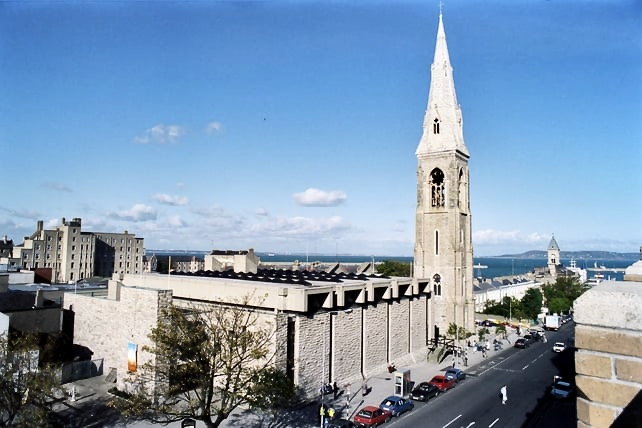
Irish artists of the mid-20th century had one patron who sustained them above all others – the Catholic Church. Actually, this was probably due to the discerning taste of modernist architects, who wanted the best for their new churches. Nevertheless, the art was commissioned and paid for by churches and their congregations, and the great advantage of this is that this artistic output is in public spaces for all of us still to enjoy. A superb example (there are many) is St Michael’s church in Dun Laoghaire. I remember when St Michael’s burned down, in 1965 – a huge shock to the people of Dun Laoghaire who lost a magnificent neo-Gothic example of the work of J J McCarthy. Take a look at what it looked like.
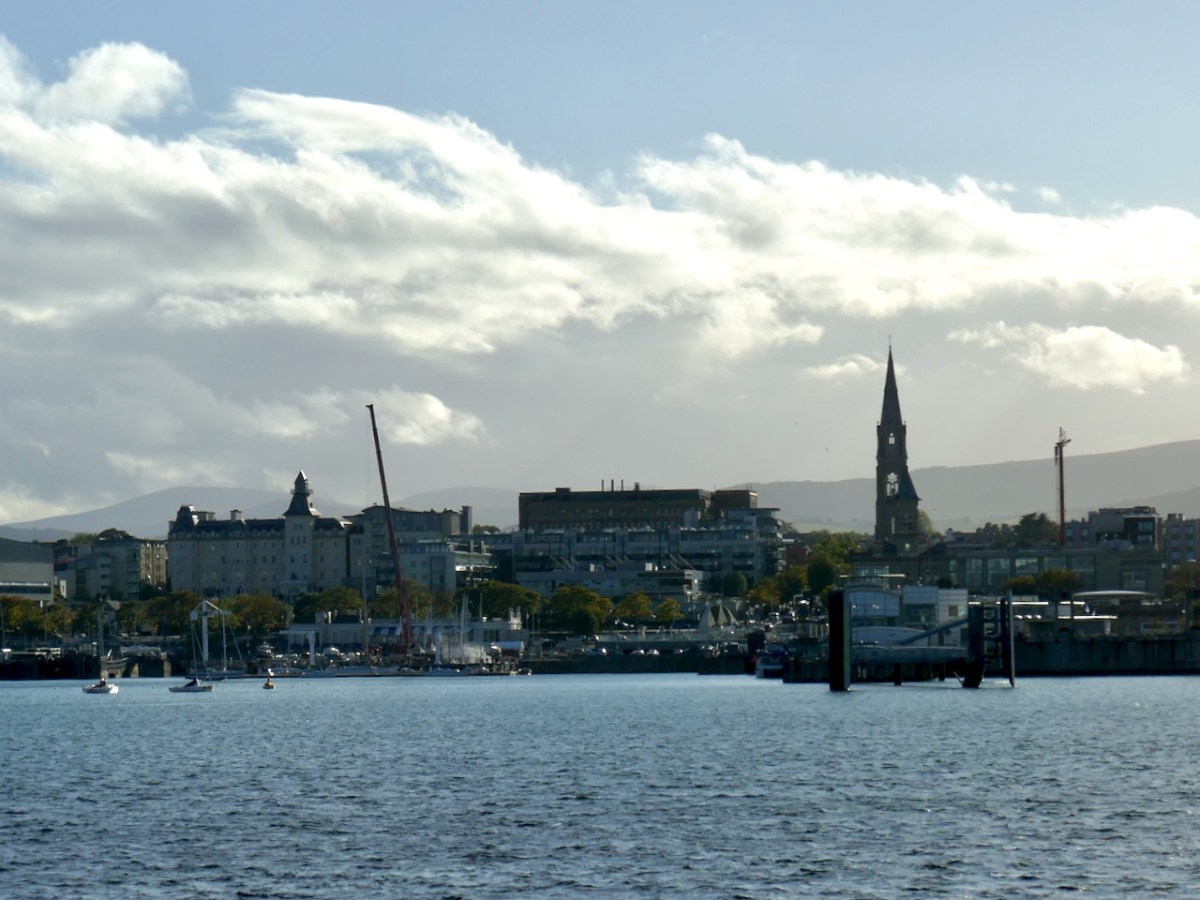
The architect Pierce McKenna was immediately commissioned to build a temporary church – I can find no illustration of this church, but in Irish Church Architecture, Peter Hurley describes it as very advanced for its time…a single story structure 84 feet square with a centre raised clerestory lantern…and the sanctuary completely surrounded by the congregation. All that was possible to save from the old church was the tower and spire, which still dominates the skyline of Dun Laoghaire (above).
By 1973 this had been replaced by the new church, designed by McKenna, with Sean Rothery and Naois O’Dowd. Responding to changes in the liturgy dictated by Vatican II, the sanctuary of the new church was also in the centre of the church, surrounded by the congregation. The design was strikingly modern for its day – Hurley calls it a strong uncompromising statement. The image above is courtesy of RTE.
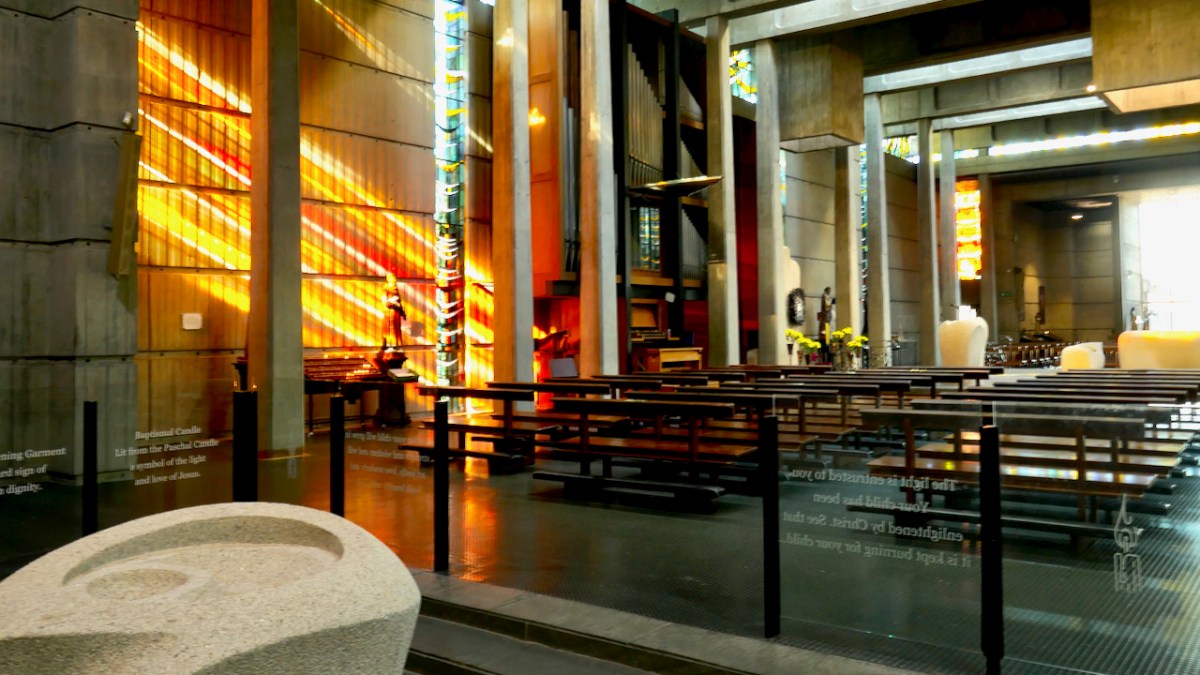
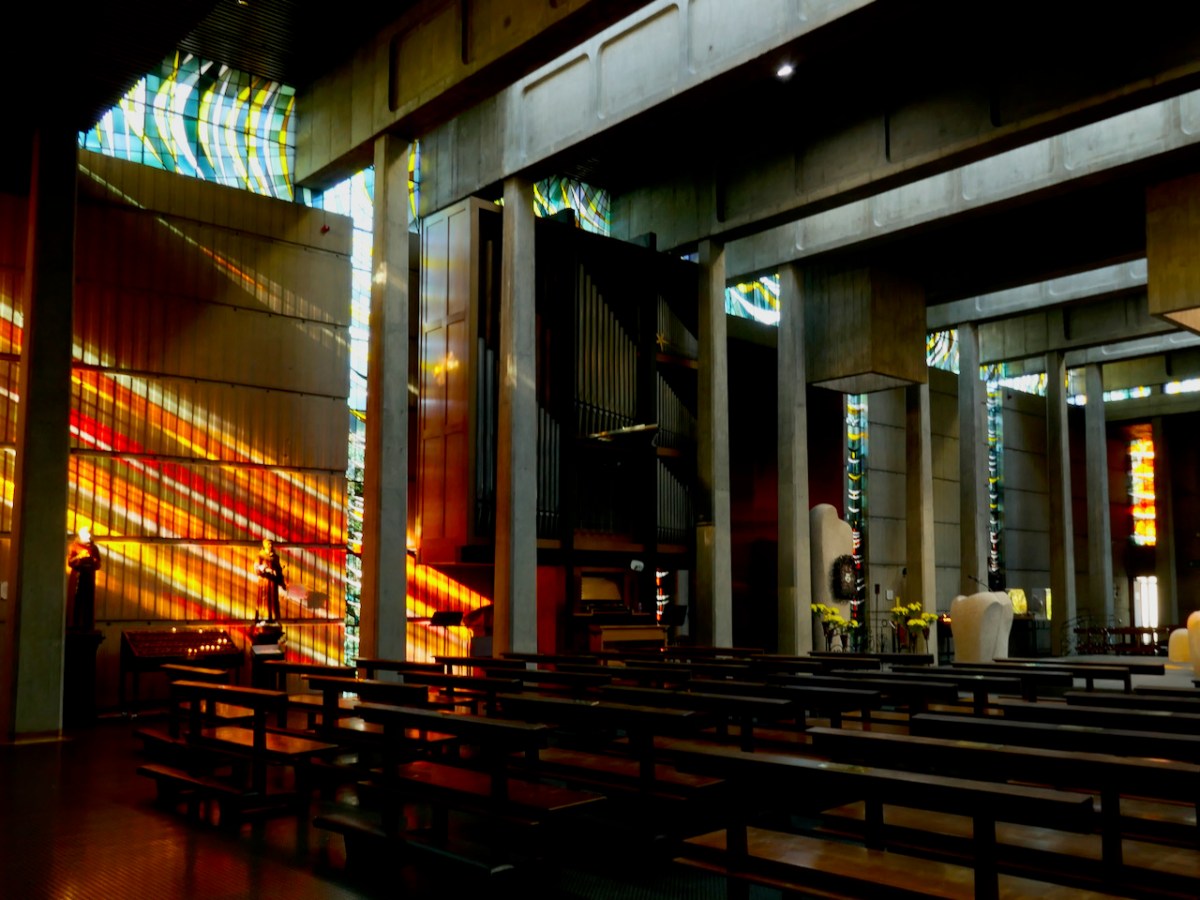
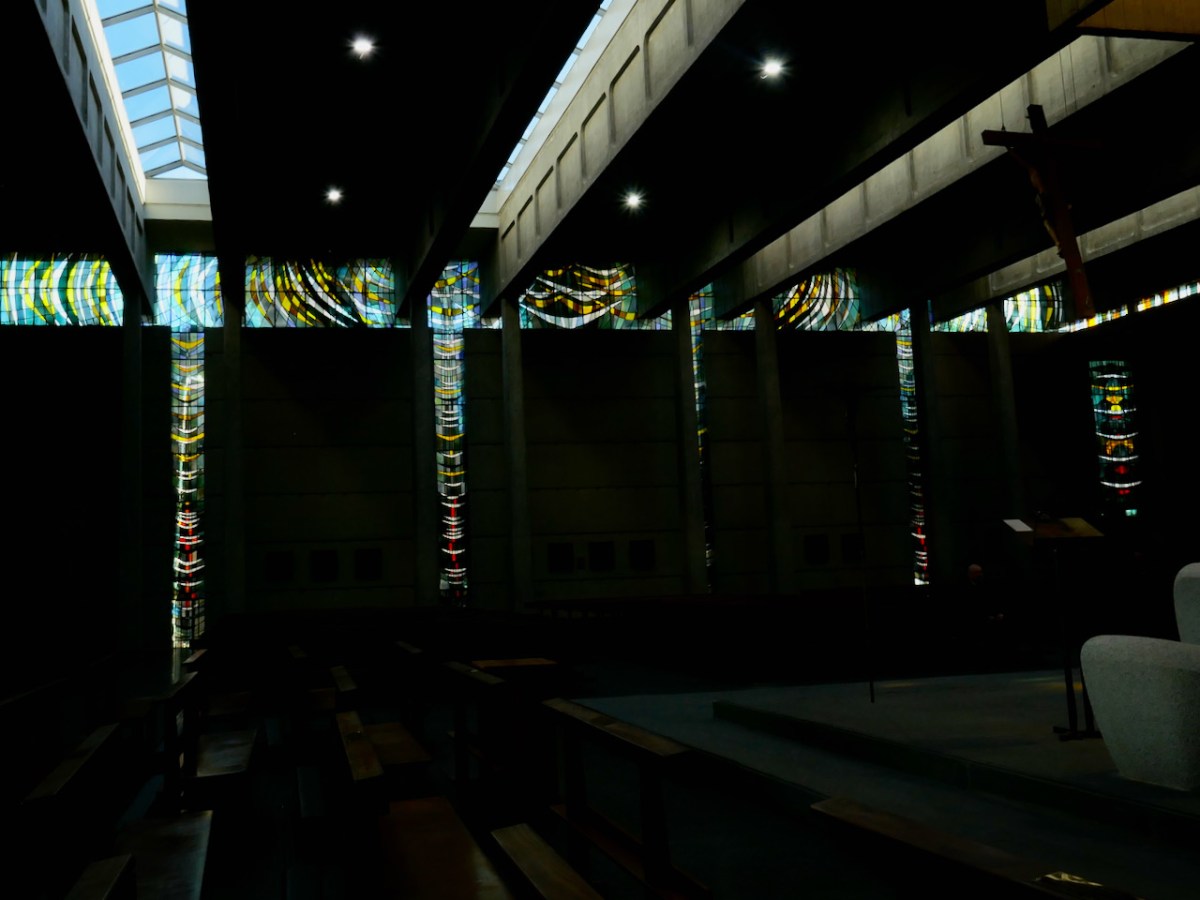
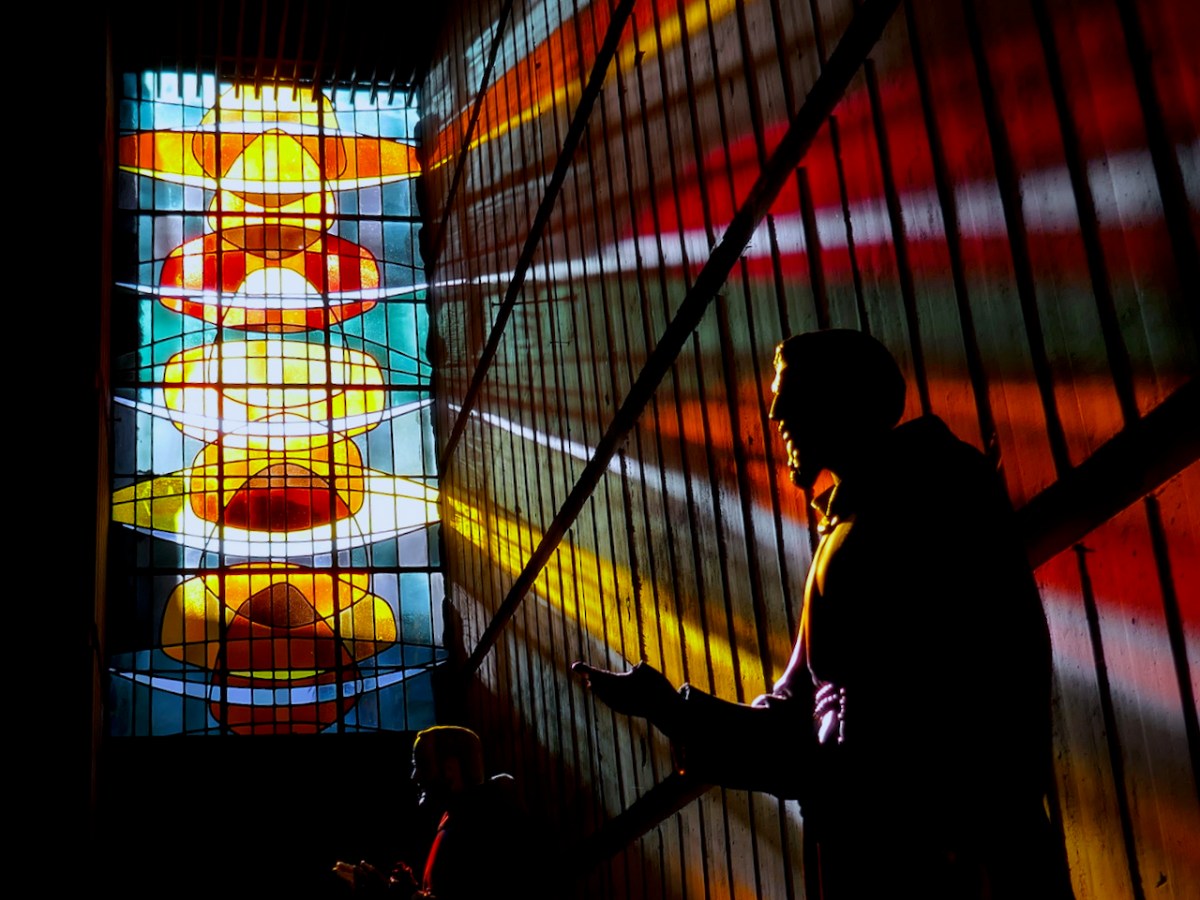
Constructed entirely of concrete, the interior is lit by tall slender windows and a glazed clerestory that separates the walls from the ceiling, as well as by long triangular roof lights. Earlier this year I visited Coventry Cathedral (also dedicated to St Michael), and I was immediately struck by similarities.
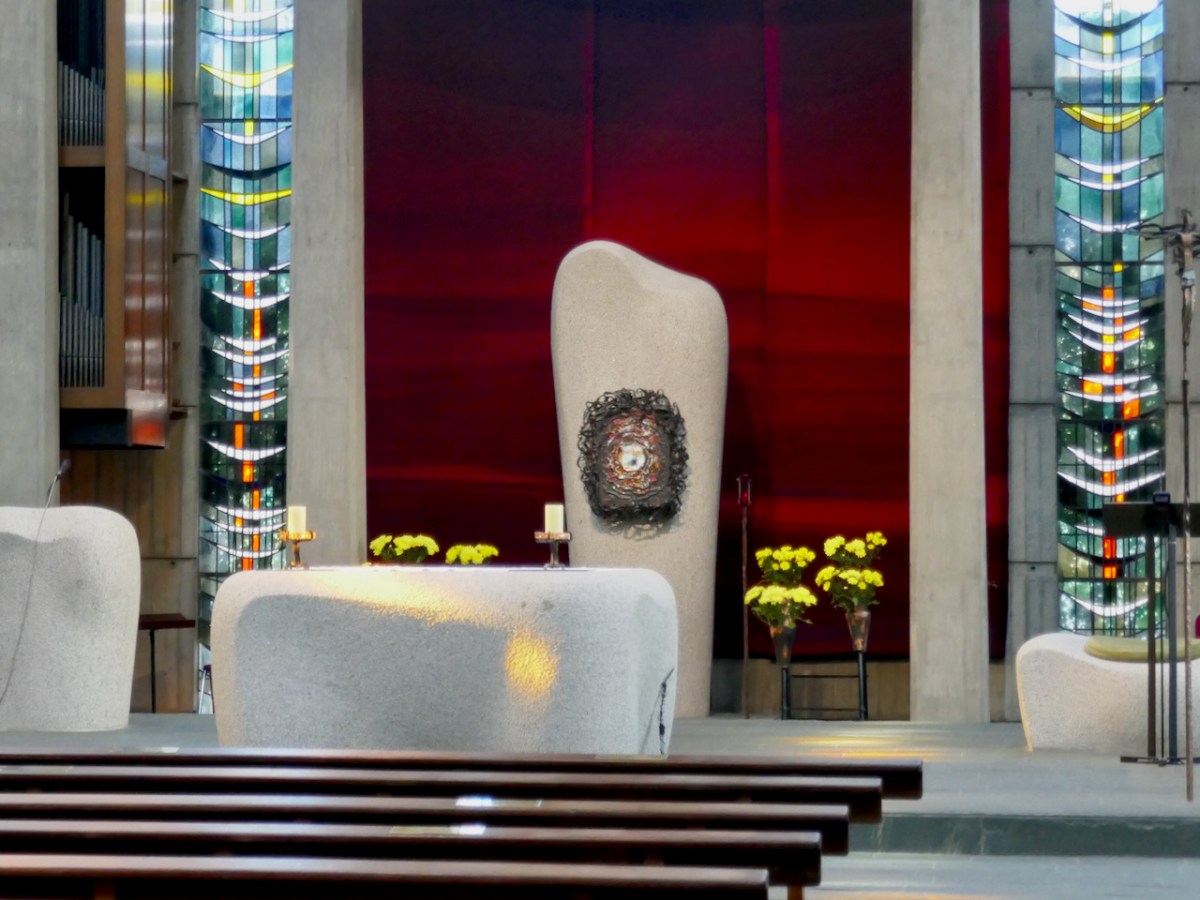
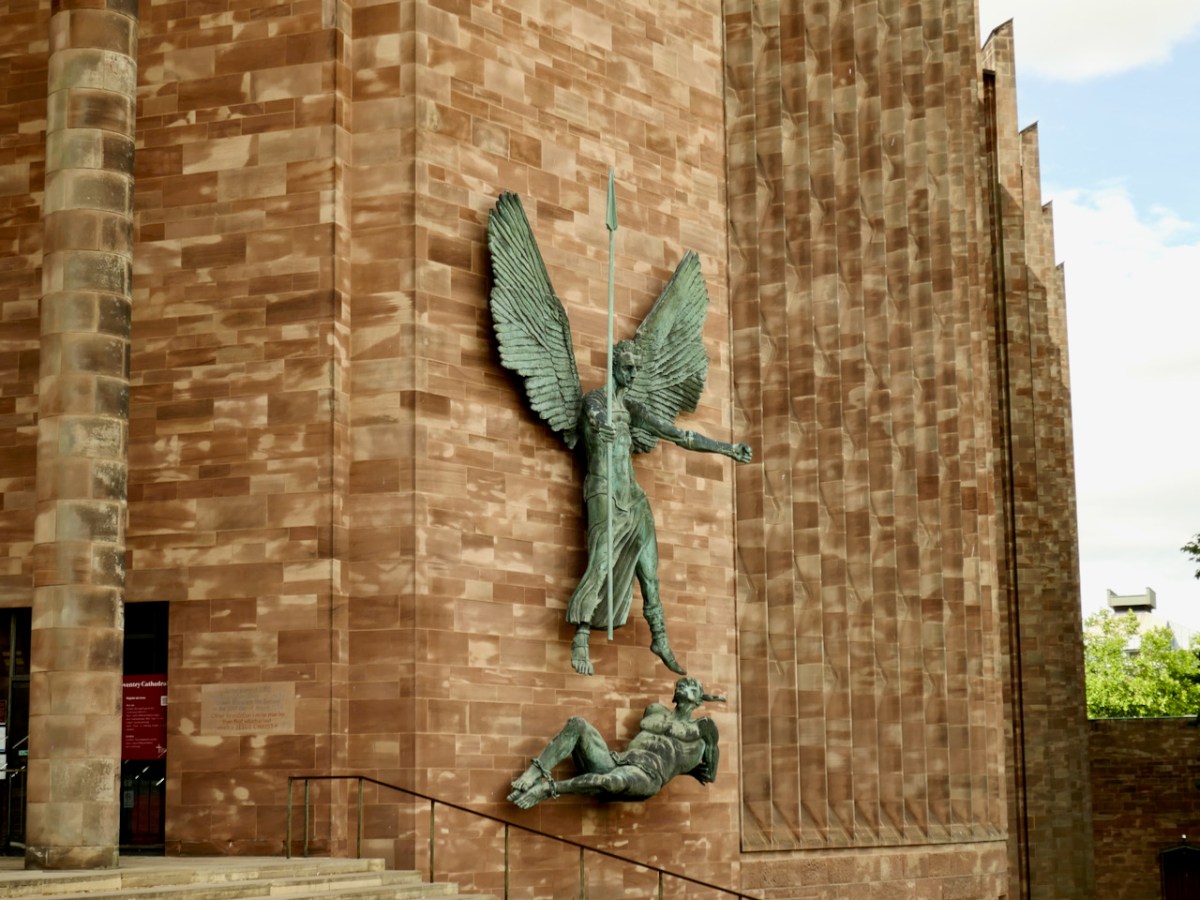
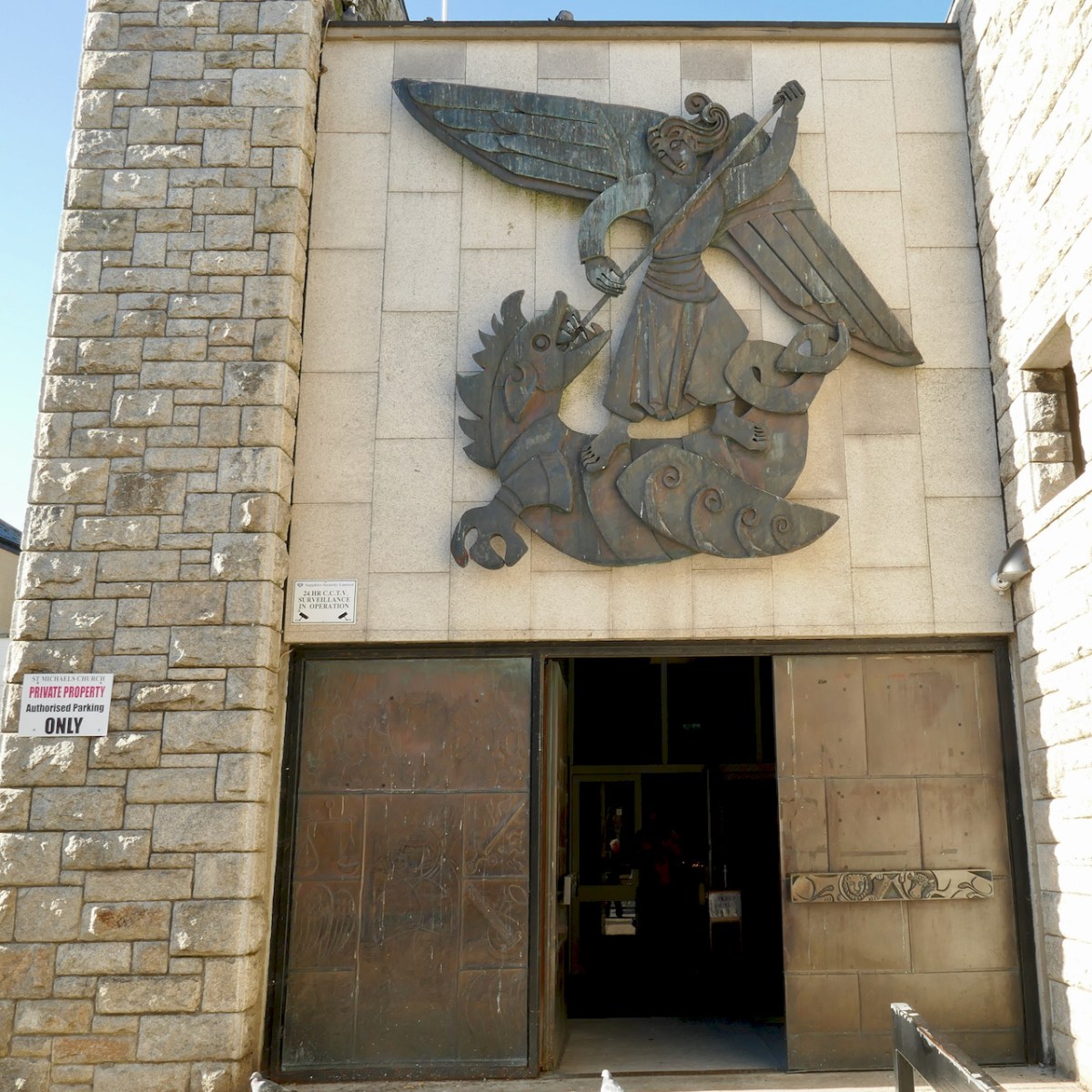
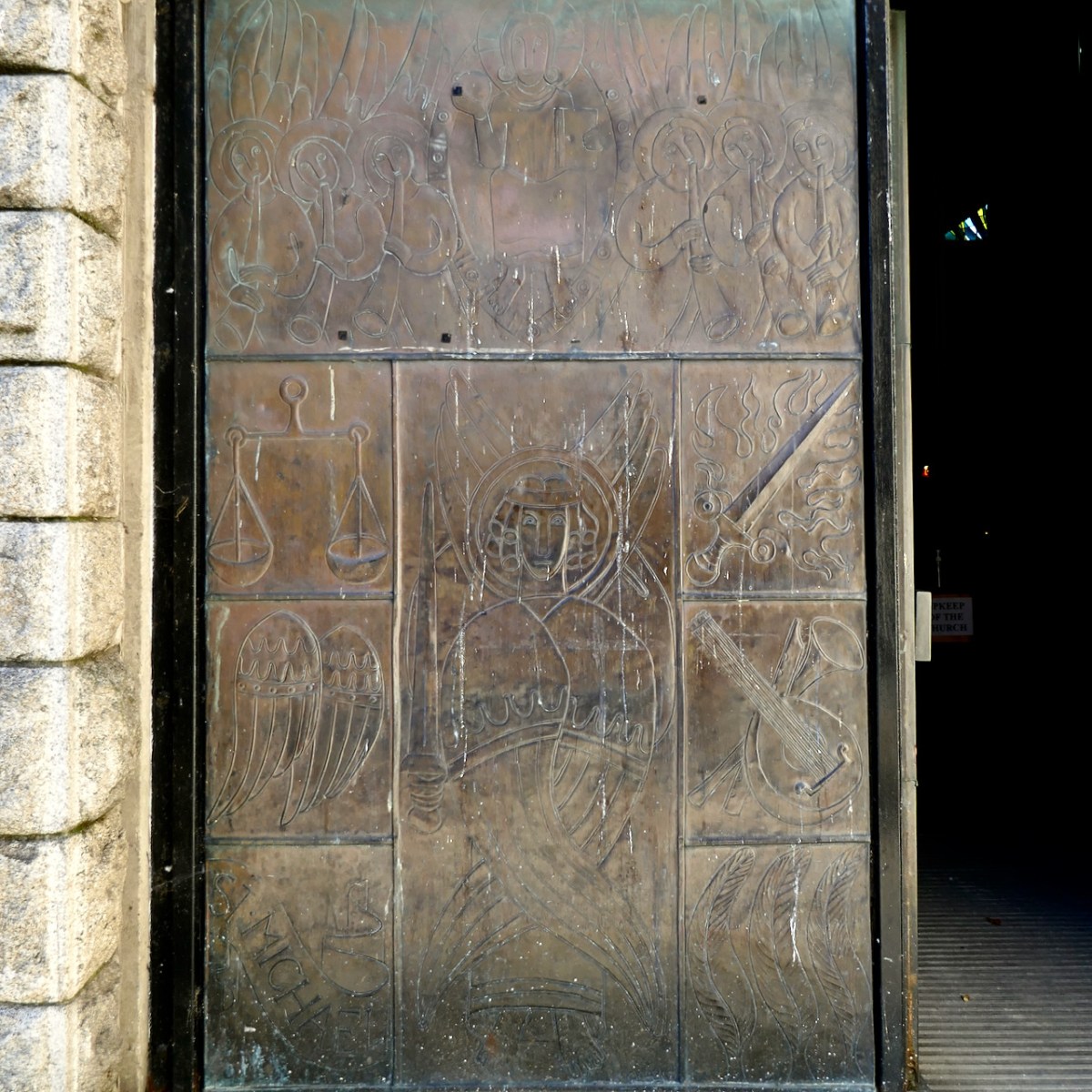
Like Coventry, the stained glass is in soaring, floor-to-ceiling windows between slender columns; there is a large tapestry behind the altar (above, in this case non-figurative); and a bronze casting of St Michael defeating the dragon is mounted outside, above the man entrance. Immediately below is the Coventry St Michael, and below that, the DunLaoghaire version.
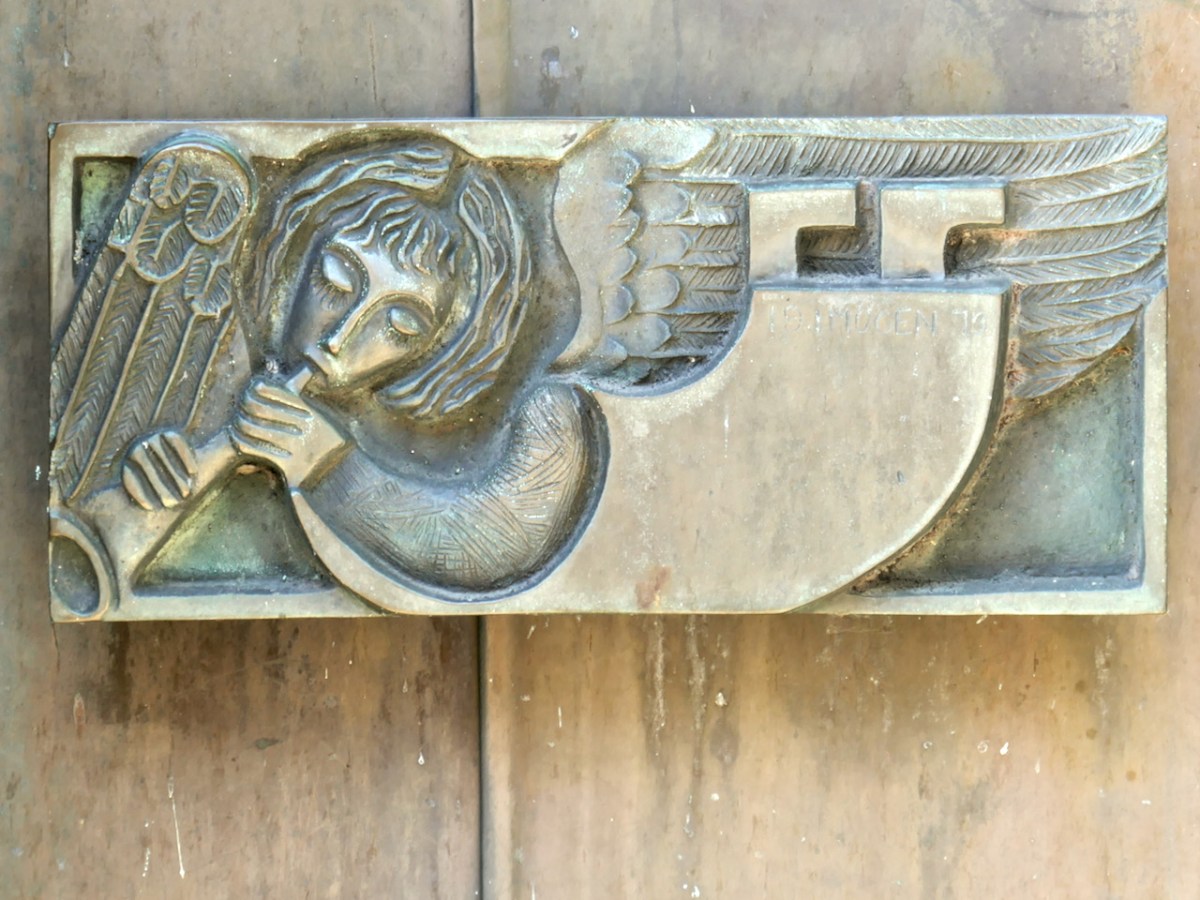
The sculpture, doors and handles are the work of Imogen Stuart. They combine a completely modern aesthetic with images influenced by the Book of Kells.
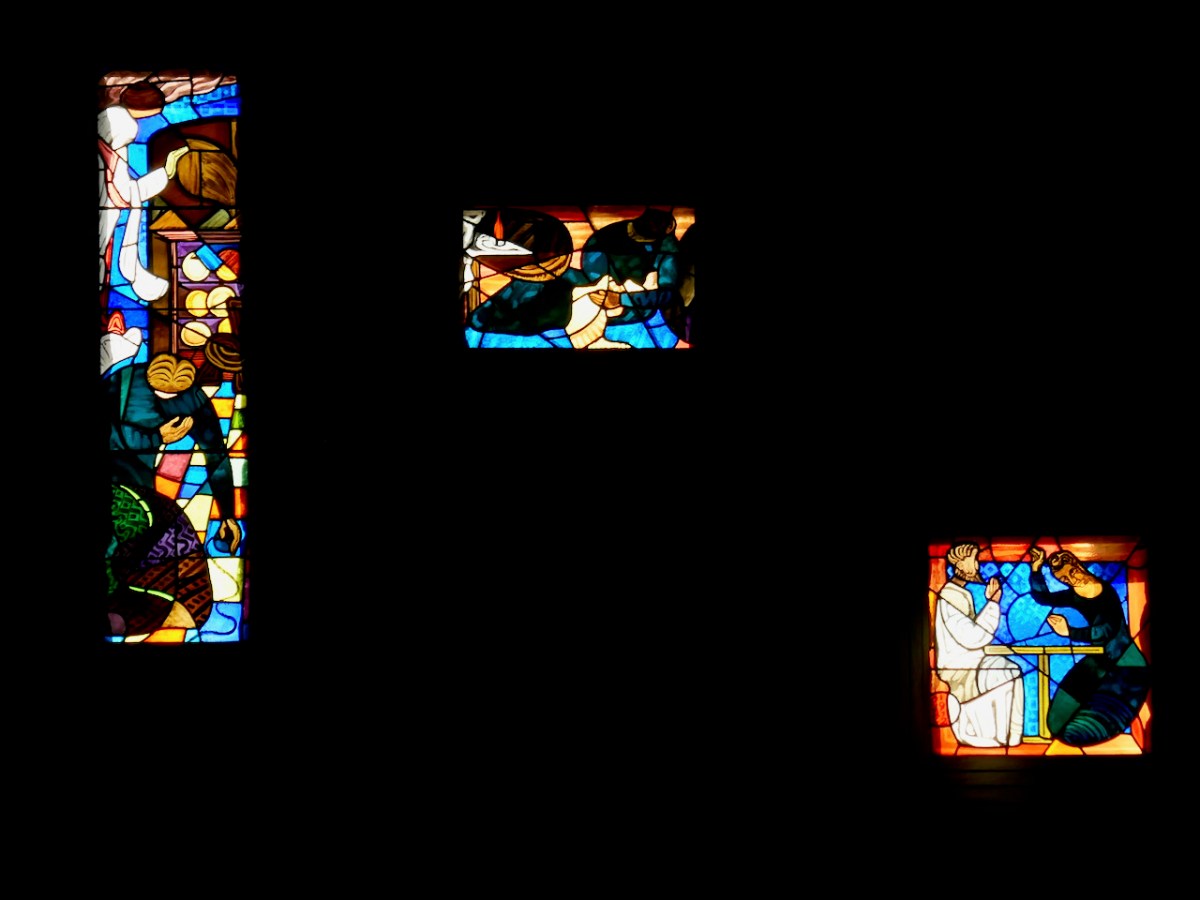
Inside, all the large glass is by the Murphy Devitt Studios. For more on this group, see my posts Murphy Devitt in Cork (links to Parts 2 and 3 are at the end of the post). As I said then about Johnny Murphy, Rosin Dowd Murphy and Des Devitt, Together they set about doing something entirely new and different in stained glass in Ireland, bringing with them their art training, their modern aesthetic sensibilities, and their deep knowledge of and commitment to their craft.
You can see all this in St Michael’s – their ability to design and execute on a grand scale, their use of symbolic colour and shape to lead the eye upwards, their contrasting of warm and cool colours to vary the light in the church.
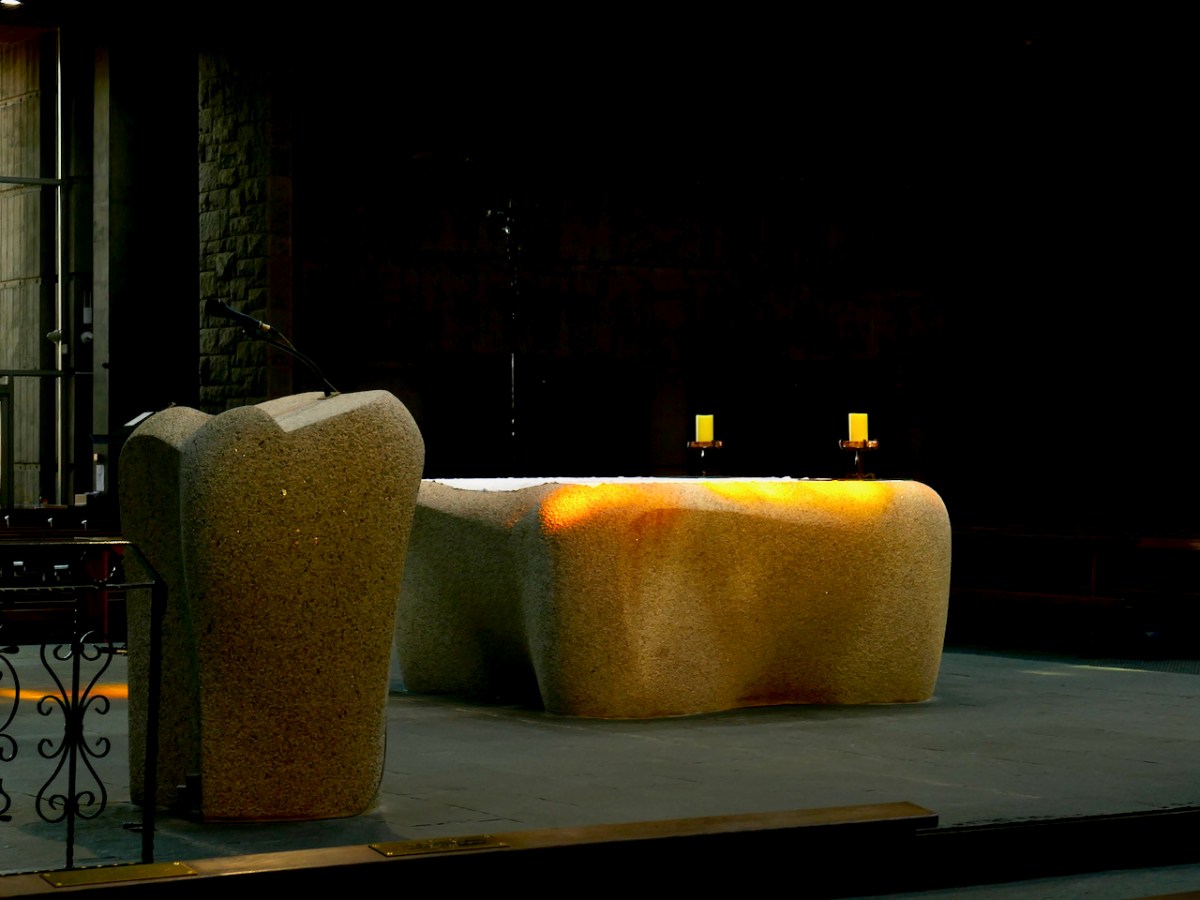
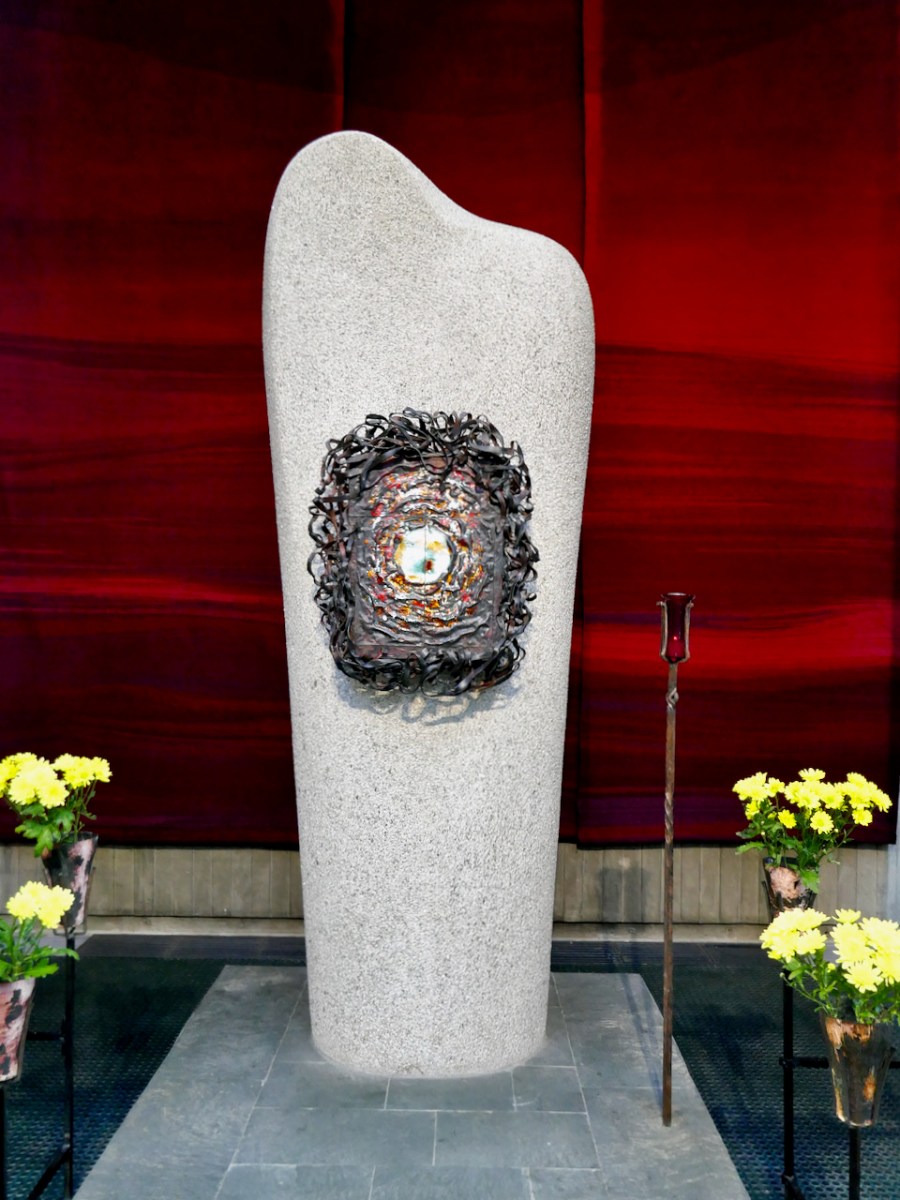
Michael Biggs was the leading stone sculptor of the time and the church furnishings are a testament to his skills and vision. Sinuous (Hurley uses the word sensuous) and monumental granite blocks are shaped as a baptismal font, altar, lectern and tabernacle column.
The extraordinary tabernacle is (I think) bronze and enamel and is the work of Richard Enda King, who also made the crucifix.
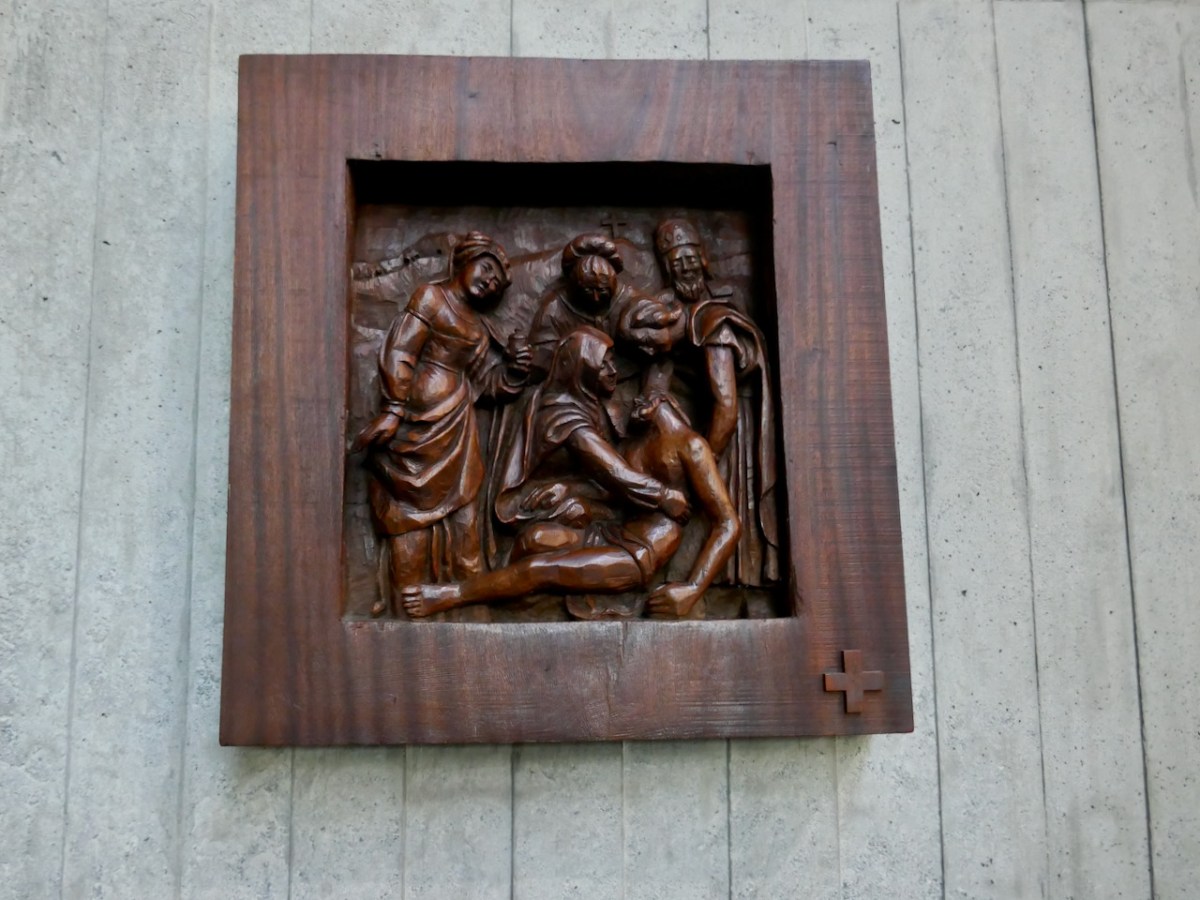
Patrick Pye has contributed several stained glass windows, while Yvonne Jammet carved the wooden stations.
This church is a triumph of modernist Irish architecture: austere but filled with light, reverential yet a feast for the senses, liturgically correct yet daringly innovative. It’s also an accessible gallery of important Irish art. Go visit if you can.
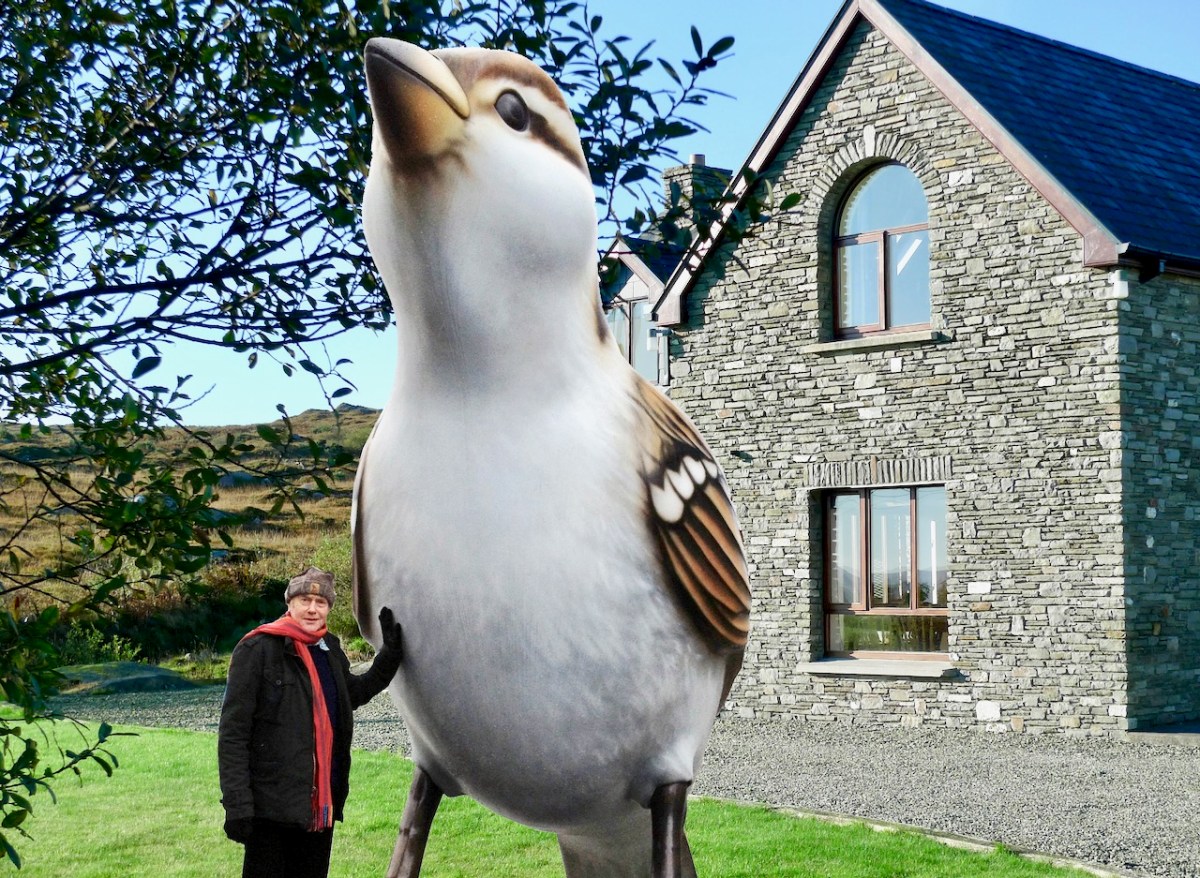
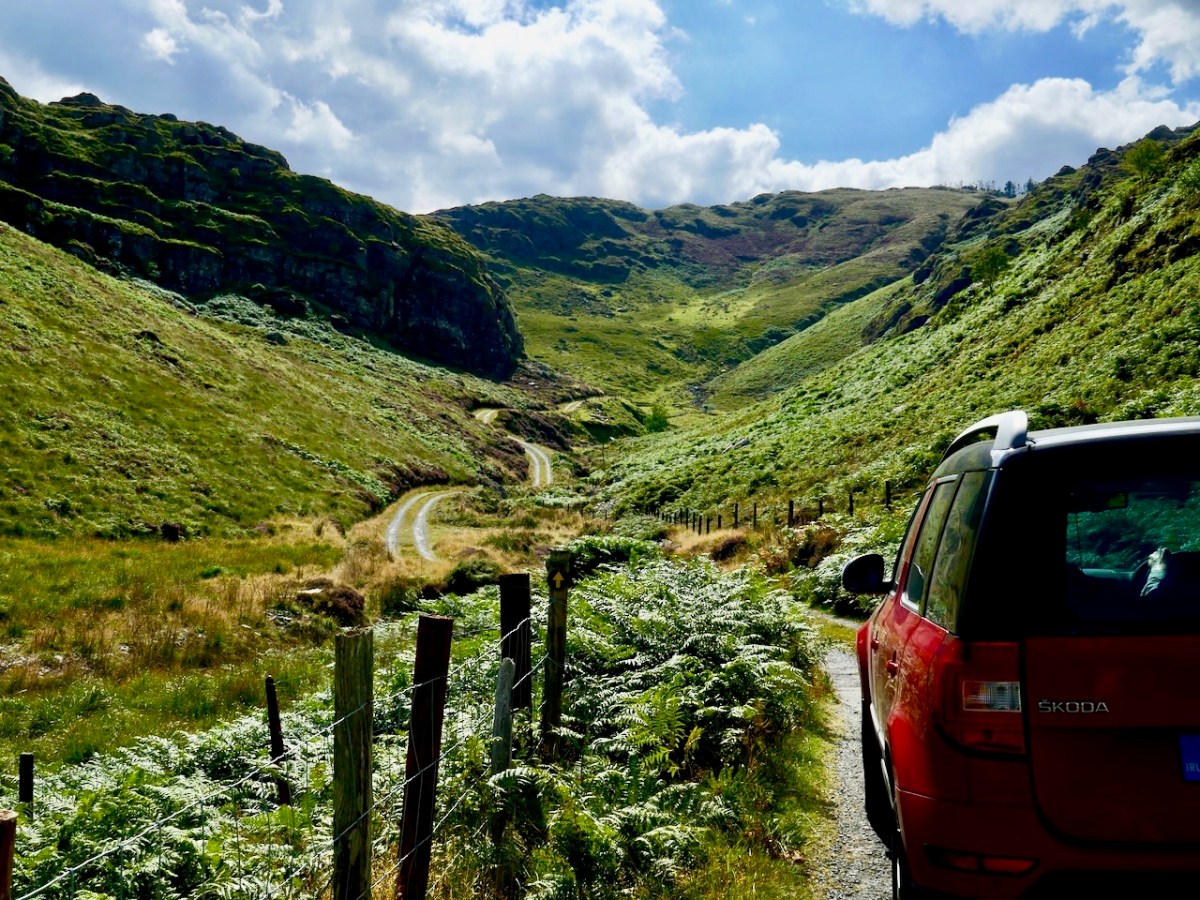
Why have we chosen this photograph to head up our ten year anniversary blogpost? That’s simple: the pic was taken on 15 October 2012. We had moved into Ard Glas – just outside Ballydehob – for a six-month rental to see how we liked West Cork!
But – what about the giant sparrow?
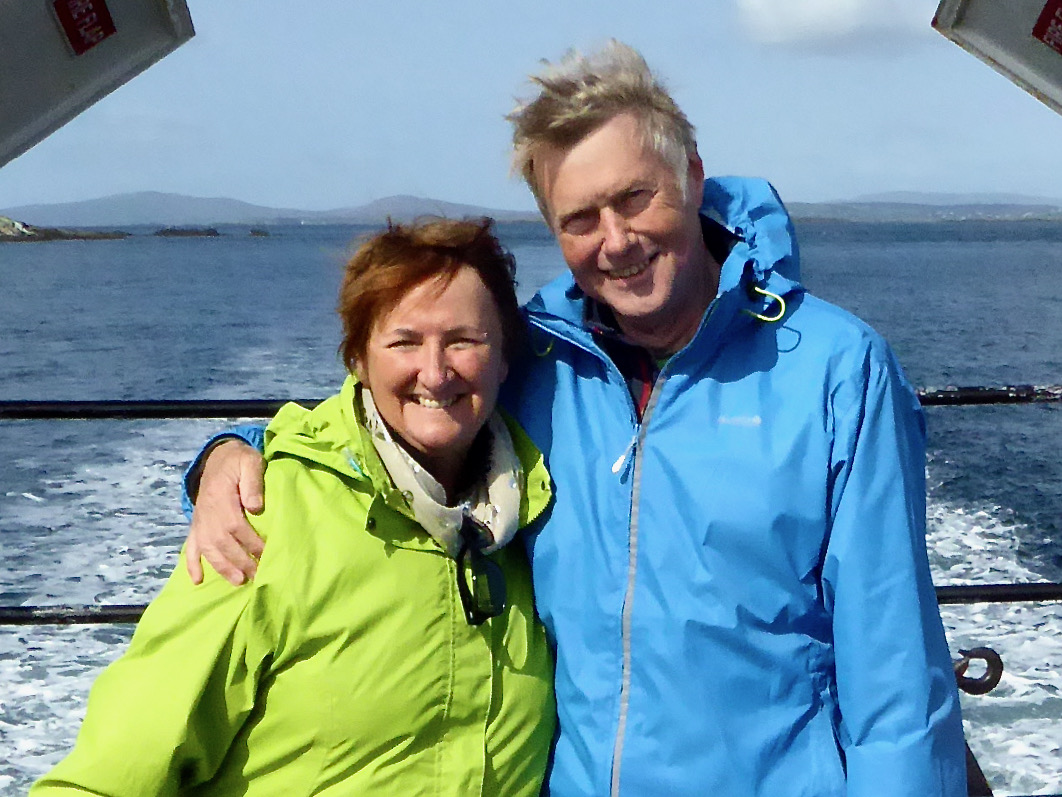
Wait a minute. We very obviously ended up liking West Cork so much that we bought a house in Cappaghglass (the townland next door to Ard Glas), and have stayed there ever since. As you can see, we have been thoroughly enjoying ourselves over the last decade:
Yes, but, that very large sparrow…?
Be patient! Believe it or not, we have kept the blog posts going, with hardly any interruption, ever since. This is Roaringwater Journal post number 968. In the last decade, our Journal has been viewed over 1.5 million times and we have acquired over 5,700 followers between our various platforms.
Our posts are all still there in the archives – and you can still read them. Search by using the three-bar icon on the home page and select All Pages-Navigation, or one of the other menus. Alternately, press the cog button under the Roaringwater Journal title at the top of the page, then scroll down to Archives. Roll down through all the months. Or enter a search term into the magnifying glass symbol next to the cog. That will show whether we have mentioned your chosen subject in any of our blogs. We warn you that some posts (especially the very early ones) haven’t survived the test of time perfectly: but we leave them in there because it’s all a bit of history.
Sparrow?
Hang on! Of course, things change a bit as the years go by (although we don’t*). We have varied the layout of the blog, and the header etc. We had thought of refreshing it all again to celebrate this milestone but… ah, well – perhaps for the twentieth anniversary.
Sp……..?
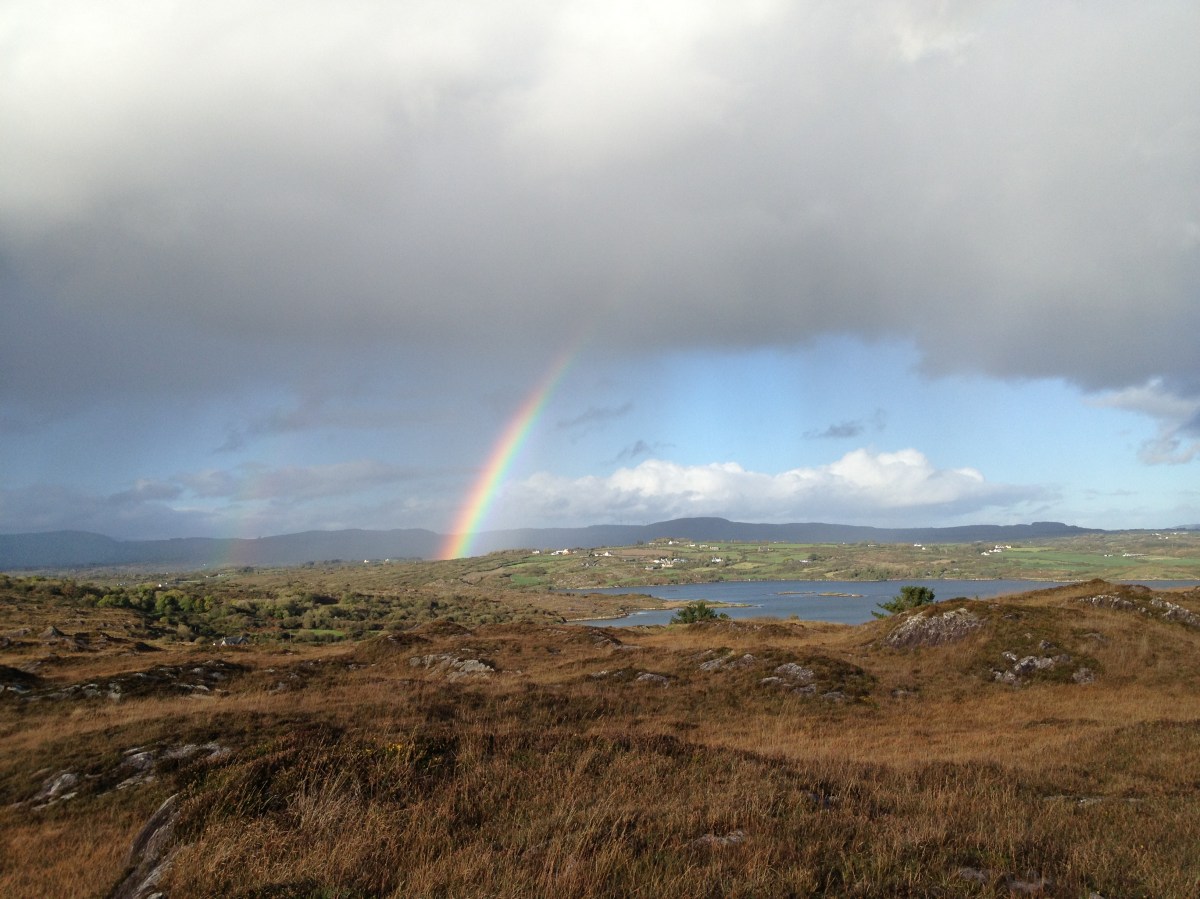
Another pic from 2012 (above) showing mixed weather conditions over Roaringwater Bay. It hasn’t always been sunshine here (have a look at this) but it always feels sunny to us – or just about to be sunny. One of our newest posts -here – shows us doing what we like the most, and always have: exploring remote and often forgotten West Cork byways.
Our regular readers will know that, over ten years, we have developed our interests to take in history, archaeology, rock art, stained glass, architecture, topography, folklore, wildflowers, art and culture, landscape and language… and very much more. We share our adventures often with Amanda and Peter Clarke, our fellow bloggers and friends – see Holy Wells of Cork and Kerry and Hikelines.
What of the next ten years? Well, we are trying to be innovative. This week we have introduced a ‘guest post’ for the first time: this one, by our friend Brian O’Riordan, explores the exploits of an intrepid 79-year old woman who sailed solo across the Atlantic to Ireland in 1994 , which falls right into our own interests, and – hopefully – yours too.
S…………..?
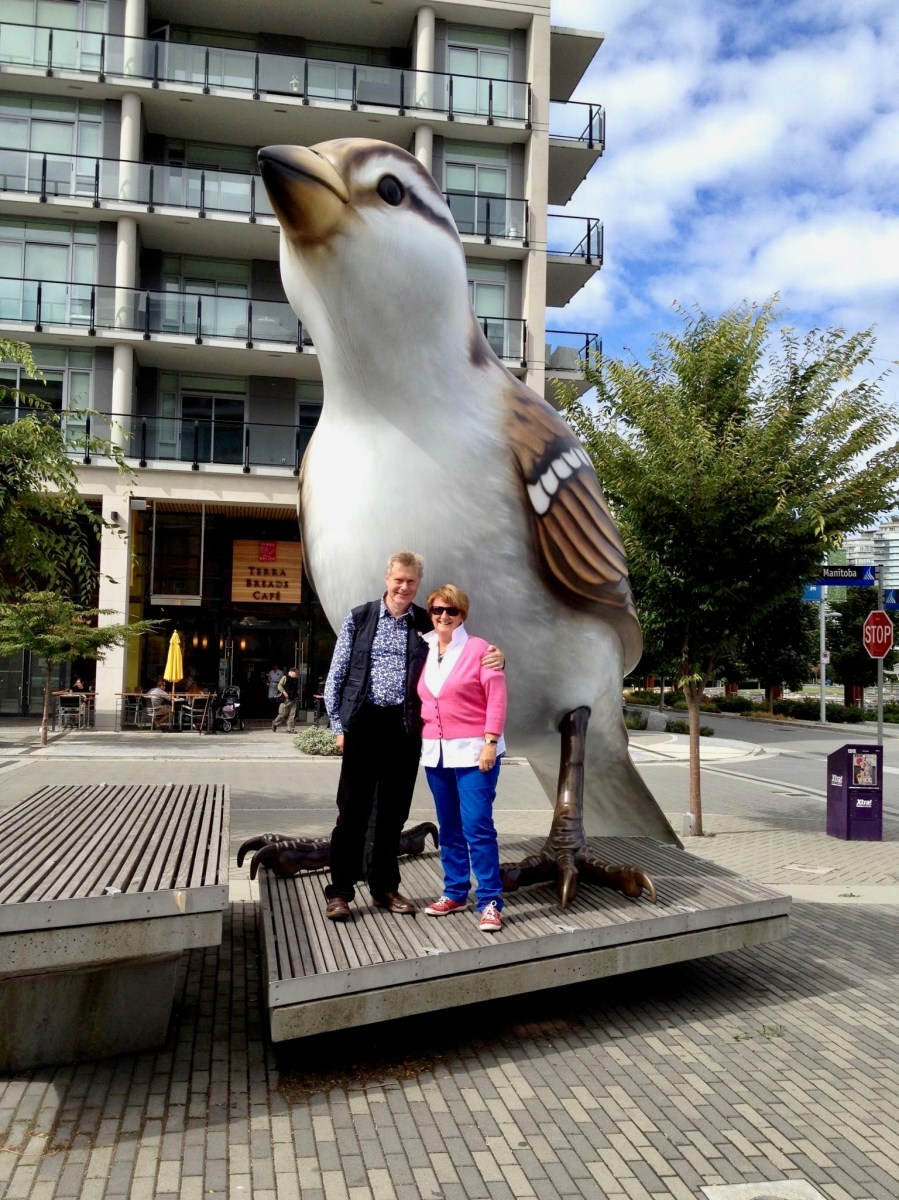
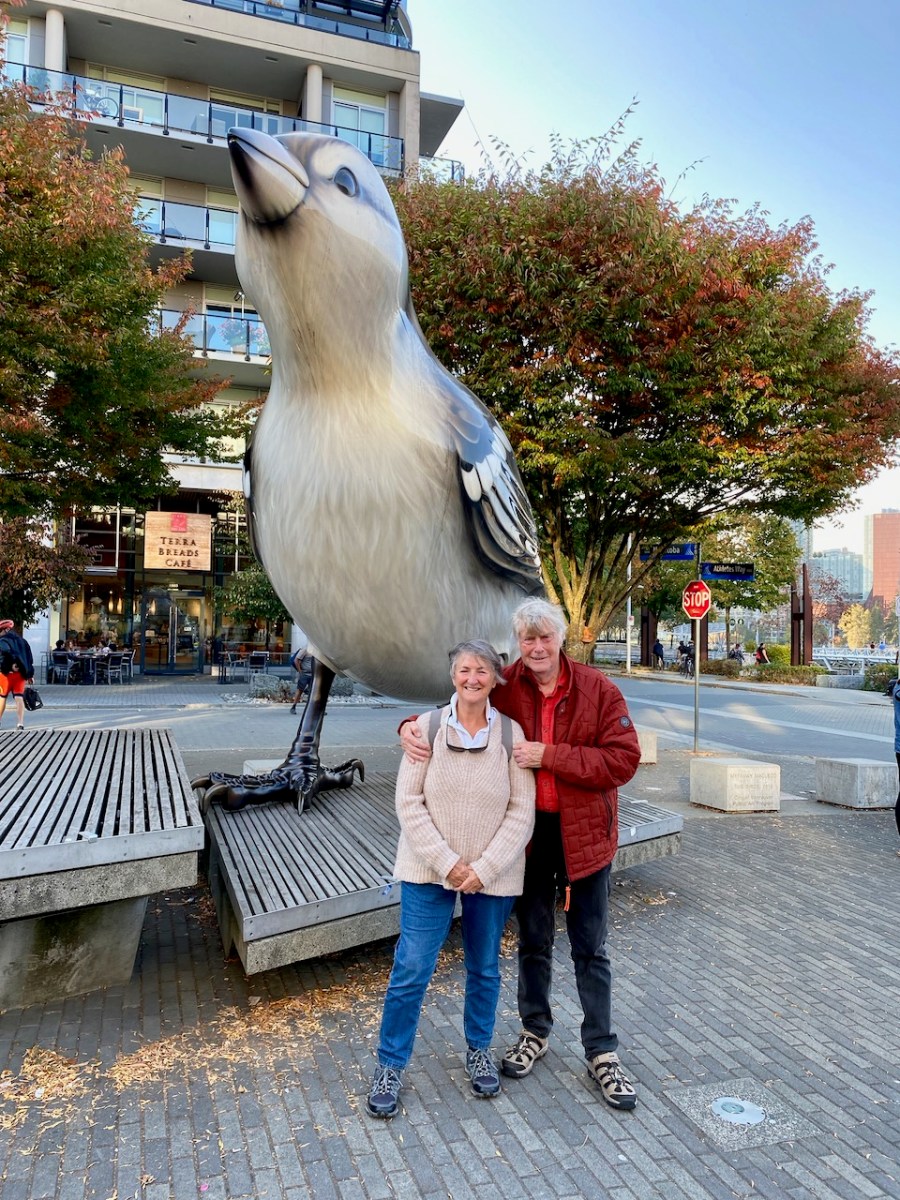
Ok – we have got the message! About the sparrow, that is. The original giant sparrow is one of two (a male and a female) which were created for the Olympic Park in Vancouver, Canada, in 2010 by the sculptor Myfanwy MacLeod. One was transported by our own photo magic to Ard Glas! Perhaps they are not relevant to West Cork, but they are meaningful to Finola and Robert, as we saw them together in Canada ten years ago – pic below. We have just recently returned from a visit to Canada, enjoying a long-awaited catch-up with Finola’s family there. We made sure to record our presence there with another photo-op (below the below).
* Hopefully this demonstrates how youthful we remain, imbibing as we do the stimulating West Cork air. Here’s to the next ten….!
Welcome to the UCD Library Cultural Heritage Collections blog. Discover and explore the historical treasures housed within our Archives, Special Collections, National Folklore Collection and Digital Library



 Roaringwater Journal