Fastnet Film Festival 2018

How do you run a film festival in a town with no cinema? You use technology! The festival’s motto is Our Village is Our Screen, and it’s totally apt. For the duration of the Festival, you can drop into any venue (pub, cafe, village hall, mobile cinema), order up a coffee or a pint, and enjoy one of the many free short film programs on offer. This distributed intranet is all organised locally (kudos to Digital Forge!).
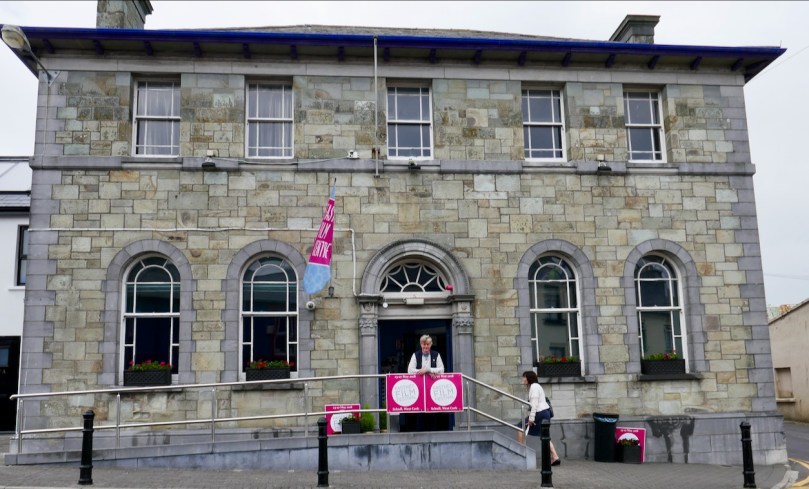
It’s all run now from the new Film Centre: the old Schull bank building is being converted, thanks to generous endowments from William and Judith Bollinger and others. It will be a tremendous asset for the town and there are Big Plans for the building in the future.

Pauline Cotter – the Chair, and beating heart of the Festival

The marvellous Blue House Gallery organised a show with the theme of “Tribal” that included a series of films along with the art works.
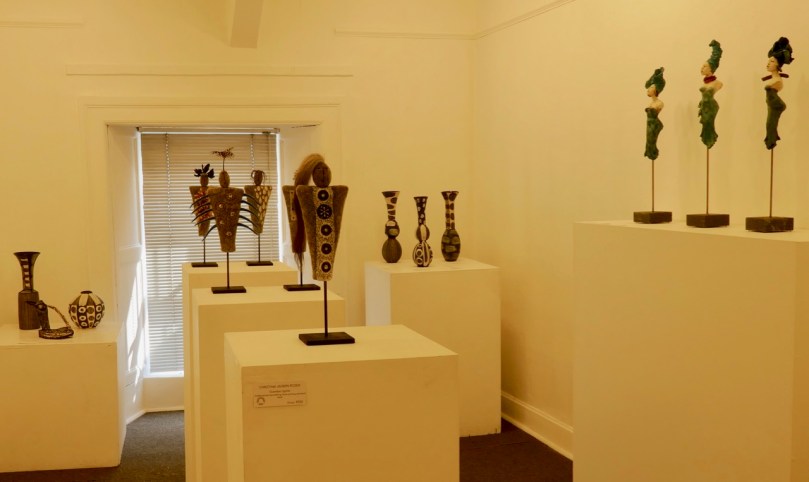
One of the gallery rooms in the Tribal Exhibition: felt idols by Christina Jasmin Roser, ceramics by Etain Hickey and Jim Turner, and sculptures by Eyelet Lalor

Each short film lasts anything from two to eighteen minutes. We are so used to long movies that it comes as a revelation that a complete story can be told in such a format. If you’re not sure that this is actually possible, watch Happy Birthday Timmy. We watched in in the world’s tiniest cinema – only room for three.
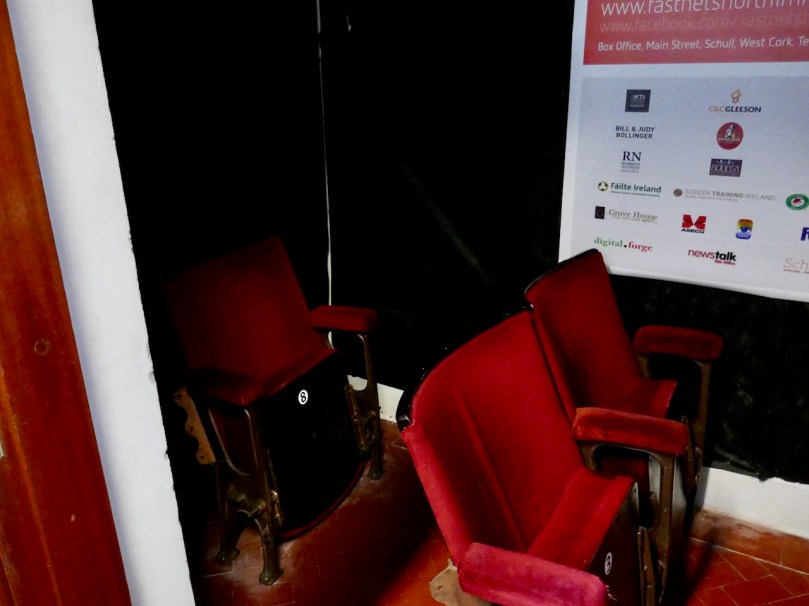
It’s called The Closet Cinema

One of the shorts that really hit a chord with us was from Cartoon Saloon, Late Afternoonhere’s the trailer, but it doesn’t really give a complete sense of the colour palette that made this such a special experience. It’s from the celebrated Cartoon Saloon studio and it’s already won awards. We also howled through The Fountain, a fabulous conceit built around the re-disovery of DuChamp’s iconic work of art. The Festival Image this year was from a powerful short called Little Shit, with a moving performance by the young actor, Badger Skelton.
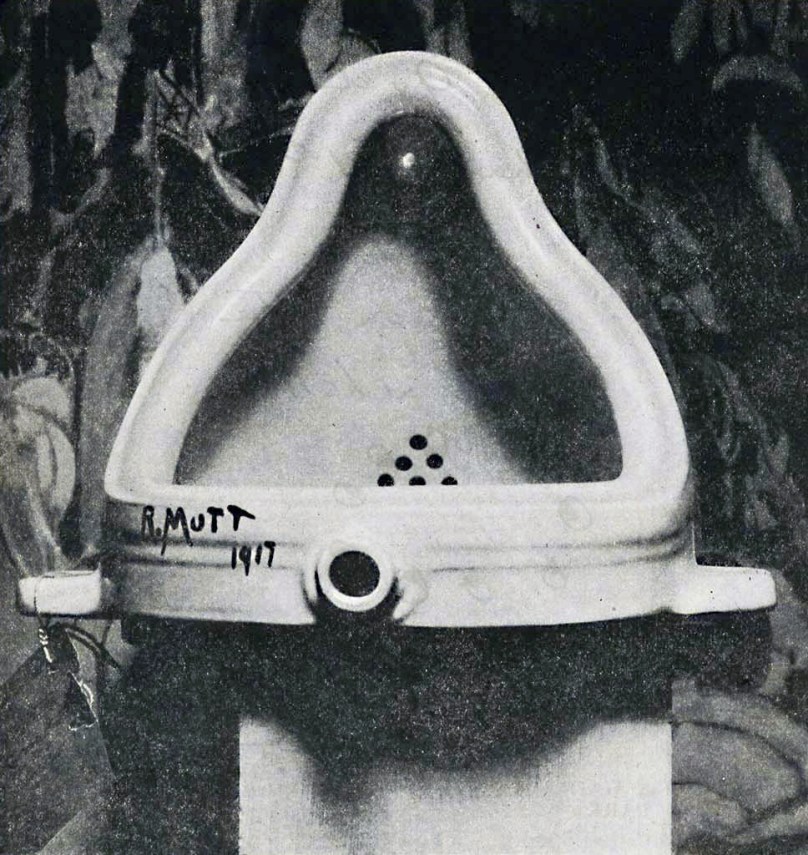
DuChamp’s Fountain, said to have ushered in a new era in modern art

Besides the short films from all over the world, there are feature length movies, along with question and answer sessions with producers, directors, actors, casting specialists, composers, set designers… Aspiring film makers can take a stunt workshop, or have their script critiqued by a laser-sharp expert, or learn how to make a movie using only an iPhone. We had the young star of Song of Granite (an Oscar contender) who gave us an example of his sean nós (old style) singing. Here’s the trailer of that film, which we saw in general release earlier this year and which made a powerful impact on us.

We attended a screening of The War of the Buttons, with the producer, Lord David Puttnam (beloved local), the Casting Director and several of the (not so young any more) actors. It was a joyful occasion. Not only is it a classic and thoroughly enjoyable movie, but it was shot around West Cork, and apparently was one of those movies where everyone felt like family afterwards.

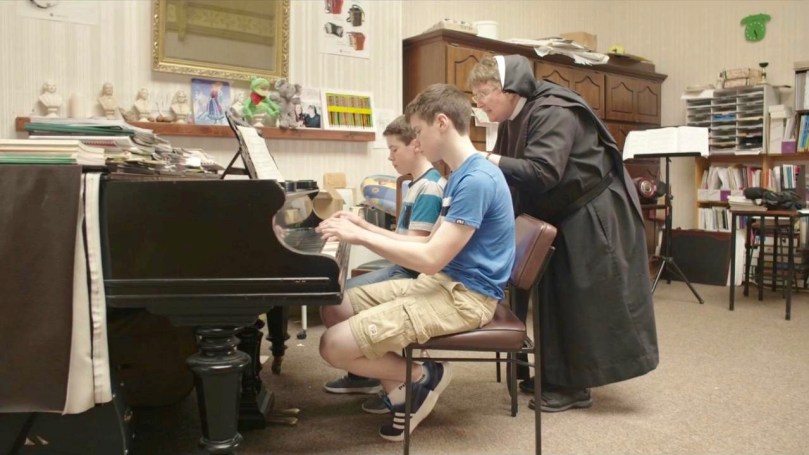
The best movie we saw all weekend, hands down, was the Irish documentary Making the Grade, which believe it or not was all about piano lessons. The header photo for this post is from that movie. The Director, Ken Wardrop, was there to receive our standing ovation and to tell us a little about his technique. Here’s an Irish Times Review that perfectly sums up how we all felt about it.

More difficult to watch was Black 47, a film of the Great Hunger, shot as a kind of Western, with a Connaught Ranger returning from the British Army’s Afghanistan Campaign to find his family dead and the land devastated. It raised complex issues for us and lead to some pretty intense discussions afterwards. Interestingly, it seems to have divided the critics down the middle, earning a 50/50 rating on Rotten Tomatoes. But the Irish Times had a thoughtful review of it that also contains a link to the trailer.
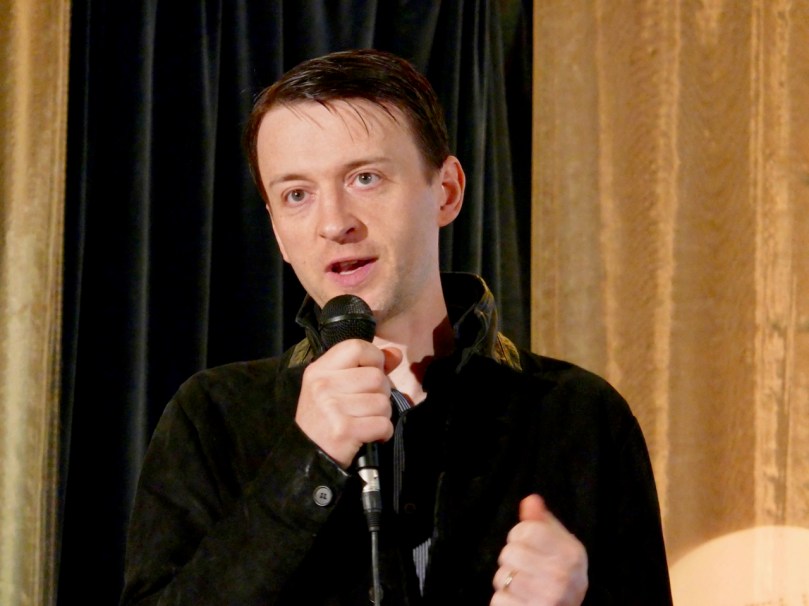
Lance Daly, the impossibly young-looking director of Black 47

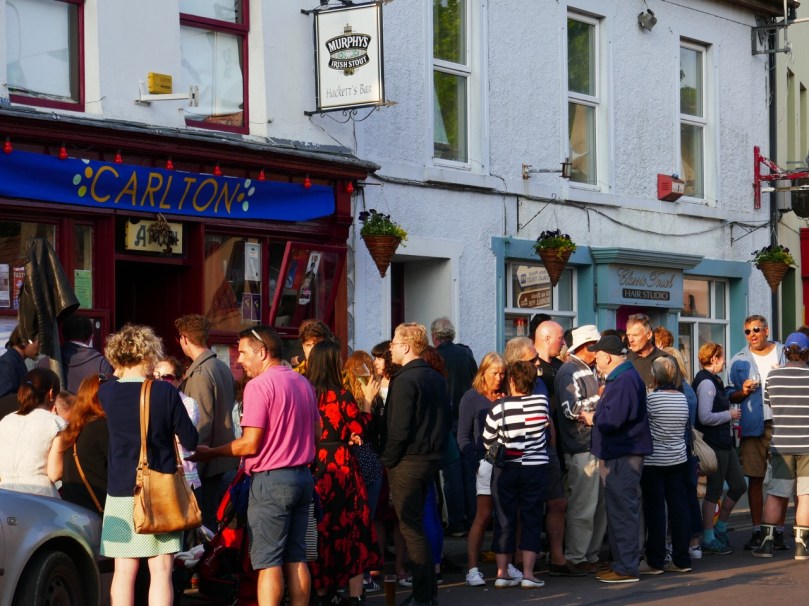
And in between the shorts and the big screen events the star of the show was Schull, buzzing with lively interchanges on the streets and in the pubs and cafes, conversations spilling out onto the streets, speedy young volunteers dashing around the venues, banners waving gaily above the crowds. Celebrities, actors, producers, directors, casting experts, script writers happily mixed it up with the locals.
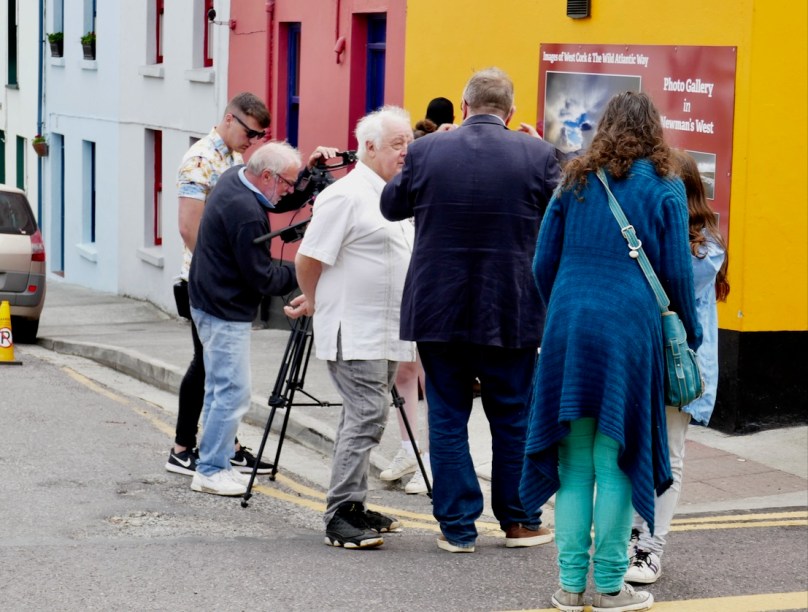
Locals out with the camera – except that’s Chris O’Dell behind the lens and Jim Sheridan (in the white shirt) directing

And the locals themselves featured in several movies, including one (The Wheel) about our friend Sheena’s superbly restored mill-wheel. The hilarious duo of Eileen and Marilyn (aka Terri Lieber and Karen Minihan) played us out tonight with their own take on a local film, made with the help of a great local crew.
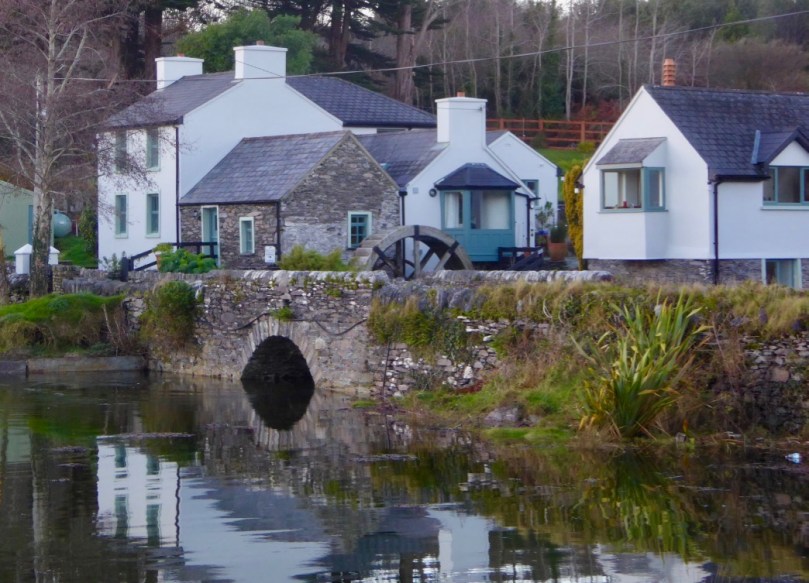
Coosheen Mill, home of Sheena Jolley the esteemed wildlife photographer, and the subject of one of the short movies

We didn’t attend the awards ceremony, but it doesn’t matter to us really who won – except for one thing. Over and over we heard people urging us to see The Swimmer, about local resident and marathon swimmer, Steve Redmond. We didn’t get to see it – but we do hope it won a prize as it seems to have riveted everyone who saw it.

THANK YOU to the incredible committee that puts this Festival together every year – what an amazing job you have done, again!
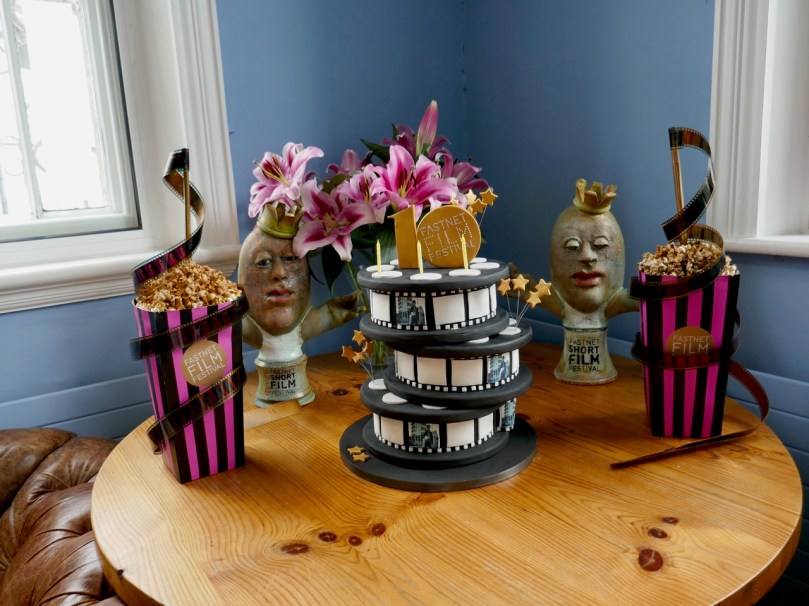
It’s a cake, locally made by a VERY talented baker

Ballyfin – Part 2: Decline and Revival

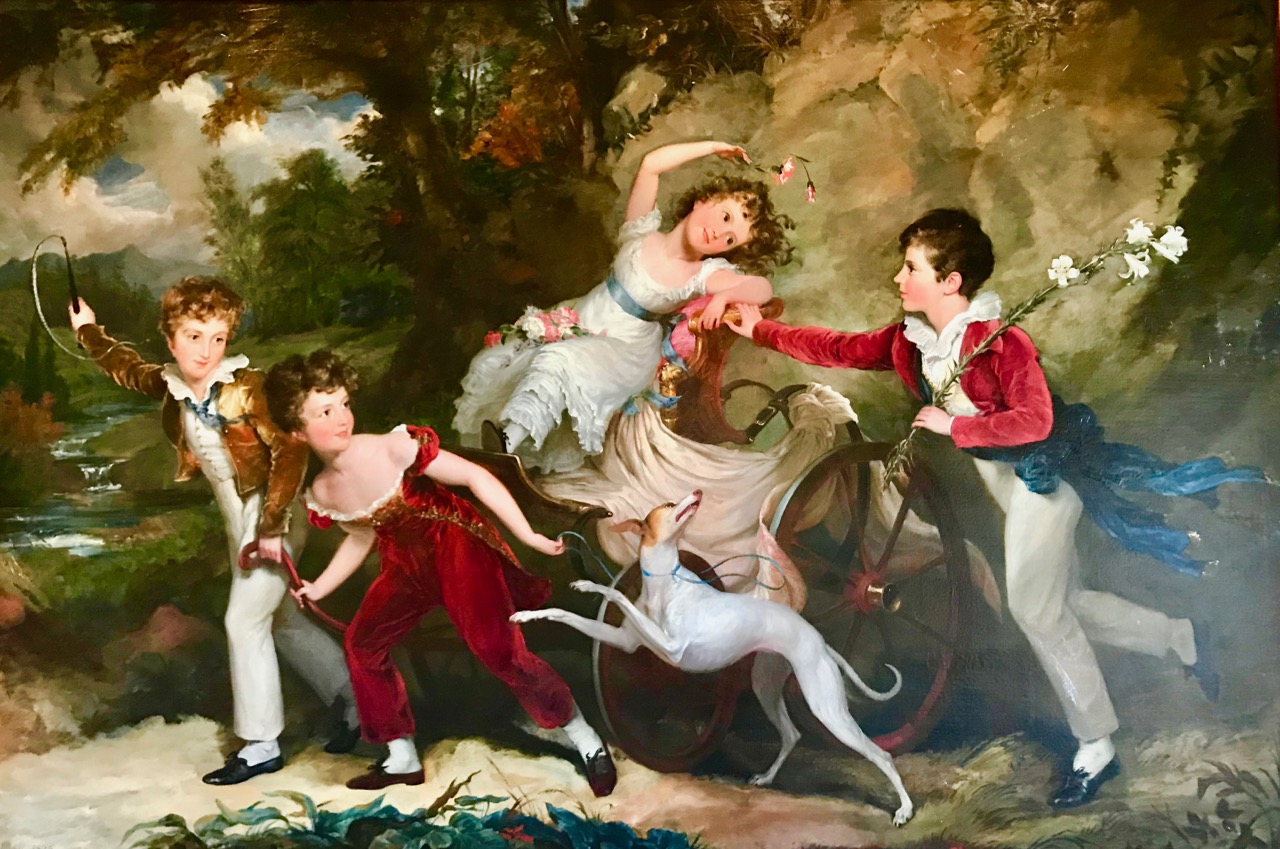
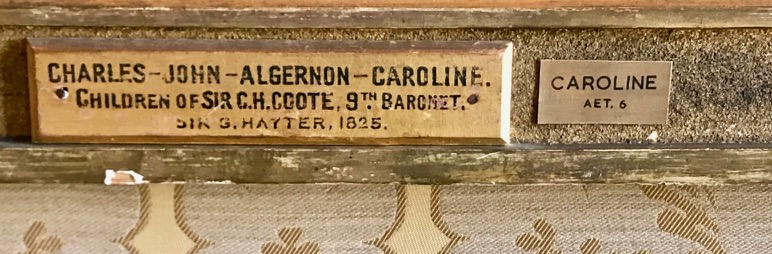
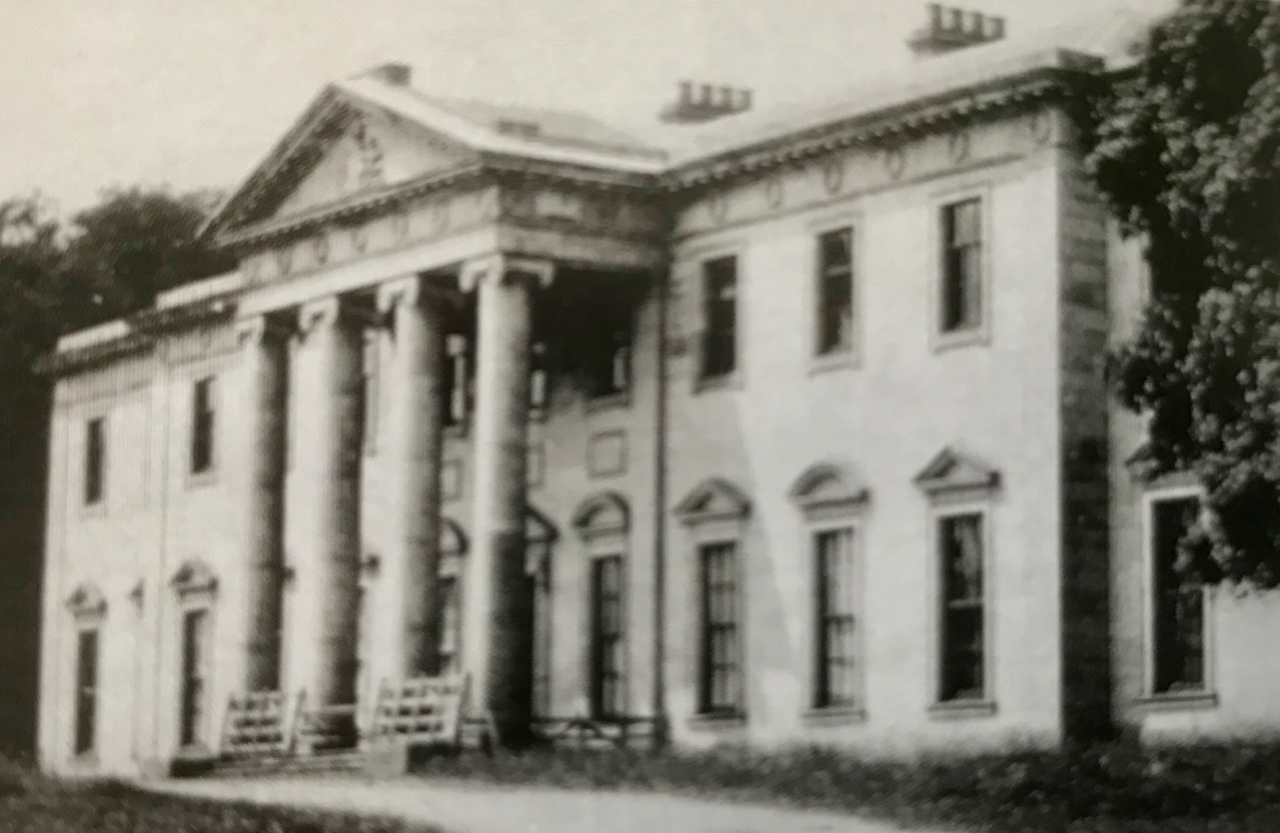
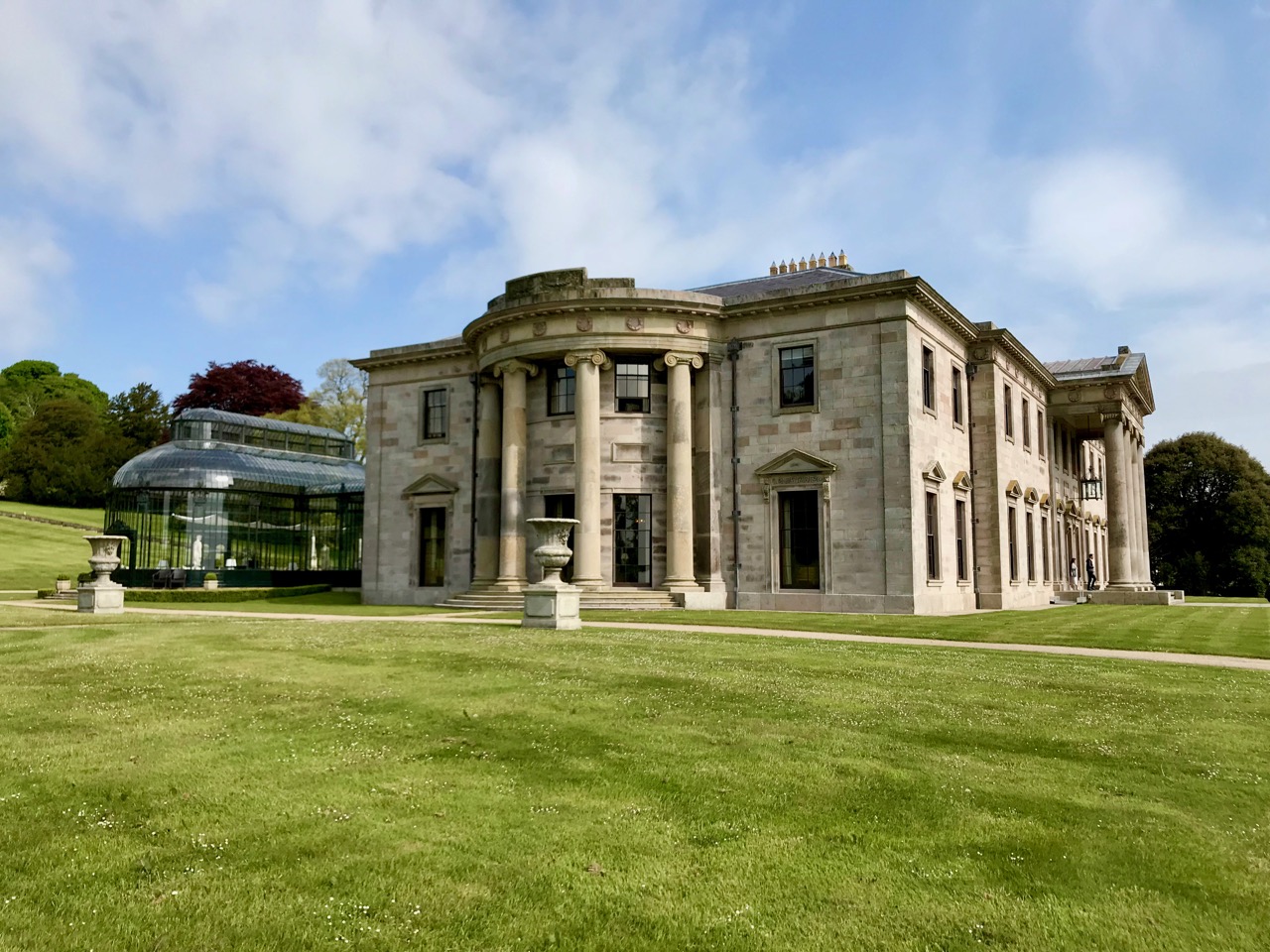
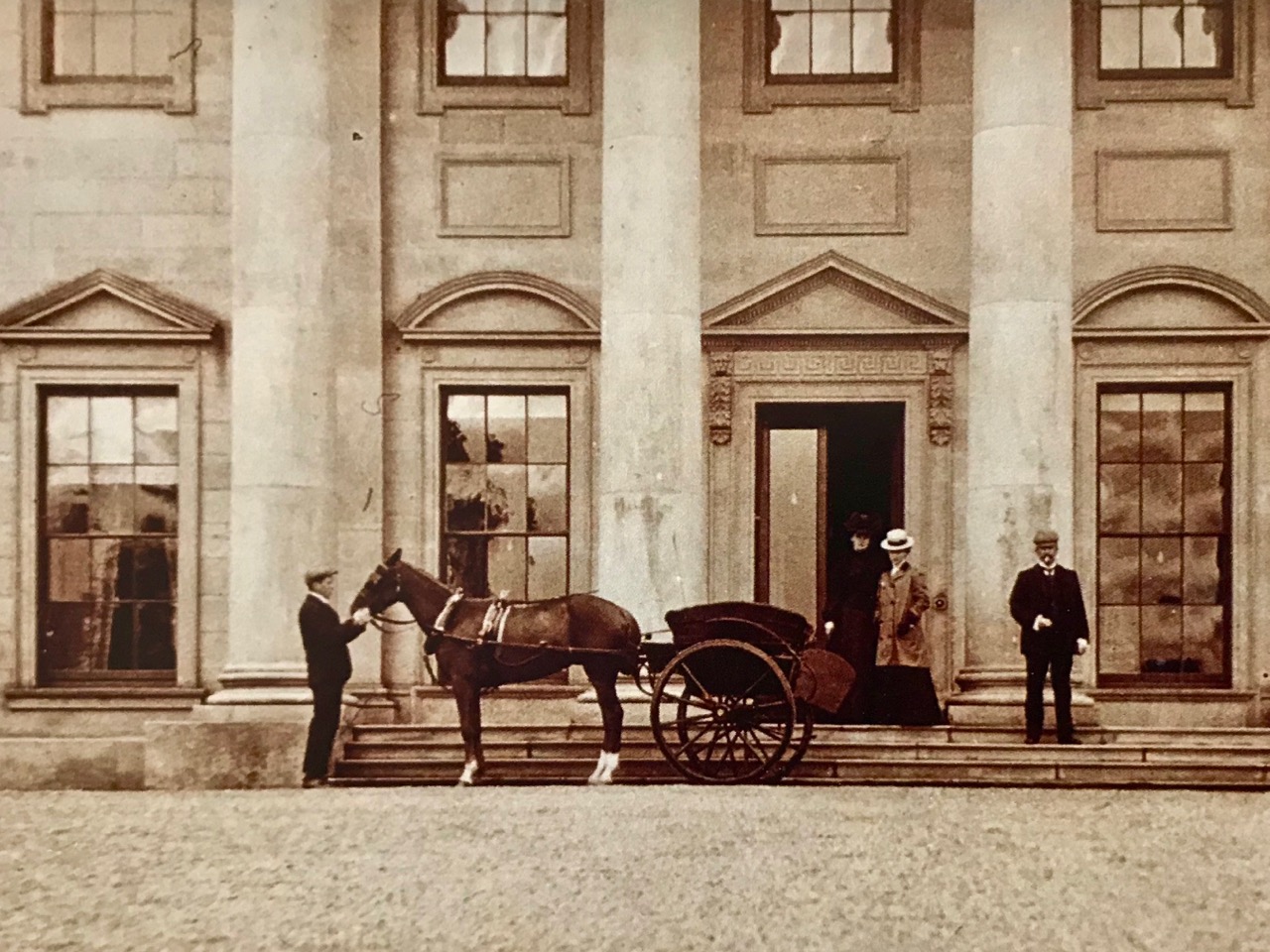
Last week Roaringwater Journal visited Ballyfin Demesne: I sketched out the early history of the house and Finola looked at the magnificent grounds. Today I’m bringing the story up to date. We got as far as the gracious Victorian and Edwardian days, when the Coote family were in residence, as they had been since 1813. The photo above dates from 1903 and shows a jaunting car waiting at the entrance to the house (Magan Collection): perhaps those days were not quite as settled as the halcyon period when the children of Sir Charles Coote were painted so fancifully in the early nineteenth century (artist: George Hayter – with the addition of a whippet painted by Edwin Lanseer!). The painting (below) is now a centrepiece in the Gold Room at Ballyfin.

At the dawn of the twentieth century, there were clouds on the horizon for the Anglo Irish families and their big houses, although life at Ballyfin seemed to maintain a continuum up until the commencement of the Great War. Generations of Cootes are remembered as having been good landlords and employers: on Sir Charles’ death in 1864 the most important members of staff were ‘handsomely rewarded’ in his will, while in the early 20th century the 12th Baronet, Sir Algernon Coote, paid the highest wages in the county – and ‘provided a comfortable house’ – to all outside labourers. In 1920, Sir Algernon died and was succeeded by his eldest son, Ralph,  the 13th Baronet. In the atmosphere of the Irish War of Independence, Ralph could no longer see a future in remaining at Ballyfin: ‘ . . . nothing would ever be the same again . . . ‘

A sad picture of Ballyfin – the house now abandoned and awaiting its fate in 1926

Sensibly – and most fortunately for today’s owners, Sir Ralph determined that the demesne should not be broken up and dispersed. He insisted that it should be marketed as one lot:

‘ . . . I have no intention whatever of dividing the demesne, the price is £10,000 . . . The figure is final and you need not bother to waste any time with anyone trying to reduce it. I would let the place fall down first . . . ‘

It was precisely one hundred years after the 9th Baronet had rebuilt Ballyfin to re-establish a permanent residence there.

So it was that, in 1930, Ballyfin set out on a new path in its development – as a school owned and run by the Patrician Brothers – a Roman Catholic teaching brotherhood. The only significant alterations to the house were the creation of a College Chapel in the old Dining Room (above), a dormitory across the north front of the first floor, and improved services. The immediate grounds were retained to provide productive gardens and the yards were filled with livestock.

Reports of life at the school from those who have memories of it are generally very positive, particularly because of the idyllic surroundings and features of the estate.  While the Patricians did their best to ensure that Ballyfin catered for the needs of a large secondary school and also strove to keep the entire demesne intact, in the end economic pressures and decades of slow decline took their toll. The Brothers closed the College in September, 2001, after 74 years of stewardship: once vacated, Ballyfin House was considered  by the Irish Georgian Society to be foremost amongst Ireland’s endangered buildings. It needed a saviour to rescue it. Fortunately, three appeared.

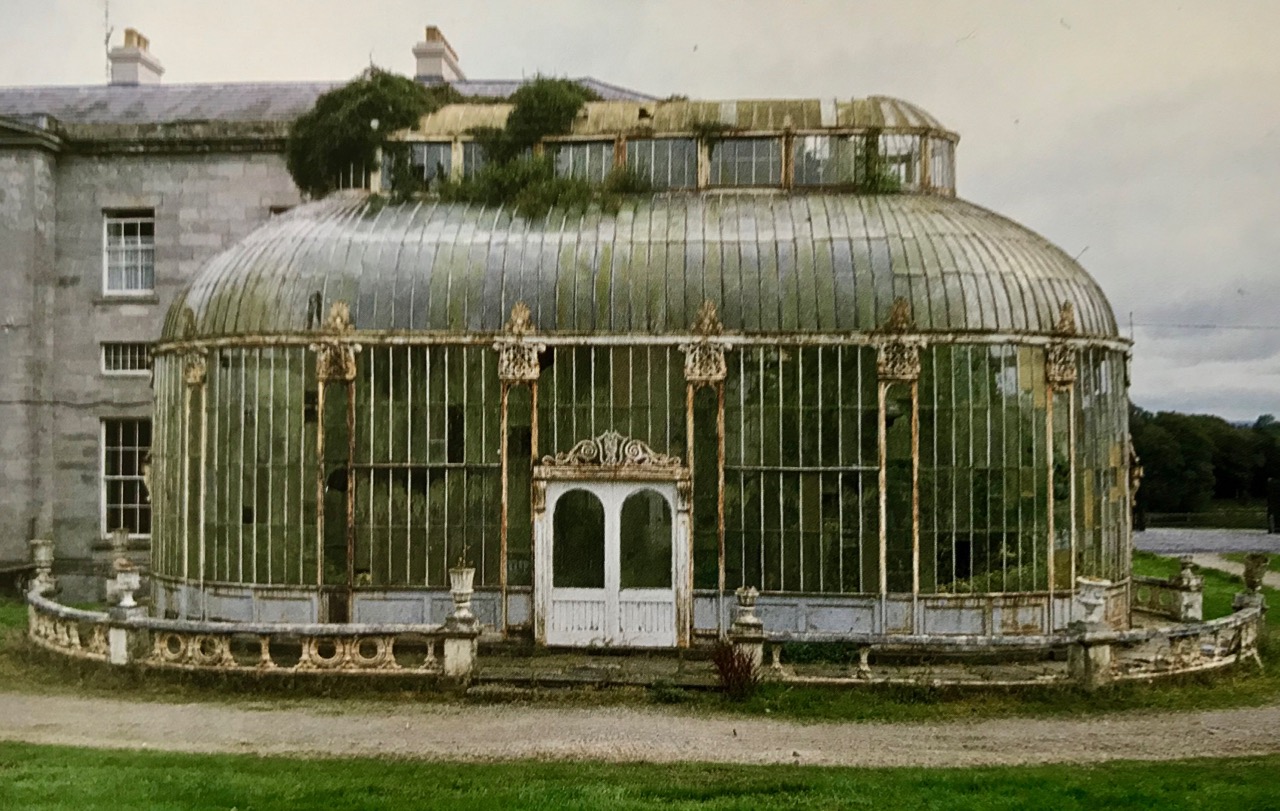
Above – an example of the declining fabric of Ballyfin during the twentieth century: Richard Turner’s iconic iron conservatory seems beyond repair, yet the reincarnation of the estate that commenced in 2004 has magnificently returned this architectural gem to prime condition, along with the rest of the house and Demesne. The conservatory was completely dismantled and – piece by piece – the ironwork was restored, then reassembled. Then a complete reglazing took place (practically every pane is a different size): in the days of the school the boys had found the glass an irresistible target!

In 2002, a Chicago based couple, Fred and Kay Krehbiel, became the new owners of Ballyfin and invited Jim Reynolds – one of Ireland’s leading landscape designers (who incidentally shared an archaeology education with Finola!) – to join them as shareholder and managing director on a project that was ‘ . . . a fundamental desire to recreate, primarily through restoration, the great hospitable tradition. the luxury and the atmosphere of the Irish country house . . . ‘ Ballyfin encompassed everything they had been searching for: ‘ . . . a great endangered house in a beautiful landscape that needed rescuing . . . ‘

The source of much of the history of the demesne recorded here is the impressive volume by Kevin V Mulligan, to which I referred last week. This extract is a good summary of the ethos and achievement of those who drove the project:

‘ . . . The primary aim of the new owners and Jim Reynolds has been to re-establish the integrity of the house and everything within the demesne walls – its historic buildings, gardens and parklands, and by opening the house to guests, to fulfil the hospitable intentions of the Irish country house. Since 2004 an extensive programme of restoration works has brought the house closest to its state following completion almost two centuries ago. It has taken eight years to achieve this, longer in fact than it had taken to complete the house in the first instance . . . ‘

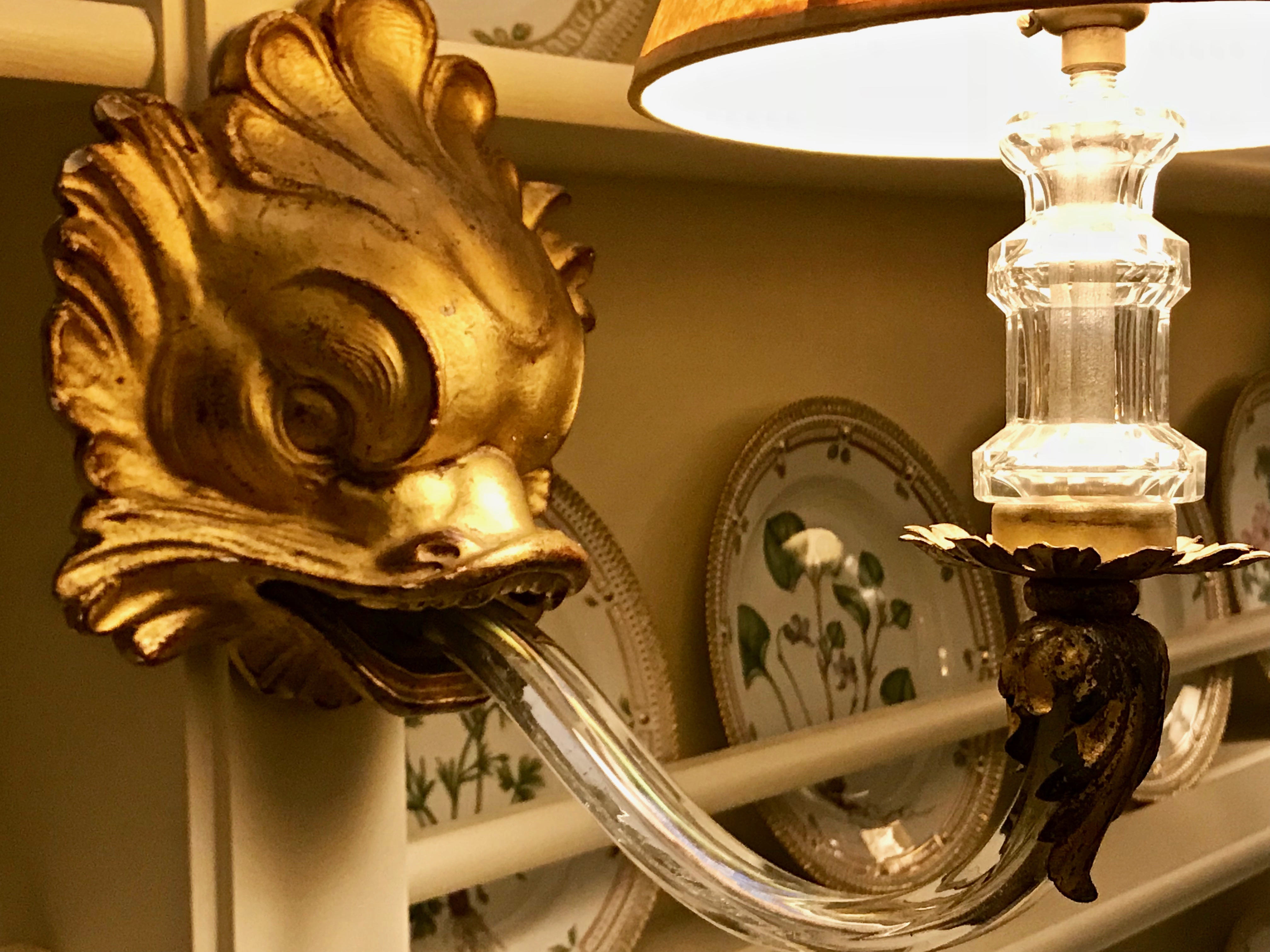
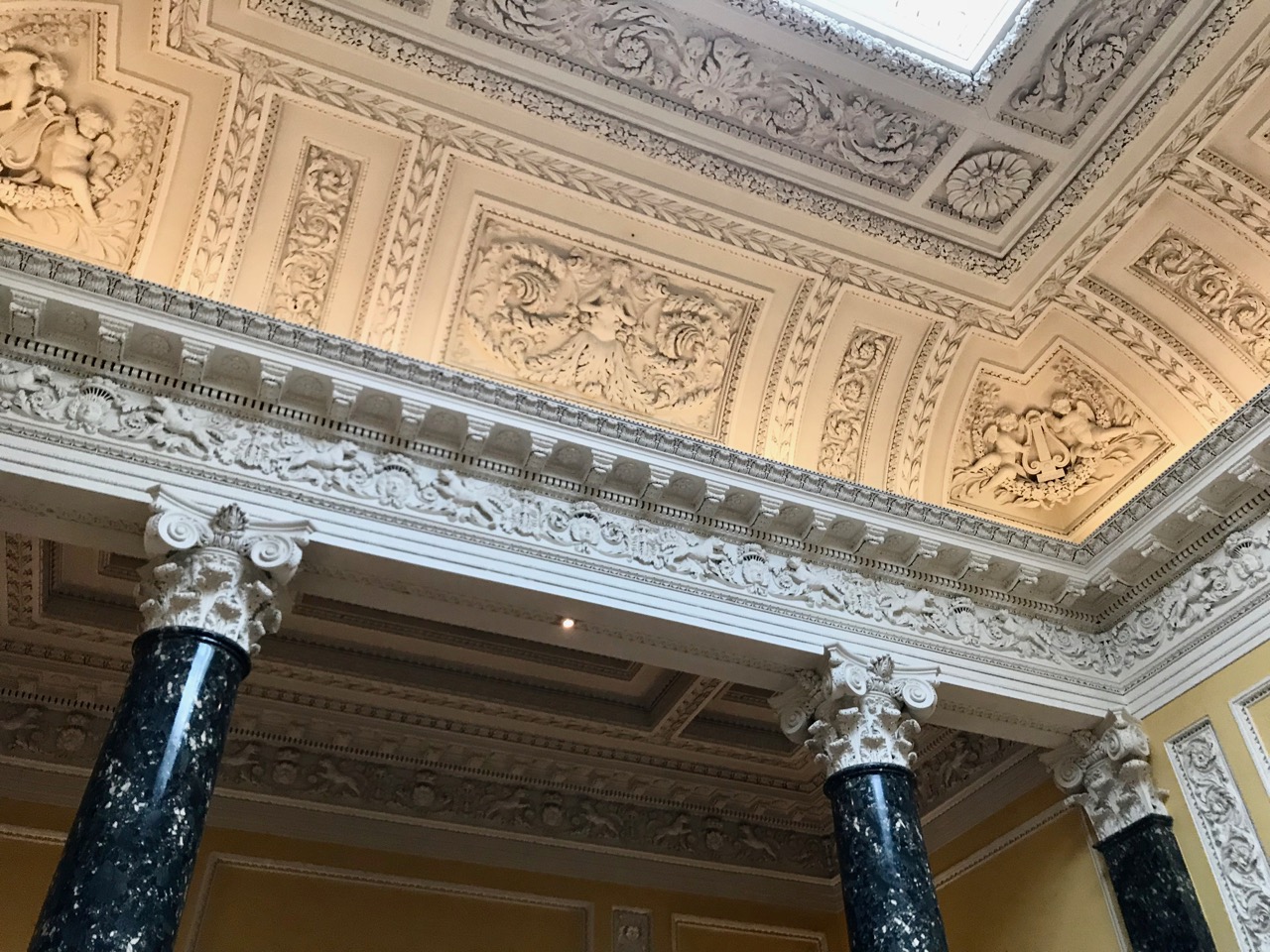
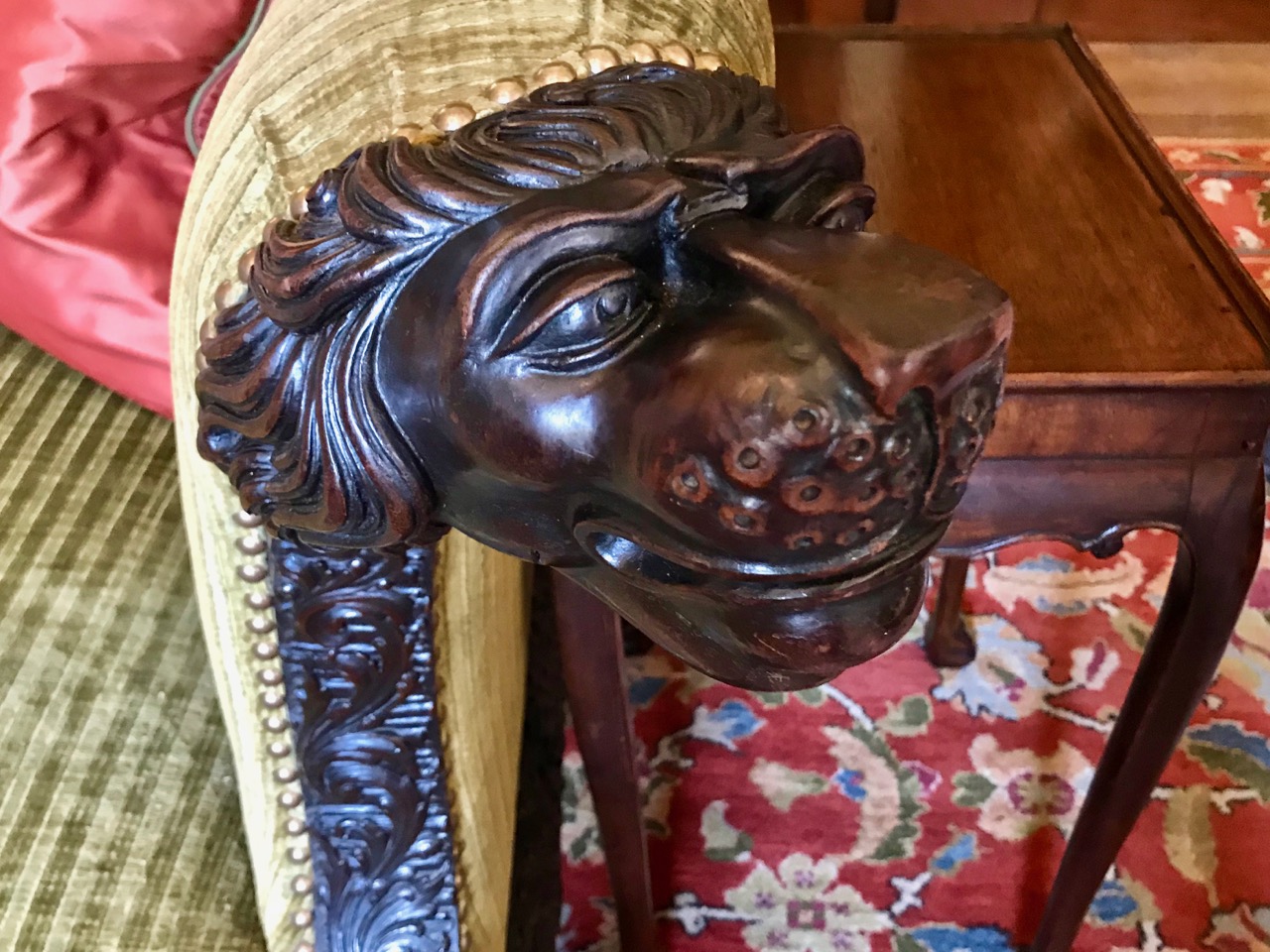
This photo compendium indicates the high quality of the restoration and the attention paid to every detail, including the recovery and hanging of many of the original portraits showing the owners of the estate during its history.

Ballyfin today reflects one piece of the complicated jigsaw puzzle that is the history of Ireland. It paints a picture of way of life now in the past.  In today’s incarnation as a first class, small hotel it offers a distilled and polished experience of the best of contemporary Irish hospitality.

The Headstones of Ferns

Ferns, in Co Wexford, is an historic town that boasts many fine heritage attractions including an Anglo-Norman Castle, an Augustinian Abbey and other medieval ruins, high crosses and associations with the McMurroughs and the Marshalls. Not least among its delights is the Cathedral graveyard, which has one of the best collections of eighteenth century headstones I have ever seen.

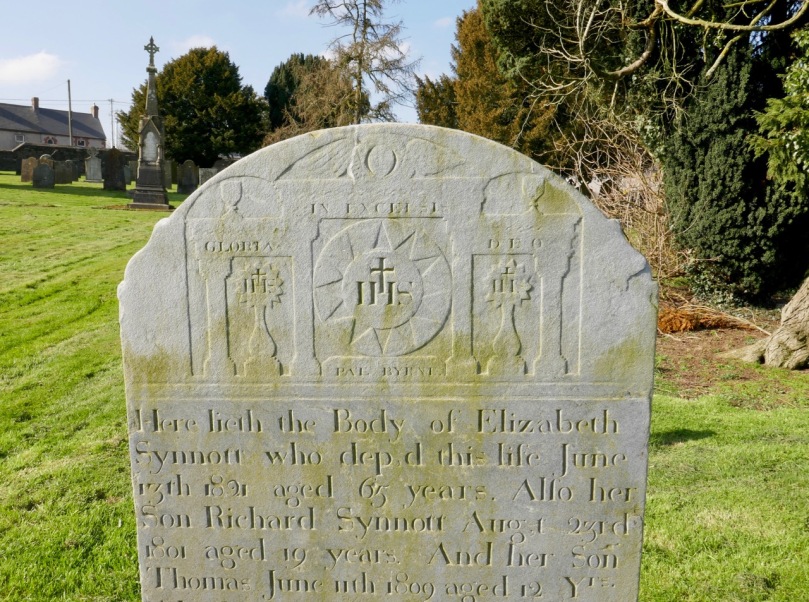
Look at the headstone above and the one below. The elements used in the carving are identical except that the central image in the first is a crucifixion scene and in the second it’s an IHS in a sunburst. Note the J Byrne signature under the carving to the left above and the Pat Byrne signature below. How were J and Pat related? Does the difference demonstrate anything other than the preference of the person who commissioned the headstone? I’m tempted to see the gradual replacement of the crucifixion image with slightly less ‘popish’ symbols, but I’m probably overthinking this

In our post Memento Mori, I introduced you to Irish headstones and the practice, which really only dates back to the 18th century, of routinely placing headstones on graves. Even then, only those who had the means to pay for a carved headstone were memorialised in this way – most still lay in graves with simple field stones at their head (and sometimes feet).

In Headstones or Folk Carvings? we visited Kilcoole graveyard to Co Wicklow, home to many fine headstones including one by Dennis Cullen, an acknowledged master carver. In Ferns we found many of the headstones had been carved by J Byrne (or J: Byrne, as he styled it) and although his technique does not quite have the refinement of Dennis Cullen, his carvings have a charm and energy that make them recognisable even where the headstone is not signed.

See the ‘J: Byrne’ signature just below the carvings to the right. There is no date on this headstone for William Lea (or Leacey? See the tiny superscript above the ‘Lea’). The detail on the angels is very fine and I love the little arrow in the centre of the sunburst, just below the IHS

The most common image is, of course, the IHS. Known as a Christogram, IHS is shorthand for the name of Jesus. It is often surrounded by a sunburst, or surmounted by a cross. Interestingly, the earlier and later headstones are more likely to feature the IHS as their main element.

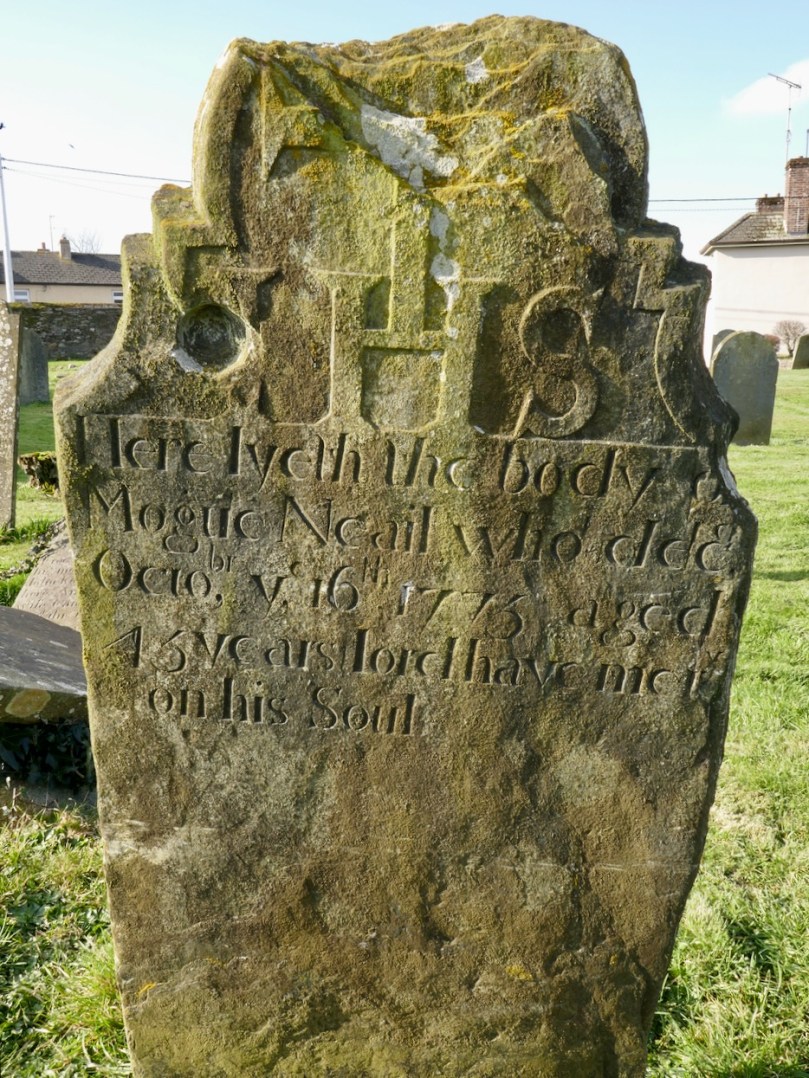
Two early headstone, from 1758 and 1773, starting with Here Lieth. Mogue is a local name, for Saint Mogue of Ferns, whose well lies across the road. Note that the final Y of Mercy doesn’t quite fit on the line so a superscript is used

Many of the most interesting headstones date from the 1790s and where they have a signature it is that of J Byrne. There must have been a vogue for crucifixion scenes at the time, because they appear here and there throughout the graveyard and date to this period.

The J: Byrne signature is almost obscured by lichen. This is a typical J Byrne carving, with a crucifixion scene: Jesus on the cross, Mary and possibly John on either side, all three with halos. Sun and moon round out the carving

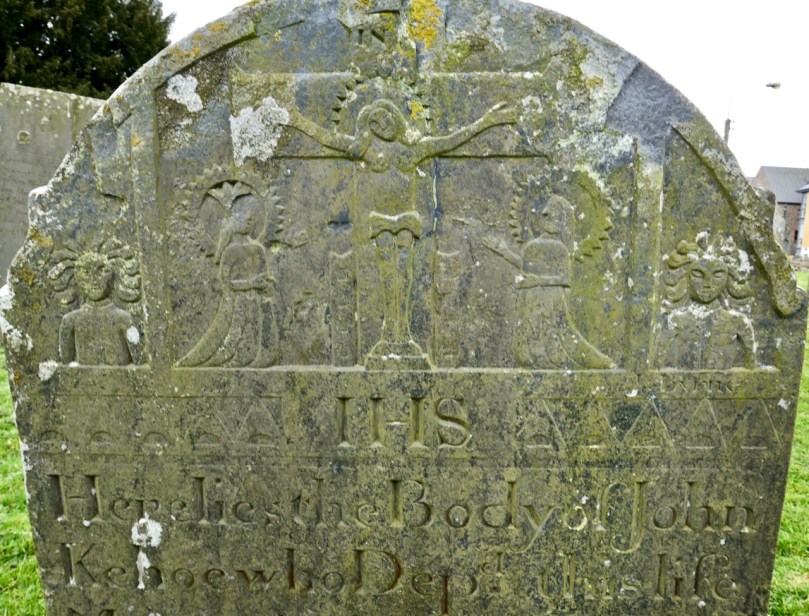
Jesus is on the cross at the centre of the tableau, with Mary on one side and John on the other. Occasionally other figures appear – Roman soldiers, a man on horseback, angels.

The dress, as is common with carvings of this period, reflects eighteenth century styles – observe the soldier in the frock coat in the Moses Breen scene (above) and the angel in the seamed jacket on John Kehoe’s stone (below).

There are a couple of headstone with horses in the crucifixion scene, but it’s unusual

The most frequent other symbols are the sun and moon, often with faces. The sun/moon symbols can be the main elements or can be wedged into available spaces on either side of crucifixion scenes.

The lettering styles vary, although generally they become tidier over time. Occasionally, the lines incised to keep the carver straight can be discerned. Words that don’t fit are either carried over, or a tiny superscript finishes them so they can stay on the same line.

The lightly incised ‘stay between the lines’ can be seen in Mogue Doyle’s headstone from 1775

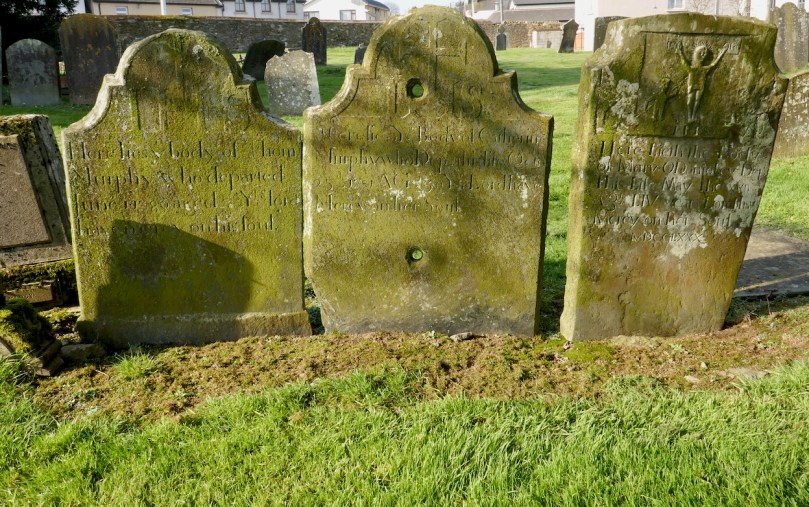
This 1792 headstone is for Catherine Murphy. But it is also for her husband. However, none of the husband’s details appear. I can understand that he would have been added to the headstone at the time of her death, for efficiency perhaps, with his dates to be added later – but the fact that his name is missing gives rise to all kinds of speculation!

One mysterious element of several of the gravestones in Ferns is that at some point in the past someone has drilled holes in some of the headstones (see the two examples, below). If anyone can tell us the significance of this, we would be grateful to know it.

We highly recommend a visit to Ferns. Give yourself a day to take in all that’s there, but don’t forget to have a good wander around the old graveyard. Morning is best, as the light goes behind the headstones in the afternoon.

I love the primitive quality of this 1780 stone for Mary O”Danioley – Jesus on the cross with the soldier piercing his side with a spear

Gothic Revival – With Bells

A month ago I wrote of our first visit to Cobh, in County Cork, and told how impressed we were with the town and its architecture. I promised that Roaringwater Journal would revisit Cobh, and today I will concentrate on the splendour of the Cathedral, which dominates the skyline and looks across to the Lee Estuary. All shipping using the port, or passing up to Cork, will be aware of this spectacular building.

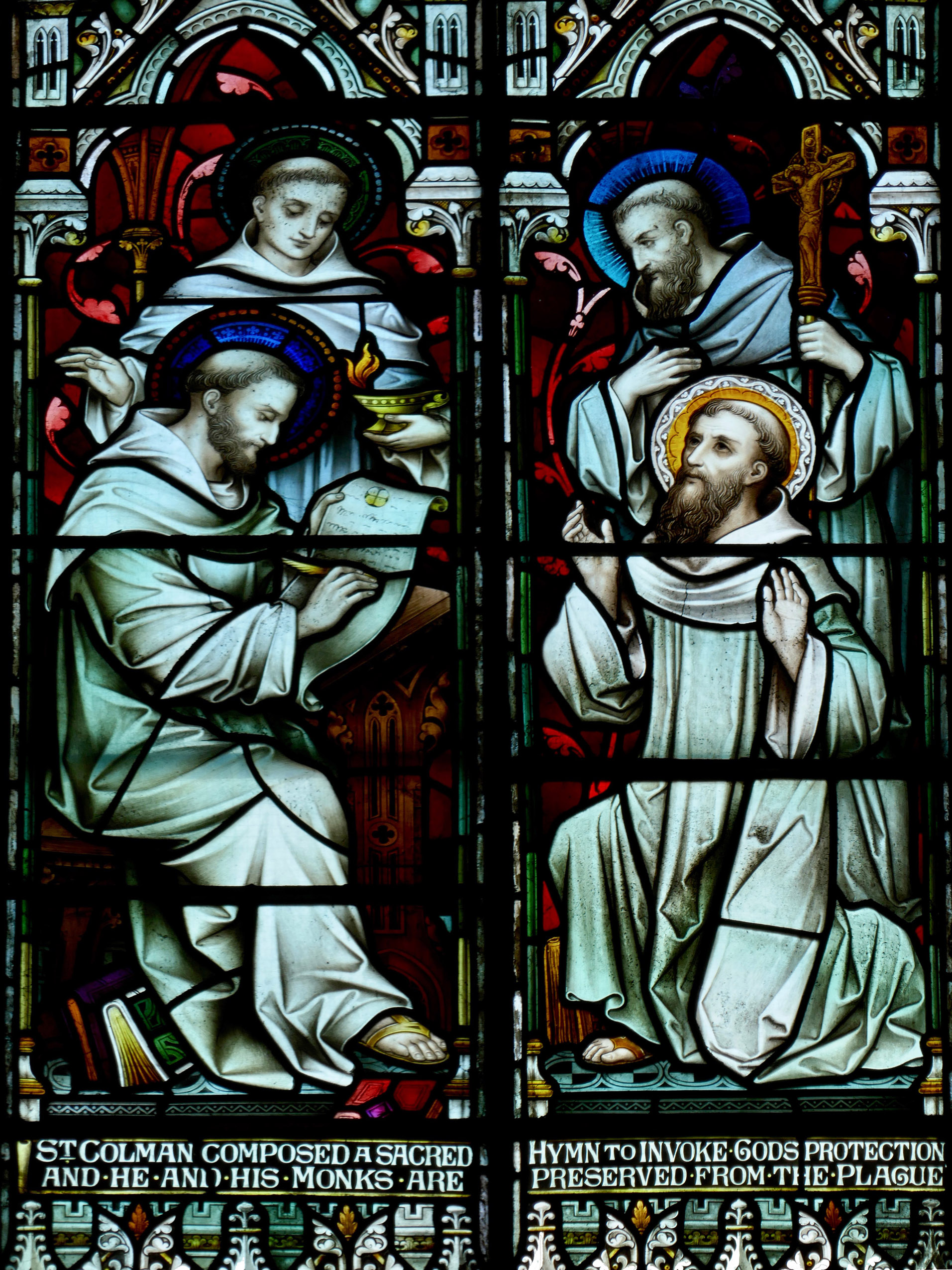
St Colmán’s Cathedral was conceived in the mid-Victorian era, when the Gothic revival style of architecture was in full swing. Popularity of the style was, perhaps, generated as a reaction to the society and machinery of the Industrial Revolution – all noise, smoke and progress – and harked back to a perception of medieval life when all seemed sylvan and pastoral and when everyone, from lords to artisans, knew their place: Medievalism meant a concentration on the trappings of chivalry, craftsmanship and decoration, particularly in religious buildings – although private houses for the very wealthy also explored the idiom: have a look at our post on Adare Manor.

Construction work on the Cathedral began in 1867. The designers were Edward Welby Pugin (son of Augustus Welby Pugin – probably the greatest of the British Victorian architects) and Irish-born George Coppinger Ashlin who was responsible for over 100 new churches in Ireland including those in Clonakilty and Skibbereen, here in West Cork. St Colmán’s was not completed, however, until 1915. The tower – 90 metres high – was the last element to be finished – old photographs above (emptyseas) and below left (National Archives of Ireland) show the Cathedral in use without it in the 1890s while the picture (below right – from the Michael O’Leary Private Collection) shows the tower under construction in 1914.

The Cathedral is dedicated to St Colmán of Cloyne, who founded the Diocese in the year 560. This saint is known as ‘The Poet Saint’ as he trained to be a bard for twelve years and entered the court of Aodh Caomh, High King of Munster, at Cashel. Influenced by St Brendan and St Ita, Colmán became a priest and then set up a monastery on the shores of the Lee, where Cobh now stands.  Our friend Amanda has told the story of this saint, and includes a piece from the Schools Folklore Collection, written by Padraigh Ua hAodha in the 1930s:

. . . When St Coleman was building the round tower in Cloyne a woman asked him what he was doing so high up. When he heard her speak he got such a shock he jumped from there to Kilva where the print of his feet are still to be seen on a stone. He jumped from there to Glen Iris Wood. When he landed he prayed to god to send him some water and immediately water sprang up at his feet. When he had drunk some he sprang from here to Cove  where there is a cathedral built called Saint Coleman’s. The spring that sprung up at his feet is now known as St Coleman’s Well . . .

The Cathedral contains an inscribed list of all the bishops of the Diocese, from St Colmán to the present day. This list includes Thaddeus McCarthy, bishop from 1490 to 1492 – Finola is telling his story today. The richness of the building is as evident inside as it is without. It’s an homage to fine detailing and craftsmanship and there is no corner free from it: unfortunately I could not find the names of the the artists, masons and carvers in any records. At least their skills are celebrated in their works.

Something you may not discover from a visit to St Colmán’s is the carillon which was built in to the new tower in 1916. A carillon is a giant musical instrument which, using a large mechanical keyboard and pedals, sounds a whole series of cast bells. In this cathedral there are 49 bells – making it the largest carillon in Ireland and Britain: the heaviest bell weighs 3.6 tons, and is named Colmán! Please watch this fascinating seven minute film about the carillon, and the man who plays it: his title is Carillonneur. Through the summer recitals are given and can, of course, be heard not only in the Cathedral, but over the whole town.

Visiting Cobh is itself a great experience, but allowing sufficient time to explore and appreciate the Neo-Gothic gem which is St Colmán’s Cathedral has to be the icing on the cake. Although only completed a hundred years ago, remember the long tradition of the saints who set up their foundations here in Ireland, keeping civilisation alive . . . while the Dark Ages settled on Europe . . .

Mizen Magic 10: Sailor’s Hill

Fancy a walk? One with just enough elevation to get the heart going and with the reward of spectacular views at the top? It will take about an hour, maybe a bit longer if you stop to chat, or just gaze.

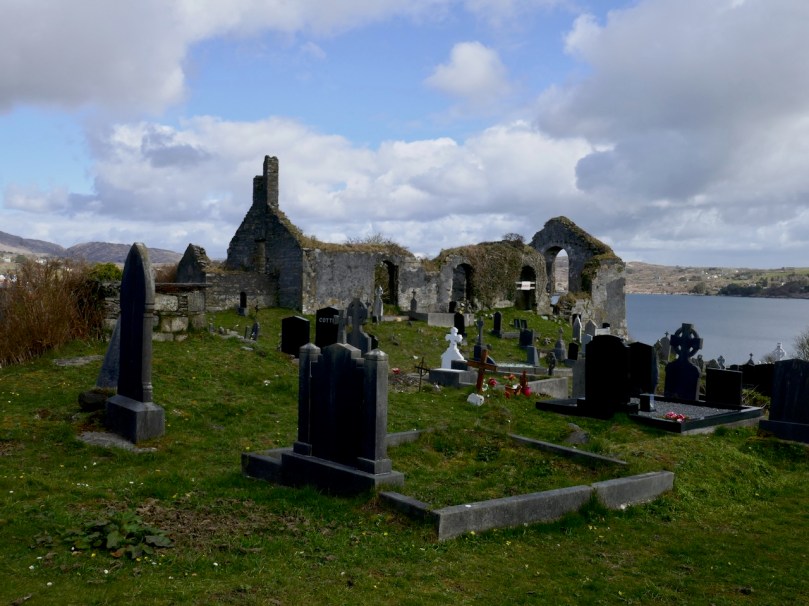
We’ve mentioned Sailor’s Hill before in the course of other posts – this one and this one. But it deserves a post of its own, because it’s a complete experience. Start from Schull and walk out along the Colla Road until you get to the old St Mary’s Church and graveyard. The National Monuments listing tell us that this was originally a medieval structure, although what we see in ruins now is mainly an eighteenth century church, situated in a picturesque burial ground. Turn right at that point.

You will notice the waymark signs. This is one of the newer extensions of the Fastnet Trails, and an initiative of a committed group in Schull. The walk up Sailor Hill is actually part of a larger walk, the Colla Loop – we are planning to do that one soon but only had time for this stretch of it today.

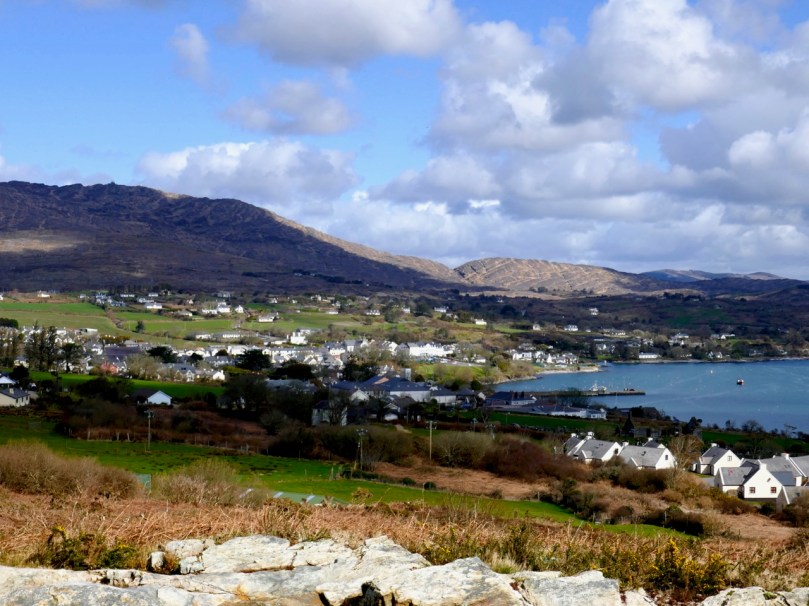
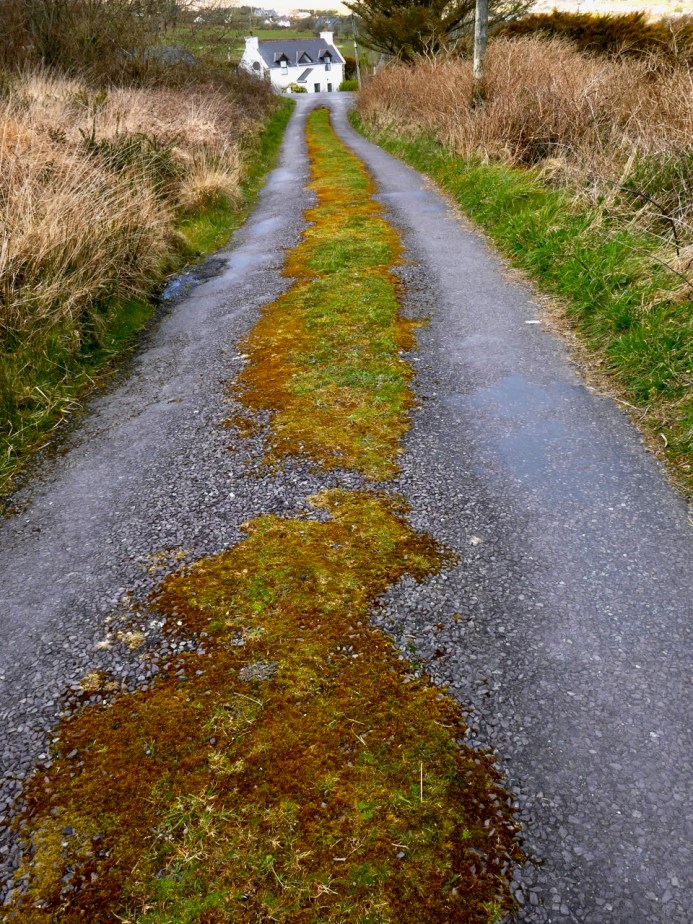
The road meanders gently upwards. Take the first left and then the next left. Views of Schull Harbour start to open out as the road rises. Looking back, you can see how Schull nestles at the foot of Mount Gabriel (see the photograph at the top of this post).

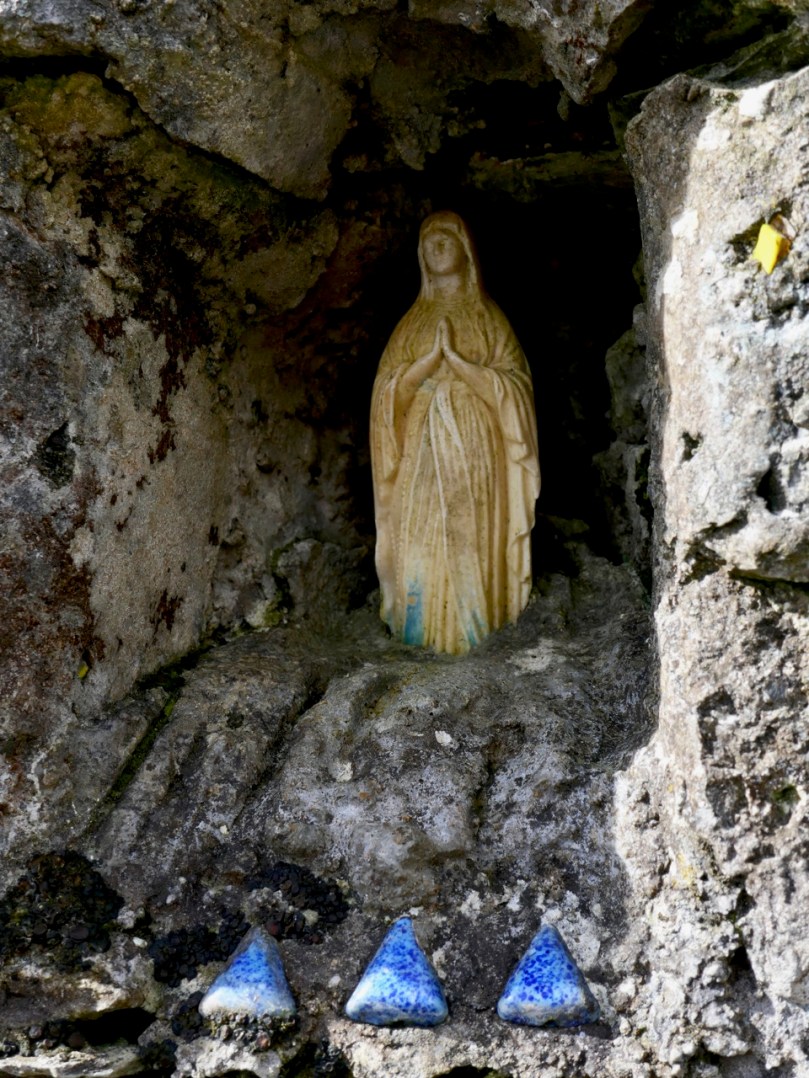
A tiny shrine in a gatepost

Later on, this boreen will be heady with Foxglove and Loosestrife and Oxeye Daisies, and later still the purple heather will dominate, but this is early spring and it’s been a long cold winter. 

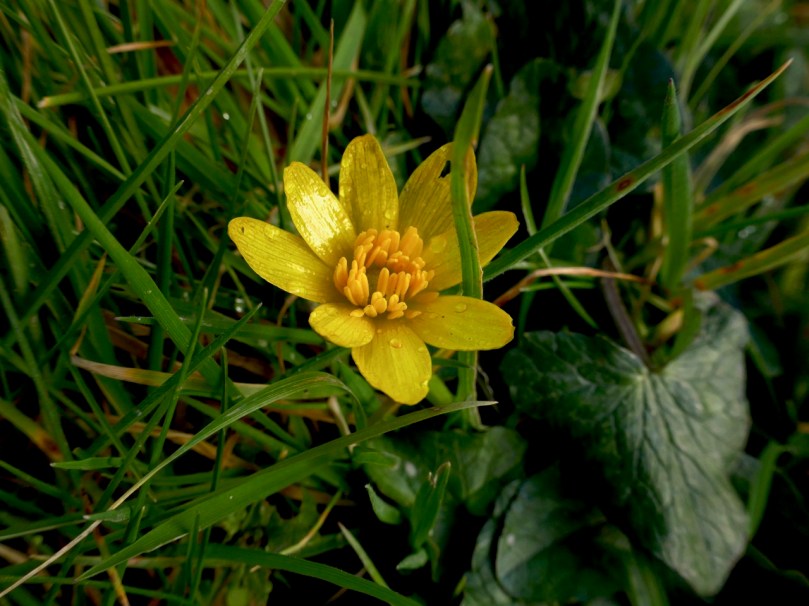
Everything is late this year, so I am happy to see the ever-reliable Celandine in profusion.

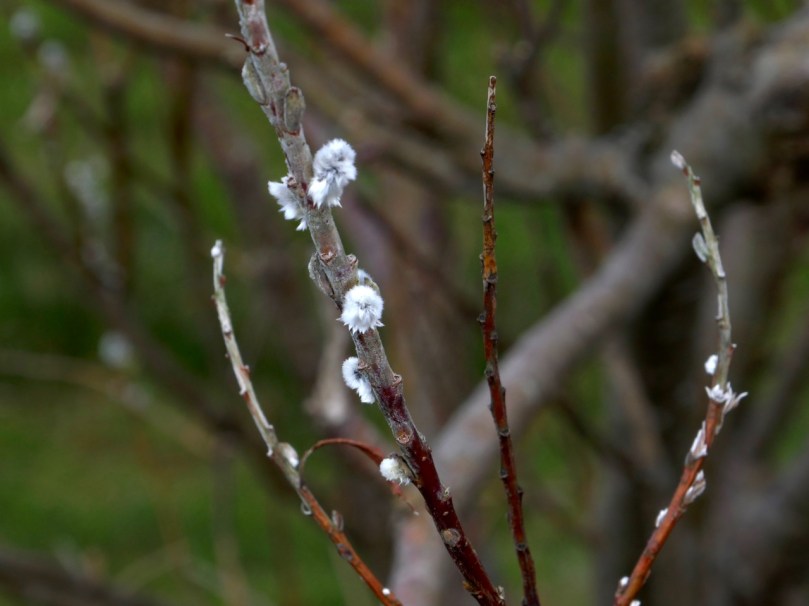
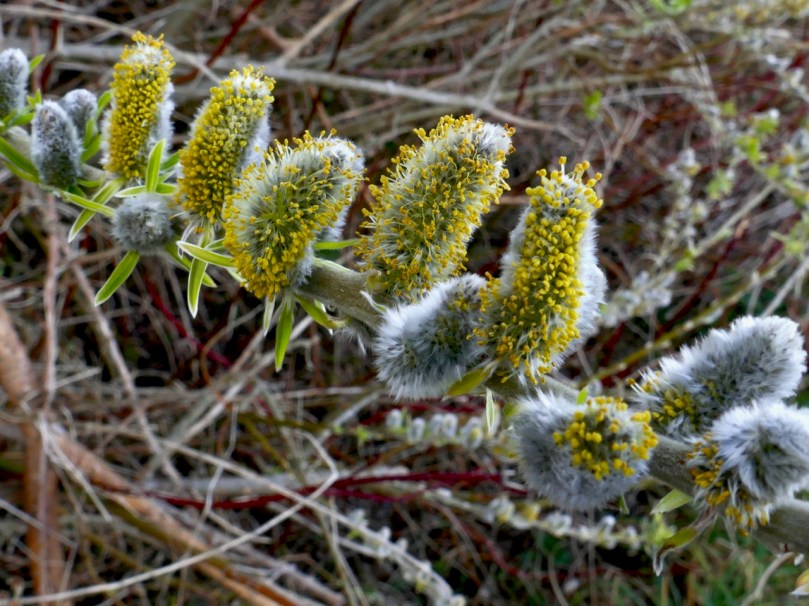
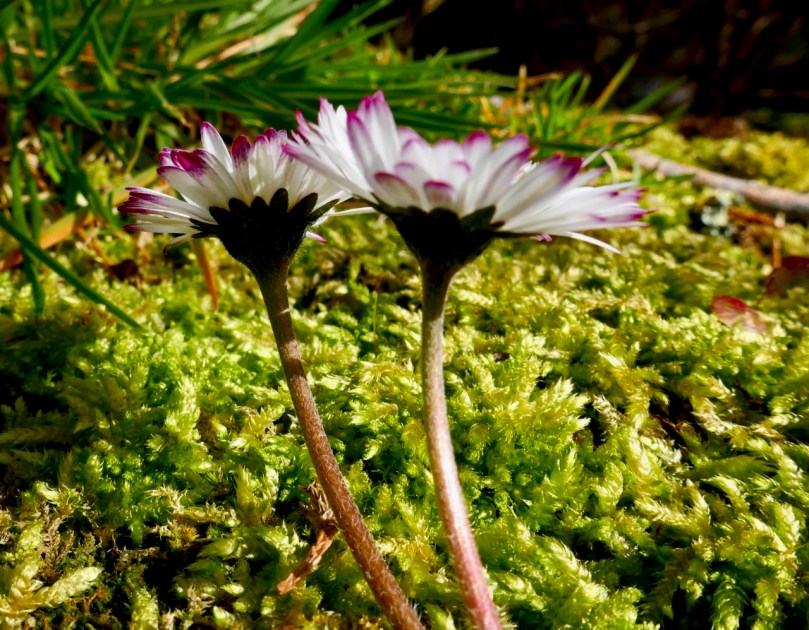
The willows are starting to bud out too, but apart from that, it seems that dandelions and lawn daisies are the only wildflowers brave enough to flourish along the way. Not that we disdain these humble flowers – they provide early and important nourishment for the insects and the bees. Must feed those pollinators!

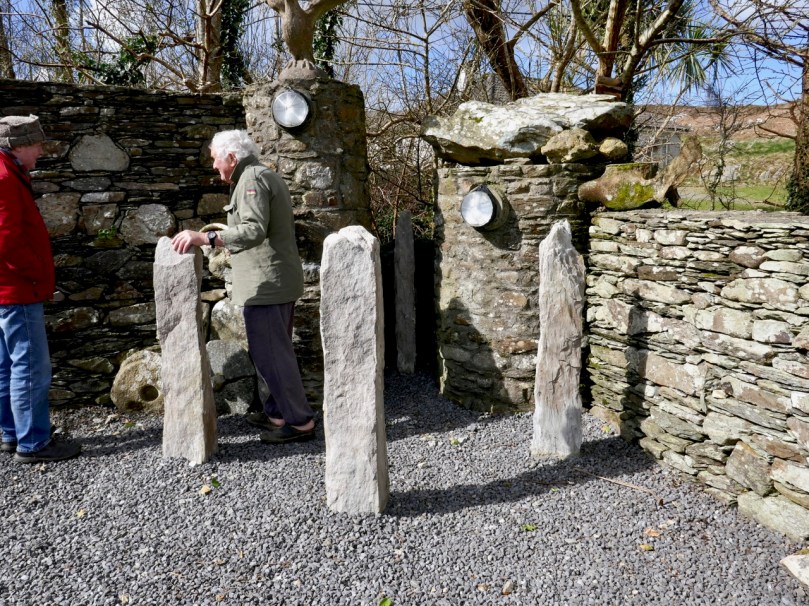
Connie and Betty Griffin have built a house with magnificent vistas near the top of the hill. They never stop adding to it, Betty with flowers and Connie with quirky additions, sculptures and walls. This time, he showed us his Sailor Hill Newgrange, a nifty arrangement of standing stones that respond to the rising sun by capturing the morning light in a stone recess.

Connie demonstrates his sun calendar to Robert

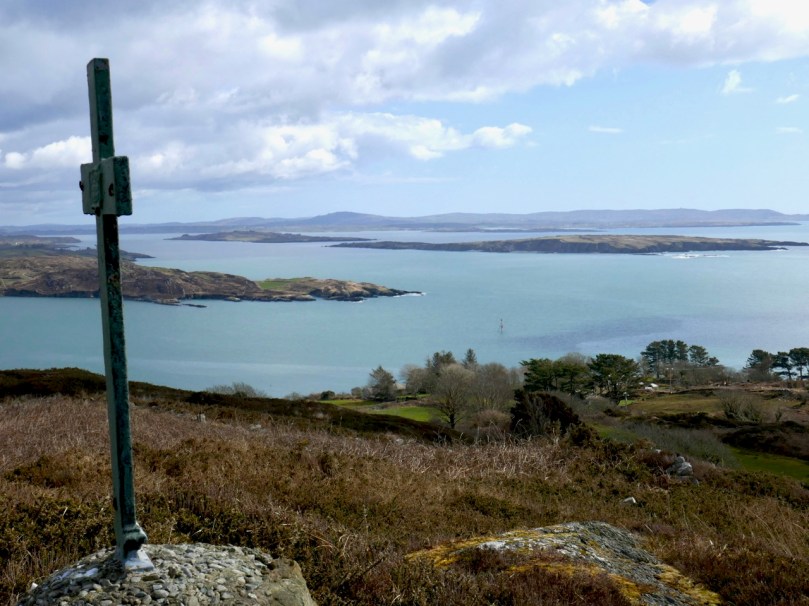
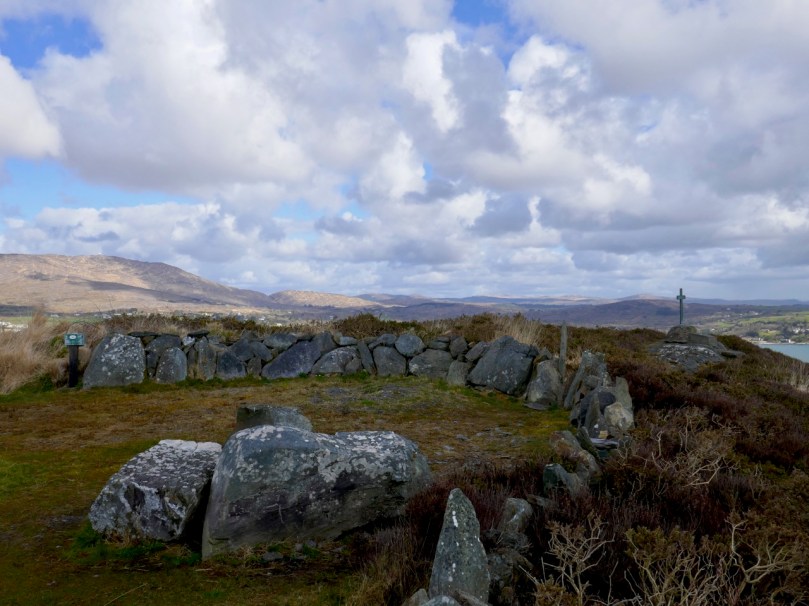
Up to the top then, and there it is – a breathtaking panorama that encompasses the whole of Roaringwater Bay and Long Island Sound to the south, and Mount Gabriel and its foothills to the north. Cape Clear, the Fastnet, Sherkin Island and all the smaller islands are laid out in front of you.

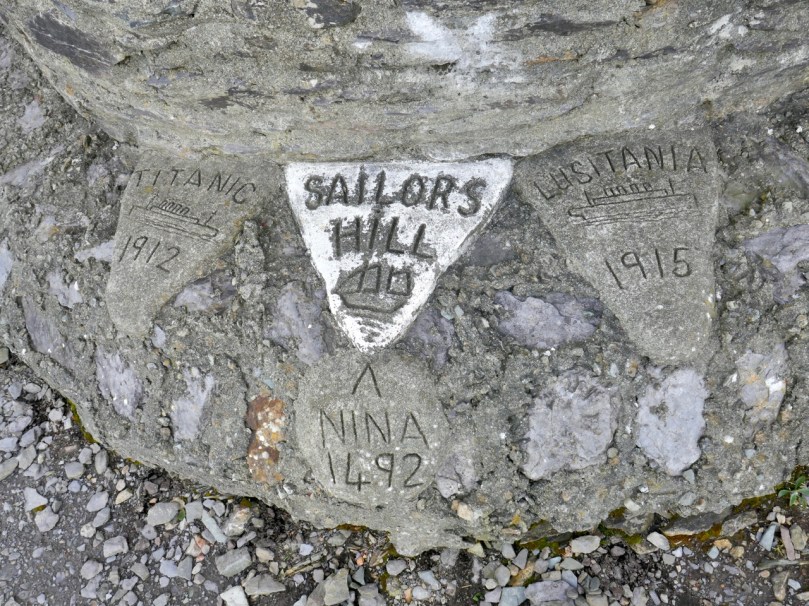
And there’s a cross and inscriptions, so you begin to realise that this site is about more than those views. Connie, who designed and built it, wants us to think about those who lost their lives at sea. It’s his own personal mark of respect and a reminder to us in the midst of all this grandeur to take a moment to contemplate on the power of the ocean and the fleeting nature of life.

I had to look up The Niña, 1492, and of course it was one of Columbus’ ships. He took the Santa Maria, the Niña and the Pinta on his voyage to the New World, but the Niña was his favourite. To learn why, take a look at this. But why is it here? Well, I’m not sure, but there is a tradition around here that Columbus may have visited West Cork on his way. His last provisioning stop may have been with the hospitable, learned and Spanish-speaking Fineen O’Mahony, Scholar Prince of Rossbrin

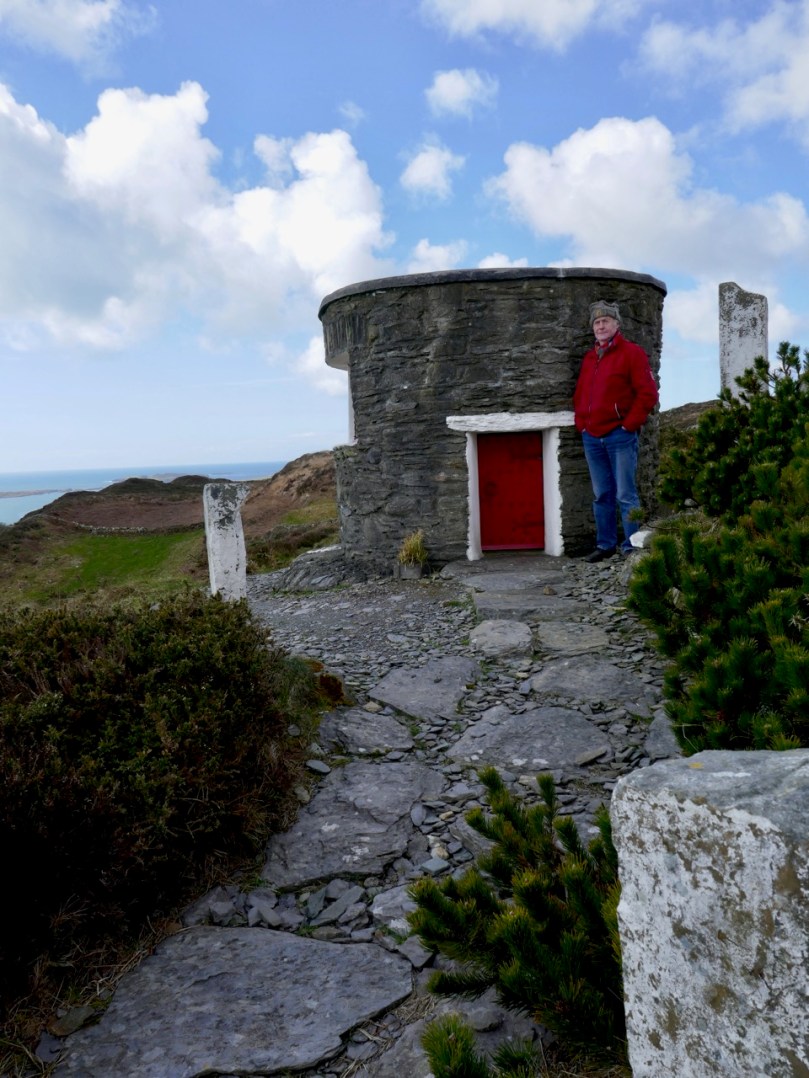
Connie has built his own tiny belvedere (he calls it his folly) perched to take maximum advantage of the view. It’s the perfect spot to sit, munch an apple, and enjoy a companionable chat before the walk down again.

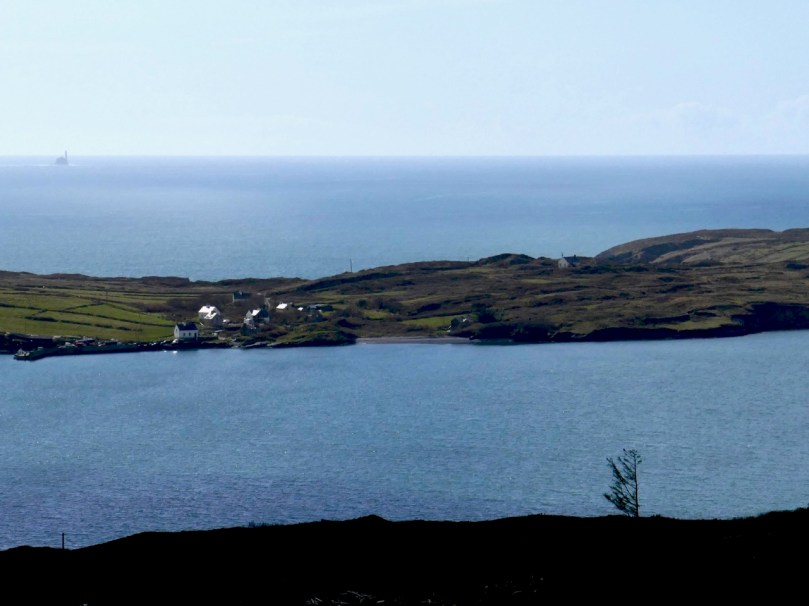
A final look out to sea. There’s Long Island and beyond it the Fastnet Rock with its iconic lighthouse.

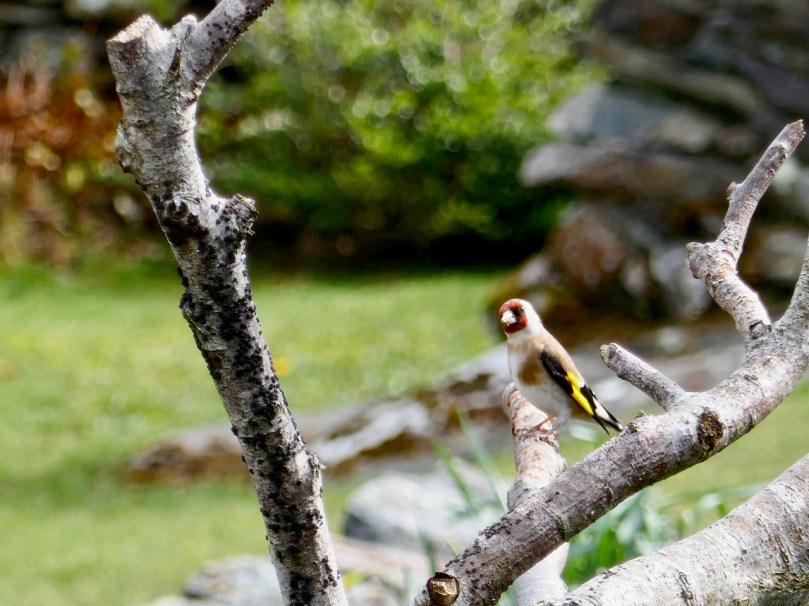
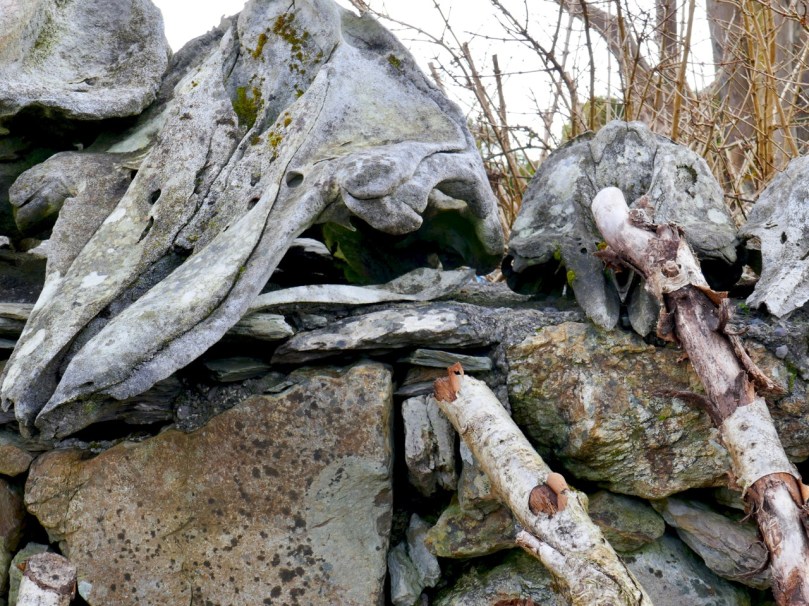
We paused to admire a Goldfinch in Connie’s garden, as well as his wonderful textural arrangement of sticks, stones and whalebones.

Thank you, Connie and Betty, from two happy walkers.

Kilkieran High Crosses – Medieval Gems

You will remember Saint Ciarán of Saigir, who was born on Cape Clear, perfectly framed in our view from Nead an Iolair? He was known as the ‘First Saint of Ireland’, preceding Saint Patrick by almost a century, and also as one of the Twelve Apostles of Ireland. A manuscript dating from 1629 and housed in the Bibliothèque Royale, Brussels, tells how the Twelve Apostles were educated together in Clonard, Co Meath – the most important monastic school in early Christian Ireland – under Saint Finian. It is said that ‘ . . . there were no fewer than 3,000 pupils getting instruction at one time in the school in the green fields of Clonard. The master excelled in exposition of the Sacred Scriptures, and to this fact must be mainly attributed the extraordinary popularity which his lectures enjoyed. Finnian’s gift for teaching and his absolute dedication to the ascetic ideal, inspired a whole generation . . . ‘ St Finian achieved the age of 140 years himself, while Ciarán – who went off to Cornwall where he is known as St Piran (you will also remember) – lived to be 206 before falling into a well on the way home from a wild party. There’s a lot to be said for being a saint in those days.

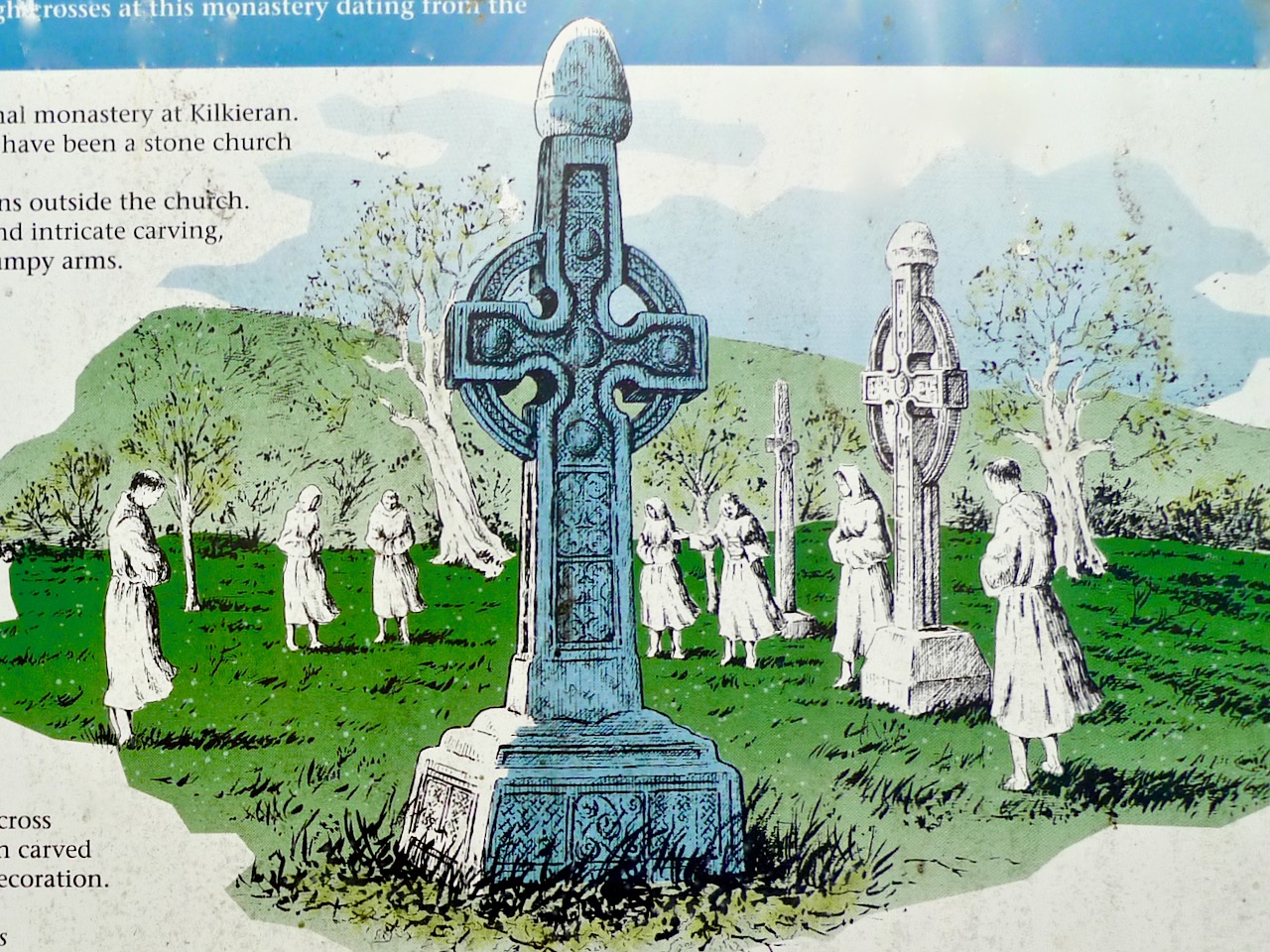
These are extracts from the OPW signboard located at the site

Why are we revisiting St Ciarán? Well, we’ve just past March 5th, which is his day, so we have to celebrate him. To do that we will go off to County Kilkenny, where there is a very important medieval site, noted for its high crosses but with plenty more to see: it’s a 45 minute drive north of Waterford city. The site, known as Kilkieran (Kieran is an alternative anglicised spelling, prefixed by ‘Kil’ which means ‘church of’) was once home to a monastery founded by St Ciarán, and the high crosses date from the 9th century.

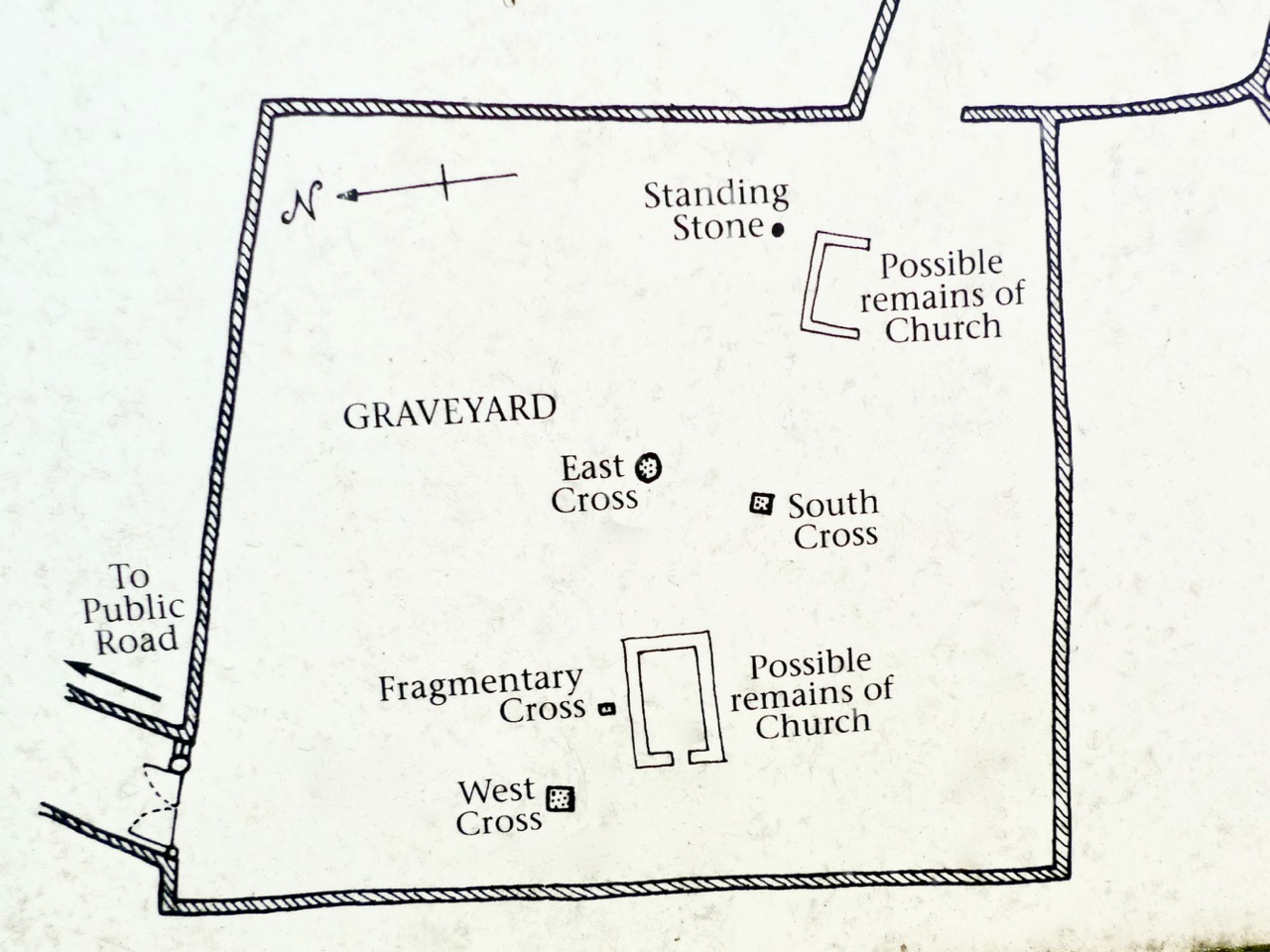
The West Cross has animal motifs and some unusual interlacing carved on the various elements; below is the site plan included on the OPW signboard

To be able to see exquisite artistic medieval carved stone from 1200 years ago still standing where it was first placed is remarkable. In other discussions on high crosses and similar works of expertise we have asked whether these gems should be preserved out of the elements – as some are – to prevent the deterioration which is undoubtedly taking place. While I tend to favour that approach – and it seems to me to be particularly appropriate where they are replaced by high quality replicas ‘in the field’ – there is something very special about visiting intact sites like this one. The whole conservation process is full of dilemmas.

The enigmatic East Cross – unlike any other Irish High Cross

There were once four crosses at Kilkieran. Three are still complete and in reasonable condition, although much weathered, while the fourth is just the stump of a shaft. One –  the East Cross – is unusual: it is slender, largely undecorated, with minimal crosspieces and no roundel. There’s a nice little tale about it: the cross was attacked and destroyed by iconoclasts, but was painstakingly reconstructed in the mid-19th century by blind local stonemason Paddy Laurence, who had lost his sight while working on the construction of the Palace of Westminster in London: the old Palace had been ravaged by fire in 1834 and was rebuilt to its present design under the auspices of Charles Barry and Augustus Pugin.

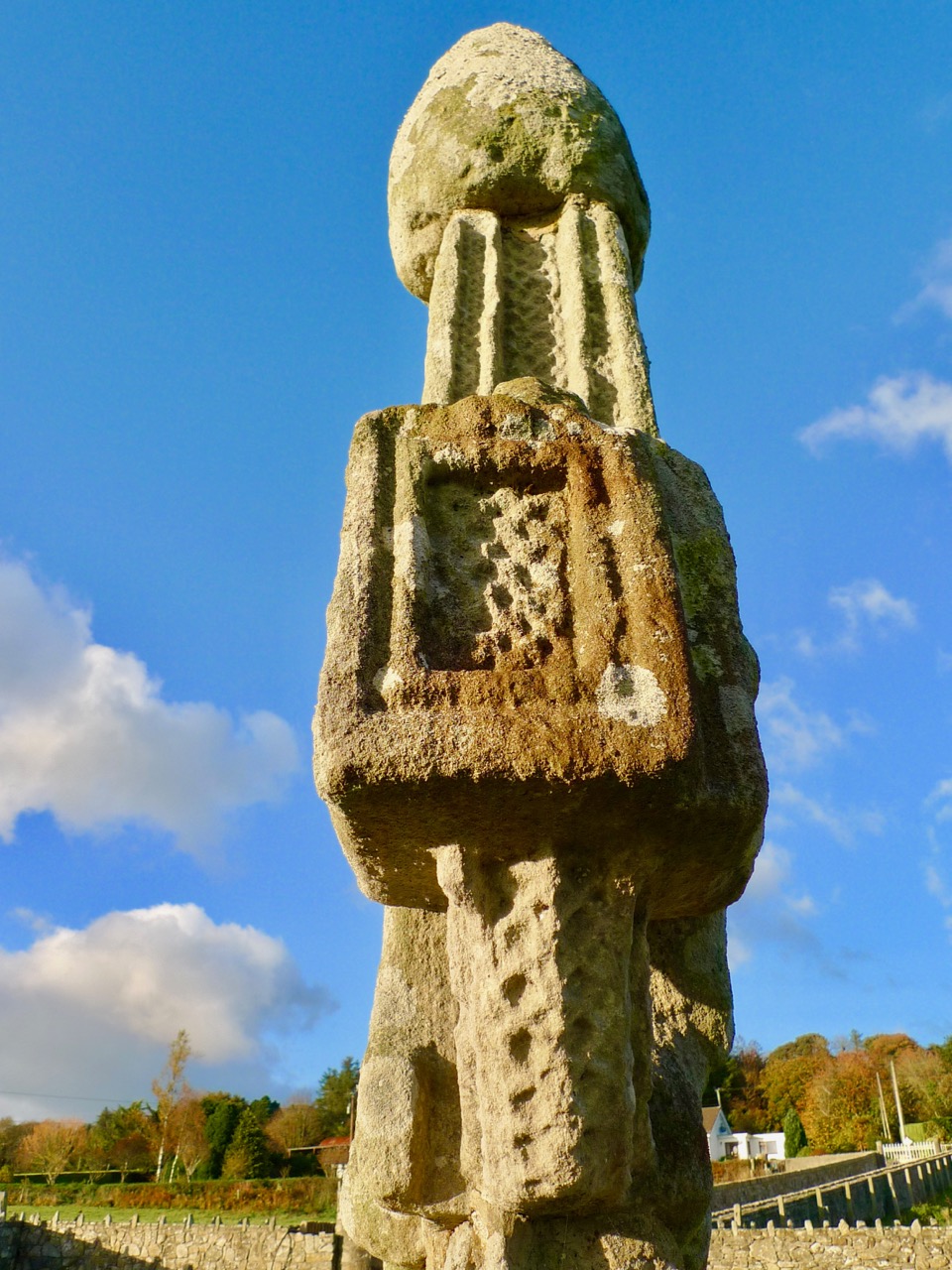
The plain South Cross: the large, acorn-shaped capping is found on other crosses in the ‘Ossory Group’

The high crosses at Kilkieran are simpler and less decorated than many others, but have a great dignity, especially in the context of the burial ground which has grown up around them. We were fortunate to visit them on a really clear day, when the shadowed relief stood strongly out.

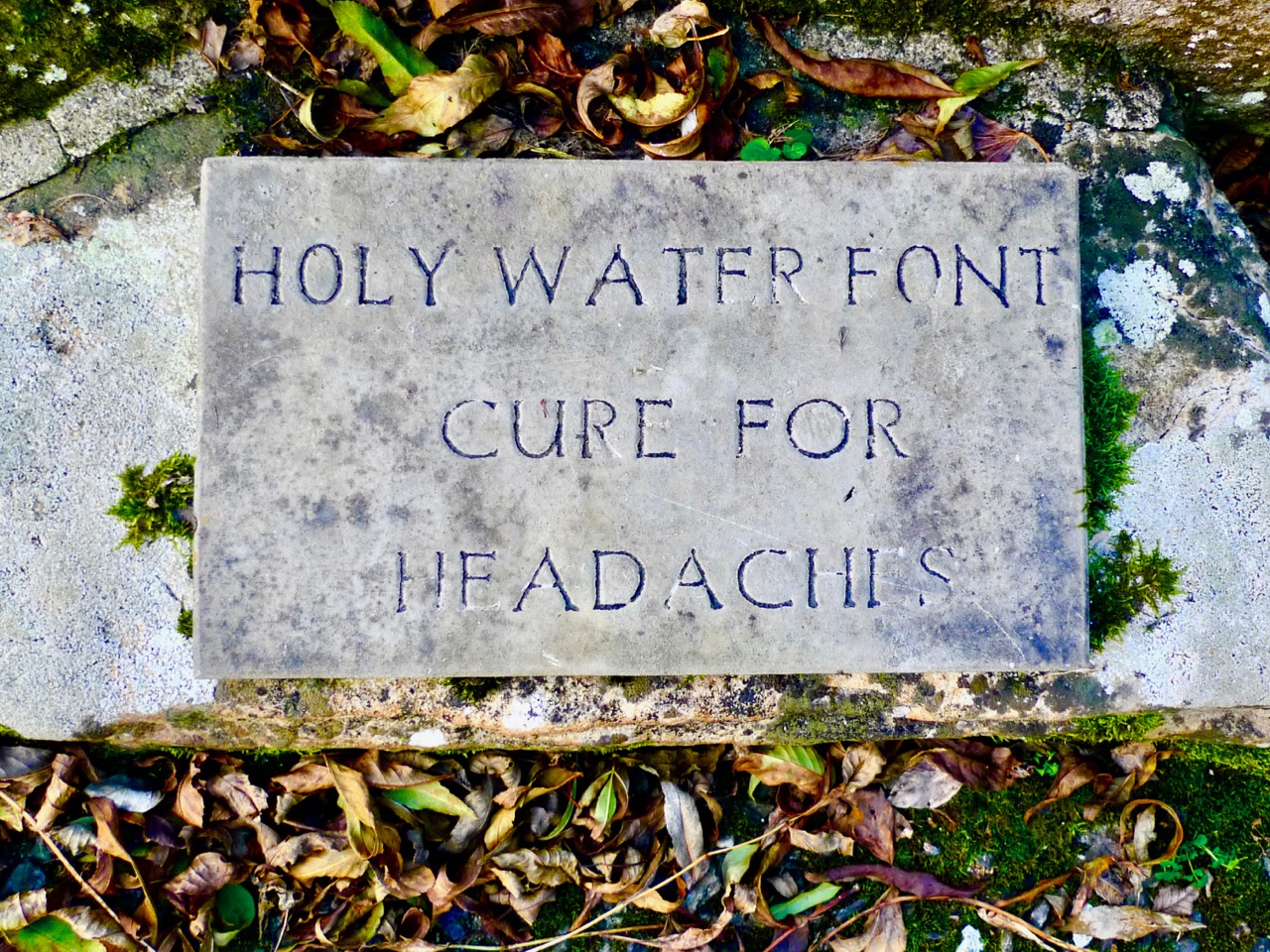
A still-visited Holy Well and bullaun stones are found on the old monastery site

You will want to go to Kilkieran yourself: when you do, don’t miss some fine ancient grave slabs and the nearby Holy Well. Then you should take yourself off to the other High Cross sites in what is known as the ‘Ossory Group’, beginning with nearby Ahenny. I’ll be writing about them all soon.

Below – an early carved grave slab on the site, carving on the West Cross shaft, and a detail of the West Cross ring