It’s time for another look at Ireland’s history, through the medium of early maps. We have previously examined the Down Surveyhere and here (the latter looked specifically at West Cork). You may remember that the project was instigated by Oliver Cromwell to catalogue the ownership of land given to British settlers after his invasion of Ireland which commenced in 1649. The Act of Settlement 1652 formalised the changes. We don’t like the recollection of those times, but we do find all early maps fascinating when we compare them to our present day topographical knowledge.
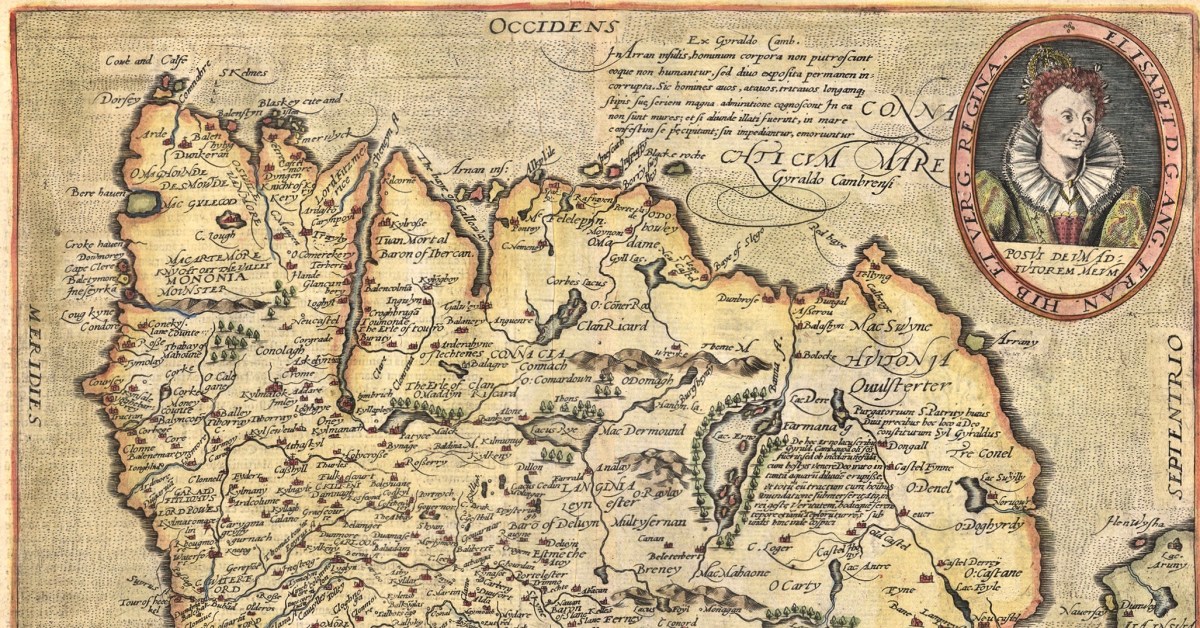
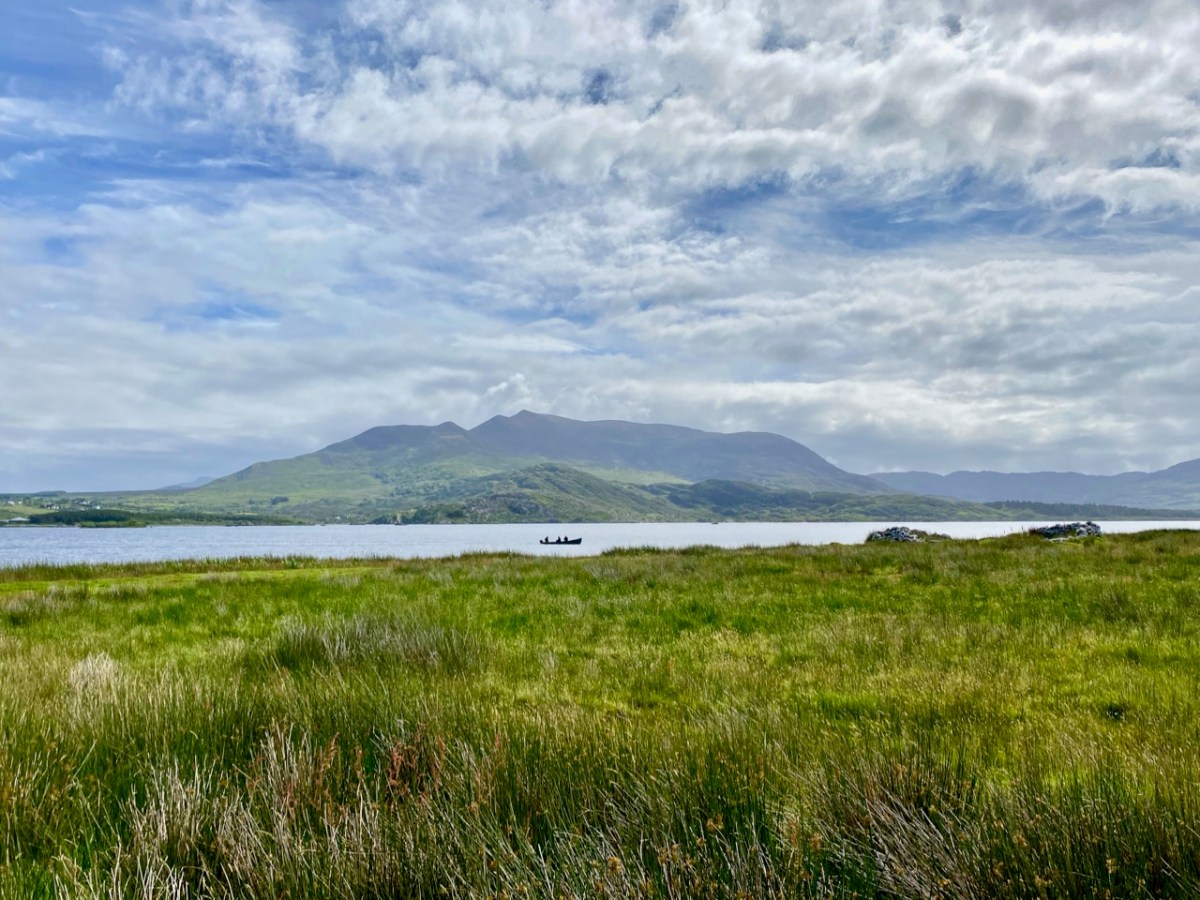
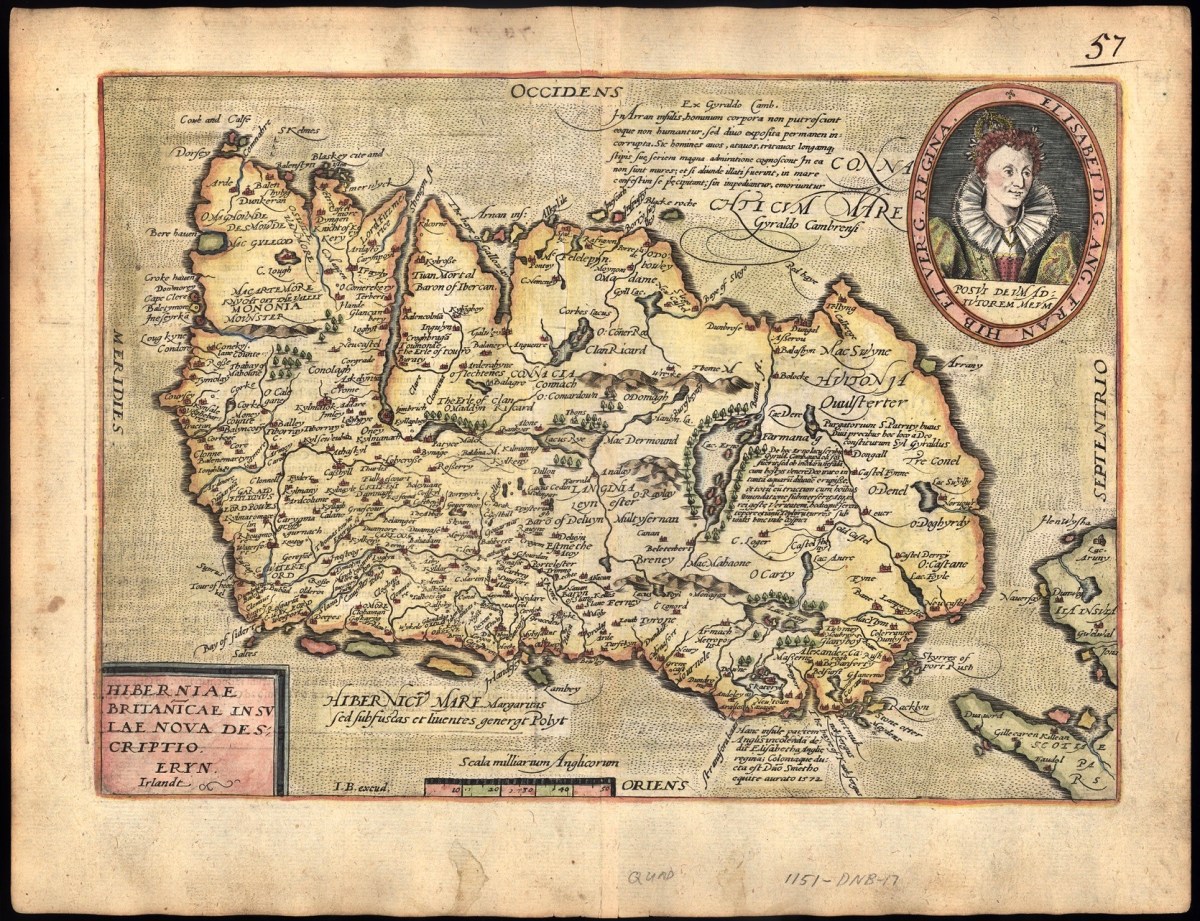
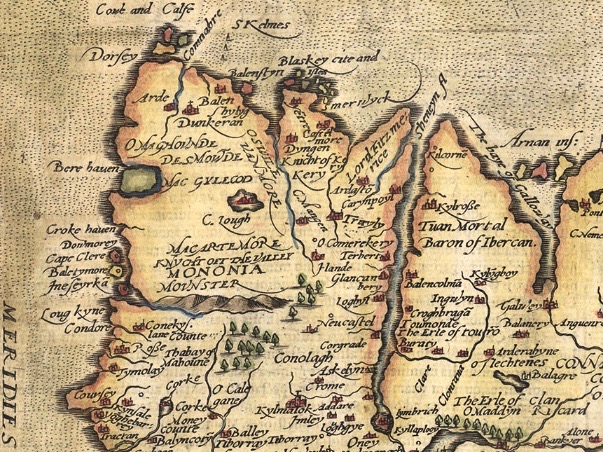
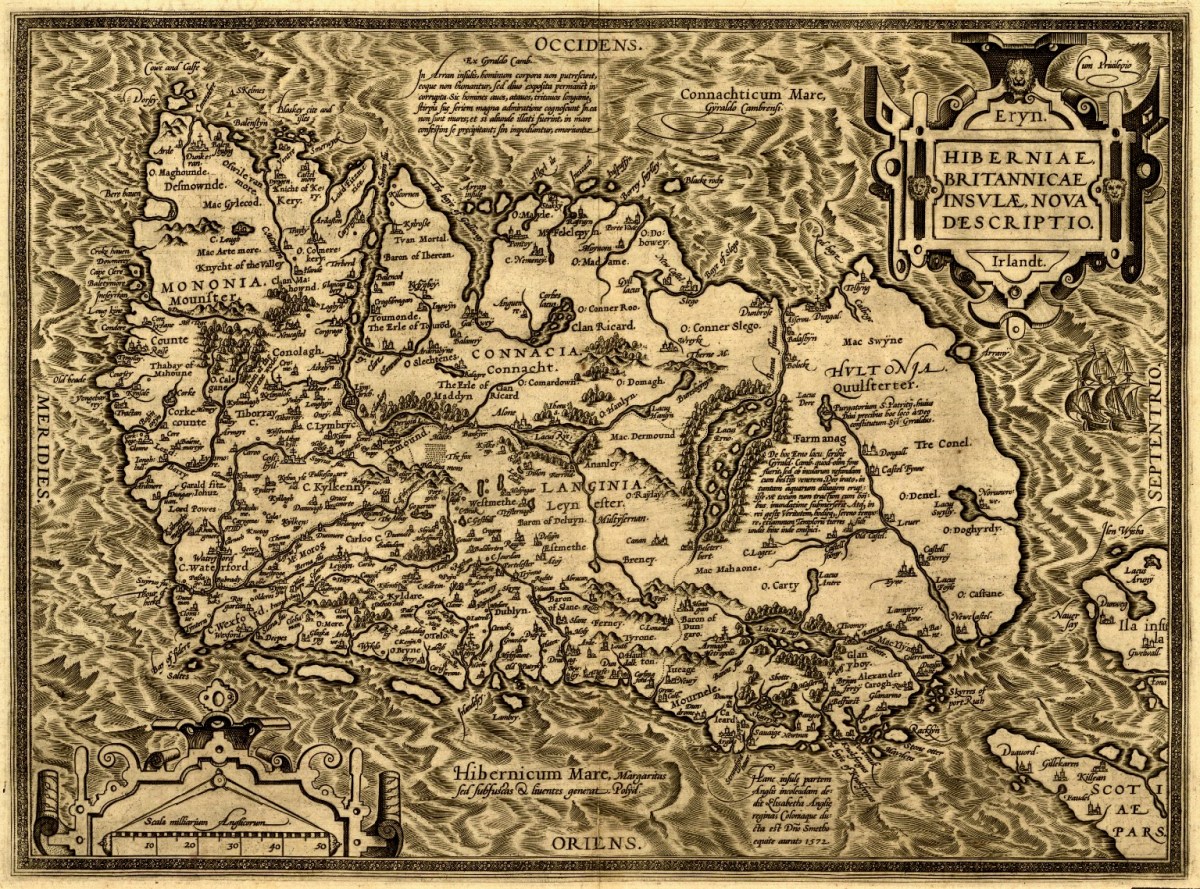
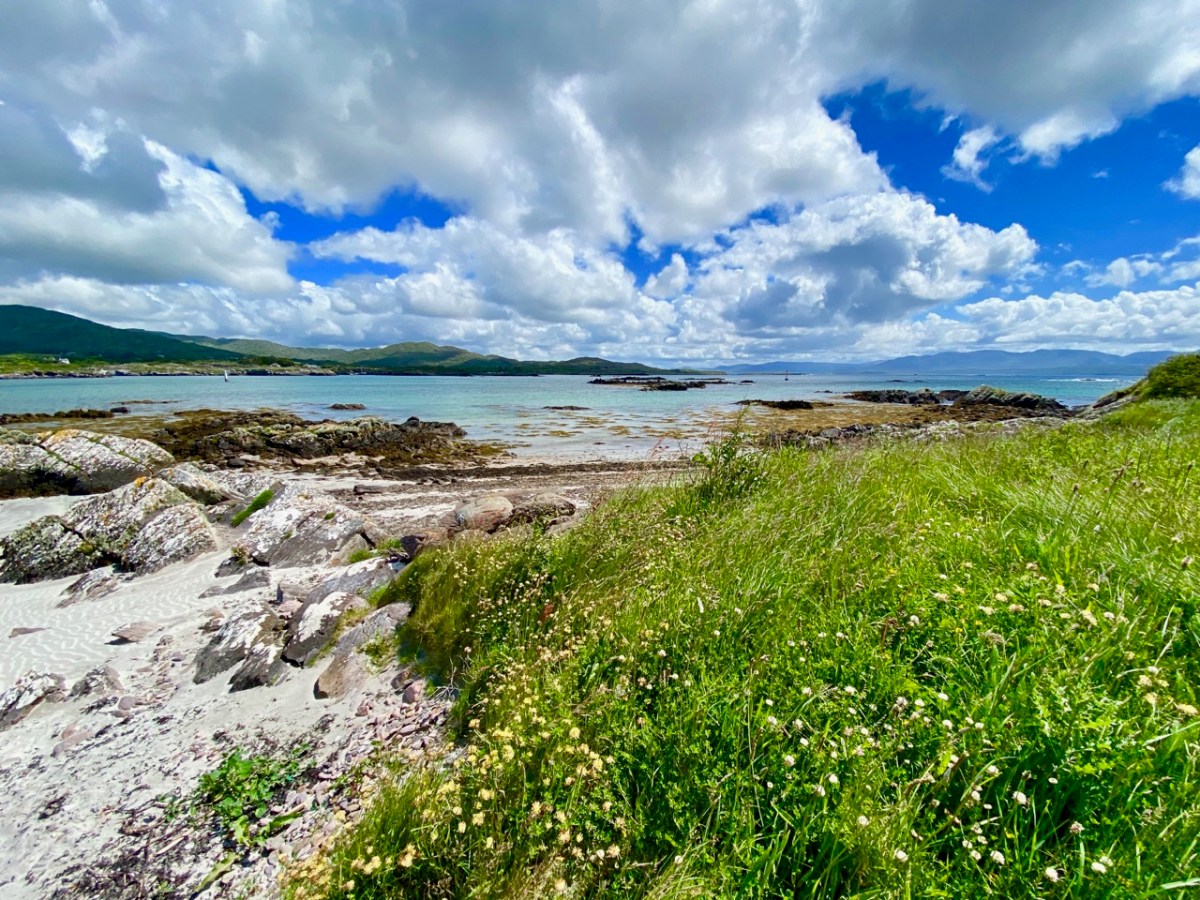
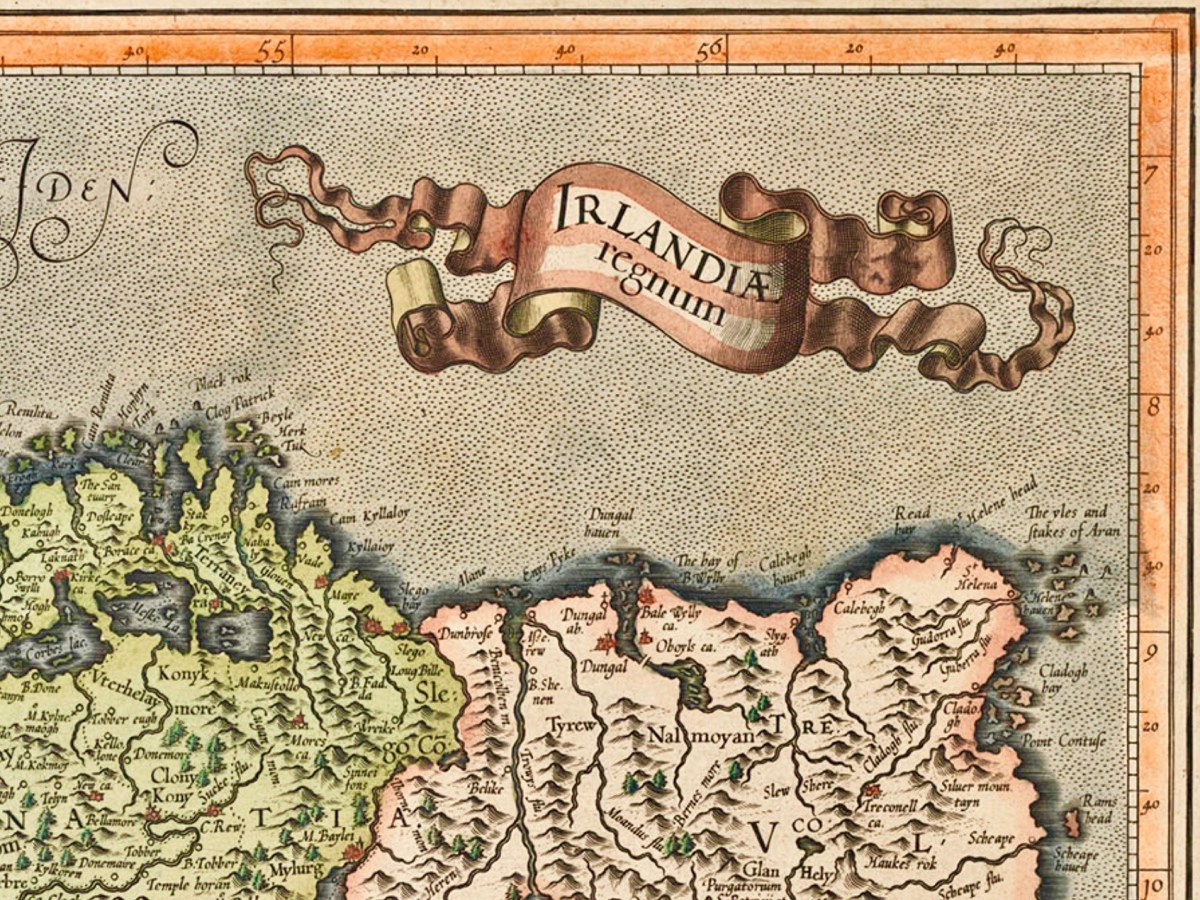
Kerry: it’s one of our favourite destinations. Visually spectacular, it offers a dramatic natural terrain of coastlines, mountains – and remembered history. Above is a view from Church Island, on Lough Currane near Waterville. The Down Survey gives us a mid-17th century aspect of the landscape, but there are earlier maps. The header is a part of Ortelius’ Theatrum Orbis Terrarum, published in many editions from 1570. Note Queen Elizabeth prominently displayed. Here’s the full page map (courtesy of the David J Butler Collection of Maps of Ireland):
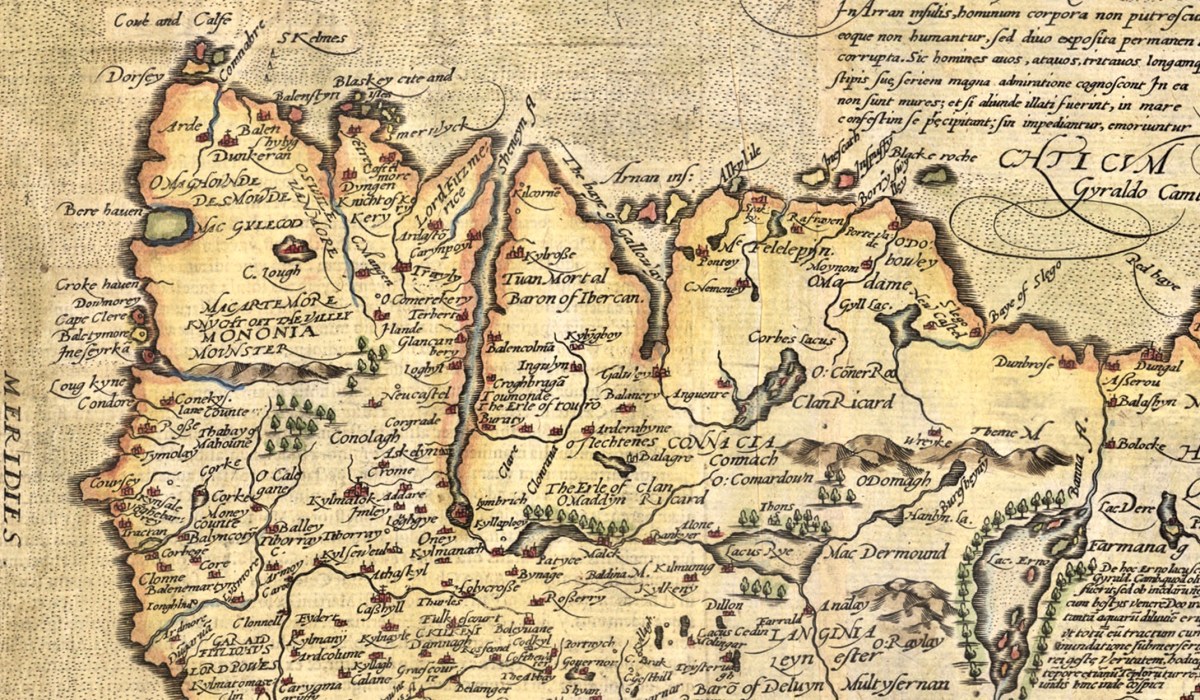
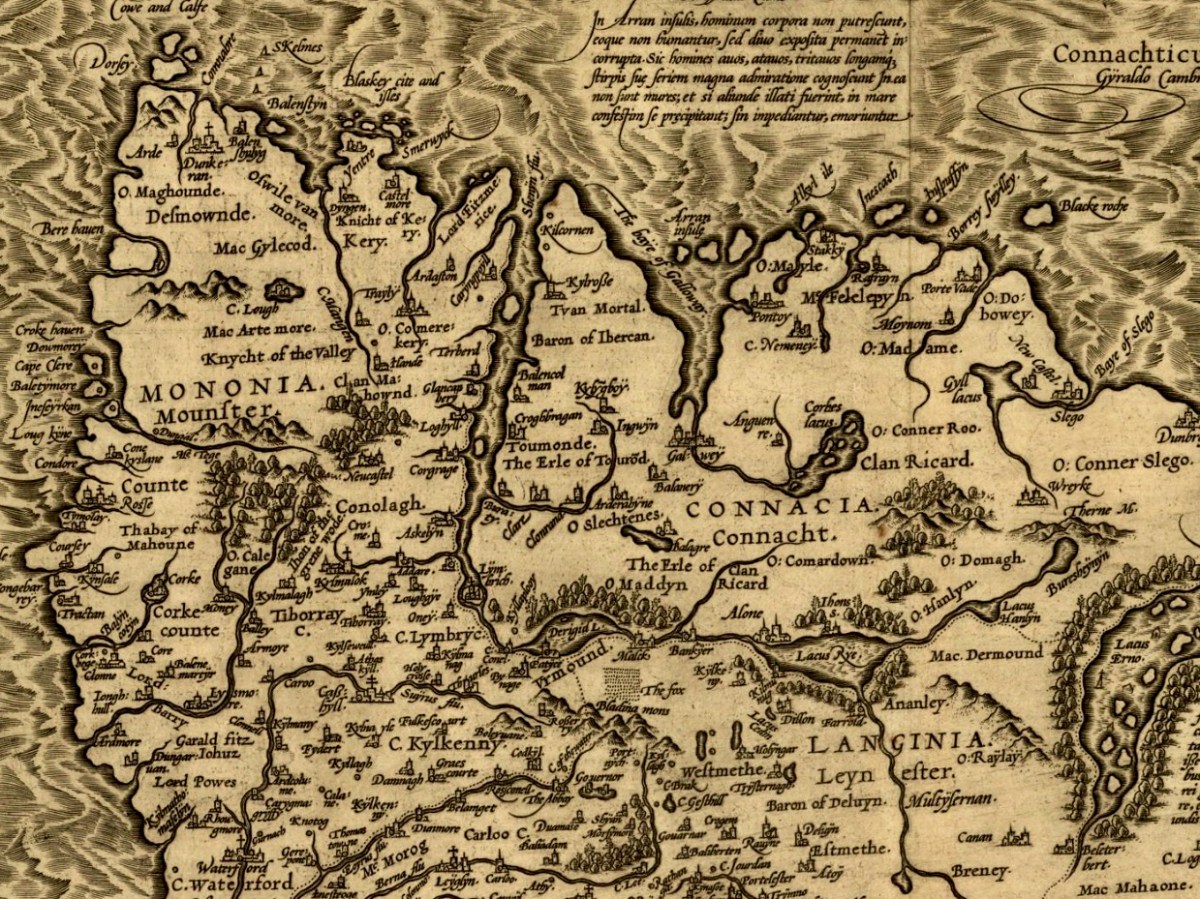
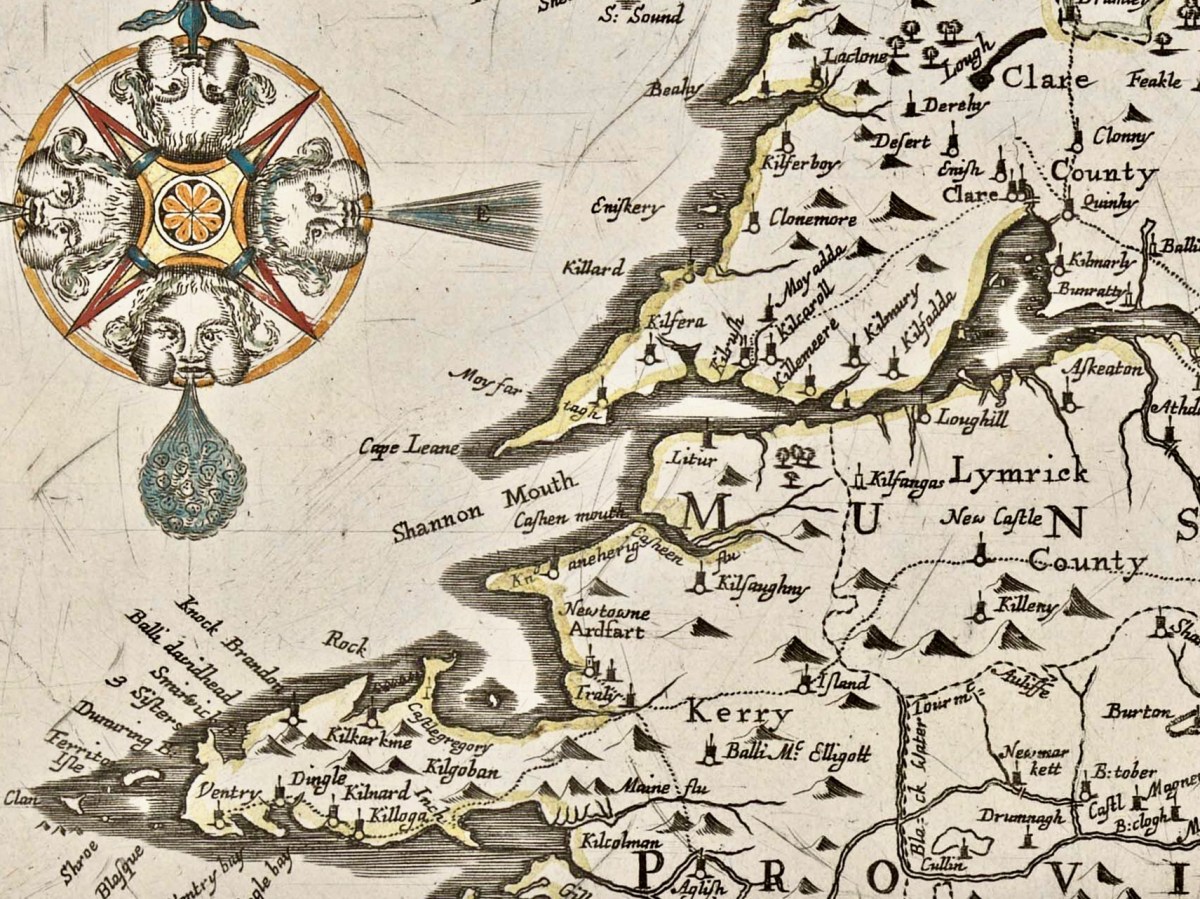
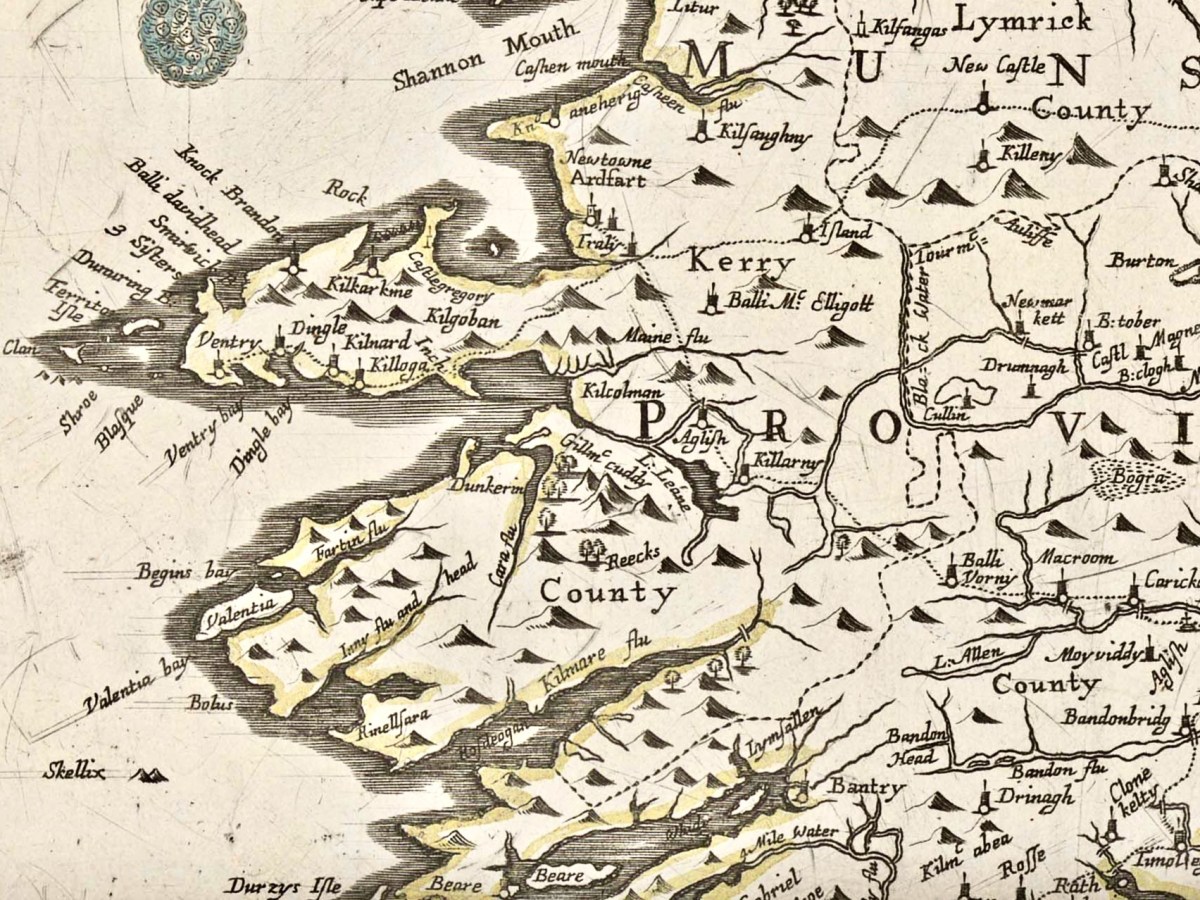
Above is an enlarged detail from the Theatrum Orbis Terrarum showing much of today’s Cork and Kerry counties. You have to get used to thinking through ninety degrees: it was the convention in many early maps to put West at the top of the image, and North to the right. Here you will see Roaringwater Bay over to the left. To make things easier, here is a much enlarged view of part of this map, although with some loss of definition:
You will recognise Dorsey (Dursey Island), Croke haven (Crookhaven), Cape Clere (Cape Clear Island), Baletymore (Baltimore), Tymolay (Timoleague), Kynfale (Kinsale), all within Movnster (Munster). Going round the corner we find Balenftyn (Valentia), Kery (Kerry), Trayly (Tralee), and many more, including names we cannot now relate to.
(Above) – here’s another pre-Down Survey map: Hiberniae, Britannicae Insvlae nova descripto, published by Abraham Ortelius (1527-98), a Flemish engraver. The map is thought to date from 1598 and is in the collection of The Library of Congress, Geography and Map Division, Washington, DC. Here’s a detail of the area which interests us today – again, many names can be recognised:
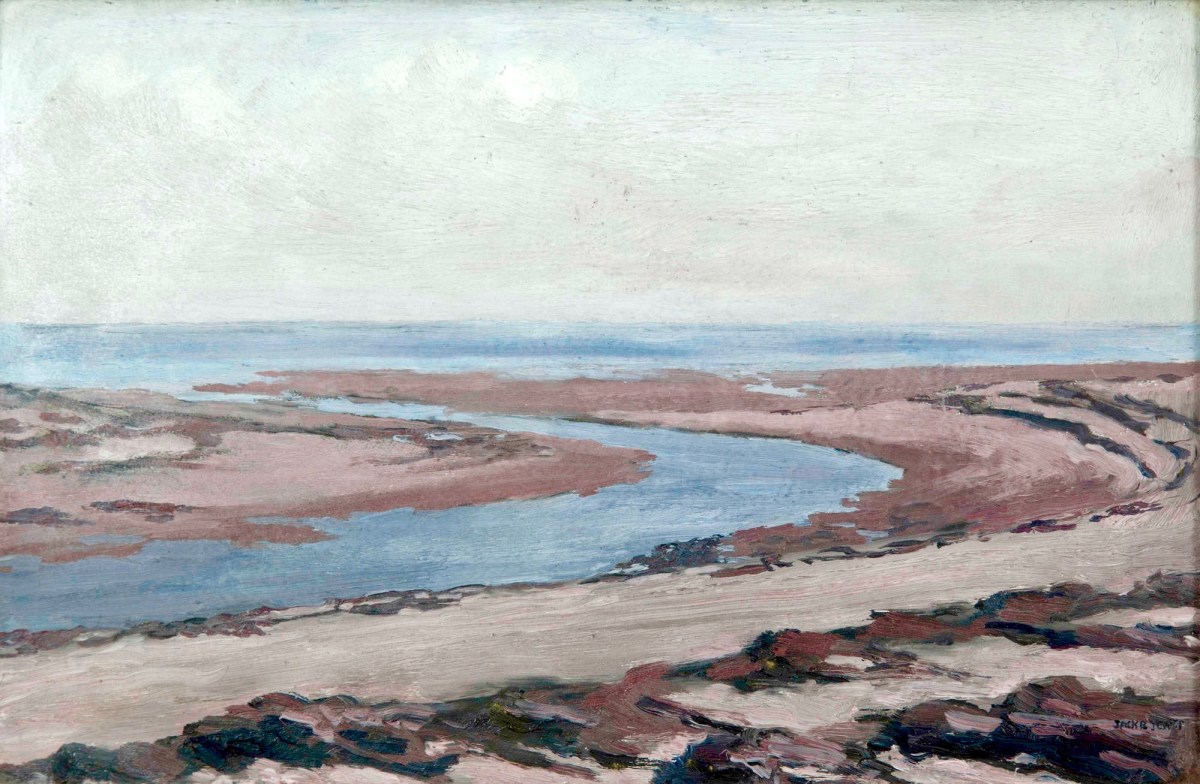
Another present-day Kerry scene: in fact a photograph from a friend’s garden. To add a further dimension to our review of Kerry through time, this Jack B Yeats painting – Kerry Landscape – dates from 1913 (current whereabouts unknown – it was offered for sale by Adams in 2016):
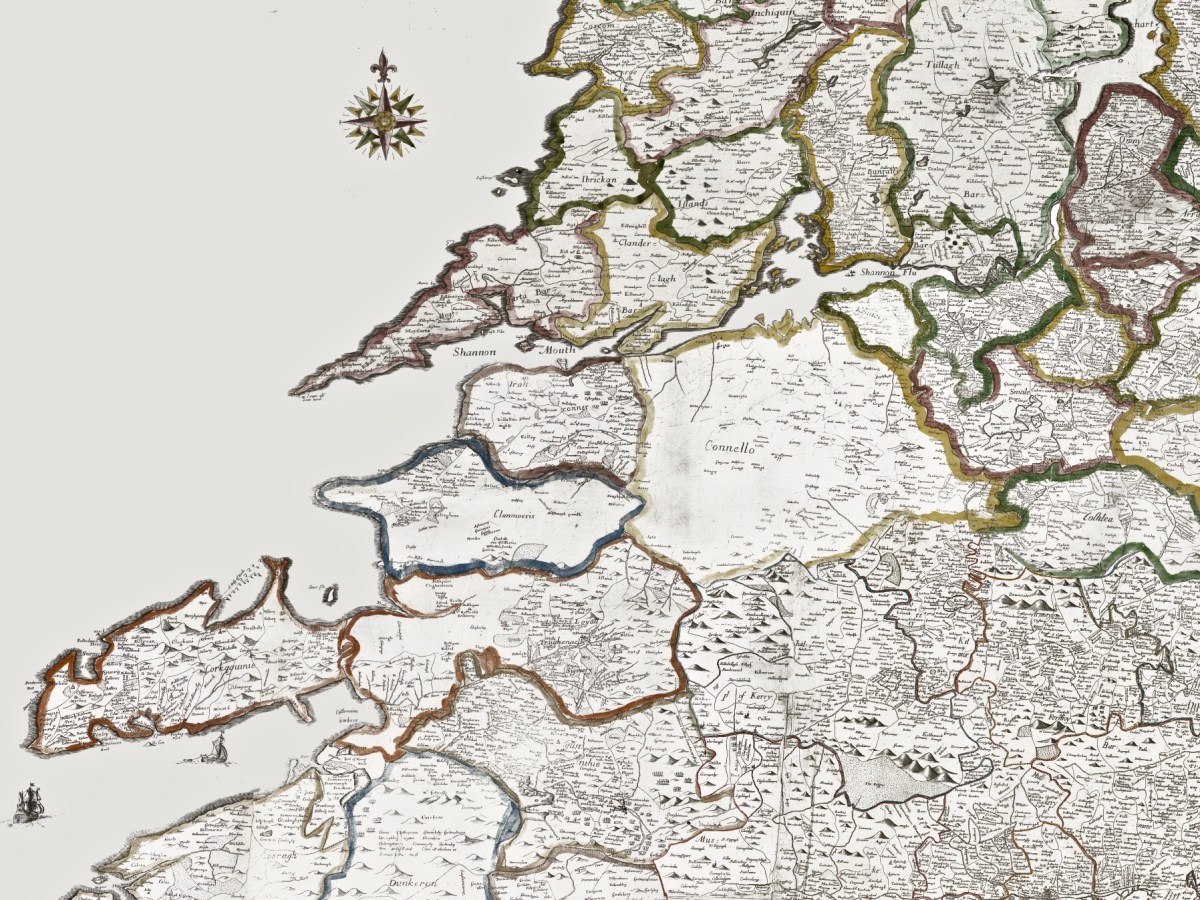
Getting back to The Down Survey, the following details are from the available survey documents which were taken in the years 1656-1658. They show parts of Clare, Limerick and Kerry:
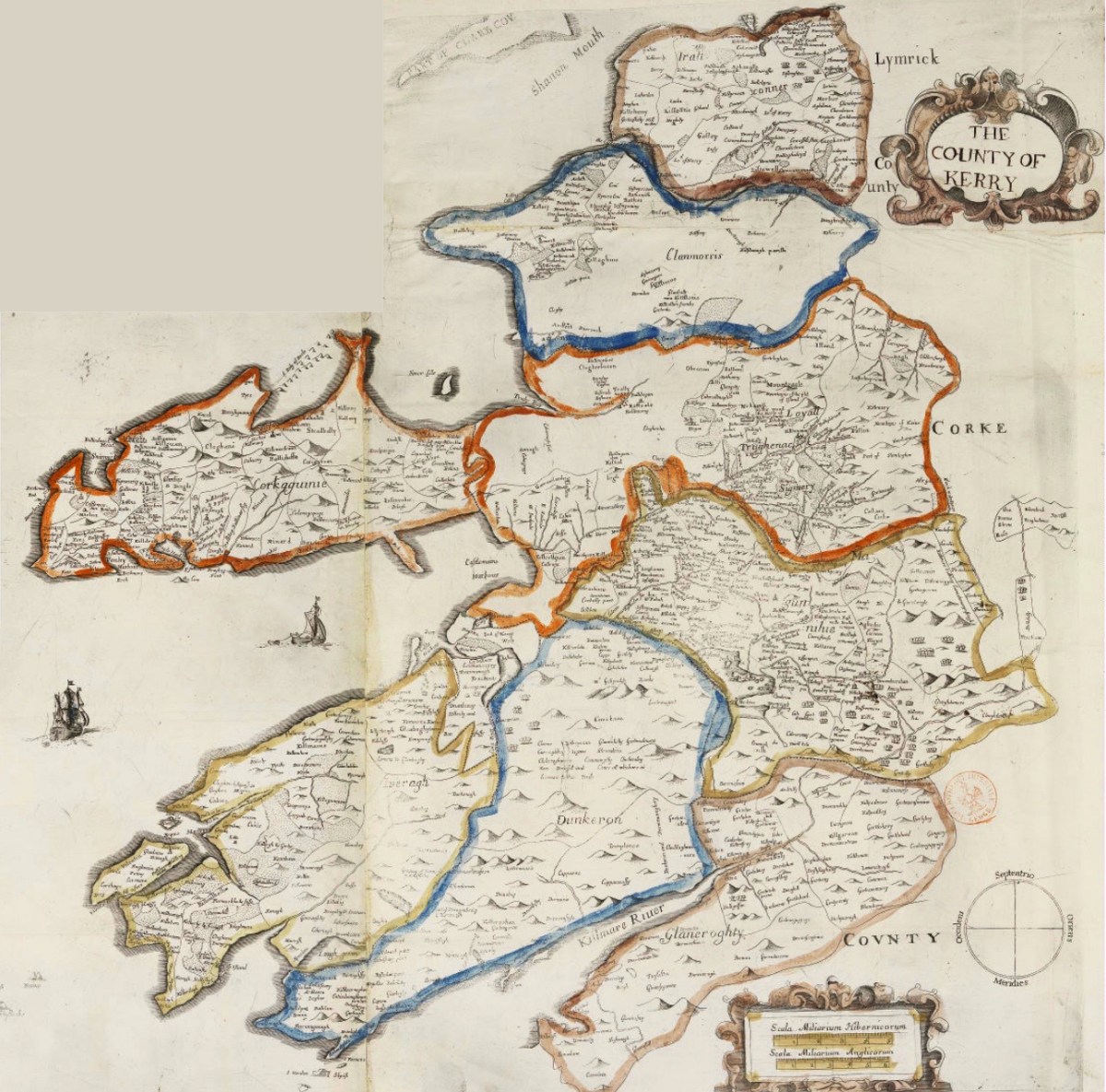
Here is a specific County map of Kerry in greater detail: it encompasses the land divisions spanning from Kenmare to the mouth of the Shannon (Down Survey GIS 1641 – 1670).
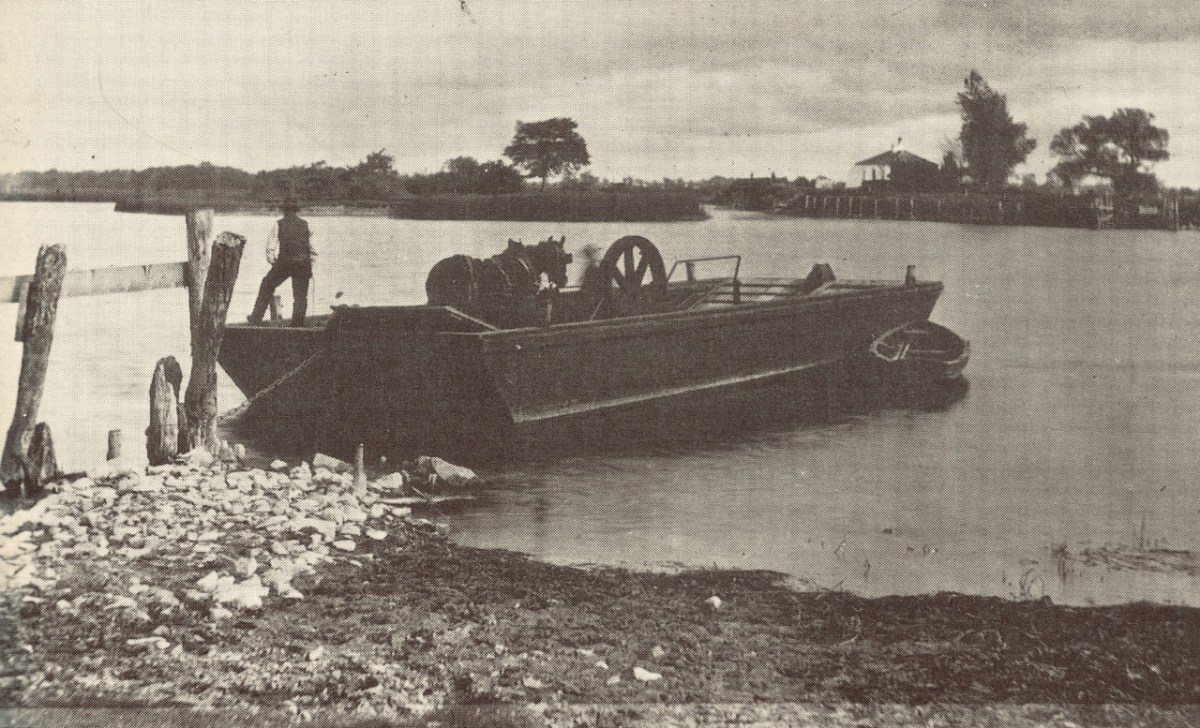
Above: a ferry across the Shannon, c1890. Below: this map is also from The Down Survey collection and is titled Landowner Map 1641 – 1670.
Before leaving this little outline of Ireland’s ancient western coastline, I can’t resist going back to the Twelfth century and to Giraldus Cambrensis (c 1146 – c 1223). Described as a Roman-minded Cambro-Norman cleric, Giraldus lived most of his life in Wales but visited Ireland in 1183 and 1185. He wrote descriptions of what he encountered there, and they are entertaining. Here are two examples: though not specific to Kerry, they are not geographically distant.
. . . There is an island called Aren, situated in the western part of Connaught, and consecrated, as it is said, to St Brendan, where human corpses are neither buried nor decay, but, deposited in the open air, remain uncorrupted. Here men can behold, and recognise with wonder, grandfathers, great-grandfathers, and great-great-grandfathers, and the long series of their ancestors to a remote period of past time . . .
Giraldus Cambrensis
. . . There is another thing remarkable in this land. Although mice swarm in vast numbers in other parts of Ireland, here not a single one is found. No mouse is bred here, nor does it live if it be introduced; when brought over, it runs immediately away and leaps into the sea. If it be stopped, it instantly dies . . .
Giraldus Cambrensis
Further Reading! Some past Roaringwater Journal posts which look at early maps and the West of Ireland can be found here and here.
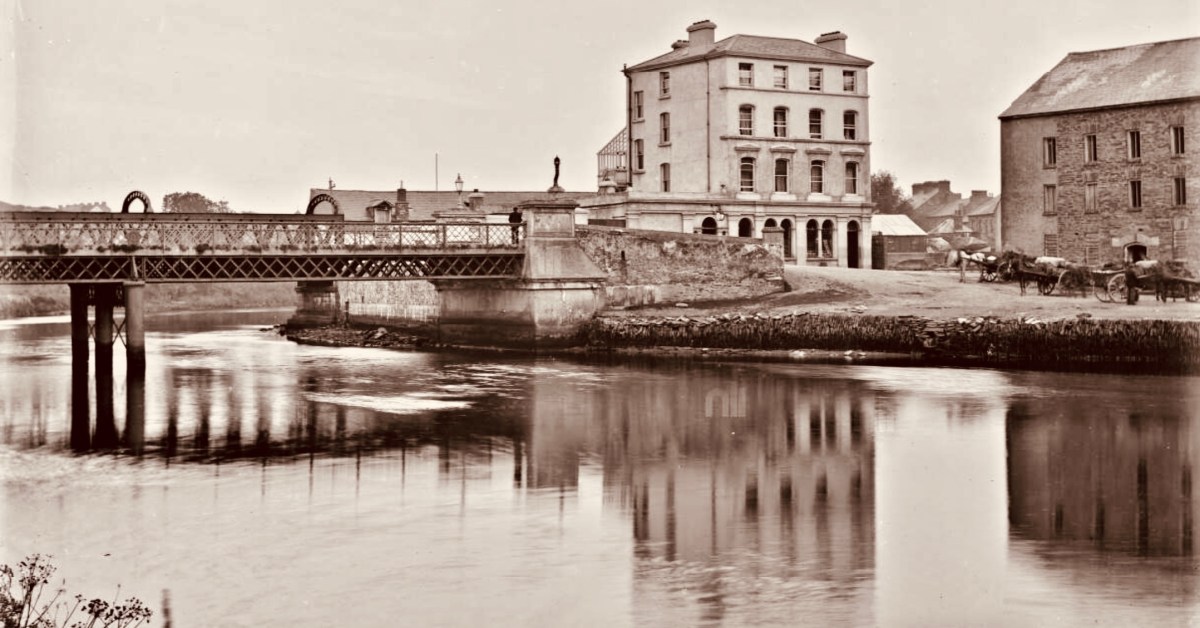
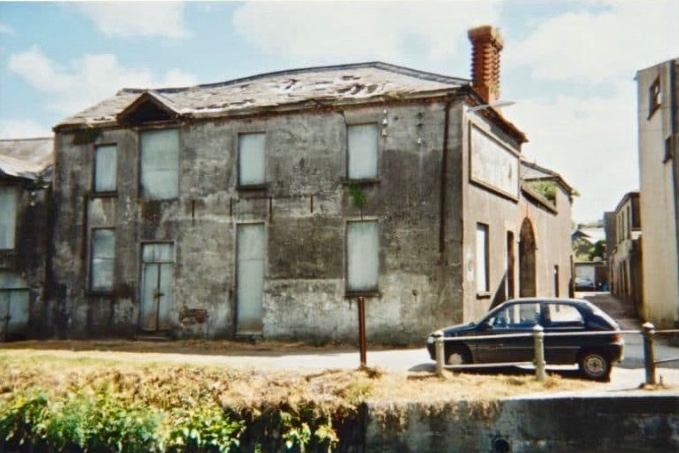
This photo of the West Cork Hotel beside the Ilen River, Skibbereen (courtesy of the NLI Lawrence Collection) captures a moment in time. It was taken in the very early 20th century – probably before 1910. Clearly seen are the hotel itself – opened in 1902 – the old iron road bridge which was superseded in 1964, and the railway bridge behind it carrying the line to Baltimore (which was opened in May 1893). That bridge still exists, of course, although the line closed in 1961. To the right of the photo is the Old Steam Mill, originally constructed as a flour mill by Thomas Marmion in the 1830s. This building stands on Steam Mill Quay.
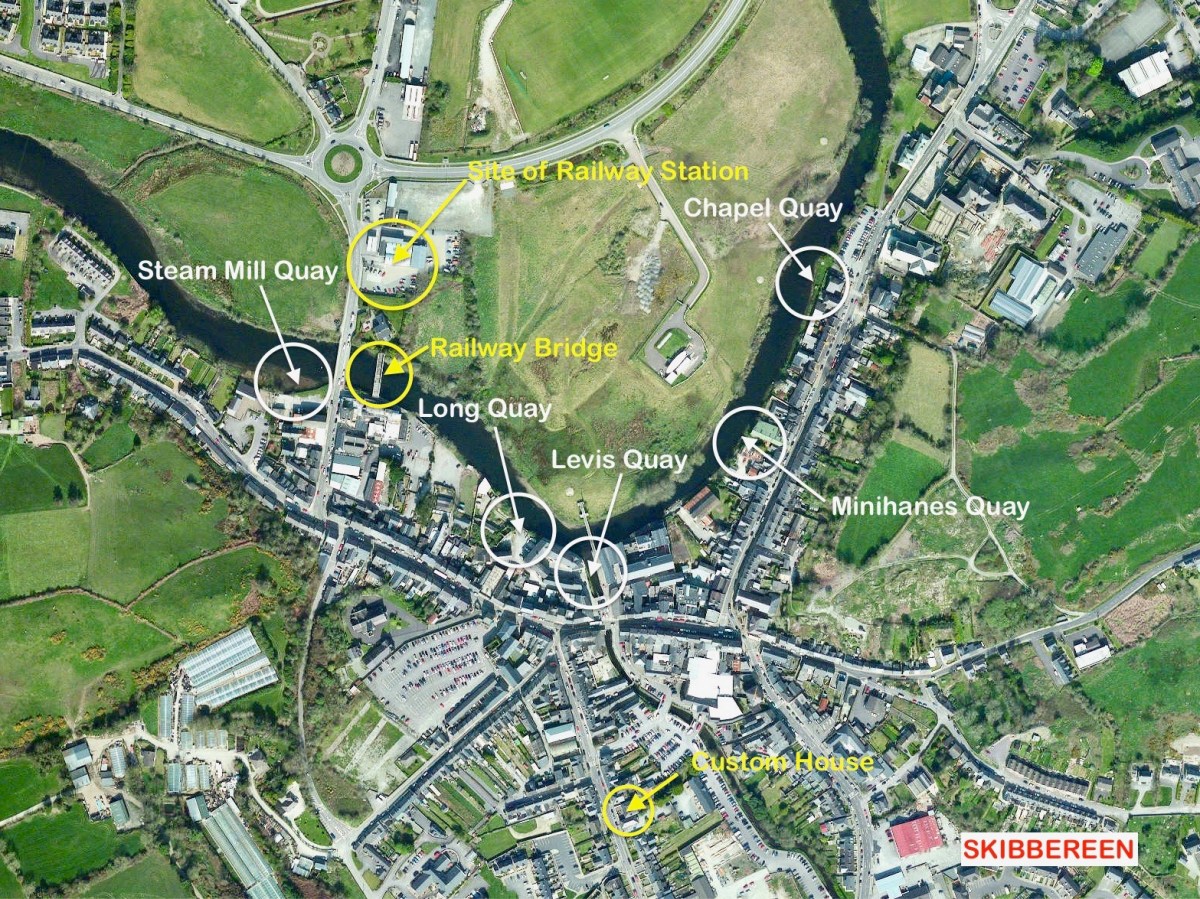
The Irish name for this town, an Sciobairín, is said to mean a small inlet for docking boats. Steam Mill Quay is the first of five quays which served the town, suggesting a period when the river itself (tidal to just north of the town) was the life blood of the community:
. . . Skibbereen was a settlement served by water. The River Ilen is tidal and in the early 19th century boats of up to 200 tons could navigate to Oldcourt, within two miles of the town centre. From there goods were transferred into ‘lighters’ (unpowered barges) and then brought into the quays where there were warehouses and a Custom House. Now, sadly, Skibbereen’s waterfront is a bit neglected and its active past shipping history is no longer obvious. Five historic quays have been identified along the river: Steam Mill Quay, Long Quay, Levis Quay, Minihane’s Quay and Chapel Quay . . .
Roaringwater Journal
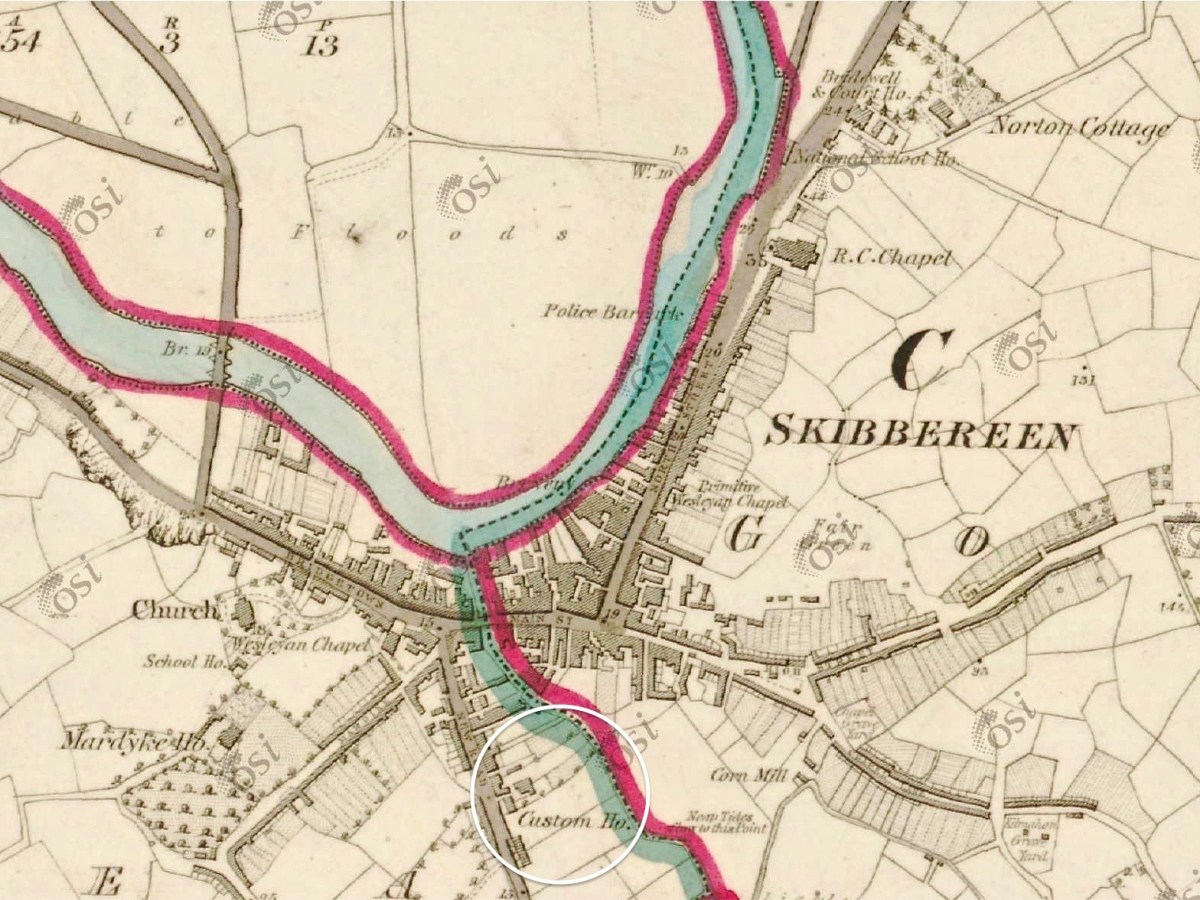
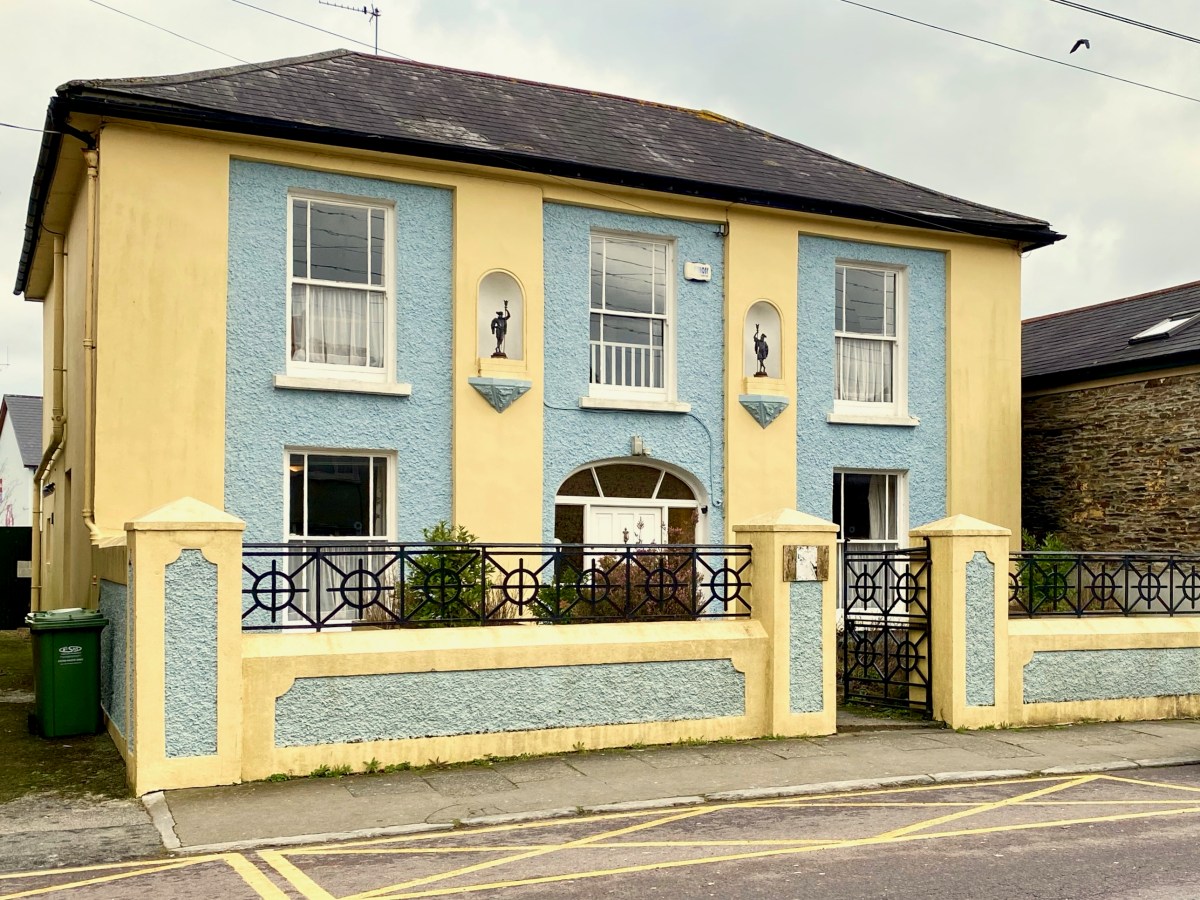
Here is the Custom House – now a private residence on Townshend Street. The first edition of the OS map (above the photo) marks the location. It’s a fine building, clearly of some standing, with its decorative niches and curved fanlight. The existence of this building in the town emphasises the historic significance of importation and trading of commodities, probably primarily by water transport, to Skibbereen when it was operating. I was surprised to find that Hansard – the official record of the actions of the British Parliament – has one entry pertaining to the Skibbereen Custom House. From it we learn that its business was transferred to Bantry in 1890, and that this was a cause of concern to some of the townspeople and local fishermen:
. . . DR KENNY (Cork, S) I beg to ask the Secretary to the Treasury whether he is aware that owing to the transference of the Custom House from Skibbereen to Bantry very great inconvenience and injury are caused to the Baltimore fishing industry; whether, according to existing Customs arrangements in Skibbereen. the Deputy Officer of Customs in that town is unable to give permission for the discharge of cargoes of ice absolutely essential for the preservation of the fish caught by the Baltimore fishermen, and also that it is impossible for him to obtain permission by telegraph from Bantry to do so, and whether, in consequence, steamers for conveying the fish have to wait at Baltimore the arrival from Bantry, 24 miles distant, of the Superintendent of Customs; and whether he will take steps to have abated the inconvenience complained of, by restoring the Custom House to the Skibbereen district?
Hansard record of Commons Sitting 08 May 1890 § 469
There is a further record giving the response by the then Secretary to the Treasury: it lacks sympathy!
. . . Mr. JACKSON (Leeds, N) I am informed that it is not the fact that very great inconvenience and injury have been caused to the Baltimore fishing industry through the transference of the principal Customs Offices for the Port of Skibbereen from Skibbereen to Bantry. The Board of Customs have ascertained that no delay has been caused by this change in the discharge of any vessels, nor need any delay or inconvenience be occasioned thereby, as the Officer of Customs still stationed at Skibbereen is now empowered to deal with any Customs business, there or at Baltimore, that may require attention, under exactly the same conditions as were in force previous to the change referred to. No occasion has, therefore, arisen for making any alterations in the. present arrangements . . .
Hansard record of Commons Sitting 08 May 1890 § 470
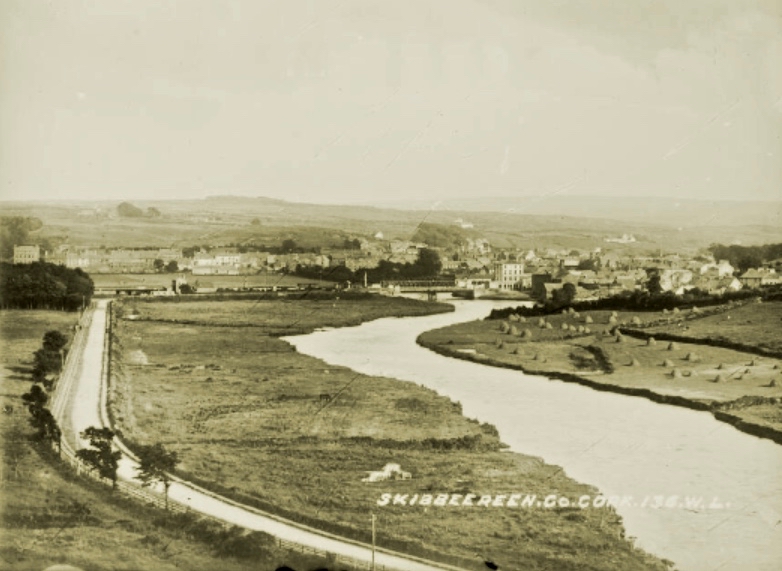
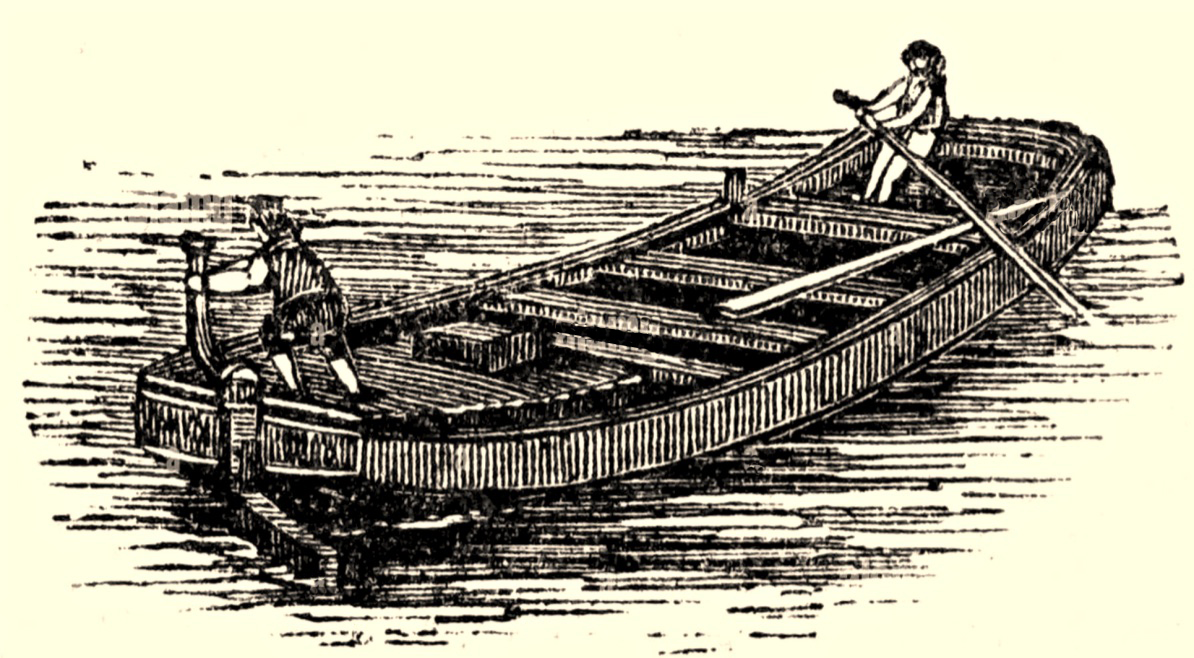
Here’s a distant view of Skibbereen from the west, probably taken in the early 20th century (courtesy of the NLI Lawrence Collection). On the left, the roadway (today’s N71 going from the town towards Ballydehob) has the track of the Schull railway (or – more properly – ‘tramway’) on its verge. The old bridge into town and the West Cork Hotel are visible, as they are in the header picture. What is noticeable is that there is no sign of any navigation of the Ilen River. I have looked carefully through over 200 early photographs of the town and it is the case that none shows any river craft. Hence my title today (and I apologise for taking a long time to get to this) The Elusive Lighters. We have no detailed records of any boats that used the river, and the quays, except that they were shallow-drafted unpowered barges. The term ‘lighters’ usually refers to ‘dumb’ boats (unpowered) used to offload cargoes from ships and transfer these to quays further inland. How were the Ilen boats built, and what did they look like?
Here’s a guess – something I found in an old engraving (not from anywhere in West Cork). The boat is being ‘poled’ or swept along by a figure with a large oar, while a ‘steerer’ handles the helm. It would almost certainly have been built from timber. After a coaster, steamer or sailing ship arrived and moored at Oldcourt, the cargo would have been offloaded to the lighter, which would have to await a rising tide before setting out for Skibbereen. The return journey would have to be carried out when the tide was falling.
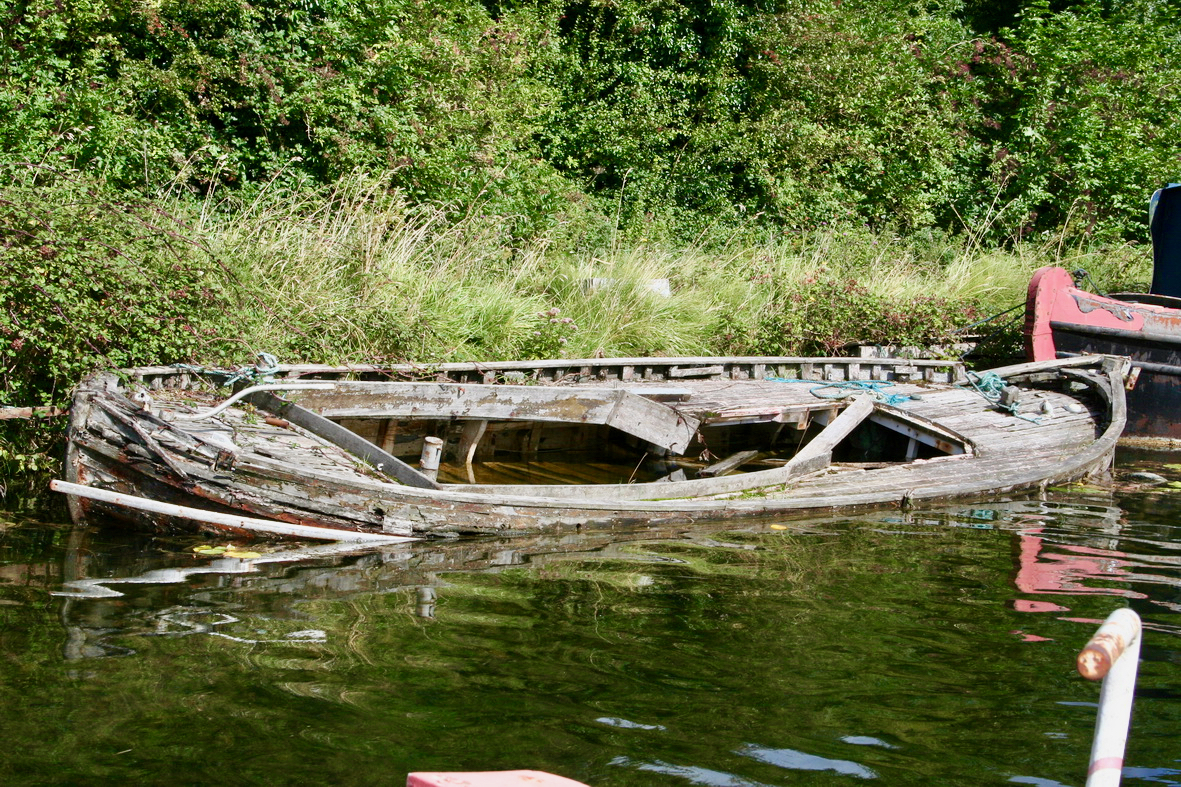
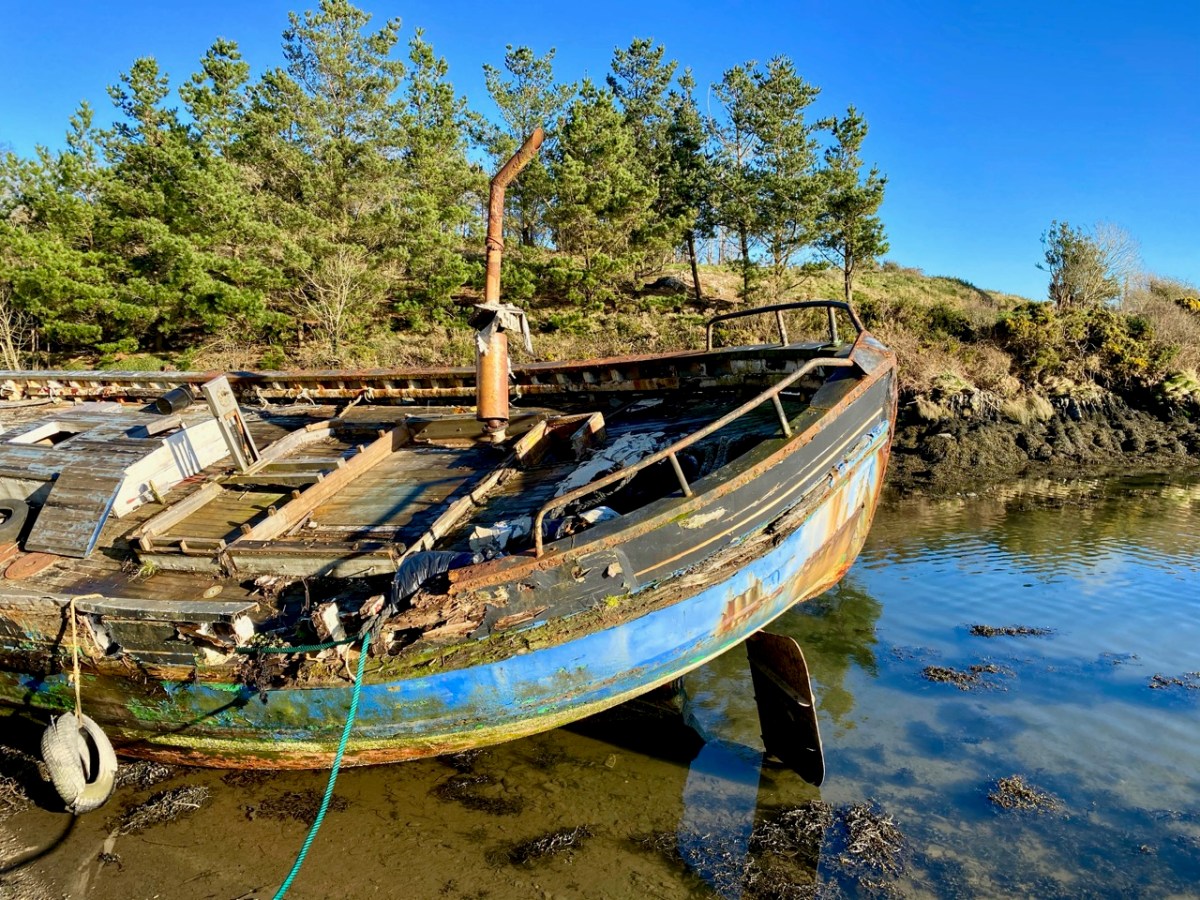
It would be great to find the remains of such a boat on the Ilen, but very little would survive of a working craft dating back over a century and a half. The wreck above is on the River Barrow Navigation at Lowtown. Here’s another old wooden boat which lay beside the tidal Ilen itself a few years ago: it may still be there!
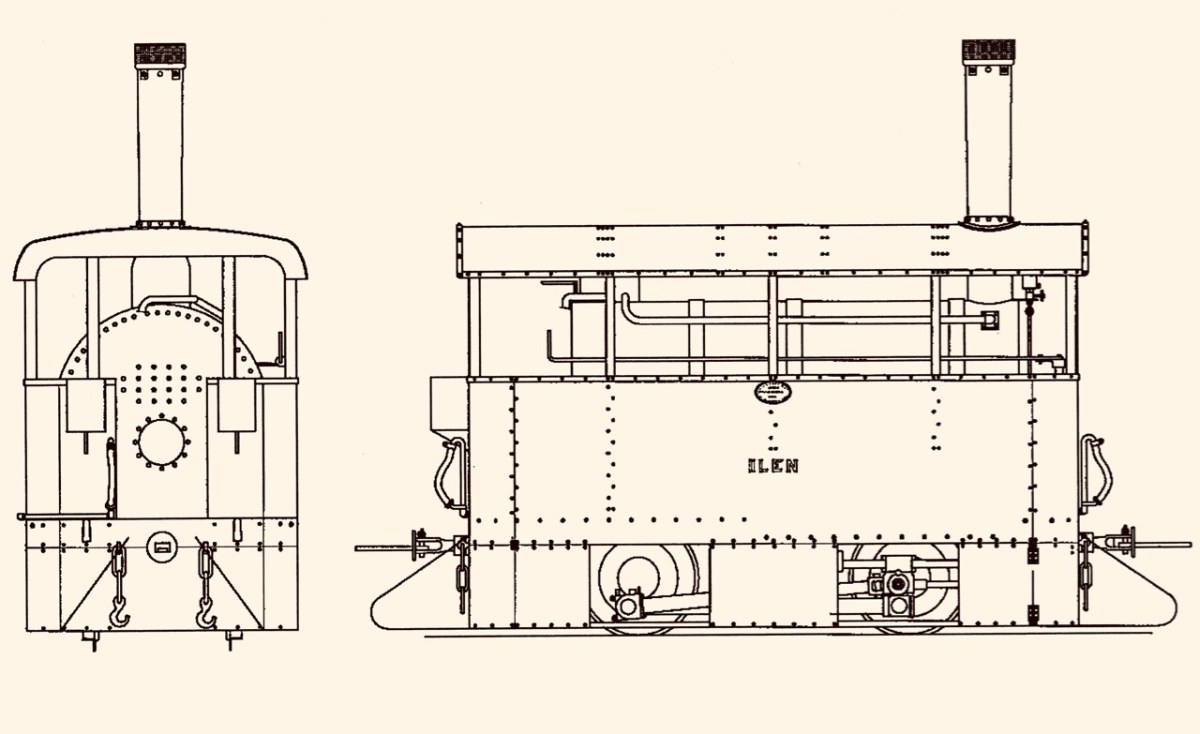
While my nostalgic soul would like to think that some trace might remain of the old Ilen boats and the quays that they served, I know that is unlikely. River traffic on the tidal Ilen would have been in its hey-day in the early part of the 19th century and would have been affected by the sufferings of the Great Famine which heavily hit Skibbereen. After some recovery, the arrival of the railway line from Cork in 1877 ensured that river trade could no longer survive: it’s ironic, perhaps, that the first locomotive on the Skibbereen to Schull tramway was named Ilen.
This post is the latest of a series that studies the full length and history of the Ilen River. Previous posts can be found here: Sweet Ilen : Sweet Ilen – Part 2 : Sweet Ilen – Part 3 : Sweet Ilen – Part 4 : Sweet Ilen – Part 5 : Sweet Ilen – Part 6 : Sweet Ilen – Part 7. Volume 18 of the Skibbereen Historical Journal (2022) includes an article Sweet Ilen – the story of a river: Part 1 – Source to Tide penned by myself. This is to be joined by a second part in this year’s Journal. Look out for it!
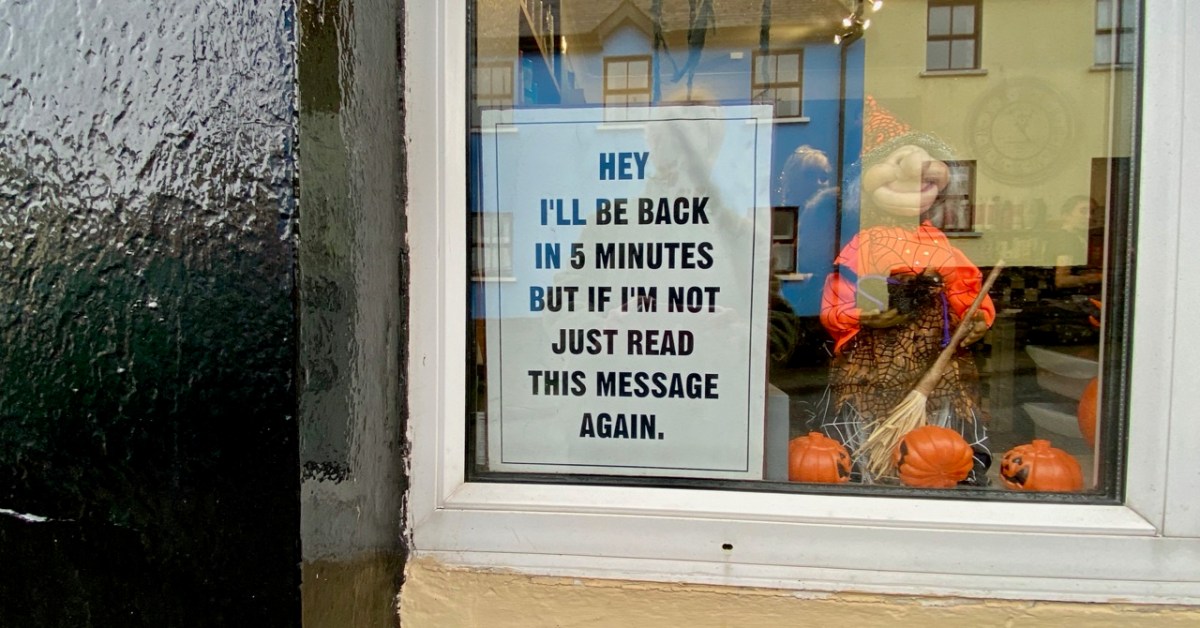
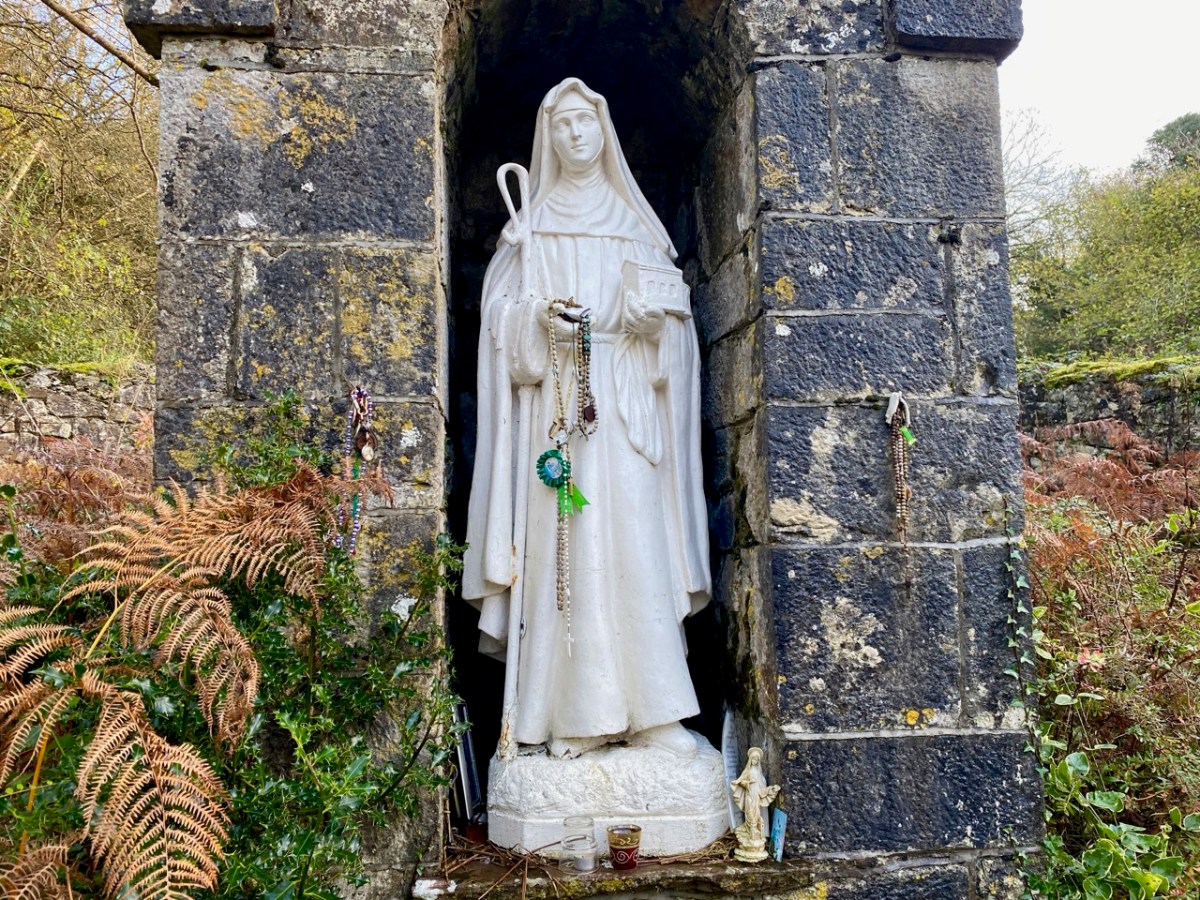
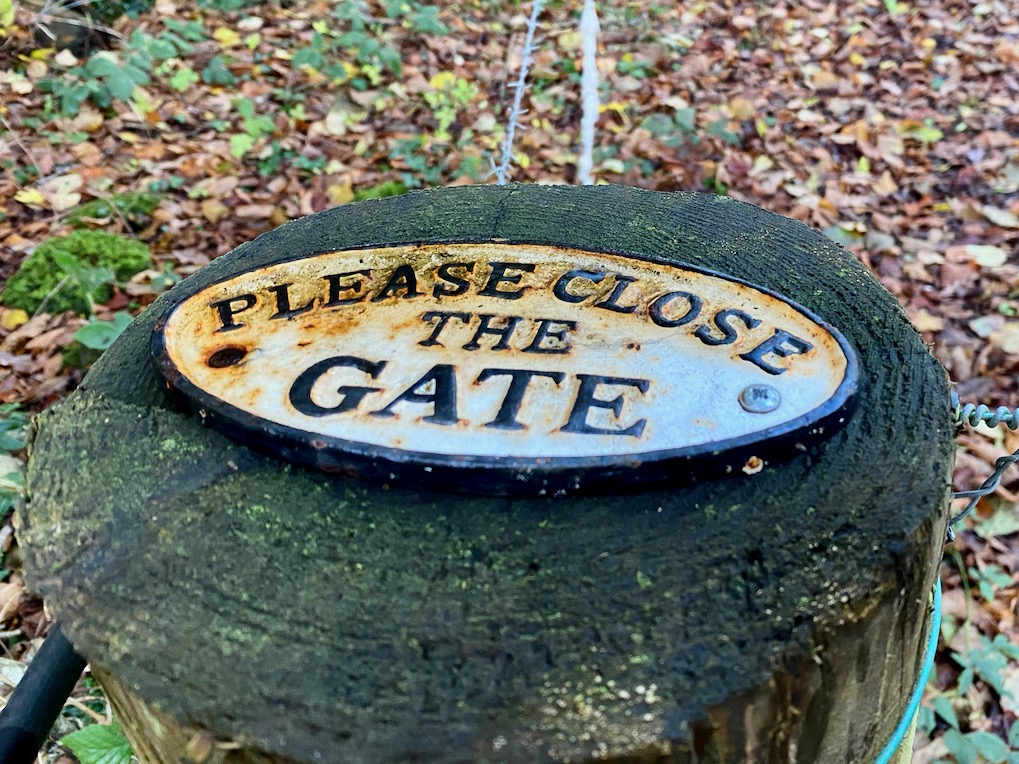
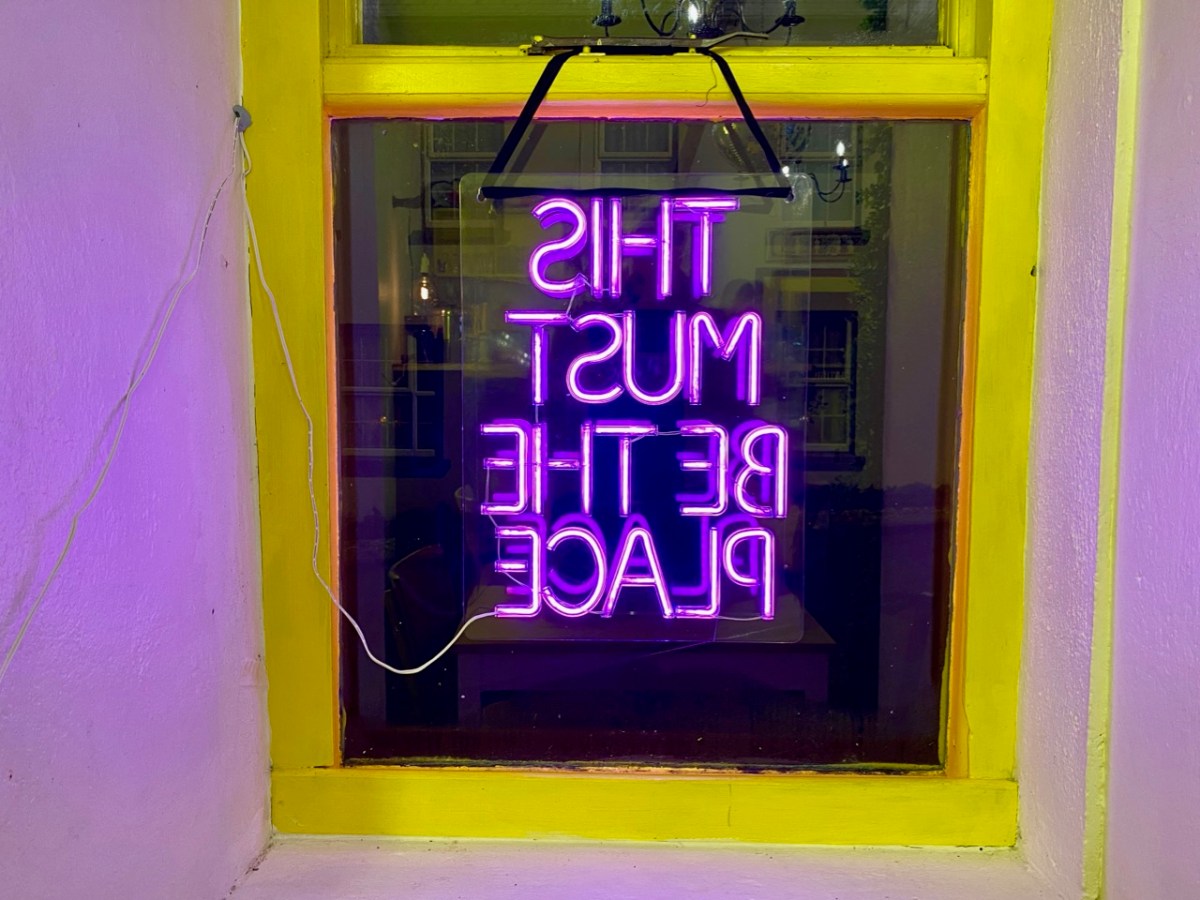
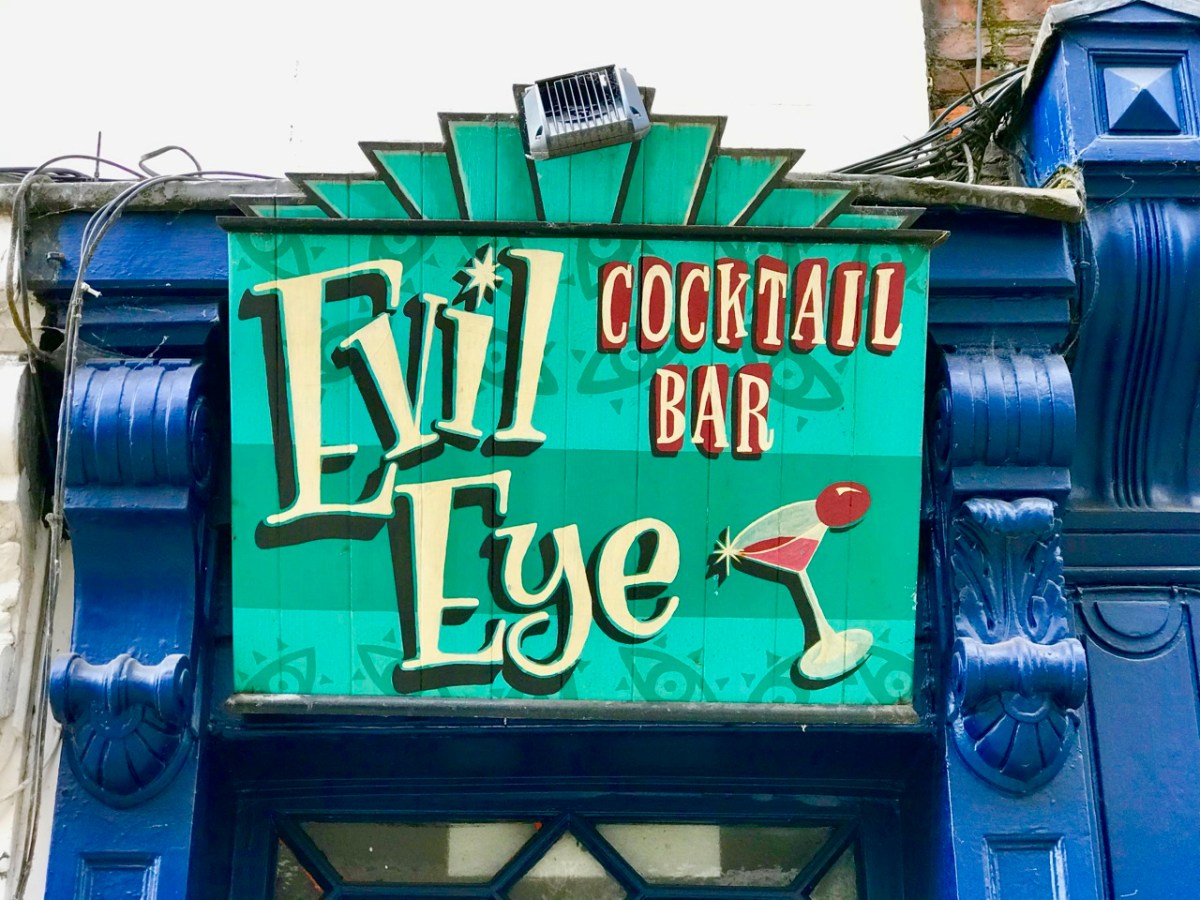
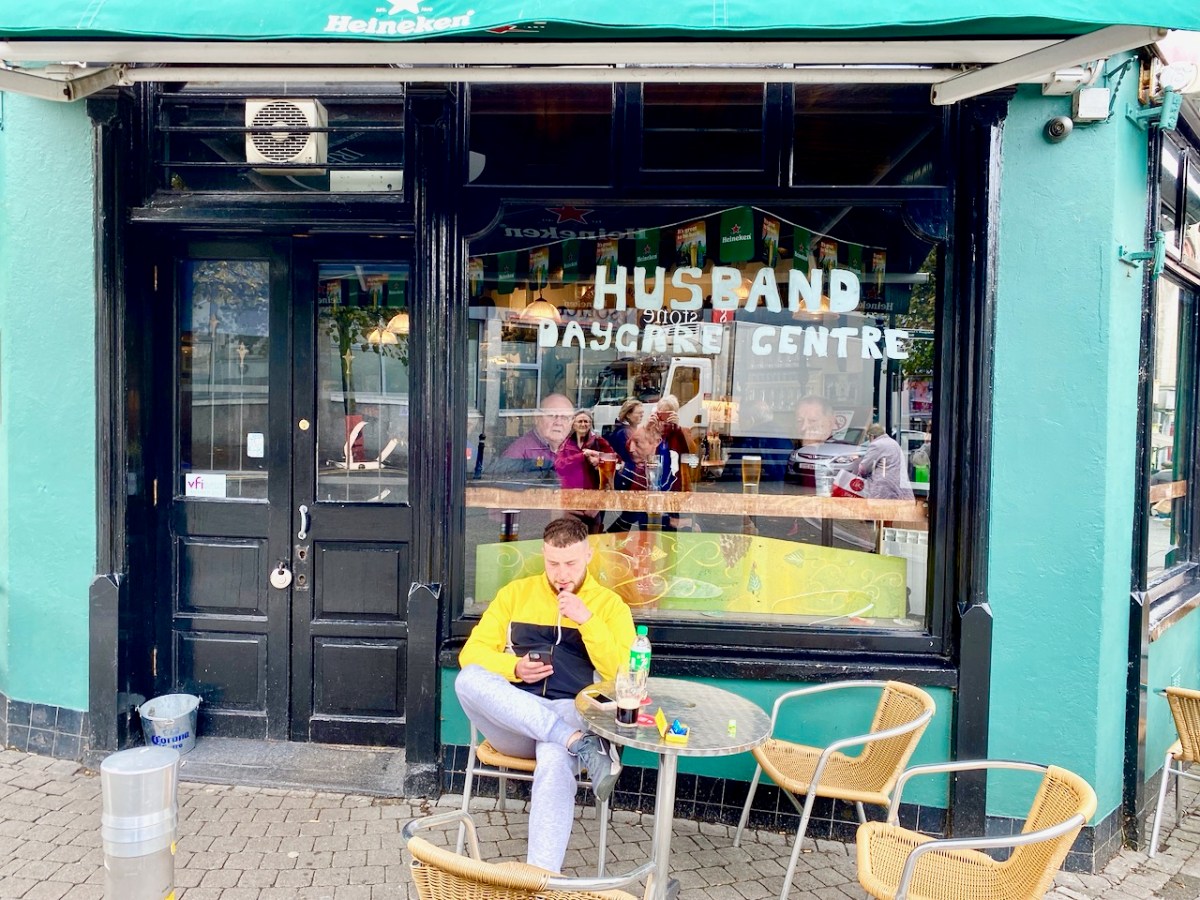
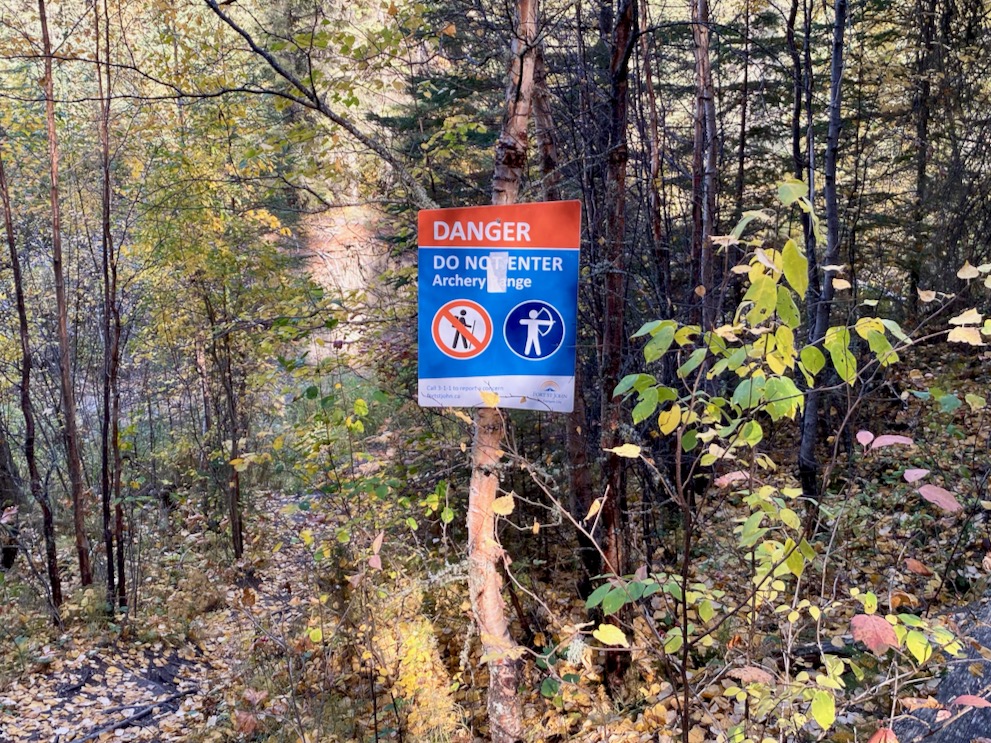
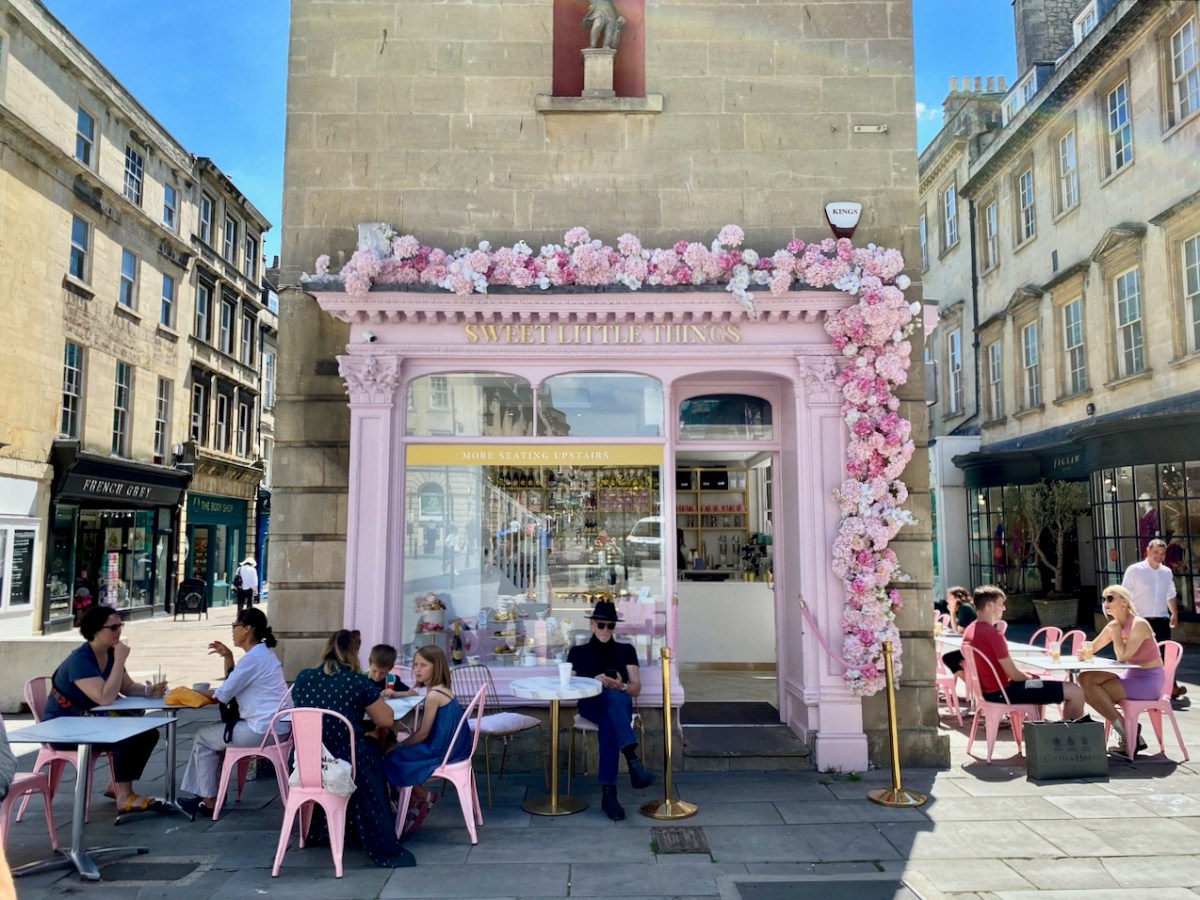
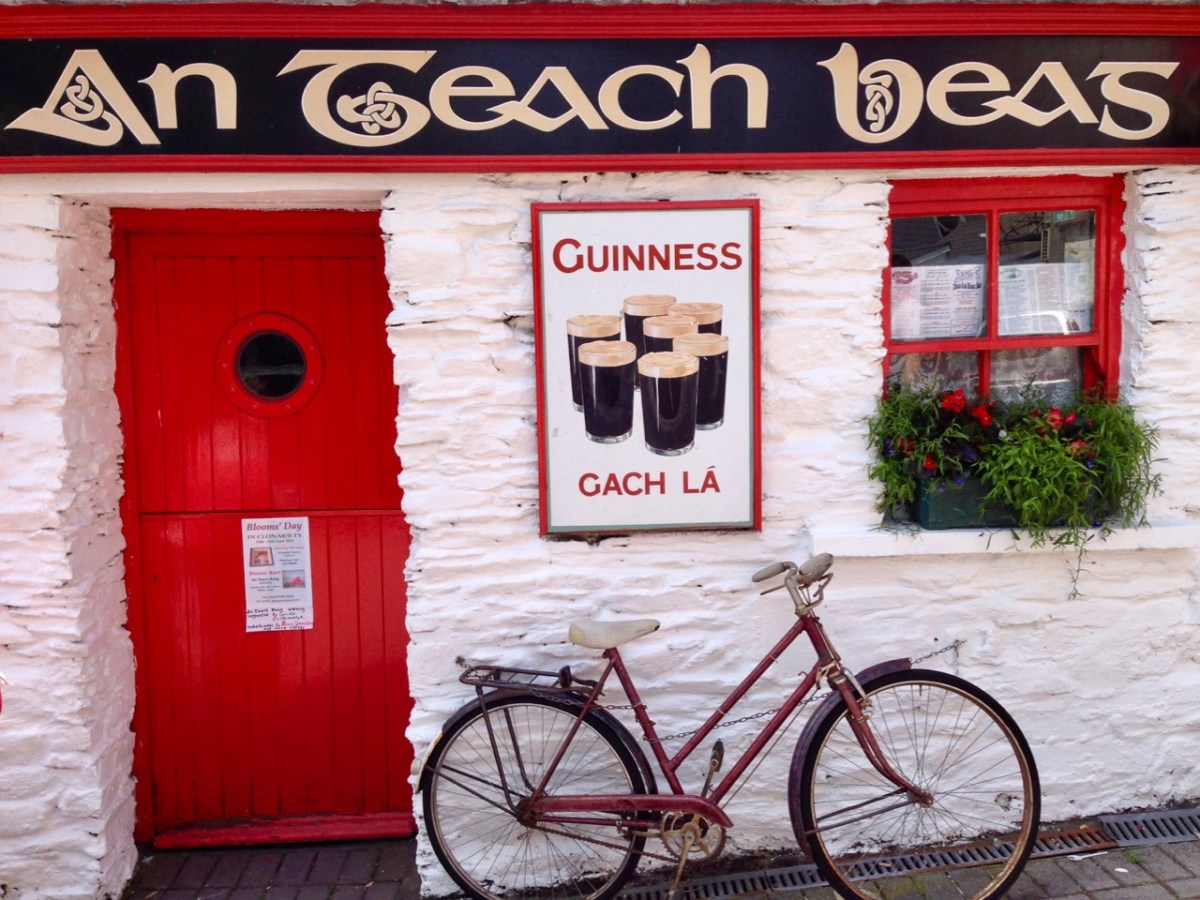
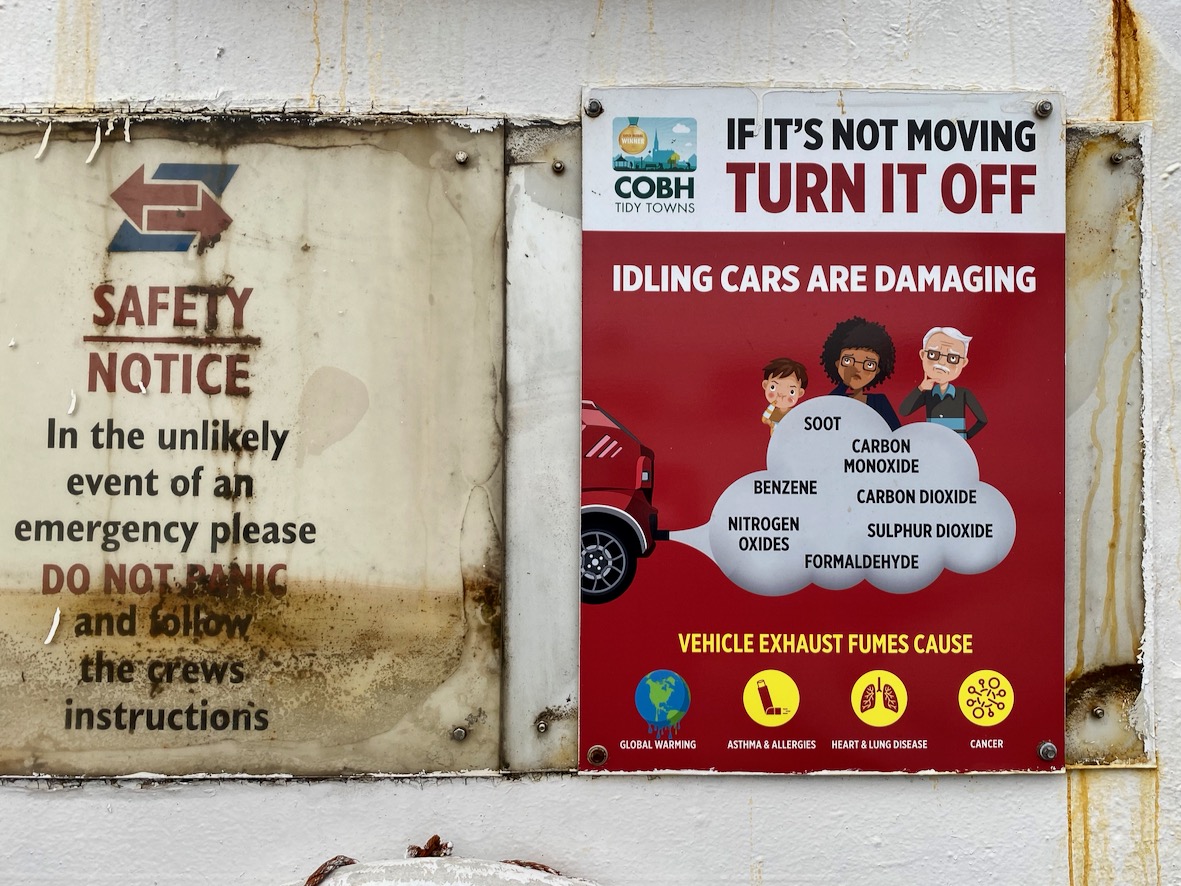
My collections of signs, posters and visual images expands all the time. If I see something quirky, I can’t resist a photo. I share these with you every so often. Today’s selection comes from far and wide: mainly here in Ireland (principally West Cork) with the odd stray from outside. I will only explain something if I feel an image demands it. The example above – from our own Ballydehob – certainly doesn’t, but the one below, which I also came across today in our little village, probably does.
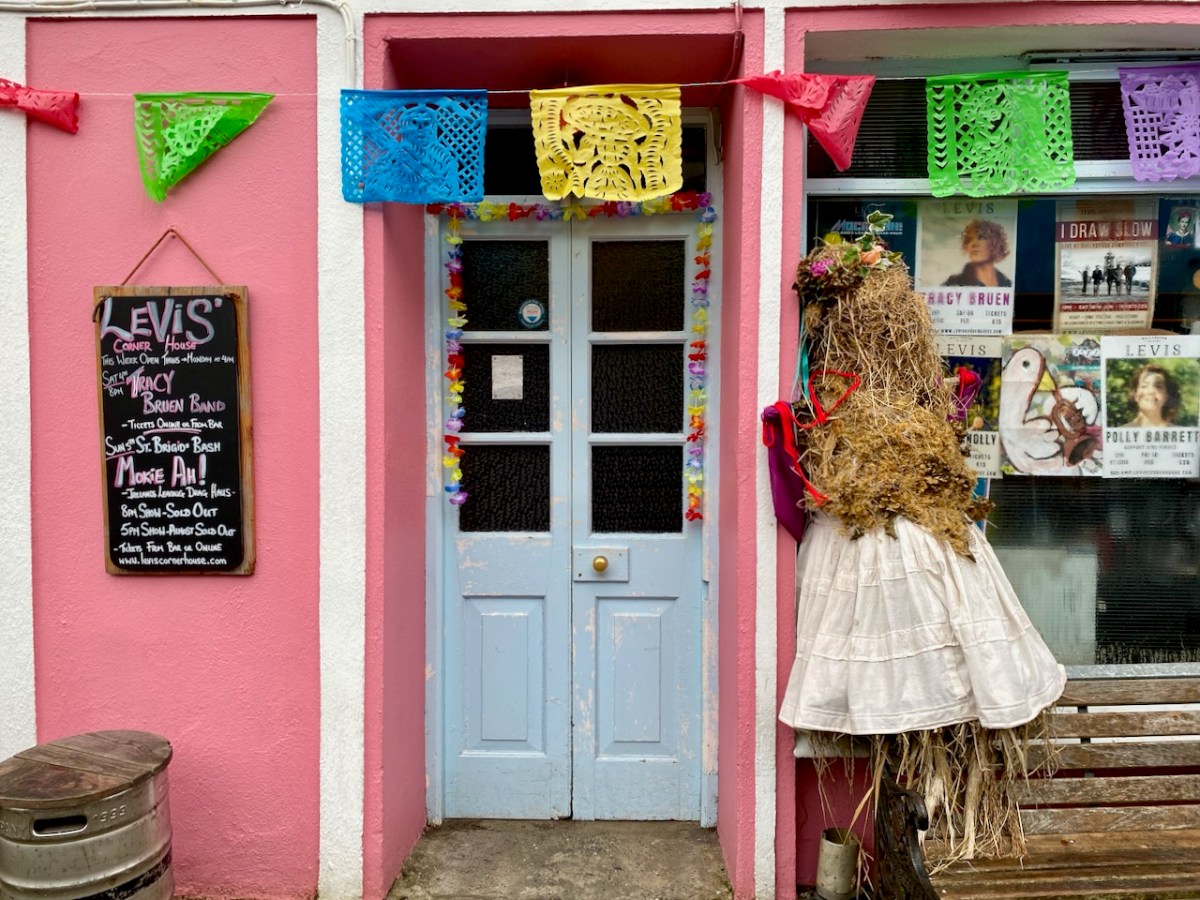
It’s a straw doll representing St Brigid. Often also known as Brídeóg, ‘Breedhoge‘ or ‘Biddy‘, it was once common to see these made to celebrate spring (which traditionally begins on her day, February 1st). This year Ireland has its first ever St Brigid’s bank holiday (tomorrow), to balance out St Patrick’s Day which we have always celebrated around his own feast, March 17th.
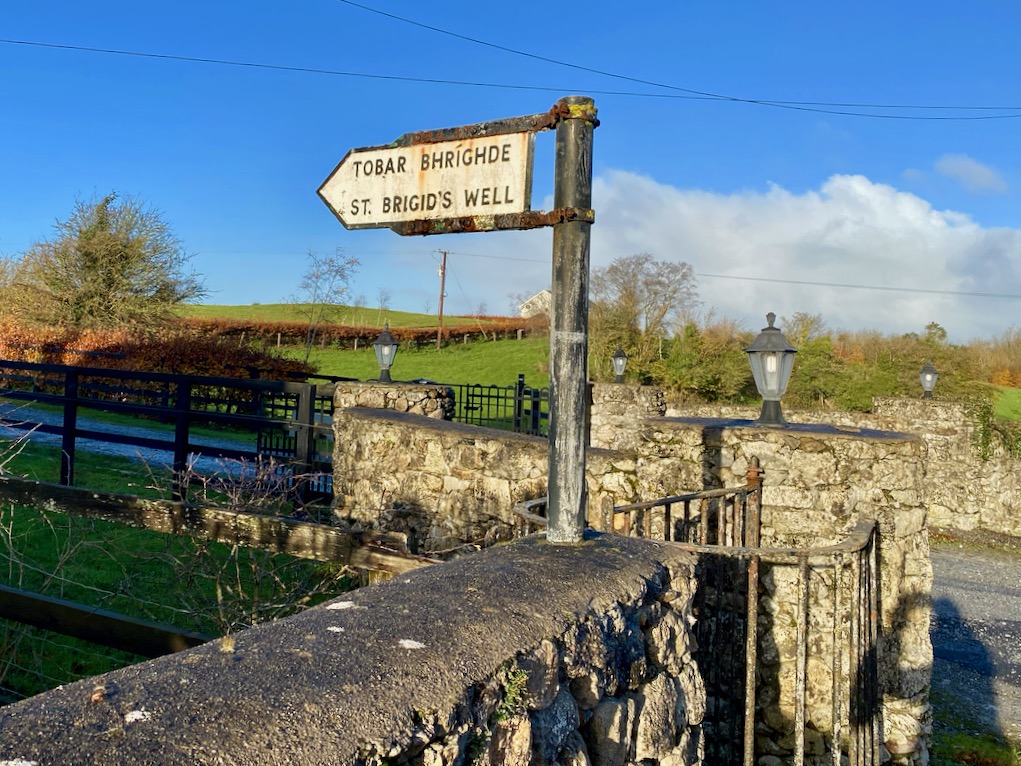
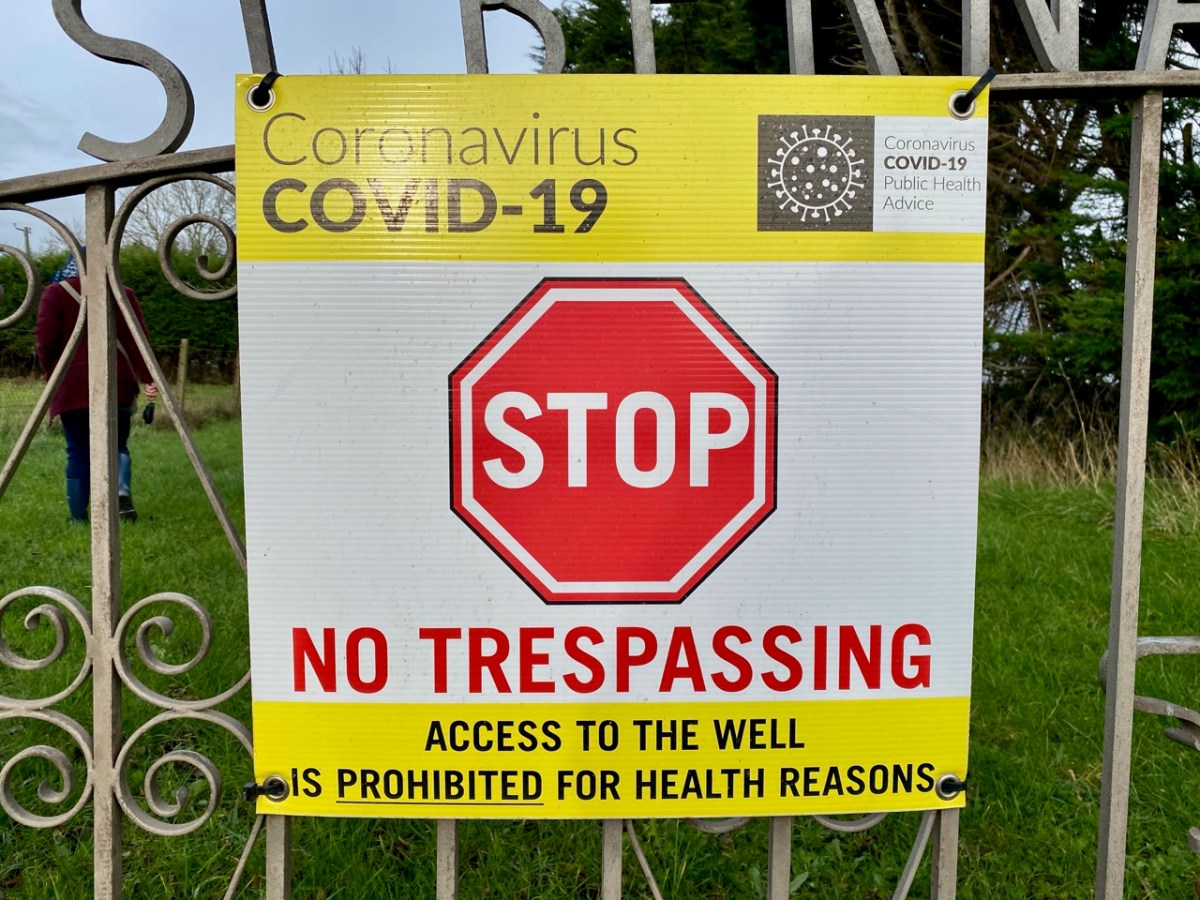
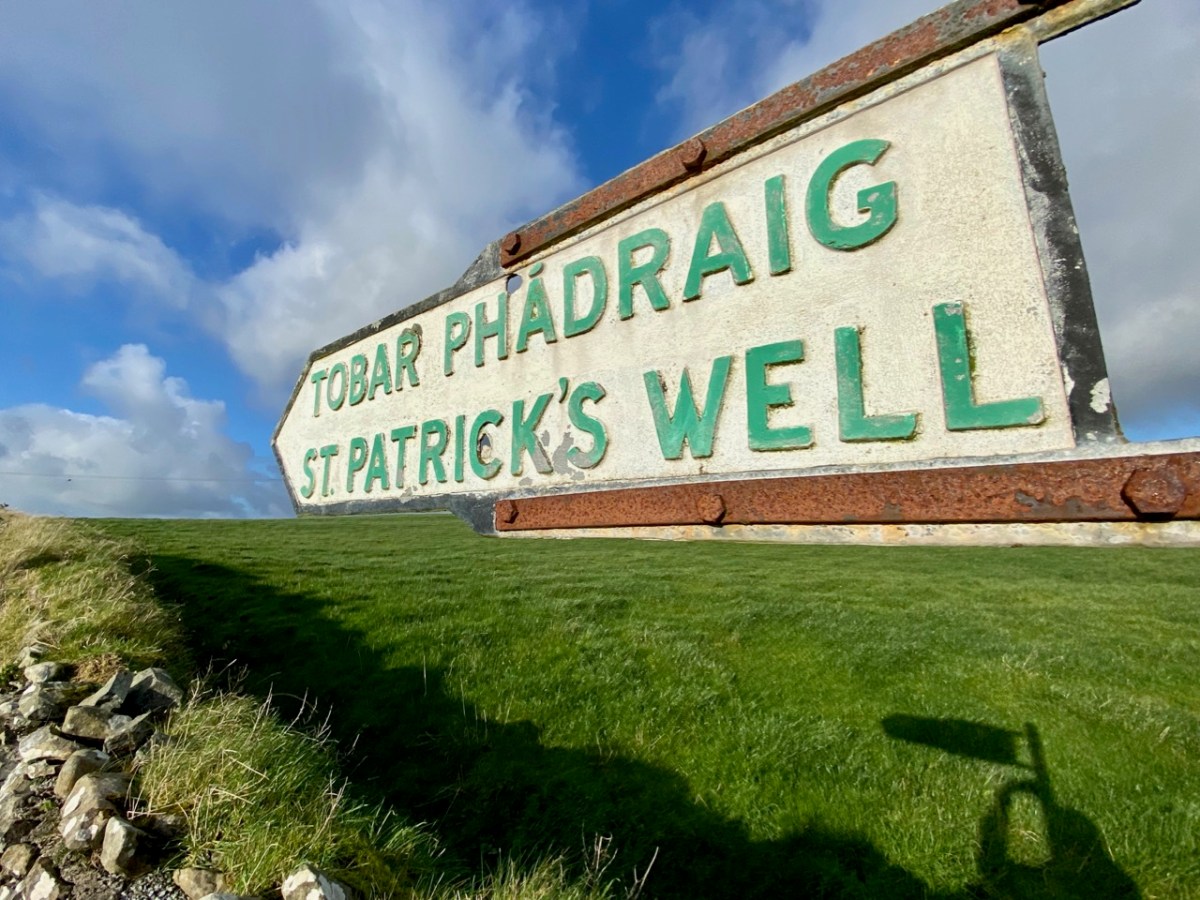
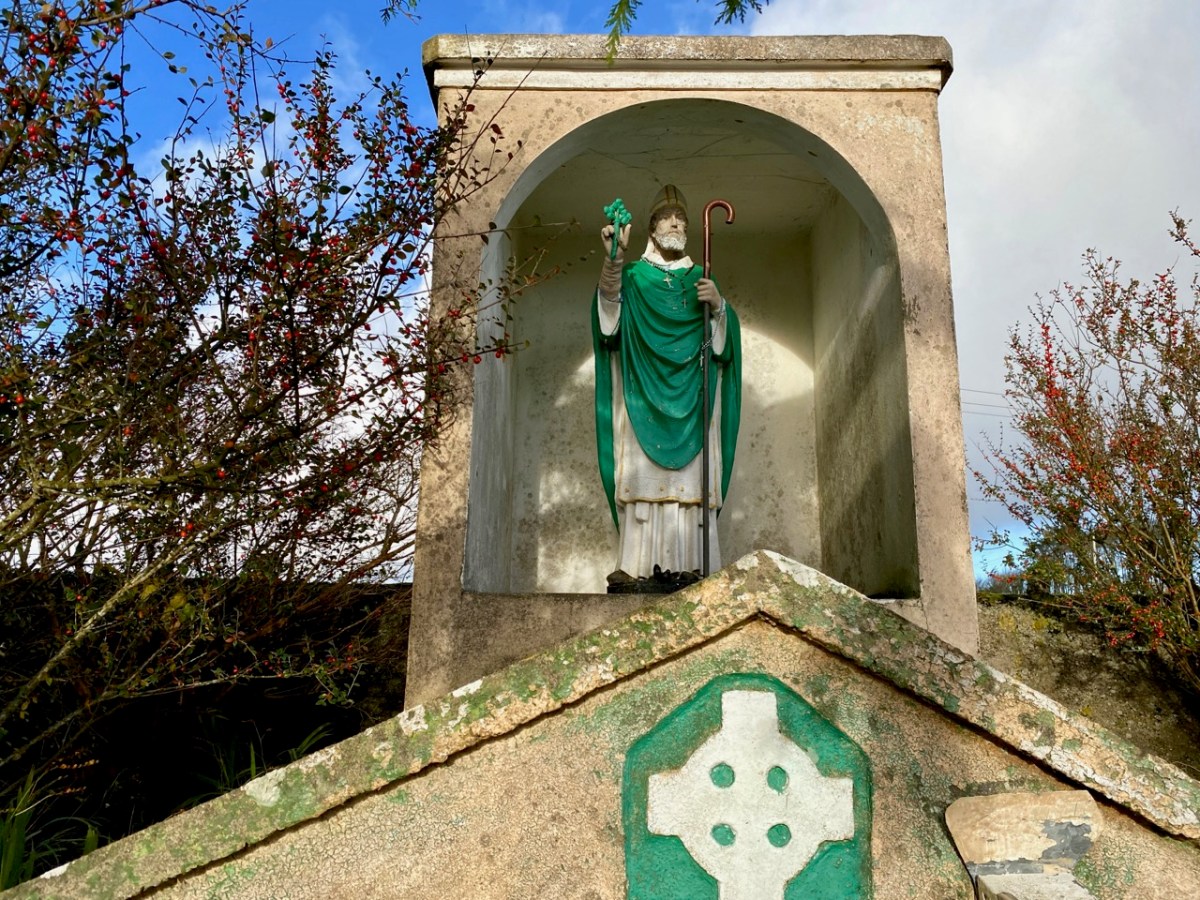
Let’s get back to signs. Wouldn’t you expect that one might visit a holy well for health reasons?
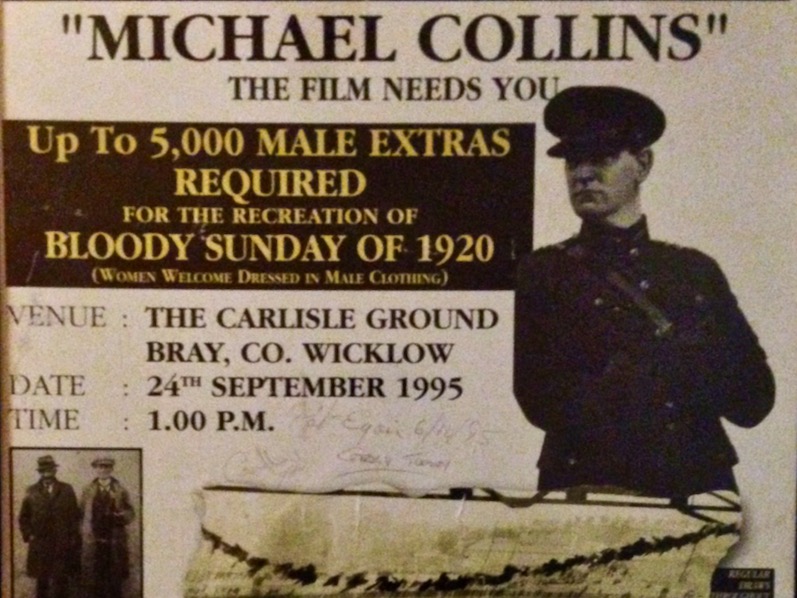
This surviving poster in Bray, Co Wicklow, somewhat irreverently makes light of the Bloody Sunday events of 1920. I can’t help being amused by the little insertion underneath Up To 5,000 Male ExtrasRequired – “Women Welcome Dressed in Male Clothing”.
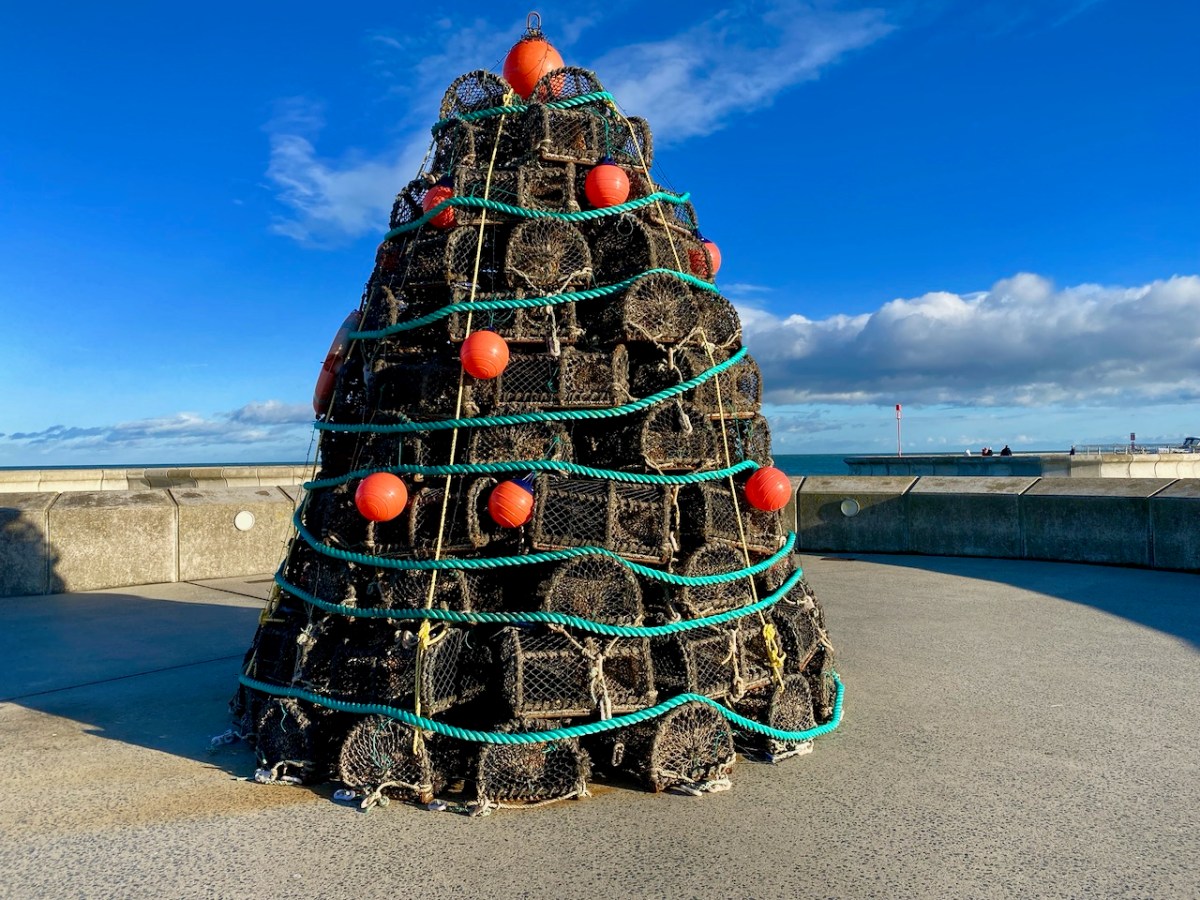
An impressive Christmas tree, built by the artistic fishermen of Greystones, Co Wicklow.
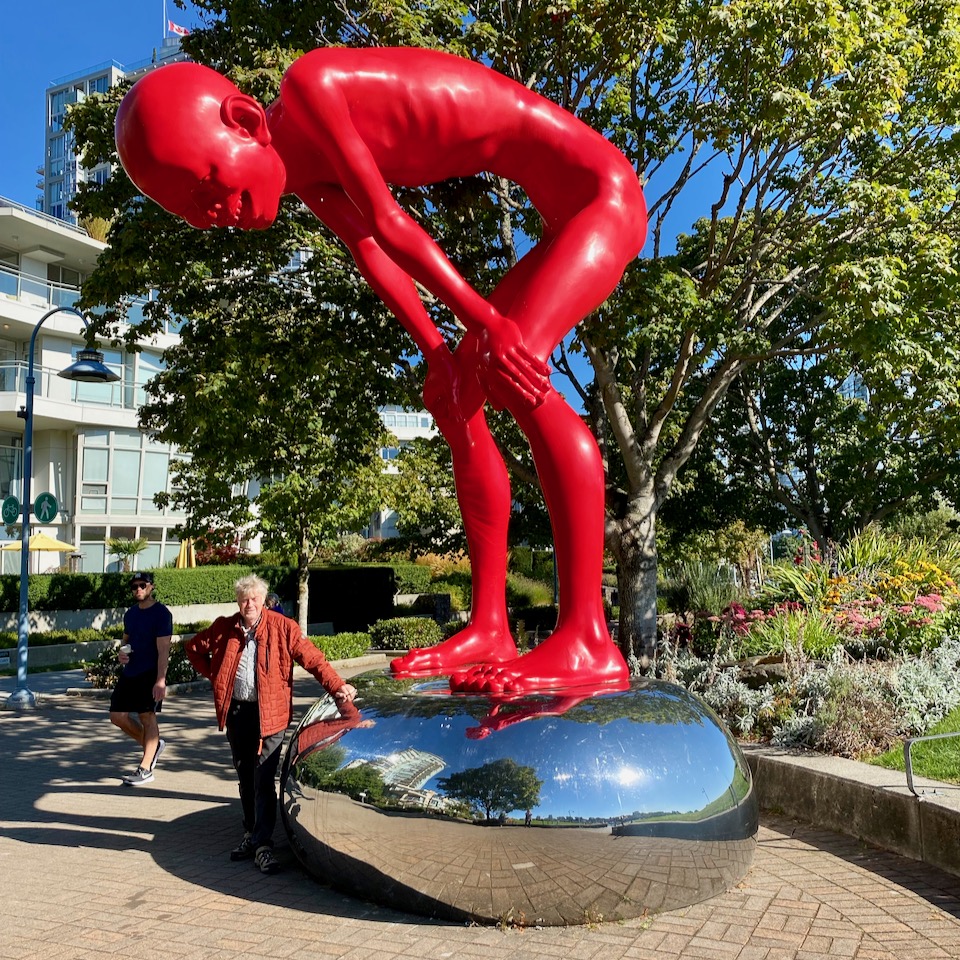
A long way from West Cork, we found this sculpture in False Creek, Vancouver last autumn. Titled “The Proud Youth,” the six metre high figure was created by Chinese sculptor Chen Wenling.
. . . Simple and truthful, this work creates a direct communication between man and nature, and initiates a sincere conversation between people and society. The cheeky expression and arresting pose are a celebratory call to the audiences, inviting them to embrace their inner child . . .
Vancouver Biennale
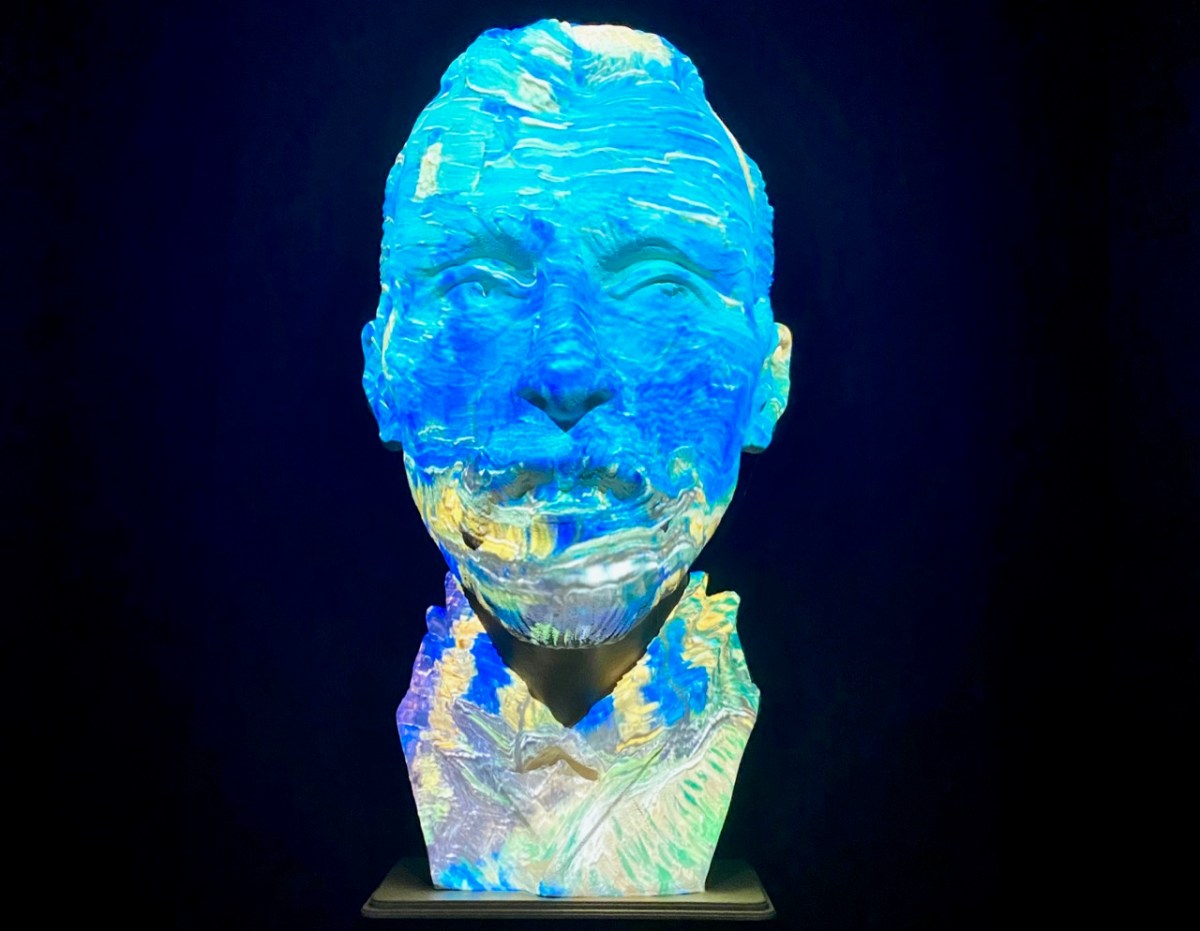
This may seem out of place, but we visited a Van Gogh exhibition while in Dublin recently. Described as an ‘Immersive Experience’ it is quite mind-blowing and we recommend the immersion if you are in the area.
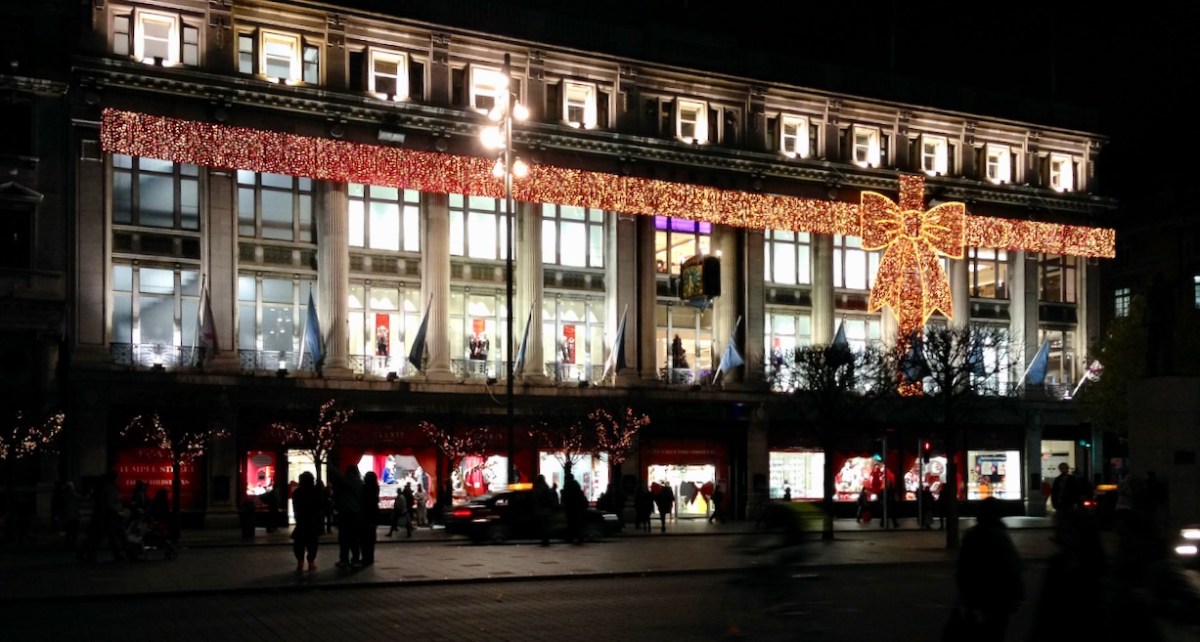
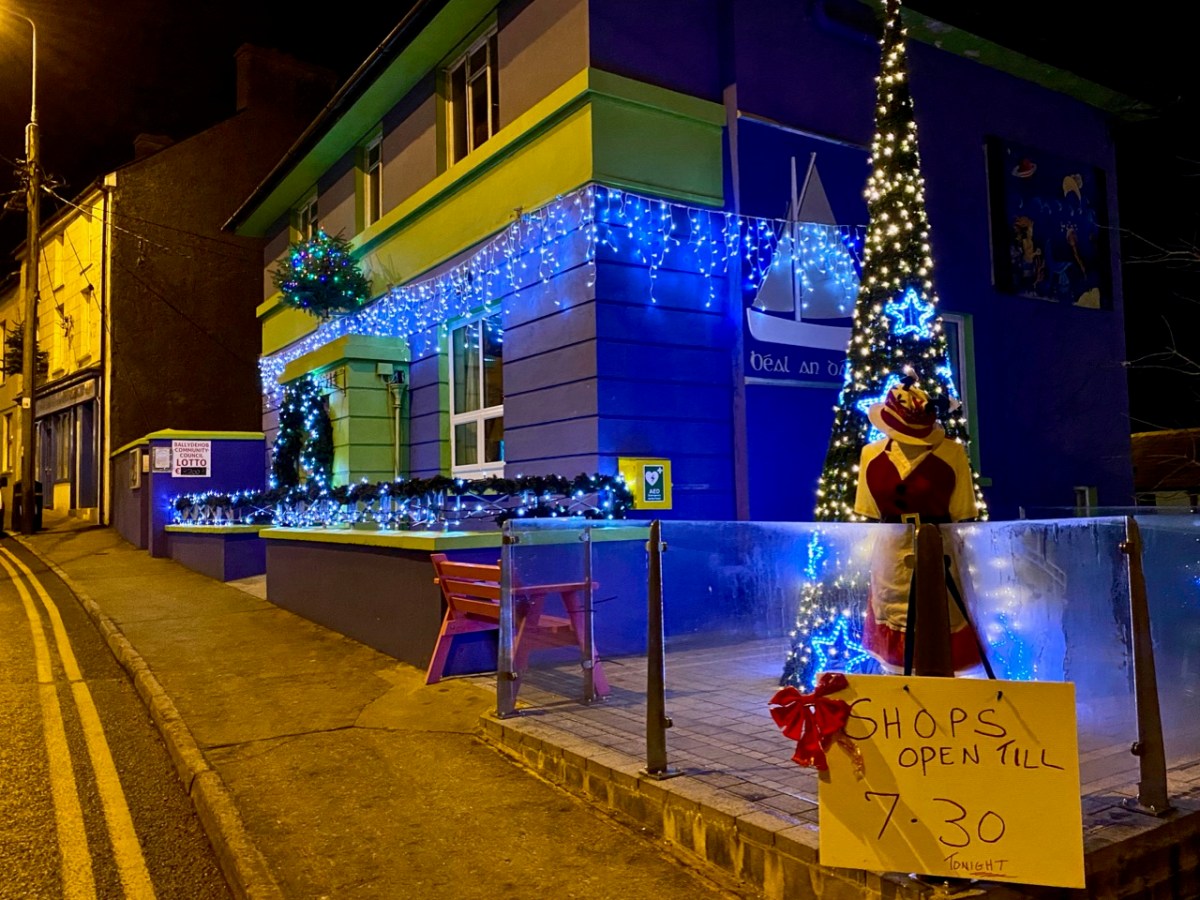
We’ll finish today with some shopfronts decorated for Christmas: in Dublin, and back in picturesque Ballydehob.
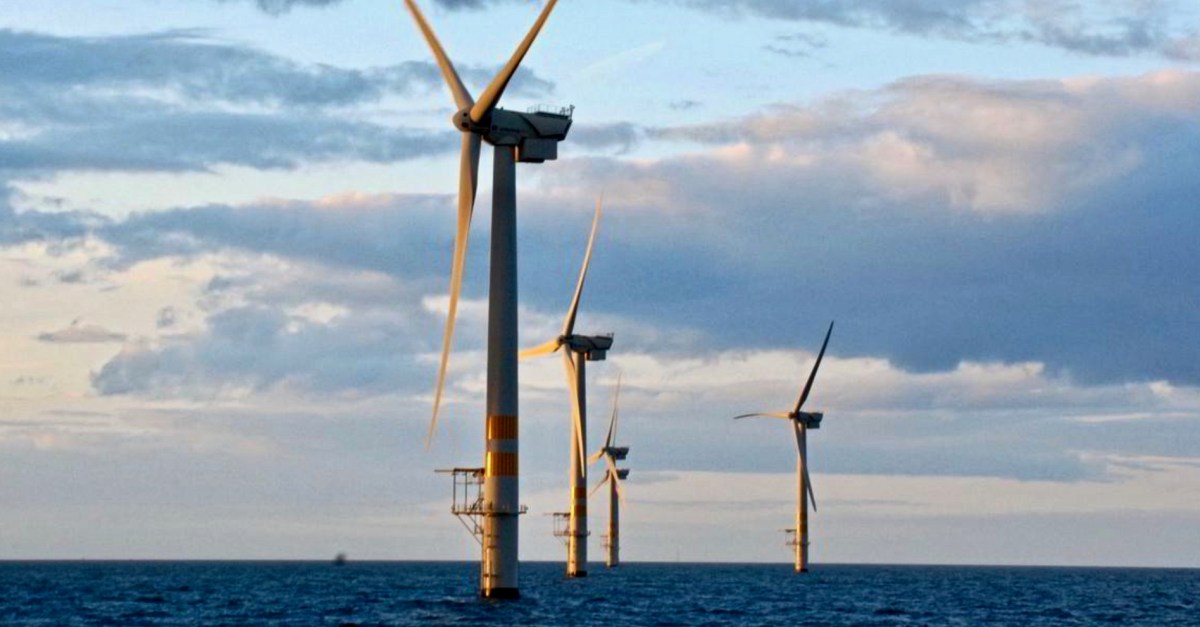
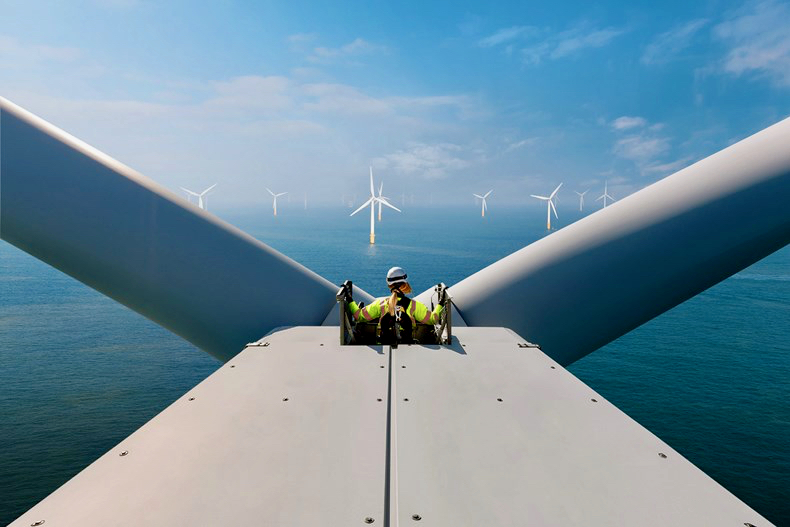
Arklow, Co Wicklow, had a ‘first’ for Ireland: the first offshore wind-farm installation in the country, and the first in the world to employ wind turbines rated over 3 MW. Phase 1 of the project, commissioned in June 2004, consists of seven GE 3.6-megawatt generators. The total output of 25.2MW seemed good at the time but the improvements in technology since it was constructed are considerable. A second phase, currently being planned, aims to achieve an export capacity of up to 800MW.
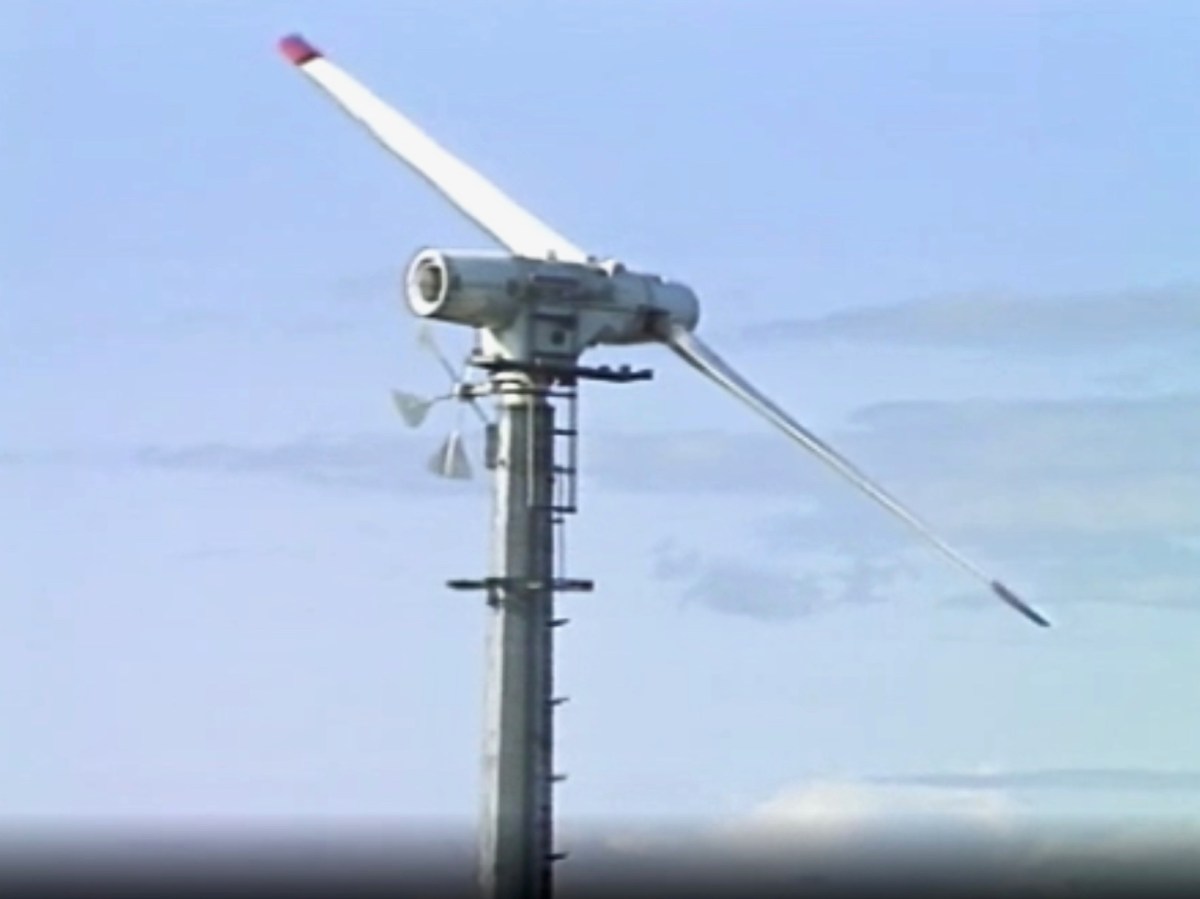
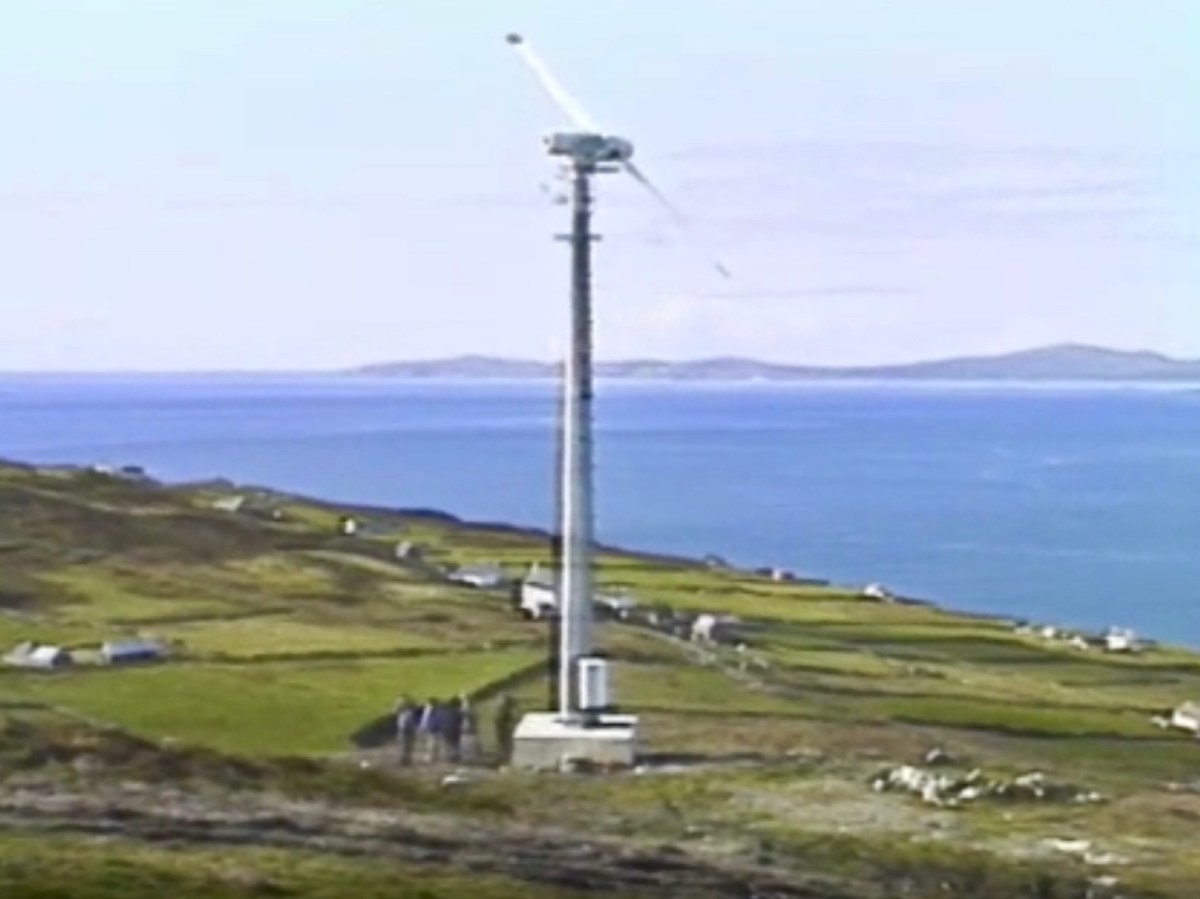
. . . The new technology was funded largely by the Germans and came in at a cost of around £500,000. The two wind-powered generators stand fifty feet above the top of the island and provide 30 kW each from the turning of their 12.5-meter blades. The National Board for Science and Technology claims that this new technology is the first of its type in the world as it integrates wind generation with diesel generators and battery storage creating a complete power supply . . .
RTÉ Archives
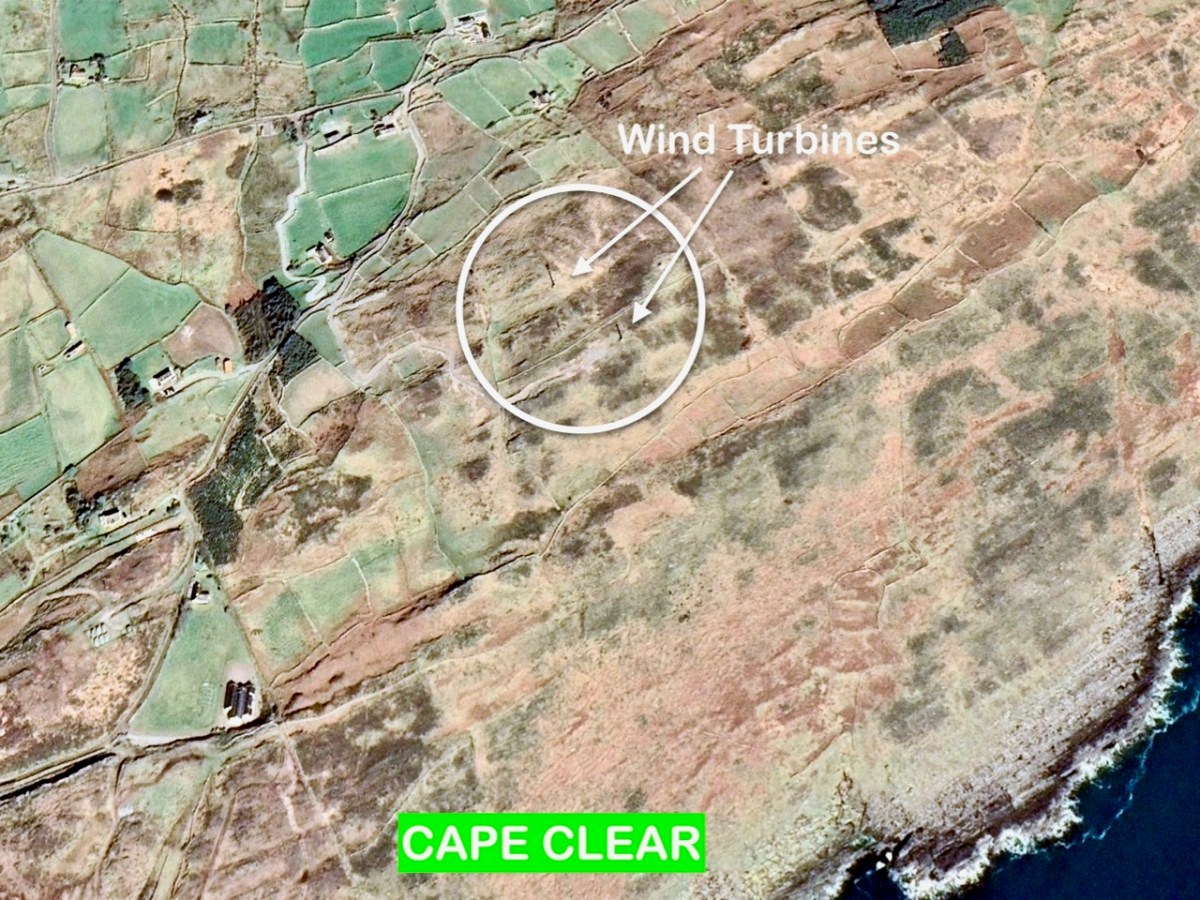
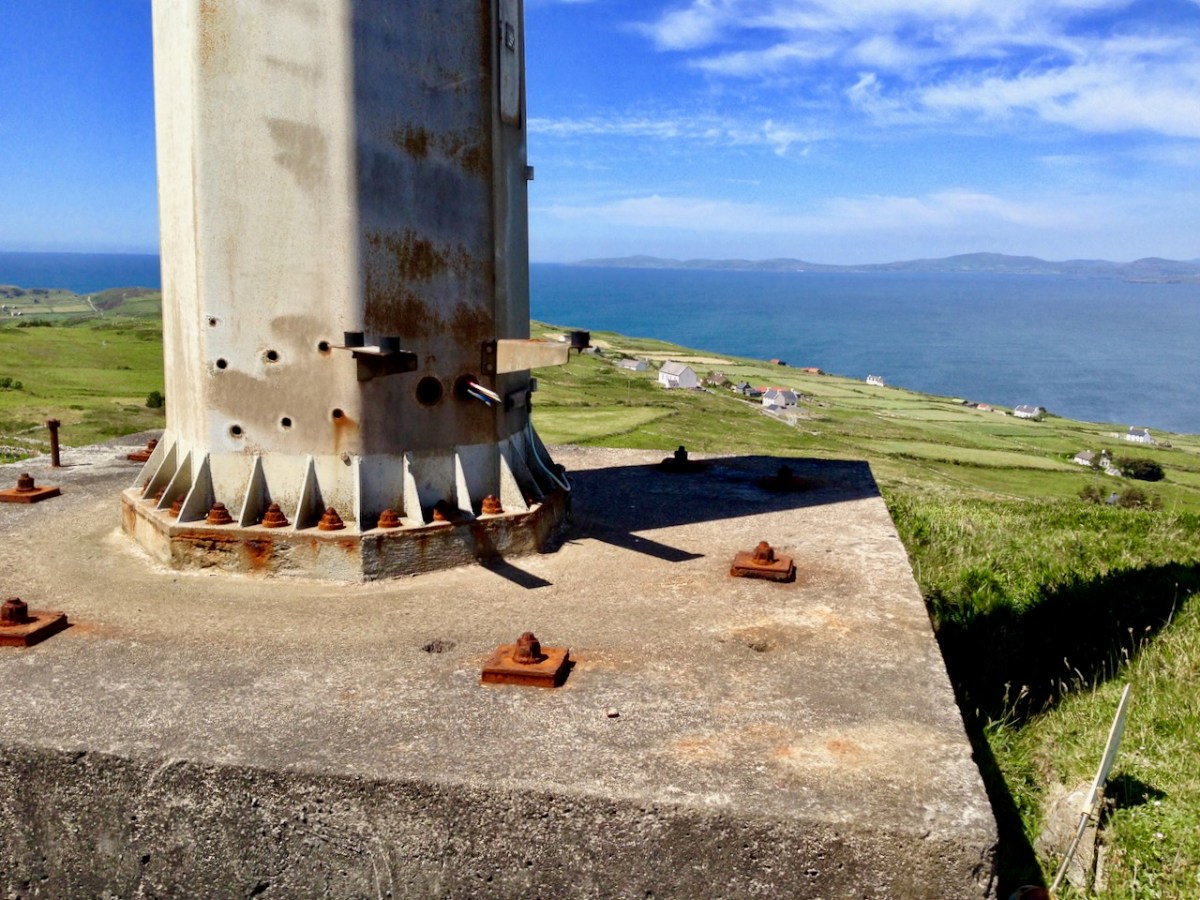
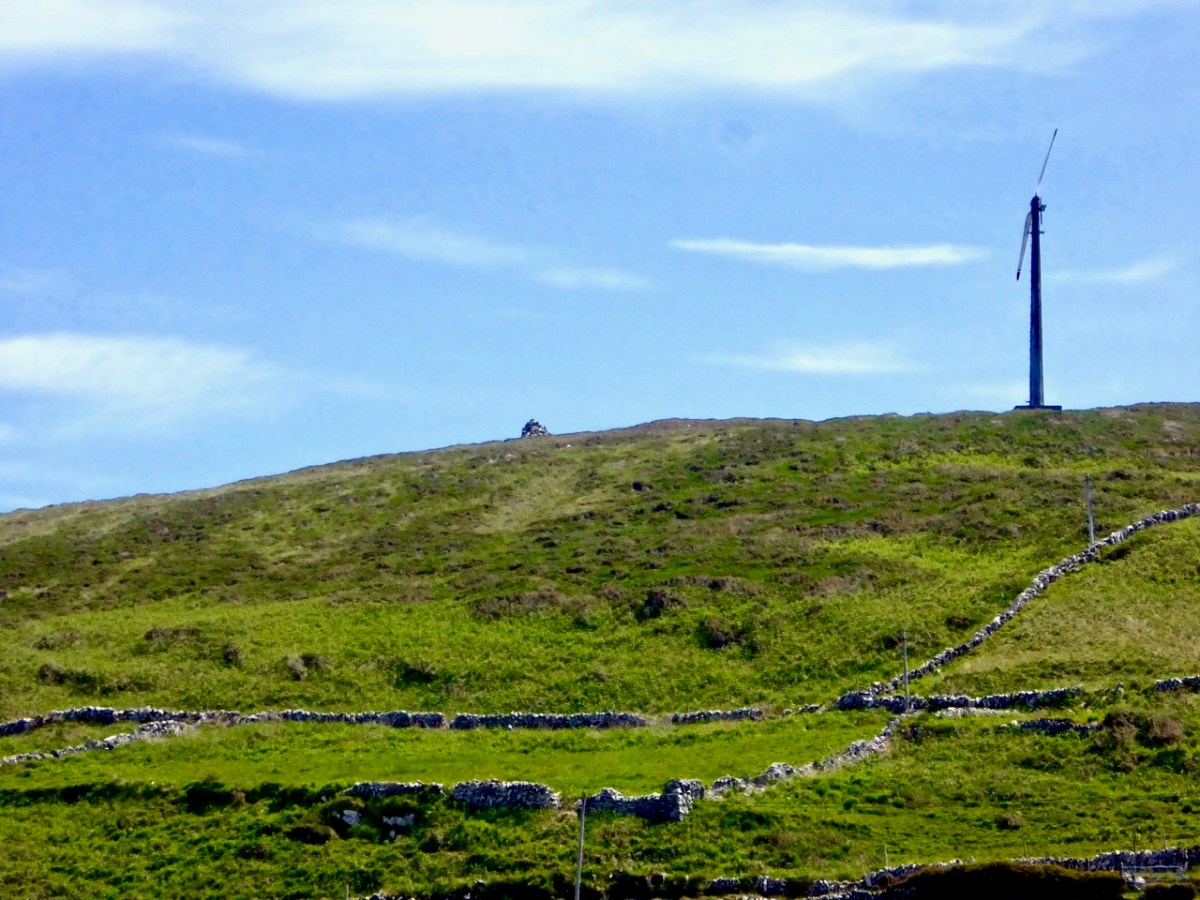
(Top) another still from the RTÉ news piece, and (above) aerial view of the site. The masts and turbines are still in place today, although they have been disused since the island was connected to the mainland for electricity supply via a subsea cable in 1996. (Below) we photographed the surviving turbines on the island in 2016.
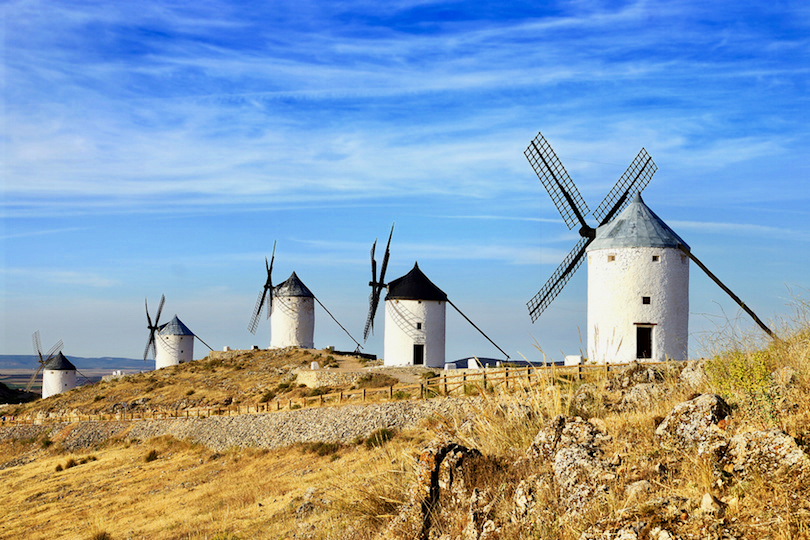
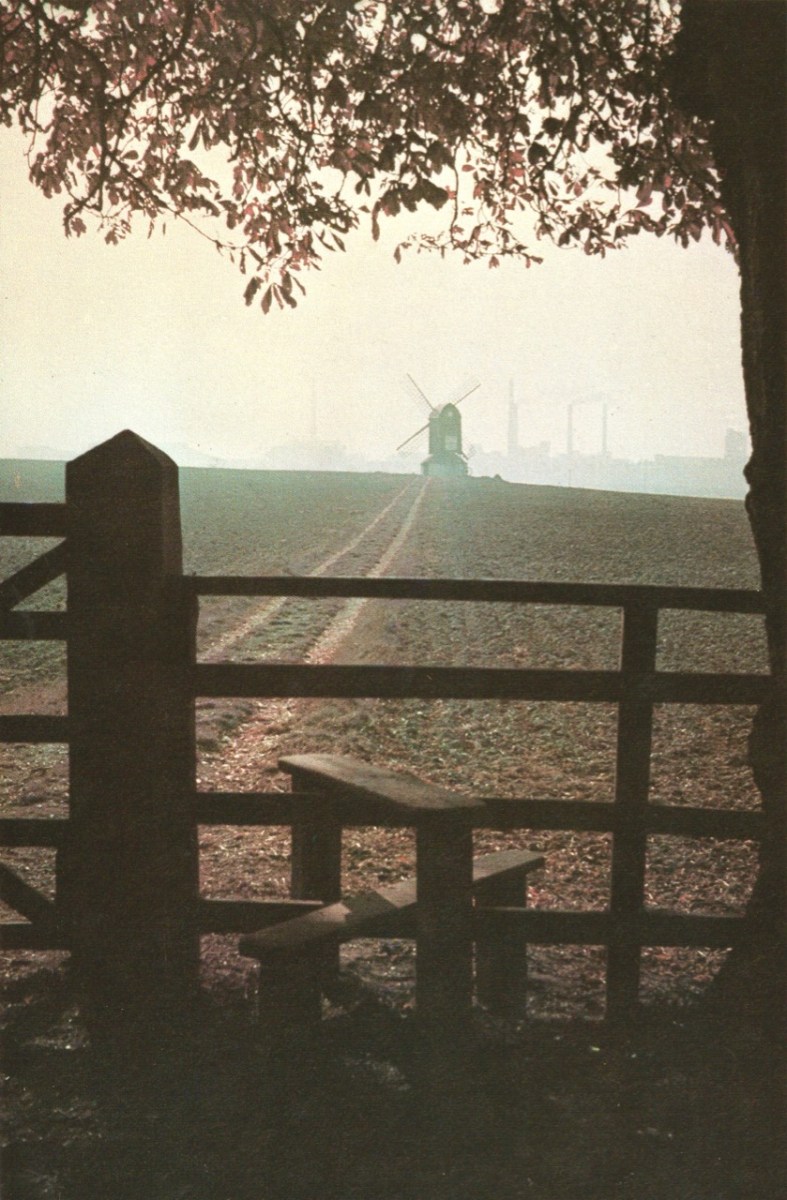
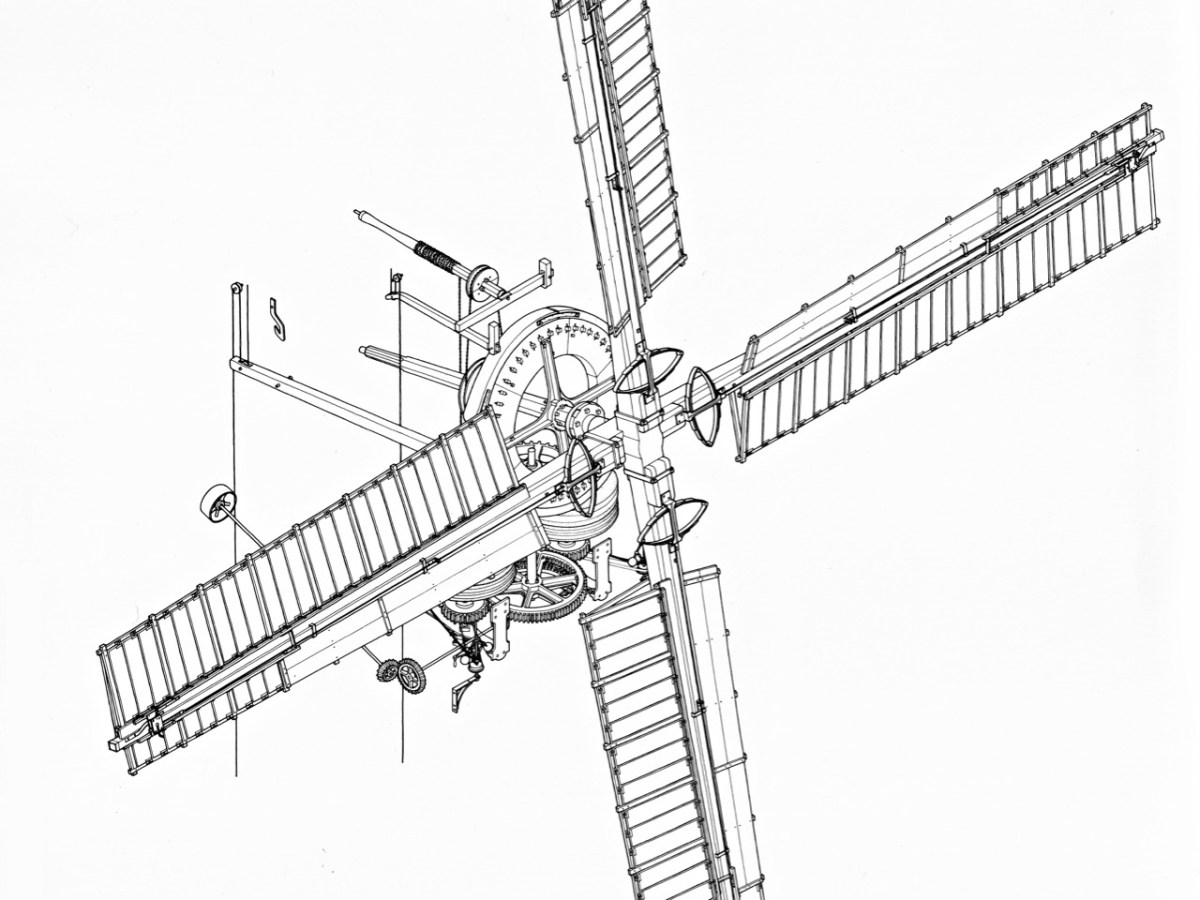
Wind power goes back a very long way, of course. Here (above) are some very picturesque ancient examples from La Mancha, in Spain. Here’s another (below) – Pitstone Windmill in England: an interesting composition with newer technologies in the background.
Compare technologies old and new (below)!
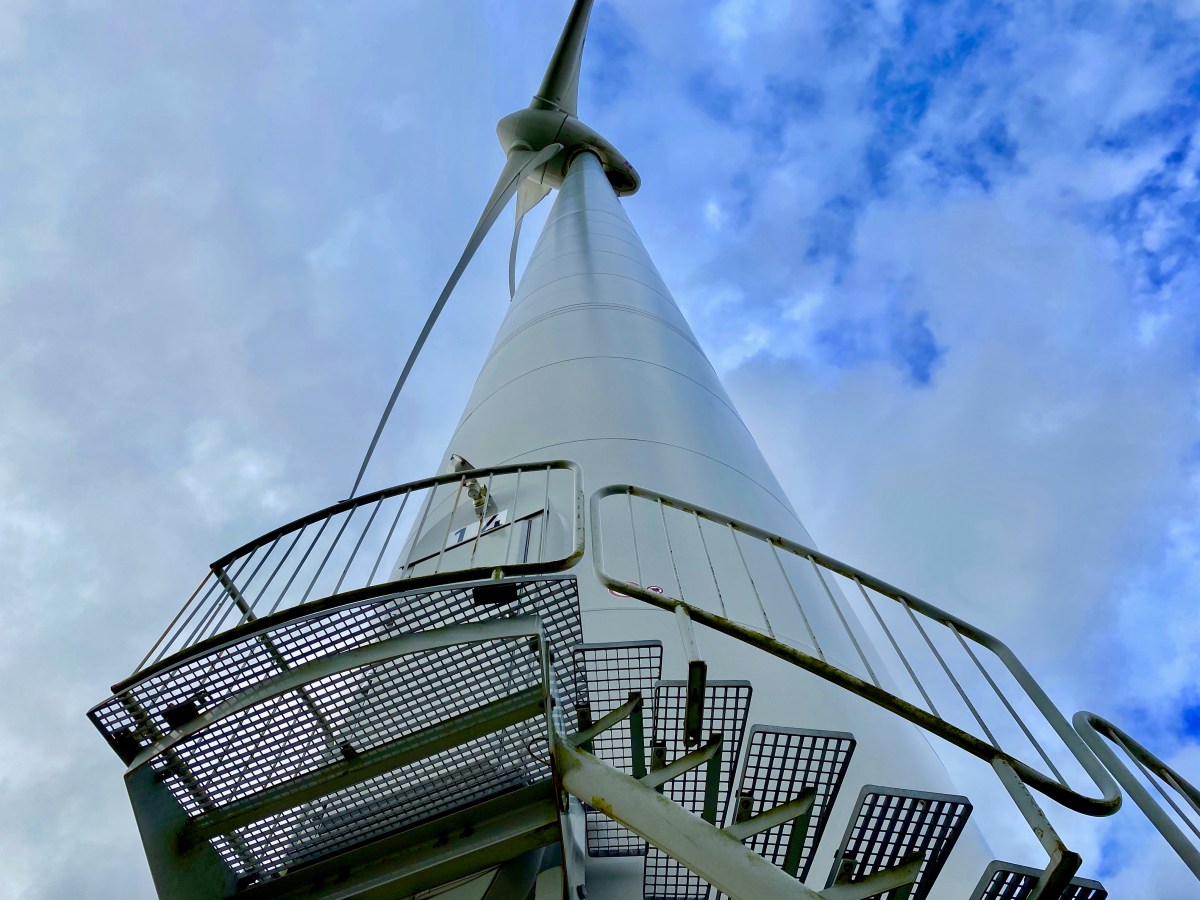
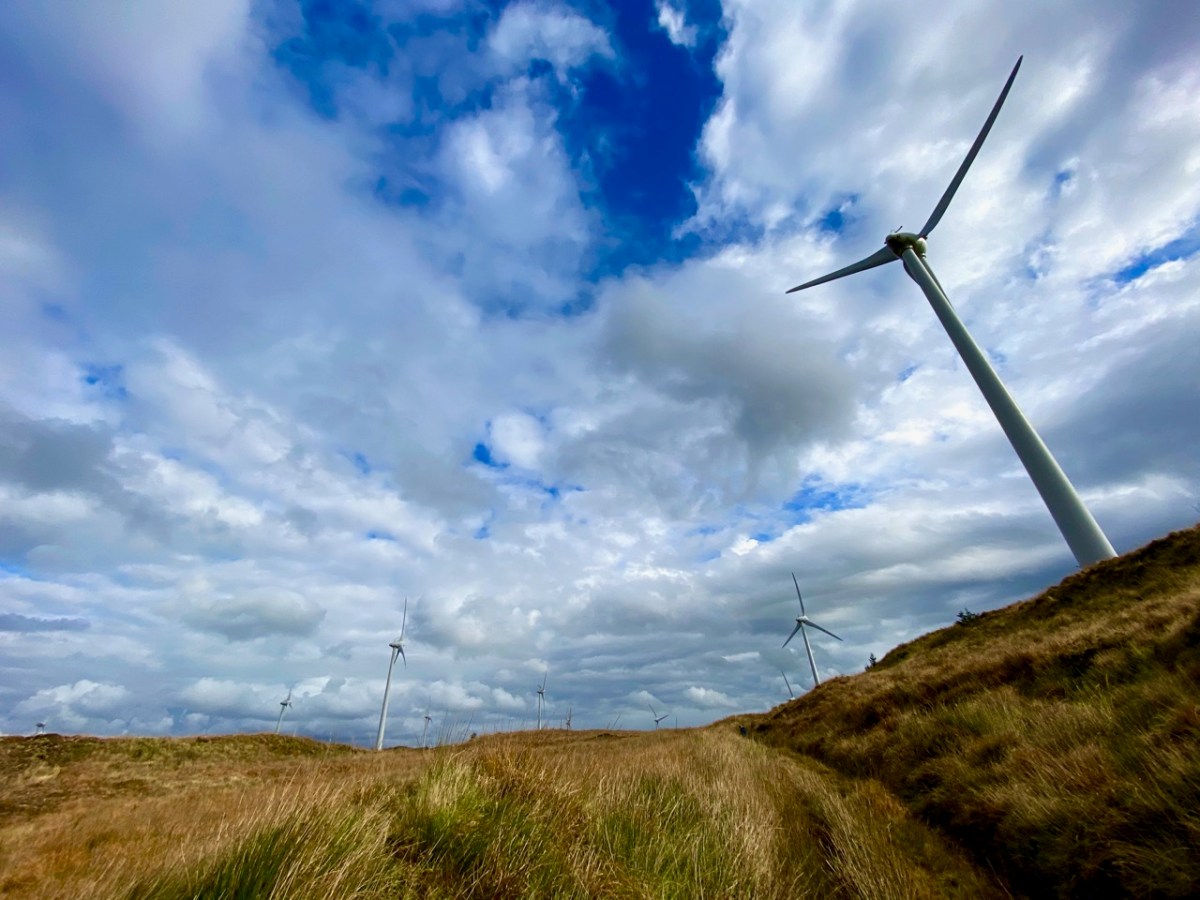
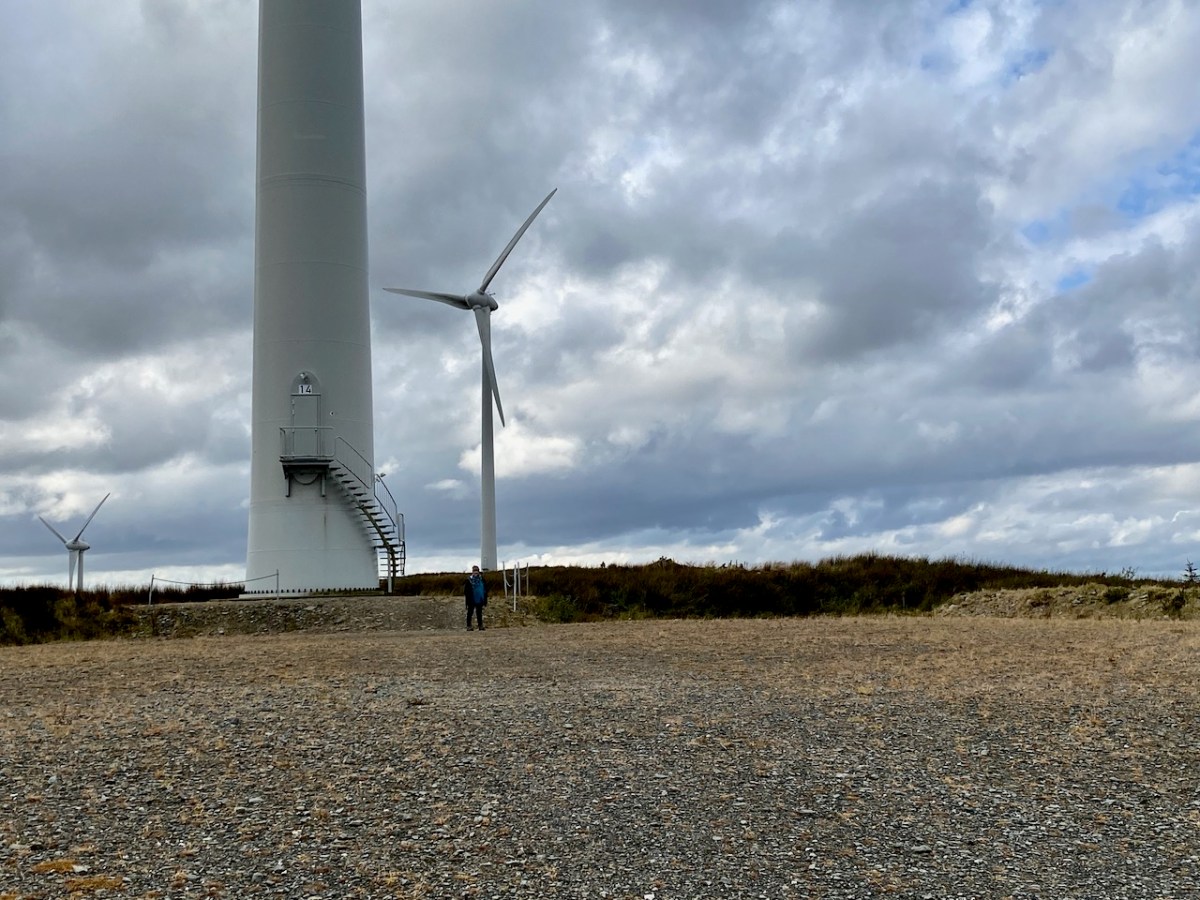
In West Cork we are no strangers to the more recent developments in this expanding field, although at present all land based. The scale and form of the machinery is, of course, increasing apace. These examples are on the hills close by us:
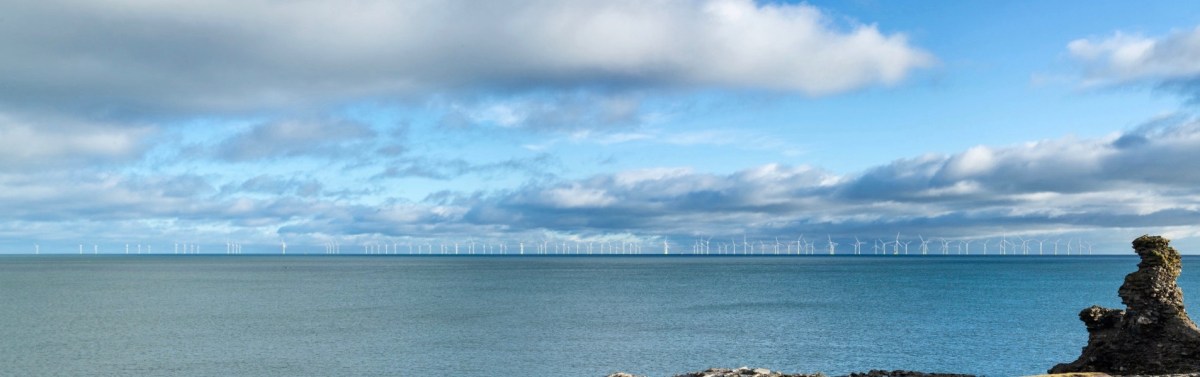
But it’s the vast resource of our relatively benign coastal waters that offers the most for the country’s still young wind-power industry. There’s a further example being planned in County Wicklow: the Codling Bank Wind Park scheme. Currently in the consultation stages, it is hoped that construction will be completed in late 2028. 73 turbines are planned, to be sited on the shallow Codling Bank, some 20km out in the Irish Sea. This project – the largest so far in this country – has the potential to power 1.2 million homes using natural resources. It will also provide welcome employment for a large work force. And – in my eyes – an elegant contribution to the marine environment. Well done, Ireland!
Photomontage of the Codling Bank Wind Park seen from the shore at Greystones. Thank you to http://www.codlingwindpark.ie for the dynamic illustrations.
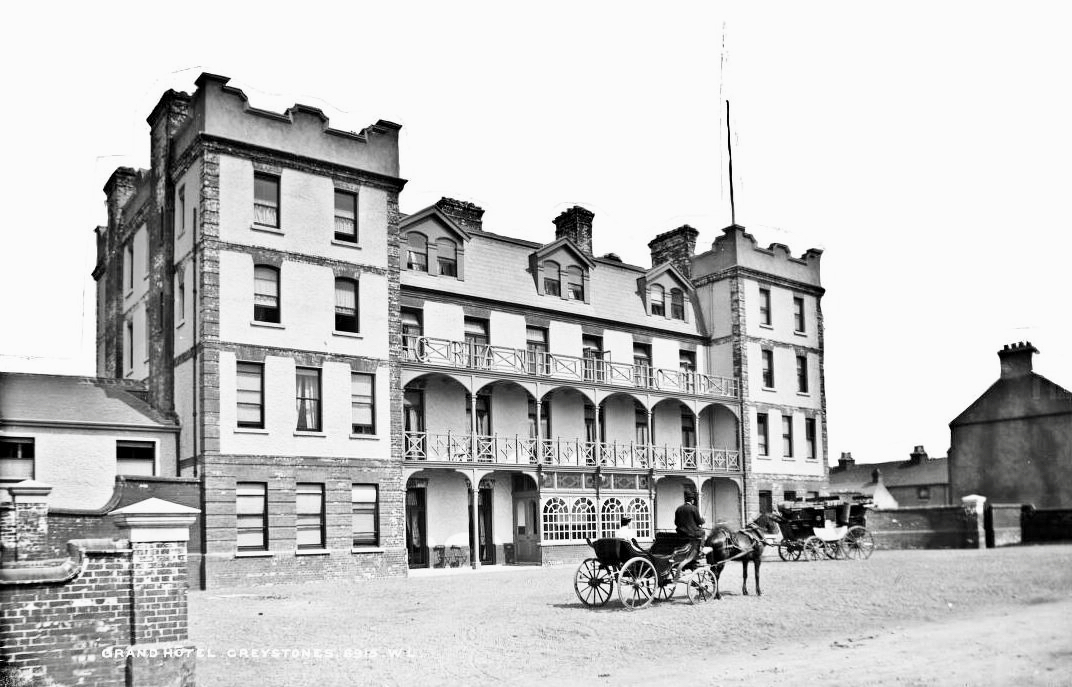
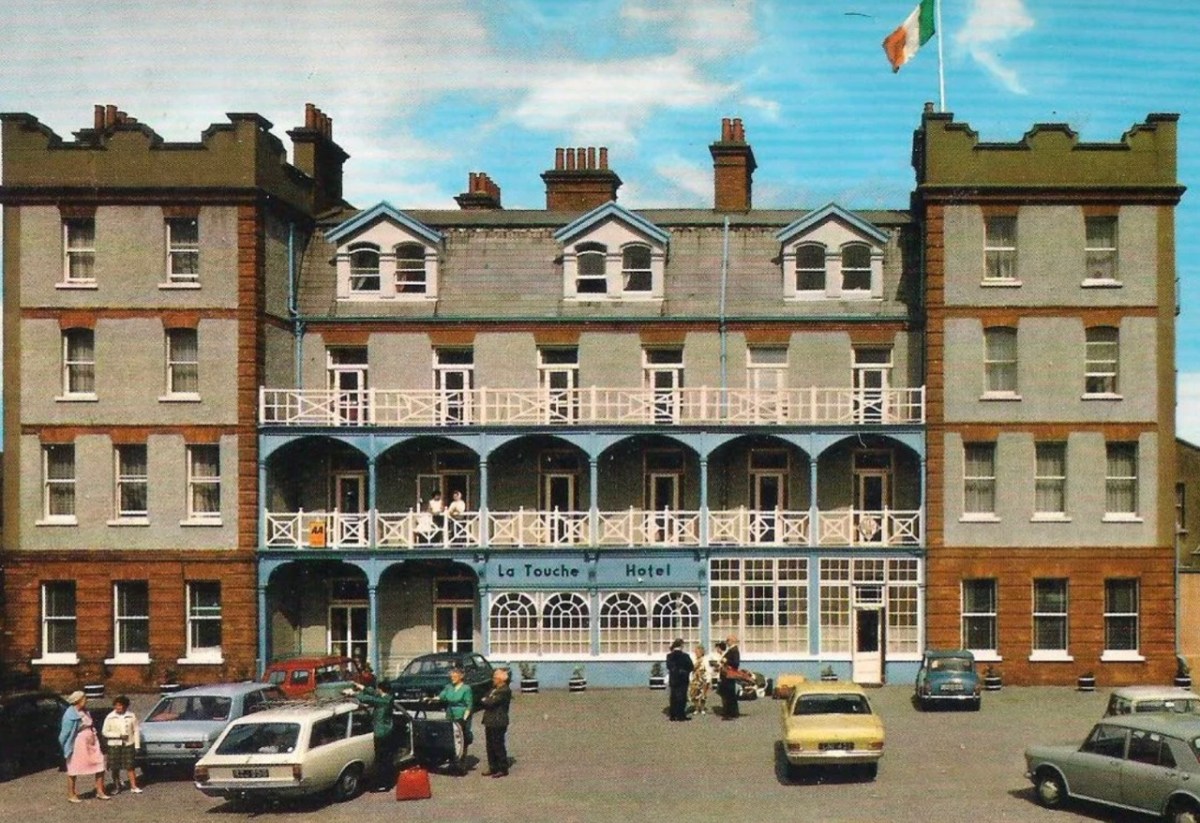
Above – Trafalgar Road, leading down to the harbour, Greystones, c1900. This seaside town is in Co Wicklow, and the connection with West Cork is that our ‘Big Fella’ – Michael Collins – had intended to set up home there once he had married Catherine (Kitty) Kiernan. Collins was staying in the Grand Hotel when he proposed to Kitty. That building is better known to us as the La Touche (photo below from the National Library of Ireland).
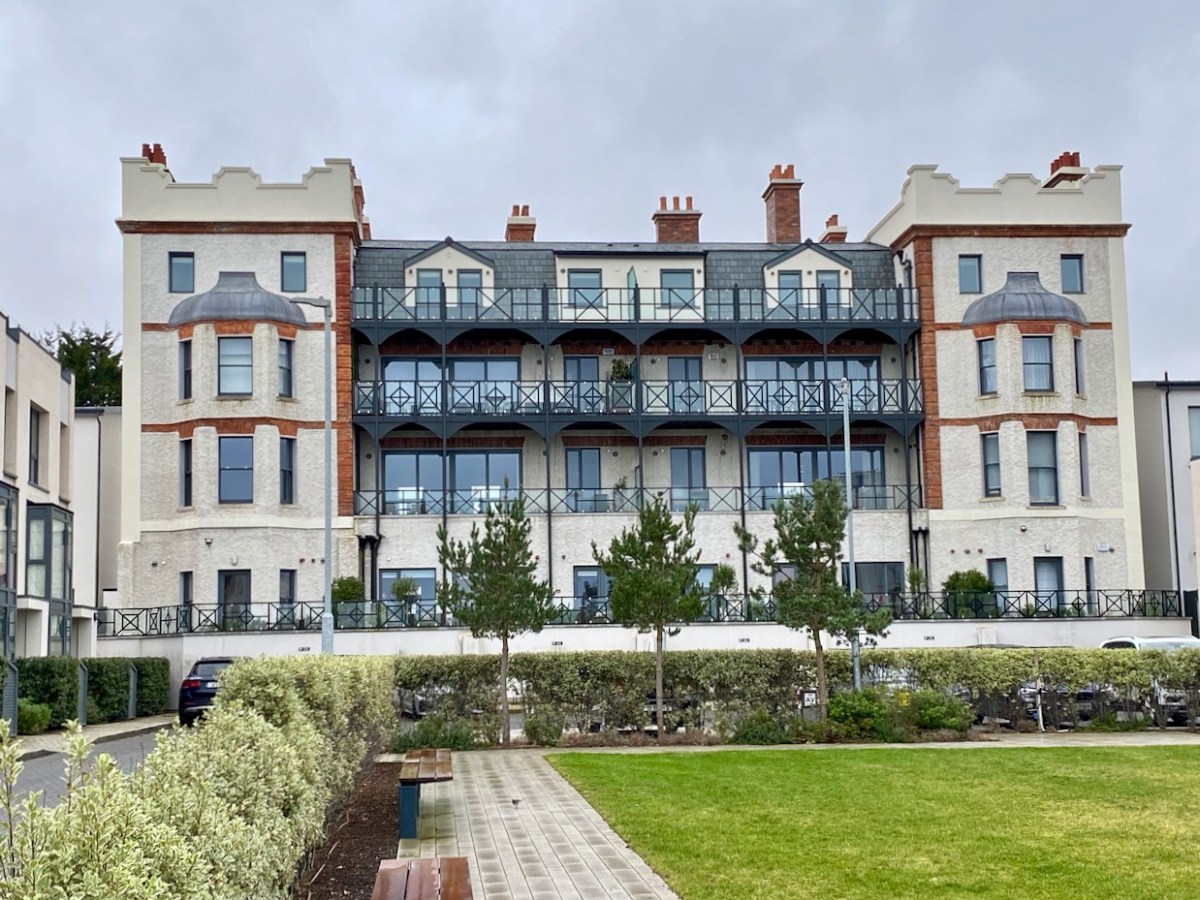
Above: la Touche, mid 20th century. Today, the hotel has been transformed into modern apartments (below). The fine original central building has been retained and upgraded:
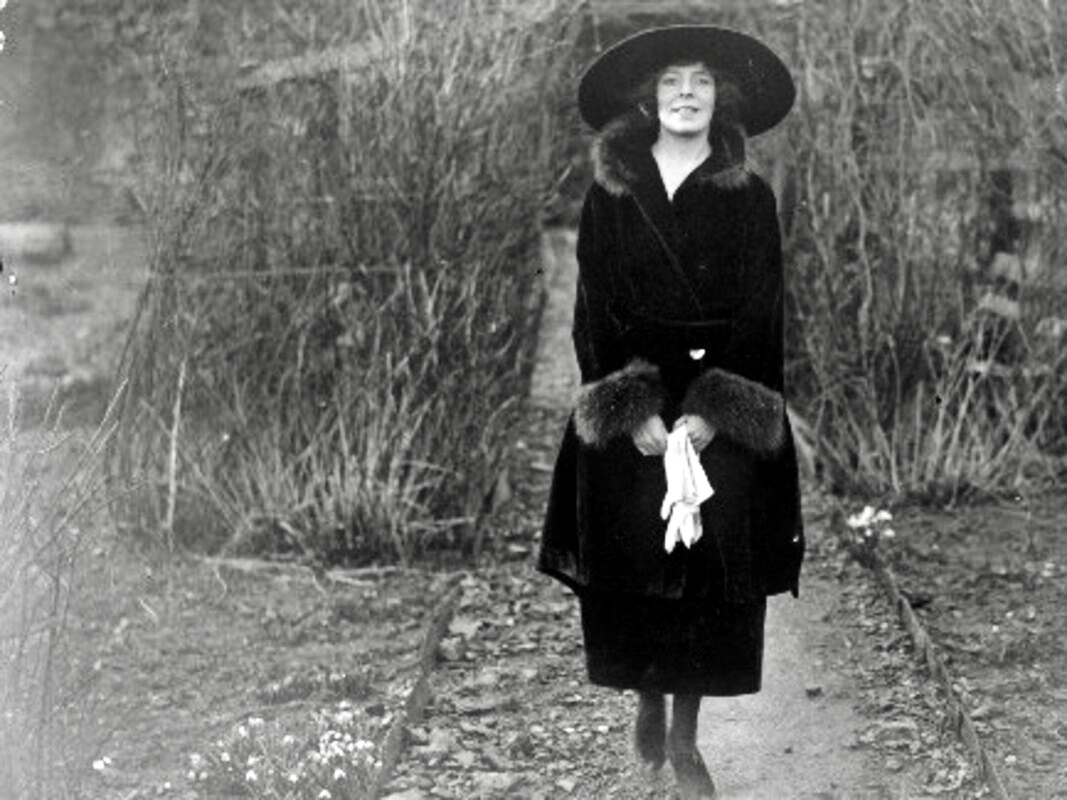
Michael Collins and Kitty Kiernan have been described as ‘star-crossed lovers’. The pair were first introduced by Michael’s cousin, Gearoid O’Sullivan, who was friendly at the time with Kathy’s sister, Maud. Kitty was also close to Harry Boland, who served as President of the Irish Republican Brotherhood from 1919 to 1920. Boland was a good friend of Collins.
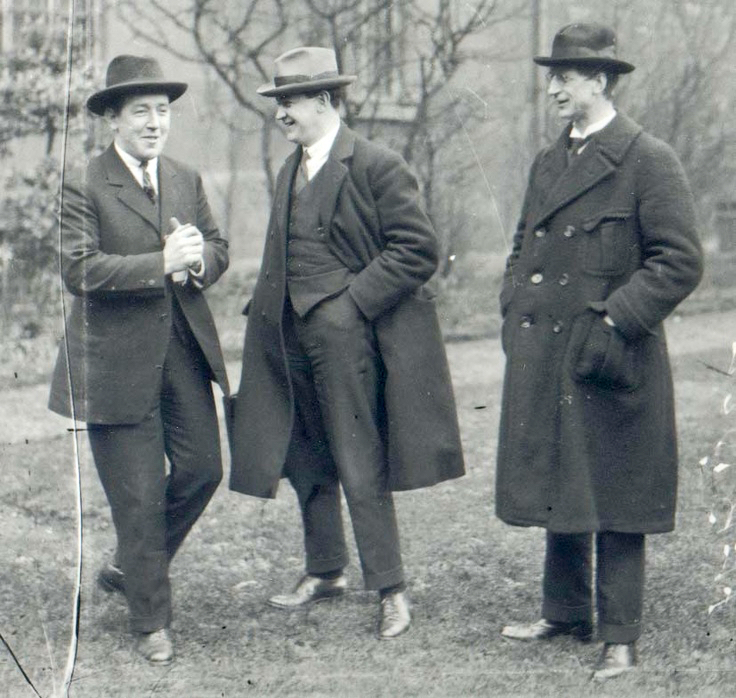
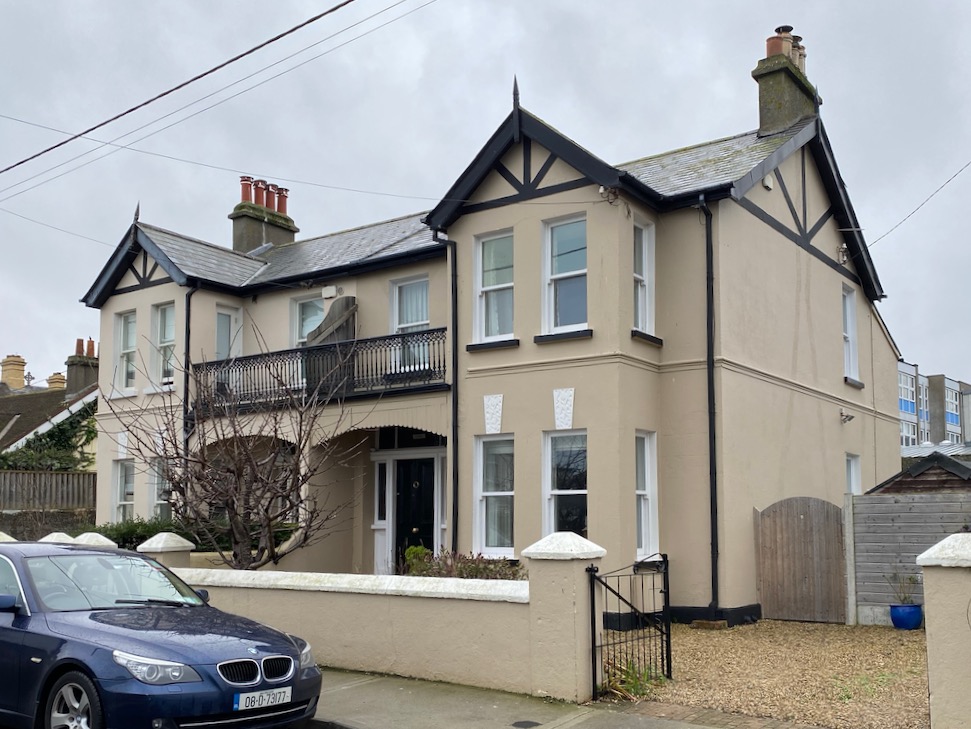
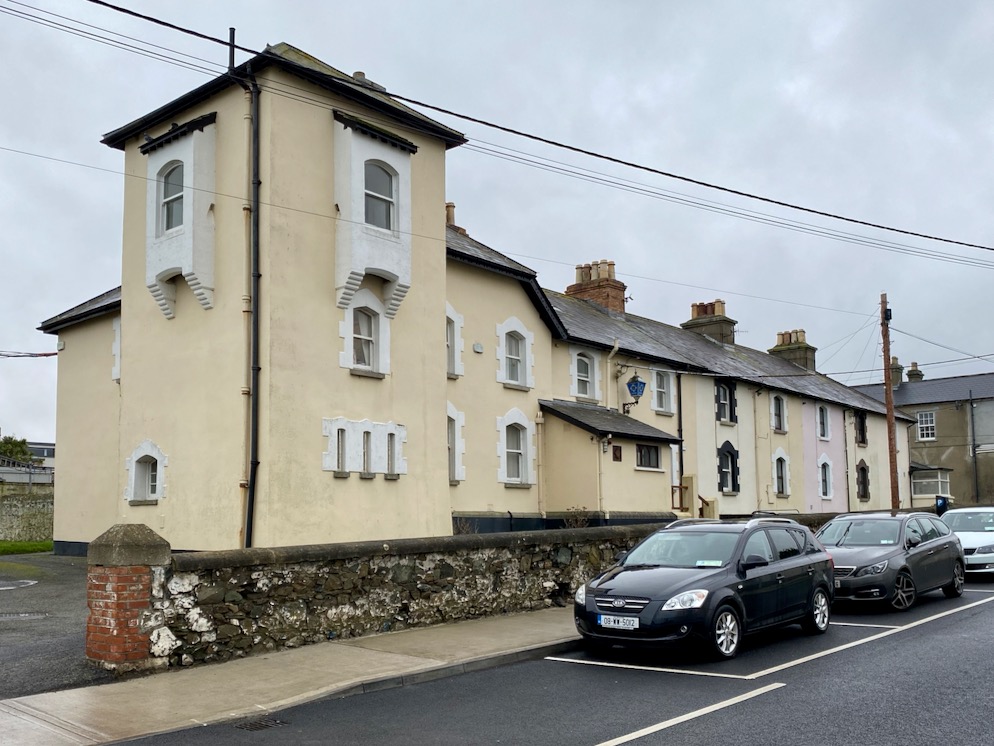
Harry Boland (left), Michael Collins (centre) and Éamon de Valera (NLI public domain c1920). Collins and Kiernan announced their engagement in 1921 and planned to marry the following year, but the political upheavals of the time kept delaying the wedding. During this turbulent period, Collins had ‘grown quite fond of Greystones’, often spending time in the house of his aunt, Maisie O’Brien Twohig – Dysart, Kimberly Road. Ironically, this property backed on to the RIC station.
(Upper) Dysart – home of Michael Collins’ Aunt Maisie. (Lower) former RIC barracks and present-day Garda station, immediately adjacent to Dysart.
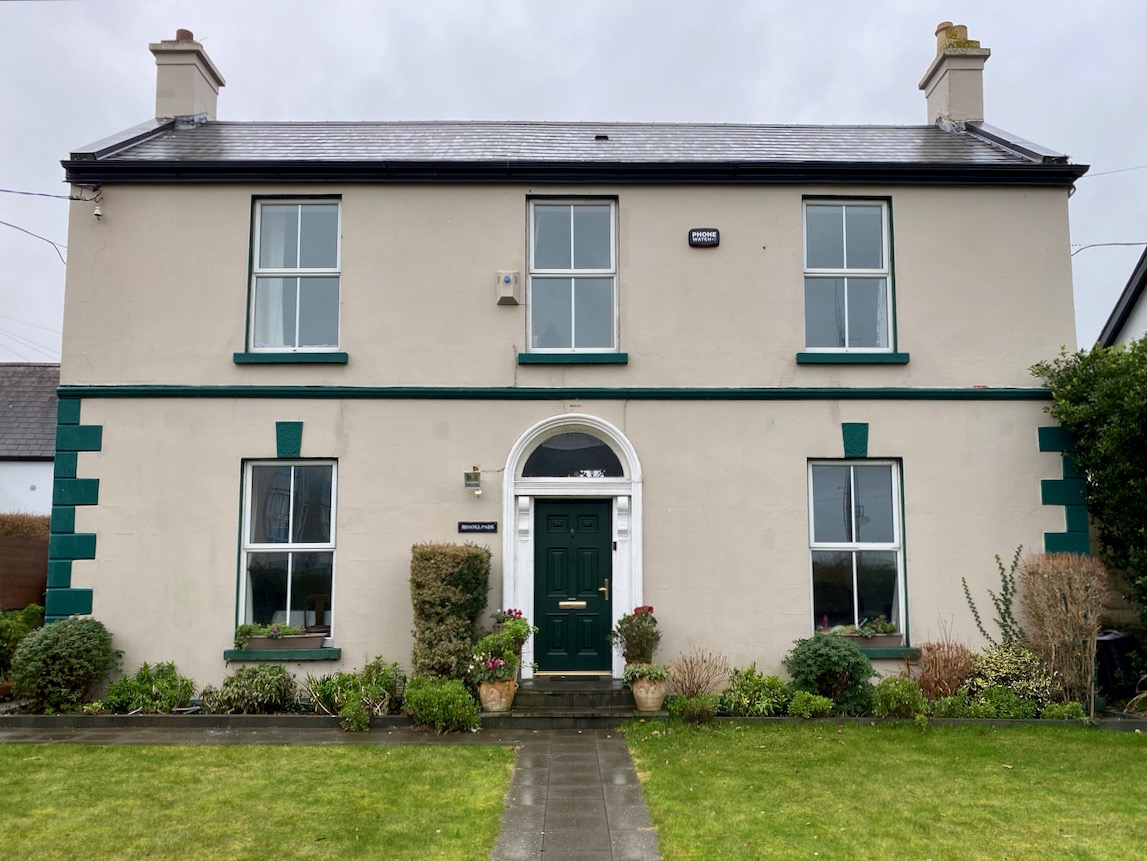
(Above) Kitty Kiernan. Collins and Kitty had planned to live in Brooklands, on Trafalgar Road, Greystones (below), after their marriage.
Michael Collins, Arthur Griffith and Robert Barton were delegates to the Treaty Negotiations that ended the Irish War of Independence in December 1921. Before he left Greystones, it is recorded that Collins visited Fr Ignatius of the Congregation of the Passion:
. . . The facts are these: he [Collins] was staying at the Grand Hotel, Greystones, while I was giving a mission there. It was coming near the close of the Mission. Michael was very busy in Dublin, worked and worried almost beyond endurance. He got to Greystones one night very late and very tired. It was the eve of his departure to London, re the Pact. He got up the next morning as early as 5.30 am and came to the Church, and made a glorious General Confession and received Holy Communion. He said to me after Confession, “Say the Mass for Ireland, and God bless you, Father”. He crossed an hour or so later to London . . .
Patrick J Doyle PP, BMH.WS0807, pp 39-40, 90-91
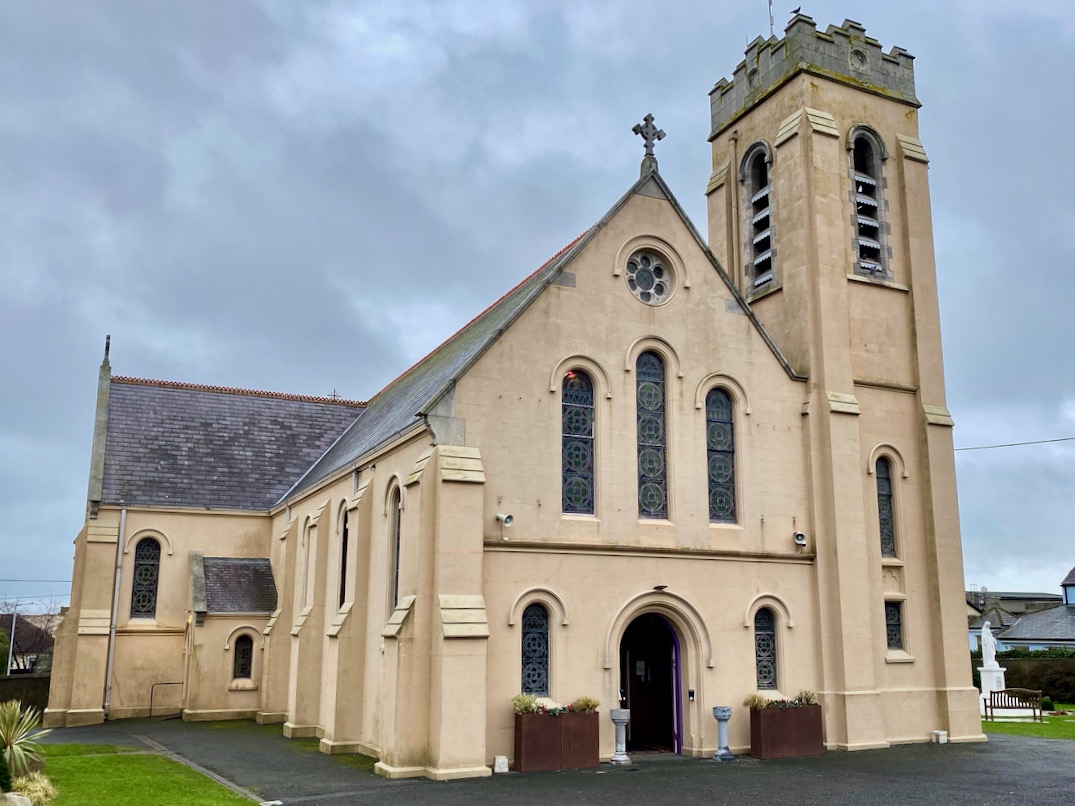
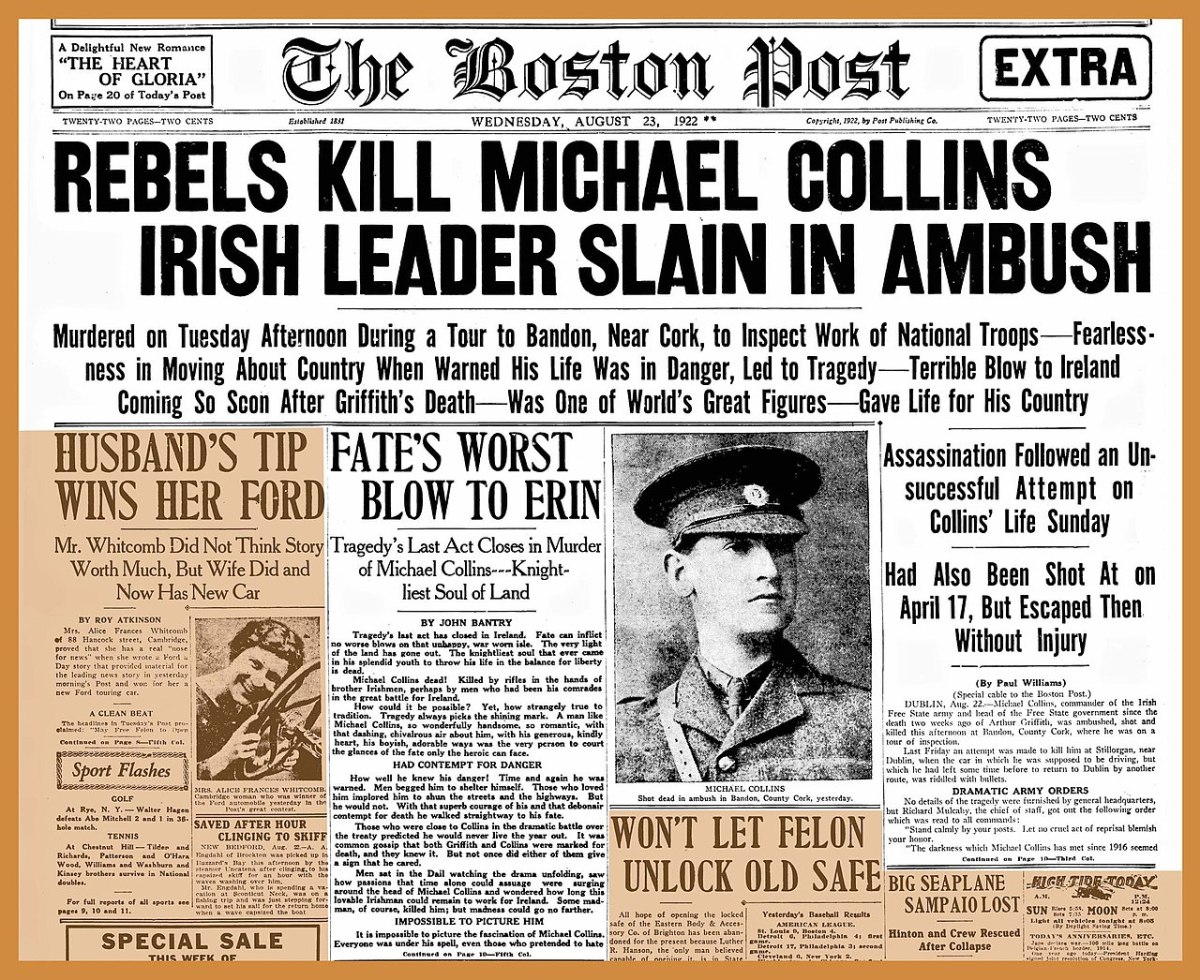
(Above) St Brigid’s Church, Greystones. Fatefully, Collins was shot in West Cork on 22 August 1922. Collins “. . . One of the World’s greatest figures . . . Knightliest Soul of the Land . . .” was mourned by the nation, and – of course – by Kitty.
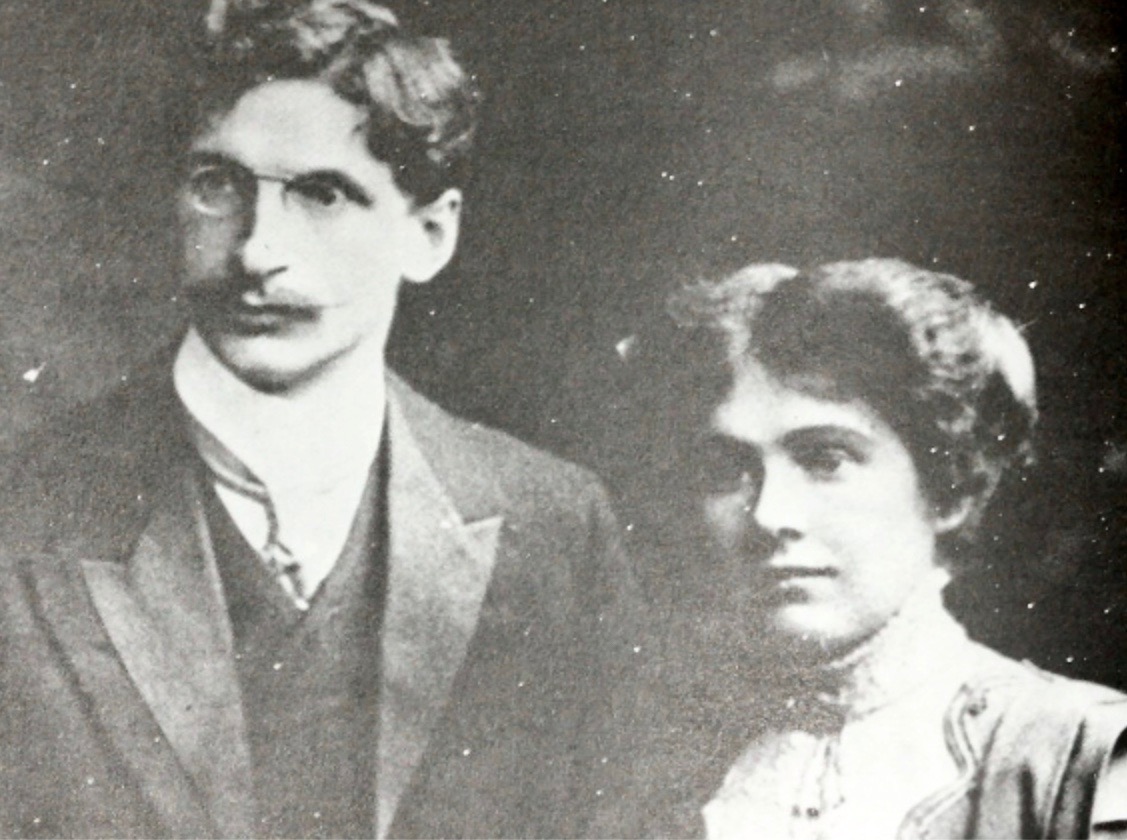
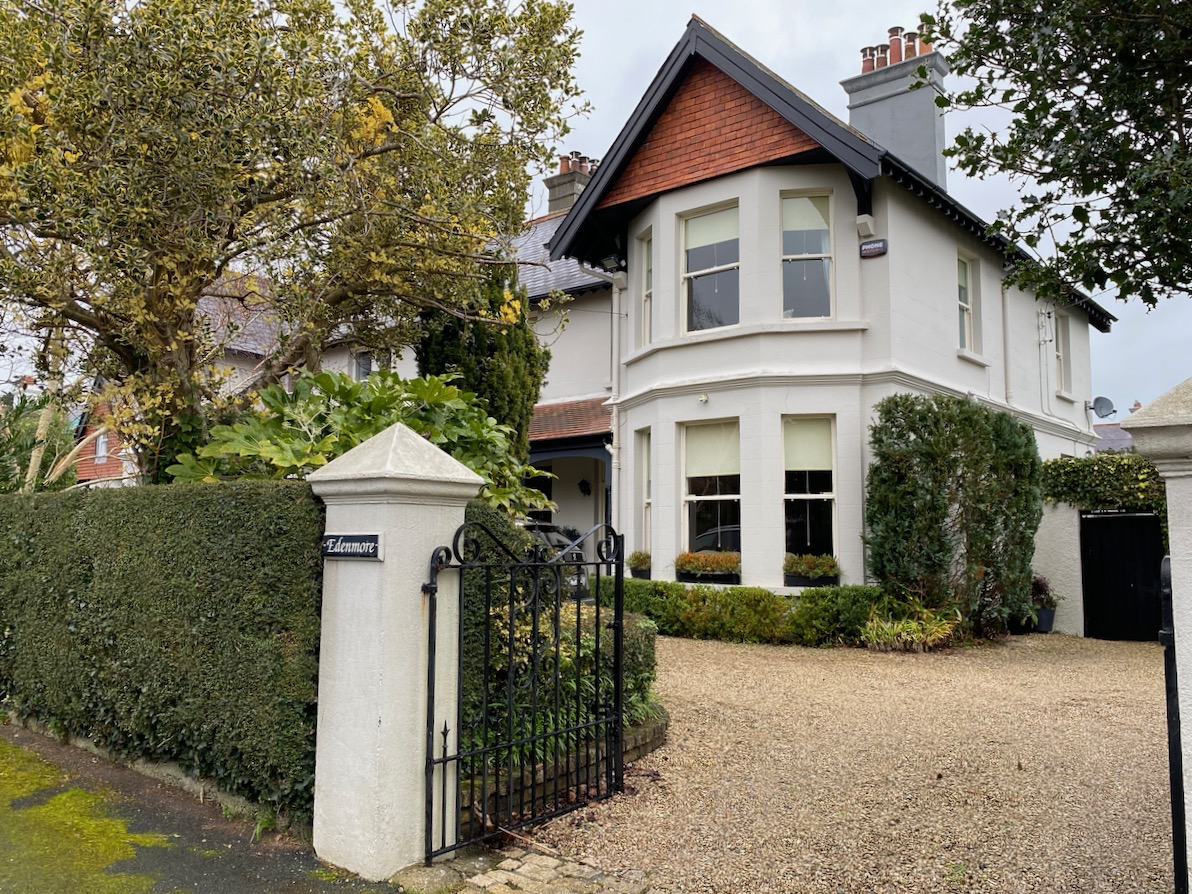
The de Valeras – Éamon and Sinéad (above, in 1910) – took a house in Greystones soon after the 1916 rising, situated on Kinlen Road in the Burnaby Estate. The house was built at the turn of the 20th century by Patrick Joseph (PJ) Kinlen, who lived there for a time himself. PJ built much of the Burnaby estate and Kinlen Road was named after him. They named the house Craigliath – it is now known as Edenmore (below).
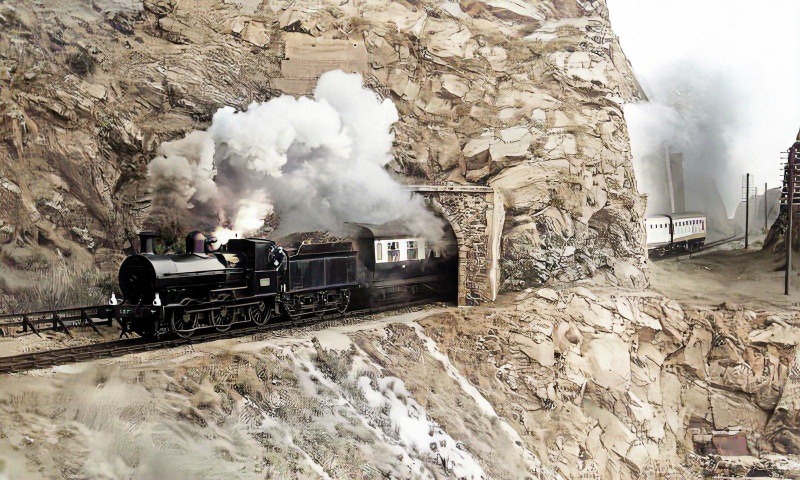
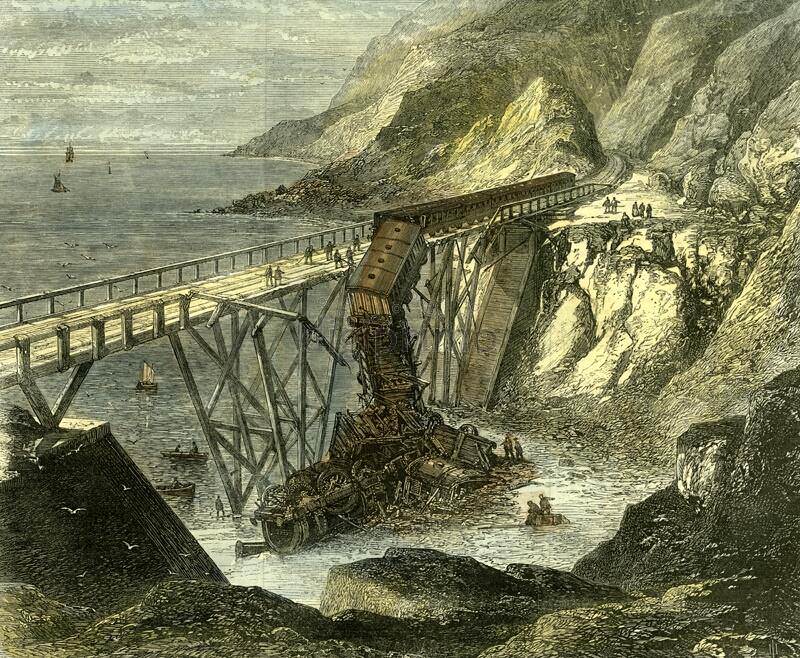
A reason for the popularity of Greystones in the early 20th century was its relative proximity to the centre of Dublin, and the railway line which gave access to the city. If any readers have travelled on this line – which goes down the east coast as far as Wexford – you will know that the section between Bray and Greystones is one of the most adventurous railway journeys in the world! Engineered by Isambard Kingdom Brunel, it clings to the precipitous cliffs and ran on trestle-bridges and through a series of tunnels: there have been many incidents during its history, and the line has had to be reconstructed a few times to avoid the effects of erosion. (With thanks to the Greystones Guide for the image below):
A popular story tells how Éamon de Valera was travelling home from Harcourt Street to Greystones on the night of 17 May 1918. When the train reached Bray, the driver saw that “two detectives” (although some versions say it was a number of constables) had boarded the train a few carriages behind.
. . . [The driver] felt sure that the intention was to arrest de Valera that night in Greystones. He said that they would slow down the train coming into Greystones before they arrived at the station at a certain point, which they indicated to de Valera, and they advised him to jump out of the carriage on the off-side, and that he could easily get away, and afterwards they would put on speed . . .
However, de Valera chose not to accept this offer, and when the train arrived at Greystones, he was apprehended and arrested. The Irish Independent adds a few further details:
. . . Dev “. . . was taken to the waiting room under a heavy guard, and after being searched, was placed in a motor car and driven to Kingstown, where he was handed over to the military and placed on board the transport … for England” . . .
Irish Independent, 20 May 1918
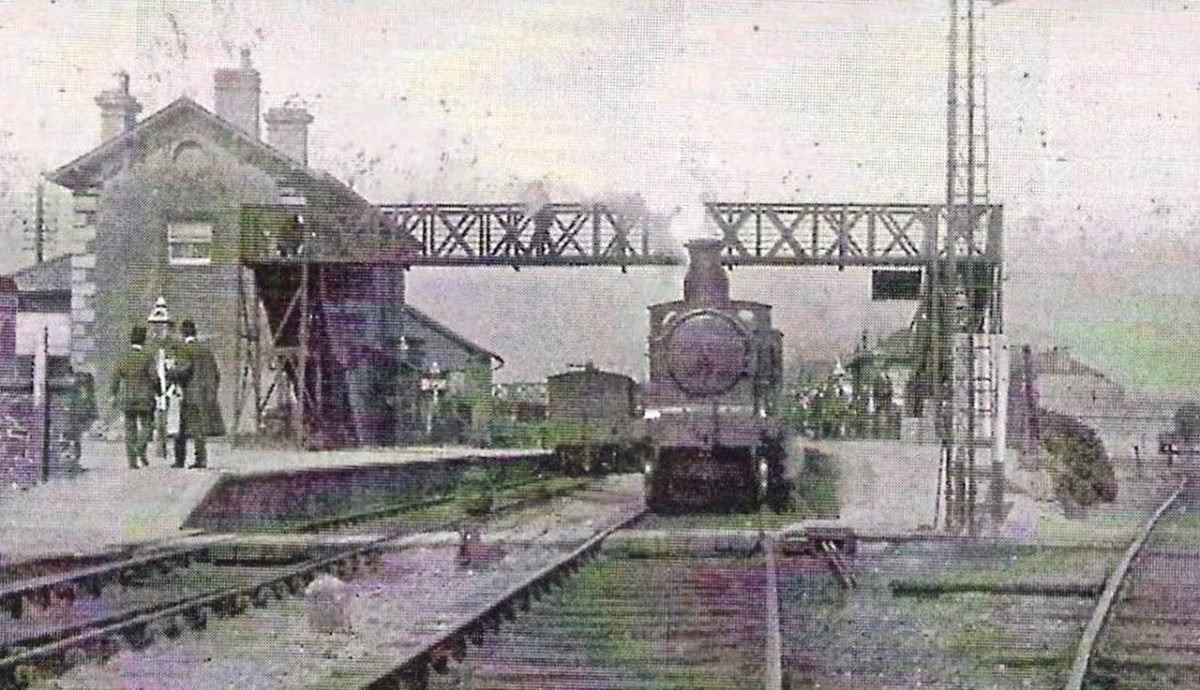
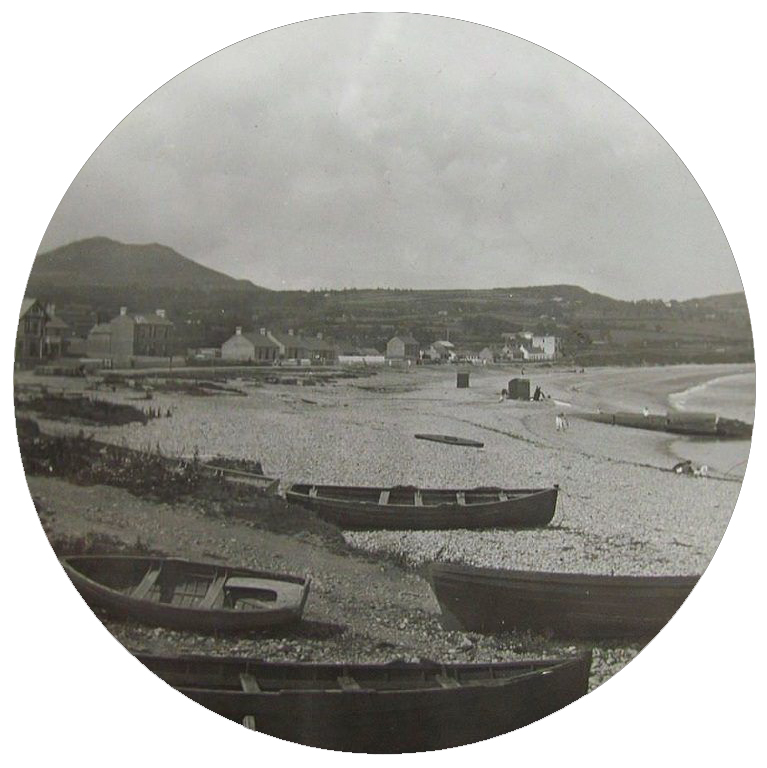
(Above: Greystones Station – late 19h Century). Personally, I am unsurprised that de Valera did not accept the train driver’s offer. Jumping from a moving train is not a recommended course of action – especially when the terrain of that section of railway-line is so hazardous. De Valera was imprisoned in England but escaped and then went to America: his wife did not see him for three years. During this time Michael Collins visited her often in Greystones to bring her news and also to provide funds. Later she reportedly told her husband that she was ‘quite in love with Collins’. He grumpily responded: “…That’ll do. There are enough people in love with Michael Collins…” (Below – lantern slide of Greystones Harbour, 1900):
Of course, de Valera lived to tell his tale – he died on 29 August 1975, aged 92, having achieved the status of Taoiseach and President of Ireland – whereas Michael Collins did not: he was shot at Béal na Bláth, County Cork, at the age of 31. It is fair to say that he undoubtedly achieved the perhaps more fulfilling status of National Hero.
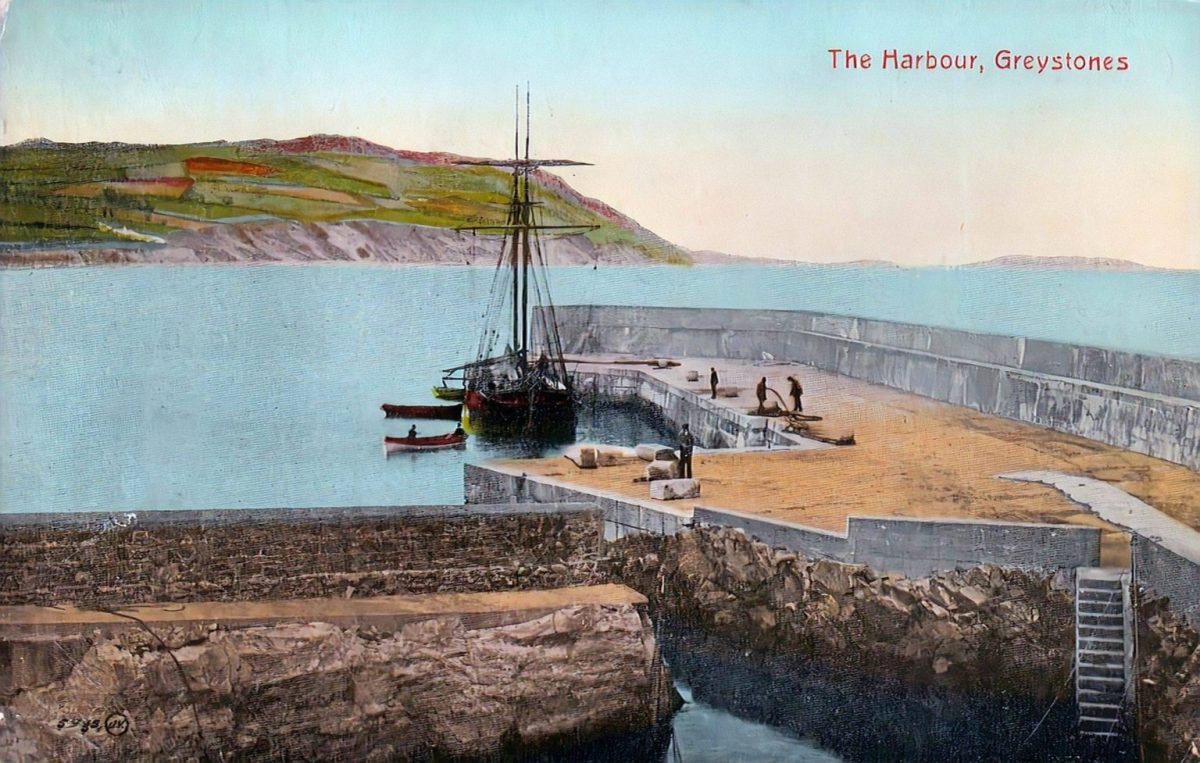
Greystones Harbour in 1911. With many thanks to the excellent Greystones Guide for invaluable free access to pictures and information.
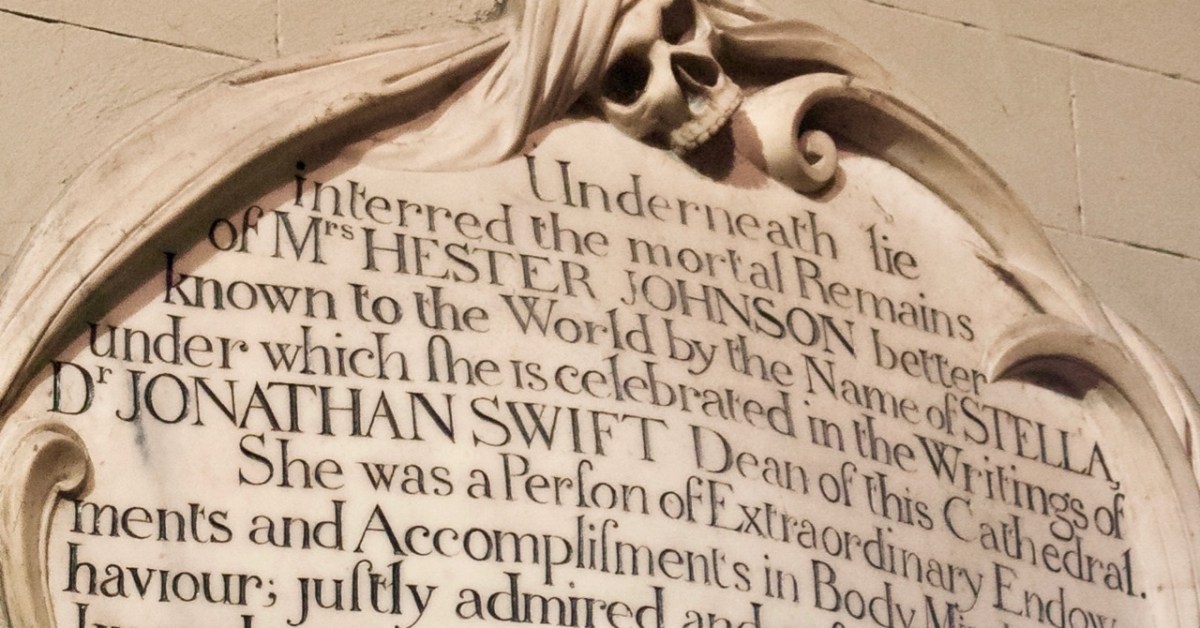
This fine memorial in St Patrick’s Cathedral, Dublin, celebrates Mrs Hester Johnson – “better known to the World by the Name of Stella”. There is so much about Mrs Johnson that is enigmatic, not least the use of that term ‘Mrs’. Hester was born ‘Johnson’ and remained unmarried throughout her life, even though she was linked so closely to Jonathan Swift – and many commentators have suggested they were secretly married or, at the very least, lovers.
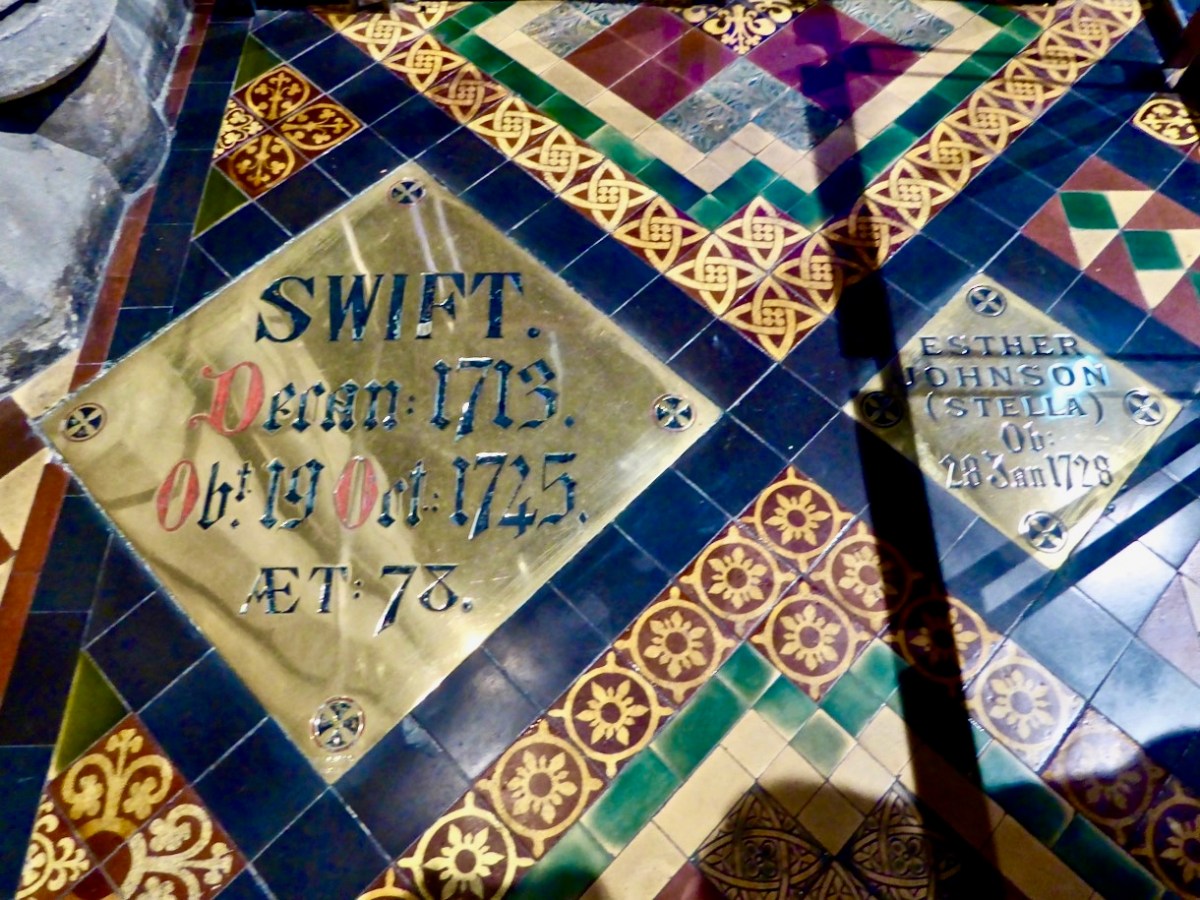
It is poignant to see the entwined plaques in the floor of the Dublin Cathedral. Both were buried there: ‘Stella’ in 1728 and Swift in 1745: he was placed beside her at his own request. Much has been written about Jonathan Swift – he was a formidable author, satirist and analyst of contemporary Irish life in the 17th and 18th centuries, while ‘Stella’ existed mainly in his shadows. We would probably know nothing of her without the association. Having written previously about Swift – and my part in his life (read it here) – I thought I would tackle the story of ‘Stella’: her name was known to me from a young age. Before going further, though, let’s solve that first little mystery – the use of Mrs on Stella’s memorial. In the Oxford University History Workshop Journal, Volume 78, Issue 1, Autumn 2014 Dr Amy Erickson claims:
. . . Mrs was applied to any adult woman who merited the social distinction, without any marital connotation. Miss was reserved for young girls until the mid eighteenth century. Even when adult single women started to use Miss, Mrs still designated a social or business standing, and not the status of being married, until at least the mid nineteenth century . . .
Dr Amy Erickson
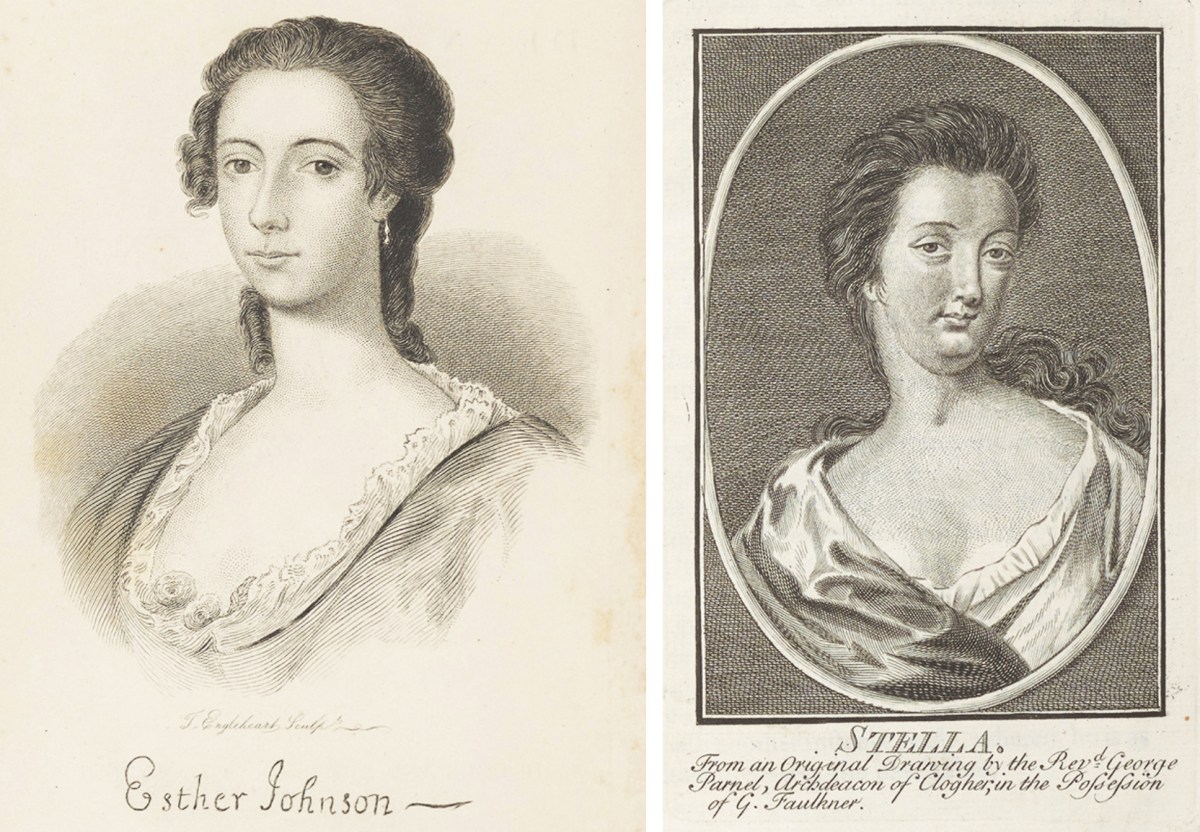
Above left: an alleged portrait of Esther was reproduced in William Wilde’s 1849 book on Swift, and claims for it an “undoubtedly authentic” history, adding that it matches physical descriptions made of Stella during her lifetime:
. . . It was originally in the possession of the distinguished Charles Ford of Woodpark, where Stella was constantly in the habit of visiting, and where she spent several months in 1723, when probably it was painted, Stella being then about 42. The hair is jet black, the eyes dark to match, the fore-head fair, high, and expansive, the nose rather prominent, and the features generally regular and well-marked . . .
William Wilde
Above right: “Stella, From an Original Drawing by the Rev’d George Parnell, Archdeacon of Clogher, in the Possession of G Faulkner”
. . . George Faulkner, Swift’s Dublin publisher, placed this purported portrait of Stella across from the beginning of Swift’s memoir of her in an edition of Swift’s Works. The artist is wrongly attributed, it actually being by the poet and scholar Dr Thomas Parnell, who had been intimate with Swift around 1716, when this drawing was most likely made. Swift had begun writing his memoir on the evening of Stella’s death, on January 28, 1728, just weeks shy of her forty-seventh birthday. Their friend Thomas Sheridan, who was with Stella in her final days, preserved a story about “the secret marriage” of Swift and Stella. If they were indeed married, public recognition of their marriage never happened. According to an old lady who may have inhabited Stella’s former cottage: “. . . some says she was his wife, and some says she wasn’t, but whatever she was, she was something to him . . .“
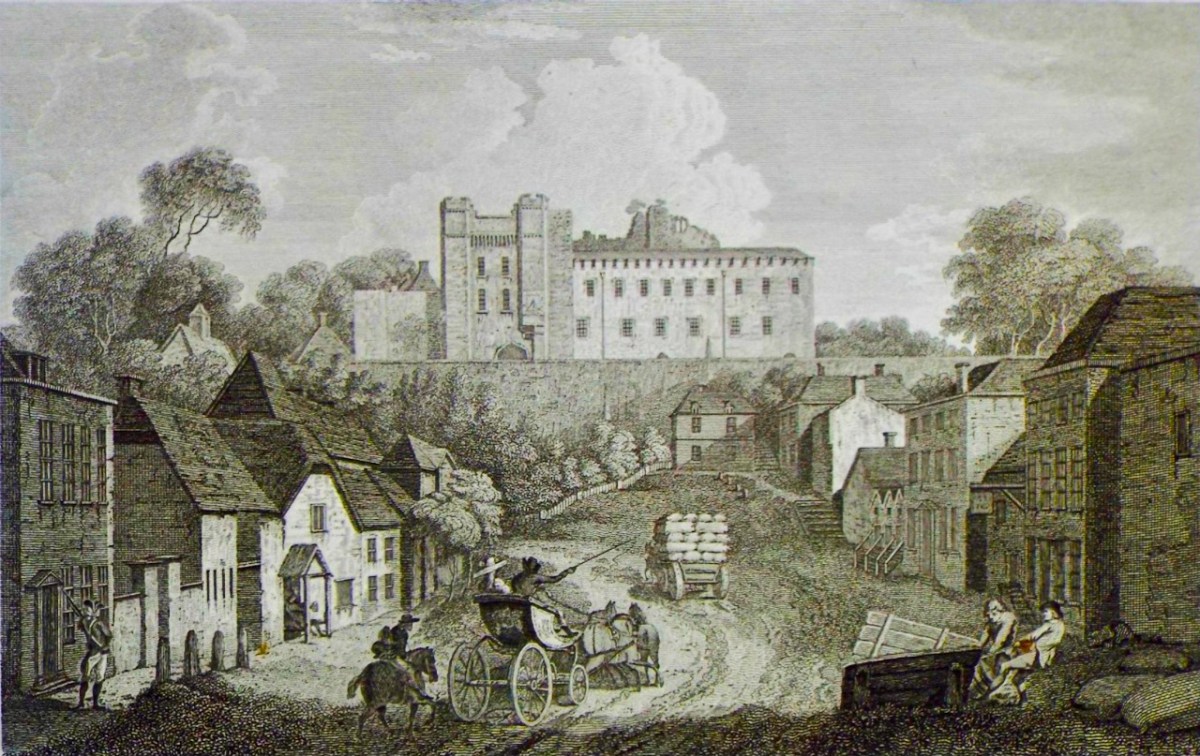
Esther Johnson was born in Richmond, Surrey, England in 1681. She spent the early years of her life at Moor Park House, Farnham, Surrey (above). This was the home of Sir William Temple (1628 – 1699) – diplomat, statesman and essayist: from 1688 until his death he employed Jonathan Swift as his secretary (Swift’s mother was a distant relative of Temple). Esther’s parentage has been the subject of much speculation. The weight of evidence is that her mother acted as companion to Temple’s sister, Lady Giffard, and that Esther, her mother and her sister Anne were regarded as part of the family. Esther’s father is said to have been a merchant who died young, but local rumour suggested that she was Temple’s illegitimate daughter. I have found no concrete evidence to confirm or deny this.
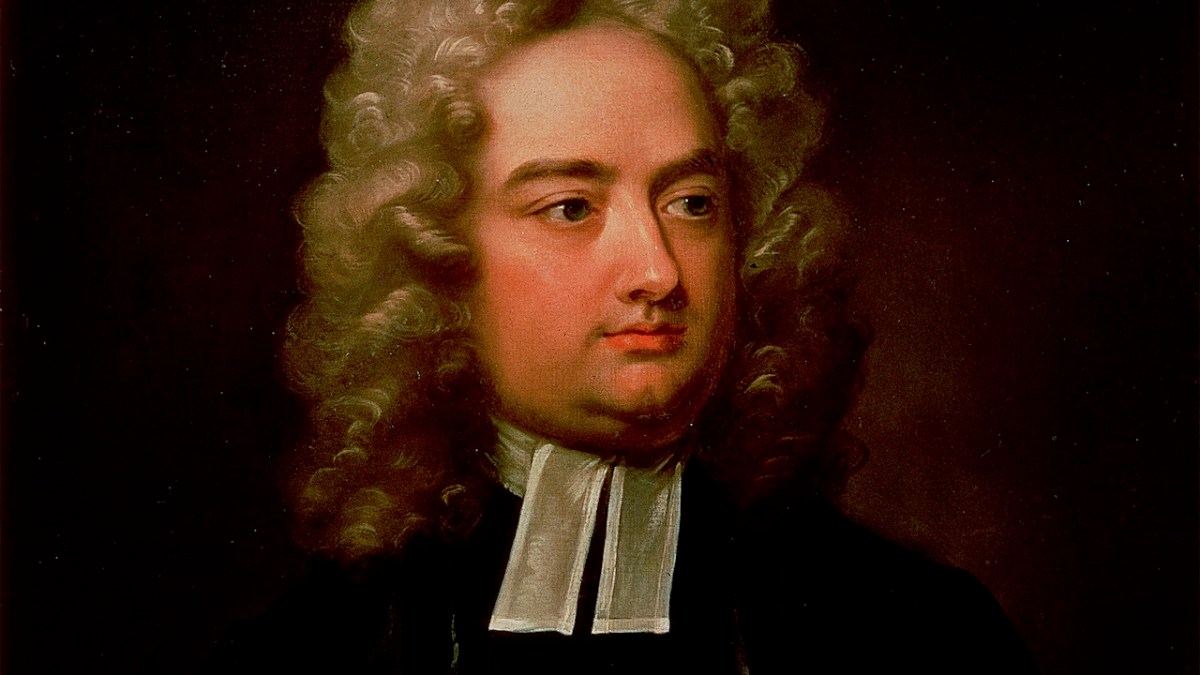
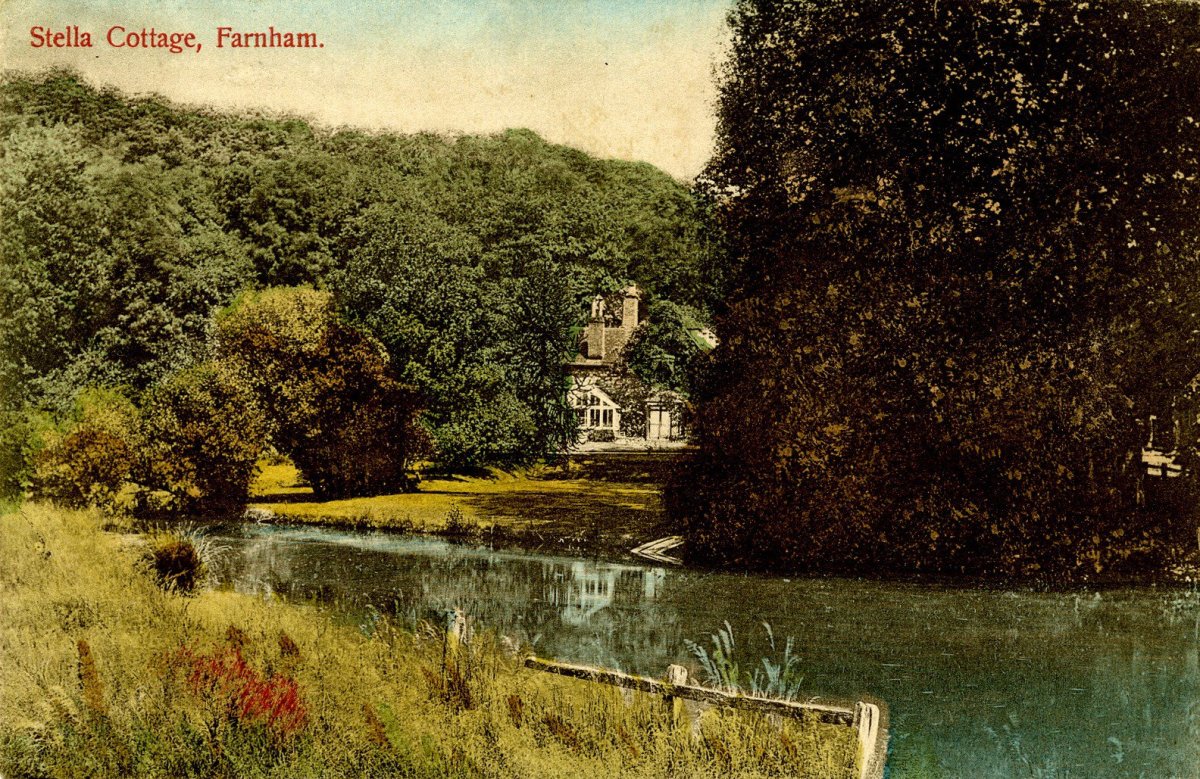
(Above) Jonathan Swift, painted by Charles Jervas c1710. When Swift first met Esther at Farnham she was only around eight years old, and he was charged by Temple to become her tutor and mentor. He gave her the nickname ‘Stella’, but we don’t seem to know why or when. Now, here’s another enigma: in my younger days I was familiar with Moor Park House and its environs. I remember there was a cottage some distance from the estate, named ‘Stella Cottage’. It definitely existed once (and may still exist) – here’s a postcard showing it:
I was told (by my grandmother) that Swift’s ‘Stella’ lived in this cottage, and that he would walk to visit her there ‘every day’. This doesn’t quite tie in with the account suggesting that Esther Johnson lived in Moor Park House – although she could, of course, have moved away at some point. Also, at what place in its history was ‘Stella Cottage’ so named? It’s possible, even, that Swift gave his pet name to ‘Stella’ because there was already an association locally with that appellation – so the cottage itself may never have had anything else to do with Esther. As our story moves forward, Swift’s employer – Temple – died in 1699 (Swift reportedly said that “all that was good and amiable in mankind had died with Temple”). This left Swift without a job or home. Interestingly – bearing in mind we don’t know exactly where Esther Johnson figured in Sir William Temple’s life – he bequeathed to her a significant sum of money, and some property in Ireland.
Above – Castle Street at Farnham, Surrey in 1788. Swift was an ordained minister of the Anglican Church in Ireland. After Temple’s death, he was unable to maintain his lifestyle in England and returned to Ireland (his birth and upbringing were in Dublin and Kilkenny). In due course (1713) – he was appointed as dean of St Patrick’s Cathedral in Dublin: a position which enabled him to indulge his many enthusiasms – writing, political commentary and satire – for the rest of his days. He encouraged ‘Stella’ also to move to Ireland, which she did in 1702, ostensibly living with her companion, Mrs Dingley. A further rumour on the relationship between Swift and ‘Stella’ needs to be quoted:
. . . Whether Swift and Stella were married has always been a subject of intense debate. The marriage ceremony was allegedly performed in 1716 by St George Ashe, Bishop of Clogher (an old friend of Swift, and also his college tutor), with no witnesses present, and it was said that the parties agreed to keep it secret and live apart. Stella always described herself as a “spinster” and Swift always referred to himself as unmarried; Rebecca Dingley, who lived with Stella throughout her years in Ireland, said that Stella and Swift were never alone together. Those who knew the couple best were divided on whether a marriage ever took place: some, like Mrs Dingley and Swift’s housekeeper Mrs Brent laughed at the idea as “absurd”. On the other hand, Thomas Sheridan, one of Swift’s oldest friends, believed that the story of the marriage was true: he reportedly gave Stella herself as his source . . .
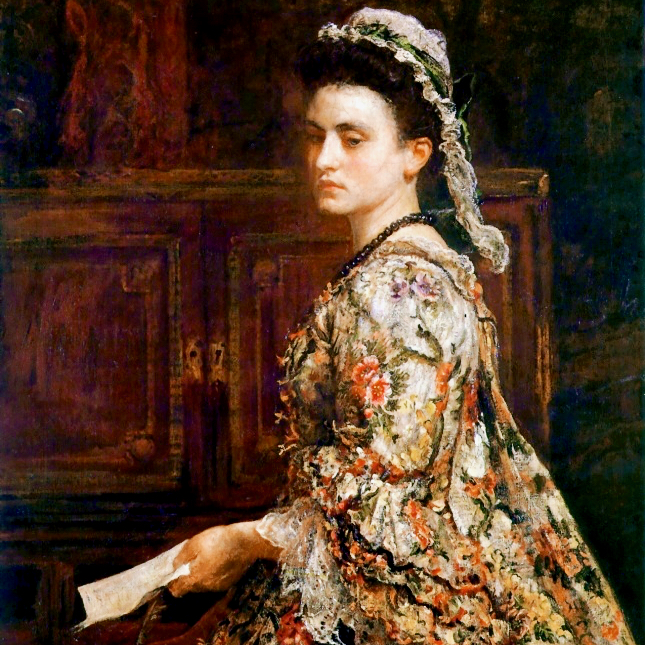
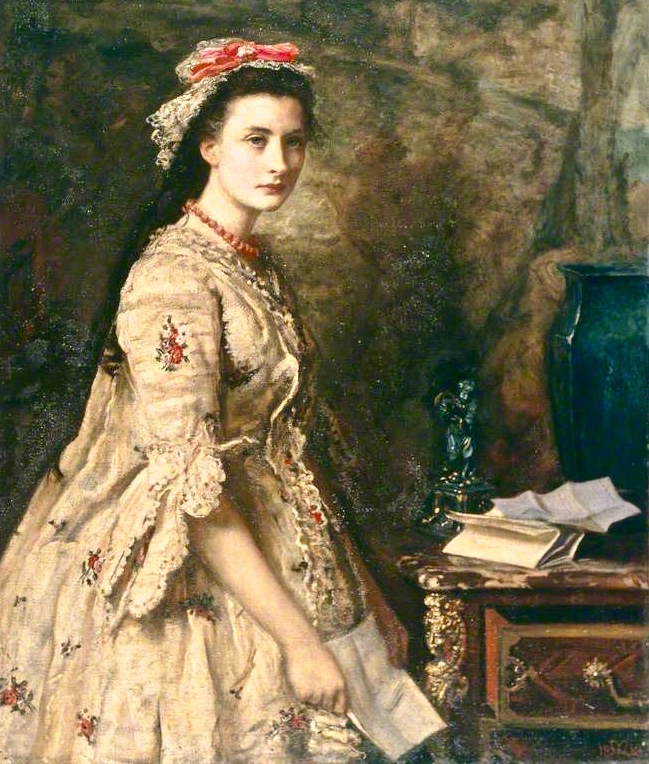
This lady – Esther Vanhomrigh (1688–1723) was painted by John Everett Millais in 1868. It depicts another rumoured ‘lover’ of Jonathan Swift, who gave her the name ‘Vanessa’. We know very little about her actual appearance, although she was said “not to be a beauty”. She is holding a letter, which we are to assume was written to or from Swift with whom, from what we can gather, Vanessa was infatuated – although her feelings were apparently never reciprocated. The expression on her face in Millais’ imaginary portrait could imply her frustration. The artist painted ‘Stella’ in a companion piece (Sudley House, Liverpool):
It can be no coincidence that Stella is also holding a letter. In this case, perhaps, the expression which the artist has chosen to depict is less severe. Jonathan Swift kept up a remarkable correspondence with Stella while he was away in England between 1710 and 1713. He certainly never intended it for publication in his lifetime. The Journal to Stella appeared first in 1766 and consists of 65 long and detailed letters – thousands of words in all, ranging from minute accounts of his daily life, through witty commentary and some mildly intimate deliberations.
. . . If the Journal shows us some of Swift’s less attractive qualities, it shows still more how great a store of humour, tenderness, and affection there was in him. In these letters we see his very soul; in his literary work we are seldom moved to anything but admiration of his wit and genius. Such daily outpourings could never have been written for publication, they were meant only for one who understood him perfectly; and everything that we know of Stella—her kindliness, her wit, her vivacity, her loyalty—shows that she was worthy of the confidence . . .
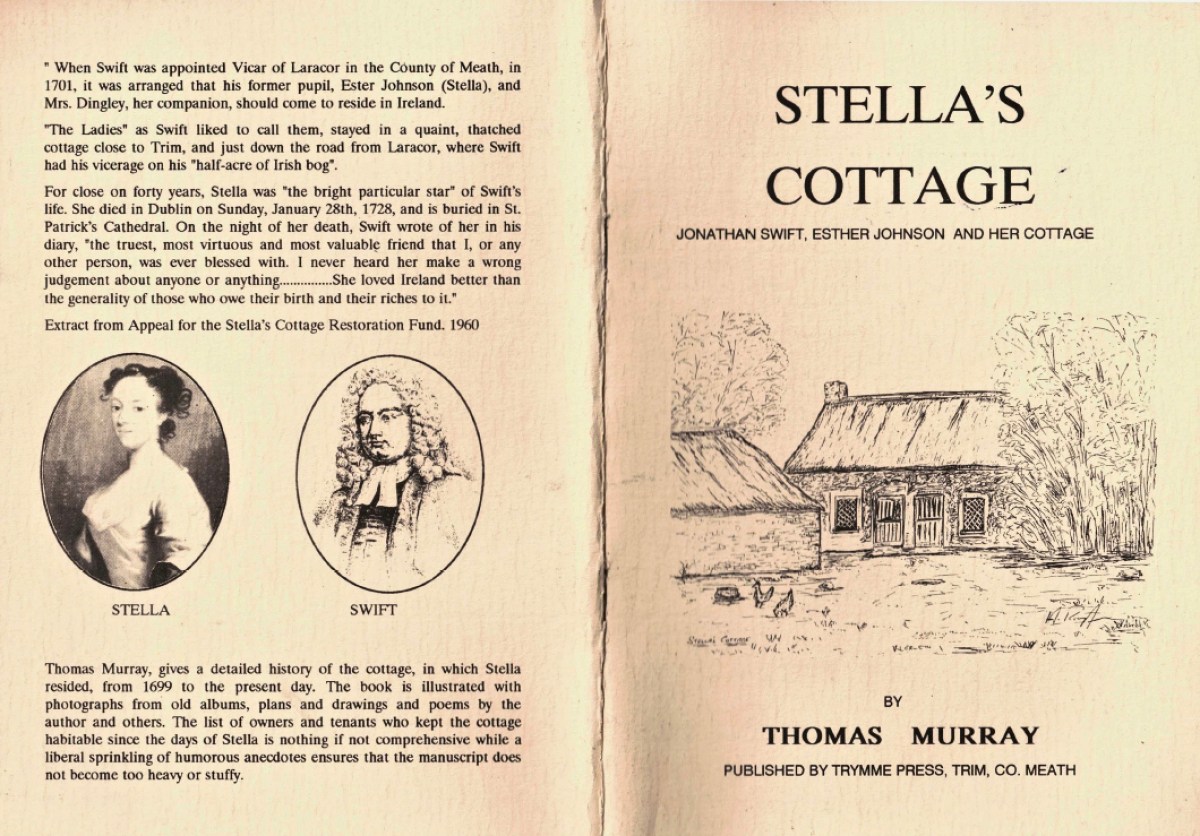
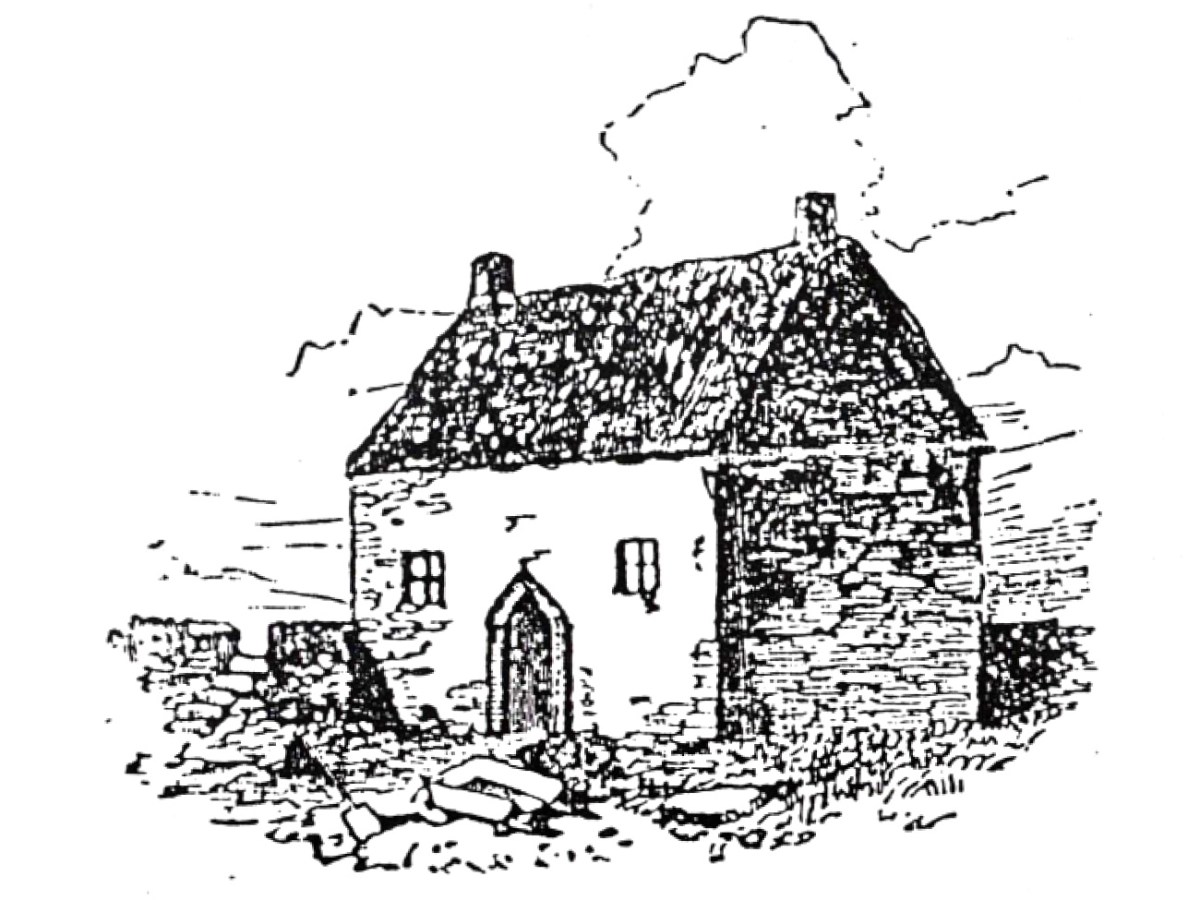
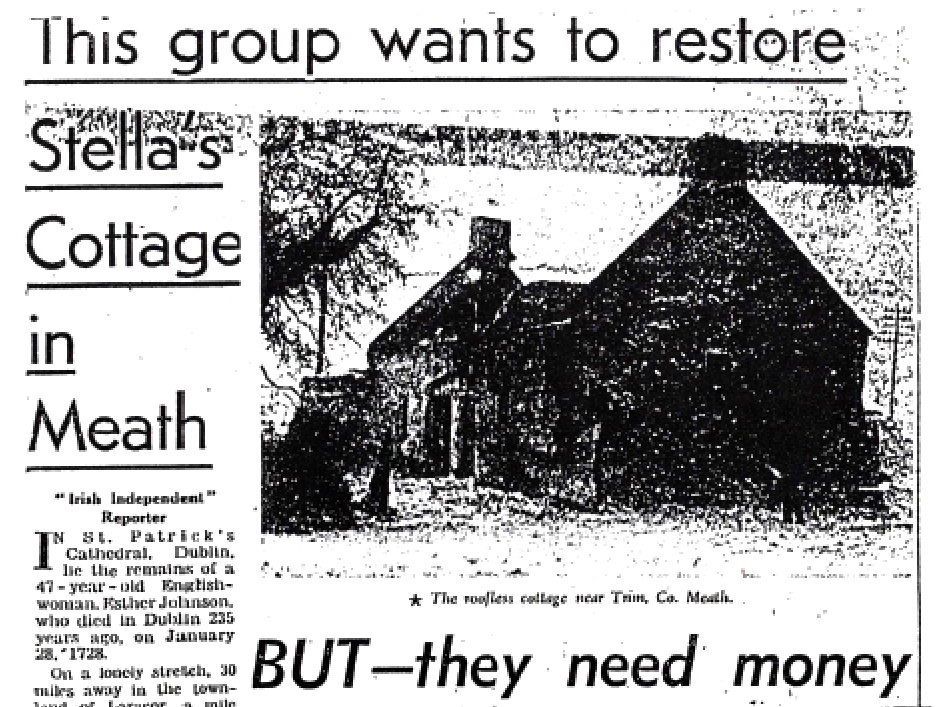
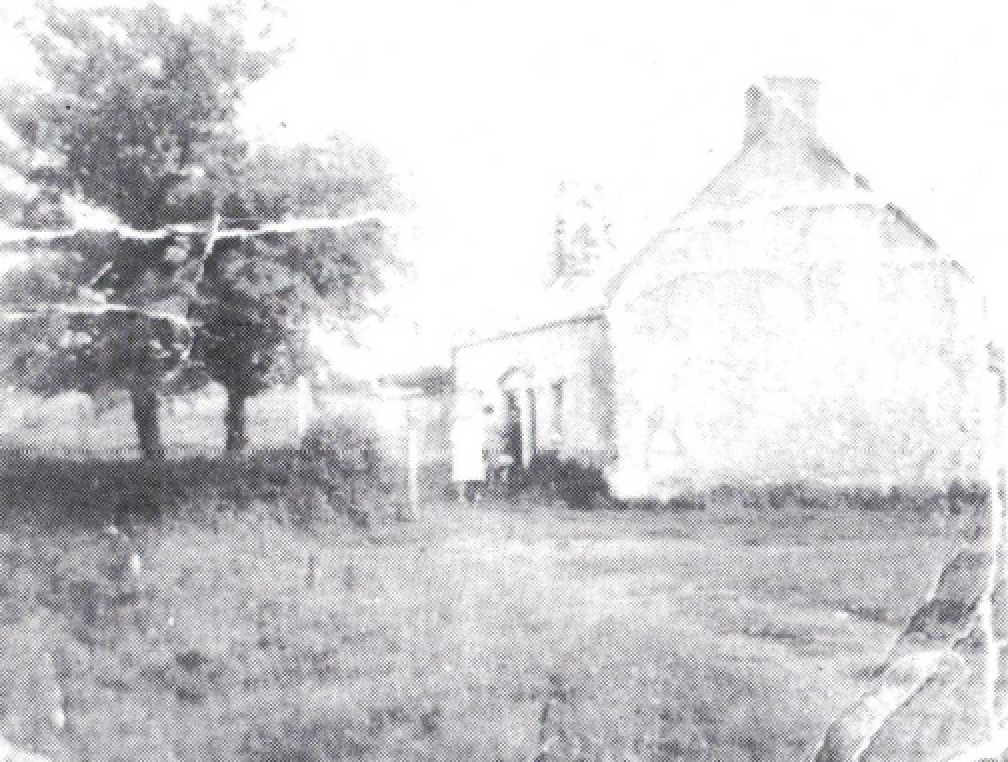
This small account of the story of ‘Stella’ – Mrs Hester Johnson – reveals a little of what we are able to piece together of the lady and her possible (probable?) relationship with the towering figure of Jonathan Swift, a matter which has fascinated scholar-historians over the generations. We can make assumptions, but reach no firm conclusions. The enigmas of the tale remain, and are certainly celebrated wherever local geography and lore are able to relate to some aspect of the oral traditions. As an example, I was pleased to find a pamphlet dating from 1991 which tells of a ‘Stella’s Cottage’ far, far away from Moor Park, Farnham. This one is near Trim, Co Meath. It suggests that this was where Stella and her companion, Mrs Dingley, lived ‘just down the road from Laracor,where Swift had his vicarage on his half-acre of Irish bog‘.
The pamphlet is, in part, an appeal to save what was then left of the cottage, and to fund a restoration of this important piece of Irish history. The appeal was apparently unsuccessful: today the spot is marked by some low stone walls and a plaque. This is a drawing of Stella’s Cottage in 1847:
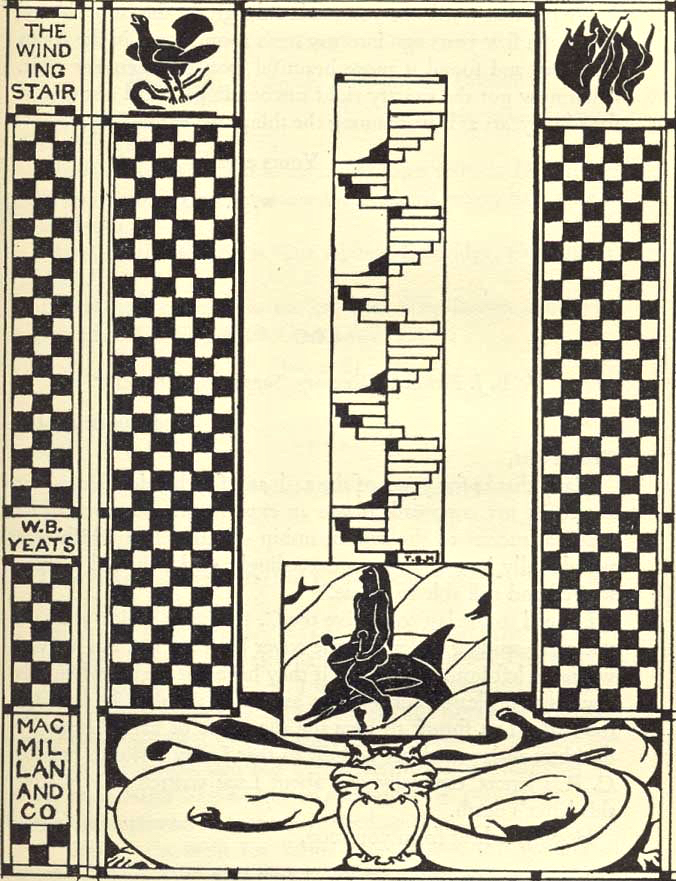
Many have been fascinated by the Swift / Stella story. In 2020 Michael Billington edited a series in the UK Guardian titled ‘Forgotten Plays’. This is one:
. . . Few plays are more forgotten than those of WB Yeats. Revered as a poet, he’s ignored as a dramatist yet he deserves to be remembered for a number of reasons. He cofounded the Abbey theatre in 1904, he put Irish legend and history on stage, and he sought to create a drama “close to pure music”. His output was huge – his Collected Plays runs to more than 700 pages. The Words Upon the Window-Pane (1930) is in many ways exceptional: it is Yeats’s only play with a realistic modern setting. Its subject is a seance held by the Dublin Spiritualist Association in rooms once occupied by Jonathan Swift’s Stella. Yeats has much fun at the expense of the visitors – one of whom wants advice about setting up a teashop in Folkestone – but the main concern is to expel an evil spirit who has been haunting past sessions. It turns out to be that of Swift whom we hear – through the medium, Mrs Henderson – bitterly rejecting offers of love from the two women who most adored him. What is astonishing is the way Yeats pulls off a double trick. Far from being an attack on Swift, the play is a defence of his refusal to beget children because of his dread of the future. But, rather like David Mamet’s The Shawl about a phoney clairvoyant with psychic gifts, the play suggests that the money-grubbing Mrs Henderson may actually have conjured up the crabbed spirit of Dublin’s celibate dean . . .
The Guardian 27 July 2020
Lastly, consider this ‘alternative view’ by Michael Foot: Debts of Honour (Faber 1980) –
. . . British politician Michael Foot was a great admirer of Swift and wrote about him extensively. In Debts of Honour he cites with approbation a theory propounded by Denis Johnston that offers an explanation of Swift’s behaviour towards Stella and Vanessa. Pointing to contradictions in the received information about Swift’s origins and parentage, Johnston postulates that Swift’s real father was Sir William Temple’s father, Sir John Temple who was Master of the Rolls in Dublin at the time. It is widely thought that Stella was Sir William Temple’s illegitimate daughter. So Swift was Sir William’s brother and Stella’s uncle. Marriage or close relations between Swift and Stella would therefore have been incest, an unthinkable prospect. It follows that Swift could not have married Vanessa either without Stella appearing to be a cast-off mistress, which he would not contemplate. Johnston’s theory is expounded fully in his book In Search of Swift . . .
Welcome to the UCD Library Cultural Heritage Collections blog. Discover and explore the historical treasures housed within our Archives, Special Collections, National Folklore Collection and Digital Library