Nest of the Eagle

eagles over nead

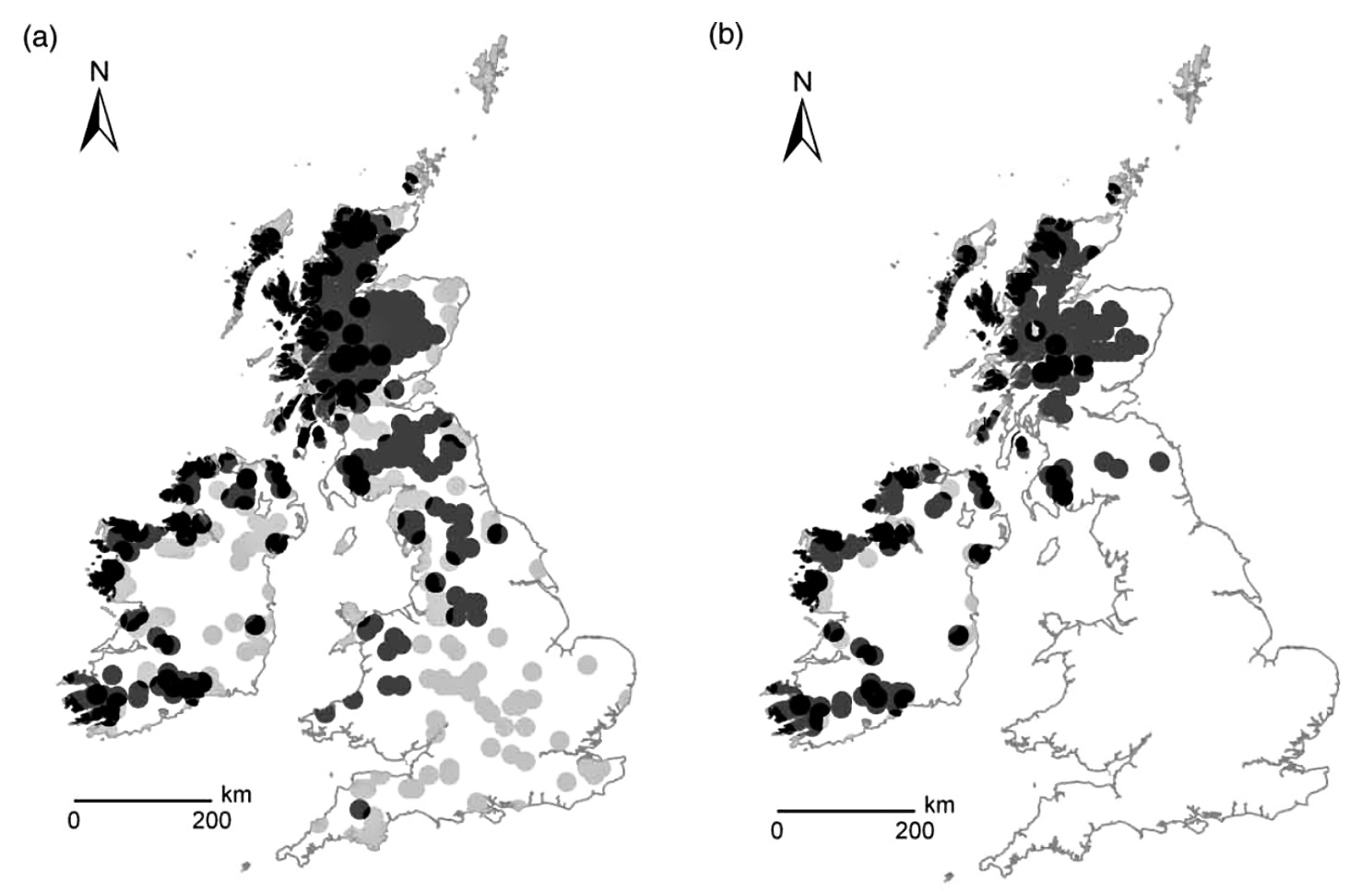
Nead an Iolair – that is the house we live in, here in the townland of Cappaghglass, West Cork. That’s it, in the picture above, with a pair of eagles flying overhead… We don’t see them very often. Well, in truth, we haven’t seen them at all – this is a bit of photographic magic – and wishful thinking. Nead an Iolair – our Irish readers will know that this means Nest of the Eagles – is a perfect name for the site, suspended way up above Rossbrin Cove – a good lookout with higher ground behind: exactly the right environment for the big birds. There were undoubtedly eagles here once – and in various other parts of Ireland – but when and how many? As with most things nowadays, someone has carried out the research and there’s a study available online. It’s worth a read, but I can summarise the main points: analysis of place-names and documentary evidence from the last 1500 years enabled the following diagrams to be drawn up:
eagles data

Data from The history of eagles in Britain and Ireland: an ecological review of placename and documentary evidence from the last 1500 years – Evans, O’Toole and Whitfield, RSPB Scotland 2012. Diagram (a) is 500AD and diagram (b) is 1800AD. The dots show Golden Eagle locations in dark grey, White-tailed Eagle locations in light grey and overlapping of both species in black

The diagram shows that White-tailed Eagles have lived here on the Mizen Peninsula 1500 years ago, and both species have been located a little further up the west coast as recently as 200 years ago. In 2001 fifty young golden eagles were released in Glenveagh National Park, Donegal, in an attempt to reintroduce the bird to Ireland. In a similar project to reintroduce white-tailed eagles,  one hundred of the birds were brought from Norway to the Killarney National Park between 2007 and 2011, and up to September 2016 thirteen chicks have survived. The aim is to get at least ten chicks flying from their nests each year. Six white-tailed eagle chicks have flown from their nests in Ireland in 2016, making it the most successful year yet; one of these chicks was born near Glengariff, which is only just over the hill from us in terms of an eagle’s range. So we remain ever hopeful that the white-tailed eagles (sometimes known as white-tailed sea eagles) will soon make their way down here to Nead an Iolair – attracted, perhaps, by the name. We’d be very pleased to see them circling overhead – they are the largest birds on Ireland’s shores. Already our bird feeders attract avians of all shapes and sizes, and they generally get along fine with each other, although the smaller birds do make themselves scarce when Spioróg turns up!
White-tailed sea eagle

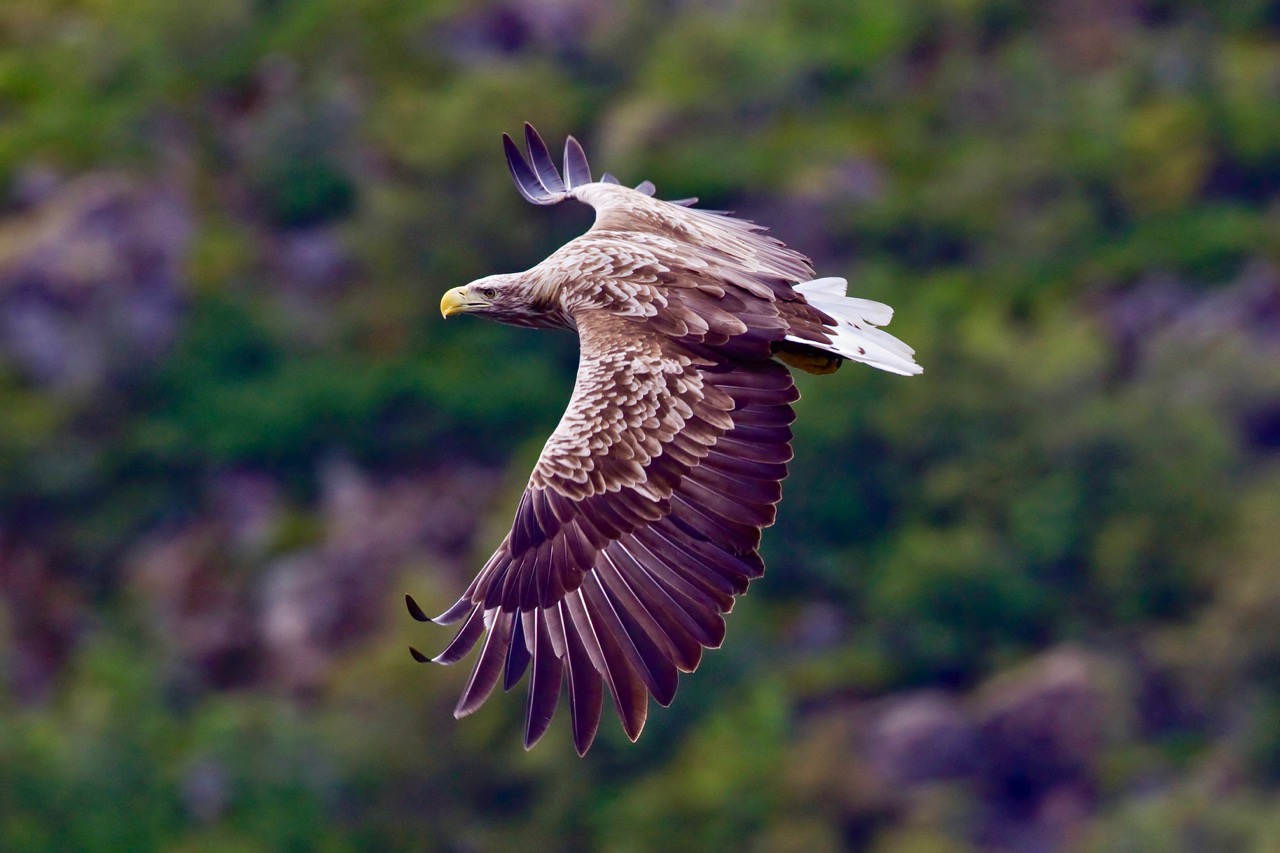
A superb photograph of Haliaeetus albicilla – the white-tailed eagle or white-tailed sea-eagle, by Yathin S Krishnappa (via Wikipedia Commons). This was taken in Svolvaer, Norway – geographical source of the birds that were reintroduced into Killarney National Park within the last decade

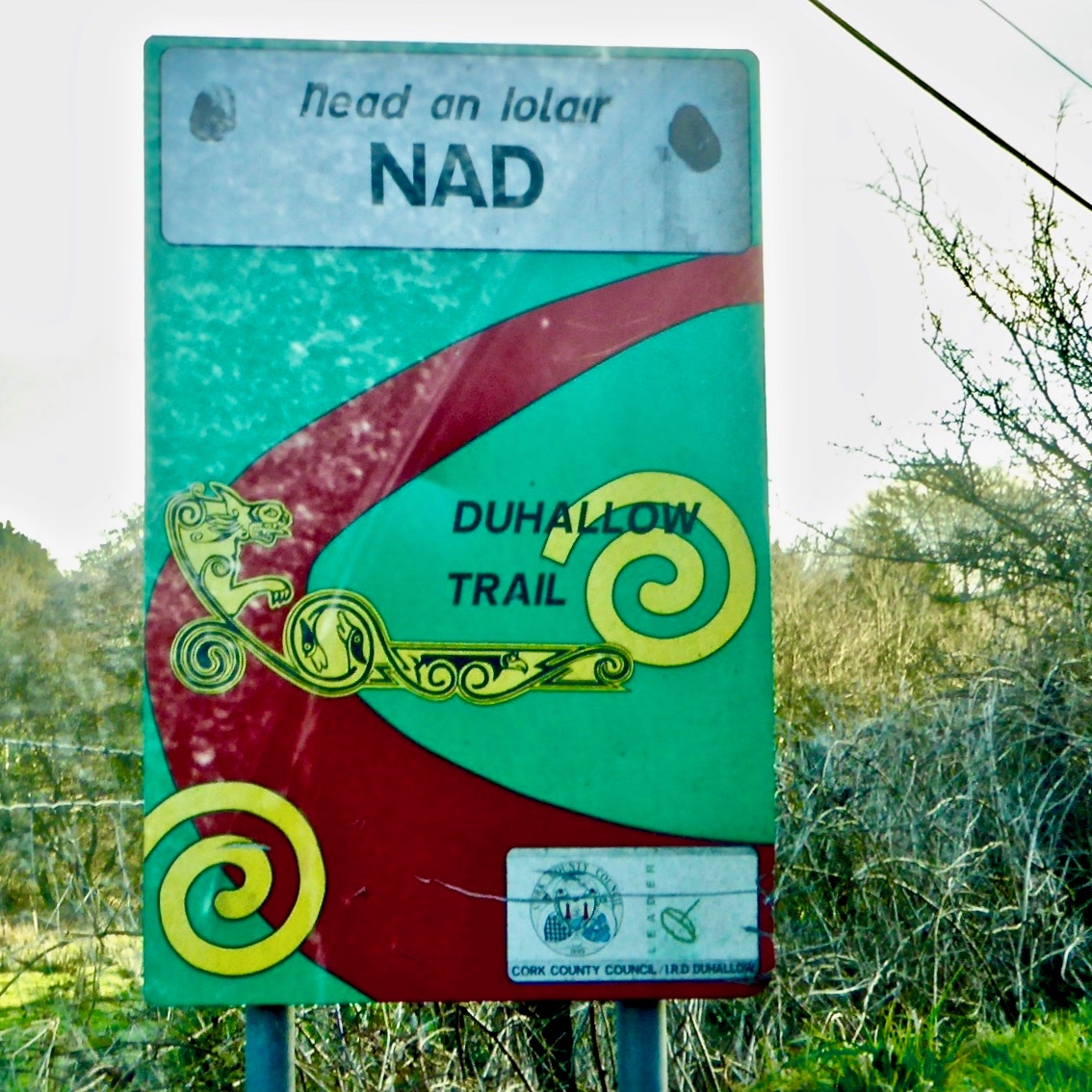
Whenever we are on our travels we look out for the word Iolair (eagle) in place-names. We found one in Duhallow, a Barony in Cork County, just north of the wonderfully named Boggeragh Mountains. In fact we were alerted by signposts directing us to Nad or Nadd (nest) and found ourselves in a tiny settlement which was determined to point out its links with the eagles.
nad road sign

eagle on post 2

large eagle's nest sign

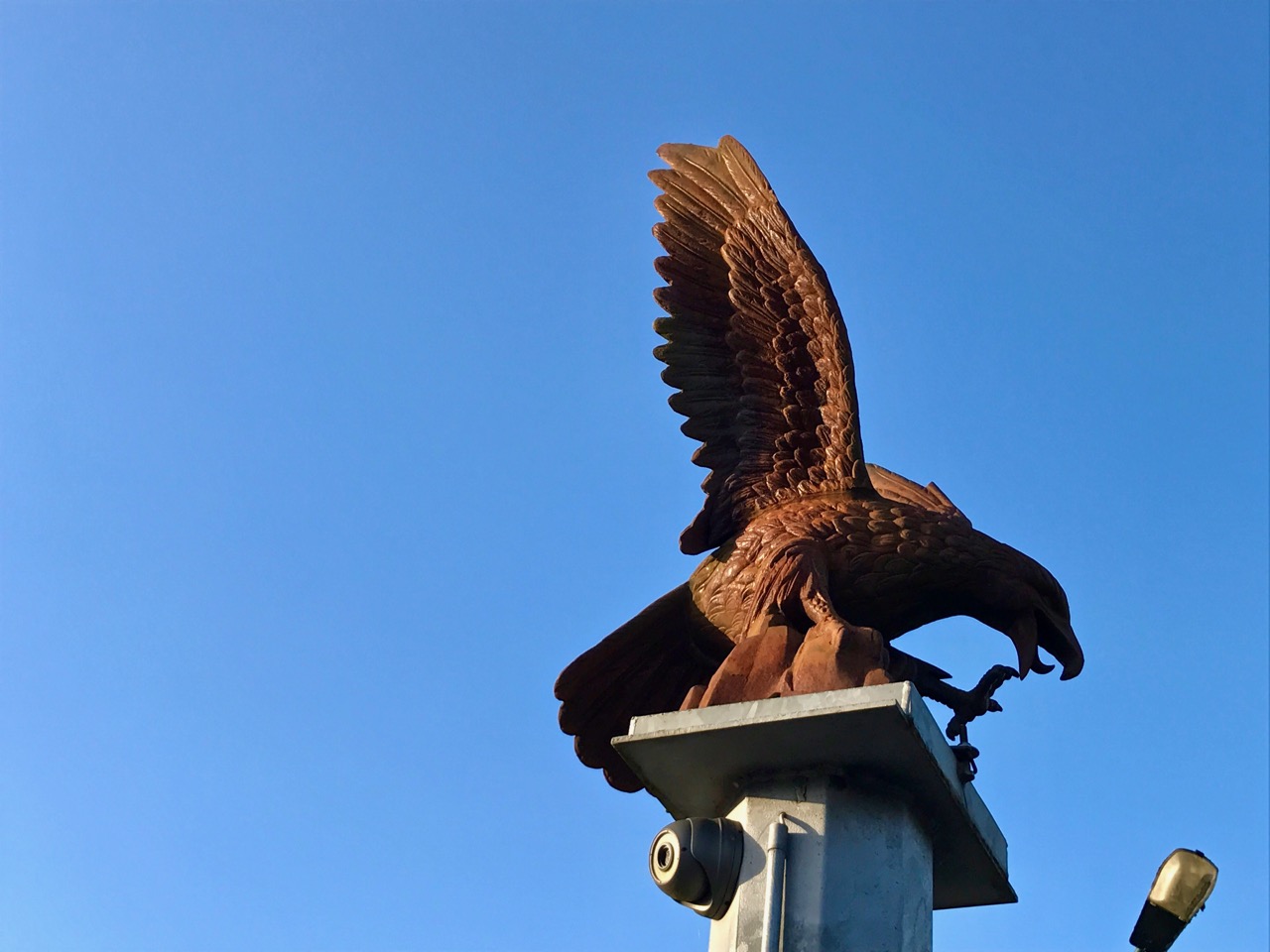
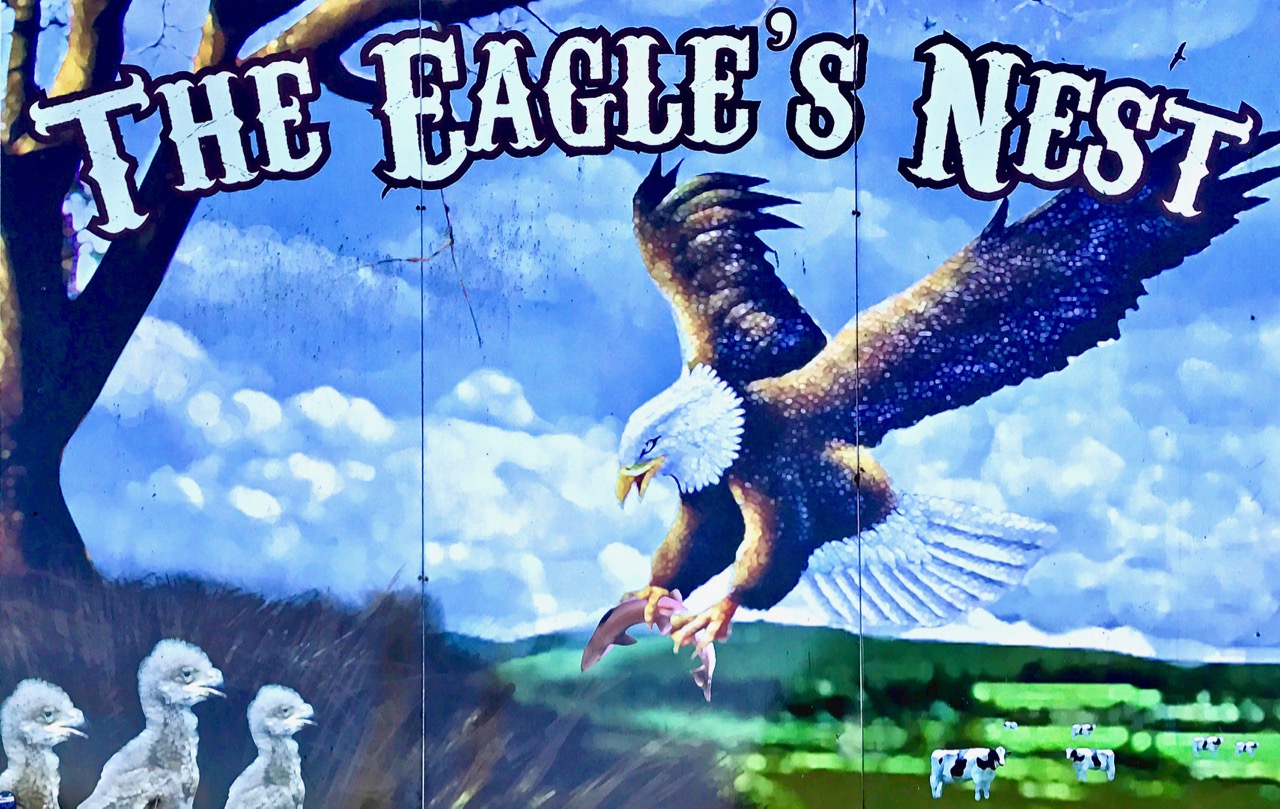
The village of Nead an Iolair in Duhallow, North Cork makes its associations with eagles very clear. The pub is named The Eagle’s Nest, and there is a fine sculpture of the bird sitting Nelson-like on a column beside it

Besides these features the village has a poignant memorial dating from the struggle for independence: a reminder of harsh realities still within living memory. The words that stand out are May God Free Ireland.

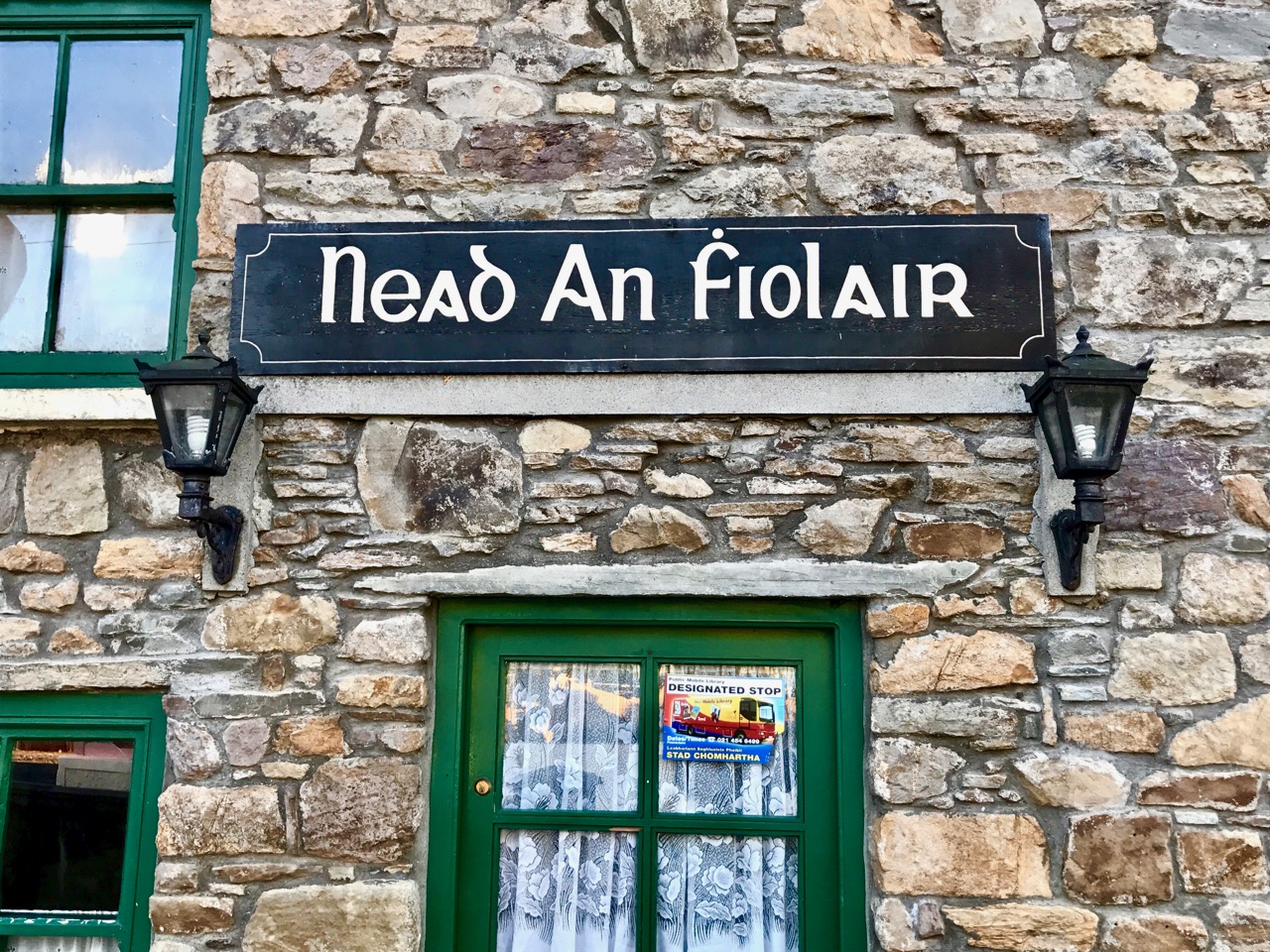
Back to the eagles and – in an interesting diversion into semantics – we noticed that the name over the door of the pub is in old Irish script and has introduced an additional character to the word Iolair – it looks like an ‘f’. Finola tells me that the use of the accent over that ‘f’ – which is known as a búilte – serves to silence the letter. In modern script it would be converted to ‘fh’: so fhiolair would still be pronounced ‘uller’. But we can’t find any precedent for using the word in this form. Perhaps an expert in Irish language can help us here…?
nead an fiolair

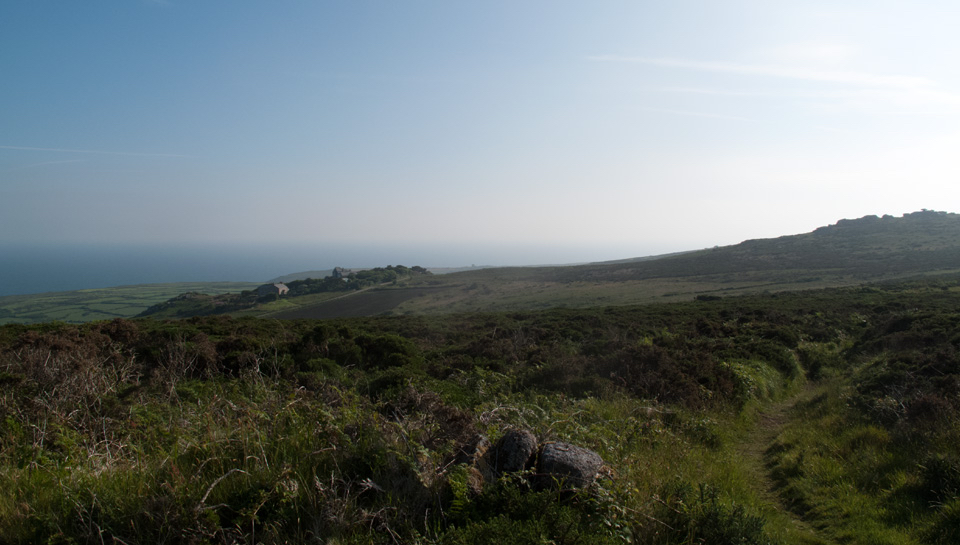
Regular readers will be aware that I am always on the lookout for links between Cornwall and the West of Ireland (and there are many). Interestingly, Nead an Iolair is one of them. Just outside St Ives, on the north coast of Cornwall, is a superb house, also called Eagle’s Nest. It was the family home of Patrick Heron, one of the influential St Ives School artists. When I lived in Cornwall I frequently passed by the house and was always impressed with its location – like us now, it is high up above the coast with a commanding view over the myriad small fields and out to the ocean. I always thought I would like to live there, because of that view… Now I have my own Eagle’s Nest – and I couldn’t be more content.
eagles Nest cornwall

Looking across the Cornish moorlands near Zennor, towards Eagle’s Nest – photographed by the artist Patrick Heron, whose home this was

Brian’s Sketchbook: The Signal Towers

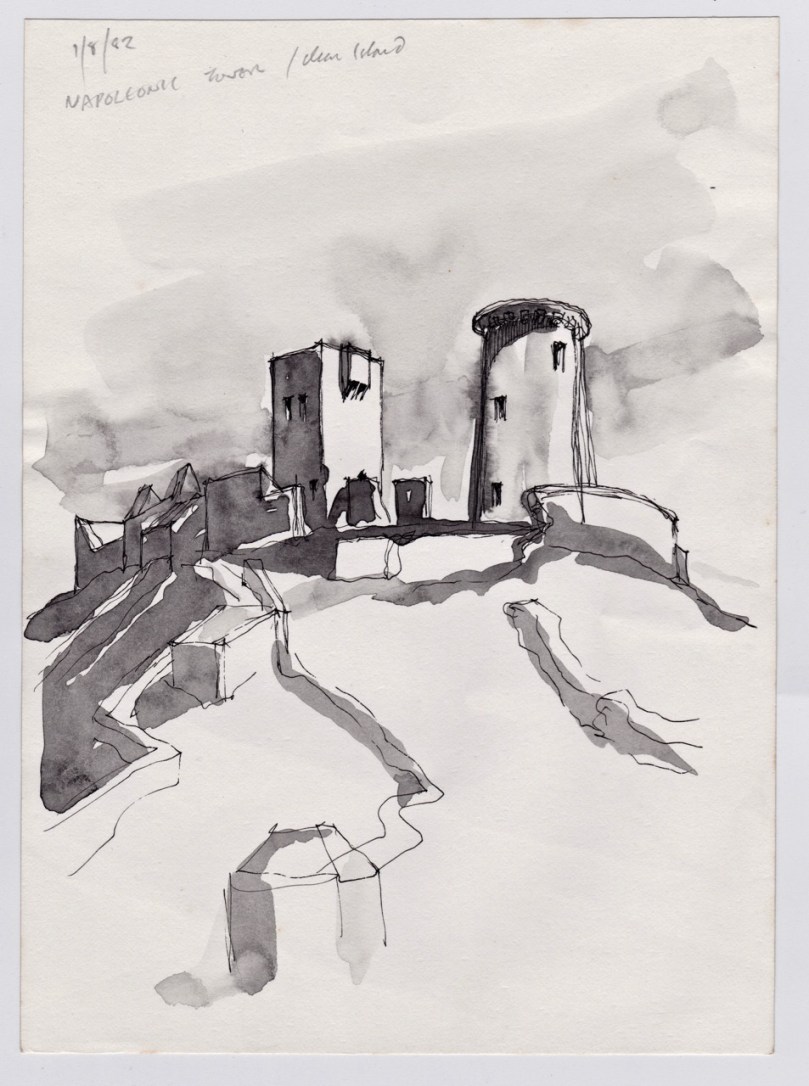
Brow Head Buildings

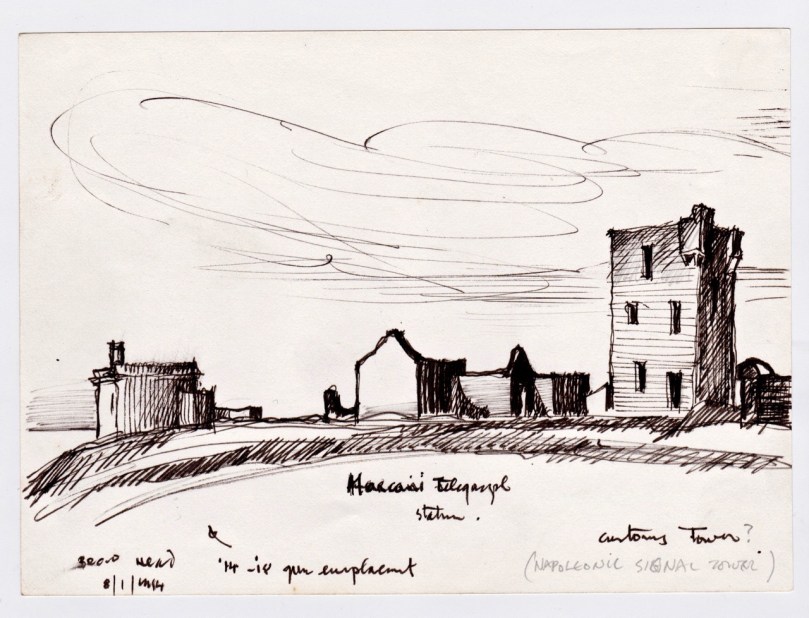
We have received a unique and treasured gift – a sketchbook from the 1980s of prehistoric and historic sites around West Cork. It’s the work of our good friend, and national treasure, Brian Lalor, artist, writer and printmaker. For an overview of his style, check out the retrospective of his work at Graphic Studio Dublin. Or browse the long list of his books, including the magnificent Encyclopaedia of Ireland, which he edited.

Marconi Station, Brow Head

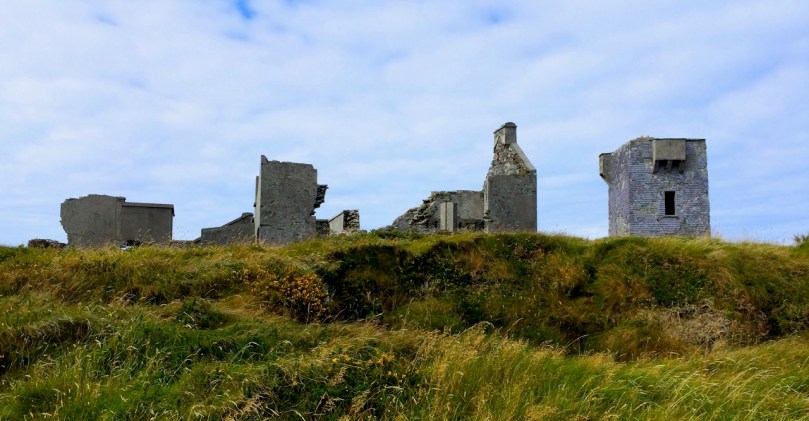
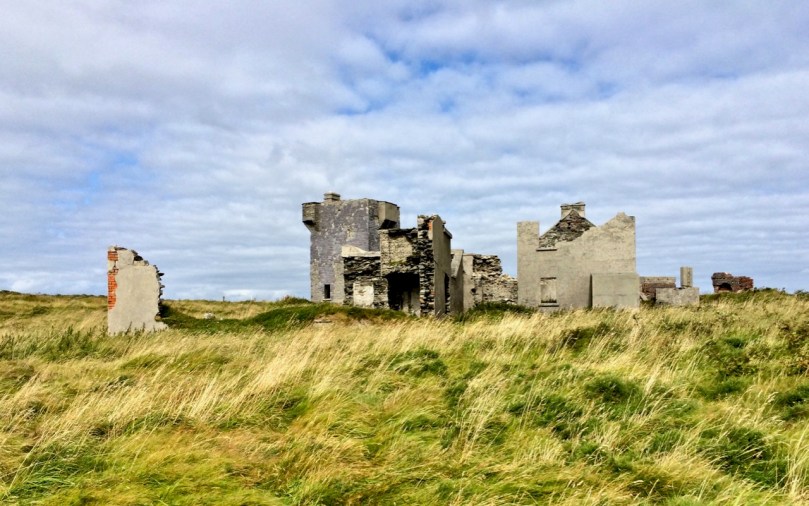
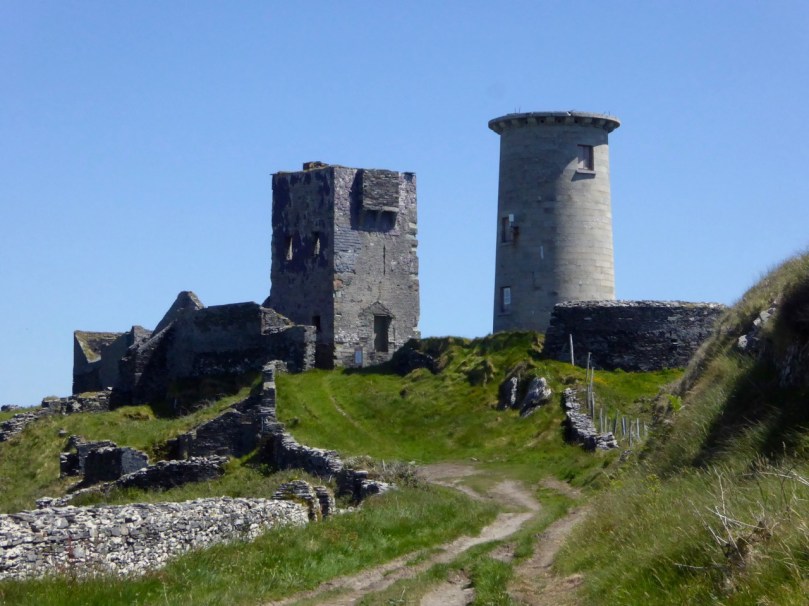
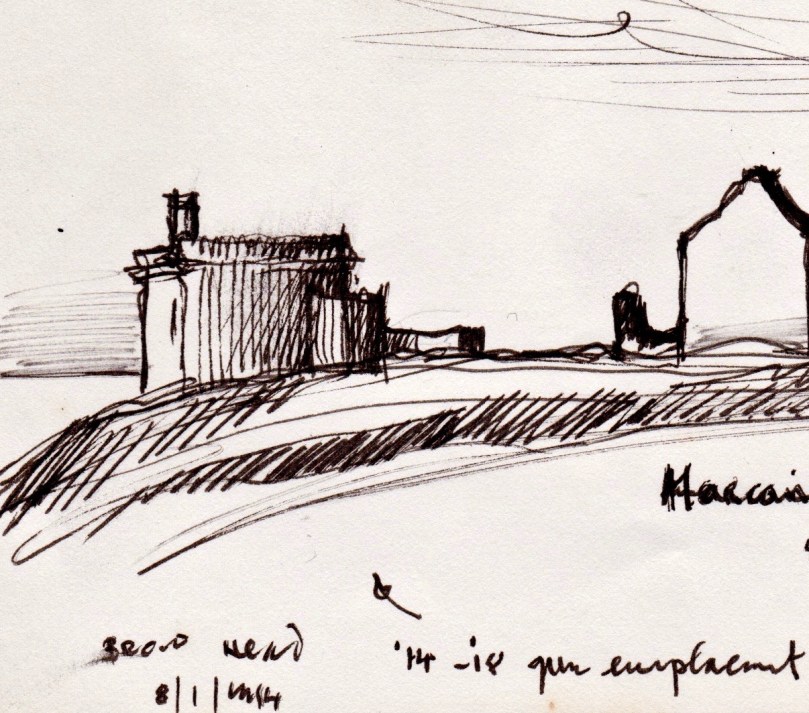
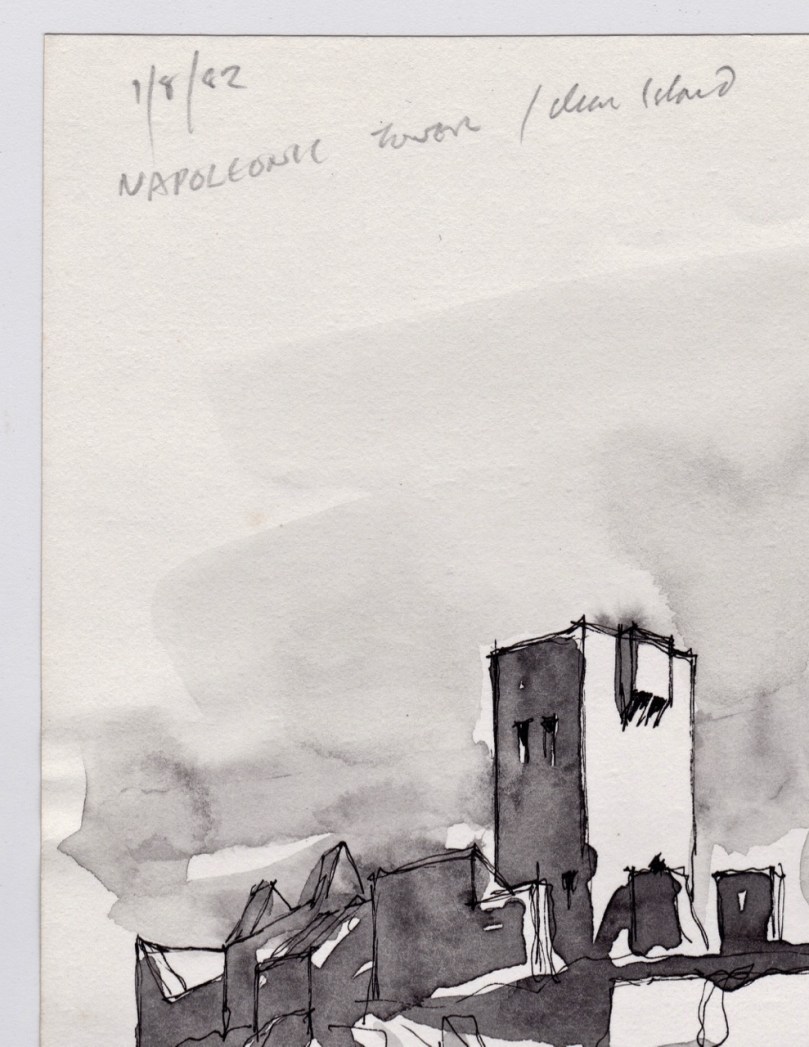
Brow Head: (above and below) on the right is the Napoleonic-era Signal Tower; the other buildings date mainly from the time of the Marconi Telegraph Station, taken from a different angle than the sketch above

Brian has studied both architecture and archaeology and to that adds the keen observant eye of the artist. As a result these sketches, although, as he explained, often hastily done during a brief visit to a site, are accurate, detailed and charming in equal measure. They were made on field trips with the Mizen Archaeological & Historical Society in the 1980s. This was an active society, publishing a well-regarded journal from 1993 to 2004 and leading regular field trips for members.

Brow Head ruined building

The sketches, just over 50 of them, were made for the most part between 1980 and 1987 so besides their intrinsic artistic value, they also constitute an important record of the state of the site 30 years ago, allowing us a comparison with its current condition. My intention is to visit (or re-visit) a lot of the sites, with his sketches in hand and show our readers both how beautifully Brian captured the structures or artefacts at the time and whether there are any changes visible from then to now. I decided to start with the Signal Towers on Cape Clear and Brow Head, and a third tower on Rock Island that may or may not be contemporaneous.

Wolfe Tone front

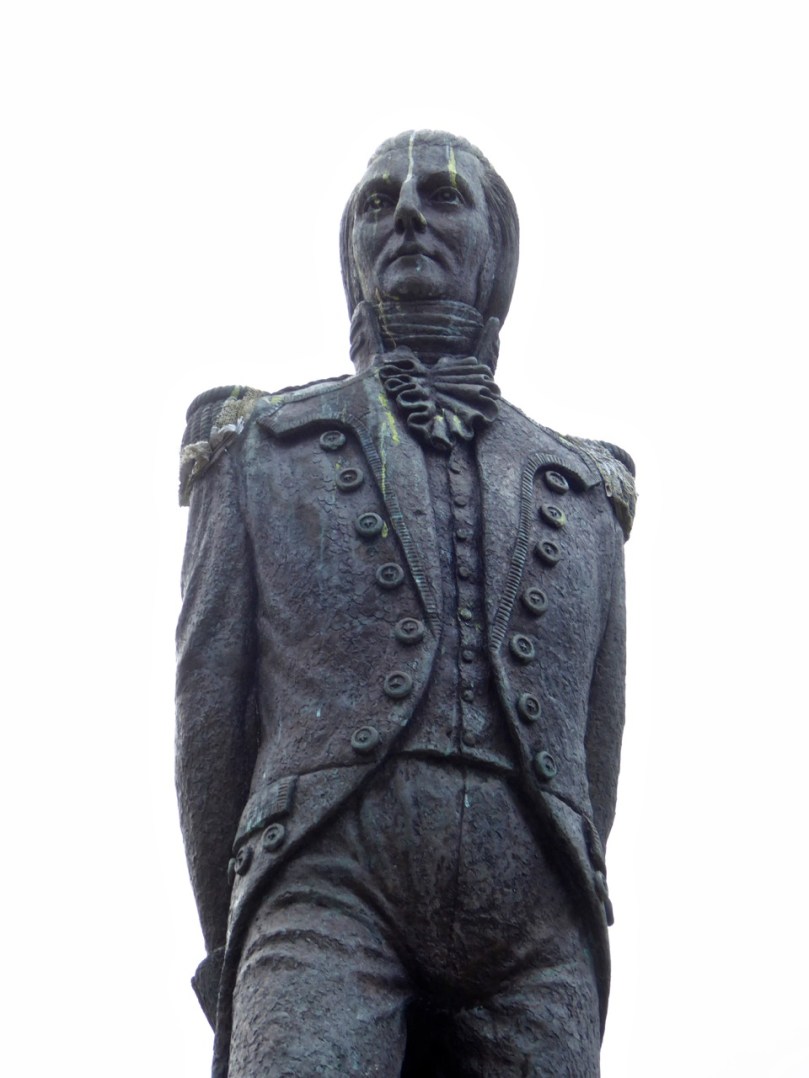
Theobald Wolfe Tone – detail of the statue in Bantry town square

In 1796 the French navy, partly at the invitation of Wolfe Tone and the United Irishmen, staged an unsuccessful invasion of Ireland, sailing into Bantry Bay. Several raids followed in 1798. Although all were quickly quashed, a panic about the possibility of a French invasion spread throughout Britain and Ireland. A series of Napoleonic-era fortifications and viewing towers were constructed around the coast in locations with panoramic views, and within sight of each other, to spot foreign shipping activity and raise the alarm. On the east coast, these mainly took the form of Martello Towers and were stocked with heavy armaments, but here in the south west defensible Signal Towers were built not to house artillery but as advanced-warning stations. Here and there they were complemented by batteries and other fortifications – but that’s a story for another day.

Cape Clear Signal Tower

The Cape Clear Signal Tower

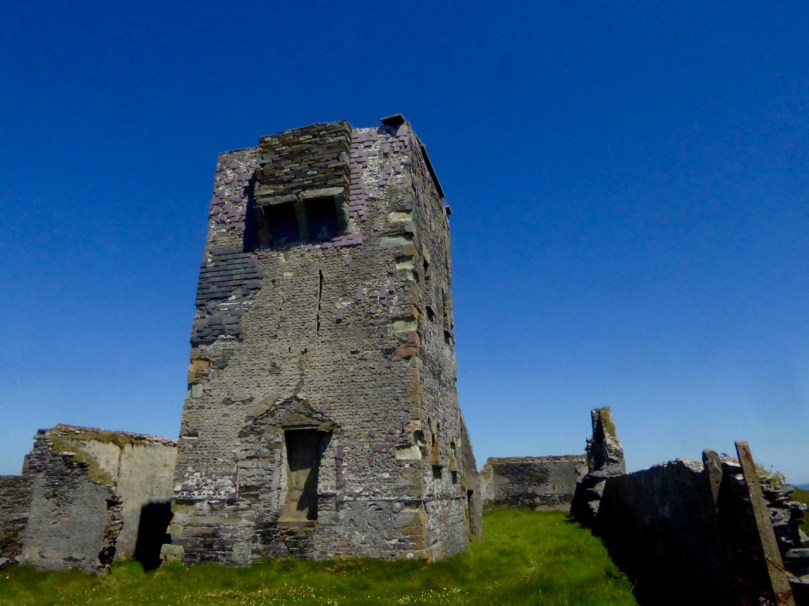
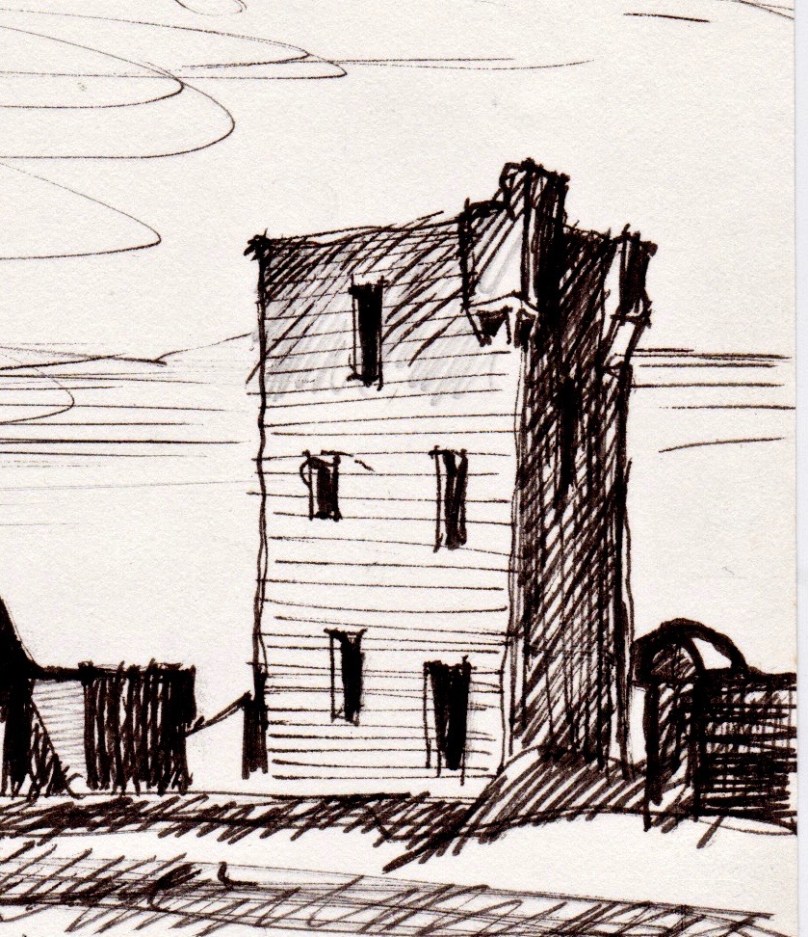
Signal towers were built around the coast to the same plan – tall square towers with first-floor entrances and machicolations. From a distance, they look like the medieval tower houses I have posted about on several occasions but up close they are shorter and the windows are bigger. Internal staircases and partitions were made of wood, not stone and have generally not survived, so the signal stations are essentially shells. in both the Cape Clear and Brow Head example, the exterior slate cladding has survived remarkably well.

Brow Head Detail - signal tower

Brow Head Signal Tower – detail from Brian’s sketch

In his excellent article for the Irish Times, Nick Hogan describes the towers, how they were staffed, the accommodation provided and how the signalling was done:

The signalling system, referred to as an optical telegraph, required that each signal station be visible to its counterparts on either side. Sending a message involved raising and lowering a large rectangular flag, a smaller blue pendant and four black balls in various combinations along a system centred on a tall wooden mast. The stations also communicated with ships.

Cape Clear Towers

Signal Tower and Original Fastnet lighthouse, Cape ClearTop: Brian’s sketch of the Signal Tower and Lighthouse on Cape Clear Island, done in 1982; Below: how it looked in June, 2016, 34 years later

While many signal stations are lonely and isolated buildings glimpsed on distant headlands, abandoned since the mid-1800s, both the Brow Head and Cape Clear buildings had further phases of use. In Cape Clear a lighthouse was built in 1818 – a forerunner of the Fastnet Rock Lighthouse. It was so often shrouded in fog that it was abandoned in the 1840s. The buildings attached to the signal tower, built of brick and concrete, probably date to this period of occupation. The signal tower is built of stone, using techniques not far removed from medieval construction methods. The lighthouse provides a wonderful contrast, being built of cut granite blocks expertly measured, shaped and fitted. 

Cape Clear Deatil - Lighthouse

Cape Clear Lighthouse, detail from sketch

In June of 2016, when we visited, it looked exactly as it had to Brian and the Mizen field group – an indication, perhaps that somebody is looking after the site and that the few visitors who come (it’s quite a hike to get there) respect the heritage. [Edit: Since I wrote this, Brian has pointed out that in the Cape Clear Signal Tower there is a porch under the machicolation in his drawing that has since disappeared. The outlines of the porch can be clearly seen in the photographs of the signal tower.]

Cape Clear Lighthouse

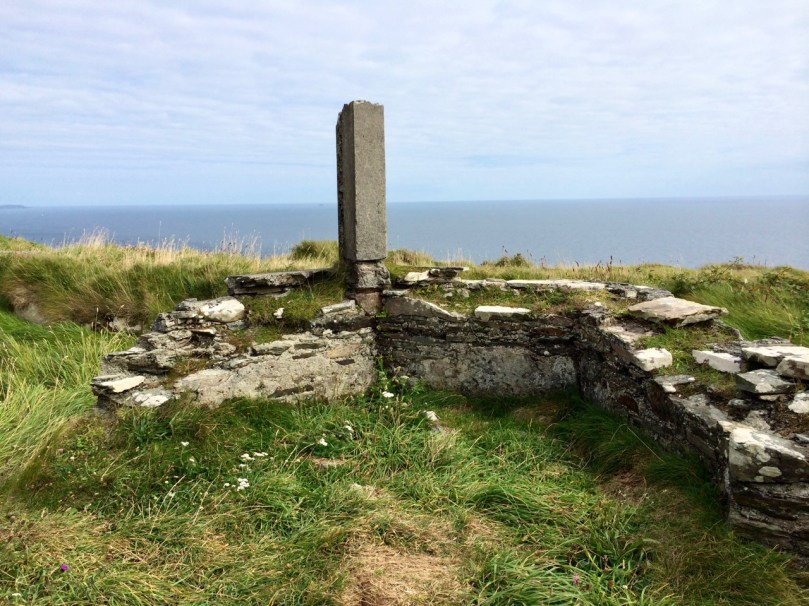
Brow Head is easier to access, and as a result there is more graffiti in evidence, but the changes to the site since Brian’s sketch are more the result of time and climate than any damage by humans. This is a complex site with multiple periods of occupation. The signal tower is there, of course, looking exactly as it did in the 1980s. Beside it is a network of buildings dating from the the early years of the 20th century: this is what remains of the Marconi Telegraph Station. Read all about this in Robert’s piece on Marconi, In Search of Ghosts. Besides the Marconi Station a Second World War Look Out Post was occupied here in the 1940s – little remains of this small concrete building except the characteristic half-round shape and a section of wall.

Brow Head octagonal?

Finally, on Brow Head there is a mysterious building that Brian labels ’14 – ’18 Gun Emplacement. This building no longer exists, and the ruinous remains that litter the ground seem robust enough to fit this inscription. Or do they? So – a mystery, and obviously  more research needed on our part. If any of our readers can help – let us hear from you!
Brow Head Detail - gun emplacement

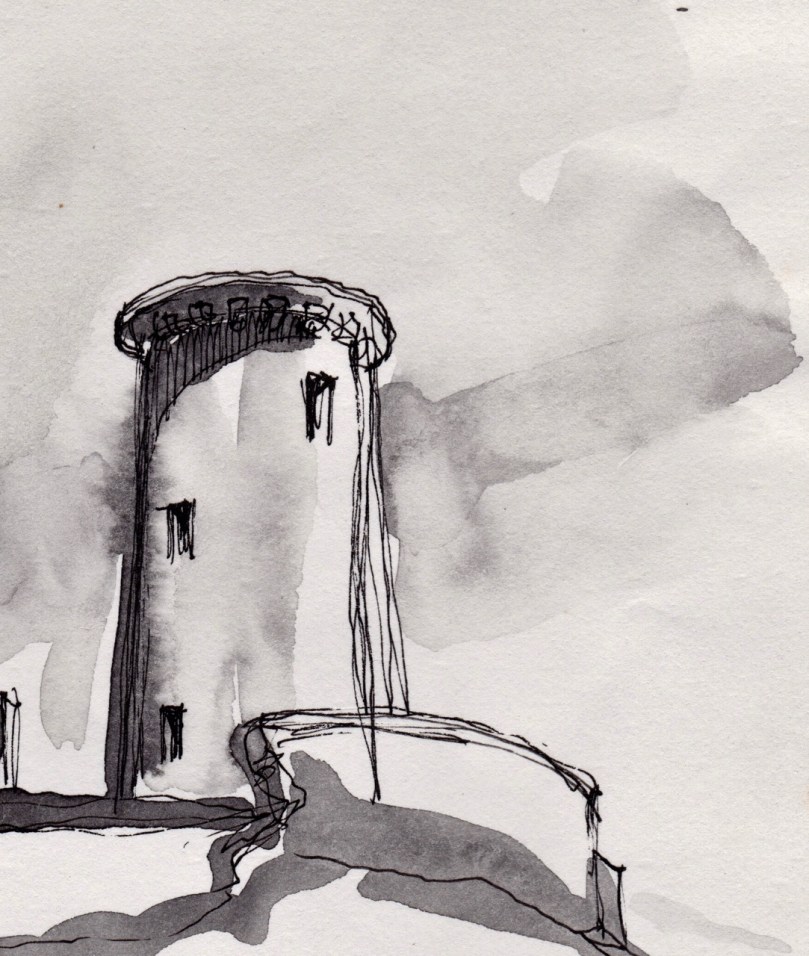
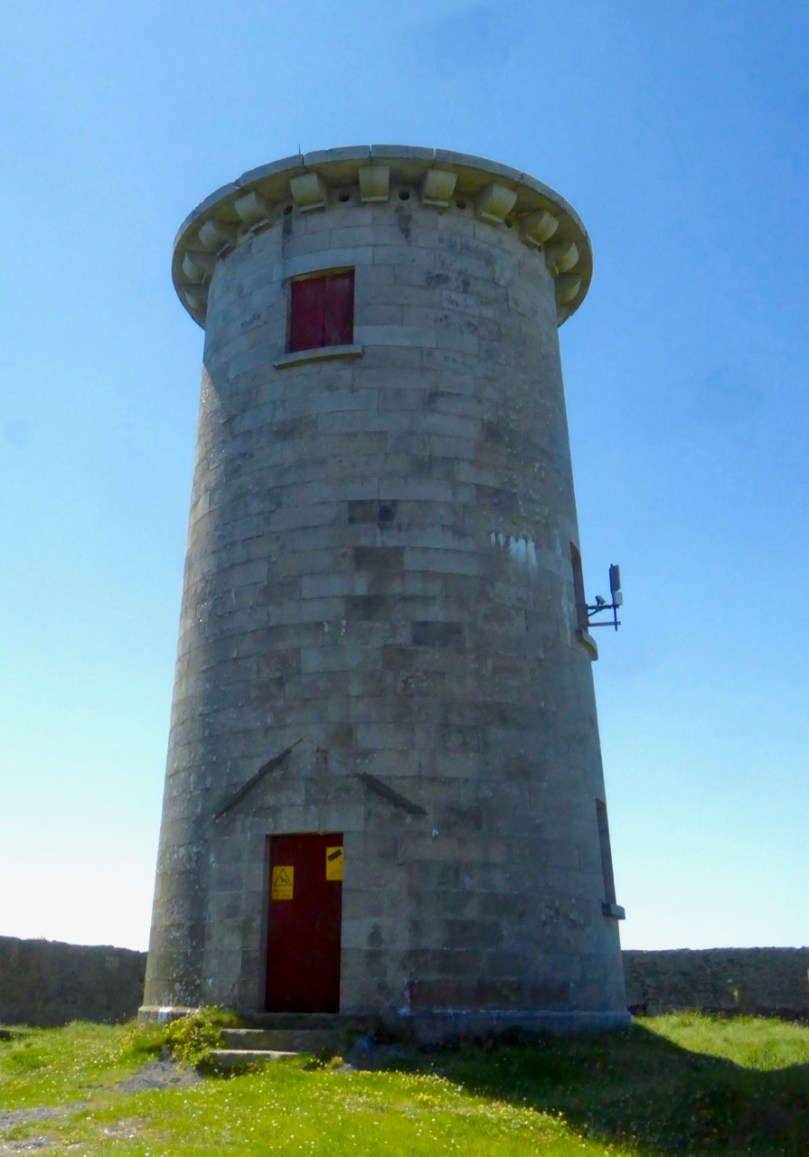
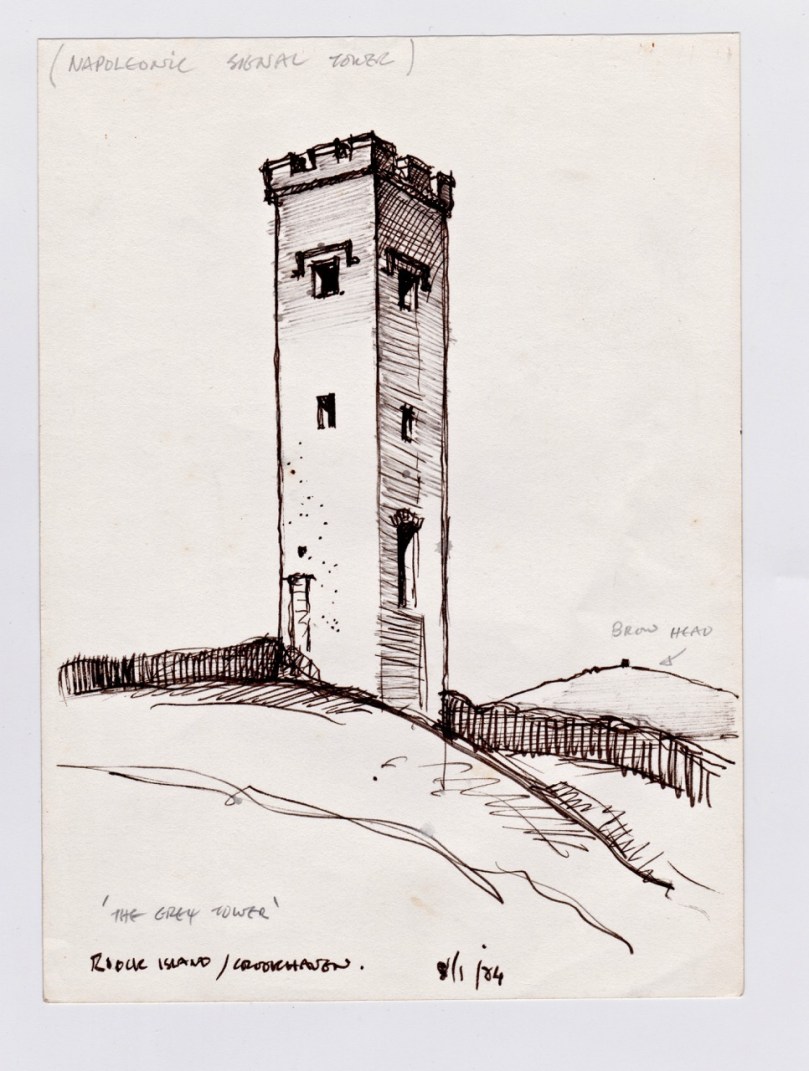
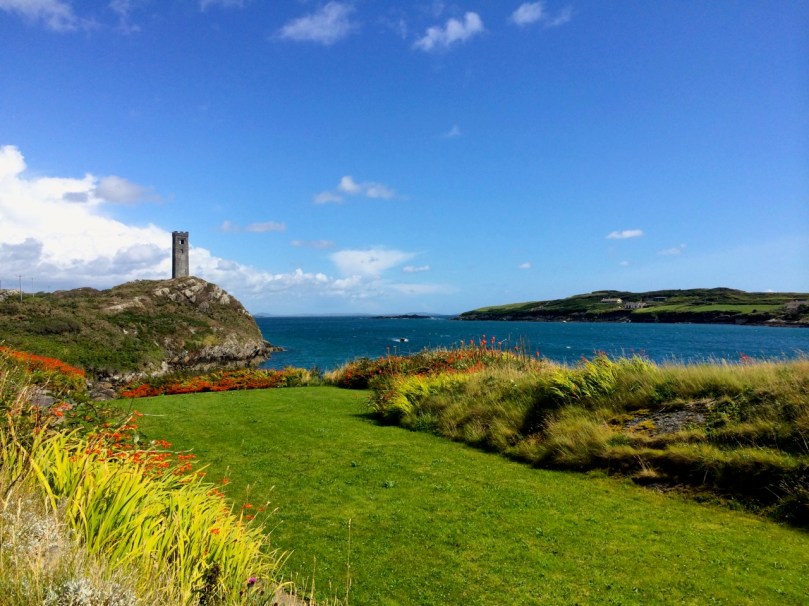
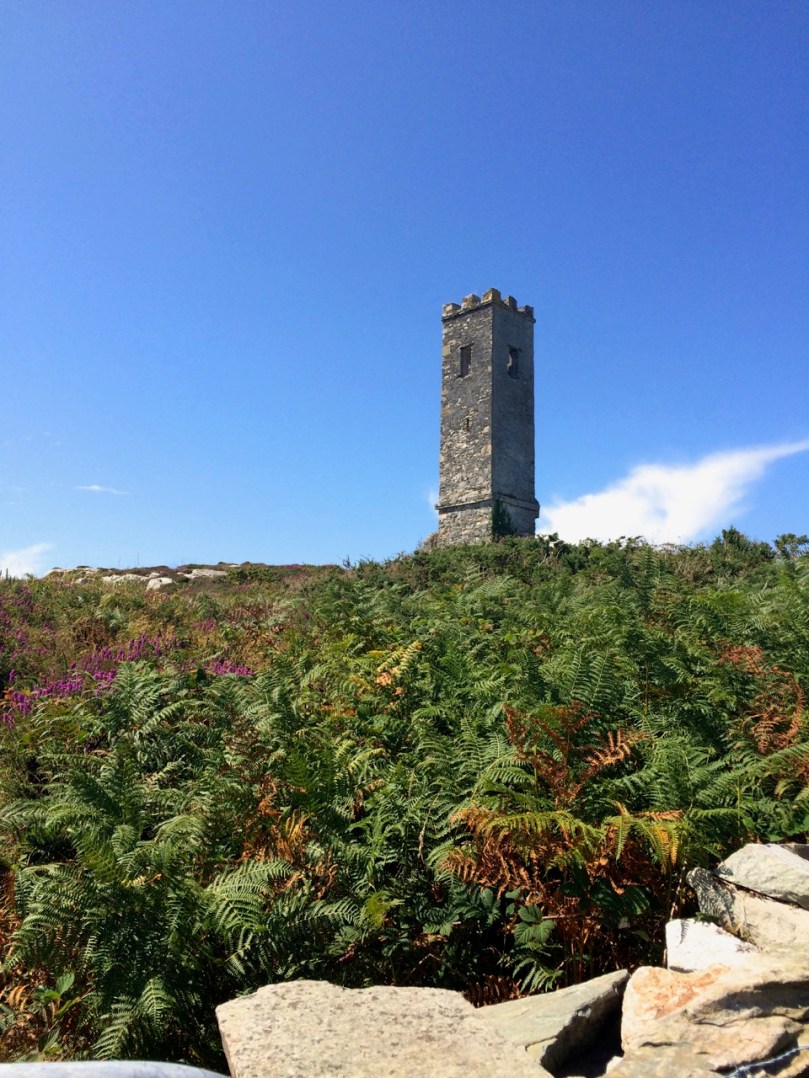
The last tower is on Rock Island. It is clearly visible from the Brow Head Signal Tower ( a requirement for the placement of signal towers) but, strangely, it is one of two very similar towers on Rock Island, and while they are similar to each other, they are quite different from the classic signal tower design. However, both the National Monuments site  and the National Inventory of Architectural Heritage listings name them as Napoleonic-era Signal Towers, and perhaps that is indeed what they are.

Rock Island Tower

Brian’s sketch of the Rock Island Signal Tower

However, in discussion with Brian, he pointed out that most of the buildings on Rock Island were developed as part of a major Coast Guard installation around the same time as the Marconi Station, and we wonder if there might be a connection – that is, that these are Coast Guard-related Watch Towers, rather than Napoleonic-era Signal Towers. Once again – more research needed! [Edit: See comment from Navtell in comment section, below.]

Rock Island Signal Station

Rock Island Second TowerThe two towers on Rock Island: similar to each other but quite different from the classic Signal Tower on nearby Brow Head

This is only my first foray into Brian’s Sketchbook. Look out for more posts in the future and in the meantime, join with me in being grateful that a precious resource like this survived numerous moves and that we have the opportunity to learn from it.

Cape Clear Detail - Signal Tower

The Cape Clear Signal Tower

Molaga of the Bees

bees!

I know I’ve said this before – but, wherever you find yourself in Ireland there’s history on the ground, and a story to be found! Recently we ventured into North Cork: so large is this county that it is a good half a day’s journey from Nead an Iolair, here in the far west, to Mitchelstown, beyond which lie the wild frontiers of Tipperary and Waterford. The purpose of our journey was exploration – archaeology, history, folklore – and we found ourselves drawn back into the time of the Saints.

1400 AD

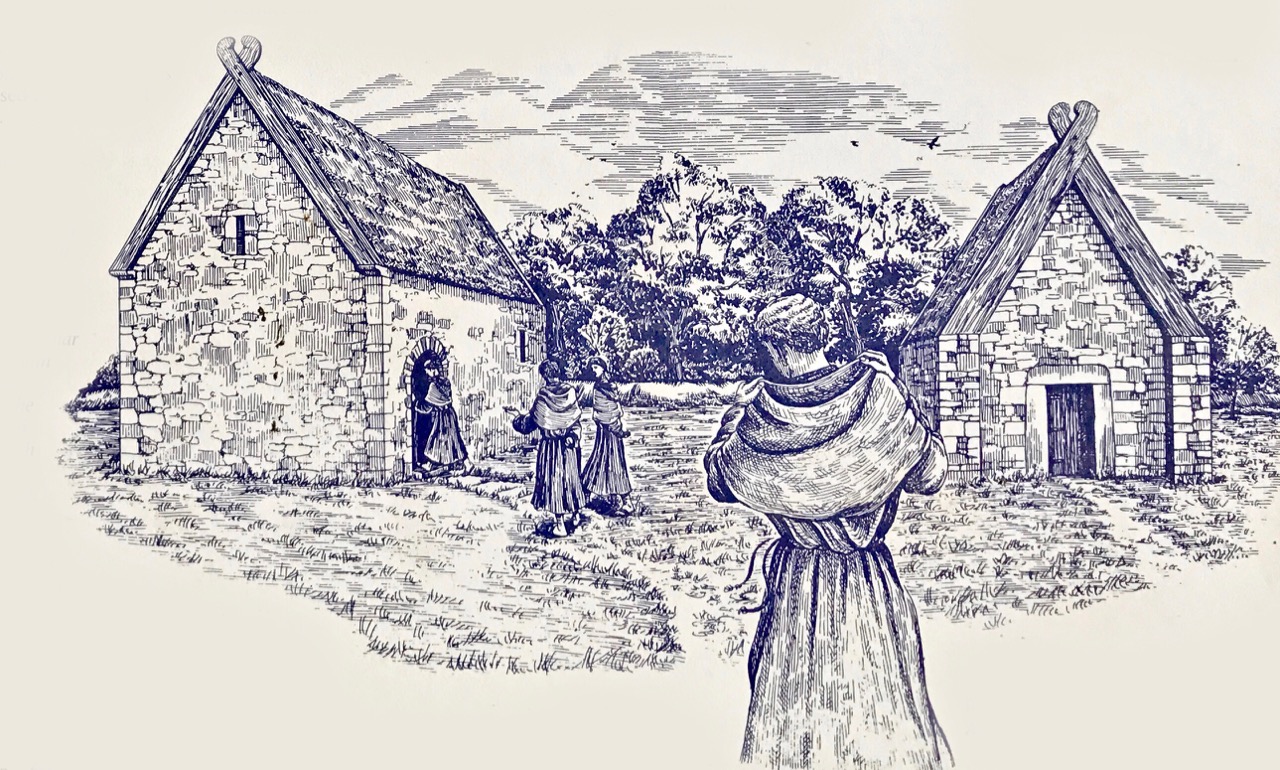
Artist’s reconstruction of the site at Labbamolaga as it might have looked in 1400 AD: the smaller building on the right is the saint’s original oratory, dating from the seventh century. Note the antae – the projecting stone walls on either side of the entrance, supporting the huge verges. These features represent the builders’ wish to recreate in stone the very earliest timber churches: in every age of Christian church building the aspiration was to hearken back to ‘the time of the Saints’, whatever era that might have been . The building on the left is a later medieval Parish Church known as Templemolaga (image from Dúchas – The Heritage Service)

Well off the beaten track we found ourselves at an ancient site known as Labbamolaga, in the townland of Labbamolaga Middle. Labba Mollaga: it means ‘the bed of Molaga’, who was a saint living in the 7th century. He is said to have founded a monastery on this site and the earlier building here could have been his original church.

7th c entrance detail

through the portal

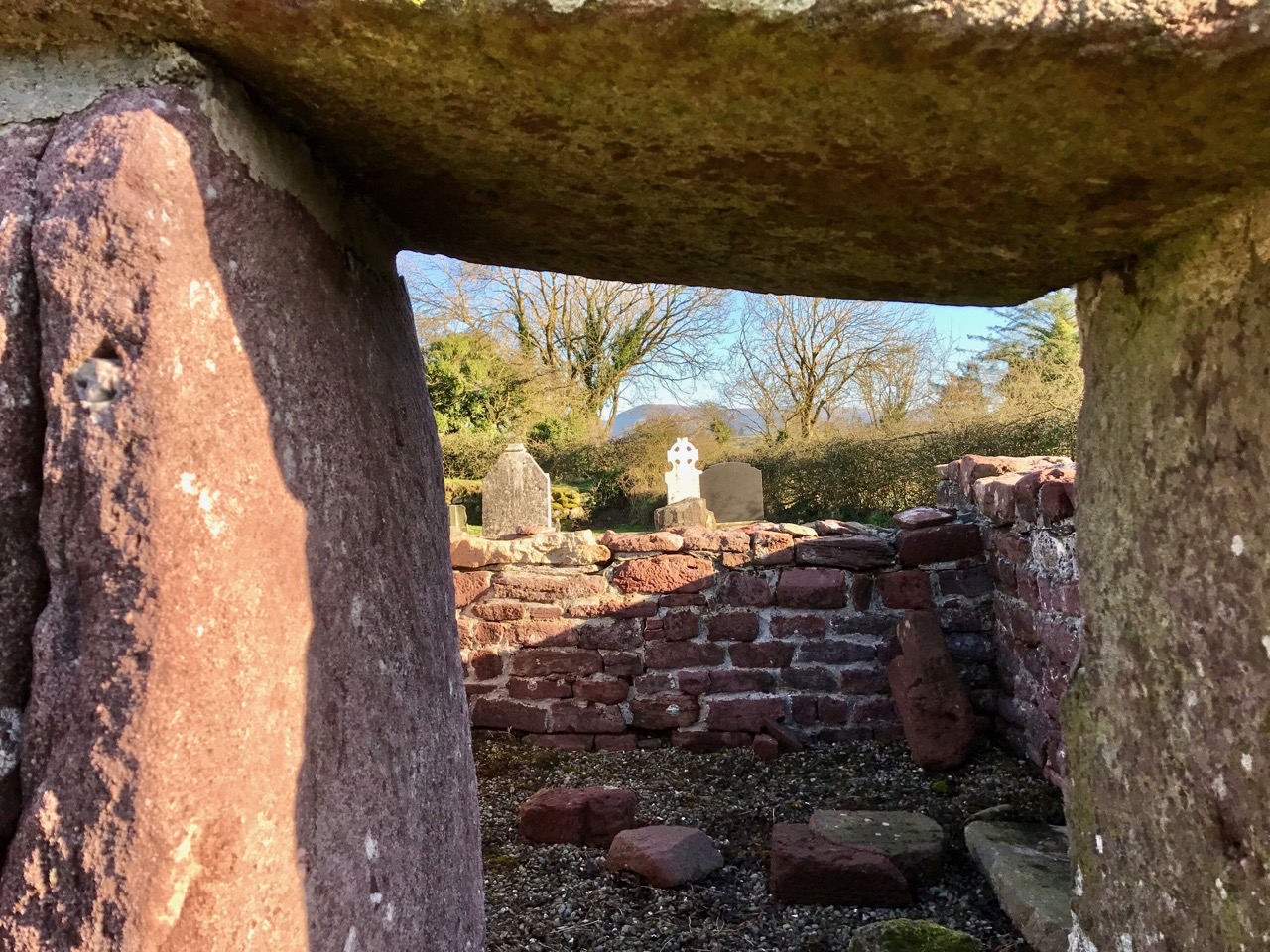
A seventh century oratory? Upper picture shows the entrance elevation with its pronounced antae, and the doorway which seems to be constructed from monoliths. It has been suggested that these stones could have been robbed from the megalithic monument which lies in a field to the south of the site. The middle picture looks through the entrance to the prostrate stone against the south wall: this is known as Molaga’s Bed: tradition states that the saint would lie on this stone at the end of each day’s work. It is also said to be his burial place and has curative powers, particularly for rheumatism. The lower pictures show the saint’s bed in 1905 (left) and in the present day (right) with its strange carving, which has been described as a volute

The architecture is fascinating: here we have one of the few examples remaining in Ireland of this most ancient church form, albeit in a ruinous state. In 1975 a similar ruin in Connemara was reconstructed to its likely original form at St MacDara’s Island, Carna. This gives us some idea of what St Molaga’s oratory could have looked like.

The oratory on St MacDara’s Island – early photograph (left) and 1975 reconstruction (right)

The site at Labbamolaga has much more more to attract the curious. There are the nearby megaliths: we would assume they considerably predate everything else, yet local lore tells us that they are four villains who stole the chalice and holy relics from the saint’s oratory but were caught in mid-flight and were turned into four pillars of stone by him! A further legend noted by John Windele, the Cork antiquarian and historian, in the 19th century relates to a holy well which once existed – some say under the saint’s bed:

…There was formerly a beautiful well of clear spring water here, but one day an old woman profanely washed her clothes in it; that night the well disappeared and was seen never more…

stone alignments

stones in graveyard

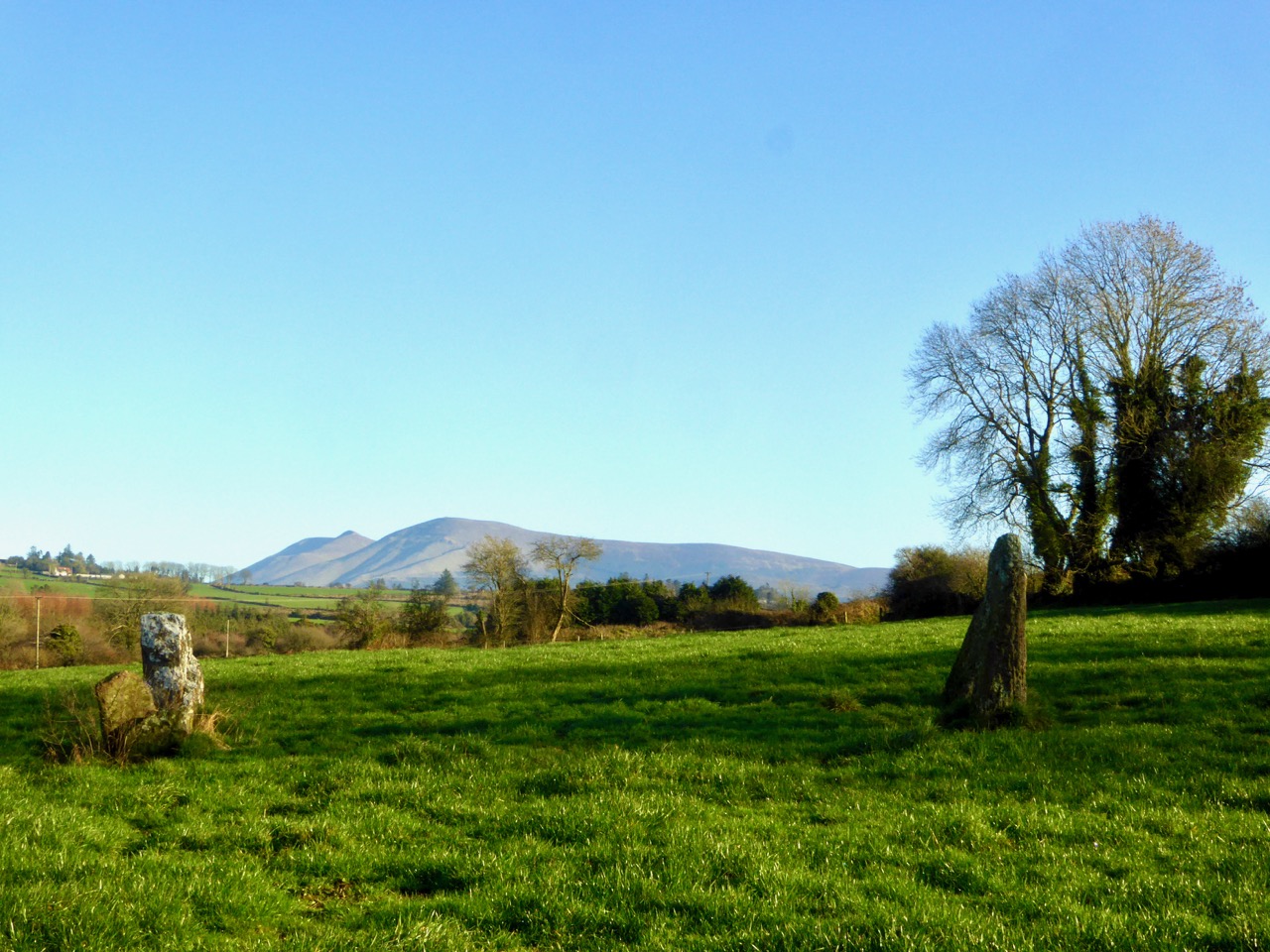
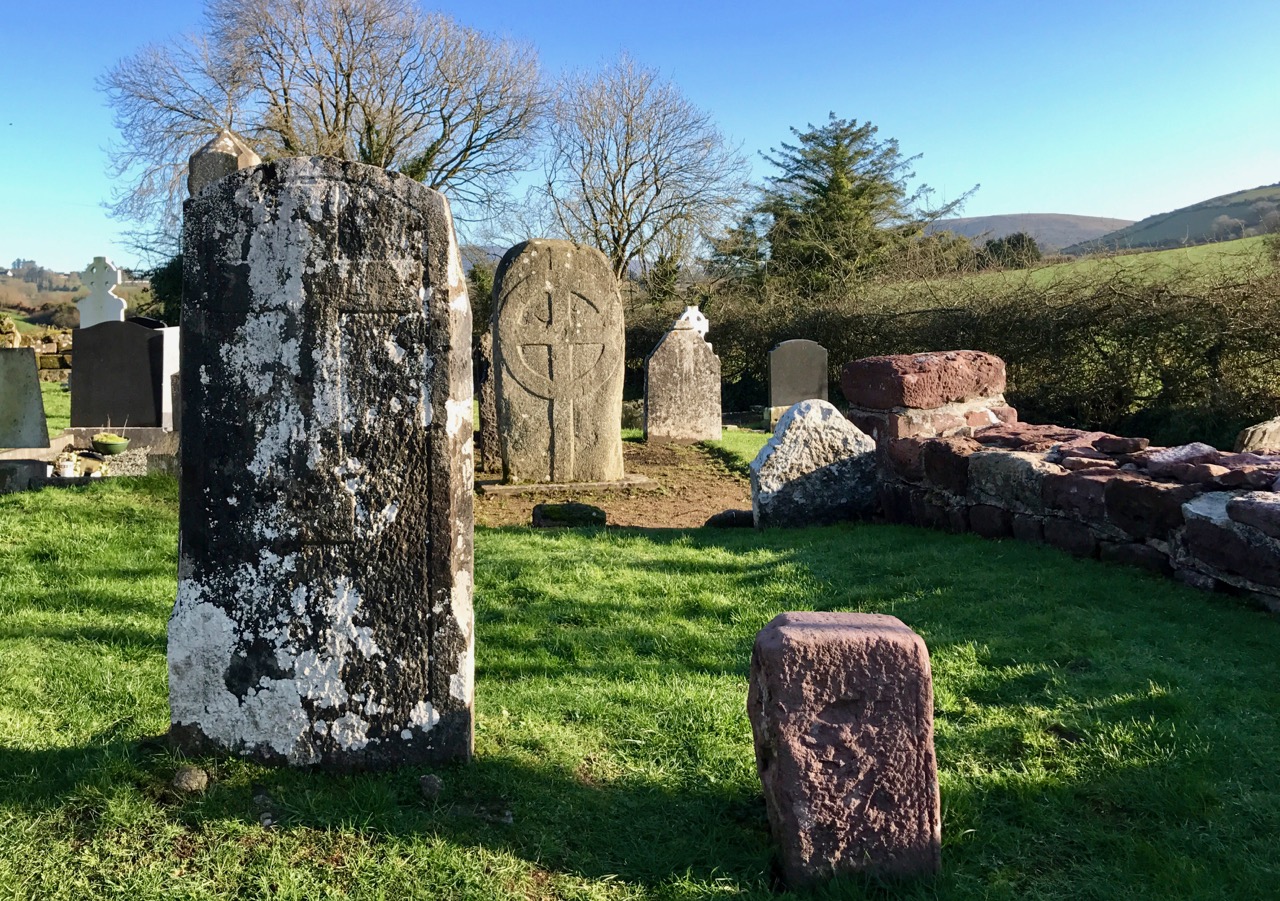
Upper picture: four standing stones in a field (known as Parc a Liagain, ‘Swardy Field of the Pillar Stones’ to the south of the ecclesiastical site – supposedly petrified villains who robbed the monastery. Lower pictures: the monastery site has become a burial ground – strange and fascinating stones abound. The centre stone is an ancient looking Celtic cross; the circular pile is an enigma – burial vault or old well house? The site also once contained Cursing Stones, but these are said to have been removed

What of the saint himself? He has a recorded history: born in Fermoy of parents who were well past child bearing age (a miraculous sign), he travelled to Scotland and then to Wales, where he became a follower of St David. Returning to Ireland he founded monasteries at Timoleague, West Cork (the name means House of Molaga), and at this site in North Cork. Sources say that in Wales he learned the craft of bee-keeping, and a colony of bees attached itself to him on his journey back to Ireland: the same sources credit him with introducing bees to Ireland, but the earlier Saint Gobnait – patron saint of bees – also has this reputation. Some mixing of hagiographies here, perhaps. Also confusing is the information given in catholicireland.net which gives the name St Modhomhnóg as ‘Irish Saint of the Bees’ and tells a similar story, although this saint returned to Ireland from Wales (with bees) and set up a community in Bremore, near Balbriggan, County Dublin – today known as the Church of the Beekeeper but also connected with St Molaga, who is there said to have procured his bees from St Modhomhnóg. To add to the confusion, the feast day of Saint Gobnait is on 11 February, while that of Modhomhnóg is on 13 February.

molaga

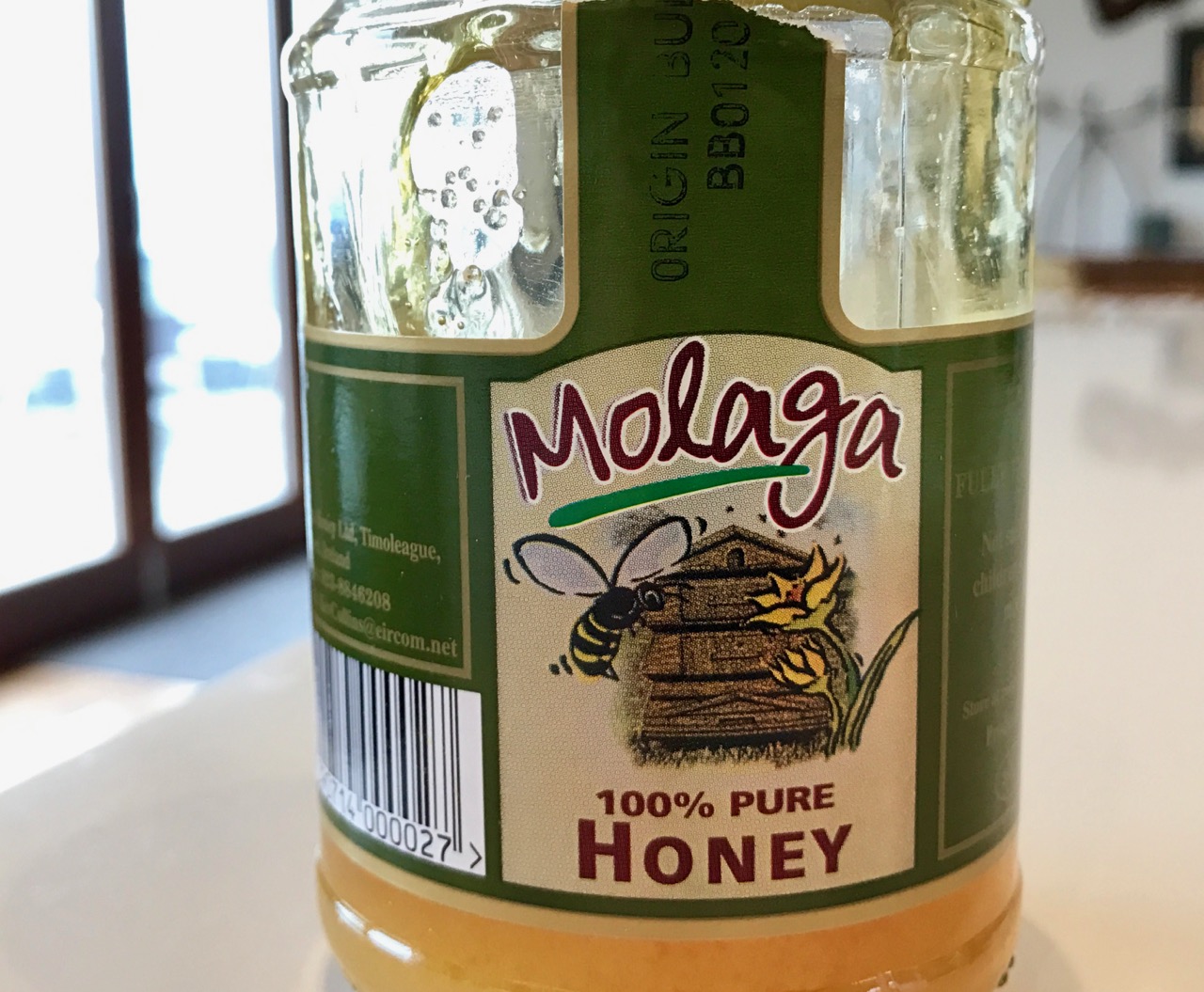
We hadn’t realised until we unearthed these stories that we have the saint’s name in our larder! Our favourite honey is known as Molaga – we get it from our local supermarket. There is nothing on the jar to explain the name (this is one of various spellings), but the honey is distributed from Timoleague (the house of Molaga) in West Cork. There is much more to the story of this slightly elusive saint, perhaps to be told another day.

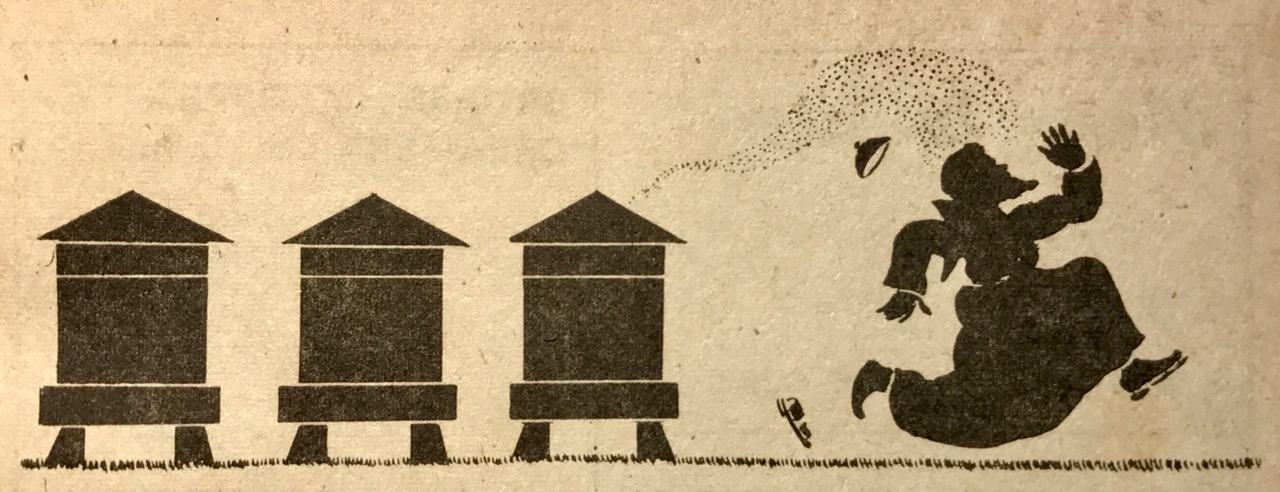
Many thanks to Brian Lalor for gifting us his copy of The Capuchin Annual 1944. It is wonderfully illustrated with cameos of monastic life drawn by ‘Father Gerald’: the header is one of these. The 1983 postage stamp illustration below is by Michael Craig

postage stamp

Cloondara Mill

The Mill apartments

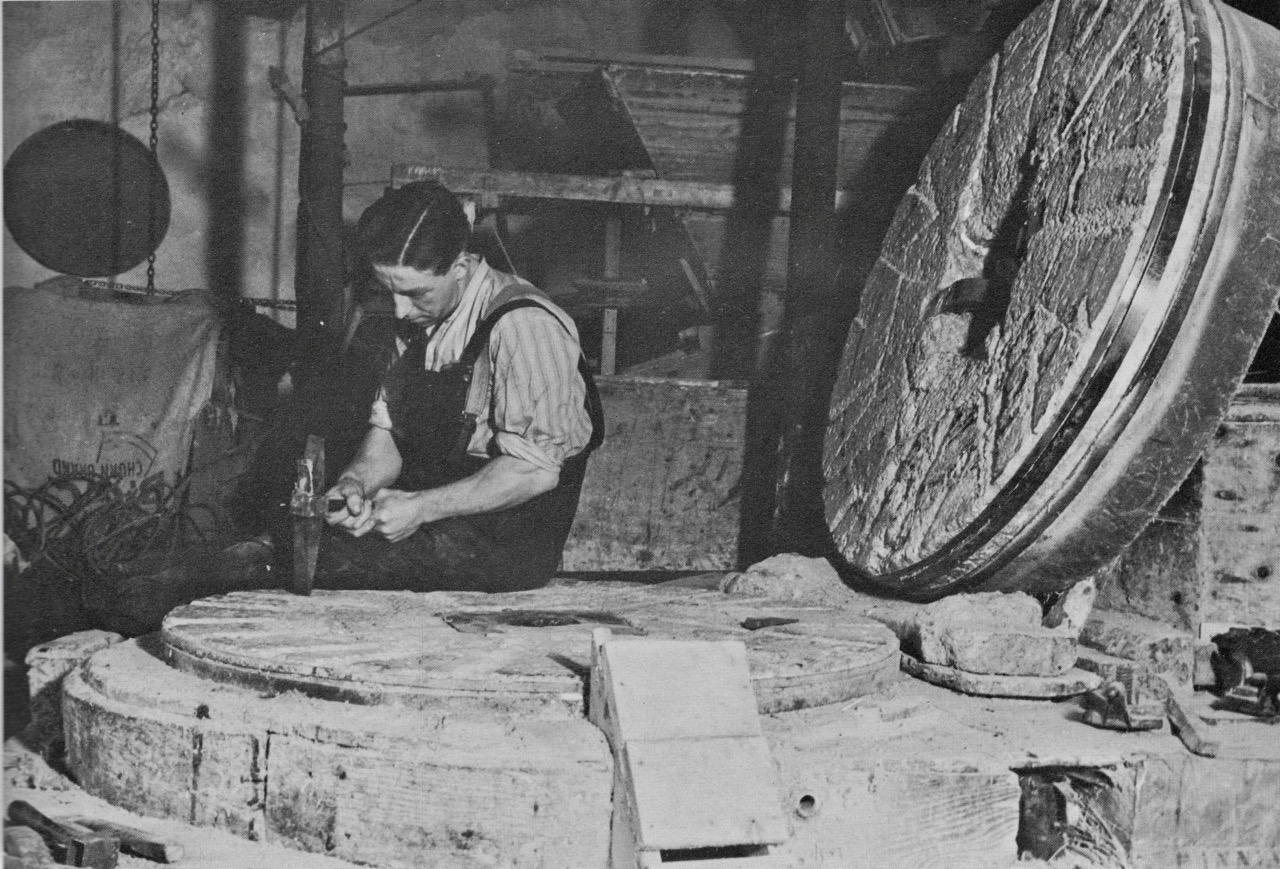
…Across the canal bridge there was a large corn mill which had seen better days but which I was pleased to see was still at work. Moreover it was not, as our few surviving [British] watermills are, relegated by the milling combine to grinding cattle meal. Cloondara Mill was grinding 100 per cent extraction flour for the village bakeries of the district. As we walked over the bridge a small water-turbine was churning merrily, driving the dynamo which provided electric light for the mill and the miller’s house. But the great undershot wheel which drove the mill from the waters of the Fallan River, a tributary of the Shannon, was still and silent. I knew why because, from somewhere in the dim recesses of the rambling stone building I could hear the chip chip of a mill-bill tapping away like some busy woodpecker. This Irish miller, like the English country millers who I have been fortunate enough to meet, was obviously proud of his mill and was delighted by our interest. Having assured himself that the stones being dressed were out of gear, he insisted upon opening the sluice for our benefit, setting the giant wheel revolving with a rumble and surge that wakened the mill and which, via a complex of wooden gearing, shafts and pulleys, set screens and sieves shaking and revolving to the very top of the building…
(L T C Rolt Green & Silver George Allen and Unwin, London 1949)

millstone dressing

…There were four pairs of stones, two sets of ‘Peaks’ for meal and two sets of French Burrs for wheat. The runner of one pair of Peaks had been swung off the bedstone, and the dresser sat on a sack, legs astraddle, as he tapped away at the worn furrows with his bill. I had expected to find that the language of the miller’s craft was different in Ireland, but this was not so. Thus the stirrup and shoe which feeds the grain into the eye of the runner stone and whose cheerful clink clack contrasts with the rumble of the stones, our miller, like his fellows in England, called the ‘damsel’. In an earlier book I described how the miller of Minshull Mill in Cheshire used apple wood to renew the teeth of the wooden mill gearing. Here beech wood was used for this purpose…
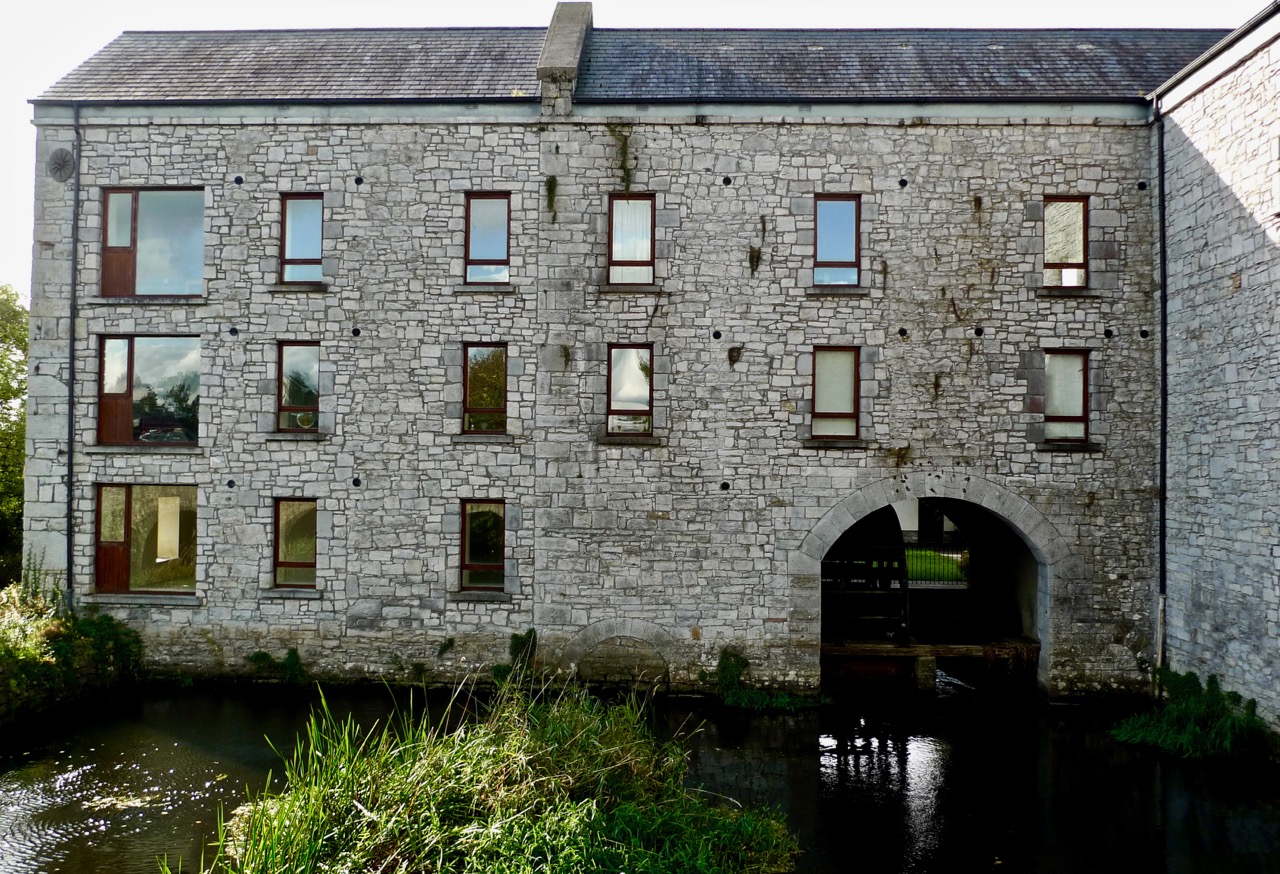
Header photograph: Cloondara Mill, Richmond Harbour, 2016; above, photographs from Windmills & Watermills (John Reynolds, Hugh Evelyn, London 1970) showing a miller and his bills, working much as Rolt described in his book

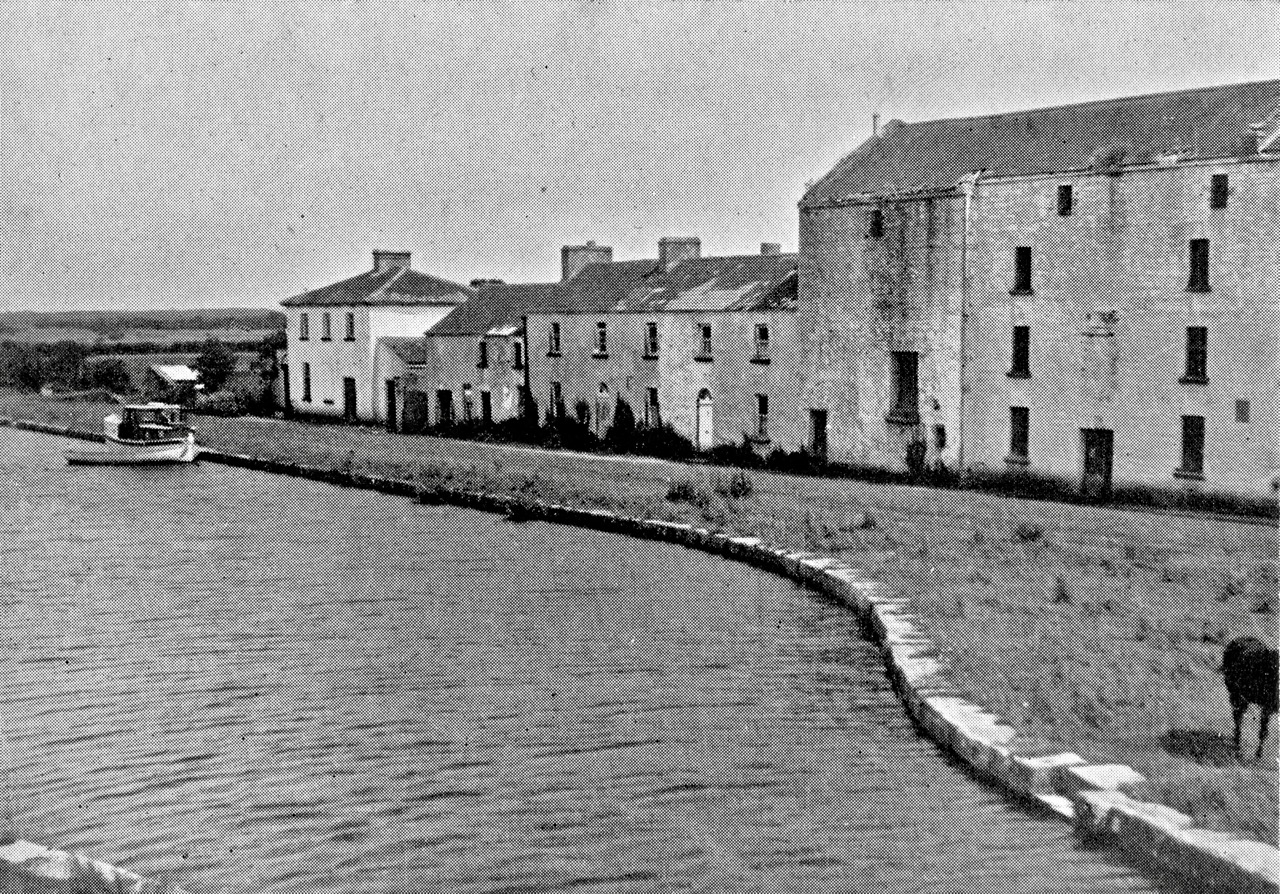
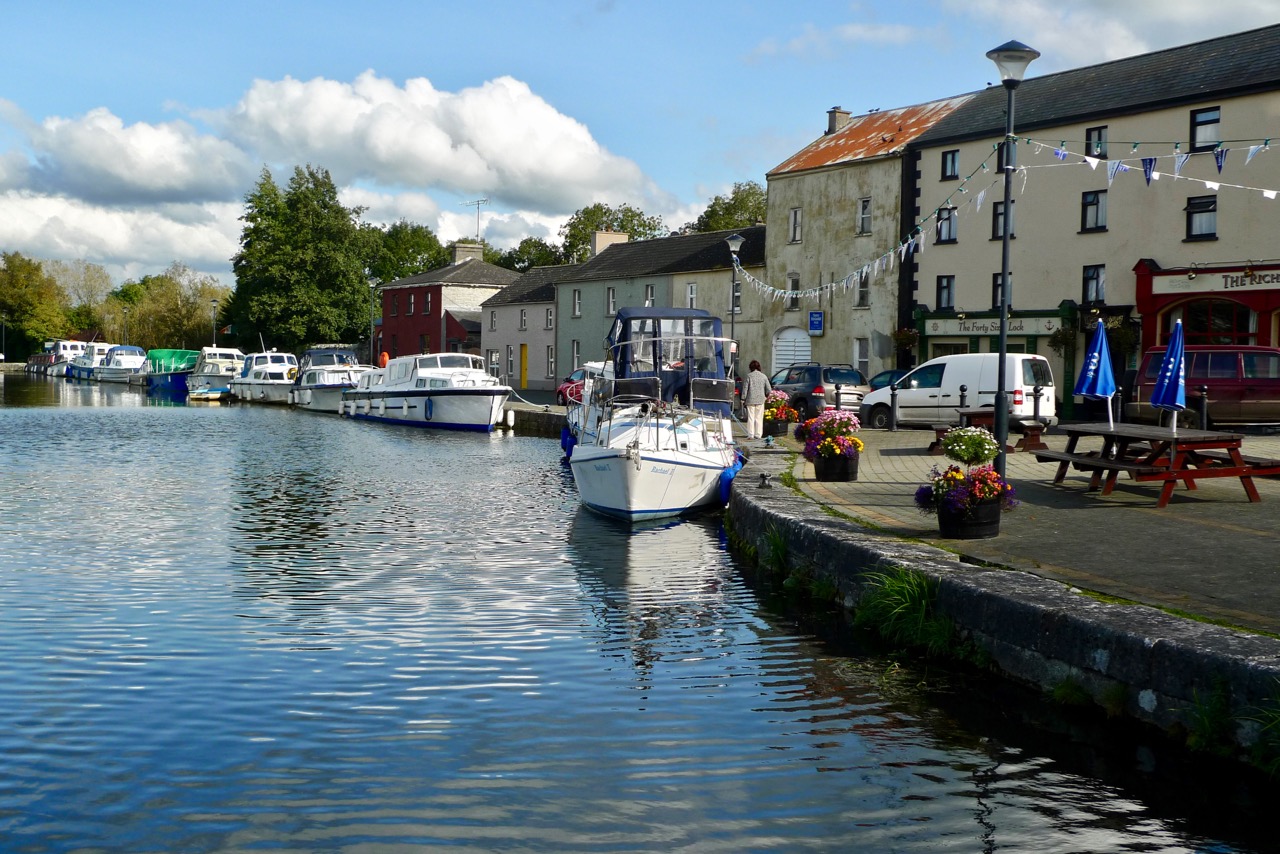
We spent some weeks in the summer exploring the waterways of Ireland, following in the wake of Tom and Angela Rolt who had made a pioneering voyage in 1946, when the canals were in a state of decline. In fact, the Rolt’s boat Le Coq was the last to make the complete journey through the Royal Canal, which became derelict and finally closed in 1961. When they passed through Richmond Harbour in County Longford – the junction of the Royal Canal with the River Shannon – they paused to visit the corn mill at Cloondara: this mill ceased operations in the 1950s, not long after the Rolts’ visit.

Cloondara Richmond Harbour 1946

Richmond Harbour 2016

Upper photograph by Angela Rolt: Richmond Harbour in 1946 – the single boat is Le Coq. Lower photograph shows the same scene in 2016, seventy years later; the Royal Canal (which closed in 1961) has been fully restored, re-opening in 2010

We found Richmond Harbour to be a thriving small community; a boating centre which has benefitted from the restoration of its canal. Comparing the two pictures above – separated by a span of seventy years – the architecture of the place has hardly changed: only the buildings on the right seem to have been significantly updated, although they retain the structural form of their predecessors.

lock and mill

Forty Sixth Lock

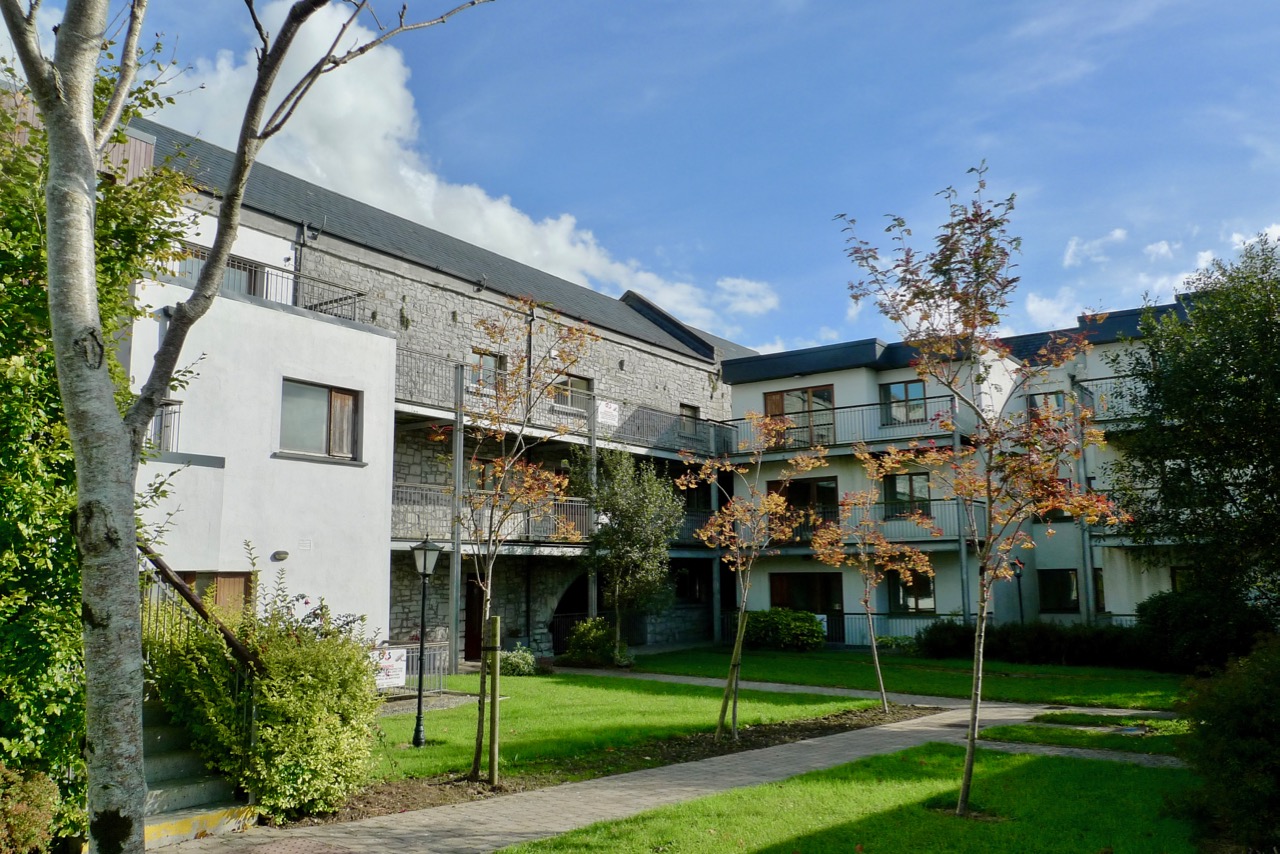
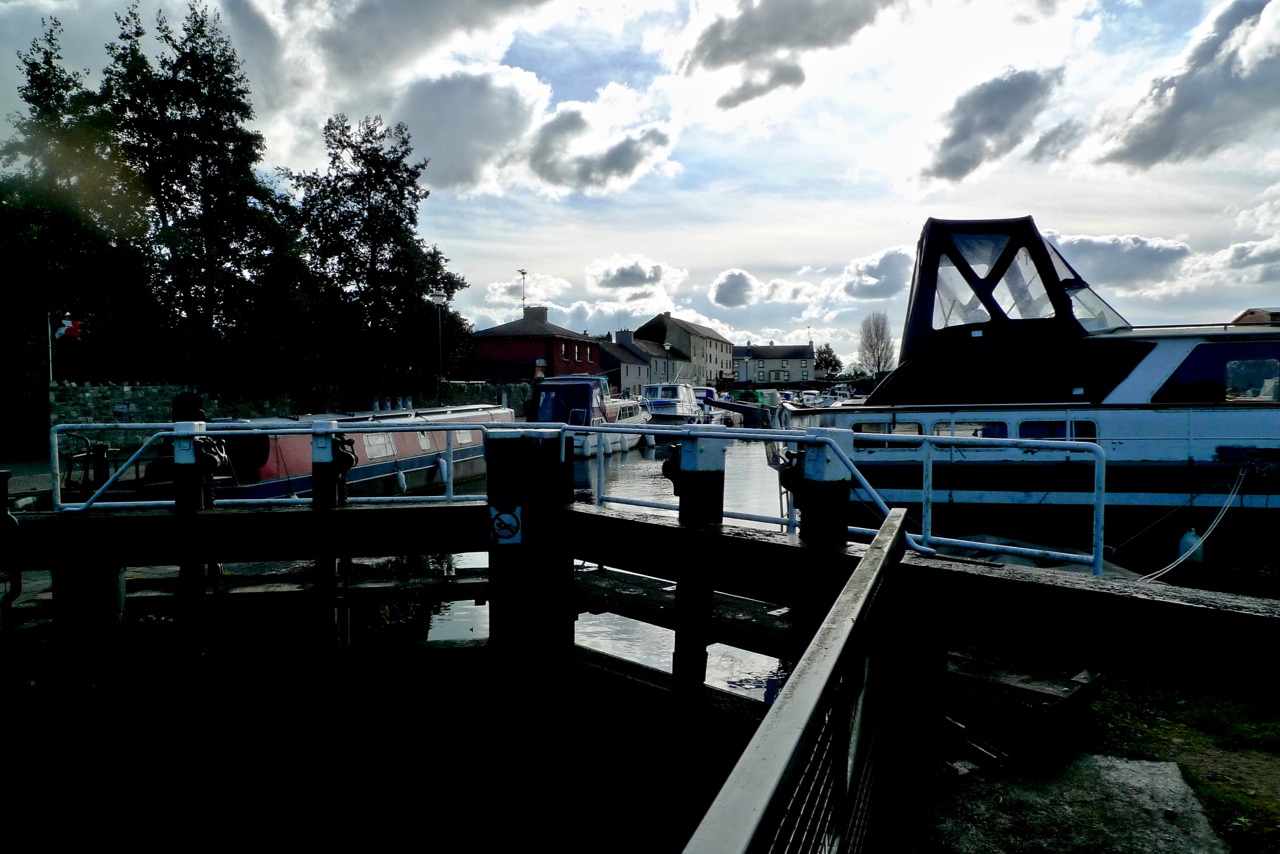
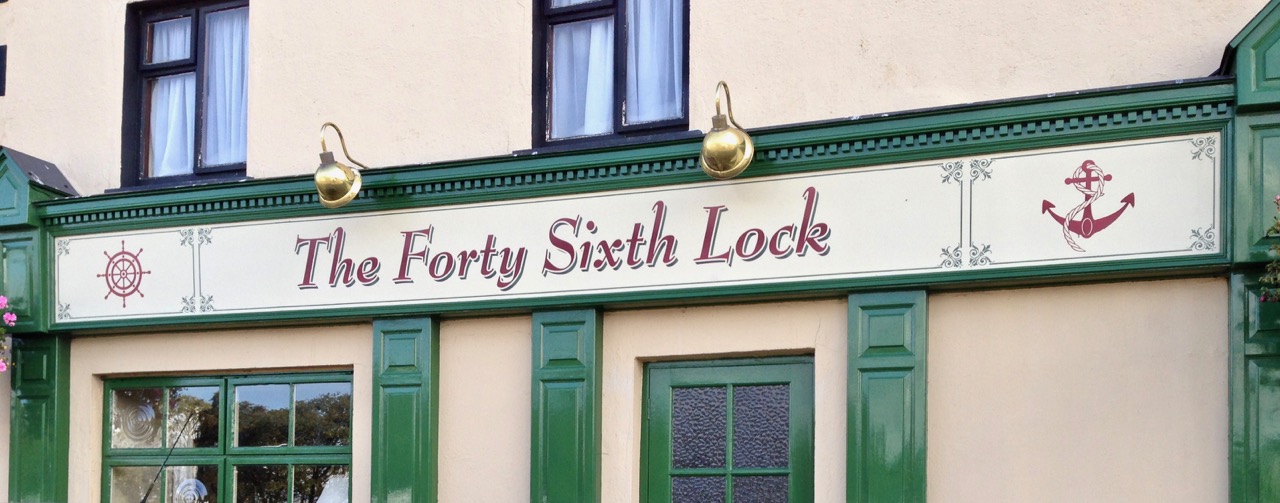
The settlement retains its focus on the water, and there is evidence of some economic activity based around the canal harbour. I was particularly keen to see what had happened to the mill which Rolt describes in such detail; it remains, converted to an apartment complex. This seems to be an ambitious undertaking within such a small community: there are vacant apartments and signs that maintenance is falling behind in places, but it has to be a good thing that the project has respected and built on to the original industrial architecture. The impressive building is largely intact and continues to hold its original character, while some of the machinery has been retained to provide historical visual references.

apartment complex

This series has given me a fascinating project to research and record (there’s more to come!). I only wish the Rolts were still around – I would like to discover their own reactions to the evolution of Ireland’s waterways system in the years since they travelled here.


Saint Oliver

plunkett window close

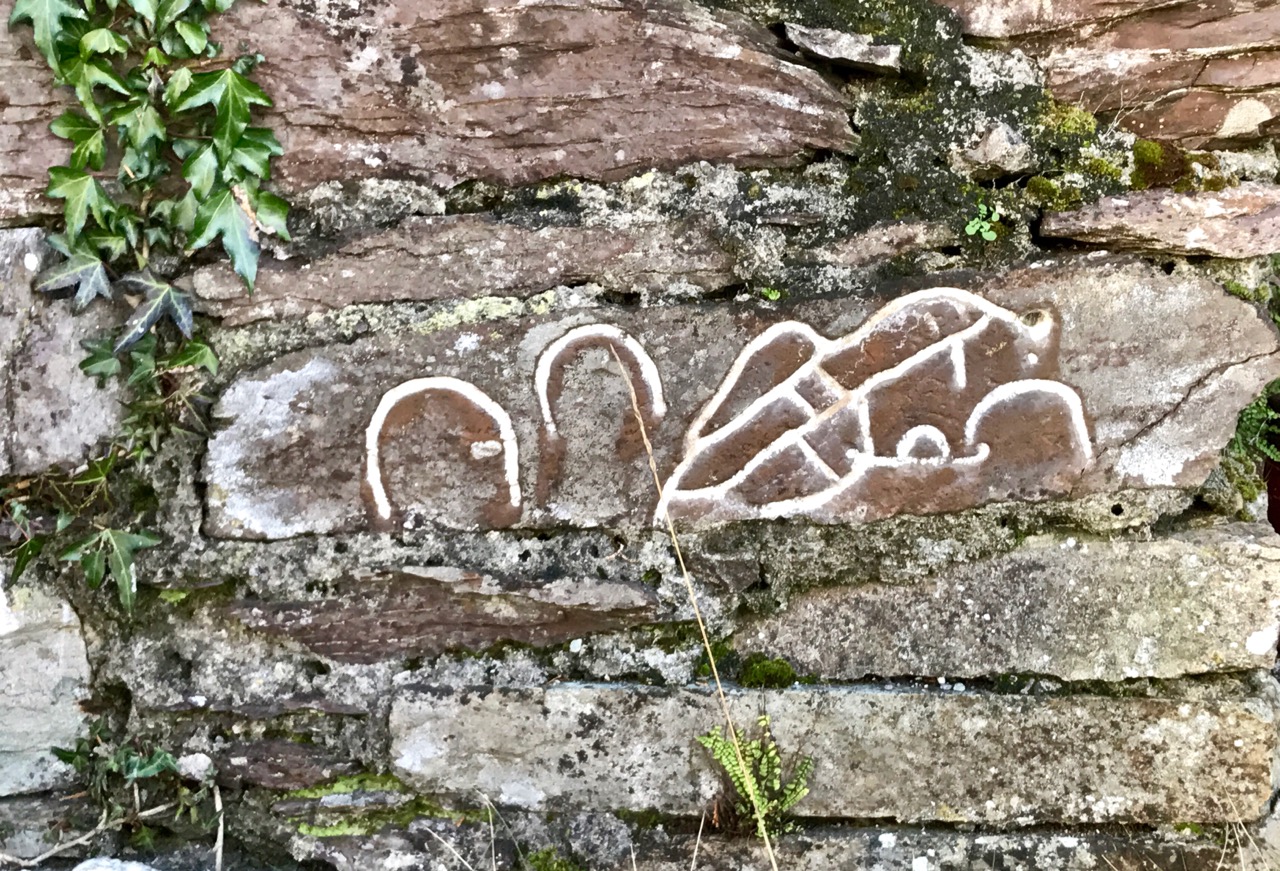
We revisited Inchigeelagh, in West Cork, as we remembered that the church of Saint Finbarr and All Angels had some fine examples of stained glass: Finola is preparing a talk on that subject and our travels are revealing an unexpected abundance of this art in our little bit of Ireland’s furthest reaches. Our last visit to Inchigeela was to inspect the unusual ‘rock art’ that has been built into the wall of the grotto just by the church door.

rock art inchigeela

We are none the wiser about the meaning of the ‘rock art’: suggestions include a dove of peace flying over mountains – but I have yet to be convinced. However, it was a good day for looking at the windows: the sun was streaming through the south facing glass panels and creating a kaleidoscope of colour on the surrounding walls.

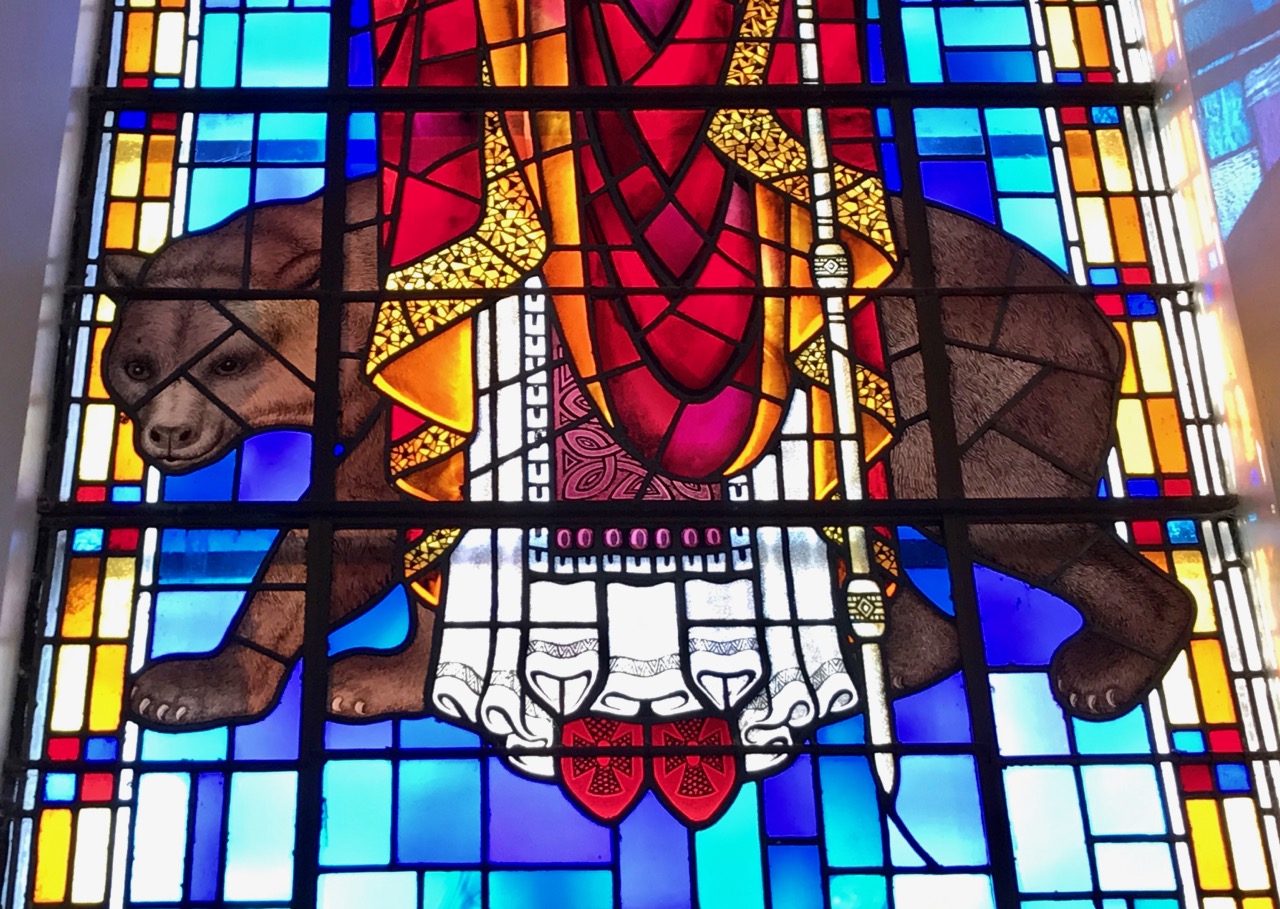
There was plenty to occupy my attention in this church: I had to admire the bear of St Columbanus. This Irish saint spent most of his life on missionary work on the continent and stories about him include taming the bear and yoking it to a plough, and establishing friendships with wolves. I’m not quite sure why, but St Columbanus is the Patron Saint of motorcyclists.

the bear

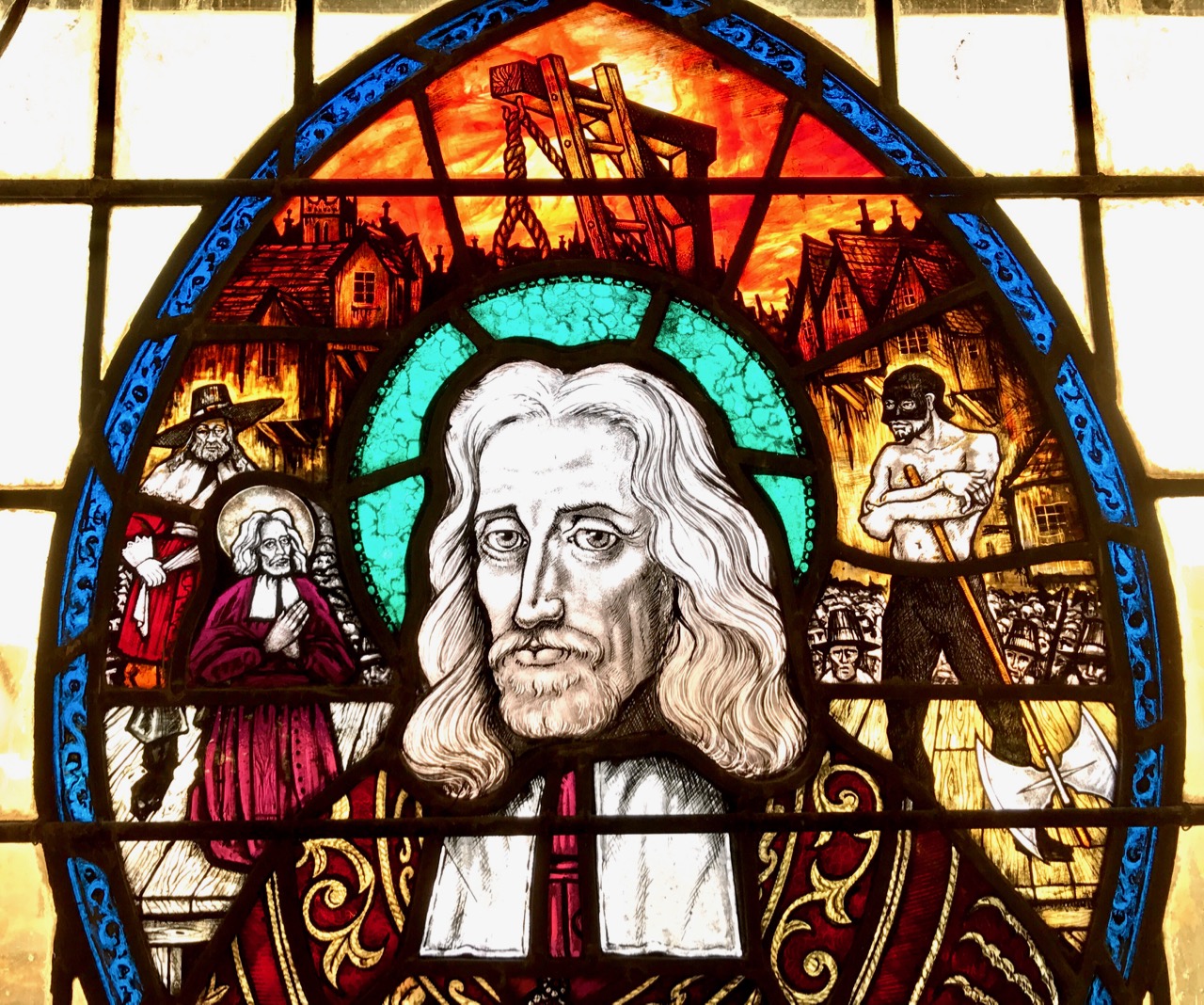
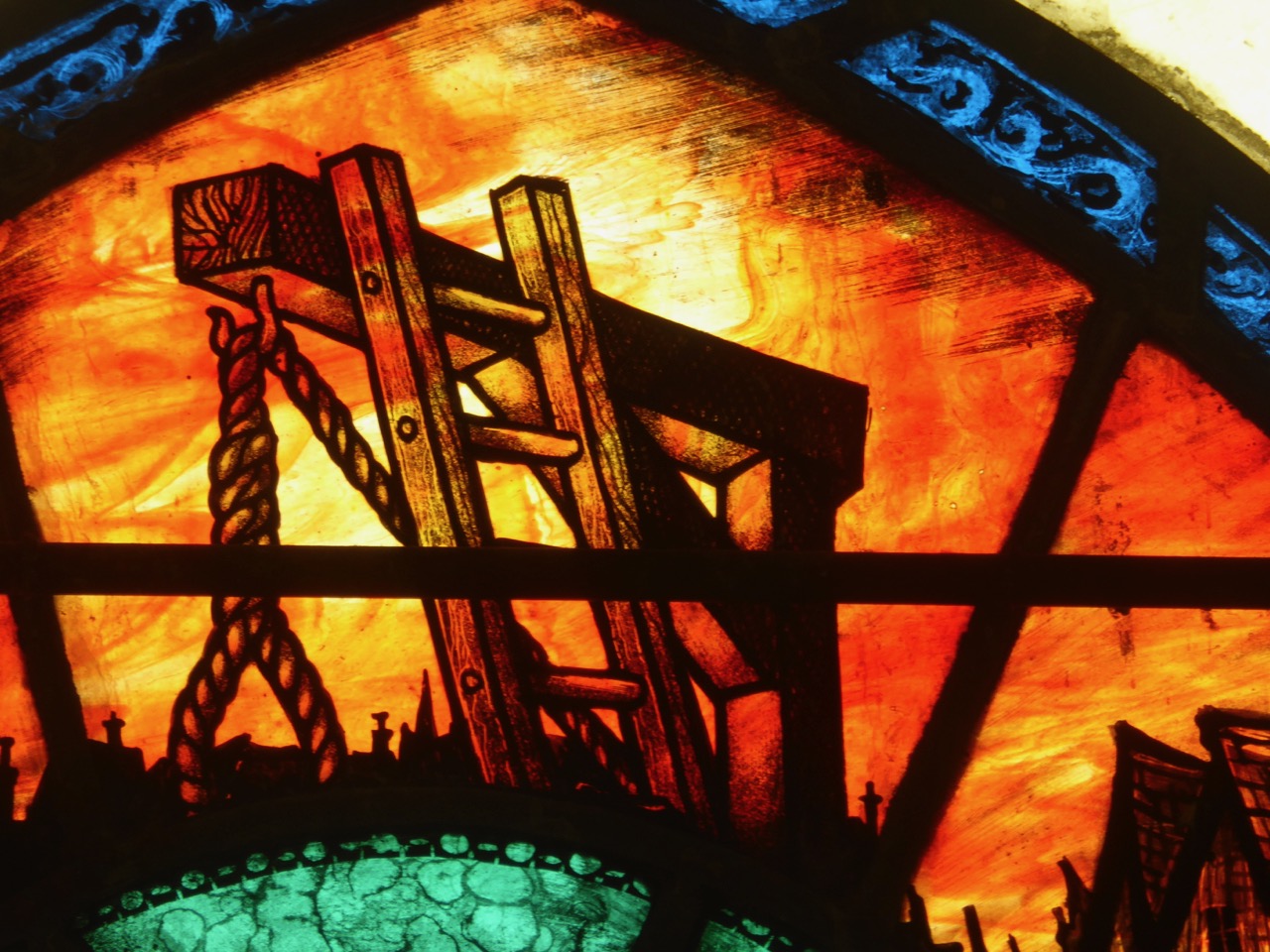
There was one window I had failed to notice amongst the panoply of saints on my previous visit to Inchigeelagh – tucked away at the back of the church: it’s the one at the top of this page – Saint Oliver Plunkett. In some ways it’s the most extraordinary of the windows as it depicts the gruesome death suffered by this Roman Catholic Archbishop of Armagh and Primate of All Ireland at the hands of turncoats and perjurers – and it’s a far cry from rural West Cork. Plunkett was born in 1625 in Loughcrew, County Meath and died at Tyburn, London: hanged, drawn and quartered, in 1681.

Gallows

He was a victim of the Popish Plot, concocted by Titus Oates, an English clergyman who contrived a story that Plunkett was to lead an uprising involving 20,000 French soldiers. Whichever account you read, it seems that no-one believed the story: a trial was held in Dublin but there was no conviction. Plunkett was then sent to Newgate and put on trial again: again the trial collapsed. A third trial, at which Plunkett had no counsel, found him guilty after the jury had retired for fifteen minutes. That it was a monumental miscarriage of justice became evident very quickly: Plunkett’s accusers were arrested – the day after his execution.

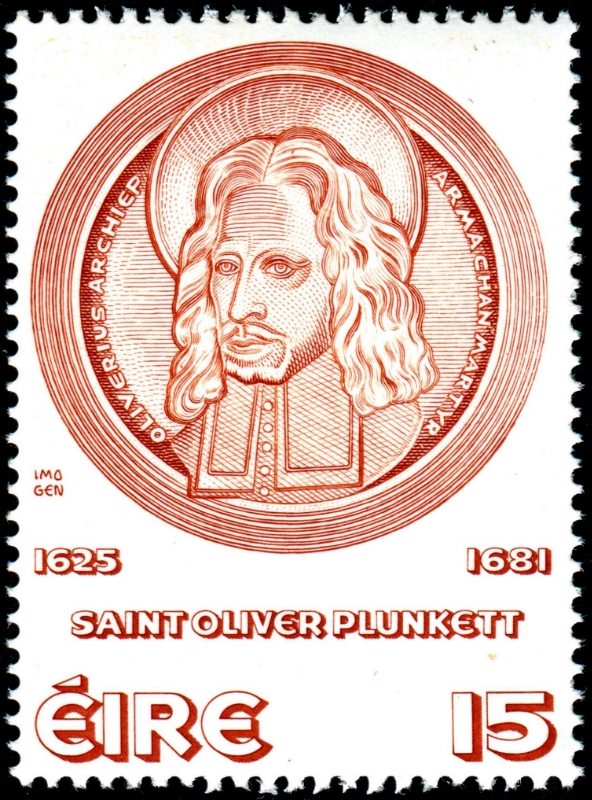
Perhaps the reason why Oliver Plunkett appears in Inchigeelagh is topicality: he was canonised in 1975, thus becoming the first new Irish saint for almost seven hundred years. Above is his shrine in St Peter’s Church, Drogheda, County Louth (his head is on display) and his Canonisation picture. St Oliver is the Patron Saint of Peace and Reconciliation, which in the mid-seventies was timely for Ireland. As ever, it’s timely for the world today. The Oliver Plunkett window was made by Abbey Stained Glass Studios, Dublin in 1992 and the artist was Kevin Kelly.

plunkett-15-stamp

All Silver and No Brass

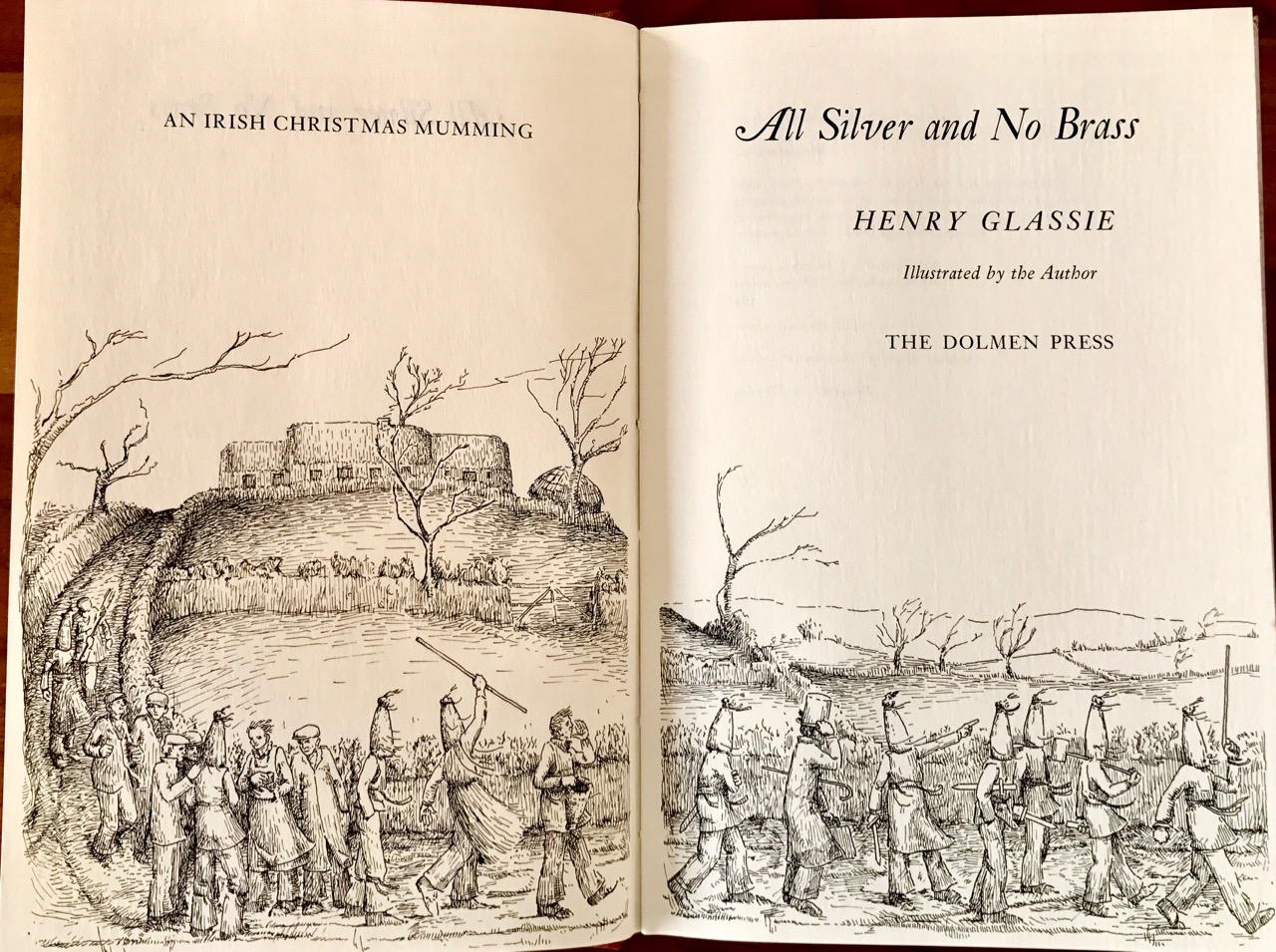
title page full

Henry Glassie’s book has been sitting on my shelves for 40 years, waiting to be dusted off and revisited. As a Mummer myself, I eagerly searched out any book on this then neglected subject, and was pleased to find this volume which concentrated on the Mumming tradition in Northern Ireland. It is written and illustrated by Henry Glassie, a Professor of Folklore at Indiana University Bloomington, and is the product of an extended field trip to County Fermanagh in the early 1970s.

Henry Glassie – born 1941 – has written many books about life and traditions in Ireland. His first was All Silver and no Brass, published by The Dolmen Press in 1976

…Winter nights in Ireland are black and long. A sharp wet wind often rises through them. Midwinter is a time to sit by the fire, safe in the family’s circle, waiting for the days to lengthen and warm. It is no time for venturing out into cold darkness. The ground is hard, the winds bitter. But for two and a half centuries, and possibly for many years before them, young men braved the chilly lanes, rambling as mummers from house to house, brightening country kitchens at Christmas with a comical drama. Their play, compact, poetical, and musical, introduced an antic crew and carried one character through death and resurrection…

(From the Preface to All Silver and no Brass by Henry Glassie)

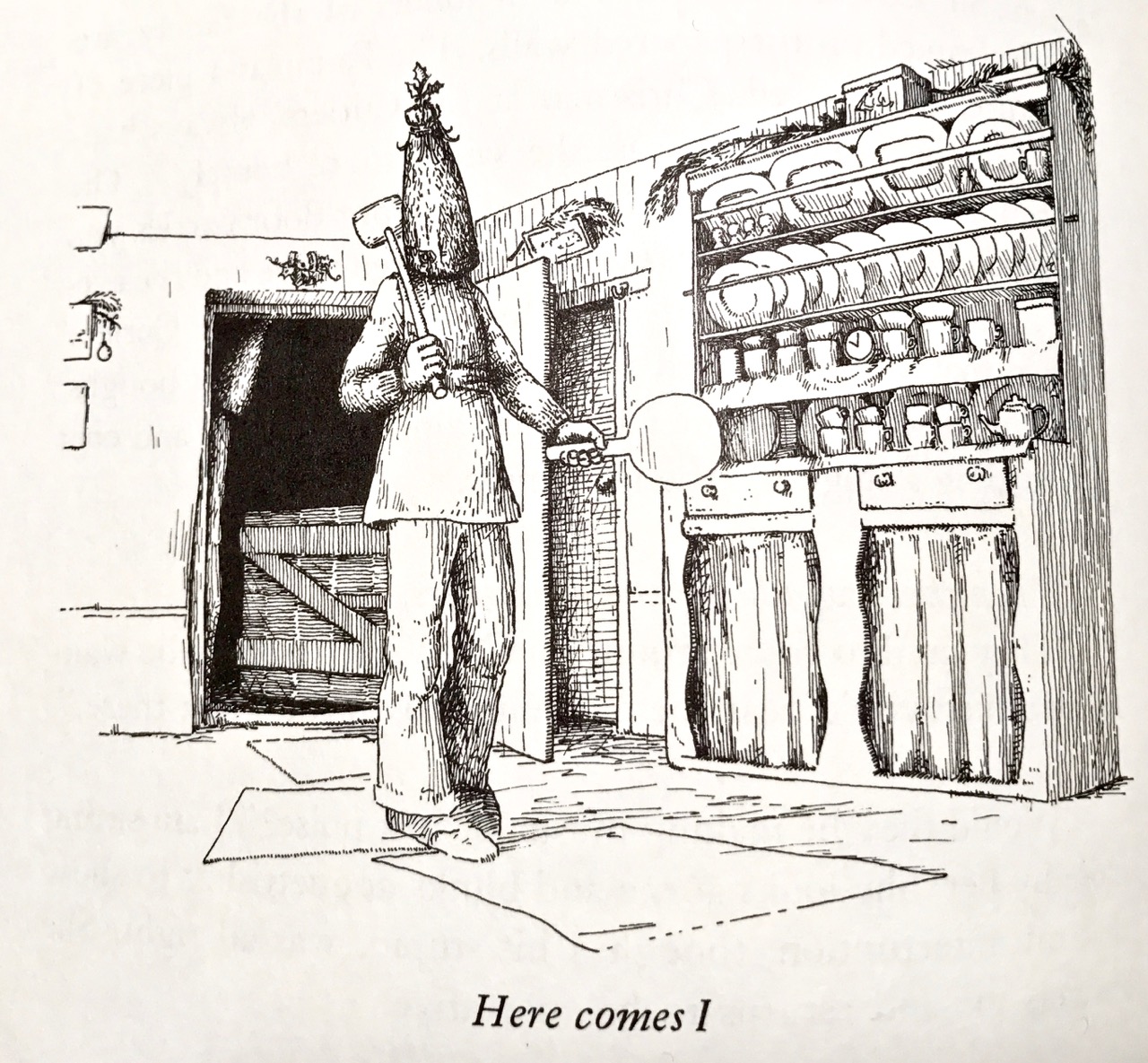
here comes I

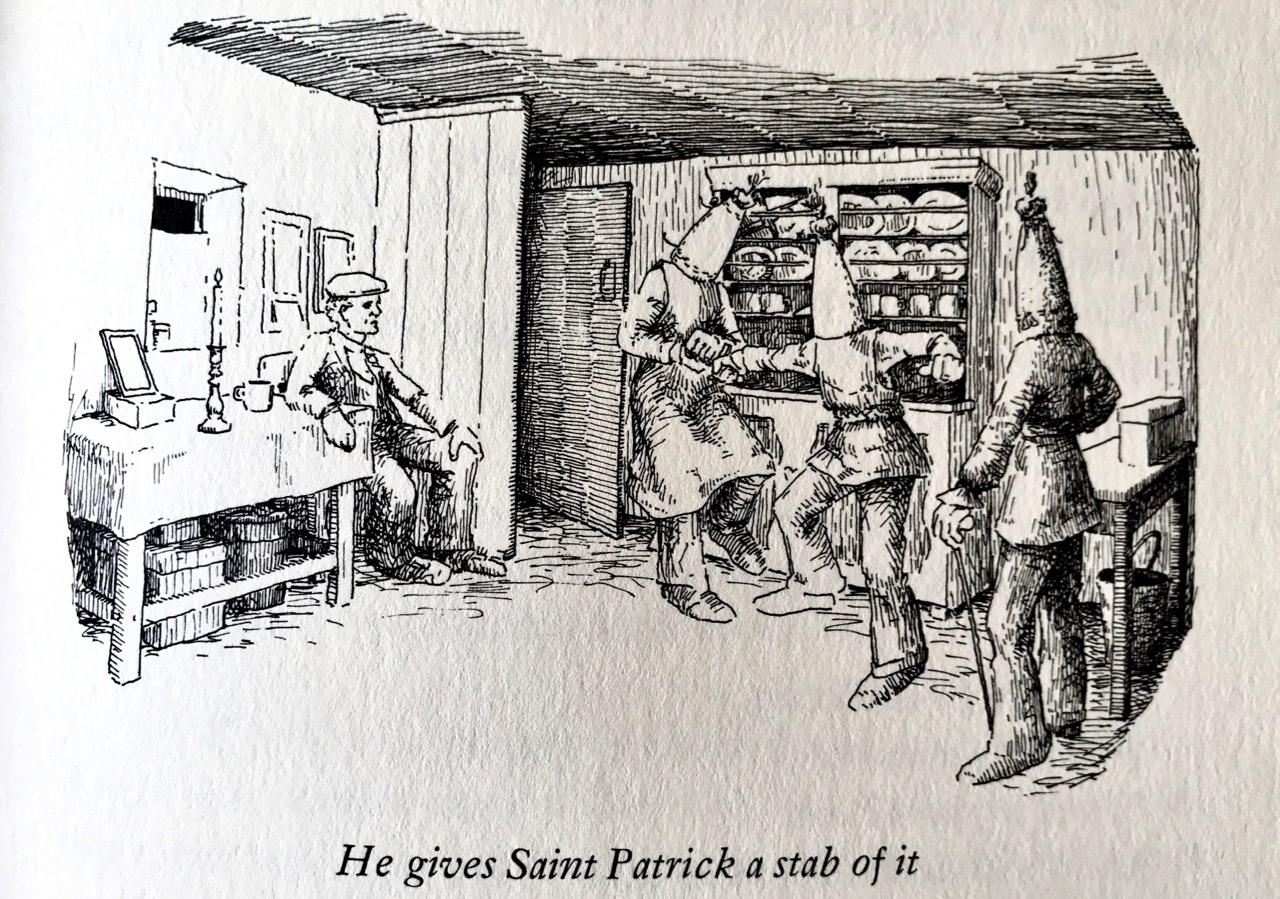
saint patrick

Glassie stayed in Ireland during the Troubles, and deliberately chose a community that was close to the upheavals of those days.

…Mumming was neither my project nor my goal. My project was the creation of an existentially grounded ethnography of people in trouble… We settled next to the barbed-wire bound barracks in the southwest Ulster town of Enniskillen, in the County Fermanagh, about twelve miles north and east of the burning border. I began quickly, luxuriously conducting my study on foot. I came to know every dog, bog, path and field in a small area south of the town, lying west of Upper Lough Erne, its waters as bright, its isles as green as promised in the old ballad of the Inniskilling Dragoon…

Enniskillen, from a photograph dated 1900, and Henry Glassie’s illustration of the mummers ‘Doin the Town’ as remembered in the 1970s

I like the way the book is set out. One section transcribes a number of conversations that Glassie has with people who remembered – and had been involved with – the mumming tradition.

…Most of the kitchens at the centers of those white houses were opened willingly, generously to me. My Americanness set me outside the local social categories, so I got on well with people of opposed political and religious persuasions. More of the people were Catholics than Protestants, more were men than women, more were old than young. Almost all had made courageous adaptations within the terrors that frame our lives. That was what interested me most: how daily life passed sanely, even artfully, despite armored cars hurtling down the country lanes, despite bombs that cracked the air and rattled the windows. I had forgotten all about mumming. Then one evening Mrs Cutler and I were chatting about Christmas and she mentioned the mummers’ arrival as the season’s high point. Suddenly excited, I asked if any of the play’s performers were still alive, and she listed people I knew well. All of them were men in their sixties and seventies who had begun to stand out in my thinking as exceptionally energetic, outgoing, and articulate. From that time on, I asked many questions about the drama, its performance, meaning, and purpose. I learned that the memory of mumming is cherished…

wren-boys

Upper picture – Wrenboys from Athea, Co Limerick, 1946 and below – ‘Mummers hunting the wren’ in Macroom, Co Cork, around 1950

Glassie talks at length to two brothers, Peter and Joseph Flanagan, who have very clear memories of taking part in the mumming.

“…We’d just take every house that we faced, whether we’d be admitted or not. We’d just take every house that we’d face. Of course, there was people on the other hand that wouldn’t admit them because it might frighten the youngsters, you see, or cause some confusion. That’s the way. That’s the way it goes now. So, You all stood at the door and…”

He twists and rapidly knocks five times on the table.

“…’who’s there?’

“…’Captain Mummer. Any admission?’ Yes, aye, or no: that was the way. ‘Any admittance for Captain Mummer and his men?’

“and if the person was pleased to admit you, well, they’d open the door. Throw it wide open for you.

“And Captain Mummer walked in.”

Peter moves quickly from his seat and down the kitchen. His heavy boots sound sharp on the floor. He closes the front door behind him, raps on it thrice, and re-enters. He strides ten feet into the kitchen and stands to deliver his lines, turning his torso to project to the audience assembled in a semi circle that runs from the front table past the hearth to the back table. Joe and I are fixed upon him…

“Here comes I, Captain Mummer and all me men.

Room, room, gallant room, gimmee room to rhyme,

Till I show you some diversion round these Christmas times.

Act of young, and act of age, the like of this were never acted on a stage.

If you don’t believe in what I say, enter in Beelzebub and he will clear the way.”

Frowning, Peter returns to his stool. It has been years since he has thought of the rhymes. “Let me see now,” he says, and sits repeating the speeches of Beelzebub and Prince George under his breath. Joe picks up the large turf out of the fire with the tongs and sets them at the front of the hearth. He sweeps the thick ashes off the iron to his side with a besom, places new turf against the backstone, and arranges the old coals next to them. The smoke and glow increase as the new turf ignite. Joe, too, went mumming, but he went out less often than Peter and cannot remember the part he played. He sits back as Peter starts in again…

Henry Glassie’s drawing of ‘how a mummer’s hat is made’ together with two examples from more recent times

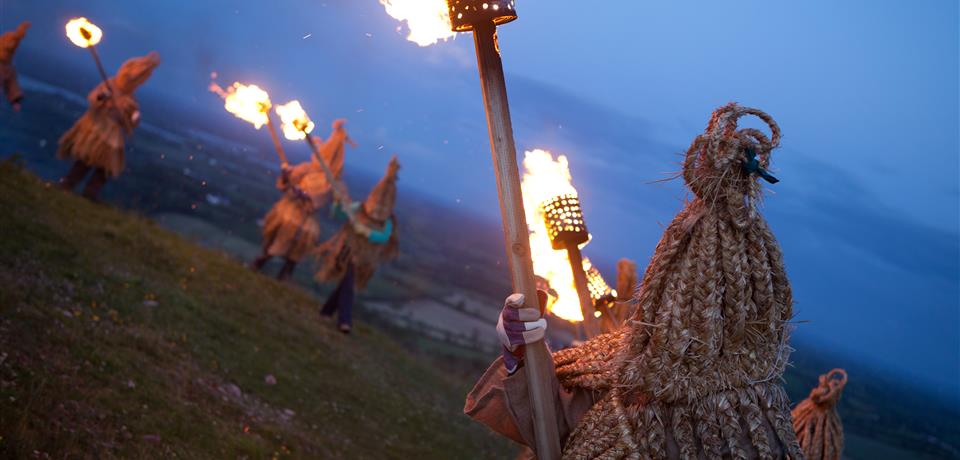
Glassie’s writing goes on to describe the recollections of the play from those who undertook the performances. It is an invaluable record: his informants have now passed away. They would probably be surprised to know that their plays have not been lost: a new generation is performing in the north – and elsewhere on the island of Ireland. They would be even more surprised, perhaps, to learn that their own play breathes again: there is a Mummers Centre in Derrylin and the Aughakillymaude Community Mummers (Aughakillymaude translates as the wooden field of the wild dog) perform regularly in the area around Christmas time once more, while at other times they travel across Europe keeping the spirit of mumming in Ireland very much alive:

aughakillymaude-mummers

Aughakillymaude Community Mummers in full cry (above)  and (below) Henry Glassie’s reconstruction of the performance before the hearth

the performance