Grand Canal Hotels

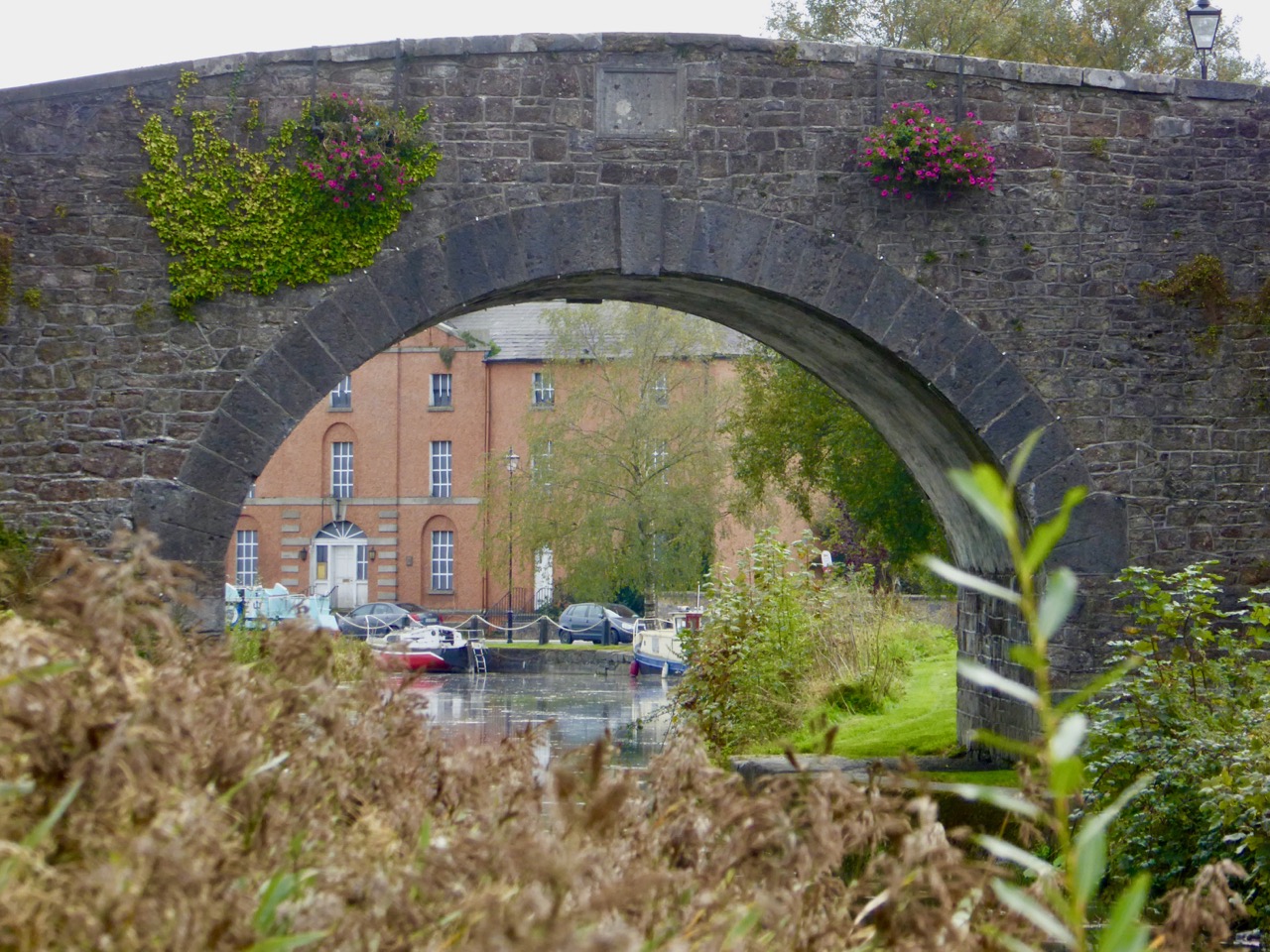
rbtstown hotel through bridge

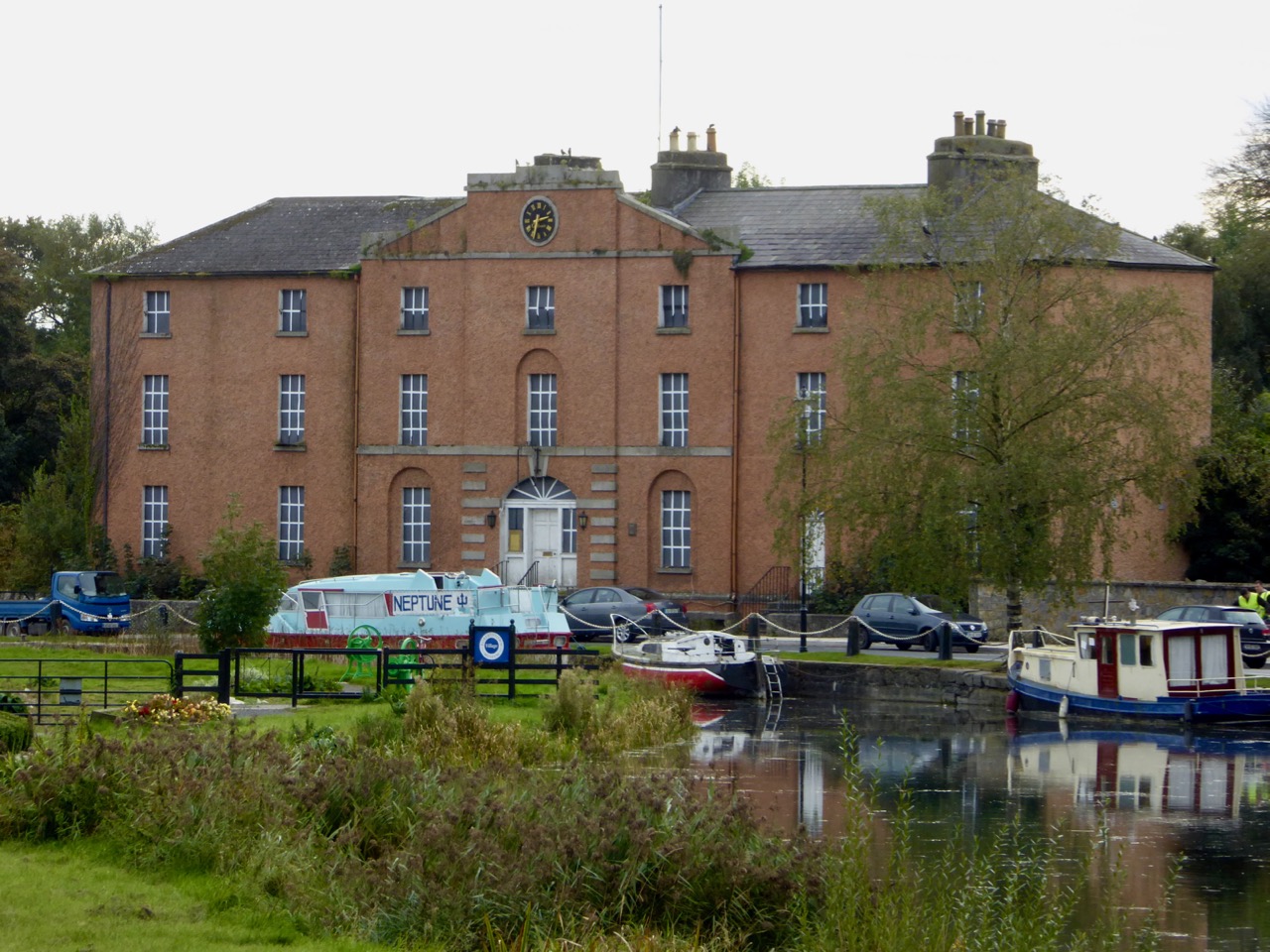
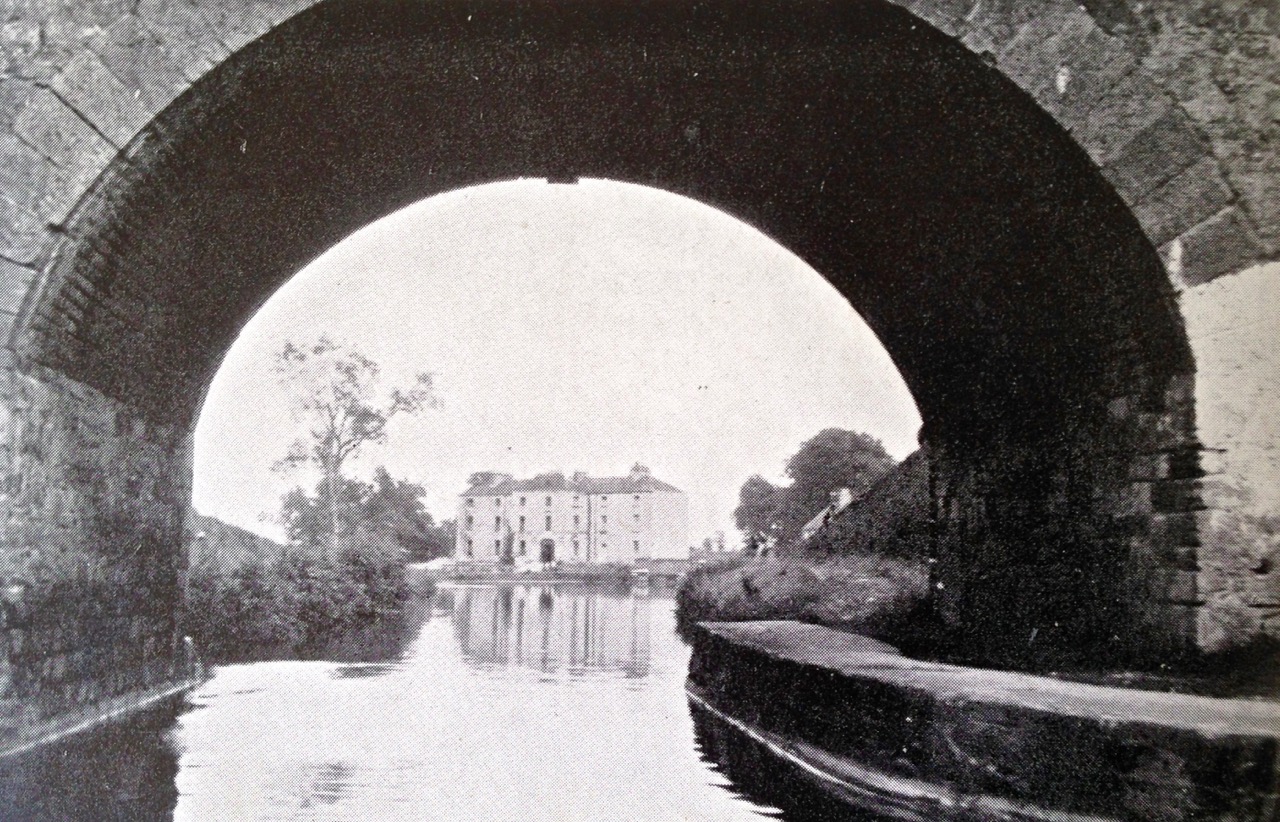
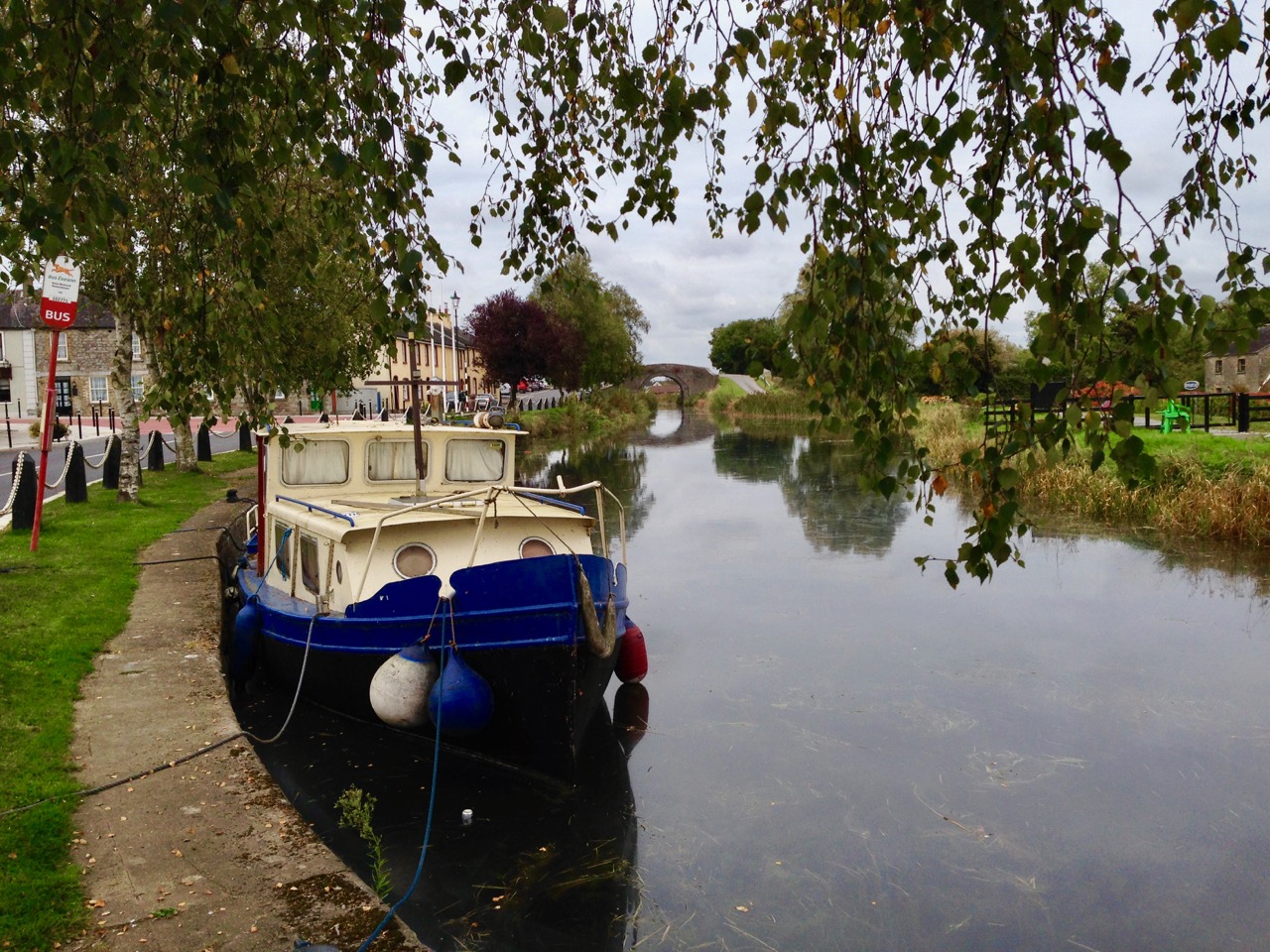
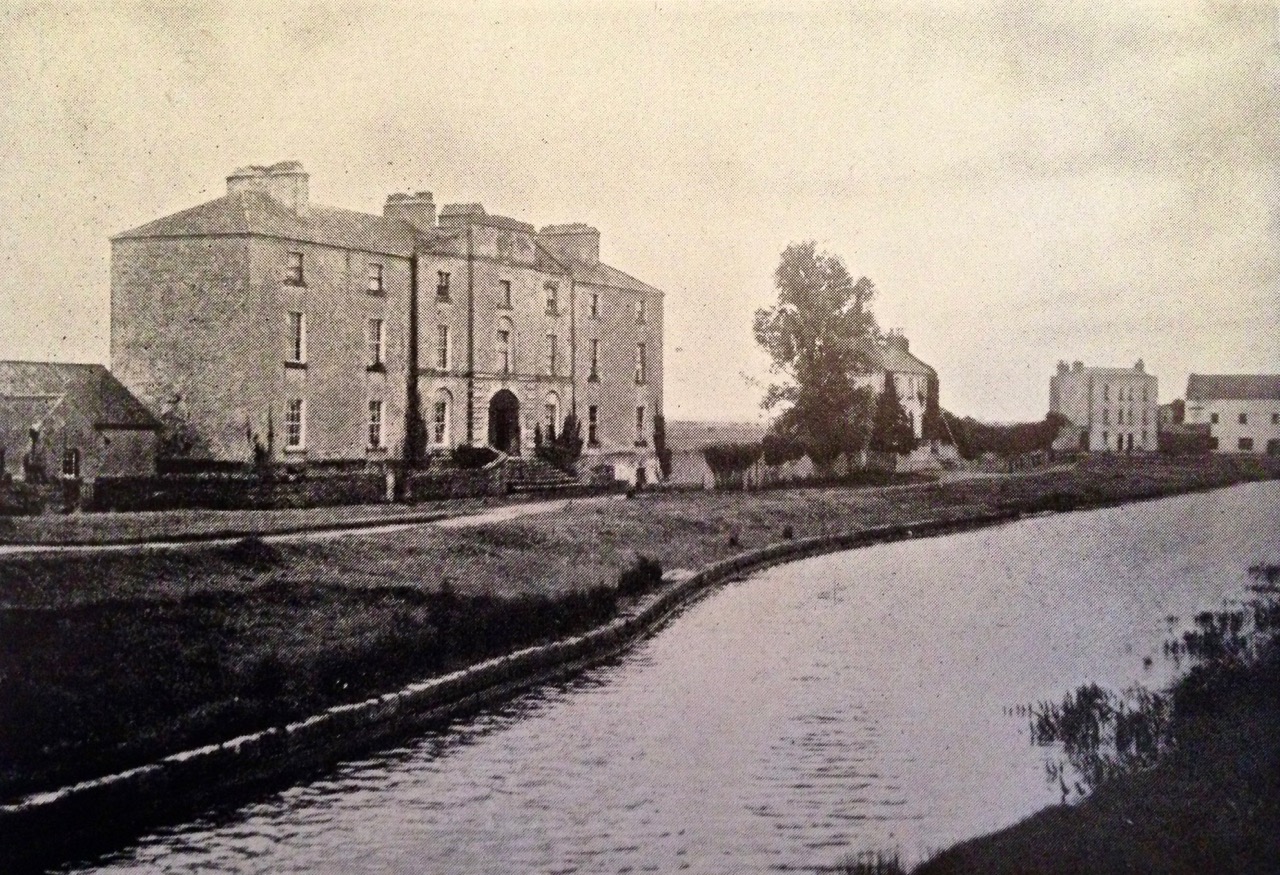
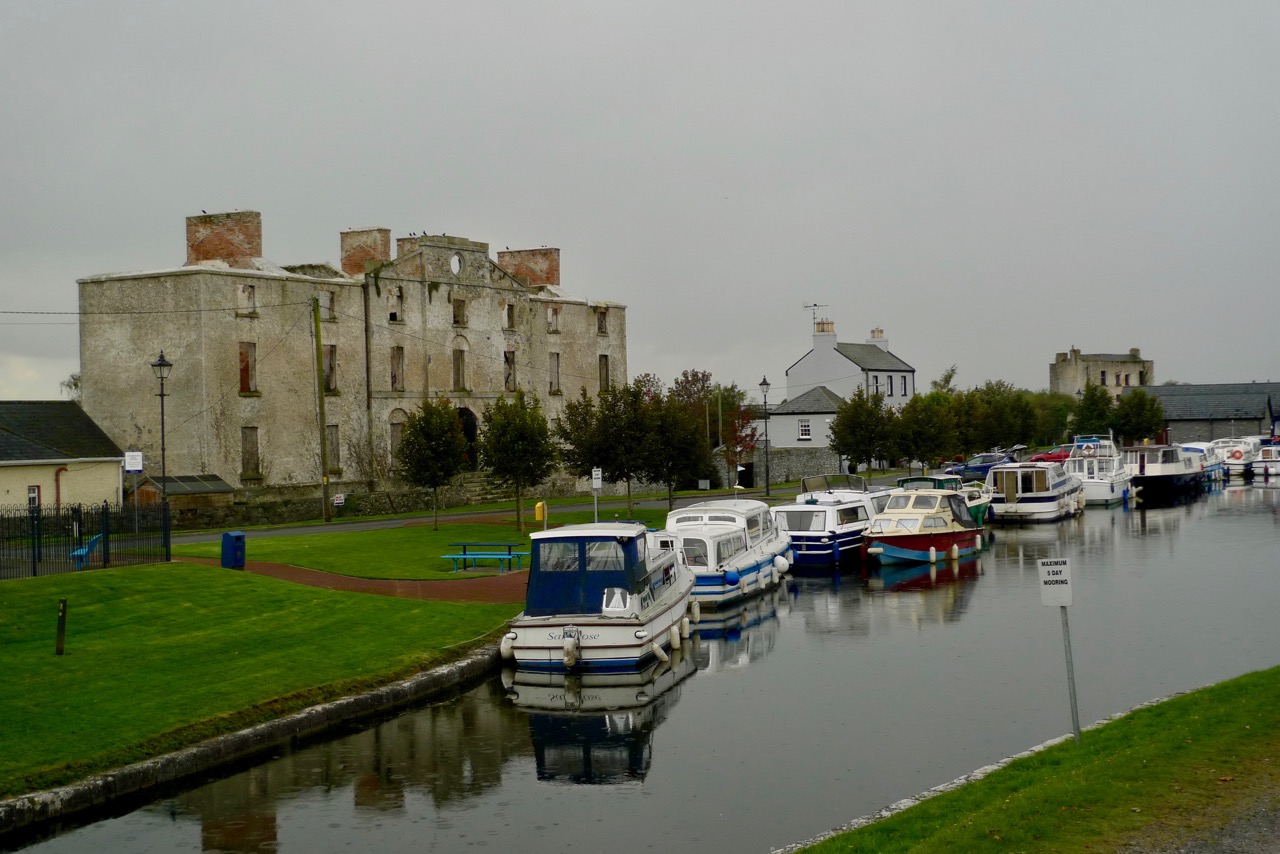
This view of the old hotel on the Grand Canal at Robertstown, Co Kildare, is our best effort to replicate the photo taken by Angela Rolt in 1946 for Green & Silver, Tom Rolt’s book about their Irish waterways adventures exactly seventy years ago:
robertstown

Angela Rolt’s 1946 photograph of the Canal Hotel at Robertstown. We could not get the same view (which must have been taken from their boat) as we were on dry land! By clever manipualtion of her lenses, Finola produced our own version (top picture)

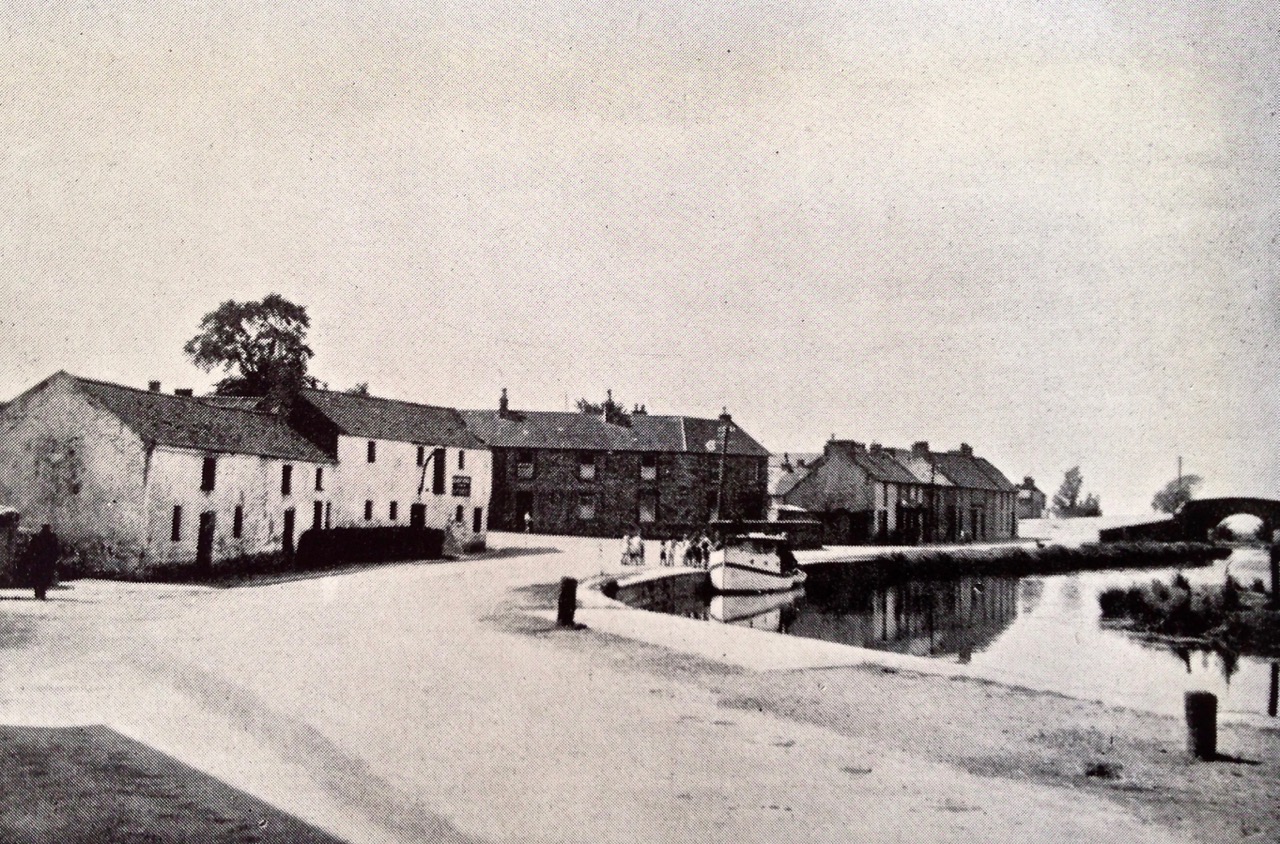
…We had travelled less than a mile along the summit level before we saw ahead, framed by the arch of a bridge, the canal hotel at Robertstown. It is an almost exact replica of the Shannon Harbour hotel, but is in better repair being at the present time a Turf Board hostel for workers on the bogs. Robertstown itself, a whitewashed canal depot, a post office and a shop and ‘select bar’ or two strung along the canal waterfront beside the hotel, is a canal village… There was, for me at any rate, a fascination about Robertstown which I find difficult to define and which our photograph can scarcely convey. A particular atmosphere, melancholy, nostalgic yet captivating, always invests a waterfront no matter whether it is that of some old seaport town, some cliff-walled fishing cove or merely, as in this case, some inland village beside a still canal. It captivates because it is a doorway to the unknown and so appeals to our sense of adventure and that nomadic instinct which lies buried in all of us. It is nostalgic because it recalls memories of places visited and never perhaps to be revisited. It is melancholy because it is redolent with the unnumbered farewells which it has witnessed; a reminder that life, in the words of some poet whose name I cannot recall, is a perpetual farewell… (from Green & Silver, L T C Rolt, George Allen and Unwin, 1946)
canal port

canal in roberstown

The canal village of Robertstown: upper picture – Angela Rolt’s photograph of 1946 sums up the ‘melancholy and nostalgic’ character of the place then. The Rolts’ boat, Le Coq – is seen moored up on the quay: its journey created significant interest as in those days the appearance of a ‘pleasure craft’ was rare. A crowd of small children always materialized out of nowhere to gaze, ask questions and – sometimes – throw stones. Lower picture – Robertstown in 2016

Rolt was a prolific – and often romantic – writer: more than 500 publications are attributed to him, including articles and letters and forty significant books on canals, railways, engineering and philosophy: Green & Silver is the second of these. His summing up of Robertstown as ‘melancholy and nostalgic’ reflects the times in which he lived and travelled on the waterways. The heyday of canal transport was long gone, although the Grand Canal and Shannon were still in commercial use seventy years ago. Carrying then was in severe decline: it would only last another ten years or so and the Rolts’ transit of the Royal Canal was probably the last before the canal became impassable before being formally closed in 1961.
bargehorse robertstown

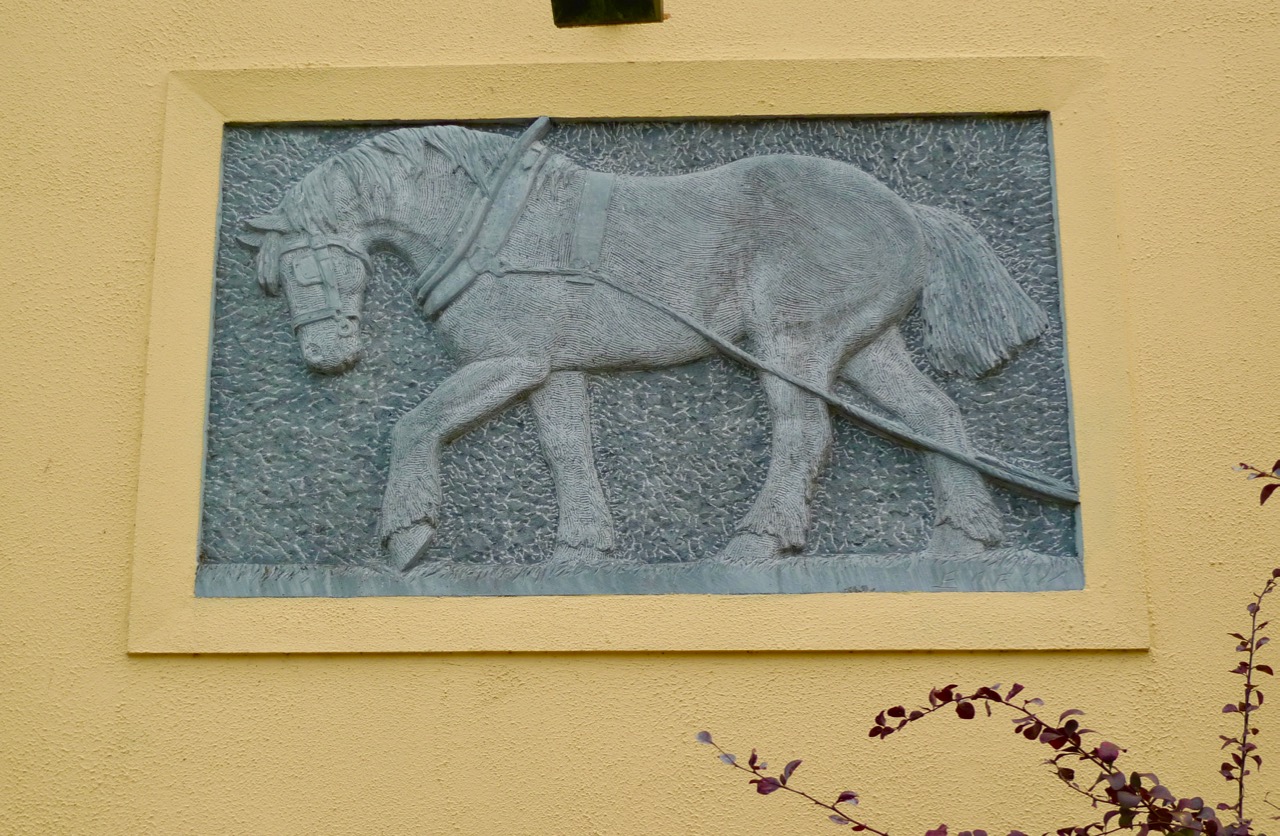
Horse drawn commercial traffic on the Grand Canal in Robertstown is remembered there in this modern relief carving of a barge horse on the wall of the Garda station

My own journeys on the English canal system during the 1960s could similarly be described as ‘melancholy and nostalgic’ and I certainly shared Tom Rolt’s fascination for what I found. The era of water transport was over and in those days the canals were imbued with an air of neglect and decay, although better times were remembered by the local populations. As did the Rolts, I had difficulties in making a passage through some of the near derelict canals in the English midlands with my little boat (often bow-hauling from the bank was the only answer to the weed and rubbish-choked ‘navigations’); however – like them – I always succeeded. Today, in both Ireland and England the picture is very different: generations of pioneering enthusiasts and campaigners (I was one of them!) have succeeded in reawakening interest in our industrial history and realised the amenity asset of the waterways systems which have generally been brought back in a new incarnation as ‘cruiseways’.
faded elegance robertstown

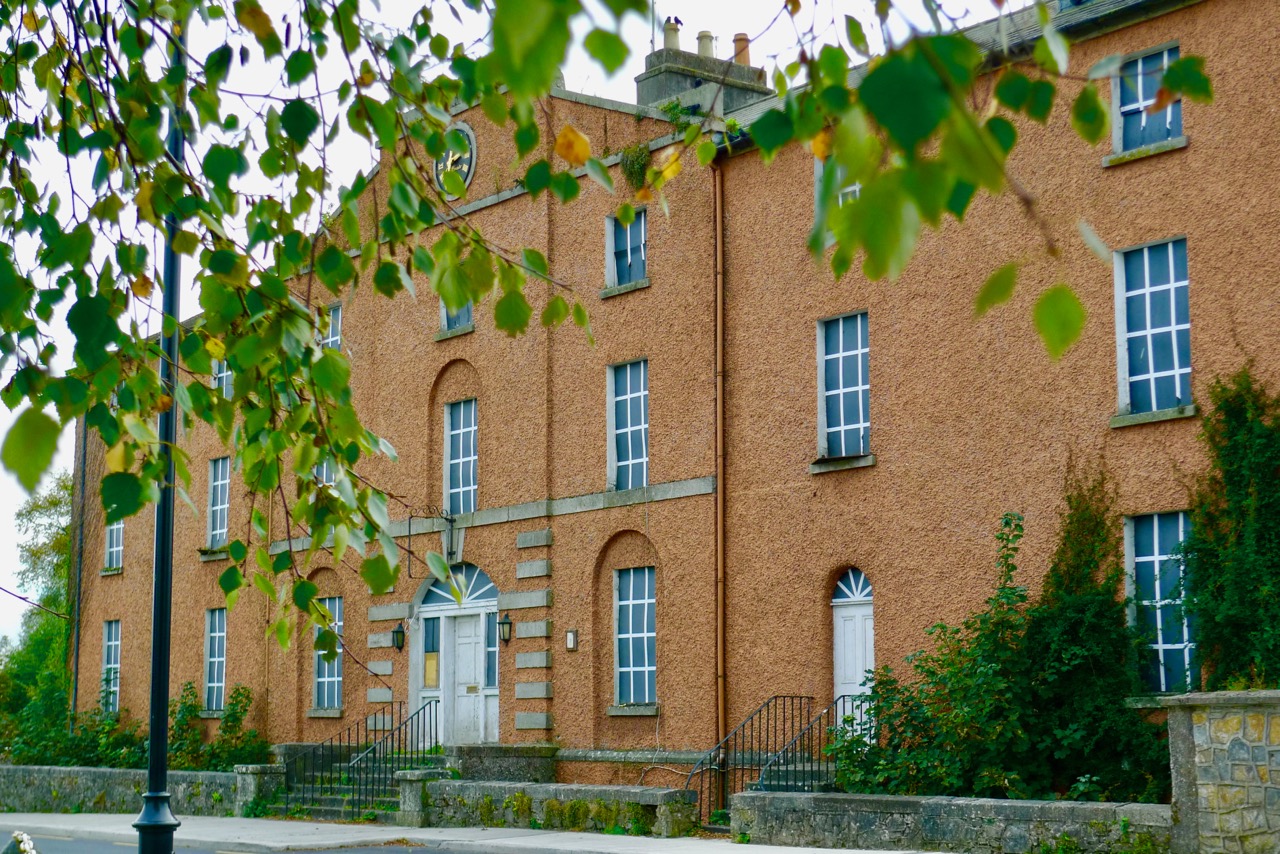
The Canal Hotel at Robertstown: from a distance it retains its elegant façade but it’s all a sham, and the building is in urgent need of conservation

In both places there is still an architectural and industrial heritage to be acknowledged. A particular example in Ireland is the Grand Canal hotels. There were five constructed originally: Shannon Harbour, Tullamore, Robertstown, Portobello and James’ Street Harbour. All were of a pattern and impressive architecturally. Two have vanished.
portobello-grand-canal-hotel

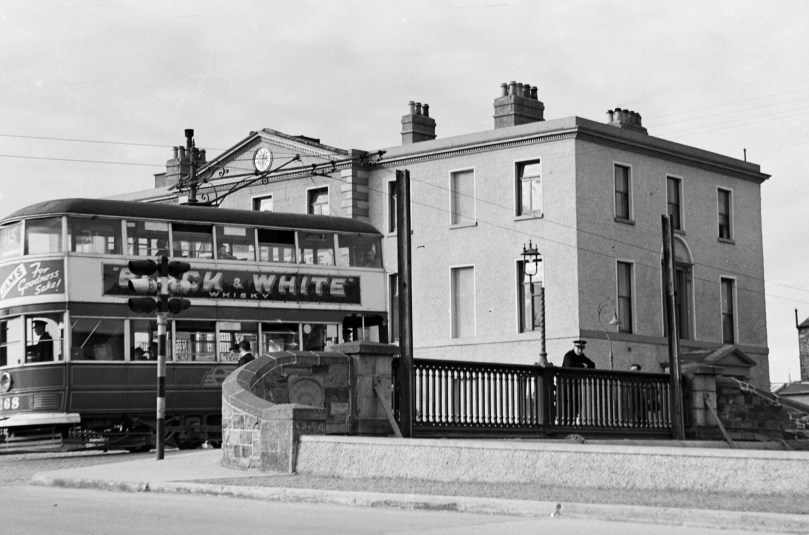
The former Grand Canal Hotel at Portobello Harbour, Dublin, in the 1940s: it became a nursing home (Jack B Yeats spent his last years there) and is now a private college

rbstown hotel elevation

Robertstown Canal Hotel: a local civic amenity group has painted in the fenestration to improve the look of this significant building in the townscape, but the reality is masked decay and an uncertain future

The other remaining hotel building is at Shannon Harbour, where the Grand Canal meets the mighty river. In the heady days of canal prosperity …the company’s hotels were simply the posting houses of this water-road… (Rolt) …There was considerable interchange of passenger as well as goods traffic at Shannon Harbour. Travellers changed here from the Dublin passage boats into Bianconi’s ‘long cars’ which operated between Birr, Shannon Harbour and Athlone in connection with the boats. Alternatively they might board the paddle steamers The Lady Lansdowne or The Lady Burgoyne which plied between Killaloe pier head and Athlone, calling at a jetty on the river near the mouth of the canal. Smaller craft sailed from Killaloe pier head to the transatlantic port of Limerick, and so the Grand Canal became a link in the route between Dublin and America…
Shannon Harbour, Grand Canal Hotel

shannon harbour view with hotel

Upper picture – Angela Rolt’s view of Shannon Harbour and the intact hotel. Lower picture – the same view in 2016, showing the hotel in a state of near dereliction

The Shannon Harbour hotel today is but a shell: the roof has fallen, the windows are empty sockets. But, like the building at Robertstown, it is a scheduled historic monument. The structure has been stabilised with steel props and there is talk – rumour, at least – of some future project. Even in its distressed state the hotel has a ‘grand’ air: certainly a prominent presence in the minimalist architecture of this small settlement which had a bustling past.

Shannon Harbour canal hotel: a stabilised shell today, recognised as historically and architecturally important for Ireland

It’s hard to imagine what the future could hold for such a monument of a different age, especially in this rural hinterland of County Offaly. Meanwhile, our own adventures continue – we still have some way to go yet to catch up with Tom and Angela Rolts’ voyages. This is the seventh instalment of the Travel by Water series. All the posts to date are available to view by clicking on the blue link.
canal fest robertstown

Clonfert, St Brendan – and the Ghost of British Fascism

yew walk 2016

Clonfert, Yew Walk

The yew walk at Clonfert  – ‘a great cathedral of natural growth’ – which Tom and Angela Rolt found so impressive on their visit to Clonfert, Co Galway, in 1946, during their travels around the waterways of Ireland. Their photograph is above; 70 years later we followed in their footsteps and took the picture at the top of the page

We were following the Rolt’s journey described in the book Green & Silver – this post is the sixth instalment of the Travel by Water series. We would certainly have included Clonfert in our own itinerary, as we could not have missed the incredible 12th century doorway of Clonfert Cathedral, a high point of Hiberno Romanesque architecture – that deserves a future post of its own. The Rolts walked to Clonfert from their mooring on the Grand Canal at Shannon Harbour, a round journey of over a dozen miles; we drove to Clonfert and managed to get thoroughly lost in the maze of tiny roads in that part of rural County Galway.

st brendan's grave inscription

The twelfth century doorway to Clonfert Cathedral – a medieval architectural masterpiece – and the grave of St Brendan which it faces

…Close behind the cathedral and sheltering with it among the fine trees which make Clonfert an oasis in the bogland, stands the Bishops Palace, now a lay residence. Having been courteously granted permission to explore the grounds, we found Clonfert’s celebrated yew walk which is reputed to date back to early medieval times. The yews have attained unusual stature, and their interlacing branches curve outward and then upward towards the light to form a series of those ogee curved arches beloved of the Gothic revivalists of the Strawberry Hill period. As the main walk runs from east to west with two short transepts radiating from a central crossing, the effect is truly remarkable and represents nothing so much as a great cathedral of natural growth. Moreover, the light within was appropriately dim and religious, the dark foliage excluding most of the light from the overcast sky. We found the silent twilight of this great nave of ancient trees strangely impressive, more so, in fact than the man-made cathedral close by. In spite of the difficulty involved we decide to make this the subject of our pictorial record of Clonfert rather than the often-photographed west doorway… (LTC Rolt, Green & Silver, George Allen and Unwin 1949).

nuns walk sign

Tom Rolt, the navigator of canals, devotes several passages in his book to Saint Brendan ‘the navigator’ and his many voyages all over the world until …having completed ninety three years… Brendan set out fearfully and alone upon his last voyage while his body was brought home to Clonfert for burial… (Green & Silver): …There is much evidence to support the belief that Brendan reached America nearly a thousand years before Columbus, that Newfoundland was his first landfall, and that he sailed from thence down the coast to the Bahamas and the everglades of Florida… Rolt goes on to admire the conjectured boat which Brendan and his small party of monks would have used: …The hull of this vessel of AD 551 bears a remarkable resemblance to that of an ice-breaker boat which I saw re-timbered at the yard of an English canal company in AD 1943. She was massively built of oak, iron fastened to the ribs, with a high prow and a whaleboat stern equipped with a steering paddle (the rudder had not then been invented). She was decked fore and aft, while the mast stepped in the well amidships bore a single lug sail. Her timbers were possibly skin-covered as the wooden curraghs of Inishbofin are today covered with canvas. She had considerable freeboard, and she shipped no oars but depended on sail alone. In this small but stoutly built craft, of which the Galway Pookawn of to-day is probably the direct lineal descendant, Brendan set forth to sail into the sunset…

Fascinating and curious juxtapositions in the offerings left at St Brendan’s Tree in Clonfert

The Rolts did not mention St Brendan’s Tree, which we encountered on our way to the yew walk. We don’t know how ancient or how recent this manifestation might be. It’s a horse chestnut and it is festooned with all the offerings one would find at a holy well – and more! In addition to statues, rosaries, cards, coins and ribbons there were toys, musical intruments, shoes – and underwear. We were guided to the yew walk by a forester working nearby: we expressed curiosity at the tree, wanting to know its history and efficacy but his response was pragmatic: “I’m Church of Ireland myself and wouldn’t be knowing anything about this sort of goings-on”.

Brendan made several voyages. Rolt continues the story: …It was upon Brendan’s return from his second voyage that he founded his monastery and college at Clonfert – Cluain Fearta Breannain or the meadow of Brendan’s Virtus. This was destined to become a great European University of three thousand students rivalled only by the similar institutions of Clonard and Bangor. Clear thinking was the liberal aim of education at this period… Fifteen years elapsed before Brendan once more set sail to Scotland, and Wales, visiting the great Welsh scholars Gildas the Wise and Cadoc of Llancarvan, and from thence to Brittany and the Cornwall of King Arthur… Where Brendan voyaged after this is uncertain, but rumour and legend associate the name of this indefatigable traveller with the Canary Islands, Teneriffe, Egypt, Palestine and the Isles of Greece. Yet the patron saint of seafarers returned to Ireland to die in the convent of his sister Brigh at Annaghduin…

Bishops Palace

Palace Interior

We found the Bishop’s Palace, which Rolt mentioned as being a ‘lay residence’ – presumably in good order – in 1946. 70 years later it is ruinous. We were intrigued and I determined to seek out its recent history. In doing so I chanced upon a whole section of Irish and British relationships which startled me, and seemed somehow to make entirely poignant the time span of 70 years which I have been observing in this series.

Discarded robin

A poignant moment – discarded robin and broken statue in Clonfert graveyard

I quote from an article in The Dublin Review, issue No 26, Spring 2007. This is an excellently written and comprehensive account of matters well beyond the remit of this little post, but I commend anyone who is interested in history – and the state of the world today – to read it. This extract continues the story of the Palace at Clonfert:

…In 1951, John Arthur Burdett Trench – obsessive huntsman since the age of eight, polo player and, in his mid sixties, possessor of a memory of having ridden home the winner of the Grand National at Fairyhouse at a time when English officers could still relax in the grandstand – sold Clonfert Palace near Eyrecourt in Co. Galway to an English family not long arrived in Ireland. The house had belonged to the Trenches for generations and had once been the residence of Church of Ireland bishops. It stood on the flood plain of the Shannon, a short walk from Clonfert Cathedral, hidden away behind its famous avenue of yew trees, an inconspicuous island of Ascendancy civility on the frontier of the vast bog. Like many other ancient mansions, its comforts and refinements had not survived the privations of the twentieth century and it was badly in need of restoration. Every day for months the new lady of the house would drive across the bogland roads from her temporary accommodation in Tipperary to supervise the installation of bathrooms, electricity and central heating, an Aga in the kitchen. Word spread that Clonfert Palace was being returned to its former glory and that there was work to be had from the new owners. They turned the ballroom into a drawing room and brought a carpenter from Banagher to build bookshelves that covered an entire wall. They filled the once-dilapidated rooms with fine furniture, replaced the broken sash cords on the windows, draped curtains made to measure in Dublin and hung paintings of their ancestors on the wall. They recruited a gardener, a housekeeper and a cook. Occasionally the lady’s husband would arrive in a large, exotic Buick driven by a French chauffeur.

Soon, it became known that the family bringing Clonfert Palace back to life was Sir Oswald and Lady Diana Mosley and their two sons. On the fifteenth of February 1952, the Westmeath Independent carried a short item entitled ‘Distinguished Residents’, disclosing that the previous Friday the Mosley family had ‘moved into occupation’ of the palace. ‘Sir Oswald and Lady Mosley, who have a large staff, are charmed with Ireland, its people, the tempo of its life and its scenery,’ the paper related, dutifully informing readers in a final sentence that ‘Sir Oswald was the former leader of a political movement in England’…

Frightening reminders of a world in chaos – less than a lifetime ago. Left – a poster from 1939 (Oswald Mosley led the British Union of Fascists) and – right – Mussolini and Mosley meet in Italy in 1936 (image from http://www.panorama.it/)

After the war, the Mosleys were virtually outcasts from Britain. Neutral Ireland seemed to offer them a retreat and a measure of civility. The Dublin Review continues:

…Sir Oswald would take his breakfast in bed. The Irish Times and Financial Times would be delivered from Eyrecourt. Lady Mosley would give her orders for the day to Mrs Swan, the cook. When Sir Oswald surfaced he might go for a long walk along the Shannon, passing the barges hauling cargoes of porter, coal or flour. On return he would set to work in his study. Nicholas Mosley has written about his father’s attachment to ‘the hierarchical … classless patterns of life … in the semi-feudal grandeur’ of the estate where he grew up in Staffordshire; in Clonfert Mosley seems to have replicated this idyll. Just as his grandfather had produced wholemeal bread, Sir Oswald supervised the growing of vegetables and ploughed the paddock to plant lucerne, a clover-like plant used for fodder…

bishops palace from neswpaper

This newspaper photograph of the Bishop’s Palace at Clonfert could have been taken around the time of the Rolt’s visit (1946) or after restoration by the Mosleys

The ‘idyll’ did not last too long. The Dublin Review again:

…One foggy night a few weeks before Christmas 1954, while Diana was visiting London, the Mosleys’ neighbours the Blake-Kellys were woken just before two o’clock by the whinnying of a pony in their stables. From their window they could see flames and smoke billowing from the Palace next door. Mrs Blake-Kelly sent her son to bang on the Mosleys’ front door and within minutes Sir Oswald, Alexander and their servants were standing on the lawn watching the flames consume their house. A French maid, Mademoiselle Cerrecoundo, rushed back into the house to fetch some clothes and was trapped at an upstairs window. Sir Oswald, Alexander and the chauffeur, Monsieur Thevenon, held a blanket under the window and she leaped to safety, hurting her back and her hand. Monsieur Thevenon drove to the Garda station in Eyrecourt and from there fire brigades were summoned from Ballinasloe and Birr. It took an hour and a half for the engines to arrive and by then more than half the house was lost to the blaze. The firemen cut through the roof with their axes to create a barrier to the advancing flames…

The story does not quite end there: as if some sort of retribution of biblical proportions were needed, even the land was punished. The Dublin Review concludes:

…By morning, when the firemen had finished their work and stood gazing at the hole rent through the roof of the house, cold westerly winds were gathering strength. It was the beginning of the worst storm in the midlands for a hundred years. Rain, sleet and snow poured down on the smouldering ruins of Clonfert and the winds reached hurricane force, knocking trees across the roads and felling the electricity wires that had been strung only in the last few years. Within a few days thousands of acres of land by the Shannon were flooded. The army came to evacuate farmhouses which were under three or four feet of water and drive cattle to high ground. Stone outhouses were washed away, corn stooks submerged and the swollen bodies of cows and pigs that could not be saved were left bobbing in the water…

protect

I was born in 1946, just when Tom and Angela Rolt were planning their exploration of Ireland’s waterways, but also directly after the turbulence of an awful global war which caused the deaths of over seventy million people. One of the elements which led to that war was the rise of fascism in Europe. In my lifetime to date I have seen fascism largely invalidated and the creation of a European Union whose members have worked towards common and positive aims. For seventy years there has been ‘peace in Europe’. Now – in 2016 – I have reason to worry about our children’s future; some things which should have been buried forever in the pages of history seem to be stirring. I desperately hope my foreboding is misplaced.

brendan stamp

Jazz Age Architecture

colours inside

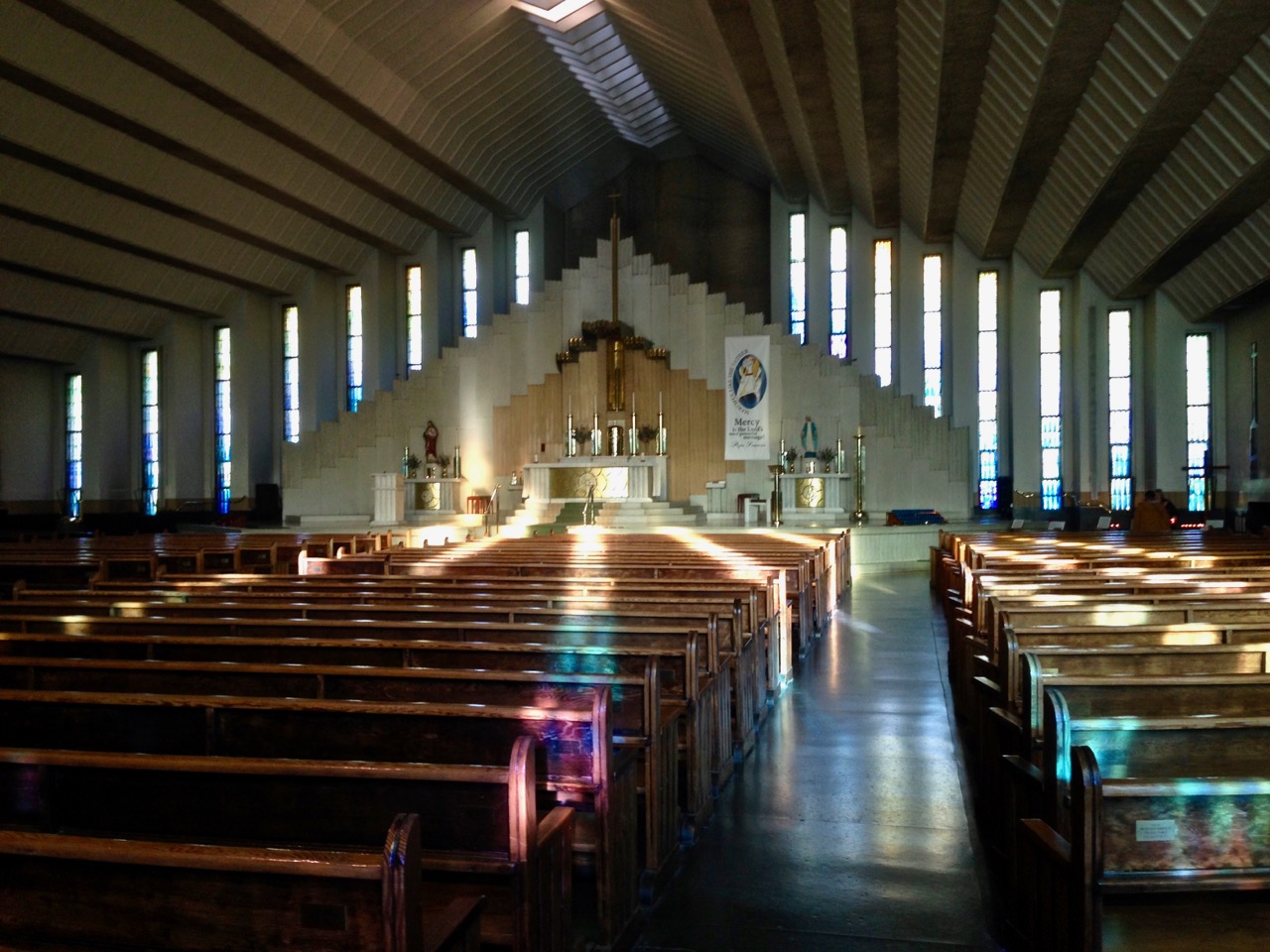
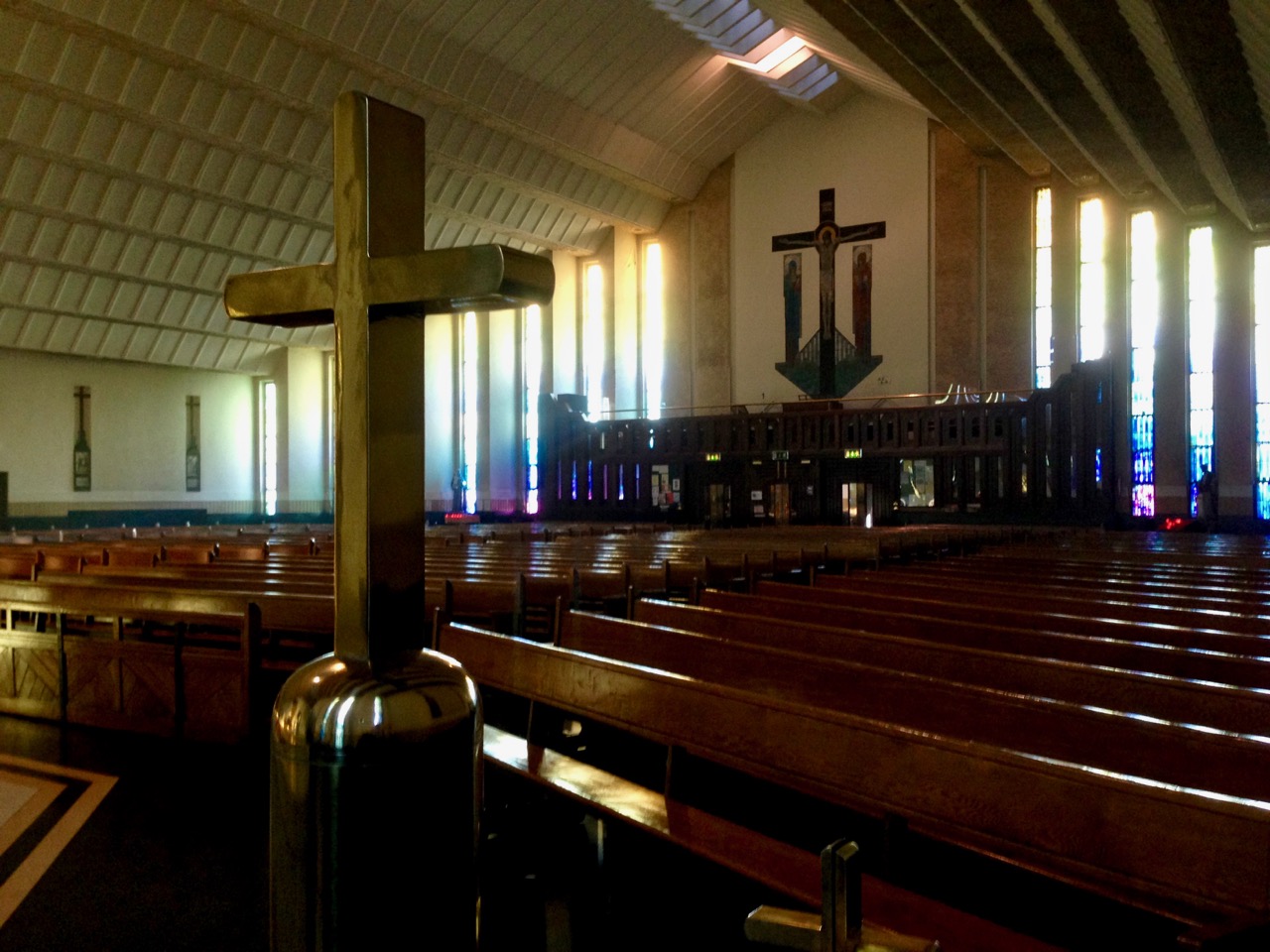
Did you know that in Cork city you can visit a very fine example of Art Deco architecture? A building, moreover, that was designed by a pupil and former employee of Frank Loyd Wright? It’s the Catholic Church at Turner’s Cross, Christ the King: by good chance today – 20 November – is The Feast of Christ the King, so what better day to take you on a tour of this remarkable structure that is deserving of a wider audience? It was Pope Pius XI who instituted this feast day for the Roman Catholic Church in 1925; today it’s celebrated also by the Anglican and Lutheran community and many other Protestant churches.

Left – the architect, Francis Barry Byrne of Chicago, with his design model; right – an aerial photograph of the Christ the King Church, Turner’s Cross, Cork, 1933

St Finbarr’s South Church, Dunbar Street, the oldest Catholic church still in use in Cork City, was built in 1766 and enlarged in 1809 but by the early years of the twentieth century was inadequate to serve the increasing population. A new church building was planned in the mid 1920s to remedy this, and the brief was that it should have a seating capacity of 1200 with room for a further 700 standing. This was going to be a large building, and the design would have to address issues of acoustics, lighting and the engagement of all the congregation with the enactment of the sacrements. Perhaps it was for that reason that its commissioner – Rev Daniel Cohalan DD, Bishop of Cork – looked beyond Ireland’s shores for an architect who might have suitable experience in the field. The Bishop also eschewed architects in Ireland and the UK because he apparently felt the costs of their services and their buildings were too high: the available budget for this project was only £30,000, and only 20,000 of that was for the building itself. The American architect Francis Barry Byrne was his choice. Byrne (whose mother Mary Barry Delaney had family roots in Co Wexford) had worked for Frank Lloyd Wright in Chicago before setting up his own practice in the same city. He had already completed a number of church projects and had written about modern church design.

Two of the architect’s drawings of 1928: entrance elevation (left) and floor plan (right)

Byrne put forward a plan which went against convention by creating a single wide space for church and sanctuary, bringing the altar closer to the larger part of the congregation. He also suggested brick and timber as suitable materials. The architect visited Ireland only once – to view the proposed site – and never saw the completed building, although he is said to have considered it the most successful of his church designs. A local supervising architect, James Rupert Boyd Barrett, was appointed to see the job through on site.

head of statue

profile silhouette

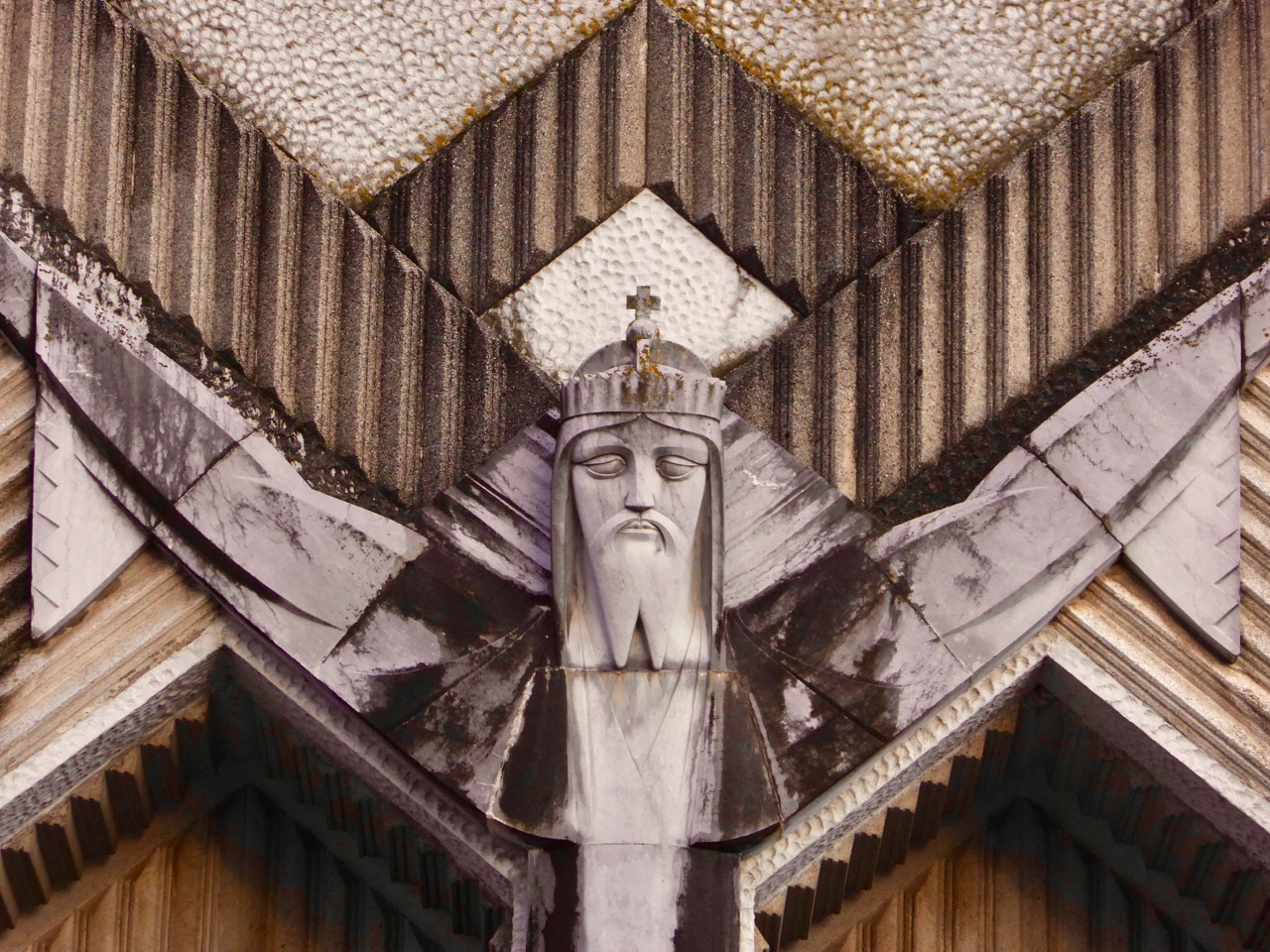
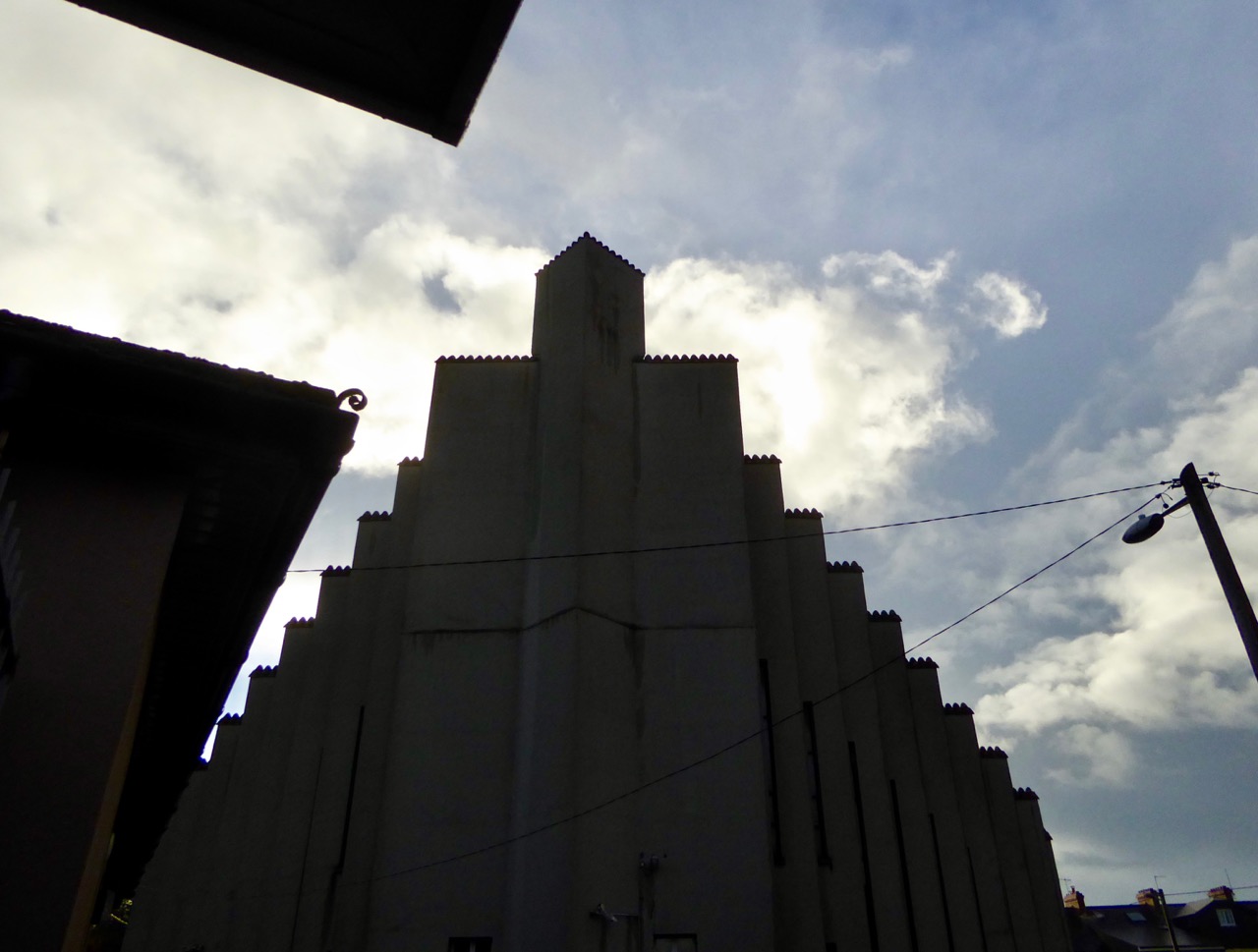
Upper pictures – the entrance, showing the statue of Christ the King: this was designed by Chicago sculptor John Storrs and executed locally by Cork sculptor John Maguire based on plaster models shipped to Cork. Lower –  the rugged profile of the church building

Like many another architectural project, costs began to escalate from day one. Poor ground conditions meant that the foundations had to be driven significantly deeper. Barrett suggested that costs could be recuperated if cast concrete could be used instead of brick for the main structure: conventional masonry is labour intensive and therefore carries relatively high costs. The suggestion was taken up and proved successful – the building was contained within its budget: in fact it came in slightly below. Byrne was impressed with the idea of using reinforced concrete (hitherto an engineering technique) and developed it through all his future church projects. Cork’s new church was, therefore, revolutionary in this aspect alone.

Left – the interior design, making use of Art Deco elements including chevrons: note the continuous central glazed rooflight. Right, a window detail

Building work commenced in 1928, shortly after the Pope had instituted the new Feast Day: it thus seemed very appropriate to dedicate the church to Christ the King.

looking to altar

The main body of the church – an inclusive space where the entire congregation is relatively close to the altars

Visually the church is startling. Its concrete walls are finished externally in hand thrown adobe style render: this, and the large red-pantiled roof, certainly call to mind an overgrown Spanish or Californian mission chapel – somewhat unexpected in the Cork suburbs. Naturally (like many another architectural project) it excited much criticism and – indeed – cynicism: it still does this to unwary passers-by, but the Parish has grown to accept and (largely) appreciate its very particular character.

west end

Detailing of the church fittings is integral to the overall design concept: the brass font is striking

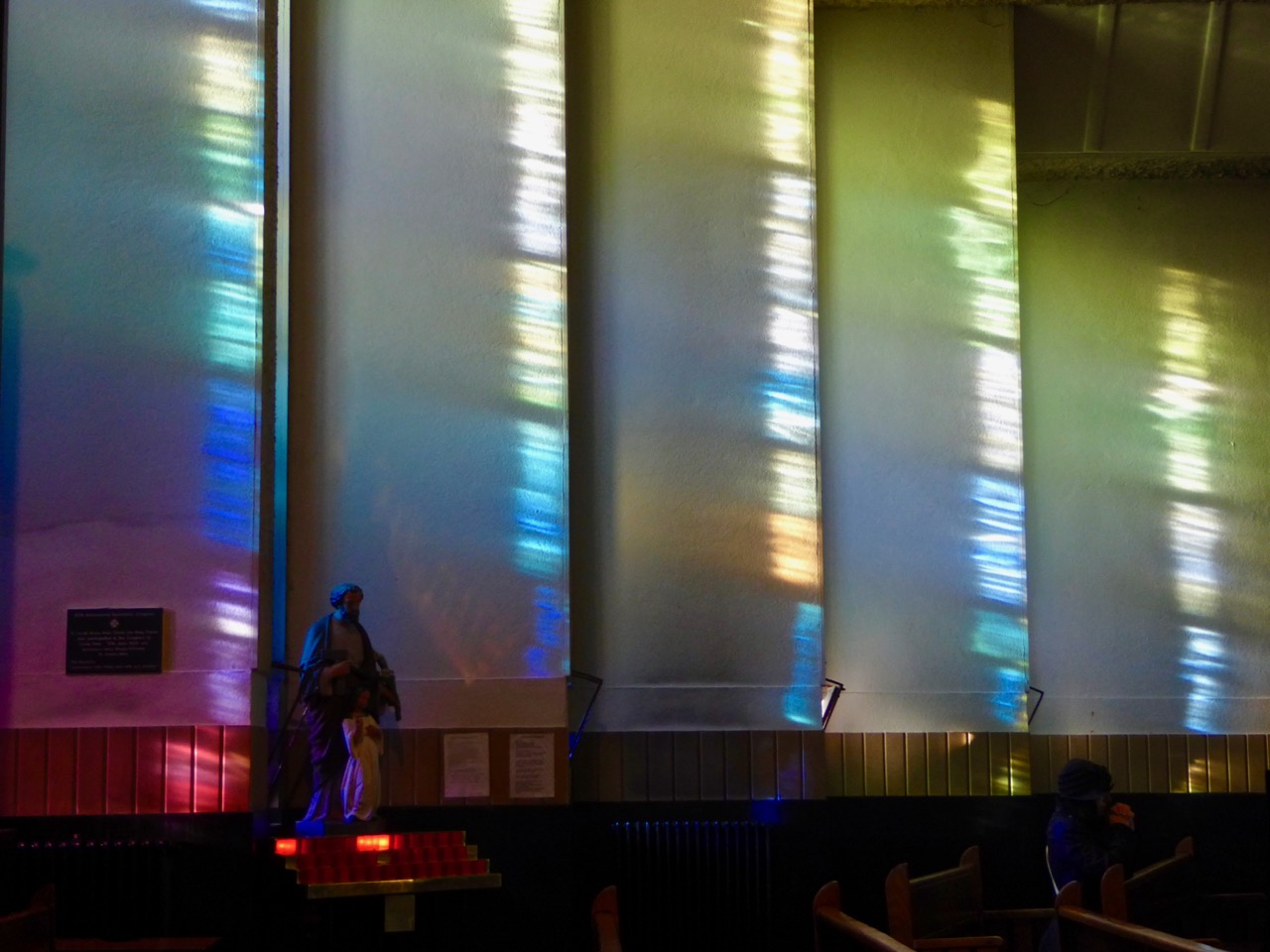
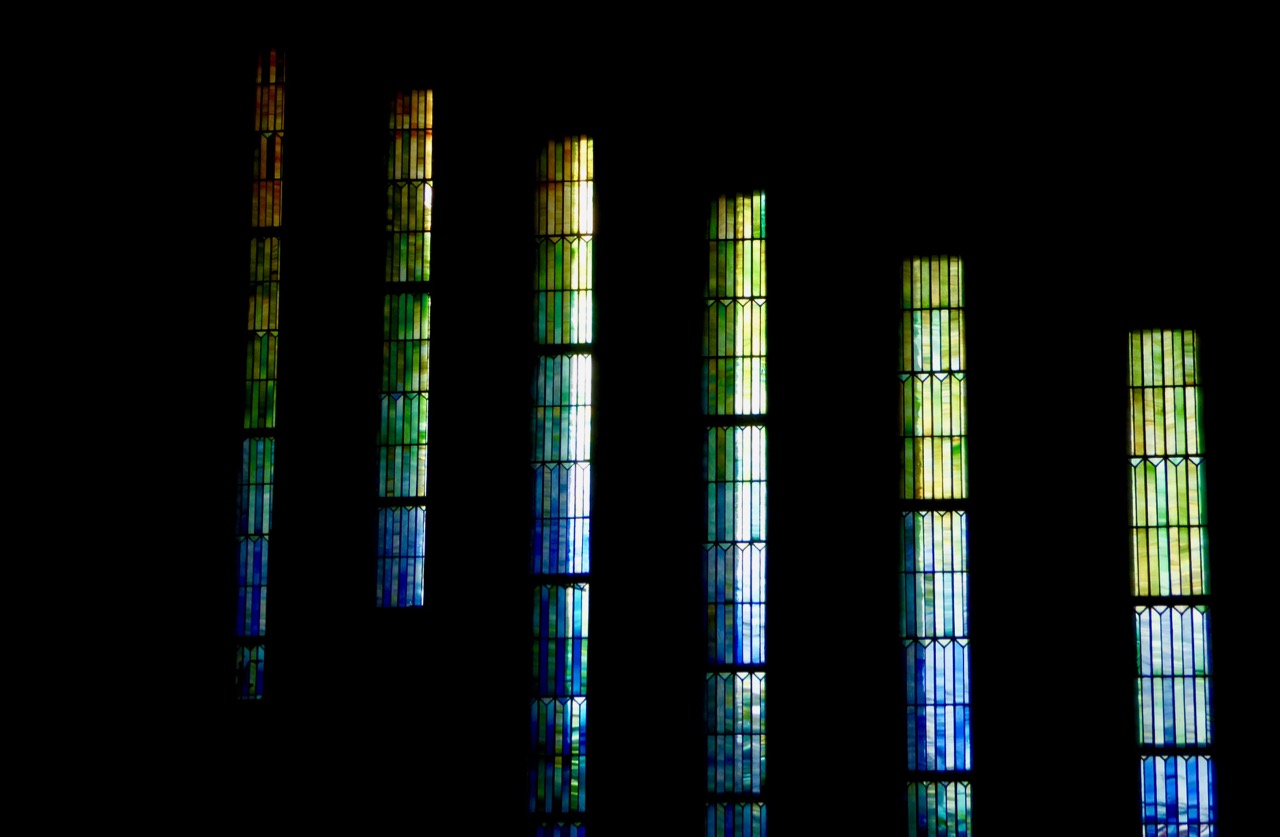
Any connoisseur of building history will recognise that this church is very much of its time, particularly when regarding the detailing and the internal elements. It is a true, undiluted example of the Art Deco movement and has an integrity which has been carried through its shape, its spaces and its fittings. There is no compromise, and – in my opinion – it works well for that reason. The architect’s vision has been adhered to throughout, in every feature: the abstract coloured glass windows, the inlaid terrazzo floors, the marble work of altars and ritual furnishings, the brasswork of font, stoups and ironmongery. Apparently Byrne’s wife, Annette Cremin Byrne (who worked with him in his practice) was responsible for much of the interior artwork. 

all glassMore interior details in terrazzo, brass and timber, and a fuller view of a bank of windows

For me the building is successful and attractive. I want to spend time in it; I want to experience it in use. It’s not just that it’s unusual (for Cork – and Ireland – although there are other good examples of Art Deco here), but it works. It satisfied the client’s brief, it was built on budget, and it provided innovation in the way the building’s users related to each other. So good was it in this aspect that it set the scene for other modern Catholic churches in the US and Europe (but not in Ireland).

The careful detailing extends throughout the building. External finishes include stepped plinths, adobe rendered concrete walls, pantiled roof, worked downpipes and drainage outlets

Comprehensive information can be found on this excellent website. When you have the chance, do go and visit the Church of Christ the King, Turner’s Cross in the city of Cork. You’ve missed the Feast Day for this year but it’s always open – as a church should be. The building will welcome you in.

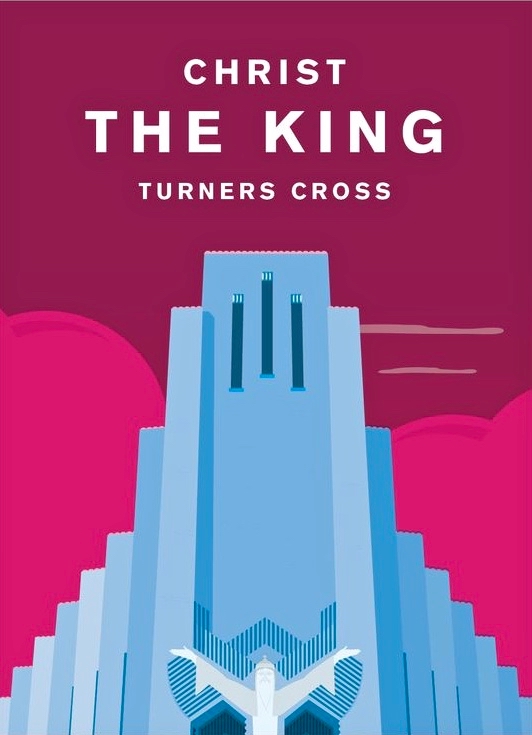
Poster from Cork Tourism Illustrations by Hurrah Hurrah

poster cropped

Good Well Hunting: Duhallow

St John's Well 1

Amanda started her blog, Holy Wells of Cork, in February and oh my goodness she already has over 100 wells documented. Not just documented – recorded, photographed, mapped, described, researched and written up in a charming cheerful style that’s a hoot and a pleasure to read.

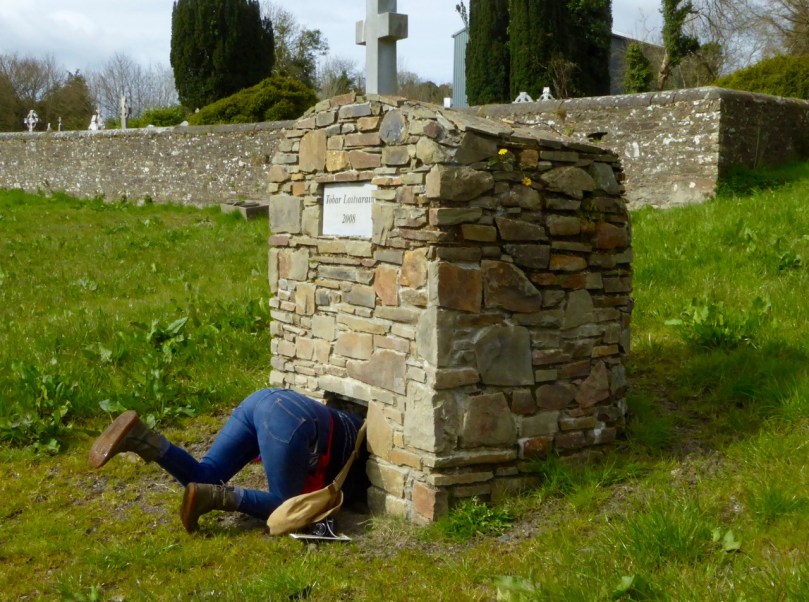
AB 1 Laitiaran

Standard Amanda shot as she checks out St Laitiaran’s Well  

Robert and I go along on her well-finding trips every now and then. Between accompanying Amanda, and wells we’ve gone to ourselves, we’ve visited about half the wells in her gazetteer. The sheer variety is astonishing, as also is the varying state of preservation. From muddy holes in the ground to gleaming and designed surrounds – holy wells come in all shapes, all sizes, and all conditions.

duhalloworiginal

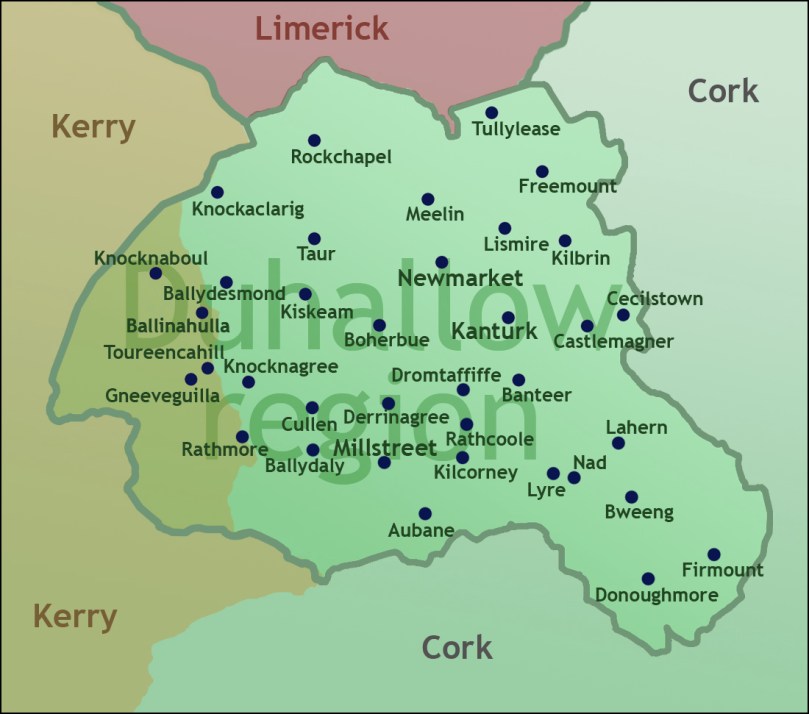
Duhallow – isn’t that a lovely word? It’s a lovely place too – a barony (part of Ireland’s old land division system) that occupies the northwest corner of the county of Cork. It’s mostly rolling hills and farmland, drained by the headwaters of the Blackwater River, with the Derrynasaggart and Boggeragh mountains to the south and the rich agricultural lands of Limerick to the north, while the Kingdom of Kerry lies just over the county border to the west.

Duhallow Sign

Duhallow has its act together when it comes to holy wells – the local development committee has developed a Holy Well Trail. A brochure leads you around the trail and at each well is a detailed history of the well, the saints associated with it, the cures attributed to it, and the rounds and prayers to be undertaken.

Tubrid Well Millstreet

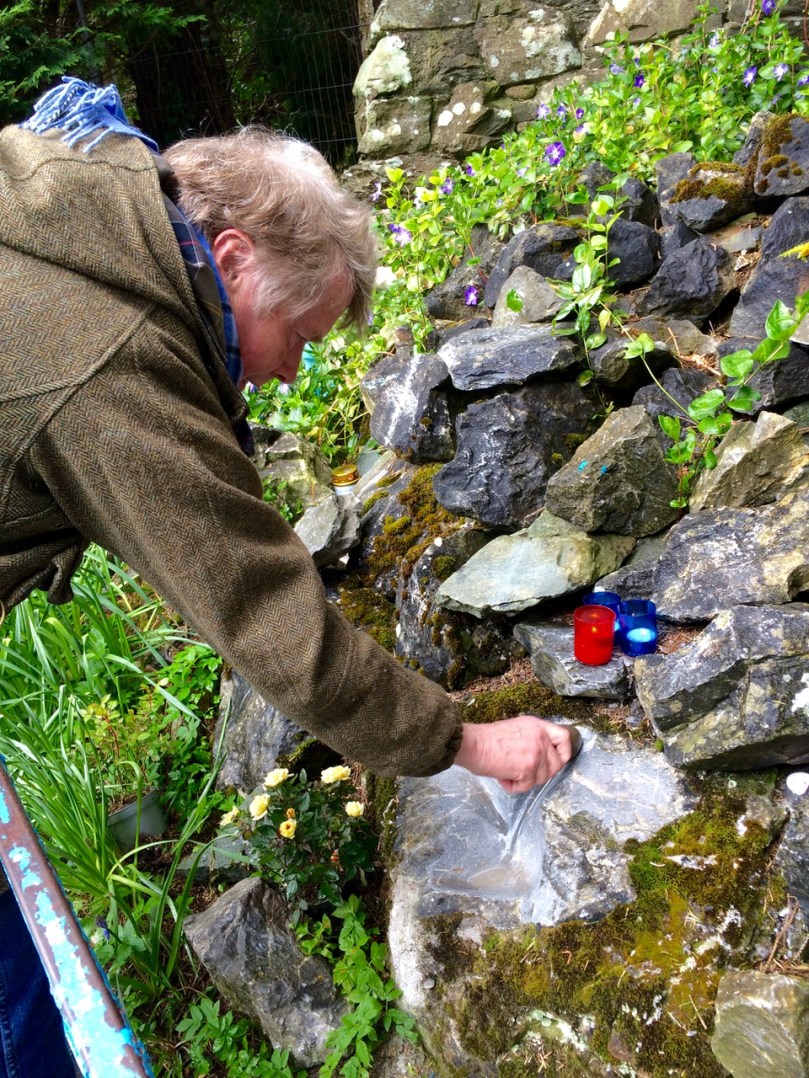
Robert makes his markTubrid Well, Millstreet. Robert adds his mark to the cross inscribed by hundreds of pilgrims

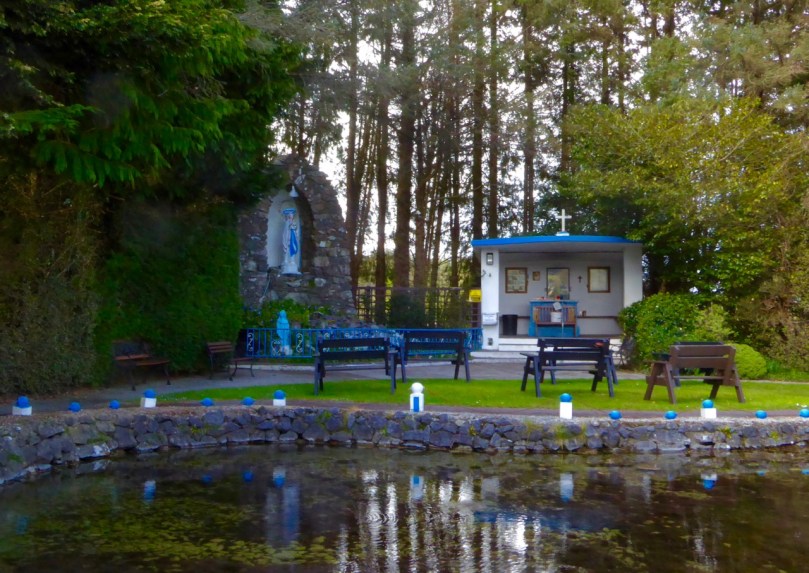
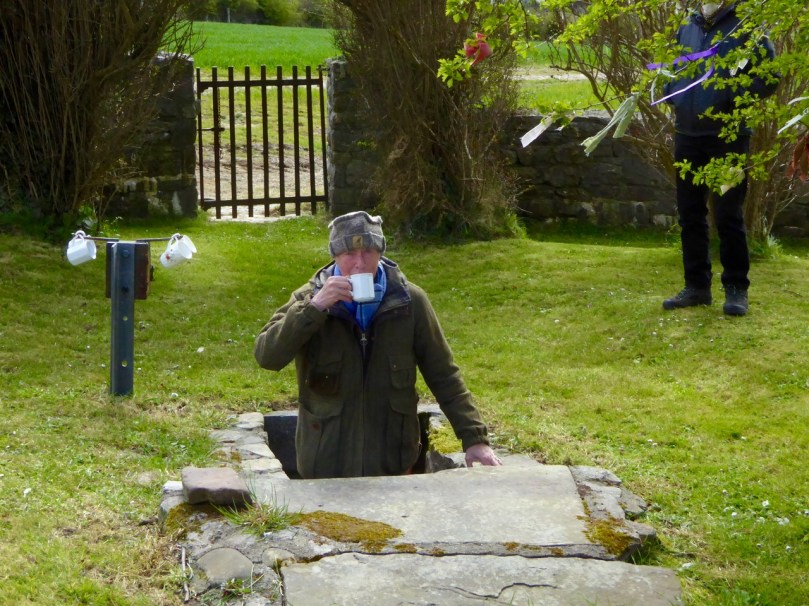
At  many of these sites mass is still said once a year and cups and bottles are provided so that you can drink, or take away, some of the water. The Tubrid Well outside Millstreeet is the largest and most active. While we were there people came and went and fresh flowers and candles were in evidence. This is a well that even has its own Facebook page!

Inghne Buidhe rag tree

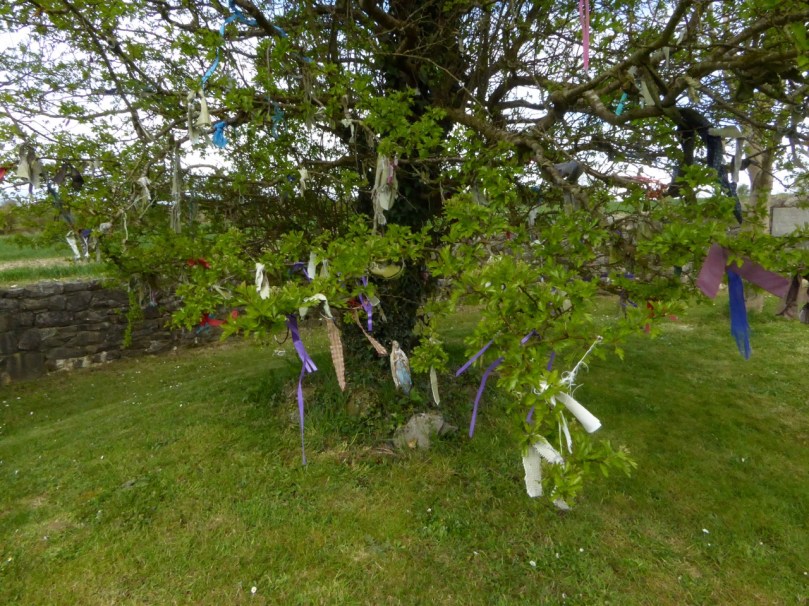
A rag tree at the well of Inghne Bhuidhe

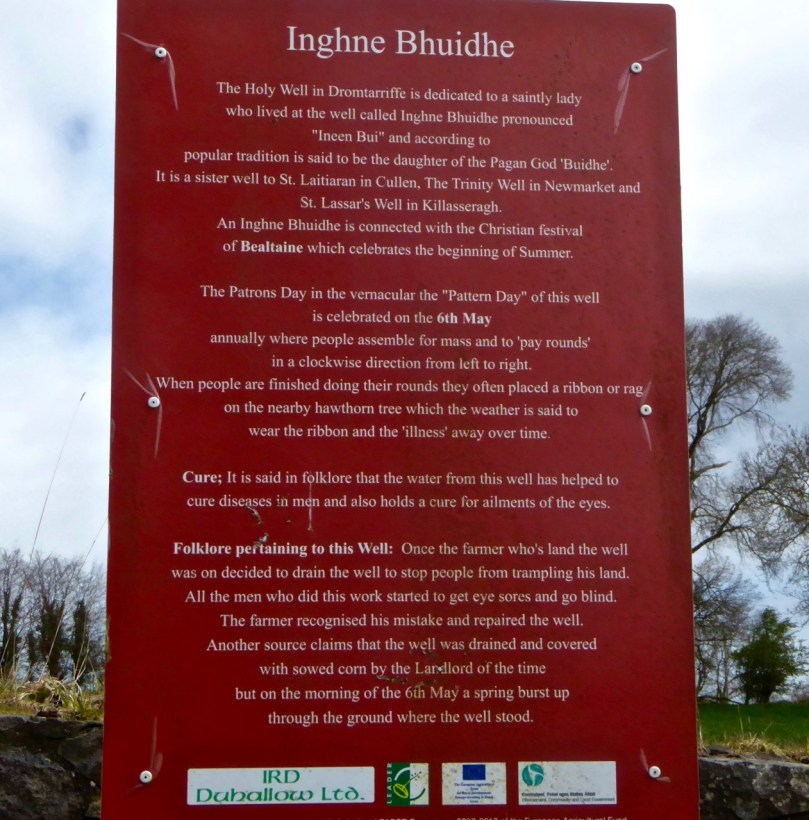
The well devoted to Inghne Bhuidhe (Inyeh Bwee, daughter of Buidhe, the Yellow-Haired) provided a complete contrast – out in the middle of corn fields, surrounded by a low wall and with a rag-festooned thorn tree looming over it. This one had a remote and tranquil vibe, suitable for contemplation.

Tasting the water, Inghne Bhuidhe

My  personal favourite was the Trinity Well near Newmarket, mainly because it was built inside a fulacht fiadh (pronounced full okt feeah) – that’s an ancient (possibly as far back as the Late Bronze Age) cooking place where stones were heated and then rolled into a trough of water. Over time, the used stones built up into a horseshoe-shaped mound that surround the trough – now re-purposed as a holy well. It was a marvellous testament to the timeless character of special places in the deep countryside. 

Trinity Well in Fulacht Fiadh

Trinity Well, formed from an ancient fulacht fiadh

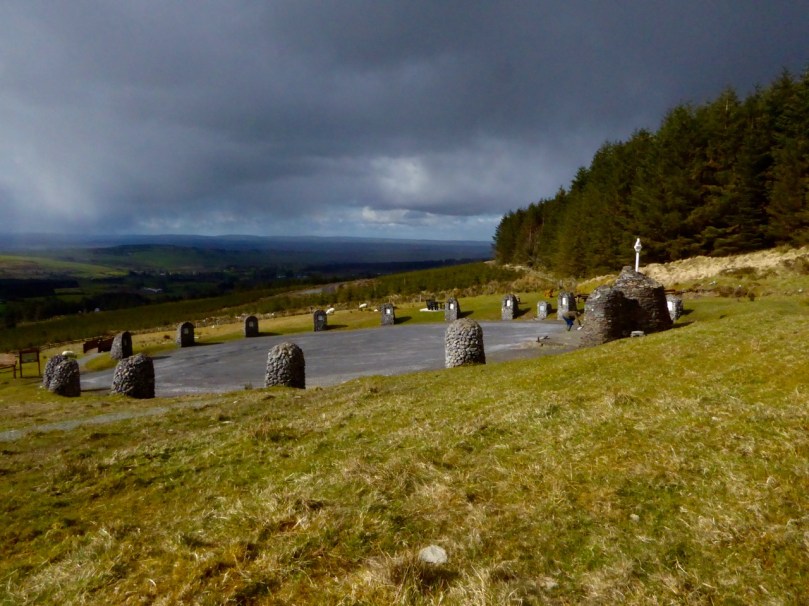
One of Duhallow’s wells is high in the Mushera Hills and dedicated to St John. The first photo in this post shows the location and extent of it. Back when the veneration of holy wells was at its peak, this one was the site of an enormous pilgrimage on St John’s Eve, June 23rd, every year. As with many such events the prayers and devotions of the daytime gave way to the partying of the night time and eventually the church acted to curb what they saw as the excessive debauchery of the occasion. Read Amanda’s account of the goings-on at Gougane Barra for an insight into the aprés-penance hooleys.

St John's Well 2

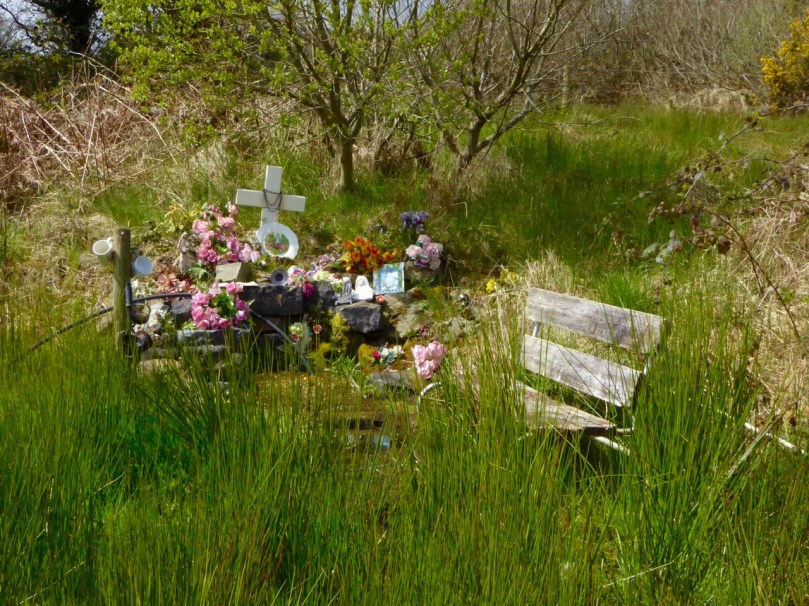
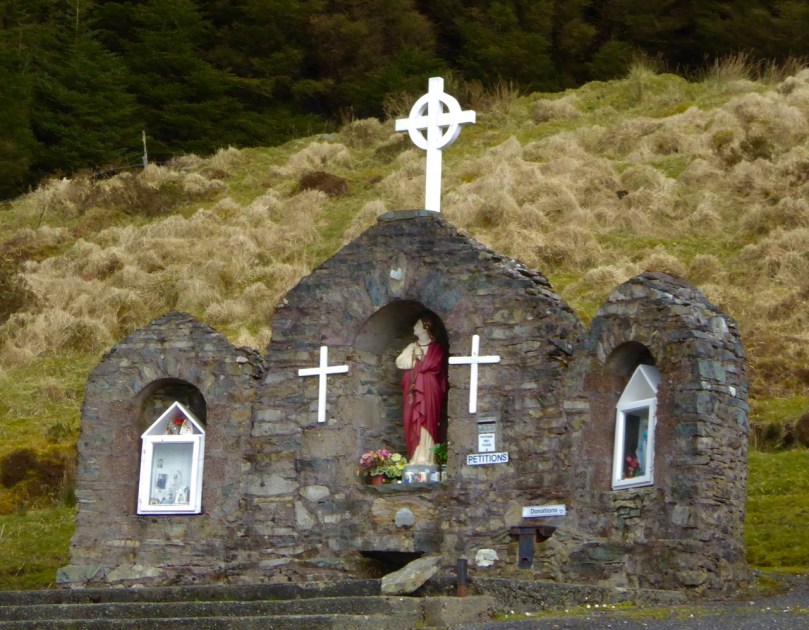
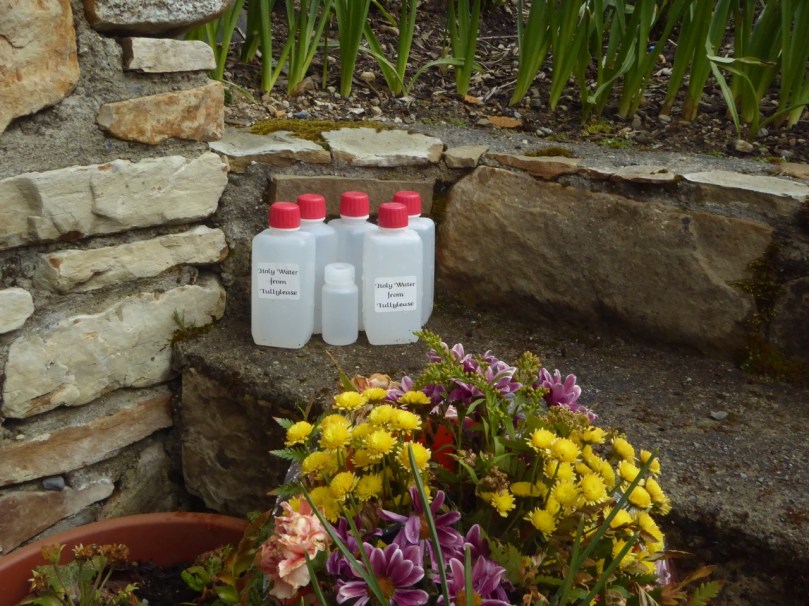
Tullylease had three wells, one devoted to Mary and another to St Beirechert (a saint whose name is spelled in a bewildering number of ways). The third well turned out to be something different – see below. The Marian well is thoughtfully stocked with holy water. Some of it is now in our bathroom to see if a few drops added to the bathwater will fend off the rheumatiz. So far, so good.

Holy Water

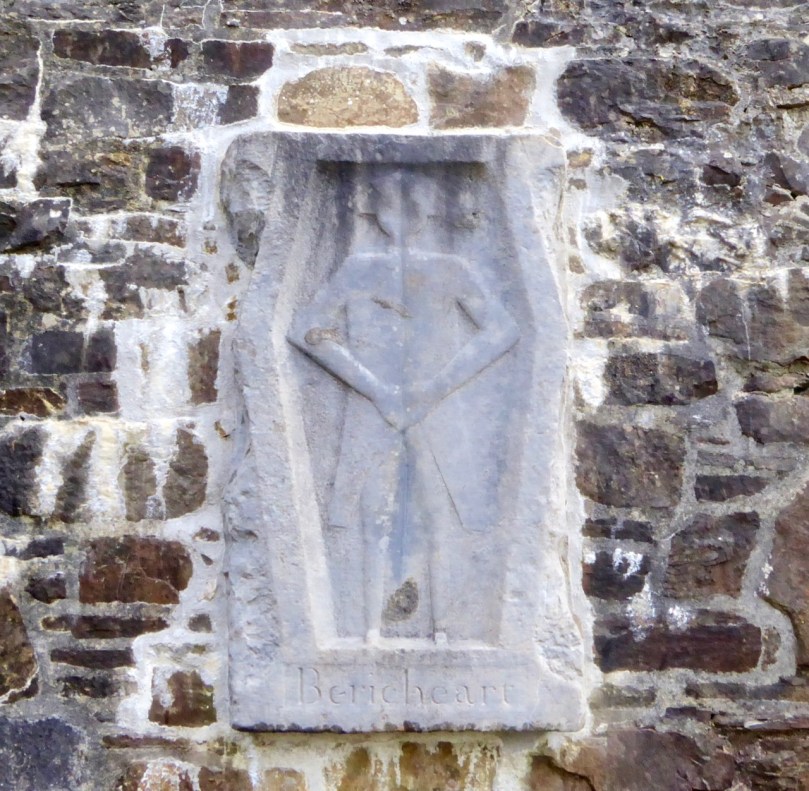
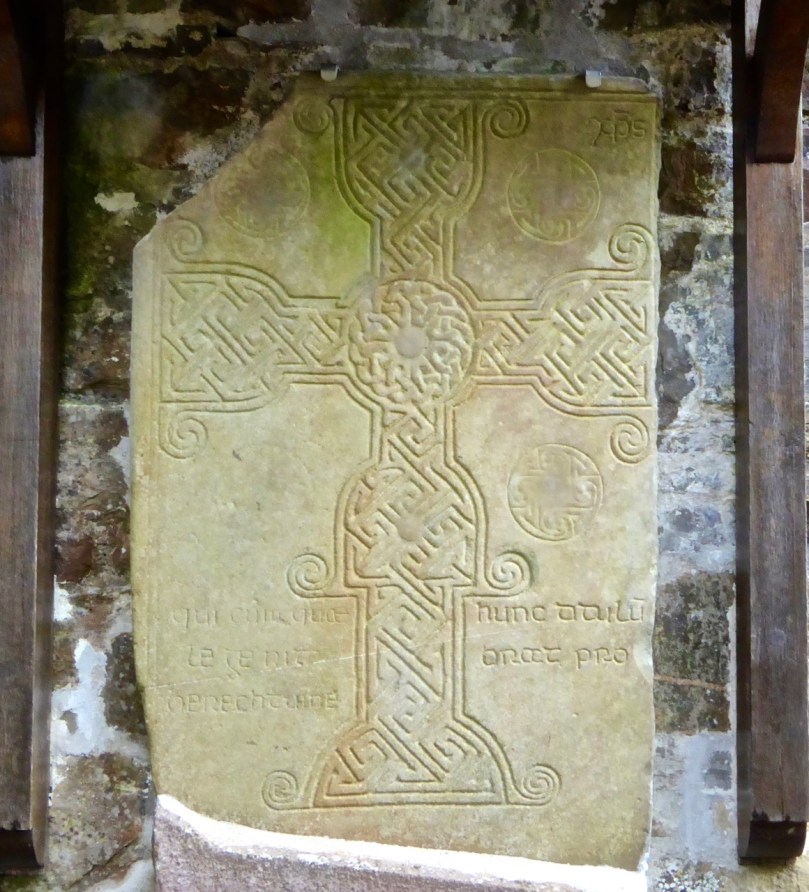
St  Beirechert’s church has several interesting carvings: St Beirechert himself in an unlikely swallow-tailed coat and tricorn hat, several fragments and a wonderfully worked cross slab with interlace design.

Bericheart in swallowtail coat

We  were intrigued to learn recently that this very cross was used as a model for the design of leather and fabric pieces for UCC’s Honan Chapel, an Arts and Crafts masterpiece, when it was being built a hundred years ago. I can’t show you a picture of that, as it’s undergoing painstaking conservation, but click here to see a modern use of the design!

Tullylease cross slab

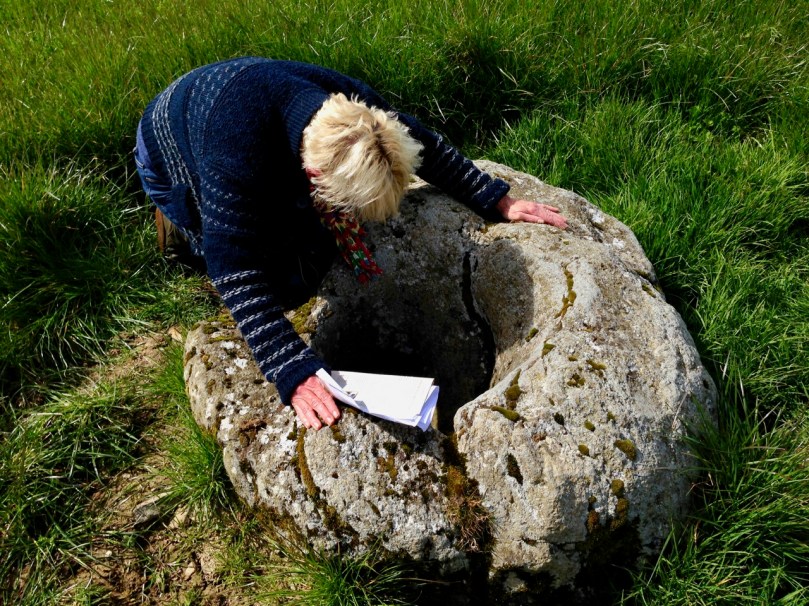
The final well we saw at Tullylease  wasn’t really a well at all but a bullaun stone – a big one. It’s supposed to cure headaches if you rub your forehead all around the rim, so here is Amanda, about to give it a try.

Amanda headache well

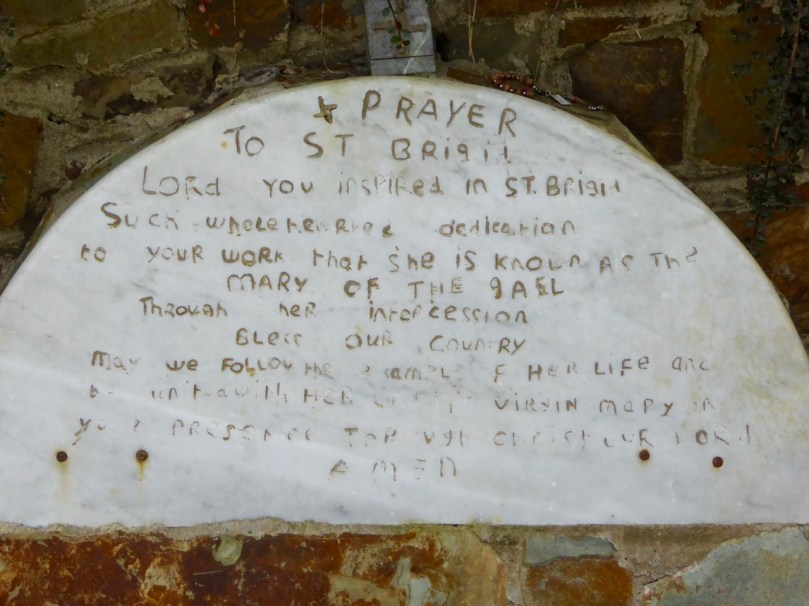
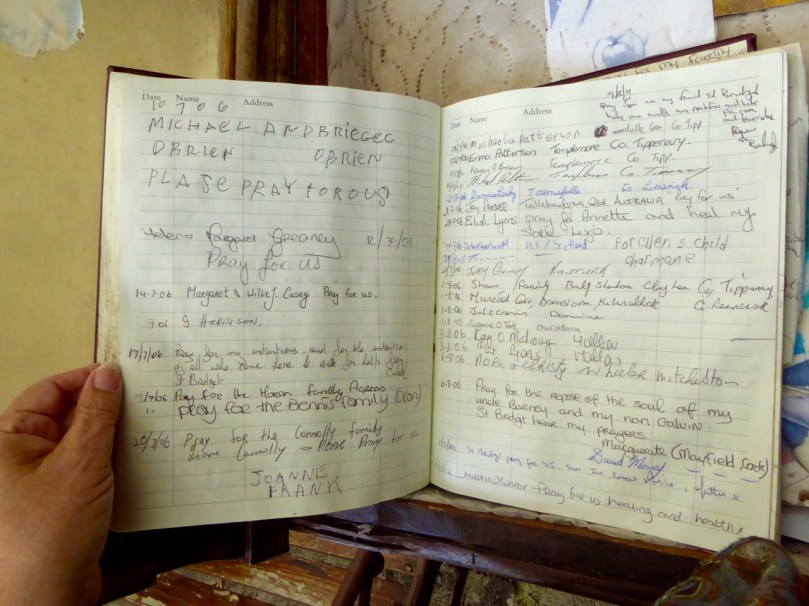
Our last stop was at a well for St Brigid. This one had a kind of cupboard containing a book in which visitors can write their prayers and ‘intentions’. It was fairly up to date, indicating recent visits.

Brigid's Well, prayer

St Brigid Pray for usIn  this post I have concentrated on the Duhallow wells, as examples of how one community has embraced this aspect of its heritage and created a wonderful experience for its residence and for visitors. For a detailed description of each of the ones I’ve mentioned here, browse through the North Cork section of Amanda’s Gazetteer.

Brigids well cups

But following a brochure and a map to wells that are tidy and well signed is not a fair representation of how you find holy wells in the field! In my next Good Well Hunting post I will invite you to come with us as we fight brambles, mud and neglect, as well as discover little gems still intact and visited in the deep countryside.

Wild Beasts of Ireland

tiger at feet st canice

There are wild beasts all around us!  Animal, fish, serpent or fowl, real or mythical, carved, painted – imagined. This is my second ‘Menagerie’ – previously we explored the Honan Chapel in Cork, and I was struck by all the wildlife representations there, as set out in this post from over two years ago.

2 deer cashel

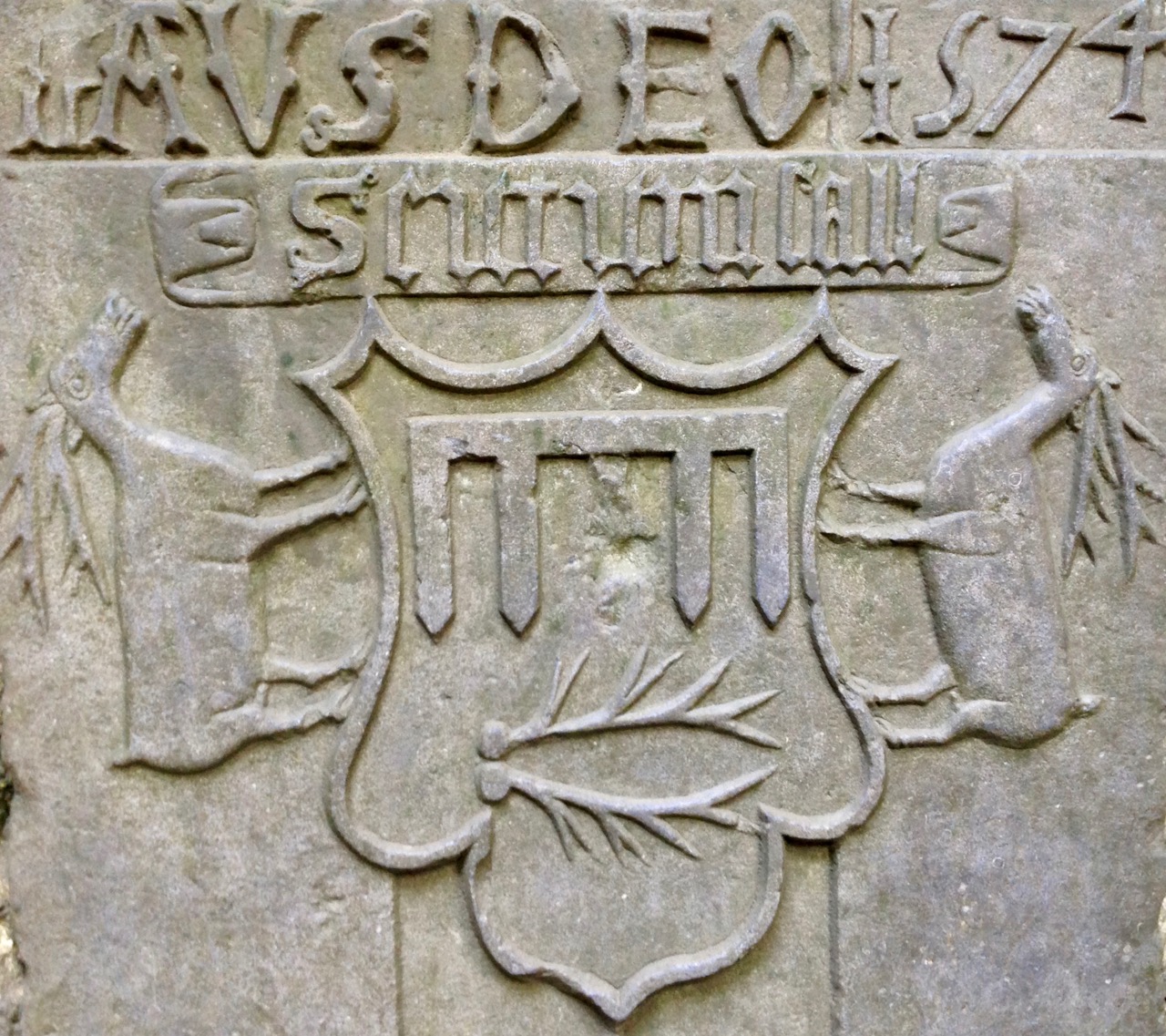
Deer and antlers on a memorial plaque in the Cathedral at Cashel – one of the earlier representations here, dating from 1574. Top picture – believed to be a tiger, this fine beast lies at the feet of a medieval knight in St Canice’s Cathedral, Kilkenny

Our travels take us around many of Ireland’s historic sites, and I’m always on the lookout for Creatures – they are abundant everywhere. Countless stories of the saints involved animals: they are common symbols on tombs and heraldic plaques, but we can’t resist also using them today – for inns, shop signs or just decoration on the streetscape. Have a look around you – you might be surprised how many you can see…

toucan guiness

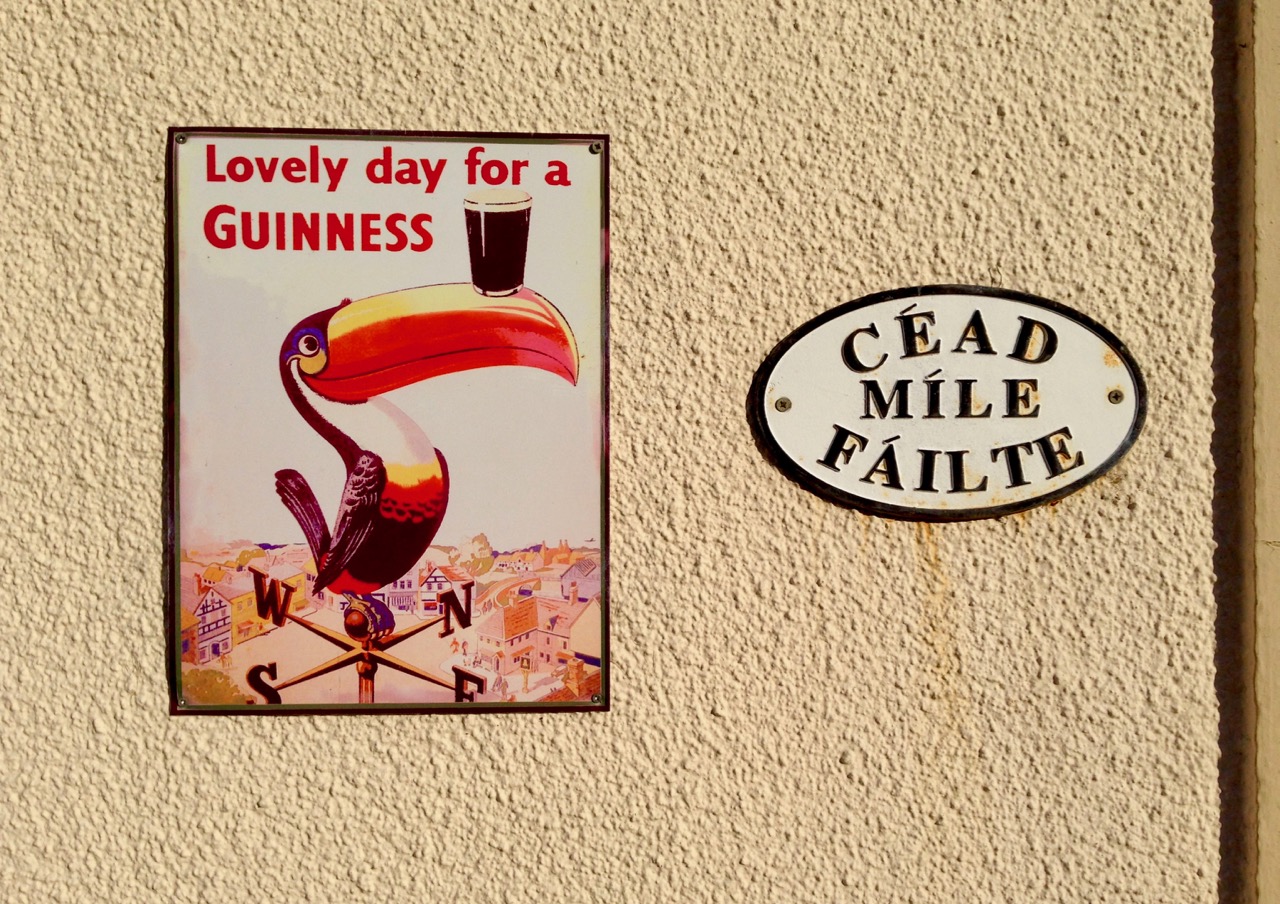
Inhabited streetscapes: top – two Kilkenny Cats undoubtedly belonging to Dame Alice Kytler and, above – there are plenty of these toucans still around in Ireland! They originate from a ‘zoo’ advertising campaign for Guiness begun in 1935 (abeted by Dorothy Sayers who wrote captions and verses); the toucan campaign flourished until 1982

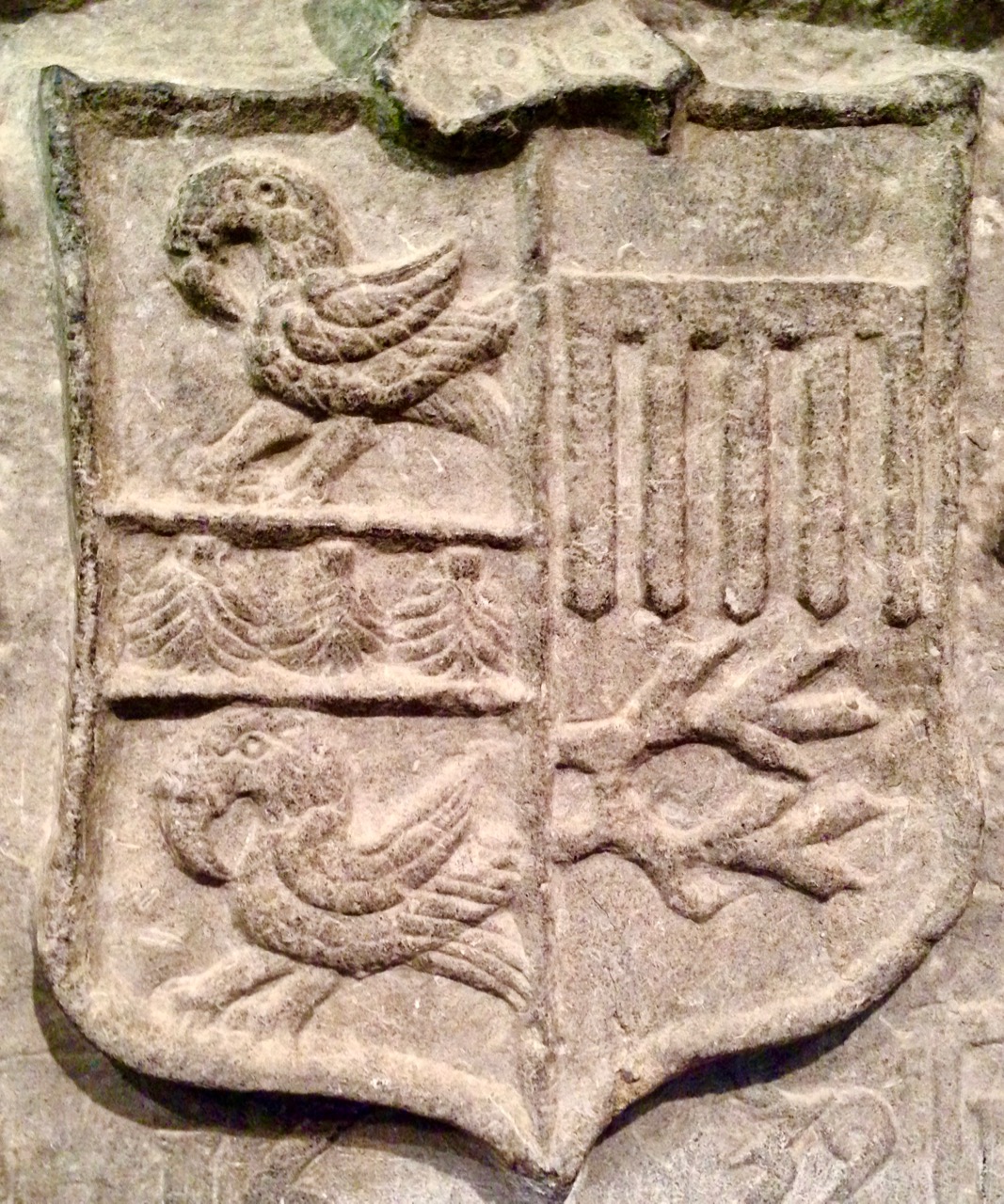
Nobody has ever claimed the toucan as an Irish bird, but pelicans were certainly not uncommon in medieval carvings here. That’s because the pelican in early Christianity symbolises atonement as it was believed to wound itself in order to feed its young with its own blood.

2 birds shield cashel

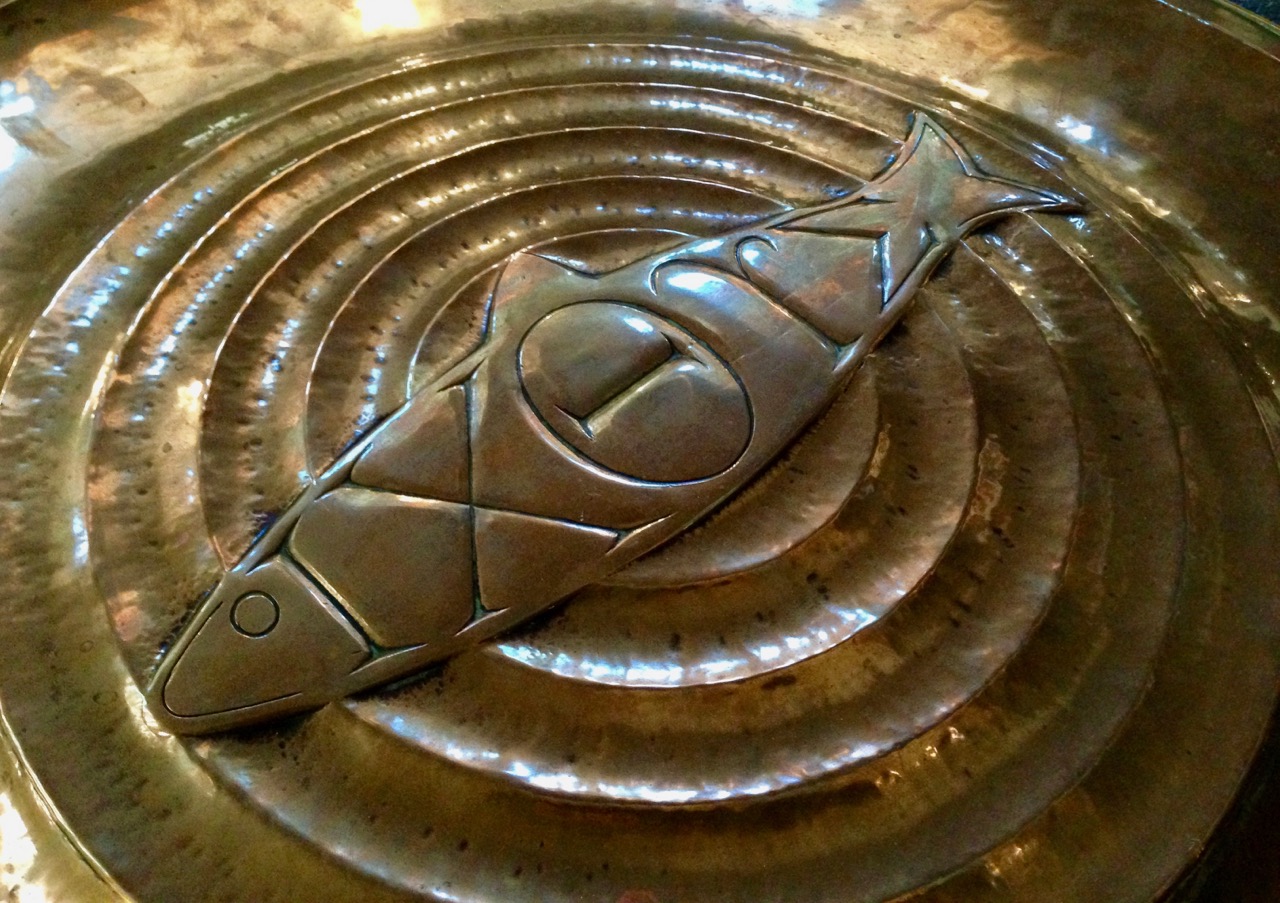
fish lid st canice

Christian symbolism: top – medieval pelicans at Cashel, and below – a fish incorporated in a modern lid to the ancient font in St Canice’s Cathedral, Kilkenny. The Greek ΙΧΘΥΣ is an acrostic for ησοῦς Χριστός, Θεοῦ Υἱός, Σωτήρ, literally translating as Jesus Christ, Son of God, Saviour

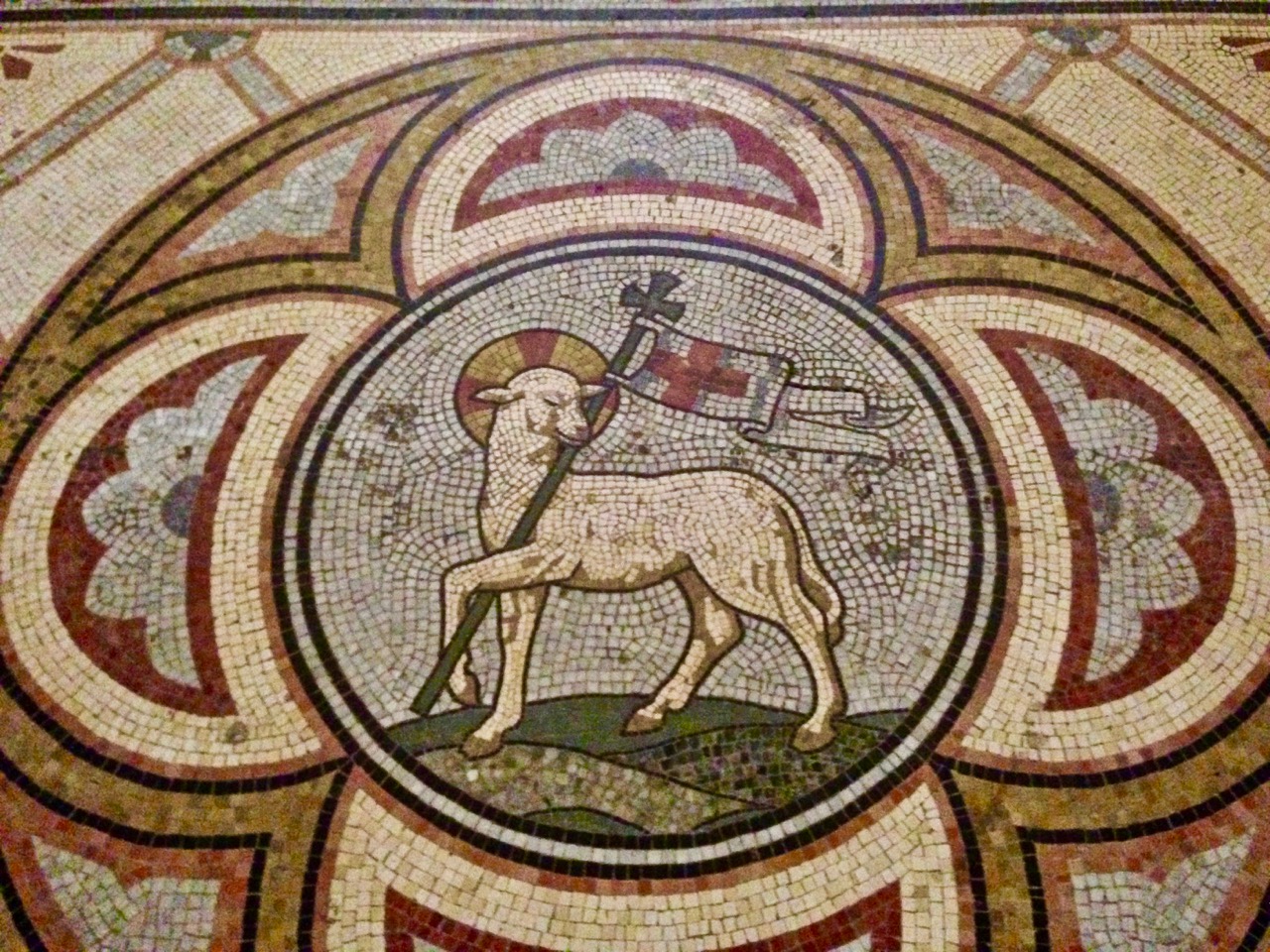
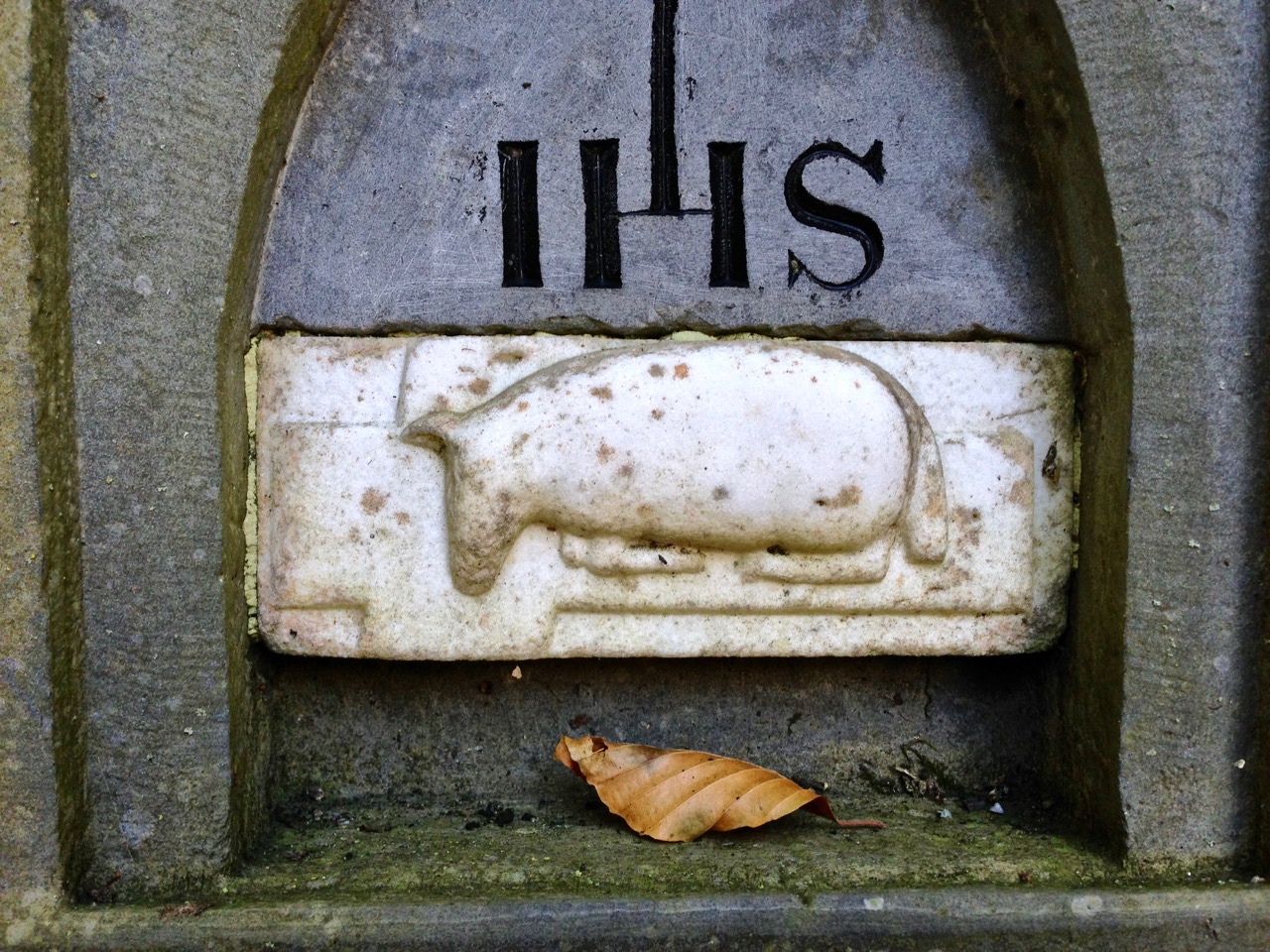
Also in Christian symbolism the lamb represents Jesus – the Lamb of God – who was sacrificed in order to atone for human sin.

lamb with pennant kilkenny

ihs lamb detail
Top picture – not a wild beast, perhaps, but a pascal lamb mosaic in St Mary’s Cathedral, Kilkenny. Lower picture – this strange creature is also a lamb, from a graveyard memorial in Killeen, Co Meath

Lions are popular animals in Britain and Ireland, possibly because they appeared on royal crests and were therefore associated with status and dignity. I was surprised to find bears and eagles well represented.

All the lions (graphic tiles and wistful memorials) are from the Collegiate Church in Youghal. The stained glass is from St Peter’s Church, Bandon, Co Cork and shows off bears (from crests of the Earls of Bandon – their motto was Bear & Forbear), eagles, another lion and – for good measure – a fine serpent

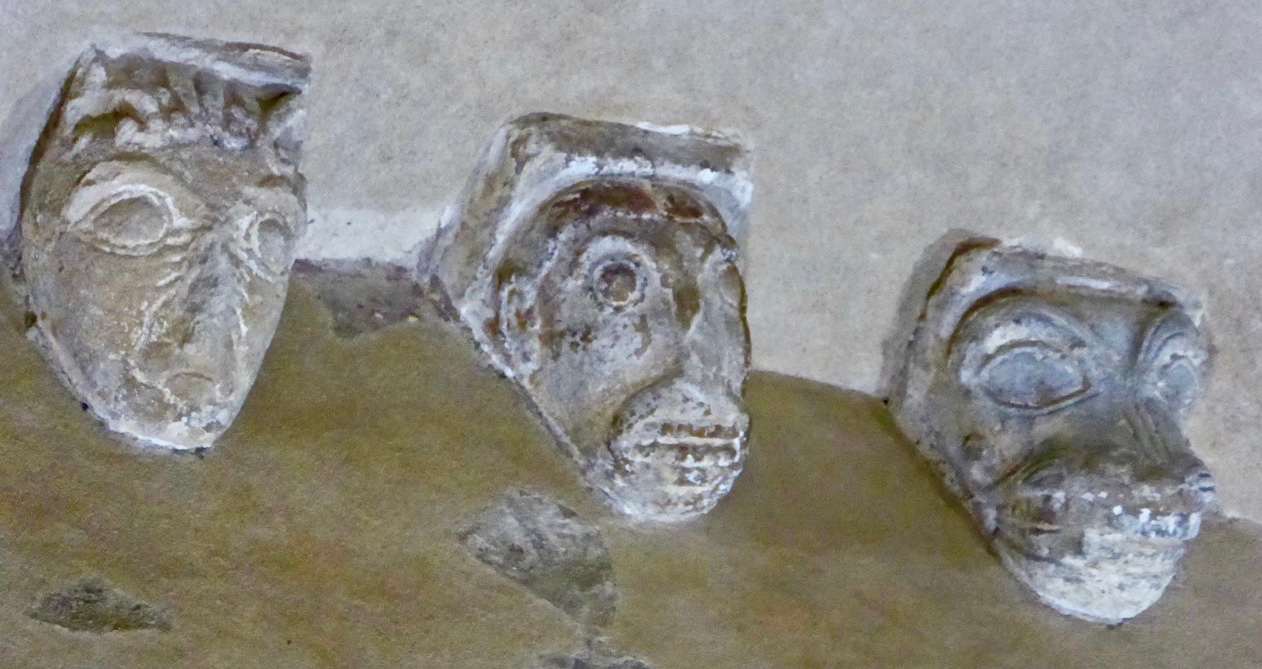
Some of the most splendid and oldest carved stonework in Ireland is to be found at Cormac’s Chapel, Cashel and at Clonfert Cathedral, both dating from the twelfth century. The Hiberno Romanesque doors and arches display arrays of human heads but also numerous creatures.

Heads cormacs chapel

Upper pictures – a small selection from the riotous carvings at Clonfert Cathedral, Co Galway and – lower picture – ambiguous creatures from Cashel, Co Tipperary: all are around 900 years old

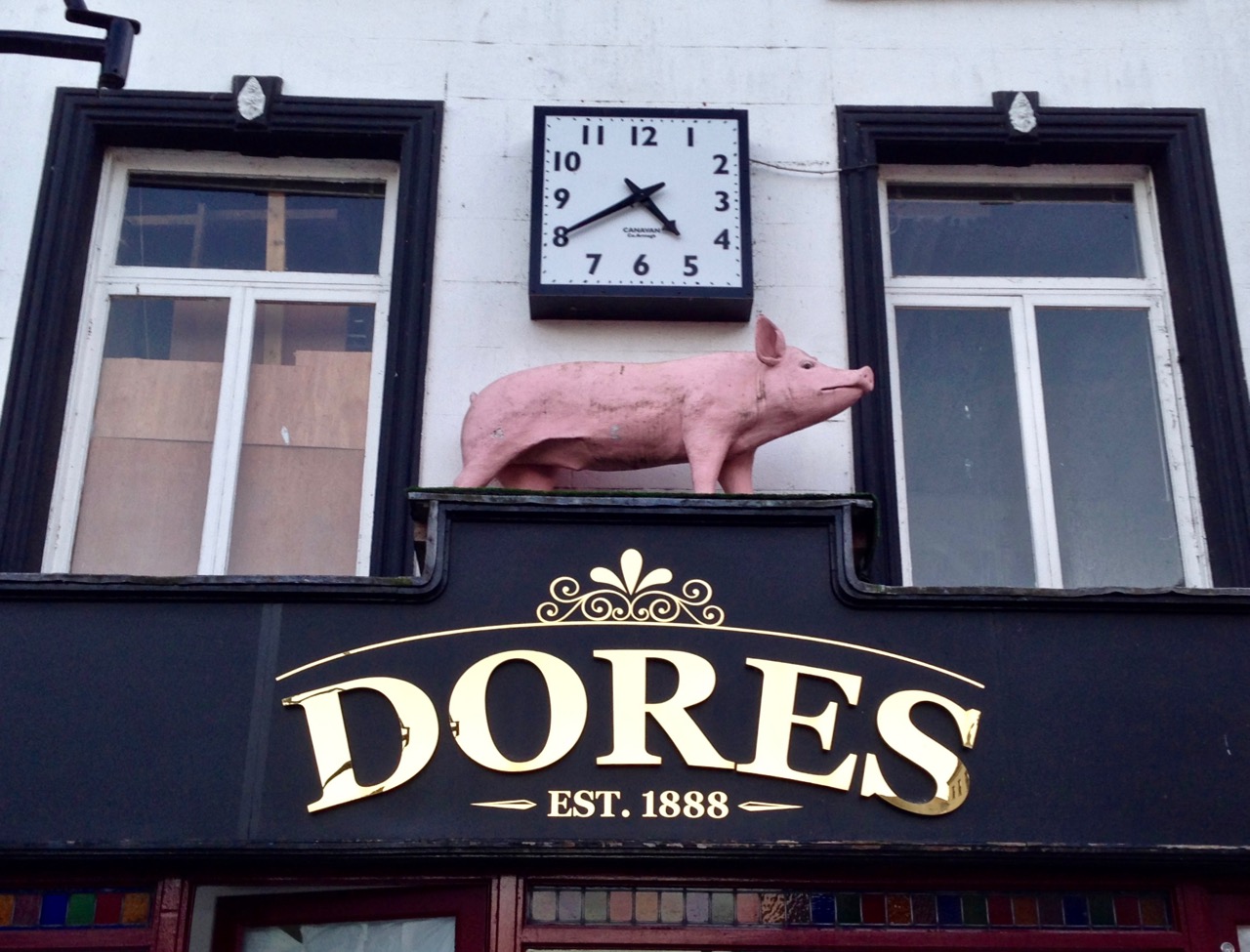
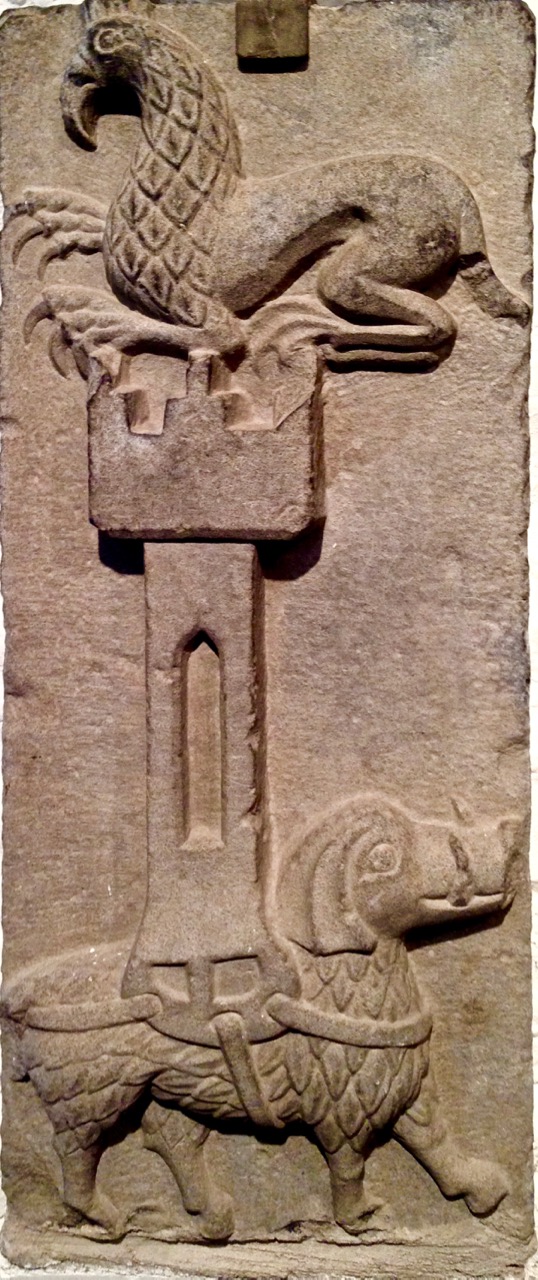
I’ll round off for now with some more cat-like creatures and a Kilkenny pig. Oh – and a carving we found in the Cashel museum, titled ‘Elephant and Castle’. Both the carving and the name are enigmatic, as the creature with a castle on its back (wherein resides another creature – a gryphon?) looks to me like a boar with feathers!

pig dores kilkenny

Elephant + Castle


The Town of Luan’s Ford

o'ferrall fry place

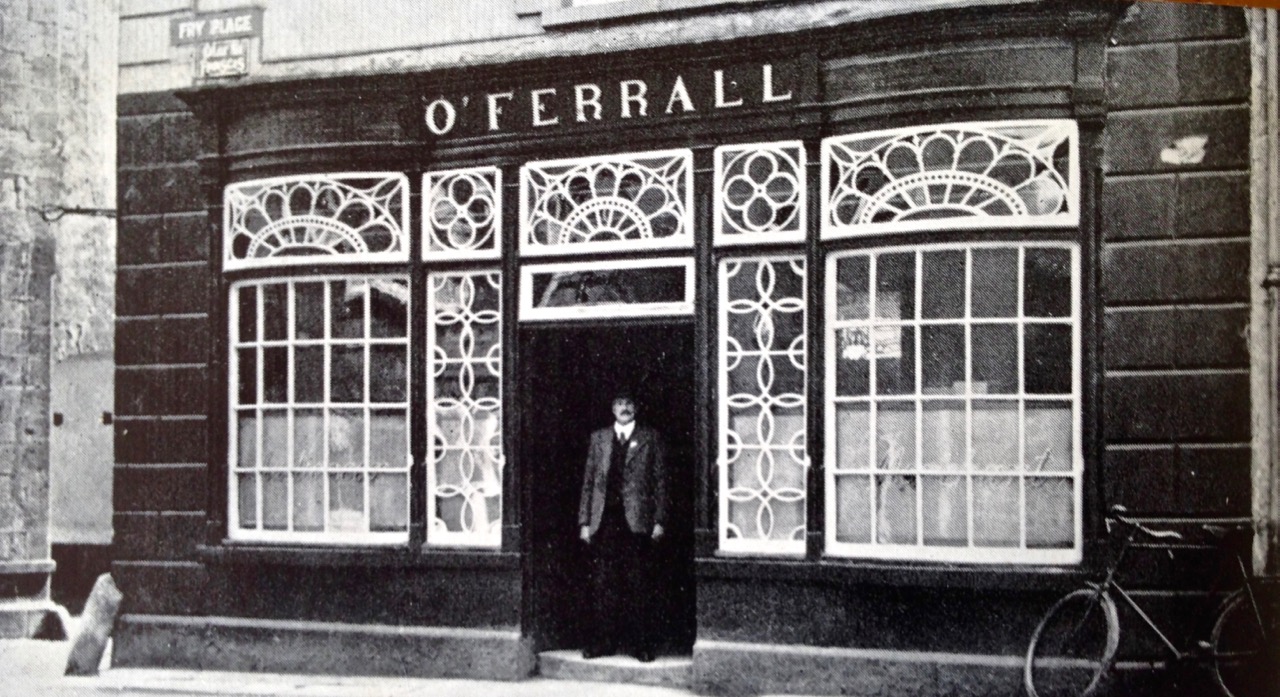
…One of the shops we visited was O’Ferrall’s, whose frontage dates from the days when shop-fitting was not merely a business but an art, as the picture we took of it, with ‘himself’ in the doorway, clearly reveals. Old Mr O’Ferrall was a tall gaunt figure. His hawk-like features had an aristocratic cast which was somehow enhanced by a long coat of archaic cut and a high stand-up collar. He had, we discovered, a great sense of the past, and as we sat together in the confined space of the small wooden cubicle to which, as in most Irish bars, women must retire in order to drink with propriety, he talked of the history of Athlone. Like that of most Irish towns, it has been stormy… (Green & Silver L T C Rolt 1946)

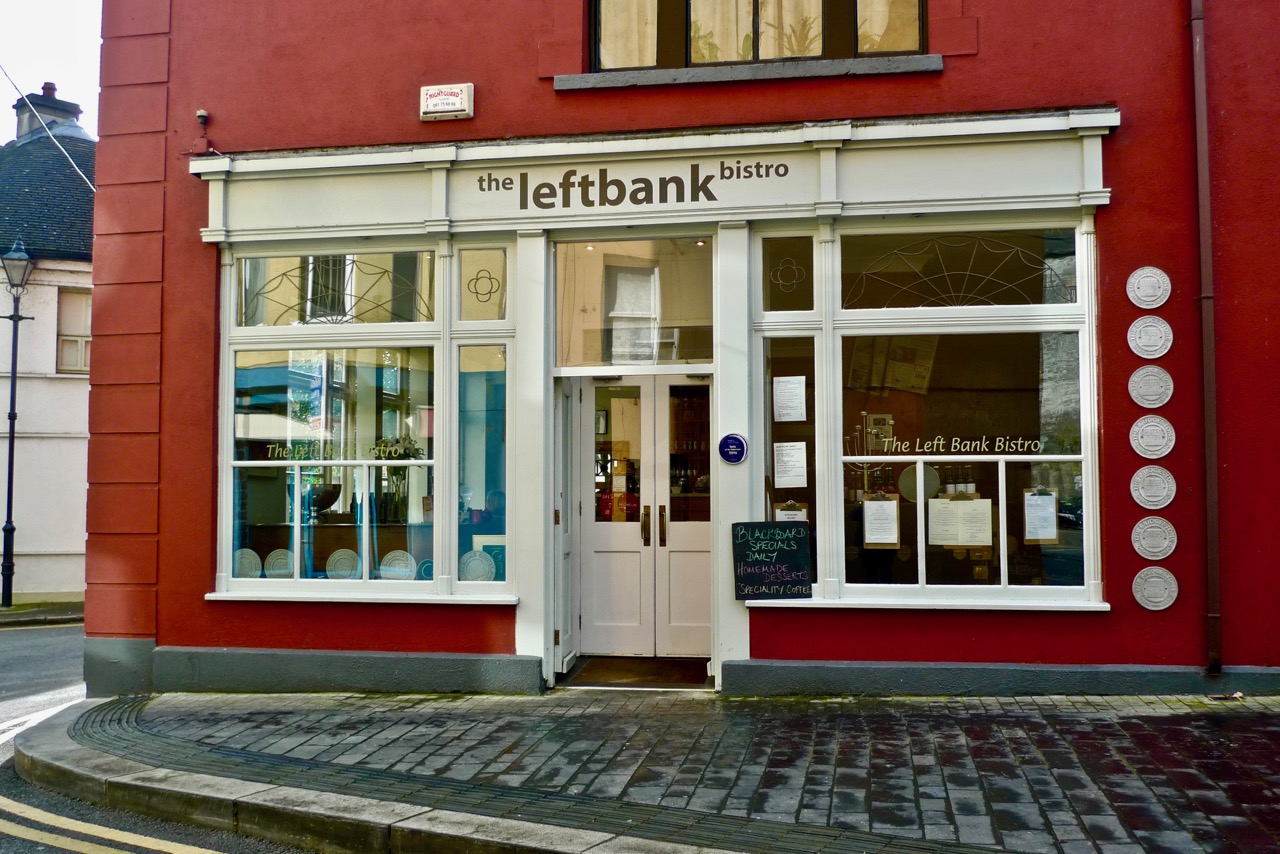
fry place bistro 2016

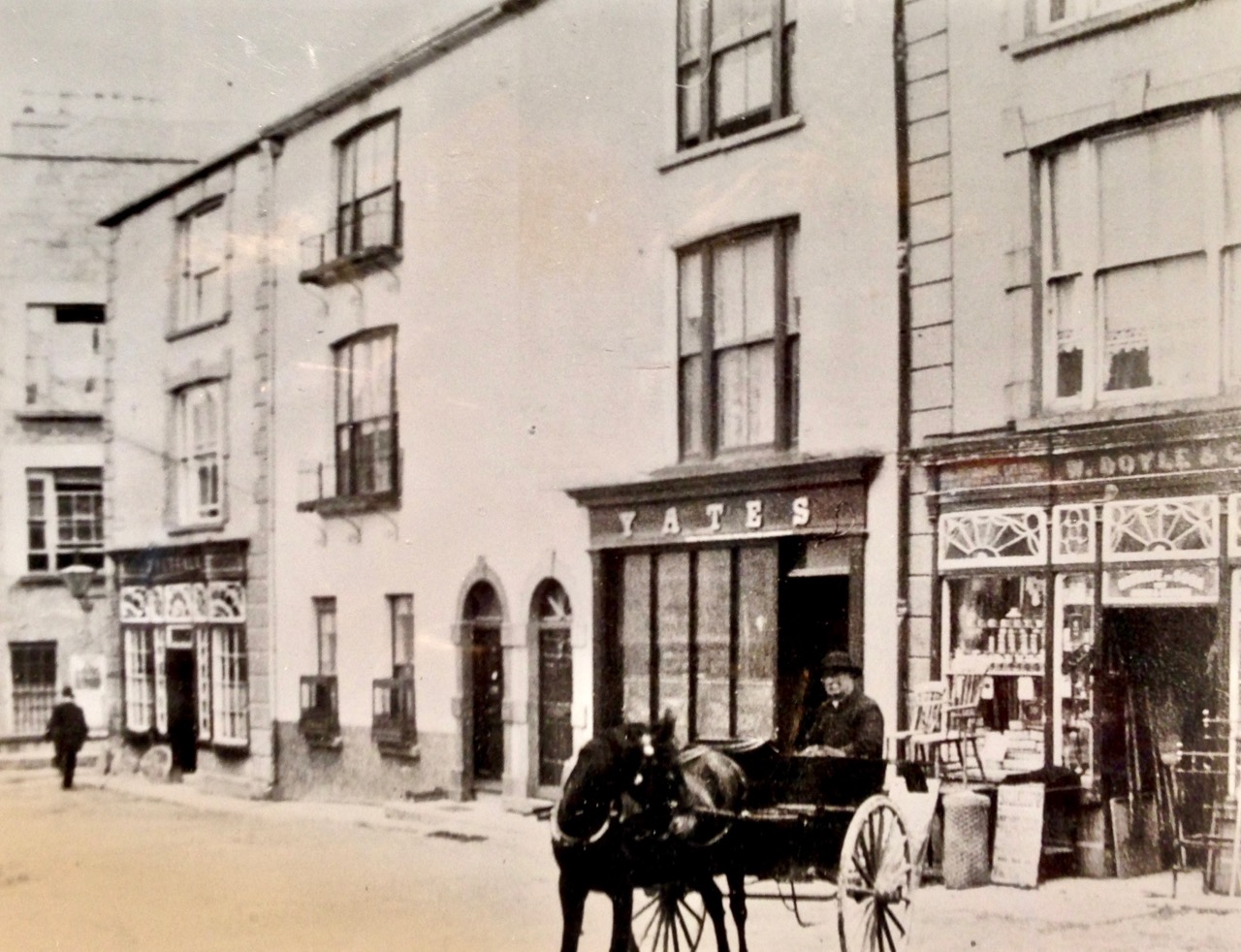
Top picture – Angela Rolts’ photograph of O’Ferrall’s shop and bar, Fry Place, Athlone – taken in June 1946 just before the Rolts embarked on their journey around the Irish waterways which they describe and illustrate in their book Green & Silver. Lower picture – the same view, Fry Place, Athlone – taken in 2016 – now a highly regarded bistro. The new shop frontage pays due respect to its predecessor in terms of overall proportion and despite the loss of the ornate bow windows. It’s interesting, too, that – seventy years on – the premises is still a local meeting place and purveyor of good food and drink

This is the fifth instalment of the Travel By Water series… When we retraced the steps of Tom and Angela Rolt – seventy years after they made their voyage of discovery around the Irish canals and waterways – we visited the town of Athlone for the first time. We were impressed enough to determine that we would return for a more detailed exploration of this midlands settlement, historically a strategically important crossing point of the Shannon – a formidable barrier intersected with her great lakes – the largest river in Britain and Ireland.

17th-century-bridge

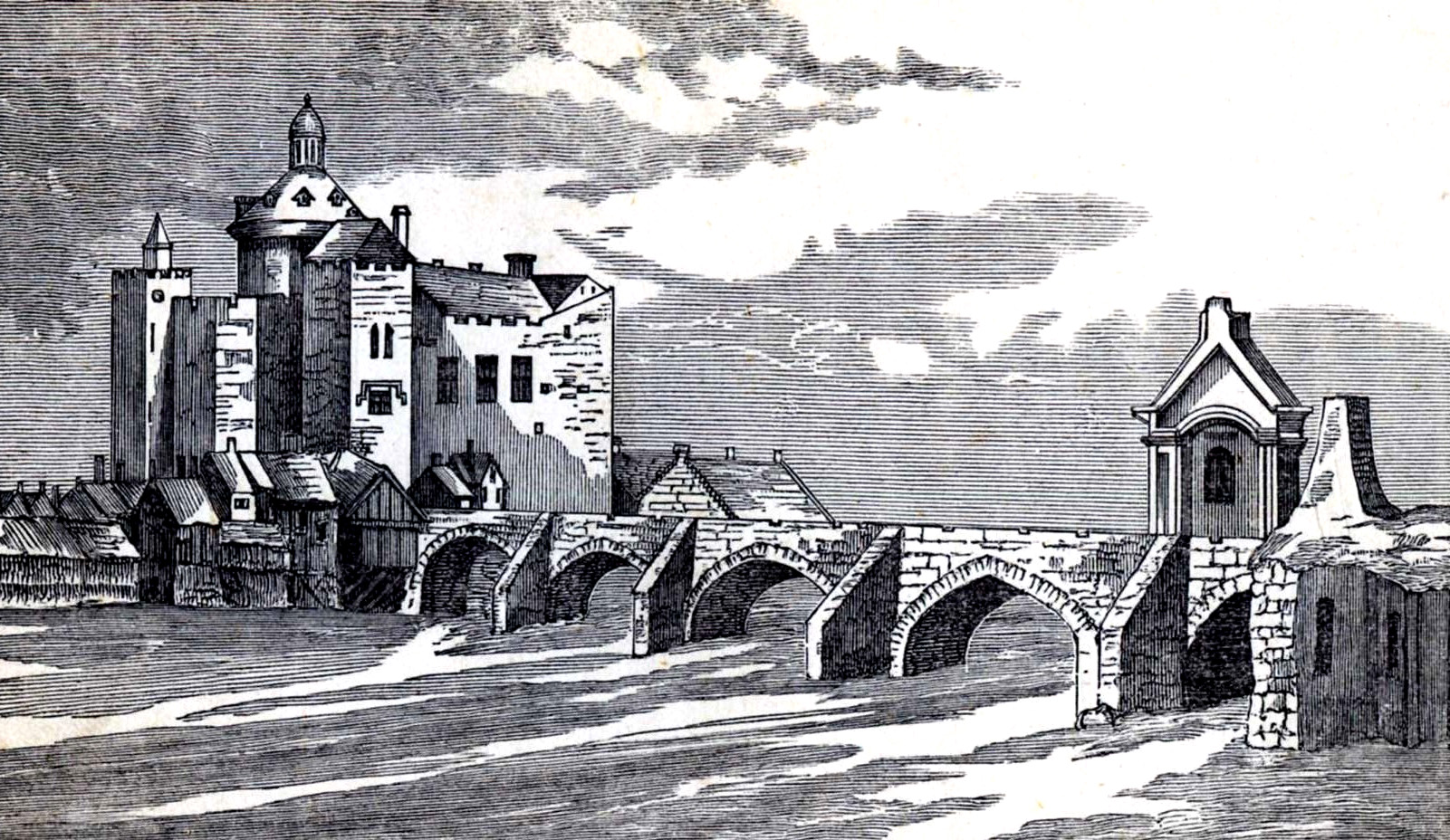
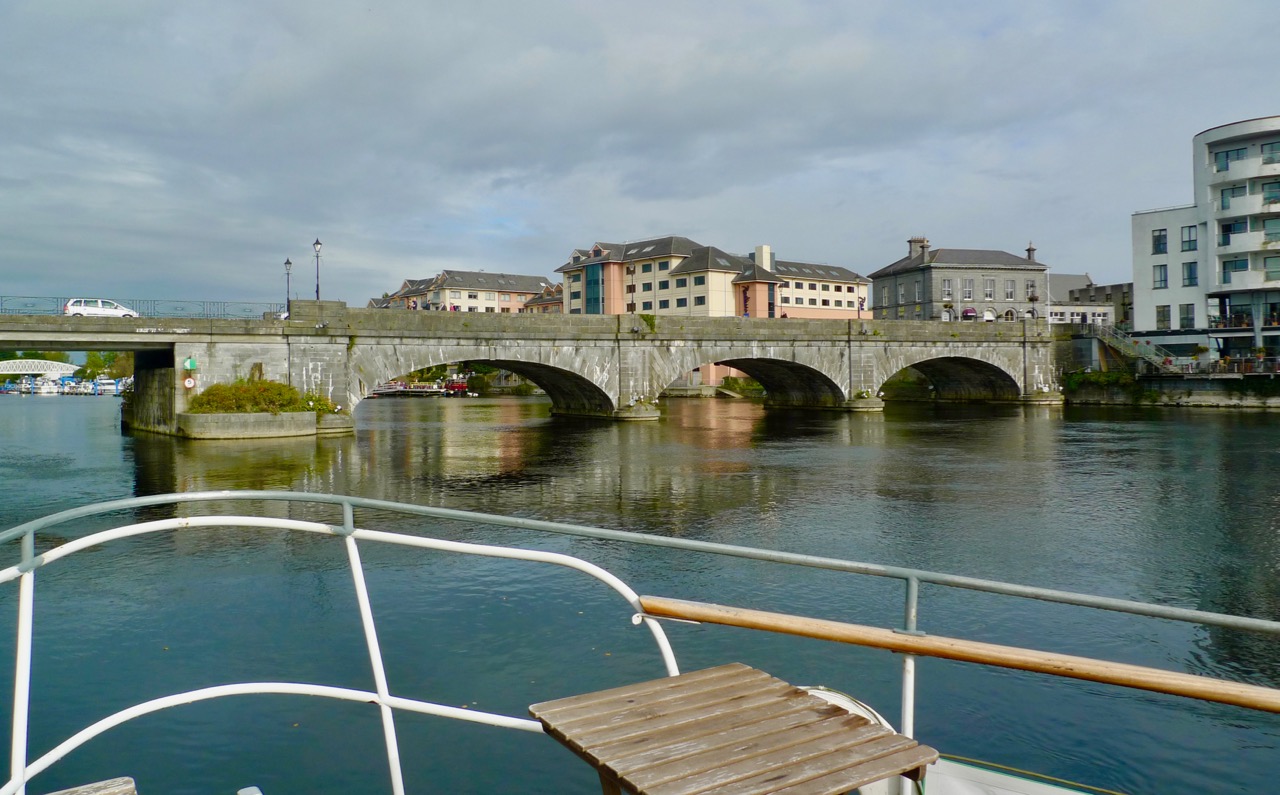
At one time (some histories say as early as the Bronze Age) this river crossing just below Lough Ree would have been a wide ford – Luan’s Ford. In the 11th century, Tairrdelbach Ua Conchobar, King of Connacht, had built a wooden bridge which survived, with various restorations, until 1566, when the first stone bridge was constructed (depicted above in a print now in the Aidan Heavey Public Library, Athlone). It could well be this medieval bridge that is commemorated in the ceilidh dance The Bridge of Athlone. The present bridge was opened in 1844.

Athlone Bridge

Athlone’s Victorian bridge today. Note the flat ‘navigation arch’ on the left (west side of the river): this replaces an earlier movable section of the bridge which allowed taller boats to pass through

The Shannon Navigation is now managed by the cross border authority Waterways Ireland. This body also manages the navigable canals, rivers and lakes throughout the island of Ireland, and does a very good job of it. Such an undertaking would probably have never been foreseen by the Rolts 70 years ago when some of the canals had been derelict for many years, and others were in poor condition. The Rolts’ borrowed boat Le Coq was based in Athlone and was probably the last craft to fully circumnavigate the circular route encompassing the Royal Canal, the Shannon and the Grand Canal in the 20th century: the Royal Canal fell into disuse shortly after the Rolts’ journey and was formally closed in 1961. Today the Royal Canal is completely restored to navigation (it was reopened in 2010).

the lock athlone

birds on weir

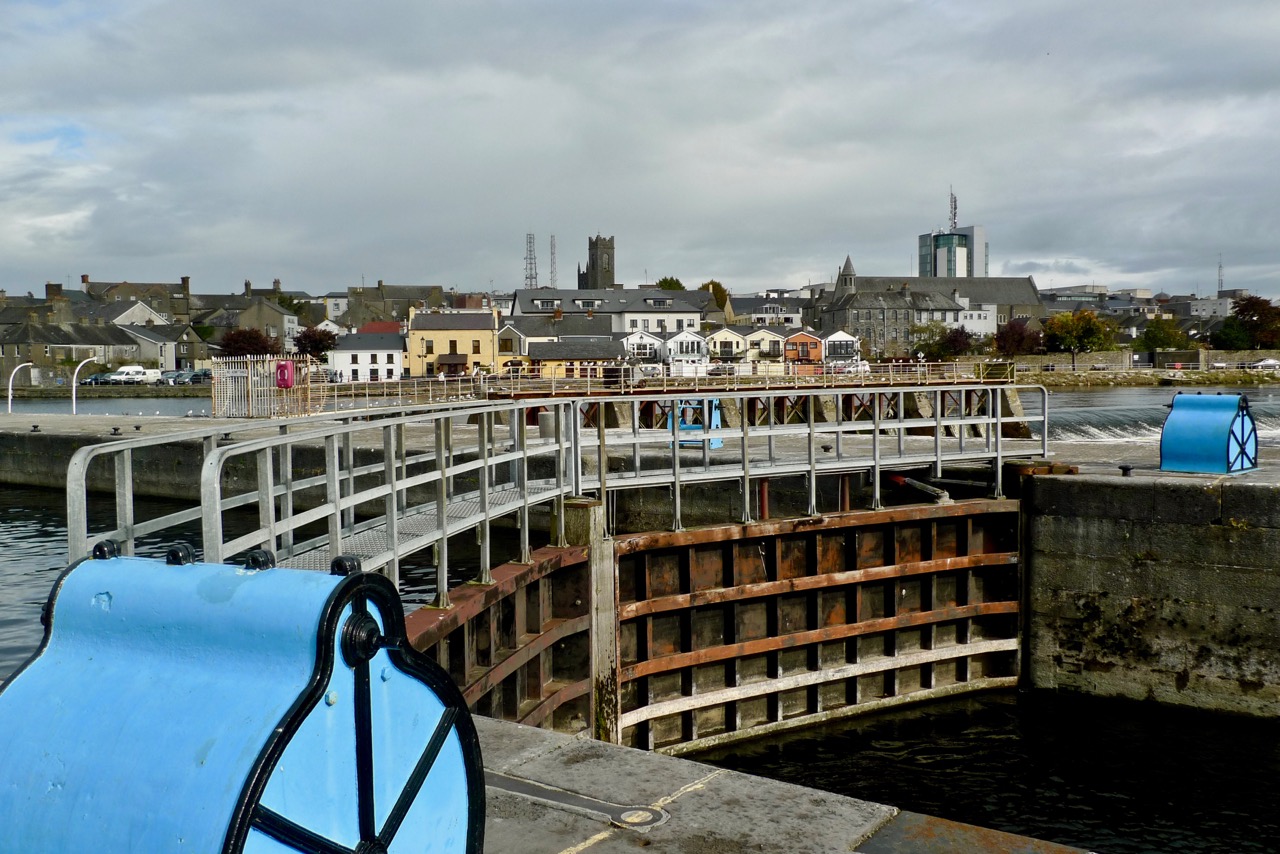
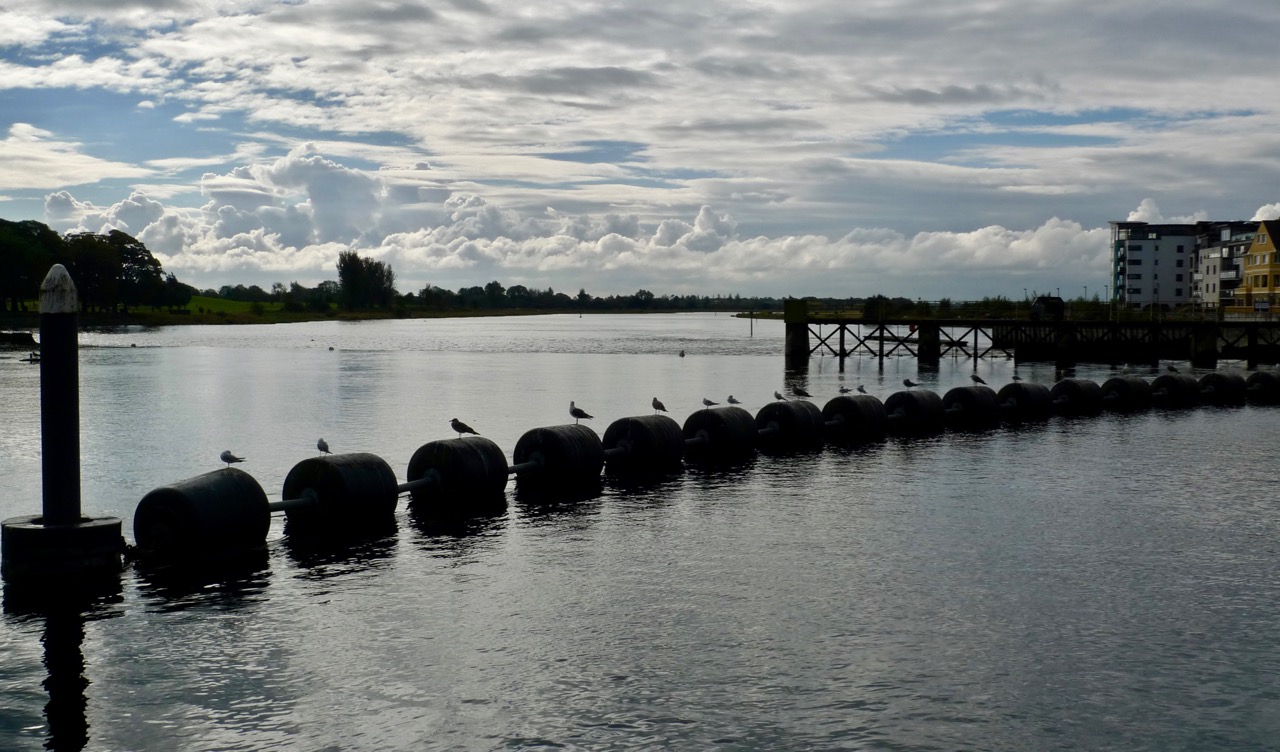
Upper picture – Athlone Lock today – some of the original Victorian lock machinery has been retained and is in working order although the main operations are electrically powered. Middle picture – upstream of Athlone the river widens dramatically as it approaches Lough Ree. Lower pictures – distinctive livery of the lock machinery in Athlone: note the commemoration of Thomas Rhodes, the engineer of the navigation improvements

We were fortunate to find some early photographs of Athlone and the river: these significantly predate the time of the Rolts’ journey but are worth showing for historical interest.

lock in use athlone

athlone fry place

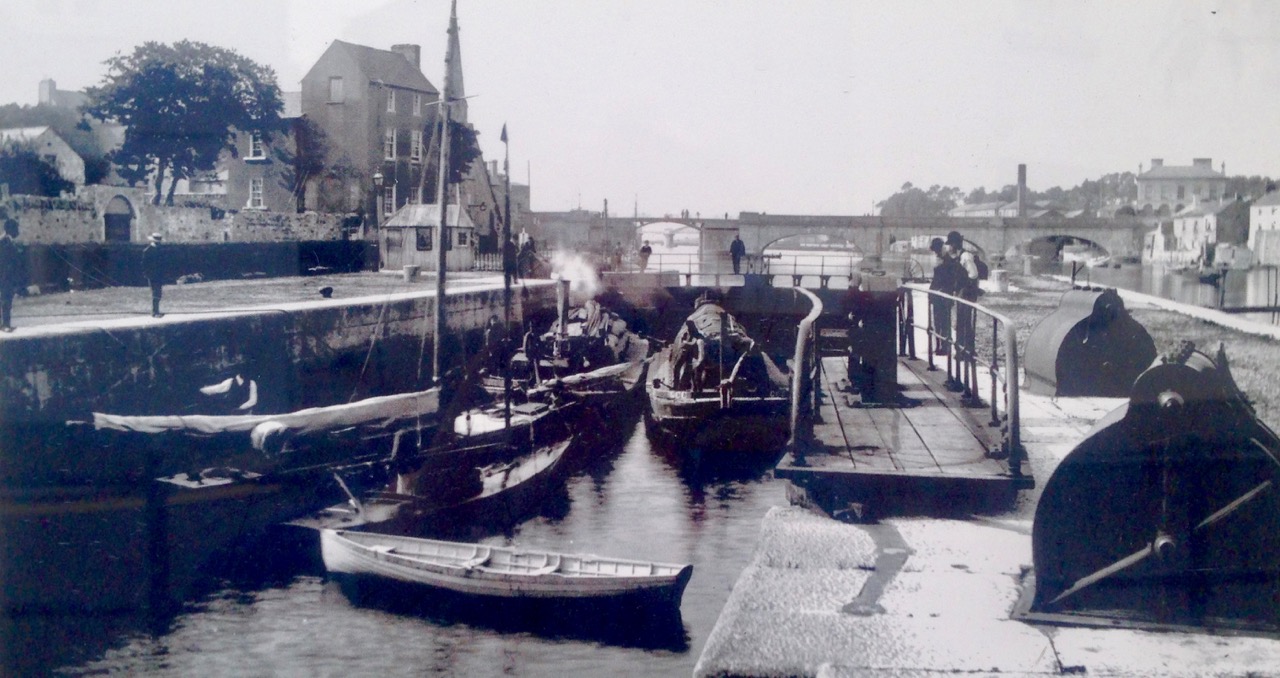
Upper picture – probably early 20th century – the lock at Athlone: note the commercial craft in the lock, one of them a steamer, and the lifting span on the bridge in the distance. Lower picture – Fry Place, Athlone, courtesy of The Leftbank Bistro: this probably dates from the late Victorian period and shows O’Ferrall’s on the left (see above) and a matching shopfront to the right

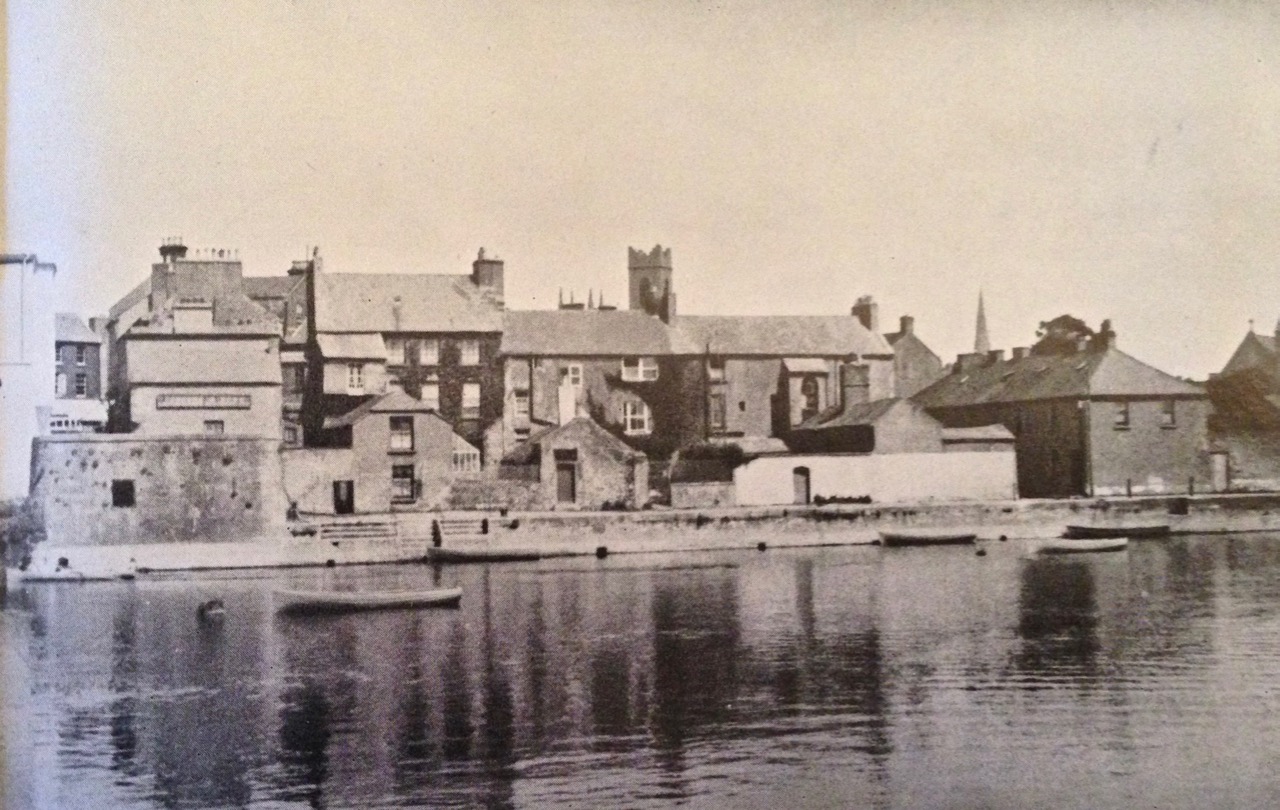
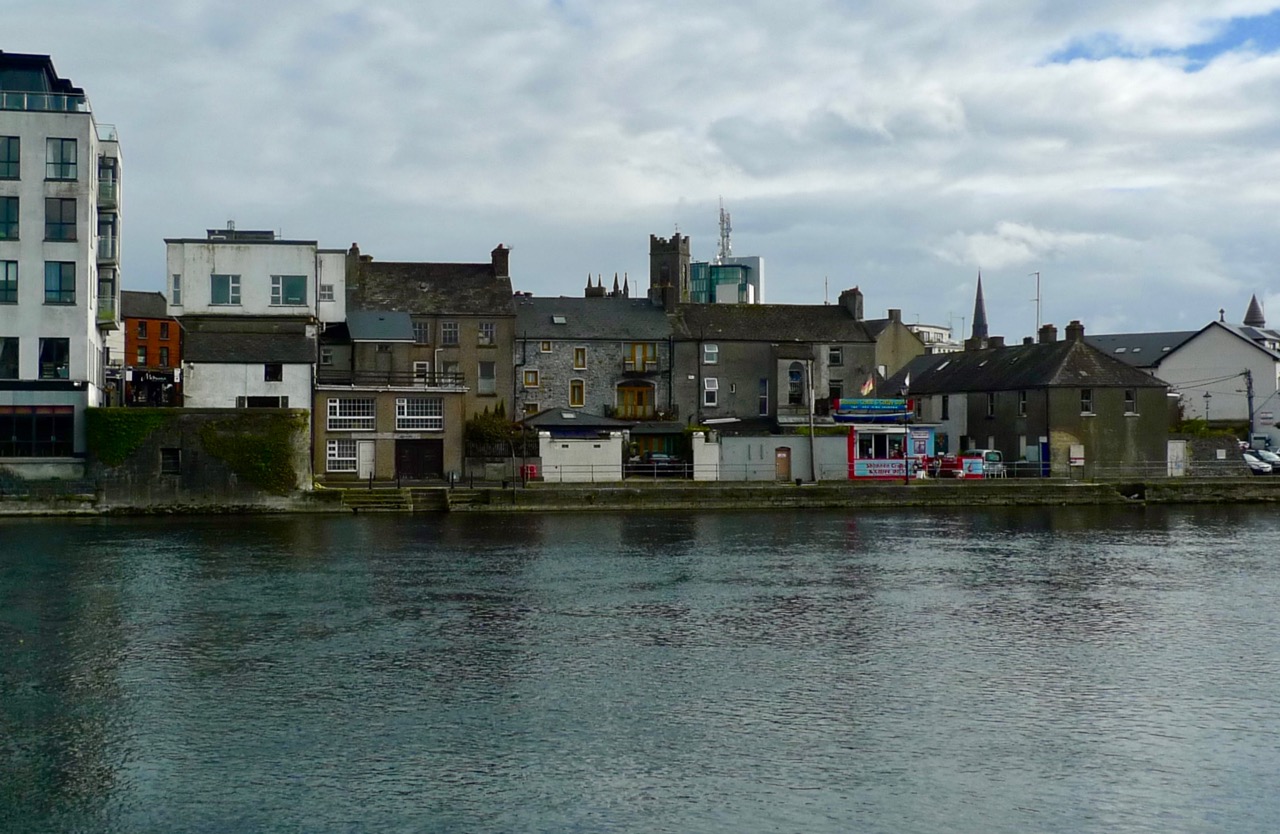
Compare Angela Rolt’s photograph of Athlone’s waterfront in 1946 (below) with my 2016 picture underneath it. Architecturally there is very little change to the buildings she recorded. Obviously, there has been considerable alteration to the town elsewhere in the last 70 years but the river itself has remained a constant.

Waterfront Athlone

Athlone Waterfront

shannon commission