Grange – Ireland’s Largest Stone Circle

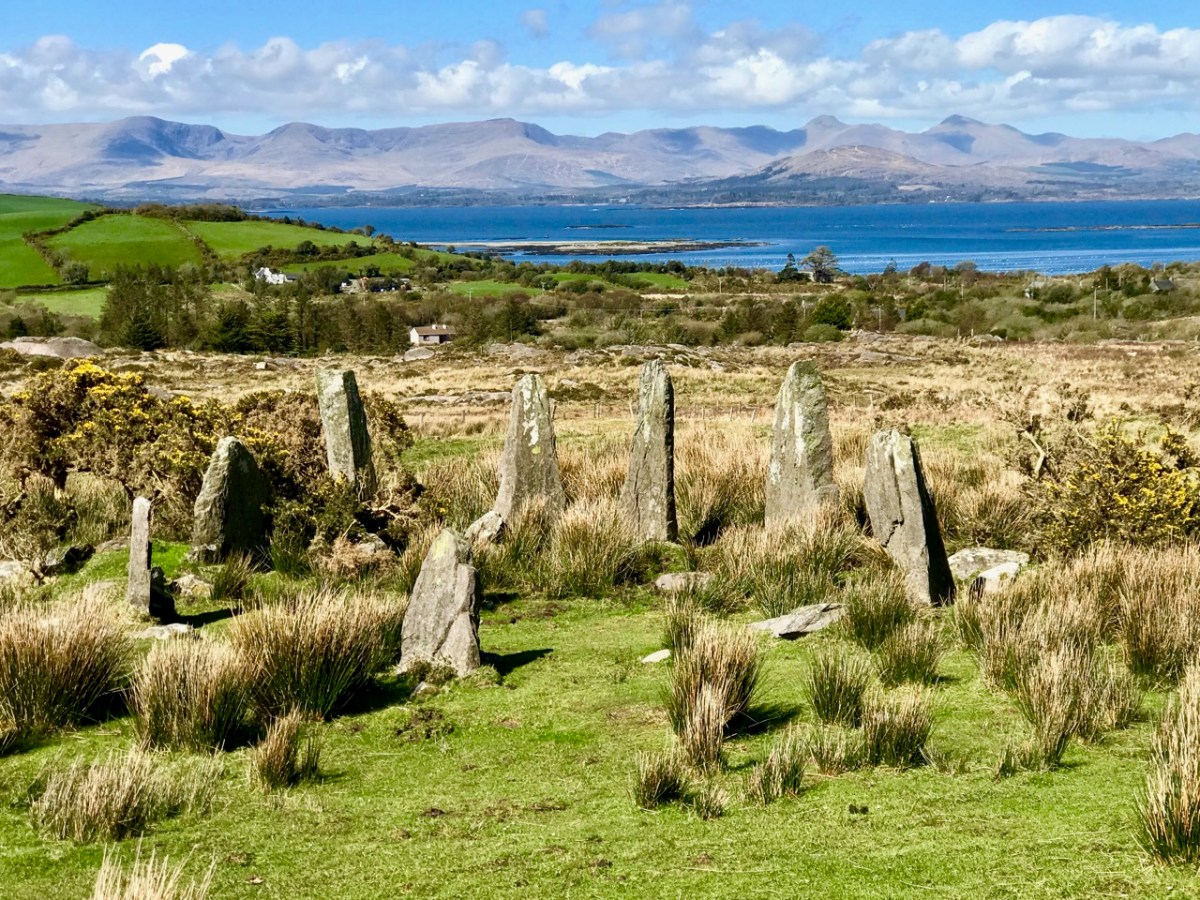
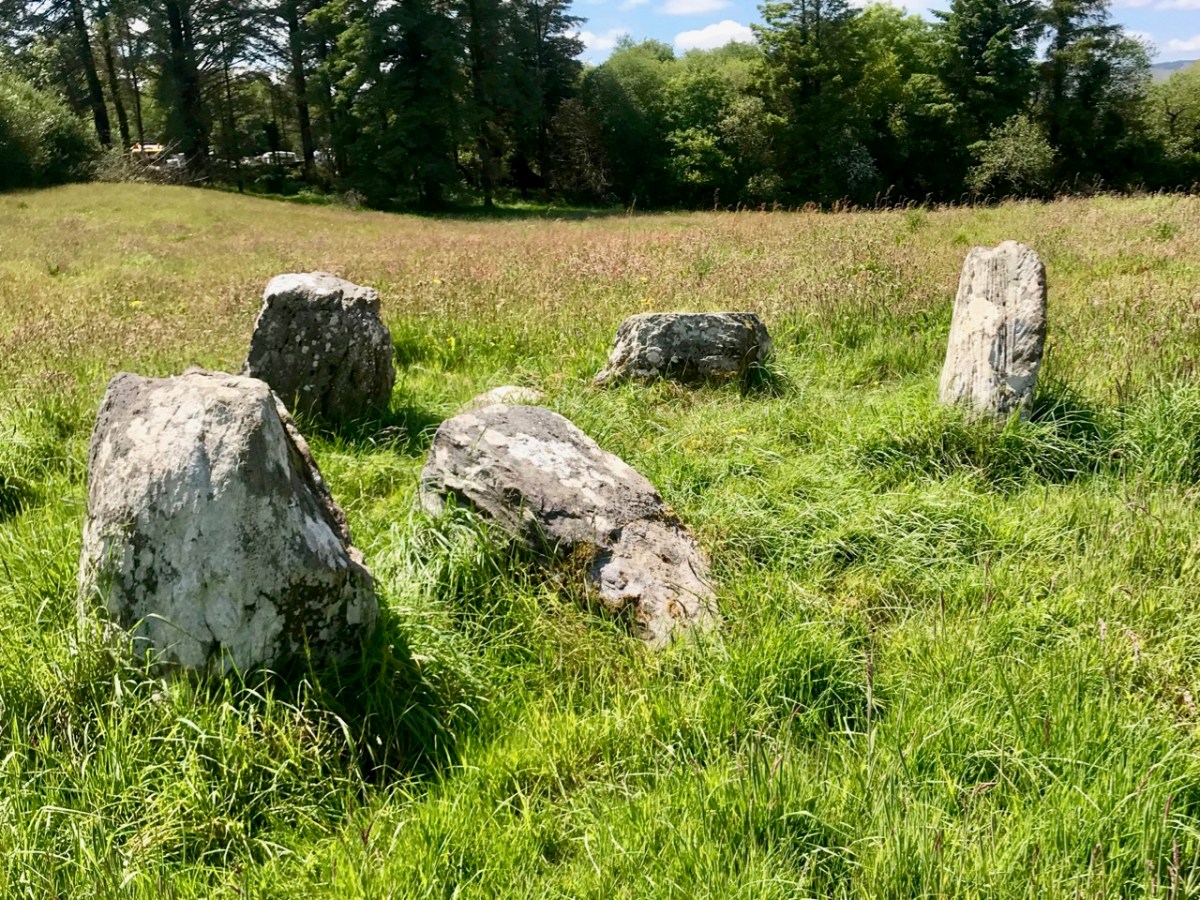
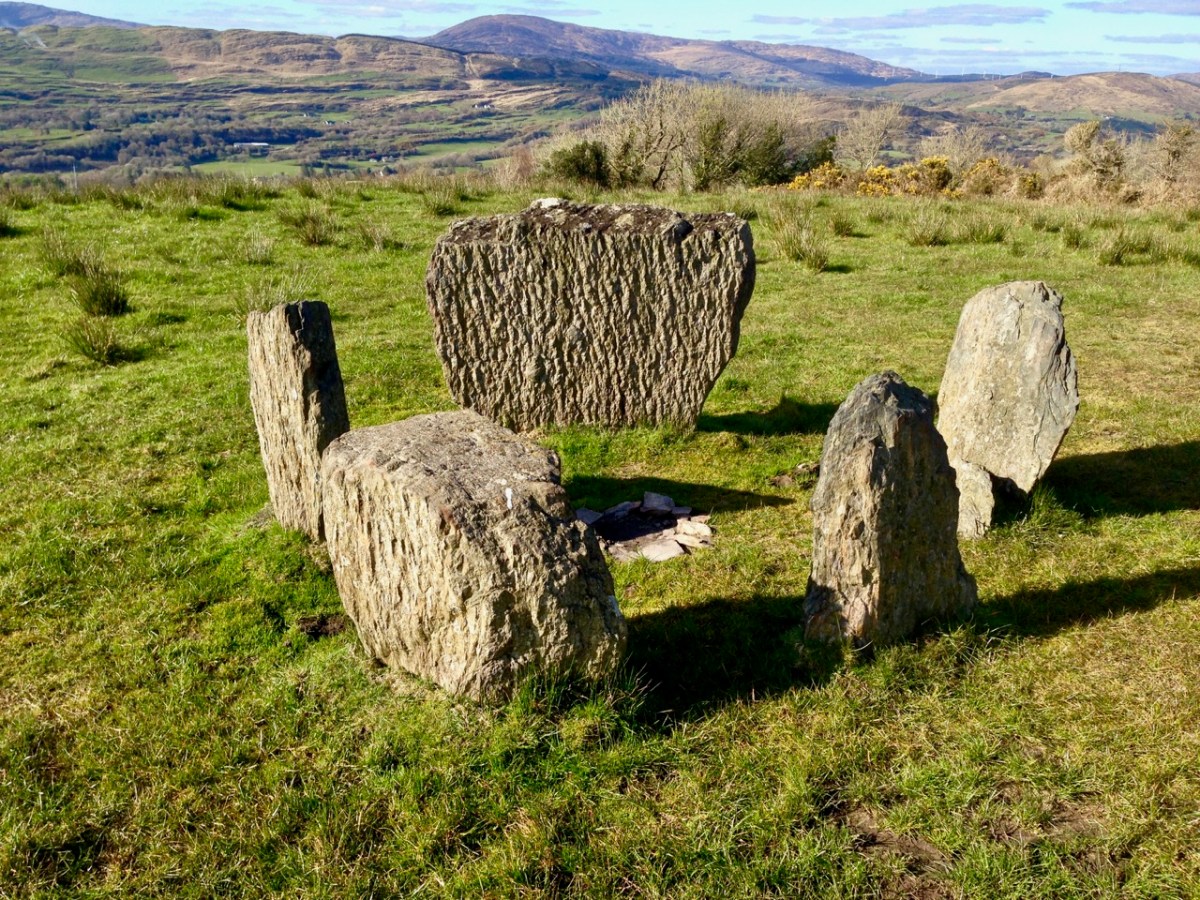
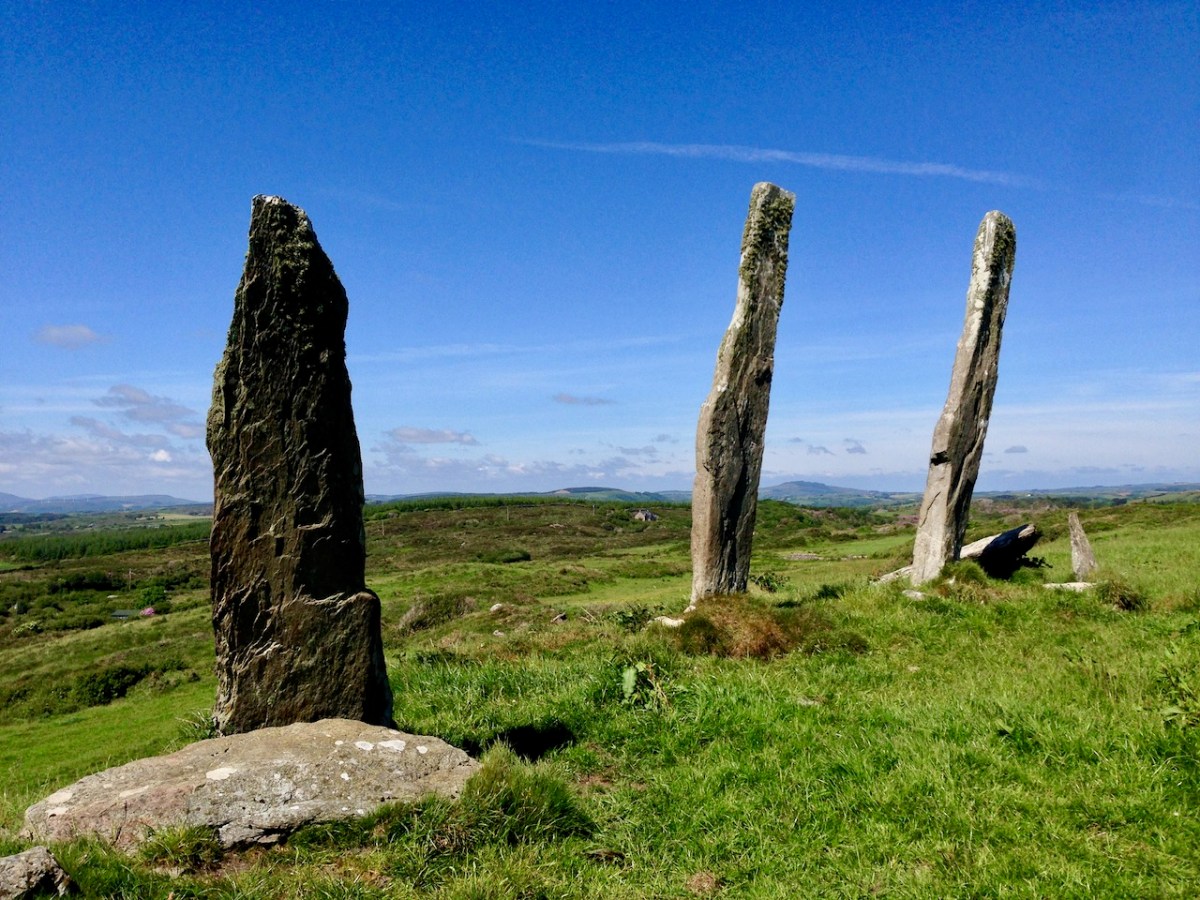
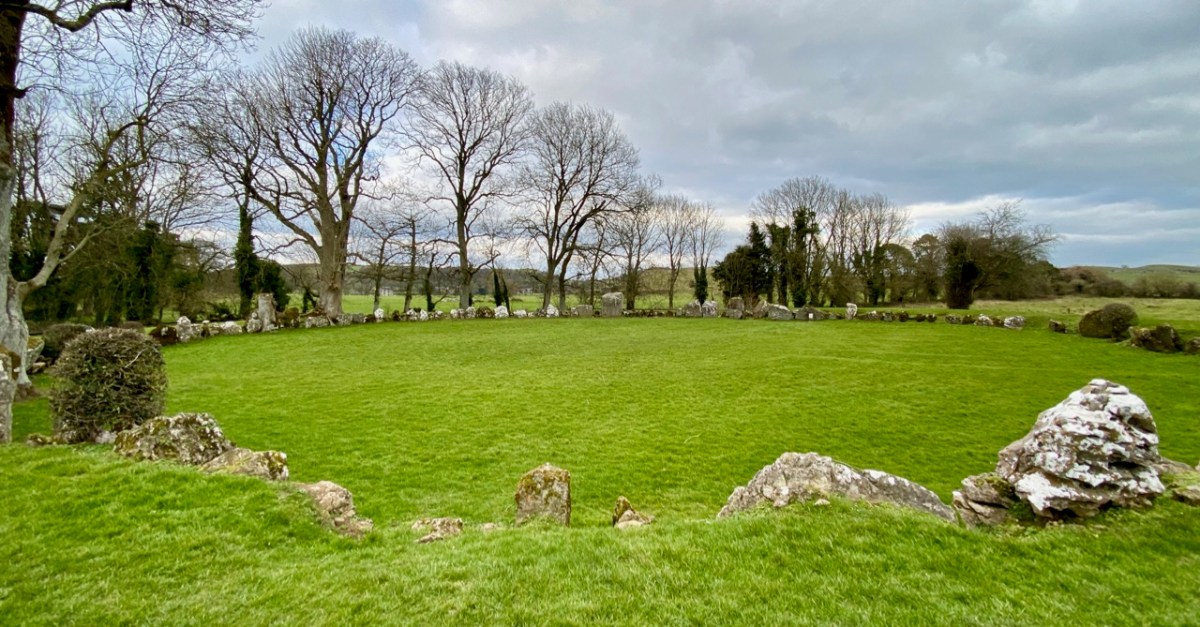
If you are travelling through County Limerick, you shouldn’t miss a visit to Ireland’s largest stone circle: Grange, near the Lough Gur complex. There are 113 stones in this circle today, generally standing close by each other (‘contiguous’) and thus unlike the majority of the circle monuments in Ireland, where individual stones are separated.

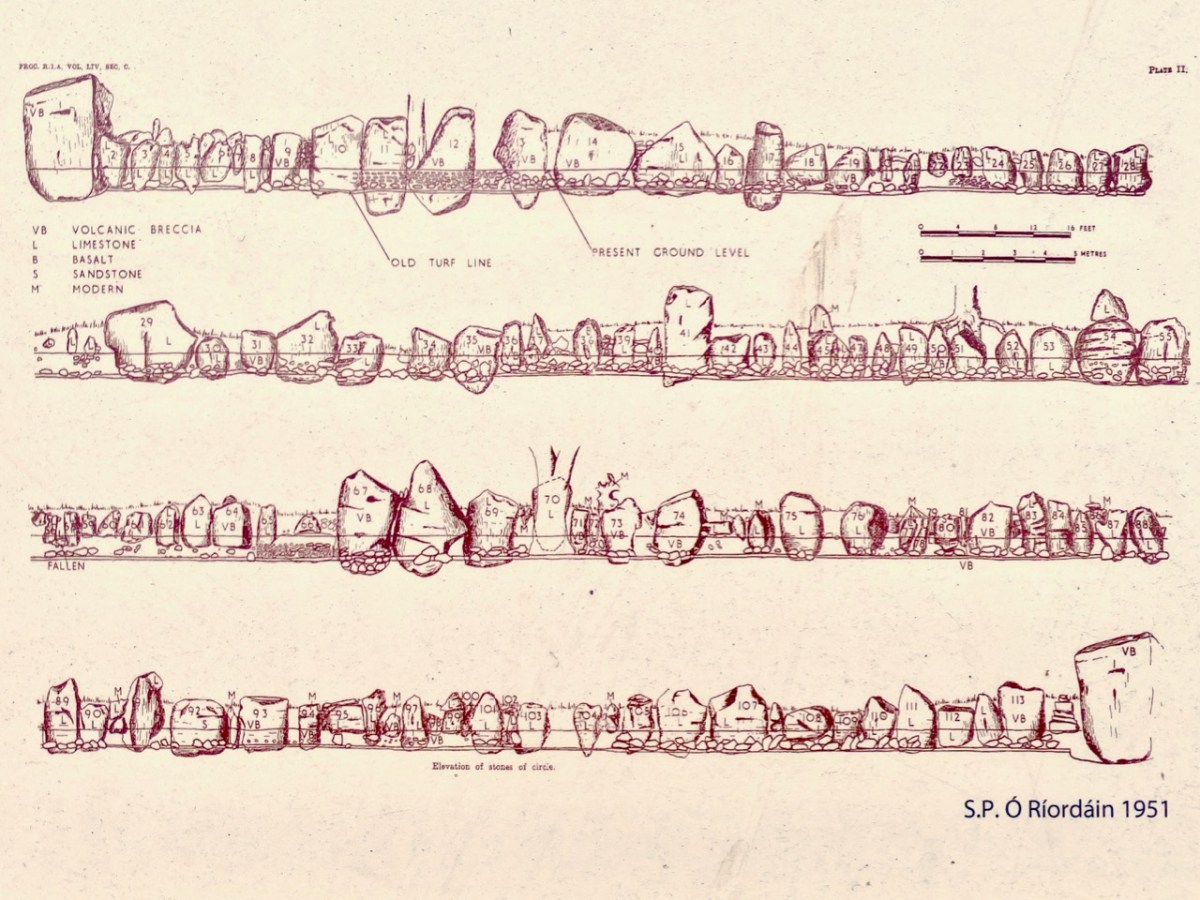
The great circular arena which these stones define is also on a platform raised (in the present day) about 600mm above the surrounding land. Excavations which took place between 1939 and 1954 (S P Ó Ríordáin 1951) and subsequent radiocarbon dating indicate a construction date just short of 3,000 BC, which makes the circle one of the oldest in Ireland.

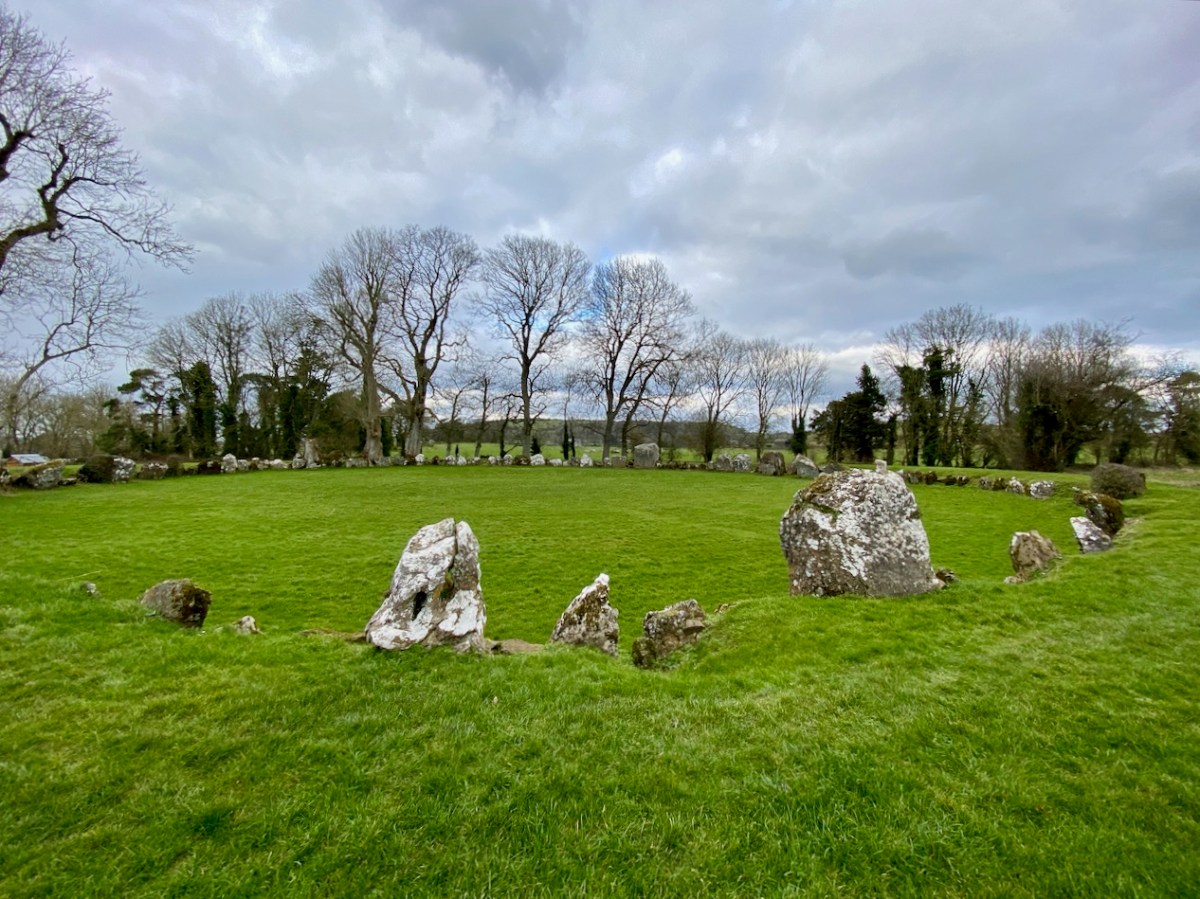
The internal diameter of this circle (a ring drawn around the inner faces of the stones) measures approximately 45.5 metres. Here is Ó Ríordáin’s drawings of the elevations of the stones:
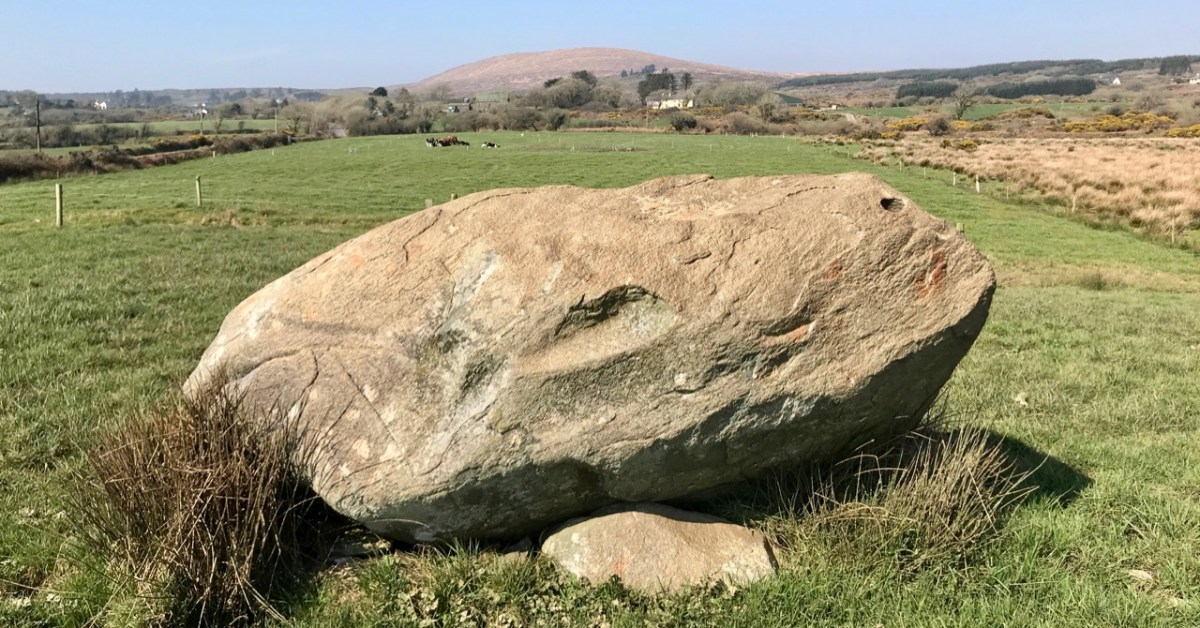
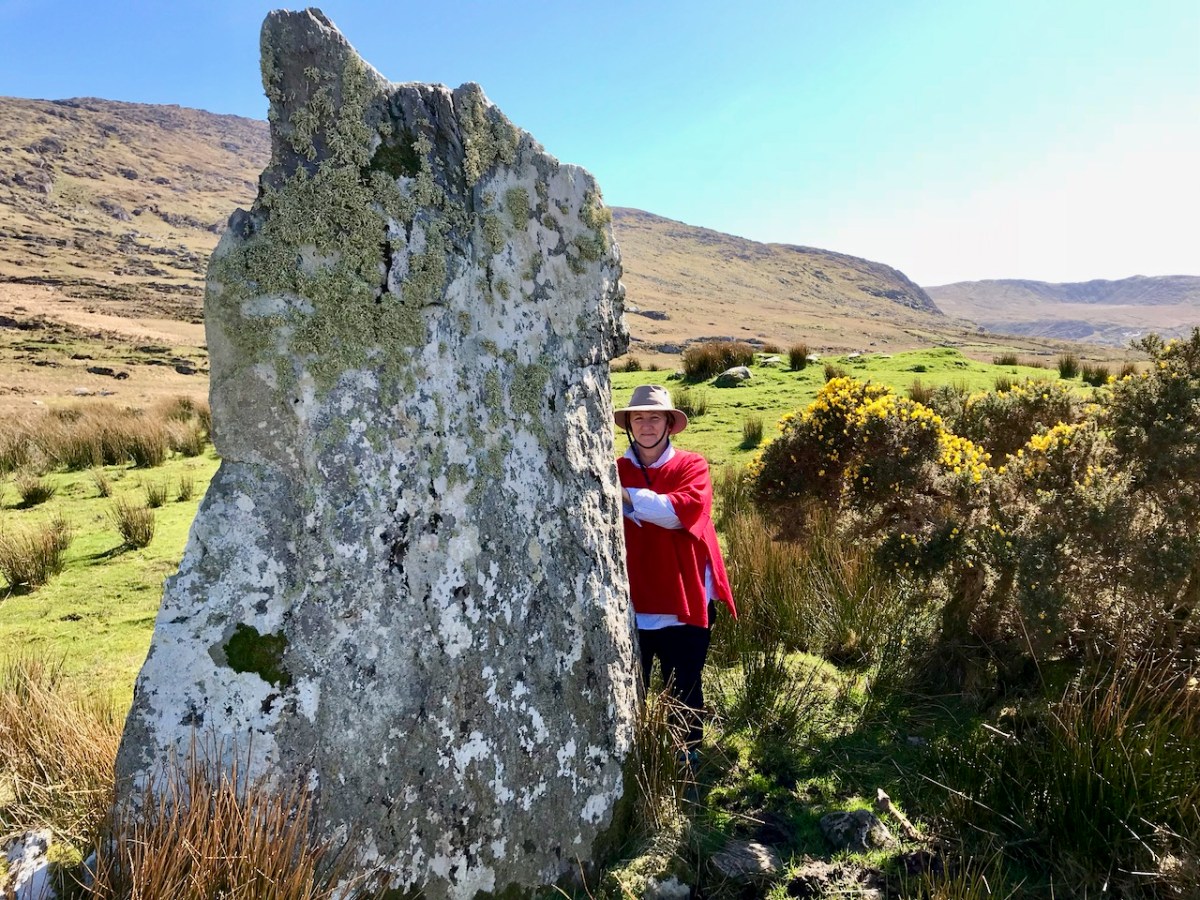
Finola bravely stands against the largest stone in the circle, which is traditionally named Rannach Crom Dubh. The meaning is not clear; Crom suggests ‘bent, crooked, or stooped’, while Dubh means ‘black or dark one’. Rannach can mean ‘open-handed’, which could imply a trading connection. This stone is said to weigh over 40 tonnes and was brought to this spot from three kilometres away. Interestingly, some say that this stone marks the ceremonial entrance into the circle and is aligned with the sunrise on the 1st of August, known as Lughnasadh, the day that marks the beginning of the harvest in Ireland. In fact, there are many orientations that can be given to this circle. This article by Ken Williams explores some possibilities here.
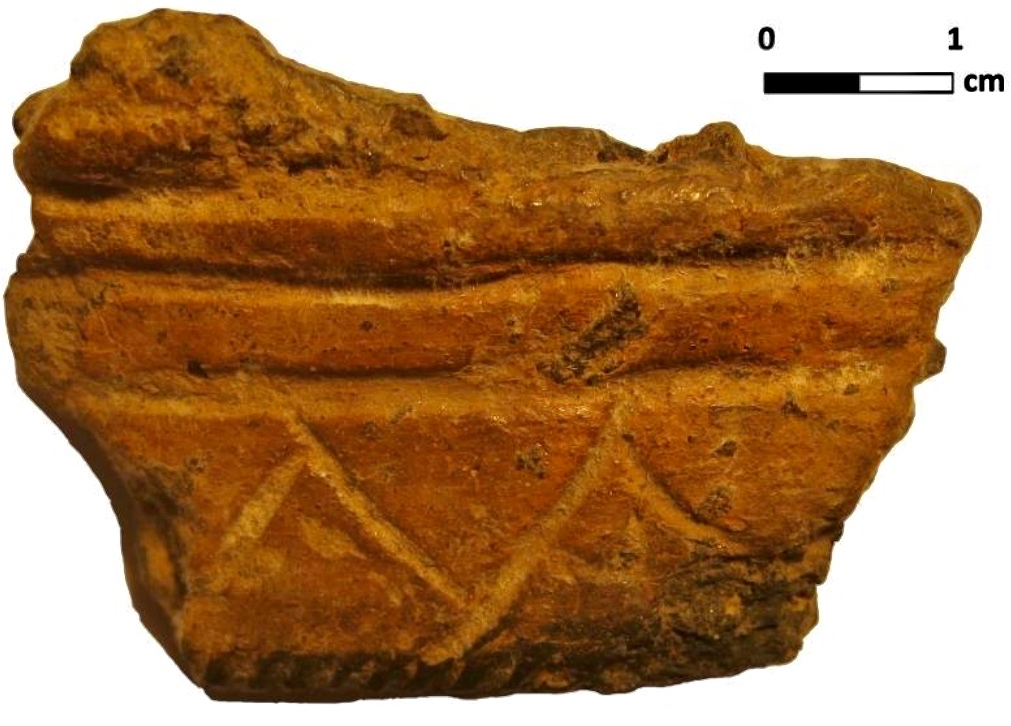
This Beaker pottery sherd was found and recorded by Ó Ríordáin. It is one of a great number of such remains to be found at the site. One commentator made the suggestion that . . . The breaking of Beaker pots against the standing stones seems to have been part of a ceremony . . . Can we trace the more modern tradition of breaking wine glasses after a toast to such an early origin? It’s said to bring luck and happiness in some cultures. This would, of course, imply that the great circle was a celebratory feasting site.

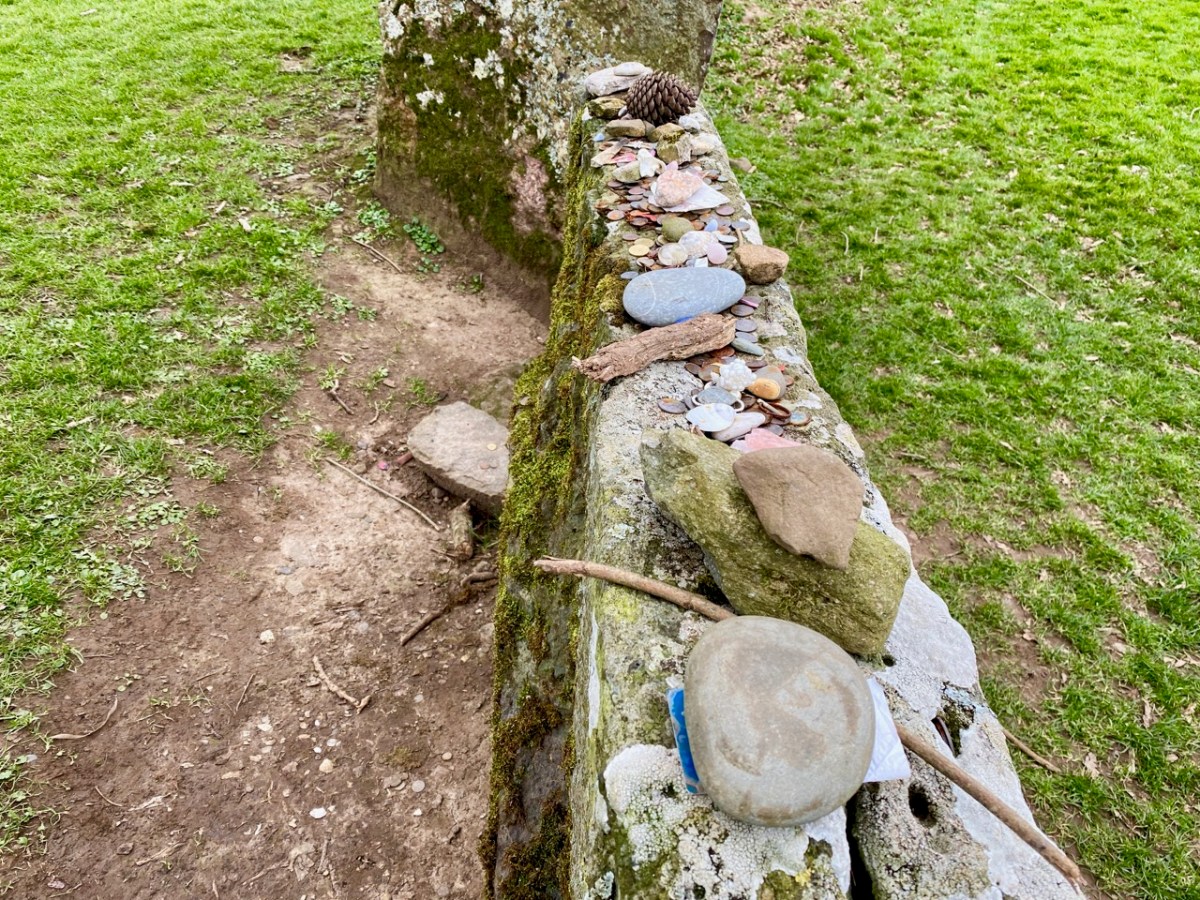
There is evidence today that visitors feel compelled to leave offerings at the site: coins, small stones, beads, and other ephemera. The examples above are adjacent to Rannach Crom Dubh, while below is one of the standing stones in the circle that appears to have been deliberately cut, or slotted, at some time in its history. Today, coins are deposited within this slot.
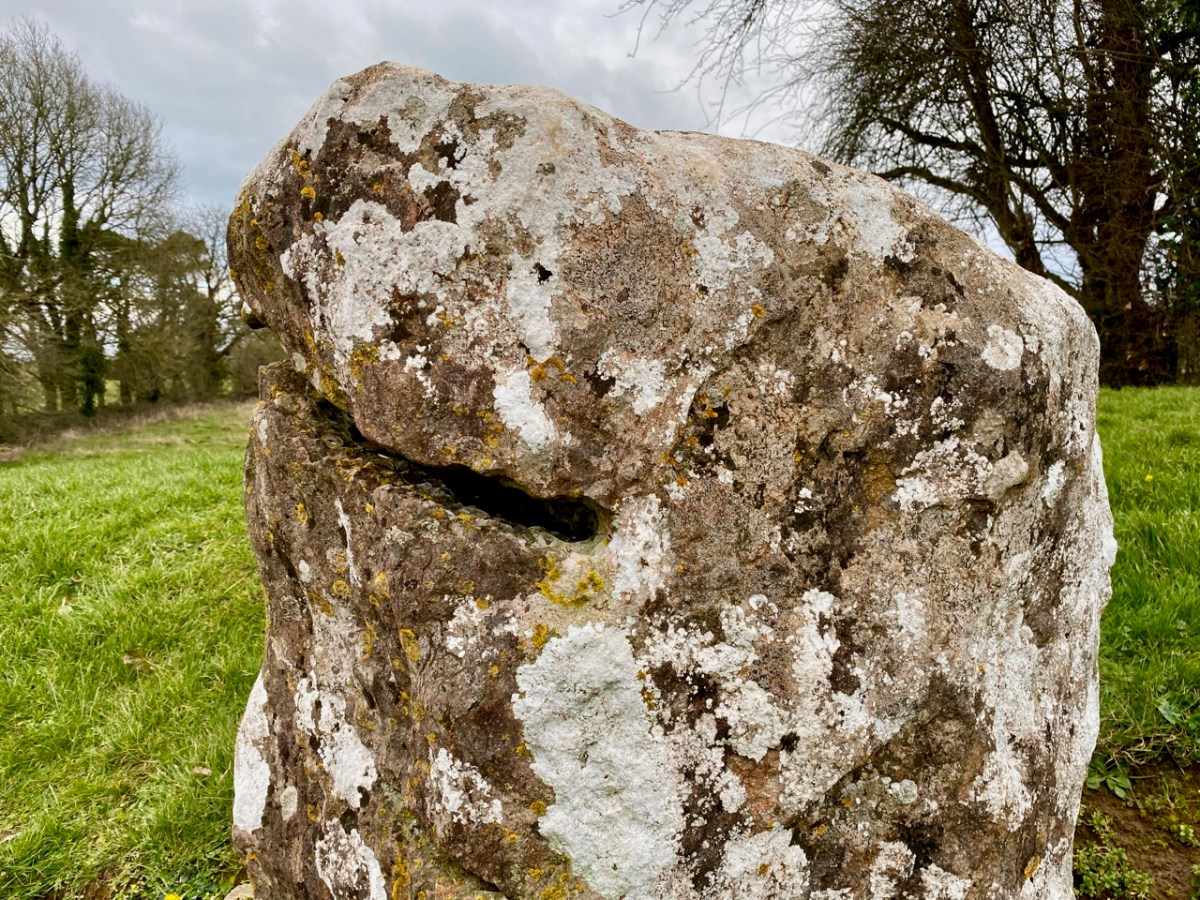
My own feeling about this site is that it is an arena where people gathered to feast and celebrate. An ancient ‘circus’ perhaps? Ken Williams analyses the possibilities of archeo-astronomical alignments in his article, mentioning our West Cork friend Vice-Admiral Boyle Somerville, whose detailed work we have investigated, here.
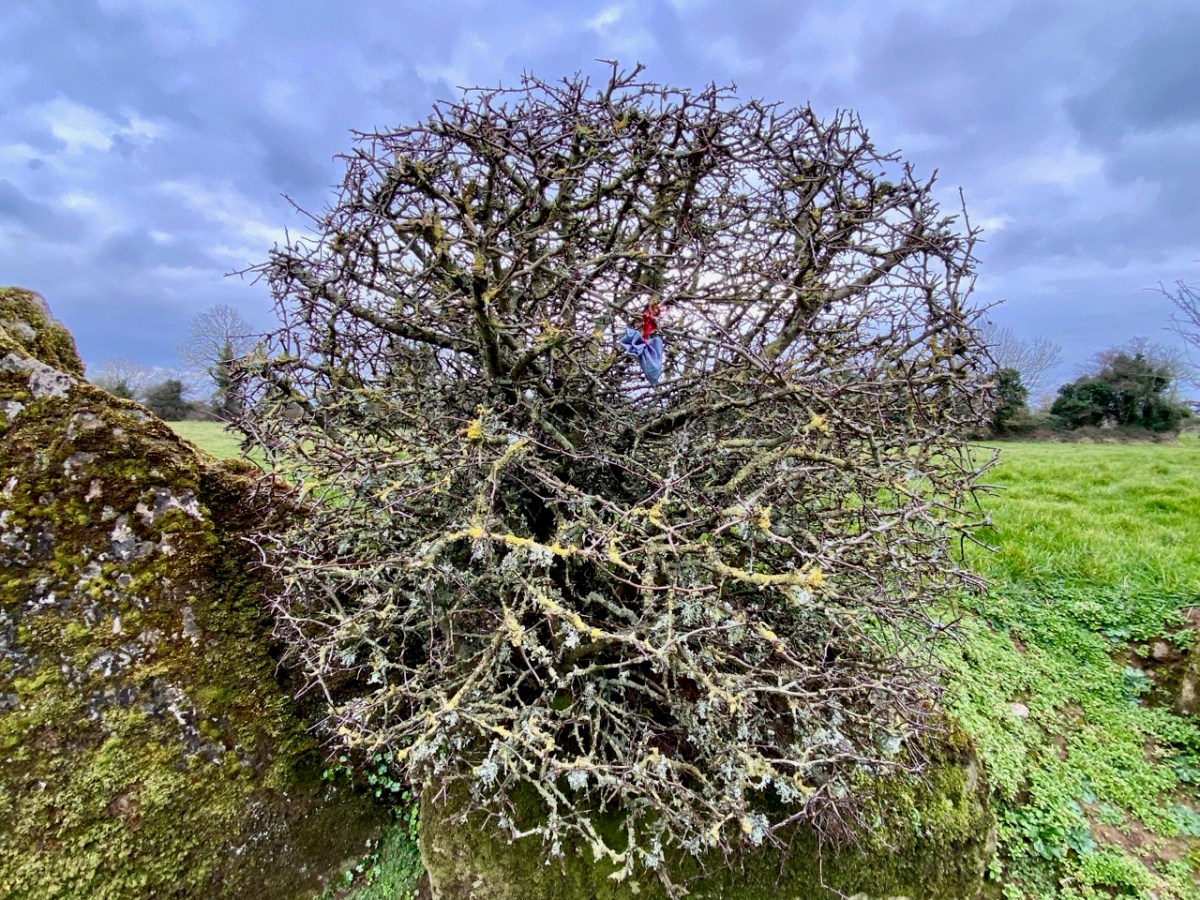
The features of this site are fascinating and provide much food for thought, especially when seen through the eyes of archaeologists. Of course, we want to know who conceived this monument, and who was in charge of the human power and organisation that was required to erect it. There won’t be a simple answer to this: it’s likely that many generations were responsible and that there were numerous incarnations over time. That’s what is so fascinating about ancient history: if only we had a time machine!
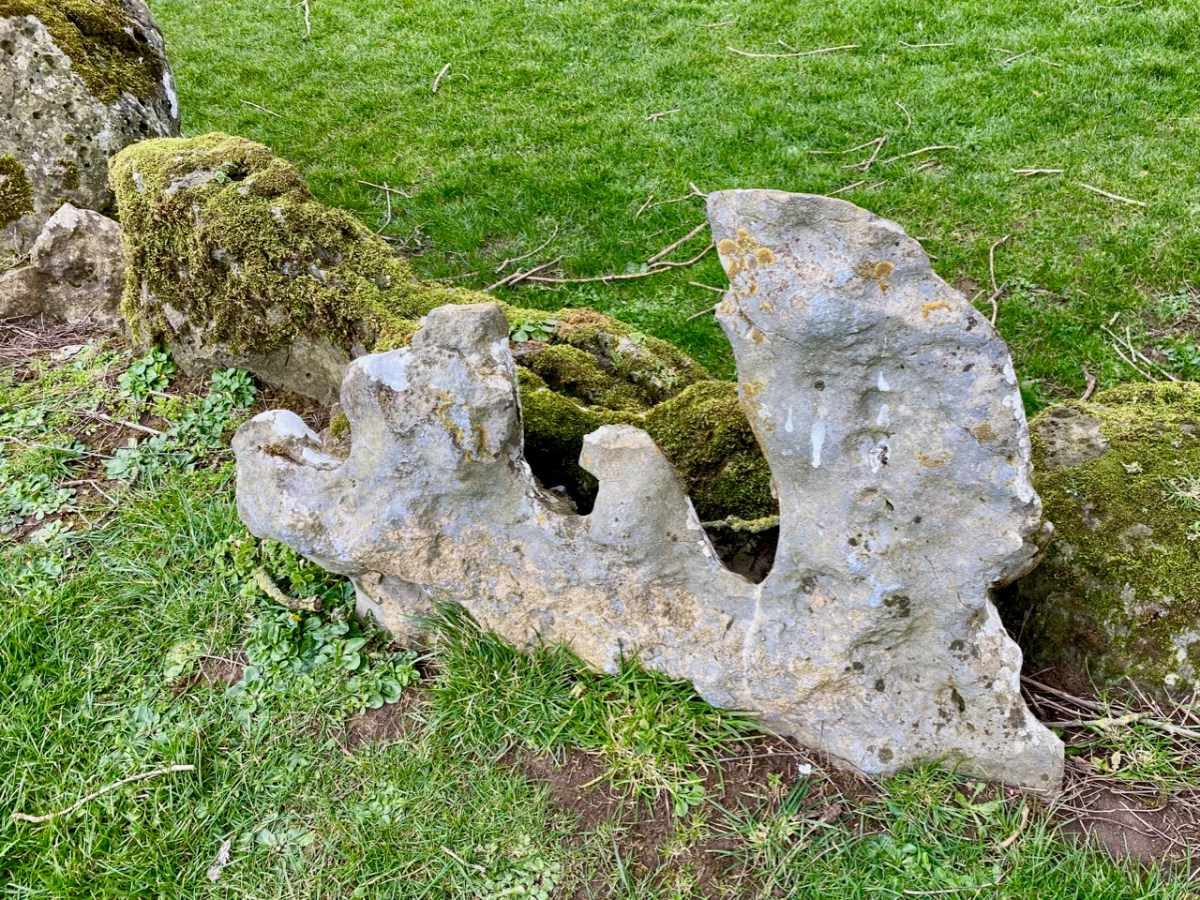
There are traces of other, smaller, stone circles close by this one, but I was intrigued to read in one of the accounts of this site that there was previously a further – even larger – circle nearby, and this has vanished altogether. I have to ask: how could such a massive structure disappear completely? Legend gives us an answer: it was supposedly stolen by Merlin and brought over to England to create Stonehenge!
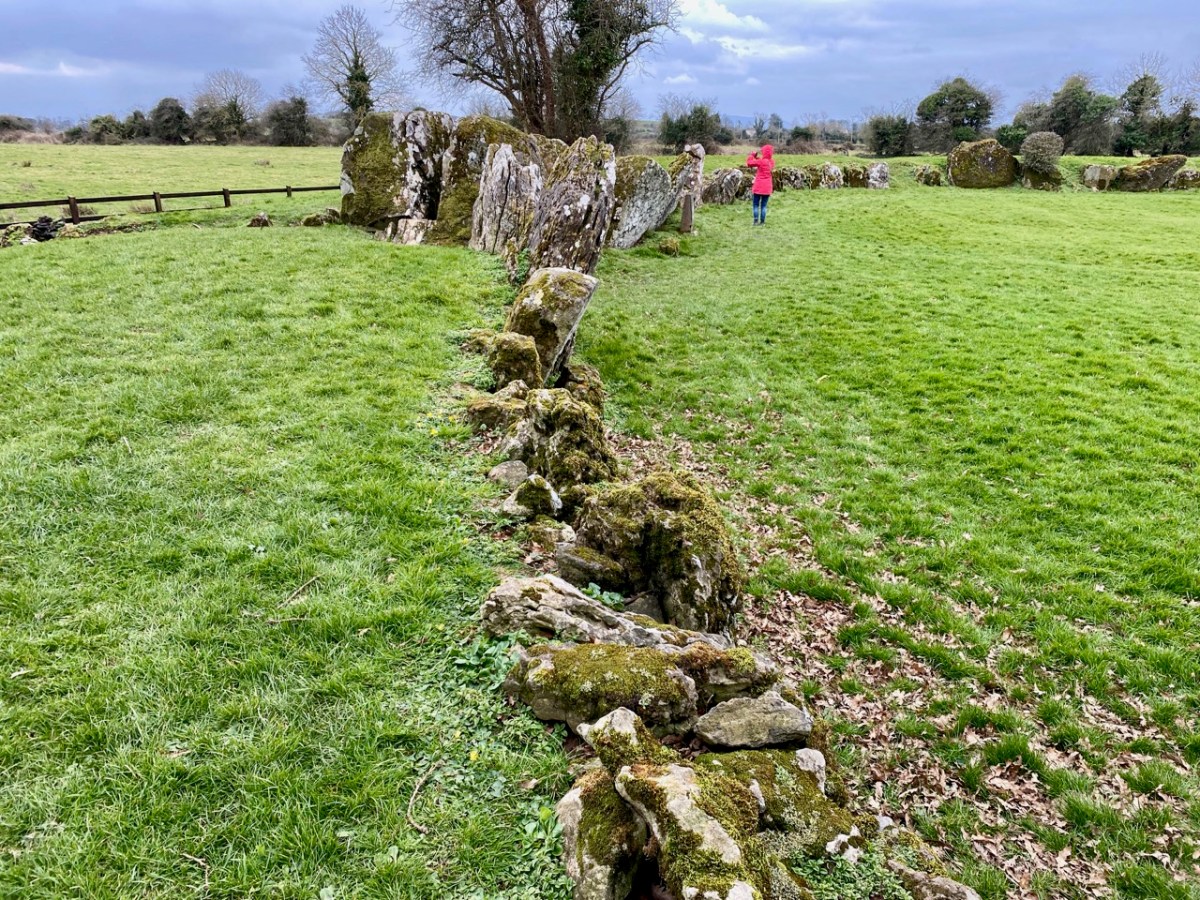
Blasket through the Lens

Great Blasket, one of the islands in the parish of Dún Chaoin (Dunquin) off the west coast of Kerry, was the home and life-blood of a tenacious population of Irish families for many hundred years. One of these families – the Ferriters – claim that they controlled the islands as far back as the 13th century and had established a castle there. Whoever lived there had to be tough: the terrain is wild and there is little shelter. Nevertheless, the islanders clung to their territory, and their numbers expanded in the early 19th century when Lord Ventry of Dingle evicted many of his tenants from their holdings and those who left found island life – hard though it was – preferable to persecution.

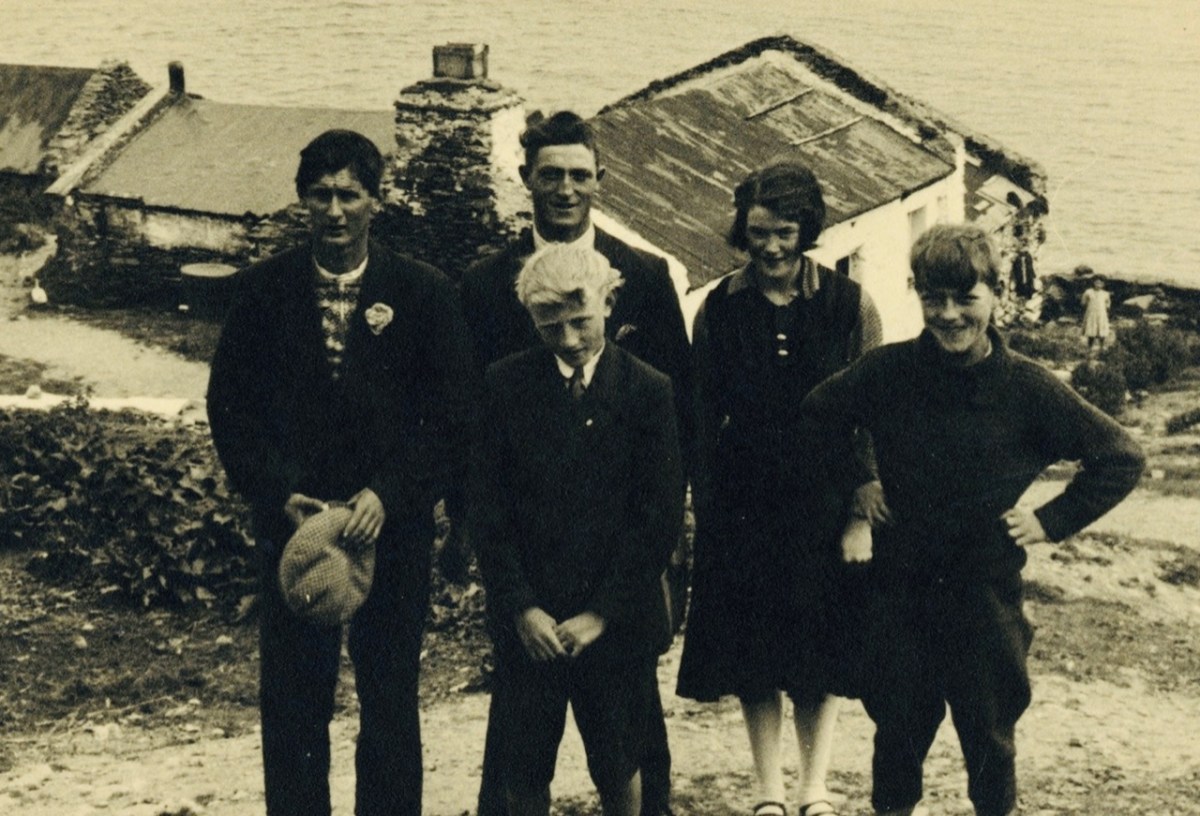
We are fortunate that, during the early twentieth century, Great Blasket was visited by curious tourists and anthropologists. Among them was Robin Flower, who became Deputy-Keeper of Manuscripts in the British Museum from 1929 to 1944. He had many credits to his name, including Member of the Royal Irish Academy, Doctor of Literature of the National University of Ireland and also of Dublin University. Flower became the historian of the Blaskets, which he ‘immortalised’ through his lectures and writings – and many visits. To the people of the Great Blasket he was playfully known as ‘Bláithin’ – Little Flower – which he considered a great honour. I will write more on Robin Flower in a future post, but concentrate here on some of the photographs of island life which were recorded by likeminded researchers in the first half of the twentieth century. After 1954 there was nothing to record: life on the island, three miles from the mainland and involving an often treacherous crossing, became untenable. The whole remaining population was evacuated in that year, leaving their cottages and settlements to the ruinous ravages of the wild Atlantic gales.

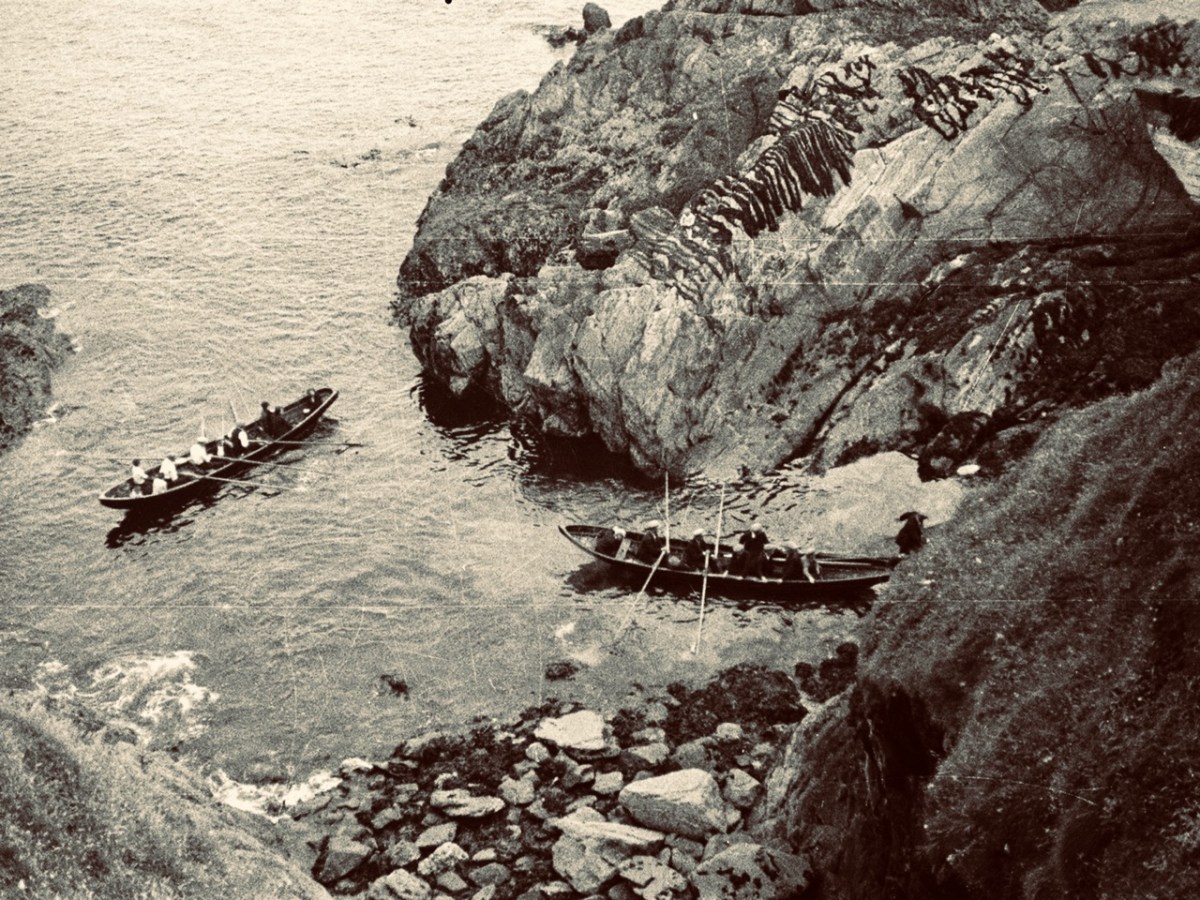
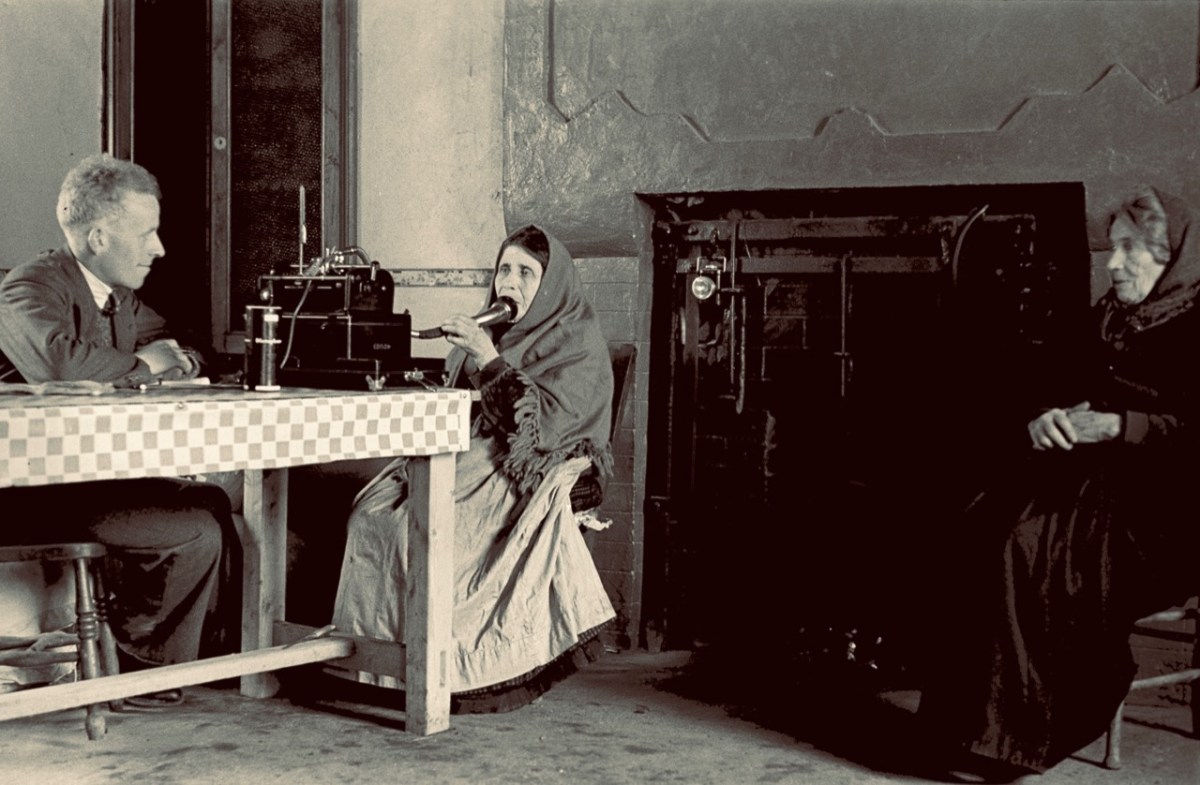
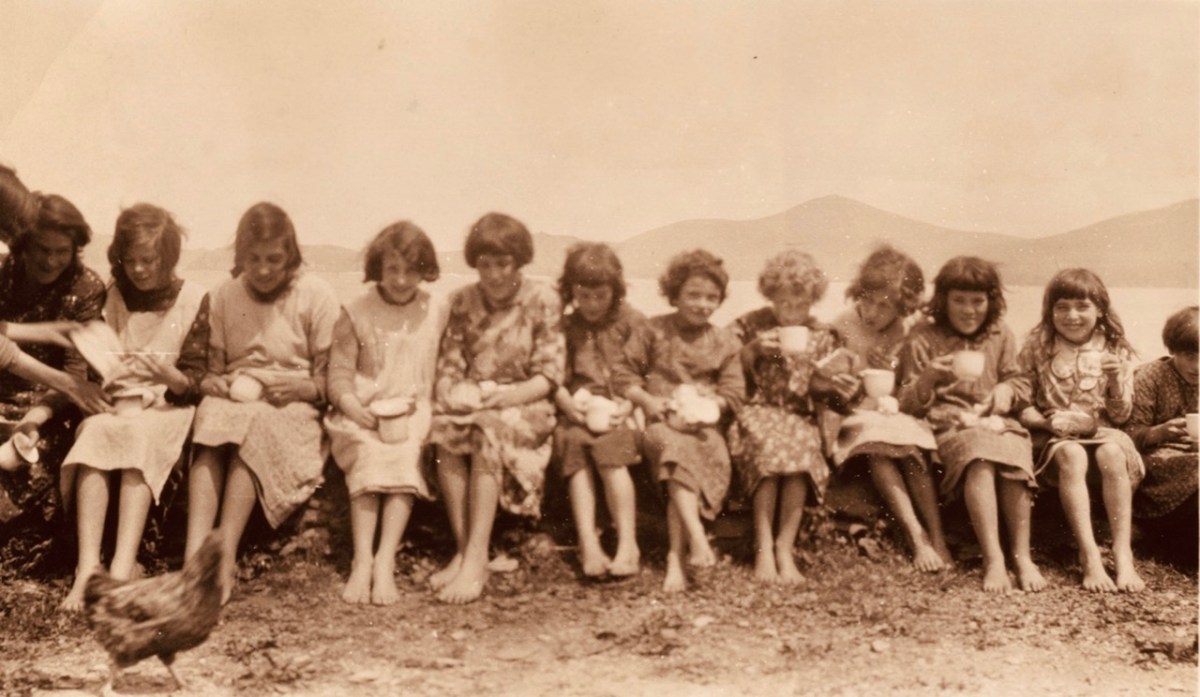
The header picture is a wonderful statement of youth and vigour: island children photographed outside their school in 1932 by Thomas Waddicor. I can’t find anything about this man, but a lot of his work appears in the Dúchas Photographic Collection which was established in the 1930s, so I am assuming he was an active collector and researcher himself. The second picture is by our old friend Tomás Ó Muircheartach, who also spent time on the Blaskets in the 1930s. You will find more about him here. It shows the Blasket men in their fishing curraughs below the craggy rocks of the island. The pic above is also by Muircheartach, and shows Cáit Ruiséal and Máire Ruiséal being interviewed by a follklore collector at their fireside in 1942. I am not sure where this interview took place.

This photograph is also by Thomas Waddicor and dates from 1932. The caption given in the Dúchas Photographic Collection is interesting, if not entirely enlightening: Man, Great Blasket Island: Buffer, note stuffed peaked cap – an island custom.

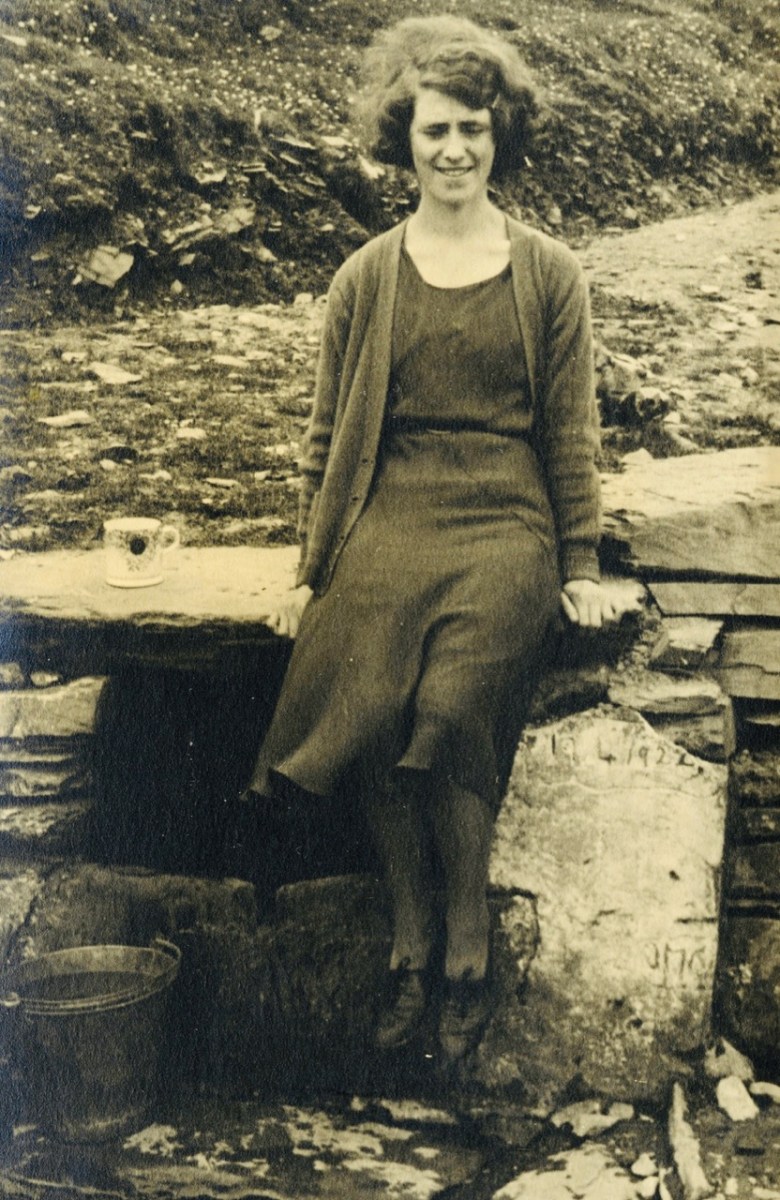
Another from Waddicor, also 1932: Cáit at the Well. I think what strikes me most of all is how real and alive these people are – they certainly don’t seem in any way downtrodden or in danger of extinction: perhaps it’s just because they are ‘posing’ for the camera. But it’s salutary to think that they were only on the island for another generation or so.

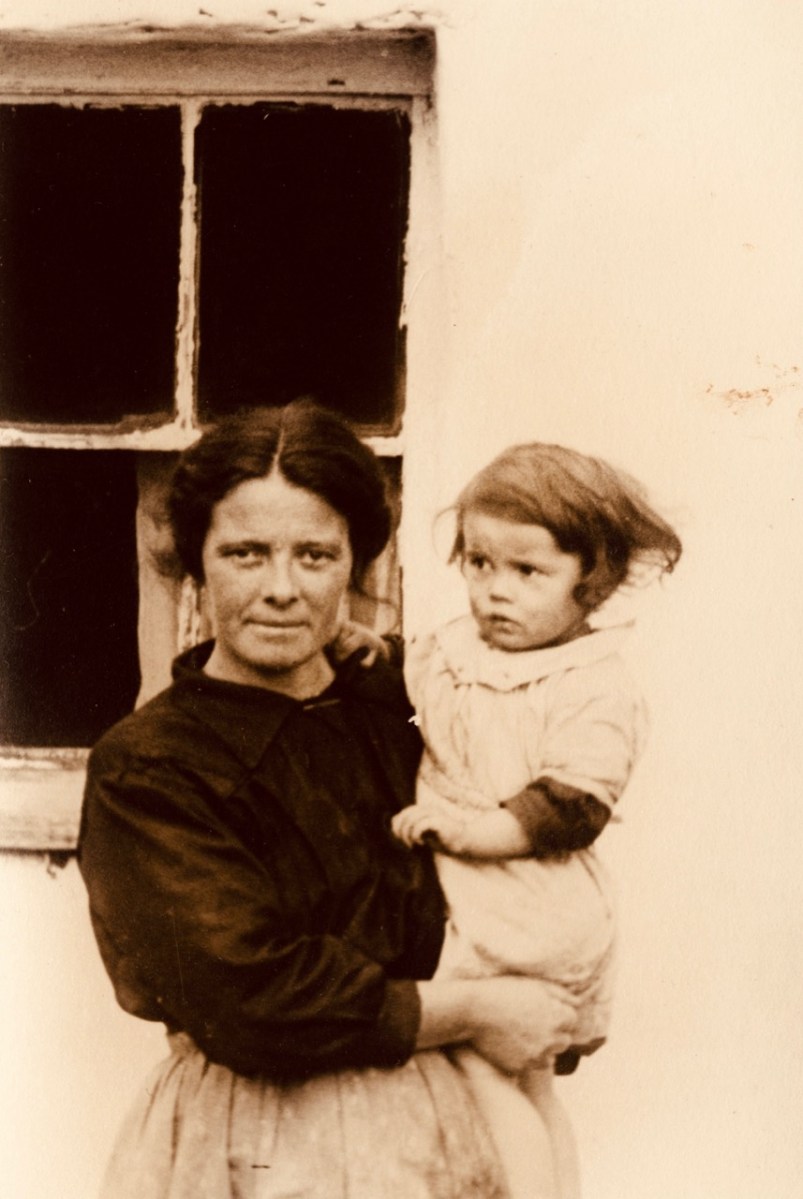
These two photographs (above) are also by Thomas Waddicor and also from 1932. The top one is the ‘Wife and child of Séan the King’, and the lower is ‘Children of Séan the King’. We have a bit of a conundrum here as the last ‘King’ of the Blasket Islands passed away in 1929 (according to this Irish Times article). As Waddicor left behind no photograph of the ‘King’ himself, we have to assume that the lady in the upper photograph was a widow.

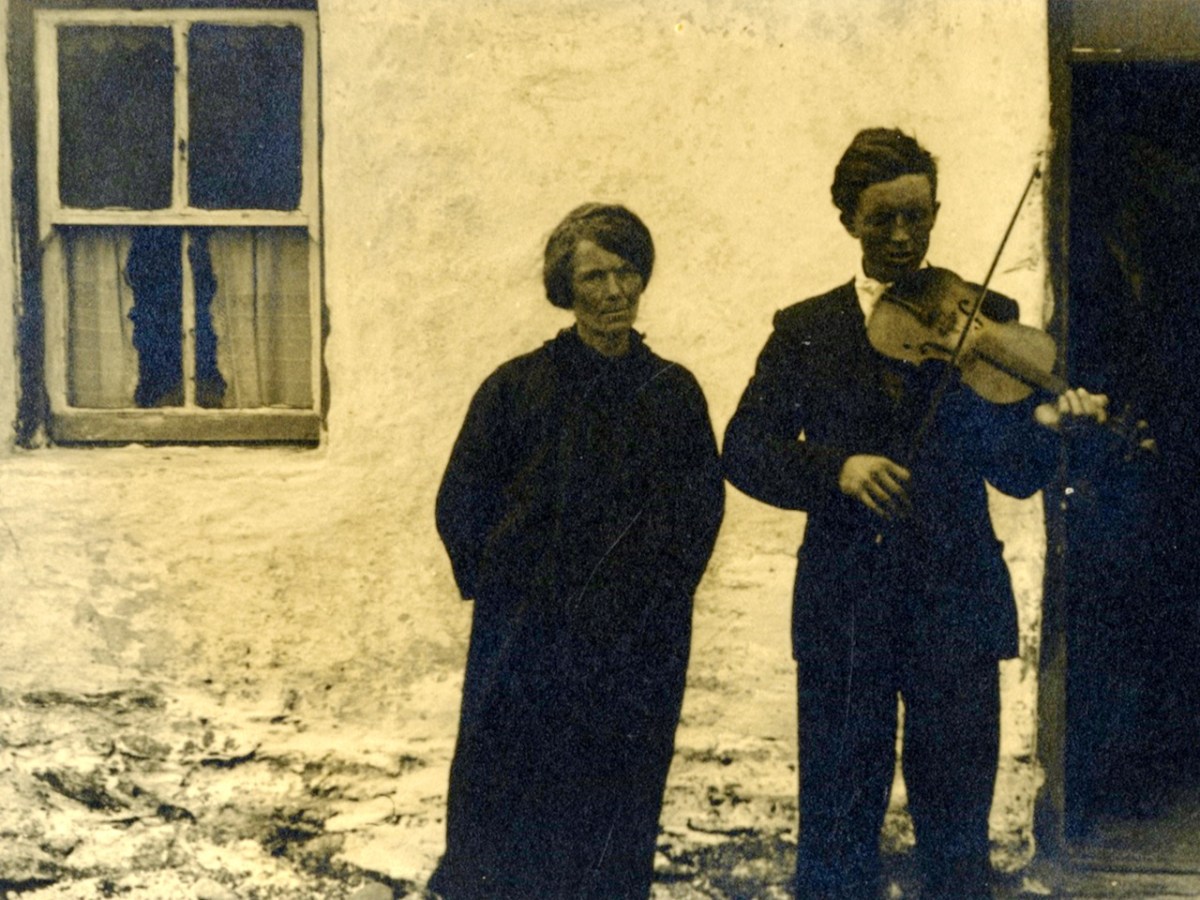
More ‘family’ photographs: the upper of the three is titled ‘Eilis and Brighid’; the centre is just given as ‘Family’, while the lower is ‘Fiddler and Woman’. All are by Waddicor from 1932.

This wonderful lady is also anonymous: sadly we can only know her by the title – ‘Great Blasket Woman’. Again, Waddicor 1932 – and, once more, she seems so full of life!
This is a picture of the Great Blasket Island School. We have some further information: while the folklorists and recorders were visiting the island in 1932, the older schoolchildren decided to interview each other about local customs and lore to mimic the visitors!
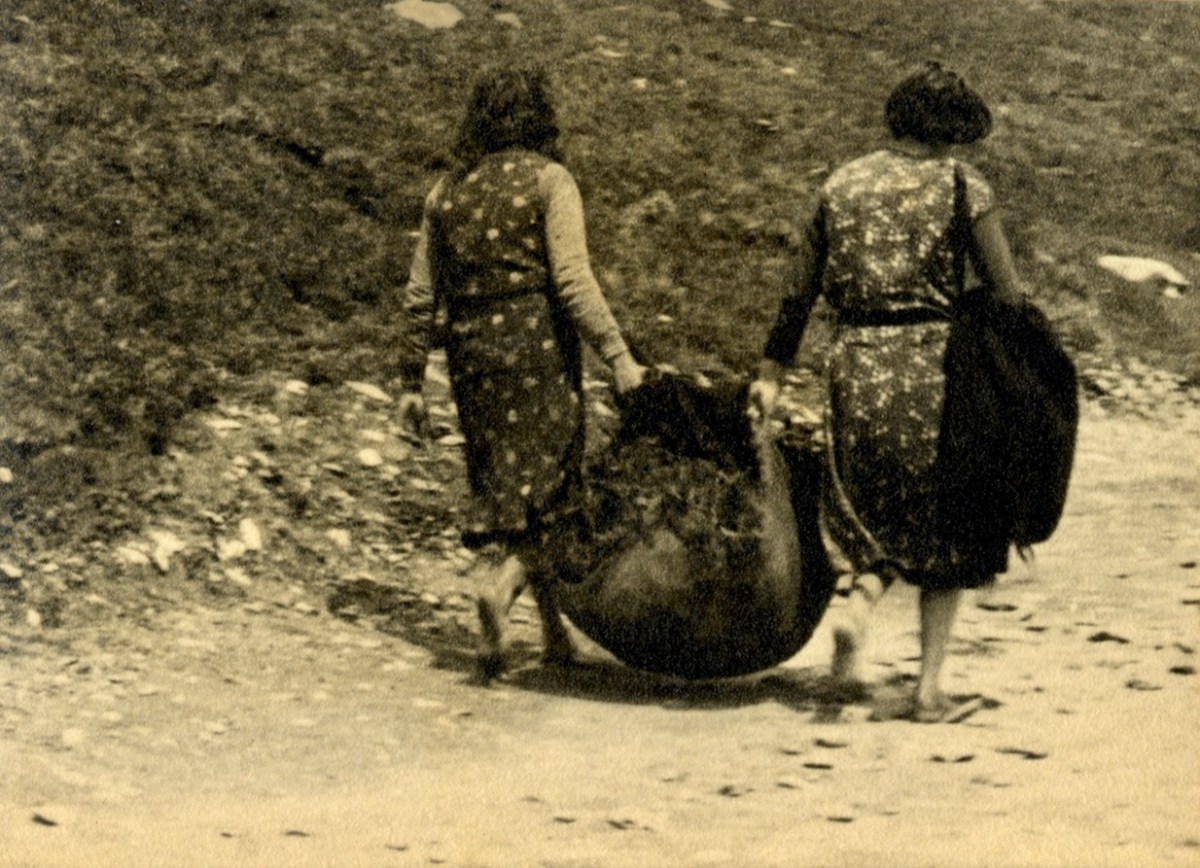
Further unnamed portraits: upper ‘Two Women Great Blasket’ and lower ‘Two Women gathering Heather’. From the Waddicor collection, 1932.

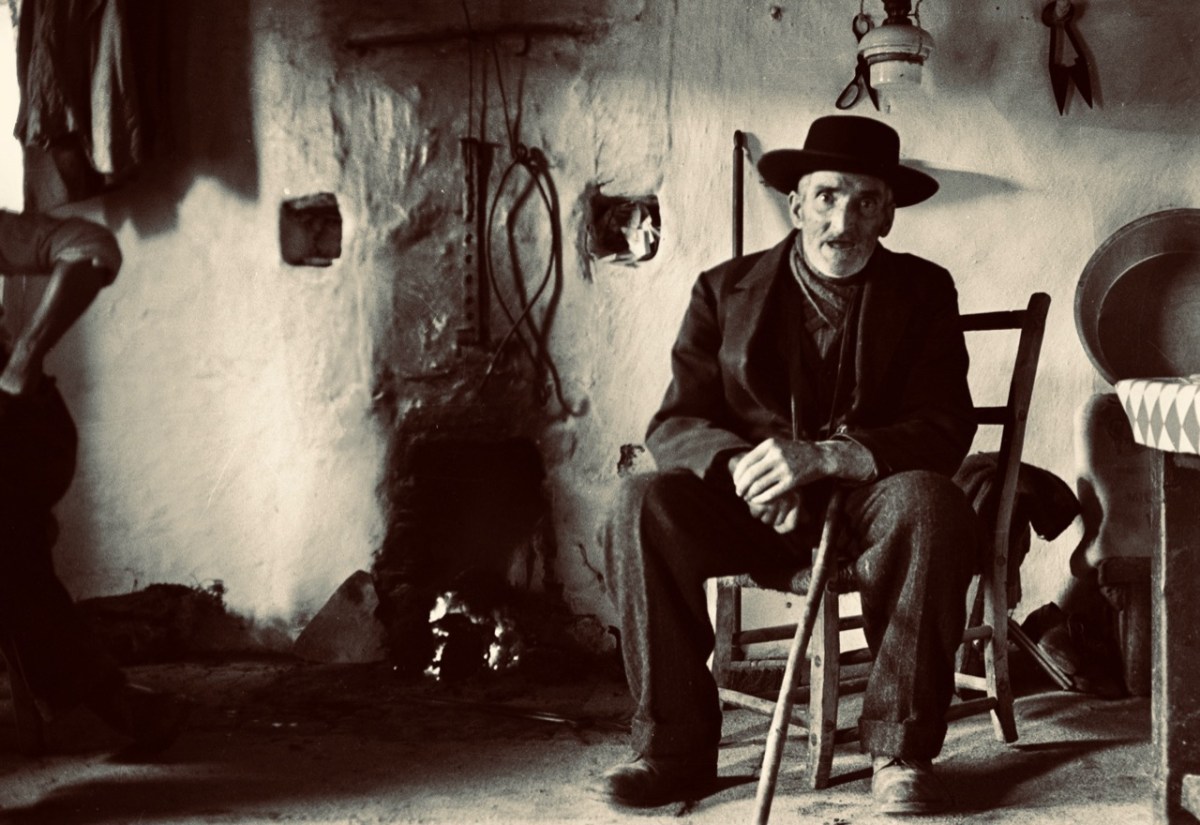
We’ll finish off with a few classics. This is Tomas O Criomhthain and it’s a photo from Muircheartach. Better known to us as Tomas O’Crohan, author of the classic book about the Blaskets:

. . . Tomas O’Crohan was born on the Great Blasket Island in 1865 and died there in 1937, a great master of his native Irish. He shared to the full the perilous life of a primitive community, yet possessed a shrewd and humorous detachment that enabled him to observe and describe the world. His book is a valuable description of a new vanished way of life; his sole purpose in writing it was in his own words, ‘to set down the character of the people about me so that some record of us might live after us, for the like of us will never be again’ . . .

The Islandman Book Review

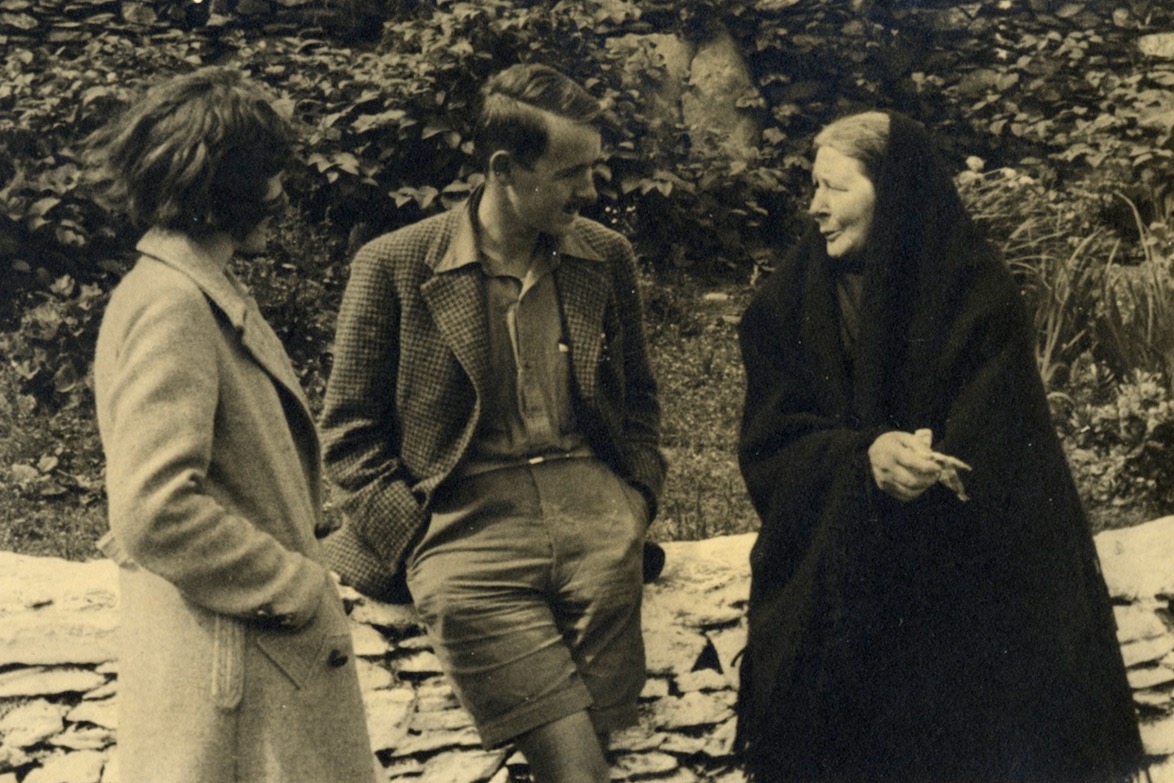
We can’t discuss the Blaskets without mentioning Peig. That’s her, above, with folklorist Kenneth Jackson, taken by Thomas Waddicor in 1932. Peig Sayers was by all accounts a formidable lady but was also described by folklorist Seán Ó Súilleabháin, archivist for the Irish Folklore Commission, as ‘one of the greatest woman storytellers of recent times’. Peig was born in 1873 and died in 1958. She therefore experienced the abandonment of the island, although she had moved away from it in 1942. She was also not born on the island, but in Dunquin, Kerry, She married Pádraig Ó Guithín, a native islander, in 1892 and had eleven children, six of whom survived into adulthood. Sayers is most famous for her autobiography Peig, but also for folklore and stories which have been collected from her.

Finally, this an image of the Loganim Achive entry for Great Blasket Island, written in 1954.

I am grateful to the National Folklore Collection UCD for the use of the Thomas Waddicor images. It’s an incredible resource: this is just a small selection of the hundreds of images which have been archived

Mizen Magic 23: Croagh Cove

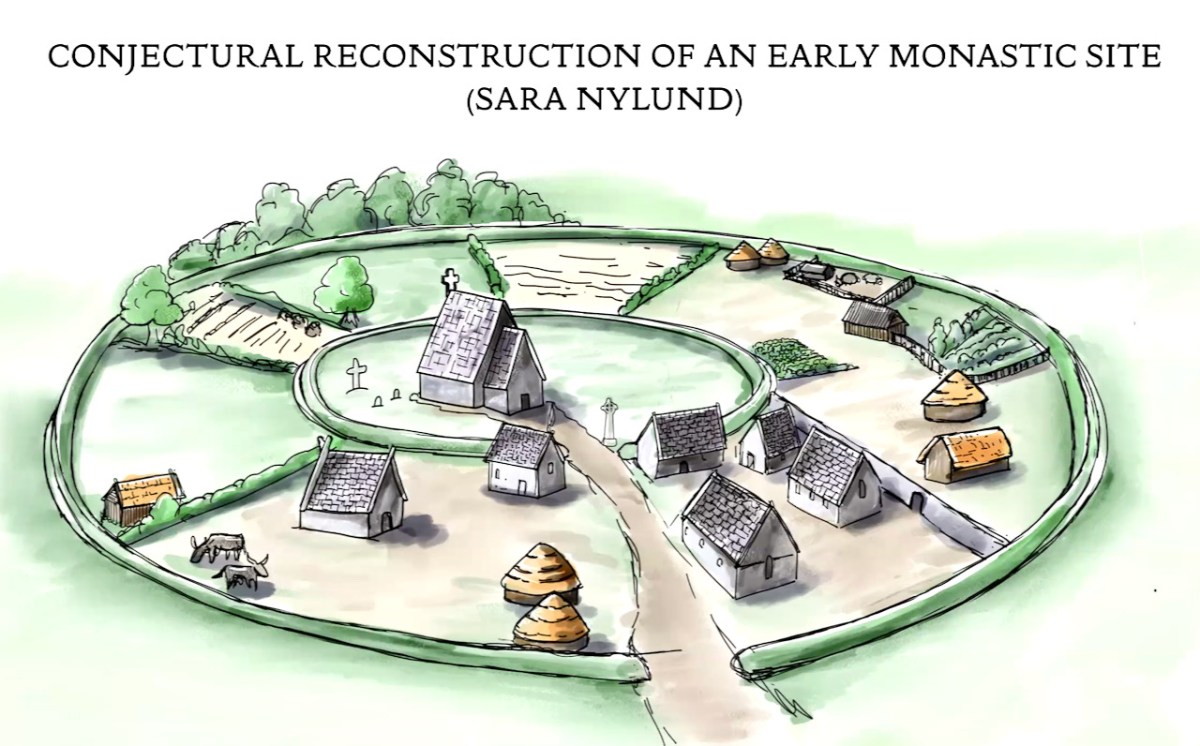
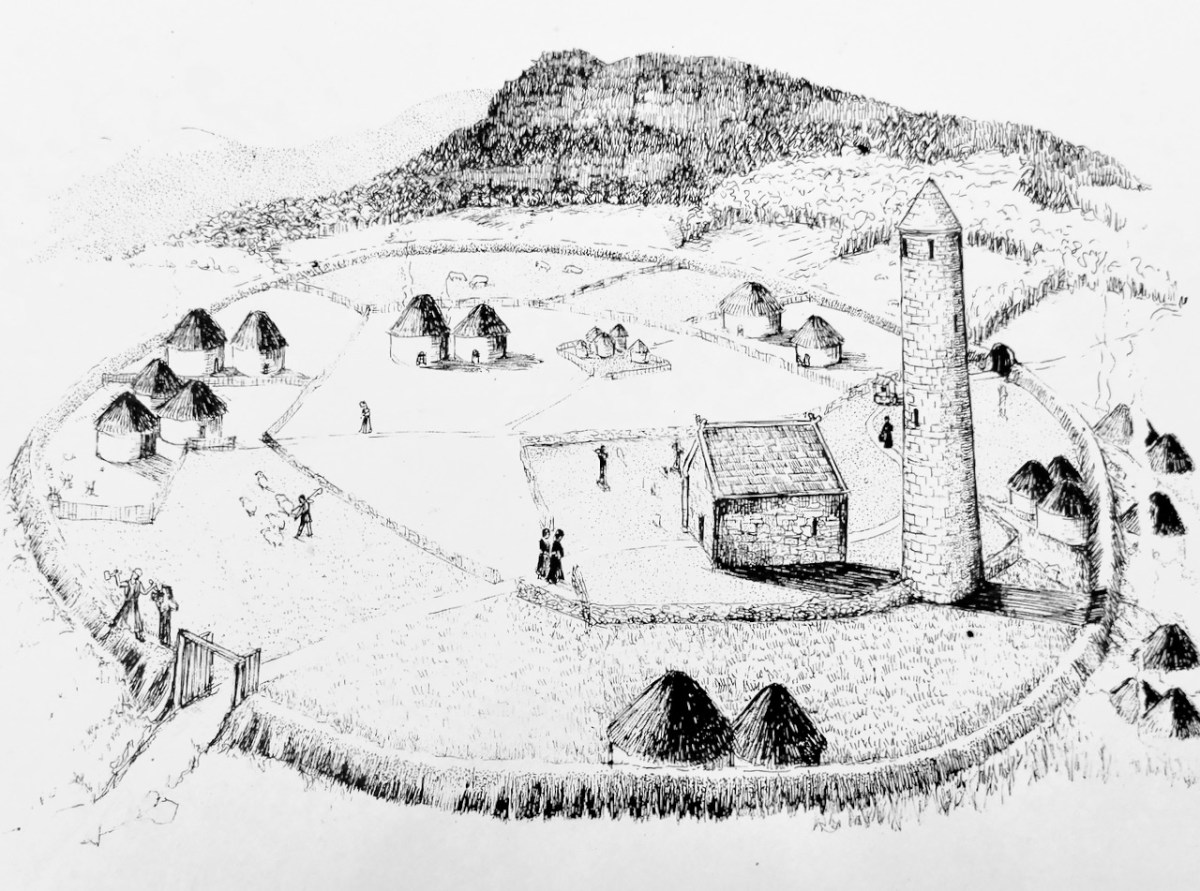
Many thanks to Sara Nylund for her wonderful reconstruction drawing of an early ecclesiastical site

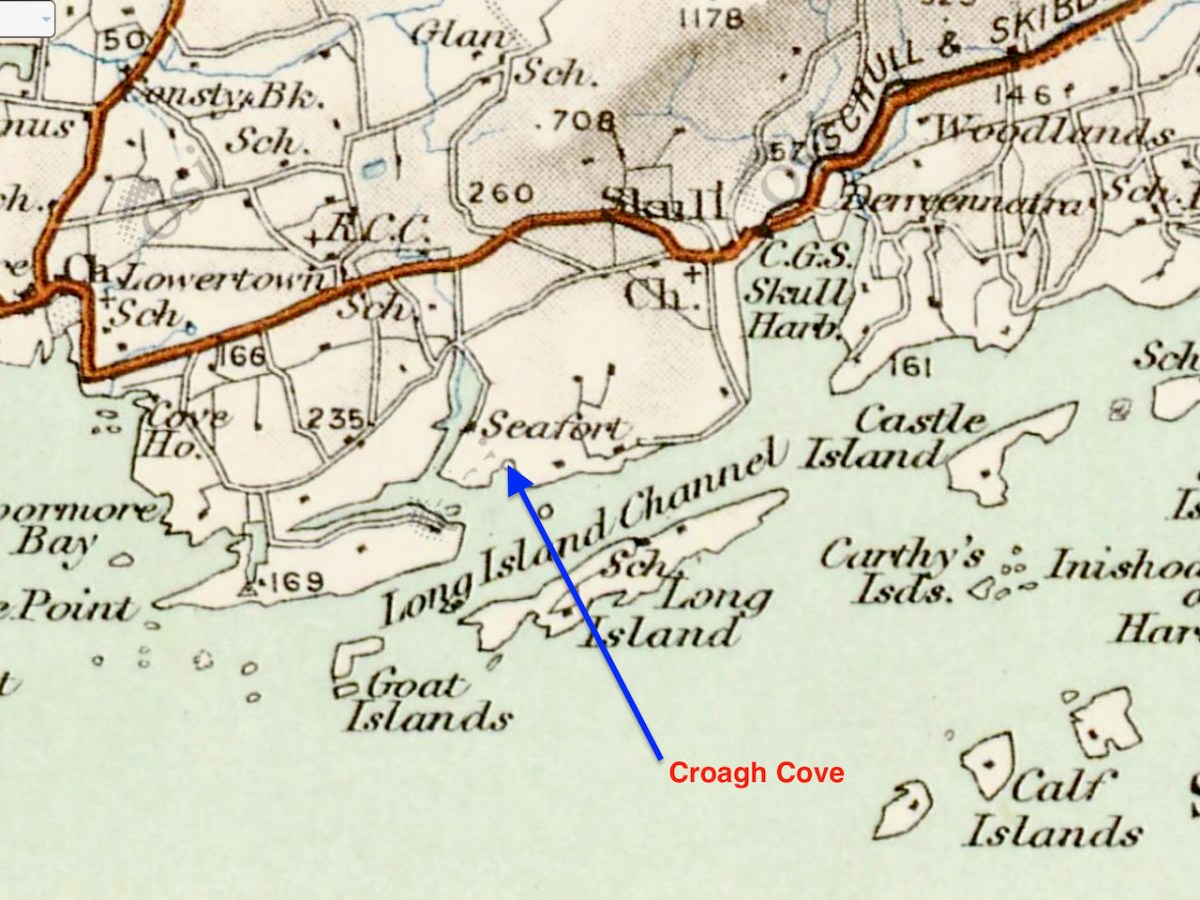
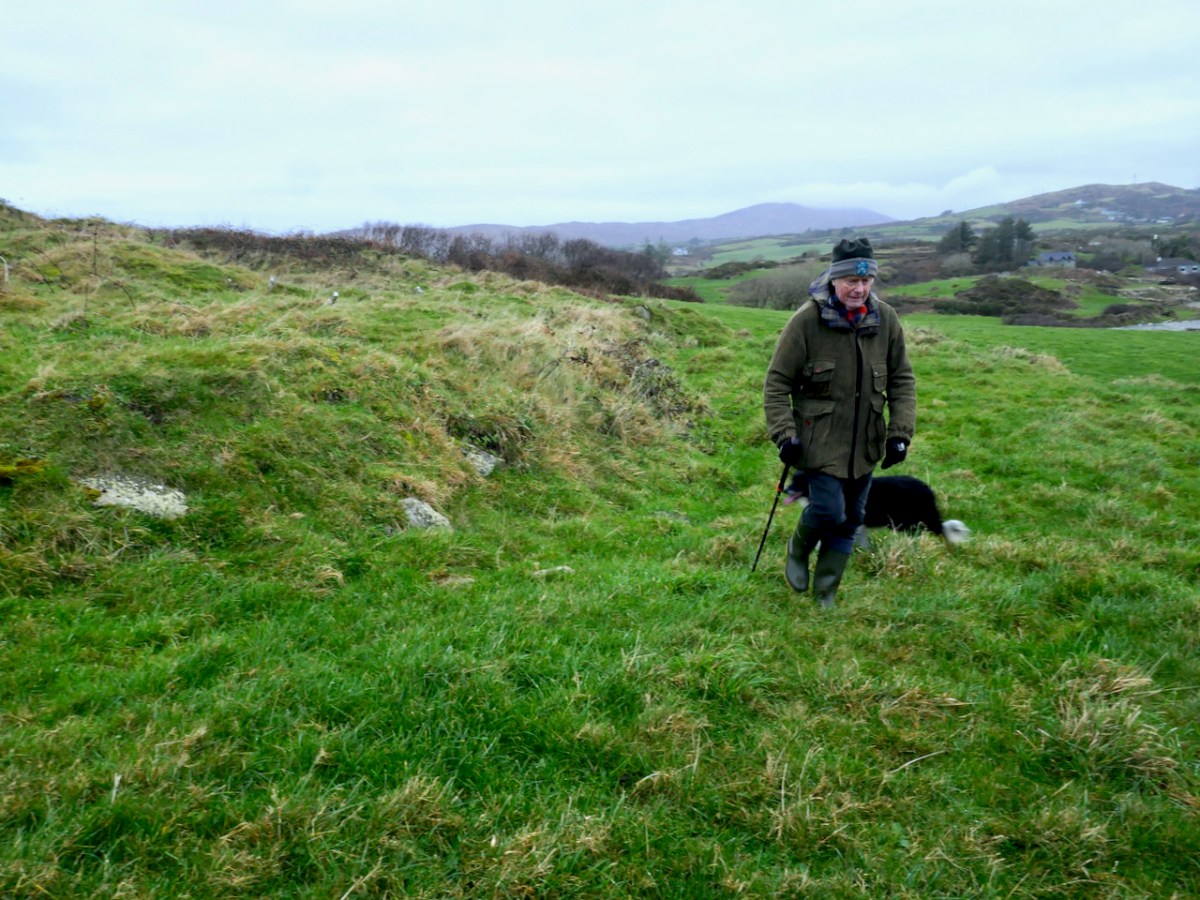
A couple of years ago, confined to explorations within 5km, Robert wrote about Croagh Bay (pronounced locally as Crew Bay). Recently our friends Donagh and Tamsin enticed us back to take a closer look at the eastern part of the Bay – Croagh Cove (Crew Cove). 

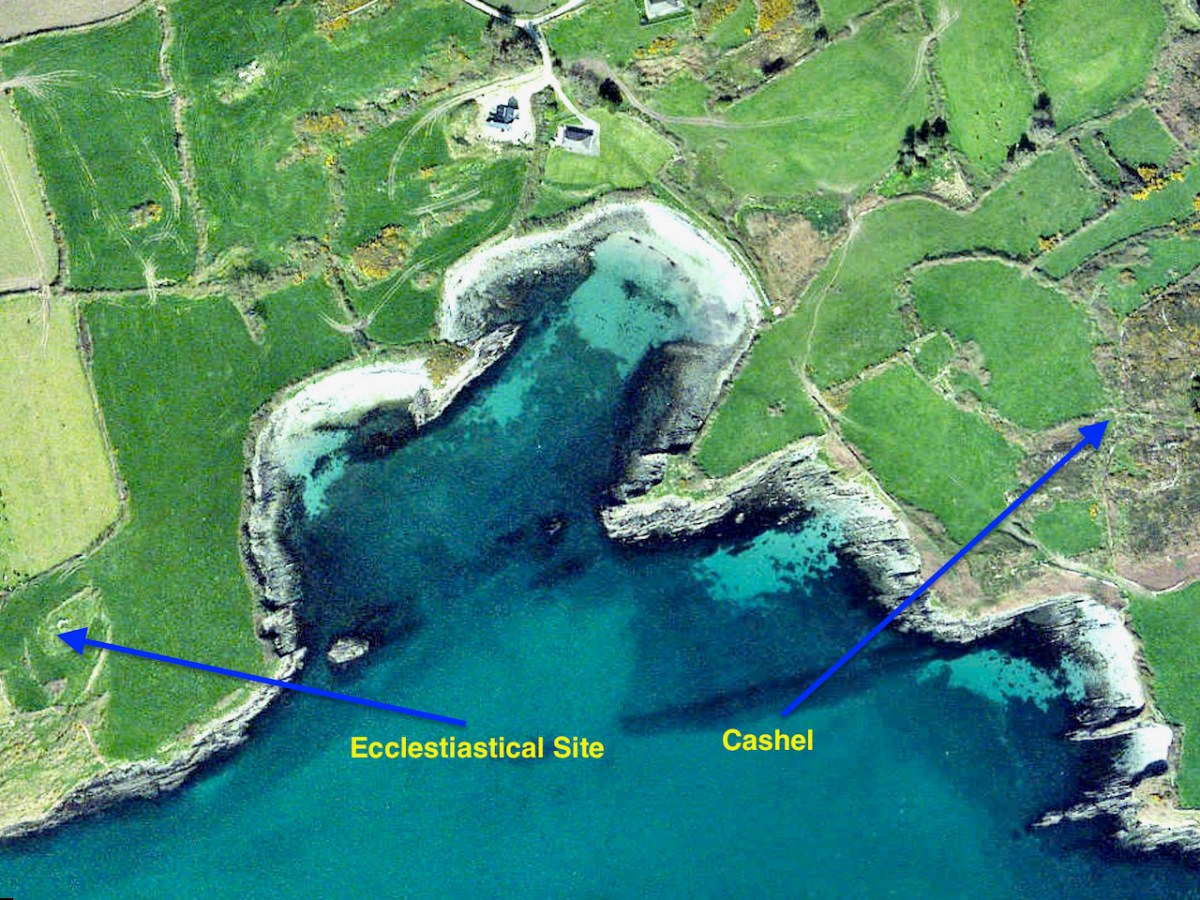
What intrigued us about this place and why we were eager to visit (apart from Donagh’s world-class coffee) was a place marked on the map as an ‘ecclesiastical enclosure.’ There aren’t a lot of those on the Mizen, although there may be more early ecclesiastical sites than have been identified and recorded. Kilbrown (see my post Mizen Mud), Cove and Kilbronogue are the only others so far.

What establishes a site as a likely ‘early ecclesiastical enclosure?’

The Irish church was dominated by scattered rural monasteries from the sixth century onwards. These were surrounded by large enclosures (varying in diameter from 40 a.m. to 400 M), often circular or oval in plan, and usually far more extensive than the surviving graveyards. In some cases the original bank, fosse or stone wall survives but more often the line of the monastic enclosure (or vallum) is indicated by curving field boundaries, roadways or a laneways. As well as the church and graveyard, these enclosures contained the dwellings, outhouses and workshops of a community, sometimes approaching the size of a town. Because the buildings were constructed of wood nothing survives above ground today; the graveyard often contains the ruin of a mediaeval church. In some cases the surviving burial ground has no inscribed headstones but was used for the burial of unbaptised children during the last few centuries. Bullaun stones and cross-inscribed stones are often found on early church sites while holy wells may be situated close by and retain the name of the saint anciently associated with the site. Unfortunately little of the history of the early church in West Cork has survived and the earliest reference to many of these sites is as late as the 12th century.

The Archaeological Inventory of County Cork, Vol I, West Cork. P 271

So, as you can see, not much normally survives on the surface but a tell-tale sign is a circular or oval enclosure, or (often) two concentric enclosures, with the barely-discernible signs of buildings inside. (Readers may remember the above illustration from my post on Ardpatrick – no sign of a round tower at Croagh, though!).) The memory of these places as once-sacred seems to be retained locally, and led to their use as Cillíní, or Children’s burial grounds in the past. See my post Unknown Souls for more about Cillíní – ‘the loneliest places on earth.’ Thus – small uninscribed headstones peeking out through the grass is an indication that this may be a cillín, and in turn perhaps something more ancient yet.

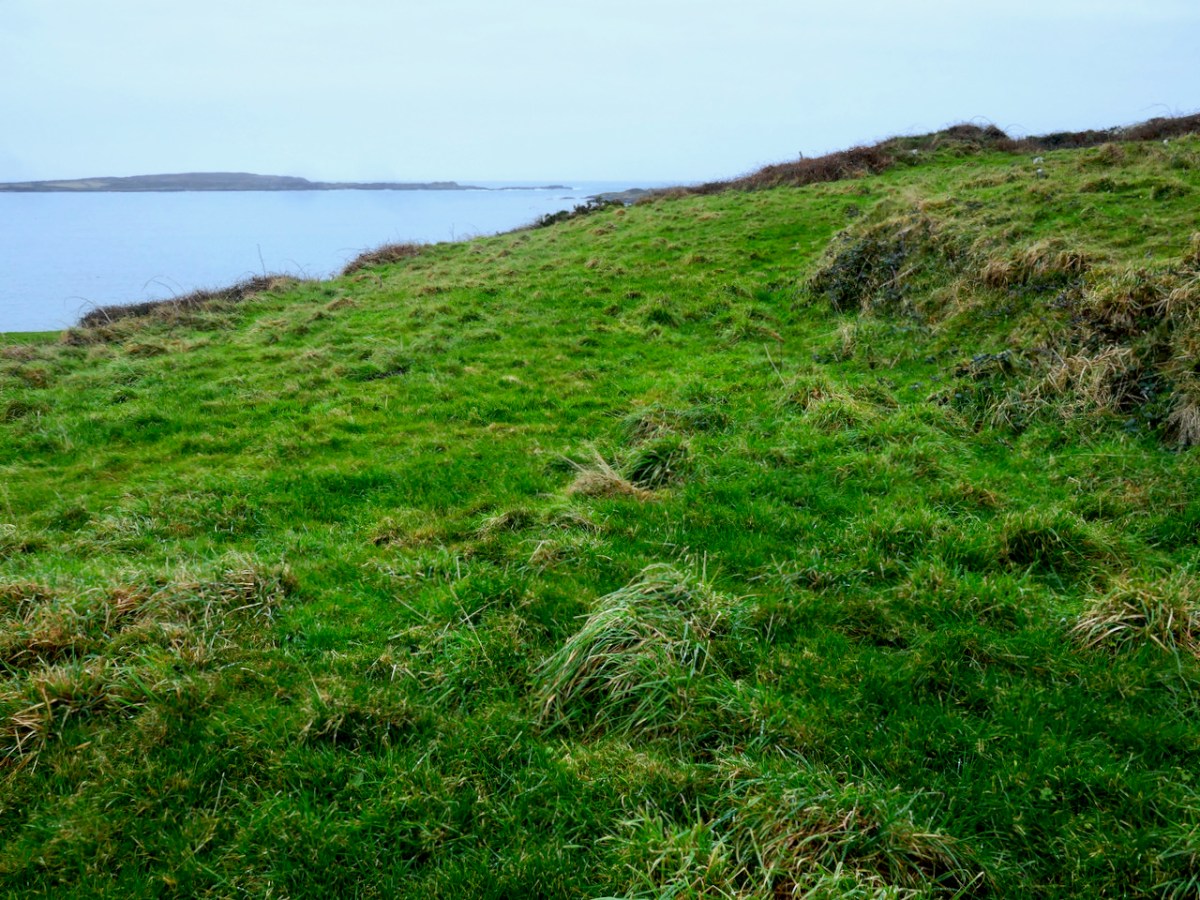
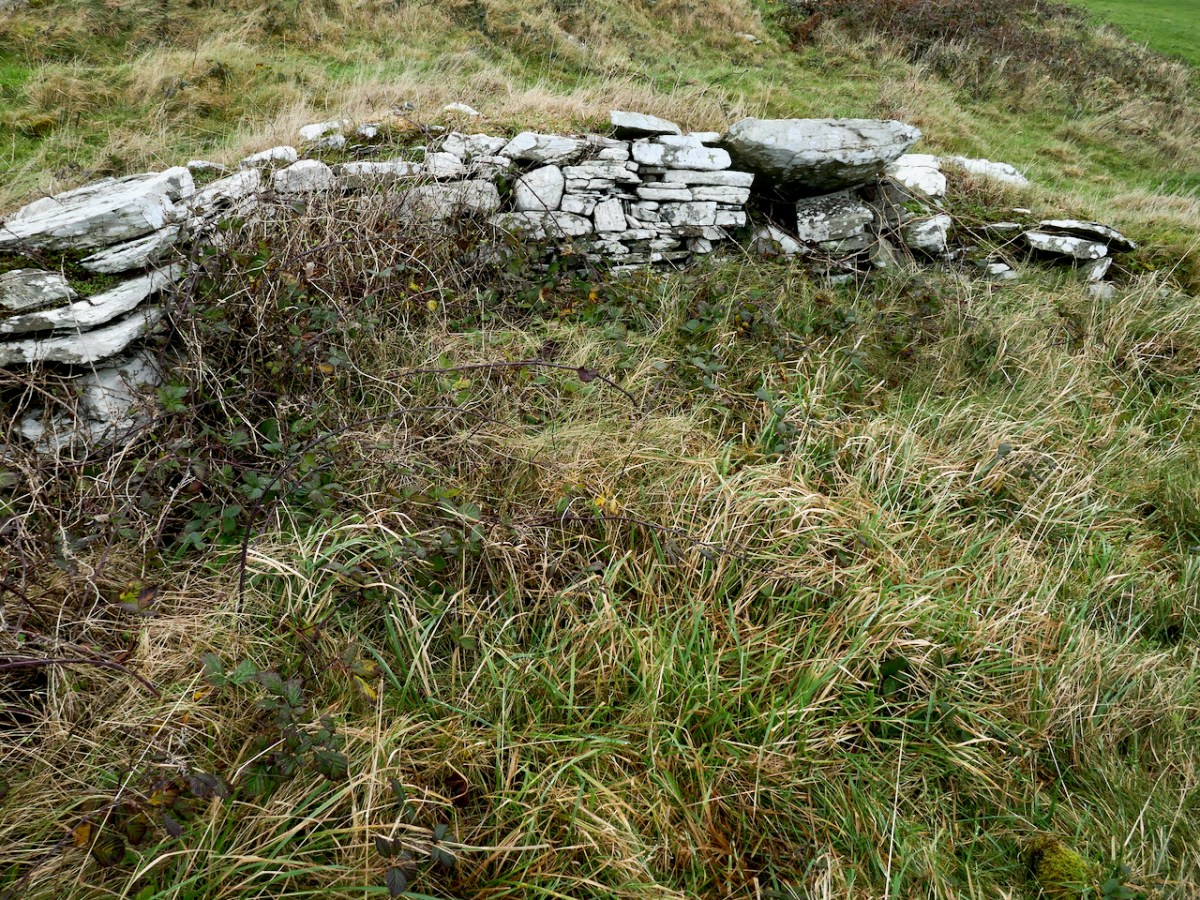
The original site may have been carved out of the hillside – the flattening process leaving a sharp-edged bank on the sea-ward side (above and below). This reminded us of the similar bank we found at the possible ‘Scoil Mhuire’ site that Robert reported on in his post Schull – Delving into History

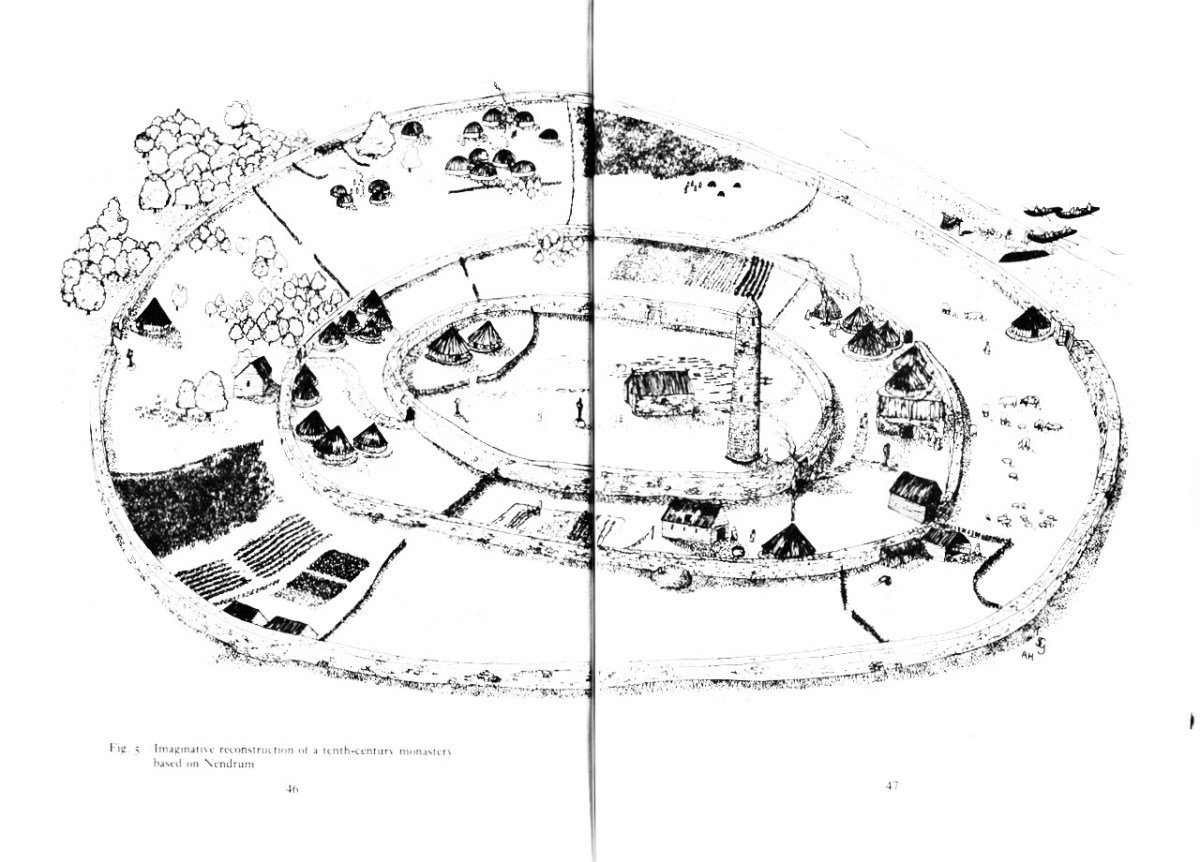
What would such a site have looked like? They varied enormously in size – for example Glenadalough in Wicklow and Kells in Meath would both have been monastic cities. Most, however, and especially in remote places, would have been small religious foundations in which there would be a central church surrounded by an inner wall, and houses and gardens for the monks surrounded by an outer wall. 

Nendrum in Co Down shows what a monastic settlement considerably larger than Croagh might have looked like. The Illustration is from The Modern Traveller to the Early Irish Church by Kathleen Hughes and Ann Hamlin

The word reilig (pronounced rellig) is the Irish word for graveyard and it comes from the word for relic. Early sites like this were assumed to have had a founding saint, who gave his or her name to the site. Kilbrown, for example, would be the church of Brón, and he would have been buried on the site – hence the ‘relic’ association. Kilcoe was named for a saintly nun, St Coch. The echoes of the cult of those saints would have remained alive through the centuries in the names of townlands and holy wells.

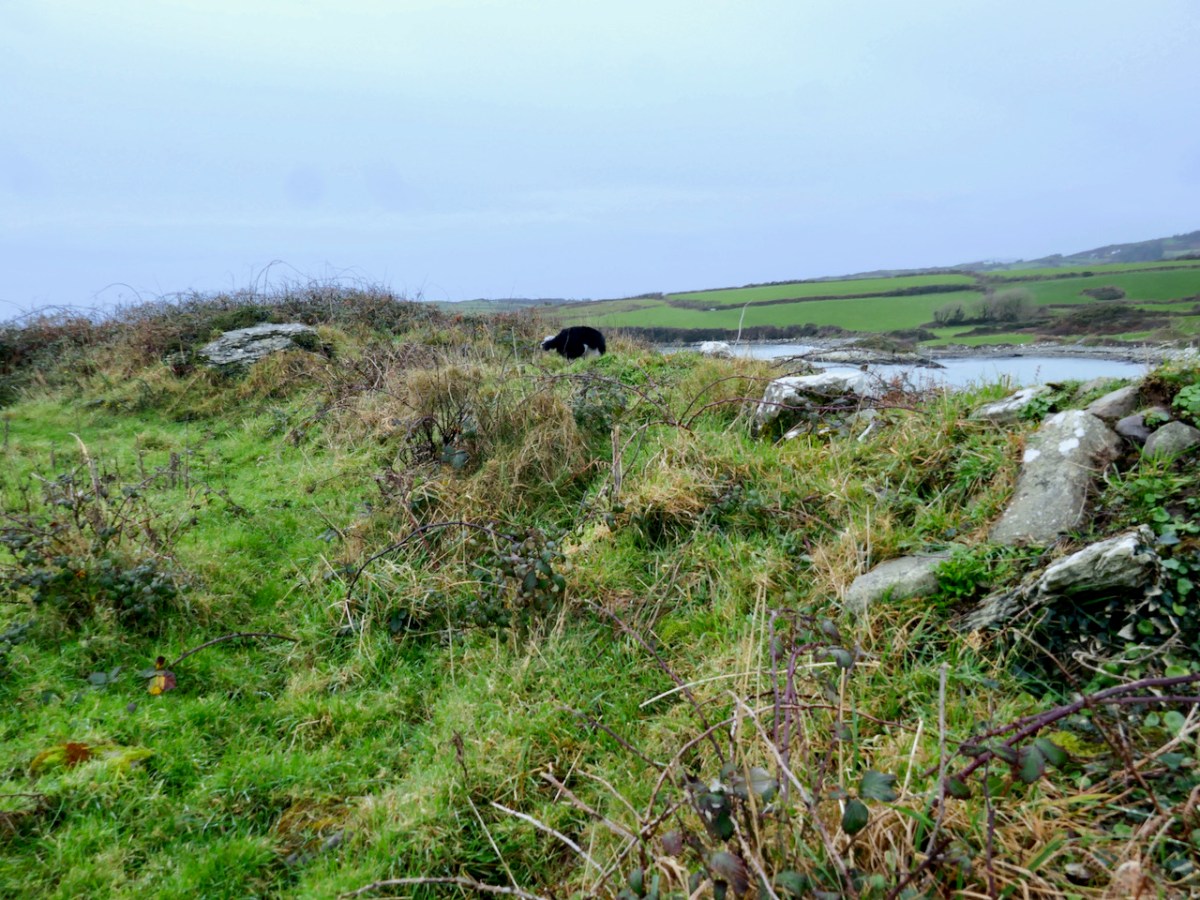
Possible remains of church at Croagh

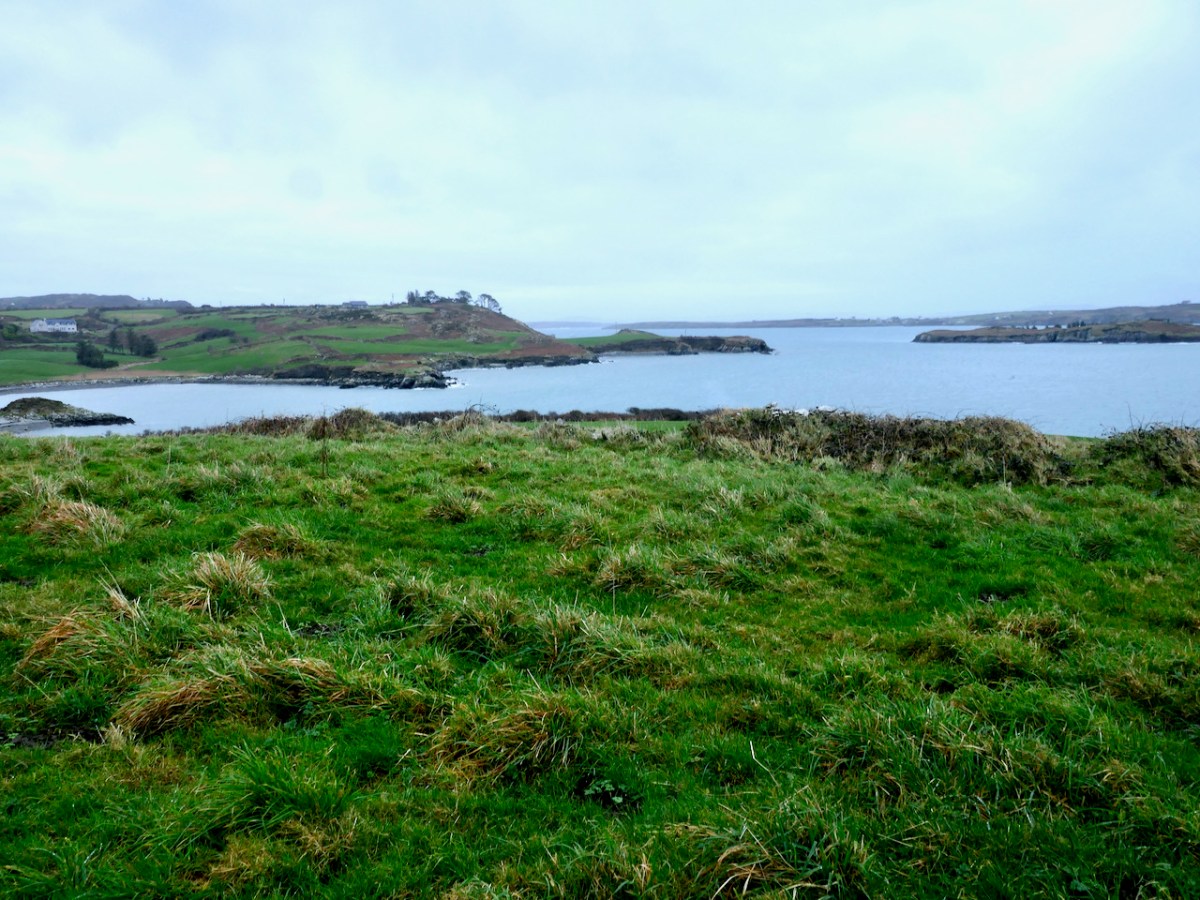
The name Croagh, however, is based not on a saint’s name but on the Irish word for a ‘stack’ and may refer to the gentle hill that rises up from the water. It was, and remains, an almost perfect spot to establish a peaceful settlement based around hard work and prayer. There’s a lovely little beach below, so transport and travel was easy by water. It’s in a sheltered haven protected from storms by Long Island off the cost, and from it there’s a good view out to sea (below) so the monks could see Vikings or other raiders coming.

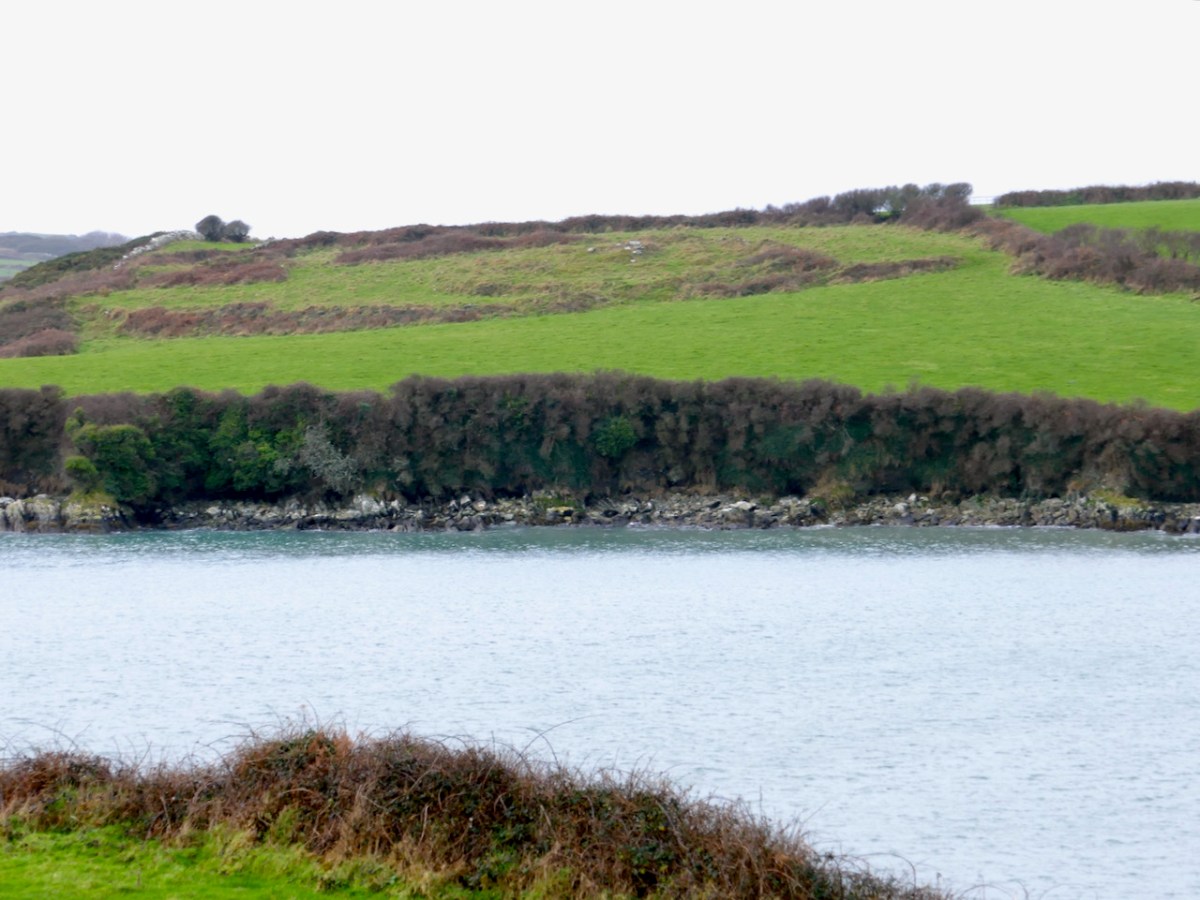
And right across the Cove there’s a ring fort – a cashel, in fact, since it looks like the walls were made of stone (below). It’s a classic – on elevated ground with commanding views all around, out to sea and to the low hills behind. Puzzlingly, this cashel is not recorded by National Monuments. It’s overgrown by bracken so may not have been obvious at the time of the survey. 

This juxtaposition, across the cove from each other, of an early-medieval monastic settlement and a fortified residence, leads to speculation as to the relationship between the two. Was the monastery endowed by the local chief, committing the monks to say prayers for his eternal soul in exchange for land and protection? This is certainly a familiar pattern from the later medieval period. 

View of the ecclesiastical site from the cashel

This is just a tiny corner of the Mizen. There is much more of interest in this small townland but for today I wanted to focus on these early-medieval sites. In their ruins lie clues to a distant but vibrant past.

Stones Alone

Over the years we have written a lot about stone. That’s not surprising, because our interests in Irish archaeology involve stones: standing stones, stone circles, rock art, gravestones . . . It’s what the surviving history of our earliest dwellers on this island is all about. So I thought it would be a good idea to sift through our Roaringwater Journal photographic library – which goes back a decade – and turn up some pictures and stories which I have never used before: all of them involving stones. That header pic, above, is a boulder burial at Rathruane, just outside our West Cork village of Ballydehob.

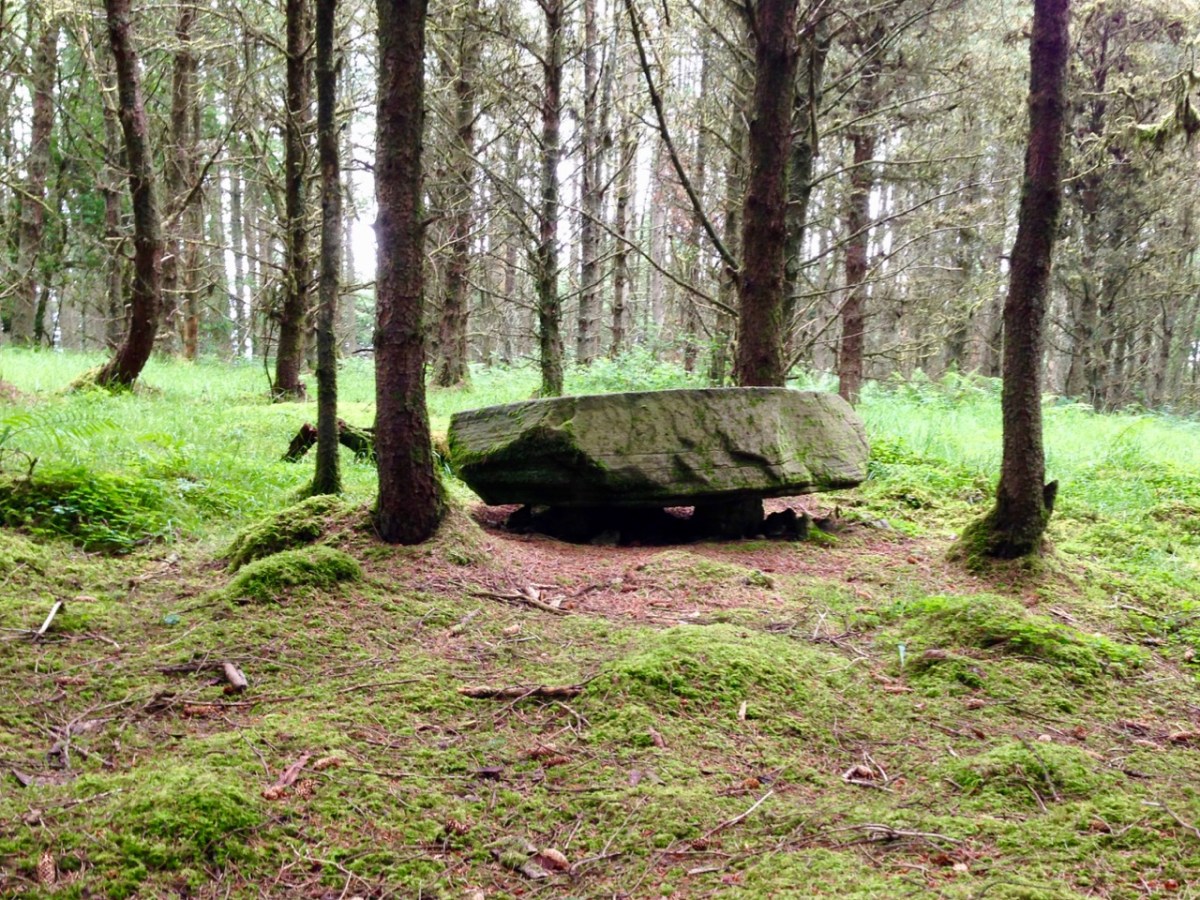
Here’s another boulder burial, a long way away in Co Cavan, now surrounded by trees which are probably relatively recent. Finola wrote about this monument type six years ago, and pointed out that they are not well named: when examined archaeologically, very few of these stones have been associated with buried human remains. They are said to have been positioned between 1,500 and 1,000 years BC, a time we refer to as the ‘Bronze Age’. So, by then, humans were already aware of the use of metal for tools, weapons and decorative adornments. But imagine the time before that – when people only had natural materials to hand – wood, vegetation and, of course – if you wanted to create something permanent – stone: we call these times Neolithic – and generally that covers the period of habitation of Ireland from 6,000 BC onwards.

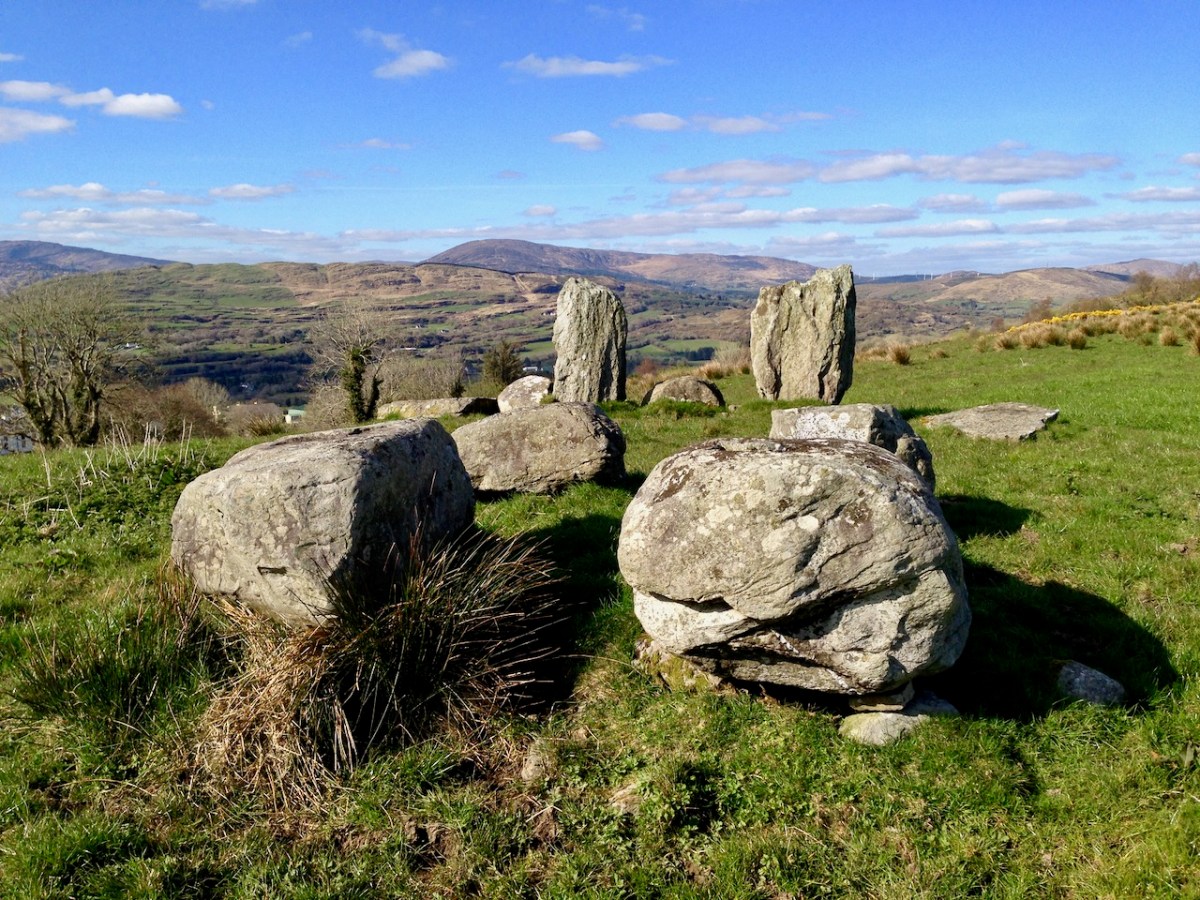
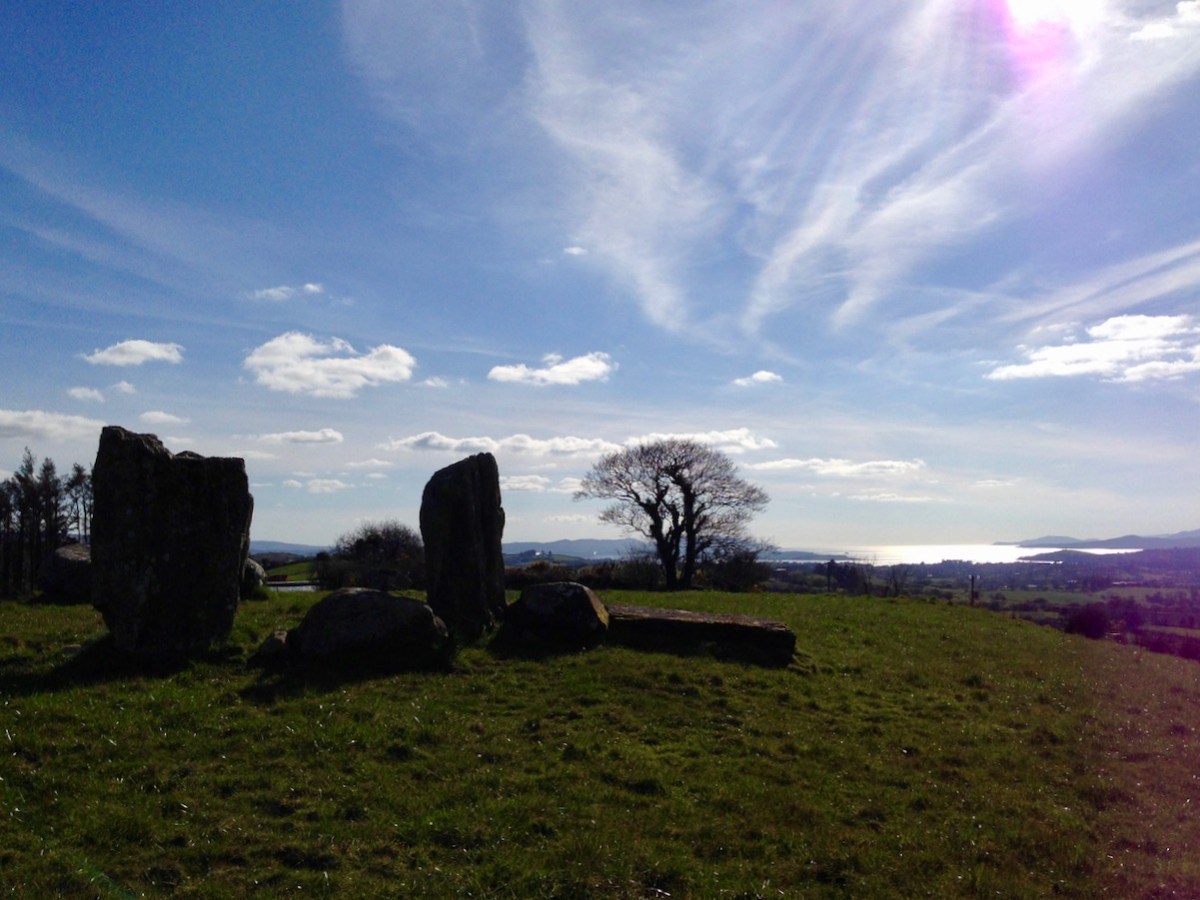
Here is another West Cork site: Breeny More, to the north of Bantry. There’s a whole lot of stones here including, unusually, four ‘boulder burials’ arranged in a square. There are also further stones in this grouping which were once part of a stone circle. The site is magnificently located, with distant views west across to Bantry Bay (below).

We are all familiar with groups of stones arranged in a circle. Here is the ‘stone circle’ at Ardgroom, County Cork: it’s on the Beara Peninsula. As with the Boulder Burials, these monument types are generally thought to date from the Bronze Age.

These modestly sized ‘five stone’ stone circles are also in County Cork. The National monuments Survey of Ireland lists 53 ‘five stone’ circles in the county, while a further 41 ‘multiple stone’ circles are noted. There are also some anomalies which defy definition, such as ‘The Fingers’ at Knockdrum, West Cork, just outside Castletownshend:

This appears to have been, originally, an alignment of five tall standing stones. One has fallen and broken, while the fifth is now missing. It is reasonable to assume, from the number of stone ‘monuments’ all around us in West Cork (and in many other parts of Ireland), that these sites were of great significance to the populations who constructed them. But we don’t know for sure why they are there – although theories abound.

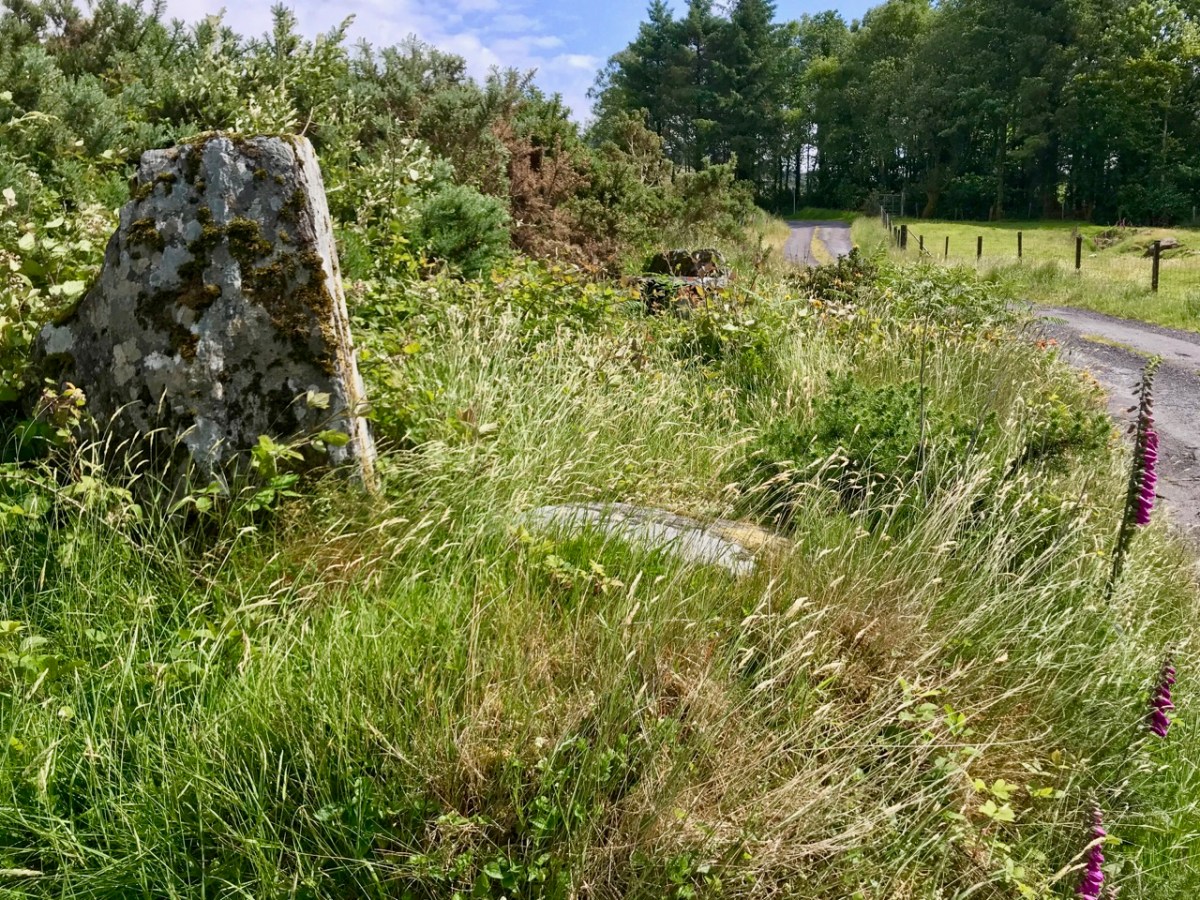
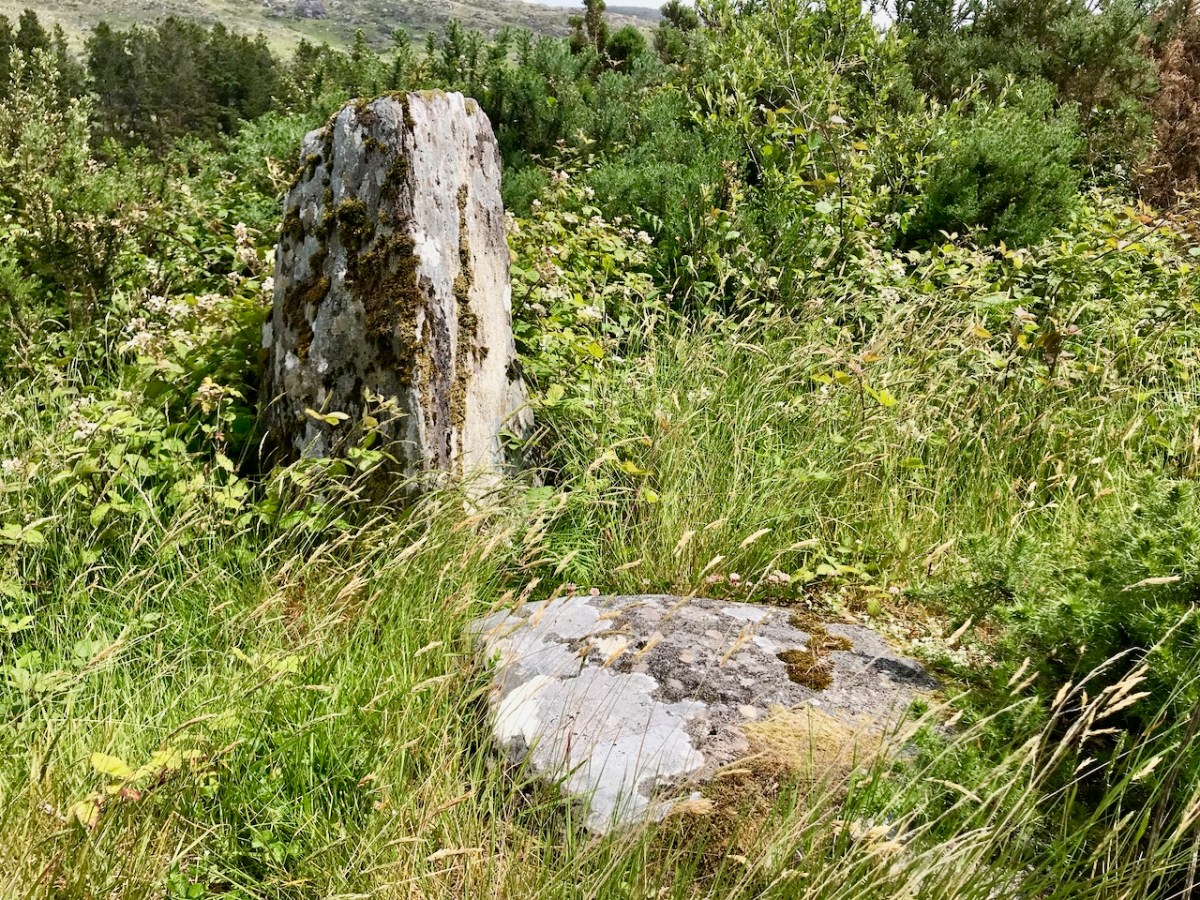
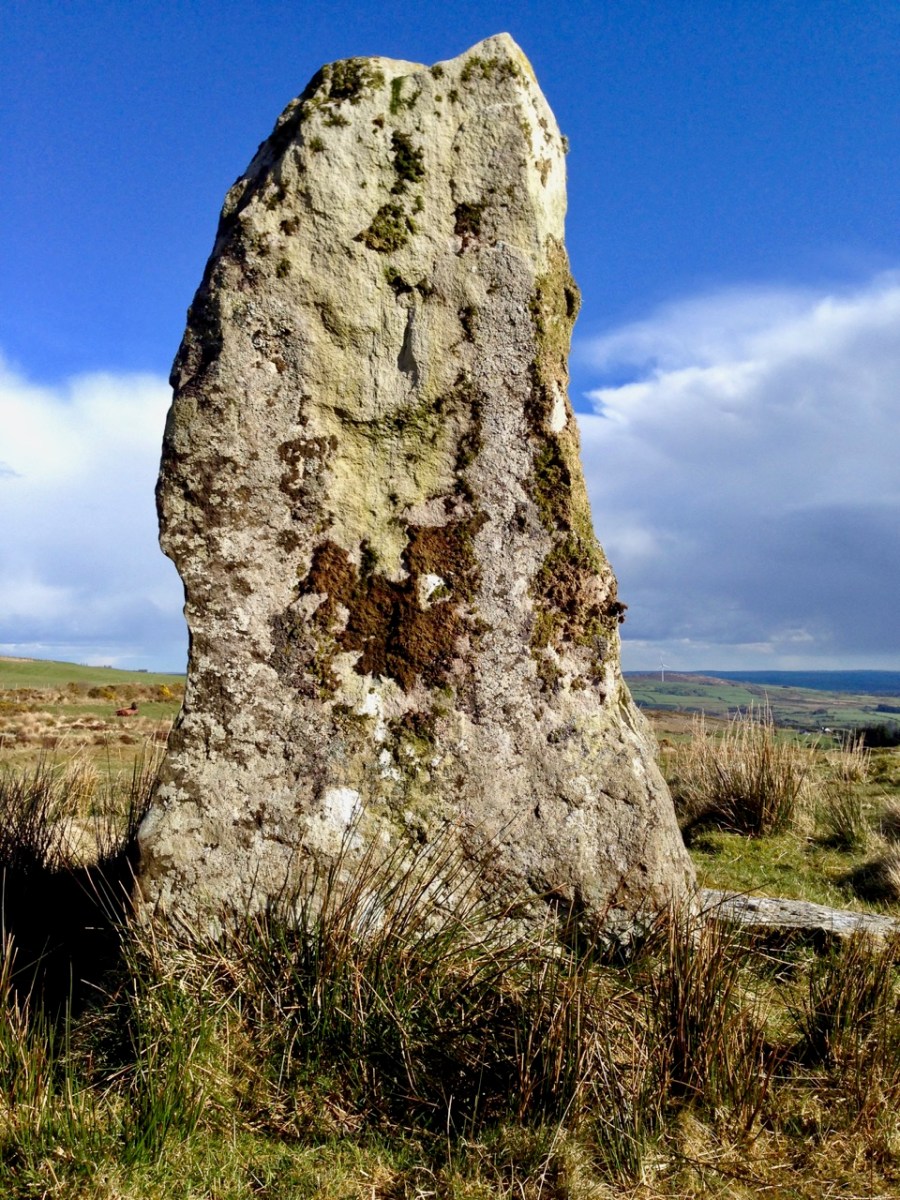
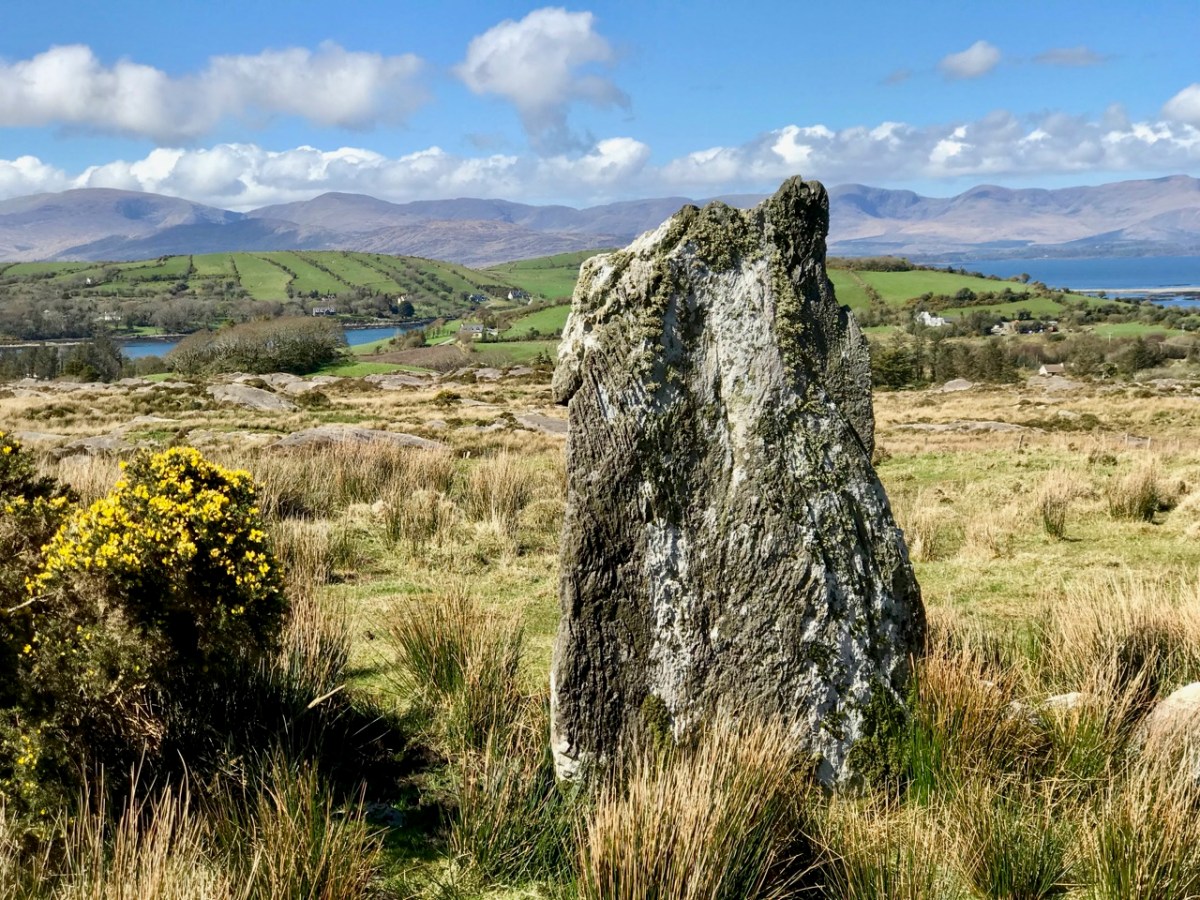
I am fascinated by the number of single standing stones we come across in our travels. It’s impossible to say how many there are in Ireland – probably thousands. And they can range in size from the large stones – above – in West Cork, to individual examples in moorland or fields, or on roadsides – below.

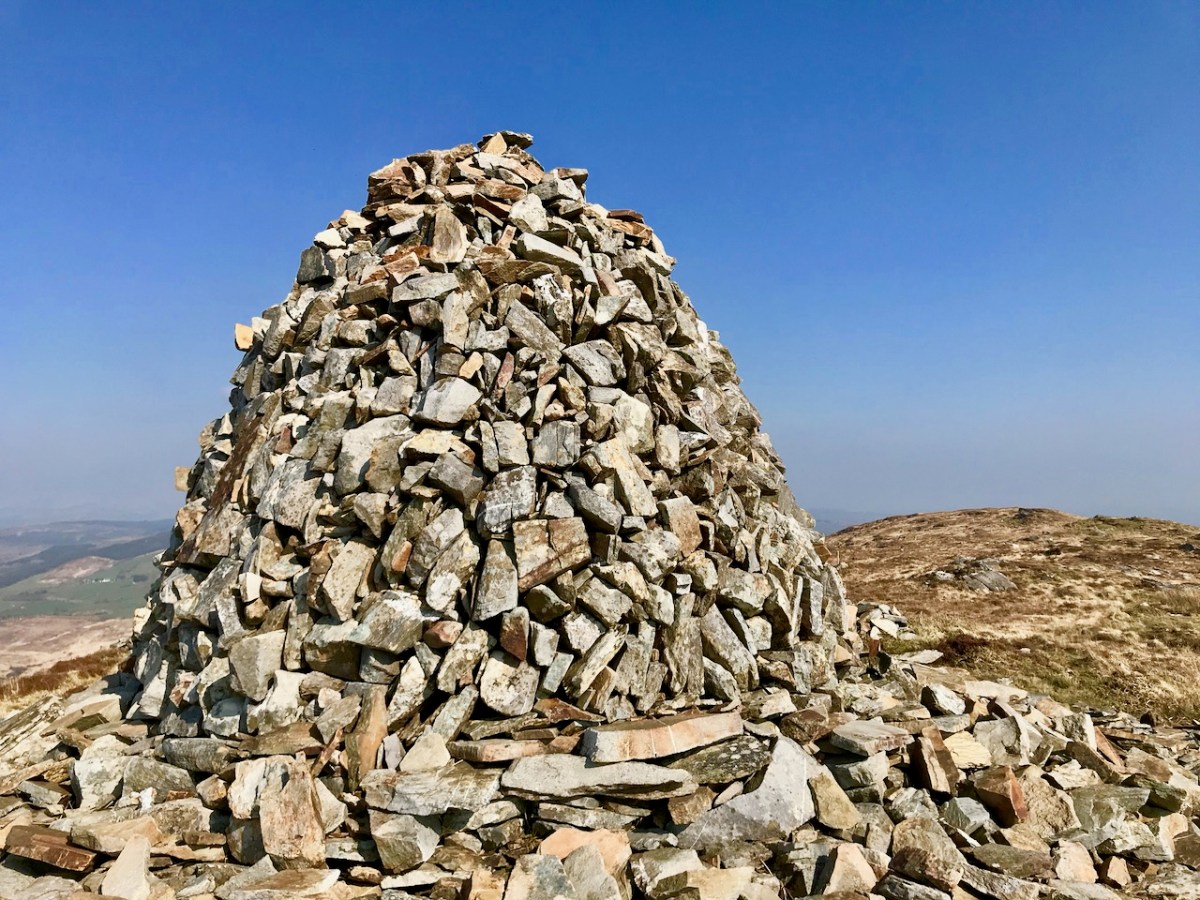
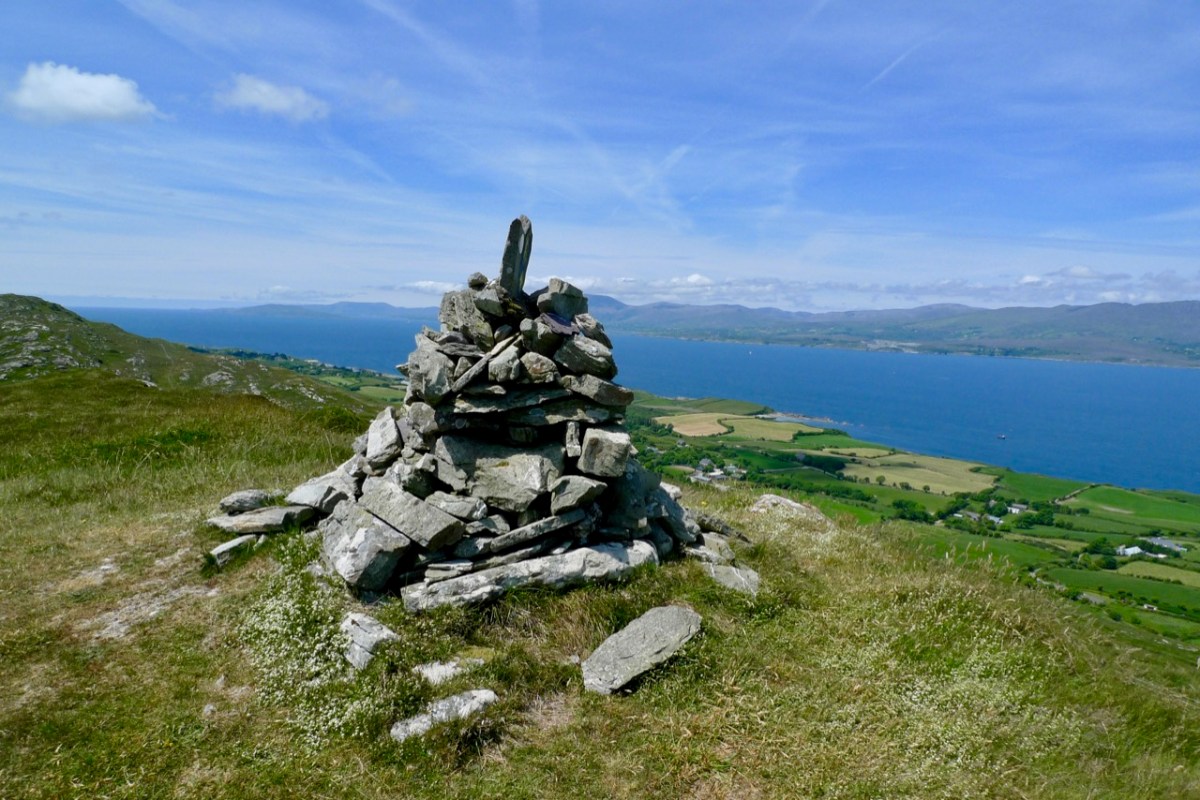
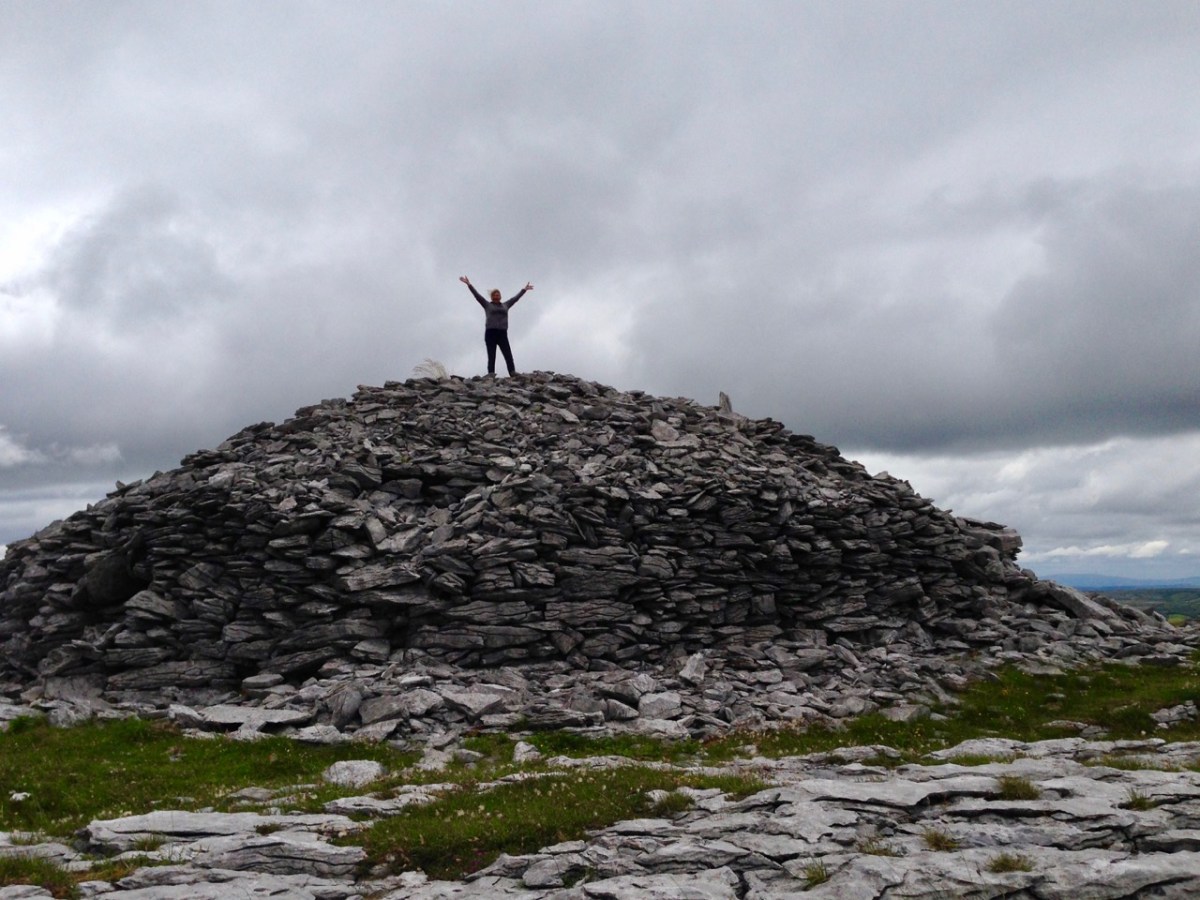
The Irish word ‘carn’ means a heap or pile of stones, Cairn monuments are mounds of stones, often marking the summit of a significant hill or mountain. They may or may not be ancient, and we have seen them change significantly over time. On Mount Corrin, not far from us in West Cork, there were two cairns only a few years ago. Now there is a single, significant cairn (top pic below): this implies a deliberate ‘re-ordering’ of what was there before. Regardless of their history, they can be visually impressive.

The centre pic above is a small cairn on a Sheep’s Head summit, while the enormous one above is in The Burren, County Clare. The Burren is an extraordinary landscape of exposed limestone. The limestone formed as sediments in a tropical sea which covered most of Ireland approximately 350 million years ago. Today, the Burren supports a remarkable assortment of wild flowers: over 70% of Ireland’s species of flowers are found there, among the ubiquitous stone surfaces.

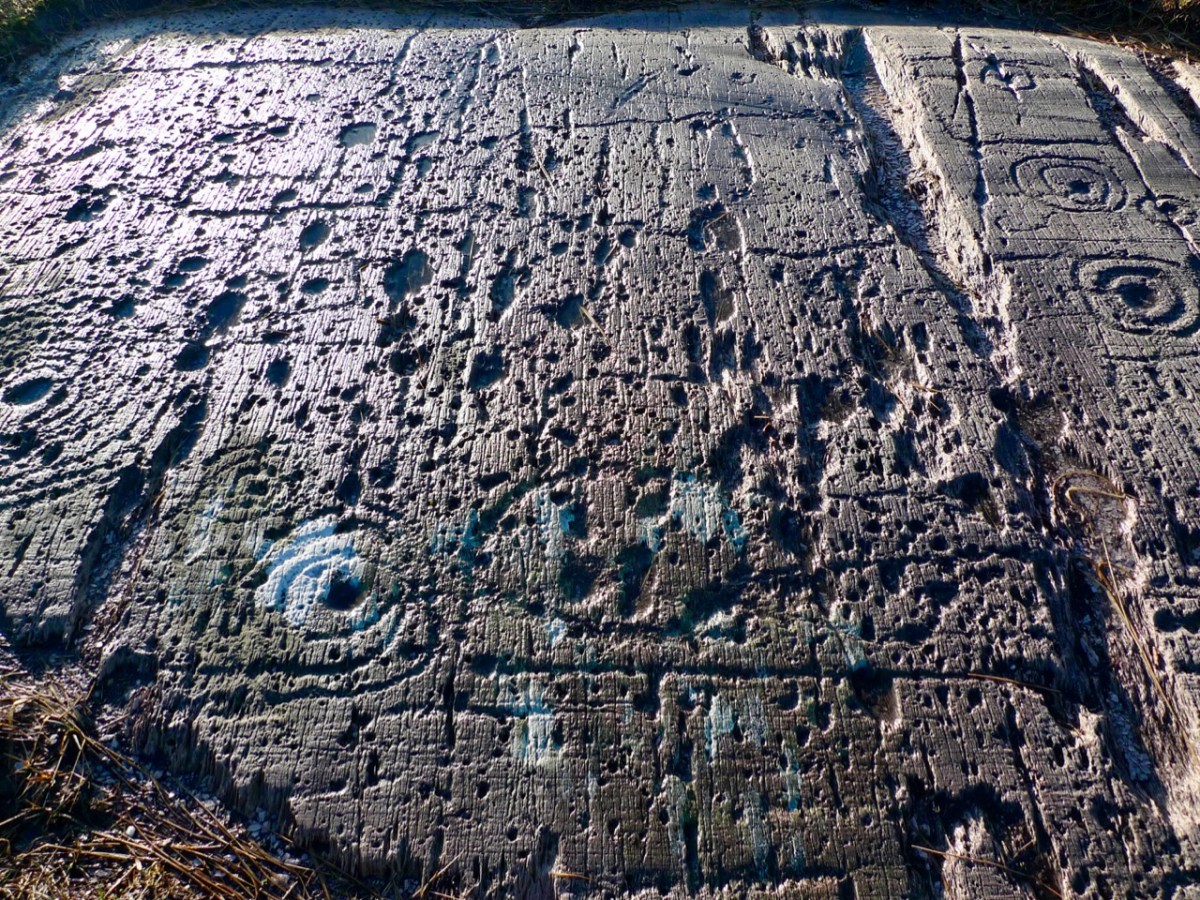
Ever since humans set foot on Irish soil, they have embraced the stones – both for practical uses such as shelter or enclosure, but also as a means of marking and communicating. Readers will be familiar with our particular interests in Prehistoric Rock Art:

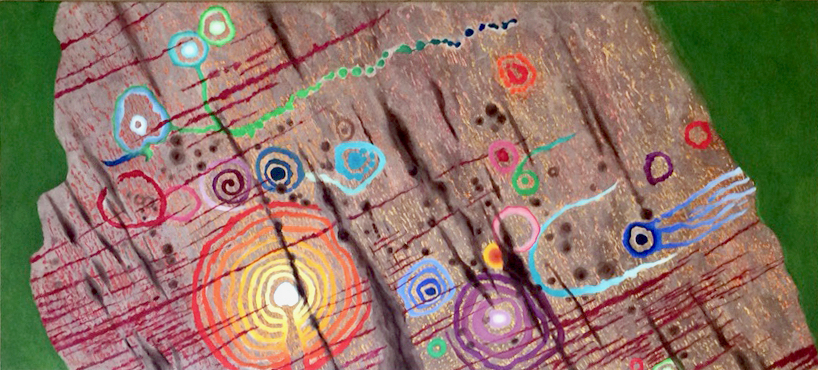
This is an important example of Ireland’s Rock Art, from West Cork, perhaps dating from 5,000 years ago: it was discovered in comparatively recent times. The painting is by Keith Payne, and is an interpretation of this same rock outcrop. We have no evidence that the carvings were ever coloured – or pigmented.

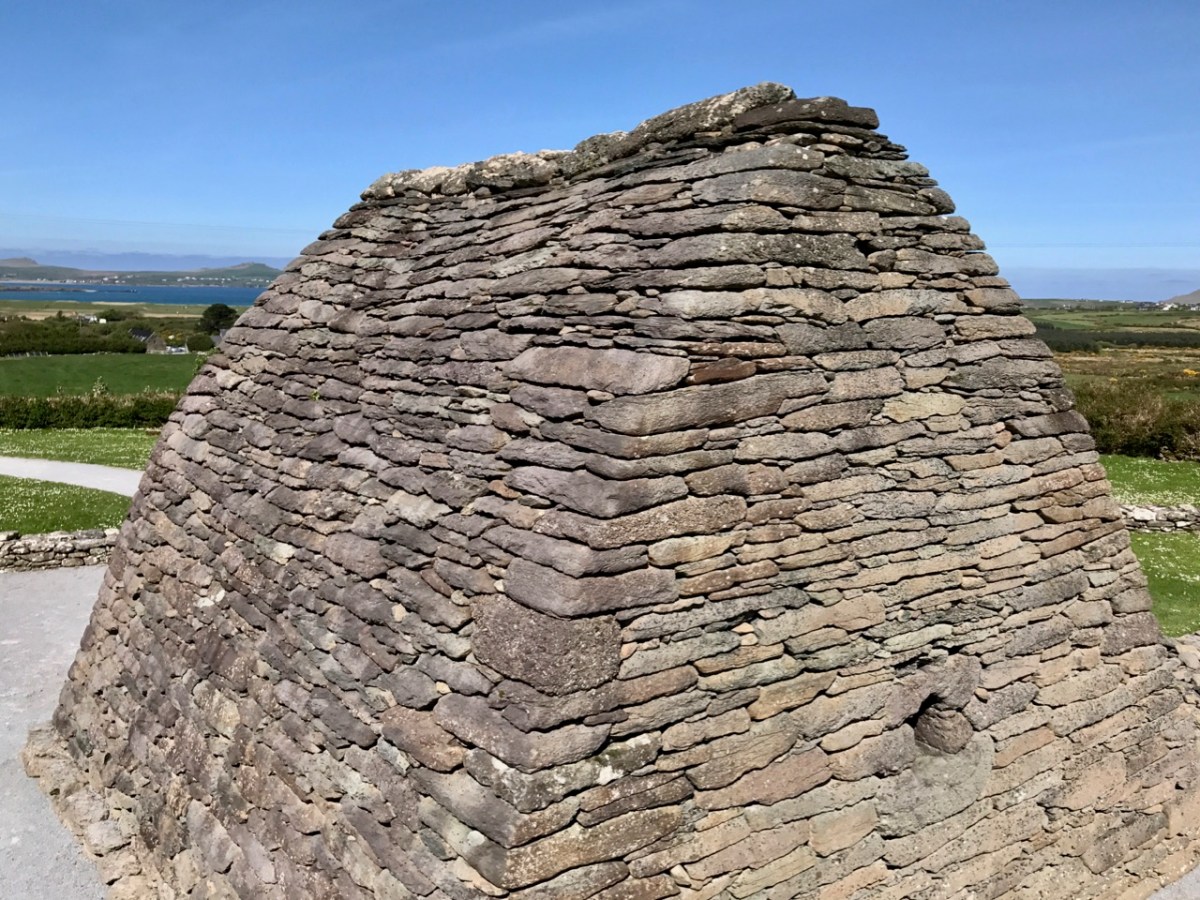
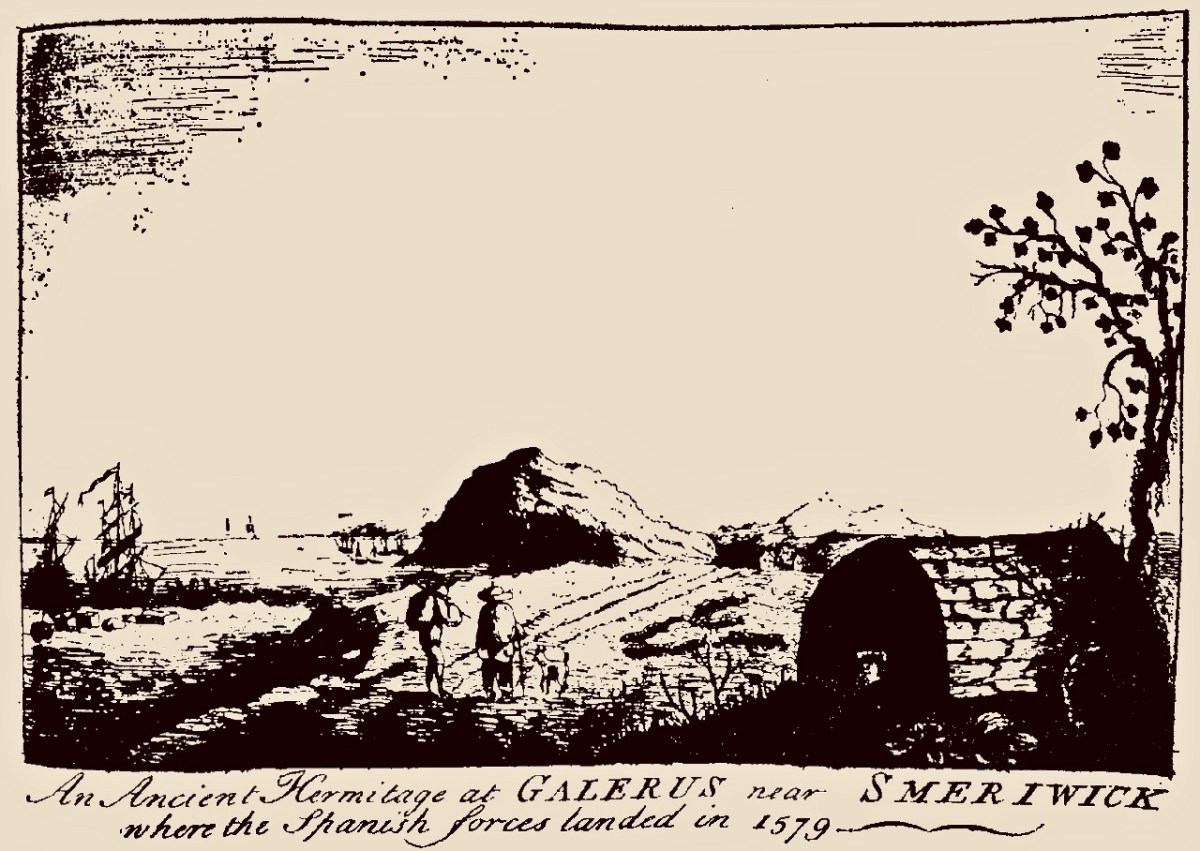
Today we are very familiar with the use of stone as a building material: this practice is likely to have been current since very early times. In Ireland we have many examples of ancient – but undateable – stone buildings. The ‘Oratory’ at Gallurus is a good example of a built enclosure (walls and roof) made entirely from stone. A present day view of it, top, shows this remarkably preserved structure; archaeologists and historians have long debated its age and likely use. The print above dates from 1756.

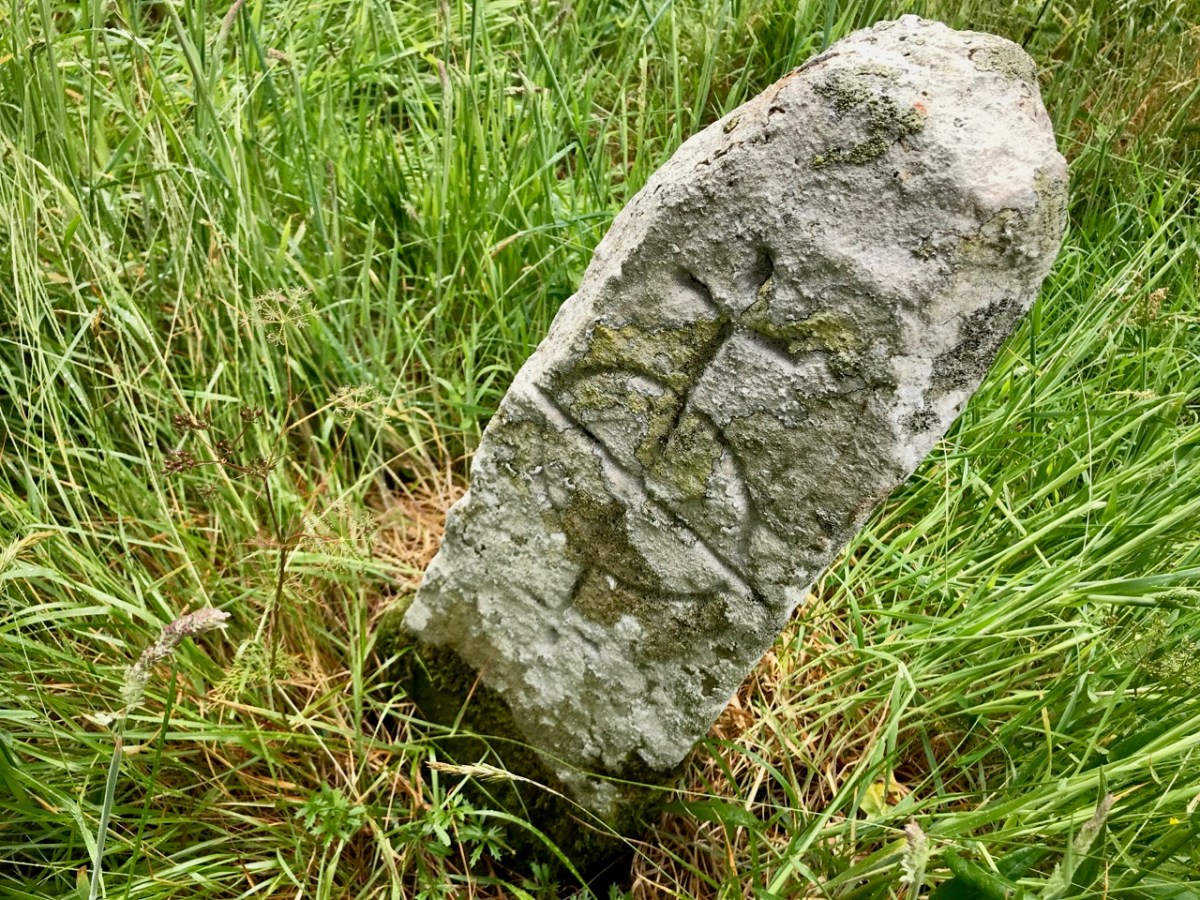
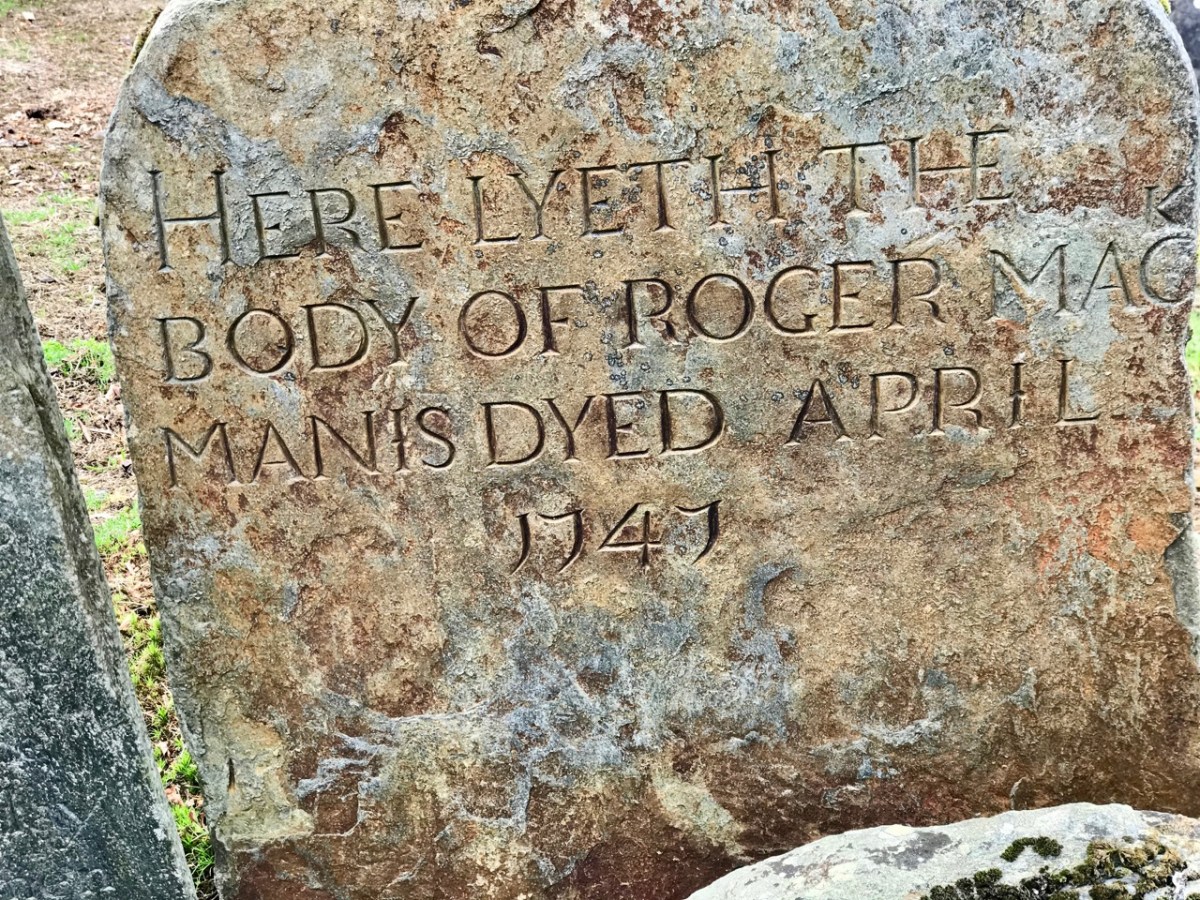
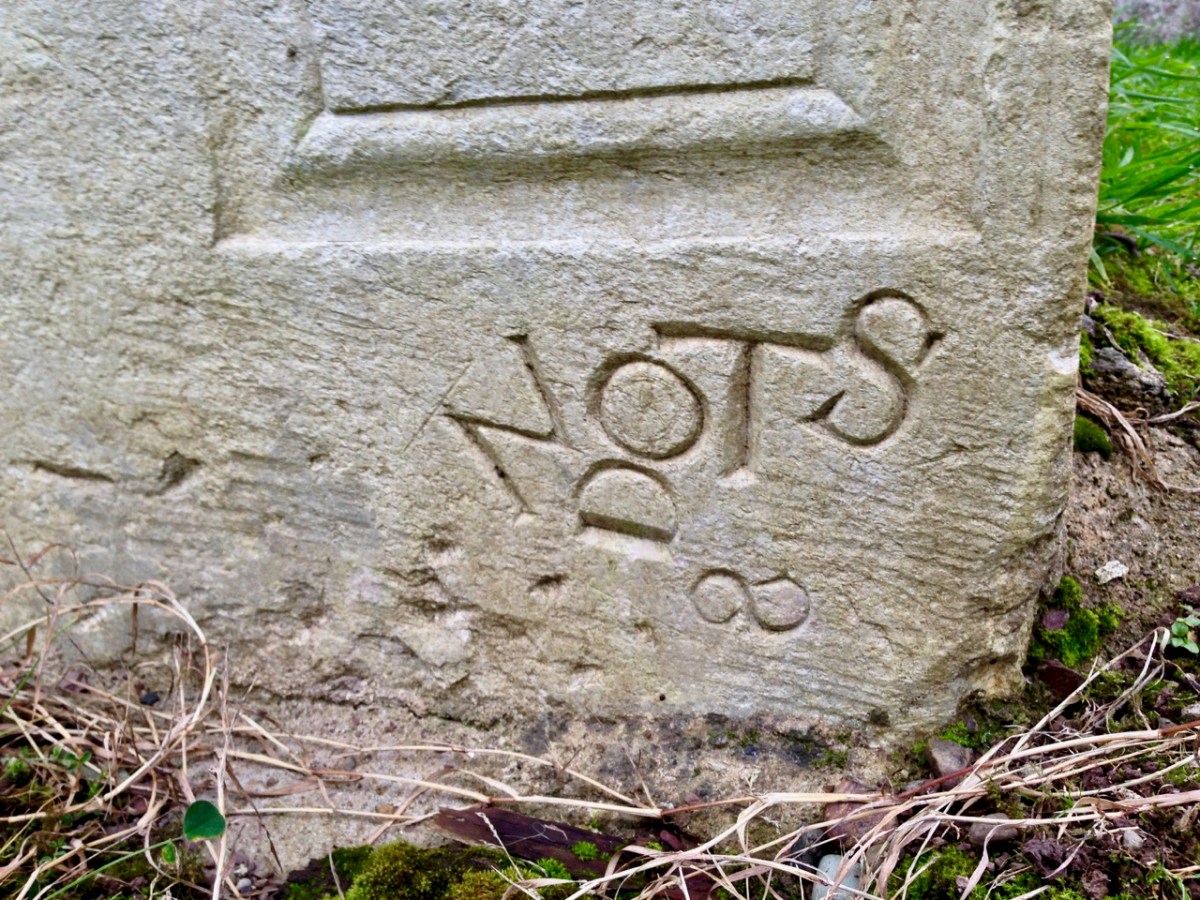
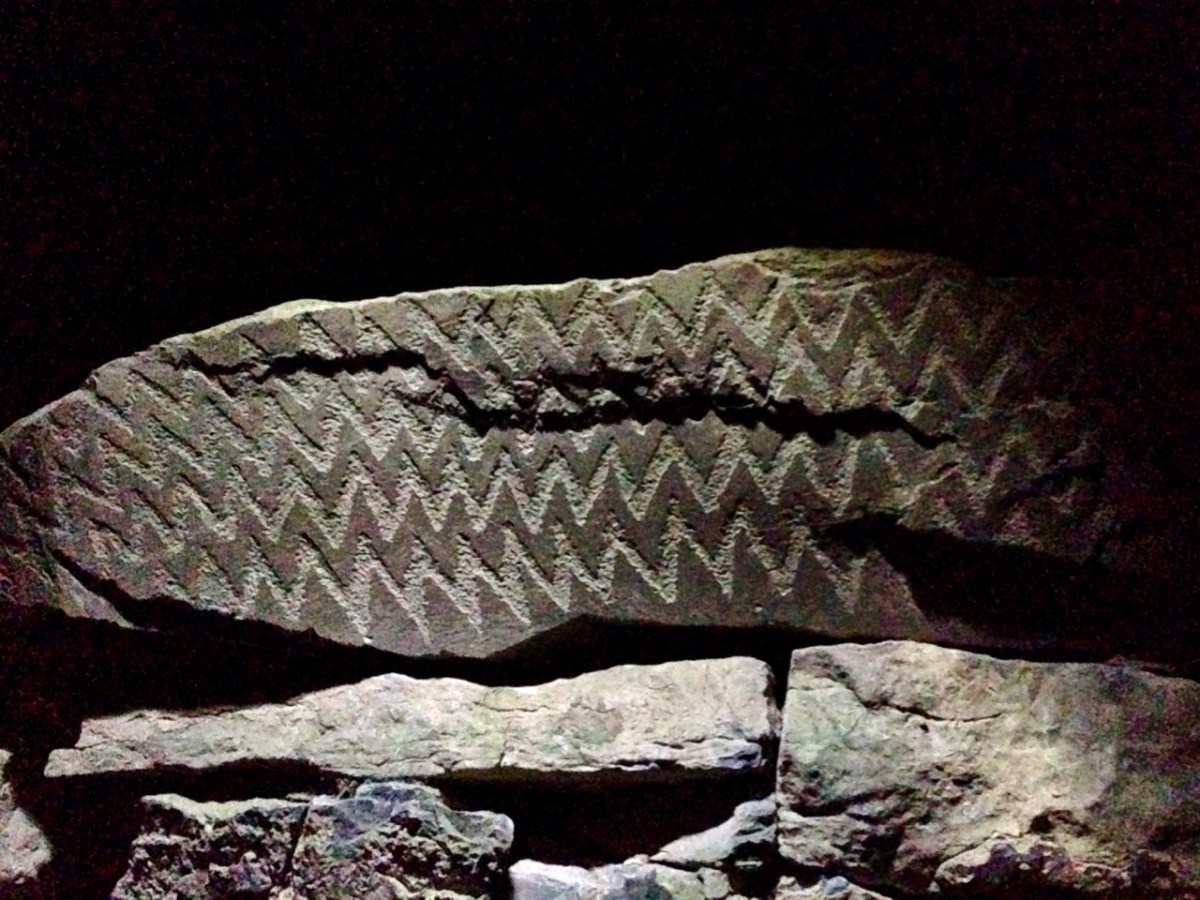
Over the centuries, crafstpeople (like Séamus Murphy – see last week’s post) have used stone as a medium for memorials – the message is likely to survive beyond lifetimes. If only we knew what some of the messages should spell out to us! Our last – striking – image is from Fourknocks – a decorated chambered cairn within the Boyne Valley complex which we visited in 2016. This carved decoration was probably made 5,000 years ago: we can only wonder at its meaning and its authors . . .

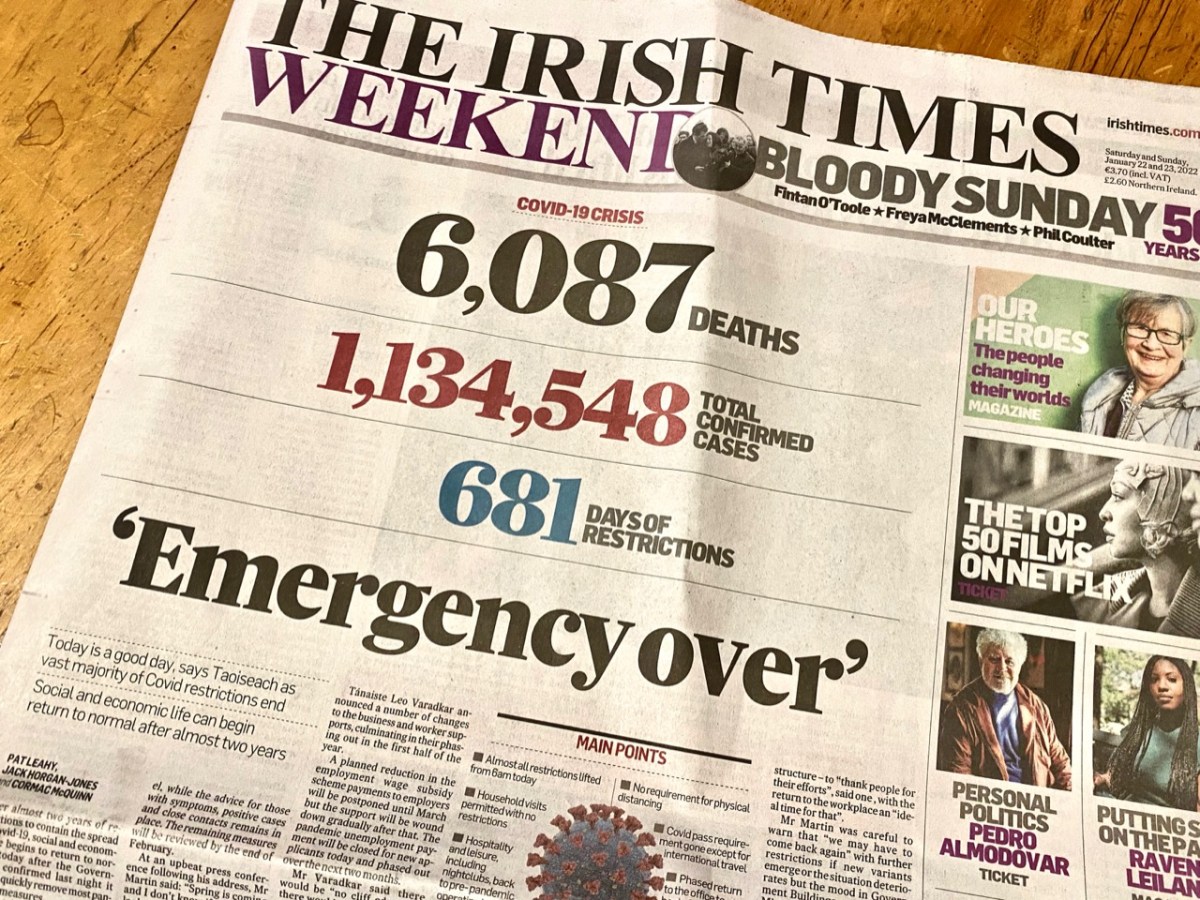
681 Days!

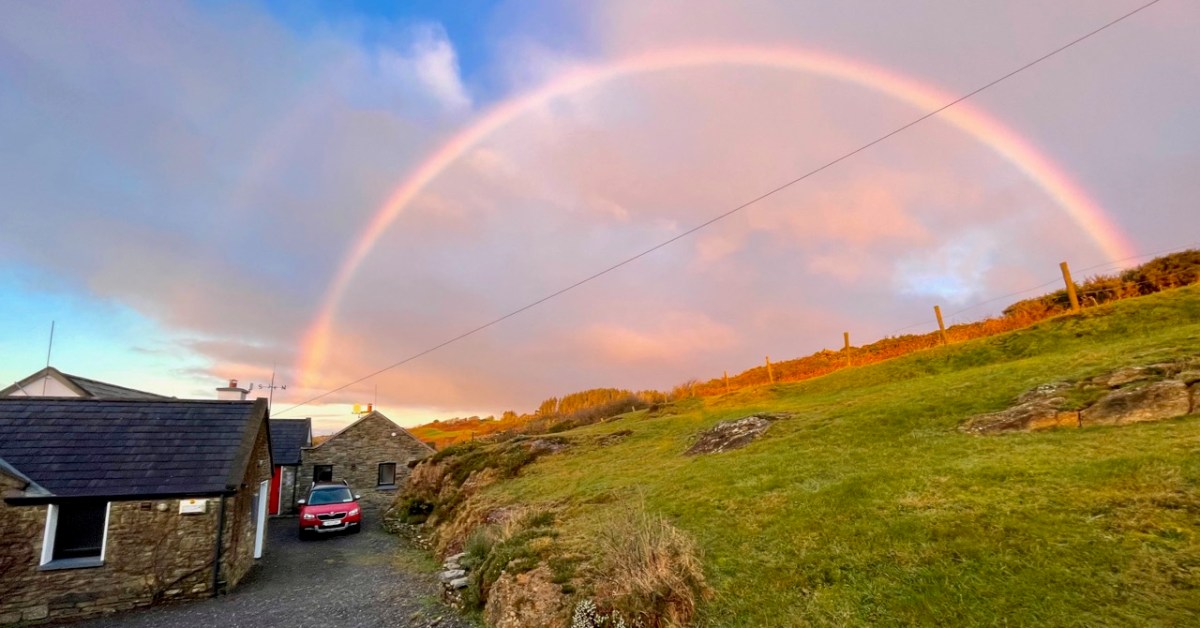
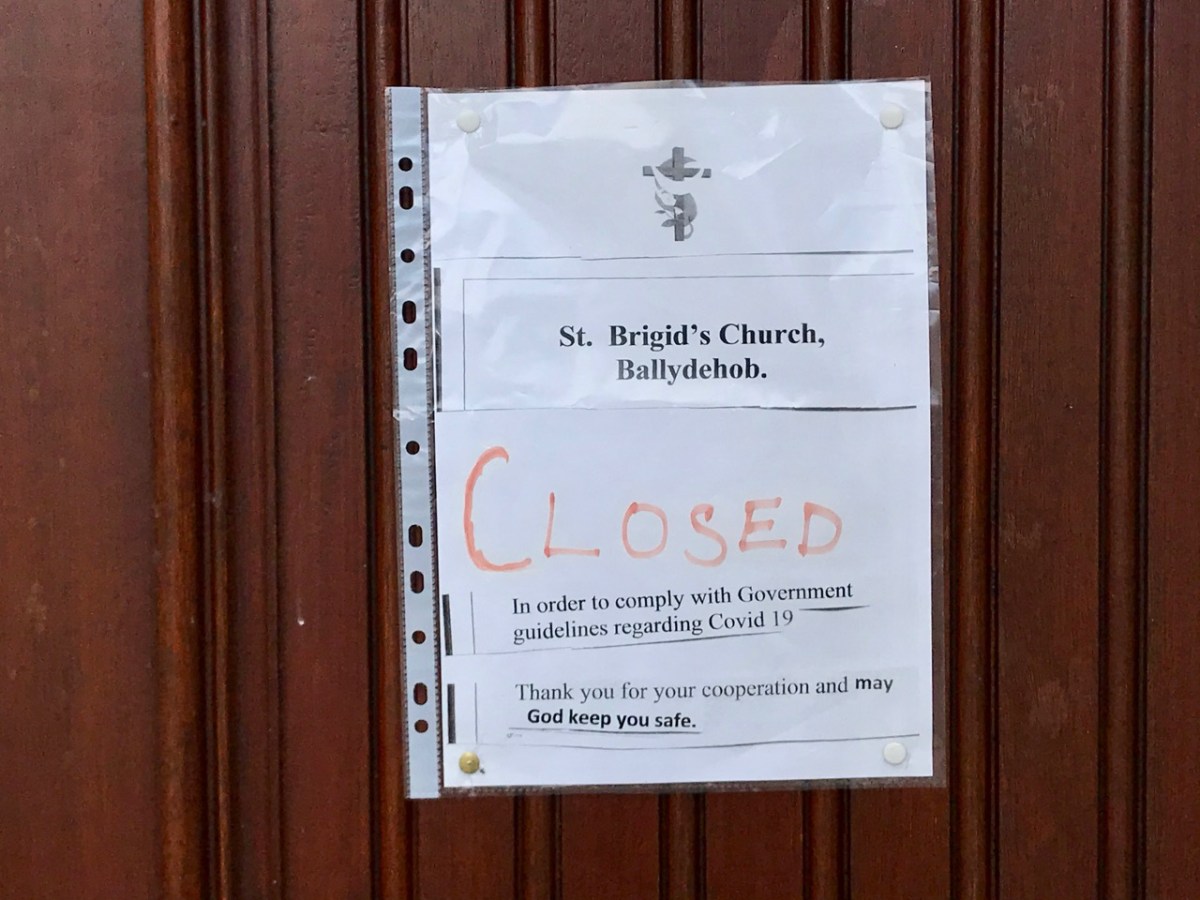
Yes – it has been 681 says since Covid-19 hit us and our world changed. From today, 22 January 2022, most restrictions in the state are gone, apart from the continuing need to wear masks in certain public places. Hopefully that West Cork sky over our house this morning, above, is a good omen for us. Today’s paper shows the stark tally:

The population of the Republic of Ireland as I write this is 5,023,337 (no doubt that is changing by the minute). That tells the story: 22.6% of the people here have had the virus. And of course it hasn’t gone away yet… But at least “social and economic life can begin to return to normal” says the Taoiseach. In order to mark the significance of the moment, my post looks back to our experiences over the last 681 days: in particular, how our lives changed at the beginning of the outbreak.

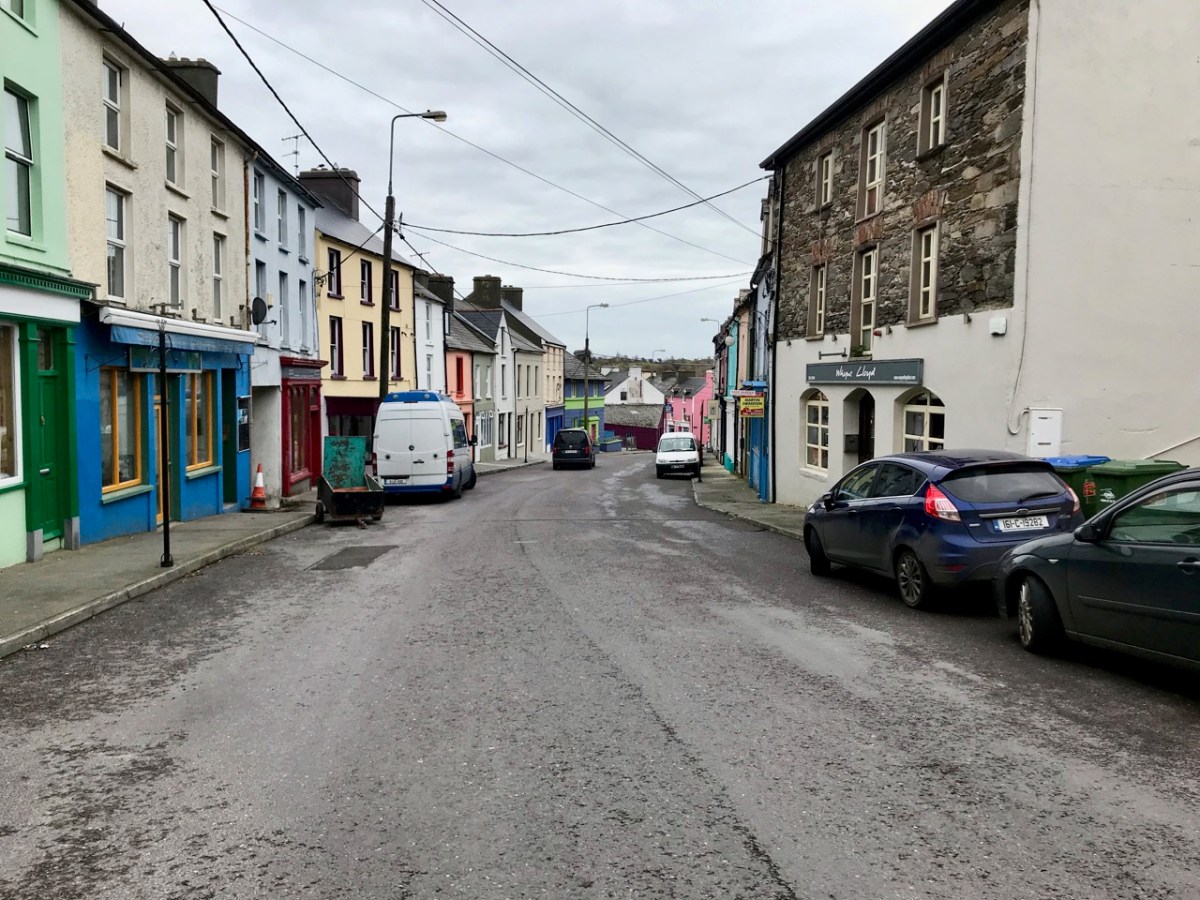
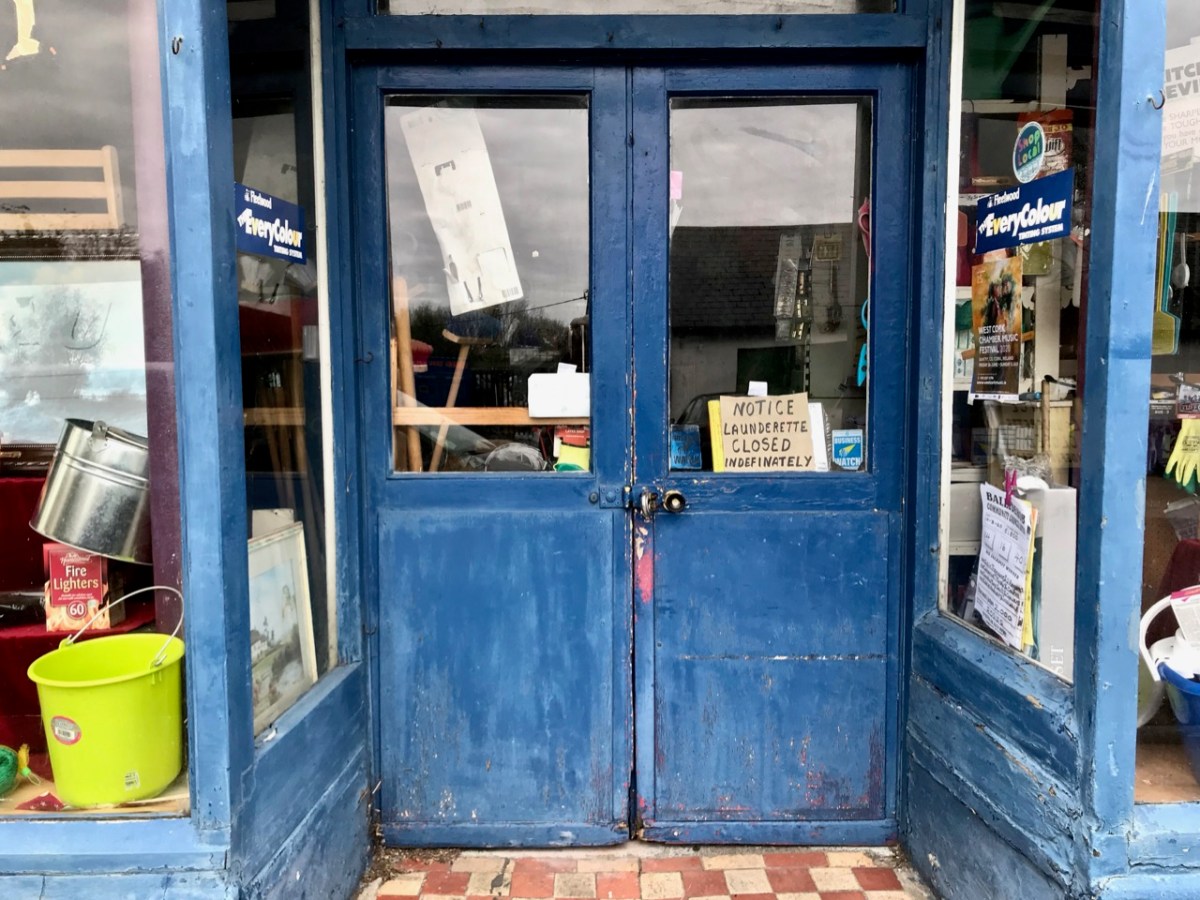
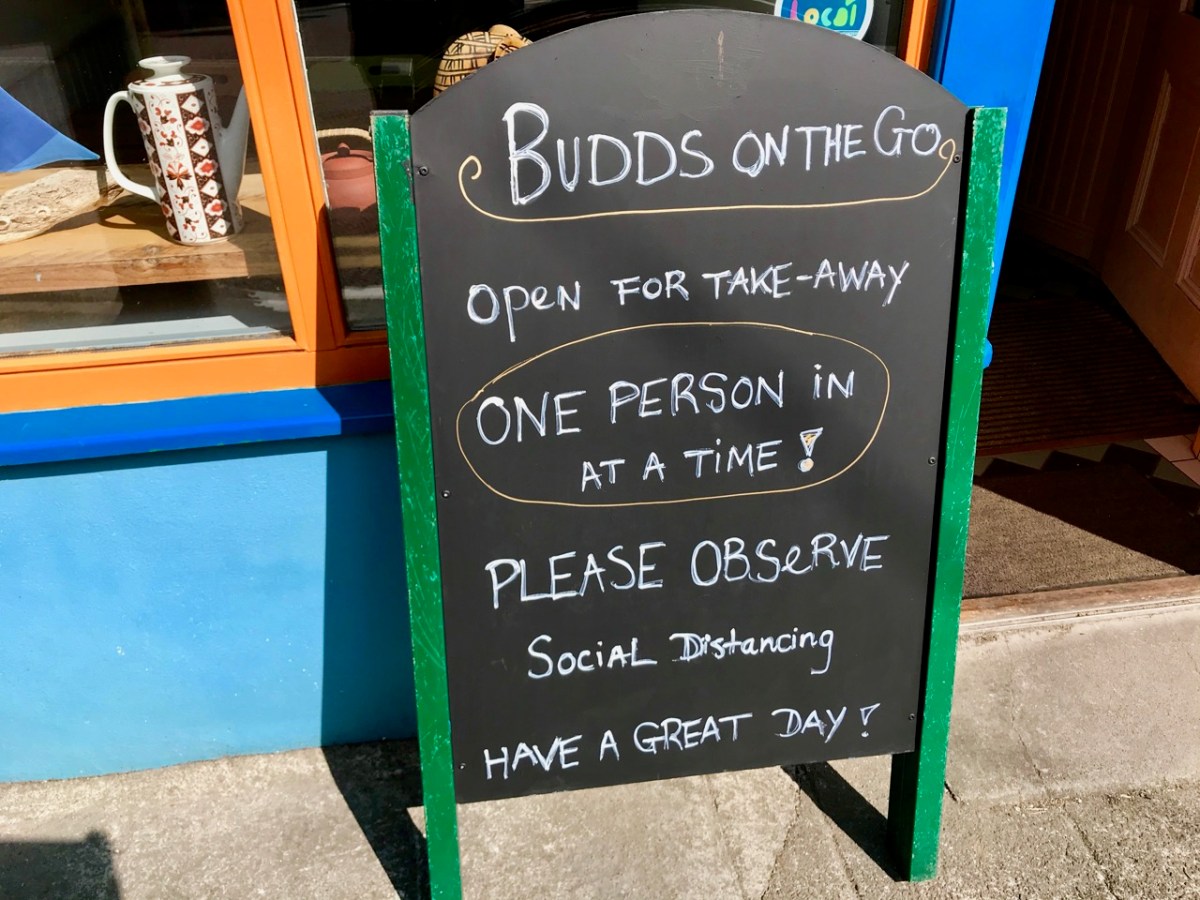
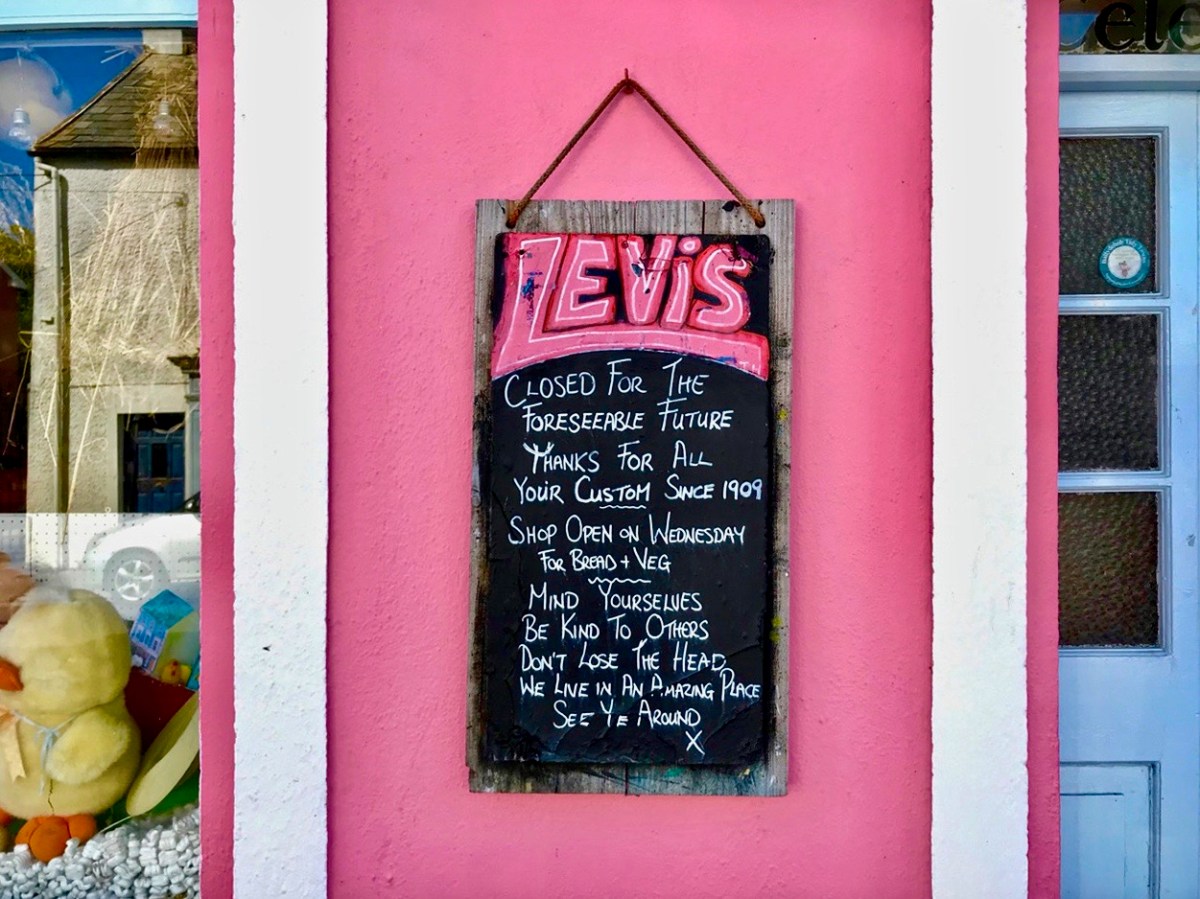
These two images of Ballydehob, taken at the beginning of April, 2020, sum up the shock of empty streets, closed businesses and everyone being advised to isolate. It all seemed very bleak: our movements were initially restricted to 2km from home, then that increased to a radius of 5km. If you lived in rural areas – as we do – you were permitted to travel beyond those distances if you needed to in order to shop or use essential services. We breached those rules on occasion – sometimes to get exercise in the deserted countryside all around us.

As the days went by, an amazing spring emerged, with day after day of beautiful weather. Human activity was curtailed, but the natural world continued along its course as though nothing was awry!

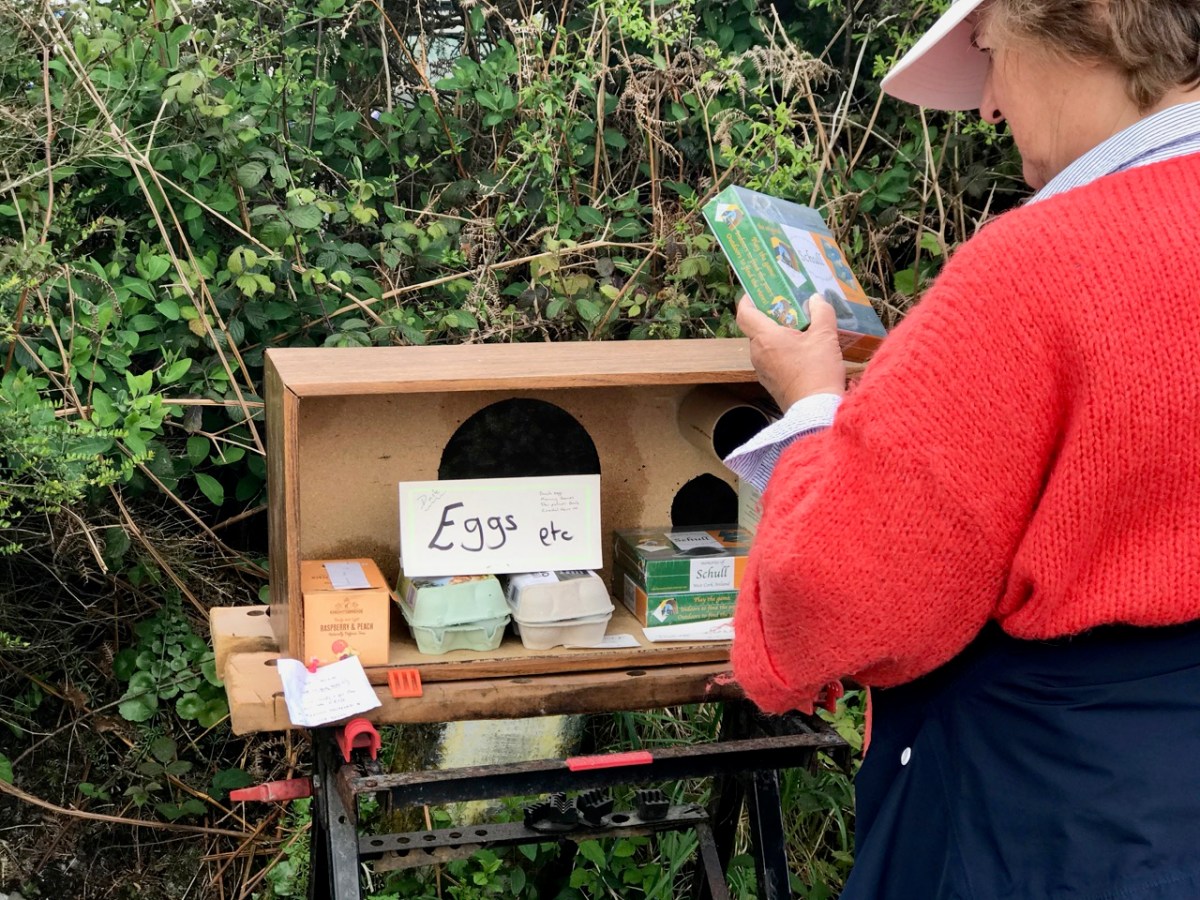
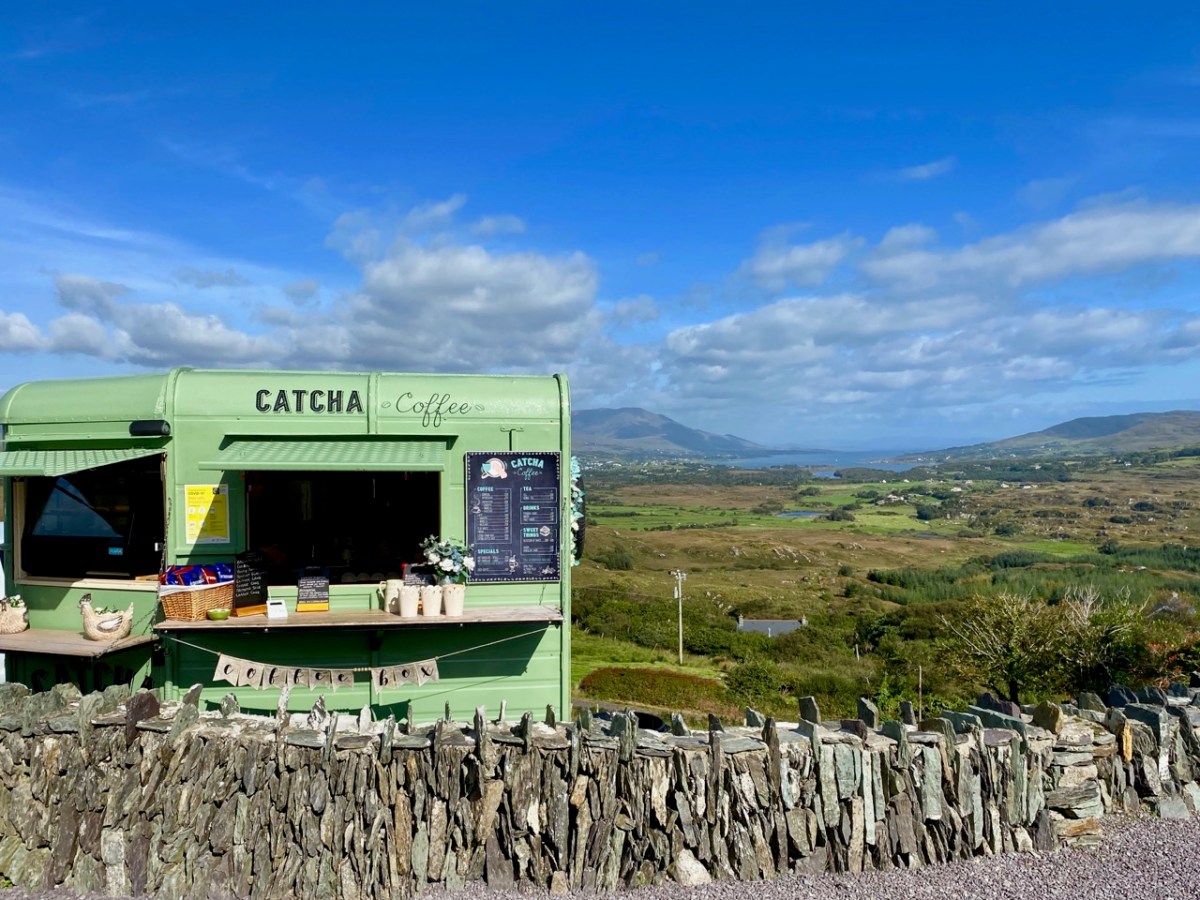
We humans are pretty adaptable. It was amazing to see the ingenuity of folks creating outlets for their energies without having to mix. Food-on-the-go blossomed as a craft industry: here are some examples.

We were very impressed with many of the examples we encountered – and which have survived over the months. Hopefully they will carry on, as casual coffee stalls in the middle of nowhere are welcome to us in our travelling. Pre-pandemic they were probably frowned upon by ‘the authorities’ – and they are certainly regulated – but ‘authority’ would have had to be very hard-hearted to close down these little lifelines. In our experience, every one we encountered was well-run, and spotless. It was an incidental opportunity to have a distanced ‘chat’: always a source of good local information on how others were coping.

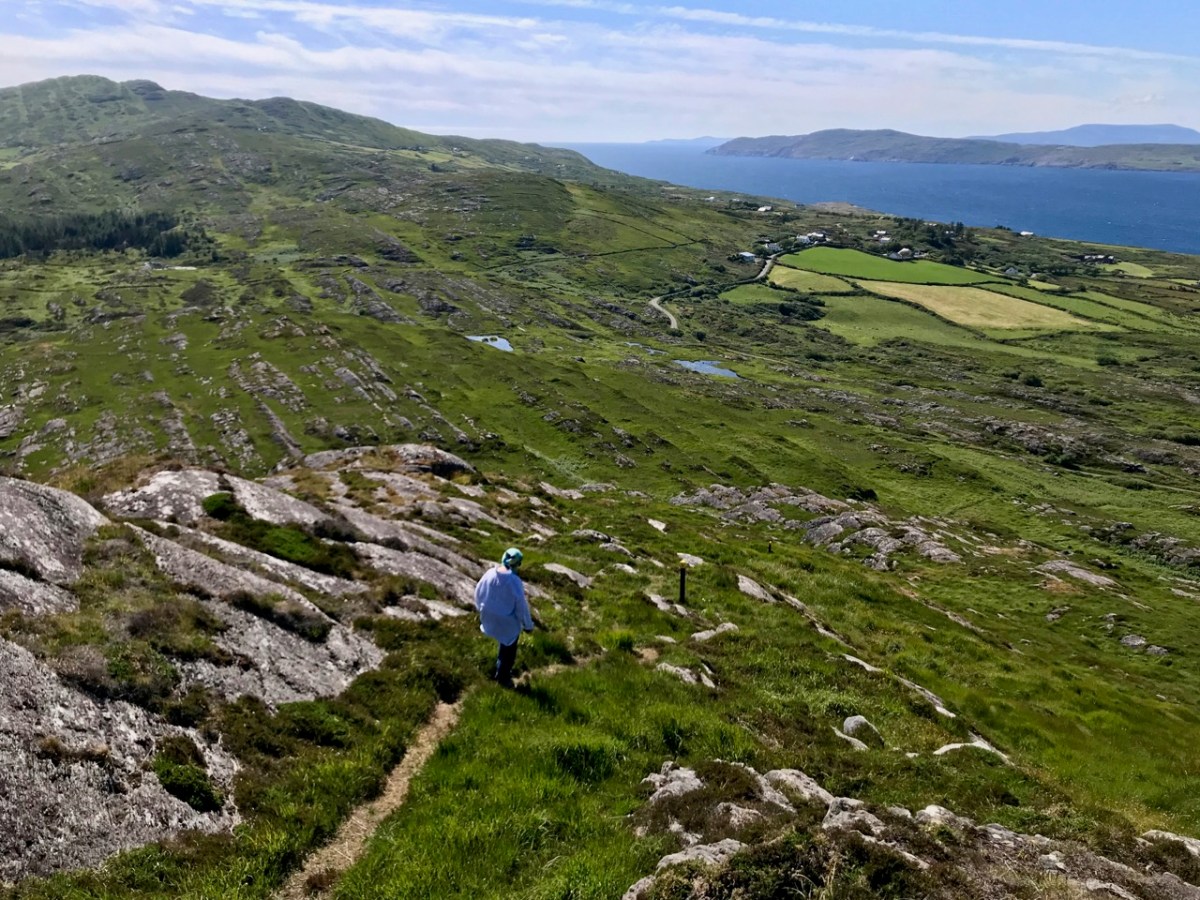
We took the opportunity to climb – and descend – Knockaphuka during the pandemic. It’s a mountain a short distance from Nead an Iolair, but a little outside the limit. No-one was watching! I suppose being restricted to our immediate environment for so long – day after day – made us re-assess it, and our lives. Certainly we have got to know the fine detail of the beautiful place we call home.

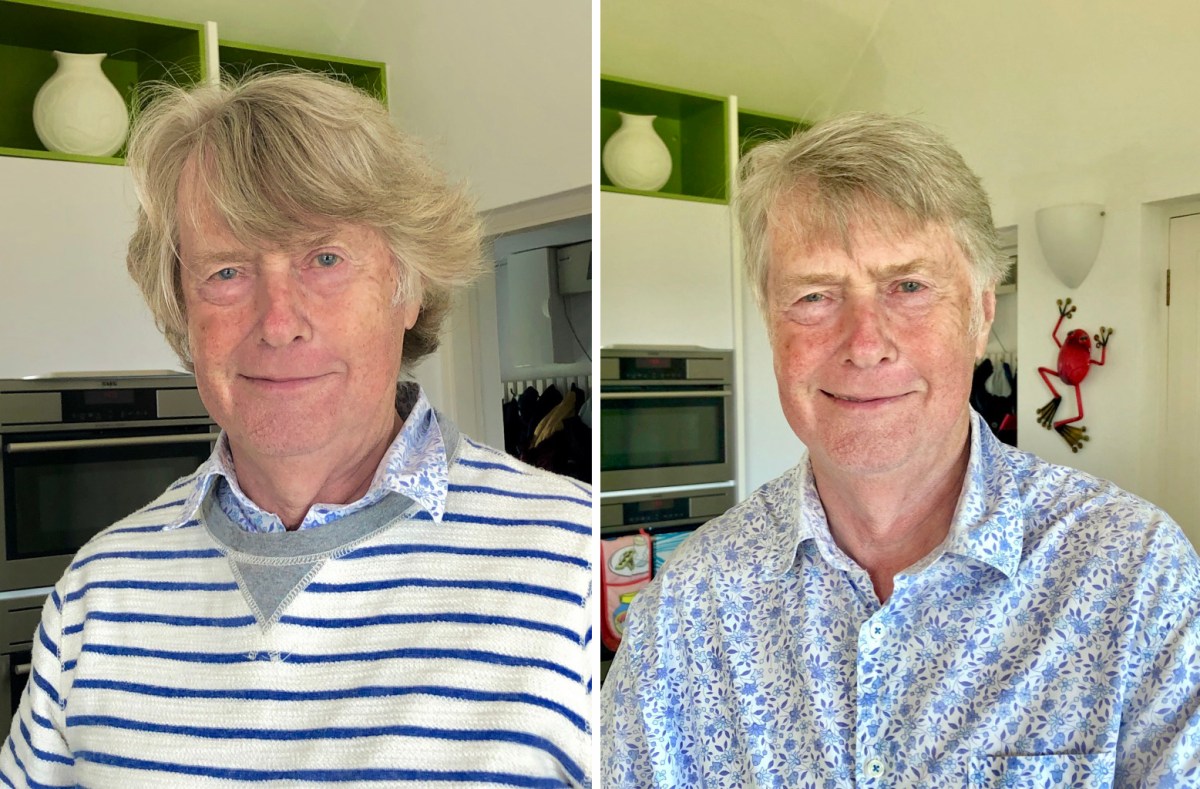
Here’s a social issue: we couldn’t get a haircut for months! Finola kept me in trim, but it was a relief when salons were once again allowed to operate, albeit with some restrictions.

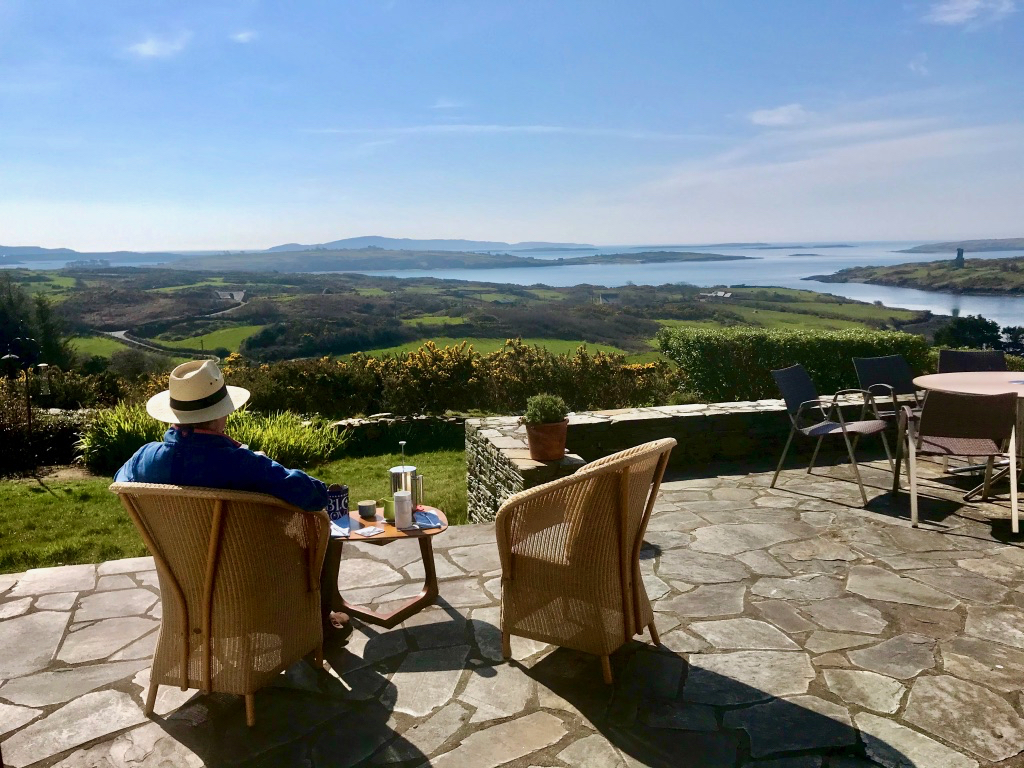
This is us having coffee on our own terrace, looking out over Roaringwater Bay in the wonderful spring of that first pandemic year. In fact, each of the two last years has been benign – with a few exceptional winter storms. We would have felt less relaxed if we had had persistent rain (which sometimes happens).

A sprig of green appears on a doorstep on May Day, 2020: a sign that we all still want to continue the old (perhaps ancient) traditions… There were ups and downs: things eased as the year went by and then the new variations came in. Numbers went down and we breathed out. Then they soared – especially with the Omicron variant, and everything went haywire again. Let’s hope that the present easing is here to stay. But the future can never be told…

Chasing Steeples!

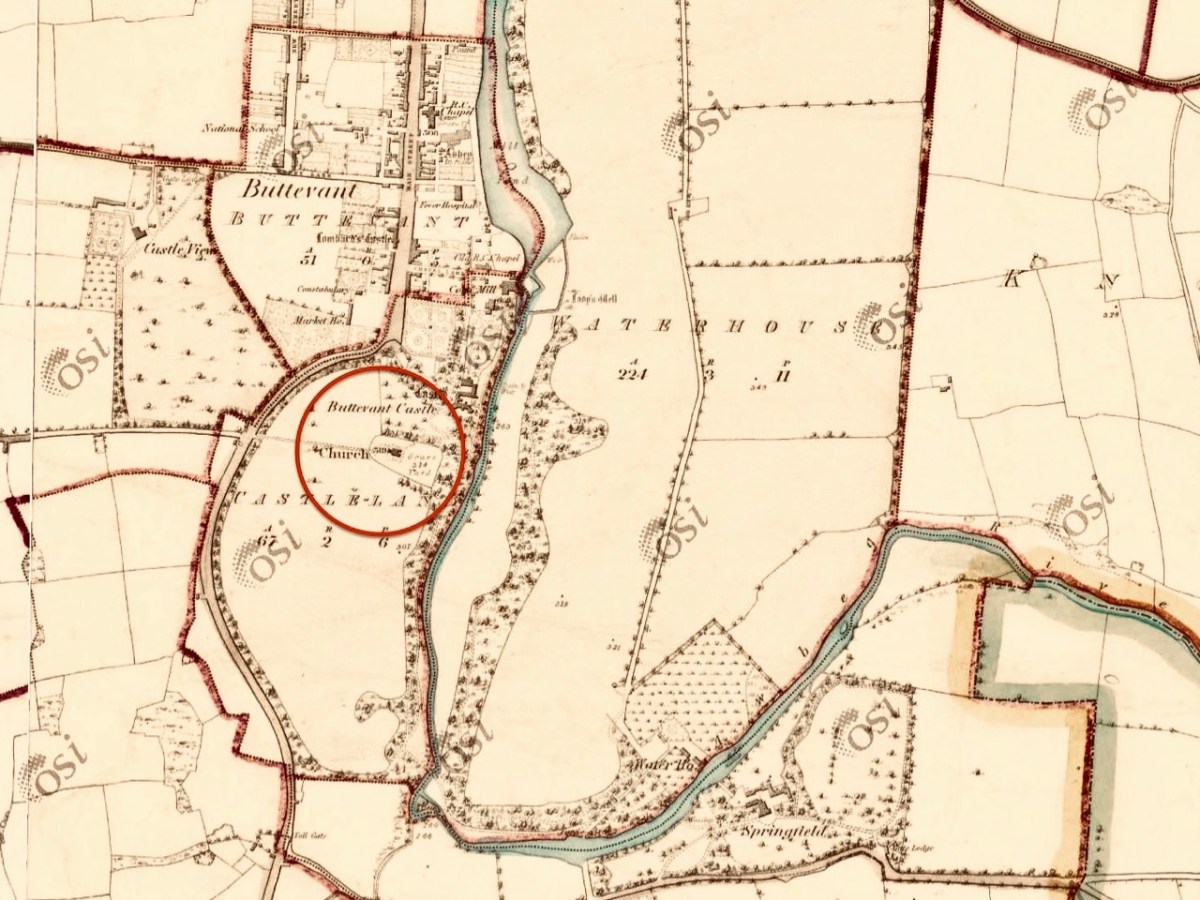
I can’t resist a good Irish story . . . I look out for them wherever we go. Our latest adventure was over in the northern part of County Cork, searching out a number of holy wells and anything related to them: we were led by Amanda Clarke: look at her website here. Regular readers will know that we often get together with Amanda and Peter to share our mutual interests in the Irish landscape. On this most recent expedition our path took us through Buttevant, and specifically to St John’s C of I church there, where Finola was keen to inspect the stained glass windows. The present church was built in 1826, and replaced an older one, established in the late 1600s.

As you can see, it has a tower with a fine, elegant spire. I was fascinated to read that the predecassor of this church is credited with the historical significance of having ‘given birth’ to the Steeplechase horse race.

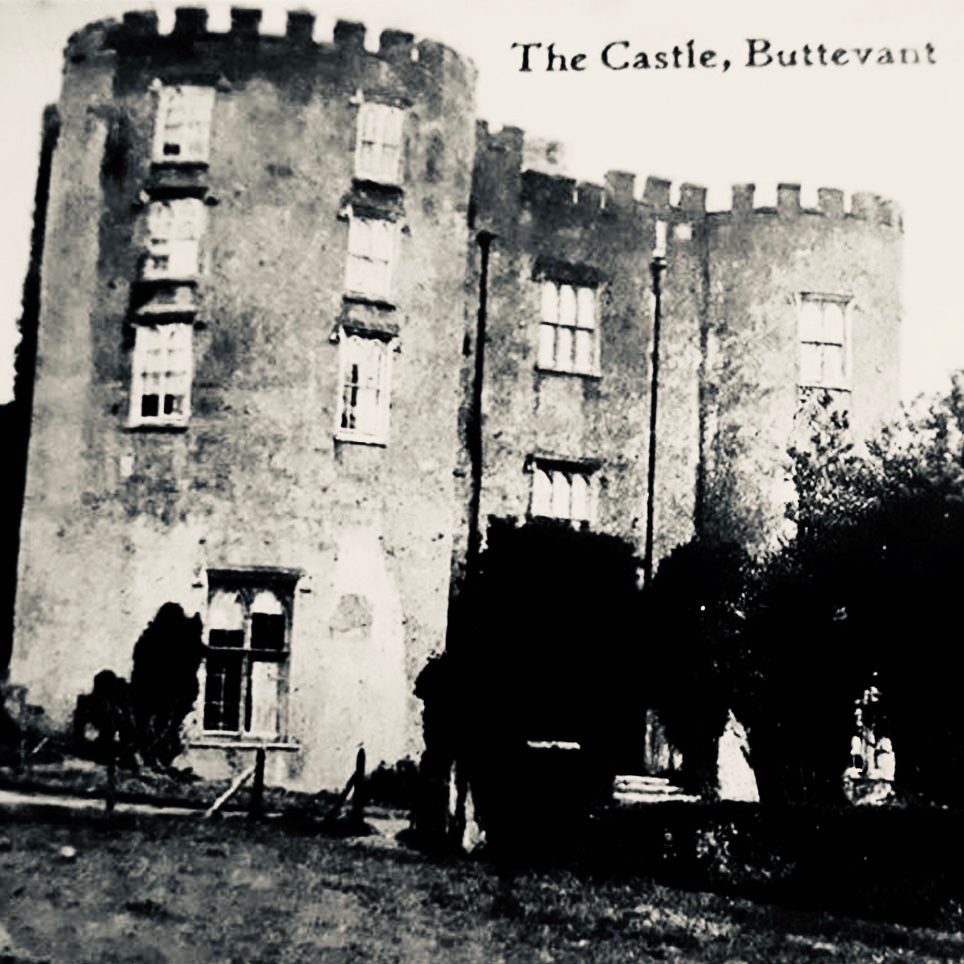
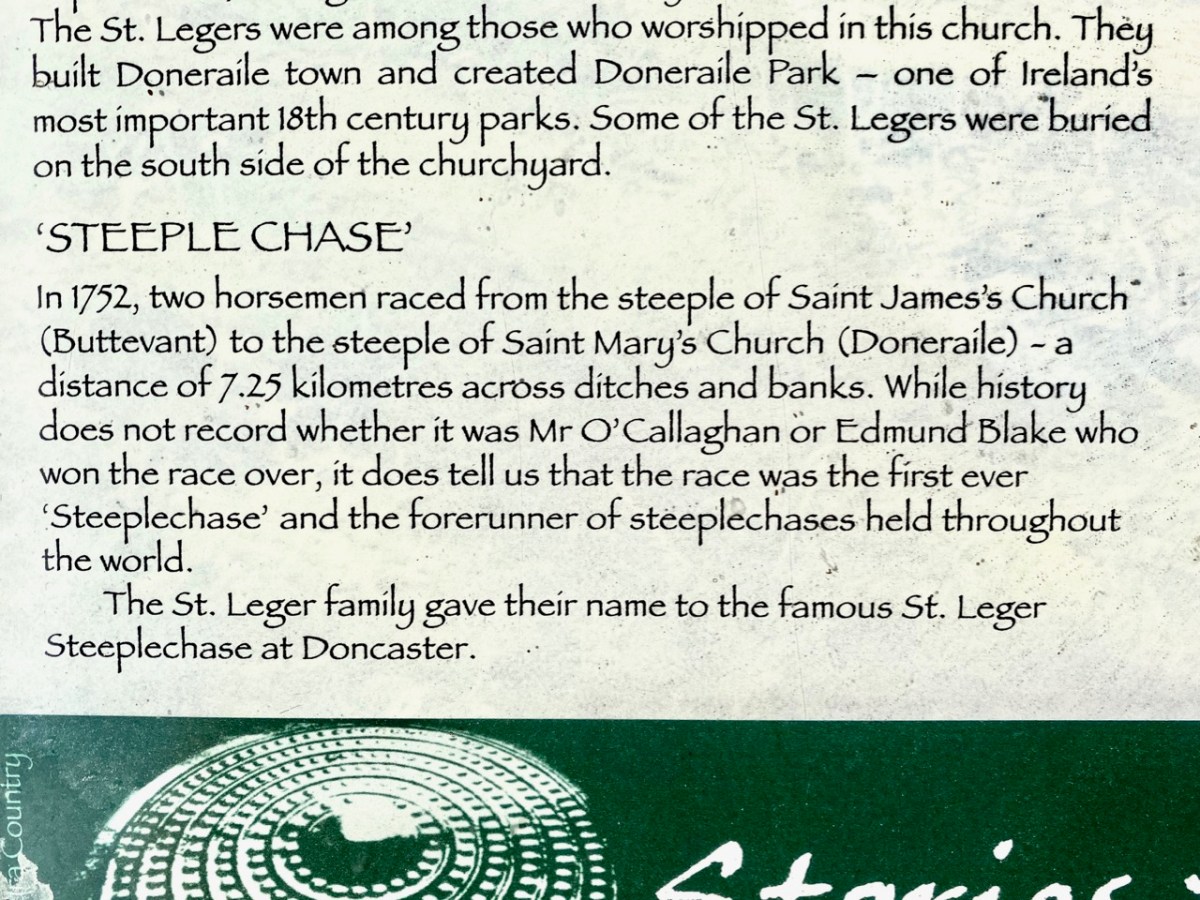
. . . The term ‘steeplechase’ actually originated in a horse race first held in Ireland in the 18th century. As the name might suggest, that very first race took place in 1752 between two steeples in rural county Cork in the south of Ireland. At that time, church steeples were among the tallest buildings in the landscape. On that night, Cornelius O’Callaghan and Edmund Blake were at dinner at Buttevant Castle, having a good time. They made a bet between themselves to race from the steeple of Saint John’s Church in Buttevant to that of Saint Mary’s Church in the town of Doneraile . . .

.europeana.eu

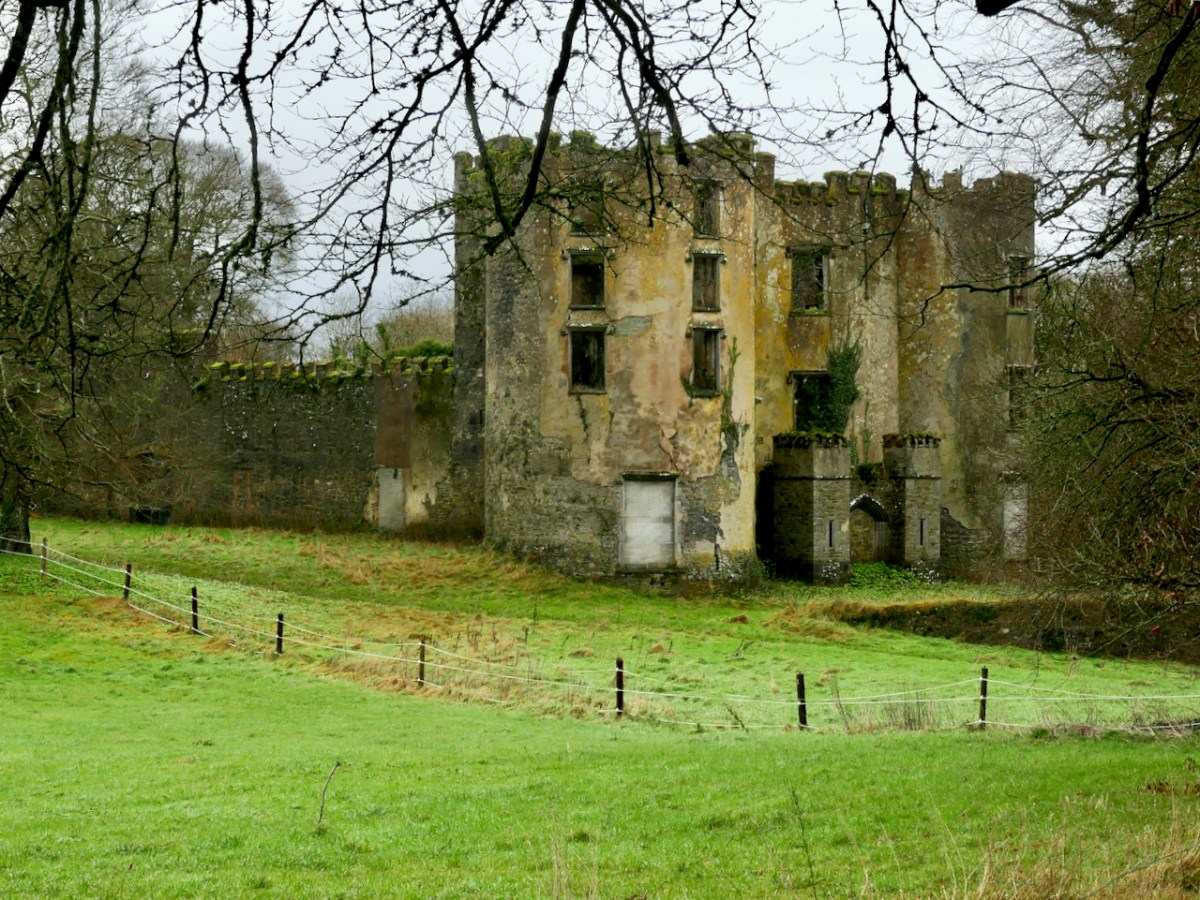
Sadly, the Castle at Buttevant is no longer habitable. It was built around 1200 by Philip and William de Barry, on land seized from the Gaelic O’Donegan’s. The poet Edmund Spenser (1553 – 1599) lived in the nearby castle of Kilcolman for many years, and wrote his poem The Faerie Queene there. He also mentions Buttevant Castle in his writings:

“Old father Mole, (Mole hight that mountain grey
That walls the Northside of Armulla dale)
He had a daughter fresh as floure of May,

VVhich gaue that name vnto that pleasant vale;
Mulla the daughter of old Mole, so hight
The Nimph, which of that water course has charge,
That springing out of Mole, doth run downe right
to Butteuant where spreading forth at large,
It giueth name vnto that auncient Cittie,
VVhich Kilnemullah cleped is of old:
VVhose ragged ruines breed great ruth and pittie,
To travallers, which it from far behold”

Spenser is supposed to have derived the names ‘Mole’ and ‘Armulla’ from Kilnemulla or, more correctly Cell na mullach, an early name for Buttevant. It is possible that the castle here fell victim to the 20th century Irish Civil War, although I cannot find any detailed information on this. Accounts generally suggest that the building was in use until the 1920s and another reference states that there was a significant fire which destroyed the interior in 1936. Today, it is a windowless ruin which is not accessible to the public.

I’m sure you are all anxious to get back to the story of that first Steeplechase – and you want to know who won? When taking in any Irish tale you have to be patient . . . We simple don’t know who won! It’s not recorded anywhere . . . The account continues:

. . .The distance was around 4 miles, crossing countryside and rivers. The winner would be the first to touch the base of the steeple in Doneraile. The prize? More than 600 gallons of port. Sadly, history has not recorded who actually won the race. But that race has gone down in history, with steeplechase races becoming a tradition . . .

.europeana.eu

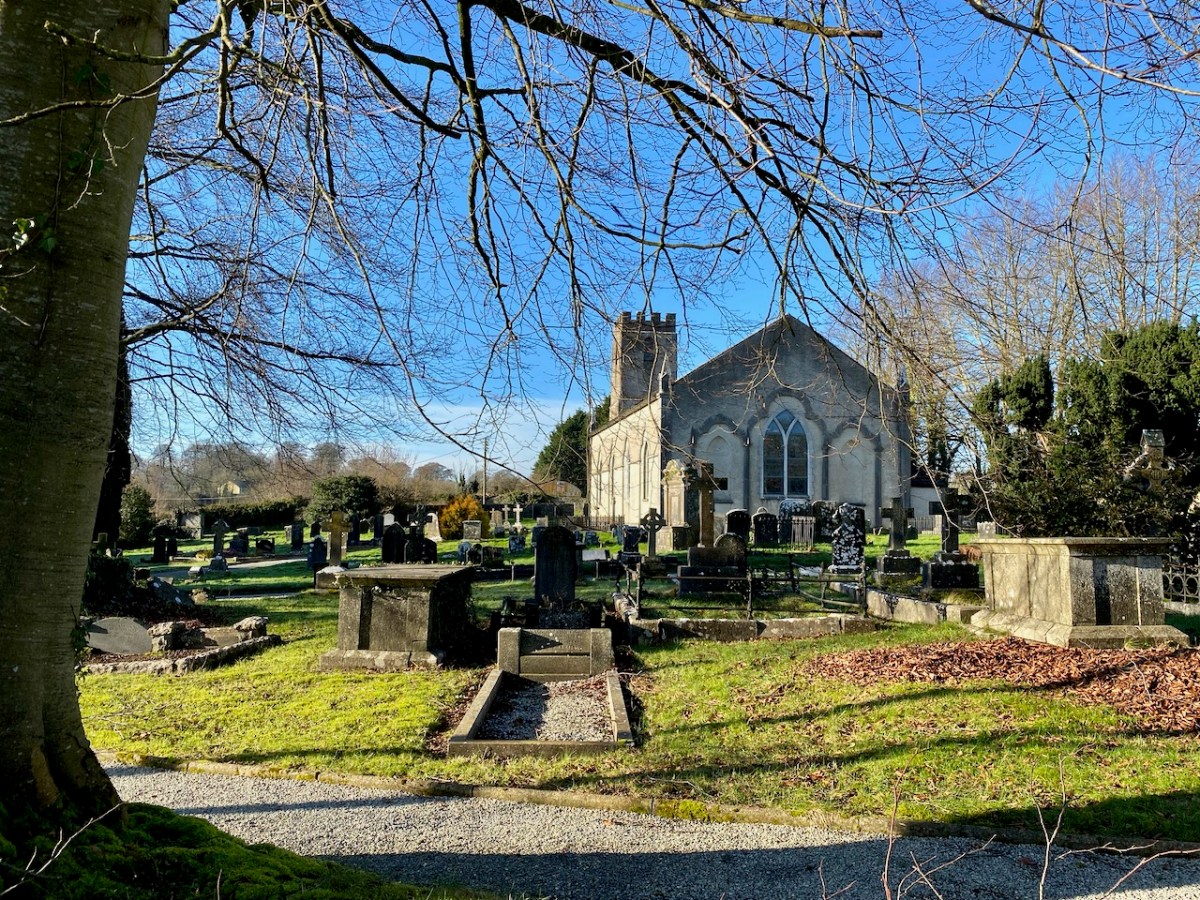
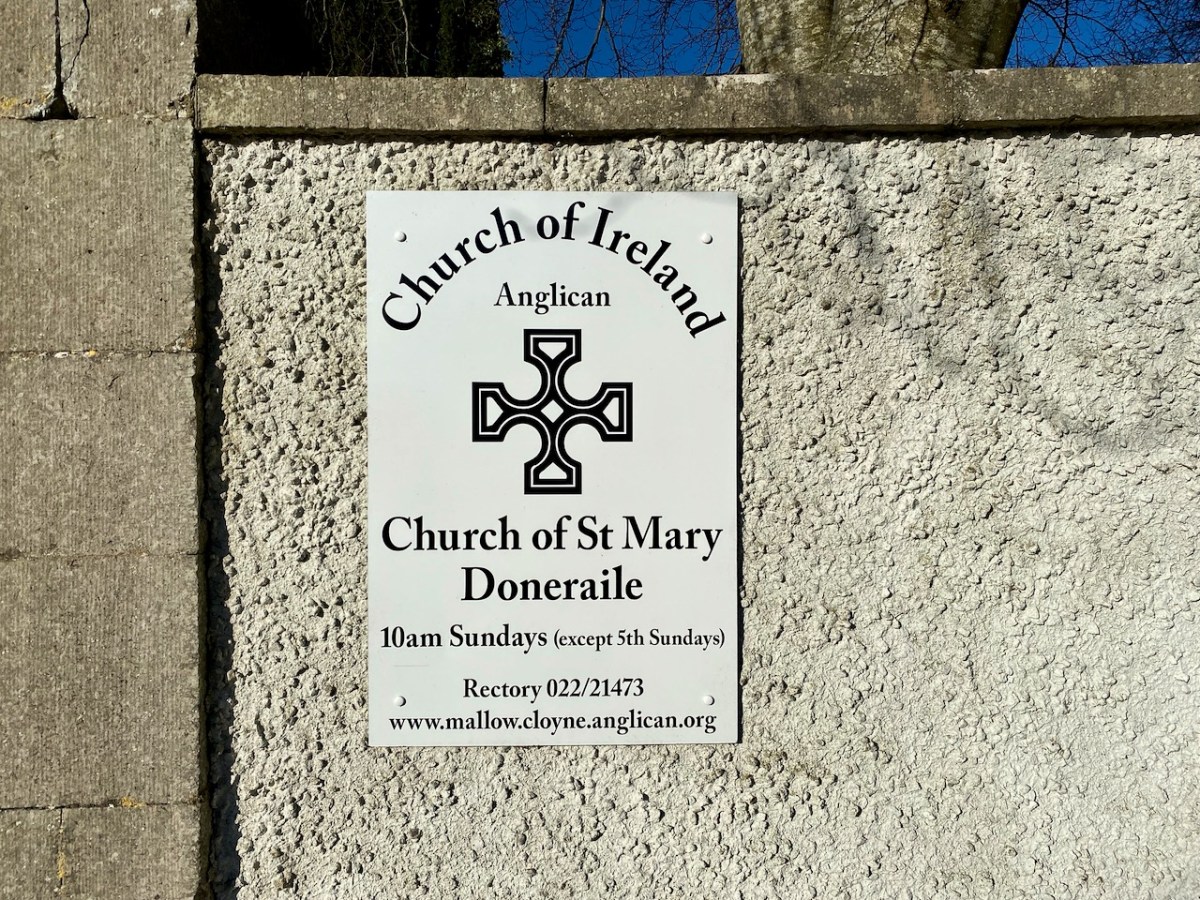
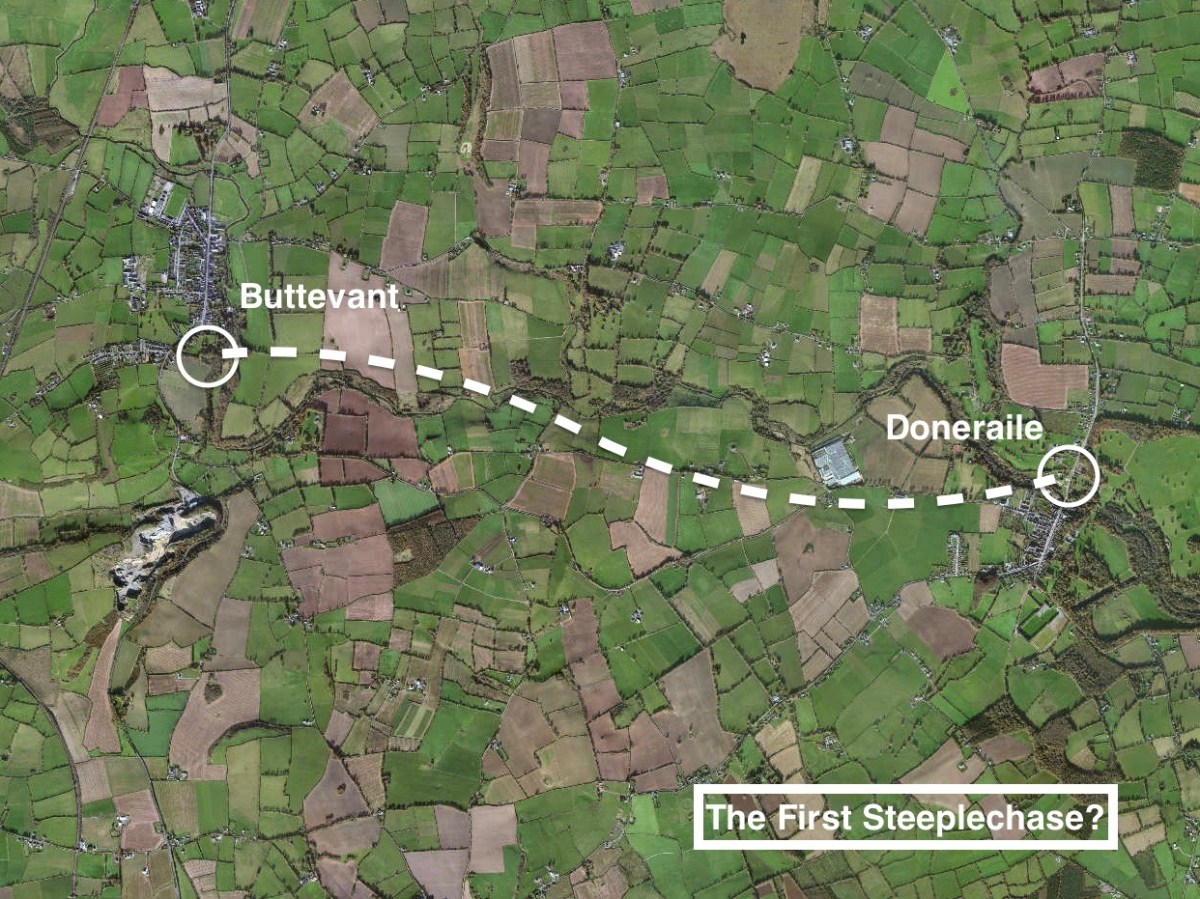
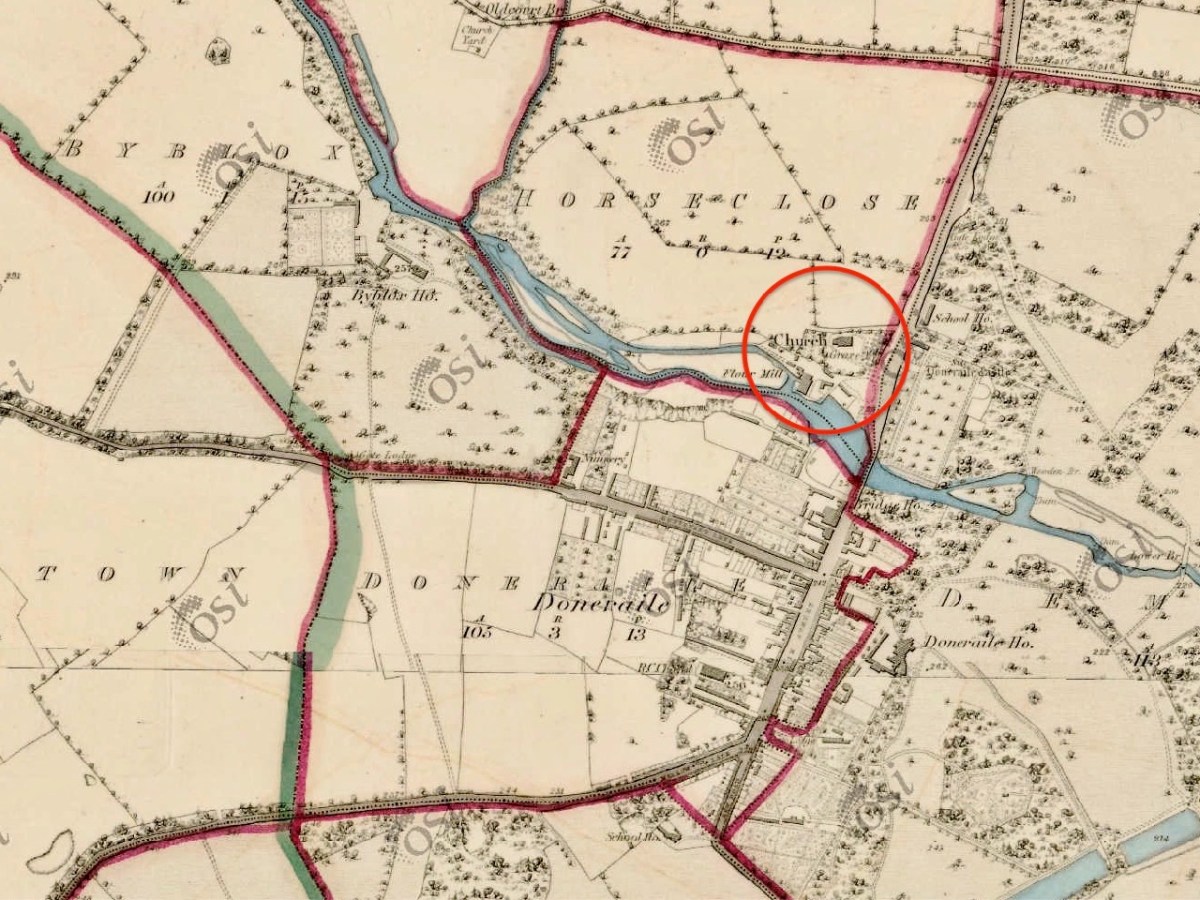
Obviously, we had to continue our expedition with a visit to Doneraile, to view the finishing post. That’s St Mary’s Church, above. The present building does not have a spire: I would have thought that such a feature would be essential if you were looking out for it from a distance of four miles, even with fairly flat countryside in between. However, I have now learned that the term ‘steeple’ correctly refers either to a simple church tower, or a church tower with a spire on it. Have a look at the terrain from a birds’ eye view:

Here I have copied extracts from the first edition 6″ Ordnance Survey map, showing the terrain in more detail around the start and finish points as it was noted in the early nineteenth century:

On this occasion we didn’t have time to explore the route itself: I wonder if anyone else has? Is it significant that the townland which surrounds Doneraile Church is known as Horseclose?

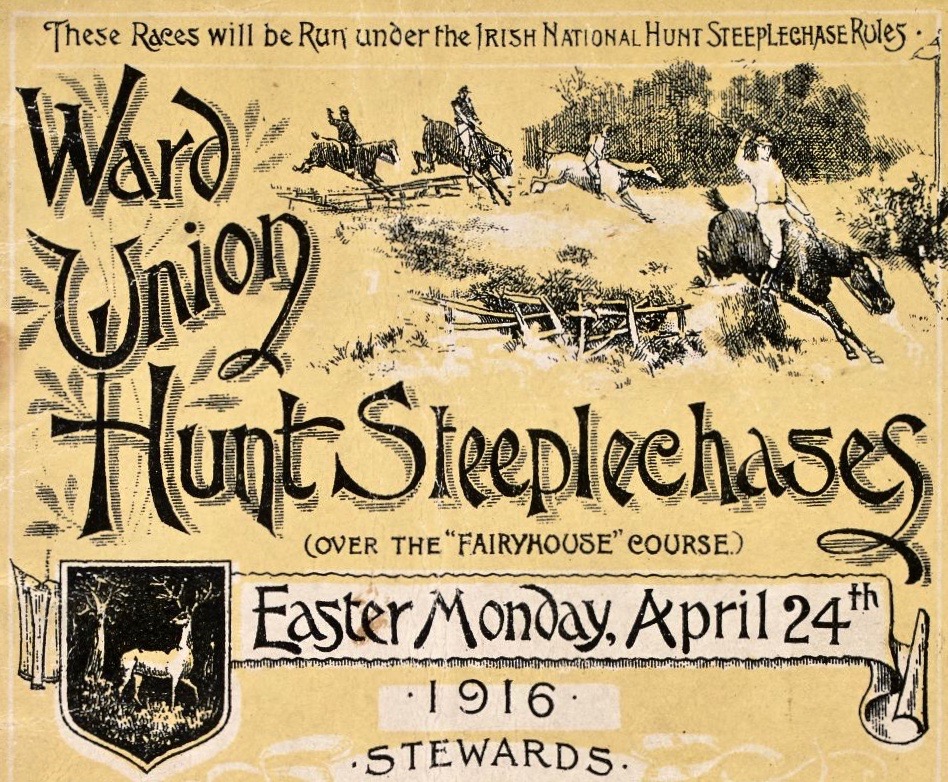
In the present day, of course, Steeplechasing has an equine life of its own. Supposedly, the very first recognised English National Steeplechase took place in March 1830. In 1839, the British Grand National Race at Aintree was established, a race that is still run today over roughly the same distance of around 4 miles. Here’s a poster for the Irish equivalent – at Fairyhouse – on Easter Monday 1916, a very significant date in the Irish calendar . . .

While on the subject of the Aintree event, we must mention the most famous racehorse of all time (probably) who holds the record for winning the Grand National Steeplechase thrice – in 1973, 1974, and 1977 and coming second in 1975 and 1976: Red Rum.

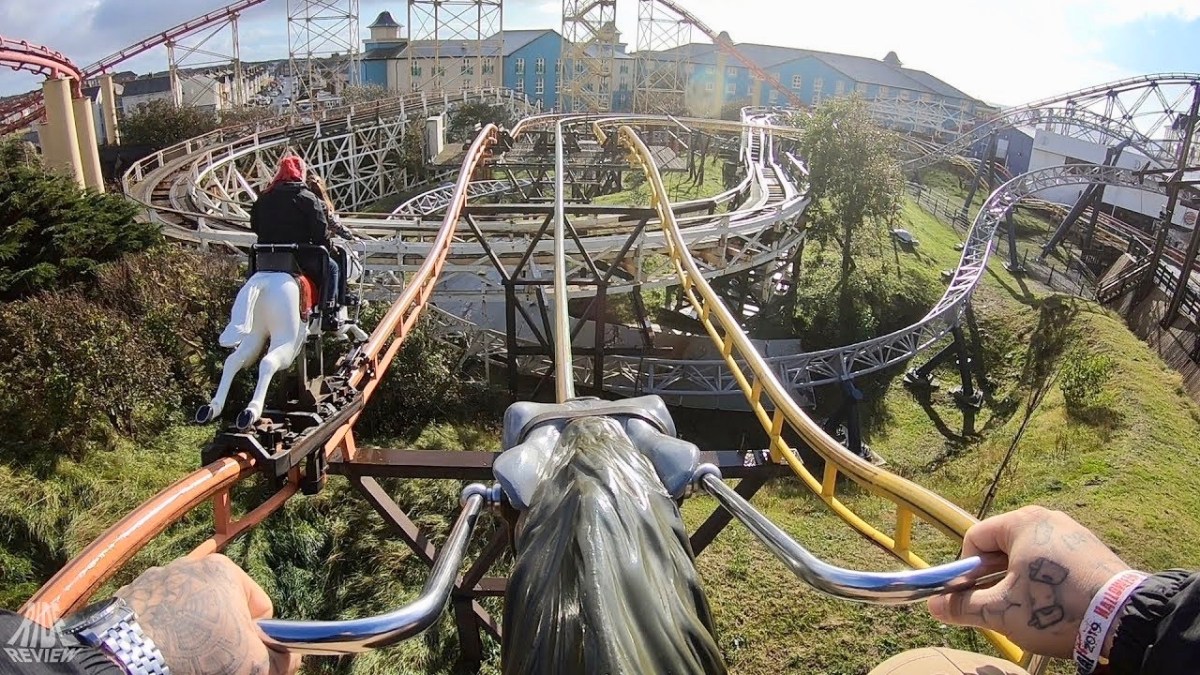
. . . Red Rum was bred at Rossenarra stud in Kells, County Kilkenny, Ireland, by Martyn McEnery. Following a canter at Aintree Racecourse the day before the 1978 Grand National he was retired. The news of Red Rum’s retirement was the lead story on that night’s 9 O’Clock News on the BBC and was also front page news of the following morning’s newspapers. Red Rum had become a national celebrity, opening supermarkets and annually leading the Grand National parade for many further years. His likeness graced playing cards, mugs, posters, models, paintings, plates and jigsaw puzzles. Several books have been written about Red Rum, The horse helped launch the Steeplechase rollercoaster at Blackpool Pleasure Beach in 1977 . . .

Wikipedia

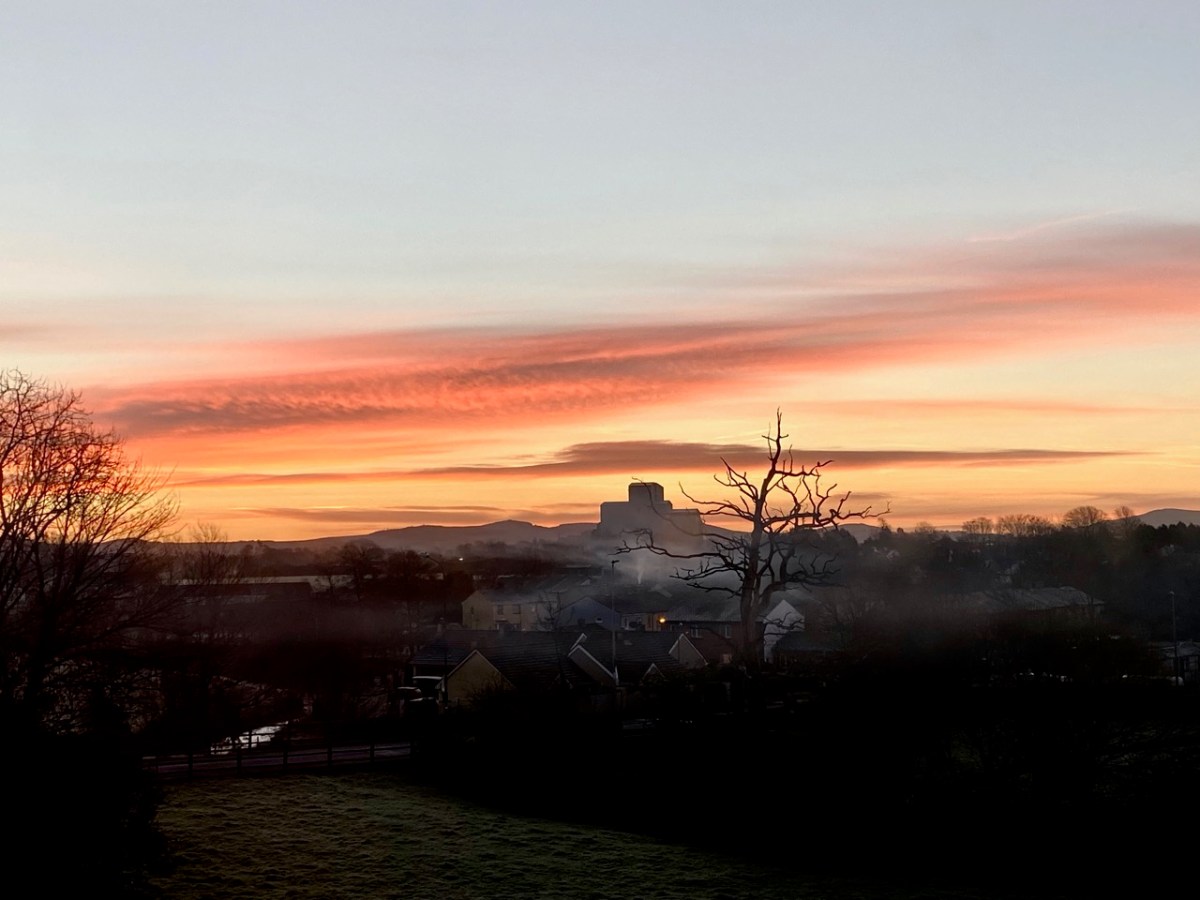
Yes, this is it: the Steeplechase Rollercoaster! You can join in the full experience here. Hopefully my account has enlivened your day: I’m sure there are many of you out there who are familiar with this tale and can, perhaps, add to it? I’ll finish with a view over Buttevant taken on our journey – an atmospheric winter morning.

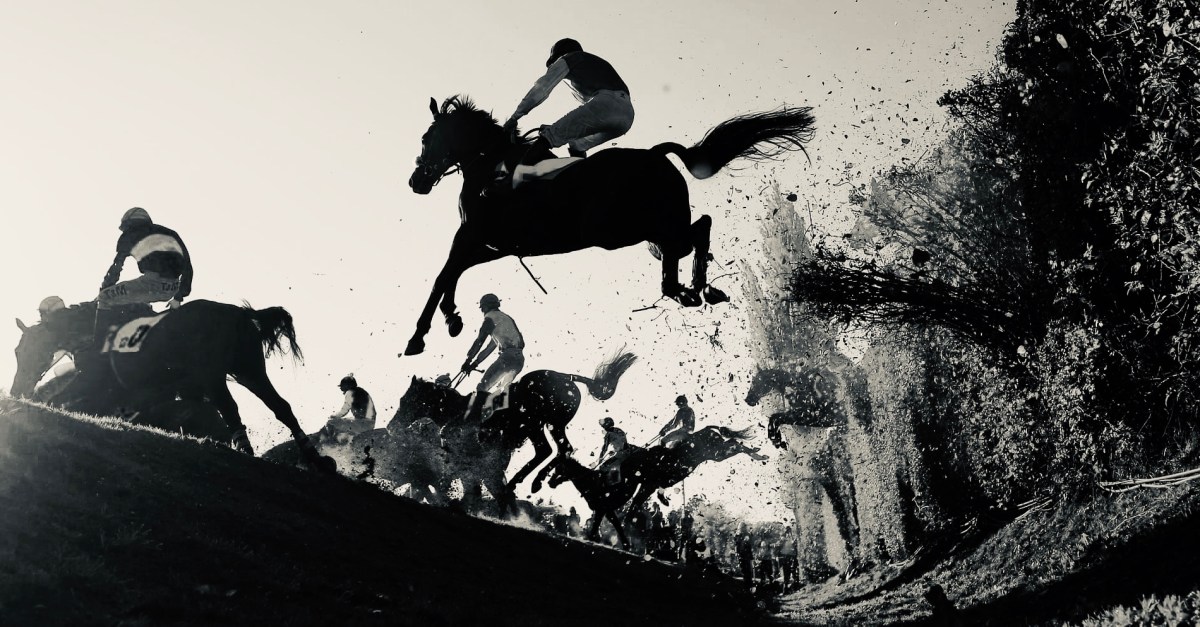
With thanks to The Guardian for the header pic of the Aintree Grand National