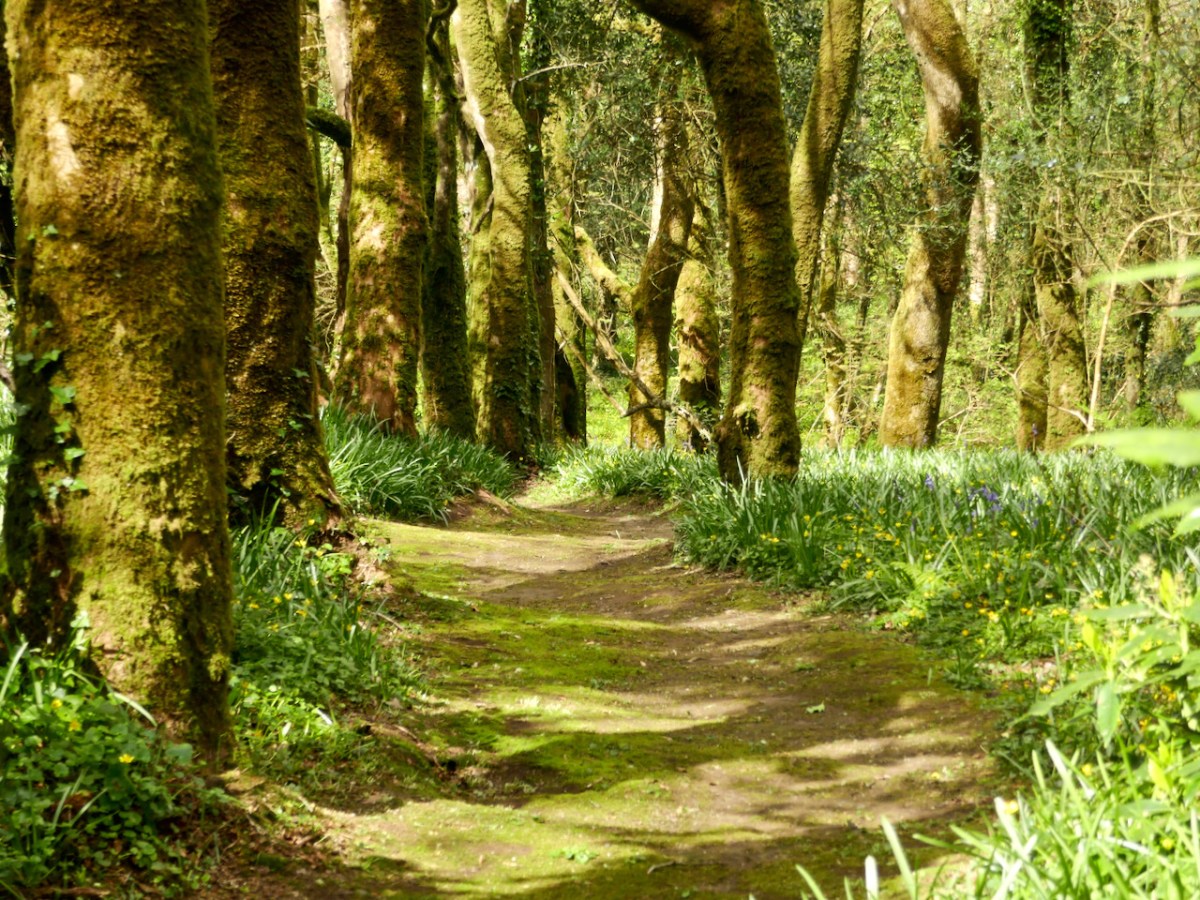
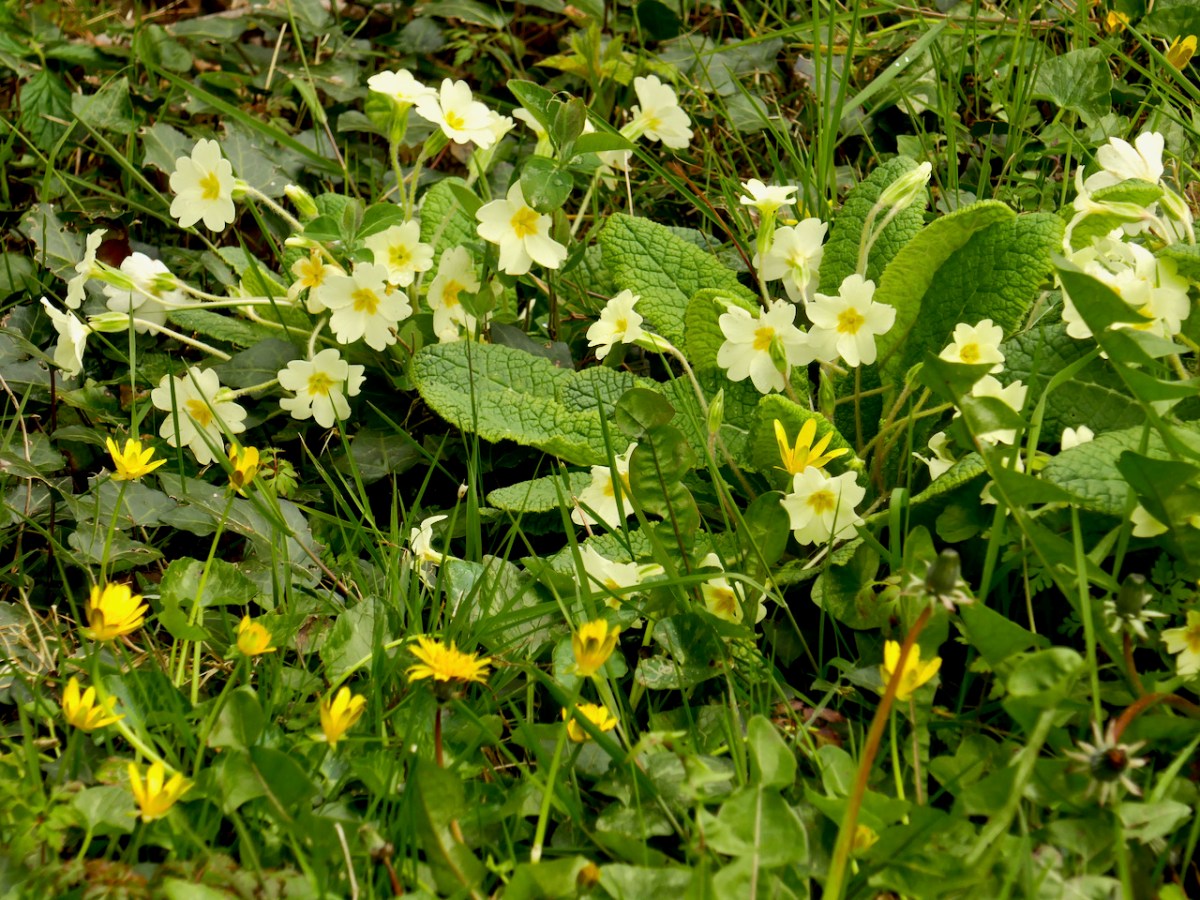
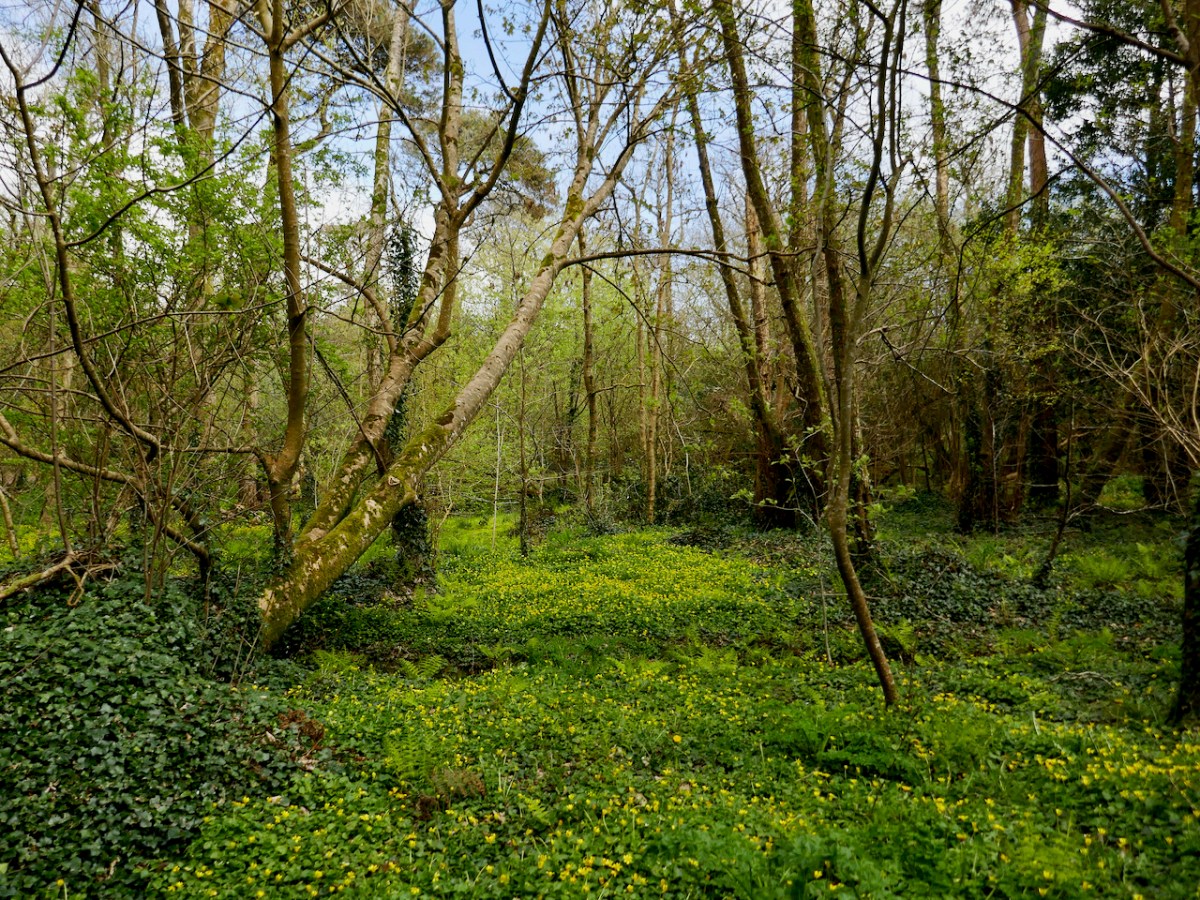
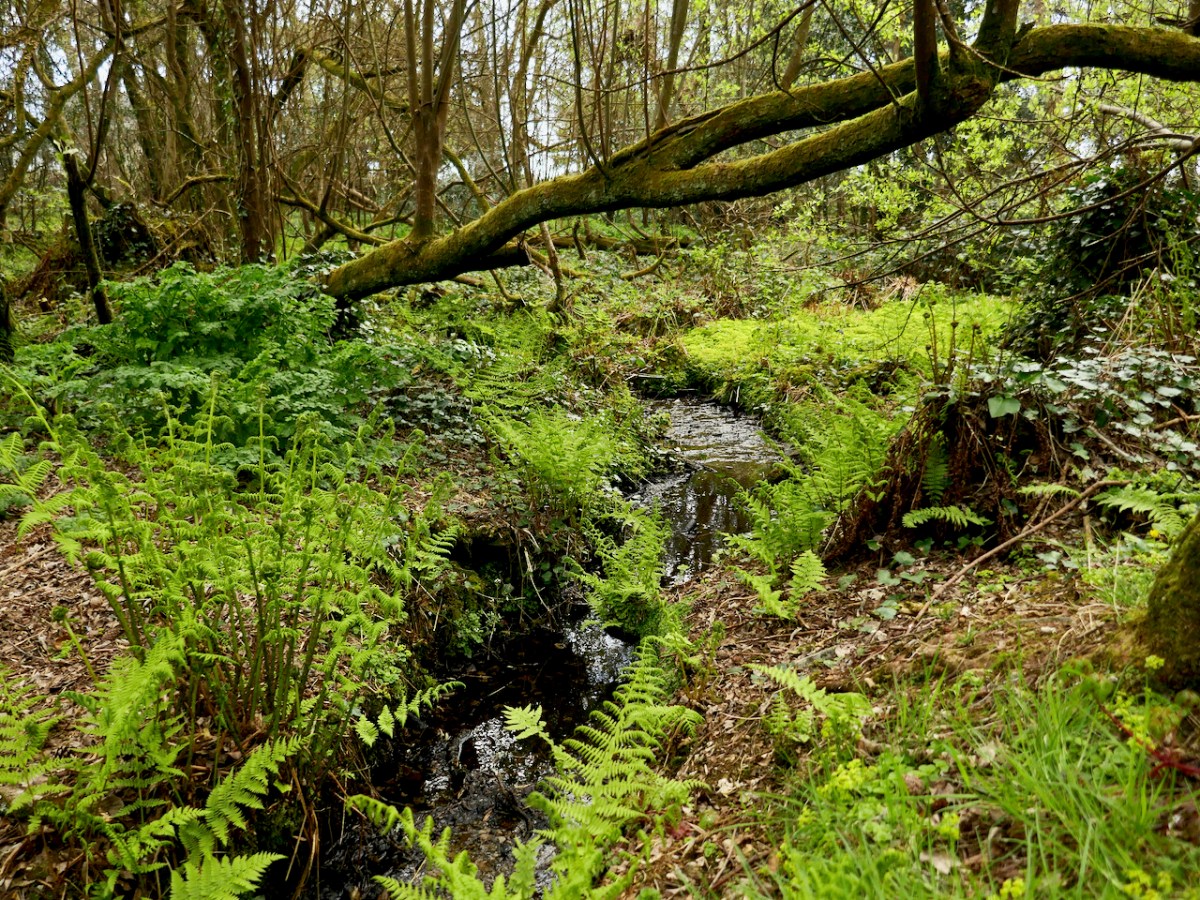
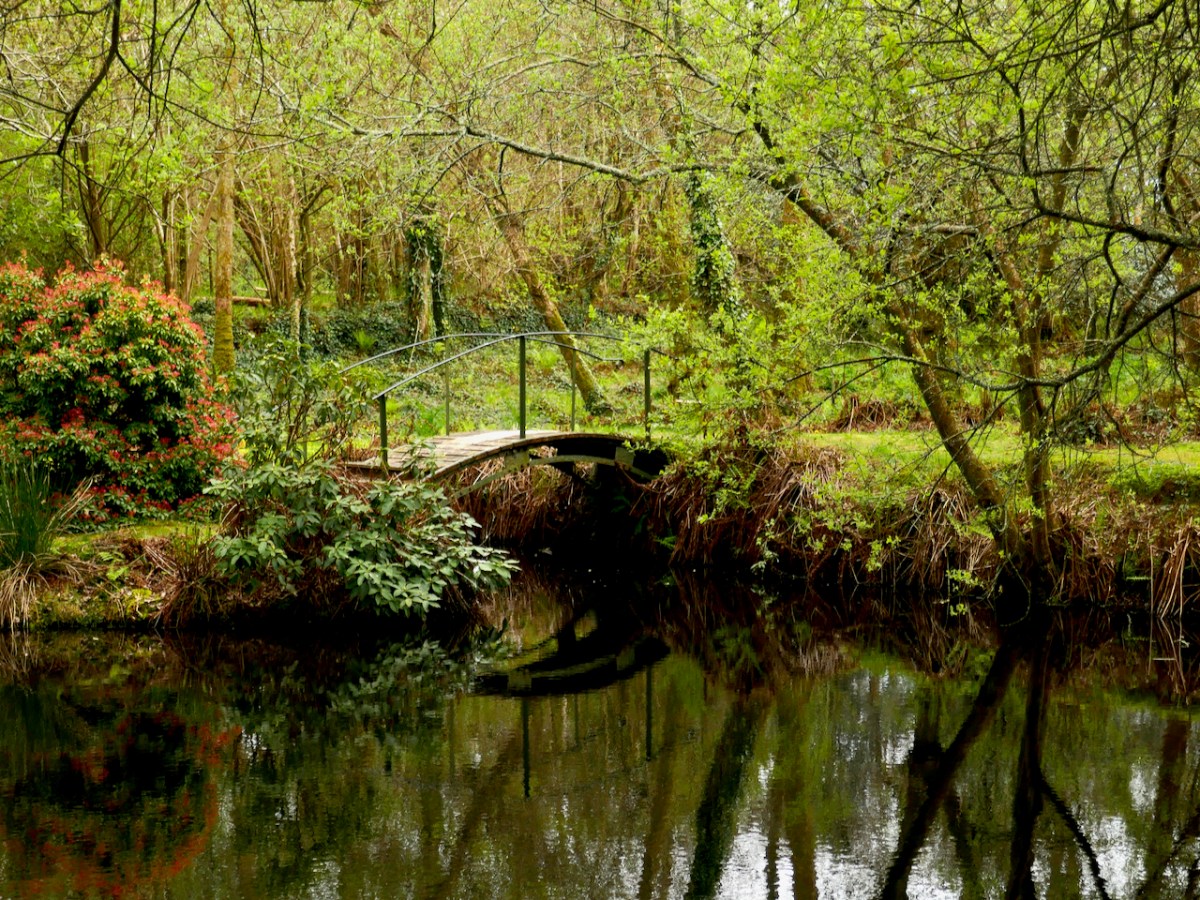
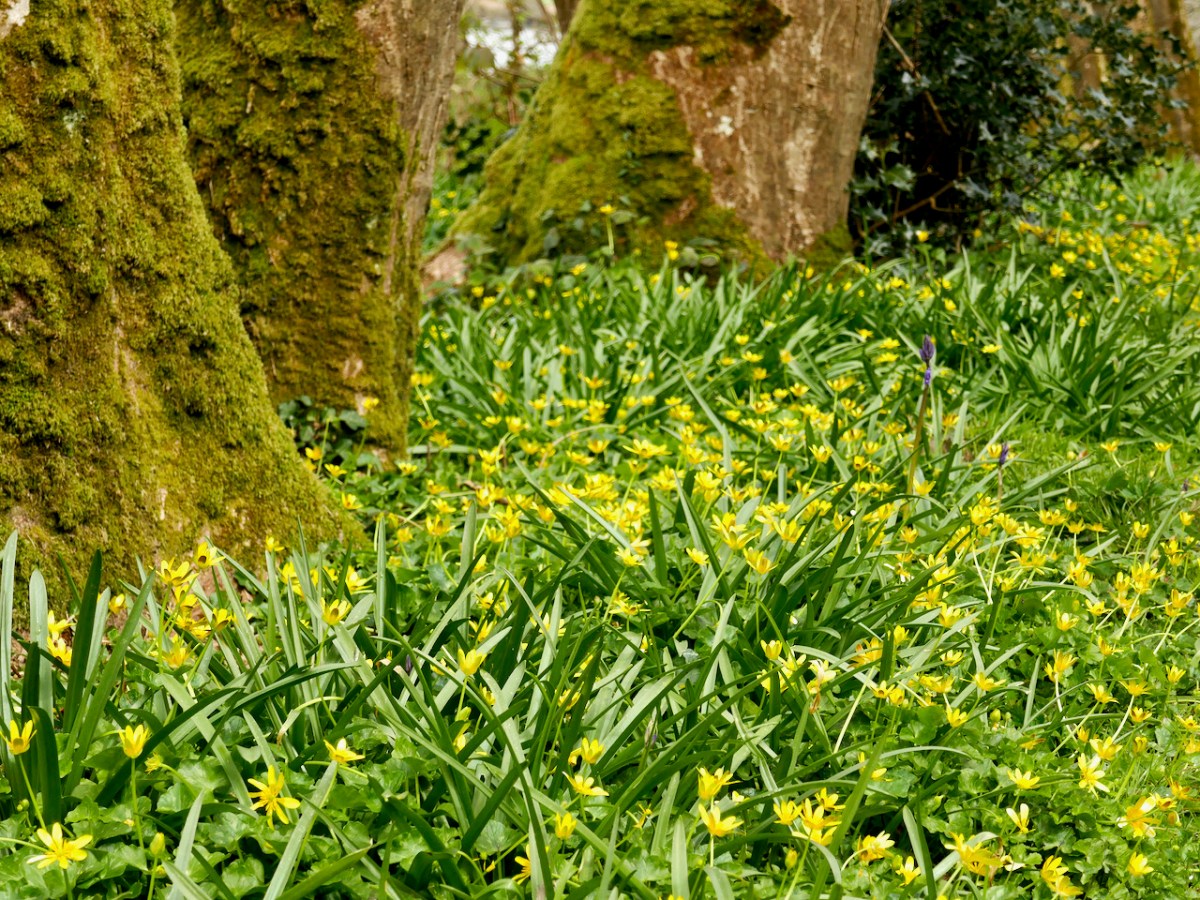
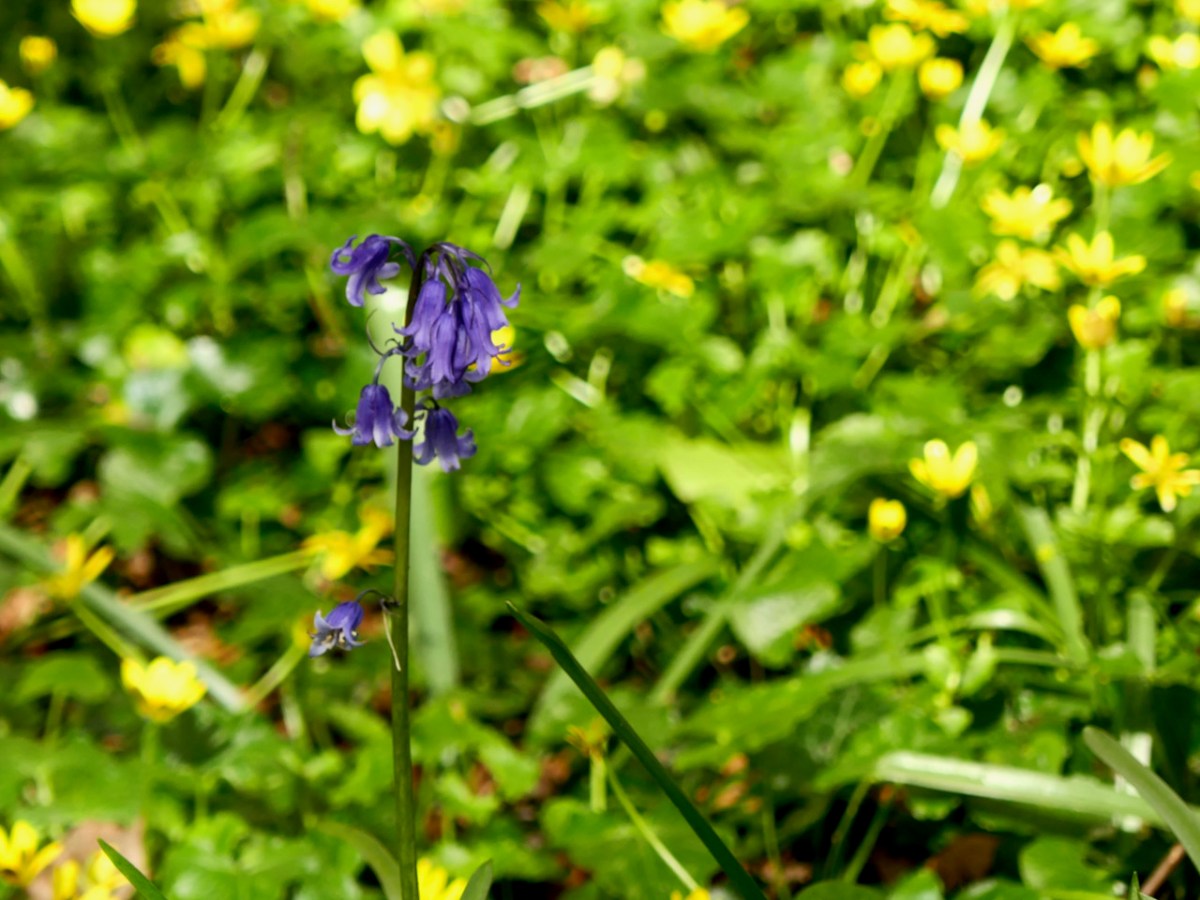
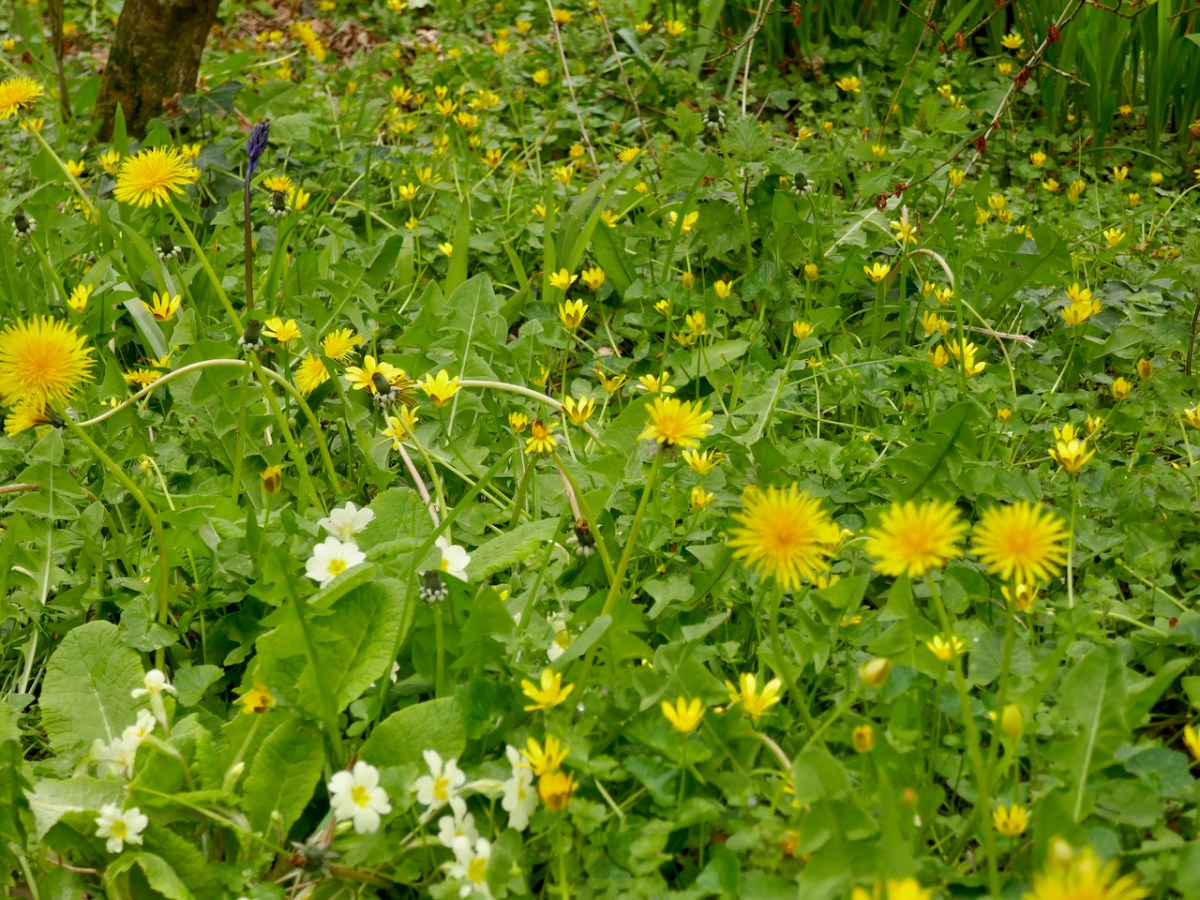
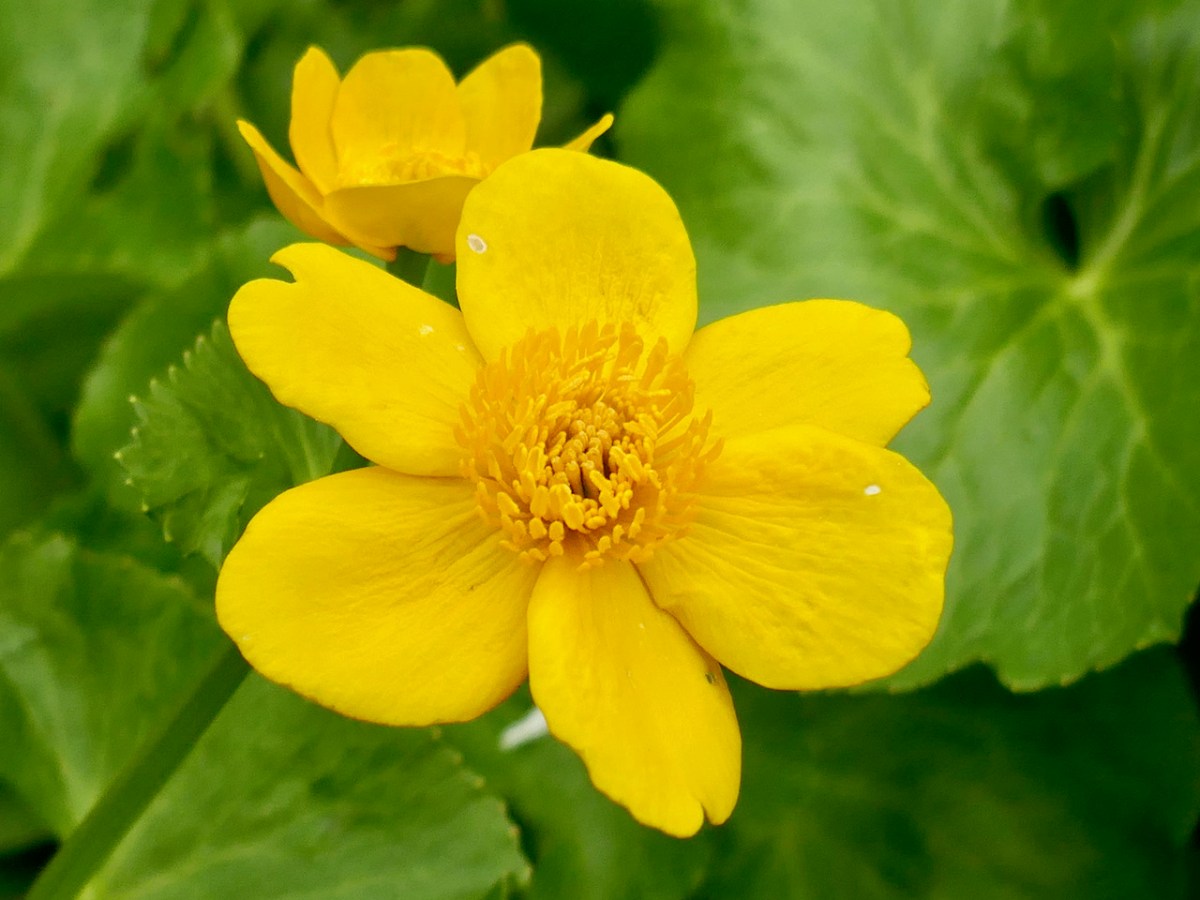
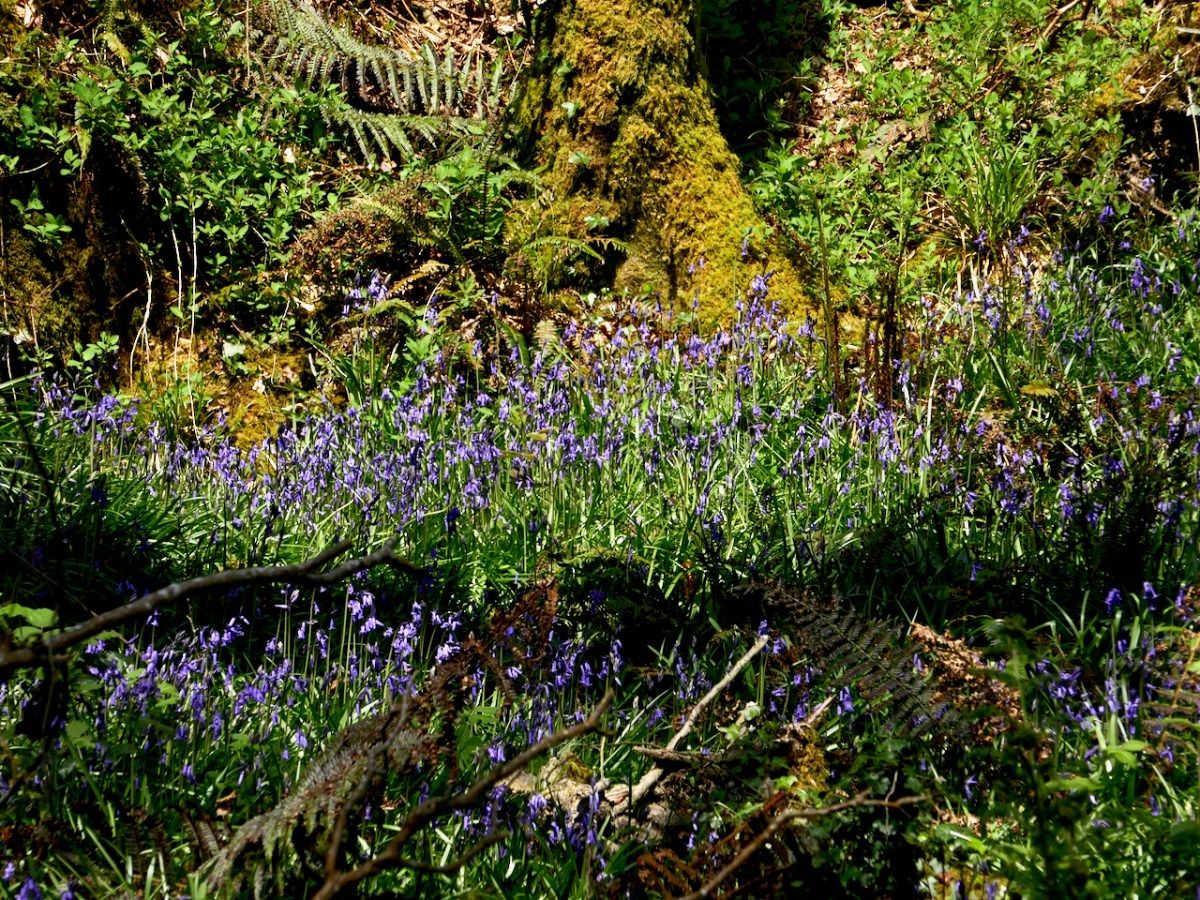
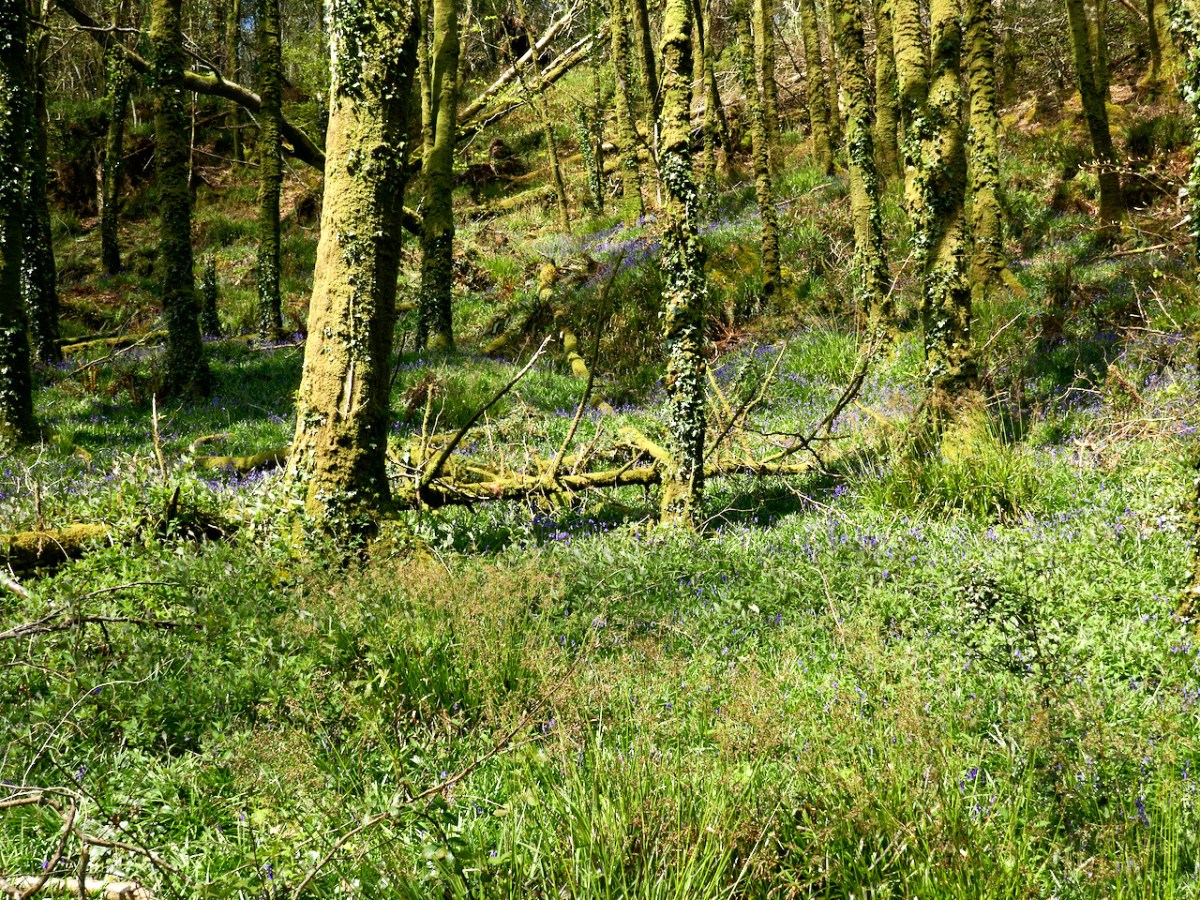
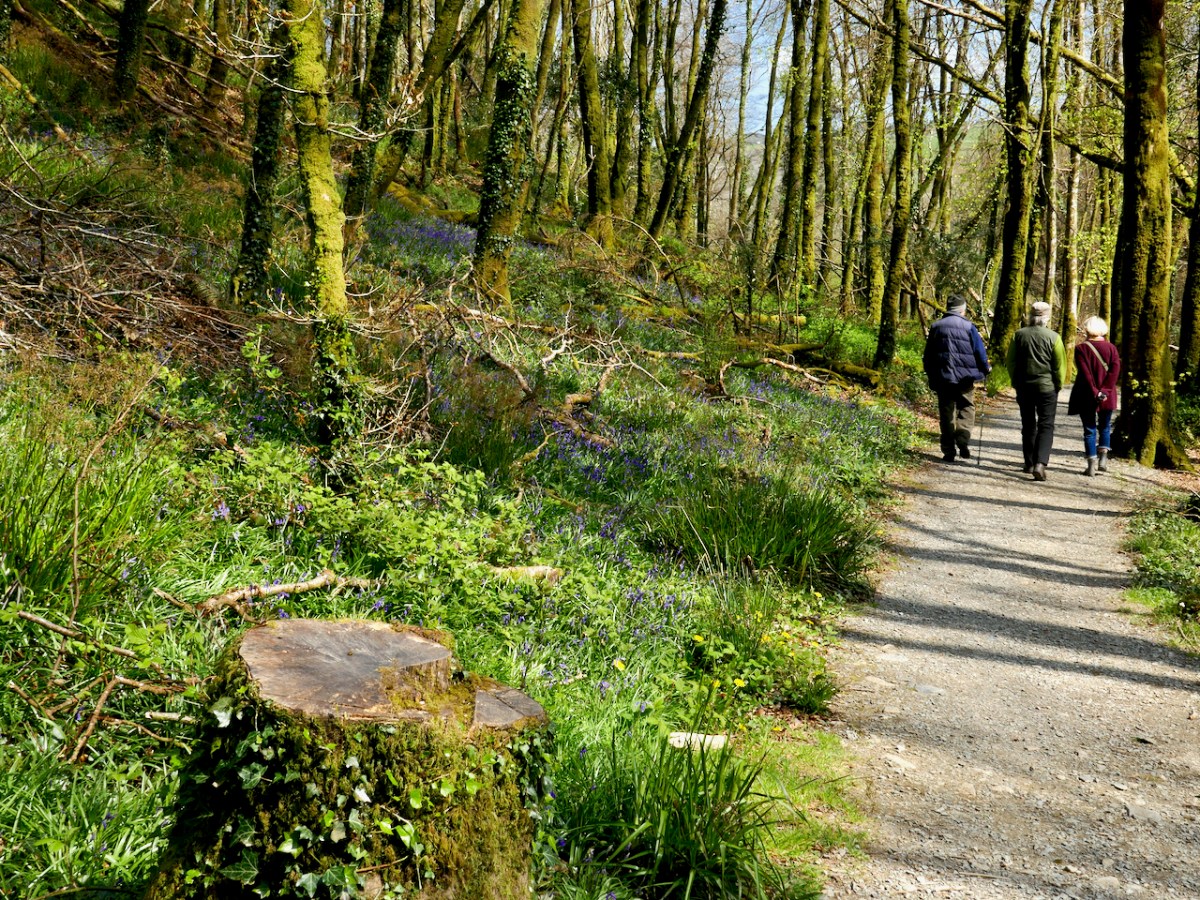
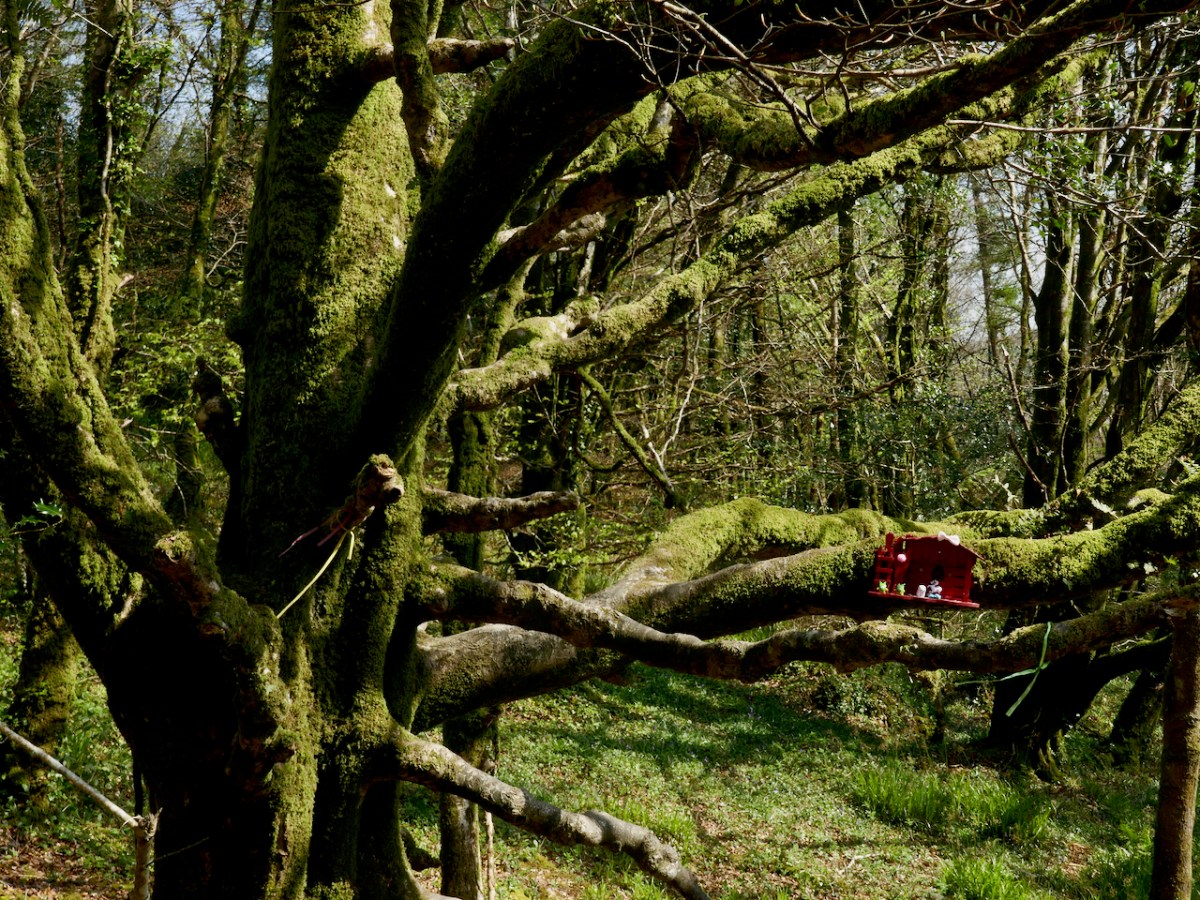
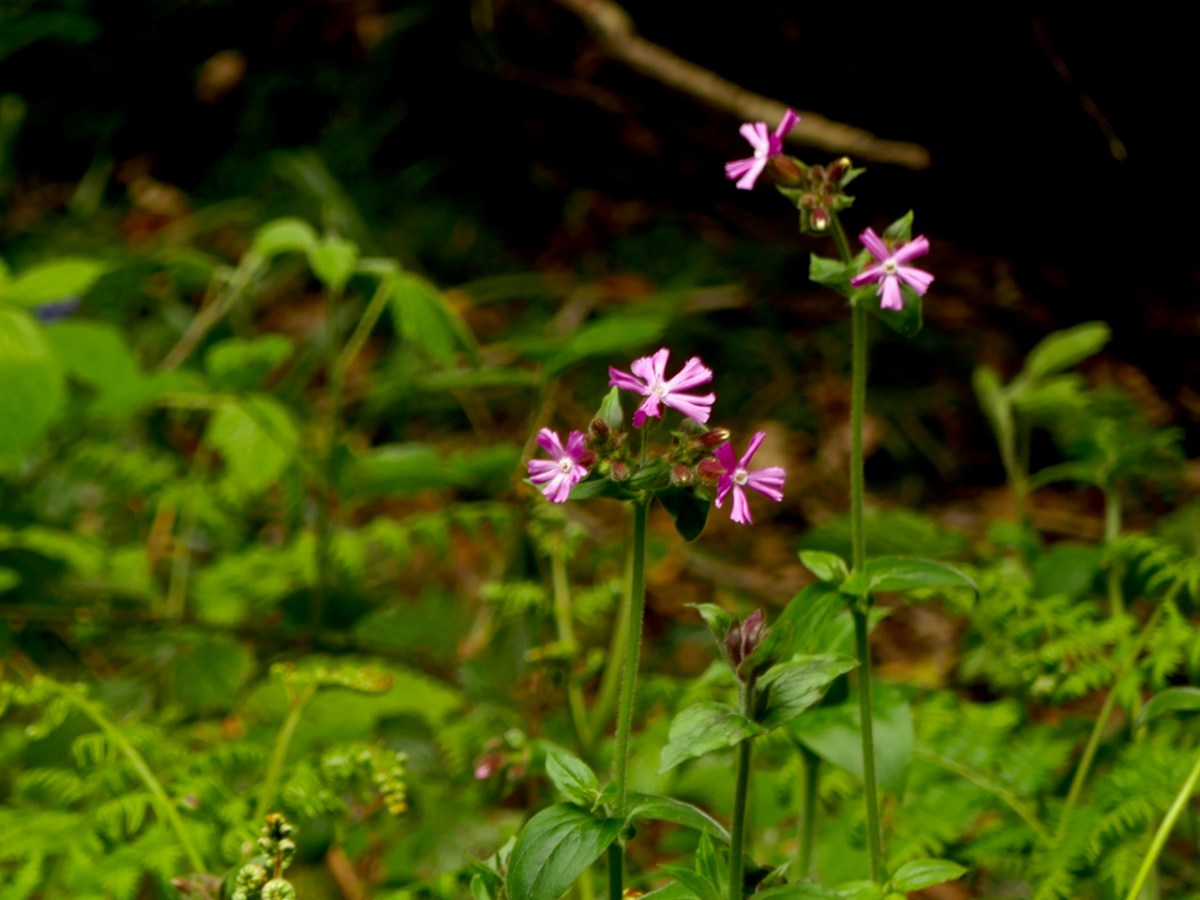
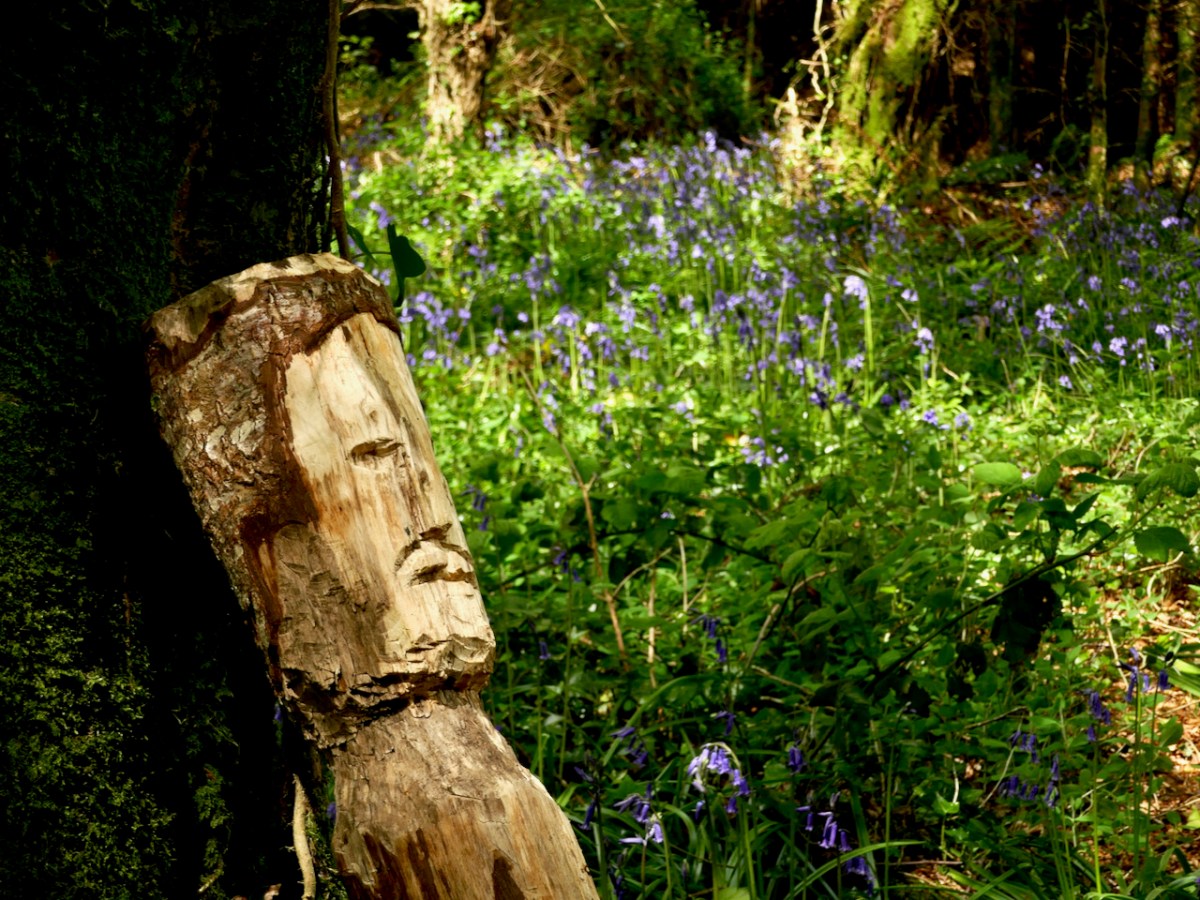
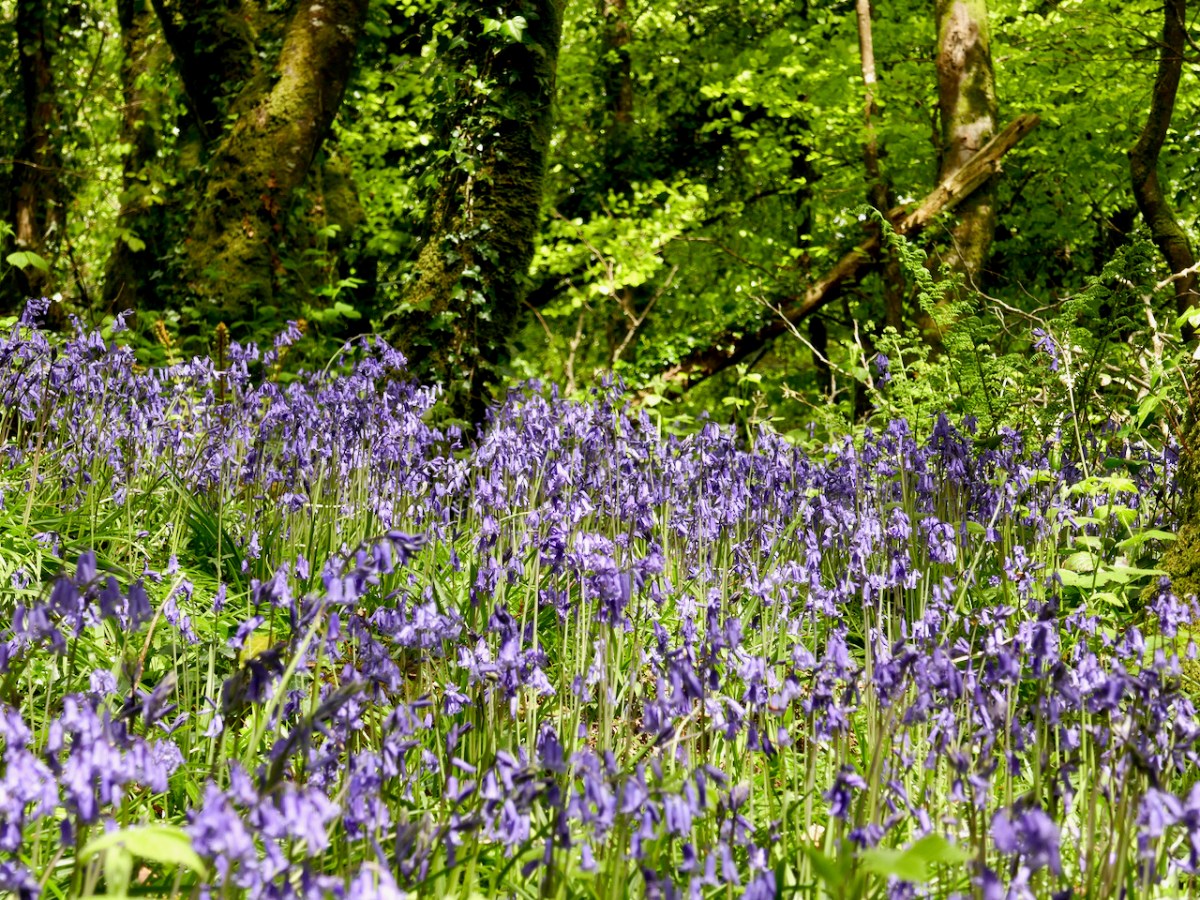
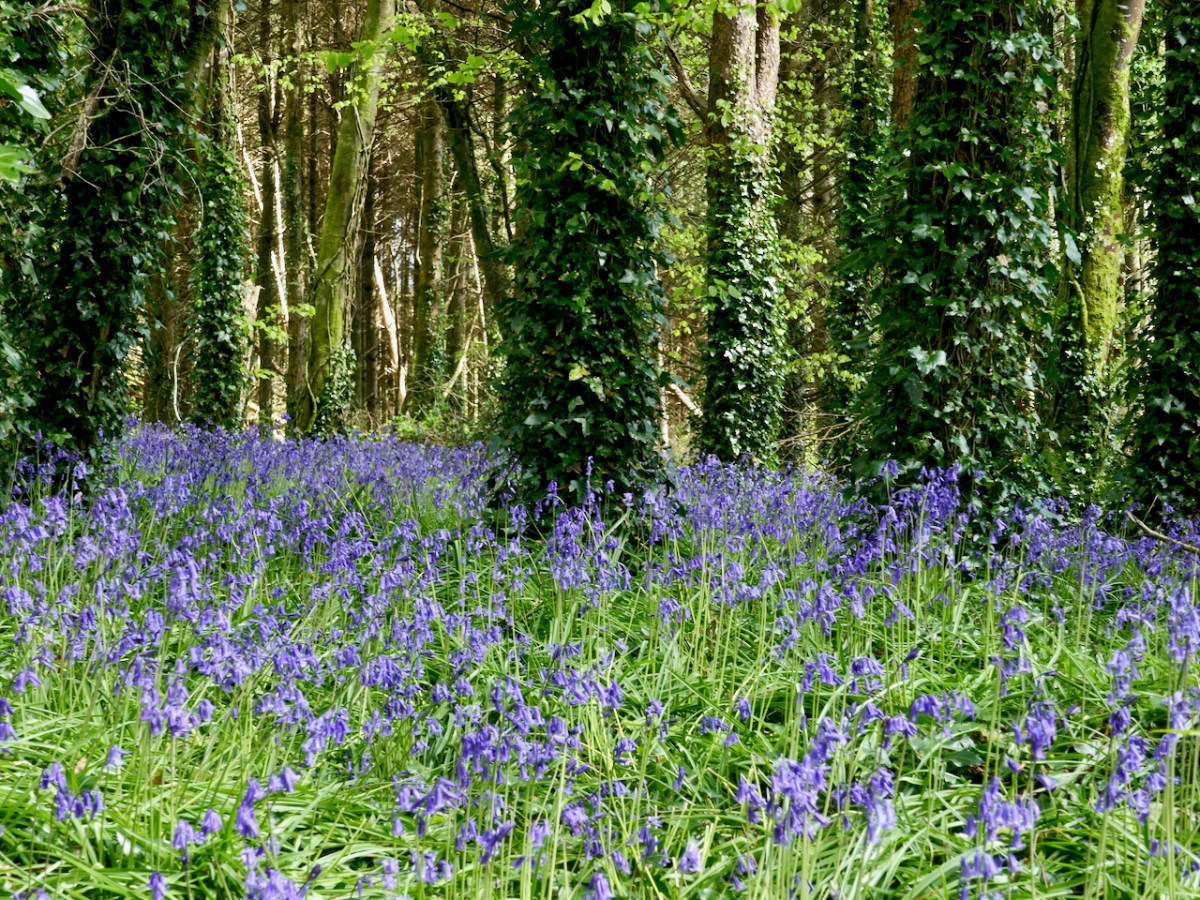
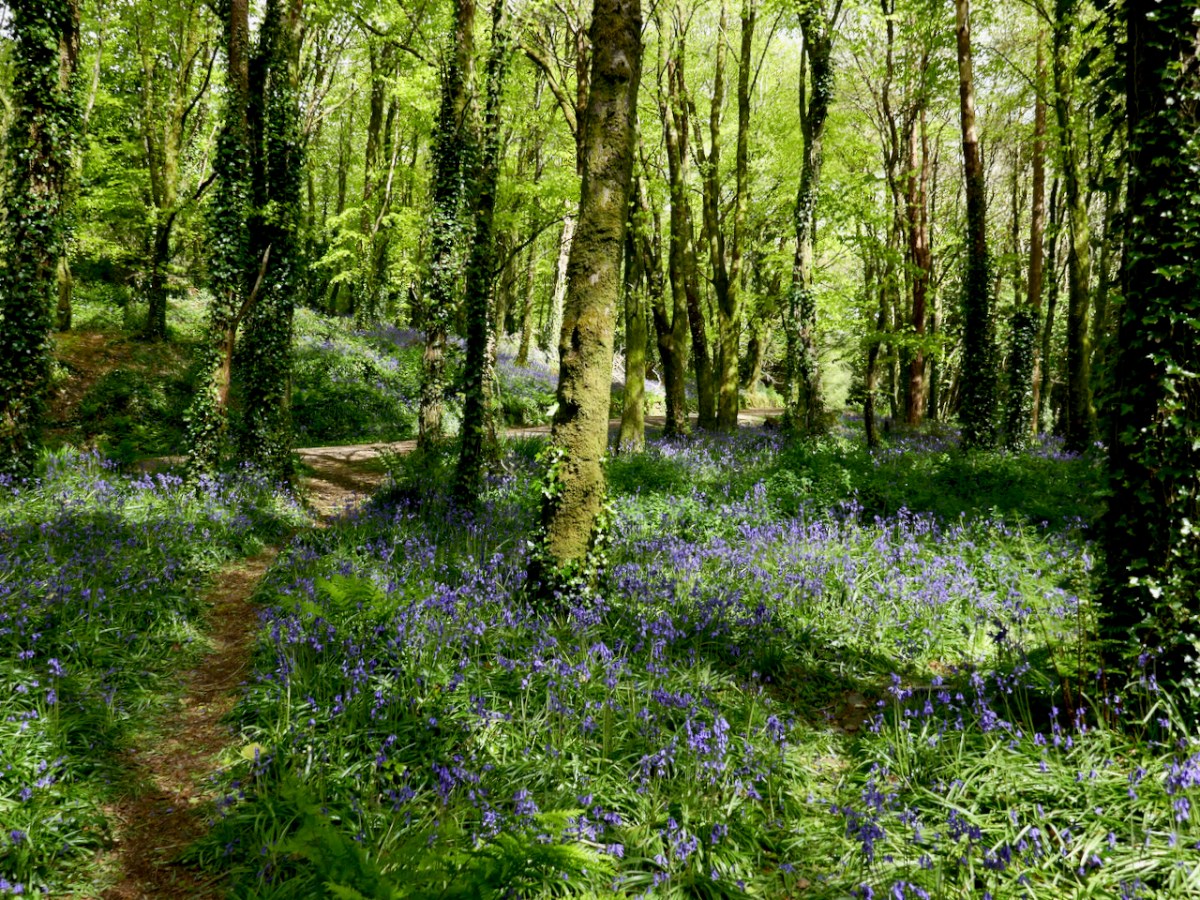
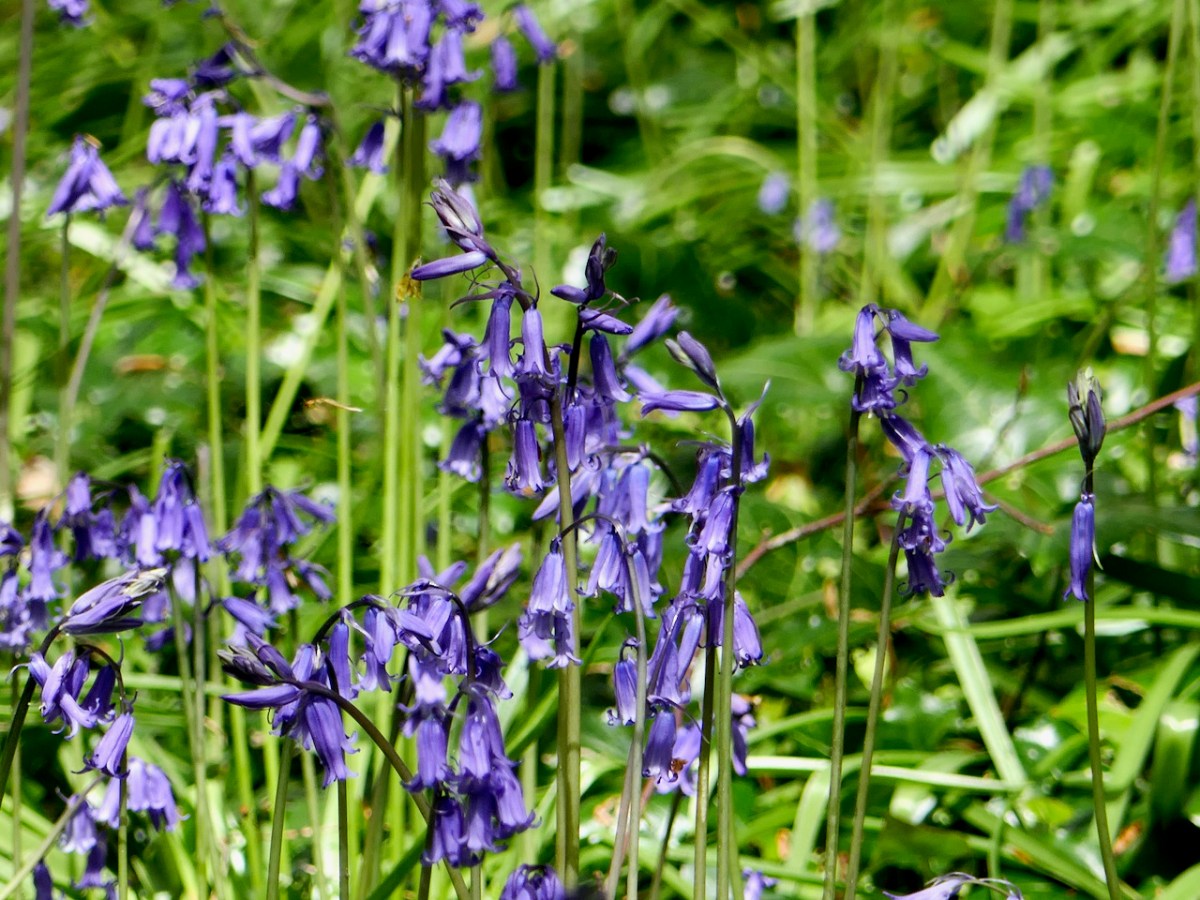
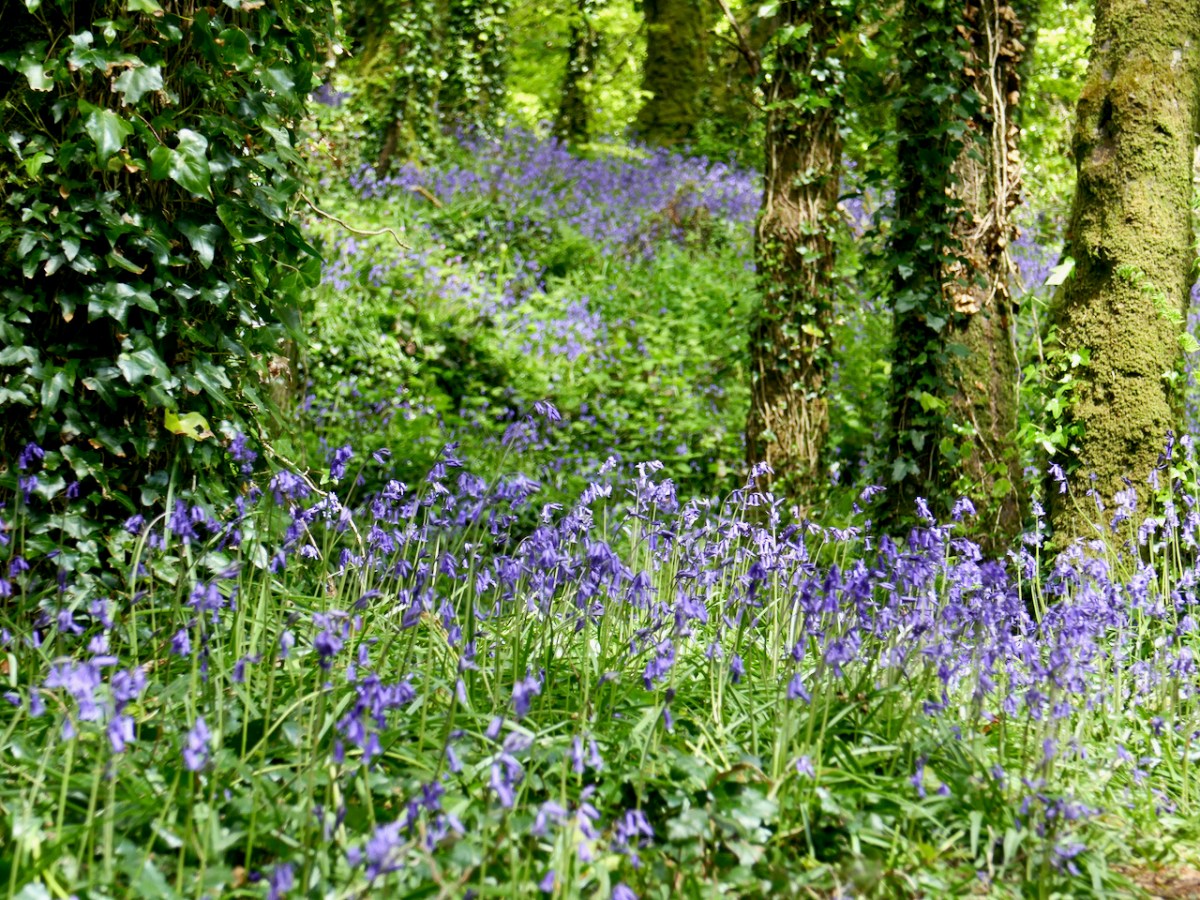
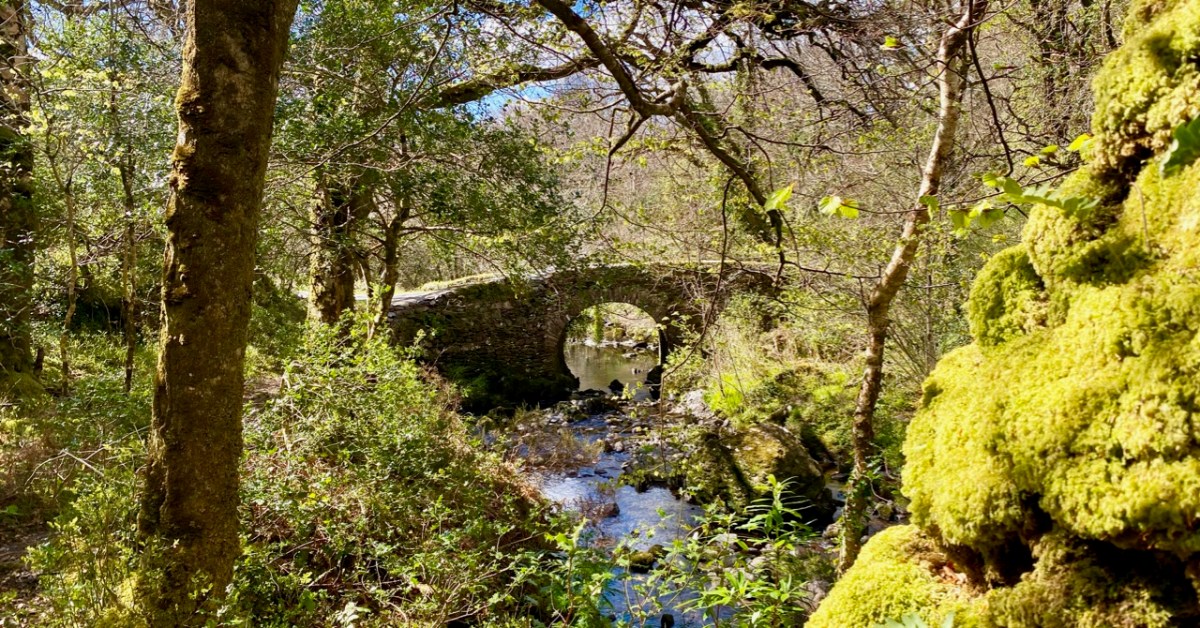
There’s something that compels us into the woods in the spring. It’s all that verdant growth, perhaps – the sap rising in us as well as in the trees. Or maybe it’s the cool green-ness or those swathes of extravagant bluebells and celandine. Here are three of our favourites, just in little slideshows.
Inish Beg
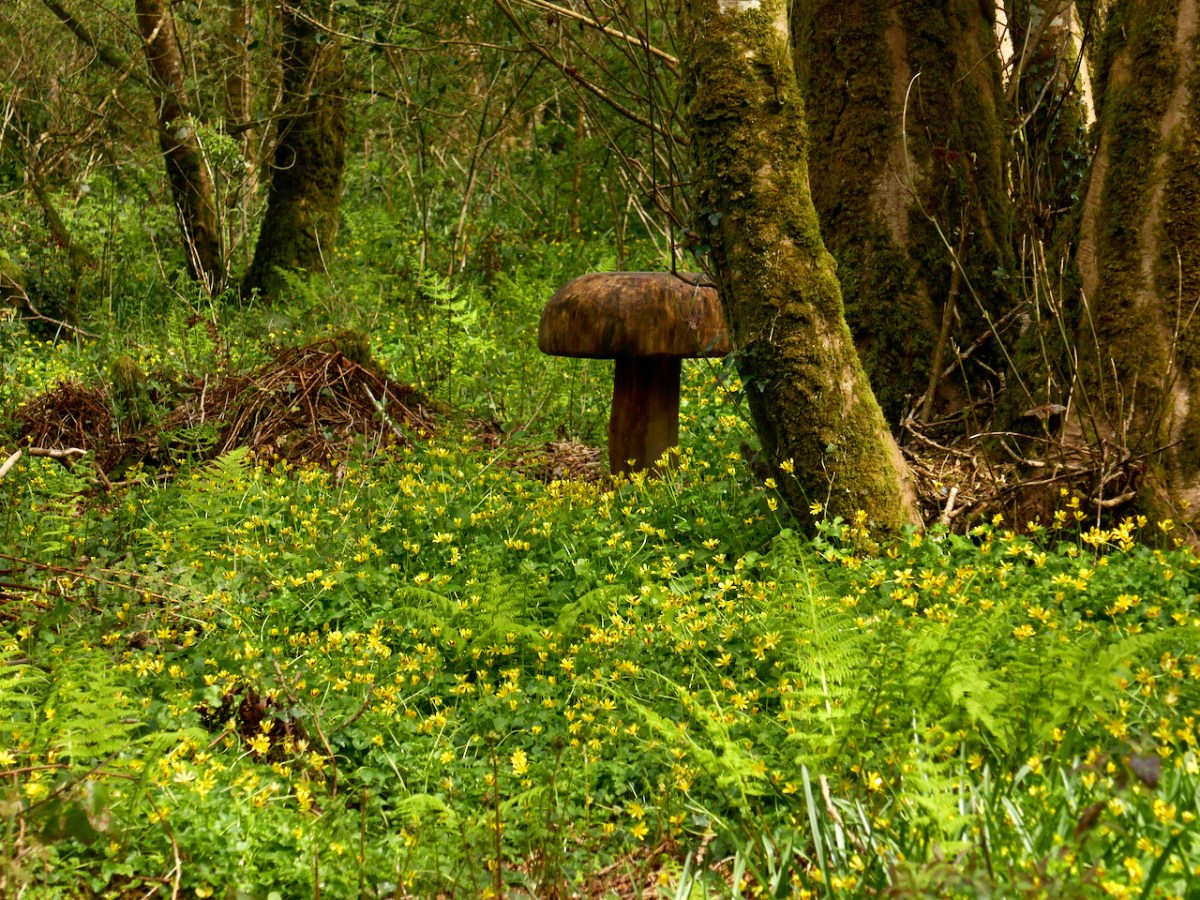
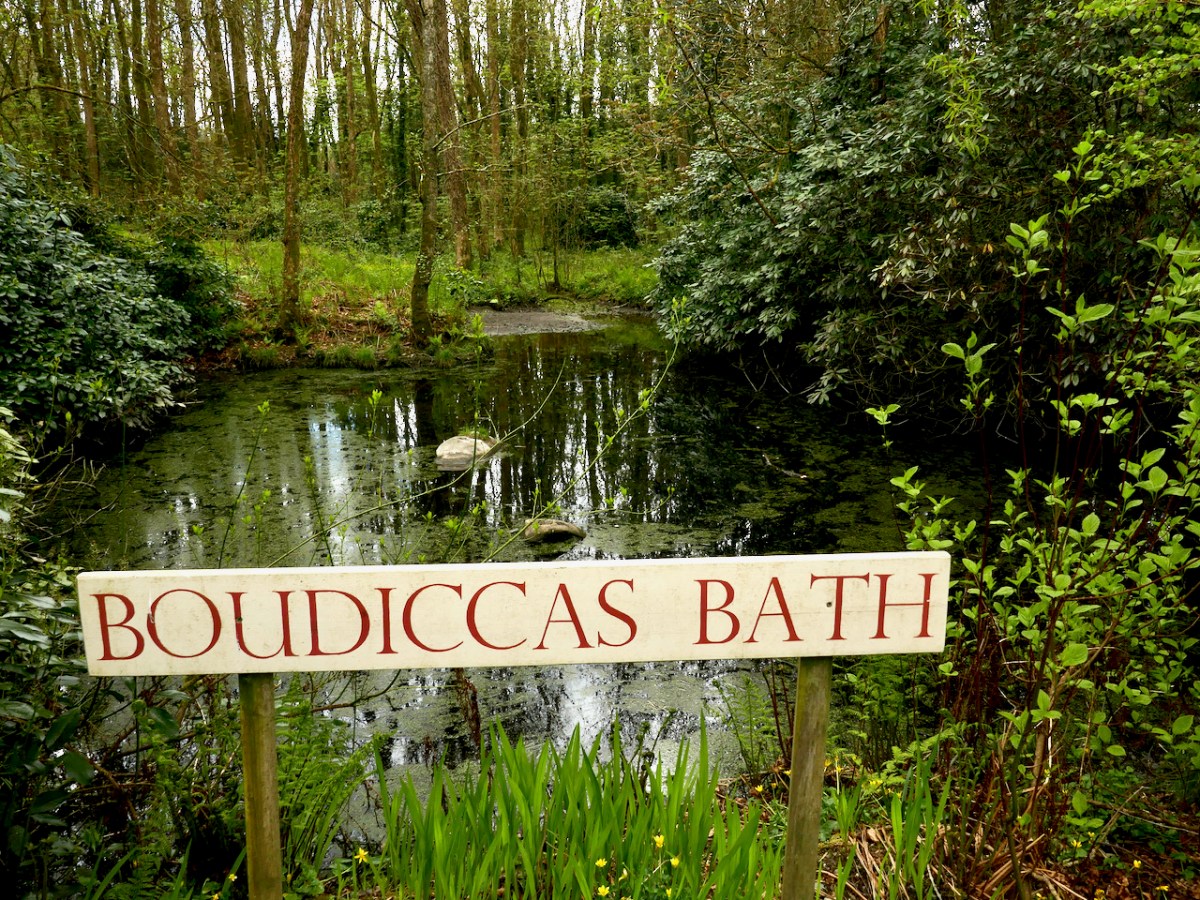
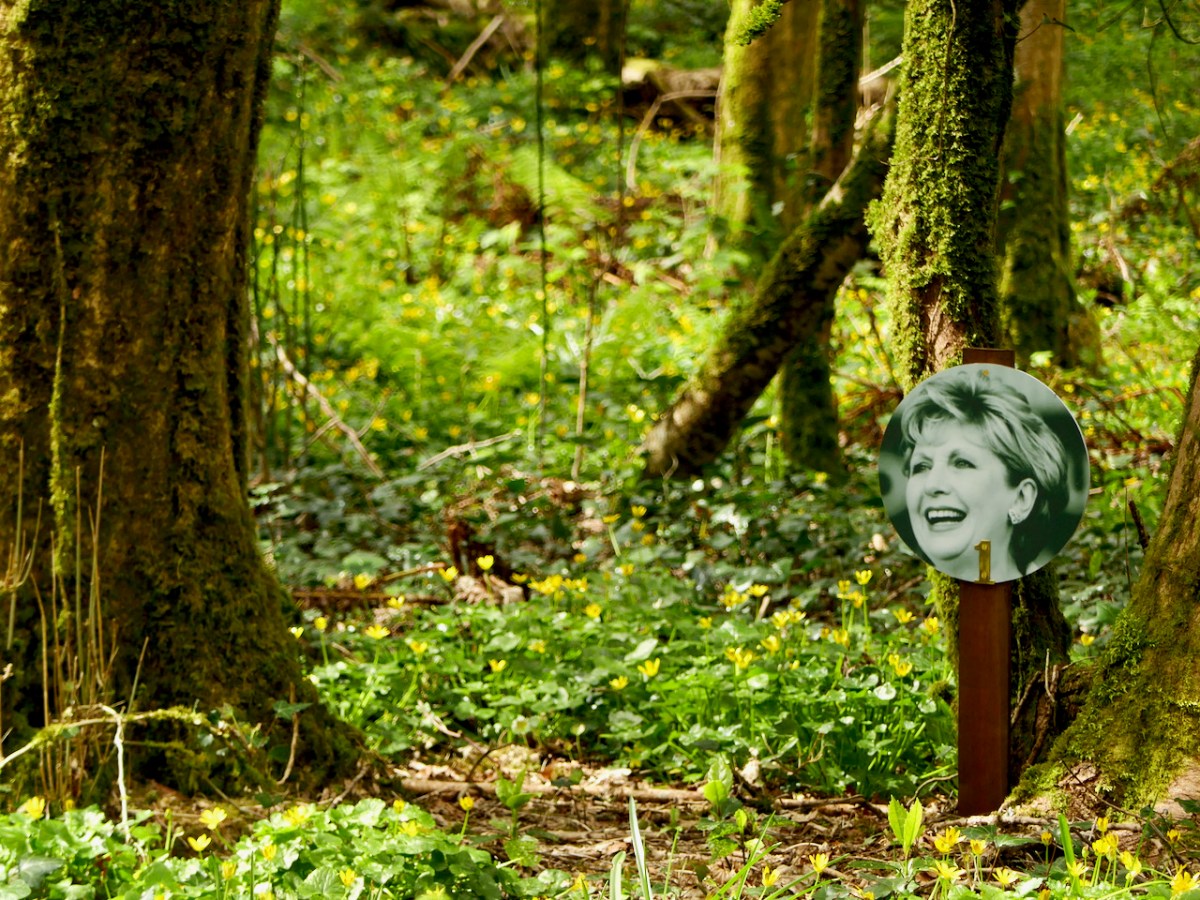
An old estate, beautifully managed by its owners. We visited in April, before the bluebells but in time for the carpet of Celandine. The walks are varied, there are lots of ponds and riverside vistas, and treasure hunts for kids and adults. Do you know all the Presidents of Ireland? Can you find them all?
Dromillihy
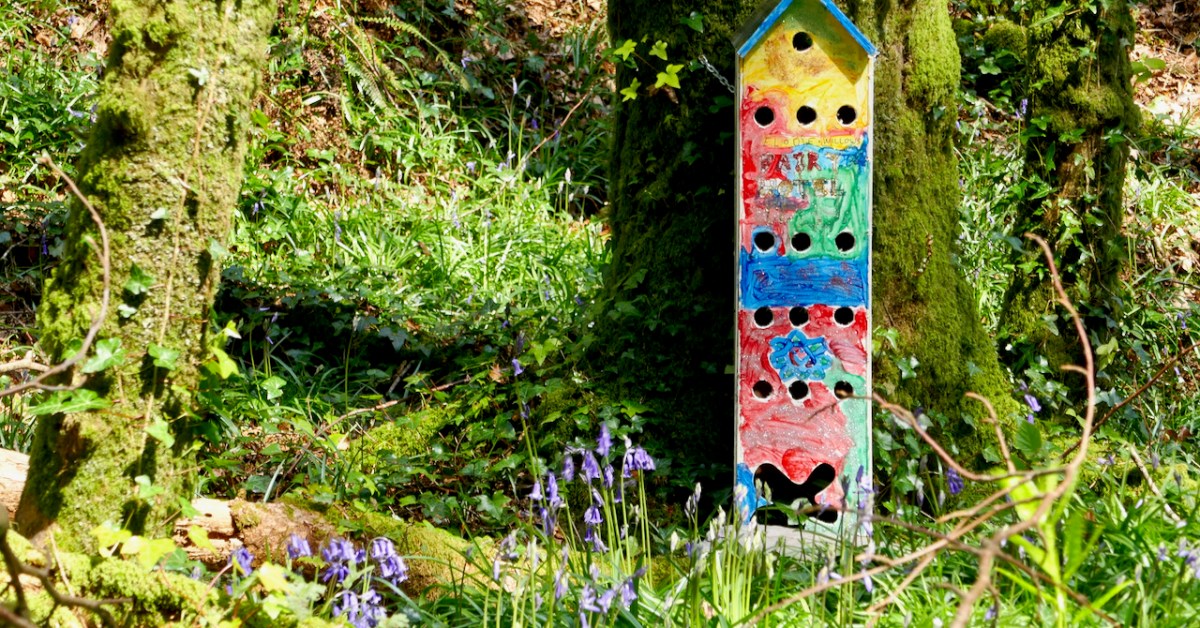
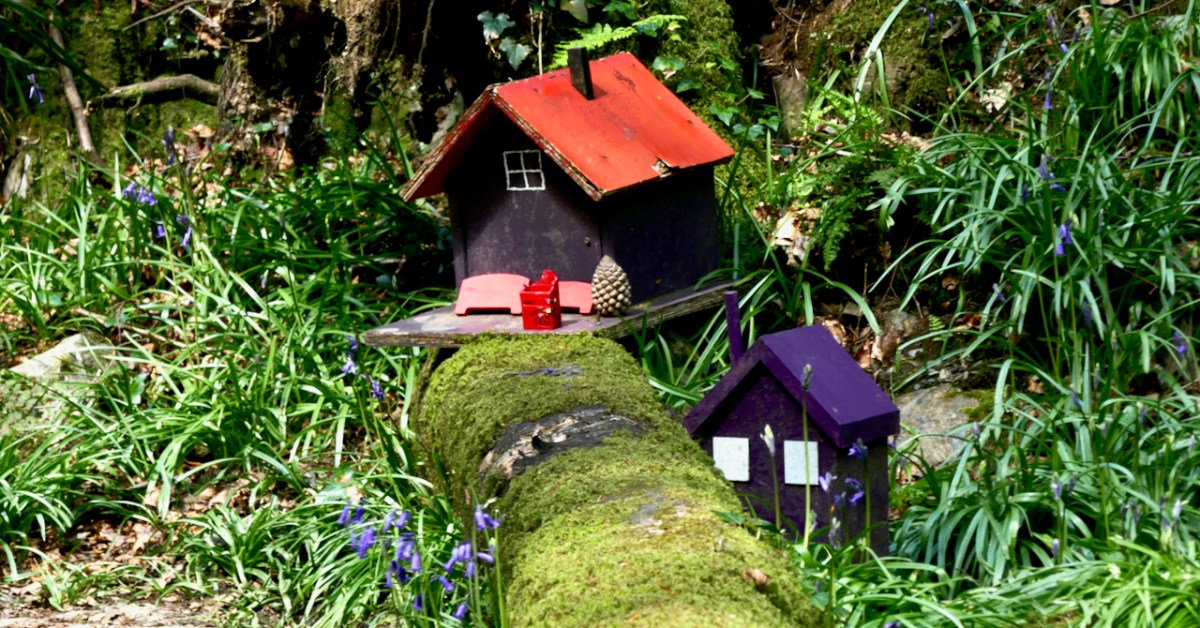
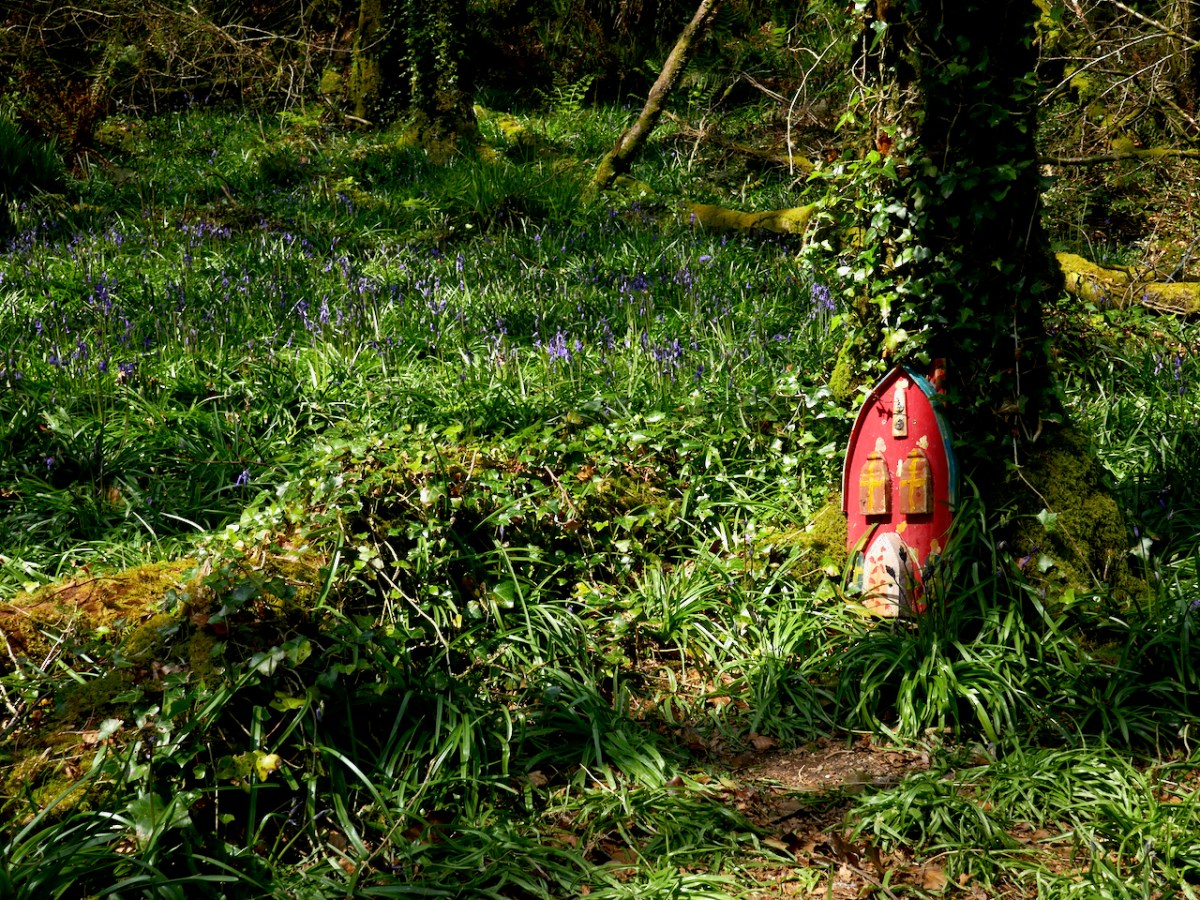
Betwen Leap and Cononagh along the N71 you will find a car park providing access to this woodland managed by Coillte, the Irish Forest Service. More extensive than it looks from the road, these walks are a delight for all ages, with lots of fairy houses for the kids and, when we walked the trails recently, acres of bluebells.
Castlefreke
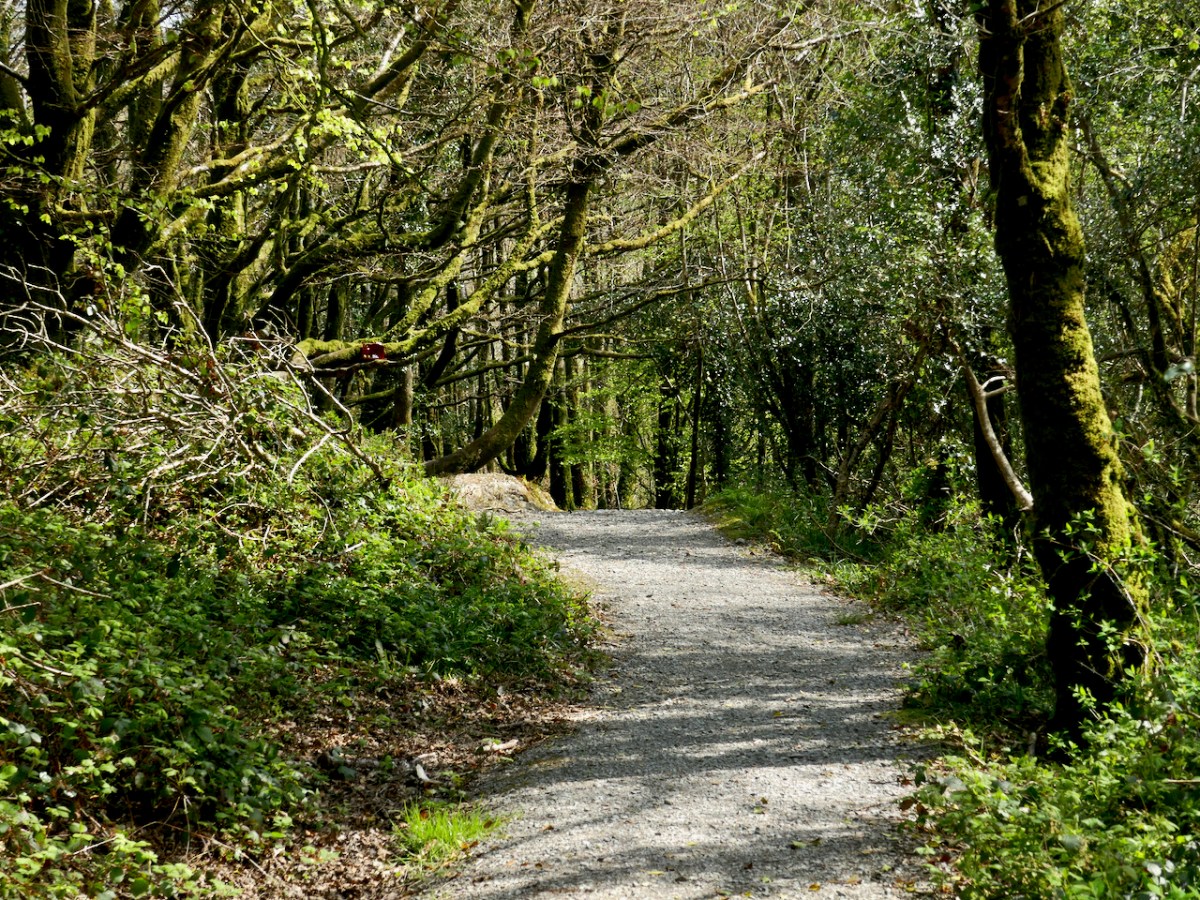
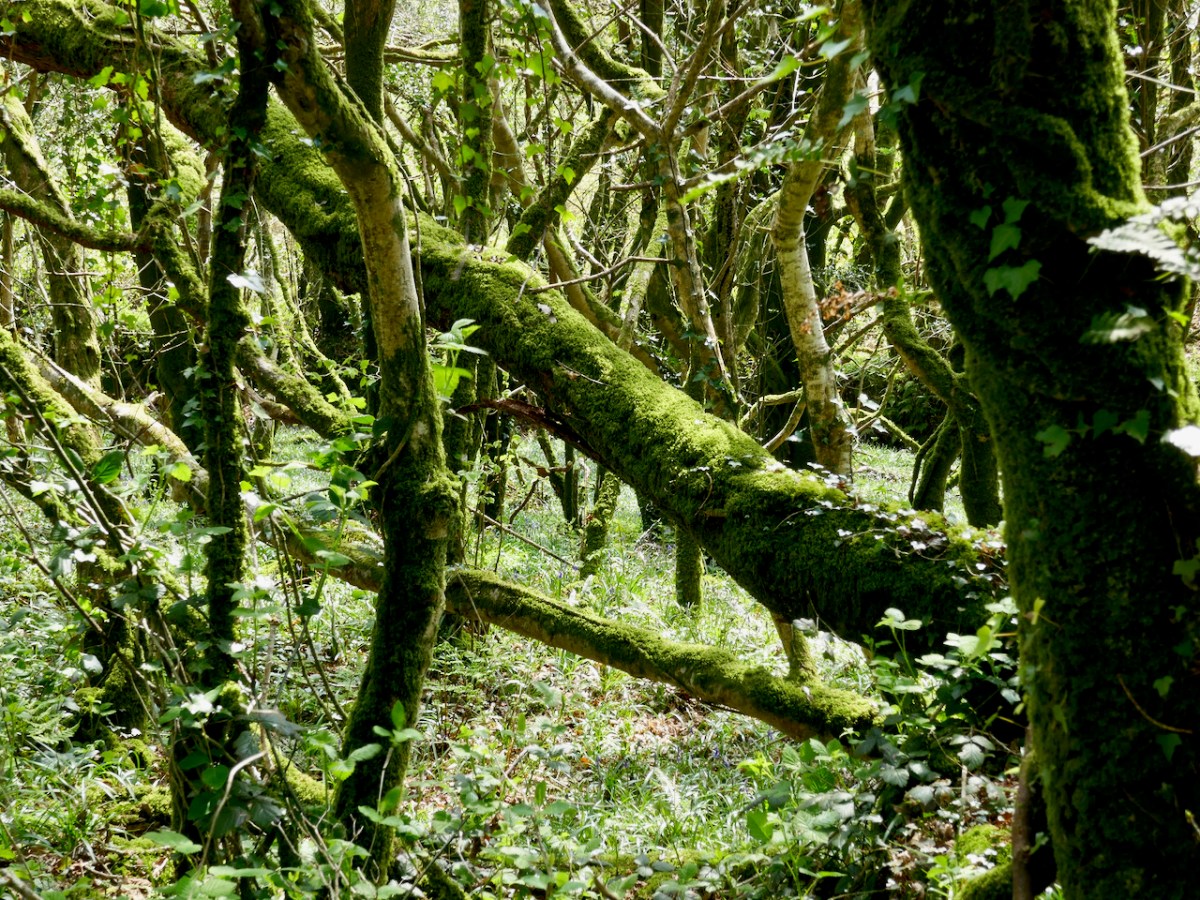
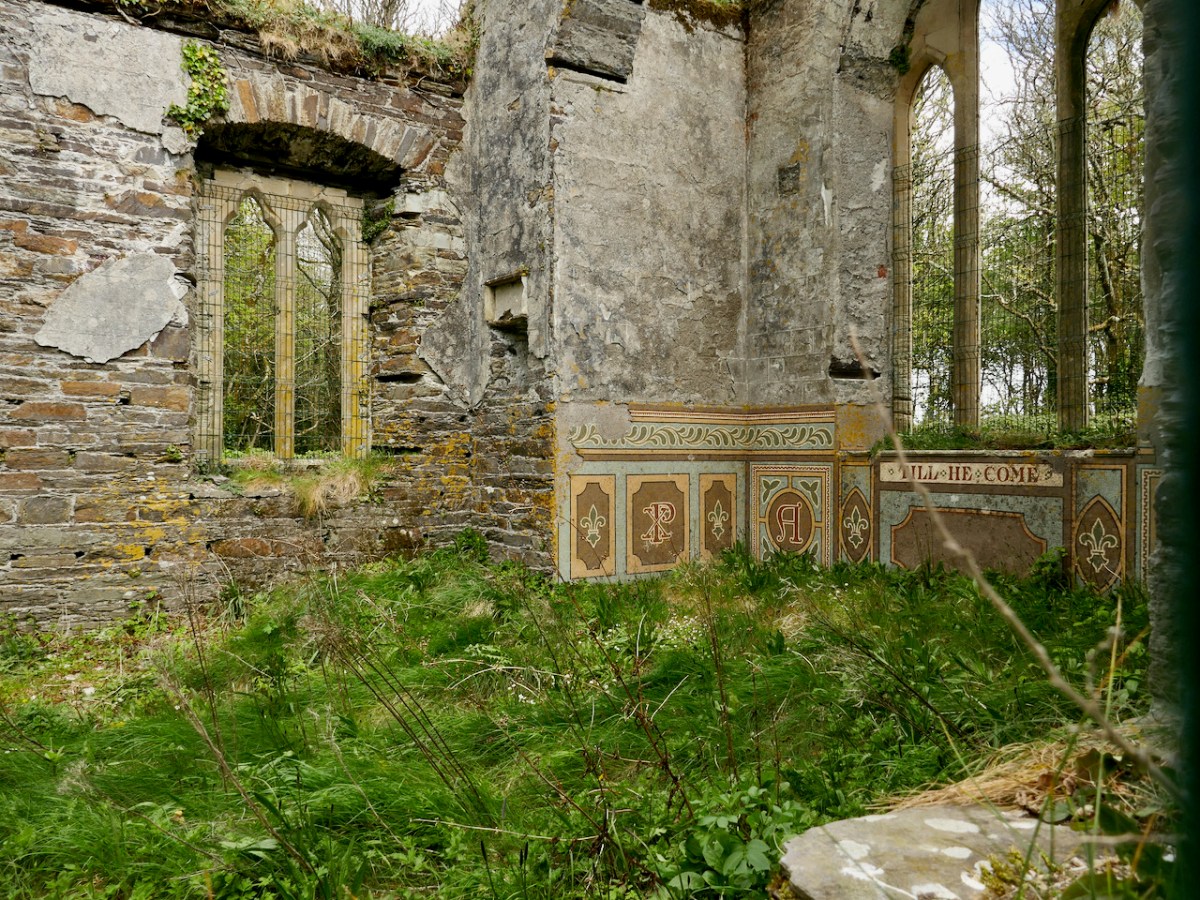
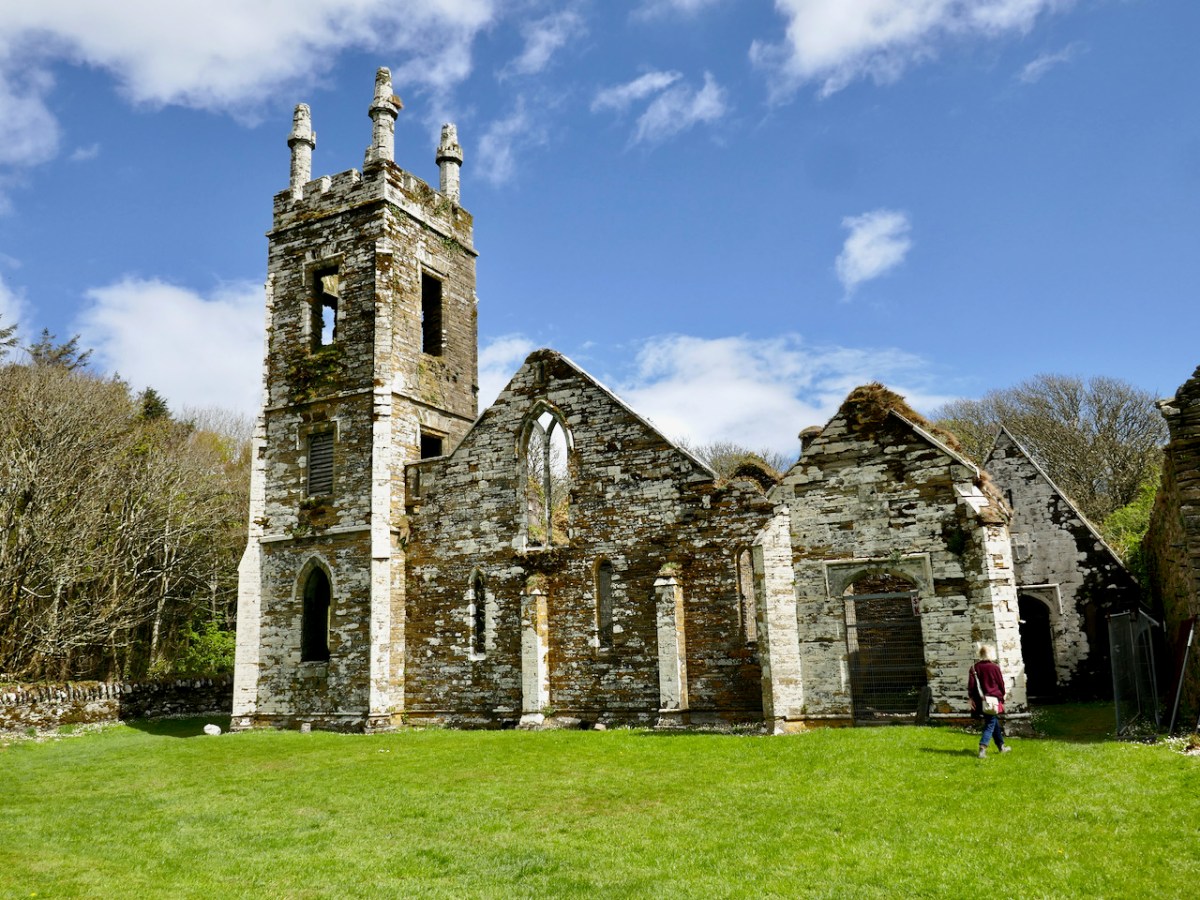
Another old estate managed by Coillte – a series of woodland walks linked by roads and trails. There’s a ruined church and old graveyard, great views across old farm buildings, and ancient trees. We were there a week ago and the bluebells were heavenly.
What are your favourite woodland walks in West Cork?
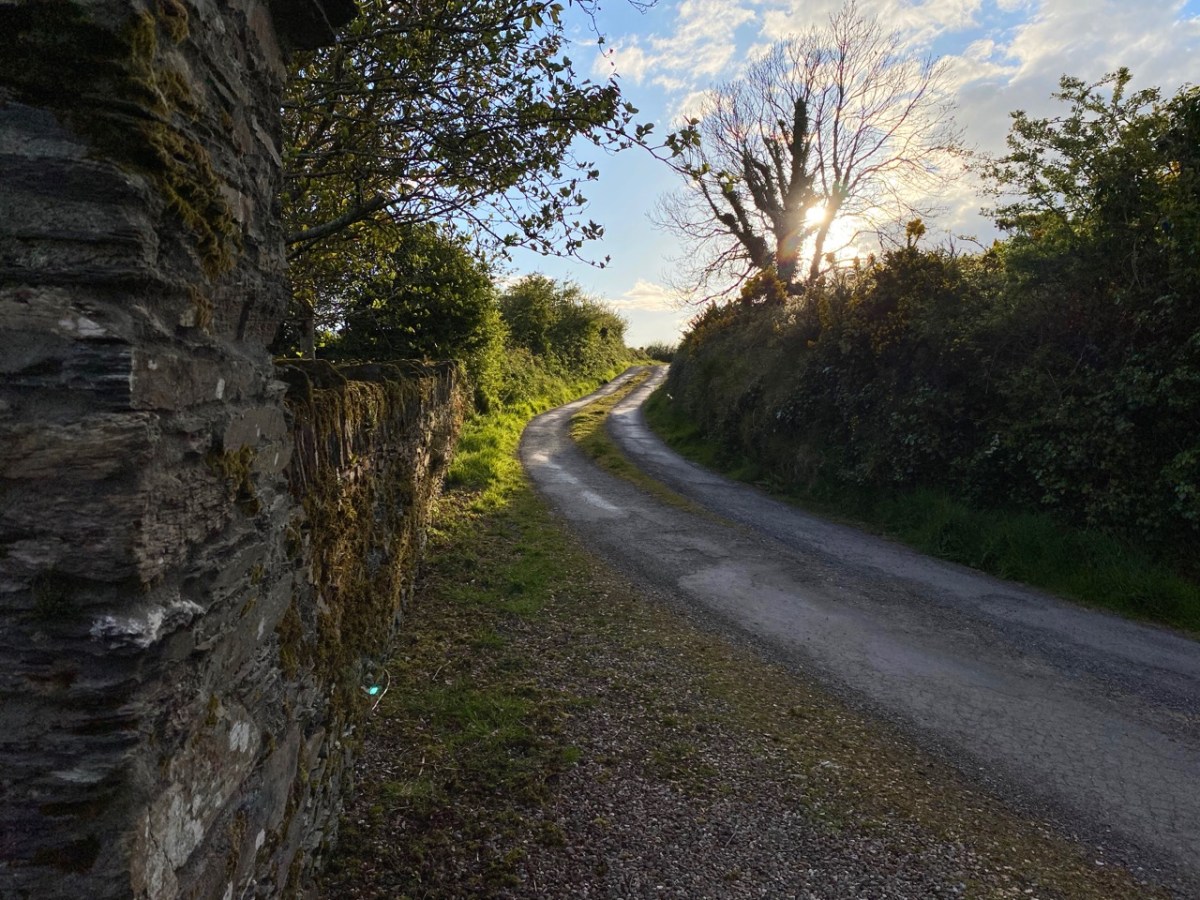
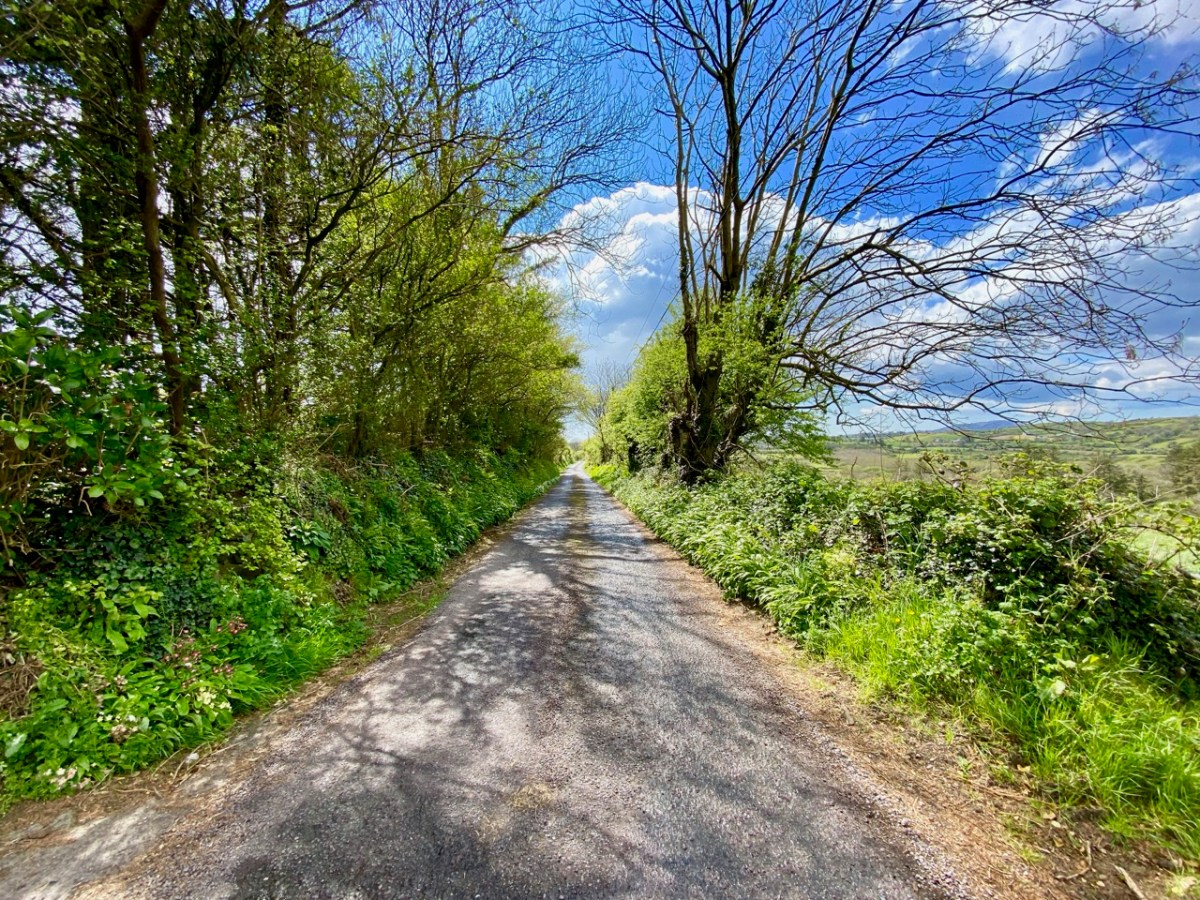
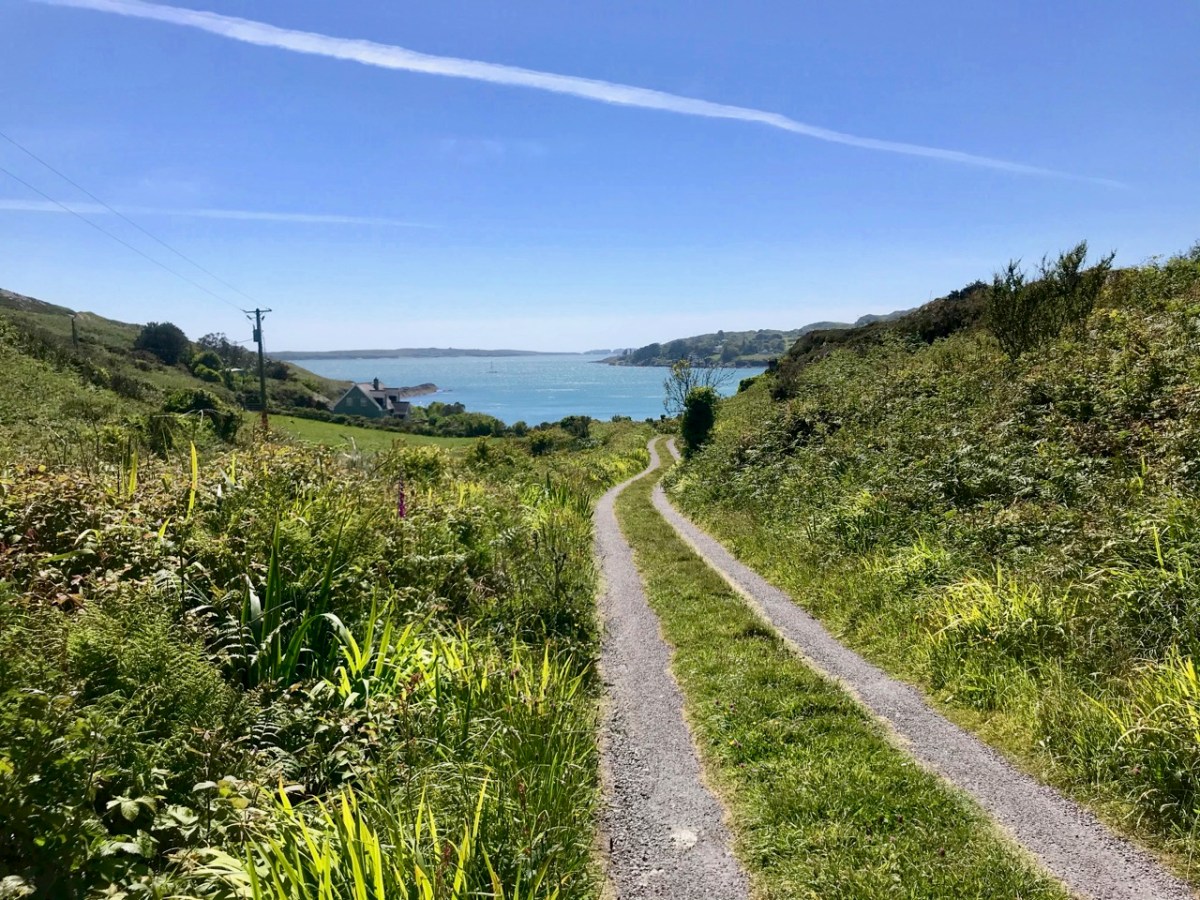
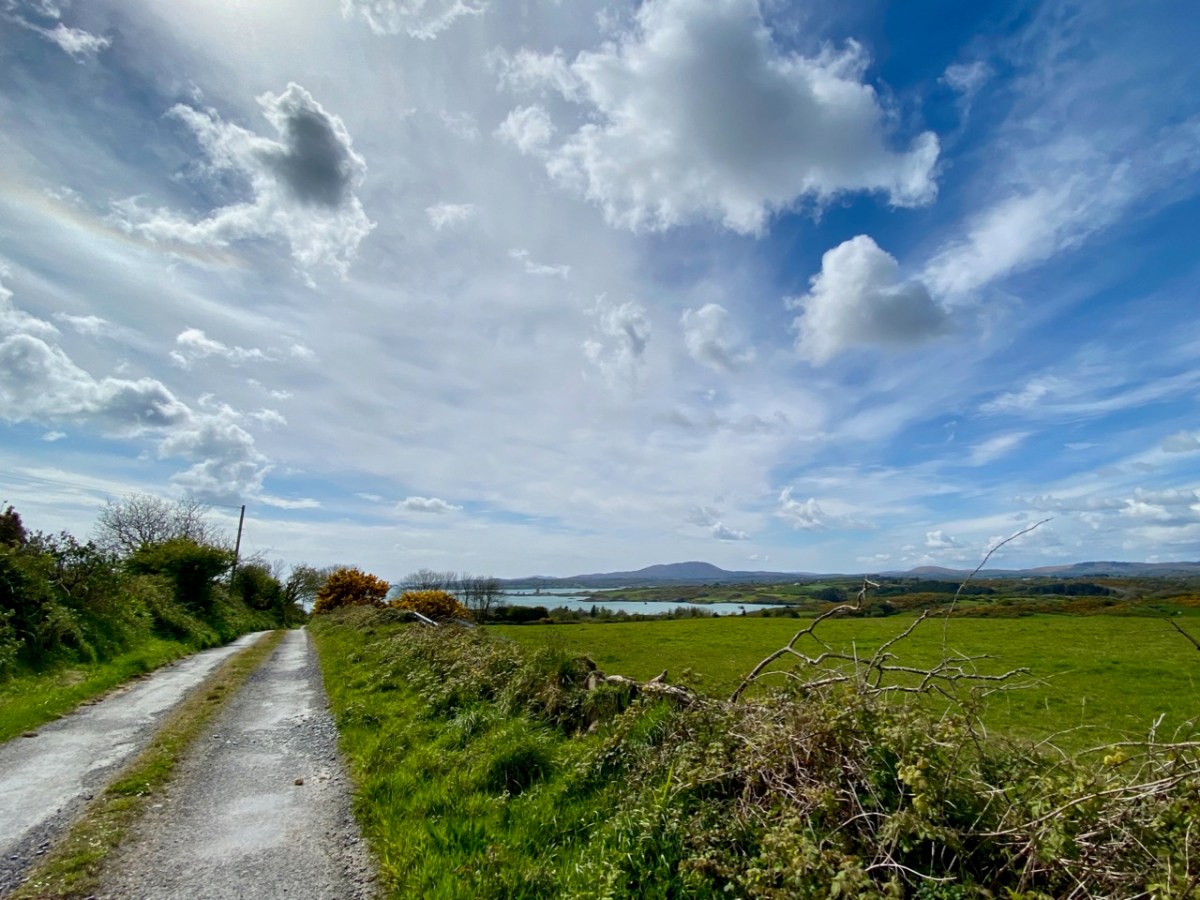
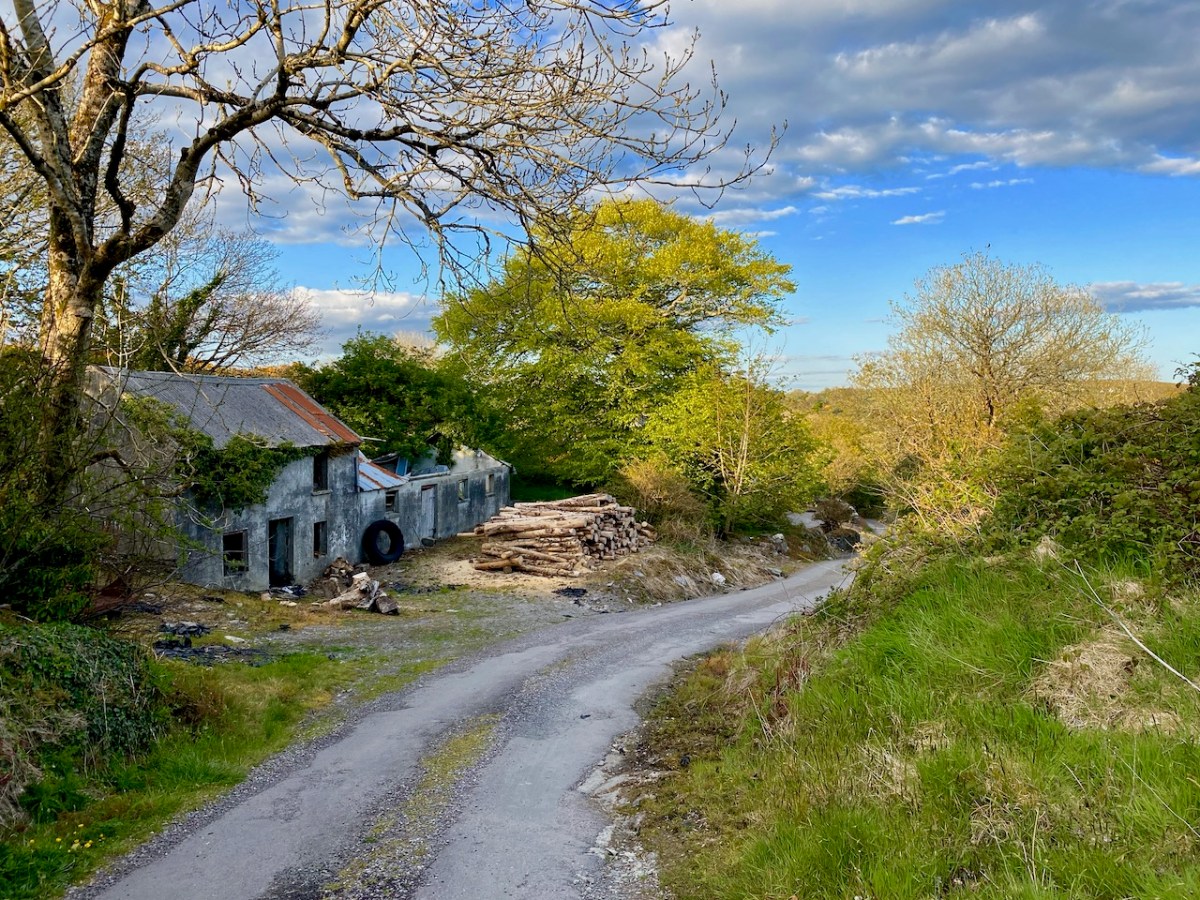
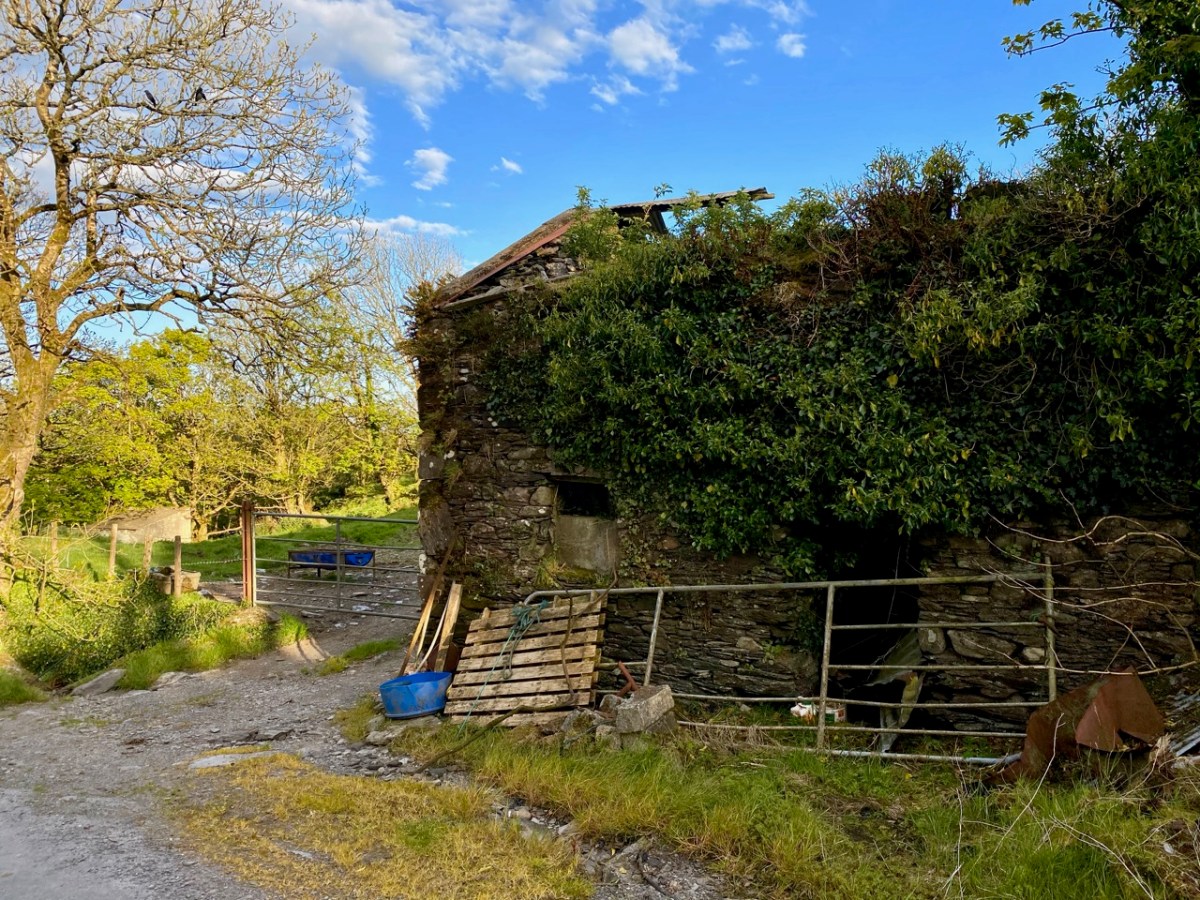
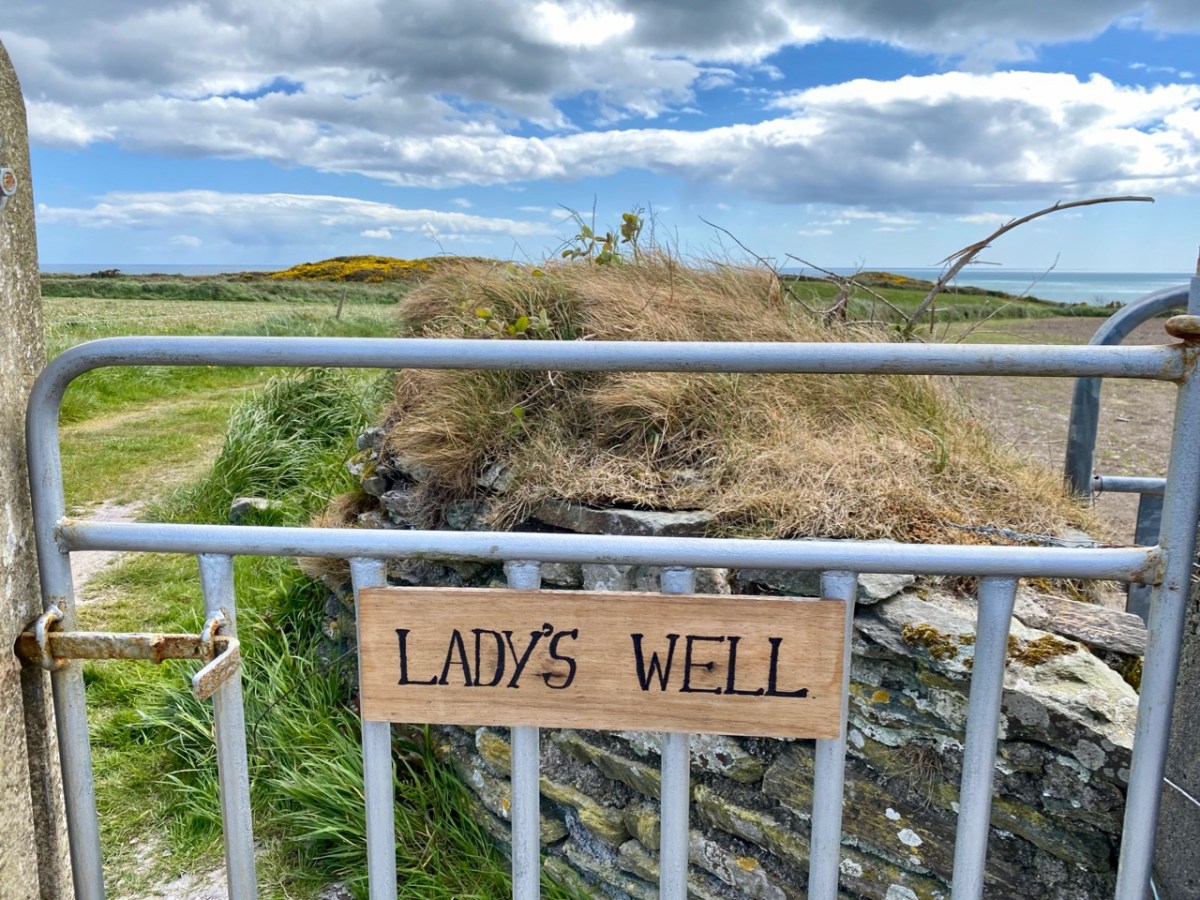
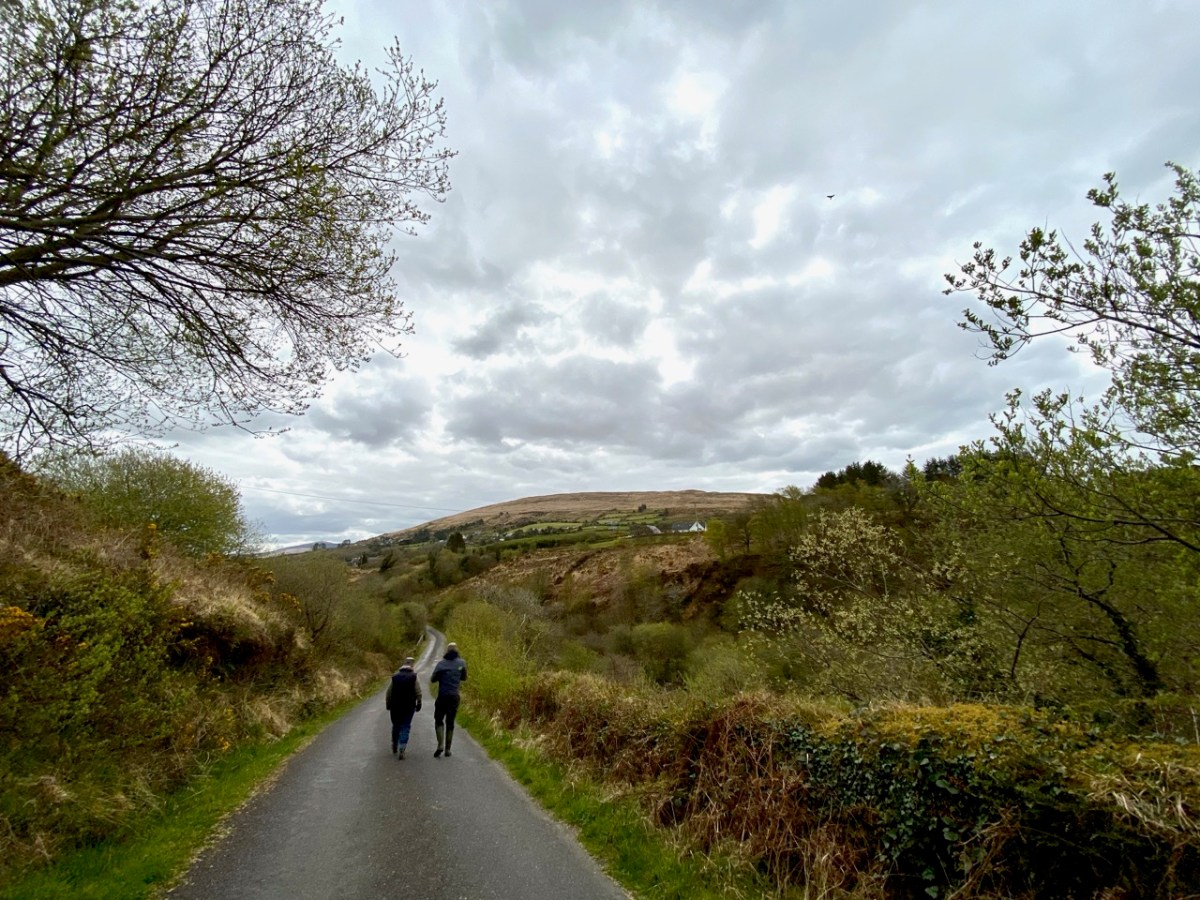
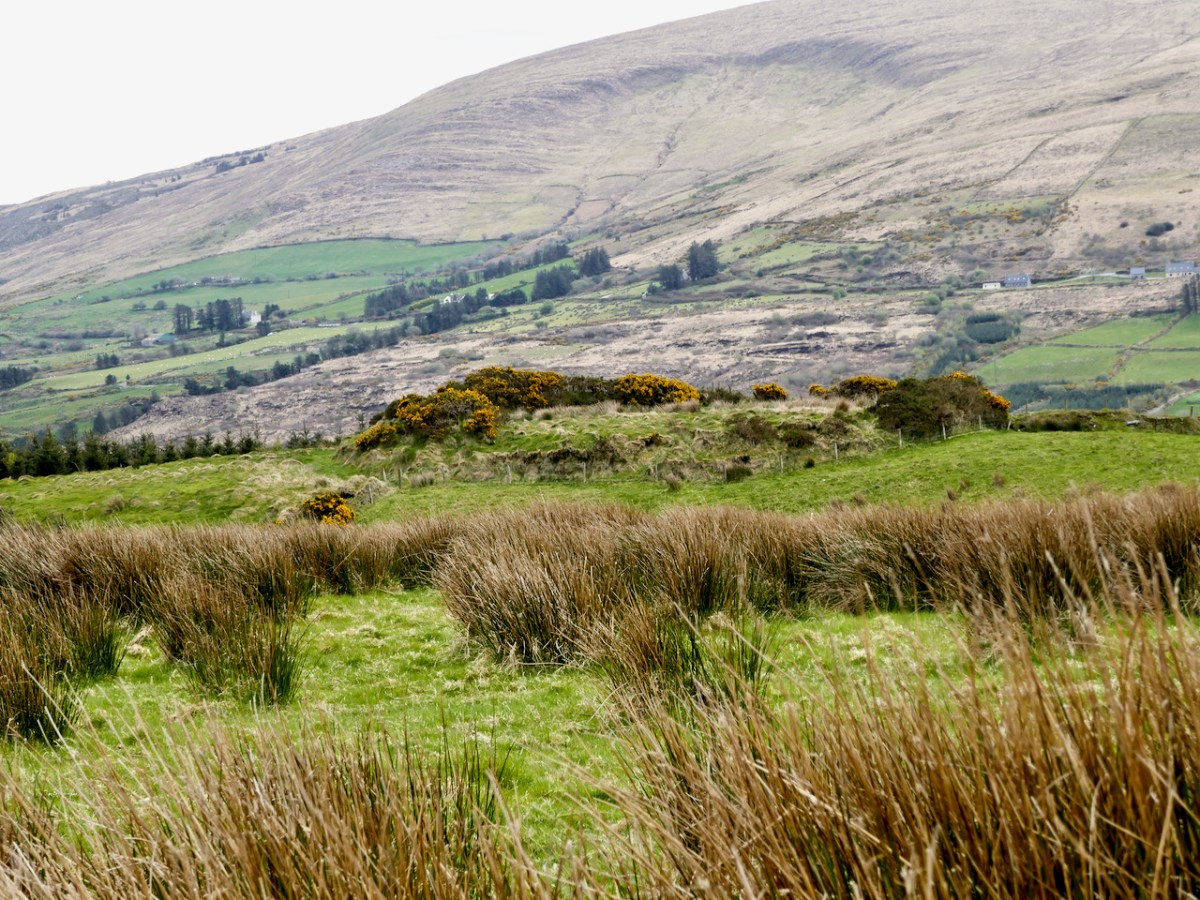
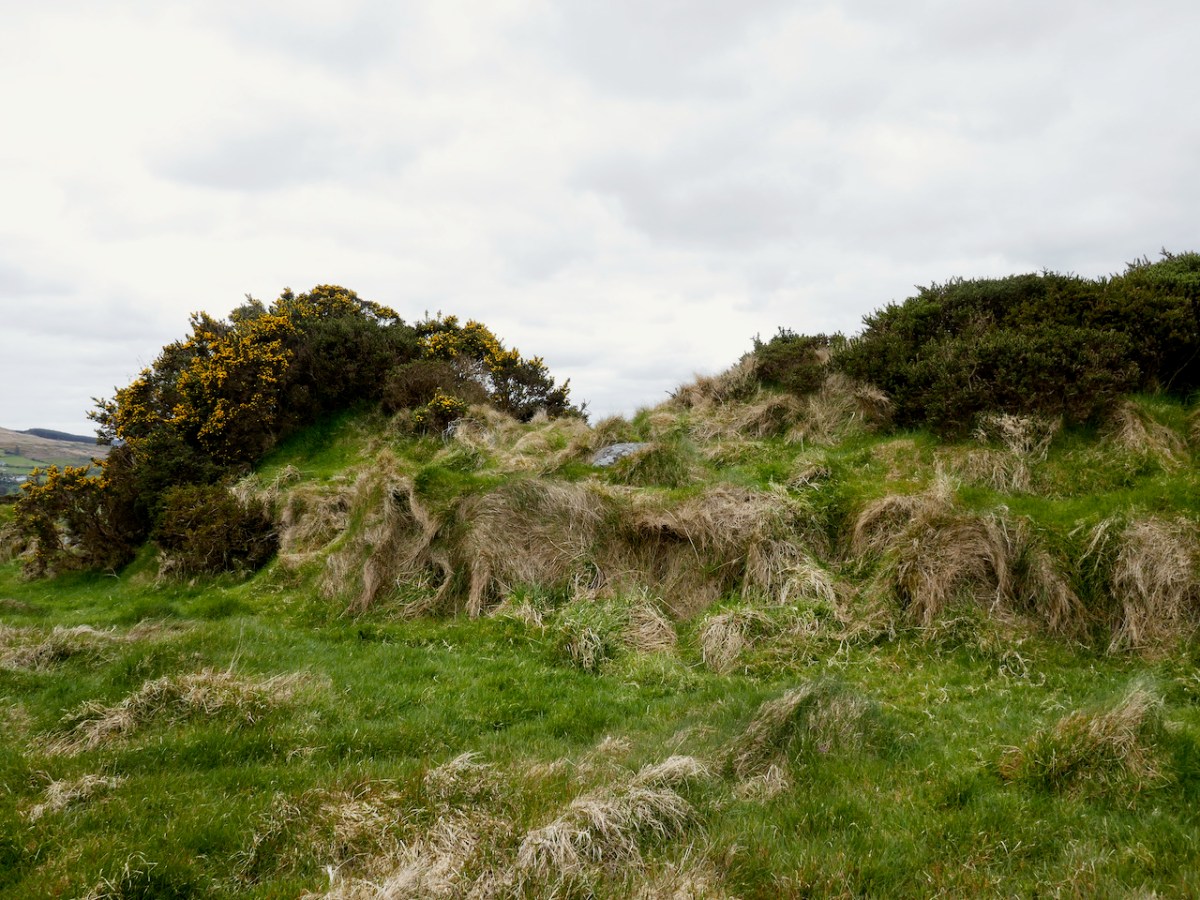
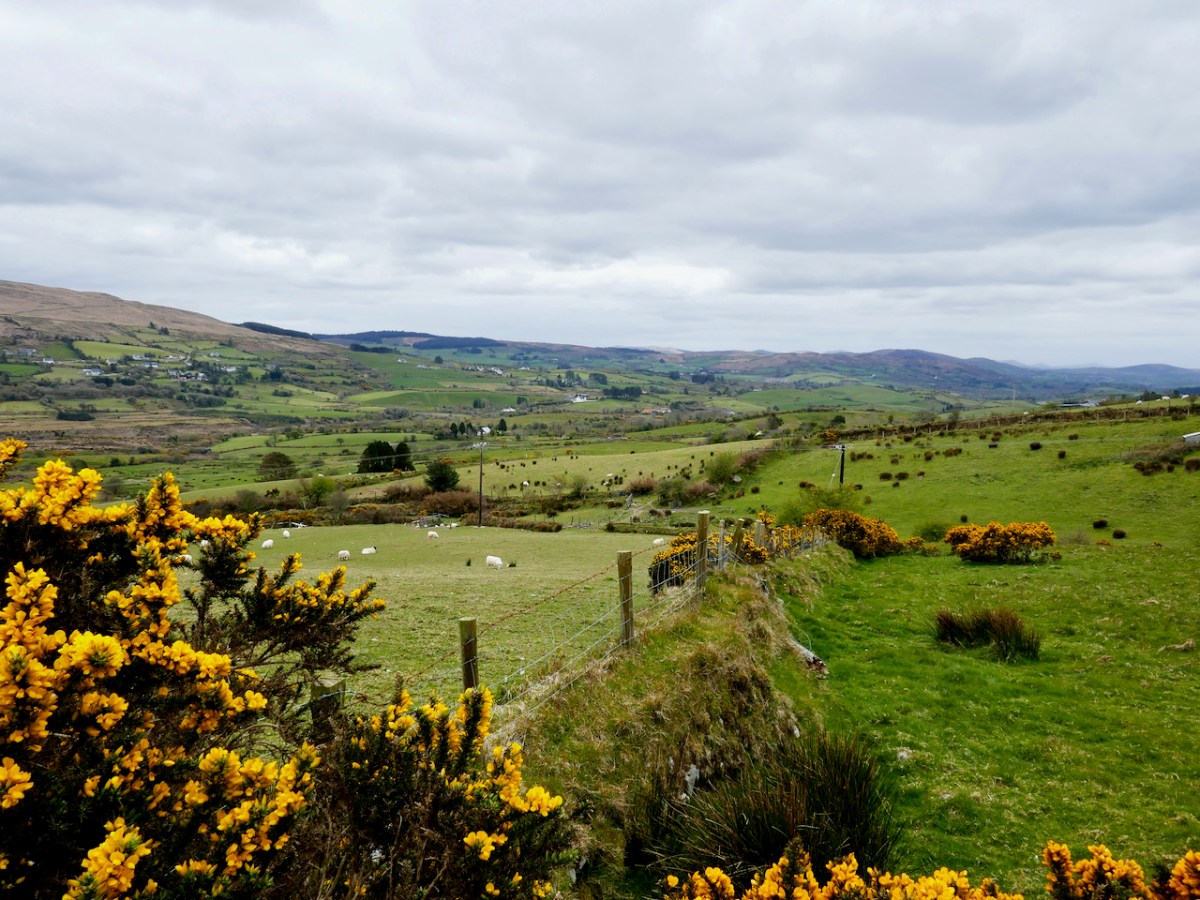
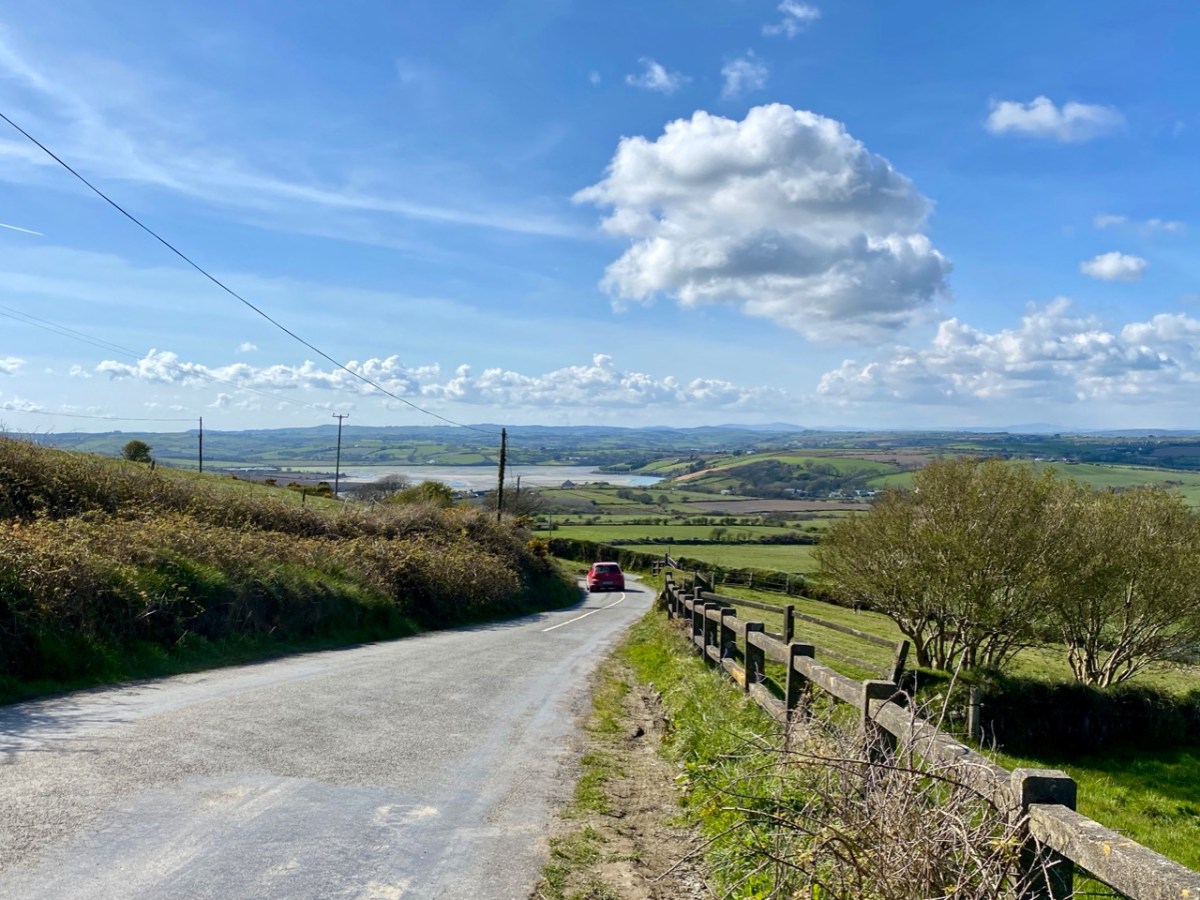
You’d think we would know every centimetre of West Cork by now… Of course we don’t! But we do like a challenge so, on occasion, we will follow a whim and deliberately go off main roads and randomly follow the smallest lanes. We invariably find ourselves emerging at places we know, but the journey along unfamiliar ways is always worthwhile. I thought that this week I will treat you to just such an exploration – in fact it’s a few explorations: I’m not going to tell you where any of the pictures is taken. You will travel with us and open up many new vistas (hopefully), just to give you a taste of the boreens, which you can also find for yourself when you come and visit – unless you are fortunate, as are we, to live here already.
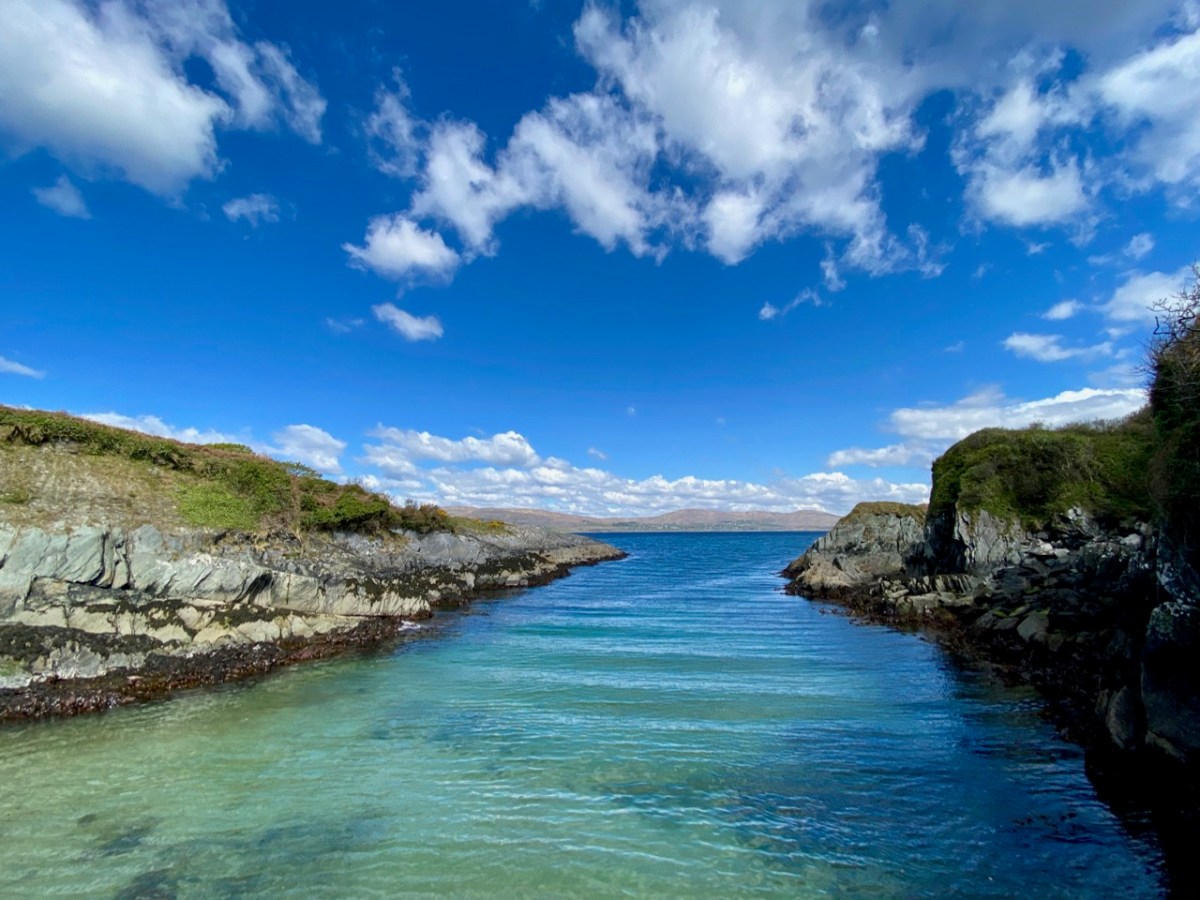
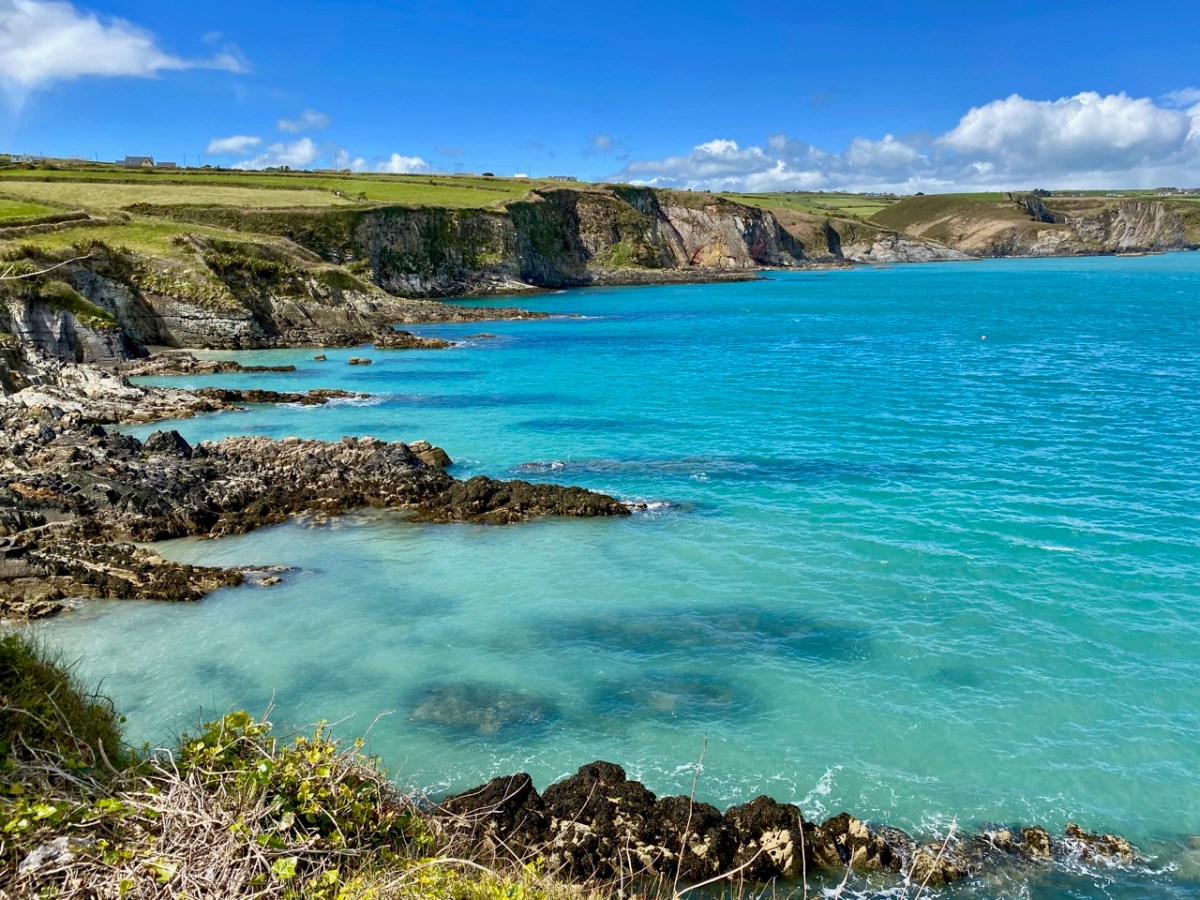
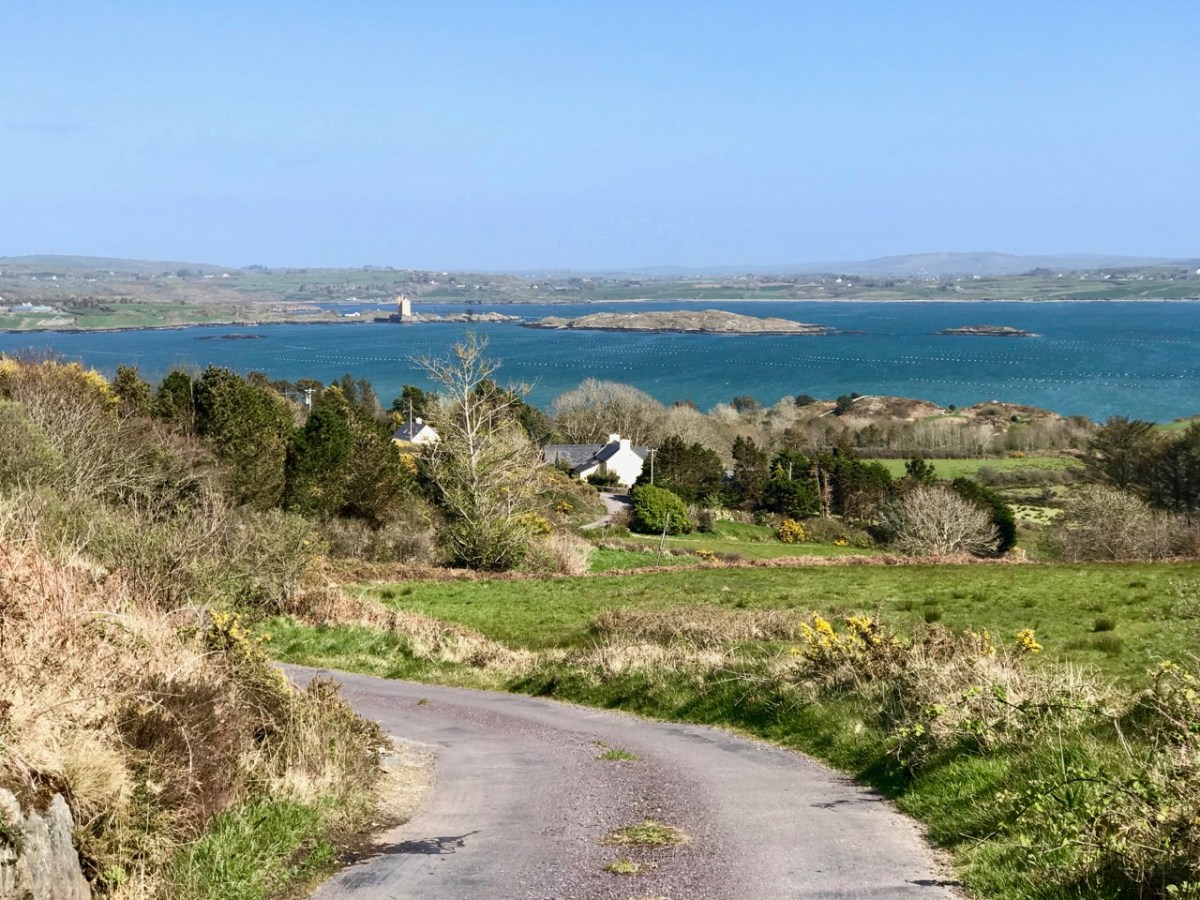
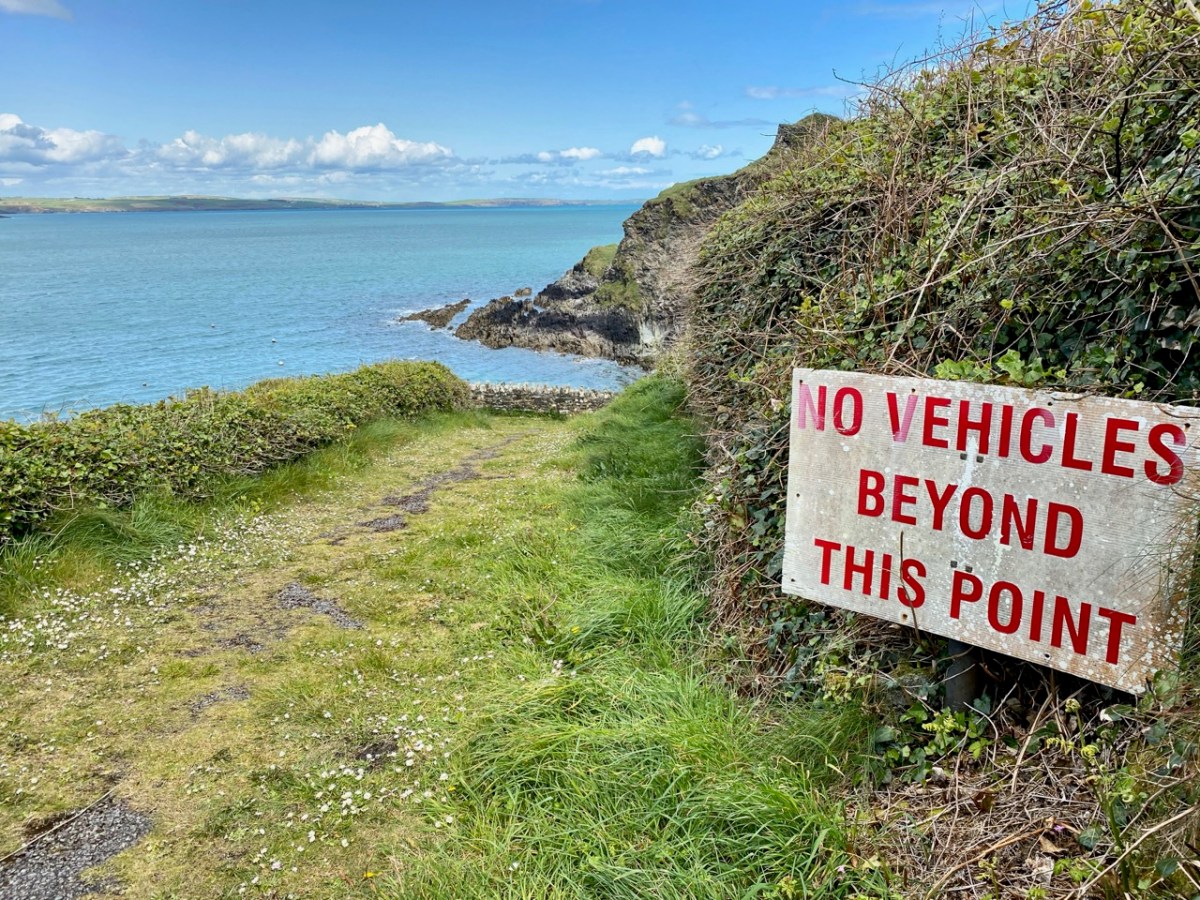
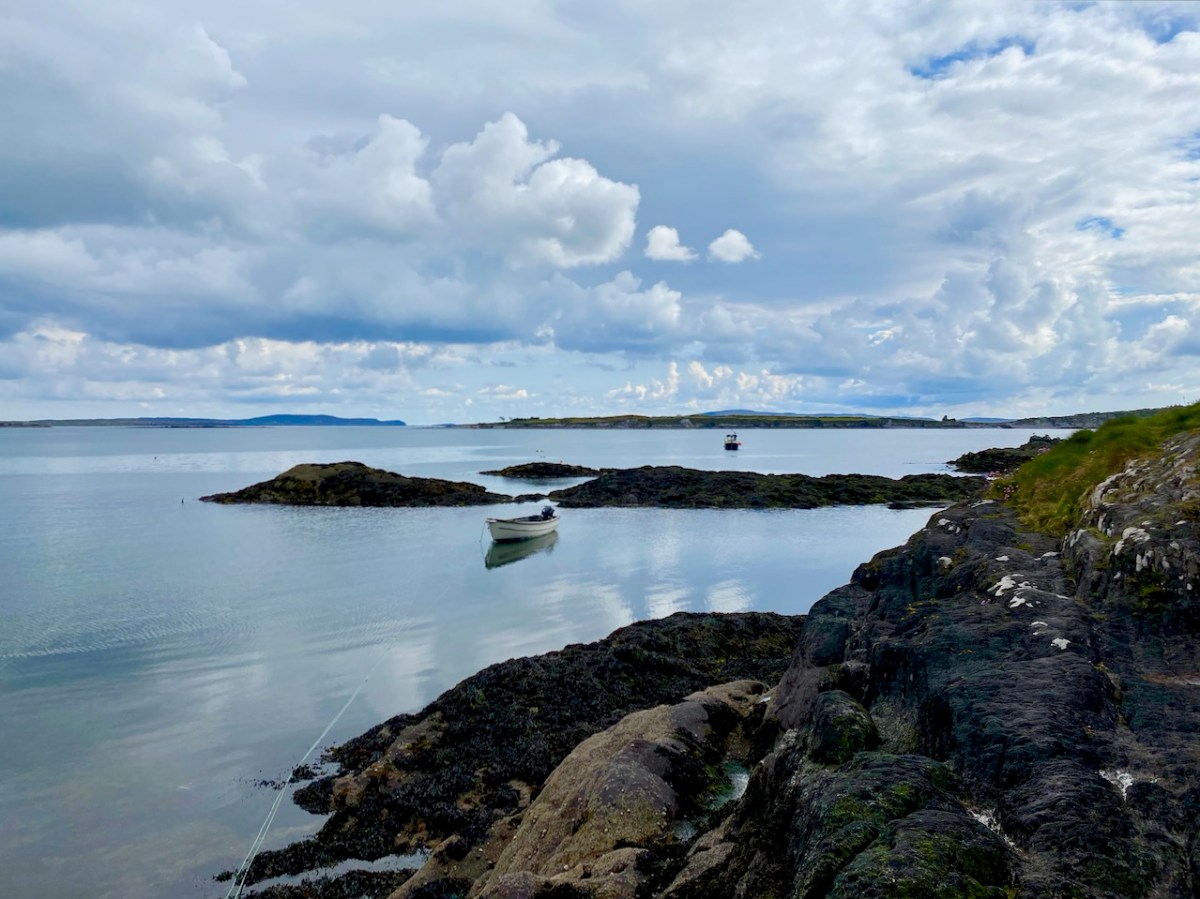
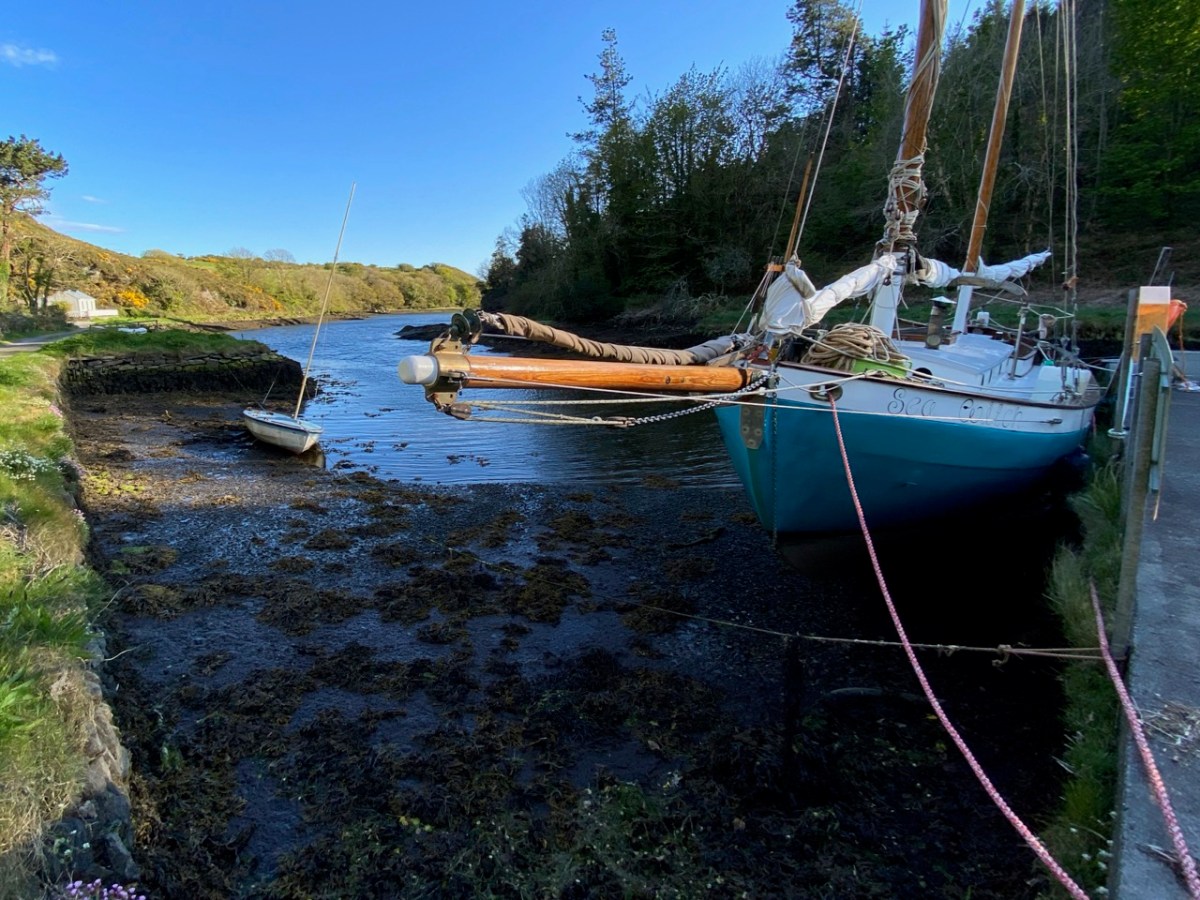
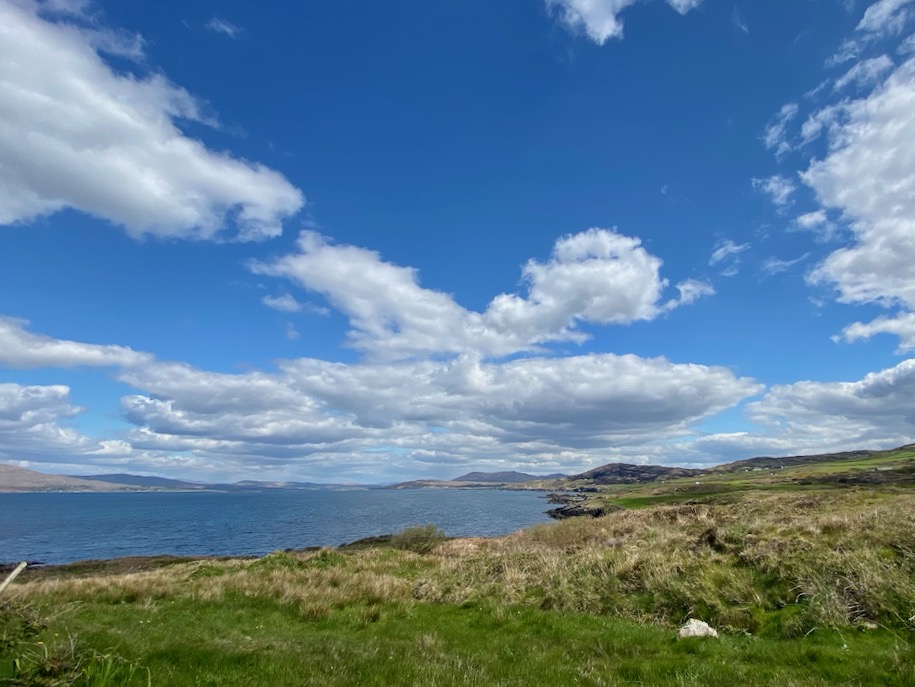
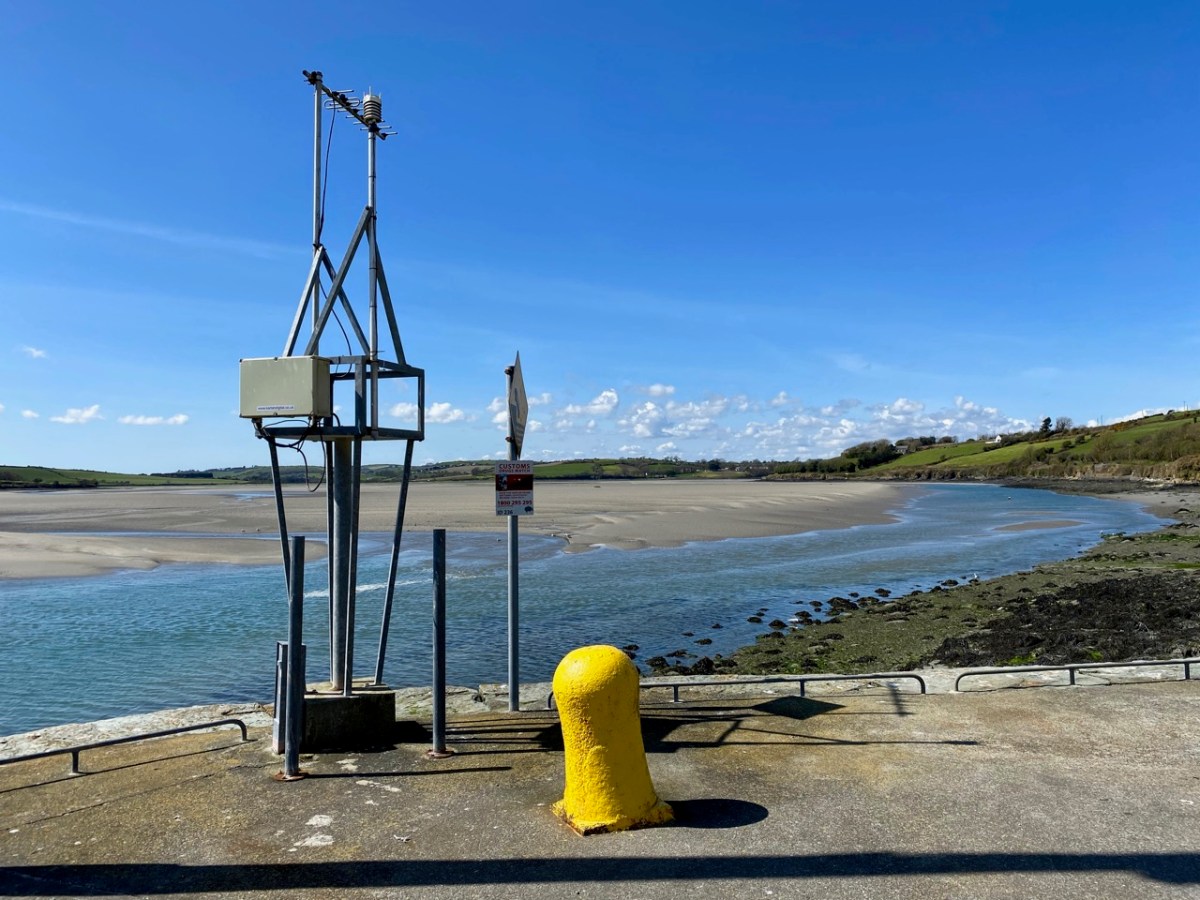
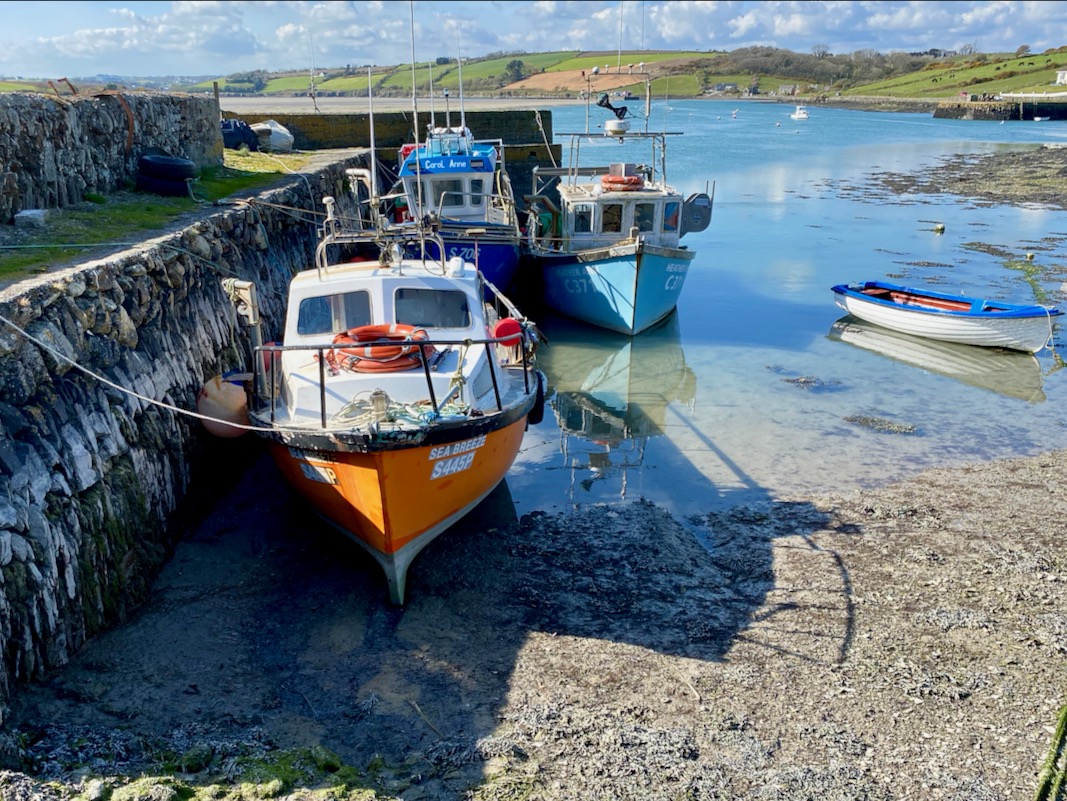
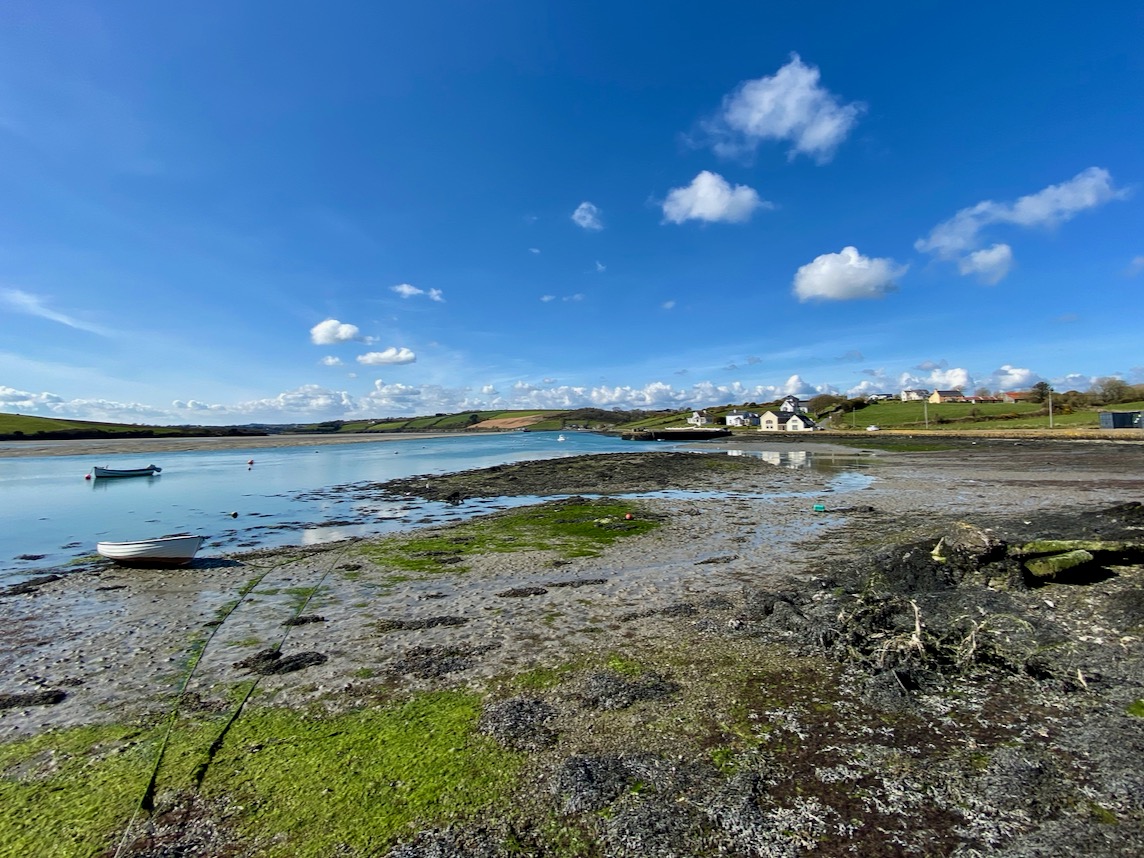
Wherever you are in West Cork, you will not be far from the sea – and there’s seldom a view which doesn’t have at least a silver horizon or a glimpse of water which is so brilliantly hued at the moment under our clear spring skies. We have taken to following the smallest of lanes which lead down to a dead-end at some little inlet, bay or remote pier along our coasts.
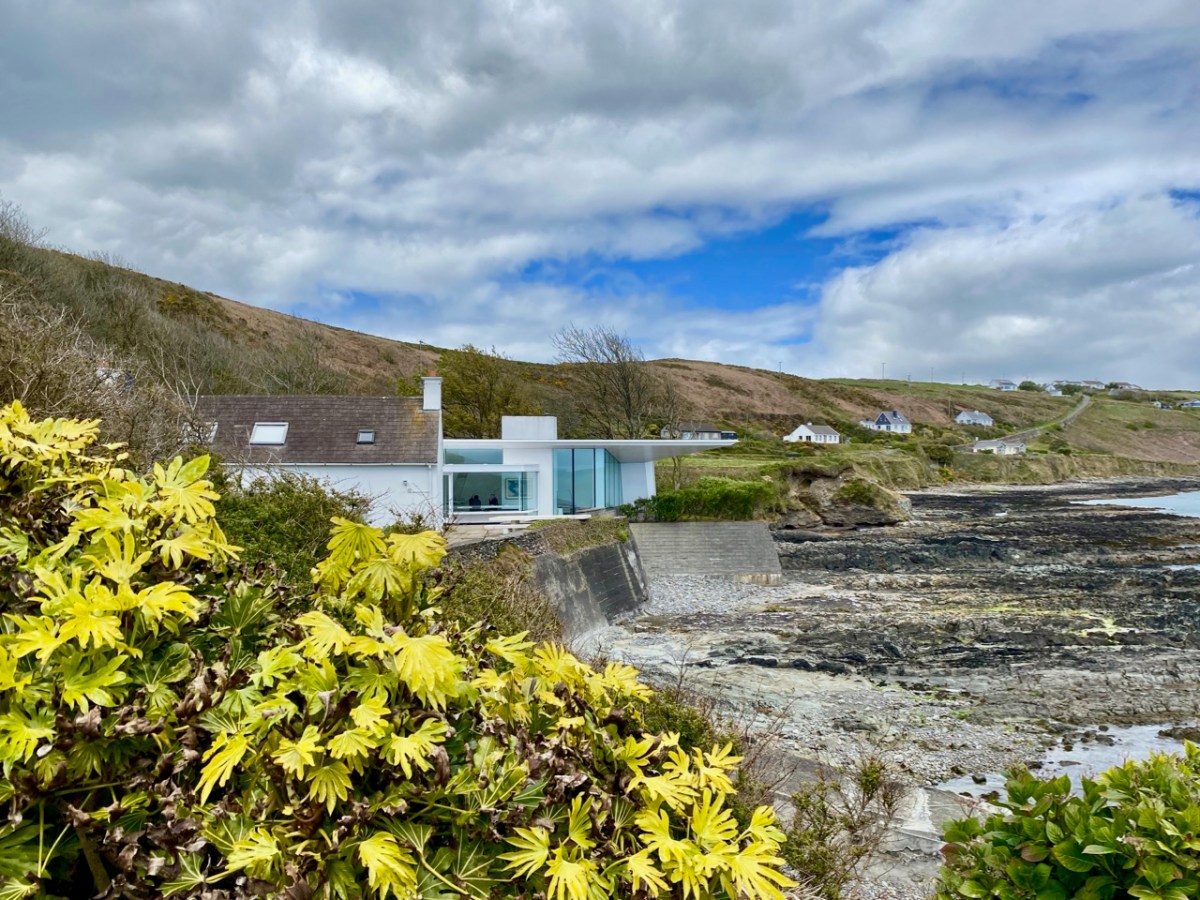
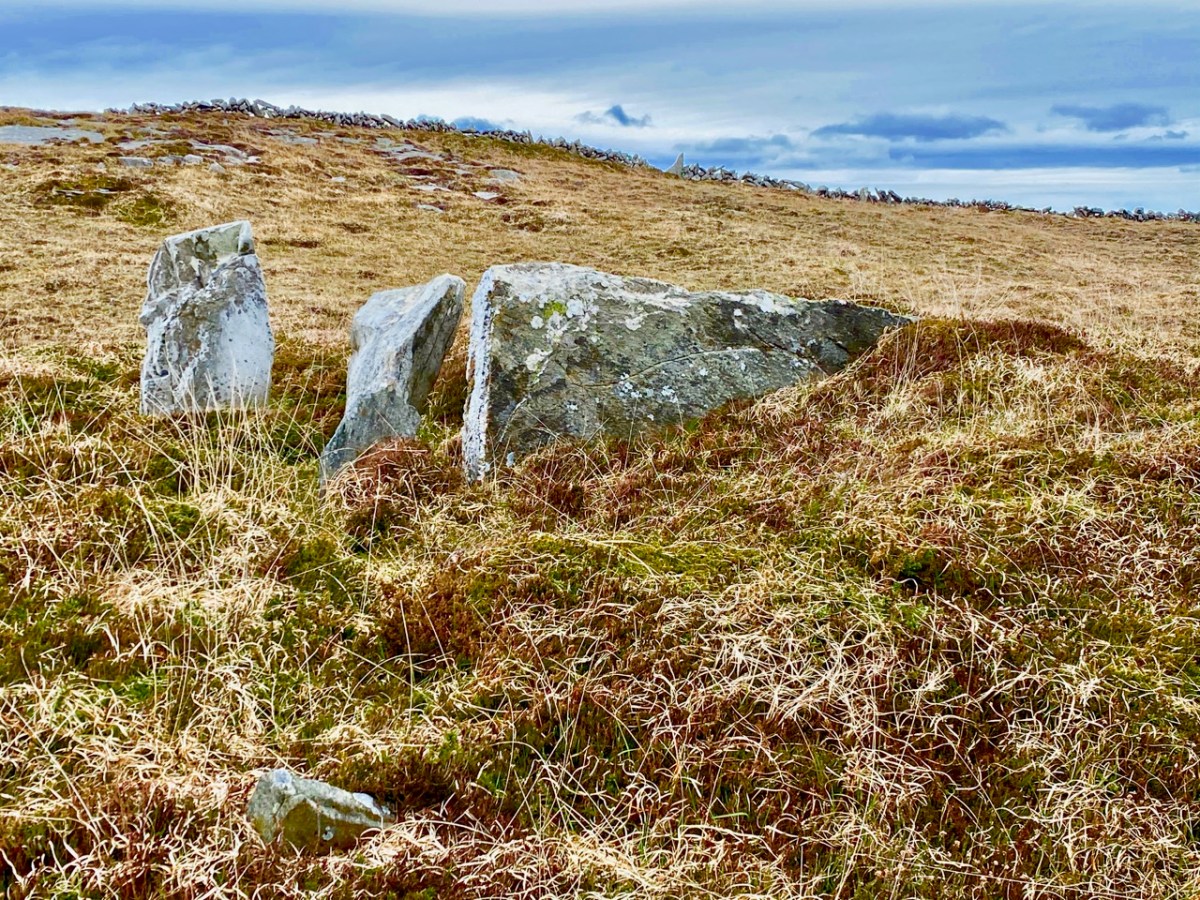
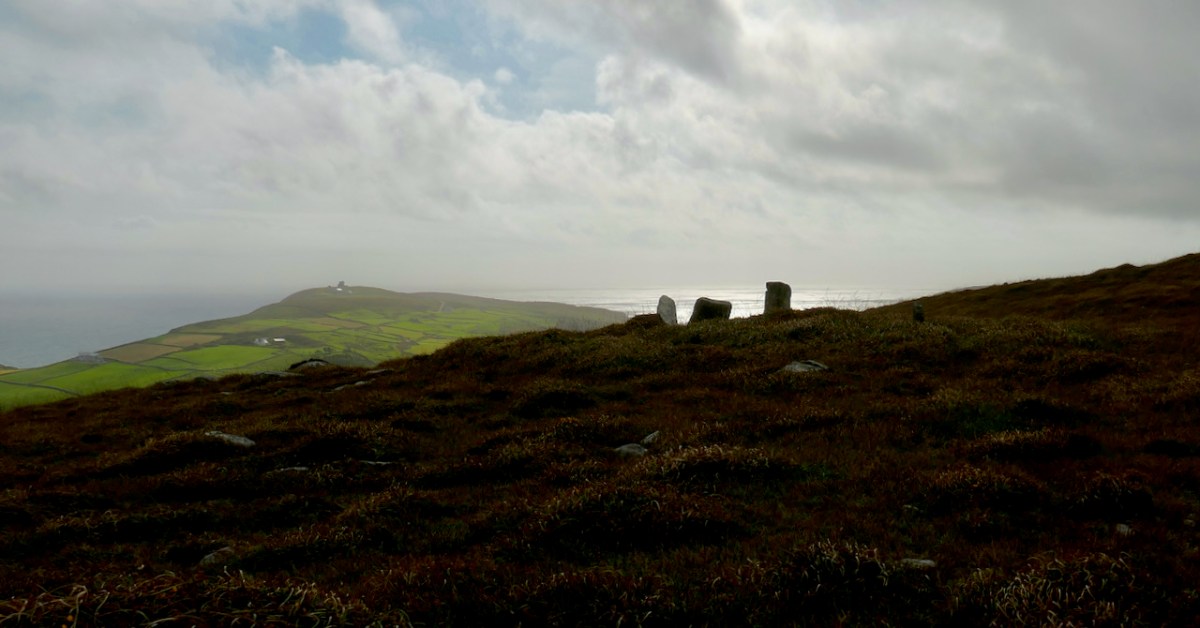
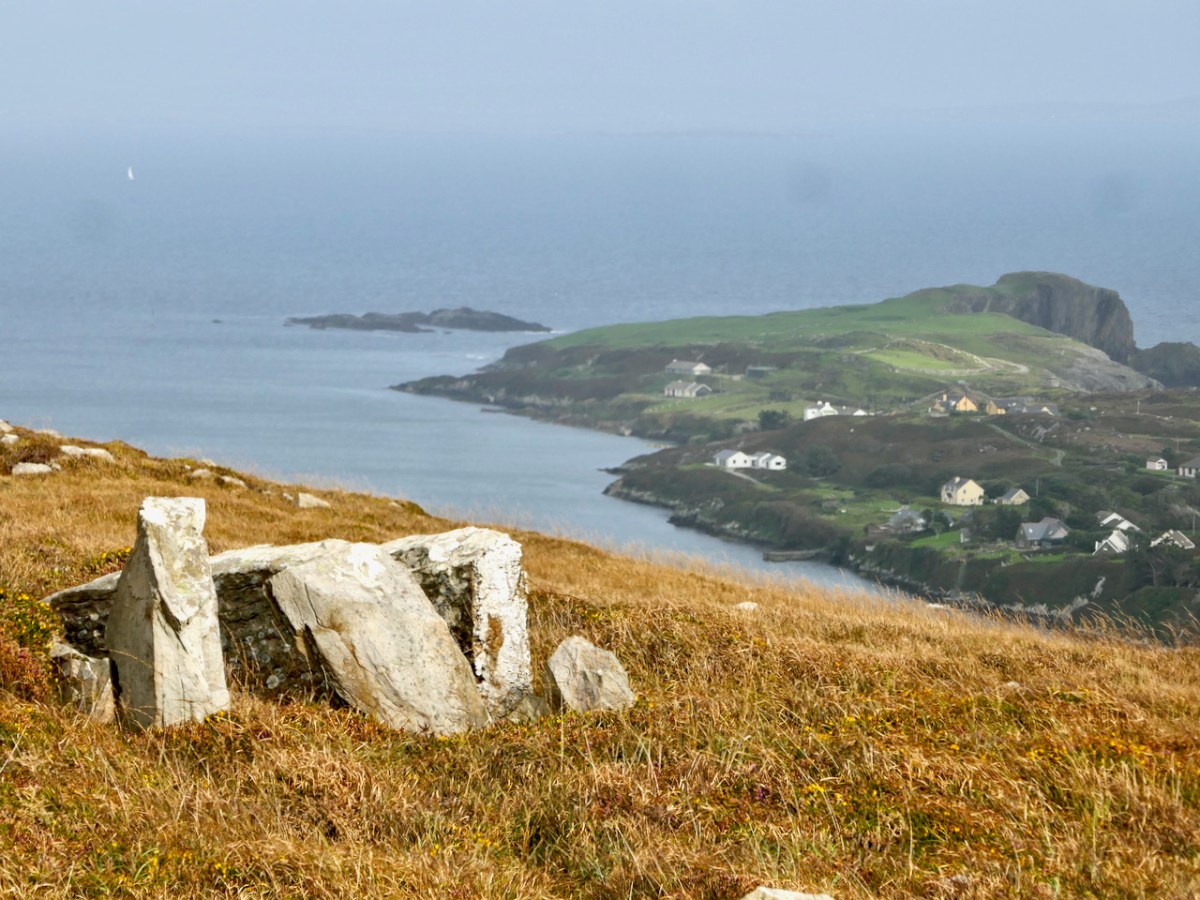
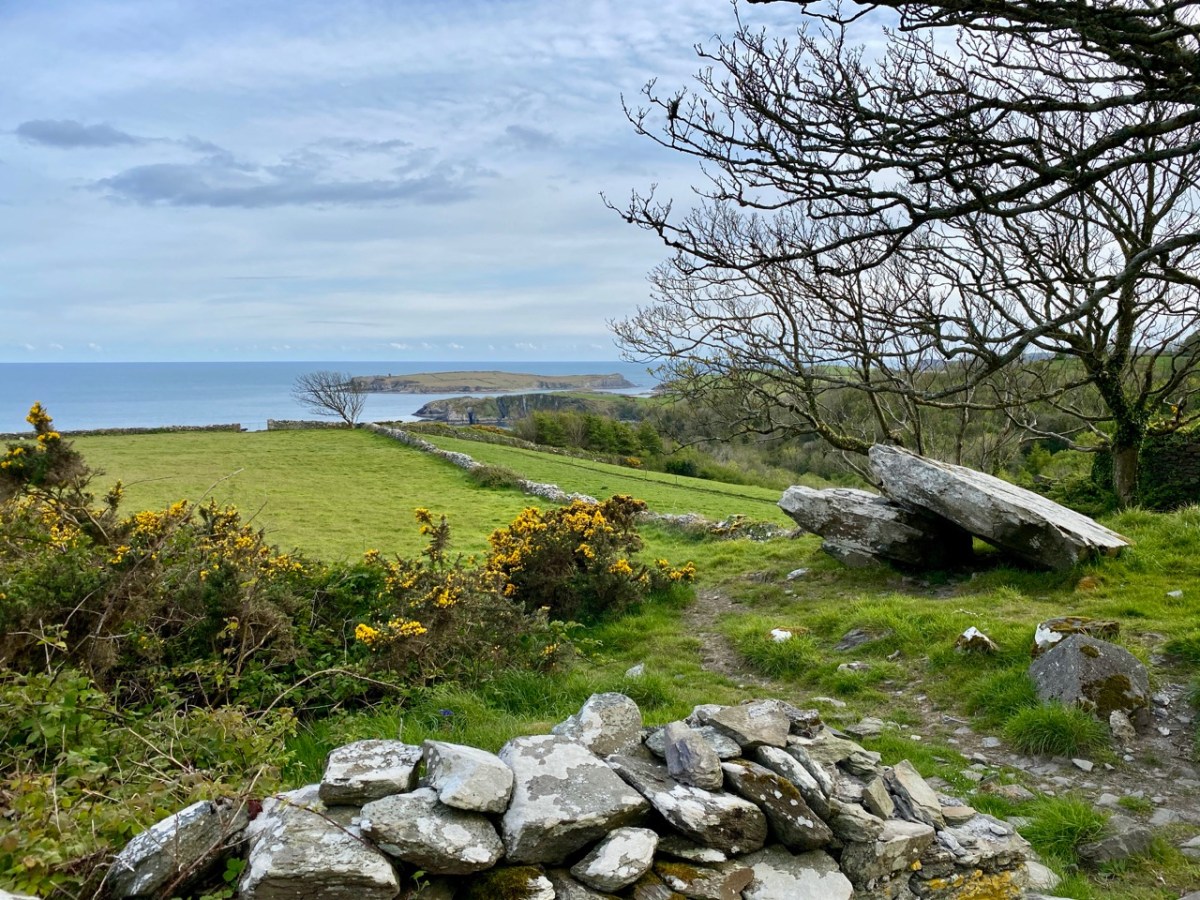
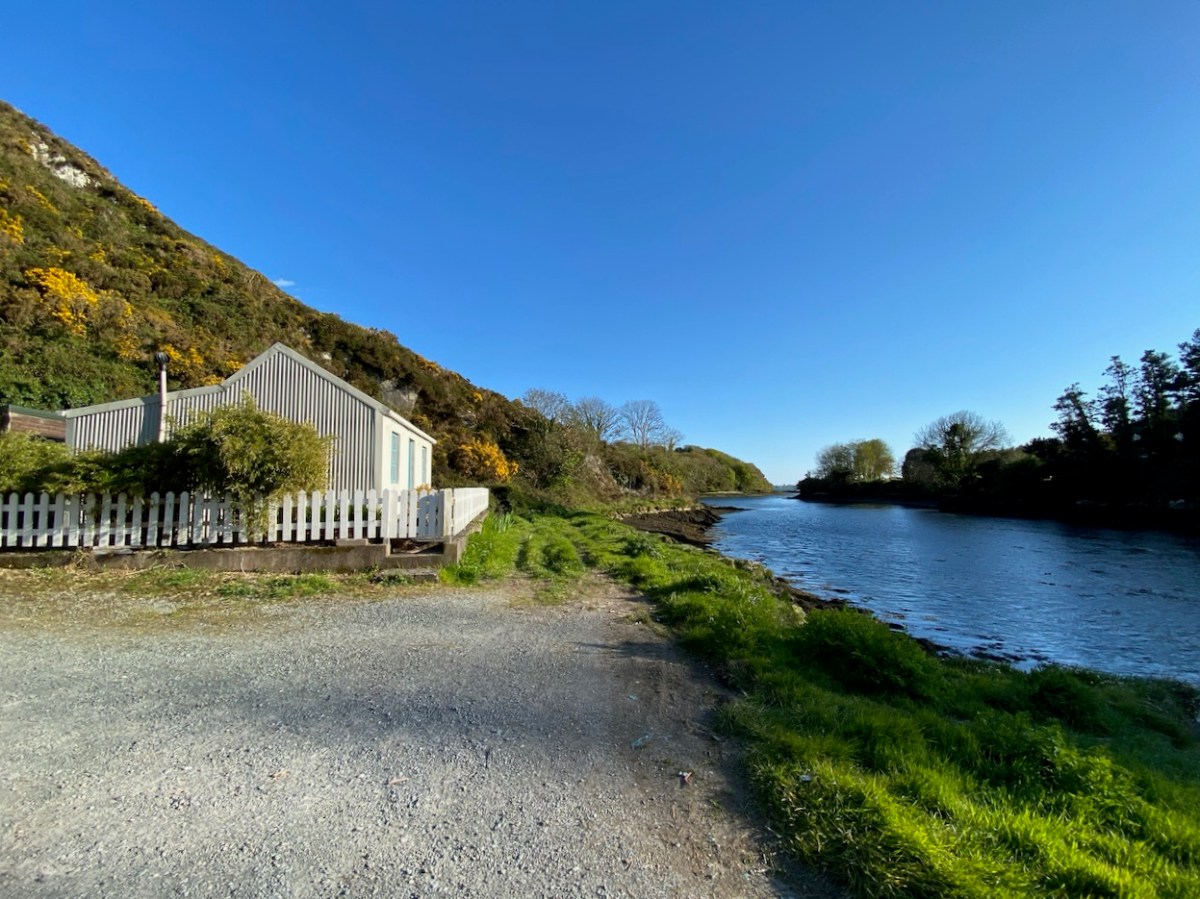
As a retired architect, I was delighted to find this modern gem at the very end of a cul-de-sac, a long way off the beaten track. An extension to a traditional house, it is right on the water’s edge: a spectacular location. I researched the building, and found that it was designed by Níall McLaughlin Architects – London based, but with obviously Irish roots. Below is a piece of architecture a few thousand years older, a possible passage grave, on the far end of the Mizen – equally spectacular and with a dramatic view.
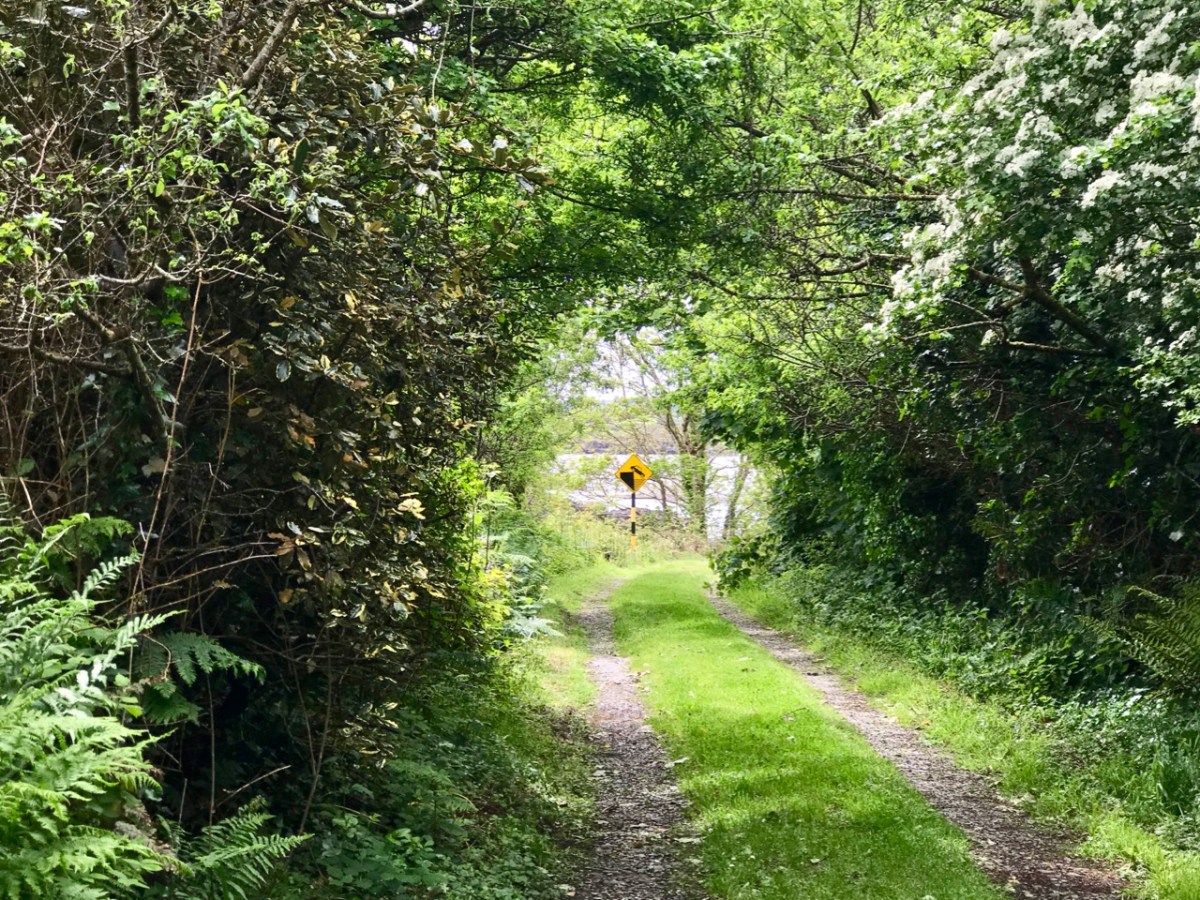
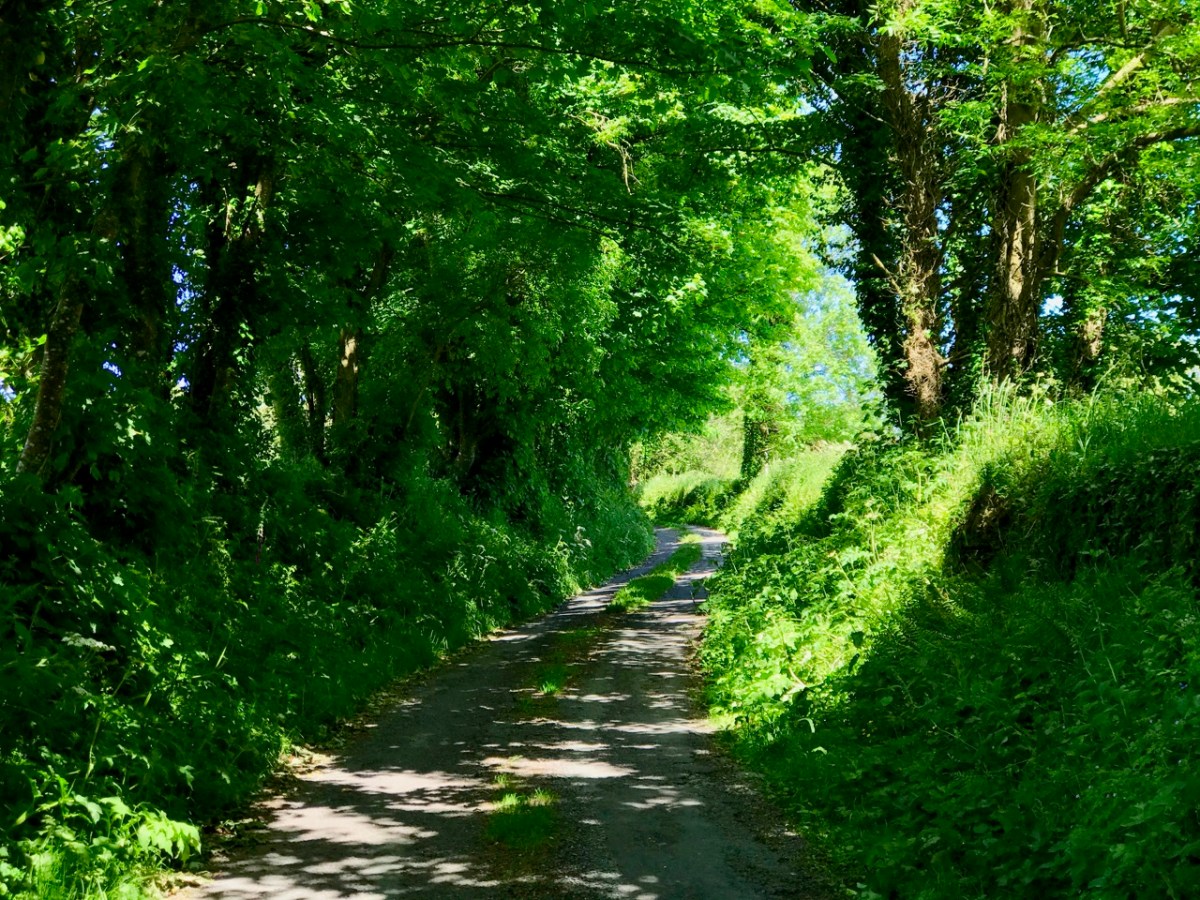
Not every byway discovery is as memorable as some of these examples: just a lane lined on each side with natural hedges can be inviting in its simplicity – and could be hard to find again!
Often it is important, of course, to know where you are going – and to find your way back. The latter is seldom a problem, especially with boreens which have an obvious end.
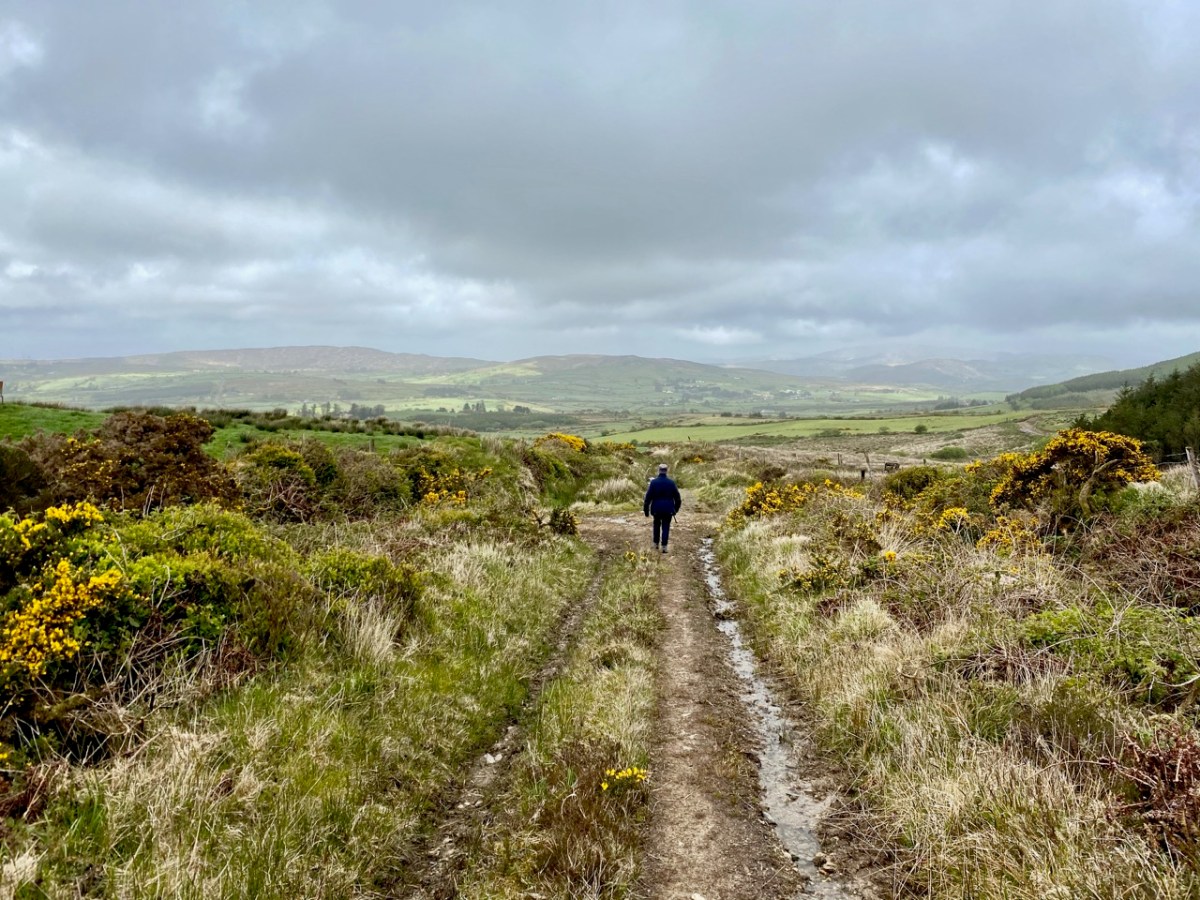
Sometimes you have to leave the car behind and explore the tiniest of trackways: we know them as ‘grey roads’ on the map. Finola uses the term ‘Tis a grand road’ quite frequently, as the mud sticks to our boots and progress becomes slow.
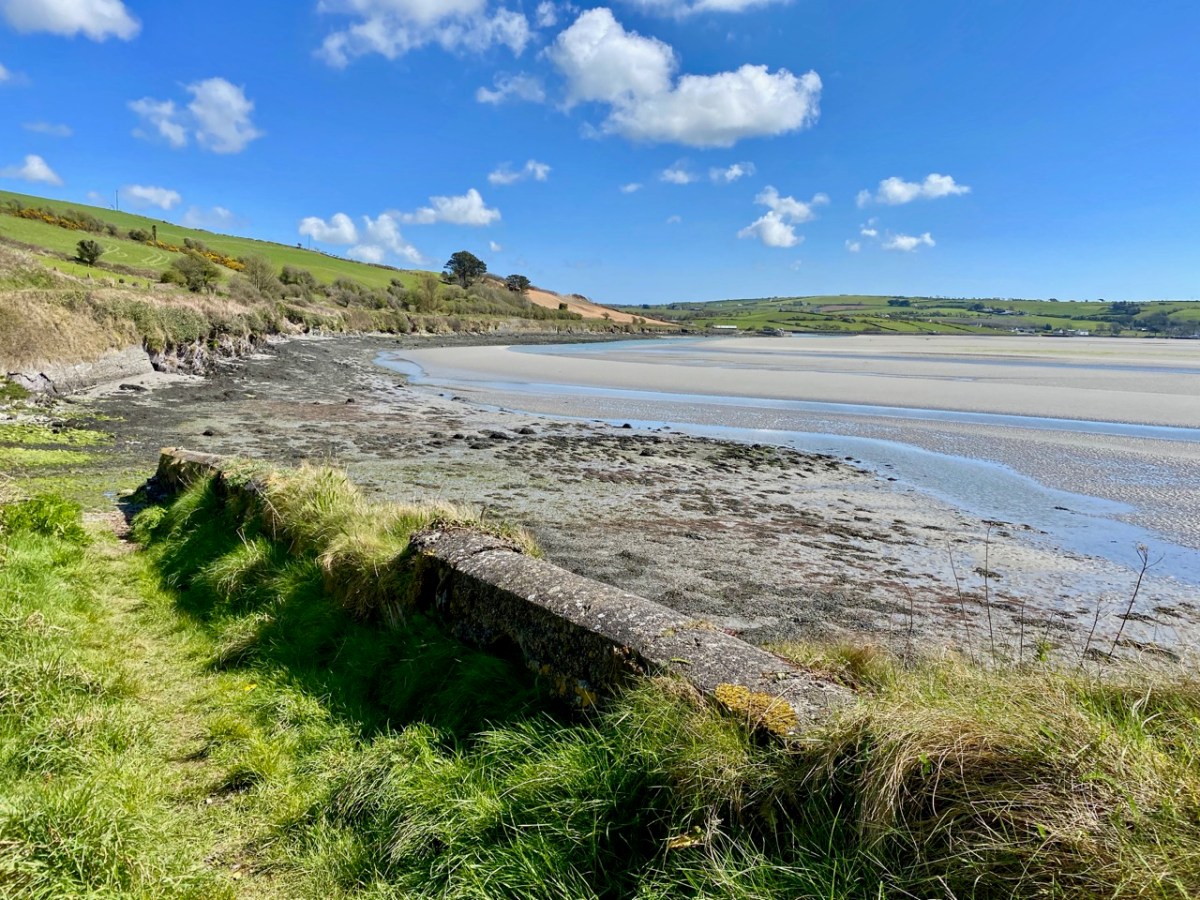
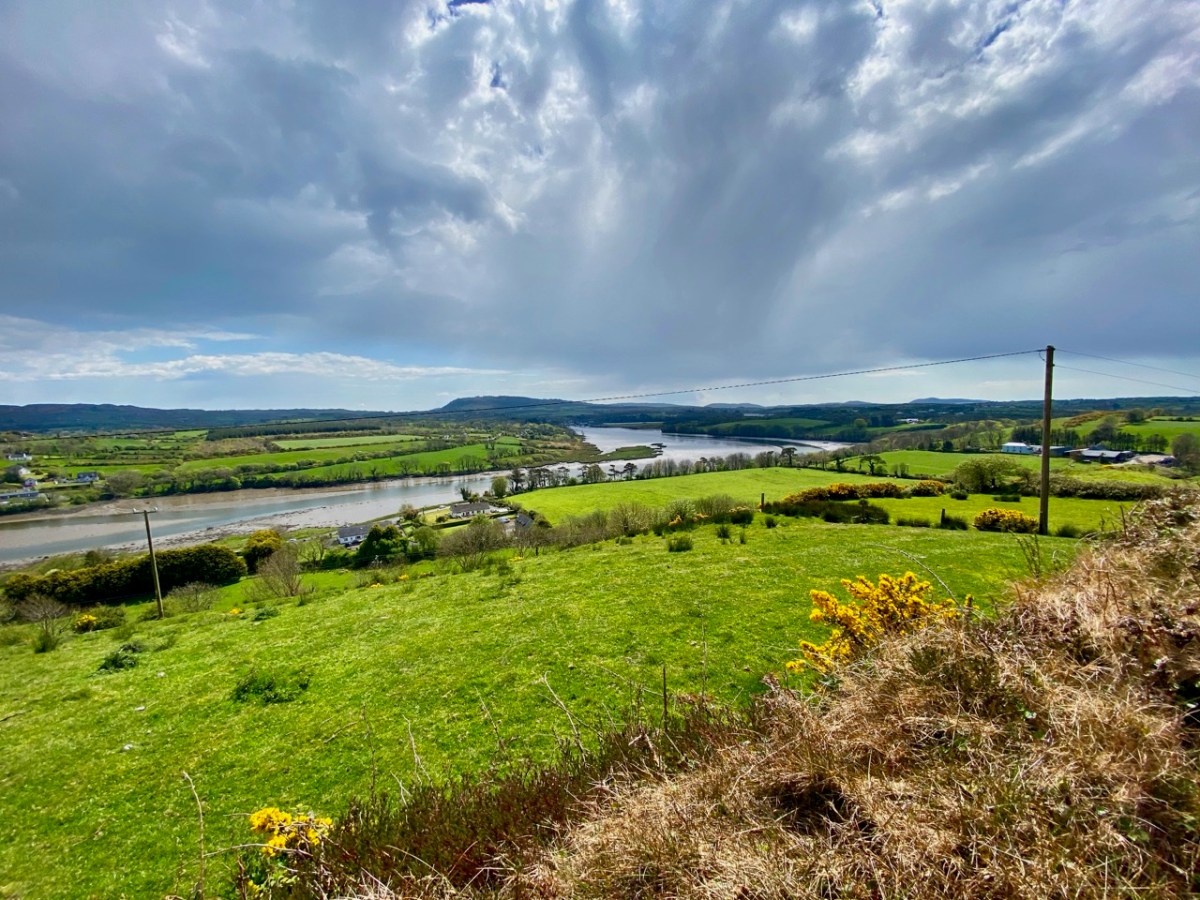
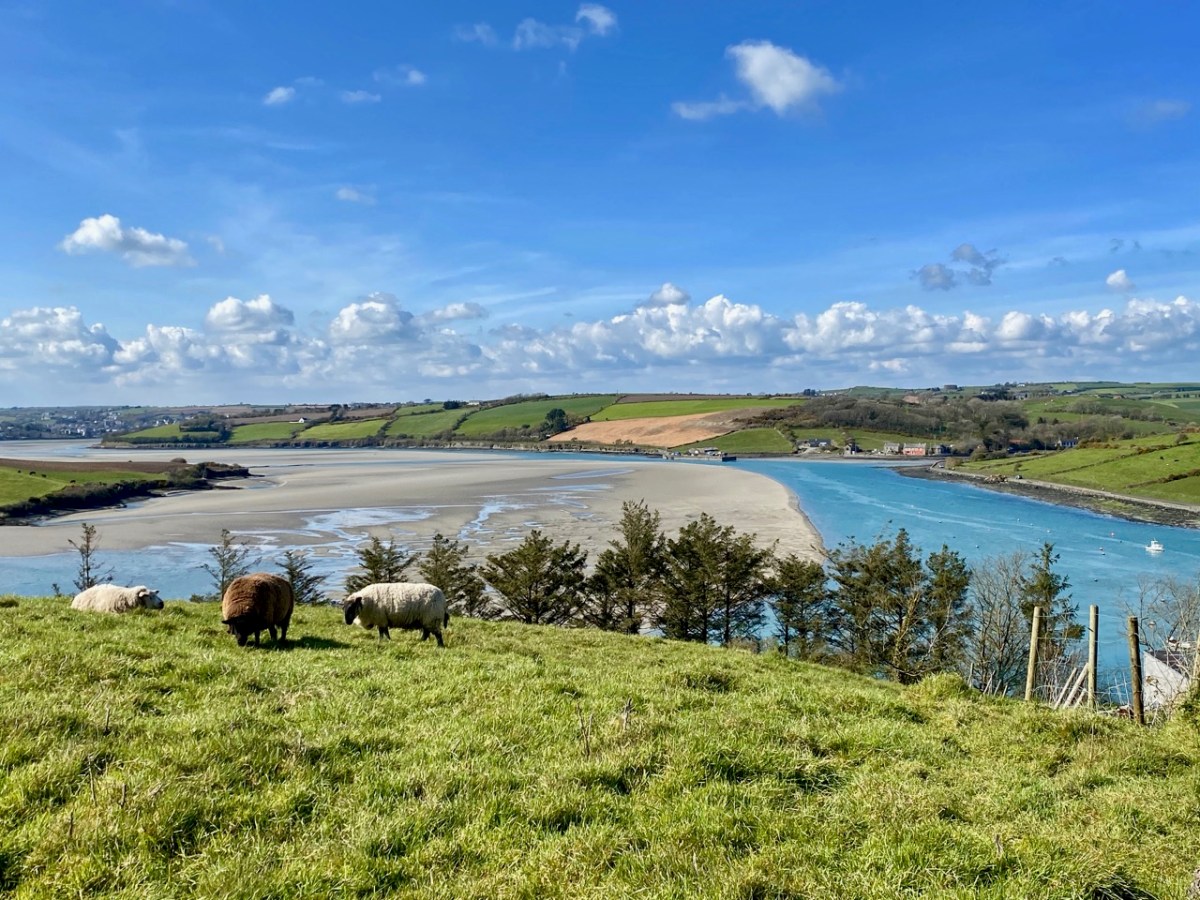
I am pleased when we come to the top of a small rise and suddenly find we have a wide view set out below us. On this occasion (above) we were presented with an unexpected prospect of the Ilen River in its broad tidal reaches before it becomes a true estuary. Of course, there are many moments when the view revealed to us is no surprise, as we have trodden so many paths so many times.
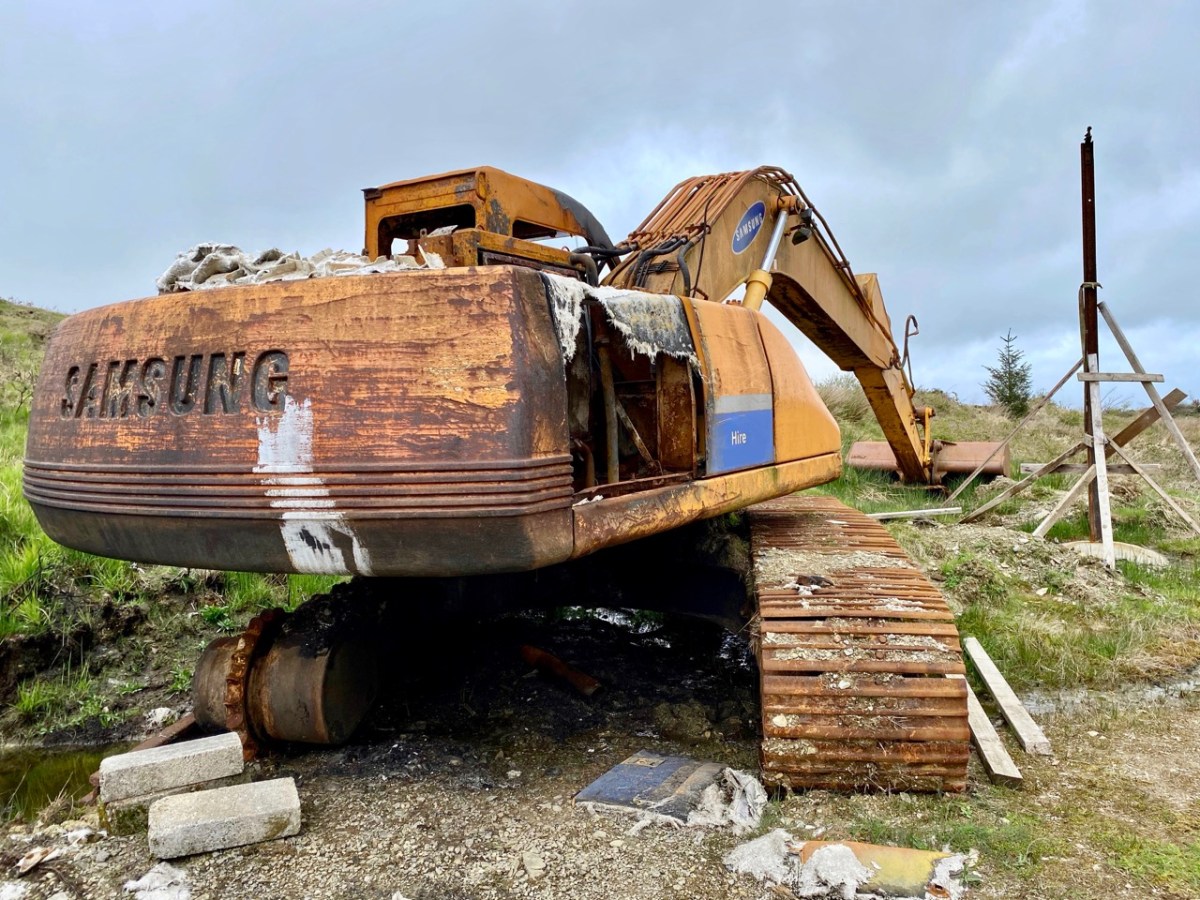
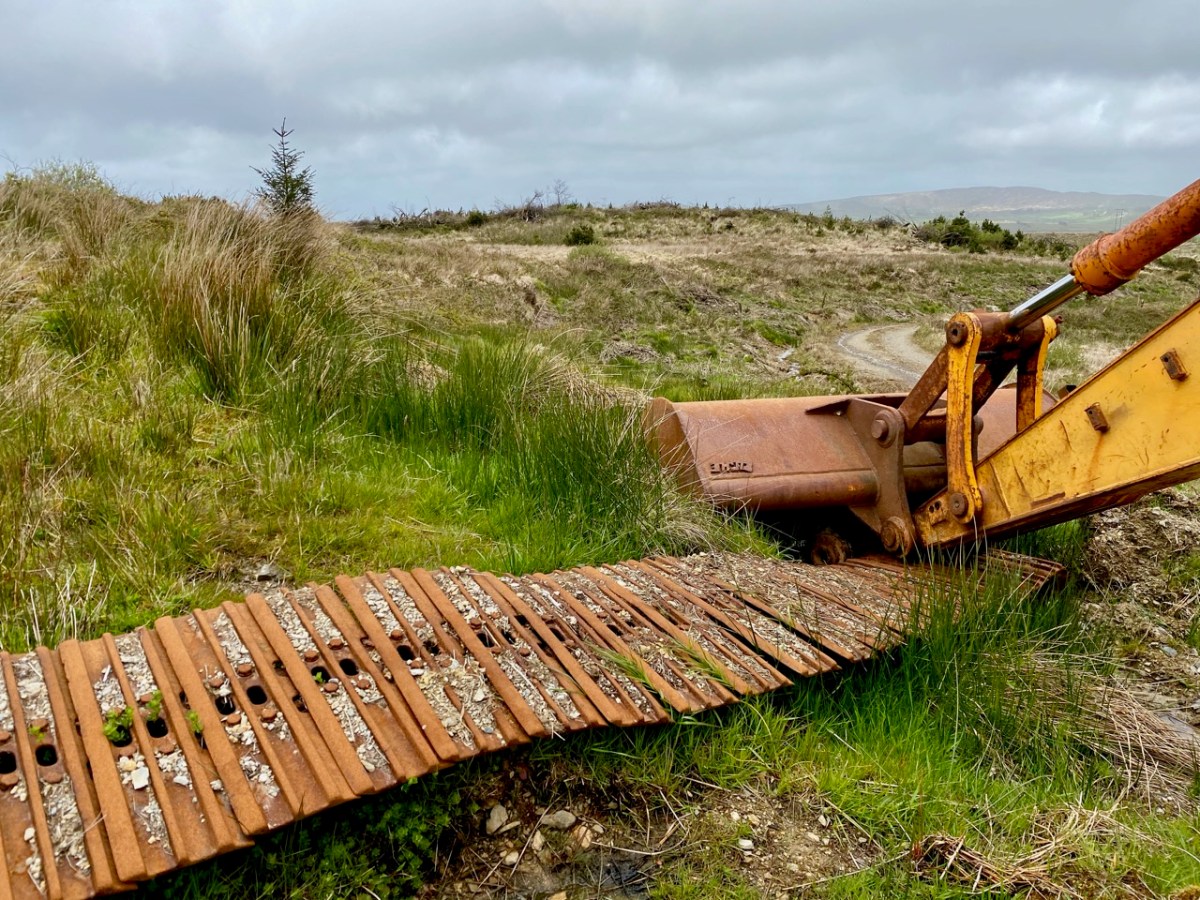
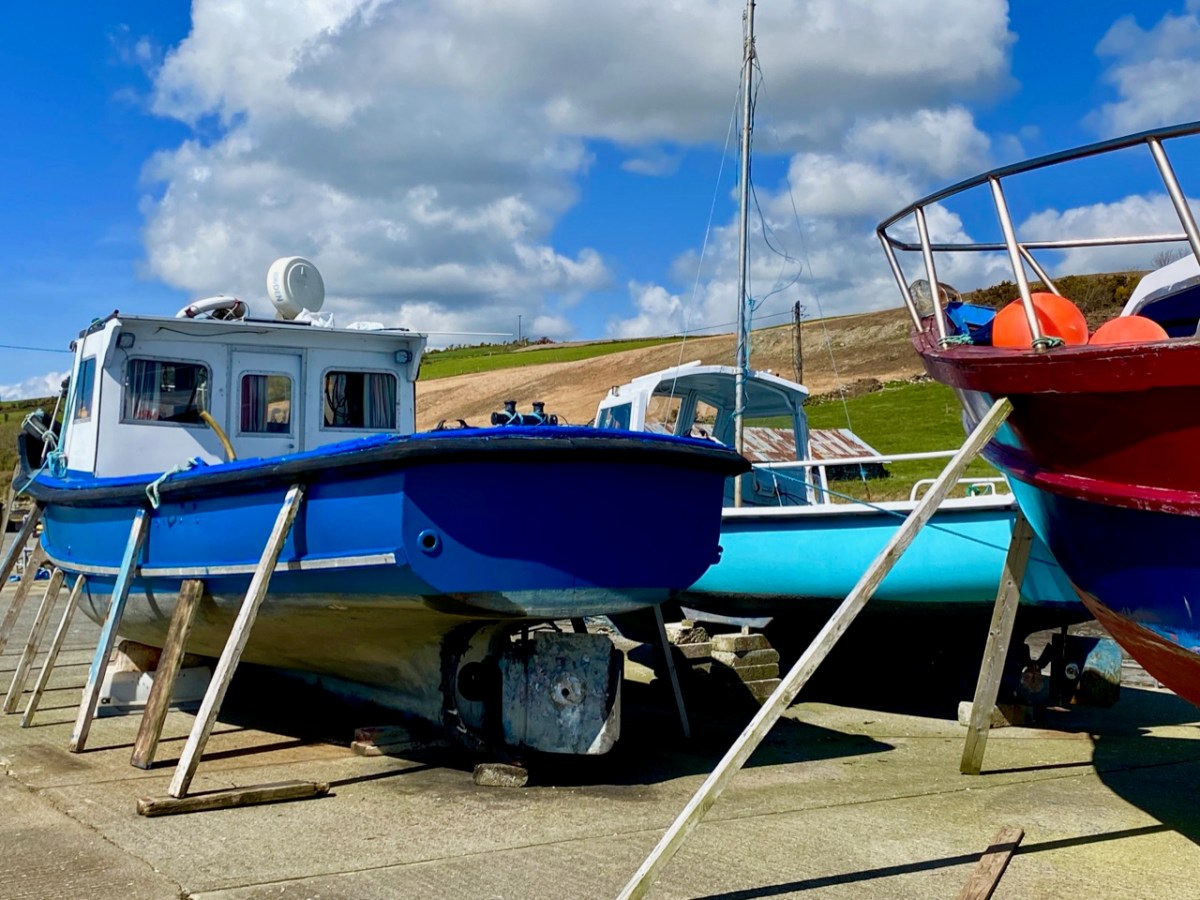
There have to be some contrasts in our travels – and some curiosities. Here, not too far from home, we were presented (below) with the answer to ‘where do all the old rock-breakers go’? We have lived here long enough now, to be familiar with the constant sound, day and night, as landscapes are broken down and smoothed off in order to ‘improve’ pasture for the farming industry: it’s a conundrum for the archaeologists among us who can see the danger of ancient history written on the land being swallowed up in the name of progress.
There is still so much history which remains visible, of course. This (below) was a thriving established village not too far from here dating from pre-famine times. It once had a church, a shop, two schools, mining, and maritime related industries. Now all are gone – or in ruins – and there is barely a family living in the area.
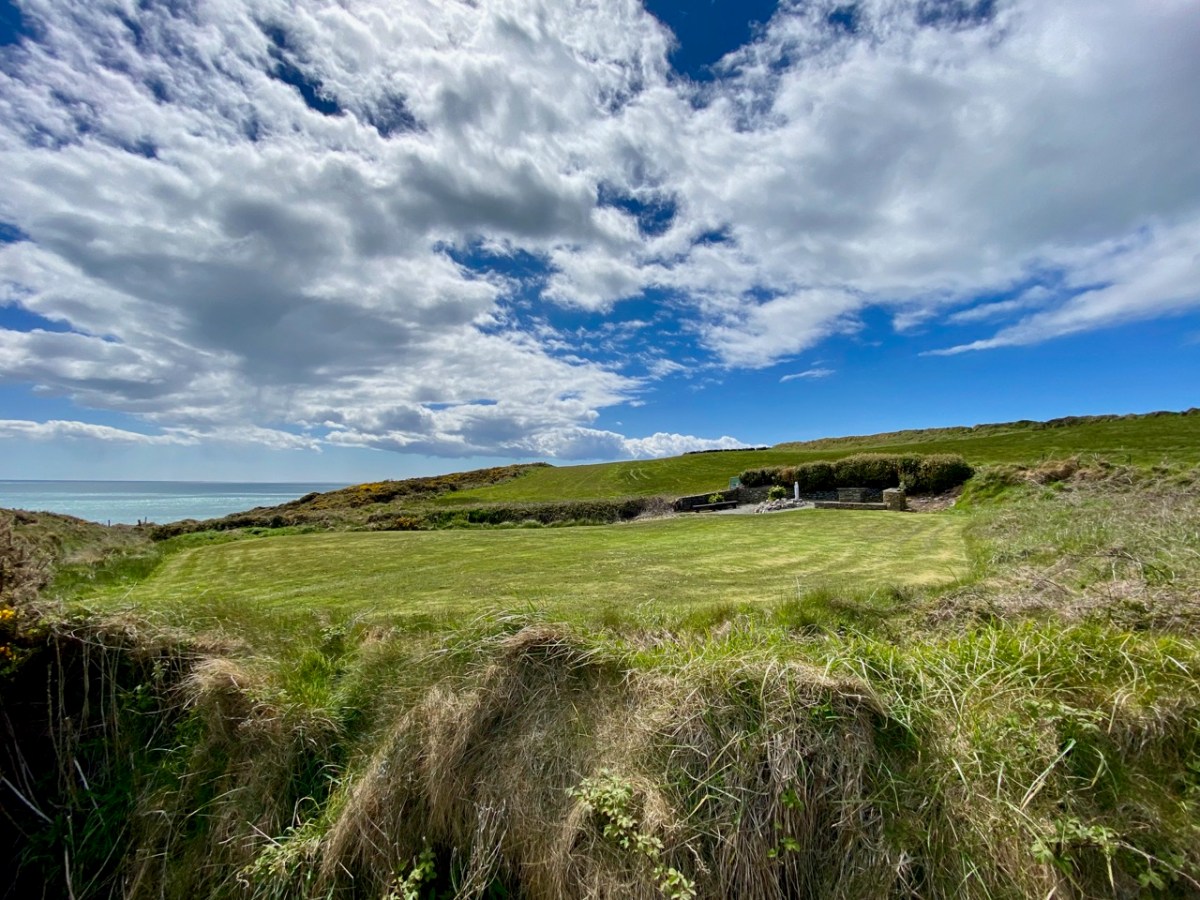
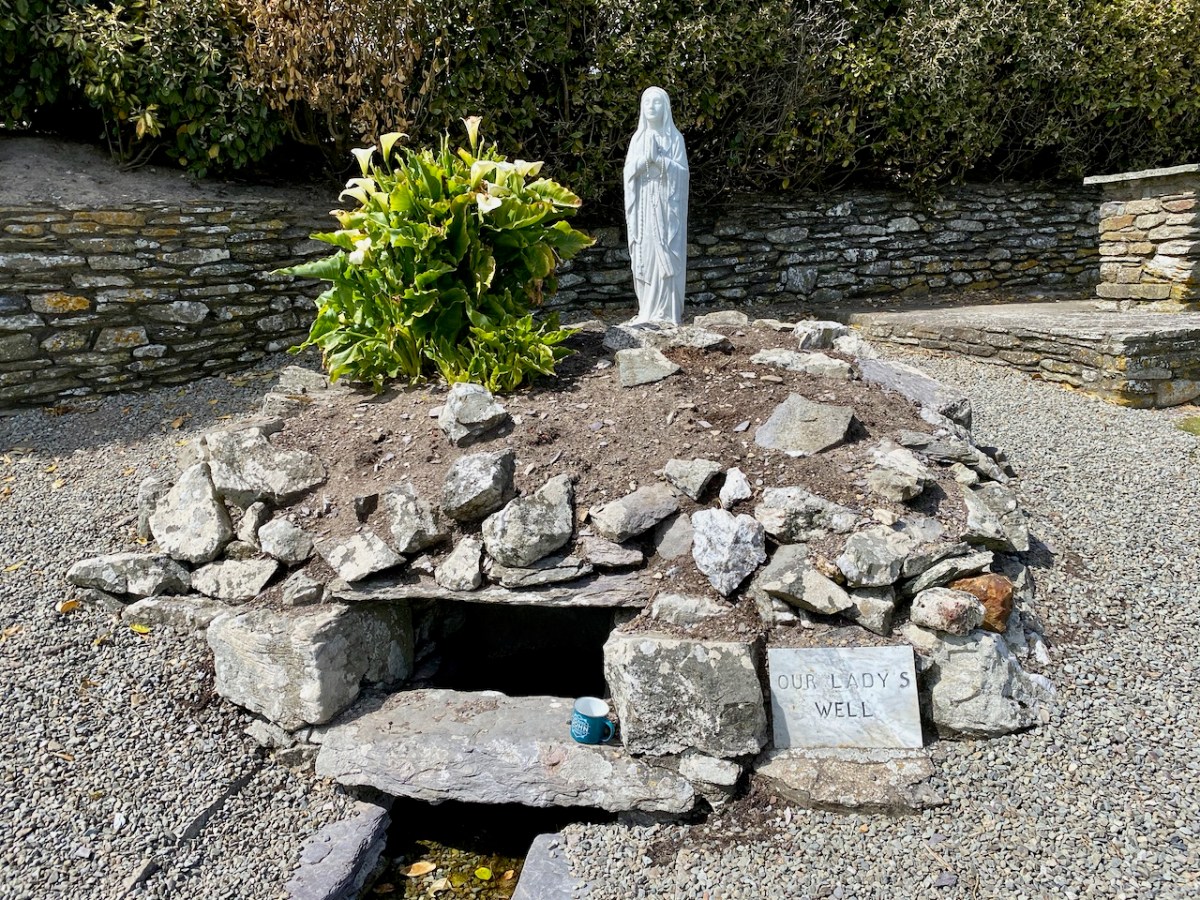
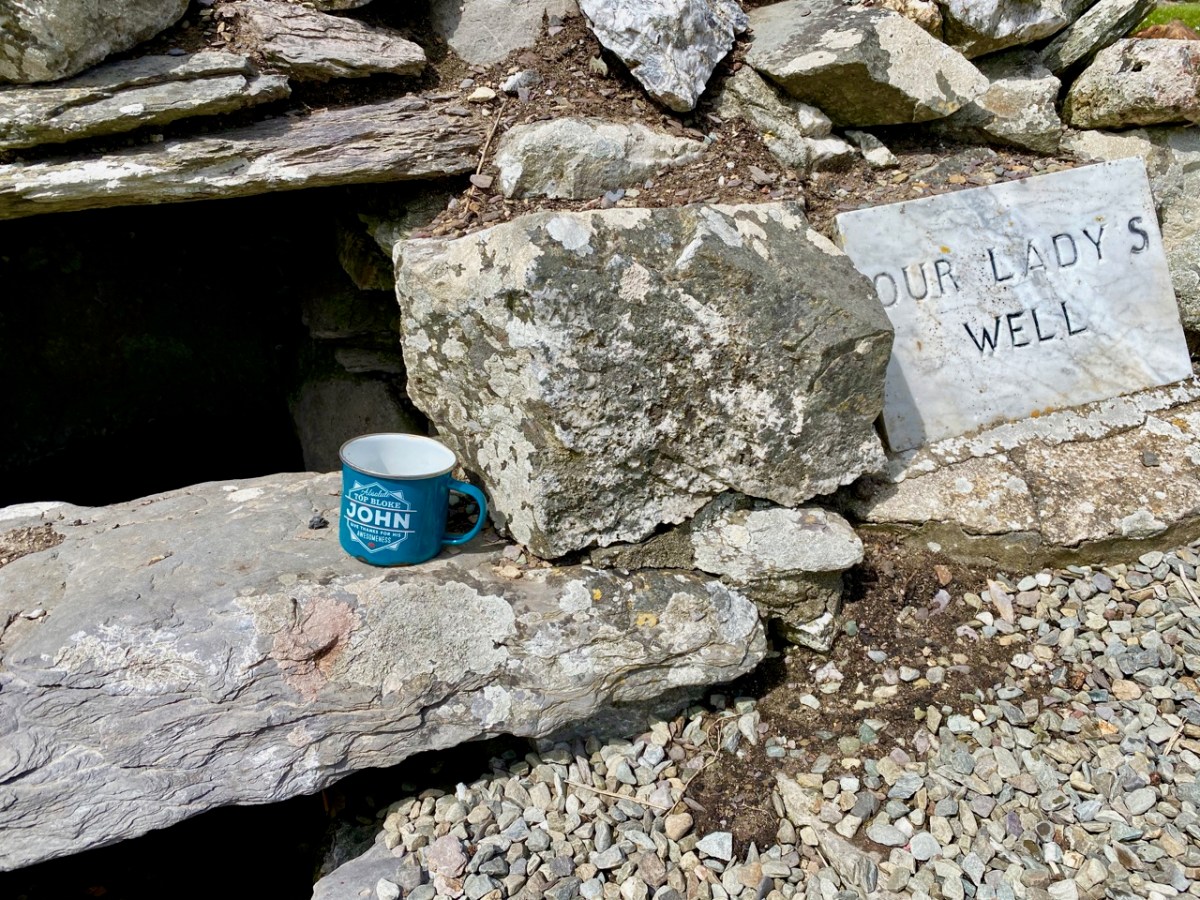
We are always delighted to discover spots such as this (below): again, a long way from any main road and right out in the middle of nowhere – yet a site which is immaculately maintained and celebrated. Note the ‘Top Bloke’ cup…
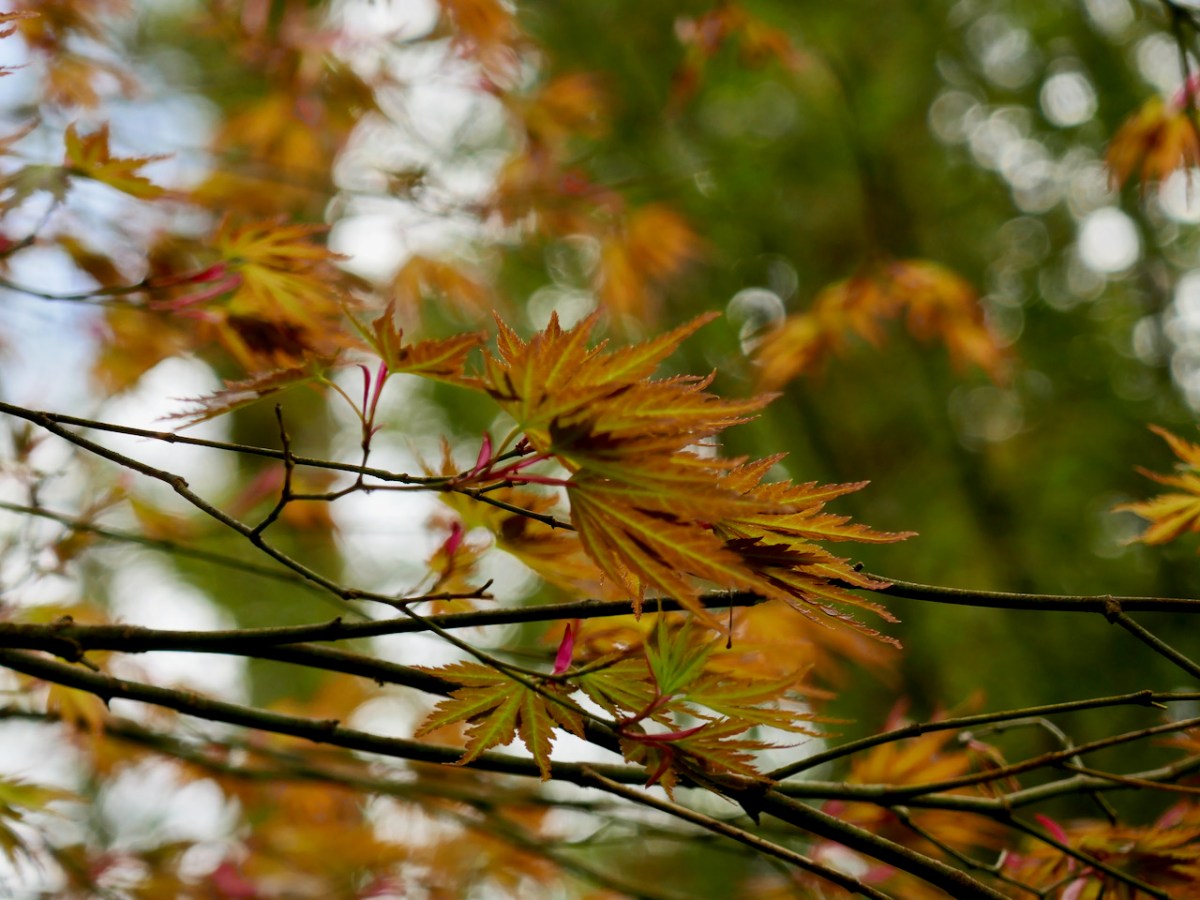
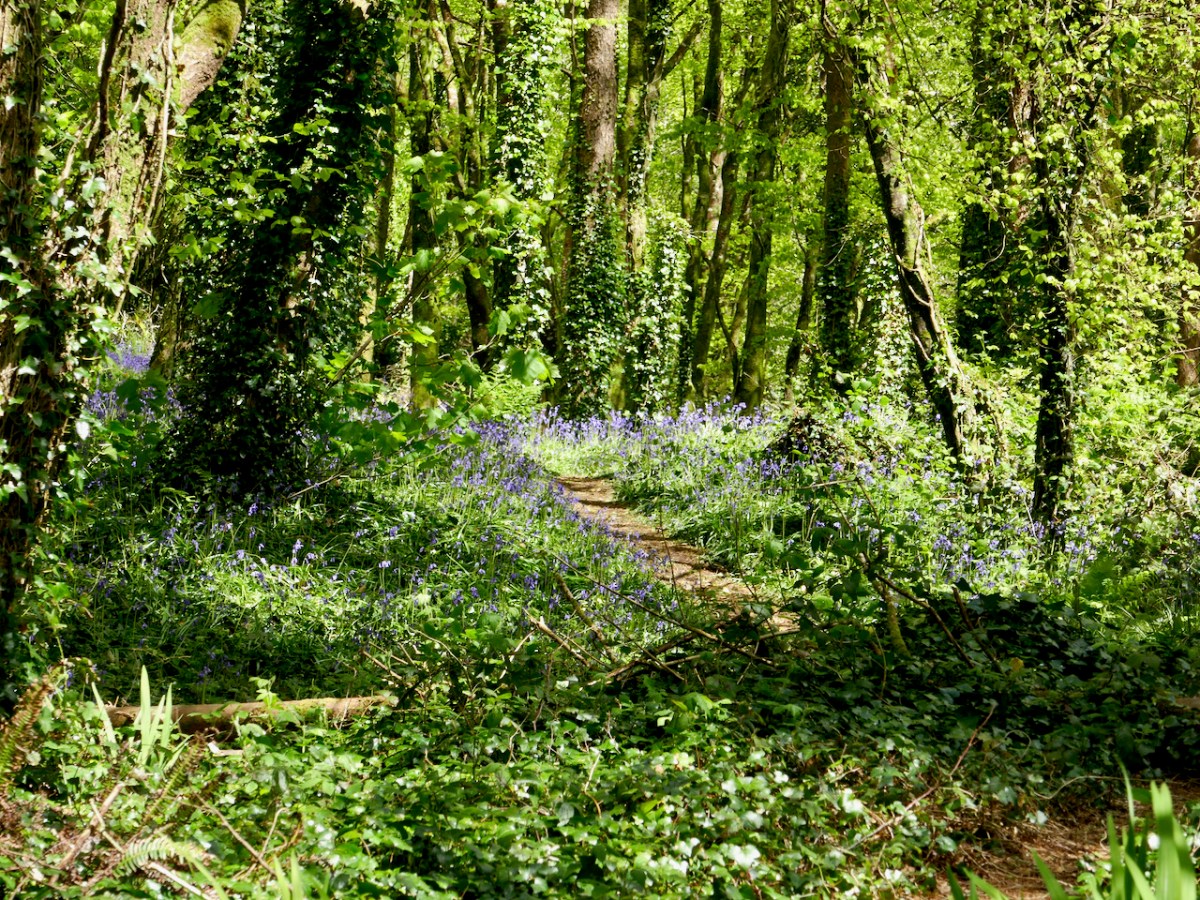
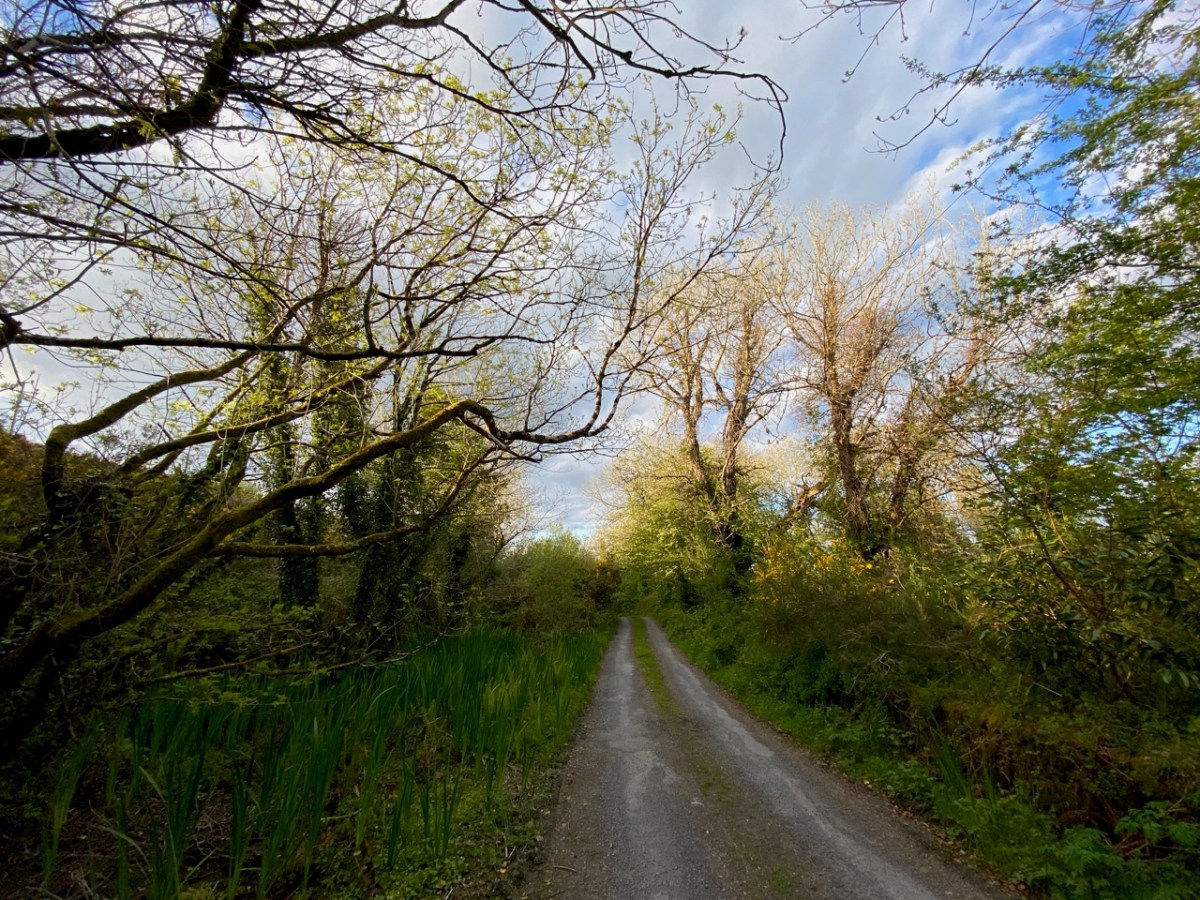
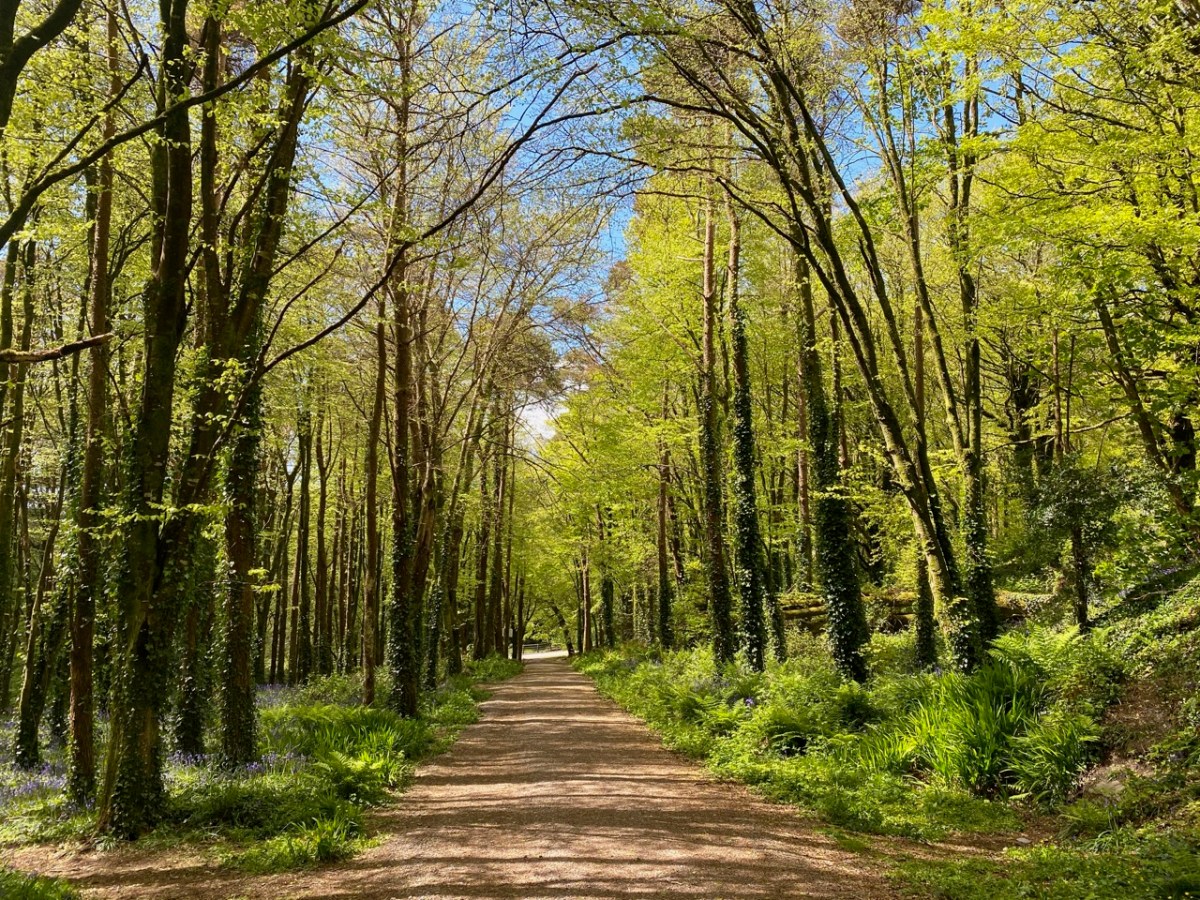
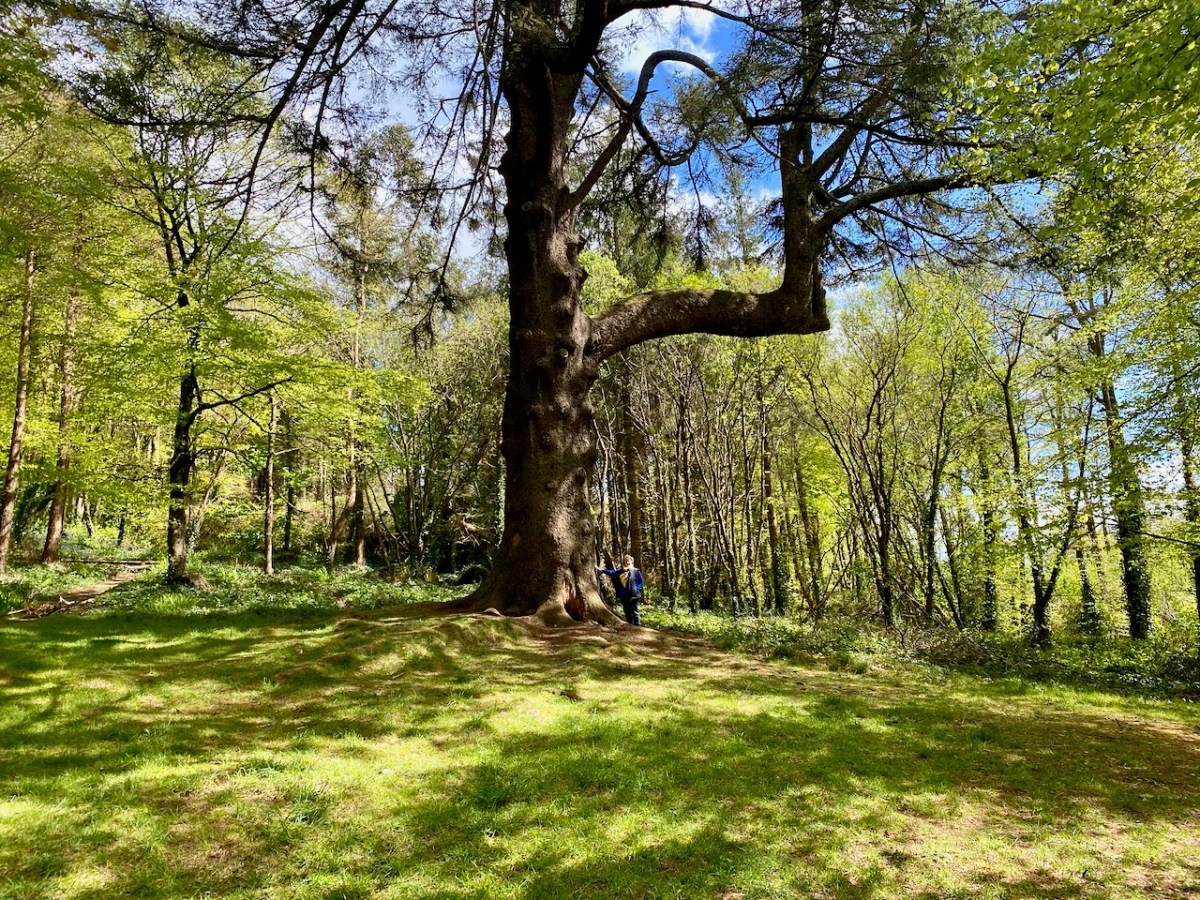
This post could go on forever. I have so many photographs of boundless boreens, captivating seascapes and intriguing sites – enough to revisit the subject in future posts. Let’s close with a woodland walk which is on a West Cork demesne, and open to all: at this time of the year it is magnificently decorated with all the spring wildflowers and vivid young shoots creating a green cloud in the tree canopies.
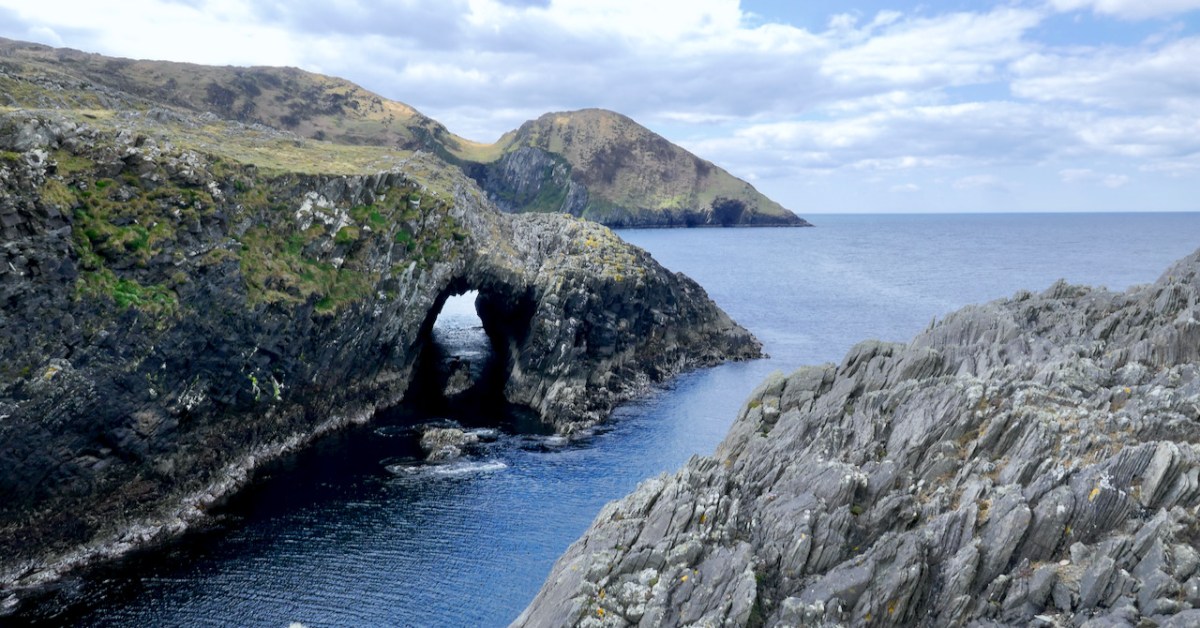
Drawn by the lure of sea-arches, we visited Lackavaun this week. Wild, remote and uninhabited now, but it wasn’t always so.
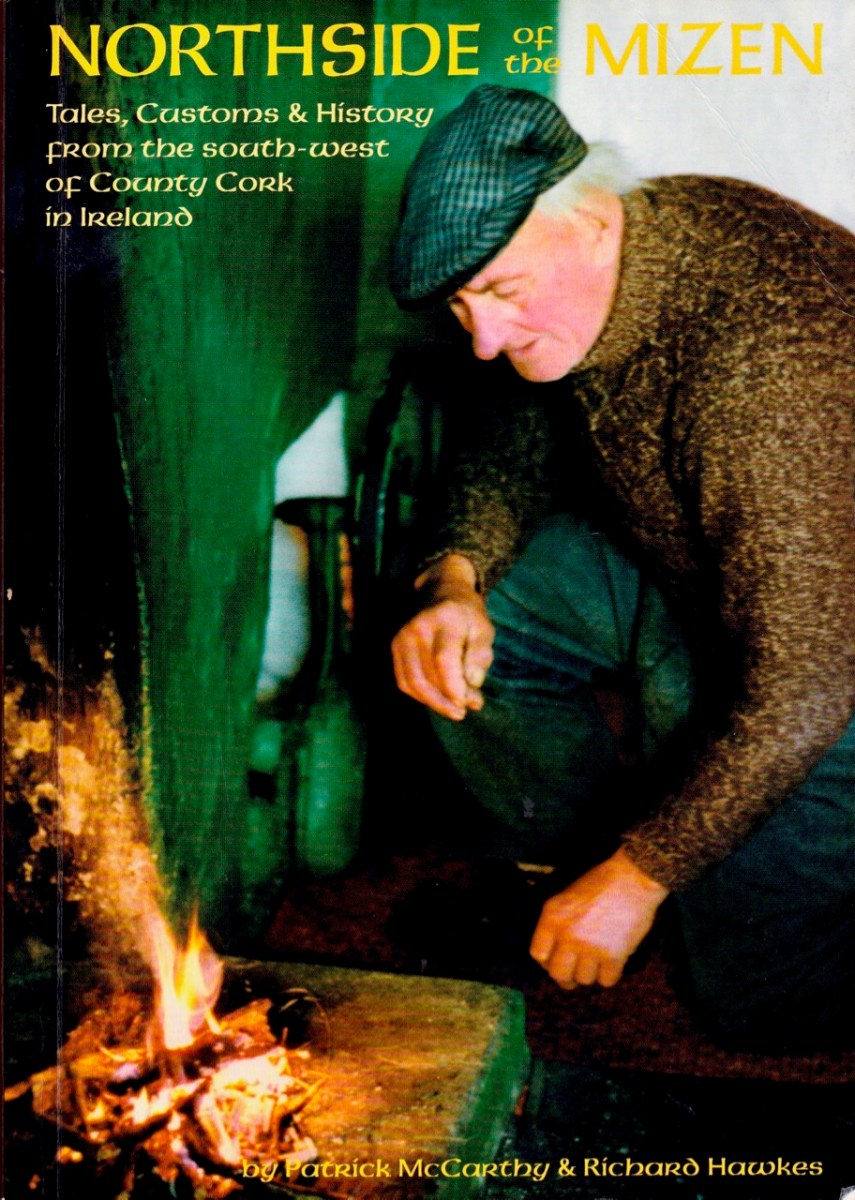
We’ve written before about Northside of the Mizen by Patrick McCarthy and Richard Hawkes, with illustrations by Thelma Ede. Published in 1999, it’s still available. I am drawing on this book for information about Lackavaun, with gratitude to the authors for all the work that went into this marvellous compendium of Tales, Customs and History.
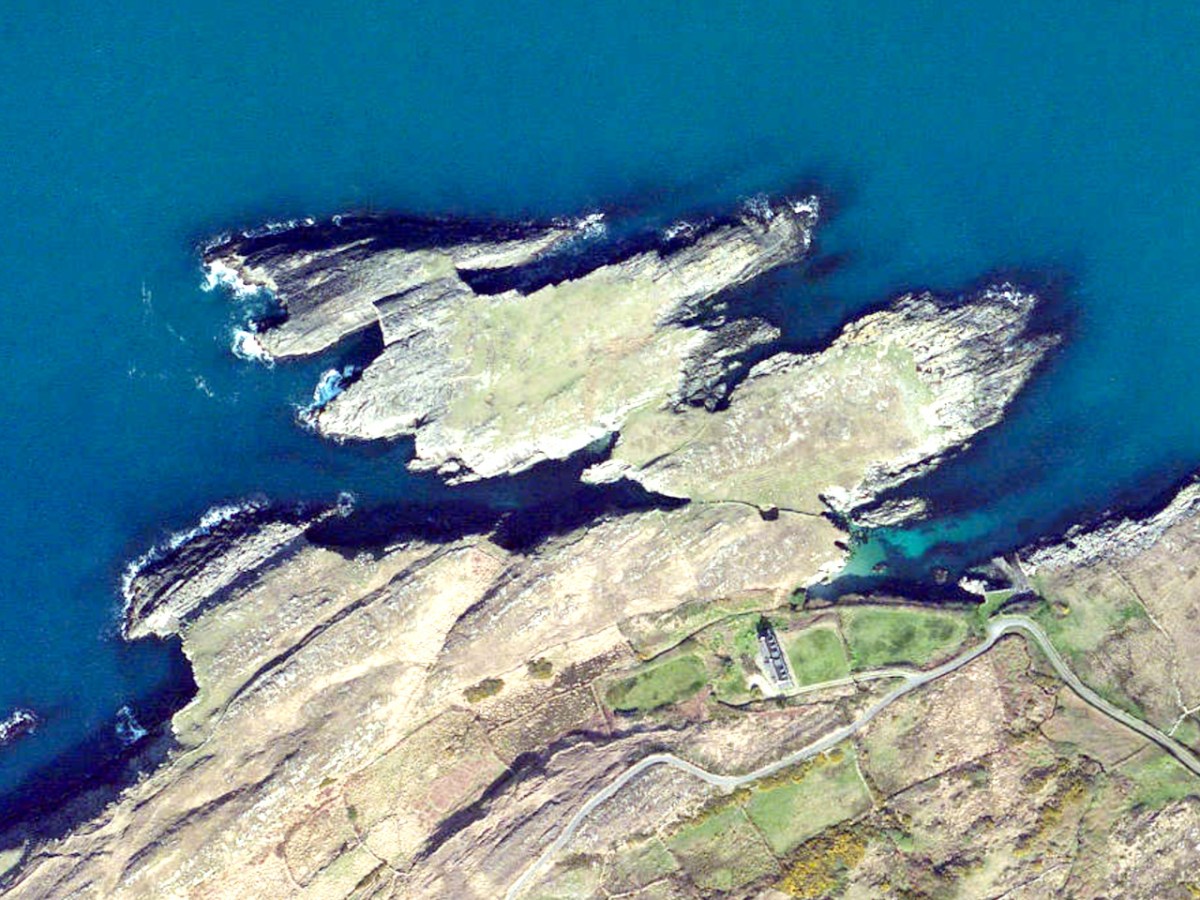
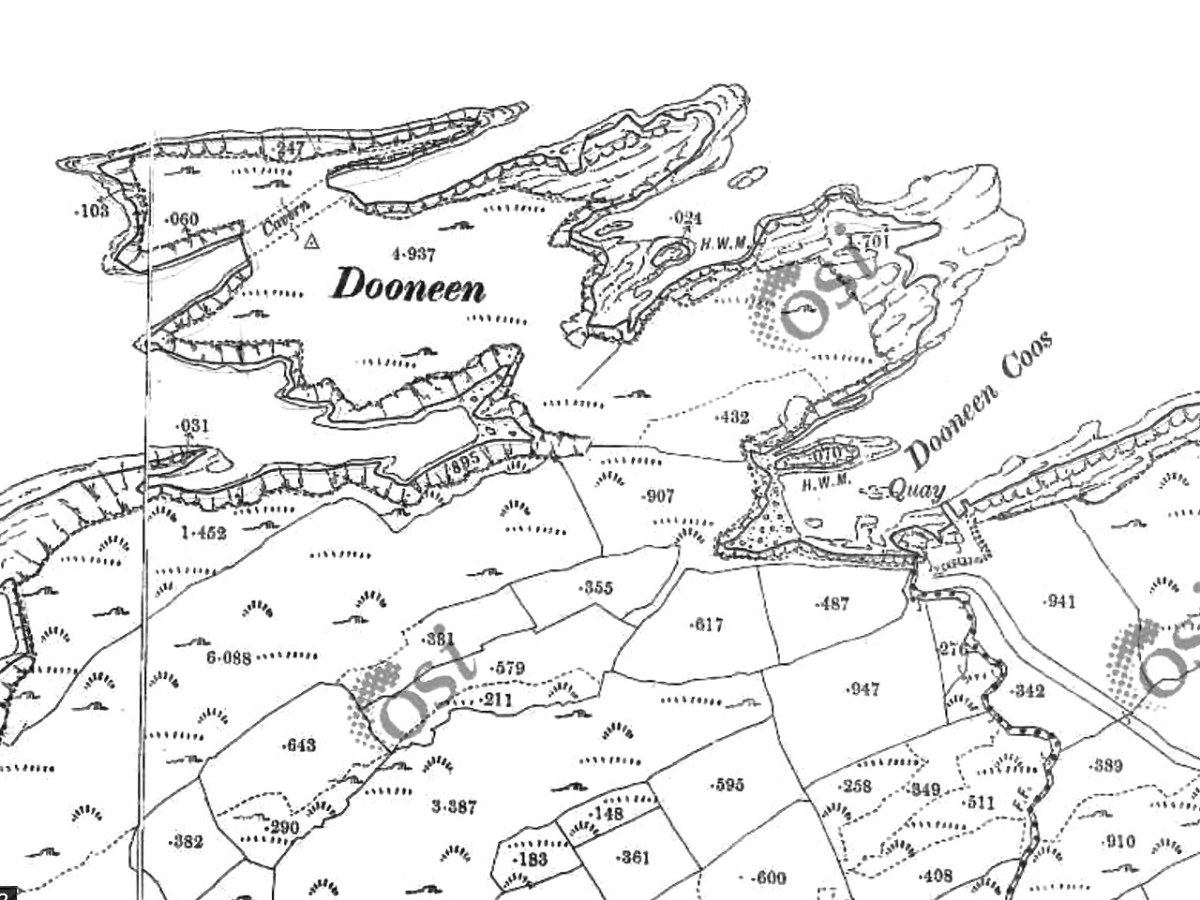
As you can see from the map, the main feature of Lackavain (leaca bhán – white slabs) is a rugged and bare peninsula. Not very promising, you might think. But see that sheltered spot on the south-eastern end – a grand place for a little quay. It was used for many purposes – fishing, of course, but also for getting to Bird Island. And even though there are no houses on the peninsula now, and none on the historic maps, we came across evidence of cultivation, in the form of potato ridges.
The peninsula we explored, with good friends Con and Una, was traditionally known as the Meallán (pronounced mal – awn, meaning a small knoll). It is also labelled Dooneen (Little Fort) on the historic 25inch map, and the harbour Dooneen Coos. This is rendered as Doonleen on the Historic 6inch map, which looks like it might be a misprint, since there isn’t a sensible translation. Northside doesn’t use either of those names.
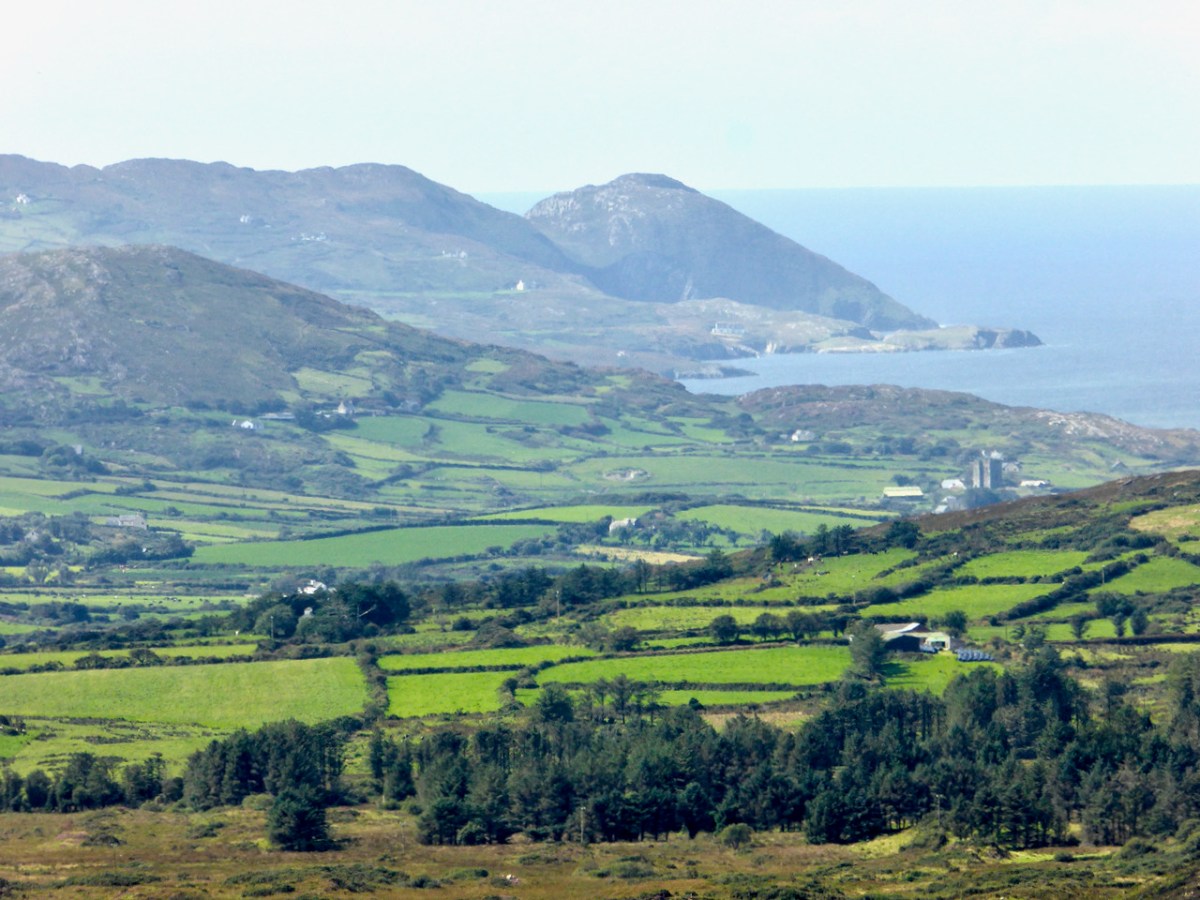
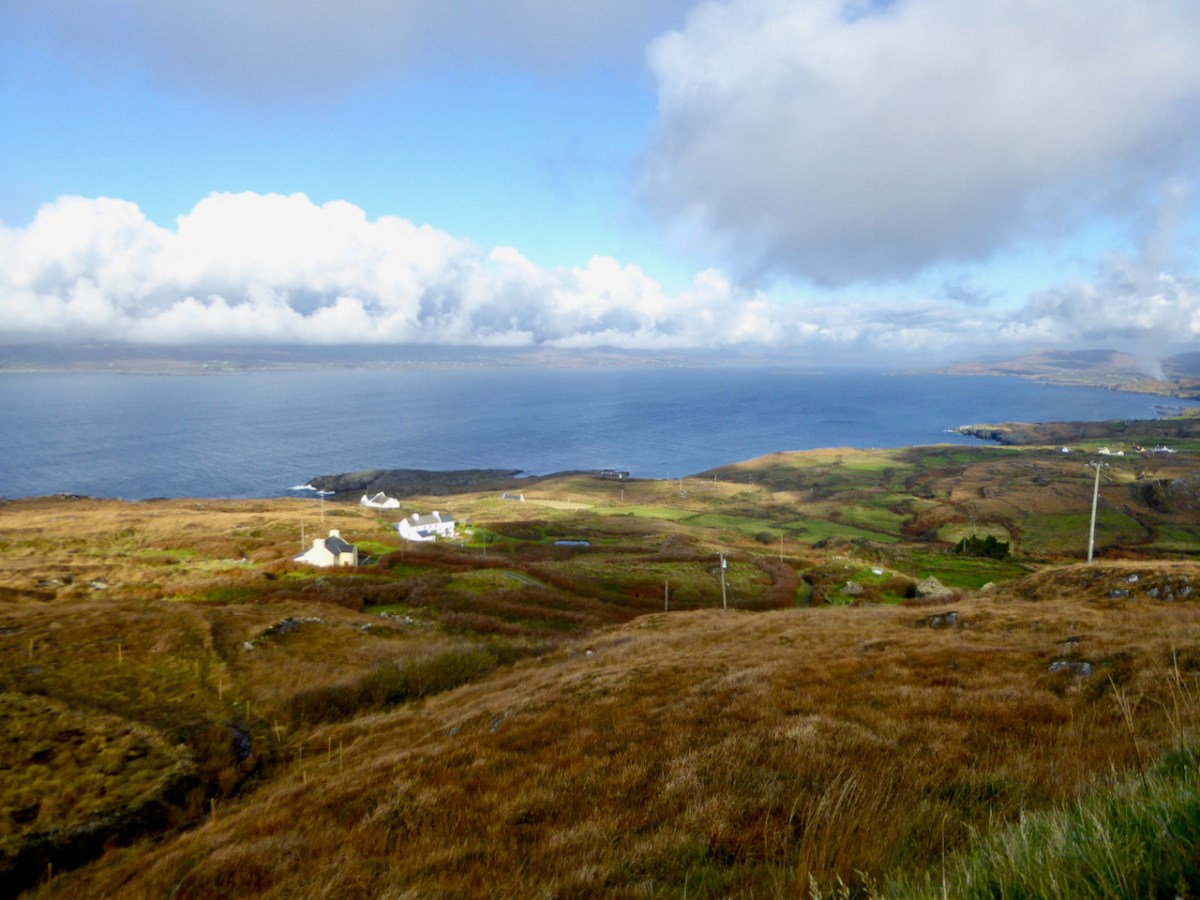
The photograph above was taken from Mount Gabriel. The peninsula we are visiting, The Meallán, in the townland of Lackavaun, is the land that projects into the sea at the top right. Can you make out the sea-arch?
The Northside of the Mizen says of this place:
The first settlers may well have been those from the Iron Age who developed the dun (promonotory fort) at Meallán in Lacakavun, the remains of which still exist. The name Dunkelly (Ceallach’s Fortress) may have derived from this fort and was the name for the whole of the Northside area in the past.
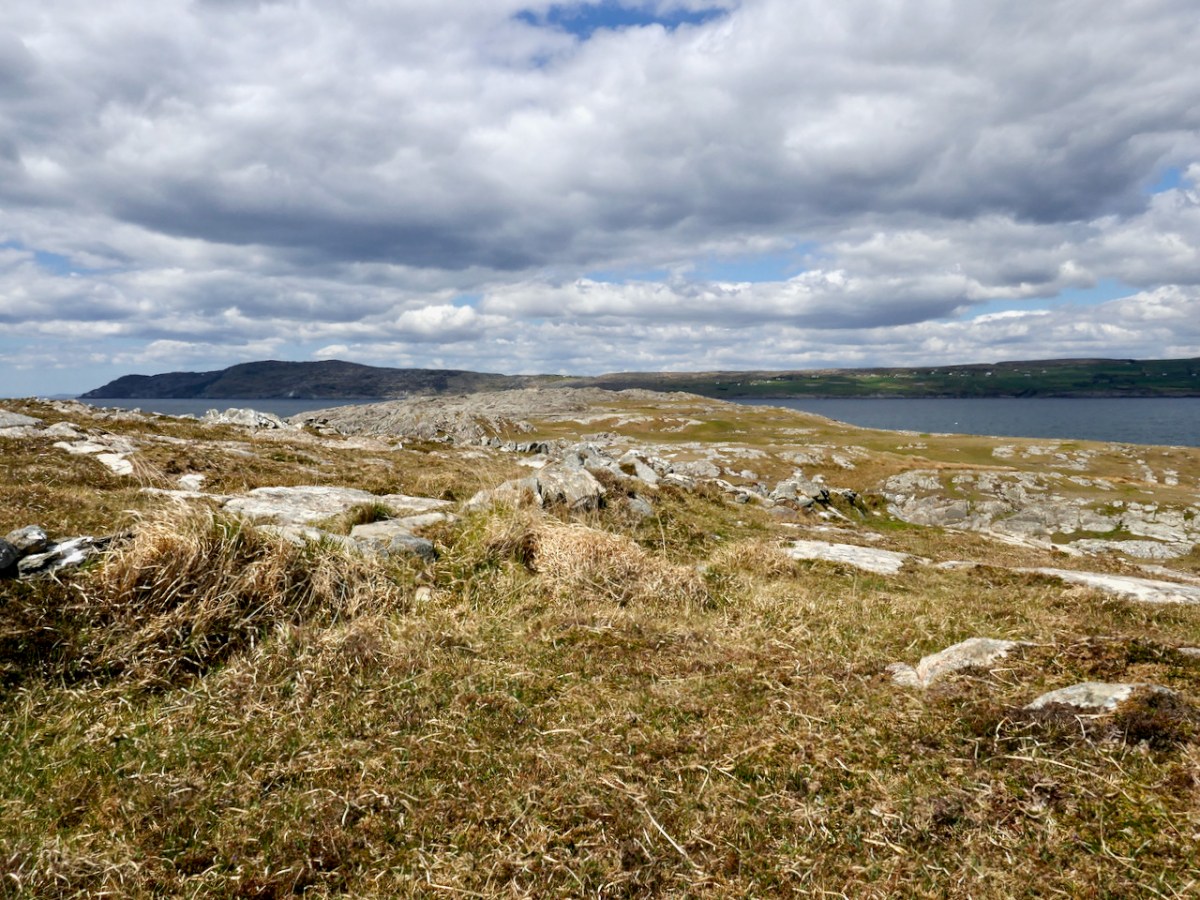
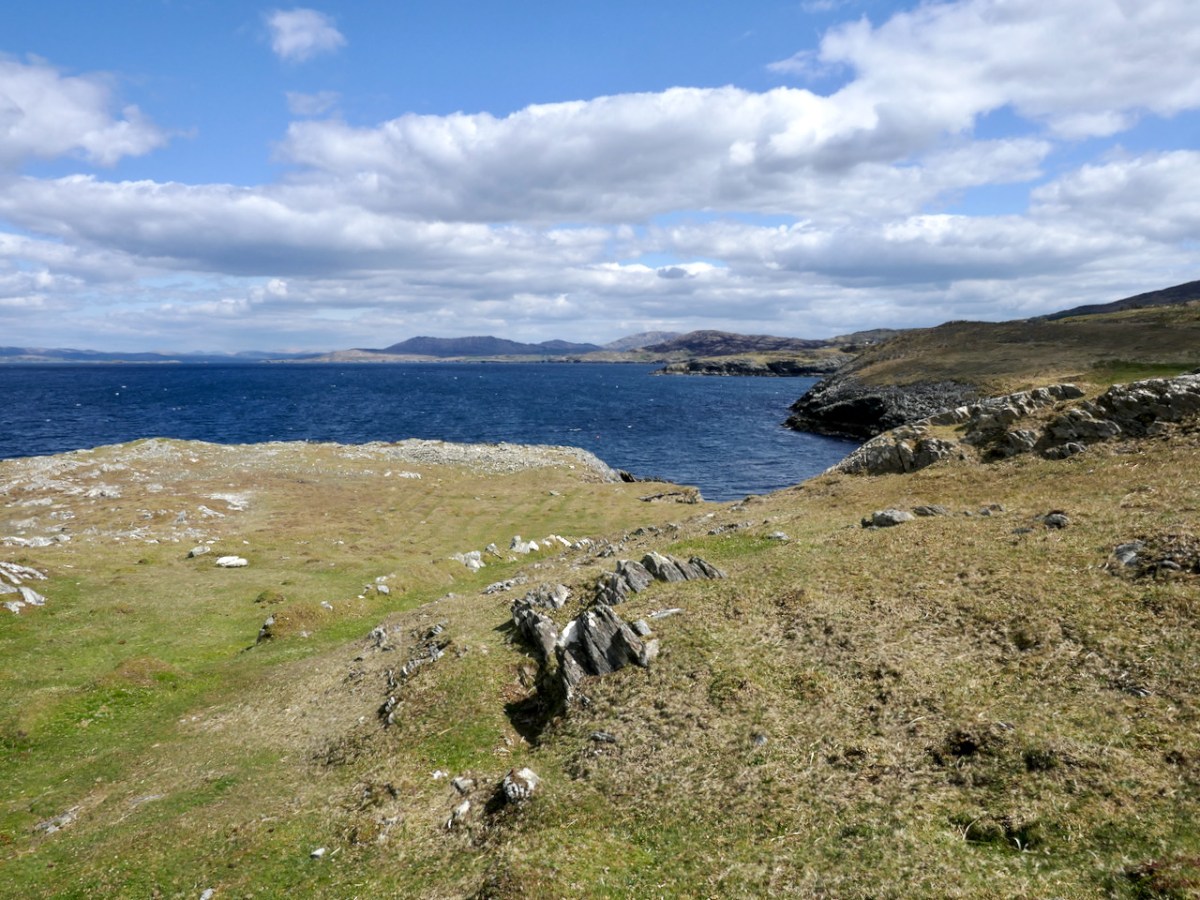
Looking out in to the Meallán – the knoll is straight ahead
This is intriguing! The name Dunkelly is nowadays reserved for two townlands to the east of Lackavaun. The Cailleach (a more usual spelling, pronounced a bit like Kye-lock) is of course the Old Woman, the Hag, the wise woman prominent in Irish folklore. This area, in fact the whole of the Mizen, is the ancestral territory of the O’Mahonys. Another family associated with this area is the Canty clan. Robert has written about Canty the Pirate and we did visit his Cove and his Pirate Steps on this occasion.
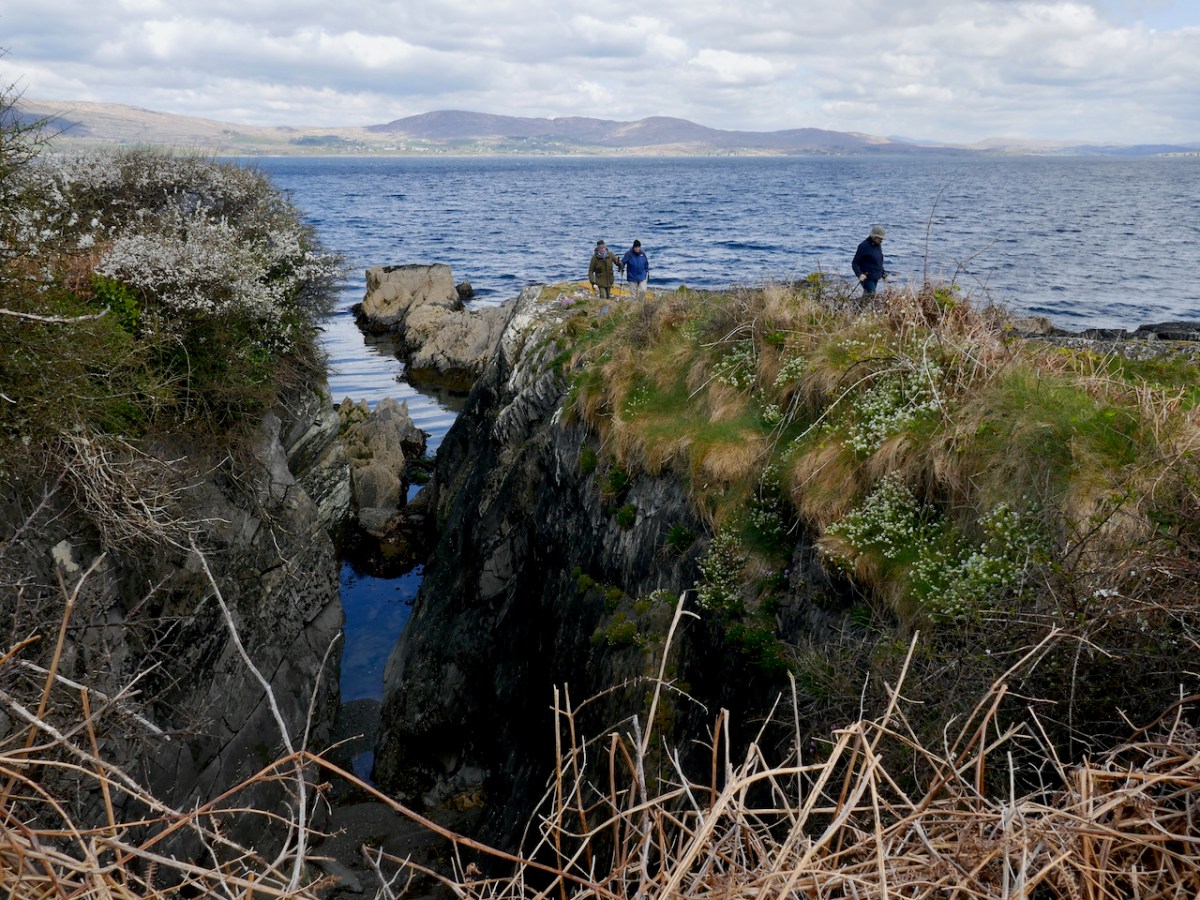
Finding the pirate steps again after a few years took a bit of searching and wandering around headlands but here they are, in all their slippery treacherous steepness
But Northside of the Mizen has another take on the Cantys:
In the early seventeenth century the Northside was recorded as being Dunkelly (Dunnekilly) and owned by the bardic O’Canty family, who were possibly bards to the O’Mahonys of Dunmanus Castle. The O’Canty’s took part in a rebellion in 1641, when they attacked Crookhaven and as a result their land was confiscated and granted to an Englishman, Sir William Petty.
Northside goes on to enumerate the population of the area – 11 in 1659, 635 in 1841, shrinking again to 291 people after the famine. By 1911 it was down to 169 souls. Very few people live there now – Northside poignantly estimates it at about the same number as three centuries ago – that is, about 11 people. Some of the houses are holiday homes and so the population rises somewhat over the summer.
Looking down on Lackavaun from the high ground to the south, it is obvious how depopulated it is now
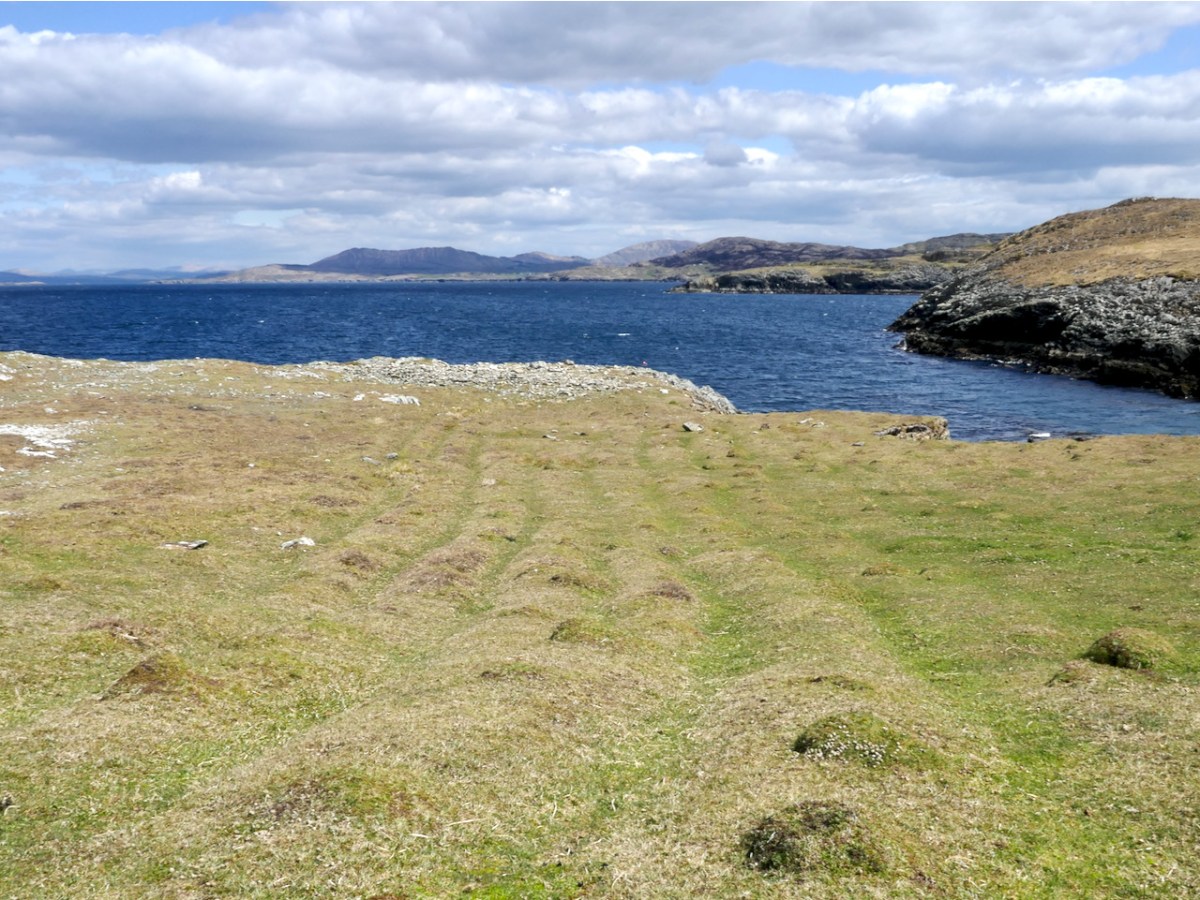
As we know, potatoes were the staple food of most people before the Famine, and this continued afterwards, when the crops recovered. We came across clear evidence of this on the Meallán, in the form of long disused lazy beds, the traditional method for cultivating potatoes in the West of Ireland. It’s impossible to know how recently these beds might have been abandoned. They could be pre-Famine but are more likely to be more recent than that. None of the historic maps show any dwellings on the Meallán itself, so this was a patch to which people came specifically for this purpose, probably building up the soil over generations with sand and seaweed.
The parallel ridges are the tell-tale sign of former potato ridges, known as lazy beds even though they were labour-intensive
Northside has much to say about the practices, and the vocabulary, of potato growing, beginning in February with the Ridge of Graf.
In the first week of February you would begin on ‘the Ridge of Graf’ lazy bed system using a dry, sunny and sloping ground to give an early crop of potatoes. The ‘Ridge of Graf’ system, although hard work, would give you up to 3 times more crop than setting potato seed in a drill. A good supply of manure was used and you would use stable manure (horse or donkey) as it was said it had a better ‘heat to it’ then yard (cow) manure. The stable manure was spread on to the grass and the seed potato placed on top. This was then covered with the sods, cut with a grafán to open a trench on each side, of 18 – 20 inches. This gave you a ridge of about three feet. Soil from the trench was then put up on the ridge. This was called ‘the first earth’. The last shovel of earth from the trench was put up against the edge of the ridge, and with a good pat from the back of the shovel the grua (side of the ridge) was made.
Each tool had its own name and function. The potato spade was inserted as deep as the bucán, or foot rest. The seed potatoes, or sprouters, were covered in earth using a farraheen to fill in the holes.
Around this time of year – the start of May – the little quay was put to good use and local boys and men took a trip to Bird Island.
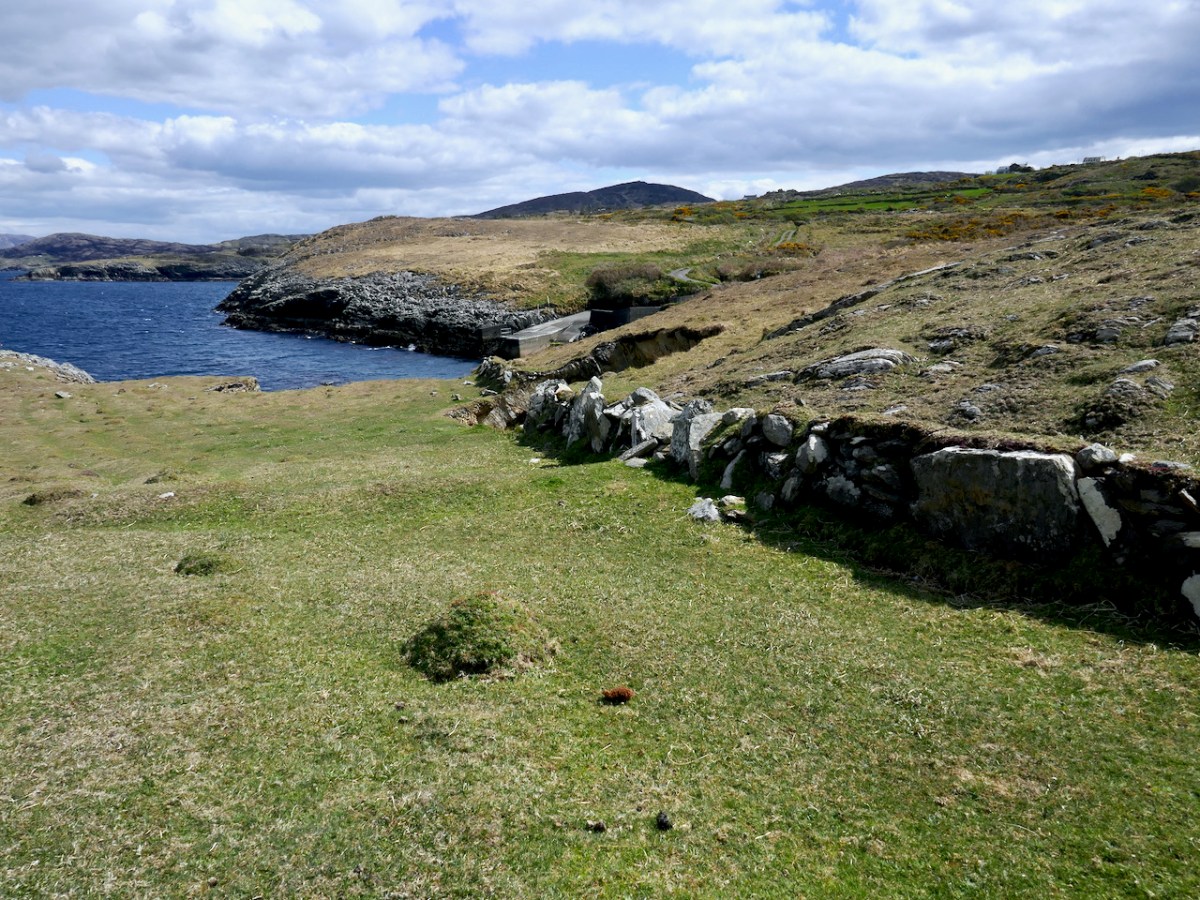
The quay, and an old field wall – impossible to say what period the wall belongs to
This was a tricky island to get on to, there was no landing place and it could only be attempted in calm weather. The first trip was to collect the eggs of the cóbach (the Black-backed Gull). Once ashore, the men attached ropes to iron bars which had been driven into the rock faces, and climbed down the cliffs to gather the eggs.
With the cóbach going mad, it was a tricky job to pull yourself back up with a hand basket and your pockets full of eggs, and often you would end up in a sticky situation!
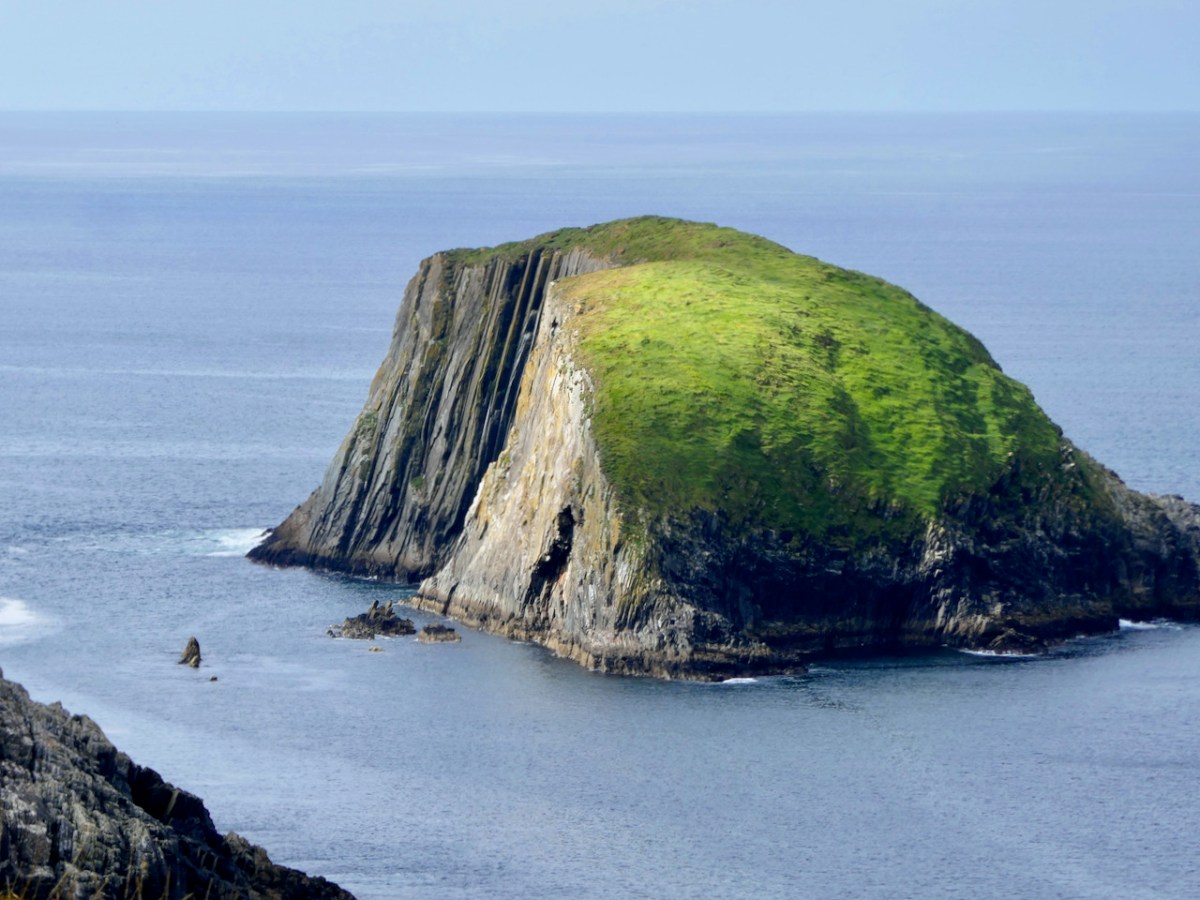
I get vertigo just looking at the picture – can you imagine collecting eggs from those cliffs?
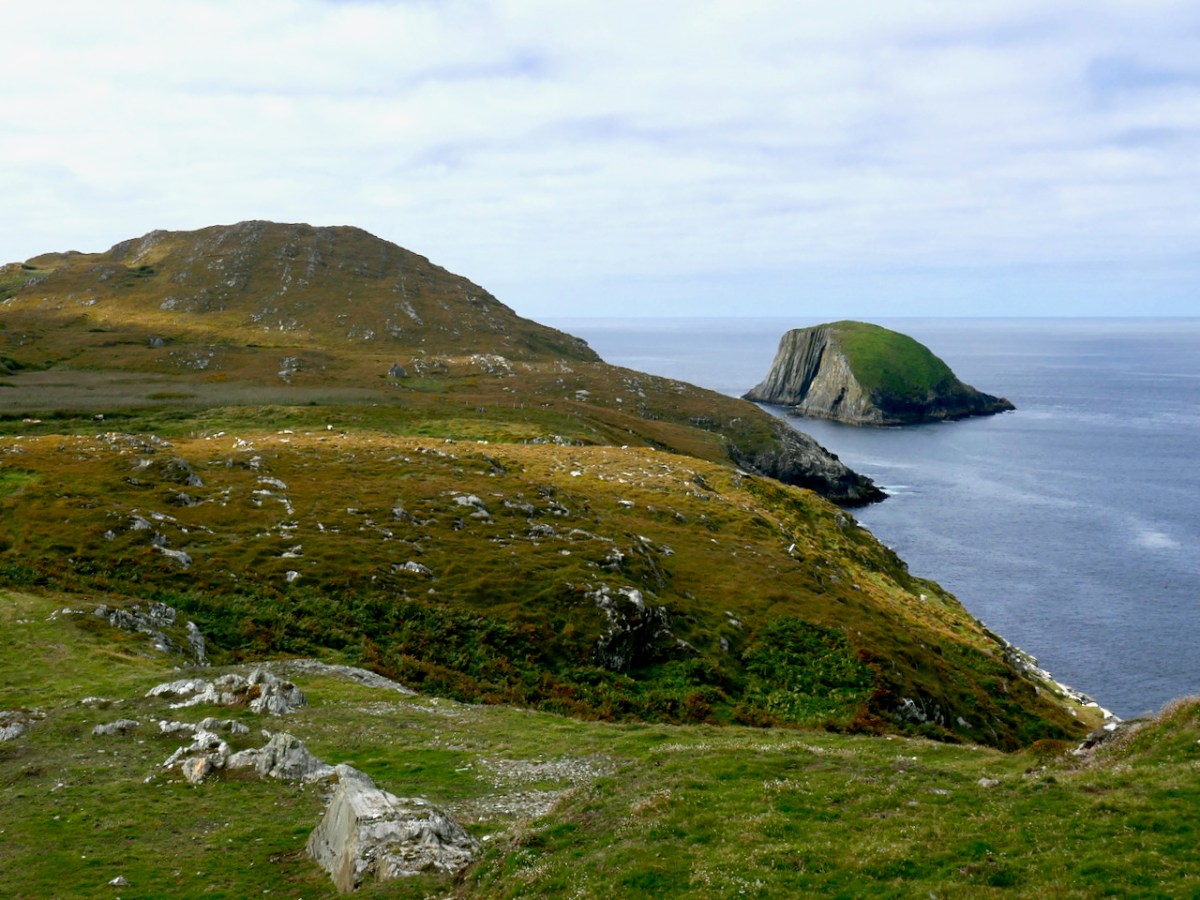
The second trip to Bird Island was to take sheep there for summer grazing. This happened once the Scairivín na gCuach was over – the ‘cold wind of the cuckoo’ that lasted a week or two (it’s happening as I write this) and was generally seen as the last gasp of winter. That’s Bird Island below, this time seen from the west.
It was a great day for the young and fit lads, and at least three would have to go. Fifteen sheep were taken from Canty’s Cove at Dunkelly or the pigeonholes (Cuasnacolúr) on the south side of Meallán. Getting off at the island was a different matter and you needed a still day, as to get up onto the island, even with a gentle heave, was anything but a joke without a landing place. Once you had a man up, a rope was used to haul up the sheep. In the passing of four months on Bird Island the sheep would be as fat as pigs and as wild as the sea around them. It was the very devil to get them off again. By the time you had a brehóg of sheep in the boat, you would be sweating buckets!
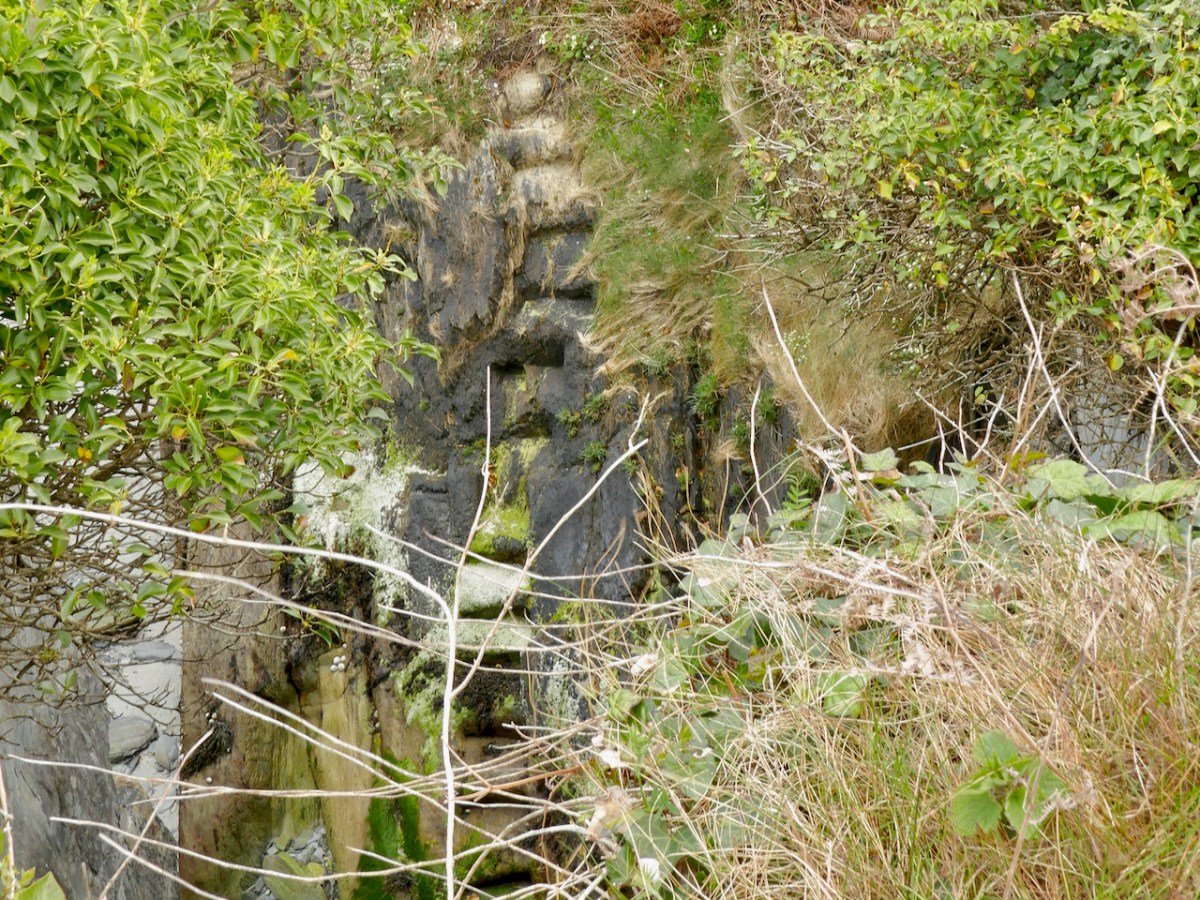
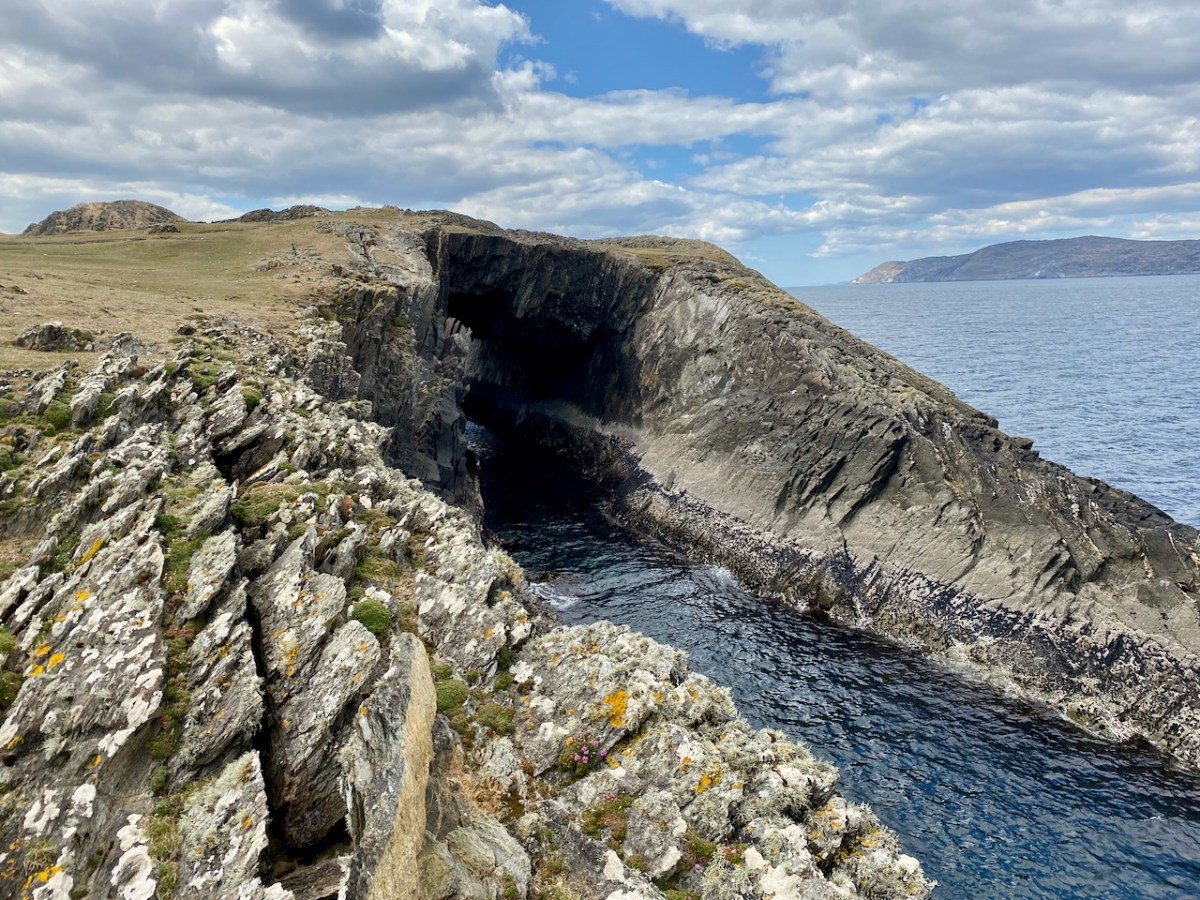
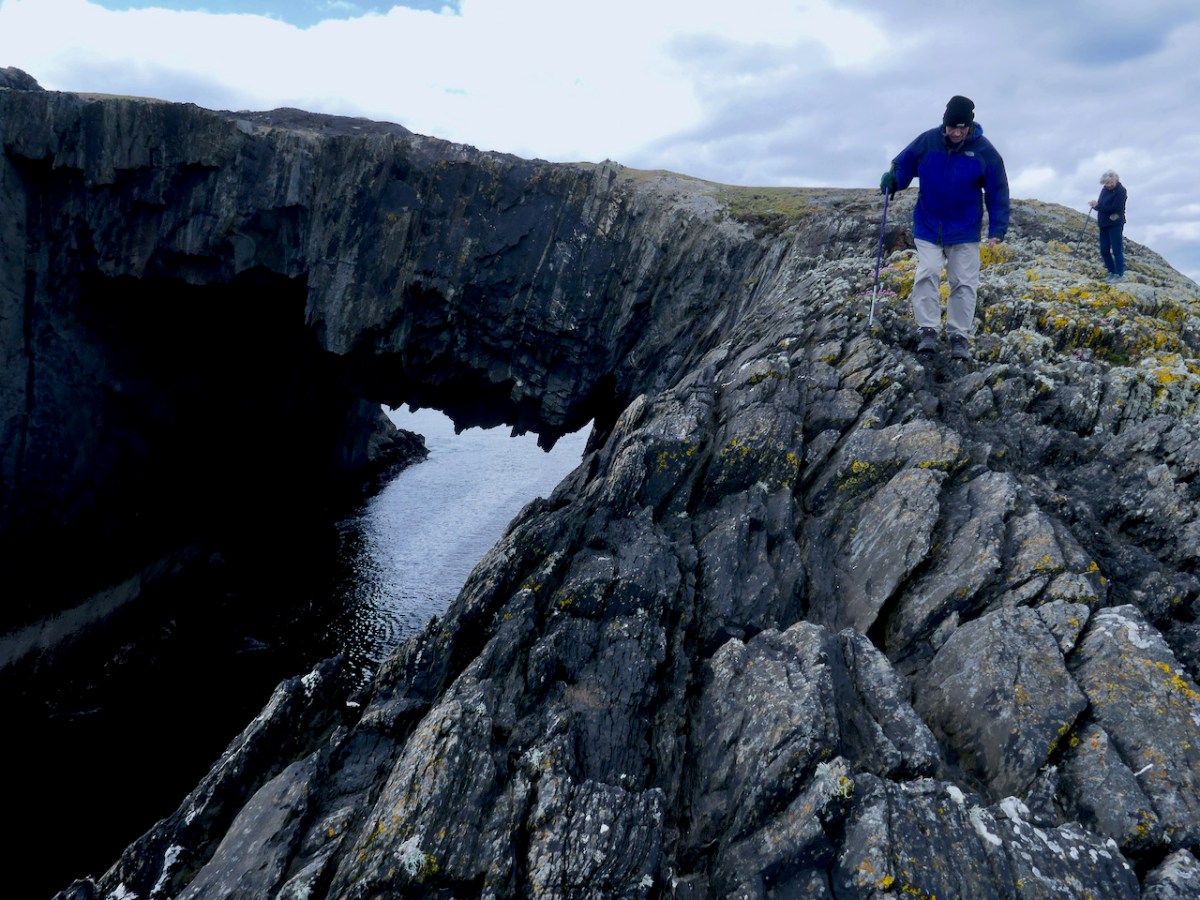
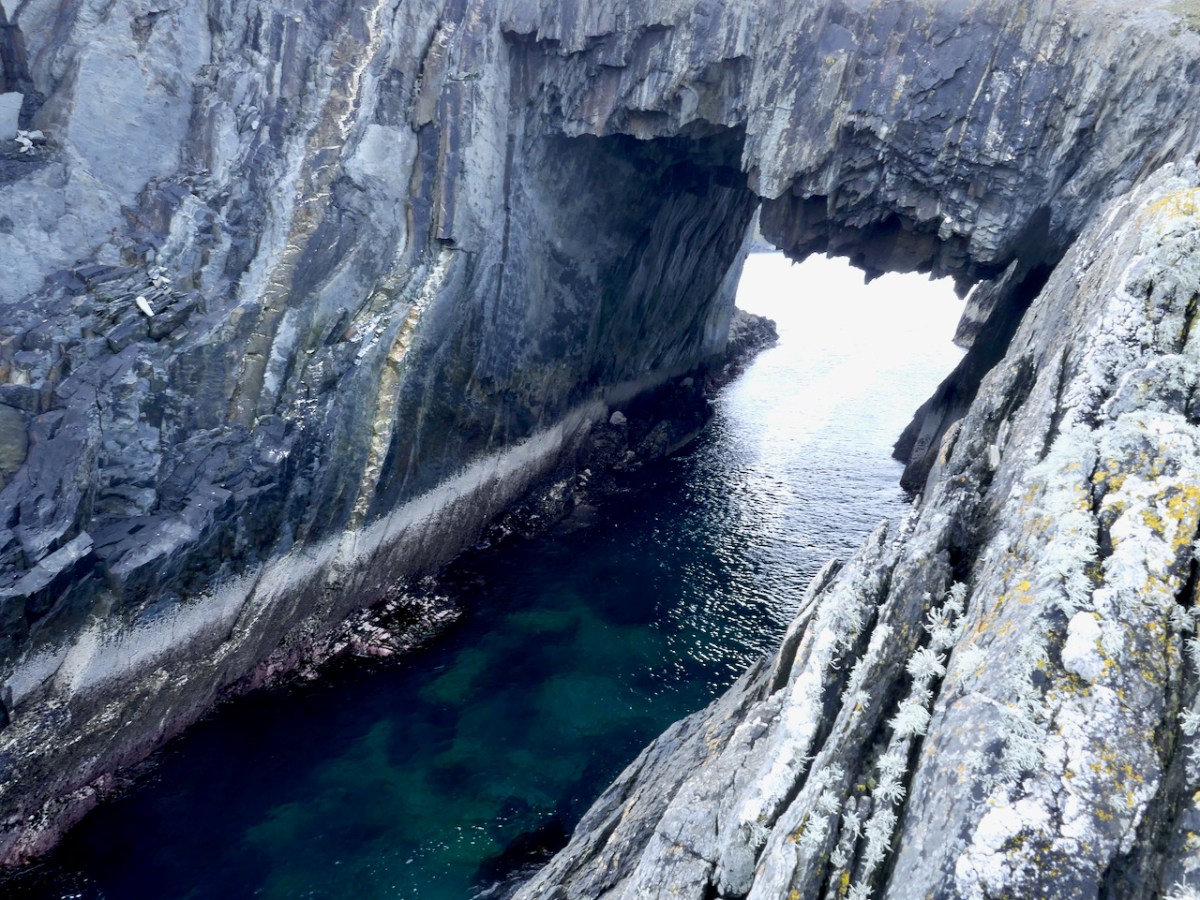
But what about the reason we went there in the first place – those sea-arches? It’s an indescribably eerie feeling to stand on one and see and feel the sea heaving below you.
Your head knows that the chances it will give way under you are minuscule, but it feels dangerous and thrilling nonetheless.
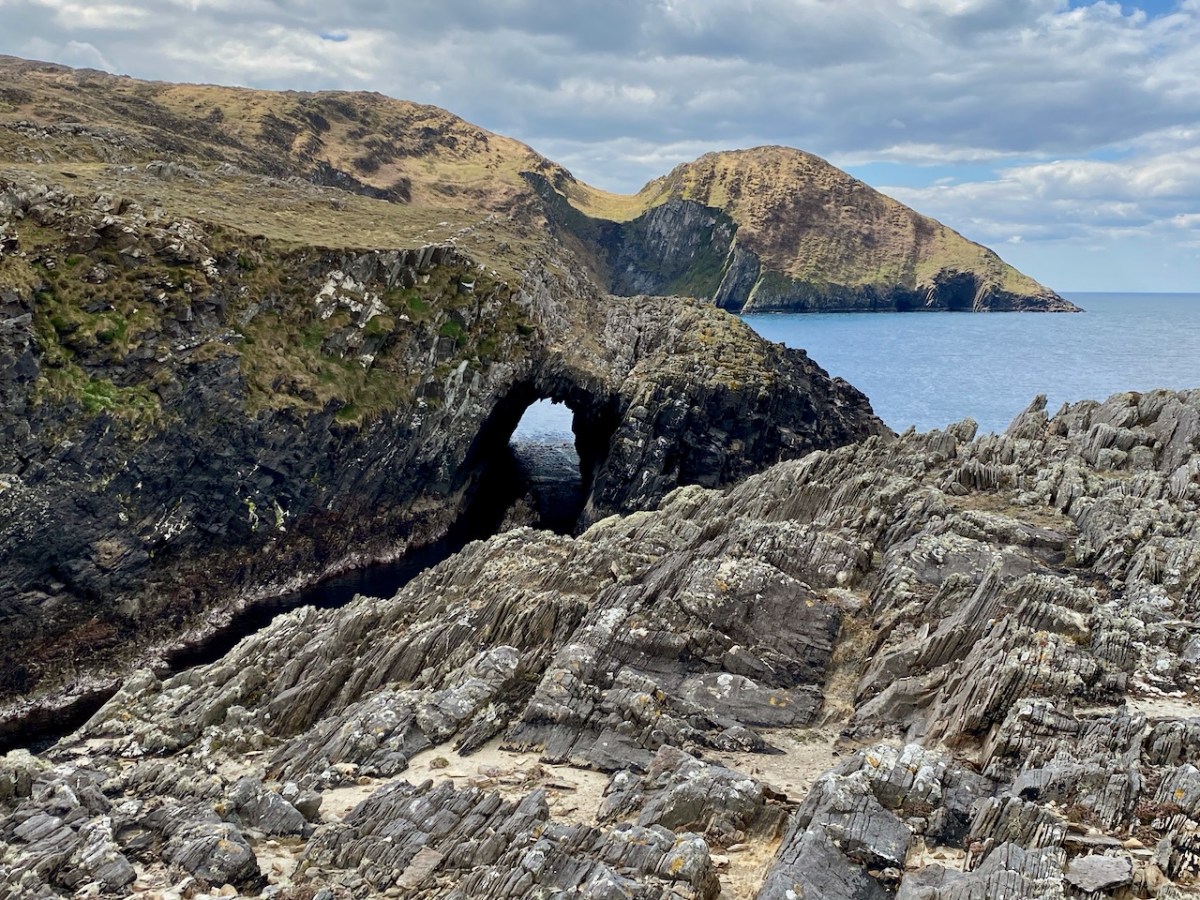
There’s a small sea arch of more recent vintage on the east end of The Meallán, near the lazy beds – you can see the land has collapsed relatively recently. And yet a third on the mainland just west of the Meallán – equally as spectacular as the one we crossed over (above, and the lead photograph). From all points there are amazing views up and down Dunmanus Bay and across to the Sheeps Head.
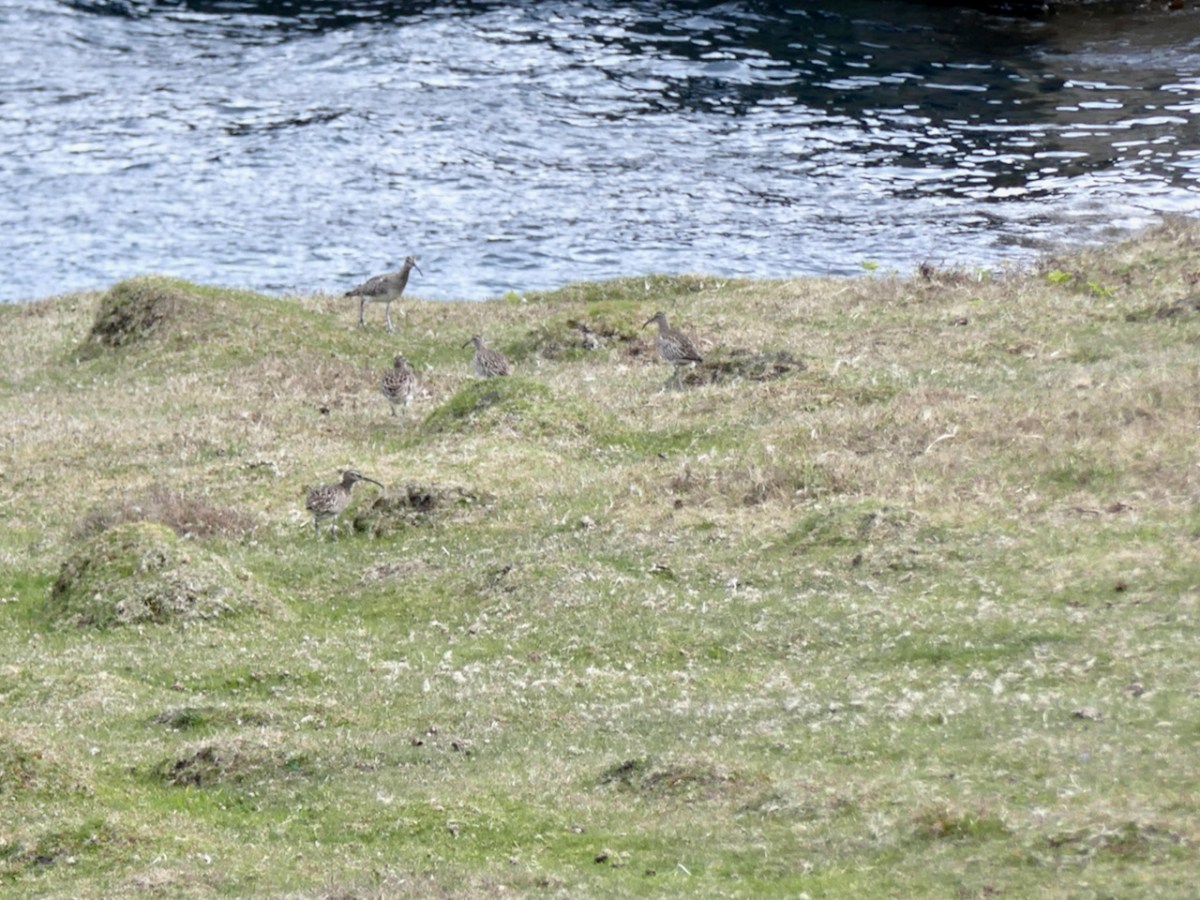
But perhaps the most special sight of all was Con’s discovery of a nest with three eggs. Una had spotted what we thought were curlews – they had flown up right in front of her as she rounded a ridge, and we reckoned there were six of them. They’re well disguised in the picture below. But – read on. . .
Ireland has lost over 80% of our curlew population since the 1970s and it felt apt, somehow, on this wild and uninhabited corner of the Mizen that they were trying to hang on. Una reported the sighting, but the expert opinion turned out to be that what we saw was actually the nest of an oystercatcher or whimbrel – much more common and not endangered at all. The ‘curlews’ in the photo above are also more likely to be whimbrels – curlews don’t flock in May but the similar whimbrels do. Disappointing!
The Meallán can’t be more than a few acres – but what a place!
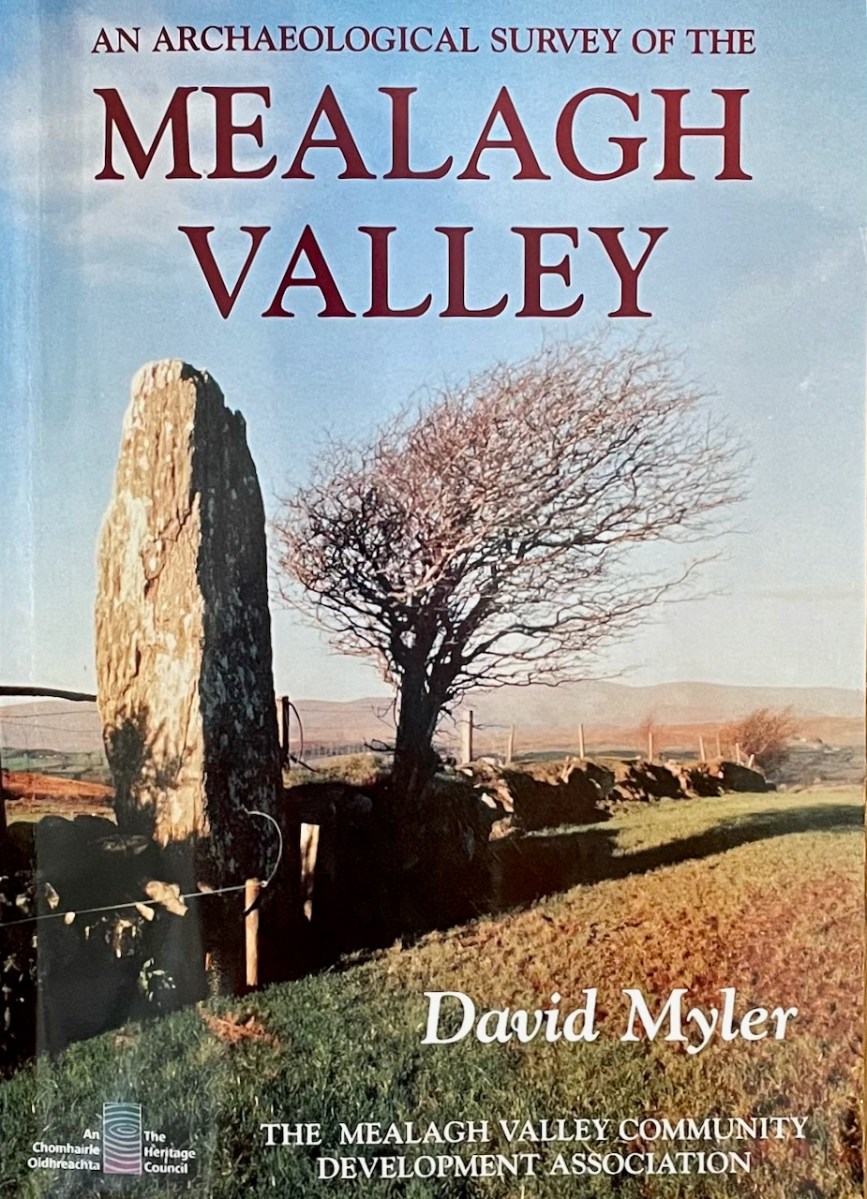
The Mealagh Valley (locals pronounce it Maylock) runs from Bantry Bay to the Maughanaclea (Maw-na-clay) hills and through this valley the Mealagh River flows from north east to south west. Along the valley are found numerous ancient monuments, evidence of occupation from the earliest times. David Myler, some years ago, with support from other local people, undertook to survey all the archaeological sites in the area and the result was this book. Sorry – it’s out of print and we are glad we managed to pick up a copy several years ago.
David and I have been in virtual touch for quite a while through social media, promising to meet up and explore when we got a chance – and that finally happened on Friday! Along the way we discovered family connections, so it was no wonder I felt an instant kinship when we met – we bonded over archaeology and shared family stories. David, a Dubliner originally, has been living here for decades and in that time has taken courses in archaeology and developed a passion for the heritage of this – his territory.
It was a joy to be taken on a field trip by the man who has, literally, written the book about the archaeology of the Mealagh Valley. It’s only the first of many, I hope, since we really only got to sample a few of the sites this time – although, as you will see, the places he took us were pretty spectacular!
David had secured all the permissions we needed to visit the sites on private land. We started out in the townland of Ardrah (Árd Rath – high fort) with a ring fort (above) commanding panoramic views of the surrounding countryside. A ring fort (also called a rath, lios, dún, or cashel if made of stone) was the dwelling of a high-status individual in early medieval Ireland and examples like this probably date to 500 AD to 1,000 AD. The banks had traces of stone here and there so may well have been faced with stone, and the interior had been levelled.
There would have been a house and perhaps other buildings inside, and a wooden pallisade fence on top of the surrounding bank. There’s a good summary of what we know about ring forts in this engaging website about Irish mythology – I especially enjoy the writer’s comments on the use of ‘fairy fort’ to describe these structures.
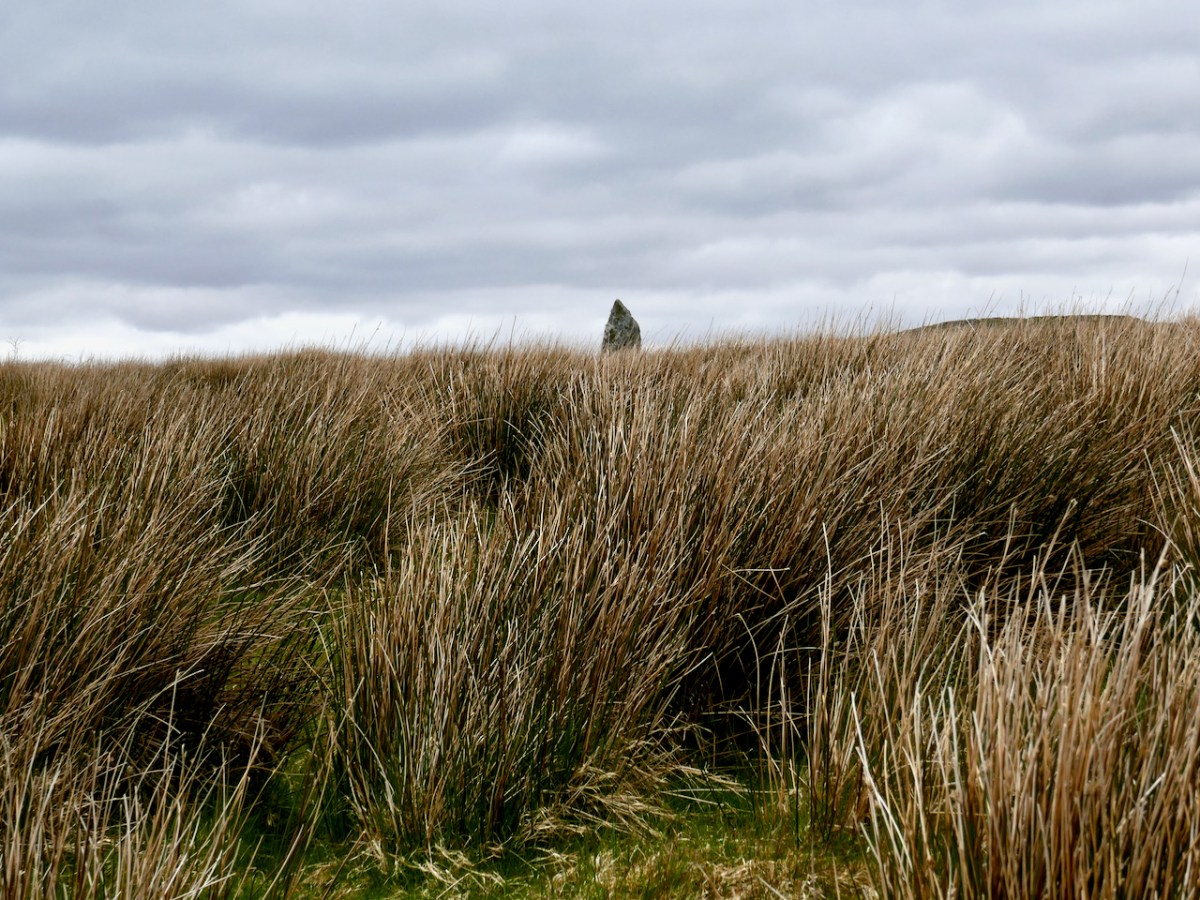
From there we climbed a couple of fences – the first of several fence-climbing incidents during the day and thanks to David for sacrificing his jacket to save us from the barbed wire – and trekked uphill. The monument started to reveal itself as we got higher – at first I thought it was a standing stone.
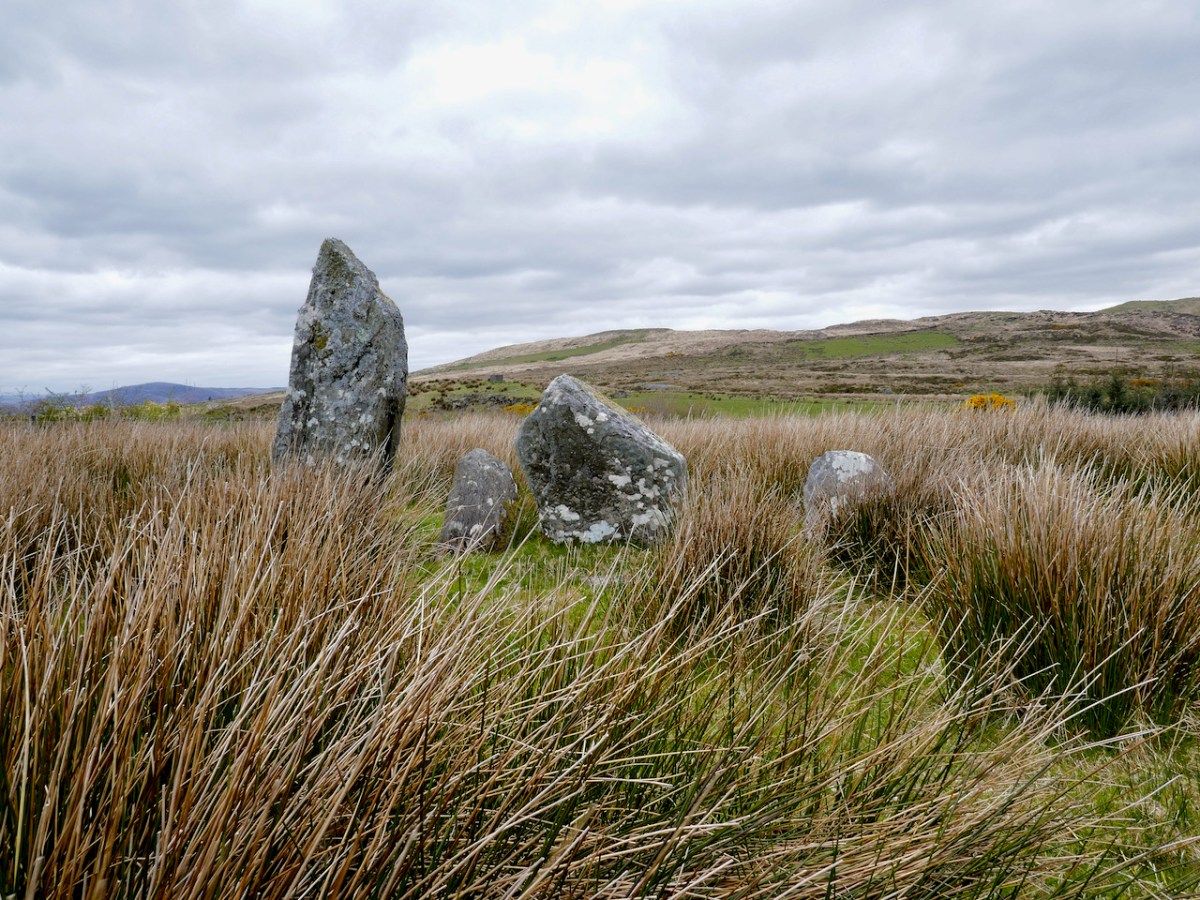
No – a stone pair?
What, there’s more?
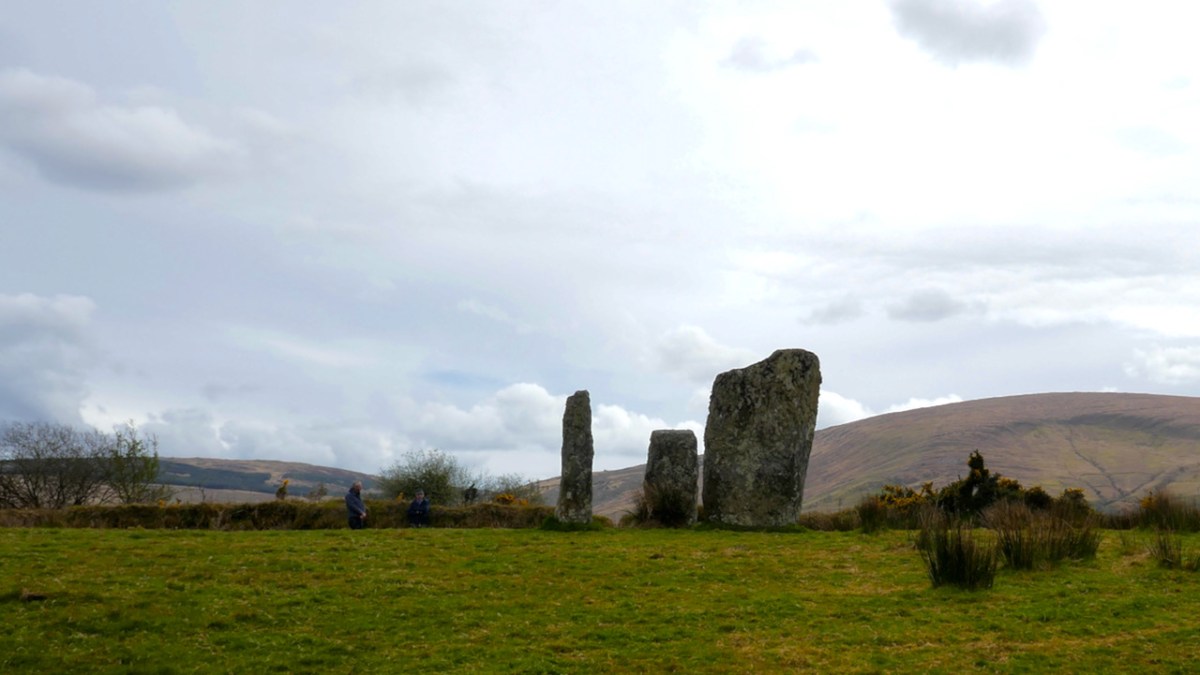
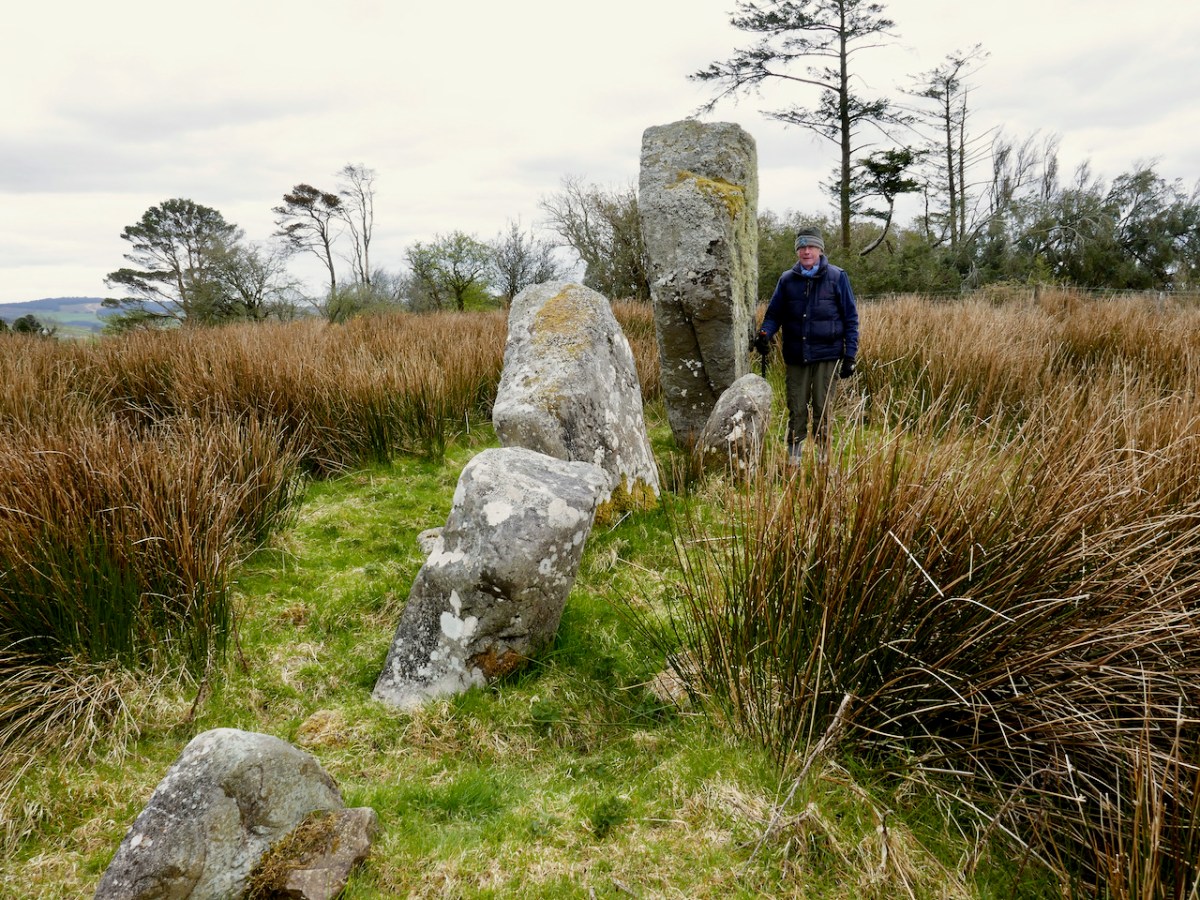
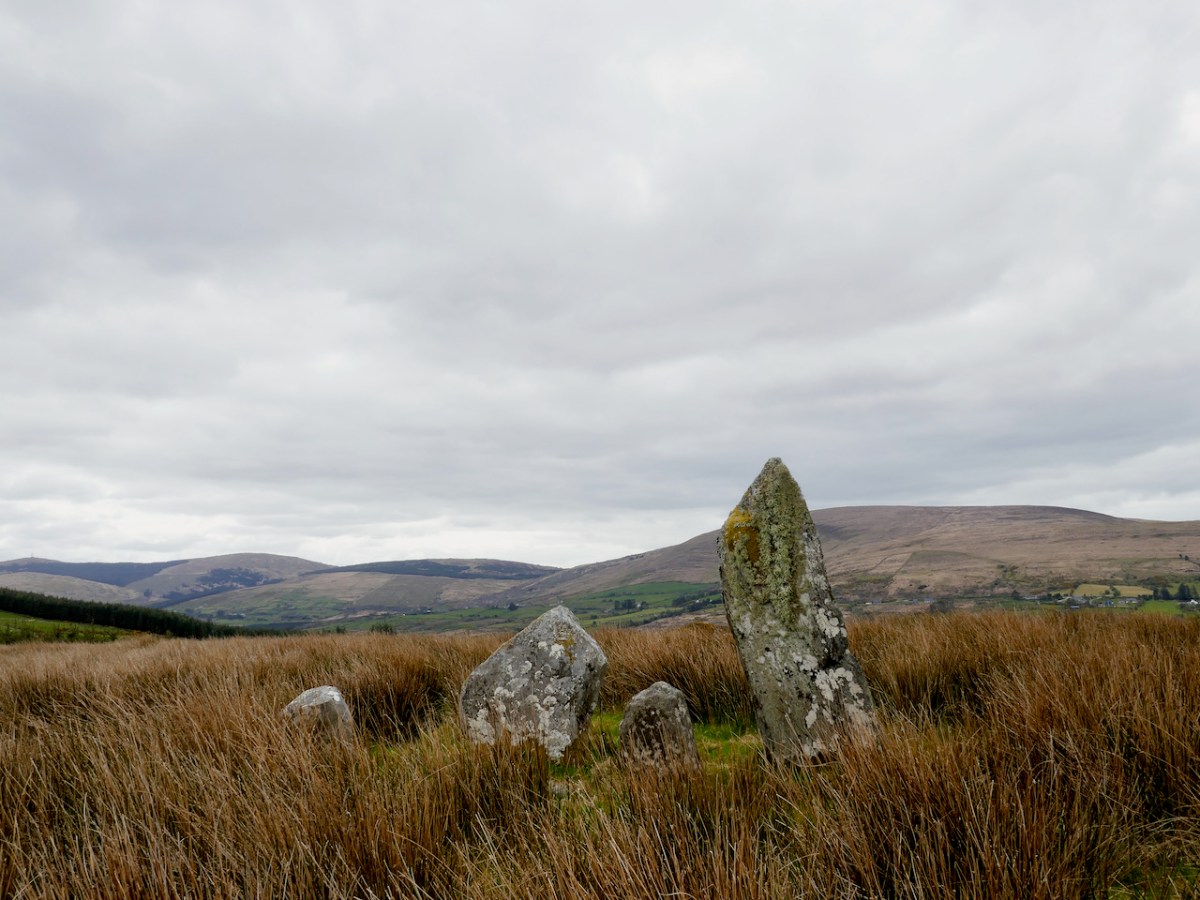
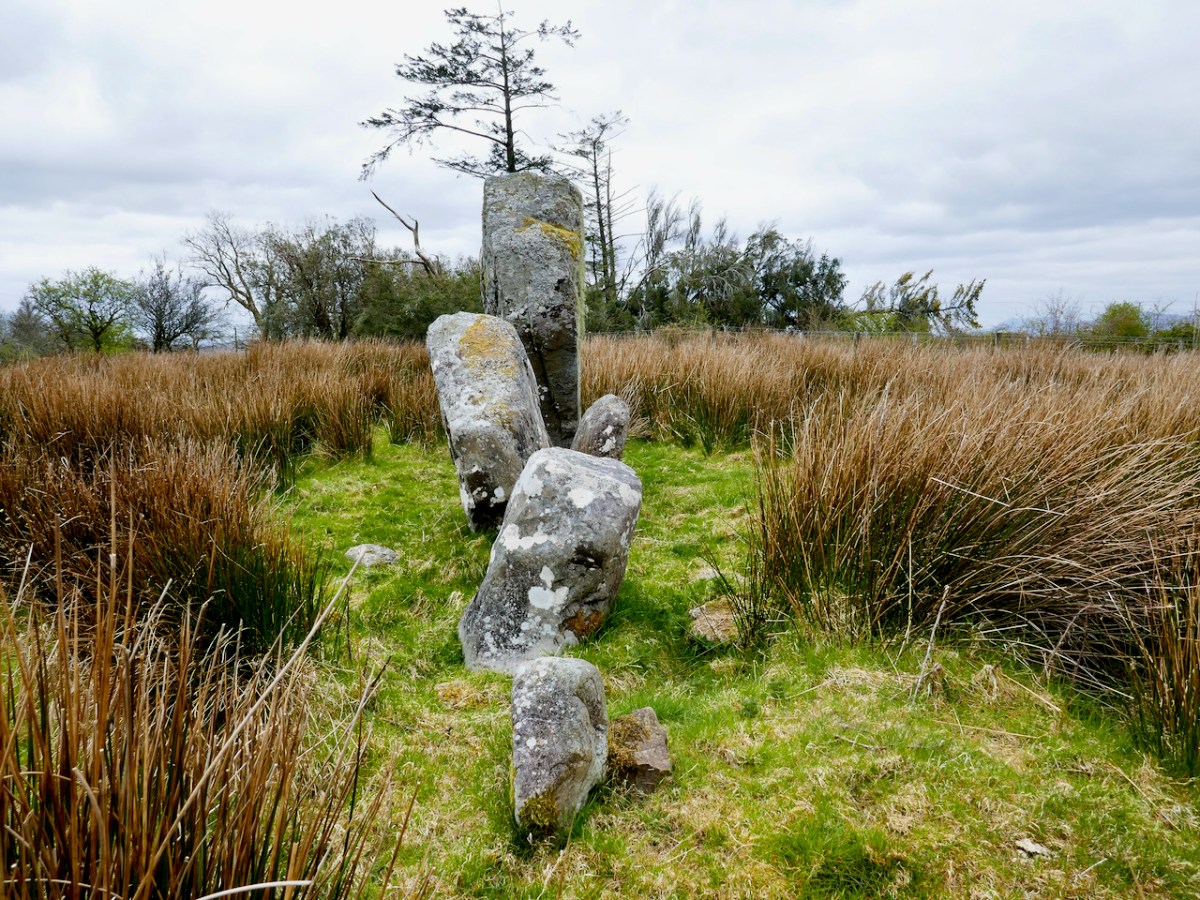
This is the Ardrah stone row, consisting of fours stones aligned ENE/WSW, a common alignment for stone pairs and rows. Take a quick trip over to Standing Stone Pairs: A Visit to Foherlagh for more about this kind of monument. You will see that this one is pretty typical – it has an orientation to the south west, consists of stones that could be interpreted as ‘male’ and ‘female’ and the stones rise in height towards the SW. The southernmost stone is enormous – Robert is providing the scale.
But wait, I hear you say – I see five stones, not four! And you are right. there are five stones, whereas originally there had been only four, and all the records state that this row consists of four stones. The photograph in David’s book, which dates to 1998, clearly shows four.
So – where did the fifth, and smallest, stone come from? It’s a head-scratcher and all we can do is point to the presence of the nearby fairy fort and speculate that the Other Crowd are messing with us.
And then it was on to the piece of prehistory that David discovered in the course of his survey. I should explain here that much of what the Mealagh Valley group was documenting was already known, since the whole county had been surveyed in the 1980s. But what the County Survey lists and what a local group like this looks at, will differ – for example, this group was interested in folklore and local stories about the monuments they visited and about items of interest beyond the remit of the county survey. Moreover, because they are local themselves, they are likely to be contacted if anyone spots an unusual rock or such like, and can be on the spot to examine new ‘finds’. Finally, a project like this generates appreciation and pride in, and a sense of ownership of, one’s heritage, and thus, hopefully, less likelihood of monuments being damaged.
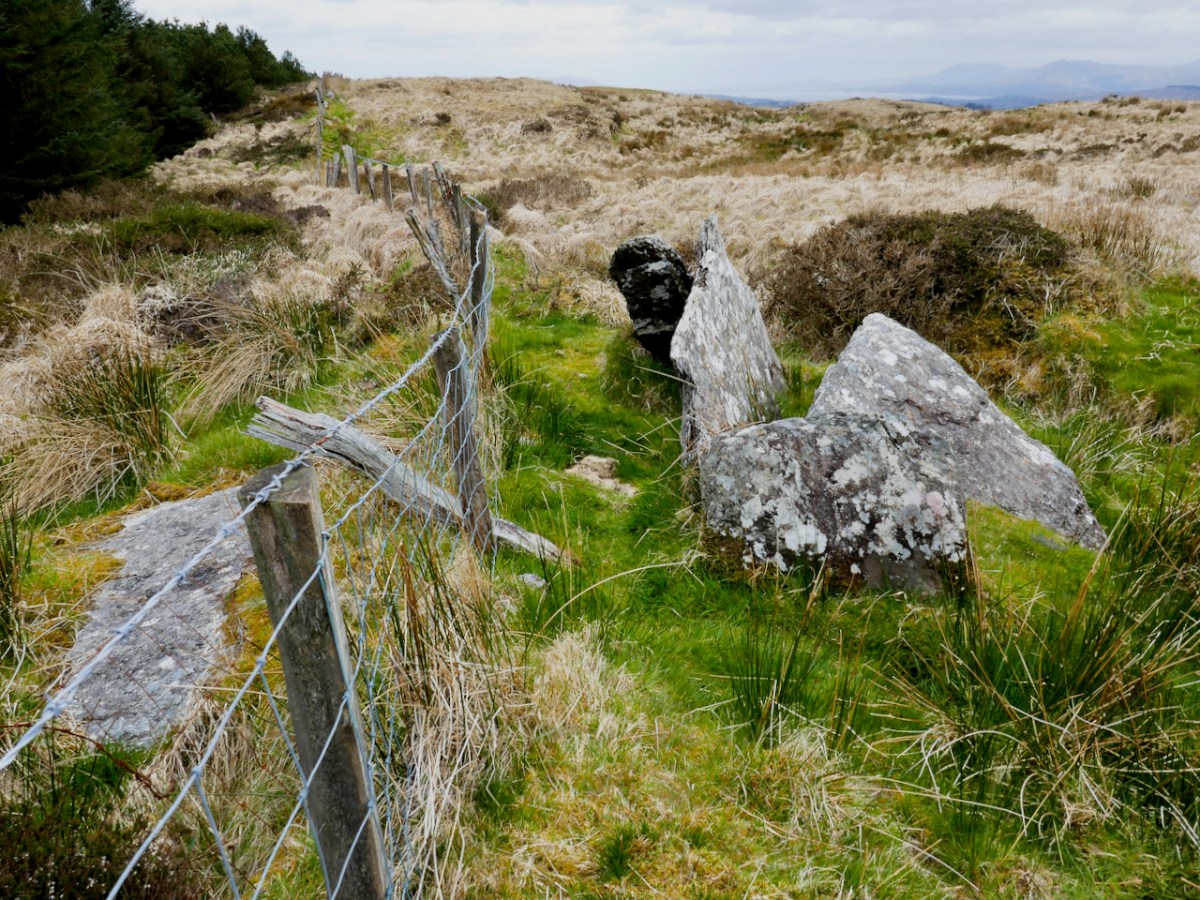
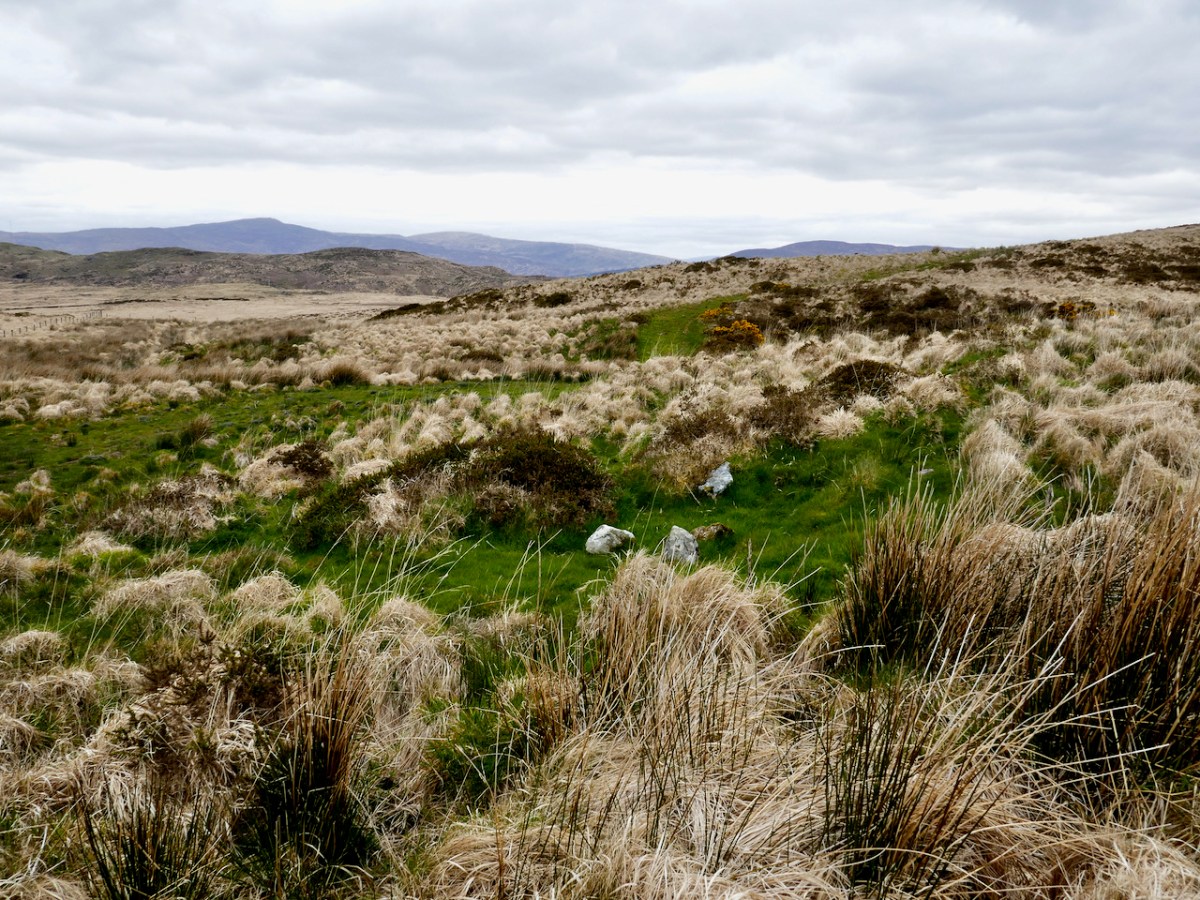
David had been alerted by a farmer to a ‘funny pile of stones’ on the boundaries of the townlands of Ardrah and Gortnacowly (Gort na Camhlaigh – field of the ruins), an area that had been impacted by forestry activity. It’s quite high up and the views are immense. As we walked up, it sent shivers down our spines as David related how he hunted around for what had been described to him, almost giving up, and finally stumbling upon the mangled remains of what he instantly recognised as a Bronze Age wedge tomb.
A digger clearing out a drainage ditch had inflicted damage but most of the stones were still lying around. One side of the tomb, and the back stone, were in situ. That’s probably the capstone, or one of them, on the other side of the fence.
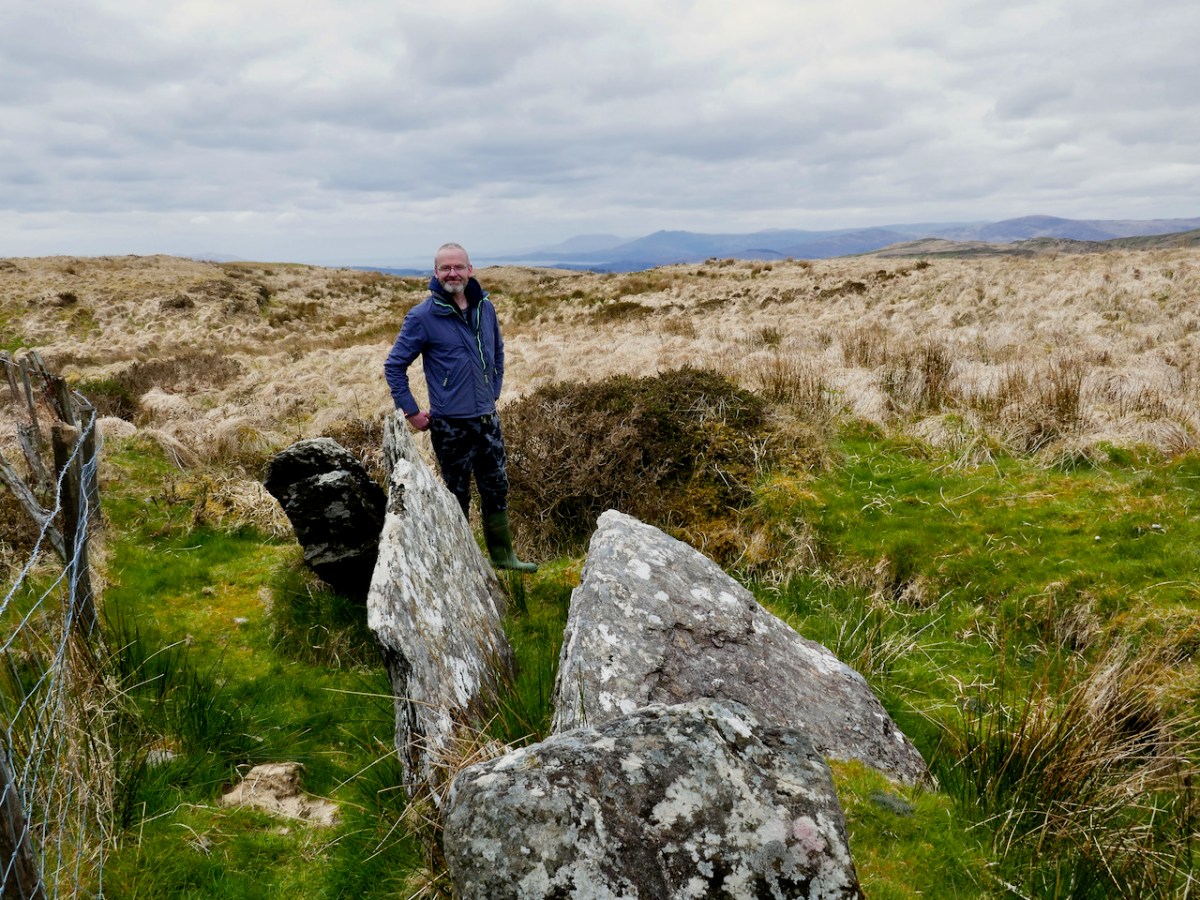
As an archaeologist, it’s actually quite rare in Ireland to discover a previously unrecorded monument – having done so once or twice I know what a thrill it is. David’s wedge tomb is a classic of its type – see my post Wedge Tombs: Last of the Megaliths for more about them. That’s David above, showing us how to make sense of the stones, both those in situ and those which have been disturbed. He was able to ascertain that the workings in the area had turned up quartz pebbles – a feature of several West Cork wedge tombs.
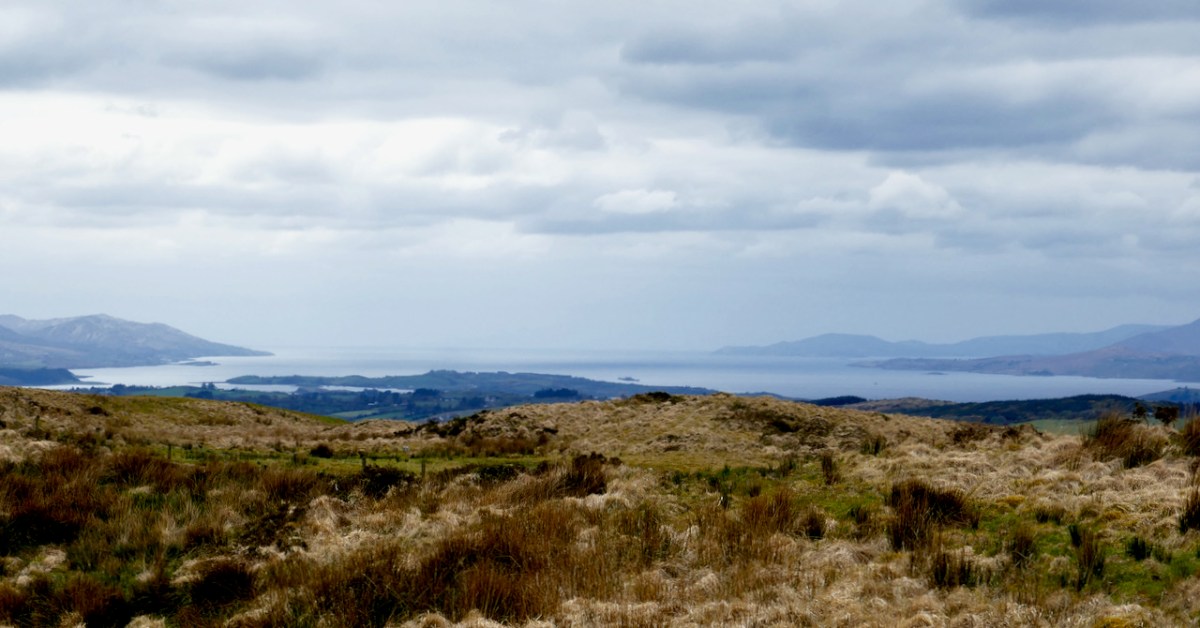
This one was, as expected, oriented towards the setting sun – but that doesn’t begin to describe the incredible sweep of the view from this point – the whole of Bantry Bay lay before us, with the Beara on one side and Sheep’s Head on the other.
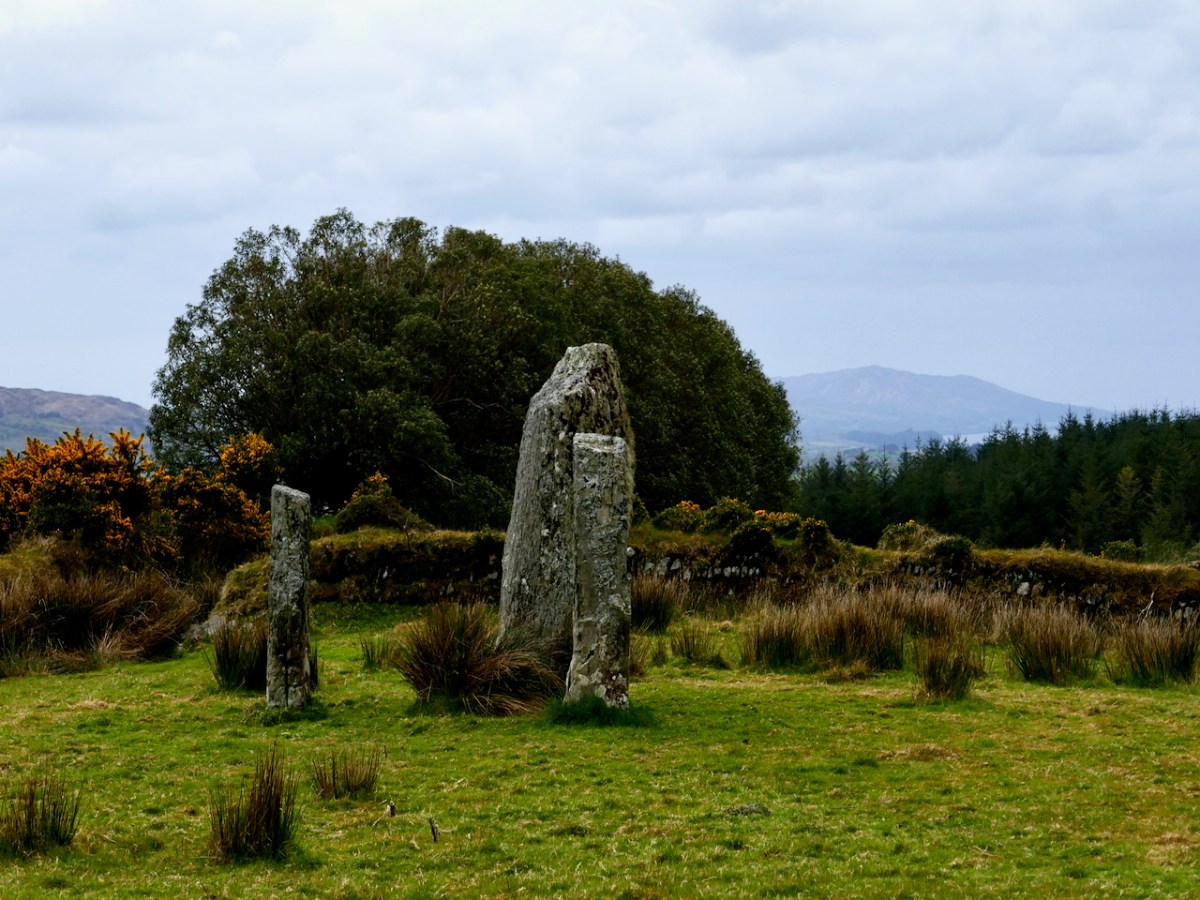
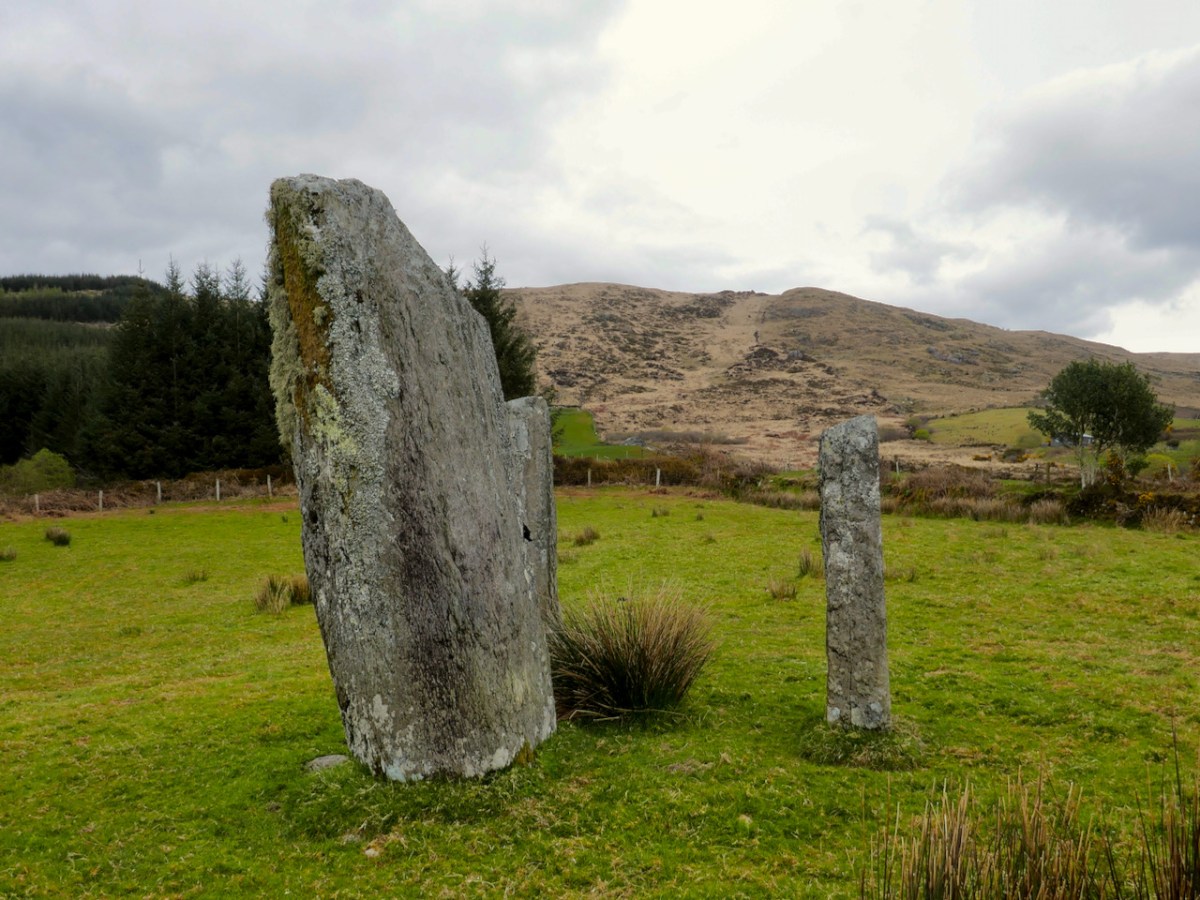
Our final visit of the day was to a type of monument I had never seen before – a ‘Four Poster’. That’s it, above, and note that there is a distant view of the sea, ten kilometres away, from it.
Only five four posters have been recorded in Ireland, one in Wexford, one in Kerry and the other four in West Cork. Here’s what the National Monuments site has to say about them: An arrangement of four upright stones standing at the corners of an irregular quadrilateral. The stones are usually graded in height with the tallest stone at either the south-west or north-east corner. Their closest counterparts are to be found in northern England and Scotland. These monuments are closely related to stone circles in date and function though they are much less numerous. These are dated to the Bronze Age (c. 2400-500 BC).
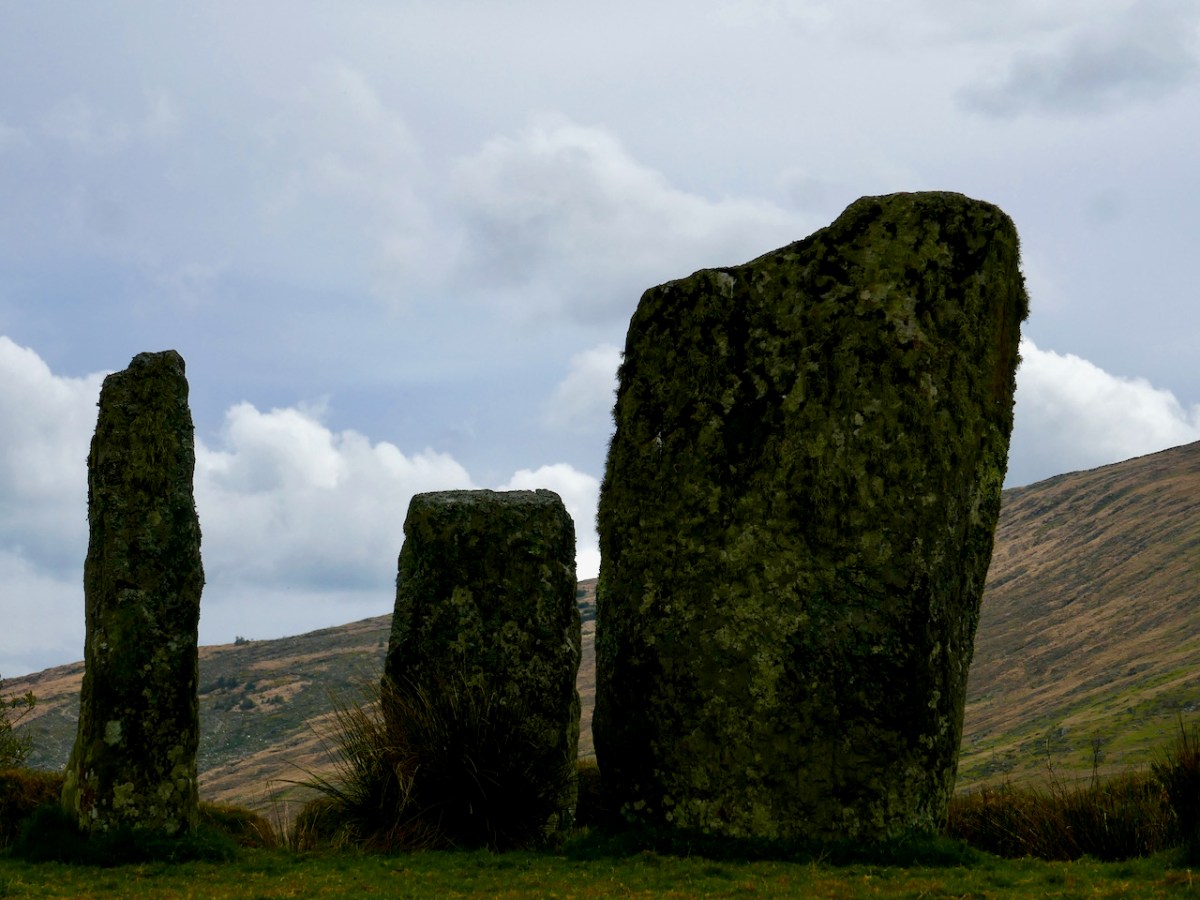
There are, in fact, only three stones remaining here. The largest stone is massive and of course there are all kind of alignment possibilities with arrangements like this. The closest counterpart to these four posters are to be found in Northern England and Scotland. There have been no excavations at four posters in Ireland but those few which have been dug in Britain yielded a Bronze Age range of dates.
We saw some other things along the way – a booley (above), a hedge school, a mass rock – and Robert wants to write in the future about one particular site, so I won’t deal with it here. The day was cold and crisp – but you hardly notice little things like freezing hands with a landscape like this to wander around in.
What a great day! Thank you, David, for being our tour guide and friend and we look forward to returning the favour soon.
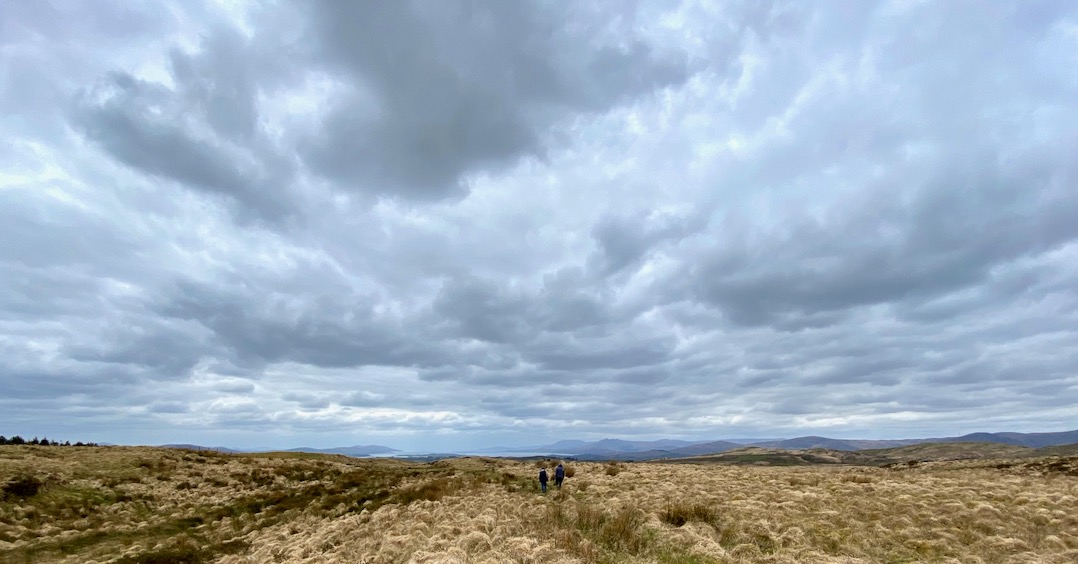
It’s an area to the south-east of Clonakilty town in West Cork – Ring. A mix of ‘big sky’ landscapes, with a fresh view of the sea at every turn; quays, harbours, old industry, archaeology – some fabulous hidden coves and small beaches. With our new-found freedom of being able to travel anywhere in our own county (Cork is the largest of Ireland’s counties: 180km from one end to the other), we set out to more closely explore a region which we have somehow always passed by hitherto.
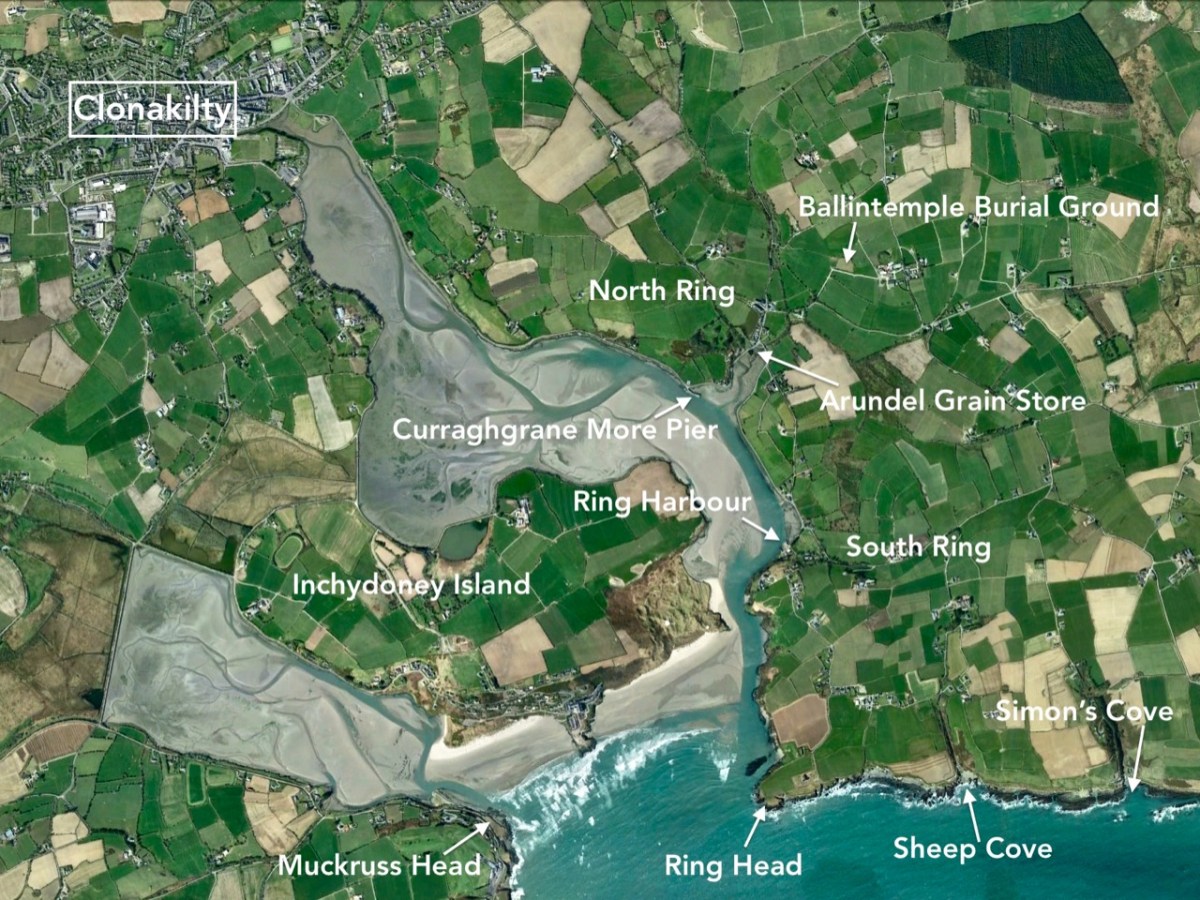
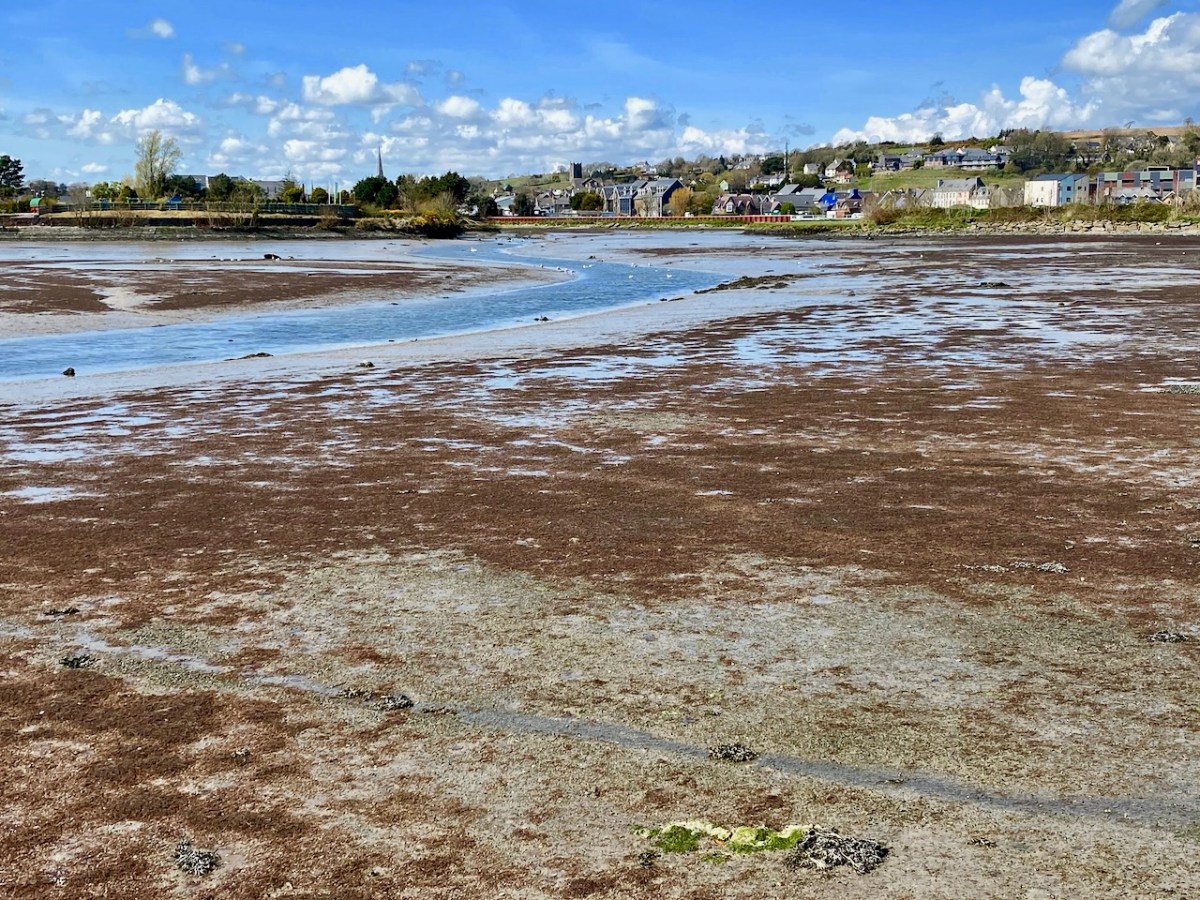
For us, the journey to Ring involves turning off the main N71 in the centre of Clonakilty (above) and following the road that runs beside the water (or sandbanks and mud flats, depending on the state of the tide). As you can see from the aerial view, it’s a pastoral landscape, a big centre for dairy farming; no mountain surprises, but undulating enough to ensure twists and turns through old lanes and new boreens.
Just a few minutes after leaving Clonakilty we come into North Ring, and the first highlight, which is Curraghgrane More Pier. The view over the estuary from here is far-reaching and dramatic: on the western side is Inchydoney Island (not, in fact, an island), while south – and further along our route – is Ring Harbour. The little settlement of North Ring, just inland here, is worth a pause (and features on the header picture).
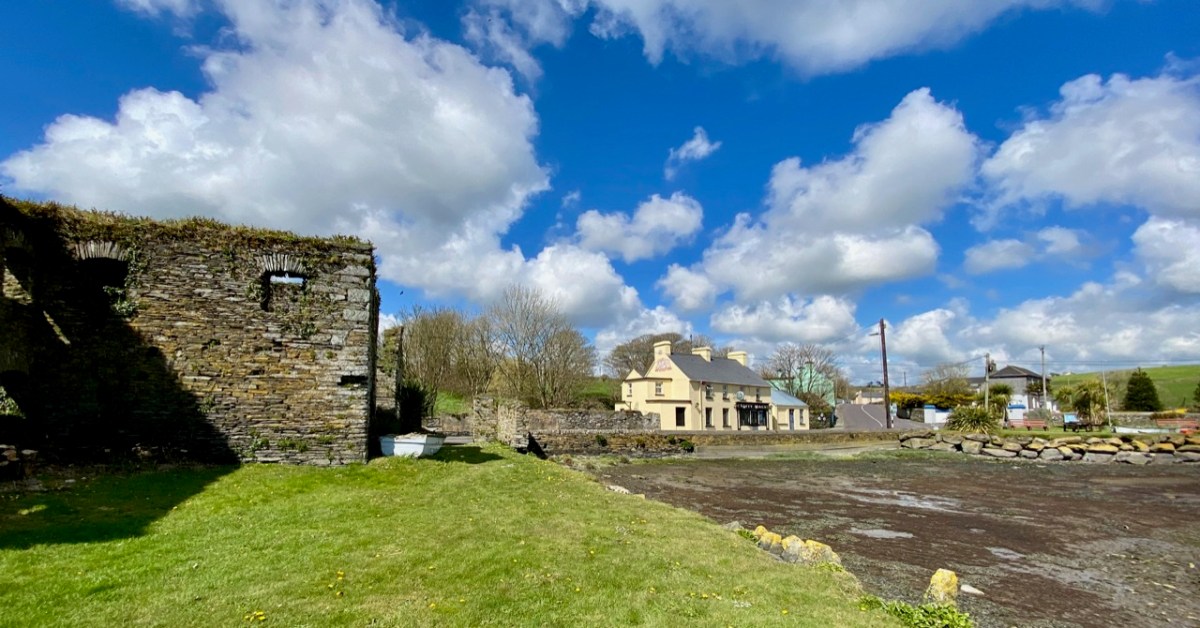
The way into North Ring passes by an ancient building, which has been conserved as a focal point by the community. It is a stone-built grain store and drying kiln, probably first in use 500 years ago.
The little settlement has been known for its hostelries, and would have been an excellent lunch stop in pre-Covid times: hopefully their fortunes will revive. They certainly provide a most colourful streetscape, and add to an exceptionally attractive hamlet. Even an abandoned house has been given a creative treatment.
We can’t pass on from this vibrant enclave without mentioning the Arundel family who left their mark on the locality and set up the milling industry which brought wealth to the area:
. . . Near the road from Clonakilty to Ring, stands the scanty remnant of a castle (at one time mistaken for a ruined parish church). It was the stronghold of the Anglo-Norman Arundel, called Lord Arundel of the Strand . . . Arundel was anciently a great lord and had an estate of £3,500 a year in the reign of Queen Elizabeth . . . Sir Henry Sidney, in his well-known account of a famous Vice-regal visit to Cork in 1575 notes “There came here the ruined reliques of the ancient English inhabitants of the province” – The Arundels, Rochforts, Barretts, Flemings, Lombards, Terries, etc . . . Henry Smith in his “Report of the State of Munster,” after the breaking out of the Desmond Rising in 1589 remarks inter alia, “Arundel Castle was forsaken by Walter Grant-William Lyon” and the Arundels, who remained loyal to the old faith, were very prominent in the Rising of 1641-1653 . . .
Tim Cowhig, Duchas Folklore Collection, Ballintemple 1938
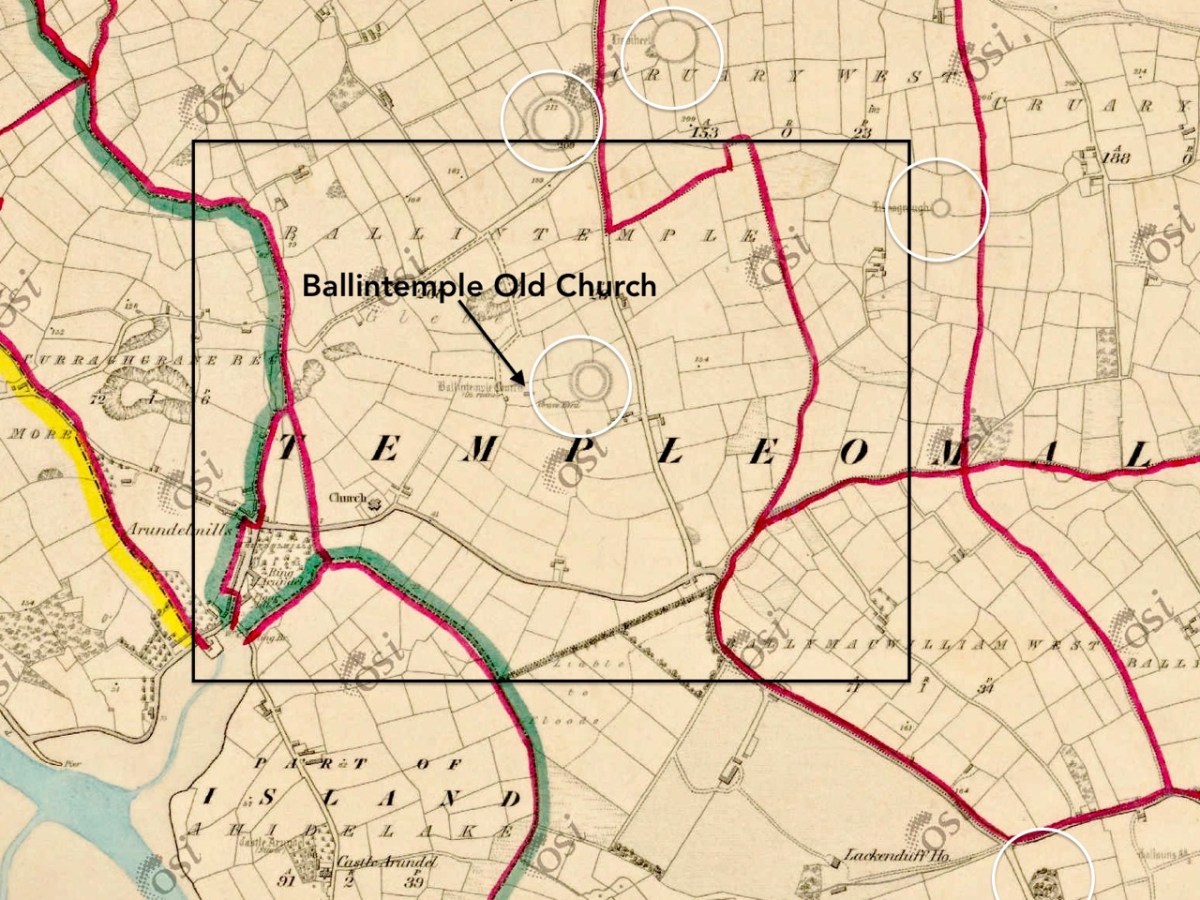
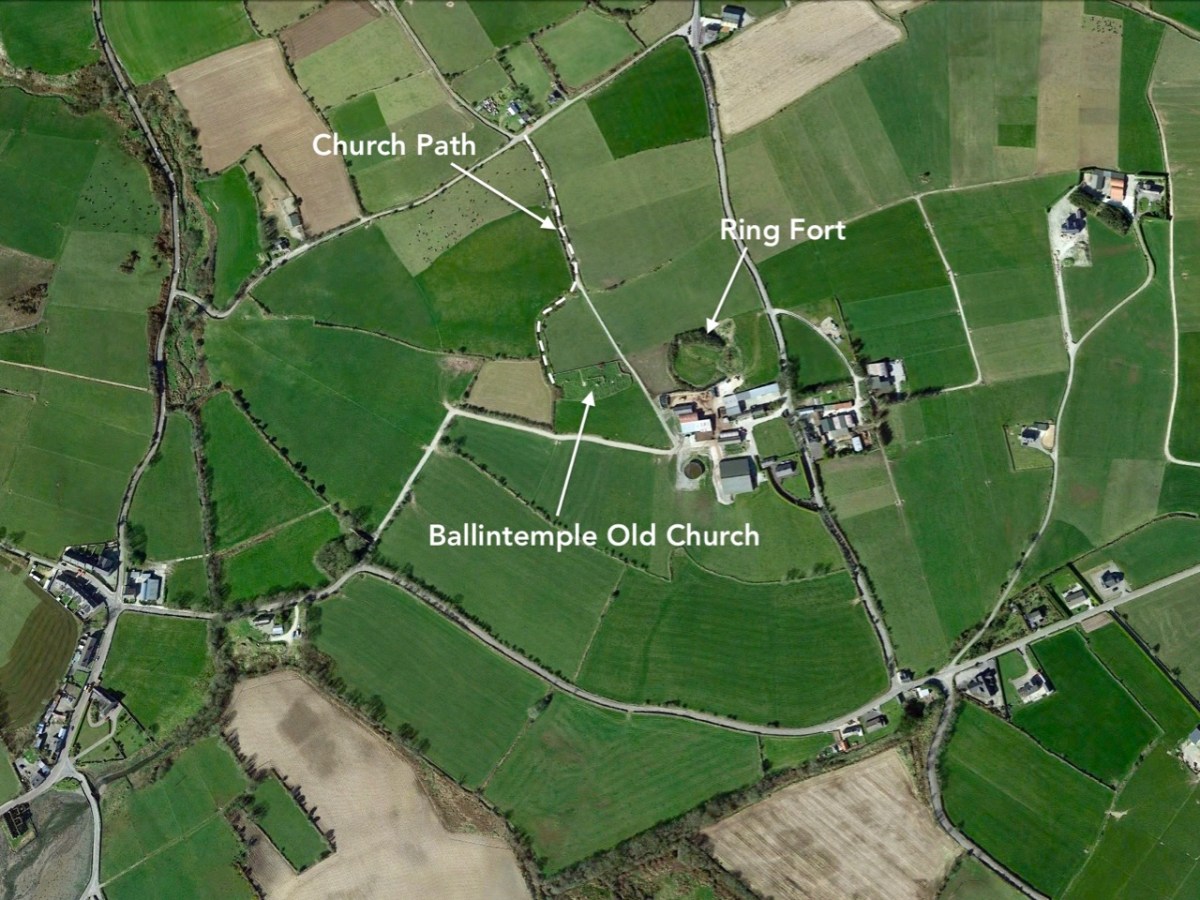
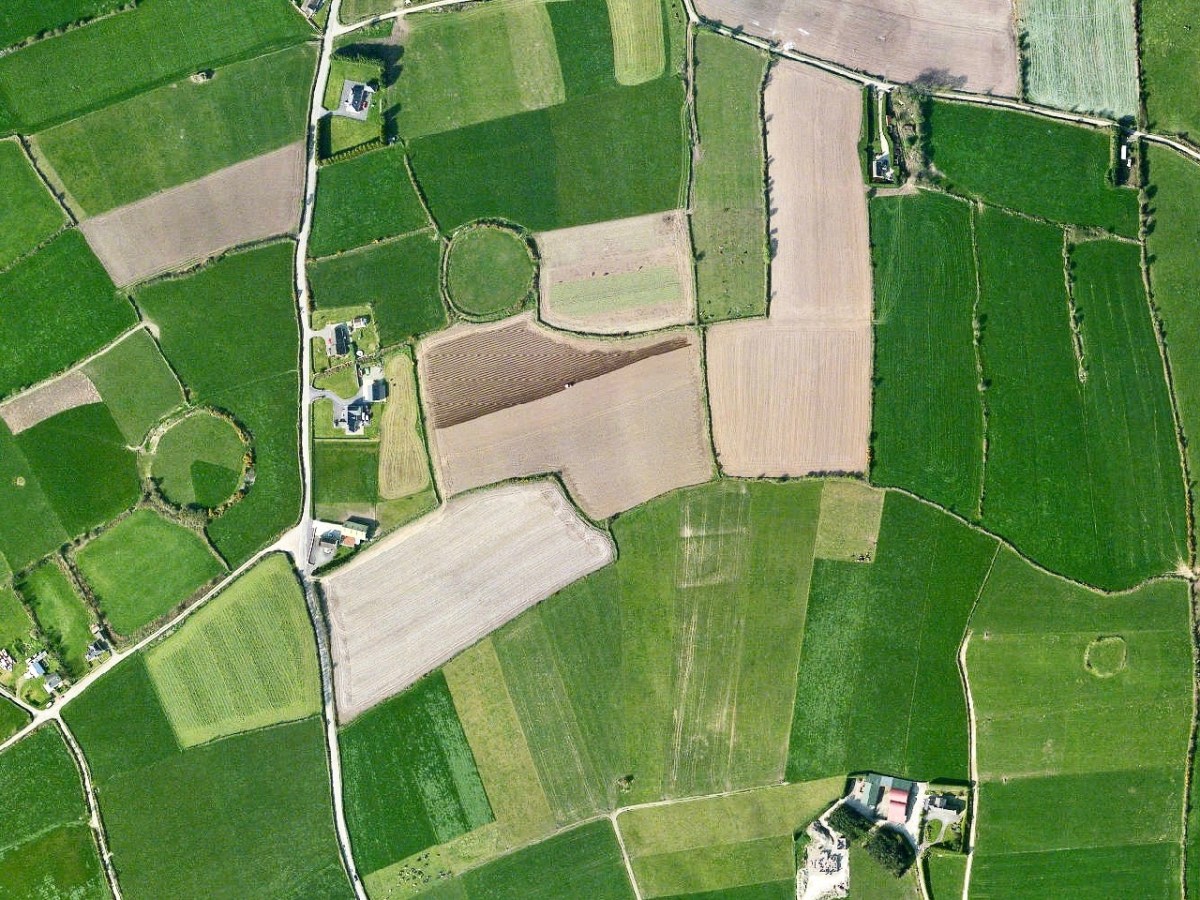
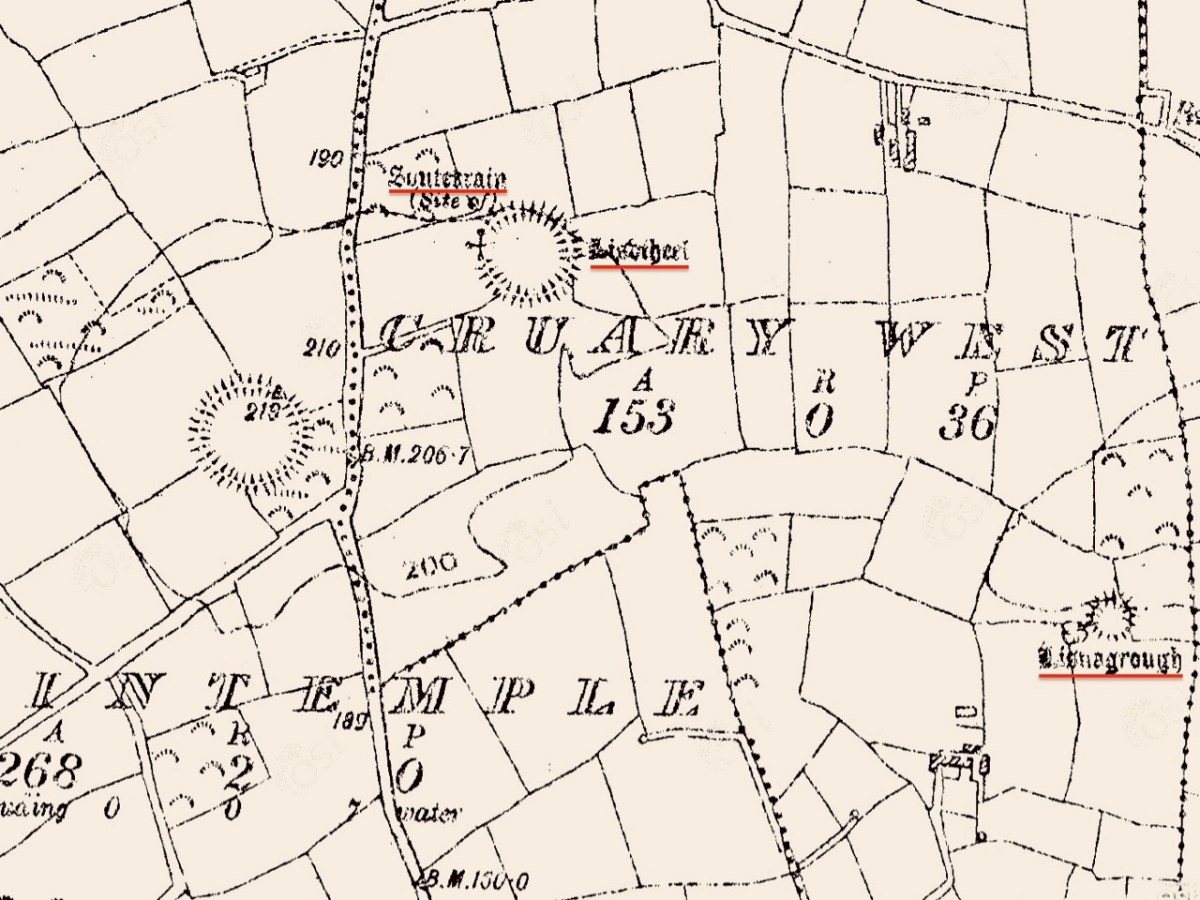
Before returning to the coast road we head inland to find a historic site with an ancient church ruin, a significant graveyard, and several raths or ring forts which take us back in time well over a millennium. The 6″ Historic OS map extract, above, shows the remarkable distribution of notable sites within the arable landscape just to the north-east of the Arundel settlement. The aerial view, below, focusses on the rectangle marked on the 6″ map, and indicates our way to the Ballintemple site, following a time-worn trackway.
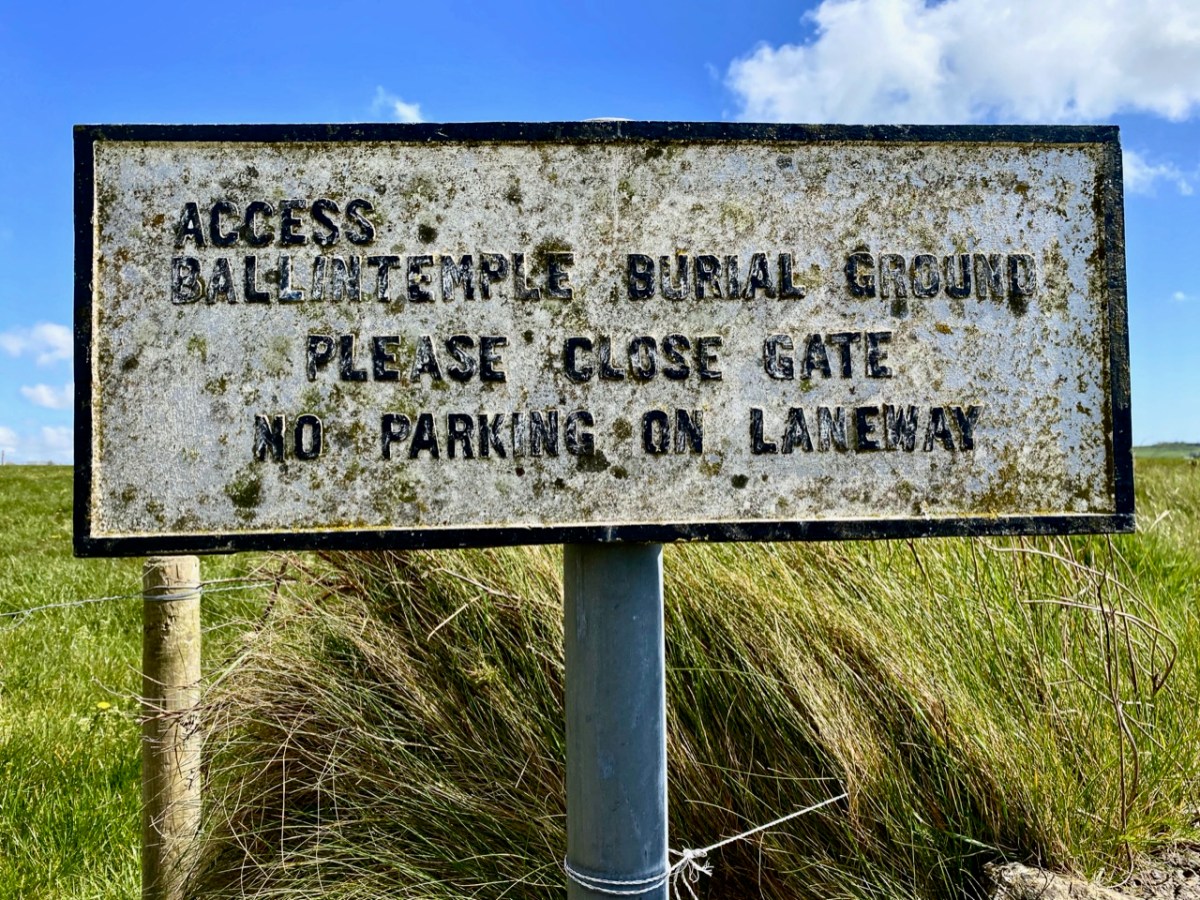
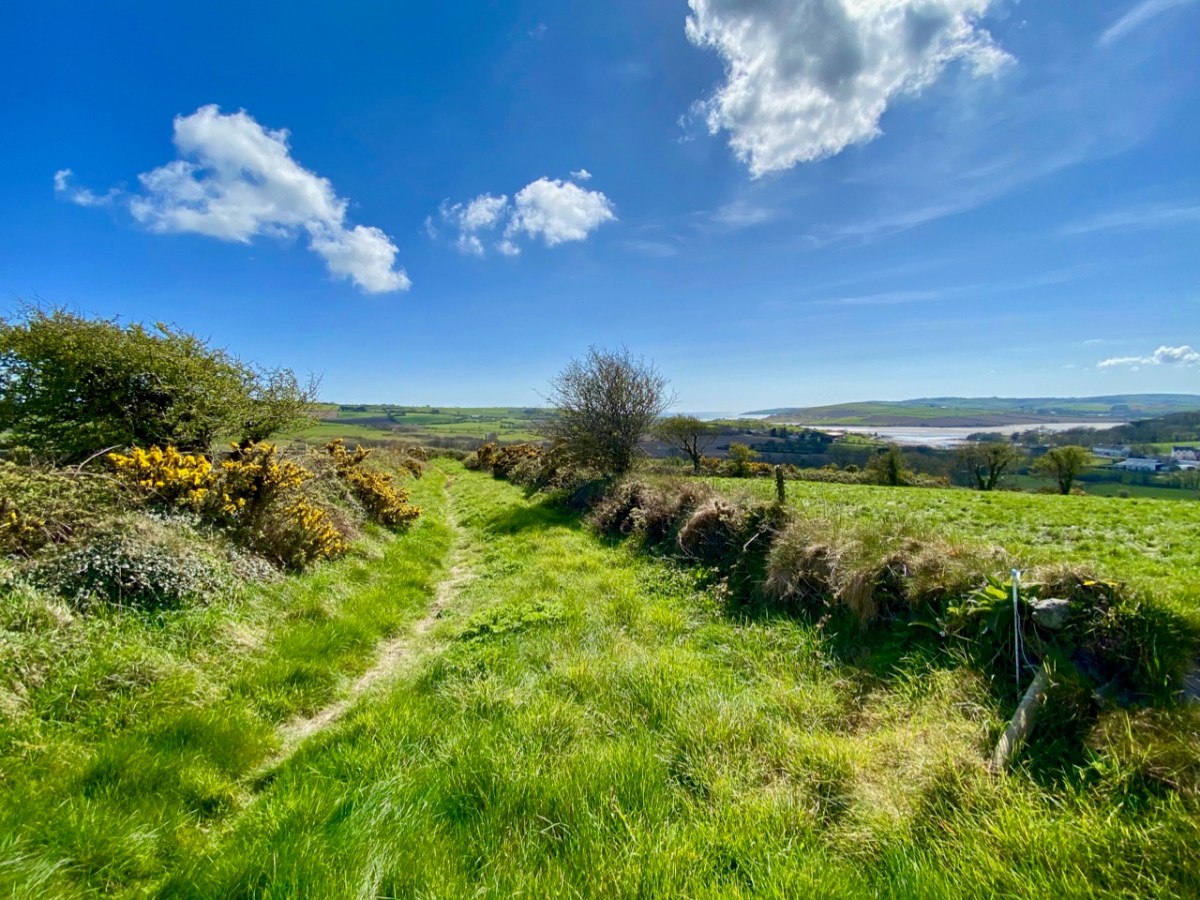
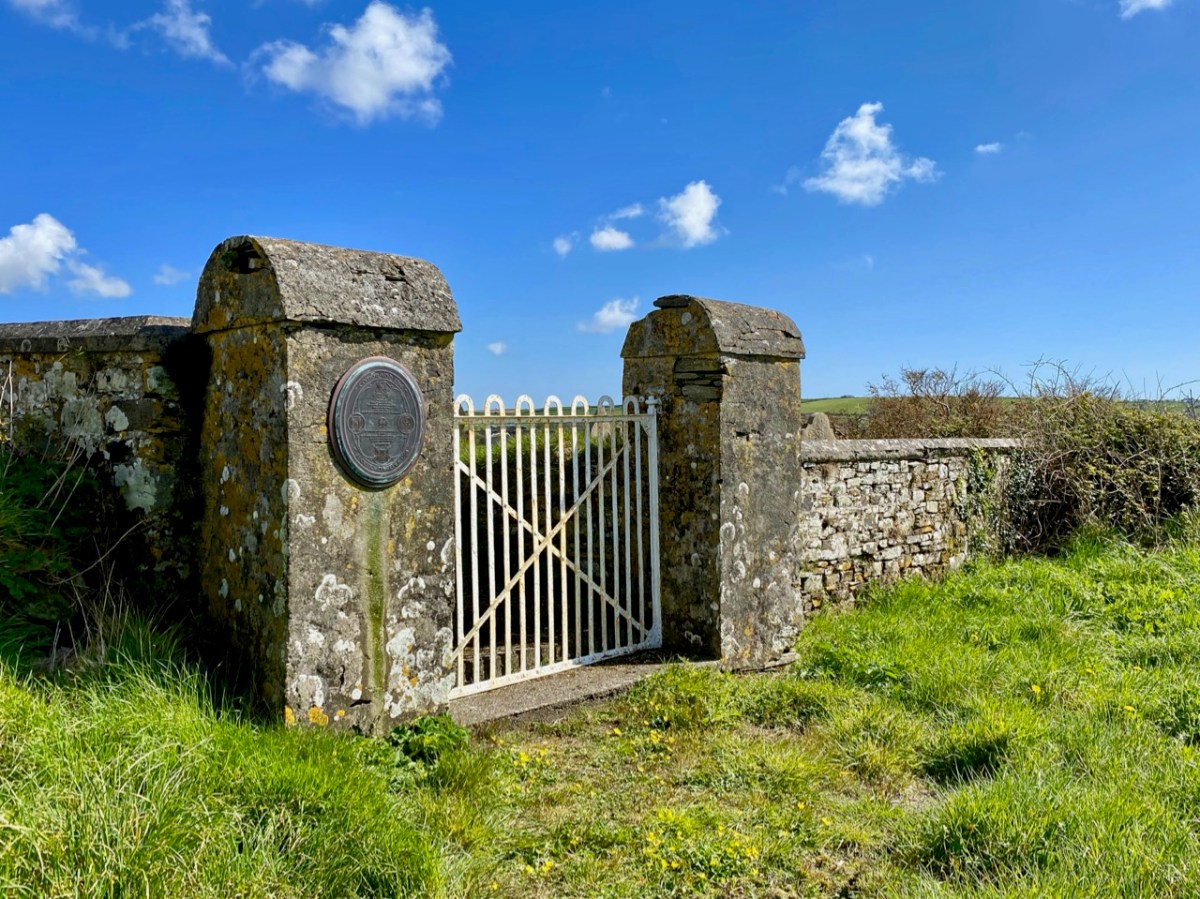
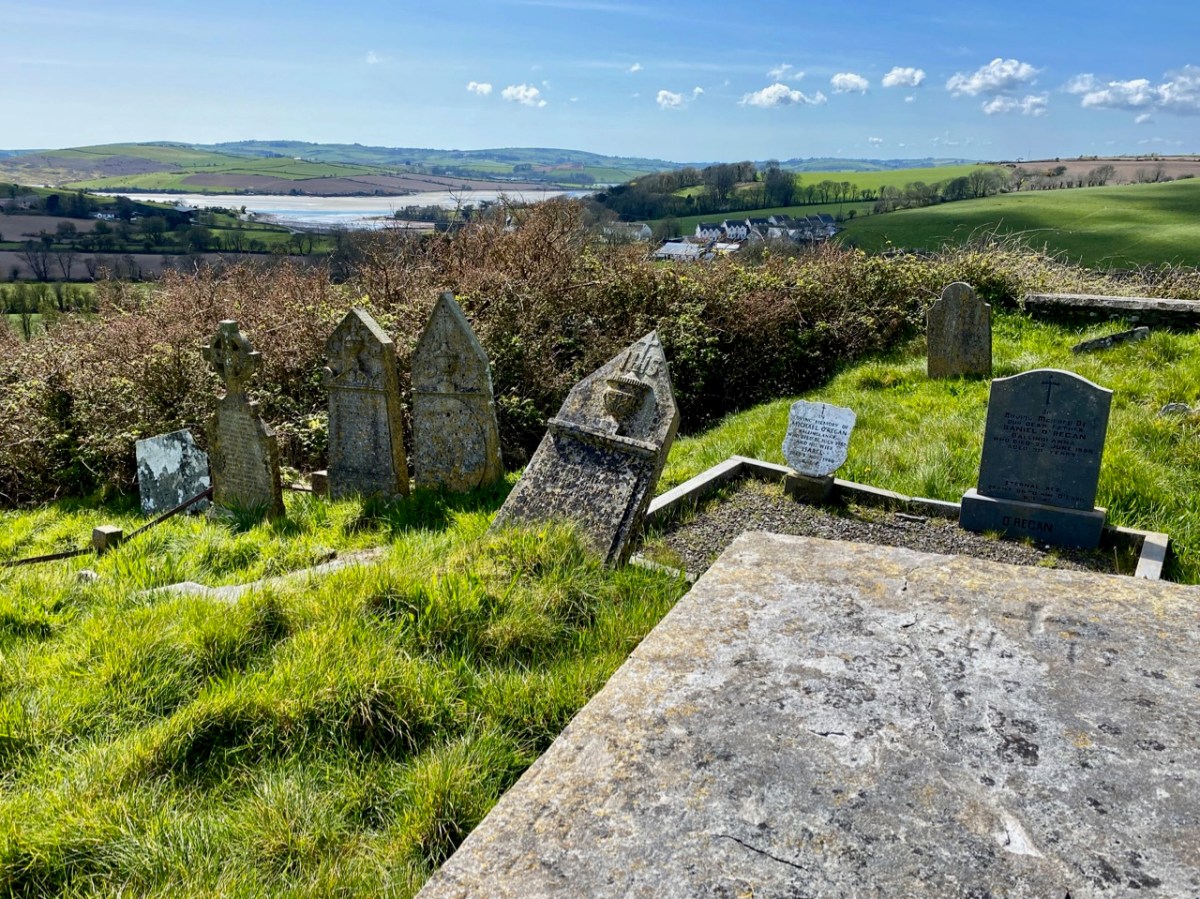
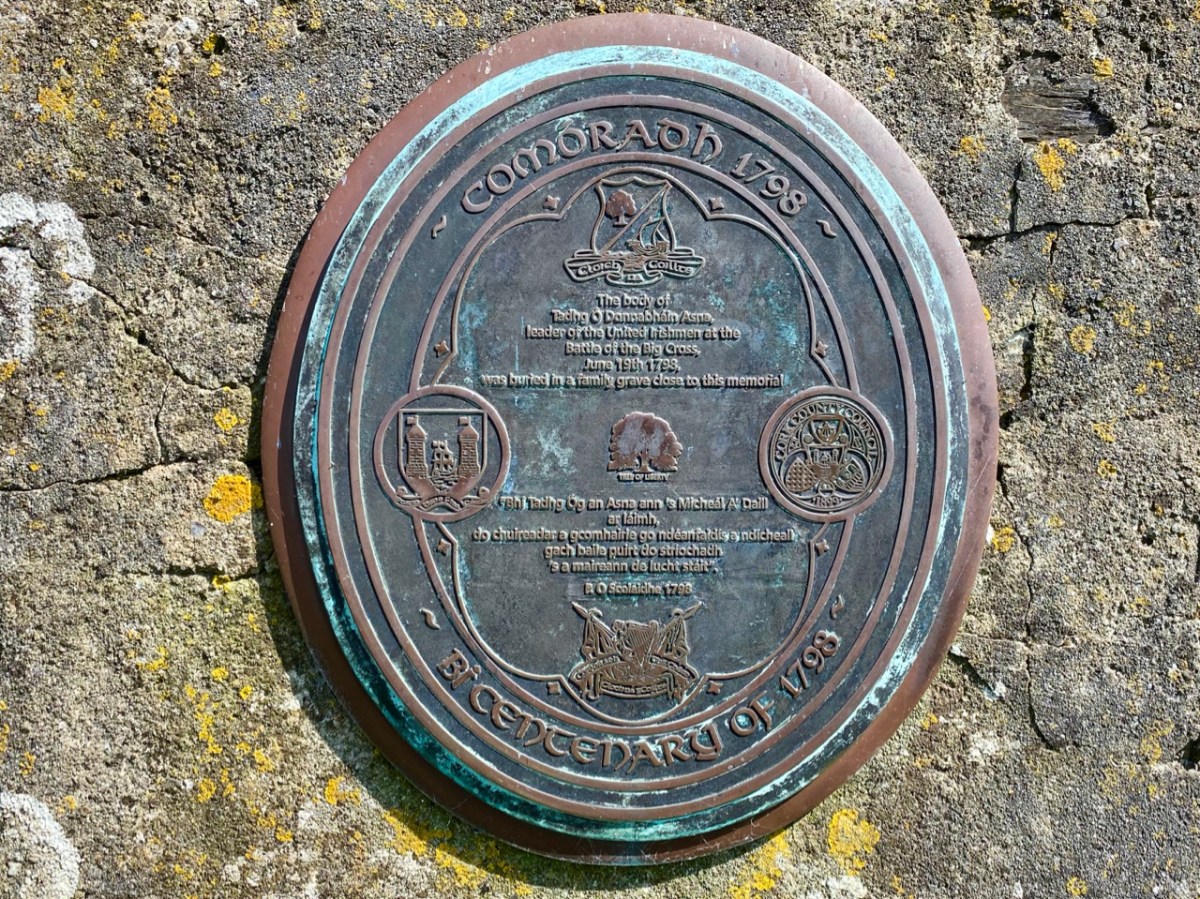
These pictures show the path which leads to the burial ground – which is still in use today. A notable occupant of the graveyard is Tadhg Ó Donnabhain Asna, a hero of the 1798 uprising. A local man, Tadhg led a force of United Irishmen against a British column at The Battle of the Big Cross which occurred on the morning of 19th June 1798, about 4 miles east of Clonakilty. It was the only battle fought in the rebellion in the whole of Munster and over 100 Irish men lost their lives, including Tadhg himself. There is a memorial to him in the centre of Clonakilty town, and the plaque, above, at the entrance to Ballintemple graveyard, marked the bicentenary of the encounter.
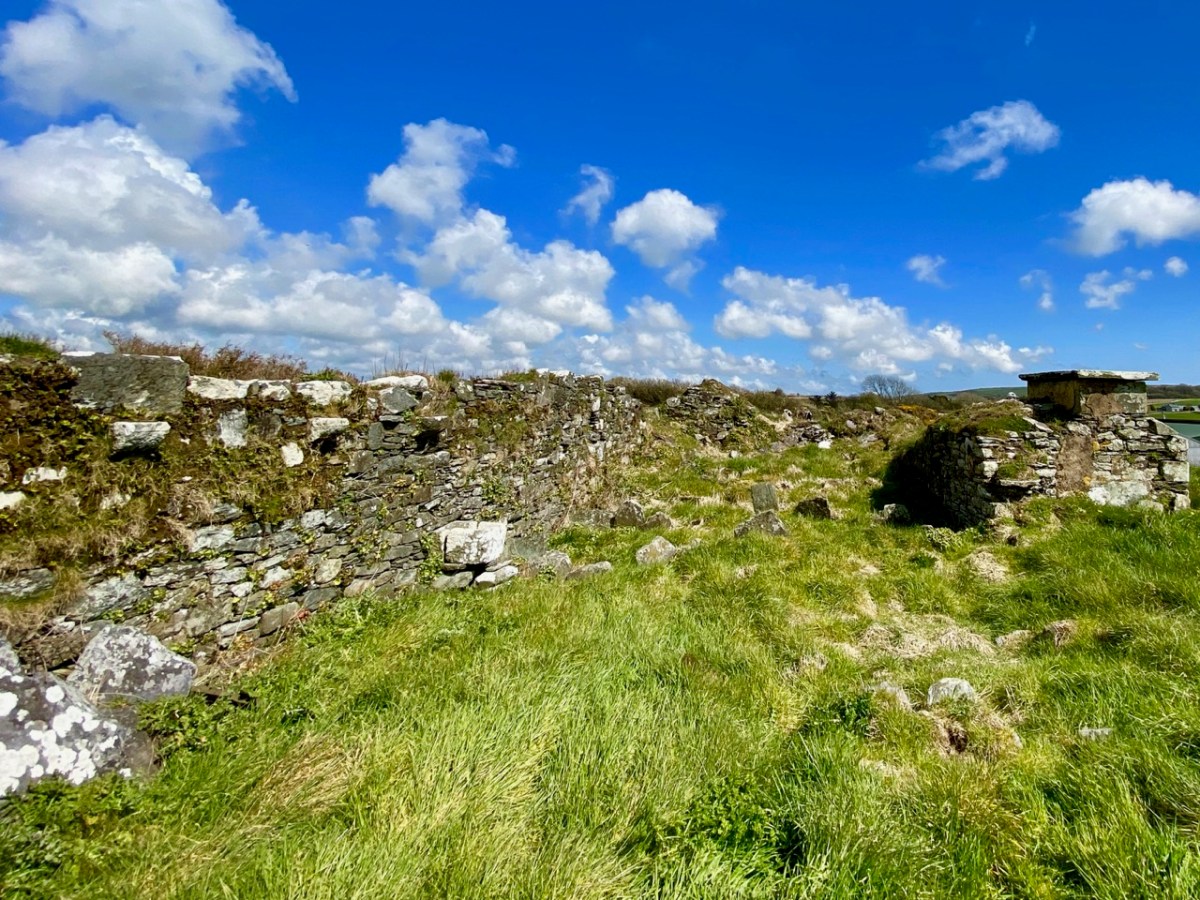
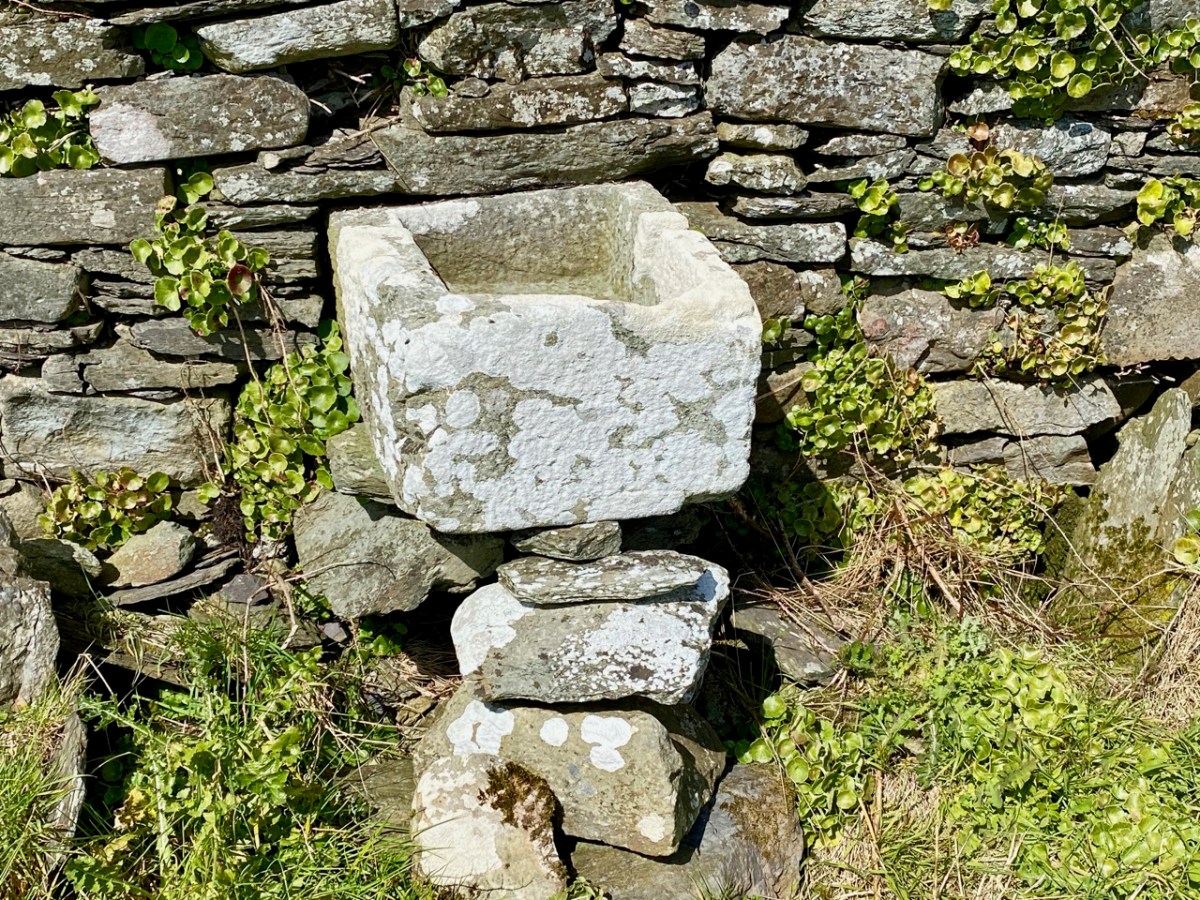
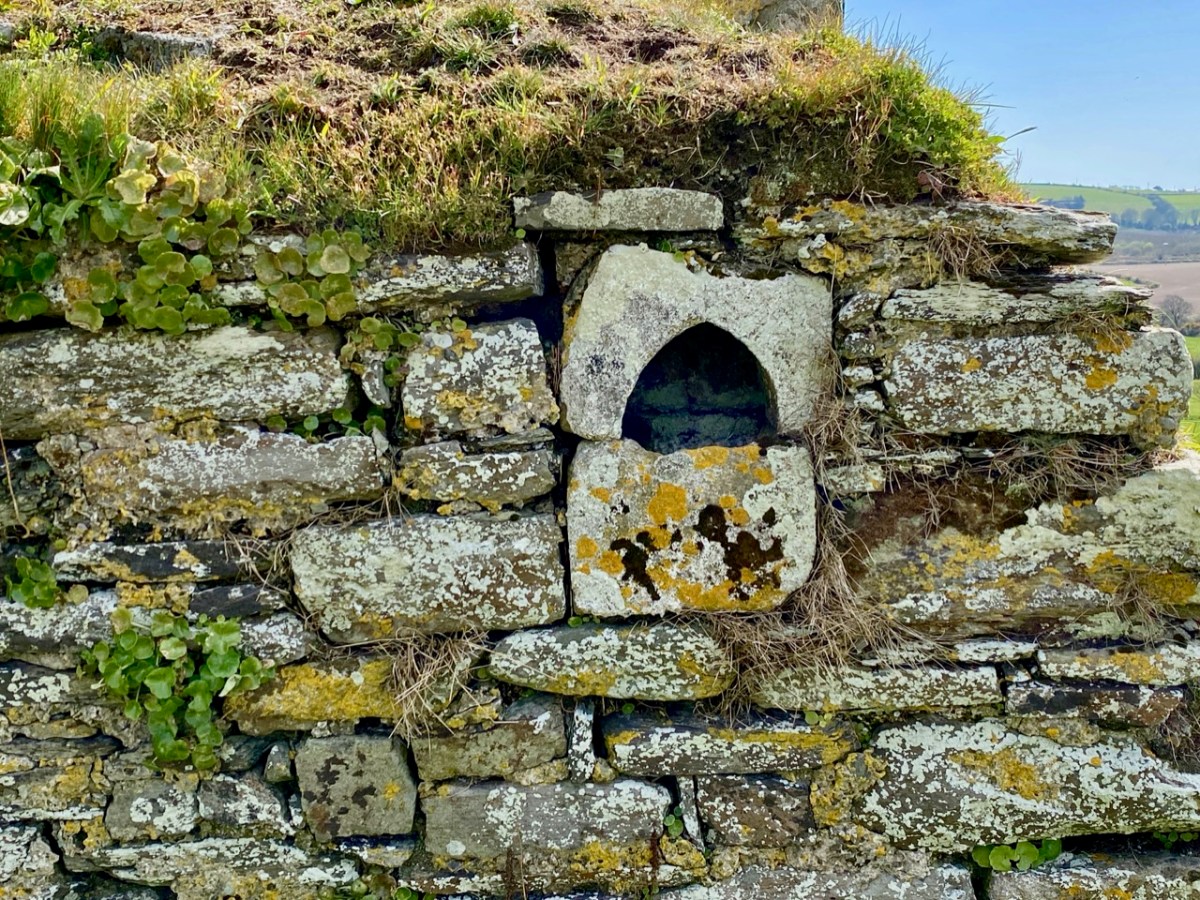
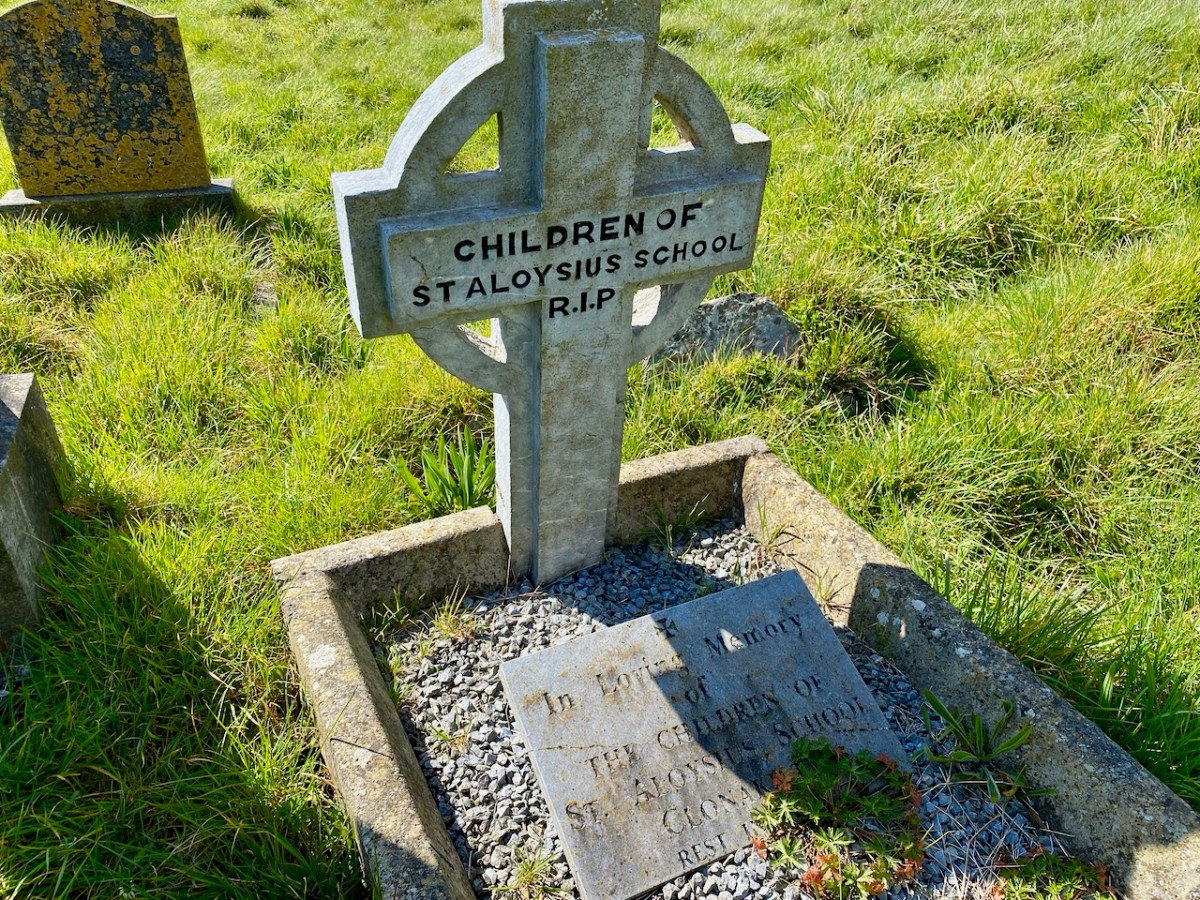
The old church within this graveyard is still clear to see, although ruined: note the rectangular ‘font’ or basin, and the holy water stoup. This has been a place of worship since 1169. It is said that a disastrous fire took hold of the church in the mid 17th century, and it has not been used since. In the furthest corner of the burial ground is a poignant little memorial recalling more recent times.
We have mentioned Industrial Schools before in Roaringwater Journal. They are an unhappy chapter of Ireland’s history. I have not delved deeply into the history of St Aloysius Industrial School for Roman Catholic Girls, Clonakilty, and would not like to think of what stories the tucked-away grave at Ballintemple represents. This online article tells us it was opened in 1869 and closed in 1965.
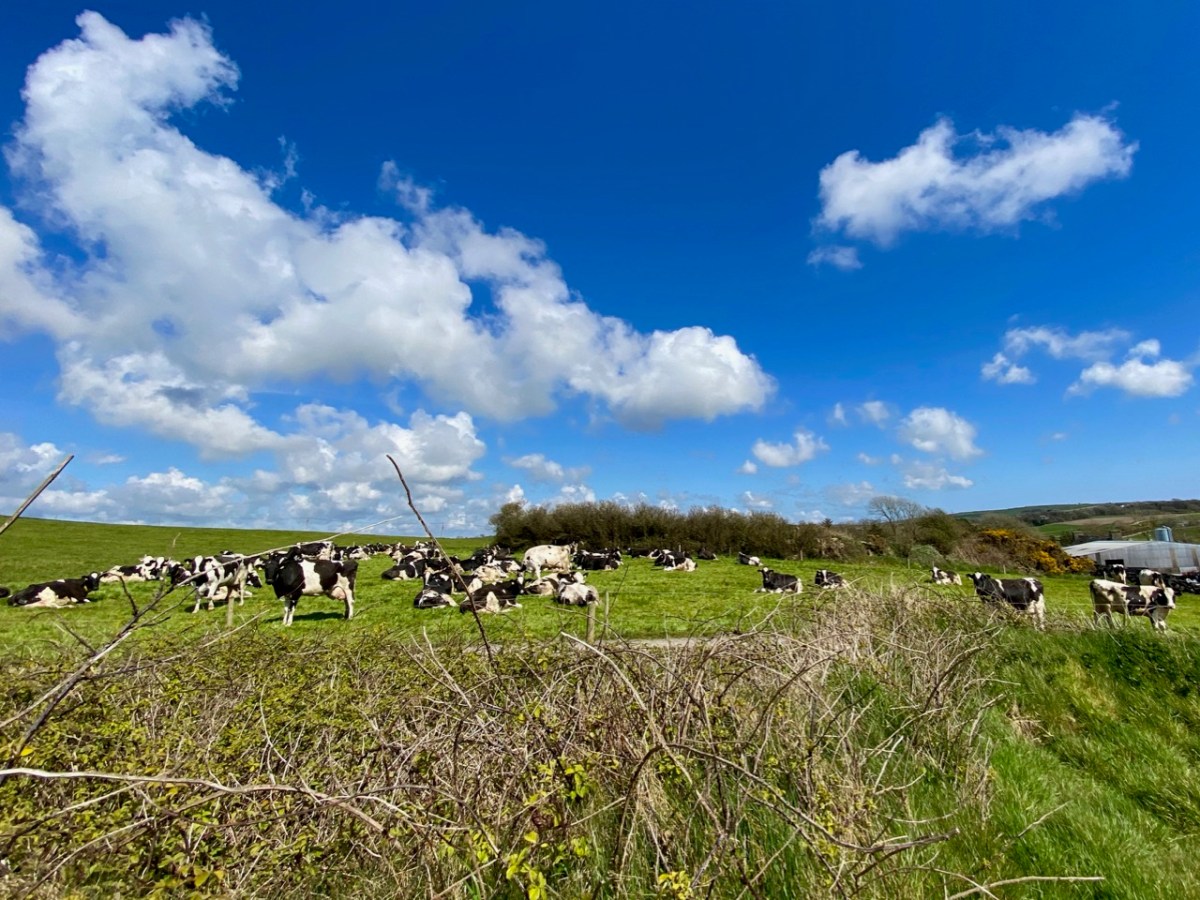
Seen to the east of the burial ground is this ring fort – beyond the dairy herd. The forts in this area are of significant size, and many are the subject of legend. It was once a common belief that underground passages connected many neighbouring forts, and this could be a folk memory relating to ‘souterrains’, often found at these sites.
. . . In olden times some men went to a fort in search of a crock of gold. This fort was in Castle View and about three miles from the town of Clonakilty. To get to this fort you should go to the castle which was about a quarter of a mile from the fort and then go underground and through a long shore. The men took with them a sheave of wheaten straw, a march cock and a blessed candle. Before they started their journey through the shore they lit the candle and all went very well until they nearly came to the end. When they were coming to the end of the shore they saw the crock of gold and with that there came a gust of wind and a terrible noise. There came horses jumping and dogs barking and the men got such a fright that they took their eye off the crock of gold and when they looked again they found to their surprise that the crock of gold was after disappearing. Several other men tried it but this very same thing used to happen at the end of the shore and so the crock of gold remained where it was . . .
James J Lombard, Duchas Folklore Collection, Garryndruig, Co Cork 1936
Compare today’s aerial view of ring forts close to Ballintemple with the 6″ Cassini OS map below it. The map indicates a souterrain in the rampart of the upper fort. Another account from Duchas:
. . . There are four forts, or as they known locally “Liosanna”, in this district. There is one in Kilkerran in the lands of Michael Flavin. It is circular in shape and so are all the rest. The other ones are on the lands of Jermiah O Donovan Carrigroe, John Barry, Newmill and in Castle-Freke Demesne in the Big Island field. These forts are supposed to be Danish fortresses and are built up in very high ground so that you could see one from the other. The fort in Kilkerran is the biggest to be seen around and “lepreacáns” are supposed to live in it. One night a man by the name of Factna O Hea caught a lepreacán near this fort and he asked the lepreacán to grant him a wish. The lepreacán then asked him what wish he wanted and the request the man asked was that he would win every game he played from that day on. The lepreacán granted him his request and he won every game he played from that day on. On the eastern side of this fort is a big stone which is supposed to be an entrance to some underground place. There is a great bank of earth all around the fort. Forts are never ploughed up as it is believed to be unlucky to interfere with them . . .
James Spillane, Duchas Folklore Collection, Kilkerran, Clonakilty 1938
Well, our little tour around Ring seems only just to have begun, but I am going to take a break now and resume this topic in the near future. I will leave you with a few more pictures, including a taster of what is still in store . . .
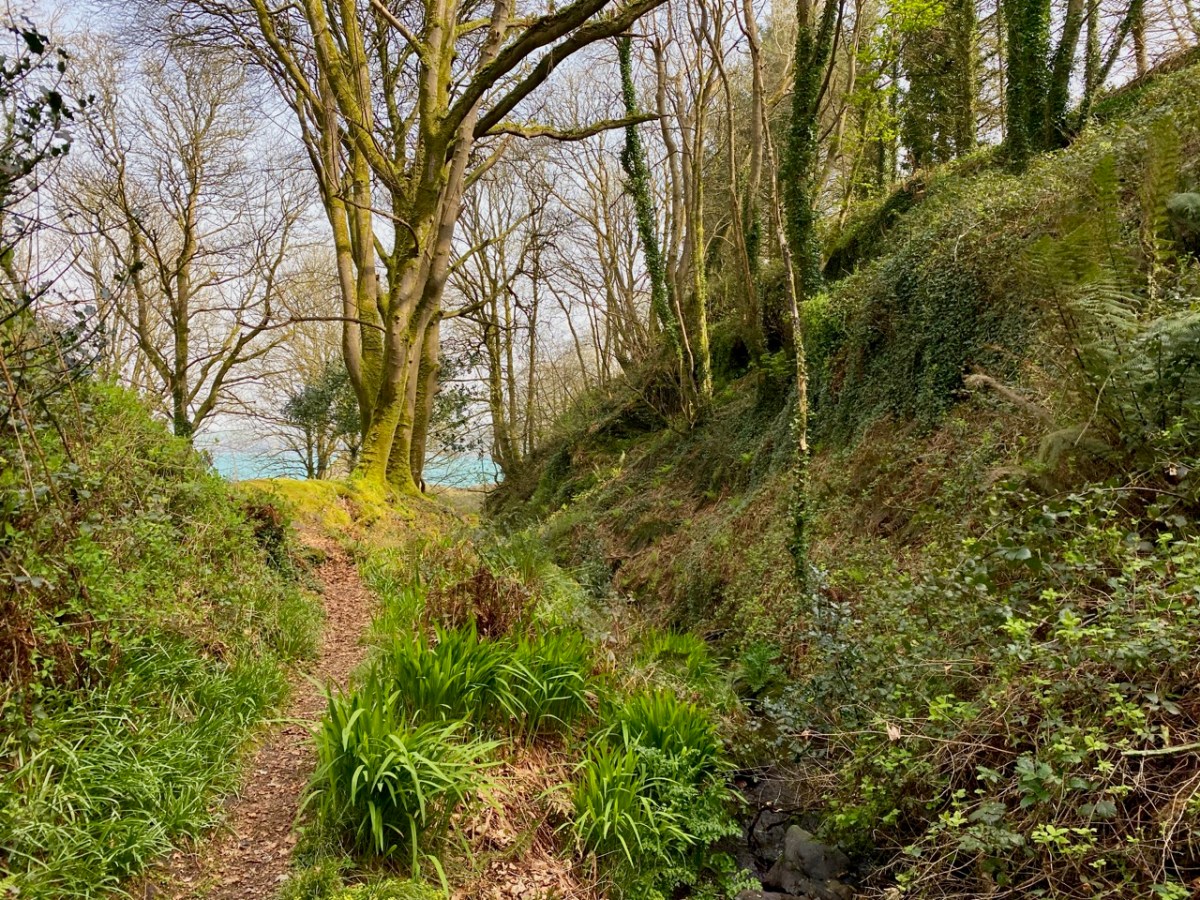
The word ‘haven’ is said to have a Norse origin: hǫfn. This translates simply as ‘harbour’. Does this mean that the Vikings visited West Cork and gave Castlehaven its name? Dictionary definitions include ‘a safe haven in times of trouble’ – refuge, retreat, shelter, sanctuary, asylum . . . The word conjures up something a little magical, and our exploration last week of the secretive valley that leads inland from Castlehaven – at the southern end of a significant West Cork cove – was certainly an enchanting experience. We traversed it on the greenest of days at the arrival of spring:
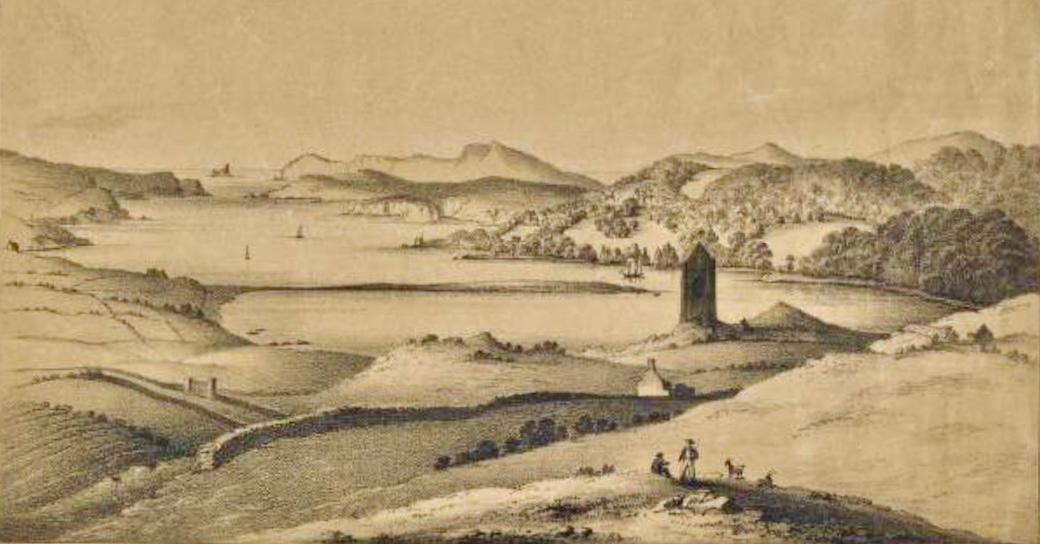
The header is a nineteenth century engraving, and shows a possibly idealised view looking across The Haven, towards the open waters of the Atlantic. In the foreground is the castle of Raheen, or Rathin. Castlehaven itself is at the far end, and the old tower house there – now all but vanished into the lush undergrowth – was strategically important, particularly during the Nine Years’ War between Gaelic Irish lords and the English. Spain also took an opportunistic interest in intervening in matters between Ireland and England. There are many accounts of the skirmish that occurred here on 6 December 1601, all of them varying to such a degree that we can have no real idea, even, of who was victorious! I like this version, penned by a contributor to the Duchas Schools Folklore Collection. It’s part of an extensive essay about the history of the area, which we will revisit in due course:
. . . Beside the Cemetery at Castlehaven stood, about ten years ago, the ruins of Castlehaven Castle, described by Don O’Sullivan in connection with the war of O’Neill & O’Donnell. “Porto Castello”, as it is called by O’Sullivan, played a very important part in connection with the Battle of Kinsale. Both O’Sullivan & Carew give accounts of a battle fought in the harbour, and while the former claims that Admiral Levison and his ships were driven off with loss of some vessels at the harbour’s mouth, Carew claims victory for the British fleet. Local tradition says that inside Reen Point, on the eastern side of the harbour lies a Spanish Vessel laden with gold, but that misfortune is sure to follow anyone who seeks the treasure. Castlehaven Castle was fortified by a combined garrison of Spanish and Irish and withstood the assault of Admiral Levison of the British fleet. The ruins of this castle were in a fair state of preservation about fifteen years ago, but the lower portion of the wall showed signs of weakness, and the great pity was, that nothing was done to prevent the collapse of the entire ruin a few years later. It is ‘said’ that stones had been removed for road metalling many years ago and this vandalism could certainly bring about the unfortunate collapse which only left only a confused pile of stones . . .
Seán Ó Donnabháin – Teacher, Baile an Chaisleáin School, Castletownshend 1936
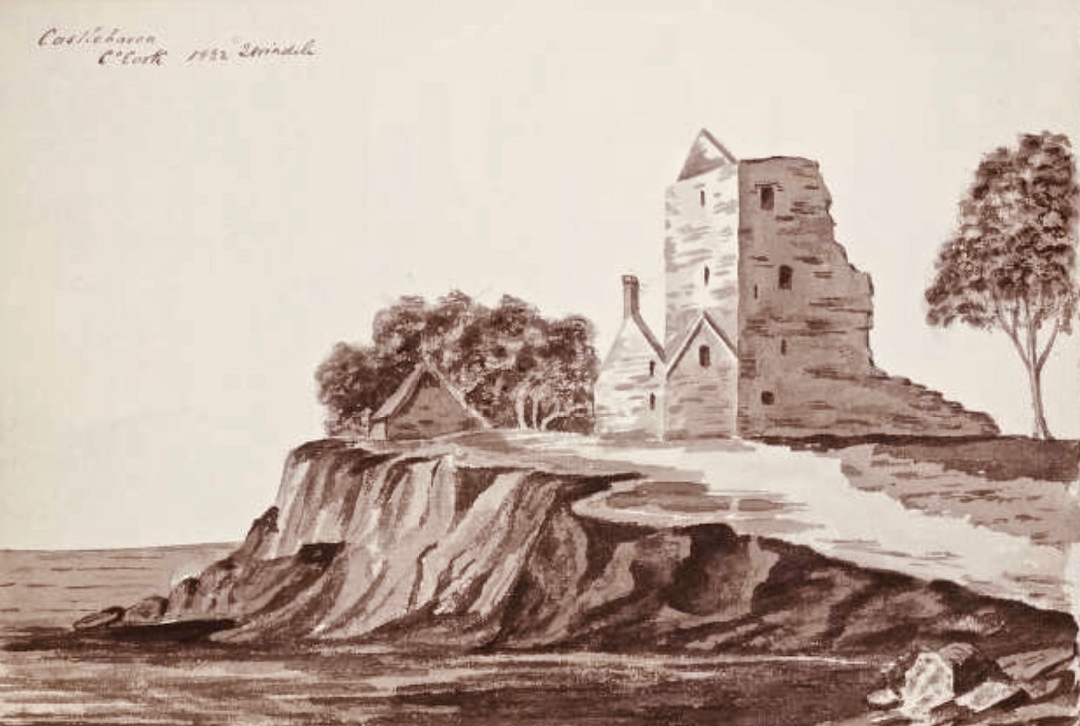
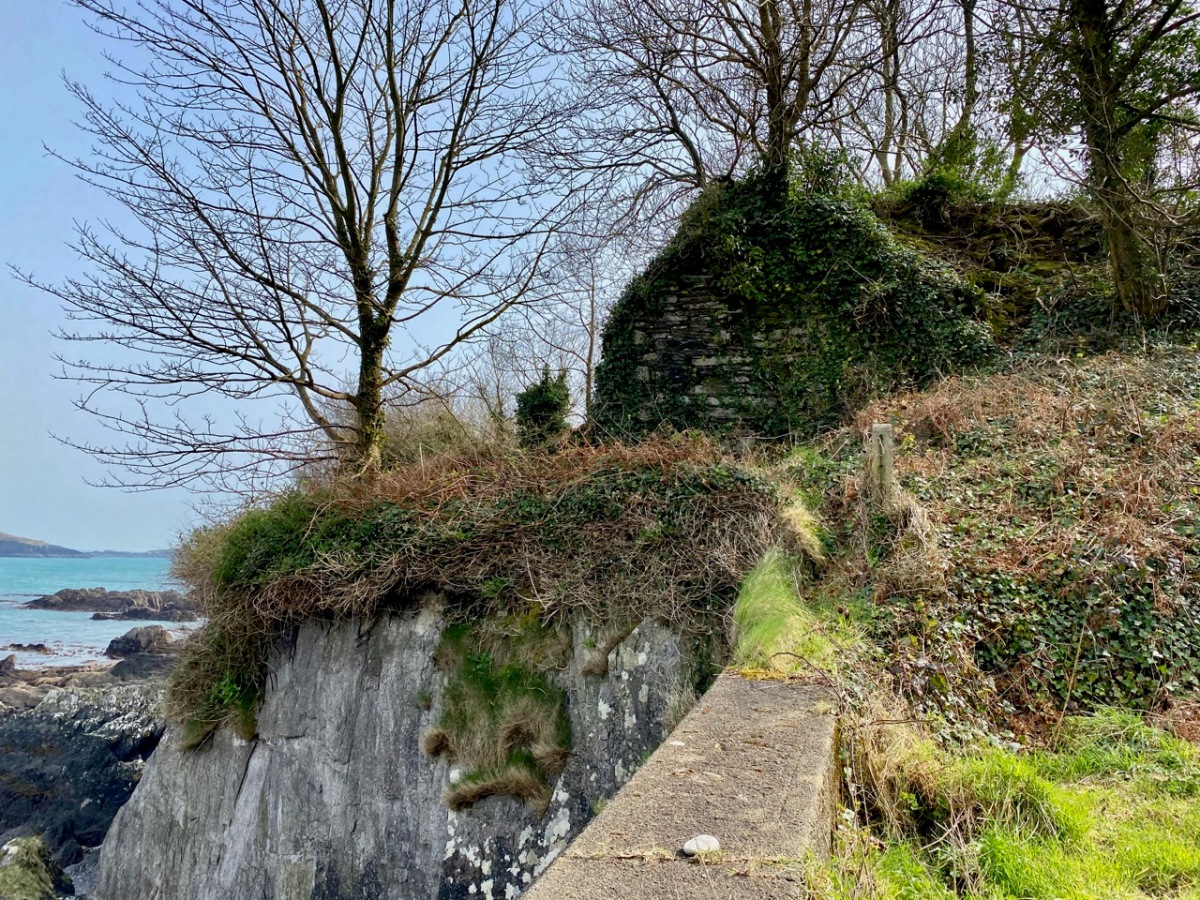
Upper – a view of the now-vanished tower of Glenbarrahane Castle at the entrance to the Haven by Cork antiquarian John Windele, 1801 – 1865 (courtesy National Library of Ireland) and lower – the vestigial stone walls that remain today beside the grey sands of Castlehaven
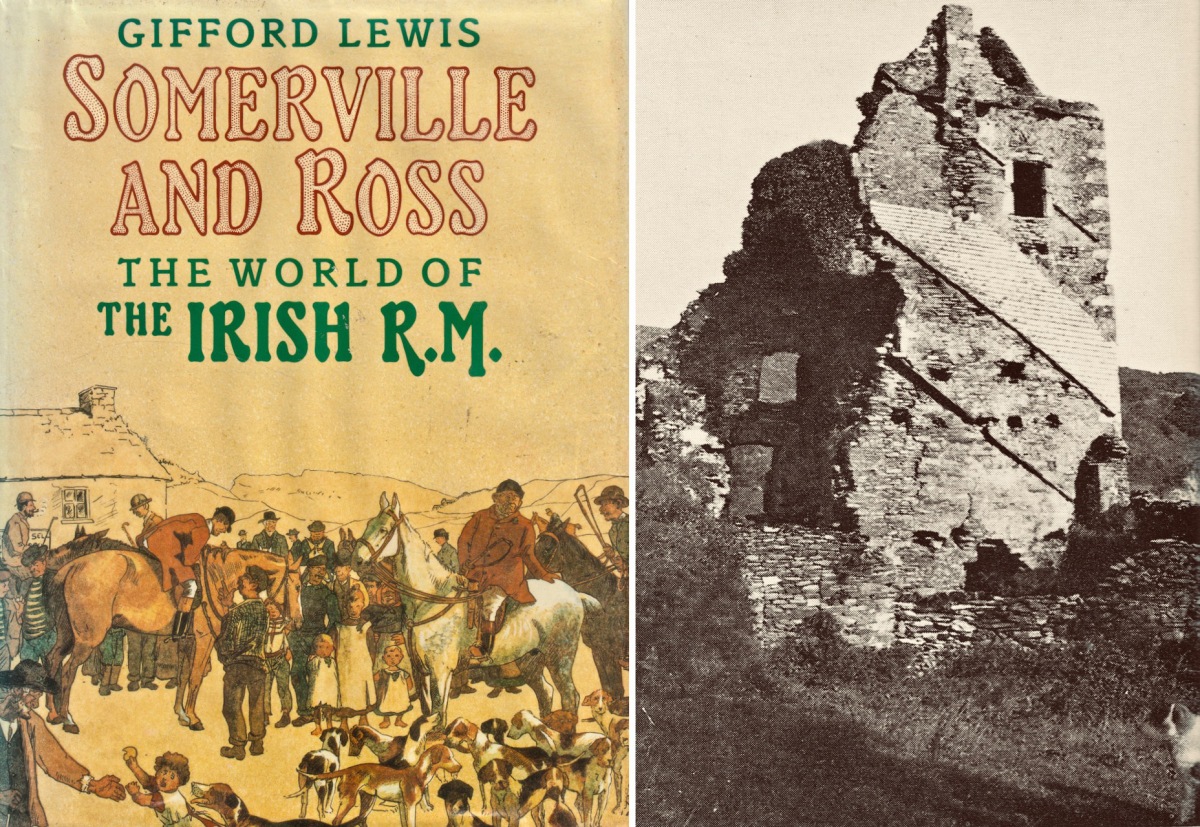
Among our inherited collection of West Cork books in the library at Nead an Iolair is this volume by Gifford Lewis, published in 1985 by Penguin Viking. Ostensibly relating to the writings of Somerville and Ross, it is illustrated with a well-researched collection of old photographs which include some of the castle at The Haven still standing.
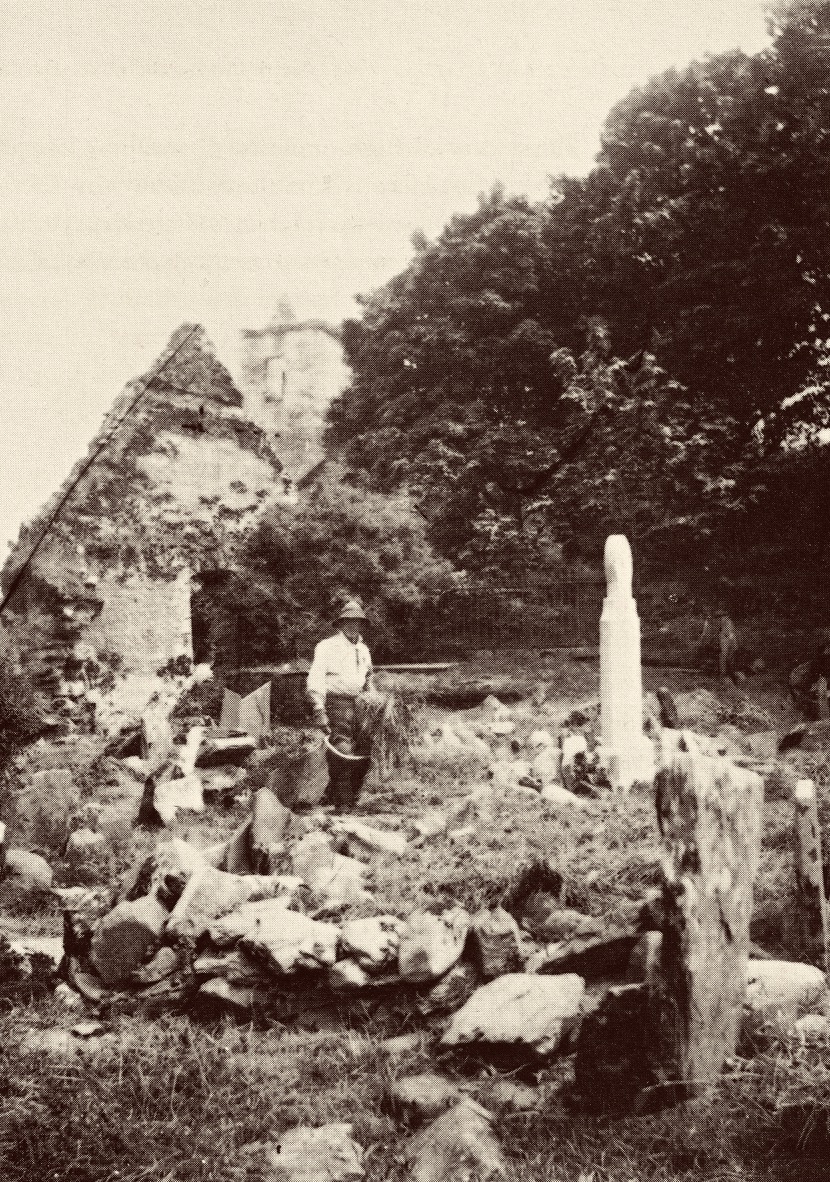
This photograph (above) is particularly valuable. It is also from the Gifford Lewis book and is captioned as follows:
. . . A very early plate by Sir Joscelyn Coghill (c. 1865) showing the old Castlehaven church and above it the Castle in which the Reverend Robert Morrit lived, and before him the Reverend Thomas Somerville. The Tithe War had its effect. Eventually, the Tithe Commission Act of 1838 moved the burden of supporting the Protestant clergy from the peasants to the landowners. The Catholic/Protestant confrontation in Ireland came with the influx of Elizabethan English, the first after the Reformation of the English Church. Those who came to Ireland as Protestants were much less likely to be assimilated than those who came before the Reformation, like the Martins. The ousting of the topmost layer of native Catholic society by a new Protestant one is audible in the list of Rectors of Castlehaven church from 1403 to 1640: O’Driscoll, O’Callaghan, O’Driscoll, Cormac/Basse, Pratt, Stukely . . .
Gifford lewis, Somerville and Ross – The World of the Irish R.M. 1985
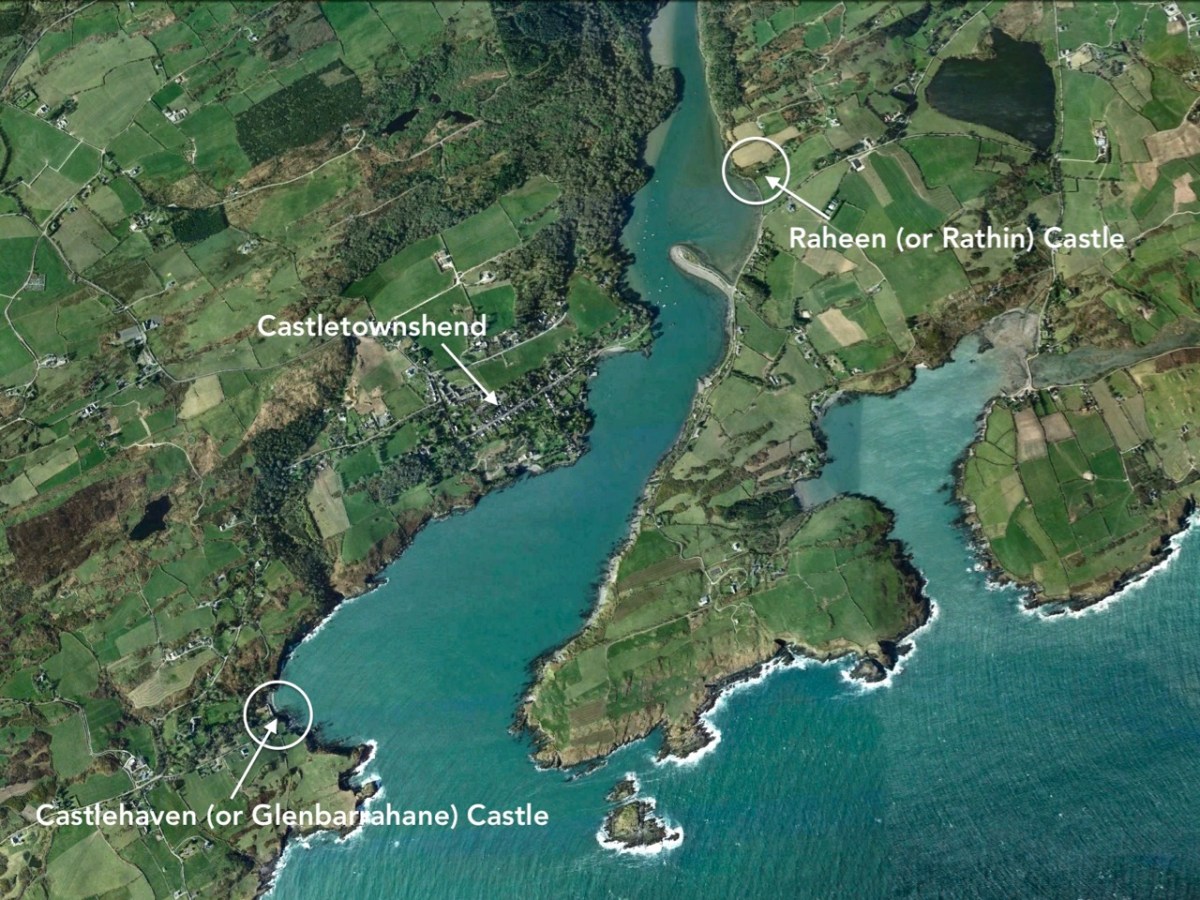
The aerial view shows the inlet of Castle Haven guarded by its O’Driscoll castle at the southern end. In the upper reaches of The Haven is a further castle, properly known as Raheen (or Rathin), sited above the natural spit of The League: the juxtaposition of castle and land-spit was probably deliberate, to create a defensive barrier against any invaders infiltrating the upper waters of The Haven. The mid-19th century 6″ Cassini OS map (above) shows the location in detail. James N Healy (The Castles of County Cork, Mercier Press, 1988) well describes its situation: “. . . It is a remarkable sight, tall and dignified in its quiet isolation . . .” and attributes it to the O’Donovan family, associated with Castle Donovan on the Ilen River – which we visited recently. Raheen was attacked from the water by Cromwell’s army in 1649 and remarkably survives in that breached condition today.
The coloured postcard above is based on a view probably taken around the turn of the 19th and 20th centuries. The viewpoint is identical with that in the header engraving, and The League can be clearly seen in both representations. Because the whole inlet is known as Castlehaven, we have to be careful when reading references or captions, as the two castles – which I always endeavour to refer to by their original names (Glenbarrahane and Rathin) are often both known as Castlehaven Castle. And, of course, we also have the castle at Castletownshend itself to further confuse the issue, although the structure there now is relatively late (the present building dates mainly from the 19th century, although an earlier Bryans Fort on the same site was probably 17th century).
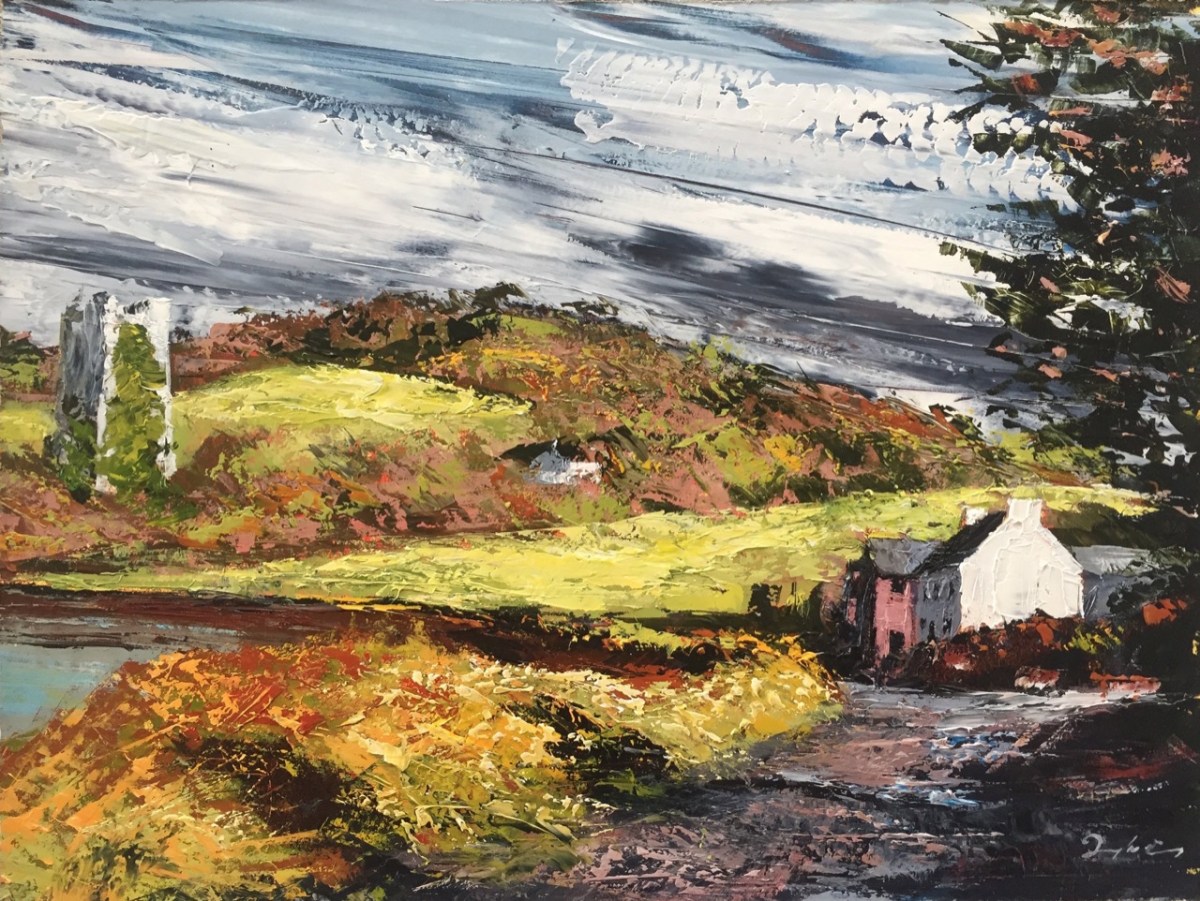
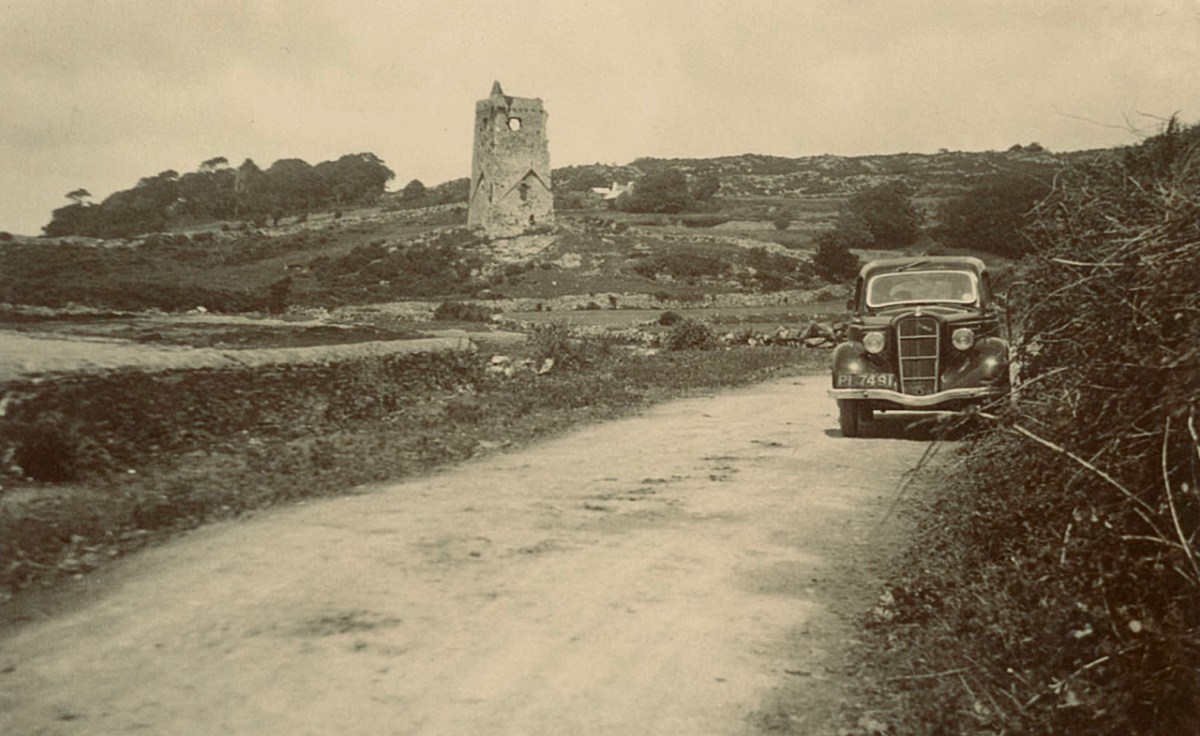
Here is a very fine painted view of Rathin Castle by contemporary West Cork artist Donagh Carey (thank you, Donagh!) You can find his works here: we are pleased to have some of them hanging at Nead at Iolair. I can’t resist including this photograph taken in the 1930s (below) – from the Adrian Healy postcard collection – showing Rathin, with the added bonus of a 1936 Ford 10 in the foreground!
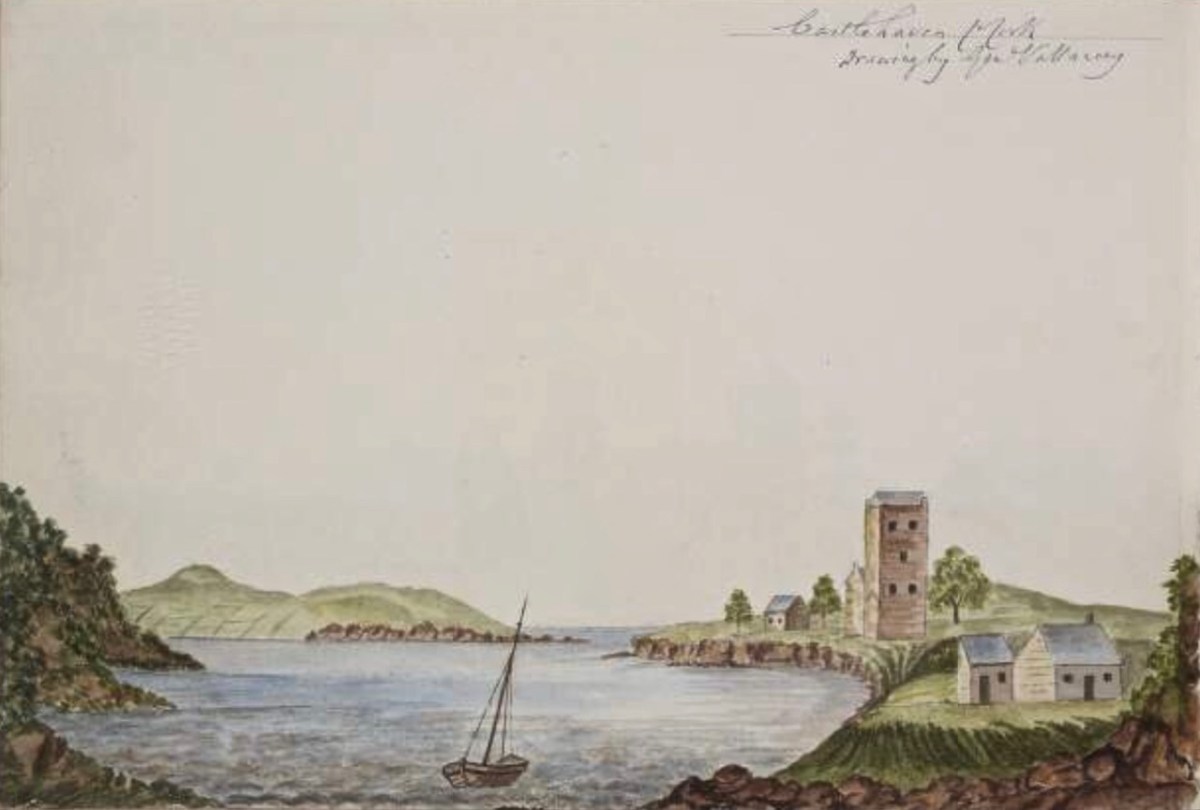
This view (above) is an enigma. It is referred to as ‘Castlehaven Castle’ and is a pen-and-watercolour drawing by Charles Vallancey (1721 – 1812). If the written caption is ‘Castlehaven Mouth’, then it must be Glenbarrahane (although the foreground topography should surely have shown the old church and graveyard?); if it is fact ‘Castlehaven North’, then it would more likely be Rathin – and it is certainly visually closer to this castle. However, then the mouth of the Haven is not in the right place at all. Vallancey was a British military surveyor who had been sent to Ireland in the mid 18th century: he became fascinated with the country and its topography and settled here as a self-styled historian and antiquarian. An extract of his work follows, from a report on West Cork:
. . . There was only one road between Cork and Bantry; you may now proceed by eight carriage roads beside several horse tracks branching off from these great roads; from Bantry the country is mountainous and from the high road has the appearance of being barren and very thinly populated; yet the valleys abound with corn and potatoes and the mountains are covered with black cattle. In 1760, twenty years ago it was so thinly inhabited an army of 10,000 men could not possible have found subsistence between Bantry and Bandon. The face of the country now wears a different aspect: the sides of the hill are under the plough, the verges of the bogs are reclaimed and the southern coast from Skibbereen to Bandon is one continued garden of grain and potatoes except the barren pinnacles of some hills and the boggy hollows between which are preserved for fuel . . .
Charles vallancey – A Report on West Cork, 1778, British Library
Vallancey was noted for obtaining the Great Book of Lecan (Leabhar Mór Leacáin), a medieval manuscript written between 1397 and 1418 in Castle Forbes, Lecan, Co Sligo. He passed it on to the Royal Irish Academy, where it resides today. Sadly, his work apparently only garnered the poorest of appraisals – as an example, here is the 19th century Quarterly Review:
. . . General Vallancey, though a man of learning, wrote more nonsense than any man of his time, and has unfortunately been the occasion of much more than he wrote . . .
The Quarterly review, London, John Murray
In my Extreme Green post I promised a ‘salacious scandal’ associated with Castlehaven. Alas – we have this week run out of time and space . . . Keep watching!
Welcome to the UCD Library Cultural Heritage Collections blog. Discover and explore the historical treasures housed within our Archives, Special Collections, National Folklore Collection and Digital Library













 Roaringwater Journal