Bray Railway Station Murals

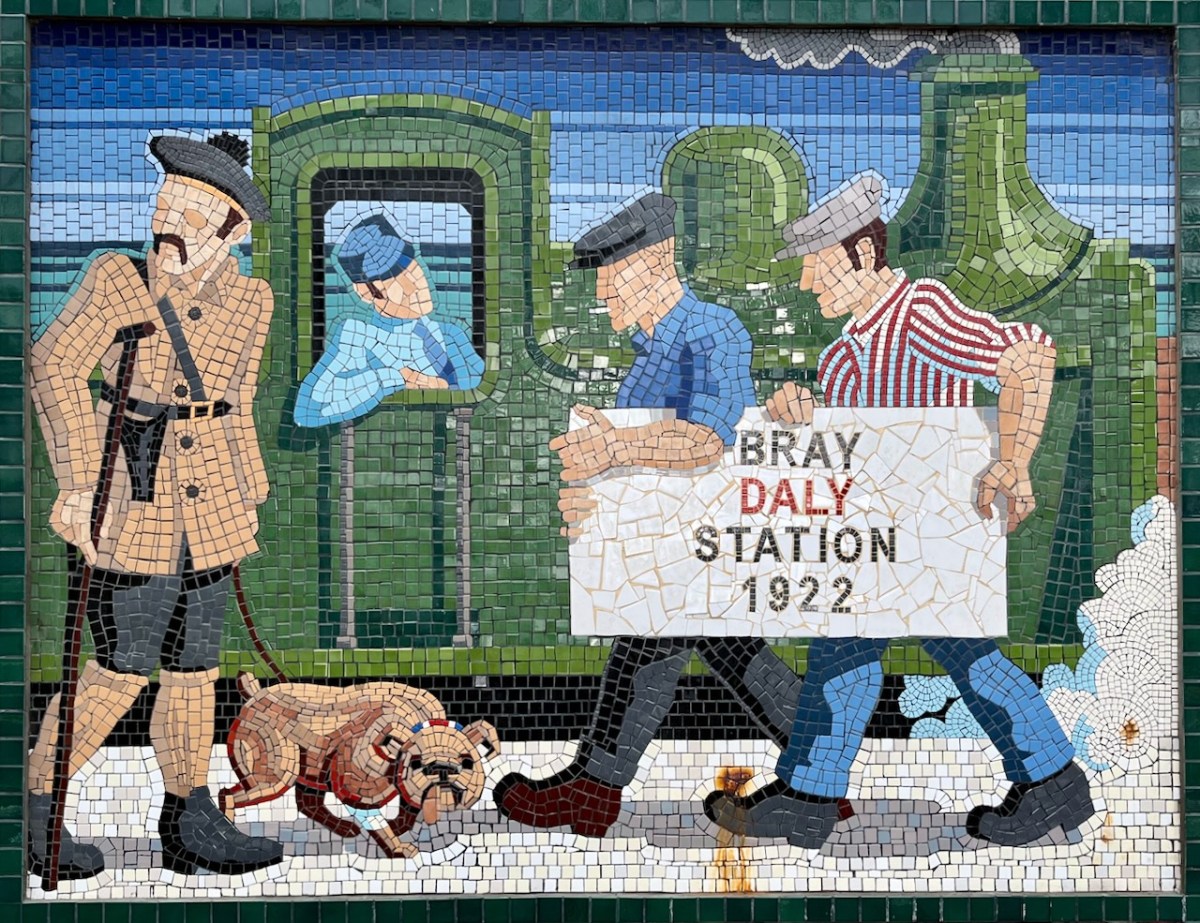
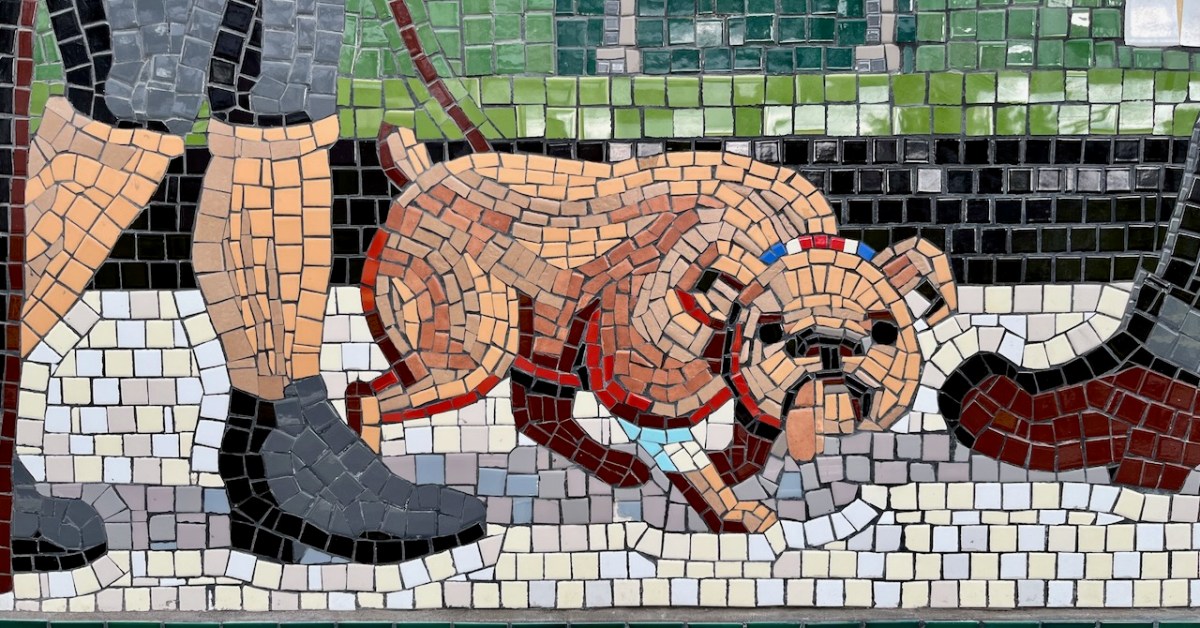
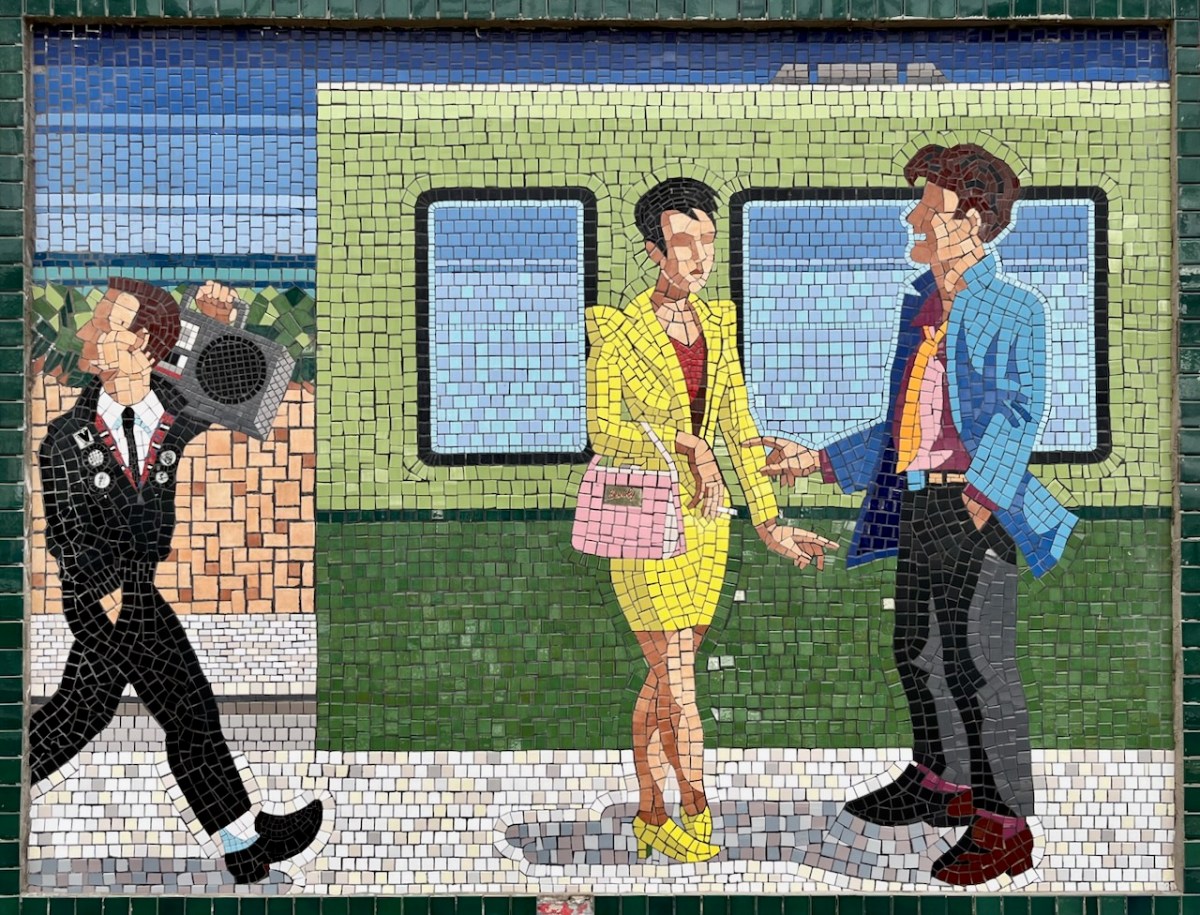
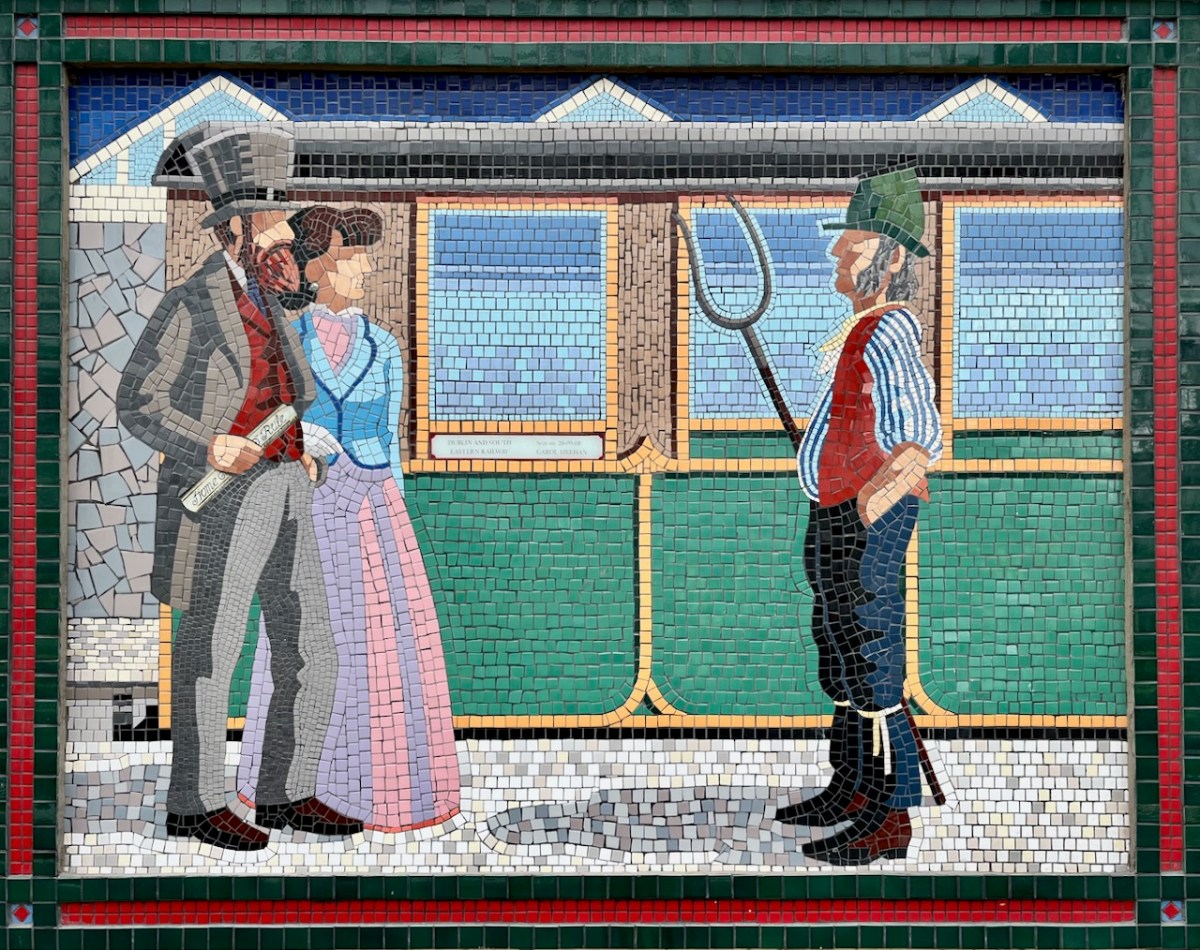
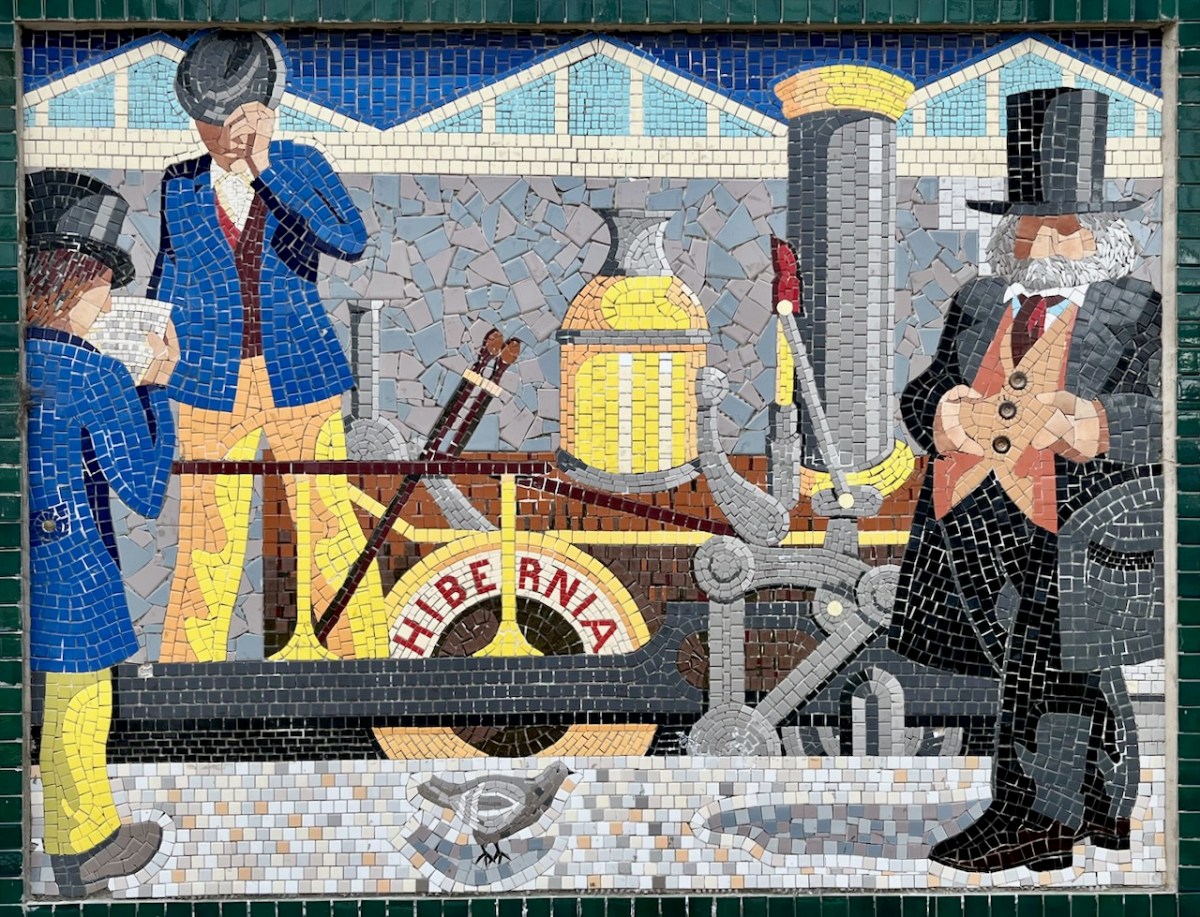
In a recent post I gave some examples of public art which can be seen on the railway station at Bray, Co Wicklow. I think this subject deserves a more comprehensive airing, so here we go! Just to recap, murals were originally painted here by Jay Roche and John Carter, who won a competition in 1987. Over the years the paintings deteriorated, and were replaced by the same team – assisted by Anthony Kelly and Eileen Maguire – with a very fine set of tiled murals. I’m recording the rest of these in this post, as I am so impressed by the overall work.
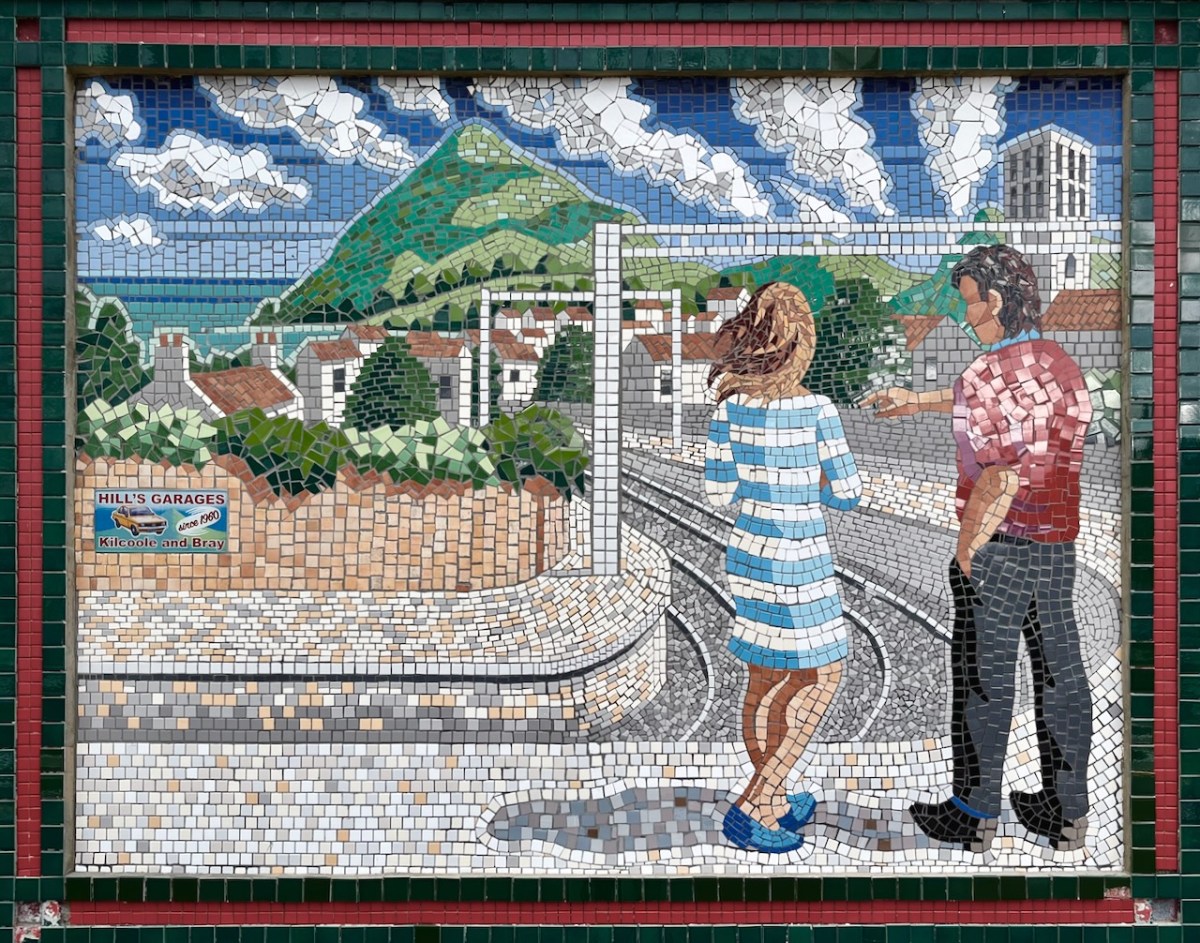
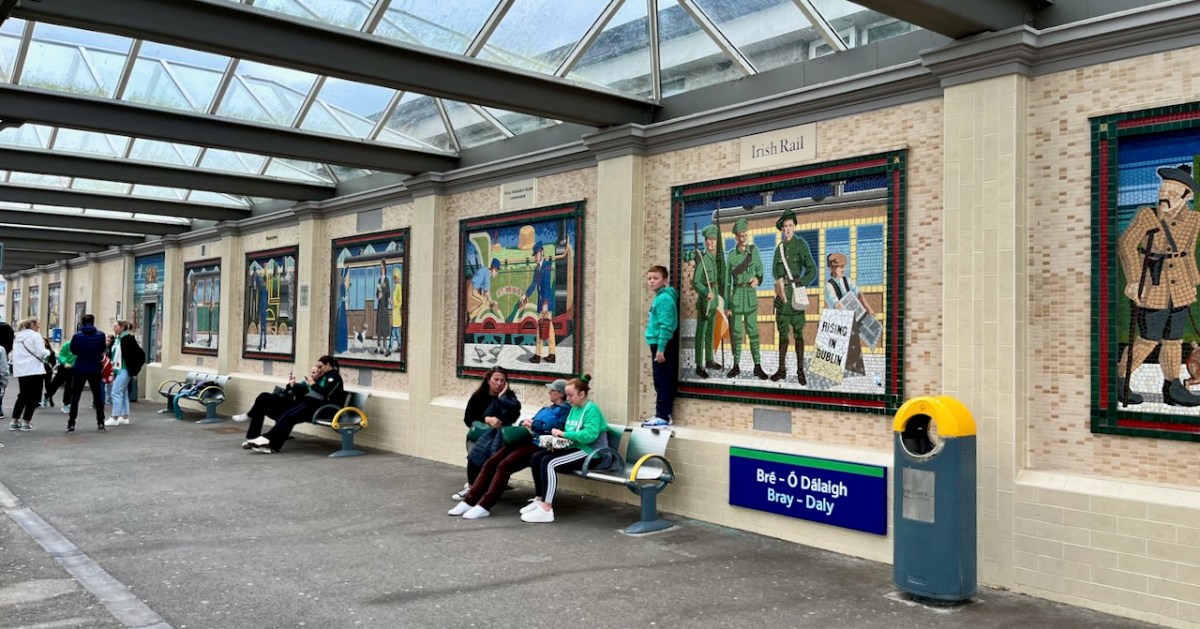
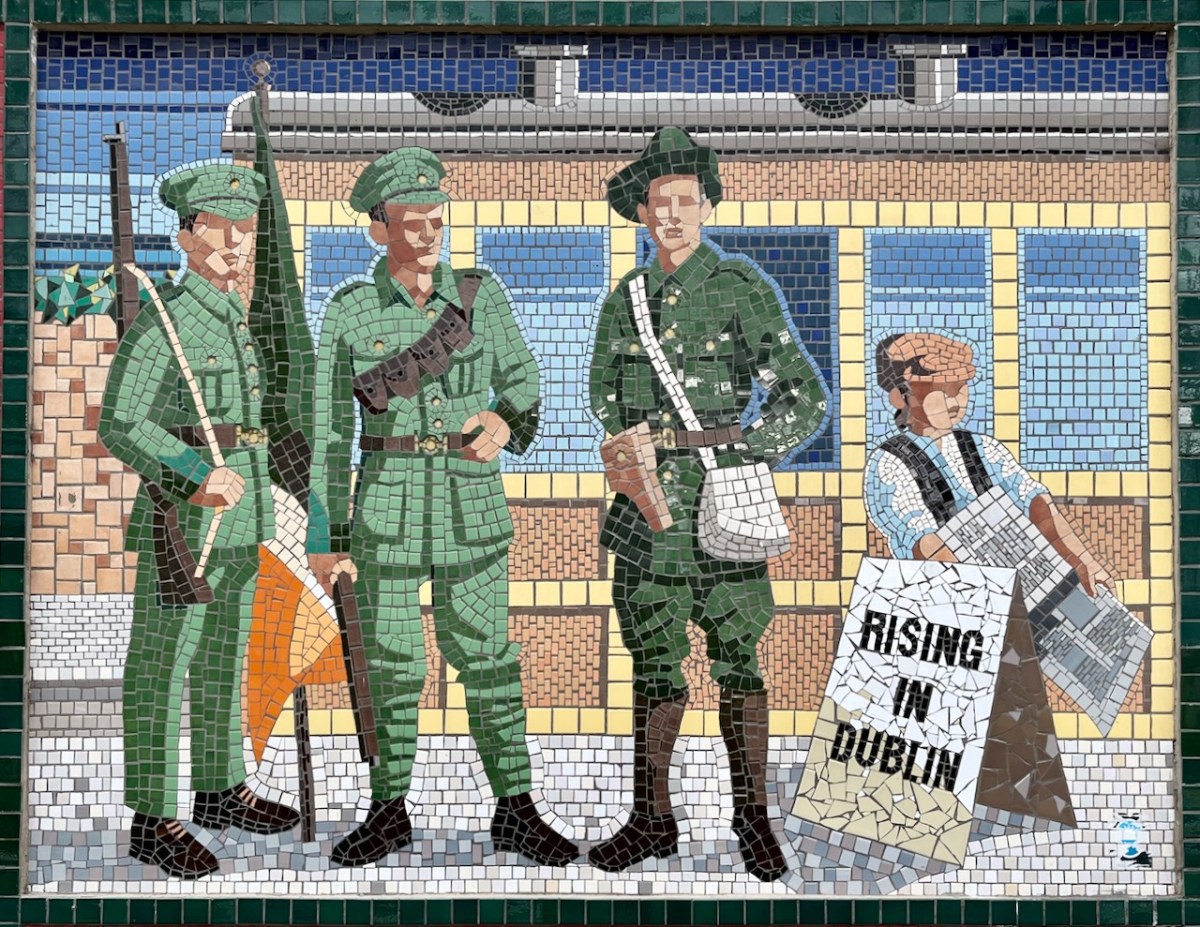
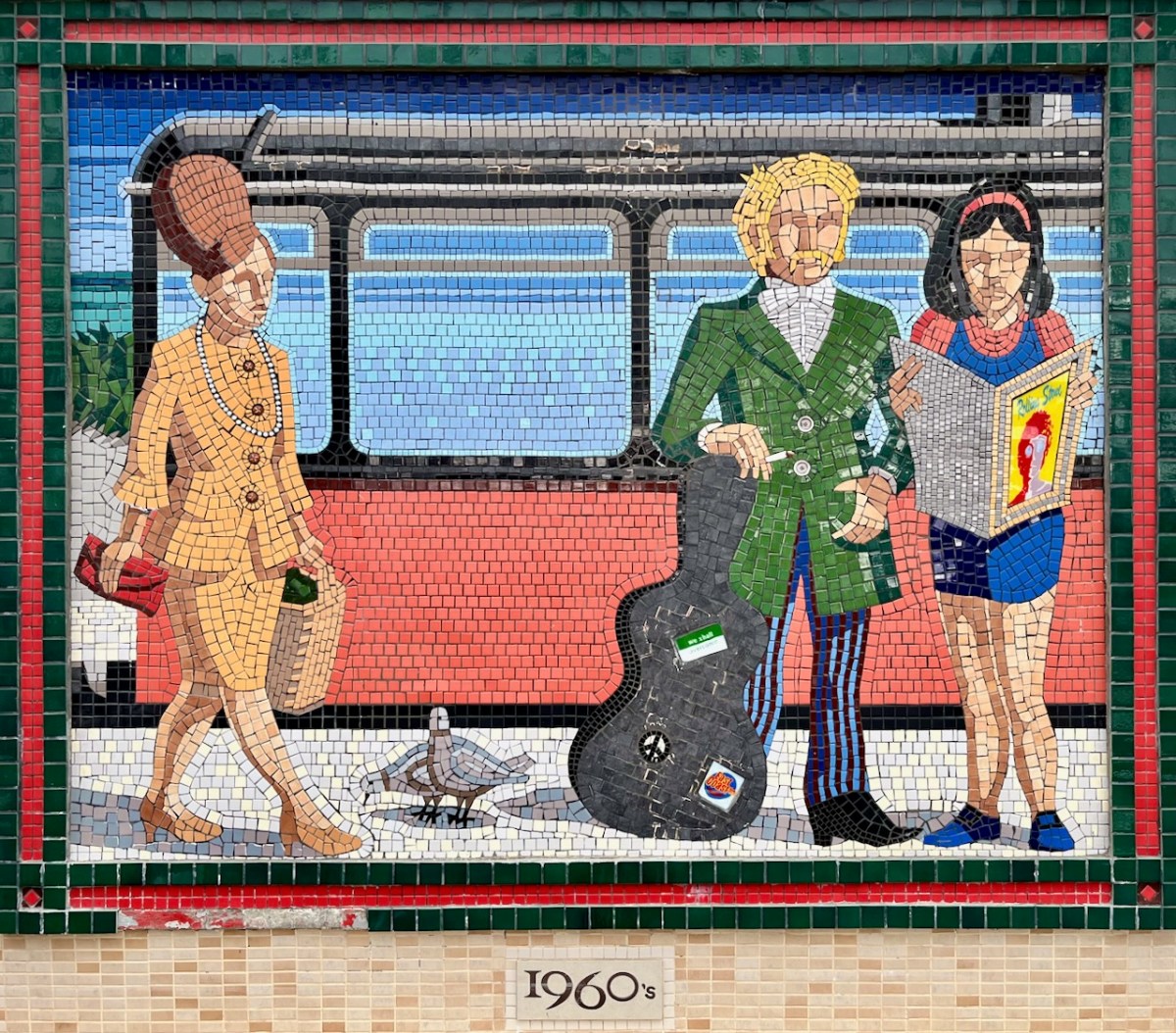
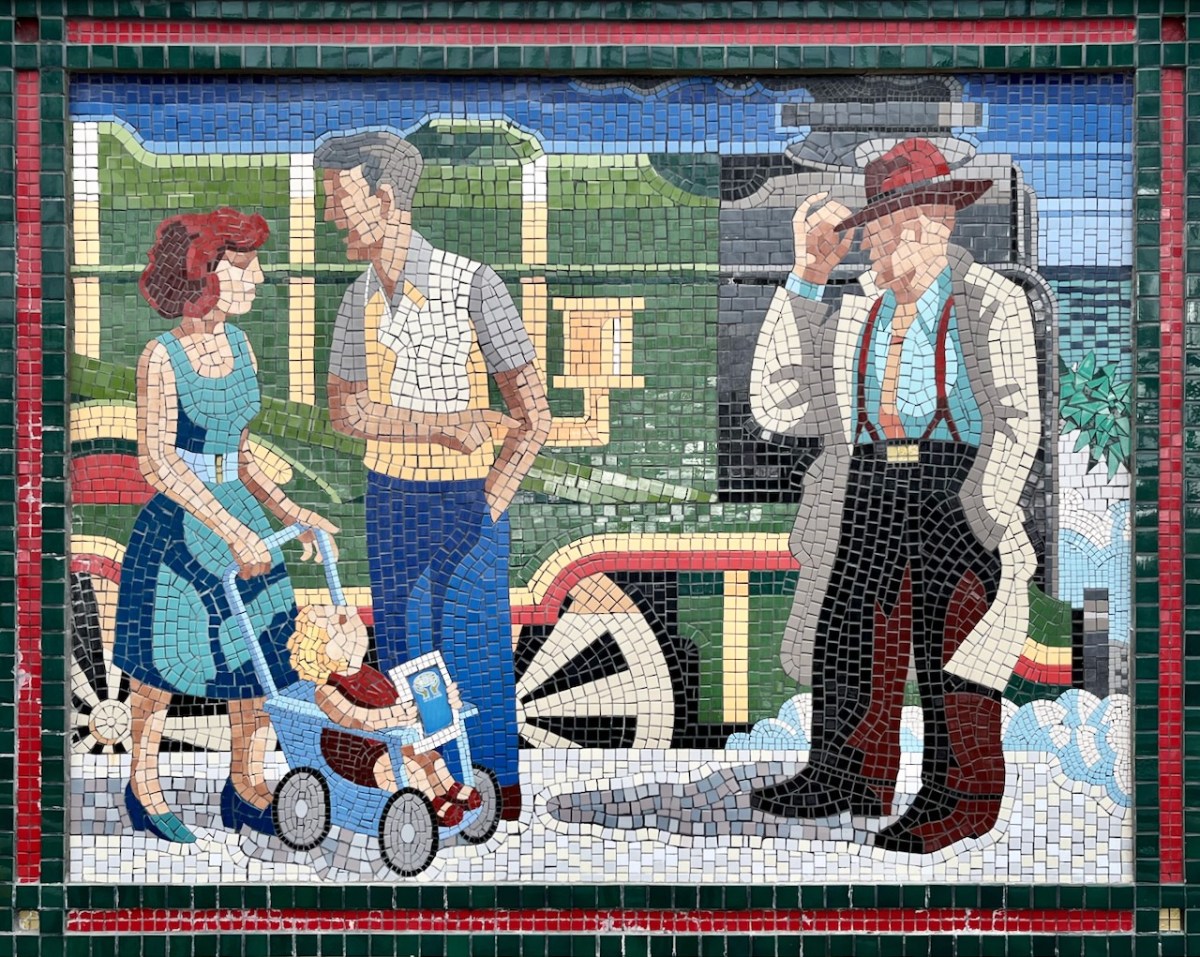
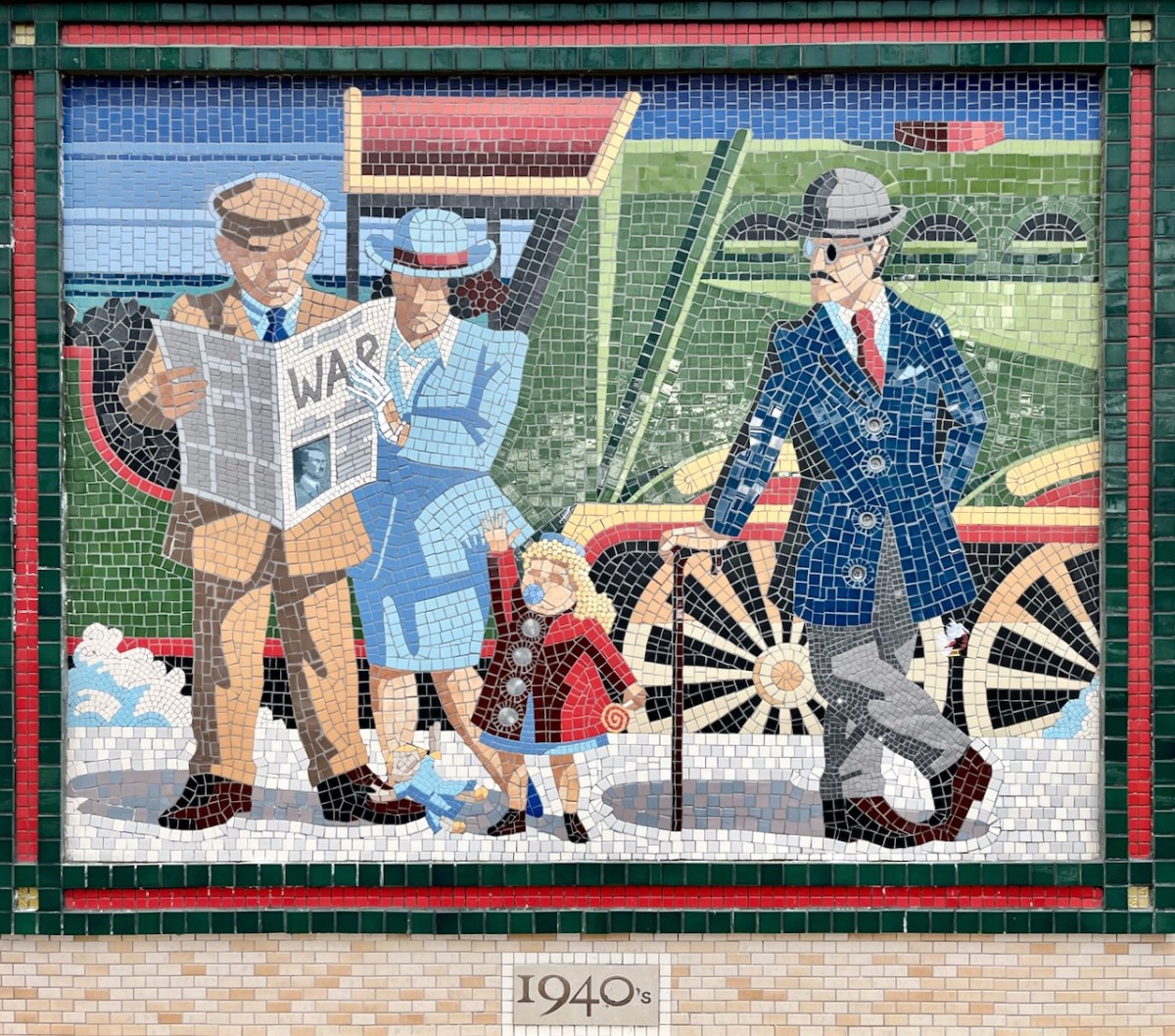
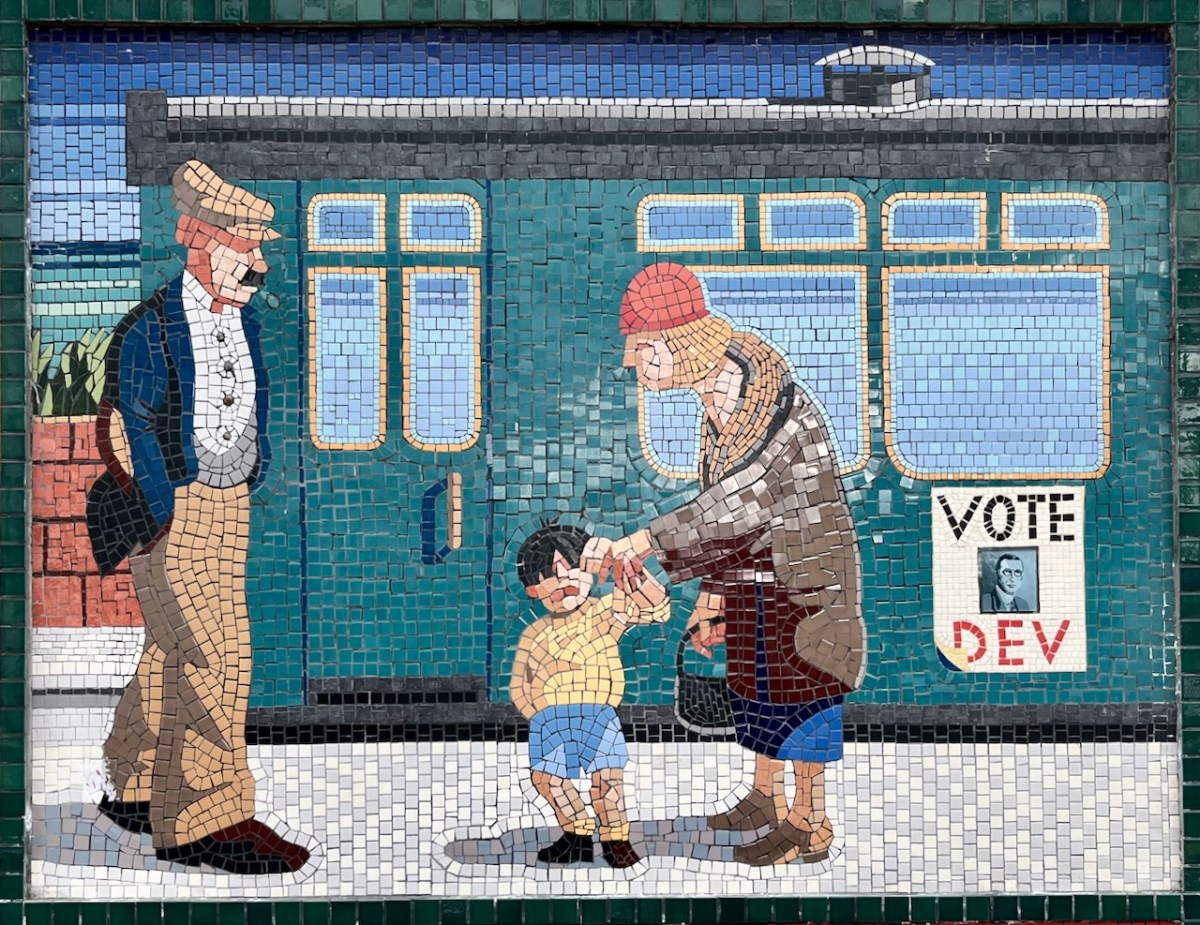
Each panel represents a decade in the line’s history. You’ll have to decide for yourselves which decade is which . . .
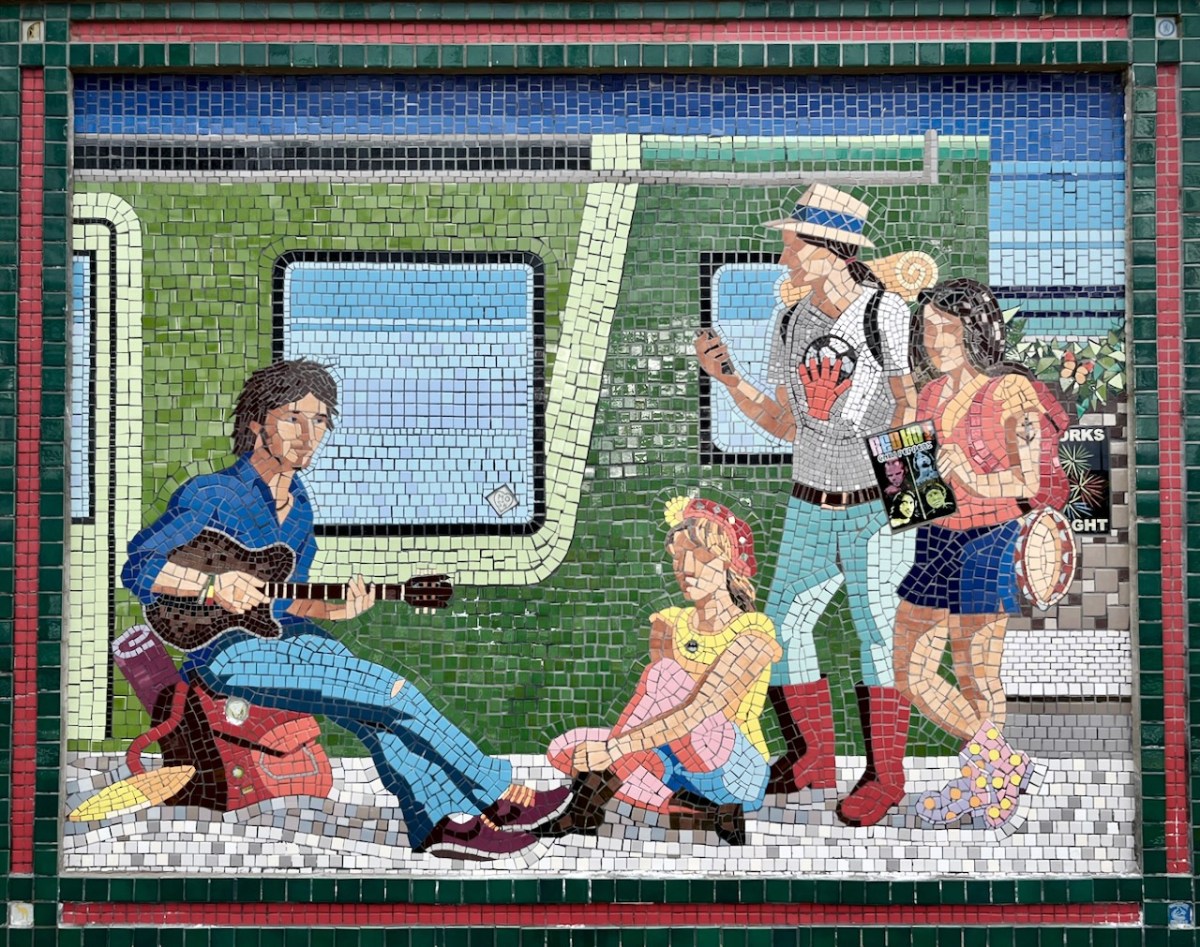
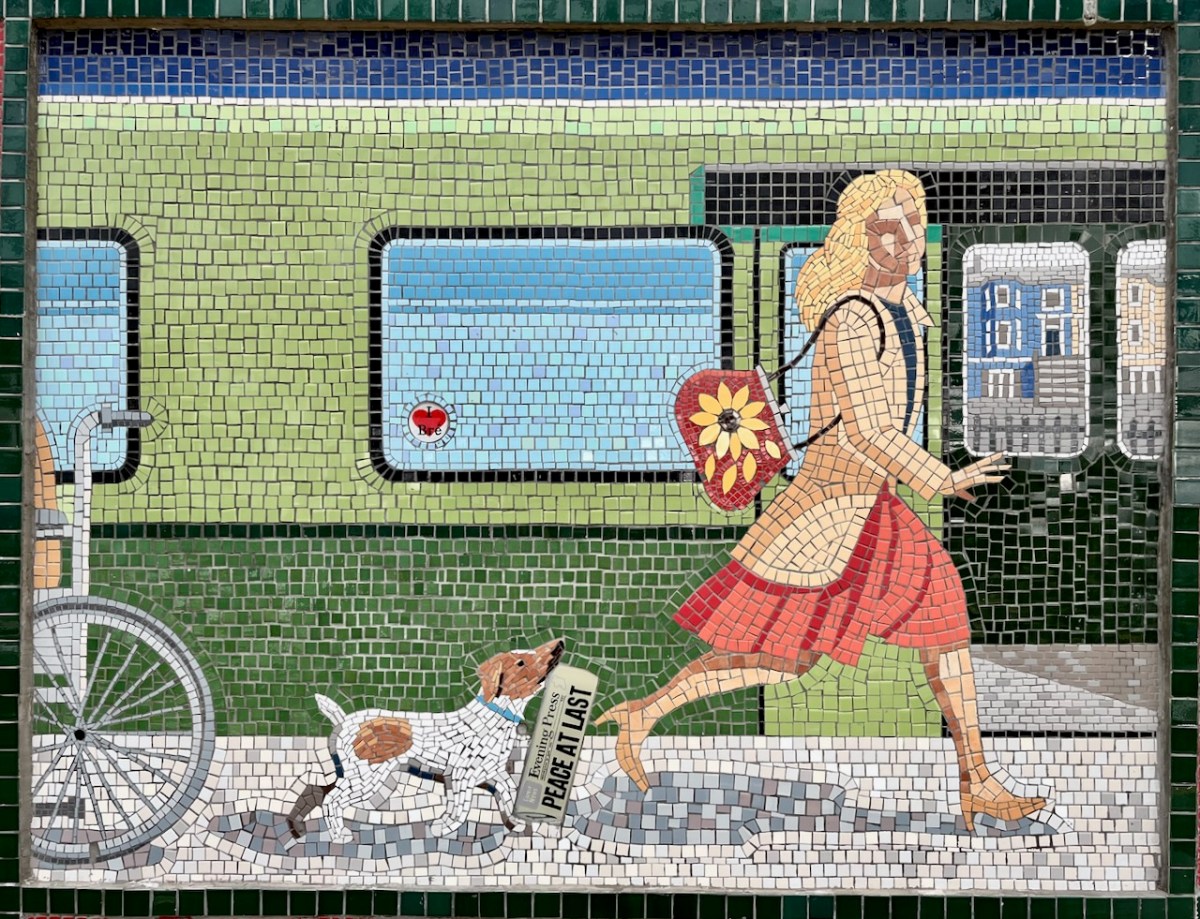
If only that newspaper headline was really true!
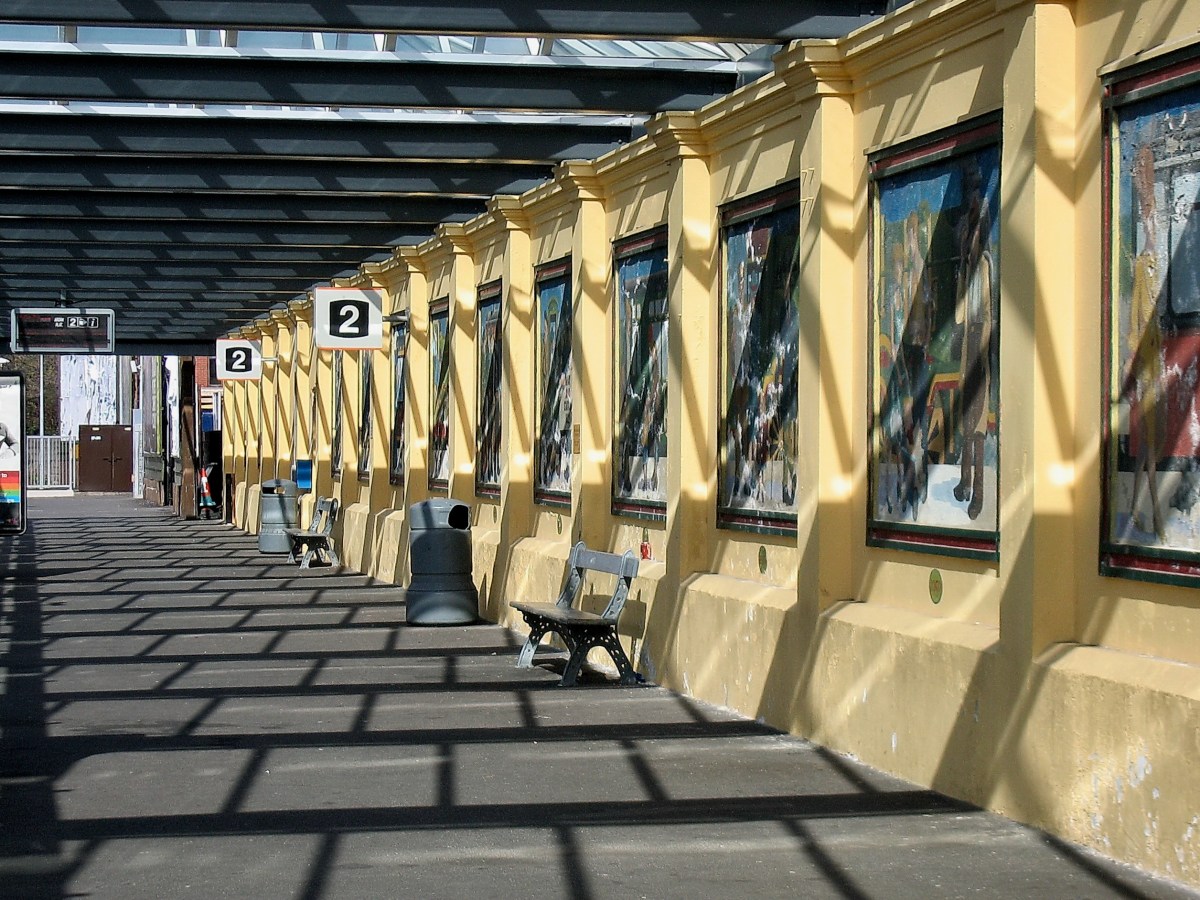
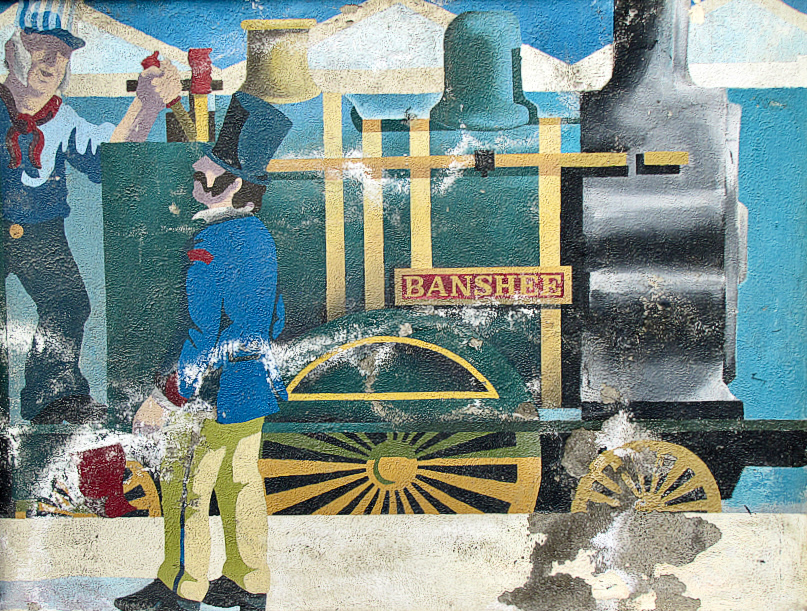
From Wiki Commons 2007: A Panel for Every Decade since 1850s in Bray Railway Station. These are the painted murals.
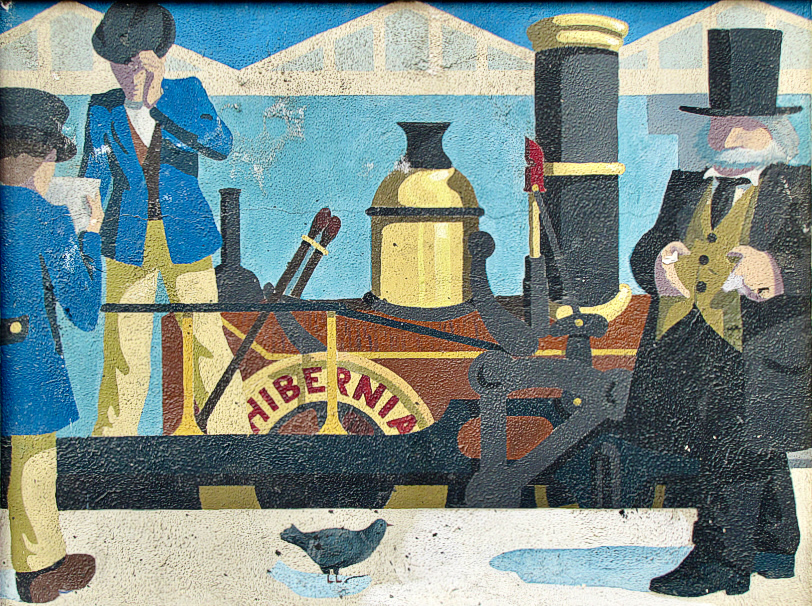
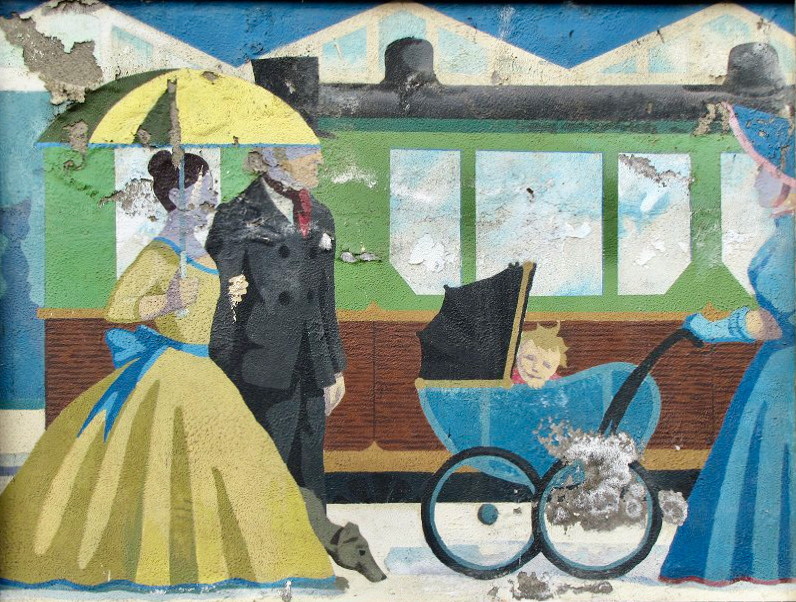
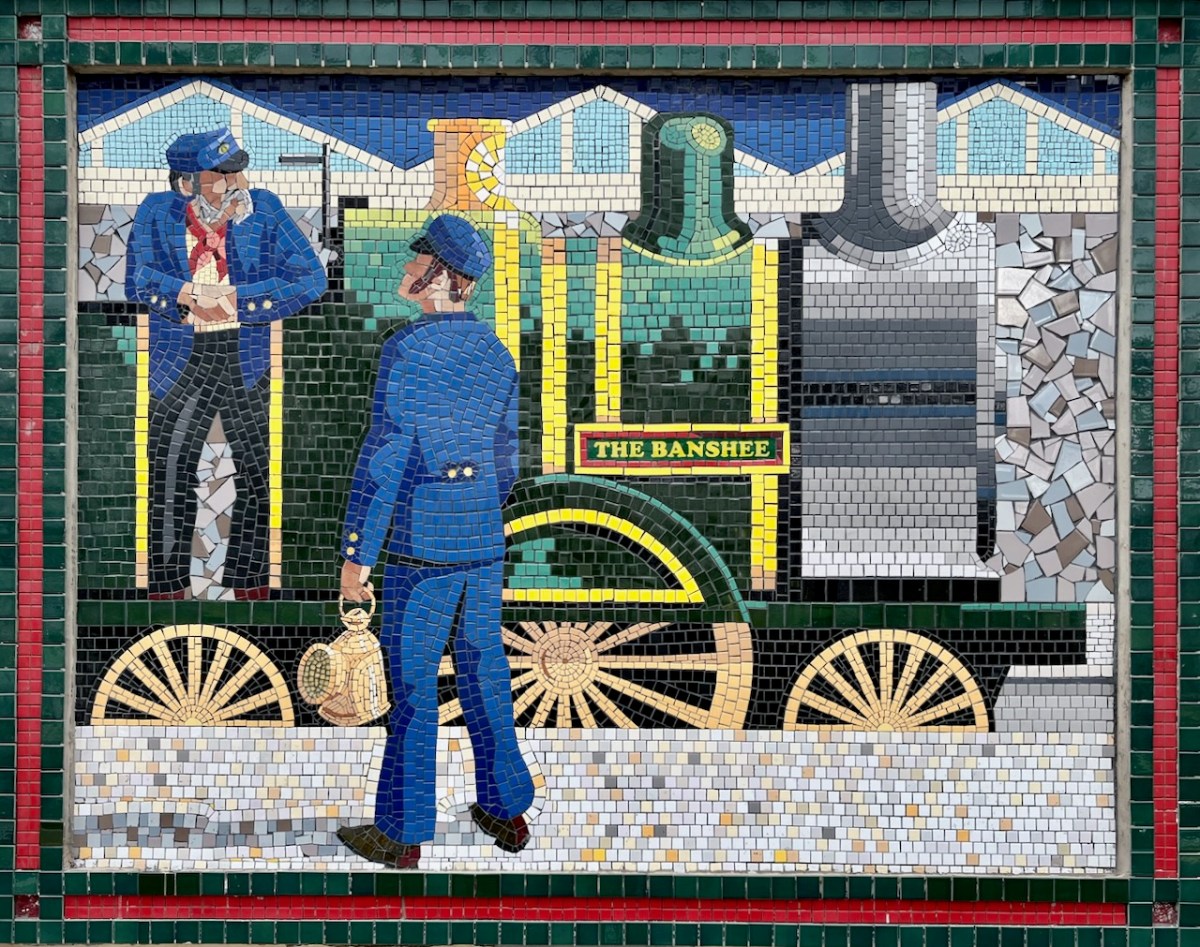
(Above) some of the painted murals in a fairly advanced state of decay: probably early 2000s. The tiled murals are loosely based on the subjects of the originals, but the artists have respected the variations that the change of medium calls out for:
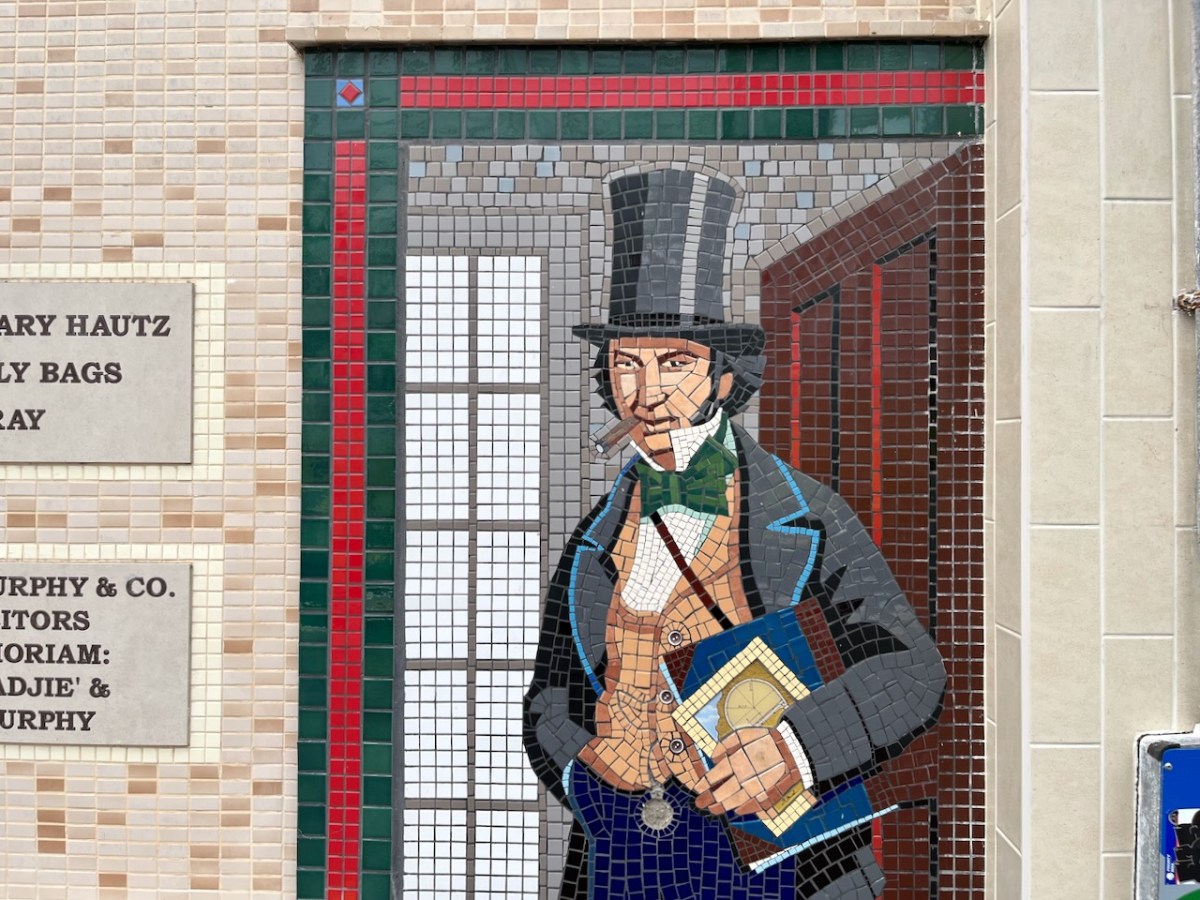
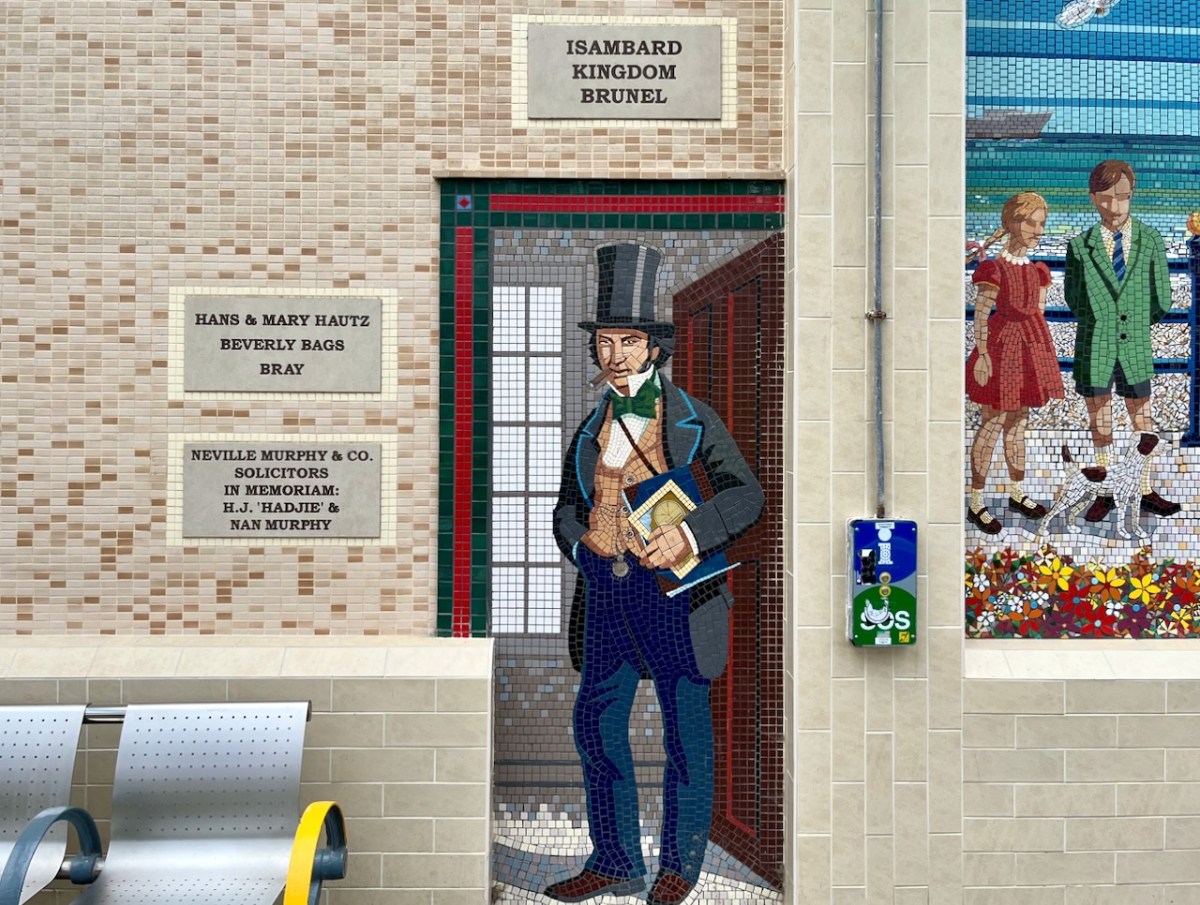
I mentioned – in Taking Notes – that Brunel was responsible for the line that runs through Bray. Here he is, standing on Bray Station:
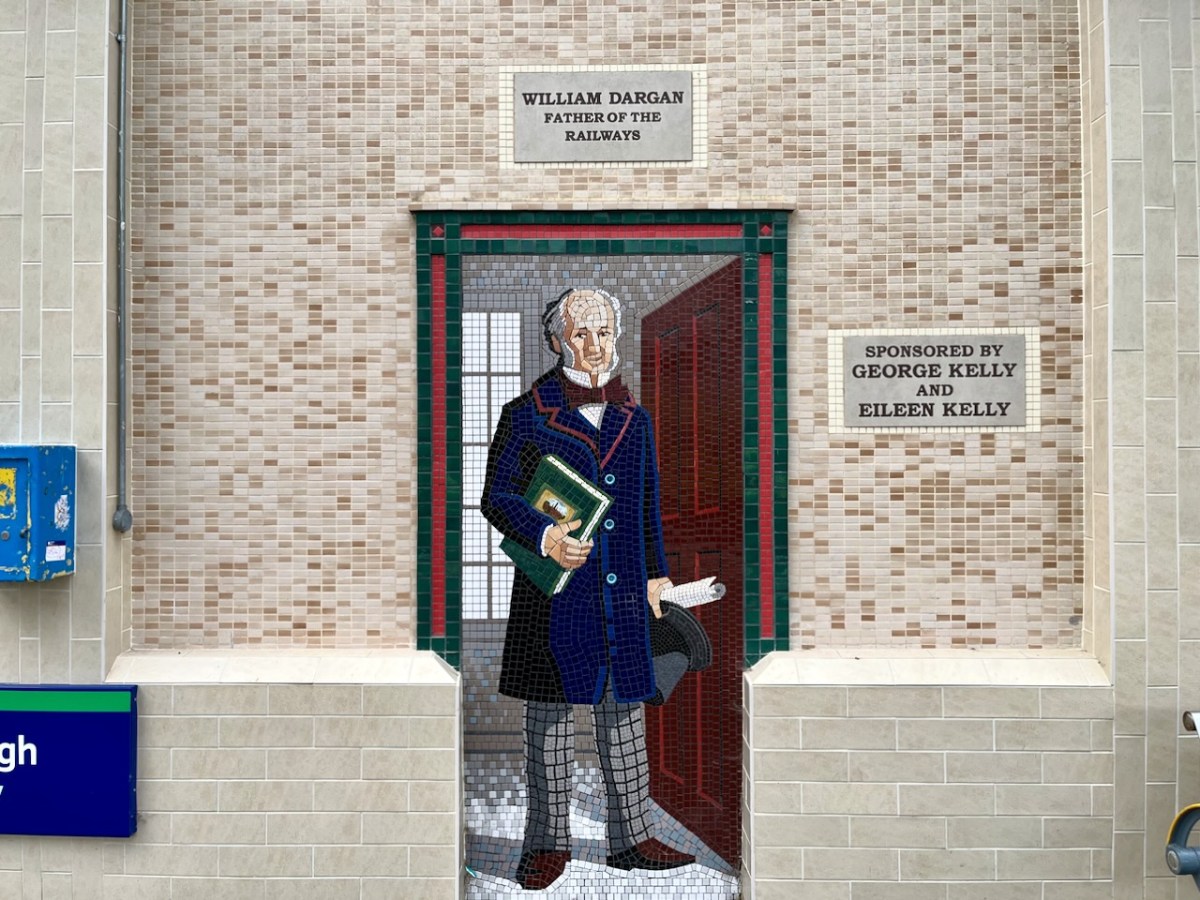
And here (above) – also one of the tiled murals on Bray Station – is a portrait of William Dargan. As you can see – considered ‘Father of the Irish Railways’ – Dargan lived from 1799 to 1867. He engineered over 1300 km of railways in Ireland. Working firstly in the UK he was an assistant to Thomas Telford, and oversaw the construction of roads and canals in the Midlands. He returned to Ireland in the 1820s and took an interest in promoting railways here. The first public commuter railway system in Ireland was designed and built by Dargan: it opened in 1834 and ran between Dublin and Kingstown, now Dún Laoghaire. The line as built was ‘standard gauge’ (ie 1,453mm between rails). This was converted to the ‘Irish standard’ of 1,600mm in 1857. The line extended south to Bray in 1854, and to Greystones the following year.
Isambard Kingdom Brunel, an engineer of Britain’s Great Western Railway, informed the Dublin and Kingstown Railway board that he was planning to build a line into South Wales and start a new sea route from Fishguard to Rosslare. He suggested a joint venture for a line from Wexford to Dublin. A coastal route from Bray (rather than inland) was chosen specifically because it would be scenically attractive for travellers. This led to engineering difficulties including tunnels and retaining structures which are still evolving to this day.
Brunel’s vision of a line going from the capital to Wexford and linking with a service of Irish Sea ferries has been fully realised, and is taken for granted. Let’s hope that this line is maintained and continues on far into the future.
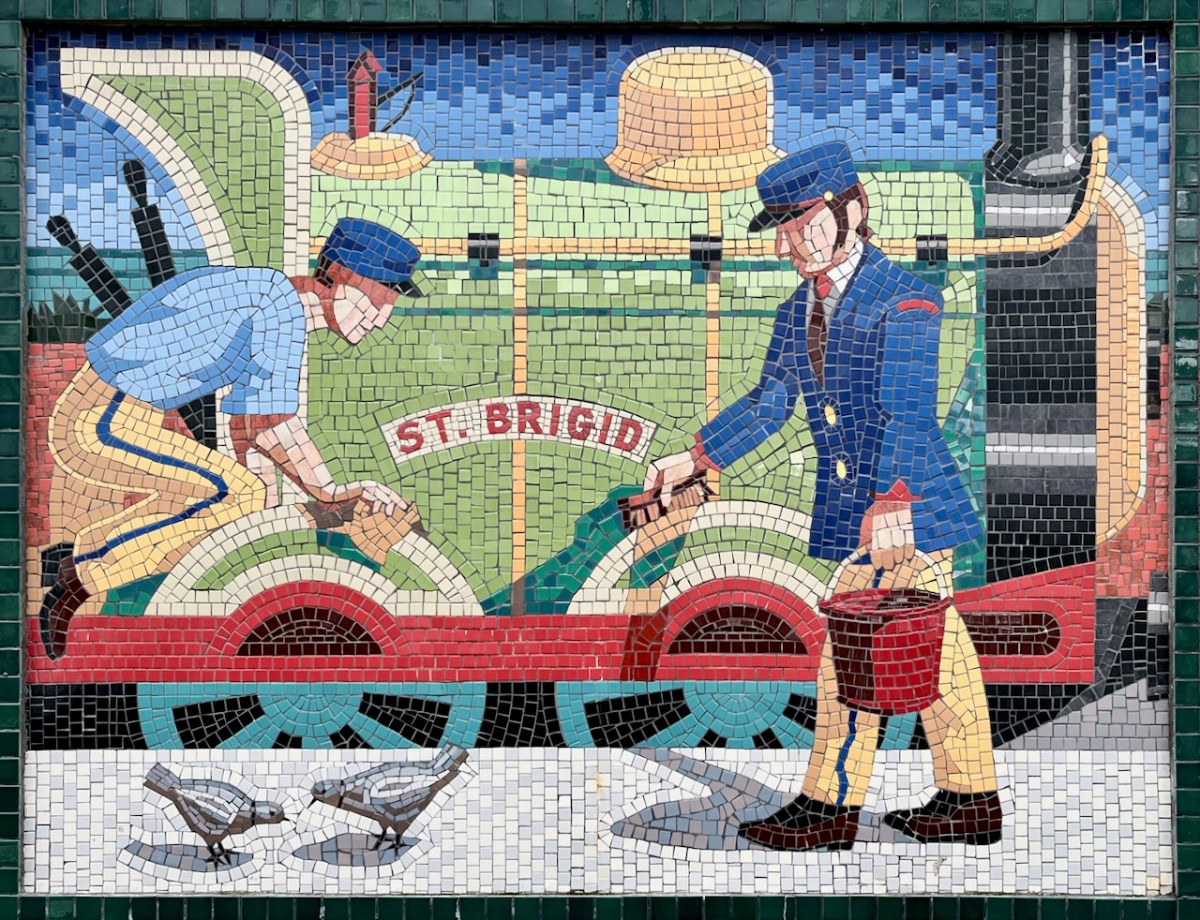
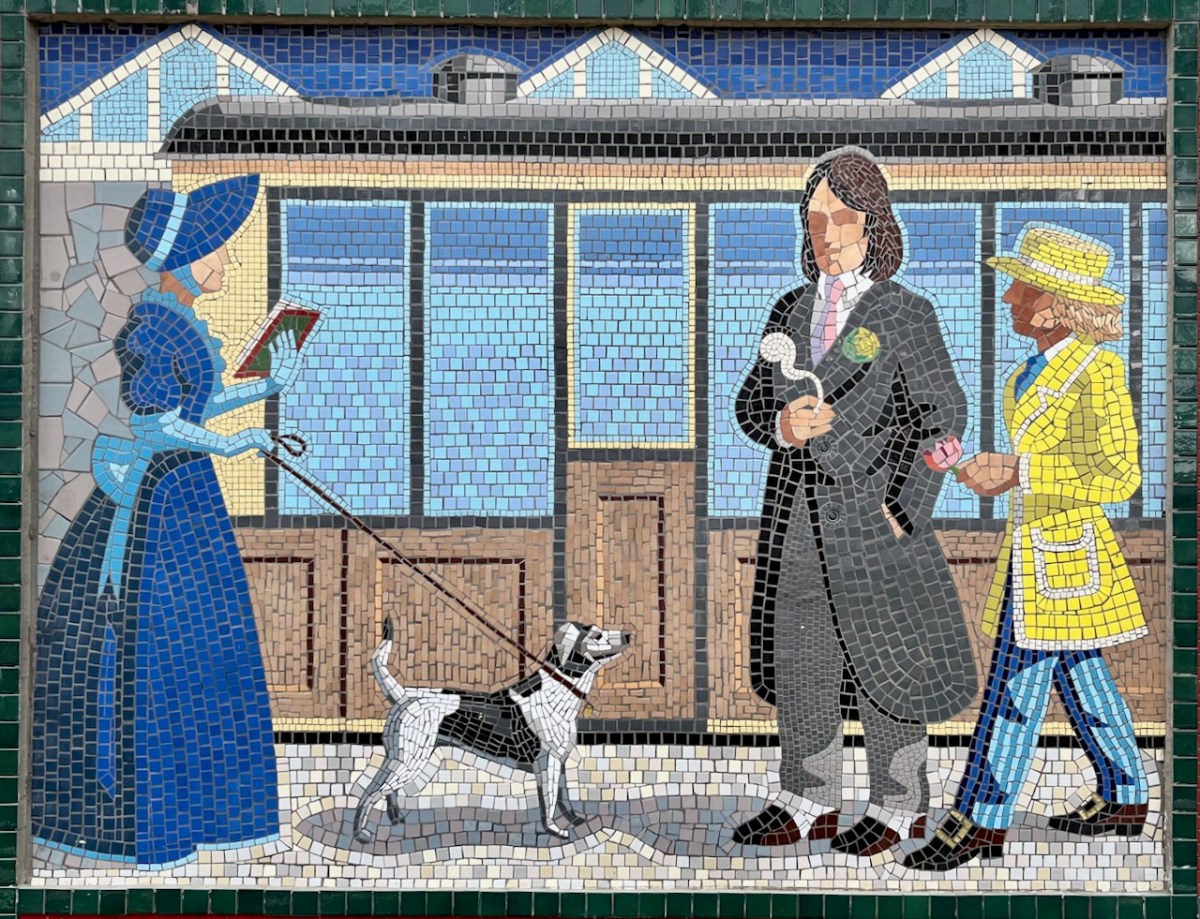
I hope you have noticed how the design of the rolling stock has been changing as we go back through the decades. The representation on these murals is accurate, as far as I can see.
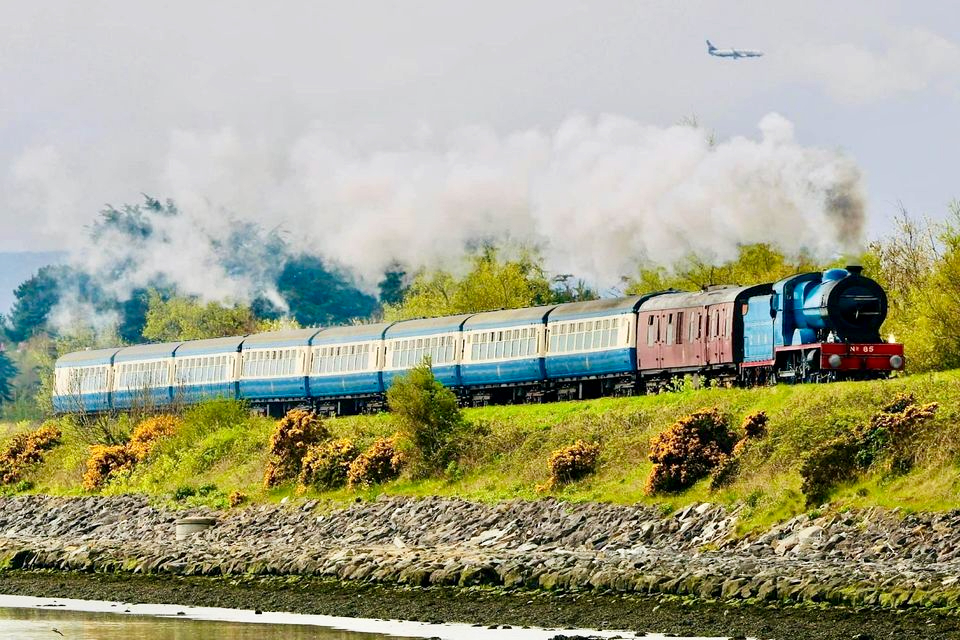
I was sorry to miss the sight of restored steam locomotives and carriages coming through Bray and Greystones on Sunday 24 September this year. Here’s a previous Steam Express visit to Wicklow in 2022 (courtesy Irish Independent):
Here in the West we did have some very singular railway lines – look at these posts: The Great Southern Railway: Headford Junction to Kenmare; Aspects of Baltimore; The Flying Snail and Tracking the Trains. Sadly, it’s no longer possible to travel by train in our region: all lines west of Cork City closed on 31 March 1961. Before that you could get to Skibbereen, Ballydehob, and Schull, Bantry and Baltimore and even, on a little branch line, to Timoleague and Courtmacsherry. Don’t we miss those opportunities?
Taking Notes

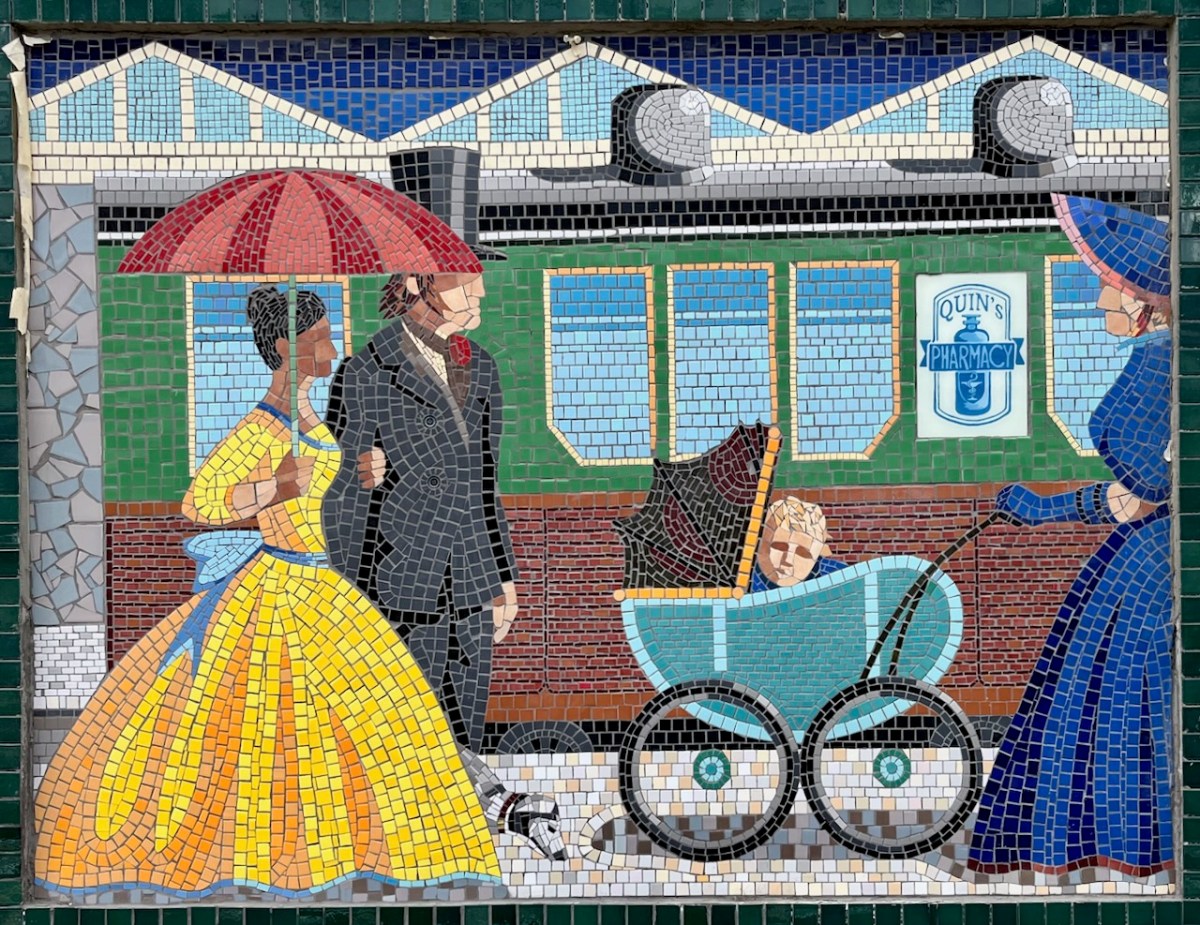
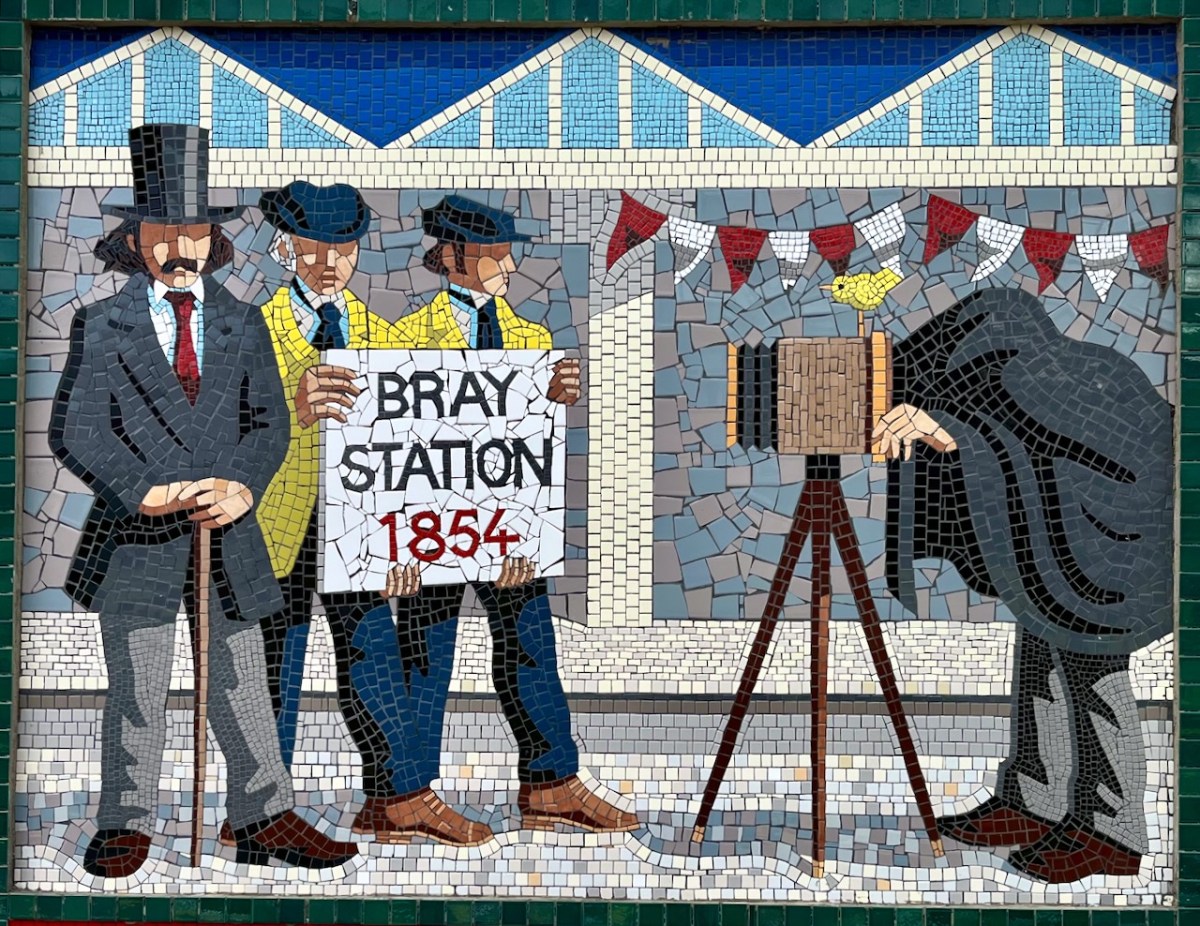
Regular readers will know that I am always on the lookout, in Ireland, for signs of all kinds. They may be humorous, informative or historical – like the one above. This is on the railway station in Bray, County Wicklow. Back in 1987 a competition to design painted murals to enhance the station platforms was won by Jay Roche and John Carter, who produced 19 panels to illustrate the railway through its history.

As you can see from this picture of Bray Station taken yesterday, the panels certainly brighten up this much-used civic concourse.

. . . Each panel is like a window into the past that tells a story about the people, dress or time of the mural. One mural signifying the 1920s, makes reference to a man in a Black and Tan uniform.  On the website Mural to Mosaic, which chronicles the progress of the project, the artists state they are trying to show that dramatic events were unfolding around that significant time in Irish history . . .


The Daily Edge Newsletter 2012

You’ll have noticed that the panels are now made of mosaic. The painted originals suffered from wear and deterioration and the same artists, assisted by Anthony Kelly and Eileen Maguire, have in recent times transformed all of them into the new medium. I think the result of the earlier concept and its newer manifestation are excellent, and provide a great visual diversion for anyone waiting for a train or a Dart (Dublin Area Rapid Transport). In fact, it’s worth missing a train in order to fully appreciate the artwork!

Isambard Kingdon Brunel is the engineer credited with planning the line which, in 1844, was intended to be ‘broad gauge’ all the way to Rosslare. Here he is in a Bray station mosaic, above. I’ll return to this railway in a future post as the full story of it is well worth the telling – even though it’s not West Cork (which, of course had its own interesting railway line).

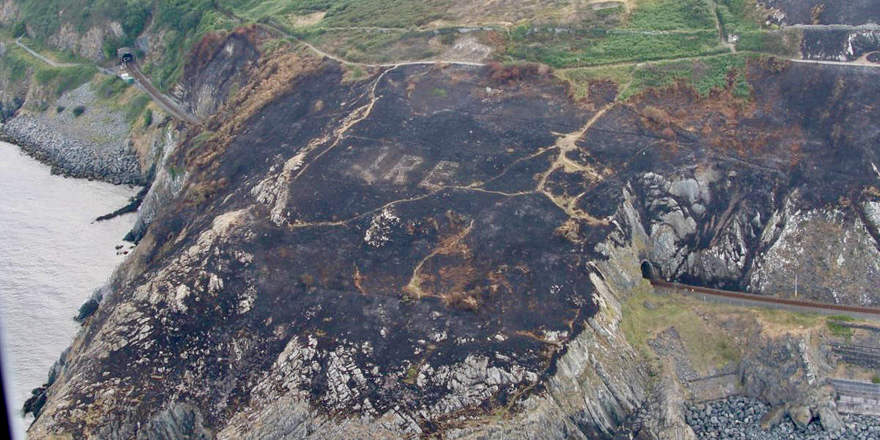
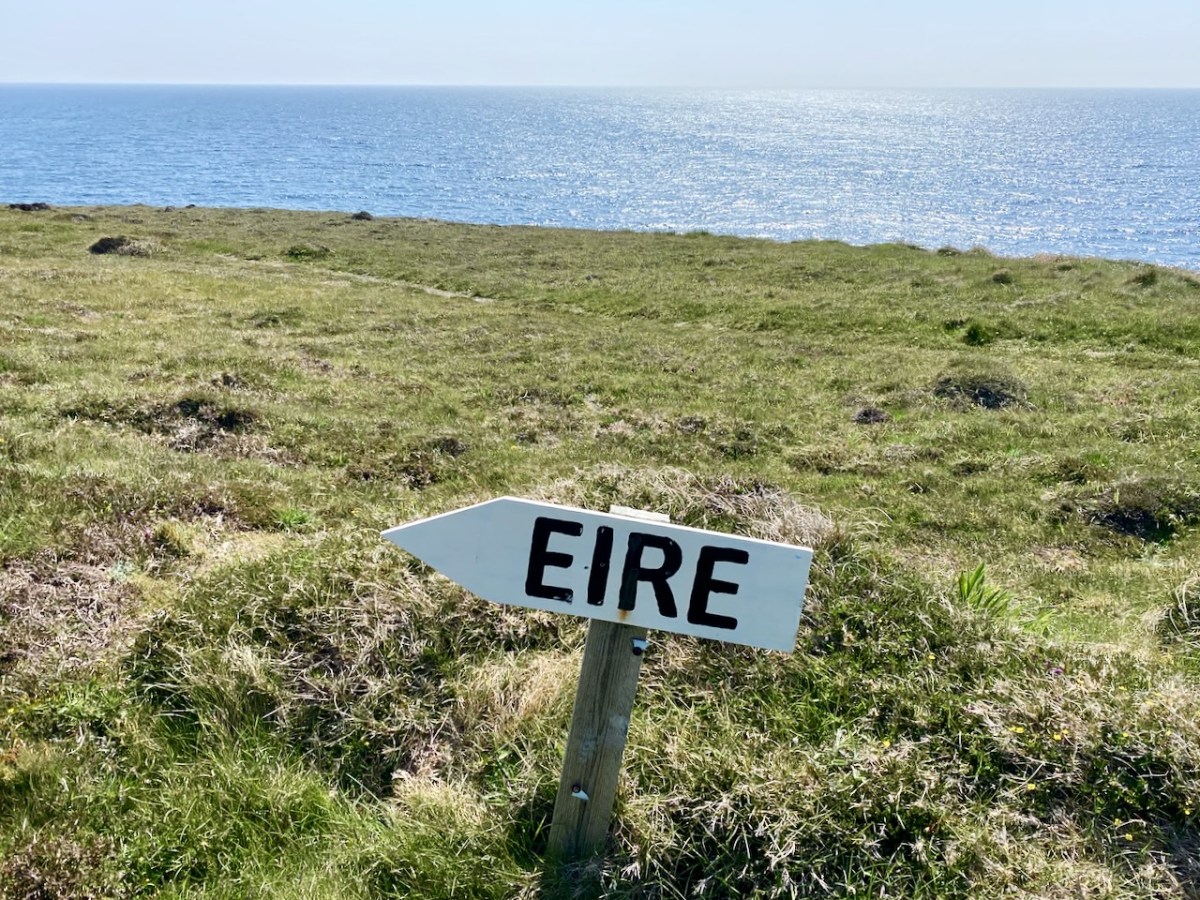
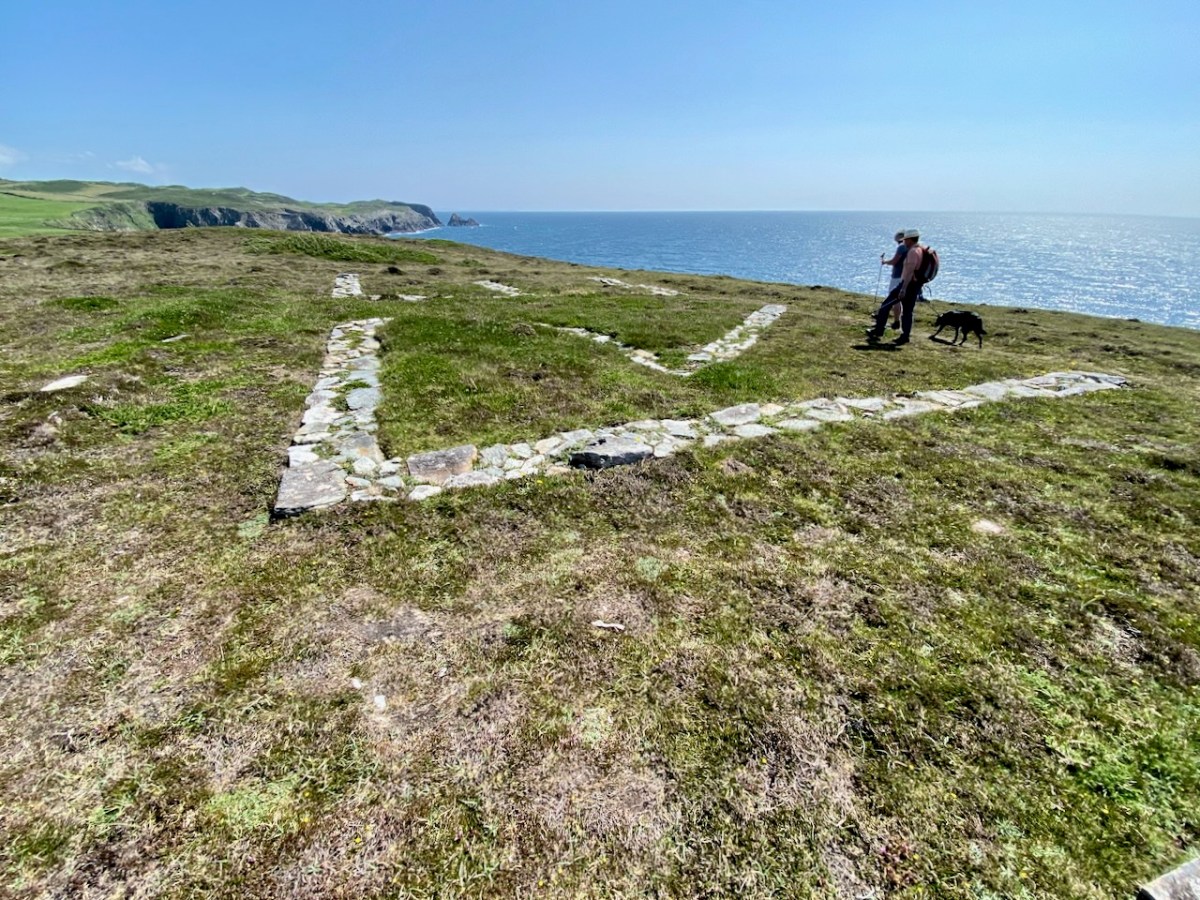
Before leaving behind the railway, here’s a photo of Bray Head (courtesy of Irish Defence Forces) taken after a gorse fire in the summer of 2018. As well as the Bray to Greystones line you can see the outline of the EIRE sign that was put there in ‘the Emergency’: one of over 80 such signs dotted along the coast, it was a warning to aircraft of all persuasions that they were flying over neutral Ireland.

. . . The ‘Éire’ signs were erected around the Irish coastline from the summer of 1943 onwards, a period when overflights of Irish territory and forced landings of belligerent aircraft (mainly Allied) had increased dramatically. In keeping with the De Valera* government’s policy of discreetly co-operating with the Allies, Allied air crews who landed in Ireland were assumed to be ‘non-operational’, and therefore were not detained (a fact that the Germans noted with displeasure). It made more sense to all concerned, however, if such forced landings could be avoided and so the ‘Éire’ signs were erected to ensure that pilots knew that they were flying over Irish territory . . .

Royal Irish Academy Newsletter

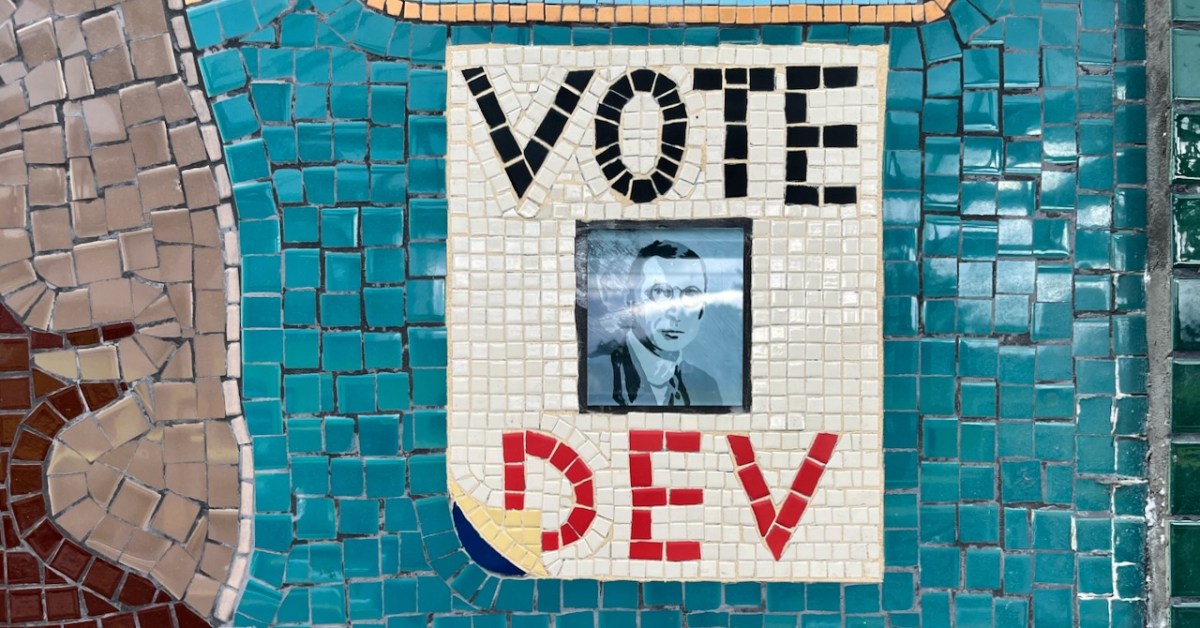
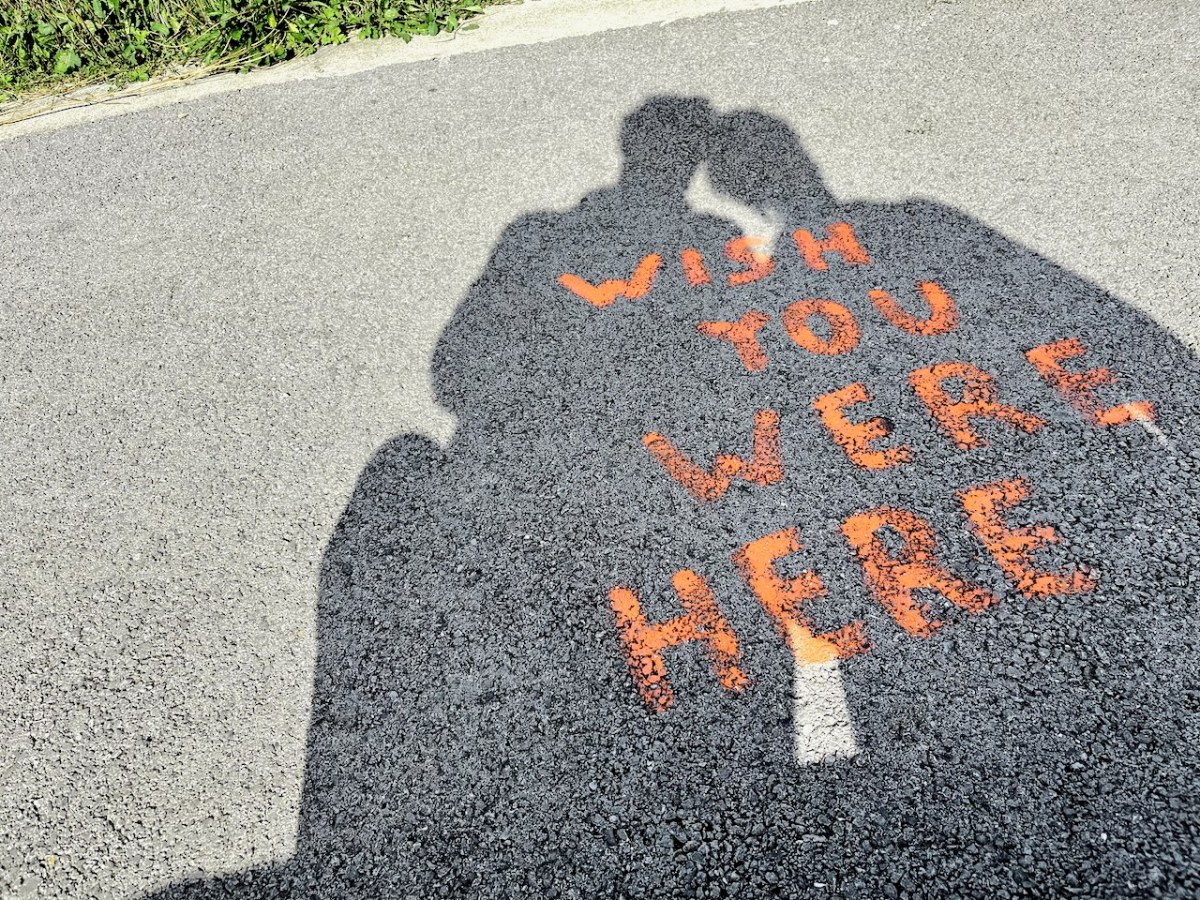
*See our header pic for another reference to Dev!

The EIRE sign above is very clearly delineated: it’s on the cliffs at Toe Head, in ‘our’ County Cork.

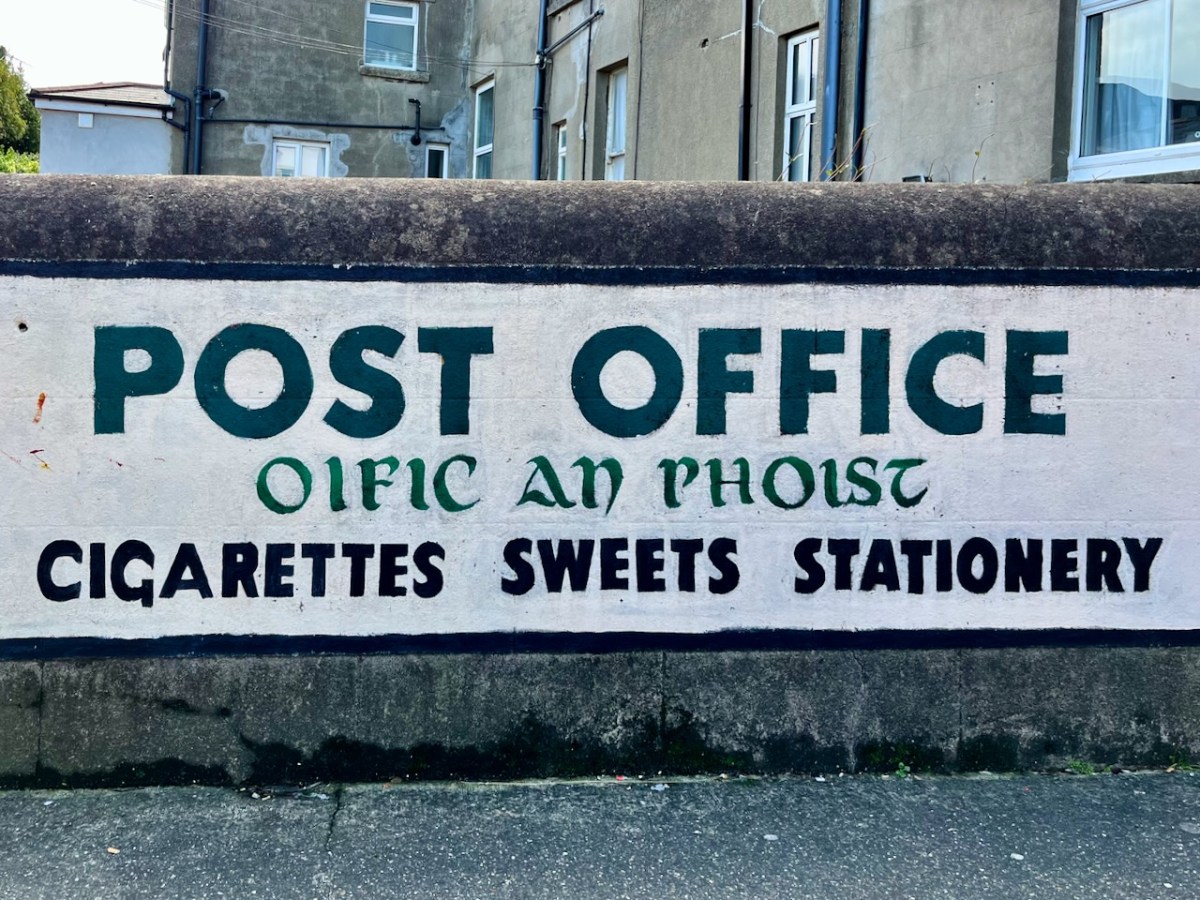
This Post Office sign has been kept intact, probably for reasons of nostalgia. I’d doubt there are many today who would proudly proclaim that the sale of cigarettes is one of their mainstays.

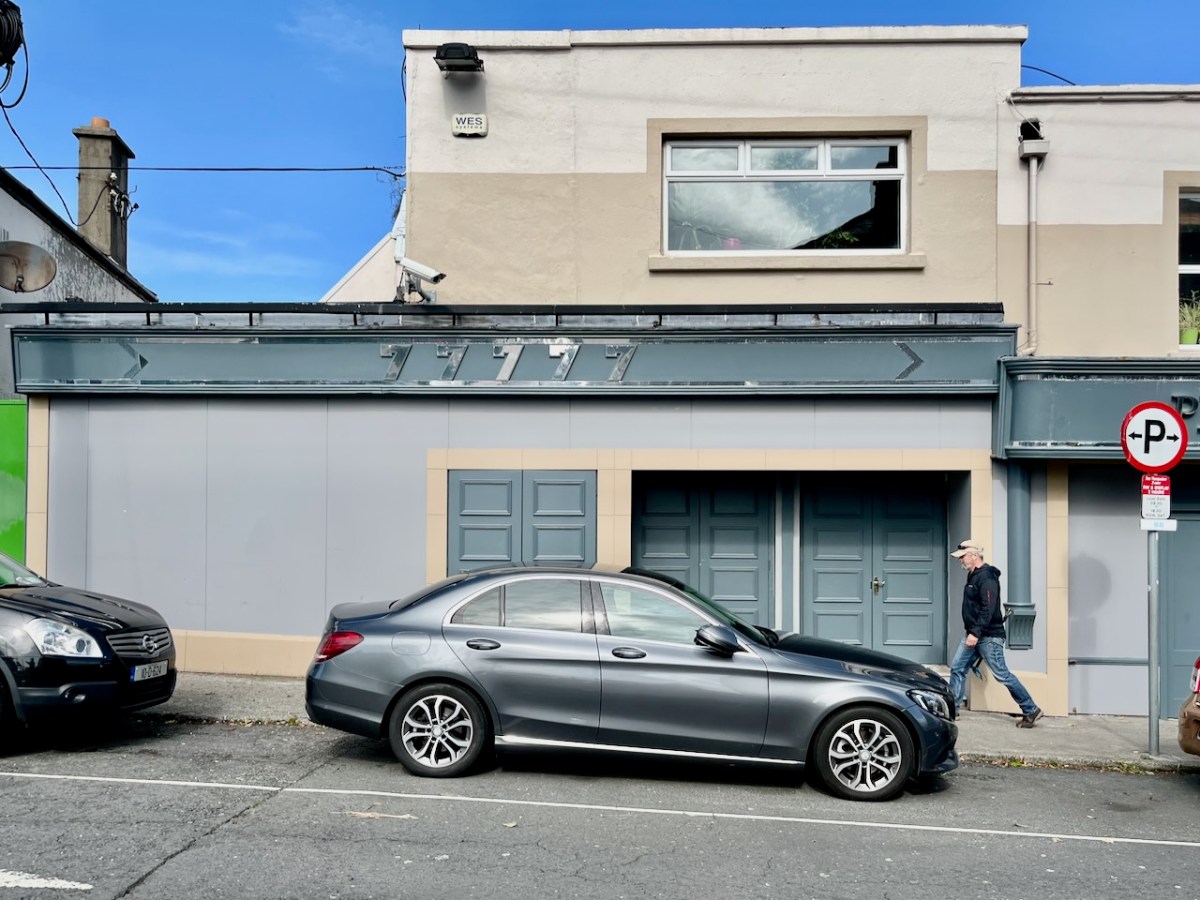
(Above) – I couldn’t resist the enigma of this signwriting . . .

. . . But I think the one above leaves us in no doubt who it speaks to.

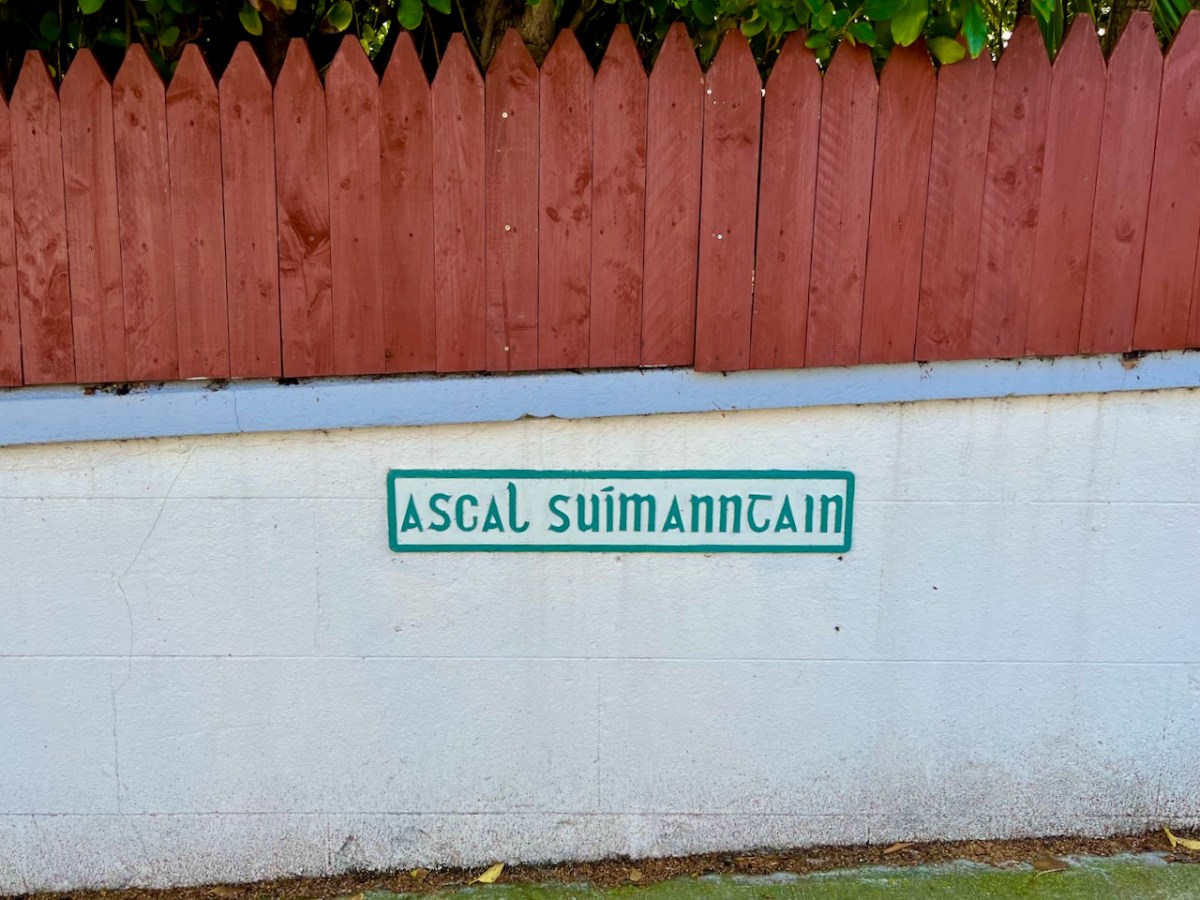
I’d like to understand the meaning of this Irish road name: one AI translator told me it is ‘thought position’, another ‘location avenue’ . . .

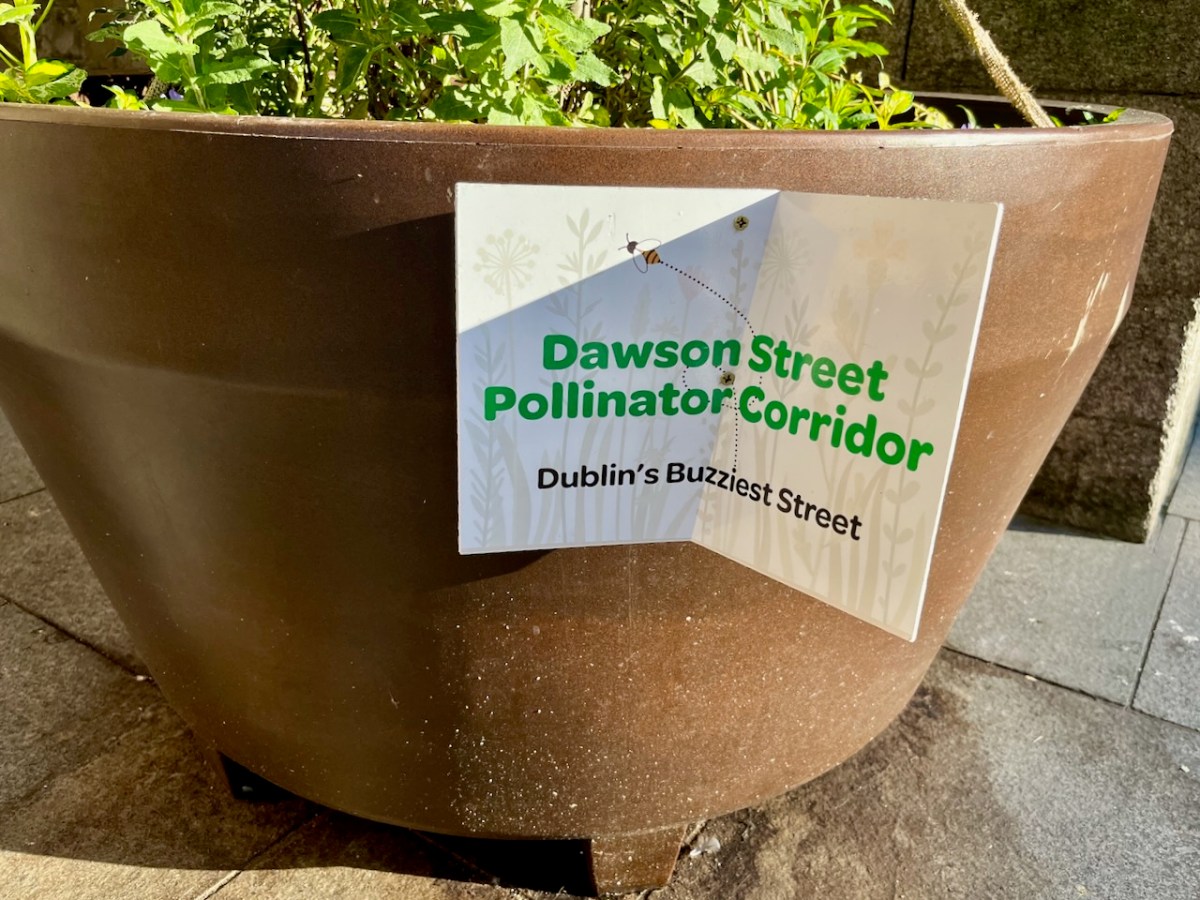
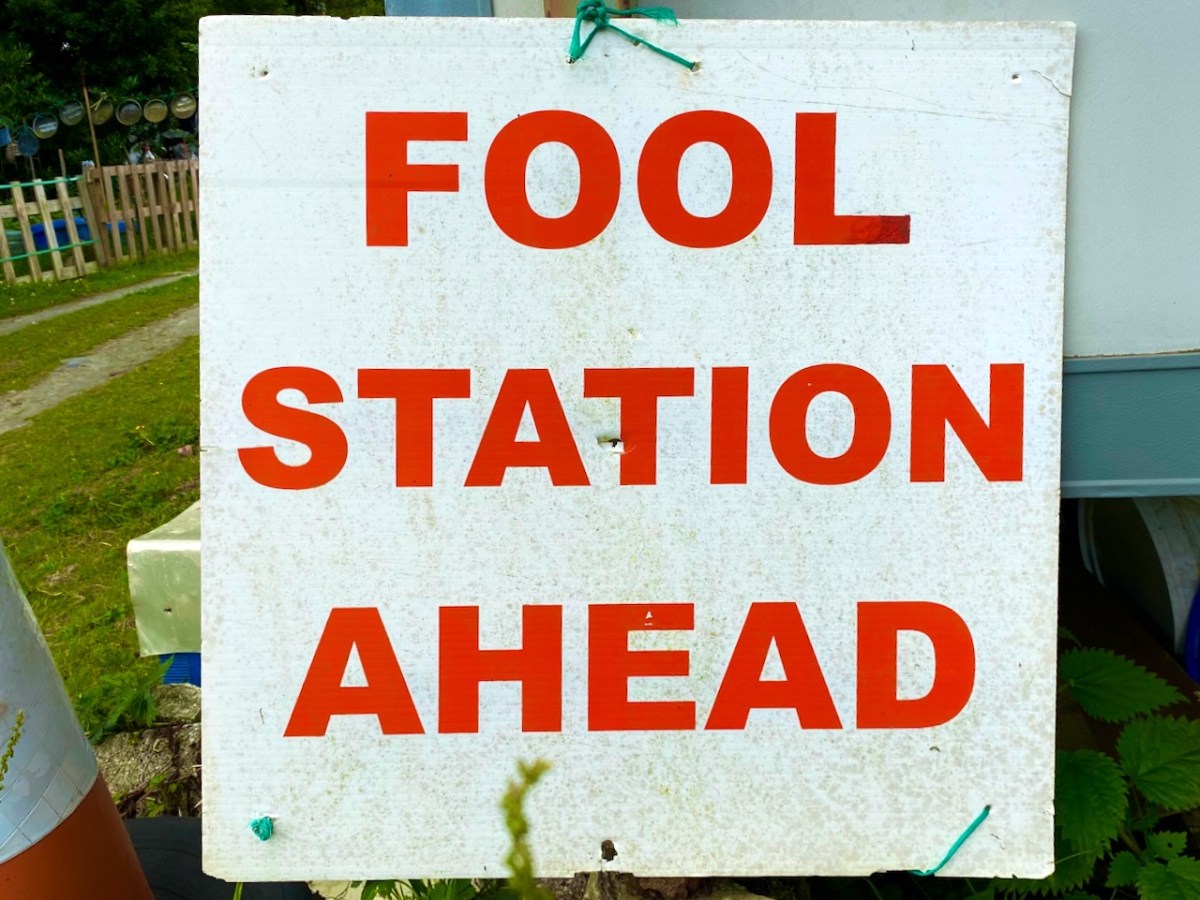
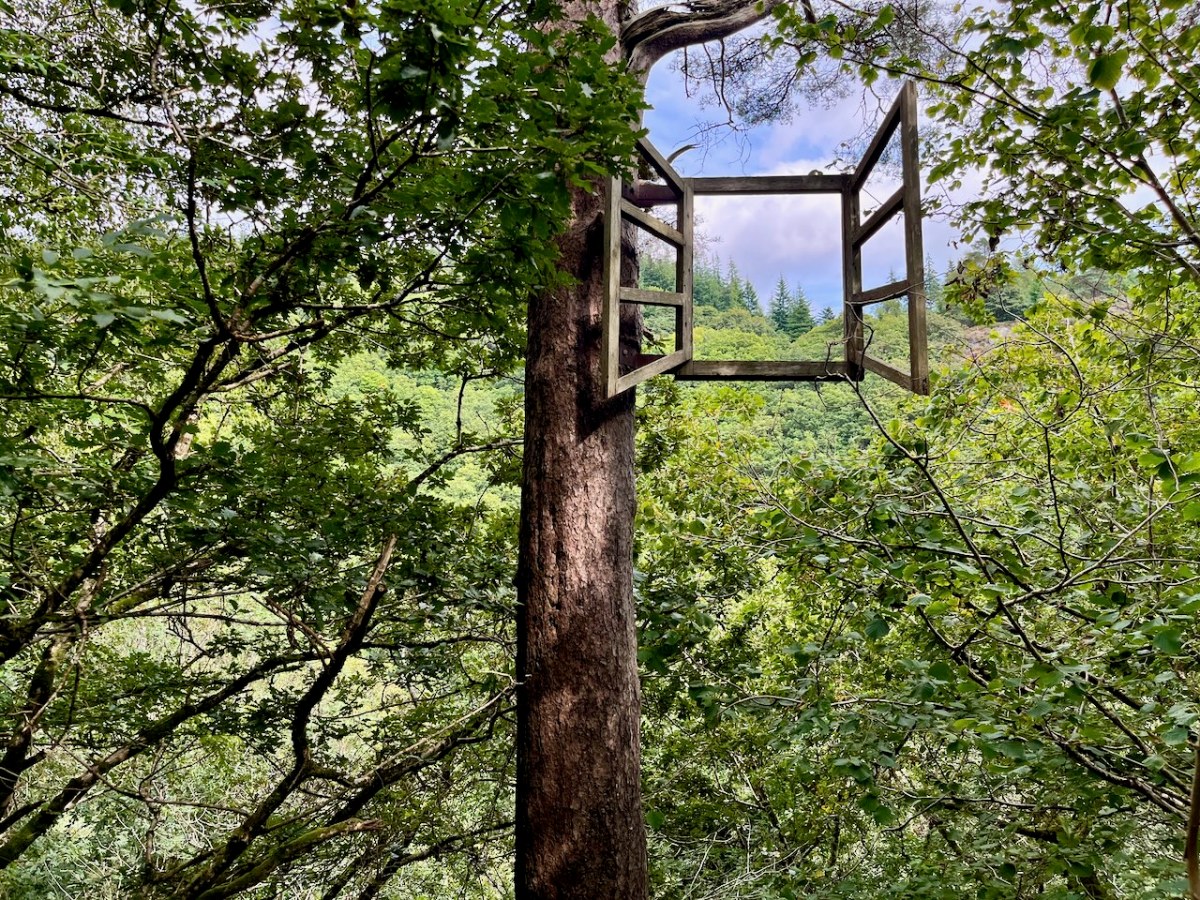
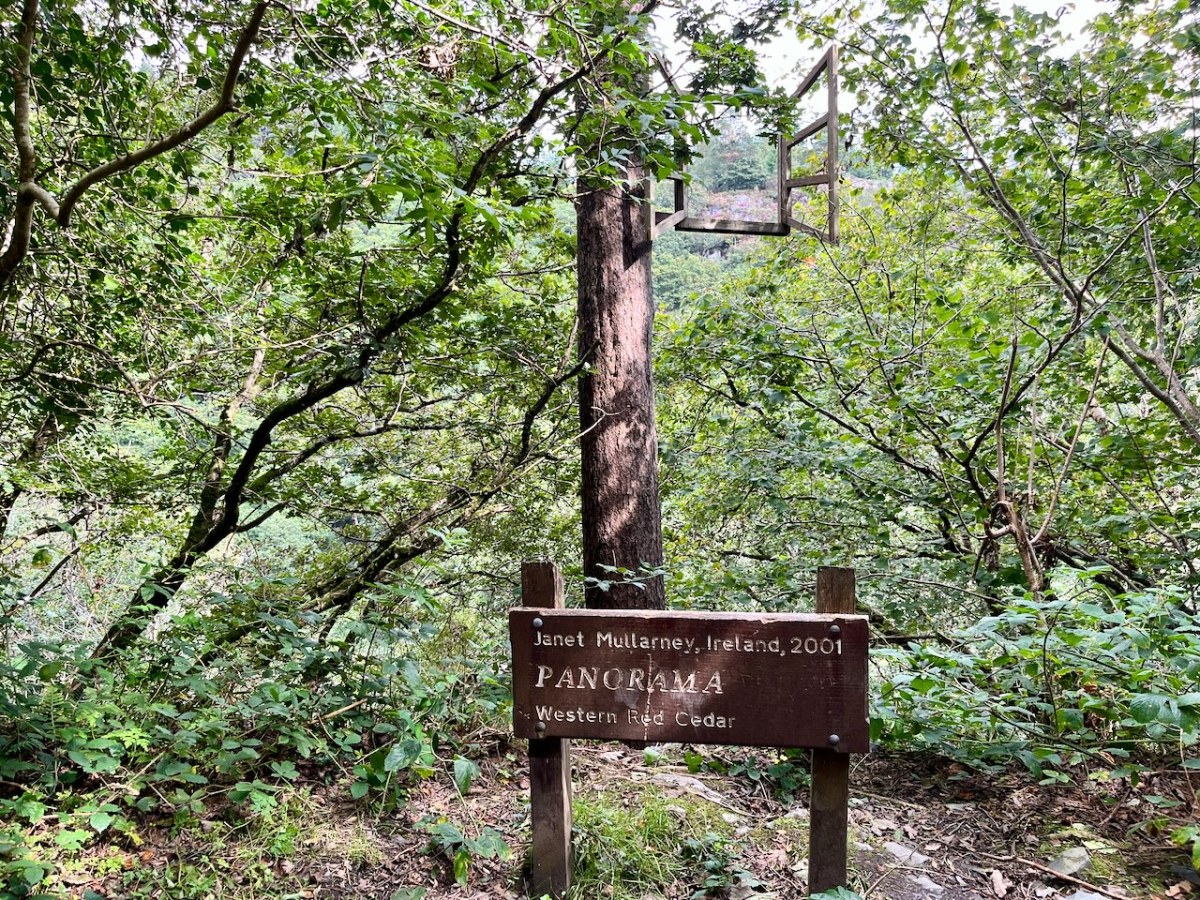
No comment on the two signs above. The following, however, provokes some questions – a window on someone’s world?
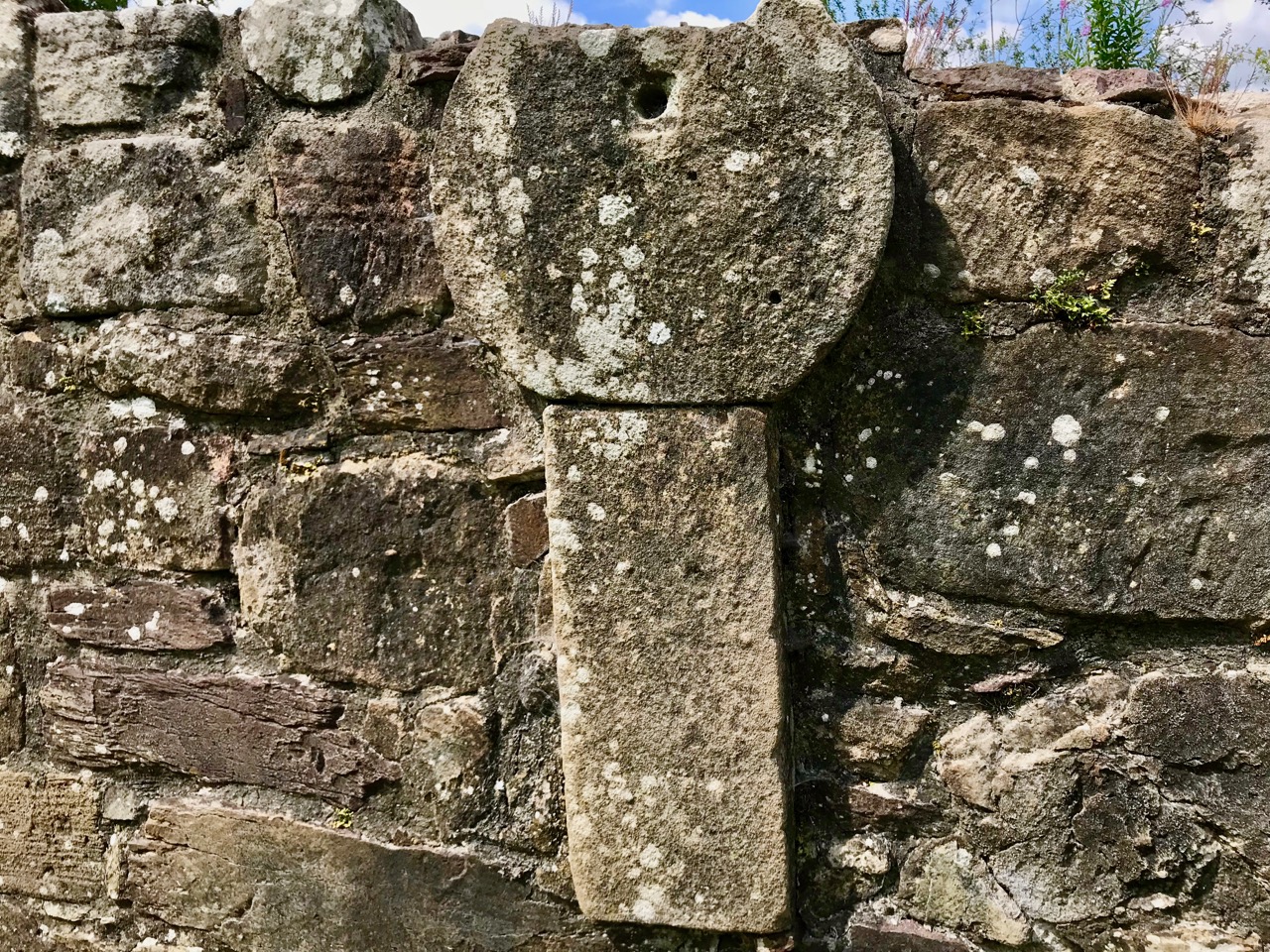
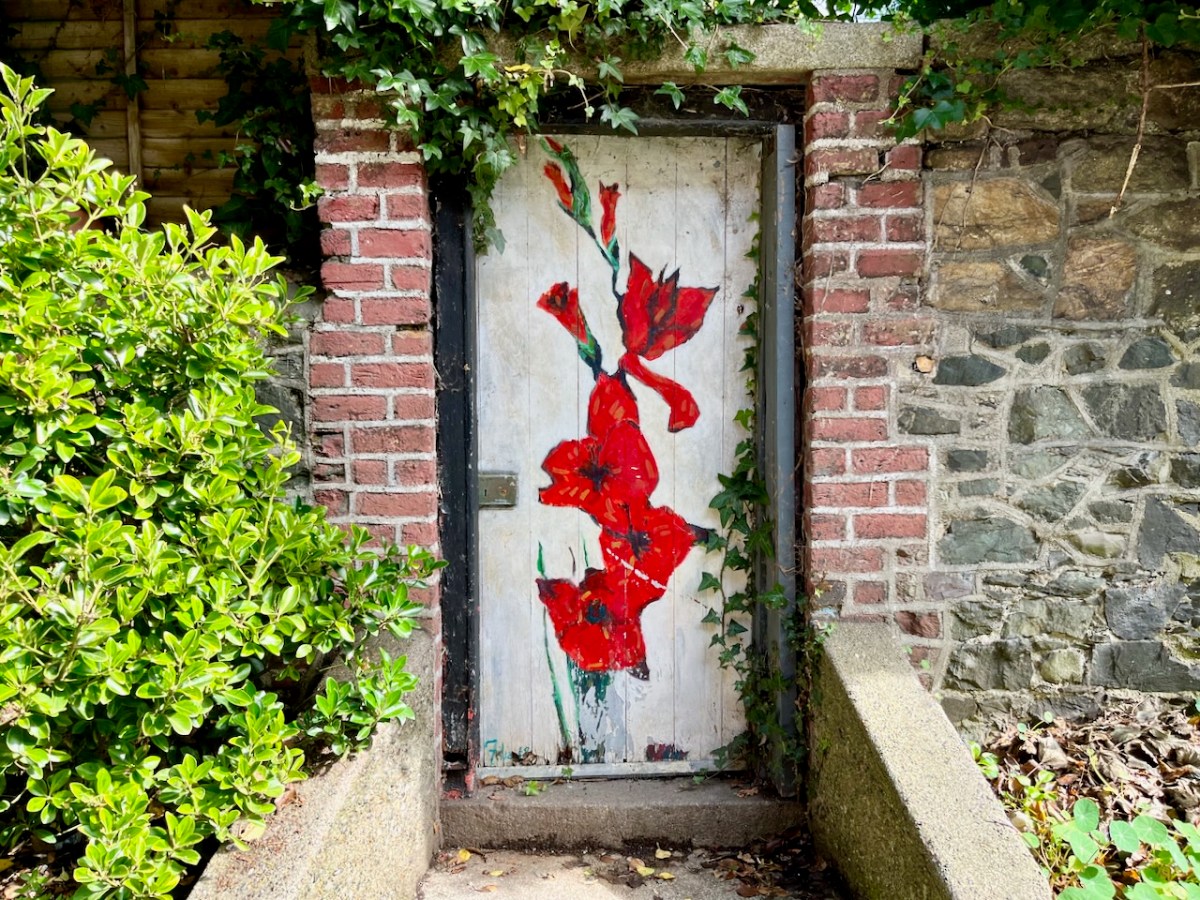
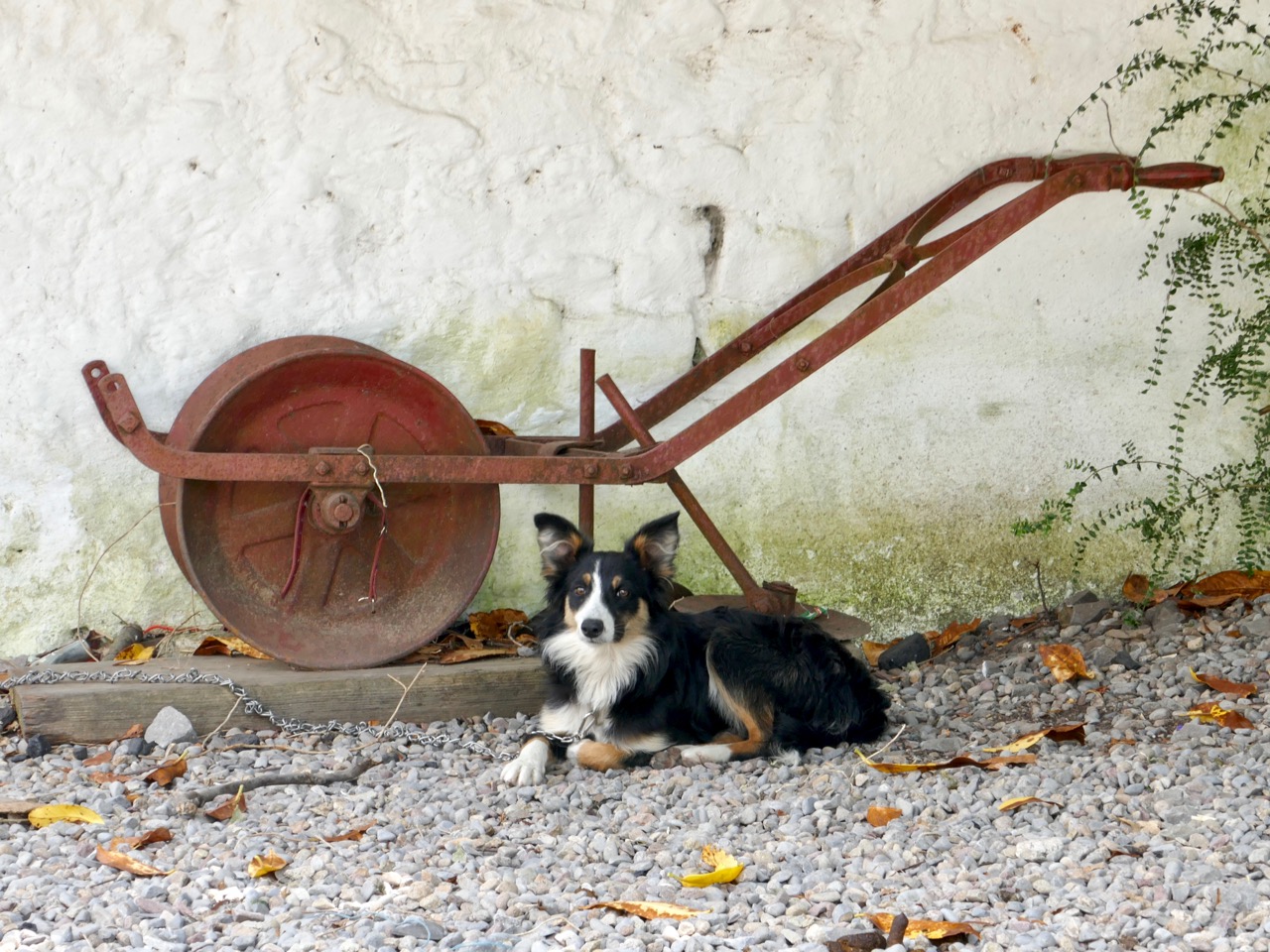
What world does this gate open up to?

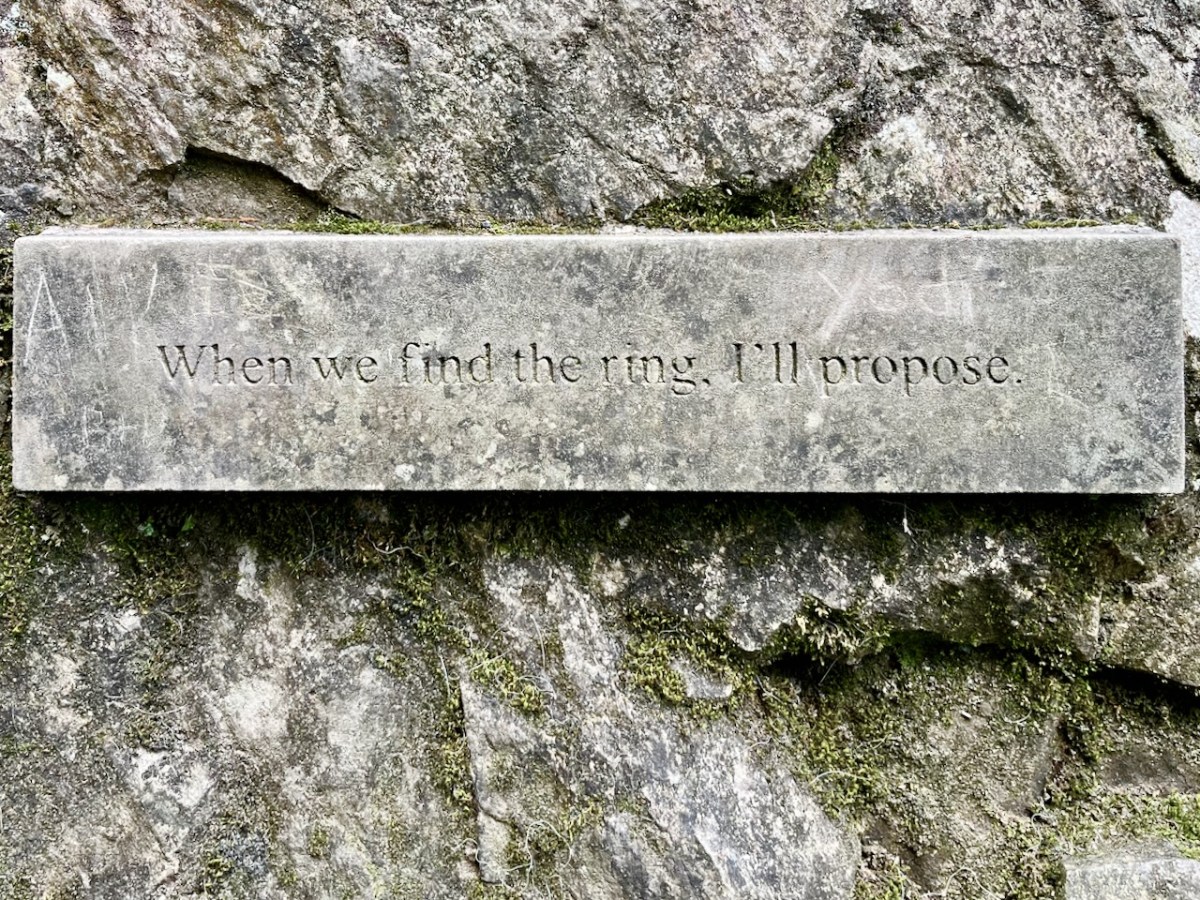
Promises, promises . . . But I think they found it:

Péacáin Revisited

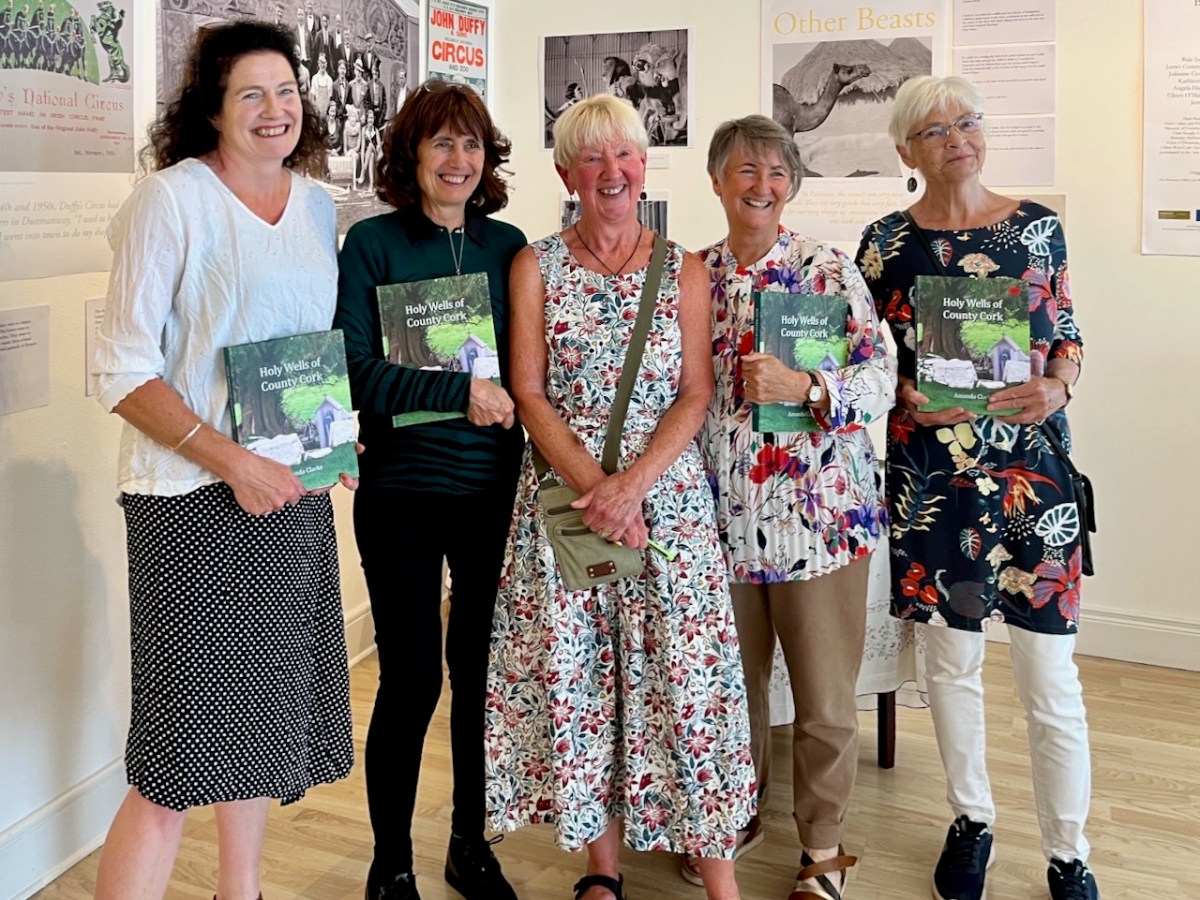
This was the scene in the Working Artist Studios, Ballydehob, on Friday evening. It was the launch of a brand new book by our friend Amanda Clarke: Holy Wells of County Cork. That’s Amanda, above, in the centre, with Finola on her left. Regular readers will know that we share many adventures with Amanda and Peter, and we were so pleased to see the successful fruition of her years of research with this outstanding volume, exquisitely designed by Peter, now available to purchase online, and in bookshops. Finola wrote about this venture last week. I thought I would indirectly celebrate it today by reviving a Roaringwater Journal post from five years ago, about one of our own expeditions that included a visit to a holy well.

Once again we followed in the footsteps of Amanda and Peter: they had visited the Glen of Aherlow in County Tipperary and pointed us to St Berrehert’s extraordinary site at Ardane which I described in this post. Not far away is another site, equally remarkable, and related to St Berrehert’s Kyle in that they were both restored by the Office of Public Works in the 1940s. They are also both very easily accessible in a few minutes from the M8 motorway at Cahir.

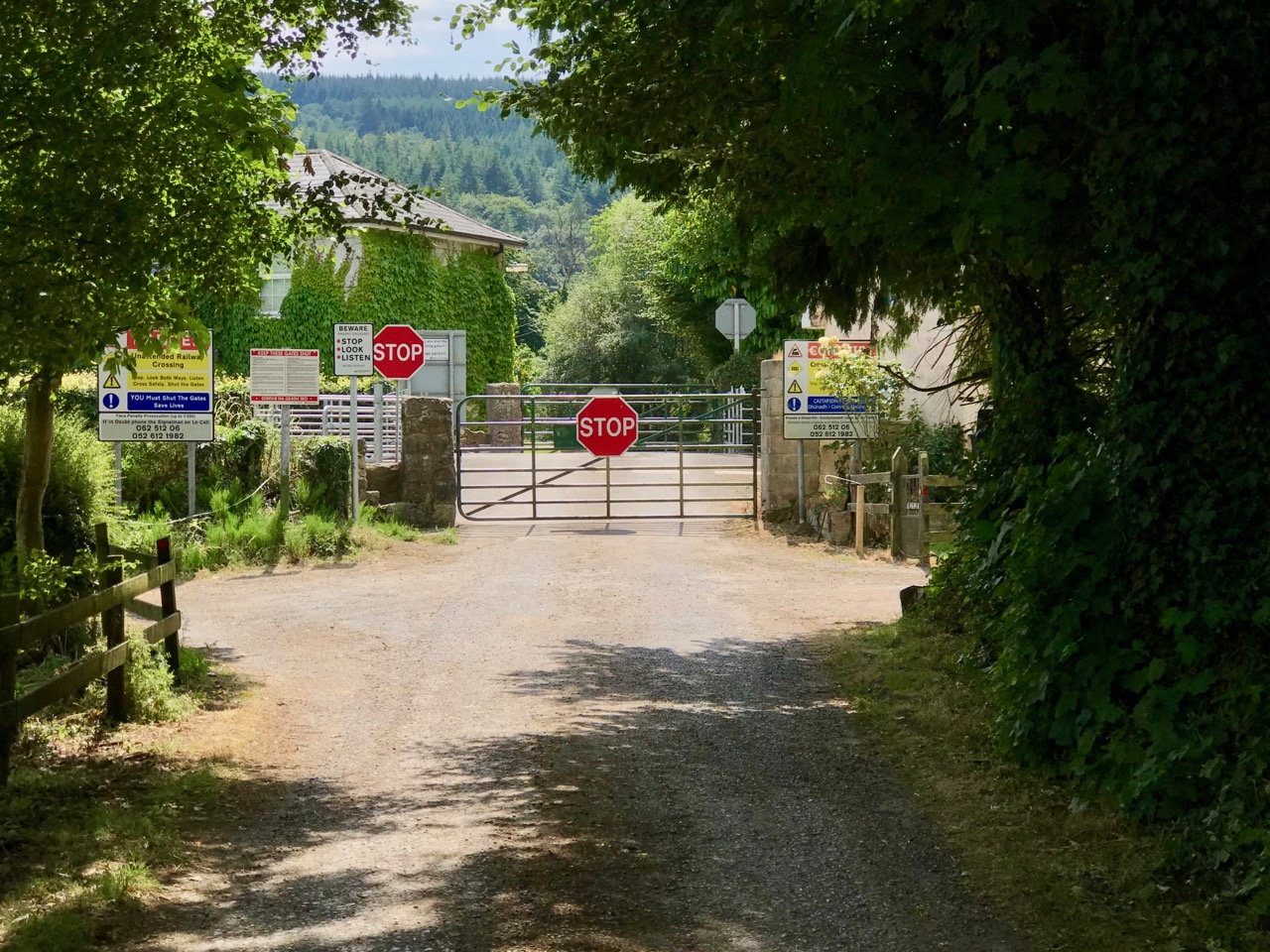
We were delighted to be travelling again through the beautiful Glen in the shadow of the Galtee Mountains (above) as we searched out a boreen that led us down to the railway. We parked and crossed at the gate, watching out carefully as this is the Waterford to Limerick Junction line used by two trains a day (except on Sundays!)

Once across, we were in an idyll. It’s a private lane, running alongside a gentle stream, but the Bourke family allow visitors to walk (as they have done for centuries) to the old church, the cell and the holy well of Saint Péacáin. Ancient stone walls line the way, and trees overhang, shading the dappled sunlight in this most exceptional of Irish seasons. We met Bill Bourke, who regaled us with tales of his life spent mostly far away from this, his birthplace – but who returned to rebuild the family home and to enjoy perpetual summer in what is, for him, the most beautiful setting in the world. He also told us of the crowds who used to come to celebrate St Péacáin at Lughnasa – 1st August – paying the rounds and saying the masses.

In her monumental work (it runs to over 700 pages) The Festival of Lughnasa – Oxford University Press 1962 – Máire MacNeill points out the harvest feast day was such an important ancient celebration that it survives as the focus of veneration of many local saints who would otherwise have been known for their own patron day, and she particularly mentions Tobar Phéacáin in this regard: a place well away from any large settlement where the great agricultural festival was so critical to the cycle of rural life.

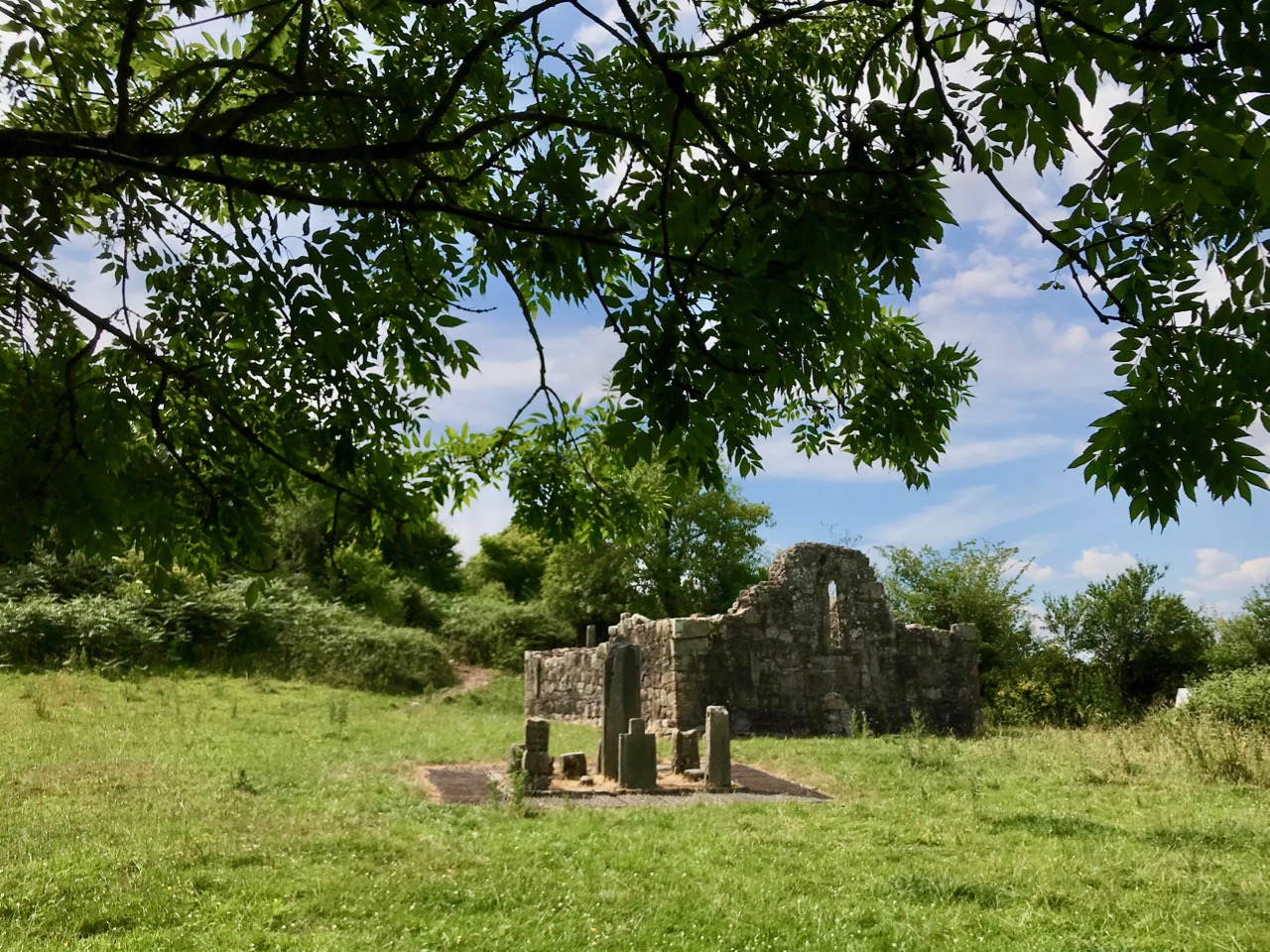
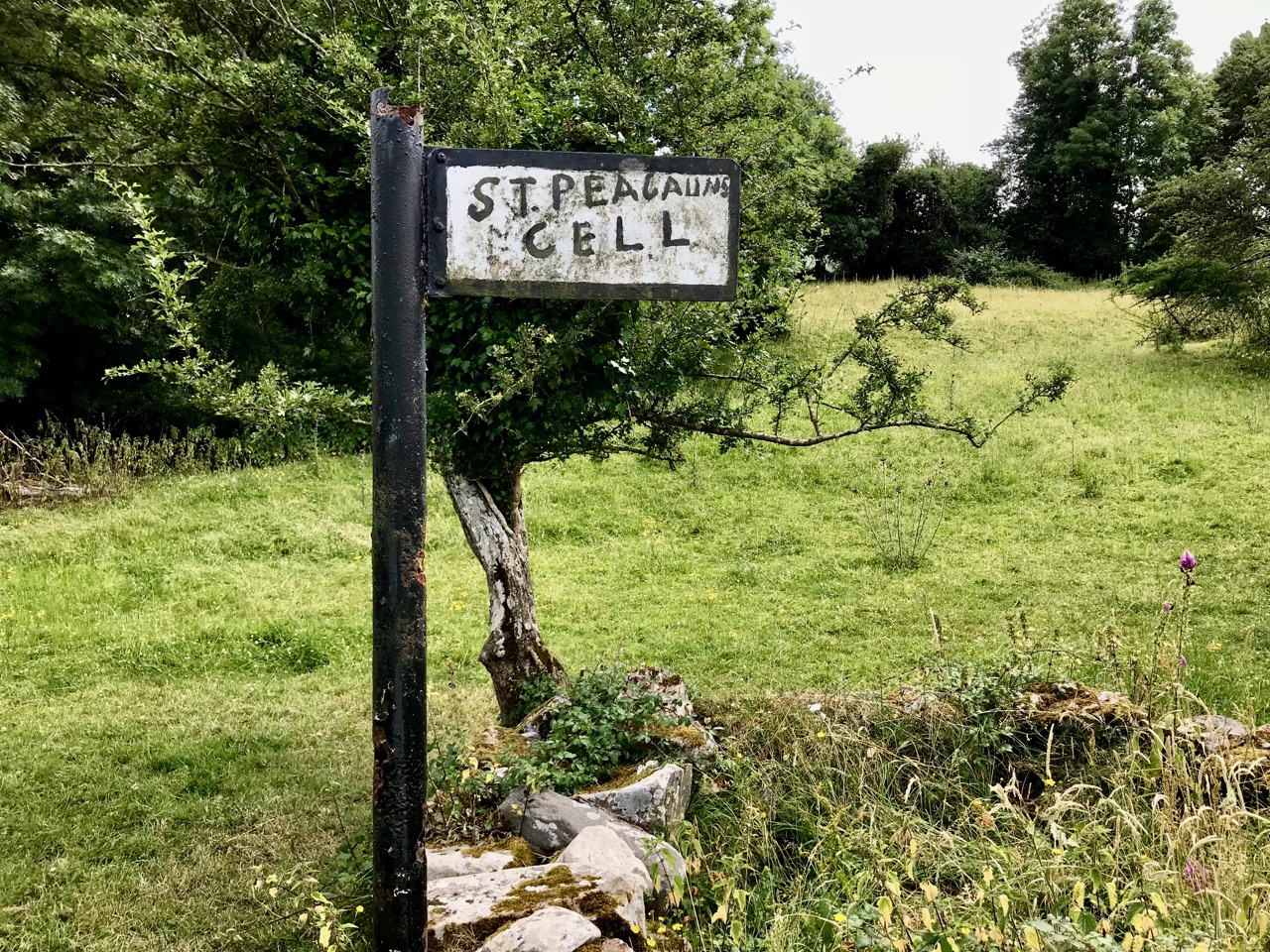
The rural setting of St Péacáin’s Cell can be seen above, just in front of the trees; the church and the well are nearby. MacNeill provides a description of Tobar Phéacáin and includes some variant names:

. . . Tobar Phéacáin (Peakaun’s Well), Glen of Aherlow, Barony of Clanwilliam, Parish of Killardry, Townland of Toureen . . . On the northern slope of the Galtee Mountain at the entrance to the Glen of Aherlow and about three or four miles north-west of Caher there is a well and ruin of a small church. About a mile beyond Kilmoyler Cross Roads a path leads up to it . . . In 1840 O’Keefe, of the Ordnance Survey team, reported that the old church was called by the people Teampuillin Phéacáin, or just Péacán . . .

. . . The well, which he described as lying a few perches south-east of the church was called Peacan’s Well or Tobar Phéacáin. It was surrounded by a circular ring of stonework. He stated: ‘The pattern-day still observed at this place falls on the 1st of August, which day is, or at least until a few years since, has been kept as a strict holiday.’ Devotions were also, he said, performed there on Good Friday . . .

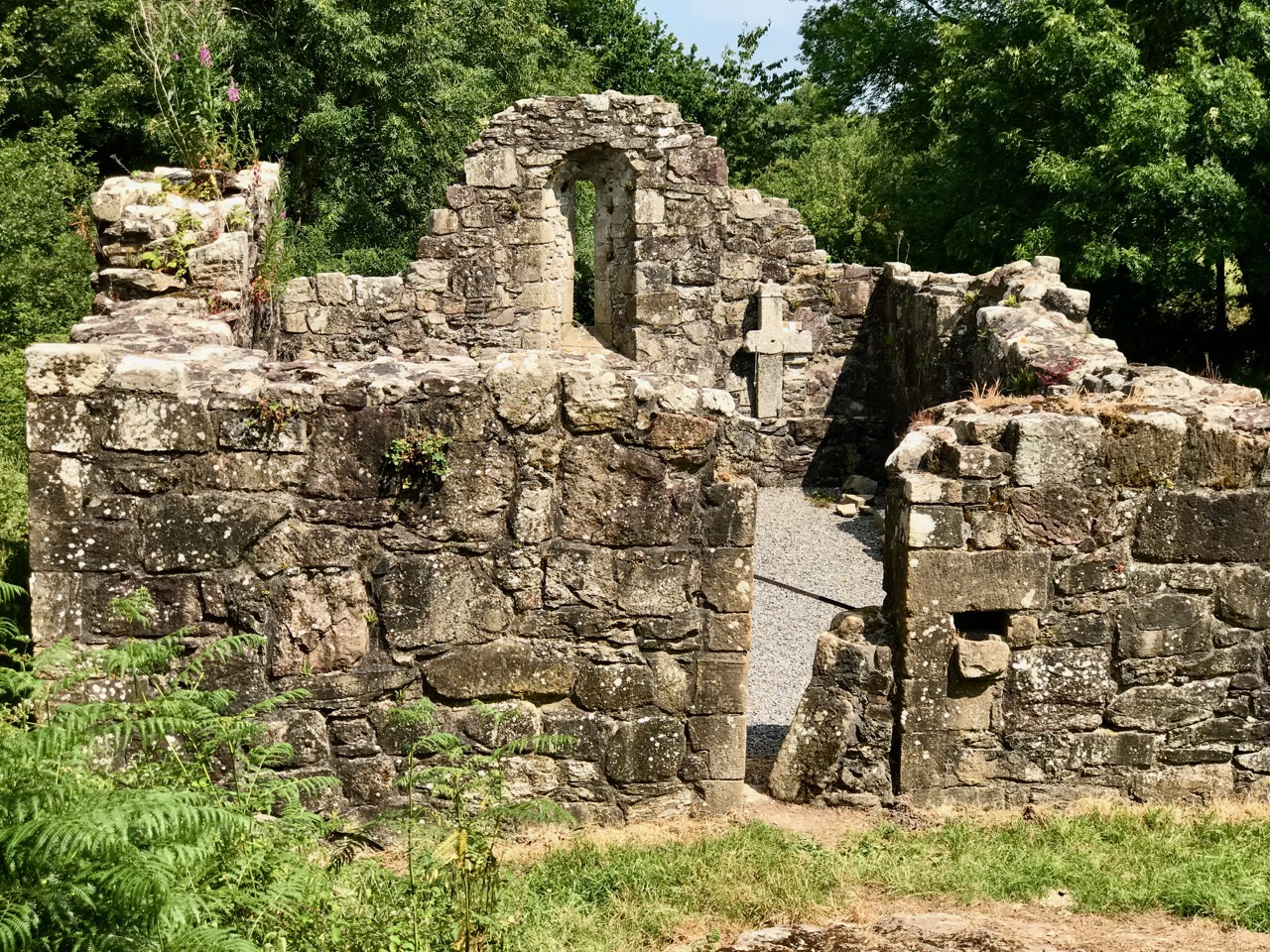
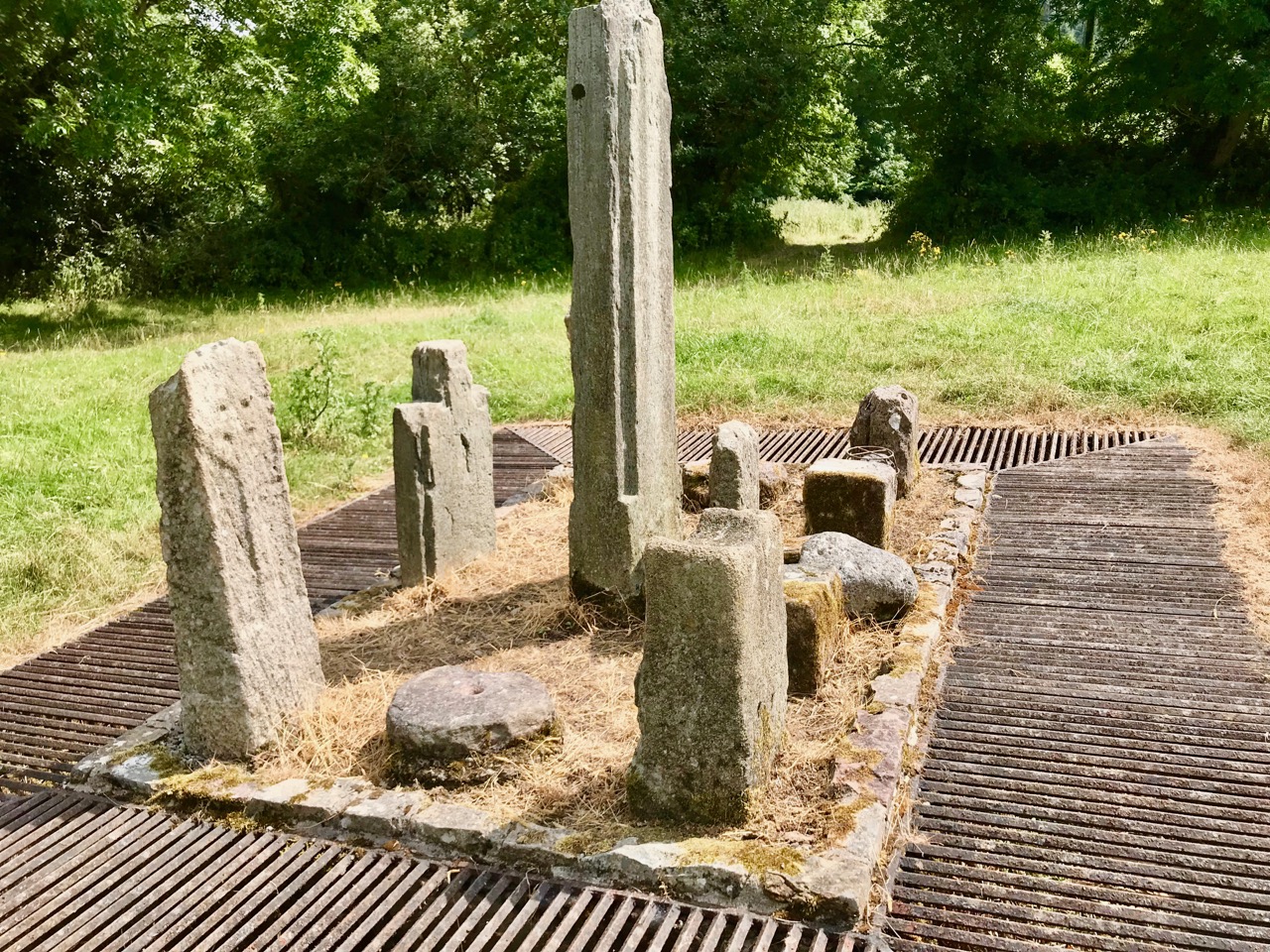
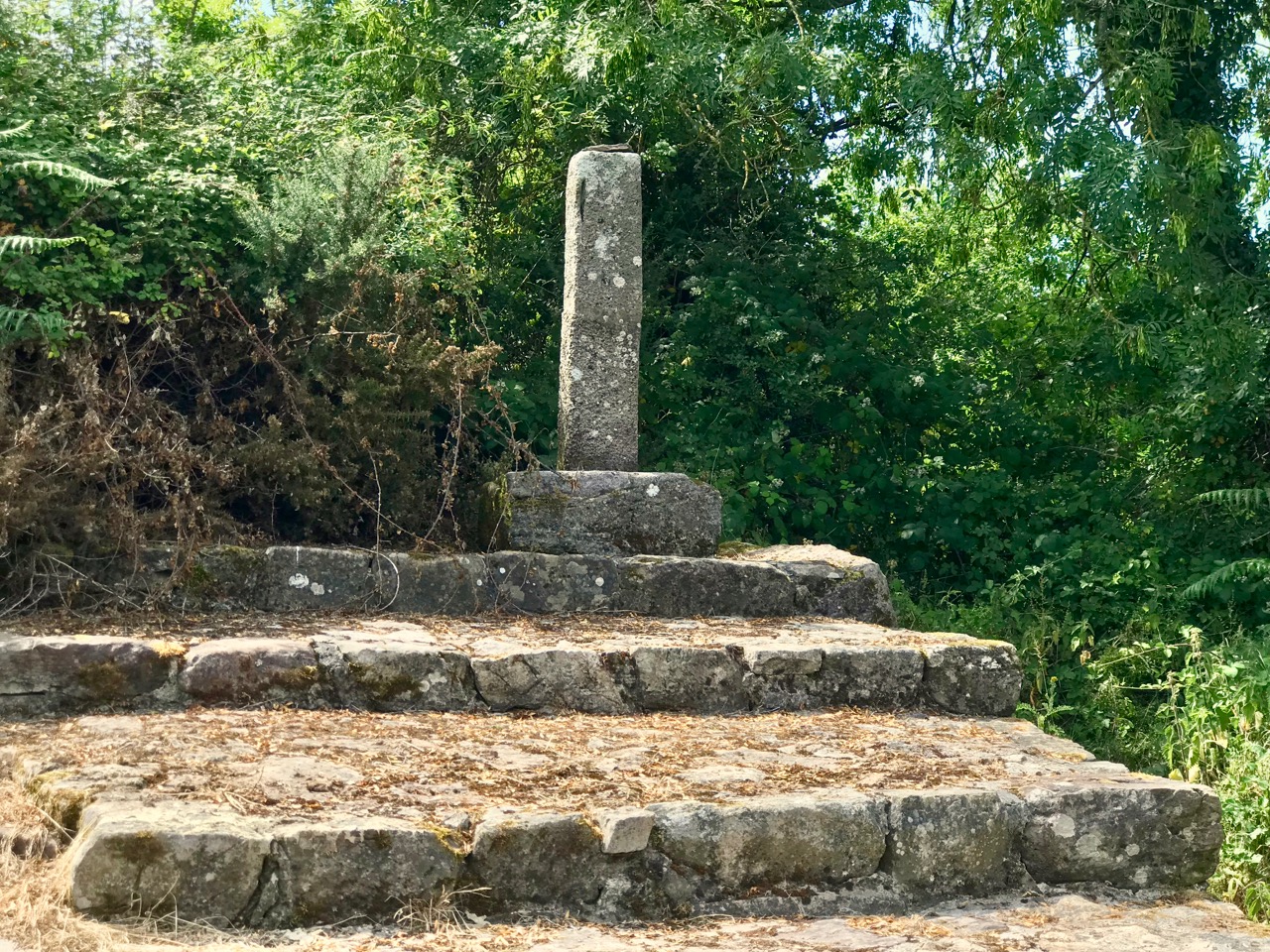
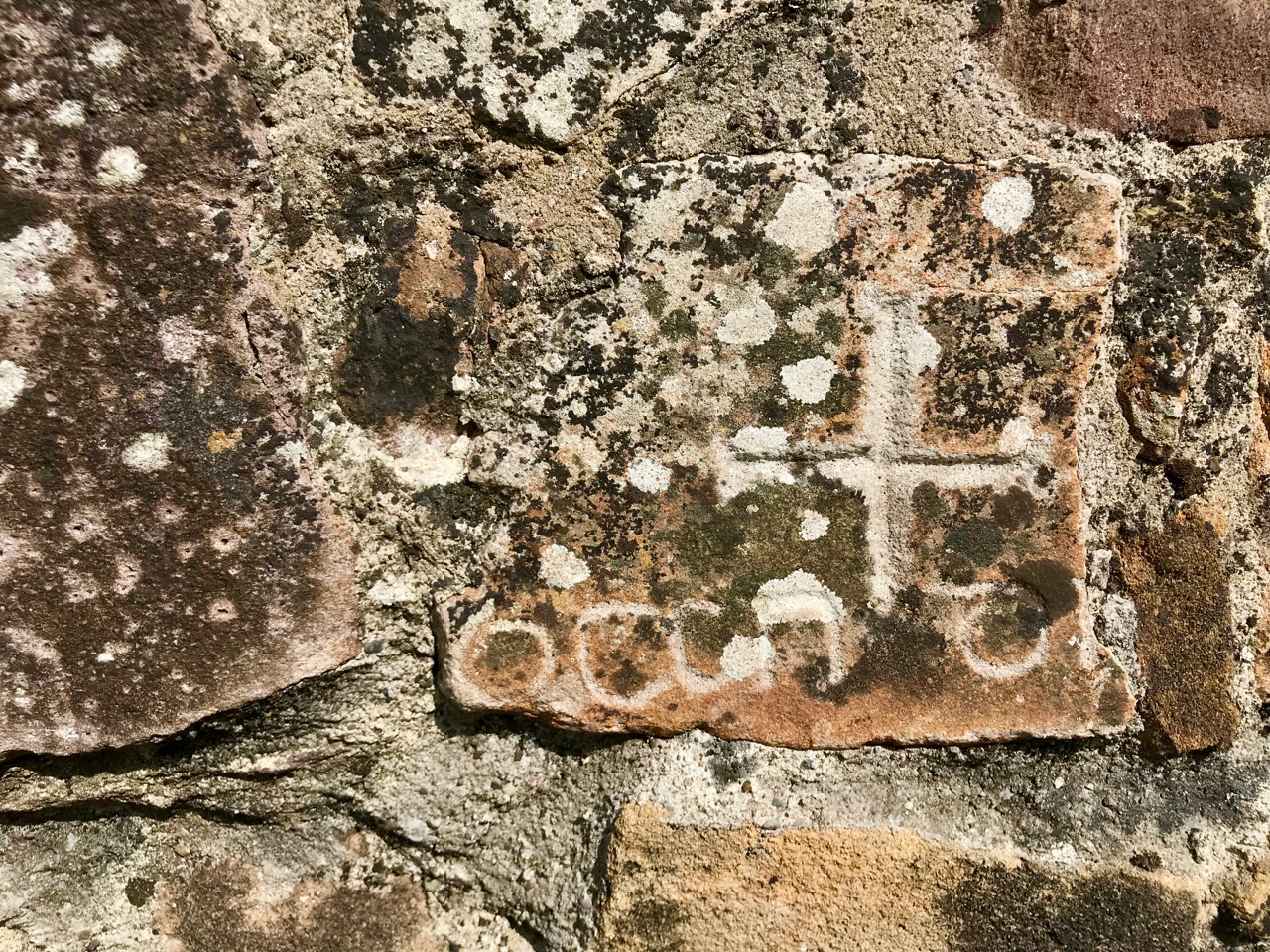
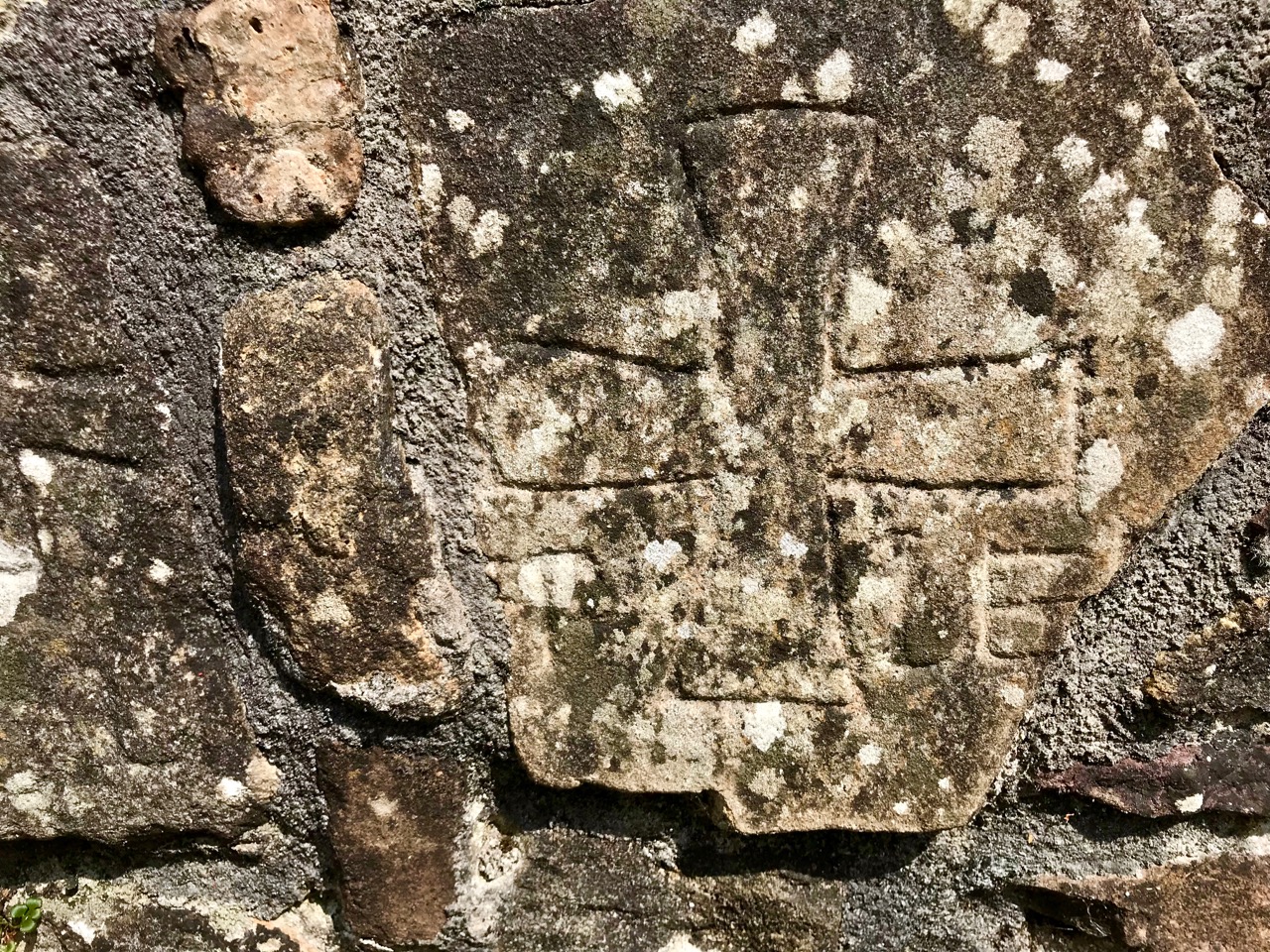
A hundred years after O’Keefe wrote this, the church ruins were tidied up by the Office of Public Works. As at St Berrehert’s Kyle, it seems there were numerous carved slabs on the site and remnants of high crosses, implying a significant ecclesiastical presence here. All these have been fixed in and around the church ruin for safekeeping, and in an intelligent grouping. It’s wonderful to be able to see such treasures in the place they were (presumably) made for, and to experience them in such a remote and peaceful ambience.

McNeill continues:

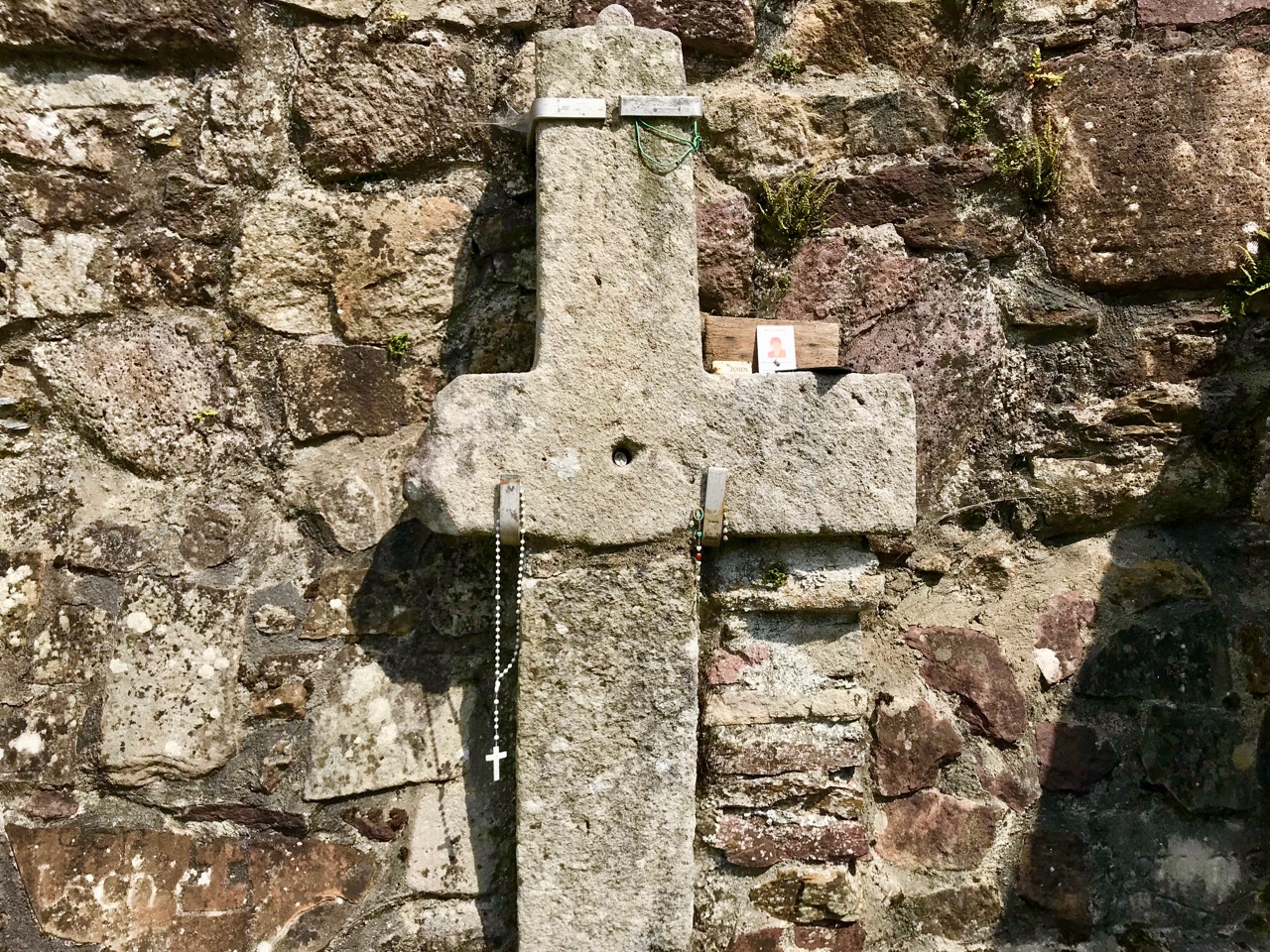
. . . Nearby is the shaft of a cross which tradition avers was broken in malice by a mason who was then stricken with an inward pain and died suddenly as a punishment for his sacrilege . . . O’Keefe was told a story of a small stone, 6 or 7 inches long and 4 or 5 in depth, having ten little hollows in it and resting in a hollow of the ‘altar’ of the old church. Christ, or according to others St Péacán, asked a woman, who had been churning, for some butter; she denied having any and when the visitor departed she found the butter had turned into stone which retained the impression of her fingers . . . Nuttall-Smith speaks also of a cave where the saint used to practice austerities . . .

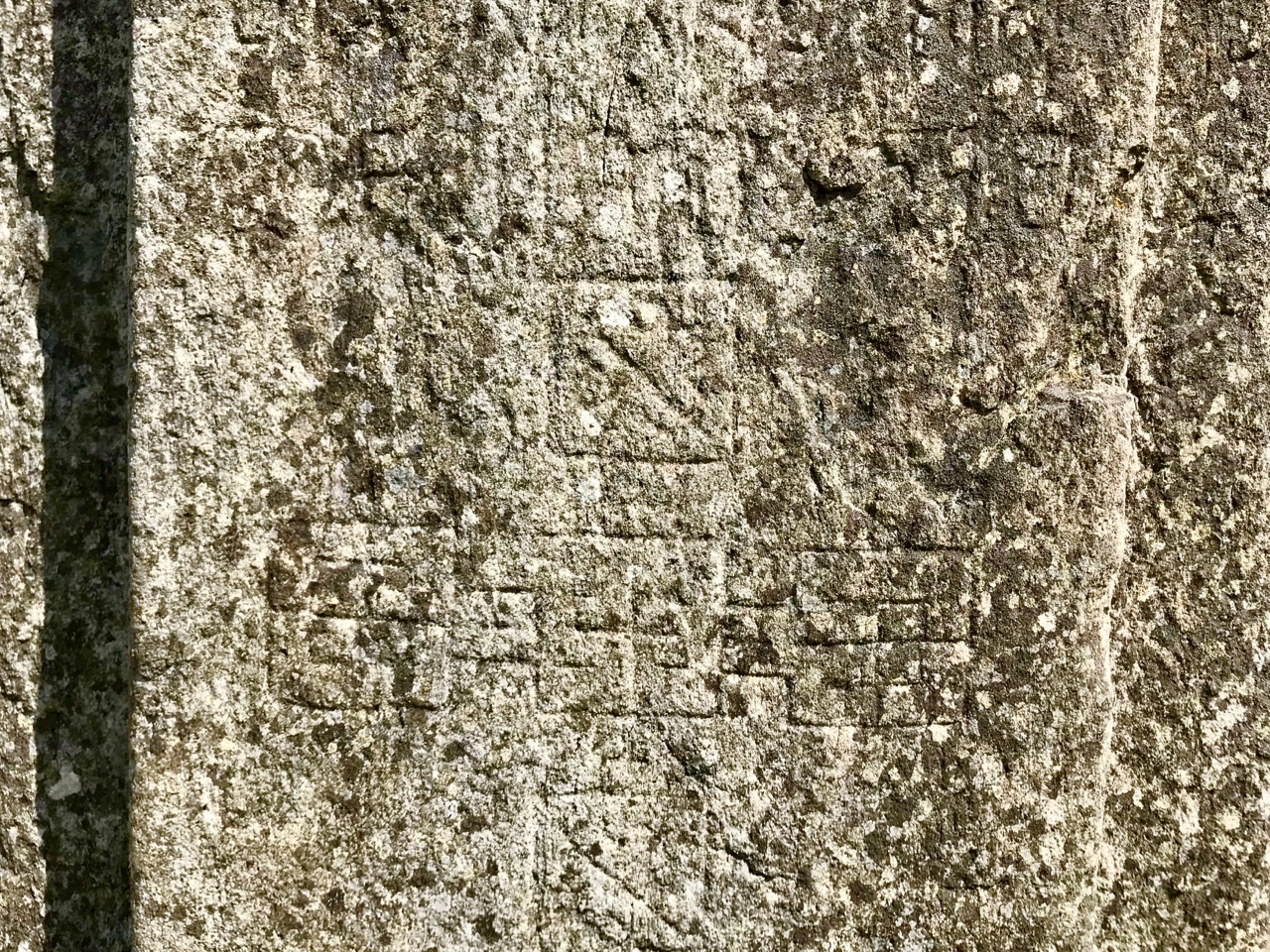
The carved fragments are quite remarkable and are in all likelihood well over a thousand years old. I have yet to see anywhere in Ireland – outside of museums – which has such an extensive collection of fascinating medieval antiquities as these sites in the Glen of Aherlow. Here you can also see cross slabs and a sundial said to date from the eighth century.

Nuttall-Smith’s ‘cave’ – quoted by MacNeill above – is likely to be St Péacáin’s Cell, set in a field on the far side of the river. This was probably a clochán, or beehive-hut, of the type once used by anchorites. It is protected by a whitethorn tree, but was quite heavily overgrown on the day of our visit. We could make out the ballaun stones inside, said to be the knee prints of the Saint who made his constant devotions there. Amanda – in her post on the holy well – reports that Péacáin would also stand daily with arms outstretched against a stone cross, chanting the psalter.

McNeill discusses the significance of weather at the August celebrations:

. . . Paradoxically for a day of outing so fondly remembered, no tradition of the Lughnasa festival is stronger than that which says that it is nearly always rainy. No doubt this has been only too often experienced. Saint Patrick’s words to the Dési: ‘Bid frossaig far ndála co bráth’ (Your meetings shall always be showery) must be as well proved a prophecy as was ever made. Still there must be more significance in the weather beliefs than dampened observation. Certainly it was expected that rain should fall on that day, and sayings vary as to whether that was a good or bad sign . . . There are a few interesting beliefs about thunder, which was also expected on that day: the loud noise heard at Tristia when the woman made rounds there to have her jealous husband’s affection restored; the prophecy that no-one would be injured by lightning at Doonfeeny, a promise also made by St Péacán . . .

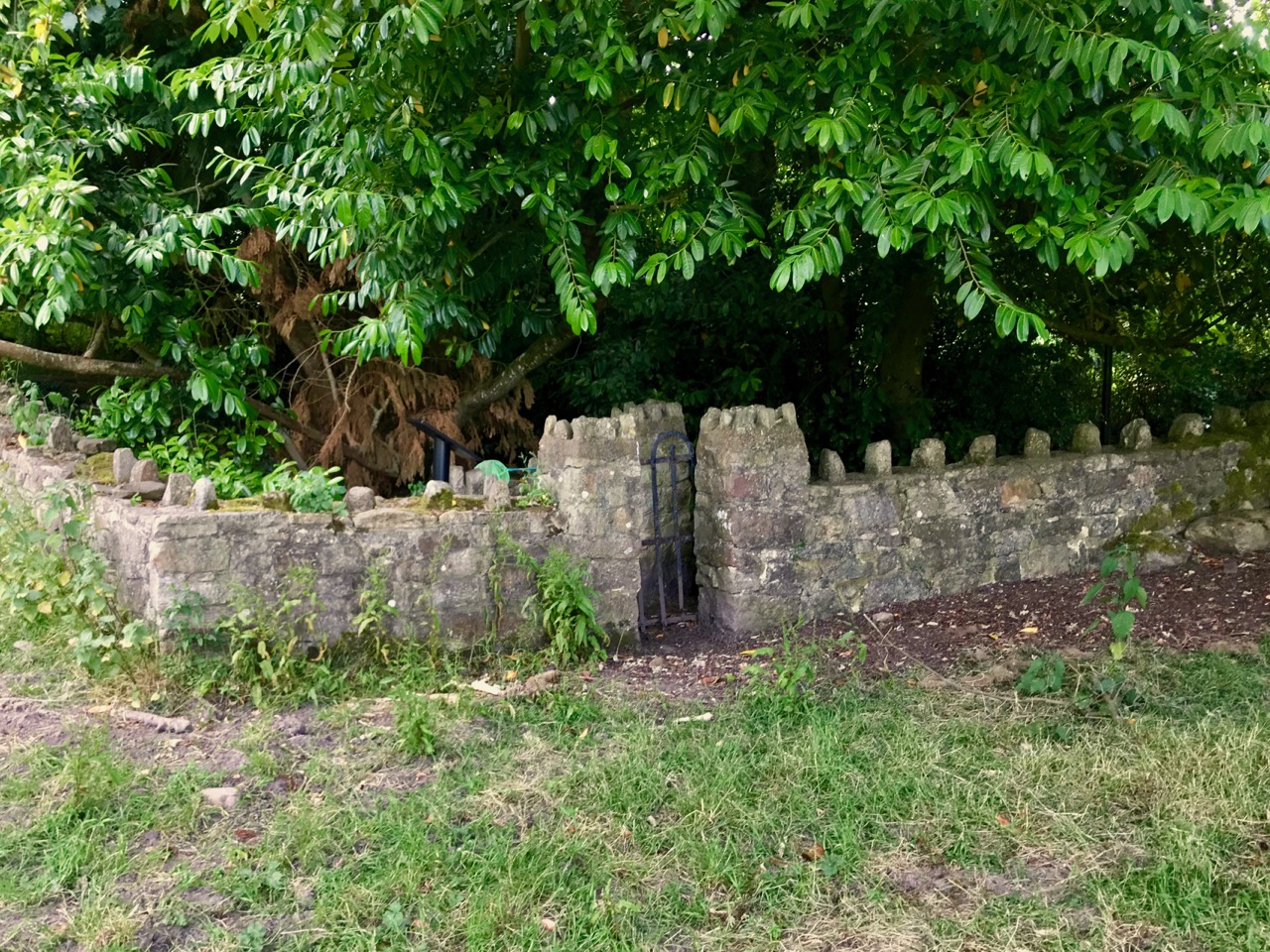
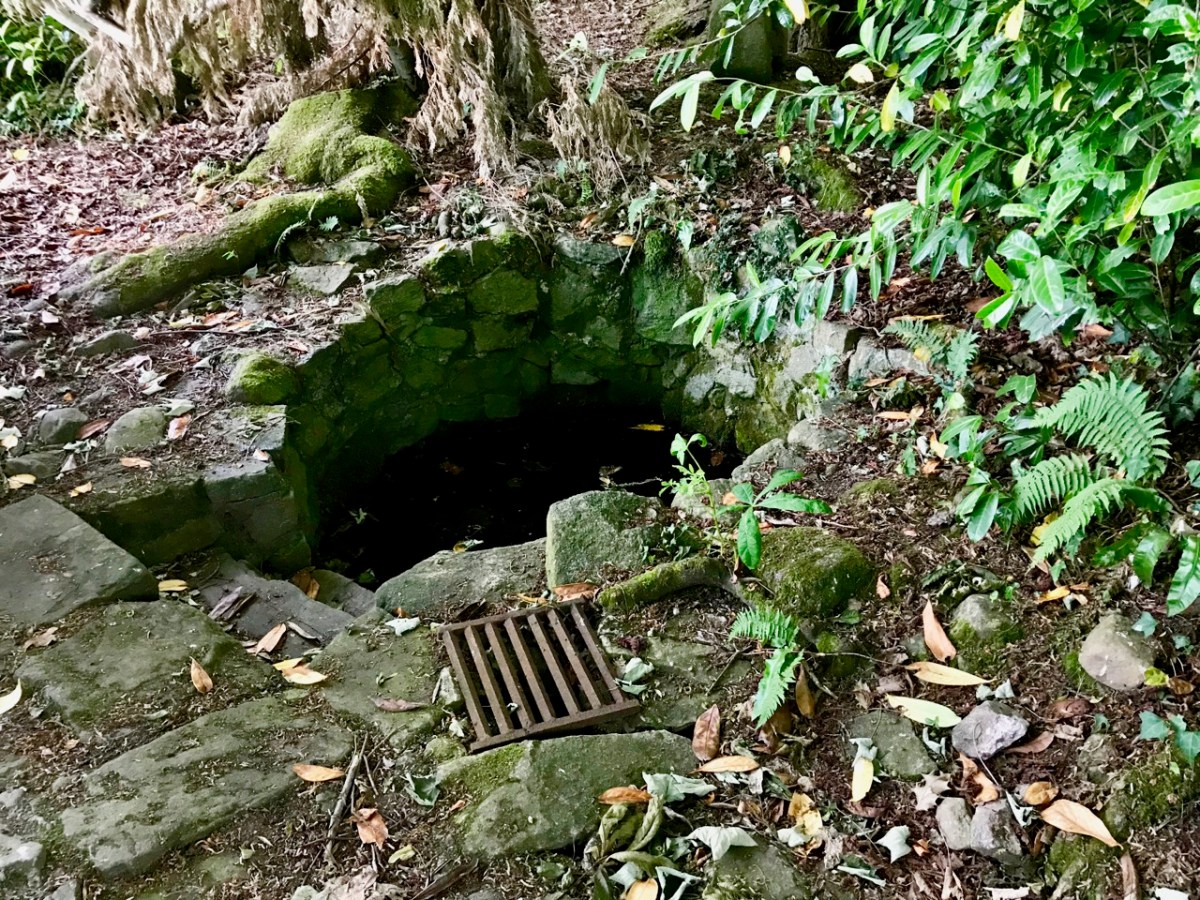
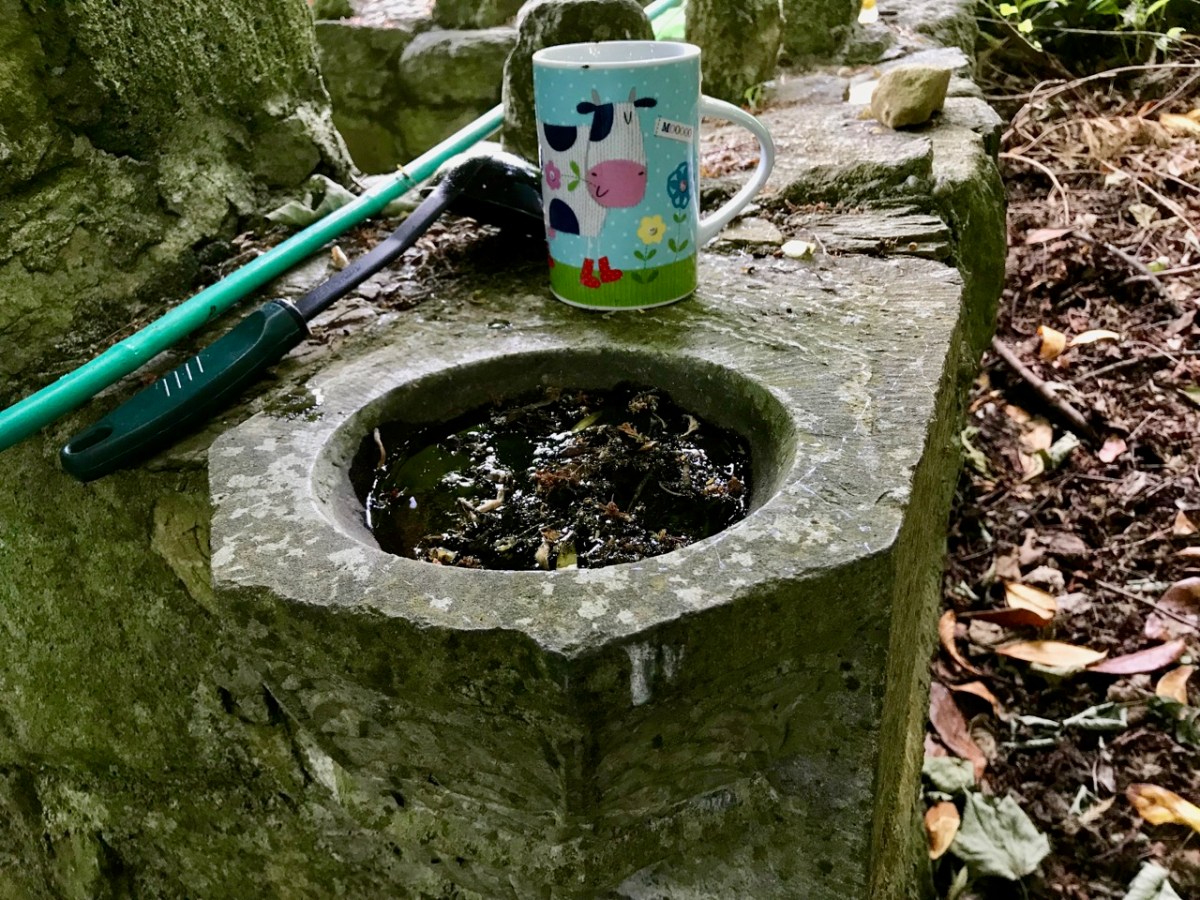
The holy well is tucked away in a stone-walled enclosure hidden under the trees on the edge of the field which contains the Saint’s cell. It is also a tranquil place, obviously still much visited: the water is crystal clear, refreshing and will ensure protection from burns and drowning.  This is a magical setting to complete our day’s travels in the beautiful Glen of Aherlow.

The Elusive Lighter (Sweet Ilen – Part 8)

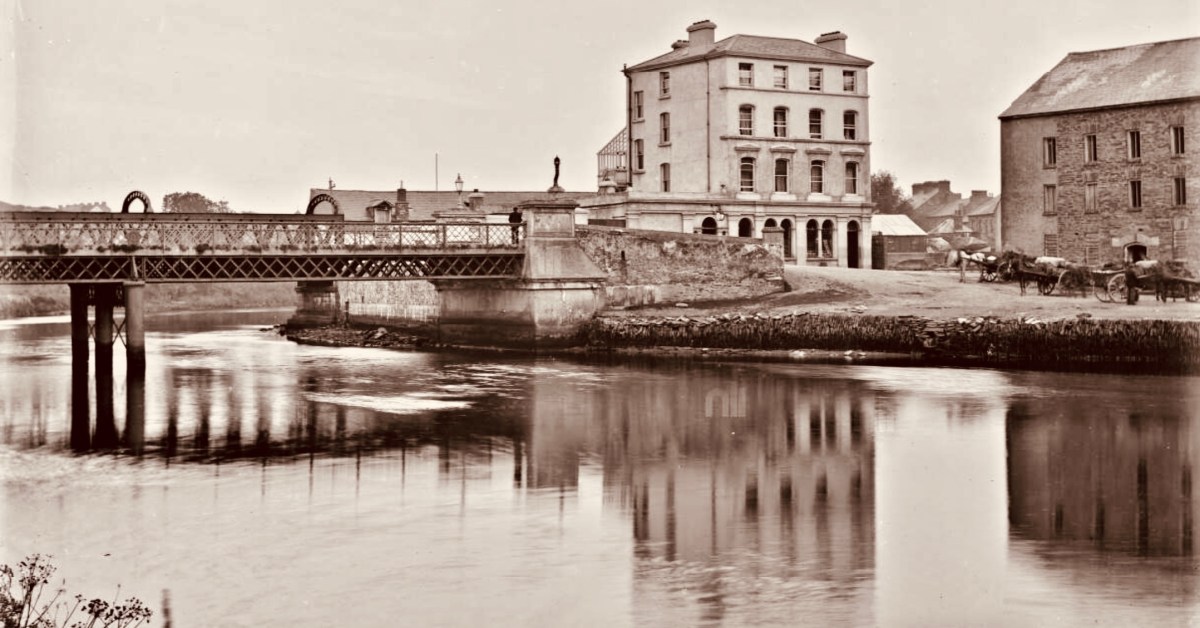
This photo of the West Cork Hotel beside the Ilen River, Skibbereen (courtesy of the NLI Lawrence Collection) captures a moment in time. It was taken in the very early 20th century – probably before 1910. Clearly seen are the hotel itself – opened in 1902 – the old iron road bridge which was superseded in 1964, and the railway bridge behind it carrying the line to Baltimore (which was opened in May 1893). That bridge still exists, of course, although the line closed in 1961. To the right of the photo is the Old Steam Mill, originally constructed as a flour mill by Thomas Marmion in the 1830s. This building stands on Steam Mill Quay.

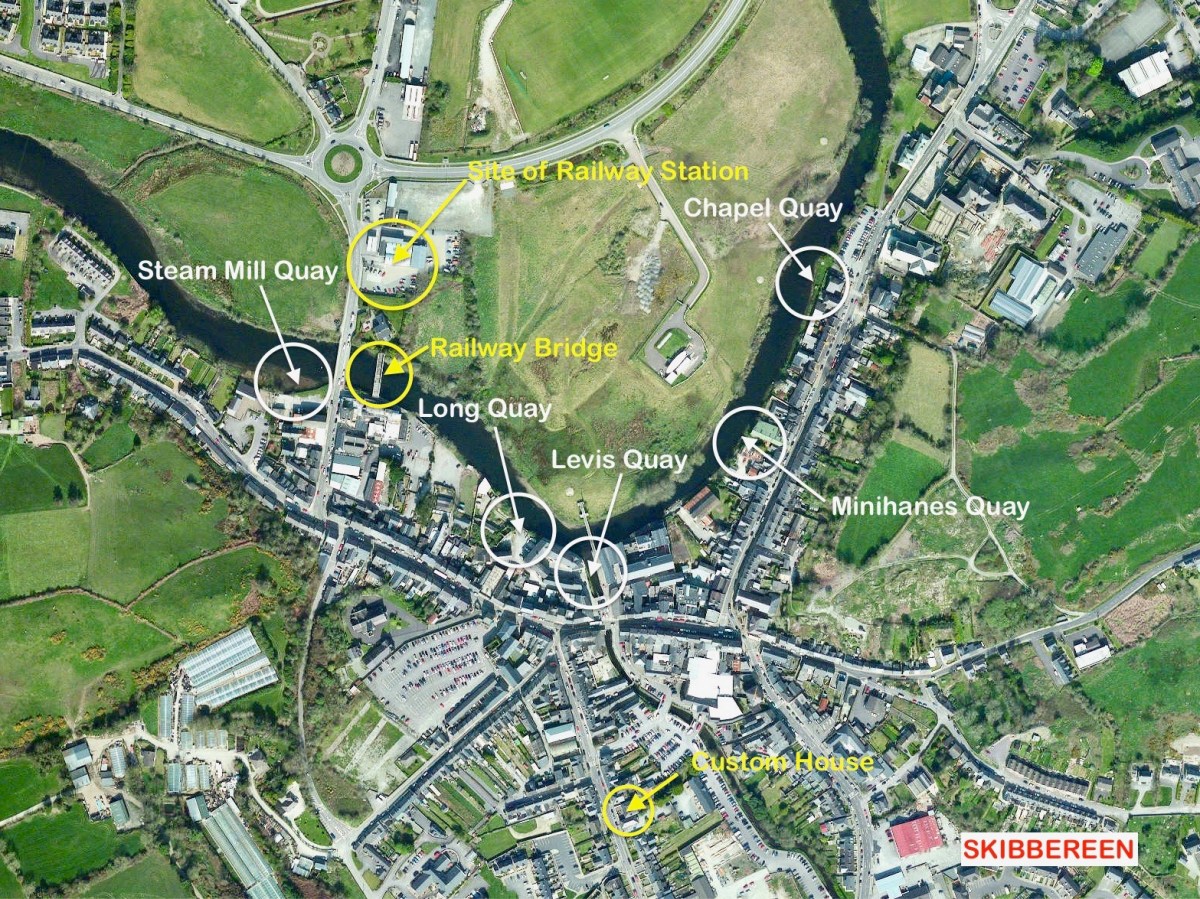
The Irish name for this town, an Sciobairín, is said to mean a small inlet for docking boats. Steam Mill Quay is the first of five quays which served the town, suggesting a period when the river itself (tidal to just north of the town) was the life blood of the community:

. . . Skibbereen was a settlement served by water. The River Ilen is tidal and in the early 19th century boats of up to 200 tons could navigate to Oldcourt, within two miles of the town centre. From there goods were transferred into ‘lighters’ (unpowered barges) and then brought into the quays where there were warehouses and a Custom House. Now, sadly, Skibbereen’s waterfront is a bit neglected and its active past shipping history is no longer obvious. Five historic quays have been identified along the river: Steam Mill Quay, Long Quay, Levis Quay, Minihane’s Quay and Chapel Quay . . .

Roaringwater Journal

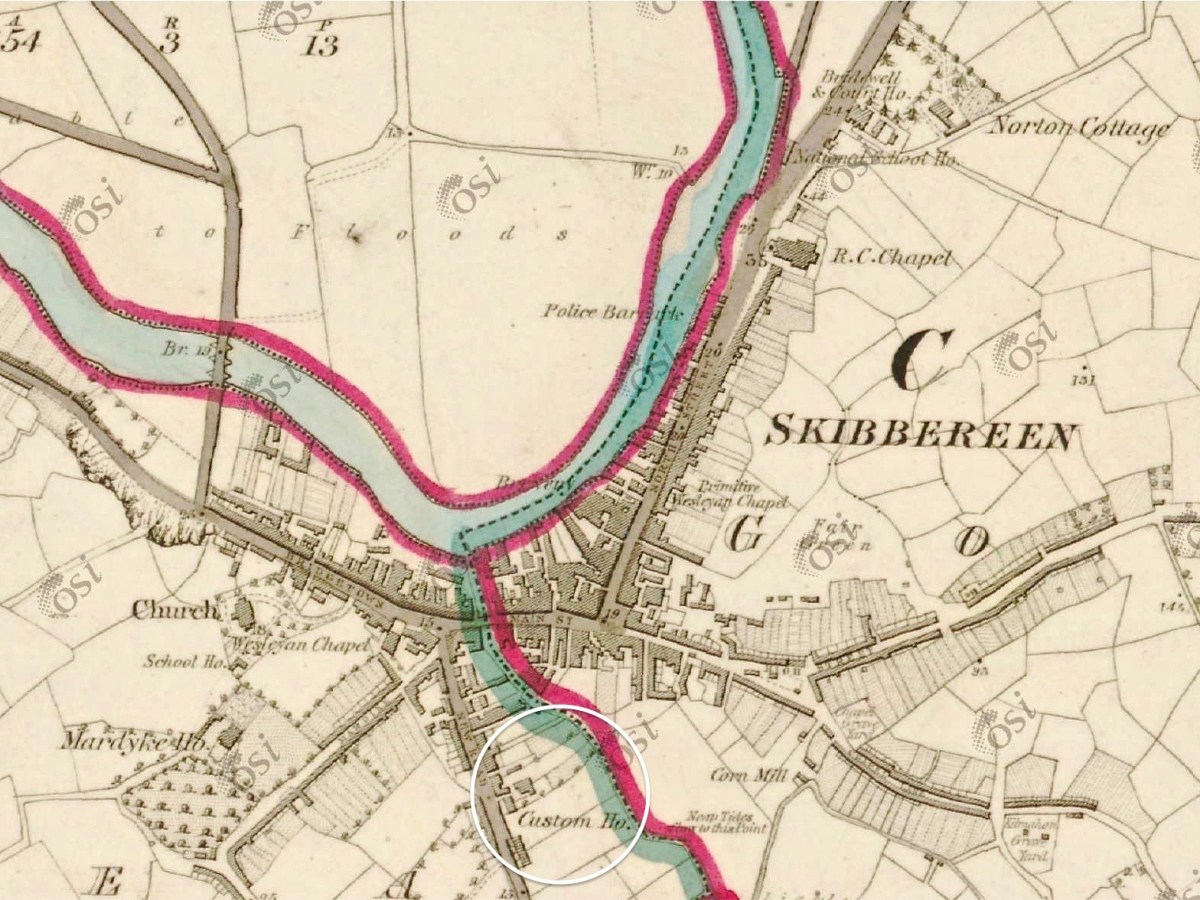
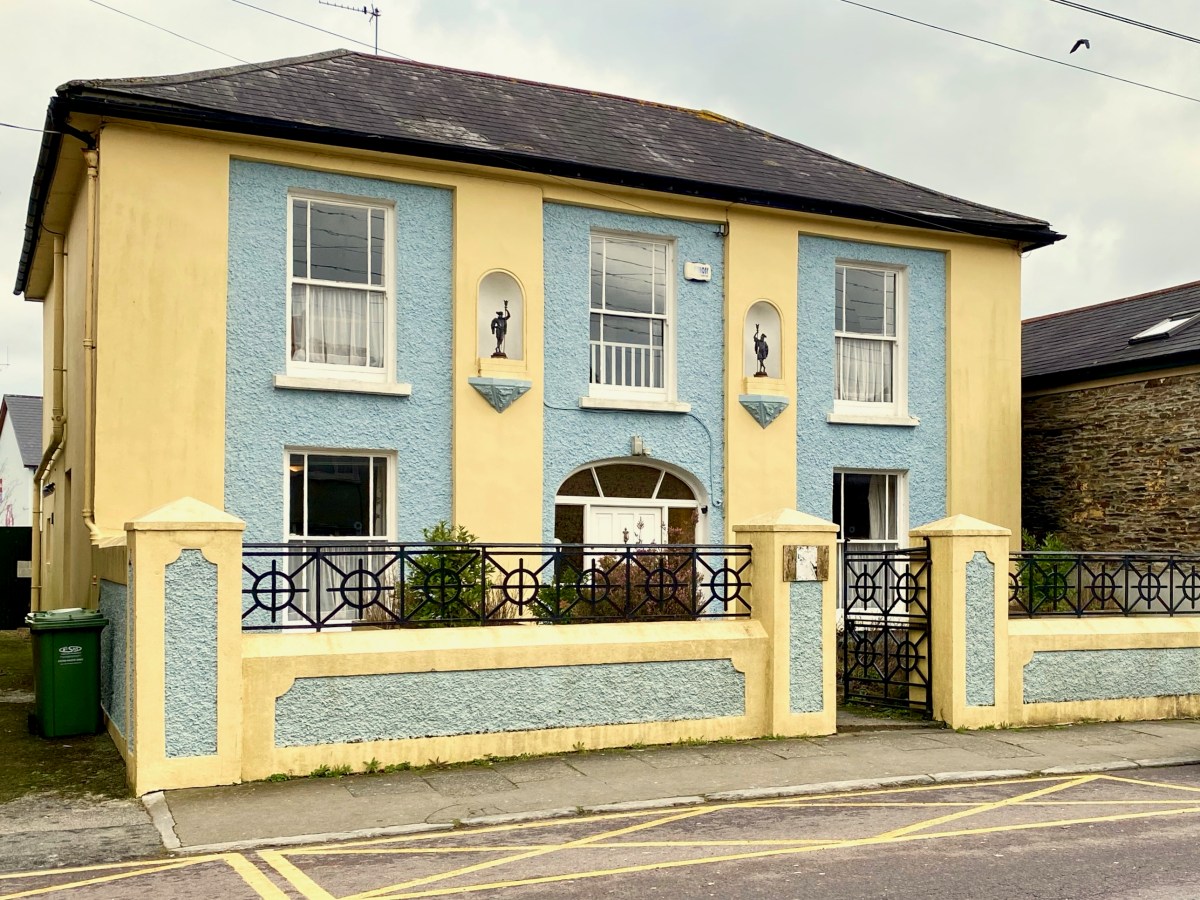
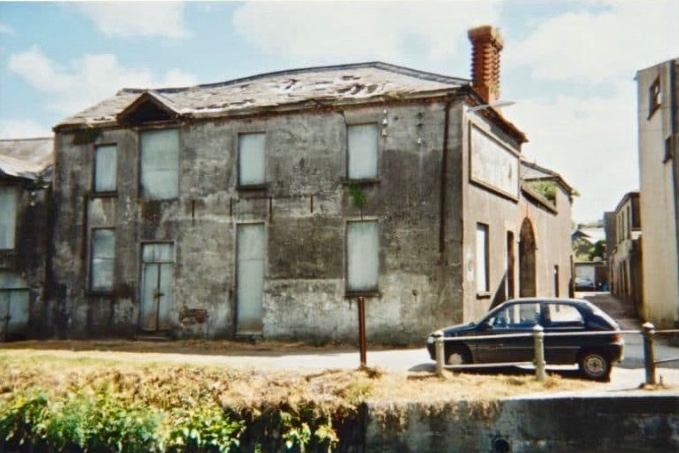
Here is the Custom House – now a private residence on Townshend Street. The first edition of the OS map (above the photo) marks the location. It’s a fine building, clearly of some standing, with its decorative niches and curved fanlight. The existence of this building in the town emphasises the historic significance of importation and trading of commodities, probably primarily by water transport, to Skibbereen when it was operating. I was surprised to find that Hansard – the official record of the actions of the British Parliament – has one entry pertaining to the Skibbereen Custom House. From it we learn that its business was transferred to Bantry in 1890, and that this was a cause of concern to some of the townspeople and local fishermen:

. . . DR KENNY (Cork, S) I beg to ask the Secretary to the Treasury whether he is aware that owing to the transference of the Custom House from Skibbereen to Bantry very great inconvenience and injury are caused to the Baltimore fishing industry; whether, according to existing Customs arrangements in Skibbereen. the Deputy Officer of Customs in that town is unable to give permission for the discharge of cargoes of ice absolutely essential for the preservation of the fish caught by the Baltimore fishermen, and also that it is impossible for him to obtain permission by telegraph from Bantry to do so, and whether, in consequence, steamers for conveying the fish have to wait at Baltimore the arrival from Bantry, 24 miles distant, of the Superintendent of Customs; and whether he will take steps to have abated the inconvenience complained of, by restoring the Custom House to the Skibbereen district?

Hansard record of Commons Sitting 08 May 1890 § 469

There is a further record giving the response by the then Secretary to the Treasury: it lacks sympathy!

. . . Mr. JACKSON (Leeds, N) I am informed that it is not the fact that very great  inconvenience and injury have been caused to the Baltimore fishing industry through the transference of the principal Customs Offices for the Port of Skibbereen from Skibbereen to Bantry. The Board of Customs have ascertained that no delay has been caused by this change in the discharge of any vessels, nor need any delay or inconvenience be occasioned thereby, as the Officer of Customs still stationed at Skibbereen is now empowered to deal with any Customs business, there or at Baltimore, that may require attention, under exactly the same conditions as were in force previous to the change referred to. No occasion has, therefore, arisen for making any alterations in the. present arrangements . . .

Hansard record of Commons Sitting 08 May 1890 § 470

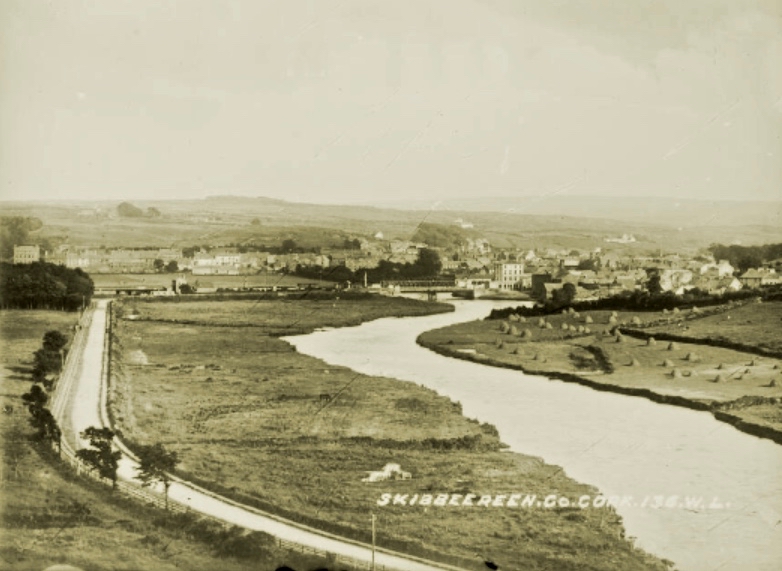
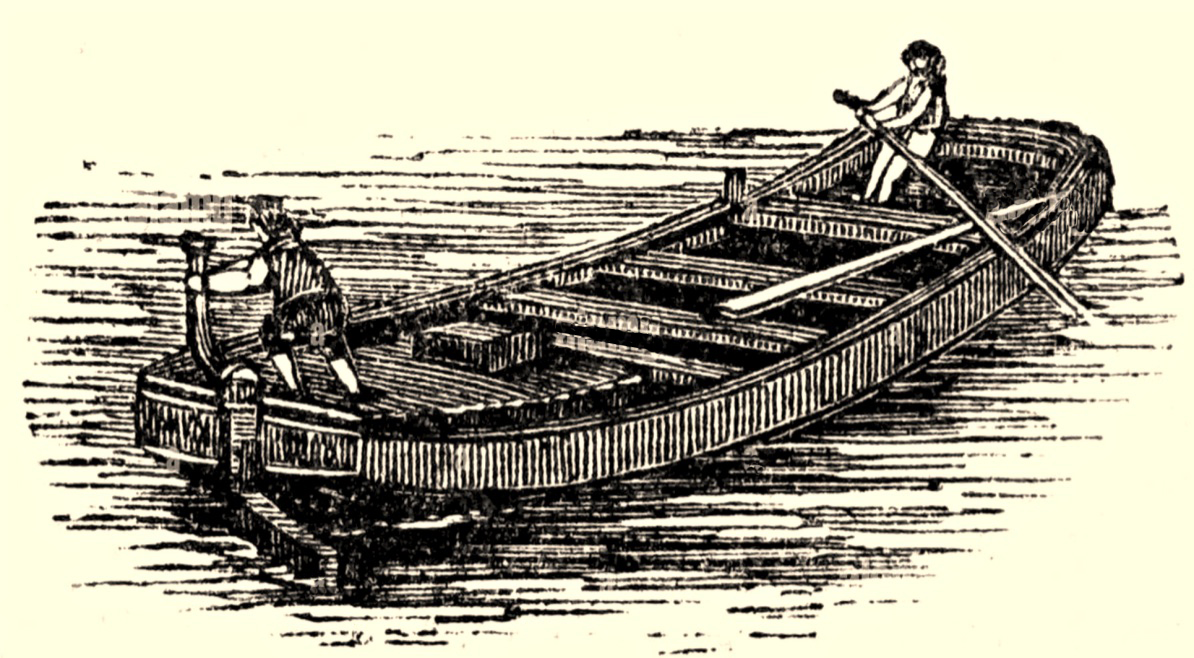
Here’s a distant view of Skibbereen from the west, probably taken in the early 20th century (courtesy of the NLI Lawrence Collection). On the left, the roadway (today’s N71 going from the town towards Ballydehob) has the track of the Schull railway (or – more properly – ‘tramway’) on its verge. The old bridge into town and the West Cork Hotel are visible, as they are in the header picture. What is noticeable is that there is no sign of any navigation of the Ilen River. I have looked carefully through over 200 early photographs of the town and it is the case that none shows any river craft. Hence my title today (and I apologise for taking a long time to get to this) The Elusive Lighters. We have no detailed records of any boats that used the river, and the quays, except that they were shallow-drafted unpowered barges. The term ‘lighters’ usually refers to ‘dumb’ boats (unpowered) used to offload cargoes from ships and transfer these to quays further inland. How were the Ilen boats built, and what did they look like?

Here’s a guess – something I found in an old engraving (not from anywhere in West Cork). The boat is being ‘poled’ or swept along by a figure with a large oar, while a ‘steerer’ handles the helm. It would almost certainly have been built from timber. After a coaster, steamer or sailing ship arrived and moored at Oldcourt, the cargo would have been offloaded to the lighter, which would have to await a rising tide before setting out for Skibbereen. The return journey would have to be carried out when the tide was falling.

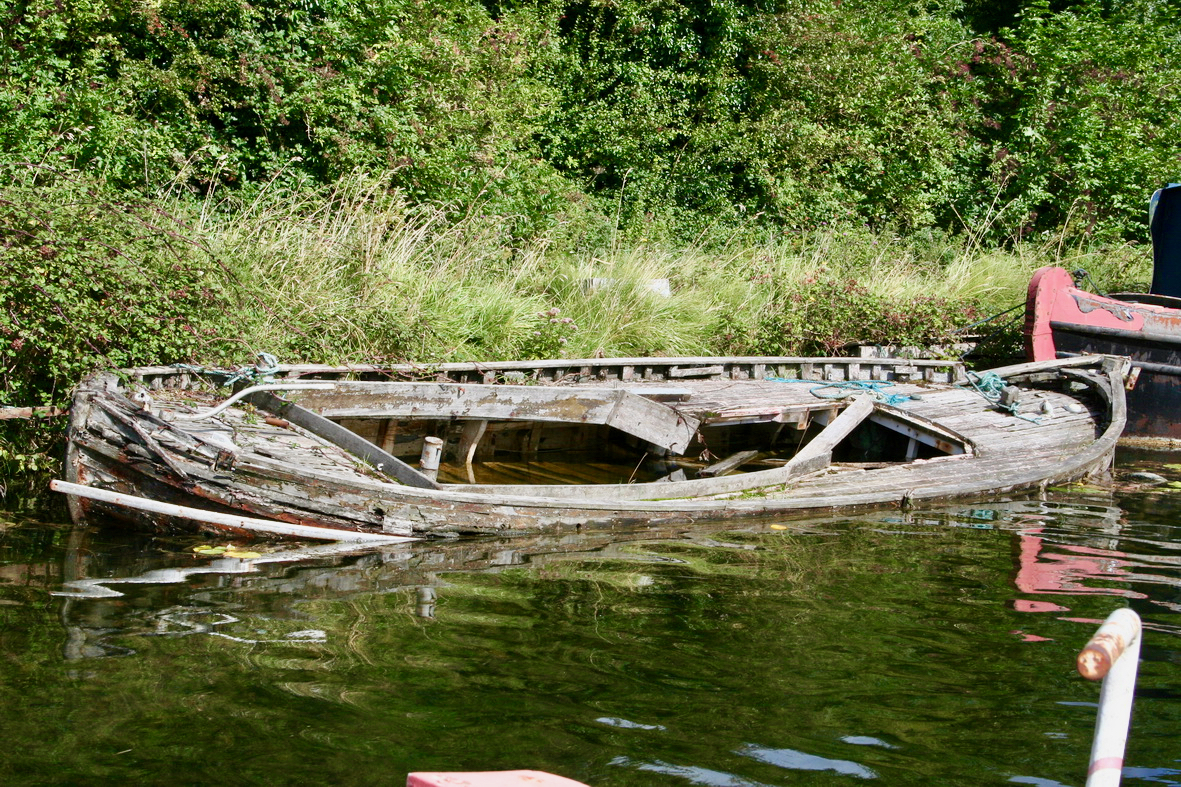
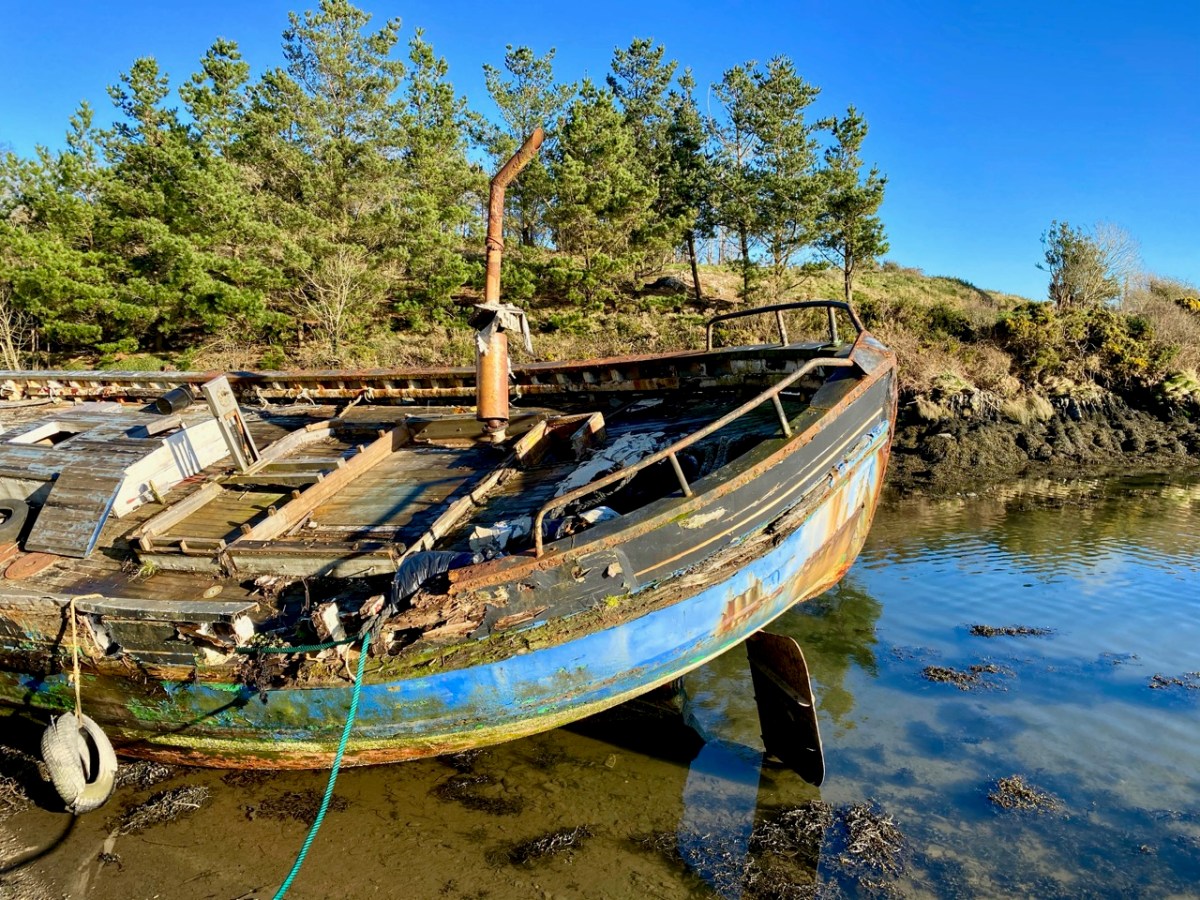
It would be great to find the remains of such a boat on the Ilen, but very little would survive of a working craft dating back over a century and a half. The wreck above is on the River Barrow Navigation at Lowtown. Here’s another old wooden boat which lay beside the tidal Ilen itself a few years ago: it may still be there!

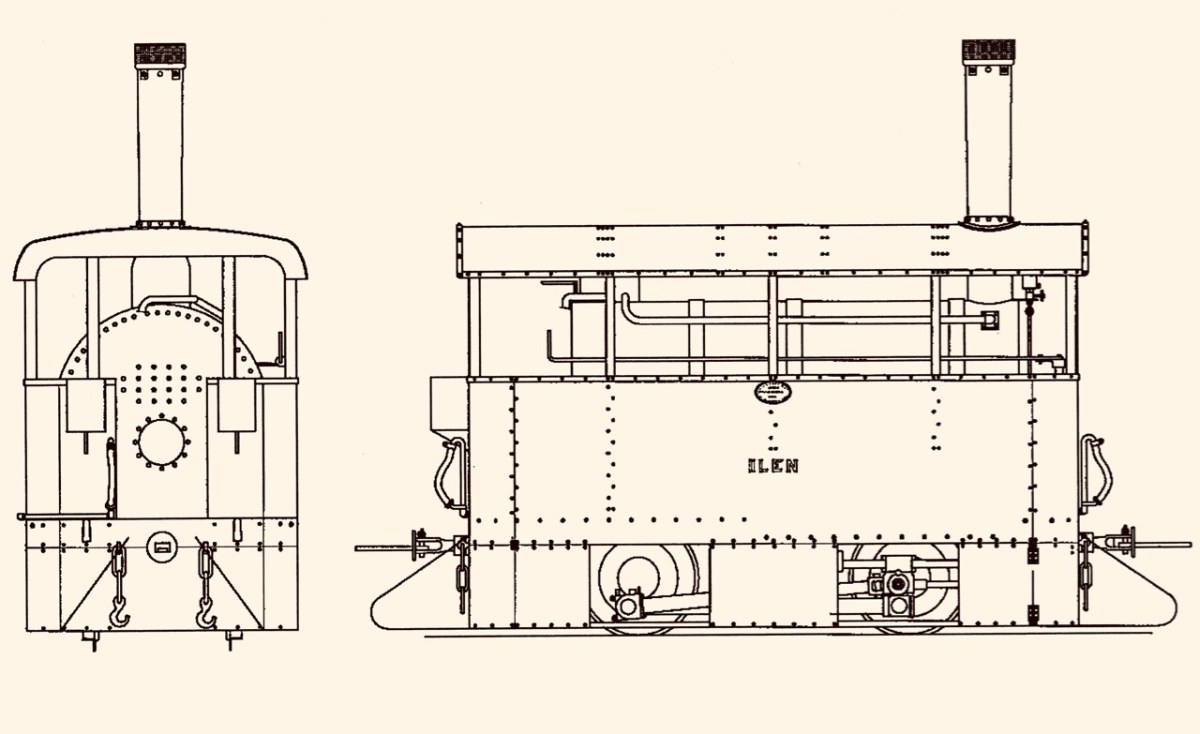
While my nostalgic soul would like to think that some trace might remain of the old Ilen boats and the quays that they served, I know that is unlikely. River traffic on the tidal Ilen would have been in its hey-day in the early part of the 19th century and would have been affected by the sufferings of the Great Famine which heavily hit Skibbereen. After some recovery, the arrival of the railway line from Cork in 1877 ensured that river trade could no longer survive: it’s ironic, perhaps, that the first locomotive on the Skibbereen to Schull tramway was named Ilen.

This post is the latest of a series that studies the full length and history of the Ilen River. Previous posts can be found here: Sweet Ilen : Sweet Ilen – Part 2 : Sweet Ilen – Part 3 : Sweet Ilen – Part 4 : Sweet Ilen – Part 5 : Sweet Ilen – Part 6 : Sweet Ilen – Part 7. Volume 18 of the Skibbereen Historical Journal (2022) includes an article Sweet Ilen – the story of a river: Part 1 – Source to Tide penned by myself. This is to be joined by a second part in this year’s Journal. Look out for it!

Here’s a link to the ever fascinating Skibb Historical Society, while the Journals can be purchased through this link.

Swanton’s Store on Levis Quay, Skibbereen a few years ago. Many thanks to the Skibbereen Heritage Centre for this image

Cork Fella Comes to County Wicklow

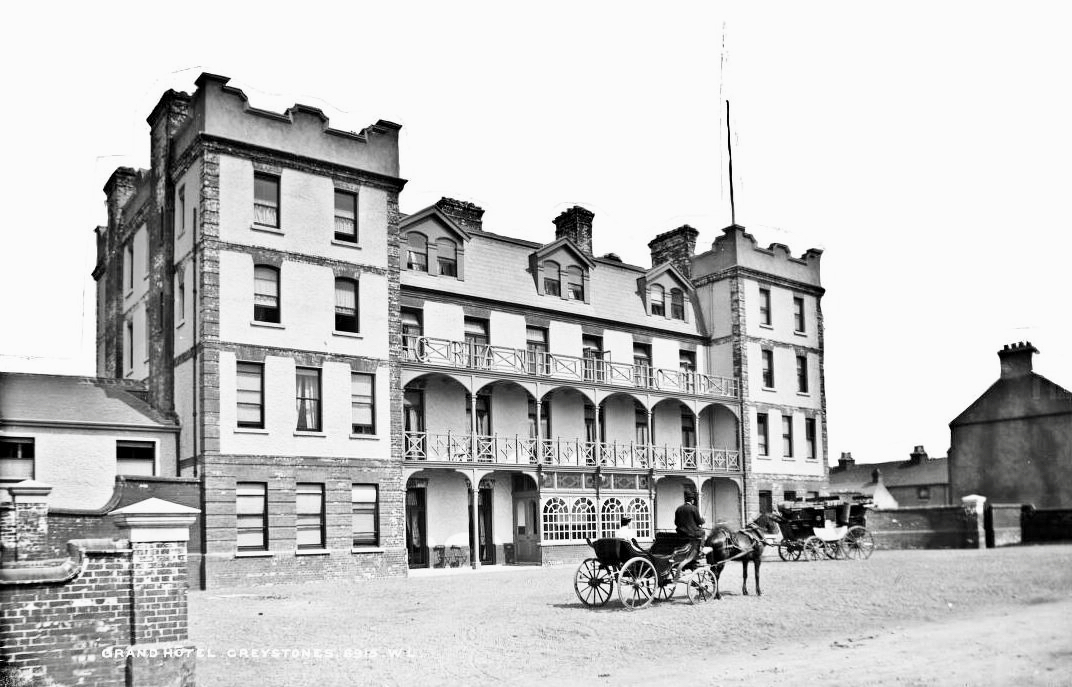
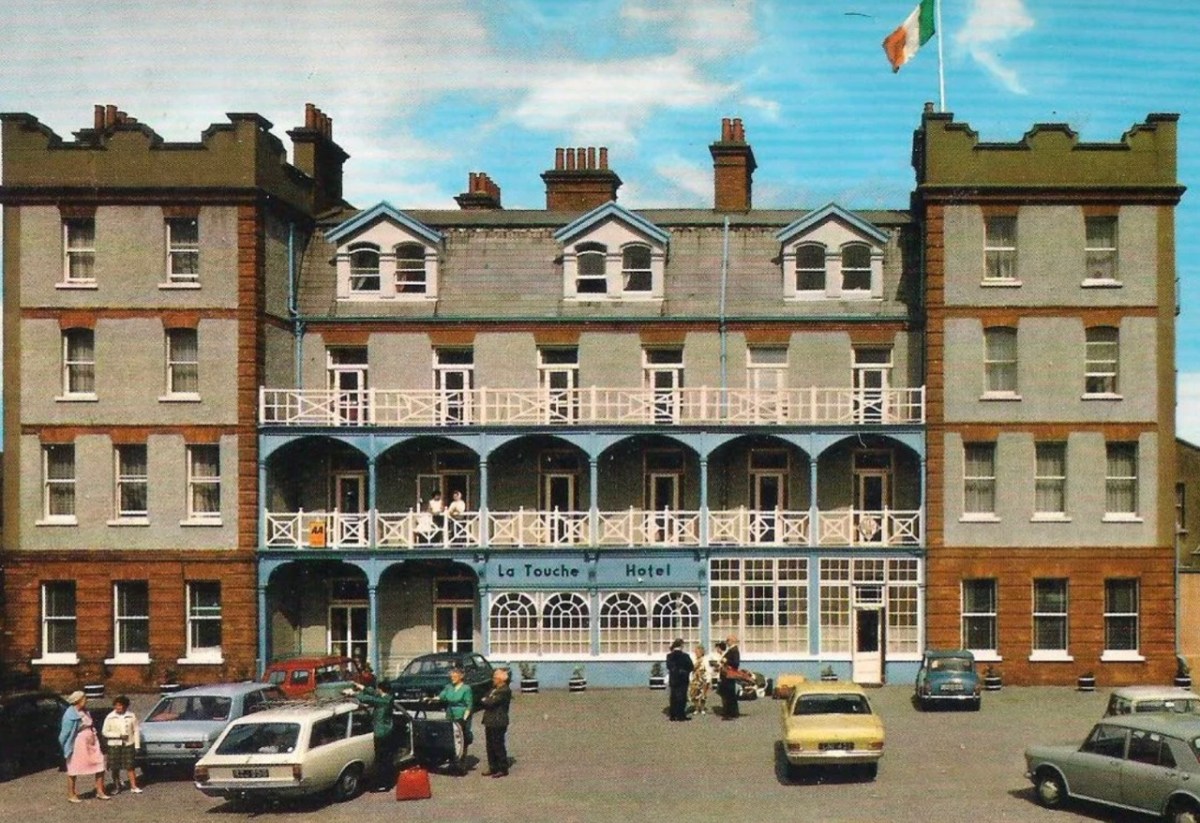
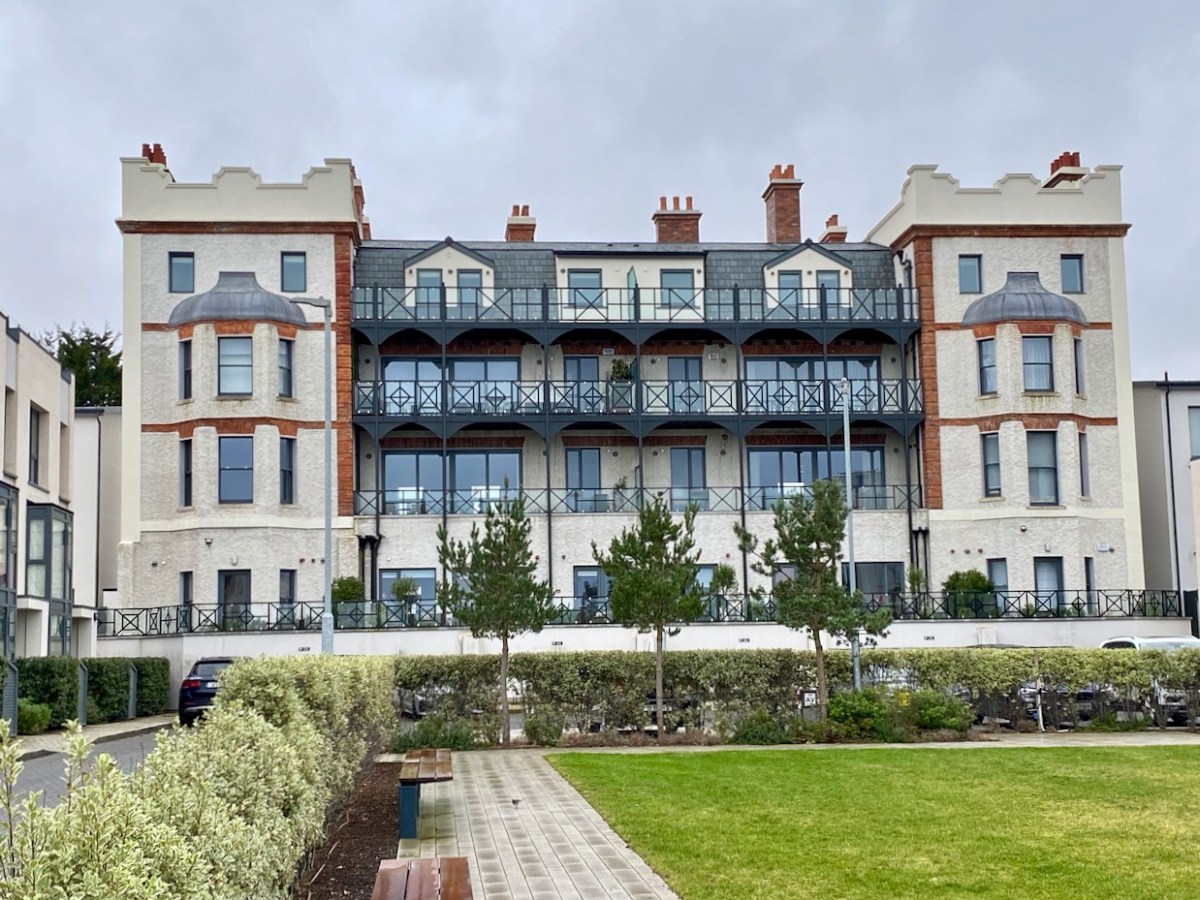
Above – Trafalgar Road, leading down to the harbour, Greystones, c1900. This seaside town is in Co Wicklow, and the connection with West Cork is that our ‘Big Fella’ – Michael Collins – had intended to set up home there once he had married Catherine (Kitty) Kiernan. Collins was staying in the Grand Hotel when he proposed to Kitty. That building is better known to us as the La Touche (photo below from the National Library of Ireland).

Above: la Touche, mid 20th century. Today, the hotel has been transformed into modern apartments (below). The fine original central building has been retained and upgraded:

Michael Collins and Kitty Kiernan have been described as ‘star-crossed lovers’. The pair were first introduced by Michael’s cousin, Gearoid O’Sullivan, who was friendly at the time with Kathy’s sister, Maud. Kitty was also close to Harry Boland, who served as President of the Irish Republican Brotherhood from 1919 to 1920. Boland was a good friend of Collins.

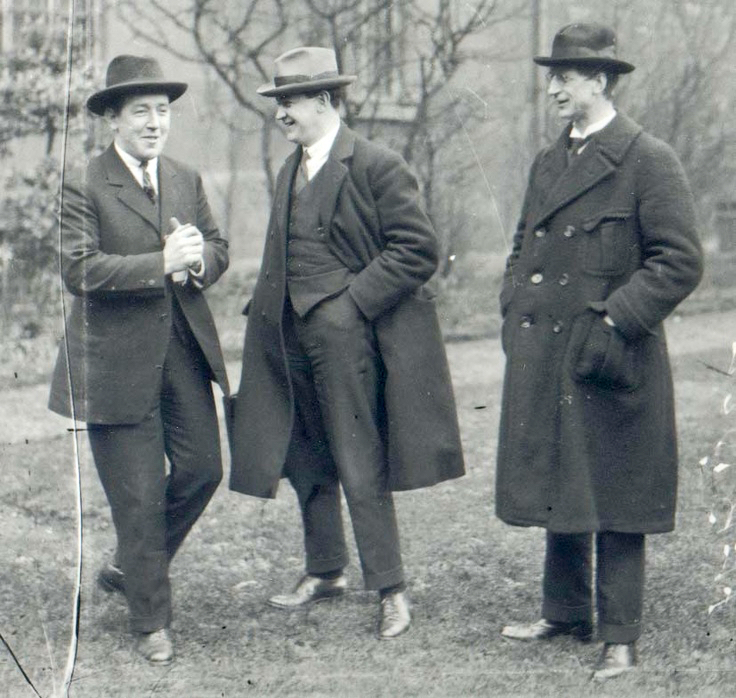
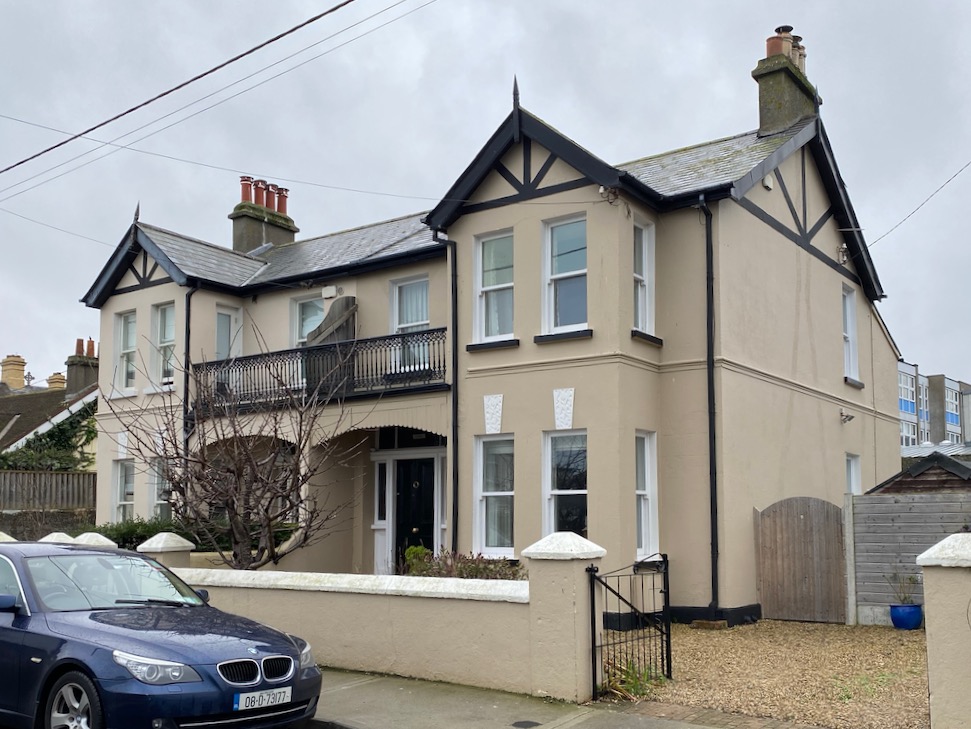
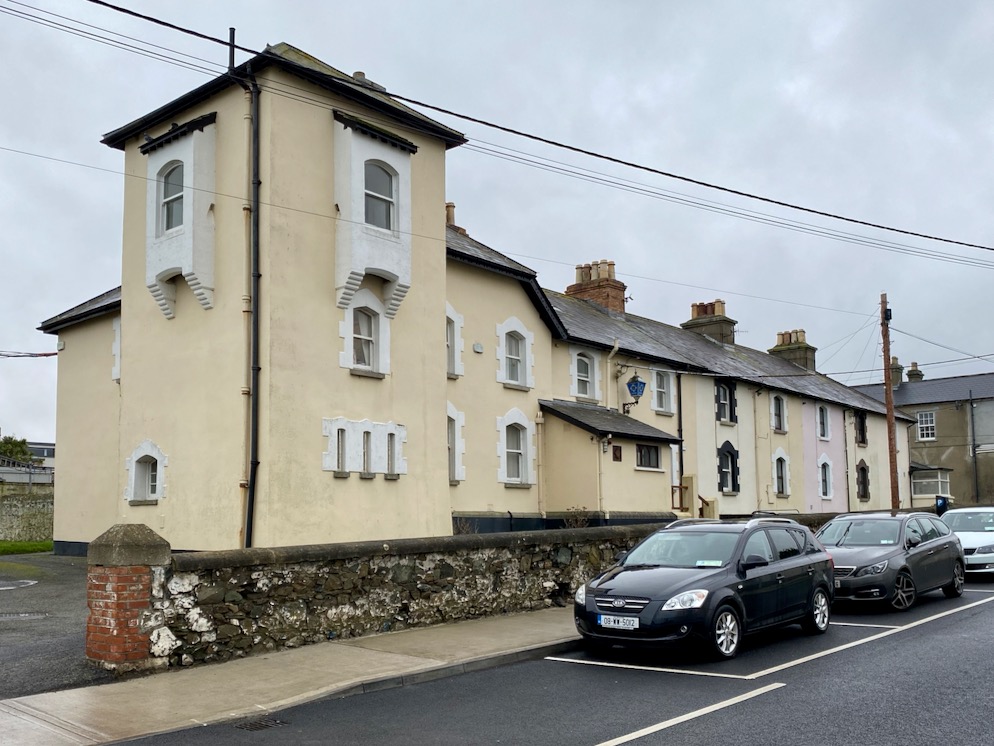
Harry Boland (left), Michael Collins (centre) and Éamon de Valera (NLI public domain c1920). Collins and Kiernan announced their engagement in 1921 and planned to marry the following year, but the political upheavals of the time kept delaying the wedding. During this turbulent period, Collins had ‘grown quite fond of Greystones’, often spending time in the house of his aunt, Maisie O’Brien Twohig – Dysart, Kimberly Road. Ironically, this property backed on to the RIC station.

(Upper) Dysart – home of Michael Collins’ Aunt Maisie. (Lower) former RIC barracks and present-day Garda station, immediately adjacent to Dysart.

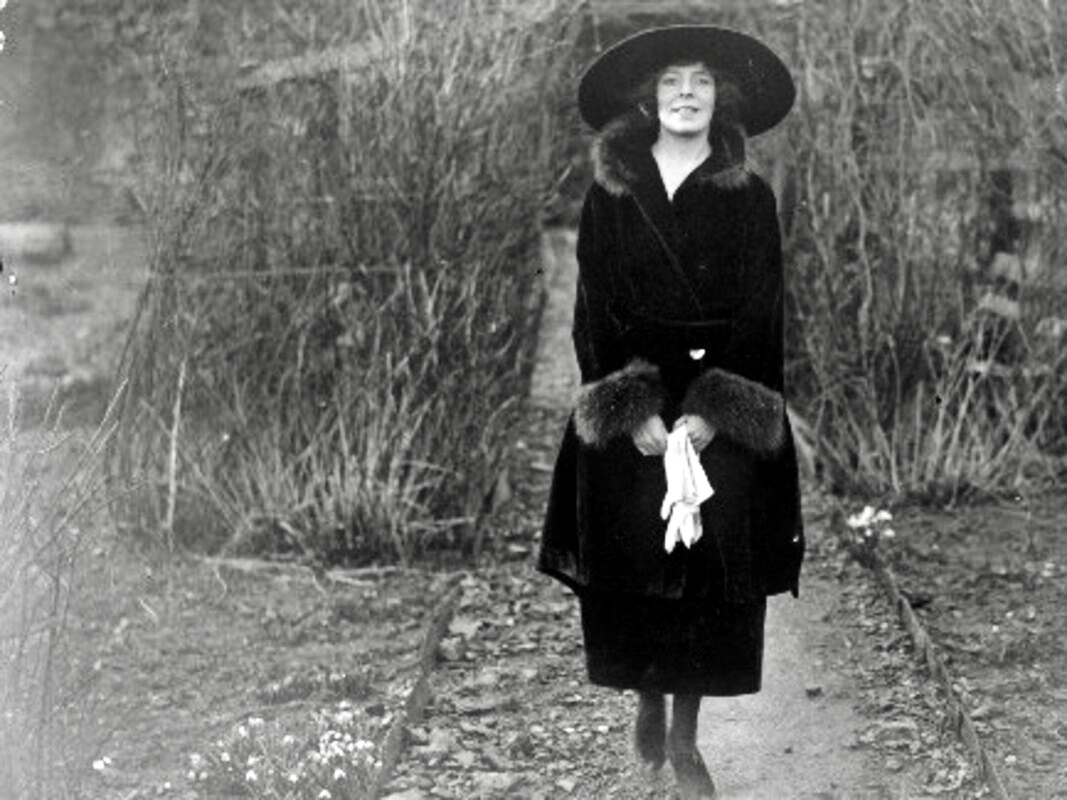
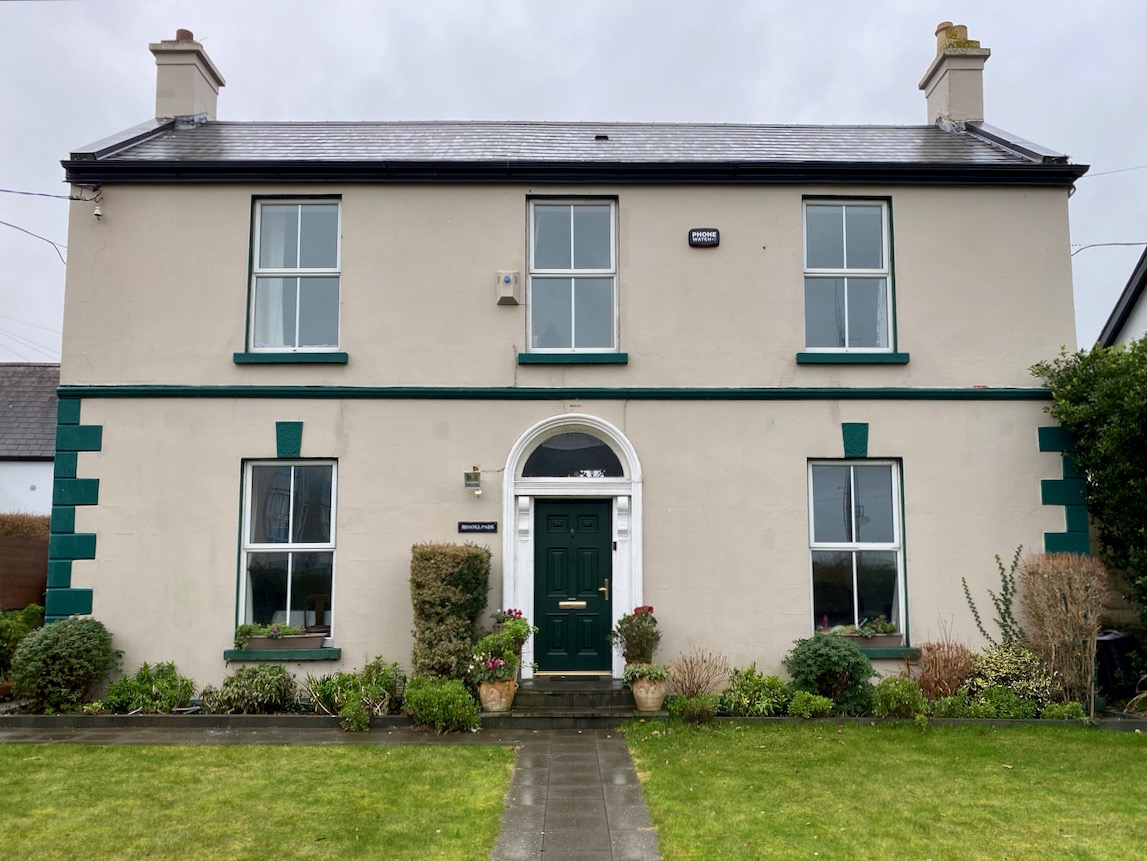
(Above) Kitty Kiernan. Collins and Kitty had planned to live in Brooklands, on Trafalgar Road, Greystones (below), after their marriage.

Michael Collins, Arthur Griffith and Robert Barton were delegates to the Treaty Negotiations that ended the Irish War of Independence in December 1921. Before he left Greystones, it is recorded that Collins visited Fr Ignatius of the Congregation of the Passion:

. . . The facts are these: he [Collins] was staying at the Grand Hotel, Greystones, while I was giving a mission there. It was coming near the close of the Mission. Michael was very busy in Dublin, worked and worried almost beyond endurance. He got to Greystones one night very late and very tired. It was the eve of his departure to London, re the Pact. He got up the next morning as early as 5.30 am and came to the Church, and made a glorious General Confession and received Holy Communion. He said to me after Confession, “Say the Mass for Ireland, and God bless you, Father”. He crossed an hour or so later to London . . .


Patrick J Doyle PP, BMH.WS0807, pp 39-40, 90-91

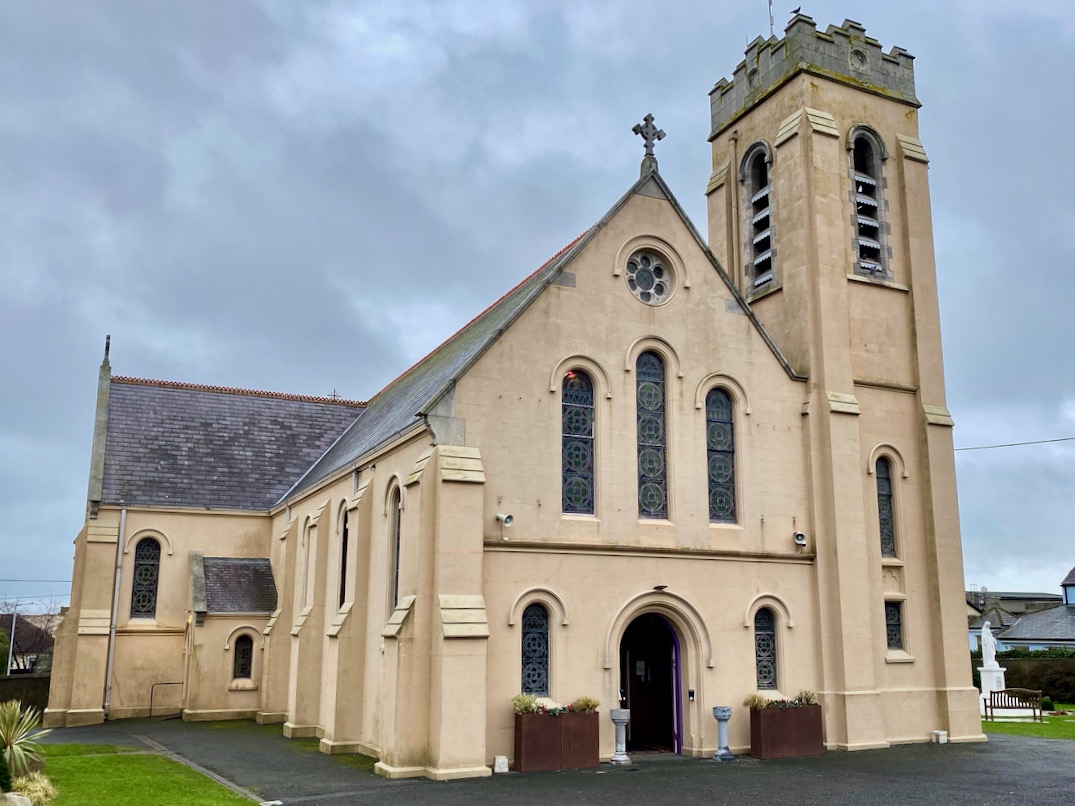
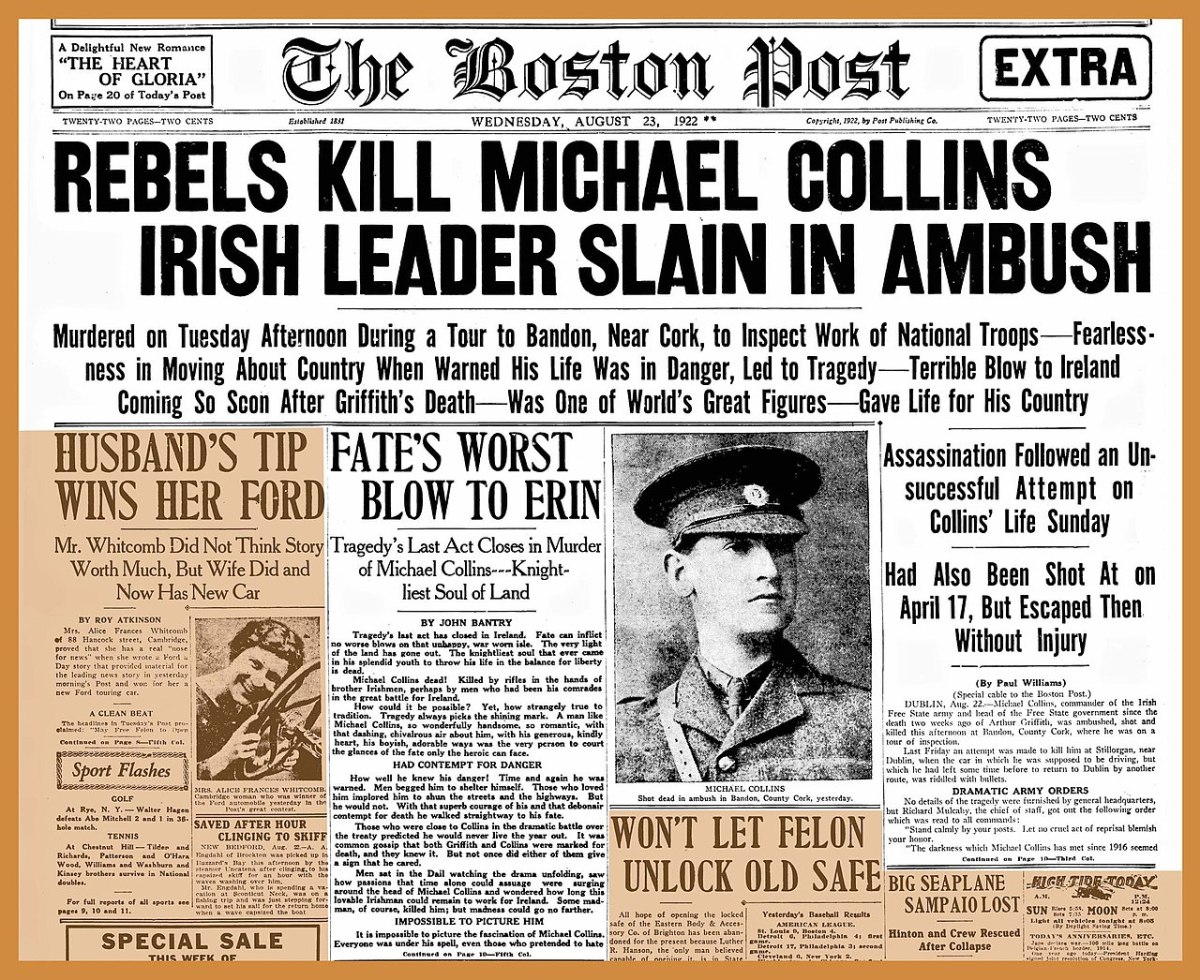
(Above) St Brigid’s Church, Greystones. Fatefully, Collins was shot in West Cork on 22 August 1922. Collins “. . . One of the World’s greatest figures . . . Knightliest Soul of the Land . . .” was mourned by the nation, and – of course – by Kitty.

(Above) headlines in the Boston Post on the morning of 23 August 1922.

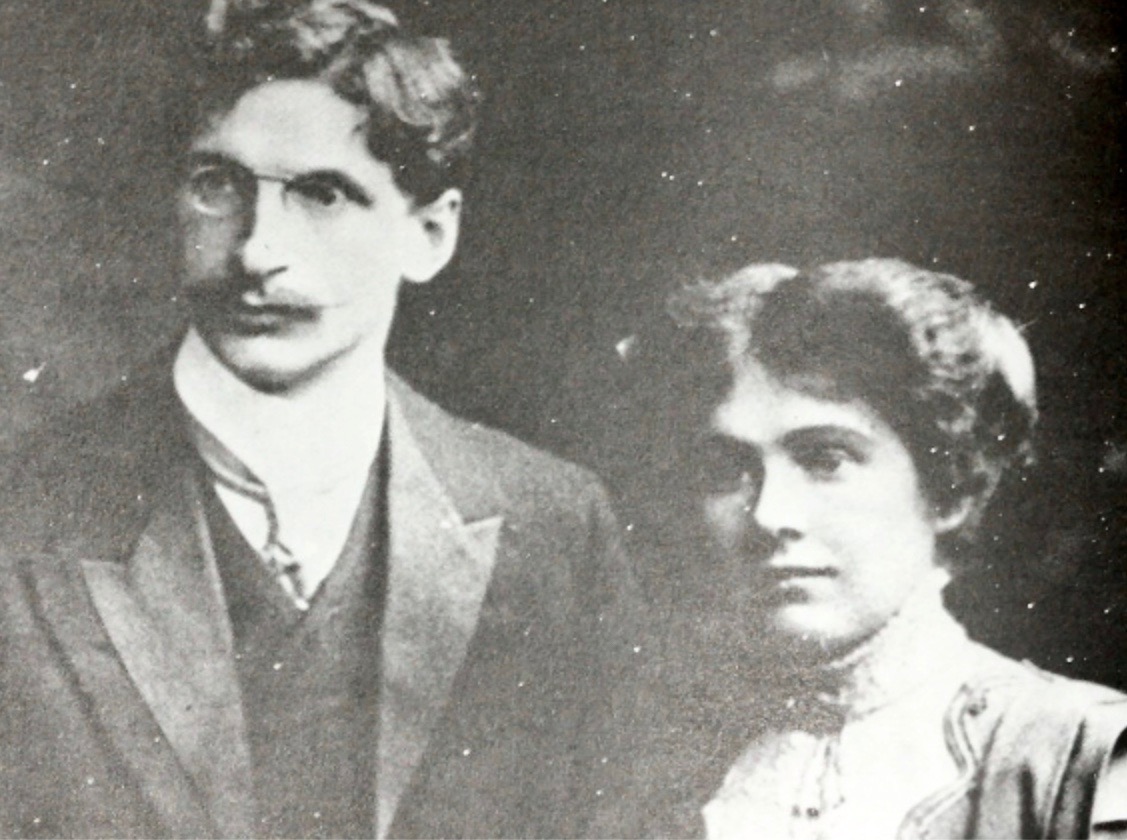
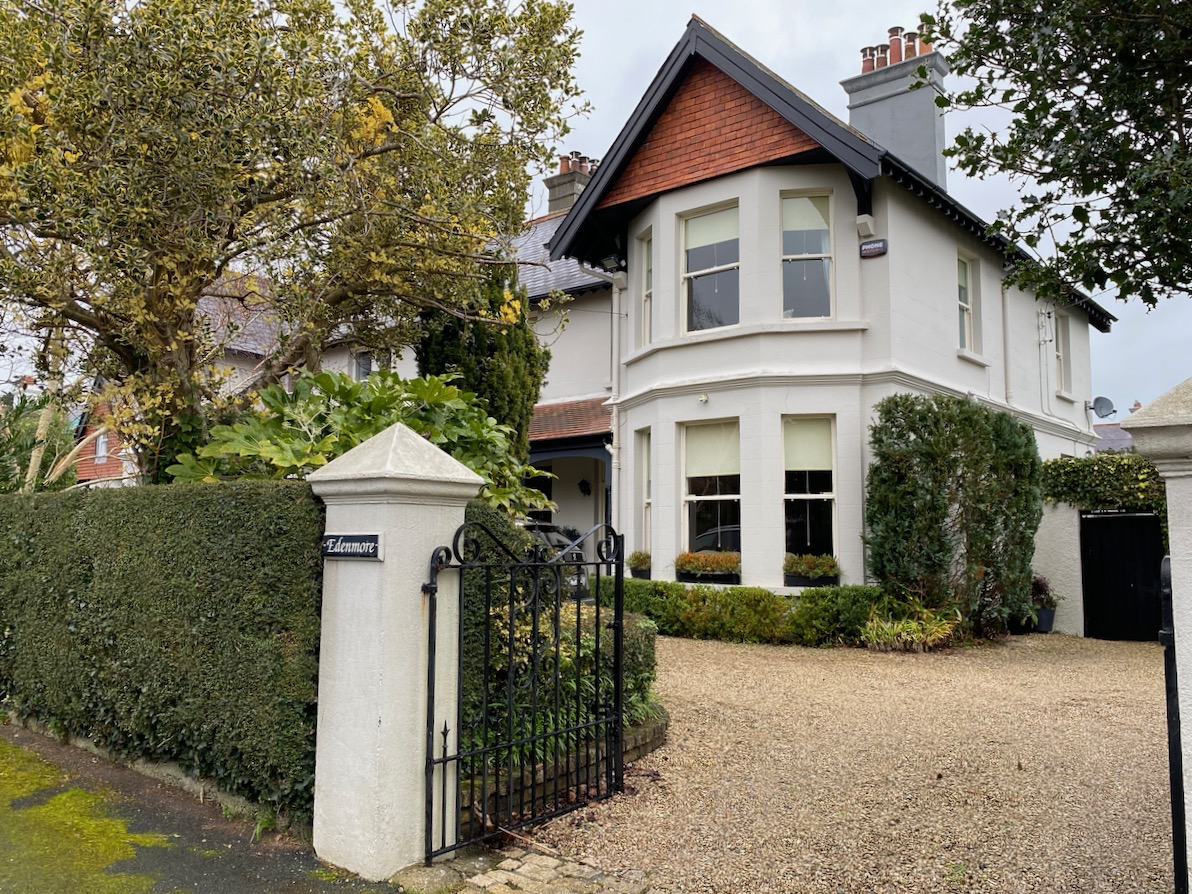
The de Valeras – Éamon and Sinéad (above, in 1910) – took a house in Greystones soon after the 1916 rising, situated on Kinlen Road in the Burnaby Estate. The house was built at the turn of the 20th century by Patrick Joseph (PJ) Kinlen, who lived there for a time himself. PJ built much of the Burnaby estate and Kinlen Road was named after him. They named the house Craigliath – it is now known as Edenmore (below).

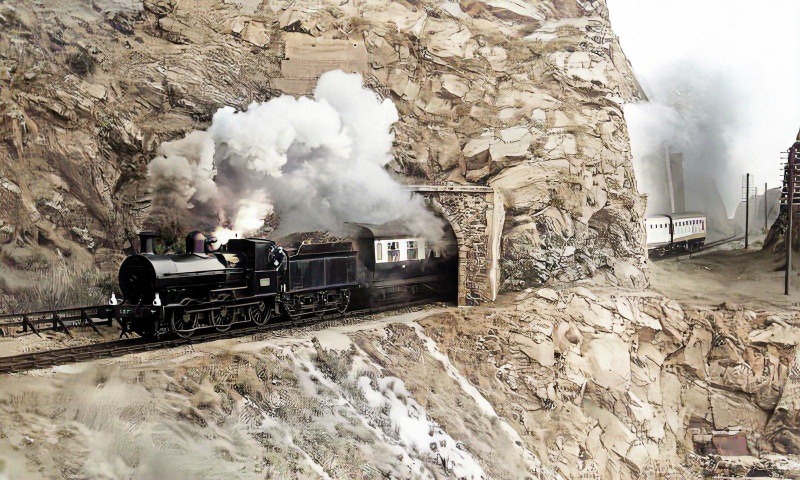
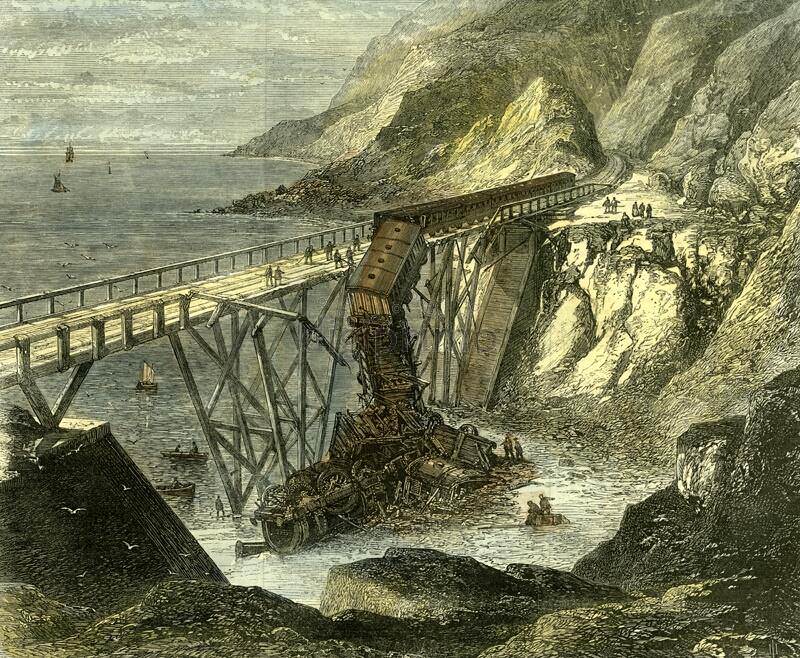
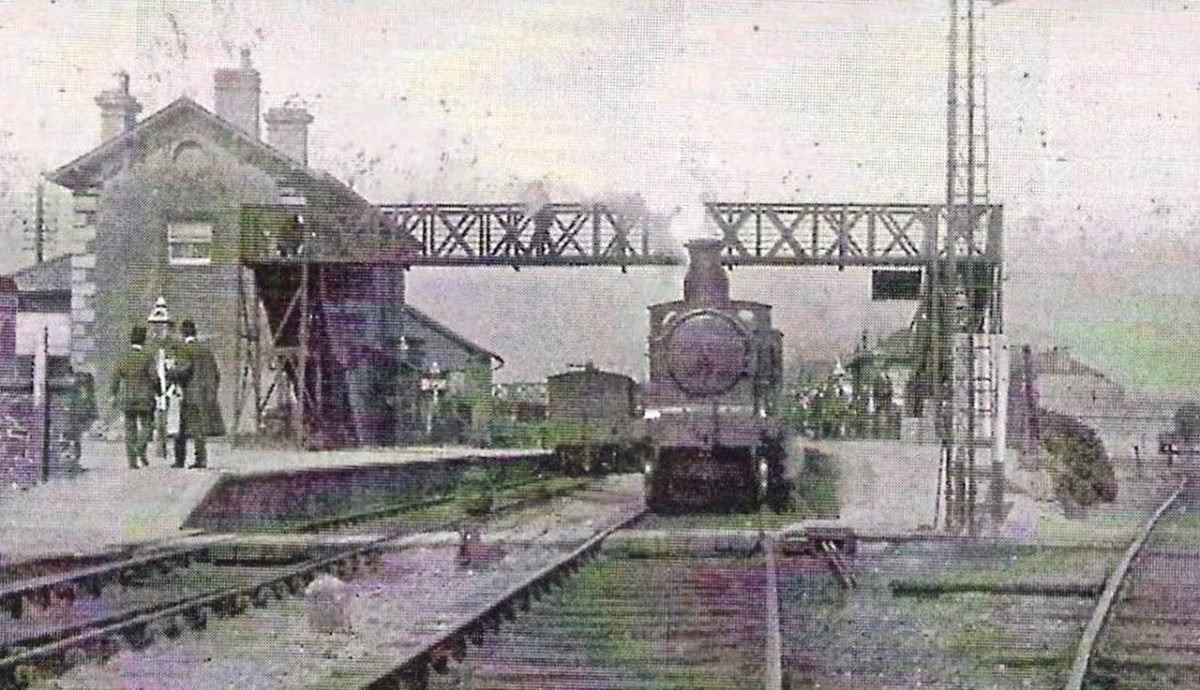
A reason for the popularity of Greystones in the early 20th century was its relative proximity to the centre of Dublin, and the railway line which gave access to the city. If any readers have travelled on this line – which goes down the east coast as far as Wexford – you will know that the section between Bray and Greystones is one of the most adventurous railway journeys in the world! Engineered by Isambard Kingdom Brunel, it clings to the precipitous cliffs and ran on trestle-bridges and through a series of tunnels: there have been many incidents during its history, and the line has had to be reconstructed a few times to avoid the effects of erosion. (With thanks to the Greystones Guide for the image below):

A popular story tells how Éamon de Valera was travelling home from Harcourt Street to Greystones on the night of 17 May 1918. When the train reached Bray, the driver saw that “two detectives” (although some versions say it was a number of constables) had boarded the train a few carriages behind.

 . . . [The driver] felt sure that the intention was to arrest de Valera that night in Greystones. He said that they would slow down the train coming into Greystones before they arrived at the station at a certain point, which they indicated to de Valera, and they advised him to jump out of the carriage on the off-side, and that he could easily get away, and afterwards they would put on speed . . .

However, de Valera chose not to accept this offer, and when the train arrived at Greystones, he was apprehended and arrested. The Irish Independent adds a few further details:

. . . Dev “. . . was taken to the waiting room under a heavy guard, and after being searched, was placed in a motor car and driven to Kingstown, where he was handed over to the military and placed on board the transport … for England” . . .


Irish Independent, 20 May 1918

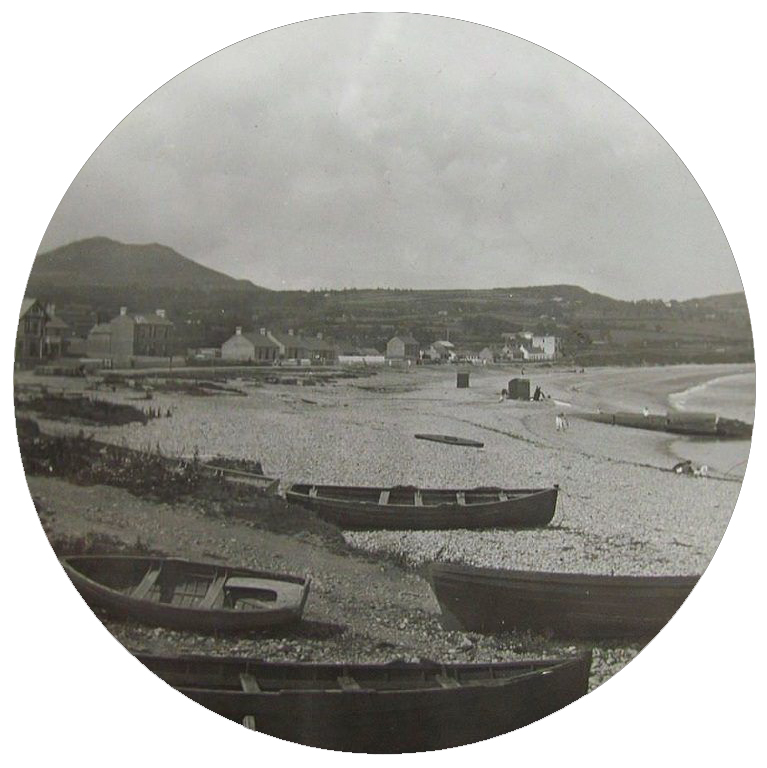
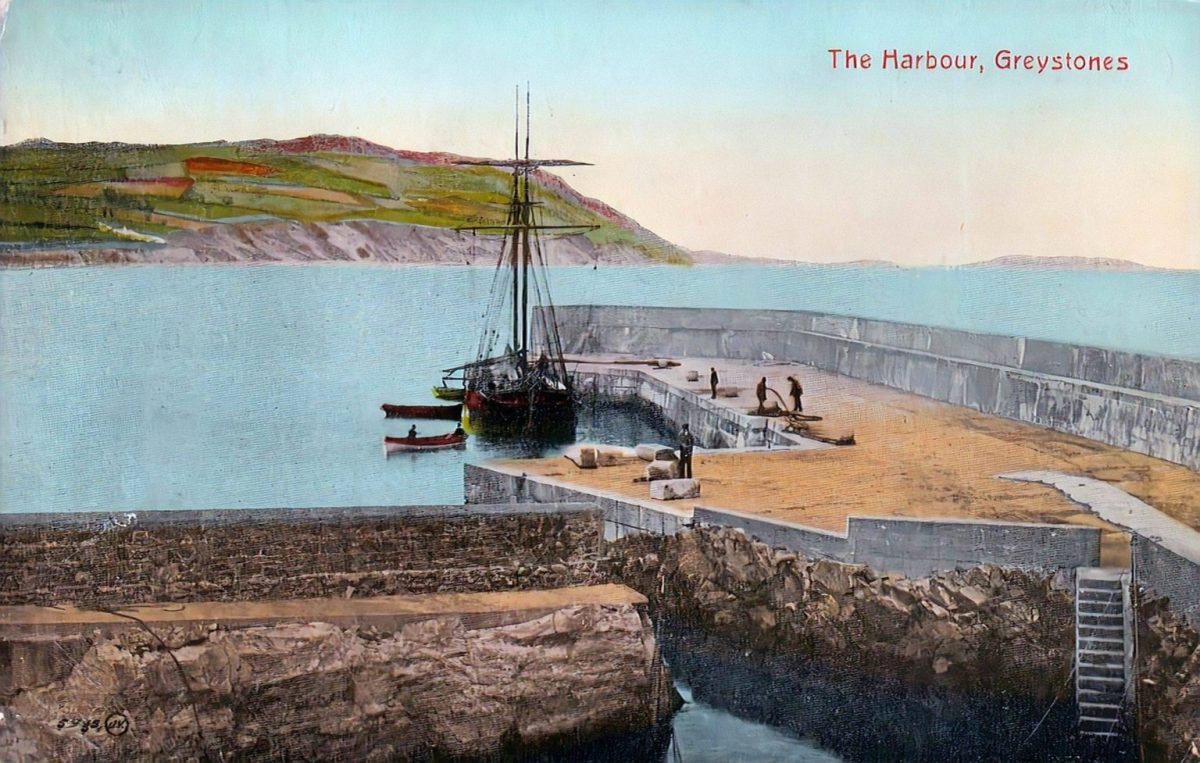
(Above: Greystones Station – late 19h Century). Personally, I am unsurprised that de Valera did not accept the train driver’s offer. Jumping from a moving train is not a recommended course of action – especially when the terrain of that section of railway-line is so hazardous. De Valera was imprisoned in England but escaped and then went to America: his wife did not see him for three years. During this time Michael Collins visited her often in Greystones to bring her news and also to provide funds. Later she reportedly told her husband that she was ‘quite in love with Collins’. He grumpily responded: “…That’ll do. There are enough people in love with Michael Collins…” (Below – lantern slide of Greystones Harbour, 1900):

Of course, de Valera lived to tell his tale – he died on 29 August 1975, aged 92, having achieved the status of Taoiseach and President of Ireland – whereas Michael Collins did not: he was shot at Béal na Bláth, County Cork, at the age of 31. It is fair to say that he undoubtedly achieved the perhaps more fulfilling status of National Hero.

Greystones Harbour in 1911. With many thanks to the excellent Greystones Guide for invaluable free access to pictures and information.

12 Arches of Ballydehob – Pics for Christmas Day!

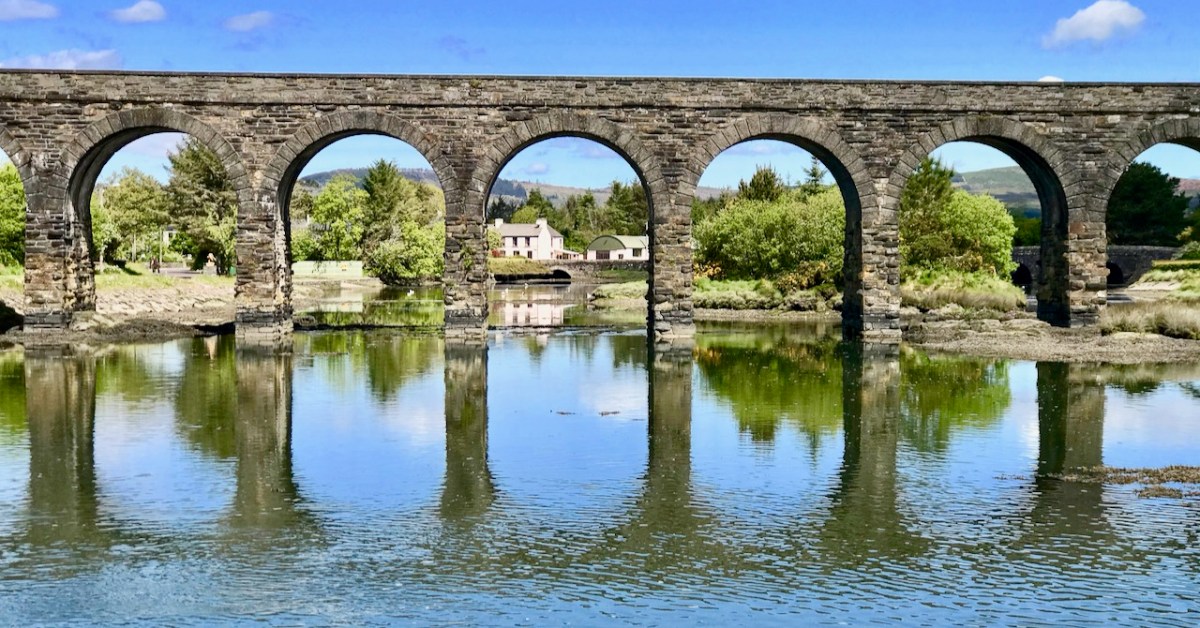
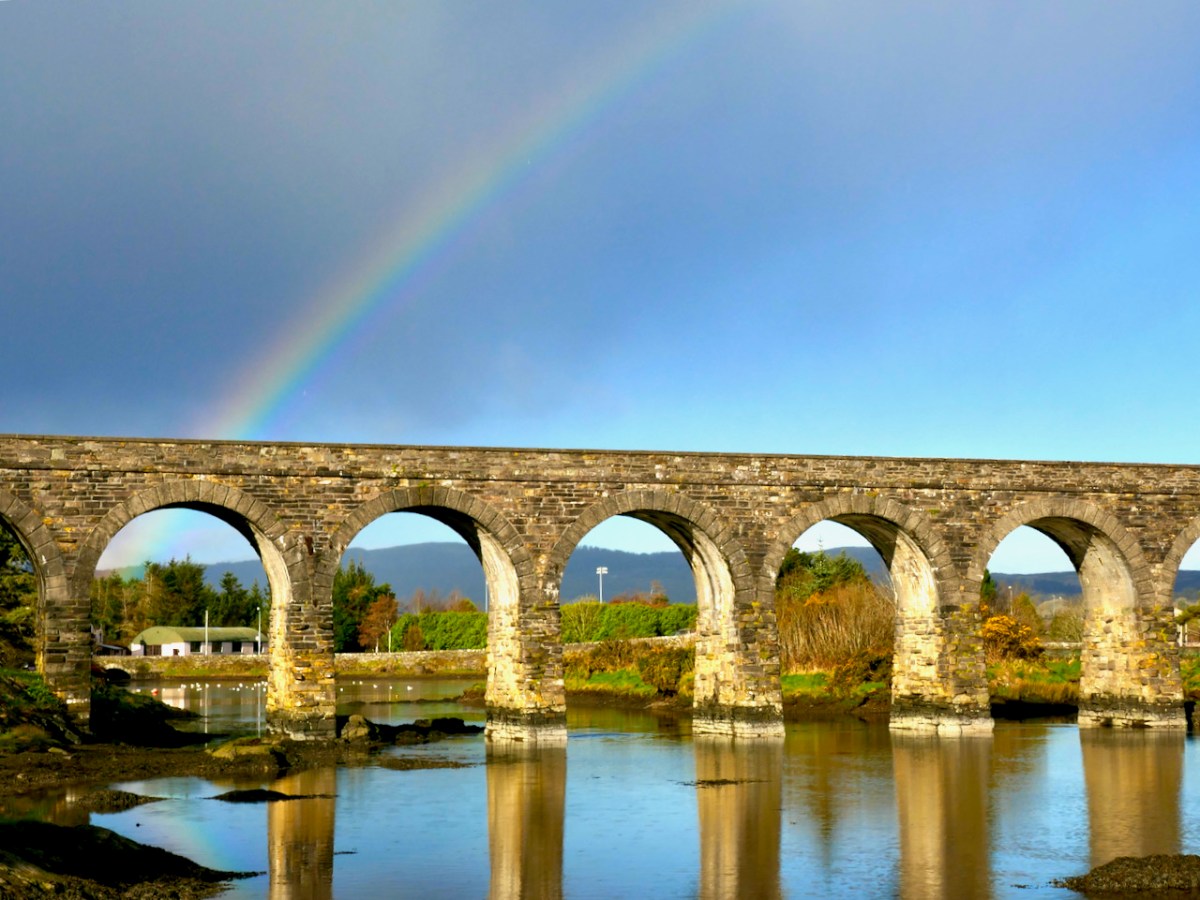
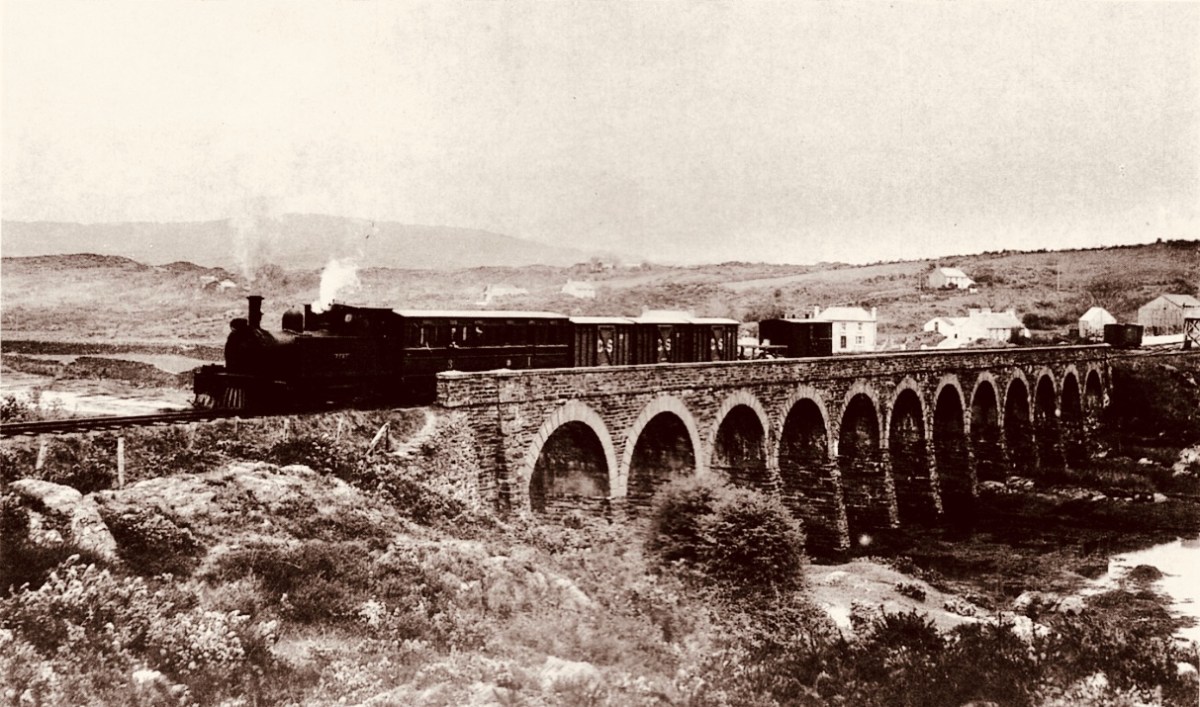
Last week’s post The Twelve Arches of Ballydehob proved a most popular subject. Ballydehob’s railway viaduct – dating from the late nineteenth century can’t be ignored. It was fairly easy to put together another dozen pics of the structure, making a good Christmas Day theme to take your minds off turkey and stuffing!

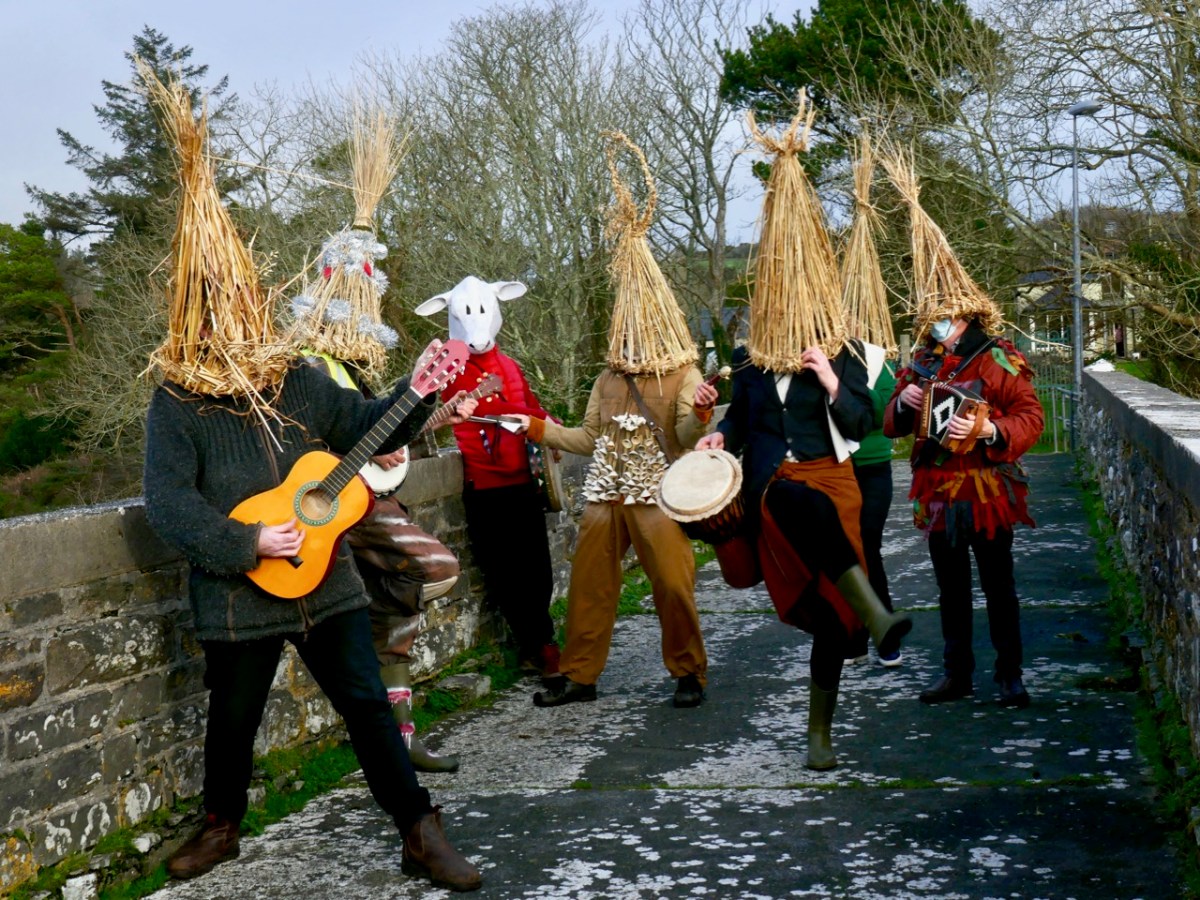
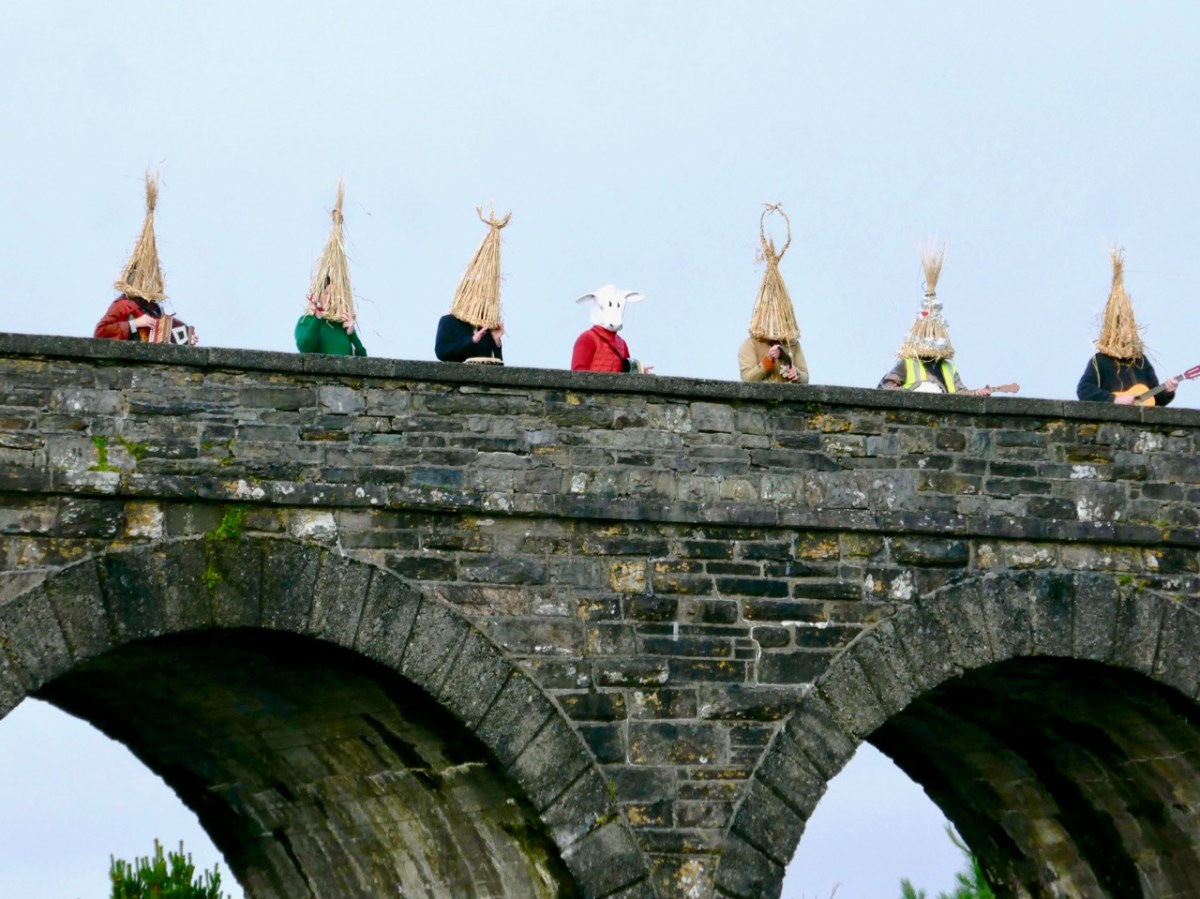
As we have lived not too far from the viaduct over the last ten years, we have seen it – and photographed it – in many of its moods. And it’s a constant backdrop, of course, to life in our West Cork village. Below – here it is, supporting a very ancient tradition, on St Stephen’s Day (that’s me on the right!):

“No Wrens Were Harmed in the Making of this Post!” That was the title of my RWJ article on the Wren Day festivities in Ballydehob in 2019 – pre-Covid. It was great to be out and about in the village, echoing a custom which has been passed from generation to generation. When I grew up in England I joined in the Mummers’ tradition there: I followed it for much of a lifetime, and even now can recite the whole play without a prompt… “Here comes I, Bold Trim Tram: Left hand, press gang – press all you bold fellows to sea…”

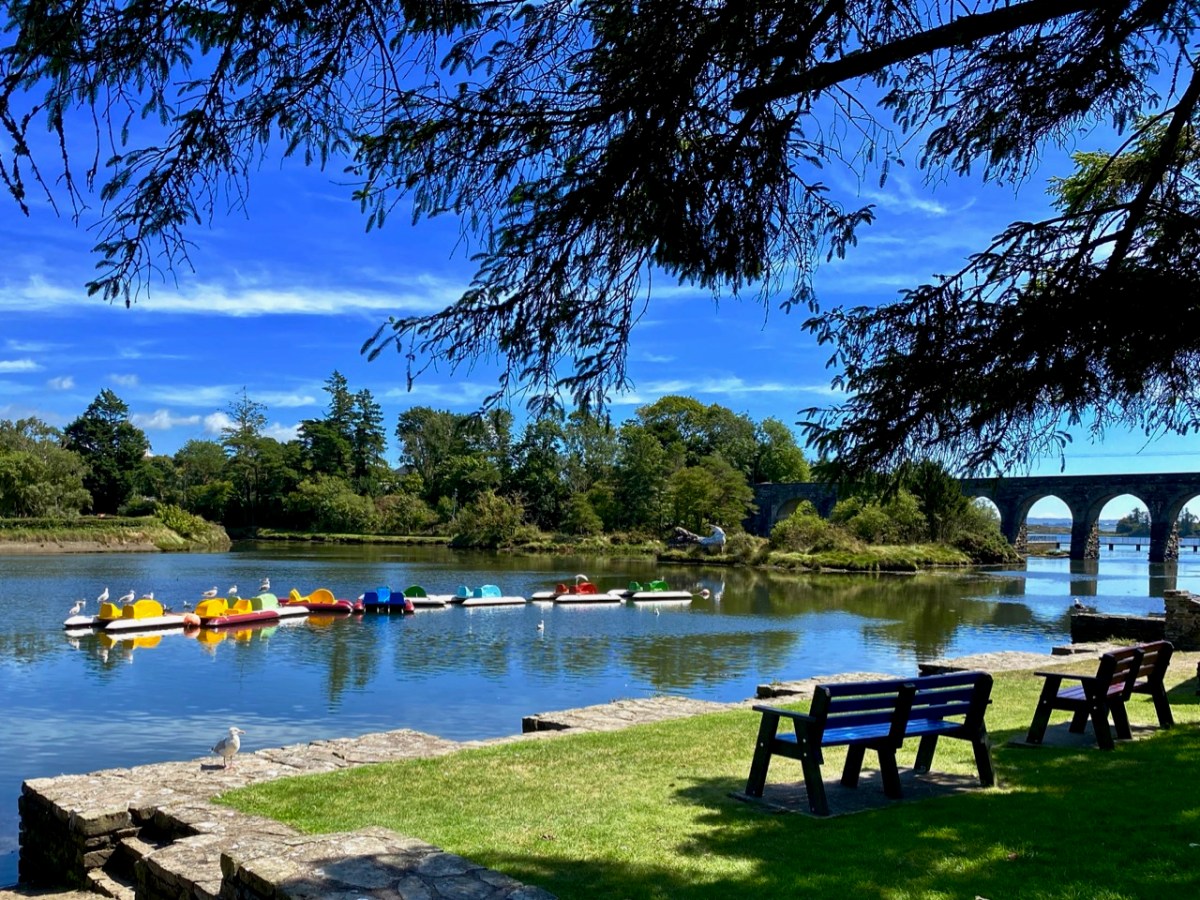
Something else which could do with a revival is the Pedalo tradition. Pedalos were brought out of storage for an unique occasion in the summer – a project named Inbhear, an art installation by Muireann Levis. Here is own my post about it.

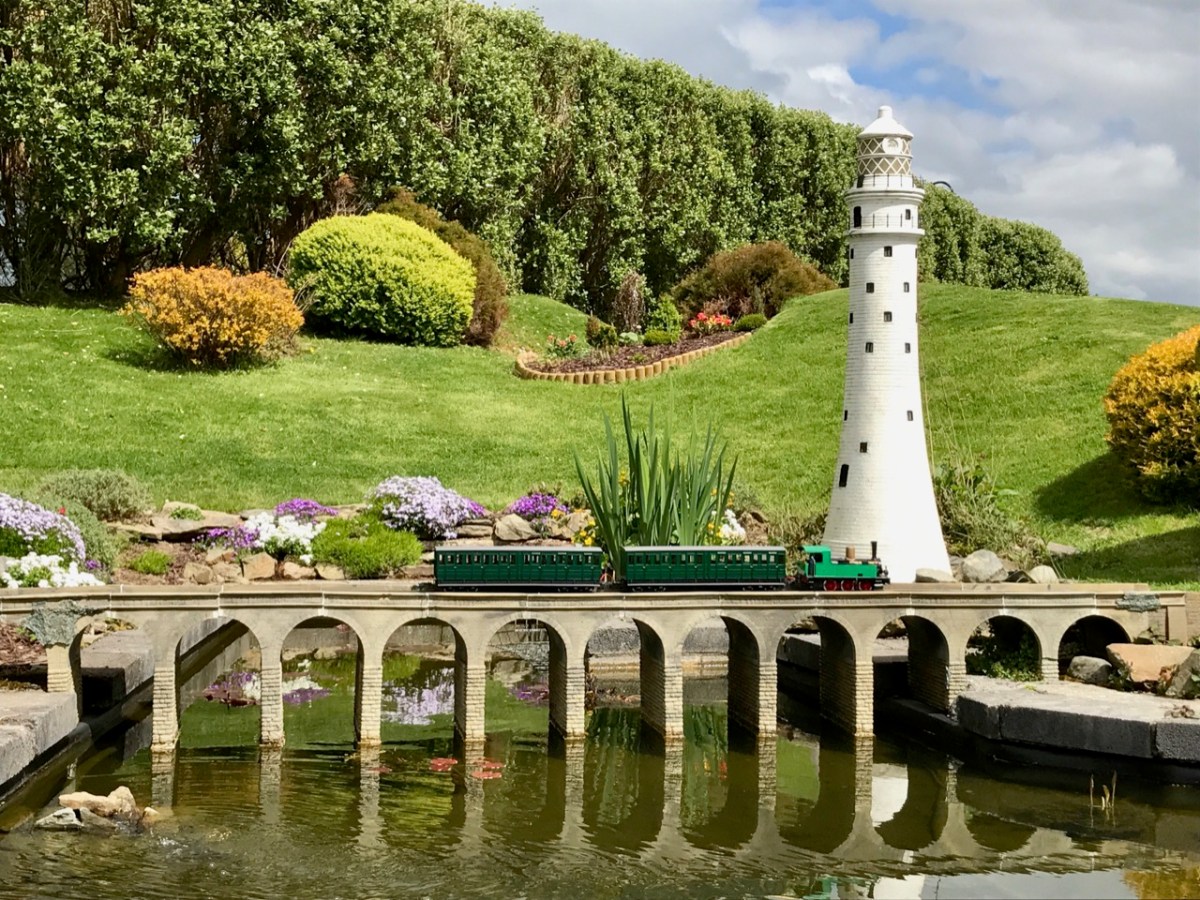
I was pleased to have this photo of the viaduct in my collection. If the scale looks a little wobbly it could be because this – and the train – are models sited at the West Cork Model Railway Village at Clonakilty. Below – a local company, in Ballydehob, has chosen to use the bridge in its title.

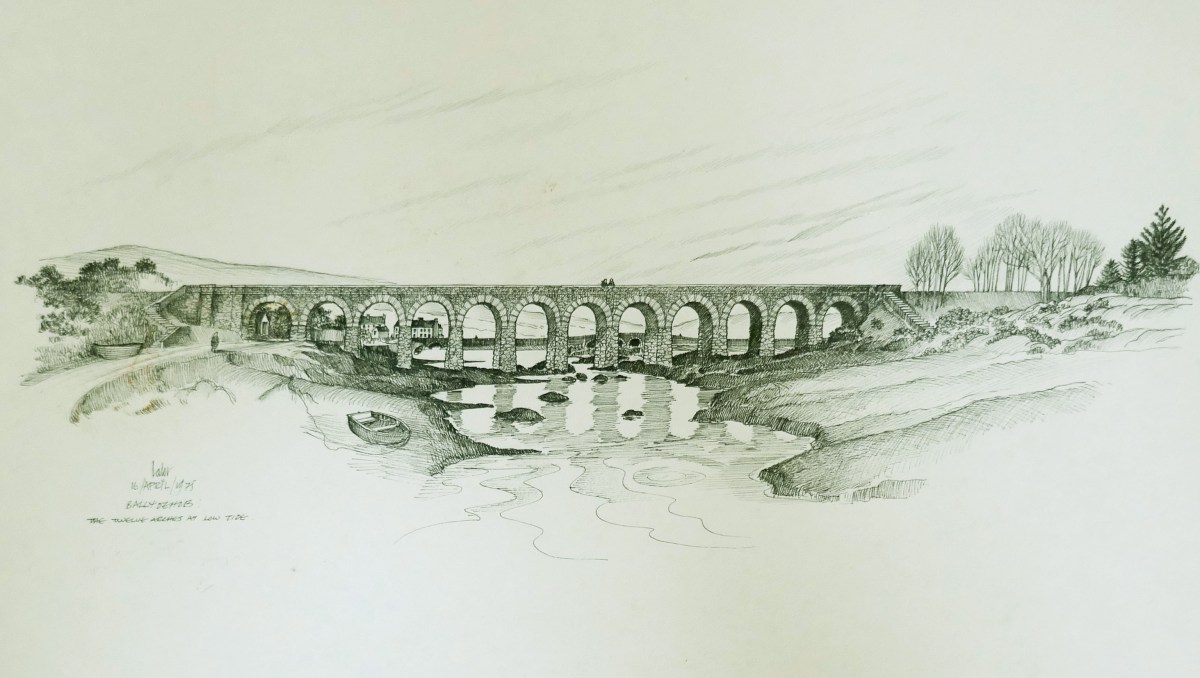
We showed you some of Brian Lalor’s work last week. Here’s another of his drawings. It is dated 1975: he tells me he has plenty more viaduct pics if I write another post in the future.

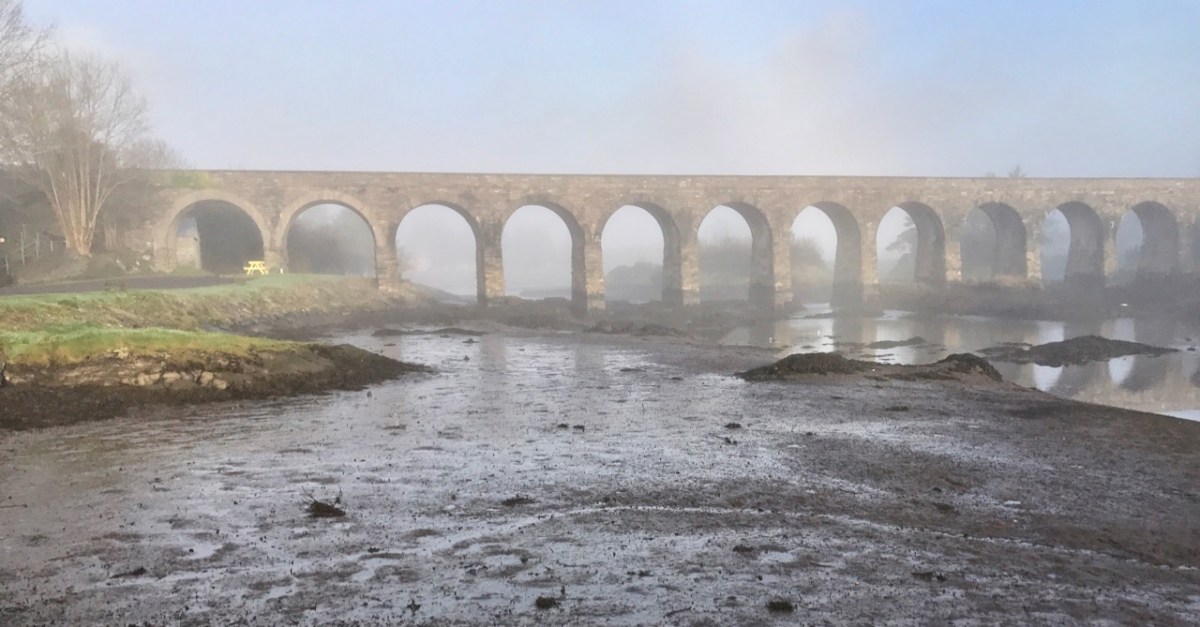
Atmospherics a-plenty: we have them all the time in Ballydehob. We do live in one of this world’s most inspiring places… Have a very good and atmospheric Christmas, everyone! And – safe journeying if you are out and about.