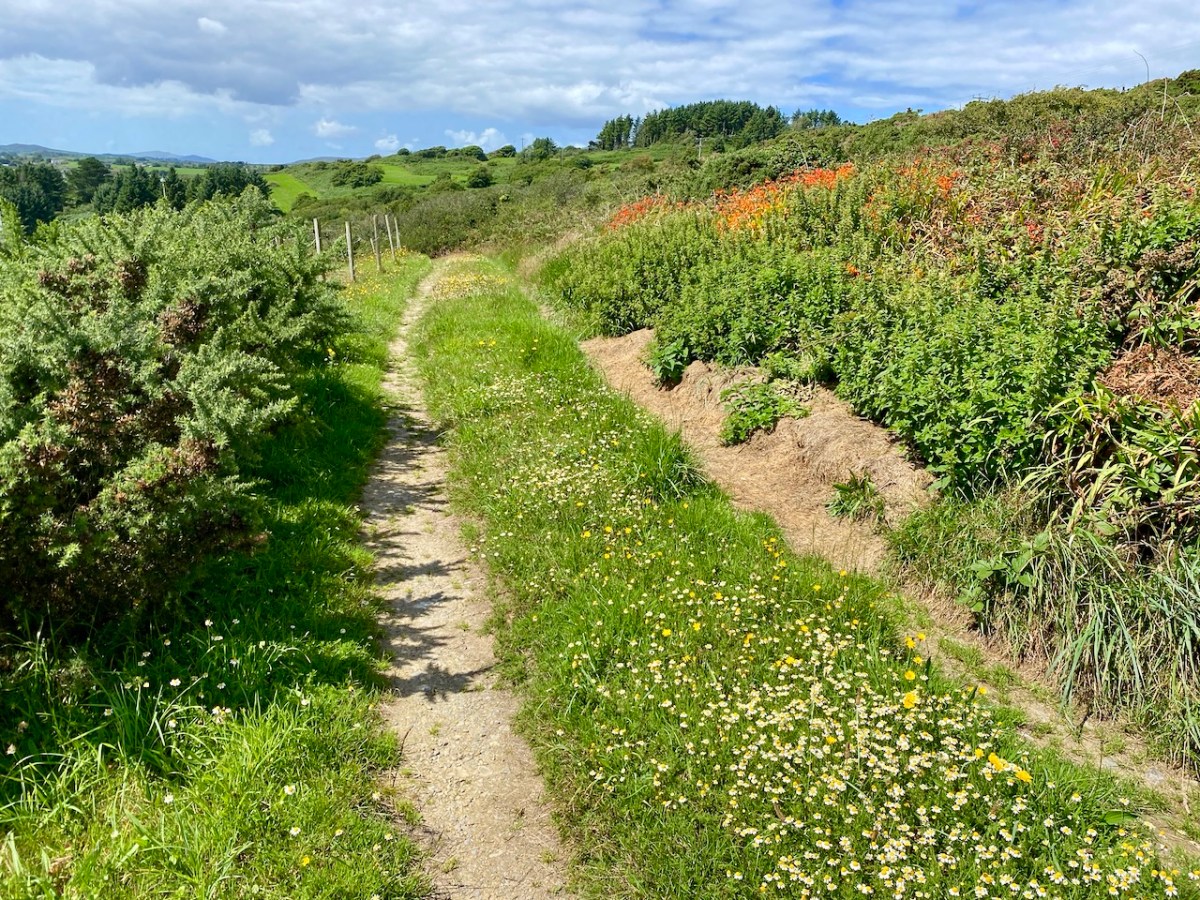
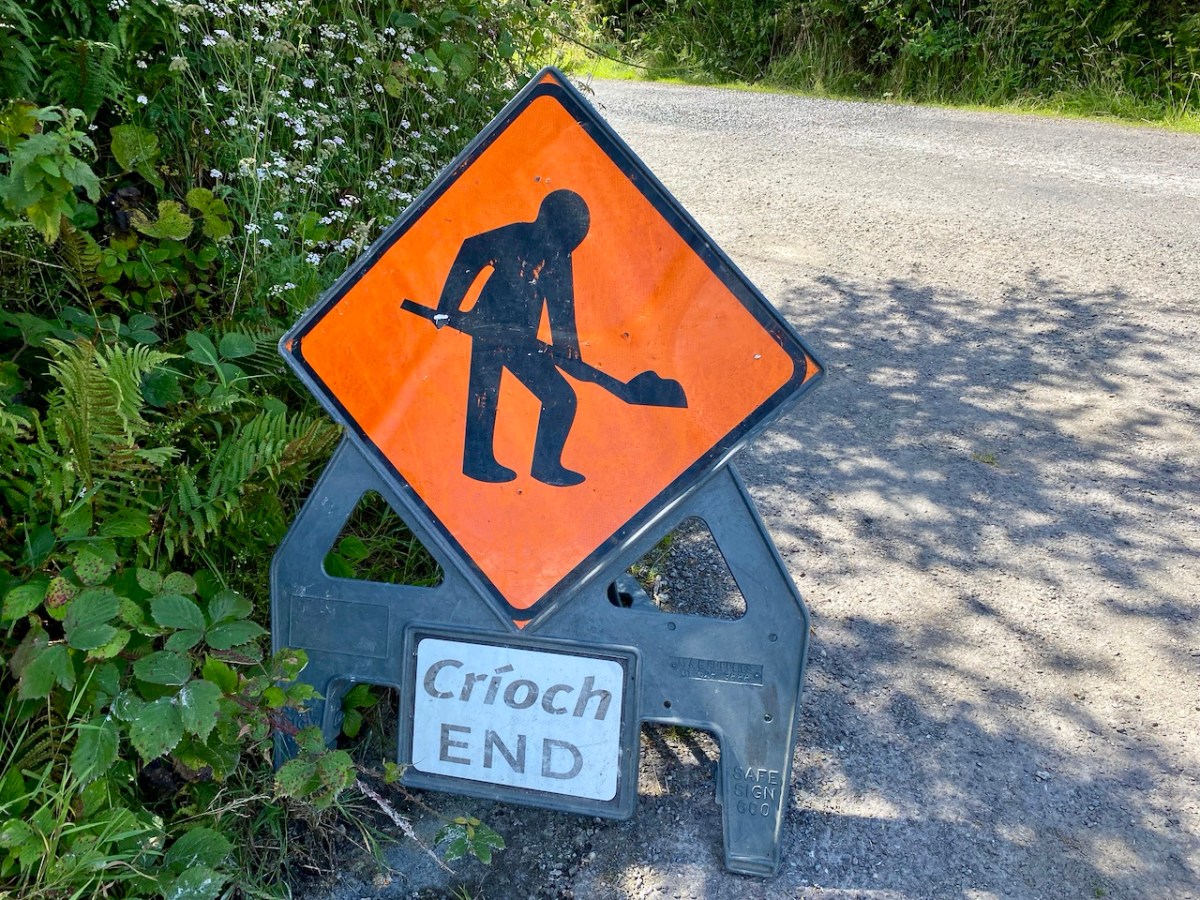
Road repairs in rural Ireland peak in the summer months. Favourable weather is responsible. Always be ready for holdups and diversions. ‘Boreens’ – narrow roads in country areas – are often unable to take the machines required to cut edges, fill potholes and restore surfaces while letting traffic through at the same time. In the worst cases, alternative routes can add many kilometres to a journey. So, when setting out, always leave yourselves plenty of time.
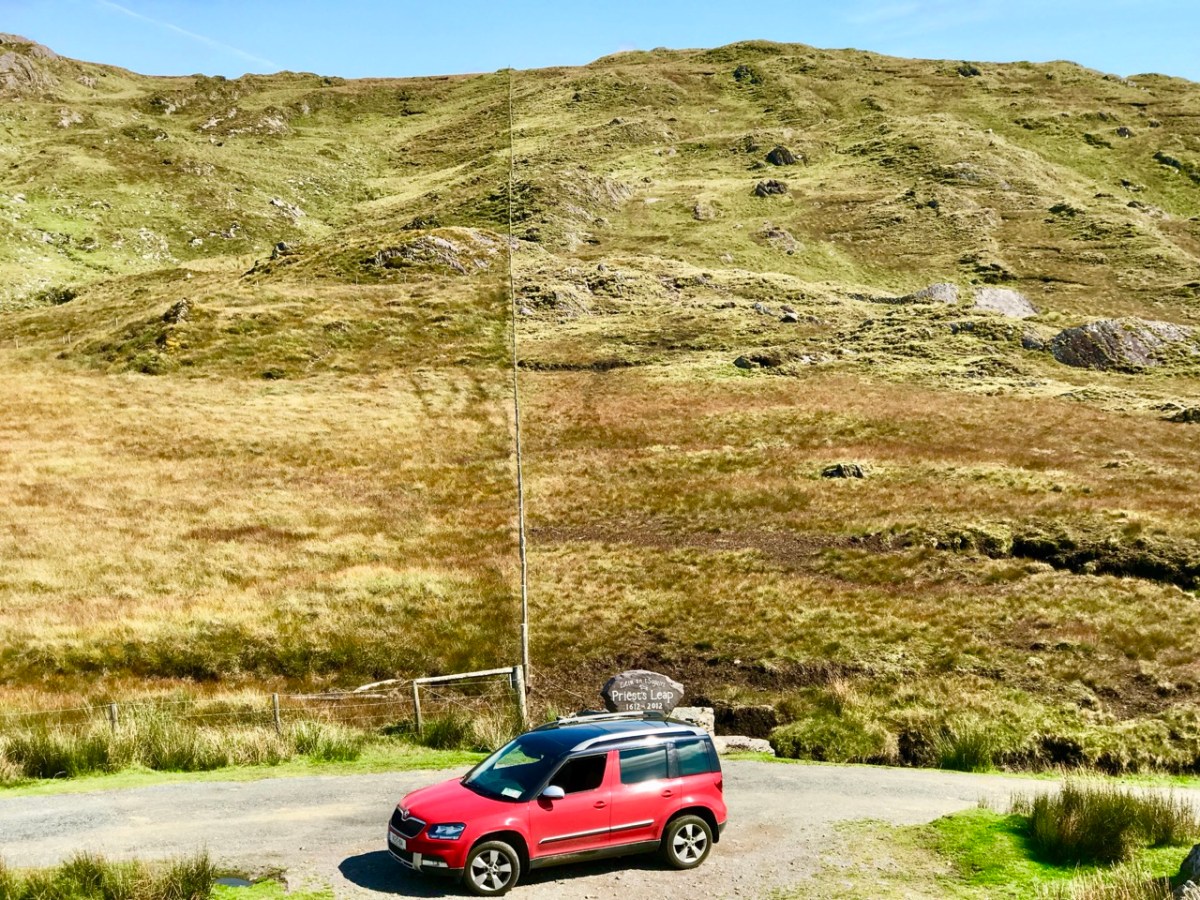
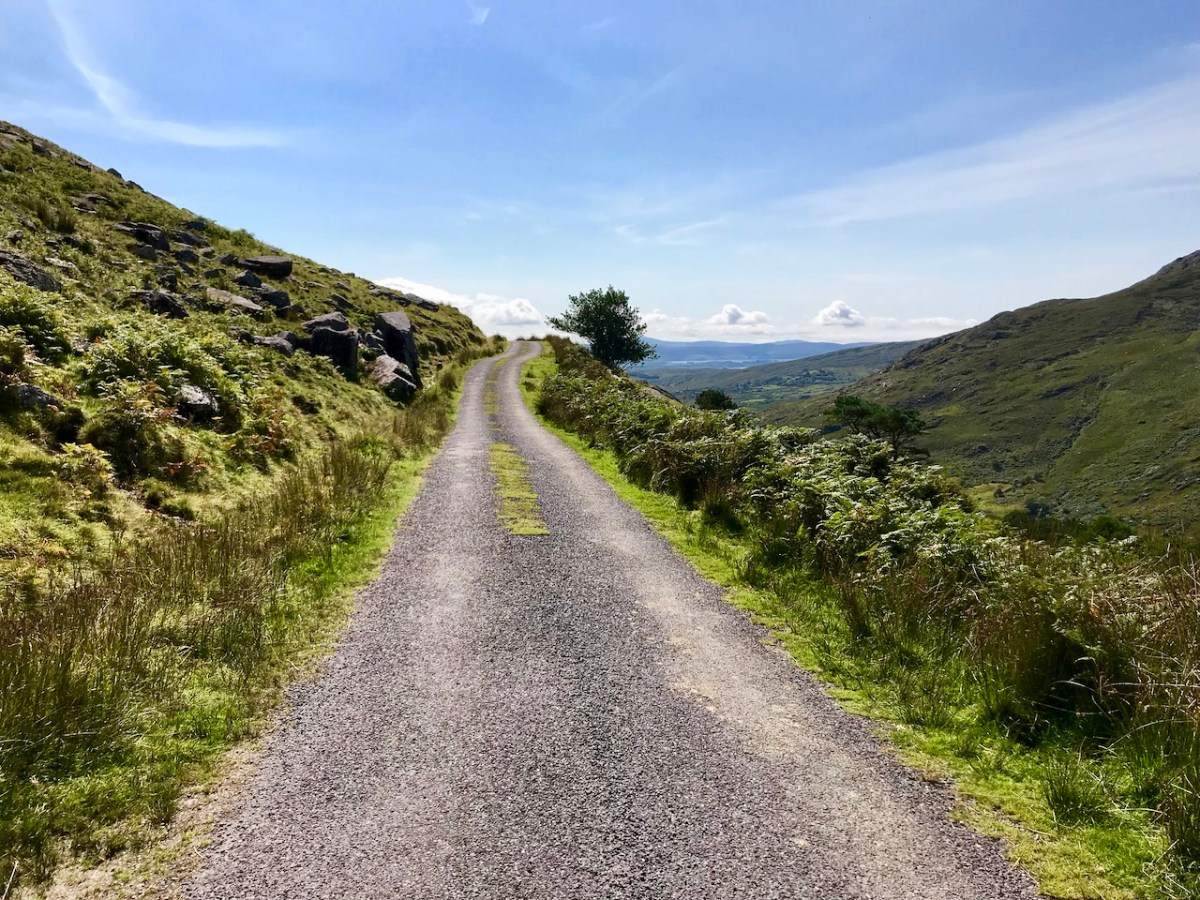
Here’s our Yeti straddling the border between Cork and Kerry on the Priest’s Leap road. That’s one of our favourites: the scenery is outstanding, but there can be problems if you meet someone coming the other way. In fact, that difficulty is present on very many of our local byways: hone your reversing skills!
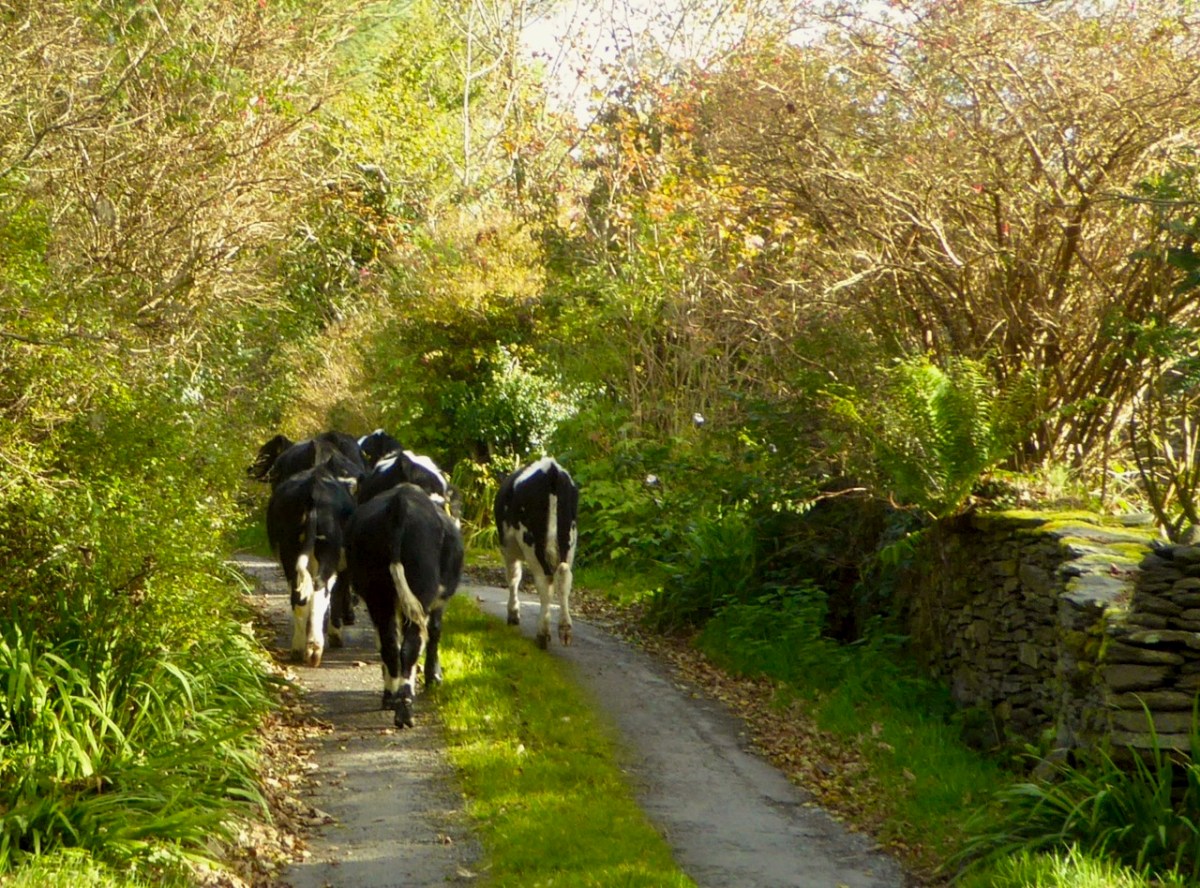
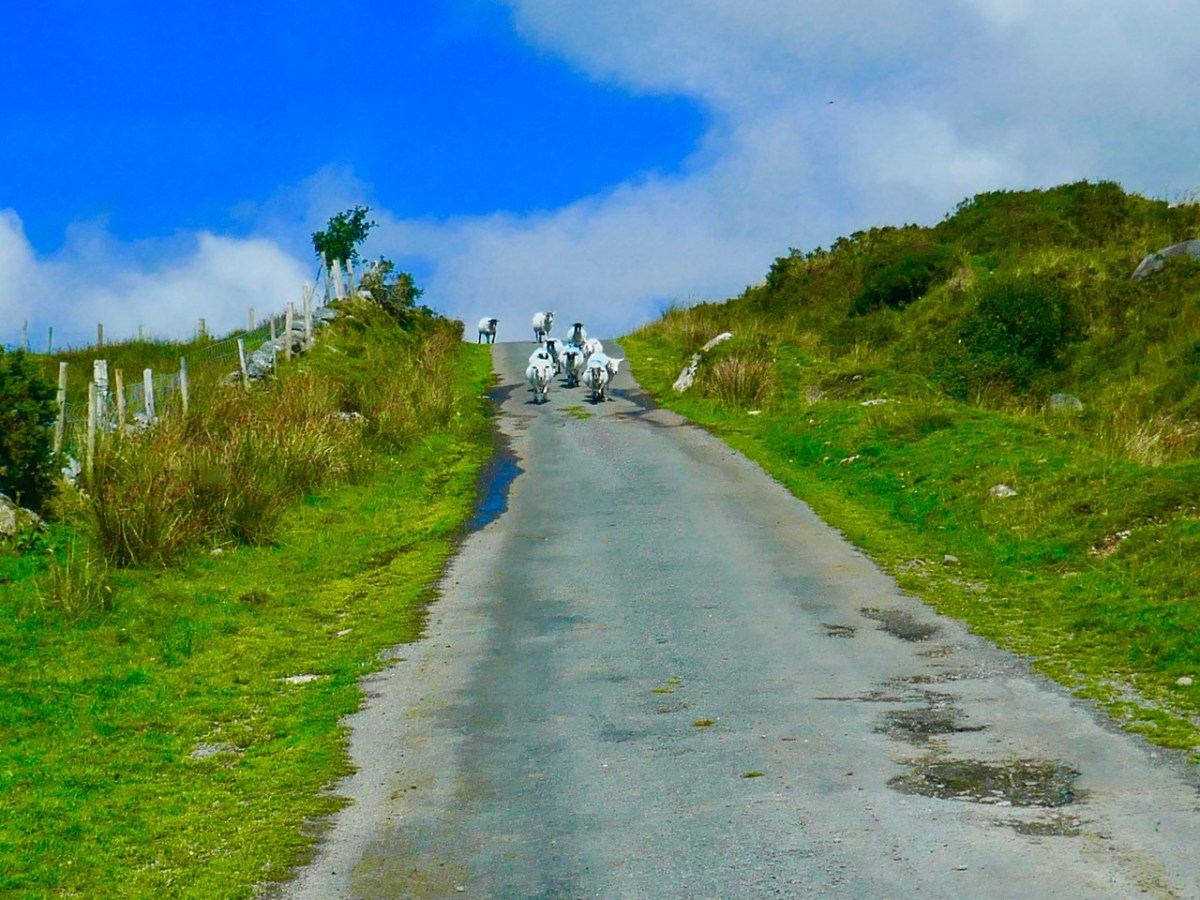
It’s not always other vehicles you have to watch out for . . .
A rural road can be a challenge: never be in a hurry. You just have to go with the flow, even if that means reversing for half a mile. In that situation, of course, the main difficulty is making the decision as to who will have to reverse: you, or the vehicle coming the other way. If that oncoming vehicle is a large tractor and trailer, you may not have much choice.
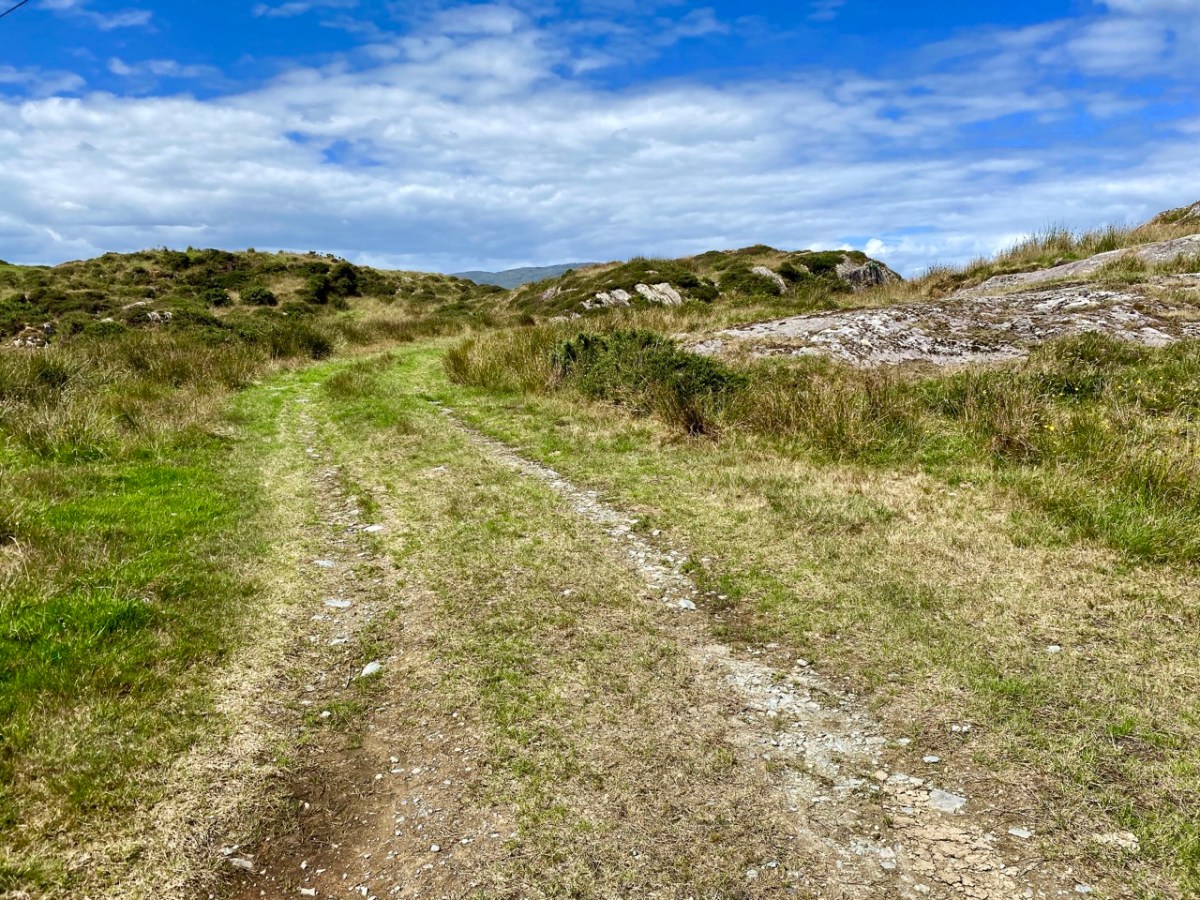
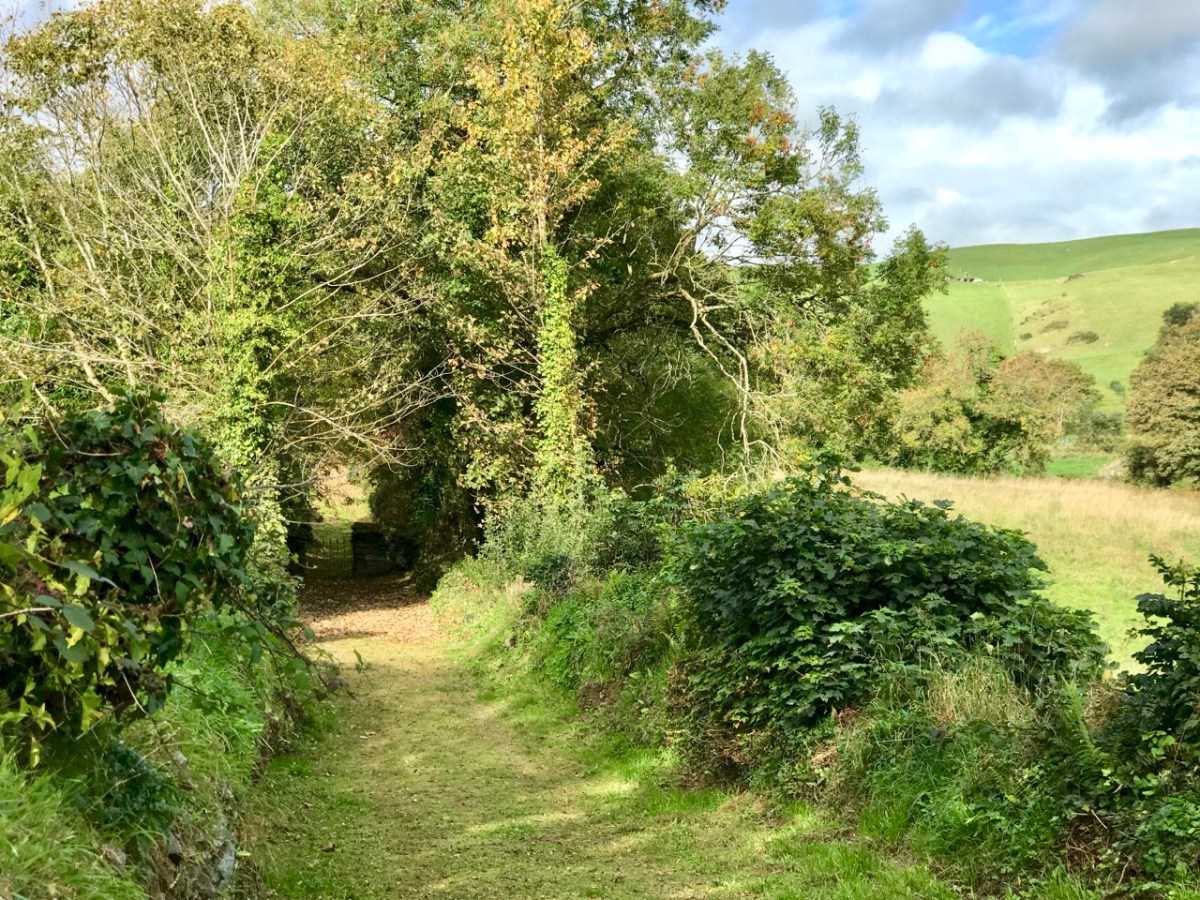
Yes, there are still a few roads around in very out-of-the-way places which are not surfaced as you might expect. They fit well into their rural surroundings!
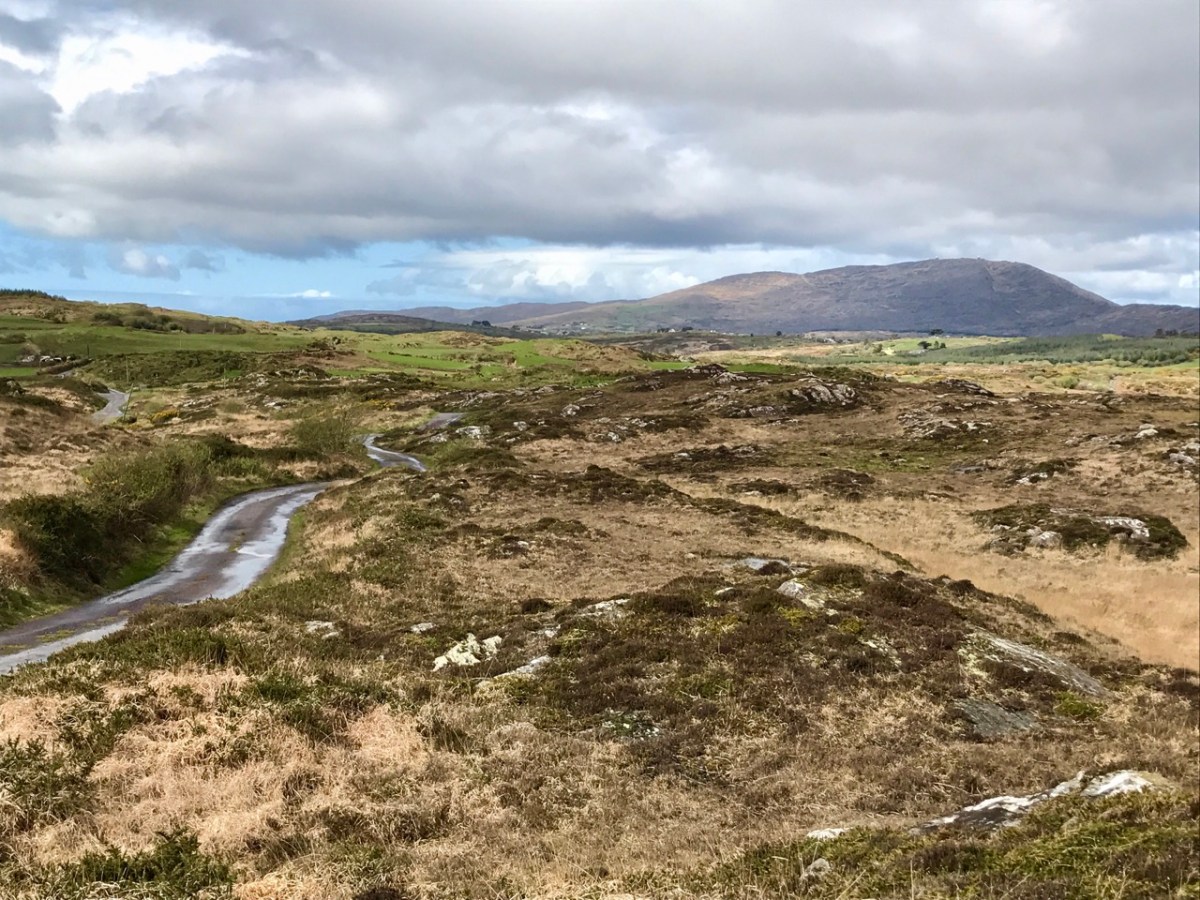
Take care not to get lost . . . Some of these boreens are not even marked on the map!
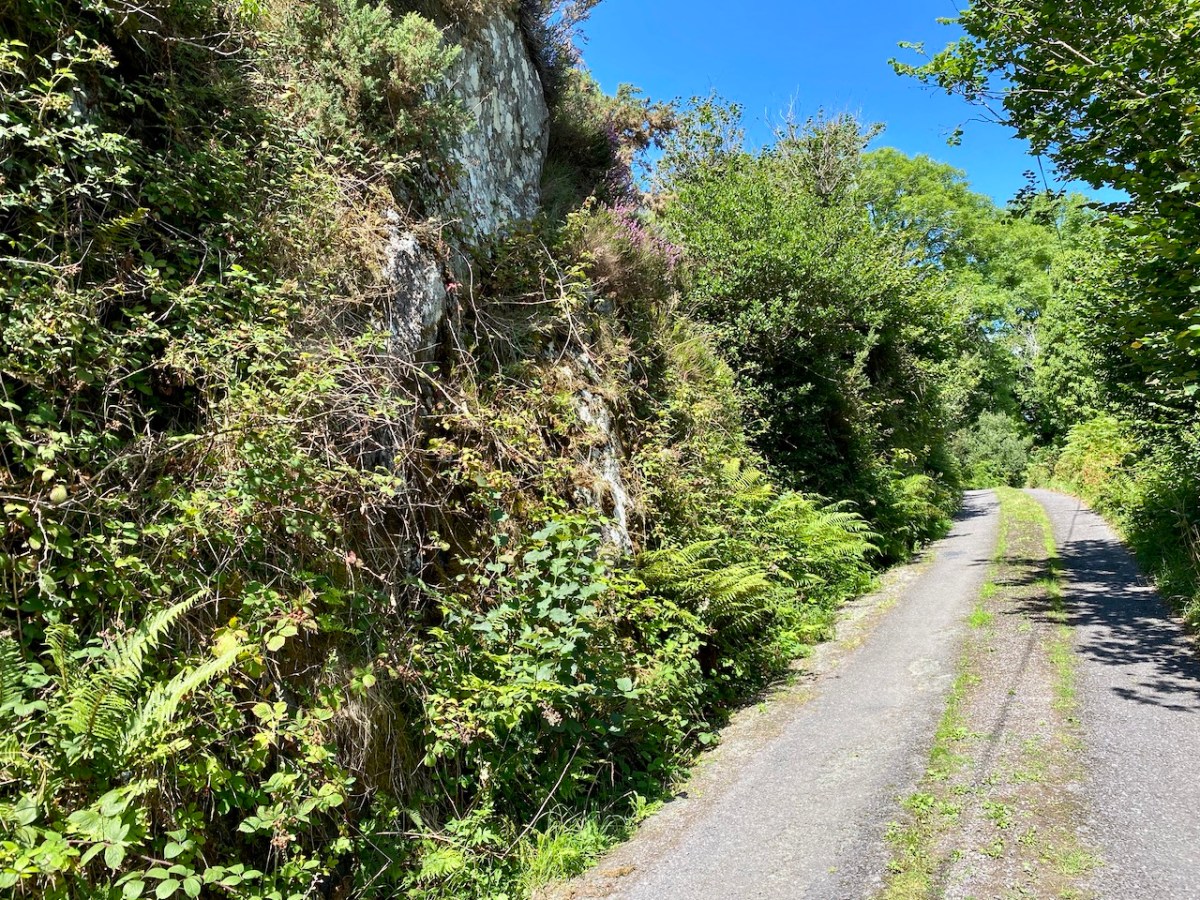
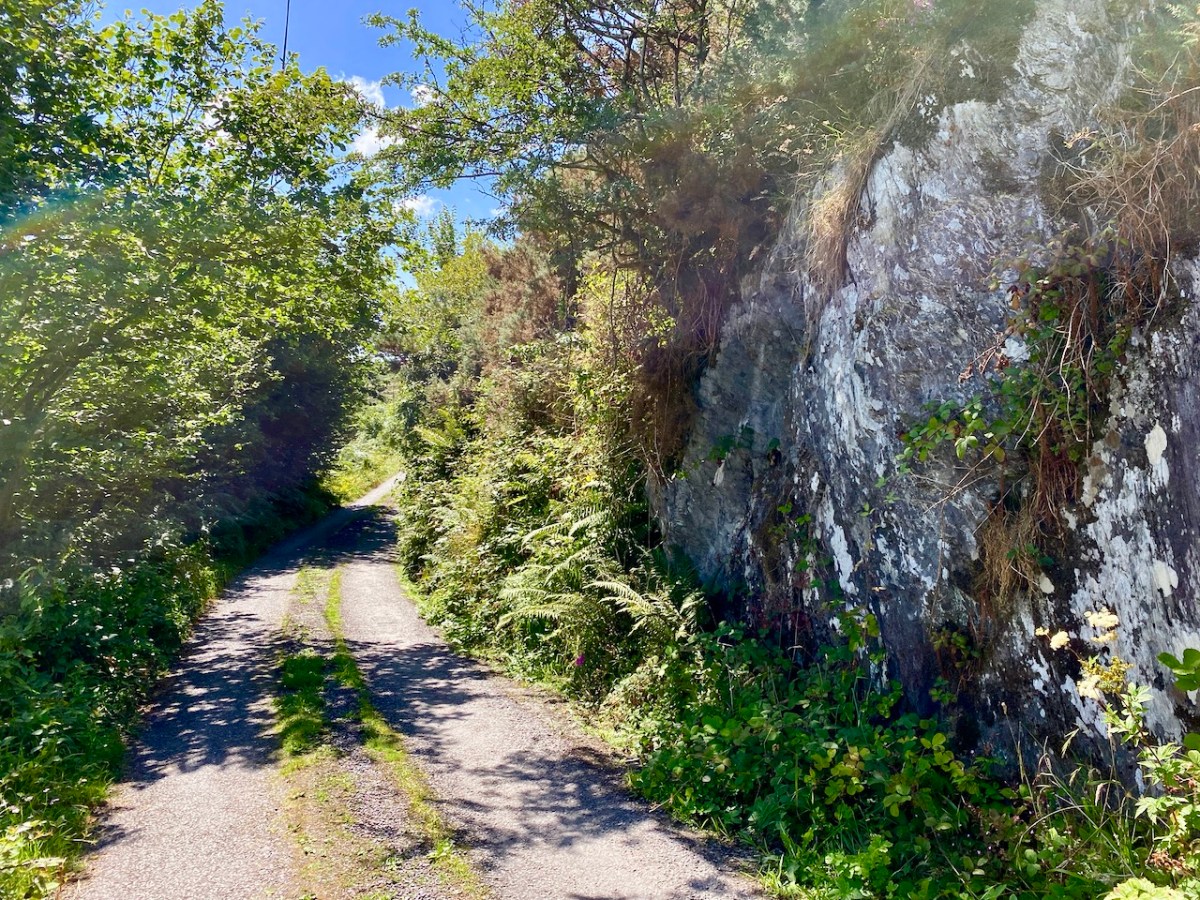
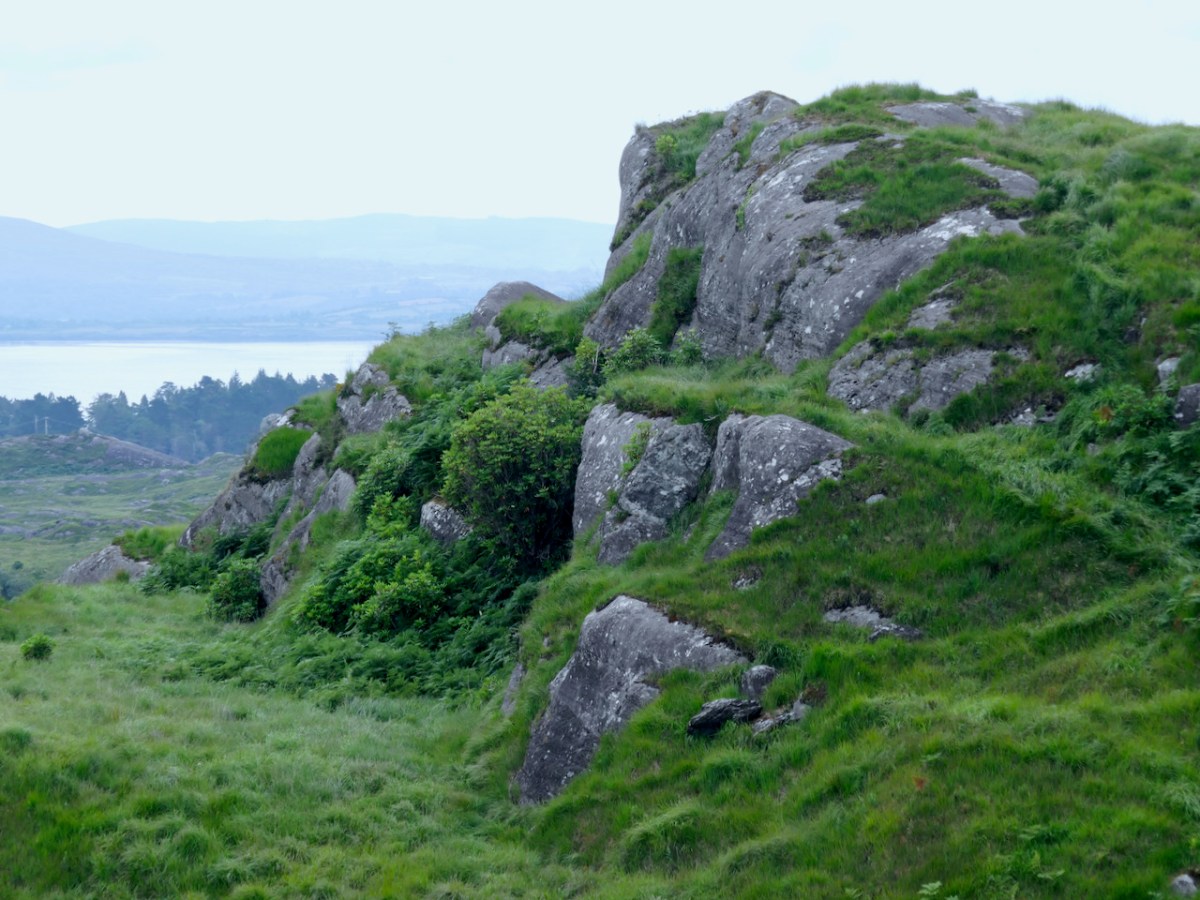
Give a thought to those who built these byways: quite a lot of engineering has been involved in carving through rocks to create a more or less level route.
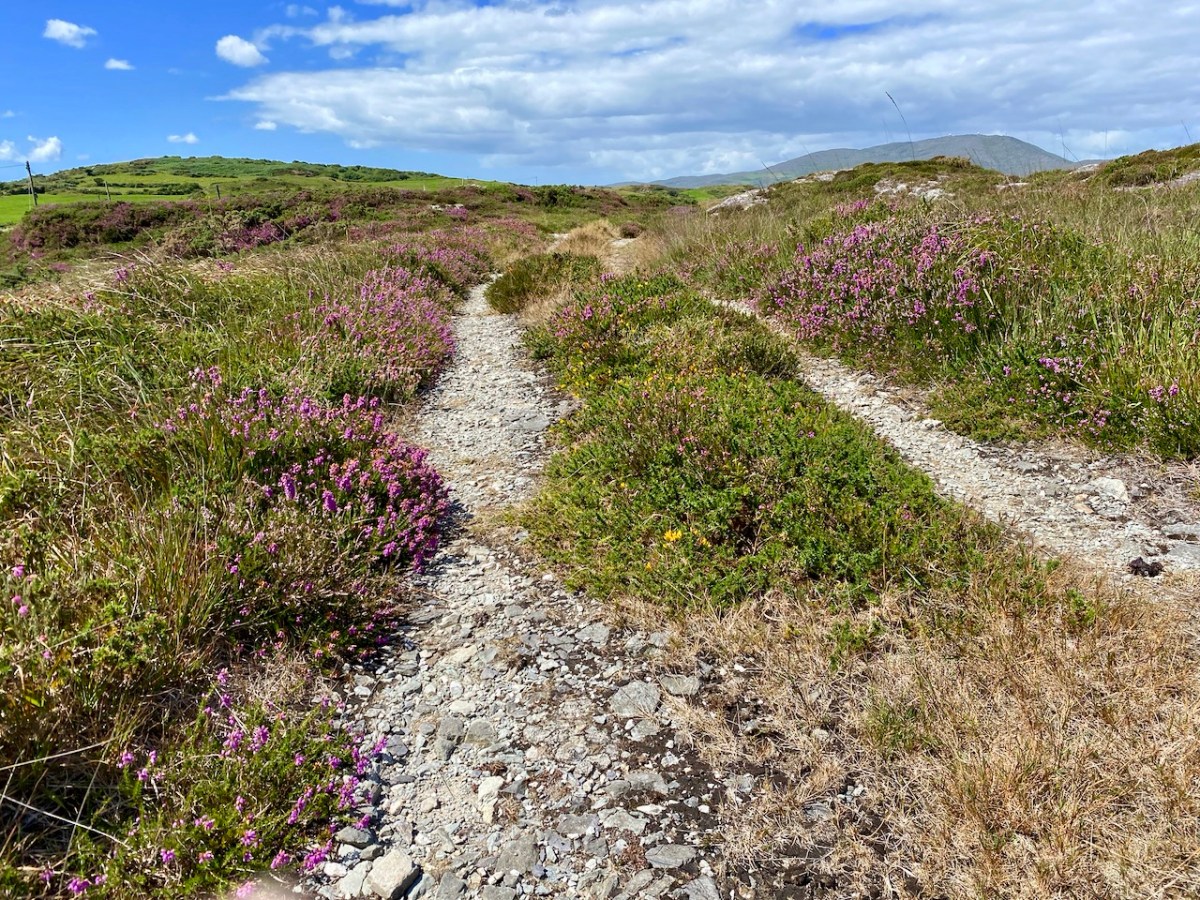
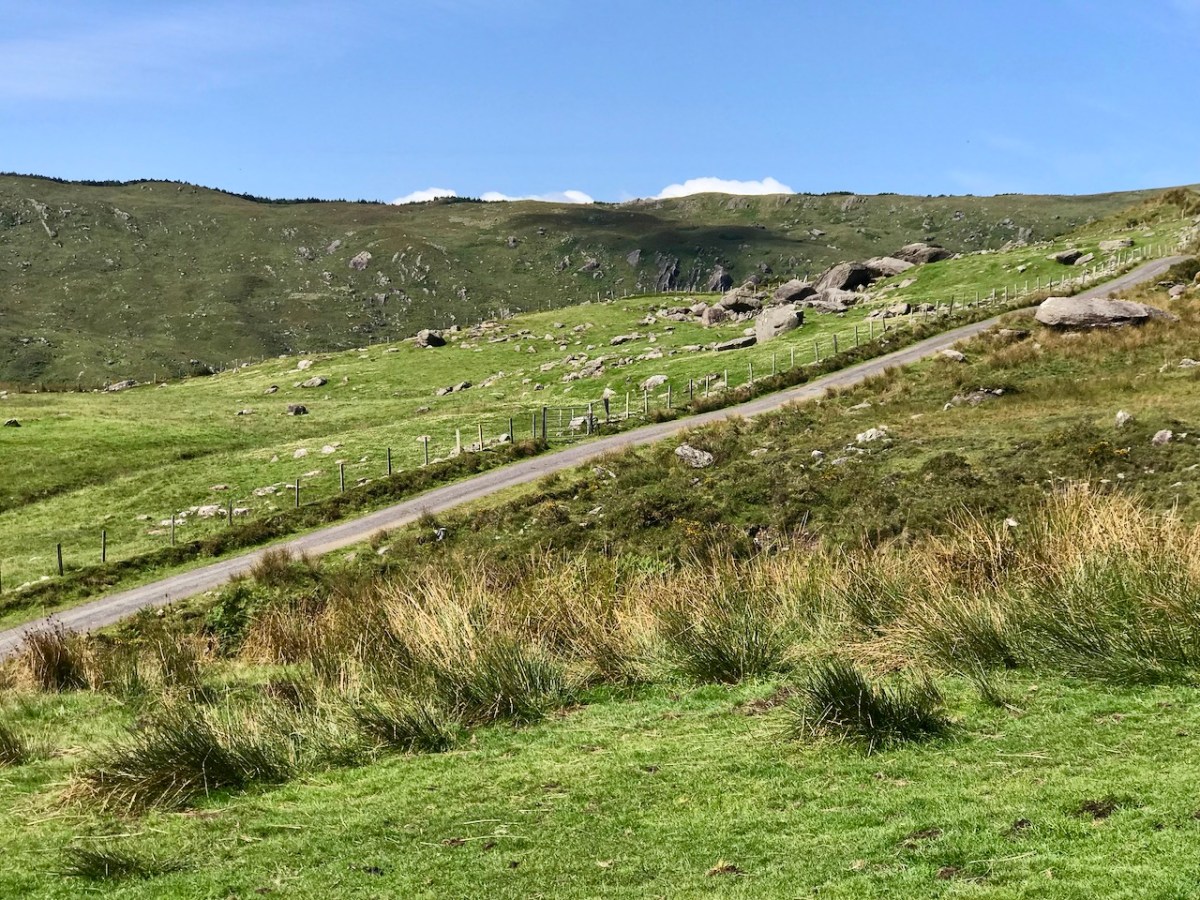
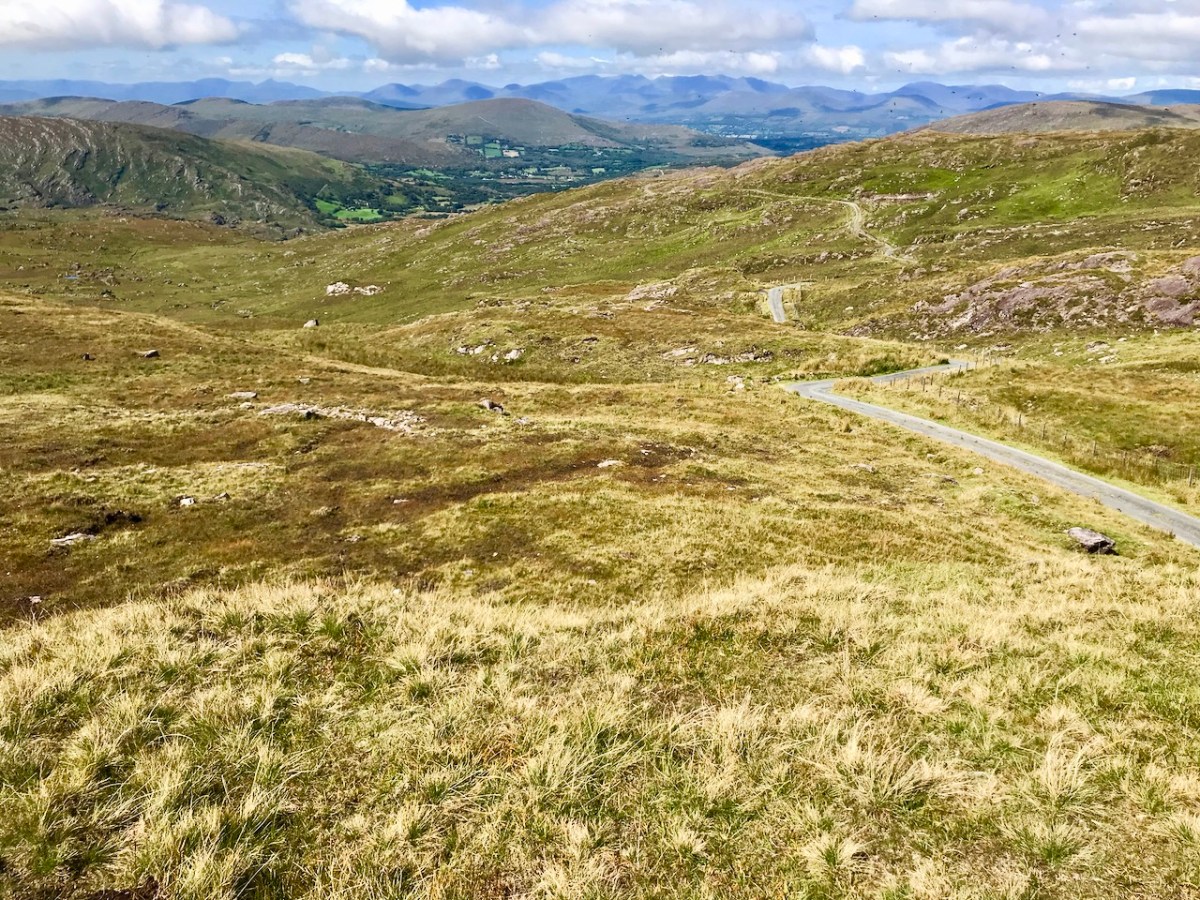
Some roads lead to a dead end. I prefer those that fly high – over the mountain passes; the scenery never disappoints.
. . . The Road goes ever on and on Down from the door where it began. Now far ahead the Road has gone, And I must follow, if I can, Pursuing it with eager feet, Until it joins some larger way Where many paths and errands meet. And whither then? I cannot say . . .
from ‘the old Walking Song’ by J R R Tolkein
There’s always a reward to be had for travelling uphill: it’s the view from the top!
It’s been a very busy week! The best part about it was that my sister, Aoibhinn (pronounced Eeving), is visiting and she and I were able to do lots of things together. That’s her in the coral jacket, above. You see, she has ME, or Chronic Fatigue Syndrome, and she was really nervous about her ability to participate in the activities I had booked or planned, or stay the course once on them.
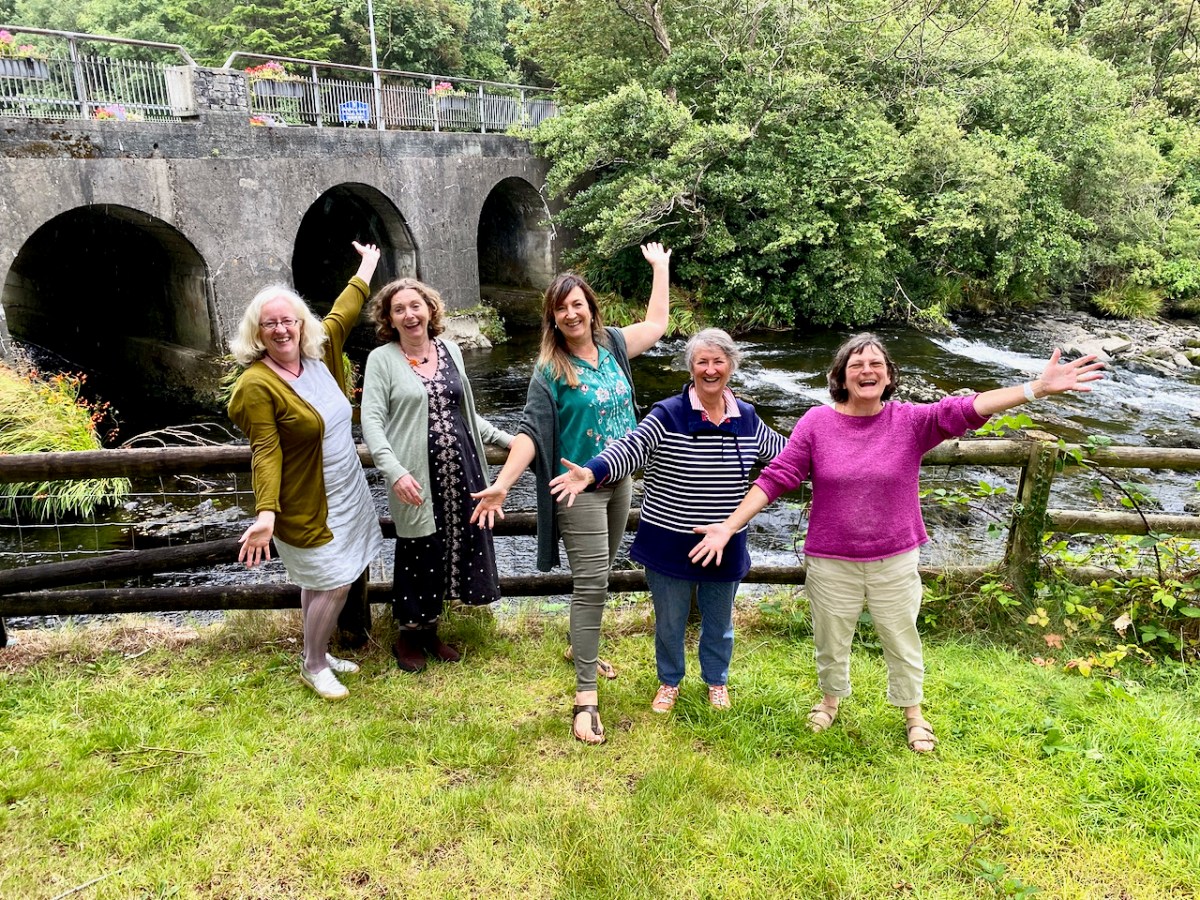
Aoibhinn does really well at managing her condition, but she has to be very careful or she can end up in a major crash. She struggles with tiredness and pain all the time (sore joints, headaches) but finds that sea swimming helps her cope mentally, so she was up for one of the things we planned to do together, our Dawn Swim and Pilgrimage with Gormú. We met Conor and Celine, and two other participants at Castlehaven and started off by walking the short way up to the Holy Well, where we heard of St Barrahane. Readers may remember Conor from the Placenames post.
Next came the swim. While Aoibhinn opted for a short immersion, I surprised myself by swimming all the way to Faill Dic, with encouragement from Conor, and the lovely safety valve of a float if I needed it. Breakfast was so welcome – porridge, fruit and hot tea made by Celine and Conor (below) – while we listened to more stories, all set around the cove we were in. It was a fantastic experience – I highly recommend it!
The Ellen Hutchins Festival andHeritage Week are both in full swing this week, so there are any god’s amount of things to choose from. We concentrated on botany and butterflies during the week and ended with stained glass and history yesterday.
Micheline Sheehy-Skeffington and Nick Scott led us through the Glengarriff Woods. While this walk involves an uphill section, the pace is easy because it involves lots of stopping to talk about the plants we encounter along the way. We loved Nick’s descriptions of the forest environment, and all the layers that make up the plant life from the canopy down. And we were riveted by Micheline’s focus on the Arbutus (AKA the Strawberry Tree), a rare tree that occurs only here and in the Iberian Peninsula.
Micheline is investigating her theory that it may have come with the Bronze Age miners who came to exploit the rich copper resources of West Cork and Kerry. Her recent article in Archaeology Ireland sparked my interest and I was thrilled to be able to go along on this walk with her.
The photograph above illustrates the challenges in tracking Arbutus trees – they grow on cliffs and in inaccessible places.
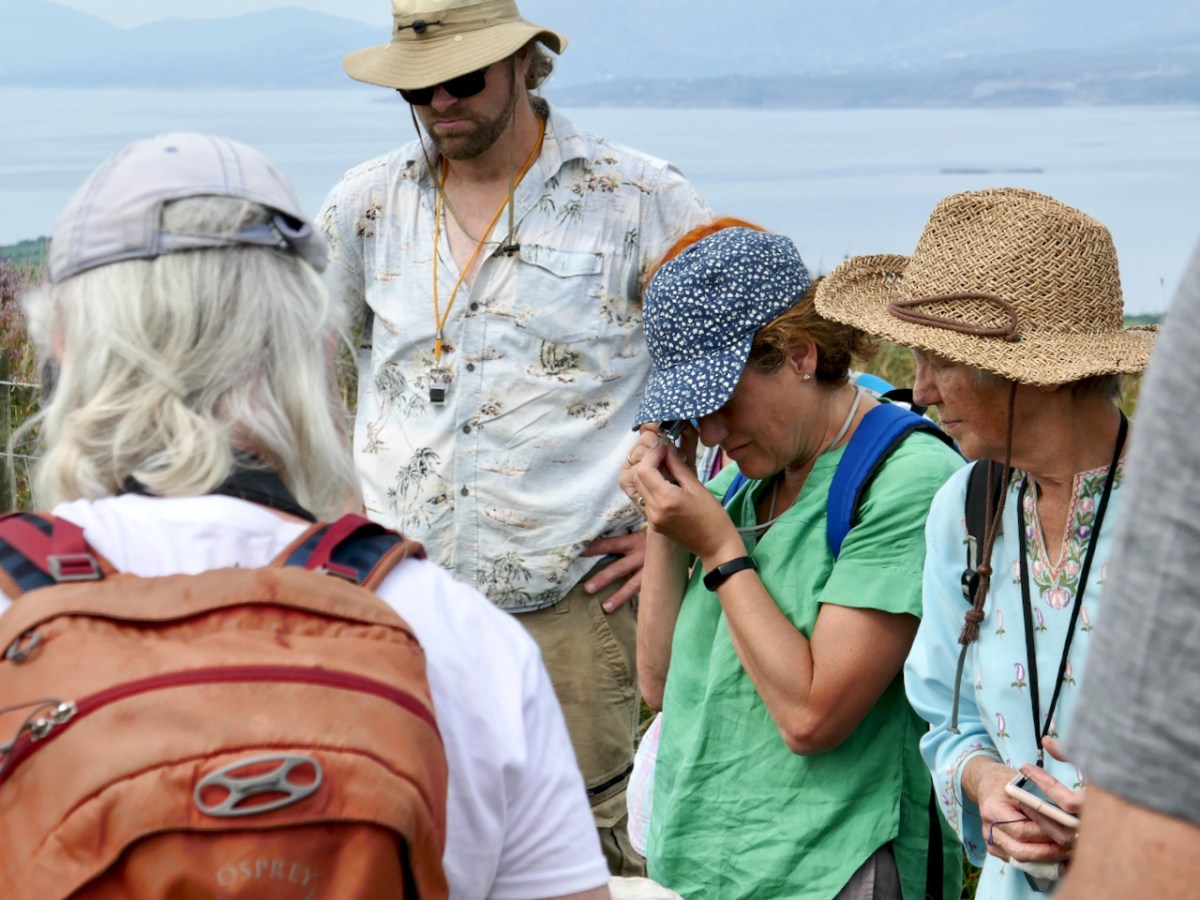
Once again, although this walk involved picking our way through long grasses and scrambling over rocks, the pace was slow, with frequent stops to ooh and aah over butterflies and hear Damaris talk about their habitats and plant requirements. Some of the plants were so tiny that we had to see them through a hand lens to really appreciate them.
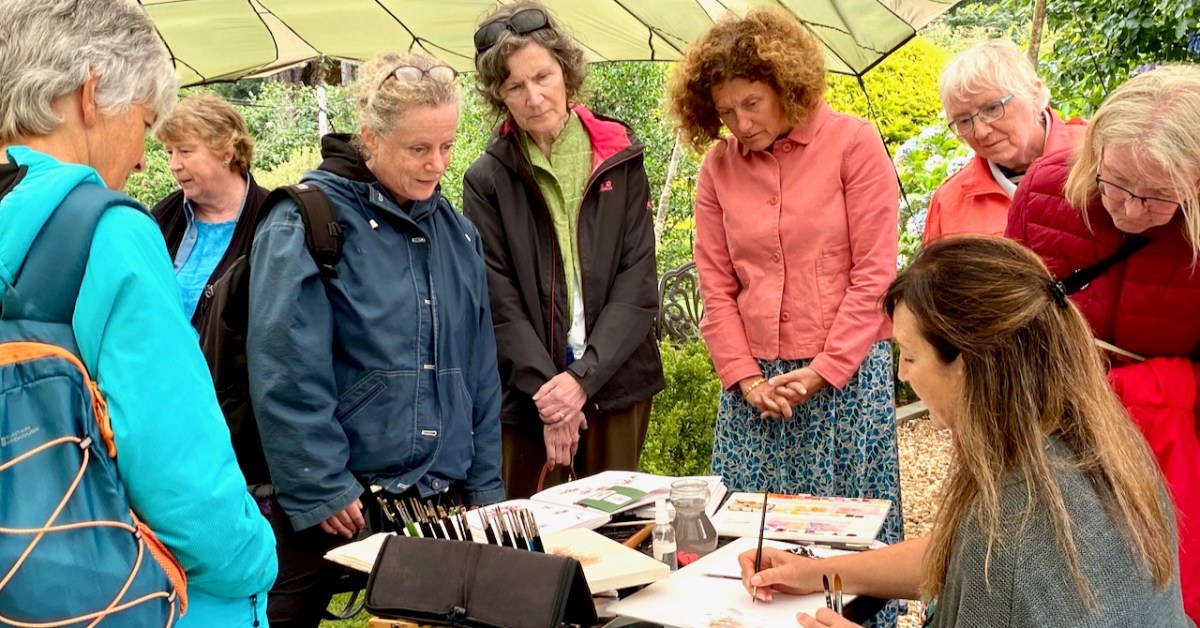
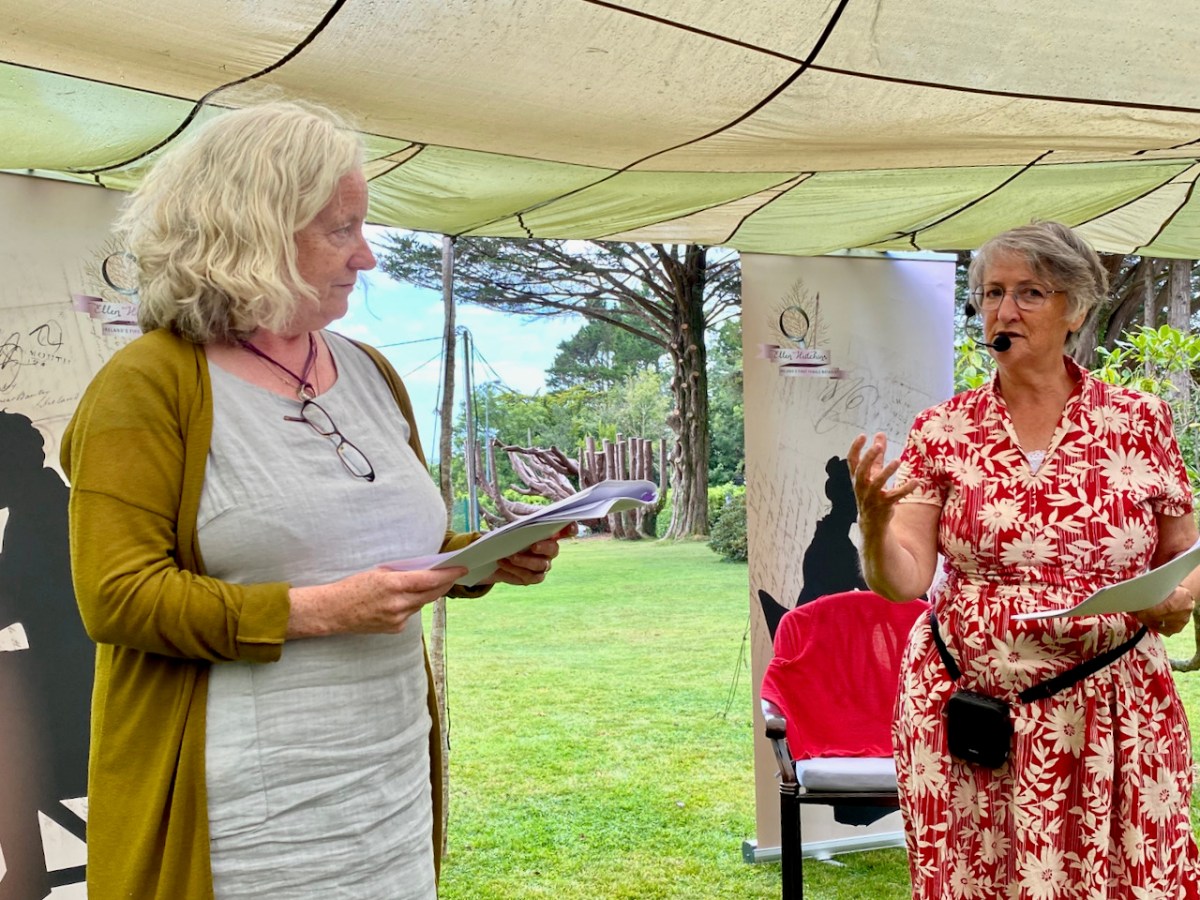
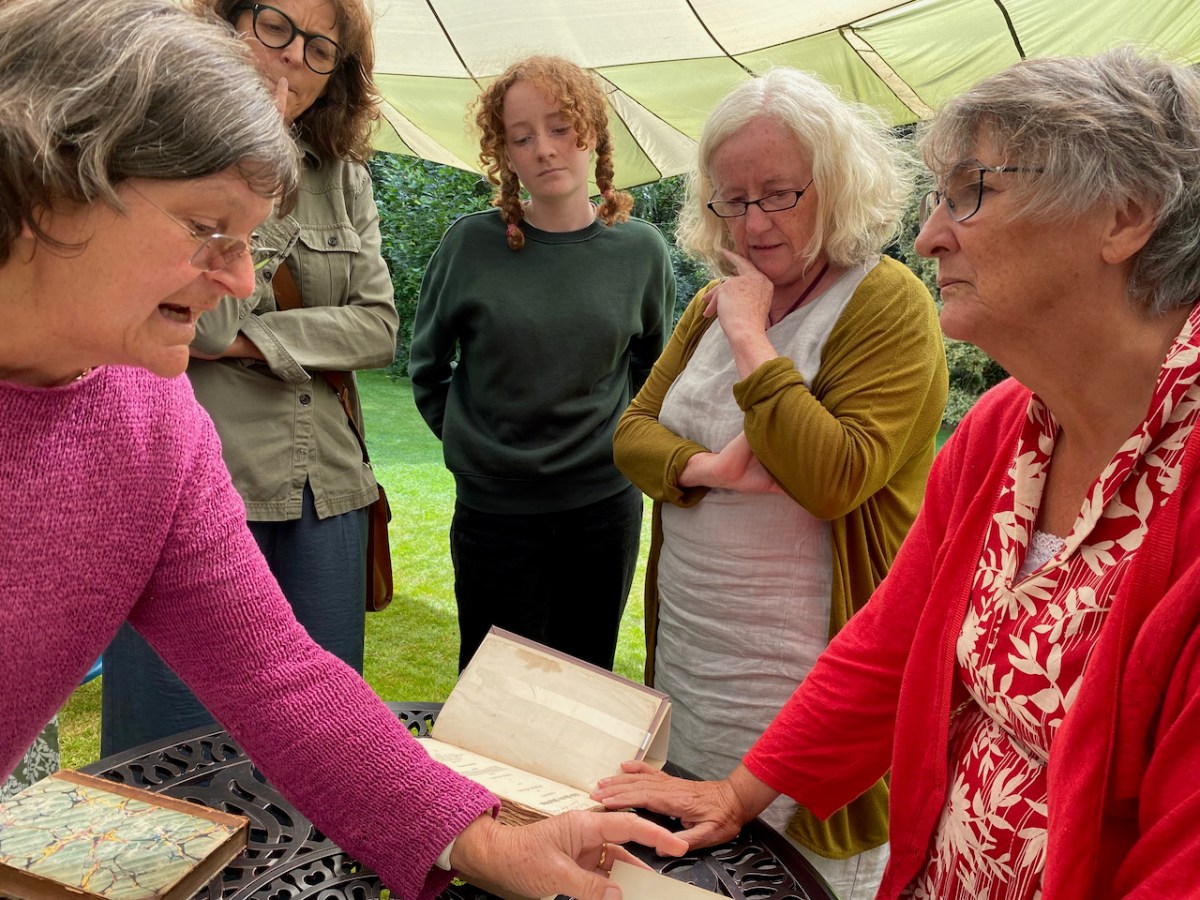
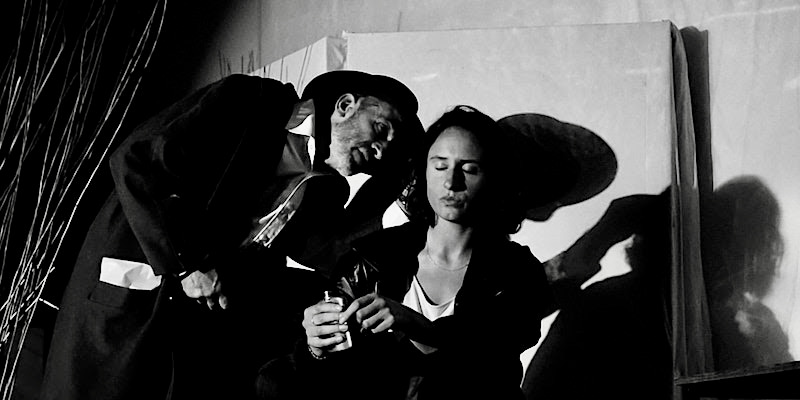
We had a rest day on Thursday, and on Friday it was time for Seaweed and Sealing Wax 2. This was the second production masterminded by Karen Minihan, based on the correspondence between Ellen Hutchins and Dawson Turner. See Robert’s post from last year for an account of Seaweed and Sealing Wax 1. This year, we were joined by the poet, Laura McKenna and the botanical artist Shevaun Doherty. That’s Shevaun surrounded by audience members in the top photo of this post, while Laura is in the photo below.
While Karen and I led the audience through the letters, Laura read a selection of poems that responded to Ellen’s life and work, and Shevaun worked away on painting a piece of seaweed, explaining her process to the audience at one point.
At the end, Madeline Hutchins, Ellen’s great, great, grandniece, showed us some of Ellen’s books and letters. As with last year, we were under a tent in the grounds of Sea View House Hotel, right next door to where Ellen herself had lived in the opening years of the nineteenth century.
We finished the week with a trip to Timoleague, where I was booked to give two stained glass talks at the Church of the Ascension Open House. This is part of a huge community effort to save and safeguard the fabulous mosaics in this church and I am always thrilled to be a part of it. Take a look at this video by the Rev Kingsley Sutton, Touching Heritage, to get an excellent overview of the whole project.
The church is truly one of West Corks hidden gems, and the fund-raising effort needs all the help it can get. In between the talks, we were whisked off to lunch at a fabulous private house right on the sea. Nice work if you can get it!
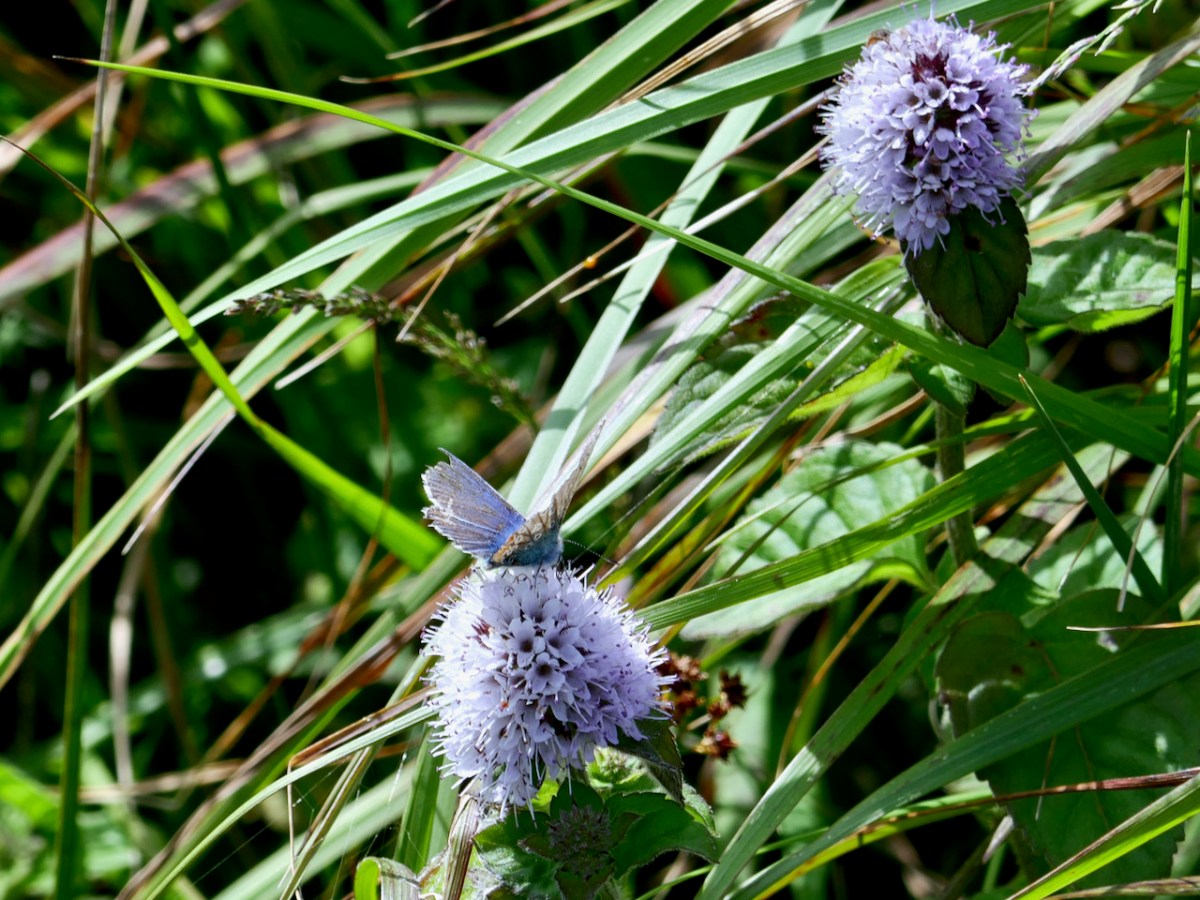
So – it’s been an incredibly busy week of flowers, talks, and butterfly hunting (above) and I am feeling it now. But all of our activities were accessible to Aoibhinn, with time to rest in between, or go for a lovely dip locally. So – if there’s anybody out there who wonders if you would be able for a botany walk or a dawn swim and ‘pilgrimage’ – no need to be intimidated by a title or a description when the pace is leisurely and, as Aoibhinn found, there’s always a handy rock to sit down on for a while.
I bet you can’t wait for more of me banging on about August in West Cork – so let’s get to it! Our week has involved all of the above, and I resisted the urge to add the word Bryophytes to the title. You’re welcome.
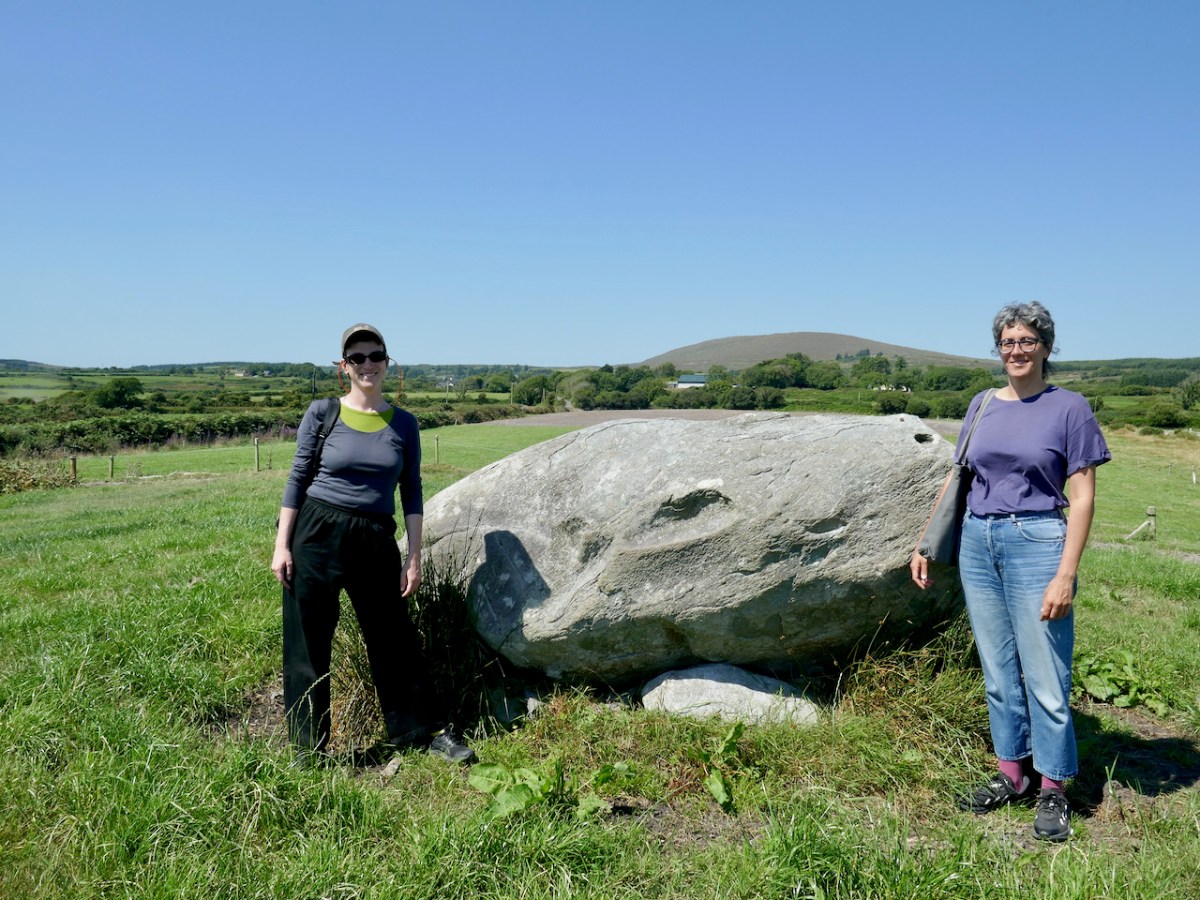
The boulders? Shorthand for Boulder Burials, just one of the ancient monuments we visited this week with Konstanza and Christiana, two of the artists in residence with the Crespo Foundation. They are both from Greece and collaborate on documentary and sound-based projects, and Konstanza is also an archaeologist. It was great fun to introduce them to some of our favourite sites on the Mizen, from rock art to wedge tombs, standing stone and boulder burials.
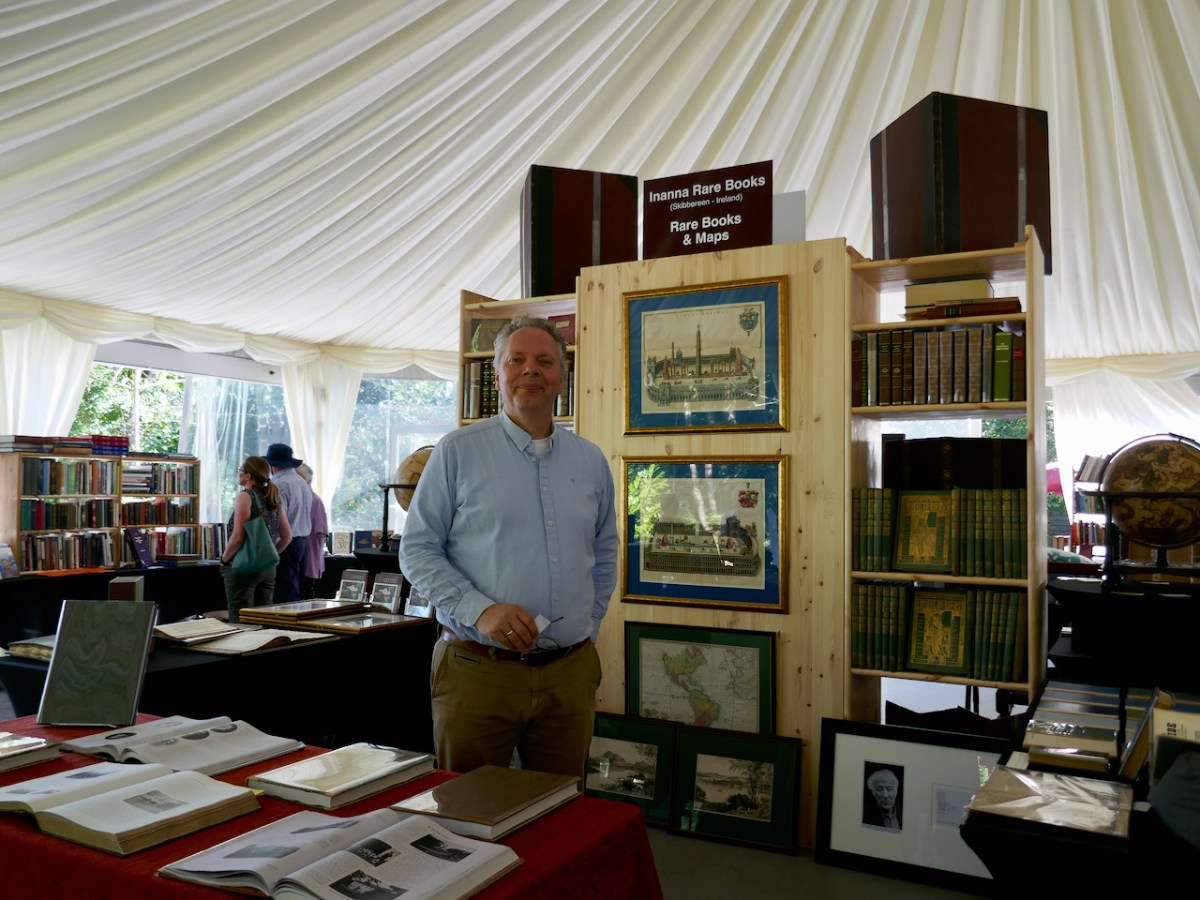
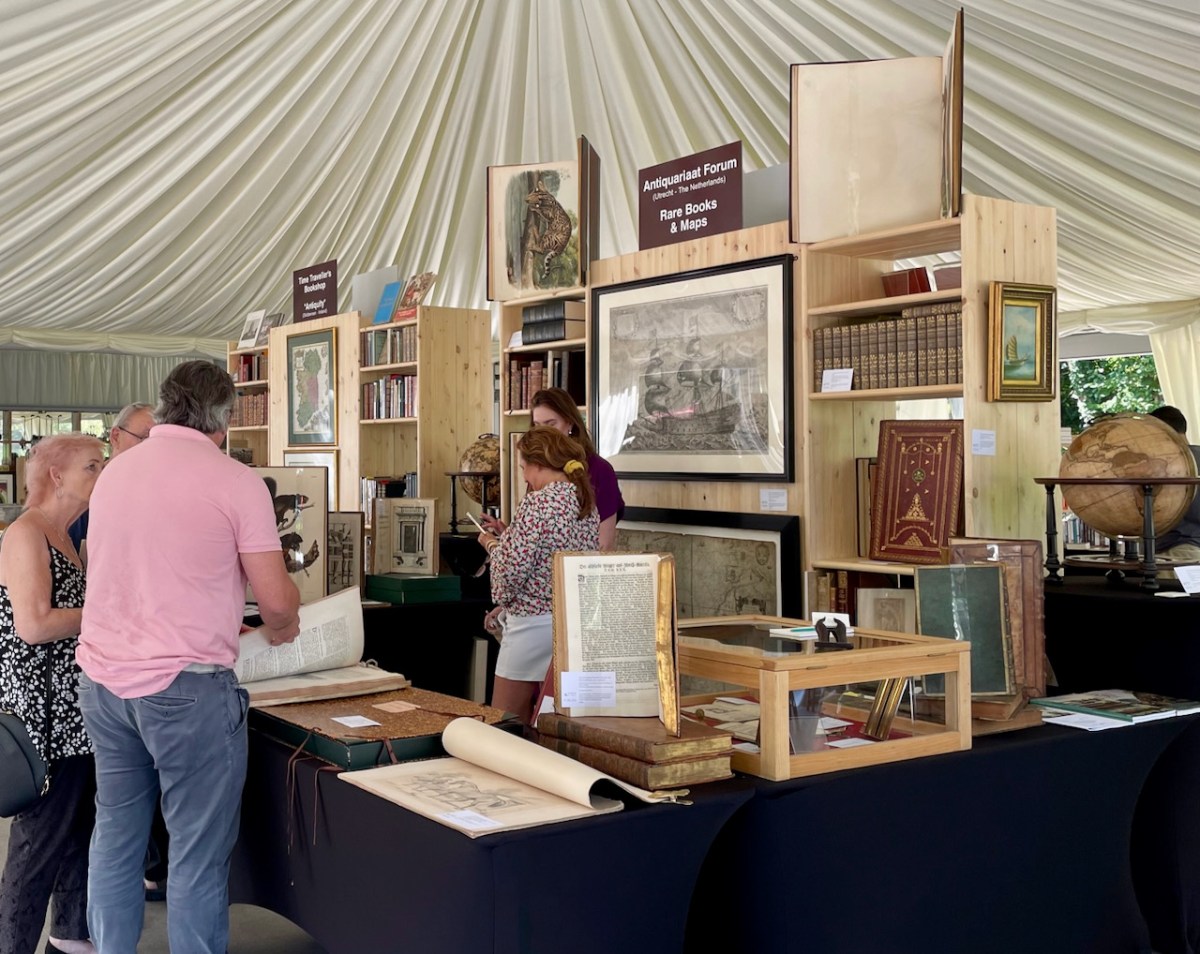
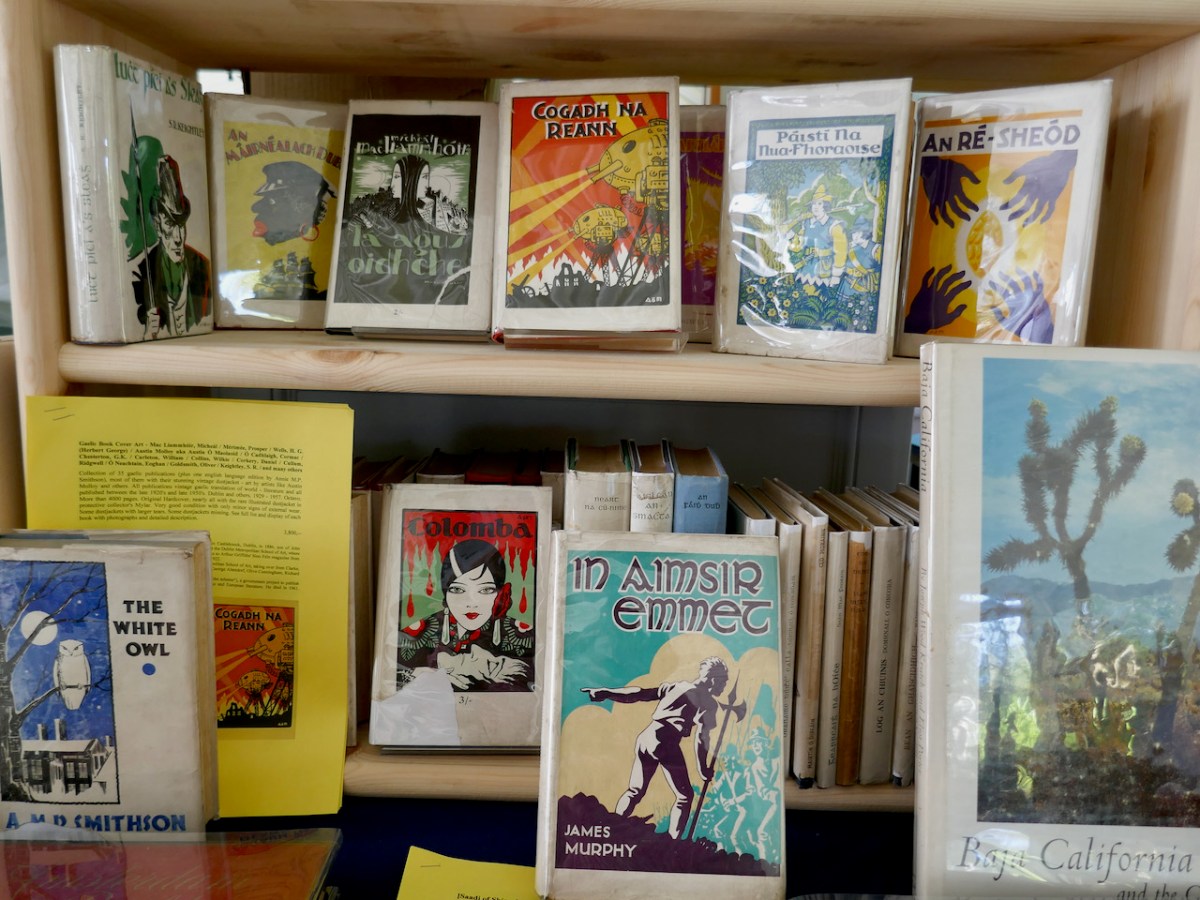
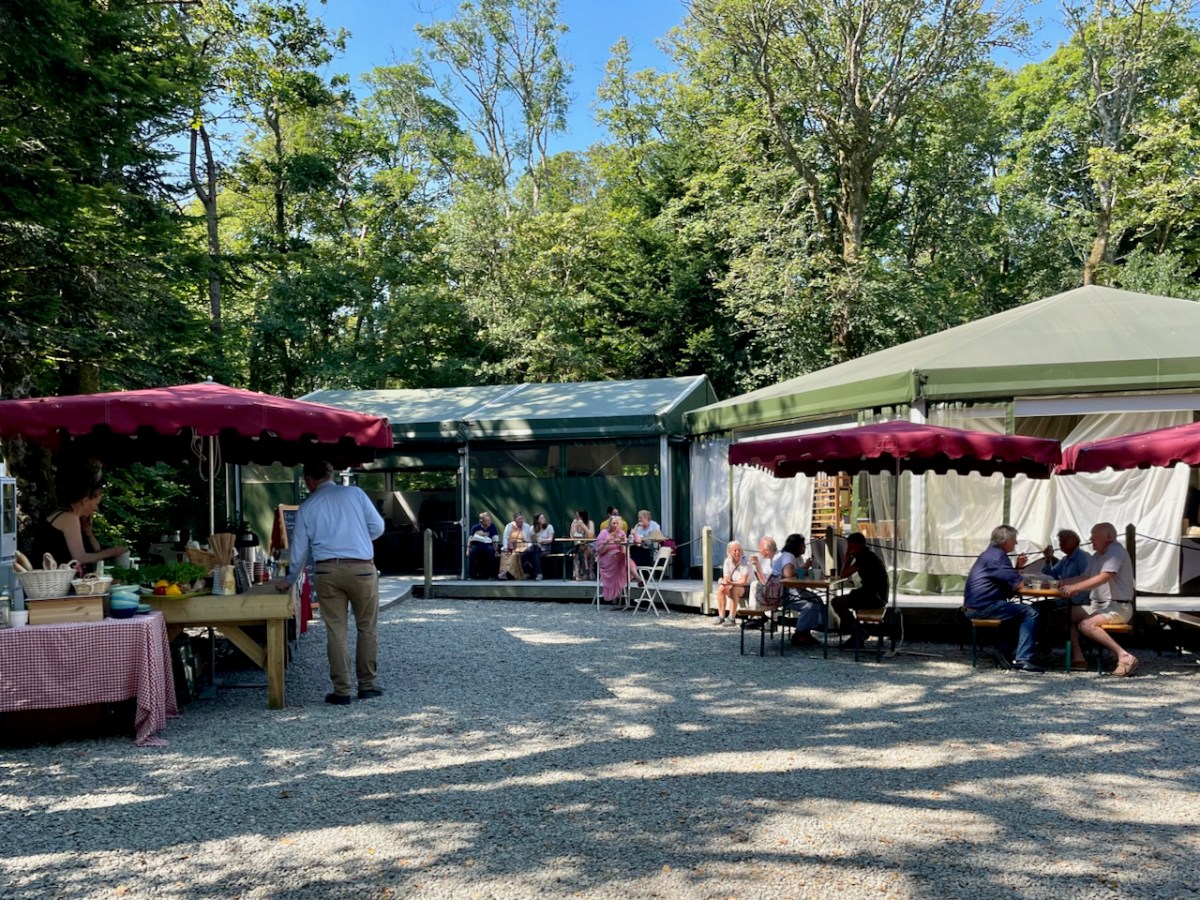
And then it was time for the Rare Book Fair, the brainchild of Holgar (below) and Nicola, who run, respectively, Inanna Rare Books and the Antiquity Bookshop and Plant-based Cafe. This is the inaugural fair and it took place out at the luscious Inish Beg Estate.
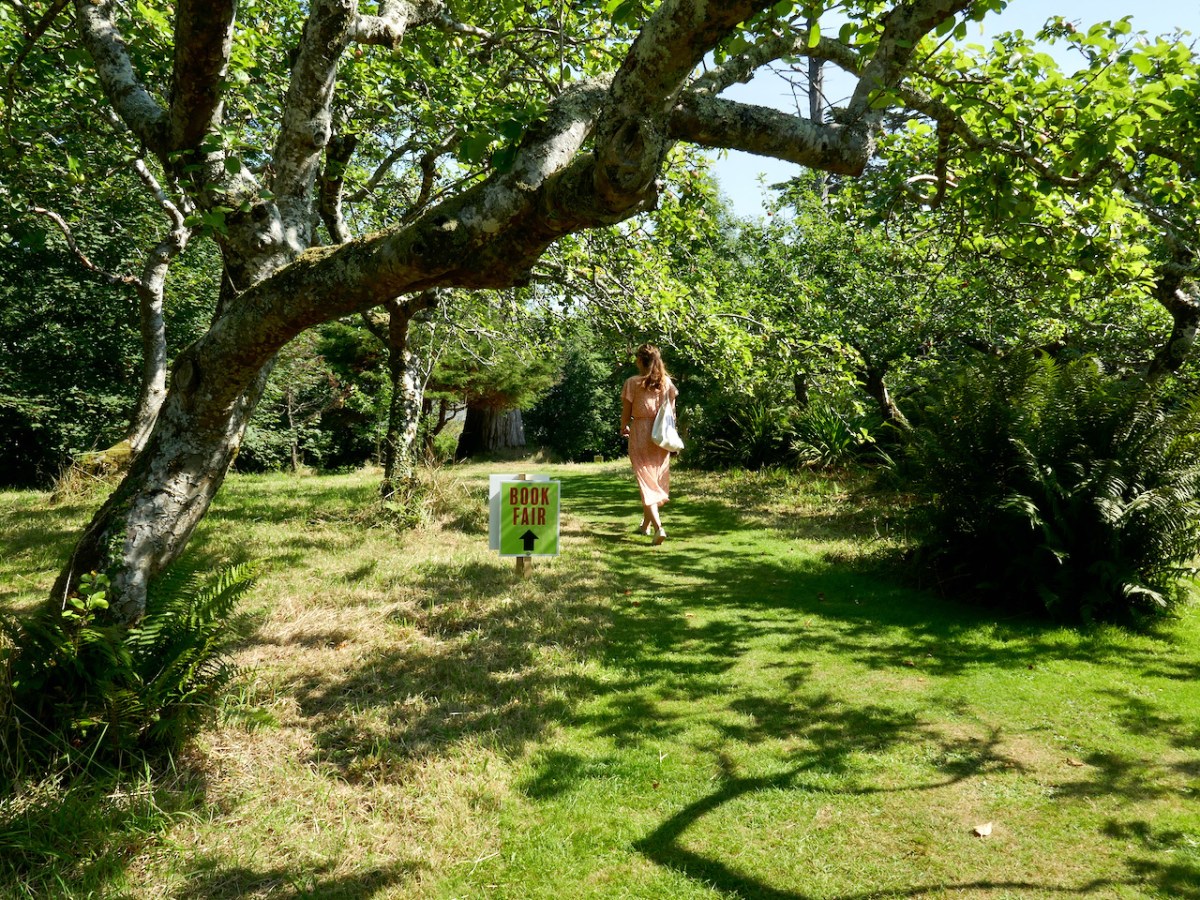
We love Inish Beg – nothing beats a good wander in the gardens and woods there – but even though we’ve been there several times, we were unprepared for the sheer magic of just getting to the book fair from the car park, all part of the experience.
Of course we couldn’t come away without a few books, but the best part was just chatting to the booksellers – a passionate and knowledgeable group – and sitting outside sipping a cold drink and leafing through our purchases with other like-minded folk. Bliss!
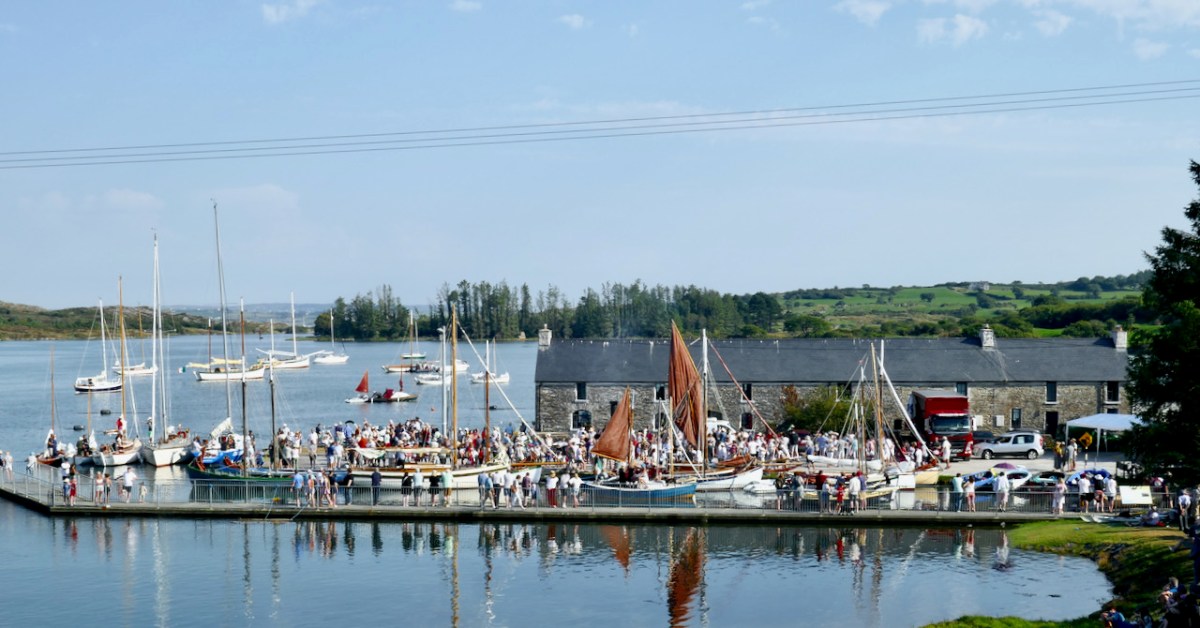
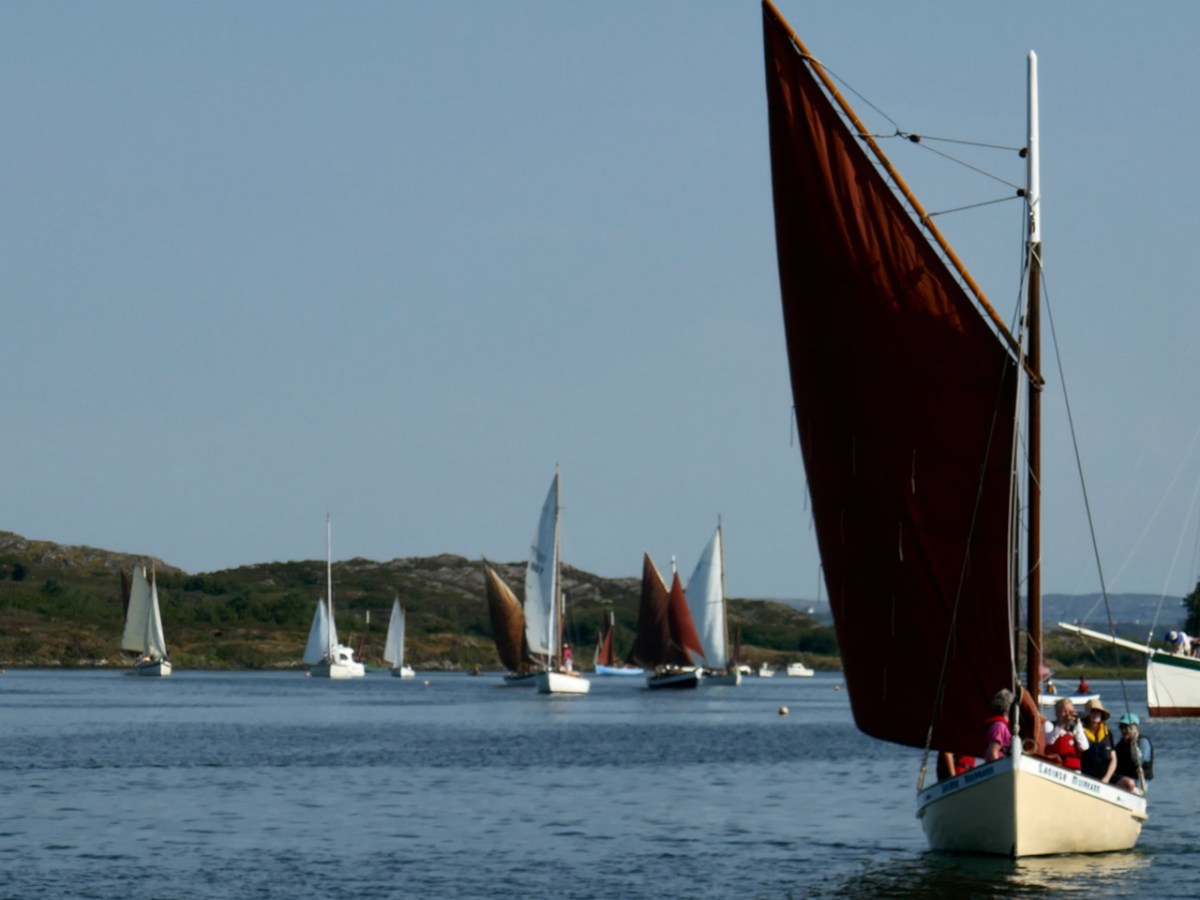
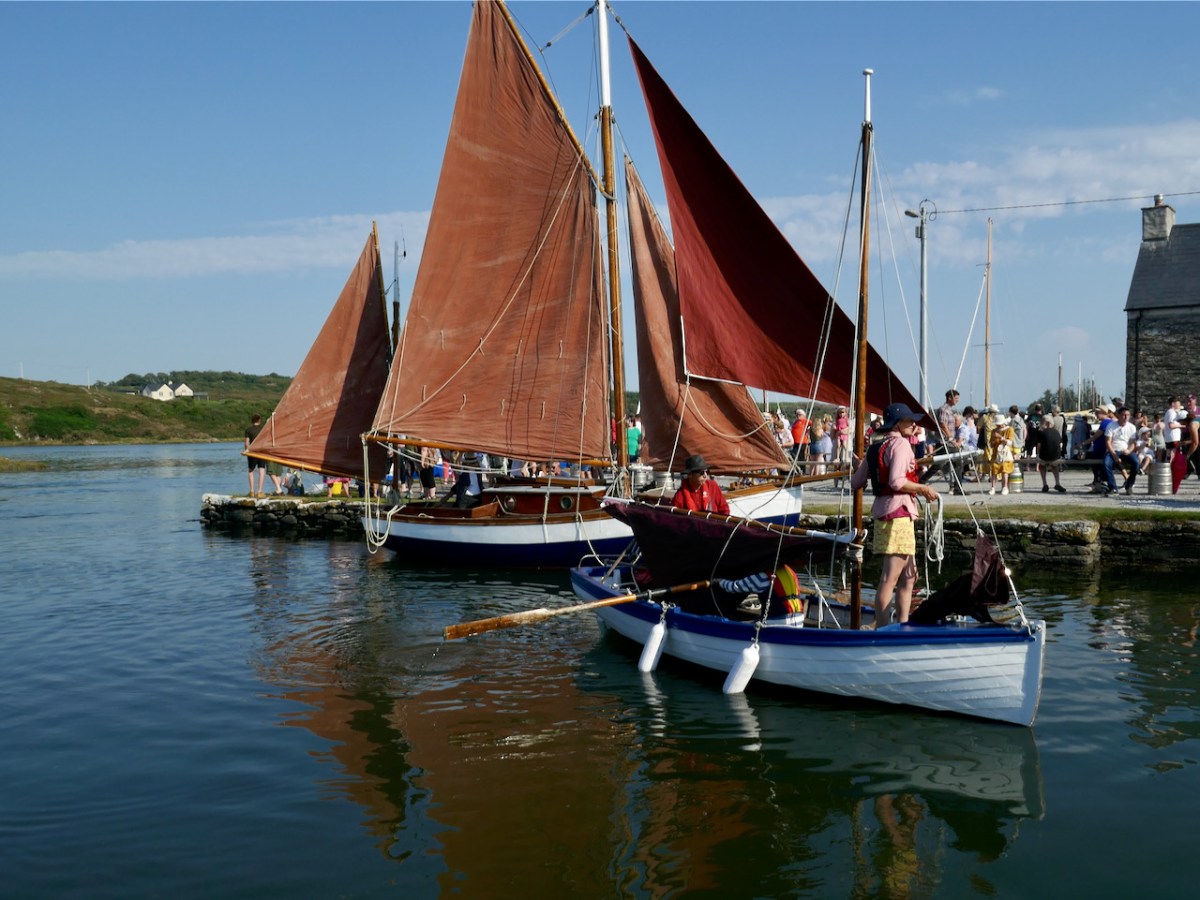
This book fair has the potential to become a very enjoyable permanent part of the West Cork Festival scene and I hope it does. On to Ballydehob and the annual Boat Gathering, or Cruinniú na mBád. Here’s my account of it in 2017 and in 2019 I had the wonderful experience of travelling in one of the boats with my friend Jack.
This is just a fantastic community event. The whole village gathers on the quay, there’s music and burgers and the crack is mighty. But it’s the sight of the boats, in full sail, coming up the bay on the rising tide, that is the big draw and takes us back to the days when this was a common sight.
That leaves us with bogs . . . and the first of these was to attend, in the attractive surrounding of Glebe Gardens in Baltimore, a local production of By the Bog of Cats (above), a play by Marina Carr, loosely based on the Greek tragedy of Medea. This is a powerful, multi-layered and haunting story of betrayal, abandonment, longing and revenge. It debuted in the Abbey Theatre in 1998 and has had many international productions (think Broadway and West End) since then. The Director, Terri Leiber, elicited outstanding performances from her cast, and the standing ovation at the end of the evening was well-deserved.
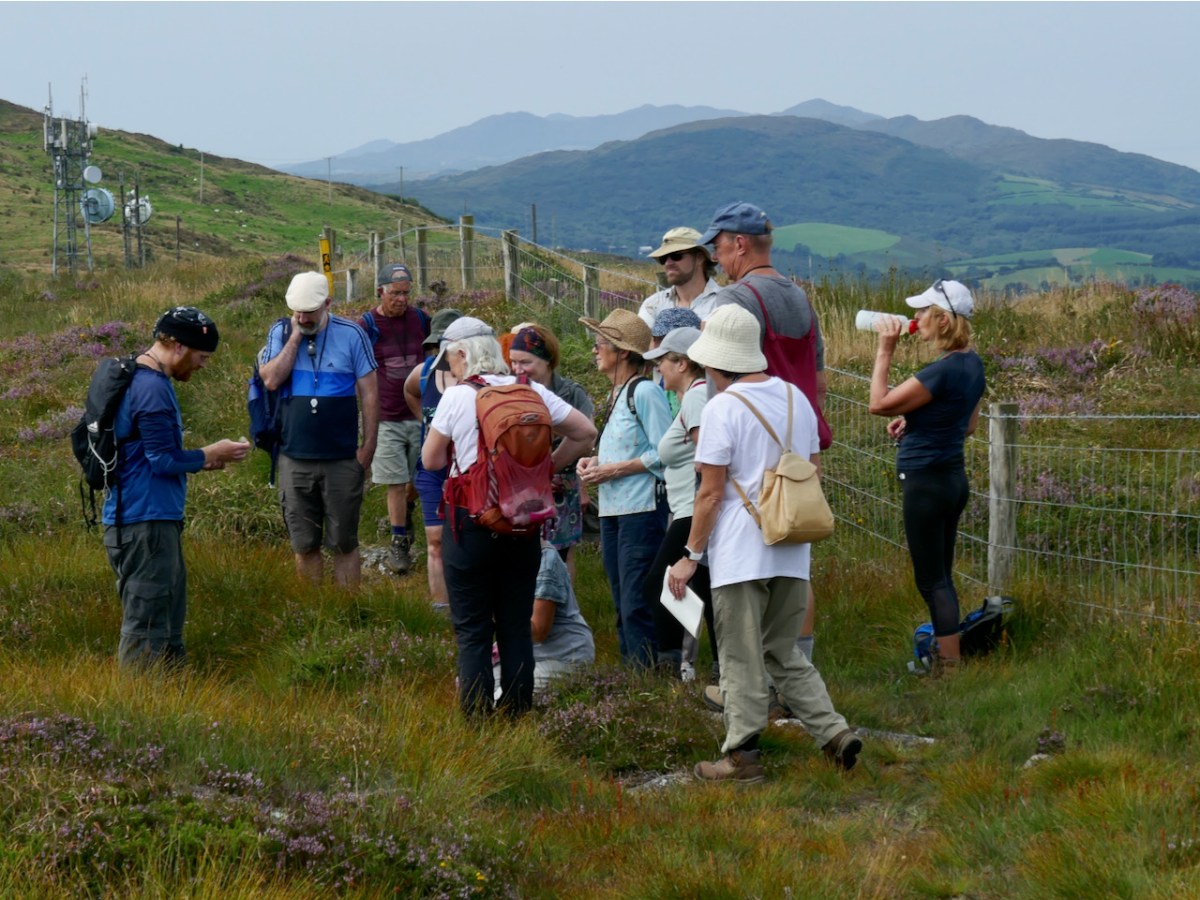
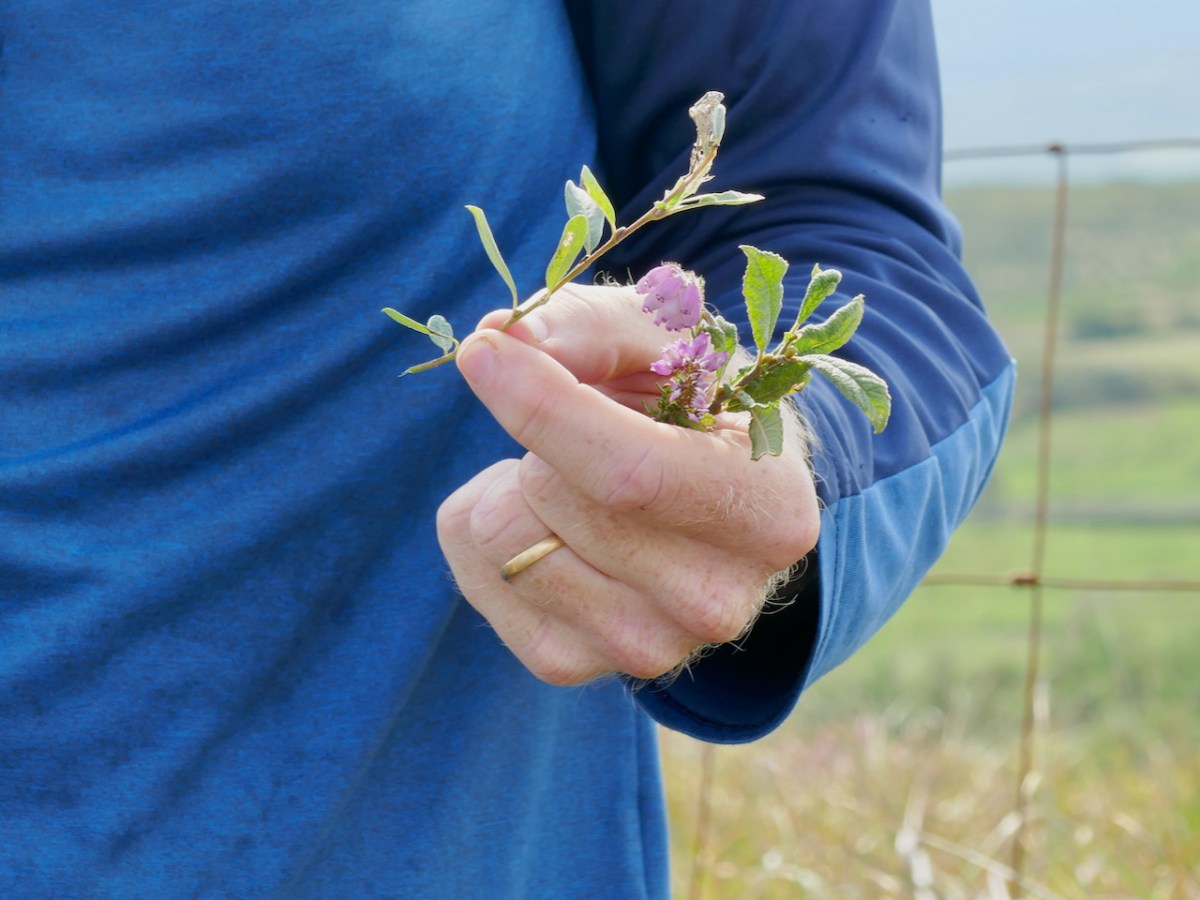
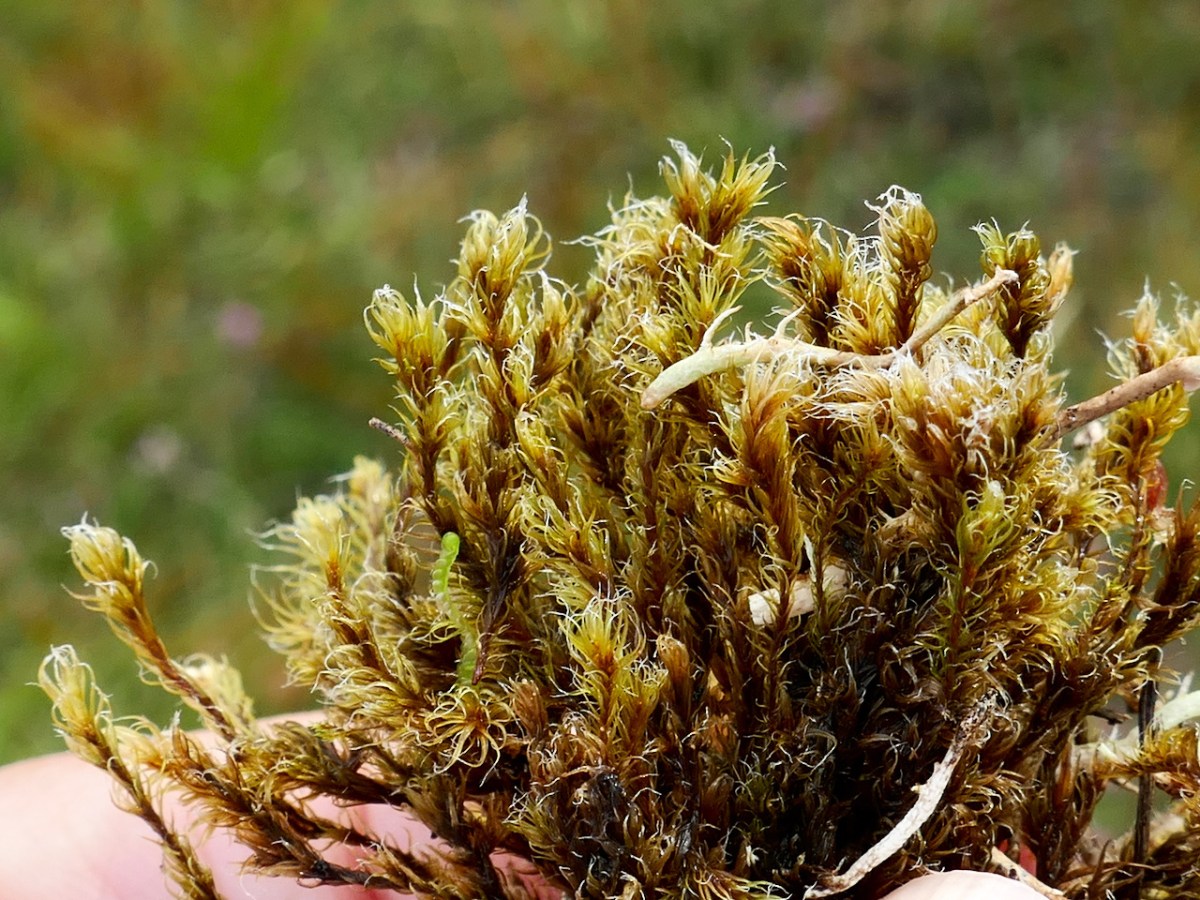
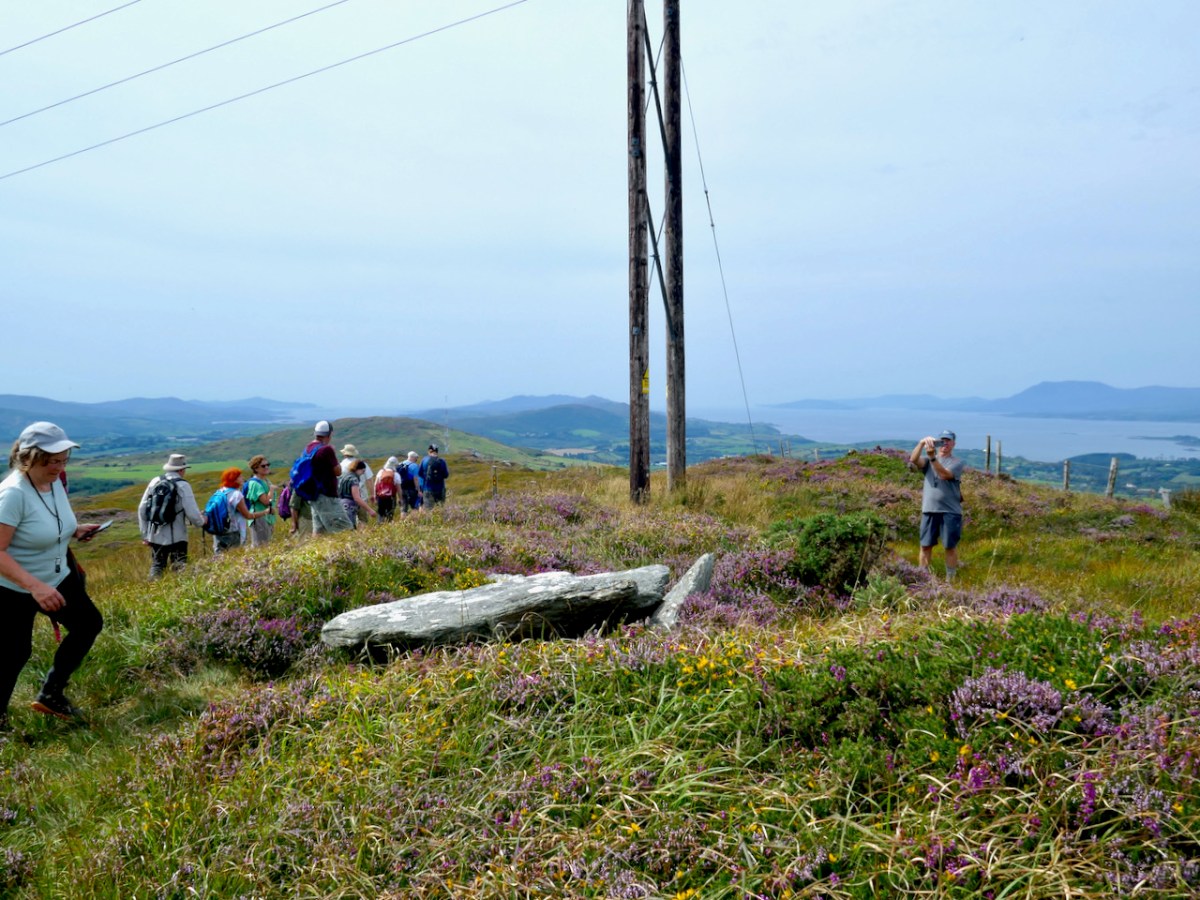
And the second bog? That was today, and although not the first event of the Ellen Hutchins Festival, it was the one that kicked it off for Robert, me and my sister, Aoibhinn, visiting from Dublin. Led by eminent botanist Rory Hodd, and provided with hand lenses, we tramped over the high land above Bantry, on a quest to understand more about heathland and boggy environments.
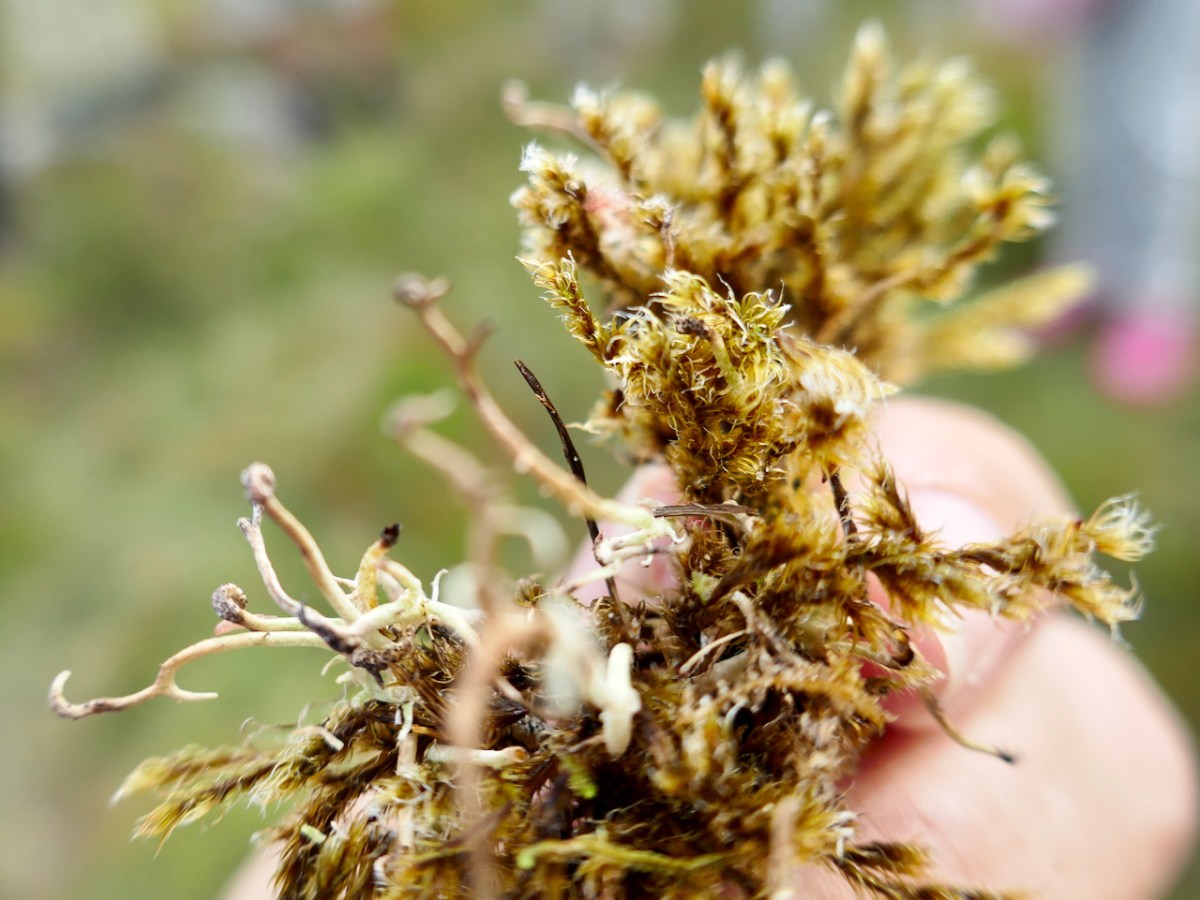
Rory is an acknowledged expert in this area, and it’s a real privilege to be on a walk with him. He knows everything, but manages to make it all accessible to the layperson. He explained how mosses, bryophytes, lichens, heathers and other plants interact to form the complex ecosystem that make up heathland and bogs.
I now know that ‘sedges have edges’ is not a reliable rule of thumb, and that the Purple Moor-grass that almost defines the winter bog landscape in West Cork (called Fionnán, or blond grass) actually decreases bio-diversity, and that one handful of plants can contain several different species of mosses (including invasive ones from New Zealand!) and liverworts!
And all of this in the most glorious landscape, with a view down all three peninsulas, the Mizen, Sheep’s Head, and the Beara, with a prehistoric wedge tomb at one of the high points (along with Ireland’s most unsympathetically located electricity pole) just to add some non-botanical interest.
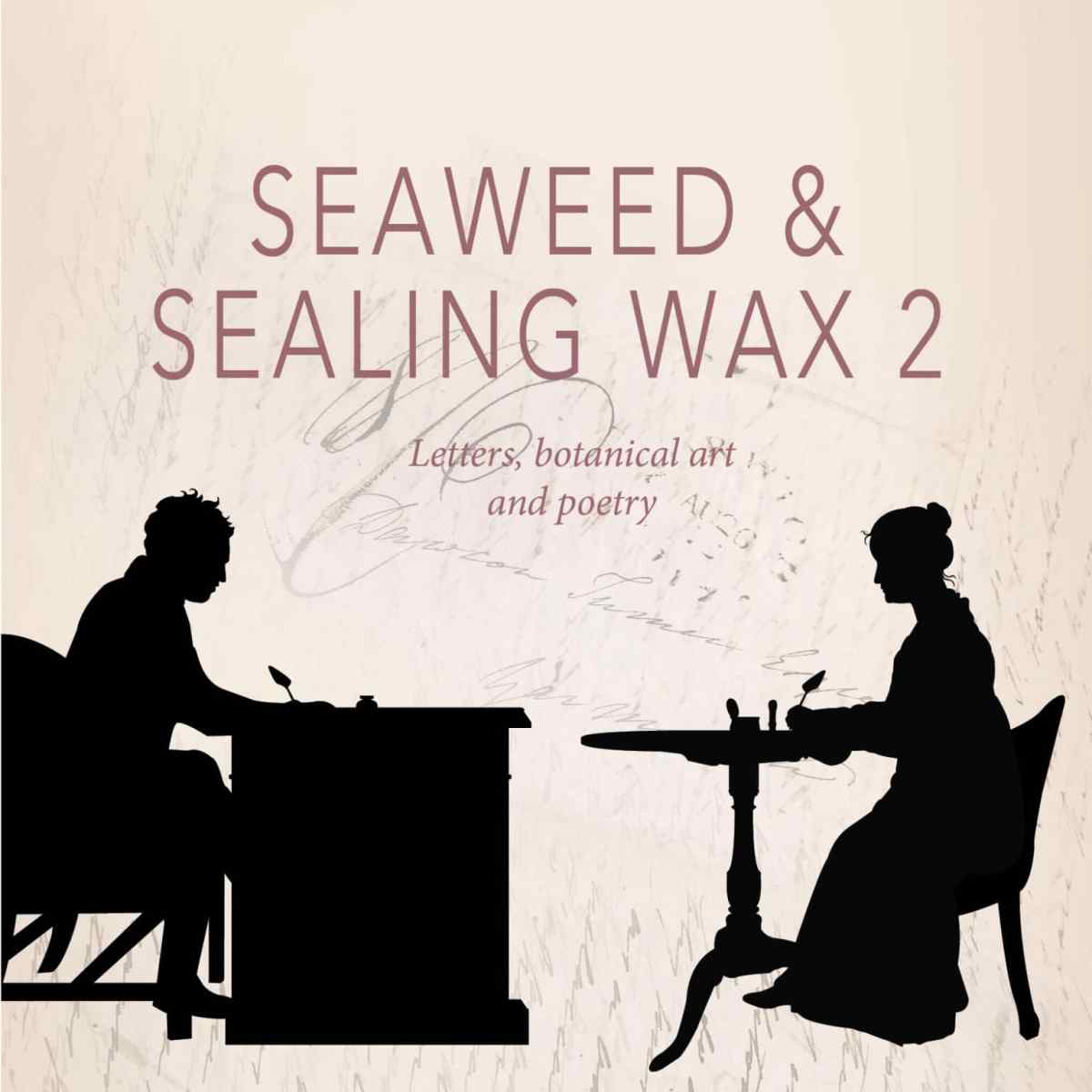
The Ellen Hutchins Festival continues all week, and you can still get tickets to many events. The one I play a part in, as MC, is on Friday. It’s called Seaweed and Sealing Wax 2, and it charts the correspondence between Ellen and Dawson Turner, continuing from Part 1 last year. It’s free but you have to register. Hope to see you there – come and say hello.
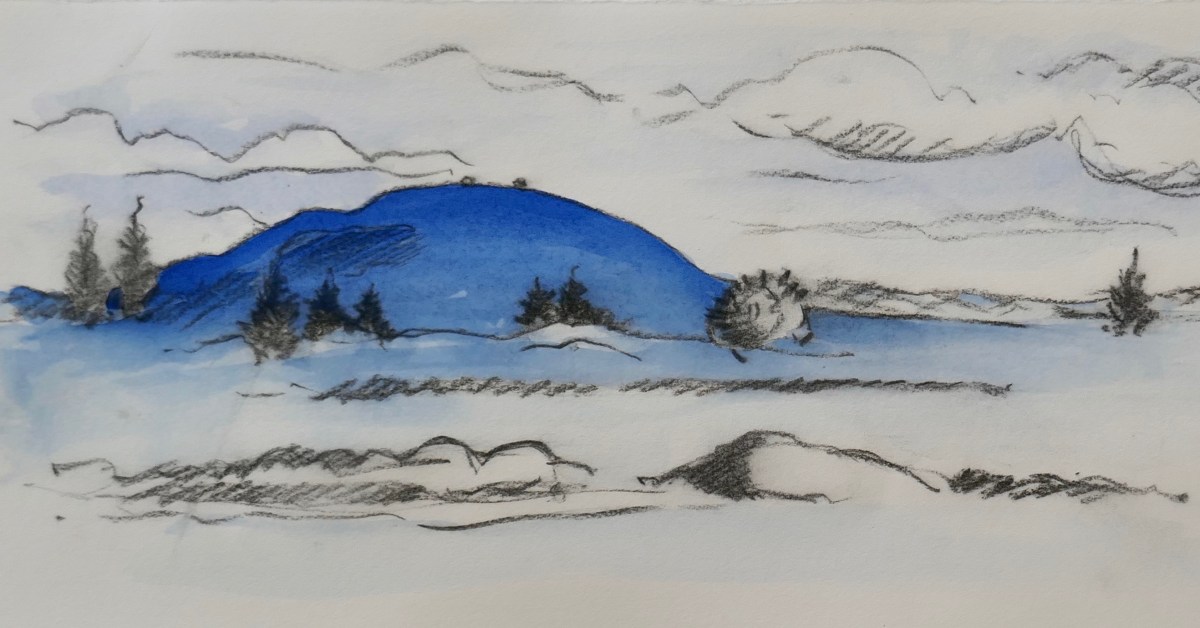
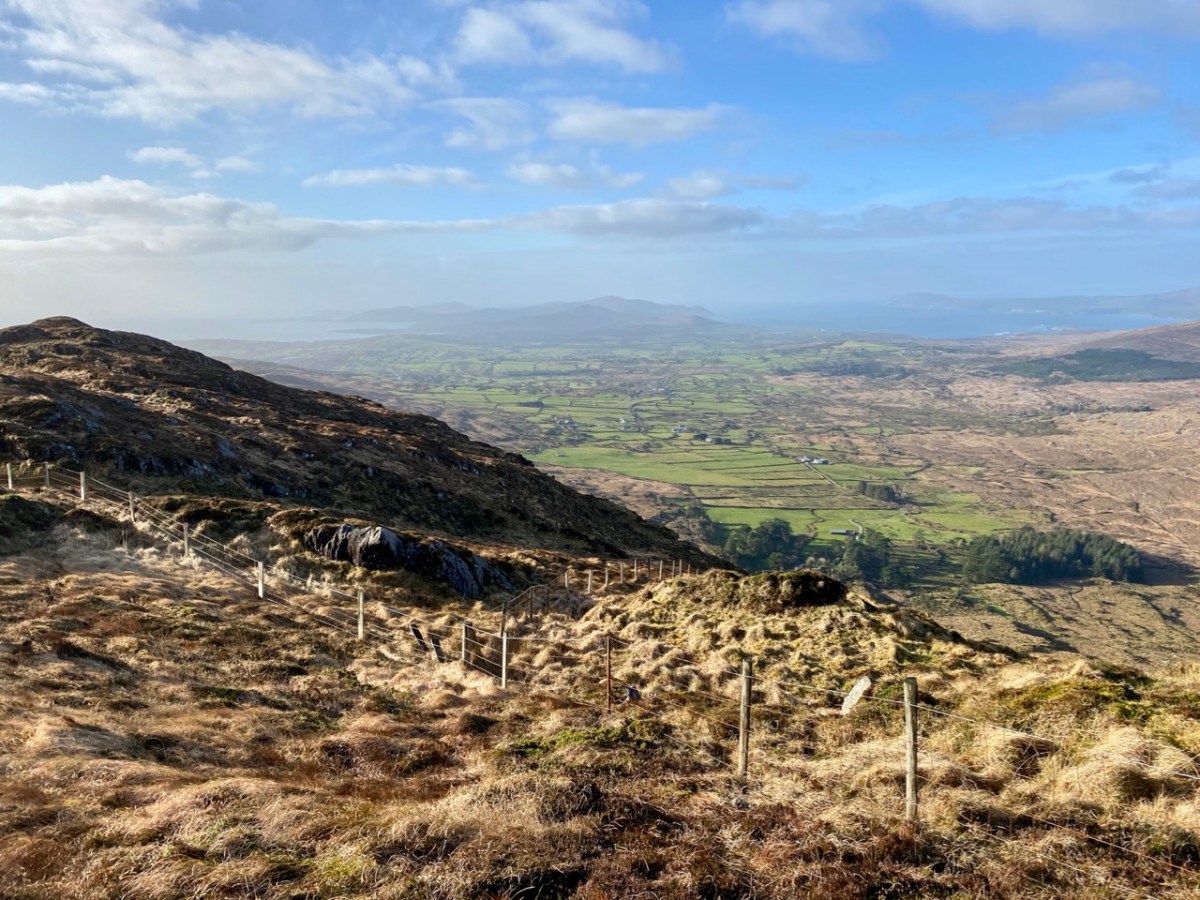
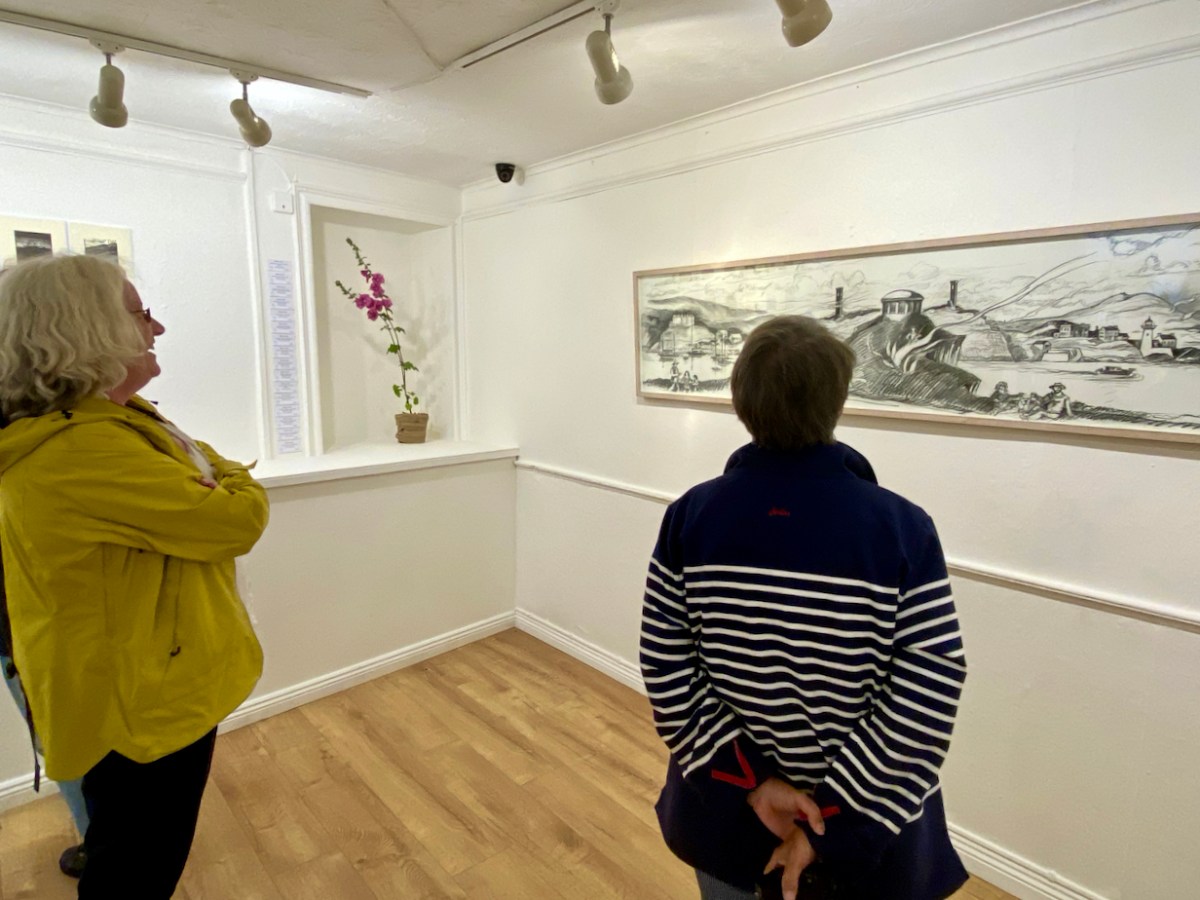
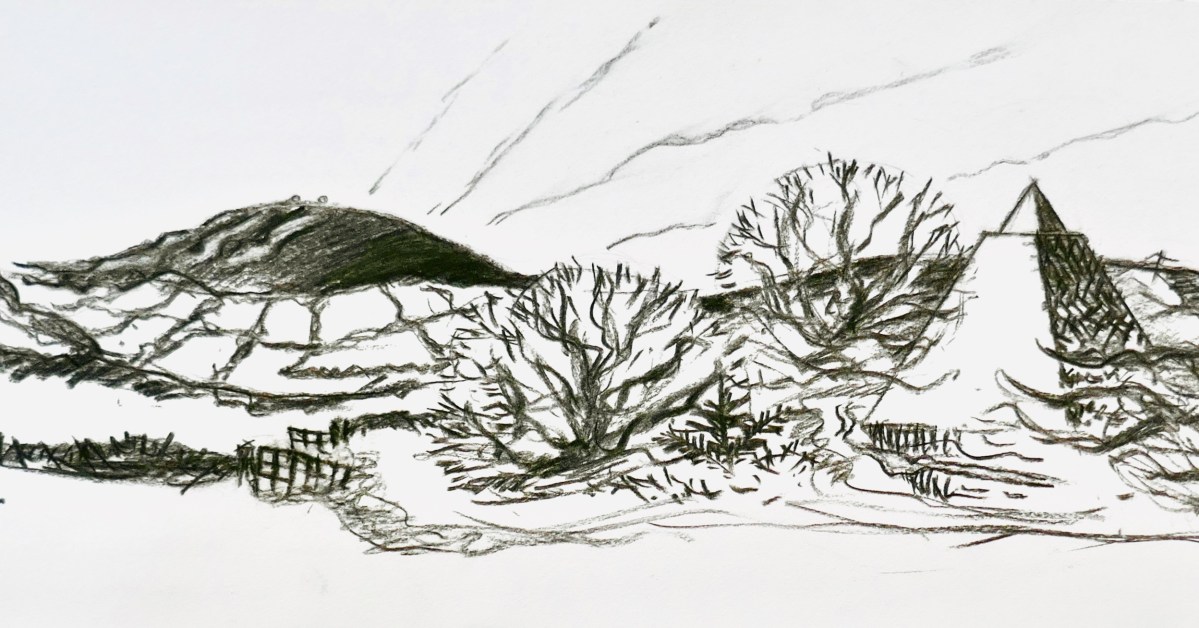
Mount Gabriel is, I believe, a rarely regarded topographical prominence on the Mizen. Yet it is impossible to ignore: the summit can be seen from most parts of this western peninsula. And, for those visitors who do notice it – and make the effort to scale its heights, it presents the most spectacular of views over rugged landscapes to the oceans beyond.
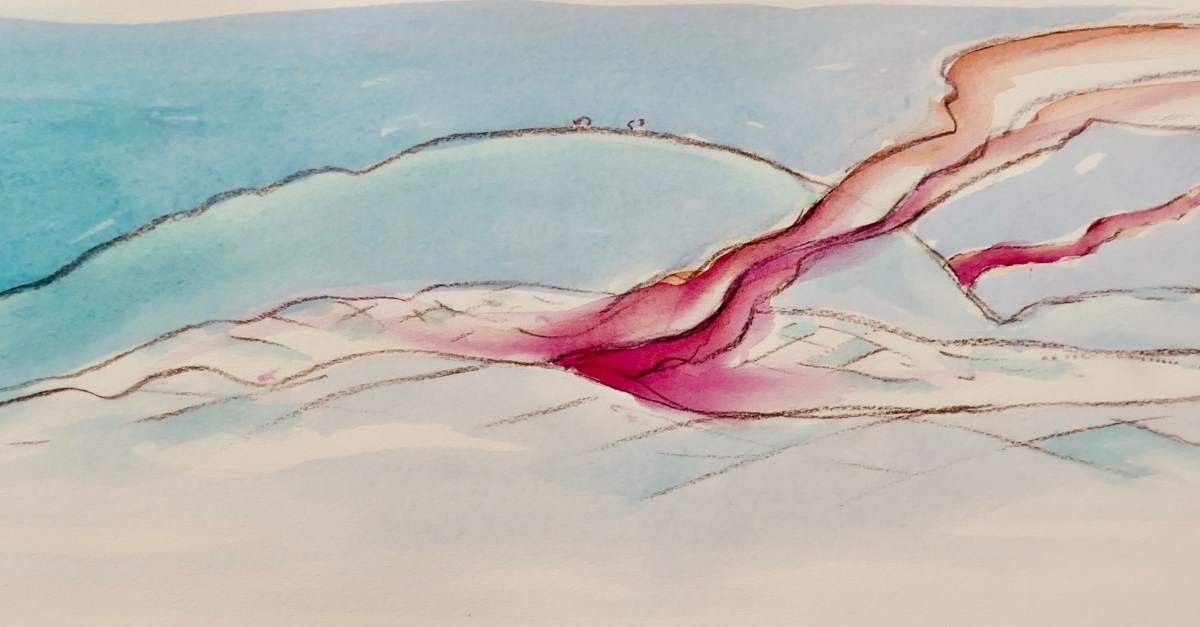
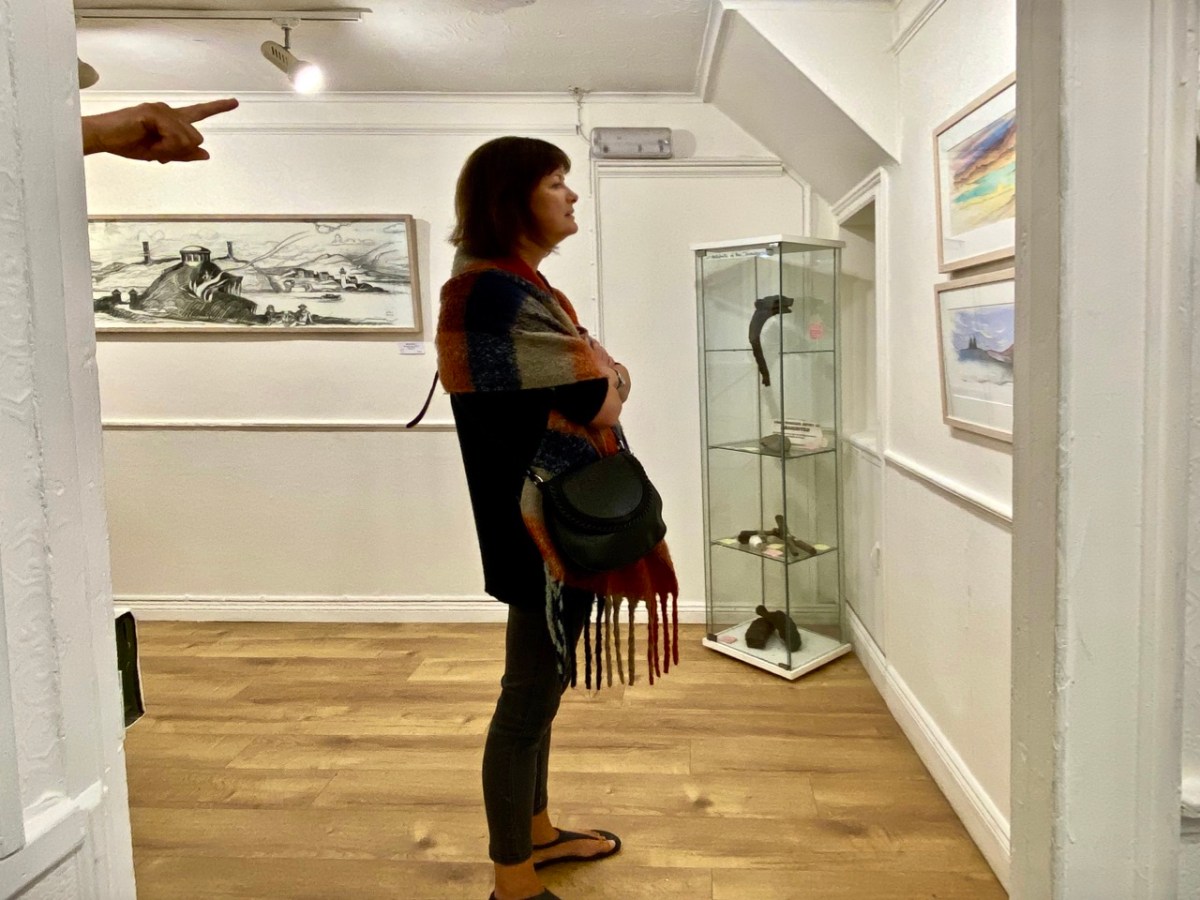
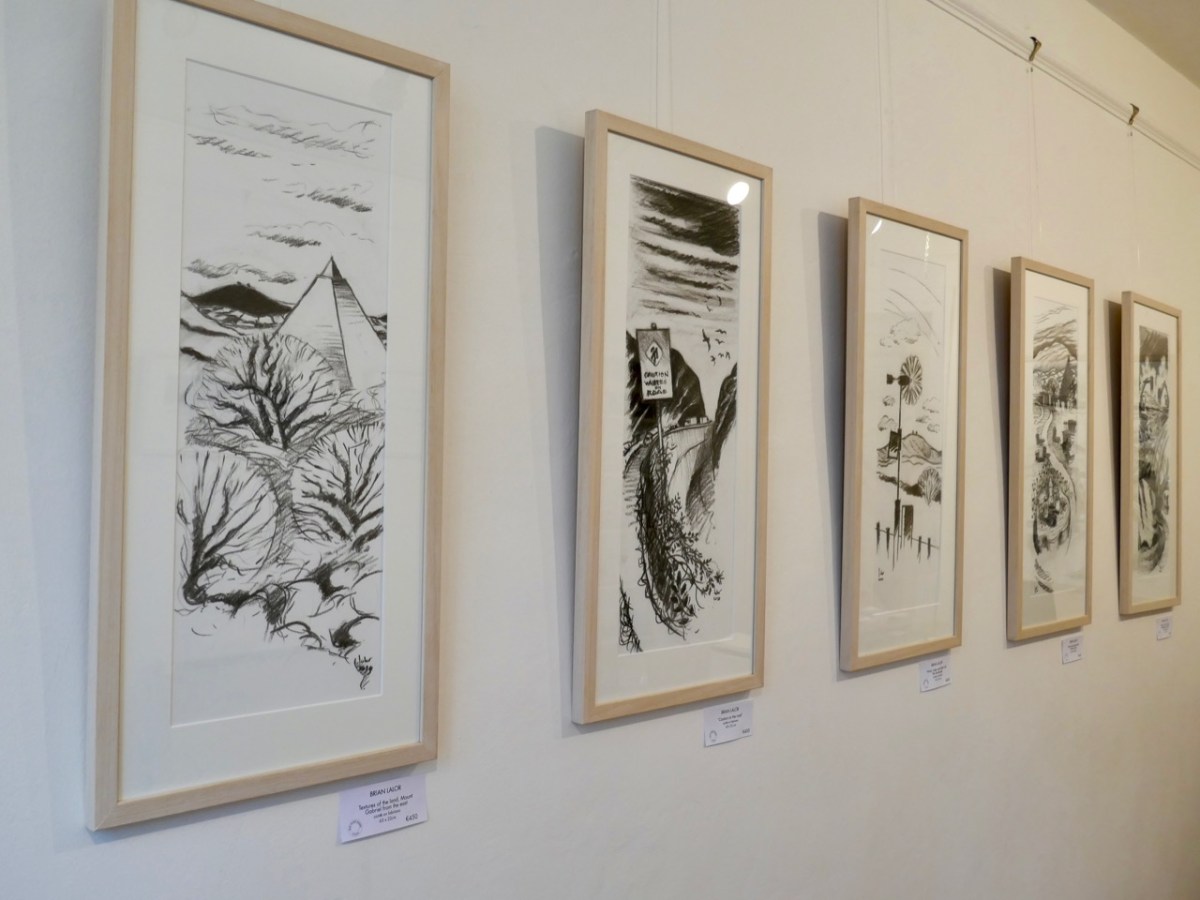
Brian Lalor has chosen to make this peak the centrepiece of his new exhibition, which opened in Schull’s Blue House Gallery at the weekend: Thirty-Six Views of Mount Gabriel. You have to see it. The works are for sale, so it will be impossible, probably, to assemble them as one entity ever again. (Unless, perhaps, in a hundred years time – if there is still an intellectual world in existence – Brian’s genius will be fully recognised and appreciated, and an astute curator will raid collections from all over the world in order to put this canon back together as a centenary project).
The works themselves draw attention to some of Brian’s many artistic talents: conté crayon drawings, exquisite watercolour sketches and linocut prints. They make an impressive whole on the walls of Schull’s eccentric gallery, which is a jumble of smallish rooms, a staircase and landing, with a minimalist shop-window frontage. Circumnavigating the spaces is a revealing and stimulating experience.
Returning to the subject matter of the work, Brian – General Editor of Gill & Macmillan’s mammoth 2003 volume The Encyclopaedia of Ireland – and considered a prime authority on Ireland’s art heritage and its place in world culture, is familiar with artists’ legacies from many other domains. He grew up in a household which contained significant pieces of Japanese art and was au fait from a young age with the concept of ukiyo-e – the floating world. His early awareness of the arts of Japan provided the source of inspiration for this exhibition: Katsushika Hokusai’s Thirty-Six Views of Mount Fuji, woodblock prints which date from the early 1830s. Here are Fine Wind, Clear Morning (upper) and Inume Pass (lower) from the series:
Fuji is one of Japan’s Holy Mountains. Brian’s juxtaposition is brilliant: our Mount Gabriel has to be a holy place. It is named after an Archangel, who is said to have descended to the mountain top to view the unsurpassed beauty of West Cork’s landscapes, the reputation of which had reached to Heaven even back in those days. In so doing he left behind his footprint, which is still to be seen on the summit.
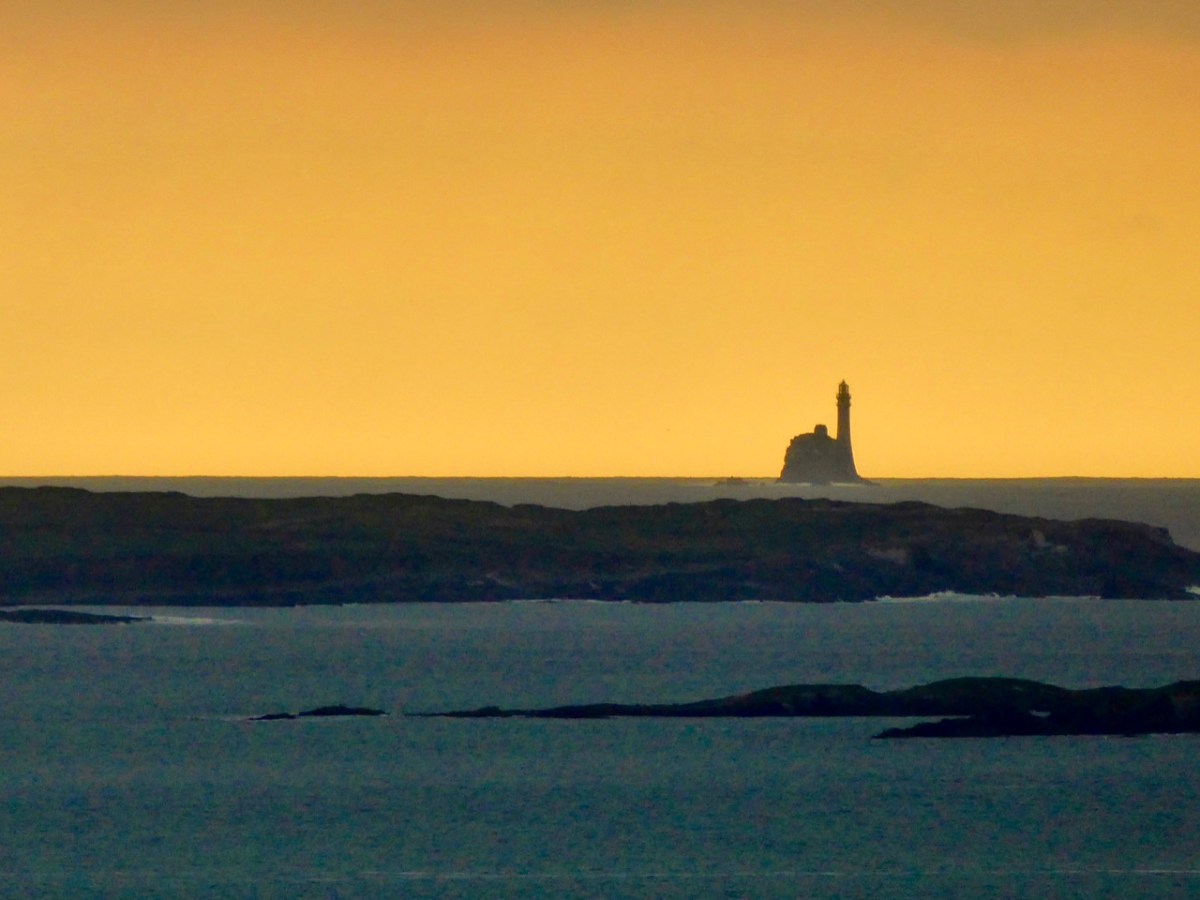
The Archangel was not the only biblical character to visit Gabriel: Satan himself touched down, but stumbled on a large rock. In a fit of temper he picked up the rock and threw it far off into the sea beyond. This caused such a hazard to shipping that we have had to erect a lighthouse on it. Here is Finola’s photographic view of The Fastnet, taken at sunset. For me, it has a suitably print-like quality . . .
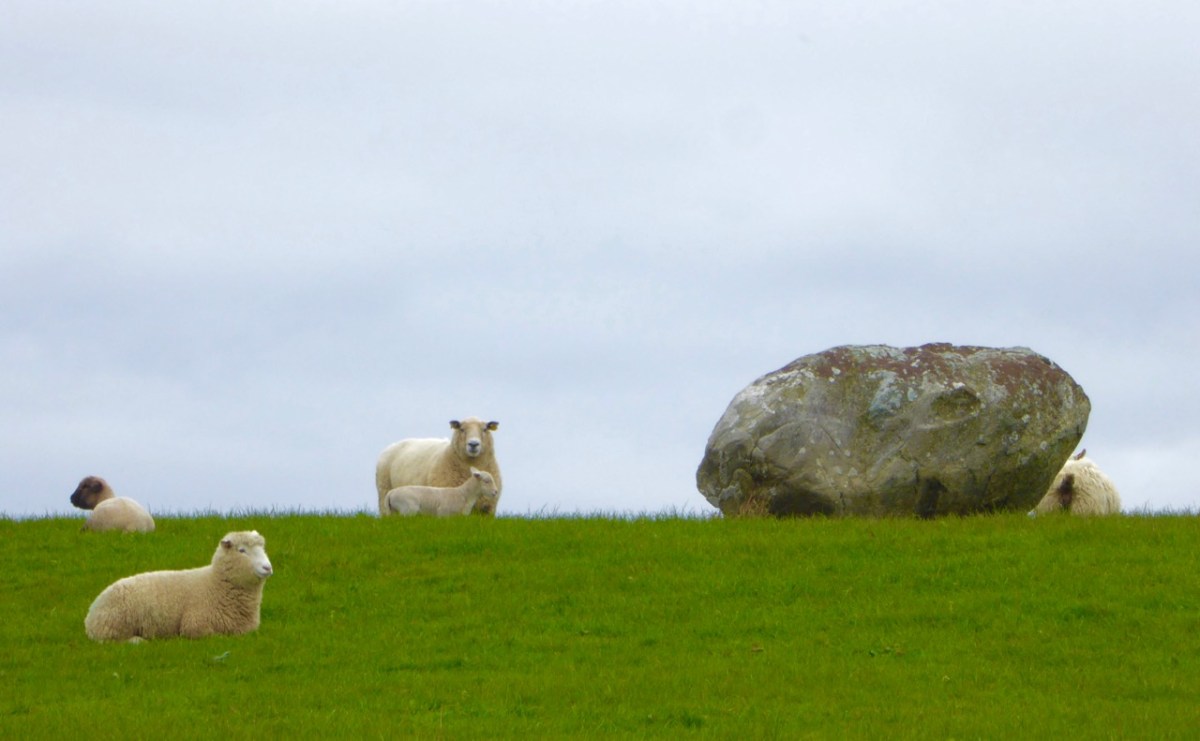
Legends attached to Gabriel include many that attribute Irish heroes to activities on the summit. Finn MacCool, for example, is also credited with throwing large rocks from the mountain, including this fine boulder burial at Rathruane:
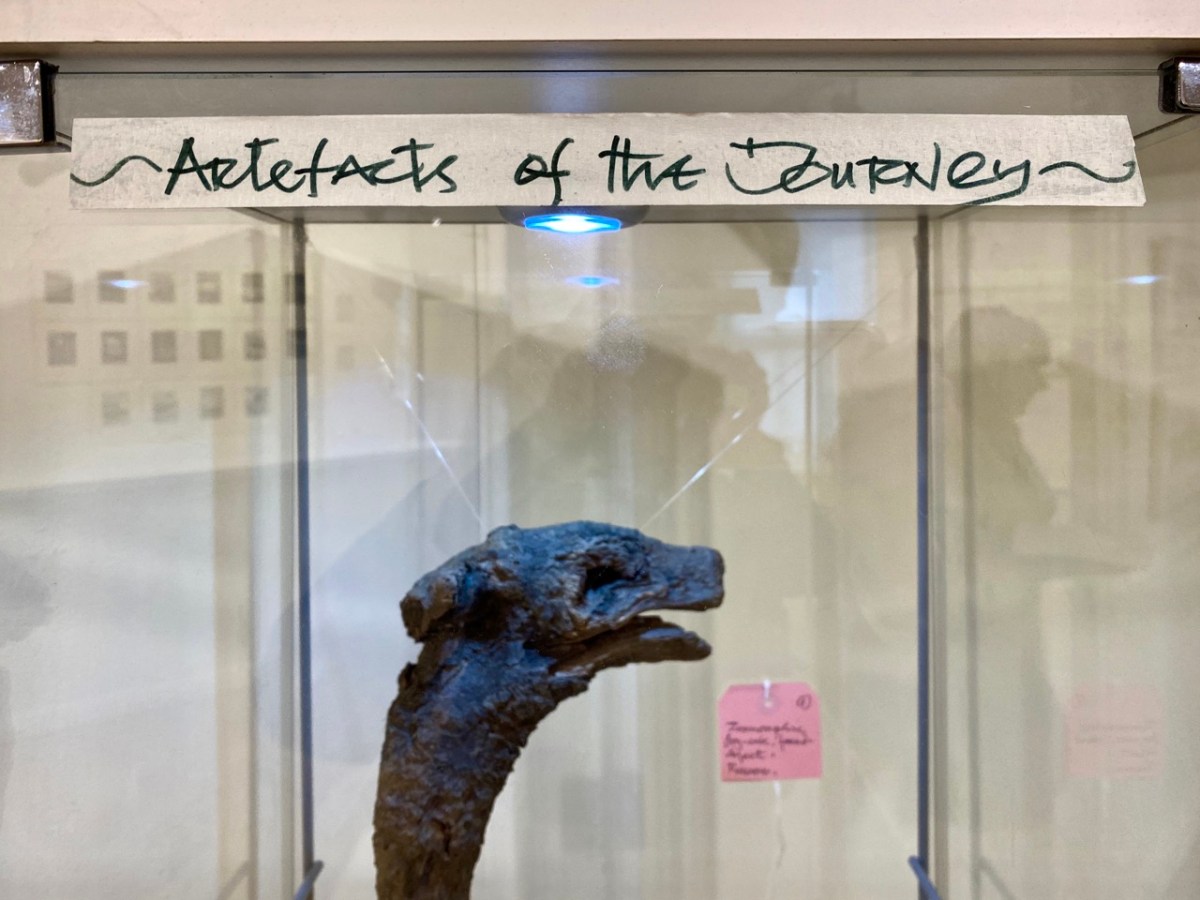
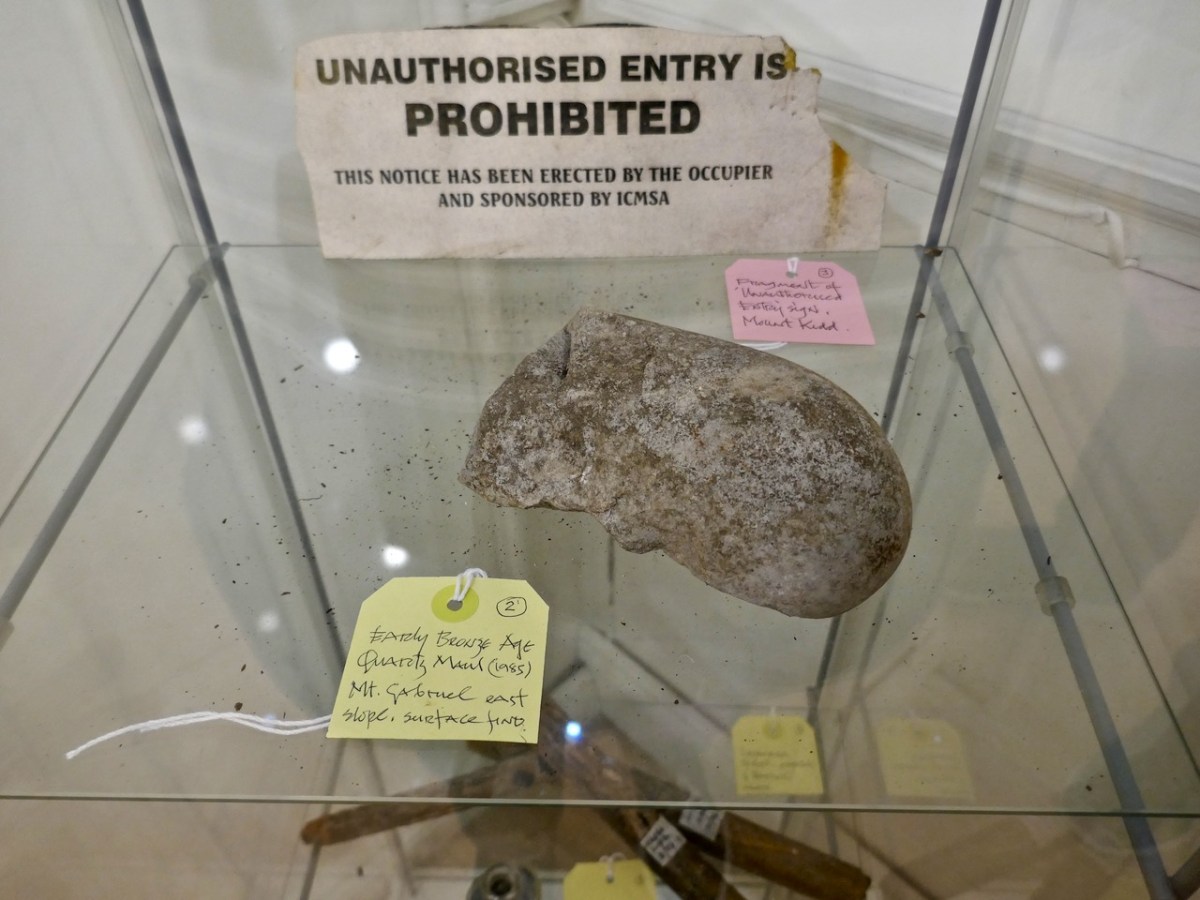
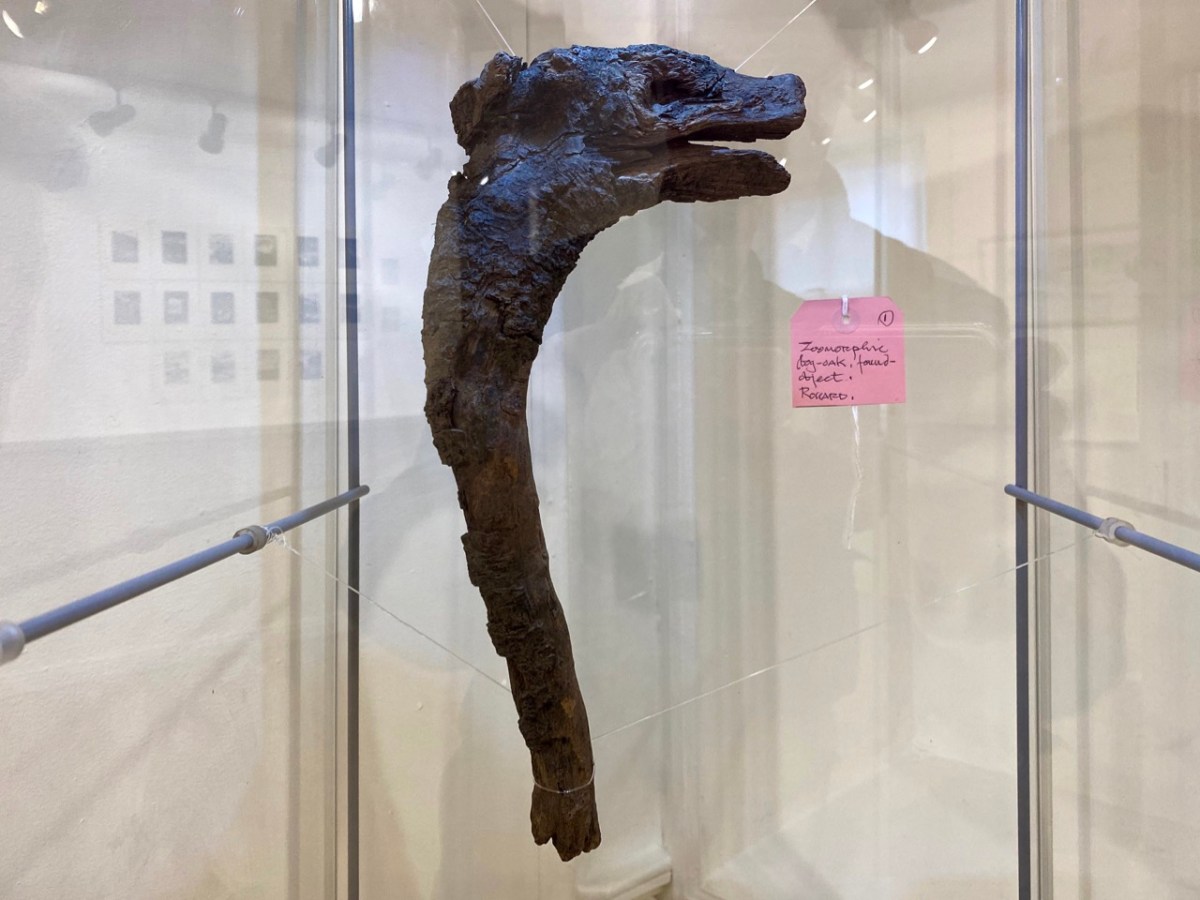
Brian’s observation and humour are not missing from this exhibition. He has included a cabinet of ‘artefacts’ distilled from his own explorations on the mountain. These make reference to the ancient history of the site and its connection with copper extraction in the Bronze Age and in medieval times, and also the twentieth century manifestations of air traffic control technology (known as ‘Gabriel’s Balls’) . . .
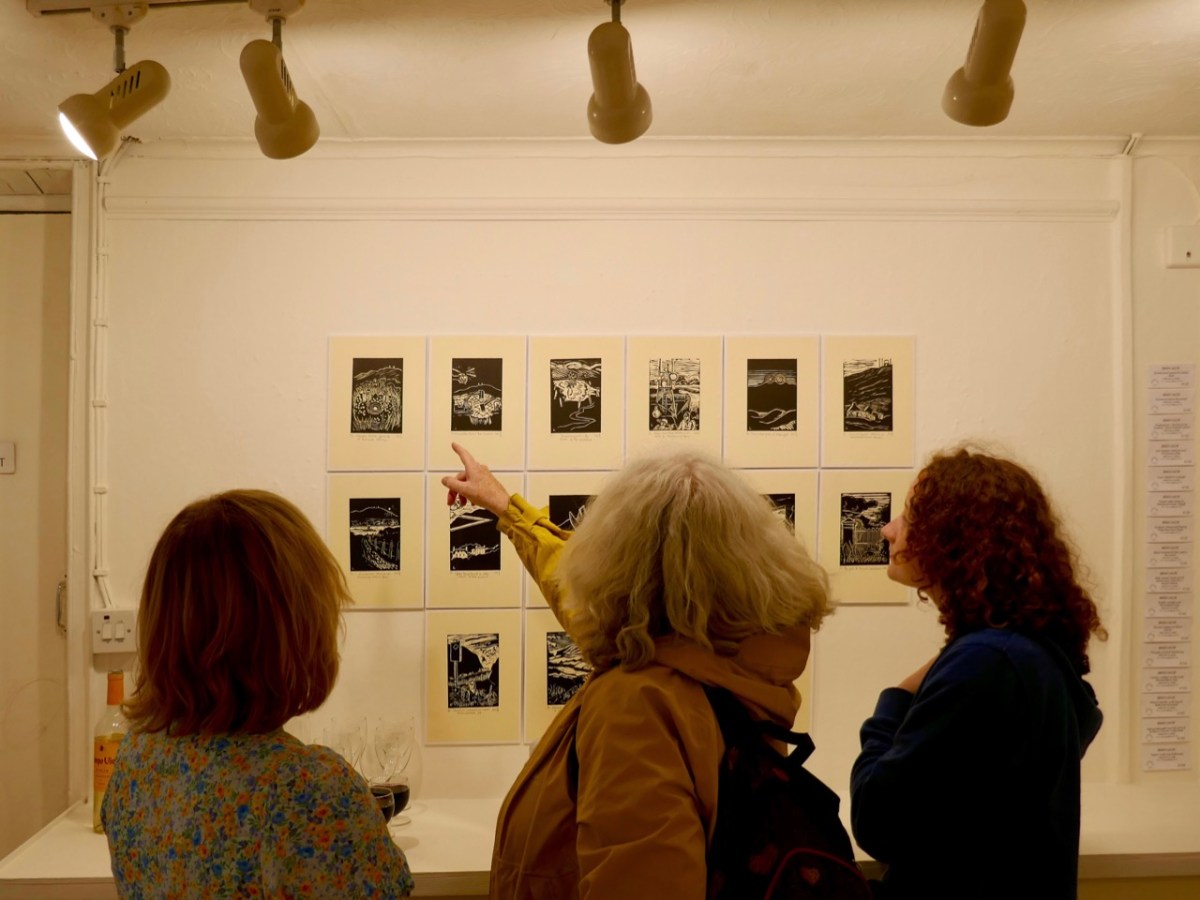
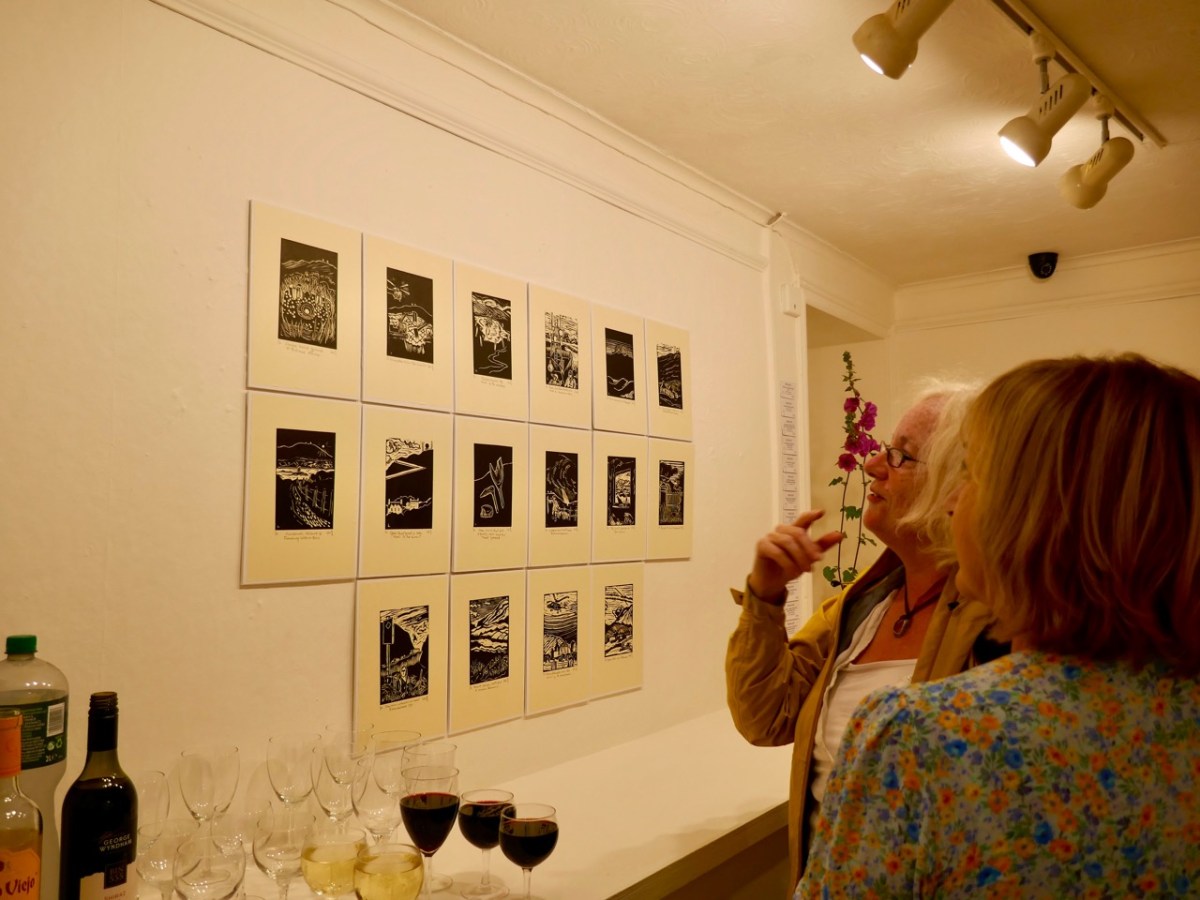
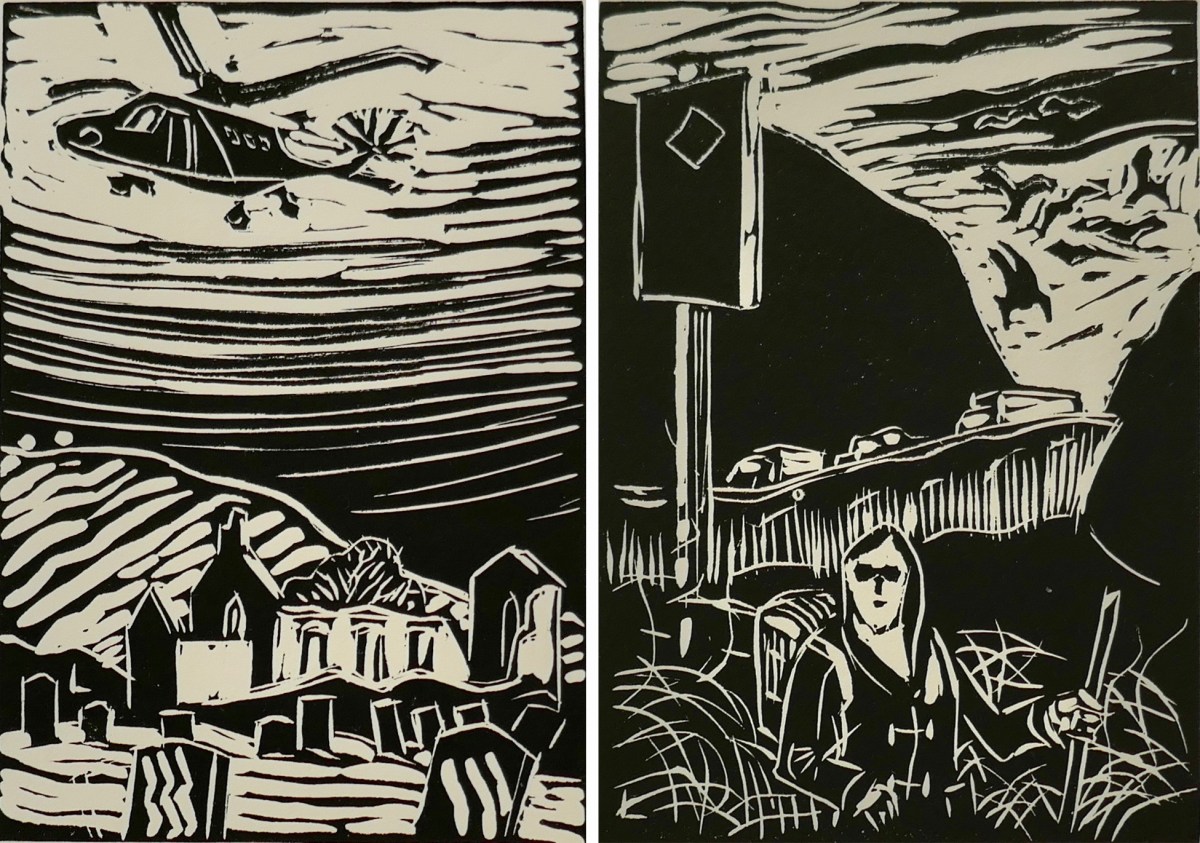
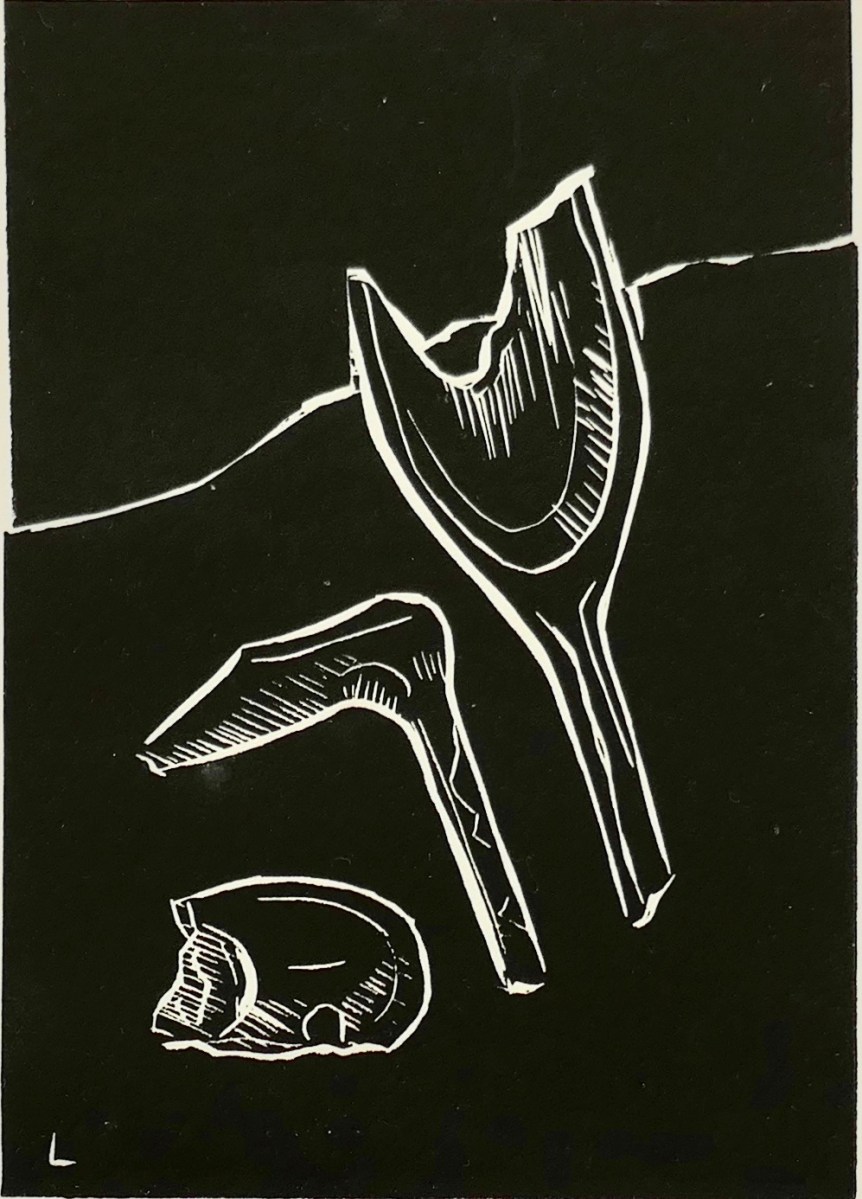
I am particularly taken with Brian’s linocut series – a limited edition of only ten of each print. They provide the ‘fine detail’ in the overall assemblage, and work so well together on the back wall of the largest room.
The detail print, above, shows Brian’s representation of archaeological finds connected with ancient copper mining which have been found during excavations on the mountain.
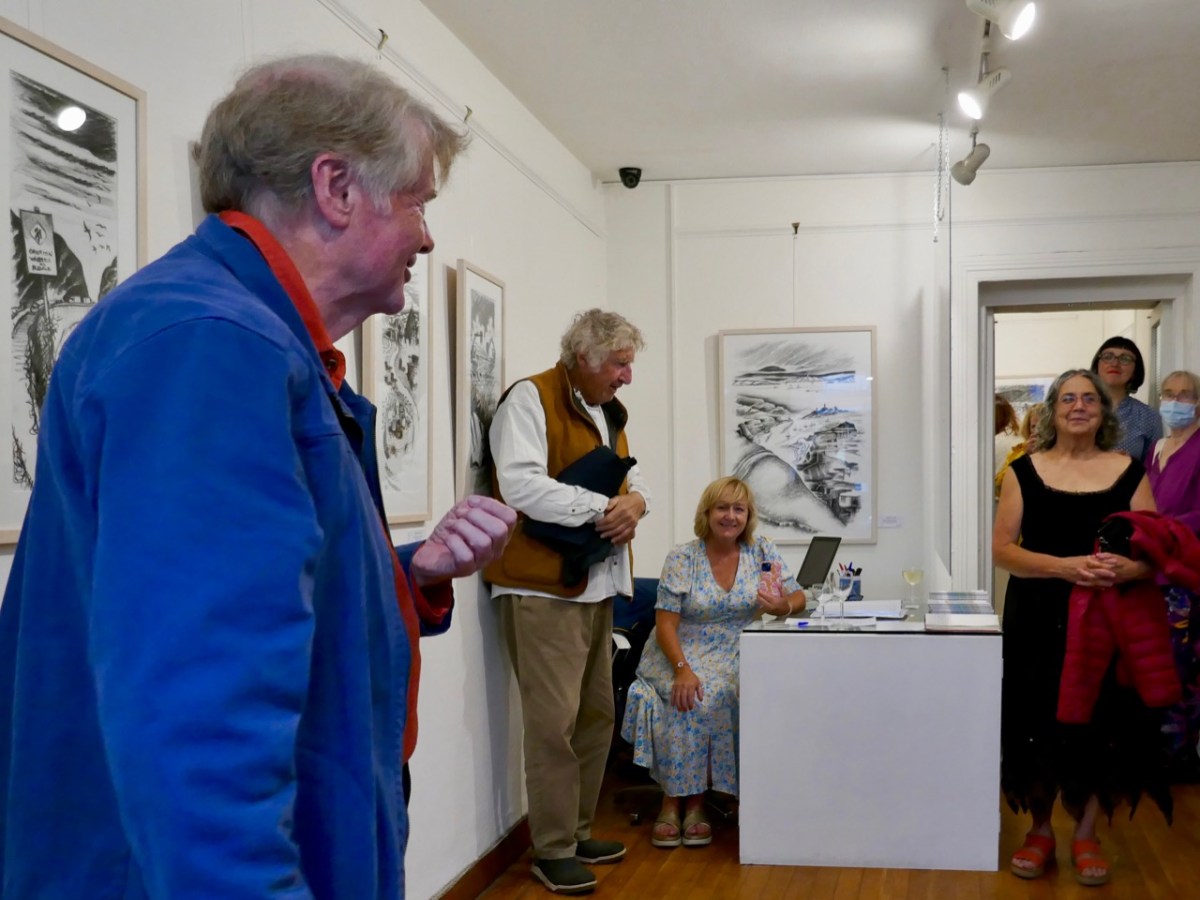
As ‘Guest Curator’ of this exhibition I was delighted to introduce it to an eager audience on the opening night in Schull (above). The show only runs until the 3rd of August, so please rush over in order not to miss it. It is (for me) the highlight of West Cork’s summer offerings!
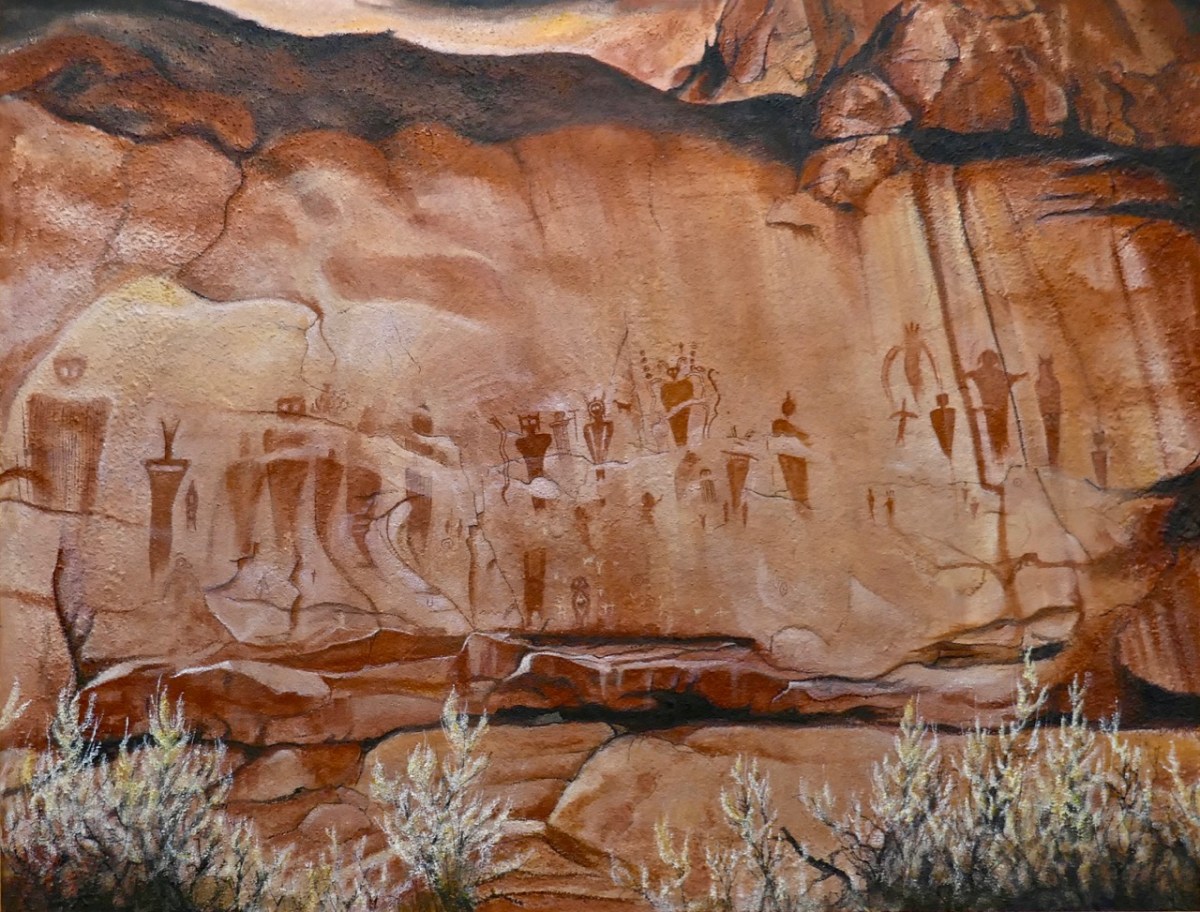
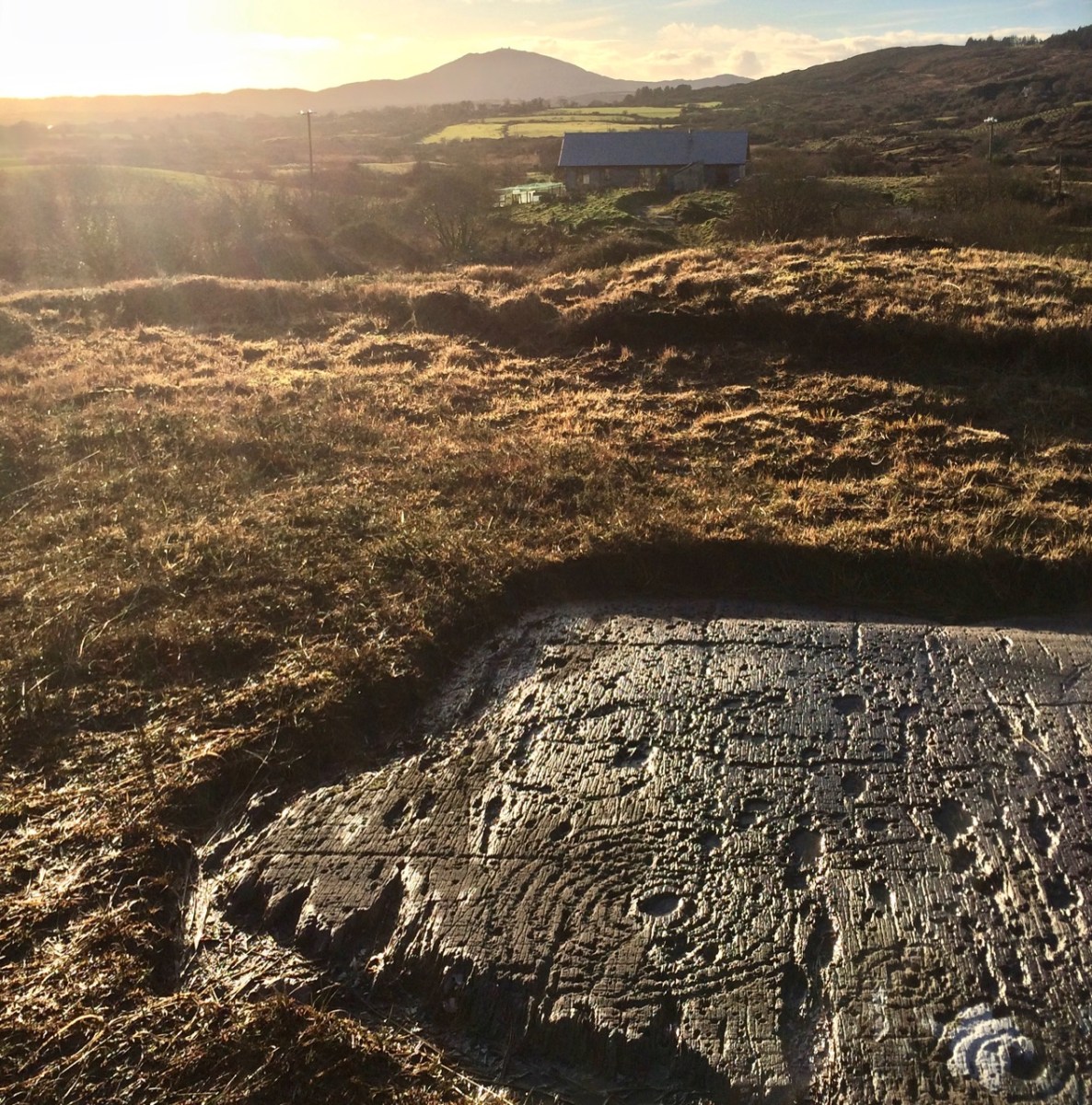
The gallery also has on show some work by other West Cork artists, well worth exploration, so don’t miss them when you go. I can’t resist finishing with one of them: this work (below) by Keith Payne – Sego Canyon. Keith has always been fascinated by ‘Rock Art’ in all parts of the world, and painted this based on his visit to a collection of petroglyphs on a cliff-face in Utah. It’s very apt, I think, to see this work in the context of the Brian Lalor exhibition. Below it is our own photograph of 5,000 year old Rock Art at Derreenaclough, West Cork – discovered only a few years ago. I am personally of the opinion that the siting of this rock in full view of ‘sacred’ Mount Gabriel is purely intentional!
A fully illustrated catalogue is available to purchase in the gallery
I had the great pleasure recently of spending a day in a bog – and because the bog had dried out completely it was indeed a rattlin’ bog, complete with the twig on the branch and the branch on the log…
It was an amazing place – there were several different habitats – waste ground, heath, meadow, woodland, marsh and finally a bog – except there had been so little rain that the whole bog had dried up and we were able to walk all over it. I had volunteered to help out our friends Robin and Sue Lewando with a small plant study of a defined area, while Robin collected samples from the lake for his own research. Afterwards, we spent a happy hour wandering through the dried-up bog, exclaiming over plants you can’t normally get close to and taking photos. Several were new to me – I had never seen Bur-reed or Yellow-cress before, or Star Sedge.
The slideshow is an amalgam of shots from the whole day. Here is the complete plant list, in the order in which you see them in the slideshow:
First three sides - waste ground with Foxglove, Sheep’s Bit, Cat’s-ear, Clover
The Lake
Slides 6 to 10 Marsh Cinquefoil (10 is Sue photgraphing the Marsh Cinquefoil
11 Compact Rush (?)
12 Soft Rush
13 to 15 Common Valerian (with Grypocoris stysi/Mirid Bug - thanks to Margaret Manning for the ID)
16 and 17 Heath Spotted-orchid
18 and 19 Marsh Bedstraw
20 - 22 Marsh Yellow-cress
23-25 Water-plantain
26 Water Forget-me-not
27 and 28 Water Forget-me-not and Spike-rush
29 and 30 Branched Bur-reed
31 and 32 Beaked Sedge
33 and 34 Marsh Speedwell
35 Bogbean
36 Robin
37 Star Sedge
38 Labyrinth Spider
39 Marsh Thistle, 7-Spot Ladybird and Bumble Bee
A weed is a wildflower whose name we haven’t learned yet, in the same way that a stranger is a friend we haven’t met yet. Like the hogweed above – a plant, by the way, that is in the top ten percent of the most nectar-rich and valuable-for-pollinator wild plants, a plant that is also edible by humans and animals – ‘weeds’ are plants we mostly love to hate.
Ah yes – weeds! Those wreckers of manicured lawns and tidy driveways. Those nasty undesirables that must be dug up or, as with the seldom-used holiday home above, Rounded-Up.
But wait – what’s this? All over Ireland people are letting the ‘weeds’ take over! Just look at this fabulous example at the Heron Gallery on the Sheep’s Head (above). It’s like we’ve had a mad rush of blood to the head and are changing life-long attitudes. What has caused this? Was it the pandemic, like we account for so many other changes in our lives?
Pollinators are in decline, with one-third of our 98 wild bee species threatened with extinction from the island of Ireland. The problem is serious and requires immediate attention to ensure the sustainability of our food, avoid additional economic impact on the agricultural sector, and protect the health of the environment.
Working together for Biodiversity: Tales from the All-Ireland Pollinator Plan 2015-2020
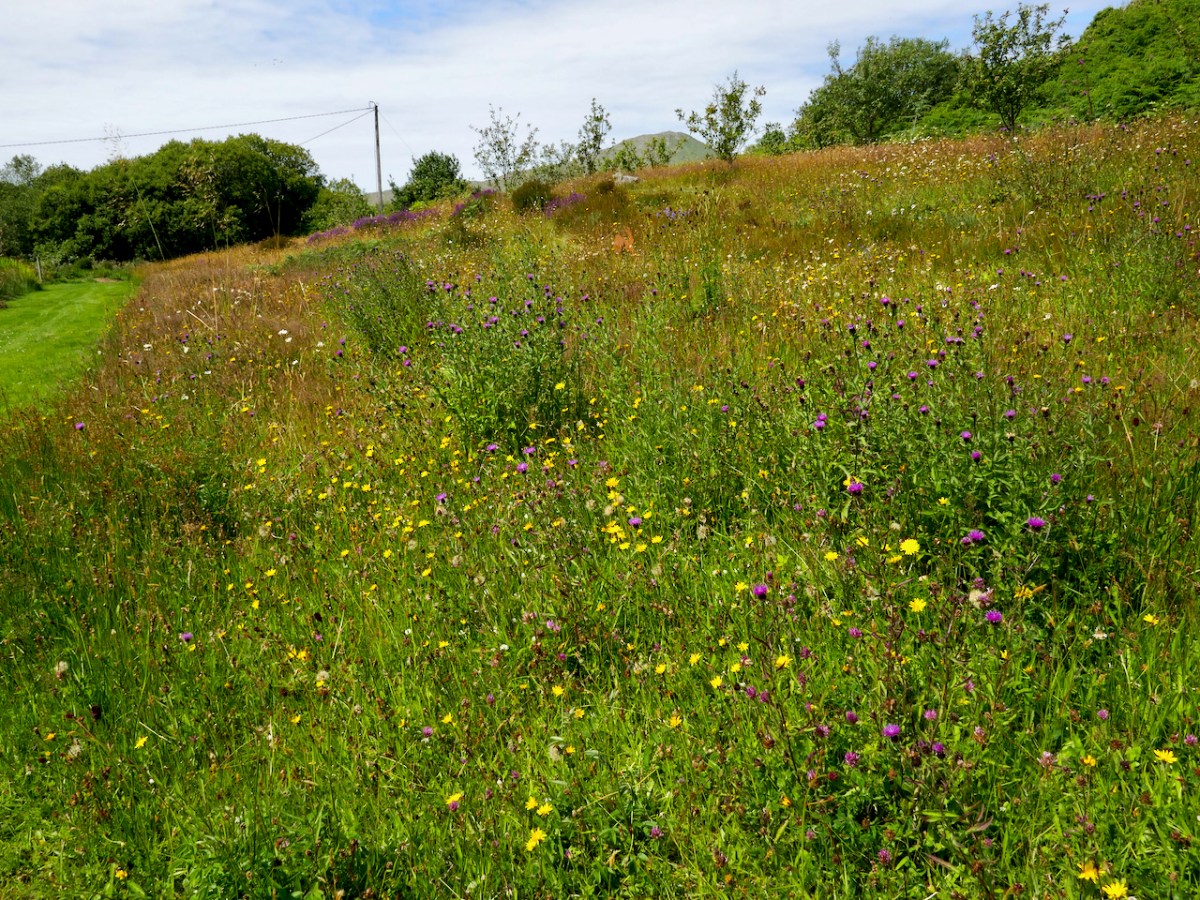
Each of us with any little patch of ground can do our bit too. All you have to do is set aside whatever portion of your garden you’re comfortable with (10%? 50%?) and turn it into a perennial wildflower patch. I’ve been doing this in my garden (above) now since 2017, so this is my 6th year. in 2018 I introduced Yellow Rattle from seeds bought from Sandro Cafolla at The National Wildflower Seed Collection. Called the meadow maker, Yellow Rattle (below) parasitises on grass roots, thinning them out and providing space for other wild seeds to take root. Apart from that, I have had to keep an eye on incursions of bracken and nettles.
The results have been all that I hoped for. Every day I am tempted out to my little mini-meadow with my camera. The rest of the lawn I try to leave as long as possible between cuts and it’s amazing what comes up there too. Take a look at my video, Lying in the Grass, for a sense of the sheer wonder and variety of what has appeared all over my One Acre.
The driveway and all around the house is gravelled and I have resisted the temptation to tidy it up in any way. In return, a huge variety of wildflowers have appeared – Groundsel and Pineapple-weed, Scarlet and Yellow Pimpernel, Silverweed, Cat’s-ear and Autumn Hawkbit, Germander and Thyme-leaved Speedwells, Herb-Robert and Keel-fruited Cornsalad, Dove’s-foot and Cut-leaved Crane’s-bills, Common and Bush Vetch, Sowthistles (Prickly and Smooth), Sheep’s-bit, Sorrels and Chamomile.
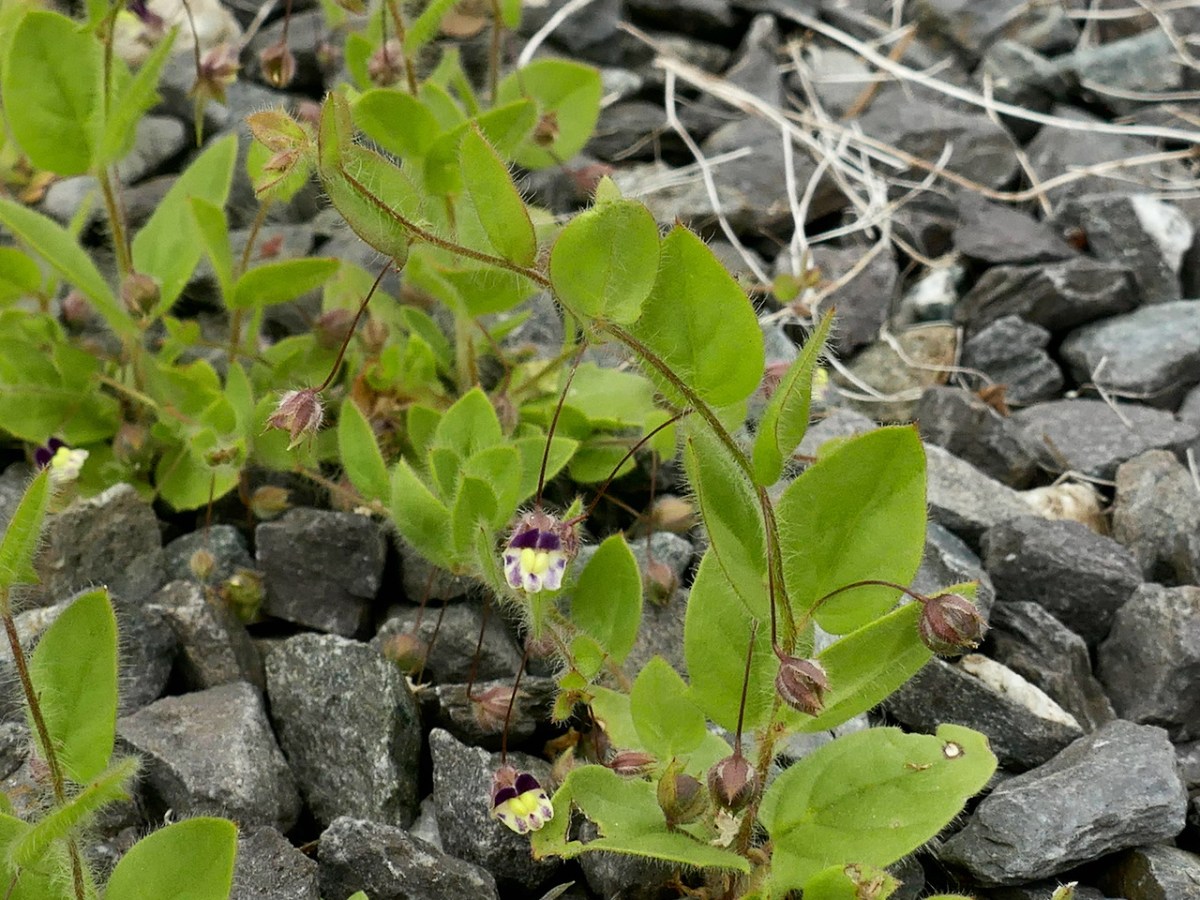
I even discovered a rare little plant popping up in my driveway – the gorgeous and curious Sharp-leaved Fluellen. According to the distribution maps it’s been slowly making its way west from Wexford over the years – but how on earth did it land in my driveway? It’s a mystery like that, that keeps me fascinated with wildflowers.
See what I did there? I named the ‘weeds’ – and naming something gives it presence and personality. Once you know the name, there’s a natural curiosity to know more about the plant itself and to keep an eye on it. Thus, they turn into old friends and your heart lifts as you watch a Painted Lady Butterfly feeding on the humble Knapweed, or a Bumble Bee hover over the vetch, choosing which blossom to settle on.
We need to adjust our notions of what’s beautiful if we are to avoid a biodiversity catastrophe. Each one of us can do something to help. If you want to grow your own perennial wildflower patch, there are simple steps you can take – see my posts on my One Acre (then, One Year on, Three Years on, and Four Years On) for what I have done, or follow the Guidance of the Pollinator Plan.
Here’s what NOT to do – don’t buy ‘Bee Bombs’ or packets of ‘wildflower mix’ seeds. As this excellent paper puts it: Wildflower seed mixtures do not help address biodiversity loss. Rather, they cause further disruption to what remains of the natural environment. Follow best practice – mow once a year and remove the cuttings, try to keep down nettles, dock and bracken (and Ragwort if it’s threatening to take over) – and then let it be. Every now and then, go lie down in the grass beside it and listen for buzzing.
And if you’re a keen gardener and want to just make your garden more pollinator-friendly – there’s a guide for that too!
Welcome to the UCD Library Cultural Heritage Collections blog. Discover and explore the historical treasures housed within our Archives, Special Collections, National Folklore Collection and Digital Library























 Roaringwater Journal