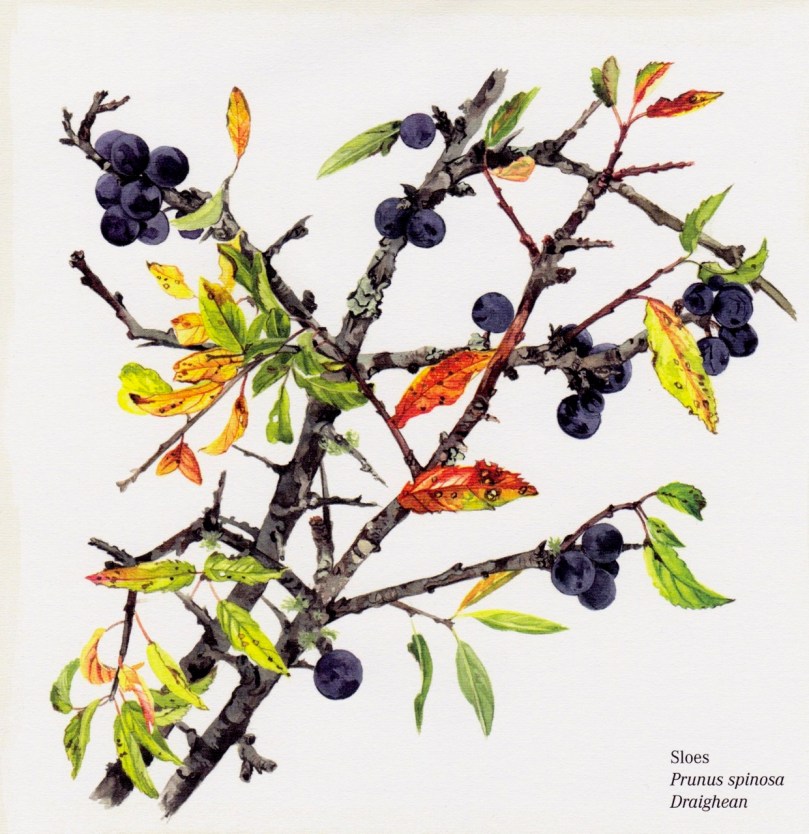
It’s Been Five Years! Finola’s Favourite Posts

I can hardly believe it – we’ve been doing this for five years now and we’re nowhere near running out of ideas for posts. And have you read Robert’s post? Imagine being called a 21st Century Robert LLoyd Praeger! Thrilled. But in fact as I dip into Praeger again I recognise in us the same impulse he had – to wander the land and discover all that it has to offer.

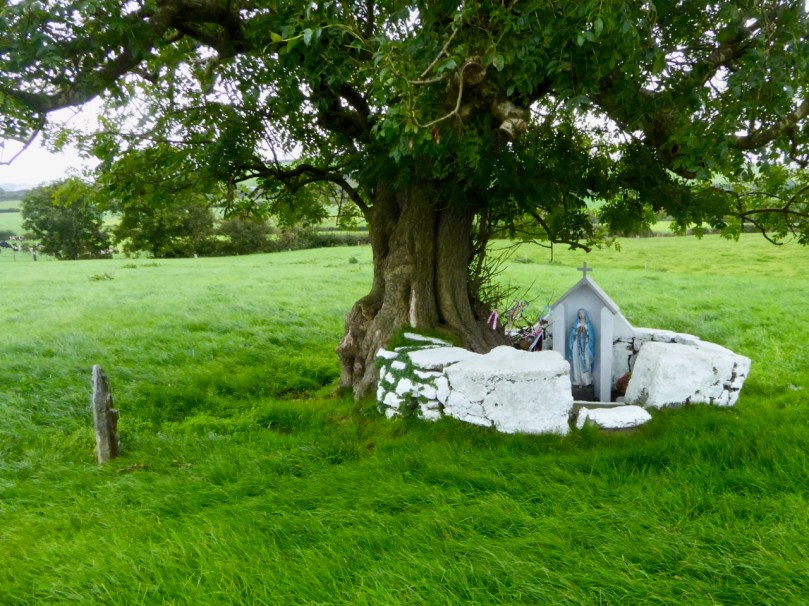
Amazing what you stumble across in the countryside, like this holy well and its offerings

One of the wonderful things about blogging like this is how much you LEARN every day, about Ireland, our neighbours, the ground we walk upon, the history and archaeology to be discovered around every corner, the wisdom of country people, the humour and expressiveness of Irish speech, the breathtaking beauty of the landscape. So where on earth to begin?

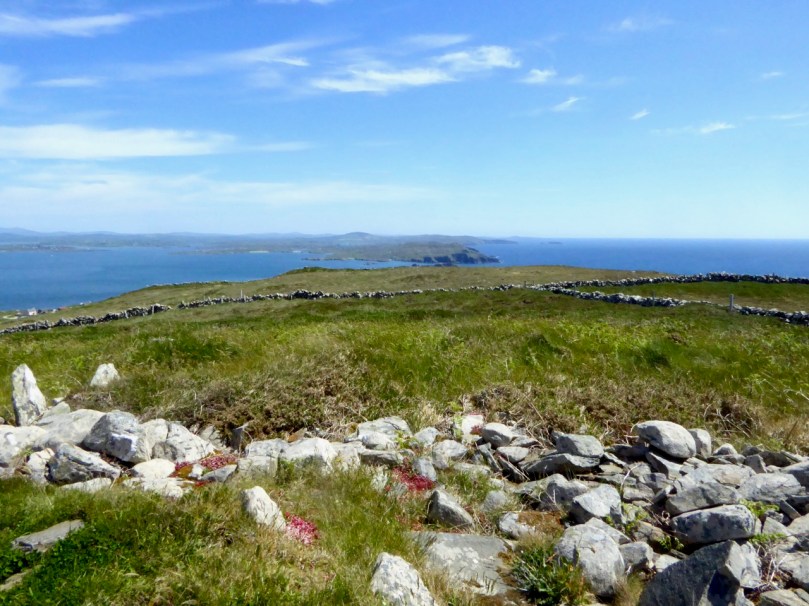
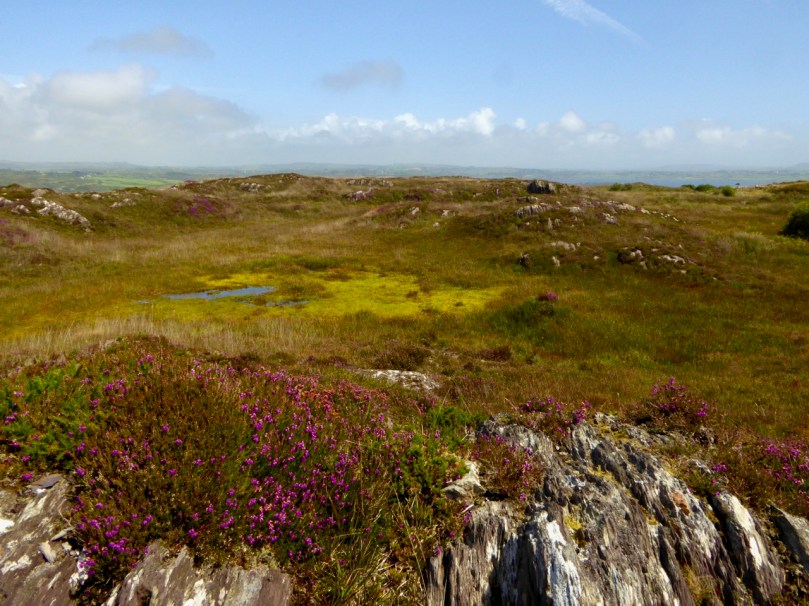
Our interest in archaeological sites led us to hike to the highest point on Cape Clear Island to see the sparse remains of a neolithic passage grave – and what a spectacular view there was from it, towards Sherkin Island and all the way down the coast of West Cork

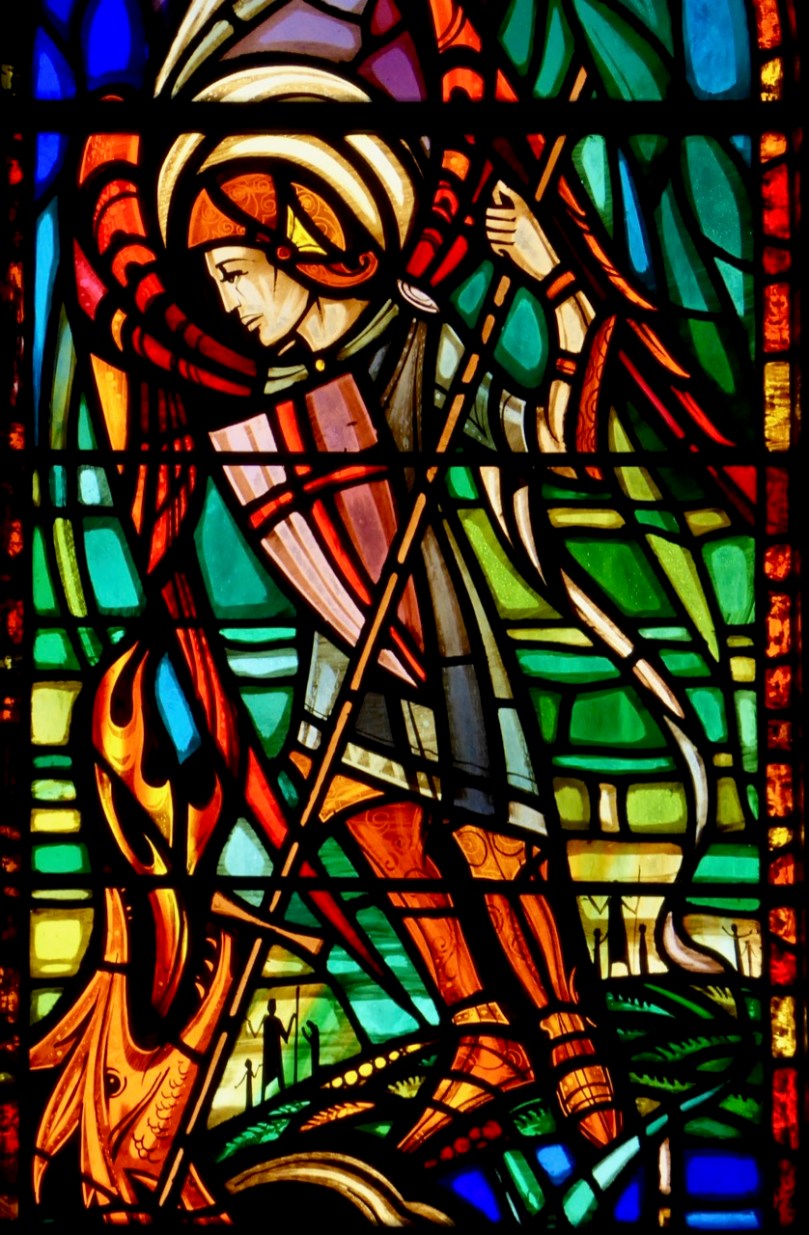
Like many, I sat in churches as a child unaware of the architectural splendours around me. One of the delights of returning as an adult is discovering Irish stained glass, really seeing it for the first time. Harry Clarke, of course, is always a favourite, but I have been thrilled to discover other artists too: Richard King, George Walsh, the artisans of the Tower of Glass. There will be lots more posts about stained glass in the future as I unearth more treasure.

A recent discovery, George Walsh windows in a rural church in West Cork. This is his rendering of the Archangel Michael defeating the devil as a dragon

Going back to my roots as an archaeologist has been an extraordinary journey – so much has changed, so much has not. I started out in archaeology in the 70’s, although life got in the way of that career eventually. It was a small profession then: it exploded in the 80s and 90s with the advent of huge building projects, then contracted again when the recession hit.

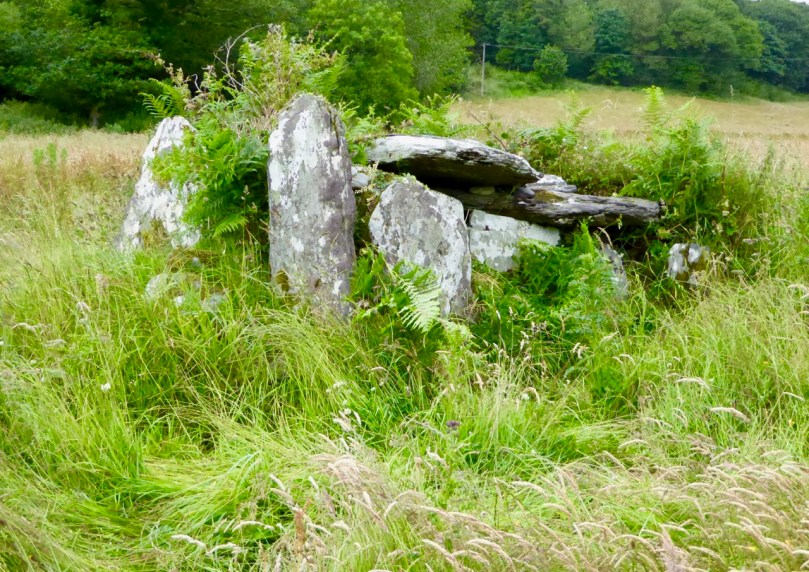
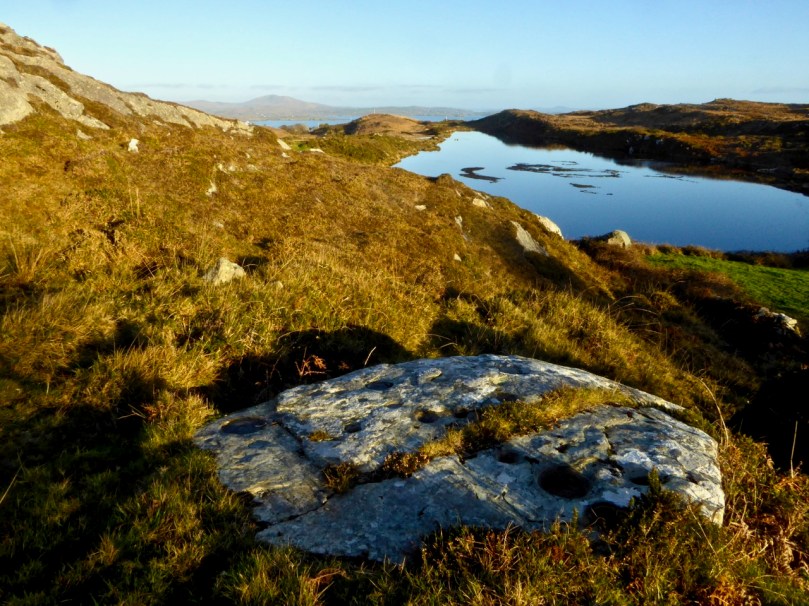
I love the quiet little sites you find when you least expect them – this is a wedge tomb in the middle of a field. It has cupmarks all over one of the capstones

I have gone back to researching prehistoric rock art and finding that, while some excellent work has been done in this field over the last 40 years, there is a lot of scope still for an independent researcher to contribute to our appreciation of this little-known aspect of Irish prehistory. Along with our exhibitions, I’ve written several posts (not all of them happy) on this topic, and we are currently working on a paper for the Journal of the Bantry Historical and Archaeological Society on a special group of rock art panels at Ballybane.

Castlemehigan, one of our favourite rock art sites, with views right back over the Mizen Peninsula to Mount Gabriel

When I studied at UCC under Professor O’Kelly the emphasis was firmly on prehistory and we spent little time on medieval structures (or later ones, heaven forbid!). But when you are free to pursue whatever tickles your fancy, you find yourself wandering down a variety of rabbit holes. I became fascinated with Romanesque ecclesiastical architecture and with the tower houses (we just call them castles) that dot the countryside around here and the later iteration of the Big House – fortified manors. Visiting these intriguing ruins all over West Cork (and Ireland) has given me a whole new appreciation for how we lived and what we believed in the past.

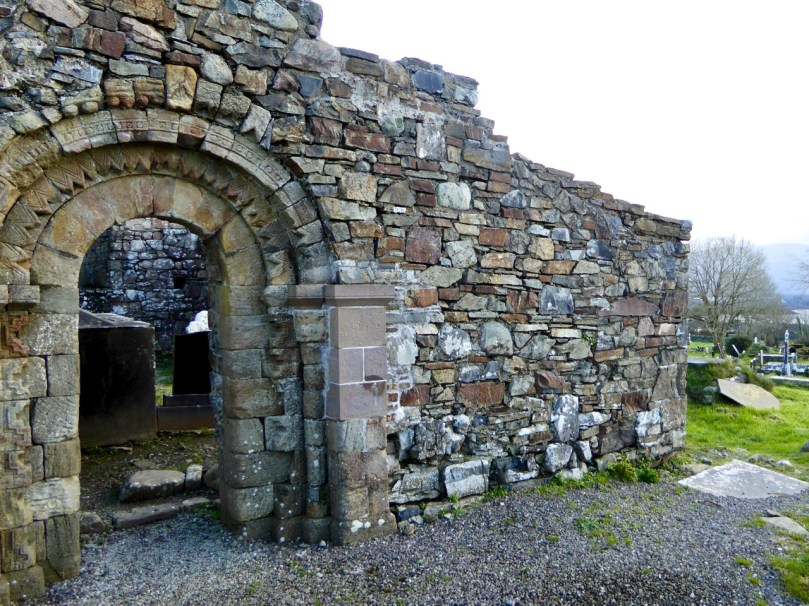
This is the ruined romanesque church of Aghadoe in Killarney. It’s got this lovely doorway, but what makes it particularly meaningful for me is that my great-grandparents are buried in the graveyard it stands in

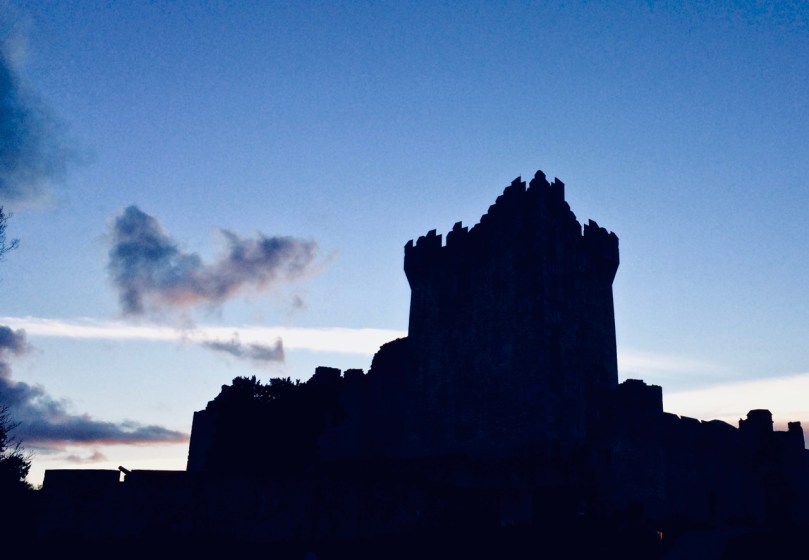
Ross Castle in Killarney against an evening sky

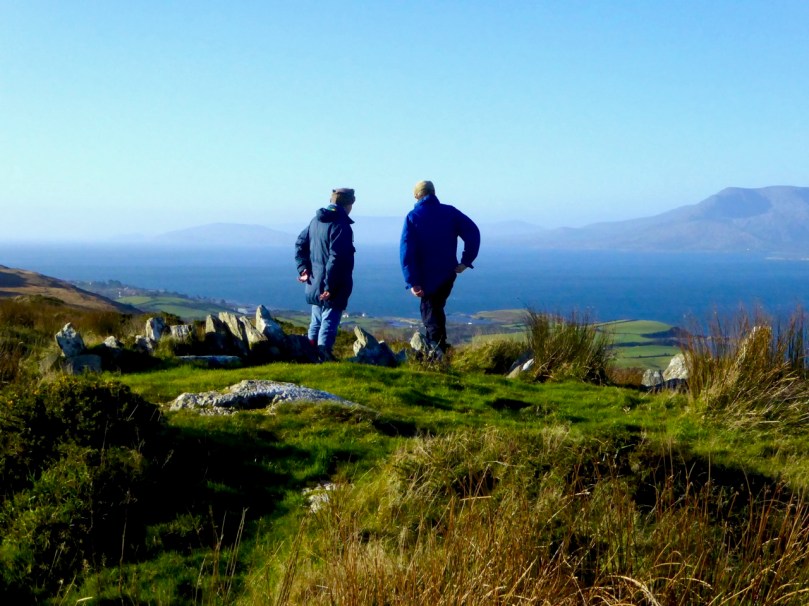
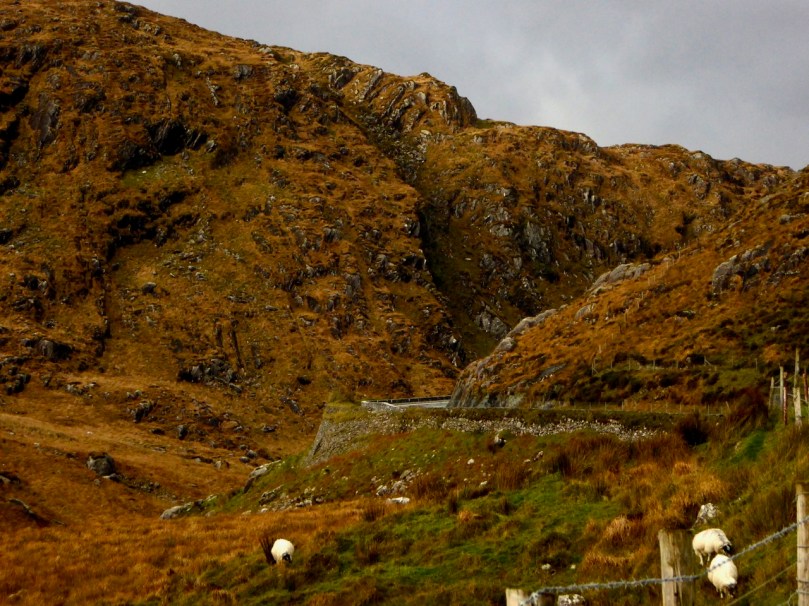
Living in West Cork is great FUN – there is always something to do and a new adventure around the corner. Many of the adventures we’ve had have been shared with our friends and fellow bloggers Amanda and Peter Clarke (Holy Wells of Cork and Hikelines). Visiting holy wells has introduced us to parts of Cork we might never have seen, to obscure saints with fascinating backstories and to folk practices that endure in the deep countryside. Walking the Sheep’s Head (my lead photograph, top of page), in all seasons, reminds us that you don’t have to go far to be immersed in jaw-dropping scenery and reminders of our ancient and more recent history.

The holy well of St Teskin, an East Cork saint

Lest you think that this is all sounding a bit academic, the posts that have been most fun to write were the ones on how we speak around here (and how you, too, can learn the basics of West Cork lingo), the ones in which I lamented my encounters with Irish bureaucracy, especially when it came to my driver’s license!

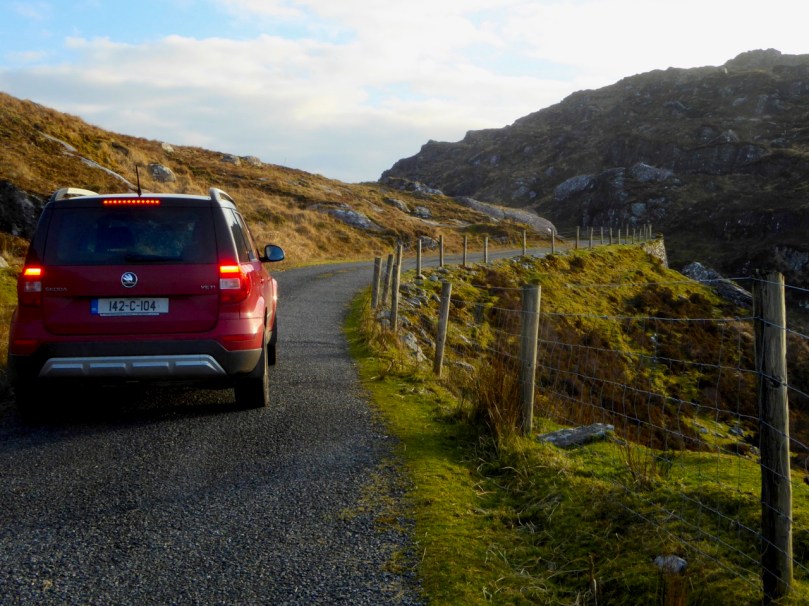
I still haven’t calmed down about the driver’s license – what they put me through, when I could have been driving THIS!

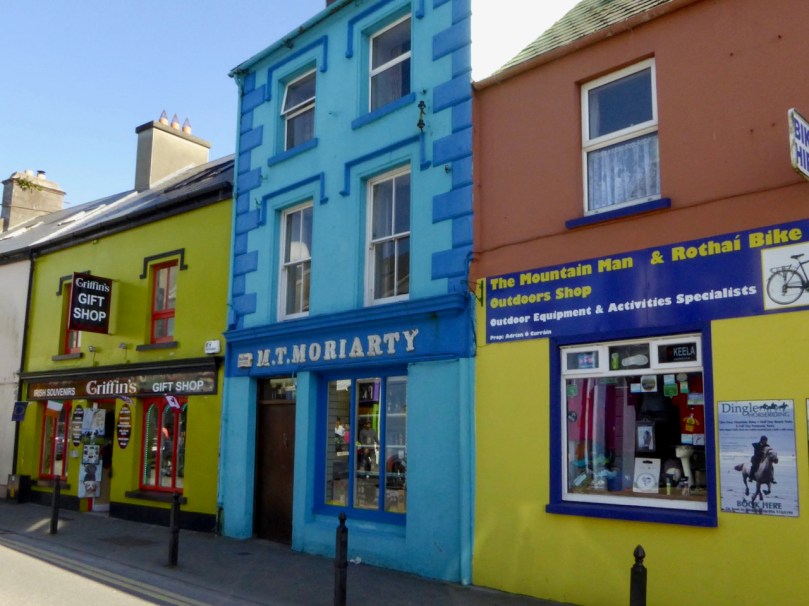
And I loved doing the posts about the tradition of painting our houses in arresting colours. With the colourful houses series, I feel a bit like a chronicler of a vanishing tradition – each time I look for one of my favourite pink or lime creations it seems to have been repainted a ‘tasteful’ variant on beige. Long live those brilliant colours – we would be poorer without them!

The town of Dingle is proudly keeping alive the tradition of painting each building a vibrant colour. – it’s a feast for the eyes

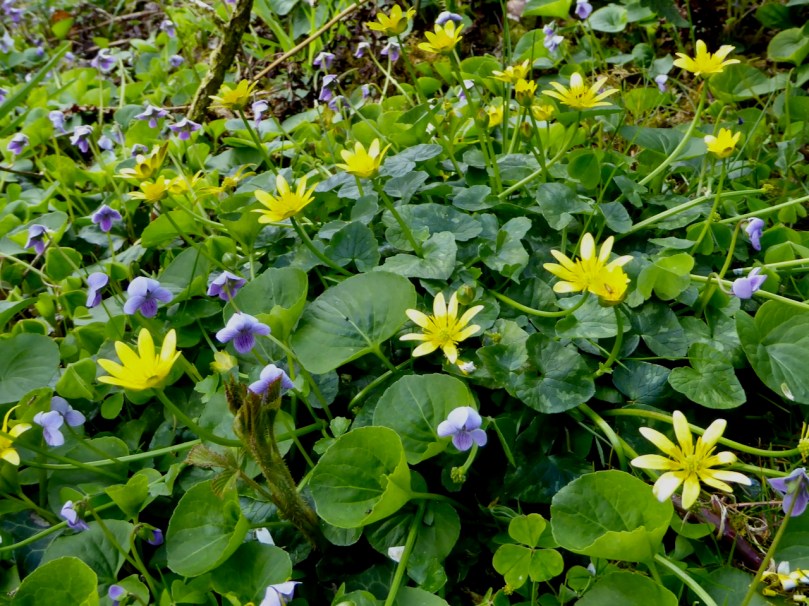
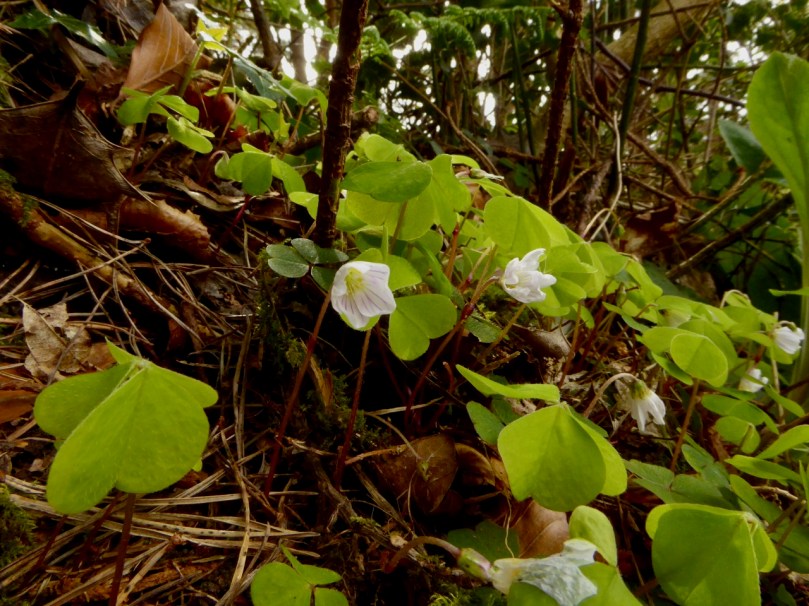
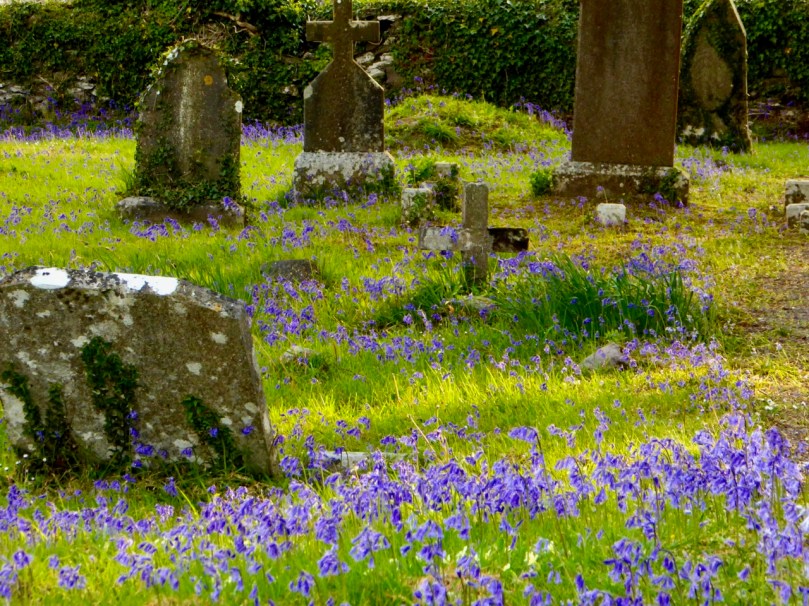
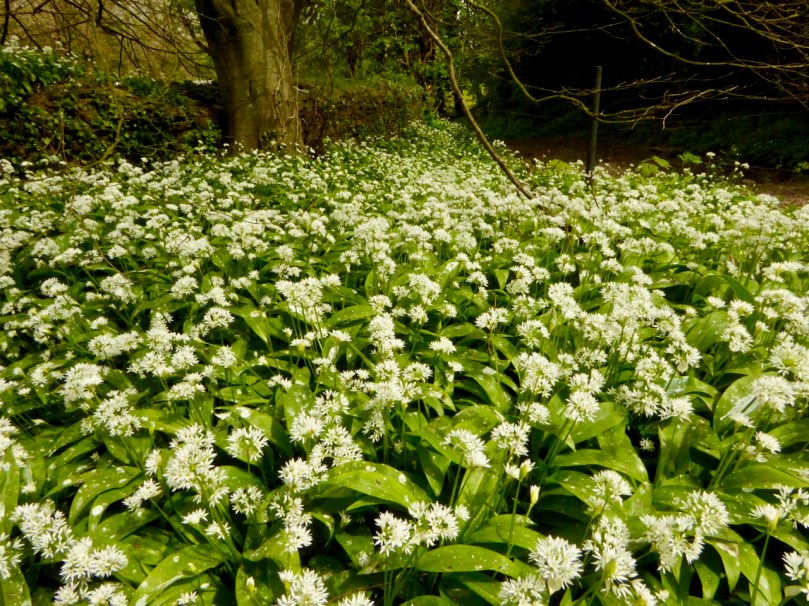
Finally, one of my greatest joys in the last couple of years has been to go for a walk with my camera and photograph the abundant wildflowers of West Cork. From someone who barely knew a daffodil from a daisy, I have developed a passion for the natural glories I see in the hedges, fields and yes, waste grounds, around me.

Just a typical roadside verge in West Cork

We adore West Cork, but we are also fearful for it as we see the pressures farmers face to make their land more and more productive. Inevitably, this means bringing in a rock breaker and turning the field into a mono-culture grass carpet. What we lose in this process – we humans, the bees and insects we depend on, the birds, and our heritage – is incalculable.

This tiny raised bog is home to some very interesting flowers, including the carnivorous Sundew

Here’s to many more adventures!

With friends like Susan Byron of Ireland’s Hidden Gems, or with my favourite travelling companion and blogging buddy, Robert!

Kilcoe Studios – Dedication and Passion

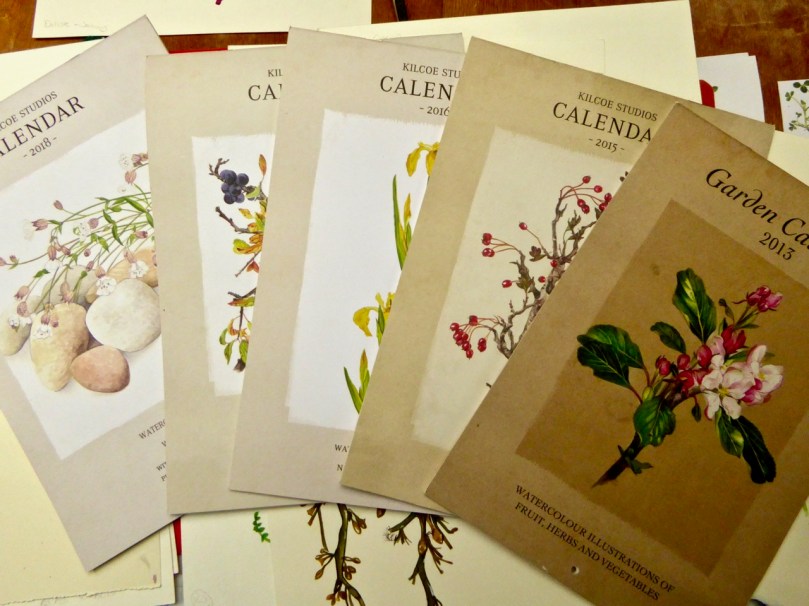
Every year I’ve pounced on the Kilcoe Studios calendars as soon as they come out, and bought their exquisite cards. Recently I met their creator, Sonia Caldwell and discovered that the studio is quite close to me. I told Sonia that I’ve long been an admirer of her work and asked if I could visit her in her studio and talk to her about her inspirations. In the process I discovered a dedicated and hard-working artist and sculptor and a fellow wildflower lover. *

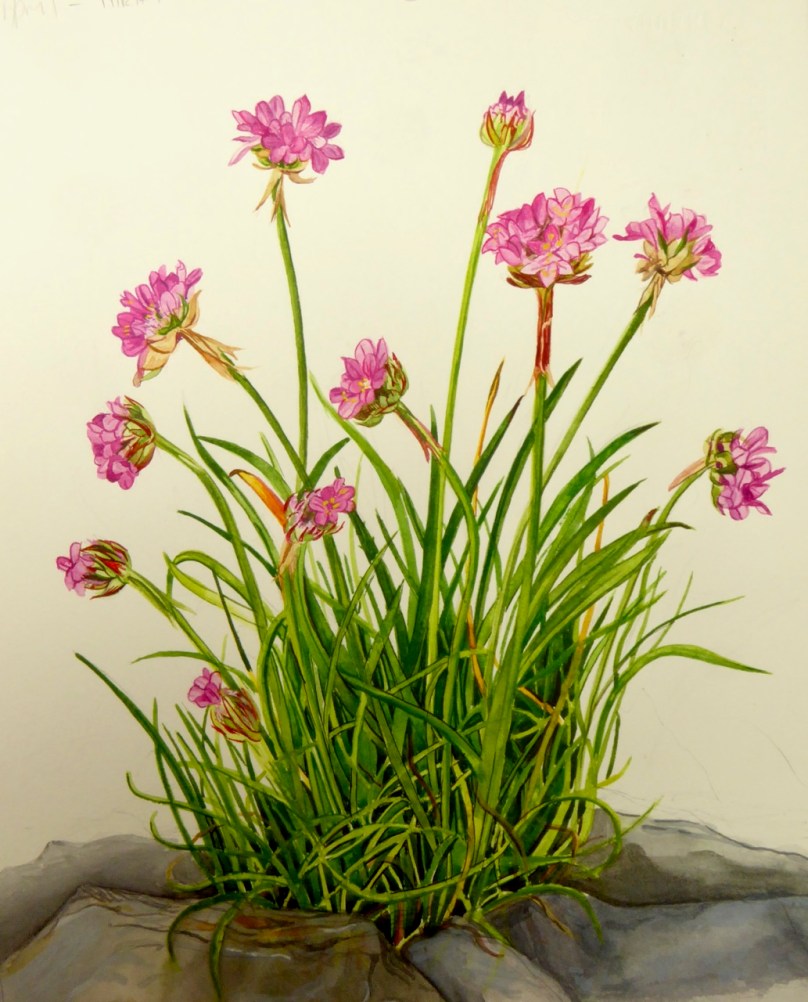
Thrift, or Sea Pinks

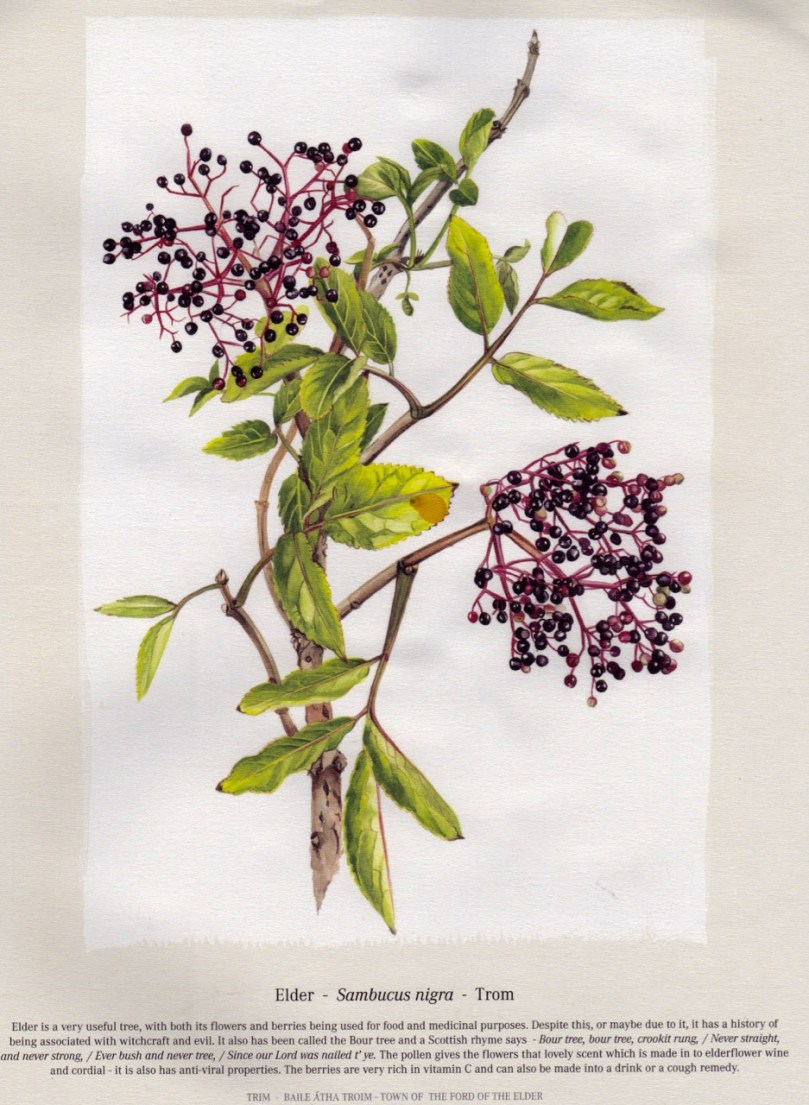
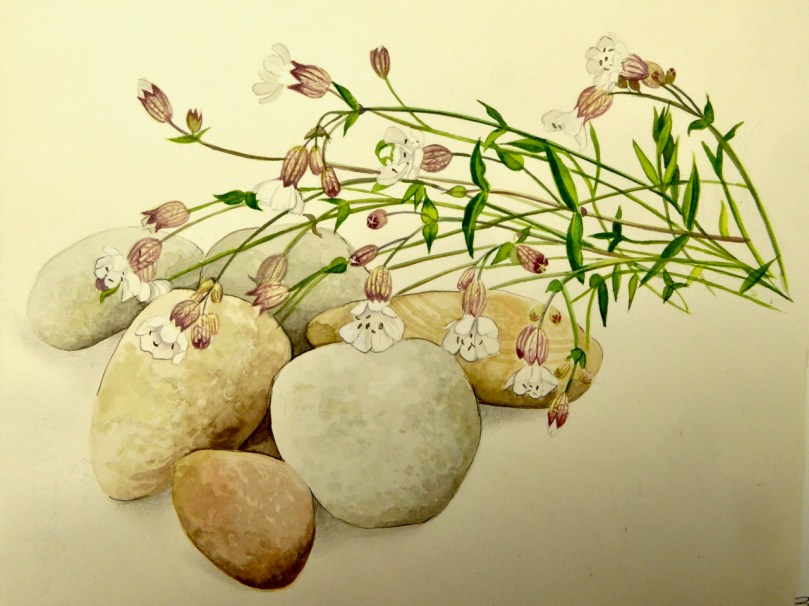
Sonia’s botanical artwork is meticulous and yet avoids mere illustration. Her colours are delicate but true and she insists on live models – you just can’t get the detail you need from a photograph, she asserts.

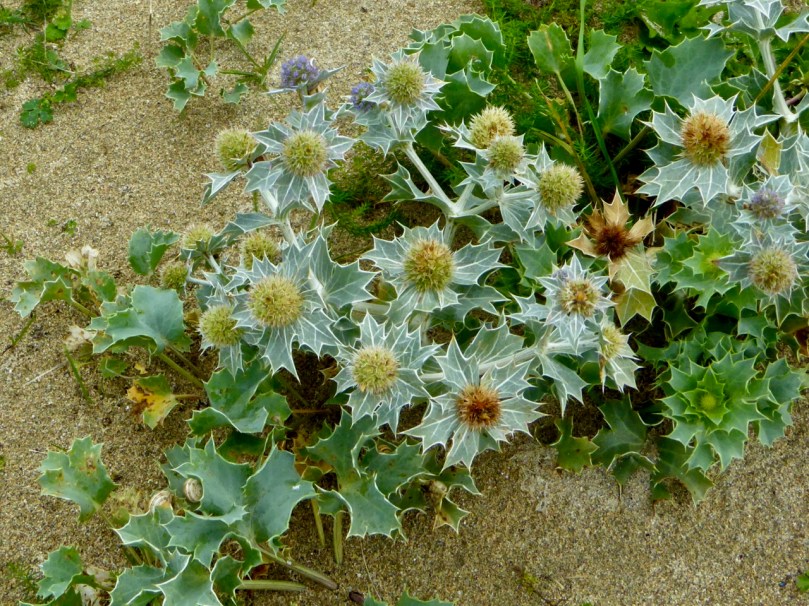
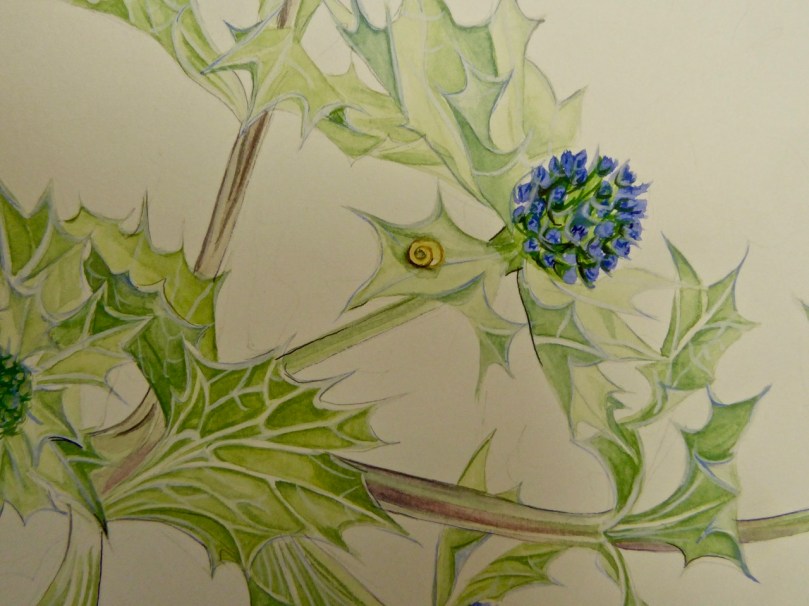
Sea-holly: my own photograph, and a detail from one of Sonia’s paintings

But it’s more than that – she researches each flower, tree, shrub, berry, fruit and provides information on folklore, herbal uses, Irish names and their meanings, and other little titbits of information.

She collaborated with the marvellous Pilgrim’s Restaurant of Rosscarbery for the latest (2018) calendar. We’ve eaten there a couple of times and been blown away by their approach to food – simple, fresh, delicious, and often with foraged ingredients. I’m still living on the memory of their blackberry and meadowsweet sorbet. So with this calendar not only are you getting Sonia’s wonderful botanical prints but recipes from the Pilgrim’s chefs as well.

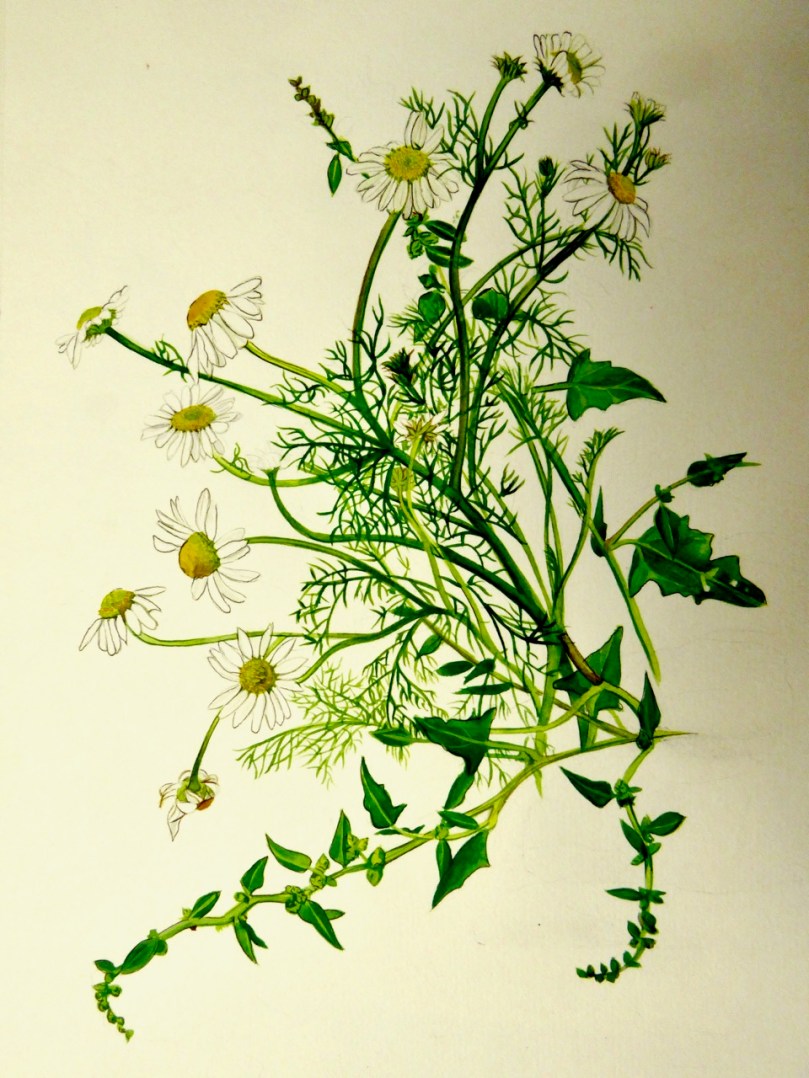
This is Sea Mayweed and Orache intertwined. Pilgrim’s recommends a one-minute steaming for the Orache, and pairing it with white fish (like hake), new potatoes and a cream sauce. You can also mix it with other “tidal greens” such as rock samphire, sea aster, and sea beet.

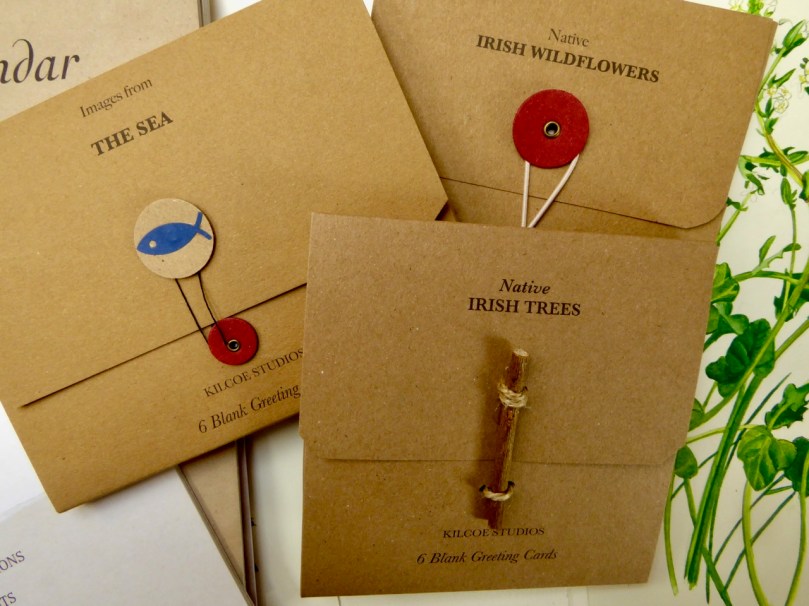
The painstaking drawings she lovingly creates for her calendars also go into her cards. That’s great, because they should outlive their ‘year’. The card packaging is a work of art in itself – I’ve given many a set as a gift.

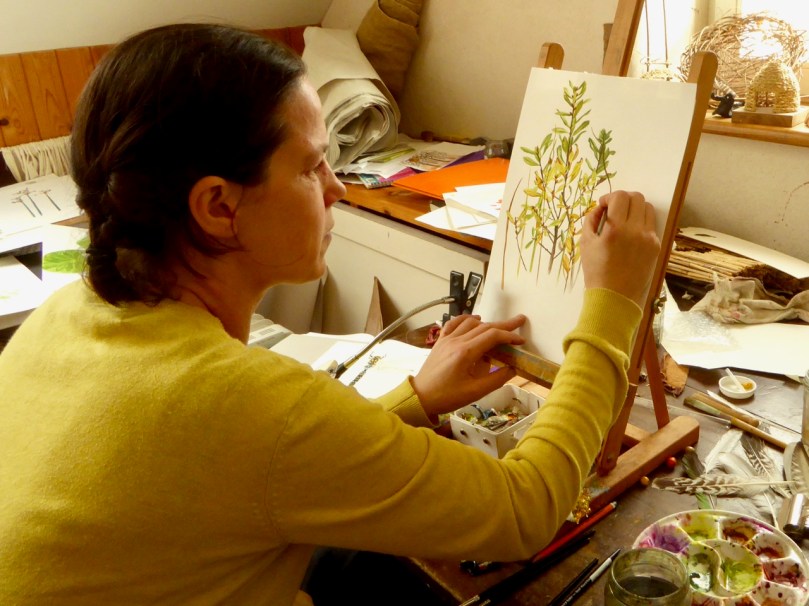
Because I’ve spent so many hours myself photographing wildflowers I know what goes into identifying, researching, and then reproducing each one, but only on a superficial level compared to the kind of attention each one gets from Sonia. Watching her getting the colour of each leaf exactly as she saw it was illuminating, and humbling.

Sonia sells her work in various stores throughout Ireland, but you can also order from her online shop. There’s still time to get those 2018 calendars!

Sea Campion – the front cover illustration for the 2018 calendar

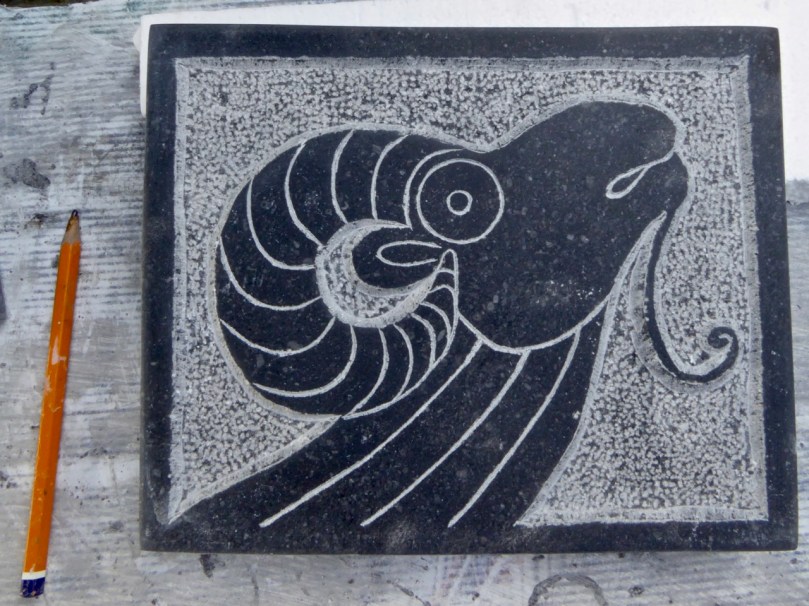
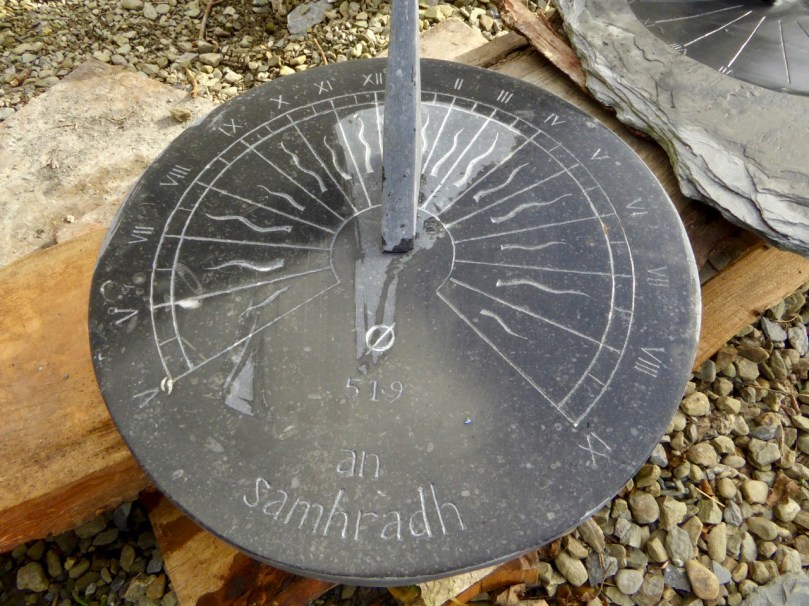
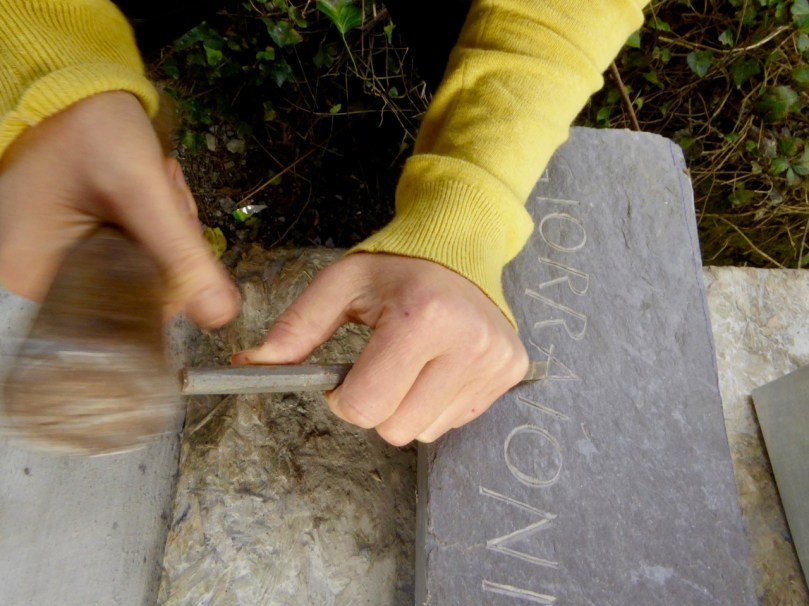
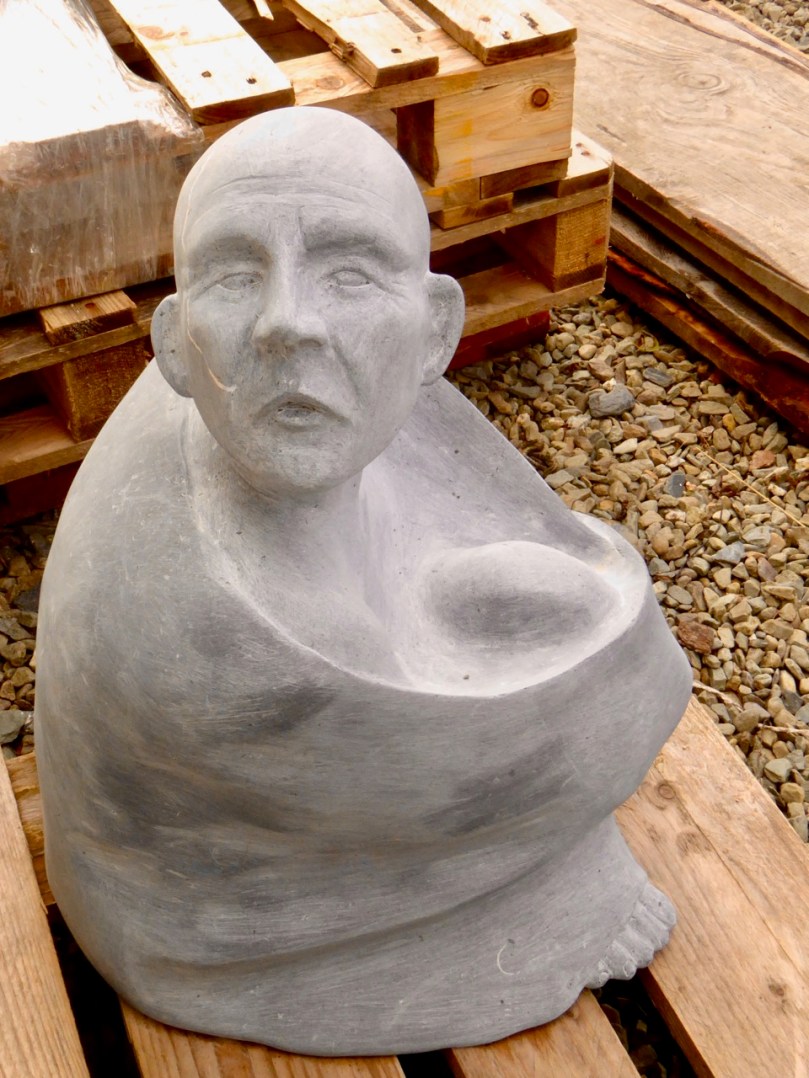
Although I was aware that Sonia was also an accomplished sculptor, I was unprepared for what I found in her studio. She works in stone, on both a small and large scale. She makes beautiful bowls, sundials and plaques as smaller, more affordable pieces, and they are popular buys at the summer markets. 

But her passion is her figurative work. These are large-scale carvings, mostly in Kilkenny limestone, which she polishes to a beautiful finish using finer and finer grades of sandpaper. It’s physically demanding work, but I get the impression that when she’s engaged in it, she’s lost to time, and indeed to everything except what’s under her chisel.

Her work has a quality to it that I can only call ‘questing.’ The eyes look far away, seeking answers to some great question. In one case, they are blindfolded, forcing the quester to look inward. The bodies fold in on themselves, or on one another, or are rigid, as if acting as mere plinths for the imagination or the brain

It’s powerful stuff, and left me wondering why artists such as Sonia face such difficulties in the market place. Sculpture, I now understand, is much harder to sell than paintings. You can see a range of Sonia’s sculpture on her separate artist’s website. She has exhibited widely.

Sonia works with her husband, Eamon Quinn, a master joiner. Take a look at his beautifully-crafted furniture on their website. It’s inspiring to spend time with someone like Sonia, someone so dedicated and talented and committed. The good news is that, even if you don’t happen to live near her, you can still enjoy her art every day of the year.

*All the images of Sonia’s work are used with her permission. Please respect intellectual property issues and copyright for all the artwork in this blog post.

One Acre

That’s what we have in West Cork – one miraculous acre. We don’t sow potatoes nor barley nor wheat – we just try to let the grass grow and see what happens.

Top Image: Marsh Thistle. Above: Chamomile along our boreen/right of way; Wildflowers behind the house – Self-heal, Chamomile and Bog Pimpernel (the tiny pink ones)

This year was my year for leaving part of my acre un-mowed. I’ve been reading Zoe Devlin’s new book, Blooming Marvellous, and as she suggests, I started with the September chapter which happens to be, among other things, about growing a wildflower meadow. I have a better idea now as to what I should have done, and I’ll be able to improve things as I go along, but for a first year, it didn’t work out too badly.

Common Sorrel, A delicate grass called Bent, and Red and White Clover with Plantain

Essentially, I chose one section not to mow at all until a couple of weeks ago. I was pleased with the flowers that appeared in my little ‘meadow,’ as well as the grasses and the plants we commonly call weeds (ragwort and thistles) because they all added to the variety of what was there and provided food for the pollinators.

Ragwort (above) is toxic to cattle and horses and is considered a noxious weed. Known in much of Ireland as Buachalláns (boo-ka-lawns) it is also a superb food source for insects. A recent Guardian article spells out the dilemma we face with Ragwort.

Sheep’s-bit rewards getting up close and personal

Thing is, even the parts I hadn’t intended as a wildflower haven flourished as well. Maybe it’s because I have an eye for what’s growing now (and didn’t before), or maybe it was a particularly good year, but whatever the case, I was living this spring and summer on an acre of wildflowers, a feast for the sense, and a joy to walk upon.

The flowers I found on my own acre are a testament to what happens when you try not to mow too often or too short. Lying in the grass on a warm summer morning you become intensely aware of the activity all around you – bees, bumble bees, hoverflies, butterflies and insects of all sizes and description are busily flitting from flower to flower, alighting on the Clover, the Cat’s-ear or the daisies, investigating the Bindweed and the Bramble flowers, and then buzzing off again.

Slender St John’s-wort and Bramble (blackberry) flowers

And it wasn’t just the lawn – random flowers started to poke out of the gravel driveway, as if sensing friendly territory, and all sorts of stuff popped up in my herb patch (the only actual gardening I do). I let the herbs go fairly wild too, once I saw how the insects loved them. 

From the top: Common Ramping Fumitory among my Tarragon; this Field Woundwort just appeared in the gravel one day; Wood Sage growing on the boundary wall, a soldier beetle on Parsley flower

The rock walls hosted Foxglove and Stonecrop and Wood Sage and around the periphery Heathers and Vetches fought the Gorse for space.

Common Vetch

I’ve just chosen a selection of wildflowers from my acre for this post, to give you a flavour of what will grow if you let it. 

Above: Heath Speedwell; Below: Common Mouse-ear

There were more and I don’t know that I can identify them all, especially all those yellow members of the Asteraceae family – the ones that I always used to think were just Dandelions but now I know that this family has enormous variety of flowers. One of my goals for next year is to advance my knowledge in this area so I am comfortable with distinguishing more of them.

There are fewer bright blooms now that it’s well into autumn. But, like the sweet little Scarlet Pimpernel about to open, below, it’s amazing what’s still flowering sturdily on – on our one acre.

The Turning Year in Rossbrin

We are fortunate to live in a rural idyll: our immediate environment is immersed in the natural world. In fact, I suppose it is ‘Nature tamed’ – as we have pasture all around us as well as banks of gorse and rock: even a few trees which manage to cling on to the shallow soil all through the winter gales and (occasional) summer droughts. As the years go by we feel we become more closely entwined with the cycle of everything around us – we get to know personally the fox, pheasants and rabbits that pass by our window, and the myriad of birds that feed here, forage in the Cove or just show themselves to us on memorable occasions – Spioróg the Sparrowhawk is so handsome when she is resting on our terrace wall while on her deadly missions, and our choughs frequently perform wild dances in the air to entertain us. This year was special for me because, for the first time, I saw a hare amble around the house, alert with erect ears, before loping off into the next door field.

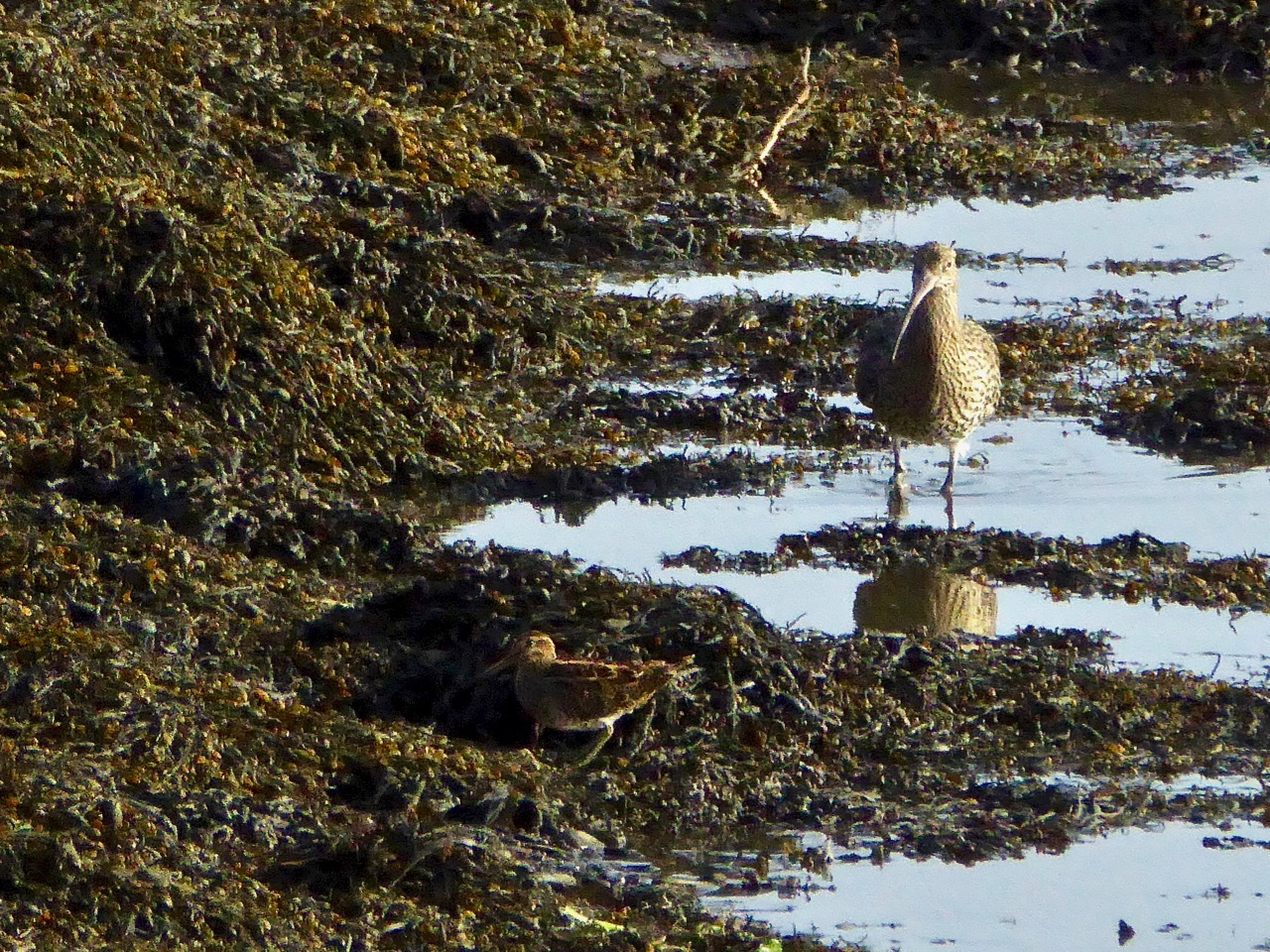
I have written about Rossbrin Cove many times before: look at A Moment in Time, Tide’s Out and Words on Roaring Water, for example. That sheltered natural harbour and the old mine road up on the hill above probably give us the most pleasure because we visibly see the year change and turn every time we walk there. Just now the days are rapidly shortening, and the autumnal influx of wading birds is returning. One we keep a particular eye out for is the curlew – a threatened breeding species here in Ireland. We see many on and close to the water, particularly at low tide, but these are probably migrants rather than resident breeders.

The year is turning – from late summer into early autumn, and the colours are changing from rich reds and purples – fuschia and heathers – to the more sombre yet equally attractive yellows and browns of furze and fern. Finola has closely followed the wildflowers right through from the spring – she is still finding and identifying every imaginable species – it’s a complete world of its own!

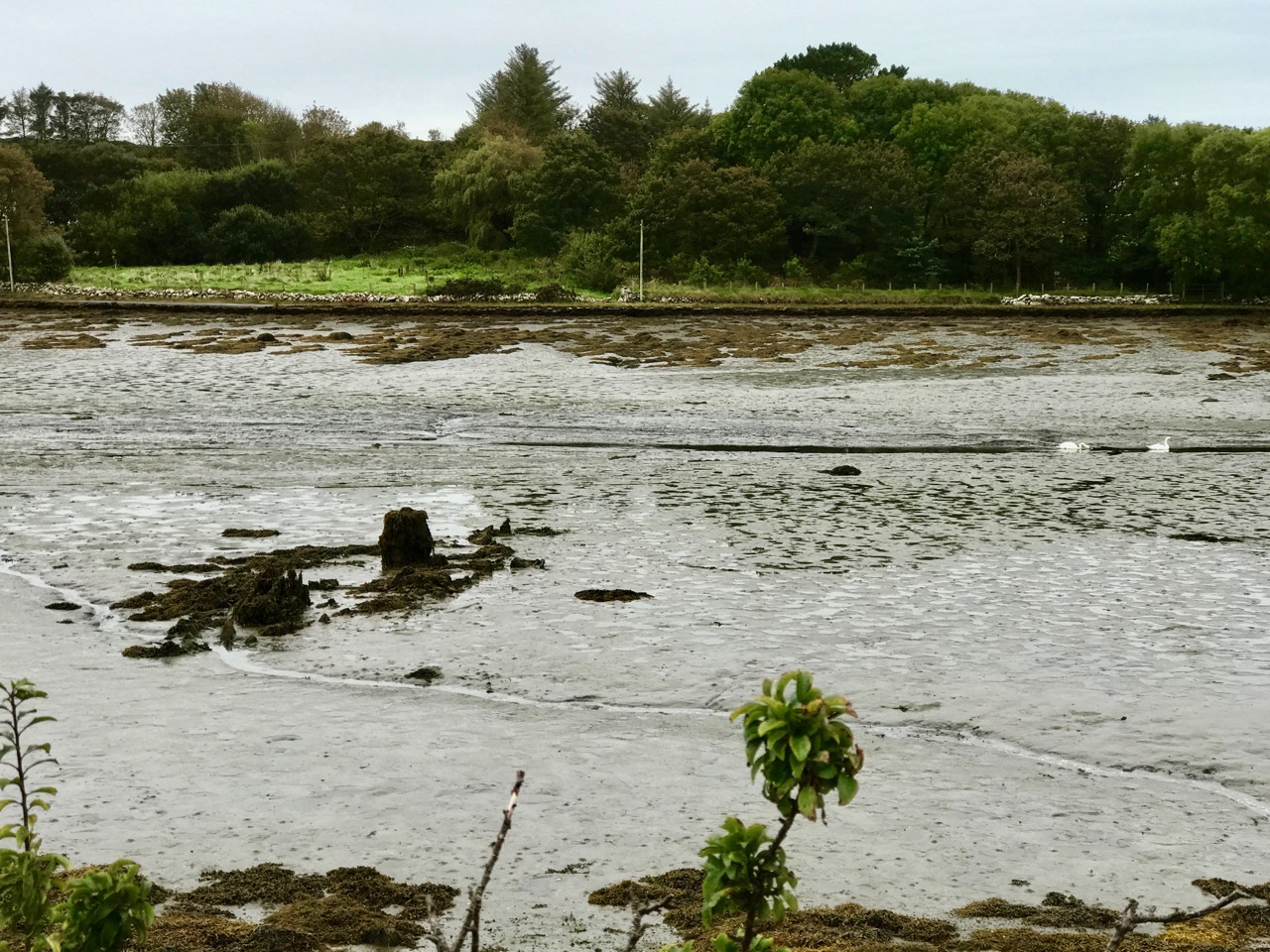
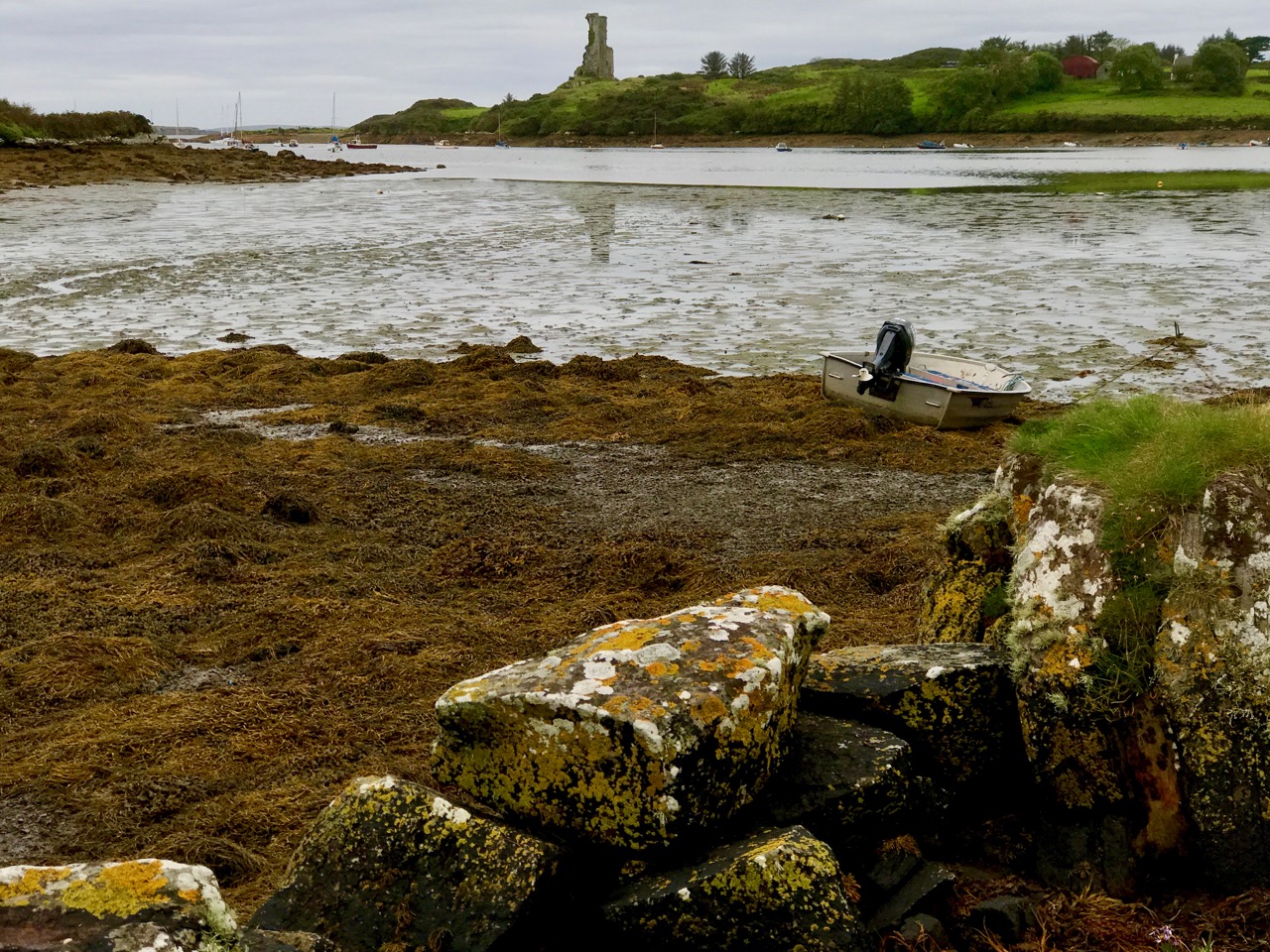
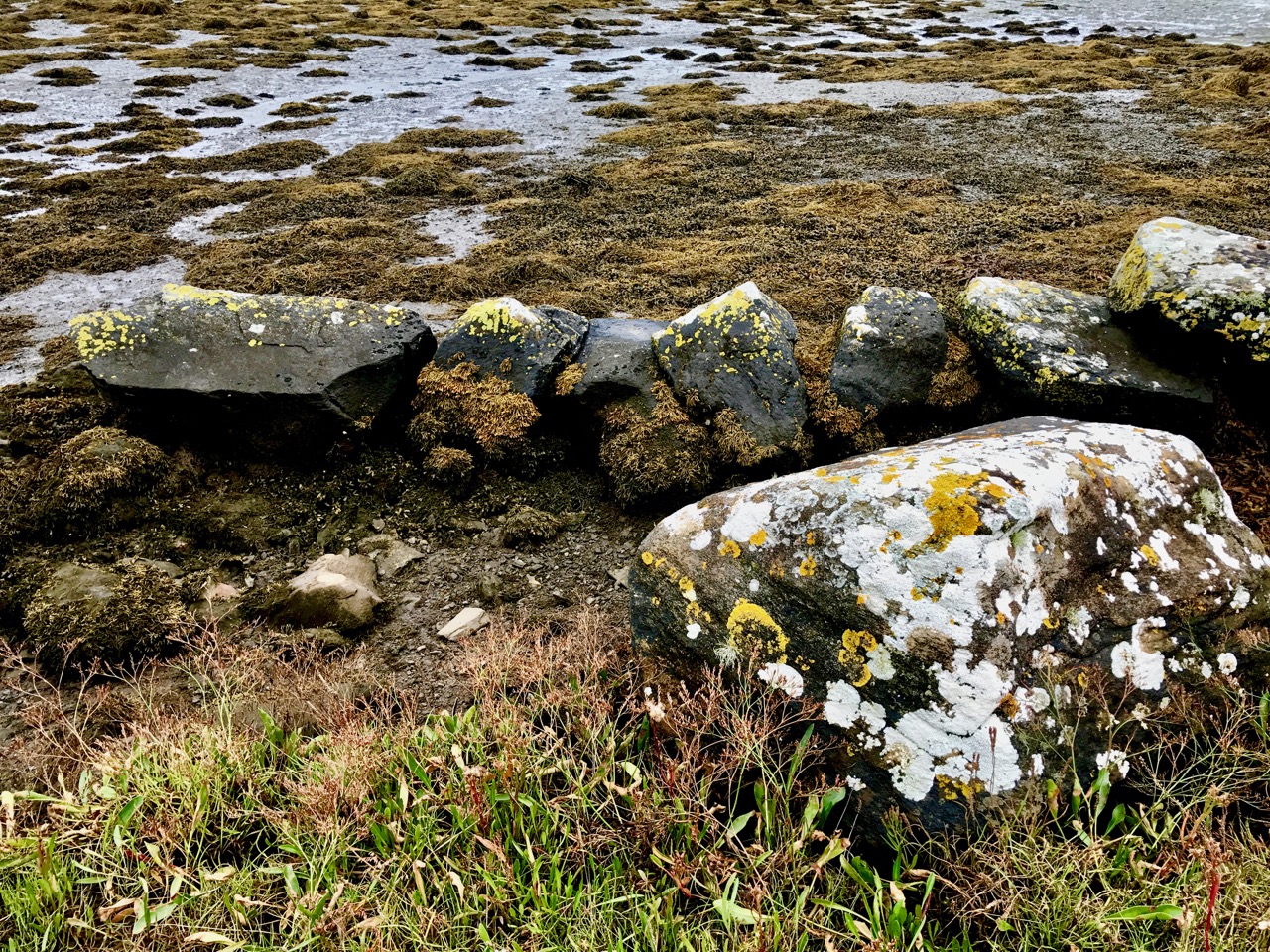
We have been seeing some exceptionally high and low tides here in Rossbrin. I’m always fascinated to see the mud-flats revealing bits of discarded history, while I am convinced that the huge remnants of dressed stonework on the north-east shore are the vestiges of once-busy quays, dating either from the medieval period, when Sir William Hull and the Great Earl of Cork owned the lands around here and set up thriving fish-processing ‘palaces’, or – at the latest – when the copper mines were active up on our hills and on Horse Island in the nineteenth century.

The real turning point comes at the end of October – Samhain – when the old calendar enters the ‘dark year’ (the ‘light year’ begins on May 1st –  Bealtaine). We know we have long, dark nights to come – time to huddle down by the stove – but there will be bright days as good as any in the year for walking, exploring and breathing in the Atlantic breezes. And the Rossbrin sunsets will be magnificent!

“The Wildest and Richest Gardens” – West Cork Bog Soaks

Henry David Thoreau, philosopher and naturalist, might be called the patron saint of swamps. He was in love with them. I know how he feels. Hope and the future for me he said, are not in lawns and cultivated fields, not in towns and cities, but in the impervious and quaking swampsthe wildest and richest gardens that we have.

Top photo and above: Derreennatra Natural Heritage Area

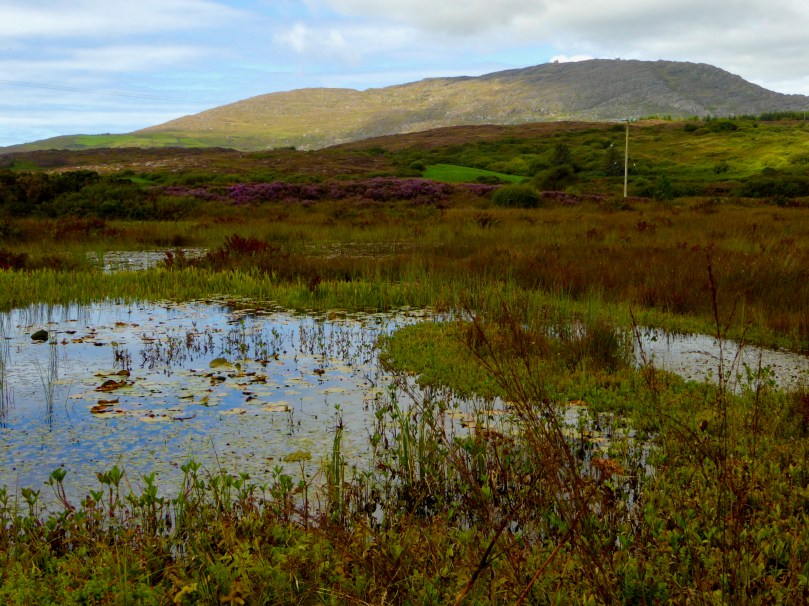
Thoreau was talking about American swamps, but he could just as easily have been talking about an Irish bog, marsh, or wetland. I have two within easy walking distance of my home in West Cork and I am drawn to them like a magnet. One is tiny – a pond in the middle of a boggy area at the highest point in Foilnamuck townland. The other is more extensive – Derreennatra Bog, between Ballydehob and Schull.

Foilnamuck Bog Soak

A bog is a highly acid environment, and some plants, such as heathers, are specially adapted to deal with this habitat. The mineral-rich pools that form in the bog – technically known as bog soaks – are fed by groundwater and rain. Nutrients are more available in these patches of open water, they provide a less acidic environment and support a variety of plant life different from that of the surrounding bog.

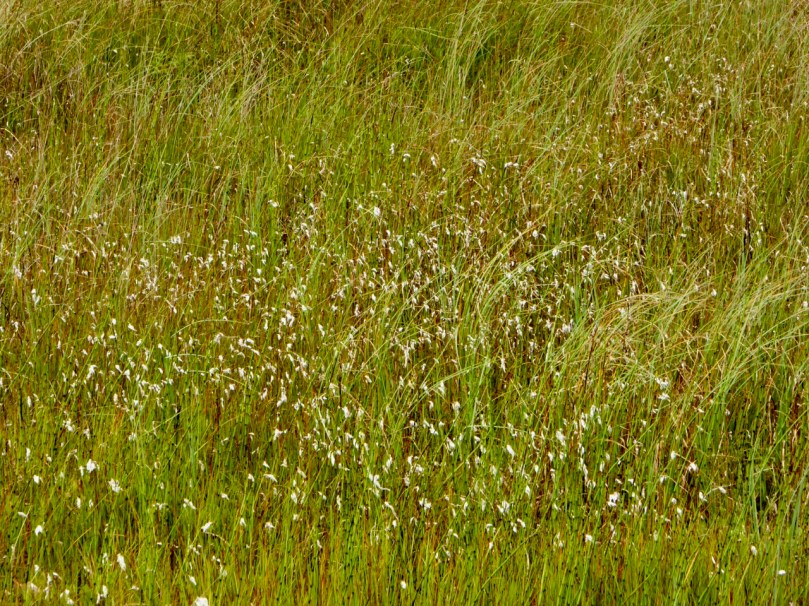
Rare Slender Cottongrass on Derreennatra Bog – one of the reasons for its designation and protected status

Derreennatra Bog has been recognised as a very special habitat of the lowland bog type. It has been designated as a Natural Heritage Area and is under the protection of the National Parks and Wildlife Service. While there are several reasons for its special status, the main one is that it is home to Slender Cottongrass, an extremely rare form of Bog Cotton that only grows in a few places in Ireland and Britain.

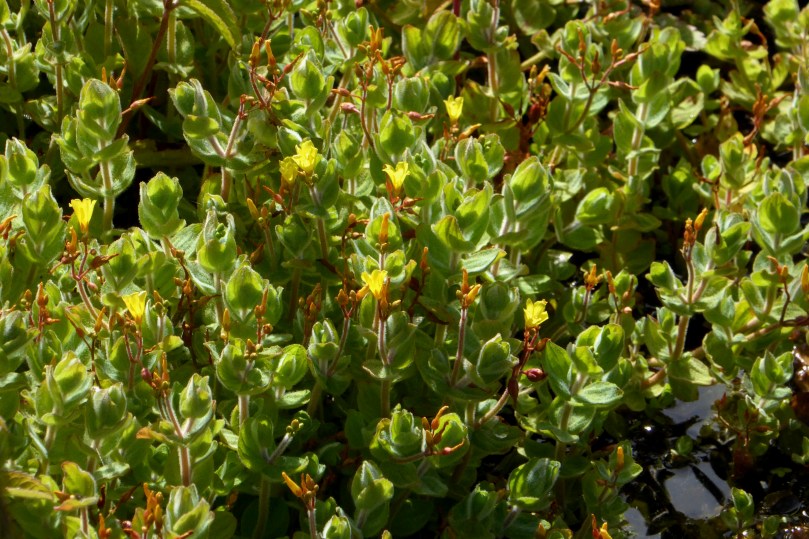
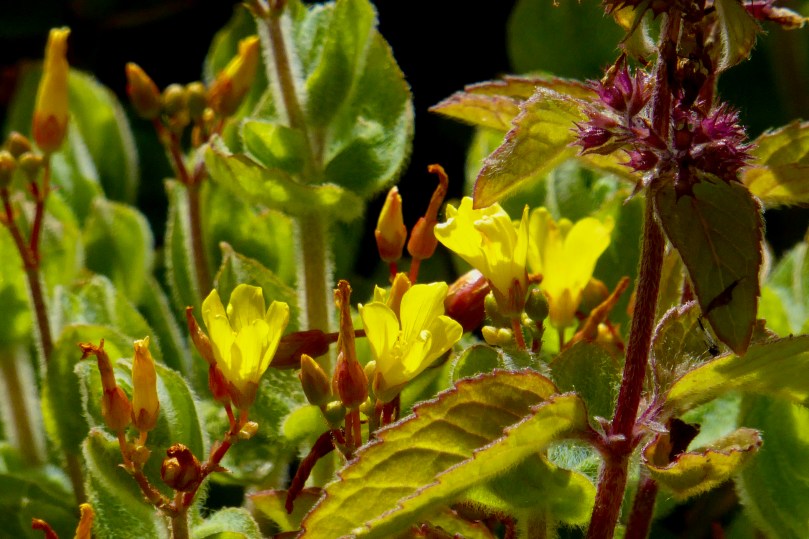
Marsh St John’s-wort, above and below, in its watery habitat

Derreennatra Bog has other uncommon species, but they are hard to photograph without a really good long lens. The one I did manage to get close to was Marsh St John’s-wort. I had to go back several times and wait until the flower opened before I could figure out what it was. It was worth the wait – a very beautiful native wildflower.

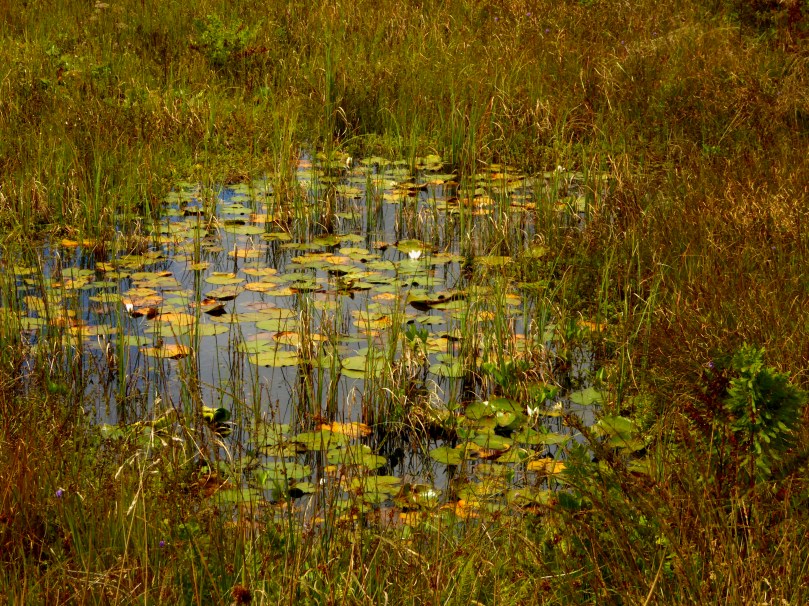
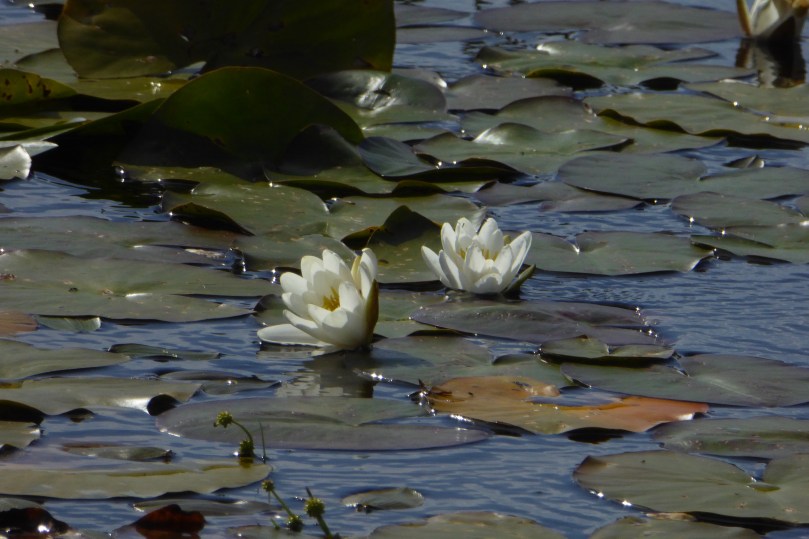
Another reason to hang out at Derreennatra Bog is that the lovely, native, White Water-lily flourishes here. It’s an exotic beauty that been here, apparently, since soon after the last ice-age.

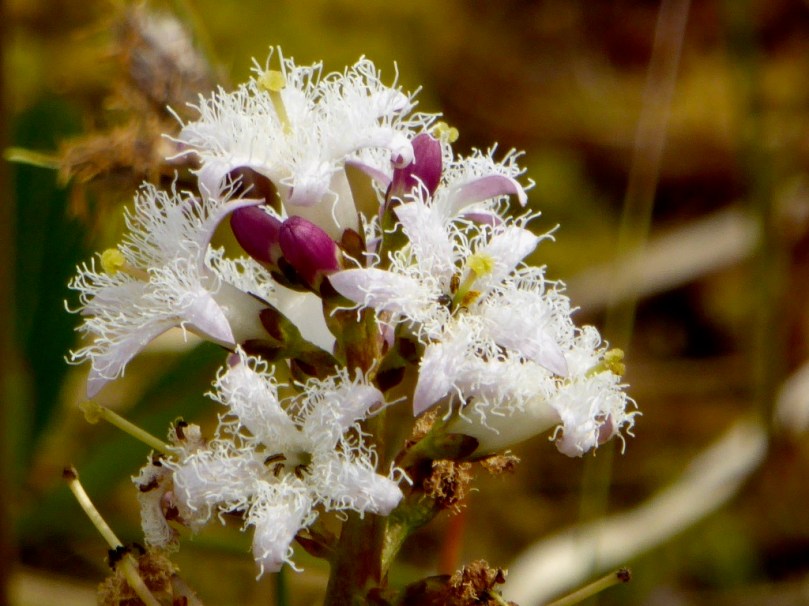
The soak in the bog at Foilnamuck is far less extensive – just a tiny wet patch – but it’s reliably present all the time, probably because it’s bounded by a natural amphitheatre of slightly elevated rocky ground. Here is where I was able to photograph Bog Bean for the first time, although not without getting my feet wet. It’s a fascinating plant – it sits in the water and holds the flower head well above the surface. The flower heads are pink before they open but inside the petals are pure white and fringed with long hairs.

The “regular” Bog Cotton, more correctly called Common Cottongrass surrounds the little soak and mingles with the Bog Bean.

The other plant that loves the environment of this little soak is the Round-leaved Sundew. Sundews are carnivorous – the sticky liquid on its hairy round leaves trap unwary insects, which are then digested by the plant. It’s a marvellous adaptation to the lack of soil nutrients in its habitat.

The spikes carry the flowers, not yet open in this shot, but it’s the leaves that do all the work in this plant

The other flowers of the bog – the heathers and asphodels, the mosses and mints – are equally beautiful and interesting, but I will leave them for another day.

Trish Punch – remember the workshop day I spent with her? She’s gone from teacher to friend and she’s into the wildflowers, just like I am! 

Now so, why don’t you wander on over to your local bog/swamp/fen/marsh soak and see what you can see! Just don’t fall in!


Down By The Old Caol Stream

Skibbereen has a flooding problem and the flood-relief project is in full swing now. A lot of it concerns the stream that runs through the town, under several bridges, past Field’s supermarket and the West Cork Arts Centre, to empty into the Ilen River by Thornhill’s Furniture Shop. The stream is tidal, creating flooding hazards from above and below.

The lush growth along the stream: Buddleia (Butterfly Bush), Valerian, Twiggy Mullein and Bindweed; Red Valerian and Twiggy Mullein; Twiggy Mullein close-up.
Clockwise  from Left: Field Bindweed and Meadowsweet; Hemlock Water-dropwort (yes, as it sounds, poisonous!); Red Valerian and Monkeyflower

While the stream has enormous potential to be an attractive part of Skibbereen’s urban environment, nobody could call it beautiful – it’s neglected, choked with ‘weeds,’ and full of rubbish. But wait – it also happens to be home to an astonishing variety of wildflowers!

A sea of yellow. Clockwise from Top Left: Marsh Marigold; Marsh Ragwort (not the unwanted Common Ragwort); Monkeyflower; Yellow Water-lily

Or rather, it WAS home to the wildflowers. As the project advances, the flowers have become collateral damage in the march forward of the steel barrier that will (we hope) keep flood waters contained. Most of us who shop in Skibbereen cross the bridges over the Caol Stream (pronounced Kale, Irish word for ‘narrow’) several times a week, normally without a glance over the side.

This is Water Figwort, closely related to Common Figwort but adapted to an aquatic environment
Clockwise from Left: Yarrow – although Yarrow is mostly white, this one is a lovely deep pink; Short-Fruited Willowherb; Snow-in-Summer or Dusty Miller

I decided to record the biodiversity of the stream flora before it disappeared and took photographs over the course of the spring and summer. It’s amazing really, what flourishes in such an unpromising environment. This photo-essay is an homage to what I observed.

Clockwise from Left: Ivy-leaved Toadflax (look for it on the wall); Common (or possibly Long-headed) Poppy; Marsh-bedstraw

Purple Loosestrife

Stream beds are a particular type of habitat. Tony O’Mahony in his magisterial Wildflowers of Cork City and County, points out that riverine habitats provide a welcome environment not only for native, but also for naturalised alien plants. Combined with the fact that the Caol Stream runs through a town with cultivated gardens backing on to it, this means that many of the wildflowers I saw are non-native, naturalised species. But all, native and non-native, are uniquely adapted to this watery channel, even tolerating periods under water.

The area behind the steel barrier is being filled in with gravel. I don’t know if it will be topped with soil. Hoping so.
Left: Below the uppermost bridge. Right: the stream where it empties into the Ilen – the vegetation has already been stripped

Wildflowers are incredibly resilient. One of their favourite habitats is waste ground – no sooner is a plot of land disturbed than the flowers move in. My prediction is that, despite the seemingly barren and hostile environment created by the sterile gravel fill behind the steel barriers, we will start to see, as early as next spring, the shoots of little plants moving in to colonize the available space. The Willowherbs first, perhaps, followed by Loosestrife and maybe Figwort.  And of course good old Herb Robert (below), which seems to survive and thrive just about anywhere


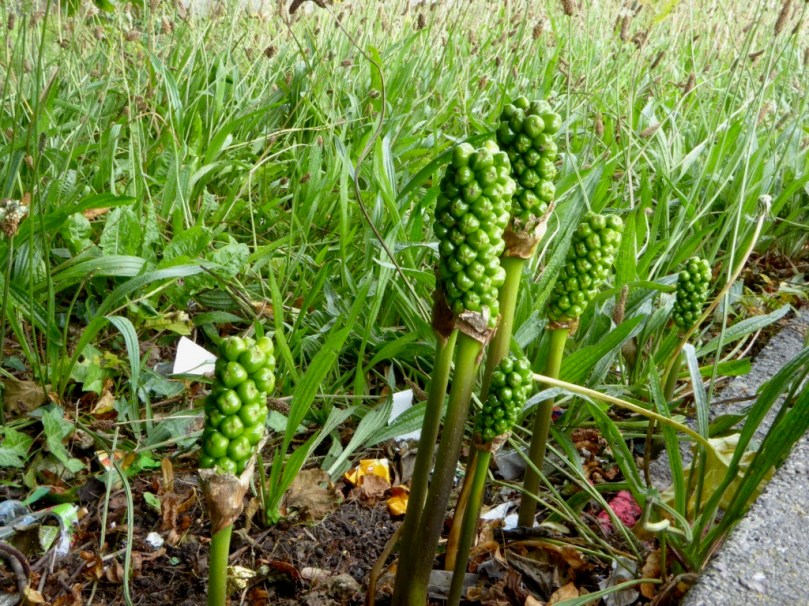
This is a highly poisonous plant called Lords and Ladies – perhaps we could do without this one, although no doubt there are critters that depend on this too

Direct access to the water will no longer be as easy, though, because of the steel barriers, so the flowers may take on a different character. It will be fascinating to see what happens over the next few years. Keep watching!

The Community Orchard seems to be far enough upstream that it may escape major flood works. This is a beautiful and contemplative place. I was shown around by an eager young boy who knew the names of all the plants

This is what it looks like now – the view from the upper of the two bridges leading to Fields

What can you identify in this picture?