Equinox Adventure

equinox

September 21st – the Autumn Equinox. Day and night are exactly the same length. This event must have some significance for any society which watches the sky. We can never know for sure, but it does seem possible that the enigmatic stone structures we find out in the remote landscapes of Ireland: megaliths, circles, stone rows and – dear to us – Rock Art, could have been inspired by celestial observations.

the rock

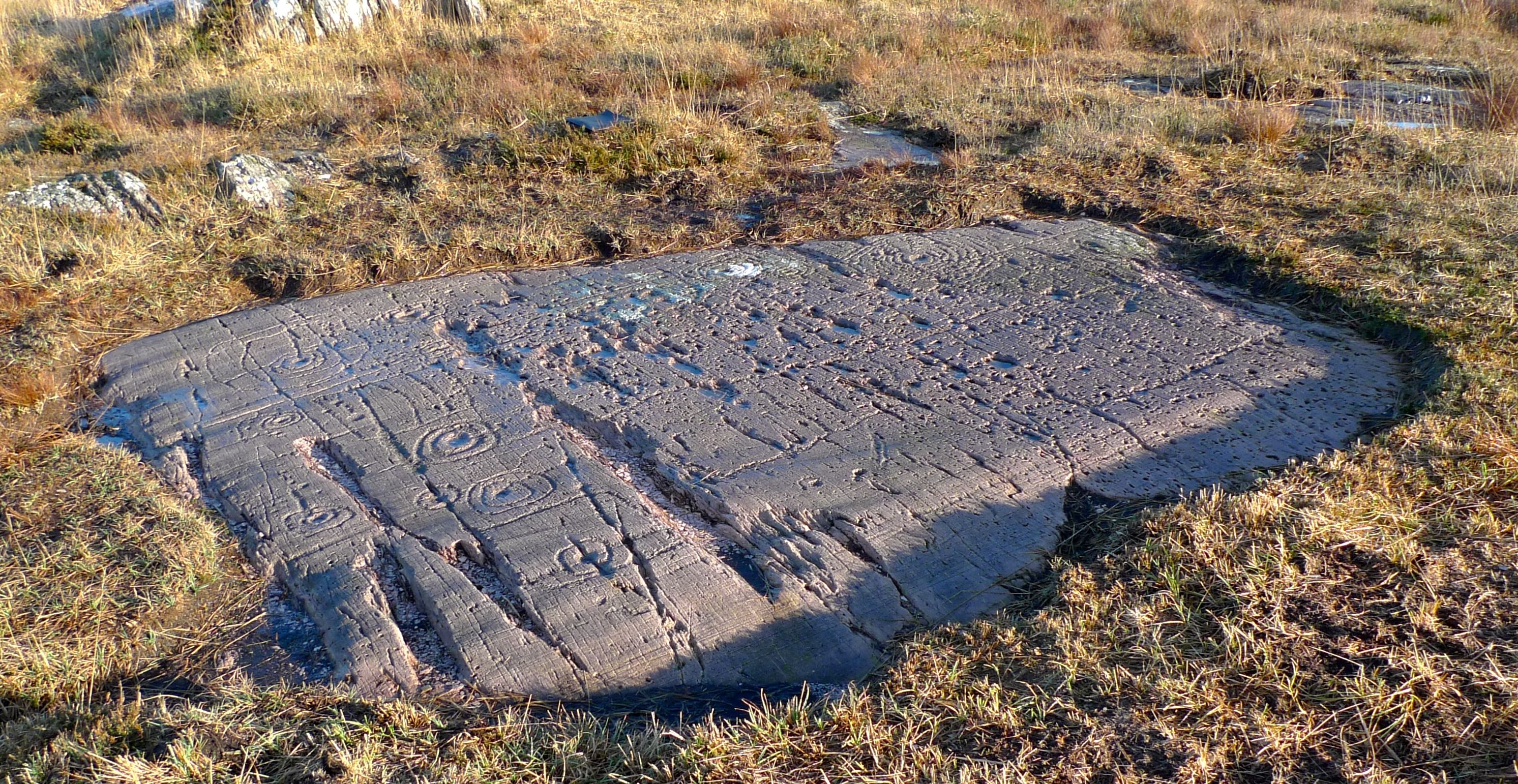
Bronze Age carvings at Derreenaclogh

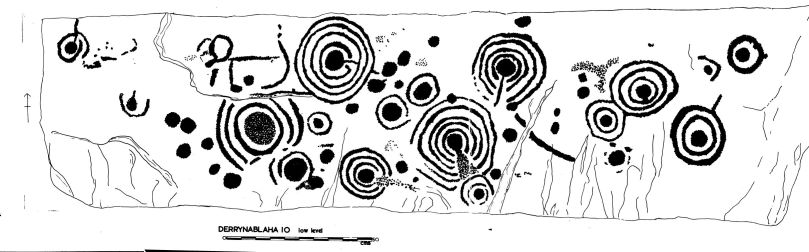
Finola put up a post on the Spring Equinox at Bohonagh, and we have written about the Spring Cross Quarter (Imbolc). We are fortunate that today’s weather has been idyllic – cloudless and with a clarity of light – so we headed out to Derreenaclogh to watch the sun setting. We have studied this rock in depth, throughout the year and in all conditions. Our work has produced a detailed measured drawing of the intricate markings on the surface, carved by our ancestors perhaps three or four thousand years ago.

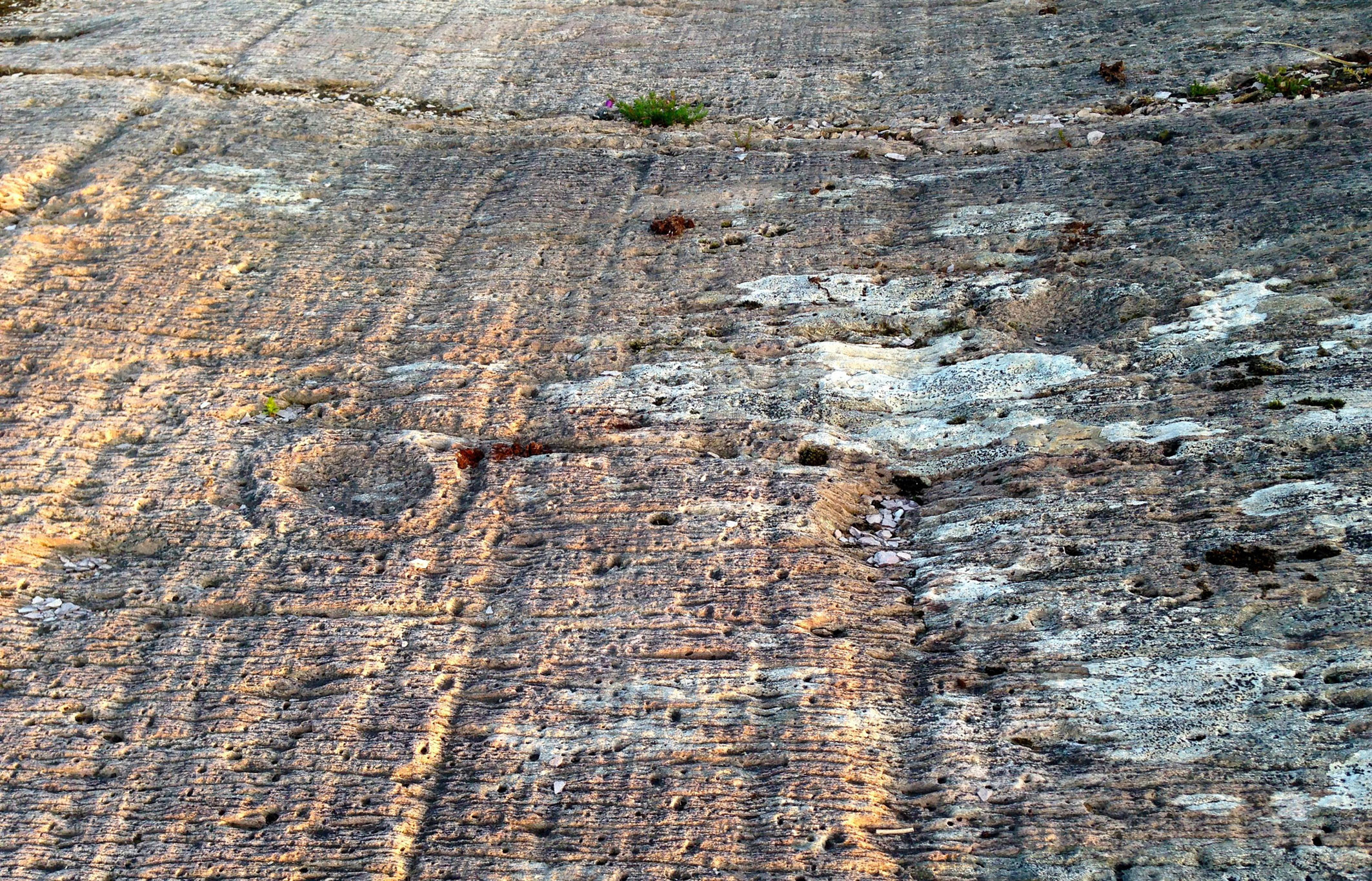
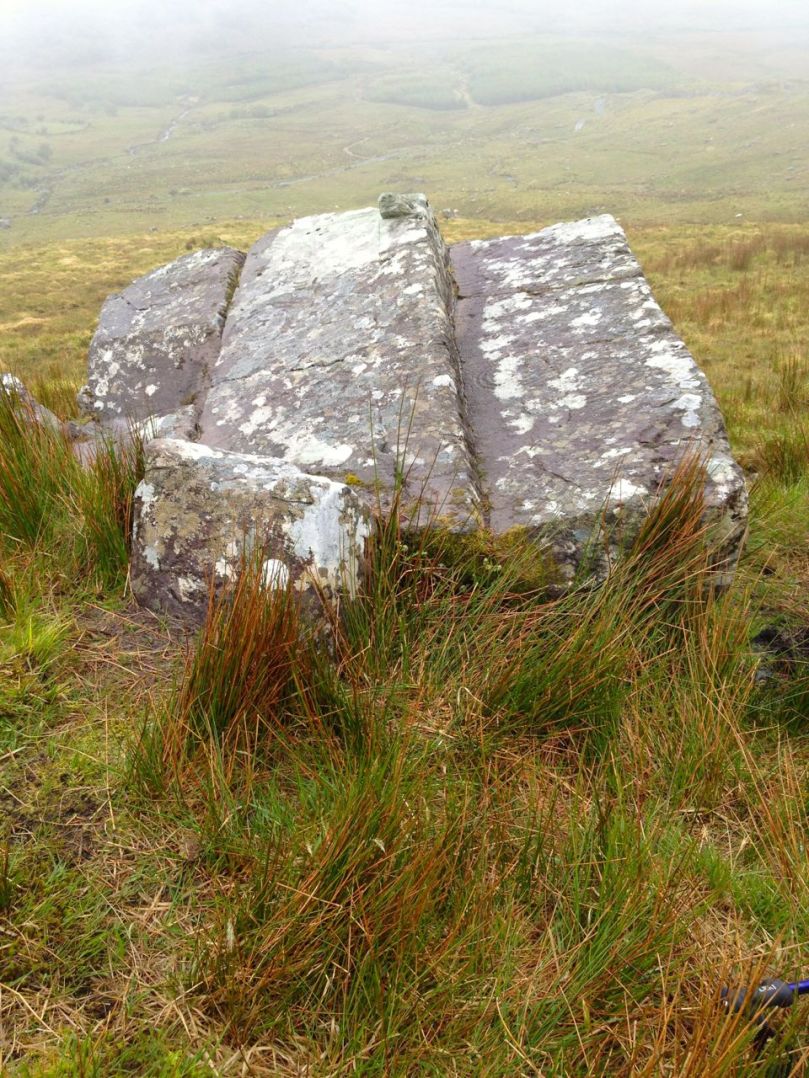
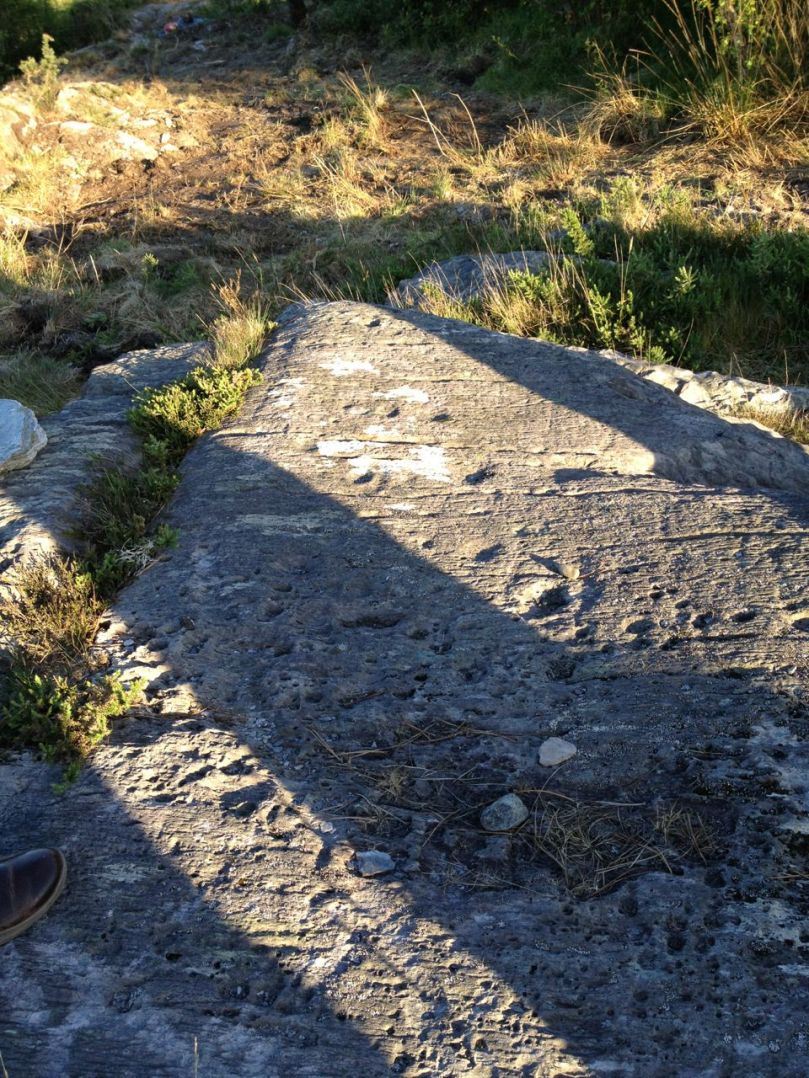
During our many visits we have noted – but perhaps neglected – the other carved rock at Derreenaclogh, which is situated only a few metres to the east. This has suffered considerable weathering and surface erosion which the first rock escaped, somehow or other, by being preserved for years – centuries – perhaps millennia – under a covering of soil and furze. Nevertheless, today the very faint markings seemed to be more alive – as if the low sunlight on this evening was exactly right for observation. We could see marks on this surface we had never made out before. Derreenaclogh Number 2 deserves a detailed study of its own – something else to keep us busy for a while!

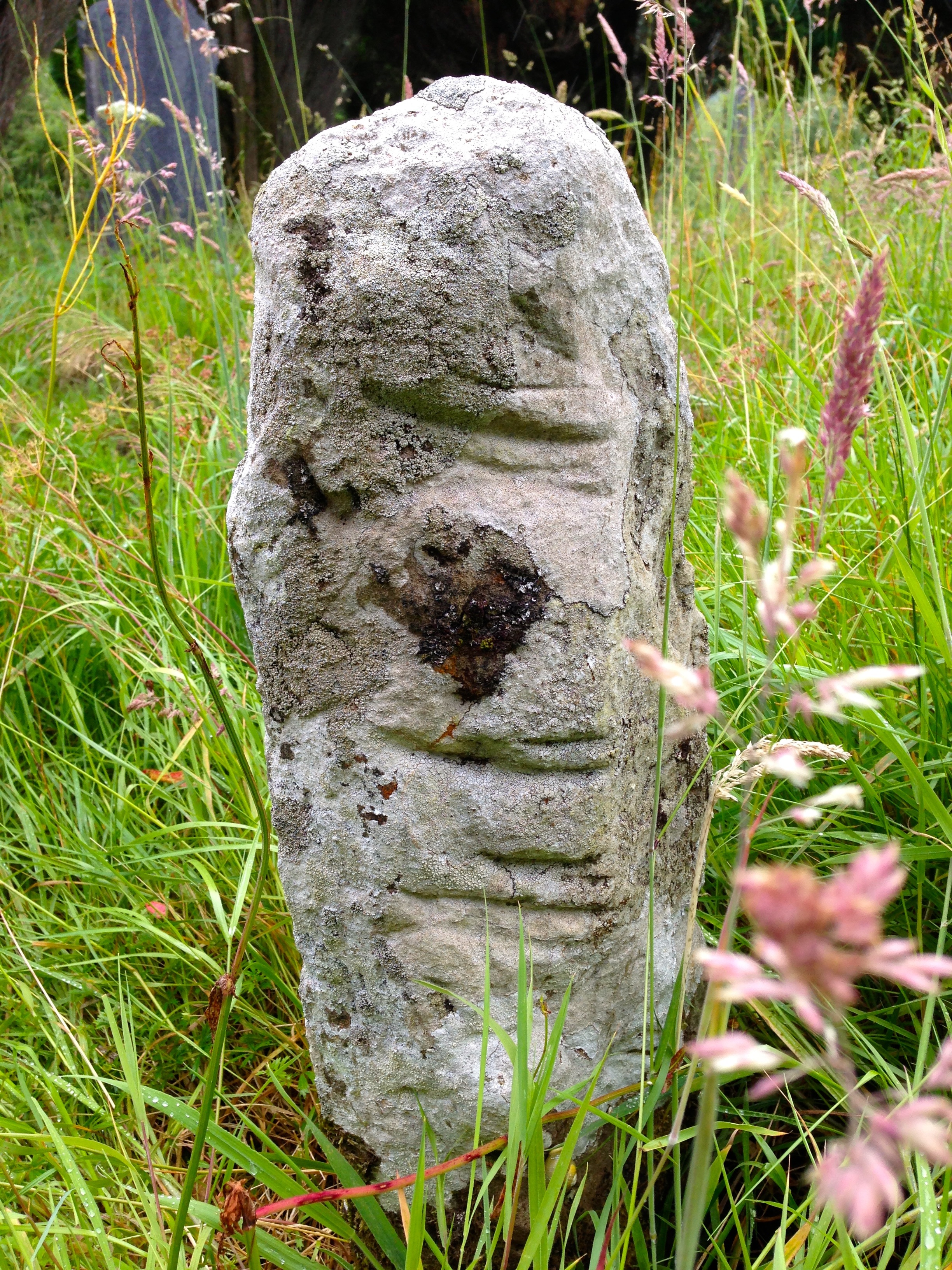
Heavily weathered motifs on Derreenaclogh 2

Heavily weathered motifs on Derreenaclogh 2

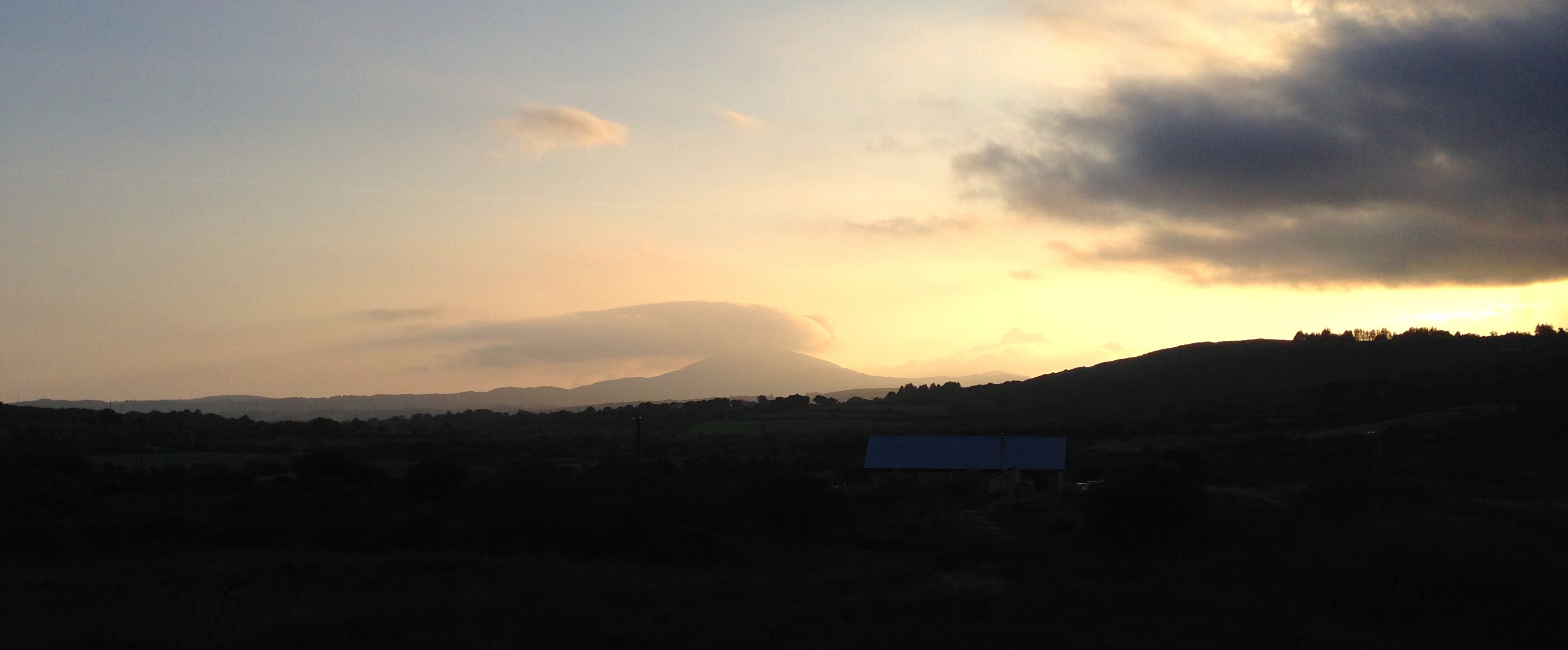
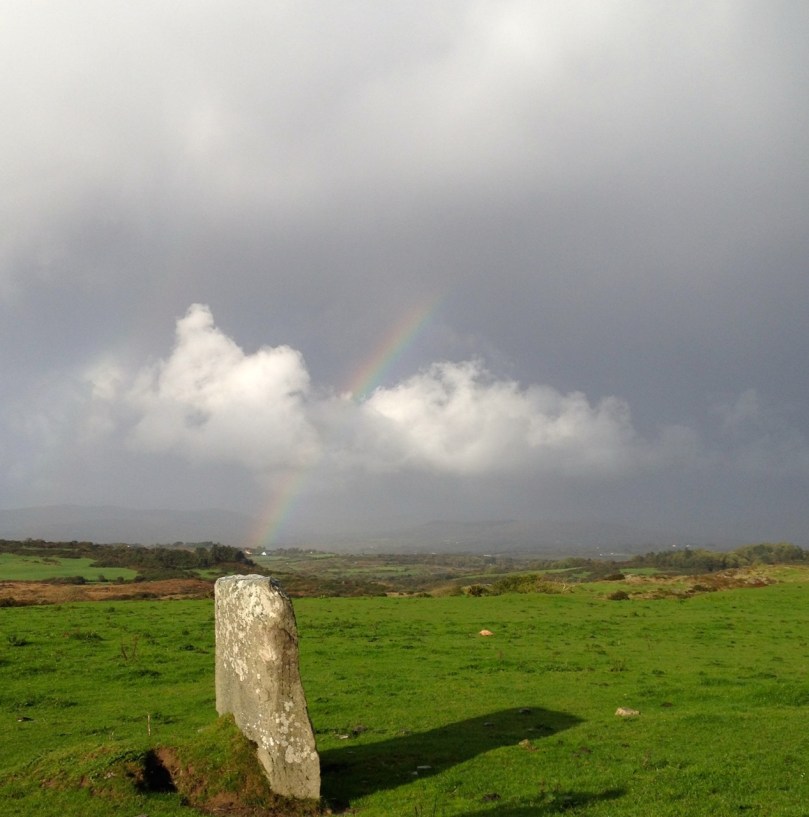
The sun duly sank below a hill – not a particularly significant part of the horizon. Mount Gabriel, meanwhile, further to the south, gathered some rather spectacular clouds around itself: it could be that this landscape profile is a sunset marker at another calendar point. We did see that the ‘ray’ on the large motif with eight concentric circles seemed to be aligned with the setting sun – could that have been important?

It was such a beautiful evening that wherever that sun had landed, or whatever alignments may or may not be visible, we would have been perfectly happy. As we made our way back to Nead an Iolair we said to ourselves – again – that this West Cork scenery is unbeatable: we are so fortunate to be immersed in it.

Mt Gabriel


Monoliths, Mysteries and Marriages

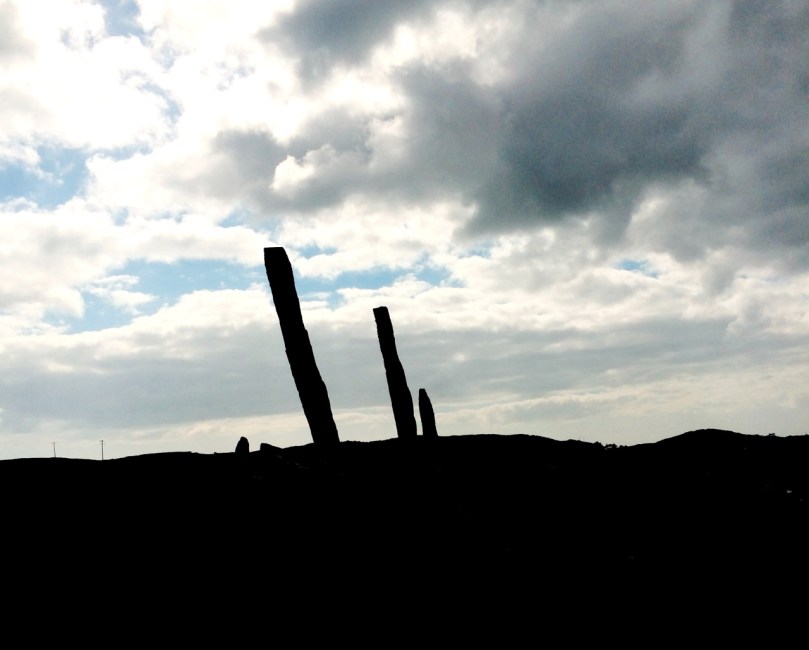
"The Fingers" on the skyline

‘The Fingers’ on the skyline

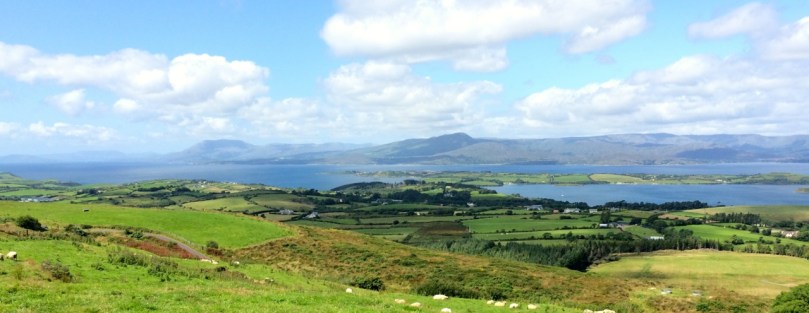
All across West Cork – in the middle of pastureland, in isolated bogs, on the tops of mountains – you see standing stones. Mostly single but also found in pairs, or rows of three or more, they are as ubiquitous as they are mysterious. A scan of the Ordnance Survey map of the valleys running eastwards from Bantry, just north of us, shows a great proliferation of standing stones, and we have been tempted into the field often to hunt for them. We usually find them, but even when we don’t the search brings us into magnificent countryside.

Standing Stone Country

Standing stone country, east of Bantry Bay

The most numerous are, of course, single standing stones. The practice of erecting monoliths dates from the Neolithic and many of the stones we see may indeed be as old as that, or Bronze Age. Some may be medieval or more recent still – local people occasionally have memories of a grandfather placing a stone to act as a cattle scratching post.

Bishop's Luck Stone - wonder what's under this one?

Bishop’s Luck Stone – wonder what’s under this one?

If the stone has rock art on its surface, as is the case with the Burgatia stone near Rosscarbery, for example, we can safely conclude that it’s probably Bronze Age. Ogham incisions, or an inscribed cross will assist with an Early Medieval date. But the vast majority are unmarked and their functions may have varied. Some excavated examples have yielded evidence of burials at the base, and some seem to mark boundaries or entrances to mountain routeways.

Stone pairs and stone rows often occur in close proximity to other Bronze Age monuments such as stone circles and boulder burials. Some are further away from the monument but clearly visible from it.

Like the stone circles, the pair or row has an alignment – generally northeast/southwest, and a further alignment is formed from the two to the boulder burial or stone circle.

Irish folklore is rife with stories about standing stones. Many were said to have been hurled there from a nearby mountain by Finn McCool. Kevin Dannaher in his book Irish Customs and Beliefs relates several instances of petrification. Here’s an example:

…our early saints are…credited with passing fits of choler during which several miscreants were rendered harmless…When St Fiachna discovered that a dairy woman was stealing his butter he did not hesitate to loose a mighty curse against her, which turned not only herself, but her dairy and all her utensils as well, into stone. In proof of which they are still plain to be seen close to the saint’s church at Teampal Fiachna, a few miles south east of Kenmare.

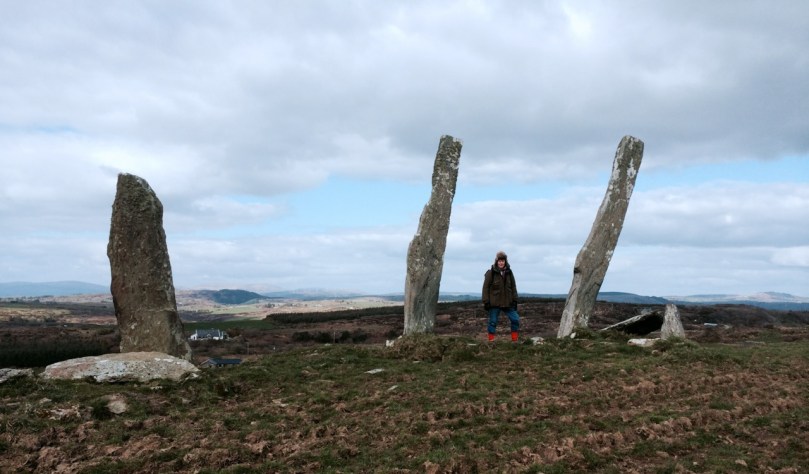
The Three Fingers at Gurranes, near Castletownshend, probably once a row of five or six stones

The Three Fingers at Gurranes, near Castletownshend, probably once a row of five or six stones

One kind of standing stone is particularly intriguing – the holed stone. Tradition has it that these are marriage stones: the couple would join hands through the hole to exchange vows. 

*Both holed stone photographs are by Amanda Clarke

Ogham

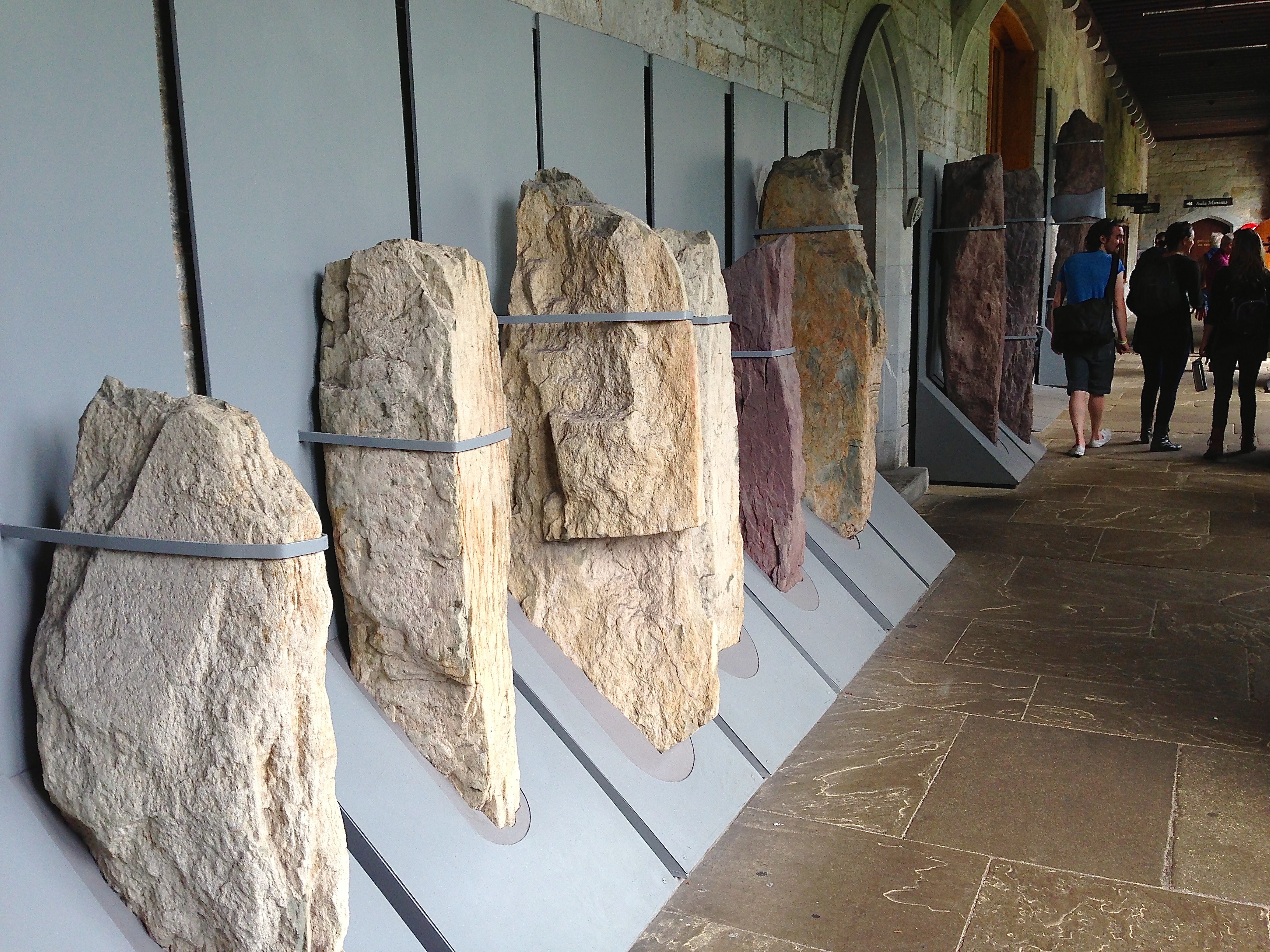
Captured! Ogham stones held in iron bands at UCC

Captured! Ogham stones held in iron bands at UCC

The Scythian King Fénius Farsaid lived at the time of the building of the Tower of Babel – some stories suggest that he had a hand in its construction. He gathered around him a group of scholars and methodically researched the new languages which were being spoken by the dispersed builders of the tower. Their work produced four languages: Hebrew, Greek, Latin and – the most sophisticated – Ogham. _ogham


Thus was the story that the bards of old related to explain the carvings on Ogham Stones (sometimes spelled Ogam but always pronounced oh-am) which are found in northern Europe, the greatest number being in the South West of Ireland.

King Fénius named each of the letters of the Ogham alphabet after his best scholars – 25 in all. The ‘letters’ are in fact simple lines inscribed on stone, either on opposite sides of a vertical line or on each side of a sharp corner of stone – the position and angle of each line defining the letter. Words are read starting at the bottom, going up the left side of the line or corner and coming down on the other side, and are generally thought to represent names, suggesting that the inscribed stones are memorials.

ogham

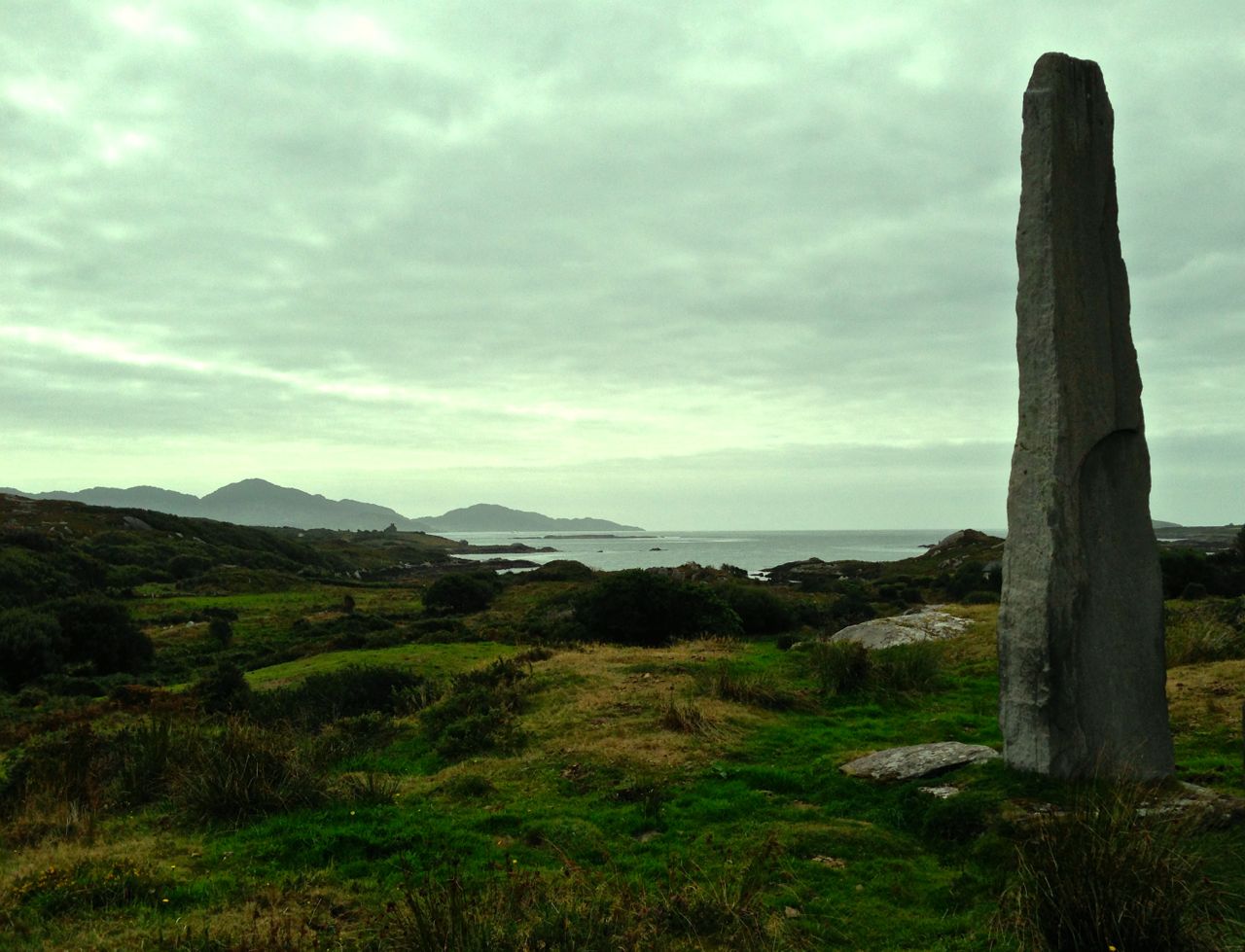
Ballycrovane – the tallest Ogham Stone in the world is in West Cork

If you subscribe to the King Fénius theory of Ogham Stones (and why wouldn’t you?) you might wonder why historians place them in the early medieval period (4th to 9th centuries) and associate them with Christianity. Many of them appear to have been inscribed on older standing stones, including the gigantic megalith at Ballycrovane, overlooking Kenmare Bay and 5.3 metres tall.

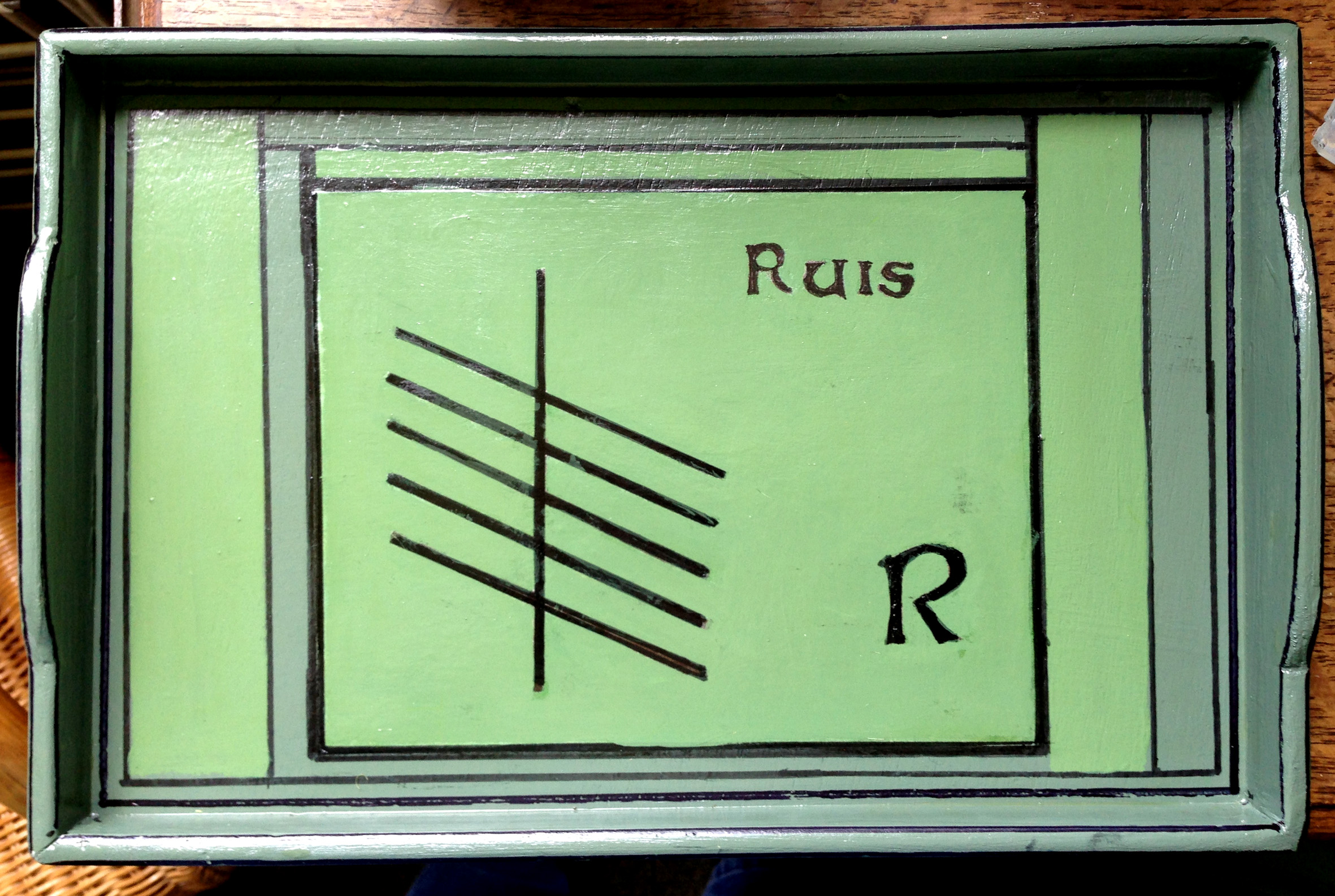
An Ogham tray by Danny

An Ogham tray by Danny

Ogham is not a forgotten language: it is a saleable item of Irishness. But, consider – quite apart from the many examples of Ogham stones which remain in the wild there are those which are kept in captivity. Take a look in the Stone Corridor at University College Cork – there is a remarkable collection there, a collection that raises questions in my mind: why have the stones been removed from their original siting? Is that an archaeologically sound thing to do – to take them from their historic context and chain them up so unnaturally in a long, dark and urban corridor? If it’s time to give the Elgin Marbles back to Athens then it’s certainly got to be appropriate to redistribute the Ogham stones (and the other inscribed stones and Rock Art that are in the Corridor) back to their natural habitats – in the wilds of West Cork… maulin

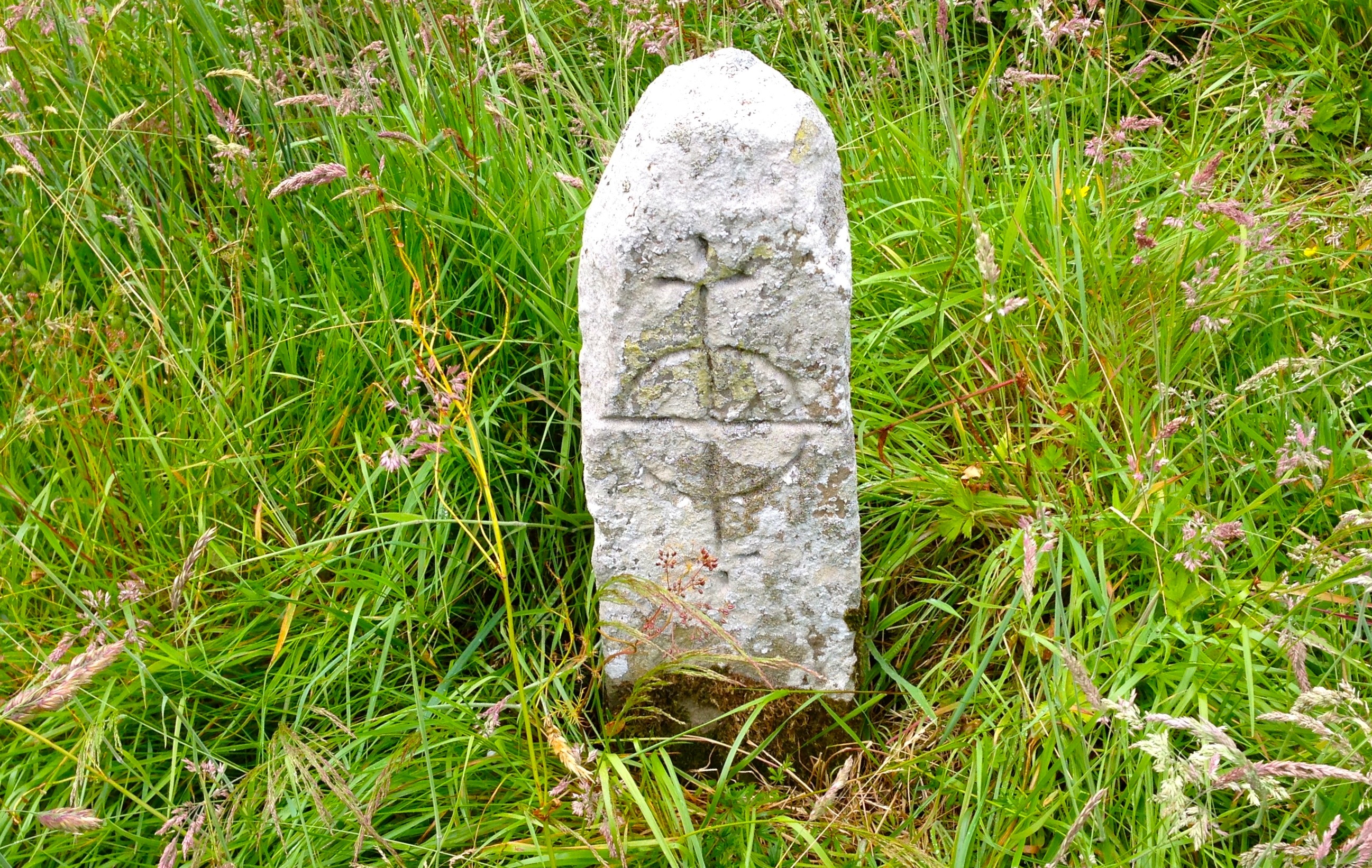
In its rightful place: Maulinward Ogham Stone near Durrus

In its rightful place: Maulinward Ogham Stone near Durrus (front and back)

corridor

Rock Art in Danger

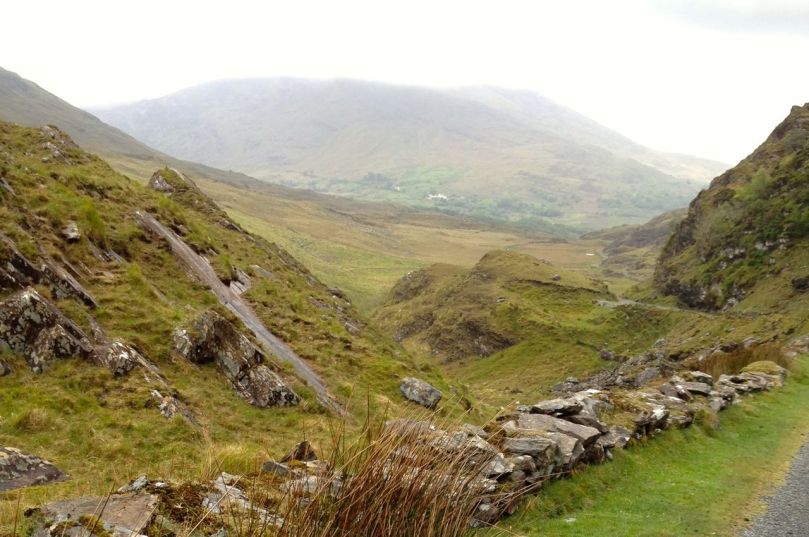
The age-old landscape of Derrynablaha

The age-old landscape of Derrynablaha

Both Robert and I have written about prehistoric rock art several times in this Journal – here and here, here and here. Readers will know that it was the subject of my Master’s thesis in the early 70s, and that it has become a shared passion for us both as well as a retirement project. One aim of this project for me is to assess how rock art has been doing, as a category of ancient monument in Ireland, since I last studied it intensively forty years ago.

Benign neglect - rock art in a cow field

Benign neglect – rock art in a cow field

Within the archaeological community there is discussion about how best to protect rock art sites. The arguments take shape around opposing approaches: the first alternative is to promote and advertise rock art, to make it as well-known as other monuments such as megalithic tombs and medieval friaries; the second is to leave it lie in obscurity. 

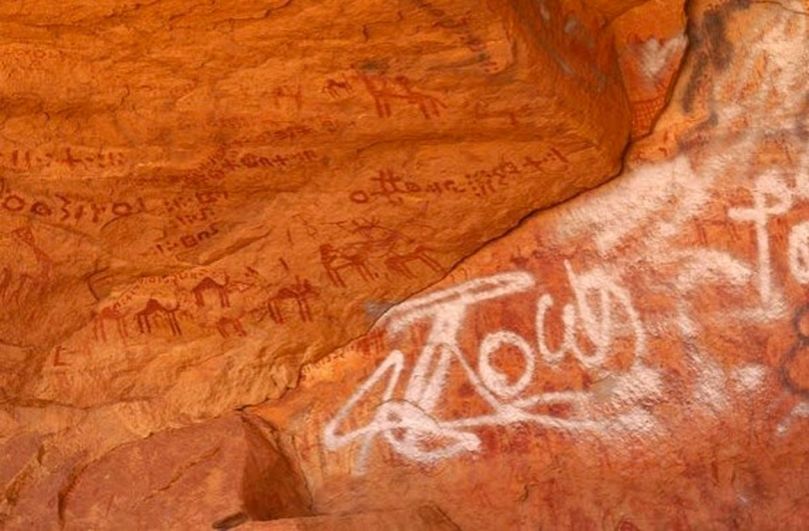
Spain has a lot of rock art, and the approach there is to encourage people to come and view it and explore it. There are visitor centres, interpretive signs, rock art trails. While the results have been positive on the whole, raising the profile of this class of site and increasing the understanding and respect of visitors, it has not been without challenges: some damage and vandalism has occurred on carved panels.

Vandalism to rock art in Libya

Vandalism to rock art in Libya

In Ireland we have taken a low profile approach when it comes to promoting rock art. Its very obscurity, the argument goes, is its protection. All known rock art sites are recorded in the database maintained by the National Monuments Service, and anyone planning on building on or developing a piece of property must check plans against this inventory. But apart from that we do not advertise the presence of rock art with signs or centres. A few are marked on the Ordnance Survey maps, but are difficult to find. The folk-beliefs of country people have helped in the past – where any prehistoric site was known it was never interfered with for fear of the bad luck that would follow. 

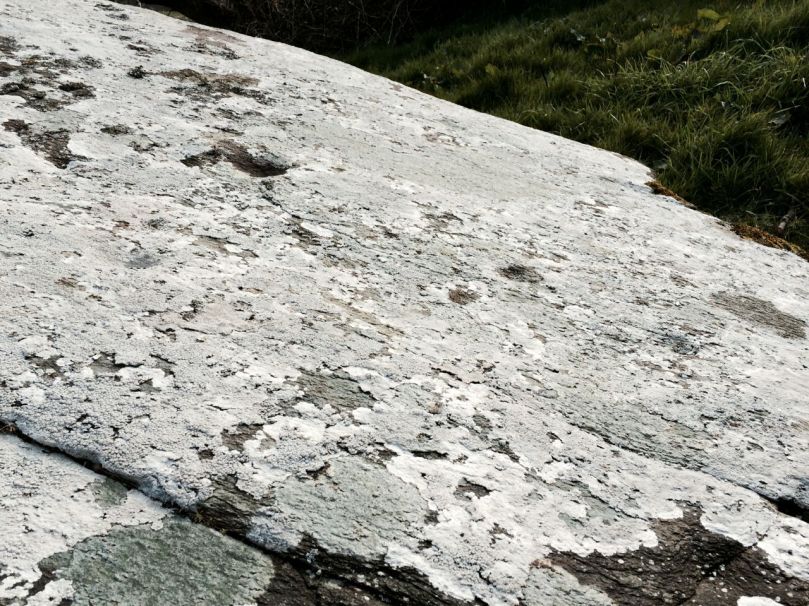
Under all that lichen lie many cupmarks

Under all that lichen lie many cupmarks

Weathering and lichen growth are not kind to carved surfaces over time and rock art in Ireland has not been protected from such natural occurences. On the  whole, however, the  fact that rock art is little known has indeed functioned to ensure that carved panels remain in place and my own sympathies would have lain therefore with the second argument.  However, times are a-changing in Ireland and I have become alarmed at the prospects for the conservation of this important prehistoric resource. I have come to believe that the more people who know about rock art, who know the locations of the rocks and can keep an eye on them, the better. 

Robert and I have spent a year now, in West Cork, visiting rock art sites and re-recording them. I have begun to understand in that time that there are two main dangers to rock art in the Irish landscape: ignorance and the economy. 

If only we'd known, we would never have built it on top of the rock art!

If only we’d known, we would never have built it on top of the rock art!

First: lack of awareness. By this I mean that in general people simply do not know that there is a class of ancient monument known as rock art. They don’t know what it looks like and don’t recognise it when they walk over it. This is not their fault – rock art can be almost impossible to see on the surface of a weathered rock on a grey day, even when you know it’s there. We have described how in one case a building was erected on top of rock art. In another case we are aware of, a piece of rock art was unrecognised and probably damaged when a homeowner erected an ornamental stone circle beside it. In both cases the homeowners would have protected the rock art had they known it was there, or understood the extent of it.

The shadows are from a newly built stone circle

The shadows are from a newly built stone circle

Second: the economy. Here, two huge threats to rock art exist. The first is in the rapid growth of forestry plantations in Ireland – a practice that is altering the landscape and obscuring what lies underneath in many areas of the country. We have experienced this first hand: rock art in a nearby townland can no longer be located in a young forestry plantation. 

The second is even more serious – the threat lies in the encouragement to farmers to improve and bring into production previously marginal land. All around us in West Cork the sound of the rock breaker is as common as the lowing of cattle. Vast stretches of rocky land, suitable only for a few sheep, are being levelled, drained and seeded. Green fields are appearing where once only scrubby grass and bog could grow.

The excavator is at the top left of the photograph

The excavator is at the top left of the photograph

We saw first hand what this could mean on a recent trip to Kerry. In the mountains above Sneem, on the Iveragh Peninsula, lies the lonely valley of Derrynablaha. It is spectacularly beautiful, but wild and remote. Forty years ago the one house in the valley was occupied by the farmer who ran his sheep on the mountain slope. That house is now in ruins: a new owner until recently simply carried on the use of the land for sheep. Imagine our surprise and concern, therefore, when, on a recent trip to Derrynablaha, we observed an enormous excavator working in the fields above the house. It had been there for some time. The ground had been levelled, all rocks and old field boundaries had been cleared away, and the land is now ready to be seeded and made into an enormous and pristine green field.

So what’s the problem with this? It’s alarming because Derrynablaha, and the neighbouring townland of Derreeny, contain the largest and most significant concentration of rock art in Ireland. Forty examples have been found and recorded so far. Some of them lie right beside the new field. An assessment by the National Monuments Service took place immediately and they will monitor closely now that they know this is happening. However, damage has already been done. Rock art does not exist in a vacuum – it is part of a prehistoric landscape and nowhere is this more so than in Derrynablaha, where the land has been lightly lived on over the centuries and where prehistoric and historic features lie just beneath the boggy turf. 

It's hard to see, isn't it? But tjis is one of the most iconic pieces of Irish rock art

It’s hard to see, isn’t it? But this boulder at Derrynablaha is one of the most iconic pieces of Irish rock art

The farmer, of course, is just doing his job. With the encouragement of the grants system he is improving his land, trying to be more competitive and hoping to pass on a viable farm to his son, so the young man won’t have to emigrate like many of his contemporaries. He is aware of the rock art and is avoiding direct contact with any pieces he knows. He needs no planning permission (a process that would have involved and alerted the County Archaeologist) to do what he’s doing.

Just part of the surface of the Derrynablaha rock above

Just part of the surface of the Derrynablaha rock above

In both these scenarios – lack of awareness and the economy – the intentions of everyone concerned were honourable. But honourable intentions won’t save rock art from damage and destruction. Our only hope lies in a Save the Whales approach: the more people who know about and appreciate rock art and who are committed to helping to preserve this precious resource, the better its chances of survival will be. 

Derrynablaha - current landscape at that rock

Derrynablaha – current landscape at that rock

Mount Gabriel

Trails over Mount Gabriel

Trails over Mount Gabriel

Only a few kilometres from Nead an Iolair – as the Crow flies – sits Mount Gabriel: at 407m elevation it’s the highest piece of land in West Cork. Cork mountains are dwarfed by those from Kerry: McGillycuddy’s Reeks has the highest peaks in Ireland, at over 1,000 metres. However, our own local mountain is nevertheless impressive and on a good, clear day provides a view not to be missed – to all points of the compass.

Looking west to the Mizen

Looking west to the Mizen

I spent a while researching why a mountain in the west of Ireland should be called Gabriel. There is no received opinion about this. I suppose there’s no reason why it shouldn’t be named after the Archangel himself: after all, we have Croagh Patrick (after St P) and Mount Brandon (after St Brendan) and many others: Ireland’s landscape is alive with place-names having religious connections, although such associations are likely to be fairly young. In Irish the mountain is Cnoc Osta – possibly ‘hill of the encampment’ – so there’s no clue there.

Roaringwater Bay

Roaringwater Bay

I did find this fascinating piece from the Church of Ireland Magazine, dated 1826 – written by John Abraham Jagoe, Vicar of Cape Clear …where I have no protestant parishioners… and Curate of Schull …where interspersed amongst moor and mountain, I have fifteen hundred Protestants, to visit and oversee… It’s well worth a verbatim extract:

‘…amidst these everlasting hills arose, in peculiar prominence, Mount Gabriel. Why, my lads, said I, is yonder mountain called such an outlandish name; one would think it was brought here by Oliver Cromwell, it has such an un-Irish – such a saxon name. O! says Pat, it is a pity that the blockhead is not here to tell the gentleman the story about this, for sure and certain such poor garcoons as the likes of us know little, and care not the tail of a herring for such old stories. And who, said I, is the blockhead? O, says my friend, the blockhead is an old man living up on the mountain, who, from his great memory, his knowledge of cures for cattle, charms against fairy-struck people, experience in bleeding, acquaintance with legends about the good people, the Milesians, and Fin McCoul, is called far and near, the blockhead.

My dear fellow, will you tomorrow bring me to that man; I would pilgrimage over all the hills in Cork and Kerry to get into chat with him: says I to myself, this is just the man that I want. Ah my good friend, do bring me to the blockhead to-morrow. Why yes to be sure, – but stay, can you speak Irish? Not a word, to my sorrow be it spoken. Well then go home first and learn Irish, for Thady Mahony can speak no other language. – Well boys, can none of you (as I cannot get it out of the blockhead) tell me about Mount Gabriel; O! yes, Sir, says Pat Hayes, my Godmother used to tell me it was called after the Angel Gabriel, who came, you know, from Heaven to deliver the happy message of mercy to the Virgin – ever blessed be her name. And so on his return, as he was flying back, he looked down upon Ireland, and as he knew that in time to come, this honest island would never part with the worship and duty it owes to the Mother of God, he resolved to take a peep at the happy land, that St Patrick was to bestow for ever on the Virgin. So down he came, and perched on the western peak of that mountain; the mark, they say, of his standing is there to this day, and his five toes are branded on the rock, as plain as if I clasped my four fingers and thumb upon a sod of drying turf; and just under the blessed mark, is a jewel of a lake, round as a turner’s bowl, alive with trout; and there are islands on it that float about up and down, east and north and south; but every Lady-day they come floating to the western point, and there they lie fixed under the crag that holds the track of the Angel’s foot…’

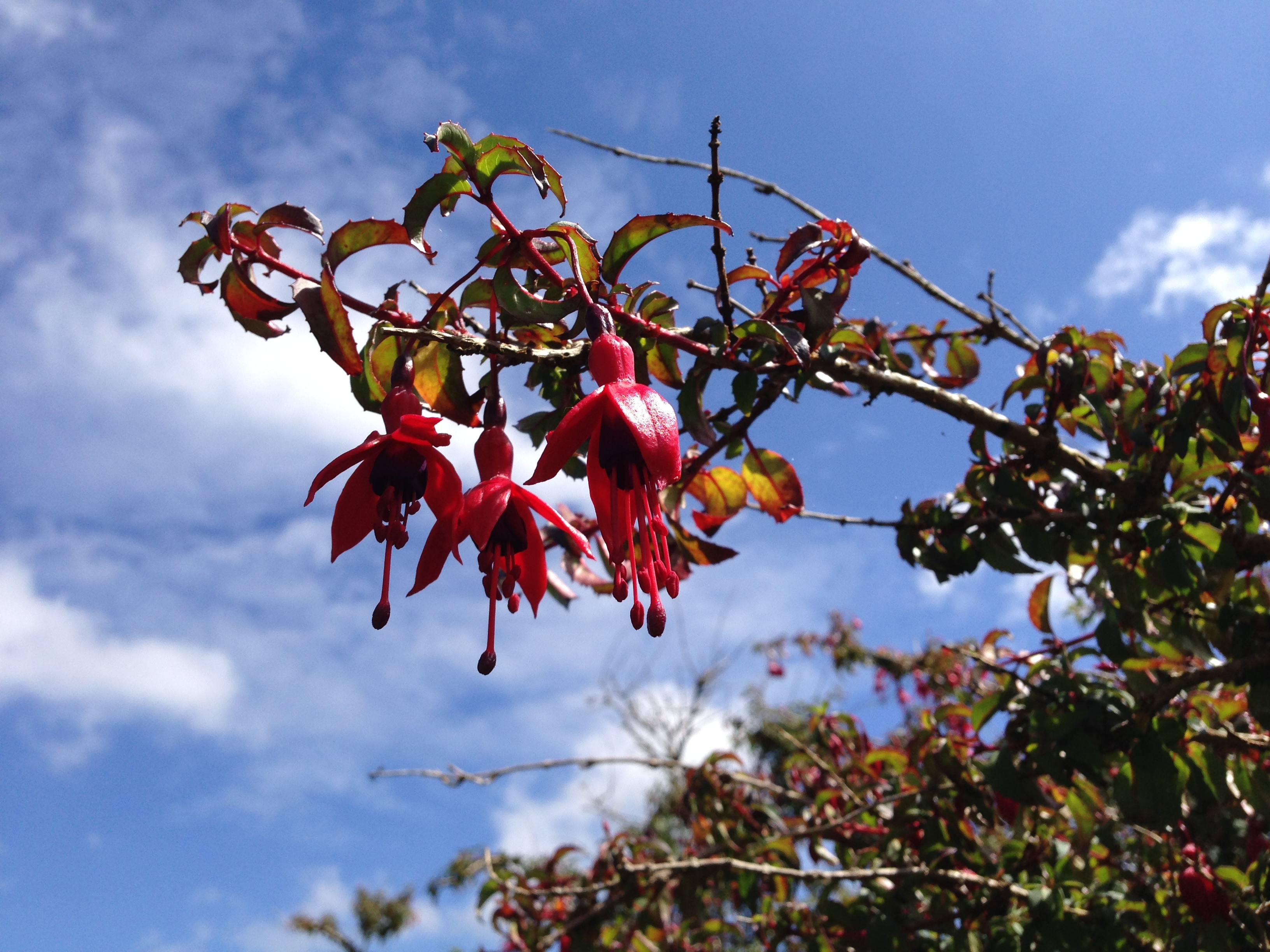
Hidden Glen Fuschia

Hidden Glen Fuschia

Well, there’s enough in those few lines to keep us going on field trips for some time to come! We did find, on the western slopes, a beautiful hidden valley holding the ruins of a one roomed cottage. I have convinced myself that this must have been the dwelling place of the blockhead Thady Mahony, who may once have been the keeper of all the secrets of the mountain. But we have yet to find the jewel of the lake with its trout and its miraculous floating islands, notwithstanding the Archangel’s footprint…

View from the summit

View from the summit

One other possibility for the name is a corruption of the Old Irish Gobhann – which means smith, as in a metal smith. Remember Saint Gobnaitt? She was the patron saint of ironworkers (blacksmiths) and her name is supposed to be rooted in Gobhann. There is also a Goibhniu in Irish mythology: he was the smith of the Tuatha De Danaan and forged their weapons for battle with the Formorians. So – Gobhann, Goibhniu, Gabriel…? Too much of a leap of faith? But it is known that Mount Gabriel was the site of extensive copper mining a few thousand years ago – remains of pits, shafts and spoil heaps can be seen:  so perhaps there just could be something more ancient inherent in the name.

golf ball

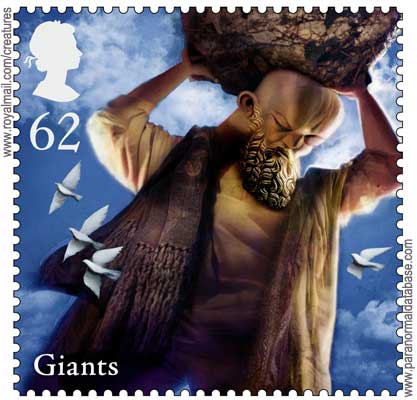
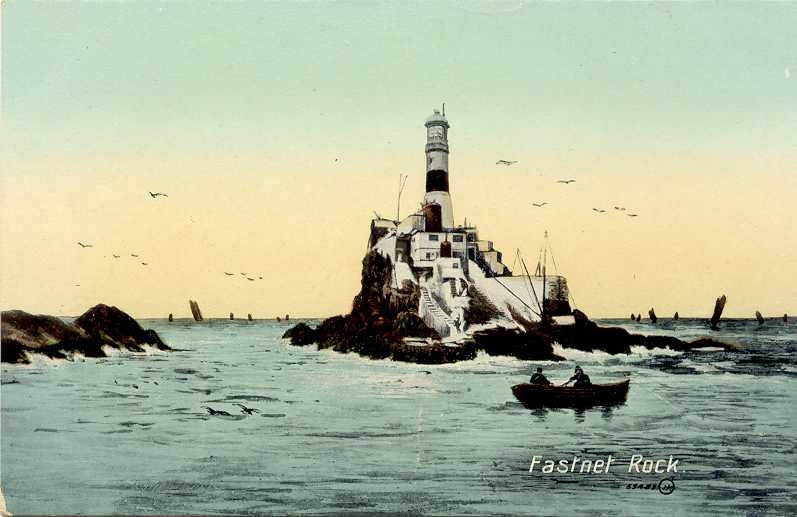
There is mythology attached to the Mountain: the Fastnet Rock was torn from the slopes and thrown into the sea by a giant; once we were searching for a piece of Rock Art within sight of the mountain and the landowner assured us that the carved stone had been thrown there by Finn MacCool (we didn’t find it).

giant stamp

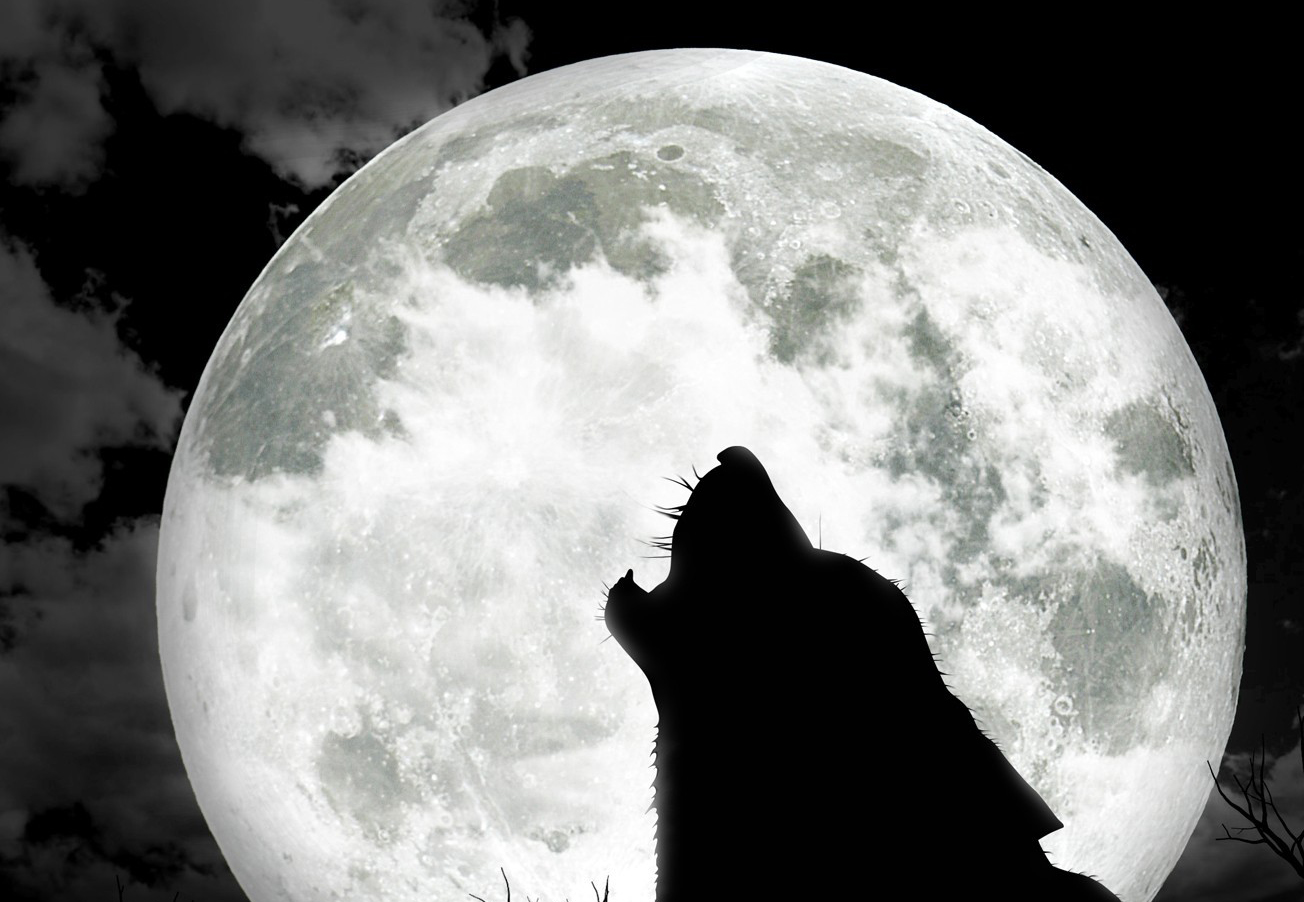
The story about Mount Gabriel that most captures my imagination is the suggestion that the last Wolves in Ireland inhabited the rocky landscape there back in the eighteenth century (although it’s true that several other places make the same claim). Until that time Wolves were commonly seen in the wilder parts of the land and feature in local stories and folklore. Interestingly they were often portrayed in a positive way and were sometimes companions of the saints. There are very few records of Wolves having maimed or killed humans, yet in 1653 the Cromwellian government placed a bounty on them – 5 pounds for a male Wolf, and 6 pounds for a female: worthwhile prize money in those days. This encouraged professional hunters and, coupled with the dwindling forest habitats, the fate of the animal was sealed.

grey wolf

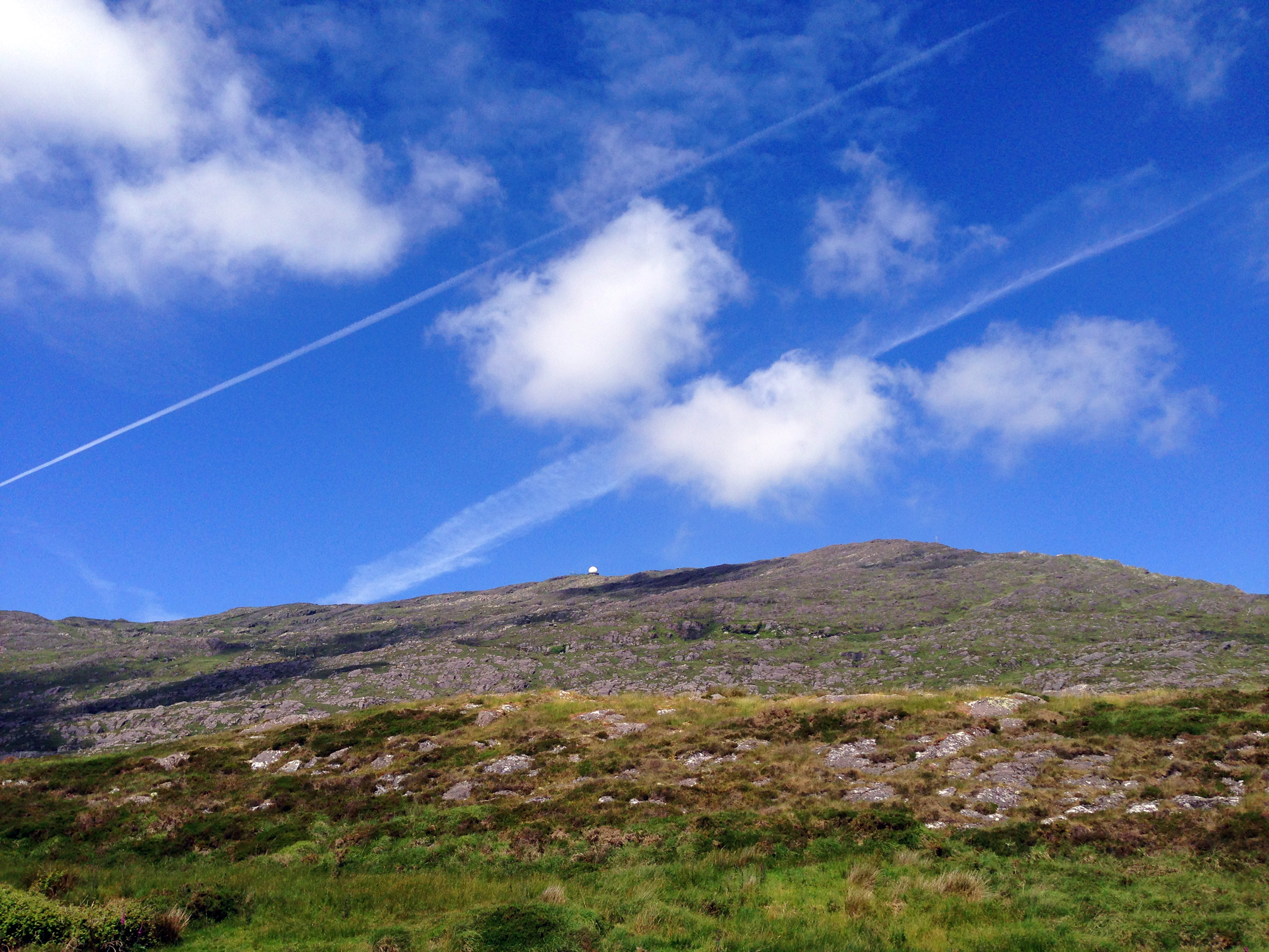
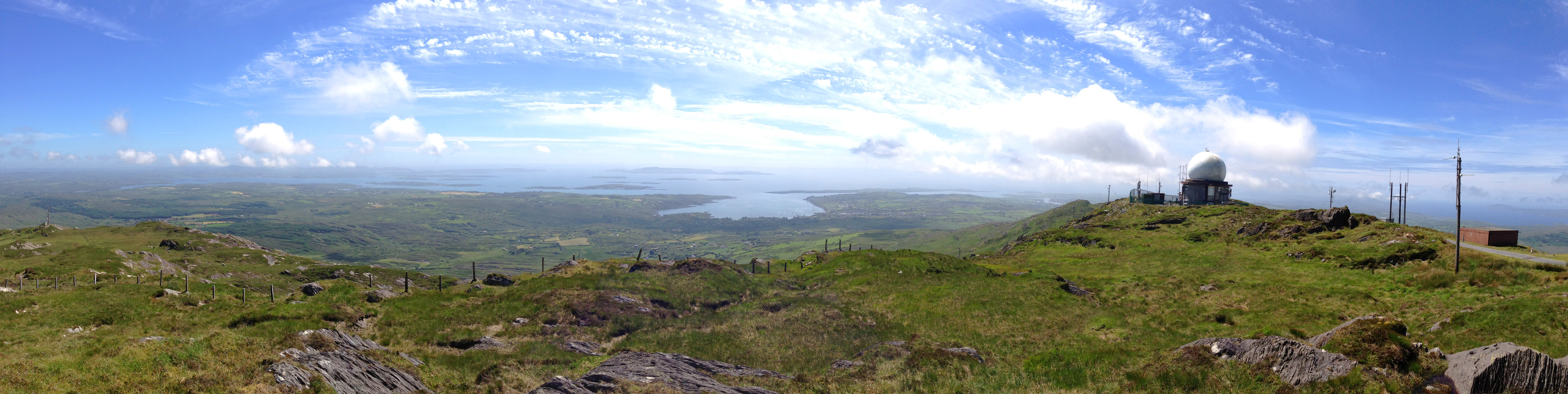
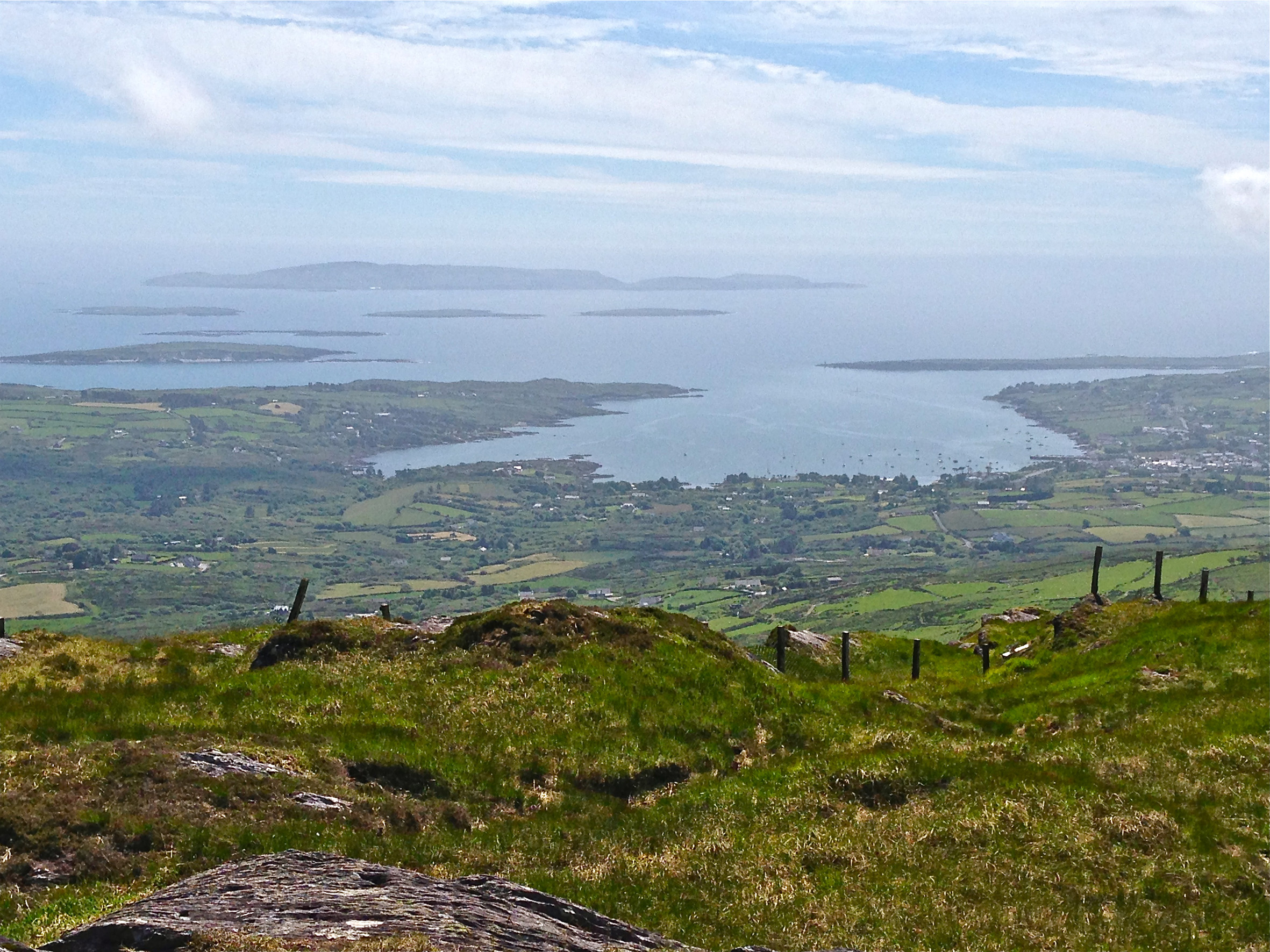
Mount Gabriel today is relatively benign, although it still has its remoter parts. The Irish Aviation Authority has kindly provided a road up to the summit, where sit the distinctive ‘golf ball’ radar domes and aerials of an Air Traffic Control installation. From these heights we can see Rossbrin Cove, Ballydehob, Schull and all the islands of Roaringwater Bay set out in a magnificent panorama – on a clear day.

iaa

Aerials and view to the north

Aerials and view to the north

Modern events have affected the mountain: a German plane crashed here in 1942, and in 1982 the Irish National Liberation Army bombed the radar station, believing that it was providing assistance to the North Atlantic Treaty Organisation, allegedly in violation of Irish neutrality.

IMG_3573

For us the mountain is a landmark and, like most of our view, its profile changes with the weather on a daily – perhaps hourly basis. As a repository of archaeology, human history, lore and nature Gabriel provides a rich resource.

Gabriel

Gabriel

Cape Clear

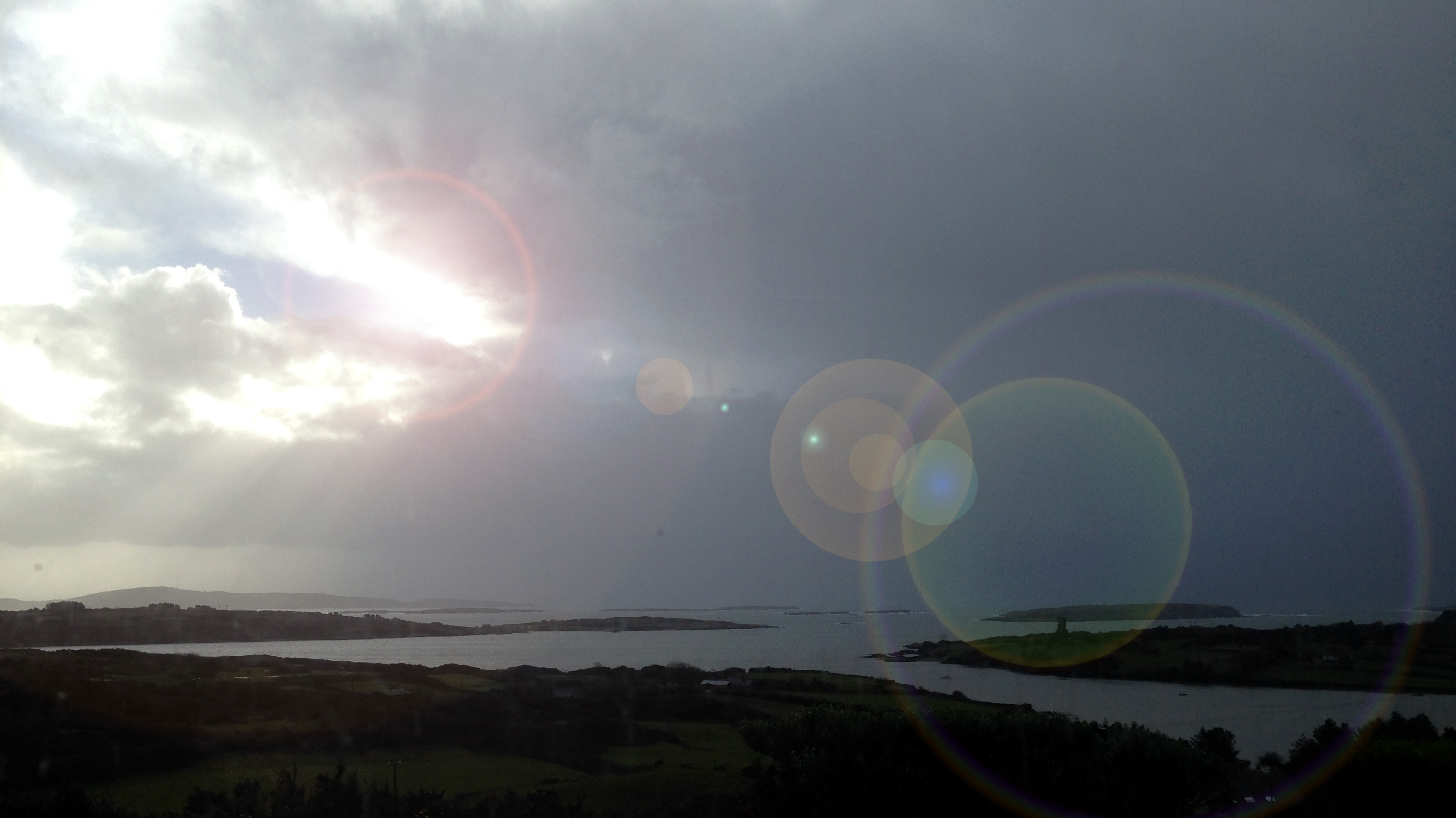
Distant Cape Clear - with solar effects

Distant Cape Clear – with solar effects

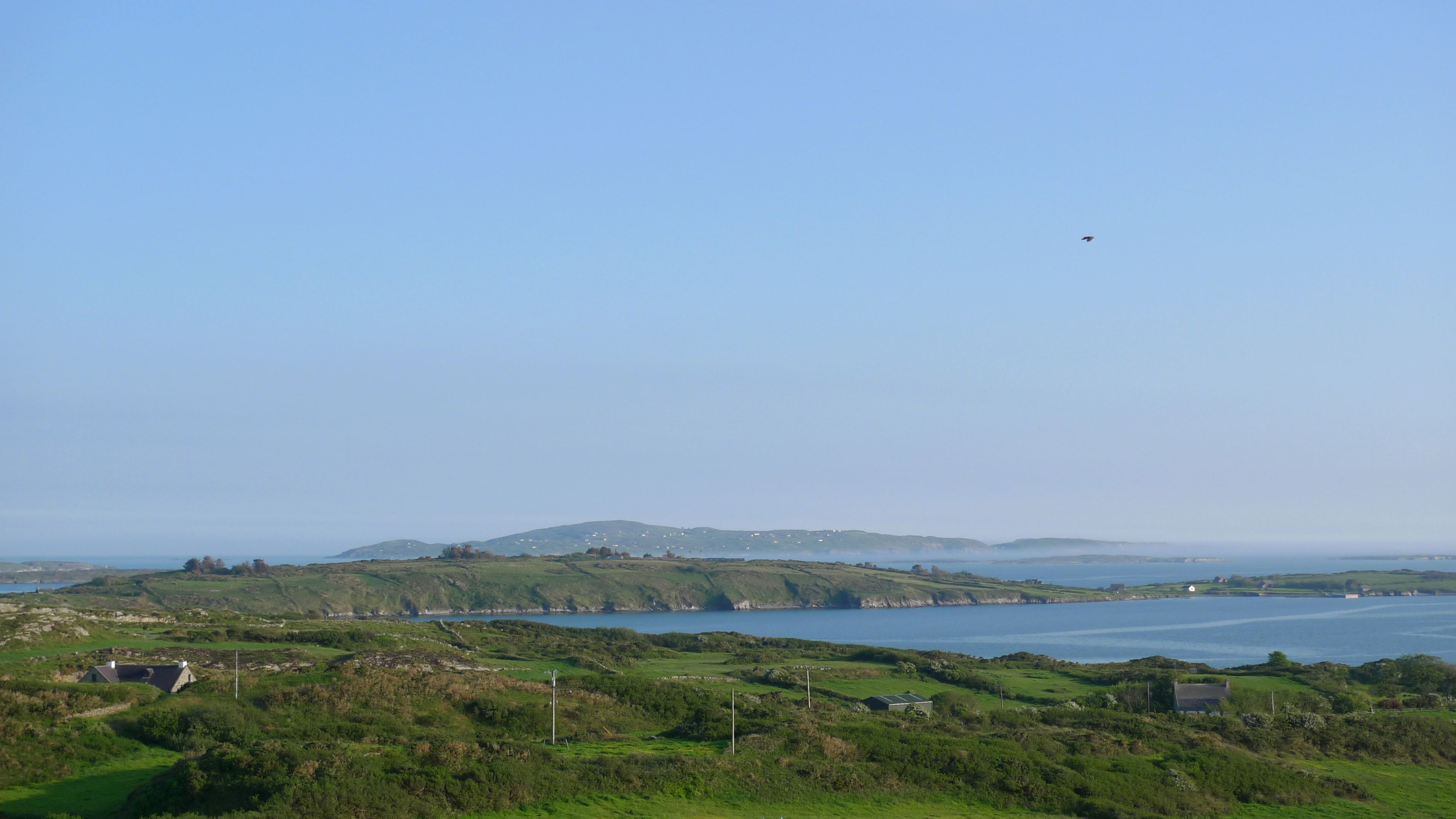
Always in our view from Nead an Iolair are the many islands of Roaringwater Bay: sometimes they are referred to as ‘Carbery’s Hundred Isles’. The largest of them – and the furthest out into the Atlantic – is Cape Clear. From our vantage point in Cappaghglass it sometimes floats on the horizon like a great seal under brooding skies, yet with the clarity of summer skies every hillside cottage can shine like a white jewel. I visited the island for the first time last weekend, drawn to its isolation and history – and by its own Saint – Ciarán, born on this most southerly point of Ireland and preceding Saint Patrick by some generations as the ‘Apostle of Eirinn’.

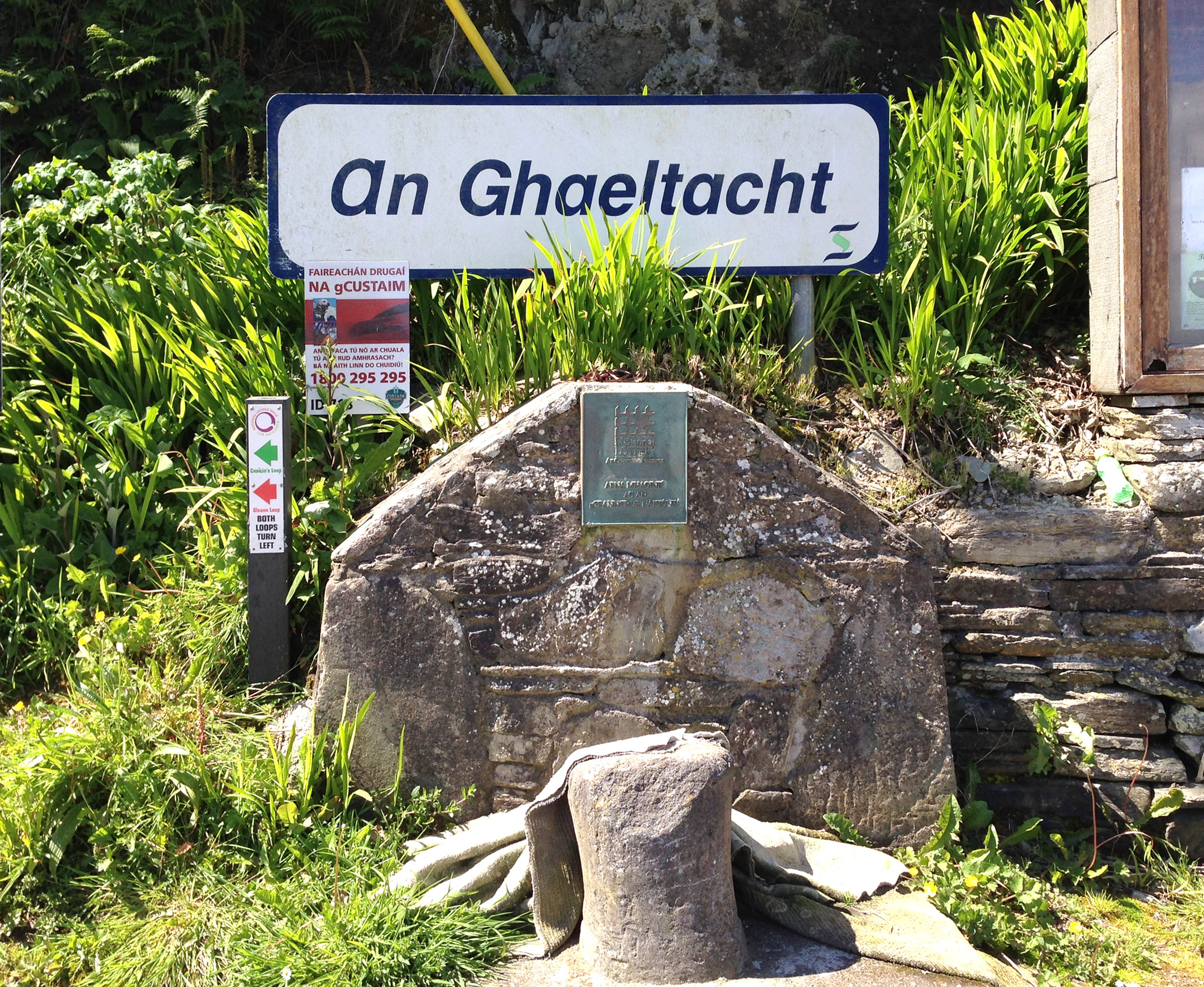
ghaeltact

Cape Clear is a place apart. It is one of the Irish Gaeltacht areas – where Irish Gaelic is spoken as the first language. Oileán Chléire is the Island of Ciarán, and one of the first things to be seen after landing is an ancient stone by the quay – said to have been placed there by the Saint himself – and his holy well – while nearby are the ruins of an ancient church and burial ground.

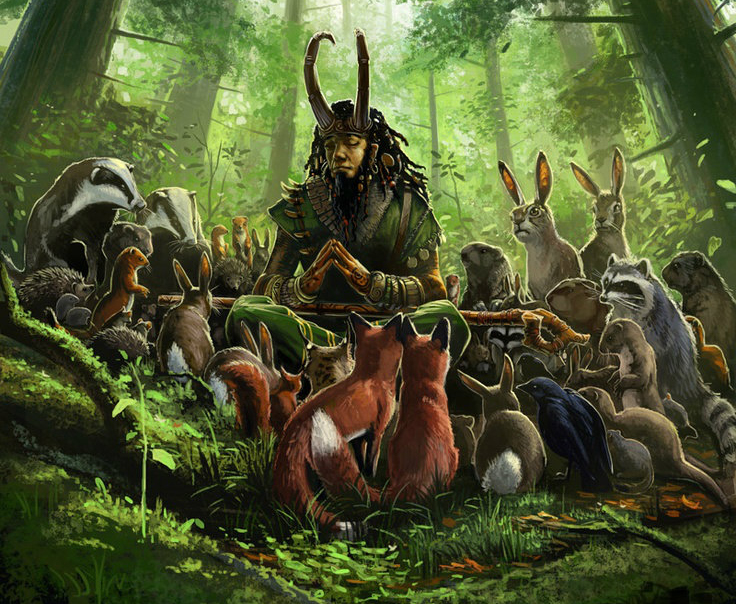
Saint Ciarán’s life has inspired some colourful stories. Before he was conceived Ciarán’s mother (Liadán) had a dream that a star fell into her mouth. She related this dream to the tribal elders who were knowledgeable of such things, and they told her that she would bear a son whose fame and virtues would be known as far as the world’s end. Ciarán’s first disciples included a Boar, a Fox, a Brock and a Wolf: they all became monks and worked together to build the community.

An interesting find: Ciarán as a Celtic God by Astrella

An interesting find: Ciarán as a Celtic god by Astrella

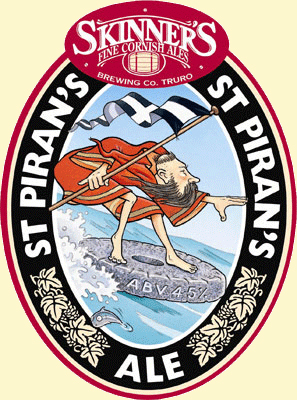
An unusual incarnation of the St Ciaran / Piran legend!

An unusual incarnation of the St Ciaran / Piran legend!

The Saint is also recognised in Cornwall, where he is known as Piran (or Perran) – scholars argue that in some ‘Celtic’ languages the C sound is interchangeable with the P sound. Certainly there is a legend that the Heathen Irish tied St Ciarán to a millstone and dropped him into the sea – and he then floated across to Cornwall where he converted the Heathen Cornish. Whatever the basis of this, both Piran and Ciarán share the same Saints Day: March 5th – which is also my birthday – so that puts me firmly into the picture!

Writers in the past have commented on the island’s particular character:

“…The natives of Cape Clear are distinct in a great measure from the inhabitants of the mainland; they have remained from time immemorial as a separate colony, always intermarrying amongst themselves; so that we must regard them as amongst the most typical specimens at the present day of the old Milesian race. The name of nearly all the islanders is O`Driscoll or Cadogan, the later being only a sobriquet for the former. Baltimore and Cape were originally the stronghold of this family, the principal Chieftain, O`Driscoll Mór, residing in Baltimore. There can be no doubt that they were the aboriginal race residing along the sea-coast of Carbery. The isolated position of the island and its difficulty of approach, have kept the population in a comparatively antique state and distinct condition during the lapse of centuries, so far as nationality and descent. Until the year 1710 Cape was an established monarchy, and an O`Driscoll – the head of the clan- was always styled, “King of the Island”. They had a code of laws handed down from father to son. The general punishment was by fine, unless some grave offence was committed, and then the delinquent was banished forever to the mainland, which was looked upon as a sentence worse than death…’ (from Sketches in Carbery by Daniel Donovan,1876)

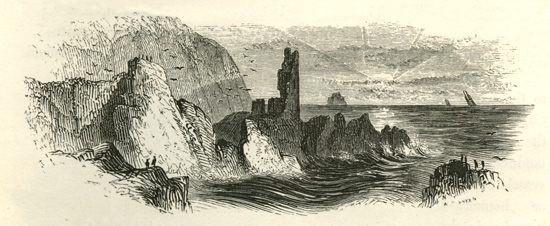
Dunanore – engraving by W Willes 1843

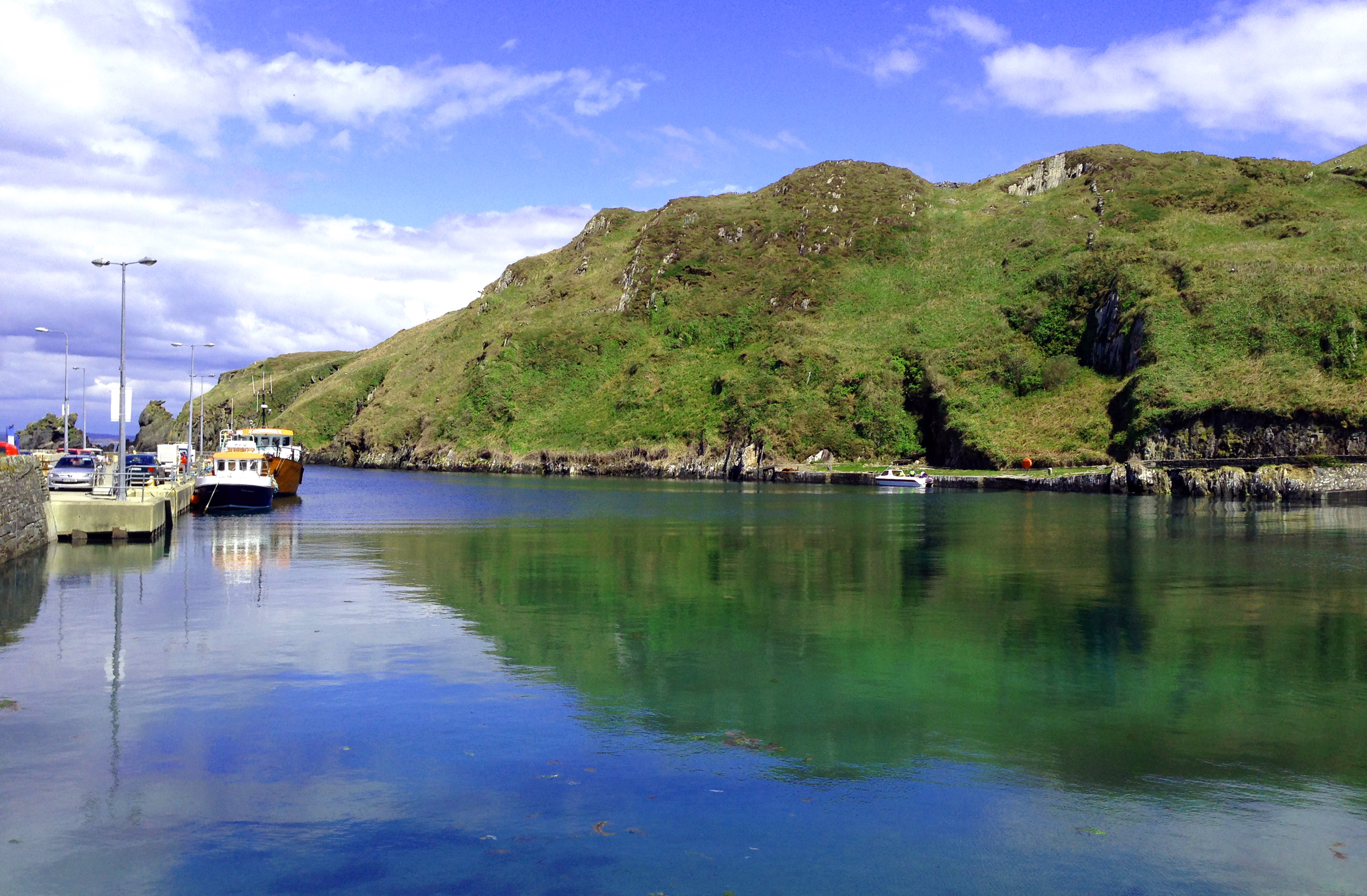
Our visit was organised by the Skibbereen and District Historical Society, and was masterminded by past Chairman Brendan McCarthy. He had arranged for the sun to be shining all day, and for the sea to be the calmest that anyone had known for years. A bonus was the presence of Dr Éamon Lankford – a knowledgeable and erudite local historian and toponymist whose projects have included setting up detailed place name archives for Cork County, Kerry, and Cork City. There are now over 200 large volumes of historic place name references and the work is still under way: examples from the city survey include Black Ash, Cáit Shea’s Lane, Murphy’s Farm, the Snotty Bridge, The Shaky Bridge, the Boggy Road, Tinker’s Cross, Skiddy’s home… Éamons unbounded energy has not stopped there – he has gone on to set up and run the Cape Clear Island Museum and Archive and written books on the Island’s people and landscape, on Saint Ciarán, on the Fastnet Rock, on Cape Clear place names- and has set up the Cape Clear Trail… Phew! We walked up the (very) steep hill to the Museum, which is housed in the restored old school building, and no-one could fail to be impressed by the sheer volume of information and artefacts it contains. Volunteers are needed to help run it through the summer months, so anyone fancying a bit of island life please make contact through the website. On our ferry trip from Baltimore and in the Museum Éamon kept us entertained and educated with stories, history and local lore.

I was keen to visit the Museum because I knew it housed a replica of the passage grave art (carved stone) found on Cape Clear and now believed to have once been part of a passage tomb on the highest point of the island – Cill Leire Forabhain. In 1880 the original stone was turned up in a field and taken across to Sherkin by the then curate of that island to ornament his garden. He left Sherkin only a year later, and the stone became overgrown and forgotten. It was rediscovered in 1945 and given to the Cork Public Museum where it is now on display. The carvings on this stone are in the style of the other spectacular decorated stones in the Boyne Valley and at Loughcrew, rather than the simpler Rock Art we are working on in West Cork and Kerry (although this ‘simplicity’ is belied somewhat by the recent discovery at Derreennaclogh). Beside the replica stone in the Museum is a smaller piece of Rock Art, although debatably labelled as being caused by ‘solution pits’.
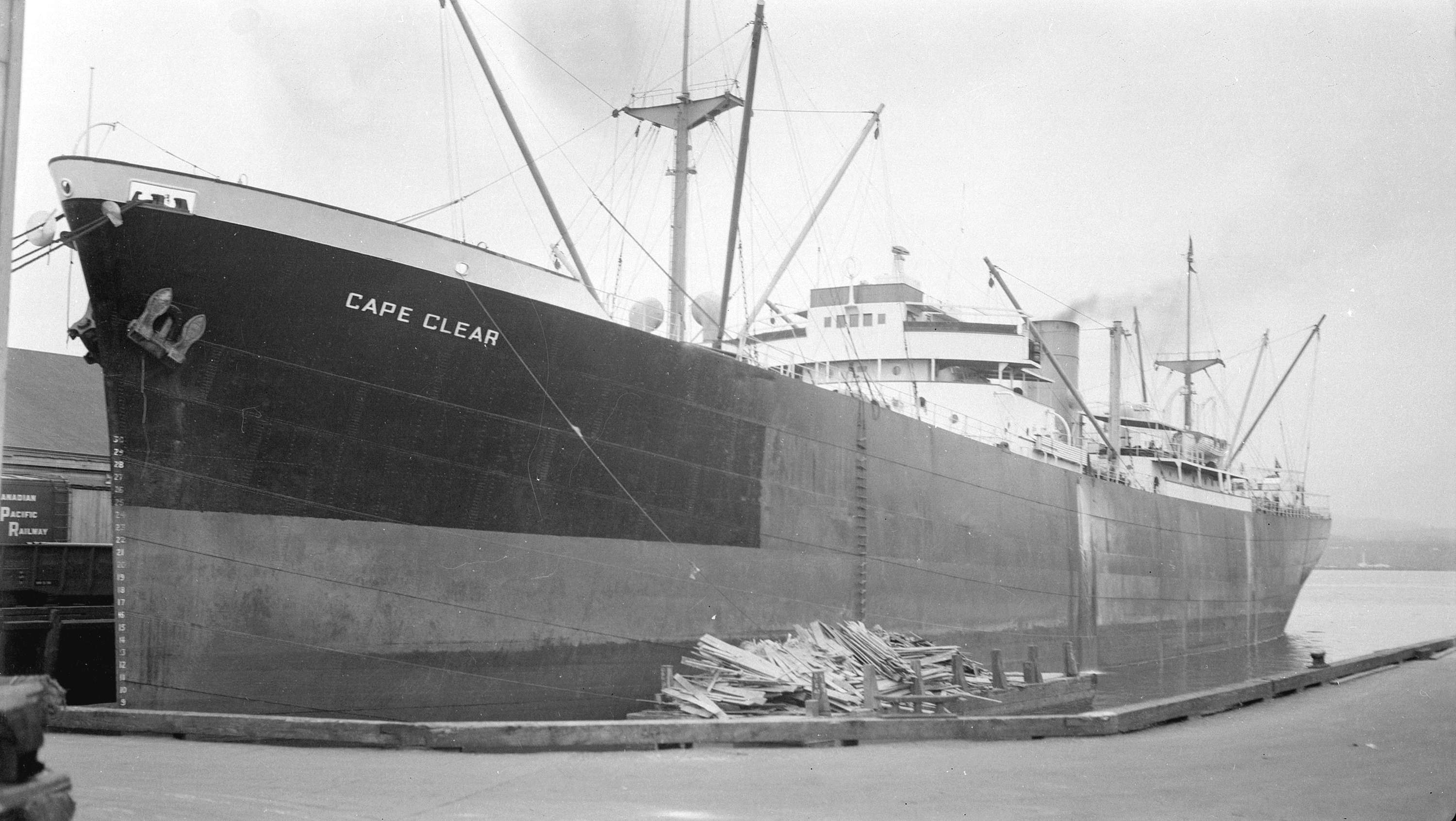
MV Cape Clear - built in Glasgow in 1939; went down in the Red Sea 1944

MV Cape Clear docked in Vancouver – built in Glasgow in 1939; went down in the Red Sea 1944

There is so much more to say about Cape Clear: it has given its name to a settlement in Victoria, Australia, supposedly named by gold miners from Ireland, and also to a number of ships built in Scotland. Talking of ships, the surroundings of the island have seen many a shipwreck: more than 50 wrecks have been recorded off Cape Clear between 1379 and 1944. This is partly because of the proximity to the notorious Fastnet Rock. FASTNET

We have to revisit Cape Clear again in the not too distant future, when we can devote more time to a full exploration of the island: it comprises 7 sq kilometres and 16 townlands. This time, however, it was down to the harbour for an excellent lunch before embarking on the ferry for the next stage of the trip to…. But that story must wait until another time!

harbour

For me, small island communities have a very particular feel: it’s not just the silence and closeness to nature, but a real awareness of how fragile, yet tenacious, the tenets of human existence / subsistence can be. As I write this, Cape Clear is romantically shrouded in mist out there over the bay: only the highest ridge, the cairn, the watchtower and the old lighthouse visible in grey silhouette. It’s a place that will pull us back across the water very soon.

today

Today’s view of the Cape from Nead an Iolair