Dunlough, or Three Castle Head

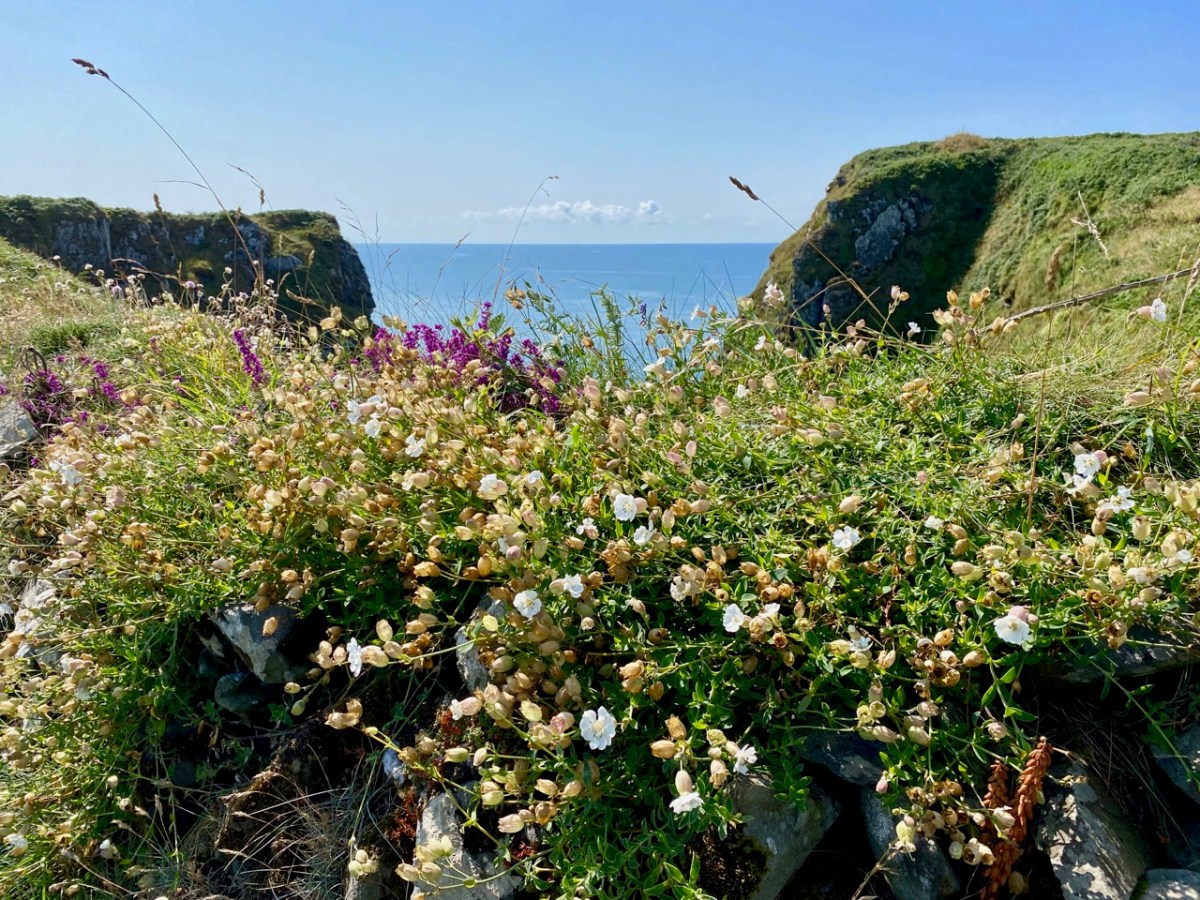
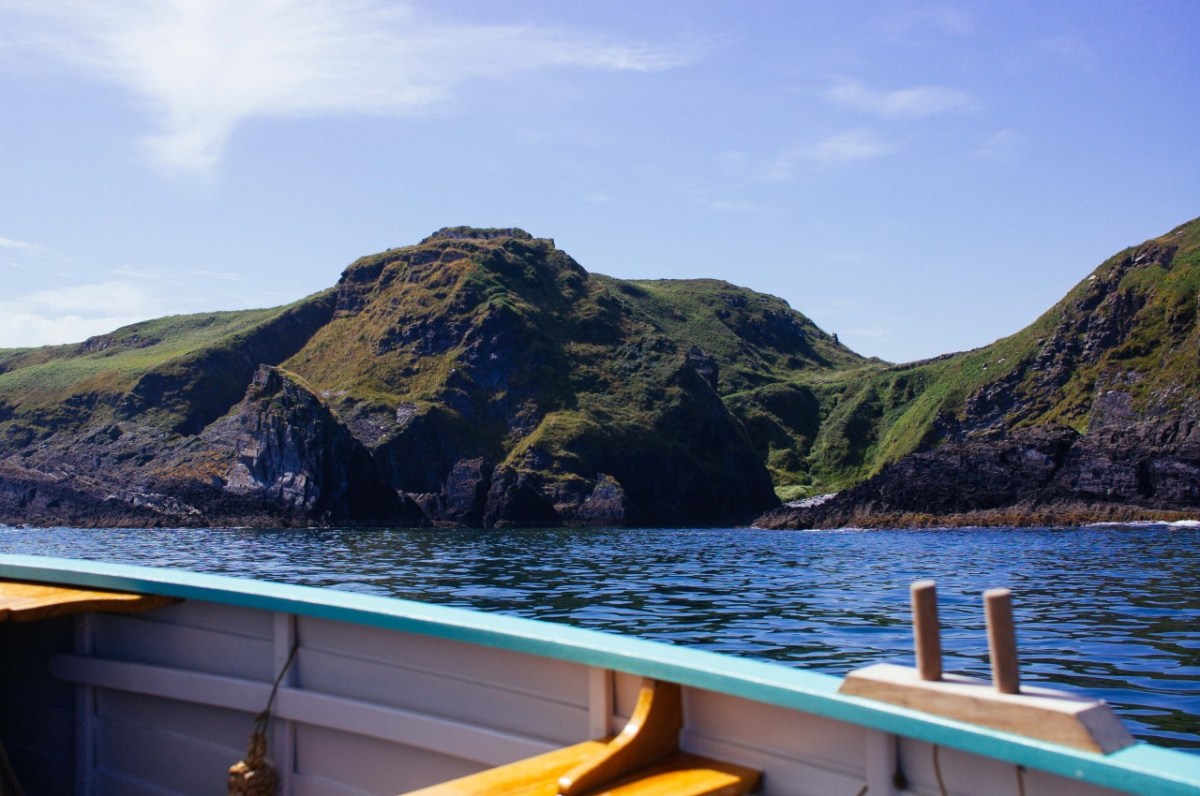
It’s actually amazing that in all the years we’ve been writing Roaringwater Journal (since 2012), we’ve never written before about Three Castle Head in detail, although we’ve mentioned it lots and visit it often. I consider it to be one of the most beautiful places in West Cork, perhaps in Ireland, and certainly one of the most interesting. It’s one of The Castles of Ivaha.

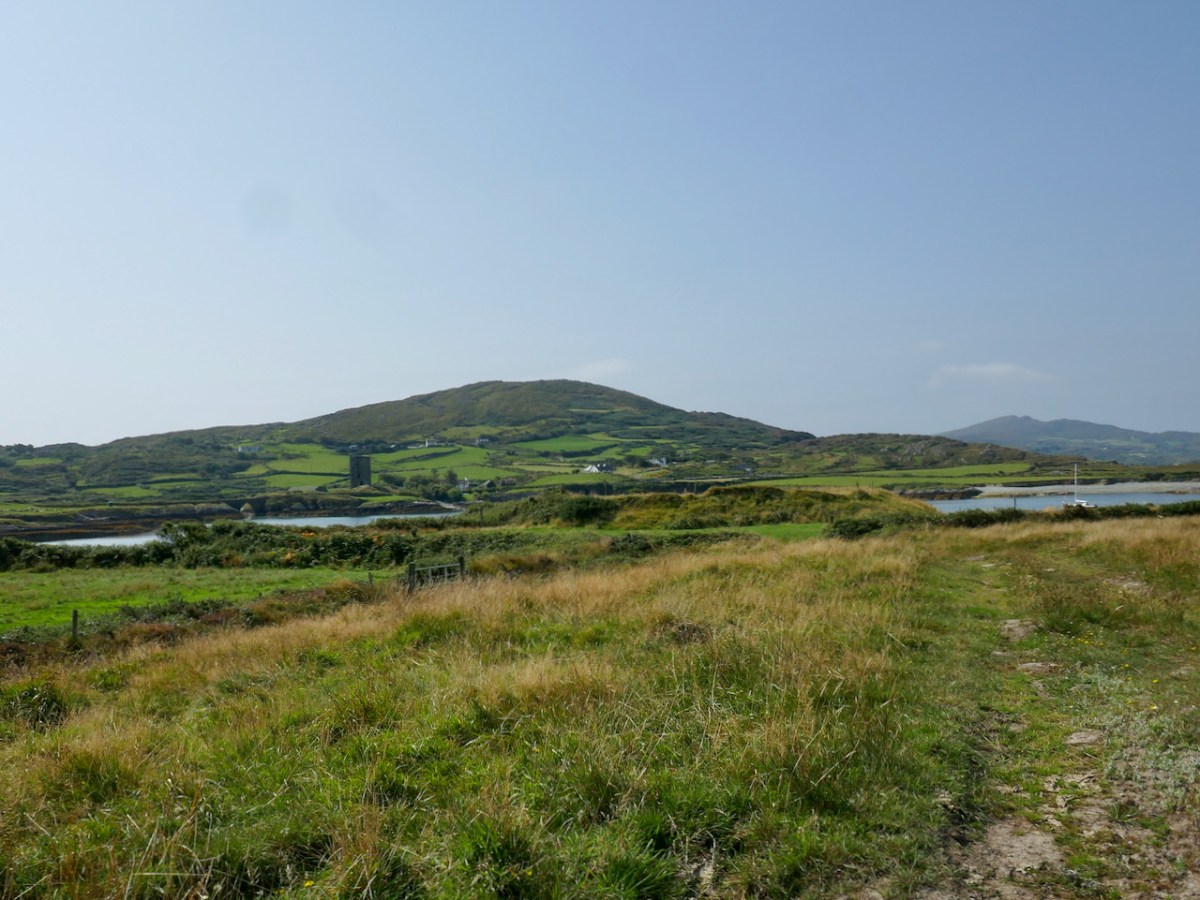
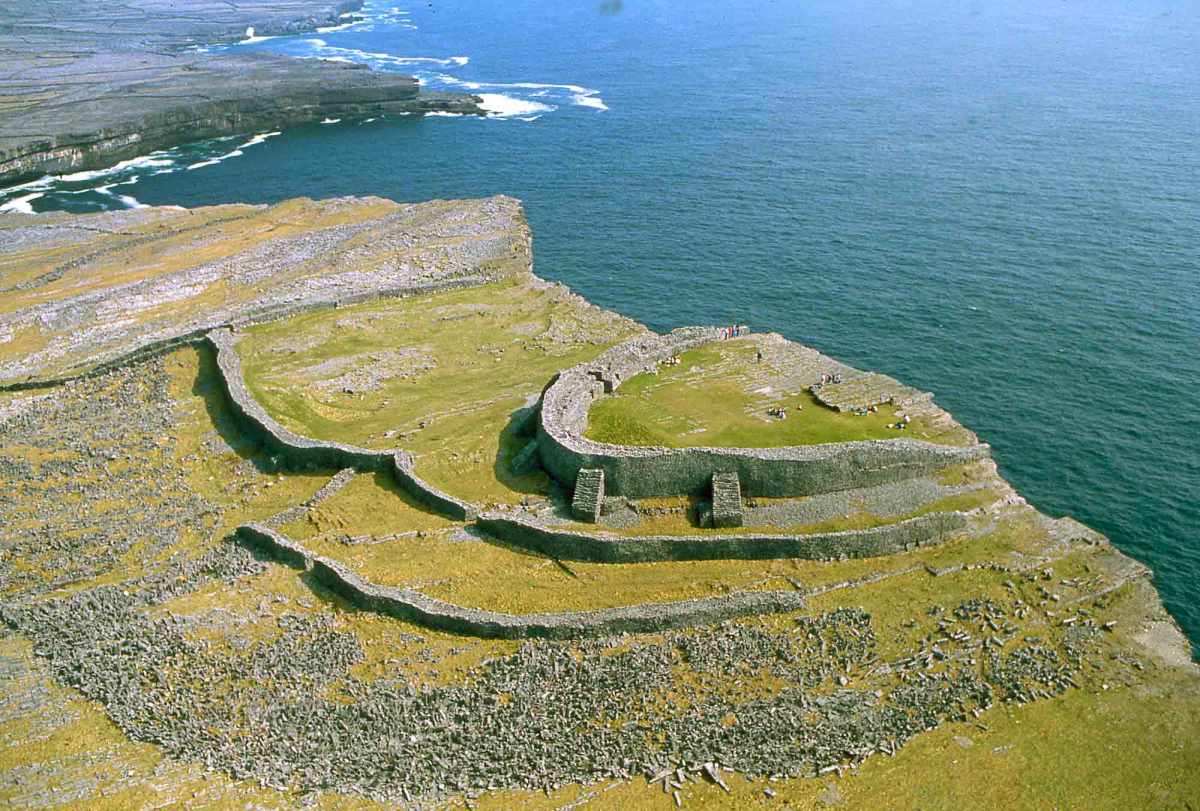
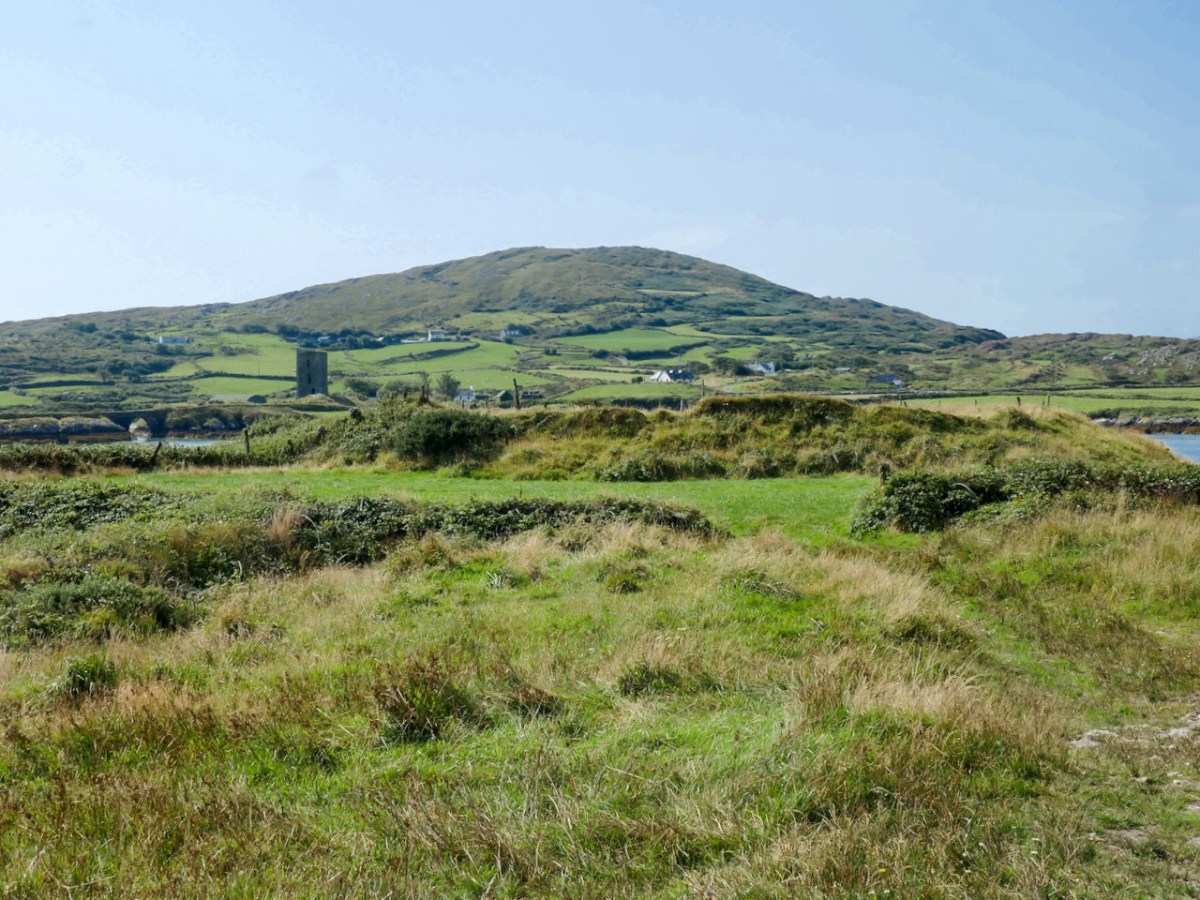
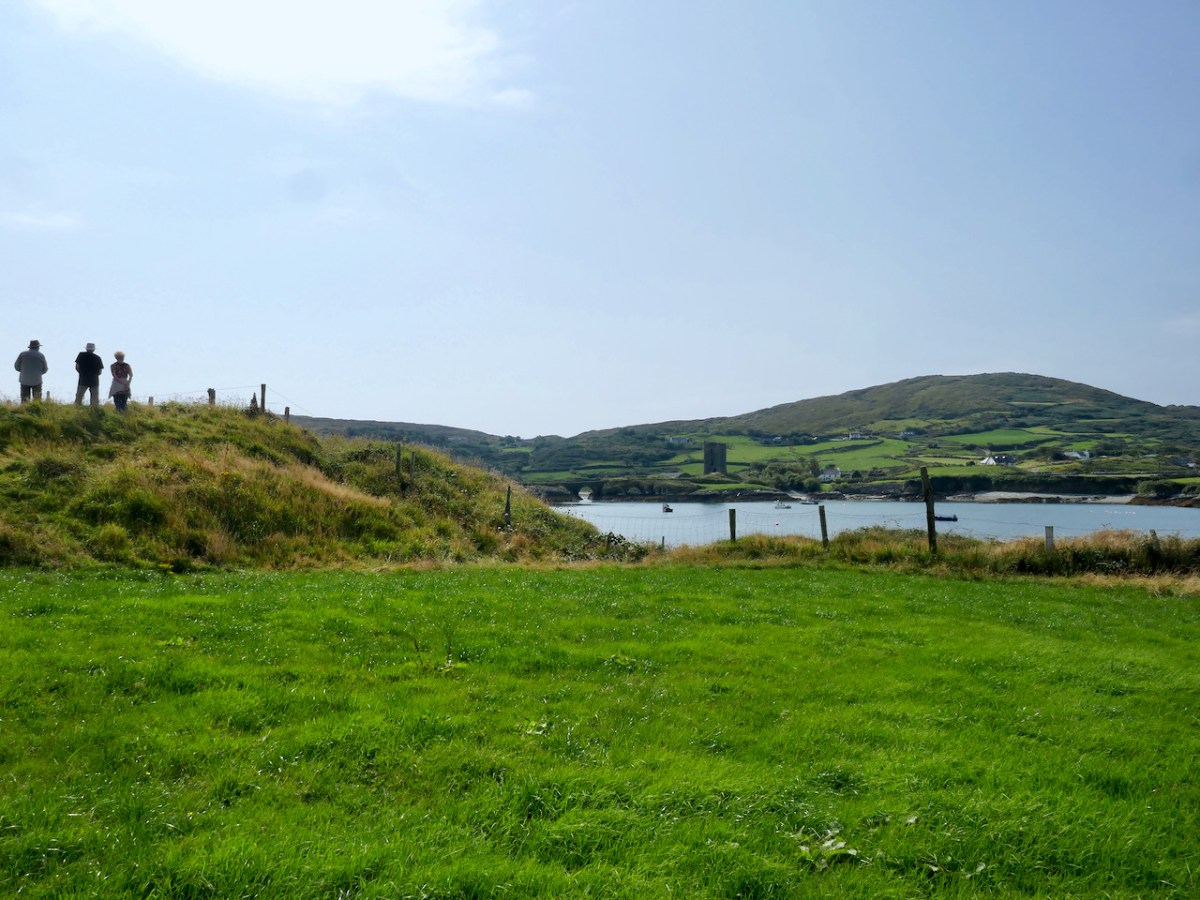
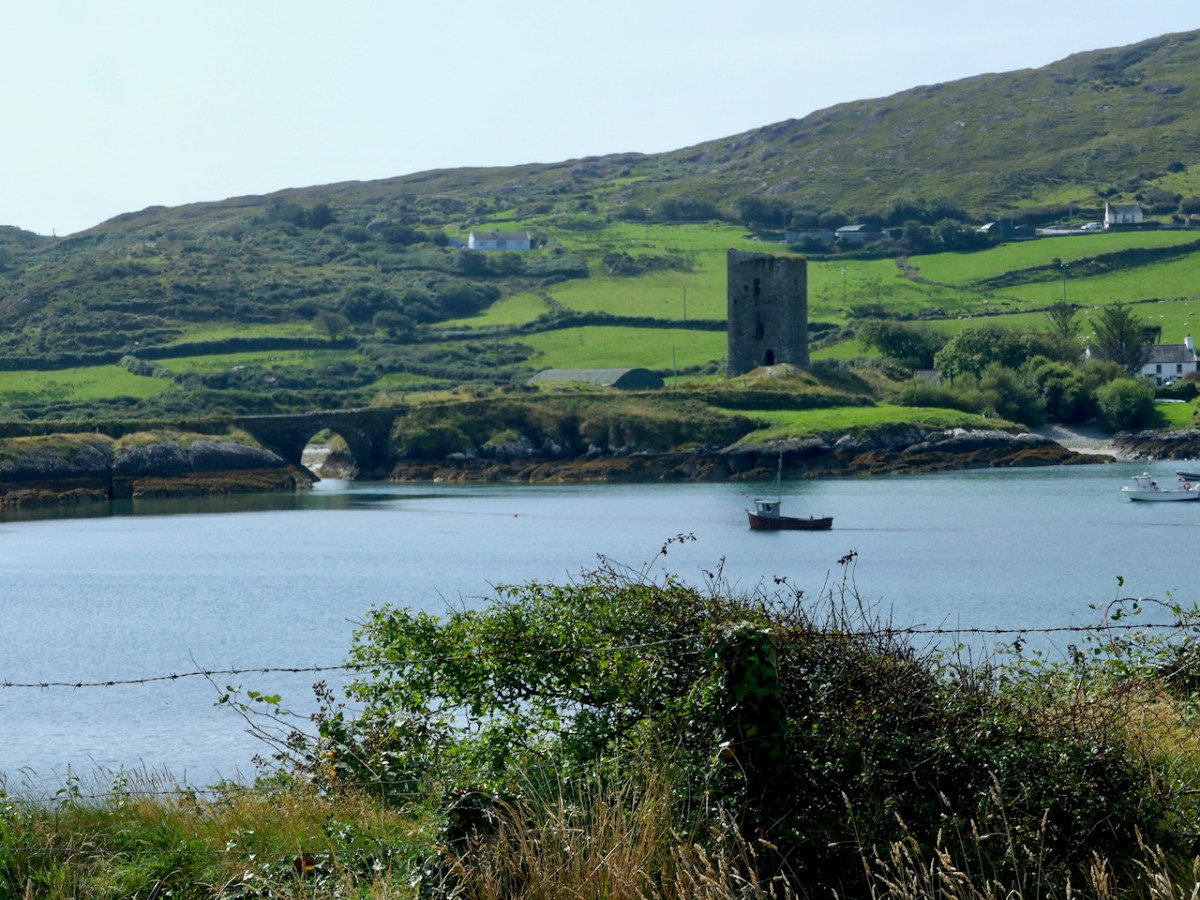
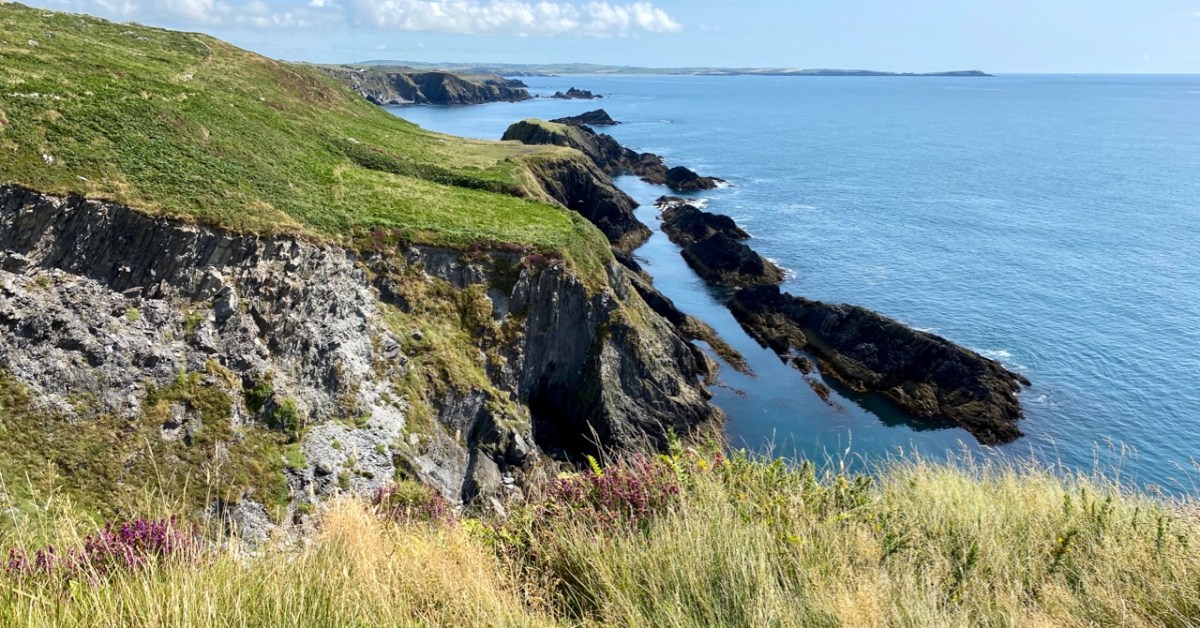
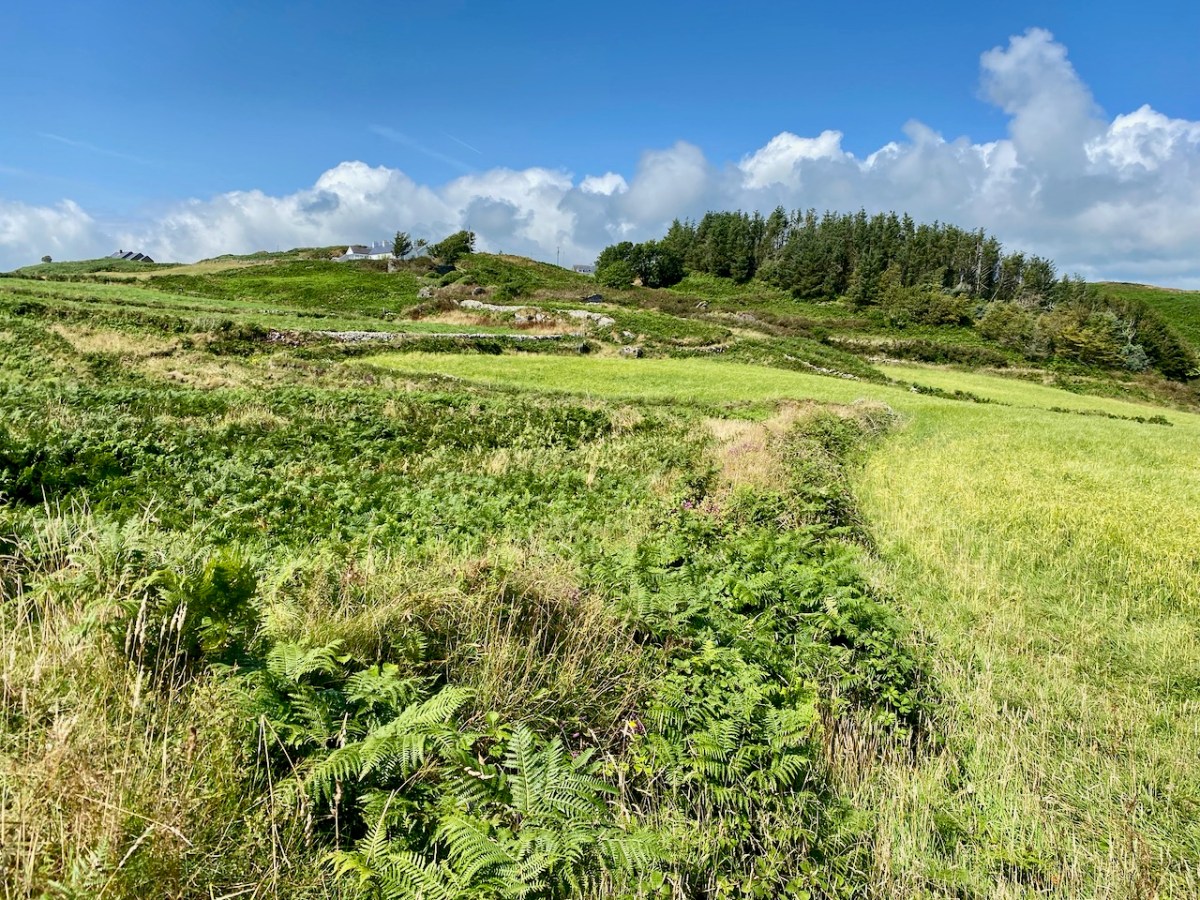
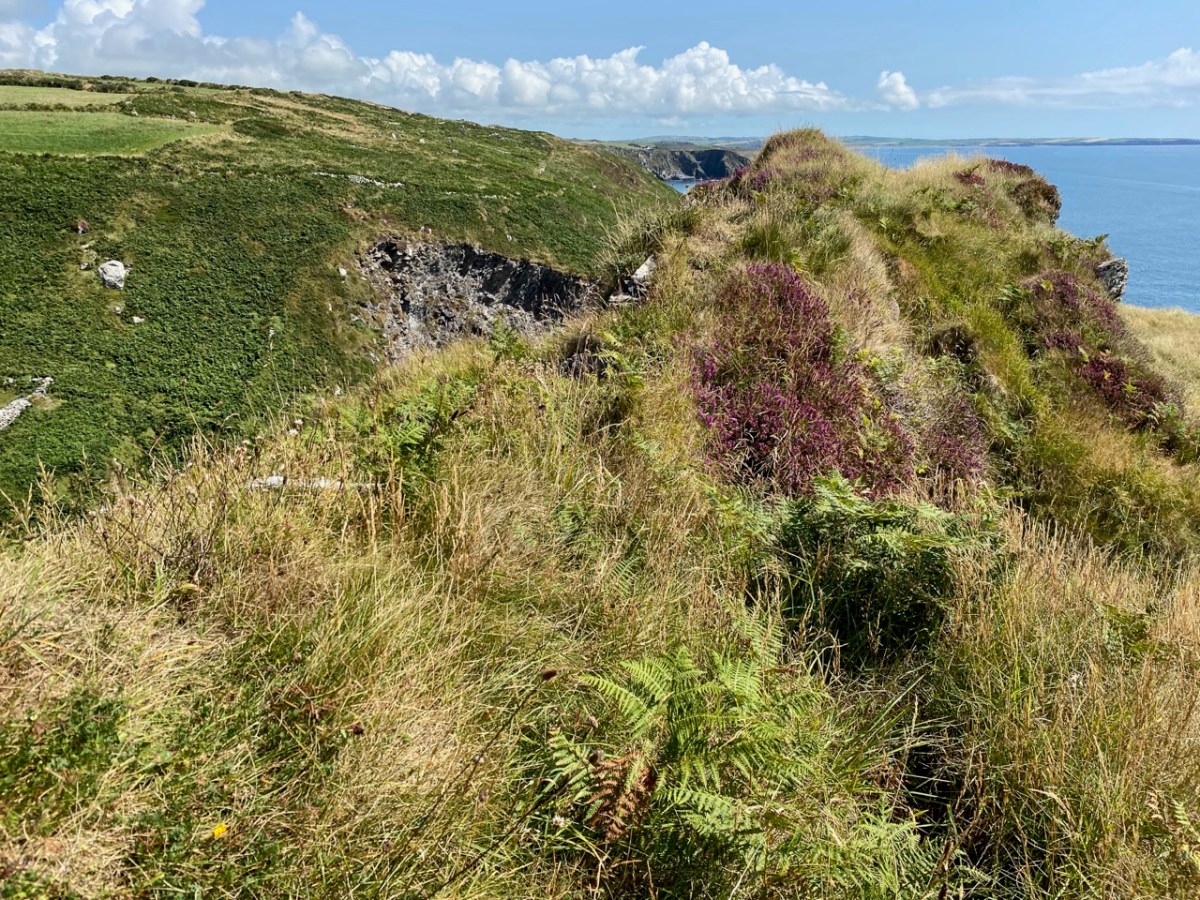
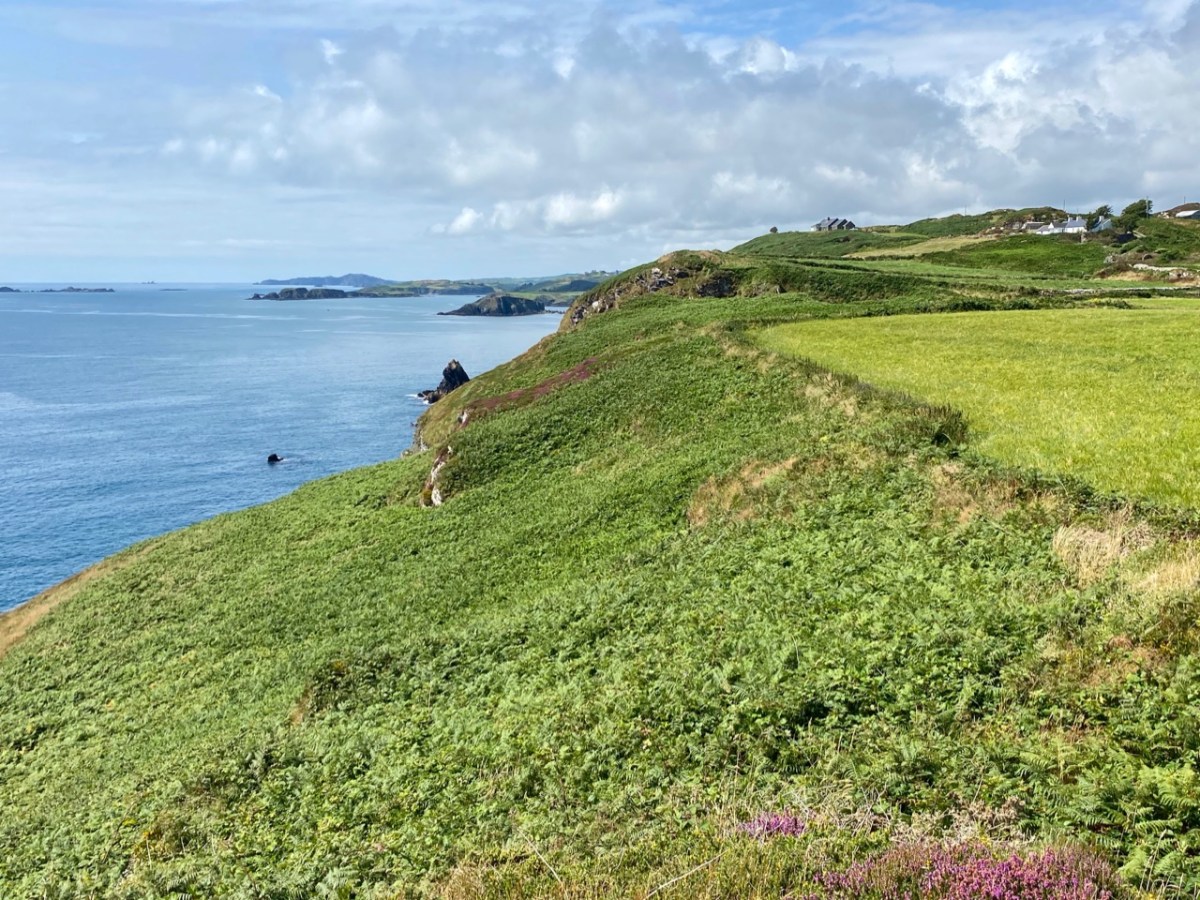
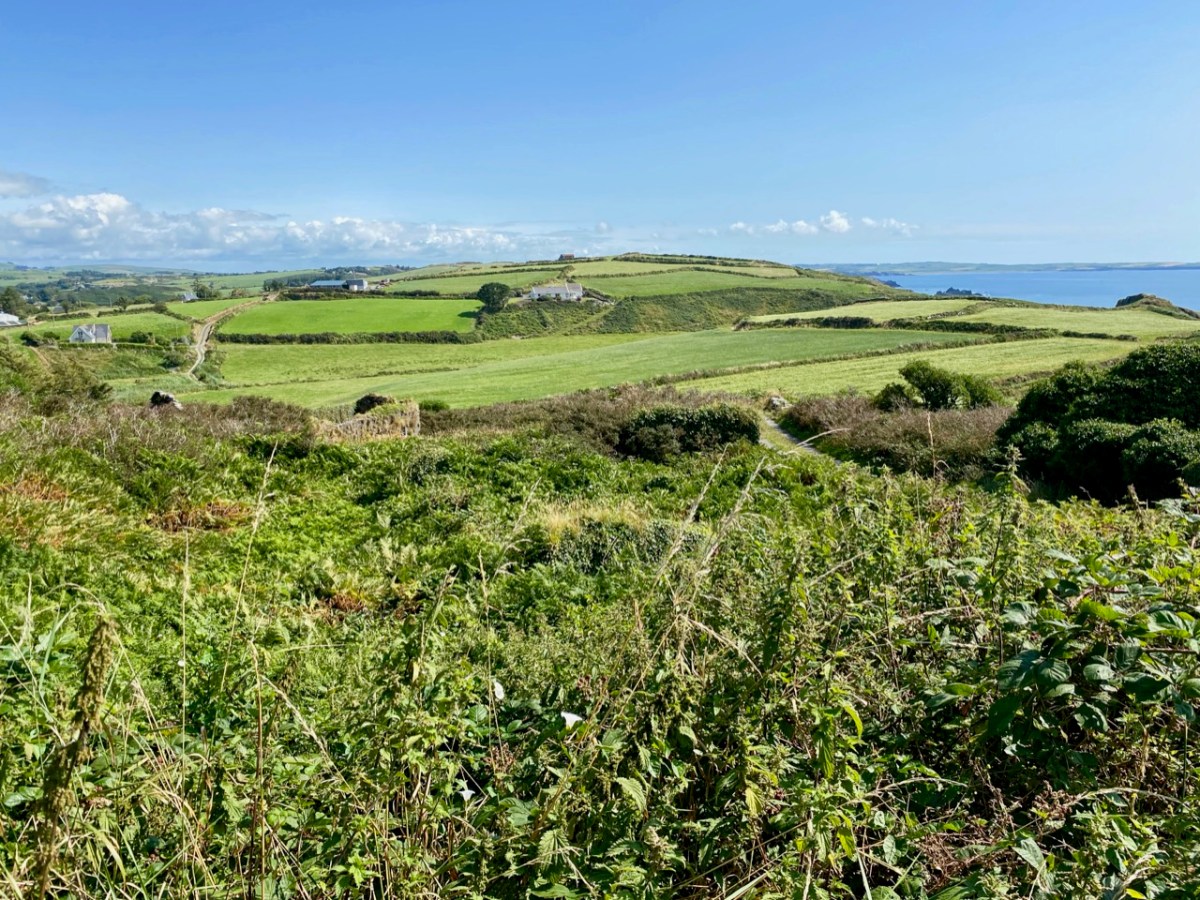
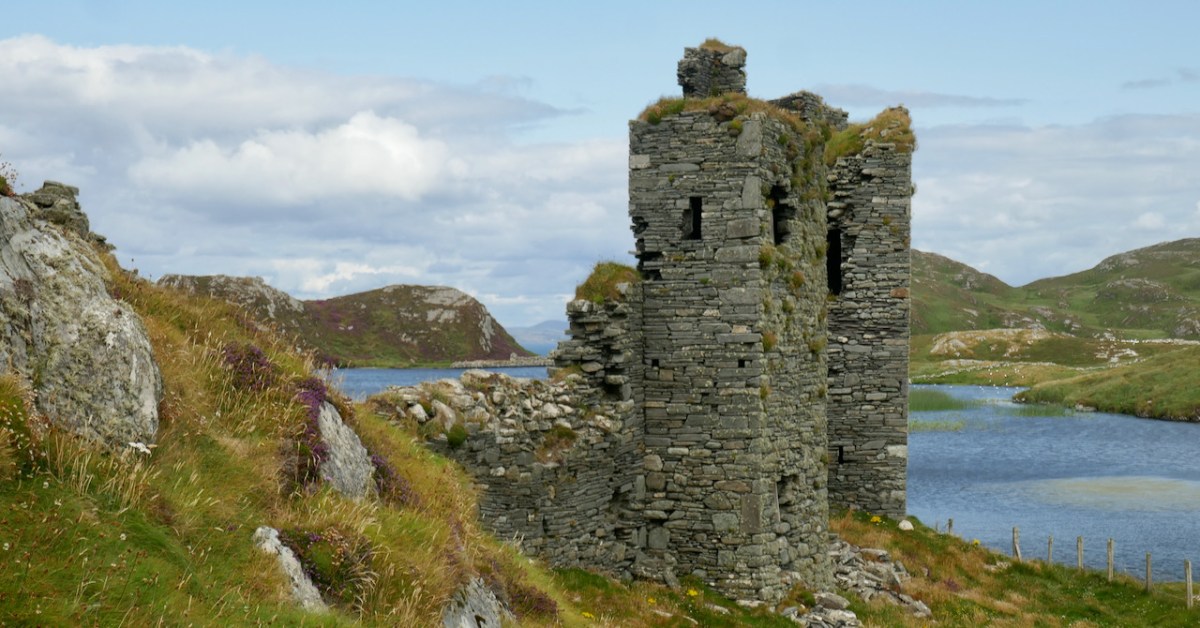
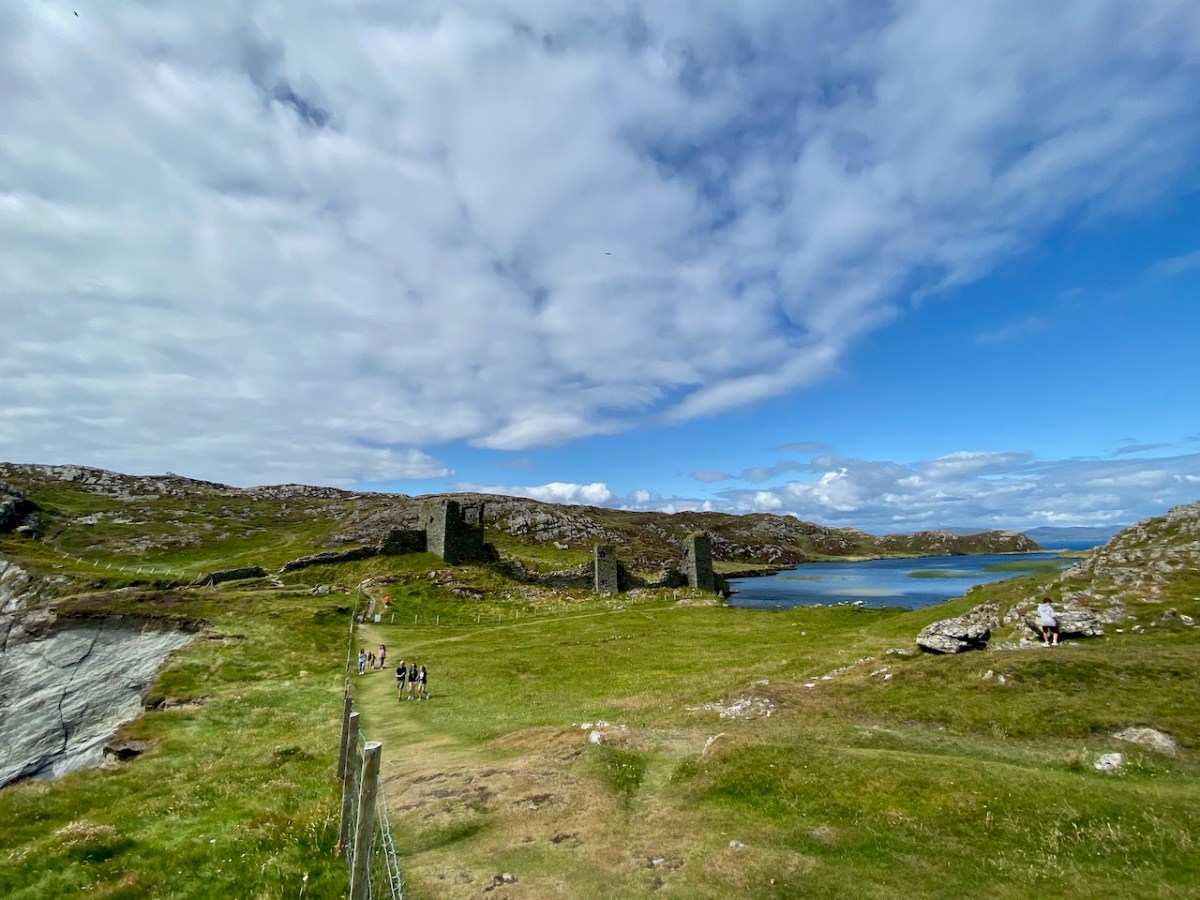
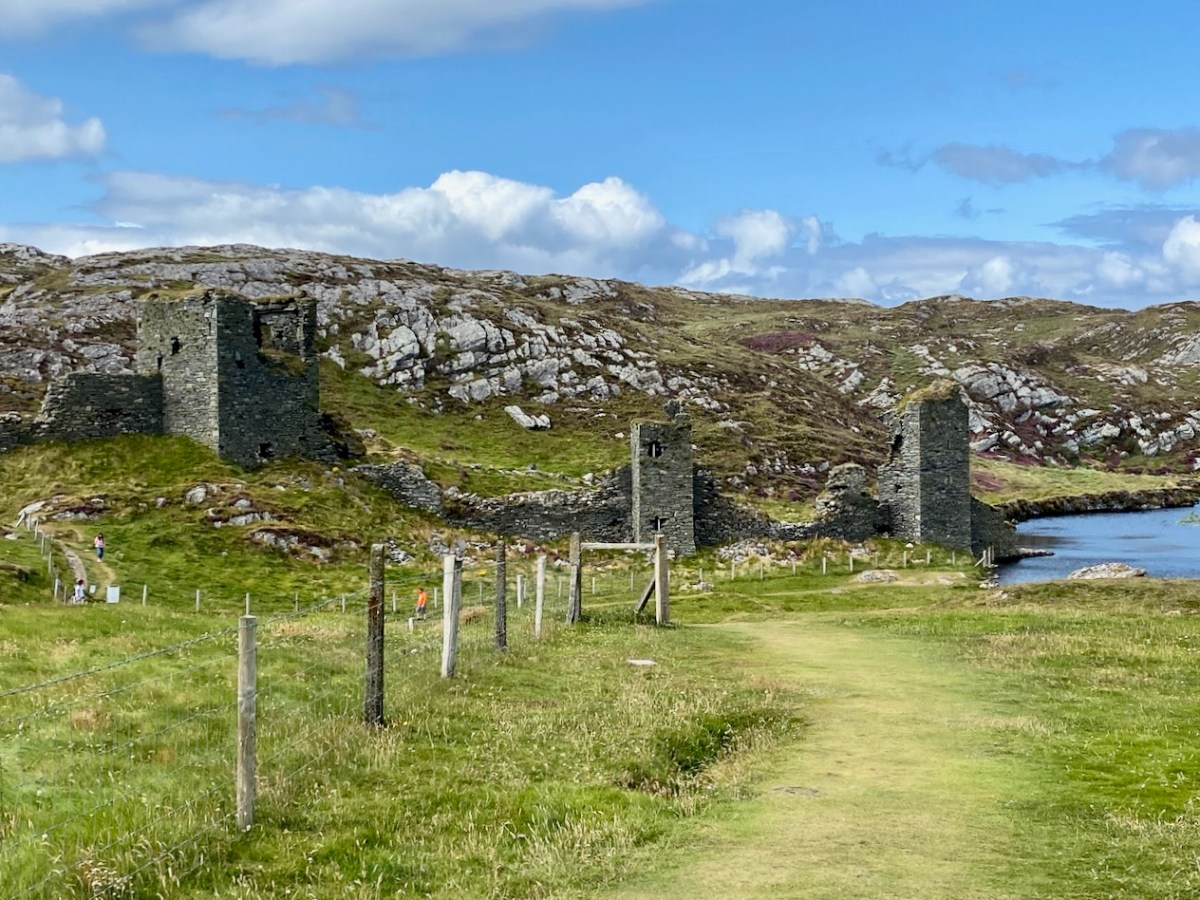
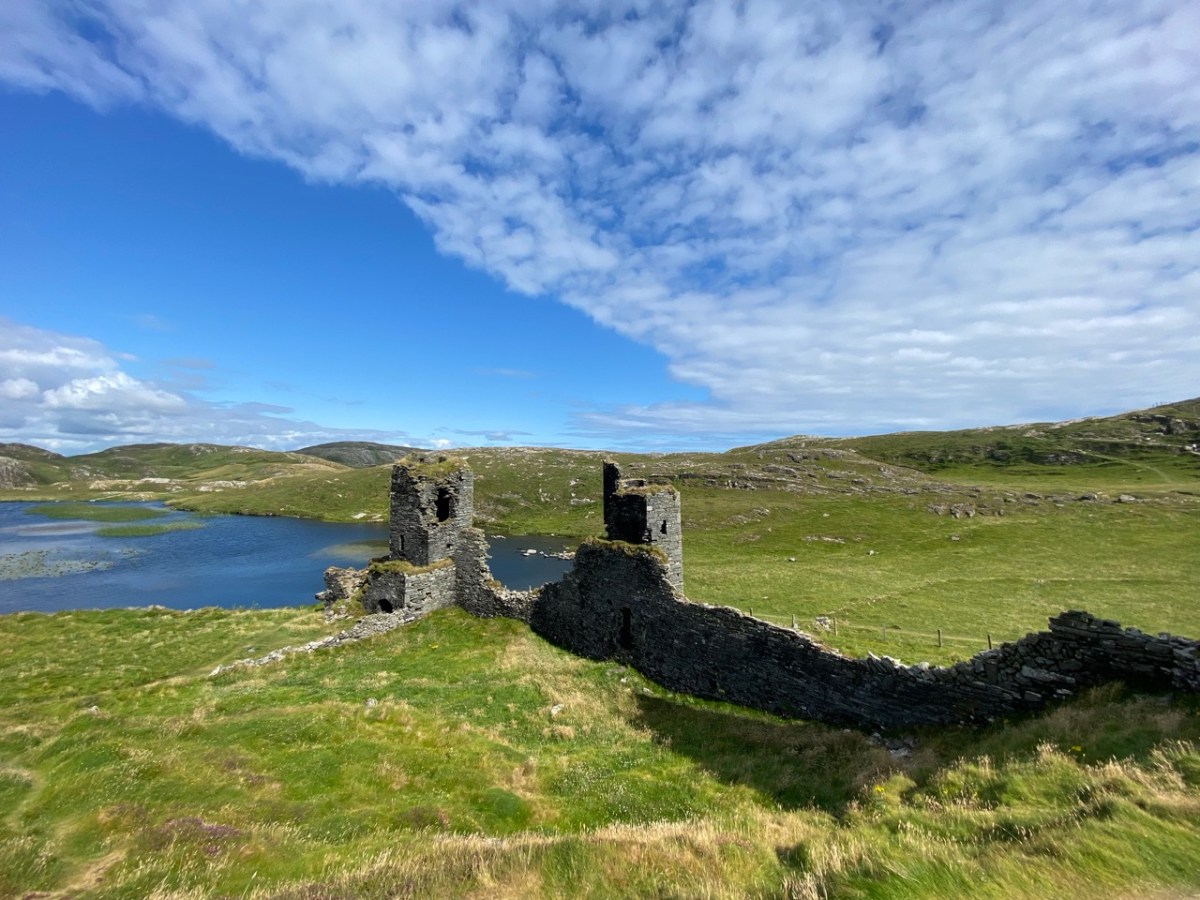
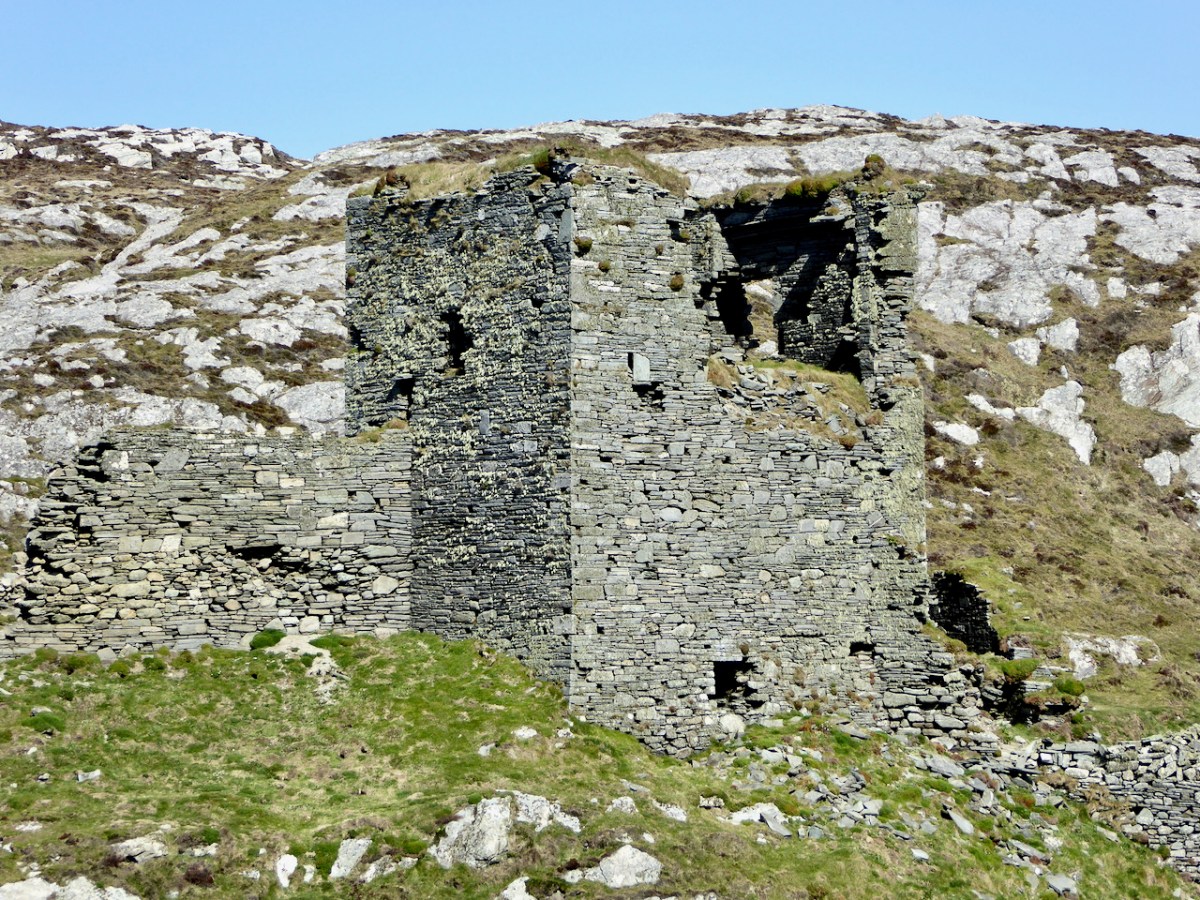
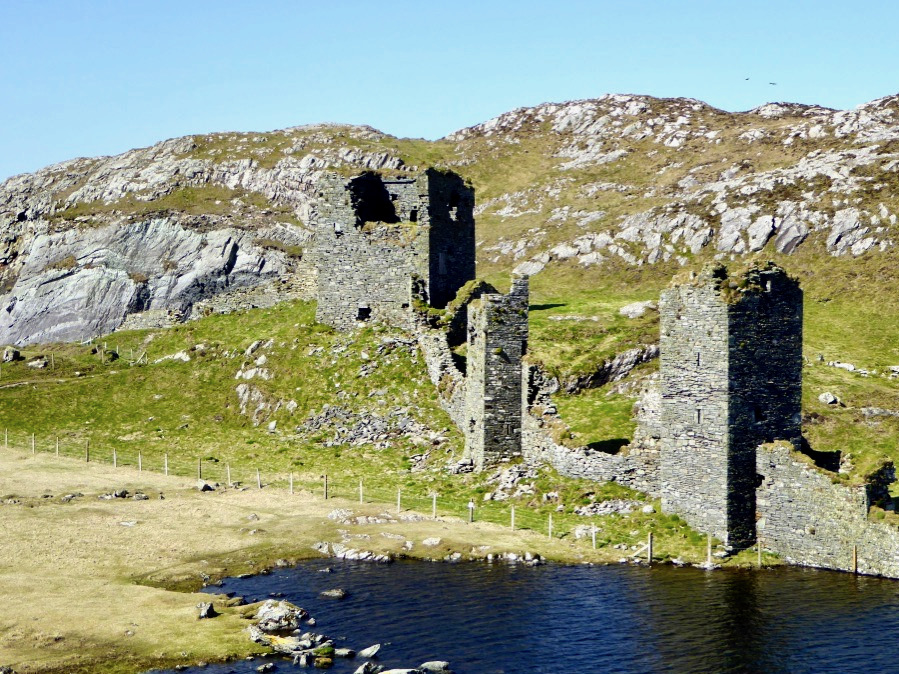
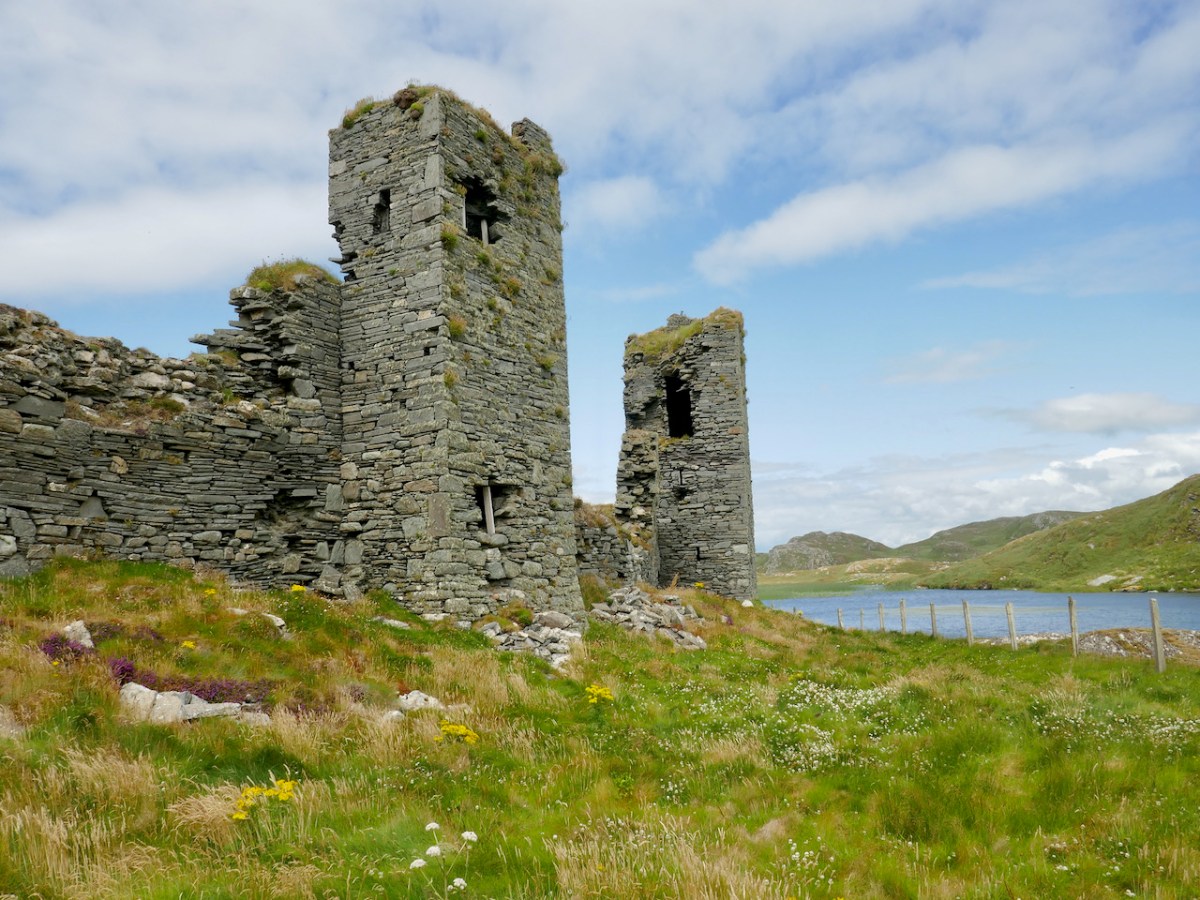
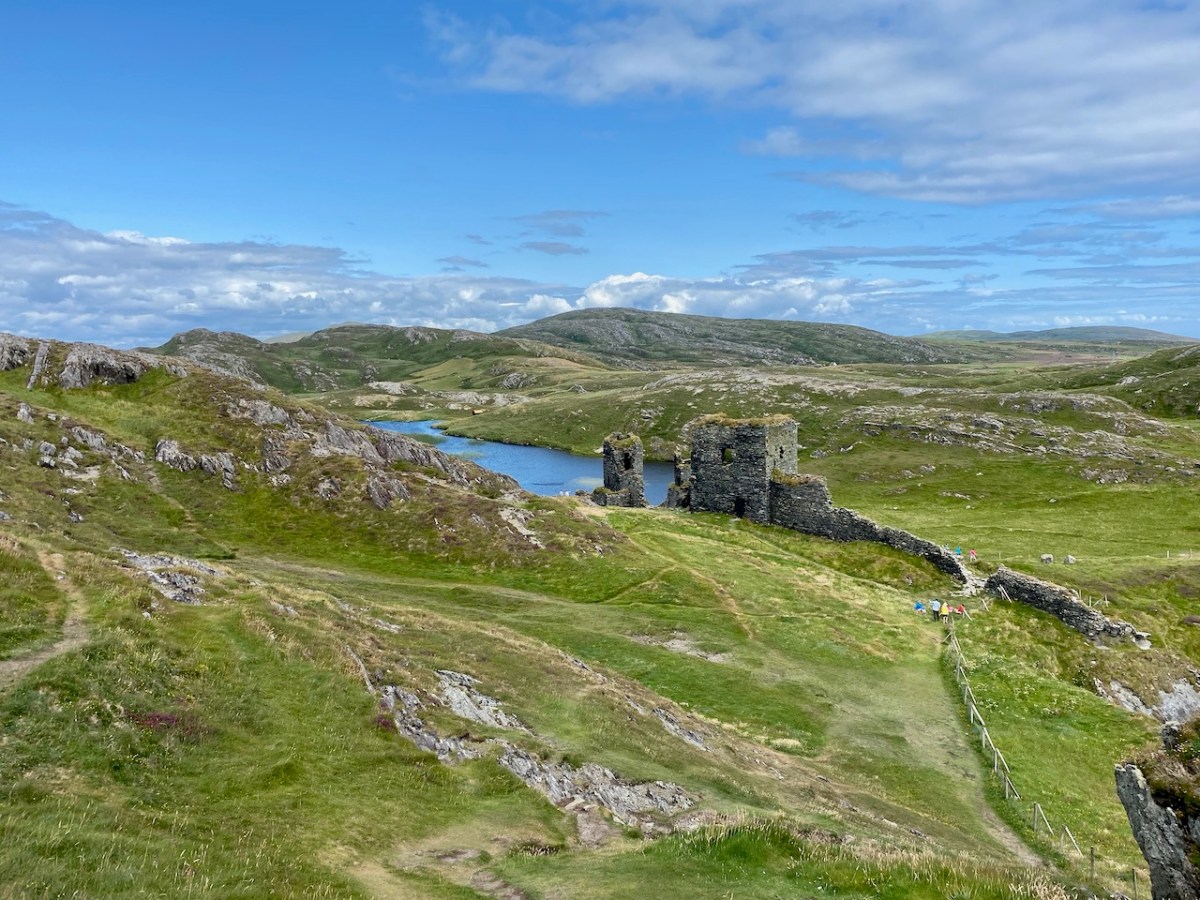
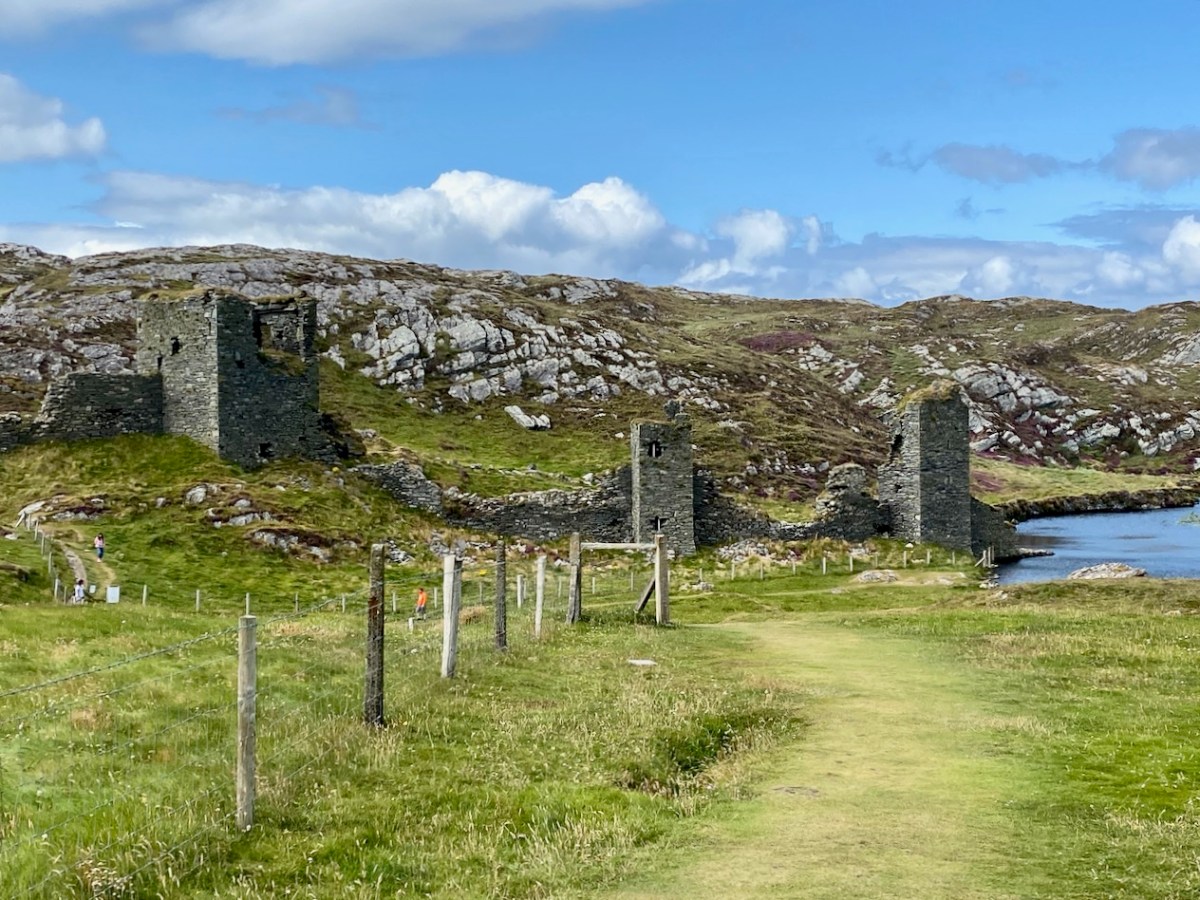
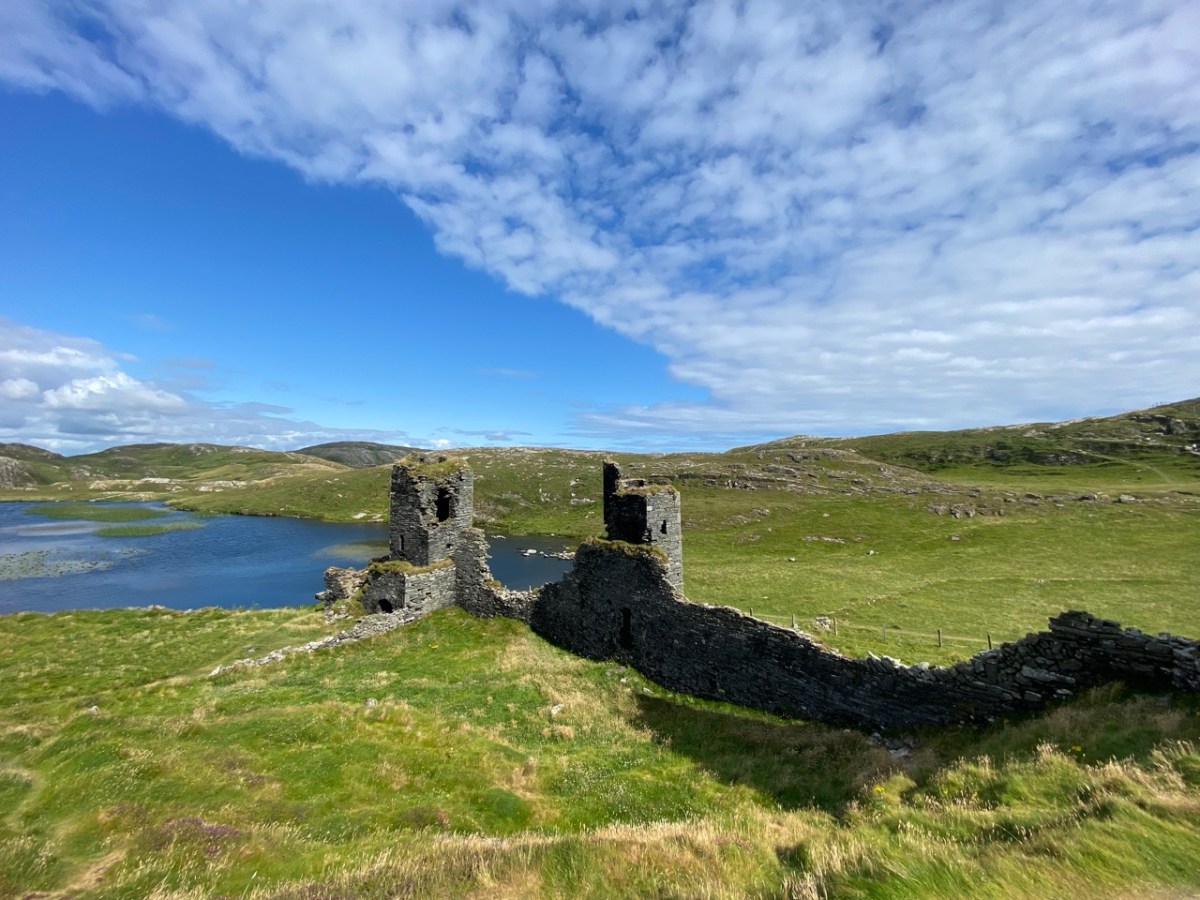
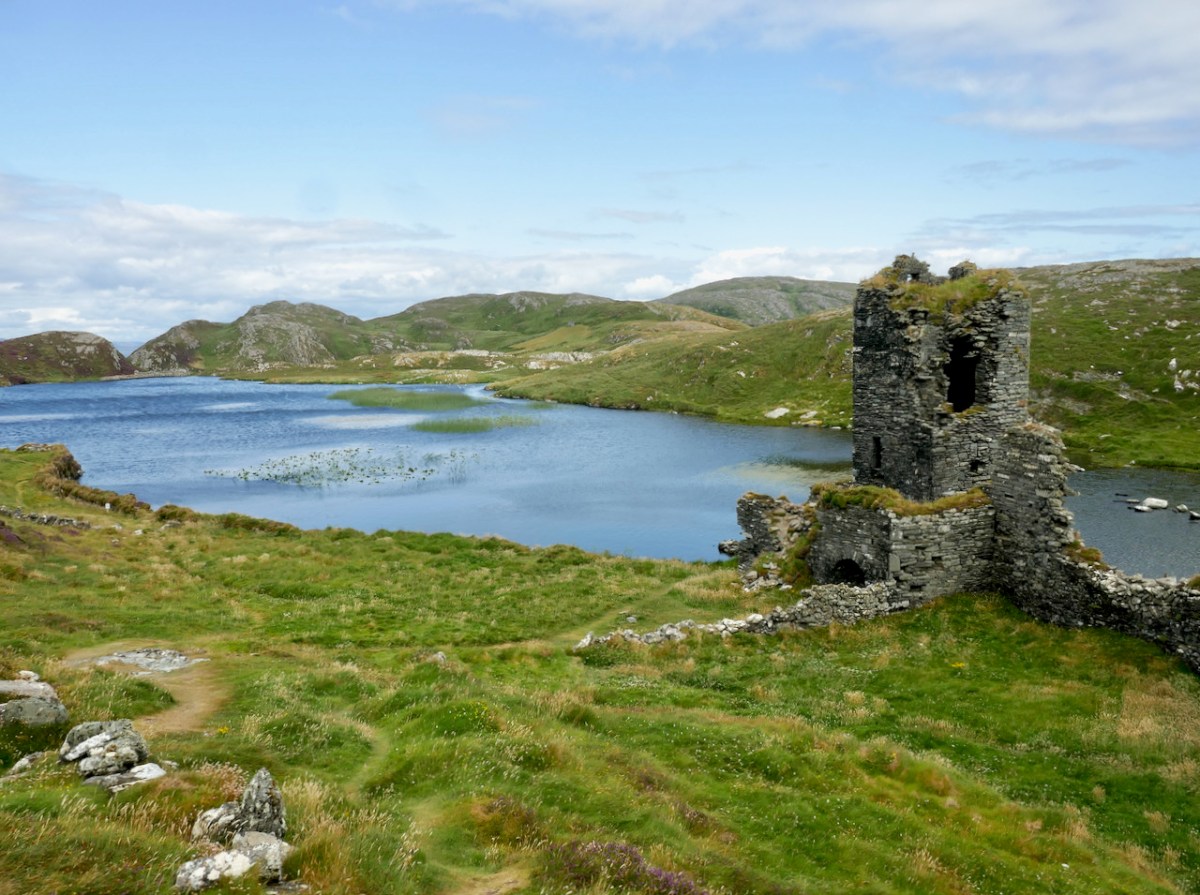
To come over the brow of the hill on a sunny day and catch your first glimpse of Three Castle Head is breathtaking, so let’s describe first what you actually see in front of you. Instead of three distinct castles, what you see is a long wall, known as a curtain wall, punctuated by three towers. The wall stretches from a precipitous cliff on the south west to a lake on the north east end, and it is this lake that gives this place its Irish name of Dunlough (from Dún Loch, or Fort of the Lake).

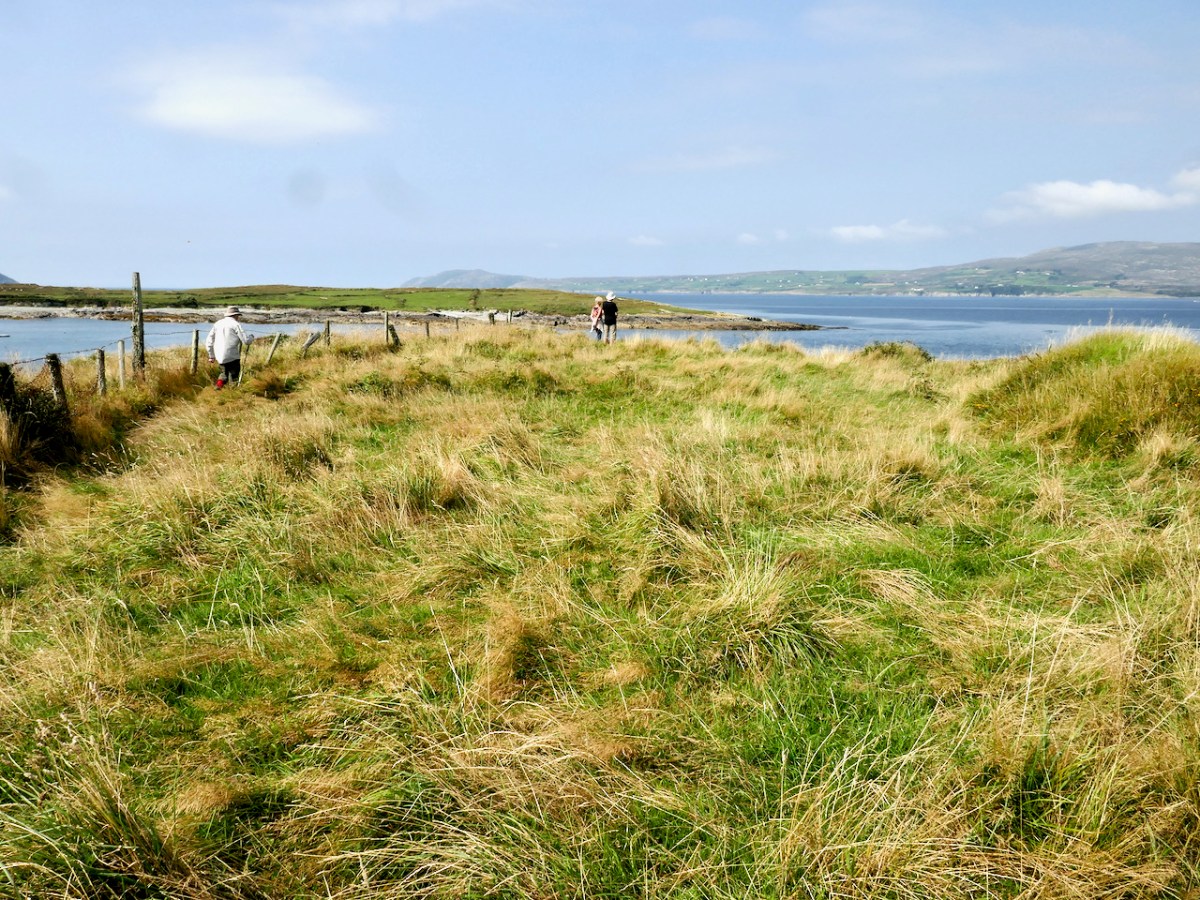
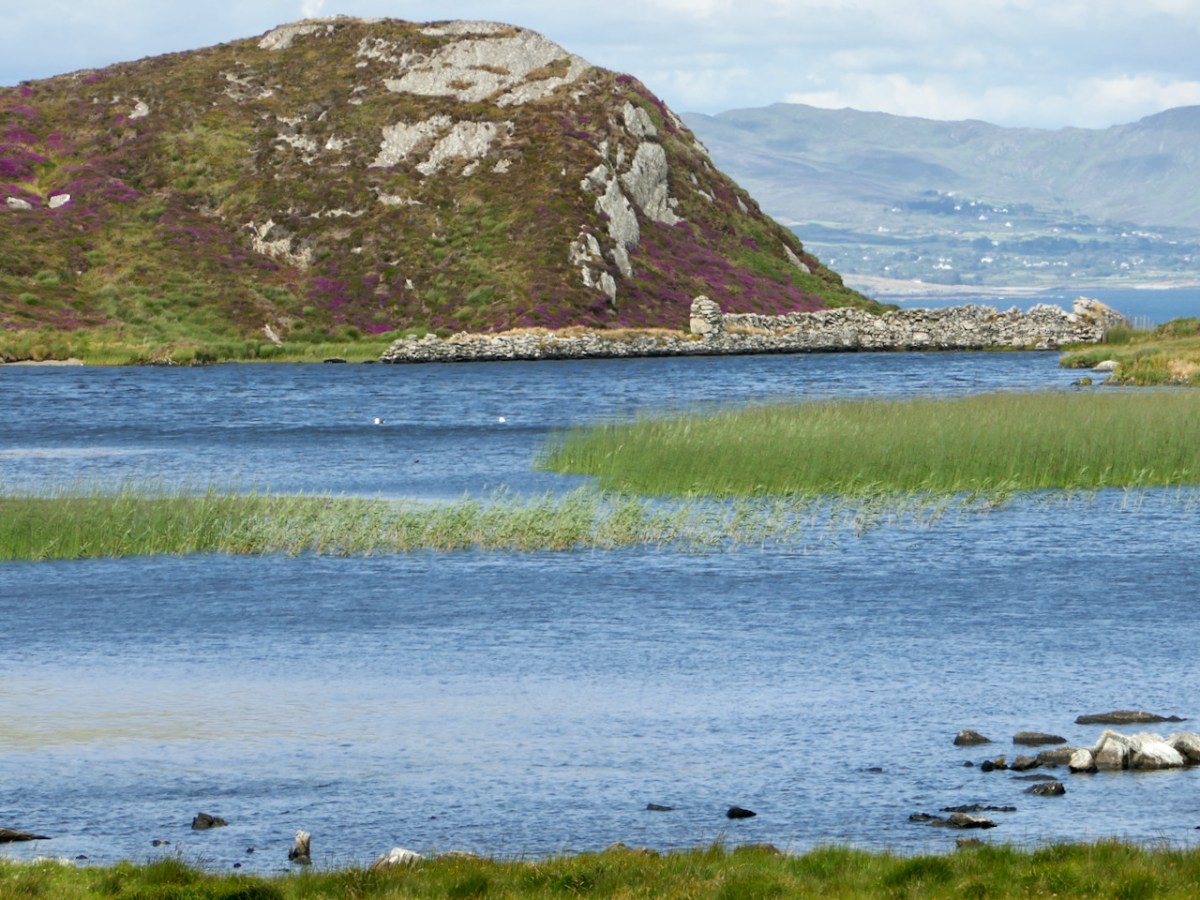
The lake may have been held back at one point at the north east end where it drains into the sea – a long wall stretches partly across it here – or this wall may have been part of the fortification system for the whole promontory. 

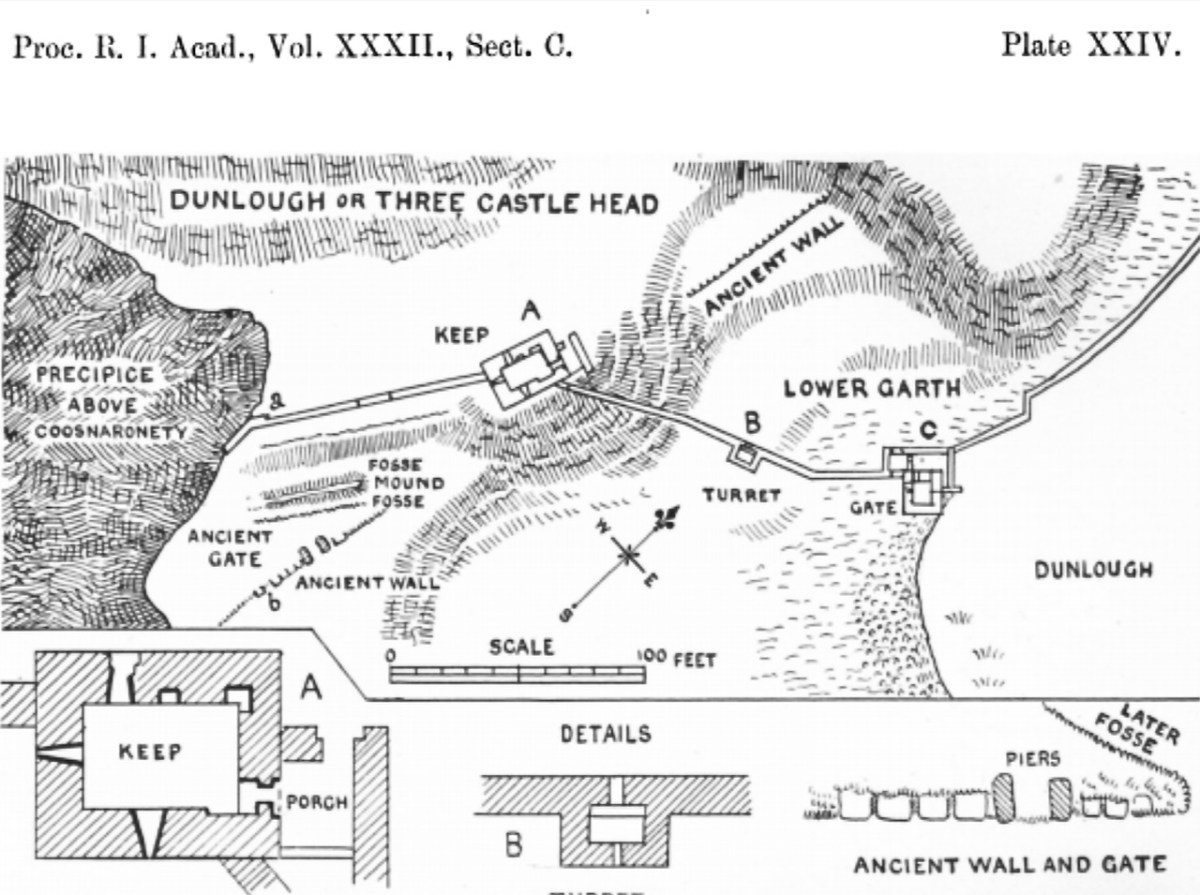
The curtain wall would have constituted a formidable defence for the area behind it – the cliff makes it impregnable on the west side, while the lake forms a barrier on the east. Our old friend Thomas J Westropp visited Dunlough in about 1914, when there was more to see on the ground of the pre-curtain wall fortifications, wrote up his observations, and supplied a drawing.* More on his conclusions later. For convenience, I will use his terminology for the three towers, although they are not necessarily what a modern medieval historian would use. He called the largest tower, located more or less in the middle of the wall, the Keep; the one immediately to the east the Turret, and the one closest to the lake the Gatehouse. You might like to have a good read of the posts Tower House Tutorial Part I and Part II to help you make sense of what follows.

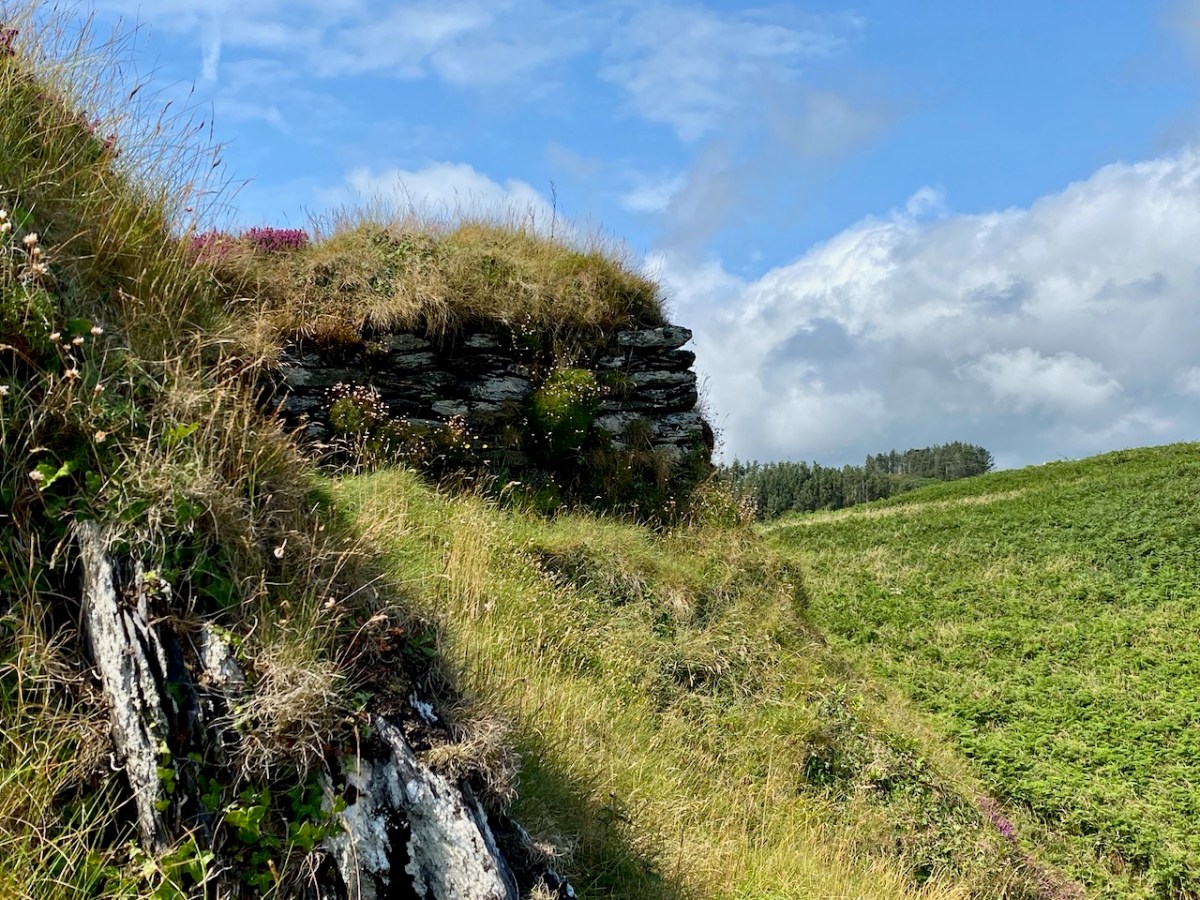
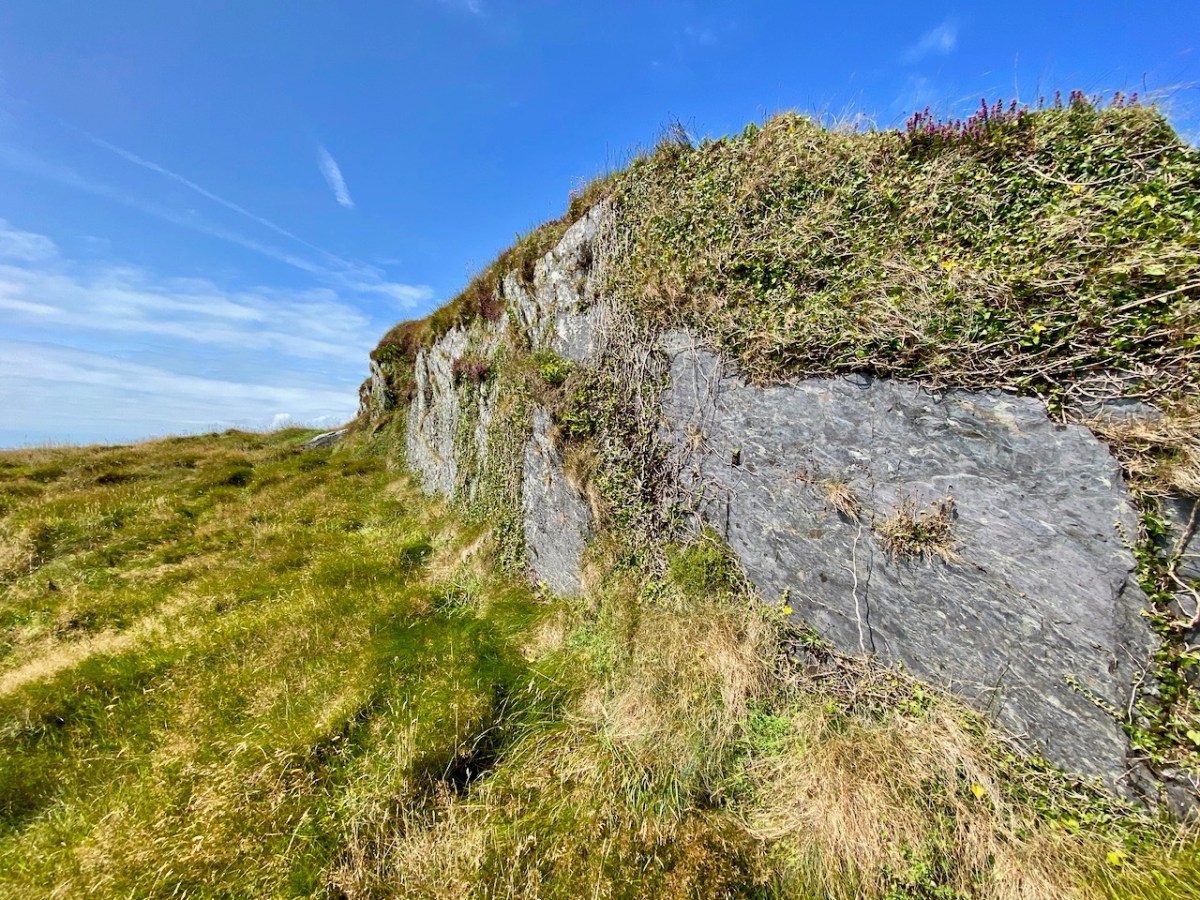
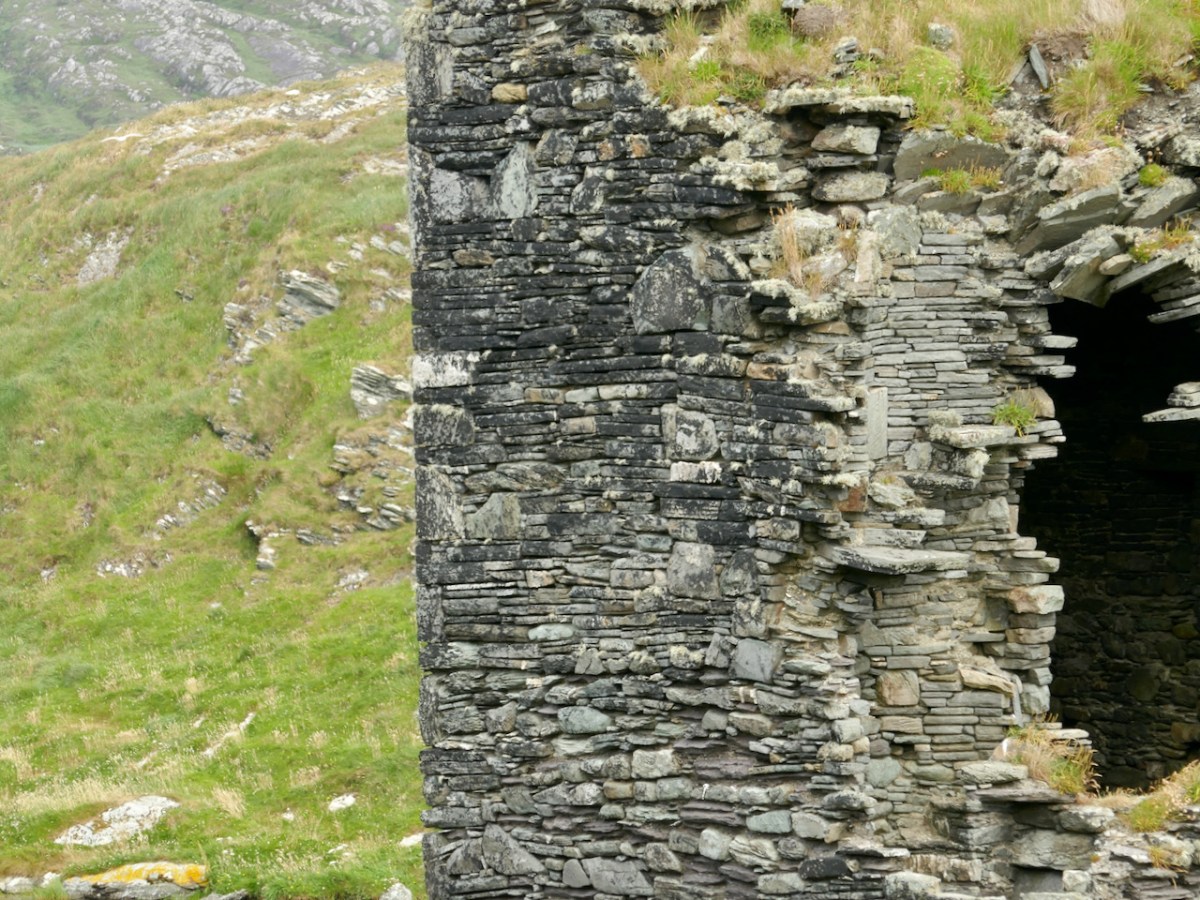
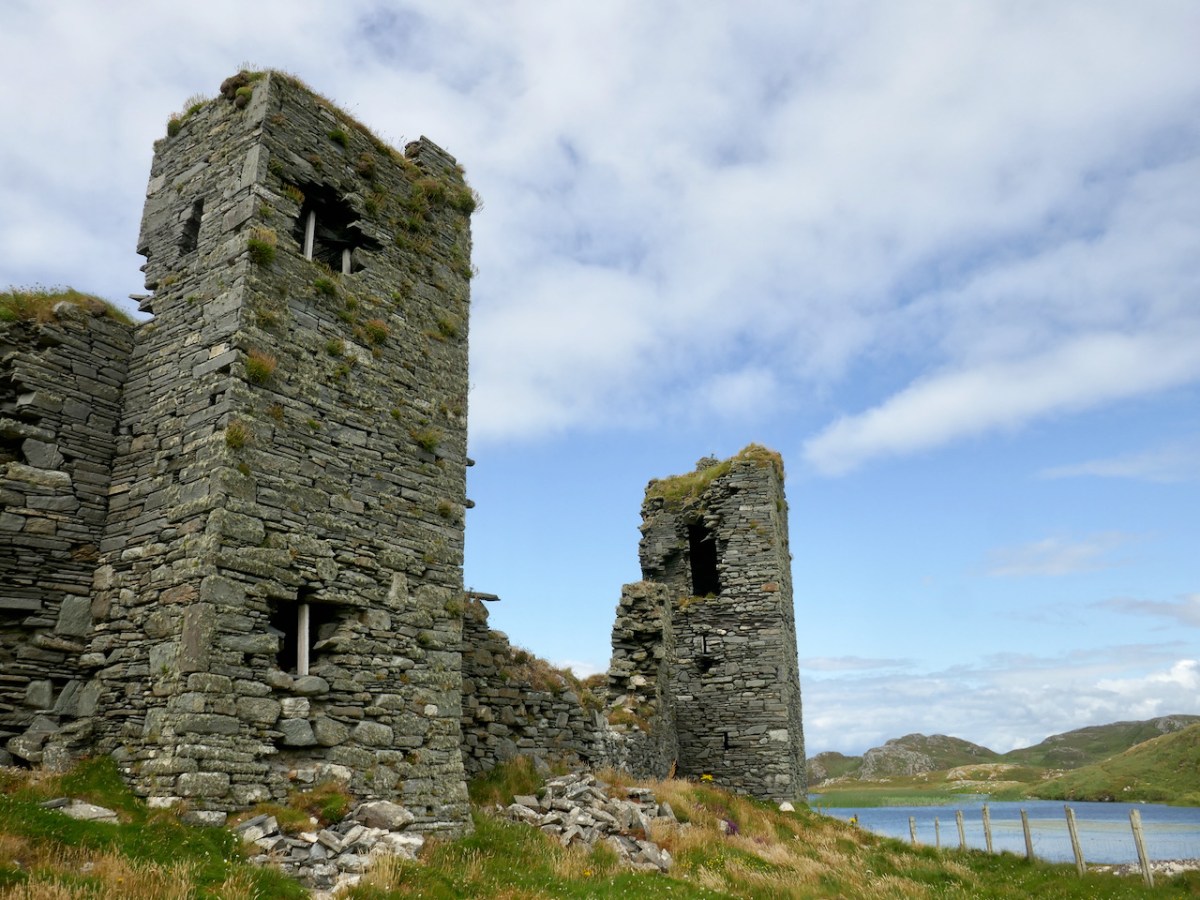
The wall and the three towers are very finely built, using the rubble construction method, where both sides of the wall are shaped with stones carefully chosen for their straight edges, and the interior is filled with rubble. Mark Samuels, in his discussion of the construction of this tower says:

A proper lime mortar, quite hard, white and capable of adhering to the stones was used in the basebatter. However, at second-floor level, the mortar was little more than earth and the building stands entirely by virtue of the careful laying of the stones. The unusual drystone construction gives it a ‘vernacular’ air which is a peculiarity of this stronghold.

The Tower Houses of West Cork by Mark Wycliffe Samuel, 1998

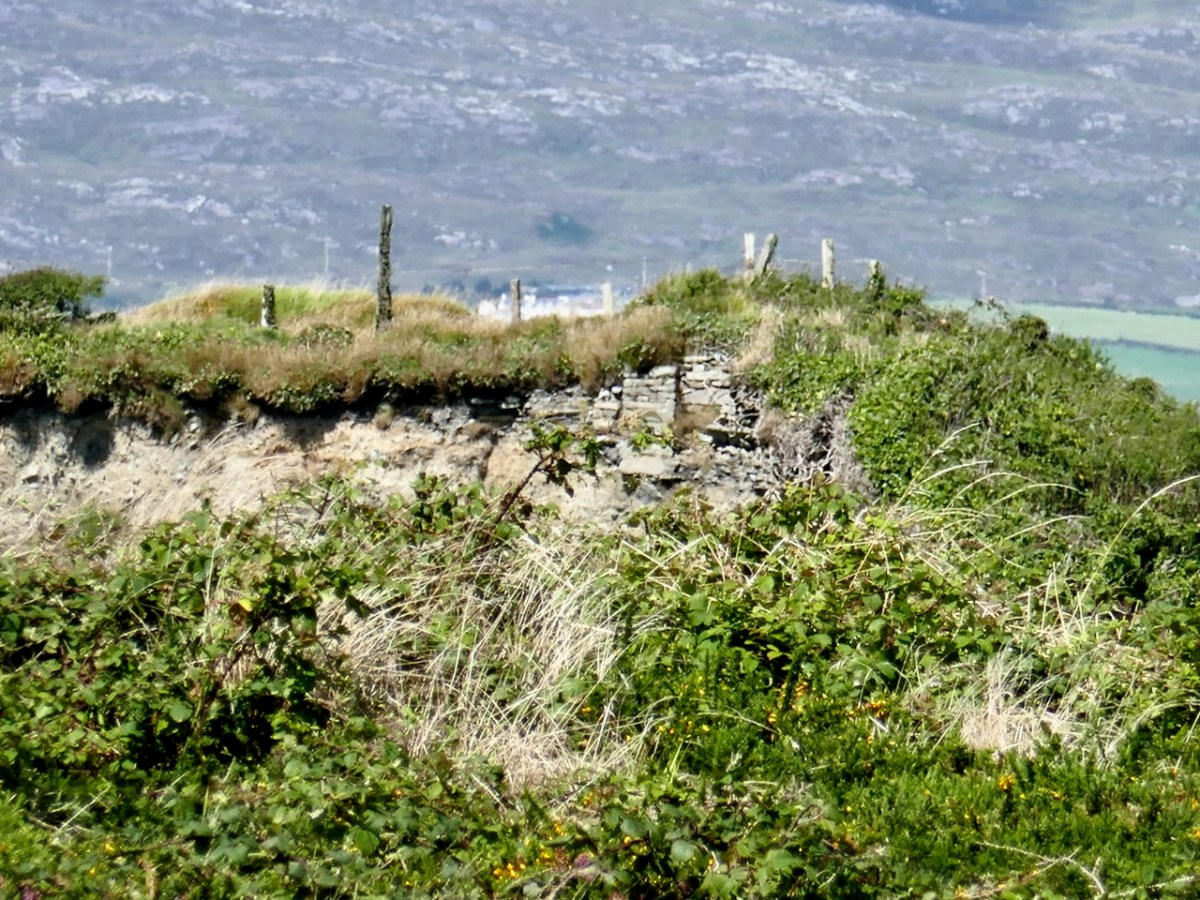
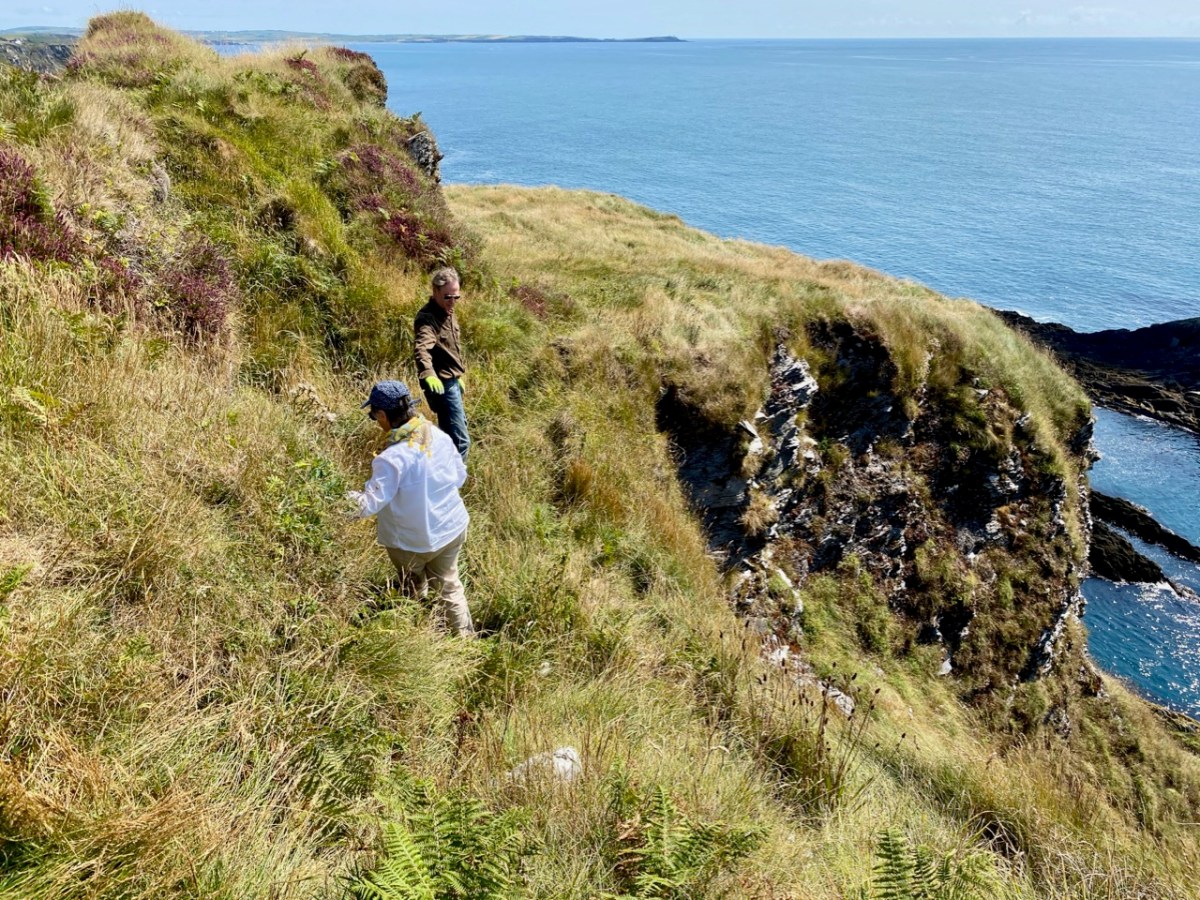
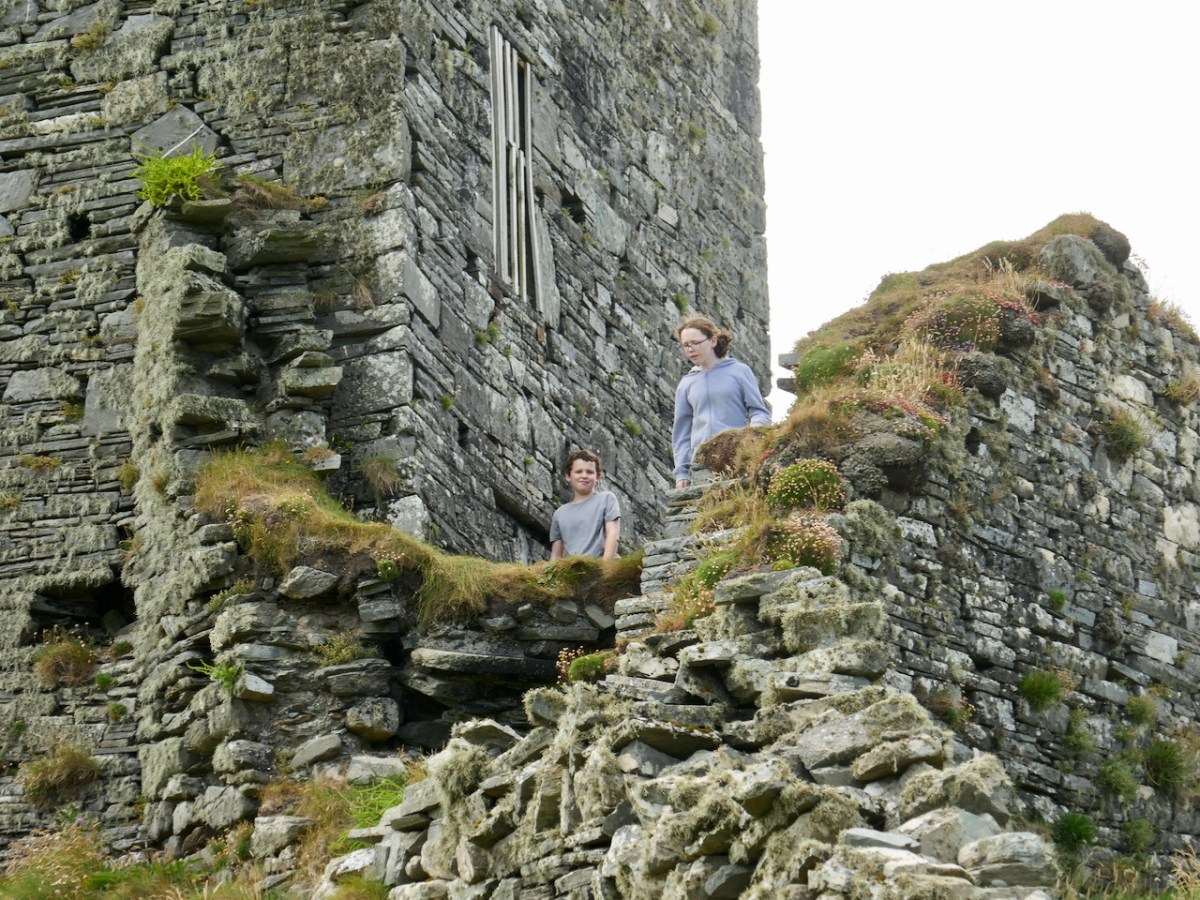
There is evidence of little mortar being used where the interior of the curtain walls can be seen, so this was a very skilful job indeed of ‘dry stone’ construction. Where mortar is discernible, however, it appears to be the local blue till, rendered into a kind of mud, rather than limestone-based mortar, and this has robbed the walls of some cohesion, so that they crumble more quickly once they start deteriorating. For a fairly thorough outline of what’s involved, see my post Building a Stone Wall. The curtain wall is likely to have had a rampart or wall walk, but no sign of this remains. Our budding archaeologist companions on our recent visit are taking a good look at the construction, below.

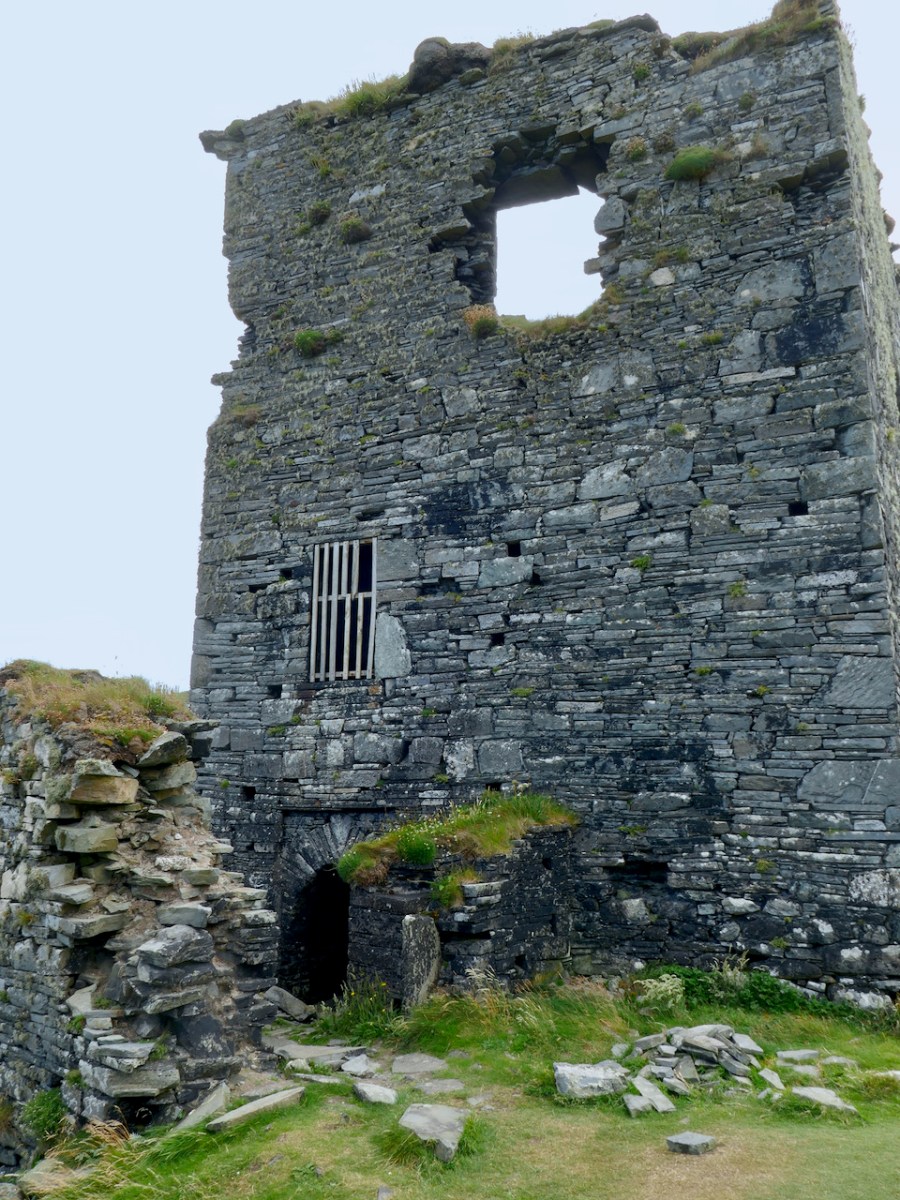
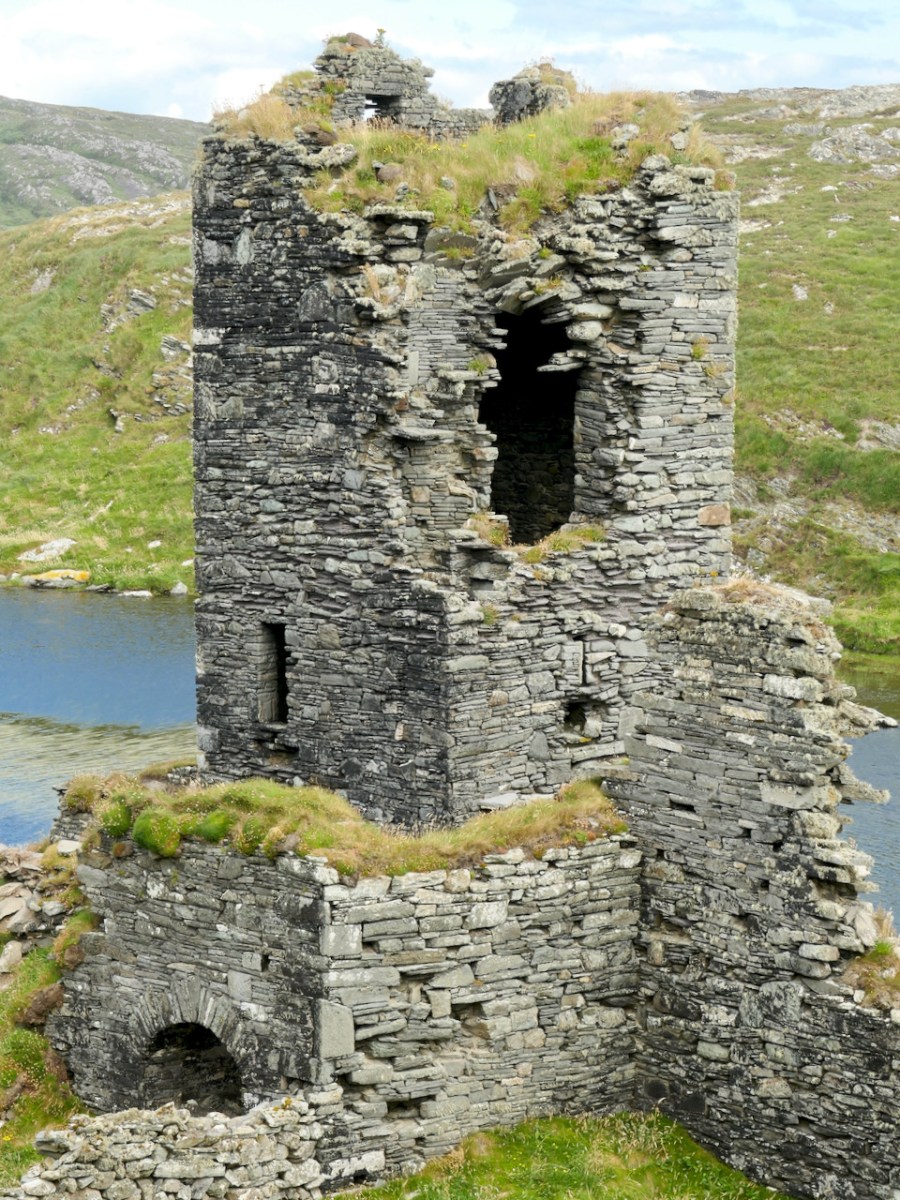
The Keep is the kind of tower house that the O’Mahonys were building all over Ivaha (The Mizen) in the 15th century and is typical of those towers, with a few interesting variations. There are two entrances, one above the other, denoting that this was, in common with all the other O’Mahony tower house, a ‘Raised Entry’ castle. However, unlike the others, the entries are surrounded by a small forecourt. Typically, the ground-level entry gave access only to the ground and first floors and there was no access to the upper, or residential floors (those above the vault) from it. The residential floors were accessed by means of a staircase inside the raised entry: it runs inside the wall to the right of the doorway.

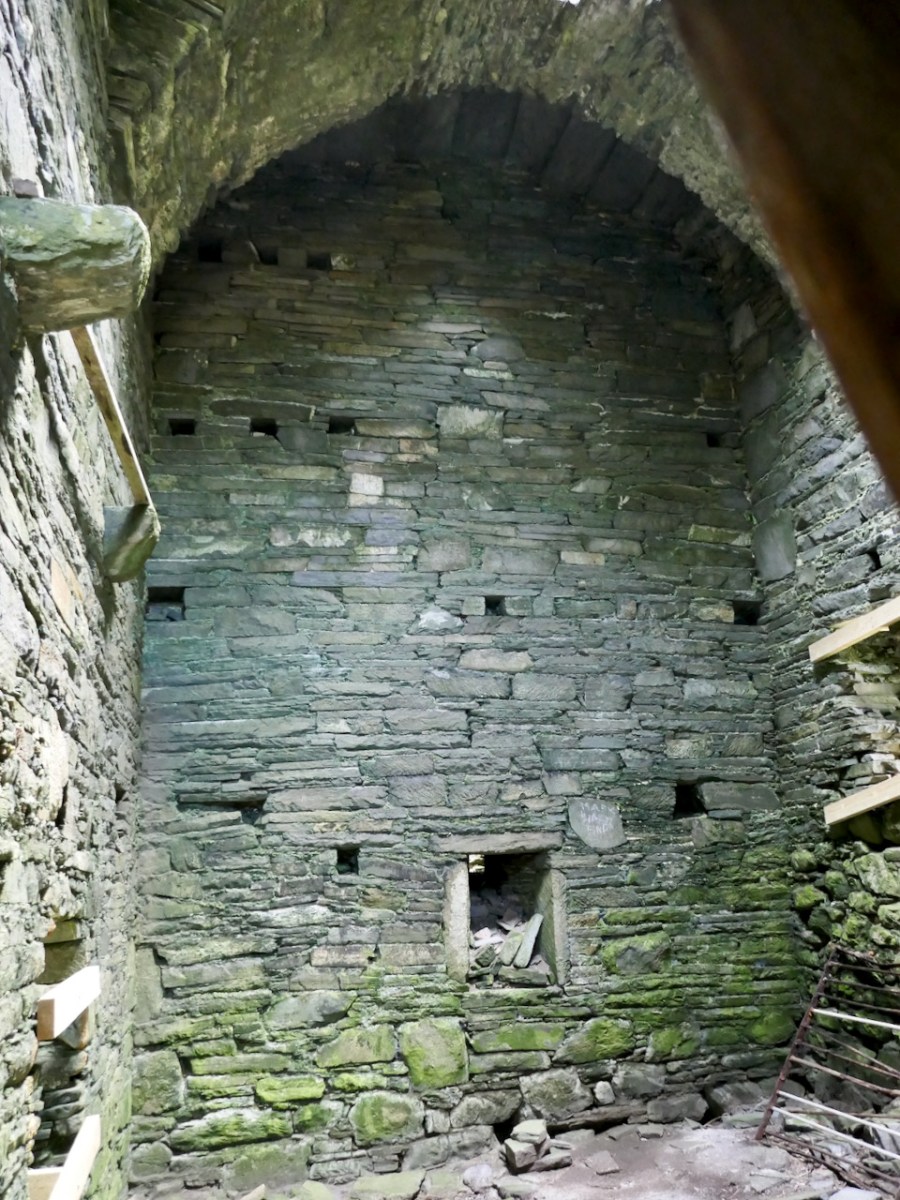
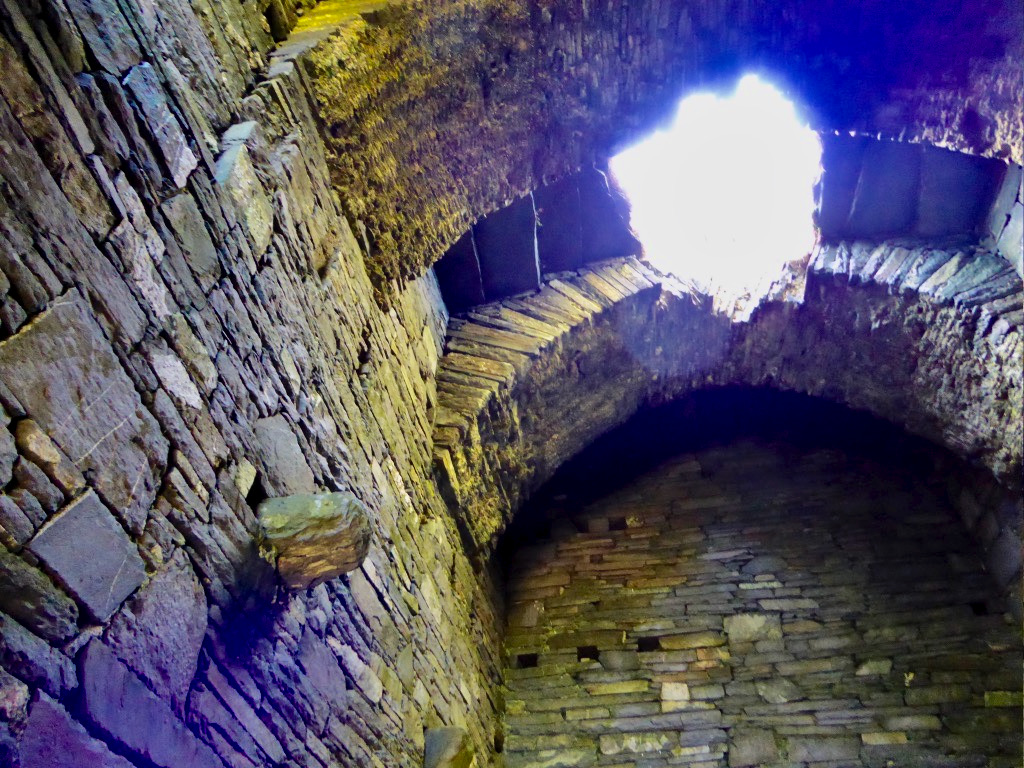
Above that floor is the vault, which would have separated the lower floors from the upper floors where the household of the chieftain lived or where they would have entertained visitors. Some of the O’Mahony Castles, where they survive sufficiently to asses them, had a continuous vault, such as the one at Dunmanus. However, in others, and this is the case in the Keep at Dunlough, the Vault is formed by archways, upon which great slatey slabs have been laid to form the floor above. In the Keep, you can still see the impression in the mortar overlaying the arches of the wicker used to build these wicker-centred arches.

There would have been at least one and probably two more floors above the arch/vault – the residential floors. These were not comfortable dwellings – there were no fireplaces and the windows, although bigger than the lower floors, would not have let in much light. Above the top floor, a wall walk would have patrolled by look-outs. 

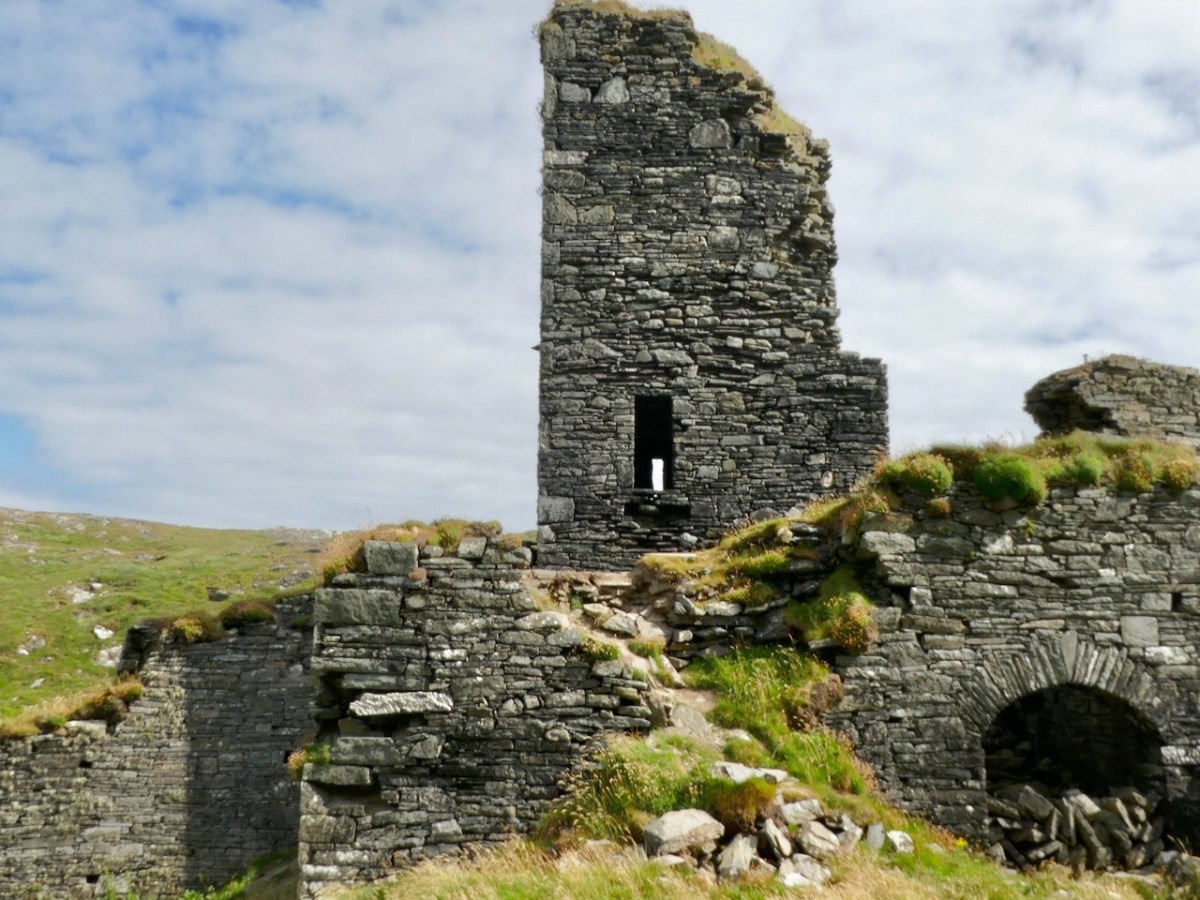
Westropp christened the middle tower (below) the Turret as it is the slimmest of the three. There is no evidence of a stairway so the floors were reached by means of ladders. Unlike the other two towers, which were built straddling the curtainwall, this one has three of its sides outside the wall, with the entrance through the wall on the north side.

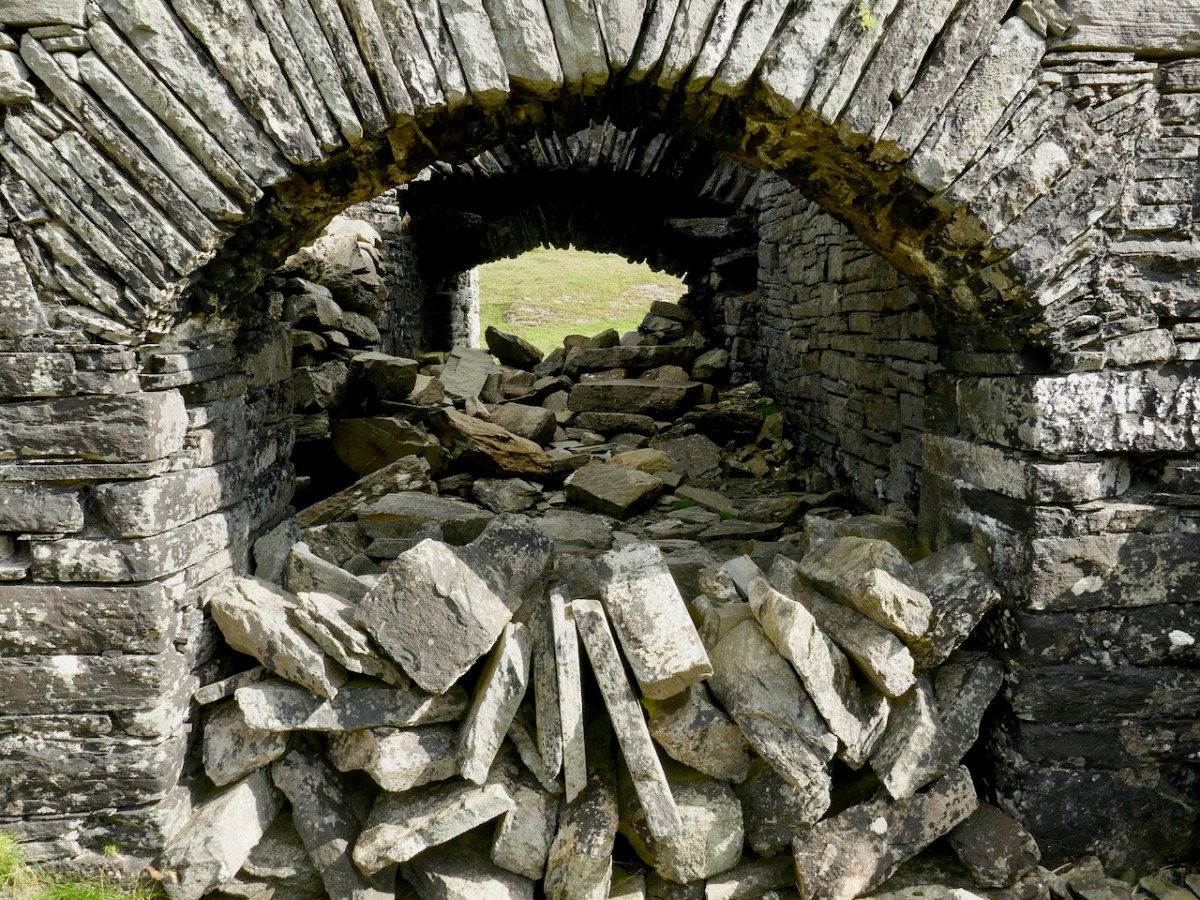
The gatehouse is perhaps the most complex of the three towers. At its base is an arched passageway, now with the collapse of ages completely blocking it.

Because it’s difficult to really see this tower now, I will give you Westropp’s description of it from his 1914 visit:

The entrance had inner and outer arches, which were closed and barred from the inside, I presume lest anyone should get into the enclosed hill, hide till night, and then open the gate treacherously. The outer gate is 6 feet 10 inches wide, the inner, 6 feet 3 inches and 9 feet 8 inches apart ; they have slightly pointed arches. From the interspace a small door opens into a little court, or rather passage, round the other two sides of the gate tower. This turret has a vaulted basement 9 feet by 9 feet 9 inches, and walls 4 feet thick, with a loophole, commanding the outer face of the gate. There are two stories or lofts, reached by a ladder through a trap-door and under another vault. The second floor has slits in each face ; the third, one to the south, and a torn gap westward above the gate. Over the upper vault is a little gabled attic, with an ope overlooking the lake. A small stair runs spirally up the north-west corner. The walls having been very thin there, have fallen, or been broken, down to the basement vault. A short wall runs from the gatehouse out into the lake. 

Westropp, 1915 (see footnote)

The small spiral staircase can be clearly see where the outer wall has fallen away (above).

Several sources tell us that this is the oldest of the O’Mahony Castles, built in 1207 by Donagh the Migratory O’Mahony – there are references in Annals to a ‘castle at Dun Locha’. Modern scholarship on castles tends to agree that there were structures called castells before the coming of the Normans, but it is clear that they did not look like these tower houses. It may be that the reference in the annals is to Dunloe in Kerry, but it may also be that there was indeed a castell here in 1207. If there was, it was not what we are looking at now: any analysis of its construction places it firmly in the fifteenth century. 

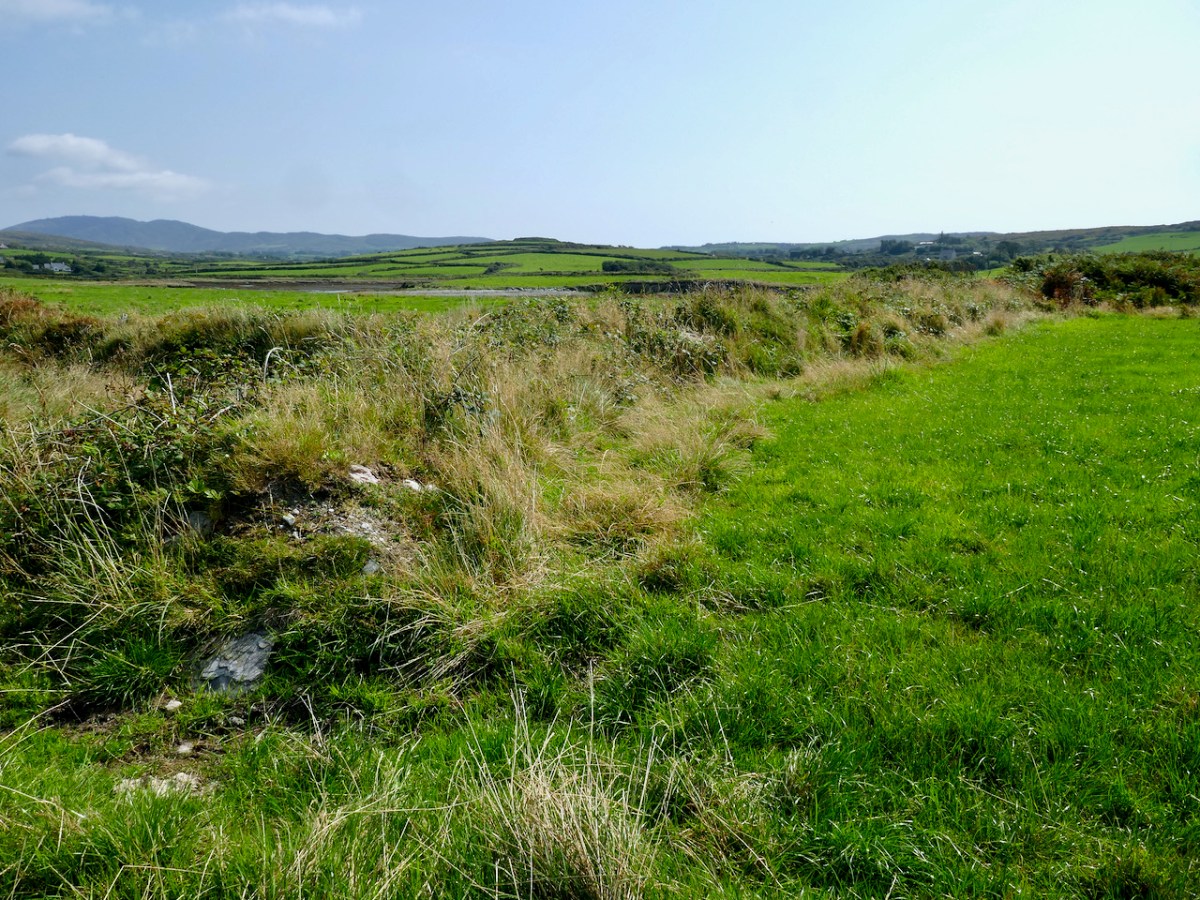
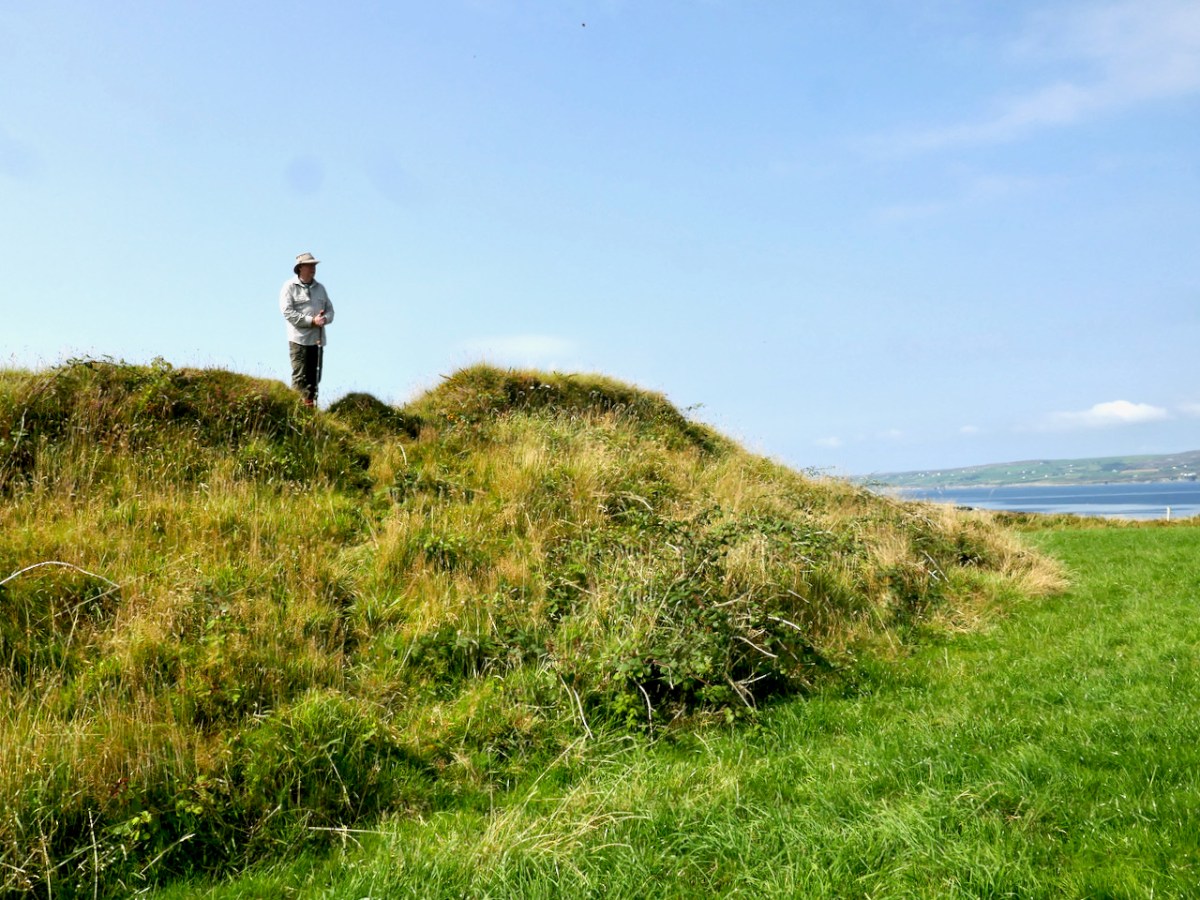
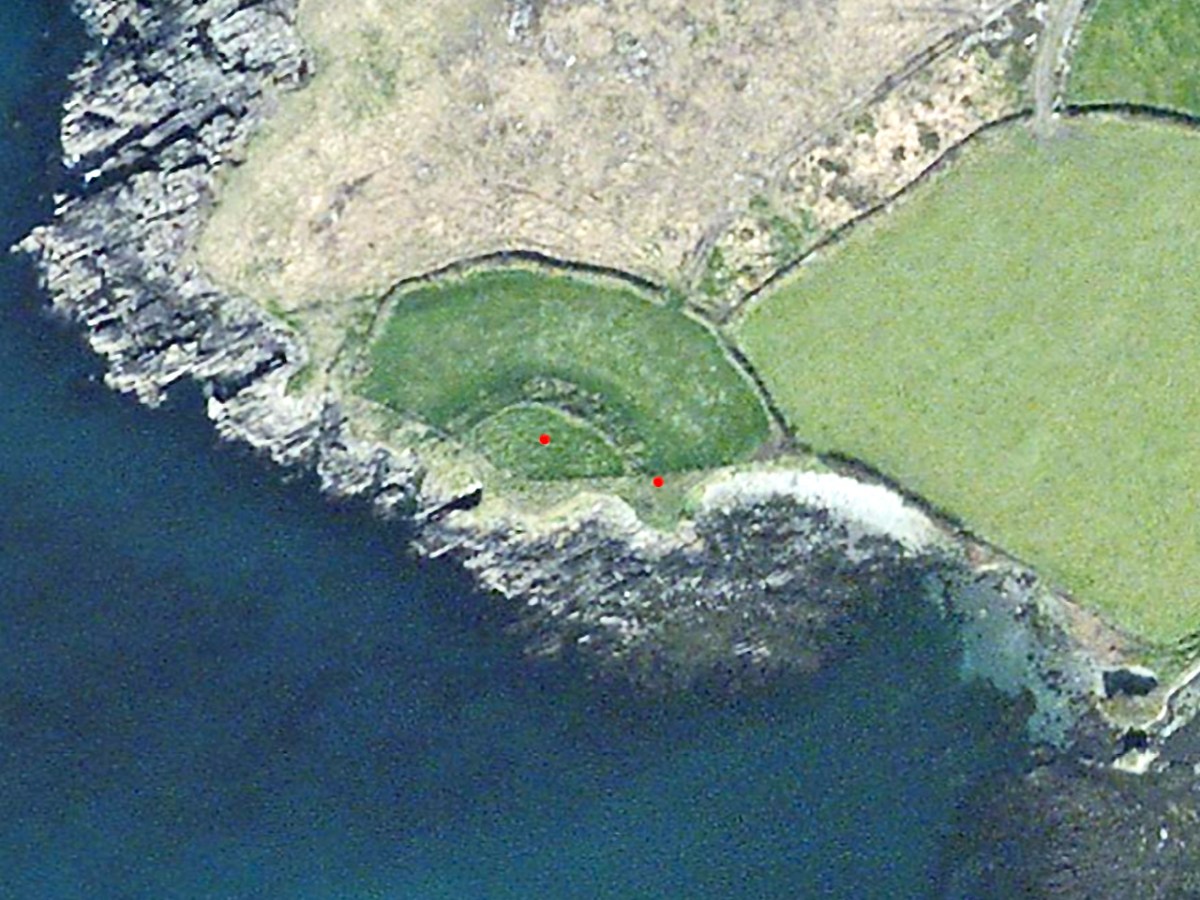
Once again, we turn to Westropp. When he  visited Dunlough in about 1914 there was more to see on the ground of the pre-curtain wall fortifications, and he wrote up his observations, and supplied a drawing (above). This was an ancient promontory fort, he said, dating to well before the  castle-building era, and he traced the line of the fort bank through the remains of fosses, or ditches, vestigial but still visible. The next phase was the building of a wall, and this may well have been the castell of 1207. It follows a line south-west to north-east, at a different angle to the curtain wall. He was able to make out a gate feature near the cliff. This was demolished, he said, to build the curtain wall we see today.

I agree with the broad strokes of Westropp’s analysis. Yes this is an old stronghold of the O’Mahony clan – and what you are looking at today was not built in 1207, but built on top of the 1207 fortifications. The O’Mahonys went on a castle-building spree in the 1400s and the Dunlough curtain wall and towers, in terms of their architecture and their similarity with all the other O’Mahony castles, fits with that timeframe. 

But all of that is dry as dust – who can worry about a dating timeframe when what presents itself to your view is so beautiful, so perfectly situated and so hopelessly romantic? So let’s take a vote – is this Ireland most beautiful castle? Hands up who agrees with me!

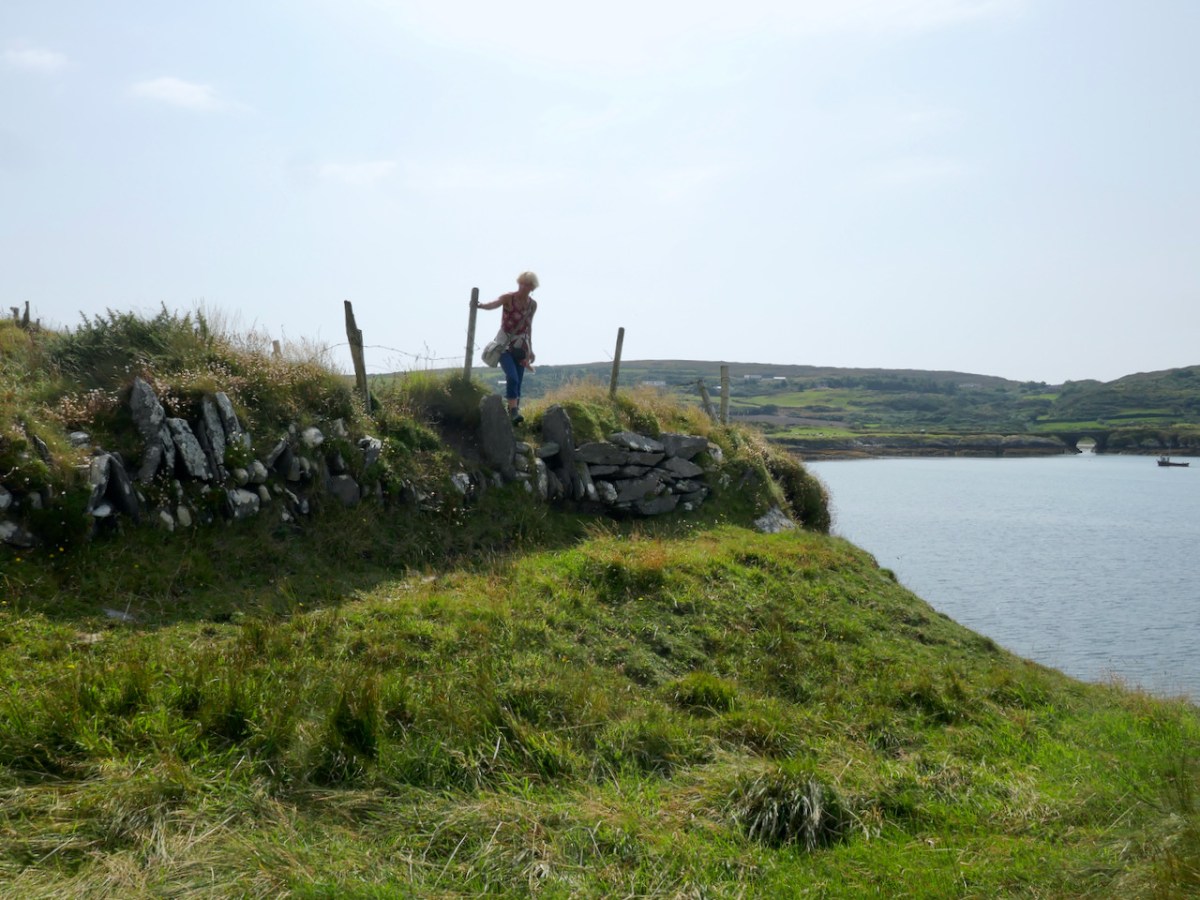
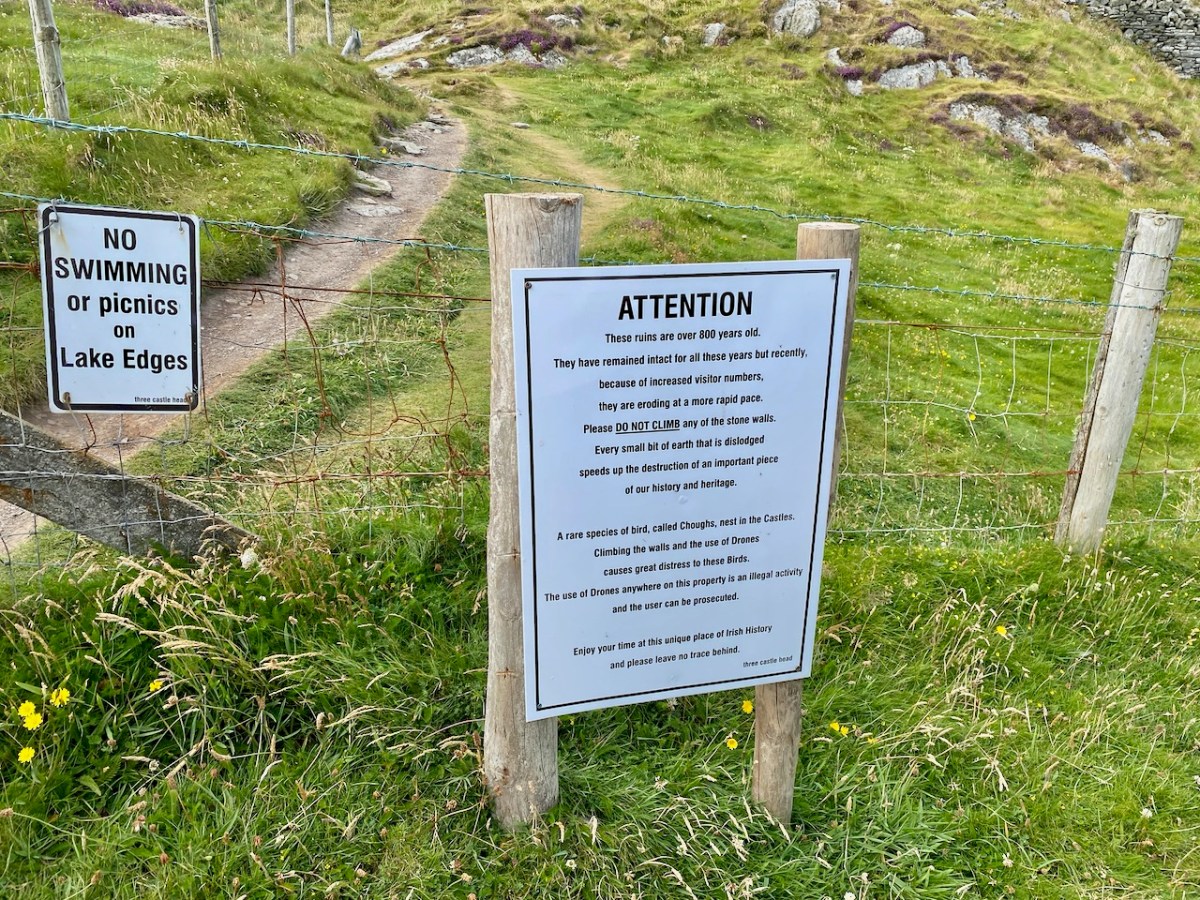
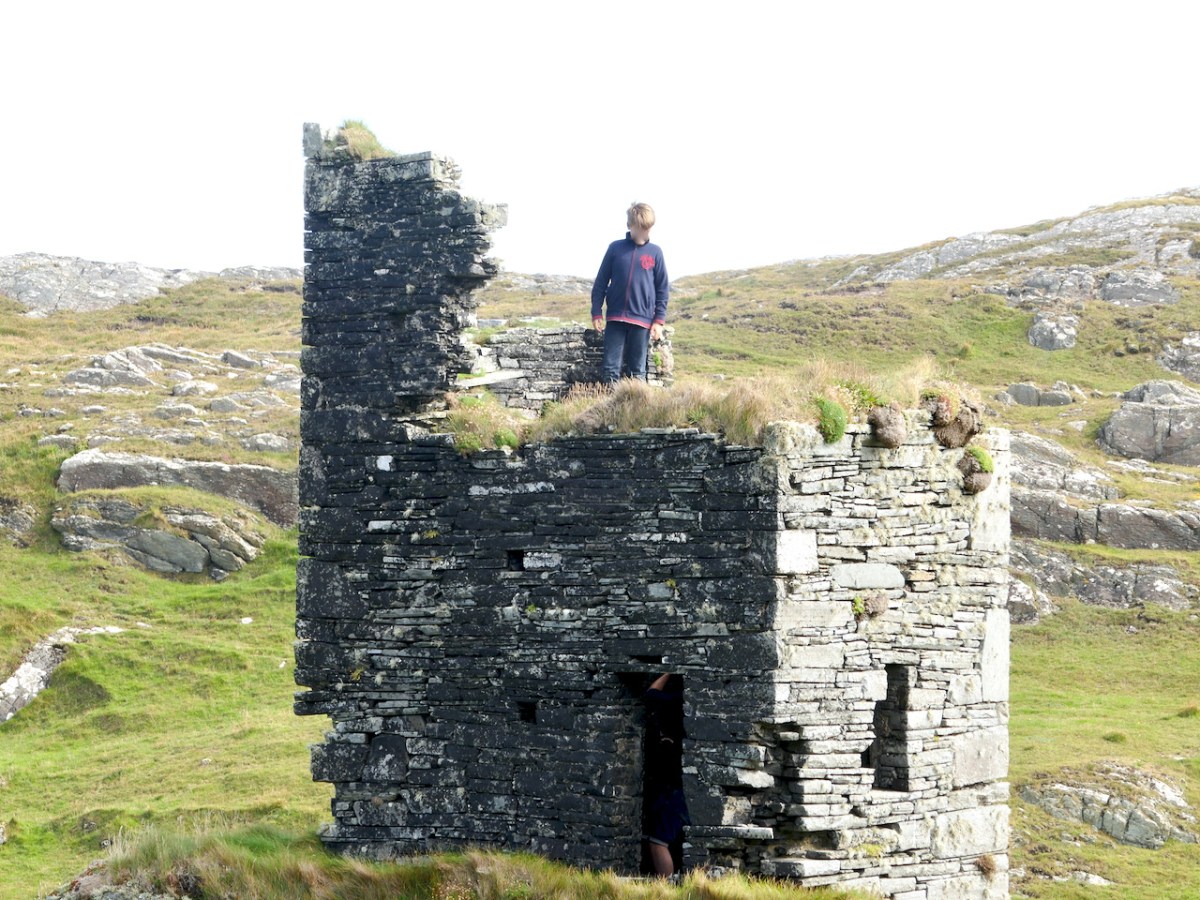
One last word – for many years Three Castle Head was off limits as a private farm. In recent years the owners have been welcoming visitors and this is gratefully acknowledged. However, the increased footfall is coming with a cost in wear and tear. Look at the walls above – these are fragile ruins: knocking off one loose stone can have a catastrophic effect on the building envelope.
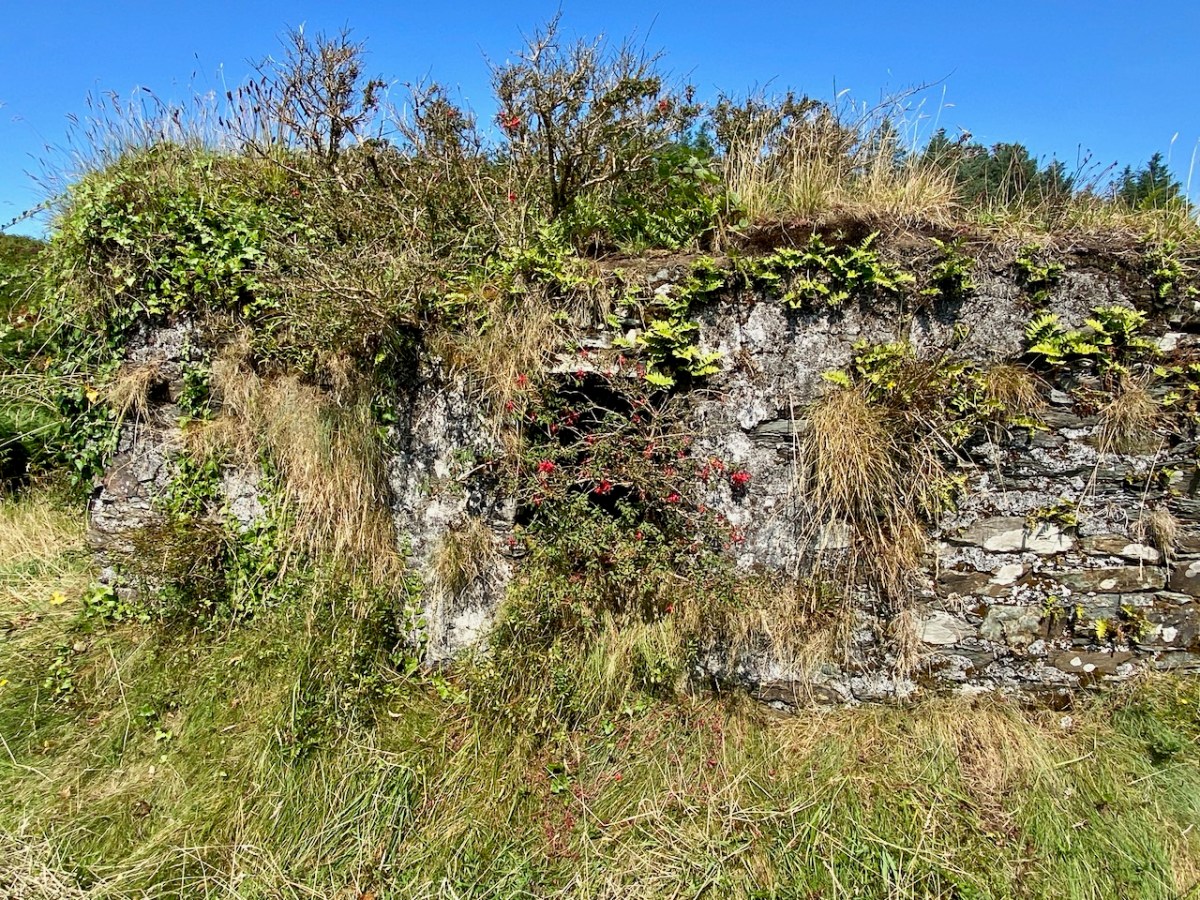
It’s also dangerous to go clambering over unstable ruins like this. So, a heartfelt plea – if you visit, and I hope you do, PLEASE STAY OFF THE WALLS! I was pleased to see a new notice up about this on our most recent visit, and indeed visitors seemed more respectful than they had when I was last there (above). If we stay away from the walls, hopefully they will stand to delight us for more generations to come.

*Fortified Headlands and Castles in Western County Cork. Part I. From Cape Clear to Dunmanus Bay by Thomas Johnson Westropp Source: Proceedings of the Royal Irish Academy: 1914 – 1916, Vol. 32 pp. 249-286, (accessed at: https://www.jstor.org/stable/25504178

West Cork Villages and Towns – Schull

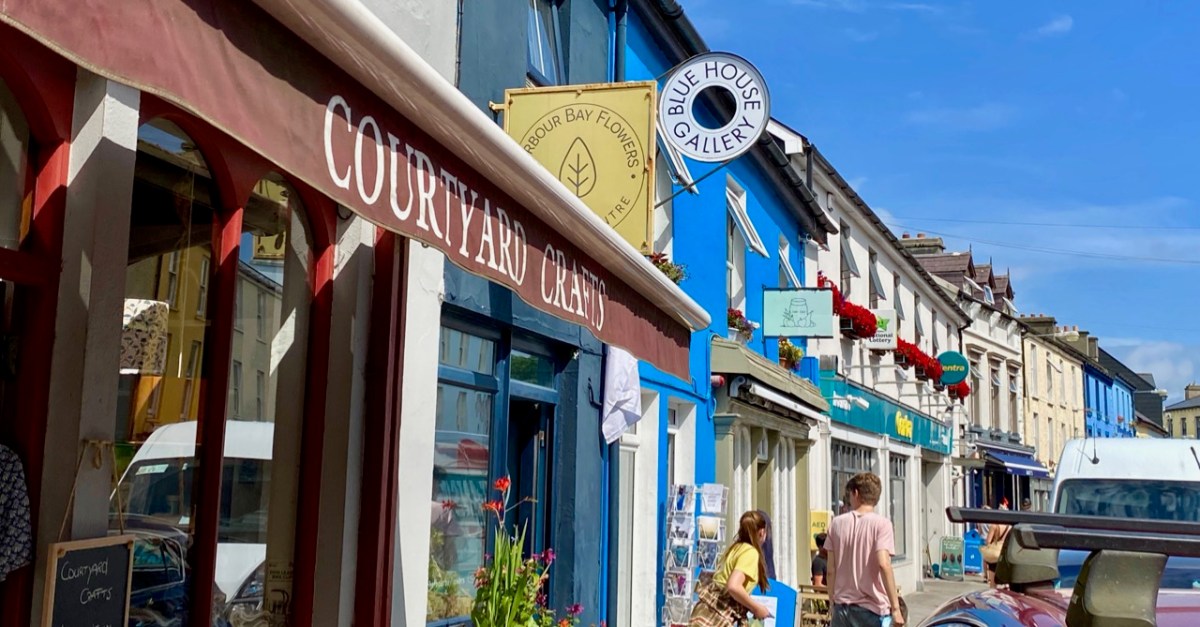
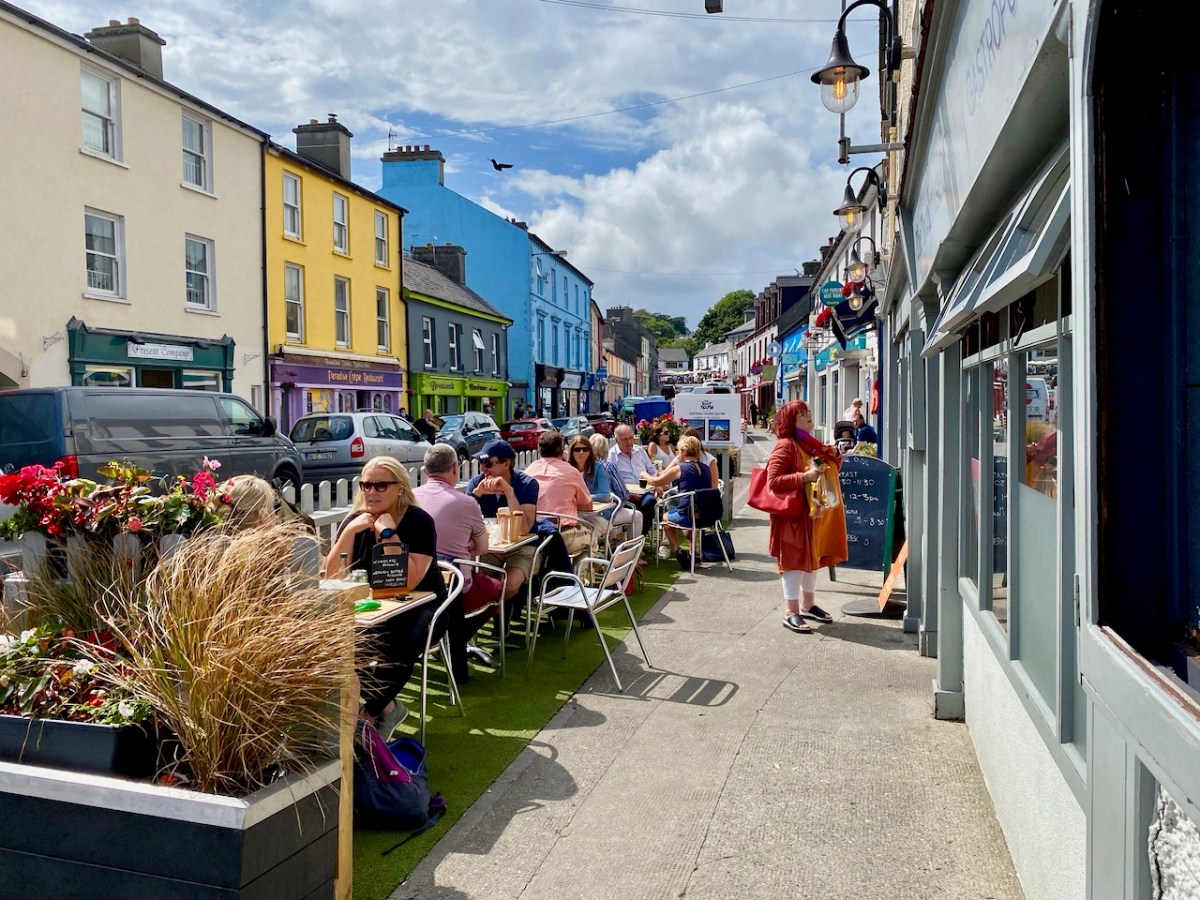
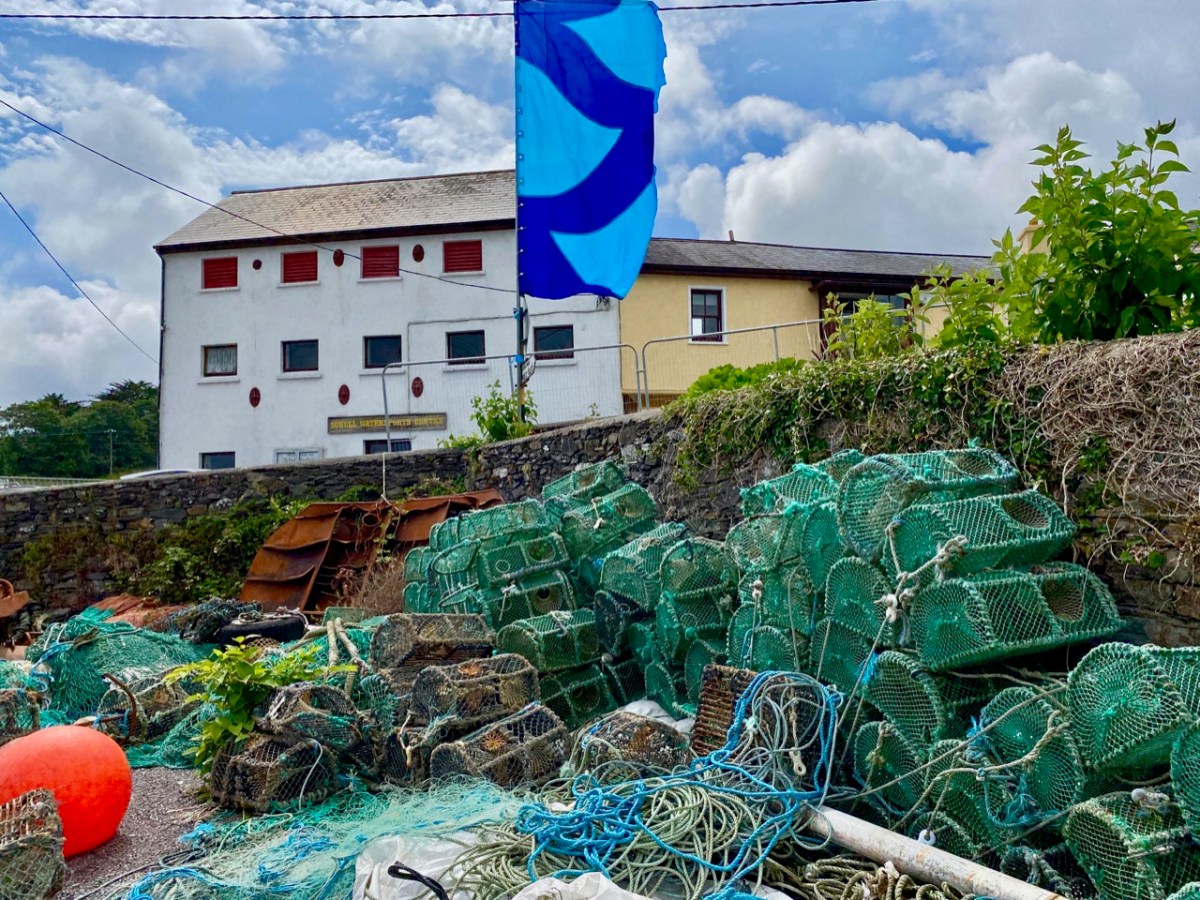
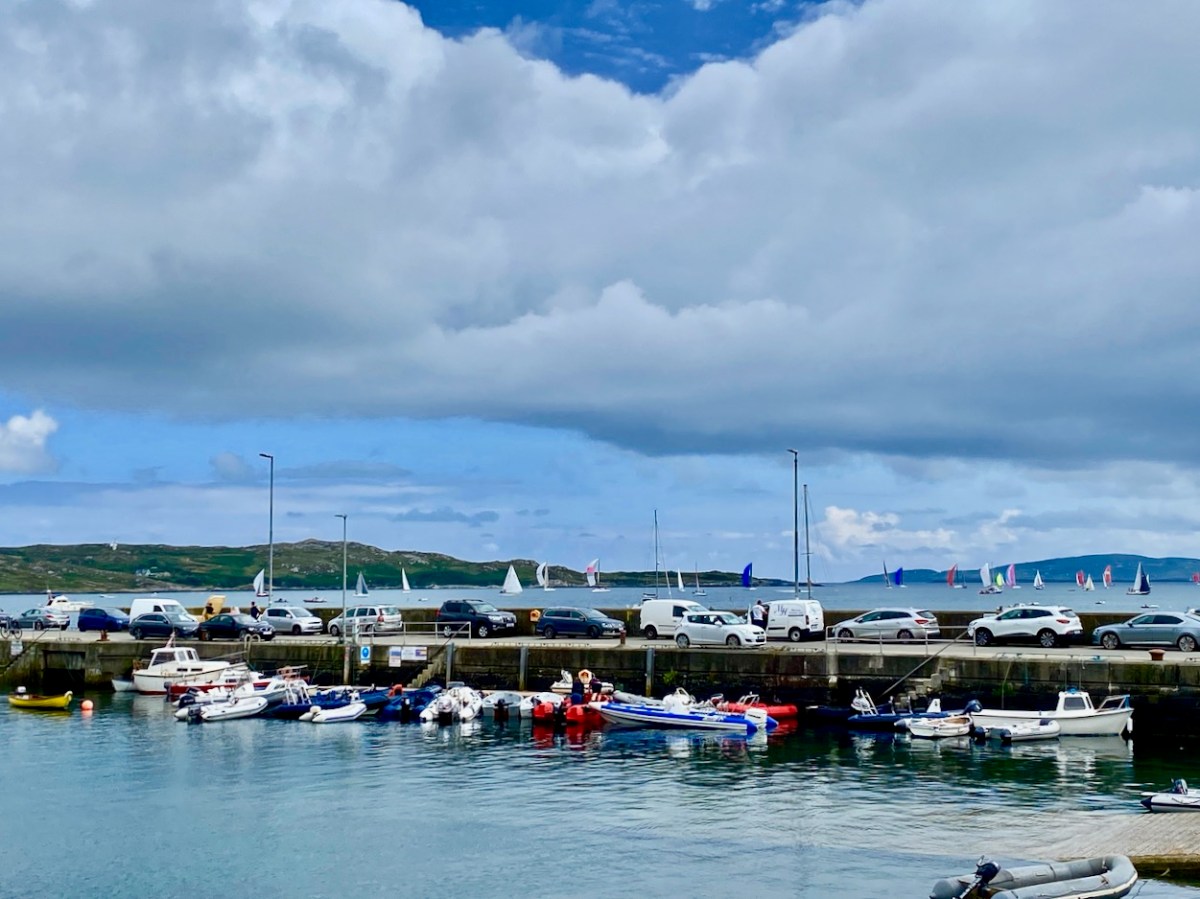
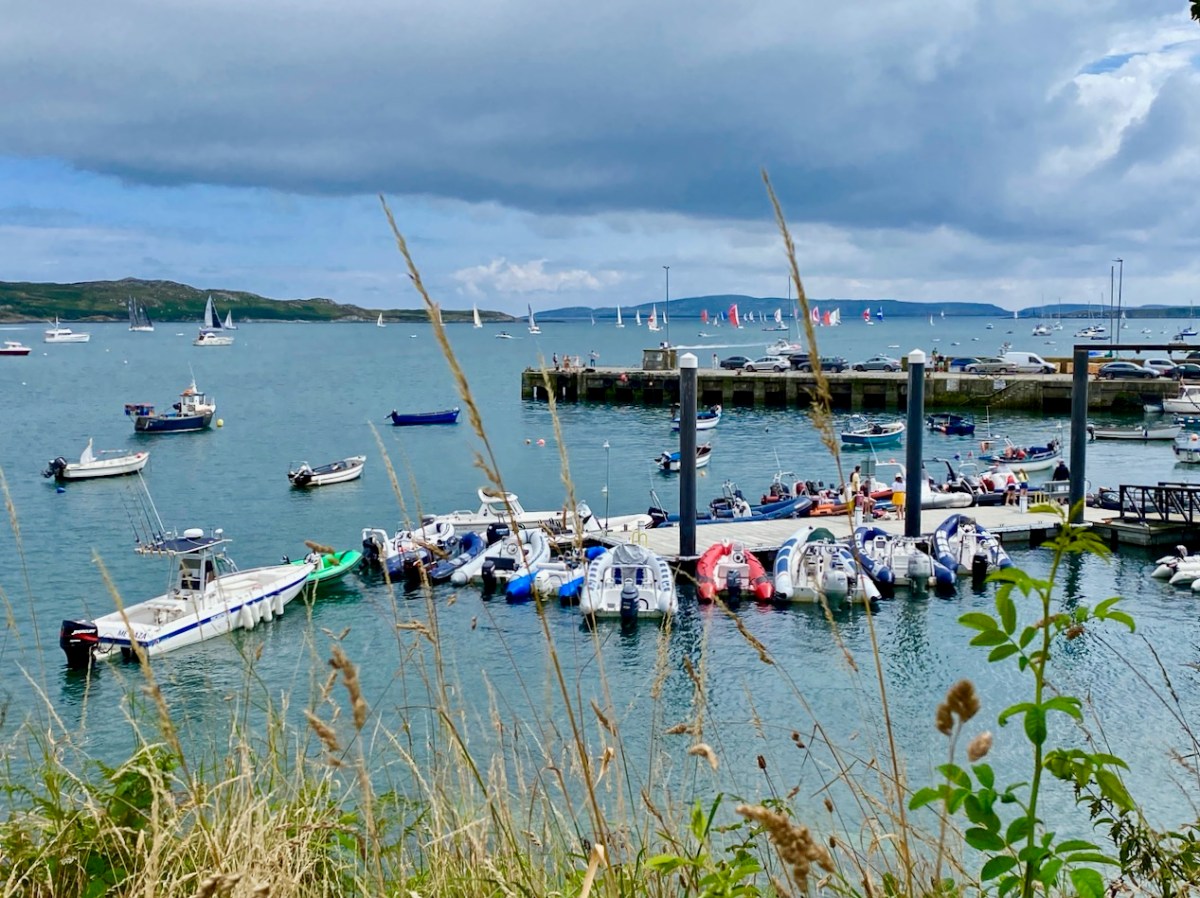
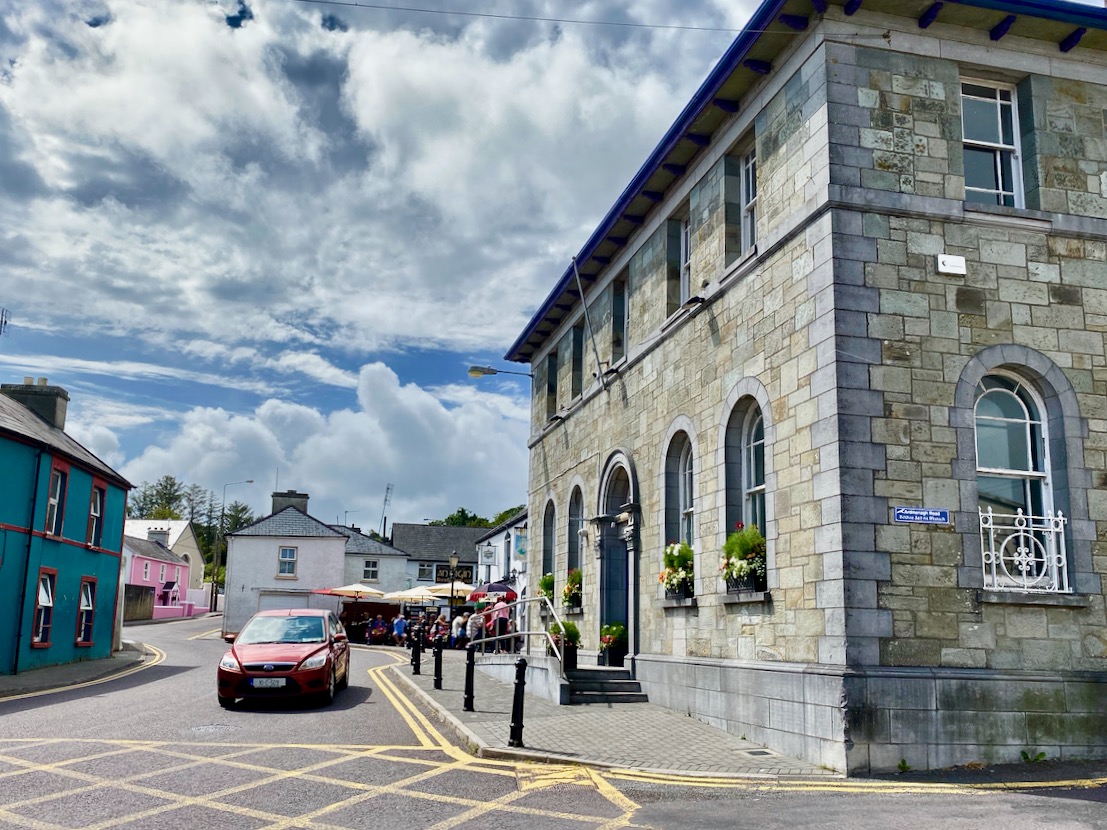
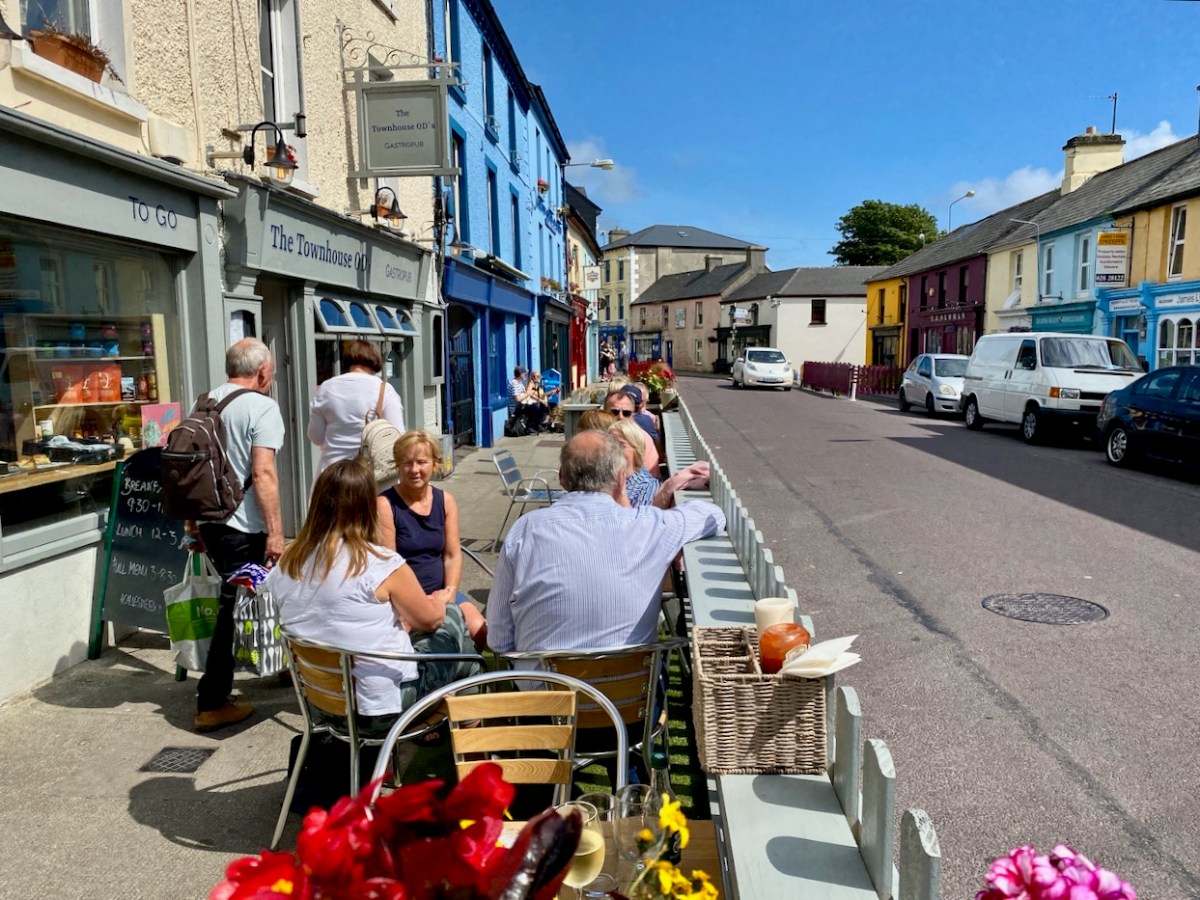
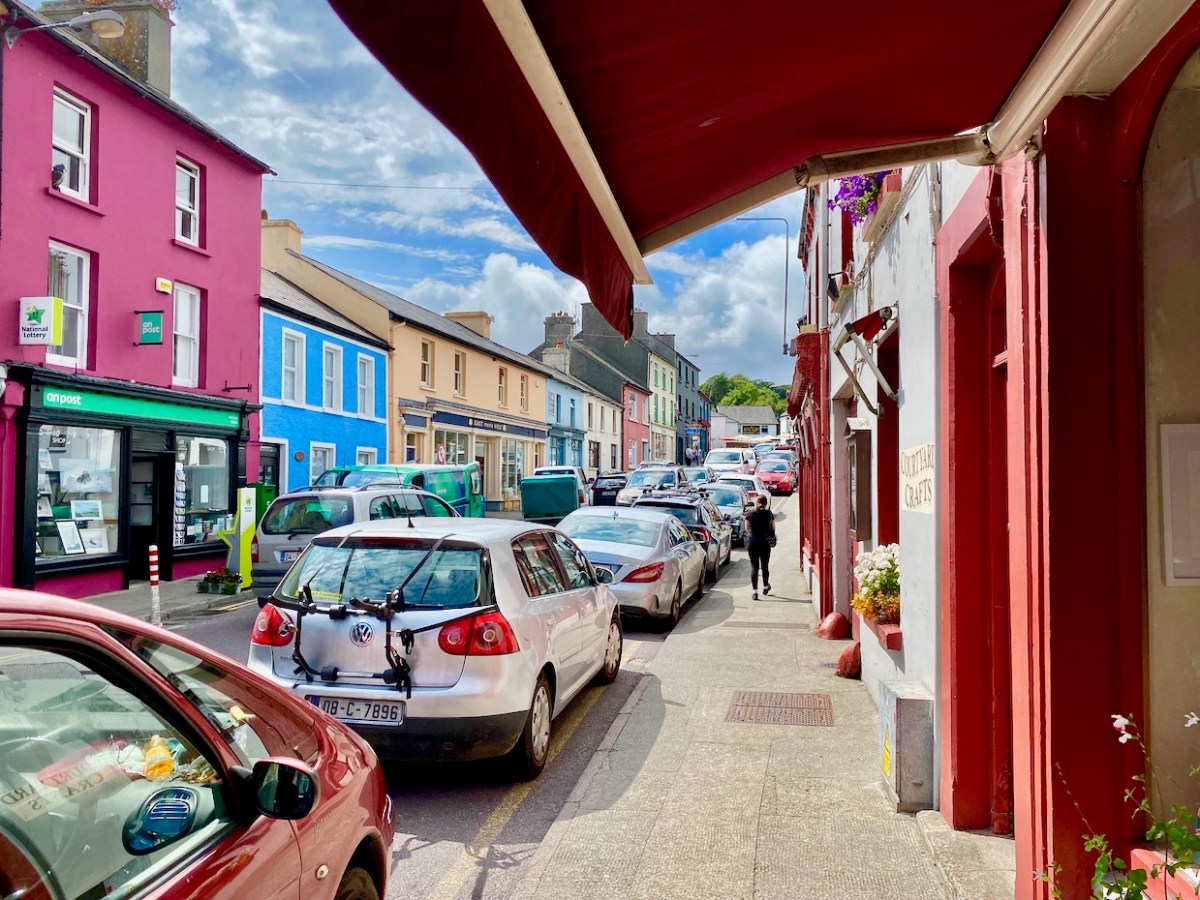
What better time to visit Schull than during Calves Week? That’s a big sailing festival at the beginning of August every year, and you have to be a sailor to understand the nuances of its title. It’s held at the same time as the UK’s premier sailing event – Cowes Week, ‘…the world’s longest running sailing regatta…’ and is focussed around the three Calf Islands in Roaringwater Bay. So there you have it – Cowes and Calves! What it means, of course, is that the village of Schull is at its busiest and, since Covid has given a boost to outdoor socialising, the streets are crowded with visitors enjoying the shops, pavement cafés and galleries.

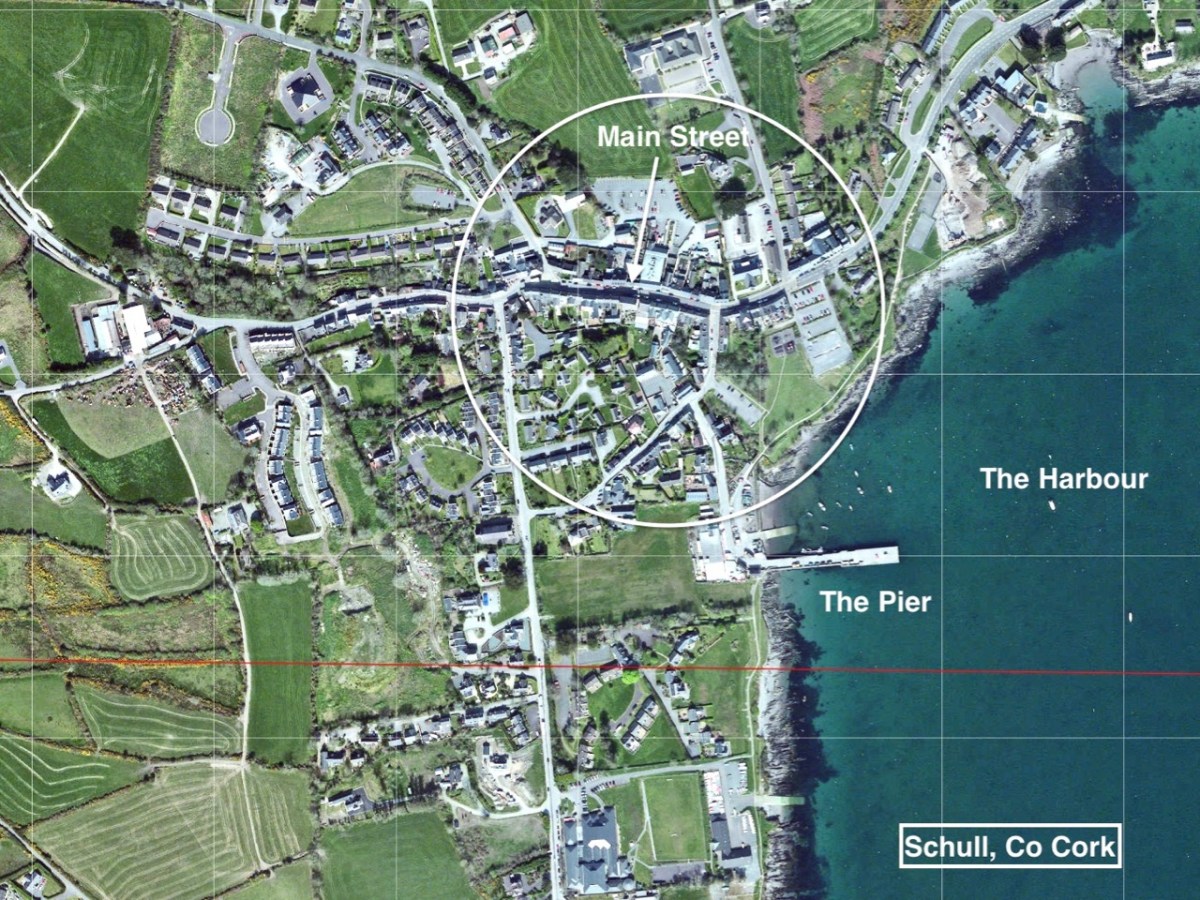
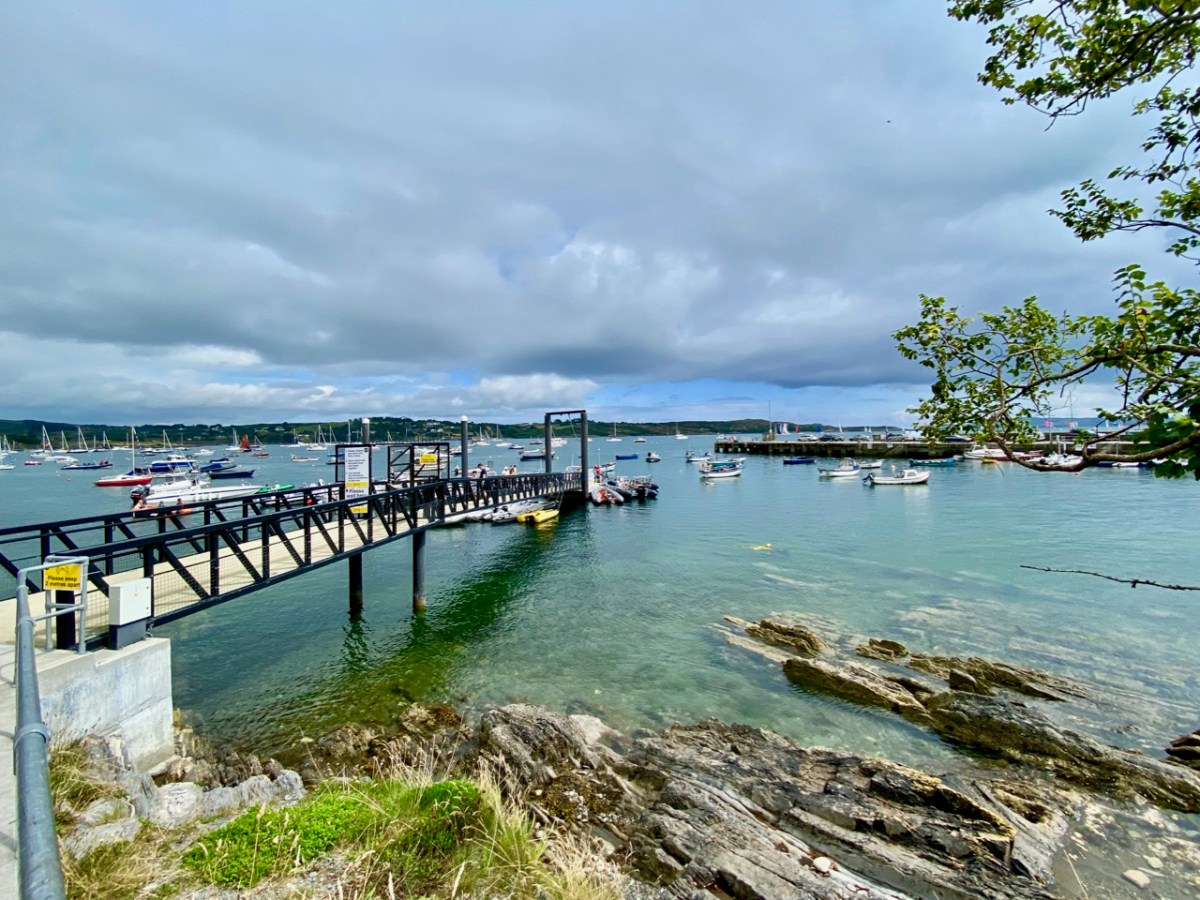
In this occasional series on the Towns and villages of West Cork we will take one community and try to discover why and how it has developed through history, and how it fares in the present day. A snapshot of the place will be presented – hopefully – in the best possible light (although this won’t always be on a sunny summer’s day!) From the aerial view above, you can see how Schull has been built up around its connection with the water. Schull Harbour is at the head of a long sheltered inlet, and the pier today is always busy with fishing and pleasure boats, ferries and yachts.

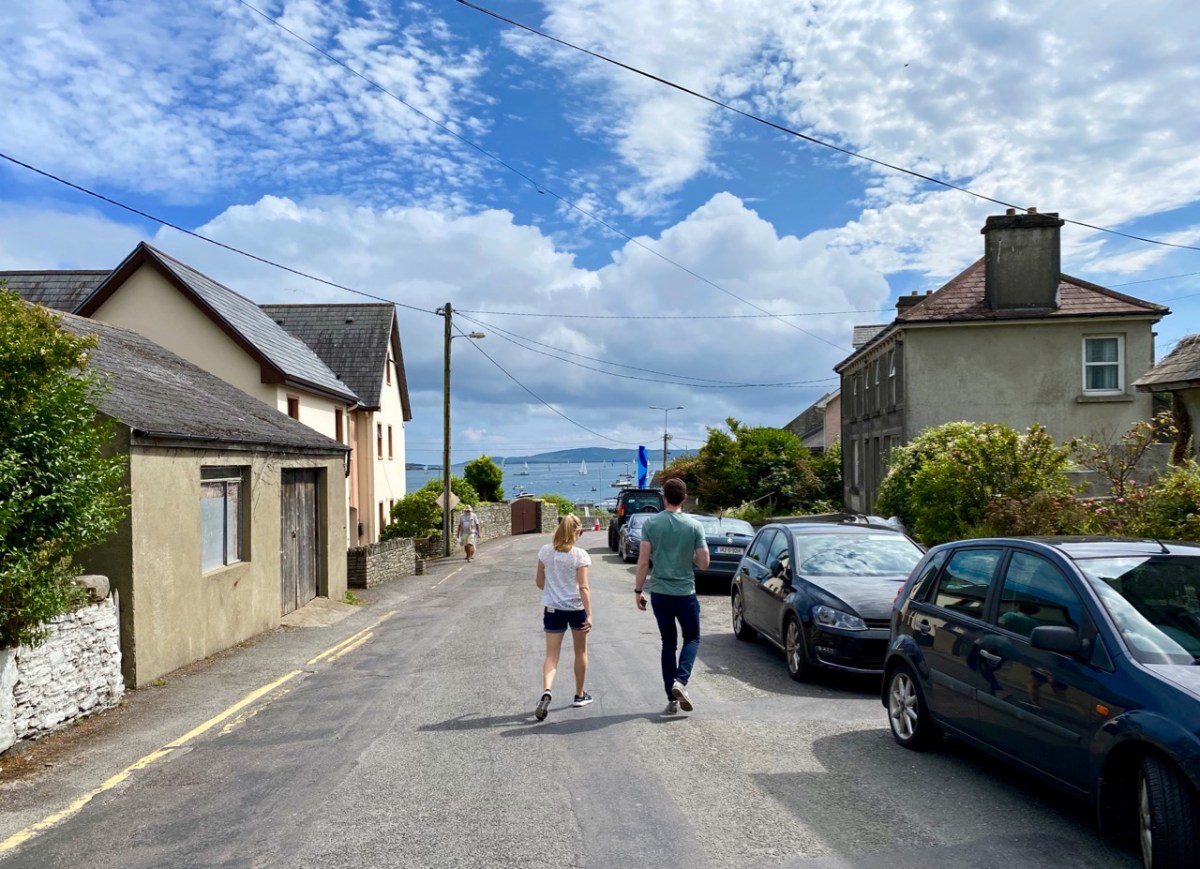
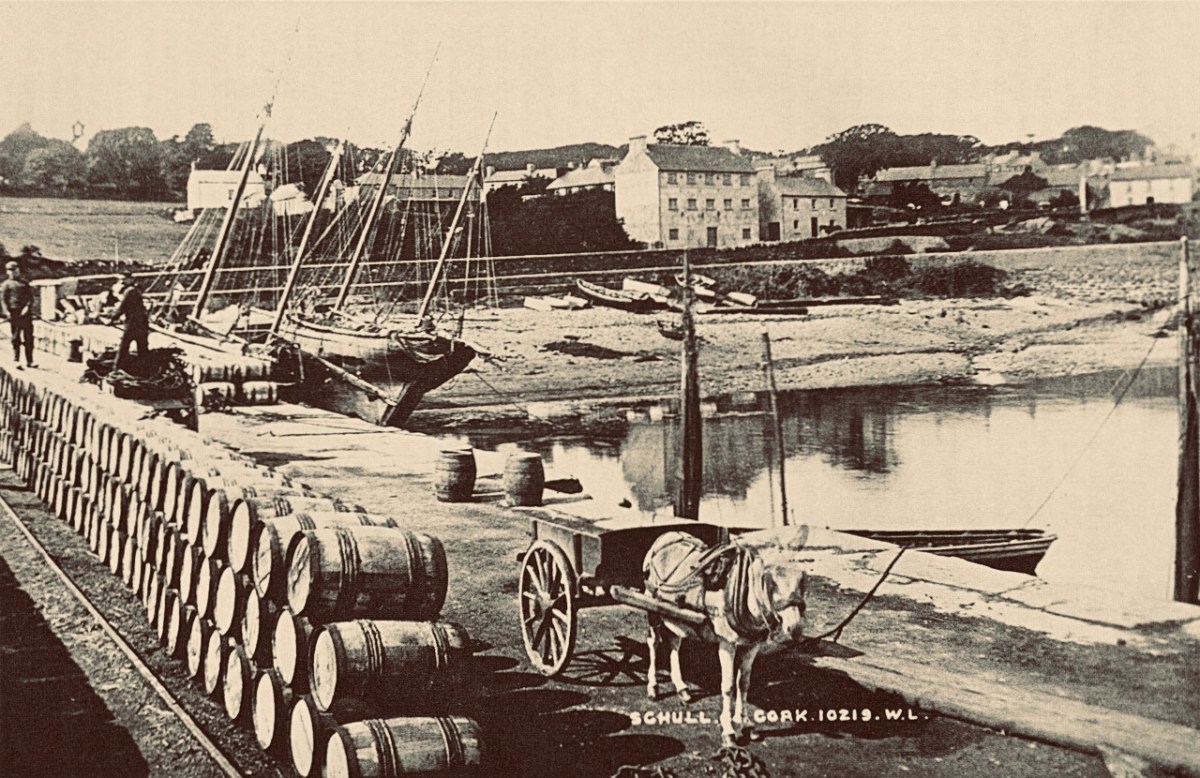
That’s the road to the pier, above, and it’s just a few steps from the village centre. If you are a visitor, you may have no idea that Ireland’s most south-westerly railway line once ran right on to this pier! The narrow gauge Schull, Ballydehob & Skibbereen Tramway and Light Railway was in service between 1886 and 1947, connecting these remoter parts of the county to Skibbereen and then, via the main line, Cork city. Although never considered a commercial success, it was a valuable element of infrastructure enabling local passengers to get to shops and markets, and fishermen to send their catches to distant merchants as hastily as possible (bearing in mind there was a speed limit of 15 miles per hour on most of this rural line). This photograph from the NLI Lawrence Collection (below) dates from the 1890s, and shows barrels of fish stacked up next to the railway track on Schull pier, awaiting despatch. They are likely to contain salted pilchards and herrings.

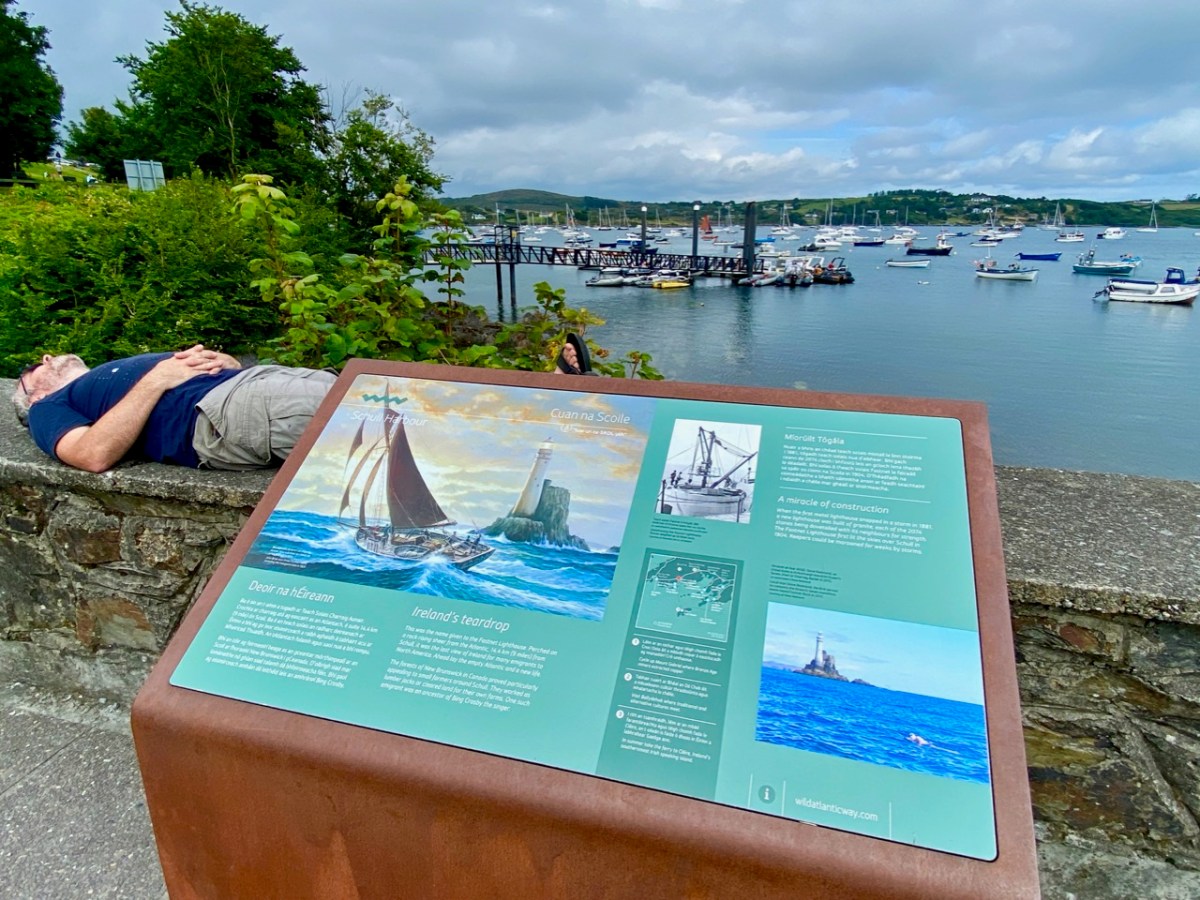
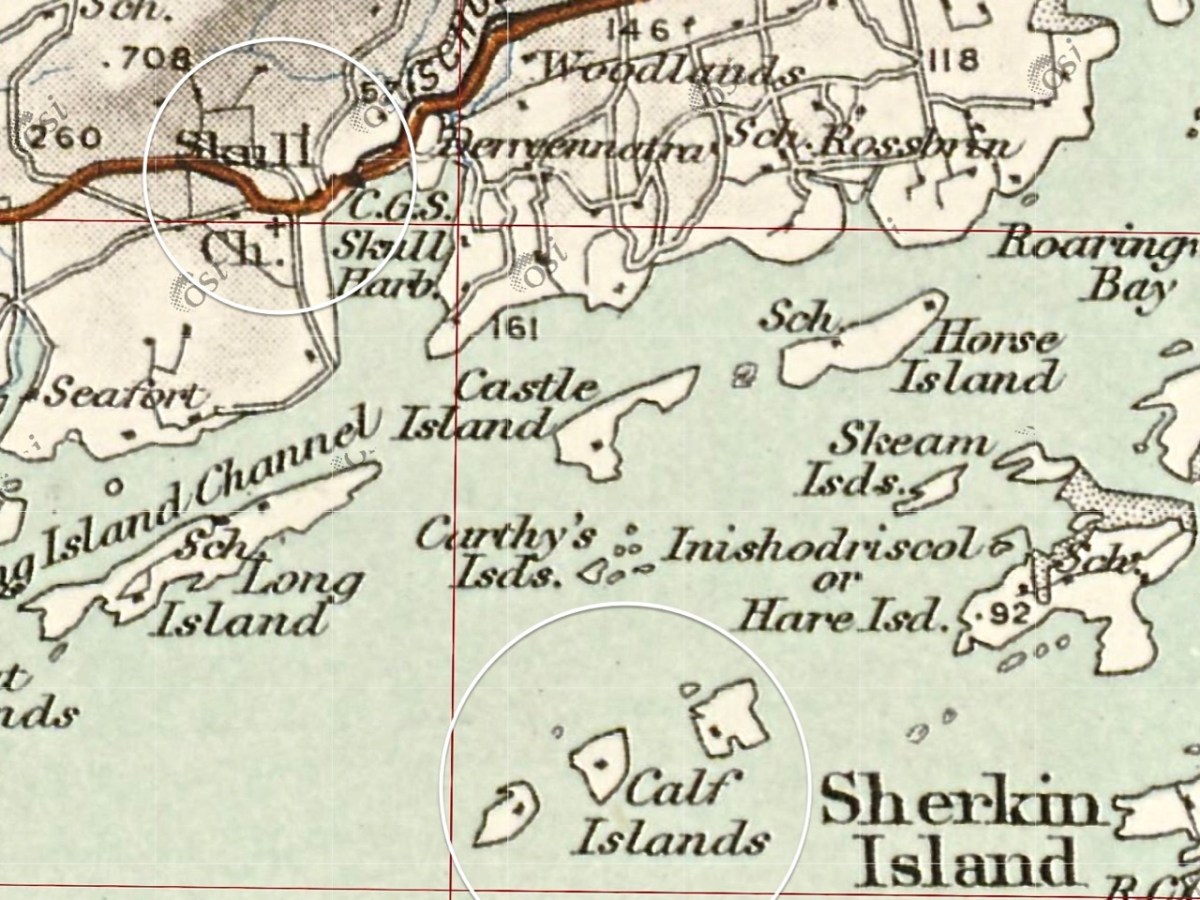
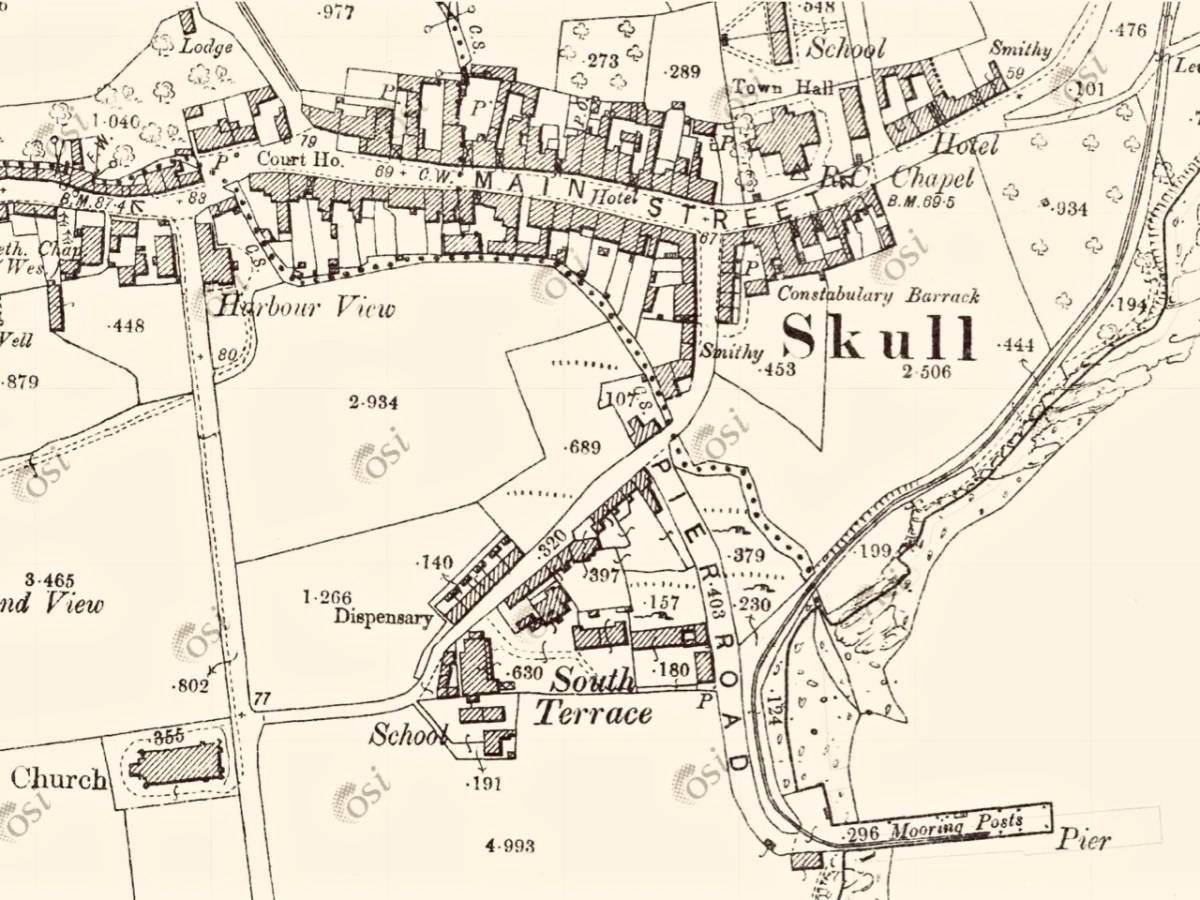
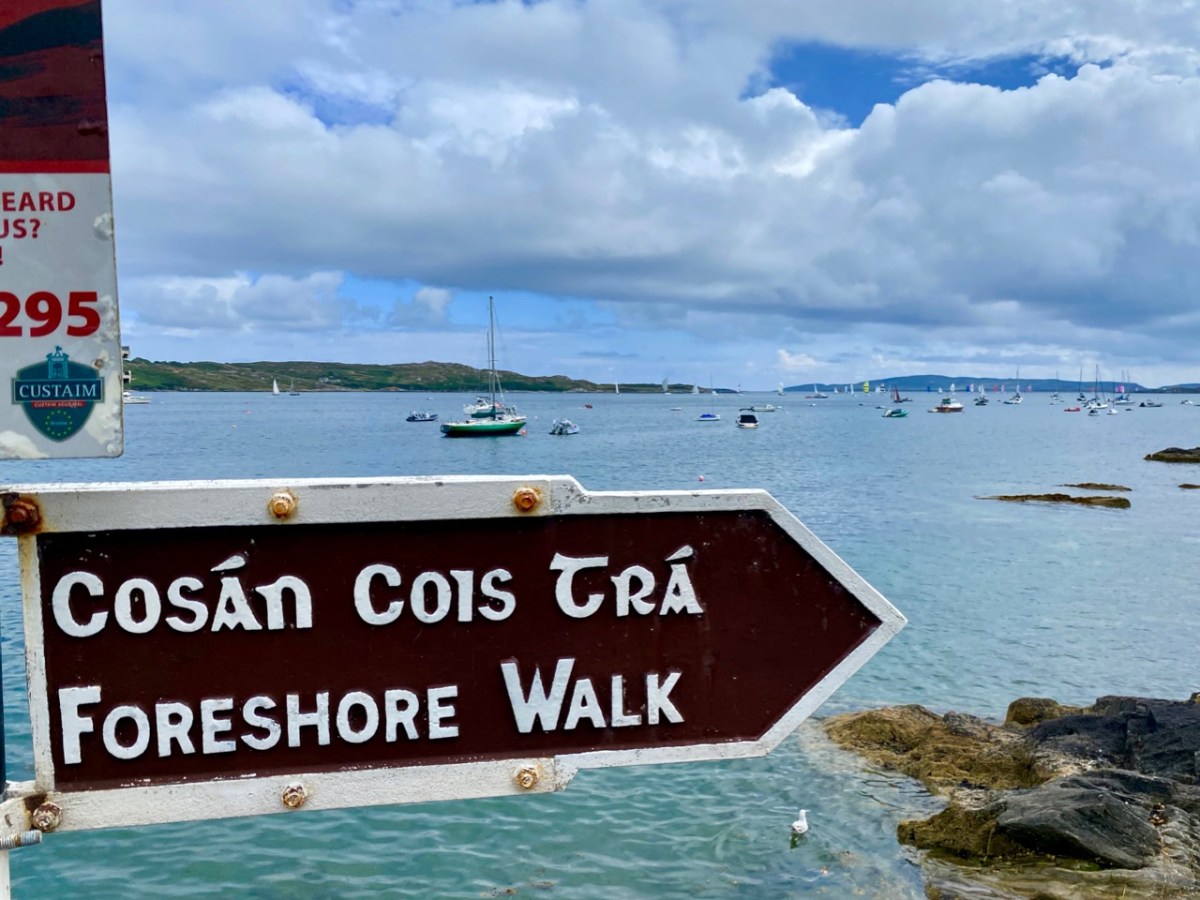
In all these pictures of the pier and pontoon areas above you can see the lively sailing activity in the background. Below are two extracts from early OS maps, one showing Schull and its location to some of the offshore islands, and the other showing the town centre, probably around 1890. It’s thought-provoking to see on the latter the various facilities which the town offered at that time, as well as the railway: Court House, Constabulary Barrack, Smiths, Schools, Hotel and Dispensary.

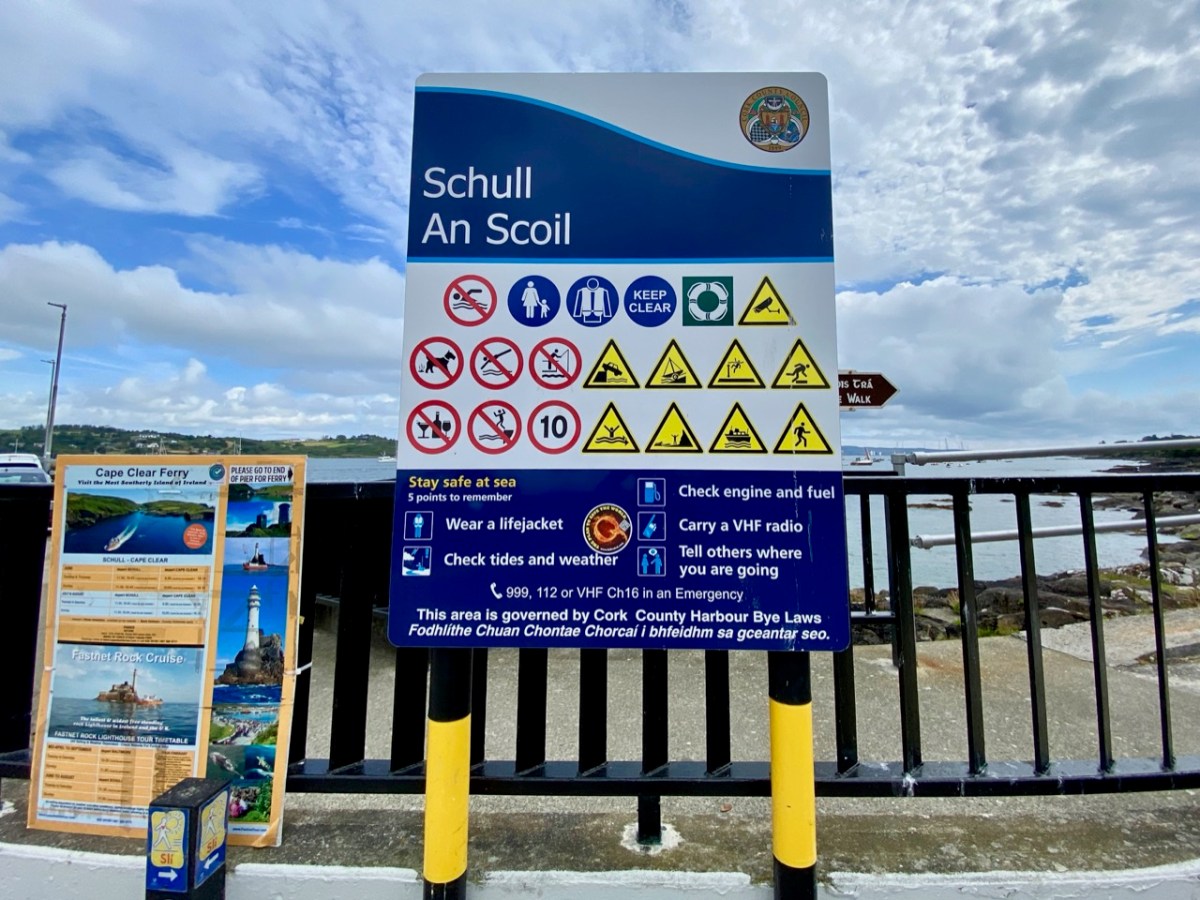
Note that on both the maps above, which date from more than a century ago, the settlement’s name is given as Skull: it still is on all OS Ireland maps up to the present time. Mostly today it’s known as Schull, or in Irish An Scoil, which translates as The School. Some of you may remember my posts earlier this year when I looked in to the possible origins of this village name – and the earliest ‘School’: a site described on Archaeology Ireland as a ‘possible early Christian settlement’:  . . . the ancient school of Sancta Maria de Scholia, ‘a place known in early times as a centre of learning’ . . . There’s a fair bit of local lore surrounding the subject, and you need to read Schull resident John D’Alton’s article on this to find an alternative view to the perhaps romanticised ideas of an ancient monastic site: I’m sitting on the fence!

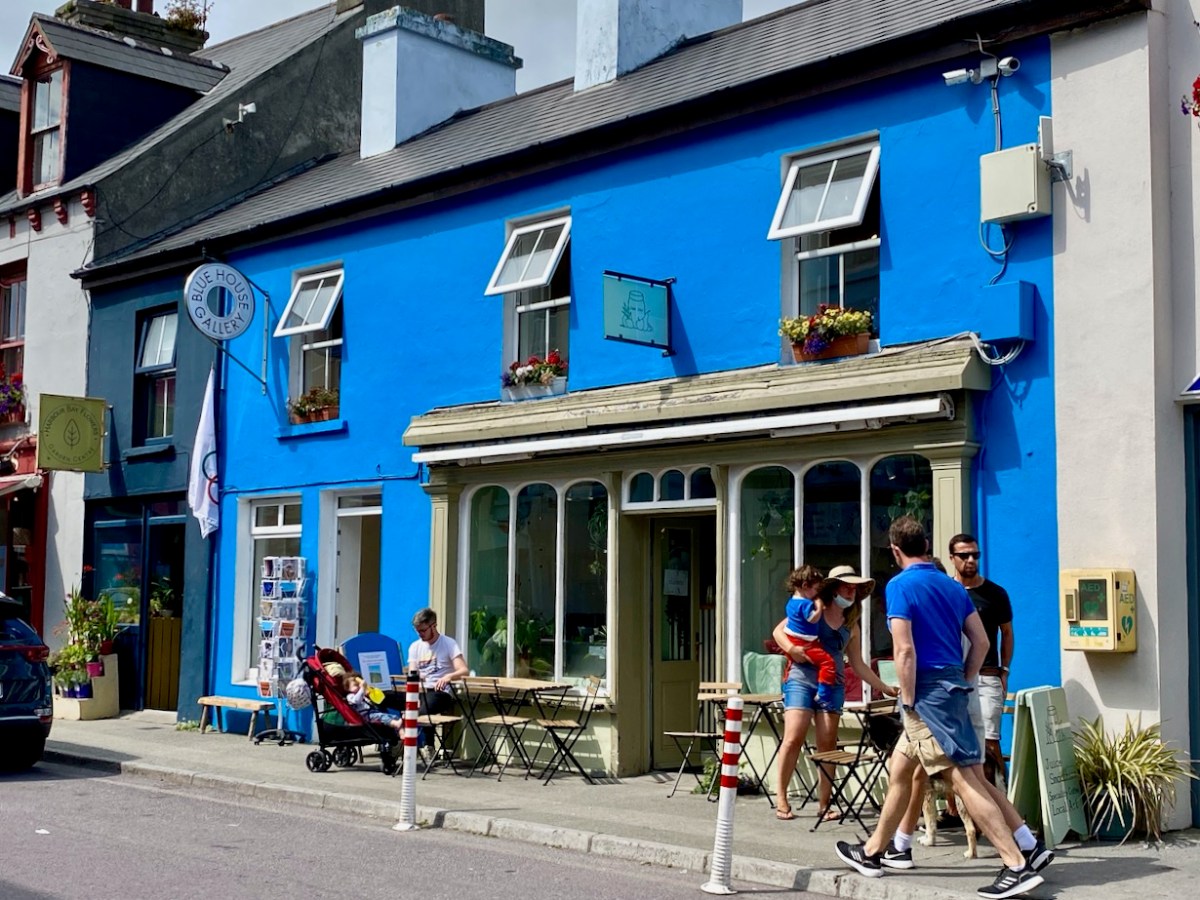
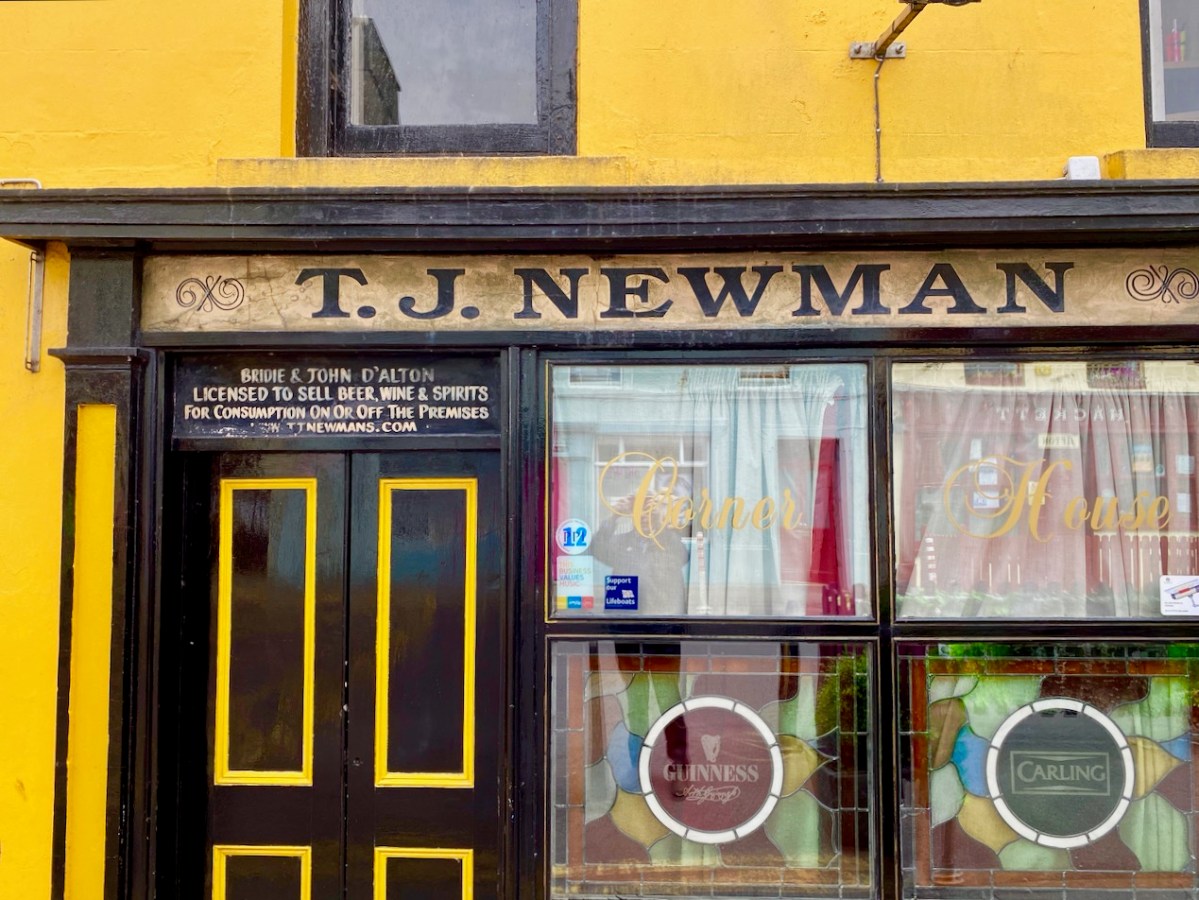
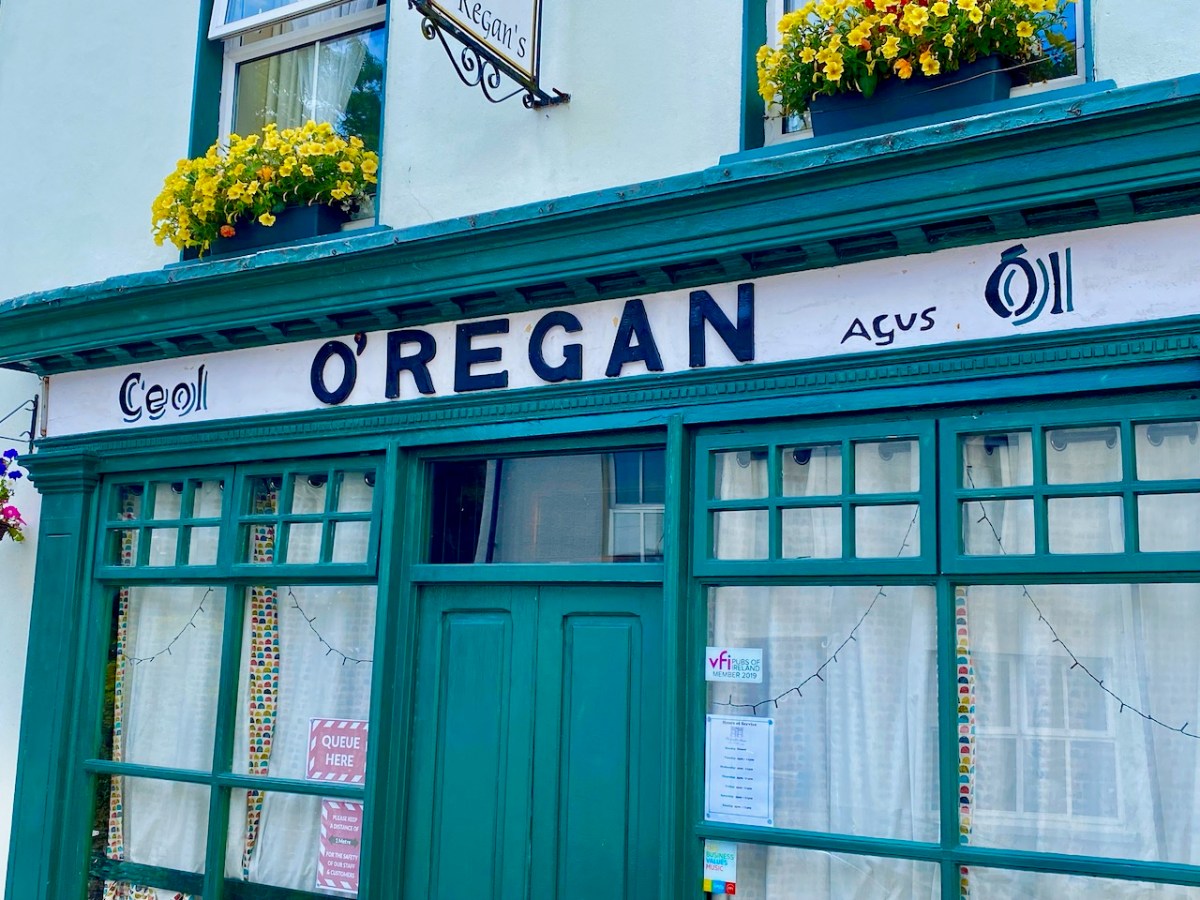
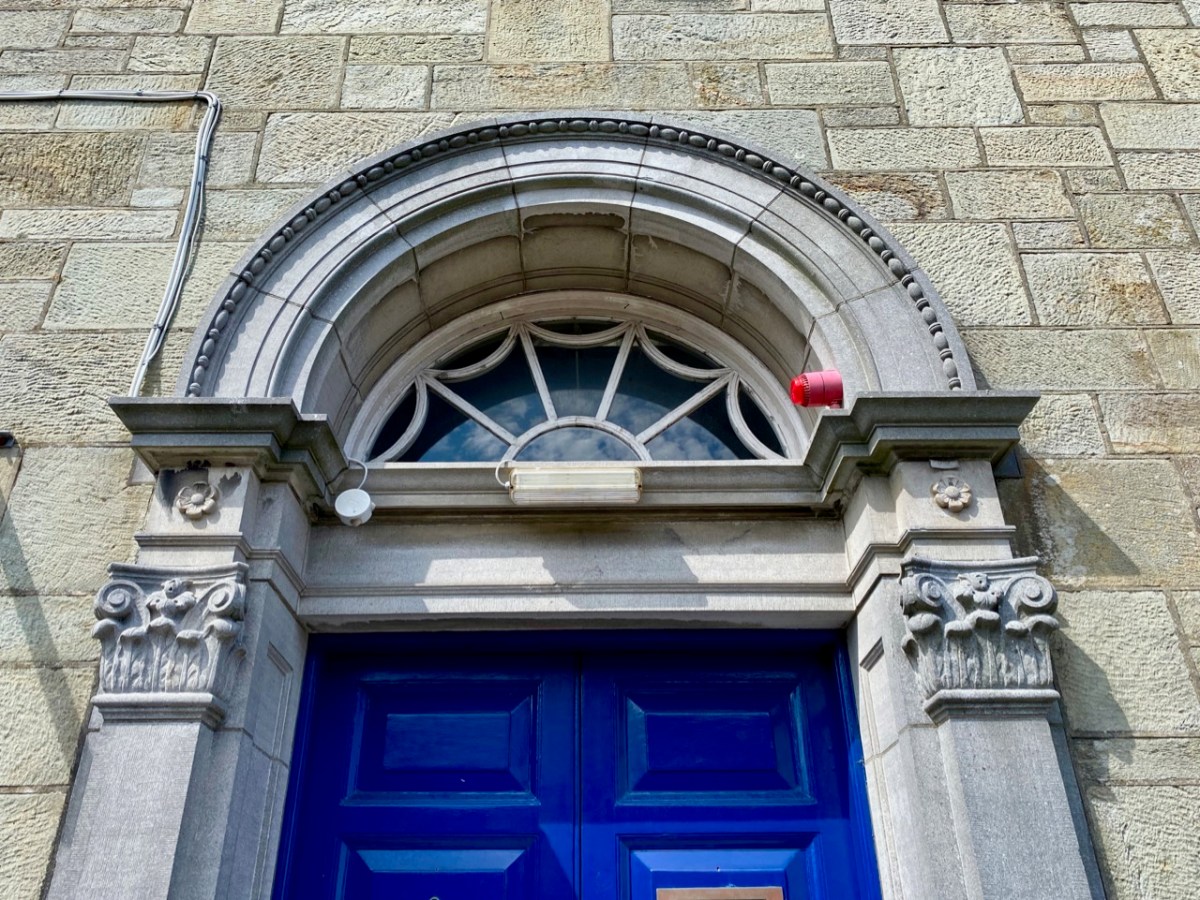
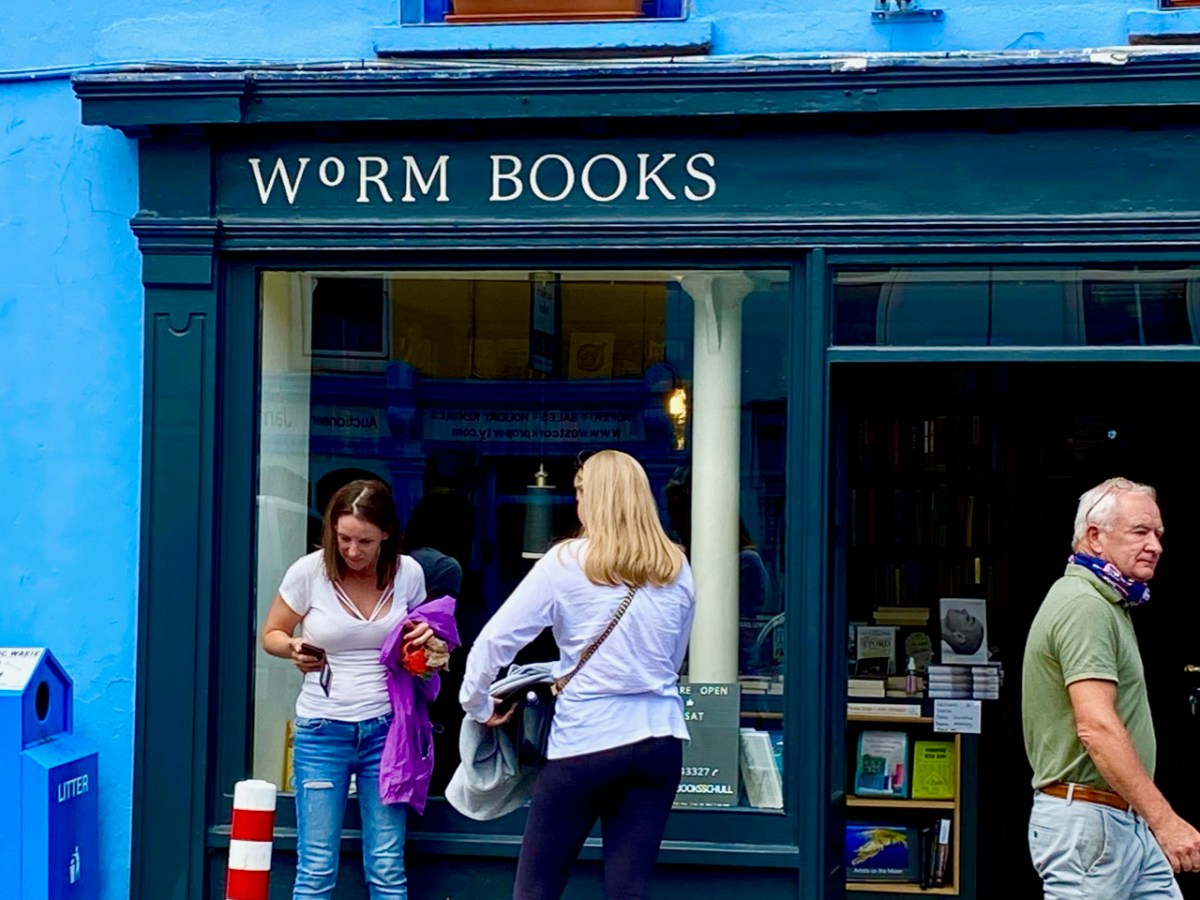
Historic village – perhaps with medieval origins – to vibrant sailing centre and colourful streets in the 21st century. Schull has come a long way, and has far to go. Today the resident population numbers around 1,050: this is boosted substantially with the influx of summer visitors. It’s good to see long established names and new businesses on the streets, contributing to the colourful palette of the architecture. Great things are happening in the future: the old bank building (below) is to become a cinema and film centre: a focal point for the acclaimed annual Fastnet Film Festival.

Year round, Schull is worth exploring. Mount Gabriel, the area’s highest point, is above the village and offers superb vistas over the bay and islands. Finola has looked at the many legends associated with this peak and there is ancient history there, too: the remains of Bronze Age copper mines on its slopes. Good walks can be had on the high ground and on the coastal footpaths – see the Explore West Cork website.

Mad Hatter’s Tea Party

Haven’t you always wanted to have one?

When the occasion arose for a celebration – the publication of The Gazetteer of Irish Stained Glass – we knew exactly what we wanted. We don’t know yet when we can have a launch of the book in Dublin, but it might be the autumn before it can happen, so Robert and I decided that a little local jollification was in order.

We know what Tracy and Peter could do. They’re the Long Island Wild Camping couple who organised the Wildflower Walk and who will do picnics or catering for you on Long Island. Tracy’s eyes lit up when we were talking about her idea of doing ‘proper’ high teas on the island and my need for a celebration, and the plan was conceived.

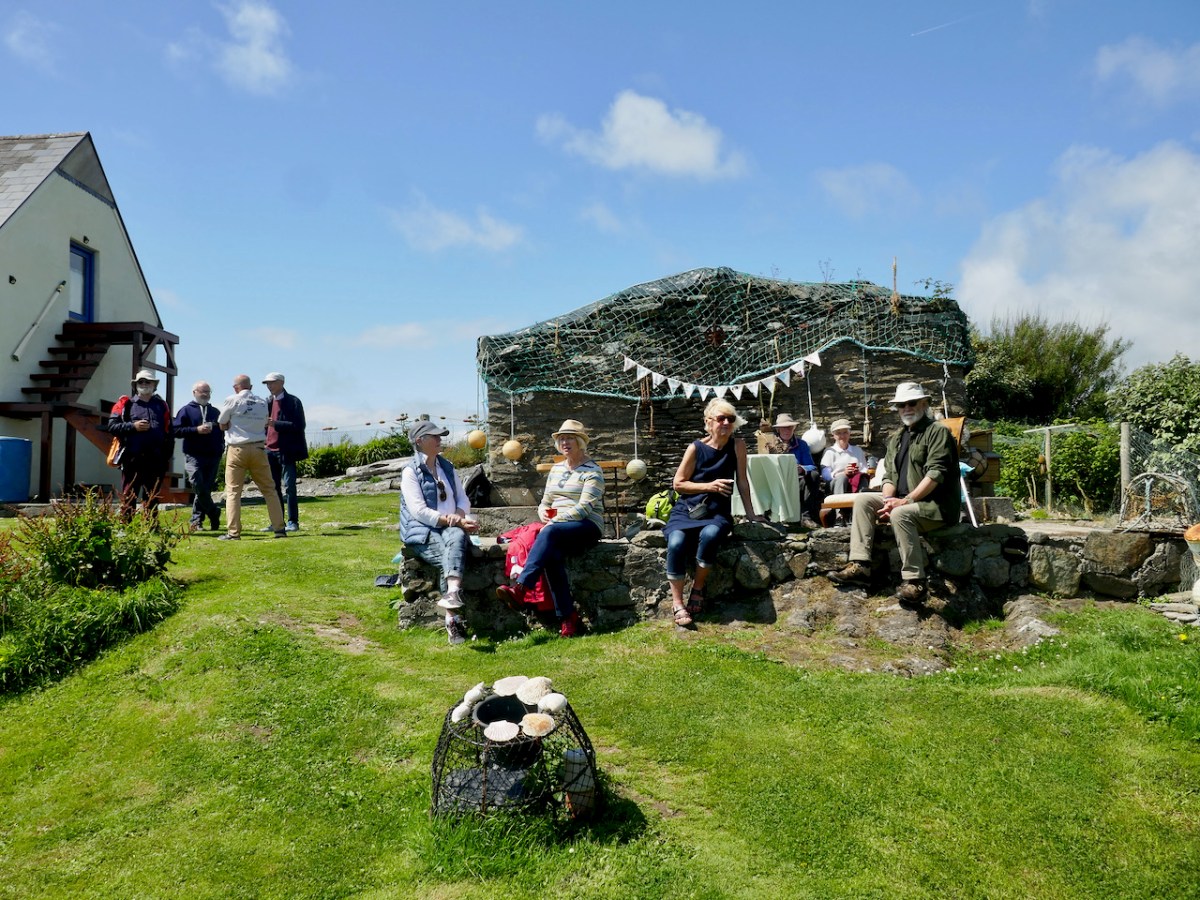
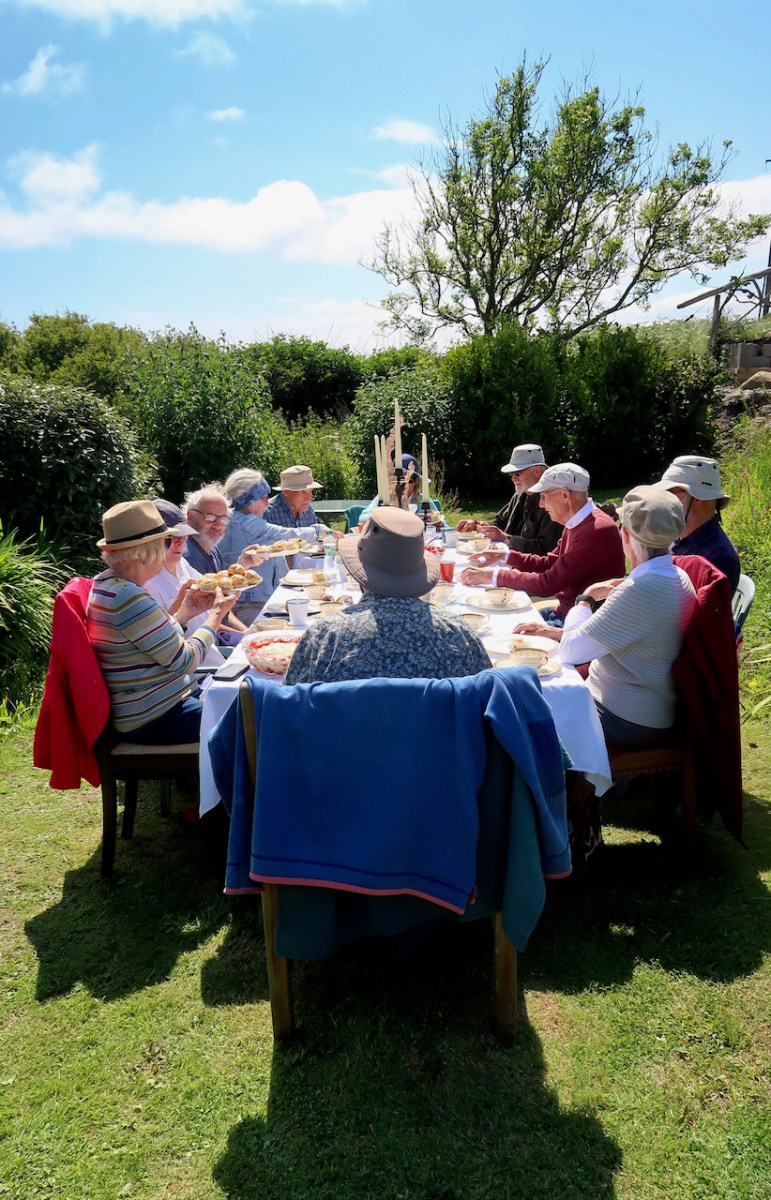
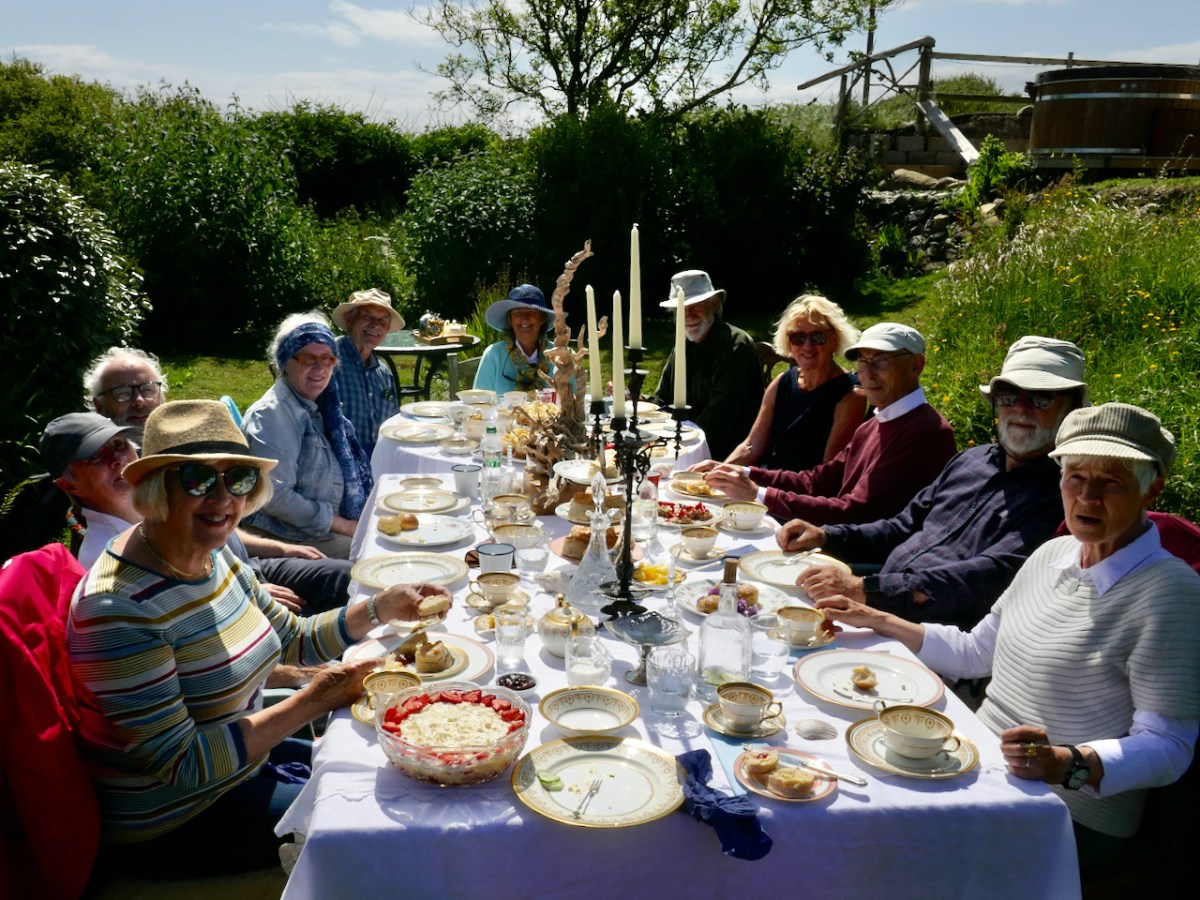
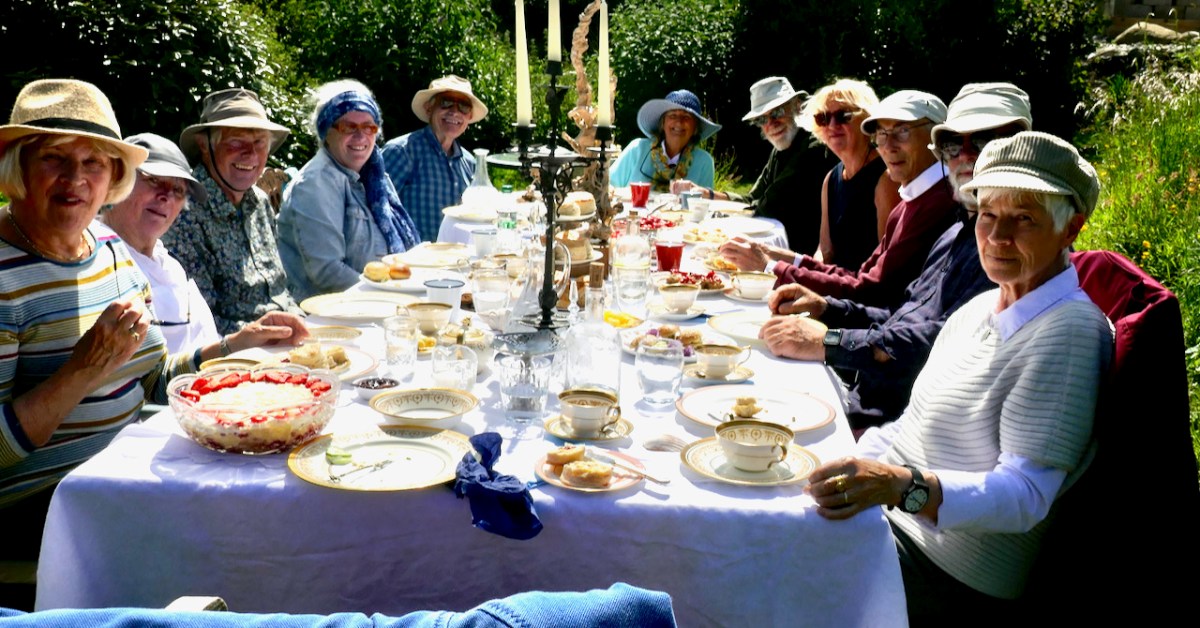
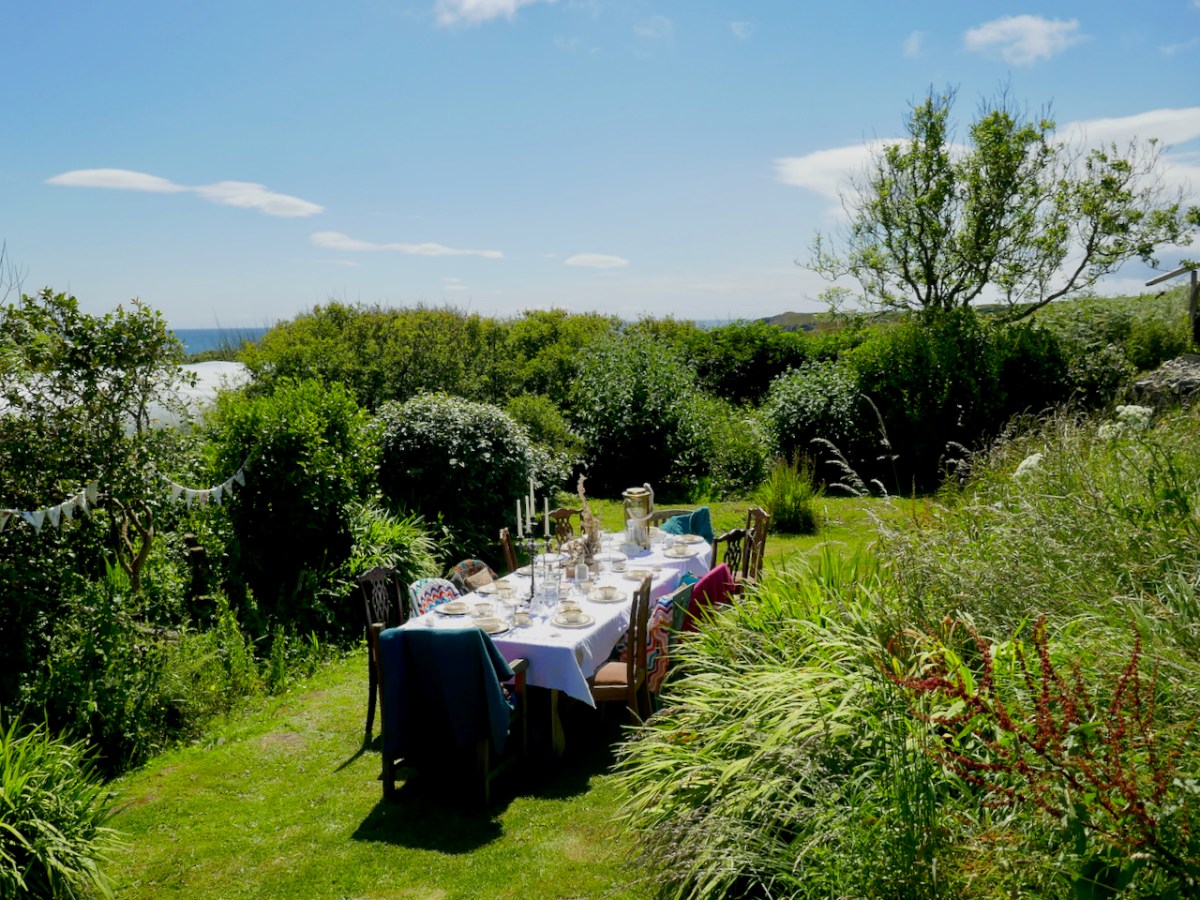
Twelve of us were conveyed to the Island by Maurice and Helen of the Long Island Ferry, and Glory Be! – the sun shone all day for us. It’s a short walk along boreens fringed with blooming hedgebanks to the East House, and what a sight awaited us there*!

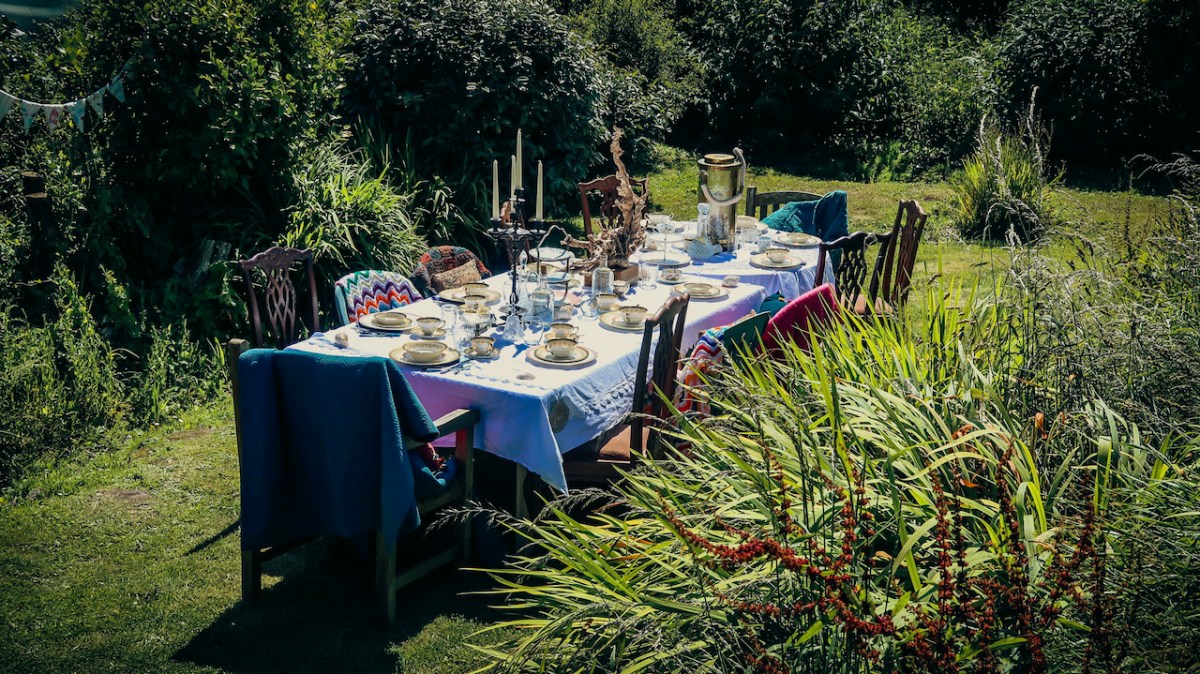
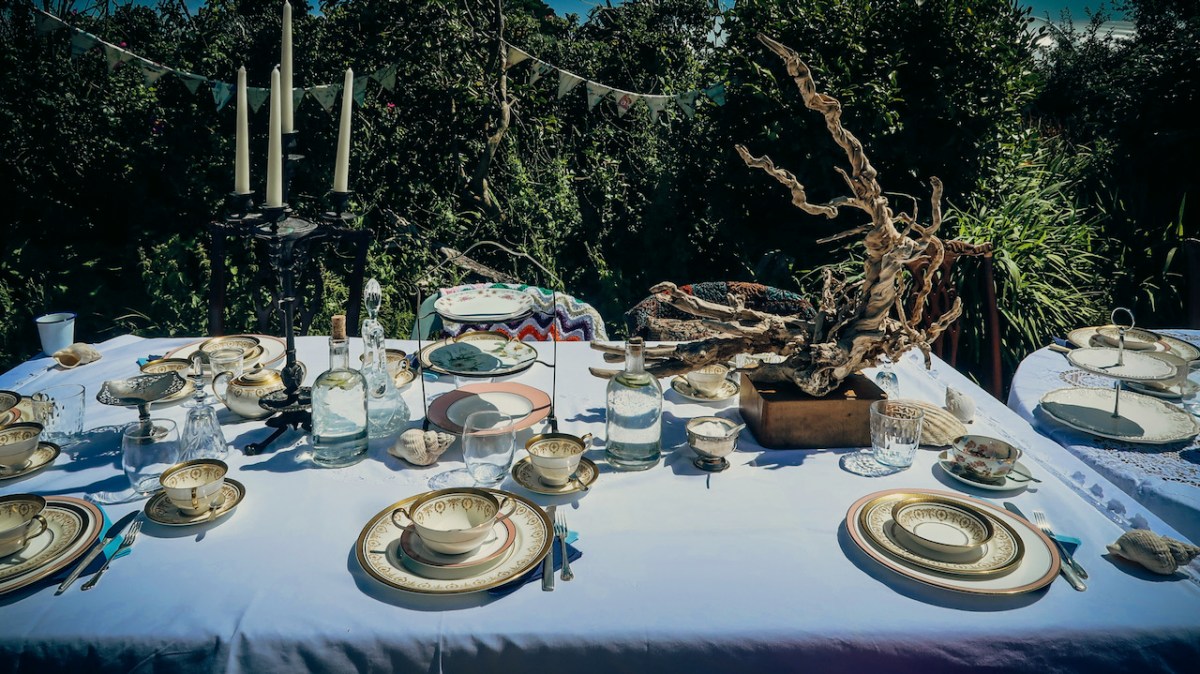
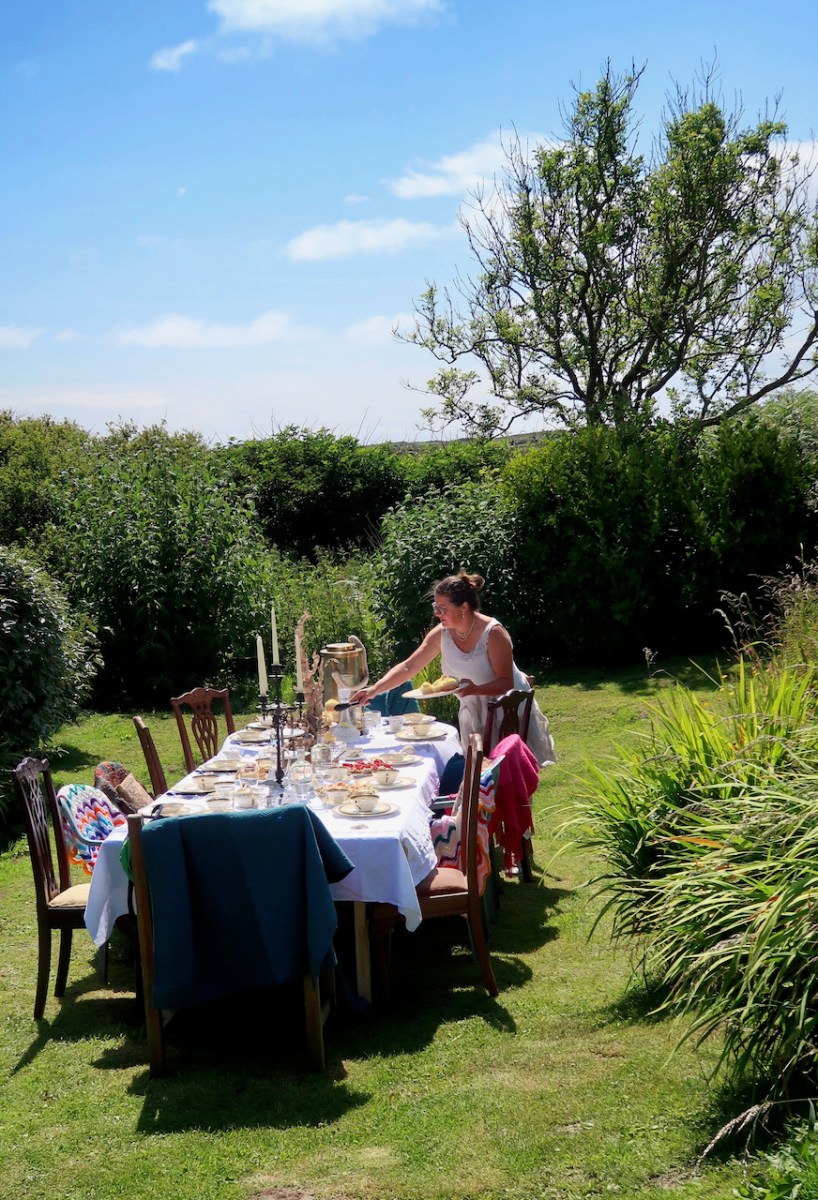
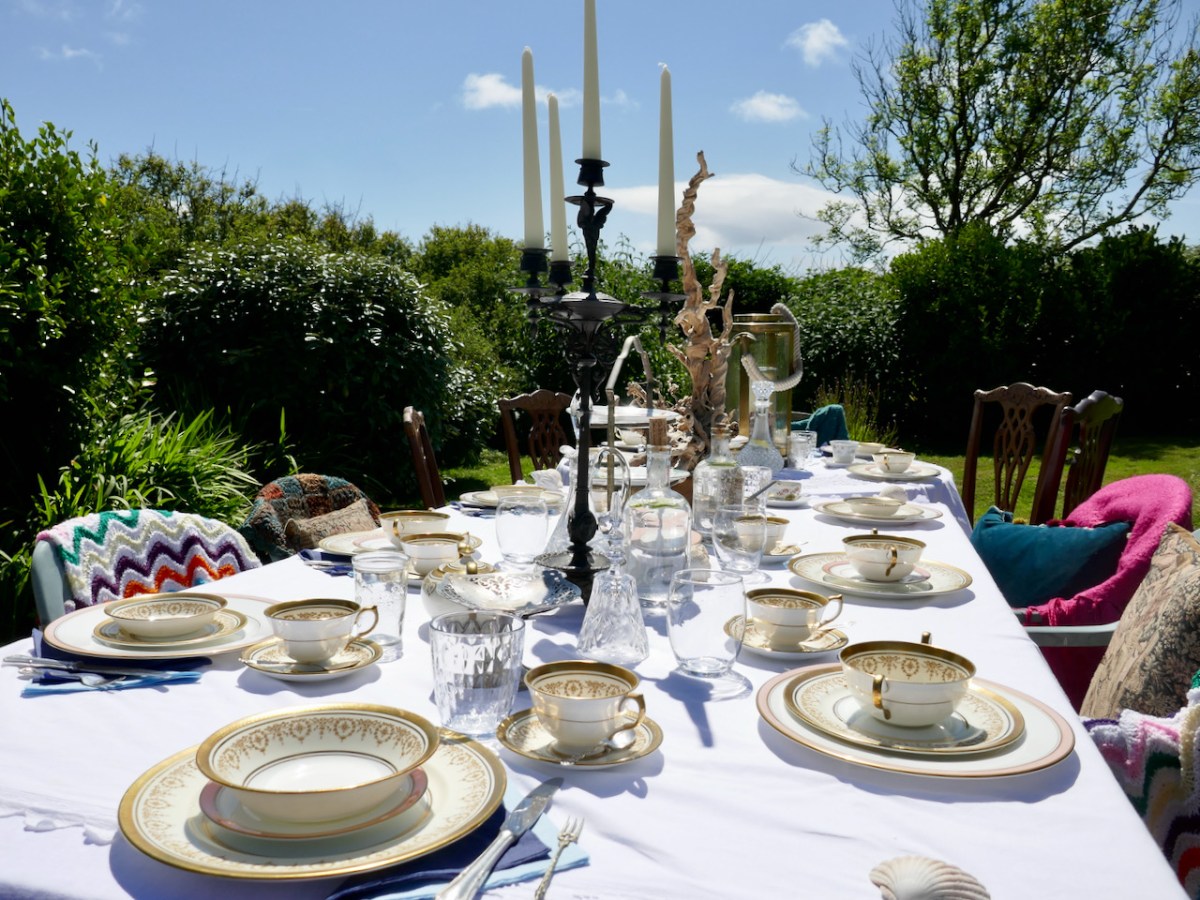
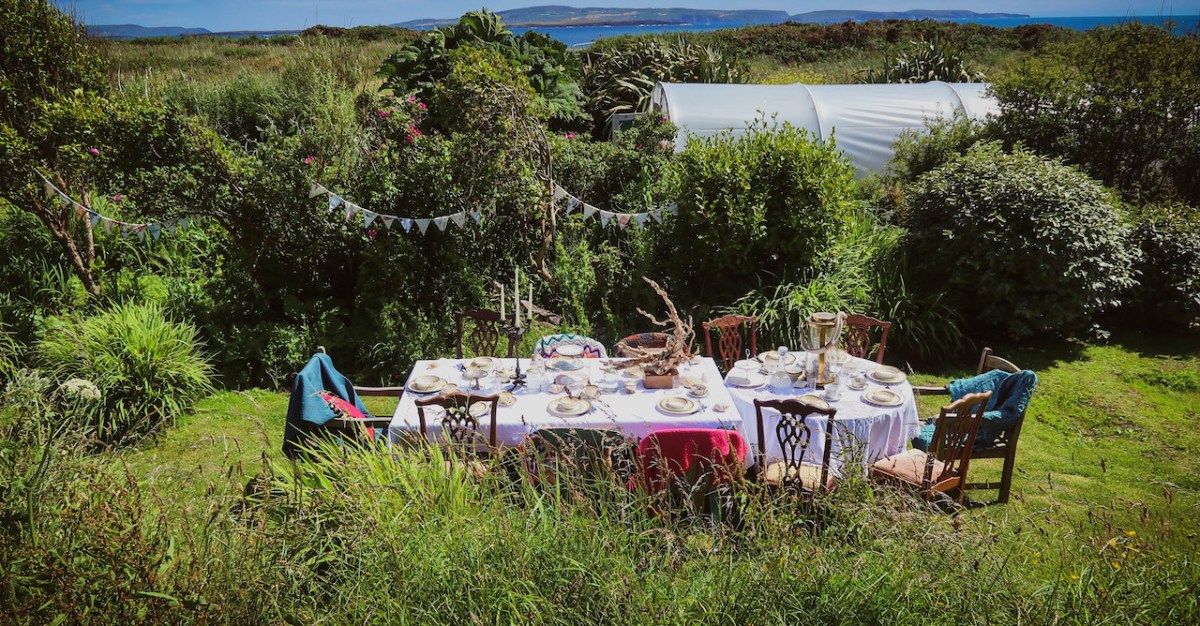
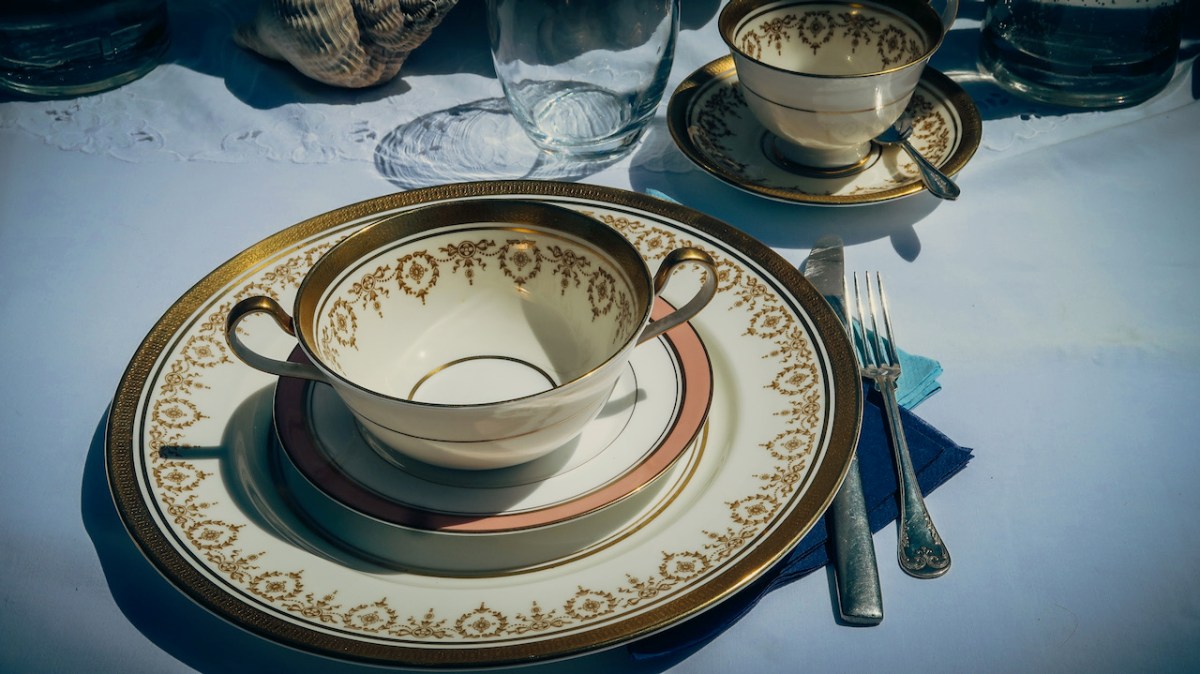
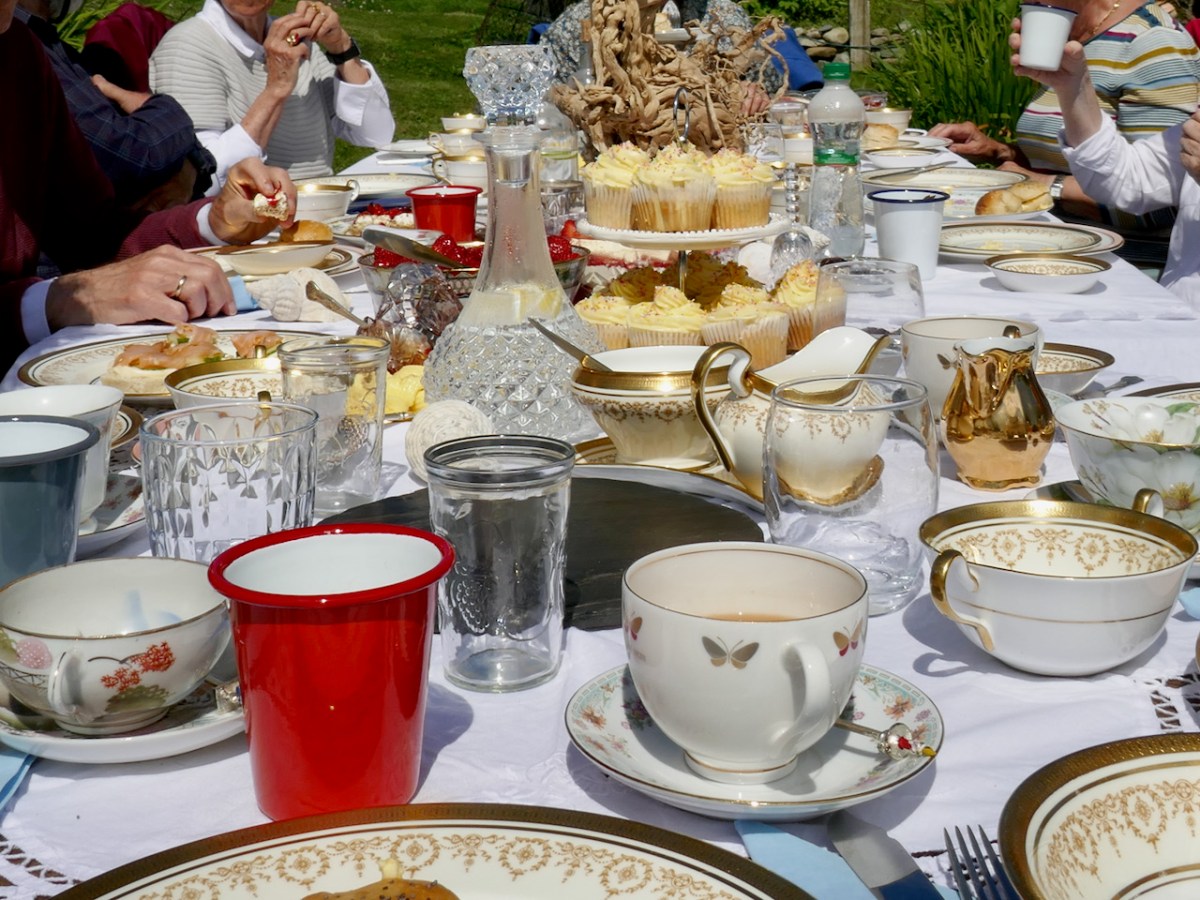
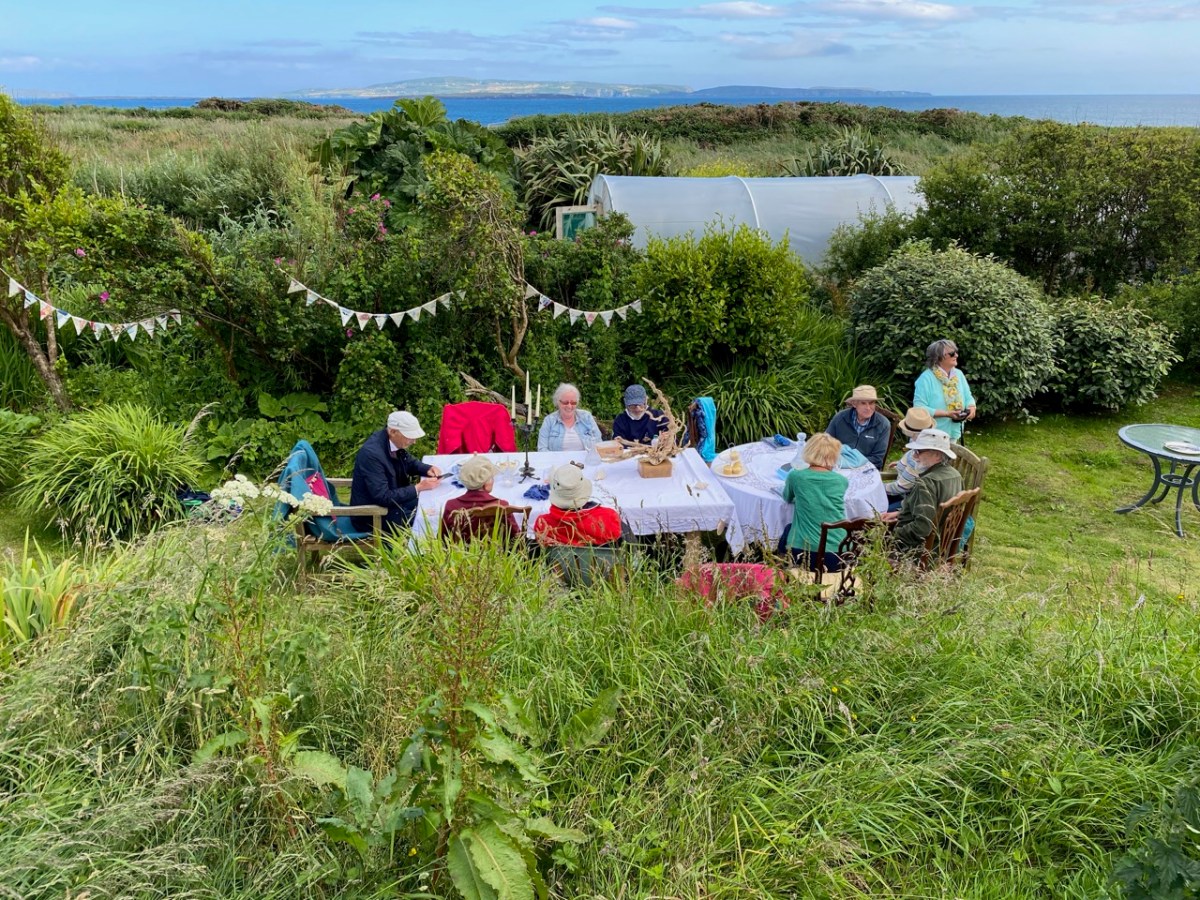
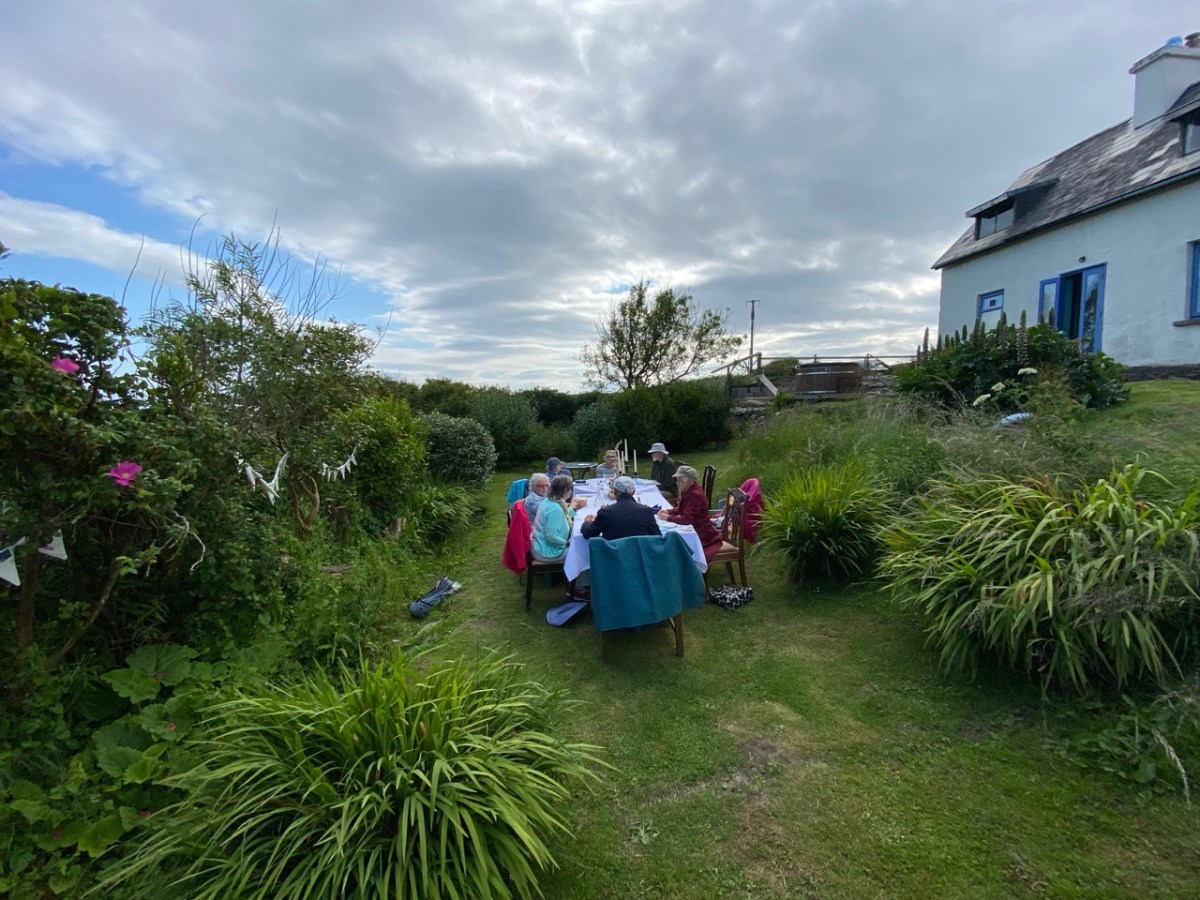
Tracy had created a Long Island version of a Mad Hatter’s Tea Party! It looked magnificent, quirky, fantastical, sumptuous. Real china – her grandmother’s – lots of glass, a chandelier, old-fashioned cutlery (remember those bone handles?), lanterns, decanters, tiered cake stands – all ranged along a long table covered in vintage tablecloths. The table was set out in a hollow in their amazing garden and it looked like something out of Wonderland.

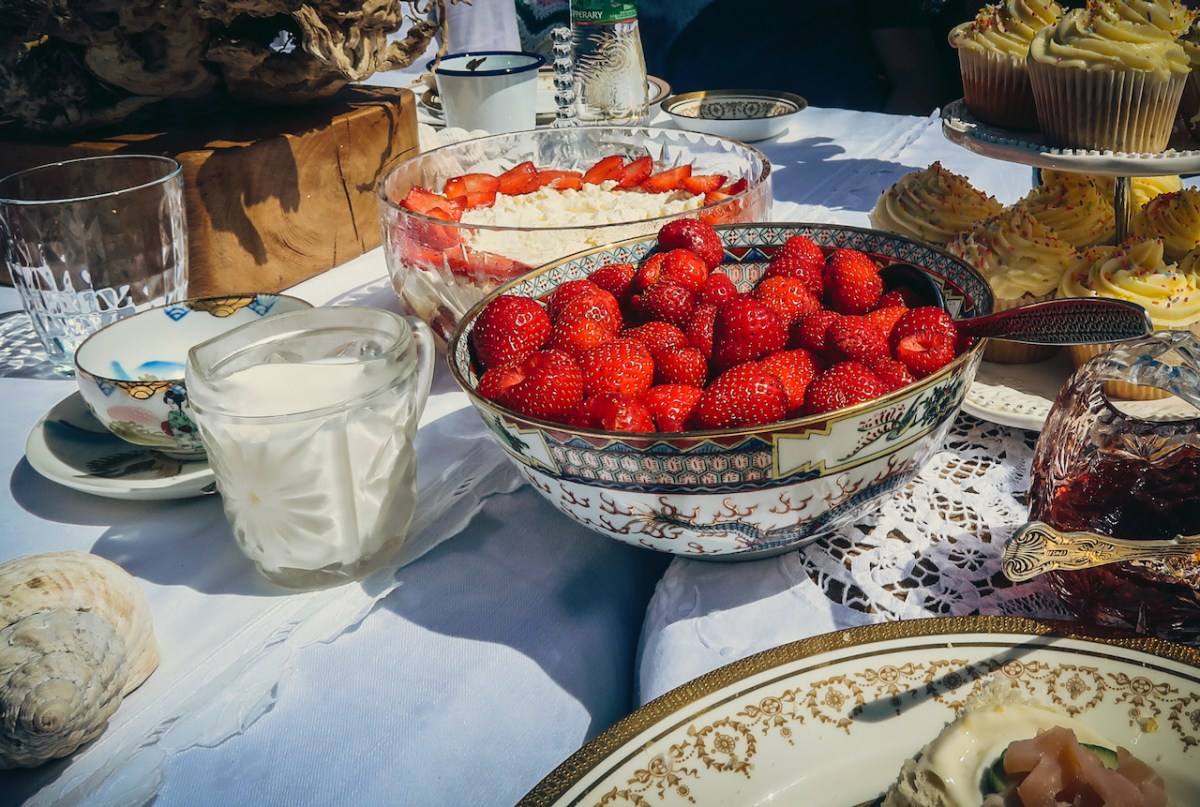
There were mojito mocktails to start with (yum!) and then it was down to the serious business of eating. Pretty well everything was homemade, including all the scones and buns, or from their garden (cucumbers, strawberries, jam) or locally sourced (smoked salmon).

And just when you thought you couldn’t fit in any more, out came two enormous bowls of trifle accompanied by their own strawberries.

I couldn’t have asked for a better, tastier, more unique or memorable way to celebrate. And here’s the thing – you can do this too! Tracy and Peter can organise this kind of tea party for you, or meet you with a picnic after your day of exploring Long Island, or feed you a cream tea in their garden. Just give them a shout.

A few final photos to convey the fun and fabulousness of it all.

*Thanks to Amanda Clarke and Robert for most of these photographs

The Luxuriant Gardens of Bantry House

Pandemic days can be well spent in West Cork. Visit Bantry House: for a small fee you can walk around the extensive gardens all day, pausing en route to partake of more-ish refreshments from the Tea Kitchen. There’s ample room to socially distance; panoramic views out to the Bay – and plenty of history to absorb.

On 11 May 1689, the Battle of Bantry Bay was fought between the French and British forces (above). It was inconclusive, but considerable damage was suffered by both fleets.

Originally a farmhouse known as Blackrock, the property was built by Samuel Hutchinson in 1710; it was purchased by Captain Richard White of Whiddy Island in the 1760s. His grandson – also Richard – renamed the house Seafield, and witnessed an engagement between the French and British forces in the Bay in 1796. He became the first Earl of Bantry and his eldest son – another Richard – extended the house and laid out the grounds more or less as we see them today (here is a post from Finola narrating a visit to the house in pre-pandemic days). The idyllic view above dates from 1840, around the time of the renovation and landscaping work.

More naval activity in Bantry Bay can be seen in the background of the above photograph, dating from the first decade of the twentieth century.

. . . For eight days past, the mammoth battle ships Bellerophon, Lord Nelson, and Agamemnon have been manoeuvring in Bantry Bay, between the Roancarrig Light and Whiddy Island. The thunder of the big 12-inch guns can be heard at immense distances, and electric and searchlight displays may be witnessed at night from places far inland . . .

Southern Star, 27 March 1909

The fortunes of Bantry House have varied during the last hundred years, but it remains in the ownership of the descendants of the Whites, and has been opened to the public since 1946. Now a very significant tourist attraction, the property has eased itself into the 21st century and can be seen today pursuing a laudable philosophy of encouraging the grounds to support informal wildflower spread and natural habitats within the previous strict formality of the terraced gardens laid out by the second Earl. In our view, this approach is highly successful and in fact softens, complements and enhances the mature house and its setting of terraces, steps, courtyards, paths and woodlands. It also provides excellent habitats for pollinators and contributes to a more sustainable world.

Every part of the grounds is worthy of exploration. There are two former stable blocks: both are time capsules. The activities of generations of gardeners, groundsmen, grooms, and farriers can be imagined from the surviving evidence.

I was fascinated by the plaque, above, and added it to my collection of classic signs. I then set about trying to find photographic evidence of this squadron, sadly without success. But I did find an equivalent from Suffolk, England, dating from 1910, which is worth a share:

I hope you will follow in our footsteps and visit the gardens at Bantry House. This is a great time of the year to experience the burgeoning growth of the wilder elements, and, if you have the happy fortune to hit a good spot of sunshine (or even if you don’t), there is no better place in West Cork to while away the constraints of this pandemic.

Elizabethan Map of a Turbulent West Cork

The Elizabethans were map-makers, especially if they needed information for the purpose of wars and conquests. I was first alerted to this extraordinary map of West Cork by a reference in the O’Mahony Journal (subscription needed) and then to a piece written on it for the Journal of the Cork Historical and Archaeological Society in 1958 by P O’Keeffe who labelled it a Map of Beare and Bantry. Neither of these sources had a good image of the map and so, intrigued, I sent off a request for a digital copy to the British National Archives. It arrived by return email, at no charge. What a service! (Irish national repositories take note.) Here is the complete map.

While it is clear that this map dates to the Elizabethan period, there are many questions about it: who did it, for what purpose, exactly when? For this post I want to go through elements of the map and identify, as far as possible, what it depicts. A subsequent post will deal with what is actually going on – that is, what are the actions that are being chronicled. Let’s start with the fact that the map is quite accurate. It depicts the three peninsulas of West Cork – the Mizen, the Sheep’s Head and the Beara – and the inlets in between them. It is oriented east-west rather than our modern convention of north-south, but the cardinal points are clearly identified. The map is drawn on paper, with the sea coloured in blue and the islands in brown. I have provided maps below of the same area, the first in our typical north-south orientation and the second as it is orientated in the historical map.
The sea is shown teeming with ships – warships and galleys. Taking a closer look at the two north of Bear Island we see two different ships, one light and one dark. Each is in full sail, with men on the riggings and in the look-outs. They have cannons emerging from the hull, a trumpeter aft and a bugler on the bow-spit.

As a reference, here is a painting by Andries van Aervelt showing the kinds of ships that were engaged in The Battle of the Narrow Seas (1585) – both the full-sail warships are shown as well as galleys.

Galleys were also deployed here, shown between Bear Island and the mainland (below). The lead galley has a trumpeter on the bow, while the second galley shows a man blowing a horn in the stern and what looks like a drummer on the bow (like those ramming speed scenes in Ben Hur). The rowers were often convicts and the life of a galley rower was brutal. This map shows a single row of oars. Galleys essentially provided platforms upon which armed soldiers could shoot, and had the advantage of being more stable than sailing ships and often faster, depending on wind and swell. 

Another warship (below) is rounding the tip of the Beara , heading for Dursey Sound. Dursey Island has both a church and a castle on it. There isn’t much trace of this now, but there was an O’Sullivan castle on a small grassy peninsula on Dursey, described as two rectangular buildings with a rectangular enclosure in the National Monuments records. It was destroyed in 1602 (more about that in the next post) along with what was then left of the church, known as Kilmichael, which was already in a ruinous state. At the right, in this section of the map, are two rocky islands, one with a set of steps leading up to a church. Could this be Skellig Michael? The other candidate is Scariff Island, off Lamb’s Head, which had a monastic settlement and hermit’s cell on it.

Let’s take a look now at the area around Bantry (below). The large church is of course the Franciscan Abbey that stood here, where the graveyard is located There is a church shown on the aptly-named Chapel Island between the mainland and Whiddy (no trace if it now remains), and both a church and a castle on Whiddy.

The fragmentary remans of an ecclesiastical enclosure can still be seen at the graveyard on Whiddy, while the O’Sullivan Castle has only one wall still partly standing. That’s it, below.

The hinterland of the Beara is shown with trees and animals. Either this is a hunting scene with dogs chasing a stag, or it is meant to show the wildness of the interior, with wolves and deer. Settlements are indicated by churches surrounded by a cluster of cabins (not that different from Irish villages up until recently), and there is a castle labelled Ardhey and O Sulyvans Ho. This is likely to be the ruined casted of Ardea, which actually stands on the other side of the Kenmare River – the Iveragh side rather than the Beara side.

The final depiction I want to highlight is of the Mizen. Several towers dot the  landscape as well as two substantial castles, one of which is under siege. 

Which castles are these – especially the one being attacked? Tune in next week!

Brunch at Liss Ard!

Just along the road from us in West Cork lies Liss Ard Estate. One of Ireland’s ‘big houses’, it was built in 1853 and was for generations the home of The O’Donovan, leader of that Gaelic clan. During the ‘cold war’ era of the 20th century it was owned by the Swiss government, who saw in West Cork a potential safe haven if the world descended into a nuclear holocaust. Just recently it has been taken over by an American company who will continue to run it as a hospitality venue. Finola’s eagle eye picked out the other day that Liss Ard were opening up for outdoor Sunday brunch! How could we resist?

Here’s the brunch group: George, Una, Finola, myself, Con and Clair. We thoroughly enjoyed the occasion – partly because it was like being let out of jail (although I doubt – but can’t say for certain – that any of us has experienced that particular phenomenon), but also because, as customers, we were able to follow the excellent breakfast and coffee with a walk around the 163-acre estate.

Finola and I have special feelings for Liss Ard, as we were married there in 2014 in an ancient ringfort! So, easing ourselves out of our chairs in the summer sunshine our first port of call was the feature after which the house is named: Lios Ard = High Fort. At our wedding the souterrain which was an integral part of the fort was not visible: today it can be seen, from above (at least, the entrance to it can be seen). The souterrain is a series of underground chambers, and this one – cut from rock and clay – has survived for well over a millennium. It was fully explored by a good friend of ours, Lee Snodgrass and her partner Paddy O’Leary – both archaeologists – back in the 1980s, and an information board just beside the fort tells the story in their words.

Above: Lee and Paddy’s survey drawings of the fort and souterrain, with a view of the entrance at the west side of the enclosure, and the cave-like structure which can be seen today, surrounded by ferns. Below is our group standing in the circle of the fort: such structures were probably high status homes defended by banks and timber palisades. They would also have provided protection for domestic animals who would have been predated by wolves.

Another feature in the grounds of Liss Ard may also seem like something ancient, but actually only dates from 1992:

. . . The Liss Ard Project brings together the conservation of nature and contemporary art: it will combine animal wildlife preservation, controlled ‘wild’ gardens and a contemporary art project – the Sky Garden . . .

The Irish Sky Garden is an incomplete work of art by Californian James Turrell (born in 1943): I wrote about him and his work a few years ago, here. Turrell had West Cork connections:

. . . Turrell traced his wife (Julia)’s ancestors to Castletown Bearhaven. He had his two youngest children, Sophie and Arlen, baptised in the church there . . . This (West Cork) is the countryside that inspired his Sky garden. It could not be realised anywhere else. Jim is responding to what he has found in Liss Ard, and his sensitive response will enhance the attraction of the site even more. Jim and Veith (the Zurich art dealer who bought the estate in 1989) study the site like two conspiring brothers. Both radiate assurance. Something unique and shared is being created there. The joy of it shows in their faces . . .


James Turrell
from the exhibition – Long Green, Turske & Turske, Zurich 1990

The Irish Sky Garden is an as yet incomplete work of art. The whole project was set to incorporate other ‘land works’ including a pyramid and a vault. Turrell’s most famous work, perhaps, is the Roden Crater in the Arizona desert. It is also work still in progress: construction began in 1977.

Quite apart from the ancient history and modern art, the gardens at Liss Ard have so much to offer. There is a maze of paths and steps, lush – almost tropical – growth and views across the substantial lake which forms part of the demesne: Lough Abisdealy.

As we walked beside the lake I was entranced by the sound of the wind in the reeds, and have tried to capture it with this little recording: you can imagine the combination of the swaying reeds, the crescendo of the light wind, the distant birdsong and the lapping water.

I can only give you a brief impression of our sensory experiences from the day: much is left unsaid and unseen but – all you need to do is book your Sunday brunch, and you stand a good chance of following our footsteps. I only hope that the day is as brilliant for you as it has been for us!