Rainforest Path

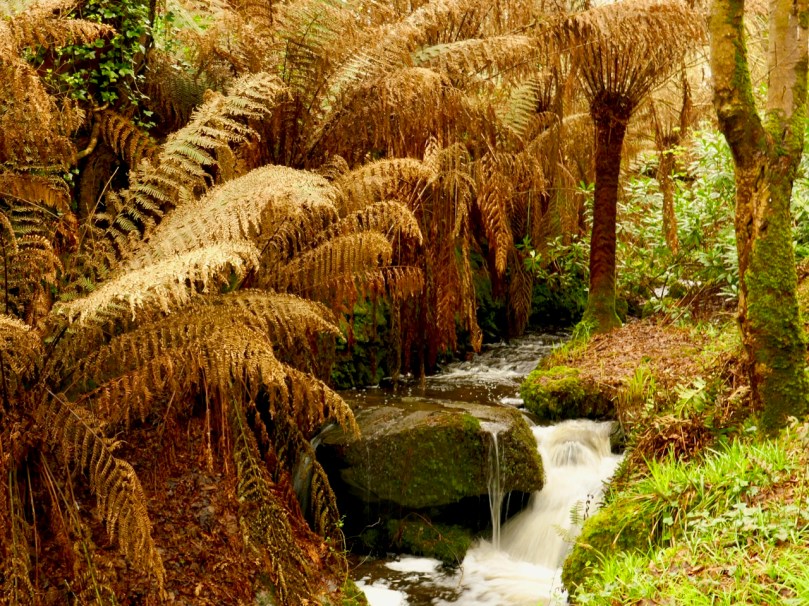
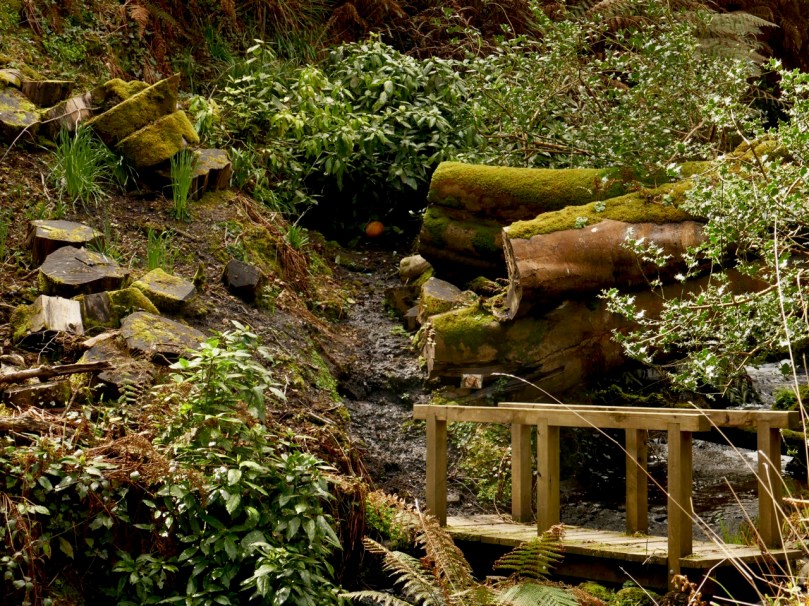
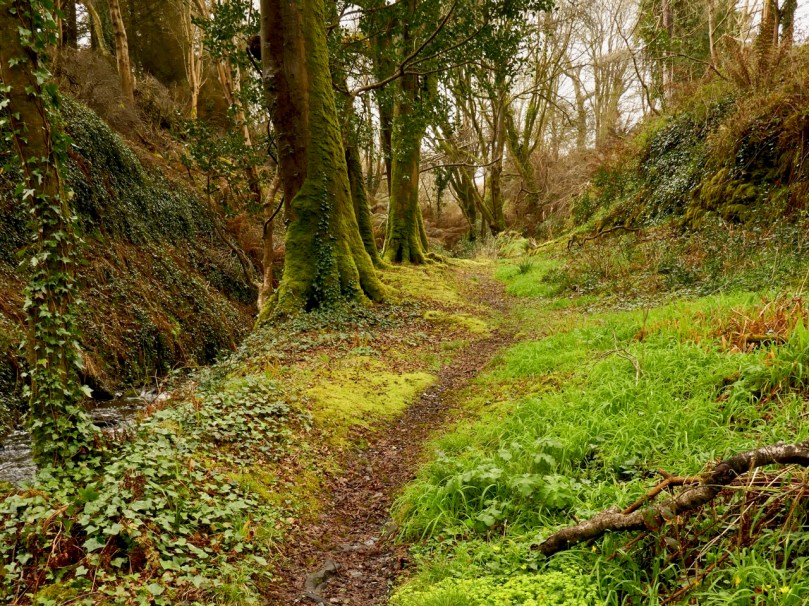
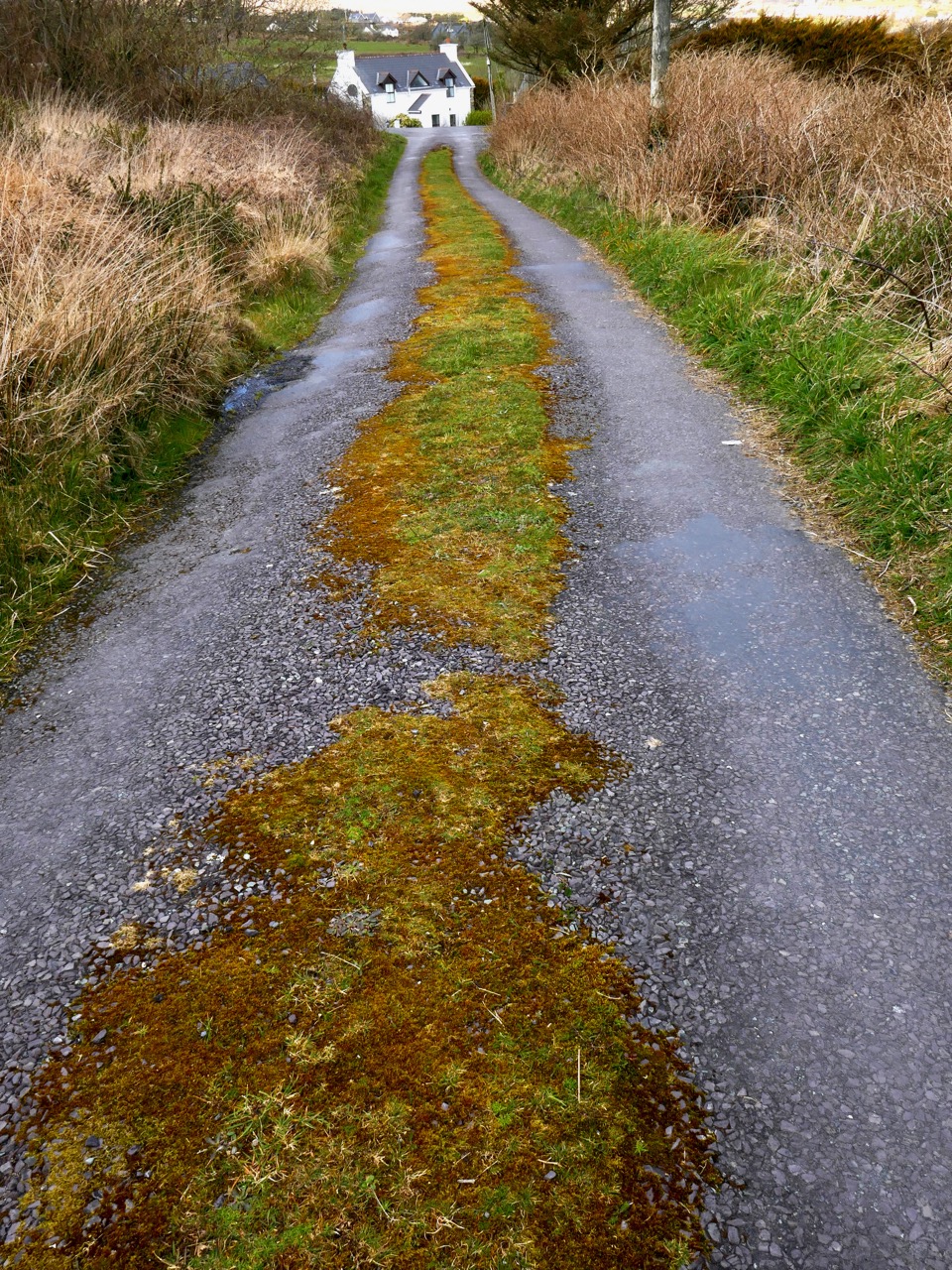
It’s a magical place, running up from an old graveyard by the sea, past a holy well, through a cool overhead canopy and along a tumbling stream. I’ve never met anyone else along the path, although I know the holy well is visited and the footbridge to it was repaired a couple of years ago.

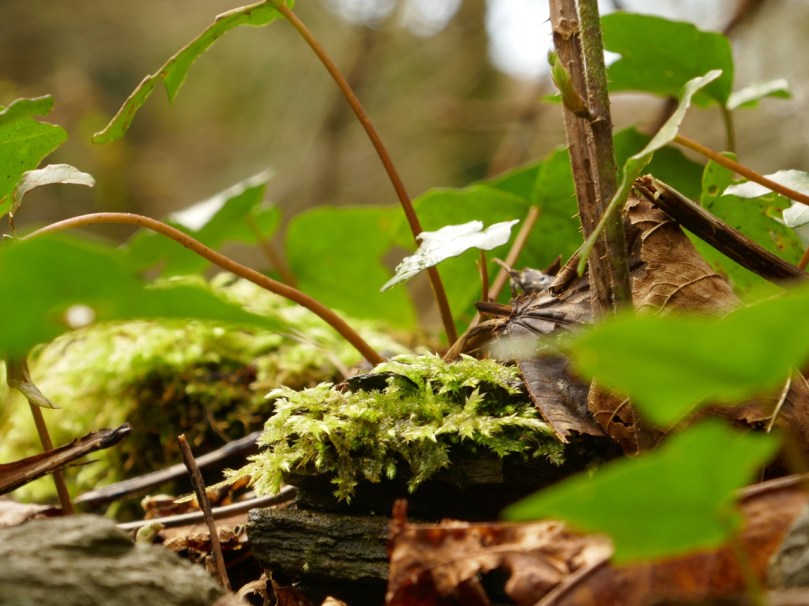
Moss and Navelwort on an old tree

There’s a big house at the top, with steps leading down to the path. Some of the more exotic plants are clearly imports, but mostly it seems that wildness has simply been encouraged, or not interfered with.

A mixture of native and imported ferns along the stream

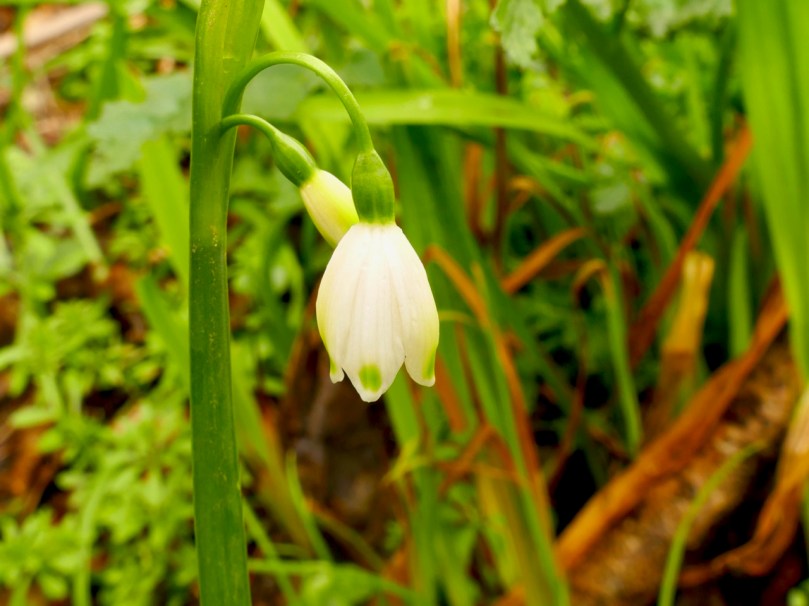
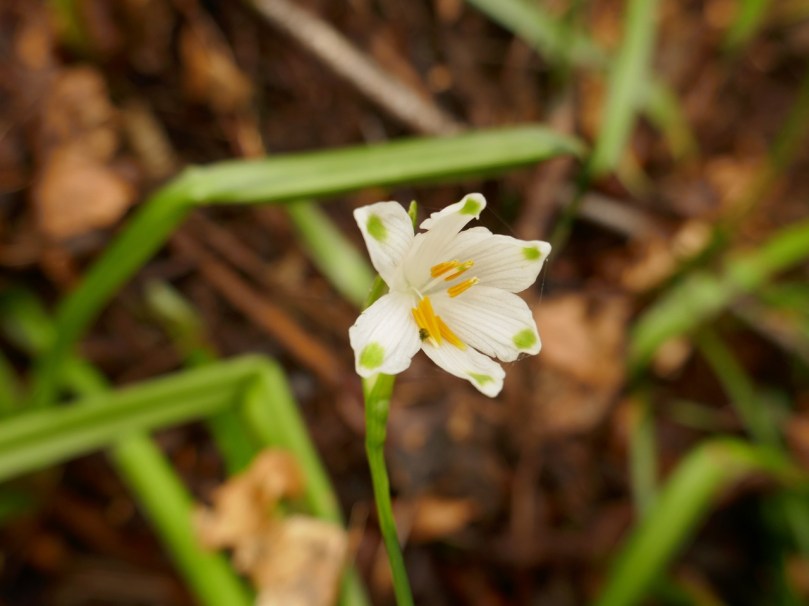
I went there twice this week. The first time was with my daughter-in-law, visiting from Canada, and we thought we spotted an unusual flower.  After a night of heavy rain I went there again on Friday equipped this time with my camera. Found it – and it looks as if it’s a Summer Snowflake, which is rare enough that I will report it to the National Biodiversity Date Centre. (Go on, it’s easy, you can do it too.)

The flower I was after – Summer Snowflake. Rare in Ireland but also widely cultivated – so is this a natural occurrence or part of somebody’s planting scheme?

What follows is a photo essay; my homage to a rainforest path on the brilliant morning after a rainy night. I will try to tell the story with my captions.

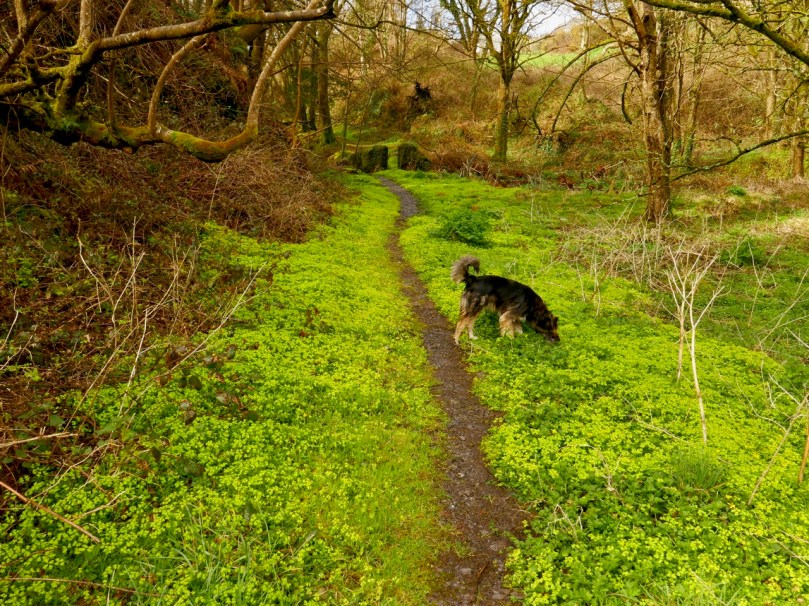
A friendly dog always accompanies me on this trail. The path is lined with Opposite-leaved Golden-saxifrage, providing a soft and bright green carpet. I also found it growing on old fallen logs

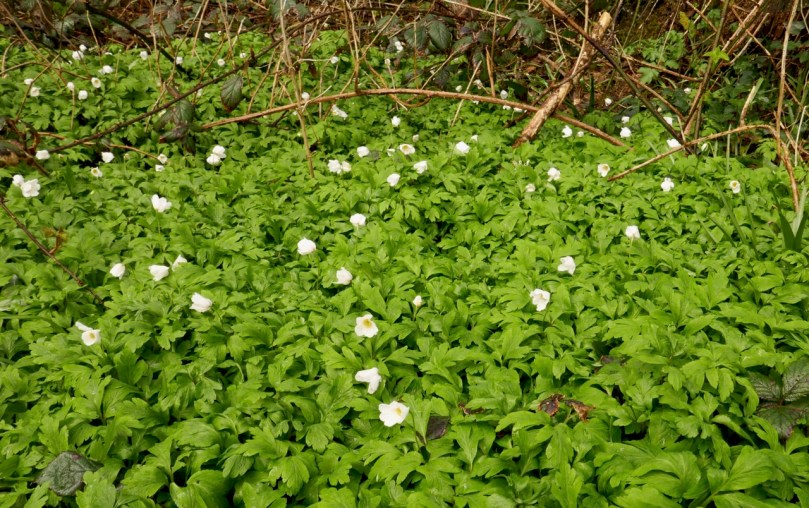
Lovely to find a large patch of Wood Anemone beside the stream

The Holy Well needs attention. The bridge has slipped and the path is too muddy to access the well. Read about this well in Amanda’s Holy Wells of Cork. The dog found her too.

This is Ivy-leaved Speedwell. The flowers are so tiny that it’s easy to miss, especially when it’s all mixed up with the Saxifrage

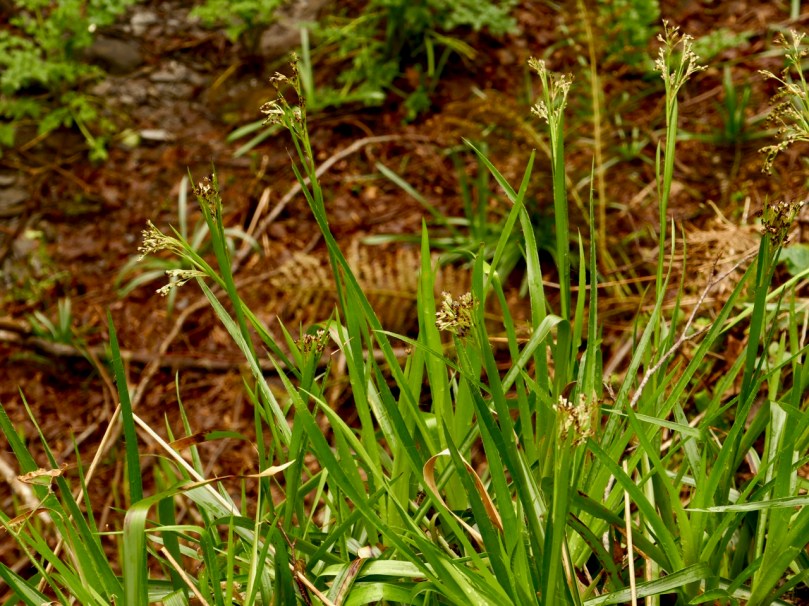
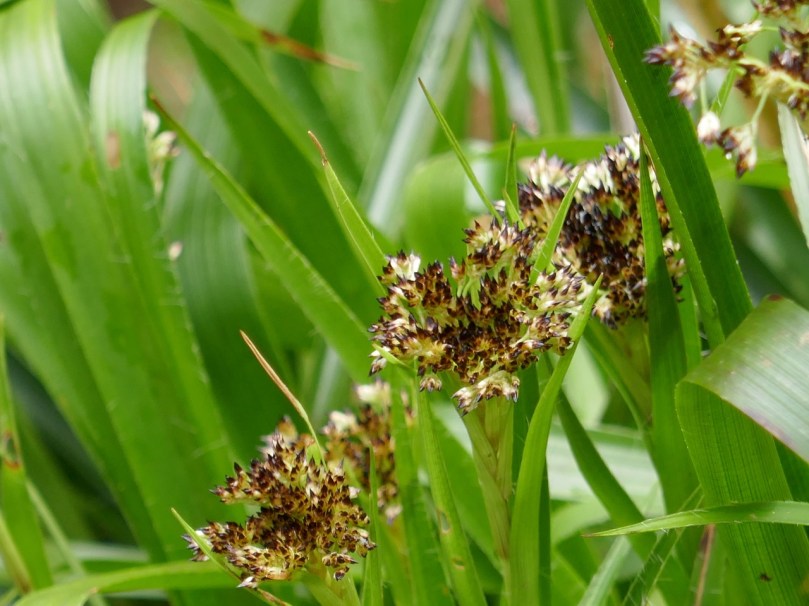
I was taken with this Greater Wood-rush growing along the bank

My first bluebells of the season

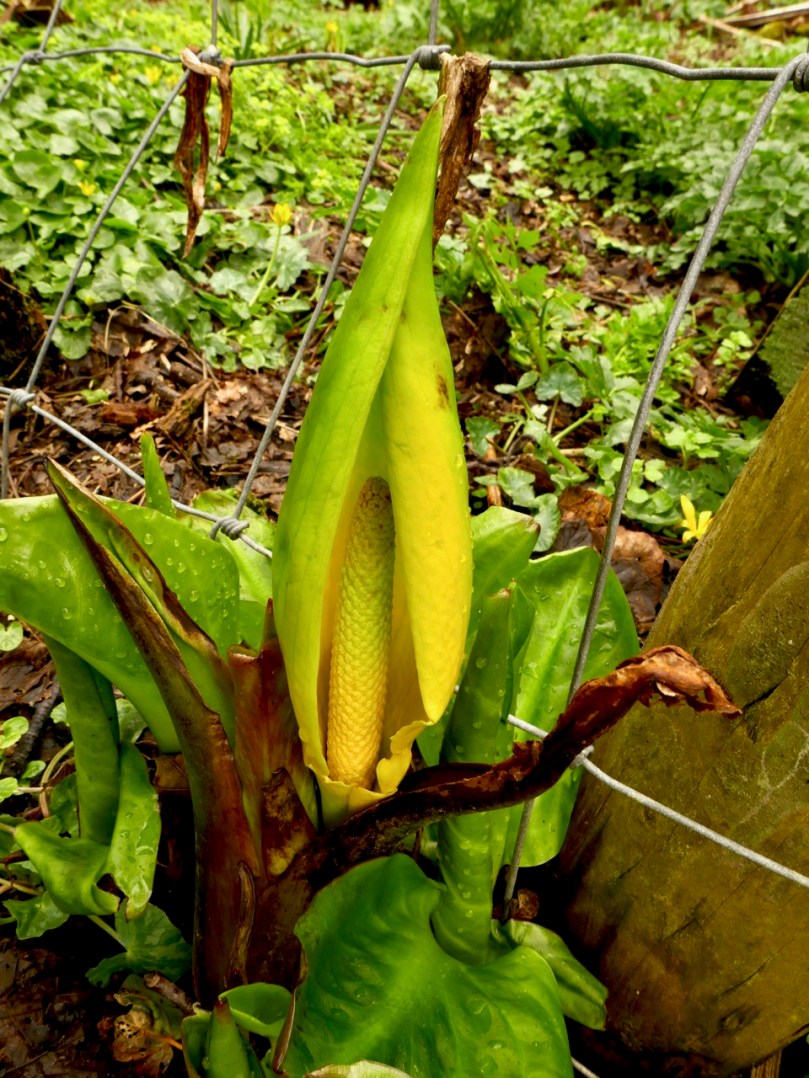
American Skunk-cabbage. Now classed as ‘potentially invasive’ in Ireland. I only saw one but I knew it immediately because they were so familiar to me in Canada. I’ll be reporting this too.

The path climbs upwards

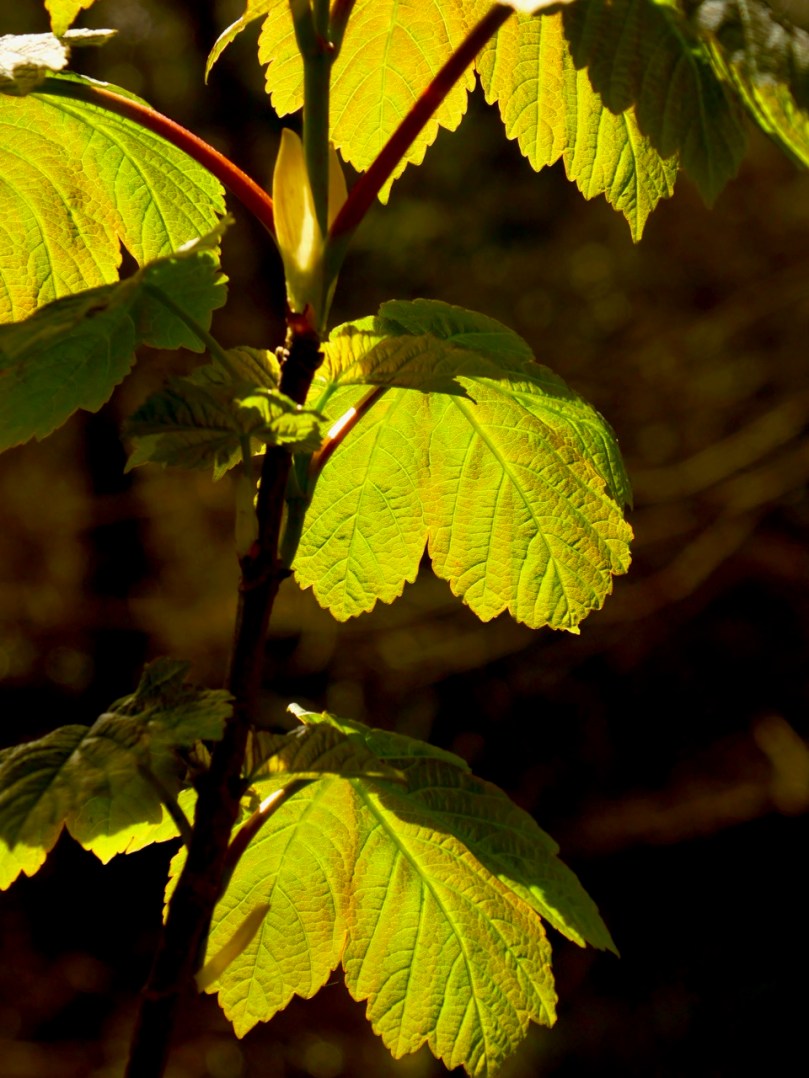
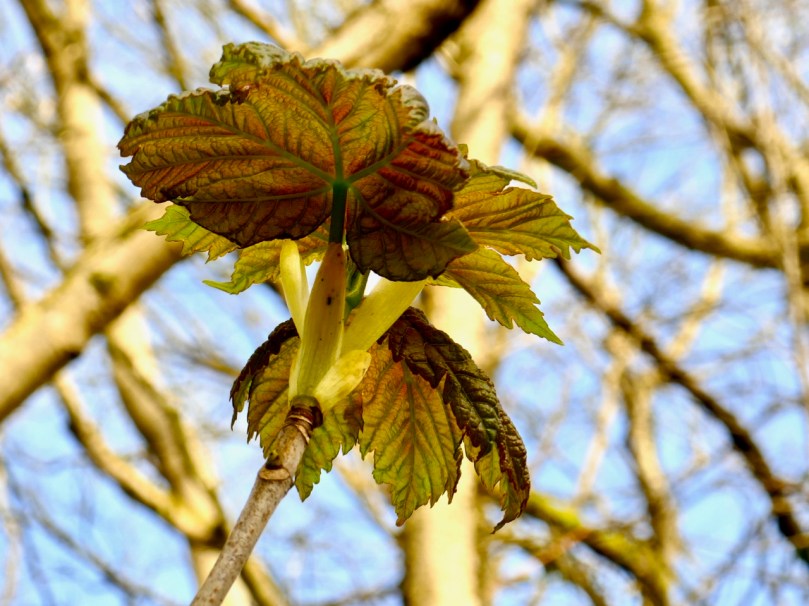
The sycamore are starting to bud and leaf. The intricacy of the underneath of the leaf!

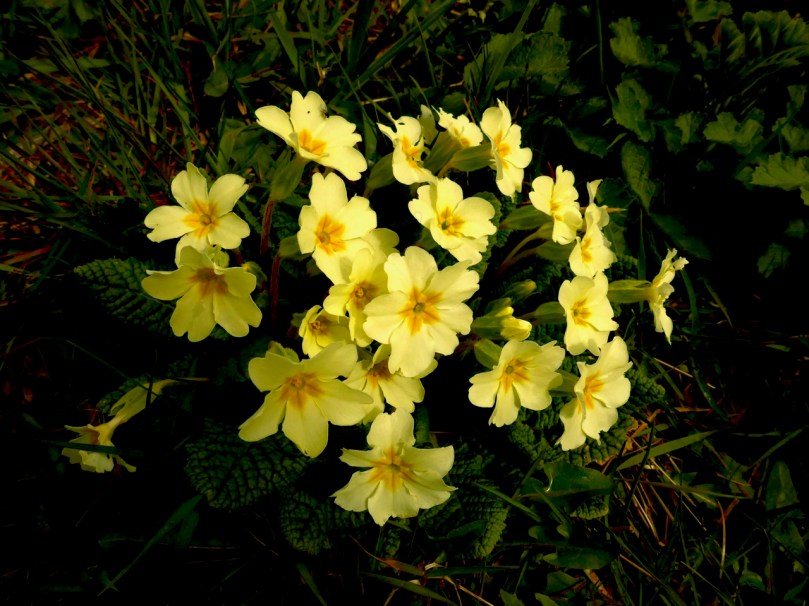
Everyone loves primroses

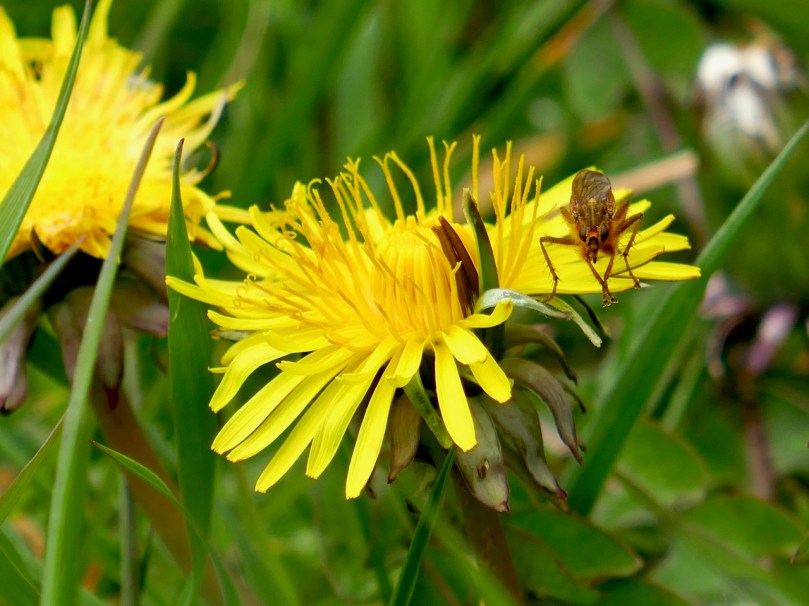
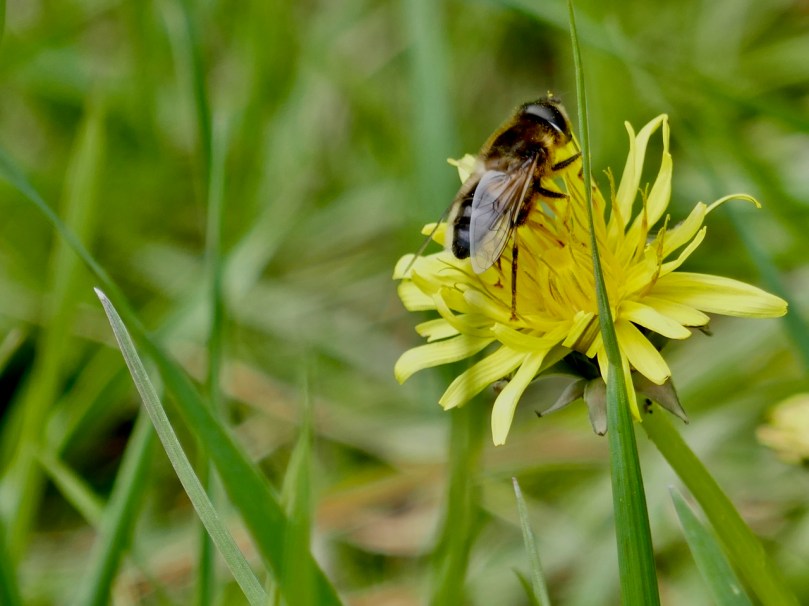
Lots of insects buzzing about the Dandelions – a hoverfly (top) and a bee

Take a walk in the woods and tell us what you’ve seen!

Signs and Times

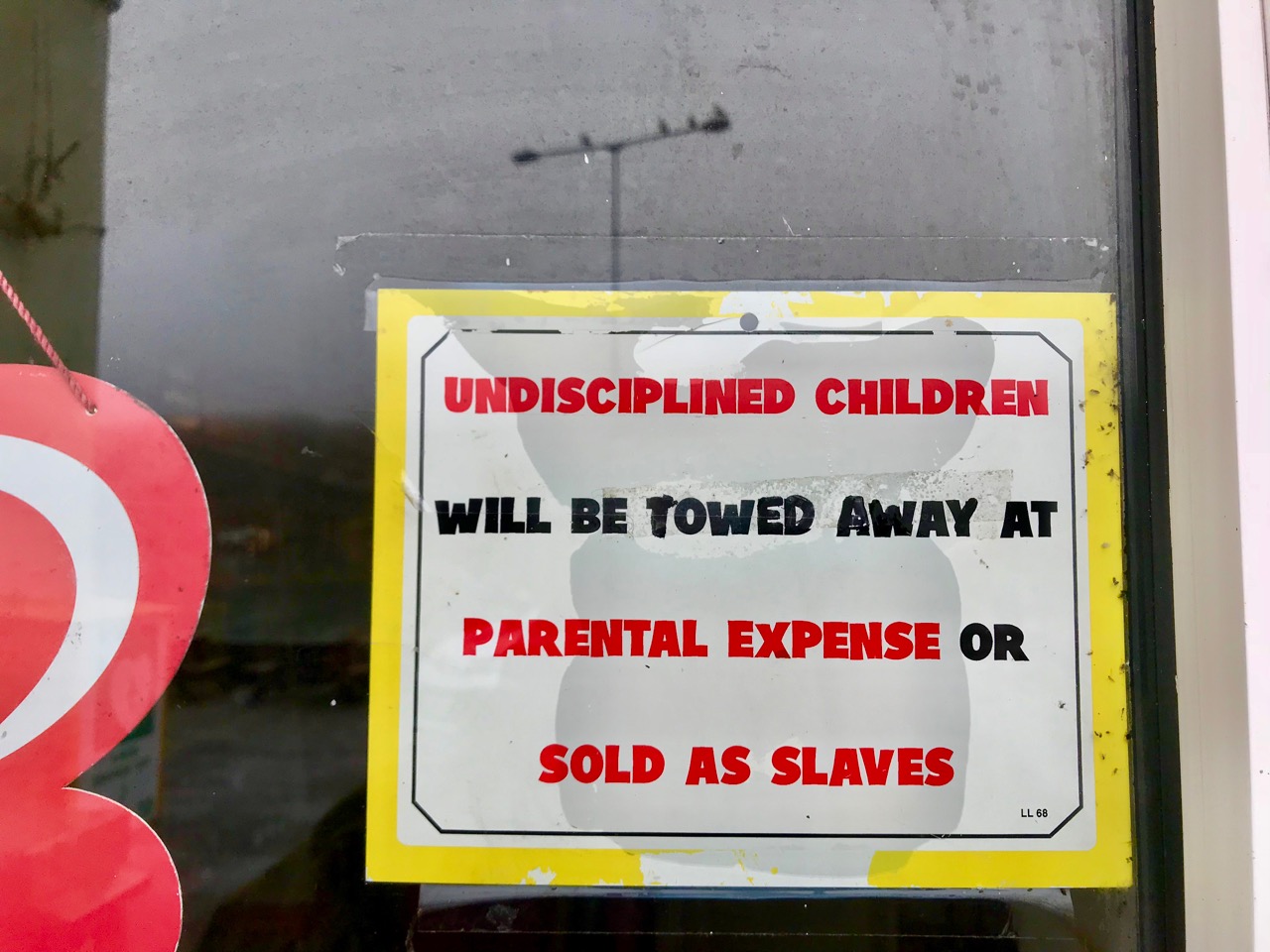
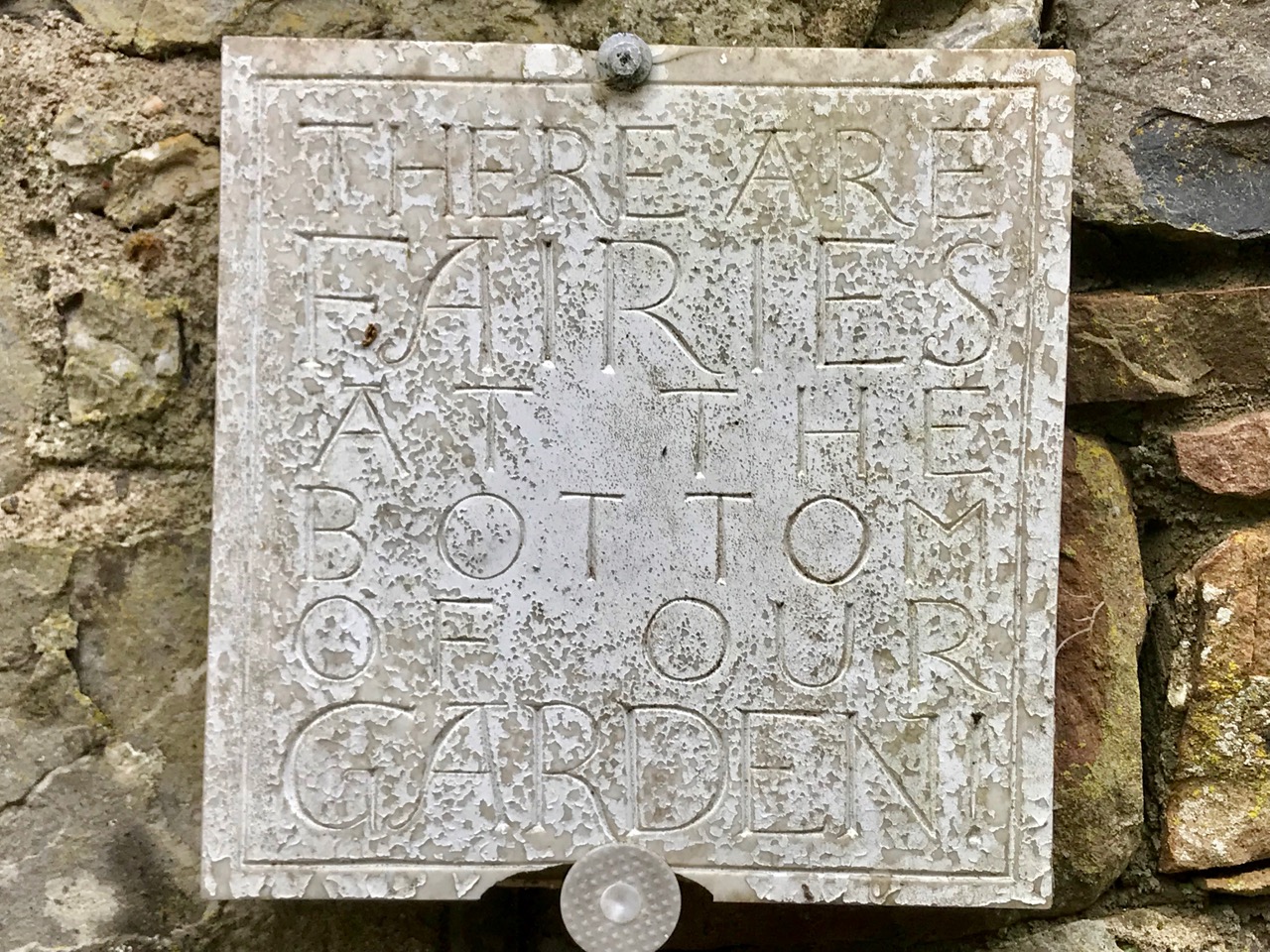
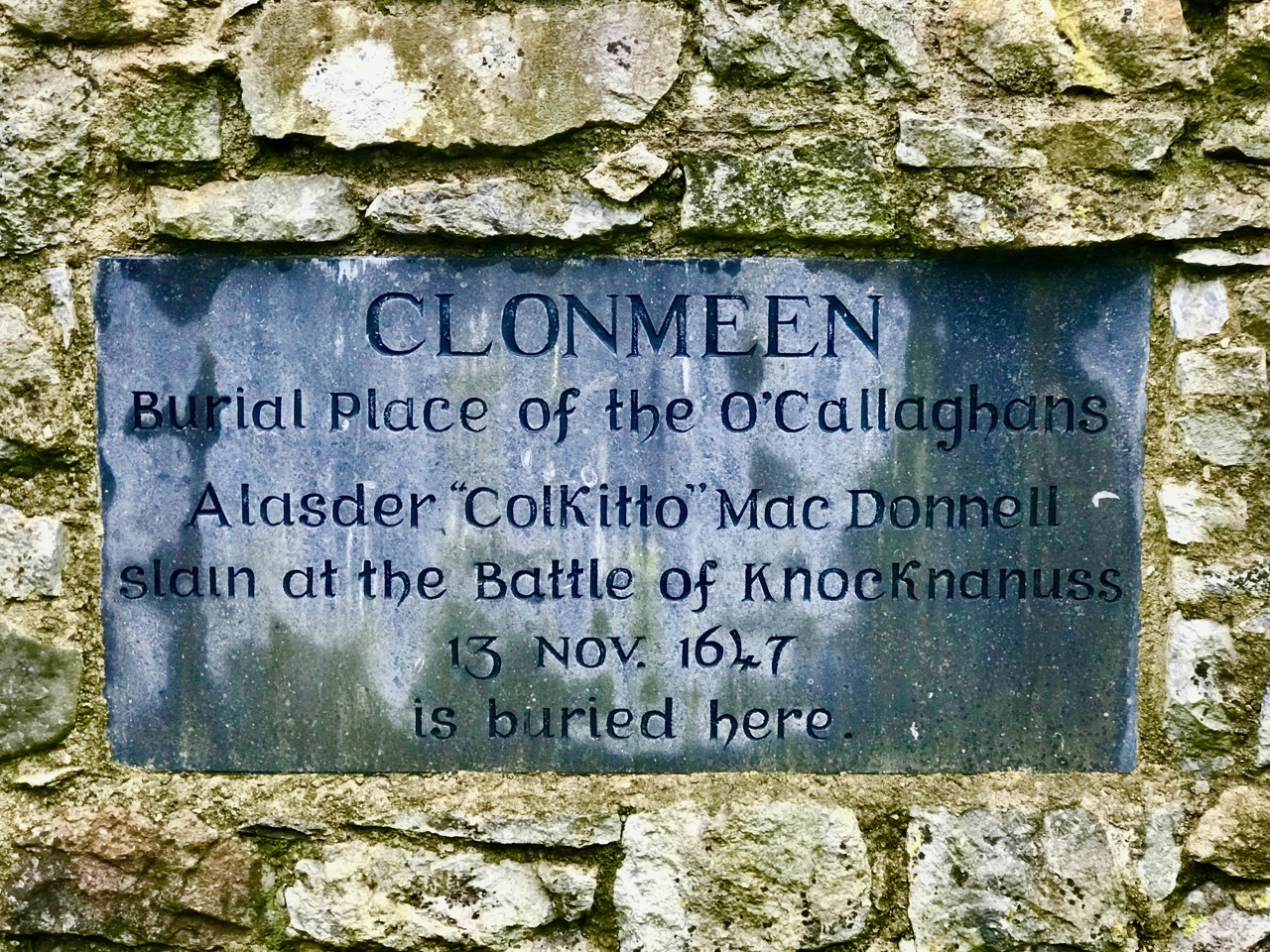
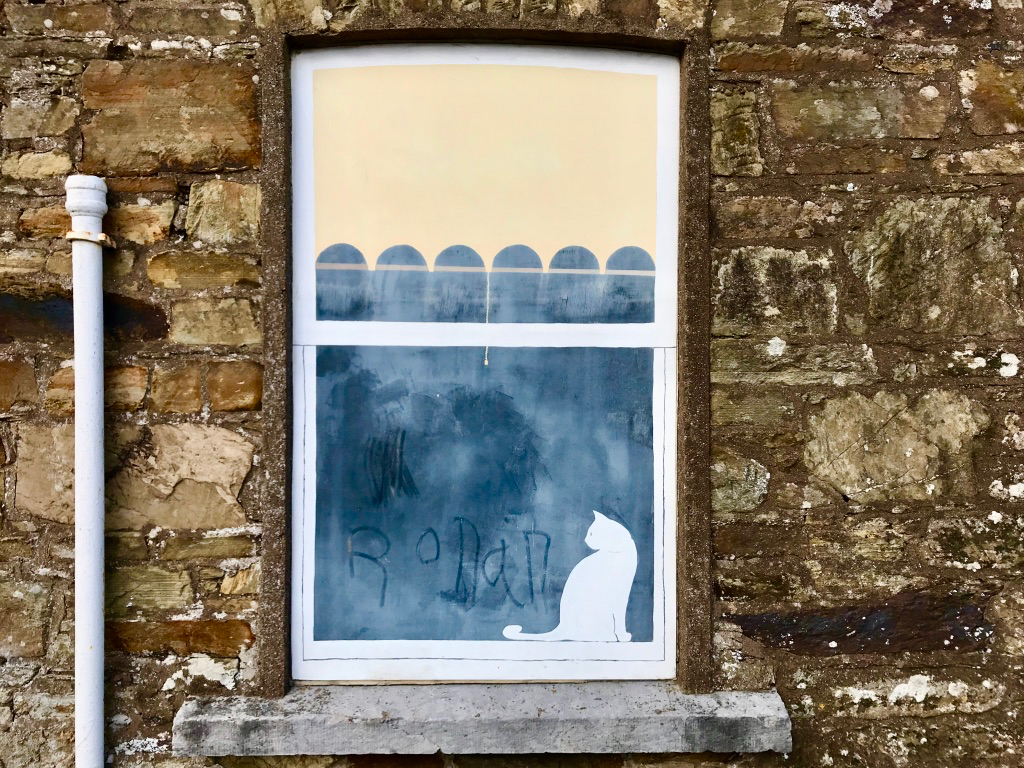
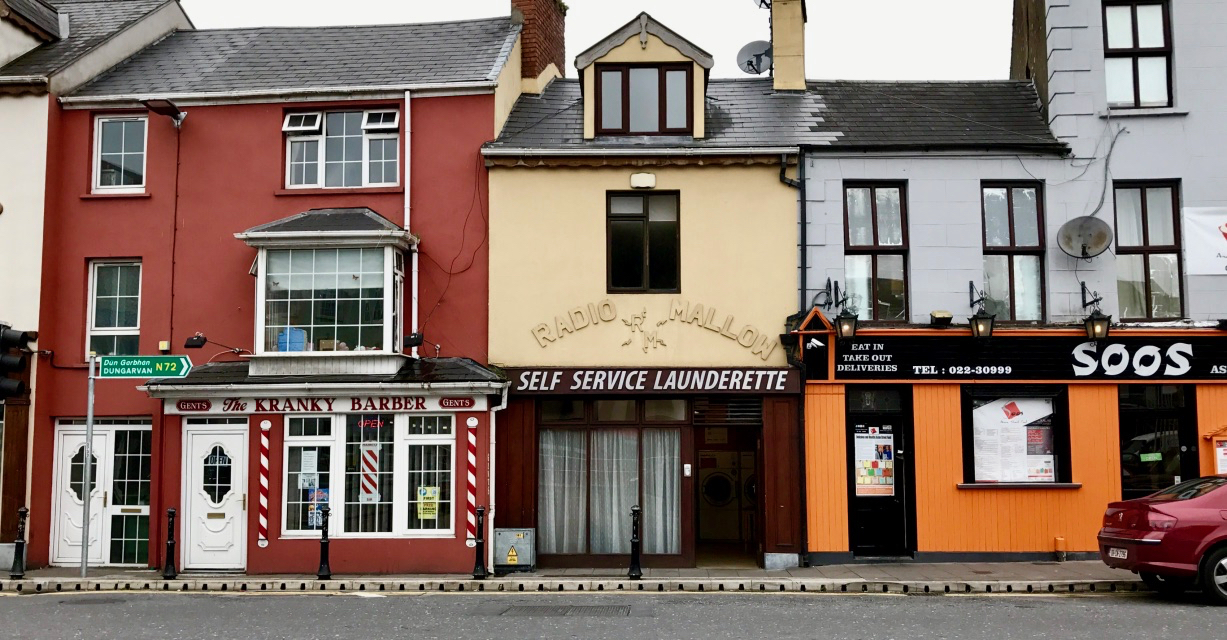
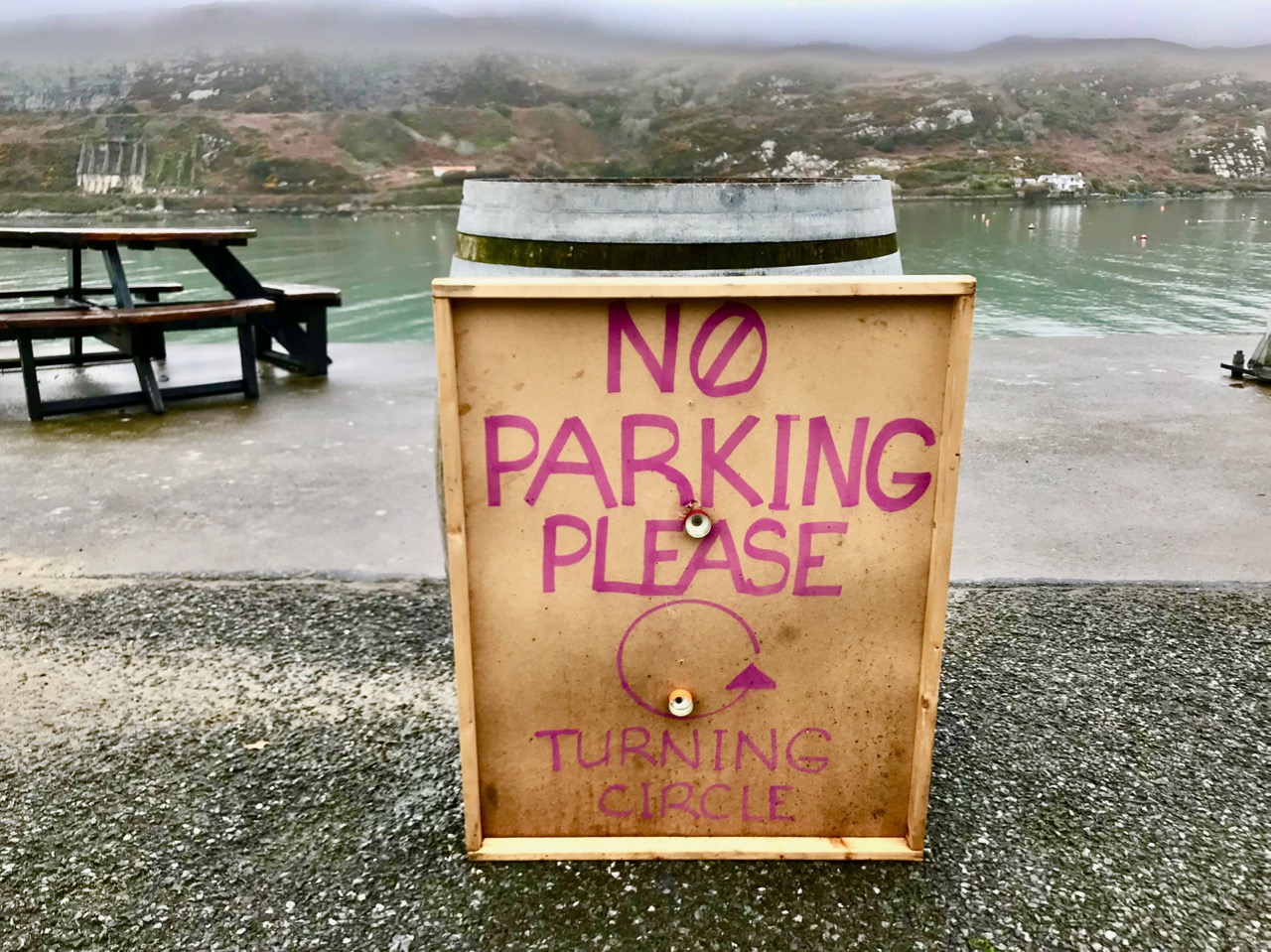
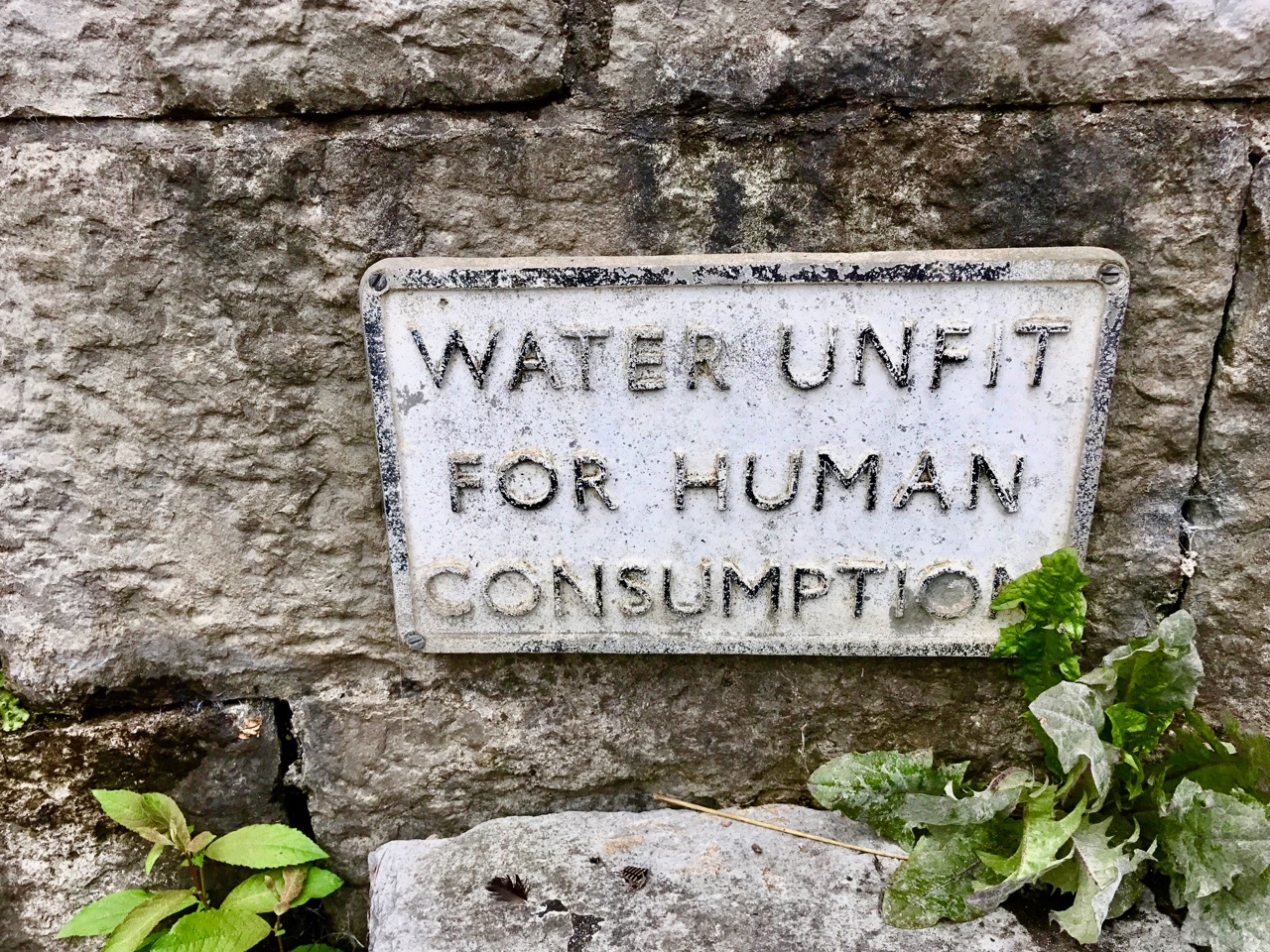
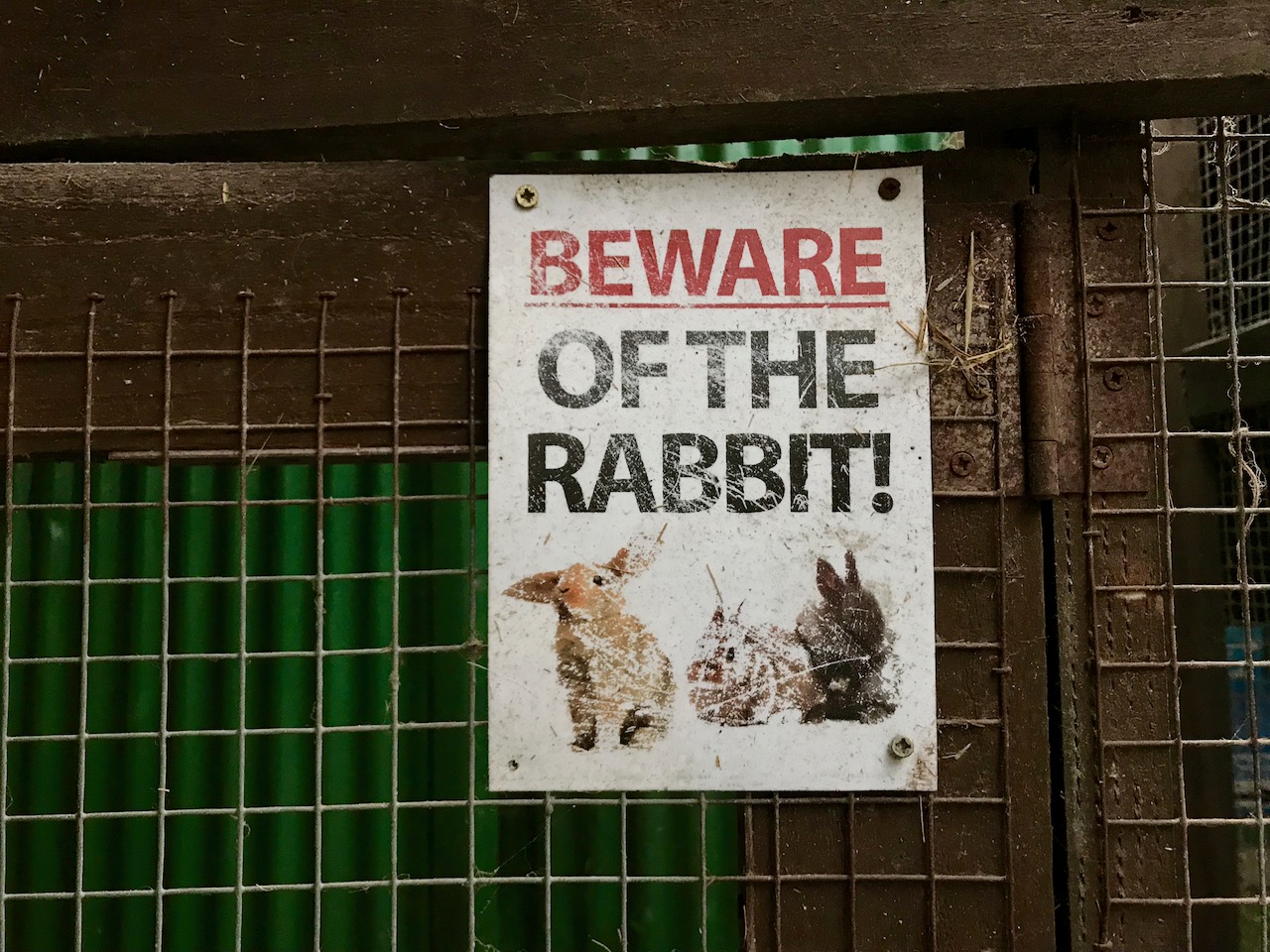
Some signs make no sense – others don’t mean what they say. There are those that attract the attention because they are, simply, picturesque. Always, context – or lack of it – is important. Here is a new selection, to add to those that you may have seen already. As usual, I don’t feel that there’s any need for a commentary. If it all leaves you puzzled, just put it down to my own quirky sense of perception!

Gothic Revival – With Bells

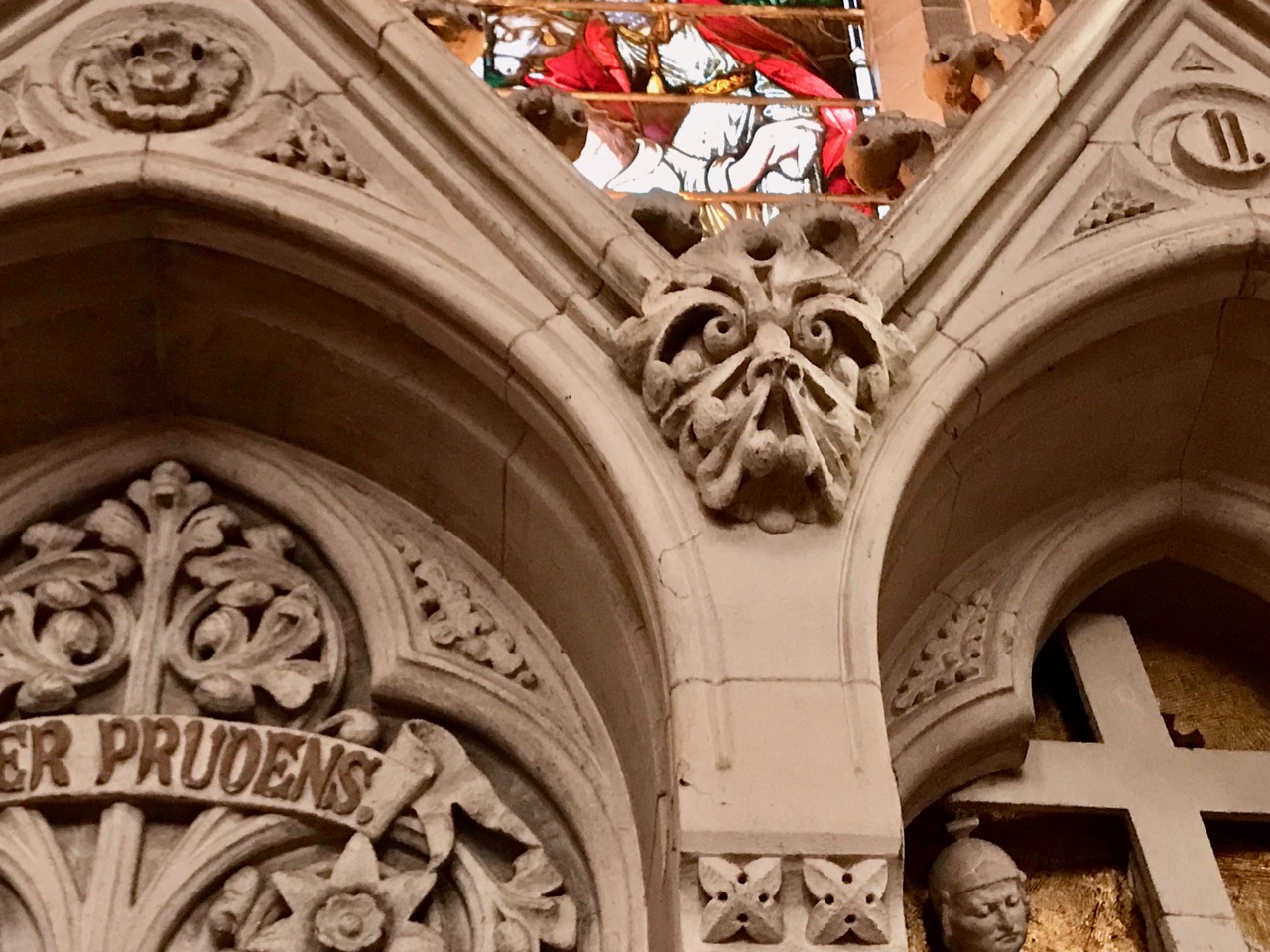
A month ago I wrote of our first visit to Cobh, in County Cork, and told how impressed we were with the town and its architecture. I promised that Roaringwater Journal would revisit Cobh, and today I will concentrate on the splendour of the Cathedral, which dominates the skyline and looks across to the Lee Estuary. All shipping using the port, or passing up to Cork, will be aware of this spectacular building.

St Colmán’s Cathedral was conceived in the mid-Victorian era, when the Gothic revival style of architecture was in full swing. Popularity of the style was, perhaps, generated as a reaction to the society and machinery of the Industrial Revolution – all noise, smoke and progress – and harked back to a perception of medieval life when all seemed sylvan and pastoral and when everyone, from lords to artisans, knew their place: Medievalism meant a concentration on the trappings of chivalry, craftsmanship and decoration, particularly in religious buildings – although private houses for the very wealthy also explored the idiom: have a look at our post on Adare Manor.

Construction work on the Cathedral began in 1867. The designers were Edward Welby Pugin (son of Augustus Welby Pugin – probably the greatest of the British Victorian architects) and Irish-born George Coppinger Ashlin who was responsible for over 100 new churches in Ireland including those in Clonakilty and Skibbereen, here in West Cork. St Colmán’s was not completed, however, until 1915. The tower – 90 metres high – was the last element to be finished – old photographs above (emptyseas) and below left (National Archives of Ireland) show the Cathedral in use without it in the 1890s while the picture (below right – from the Michael O’Leary Private Collection) shows the tower under construction in 1914.

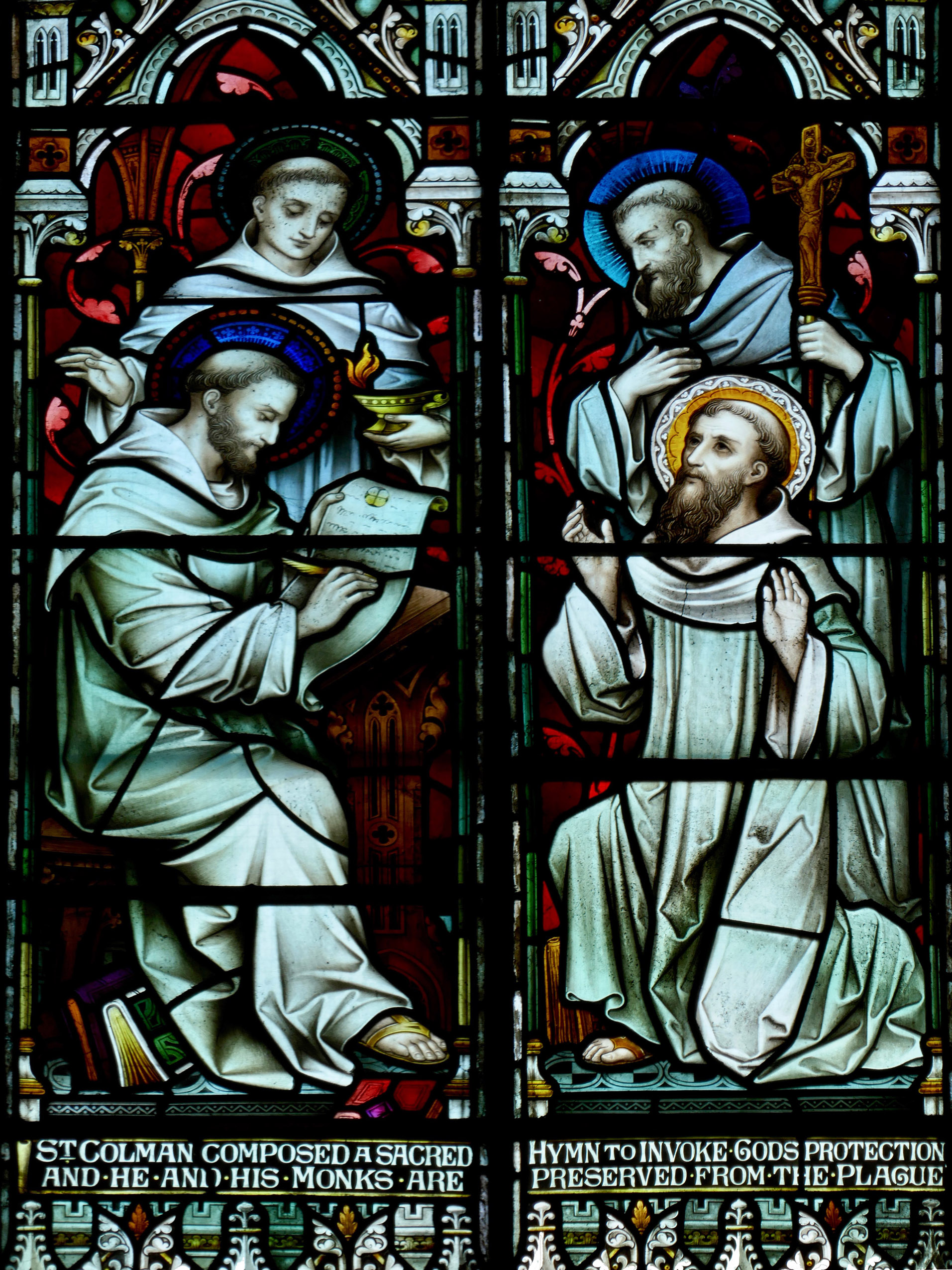
The Cathedral is dedicated to St Colmán of Cloyne, who founded the Diocese in the year 560. This saint is known as ‘The Poet Saint’ as he trained to be a bard for twelve years and entered the court of Aodh Caomh, High King of Munster, at Cashel. Influenced by St Brendan and St Ita, Colmán became a priest and then set up a monastery on the shores of the Lee, where Cobh now stands.  Our friend Amanda has told the story of this saint, and includes a piece from the Schools Folklore Collection, written by Padraigh Ua hAodha in the 1930s:

. . . When St Coleman was building the round tower in Cloyne a woman asked him what he was doing so high up. When he heard her speak he got such a shock he jumped from there to Kilva where the print of his feet are still to be seen on a stone. He jumped from there to Glen Iris Wood. When he landed he prayed to god to send him some water and immediately water sprang up at his feet. When he had drunk some he sprang from here to Cove  where there is a cathedral built called Saint Coleman’s. The spring that sprung up at his feet is now known as St Coleman’s Well . . .

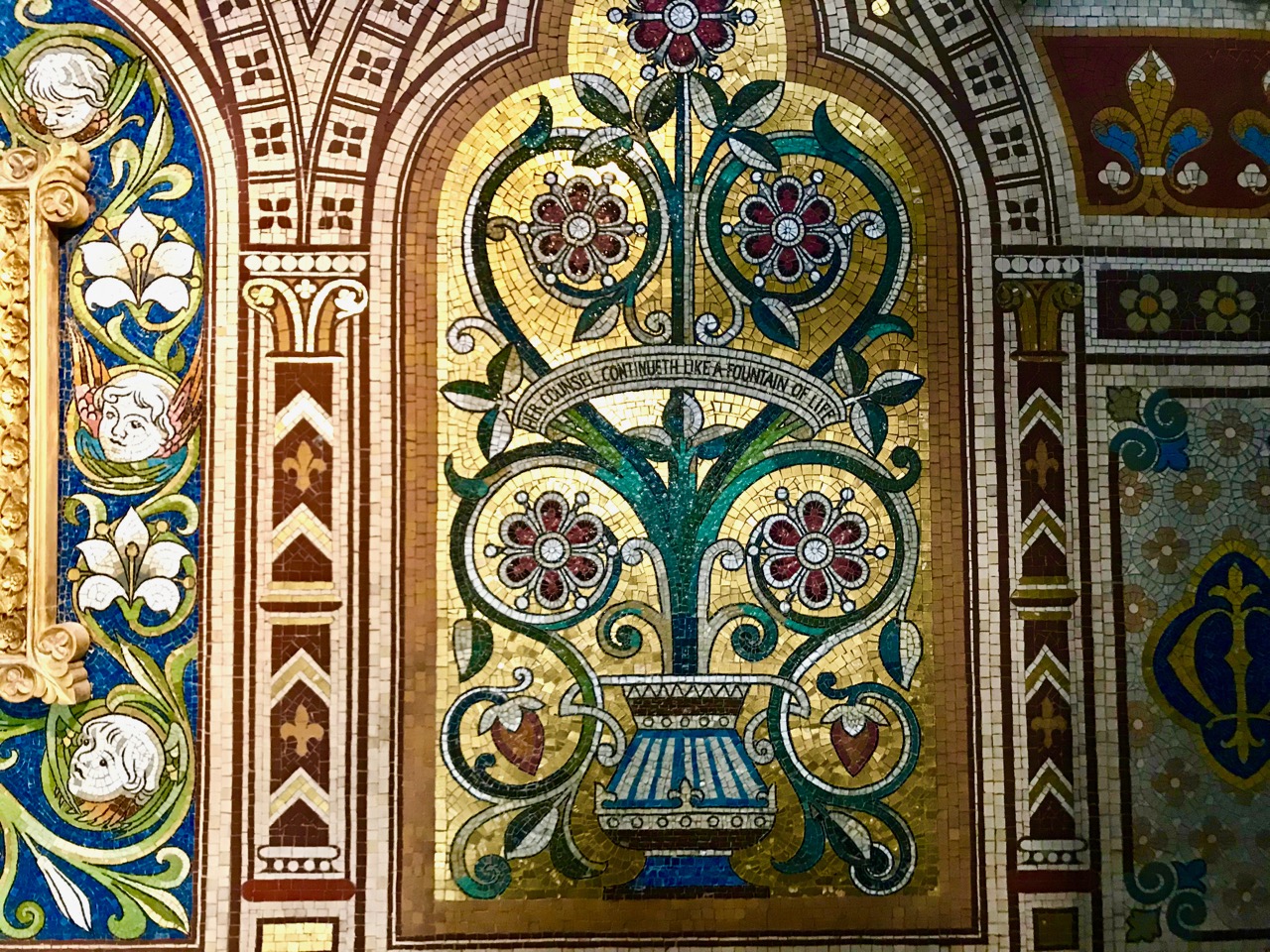
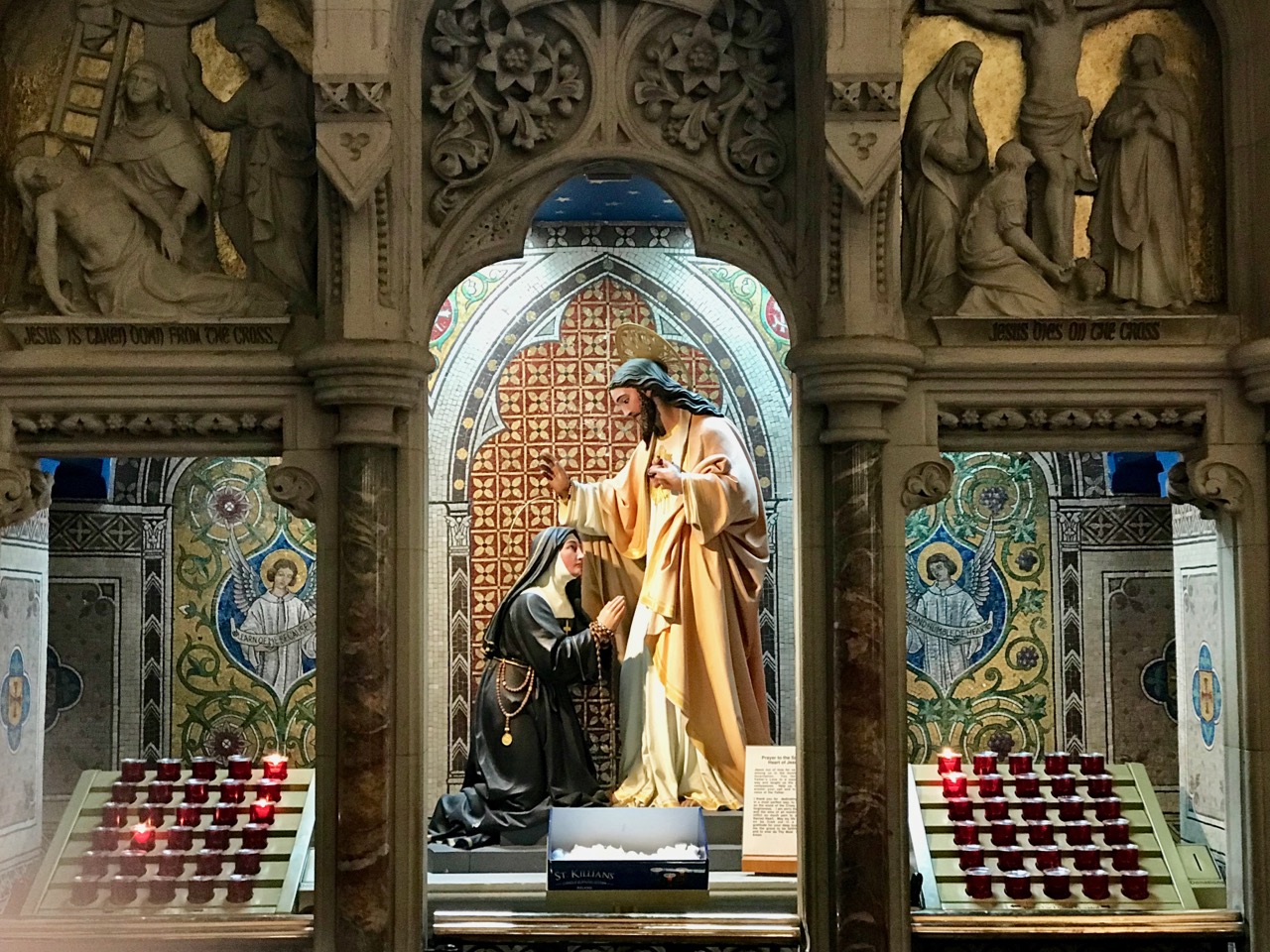
The Cathedral contains an inscribed list of all the bishops of the Diocese, from St Colmán to the present day. This list includes Thaddeus McCarthy, bishop from 1490 to 1492 – Finola is telling his story today. The richness of the building is as evident inside as it is without. It’s an homage to fine detailing and craftsmanship and there is no corner free from it: unfortunately I could not find the names of the the artists, masons and carvers in any records. At least their skills are celebrated in their works.

Something you may not discover from a visit to St Colmán’s is the carillon which was built in to the new tower in 1916. A carillon is a giant musical instrument which, using a large mechanical keyboard and pedals, sounds a whole series of cast bells. In this cathedral there are 49 bells – making it the largest carillon in Ireland and Britain: the heaviest bell weighs 3.6 tons, and is named Colmán! Please watch this fascinating seven minute film about the carillon, and the man who plays it: his title is Carillonneur. Through the summer recitals are given and can, of course, be heard not only in the Cathedral, but over the whole town.

Visiting Cobh is itself a great experience, but allowing sufficient time to explore and appreciate the Neo-Gothic gem which is St Colmán’s Cathedral has to be the icing on the cake. Although only completed a hundred years ago, remember the long tradition of the saints who set up their foundations here in Ireland, keeping civilisation alive . . . while the Dark Ages settled on Europe . . .

Thaddeus McCarthy: The Bishop Who Never Was

This is the story of a man from West Cork who was appointed a bishop not once but twice, by two different popes, but prevented from assuming his duties by warring clan factions; a man now venerated in two countries.
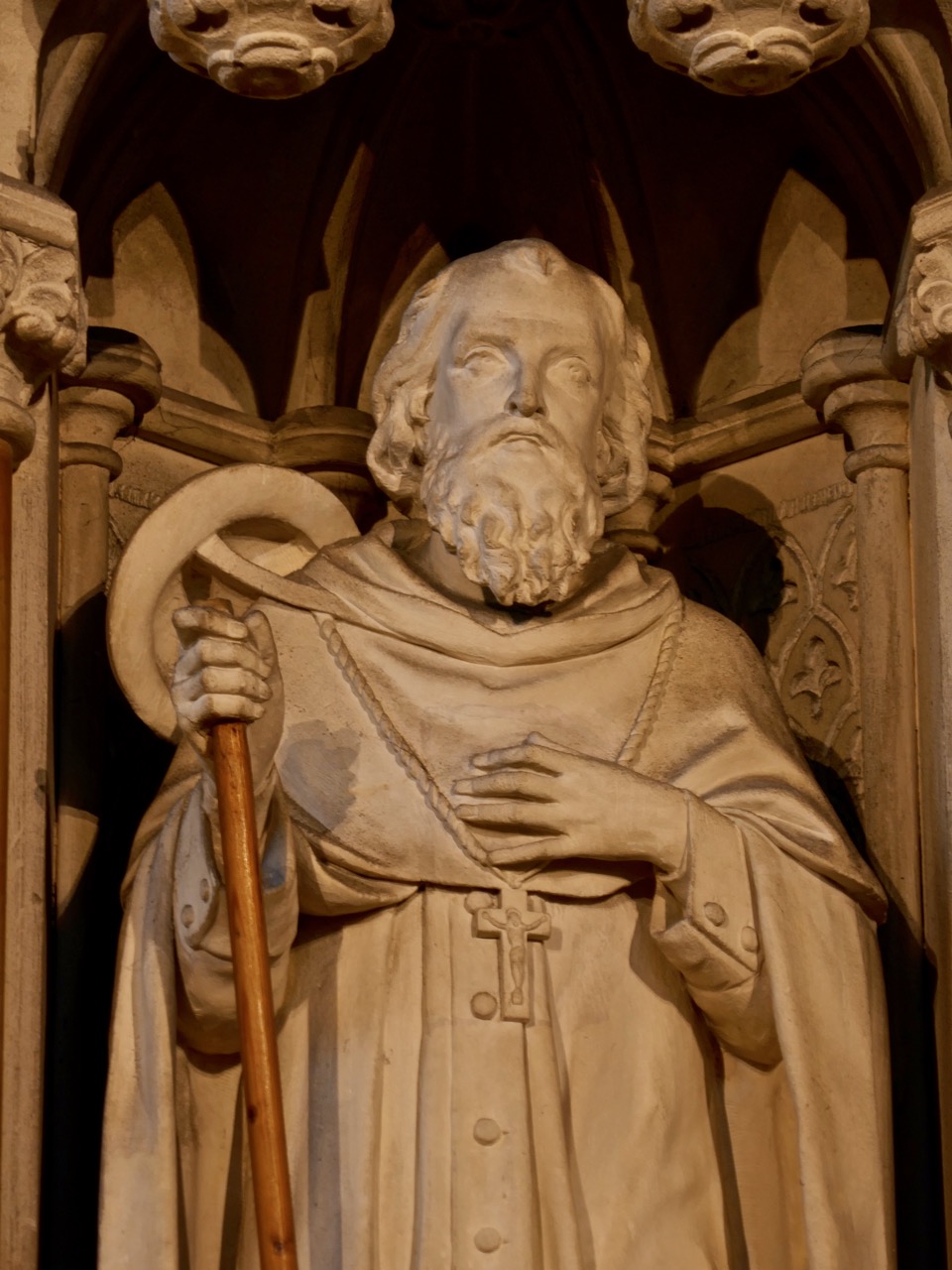
Thaddeus in his dedicated chapel in St Colmán’s Cathedral in Cobh

I had never heard of Blessed Thaddeus McCarthy until I stumbled upon his curious shrine in Cork’s North Cathedral. It’s a strange and glorious thing – two golden angels holding an ornate, bejewelled casket within which a glass tube contains, of all things, a leg bone. Nearby, a statue and a plaque provide more of the story.

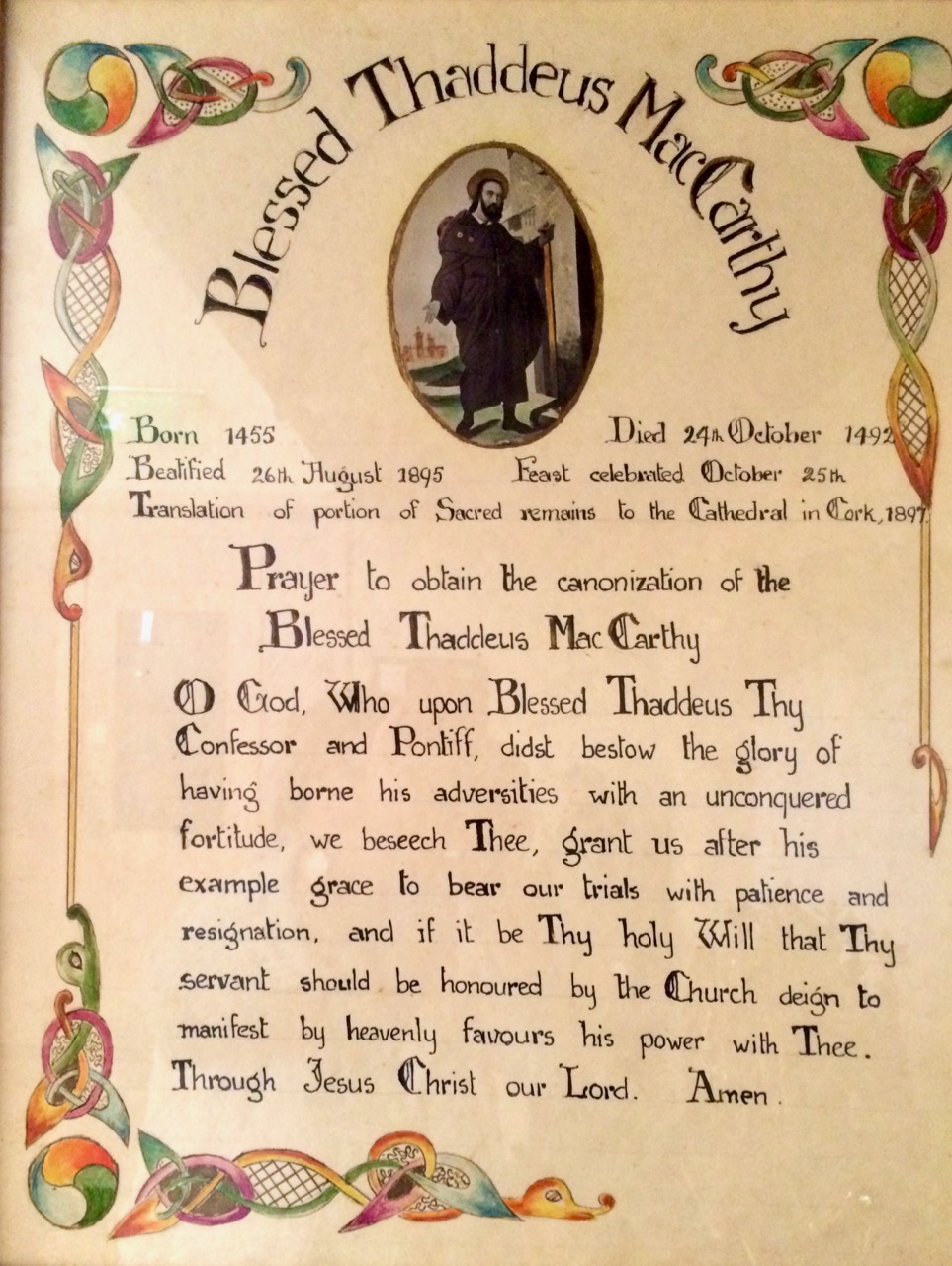
The relic of Thaddeus’s leg bone and a prayer to him, both part of the shrine on the North Cathedral, Cork

Once I had seen the shrine in the North Cathedral, it seemed I met the Blessed Thaddeus everywhere I went, and I came to know about his life over time. It is as much a story of the struggle for supremacy of some of the great Irish houses – the McCarthy Reaghs, the FitzGeralds and the O’Driscolls – during the turbulent fifteenth century, as it is the story of a holy man.

Thaddeus is often depicted wearing the scallop shell – symbol of a pilgrim

Thaddeus was born in 1455 in West Cork into the reigning Munster family of the McCarthy Reaghs, powerful lords who held sway in Carbery and Muskerry at the time and whose principal seat was in Kilbrittain. He studied under the Franciscans, probably at Timoleague Friary, and took holy orders before going off to Rome where he impressed the Pope (Sixtus IV) so much with his saintliness that he appointed Thaddeus Bishop of Ross (Rosscarbery See). Upon his return home, however, he found that an O’Driscoll was already Bishop of Ross (appointed by the same Pope – he had apparently forgotten, oops). The O’Driscolls were certainly not about to give up their hold on the See of Ross, so back went Thaddeus to Rome to ask the Pope to sort it out.

Thaddeus in Italy, dressed as a simple pilgrim, looking resigned and thoroughly saintly

After many inquiries and rumination, another Pope, Innocent VIII, appointed him Bishop of Cork and Cloyne. Once again, when he returned home, it was to find that the FitzGeralds had their own man in the position. Through all these trials Thaddeus bore himself with patience and dignity and encouraged his followers not to engage in violent behaviour on his behalf. His enemies worked to get him excommunicated and so off he went to Rome one more time, where the Pope confirmed his credentials.
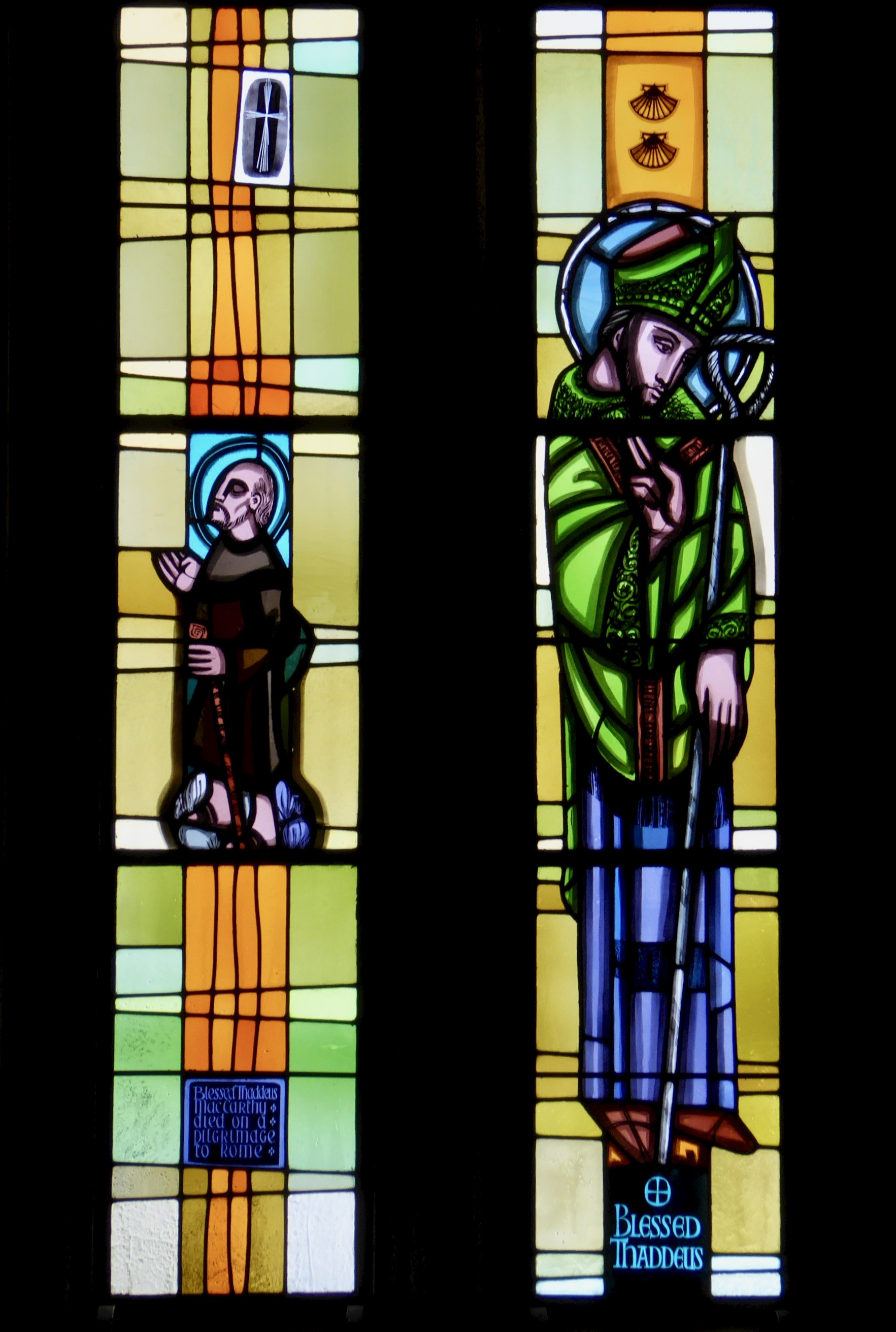
A window dedicated to Thaddeus in the Catholic church in Caheragh, near Skibbereen

On his journey back to Ireland he travelled alone in the guise of a simple pilgrim. He was only 37 years old, but worn out by his many travails he died in the night in a hostel near Ivrea in Italy. In the morning a bright light was seen to shine from the room where his body lay and the monks found him bathed in this mysterious glow. When they examined his possessions they realised he was an Irish bishop.
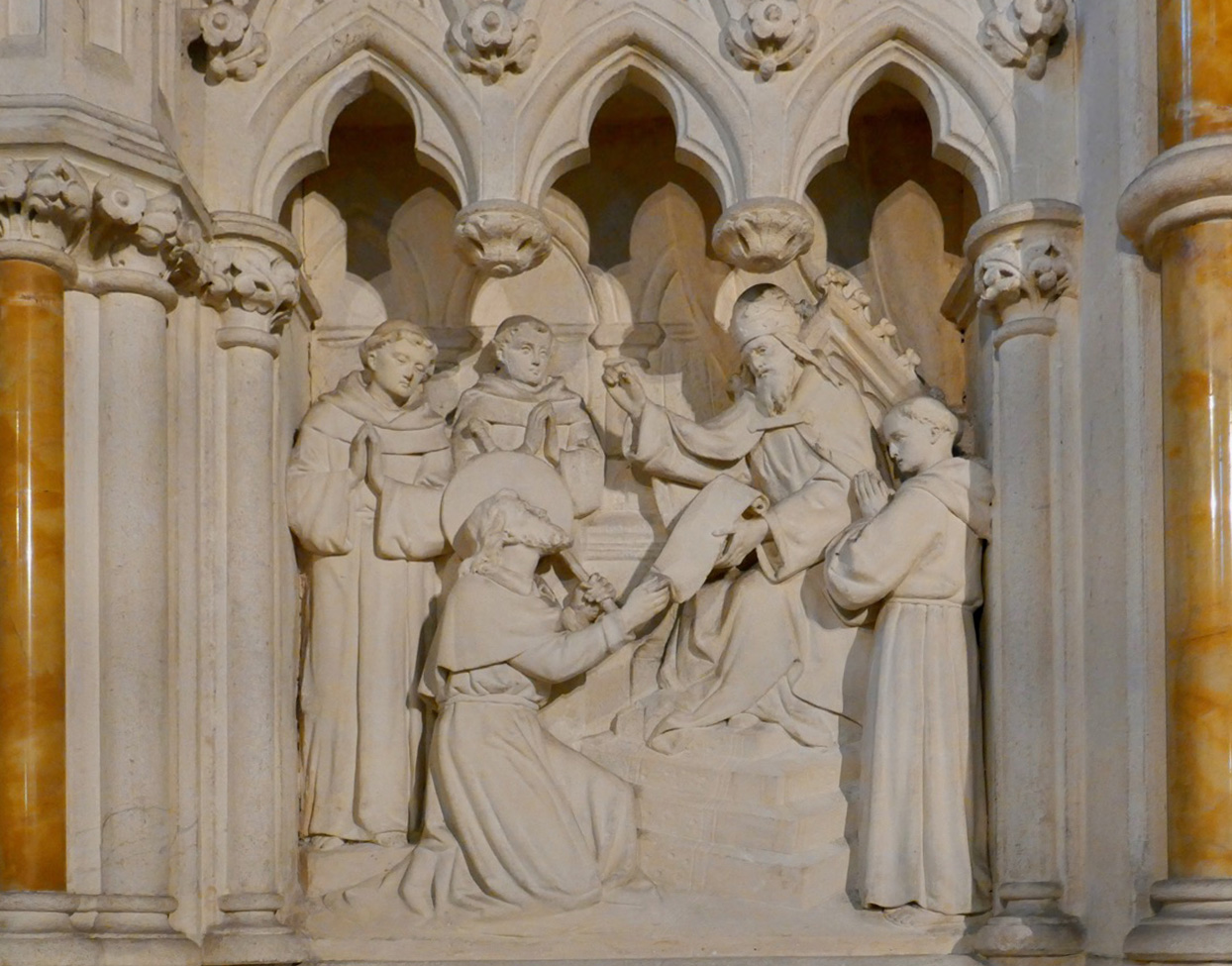
Thaddeus appeals to the Pontiff (detail of the Thaddeus altar, Cobh)

The Rev Patrick Hurley has written a full, two part account of the life of Thaddeus, published in the Journal of the Cork Historical and Archaeological Society for 1896 (here and here). The occasion for the paper was that the Irish, who had essentially forgotten about Thaddeus (although the McCarthy’s held on to a tradition of a saintly ancestor) had recently become aware of his status in Italy. I will let Fr Hurley take up the story of what happened next when Thaddeus died:

On hearing the news people flocked from all parts to see the pilgrim-bishop, who they regarded as a saint, and many sick were here cured and restored to health. Seeing this the bishop ordered the body to be carried to the cathedral, which was accompanied with great solemnity, the chapter, clergy and religious orders all going with a great multitude of people more in the way of a triumph than a funeral.

Depiction of the funeral, based on Fr Hurley’s account  (detail of the Thaddeus altar, Cobh)

Thaddeus was placed under the altar alongside the body of St Eusebius and there he is to this day. Eventually the tombs of both saints were opened and Thaddeus’s remains were re-interred in a reliquary (he was found to have red hair). His feast day is celebrated in October every year in Ivrea and many miracles have been ascribed to him over the centuries.
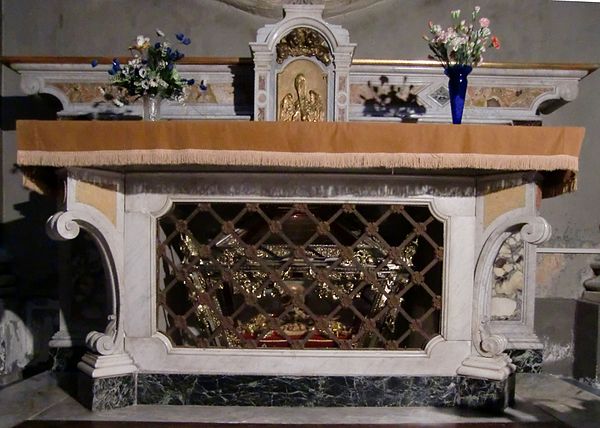
Blessed Thaddeus’s Reliquary in Ivrea, Italy

There’s even a 15th or 16th century poem, in Latin, about him. Fr Hurley provides a translation. Since he gives no author, it may be his own work, which would not surprise me as this is obviously an erudite and talented scholar. He started his career as the parish priest of Schull, was the priest responsible for the chapel and stations at Gougane Barra and also established the Irish training college at Ballingeary. He was a frequent contributor to the JCHAS.

Fr Hurley had attended a ceremony in honour of Thaddeus in Ivrea ‘recently’ when he wrote his two pieces. He remarks in awe on the majesty of the ceremonial and the great crowds who took part. Above all, he says, the solemn procession when, as if in triumph, the remains of the poor unknown pilgrim were carried through the streets he passed so many years ago, will not be easily forgotten.
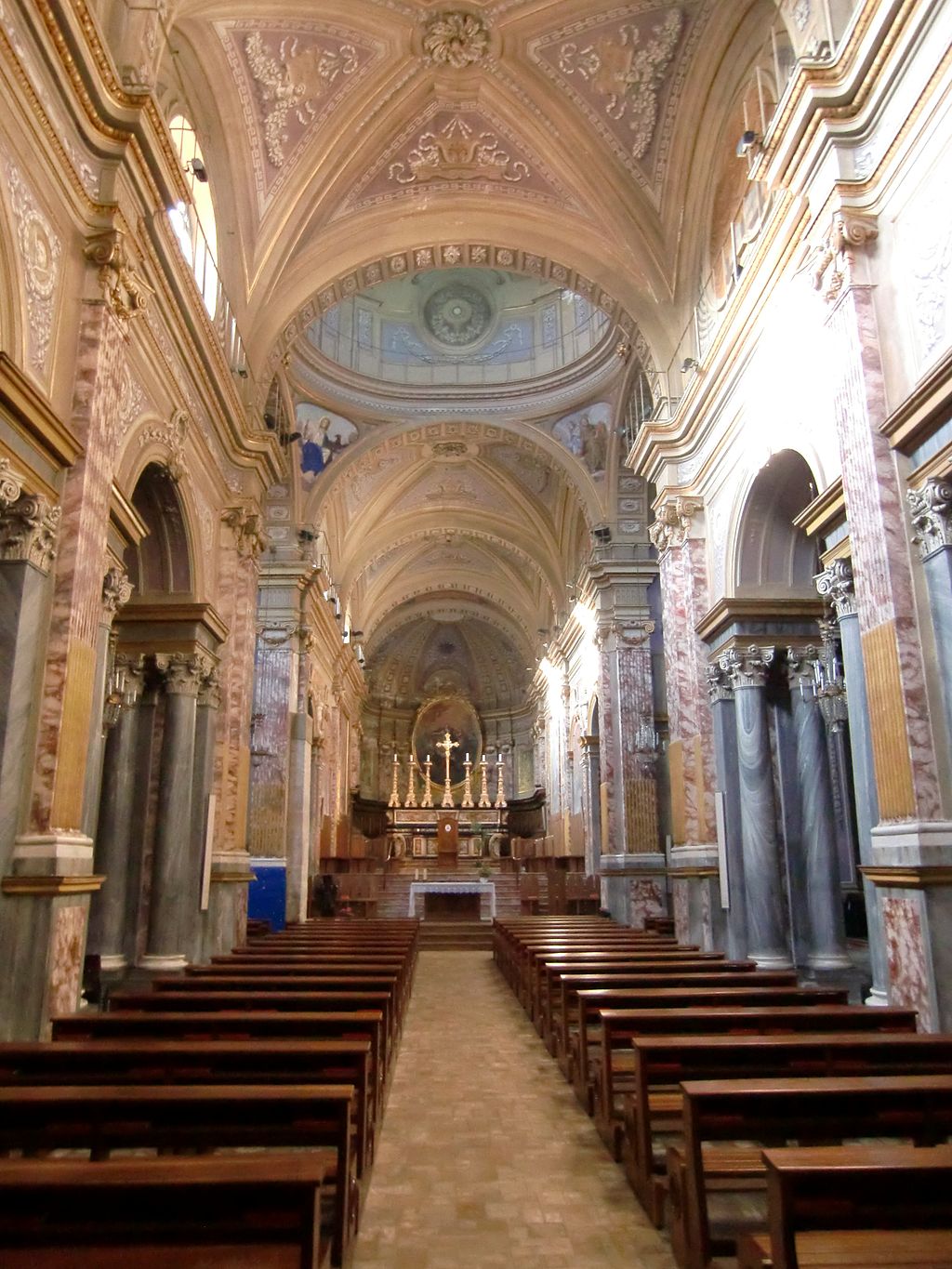
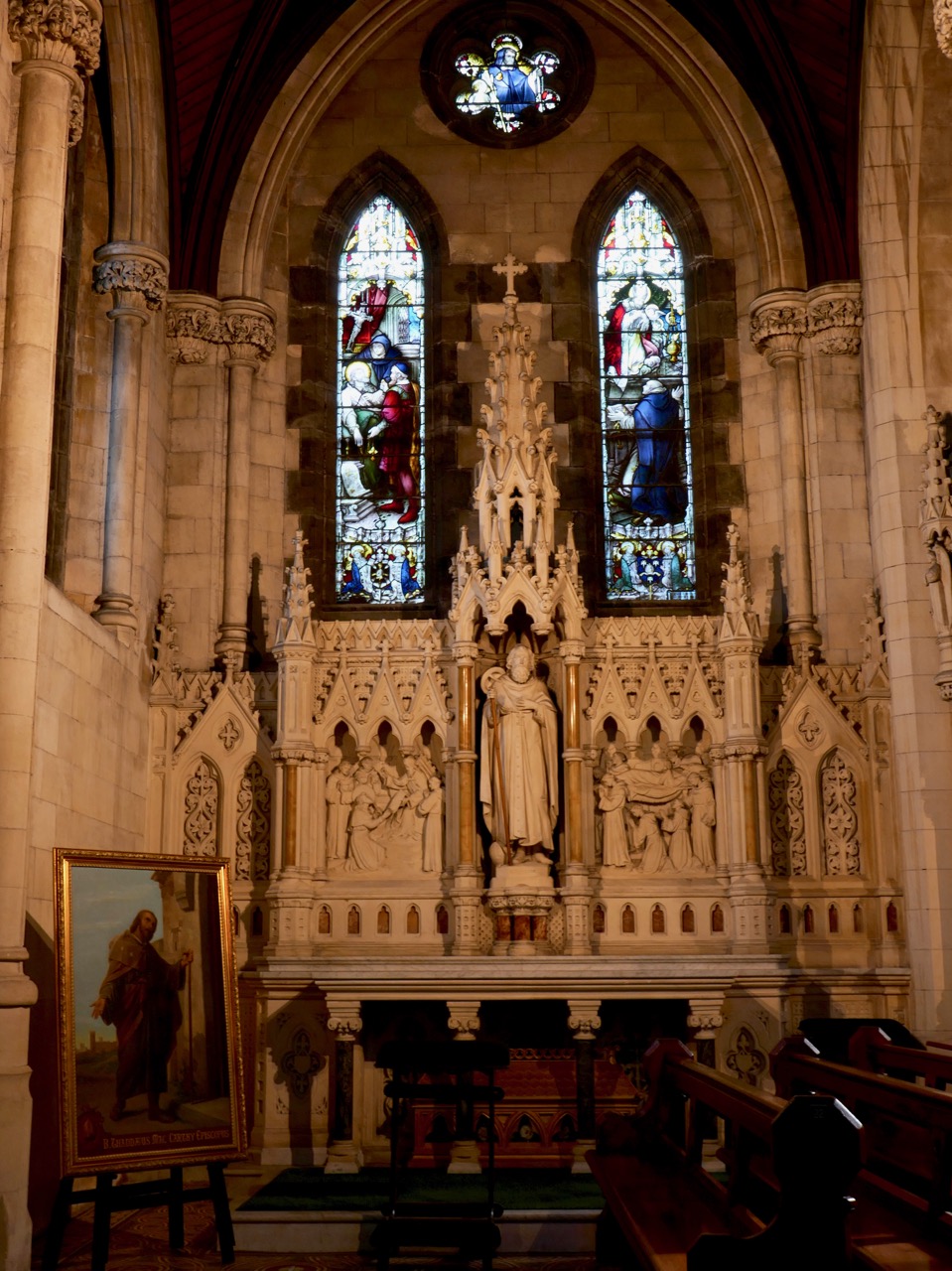
Above, the magnificent church in Ivrea, Italy, where Thaddeus lies and below, the equally magnificent side-chapel dedicated to his memory in St Colmán’s Cathedral, Cobh

In more recent times, it was agreed that some relics of the saint could be returned to Ireland – hence the leg bone that caught my attention in the North Cathedral. Ireland, and particularly Cork, had rediscovered their saint and veneration of this fifteenth century holy man spread rapidly. In St Colmán’s Cathedral in Cobh (the subject of Robert’s post this week) one of the side chapels is dedicated to him: this probably happened in a time of great enthusiasm for the revival of his cult following the rediscovery described by Fr Hurley. The design of the altar, the carvings, the mosaics and stained glass show that the artists were familiar with Fr Hurley’s account. 

The death of Thaddeus, St Colmán’s Cathedral, Cobh

In the years that followed, as new churches were built and older ones refurbished, Thaddeus lived on in stained glass and small shrines. I have no doubt that part of this comes down to his surname – we love the idea that the McCarthys, of a proud, ancient and powerful lineage, and the people of Cork, have our own saint.

A shrine to Thaddeus, including a reliquary (not sure what it contains) in the Catholic church in Clonakilty

Please read the comments for updated information

Mizen Magic 10: Sailor’s Hill

Fancy a walk? One with just enough elevation to get the heart going and with the reward of spectacular views at the top? It will take about an hour, maybe a bit longer if you stop to chat, or just gaze.

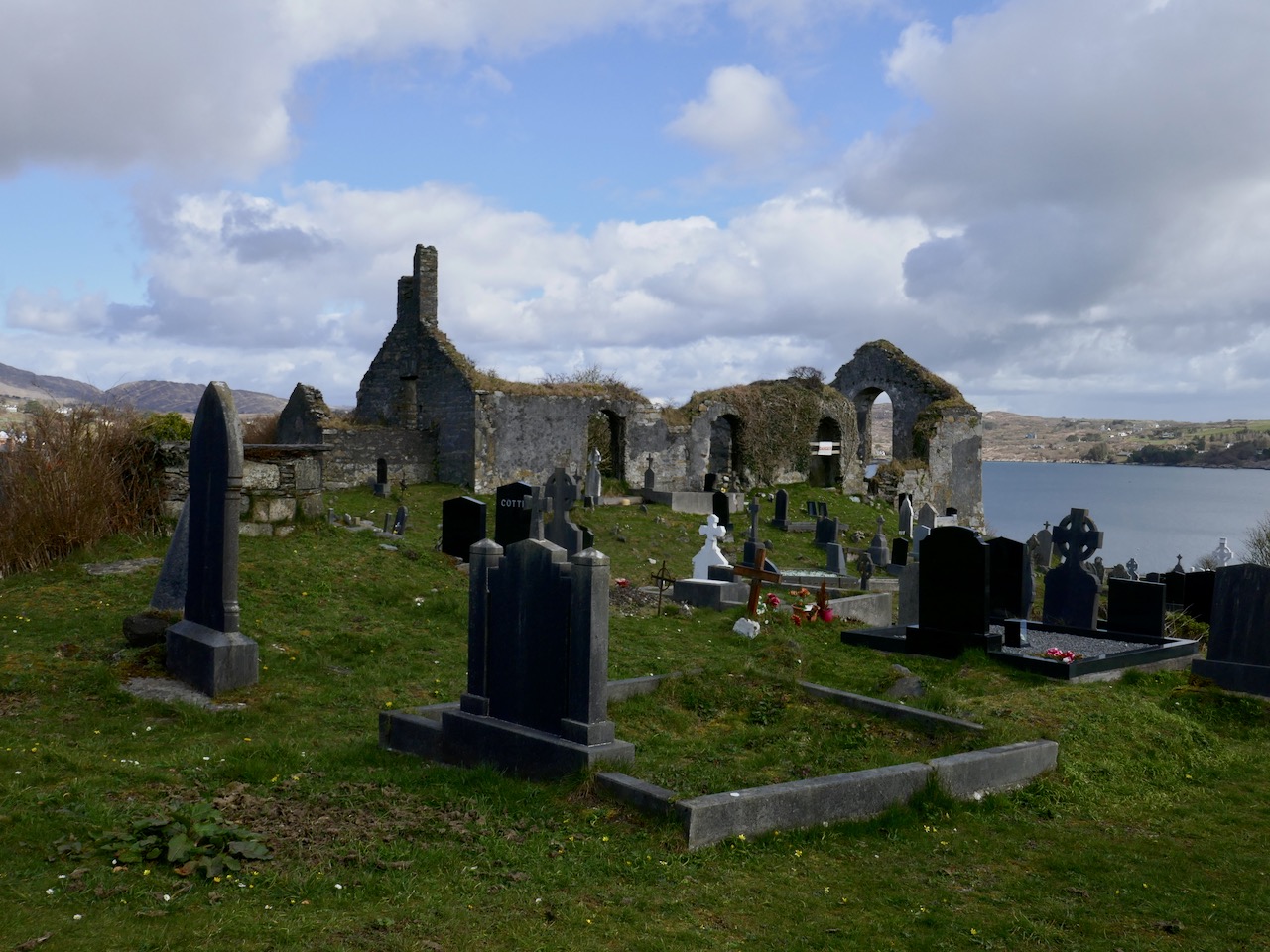
We’ve mentioned Sailor’s Hill before in the course of other posts – this one and this one. But it deserves a post of its own, because it’s a complete experience. Start from Schull and walk out along the Colla Road until you get to the old St Mary’s Church and graveyard. The National Monuments listing tell us that this was originally a medieval structure, although what we see in ruins now is mainly an eighteenth century church, situated in a picturesque burial ground. Turn right at that point.

You will notice the waymark signs. This is one of the newer extensions of the Fastnet Trails, and an initiative of a committed group in Schull. The walk up Sailor Hill is actually part of a larger walk, the Colla Loop – we are planning to do that one soon but only had time for this stretch of it today.

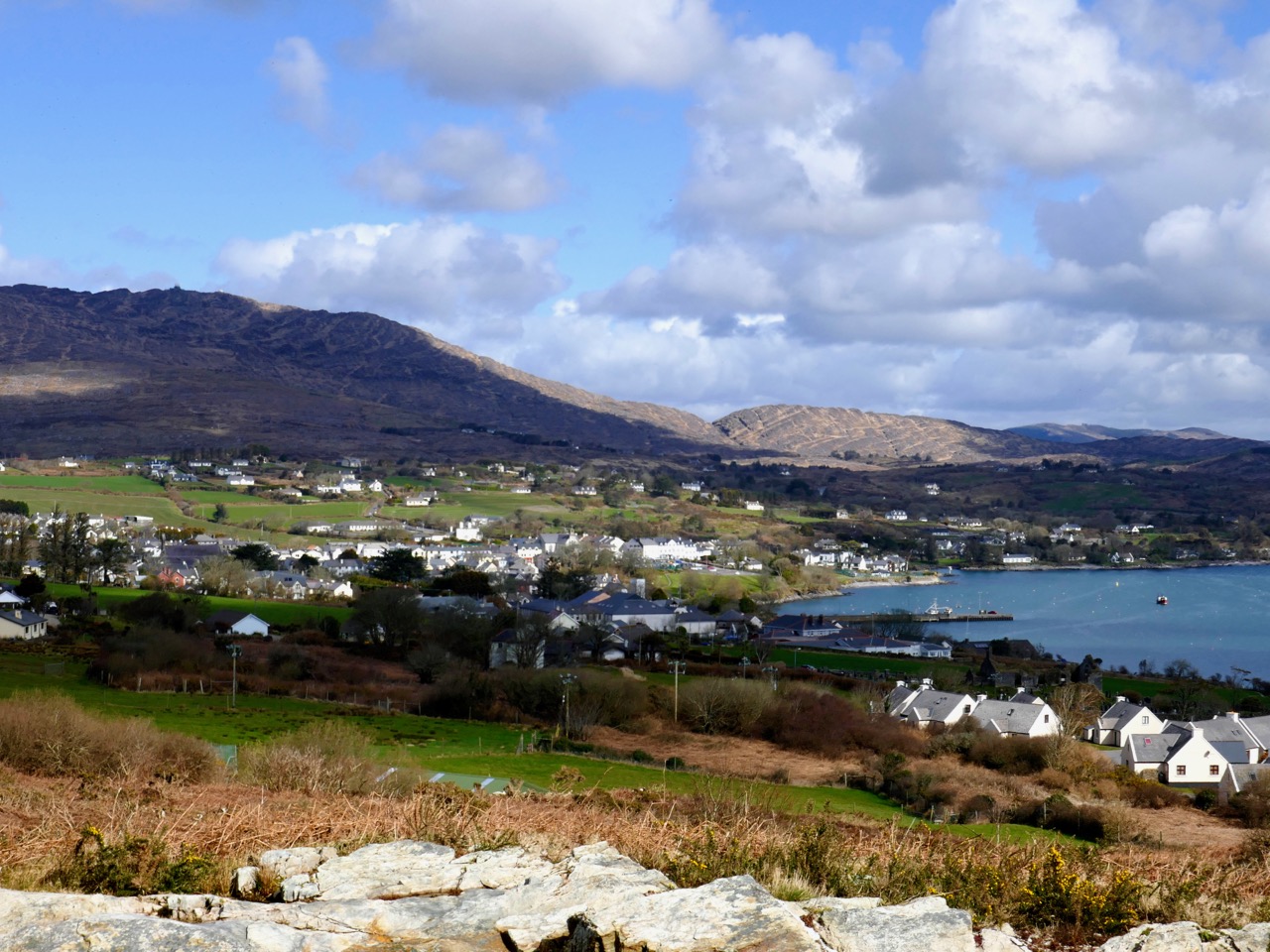
The road meanders gently upwards. Take the first left and then the next left. Views of Schull Harbour start to open out as the road rises. Looking back, you can see how Schull nestles at the foot of Mount Gabriel (see the photograph at the top of this post).

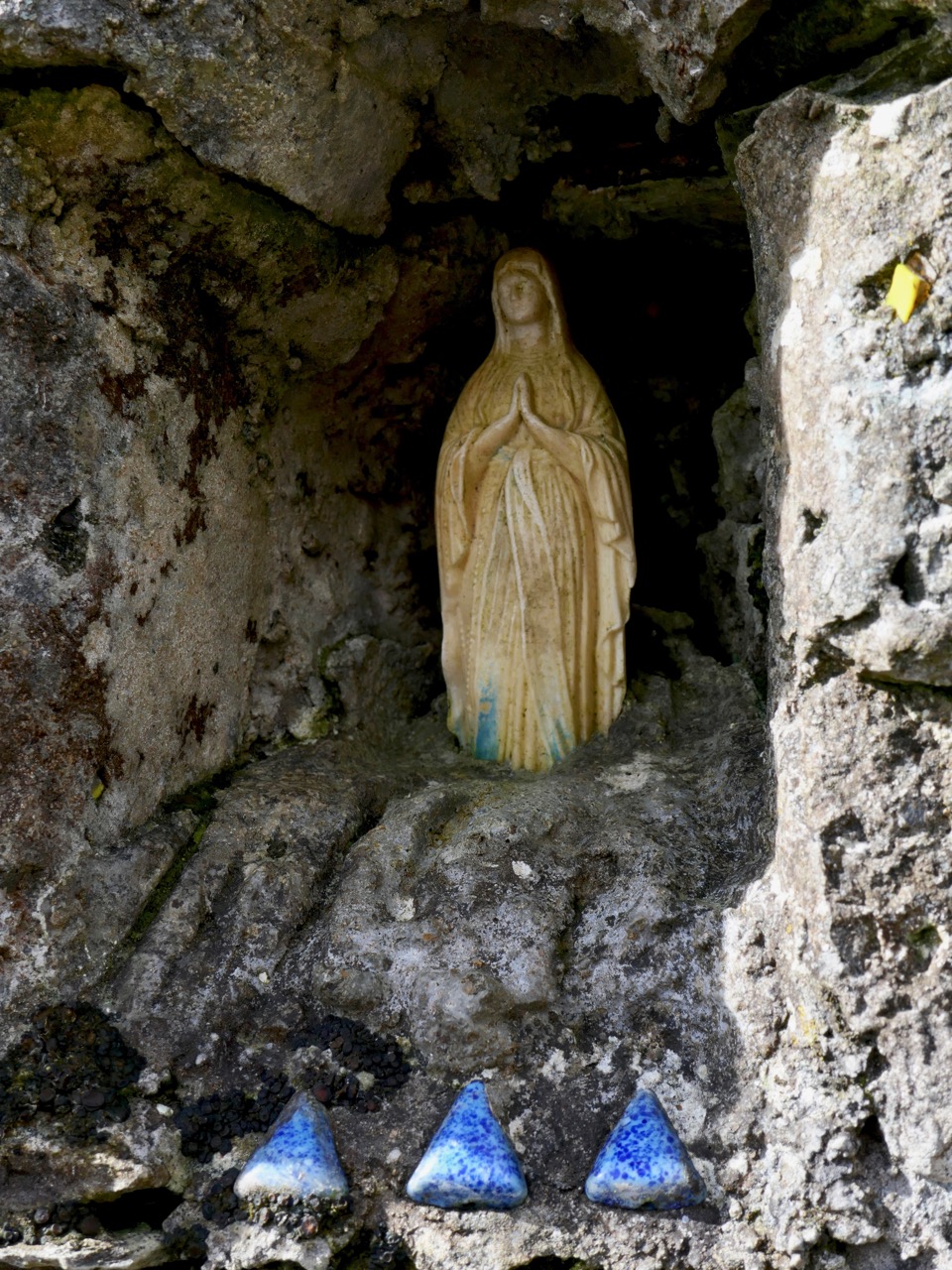
A tiny shrine in a gatepost

Later on, this boreen will be heady with Foxglove and Loosestrife and Oxeye Daisies, and later still the purple heather will dominate, but this is early spring and it’s been a long cold winter. 

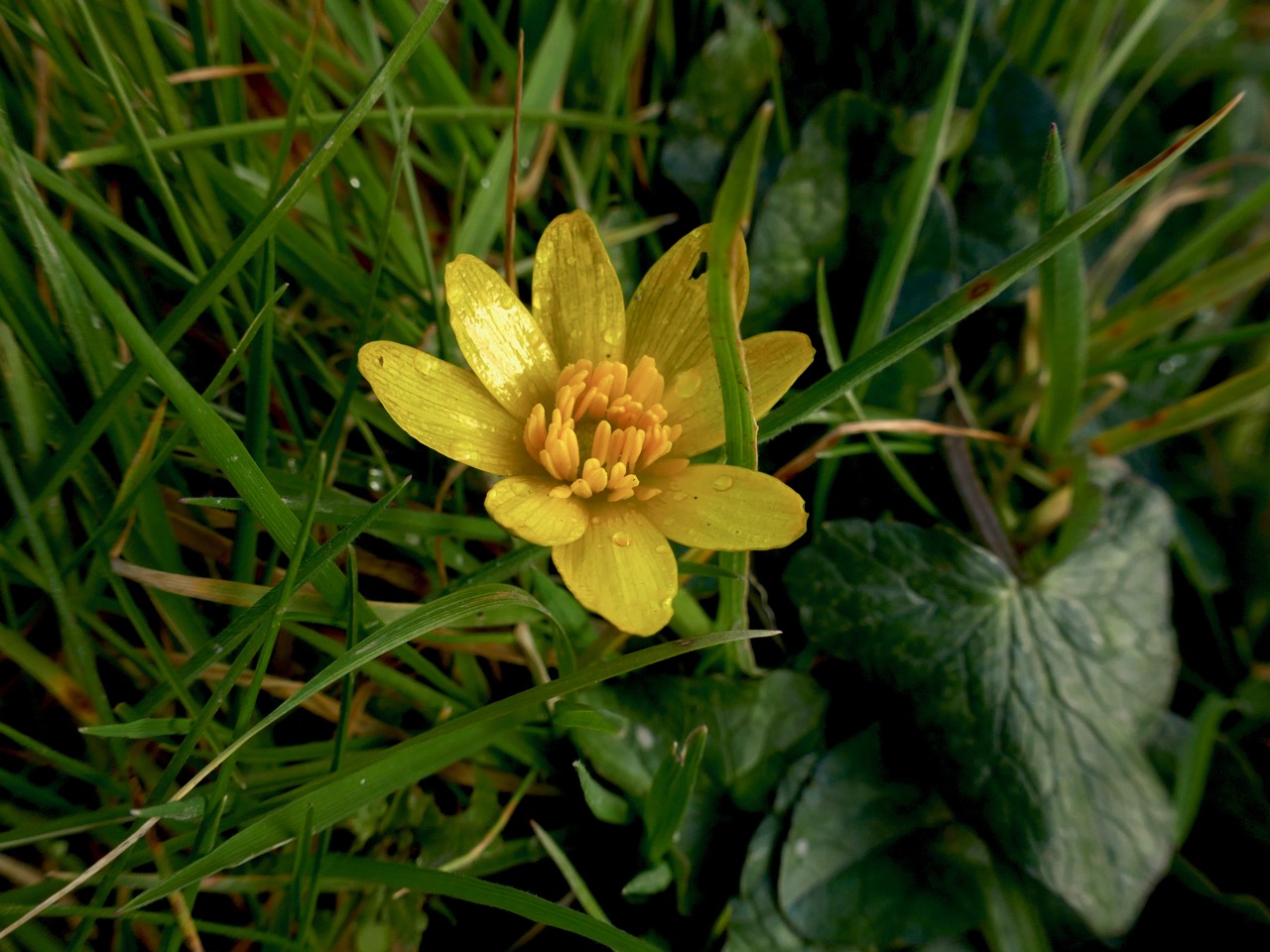
Everything is late this year, so I am happy to see the ever-reliable Celandine in profusion.

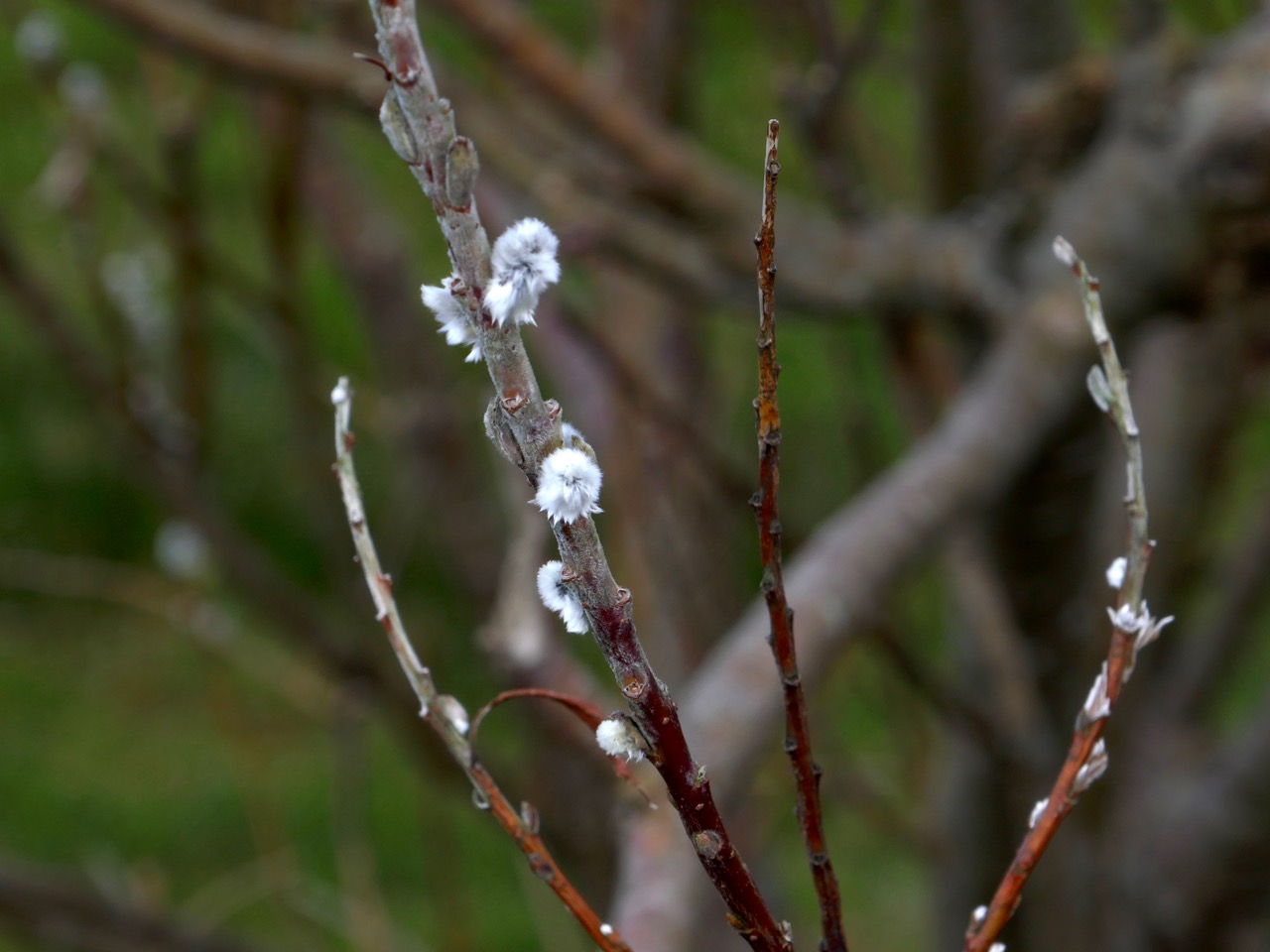
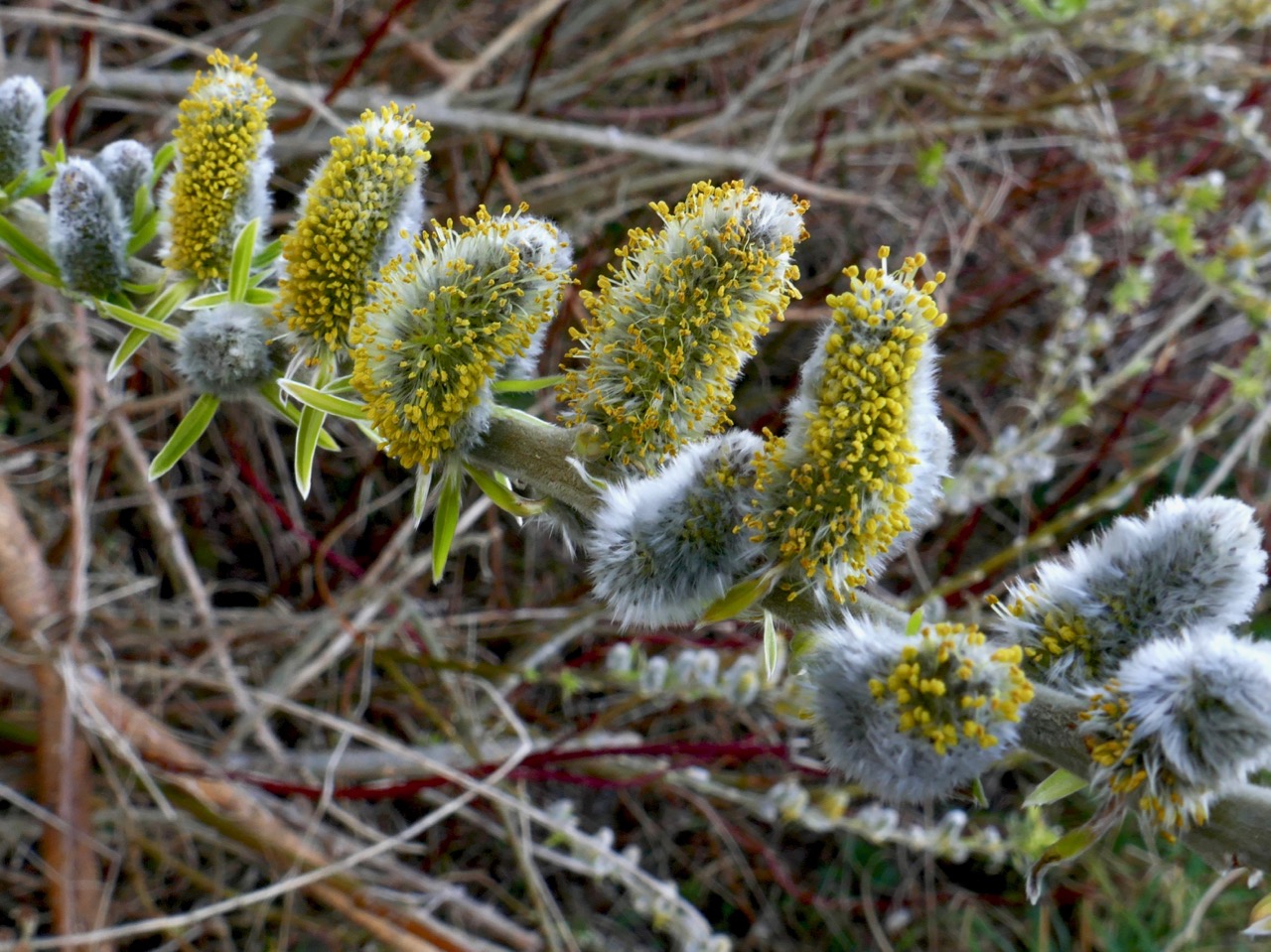
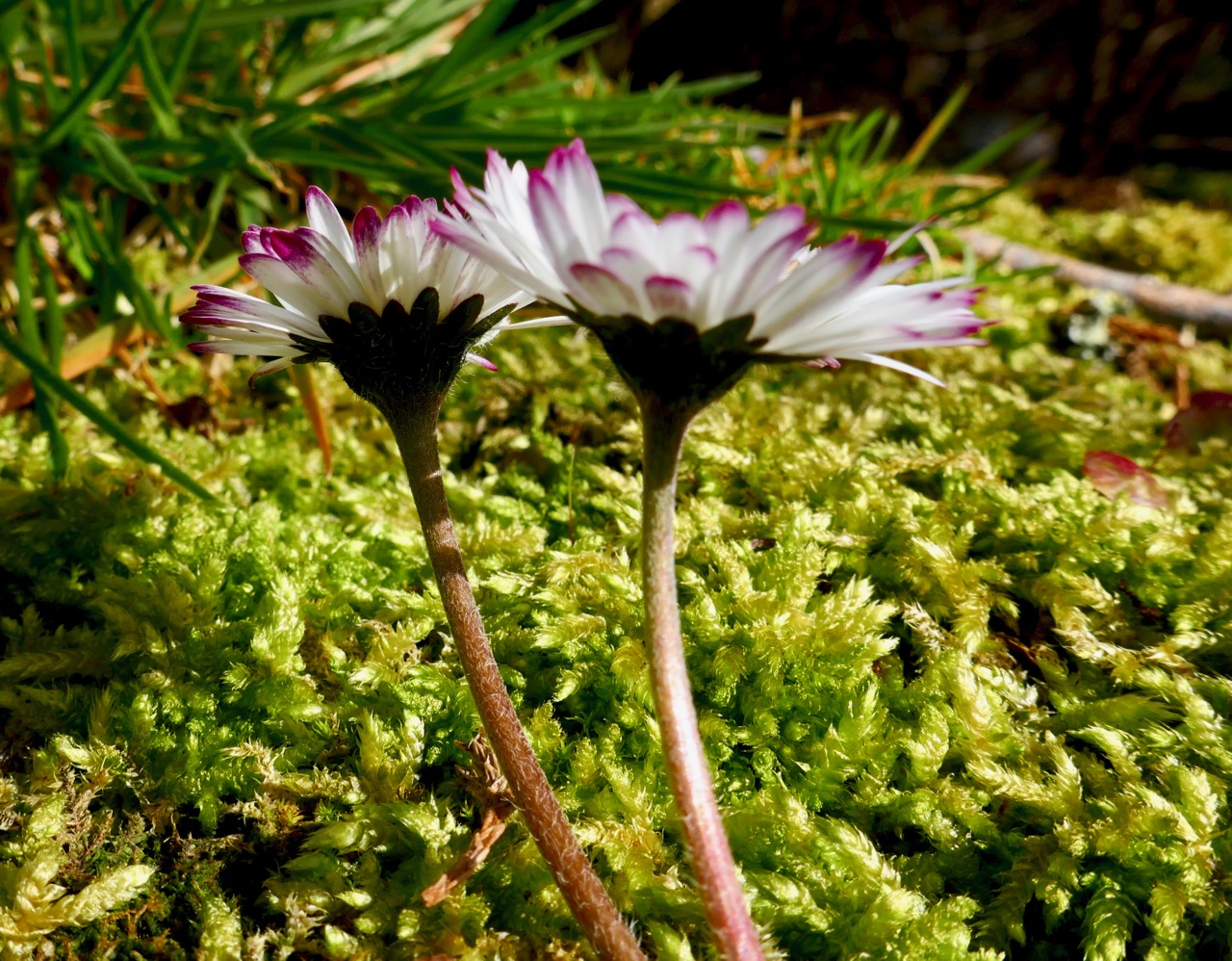
The willows are starting to bud out too, but apart from that, it seems that dandelions and lawn daisies are the only wildflowers brave enough to flourish along the way. Not that we disdain these humble flowers – they provide early and important nourishment for the insects and the bees. Must feed those pollinators!

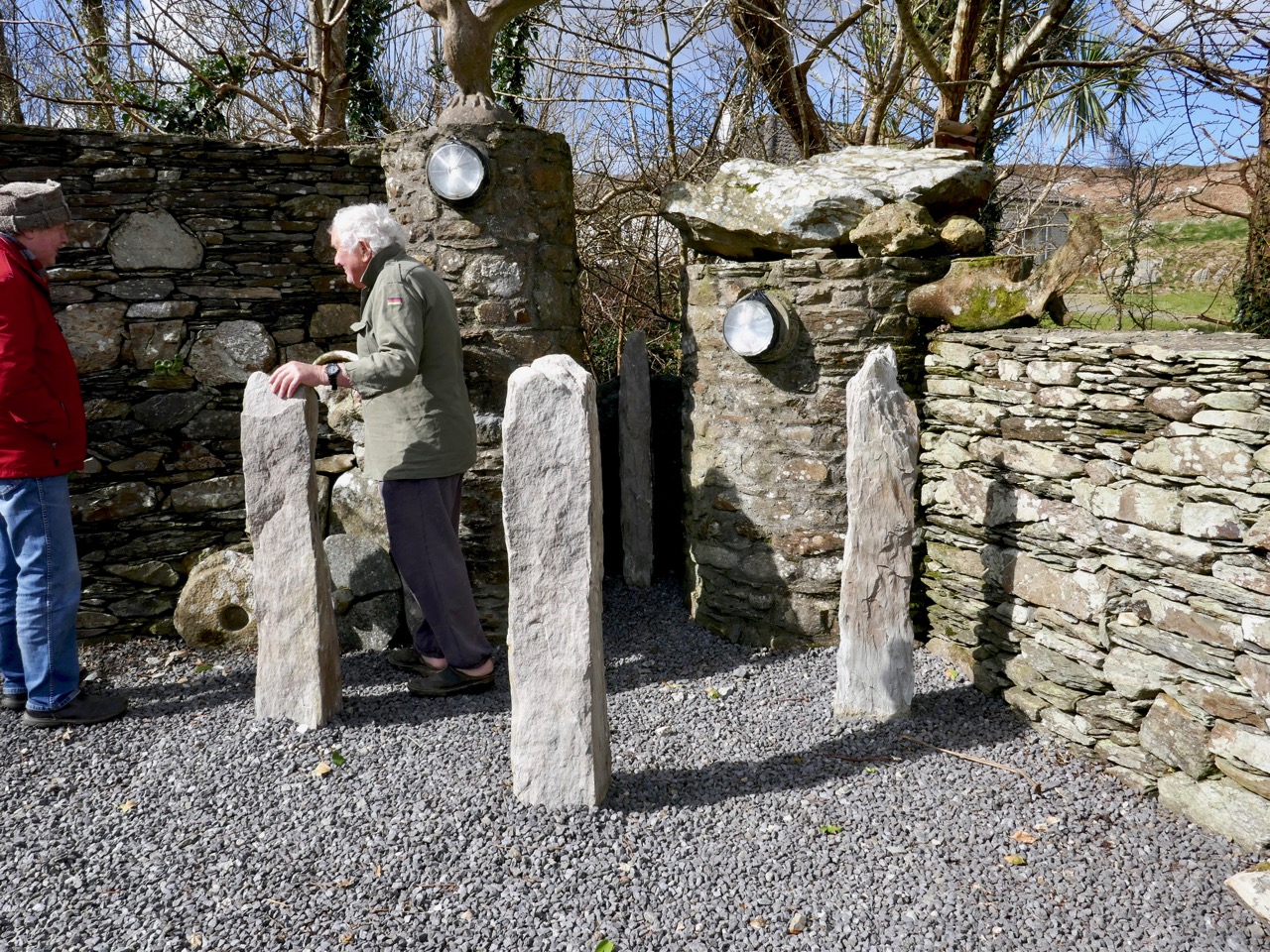
Connie and Betty Griffin have built a house with magnificent vistas near the top of the hill. They never stop adding to it, Betty with flowers and Connie with quirky additions, sculptures and walls. This time, he showed us his Sailor Hill Newgrange, a nifty arrangement of standing stones that respond to the rising sun by capturing the morning light in a stone recess.

Connie demonstrates his sun calendar to Robert

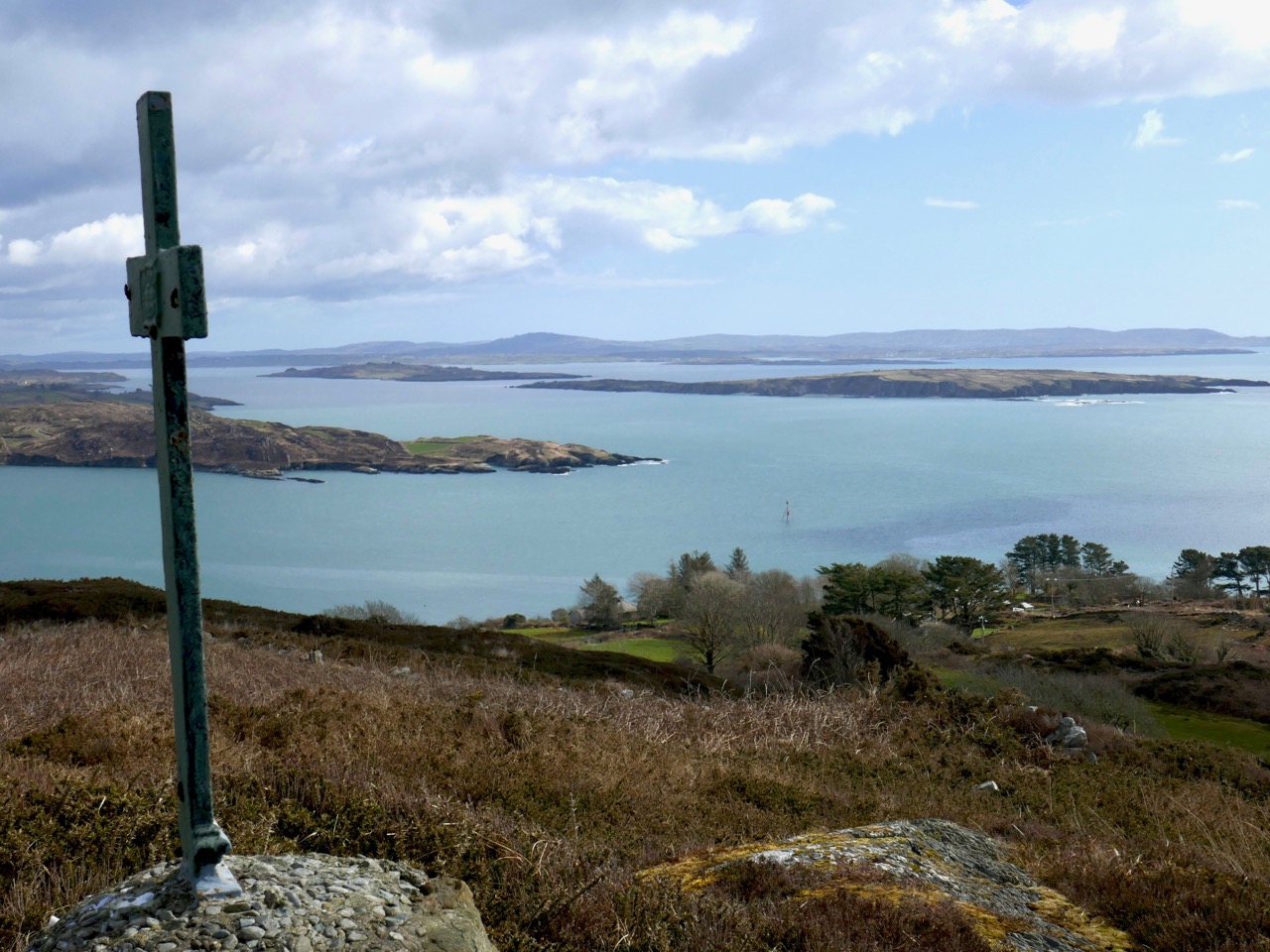
Up to the top then, and there it is – a breathtaking panorama that encompasses the whole of Roaringwater Bay and Long Island Sound to the south, and Mount Gabriel and its foothills to the north. Cape Clear, the Fastnet, Sherkin Island and all the smaller islands are laid out in front of you.

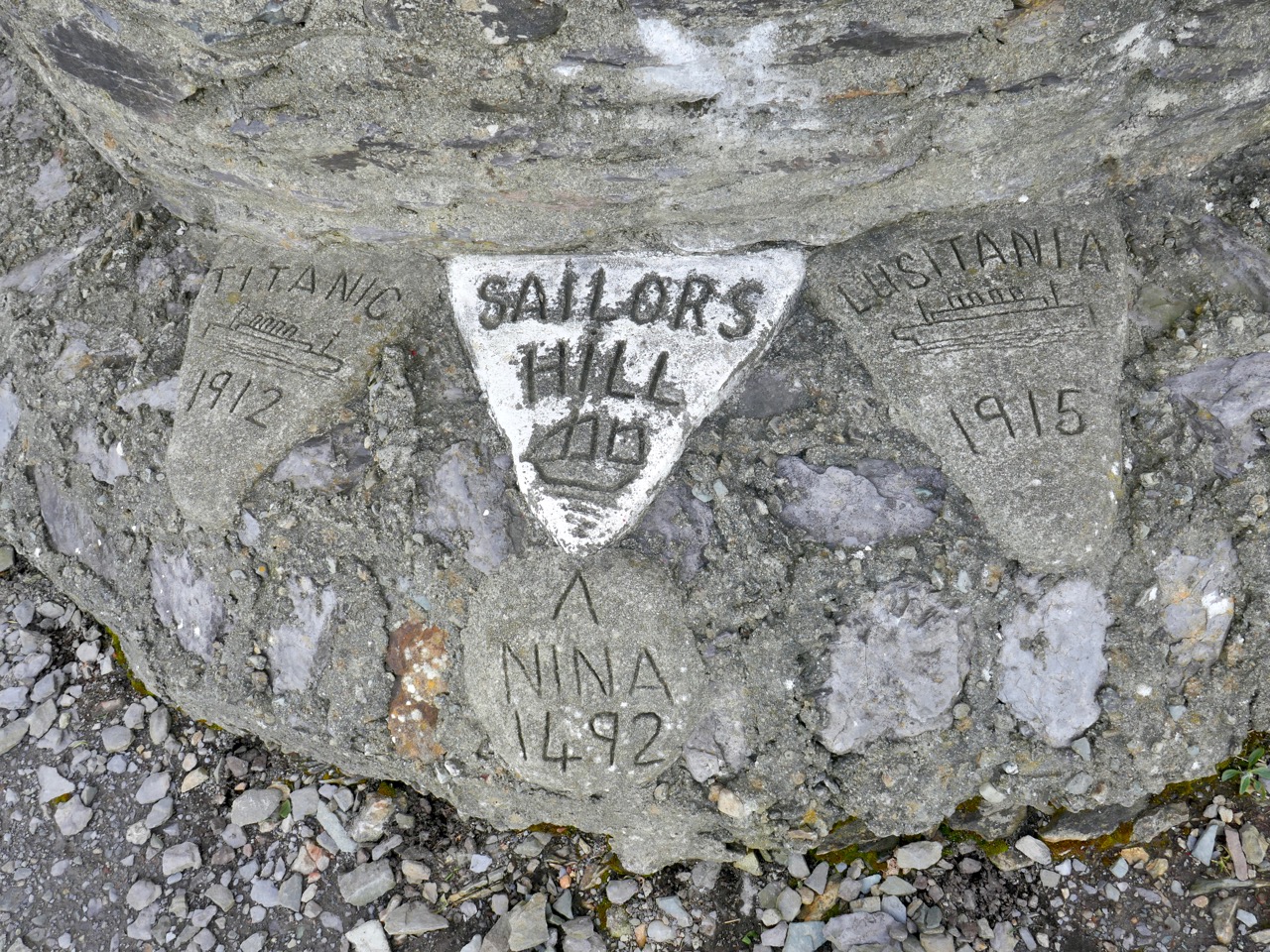
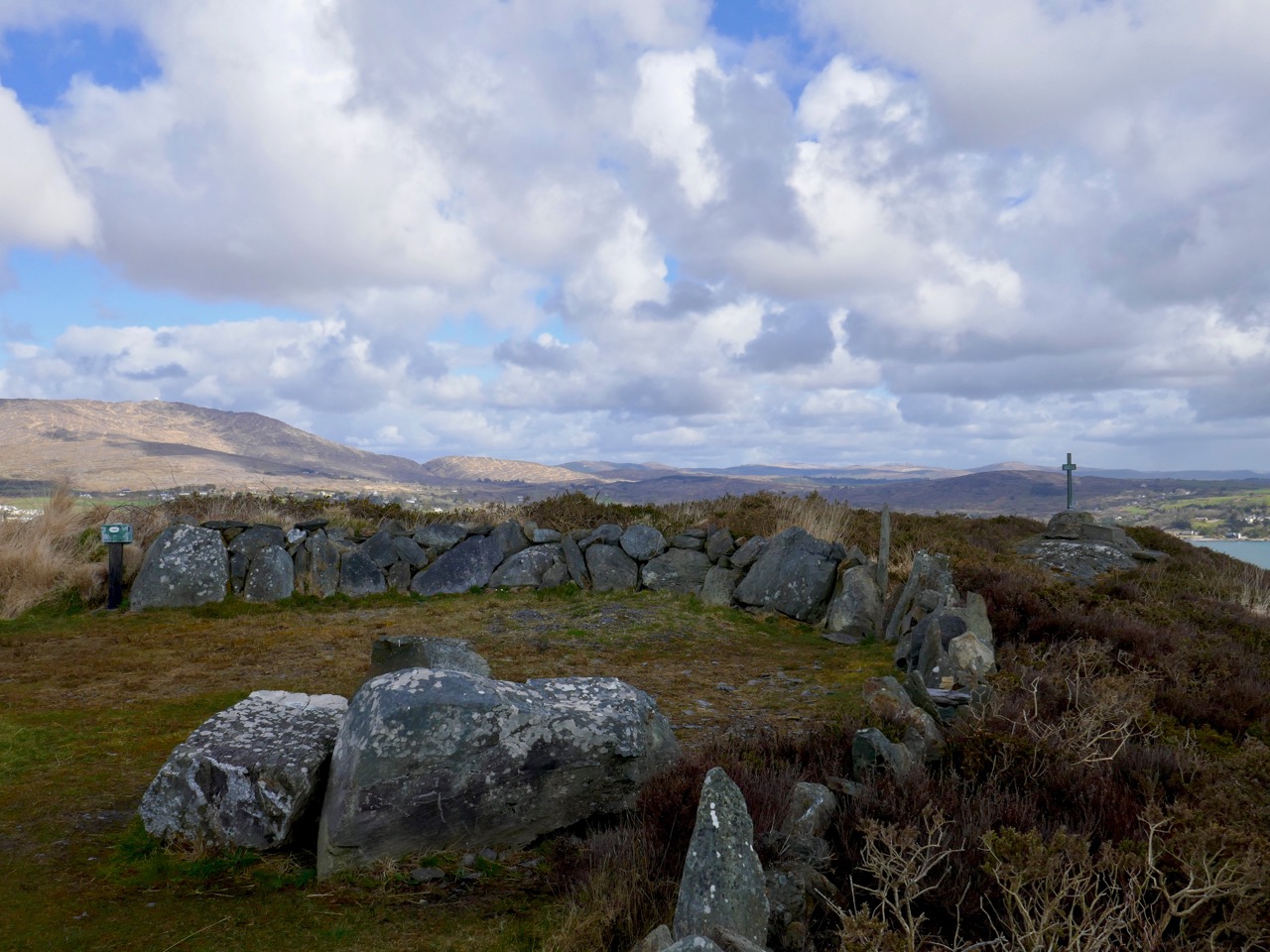
And there’s a cross and inscriptions, so you begin to realise that this site is about more than those views. Connie, who designed and built it, wants us to think about those who lost their lives at sea. It’s his own personal mark of respect and a reminder to us in the midst of all this grandeur to take a moment to contemplate on the power of the ocean and the fleeting nature of life.

I had to look up The Niña, 1492, and of course it was one of Columbus’ ships. He took the Santa Maria, the Niña and the Pinta on his voyage to the New World, but the Niña was his favourite. To learn why, take a look at this. But why is it here? Well, I’m not sure, but there is a tradition around here that Columbus may have visited West Cork on his way. His last provisioning stop may have been with the hospitable, learned and Spanish-speaking Fineen O’Mahony, Scholar Prince of Rossbrin

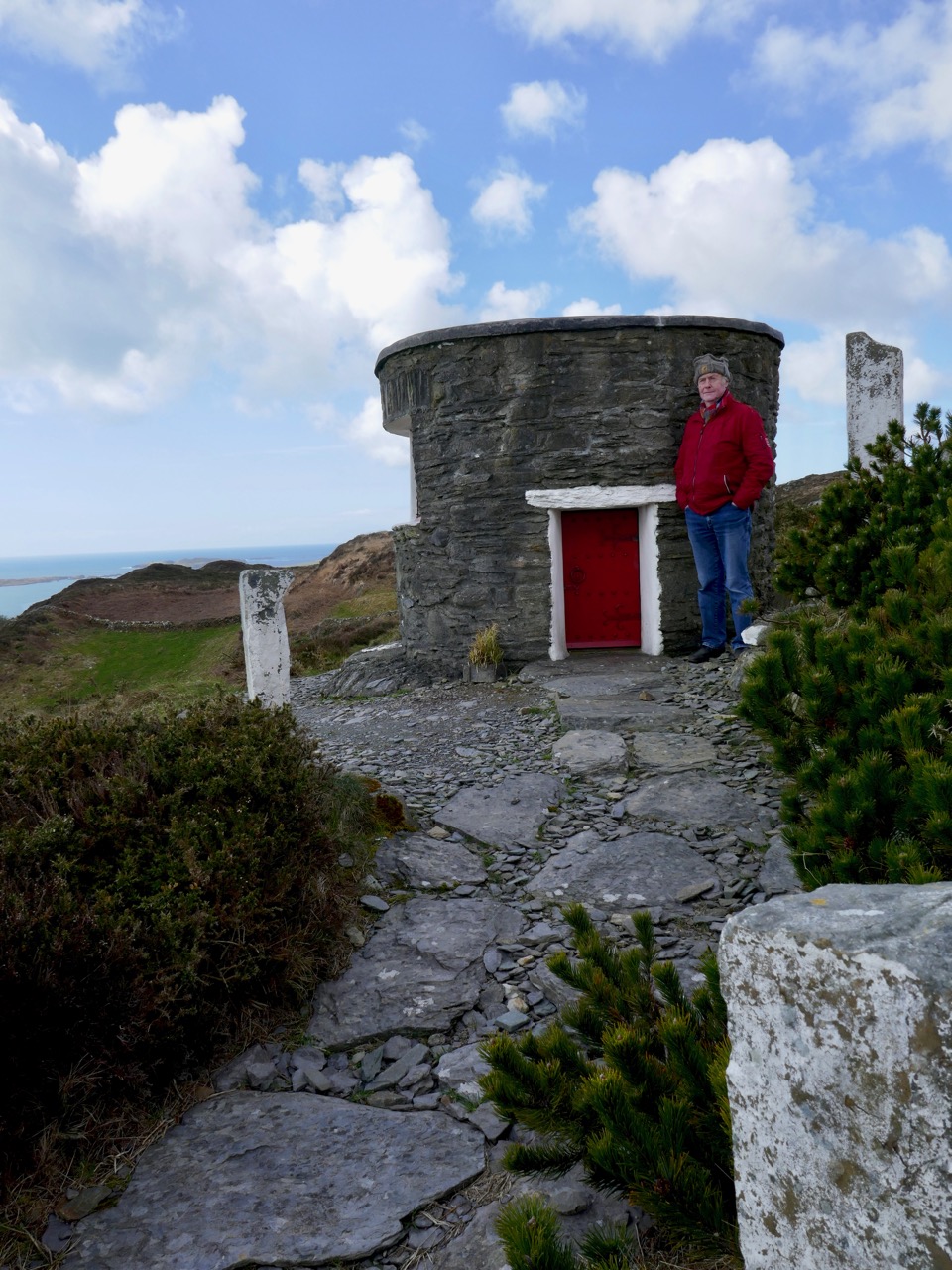
Connie has built his own tiny belvedere (he calls it his folly) perched to take maximum advantage of the view. It’s the perfect spot to sit, munch an apple, and enjoy a companionable chat before the walk down again.
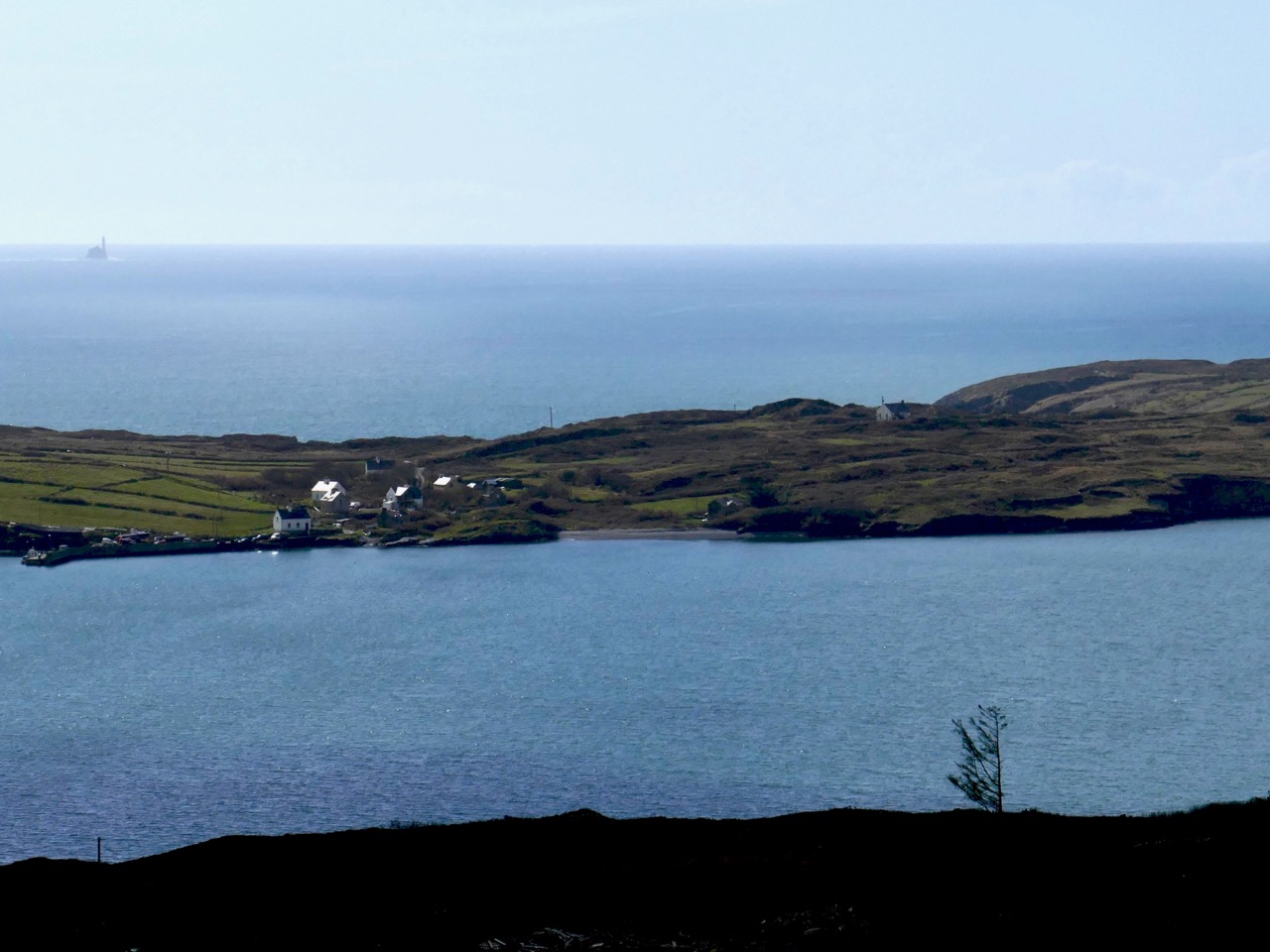
A final look out to sea. There’s Long Island and beyond it the Fastnet Rock with its iconic lighthouse.
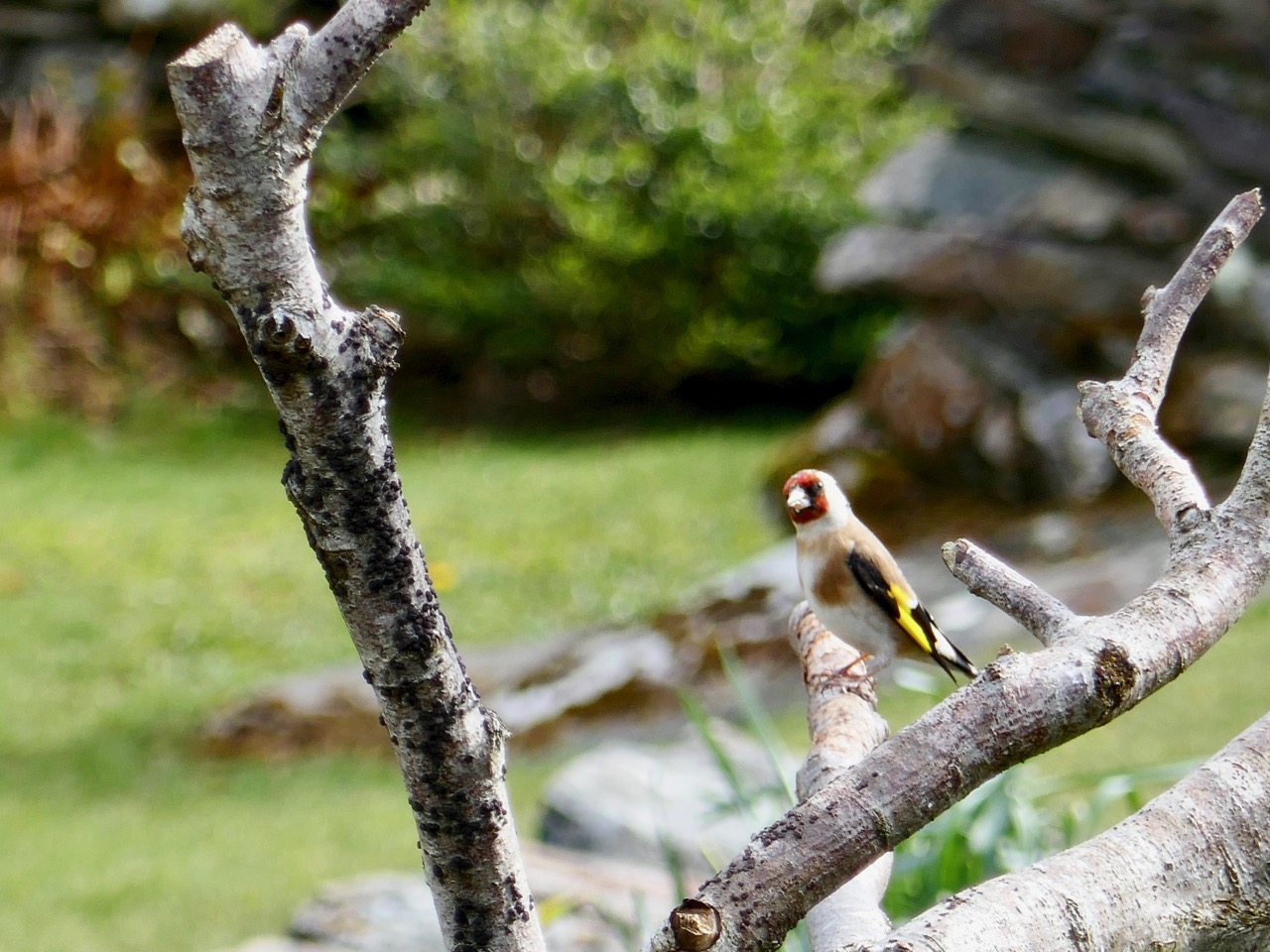
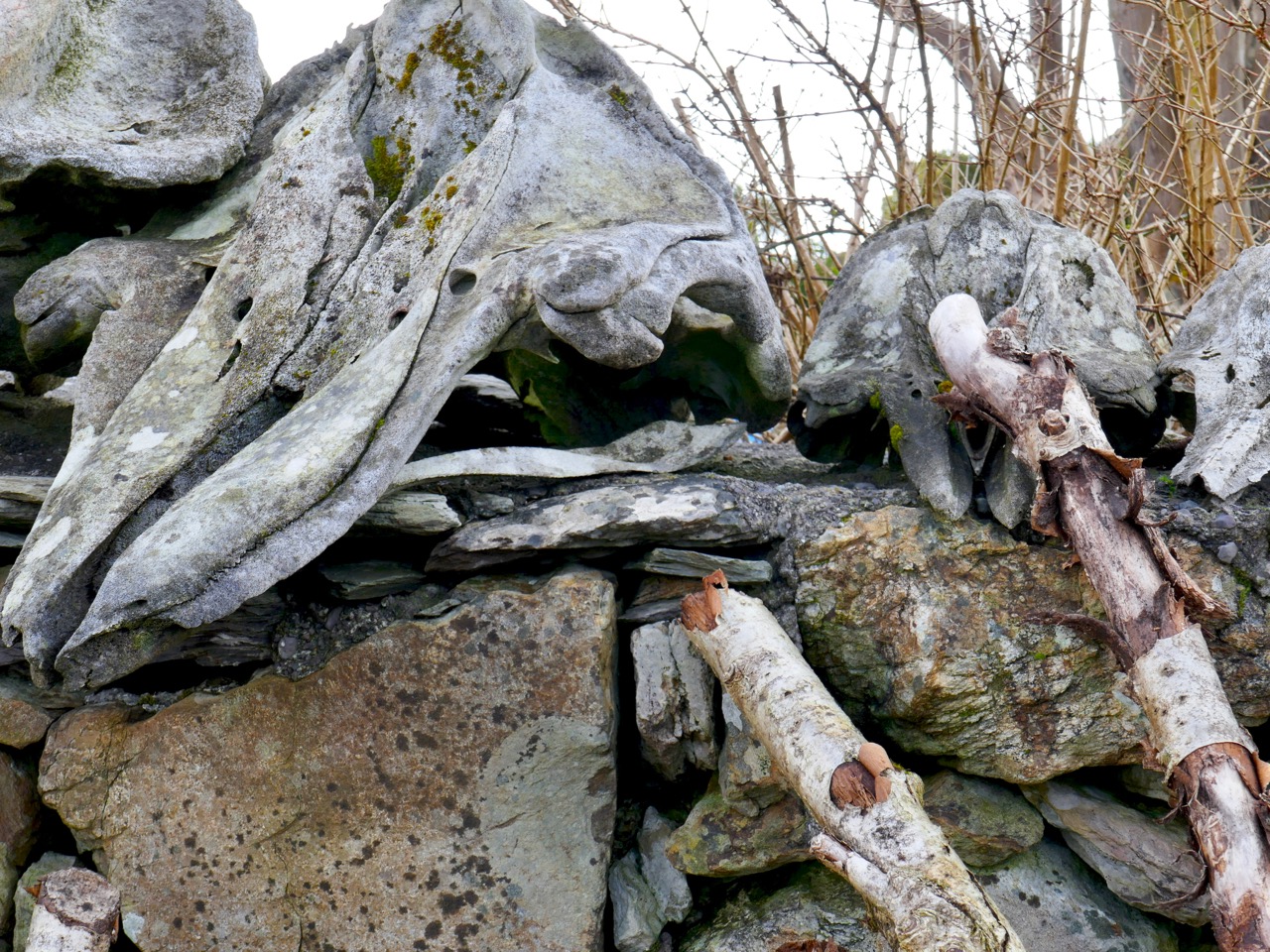
We paused to admire a Goldfinch in Connie’s garden, as well as his wonderful textural arrangement of sticks, stones and whalebones.

Thank you, Connie and Betty, from two happy walkers.

Darerca – A Neglected Saint

Ireland is ‘The Land of Saints’. The Catholic Online website lists 331 of them, but some get much better treatment than others. Last week we celebrated St Patrick – the news was full of it, as it always is on 17 March. Yet, just five days after Patrick’s Day – on 22 March – I was at a schoriacht and asked the assembled crowd who was the Saint for that day: nobody knew. It was the day for St Darerca and she is, unfairly, much neglected, especially since she is St Patrick’s sister. In order to redress the balance I have put together everything I can find on the story of St Darerca, and – because she has never been pictured (as far as I can tell) – I have illustrated it with some general Irish Saintly connections.

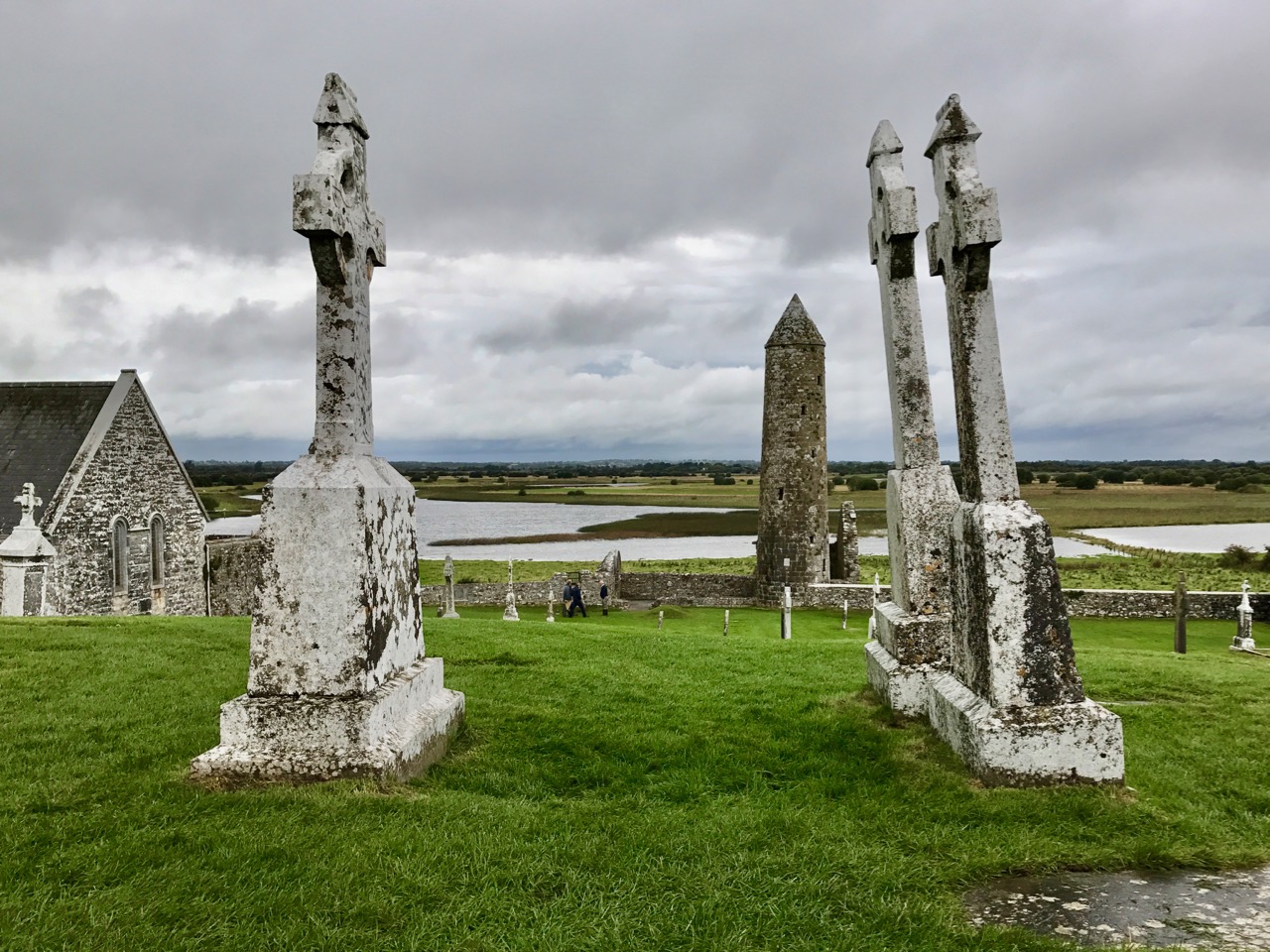
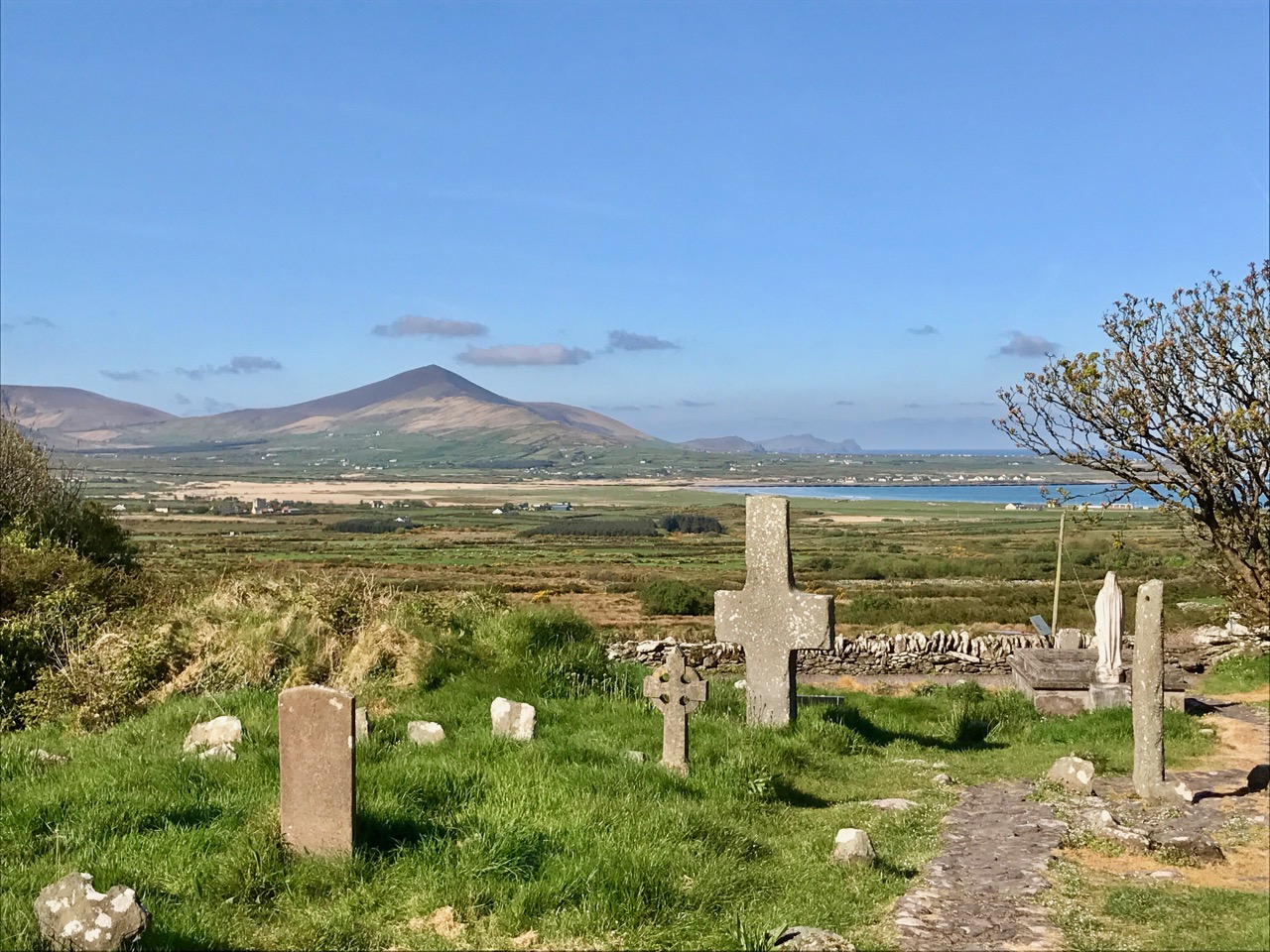
Land of the Saints: header picture – Clonmacnoise, Co Offaly – Ireland’s holy centre, and one of the oldest and most important early Christian settlements in Europe. Above – the beautifully located Kilmalkedar monastic site in Kerry has long associations with Saint Brendan the Navigator

St Darerca is first mentioned in the Vita tripartita Sancti Patricii (Tripartite Life of Saint Patrick), which some scholars believe was written in the sixth century – within a century of St Patrick’s death (possibly in 493 at the age of 120). In the Tripartite Life, we read that St Patrick had two sisters, and that when he came to Bredach in County Derry for an ordination, . . . he found there three deacons, who were sons of his sister Darerca . . . These deacons were eventually ordained bishops and became St Reat, St Nenn, and St Aedh, the . . . sons of Conis and Darerca, Patrick’s sister . . . 

Upper – St Patrick’s Bell; lower – inscription on another 10th century bell – both now in the National Museum, Dublin

In his own Confessio, St Patrick makes no mention of his sisters. The Confessio begins:

. . . My name is Patrick. I am a sinner, a simple country person, and the least of all believers. I am looked down upon by many . . .

But it’s a very brief account of his life, and hardly qualifies as an autobioigraphy.

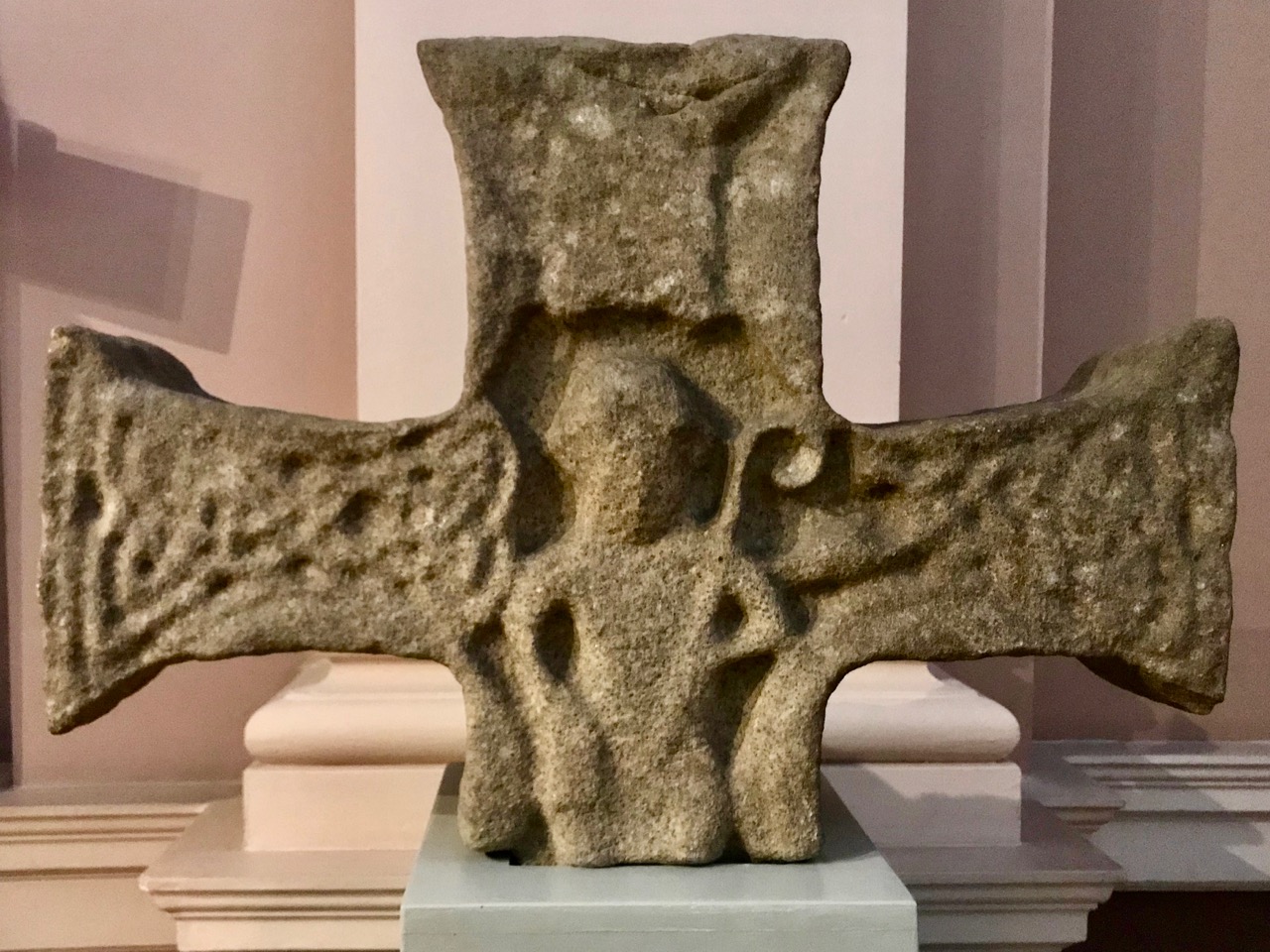
Medieval cross head, in the National Museum, Dublin

One version of the Tripartite Life suggests that both sisters were kidnapped from Britain along with St Patrick and returned to Ireland with him when he set out on his missions. A 17th century Irish hagiographer, John Colgan, collected fragments of information pertaining to Darerca . . . from Irish tradition . . . He asserted that St Darerca may have had as many as seventeen sons between two husbands, and that all of them became bishops. He also states that, according to tradition,  many of these became saints:

. . . By Darerca’s first husband, Restitutus the Lombard, she bore St Sechnall of Dunshaughlin; St Nectan of Killunche, and of Fennor (near Slane); of St Auxilius of Killossey (near Naas, County Kildare); of St Diarmaid of Druim-corcortri, in addition to five other children. By her second husband Conis the Briton, she bore St Reat, St Nenn, and St Aedh; ancient Irish authors also attributed her motherhood to St Crummin of Lecua, St Miduu, St Carantoc, and St Maceaith . . .

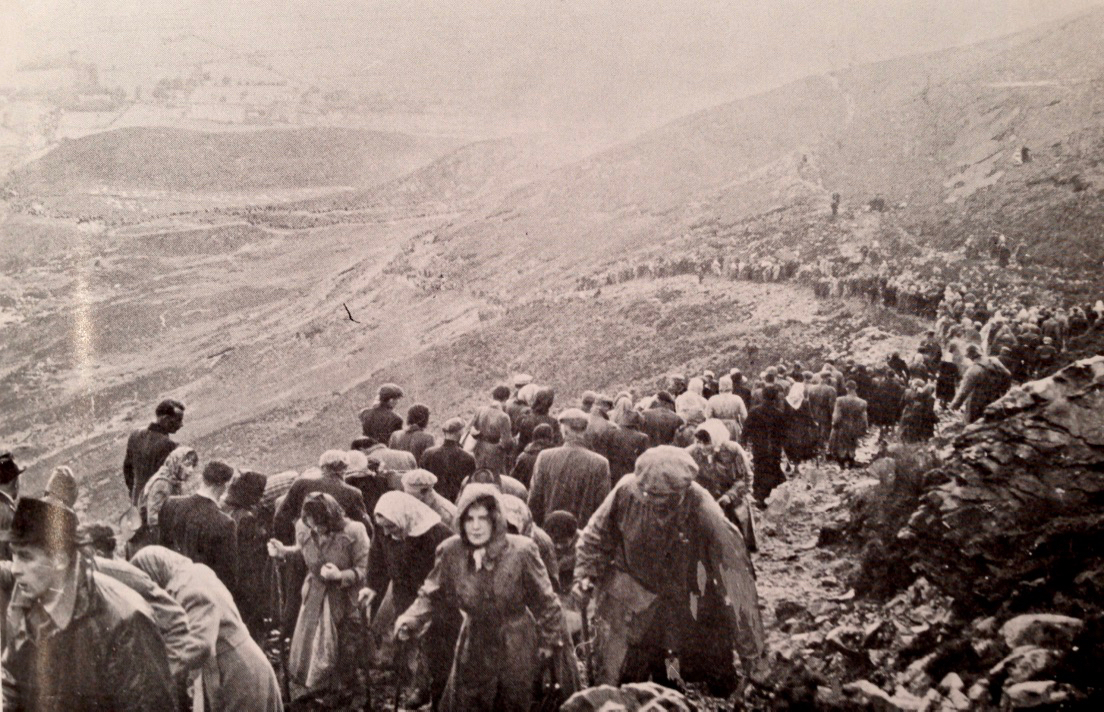
A 1950s photograph from Tomás Ó Muircheartaigh showing the annual pilgrimage to the summit of St Patrick’s holy mountain in Co Mayo, Croagh Patrick

St Darerca’s second husband, Conis, was said by some to be the King of the Bretons, although others only suggest that, by him, she gave birth to Gradlon the Great, who became King of Brittany. It’s really surprising (and a shame) that we don’t know more about Darerca: perhaps she has just always been overshadowed by her famous brother. As well as – perhaps – seventeen sons, she is supposed to have had four daughters, all of whom were also connected with the spread of Christianity in Ireland. Only two are named: St Eiche of Kilglass and St Lalloc of Senlis.

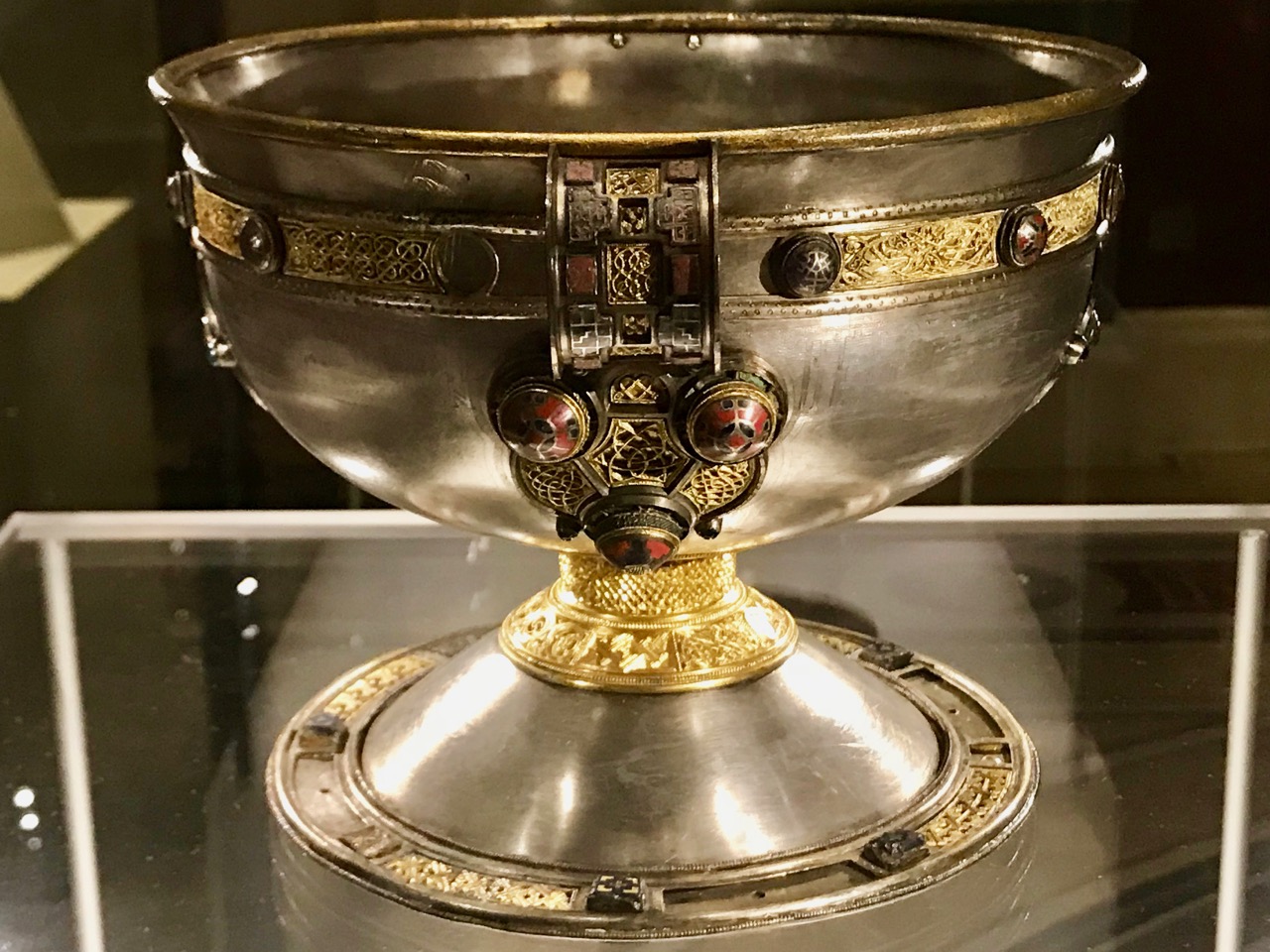
The Ardagh Chalice, National Museum, Dublin

There is a reference to Darerca as having another name: Moninna, said to have founded a convent at Killeevy, Co Armagh which was second in importance only to that at Kildare. A curious story is told to account for the change of her name to Moninna. The Irish commentary is translated into English by Whitley Stokes:

. . . Darerca was her name at first. But a certain dumb poet fasted with her, and the first thing he said after being miraculously cured of his dumbness was minnin. Hence the nun was called Mo-ninde, and the poet himself Nine Ecis . . .

Moninna studied theology, established convents in Ireland, Scotland and England and travelled to Rome. Perhaps most interestingly she is also known by the name Liamain, and there is a connection with an ancient stone on the island of Inchagoill in Lough Corrib. The ‘Pillar Stone’ on that island is known as Lugnaedon Pillar, a piece of Silurian grit stone, about two feet high with an incised cross on the north side, and two such crosses on each of the other sides. The inscription on the stone translates as . . . The stone of Lugnaedon, son of Limenueh . . . or Liamain. The pillar is said to originate in the 6th century, and would therefore be the oldest Christian inscribed stone in Ireland.

Two photographs of the 6th century Lugnaedon Pillar on Inchagoill Island. It is also known as the Rudder Stone because of its shape

The Benedictines say that Darerca’s name is derived from the Irish Diar-Sheare which means ‘constant and firm love’. And, finally, a piece of local folklore say that St Darerca blessed a poor man’s beer barrel so that it provided an endless supply of beer ever after!

Lives of the Saints – a detail from a stained glass window by George Walsh in St Kentigern’s Church, Eyries

So there you have it – scraps gleaned from many sources, some of which are not named – from which we can piece together an incomplete picture of an Irish saint who may well have done as much in her day for Christianity in Ireland as her famed brother. How about giving Patrick a rest next year and, instead, celebrating the day of St Darerca?