Ellen Hutchins Festival – Inspirational, Educational, and Fun!
One of the highlights of our year here in West Cork has been, since 2015, the annual Ellen Hutchins Festival, always a diverse and enjoyable set of offerings with lots for families and children as well as wildflower fans like me. I am delighted this year that the Festival will go ahead – virtually. All the details are on the website at this link. Each day has suggestions for activities and walks and there’s a marvellous interactive audio guide done with the help of our friends at Abarta Heritage. Many of the activities focus on the area around the outstanding landscape of Bantry Bay – honestly, how can you resist?

Who was Ellen Hutchins? Indeed, I had never heard of her before the first Festival in 2015, when I learned that she died aged 29 in 1915, having accomplished more for science than most people do in a lifetime. I wrote about her then, in a post titled Ellen Hutchins: The Short and Remarkable Life of Ireland’s First Female Botanist. If you haven’t read it already, I suggest you take a browse through it now as a good introduction to her life and accomplishments.

At that first Festival botanist Rory Hodd (above) showed us the kind of close, detailed work that Ellen would undertake when looking at a plant. This photo was taken near the top of Knockboy, Cork’s highest mountain, where Ellen found several new species including a dwarf willow, possibly the world’s shortest tree. And she did it all in a skirt and with indifferent health!

Ellen had two methods of presenting her findings – she preserved them by drying them (a delicate process calling for practice and skill) and she also turned into an accomplished botanical artist. The illustration above, of a dried specimen is from the Ellen Hutchins website (used with thanks) and the poster below is from an exhibition of her illustrations at Kew gardens last year.

Of course, the best resource to learn about Ellen is the website which is full of details about her life, her botanical art, and her scientific achievements. As an example of resources it provides and to capture a flavour of what Ellen accomplished in her short life and the incredible legacy she left, watch this short video about Ellen and her devotion to science.

We have participated each year in Festival events – I wrote about our day in the woods with Padraig Whelan and Howard Fox (below) in my post Into the Woods. I learned so much that day, especially about native versus non-native plants and the species known as Lusitanian that are unique to this part of Ireland.

Last year I wrote about how I turned from lichen-intolerant to lichen-curious after an outing with Paul Whelan in my post Lichens and Little Things in the Woods. It inspired me to search my own garden for lichens and I found the delightful and aptly-named Pixie Cups in my rockery (below).

This year I am honoured to have been asked to host an online discussion with two writers. Marianne Lee has just published her first novel, A Quiet Tide, in which she bases Ellen’s story closely on what is known about her and on her correspondence but skilfully weaves in an imagined inner life for Ellen, battling all the confines of her time to carve out a career and a life for herself. It’s beautifully written and has been very well received – highly recommended!

The second writer (lower right) is Laura McKenna, poet and novelist, who has been inspired by Ellen’s correspondence with fellow botanist Dawson Turner, and the landscape and natural world of the Beara Peninsula and has responded in a series of poems. Laura has a PhD in Creative Writing from UCC, and her poetry has twice been nominated for a Hennessy Award. Her first novel Words to Shape my Name will be published by New Island Books in Spring 2021.

I had never heard of Ellen Hutchins before the first Festival, but now she has become like an old friend and when I am out botanising I feel her over my shoulder, telling me always to take a closer look. We are all looking forward to going back to a face-to-face format for next year’s Festival, but in the meantime, for this year, do log on to the virtual festival and consider participating, if you can, in some of the events.


Sanctifying the Landscape: Holy Year Crosses in Ireland

In 1950 Pope Pius XII declared a Holy Year – and galvanised Ireland. It was the height of a certain time of Catholicism in Ireland – fervent, highly-organised, state-sanctioned – and the Pope’s decree was embraced with enthusiasm.*

First of all, what is a Holy Year? It’s a year of special devotion and penance, and a year in which, through following certain prescriptions, you can gain a Plenary Indulgence. Sounds a bit medieval, doesn’t it? But the concept of a Plenary Indulgence isn’t quite the same as the Cash-For-Forgiveness schemes that brought about the Reformation – you earn it, rather than buy it, and it gives you a Time Off For Good Behaviour Card to shorten your sojourn in Purgatory. As you can imagine, this is an attractive proposition for an ardent believer, steeped in all the ritual and dogma of Catholicism – and that described almost all of us in 1950s Ireland.

A wonderful short film about the 1950 Holy Year in Rome

The Holy Year itself involved many rituals. The Pope declared it open by knocking on the first of four Holy Doors in Rome and finished it by sealing up the door again at the end. Pius XII encouraged those who could to make a pilgrimage to Rome.

In response, Ireland mounted a National Pilgrimage, led by the President, Seán T O’Ceallaigh. Take a look at how British Pathé covered this event. Aer Lingus laid on specific flights: A special return fare of £54 from Dublin or Shannon to Rome, valid for 30 days will apply during the Holy Year. Passengers may travel via London, Paris or Amsterdam and may break their journey at any scheduled stopping place en route provided that the stopover is specified at the time of booking.

The Post Office issued a special Holy Year set of Stamps (above). The national radio station started its tradition of playing the Angelus every day – still going strong despite frequent calls for a more inclusive time marker. Everything about the official Government position telegraphed the statement – We are a Catholic Country.

Edwardian Bray, Co Wicklow – the famous Promenade is there but no cross yet

But how did this ultra-Catholicism manifest itself in individual communities? Besides specially organised missions, sodalities, novenas and parades, many towns and villages decided to mark the year by erecting monuments. Somehow the notion of hilltop crosses became The Idea of the day – perhaps it was suggested by John Charles McQuaid as a suitable mark of respect. And all over Ireland plans got underway to erect tall crosses on top of the local prominent landmark.

The Bray of my childhood, with the cross now in place, as it is today (Thanks to Bray – Did You Know…? Facebook Page)

Many (most?) of these 1950 crosses have survived and have become imbedded in our consciousness as a ‘natural’ (in the sense of ‘expected’) feature of our Irish landscape. Few today remember the impetus which led to their erection. At the time, there were fund-raising drives and committees and huge ceremonials attached to the actual situating of the crosses.

The Bray Head Cross: one of several routes up to it; the 1950 plinth; a popular spot

We have visited several of these crosses lately. I grew up in Bray and as anyone who has ever been there knows, the town is dominated by Bray Head, and Bray Head is dominated by its Holy Year Cross. It’s become the thing to do, to walk up to the cross – there are at least four ways up to it and they’re all spectacular. Sitting at the base of the cross enjoying a well-earned rest, we reminded ourselves that when it was erected over 5,000 people attended the blessing ceremony.

More recently, here in West Cork, we walked up to two crosses, the first at Knockaphuca on the Mizen (above and below). The Knockaphuca walk (it’s fantastic!) was the subject of Robert’s post a few weeks ago. The cross here is a replacement for the original wooden one that had rotted away, finally falling way back in 1968. The memory of the cross was still strong in the community, though, and the local GAA club conceived of a project to re-erect it in 2011 as a symbol of hope and re-assurance in these challenging times and a call to prayer in our hour of need. The challenging times was a reference to the global recession, which hit Ireland badly and ended the reign of the Celtic Tiger.

The volunteers took things a little further than they would have in 1950 and carried up with them an array of solar panels. Thus, this is a very modern re-incarnation of the traditional Holy Year Cross – a glow-in-the-dark model. They called it The Cross of Hope and as such it recalls the beacons that lighted many a weary sailor’s way into safe harbour.

This week we walked up (above) to the cross on Dromore Hill. This one is clearly visible to anyone travelling between Drimoleague and Bantry, on a hill behind the village of Dromore. (Special thanks to Oliver Farrell and Bridget Threthewey for directions.)

The cross is visible from many spots, including from this five-stone circle at Trawlebawn

It’s a lovely walk and the cross looks like it may be original, although it may also have been replaced. It is still a focus – most years the local parish of Caheragh organises a mass at the cross in August and it’s always well attended. It’s another one where lights have been added, this time in the form of fluorescent strips. We couldn’t figure out the power source though – electrical lines disappear into the ground. Very mysterious.

The cross with its 1950 Holy Year Plaque and a space for an altar for the annual mass

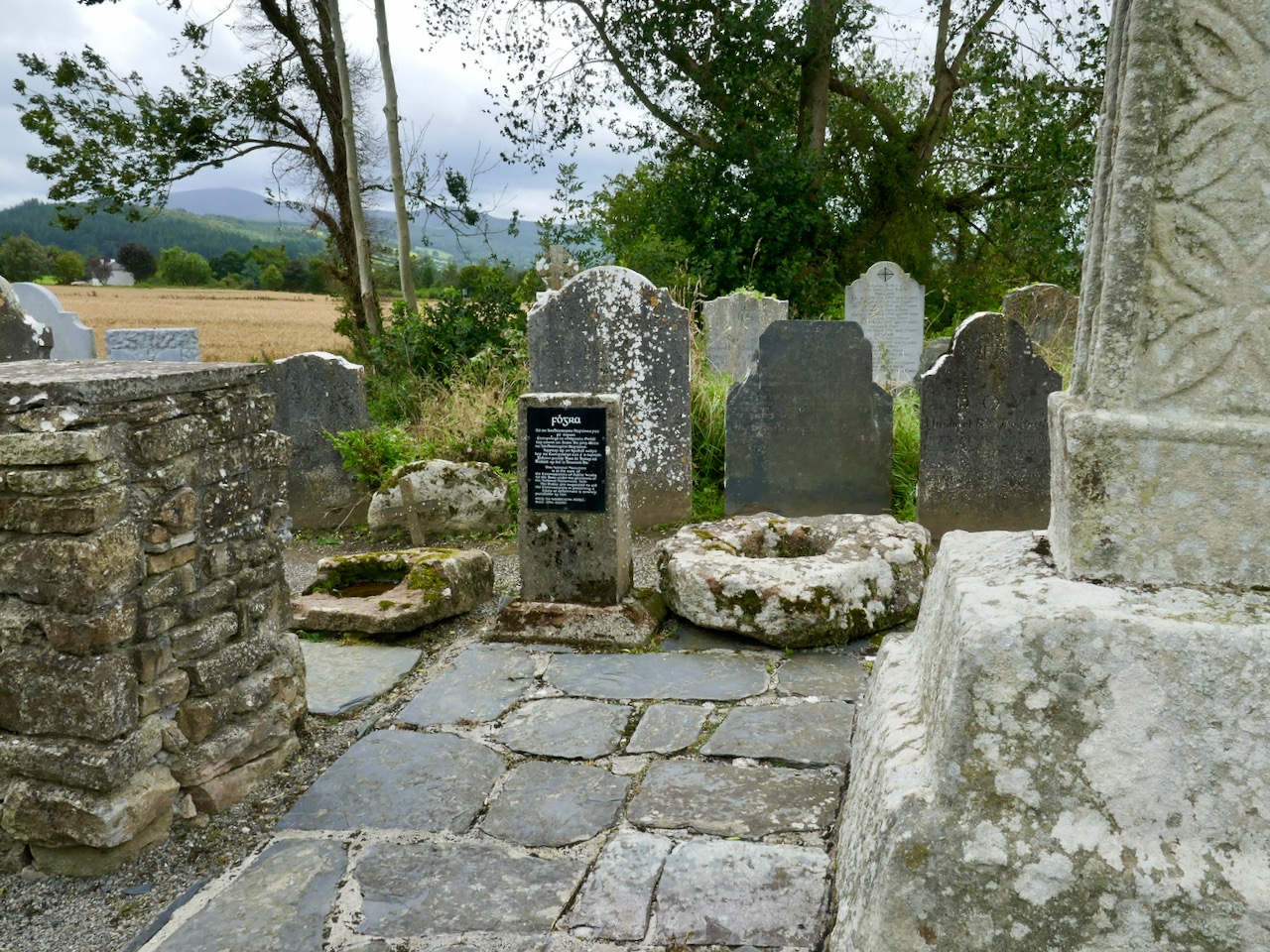
St Lachtan’s Holy Well is situated south of Ballyvourney and in 1950 a group of volunteers from the Ré na nDoiri branch of Muintur na Tíre decided to erect a cross on the well to mark the occasion. This one is not on a hill top – in fact it is quite hard to find, but the plaque, in Irish, confirms it as a Holy Year project.

St Lachtan’s Holy Well (the two bullaun stones below the cross) and its Holy Year Cross

Our final local cross is one we haven’t been up to yet – a future project. It stands on a hill between between Skibbereen and Lough Hyne – I’m not sure what the townland name is, it looks like its on the boundaries of Gortshancrone, Booleybane and Curravalley.

If anyone local knows about it, or can tell us the best way up, we would love to hear it.

It wasn’t always a cross – the people of the beautiful Glen of Aherlow in Tipperary decided on a giant Christ the King statue (above). It’s visible for miles – the current one a 1975 replacement for the original and made by the same firm. According to the signage it depicts the hand of Christ the King, raised in blessing the Glen, its people, and all those who pass by.

However, crosses (that’s the one close to Skibbereen above) seem to be the most frequent choice to commemorate and mark the 1950 Holy Year. Do you have one close to where you live?  Have you been to it? Is it still in some form of use (for annual masses, say)? Is it valued by the community?

*There have been other Holy Years (officially they occur every 25 or every 50 years) but the only other Papal-decreed year of devotion that made the same kind of impact in Ireland was the Marian Year in 1954 – see our post Mary Mary for a quick description of the Lourdes Grottos that proliferated that year.

Aiming High!

There seems to be a thread going through our recent posts: my Mizen Mountains and Signal Tower projects take us to high places, and today Finola reports on her exploration of hilltop crosses dating from the 1950 Holy Year. Our travels have brought us to many peaks and pinnacles in and beyond West Cork. I must say there’s nowhere I would rather be than far away from the crowds up on an Irish eminence which – without fail – provides us with the most spectacular views across the topography of this greenest of all lands.

After lockdown restrictions were eased, we made a little trip up to County Wicklow to see family and friends, and took full advantage of the many trails that cross the granite outcrops between Bray and Greystones. The header picture looks south-west from Bray Head towards the Great Sugar Loaf, part of the Wicklow mountain range which, at 501 metres, is significantly higher than our own Mount Gabriel in West Cork at 404m, but which nevertheless provides this view (above) towards the coast of Roaringwater Bay, and looks out over Carbery’s 100 Isles.

Travellers through Wicklow have, since ancient times, oriented themselves using the high peaks. Pilgrims going to the holy city of Glendalough and keeping to the coastline south out of Dublin might have followed the routes which, today, pass over Bray Head. A modern way of doing it, at least in part, is on the railway line that hugs the cliffs between Greystones and Bray – a feat of engineering laid out by Isambard Kingdom Brunel in the 1850s and surviving to this day, although it has had to be realigned six times because of erosion and rockfalls. It has even been described as one of the world’s most picturesque train journeys – something of an exaggeration, perhaps, but it’s well worth taking the trip if you are in the area. The photos above show (from upper) the public trail leading from Windgate up to the Bray Head Cross; the railway line seen from the cliff path that runs close to the route – note the abandoned tunnel on the far right; the view from Bray Head looking south to Greystones with Dunbur Head, south of Wicklow town, far beyond.

Back in West Cork we have no end of high places to choose from. Our latest escapade was a climb to the 1950 cross at Dromore, between Bantry and Drimoleague, which provides the two views above and this one, below, from which you can see the high peak of Gabriel in the distant west.

We have shared with you some of our favourite high journeys in our own part of the country, including the remarkable Borlin Valley road, which crosses the County border between Cork and Kerry:

Climbing to the summit of Knockaphuca gave us this striking view over the Mizen village of Goleen and out to the ‘Wild’ Atlantic beyond it:

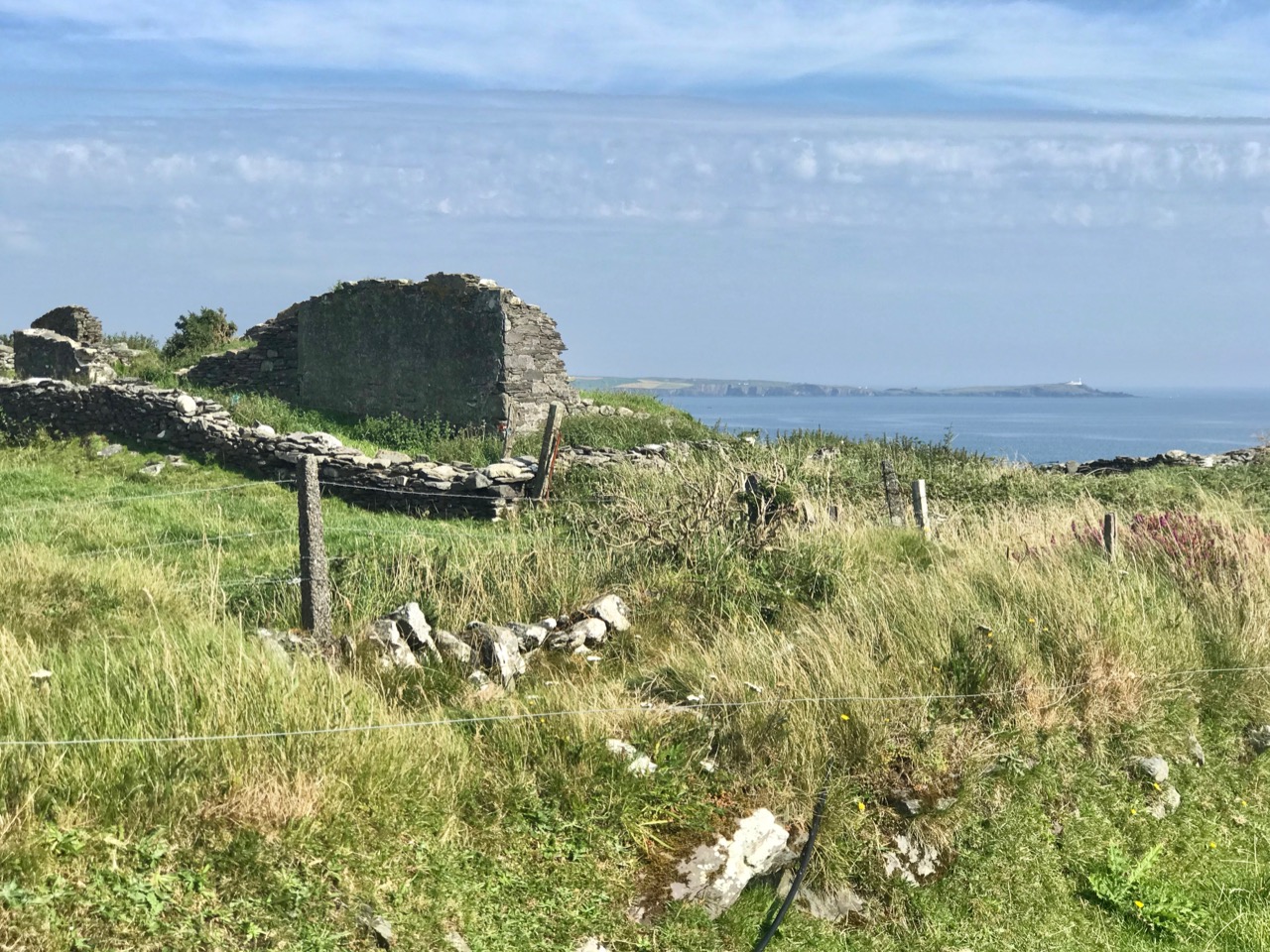
Heights still to be scaled: in the picture above I’m walking on a very old roadway which leads out to a ruined Napoleonic signal station perched right above Mizen Head. To my left is the distinctive Mizen Peak. Both sites will feature in future posts, and both reveal dramatic views over this western edge of the land.

We couldn’t complete any account of high places in the west of Ireland without mention of one of our favourite destinations: the Beara Peninsula. Above is the view north from the top of the Healey Pass, looking into Kerry. Below is a dizzying view into the heart of the Beara: look at the farmsteads and cottages below the ancient field system, dwarfed by the power of the mountains.

We will continue to share with you our experiencing of the landscapes here, and not just the high places, of course. We have many years of exploring Ireland under our belts, and look forward to lots still to come.

A Signal Success in Irish Engineering – Part 4: Robert’s Head

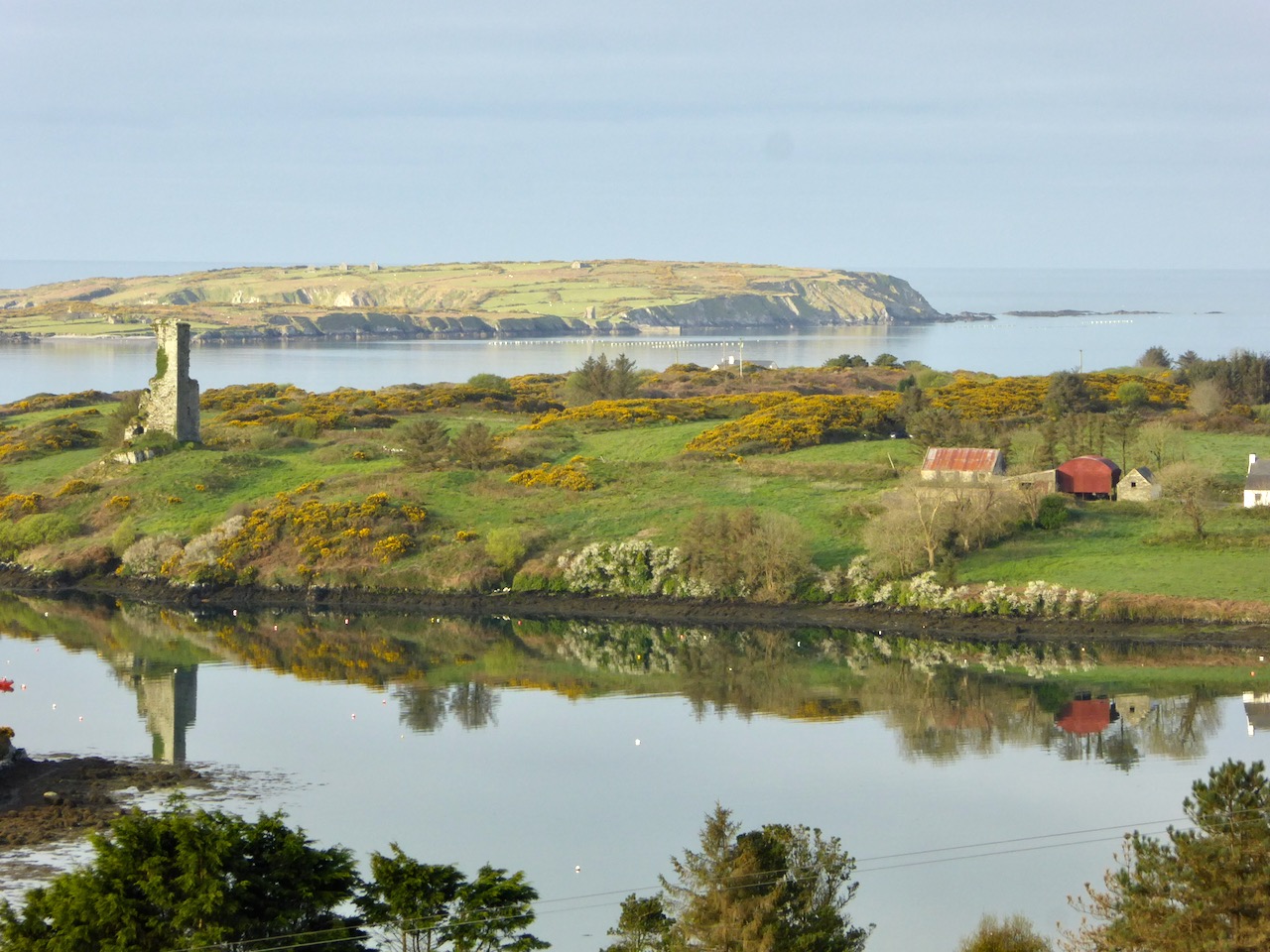
I suppose this – our fourth venture into the world of Irish signal towers from the Napoleonic era – has a distinctive resonance with me! Of the 84 signalling sites around Ireland, only five bear a personal name: John’s Point, Co Donegal; Brandon Head (Brendan), Co Kerry, Sybil Head, Co Kerry; Barry’s Head, Co Cork; and this one – Robert’s Head, Co Cork.

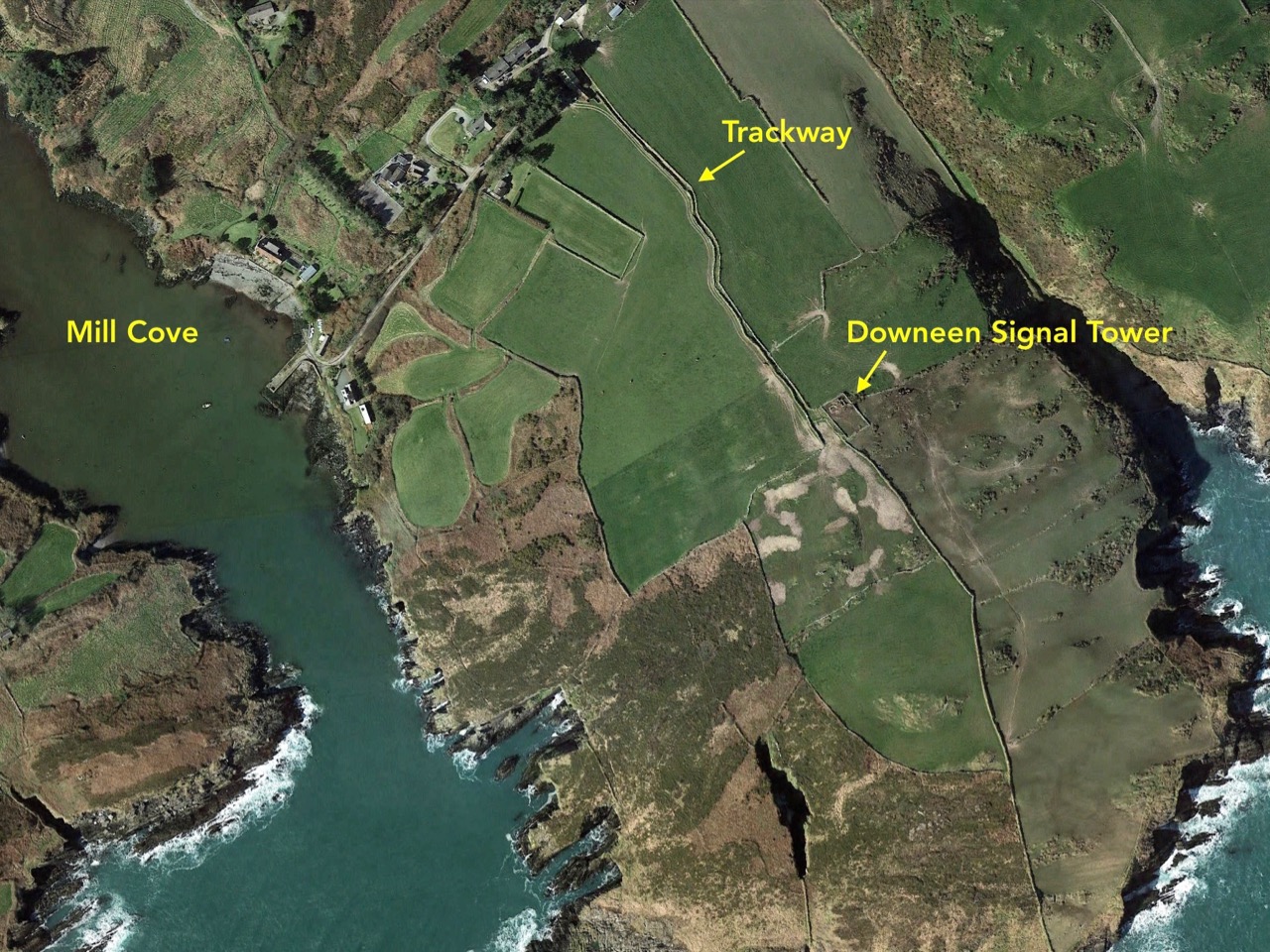
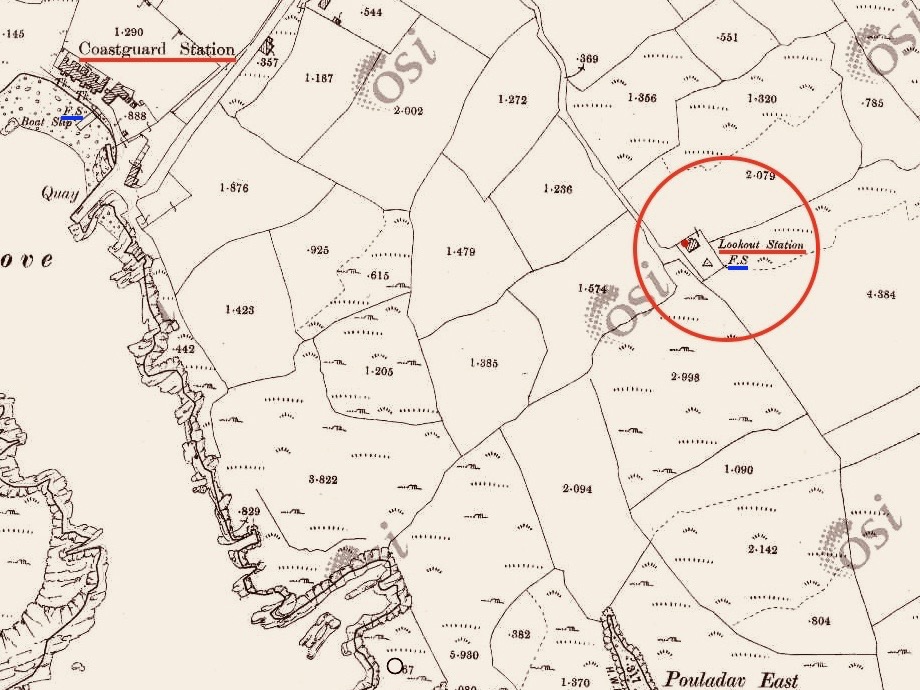
As you can see on this aerial view, the headland on which the signal tower stands is named after Robert’s Cove – Cuainín Riobaird – close by. The Cove, a small village, is a popular weekend escape and holiday destination which has two pubs and a former coastguard station, possibly dating from 1863.

Highlights of Robert’s Cove: the old milepost on the top is non-committal about the apostrophe! The former Coastguard Station (now a private residence) is the building on the left in this picture, above

I wondered how this cove got its name, and was rewarded by a search in A Topographical Dictionary of Ireland by Samuel Lewis, 1837:

Ballyfoil, a parish, in the barony of Kinnalea, county of Cork, and province of Munster, 10 miles from Kinsale; containing 1291 inhabitants . . . comprises 1304 statute acres, as applotted under the tithe act. The soil is fertile, and about one-half of the land is under tillage; the remainder is in dairy farms. The system of agriculture is improved; the only manure is sea-sand, which is brought into Rocky Bay and Roberts’ Cove, two small coves in the parish, in large boats, of which several are employed in this trade. At Roberts’ Cove is a valuable slate quarry, belonging to Sir Thomas Roberts, Bart., but it is not worked to any considerable extent. Britfieldstown, the seat of Sir Thomas Roberts, Bart., is pleasantly situated in a secluded spot above Roberts’ Cove . . . The Cove affords a commodious shelter for vessels of 200 tons’ burden, which occasionally arrive laden with coal, and return with cargoes of slate. The coast-guard station here is the most westerly of the eight stations that constitute the district of Cove. A little to the west, on the summit of Roberts’ Head, is a ruined signal tower, from which is an interesting and extensive prospect. It is an impropriate curacy, in the diocese of Cork, and is part of the union of Tracton, where the Protestant inhabitants attend divine worship . . . The tithes amount to £109. 4. 6. . . The church has long been a ruin . . . there is also a hedge school in the parish . . .

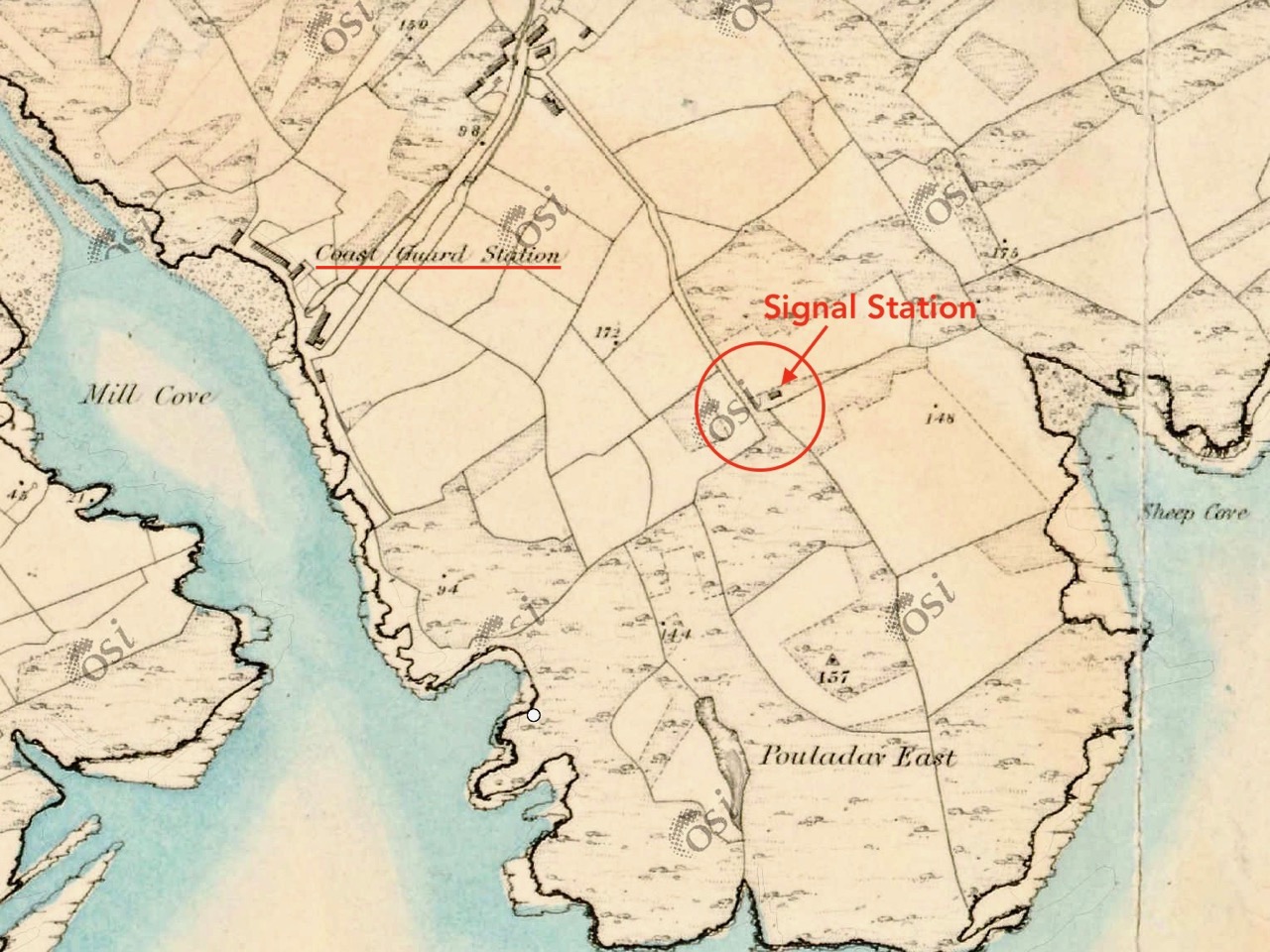
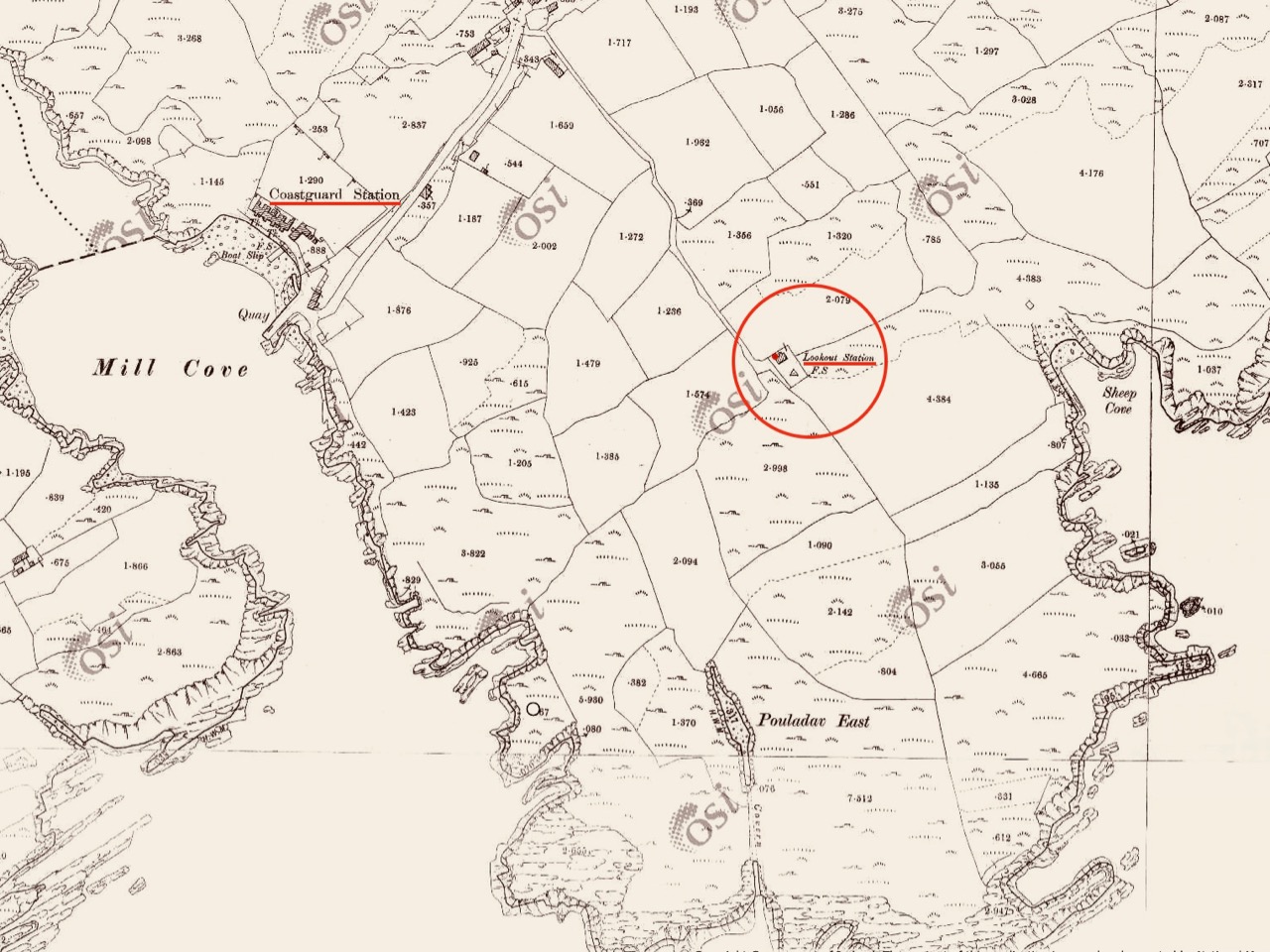
In this 1842 Ordnance Survey map of the area, the site of the signal station is marked. Britfieldstown House, the seat of the Roberts family, was situated further to the north. In 1851 the estate was sold on behalf of Sir Thomas Howland Roberts, ‘…an insolvent debtor…’ It became derelict in the 1970s and the only survivals now are remnants of a walled garden and a derelict gate lodge. It’s interesting that the apostrophe has been changed – on this map – to indicate a singular ‘Robert’ rather than the ‘Roberts’ family, whereas the 1837 Topographical Dictionary entry clearly implies the naming as ‘Roberts’. 

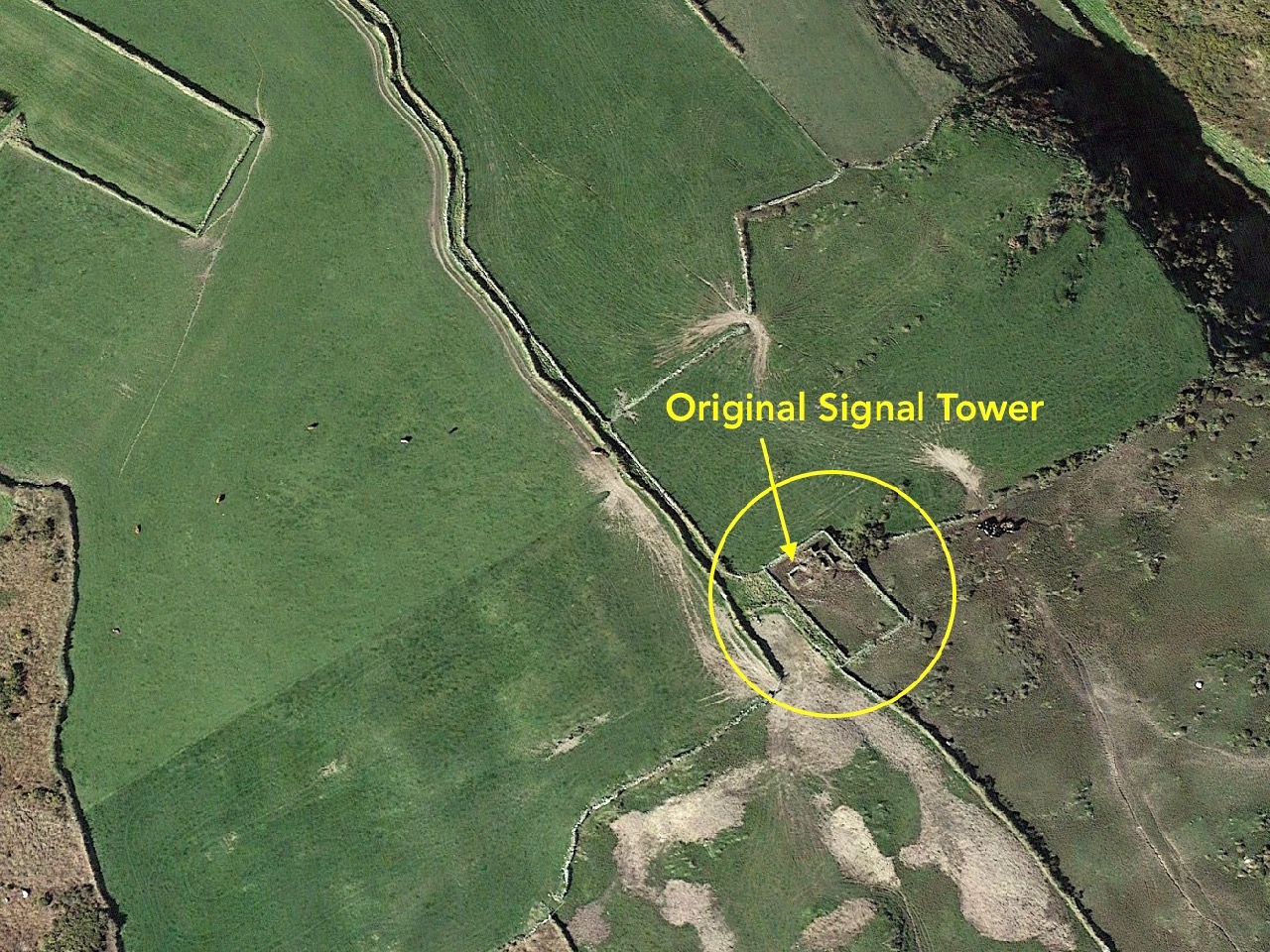
A closer aerial view of the signal tower clearly shows the extent of the remaining buildings, although all ruinous

The visible buildings on the signal tower site are extensive, and imply that this station was in use beyond the time of the Napoleonic invasion threat: many of the other stations were stood down around 1810 and became derelict soon after, mainly due to their remote exposed locations and the ravages of the weather. Interestingly they do not generally appear to have suffered from stone ‘robbing’ in the same way that medieval tower houses did.

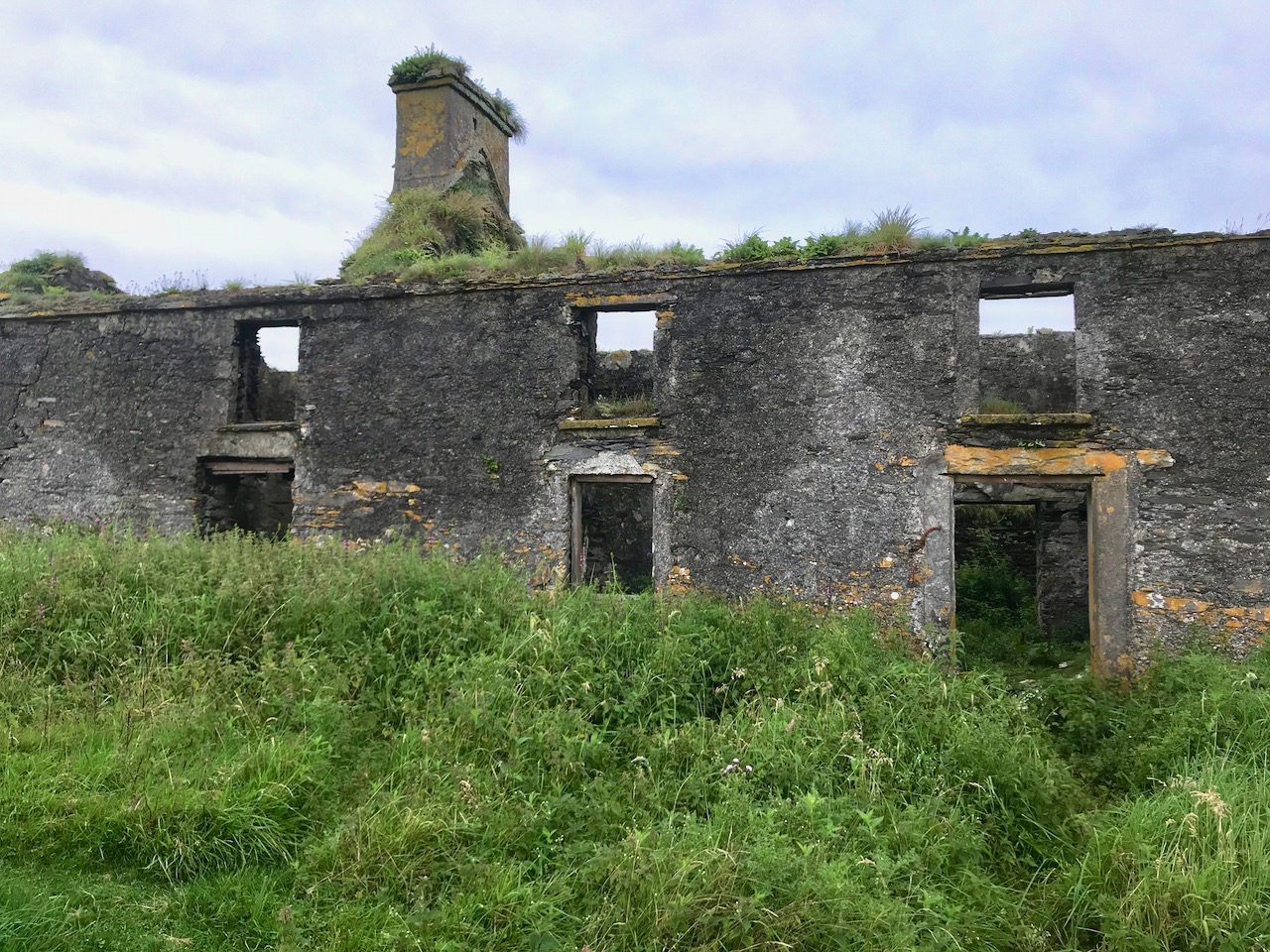
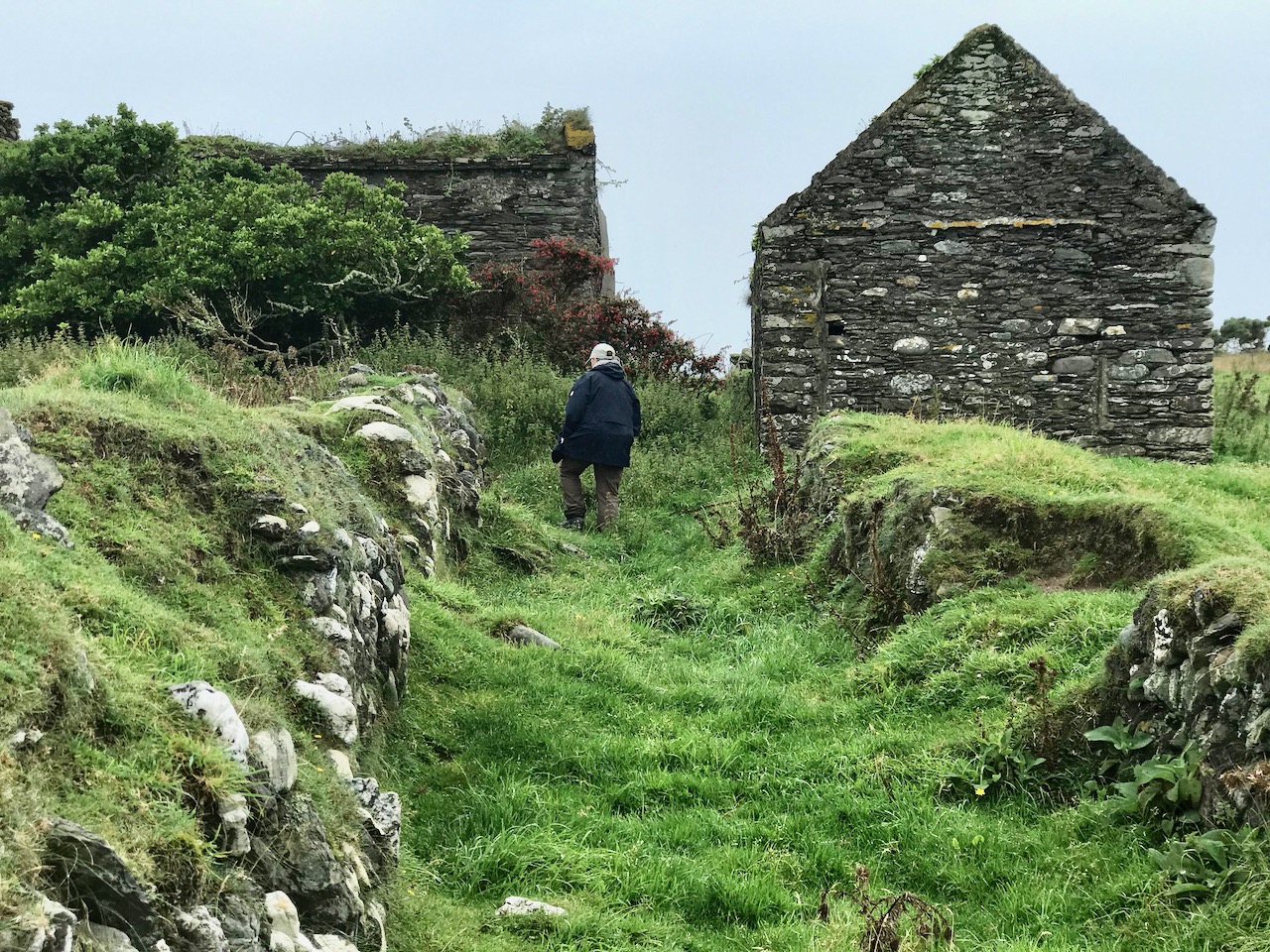
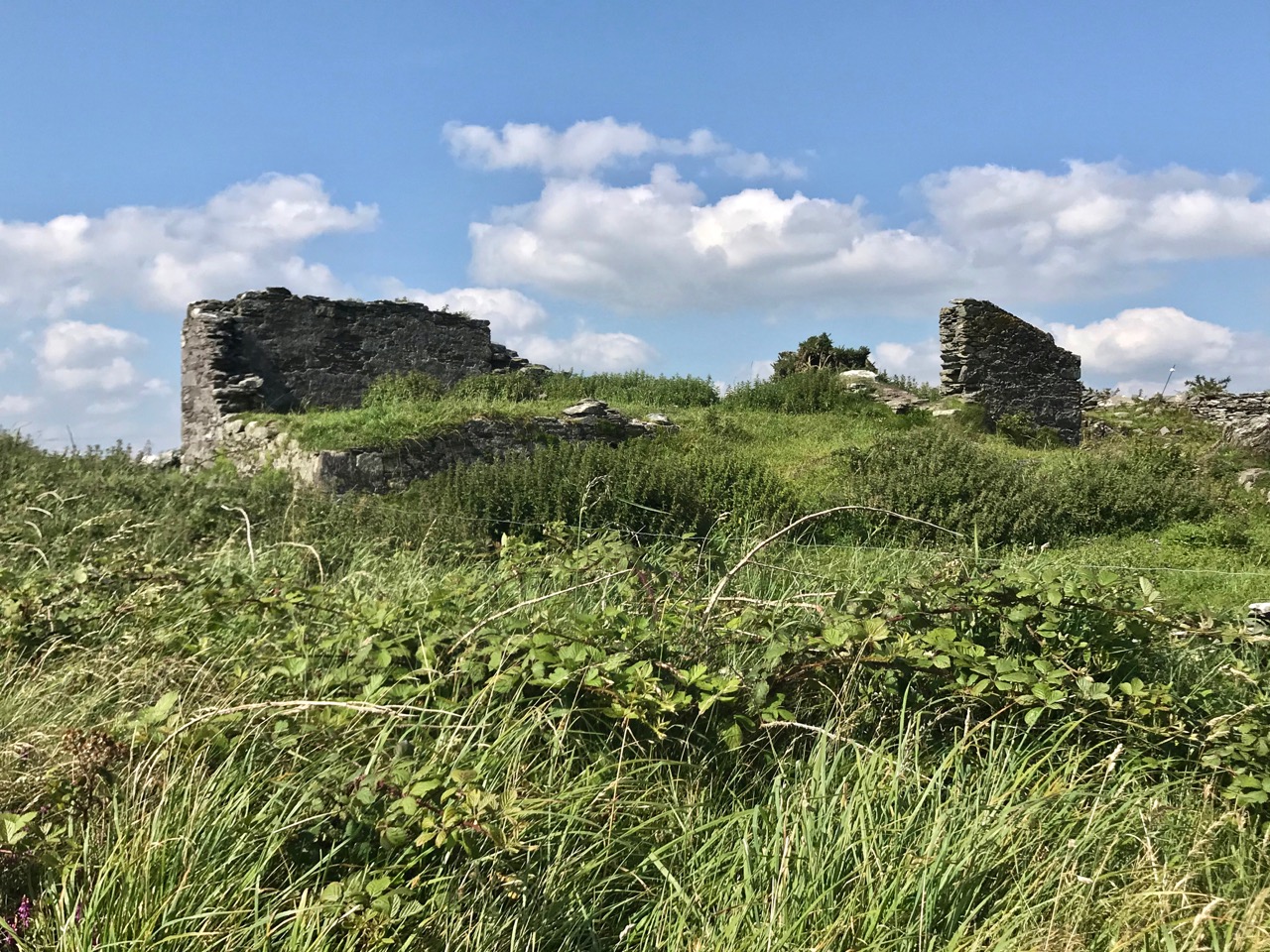
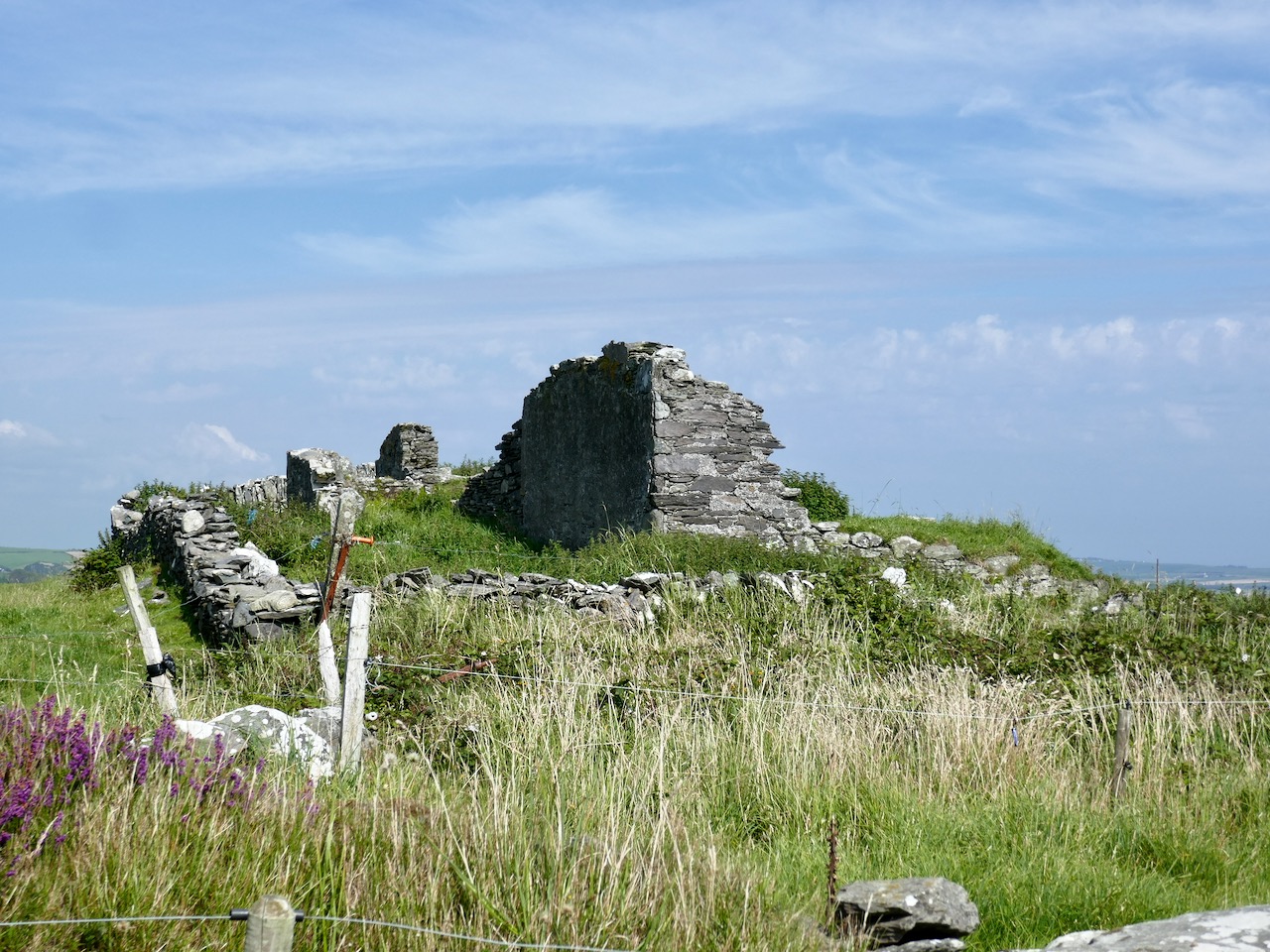
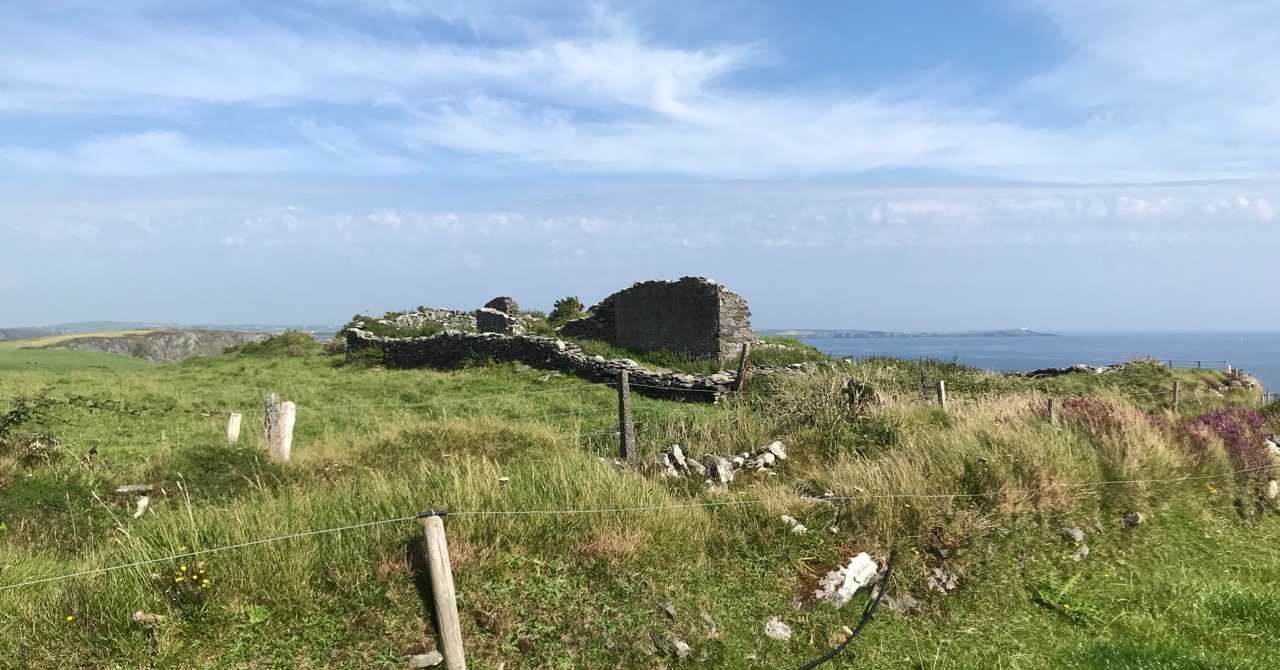
The complex of buildings on the Robert’s Head site showing (from upper picture) north-west, north-east, south-east and south-west elevations. I think it’s very likely that the highest part of the structure is based on the original signal tower, and contains much of that early structure: the raised entrance (north-east elevation) follows the general pattern, but there are no bartizans or machiolations. These could well have been replaced in later reconstructions, when a pitched roof was added. Clues that much of the original masonry has been retained lie in the back wall – thickened at the centre to incorporate a chimney flue – and remnants of external vertical slate-hanging, a method of weatherproofing evident in many other towers.

I can provide no answers as to why the extensions were added: it has been suggested that these are late 19th or early 20th century works. But the resulting building is substantial – now just a gaunt shell on a windy hill. It’s possible that the station was used as a lookout by the coast-guards based down in Robert’s Cove. Stuart Rathbone (Irish Signal Stations), writing about the Mizen Head station, observes:

The enclosed signal station at Mizen Head, County Cork, features a well preserved three storey building that is now believed to be a replacement for the original signal tower. The building is very similar to the example at Robert’s Head, County Cork. It has tall gabled walls and a large single storey building wrapping around the south east and north east sides . . .

In the early years of the 20th century a fog signal station had been established at Mizen Head, Co Cork, and was probably based on the original signal tower building there; the project also involved building accommodation for the additional crew members required at that time. It is possible that the enlargement of the earlier buildings at Robert’s Head happened in the same period, and for a similar purpose: establishing a signalling and communications base connected to the local coast-guard activities. Those works appear to have included accommodation, office and workshop space, with stores, a toilet and a large concrete water cistern adjacent to the south east wall.

Amenities established in the later reconstruction: a probable outside ‘privvy’ (upper) and ‘shovelling out hatch’ (middle), with large water cistern (lower)

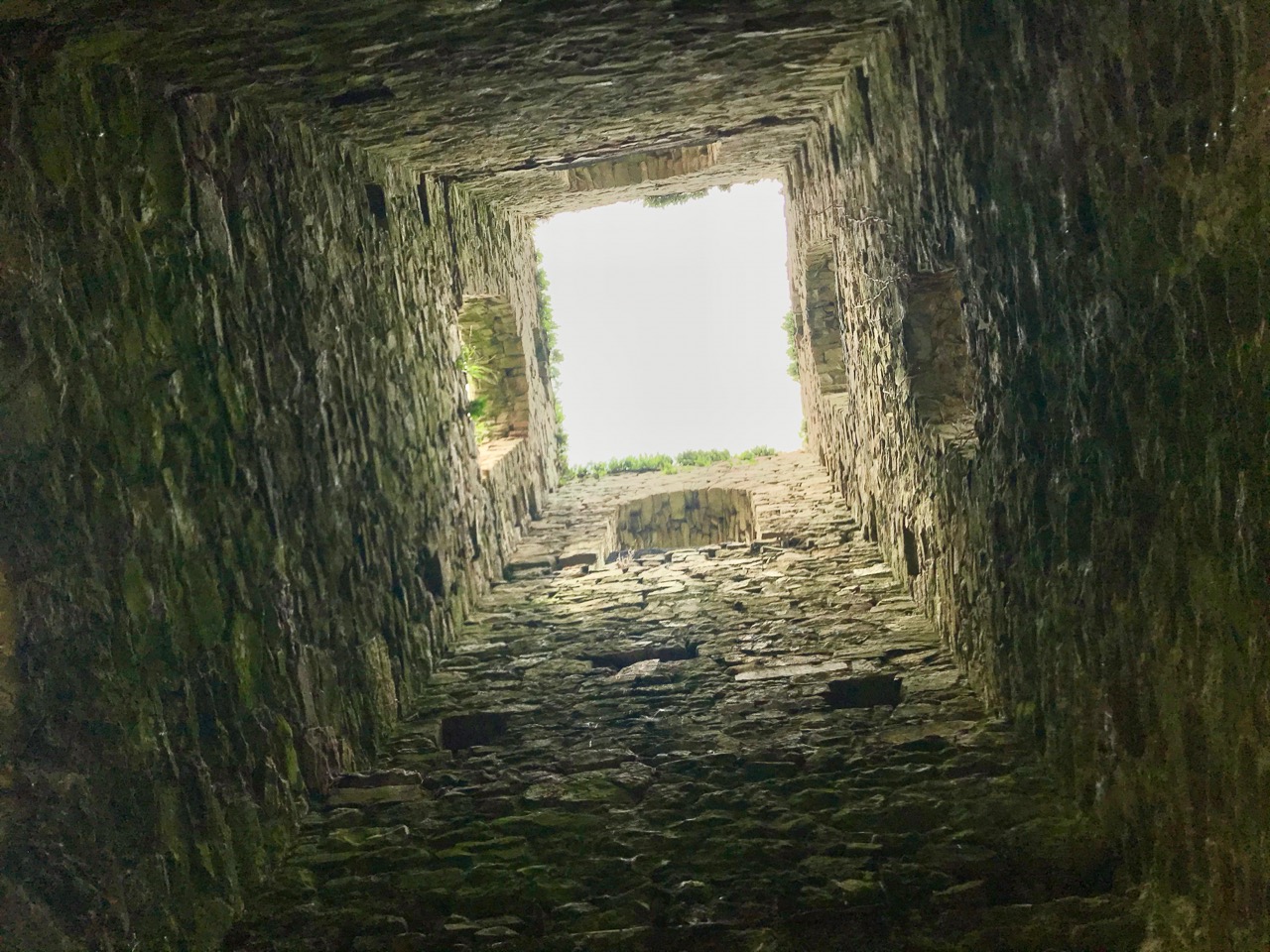
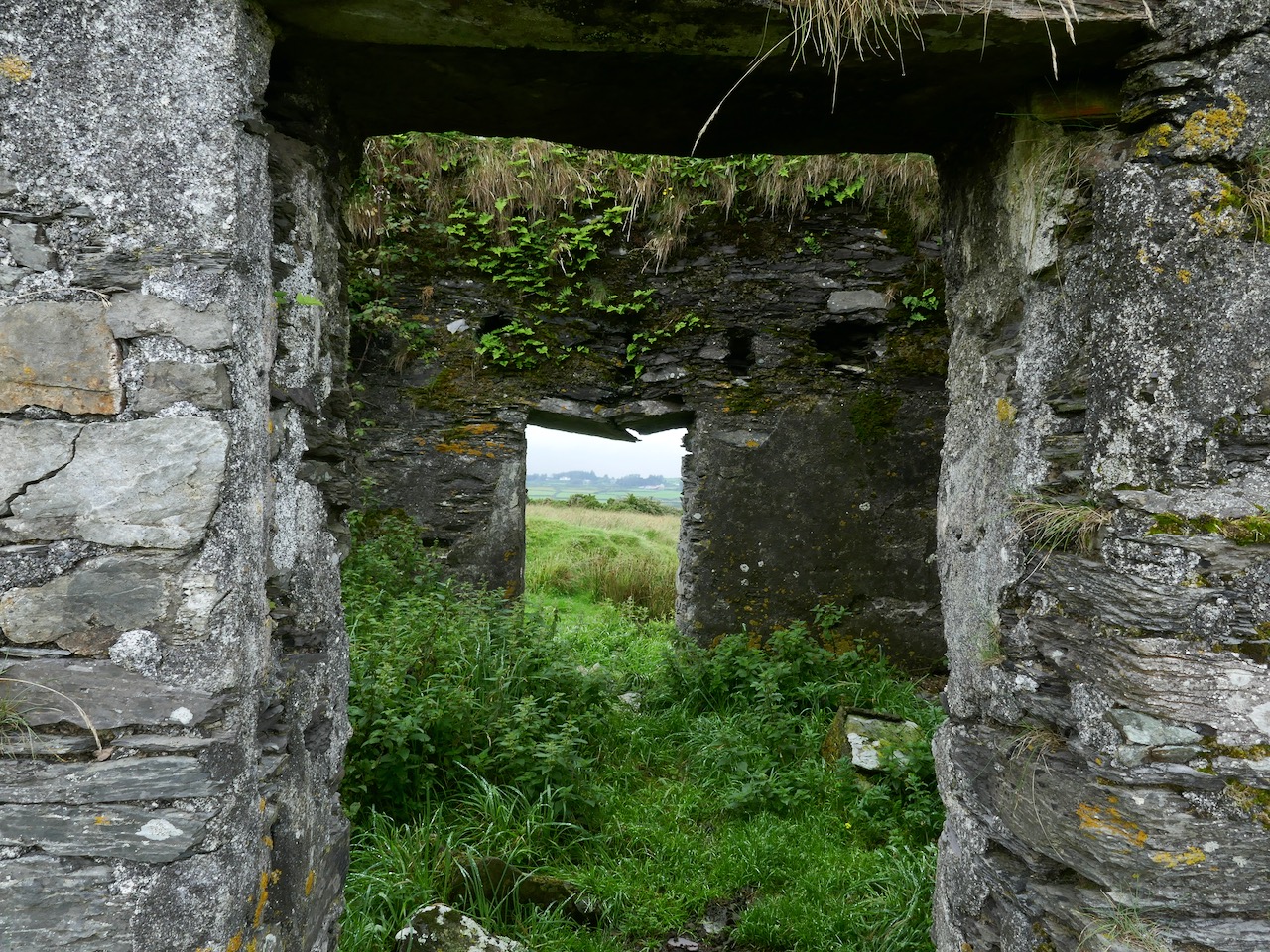
Internal features are difficult to describe definitively, but in likelihood include a hearth / cooking range, living and sleeping quarters with rendered walls providing a level of comfort above that found in the early signal towers. Now, after years of abandonment, the surfaces have been embellished with graffiti and lichen growth, all imparting a compelling visual patina: the place is alive with its own decay. Even the texture of the masonry itself is evolving in a compulsively fascinating way as centuries of abrasive winter gales take their toll.

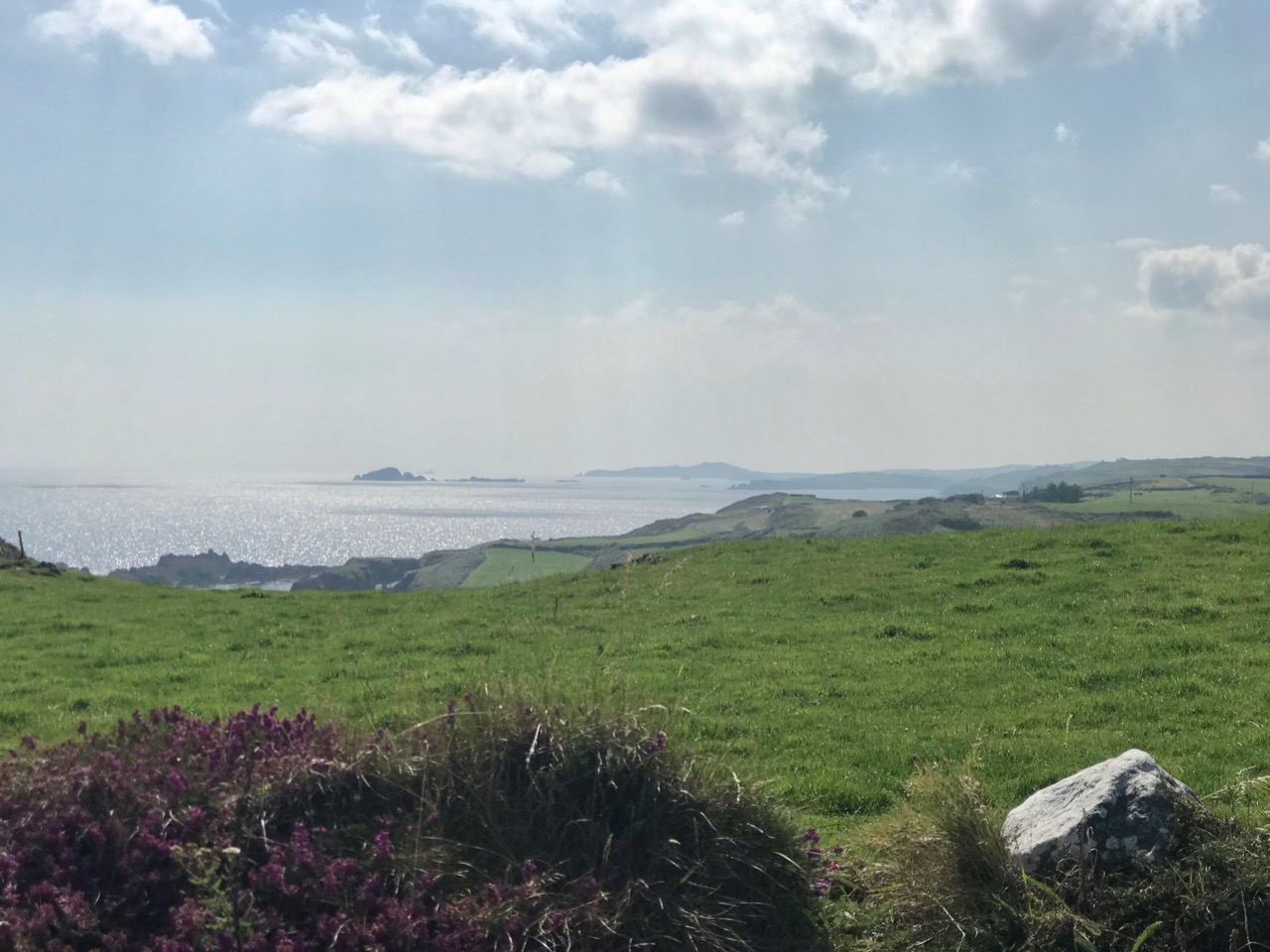
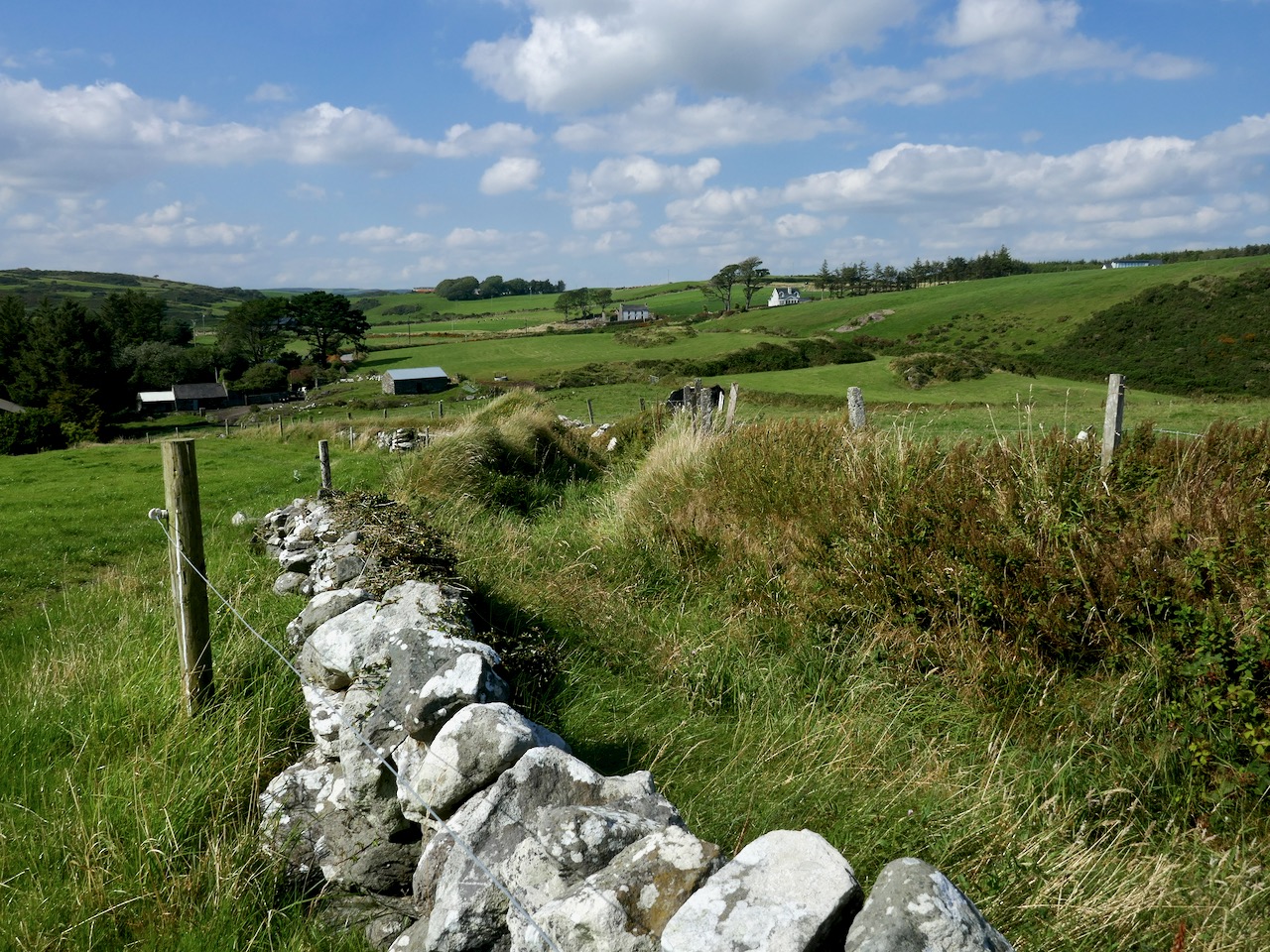
Access to the site is along farm tracks – don’t forget to seek permission if you intend to visit. With all of the towers we have explored so far, the roadways leading to them have survived intact, and have been well made and metalled – in this case solidly crafted with slate probably quarried in Robert’s Cove.

I feel we have been privileged to explore an actively disintegrating artefact of Ireland’s engineering history. More than most, perhaps, this signal tower has absorbed the lives of those it sheltered, and we can meet them there, in our imaginations. It’s a raw place, and it won’t be there forever. In time it will be no more than the scattered piles of stone that we saw at Ballyroon. But in our brief lifetimes, through tempest and contagion, it will continue its slow decline into the dust of the earth largely unseen and unmourned.

The previous posts in this series can be found through these links:

Part 1: Kedge Point, Co Cork

Part 2: Ballyroon Mountain, Co Cork

Part 3: Old Head of Kinsale, Co Cork

Why I Wildflower

Enjoy this slideshow – every one of these flowers is native to West Cork.

Music by Enya, Shepherd Moons

CORKumnavigation

As of this week I hadn’t been in a canoe for, oh, about 25 years. That all changed on Thursday when my friend Jack O’Keeffe invited me along on a CORKumnavigation! I was a bit apprehensive but I needn’t have been – the trip was easy, my paddling skills were still intact and I felt very safe. Most of all, though, this was a terrific experience.

There are, in fact, very few cities in the world where you could do something like this. That’s because Cork was built on a marsh, with the the rivers that formed it gradually flowing around the reclaimed land, and joined to the land on either side by a series of bridges. The traces of that former city (above) are all still there, as both Brian Lalor and Eiléan Ni Chuilleanáin pointed out in this post and this one.

There are complications for anyone wanting to navigate this river using the two channels as seen in the map above – the flow of the river is one and the tide is the other. There’s a hydro-electric dam upstream at Inniscarra and it can control the release of water that raises or drops the level of the river. And then there’s the tide – since the river here is tidal the water level rises and falls on every tide.

Why is this important? Because there are weirs and bridges along the CORKumnavigation route. The water has to be high enough to cover the weirs (which are a real hazard to small craft) but at the same time low enough to allow passage under the bridges. There are windows of opportunity in which the tidal level is just right, and the Inniscarra Dam isn’t affecting the river unduly. Several years ago, under an initiative managed by Meitheal Mara, all the weirs and bridges were surveyed and measured and thus it is now possible to work out the times in each month when it is possible to travel safely around Cork by water.

Jack takes all this information, calculates optimum times for the voyage, and spreads the word when those windows open. And magically, people gather in an astonishing variety of small craft – curraghs, skiffs, one and two-person kayaks, canoes, paddleboards, inflatable sit-upons. My partner in the canoe was the genial Cathy Buchanan who is the Manager of Meitheal Mara and a former National Rowing Champion. We proved to be a wonderfully compatible team, able to keep the canoe going in the direction we wanted, and chatting companionably throughout (first photograph in the post).

On this occasion, the trip was anti-clockwise. We launched at Crosse’s Green, right by the new half-built convention centre and under the looming walls of the 17th century Elizabeth Fort, and paddled downstream, passing first under the South Gate Bridge, the site of one of Cork’s original historic bridges, and from there down to the docks, past City Hall and the mid-century building where my father worked in the 60s. In the photo above the paddlers are passing the intersection of the South Mall and the Grand Parade.

Once around the Port of Cork wedge, we started upstream along the quays – Merchant’s Quay, Patrick’s Quay, Camden Place and under all the patriotic bridges – Brian Boru, St Patrick, Michael Collins and Christy Ring (legendary hurler). There’s a new one, a pedestrian bridge (below), that finally breaks the macho bridge-naming stranglehold to honour Mary Elmes, the modest self-effacing Cork woman who worked heroically to save Jewish children in France and Spain during WWII. The bridge has become a favourite strolling and sitting place for Corkonians and visitors and we were greeted with waving and cheering as we passed underneath.

Viewed from the water, with the docks (below) behind us, the quays are very fine examples of Victorian Commerce, with the most imposing edifice of all being the neo-classical St Mary’s Church, a monument to the rising power of a Catholic middle-class. Rounding a bed you come to the Lee Maltings where UCC students, including me, played raquetball in the early 70s.

Once past the Maltings, everything changes. The river seems to slow, the headwind stops, greenery appears and you float past lovely old Edwardian houses with their gardens sloping down to the river on the right, while the landscaped lawns of Fitzgerald Park and the Mardyke sports grounds stretch along the left bank.

This brings us finally under the fabled Shaky Bridge and on to the portage, a rather grand name for the act of hauling our boats over the Split Weir and an opportunity for a rest and a drink.

Then came my favourite part of the whole trip, as this smaller, south stretch of river meanders through the treed banks along which you are hardly conscious that you are in a city. The noise falls aways, green branches arch down to the water, Water-crowfoot provides a sparkling carpet to paddle through, a duck family swims leisurely aside and overhead in the canopy of leaves birds are singing their hearts out. You could be deep in the country, totally unconscious of the urban life all around you, until you emerge once again beside the River Lee Hotel. It especially astounds me as I attended UCC for five years, often walking in and around this part of the campus but unaware of the green and beautiful waterway below.

From there it’s a short paddle to the pull-out, and you’re done. The whole thing took about two hours or a little more but it felt like longer, I think because we had experienced so much in that time. We were lucky with the weather, as it was a warm and sunny evening. We were expertly guided by Jack, who quietly and unflappably sorted out any issues as we went along. It was, in fact, ideal. It felt privileged, too, to be along with a small group on such a unique trip.

My heartfelt gratitude to Jack, and to all the people at Meitheal Mara who worked so hard to establish how this route could be safely undertaken. Given that there are so few cities where this is possible, this is a world-class experience and deserves to be far better known than it is.

A word about the photographs – although I had my camera with me, I took no photos of my own, and am therefore relying on images captured by other participants in this and previous CORKumnavigations – thank you so much to Fabian Murphy, Brice Pvllnd, Ivan Cruseido and especially to Jack.