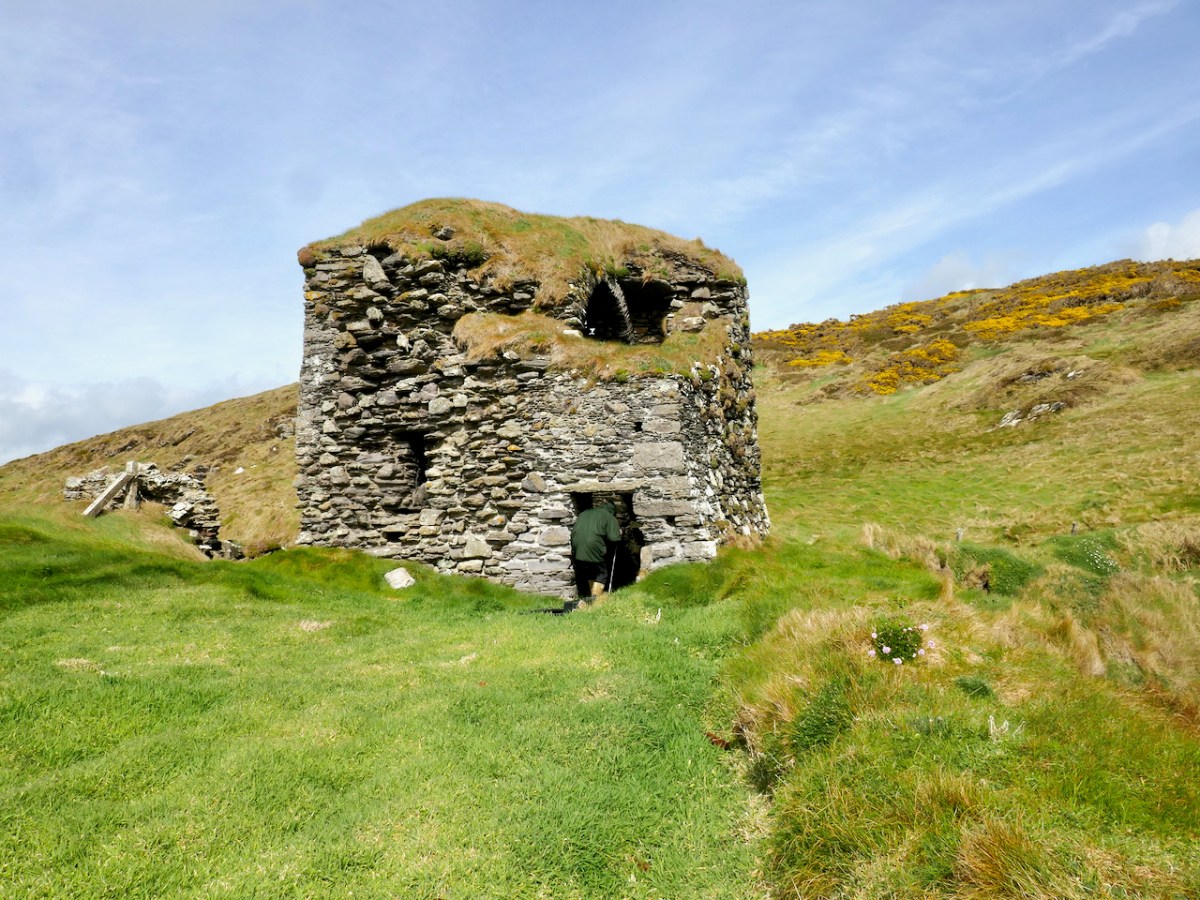
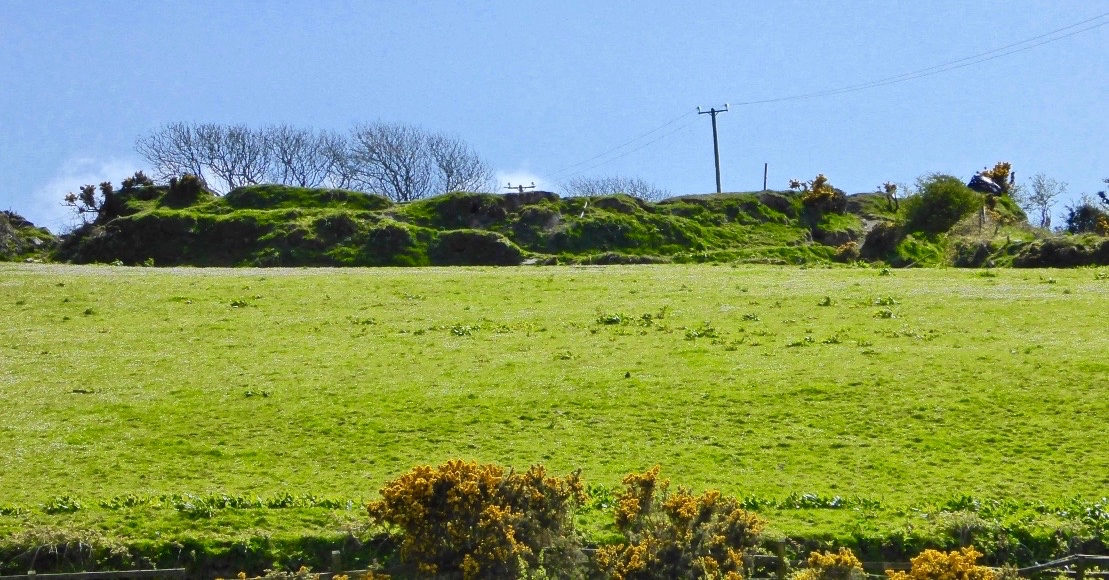
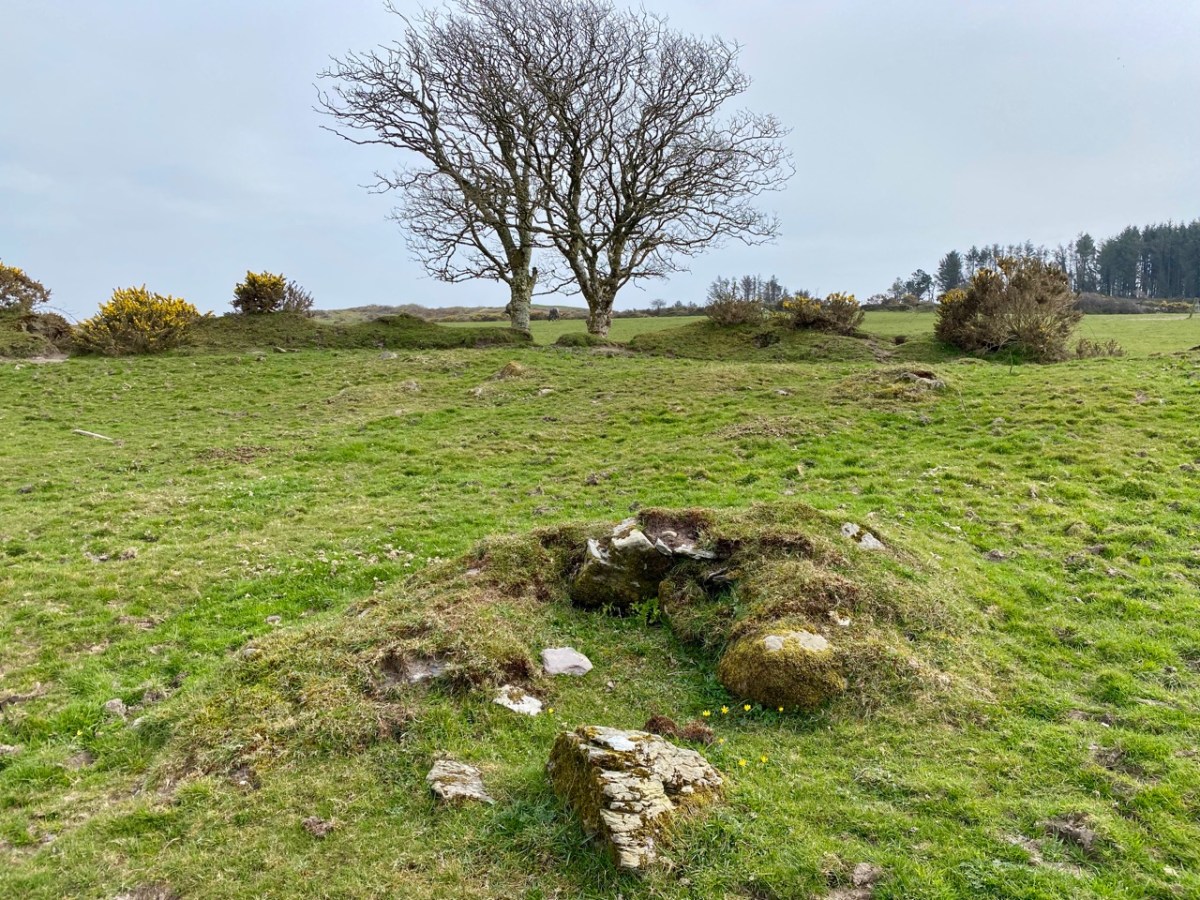
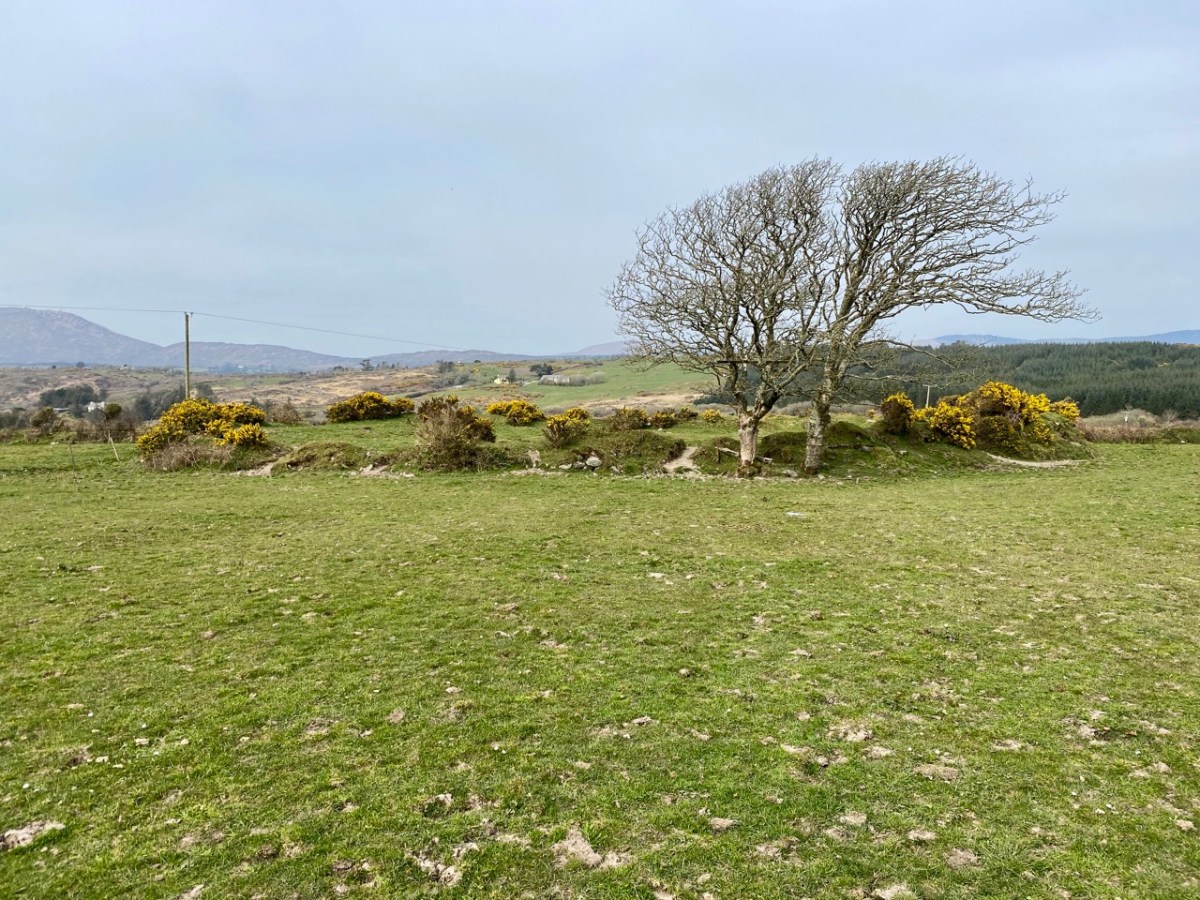
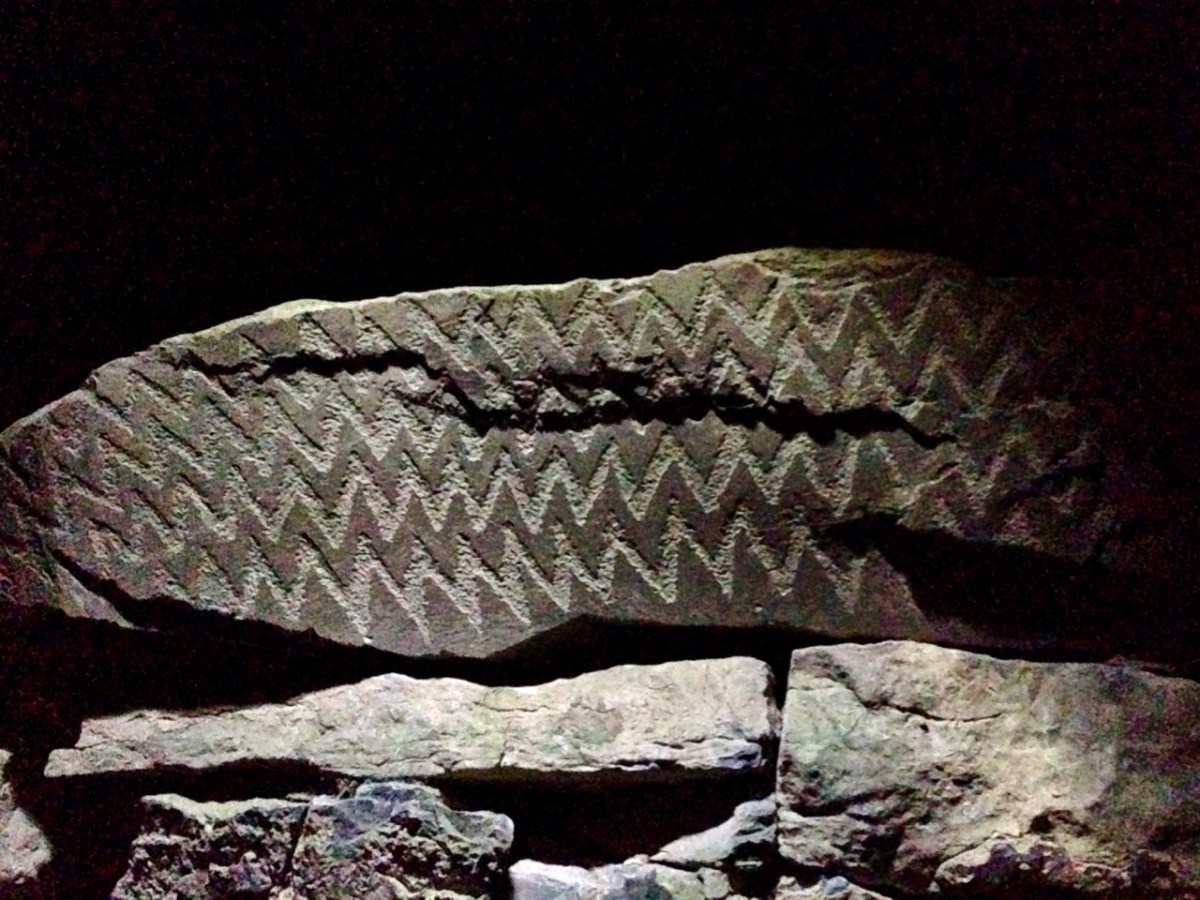
Hell Fire

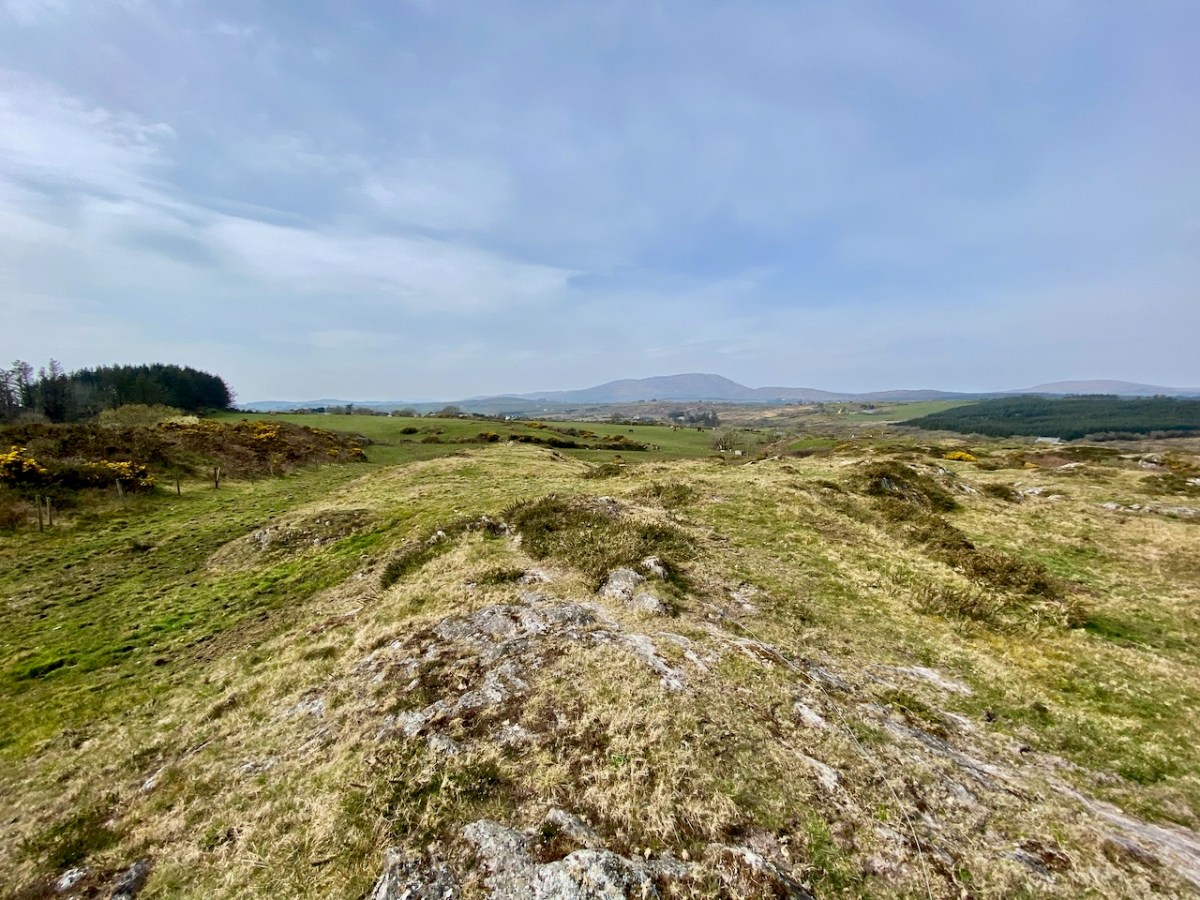
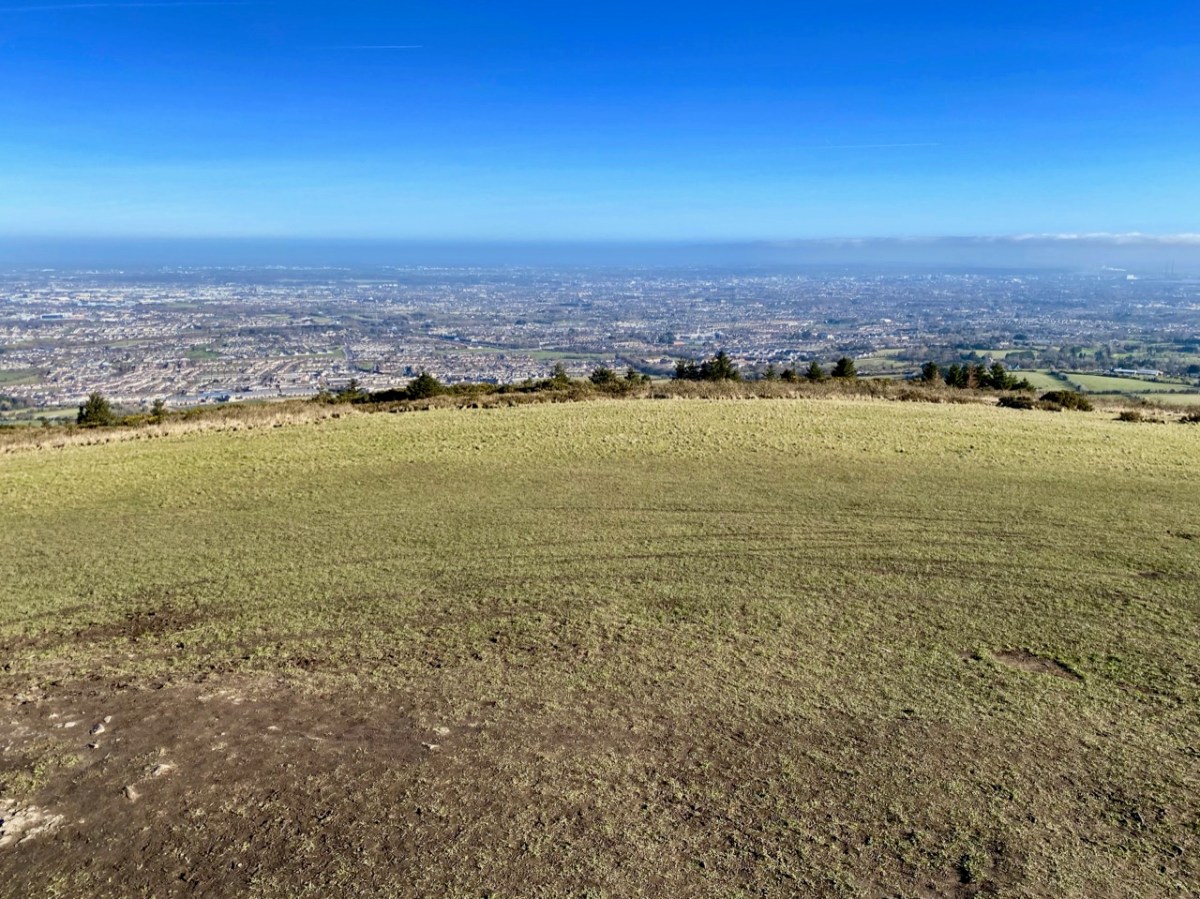
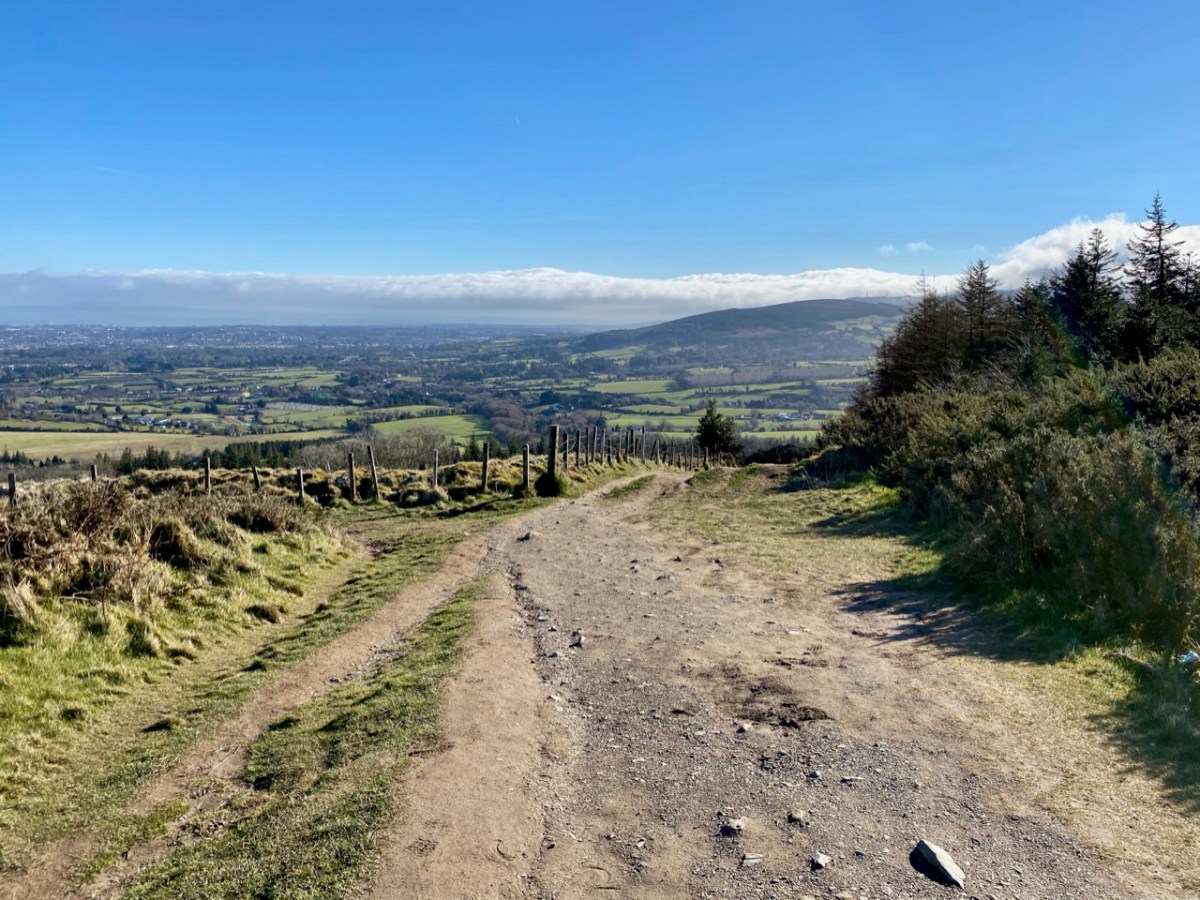
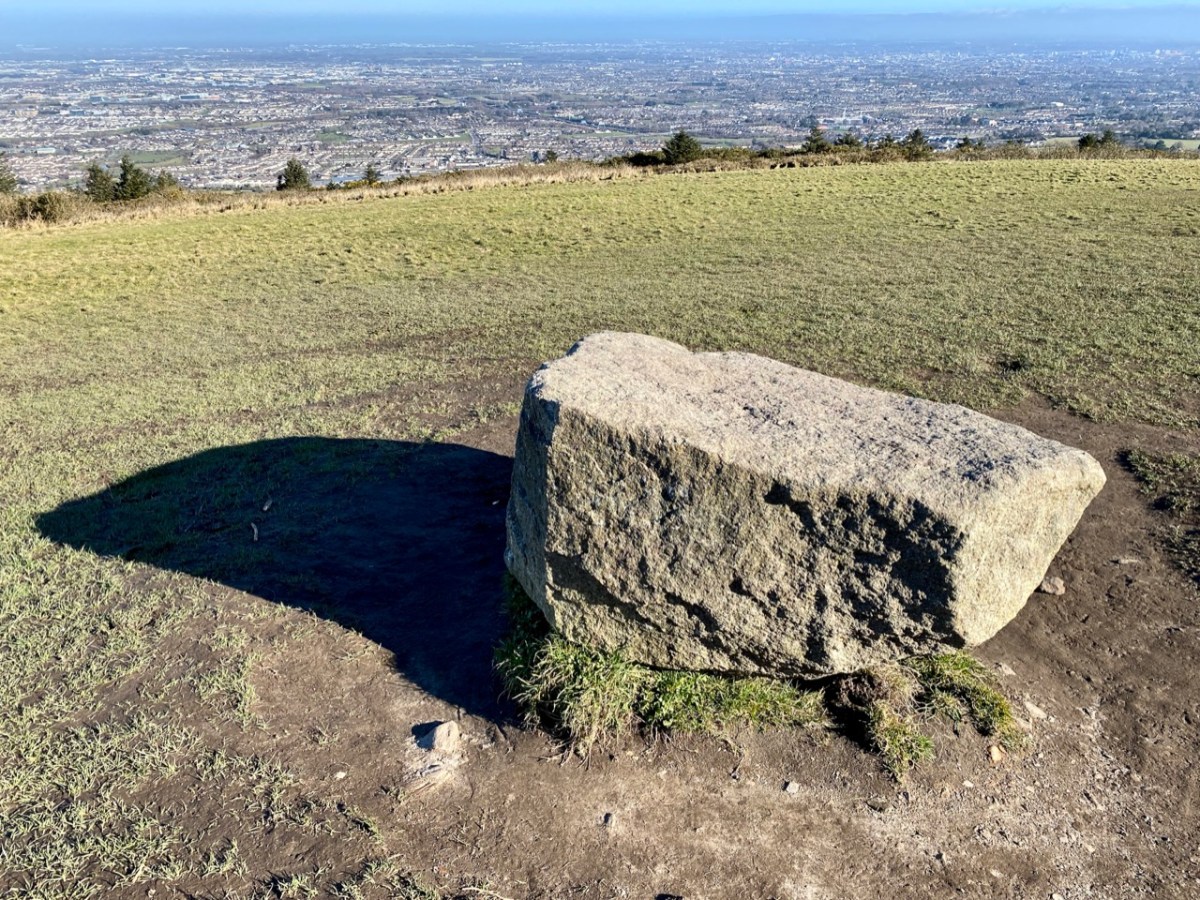
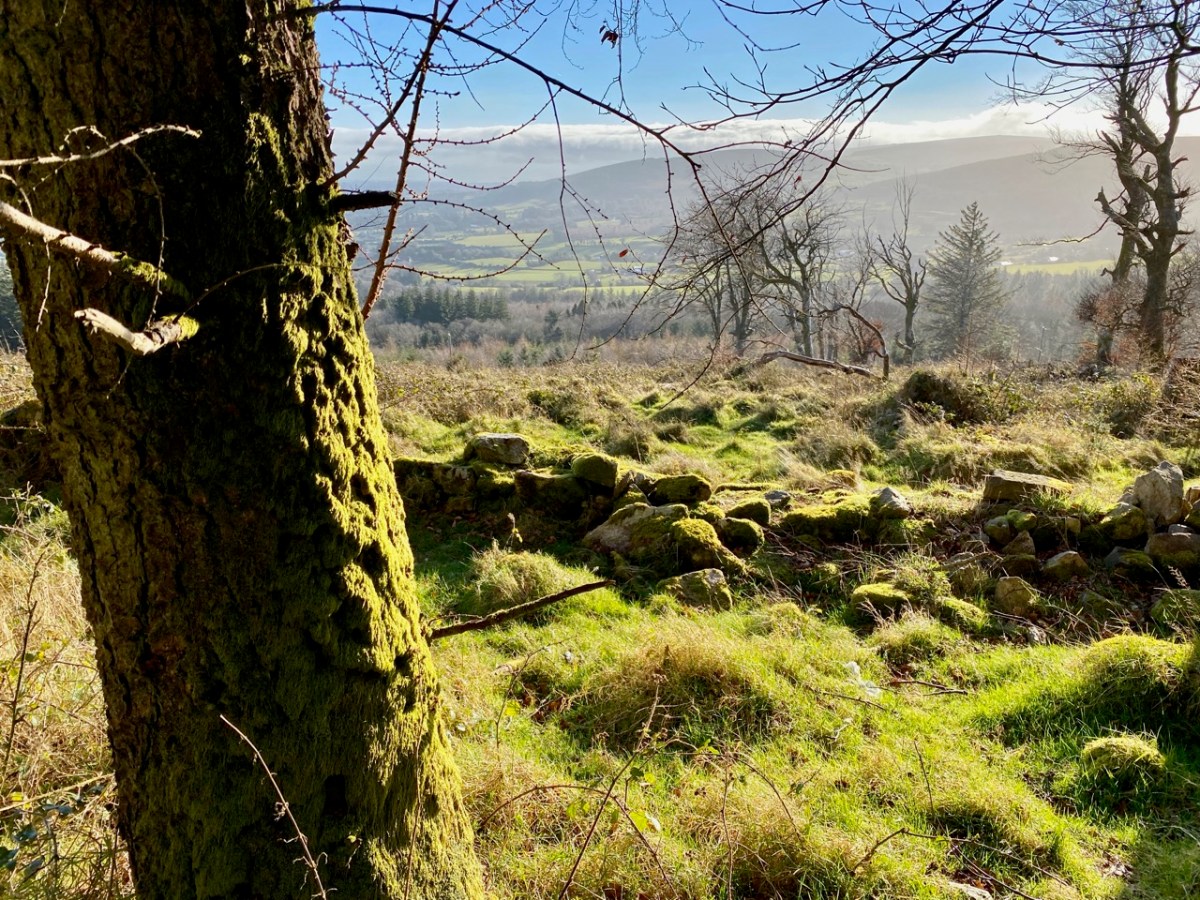
It’s taken me a while to visit this notorious site which is situated on a summit of the Dublin Mountains. The view across the city from the 390 metre peak is stunning:

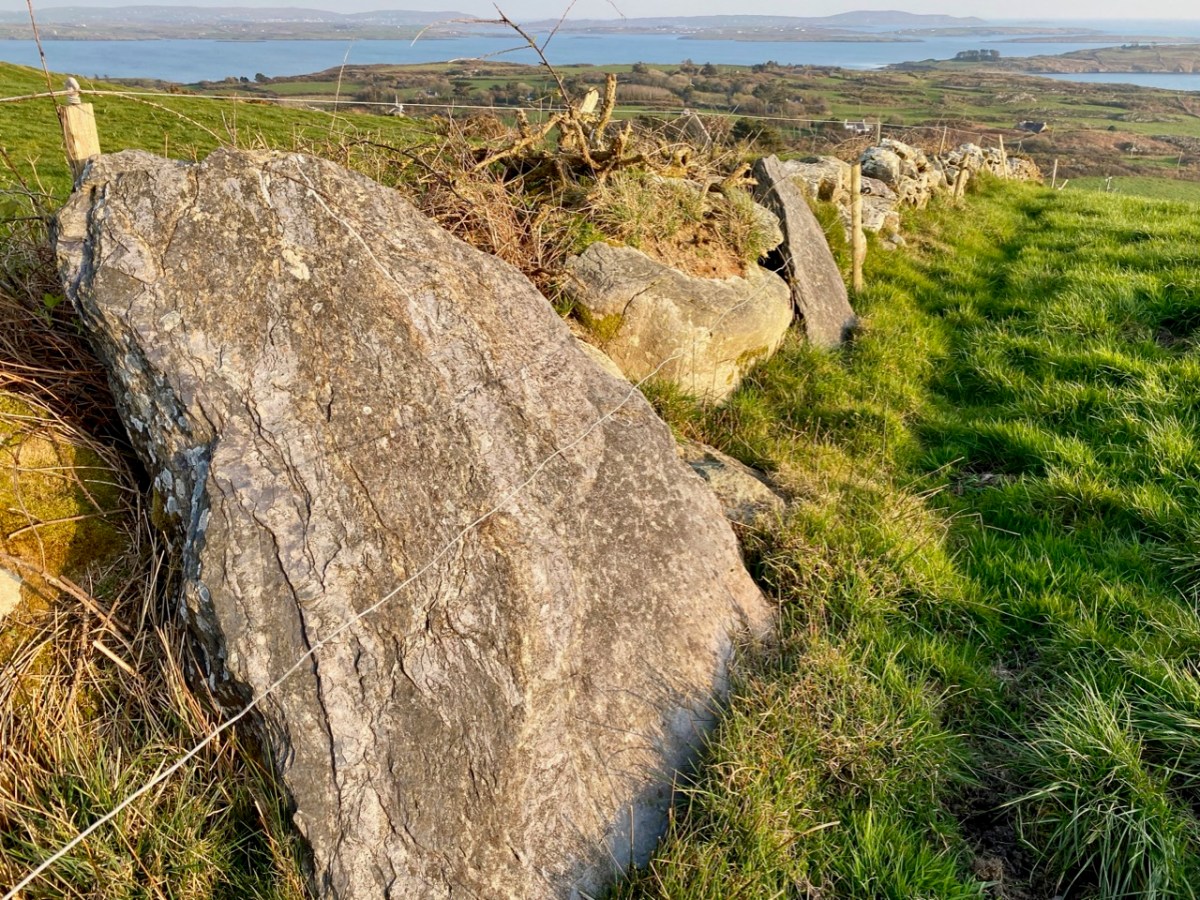
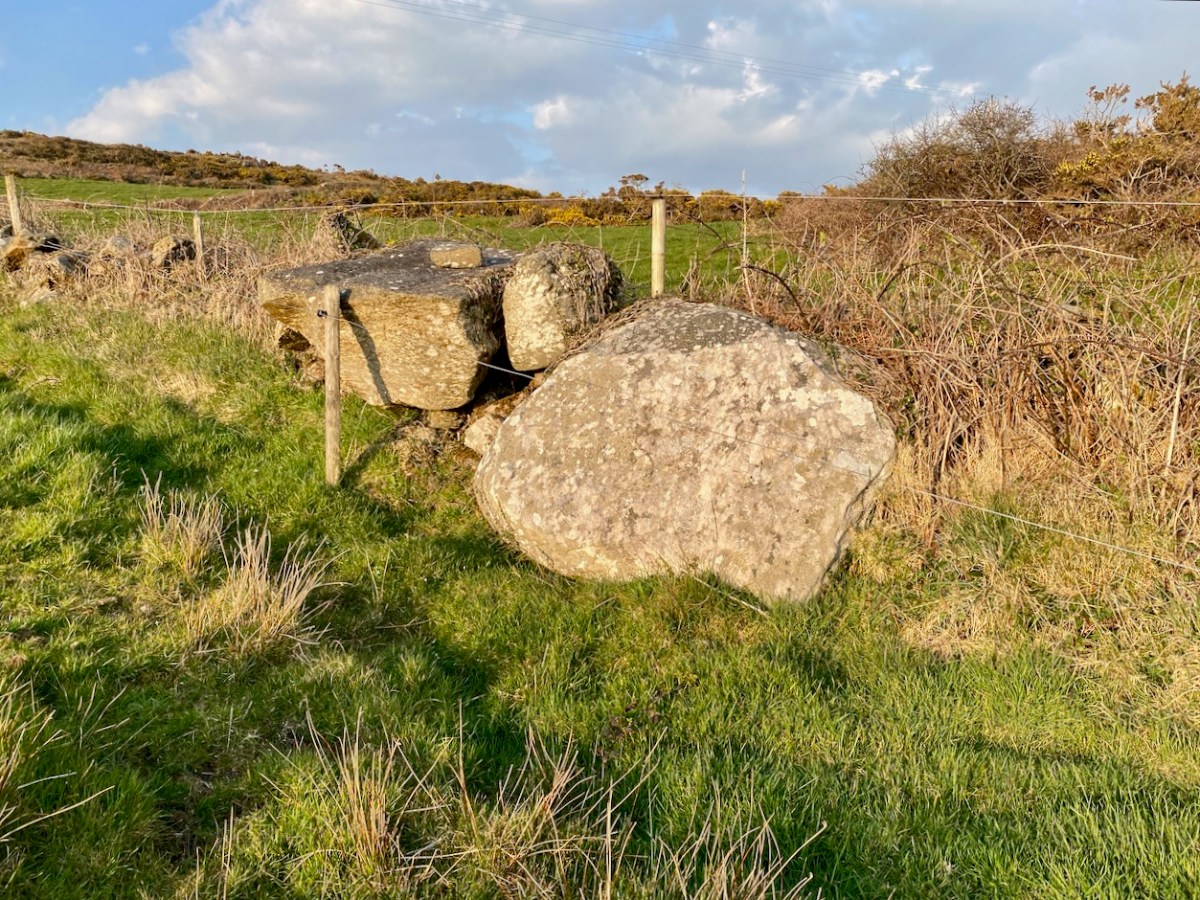
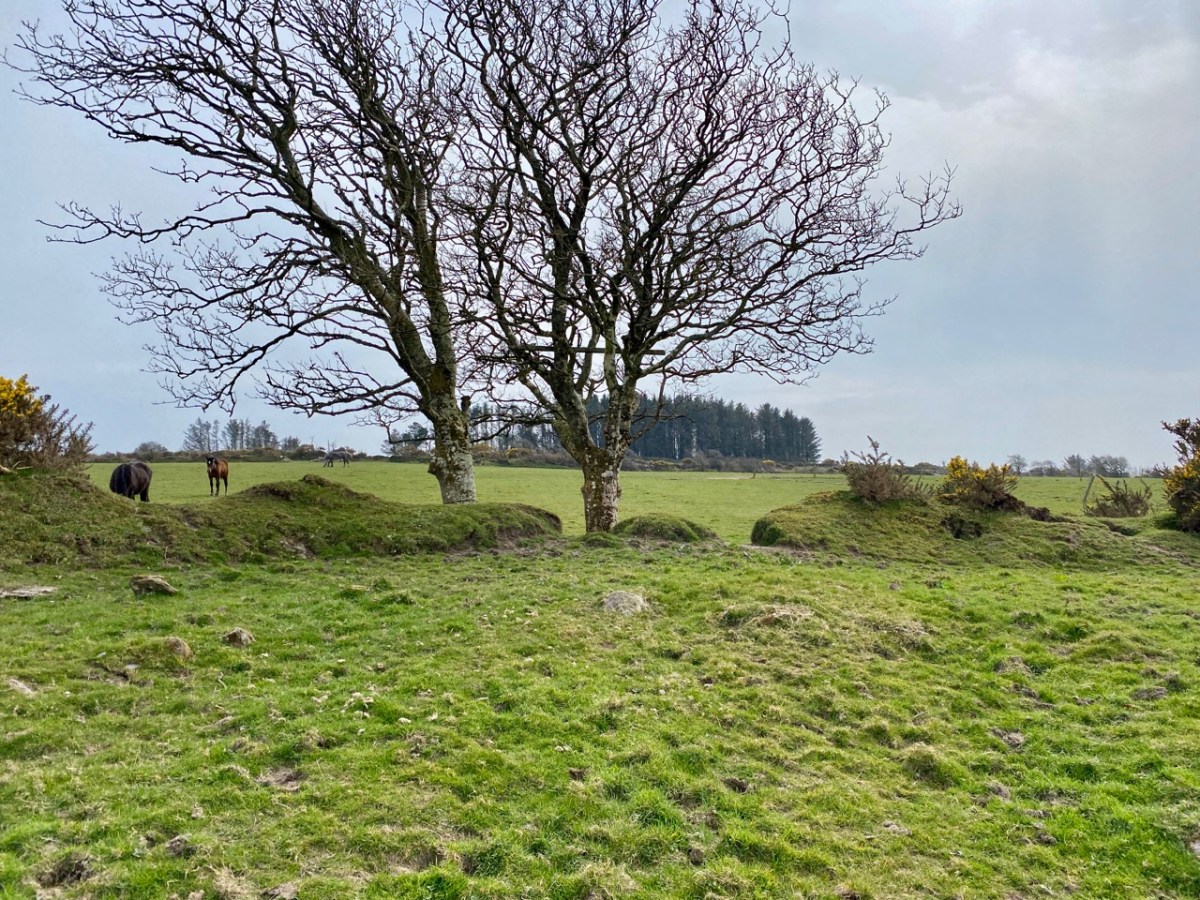
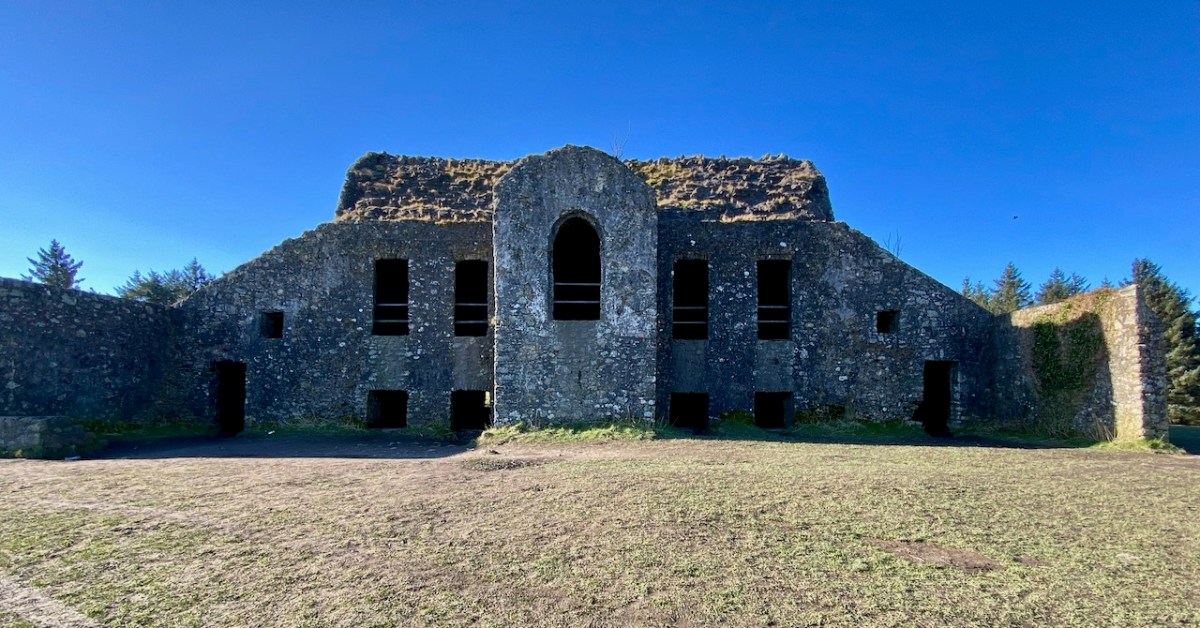
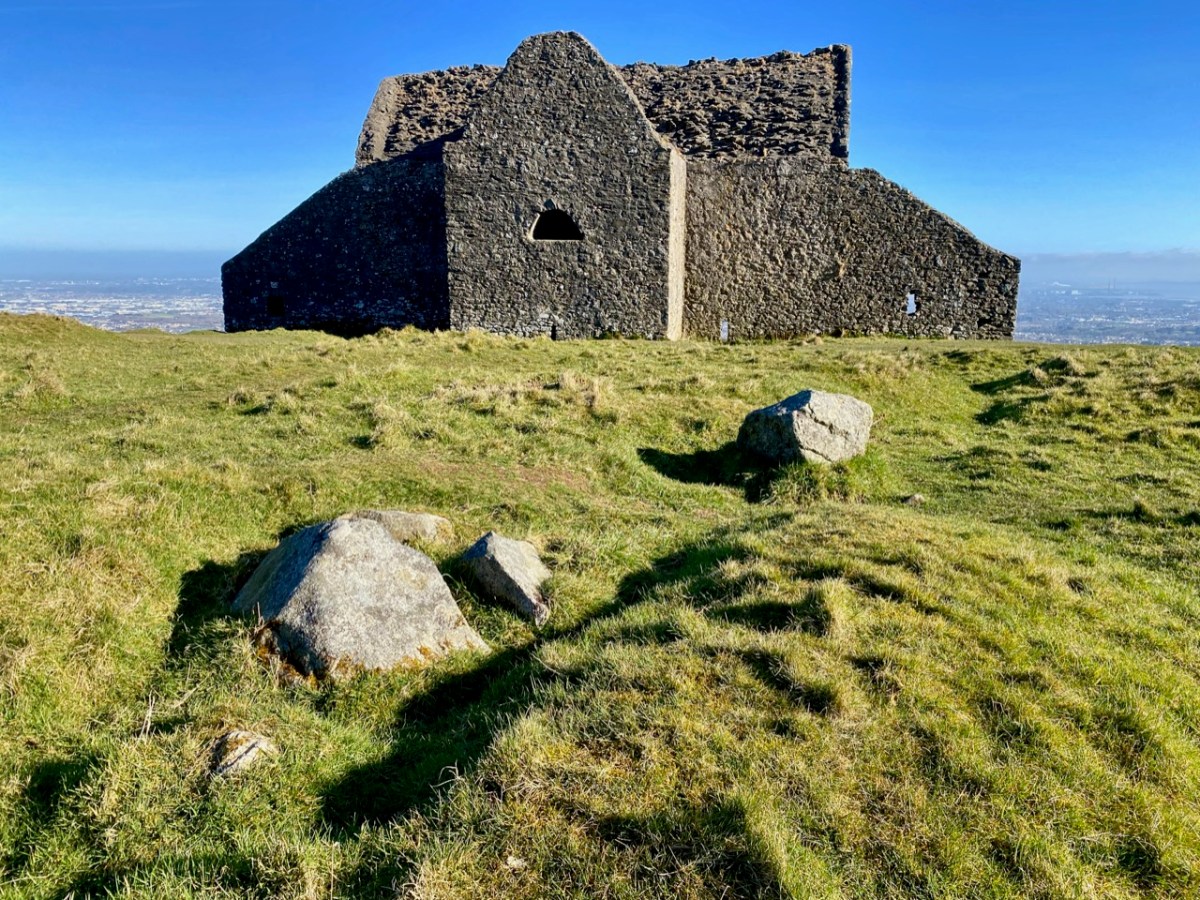
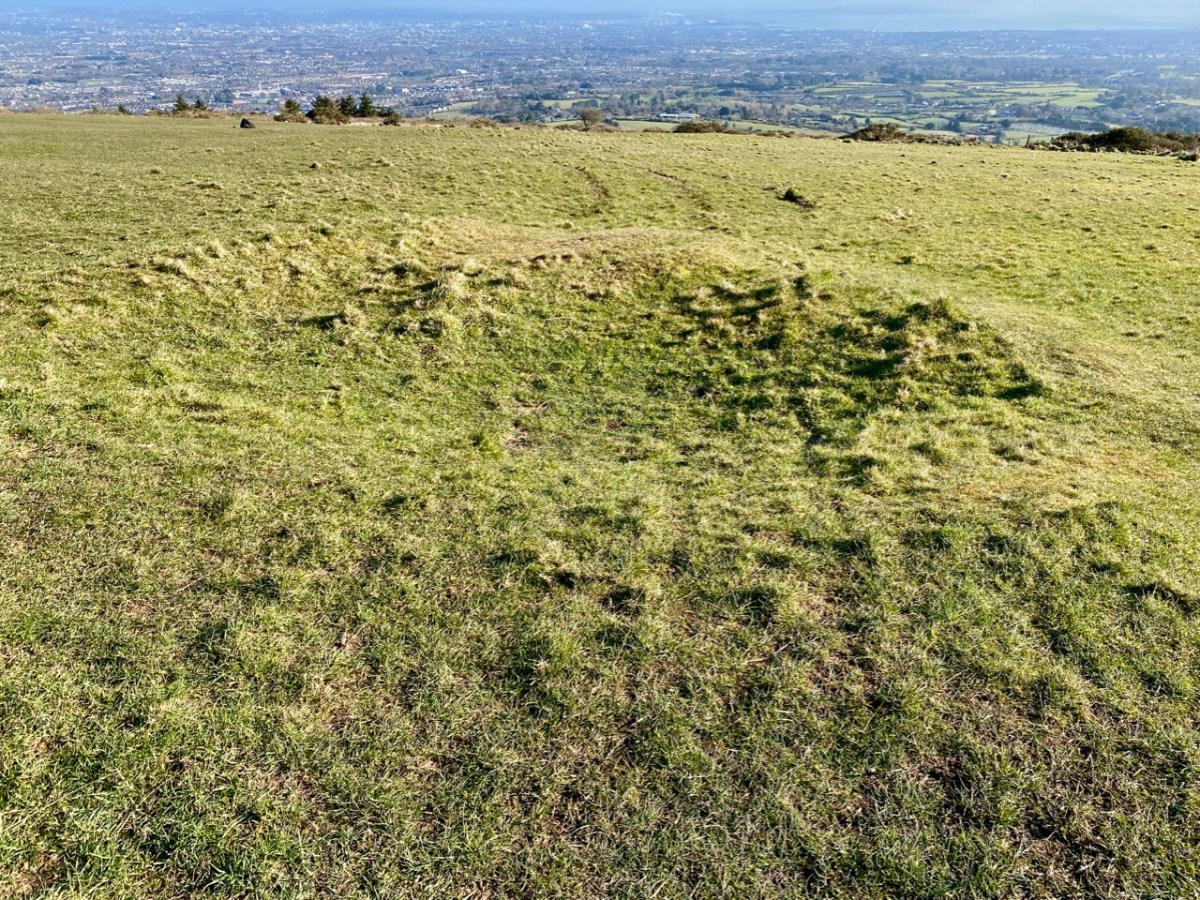
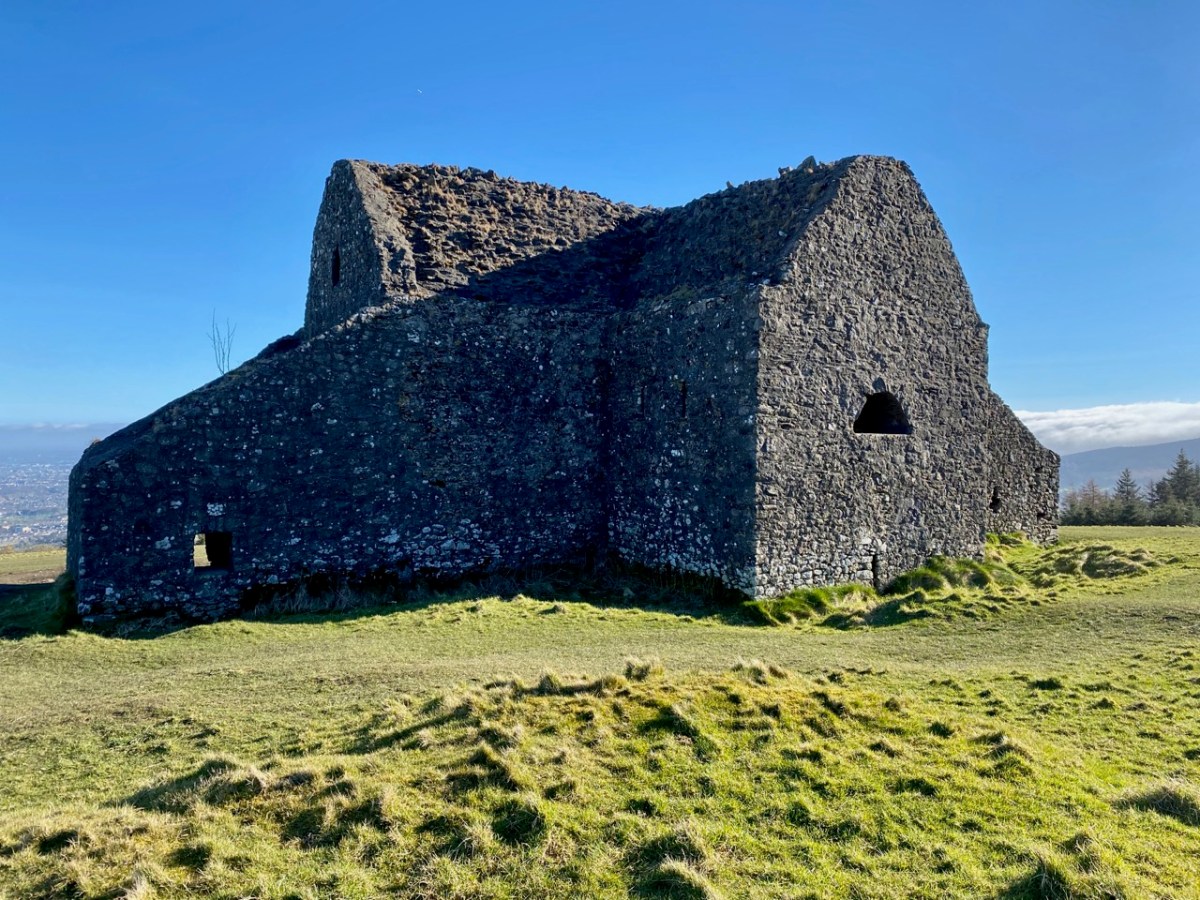
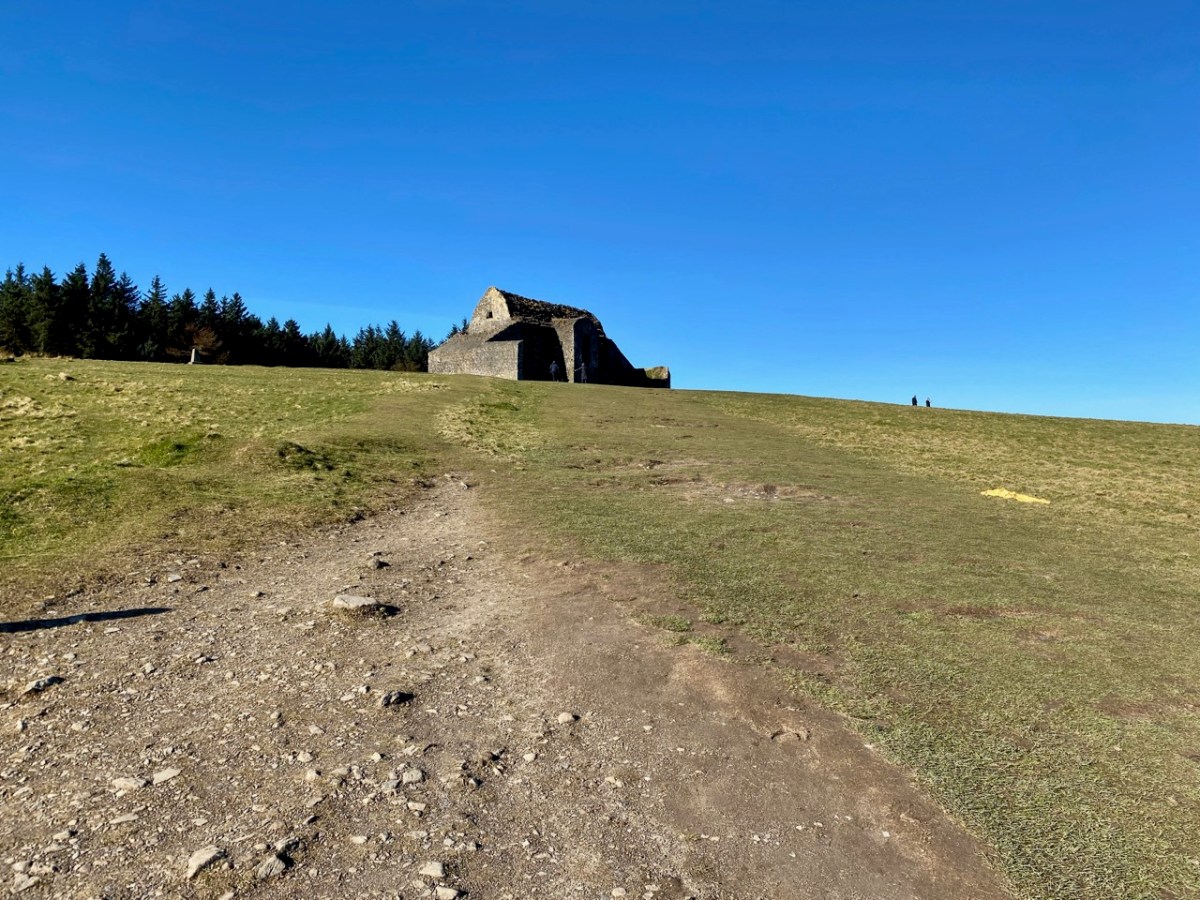
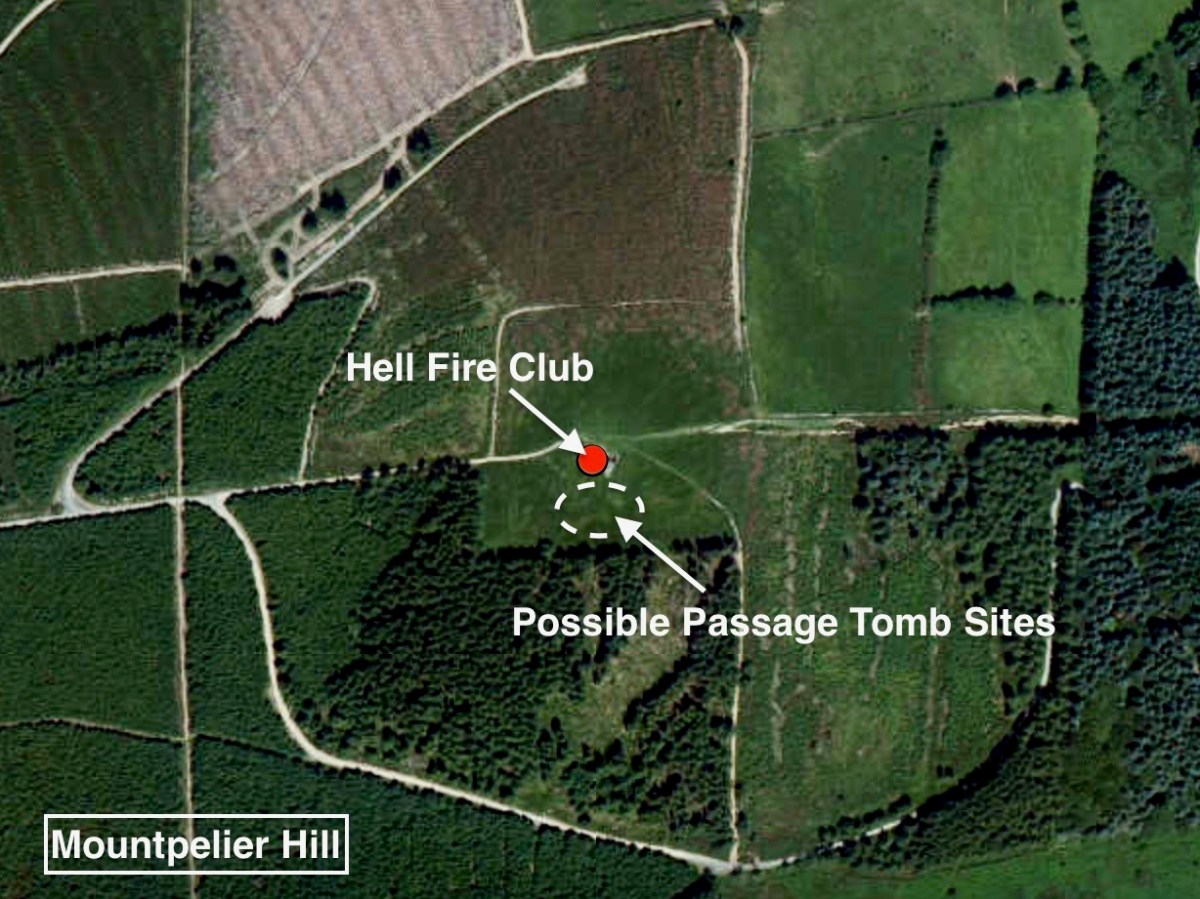
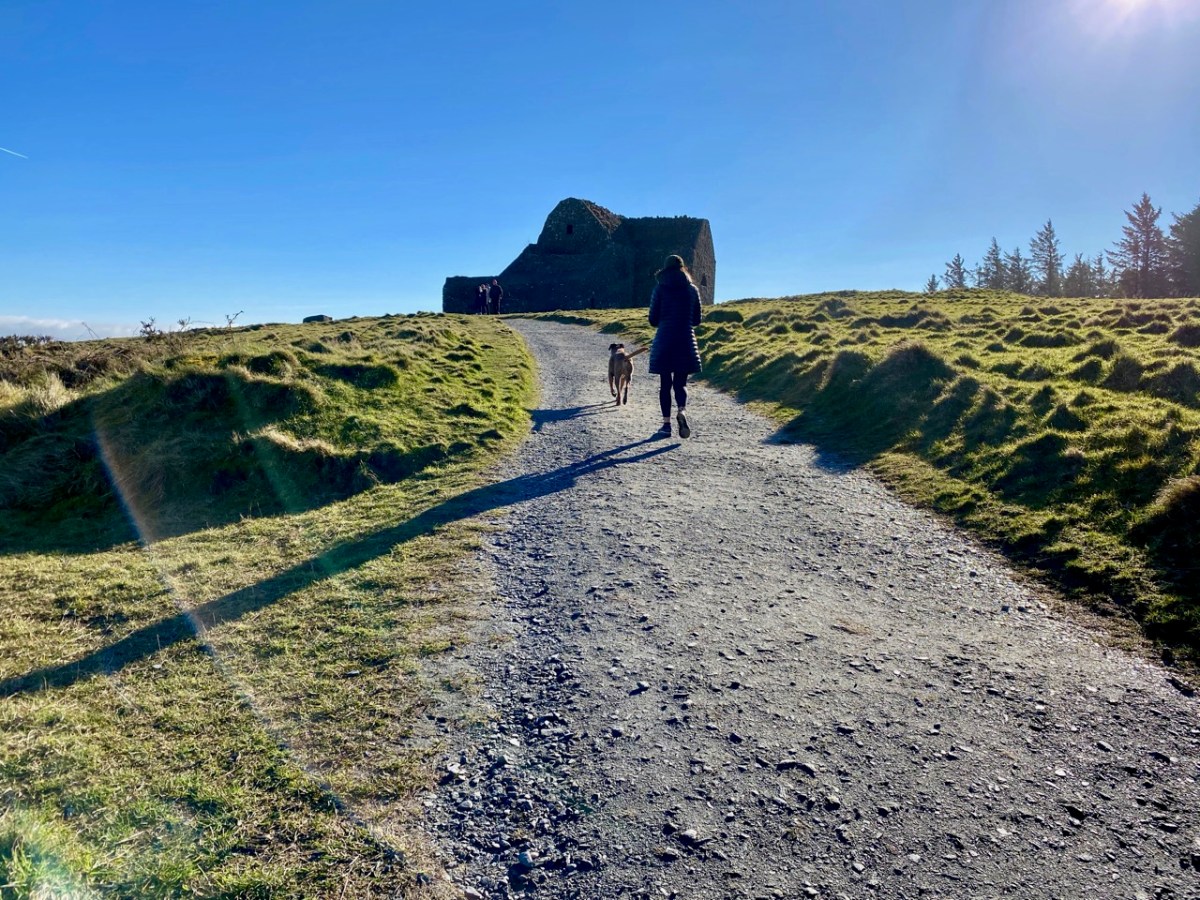
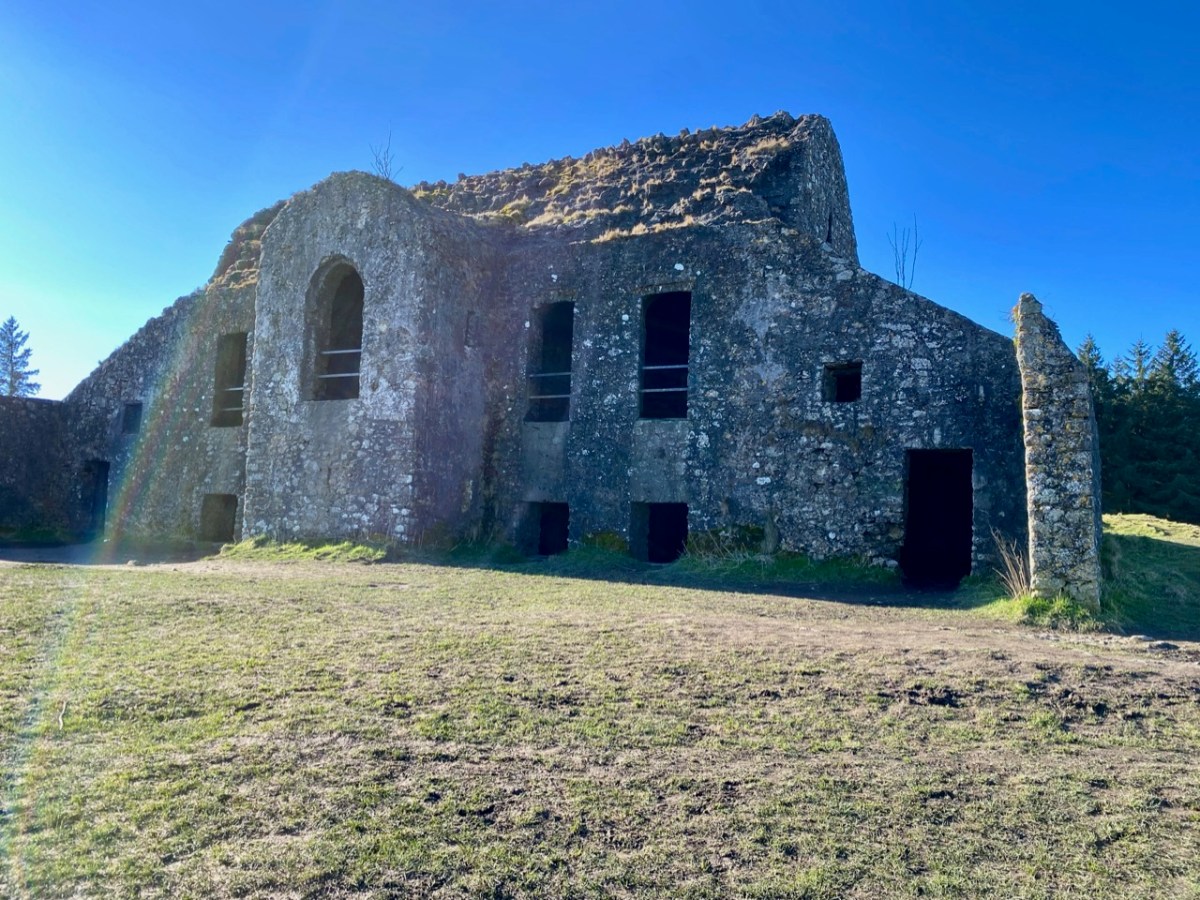
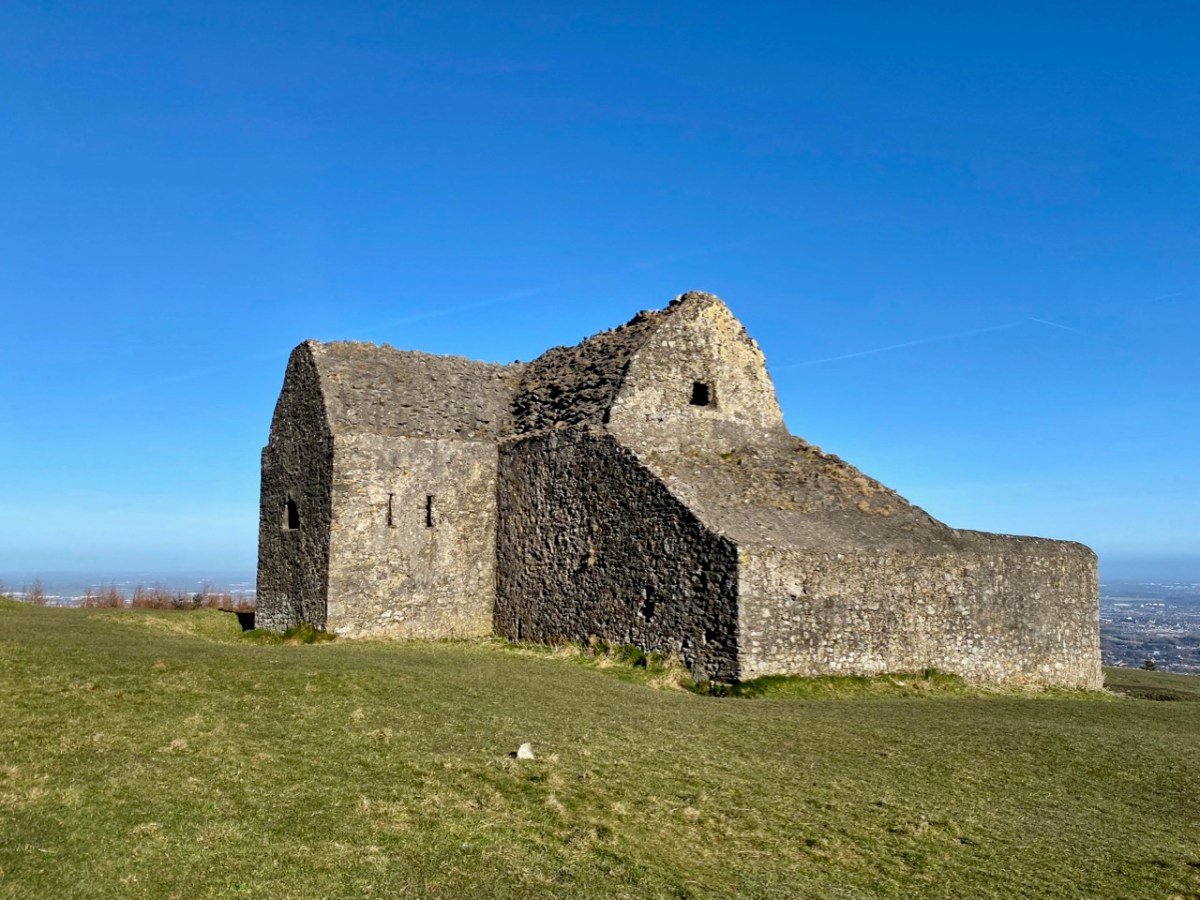
It’s the stories and the folklore that attracted me to this place, long known as the Hell Fire Club. In the eighteenth century ‘Speaker’ Connolly built it as a hunting lodge. According to tradition he used the stones from a prehistoric monument that was previously on the hill. It’s now known from recent excavations that at this location was one – or two – passage tombs dating from the Neolithic Period (4500 – 2000 BC). This – or these – were surrounded by a circle of large boulders known as a cairn. Today, some fragmentary traces of the earliest use of the site can be detected. The best information on the neolithic site is found in the Abarta Heritage report, here. An earlier description, dating from 1779 in fact, was written by Austin Cooper, who visited in that year:

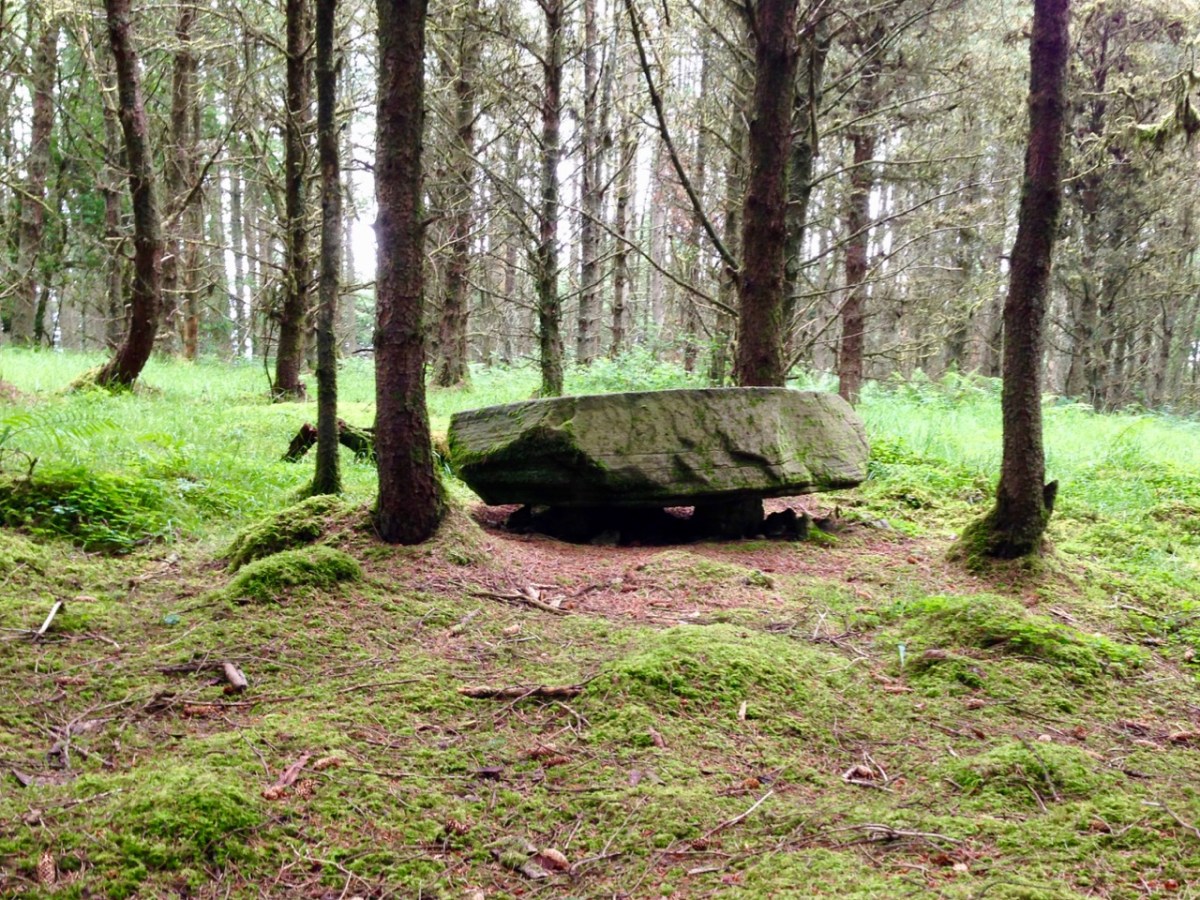
. . . Behind the house are still the remains of the cairn, the limits of which were composed of large stones set edgeways which made a sort of wall or boundary about 18 inches high and withinside these were the small stones heaped up. It is 34 yards diameter or 102 yards in circumference. In the very centre is a large stone 9 feet long and 6 feet broad and about 3 feet thick not raised upon large stones but lying low with the stones cleared away from about it. There are several other large stones lying upon the heap . . .

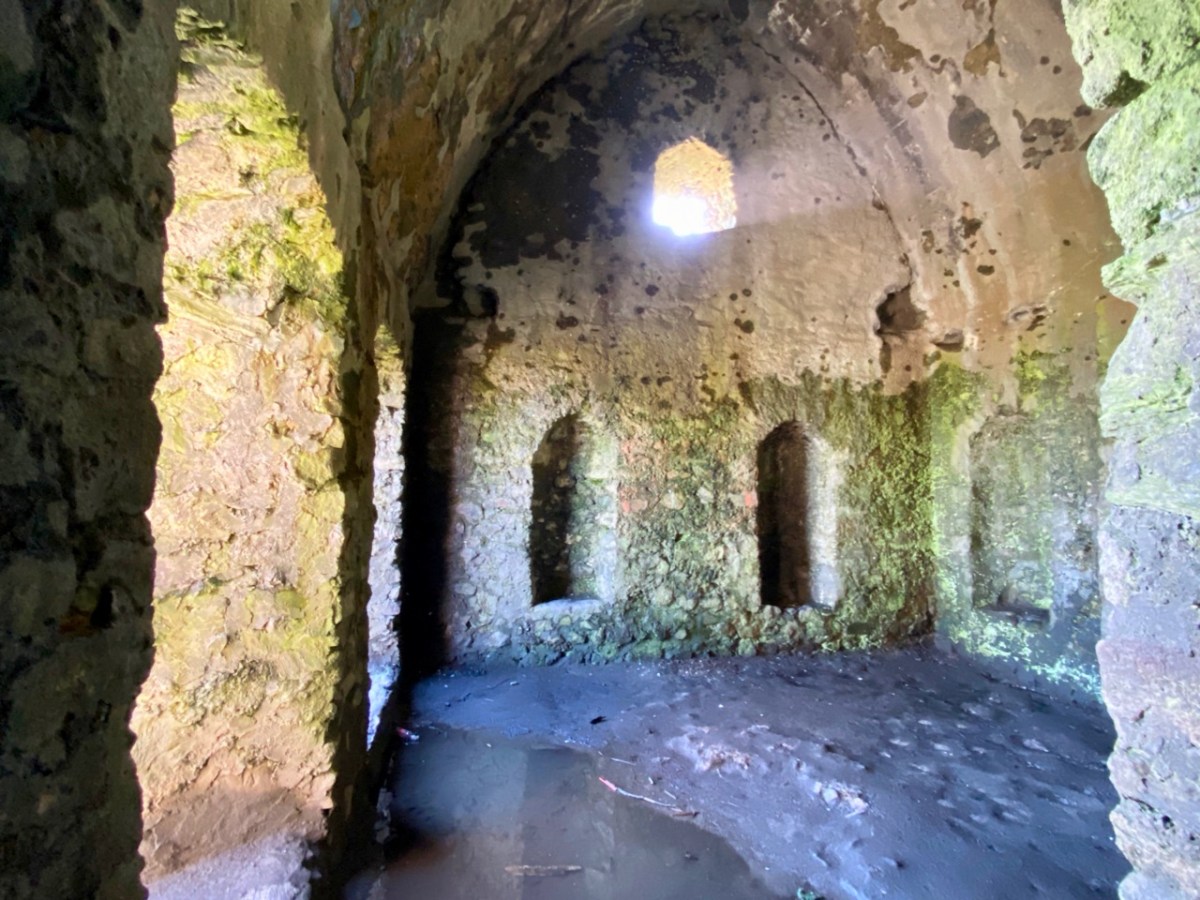
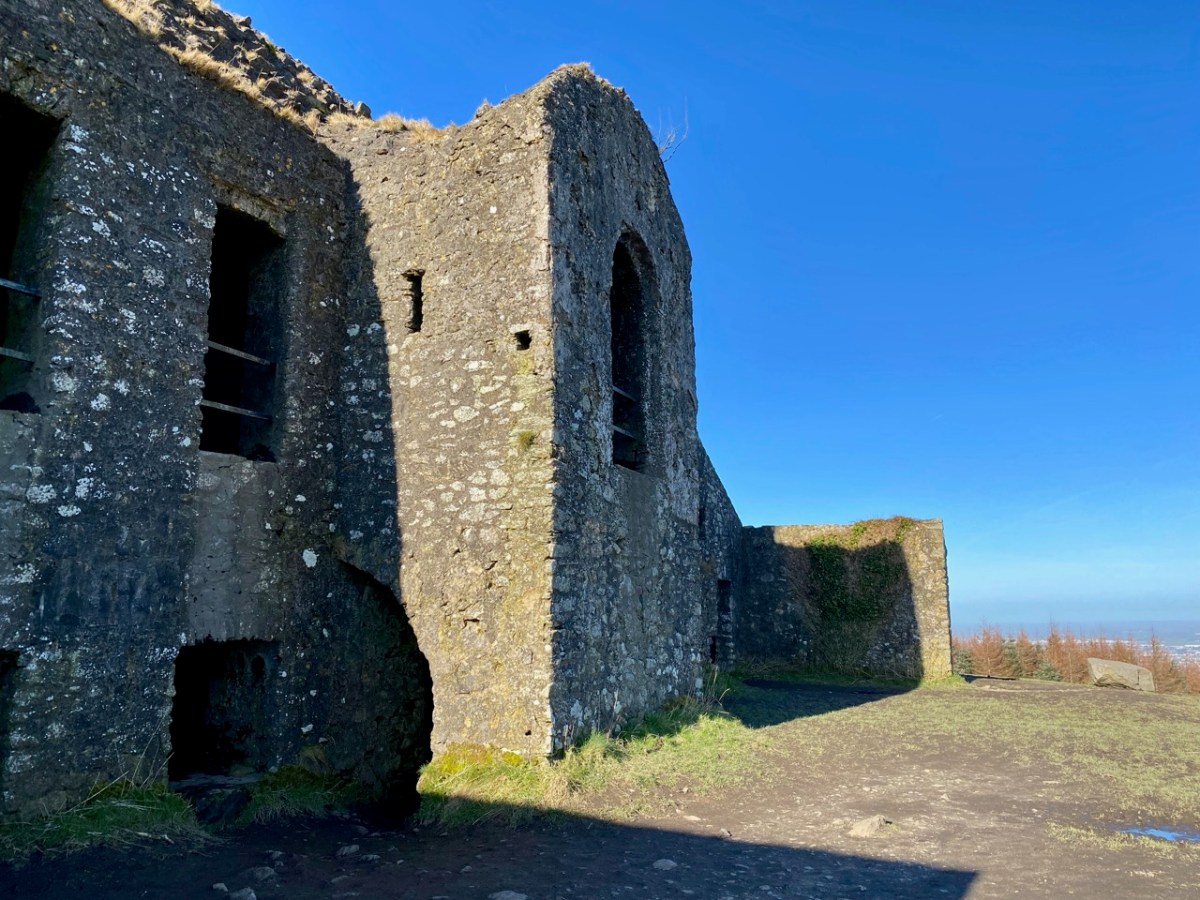
William Connolly (Speaker of the Irish House of Commons) was one of the wealthiest men in Ireland; he had a house in the city and a country estate at Castletown, near Celbridge. It is said that he deliberately used stones from the ancient tomb in the construction of the hunting lodge at Mountpelier. Shortly after it was built the roof, which was originally slated, was blown off in a great storm. Locals attributed this misfortune to the work of the devil, in revenge for the destruction of the cairn. Following this event the lodge gained a reputation as a place where evil prevailed. However, Connolly replaced the slated roof with a stone vault which still exists today, although the building is effectively a ruin.

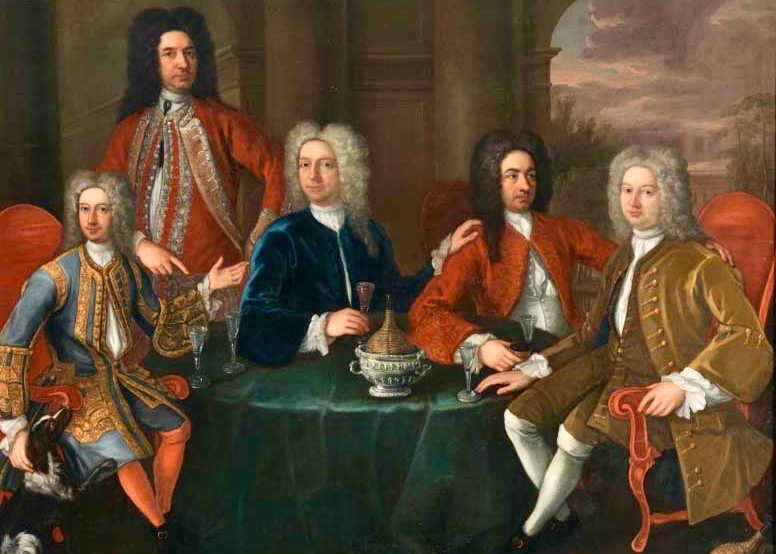
The Irish Hell Fire Club members were some of the elite of society, and included peers of the realm, high ranking army officers as well as wealthy gentlemen and artists. Here is a portrait of some of them by James Worsdale (himself a Club member); it is in the collection of the National Gallery of Ireland, Dublin.

From left to right: Henry Barry 4th Baron of Santry, Colonel Henry Clements, Colonel Henry Ponsonby, Colonel Richard St George, and Simon Luttrell, 1st Earl Carhampton. Biographies of all of them are summarised here – also from the Abarta reports. Their lives in general were debauched and relatively short. Missing from the portrait are father and son Richard Chappell Whaley and Thomas ‘Buck’ Whaley, who was to become ‘the most famous Buck of all’. Richard’s nickname was ‘Burn-Chapel’ Whaley because of his hatred of religion and in particular, the Roman Catholic church. He would amuse himself on Sundays by riding around Dublin setting fire to the thatched roofs of Catholic chapels. The Whaleys were related through their ancestry to Oliver Cromwell. Their family residence was Whaley Abbey, Co Wicklow: you can find more on this in Finola’s post today.

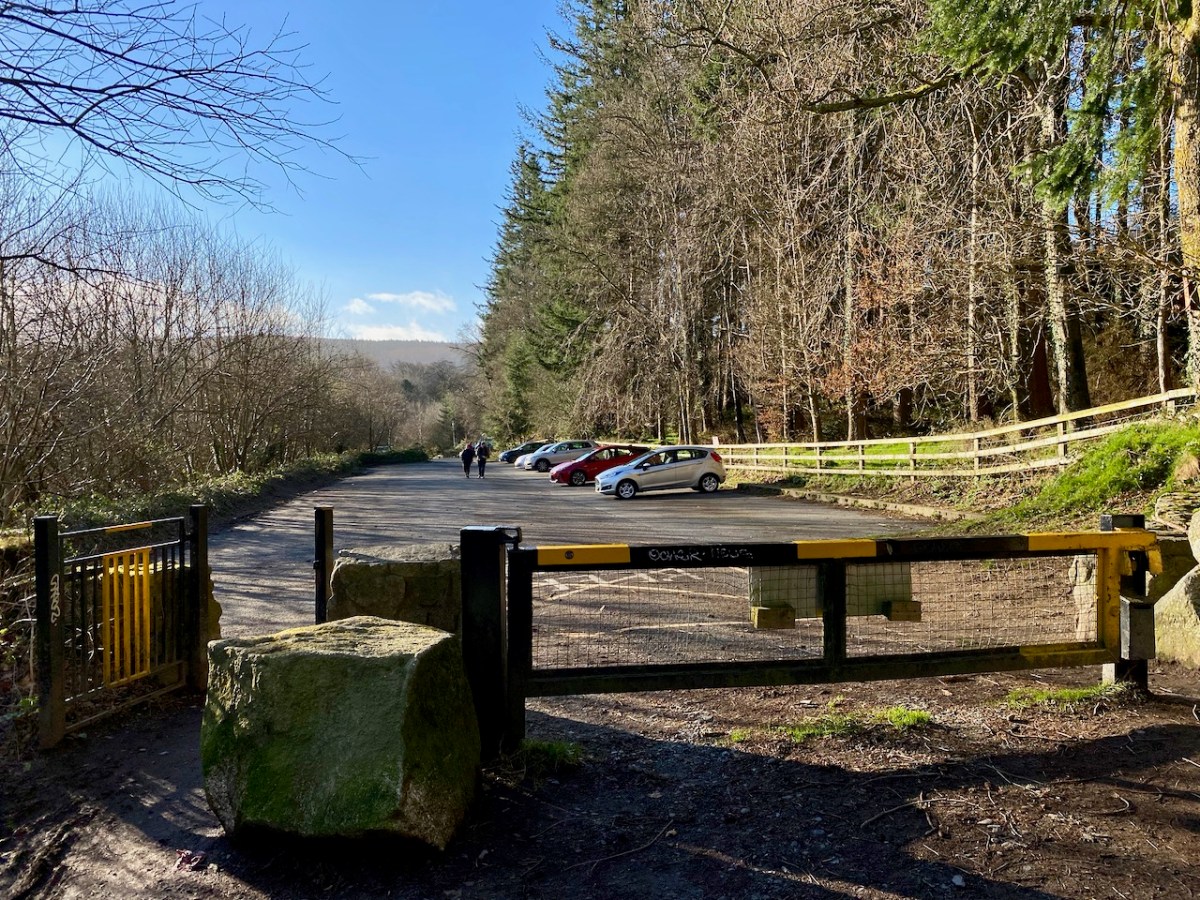
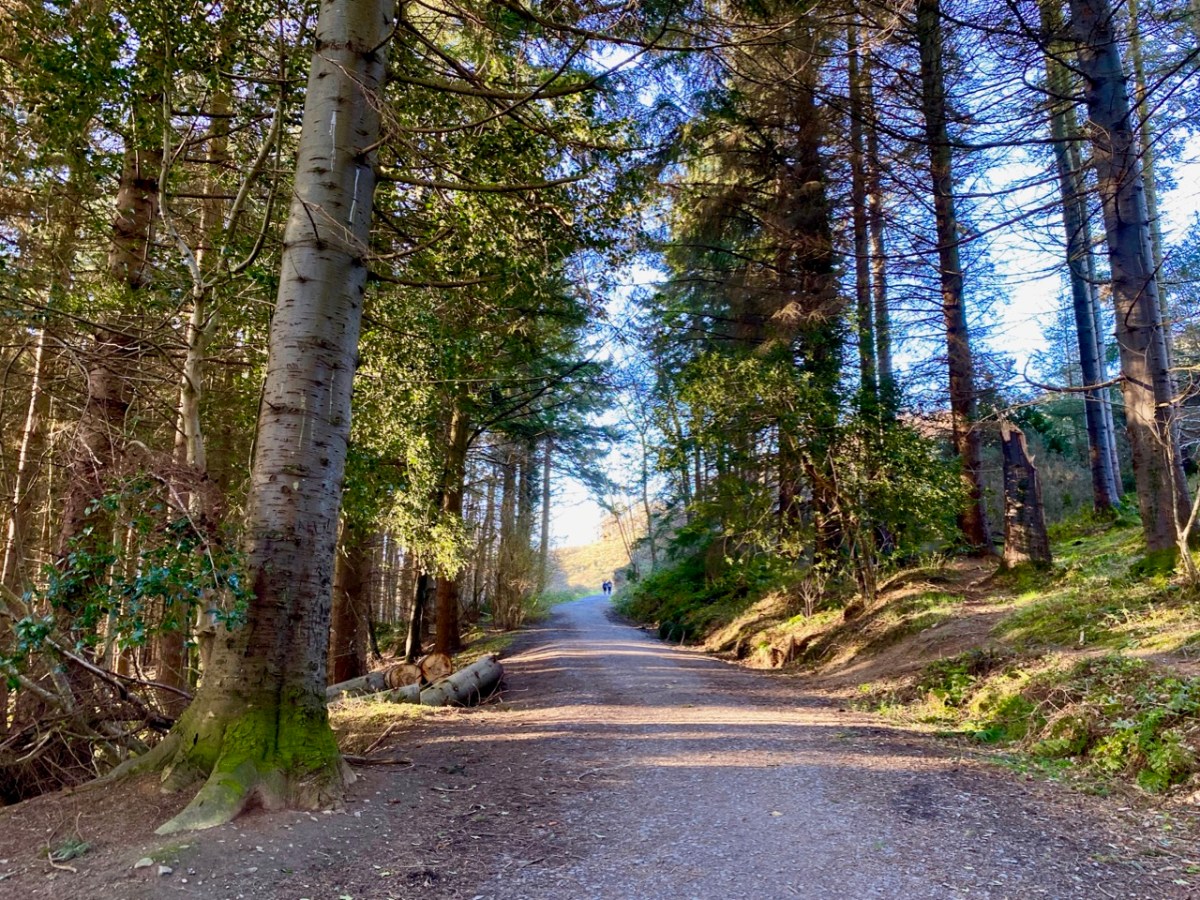
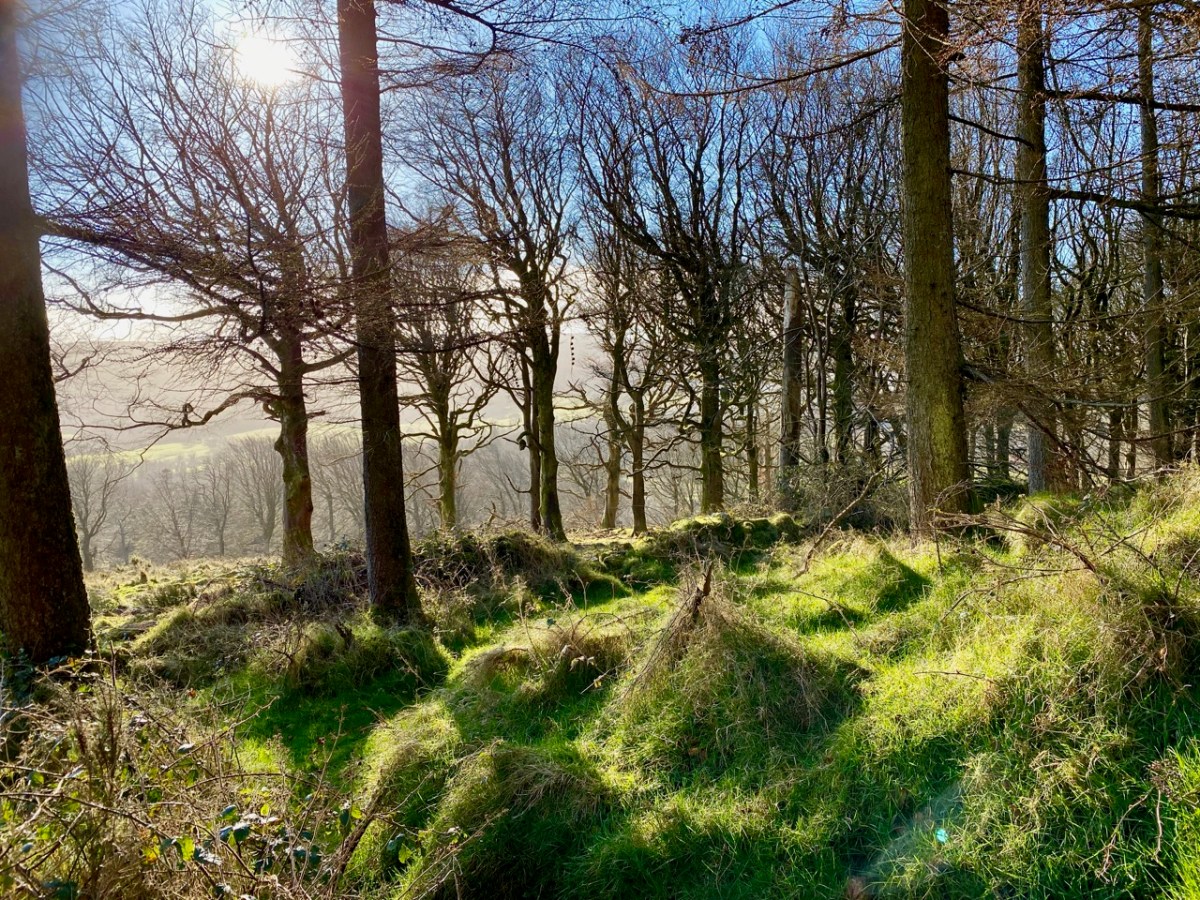
Mountpelier is a significant mountain top overlooking Dublin, and is now fully accessible to all. A warning, though – in good weather the Coillte car-park very soon fills up (at all times of the year) and there is nowhere else nearby to leave your vehicle – get there early!

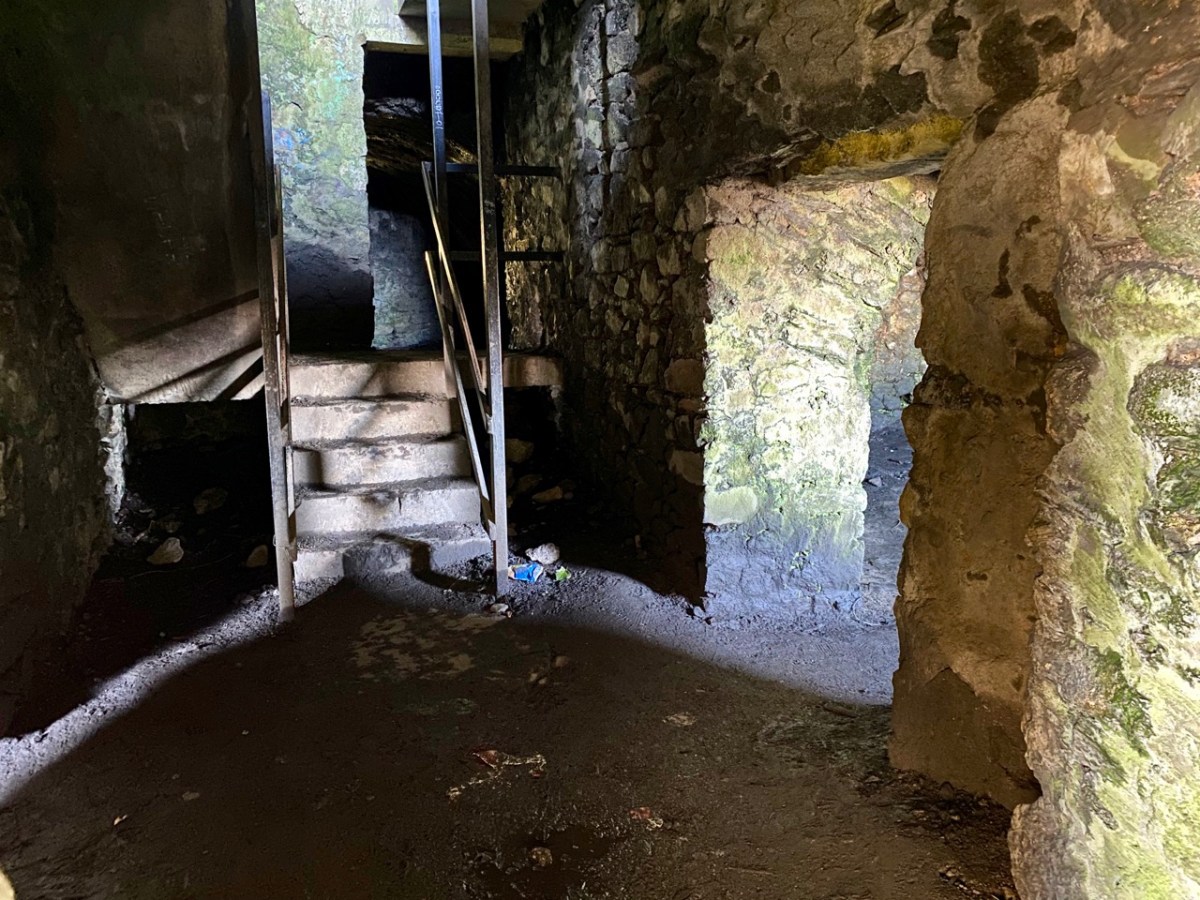
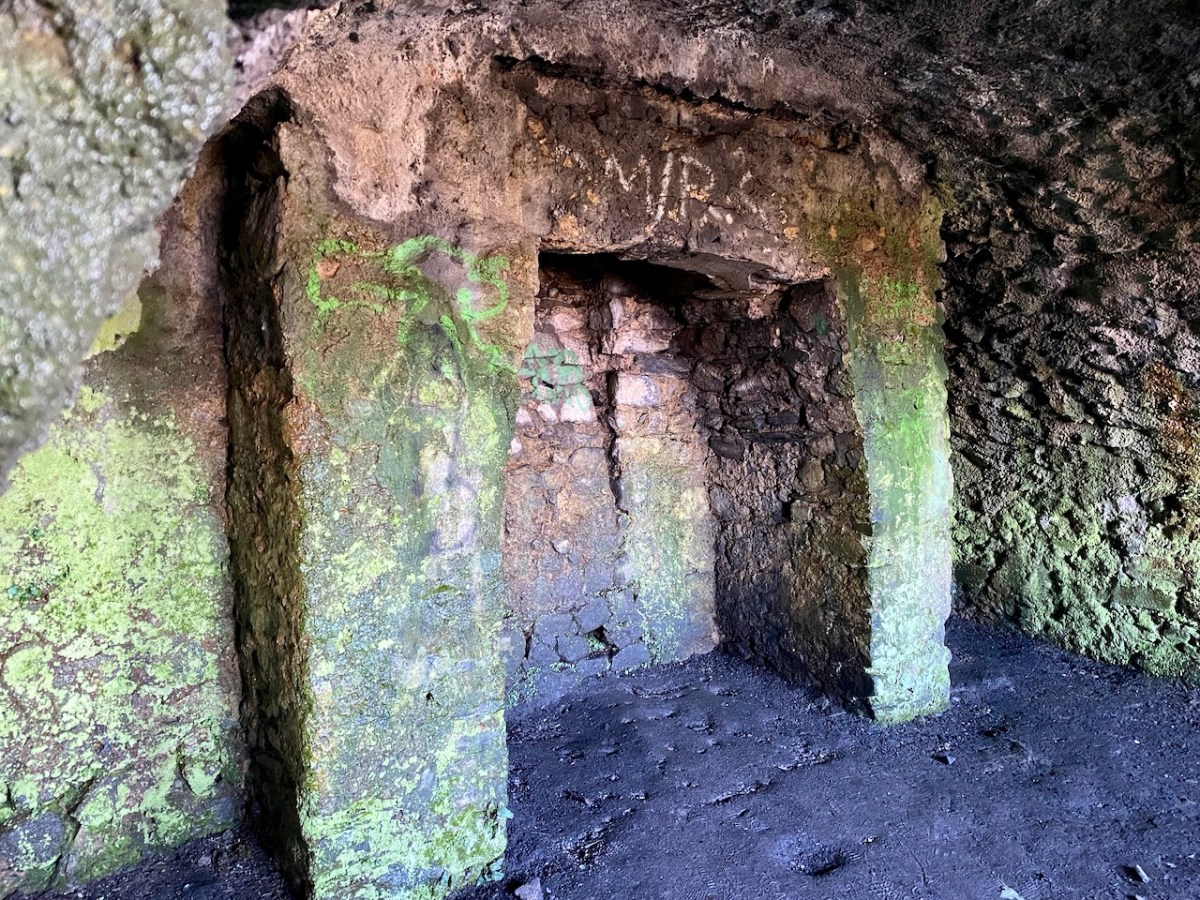
It could be said that the ruin of the lodge is ‘maintained’ in that it is stabilised and unlikely to fall down. If you are exploring, look out for the lintel over the large fireplace, which is supposed to be a standing stone removed from the passage grave site.

The Hell Fire Club is, of course, haunted! Not that we saw anything untoward when we visited on a glorious spring day. But the stories abound. They are probably best told through the accounts in the Schools Folklore Collection:

. . . About six miles from Dublin the Hell Fire Club is on a hill. It is a medium size old castle. When the owner of it died nobody else claimed it. All the men of the district came to play cards in it every night. One night when all the men were playing their nightly game one of the men cheated. The men rushed upon him over-powered him. The bound him hand and foot and put him in a barrel of whiskey. Then they set fire to it burning him alive. That was a cruel thing to do but then men did not care. From that day on that old castle was called the Hell Fire Club . . .


Stewart Somerville, Dundrum School

. . . There is an old ruin called Hell Fire Club on the very top of one of the Dublin Hills. This house was built by a man named Connelly, during the time of the Famine. It was built to give employment to the men. Many men used to got to Hell Fire Club to gamble. It is said that one night they were playing cards and there was much money on the table. One man dropped a card on the floor, and when he stooped down to pick it up he noticed a man with cows feet, and he wore a red cloak. The men were very frightened and they made a great uproar. The man turned into a ball of fire. All the men were burned in the fire. There was one man who had a bunch of medals attached to his coat and he was the only man who escaped from the burning house . . .

Mr Finlay, Rockbrook, Co Dublin

. . . The Hell Fire Club, or the Brass Castle is situated near Rathfarnham in the Co Dublin. My Great-grandfather used to pass by the Brass Castle on his way home from work, (he was a mason) he had a habit of hitting the wall with his trowel to hear the ring of the brass. One night a priest had to go on a sick call. When he was coming home through the mountains he lost his way. Seeing a light he went in that direction. He knocked at the door of the house, which happened to be the Brass Castle – The door was opened by a man who was dressed in black with a black mask on his face. The priest was brought in to a room. Sitting at a large table were twelve men dressed the same as the first one. The men were playing cards. On the table was seated a large black cat. The men defied the priest to put the cat away. The priest ordered the cat down, but it never moved. Again he ordered it down, but the cat did not move. The men laughed at the priest and jeered him. The third time the priest said “Begone Satan”. The cat jumped from the table and disappeared up the chimney with a loud roar. The priest told the men that the cat was the devil. The men were never heard of again. The priest got home safe, and from that time onward the Brass Castle was called the Hell Fire Club. This story is true. It was told to me by mother, because the Brass Castle belonged to her ancestors . . .

Seán Ó Nuamáin, Kilbride, Co Wicklow

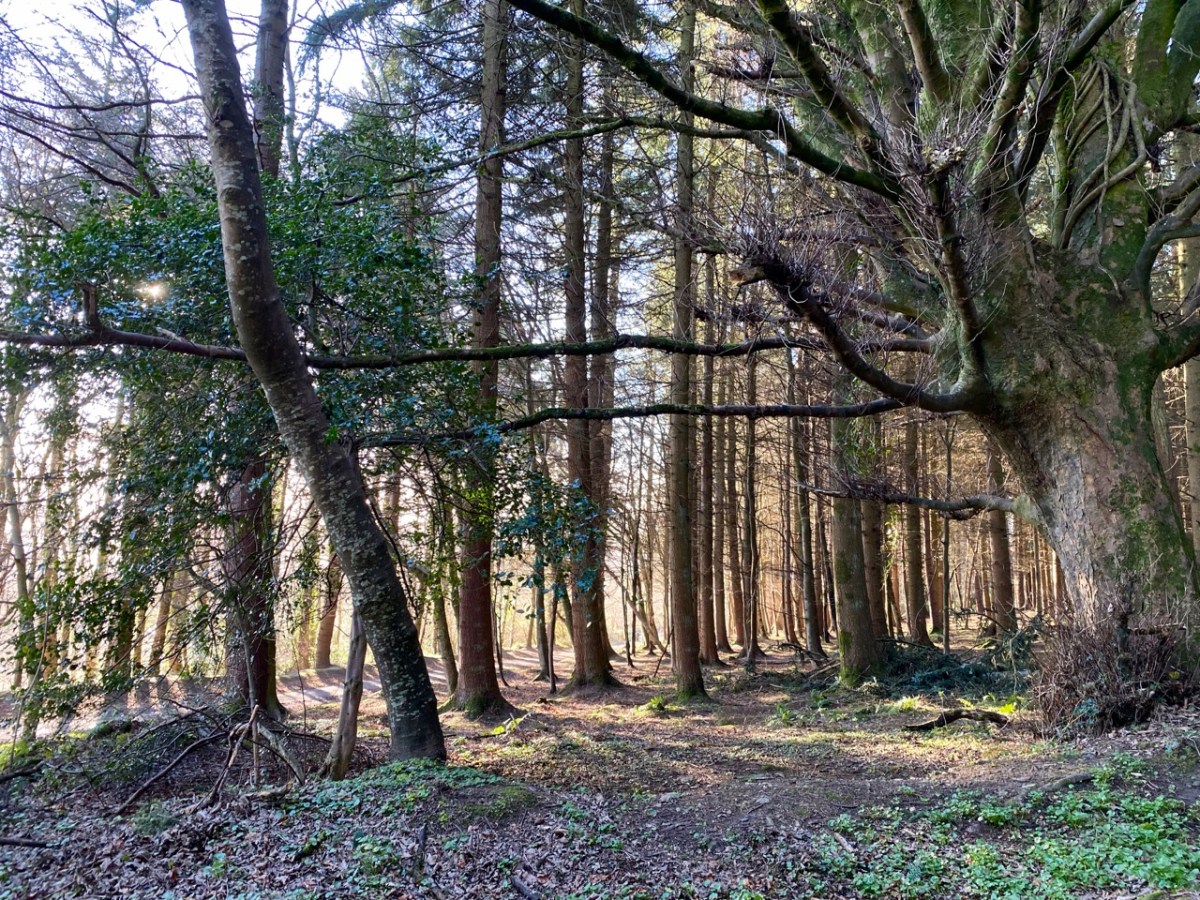
The Mountpelier Woods consist of around 5.5 kilometres of forest roads and tracks. The woods offer nature trails and a permanent orienteering course. Lord Massy’s Estate and Mountpelier Hill are also traversed by the Dublin Mountains Way hiking trail that runs between Shankill and Tallaght. It’s an attractive walk at all times of the year, with easy access from Dublin city centre.

A comprehensive application to An Bord Pleanála was submitted in July 2017, seeking permission to establish a Dublin Mountains Visitor Centre with associated works relating to tourism, leisure and recreational activities which would embrace the Hell Fire Club site and the mountain trails. Permission was granted, subject to conditions, on 25 June 2020. Another chapter in the story of this notorious locality unfolds . . .

As a tailpiece, I found this image of a ‘Hell Fire Club Goblet’ dating from c1745. It’s currently in the Philadelphia Museum of Art, but it must originate from Ireland: James Worsdale, whose name appears on this glass, was appointed Master of the Revels in the Dublin Hell Fire Club in 1741. It was also he who painted the portrait of Club members illustrated in this post: look at their goblets in the painting!

Grange – Ireland’s Largest Stone Circle

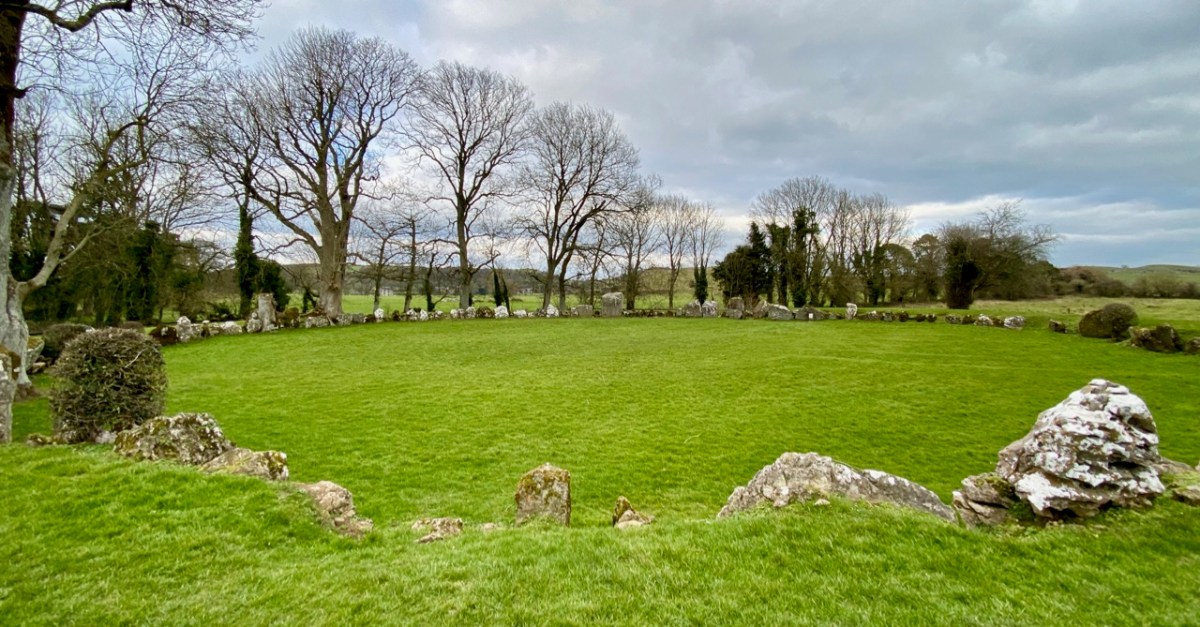
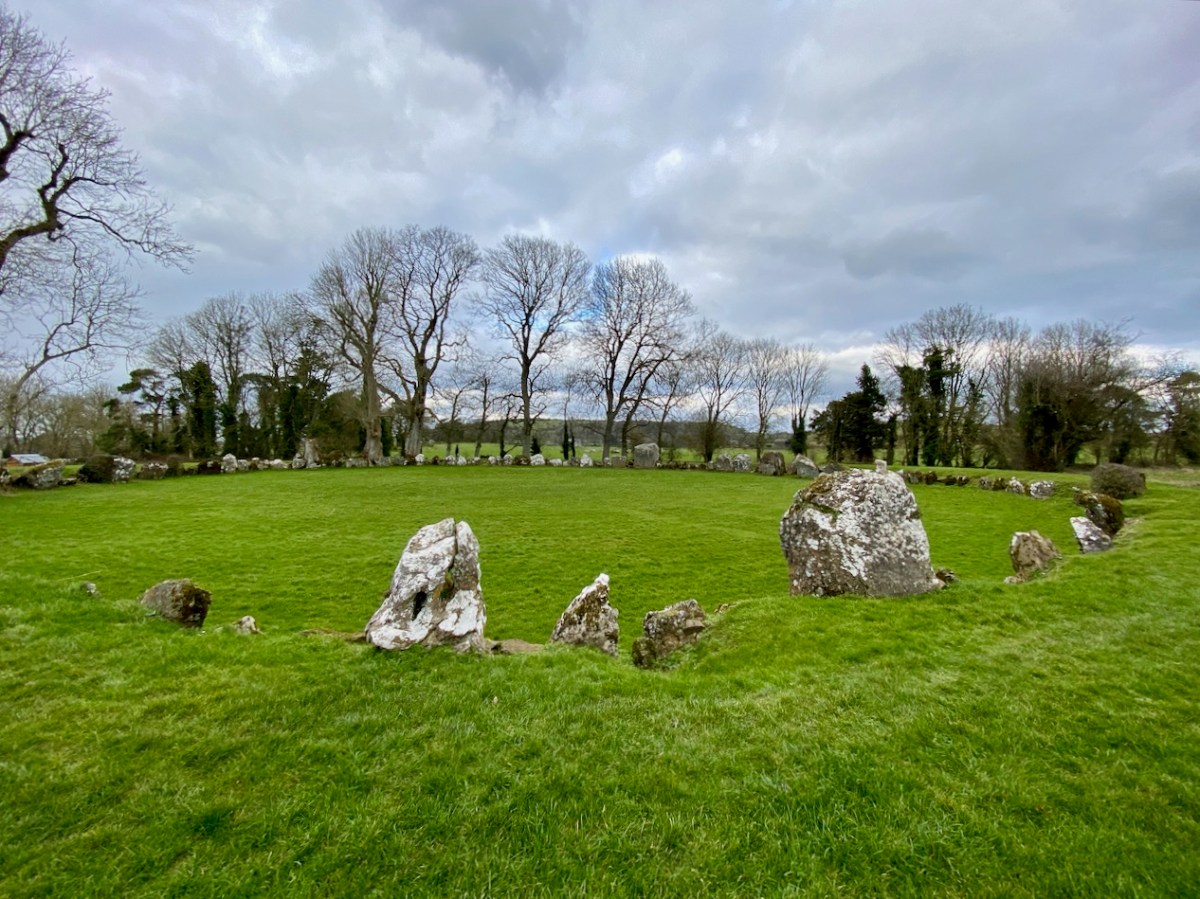
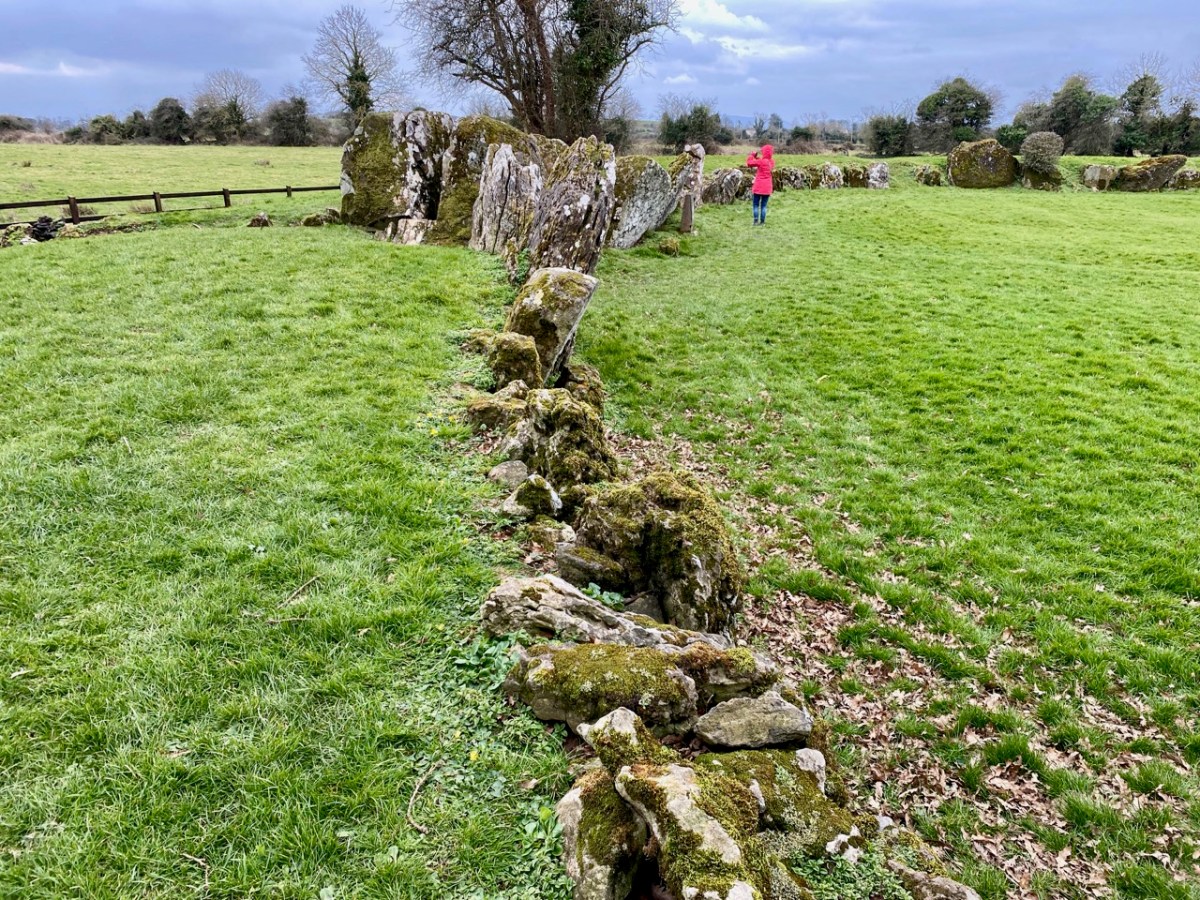
If you are travelling through County Limerick, you shouldn’t miss a visit to Ireland’s largest stone circle: Grange, near the Lough Gur complex. There are 113 stones in this circle today, generally standing close by each other (‘contiguous’) and thus unlike the majority of the circle monuments in Ireland, where individual stones are separated.

The great circular arena which these stones define is also on a platform raised (in the present day) about 600mm above the surrounding land. Excavations which took place between 1939 and 1954 (S P Ó Ríordáin 1951) and subsequent radiocarbon dating indicate a construction date just short of 3,000 BC, which makes the circle one of the oldest in Ireland.

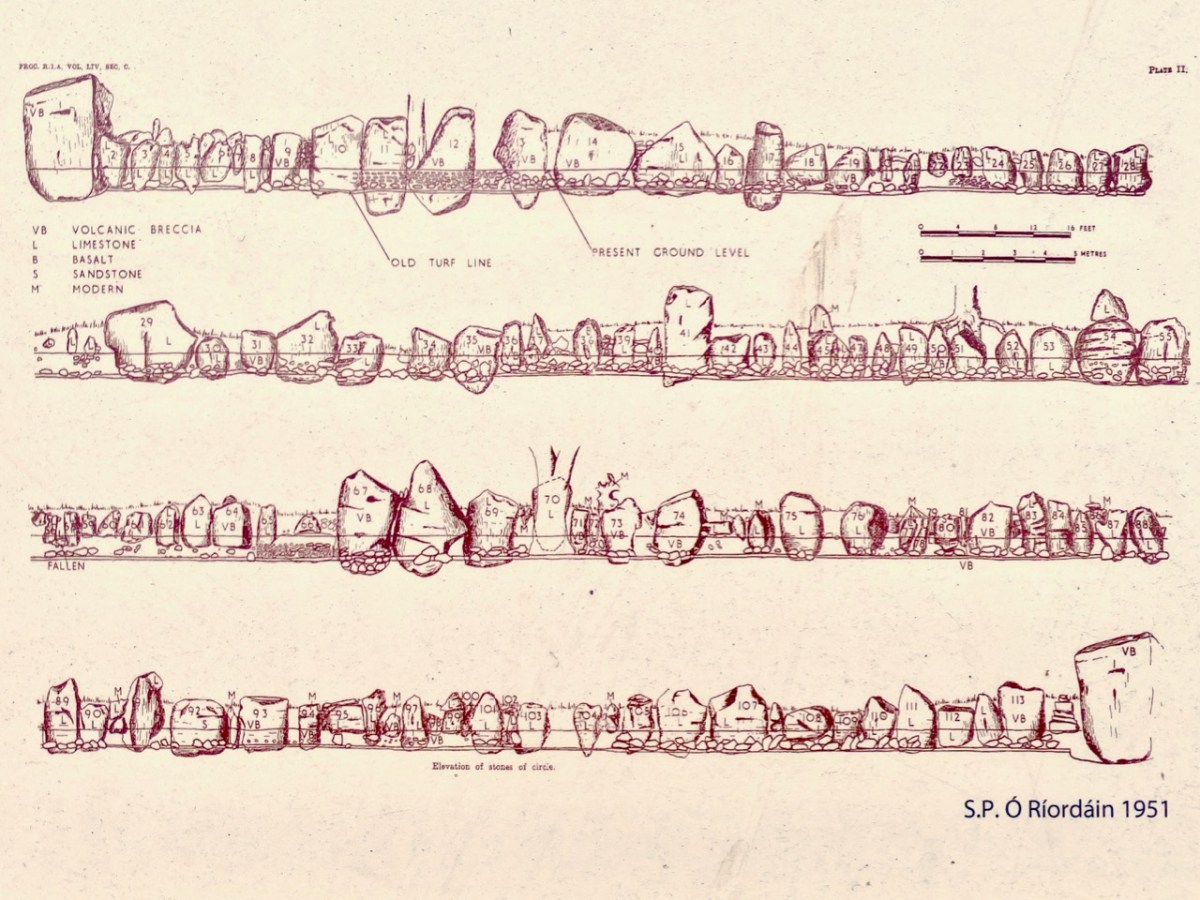
The internal diameter of this circle (a ring drawn around the inner faces of the stones) measures approximately 45.5 metres. Here is Ó Ríordáin’s drawings of the elevations of the stones:

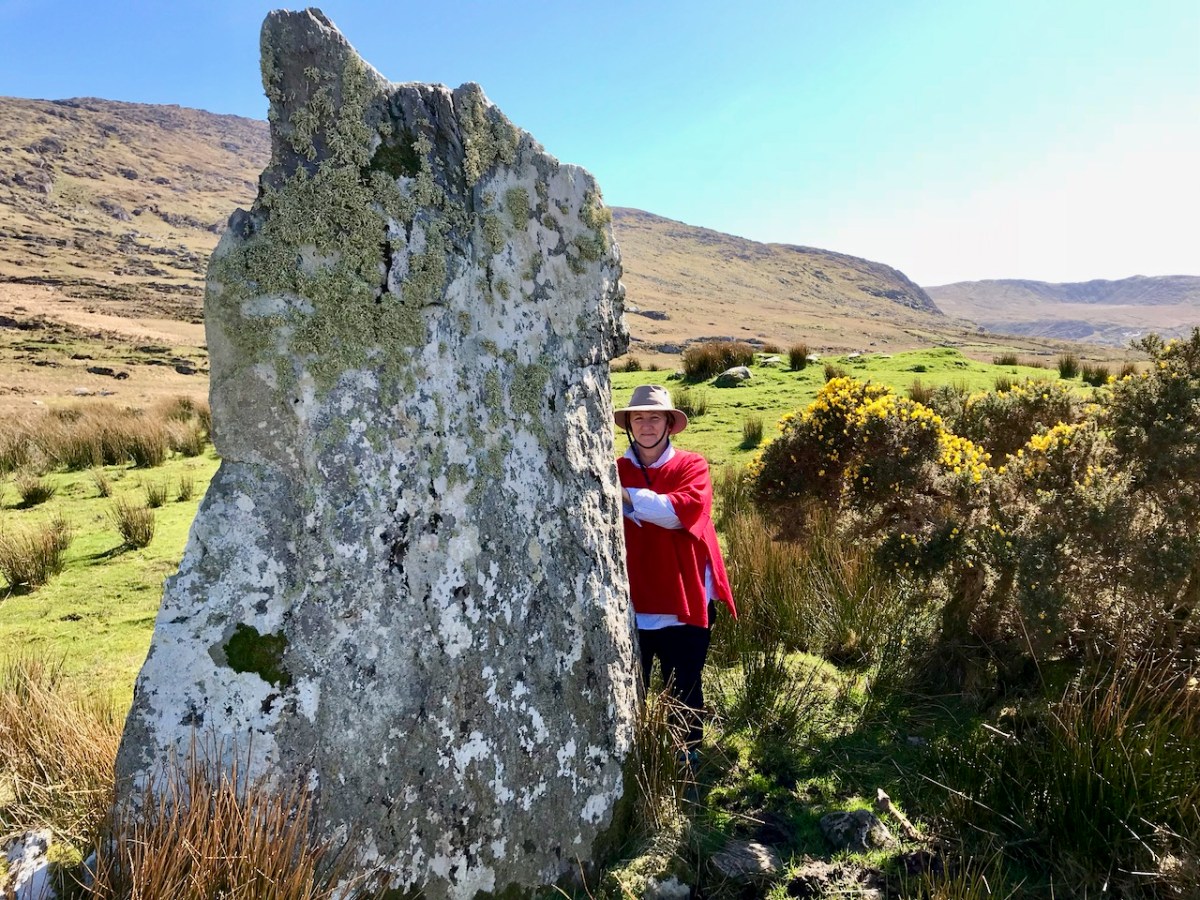
Finola bravely stands against the largest stone in the circle, which is traditionally named Rannach Crom Dubh. The meaning is not clear; Crom suggests ‘bent, crooked, or stooped’, while Dubh means ‘black or dark one’. Rannach can mean ‘open-handed’, which could imply a trading connection. This stone is said to weigh over 40 tonnes and was brought to this spot from three kilometres away. Interestingly, some say that this stone marks the ceremonial entrance into the circle and is aligned with the sunrise on the 1st of August, known as Lughnasadh, the day that marks the beginning of the harvest in Ireland. In fact, there are many orientations that can be given to this circle. This article by Ken Williams explores some possibilities here.

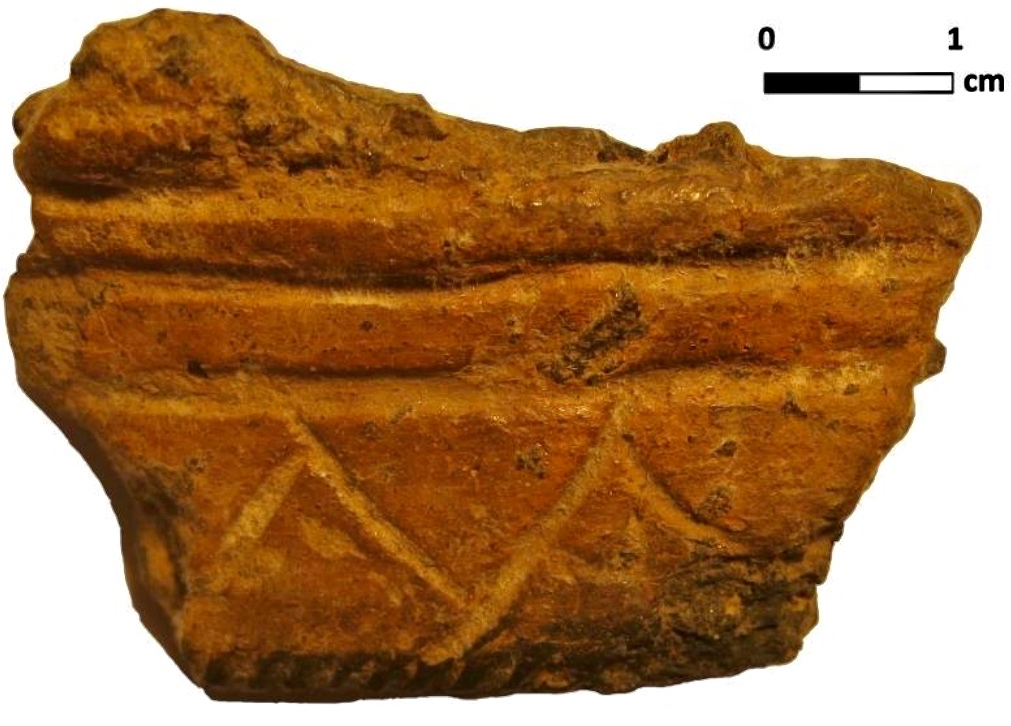
This Beaker pottery sherd was found and recorded by Ó Ríordáin. It is one of a great number of such remains to be found at the site. One commentator made the suggestion that . . . The breaking of Beaker pots against the standing stones seems to have been part of a ceremony . . . Can we trace the more modern tradition of breaking wine glasses after a toast to such an early origin? It’s said to bring luck and happiness in some cultures. This would, of course, imply that the great circle was a celebratory feasting site.

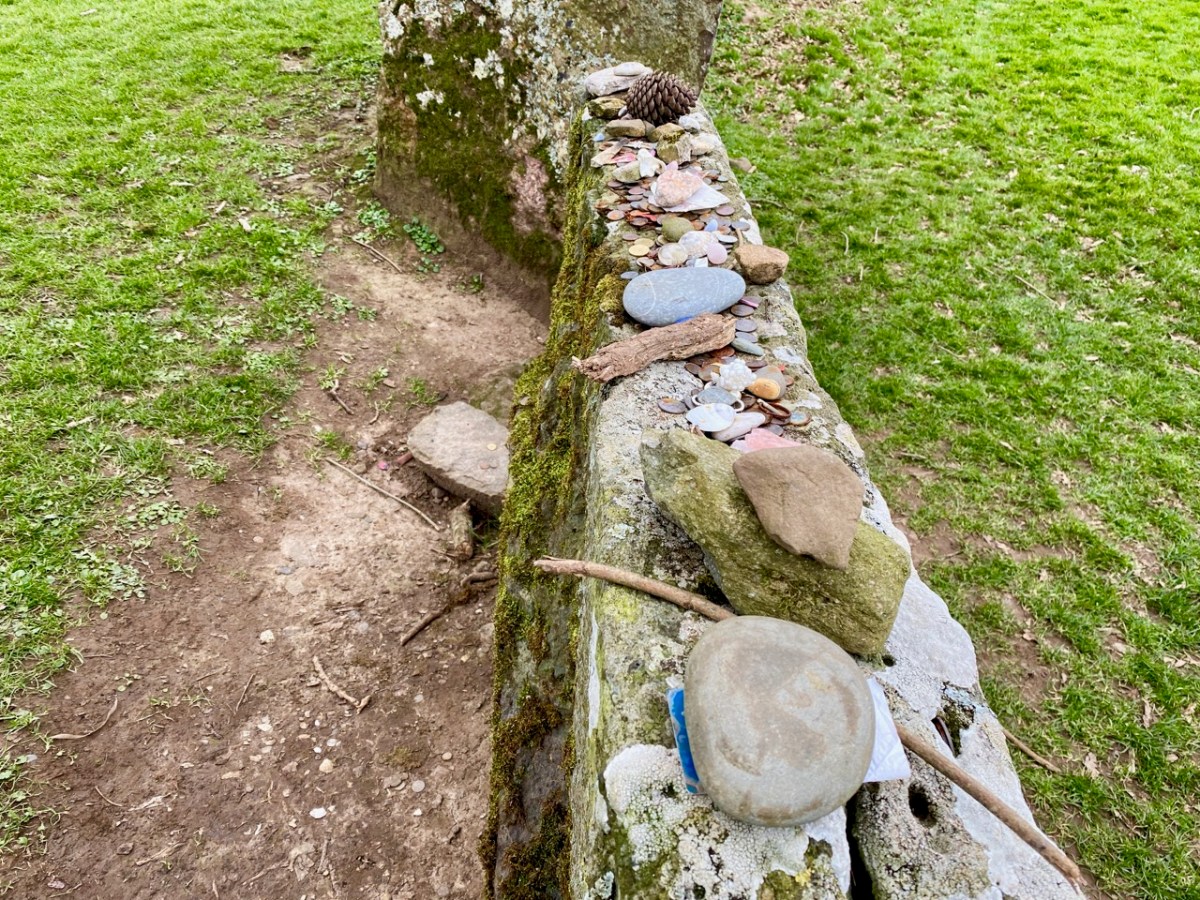
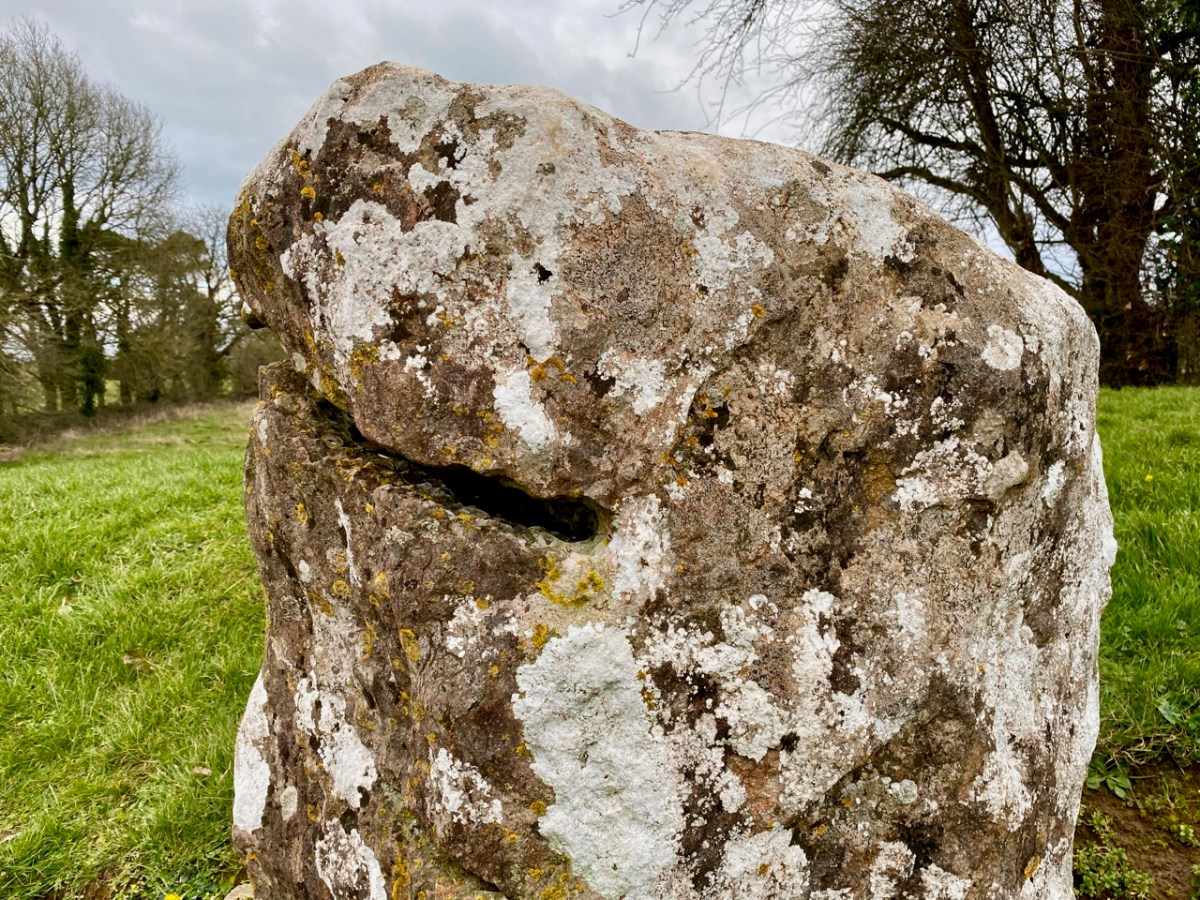
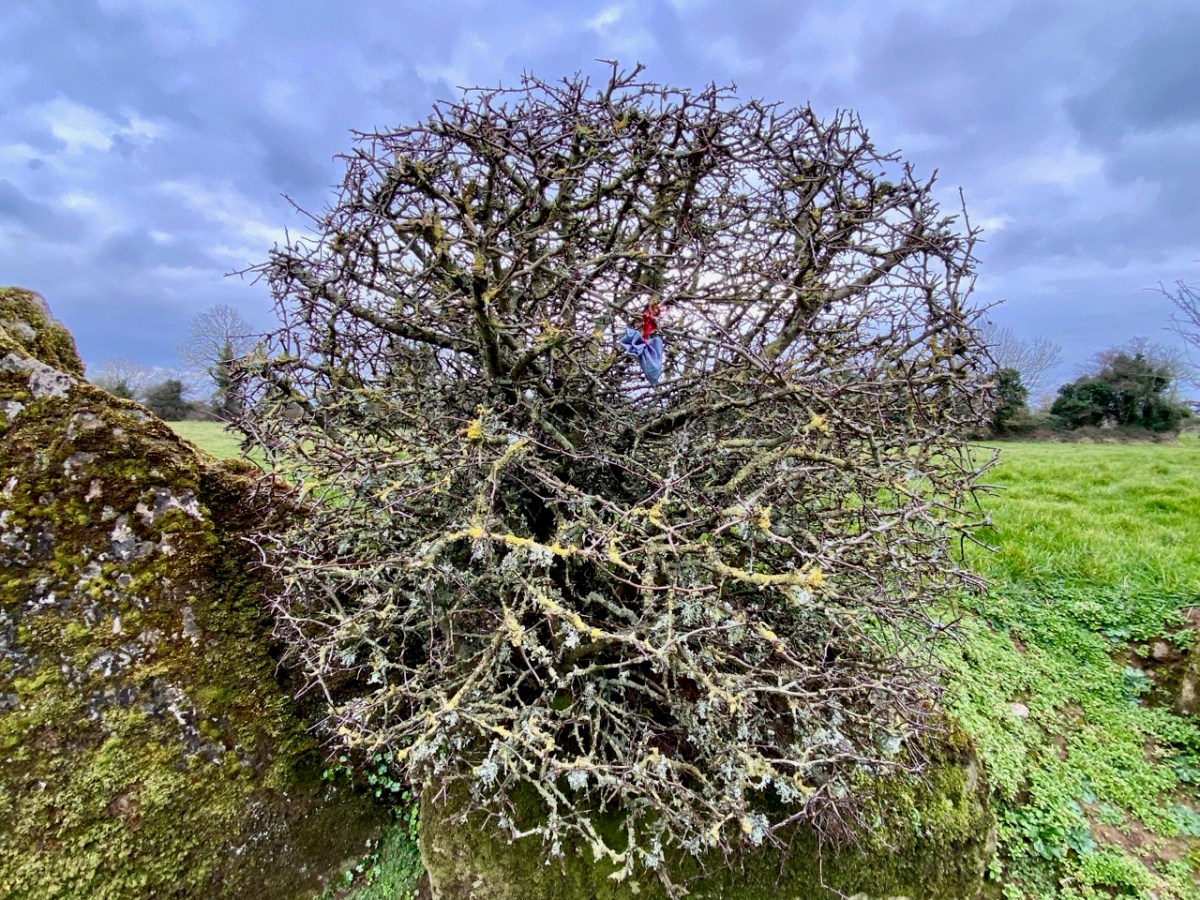
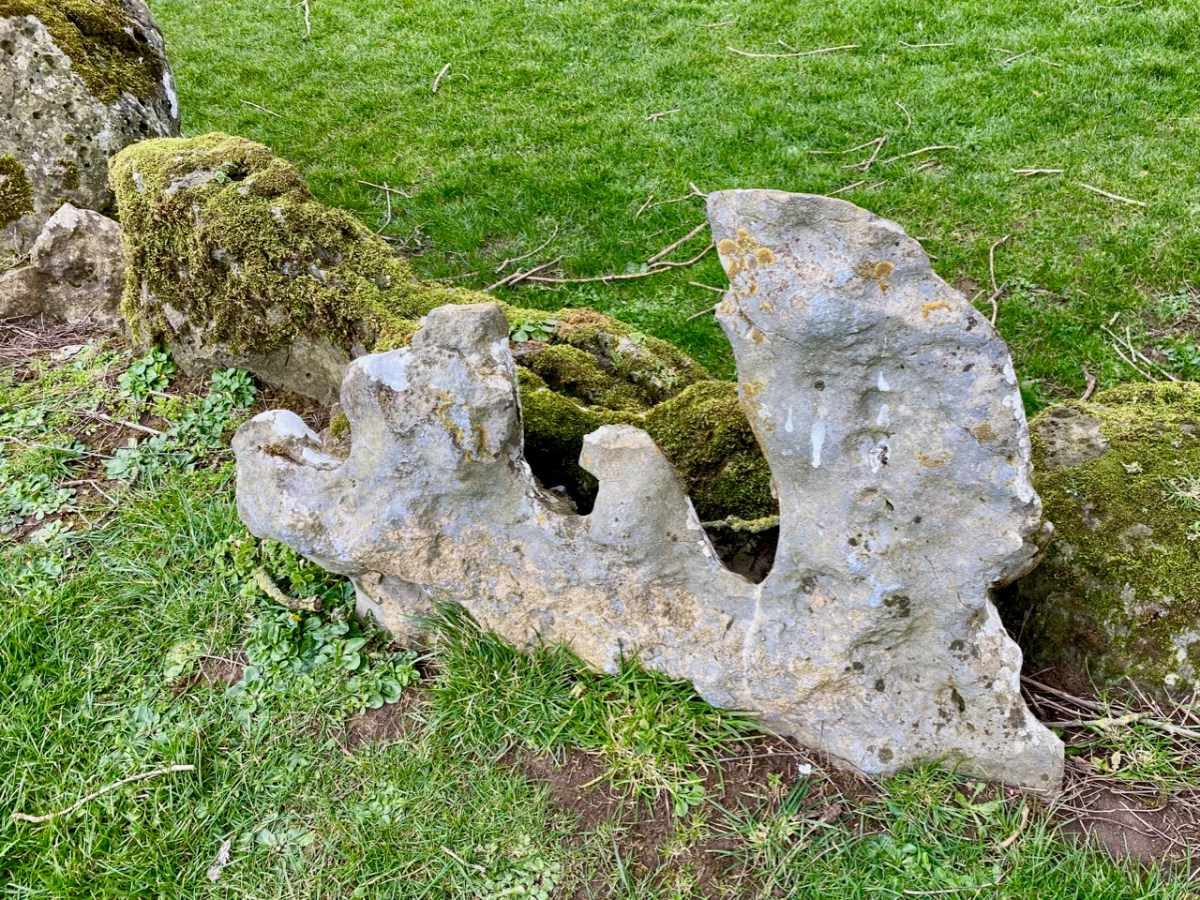
There is evidence today that visitors feel compelled to leave offerings at the site: coins, small stones, beads, and other ephemera. The examples above are adjacent to Rannach Crom Dubh, while below is one of the standing stones in the circle that appears to have been deliberately cut, or slotted, at some time in its history. Today, coins are deposited within this slot.

My own feeling about this site is that it is an arena where people gathered to feast and celebrate. An ancient ‘circus’ perhaps? Ken Williams analyses the possibilities of archeo-astronomical alignments in his article, mentioning our West Cork friend Vice-Admiral Boyle Somerville, whose detailed work we have investigated, here.

The features of this site are fascinating and provide much food for thought, especially when seen through the eyes of archaeologists. Of course, we want to know who conceived this monument, and who was in charge of the human power and organisation that was required to erect it. There won’t be a simple answer to this: it’s likely that many generations were responsible and that there were numerous incarnations over time. That’s what is so fascinating about ancient history: if only we had a time machine!

There are traces of other, smaller, stone circles close by this one, but I was intrigued to read in one of the accounts of this site that there was previously a further – even larger – circle nearby, and this has vanished altogether. I have to ask: how could such a massive structure disappear completely? Legend gives us an answer: it was supposedly stolen by Merlin and brought over to England to create Stonehenge!

Mizen Magic 23: Croagh Cove

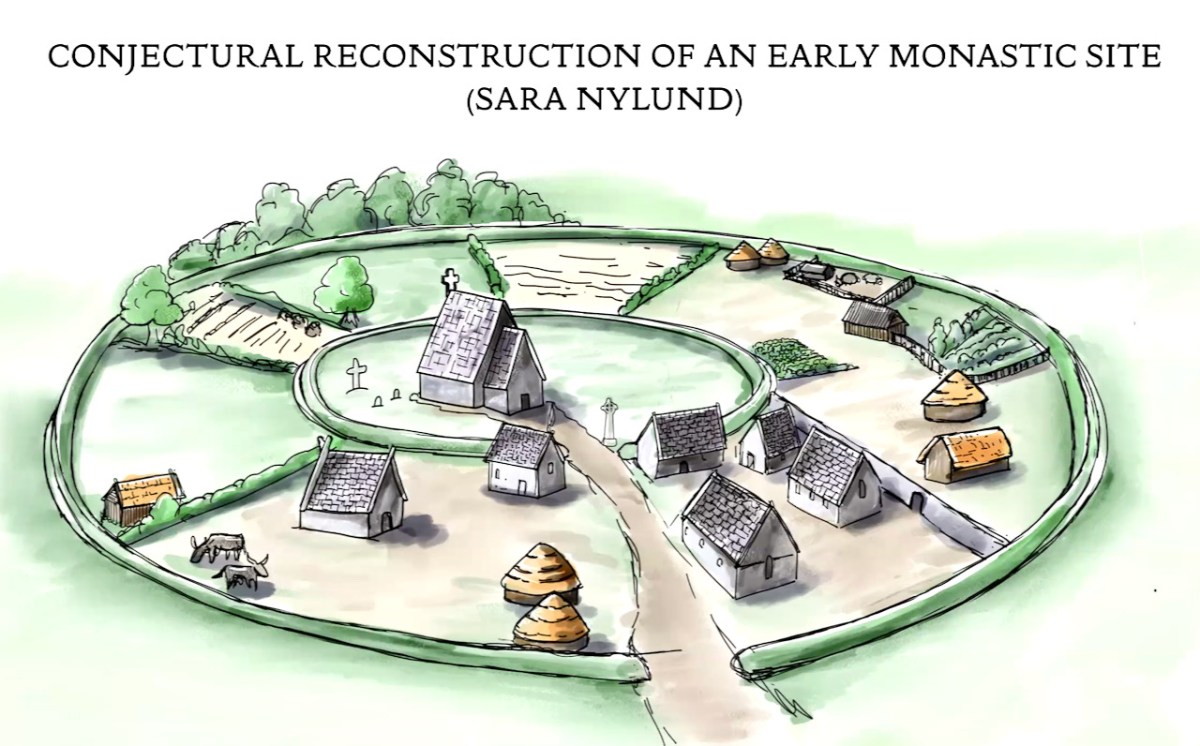
Many thanks to Sara Nylund for her wonderful reconstruction drawing of an early ecclesiastical site

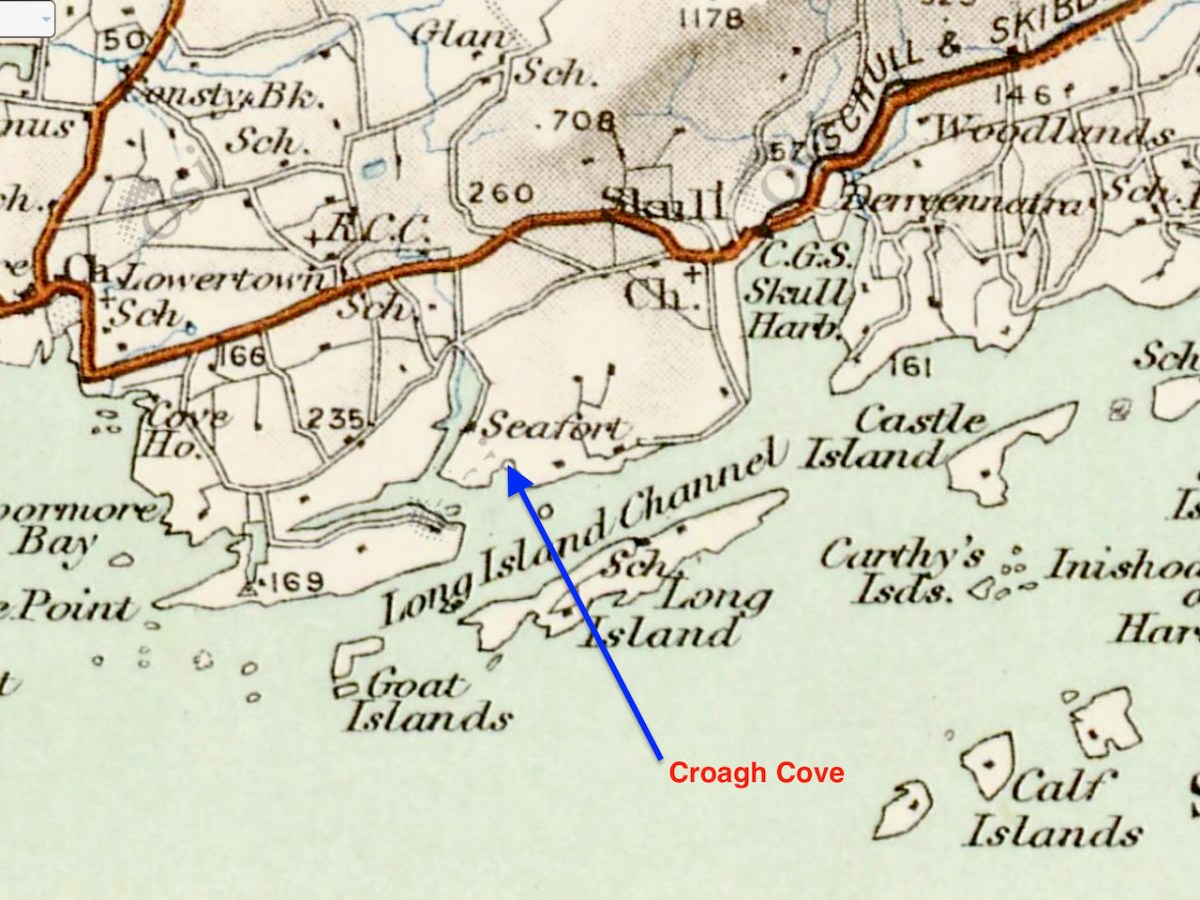
A couple of years ago, confined to explorations within 5km, Robert wrote about Croagh Bay (pronounced locally as Crew Bay). Recently our friends Donagh and Tamsin enticed us back to take a closer look at the eastern part of the Bay – Croagh Cove (Crew Cove). 

What intrigued us about this place and why we were eager to visit (apart from Donagh’s world-class coffee) was a place marked on the map as an ‘ecclesiastical enclosure.’ There aren’t a lot of those on the Mizen, although there may be more early ecclesiastical sites than have been identified and recorded. Kilbrown (see my post Mizen Mud), Cove and Kilbronogue are the only others so far.

What establishes a site as a likely ‘early ecclesiastical enclosure?’

The Irish church was dominated by scattered rural monasteries from the sixth century onwards. These were surrounded by large enclosures (varying in diameter from 40 a.m. to 400 M), often circular or oval in plan, and usually far more extensive than the surviving graveyards. In some cases the original bank, fosse or stone wall survives but more often the line of the monastic enclosure (or vallum) is indicated by curving field boundaries, roadways or a laneways. As well as the church and graveyard, these enclosures contained the dwellings, outhouses and workshops of a community, sometimes approaching the size of a town. Because the buildings were constructed of wood nothing survives above ground today; the graveyard often contains the ruin of a mediaeval church. In some cases the surviving burial ground has no inscribed headstones but was used for the burial of unbaptised children during the last few centuries. Bullaun stones and cross-inscribed stones are often found on early church sites while holy wells may be situated close by and retain the name of the saint anciently associated with the site. Unfortunately little of the history of the early church in West Cork has survived and the earliest reference to many of these sites is as late as the 12th century.

The Archaeological Inventory of County Cork, Vol I, West Cork. P 271

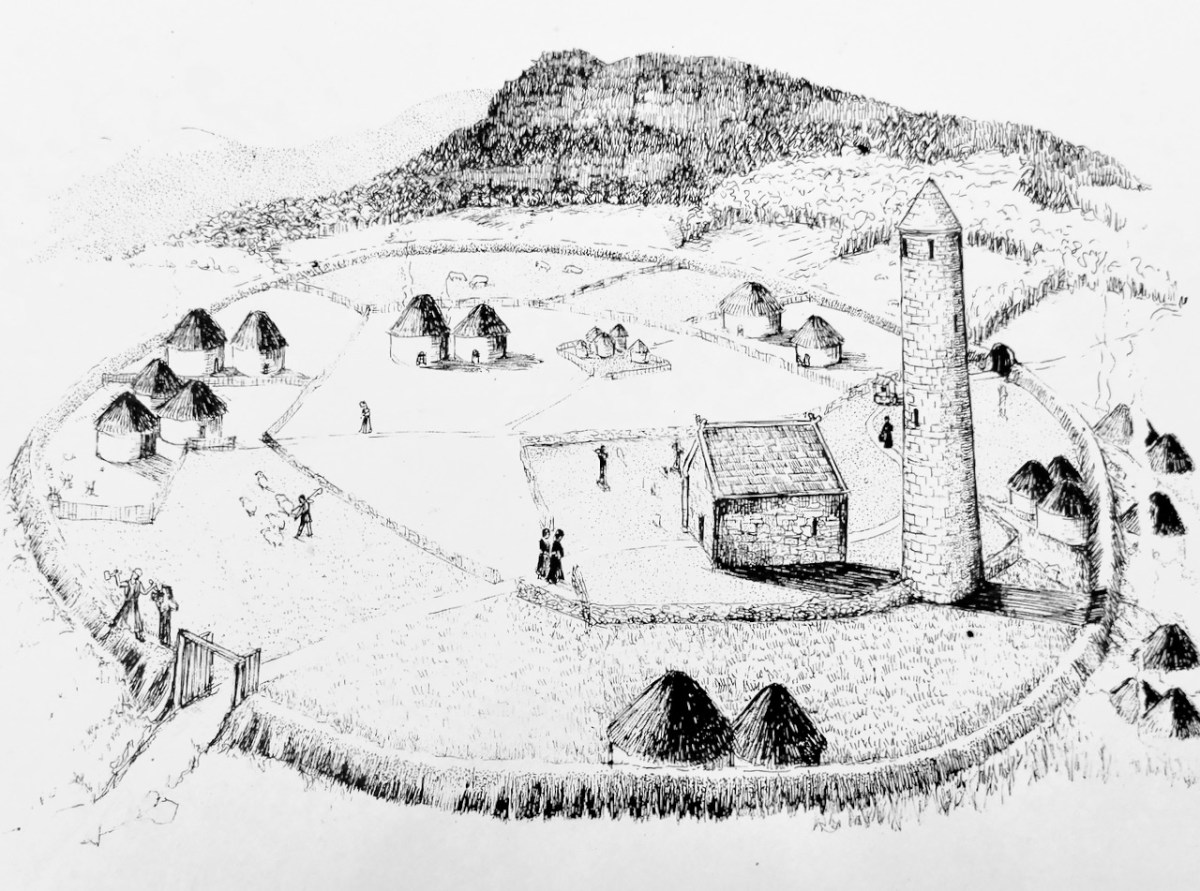
So, as you can see, not much normally survives on the surface but a tell-tale sign is a circular or oval enclosure, or (often) two concentric enclosures, with the barely-discernible signs of buildings inside. (Readers may remember the above illustration from my post on Ardpatrick – no sign of a round tower at Croagh, though!).) The memory of these places as once-sacred seems to be retained locally, and led to their use as Cillíní, or Children’s burial grounds in the past. See my post Unknown Souls for more about Cillíní – ‘the loneliest places on earth.’ Thus – small uninscribed headstones peeking out through the grass is an indication that this may be a cillín, and in turn perhaps something more ancient yet.

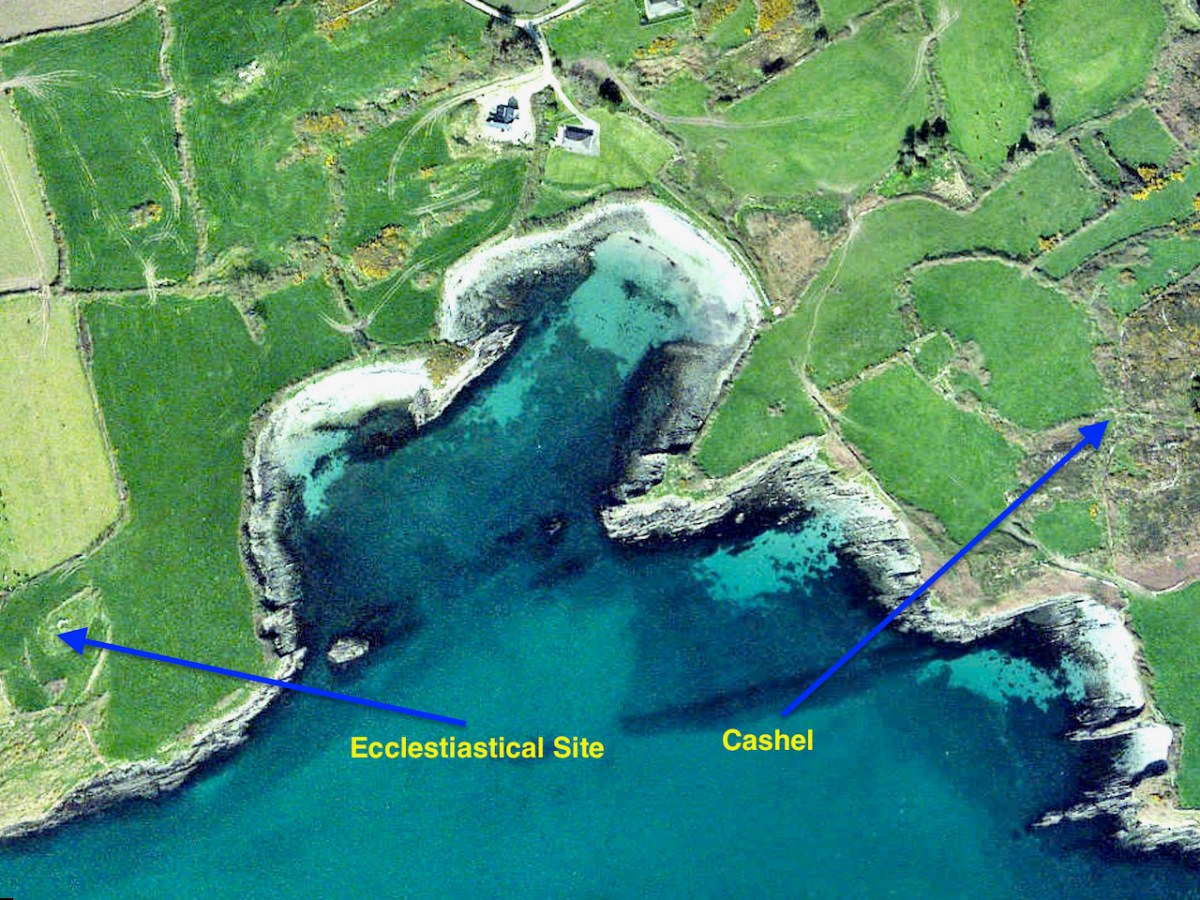
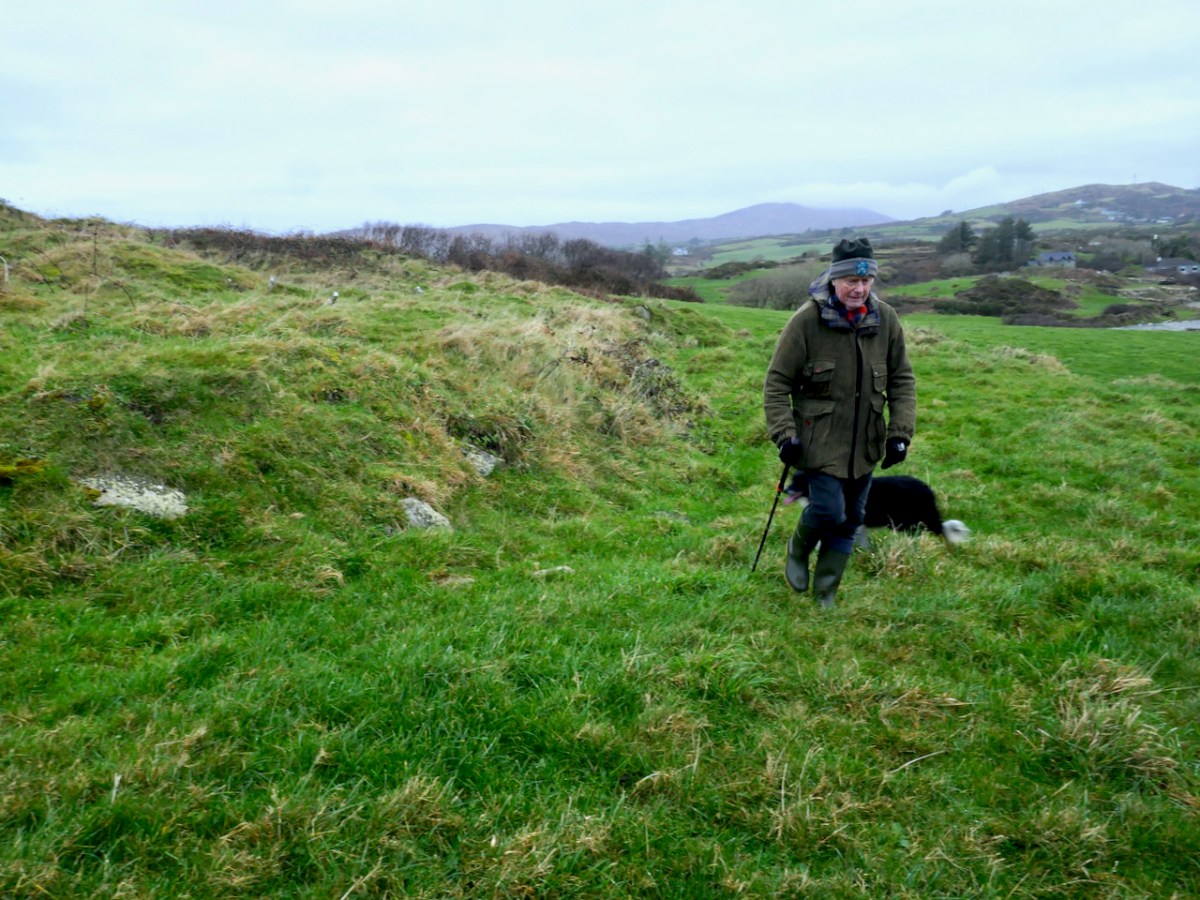
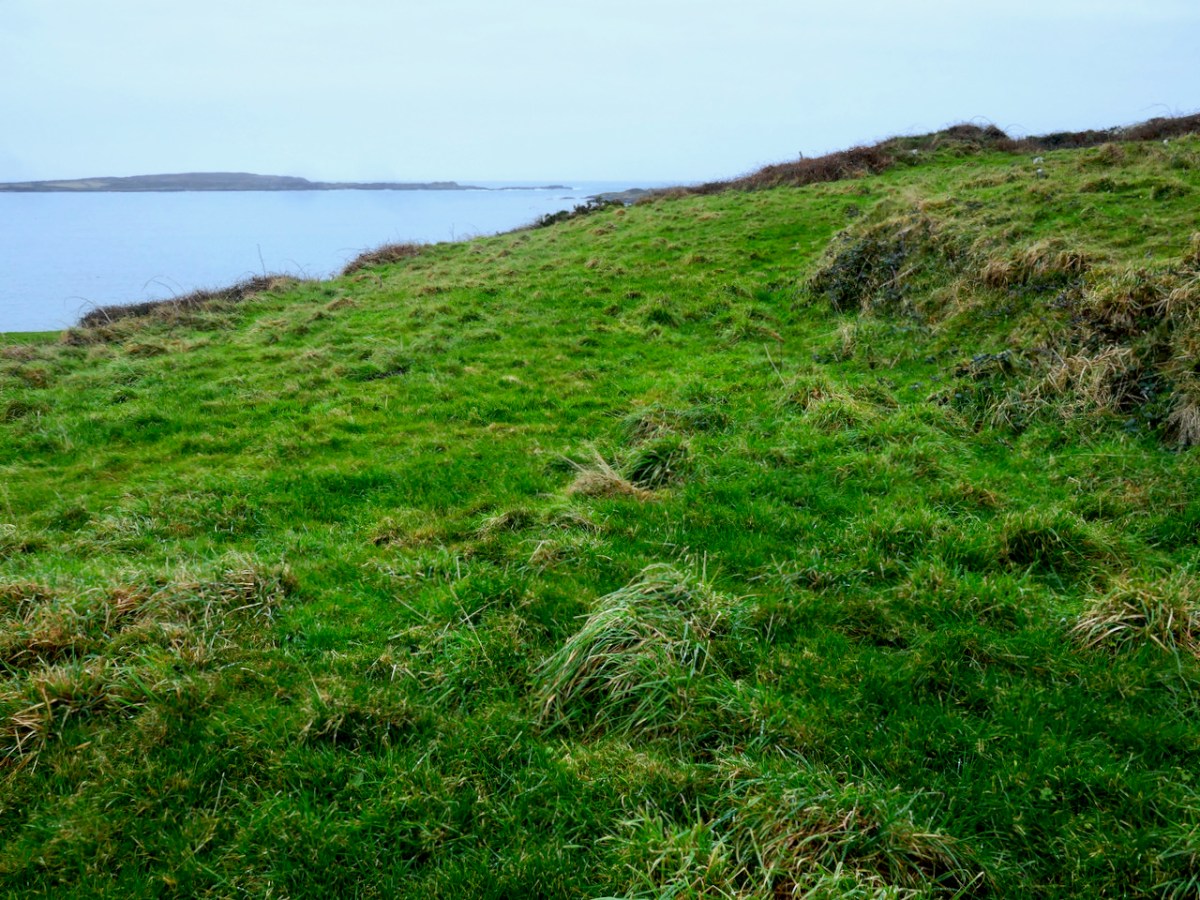
The original site may have been carved out of the hillside – the flattening process leaving a sharp-edged bank on the sea-ward side (above and below). This reminded us of the similar bank we found at the possible ‘Scoil Mhuire’ site that Robert reported on in his post Schull – Delving into History

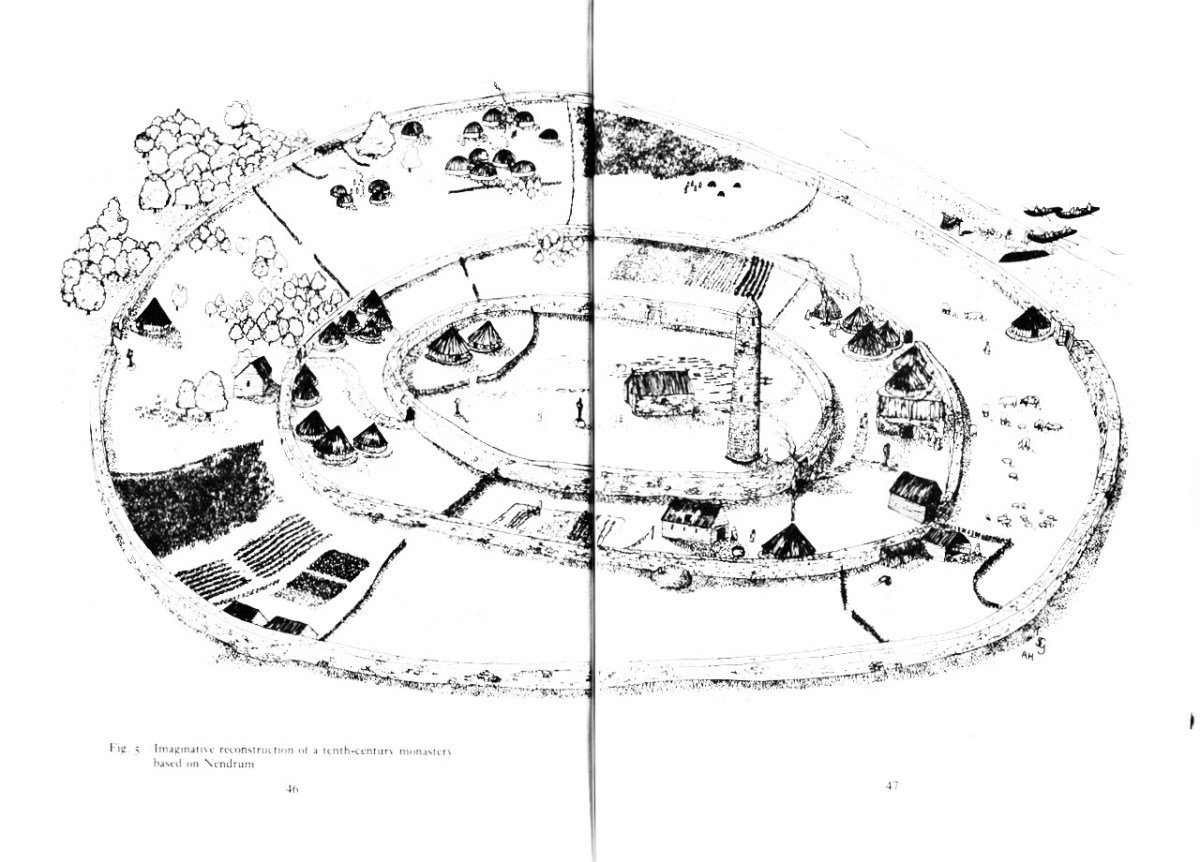
What would such a site have looked like? They varied enormously in size – for example Glenadalough in Wicklow and Kells in Meath would both have been monastic cities. Most, however, and especially in remote places, would have been small religious foundations in which there would be a central church surrounded by an inner wall, and houses and gardens for the monks surrounded by an outer wall. 

Nendrum in Co Down shows what a monastic settlement considerably larger than Croagh might have looked like. The Illustration is from The Modern Traveller to the Early Irish Church by Kathleen Hughes and Ann Hamlin

The word reilig (pronounced rellig) is the Irish word for graveyard and it comes from the word for relic. Early sites like this were assumed to have had a founding saint, who gave his or her name to the site. Kilbrown, for example, would be the church of Brón, and he would have been buried on the site – hence the ‘relic’ association. Kilcoe was named for a saintly nun, St Coch. The echoes of the cult of those saints would have remained alive through the centuries in the names of townlands and holy wells.

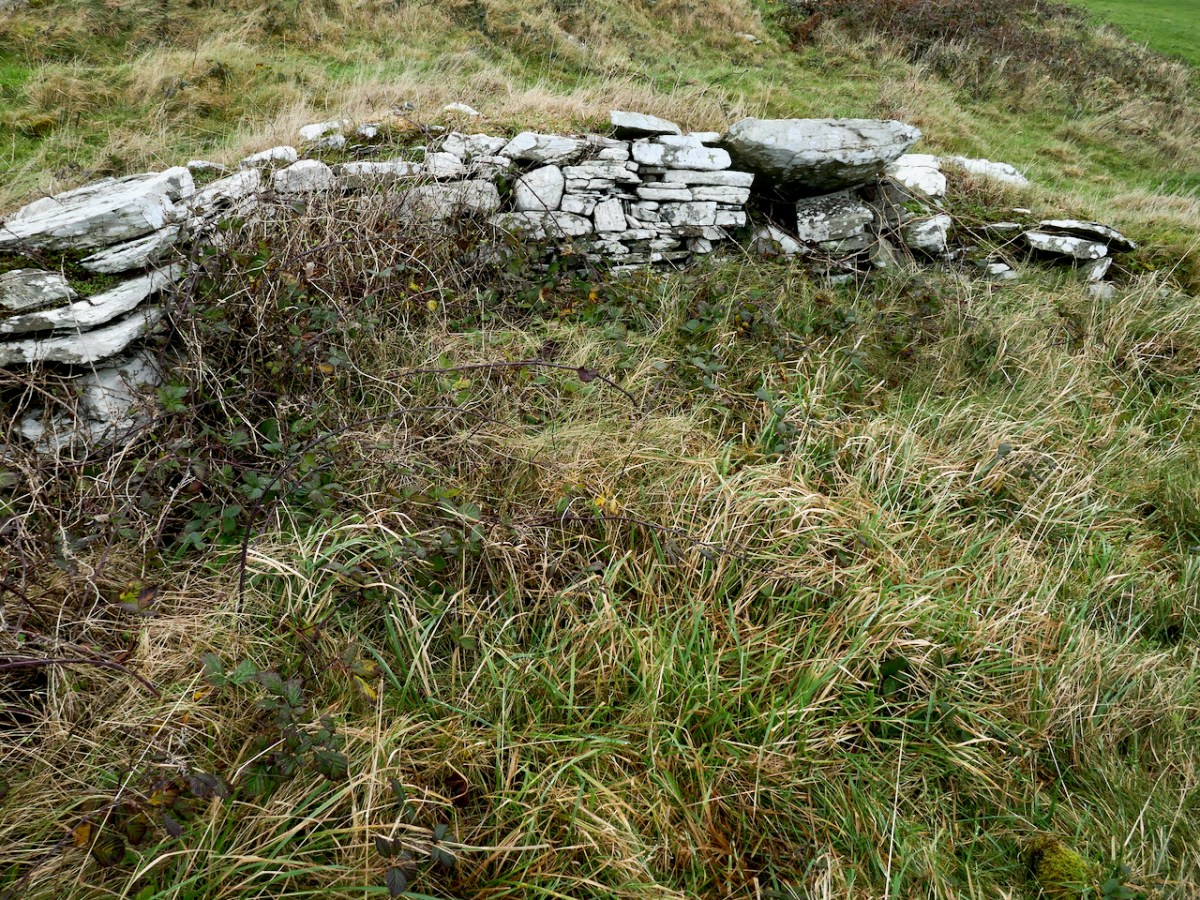
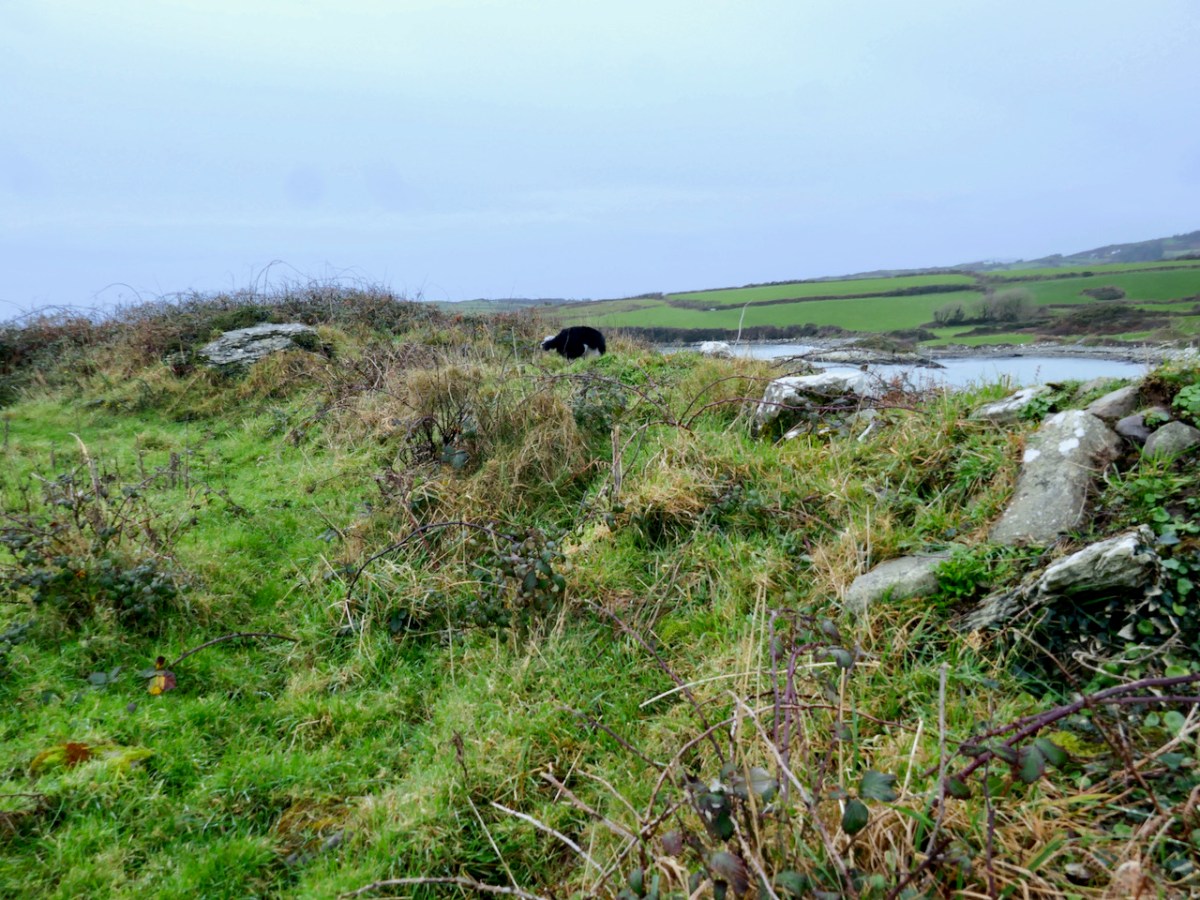
Possible remains of church at Croagh

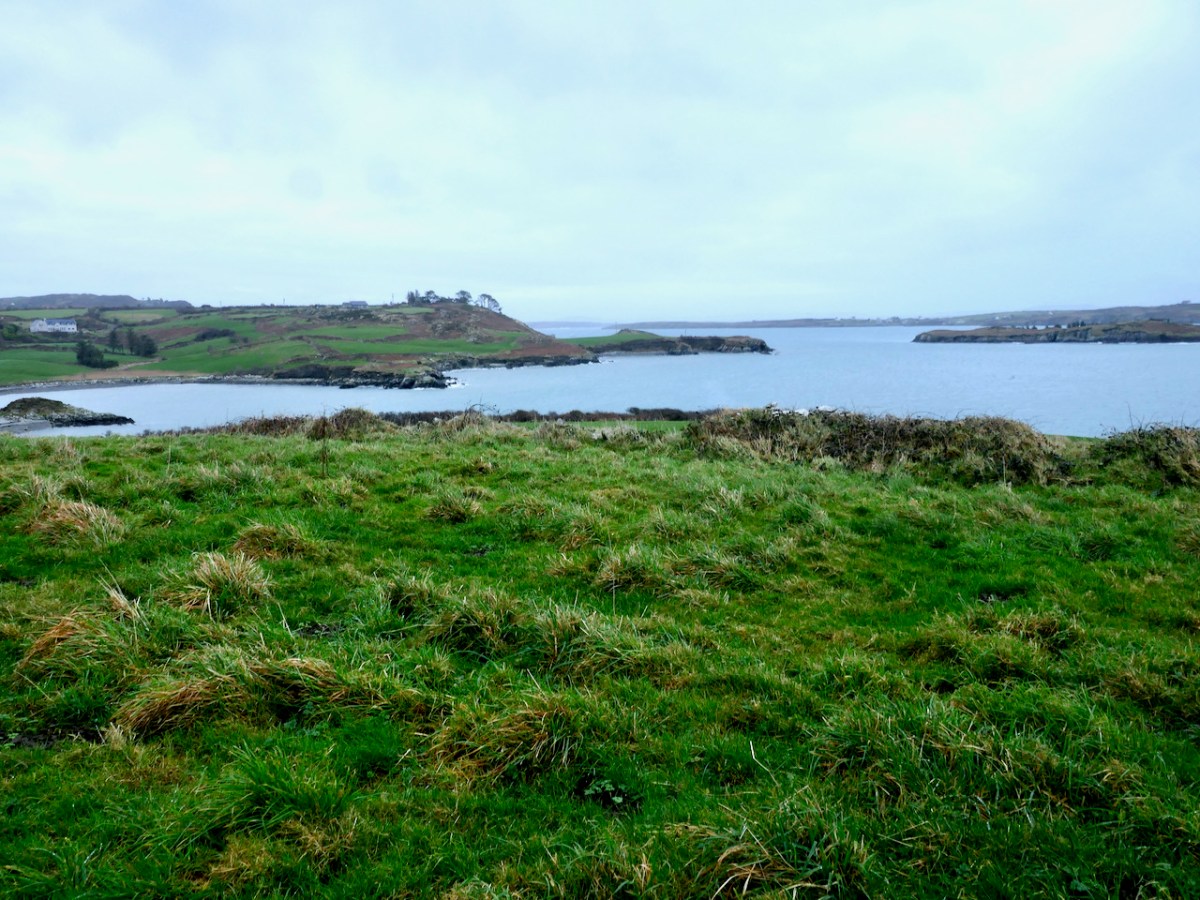
The name Croagh, however, is based not on a saint’s name but on the Irish word for a ‘stack’ and may refer to the gentle hill that rises up from the water. It was, and remains, an almost perfect spot to establish a peaceful settlement based around hard work and prayer. There’s a lovely little beach below, so transport and travel was easy by water. It’s in a sheltered haven protected from storms by Long Island off the cost, and from it there’s a good view out to sea (below) so the monks could see Vikings or other raiders coming.

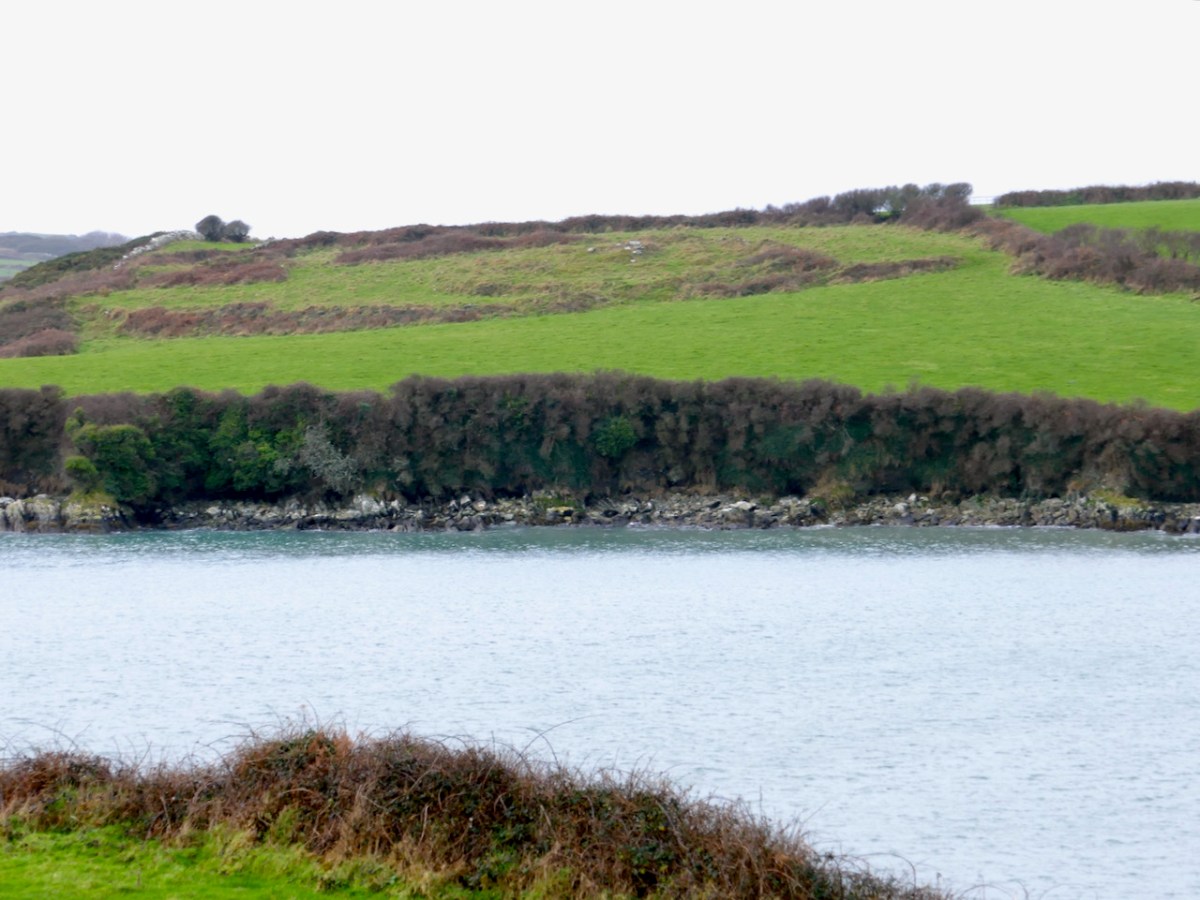
And right across the Cove there’s a ring fort – a cashel, in fact, since it looks like the walls were made of stone (below). It’s a classic – on elevated ground with commanding views all around, out to sea and to the low hills behind. Puzzlingly, this cashel is not recorded by National Monuments. It’s overgrown by bracken so may not have been obvious at the time of the survey. 

This juxtaposition, across the cove from each other, of an early-medieval monastic settlement and a fortified residence, leads to speculation as to the relationship between the two. Was the monastery endowed by the local chief, committing the monks to say prayers for his eternal soul in exchange for land and protection? This is certainly a familiar pattern from the later medieval period. 

View of the ecclesiastical site from the cashel

This is just a tiny corner of the Mizen. There is much more of interest in this small townland but for today I wanted to focus on these early-medieval sites. In their ruins lie clues to a distant but vibrant past.

Stones Alone

Over the years we have written a lot about stone. That’s not surprising, because our interests in Irish archaeology involve stones: standing stones, stone circles, rock art, gravestones . . . It’s what the surviving history of our earliest dwellers on this island is all about. So I thought it would be a good idea to sift through our Roaringwater Journal photographic library – which goes back a decade – and turn up some pictures and stories which I have never used before: all of them involving stones. That header pic, above, is a boulder burial at Rathruane, just outside our West Cork village of Ballydehob.

Here’s another boulder burial, a long way away in Co Cavan, now surrounded by trees which are probably relatively recent. Finola wrote about this monument type six years ago, and pointed out that they are not well named: when examined archaeologically, very few of these stones have been associated with buried human remains. They are said to have been positioned between 1,500 and 1,000 years BC, a time we refer to as the ‘Bronze Age’. So, by then, humans were already aware of the use of metal for tools, weapons and decorative adornments. But imagine the time before that – when people only had natural materials to hand – wood, vegetation and, of course – if you wanted to create something permanent – stone: we call these times Neolithic – and generally that covers the period of habitation of Ireland from 6,000 BC onwards.

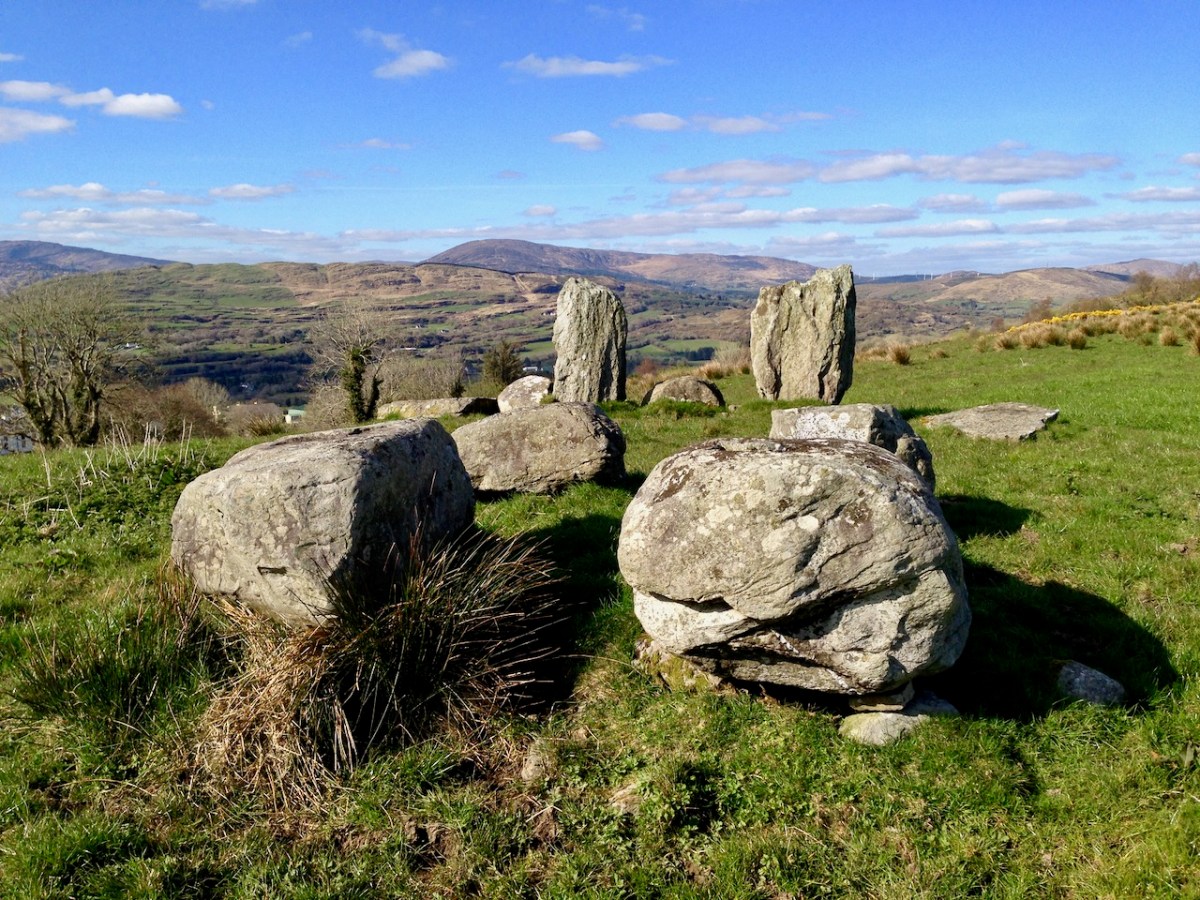
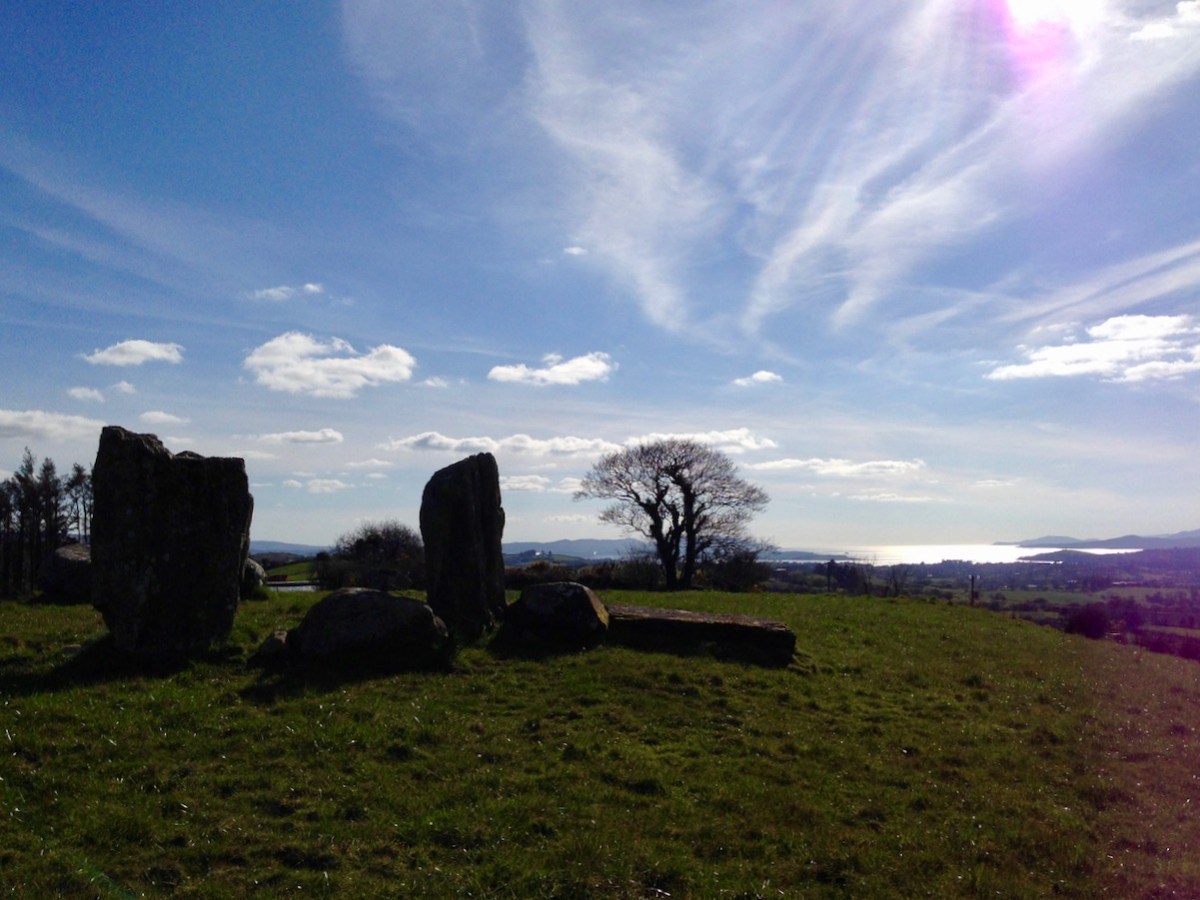
Here is another West Cork site: Breeny More, to the north of Bantry. There’s a whole lot of stones here including, unusually, four ‘boulder burials’ arranged in a square. There are also further stones in this grouping which were once part of a stone circle. The site is magnificently located, with distant views west across to Bantry Bay (below).

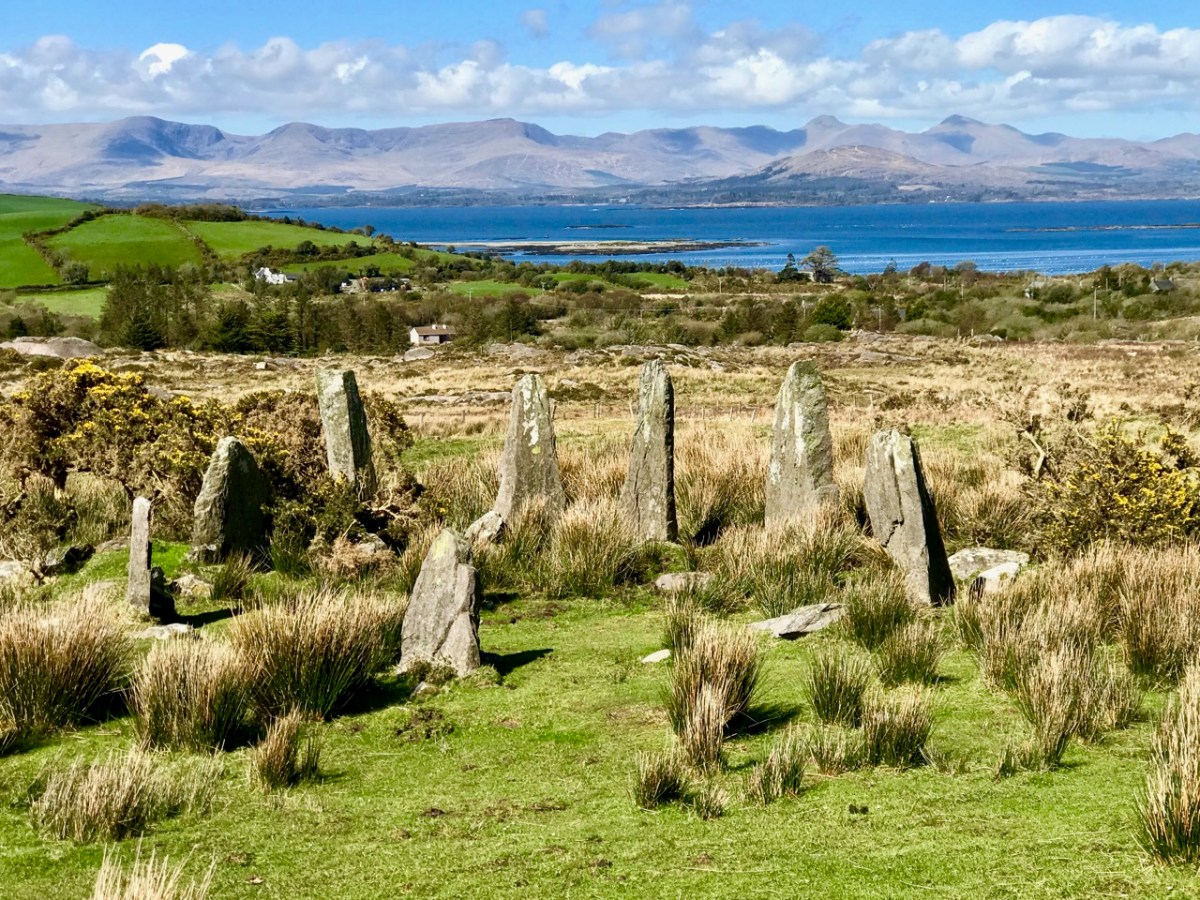
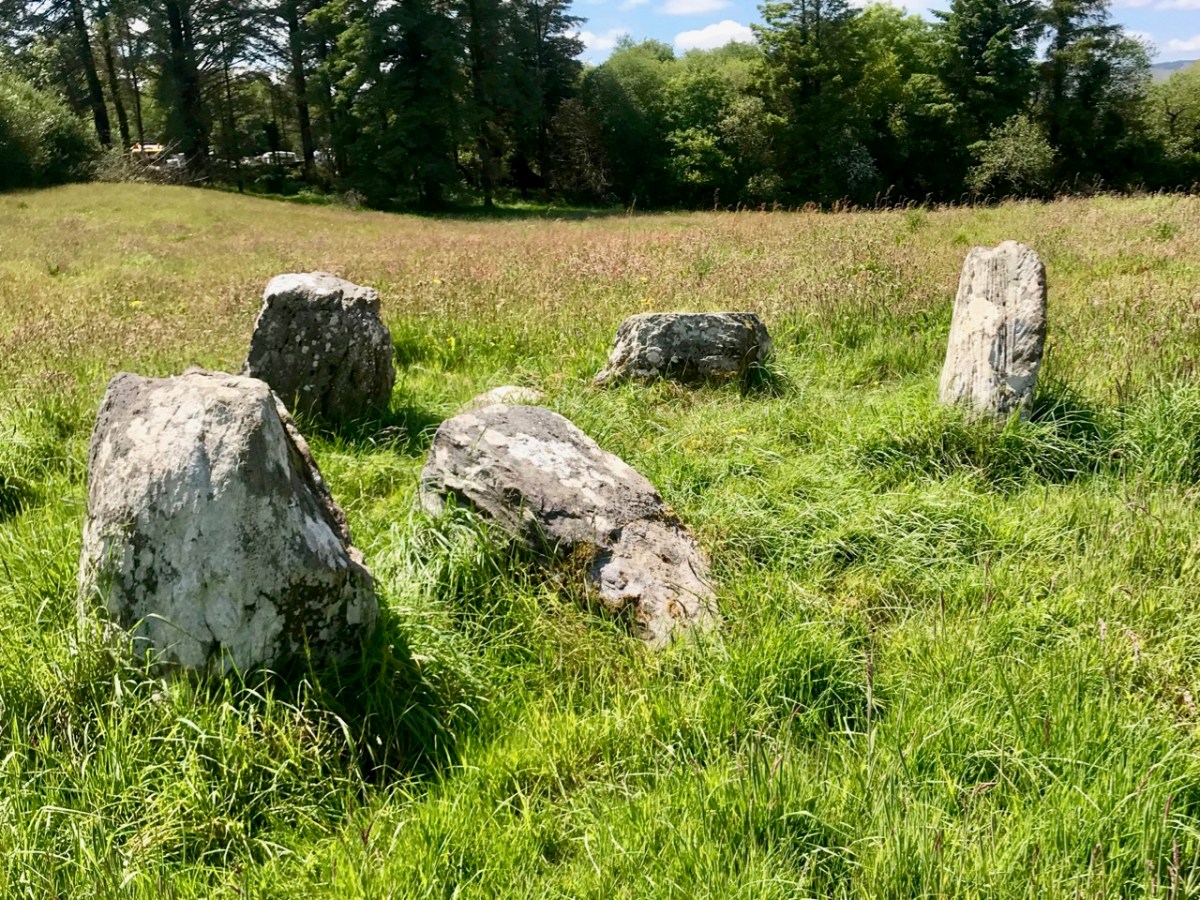
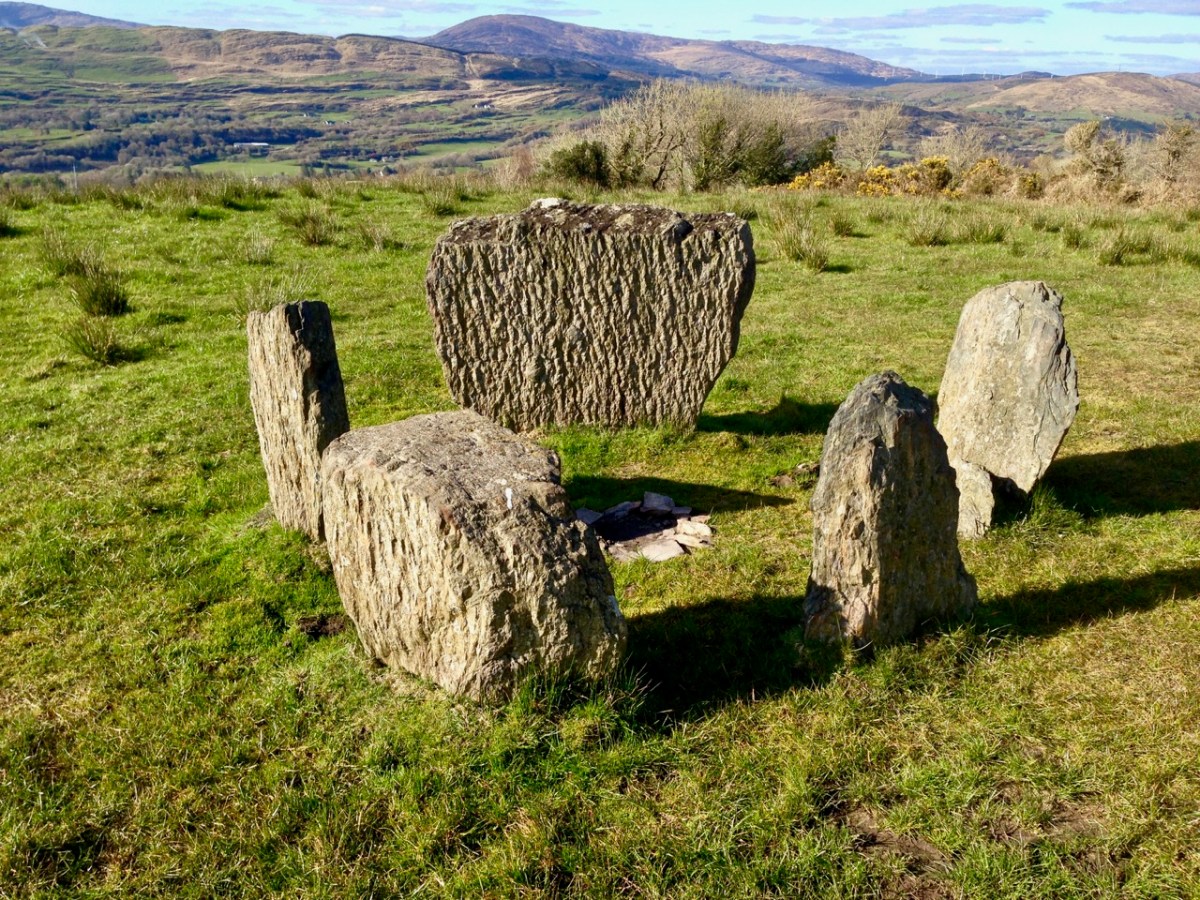
We are all familiar with groups of stones arranged in a circle. Here is the ‘stone circle’ at Ardgroom, County Cork: it’s on the Beara Peninsula. As with the Boulder Burials, these monument types are generally thought to date from the Bronze Age.

These modestly sized ‘five stone’ stone circles are also in County Cork. The National monuments Survey of Ireland lists 53 ‘five stone’ circles in the county, while a further 41 ‘multiple stone’ circles are noted. There are also some anomalies which defy definition, such as ‘The Fingers’ at Knockdrum, West Cork, just outside Castletownshend:

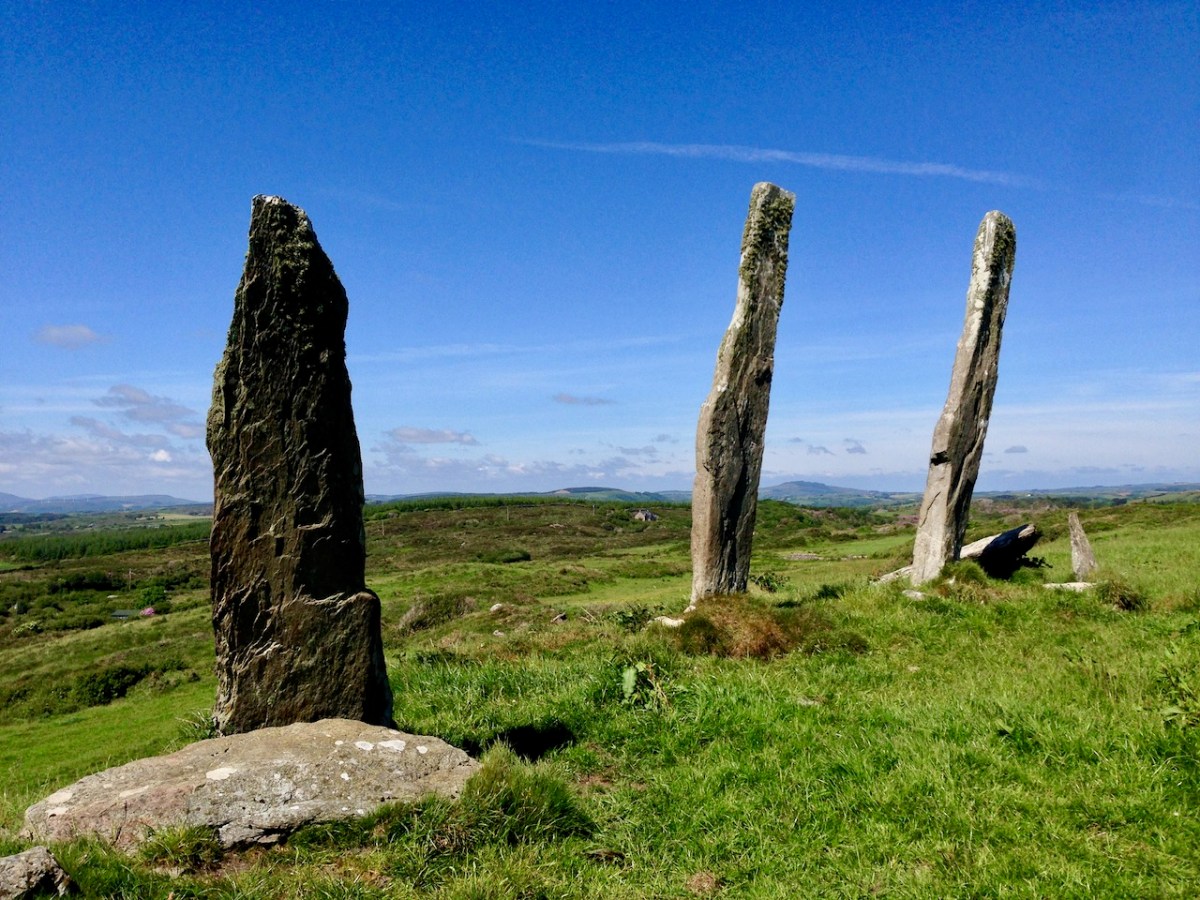
This appears to have been, originally, an alignment of five tall standing stones. One has fallen and broken, while the fifth is now missing. It is reasonable to assume, from the number of stone ‘monuments’ all around us in West Cork (and in many other parts of Ireland), that these sites were of great significance to the populations who constructed them. But we don’t know for sure why they are there – although theories abound.

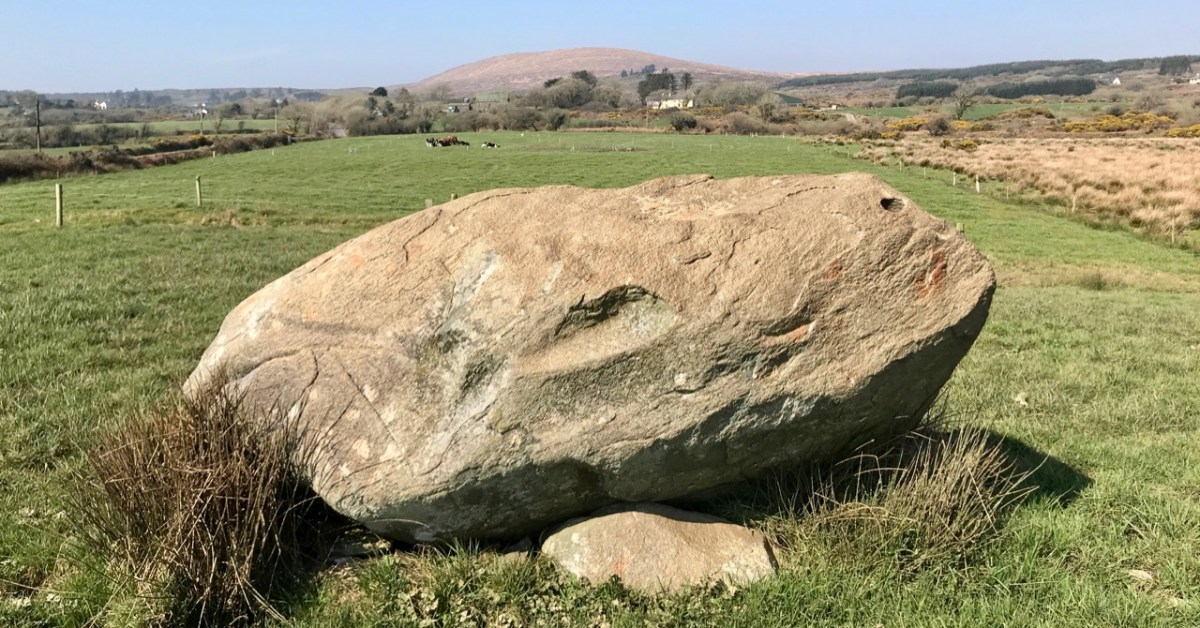
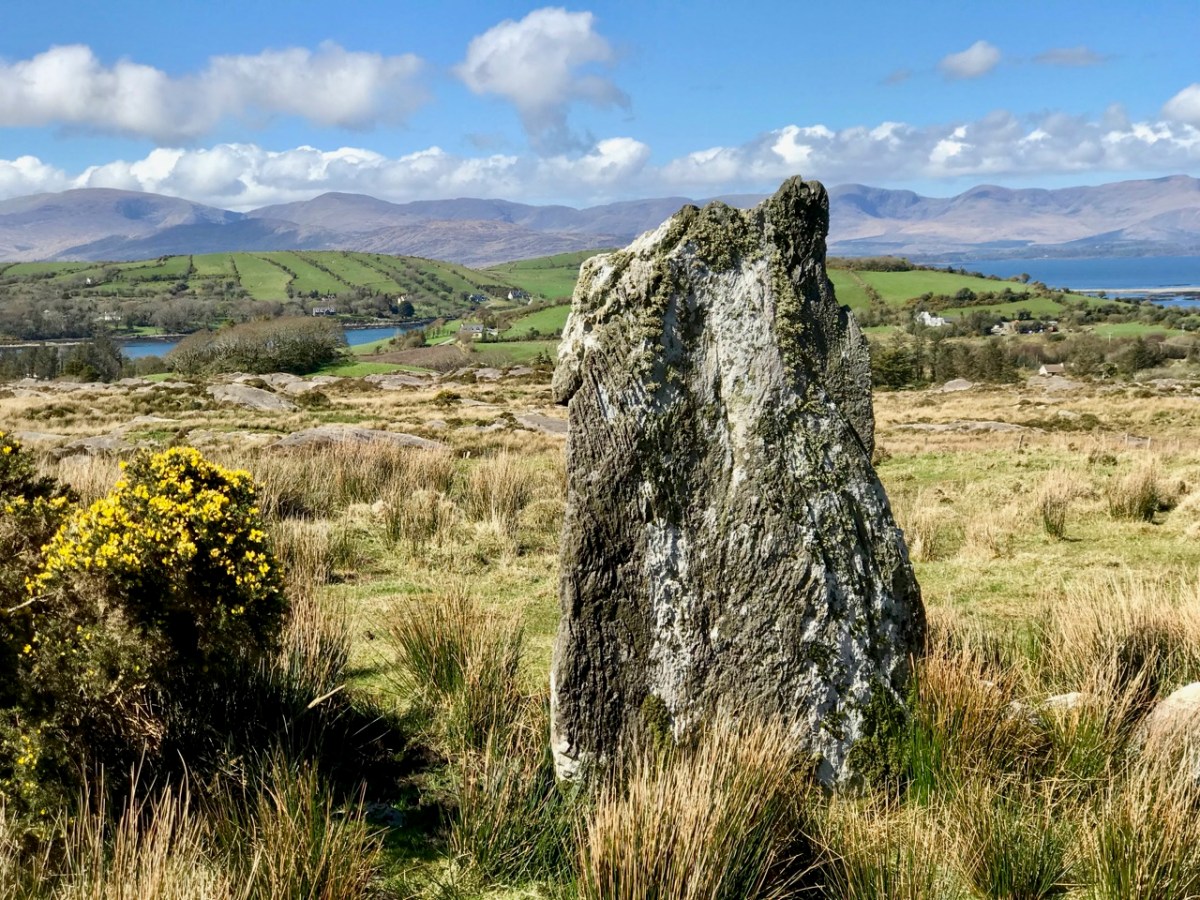
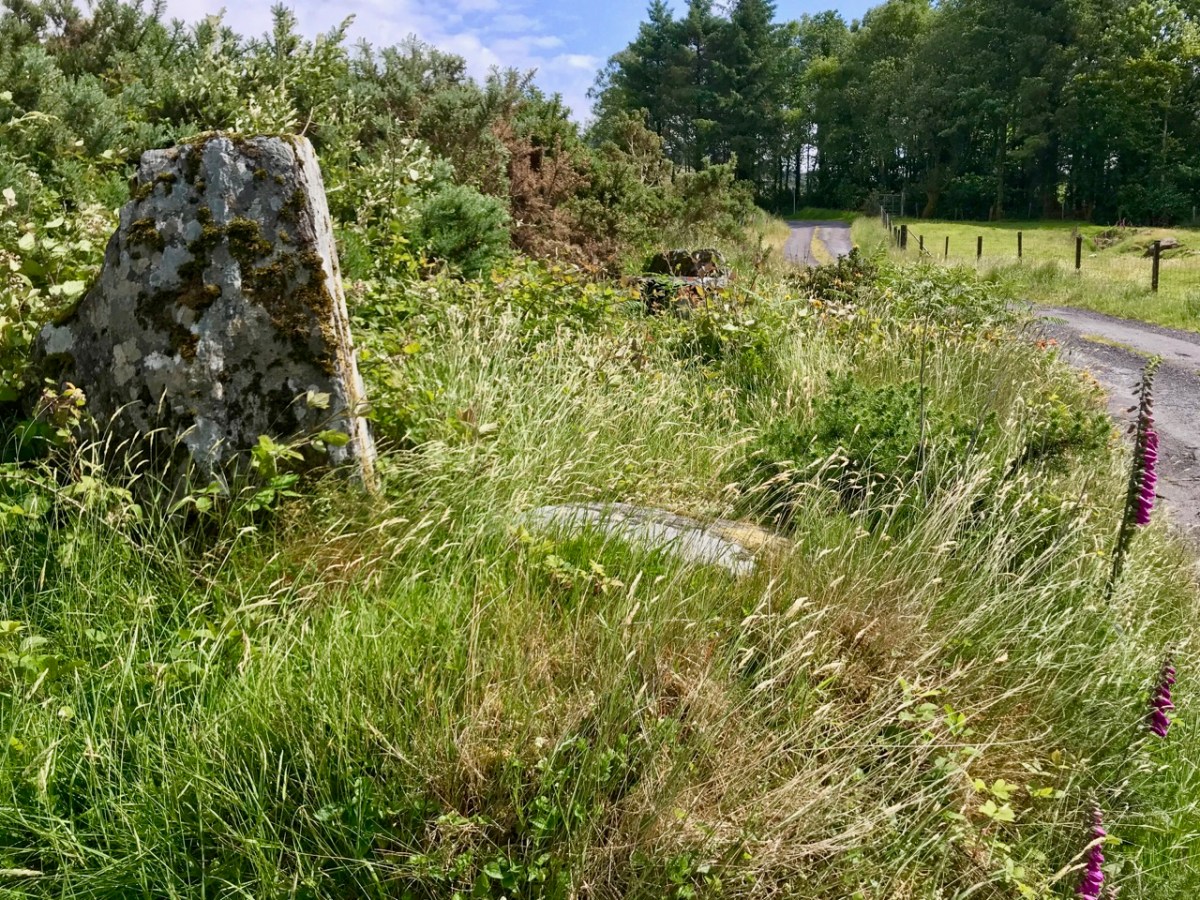
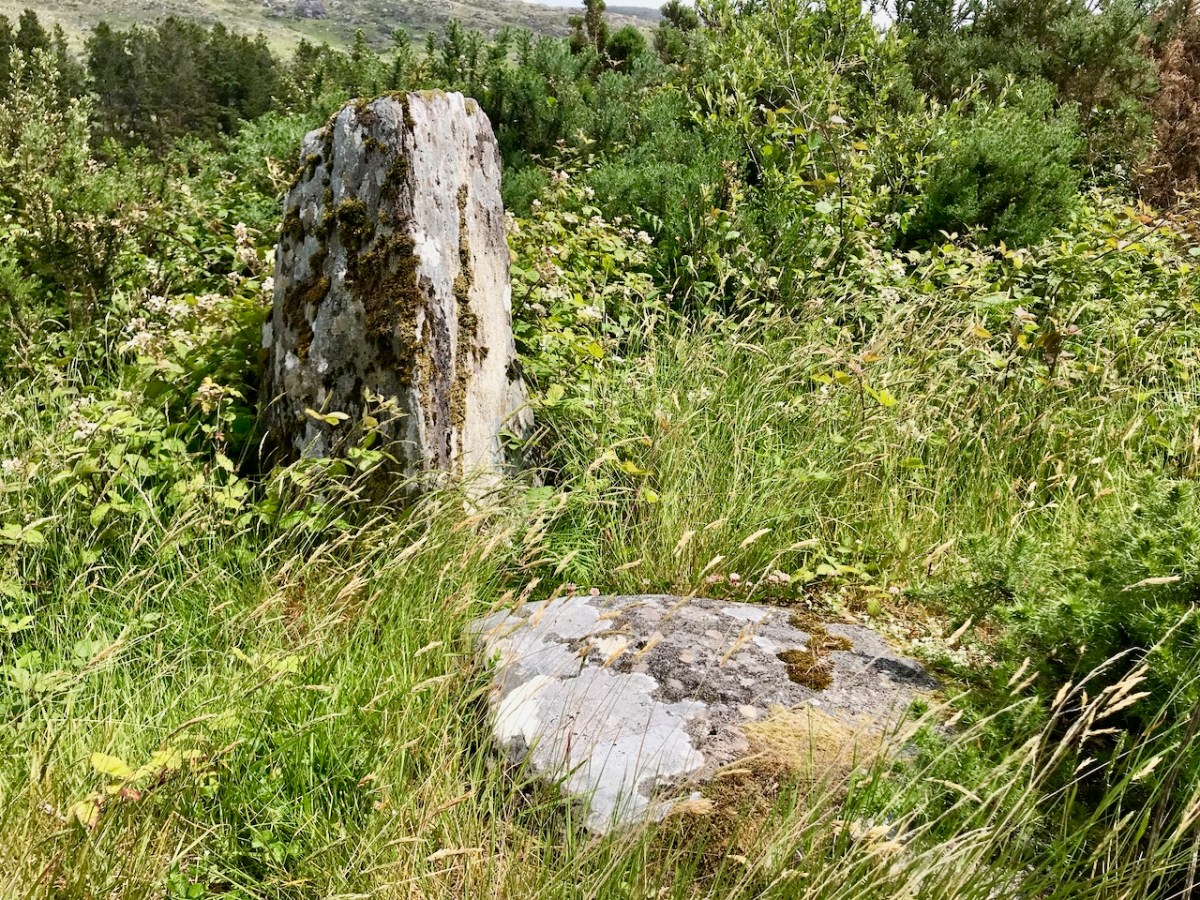
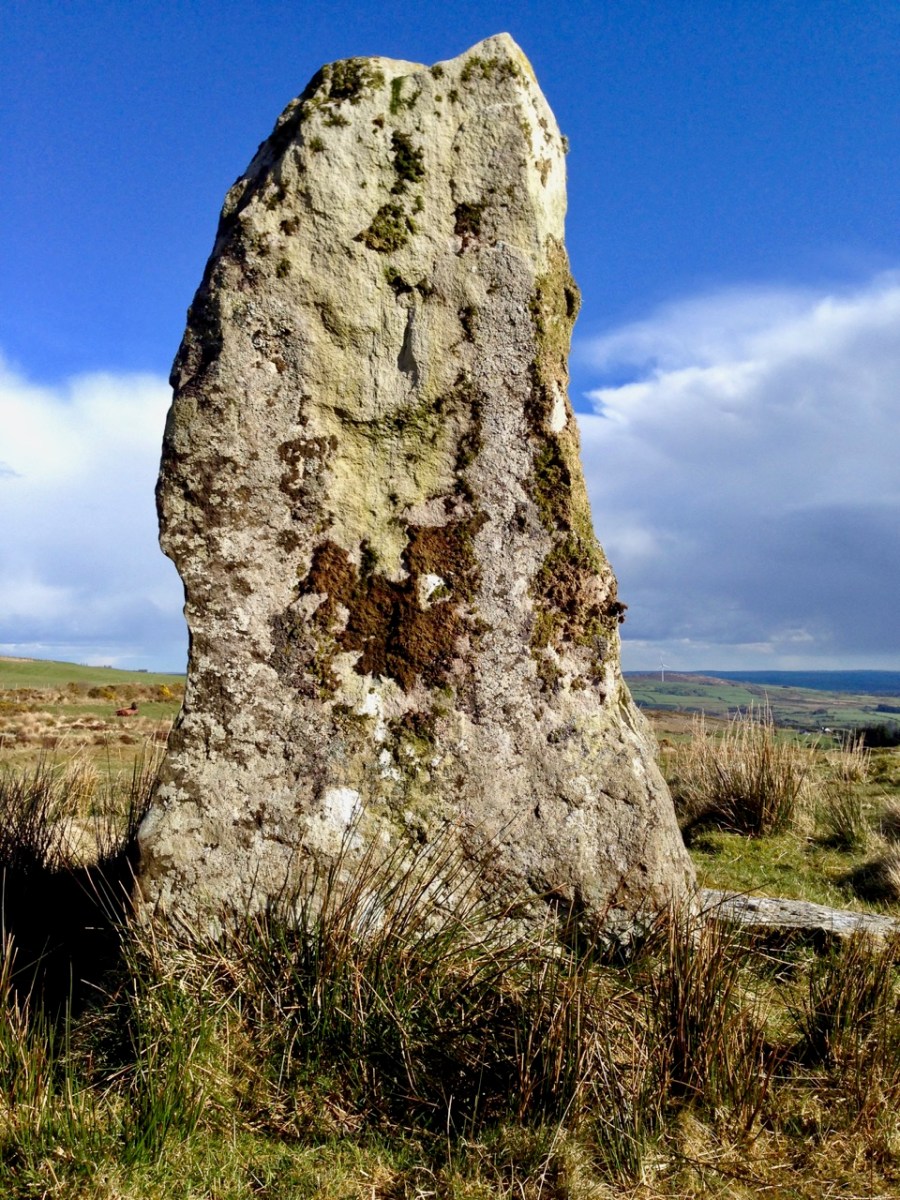
I am fascinated by the number of single standing stones we come across in our travels. It’s impossible to say how many there are in Ireland – probably thousands. And they can range in size from the large stones – above – in West Cork, to individual examples in moorland or fields, or on roadsides – below.

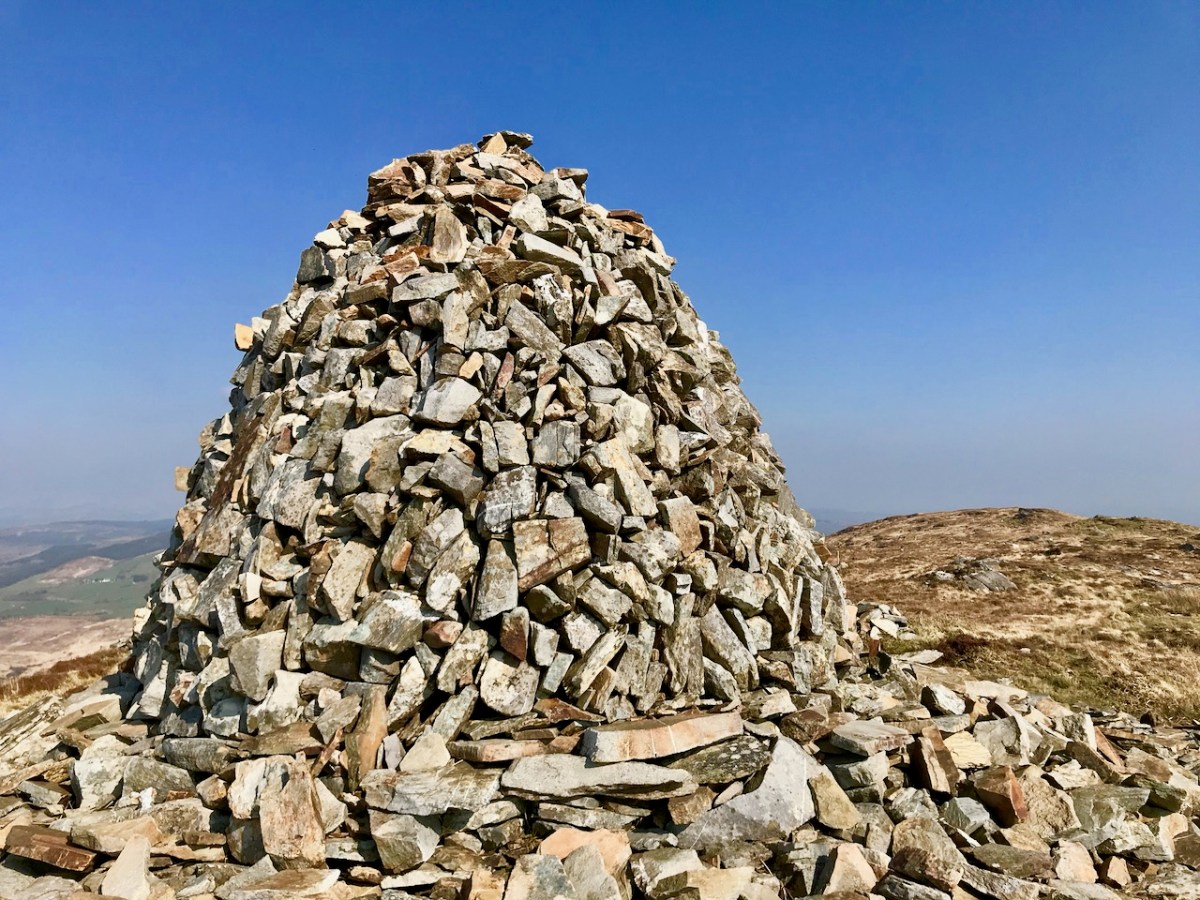
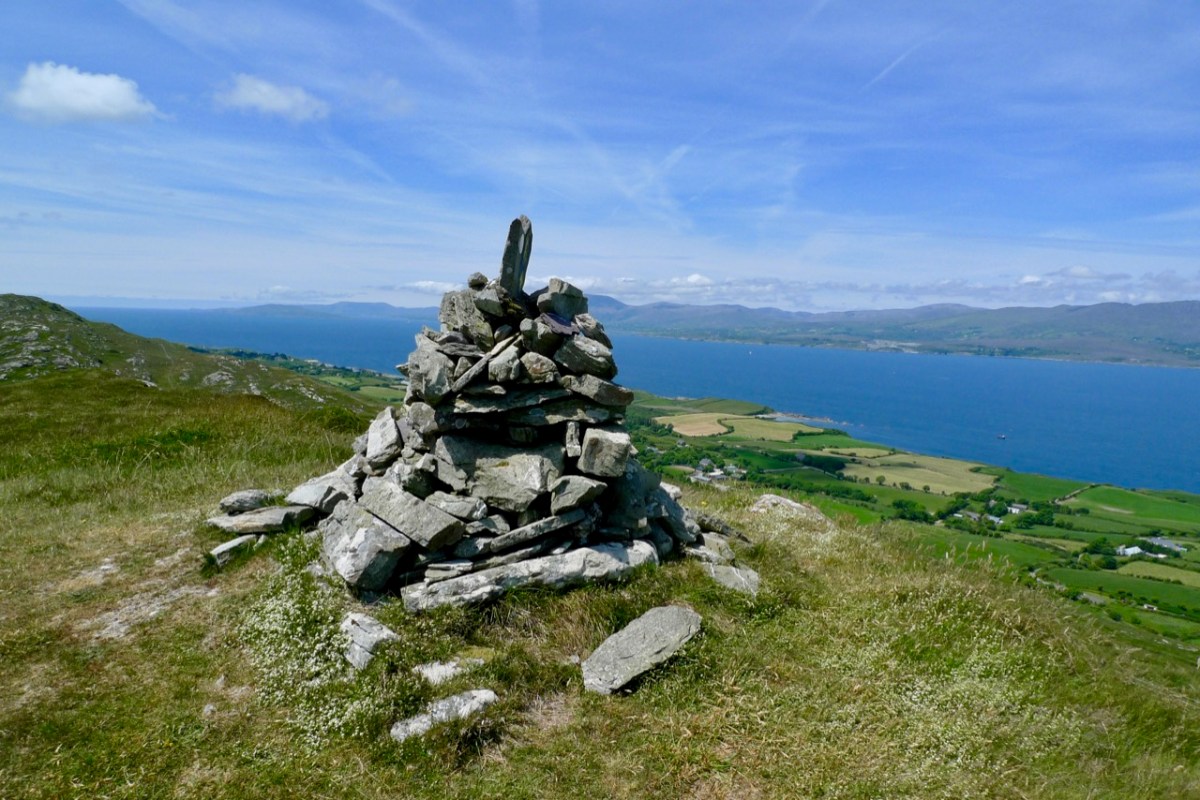
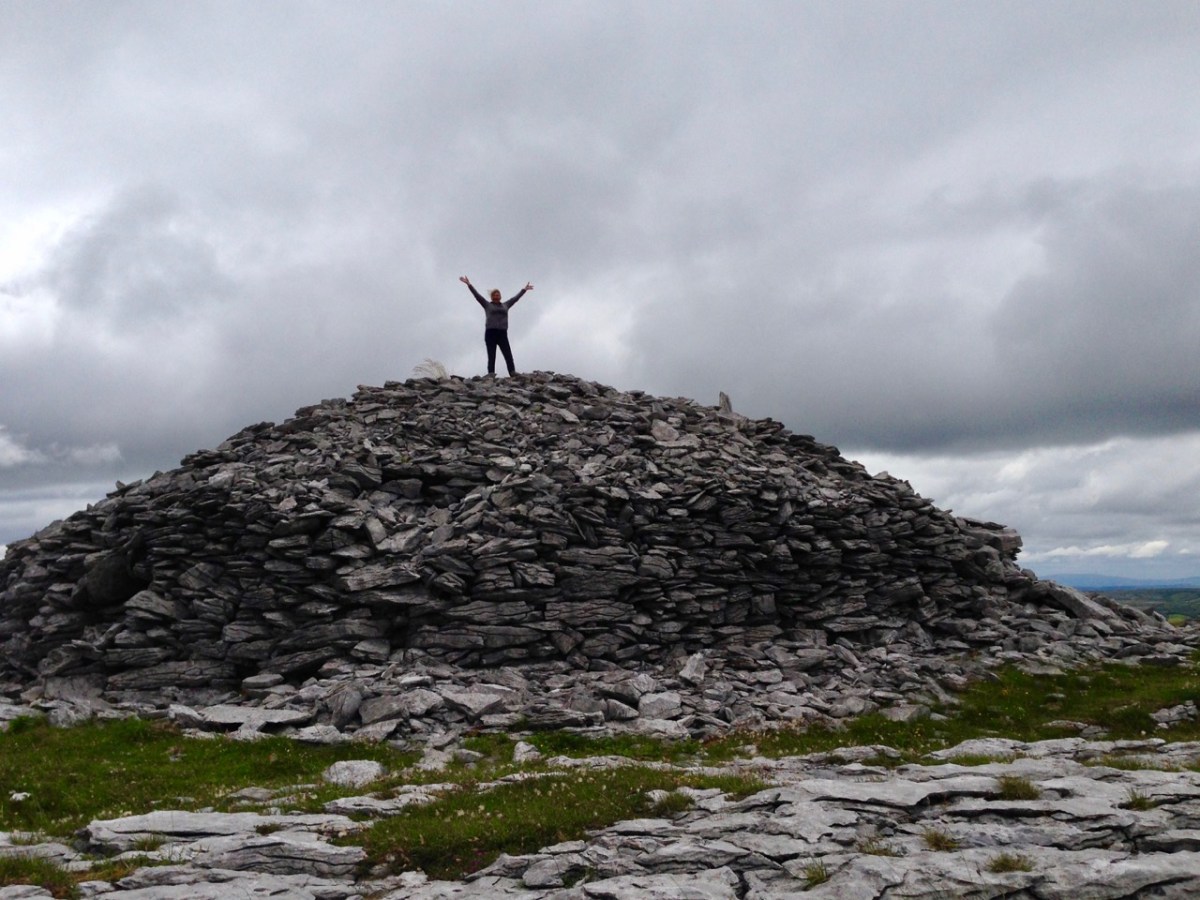
The Irish word ‘carn’ means a heap or pile of stones, Cairn monuments are mounds of stones, often marking the summit of a significant hill or mountain. They may or may not be ancient, and we have seen them change significantly over time. On Mount Corrin, not far from us in West Cork, there were two cairns only a few years ago. Now there is a single, significant cairn (top pic below): this implies a deliberate ‘re-ordering’ of what was there before. Regardless of their history, they can be visually impressive.

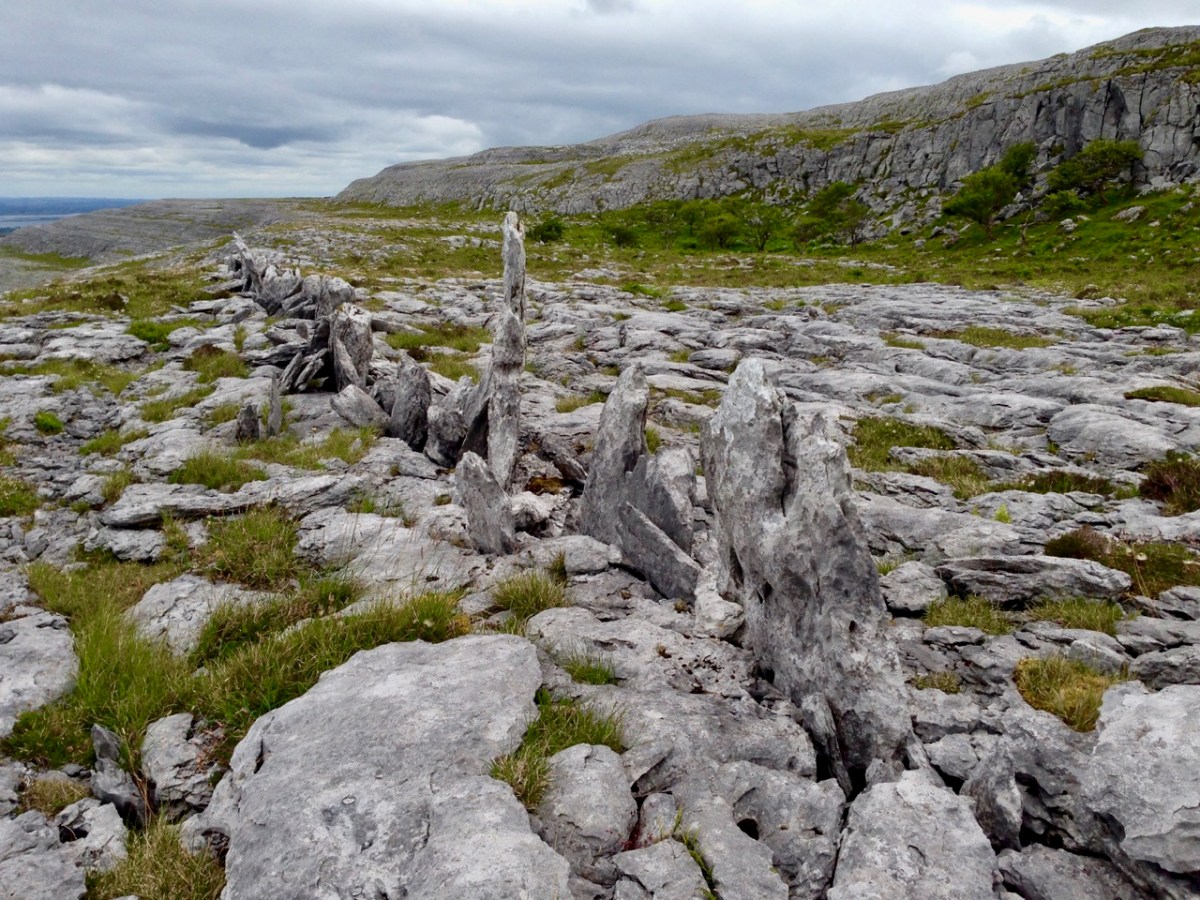
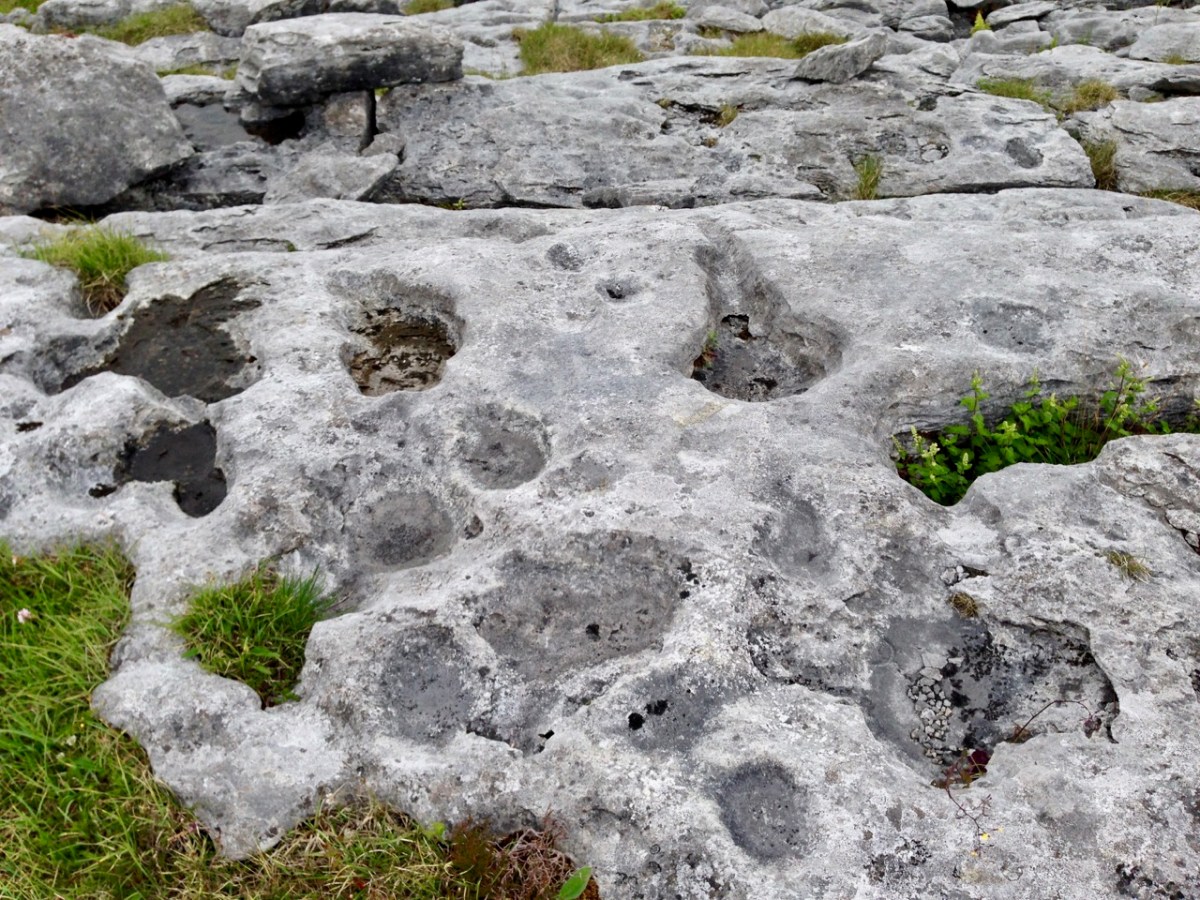
The centre pic above is a small cairn on a Sheep’s Head summit, while the enormous one above is in The Burren, County Clare. The Burren is an extraordinary landscape of exposed limestone. The limestone formed as sediments in a tropical sea which covered most of Ireland approximately 350 million years ago. Today, the Burren supports a remarkable assortment of wild flowers: over 70% of Ireland’s species of flowers are found there, among the ubiquitous stone surfaces.

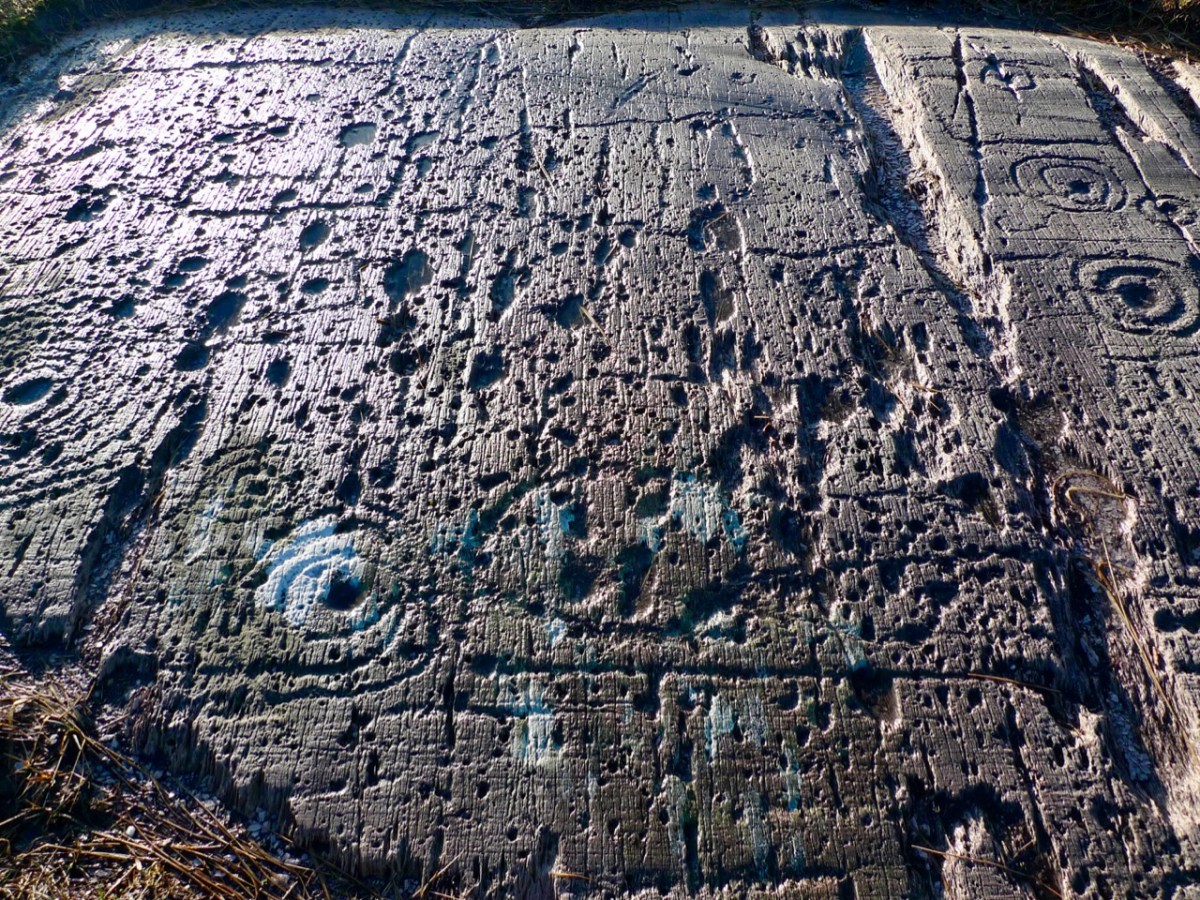
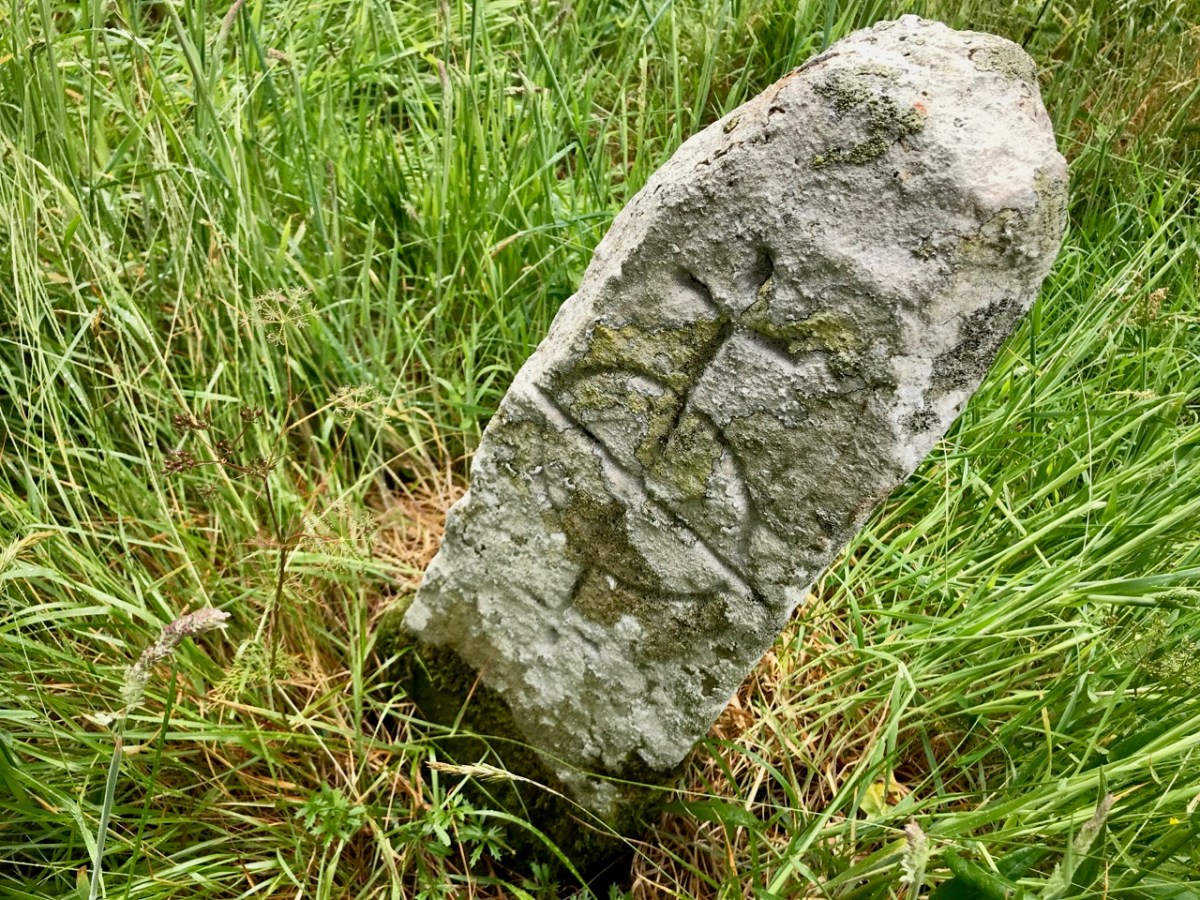
Ever since humans set foot on Irish soil, they have embraced the stones – both for practical uses such as shelter or enclosure, but also as a means of marking and communicating. Readers will be familiar with our particular interests in Prehistoric Rock Art:

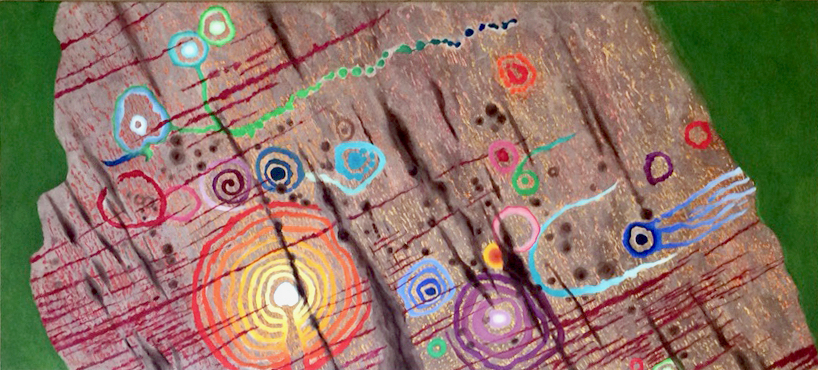
This is an important example of Ireland’s Rock Art, from West Cork, perhaps dating from 5,000 years ago: it was discovered in comparatively recent times. The painting is by Keith Payne, and is an interpretation of this same rock outcrop. We have no evidence that the carvings were ever coloured – or pigmented.

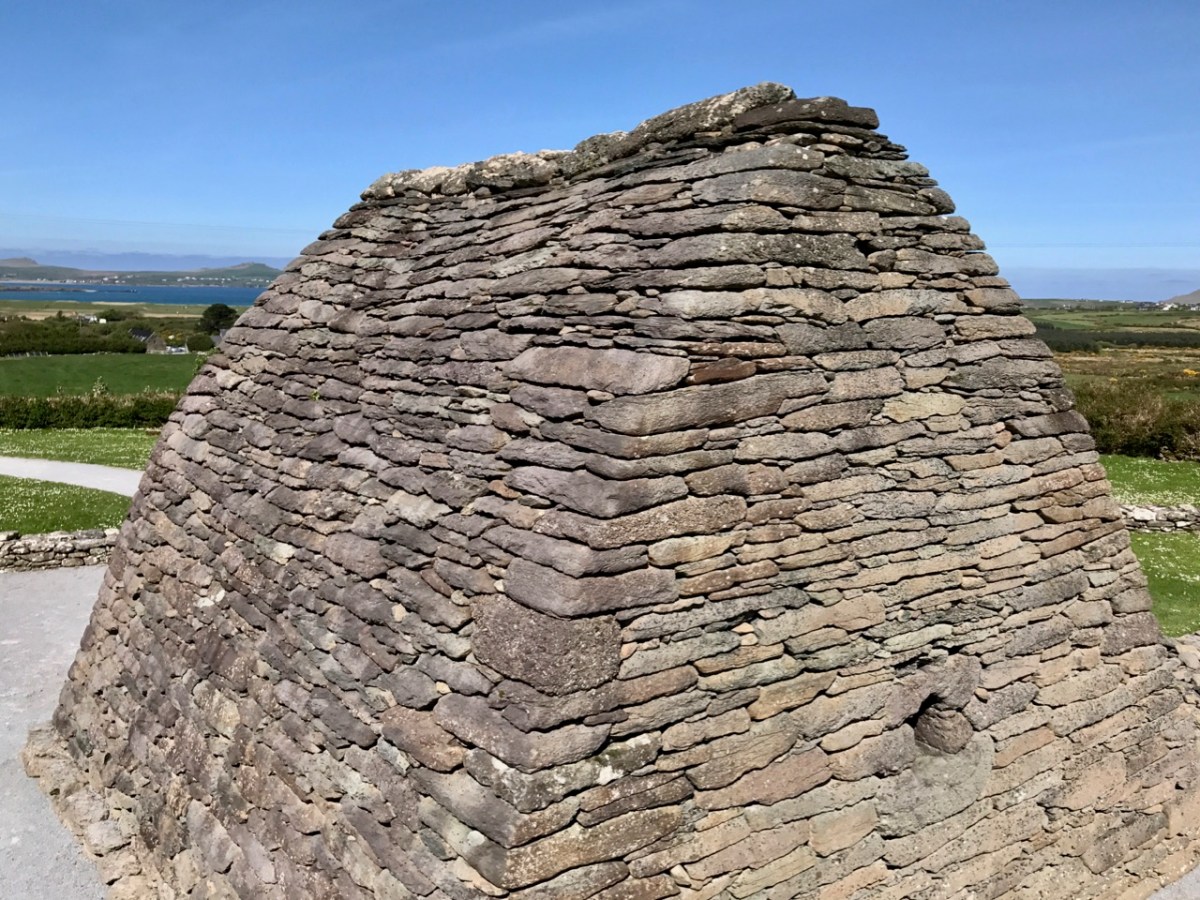
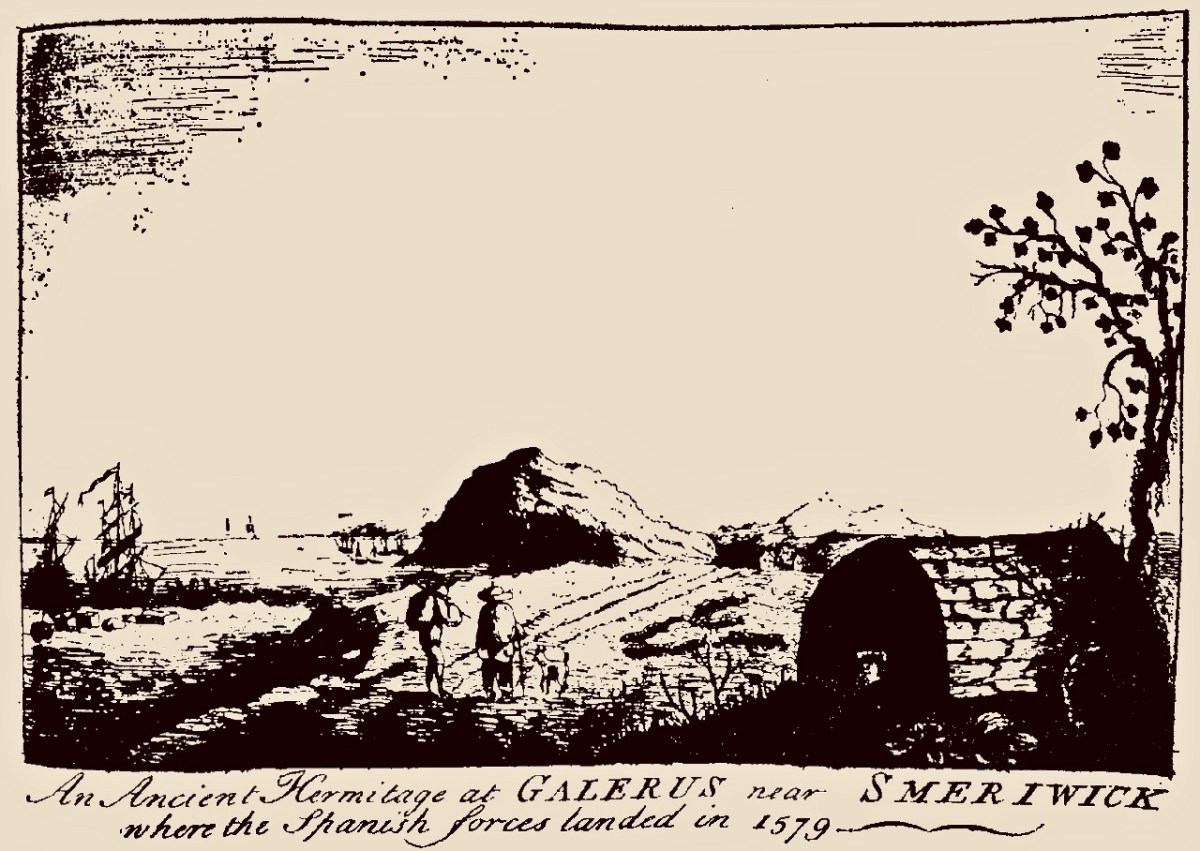
Today we are very familiar with the use of stone as a building material: this practice is likely to have been current since very early times. In Ireland we have many examples of ancient – but undateable – stone buildings. The ‘Oratory’ at Gallurus is a good example of a built enclosure (walls and roof) made entirely from stone. A present day view of it, top, shows this remarkably preserved structure; archaeologists and historians have long debated its age and likely use. The print above dates from 1756.

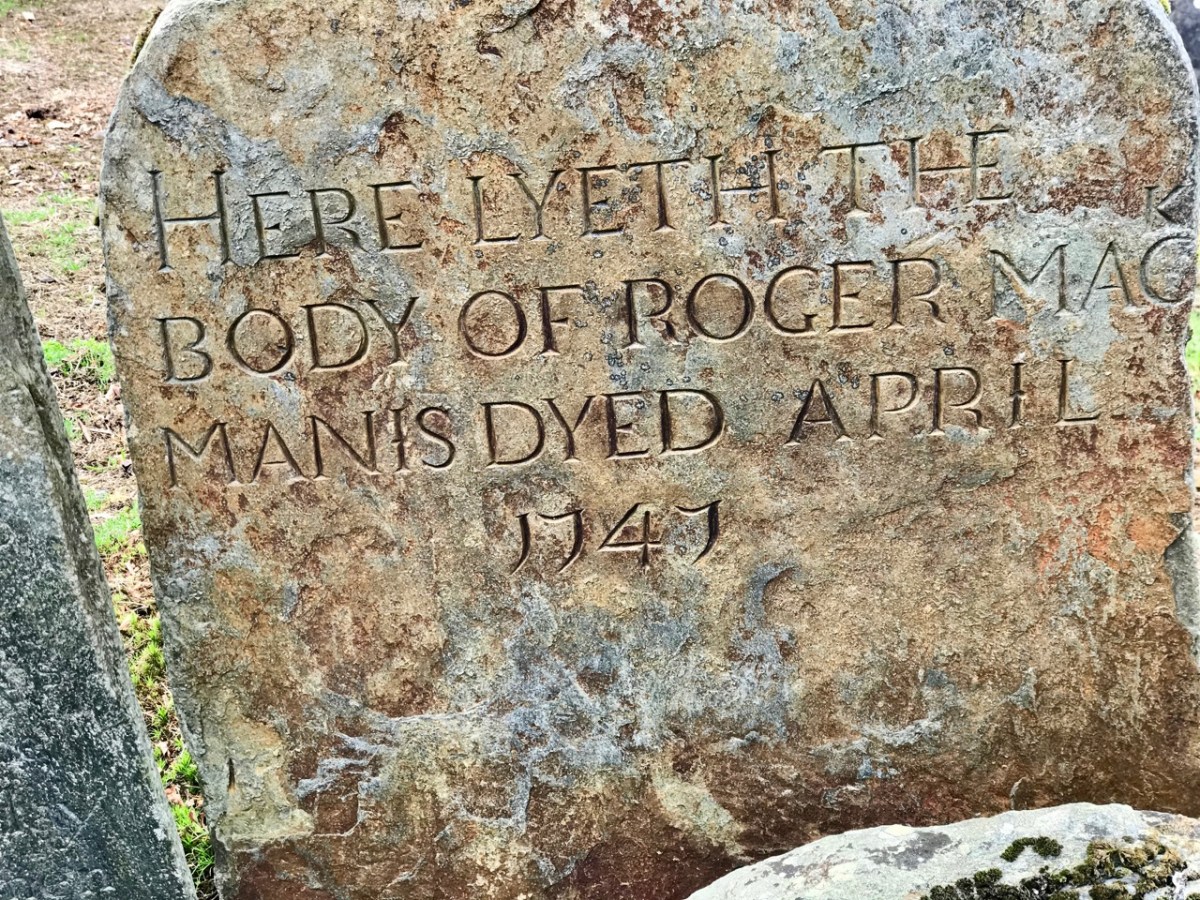
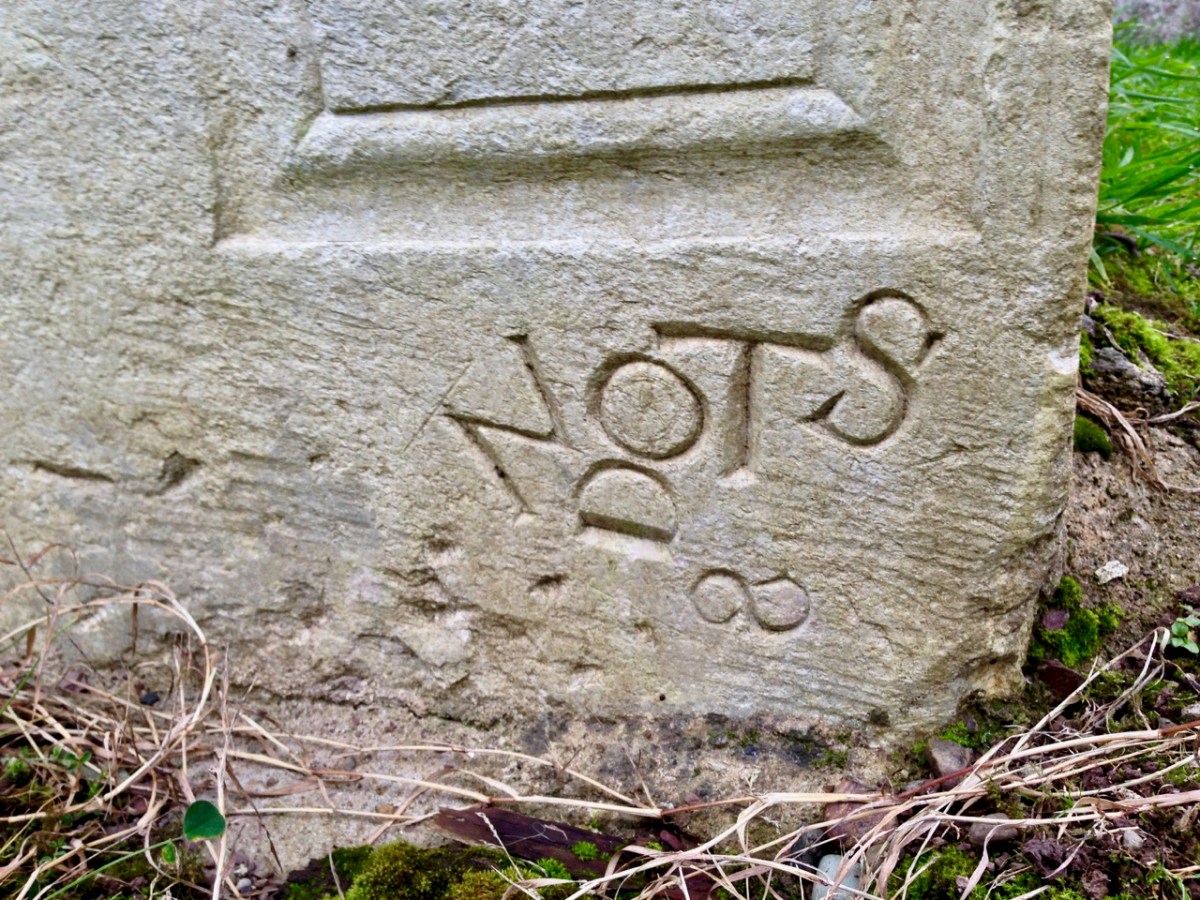
Over the centuries, crafstpeople (like Séamus Murphy – see last week’s post) have used stone as a medium for memorials – the message is likely to survive beyond lifetimes. If only we knew what some of the messages should spell out to us! Our last – striking – image is from Fourknocks – a decorated chambered cairn within the Boyne Valley complex which we visited in 2016. This carved decoration was probably made 5,000 years ago: we can only wonder at its meaning and its authors . . .

Wicklow by the Sea

If you can’t be in West Cork – what’s the next best place? Why – County Wicklow of course! It’s also full of wonderful scenery and imbued with Irish history. That’s Wicklow Town, above, in Viking times: there had already been a Bronze Age settlement on this site. In the twelfth century the Normans arrived, led by Strongbow, who we have encountered before, and Black Castle was built (below). They were wild times, and the castle was attacked and destroyed completely in 1301 by local chieftains, notably O’Byrnes and O’Tooles. There were several subsequent revivals, and the gaunt remains we see today probably date from the 17th century.

While at this site, have a look down at the inlet on the coast to the south: that’s Travelahawk Beach, the scene of a bit of Wicklow history that’s sure to stick in the mind. It was there that St Patrick first landed in Ireland!

I have to admit that the beach is only one of several sites on the east coast that lays claim to this historic occasion, but I like the associated story of Travelahawk which tells how the local people, suspicious of this stranger, threw rocks at St Patrick and his crew. One of them hit the saint’s companion, and he lost his front teeth. He was known ever after as ‘Gubby’ or ‘Gap-toothed’ which is translated in Irish Mhantáin. Hence the old name for Wicklow is ‘Chill Mhantáin’ – the Church of Gubby. Today’s name for the town, Wicklow, is of Viking origin, and means ‘Bay of the Meadows’.

We popped over to Wicklow on a mild February day for a change of scene – and to absent ourselves from Nead an Iolair while some upgrading works were taking place. I was impressed: I had never explored the town before. Finola, however, was brought up in County Wicklow, and her impressions of the county town today were embellished with memories of times past. There’s much about the place that’s picturesque: I was taken with the number of painted murals about the place. The pier has, appropriately, a whole series of ships on the breakwater wall. There is an example, above . . .

. . . And here’s another. In fact, this one is the 50th mural to be painted by Pat Davis, who is the local postman. Each one depicts a vessel which has visited the harbour. It’s a wonderful and colourful record of one aspect of the maritime town’s history.

Here’s Pat at work. The image is courtesy of Ceaneacht O Hoctun, and appeared in the Wicklow People newspaper in 2020. Pat started painting the ships in the 1970s.

This one will be familiar to West Cork folk. It’s the Saoirse, a 42ft ketch built in Baltimore in 1922 for her designer, Conor O’Brien.

. . . This unique sailing ship was also a maritime inspiration for the new Ireland, uncertain of itself in an uncertain world. For this was Conor O’Brien’s characterful 42ft ketch Saoirse, which he designed himself, and with which – between 1923 and 1925 – he pioneered the round the world route south of the Great Capes, an ocean voyaging “first” which was forever written into world sailing history. . .

Afloat.ie

When O’Brien returned from his record-breaking voyage in 1925 he made his first landfall in Ireland in Wicklow Harbour. O’Brien designed a larger version of Saoirse to be the inter-islands communications vessel for the Falkland Islands: this – the Ilen – was also built in Baltimore. Back in 2015 we visited Oldcourt boatyard on the Ilen River to see the restoration of the larger ketch, which was then underway. That work was completed in 2018, and the same team embarked on a complete rebuilding of Saoirse, which had been wrecked in Jamaica in 1979. Our own West Cork photographer, Kevin O’Farrell has beautifully documented these projects at Oldcourt in his book, published in 2020.

The Asgard, above, was famous for gun-running at Howth by Irish Volunteers in 1914. Below is an Irish Navy vessel, LÉ Gráinne – a mine sweeper. Gráinne was a legendary princess who was promised to Fionn Mac Cumhail but ran away with his young follower Diarmuid. The ship was decommissioned in 1987.

We found that the town of Wicklow has so many maritime associations – everywhere you look there are reminders. But also it’s a thriving commercial centre and we were impressed by what is on offer there: great eateries, and a most wonderful bookshop. I think there might be another post in the making . . .

A Signal Success in Irish Engineering – Part 10: Toe Head

Here’s the latest episode in our series about Napoleonic-era signal towers in West Cork. There are links to the earlier posts at the bottom of this one. That’s Toe Head above – in the far distance, and that view is taken from the signal tower site at Kedge Point, Spain, to the east of Baltimore.

Toe Head itself is a spectacular setting in West Cork: the views, above, show the nature of the terrain, the boreens, and the seascape in the area. So far I have written accounts of nine signal towers: this is the tenth. I’d like to tell you how many of these structures are in West Cork, but that would mean that I would have to geographically define ‘West Cork’. I can’t do that, as there is officially no such area: we are all part of County Cork! All I can do is to let you know that there are nineteen signal tower sites located in the whole County. I have another nine to cover, after this one. But I assure you – Toe Head is definitely in our West Cork!!

Here’s the Toe Head tower – in a sea of black bales. If you have followed the series so far, you will have noticed that each tower is fairly basic, and generally offers the appearance of a medieval castle. But they were all built at the very beginning of the nineteenth century, to provide a system of surveillance and signalling around the coast of Ireland, from Malin Head in the north to Pigeon House Fort, Dalkey, on the east coast. Each signal tower is within view of one – or two – others, depending where it lies on the chain. In the first post in the series, here, I explain the logic and geometry of the project.

The 6″ Ordnance Survey map extract in the upper picture dates from 1842. By this time the use of the tower for signalling had ceased – the Napoleonic invasion threat lasted only through the first few years of the century: many towers became disused after this and some have vanished altogether, although many ruins do remain because of their remote locations. In the case of Toe Head, the building was adapted to incorporate a Coast Guard Station. I am assuming that, originally, the tower was a simple square structure , and the extension to the rear was added to provide additional accommodation for the Coast Guard service. The current aerial view shows newer farm buildings and an access road close by.
If you look at previous posts in this series, you will see that the Toe Head tower is architecturally simpler, with no bartizans or other ornamentation – it’s more like a small Anglican church tower than a ‘castle’. Like many others, it’s clear to see that this building was slate-hung: this form of weather-proofing was probably added at a later date – possibly when the Coast Guard service took it over. At the centre of the view from the window above you can see the Stag Rocks which in the 1980s became the graveyard of the 900ft long Kowloon Bridge, a bulk cargo carrier travelling from Quebec. The ship was disabled by a storm and then abandoned, drifting on to the Stags. A detailed account of the event was posted in the Irish Examiner 30 years later.
The abandoned Wreck of the Kowloon Bridge close by the Stags in November, 1986 (centre picture). The lower picture shows the wreck underwater today (courtesy Aquaventures.ie): she drifted out of control towards the rocks before running aground on the reef. The resulting fuel spill spread out over the Irish coastline causing extensive damage to local wildlife, and financial losses for the local fishing fleet. Apparently, no-one was ever held to account for the environmental disaster.

The Stag Rocks can be seen in my picture above, which shows the current incarnation of a World War II Lookout Post that was put in place close by the older signal tower in 1942. You can read more about these lookouts in this post: they were designed by Howard Cooke RIBA of the Irish Office of Public Works at the outbreak of that war (during which Ireland remained neutral). I mentioned in that same previous post an art installation project carried out in 2014 by Tim Schmelzer of Vienna. His work at Toe Head is particularly impressive, and here are some still shots to illustrate the nature of the artworks, which were created on-site using high-powered projection equipment.

The signal tower ruin today is gaunt and desolate. Nevertheless it’s an atmospheric place to visit. On the slopes below the building is an EIRE sign (officially number 28), also dating from the World War II years, when Irish neutrality had to be spelled out to the warring powers flying overhead. I came across an interesting comment from Anne Wilkinson in 2018, giving a slightly different take on the EIRE signs:

. . . These EIRE signs were also to alert German Pilots and crew who were conscientious objectors and who had overflown the UK, to ditch and parachute to safety. Many airmen lived at the Curragh Camp. They were allowed freedom during the day, eg. they often cycled the lanes and roads to enjoy the peace and quiet and then returned to the Curragh Camp for their curfew hour . . .

http://eiremarkings.org/the-map/

And here’s a little enigma to finish off the post (above). It’s graffiti carved on a timber lintel over one of the openings of the signal tower buildings. It’s probably quite recent – dating from ’89 or’99 – but what does it spell out? And why is it here? It’s tempting to say THE GIFT CASTLE but that ‘T‘ after the GIF doesn’t ring true . . . There’s a story there somewhere: perhaps one of our readers can give us a clue! Finally, here’s a distant view of the signal tower, looking across Toe Head.

The previous posts in this series can be found through these links:

Part 1: Kedge Point, Co Cork

Part 2: Ballyroon Mountain, Co Cork

Part 3: Old Head of Kinsale, Co Cork

Part 4: Robert’s Head, Co Cork

Part 5: Downeen, Co Cork

Part 6: Dunnycove

Part 7: Cloghane, Mizen Head

Part 8: Brow Head

Part 9: Glandore Head