The Fertile Crescent – A Review

Just about a year ago I reviewed a most stimulating exhibition which was running in Skibbereen: West Cork Creates. It featured collaborations between local craftspeople, visual artists, photographers and designers – combining their skills and expertise to produce exciting, original work. In my review I asked if there was a difference between an artist and a craftsperson, and this sparked off a lengthy online debate. My favourite sentence from this exchange was penned by Colin Murray, an artist printmaker who had taken part in the Skibbereen exhibition:

…I think all creative workers share the essence of making a lingering dream and the effort of sharing one’s dreams with others is an urgent business of us humans…

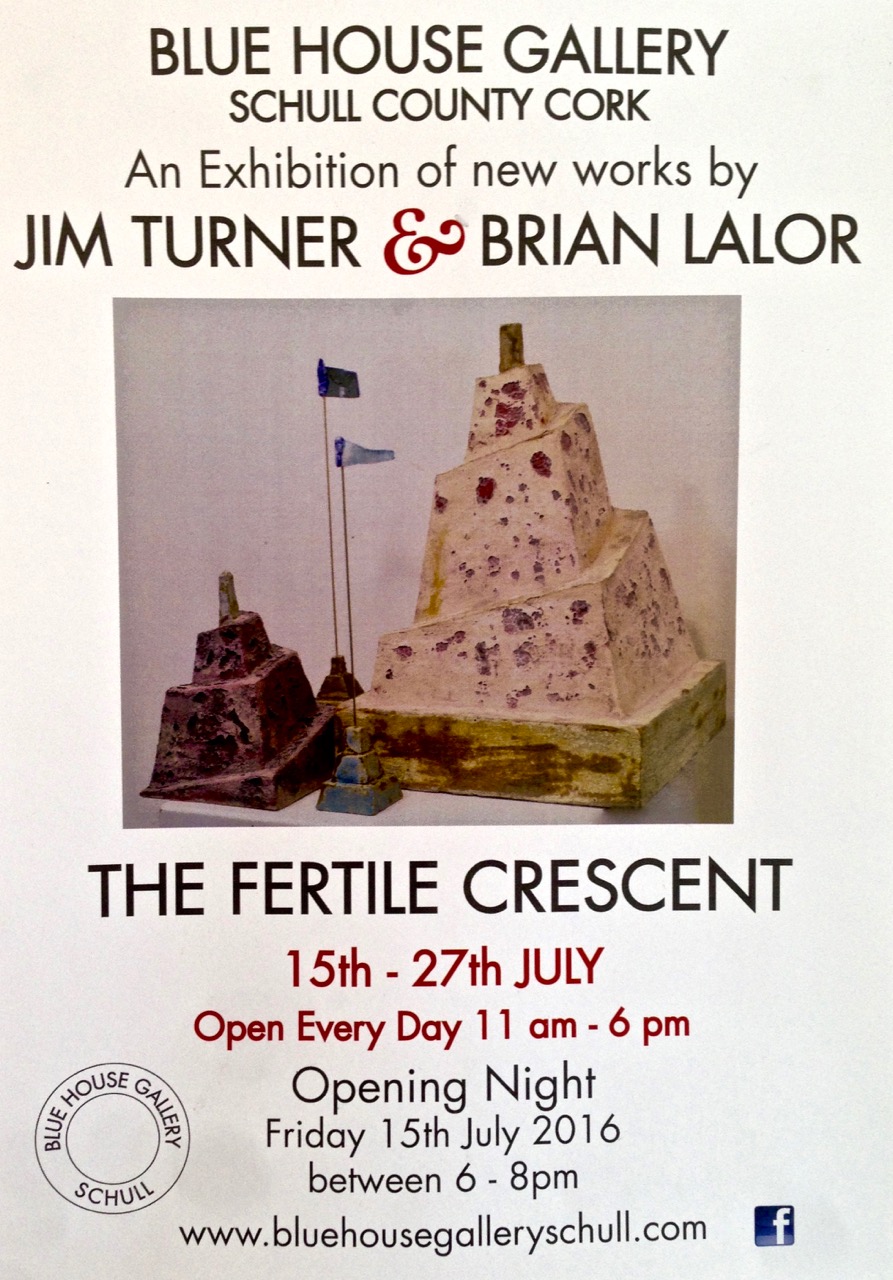
All the work in the Skibbereen exhibition was outstanding, but I was drawn more than anything else to the collaboration of artist and writer Brian Lalor and ceramicist Jim Turner. They have continued to collaborate, and the current exhibition at the Blue House Gallery, Schull is an extraordinary display of their combined talents.

One of Brian and Jim’s larger works currently showing in the Blue House Gallery in Schull – a gold capped obelisk

The exhibition has the title The Fertile Crescent, a phrase that might seem strange, at first, encountered on the small main street of a village in the far west of rural Ireland. It conjures up, of course, the images we had in our school text books of the beginnings of human society, including the development of writing, the invention of the wheel, the use of glass – and irrigation which enabled settled agriculture to develop. This led gradually to the exploration of metalworking – some of the earliest figurative bronze work is from the area:

fertile crescent bronze

Not in the Schull exhibition – but original bronze figurines from Tell Judaidah, Turkey. These are the oldest examples of true bronze (combination of copper and tin) known. They are dated to around 3000 BC (photo – University of Chicago)

At school we learnt about this land and its features and I remember the romance of the names that were conjured up: Mesopotamia, Assyria, Egypt, Tigris, Euphrates… geographically far away but important enough to be titled The Cradle of Civilisation. That’s where our ancestors came from, we were told: that’s where our religions began.

great mosque

Minaret of the Great Mosque of Samarra, an etching by Brian Lalor

That geography today is at the forefront of our news. We now think of Iraq, Syria, Lebanon, Jordan, Israel and Palestine as well as the older names. We now think of idealogical war zones, we think of suffering, of displaced people; we think of bombs, human carnage, ruined ancient sites – and refugees. The mission statement for the exhibition begins:

…In this exhibition Jim Turner and Brian Lalor have devoted their attention to the current tragedy unfolding in the Middle East where the ruins of the civilisations of the past are being destroyed, and the present-day populations forced to flee their homes in fear of their lives, to become refugees in adjoining countries and in Europe. Our world heritage is under threat of total destruction as the cycles of violence recorded by history continue to occur…

It’s this modern view of what is going on in The Fertile Crescent that occupies this exhibition, and for that alone this work is as important on the main street of Schull as it would be in any major world capital.

Children pot

The ceramics – pots and bowls: the decorations on these utilitarian objects portray urgent messages for our society today. Jim Turner is the potter and Brian Lalor provides the illustrations

In the exhibition there are references everywhere to the cultural history of the Fertile Crescent. Jim Turner has made a series of cylinder seals, which involve inscribing a clay roller which is used to impress calligraphy on to a clay tablet; the same techniques have been used to decorate ceramic plaques.

cylinder seal

(Top) one of many ‘cylinder seals’ by Jim Turner on display in the gallery; (above) two of the ceramic plaques with impressed patterns

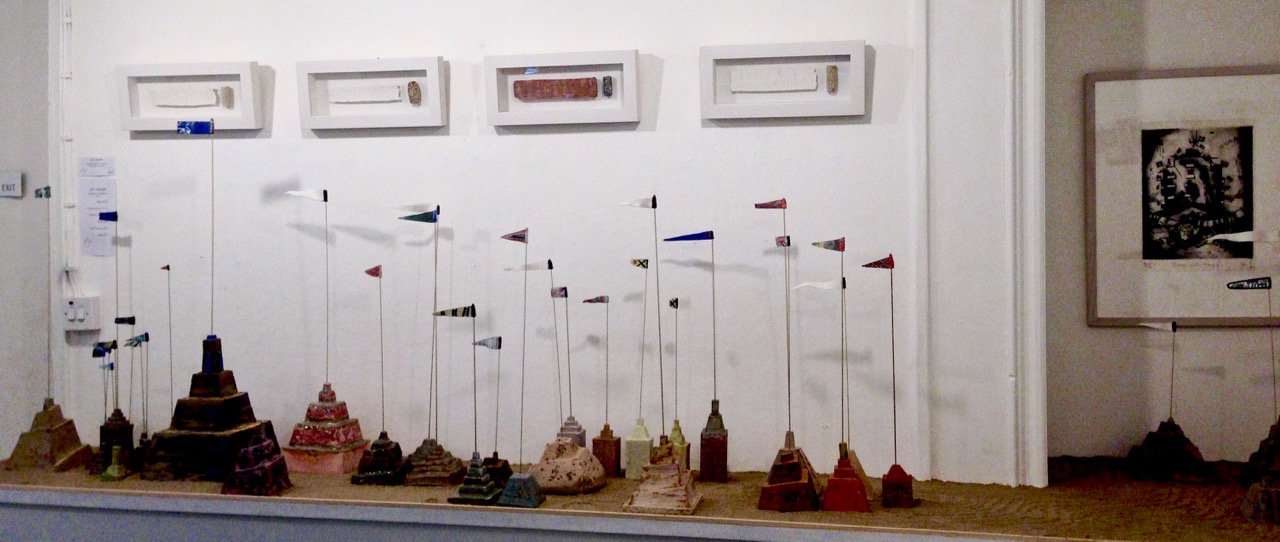
Obelisks and ziggurats are architectural features which we associate with the history of the Middle East. The two artists have produced a huge array of artefacts using these distinctive forms. Some stand in serried rows like an army (top picture), while other are decorated by Brian with motifs ancient and contemporary. The juxtaposition perhaps sometimes perplexes the viewer but the overall effect within the galleries is arresting and we are left in no doubt that these artists are giving us – Europeans – clear and deep messages, not only about our endangered world heritage, but our own responsibilities towards the chaos that is engulfing The Fertile Crescent in our own time.

Try to catch this exhibition: it deserves a wide audience. Perhaps West Cork is a long way for some of you to come? I hope there will be chances for this work to be seen elsewhere. I know the artists are collaborating on a further venture later on this summer: doubtless that may well reach the pages of this Journal. Congratulations to The Blue House Gallery for providing us with this most thought-provoking and dynamic work.
panorama

poster

Harry Clarke’s Supporting Cast

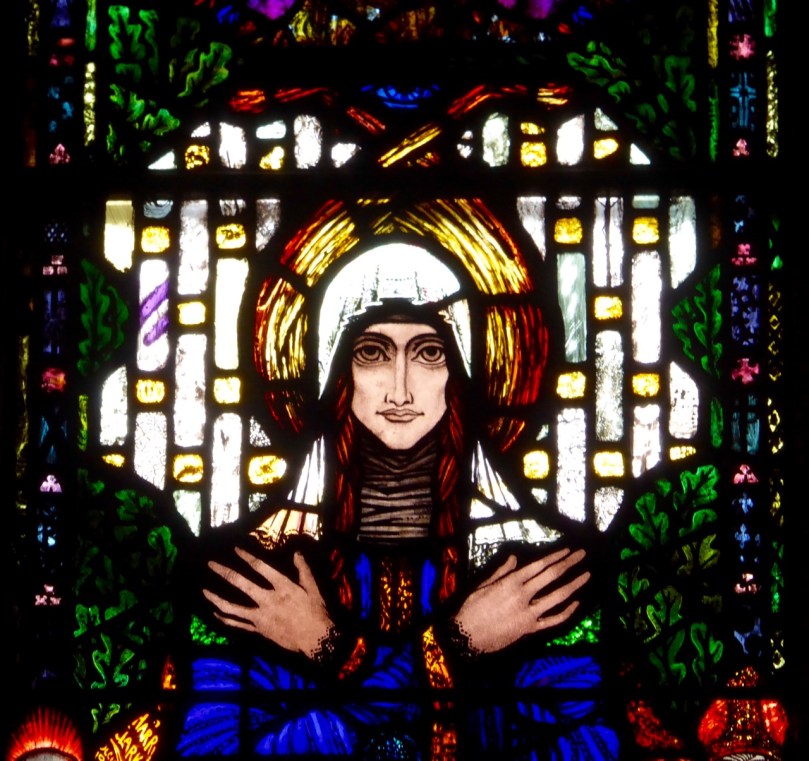
Honan St Ita

For any student of Harry Clarke stained glass there are delights to be discovered far beyond the main depiction. A host of subordinate or secondary figures reveal themselves to close examination, sometimes only after repeated viewings.

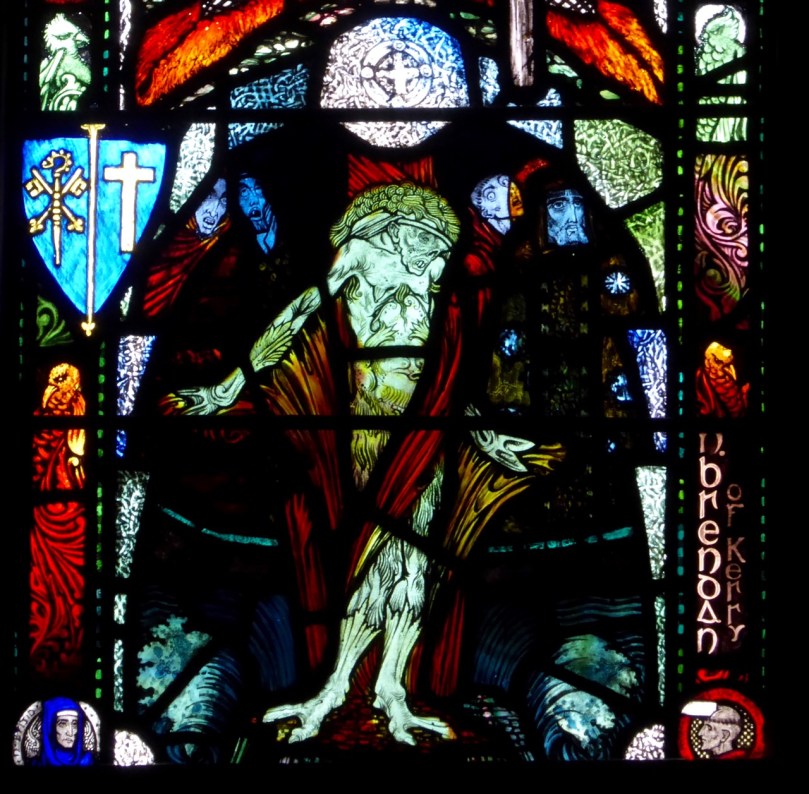
Brendan the Navigator

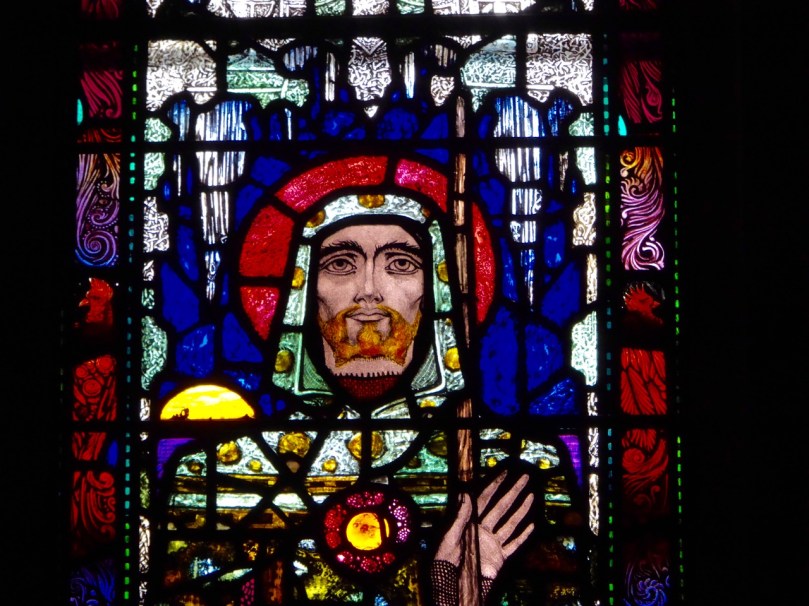
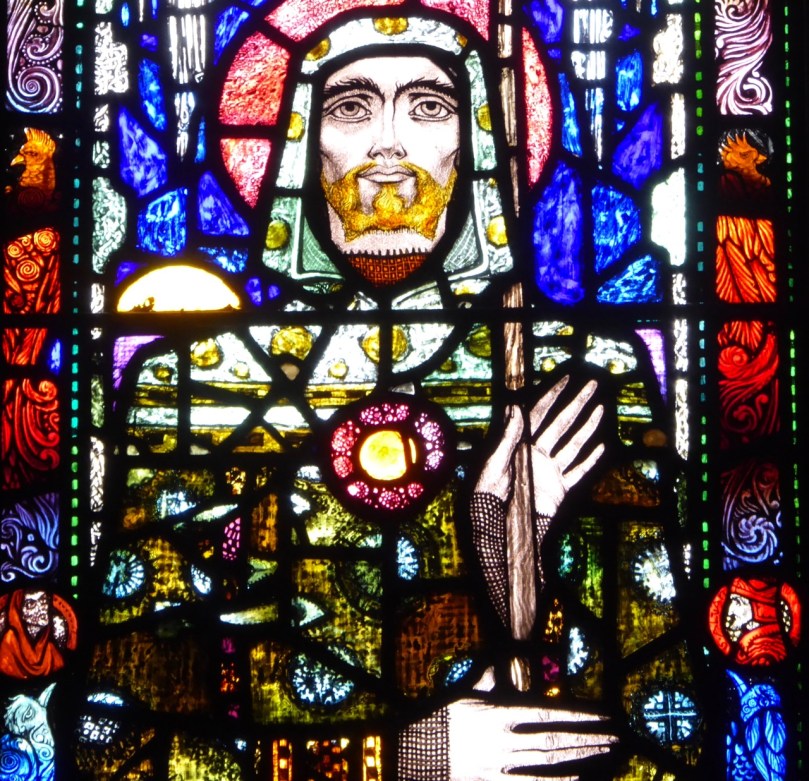
Brendan of Kerry – AKA Brendan the Navigator. Note the borders with their exotic birds

The tall windows I describe in this post  typically have three parts – the main section containing a large image of the saint, and an upper and lower section (sometimes called a predella) each of which may contain a separate image/story. In addition, the border around the outside of a Clarke window is always highly decorated in endless imaginative patterns.

Honan Mary Mother of Sorrow
The Mary Mother of Sorrows window was executed slightly later than the other windows and shows some stylistic changes. But it illustrates well the three parts to the window and the use of all available space for supporting and secondary characters to tell the story

Clarke was obsessed with detail: there are few white spaces or plain glass in his work. Every inch is filled with richly figured and never-repeated decoration or with additional figures that fill out the story and the symbolism of the central character. These figures tend to fall into a group we can call saintly and a group we can call macabre. Whichever they are, they reflect his vivid imagination and his gift for portraiture.

Honan Chapel

The Honan Chapel is the Catholic church at University College, Cork. It is a masterpiece of Celtic-Revival Hiberno-Romanesque design and a wonderful place to visit

Designing windows for the Honan Chapel at University College, Cork, was Harry Clarke’s first major commission and launched his career. The windows, finished and installed between 1916 and 1917 contain all the hallmarks of the intricate style he made uniquely his own. I will use four of his Honan windows to look at the cast of supporting characters he employed in his quest to incorporate as much as possible of the saint’s story.

Gobnait

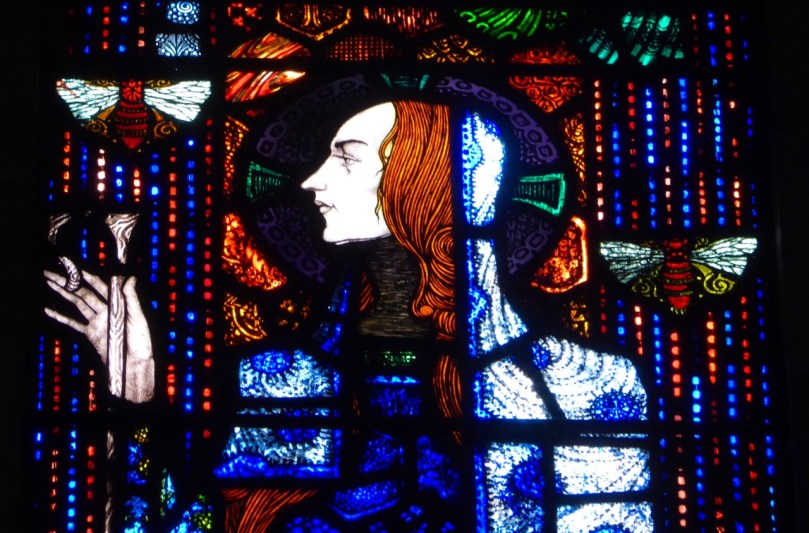
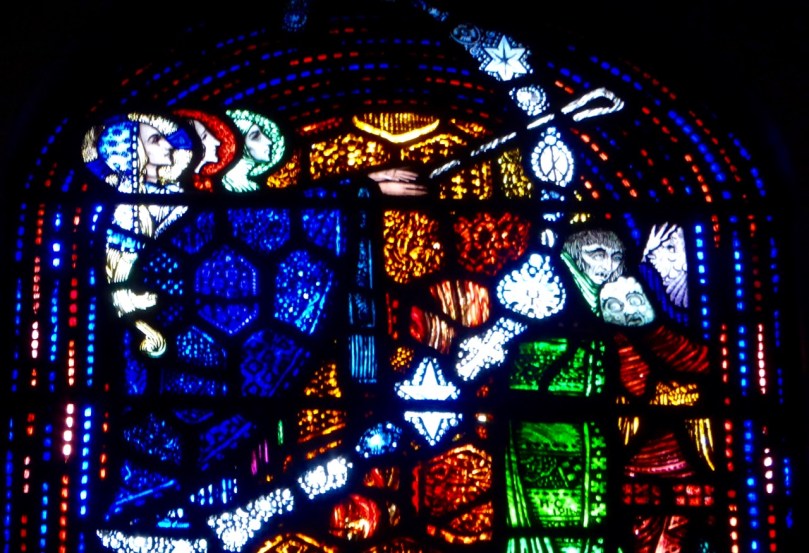
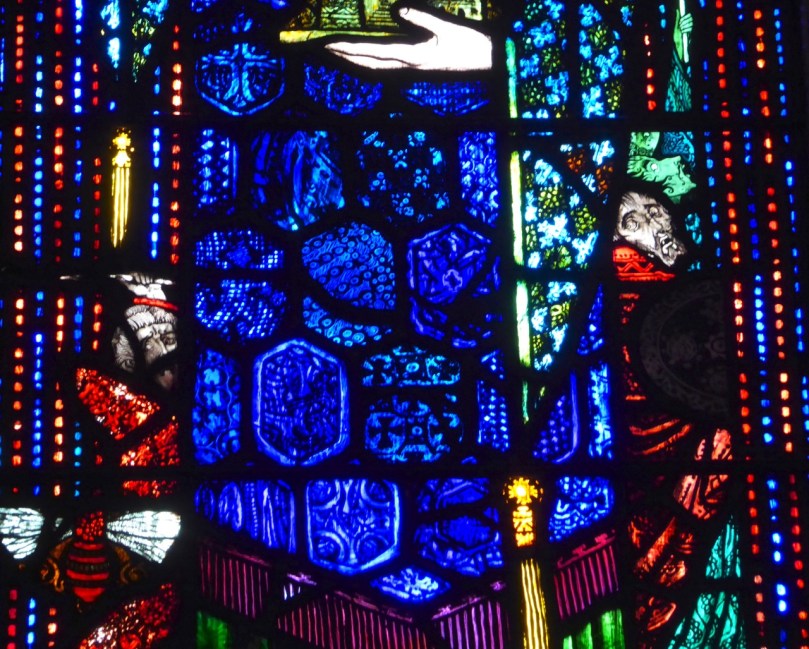
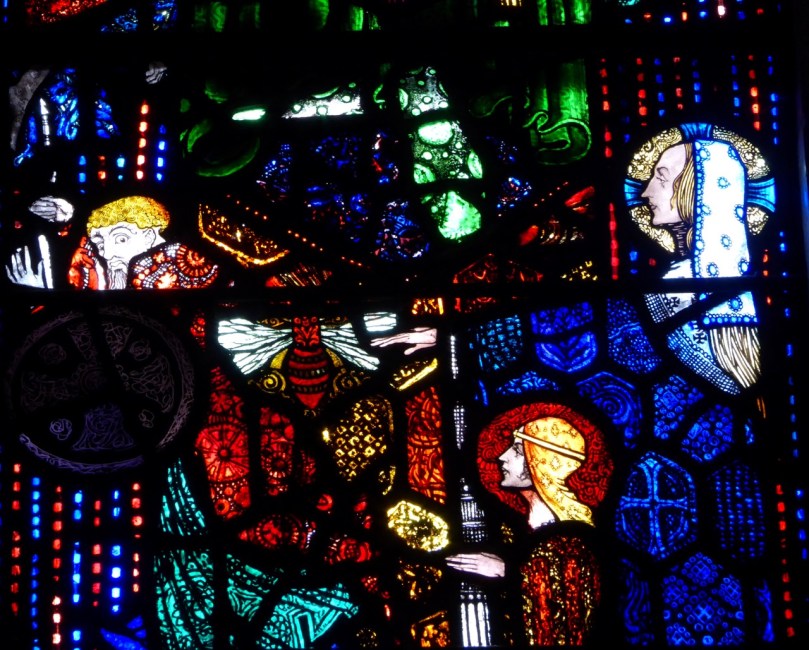
St Gobnait is, famously, depicted in profile, allowing her red hair to take centre stage. She is the patron saint of beekeepers and her bees surround her. Above the main image she is shown spreading her arm (note the honeycomb design of her robe) and extending her staff to prevent a plague descending on her people. She is attended by two maidens and to the right you can see the faces of three men who have not been spared the plague. (There’s another little detail you might spot in this picture!)

Gobnait Plague Victims

To quote Nicola Gordon Bowe, in her magisterial The Life and Work of Harry Clarke:

Harry here shows the delight he took in depicting deformity, disease and the macabre. This fascination with the poles of the beautiful and of the ugly and grotesque is a propensity he shared with many medieval artists.

Gobnait Robbers

On either side of St Gobnait another fearful scene unfolds. According to legend, robbers attempted to break into St Gobnait’s abbey but she set her bees upon them and here they are fleeing in terror.

Gobnait and handmaiden

At the very bottom of the panel she is depicted directing the bees and attended by a novice, while on the left a fourth robber runs in panic.

Honan Brendan border detail

St Brendan the Navigator, with his red beard, gazes serenely out, holding an oar. By his shoulder, his tiny curragh sails westward into the setting sun. In this window pay special attention to the border. Because he was a voyager, discovering the Americas, Clarke decorate it with exotic birds. He intersperses these with tiny roundels of other Irish saints.

Honan Brendan and Judas

Judas suffering on his rock – a medieval vision of misery. Note also the roundels: on the left is St Brigid and on the right is “the poor monk with the iron in his head.” Amazing that Clarke managed to get all that information on to the border of the roundel

In one episode on his seven year journey, Brendan encountered Judas, suffering eternal torture because of his betrayal of Jesus. The bottom panel depicts the scene of the wasted and agonised Judas, while the monks look on in horror. Only Brendan is able to look stoically forward.

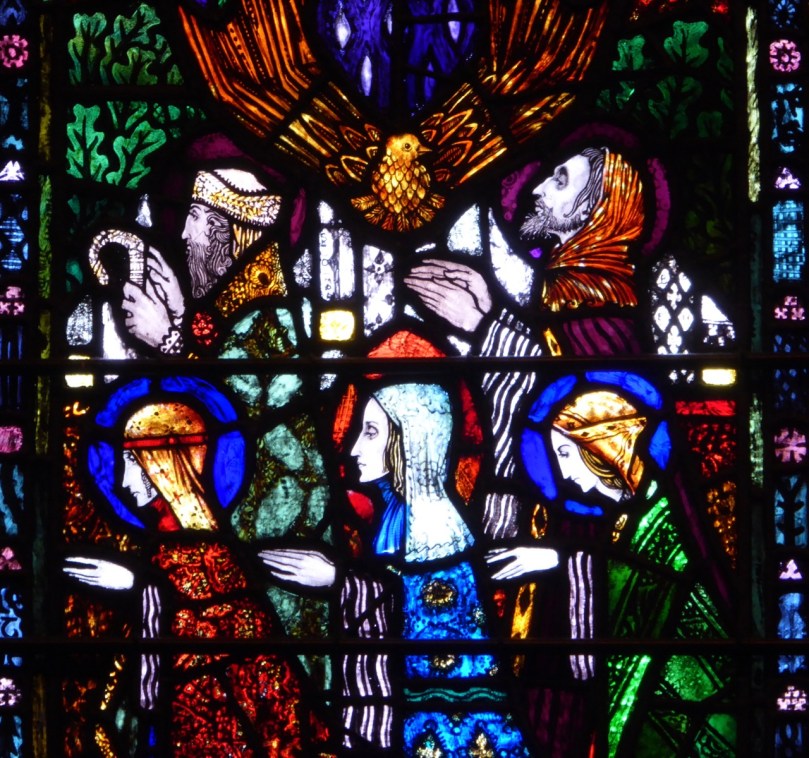
Honan St Ita Detail

Detail from the St Ita window

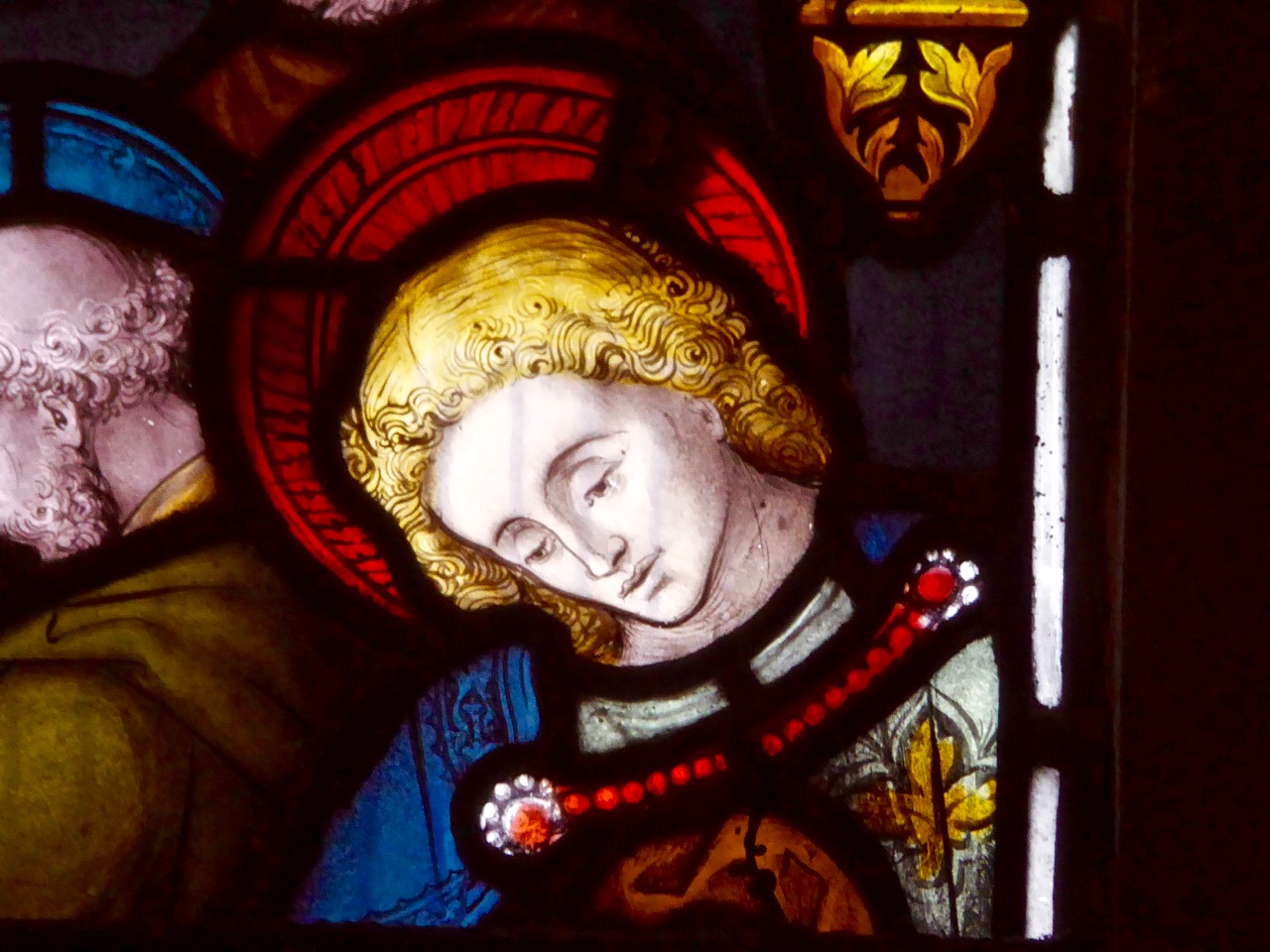
St Ita (the first photograph in this post) was the daughter of a chieftain but renounced all worldly things to live a life of poverty and to teach. Once again, Clarke uses tiny roundels to depict other saints associated with Ita: Brendan, Colman, Finbar and Carthage.

St Ita predella

Below her feet is another tableau, depicting a prayerful scene in which she is attended by two holy women and St Colman and St Brendan. The portraiture of the the two saints is exquisite.

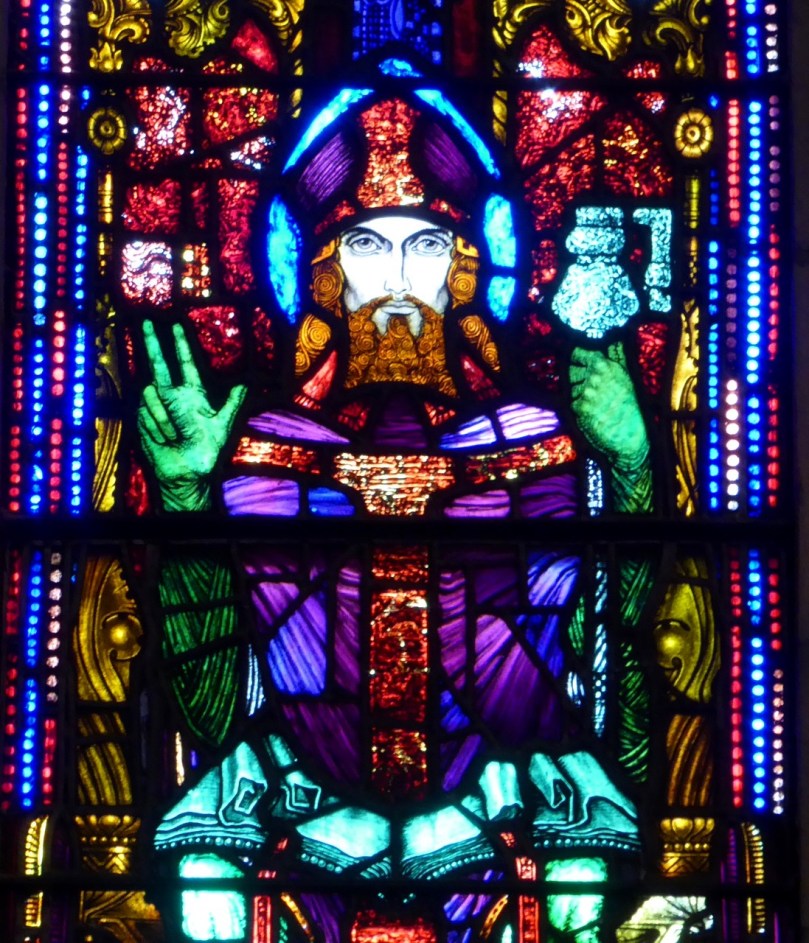
Honan Albert of Cashel

St Albert of Cashel – a little known saint who journeyed to Ratisbon in Germany on a conversion mission

A last window from the Honan Chapel – this time St Albert of Cashel, depicted as a seated bishop. In the top portion he is depicted converting the people of Ratisbon in Germany. Once again the individuals are beautifully drawn and sumptuously dressed. I particularly love the red hair – always a feature of a Harry Clarke window.

Citizens of Ratisbon listening to St Albert preaching

I highly recommend a visit to the Honan Chapel if you’re in Cork. See Robert’s post, Cork Menagerie, for an in-depth look at the mosaics. And take your time – the windows (there are several more than the ones I’ve used in this post) reward patient and detailed study. For more on Harry Clarke’s stained glass, see my post The Gift of Harry Clarke, which will walk you through an analysis of his style and his influences.

Honan St Albert converting Germans

Forge

Many blacksmiths can still work in time-honoured ways in West Cork. In my quest to know more about old gates, I contacted Pat O’Driscoll of Ironworks Ireland, whose forge is in Drimoleague. Pat was extraordinarily generous with his time and expertise and has offered to take us one day on an old gates tour – so look out for that post at some point in the future.
Horses

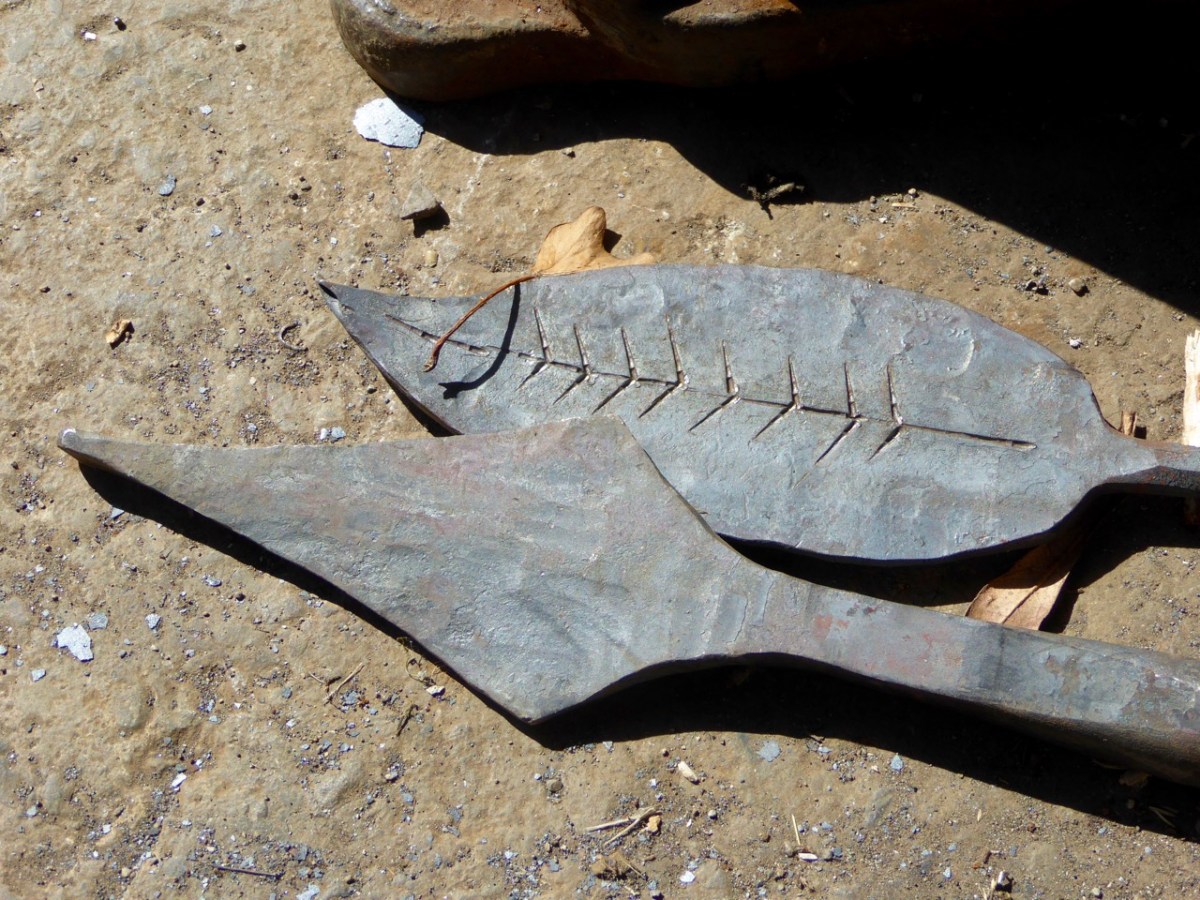
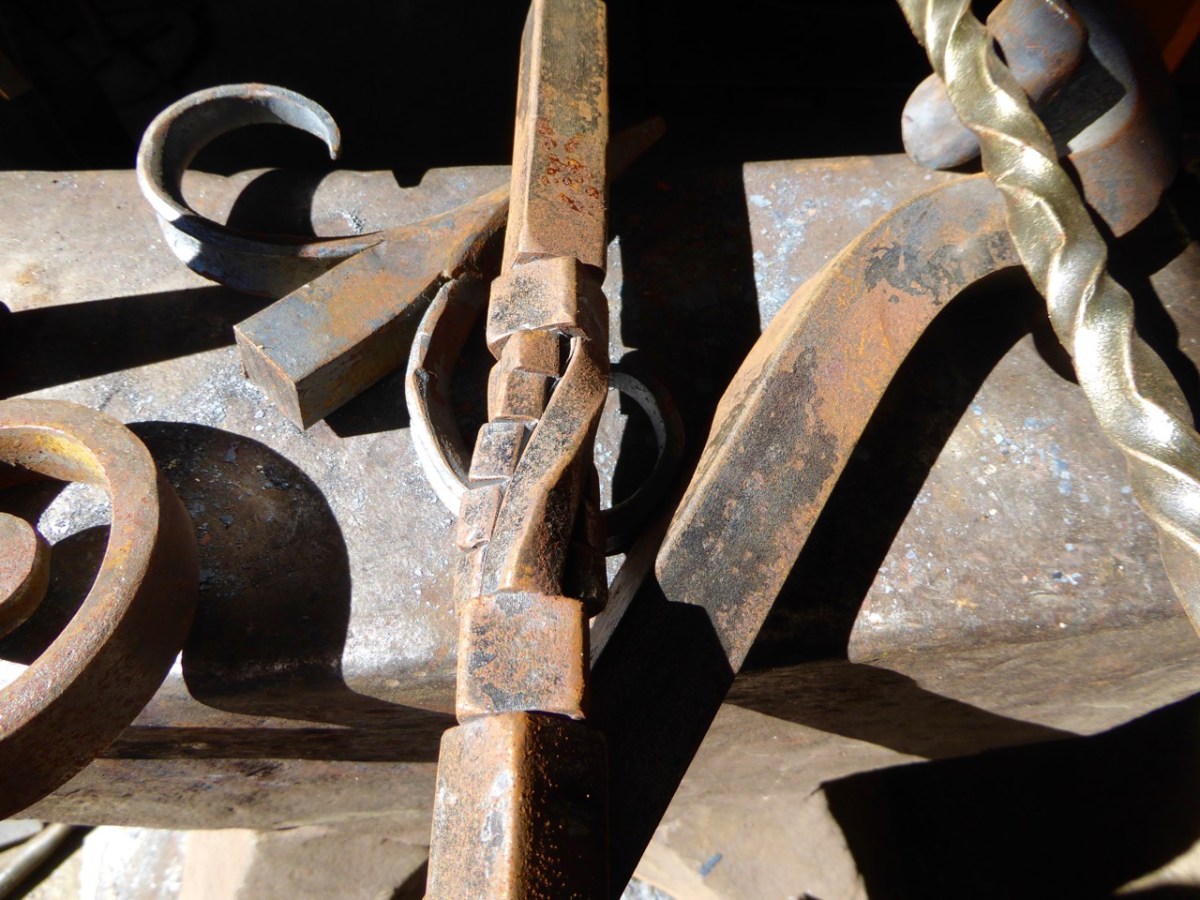
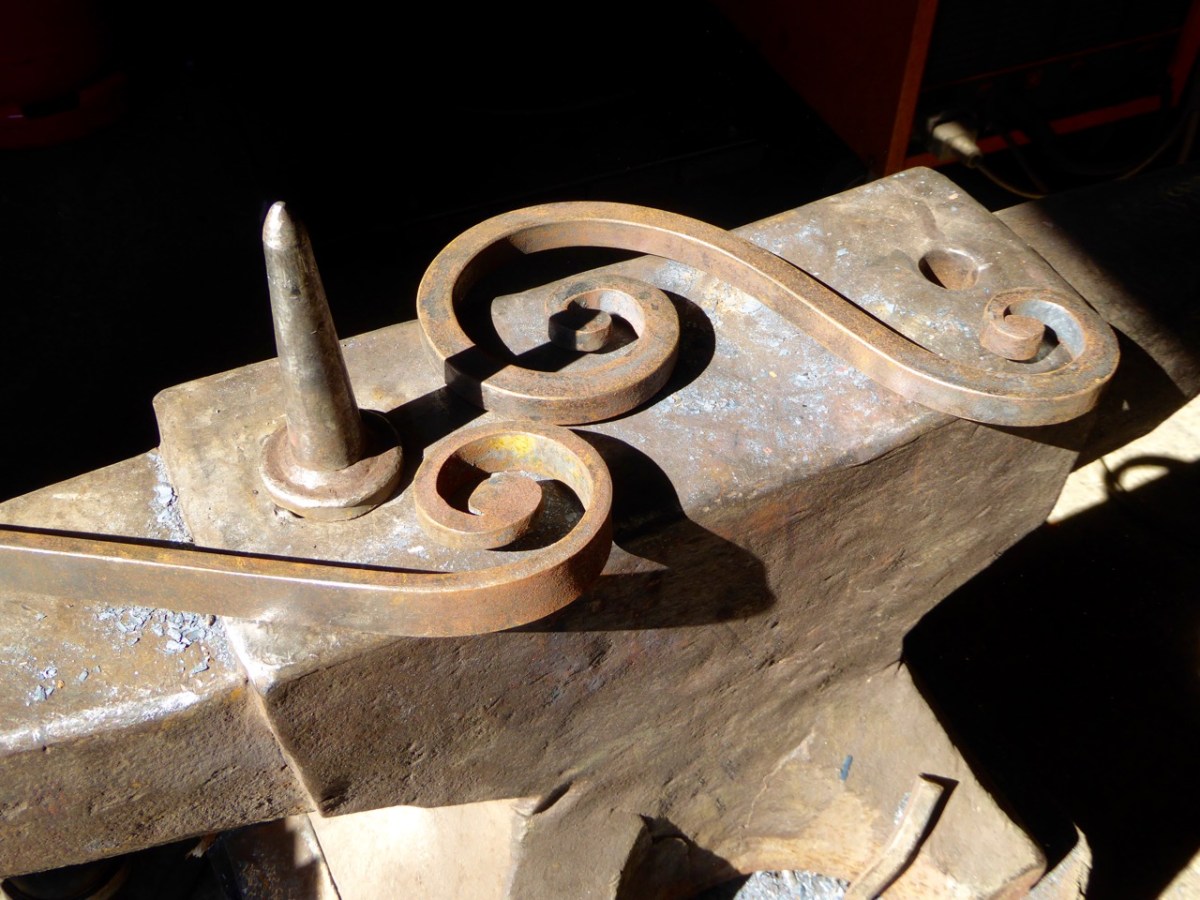
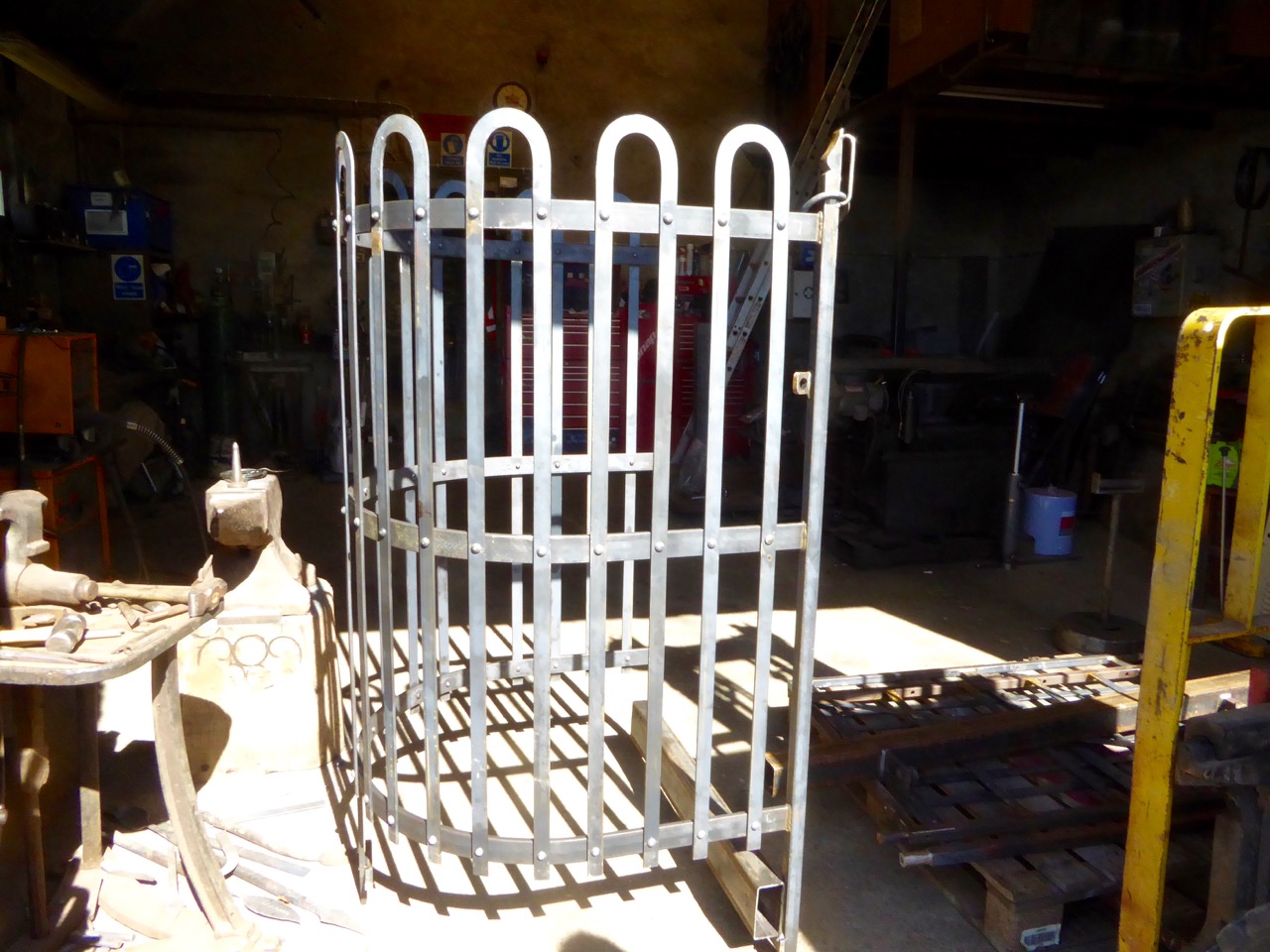
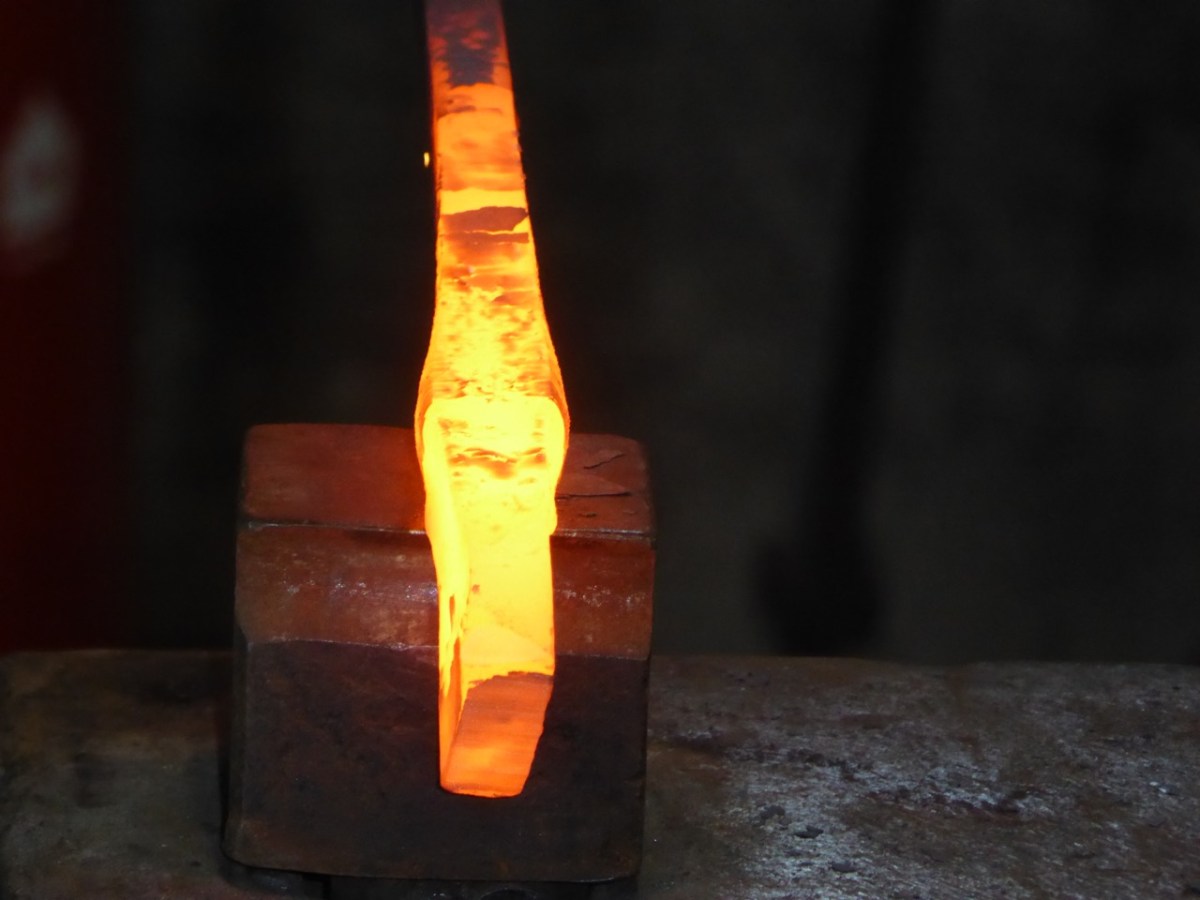
This post is really a photo essay. I was so entranced with the forge and with what seemed like the magical processes that Pat used that I really just want to share that with you. Although Pat has a fully modern ironworking facility he loves the traditional craft of forging, so his workshop is a treasure chest of examples of wrought iron.

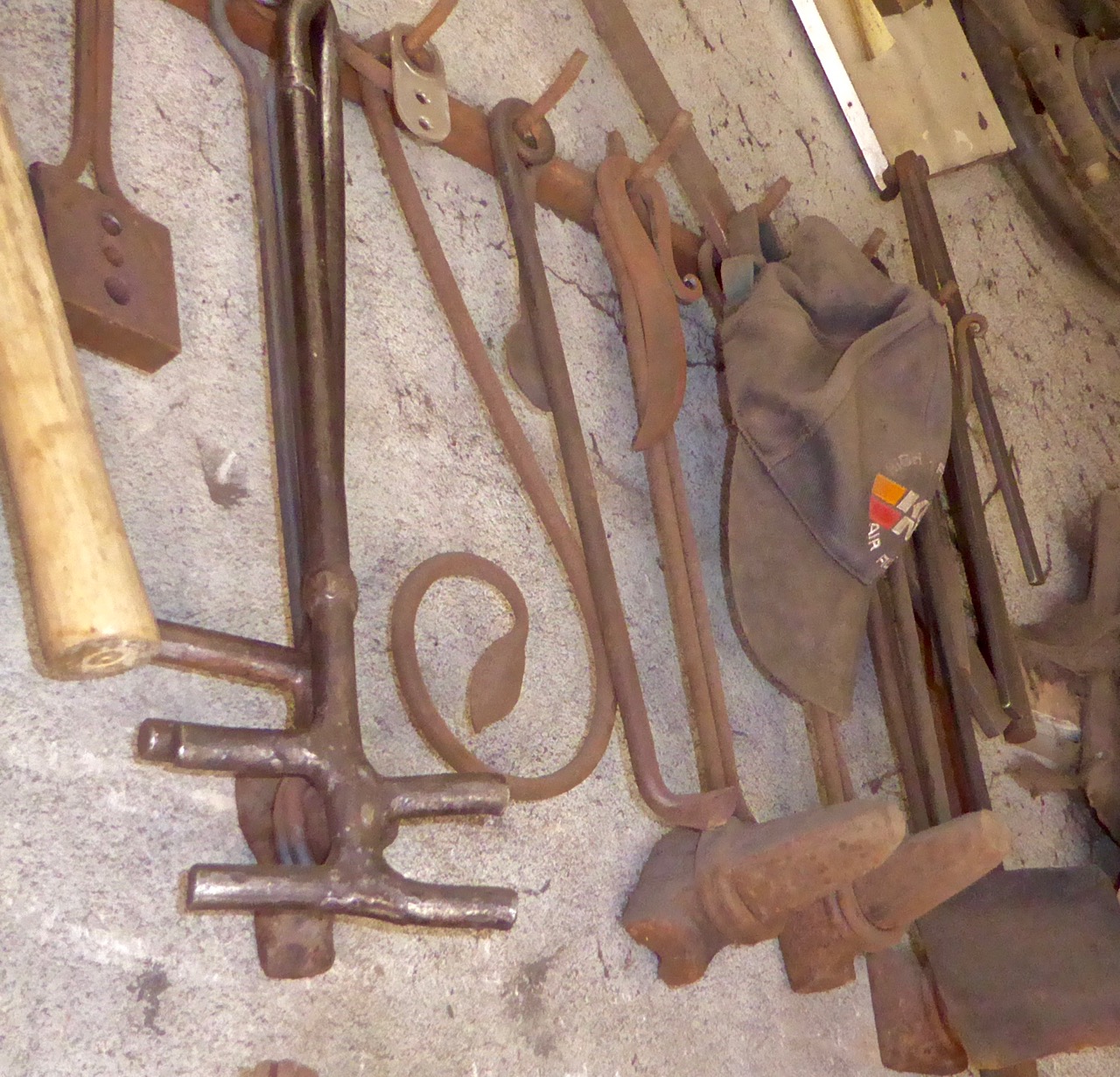
Forge tools
Forge tools 2

First – a series of photographs of tools and wrought iron pieces, old and new. The tools were mostly handmade by Pat himself.

Forge Tools Hammers
Kissing Gate 1

Second – a traditional kissing gate, just completed.

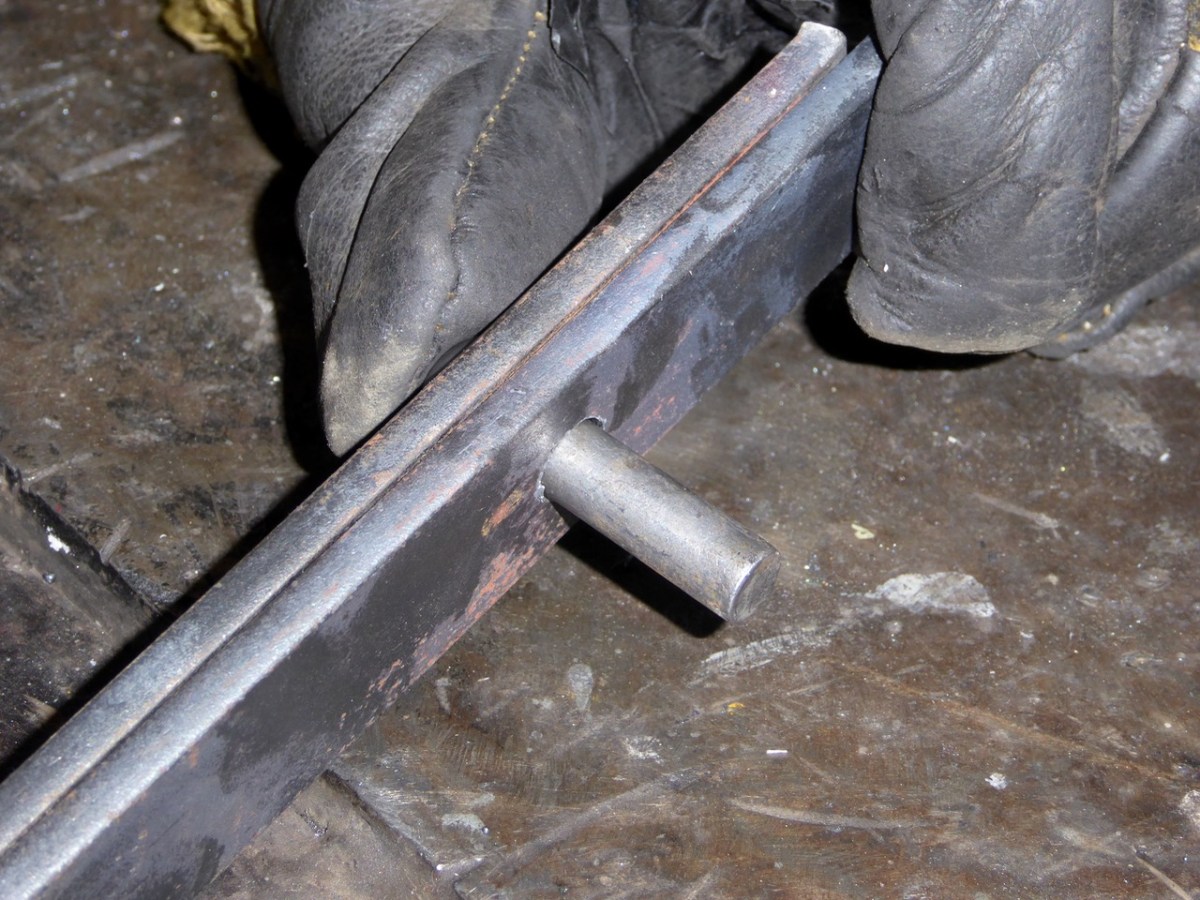
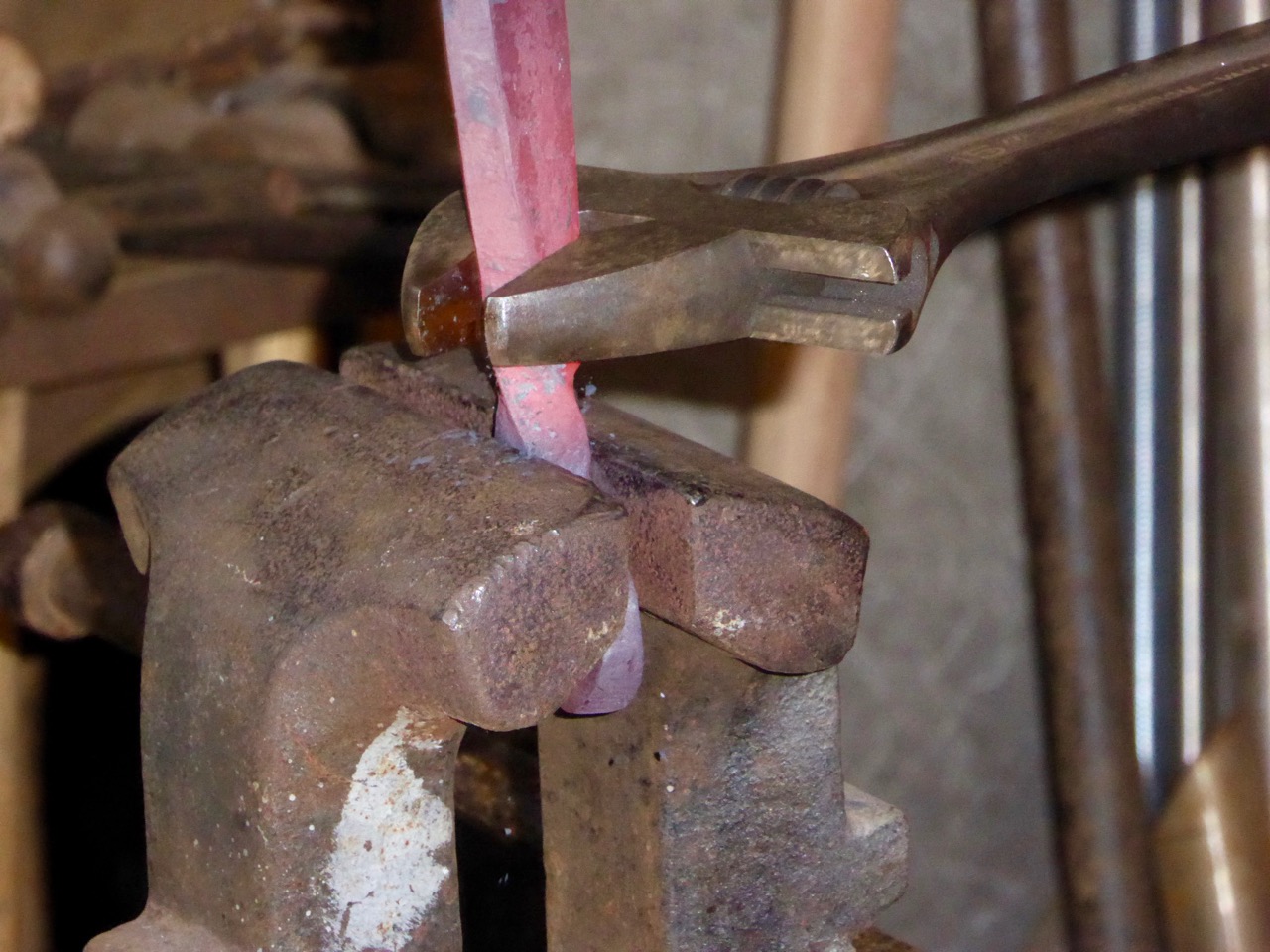
Notice the rivets on the kissing gate? Here’s how they’re made.

Rivet 3
Rivet 6

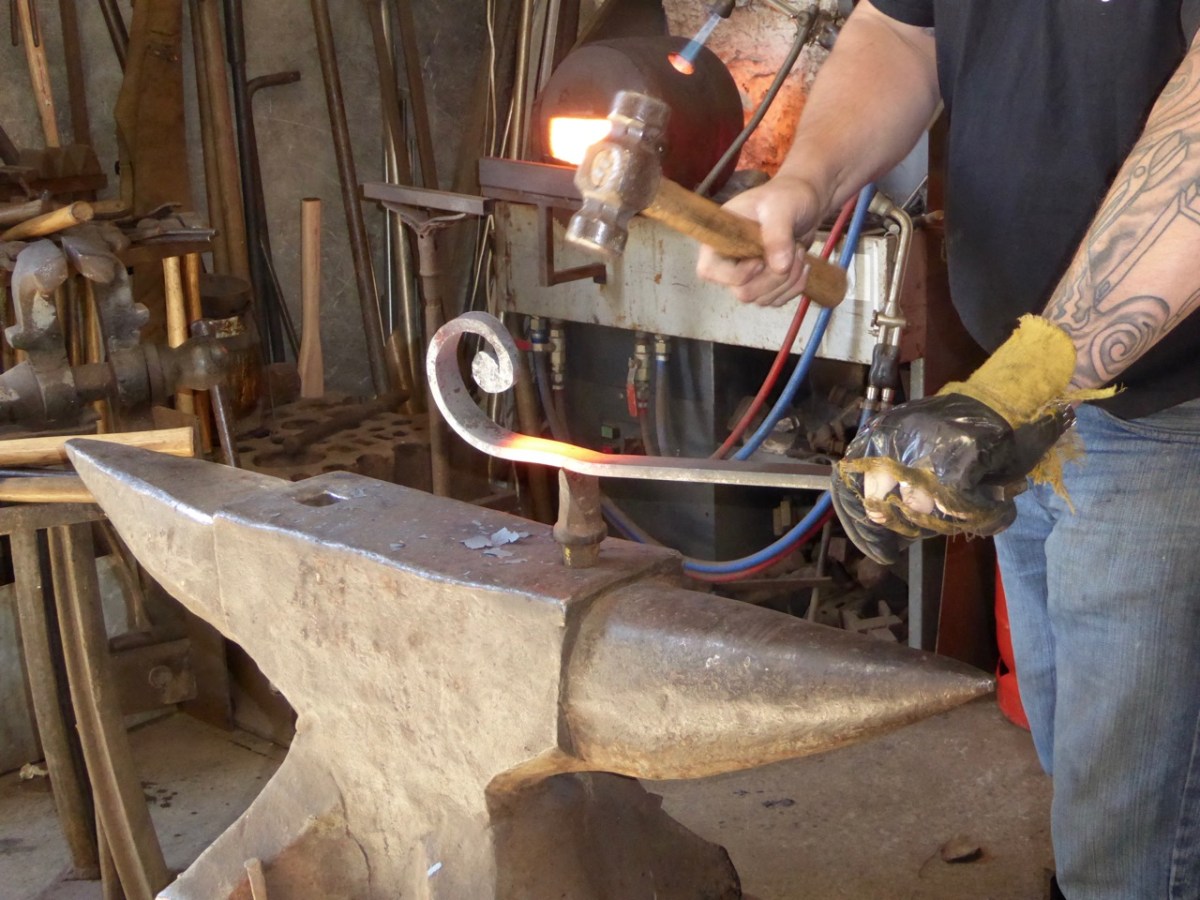
I expressed curiosity about decorative curls… Here’s what happened next.

Curl 1
Curl 4
Curl 9

And here’s our souvenir of a wonderful morning, installed on our mantlepiece.

Thank you, Pat, and see you again soon!

Pat

One last word… why was I reminded of Longfellow’s The Village Blacksmith, I wonder?

Under a spreading chestnut-tree
The village smithy stands;
The smith, a mighty man is he,
With large and sinewy hands;
And the muscles of his brawny arms
Are strong as iron bands.

Tattoo

A Bell for Bangor

Holg + Donagh 2

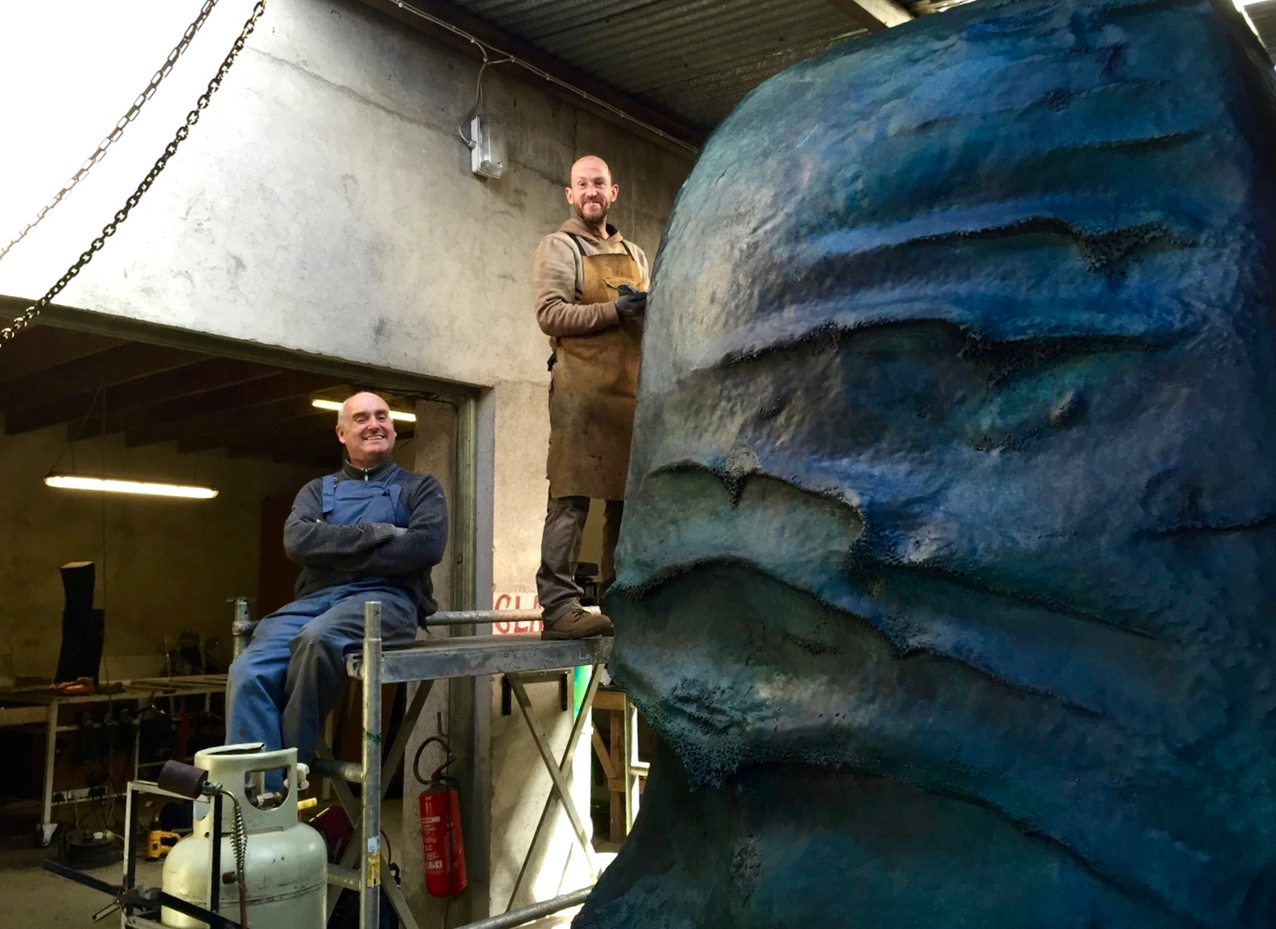
The man standing on the platform in the picture is Holger Lönze. You might remember him from Umha Aois, a post I put up last year about a group of artists and ‘experimental archaeologists’ who use Bronze Age metal working techniques to produce replicas of ancient tools, weapons and musical instruments. Holger – a sculptor – is a key member of that group: his workshop is in Schull and he has just completed a commission to make an enormous bell. You can see the project in progress on the right of the picture. On the left is Donagh Carey, another West Cork artist who worked on the casting.

Left: the original Bangor Bell – the inspiration for the new work – and, right: an early sketch design by Holger of the proposed bell sculpture

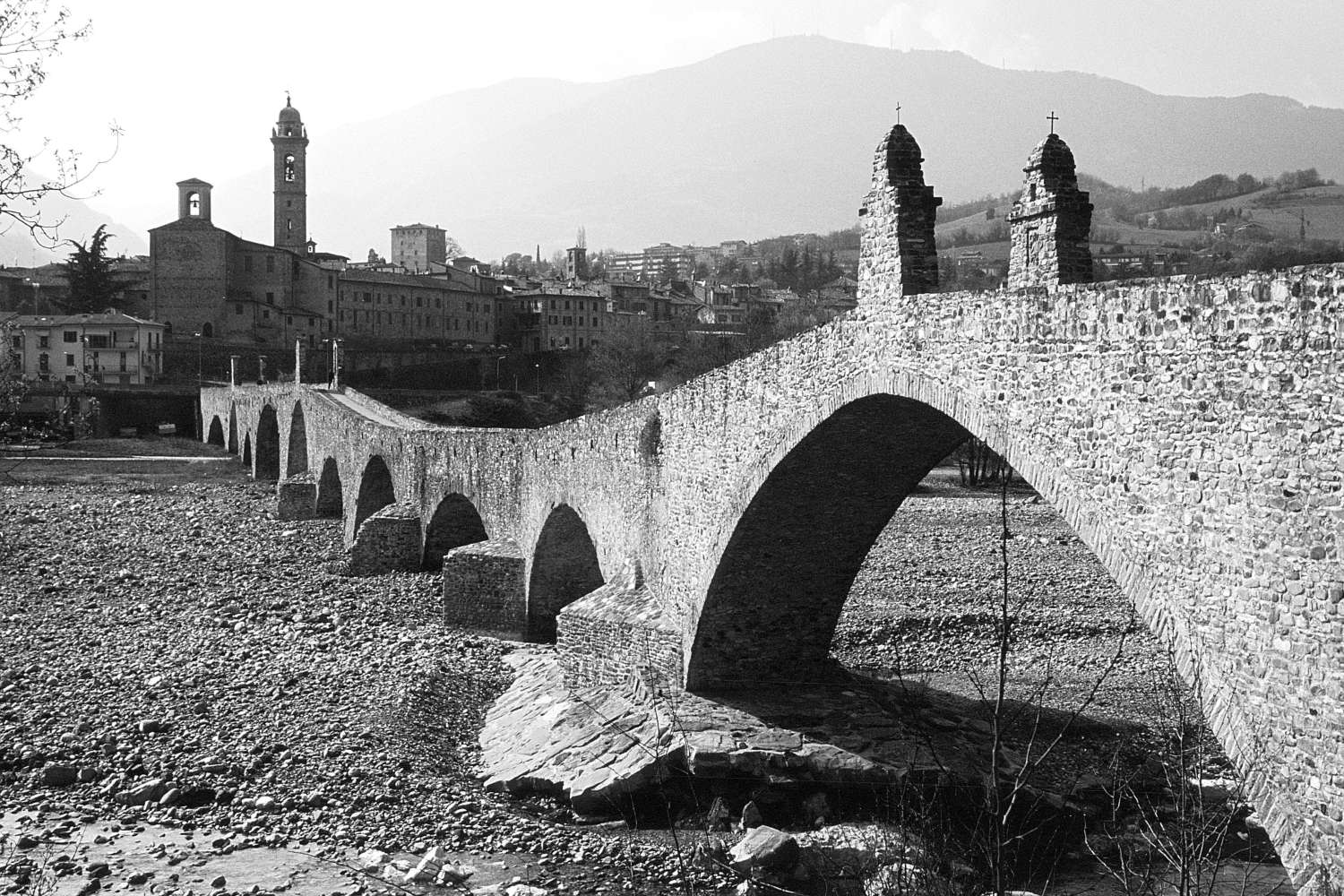
The story begins in the sixth century when Columbanus (the Latinised form of Columbán, meaning White Dove) was born in the Kingdom of Meath, now part of Leinster, Ireland, in 543. That’s about 50 years after the death (aged 120) of St Patrick. Patrick, of course, is the best known of the missionaries building up Christianity in Ireland, but he wasn’t Irish himself, having been born a Roman Briton. Columbanus was Irish, and he saw his mission as spreading Christianity from Ireland throughout the Continent of Europe. His mission was successful and St Columbanus is recognised in Europe as a founder of many monastic settlements during his travels in Gaul, Burgundy, the Alps and finally Italy where he established the great monastery at Bobbio, beside the River Trebbia. Columbanus died at Bobbio in 615 and his remains are buried in the crypt there.

Bobbio_bridge

The medieval bridge at Bobbio with St Columbanus’ great monastery beyond (photo by Herbert Ortner, Vienna, Austria)

There are great stories told about the life of Columbanus. When he walked in the woods, birds would land on his shoulders to be caressed, and squirrels ran down from the trees and nestled in the folds of his cowl. He is also said to have tamed a bear and trained it to pull the plough. Wolves would not harm him. He is usually depicted with a book and an Irish satchel, sometimes with sunbeams over his head. I’m not sure why but Columbanus is known as the patron saint of motorcyclists.

Saint Columbanus – left: depicted on a medieval fresco with book and sunbeams (note he is carrying a bell) and, right: sailing off to Europe with his companions

Getting back to West Cork and the bell: Columbanus travelled to Bangor, County Down – in the far north east of the island of Ireland – where he studied in the  Abbey until he was 40. A beautifully decorated bronze handbell was found near the Abbey by gravediggers in the 18th century; it is assumed to have been buried to keep it safe from Viking invaders in the 9th century. The Abbey is seen as the starting point for Columbanus’s missionary work in Europe and the bell (now in the North Down Museum) is associated with him, although unlikely to have been contemporary with his time there. Holger Lönze has always been fascinated by medieval bronze bells and has made replicas of many surviving examples. He cast a copy of the Bangor Abbey handbell using Medieval metalworking techniques in 2012, and the process is recorded in this video.

Holger’s full-sized replica of the Bangor Bell and (right) Holger in his studio explaining his techniques to Robert

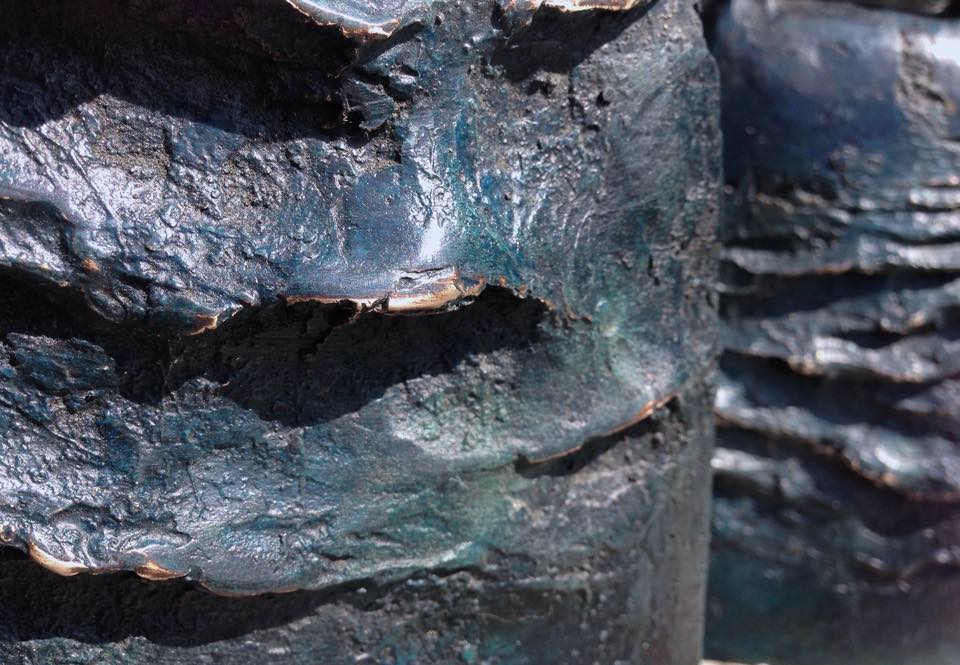
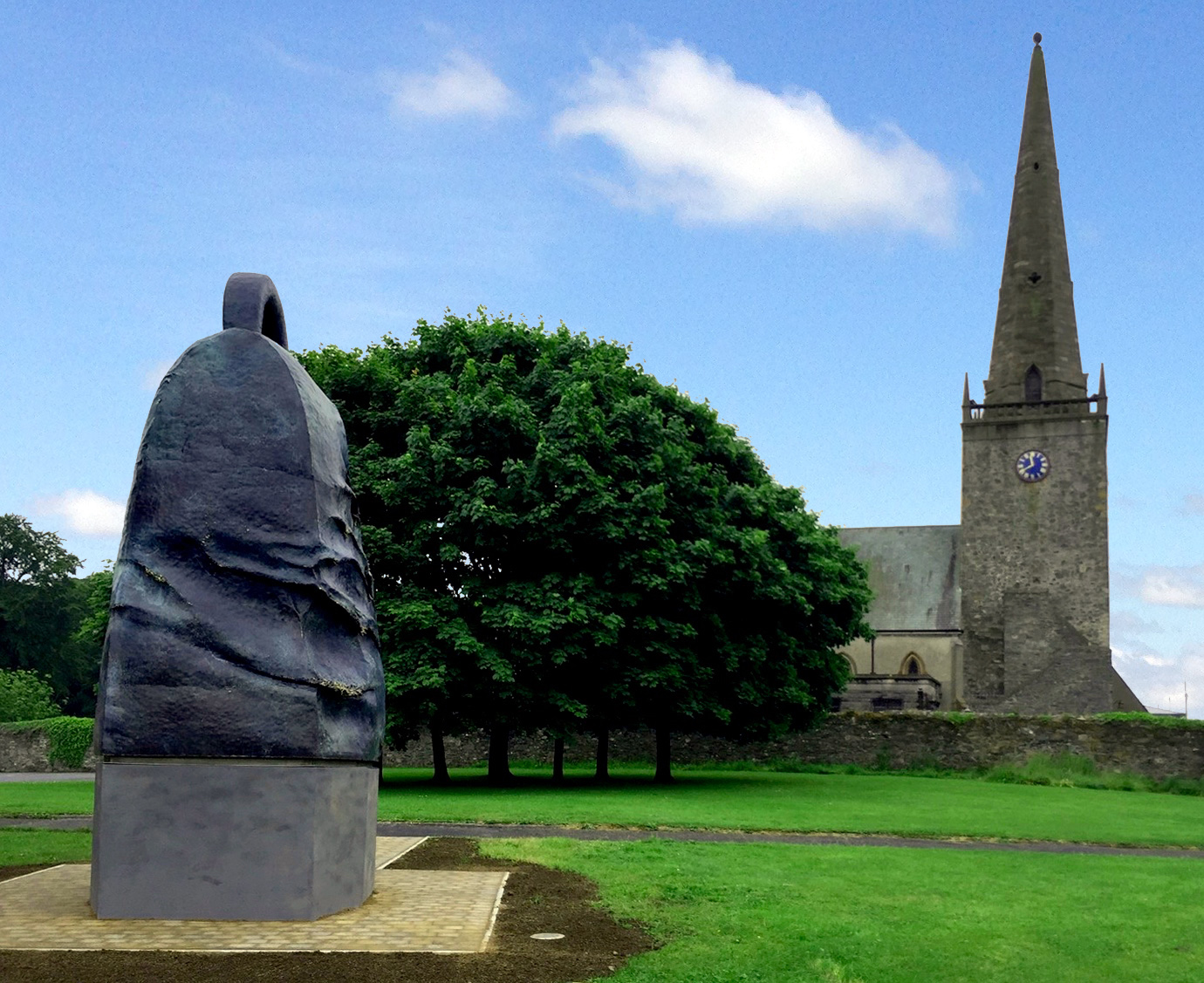
The new sculpture – titled Fluctus Angelorum (Wave of Angels) was commissioned by Ards and North Down Borough Council for Bangor Abbey  as one of a series of works inspired by the extraordinary achievements of Columbanus and his companions. Based on the proportions of the original bell, the surface of the sculpture is shaped like the surface of the ocean. The sea-blue patina and breaking waves are a metaphor for Columbanus’ remarkable sea voyage. The 4m high bell was fabricated in bronze plate in West Cork using the ancient repoussé process – by alternating annealing and hammering and finally welding. It took no less than 400,000 hammer blows to transform flat sheets of bronze into this piece of sculpture!

Bell surface

In the workshop: the surface of the 4m high bell reflects the surface of the ocean and (right) the inside of the great bell: it is mounted on a stone plinth and lit at night. Both bells and waves are striking metaphors to mark the Saint’s 1400 miles journey from Bangor to Bobbio – 1400 years ago

The medieval Bangor Bell didn’t have a clapper: it was carried around and hit with a hammer. Taking me back to my days as a percussionist, Holger allowed me to hit the giant bell… It made a mighty sound! From West Cork the bell travelled the whole length of Ireland, passing its 8th Century sister bells in Cashel, Co Meath and Bangor. It is now installed in the Abbey grounds and was formally unveiled on 13th June. The sculpture is not yet complete – Holger is making a number of smaller ‘satellite’ bells which will be set around it, but even on its own it is a most impressive sight: the largest bell ever made in Ireland.

holger with bell

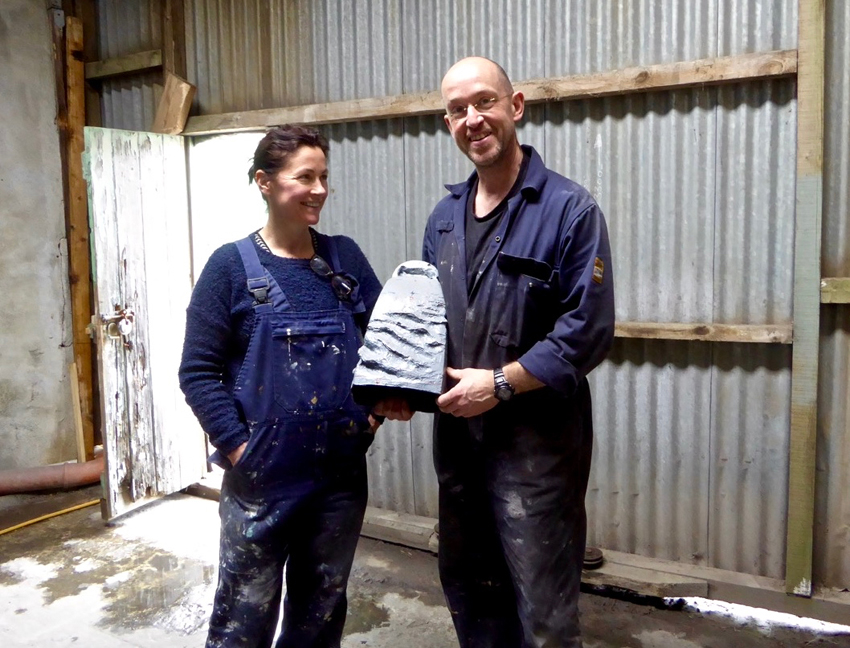
Artist Karen Hendy and Holger Lönze showing the maquette for the bell project in Schull and, below, the bell in its setting at Bangor Abbey

bangor context

I’m often repeating the message but there is no doubt that West Cork is the most creative place I have ever lived! All manner of culture flourishes here and we are privileged to live in a community where we can readily meet and appreciate the work of so many artists; and we have excellent galleries to showcase this work – The Blue House Gallery in Schull (next door to Holger’s workshop), Uillinn in Skibbereen, Catherine Hammond‘s excellent gallery, now also in Skibbereen and The Aisling Gallery in Ballydehob. We are spoiled!

With many thanks to Holger for allowing me to use some of his own images of the work progressing…

Moongazy Pie

Ready for cooling 2

Moongazy Pie – an original Roaringwater Journal recipe

Each year around this time we look forward to the annual Cornish Invasion – a group of men and women from Cornwall who come on a cultural exchange to sing and tell stories around West Cork. Some are old friends of Robert’s and we inevitably end up in pubs, singing and playing our hearts out until all hours.

A Cornish Quartet

A Cornish Quartet in O’Donovan’s Hotel, Clonakilty

This year we managed to get a couple of them and their Irish hosts to sit still long enough to eat dinner with us. To celebrate the theme of our Irish/Cornish friendship, we made a special dish – Moongazy Pie.

Dinner Group

Robert, Majella O’Callaghan, Jonathan Ball, Nick Blood, Brendan O’Callaghan

Have you heard of the famous Cornish dish, Stargazy Pie? It’s an arresting looking dish, with pilchards’ heads peeking out of a pastry crust as if gazing at the stars. Of course, there’s a whole legend to go with it and lots of traditions.

stargazy

Photo from http://www.jusrol.co.uk/pastry-recipes/stargazy-pie/

Regular readers will know by now that Robert is a hare fanatic. (In fact, he thinks he is a hare, but don’t tell him I told you that.) What better way to combine his Cornish heritage and his hare obsession than with the symbol of the moon-gazing hare – one of the classic, universal images with which we associate hares.

oval

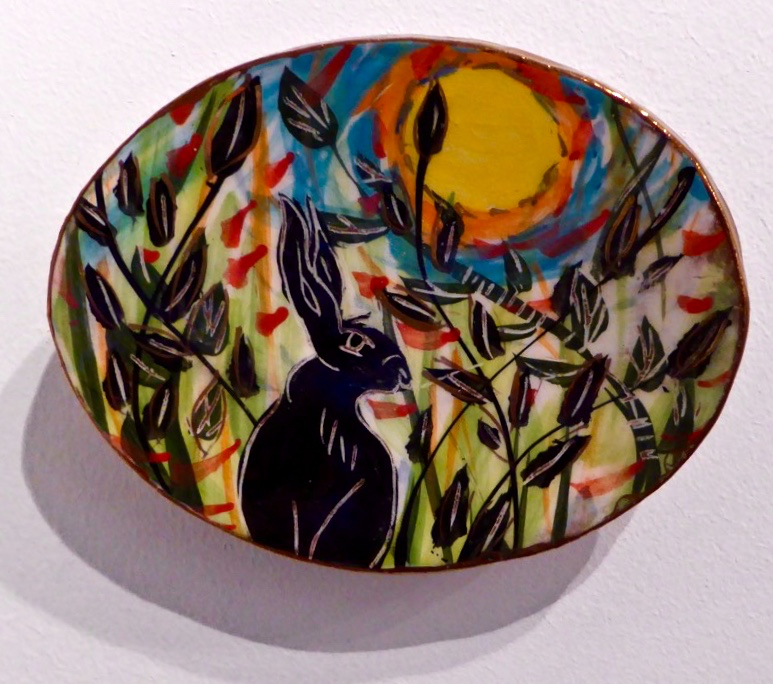
One of Etain Hickey’s wonderful moon gazing hares

So here is the recipe we devised! I’m not sure who likes pilchards (not me!) so don’t worry, there isn’t a pilchard in sight – just beautiful salmon and lots of leeks. Although this is an easy recipe give yourself time to make it, as part of the process involves cooling the ingredients and then the pie itself before baking. It’s a great dish to make in the morning for a Sunday lunch, or in the early afternoon for dinner.

Ingredients

MOONGAZY PIE

6 leeks

2 tbs butter

A side of salmon (1 – 1.5k/2.5 – 3.5lbs), skinned and boned (we got our fishmonger to do this for us).

A large handful of fennel fronds (I happen to have this in the garden and I love the aniseedy aroma  but you can substitute fresh dill)

Freshly grated zest and juice of one lime

1 large egg

1 tablespoon water

2 packs ready-made puff pastry sheets – You’ll need about 900g/2lbs in total.

PREPARE

Take the puff pastry from the fridge so it will be at room temperature when you are ready to roll it out.

Wash the leeks very well, making sure to separate the leaves and hunt for that pesky soil that lurks between them. Drain them, pat them dry and cut them into rounds approx half inch or 1.5cm long. Sauté the leeks in butter over moderate heat, stirring, until tender, about 20 minutes. Set aside to cool.

Zest and juice the lime.

Cut off the coarser stalks from the fennel (or dill) and chop the fronds finely.

Cut salmon into pieces – about 2”/5cm square.

Once the leeks are cool, mix the leeks, salmon, lime zest and juice and fennel/dill in a bowl.

Whisk together egg and water to make an egg wash.

Dust a baking tray with floor. A 35 x 25 x 2cm (14″ x 10″ x 1”) works well.

Filling the pie

ASSEMBLE

On a lightly floured surface with a lightly floured rolling pin roll 1 puff pastry sheet (about 300g /10oz) to fit the baking tray with some overhang. Once rolled, transfer it to the tray. Roll a second sheet the same size. Mound the salmon mixture on to the pastry in the tray and spread carefully to fill the tray. Brush the edges with some egg wash and drape the second sheet over top. Roll the edge of the bottom sheet over the edge of the top sheet to form a seal and press it down all the way around with the tines of a fork.

Roll out a third sheet of pastry. Use a plate or saucer to cut out the moon shape. For the hare, we found a suitable silhouette on the internet and Robert used the printer to make one the right size to use as a template. There are various ways you can do this – make it your own, as long as you use the image of a hare gazing at the moon.

Cut four steam vents on top and brush all over with the remaining egg wash. Then cool the pie in the fridge for at least an hour and up to 3.

BAKE

Preheat oven to 205C OR 400F.

Bake pie in middle of oven until pastry is golden brown, about 30 minutes.

Ta Da!

Mosaics and Maharajas, Part 2

East Window

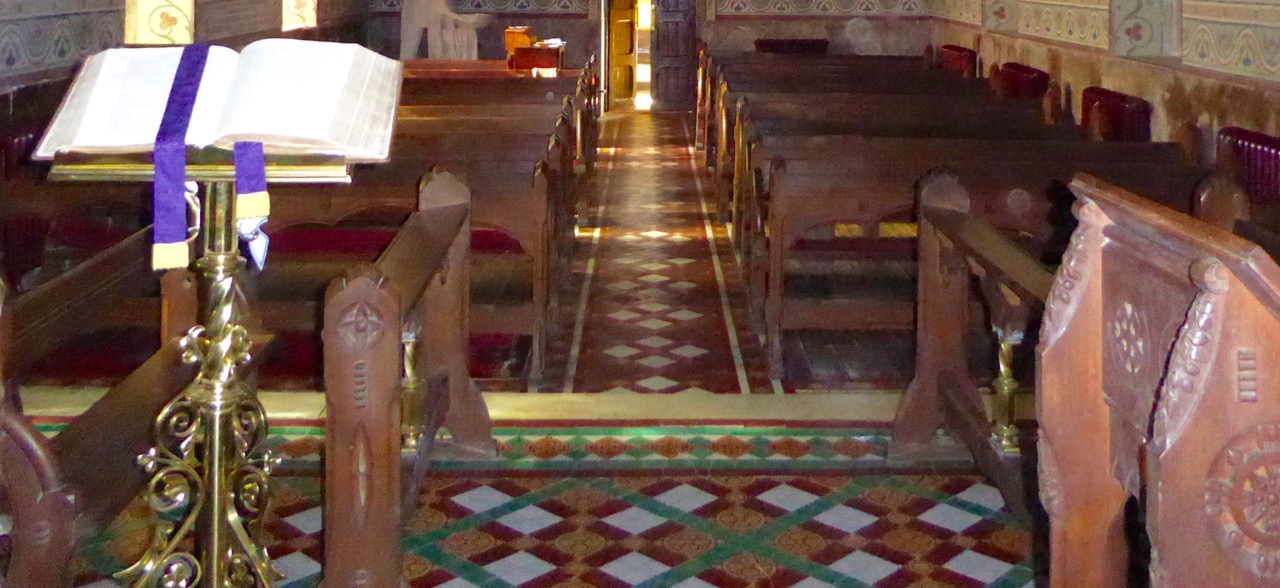
The more I look into the Church of the Ascension in Timoleague the more fascinating it becomes. Last week I concentrated on the mosaics and the story of the Maharaja, but what I failed to say is that the mosaic tiles were made by Minton, as were the encaustic tiles on the floor. Minton is known for its bone china but in fact it was also was the leading producer of British ceramic tiles during the 19th century.

Encaustic Tiles

The encaustic floor tiles as well as all the mosaic tiles were made by Minton

The windows were also produced by the most famous British stained glass artists of their day, as we shall see. Taken as a whole then, the architecture and decoration of this singular church leads us directly to Augustus Pugin, one of the giants of the Victorian Age, and locates it in the highest echelons of the Gothic Revival Movement. This hidden gem is even more of a jewel than I suspected!

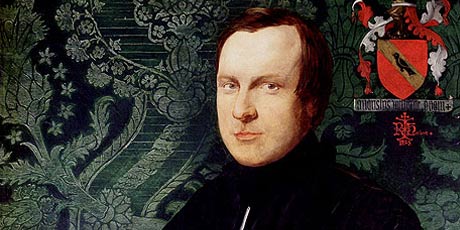
Pugin

Who was Augustus Pugin? Born in 1812, son of a French emigré draughtsman and an English mother, Pugin trained in his father’s workshop, becoming proficient in design and drafting by aged 9. Conversion to Catholicism and a visit to Nuremberg in Germany convinced him that the greatest expression of church architecture was High Gothic and he set about challenging, and ultimately revolutionising, the prevailing design norms of the Victorian period. He was incredibly prolific and influential, such that today when we think about Victorian architecture and gothic revival, we are really thinking about the work of Augustus Pugin – even though he died in 1852 at the early age of 40.

The signature of the Warrington Stained Glass Company on the East Window

Pugin designed several churches in Ireland (mostly Catholic), especially in Wexford, where you can follow the ‘Pugin Trail’. (I don’t know who wrote the Wexford Pugin Trail brochure, but it is one of the best explanations of his style and influence that I have read.) While he did NOT design the Church of the Ascension, his influence is everywhere in evidence, along with the use of his favourite suppliers – Minton for the mosaics and tilework and Warrington, Lavers and Westlake, and Mayer for the windows.

Church interior looking east

Hallmarks of gothic revival: a beautiful hammer-beam ceiling, tall pointed windows with simple Y tracery, everything to lead the eye upwards

The real art of making stained glass in the medieval style had been lost and during the 18th century colour was mostly painted directly on the glass using an enamel technique. But part of the gothic revival ethic was to base manufacturing technology as closely as possible on the original so there was also a re-discovering of real stained glass processes where the colour was fired directly into the material and sections of glass were separated by lead. This art was revived in the 19th century by artists and craftspeople who studied medieval glass and learned through trial and error how to make it again.

The Presentation

The Presentation, East Window

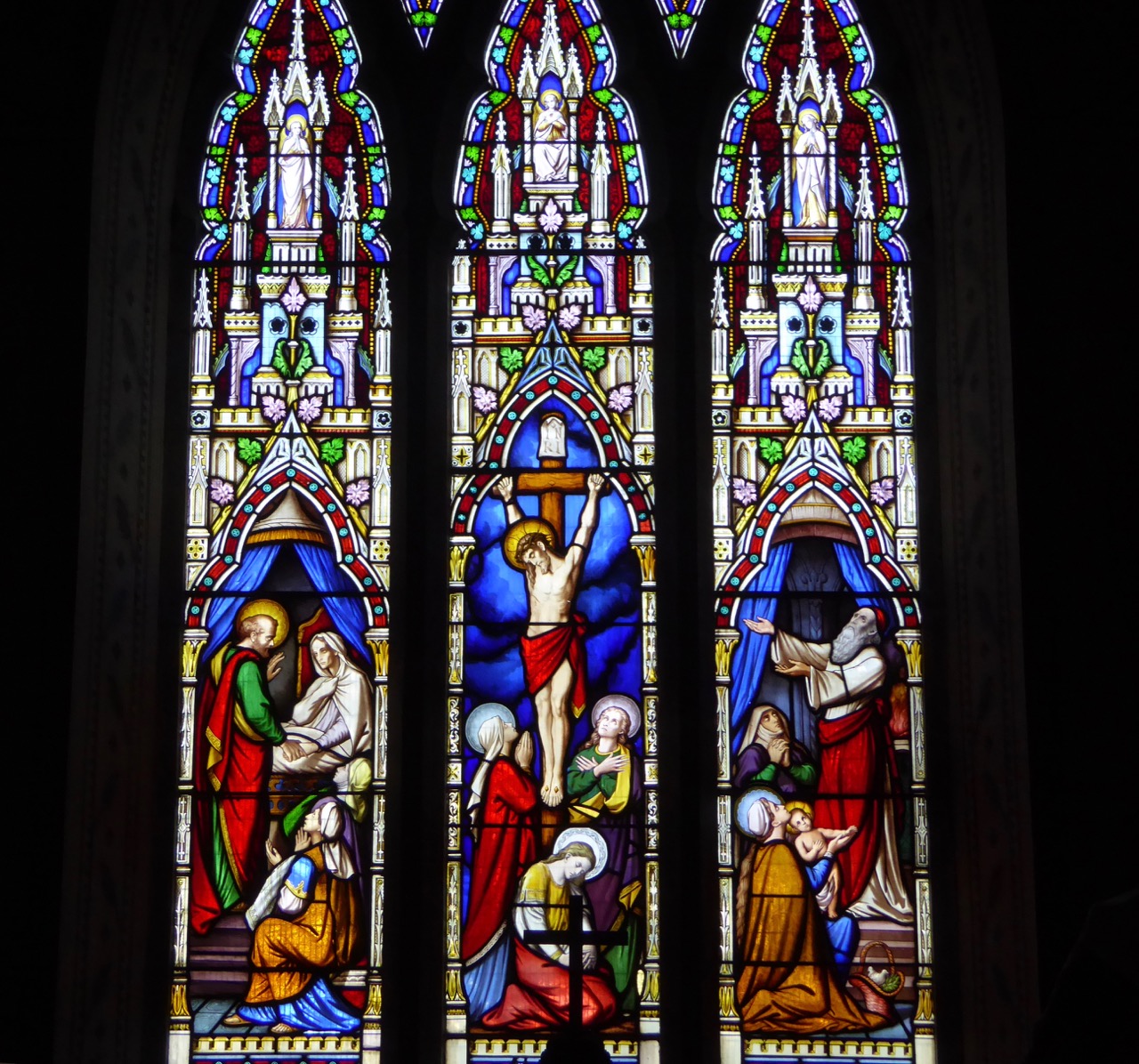
Let’s start with the East Window, the work of Warrington. William Warrington was one of the leading stained glass artists of his day. Like Pugin, he was a student of the gothic style and he strove to reproduce glass work as close as possible to medieval models. He had trained with his father as a painter of armorial shields, an influence that can be seen in his designs. He wrote a book in 1848 on The History of Stained Glass, but fell afoul of the group called the Cambridge Camden Society (or CCS) who had set themselves up as the arbiters of taste in all things related to church architecture. Partly this was the outcome of class prejudice: the CCS, all university educated men, did not believe that a “mere artisan” should be allowed to have an opinion of what they saw as their own exclusive preserve.

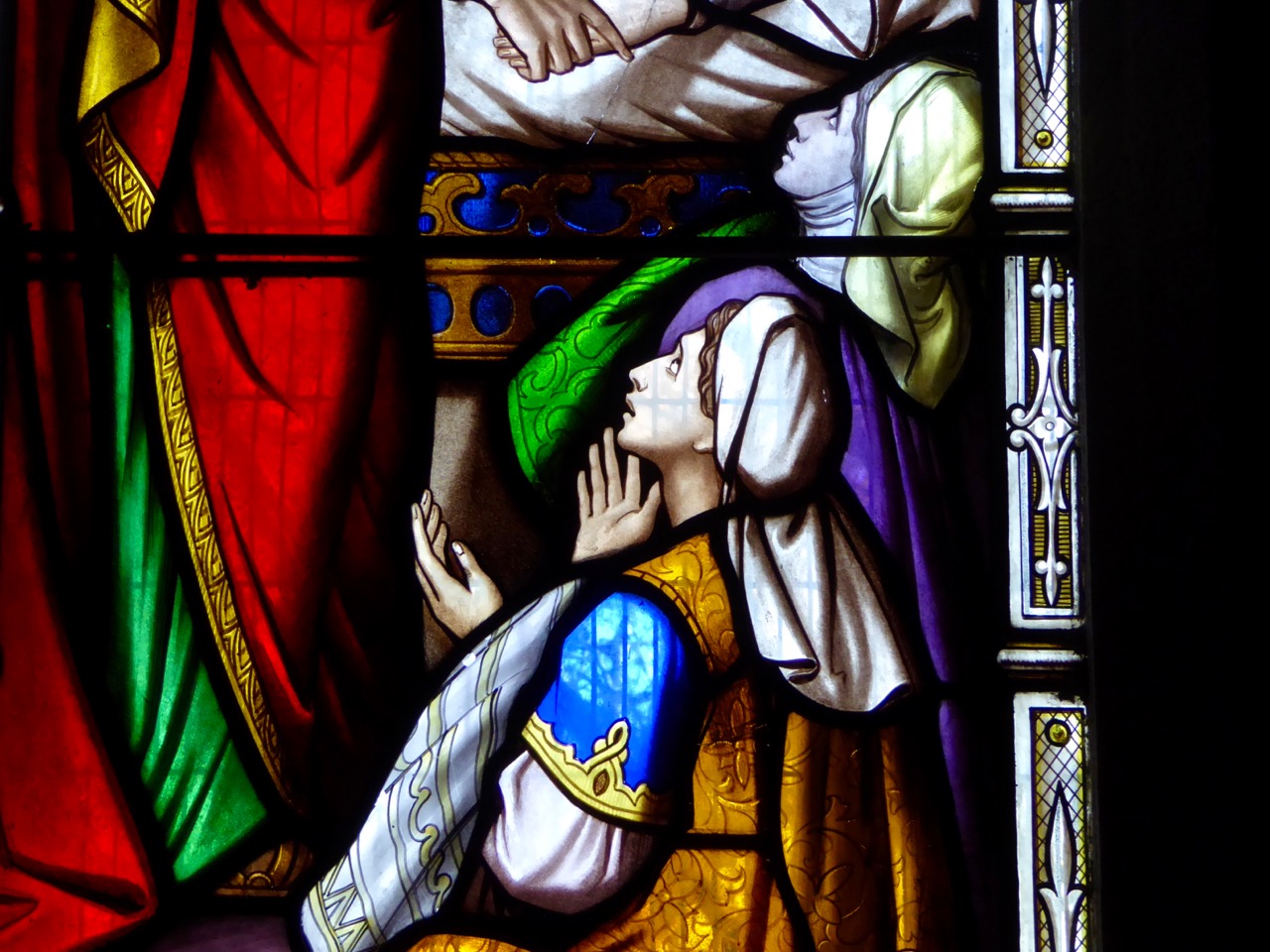
supplicants

Detail from The Raising of Dorcas, East Window

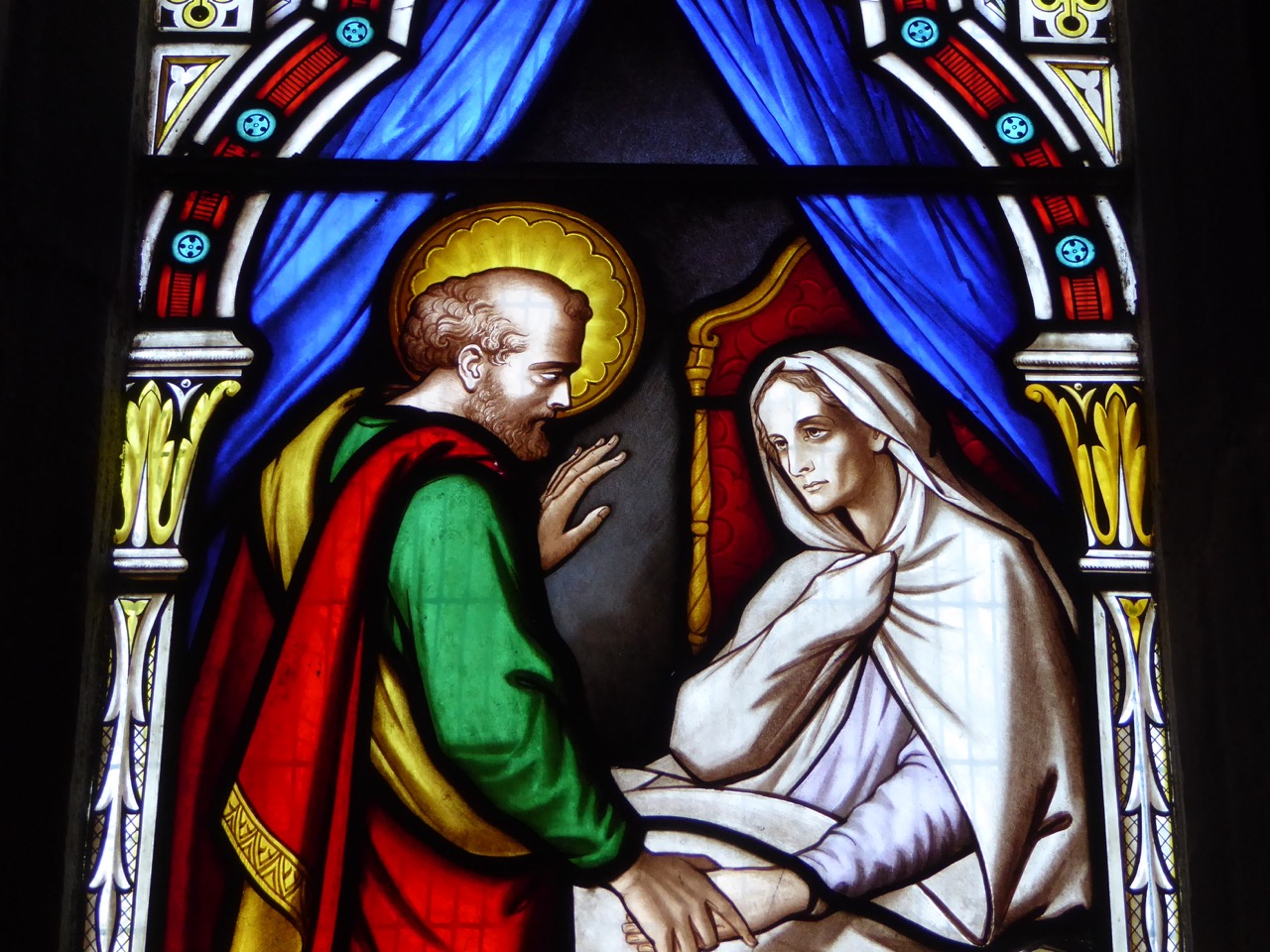
By any standards, this is a beautifully executed window. According to the Wikipedia article, Warrington’s figurative painting strives towards the Medieval in its forms, which are somewhat elongated and elegant, with simply-painted drapery falling in deep folds in such a way that line and movement is emphasised in the pictorial composition. His painting of the details, particularly of faces, is both masterly and exquisite.

Raising Dorcas

The Raising of Dorcas, East Window. In this story, from the Acts of the Apostles, Peter prays over the dead body of Dorcas, who returns to life

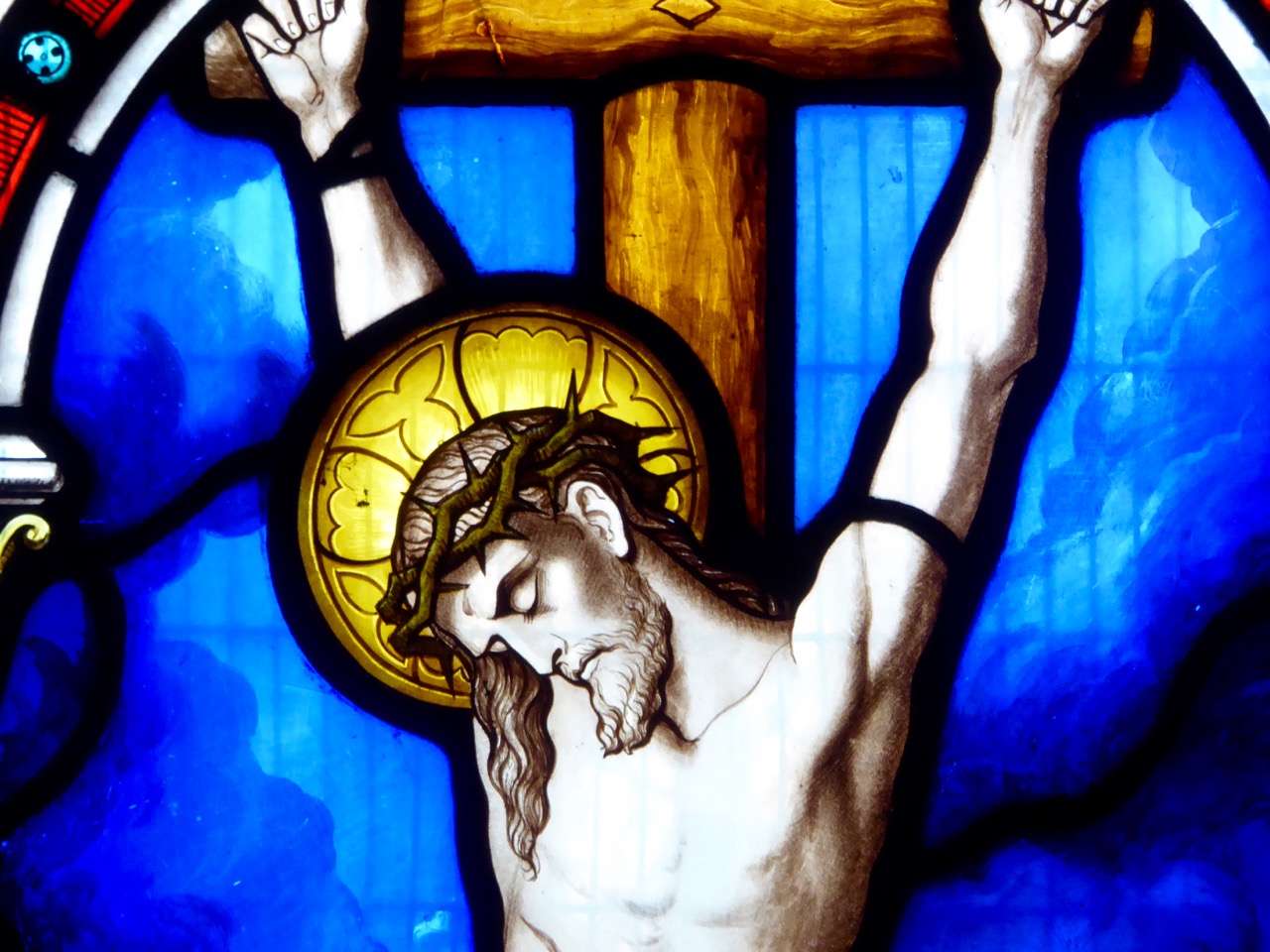
This is all clearly visible in the East Window, a masterful set of three lights depicting the Crucifixion in the centre, Raising Dorcas on the left and the Presentation in the Temple on the right. Note the use of heraldic motifs above the main panels, and the tall medieval-style spires of foliage, all typical of Warrington glass.

East Window heraldic

For some reason, this was all too much for the Bishop of Cloyne when he came to consecrate the new chancel in 1861. Cloyne Cathedral itself was a true medieval building but much simpler in its interior decoration. The Bishop obviously had less sympathy with this new style of highly decorated church interiors and objected in particular to the East window, which he viewed as similar to the ‘graven images’ popular in the Catholic churches.

On the cross

He refused to conduct the consecration unless the window was covered in a cloth. The cloth, apparently stayed up a long time, and when it came down the window continued to attract opprobrium – it was even attacked and broken on at least one occasion! It’s hard to understand now how such a beautiful piece of devotional art could have inspired such an over-the-top reaction.

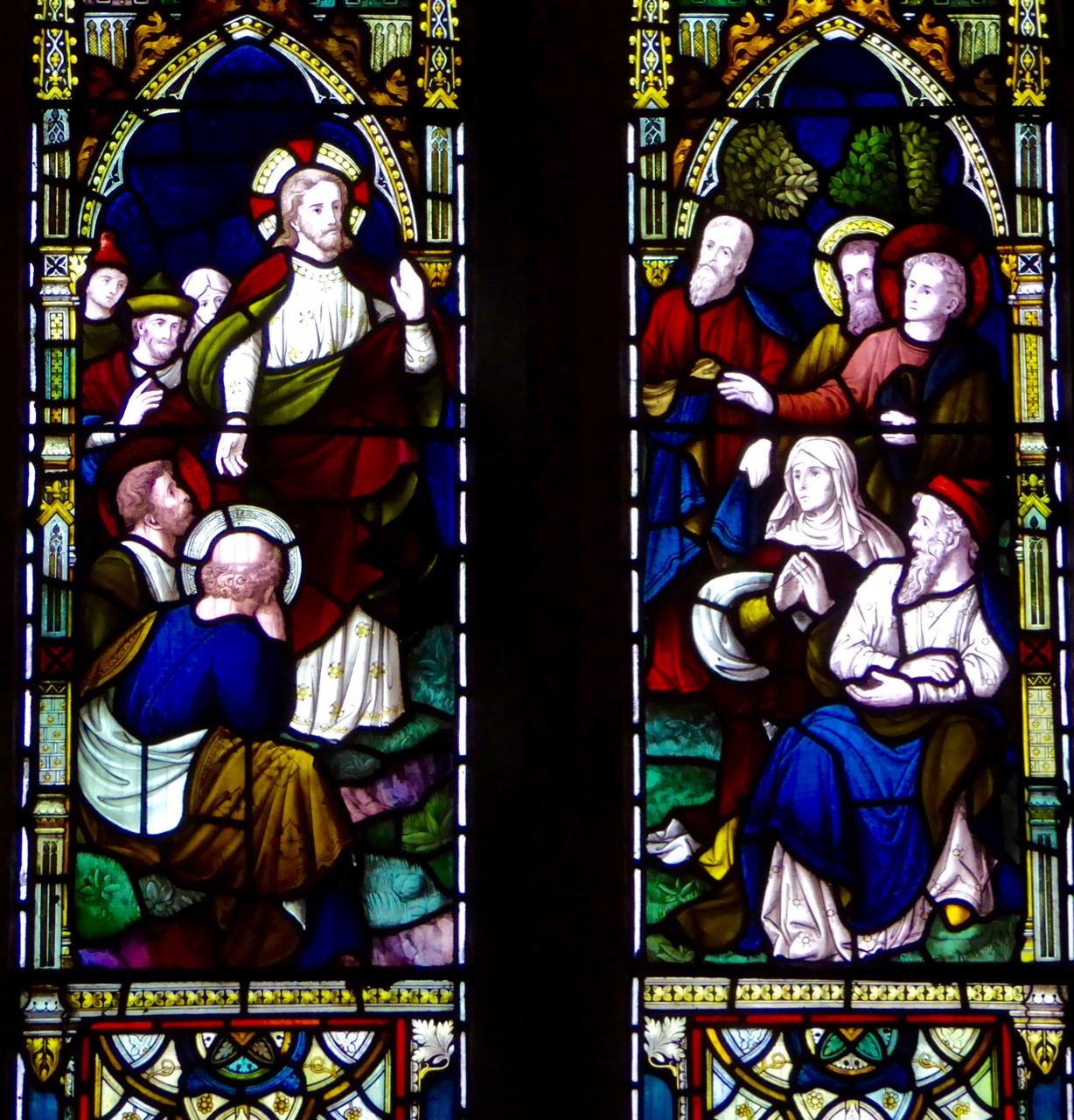
Jesus Walking on the Sea

The Sermon on the Mount by Lavers and Westlake

Three sets of windows in the nave are by Lavers and Westlake, yet another of the London-based stained glass firms that responded to the new demand for gothic-revival glass windows in 19th century Britain. Nathaniel Westlake was another scholar of stained glass, publishing a four volume work, A History of Design in Painted Glass, and also a decorative painter of wall and ceiling panels. He was considered one of the leading exponents of stained glass art with a style considered to be Pre-Raphaelite. He worked with William Burges for a while – the one who designed every aspect of St Fin Barre’s Cathedral in Cork – who recommended him to the firm of Lavers and Barraud. In 1868 he became their chief designer and was responsible for much of the success of the firm, which captured a large share of the booming stained glass industry. Unlike Warrington, however, Westlake did not clash with the CCS, probably because his partner, Lavers, was a member of that society.

Loaves and Fishes detail

A detail from the Lavers and Westlake Loaves and Fishes window showing Westlake’s Pre-Raphaelite tendencies

The three windows by Lavers and Westlake are in the nave on the north and south walls. Those on the north wall depicts the Miracle of the Loaves and Fishes and the Sermon on the Mount. That on the south wall is of Jesus Walking on the Water.

Loaves and Fishes Detail

Jesus Walking on the SeaAbove, detail from the Loaves and Fishes. Below, Jesus Walking on the Water

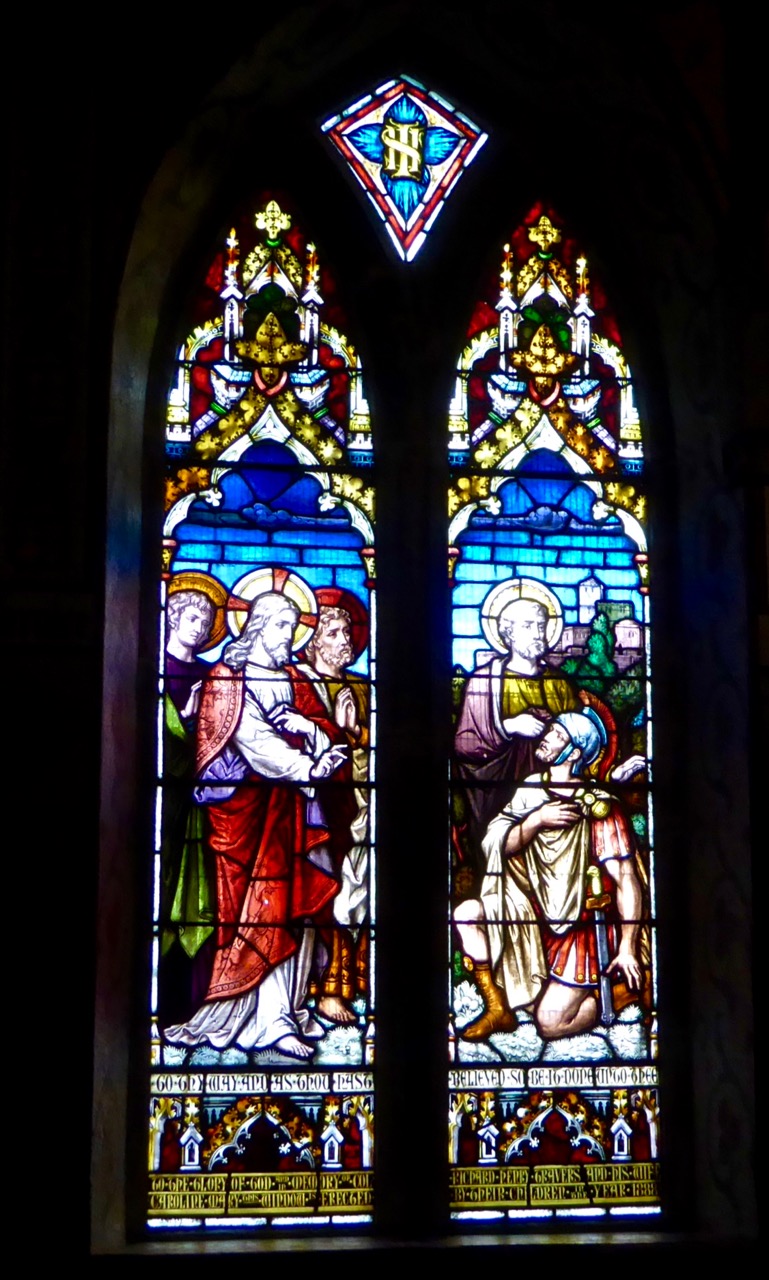
The final window on the south wall is by the firm of Mayer and the subject is The Good Centurion. Franz Mayer and Co was possibly the busiest stained glass company of all and are actually still in business under the name Mayer of Munich. The founder, Franz Mayer, started a company dedicated to “…a combination of fine arts, architecture, sculpture and painting…”. This firm was officially recognised by the Vatican so it was very popular with Catholic churches and there are many examples of Mayer windows throughout Ireland. In 1865 the firm opened a London branch, which supplied this window.

The Good Centurion

The Good Centurion, a window by Mayer of Munich and London

There are three more windows in the south transept, these ones by the firm of Clayton and Bell. They are very fine indeed and I particularly like the east and west window pair which depict, apparently, Life and Death, for their wonderful luminous colours.

Clayton and Bell windows, detail 

There are several more noteworthy features of this fine little church (the pulpit, the carved wooden furniture) but I think I will leave it at that for now. I’ve learned a lot about the Gothic Revival Movement through this exercise, and about some of its chief practitioners. I’ve been struck, as the reader might be, at how British (rather than Irish) the influences are in this church, but that of course was very much a function of the times. At some point I will write about the enormous Catholic church that dominates the village, with a view to showing how the great era of Catholic church building in Ireland finally led to an emphasis on Irish architecture and Irish artisans. For a very brief word on that, you can read my post A Tale of Four Churches.

Timoleague Three Churches

Timoleague. On the left are the ruins of the medieval friary, the Catholic Church dominates the hilltop, and the Church of the Ascension is behind the green building on the far right

And as for Augustus Wellby Northmore Pugin – you can learn more about this complex genius through the BBC Program Pugin: God’s Own Architect, available on YouTube.