An Artist’s Encounter with West Cork

Perhaps this book review is a little late arriving? The book was – after all – published by Brandon of Dingle in 1990: thirty two years ago! The artist, and I, were in our forties then. But – don’t hesitate – although it’s out of print you can find copies readily available on many booksellers’ websites. You can spend a Euro (the postage will cost four times that!) or many Euros: but it’s well worth whatever you have to pay.
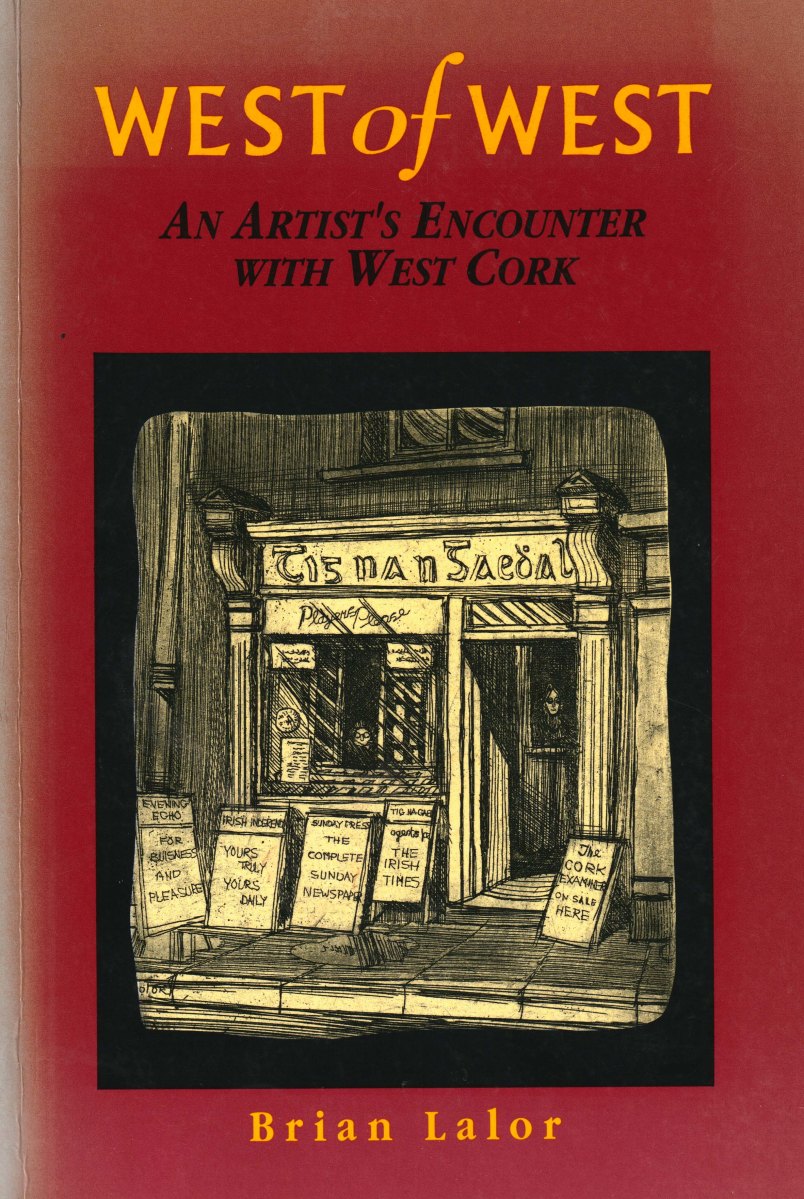
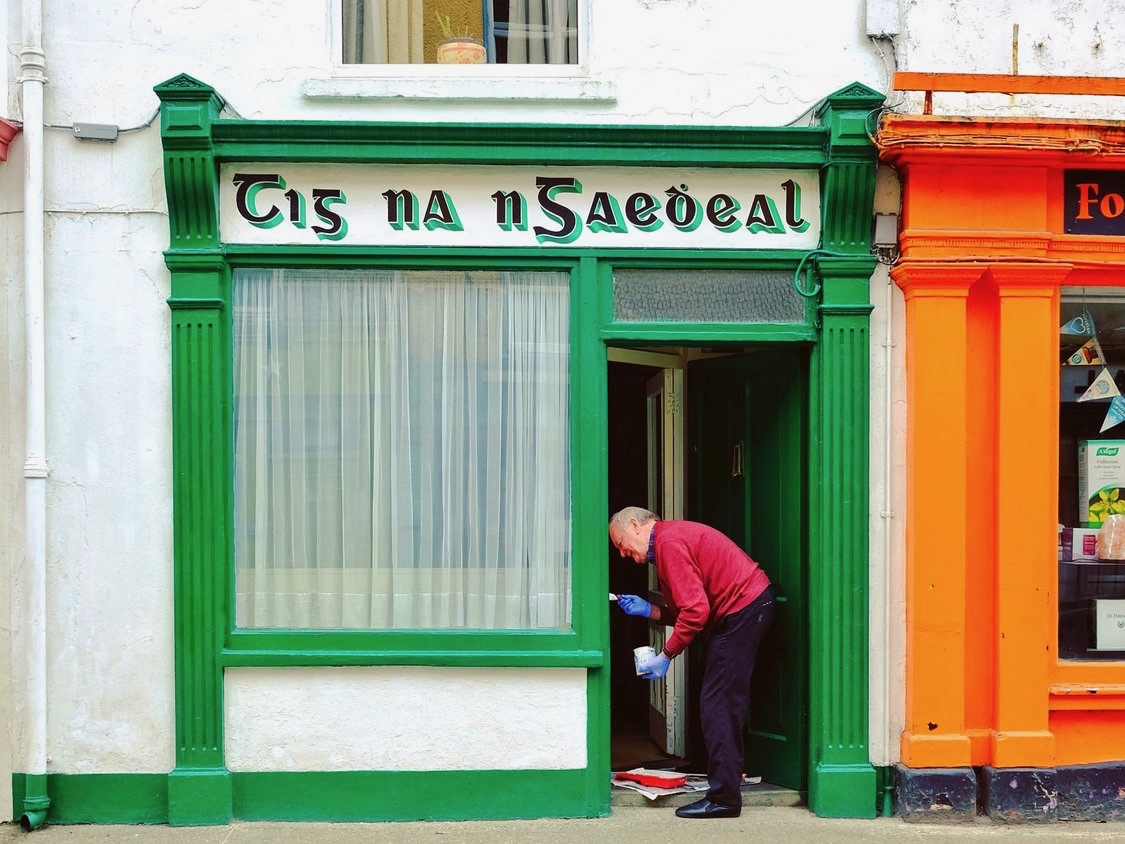
Here it is: a modestly sized paperback volume. But it punches well above its weight. It is beautifully written, and exquisitely illustrated. For everyone who is interested in West Cork, Ireland or the art of engraving it’s a must for your bookshelves. And, historically, it’s fascinating: the cover picture, above, shows Tig na nGaedheal (locally known as Brendan’s) – once described as ‘the greatest and most famous sweet shop ever in Skibbereen’. Sadly, Martha Houlihan, who ran it with her husband Brendan, passed away a little while ago and the shop is no longer trading. It’s still a significant feature in the town streetscape (below). Note the figures looking out of the door and window in Brian’s etching – a typical humorous touch.
The book includes nigh on a hundred of Brian’s engravings. This is only a fraction of the huge body of work he has created in his lifetime to date, and he’s never idle. It’s good to know that Uillinn – the West Cork Arts Centre gallery – has a retrospective of Brian’s work in the pipeline. It will be impossible to show more than a fraction of the art he has produced so far, but we certainly look forward to experiencing that selection.
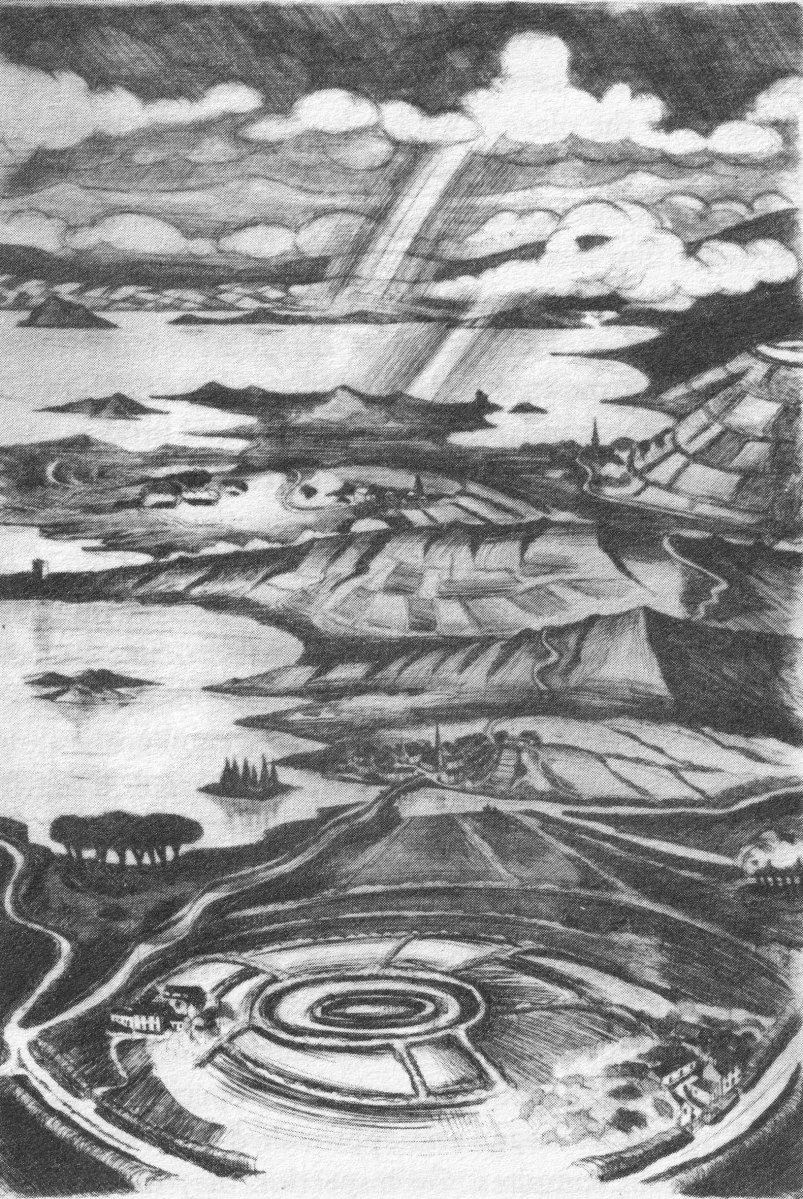
What I personally enjoy about Brian’s works in this book is the atmospherics that they create. Take, for example, The Dark Edge of Europe, above. The breadth of its content is overwhelming: it’s the landscape of West Cork summed up in gradations of grey, with coastline, lanes, settlements, hills and distant mountains, focussed on a foreground which features an ancient hill-fort. A tale of occupation and morphology: an eternal human story. The illustrations in the book are accompanied and amplified by wonderfully crafted written descriptions.

. . . Defining the high spots in the ribs of land, and distributed with apparent regularity all over this landscape, were lush green rings. Single, and occasionally double or triple concentric rings of grassy banks, these features resembled a giant’s game of quoits, forgotten and left to decorate the landscape. The gargantuan quoits are of course the ring forts or fairy rings of the Irish countryside, and outlined the forms taken by the rural farmsteads and dwellings from pre-Christian times down to the sixteenth century. Each ring represented an earthen rampart on high ground, with perhaps a dry moat or further rampart encircling some wattle huts. Simple and utilitarian, this form of dwelling satisfied the political and practical exigencies of the day – or aeon, for that matter. Rural life was lived in the midst of the land, without congregating in towns or villages . . .

The Land of Heart’s Desire: West of West, Brian lalor
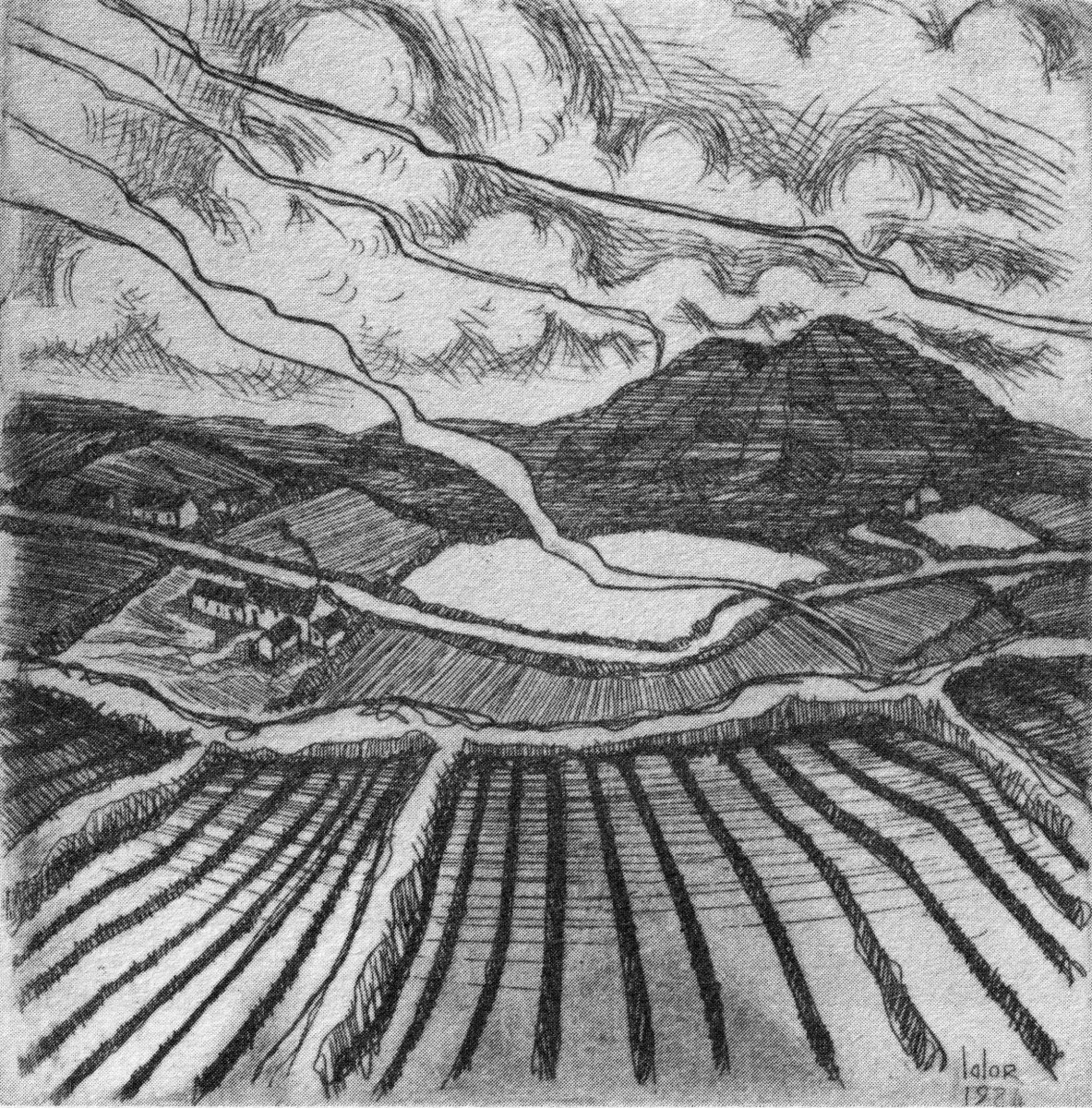
Mount Gabriel dominates much of the landscape in our part of West Cork. Brian’s view, above, is titled Mount Gabriel Gorse Fires. The artist ‘discovered’ remote West Cork back in the 1970s. In the book he describes the journey:

. . . The road wound away into the distance, a ribbon of reflected light, and the weaving shapes of the blackthorns threw a black Gothic tracery across the landscape. The immediate surrounding had a silvery sharpness, the precision of a lunar landscape; brightly outlined walls enclosed pools of darkness. We were no longer at the door to West Cork but in its very interior. We had arrived . . .

Well Met By Moonlight: West of West, Brian Lalor
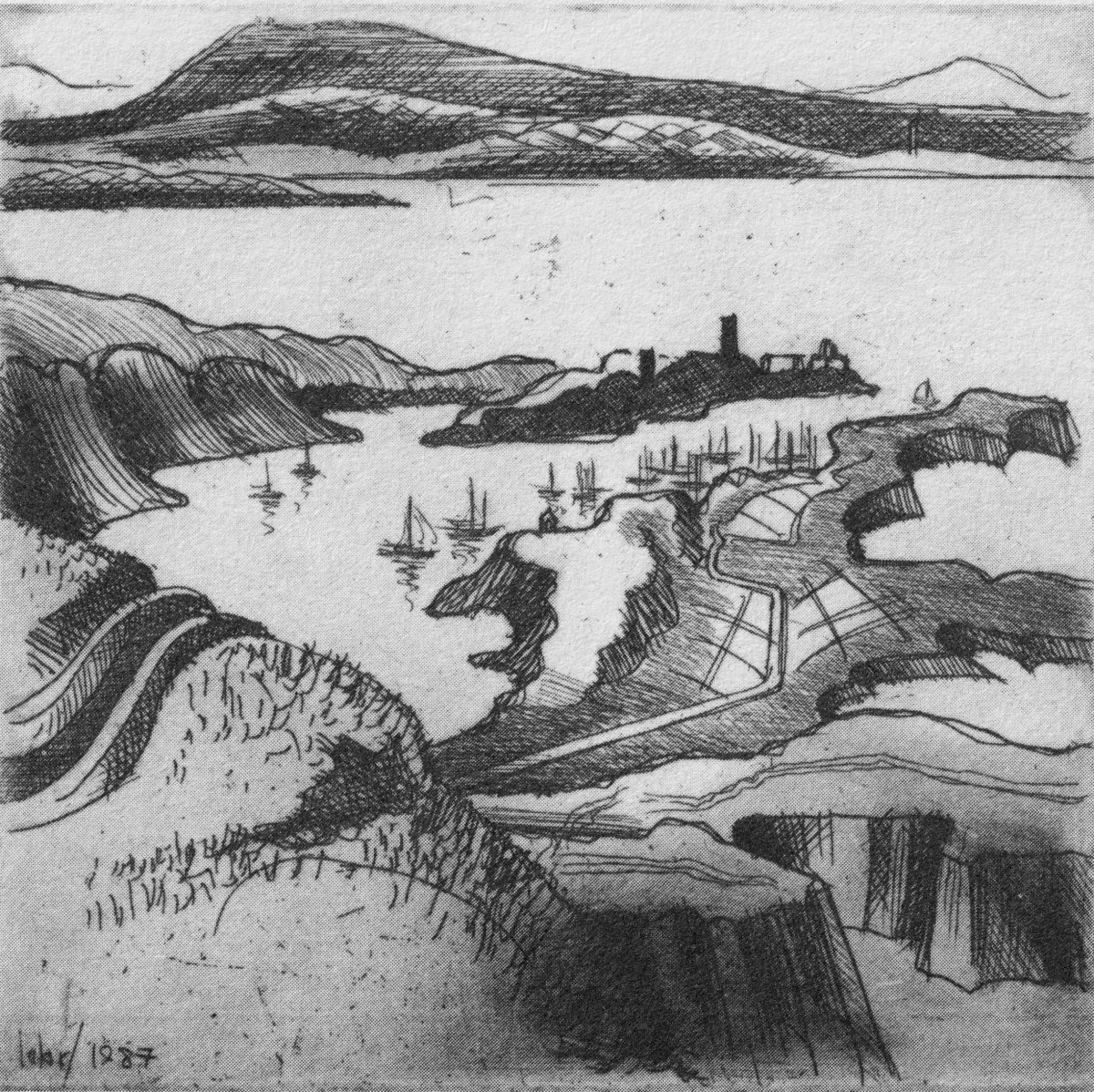
Essential to the intimate knowledge of West Cork’s landscape is the sea – and the coastline which encompasses it. This view is titled Rock Island & Crookhaven. Brian enhances the rendering with a description:

. . . From the heights of Brow Head the outline of Rock Island at the mouth of the harbour resembles a partially submerged submarine, its twin customs-observation buildings the conning towers of this strange naval mammoth. An ill-assorted collection of buildings adhere like barnacles to the back of this submarine: the roofless lighthouse barracks, a defunct fish factory and an abandoned, rambling Victorian mansion suggest an unfavourable location. Wedged in the little cove in front of the mansion is the hulk of an old wooden trawler. A graveyard of vanished days and forgotten hopes . . .

Coastline: West of West, Brian Lalor
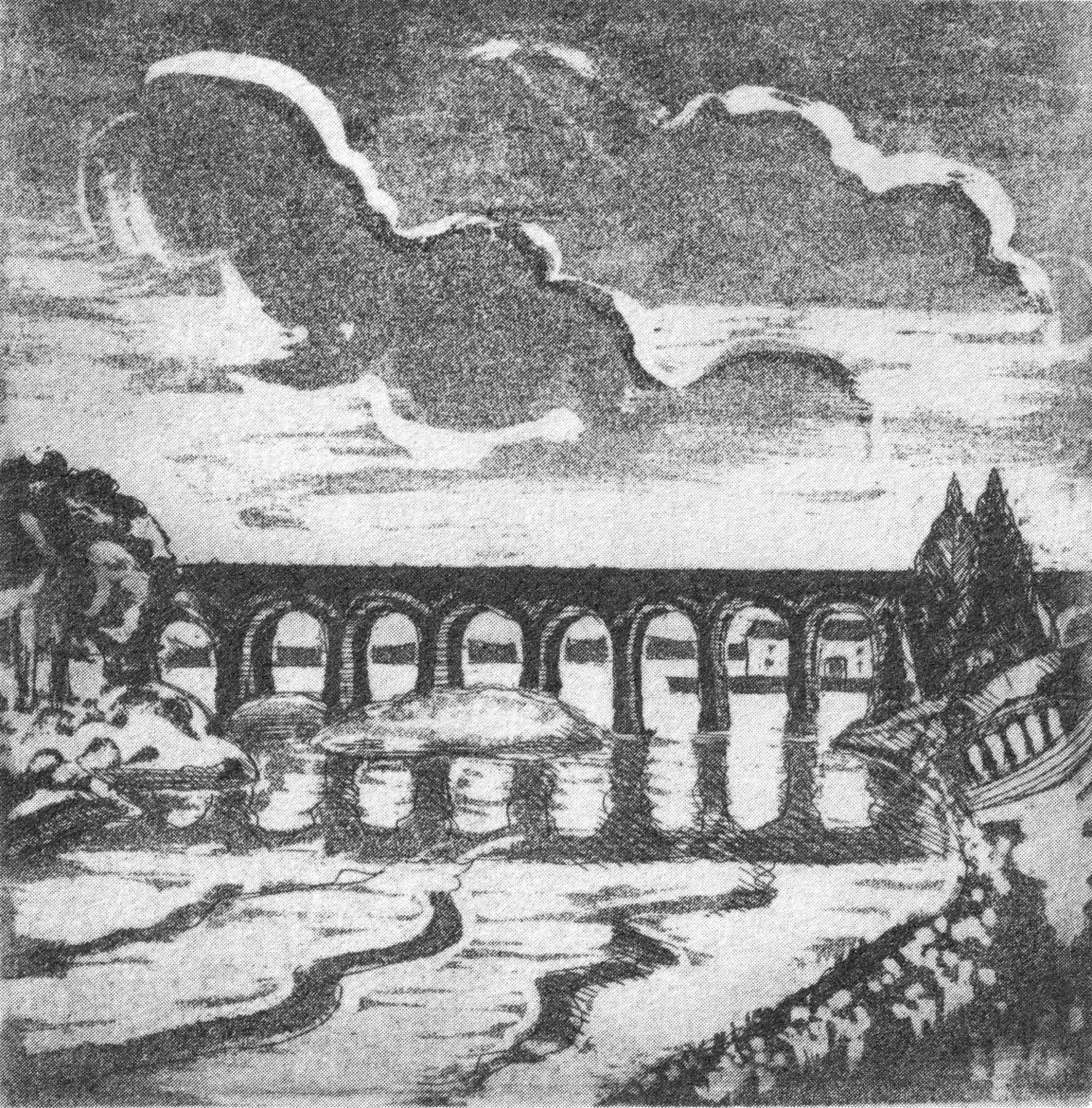
Ballydehob’s 12-arch bridge – or railway viaduct – must be one of the most profusely illustrated and photographed features of West Cork. The Schull, Ballydehob and Skibbereen tramway was a significant piece of transport infrastructure that ran from 1886 until 1947. It’s a fascinating piece of Victorian engineering, the first 3ft gauge railway line to be built in Ireland. Everything about it was eccentric: here’s one of my RWJ posts setting out the history of the line. Brian has a little anecdote well worth the recounting:

. . . As it is one of the most pleasing architectural features of the local landscape, I drew the Twelve Arch Bridge on many occasions and it reappears in a variety of forms amongst these etchings. One village magnate commissioned me to do a large picture of this monument for his new house. The price was agreed and the picture eventually produced. I had chosen an angle which showed the bridge emerging as it does from thickets of brambles and conifers on either side of the water. Delicate fronds of foliage wound in the foreground of the picture and the subject itself basked in the distance, looking solid and ancient. I was quite pleased with the results. When I presented it to my patron he gazed at it in silence for a long time. Then with a large and calloused hand he ran his index finger across the view a number of times, shaking his head slowly as he did so. ‘No. no good at all, It won’t do,’ he muttered more to himself than me. He had been counting the arches. In my enthusiasm for the atmosphere of the piece the accurately rendered number of the arches had become obscured, those on the extreme edges becoming partially lost in the undergrowth. The commission was rejected. If you are paying for twelve arches you don’t want to be short-changed with ten and two halves!

Coastline: West of West, Brian Lalor
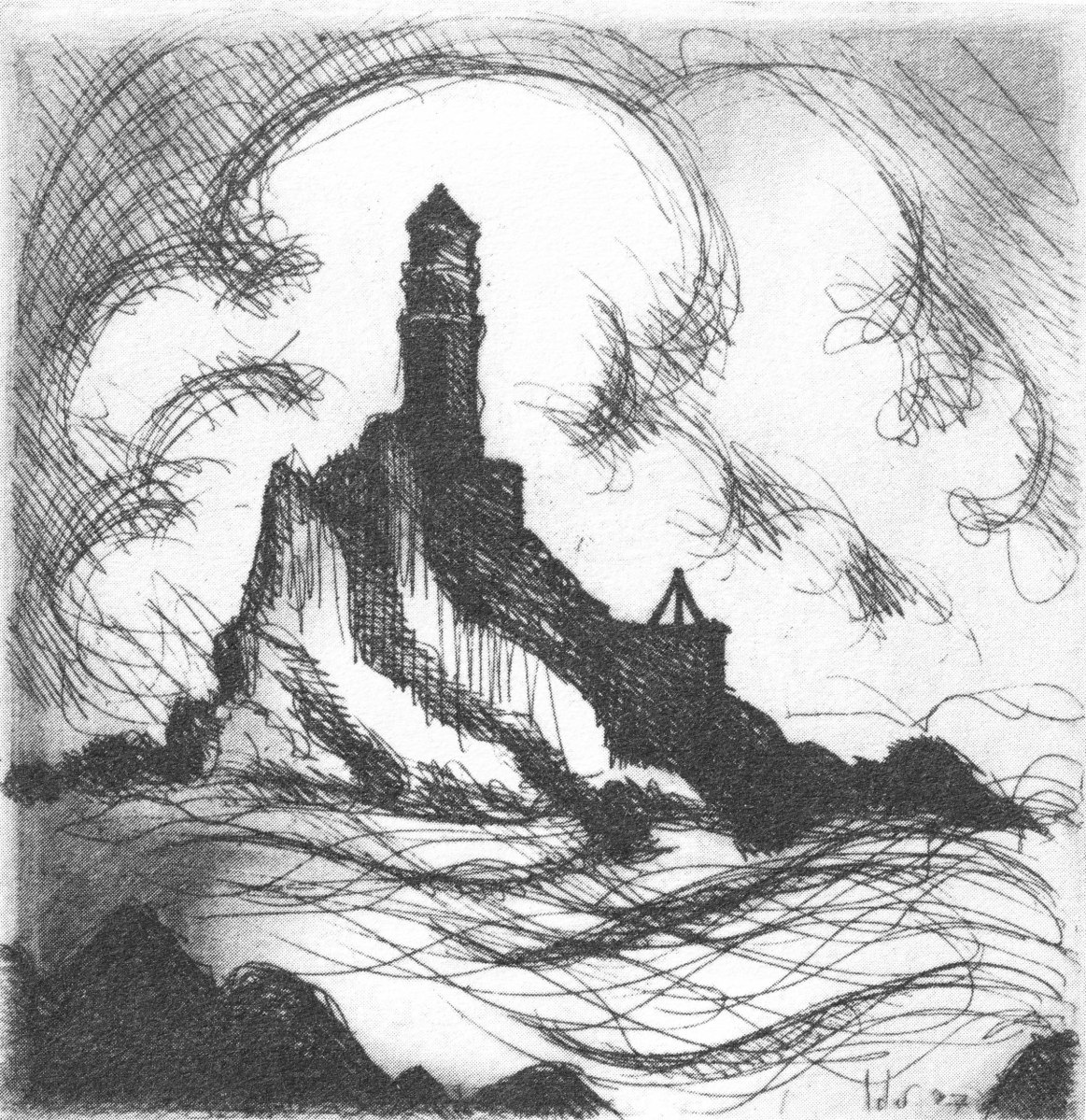
Fastnet. An iconic silhouette – perhaps a fish-eye view? The lighthouse is a ubiquitous element of structure which can be seen from all the waters and islands of Roaring Water Bay. Brian’s words:

. . . Roaring Water Bay encompasses an area of about a hundred square miles of water between Baltimore in the east and Crookhaven in the west. The tortuous coastline of the bay, as of much of the rest of West Cork, is punctuated by small coves, each with an old stone pier or miniature harbour. Up to the mid-nineteenth century these were the arteries of communication and trade and a wide array of lighters, barges, rowboats and yawls plied the coast, ferrying freight around the rim of the land rather than through it. Never far from the safety of land, they darted from port to port with the assurance of safe harbours at frequent intervals to reduce the threat from treacherous seas. Today, however, only the yachtsman holds this perspective on the land; it is a medieval cartographer’s view of the world: good on outlines, vague concerning the interior . . .

Coastline: West of West, Brian Lalor

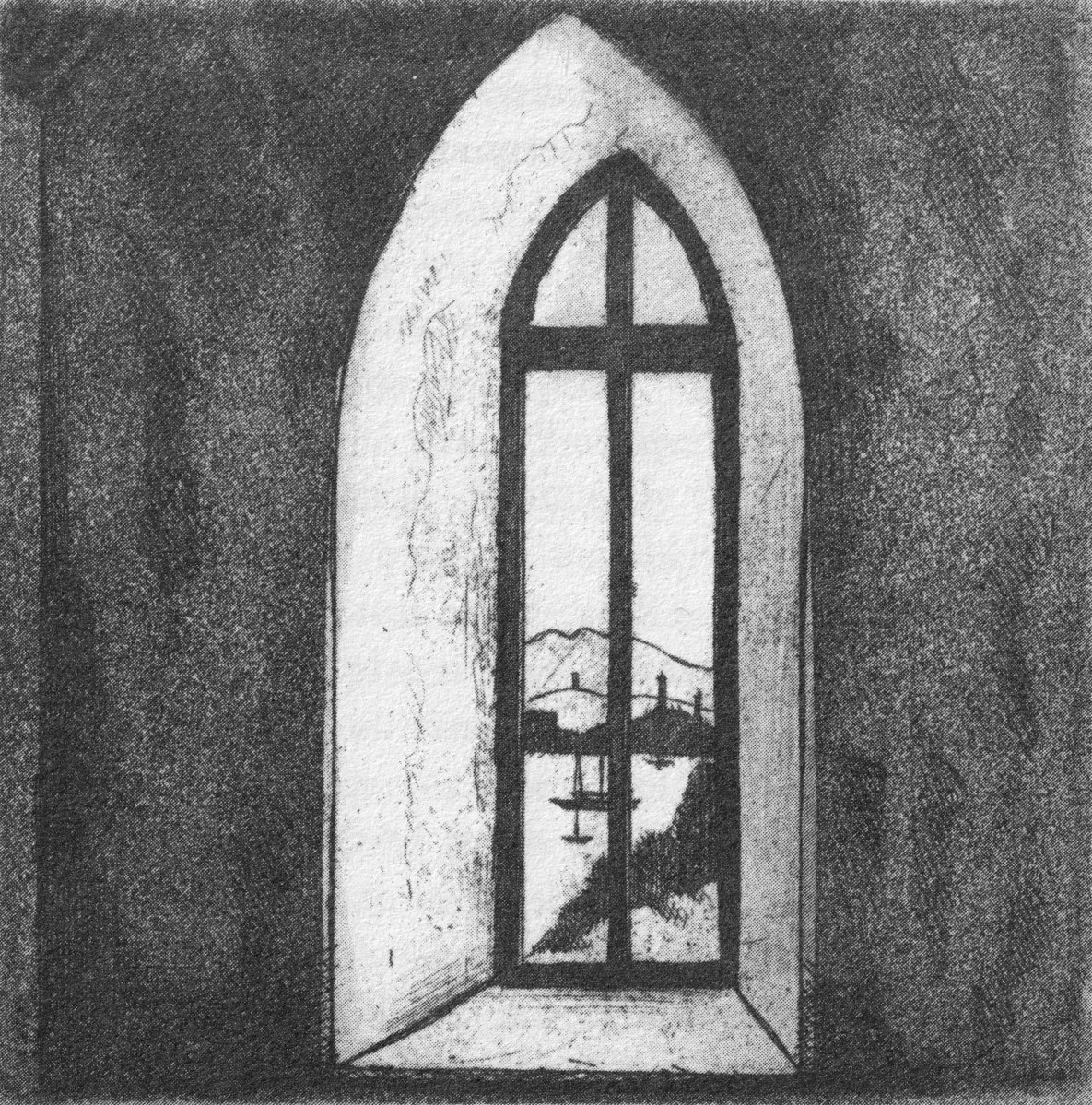
The eye of the artist searches out ways to tell a story or unfold a scene in graphic simplicity. This is St Brendan Crookhaven: a simple church that is dear to the hearts of mariners, and has long been so.
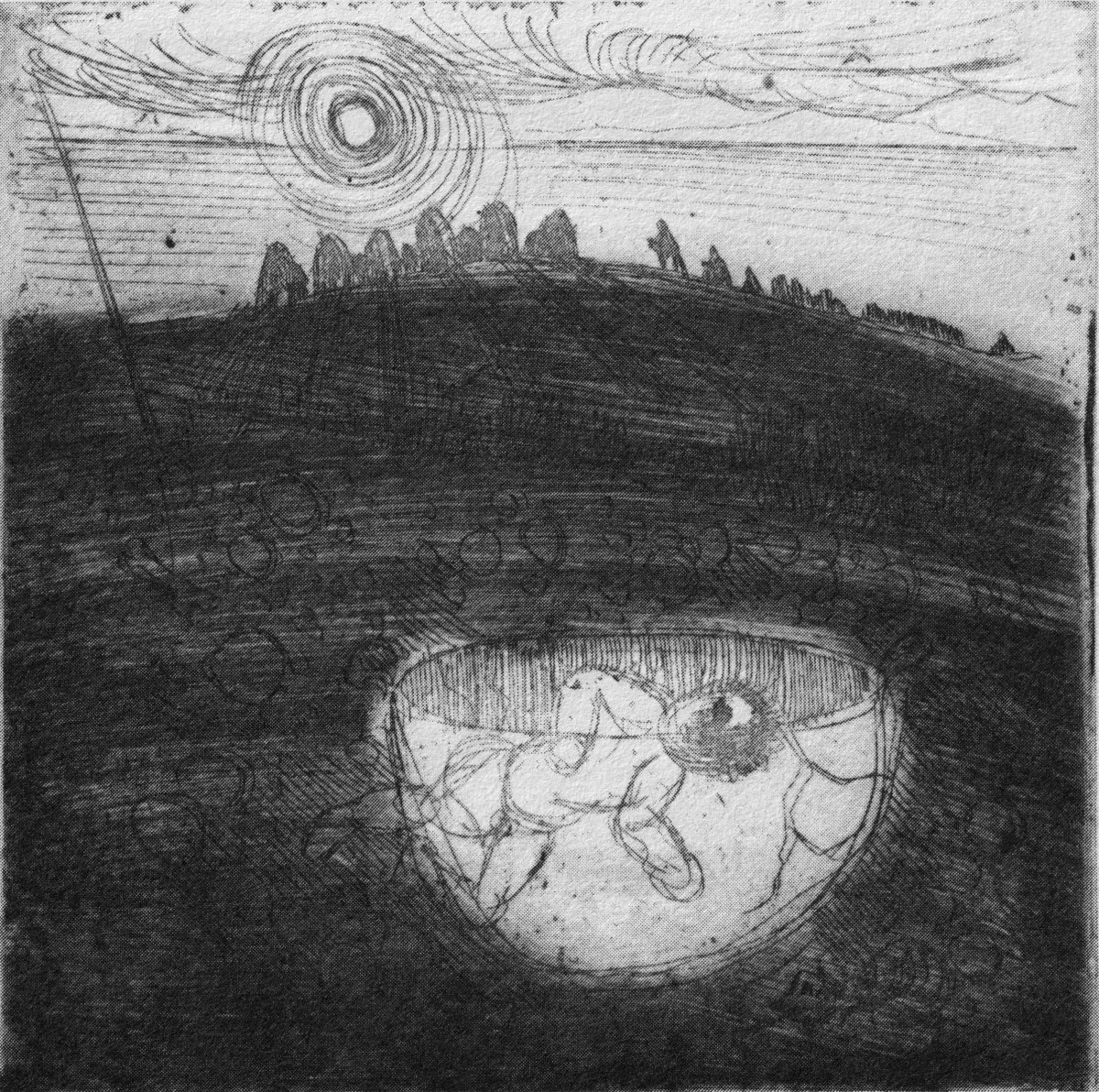
Stone Circle and Child Sacrifice is a thought-provoking piece. These ancient sites date back thousands of years: there are many here, beyond the West. We wonder at them, and can only guess at the significance they had to their constructors.

. . . The Landscape of the mind, which co-exists, interlocks and overlaps with the geographer’s vision, is an intangible, ephemeral thing. You may encounter it unexpectedly on a moonlit night or on some deserted headland, or perhaps in the dim light of a public bar. In this part of the world, soaked in memories and half-memories of the past, much is implied rather than stated. Like the collective unconscious, the landscape, too, is composed of a multitude of intertwining details. This collection of etchings of West Cork is concerned with those details: with small corners of towns and villages, with oddly-shaped fields and erratic skylines. Each etching is a vignette of landscape, architecture or environment. The pictures are organized around a number of themes yet the material as a whole has such an overall unity that what illustrates one section also has relevance for another. The point which they make is a collective one . . .

WELL MET BY MOONLIGHT: WEST OF WEST, BRIAN LALOR
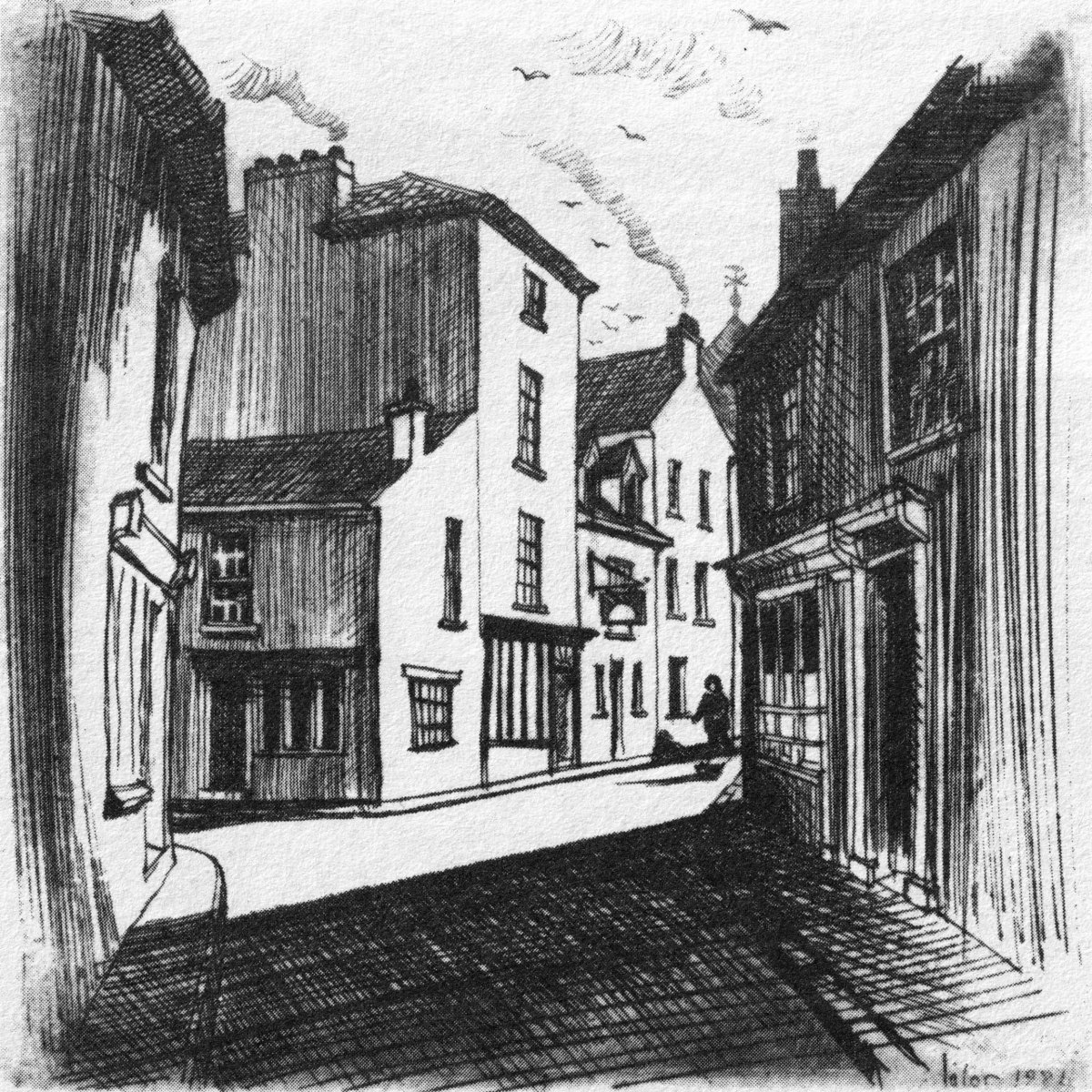
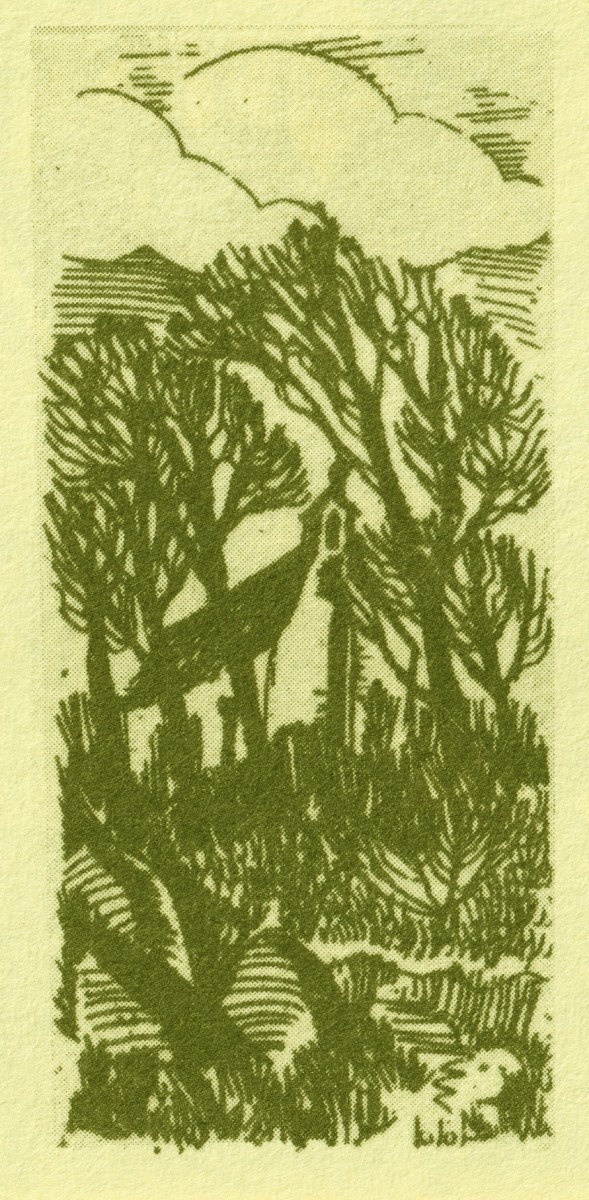
Brian’s book is as much about the human side of West Cork as it is about the natural or supernatural. He illustrates towns – Kinsale, above – and the landscape. For me, this is a very significant little volume: the travels described within it echo my own journeying through this most special of places. Thank you, Brian, for so vividly enhancing my appreciation of West Cork.
Kilcoe
The Down Survey – Closer to Home
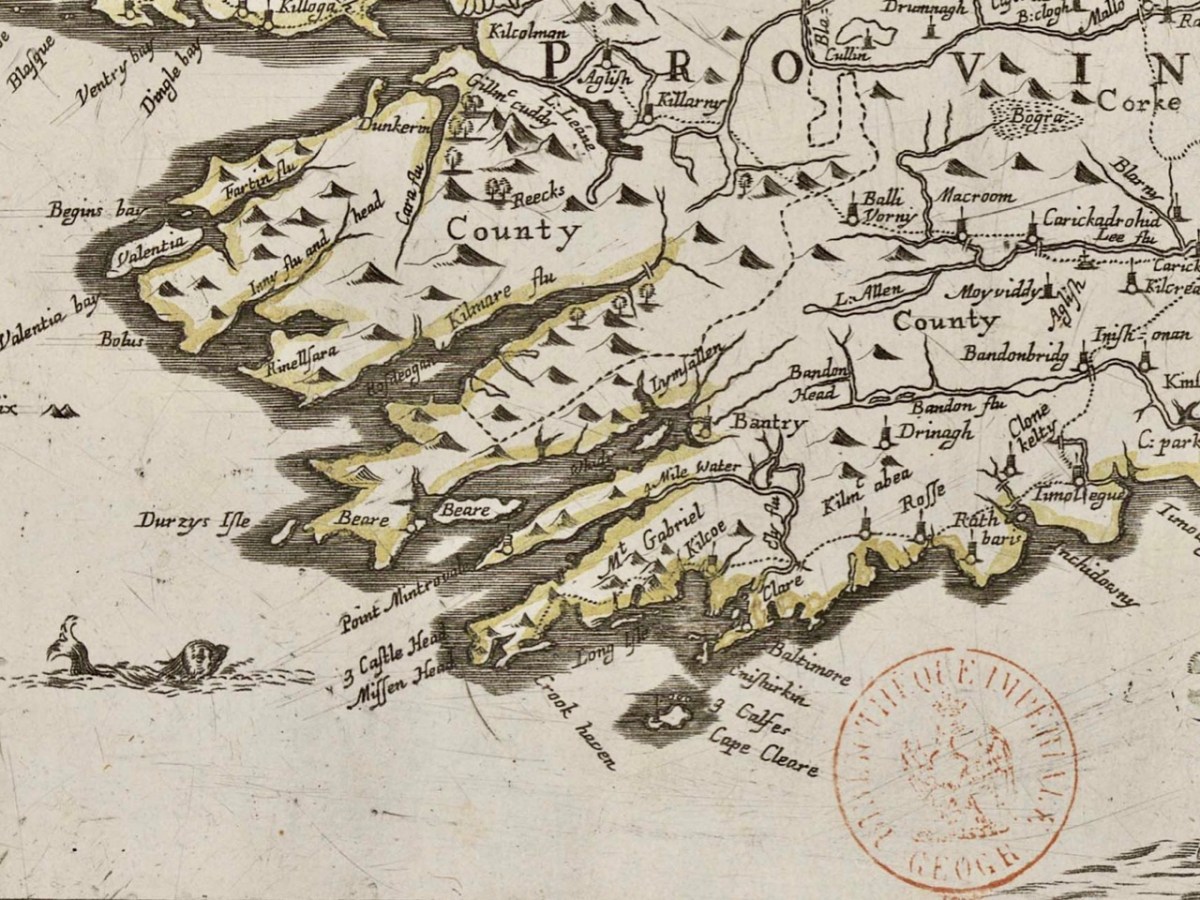
Last week we gave a brief introduction to the wealth of historical material that we can find in the website devoted to the 17th century Down Surveyhere’s a link to that site, and another (here) to our previous article. The subject – and some of the deeper detail we can discover in the website – is well worth a further look.

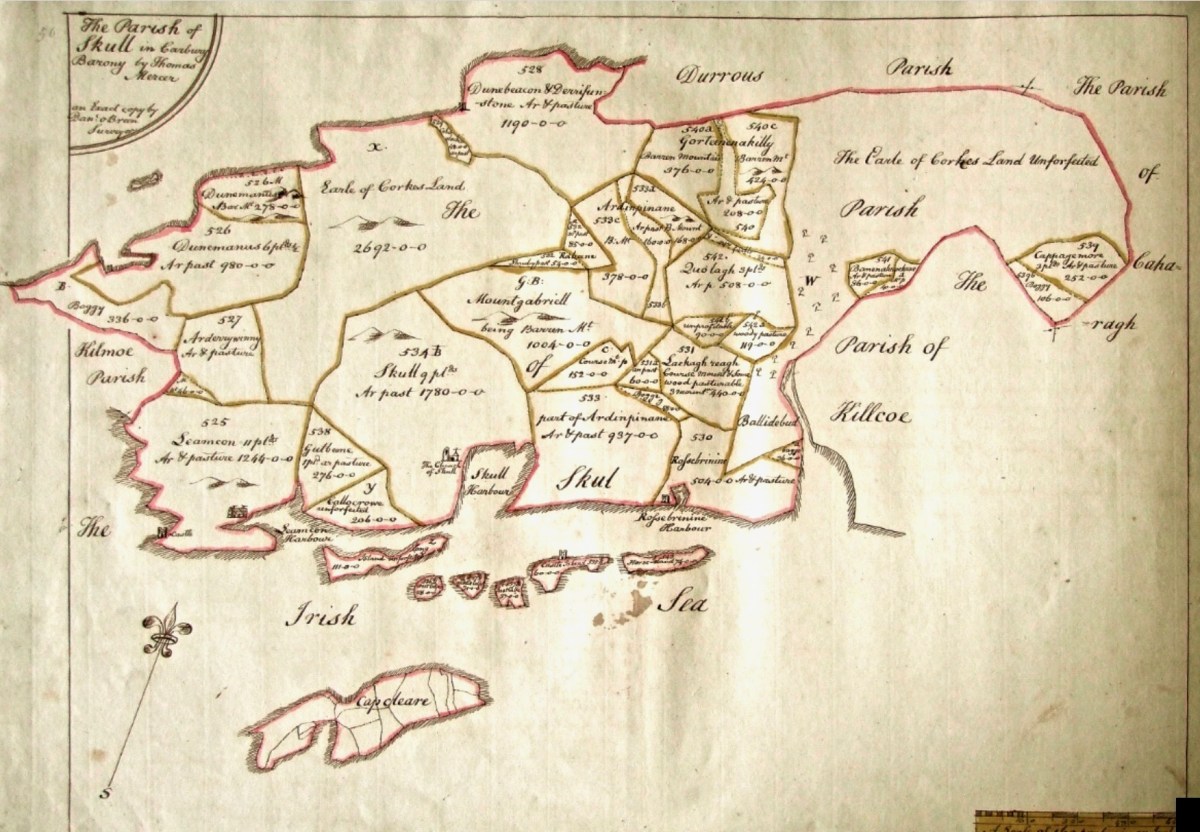
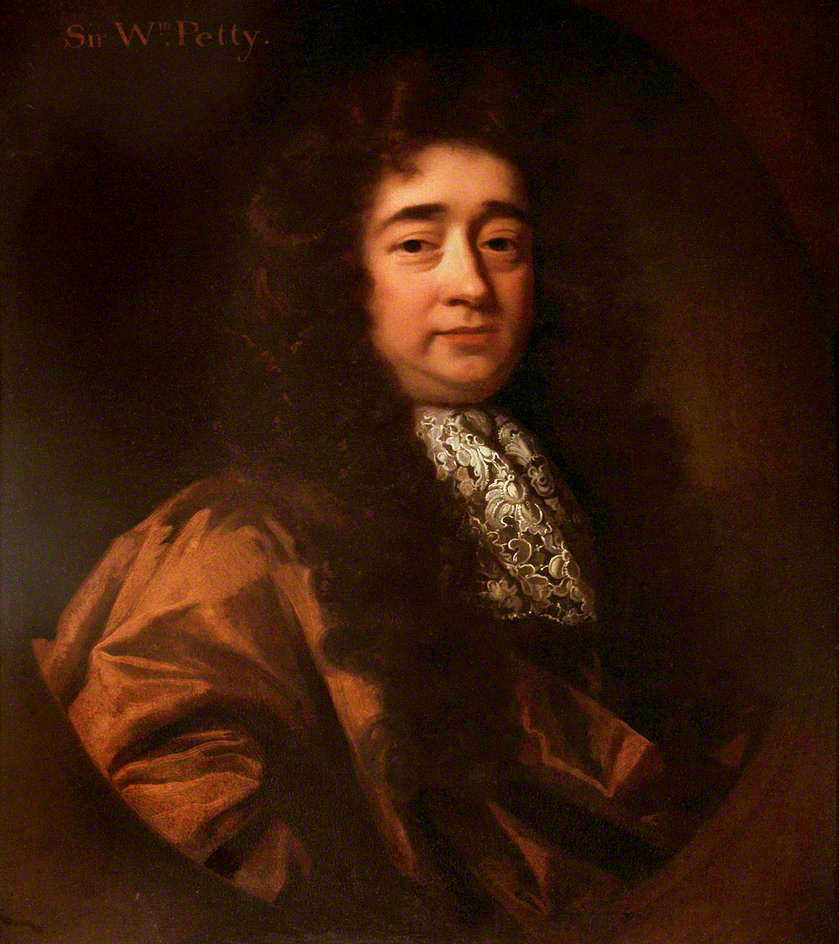
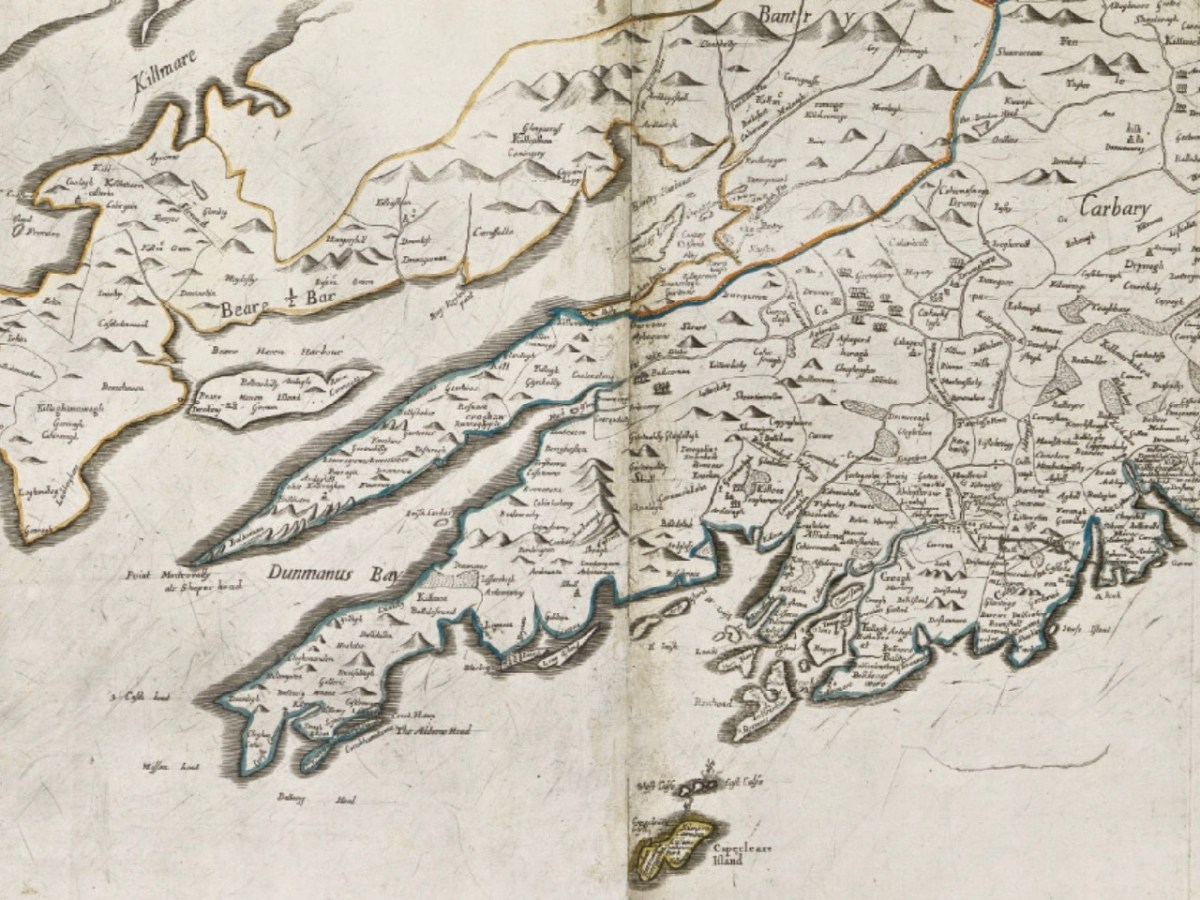
The Down Survey (the above view of some of the islands out in Roaringwater Bay is extracted from it) was carried out between 1656 and 1658, and thus gives us an excellent picture of how terrain we are so personally familiar with was perceived pictorially in the mid 17th century. We don’t know who the surveyors were, except that they were under the command of Sir William Petty, ‘surgeon- general of the English army’. Ireland became one of the most-mapped countries in the world at that time, following the Cromwellian and Williamite land redistributions. The beneficiaries were the new landlords of the Ascendancy, who wanted to know exactly what they had acquired, and the initial emphasis was on boundaries and basic land-measurement.

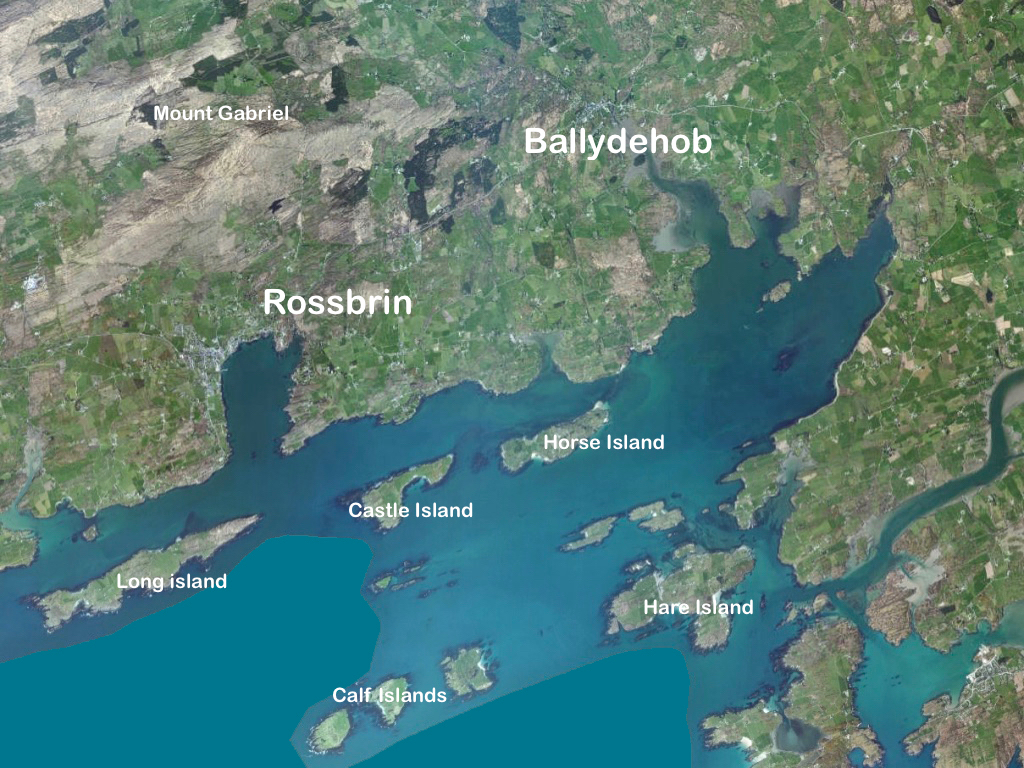
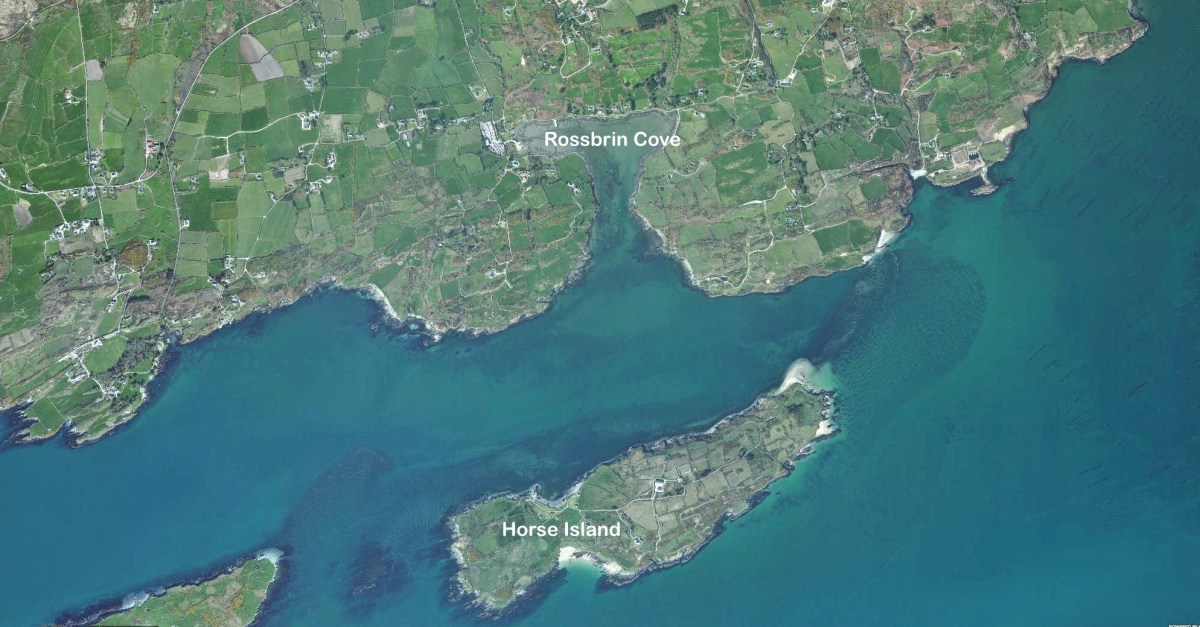
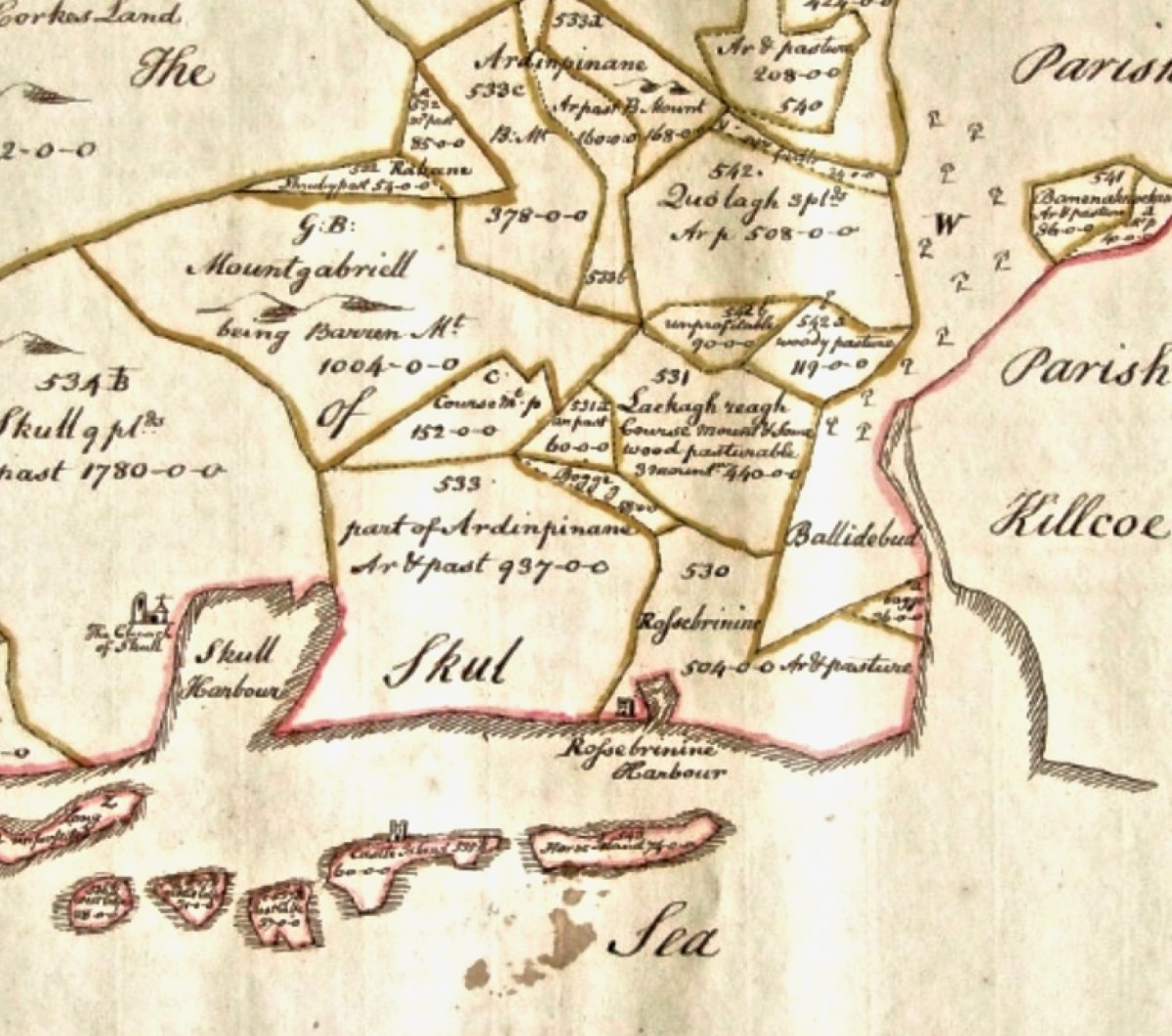
We wanted to know what our little bit of West Cork looked like on those earliest maps. Our view is down toward Rossbrin Cove, below where we live, and our house is a mere blip on the contemporary aerial view at the top of the page. In the first example from the Down Survey mapping – under that view – the cove of ‘Rofsbrinine Harbour’ is marked, and the castle, whose remains still guard the harbour entrance to this day (above), is clearly shown.

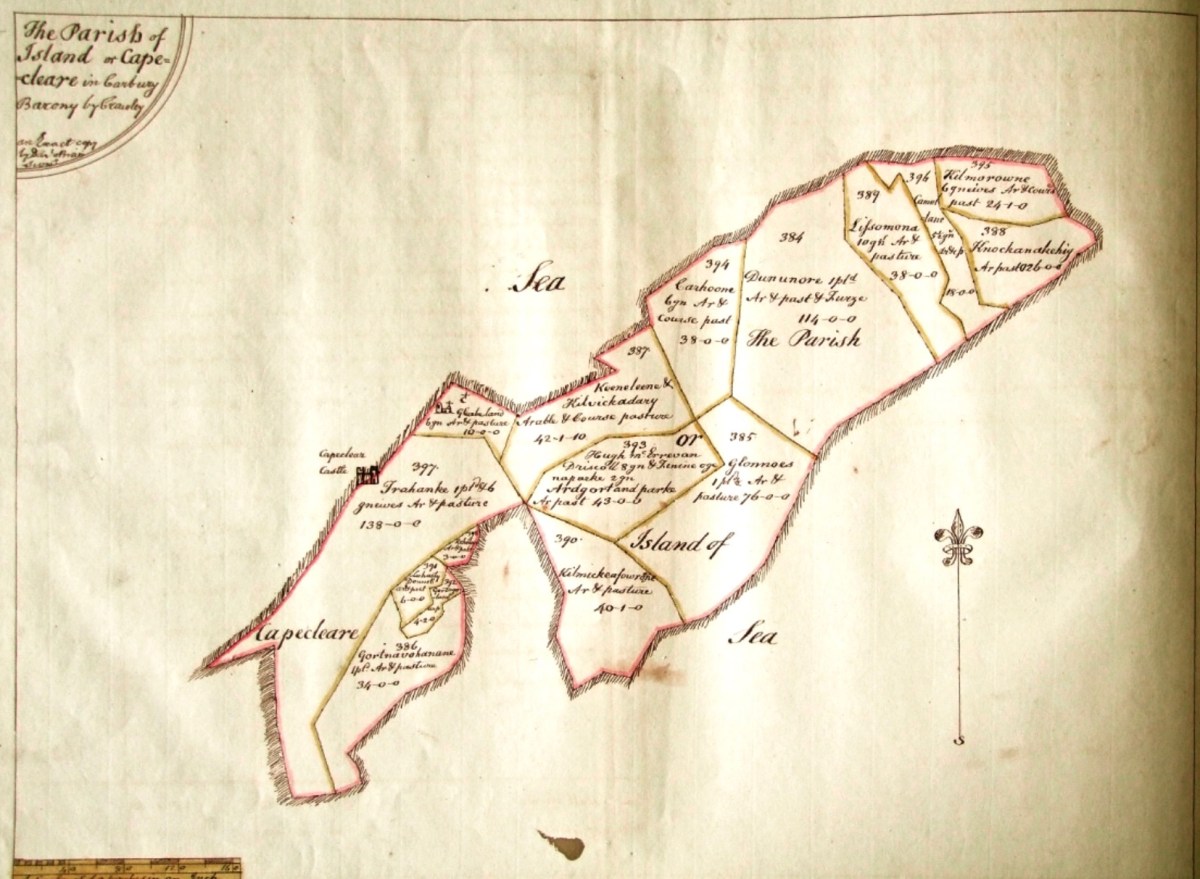
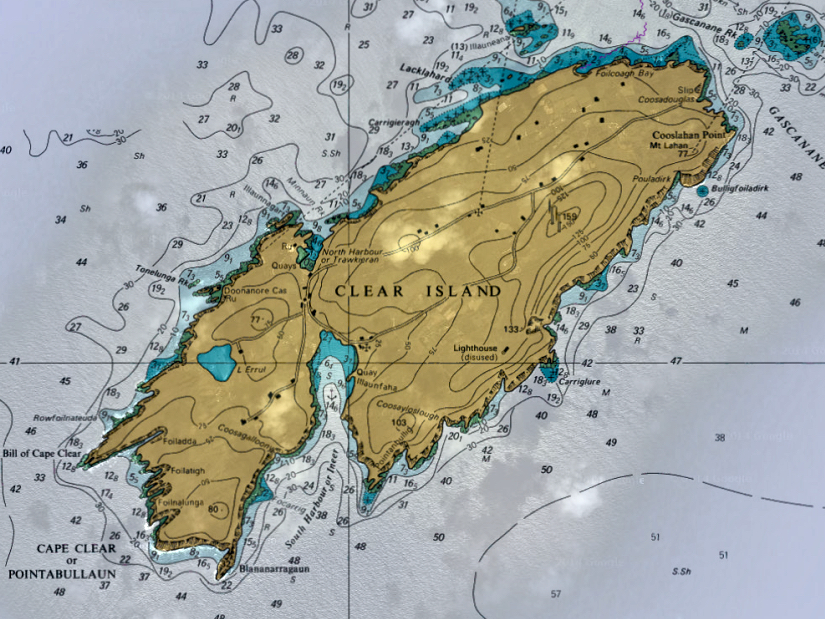
This view looks across the channel from the site of Rossbrin Castle. Immediately in the foreground is Horse Island, while beyond is the distinctive profile of Cape Clear. Let’s look at the Down Survey entry for Cape Clear – with. for comparison – a modern map of that island below it.

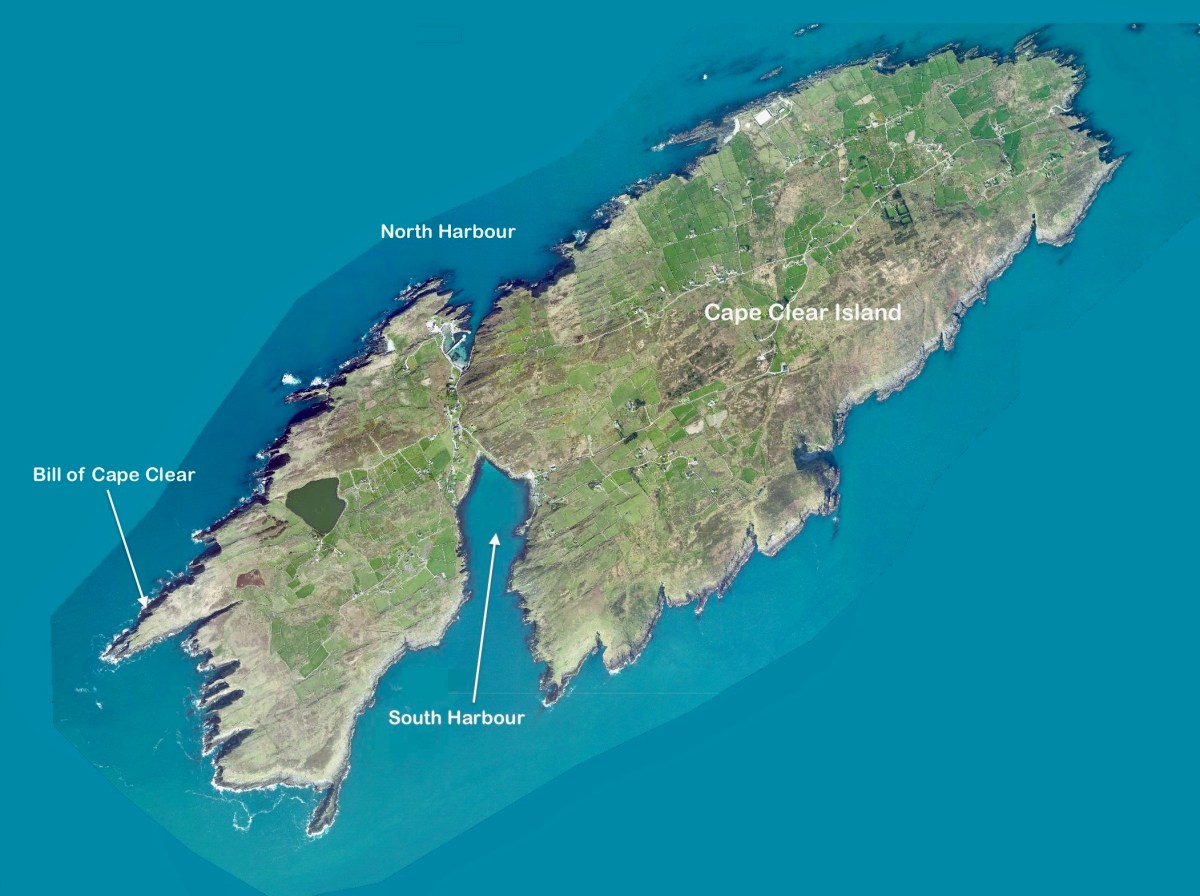
That map, above, is taken from a nautical chart. It’s understandable that a 17th century map wouldn’t have the level of accuracy we would expect from a modern survey, but take a look, now, at this contemporary aerial view of Cape Clear Island:

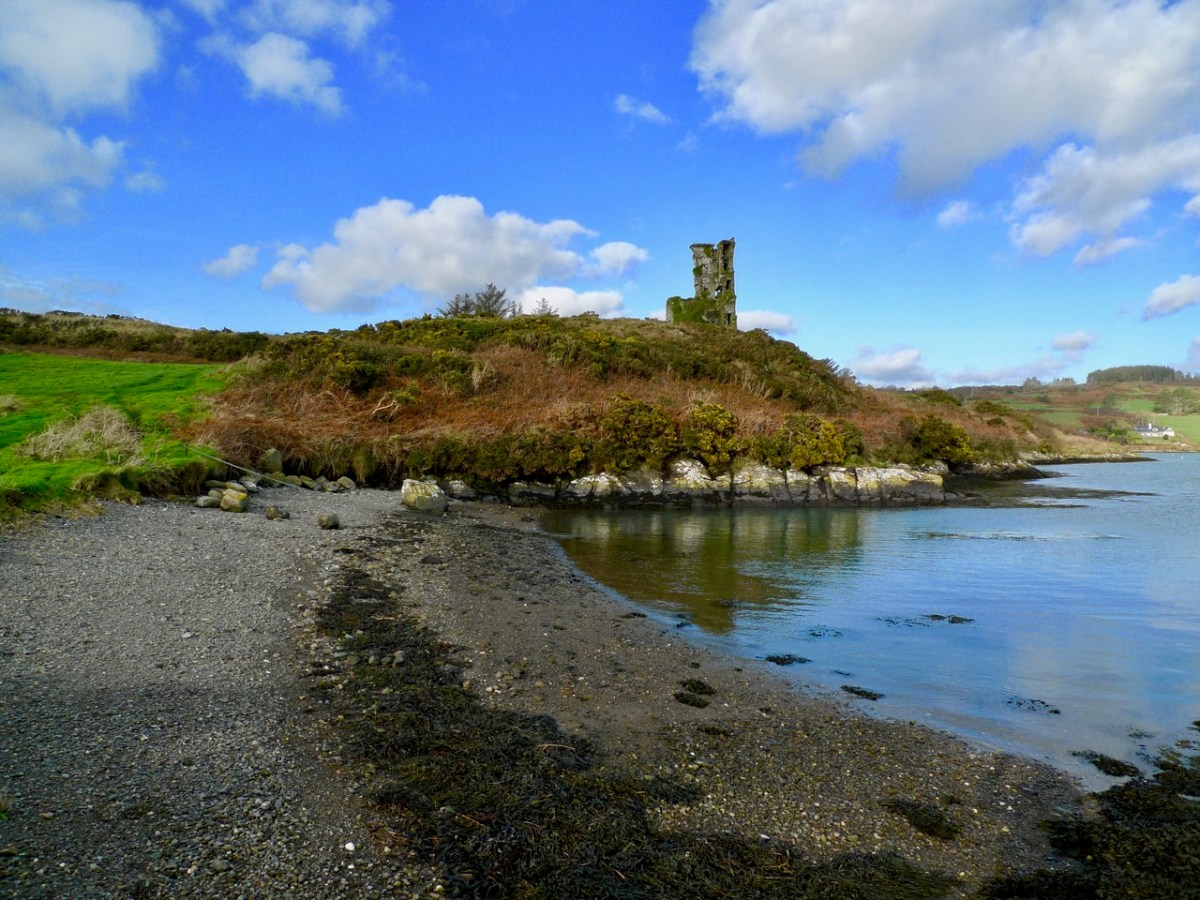
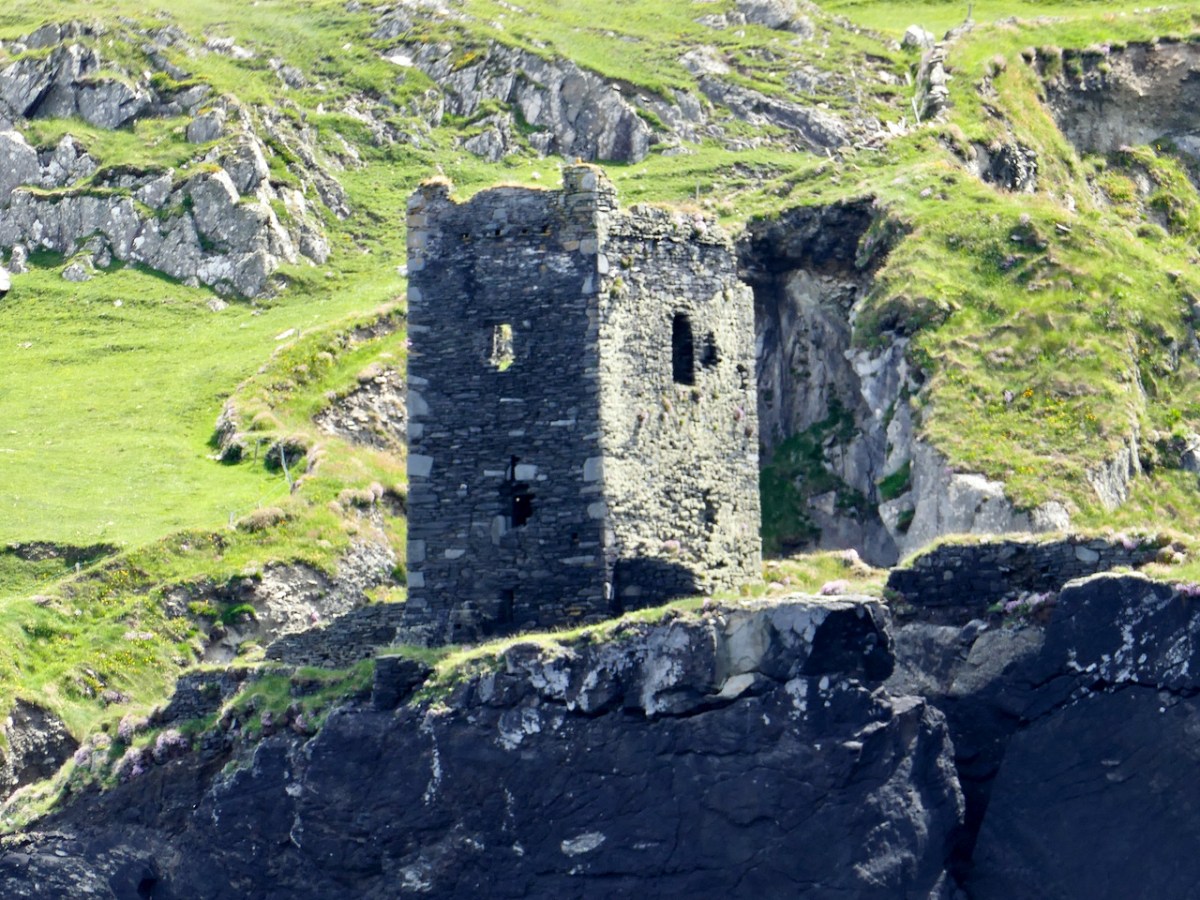
It’s remarkable, I think, how strikingly the early map resembles the profile – if not the fine detail – of the modern chart – and also the shape of the island as shown on the aerial view. For example, the ‘Bill of Cape Clear’ shows up very clearly on the chart – the beak-like protrusion on the far western end of the land-mass – a feature which is represented as very similar on the 17th century version, and of course on the modern prospect. Here’s a view of Dún an Óir – Cape Clear’s castle – today:

Just to add to the experience, the above satellite view gives a more ‘flattened’ impression of what is really going on locally: compare this to the expanded view of our coastline from the Down Survey – note that ‘Cape Cleare’ is included on this extract:

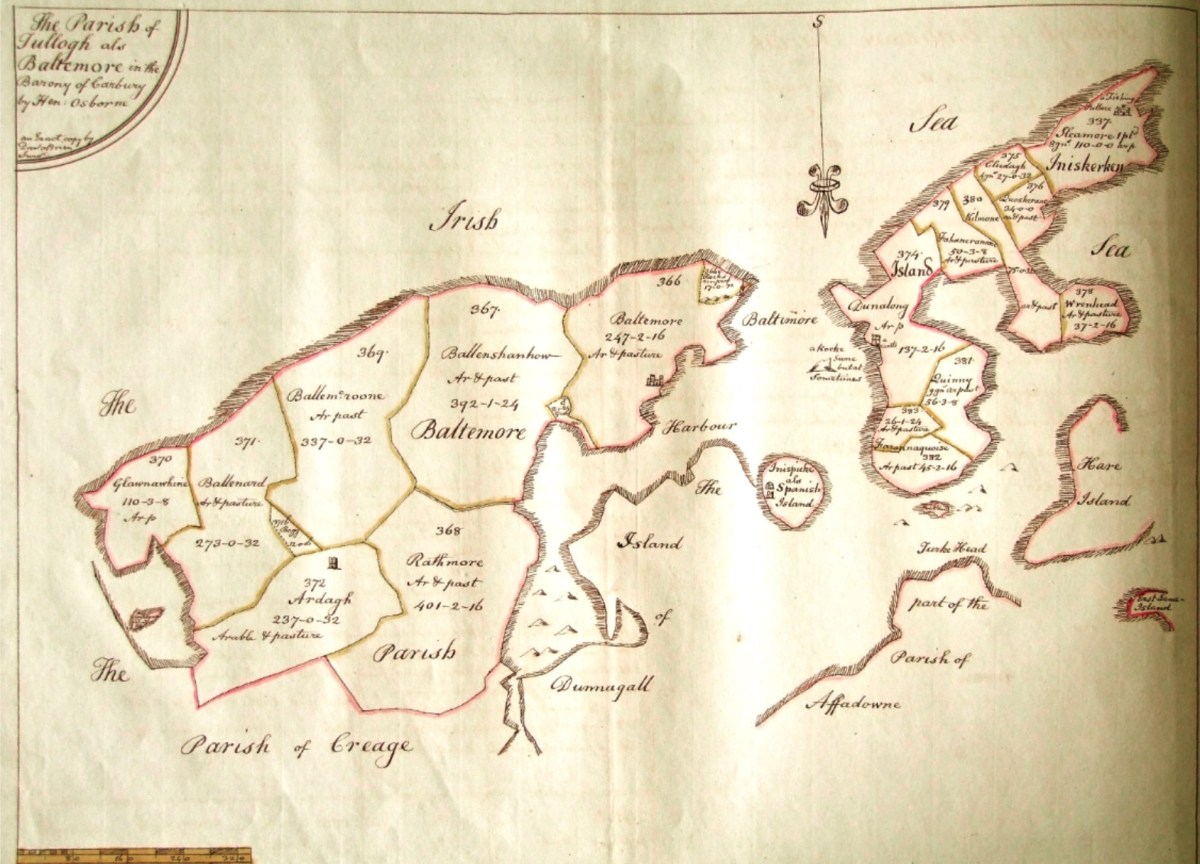
As a further example, to finish off this brief overview (which will be continued in future posts) let’s have a look at the Down Survey entry for the Baltimore area – a little further along our coast, travelling east:

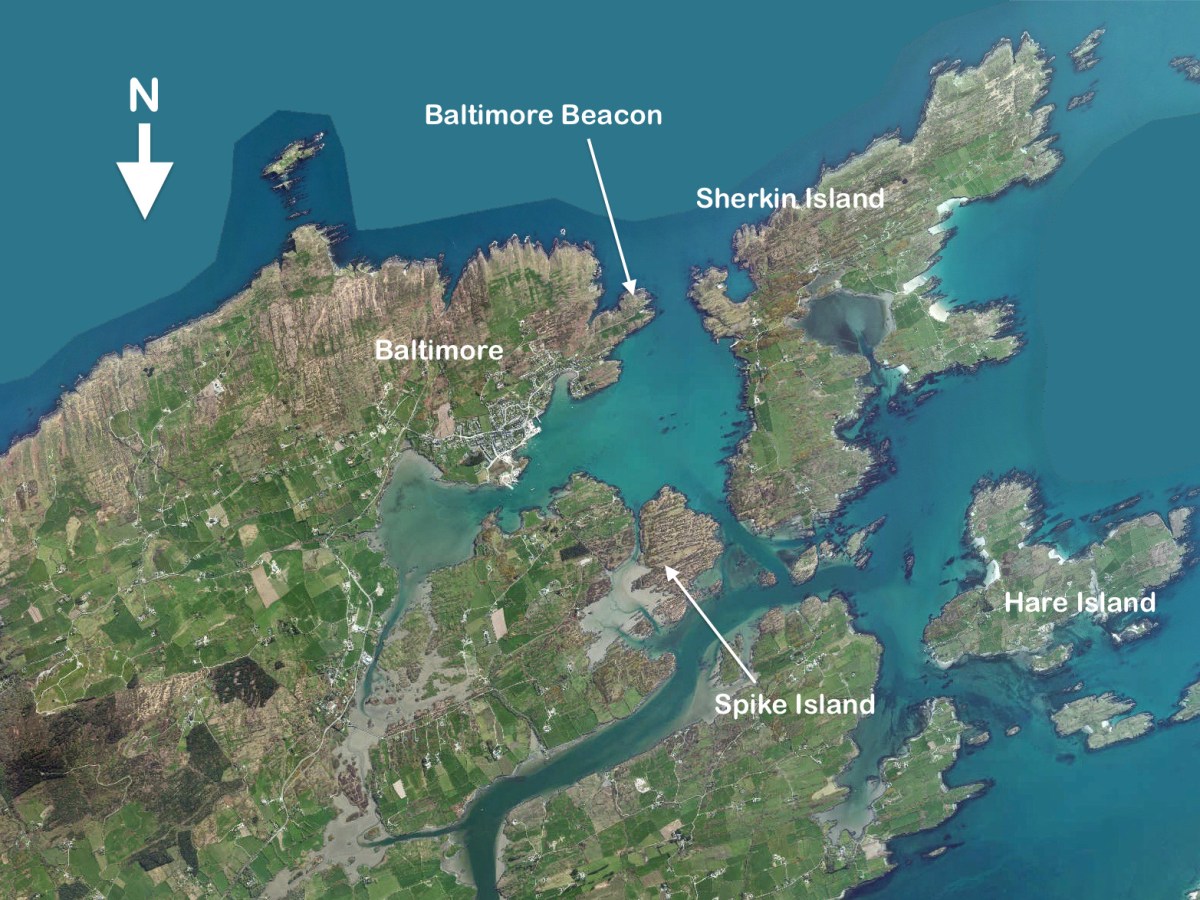
This is in fact the Down Survey entry for the Parishes of ‘Tullogh & Baltimore’. The first thing to note is that the north point is facing downwards! If you look at many of the survey pages the orientation varies considerably, and is probably more to do with what conveniently fits on a sheet than any attempt to be consistent. So that we can make an easier comparison with today’s terrain, I have also switched the orientation of this aerial view:

In my opinion it’s remarkable that the Down Survey maps do bear a very reasonable resemblance to the reality. Obviously, a great deal of detail is missing, but the purpose of the maps – to delineate land ownership – is satisfactorily served (albeit that this is to the benefit of the incoming English lords and landowners).

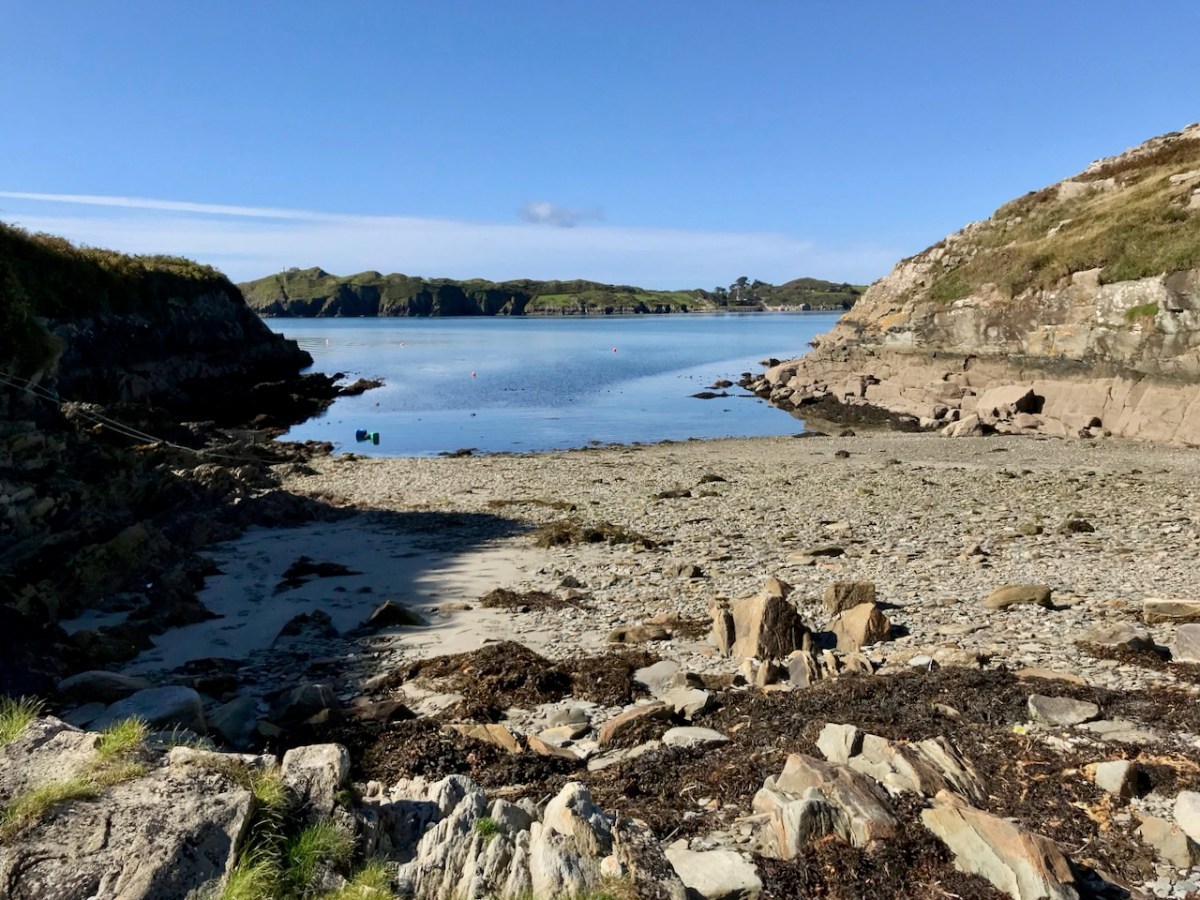
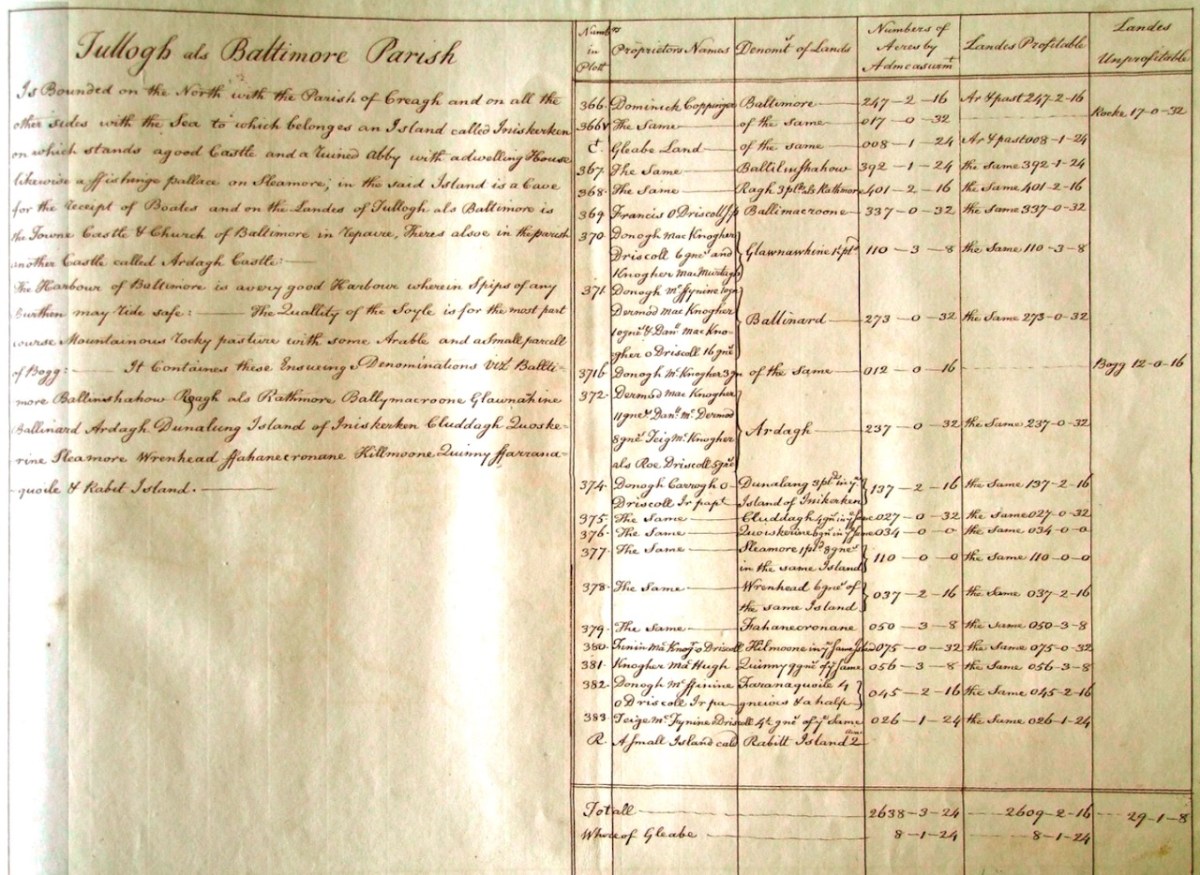
Here’s a view of the site of the medieval fish palace at Baltimore. The Down Survey comprises more than maps: there is other related material, including terriers. These particular terriers don’t have legs or tails – it’s a term for a written, descriptive survey of an estate: some english examples are recorded from the ninth century. Here’s the terrier for Baltimore within the Down Survey:

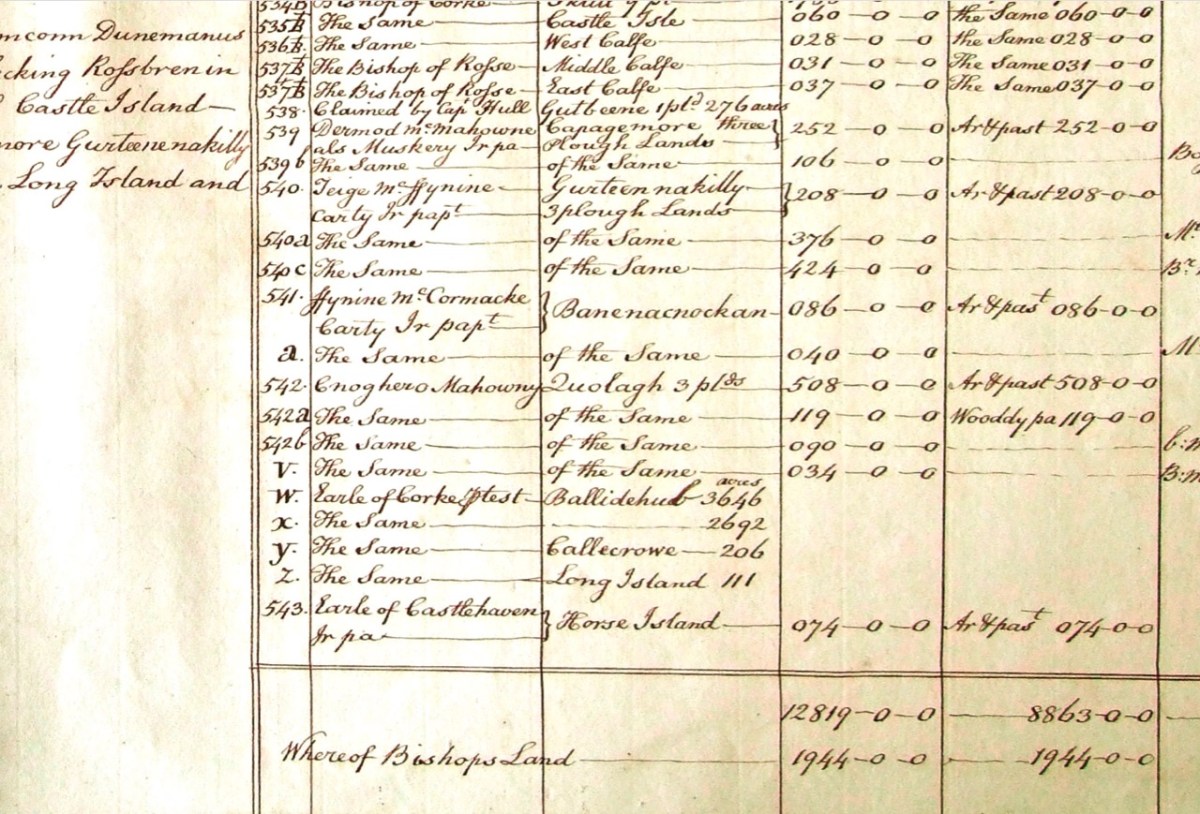
The terrier in this case is mainly a description of parcels of land, their owners, and the values. Here’s a closer example, from a terrier for ‘Skull’:

There’s a lot more of West Cork within the Down Survey archives. A future post will turn in greater detail to some of this material.

The Down Survey

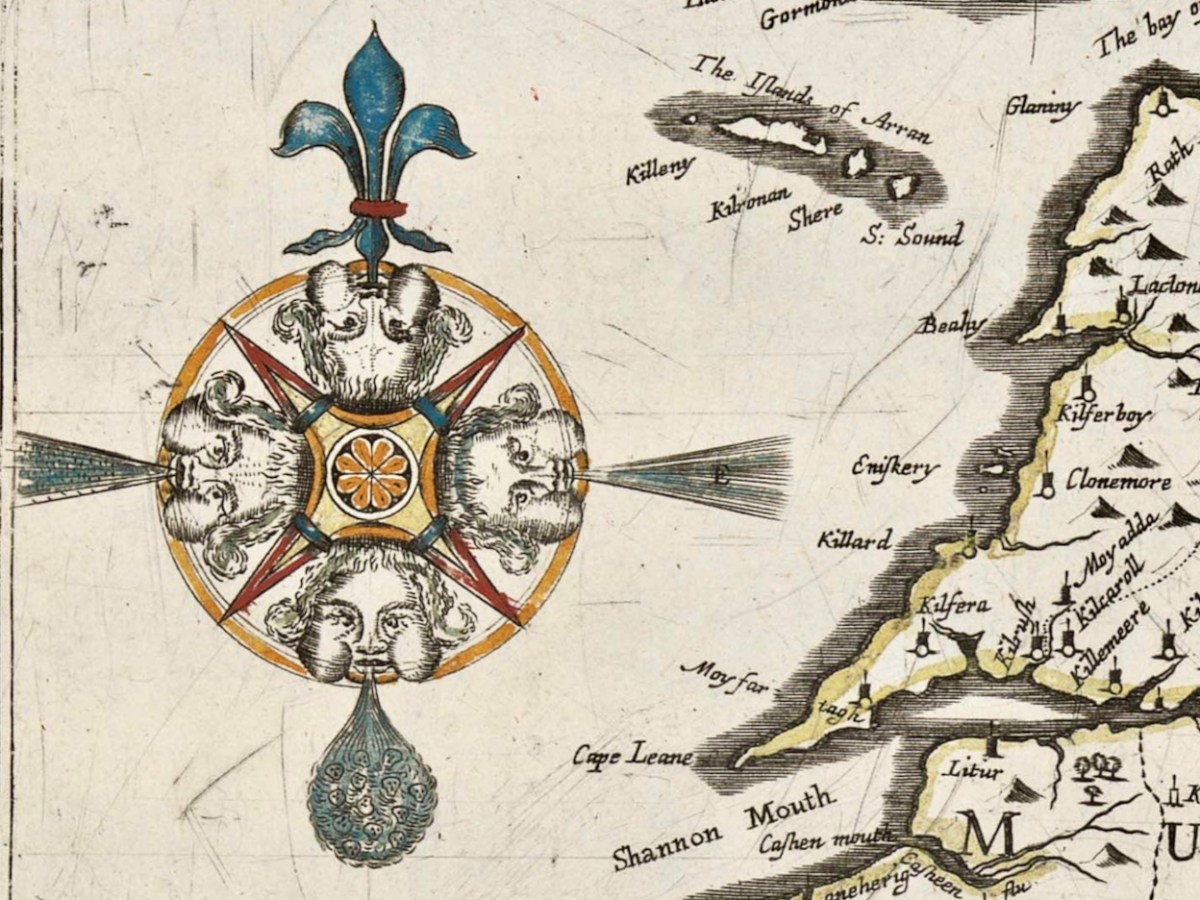
Here’s a fascinating title block. What are these cherubs doing? The couple on the left are excited about the operation of a magnetic compass; the little drummer is wearing a plumed helmet and has a decorated sash around his torso; cherub number 4 is bearing a spherical astrolabe, while the three on the right are actively engaged in surveying – using a Gunter’s Chain. This latter instrument – by the way – achieved, in the seventeenth century, something we seem to find tricky in our present day: the simple reconciling of imperial and metric measurements!

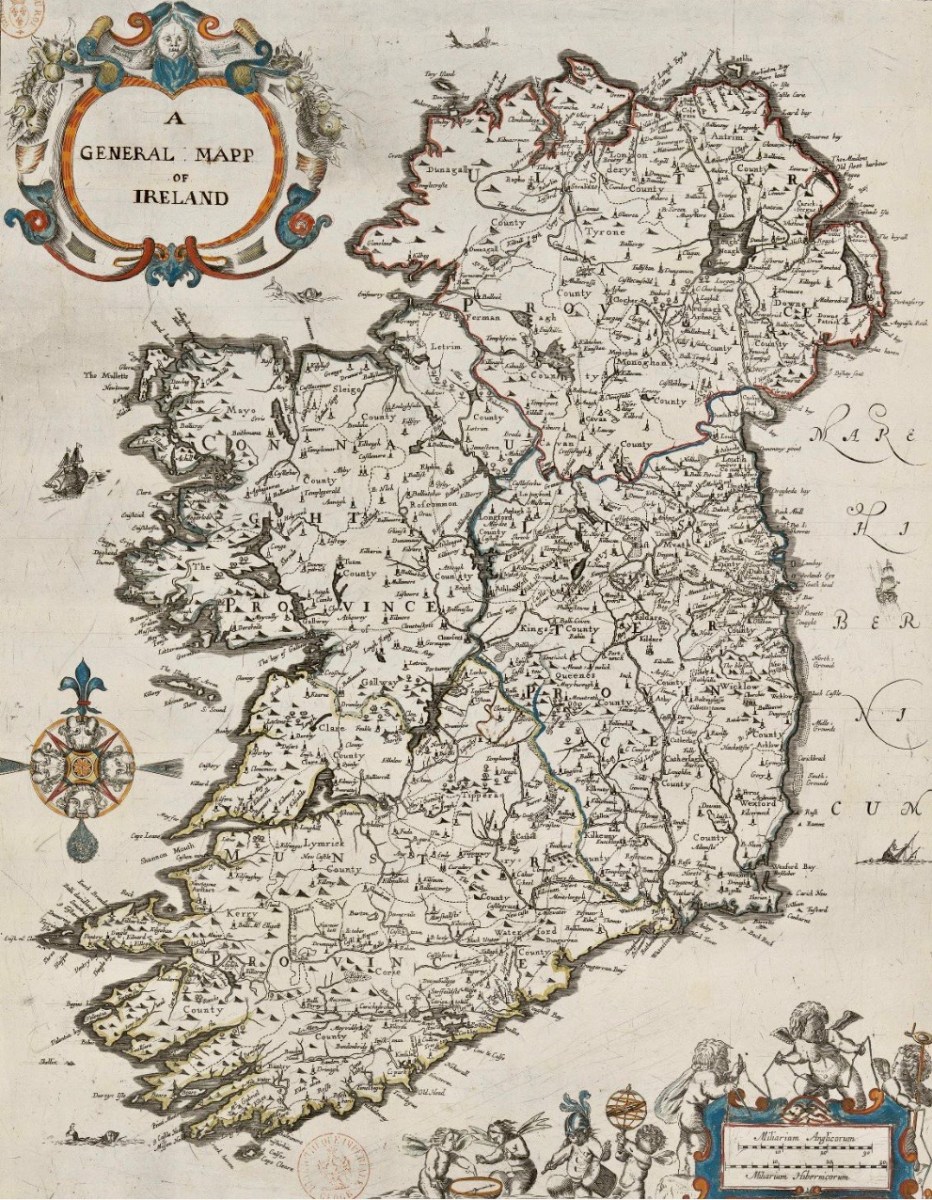
The cherub image, and the two above, adorn and decorate a remarkable document: the Down Survey map of Ireland. As this survey was ordered by Oliver Cromwell after an cogadh a chriochnaigh Éire (the war that finished Ireland) it seems strange that the north point of the compass is a fleur-de-lis: usually a symbol of the Virgin Mary. Cromwell himself was, of course, a Puritan and a Protestant and his actions in Ireland were aimed at subduing the rights and practices of Catholics, driving them ‘to Hell or Connaught’ – the poorest lands to the west of the Shannon river.

The decade following the Irish rebellion of 1641 witnessed a particularly turbulent period of warfare in Ireland between Catholic families and invaders from England, who were led by the dispossessed followers of the crown during the Civil War, which lasted through most of that period. The Act for the Settling of Ireland (1652) imposed penalties including death and land confiscation against Irish civilians and combatants after the Irish Rebellion and subsequent unrest. British historian John Morrill wrote that the Act and associated forced movements represented …perhaps the greatest exercise in ethnic cleansing in early modern Europe…

Sir William Petty – in charge of the Down Survey. Portrait by Godfrey Kneller, courtesy Romsey Town Council.

. . . Taken in the years 1656-1658, the Down Survey of Ireland is the first ever detailed land survey on a national scale anywhere in the world. The survey sought to measure all the land to be forfeited by the Catholic Irish in order to facilitate its redistribution to Merchant Adventurers and English soldiers. Copies of these maps have survived in dozens of libraries and archives throughout Ireland and Britain, as well as in the National Library of France. This Project has brought together for the first time in over 300 years all the surviving maps, digitised them and made them available as a public online resource . . .

http://downsurvey.tcd.ie/

We are very fortunate to be able to freely access – through the internet – this website which contains all available copies of the surviving Down Survey maps, together with written descriptions (terriers) of each barony and parish that accompanied the original maps. These bring out for us very detailed information on what the surveyors recorded in Ireland three and a half centuries ago.

Examples from map extracts, showing the quality of reproduction which can be obtained from the site. These show our own West Cork, with local names that have a familiar ring: Ballidehub, Skull, Rofsbrinie, Affadonna. Having discovered this resource, we know this site will be invaluable in our history researches. Look out for my next post exploring the fine detail of the survey.

The Politics of Peat

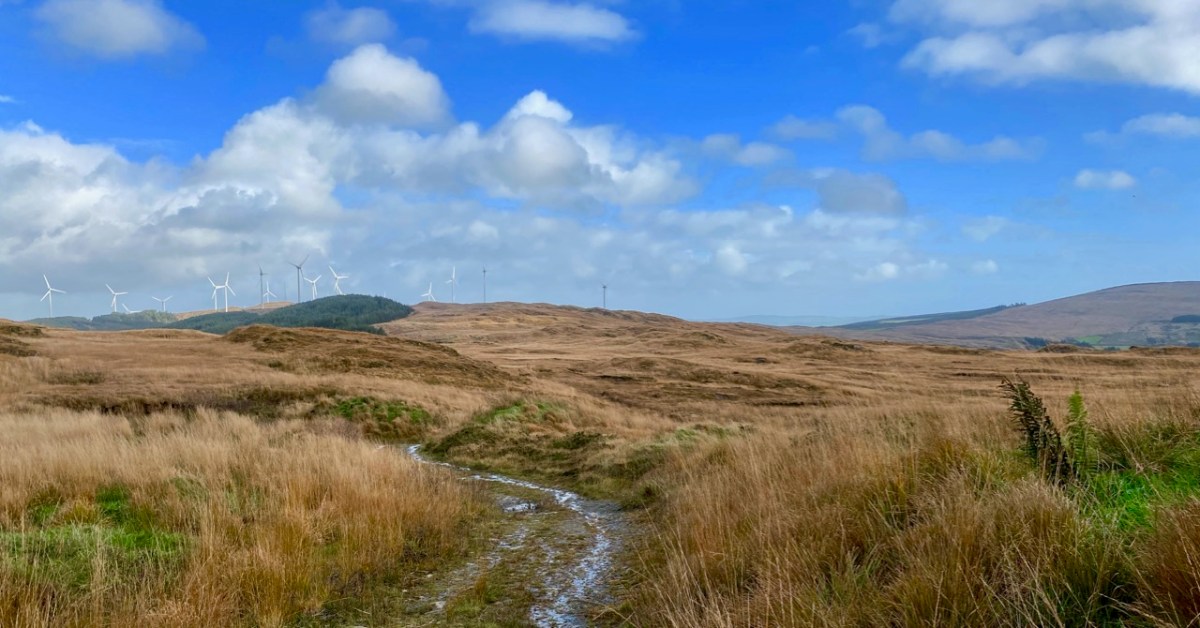
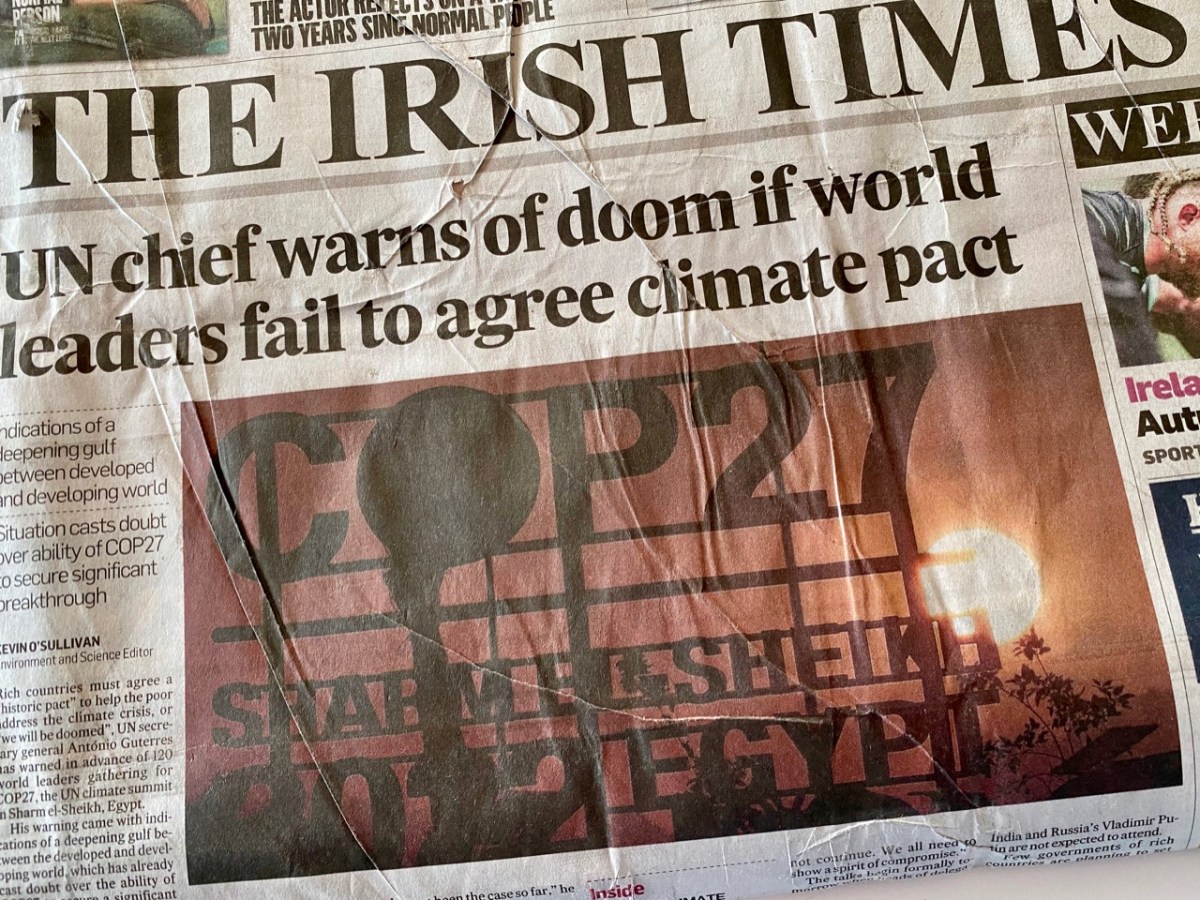
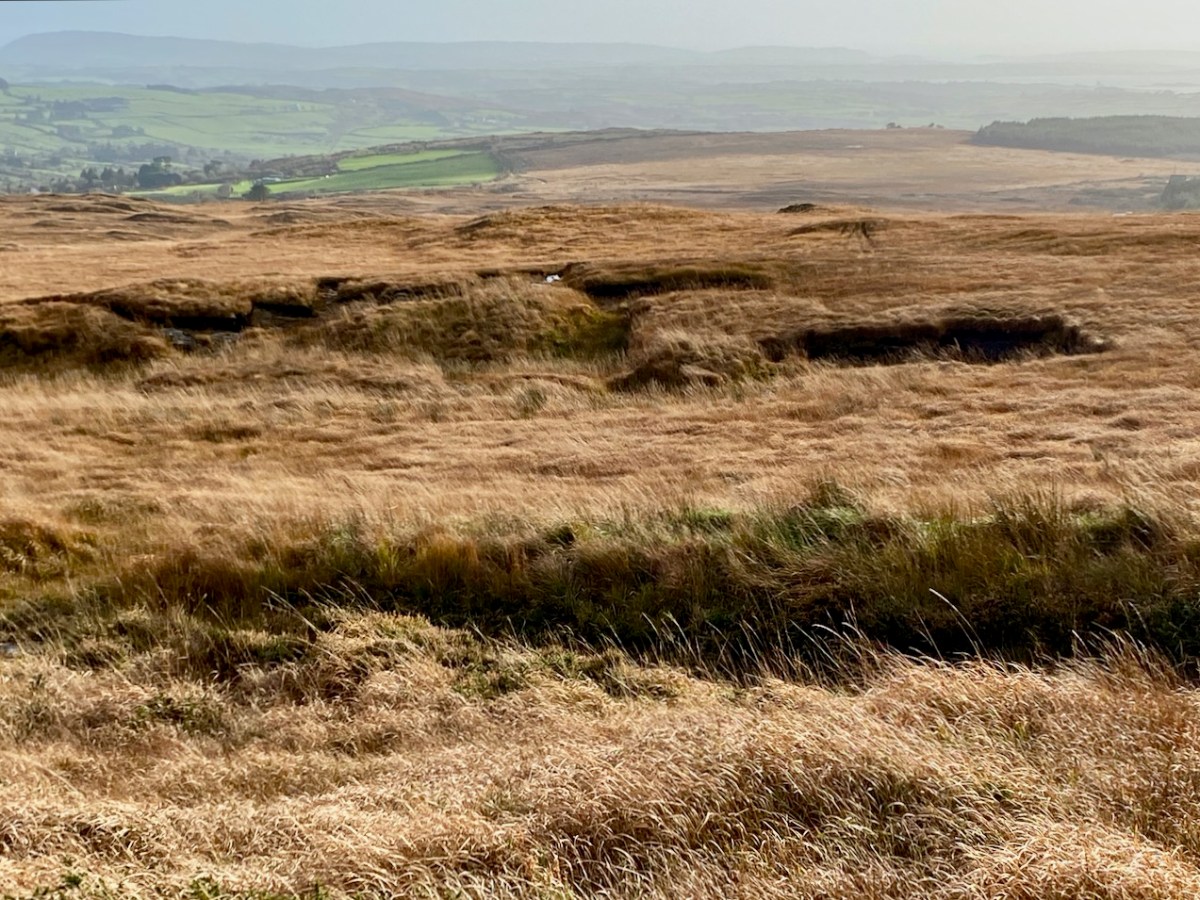
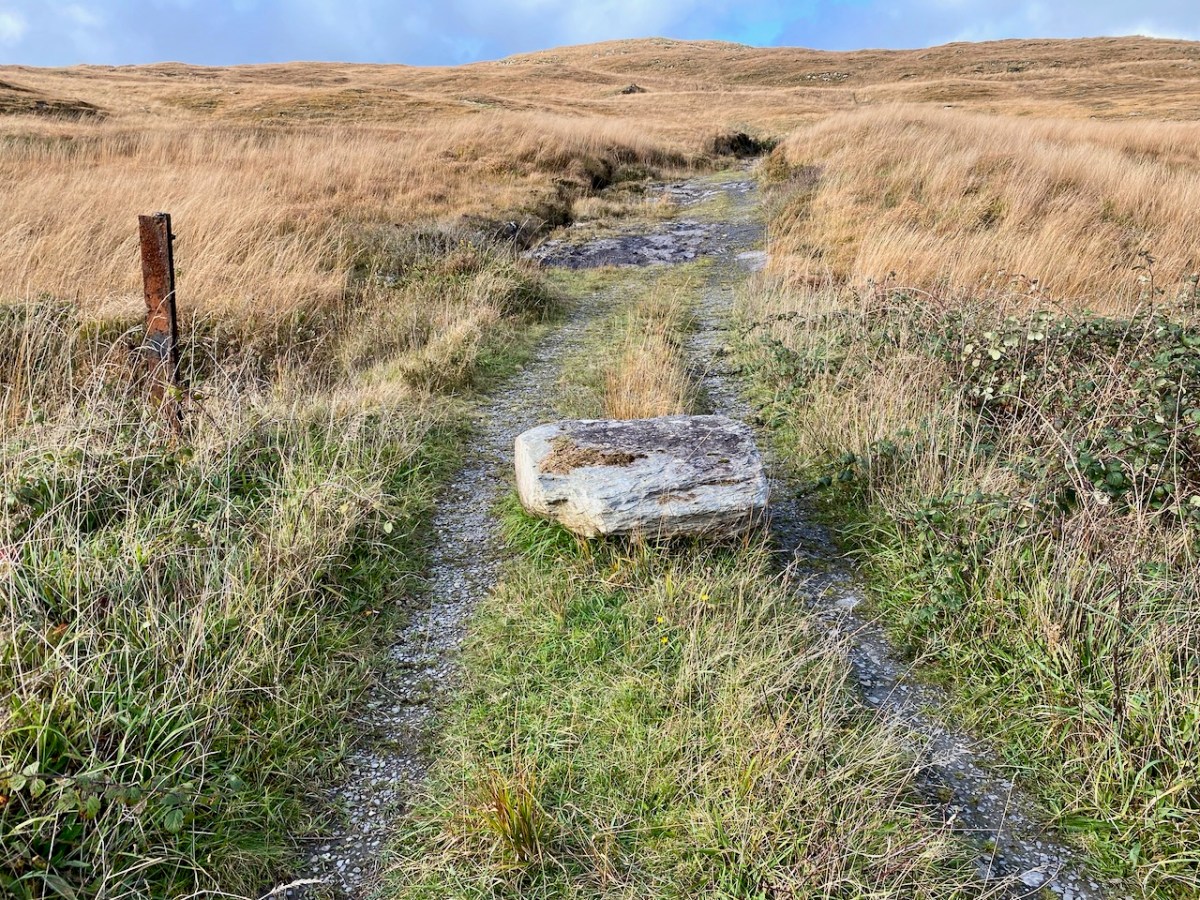
It’s a poignant juxtaposition, perhaps: the old turf road that leads into the peat cuttings at Letterlickey, here in West Cork, with – beyond – our newest energy technology lining the distant hills. On October 31st this year, the sale of turf, smoky coal, and wet wood in shops or online was banned in Ireland as part of the drive to improve our climate.

The move marks the loss of an ancient tradition in Ireland. ‘Turf’ – or peat – has been harvested from our bogs for countless generations. But it’s a resource that can’t be readily renewed. It’s also relatively inefficient: the gruelling labour required to cut, dry, store and transport turf on a domestic scale is hardly justified by the output of heat which it provides. However, such work has been deeply ingrained in family life for centuries by those who have always accessed the bogs. The word ‘bog’ derives from the Irish bógach, or “soft place,” and 17 percent of Ireland’s 27,000-square-mile national territory was originally covered in peatland. Commercial extraction, however, has significantly diminished this resource. What has been realised – in comparatively recent times – is that peatlands, including bogs, store twice as much carbon as all the world’s forests – if left intact.

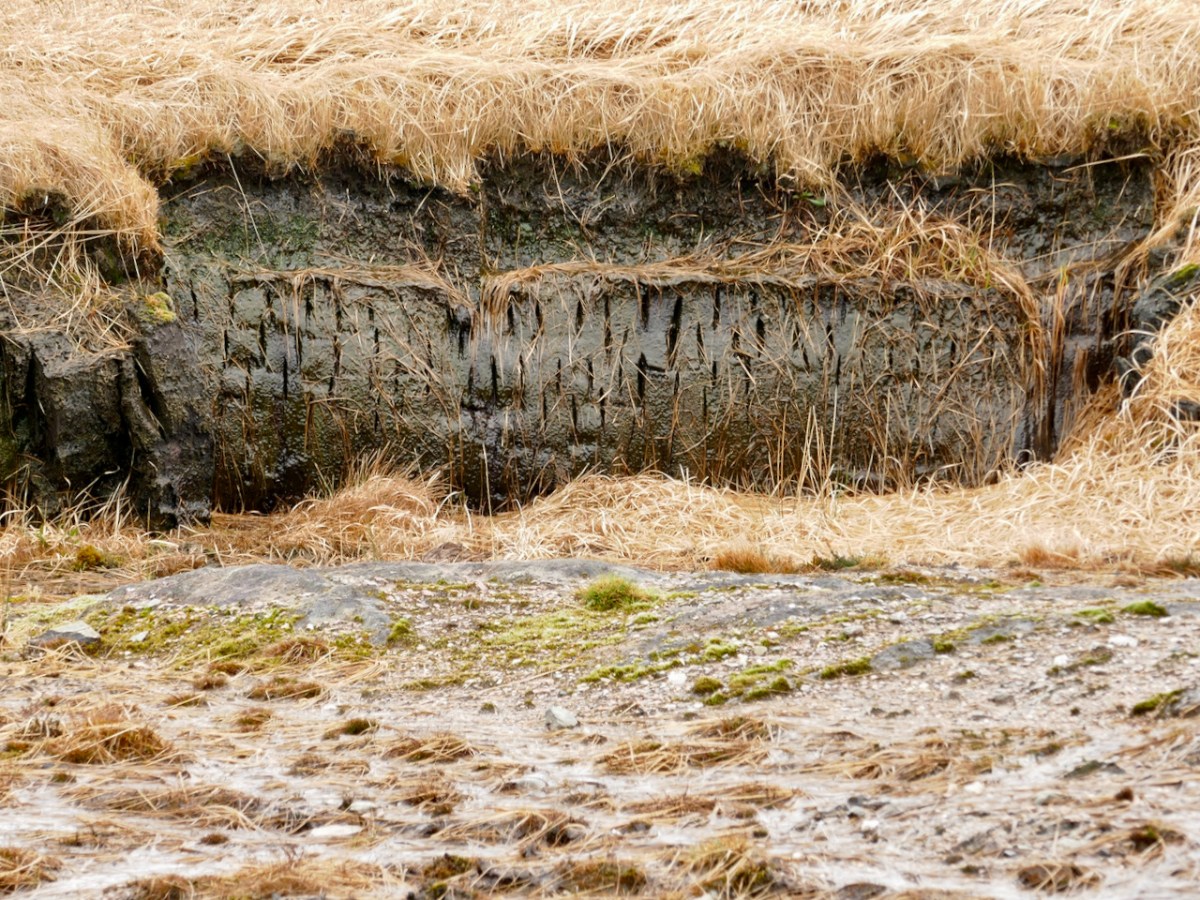
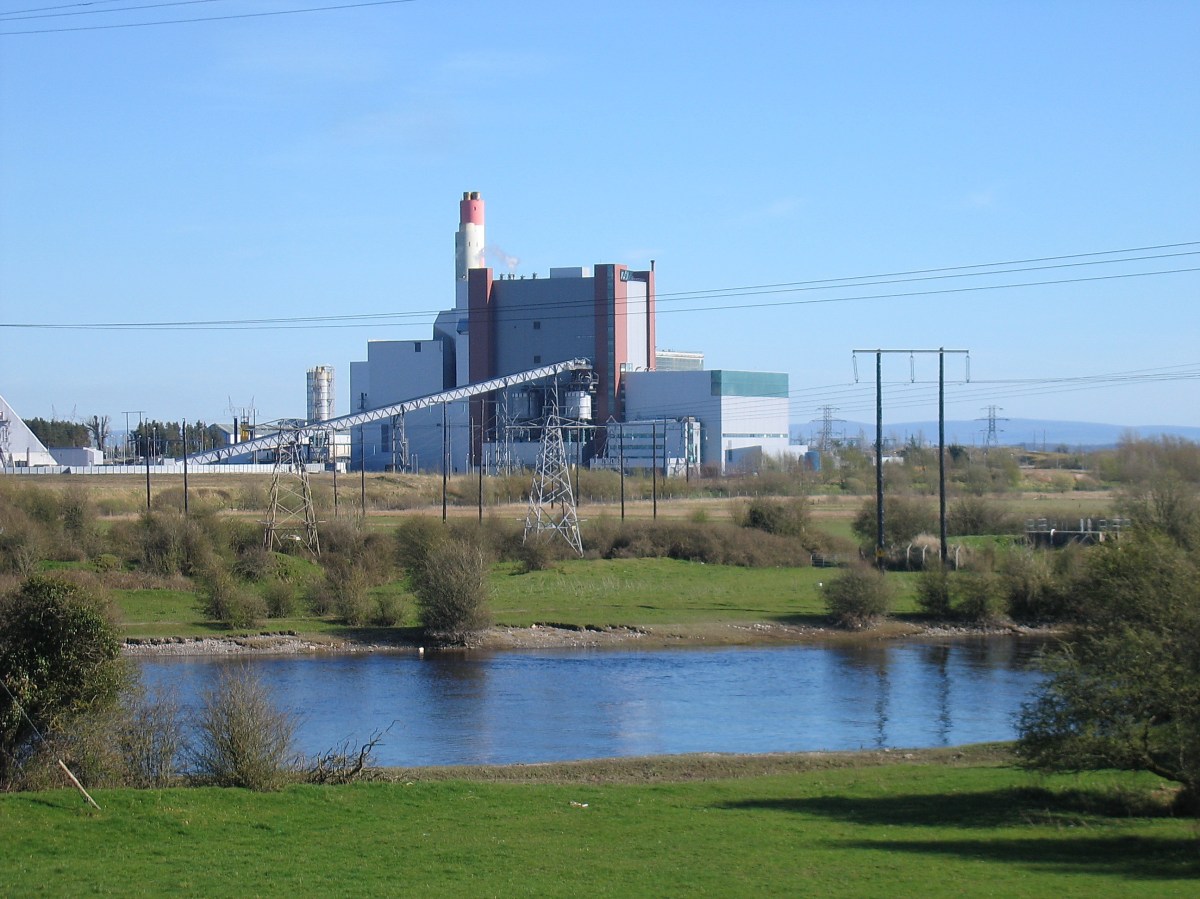
The turf workings at Letterlickey: the significant and ancient bog there has been in use in very recent times – perhaps it still is active. The new ban doesn’t prevent families who have always had turf-cutting rights from continuing to gather it for their own use. But all commercial peat extraction has now ended. It’s a sobering thought that electricity was generated by peat-fired power stations in Ireland for many years: ‘peat power’ peaked in the 1960s, providing 40% of Ireland’s electricity. But burning peat for electricity emits more carbon dioxide than coal, and nearly twice as much as natural gas. In 2016, peat generated nearly 8% of Ireland’s electricity, but was responsible for 20% of that sector’s carbon emissions. Today all of the peat-fired powers stations here have been closed. The West Offaly power station at Shannonbridge (below) was the largest in Ireland: it shut down in December 2020.

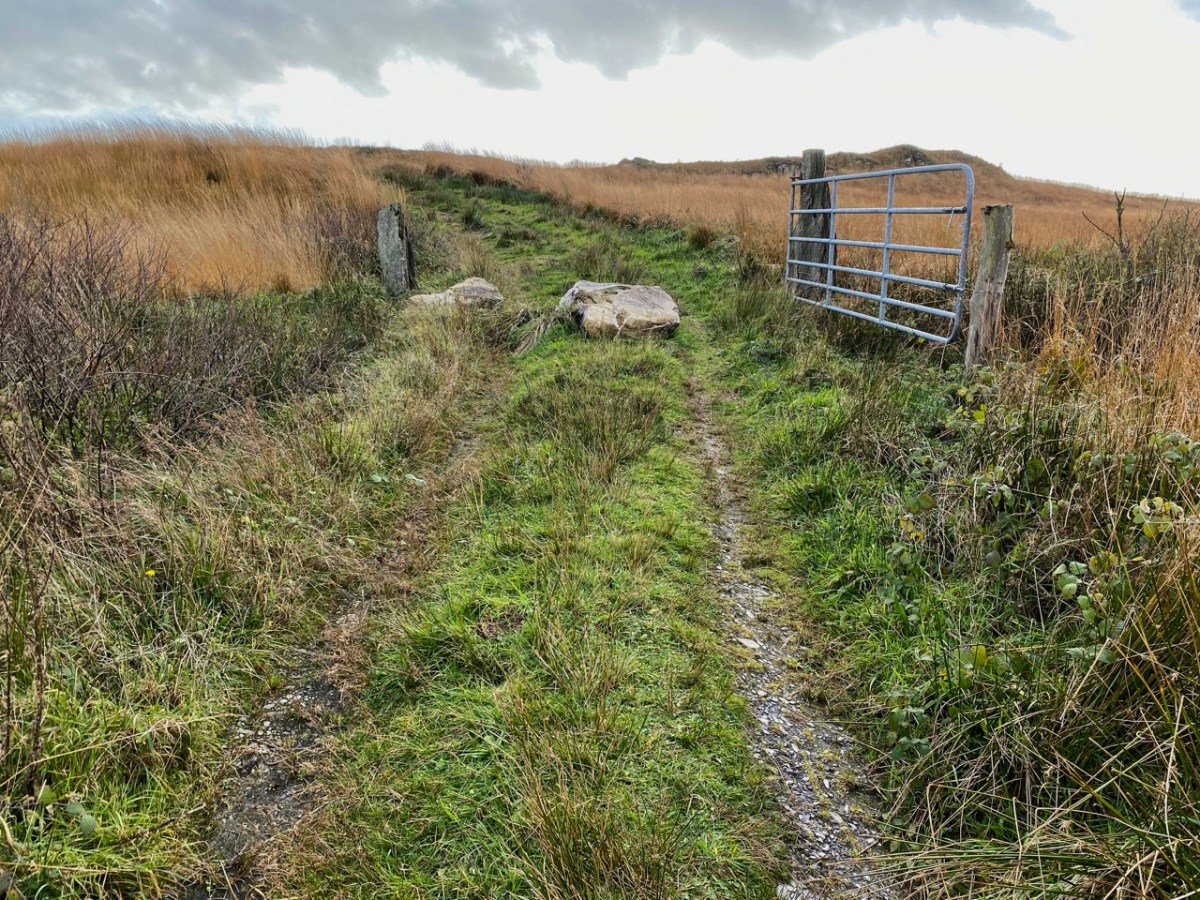
We are witnessing the end of an era here in Ireland. At the same time we are embracing the search for new technologies: we are harnessing the wind – that will never stop blowing! PV cells are now commonplace, and we know that it’s likely we will mostly be driving electric cars as the decade advances. Other ways forward are still waiting in the wings. We were interested to see – when we were walking the Letterlickey turf road yesterday – that the trackway has been deliberately blocked by large boulders:

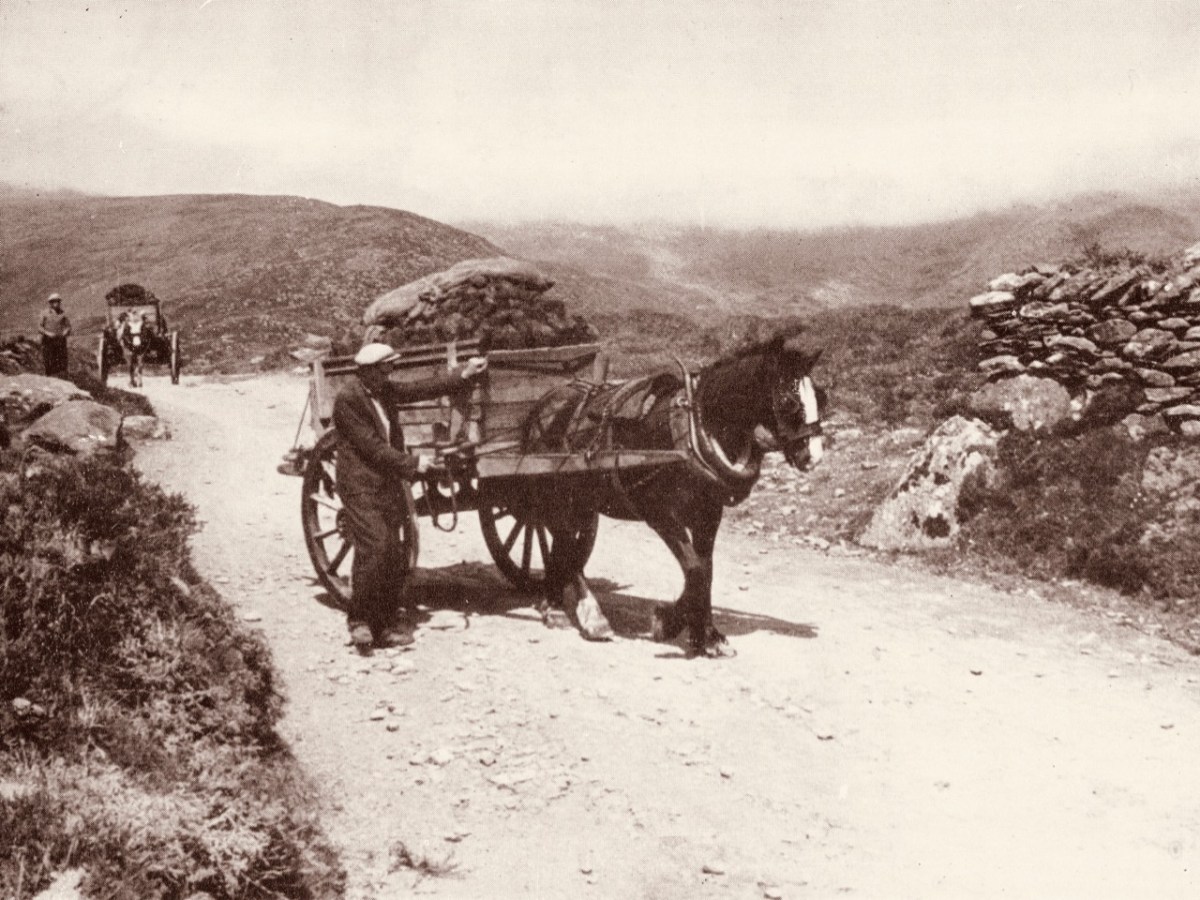
These blockages have been put in place since we last visited – and, probably, fairly recently. There could be local access issues: we don’t know. It could be to do with neighbours or trespassing, but it’s also possible that current political preoccupations are being practically addressed. It’s certainly interesting that significant moves are under way since the importance of peat bog preservation as carbon sinks has been fully understood. ‘Bringing home the turf’ will soon become a solely historical concept. The image below is by Tomás Ó Muircheartaigh:

“. . . Ireland has more than half the European Union’s remaining area of a type of peatland known as raised bog, one of the world’s rarest habitats and, scientists say, the most effective land form on earth for sequestering carbon . . .”

New York Times 04/10/2022

Ten Years!

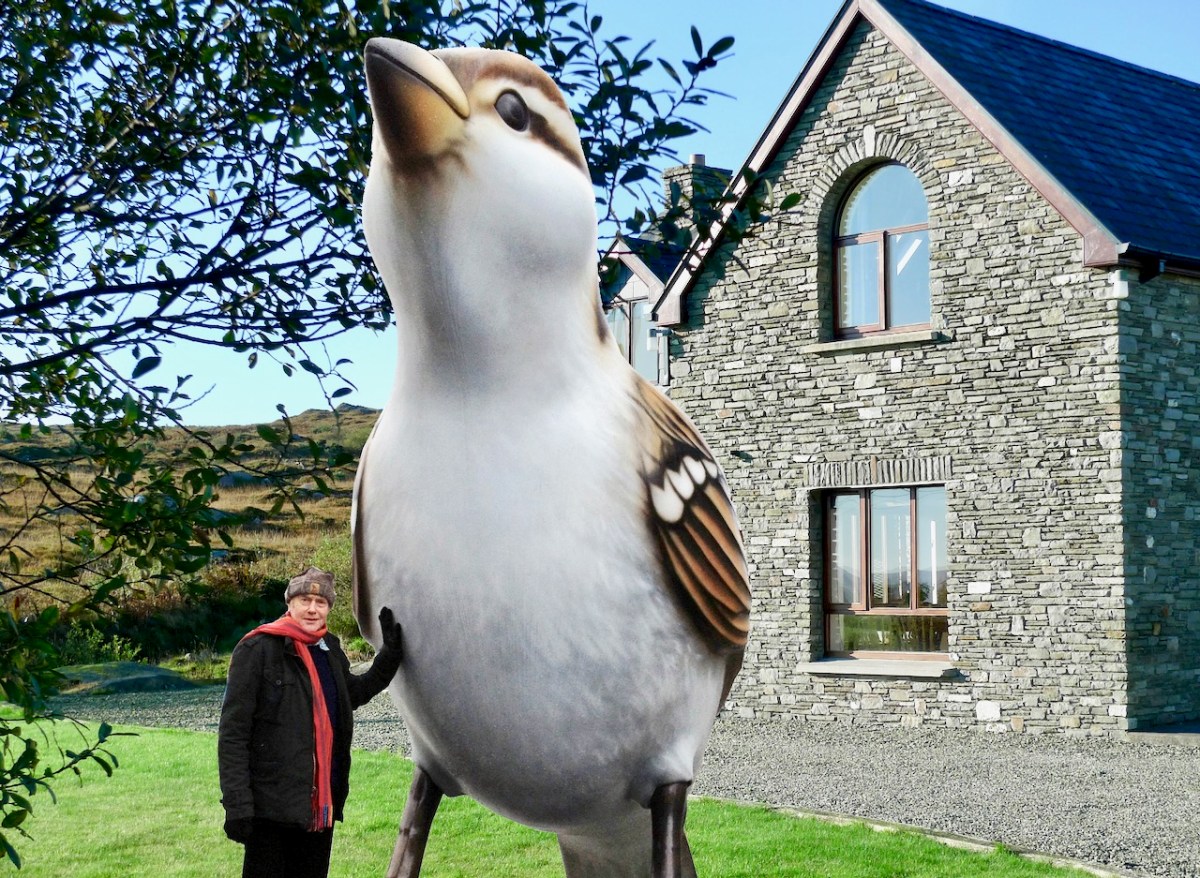
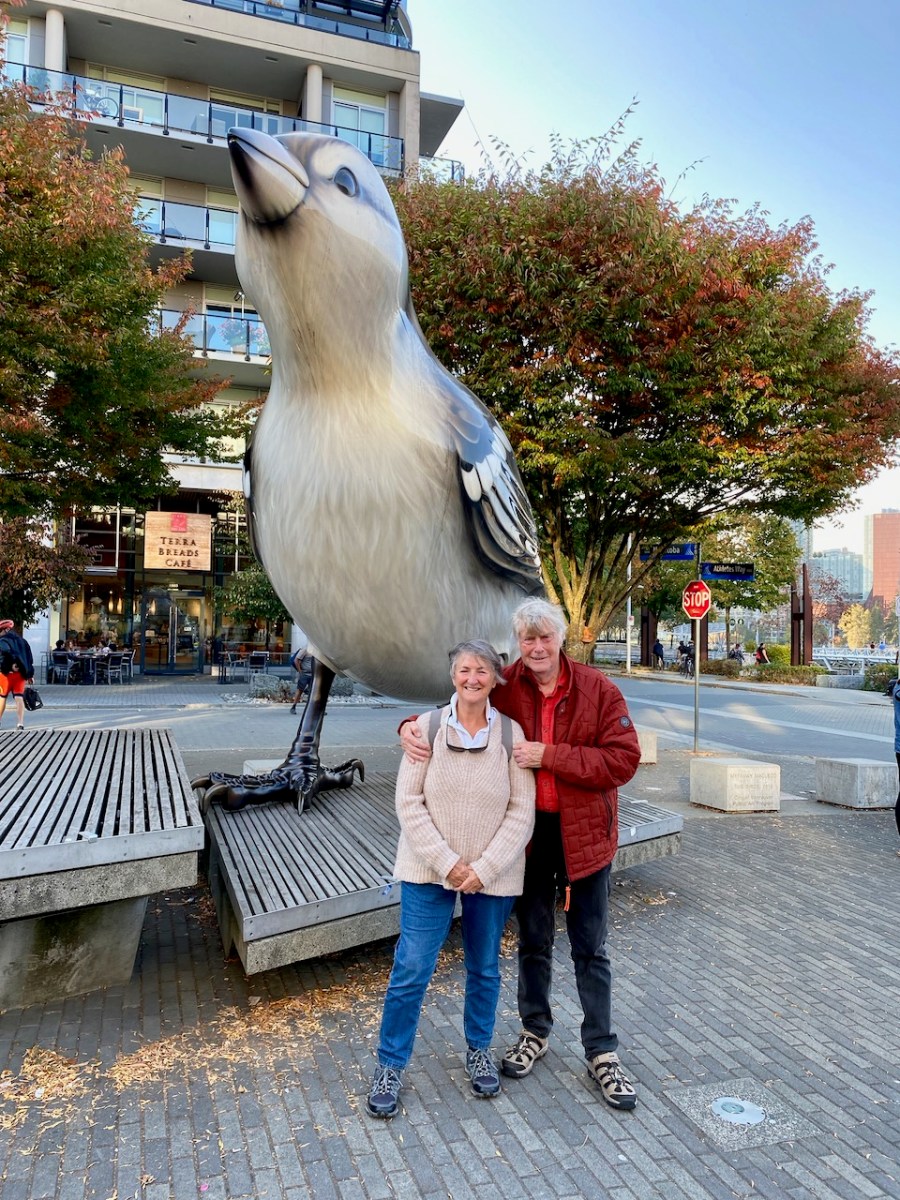
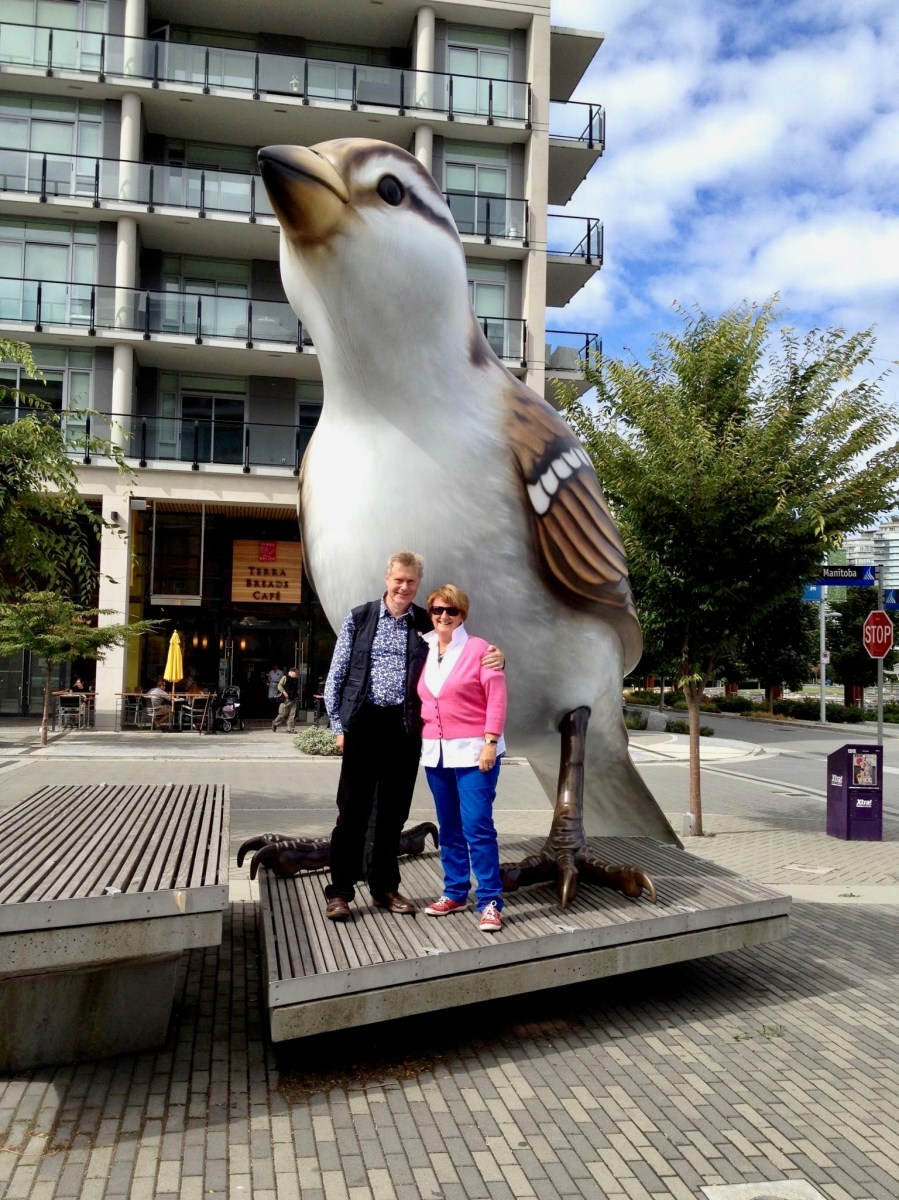
Why have we chosen this photograph to head up our ten year anniversary blogpost? That’s simple: the pic was taken on 15 October 2012. We had moved into Ard Glas – just outside Ballydehob – for a six-month rental to see how we liked West Cork!

But – what about the giant sparrow?

Wait a minute. We very obviously ended up liking West Cork so much that we bought a house in Cappaghglass (the townland next door to Ard Glas), and have stayed there ever since. As you can see, we have been thoroughly enjoying ourselves over the last decade:

Yes, but, that very large sparrow…?

Be patient! Believe it or not, we have kept the blog posts going, with hardly any interruption, ever since. This is Roaringwater Journal post number 968. In the last decade, our Journal has been viewed over 1.5 million times and we have acquired over 5,700 followers between our various platforms.

Our posts are all still there in the archives – and you can still read them. Search by using the three-bar icon on the home page and select All Pages-Navigation, or one of the other menus. Alternately, press the cog button under the Roaringwater Journal title at the top of the page, then scroll down to Archives. Roll down through all the months. Or enter a search term into the magnifying glass symbol next to the cog. That will show whether we have mentioned your chosen subject in any of our blogs. We warn you that some posts (especially the very early ones) haven’t survived the test of time perfectly: but we leave them in there because it’s all a bit of history.

Sparrow?

Hang on! Of course, things change a bit as the years go by (although we don’t*). We have varied the layout of the blog, and the header etc. We had thought of refreshing it all again to celebrate this milestone but… ah, well – perhaps for the twentieth anniversary.

Sp……..?

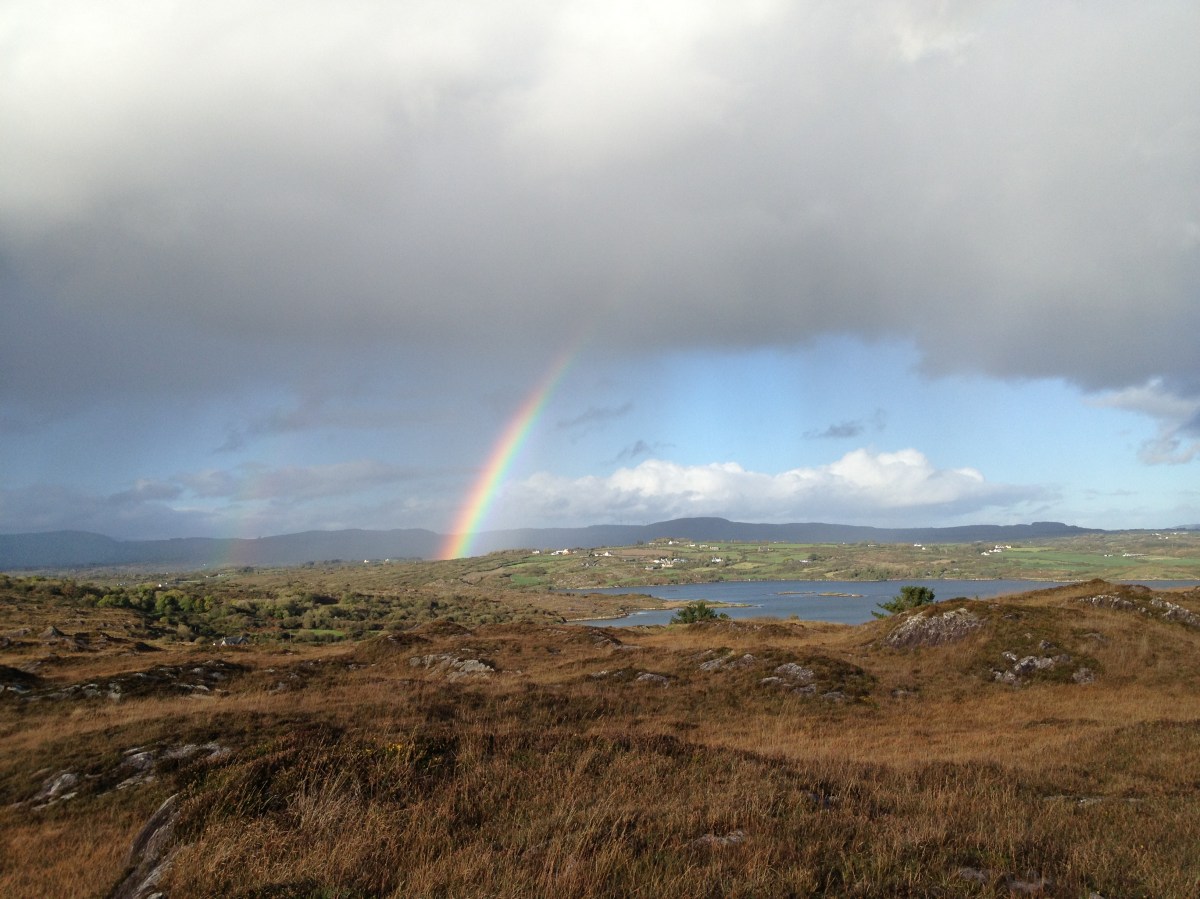
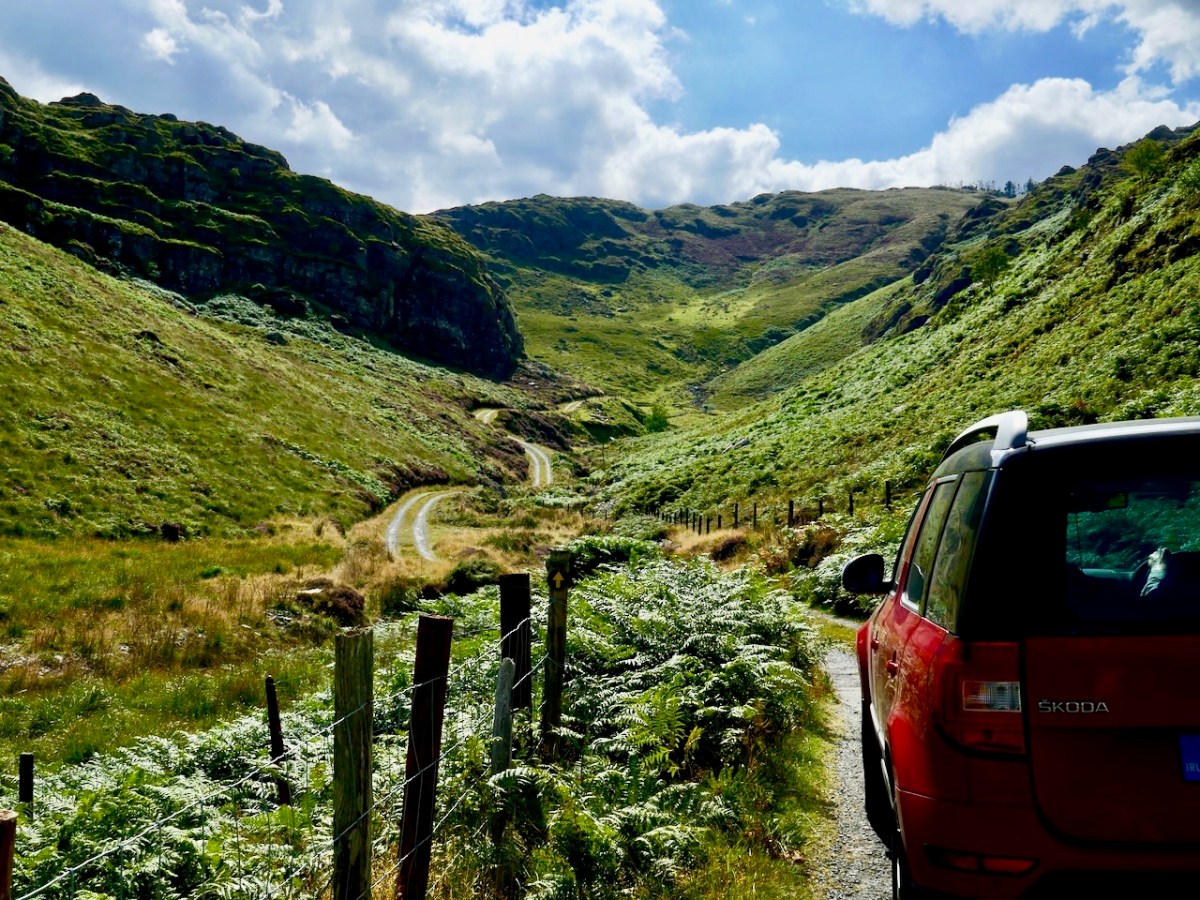
Another pic from 2012 (above) showing mixed weather conditions over Roaringwater Bay. It hasn’t always been sunshine here (have a look at this) but it always feels sunny to us – or just about to be sunny. One of our newest posts -here – shows us doing what we like the most, and always have: exploring remote and often forgotten West Cork byways.

Our regular readers will know that, over ten years, we have developed our interests to take in history, archaeology, rock art, stained glass, architecture, topography, folklore, wildflowers, art and culture, landscape and language… and very much more. We share our adventures often with Amanda and Peter Clarke, our fellow bloggers and friends – see Holy Wells of Cork and Kerry and Hikelines.

What of the next ten years? Well, we are trying to be innovative. This week we have introduced a ‘guest post’ for the first time: this one, by our friend Brian O’Riordan, explores the exploits of an intrepid 79-year old woman who sailed solo across the Atlantic to Ireland in 1994 , which falls right into our own interests, and – hopefully – yours too.

S…………..?

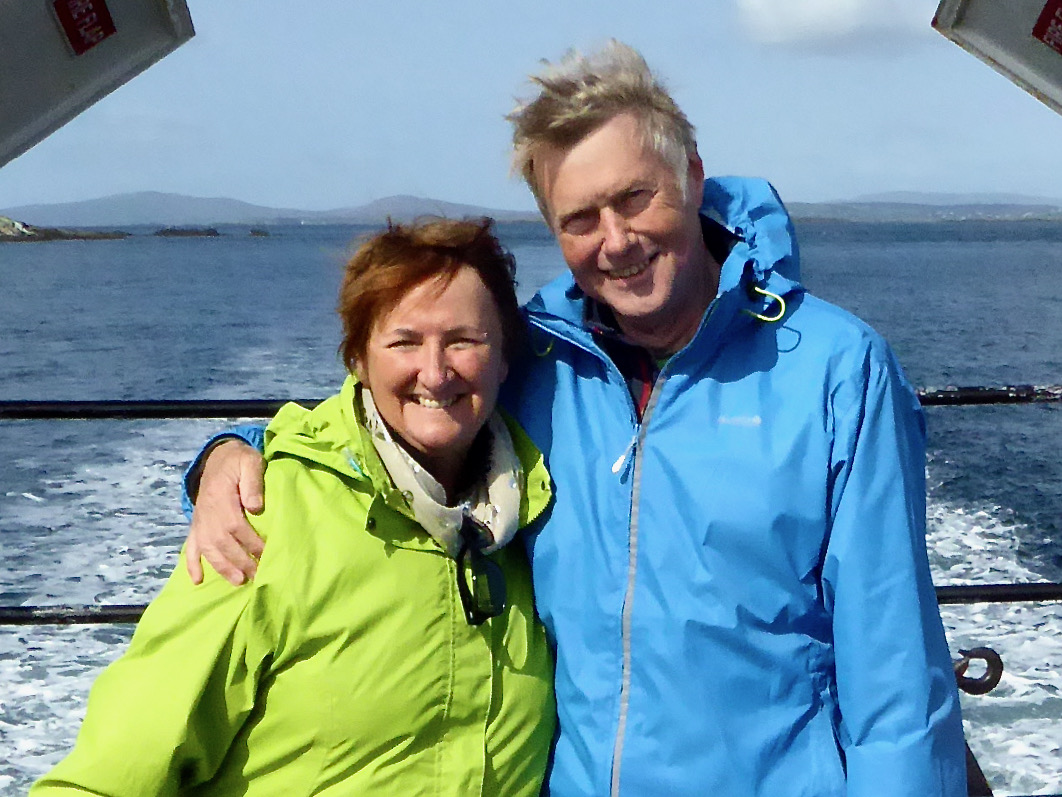
Ok – we have got the message! About the sparrow, that is. The original giant sparrow is one of two (a male and a female) which were created for the Olympic Park in Vancouver, Canada, in 2010 by the sculptor Myfanwy MacLeod. One was transported by our own photo magic to Ard Glas! Perhaps they are not relevant to West Cork, but they are meaningful to Finola and Robert, as we saw them together in Canada ten years ago – pic below. We have just recently returned from a visit to Canada, enjoying a long-awaited catch-up with Finola’s family there. We made sure to record our presence there with another photo-op (below the below).

* Hopefully this demonstrates how youthful we remain, imbibing as we do the stimulating West Cork air. Here’s to the next ten….!

The Oldest Adventure – Told Again!

Legend of the Salmon of Knowledge by Charlie Fallon (Saatchiart)

You may remember that, back in the Covid days, I put up a post about the Irish Folklore Commission, and mentioned Bríd Mahon, from Cork, who had found references to many Irish versions of . . . the earliest known folktale . . .

Seán O’Sullivan showed me an international folktale known in Irish as ‘Ao Mhic an Bhradáin agus Ó Mhic an Bhradáin’ (‘Hugh and O, the Two Sons of the Salmon’) . . .

It was the earliest known folktale, first discovered on Egyptian papyrus 3,250 years before. During my years with the Commission hundreds of variants of that far-flung story were gathered in remote hamlets on the western seaboard of Ireland, in parts of Munster, in northwest Ulster and from a group of travelling people on the borders of Wicklow and Wexford . . .

I tried – without success – to find a translation of the story into English. So – nothing ventured nothing gained – I created my own version of the story! I distilled this from the Irish language (although my knowledge of Irish is but rudimentary), using dictionaries and online translation helpers and then putting the whole thing into a sort of vernacular tongue which seems to suit the subject. I think I have the gist of it right enough, but you’ll just have to go along with my own way of telling it. I first published it over two years ago, and feel it’s worth reviving again: perhaps there will be a new audience. I also delved into the Roaringwater Journal archives for a few illustrations to break up the text. For me, it’s a fine story: I hope you enjoy it!

This image has an empty alt attribute; its file name is sons-title.jpg


Hugh and O, the Two Sons of the Salmon

It came about that there was a poor man whose only means of making a living was catching fish. If he came home with no fish, he wasn’t lucky: he could only do his best. The poor man had a wife, but no child came to them, and the years were on them.

Fisherman on Lough Skeagh 1946 (Irish Folklore Commission):

One day he was out fishing with his rod and took a fine salmon. It was hard work, but he reeled in the fish and was about to kill it when it spoke to him! “Don’t kill me’’ said the salmon, “Let me go and I will tell you a story of good fortune.”

The poor man was amazed to learn that the salmon could speak, but he replied: “I will hear the story and, if I am pleased, I will let you go.”

“Listen now”, said the salmon. “I know you have been upset that you have no children; I am glad to tell you that you will soon have two sons.”

“That is certain to be untrue”, said the fisherman.

“I am not telling you a lie”, said the salmon. “Let me go and you will see that I am telling you the truth.”

The fisherman cut the line and released the salmon. He returned home and told his wife the great news. She was not impressed. “It’s a pity you did not bring the salmon back with you for our supper: it’s clear that he was mocking you!”

Nevertheless, within the year the couple were surprised to have two sons. “Look now”, said the fisherman, “wasn’t it the truth that the salmon told me?”

“By my soul it was”, said the woman, “but what shall we call these two?”

“We will call them É Mhic and Ó Bhradáin” said the fisherman. And so it was. They were known as Hugh and O, the Two Sons of the Salmon. You could not put anything between them in looks, manner or speech.

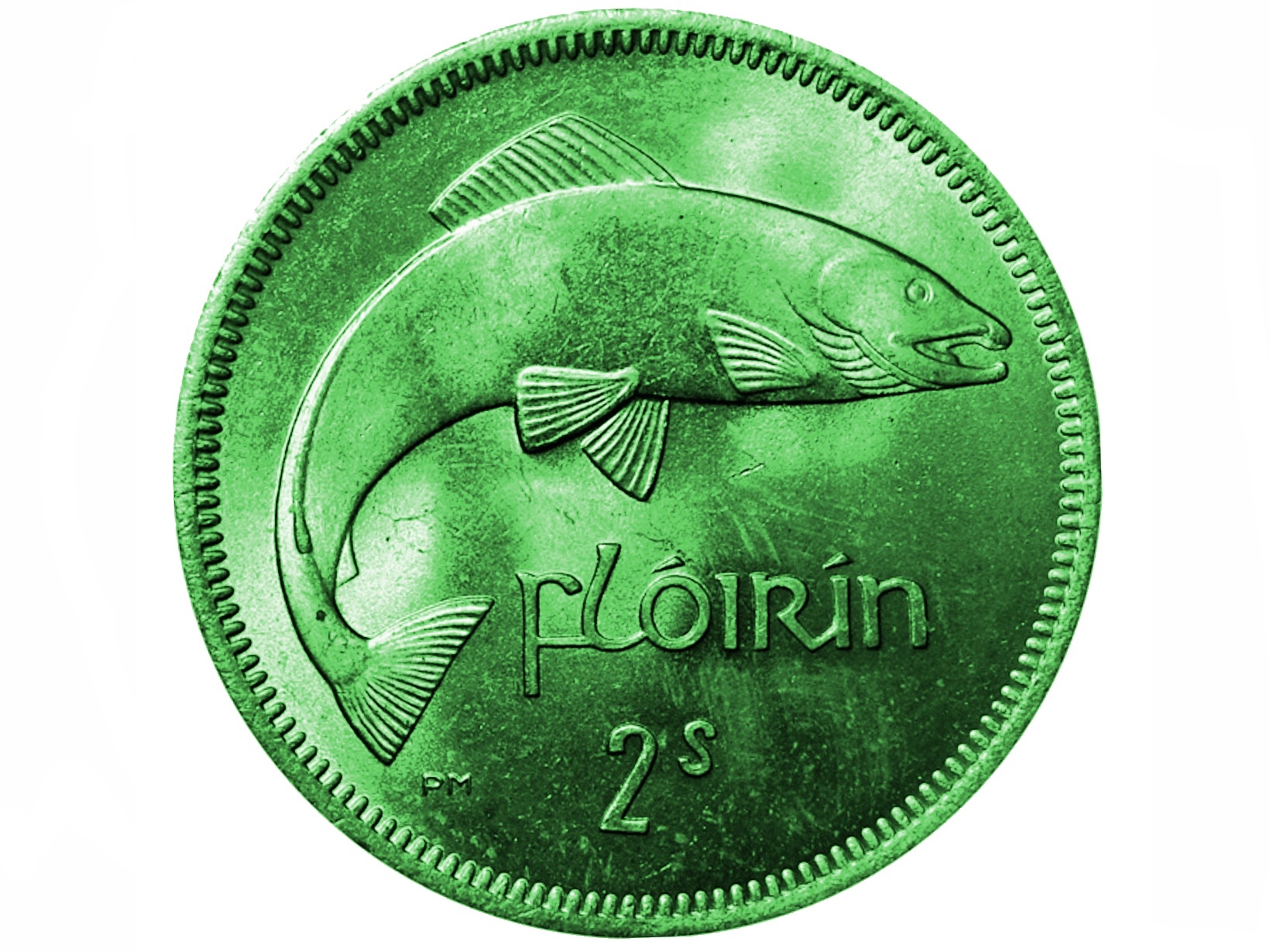
This image has an empty alt attribute; its file name is green-coin-2.jpg

As the boys grew, so did the luck of the fisherman. Every time he went out with his rod his catch increased fourfold, and they became rich enough that each boy could have a hawk, a greyhound and a horse. The boys also had the luck with their hunting.

At twenty years of age Hugh told his brother that he would leave and seek his fortune in the world. “If I am not back in twelve months, then come and find me,” he said.

Hugh took his hawk, his dog and his horse. Also, he did not forget his sword. He tackled the road and had good travels. On a day in winter he got lost in a wood, and stumbled on a fine castle in a clearing. “By the Devil”’ he said, “I’ll go in and wait out the night if no ill will is shown to me.”

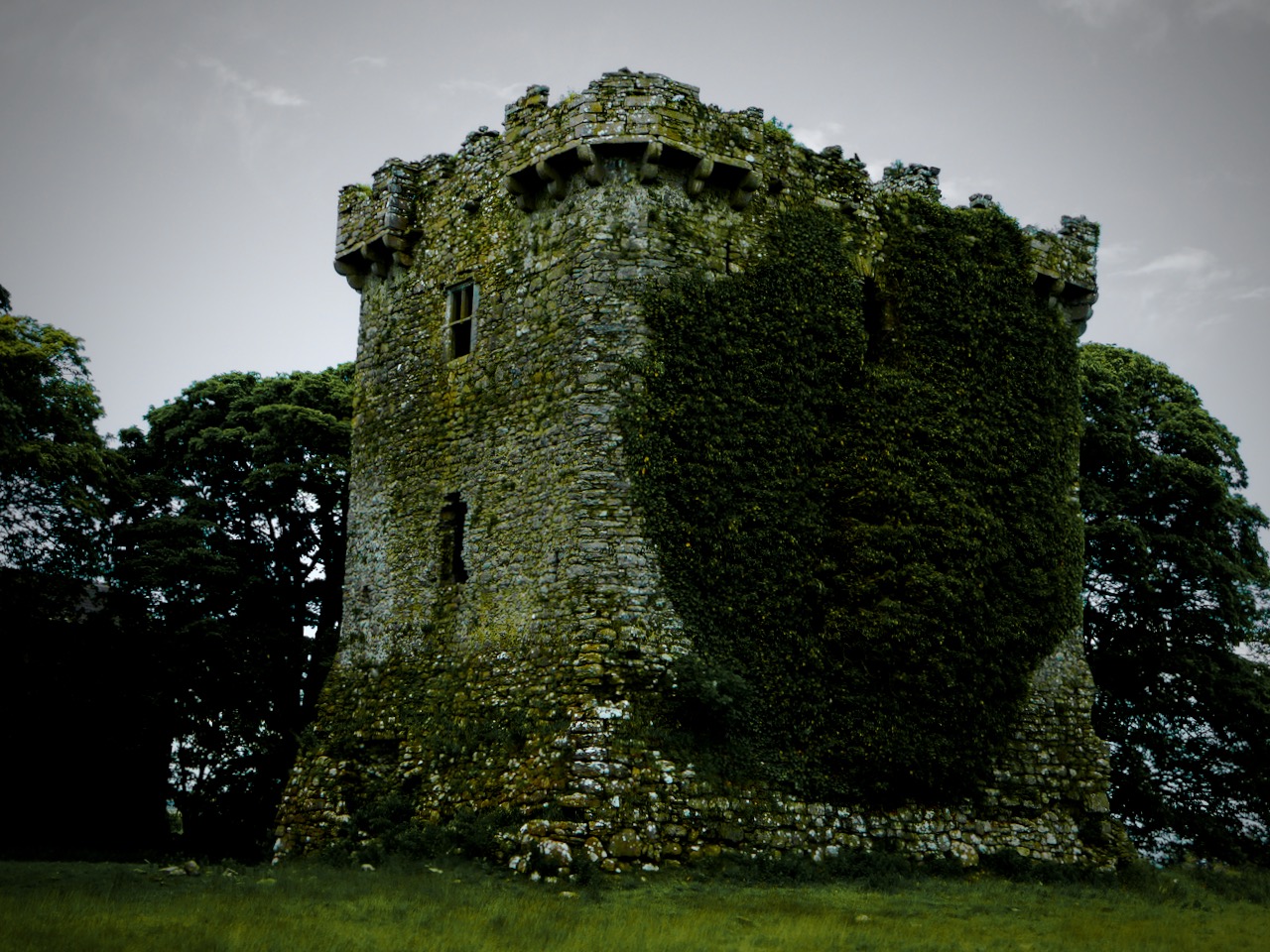
This image has an empty alt attribute; its file name is spooky-castle.jpeg

Inside was a fair countrywoman and they began to converse until a terrible noise was heard, and the walls of the castle shook. The girl vanished and it wasn’t long before a big, strong, bad-tempered affair jumped into the room. “What kind of a person has the destiny to end his life in my castle?” he shouted.

“It doesn’t matter to you”, said Hugh. “What the heck, now I’m in I will stay here!”

The two laid into each other with their swords and, in the shock of the fight, the giant was turned to dust. In the morning it was raining all over the woods, and Hugh spent the day wandering. As evening fell, what should come to him but a hare? He took his horse and released the hound and the hawk but the hare outran them all and disappeared into a small cottage in the wood. “Why wouldn’t I go in?” said Hugh.

Inside was a fire in the grate and he sat down beside it. Soon the ugliest old woman he had ever seen came through the door. She made no blessing to him at all, only to look badly at him.

“Come in from the door”, says Hugh, “and share the fire with me.”

“I won’t come”, she said, “I would be scared!”

“What would you be scared of?” asks Hugh.

“That hawk, and I don’t trust the greyhound, and I wonder what this horse would do to me?”

“You are in no danger from them”, says Hugh “They are all honest. Come up and sit by the fire.”

“I will not”, she says, “unless they are all leashed.”

“Why don’t I bind them?” says Hugh. “But I have nothing to bind them with.”

“I’ll give you a way to bind them”, says she, and tore three snares of hair off her head. “Here”, she says, “Use these.”

He snapped a hair leash on the hawk – the old lady must have had very strong hair! And he tied the hound with another snare and the horse with the third. When he had done this the old woman produced a sword.

“Take care, my boy”, she said, “I know you were in the castle last night and you killed my son there. He would despise me unless I challenge you now.”

She wielded her sword and they fought a battle inside the cottage. The woman – who was small – had the advantage because Hugh could not properly swing his sword within the confines of the room. The old woman had the head start on him, and he called out to his hawk.

“Fade, squeeze, snare!” says the old woman. With that the snare closed on the hawk and it could not stir.

Hugh became angry and tried to get the better of the old lady, but it was no use. Soon he was tight-lipped, and called for the greyhound to come to his aid.

“Fade, squeeze, snare!” says the old woman. The snare clipped on the greyhound and she couldn’t move. The fight continued, and Hugh urged the horse to come to his aid.

“Fade, squeeze, snare!” says the old woman.

“I can’t help you”, said the horse, “The snare is too tight on me.”

Hugh’s anger intensified and he was about to take a final blow at her when the old woman took out a magic rod. She hit Hugh with the rod, and he turned into a stone in the middle of the floor. She struck another blow for the hawk, the greyhound and the horse, and there were three more stones in the floor.

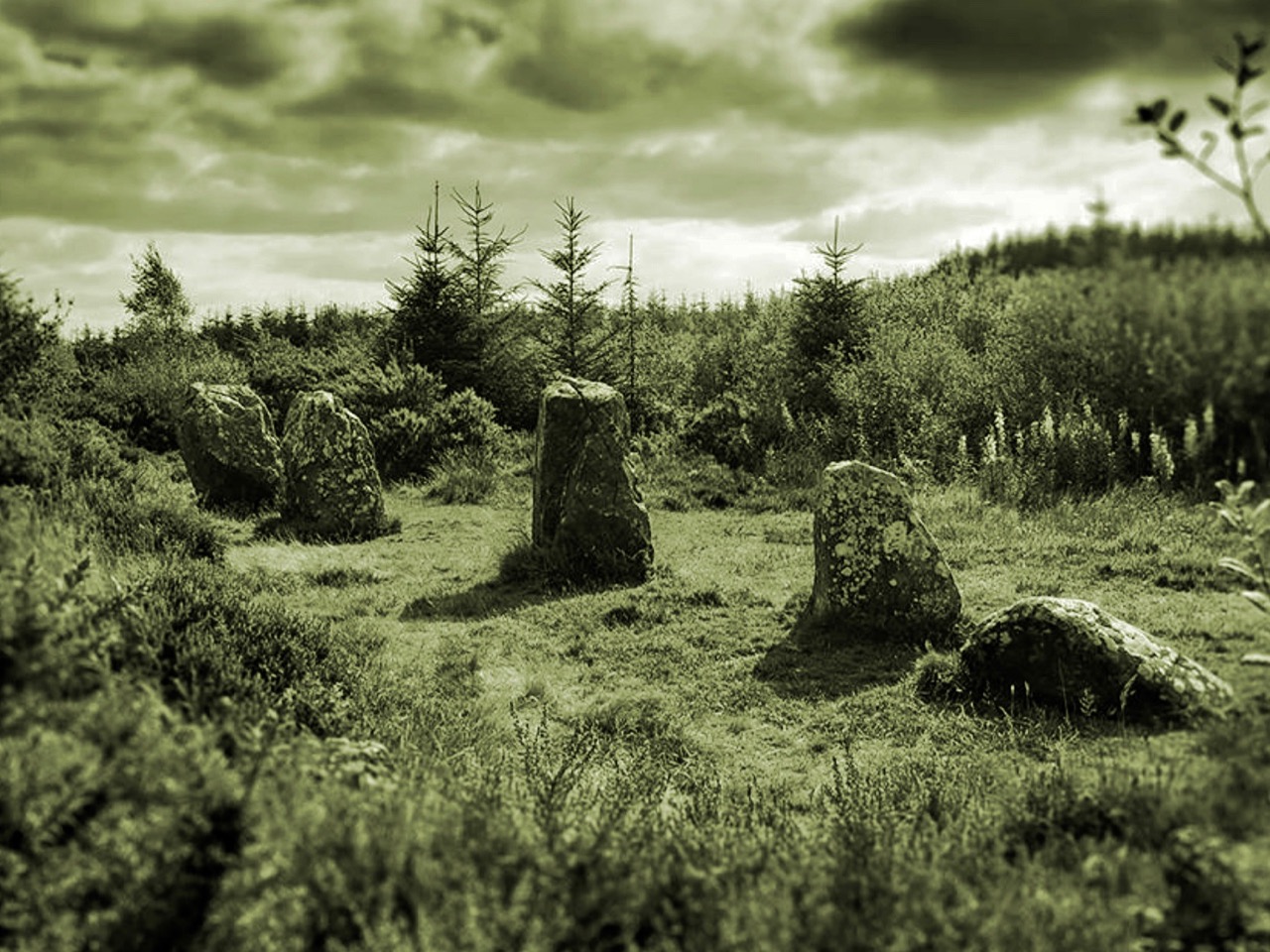
The Giant’s Fingers, Co Cavan:

“Now”, she said, “I have avenged my son’s death, and these stones will stay here a long time before anyone will take them away!”

After a year Hugh had not returned home, and O said to his mother and father that he was going to look for him. “I fear something bad has happened to him”, he said.

“It will be little help to you or us if he is dead’’ said his father, but he would not be stopped. He seized his hawk, his dog and his horse, and never forgot to take his sword also.

He travelled a long way and a short way and one evening – why, shouldn’t he find himself in the same wood where his brother had been, and across the wood he found the same fine castle.

“I am tired after this day’s ride”, he said. “I’ll stay in this fine castle tonight, unless anyone puts me out of it.”

The first thing he saw was the fair countrywoman, who was surprised, thinking that he was Hugh – for the twin brothers looked exactly the same. “Where have you been?” she asked. Before he could answer a terrible noise and shaking filled the air and the girl disappeared. In bounced a much larger and stronger giant than the one which his brother had faced up to. 

“What brought you to my castle uninvited?” he shouted. “And what kind of person are you to have the destiny to end your life here for a second time?”

“I was outside and had no place to go”, said O. “But I have no memory of ending my life here before.”

“Come here and I will make you remember”, said the giant, wielding his sword. It was a long night of fighting, but the eventual ruin of the thing was the despatch of the giant by the brother, who settled down and went to sleep.

Tomorrow morning he got up and searched the castle, but failed to find anyone else alive in it. He raised his horse, his dog and his hawk and went out hunting in the demesne.

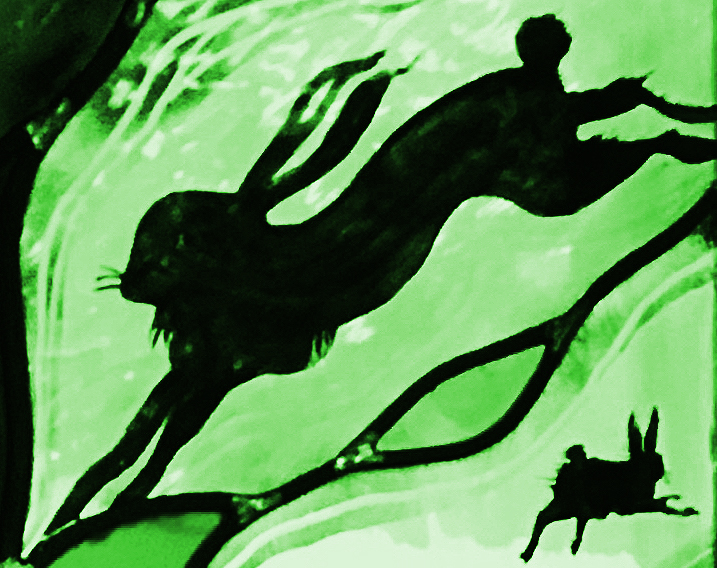
Hare – stained glass by George Walsh:

As evening fell, what should come to him but a hare? He took his horse and released the hound and the hawk but the hare outran them all and disappeared into a small cottage in the wood. “Why wouldn’t I go in?” said O.

There was no-one inside but a fine red fire in the grate, and he sat down beside it. Soon the ugliest old woman he had ever seen came through the door. She made no blessing to him at all, only to look badly at him.

“Come in from the door”, says O, “and share the fire with me.”

“I won’t come”, she said, “I would be scared!”

“What would you be scared of?” asks O.

“This hawk, and I don’t trust the greyhound, and I wonder what that horse would do to me?”

“You are in no danger from them”, says O, “They are all honest. Come up and sit by the fire.”

“I will not”, she says, “unless they are all leashed.”

“Why don’t I bind them?” says O. “But I have nothing to bind them with.”

“I’ll give you a way to bind them”, says she, and tore three snares of hair off her head. “Here”, she says, “Use these.”

He pretended to bind them, but at the first opportunity he put the three hairs into the fire.

“Take care, you scoundrel”, she said, “there’s no doubt that you killed my son – the best son a woman ever had! You were in the castle last night”, she said,“ and my son is dead there today. You did it, for sure”.

“But what is your satisfaction?” says O, “I wouldn’t have killed him if he hadn’t tried to kill me.”

“I’ll tell you”, she said, “I’ll be happy.” She wielded her sword and they fought a battle inside the cottage. They both laid into the battle, and it was the greatest sword-wielding that any man had ever seen between any two, and they continued on ever and ever until O was in trouble. He saw that he was strained and he called for his hawk to come to his aid.

“Fade, squeeze, snare!” says the old woman. 

“I can’t move”, said the snare, “because I’m here in the fire”. So the hawk jumped, and that was it for the woman – her eyes were out. This did not stop the battle between them and she very soon had the headache on O once more. He yelled out to the greyhound, “Give me help.”

“Fade, squeeze, snare!” says the old woman.

“I can’t help you”, said the snare, “because I’m here in the fire”. So the greyhound jumped in and took a piece out of the old woman’s leg. Yet she still gave her best and O was forced to call out for his horse.

“Fade, squeeze, snare!” says the old woman.

The snare spoke and said, “I’m here in the fire”. With that the horse came to his aid and didn’t the old lady explode with both her legs gone.

From then on it was O taking the lead. He raised his sword to strike the final blow: “Here’s an end for you,” he shouted.

“Hold on”, says she, “If you remove my head or my walls of life, your brother and his horse, his dog and his hawk will remain captive forever”.

“How can you bring them back?” he asked.

“There’s a magic wand, stuck under that rack by the fire. Hit these stones with the rod and they will come back as right as they ever have been.”

He made for the rod and the first thing was he had struck the witch and she turned to stone herself! Then he struck the other four stones and his brother, the hawk, the greyhound and the horse were back right as they had always been. There was the great reunion and the sharing of stories, then they were all for going back to the castle. “We have the magic wand now”, they said, “We can do whatever we like – let’s call and see what big lads there might be there now.”

There was the fair countrywoman, and wasn’t she surprised to see the two men standing there as alike as you could ever believe. O grabbed her for fear she would vanish as she had before. “Now”, he said “there’s something strange about you, for you left me before when the ground shook.”

“It’s like this”, she said, “ there are three of us here enchanted. The old woman comes every night and puts the magic on me, then in the days I have to do all the chores in the castle for her two sons. She didn’t come at all last night.”

Enchanted Woods (The Dark Hedges, Co Antrim):

“No”, says O, “and you will never see her again. I ended up with that old girl last night and I took the living breath from her. But tell us how you came to be here?”

“It’s too long to tell”, said the girl. “There were only the two of us, sisters – and the best times were when we were living with our father and mother: strong, rich and important. Our mother fell ill and knew that there was no cure. She called us to her bed and told us that she saw a disaster on the horizon. The old powers would come and put an enchantment on us, and take our castle. Our father asked how long we would stay enchanted, and if there was any cure. There was none, she said, unless the Sons of the Salmon would ever find us. The old powers came to take the castle from us. When we resisted the old woman struck us with a magic wand and we were turned into three stones – my father, my sister and I. Only I was released every day to carry out the chores. That is how we have lived our lives up to now, and if the old woman is dead then perhaps the magic is at an end.”

“She is dead”, said Hugh, “as we have survived the magic. Where are the stones that were made for you and your father?”

She showed them the stones. Hugh beat the magic wand on the stones and there were all three bounced up as well as they ever had been. Then their stories started together, with the father telling all that had taken place. “And now”, he said, “we believed that we would be captured forever unless the Sons of the Salmon lifted the magic. But you cannot be the Sons of the Salmon, yet the magic has been lifted!”

“That doesn’t matter now”, said Hugh. “but we are two brothers and you have these two daughters. Why wouldn’t we be the ones to marry them?”

“So be it”, said the father, “and I will divide my kingdom between you.”

“Perhaps we don’t need a kingdom”, said the brothers, “for our own father is a gentleman too. Now we should return to him to give him the news.”

And so it happened that the families were united. The gentleman who had been a fisherman remembered the story of his meeting with the salmon who could talk, and who had foretold the birth of the two boys. Of course it was these two who were the Sons of the Salmon. It was agreed that they should go and look for the salmon so that he could share the news. The fisherman went back with his line to the pool where he had the adventure in those far off days. What should happen but the salmon reappeared and spoke again! The long of it was that they struck the salmon with the magic wand and he turned into a fine gentleman who told them how he, also, had been put under an enchantment which could only be lifted by his own sons.

The short of it was that they all returned to the castle in the woods. They picked up the stone that was made from the old woman and took it to the pool where the salmon had spoken. “What would we do with her”, said O, “but put her where she put somebody else?”

They threw in the stone, and there was never trouble again in that castle or in that kingdom. The sun has always shone in everlasting summer, and the fields are only green. And the children’s children of those families have spread across the western lands and are the happiest of all peoples in all this world.

Endpiece from Irish writer and illustrator Robert Gibbings’ final book – Till I End My Song (1957):
Salmon of Knowledge by George Walsh

This story was reworked by Robert, based on a most ancient story, told in Irish