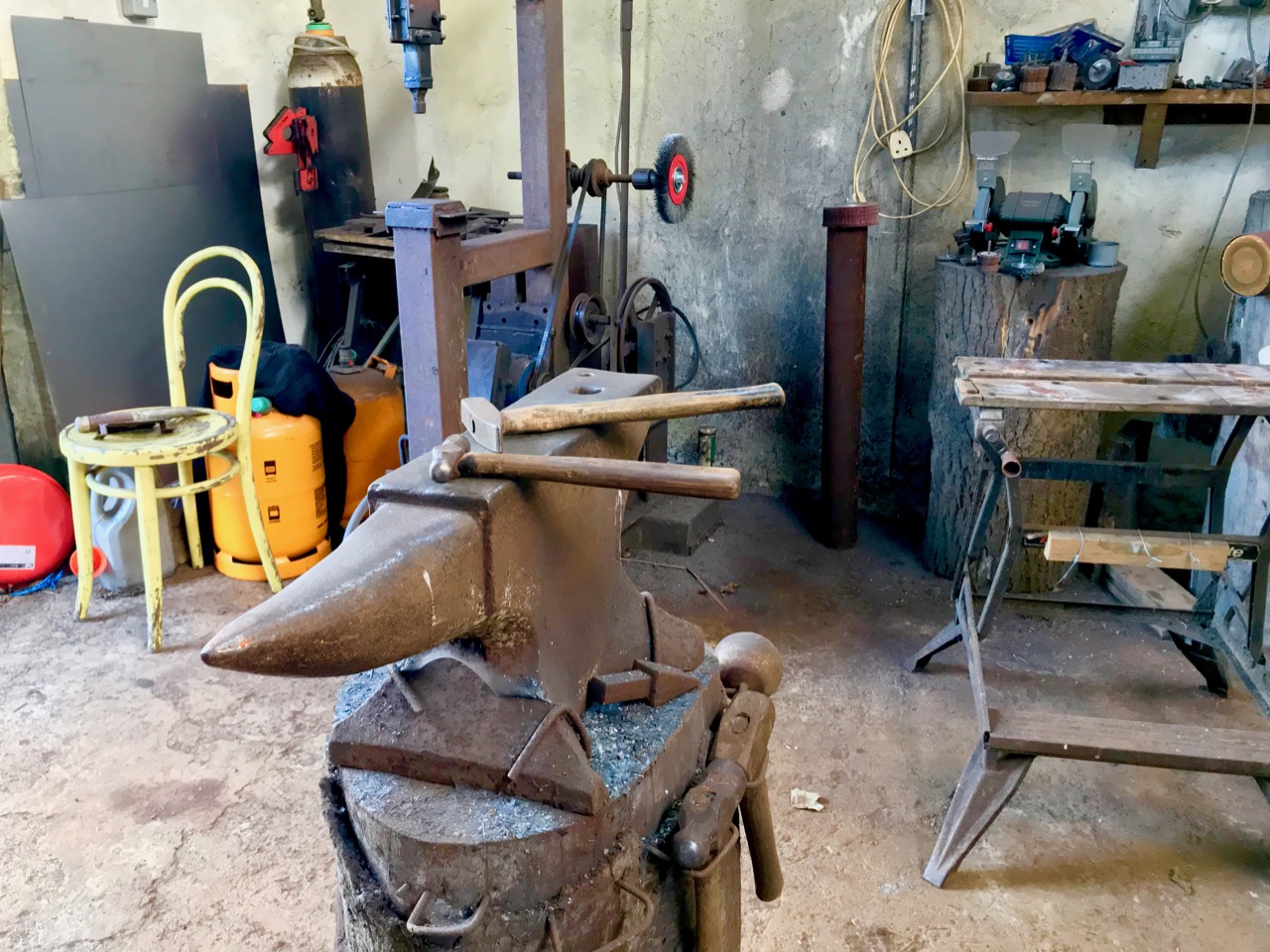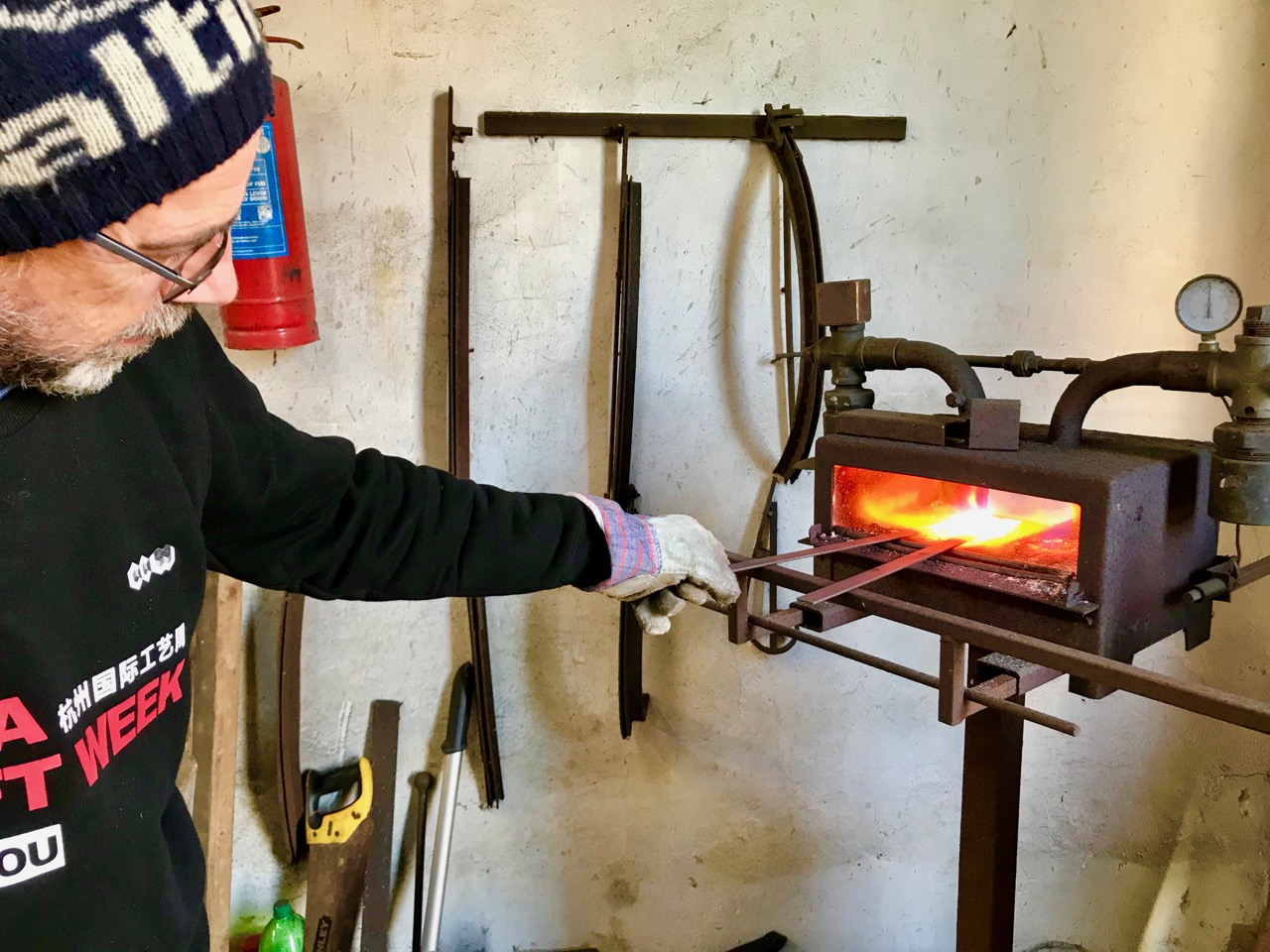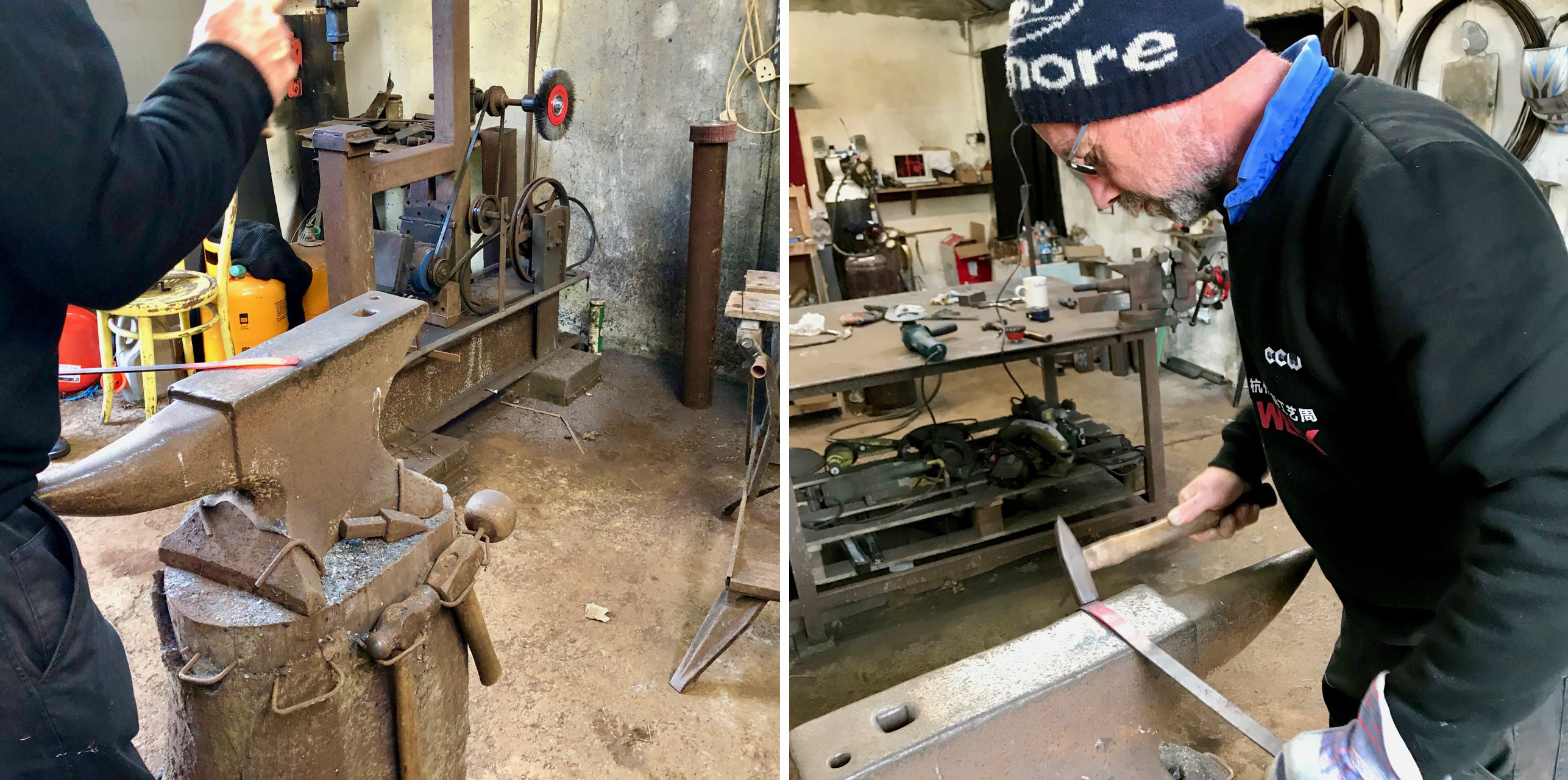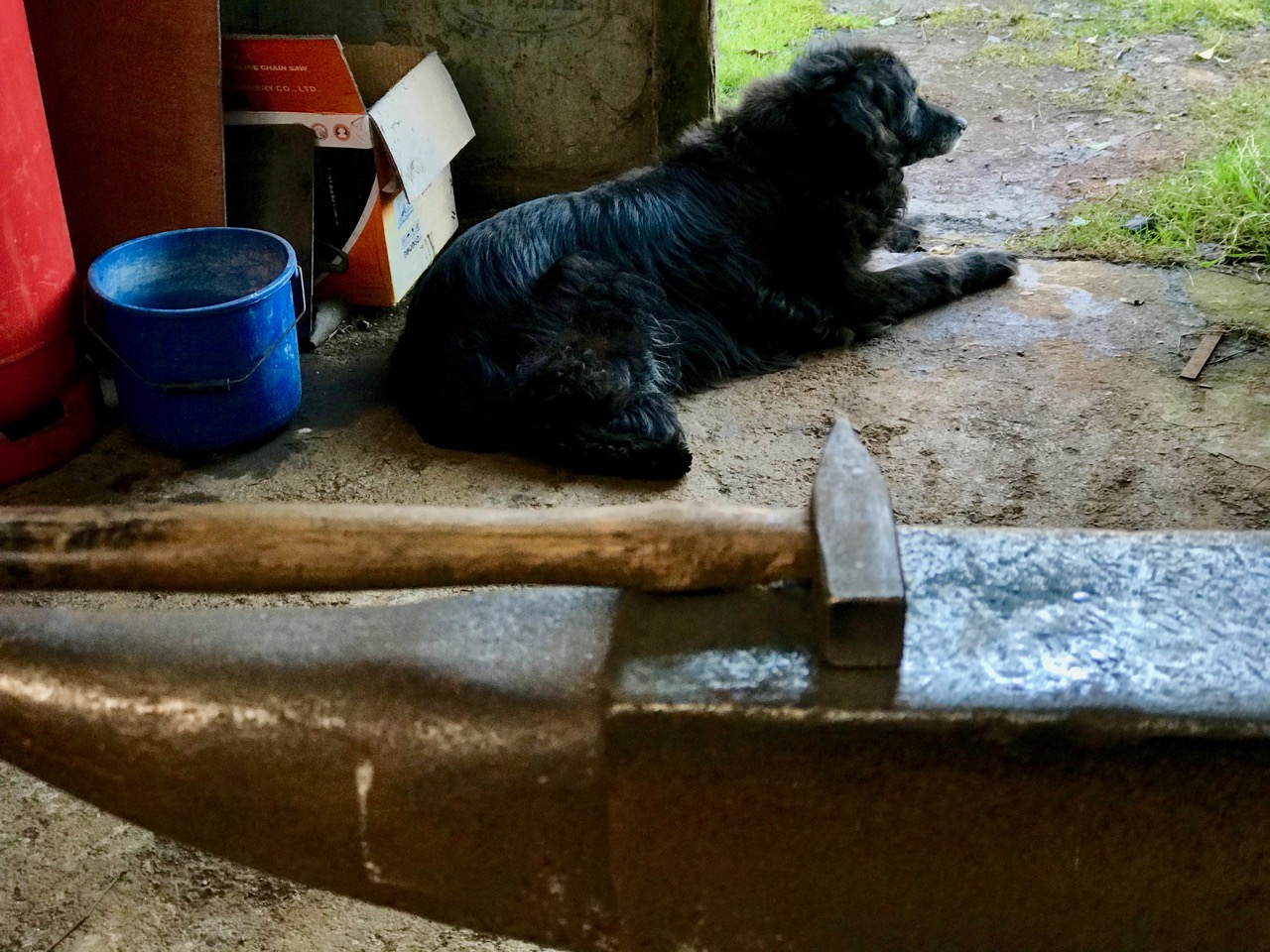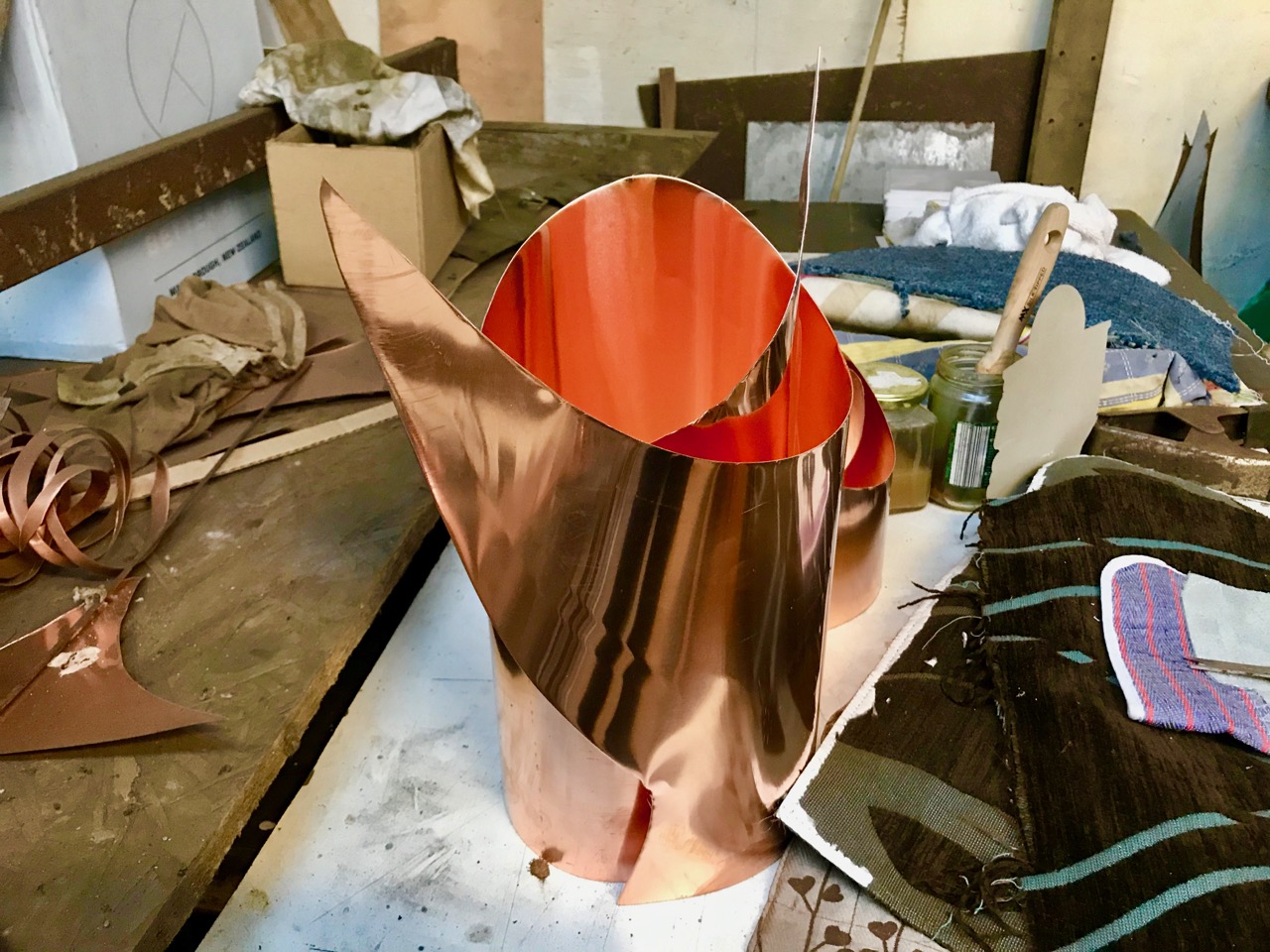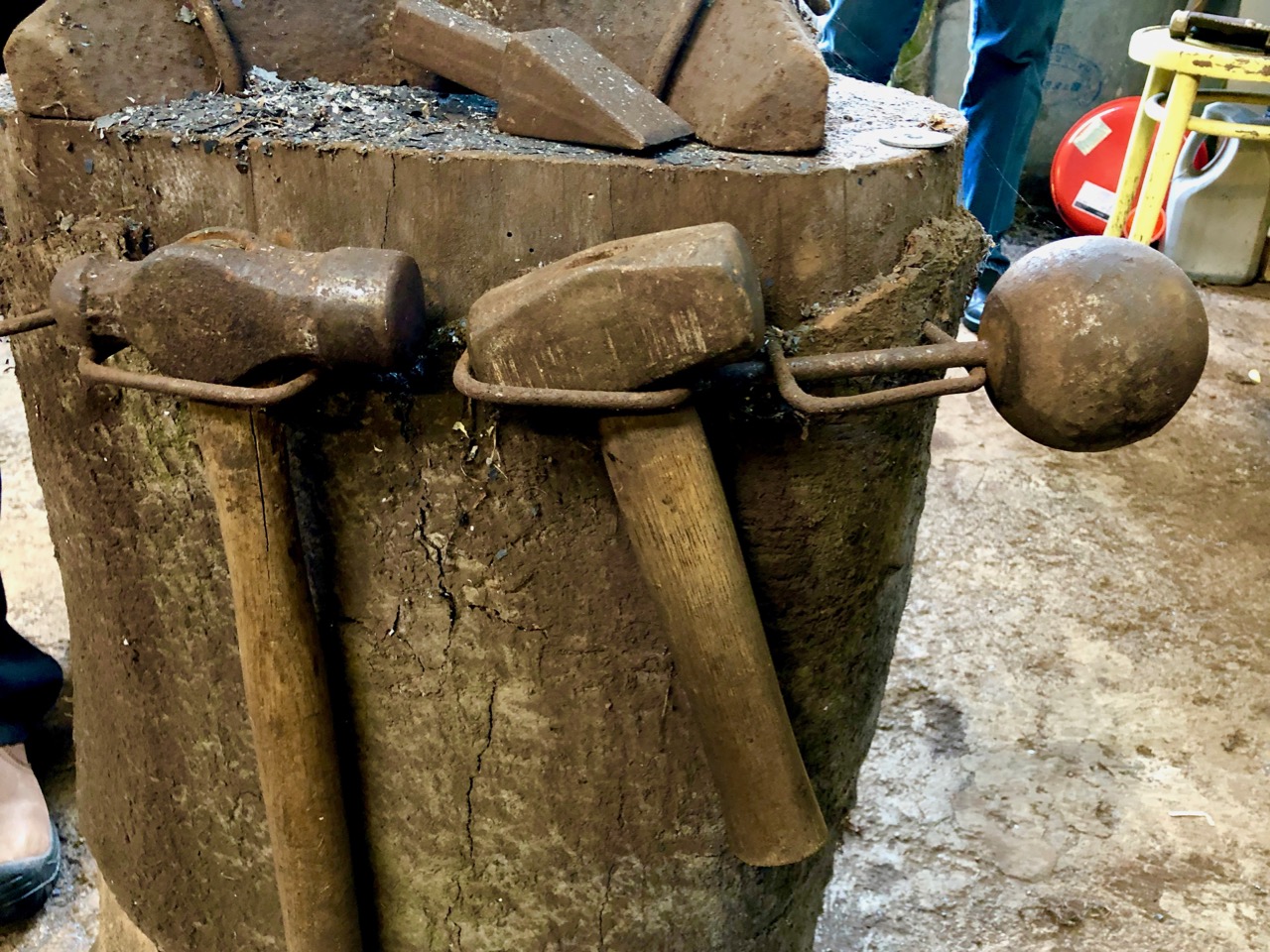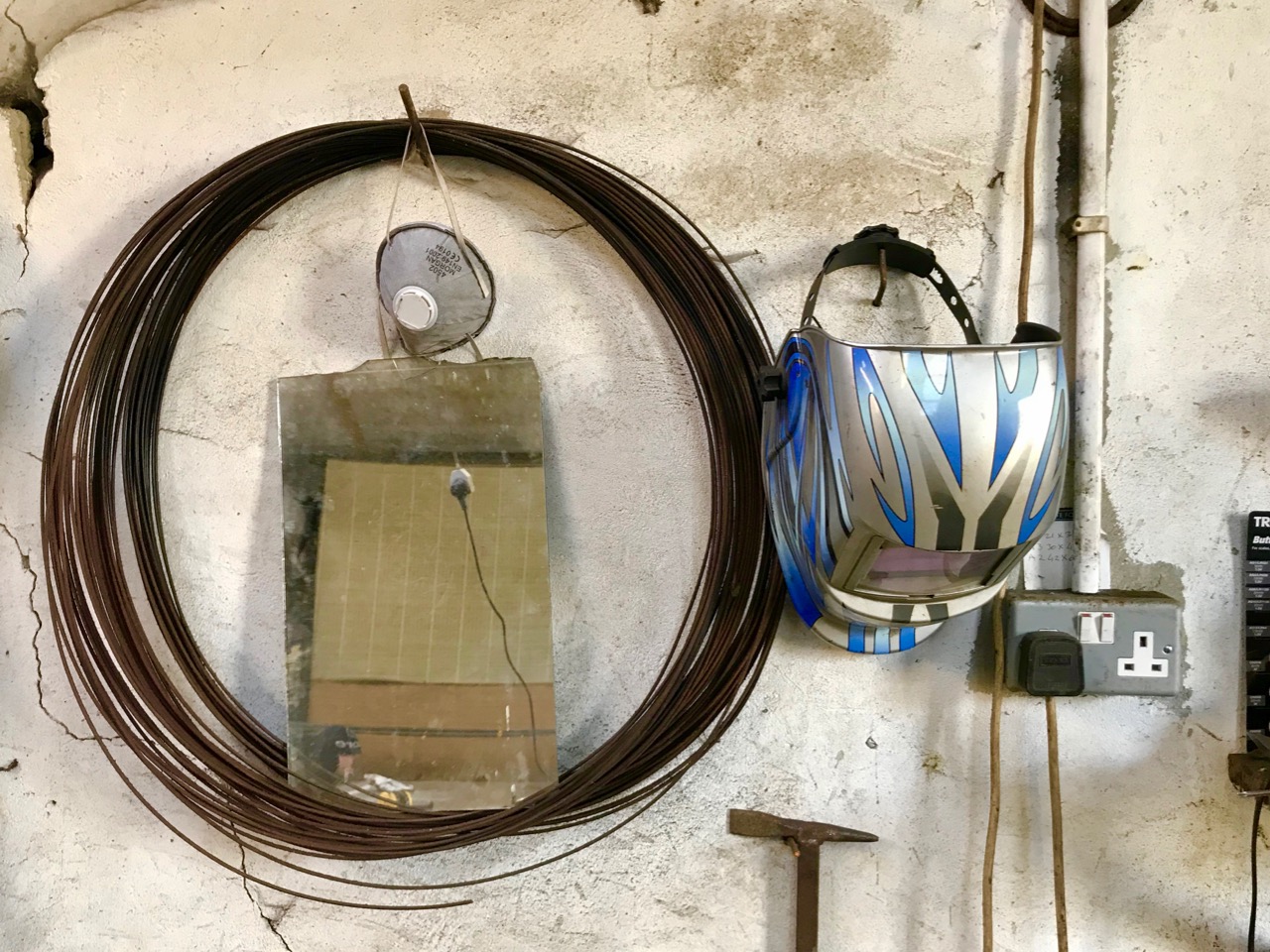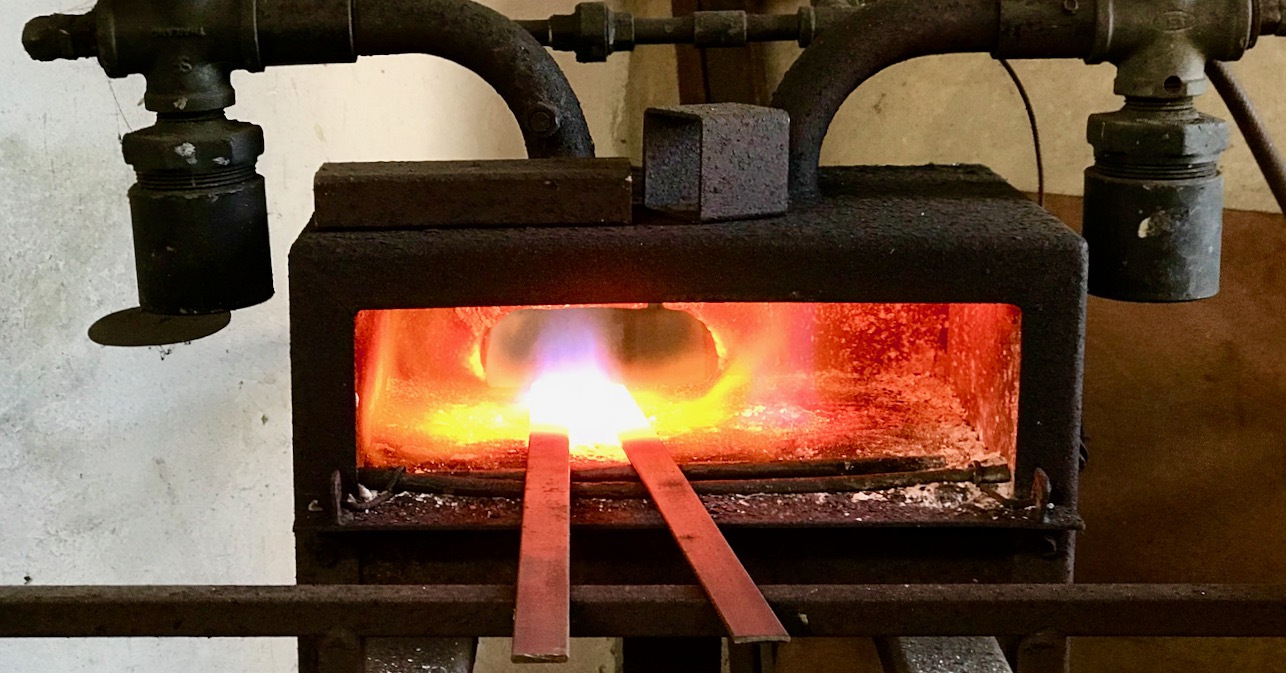
I admire workshops. And I admire the creativity that goes on in them. Here’s one that’s not too far away from us in West Cork: it’s just outside Skibbereen, on the road to Lough Hyne. It belongs to Paddy McCormack, who is a metalworker producing functional and decorative items. His preferred material is copper, and that comes with a historical connection that puts him right back with some of the earliest craftspeople who dwelled in this western part of the land thousands of years ago!
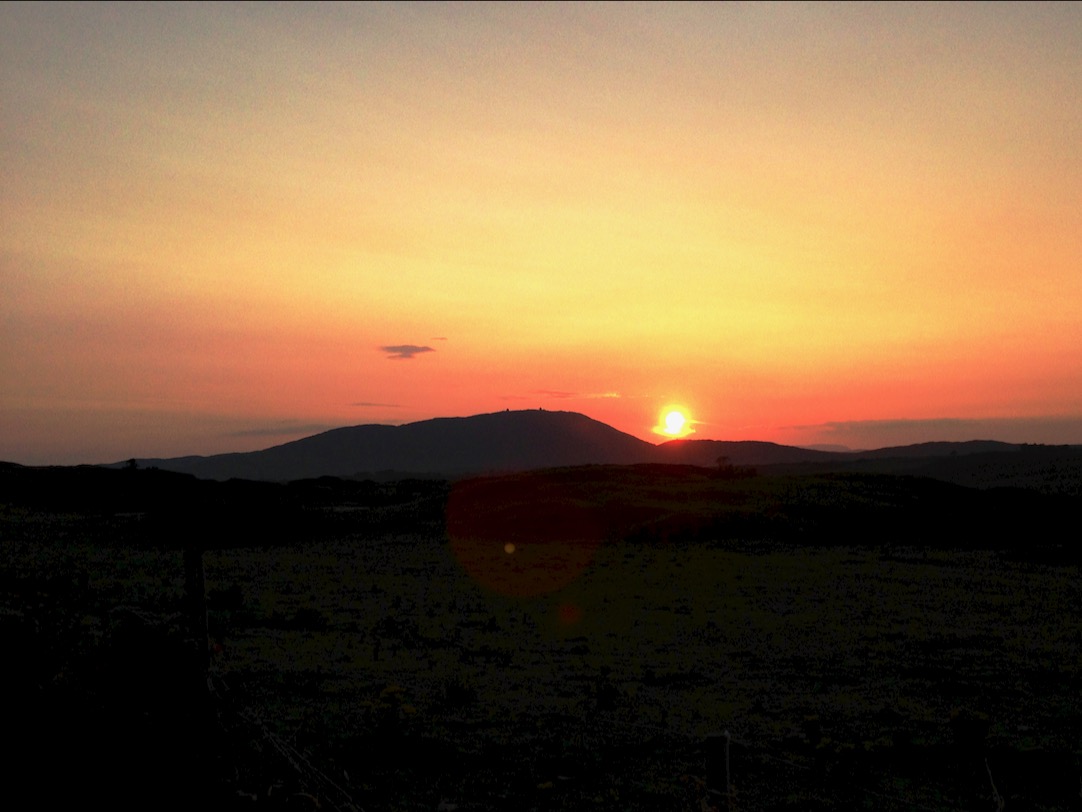
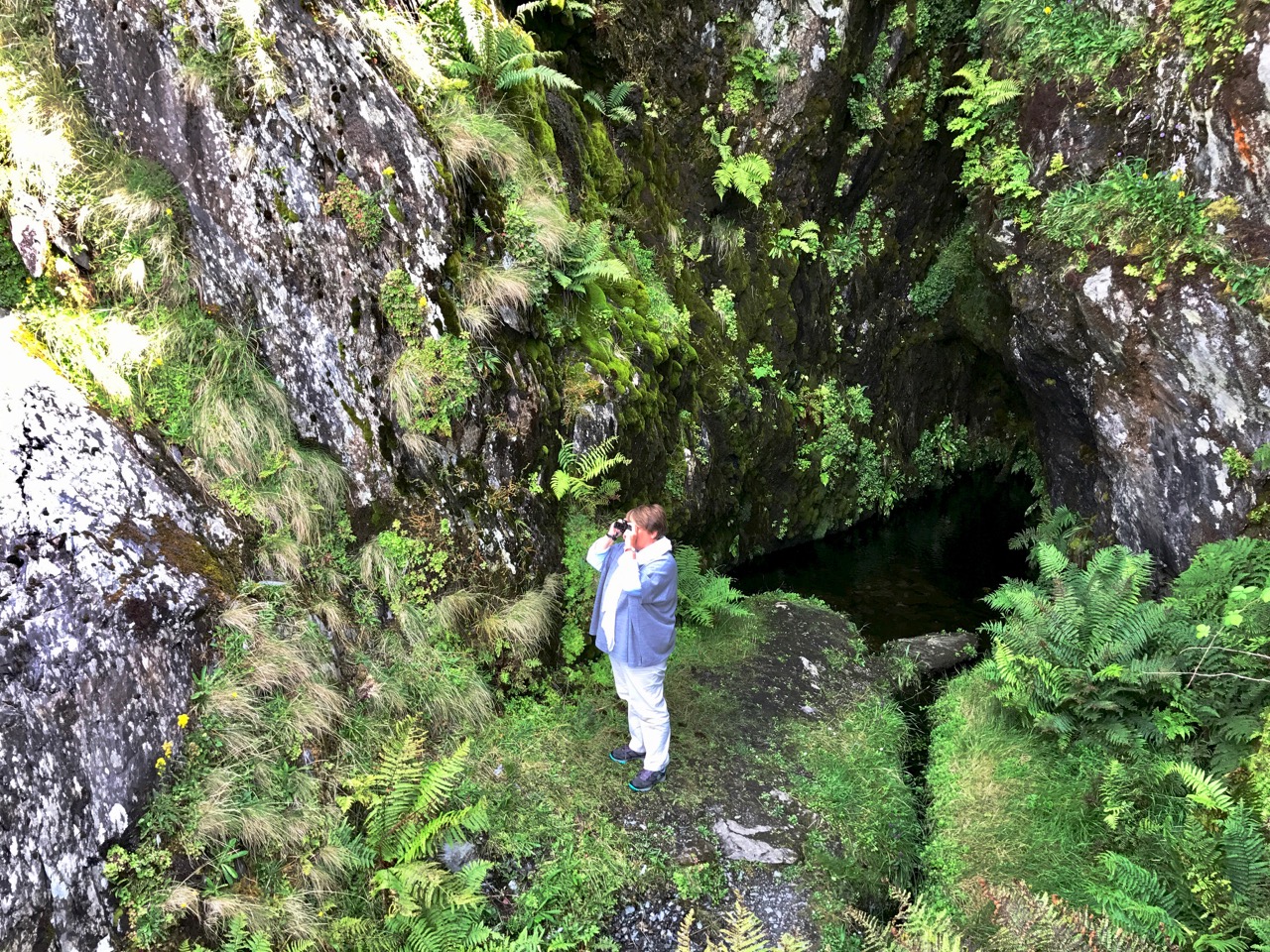
Mount Gabriel, the Mizen’s highest outcrop of land, silhouetted against a copper-coloured winter sky (upper picture) is the site of ancient copper mines dating from the Bronze Age. In the lower pic, Finola is standing at the entrance to an old mine adit driven into the side of this mountain. If you want to see the techniques used by the early metalworkers, have a look at this post which I wrote back in 2015. You’ll find that the methods dating from three and a half millennia ago are recognisable today. Here’s Paddy continuing the tradition:
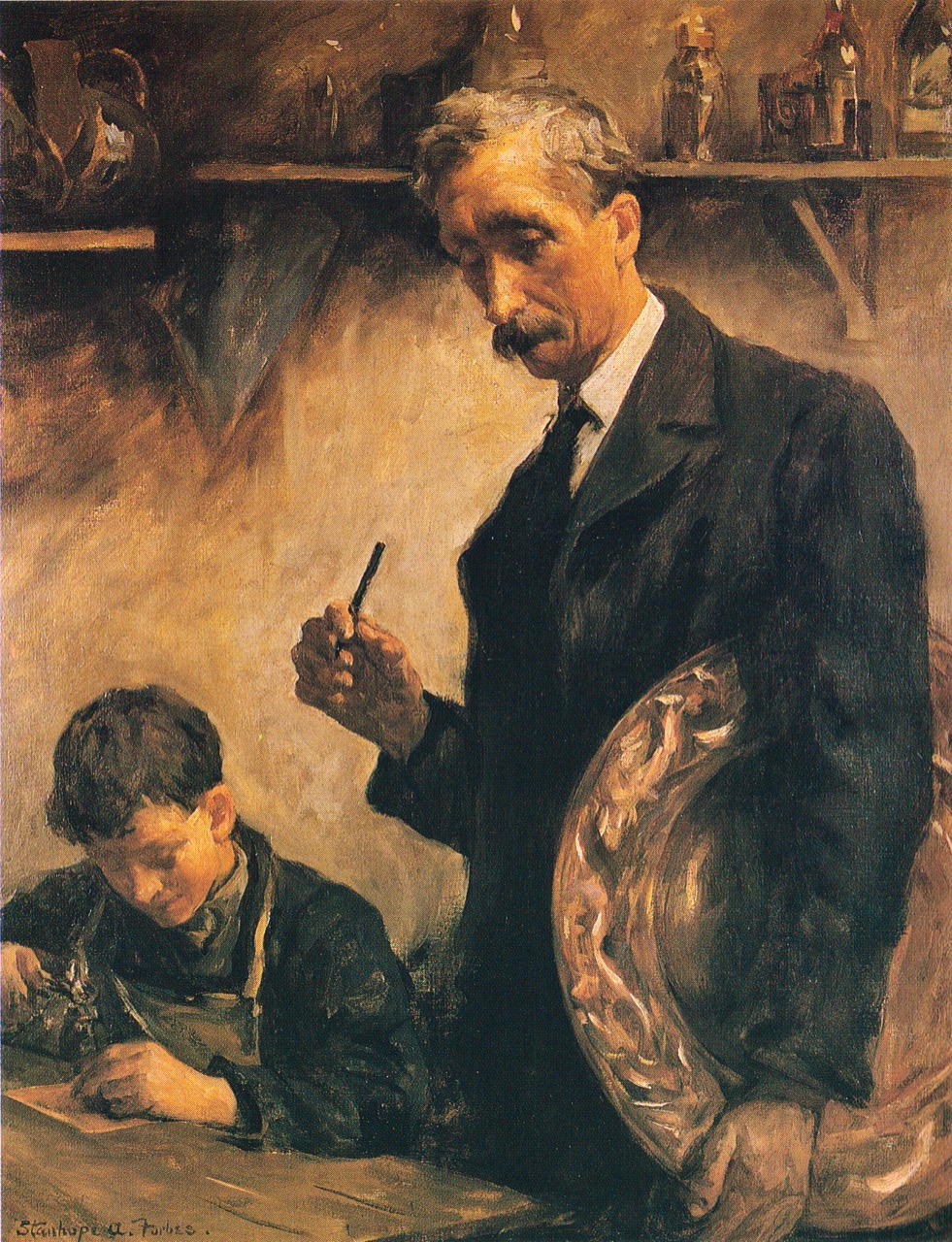
We first came across Paddy at the 7 Hands Exhibition held in London, Dublin, Cork and Ballydehob. In this post written by Finola at the time you’ll see him with one of his unique pieces, a chess set, but it was at another exhibition this year that we became aware of his beautiful, hand-beaten copper bowls. Once seen , never forgotten: we asked Paddy if it would be possible to produce a large bowl for us, more the size of the now much sought-after copper ‘chargers’ produced by the Newlyn artists colony in West Cornwall during the late 19th and early 20th century. I lived in Newlyn before coming here to the west of Ireland and much admired the copper work from that time.
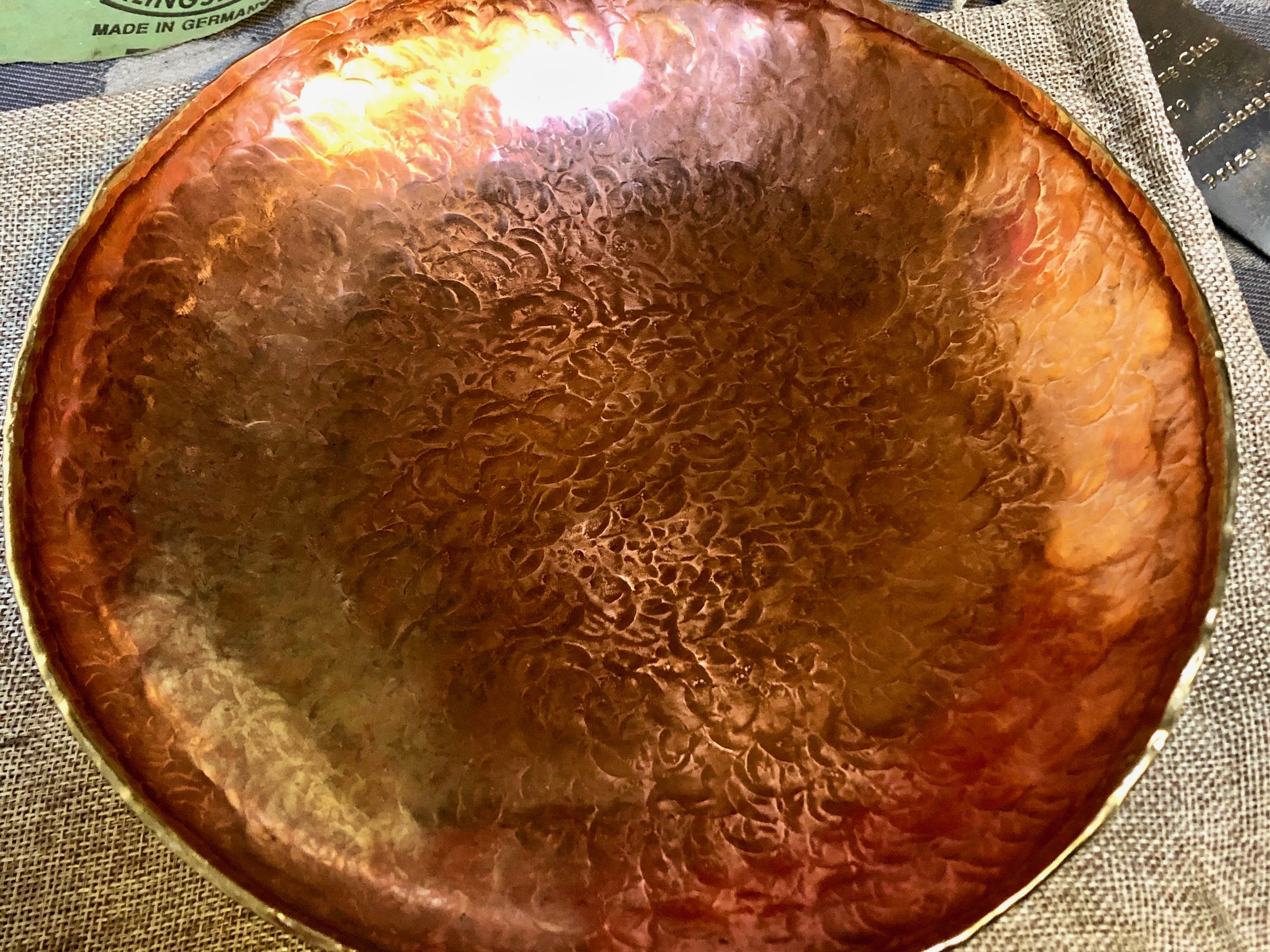
The Young Apprentice a painting by the Irish-born founder of the Newlyn School, Stanhope Alexander Forbes (above). The painting dates from 1908. There is still a copper works in Newlyn today. First established in the fishing village in 1890, copperware production gave us some of the most outstanding work created in the Arts and Crafts tradition of its day. One of the things that impresses us about Paddy’s work is his own way of working the metal surface, creating organic textures and colours which are exquisite.
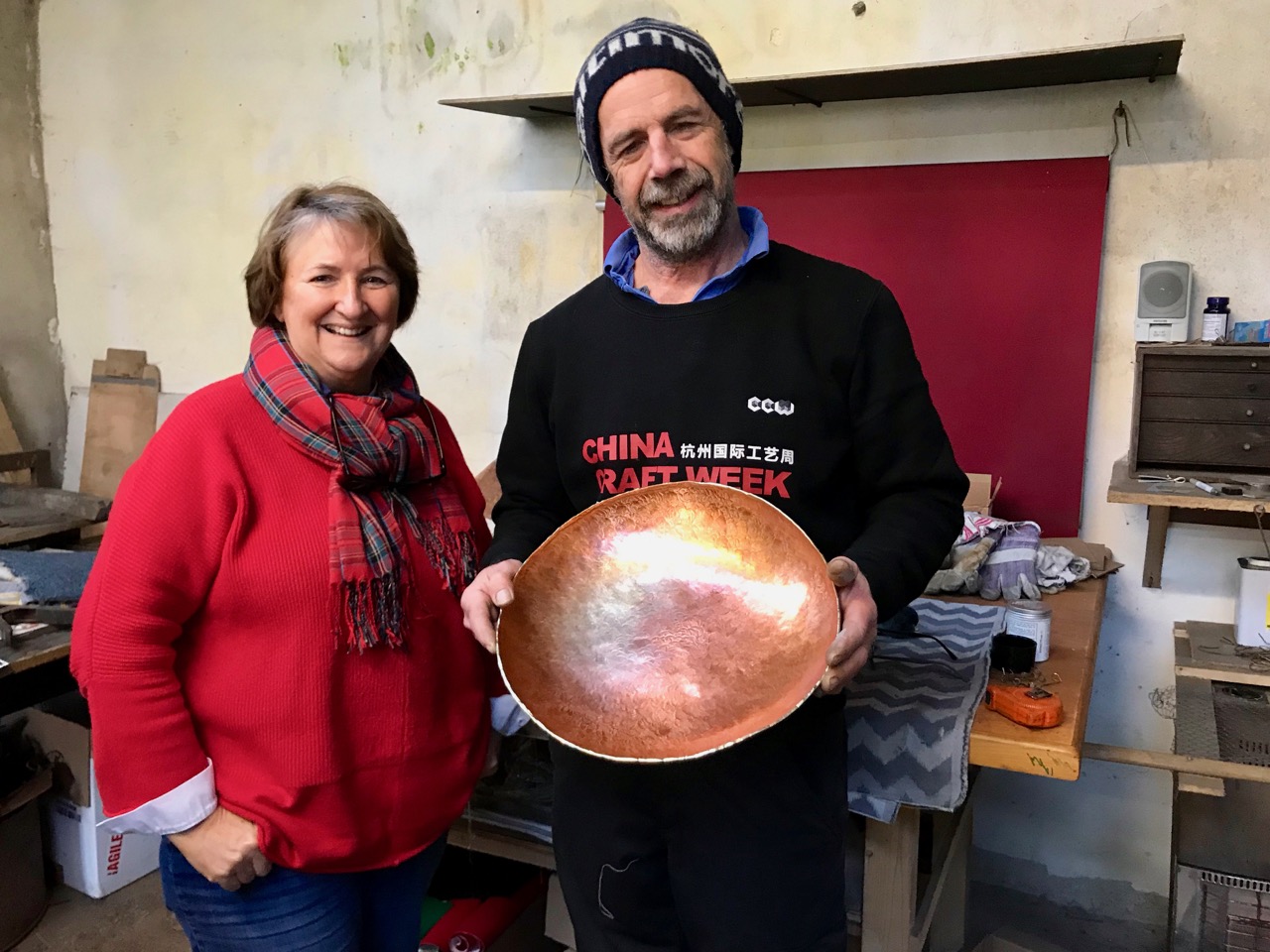
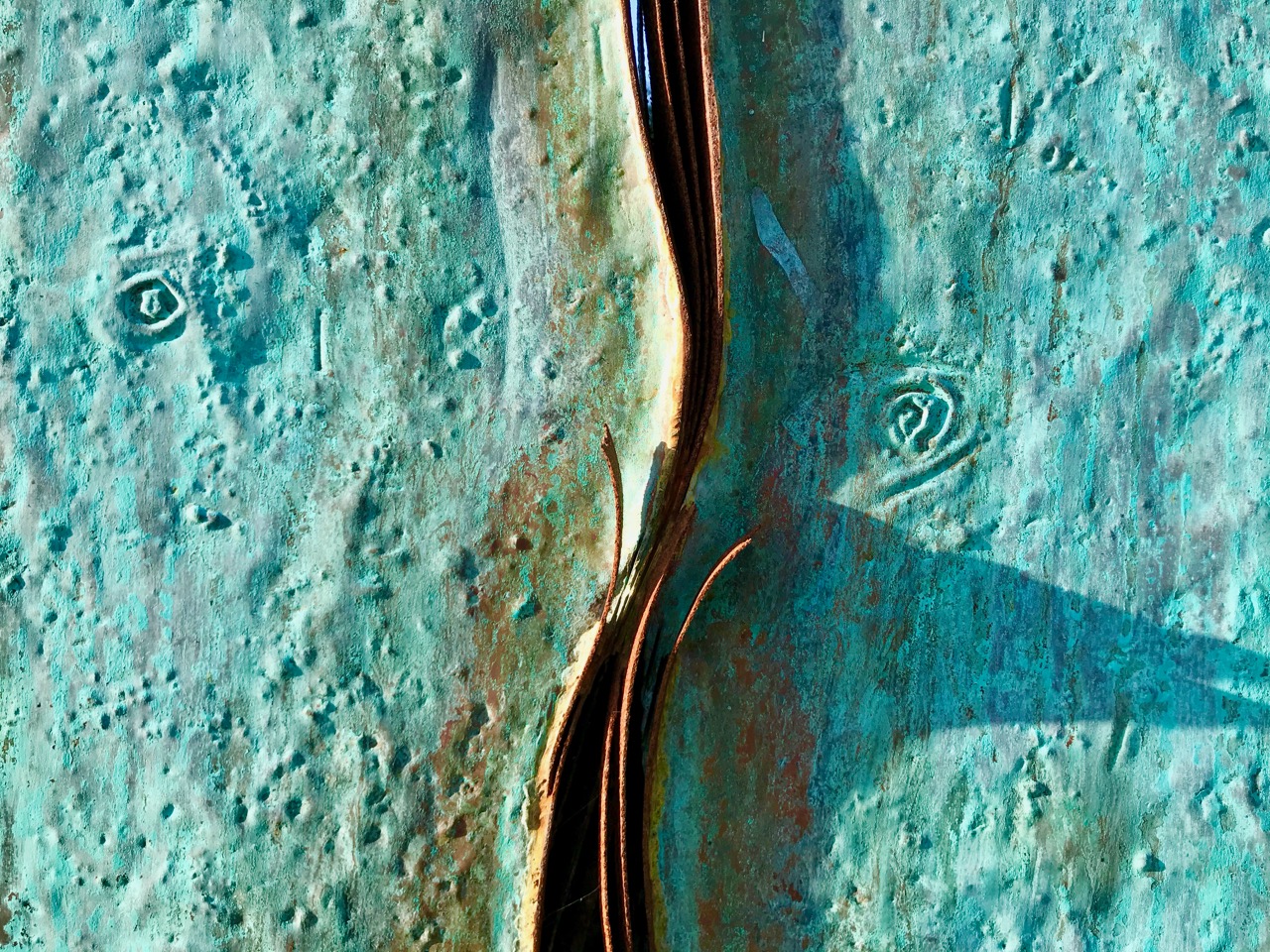
Paddy presenting us with the large bowl which we commissioned. It is elegant and unique, and we are delighted! The richly textured surface shows the marks of the copper being worked and provides an organic finish which will evolve and change colour over time. Paddy has developed his own design for his bowls, with a double skin and welted rim.
Raw materials and the tools of his trade form Paddy’s working environment. He is comfortable within these surroundings. We felt privileged to meet him in this environment, and could sense his ability to transform his visions into reality through complete mastery of his chosen medium. Examples of his work in the open air show the distinctive patina that develops on copper when exposed to the elements.
Paddy markets his bowls and decorative copper work through craft outlets and fairs. He recently travelled to China with a group of locally based fellow artists and craftspersons. It’s a small world when a master artist / craftsman from rural West Cork is in demand on the other side of the planet!
You may remember my excitement when – a few years ago now – I found out that the real St Valentine is interred in the Carmelite Church in Dublin. But here’s a palpable marvel: at Jerpoint, Co Kilkenny, the bones of St Nicholas are reputed to be buried. Yes – the Santa Claus St Nicholas! Tradition has it that a band of Irish Norman knights from Kilkenny went to the Holy Land to take part in the Crusades. As they headed home to Ireland, they ‘seized’ St Nicholas’ remains, bringing them back to Jerpoint, where the bones were buried – some say – under the floor of the Abbey (others say they repose nearby at the old church of St Nicholas).
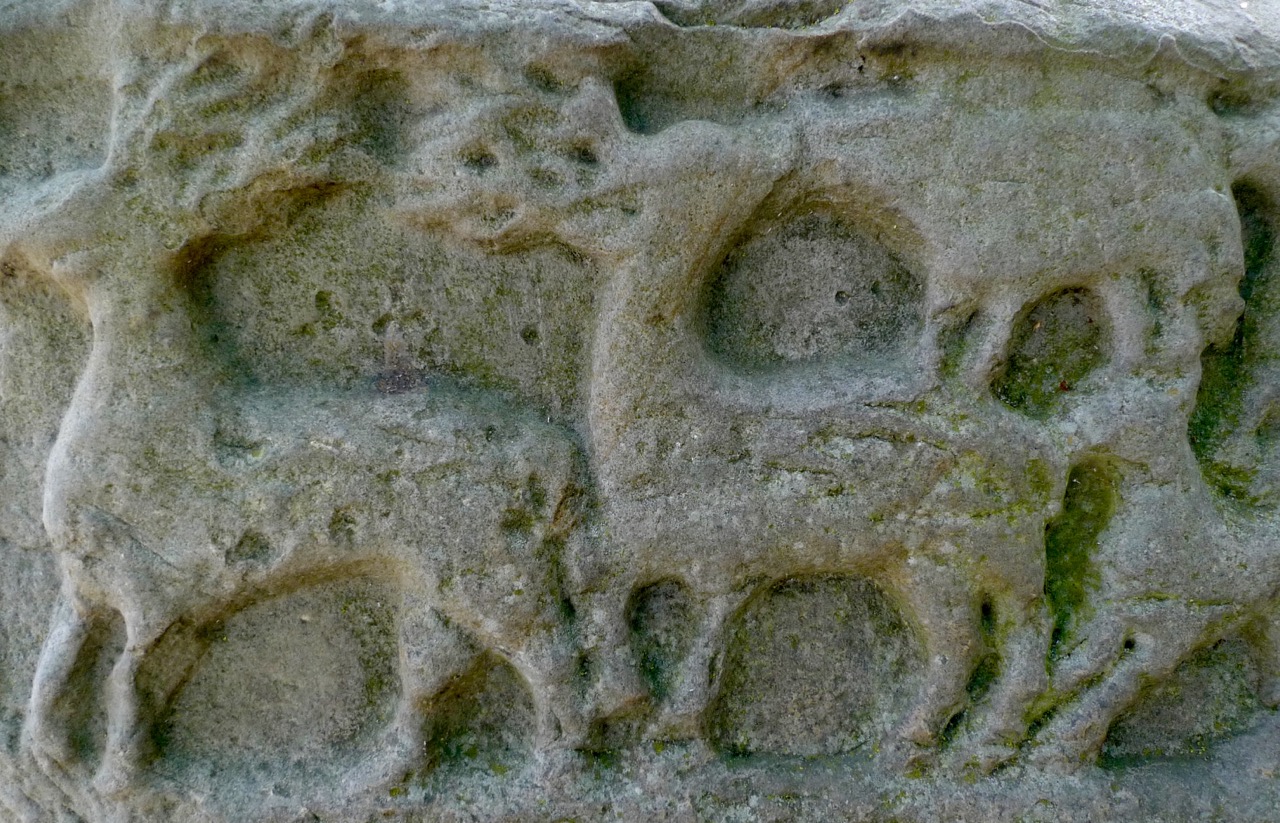
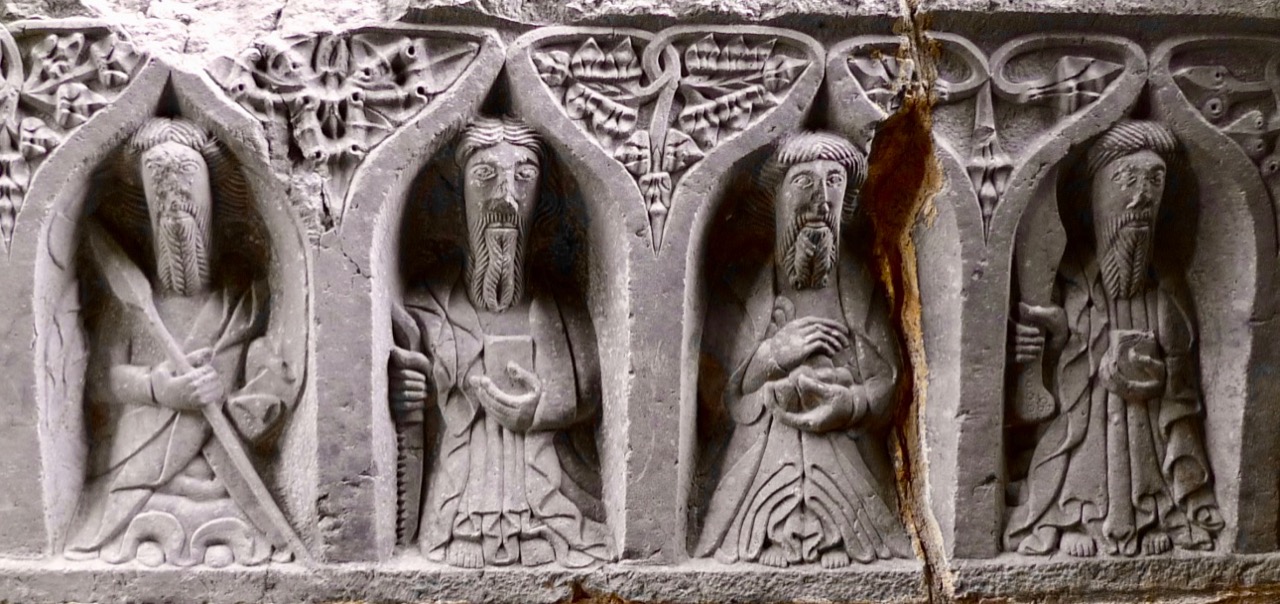
We first visited Jerpoint back in 2015, on a trip that took us to County Meath where we explored the monastic city of Kells (the famed book was written and illustrated there) and also where we found the medieval image of Santa’s reindeer in the header of this post! It is carved on to the base of the town’s Market Cross. We also visited Kells Augustinian Priory – a different Kells but in County Kilkenny – and Jerpoint Abbey itself, a Cistercian monastery rife with carved figures, some up to 900 years old. Look at the ‘Weepers’, above, carved by members of the O’Tunney family – sculptors from Callan who worked in the 15th and 16th centuries. These four represent saints and show how they were martyred: St Thomas with a lance (left), St Simon with a saw, St Bartholomew holding a skin (he was flayed to death) and St Paul with a sword.
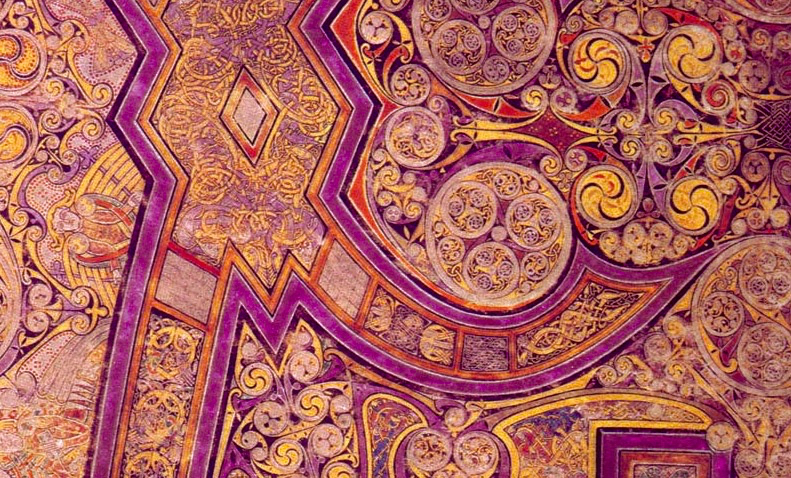
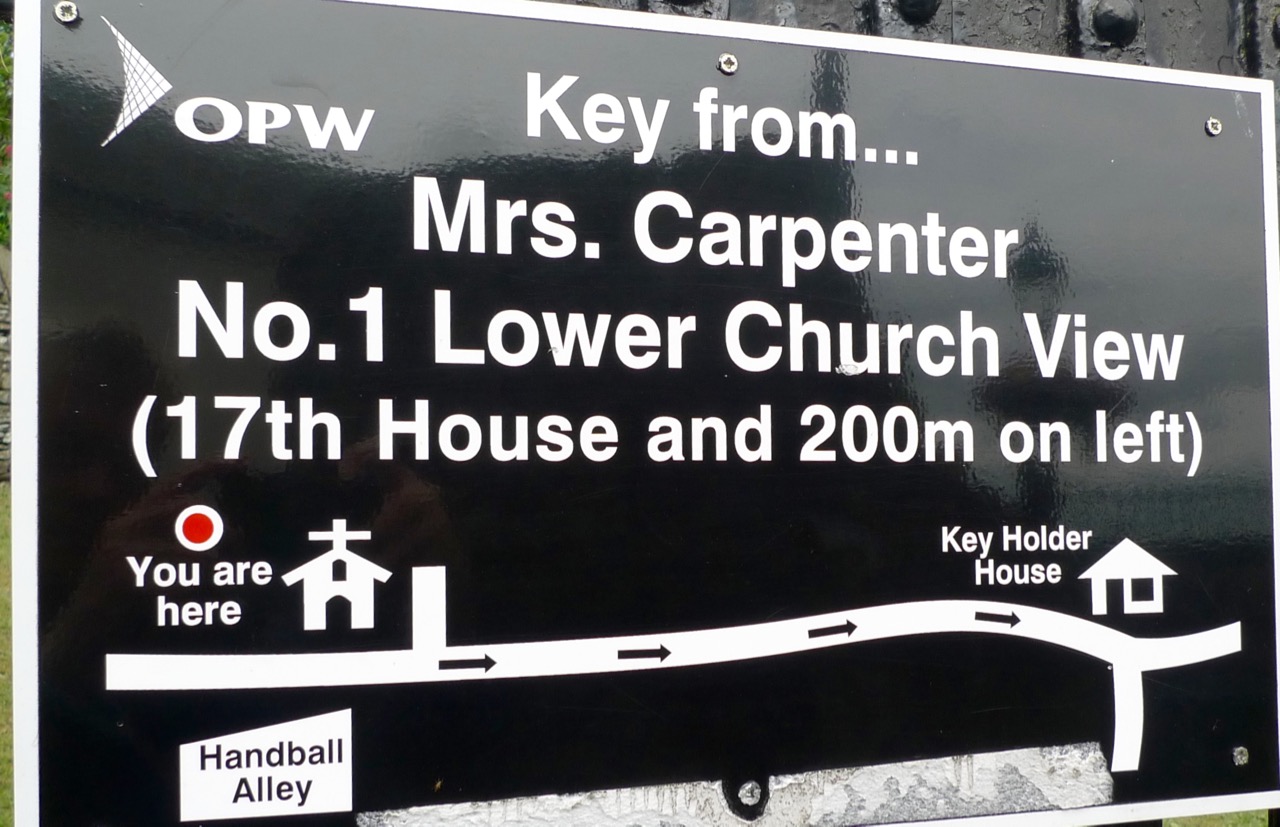
The Book of Kells is worth more than a passing mention, especially as some commentators have likened the medieval carvings at Jerpoint and other contemporary monastic foundations in Ireland to ‘illuminated manuscripts cast in stone’, because of the richness of the characters, the decoration and the detail. The Book (that’s just one example of the incredibly detailed capitals on a single page, above) probably dates from the 8th or 9th centuries and may either have been written in its entirety in Kells, or started by St Columba’s community in Iona and completed in the Scriptorium in Kells. That building still exists! In fact it (or something very like it) is illustrated in the book. It’s known as St Colmcille’s House – we went to have a look at it, and were fortunate to have a tour by its guardian.
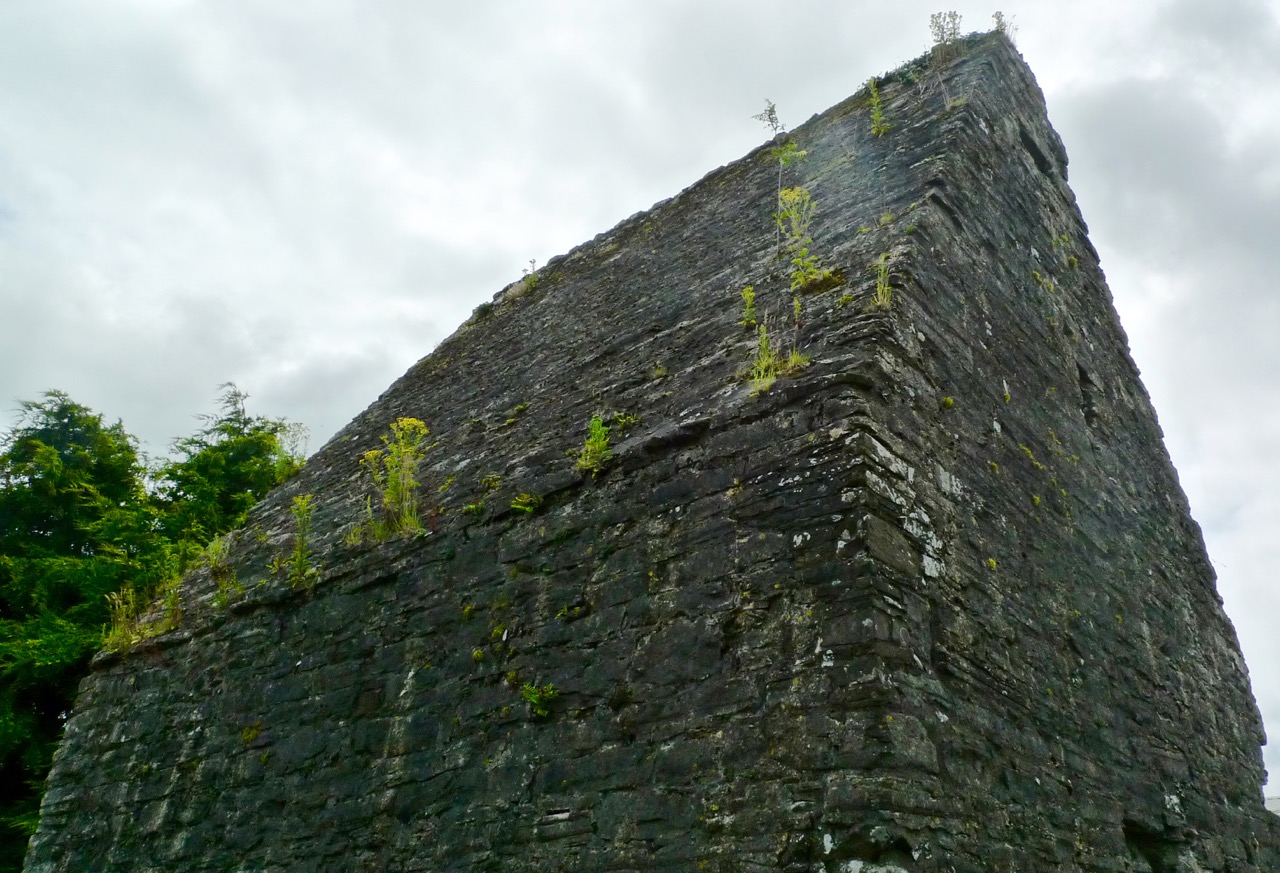
Here is the ancient stone roofed oratory of St Colmcille’s House (above), supposedly the place where the Book of Kells was written – or, perhaps, completed. The upper floor of the building has a small window oriented to focus sunlight on the writing table. St Colmcille’s bed was also kept here – a large and heavy stone slab – until it was stolen in the 1950s! A few hundred years earlier (in 1007) the Book itself was stolen from Kells and eventually found in a nearby bog. It stayed in Kells until 1654, when it was sent to Dublin for safekeeping: it is now on permanent display in Trinity College.
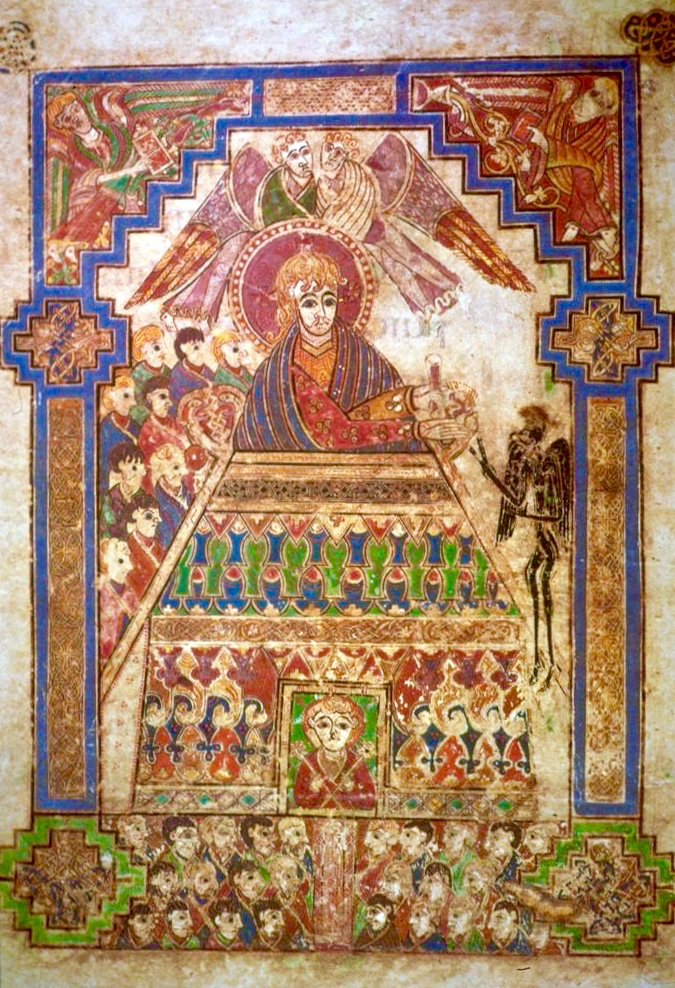
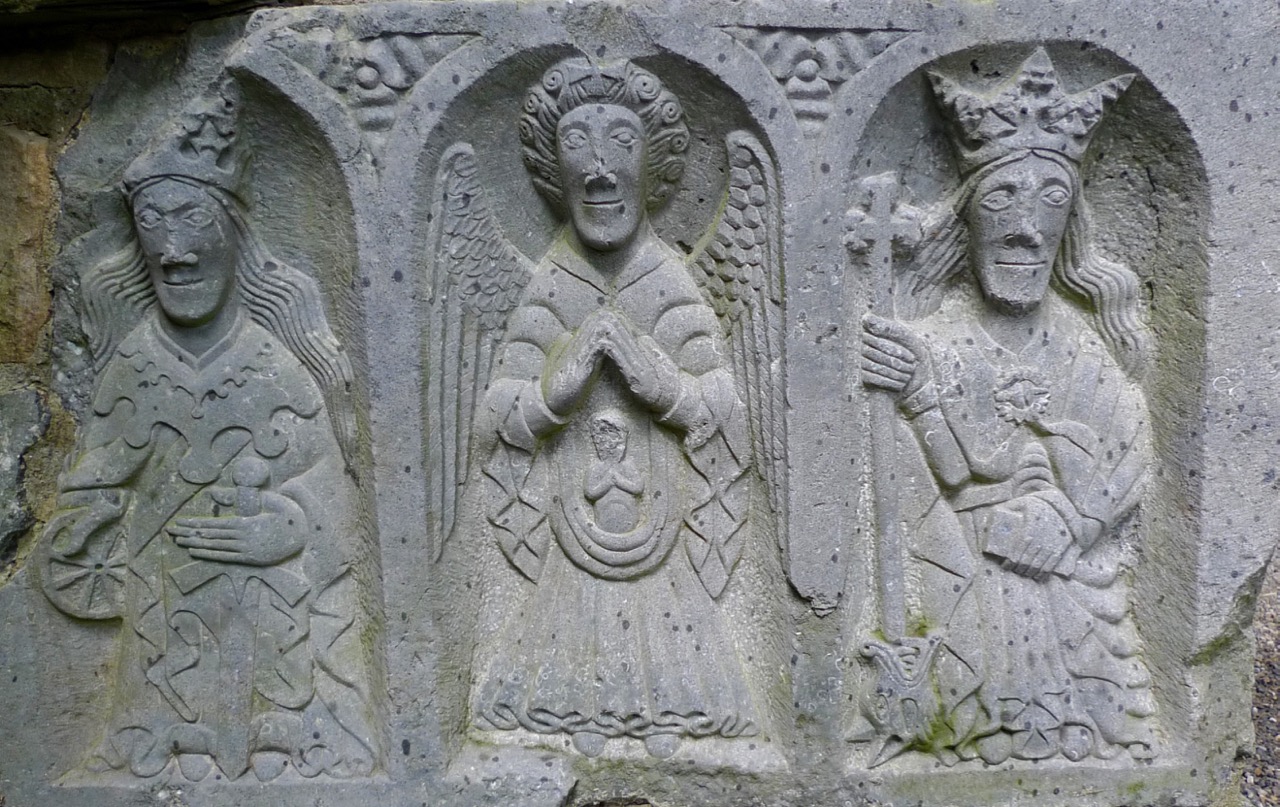
(Above) another page from the Book of Kells, which may be an illustration of the Scriptorium at Kells, and – perhaps – a self-portrait of the writer: see him sitting in the doorway to the house working away with his quill pens. Back to the medieval feast at Jerpoint: the trio below, from Jerpoint, are St Catherine – with her wheel, Michael the Archangel and St Margaret of Antioch – who is conquering a Dragon.
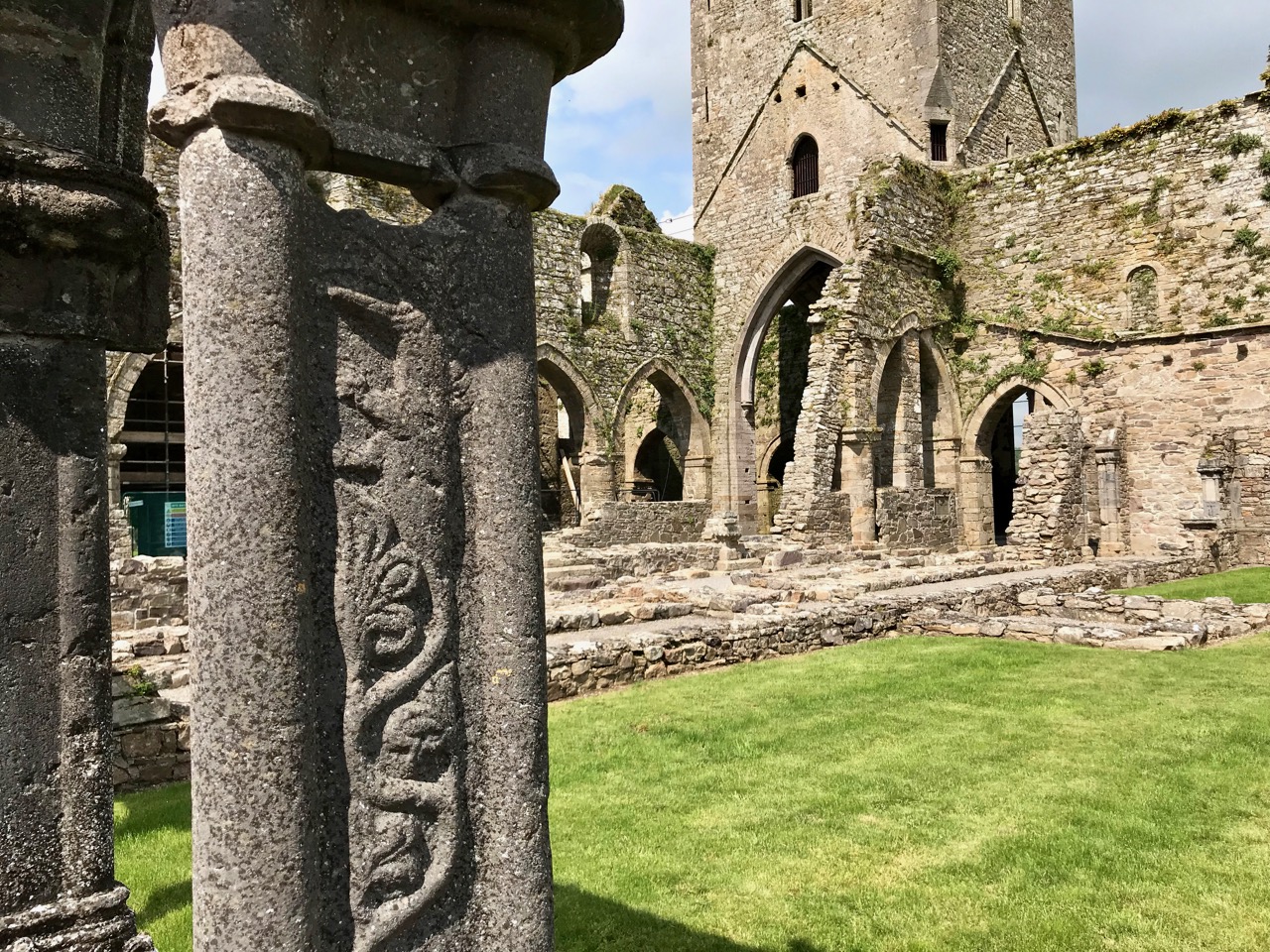
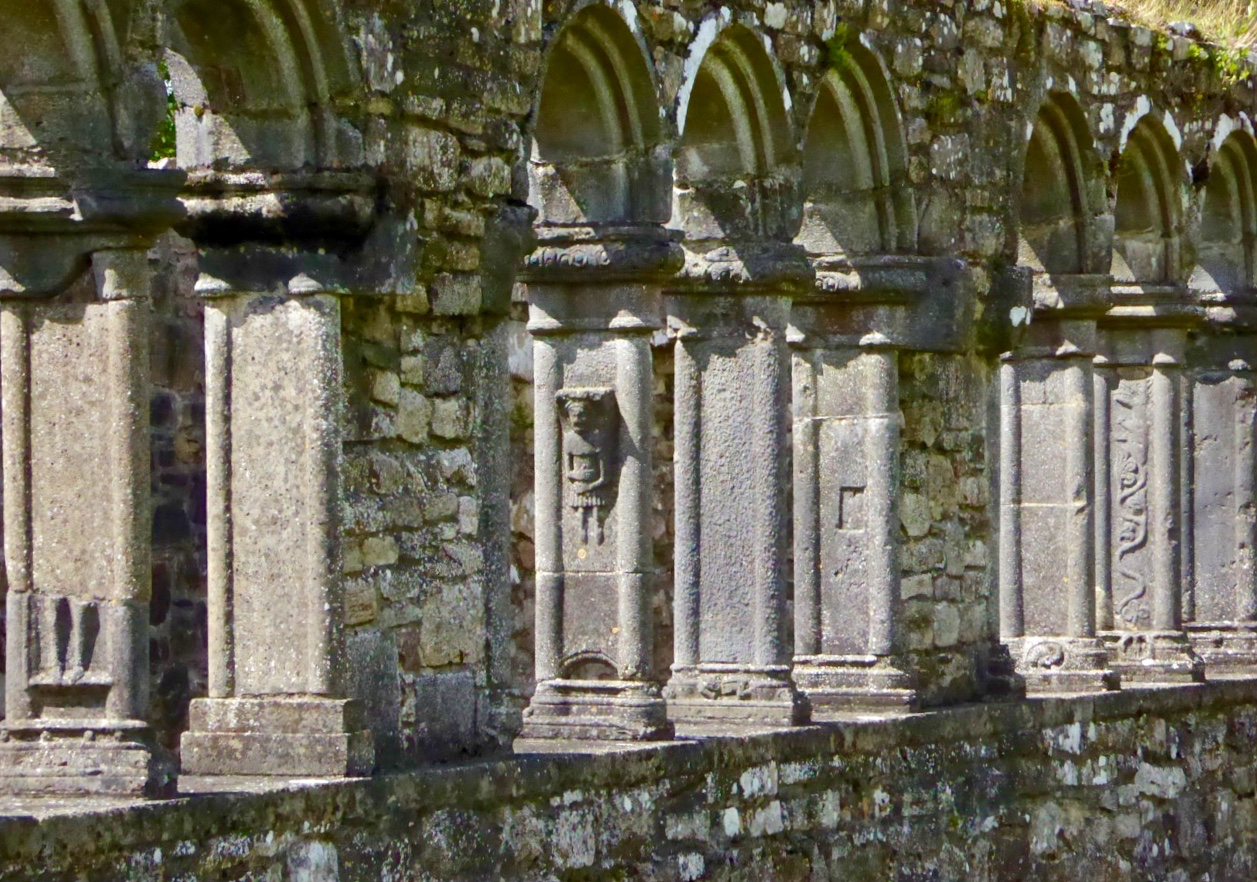
At Jerpoint it’s not just the tombs and the Weepers which fascinate: there is a 15th century cloister which, in its heyday, displayed a riot of carvings both saintly and secular. Some of these are in situ; some are partially destroyed and others have been recovered during archaeological excavations, and placed on display in a little museum. Among them we identified knights, ladies, animals fantastic and real, and ‘ordinary folk’ – including a man with stomach ache!
‘The Bones of Santa Claus’(Author Bill Watkins)
Where lie the bones of Santa Claus, to what holy spot each pilgrim draws Which crypt conceals his pious remains, safe from the wild wind, snows and rains?
It’s not in Rome his body lies, or under Egypt’s azure skies Constantinople or Madrid, his reliquary and bones are hid.
That saint protector of the child, whose relics pure lie undefiled His casket safe within its shrine, where the shamrocks grow and rose entwine.
Devout wayfarer, cease your search, for in Kilkenny’s ancient church Saint Nicholas’ sepulchre is found, enshrined in Ireland’s holy ground.
So traveller rest and pray a while, to the patron saint of orphaned child Whose bones were brought to Ireland’s shore, safe from the Vandal, Hun and Moor.
Here lie the bones of Santa Claus, secure beneath these marble floors So gentle pilgrim, hear the call, and may Saint Nicholas bless you all!
I hope this topical little foray into some of our archives demonstrates once more how easy it is to find history (and legend) wherever you go in this special land. In fact, it’s very difficult to travel far here without tripping over the past. It’s often fairly low-key. Most sites are protected as scheduled monuments; some are in the good care of the Office of Public Works and have guides and visitor centres. Many are remote, open to the wind, rain and sunshine and free for us all to visit: very often you will have the history all to yourself.
Fortified houses are a distinctly Irish phenomenon. The Tudor period in Britain ushered in a great era of manor house building with many distinctive features. But England was a peaceful place – the owners of these great houses did not expect to be attacked. Tudor Ireland was a very different environment: life was still dangerous and conflict between the native Irish and the planter class, or between Irish clans, was common.
Fortifications at Coppinger’s Court – projecting machicolations
Up to the end of the 16th century the castle/tower house was the residence of choice of the powerful – a tall stone keep mainly focused on defensive features and horribly uncomfortable to live in. (See Illustrating the Tower House for a complete run-down on tower houses.) The new manor houses emphasised the horizontal rather than the vertical, and were built with comfort in mind. However, they incorporated some of the defensive features of the tower houses – they were “fashionable but defendable.”
While tower house windows were notoriously tiny, they became much larger in the new manor houses
In Ireland they represented
a public display of power and wealth…[and] a long-term investment in their owner’s regional future and were monuments to an aspiration for an English and Continental house style suited to local Irish conditions. On a basic level the construction of a fortified house represented the owners’ desire to modernise and Anglicize.
At Coppinger’s Court, a small gun loop in the wall among the large windows
Fortified houses were built of stone but unlike tower houses all internal floors, stairs and partitions were of wood. Defensive features included machicolations, bartizans, wall walks, gun loops, corner towers or wings to provide for flanking fire. They were built starting about 1580 up to about 1650, in a style generally known as Elizabethan.
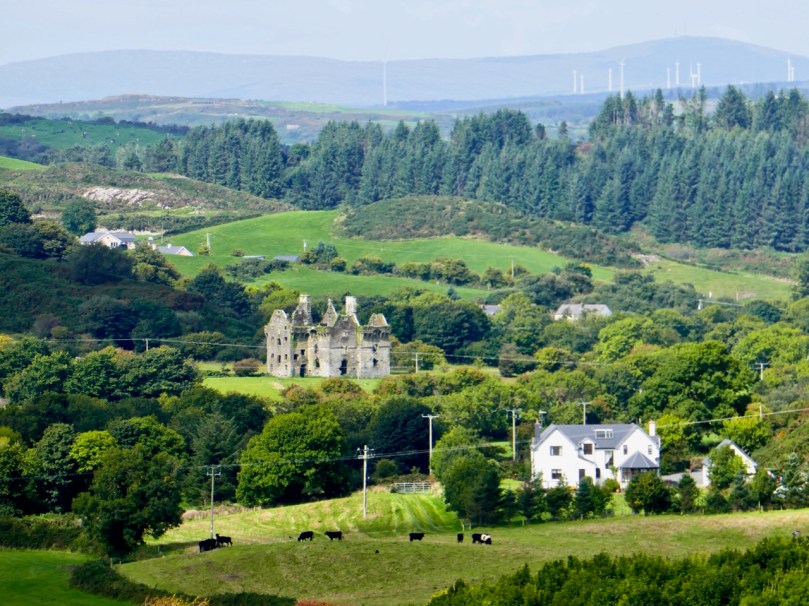
Coppinger’s Court marooned among the fields and modern houses, near Rosscarbery. Walter Coppinger had a vision of a large settlement along the Roury River here, but it never came to fruition
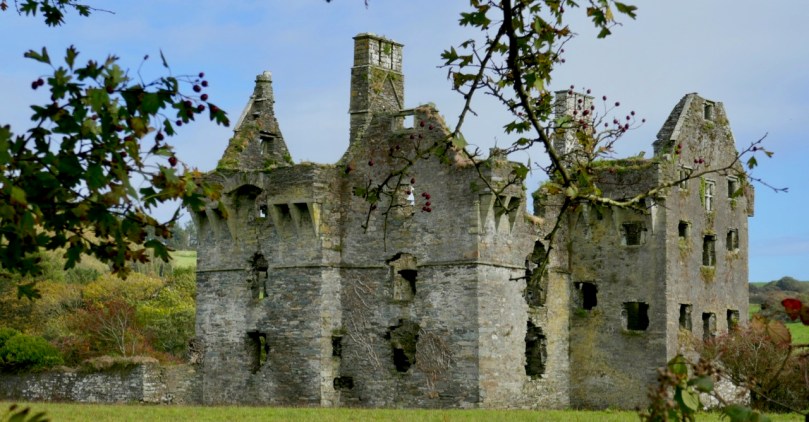
There are four surviving fortified houses in West Cork (although Joe Nunan would include Baltimore Castle as well). The most impressive is Coppinger’s Court, in Ballyvireen townland near Roscarbery: indeed it is one of the most magnificent examples of this type of dwelling in Ireland. Some of the mullions remain in upper windows, and a sharp eye will spot gun loops in the outer walls. The machicolations are particularly fine, with impressive cut stone supports. This was the home of the infamous Sir Walter Coppinger, whose plan was to build a complete settlement around him in this lovely spot on the banks of the Roury River. He was a despot who got rich through clever manipulations of mortgage documents and he was said to hang his enemies from one of his windows.
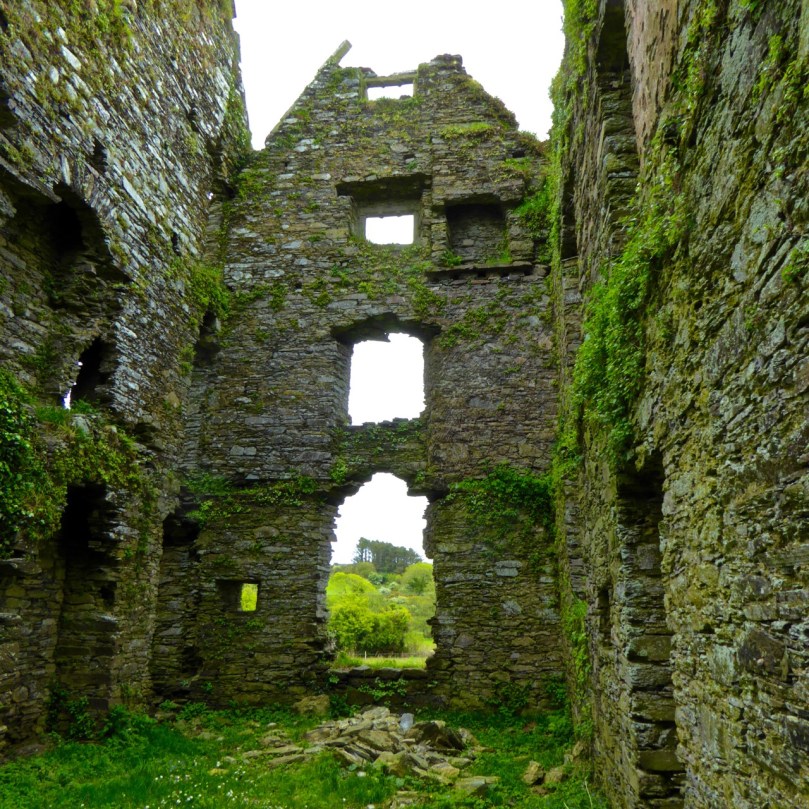
The pile of stones in the foreground is the remains of a fallen chimney
The house was so awe-inspiring in its time that the legend developed that it had a window for every day of the year, a chimney for every week and a door for every month. The house was eventually attacked and ransacked in 1641 and has sat in ruins ever since. Sadly, one of the magnificent chimneys fell down in the storms of early 2014. Evidence of a bawn wall remains, with possible outdoor cooking areas.
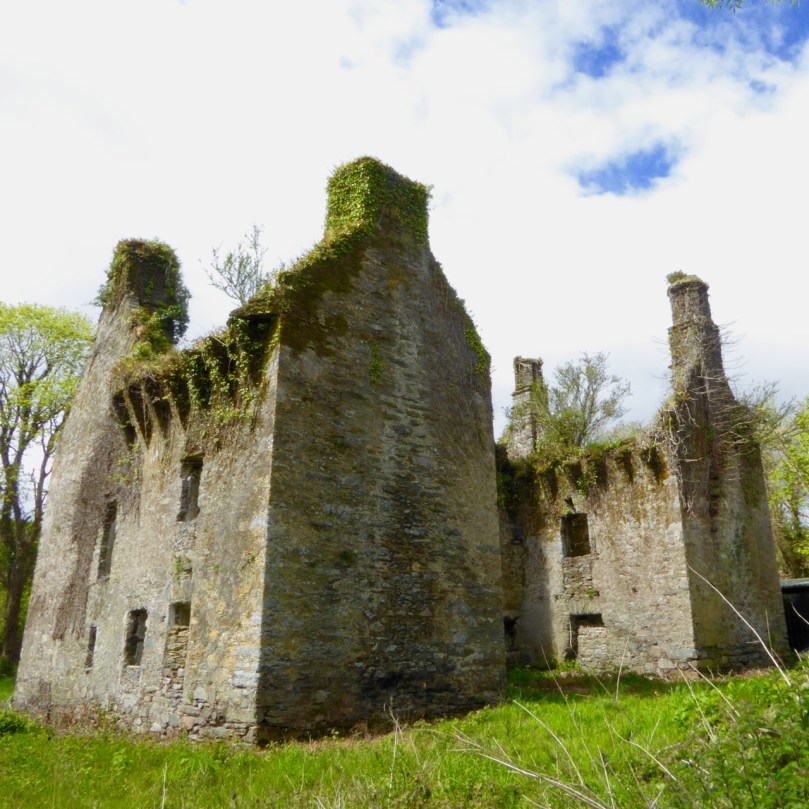
Geerhameen Fortified House, also known as Coolnalong. This view shows the U-shape design
The fortified house at Gearhameen near Durrus, built by the MacCarthy Muclaghs, provides evidence of the comfort that these new ‘castles’ provided. The household work was done on the ground floor – large kitchens contained huge fireplaces, and in this house we can see the main kitchen fireplace had a bread oven to one side and a slop hole for sweeping out leftovers to the pigs (see below), who must have been in an attached pen (the smell!).
The first and second floors have large fireplaces, with magnificent herringbone chimneys still intact (and hosting nesting choughs).
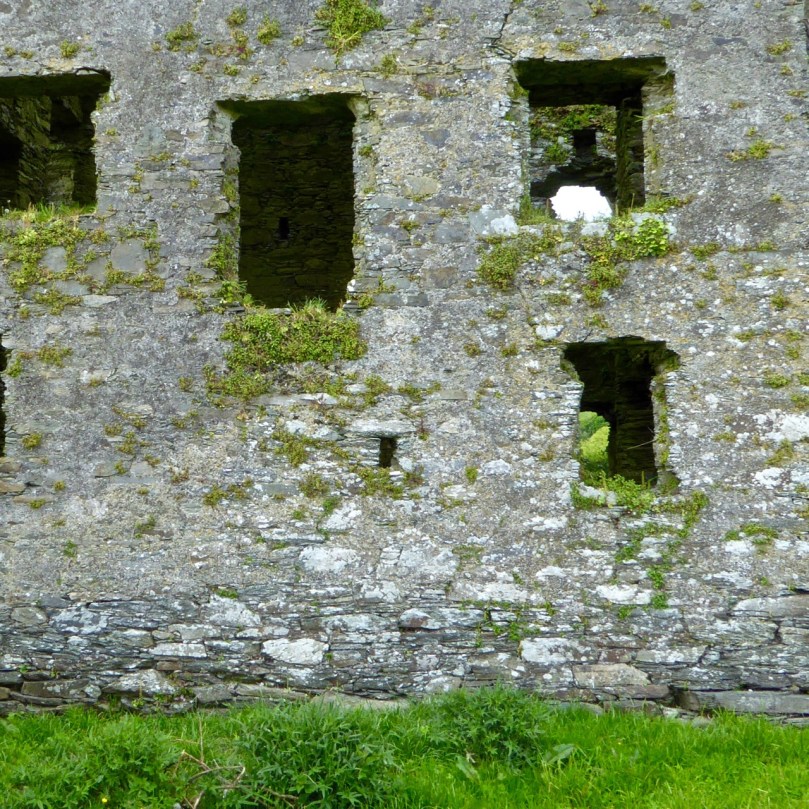
Rather than the machicolations we see at Coppinger’s Court, corbels on the outside walls probably supported wooden or stone platforms.
Like Coppinger’s Court, the outer walls still stand to their full height, but the loss of a keystone above one arch, and the consequent development of a large crack above it (below), bodes ill for that section of the wall.
The house at Reenadisert, near Ballylickey, (below) has been built onto and within over the centuries, serving as a modified dwelling place and as farm buildings. It was the stronghold of an O’Sullivan.
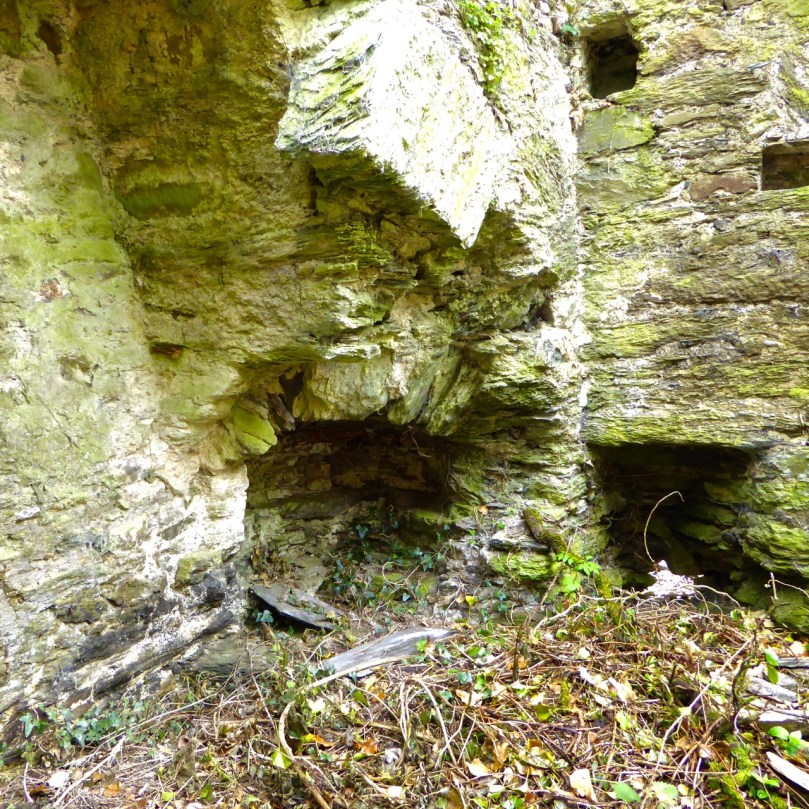
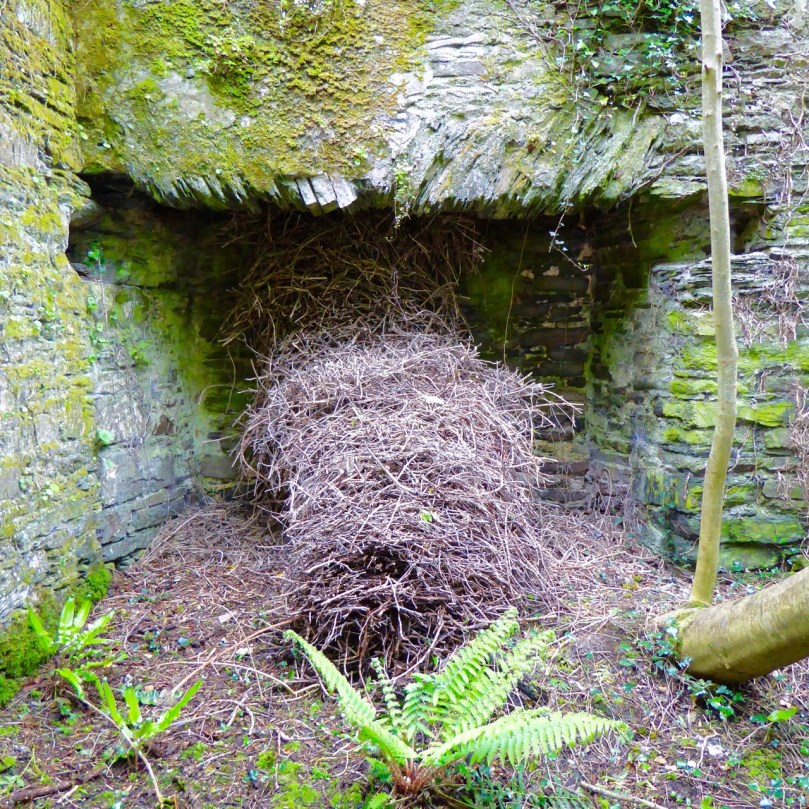
It is in a very ruinous state inside – the eeriness is enhanced by an enormous crows’ nest that has fallen from inside one of the chimneys to rest on the ground. There is evidence of a basement but this cannot be accessed.
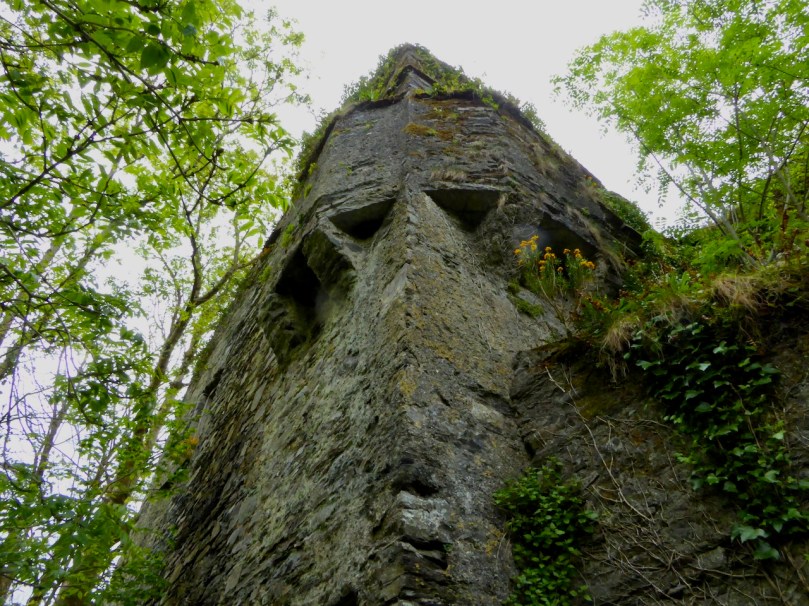
A corner tower sports an impressive bartizan (corner machicolation).
That this house is still standing is something of a miracle. It is on the same land as a ruined hotel and Celtic Tiger-era abandoned housing project and I cannot find out any information about its ownership or future.
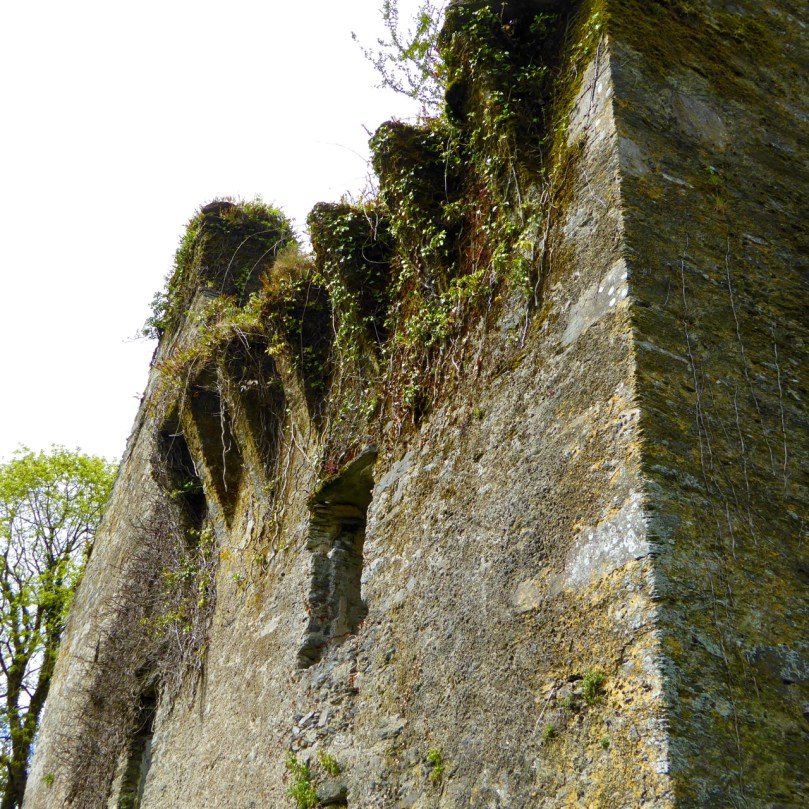
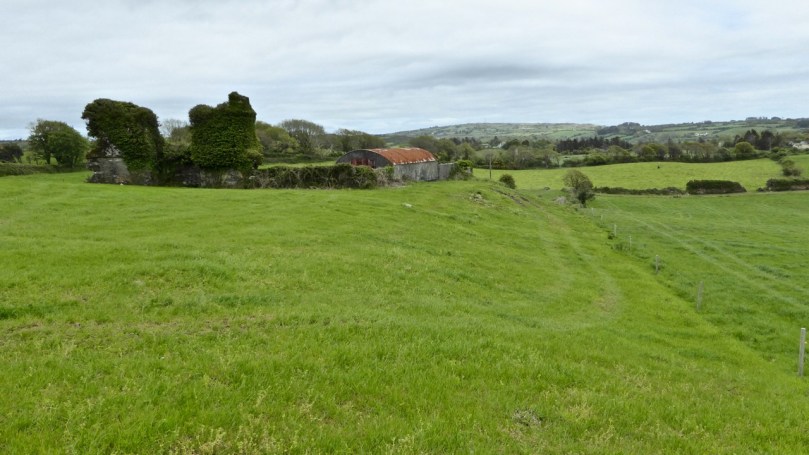
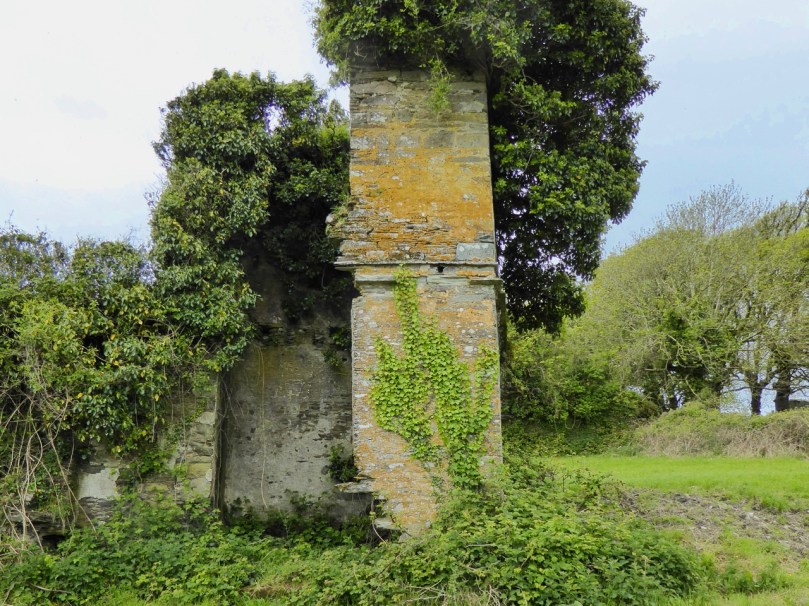
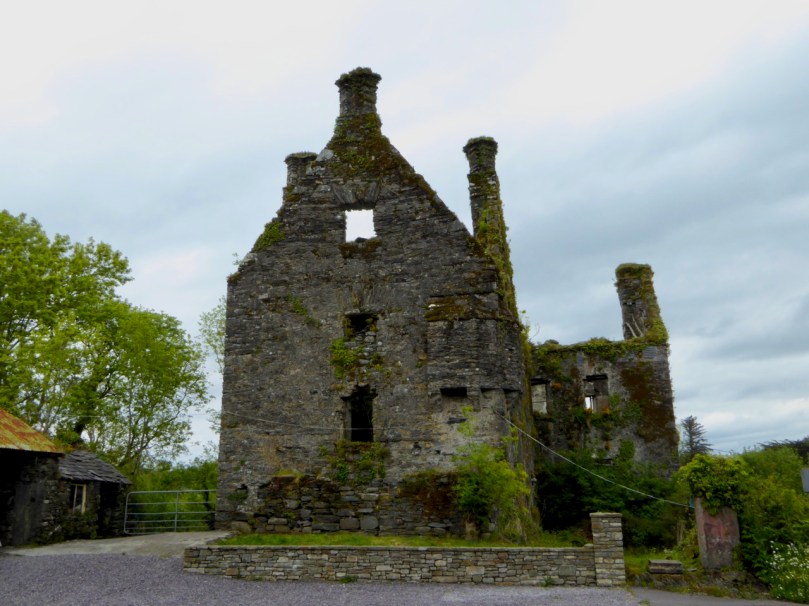
The final house (below) is at Aghadown, once home to the Becher family, and consists only of one wall with attached towers. Ivy has threatened to take over most of it – I love Leask’s description of ivy – “destructive green mantle beloved of the sentimentalist.” The house occupies high ground and once had a commanding view. Nearby are the remains of a belvedere and pleasure garden that once formed part of the demesne. Have a look at Capturing the View: Belvederes in West Cork for more on this feature of Aughadown House
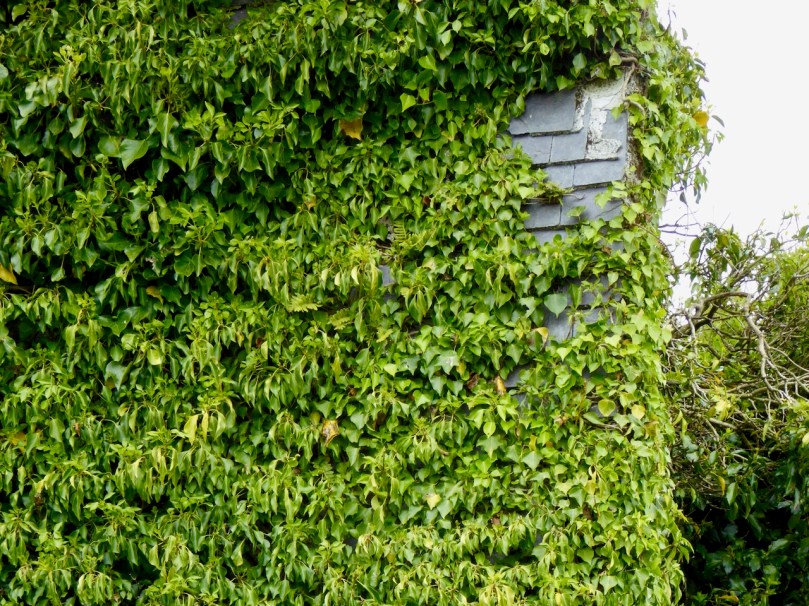
Through all that ivy one can make out traces of the slate that once hung on the wall above the ground floor, the outline of corbels at roof level, and a string course between the ground and first floor.
One of the Fastnet Trails goes past Aughadown House now, and there is a neat little plaque giving more information about the house and the Bechers.
Joe Nunan provides useful summations of Irish fortified houses. Among other points, he says the following:
The fortified houses built in Co. Cork had a unique Irish architectural quality and a distinct southern English look and feel; the result of contacts built up between both regions, politically through plantation-immigration and economically, through trade with the port and fishing towns of Waterford, Cork, Kinsale, Youghal and Baltimore. The social changes that took place in Tudor England were reflected in architectural form by the elites in that society and it was the latter who spearheaded the Munster plantations. They were noblemen who viewed Munster as another region within a larger England and it was through these individuals that the initial architectural influence of the many gabled, oblong country manors with circular, square, rectangular and hexagonal corner-towers was introduced into Co. Cork.
We are lucky to have these fine examples of fortified houses in West Cork still. However, all of them are in a perilous state of dereliction. Gearhameen’s owner has tried to stabilise the building and stave off collapse but all of them may eventually succumb to the natural ravages of time. That’s a sad thought.
An earlier version of this post was written in 2015, now edited and updated.
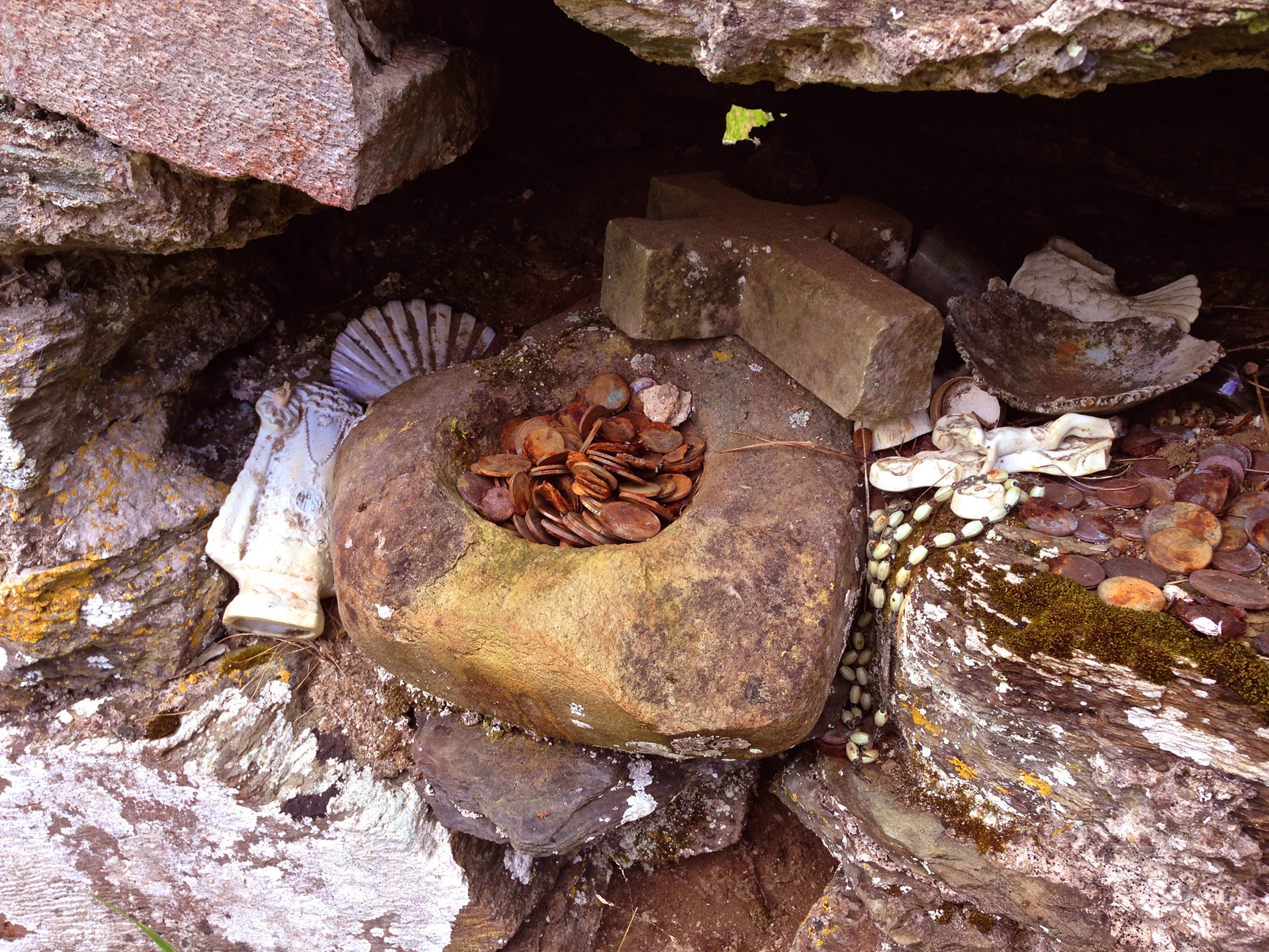
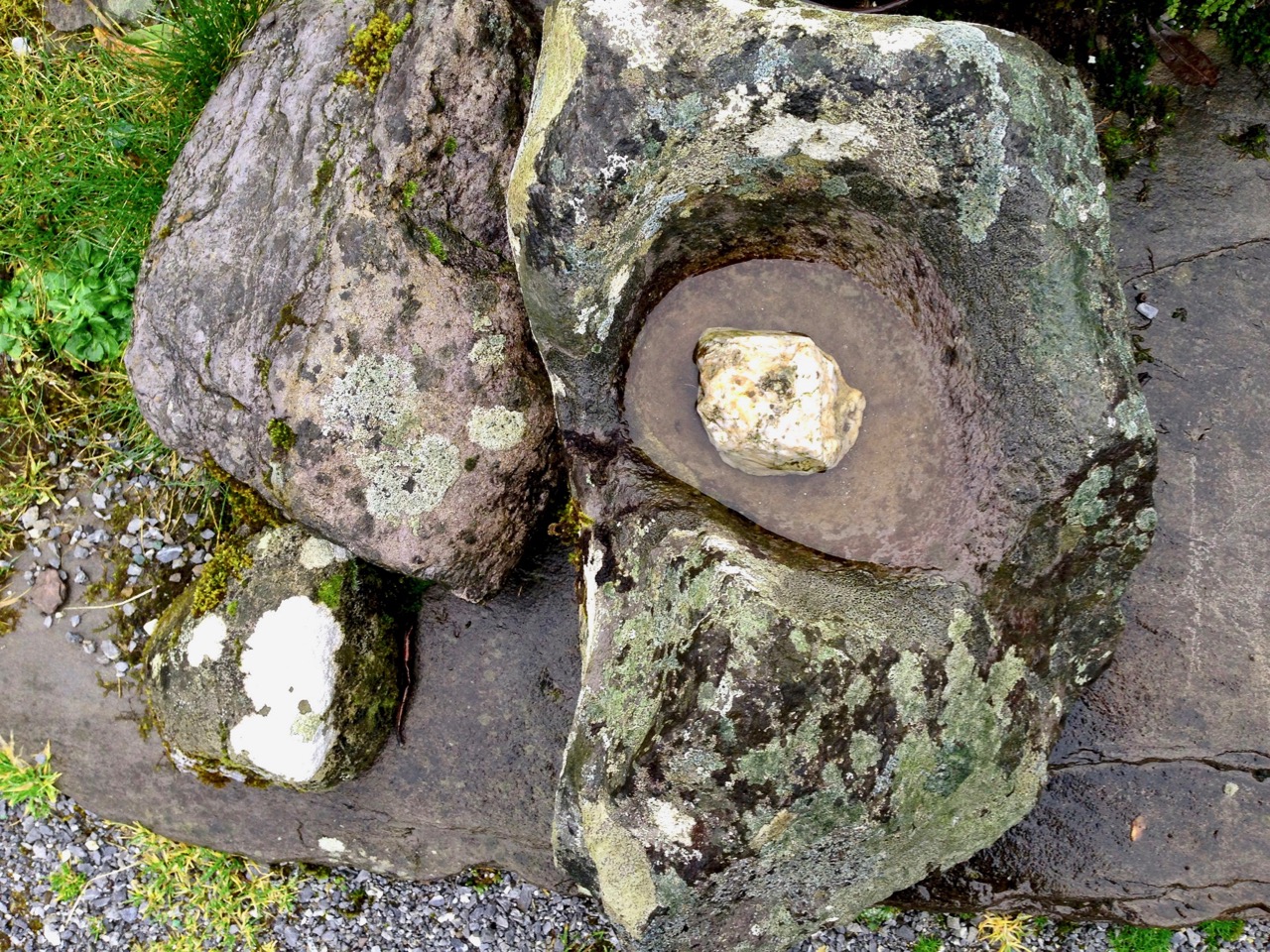
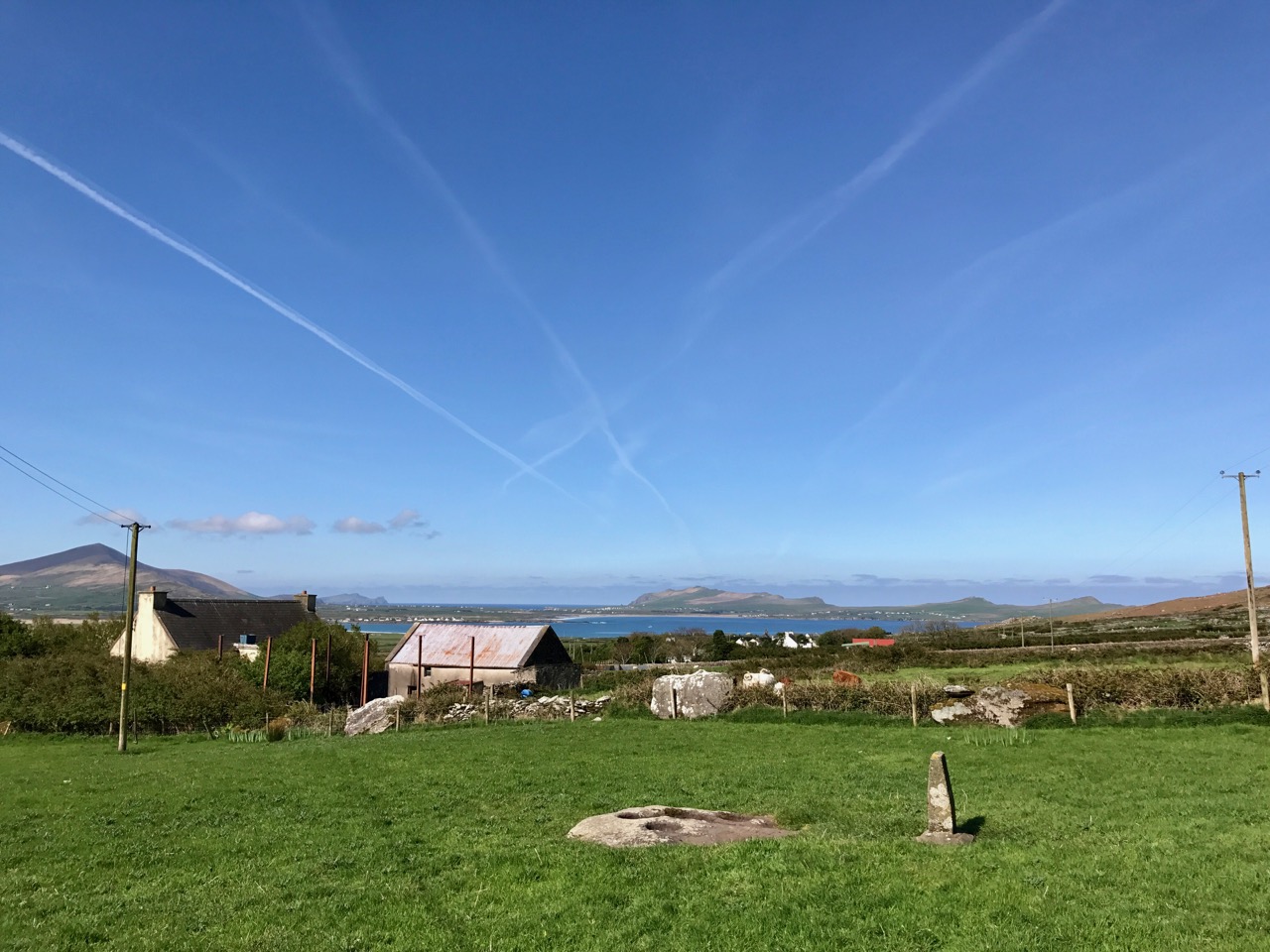
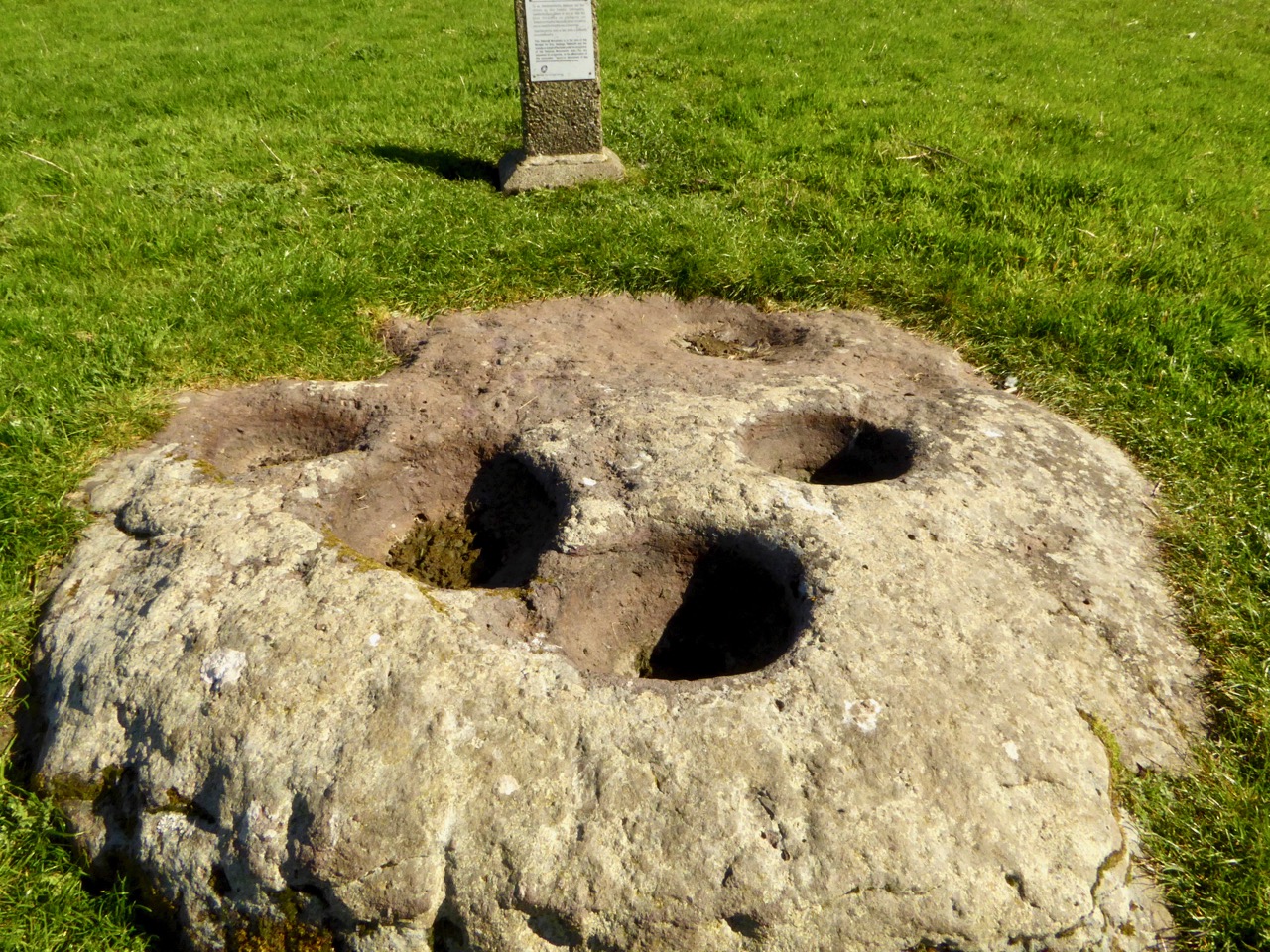
Bullaun Stones abound in Ireland. They are usually found nowadays at sites with ecclesiastical connections, as in the example above at Maulinward, an ancient West Cork burial ground. This association does not reduce or affect their traditional uses – according to folk convention – to cure or to curse. The Irish word Bullán means ‘bowl’ – a water container. At pilgrimage sites, such as St Gobnait‘s, Ballyvourney (below), the bullaun stones often hold quartz fragments or smooth, rounded pebbles – perhaps incised with a cross – which are turned around each time a pattern or procession is completed.
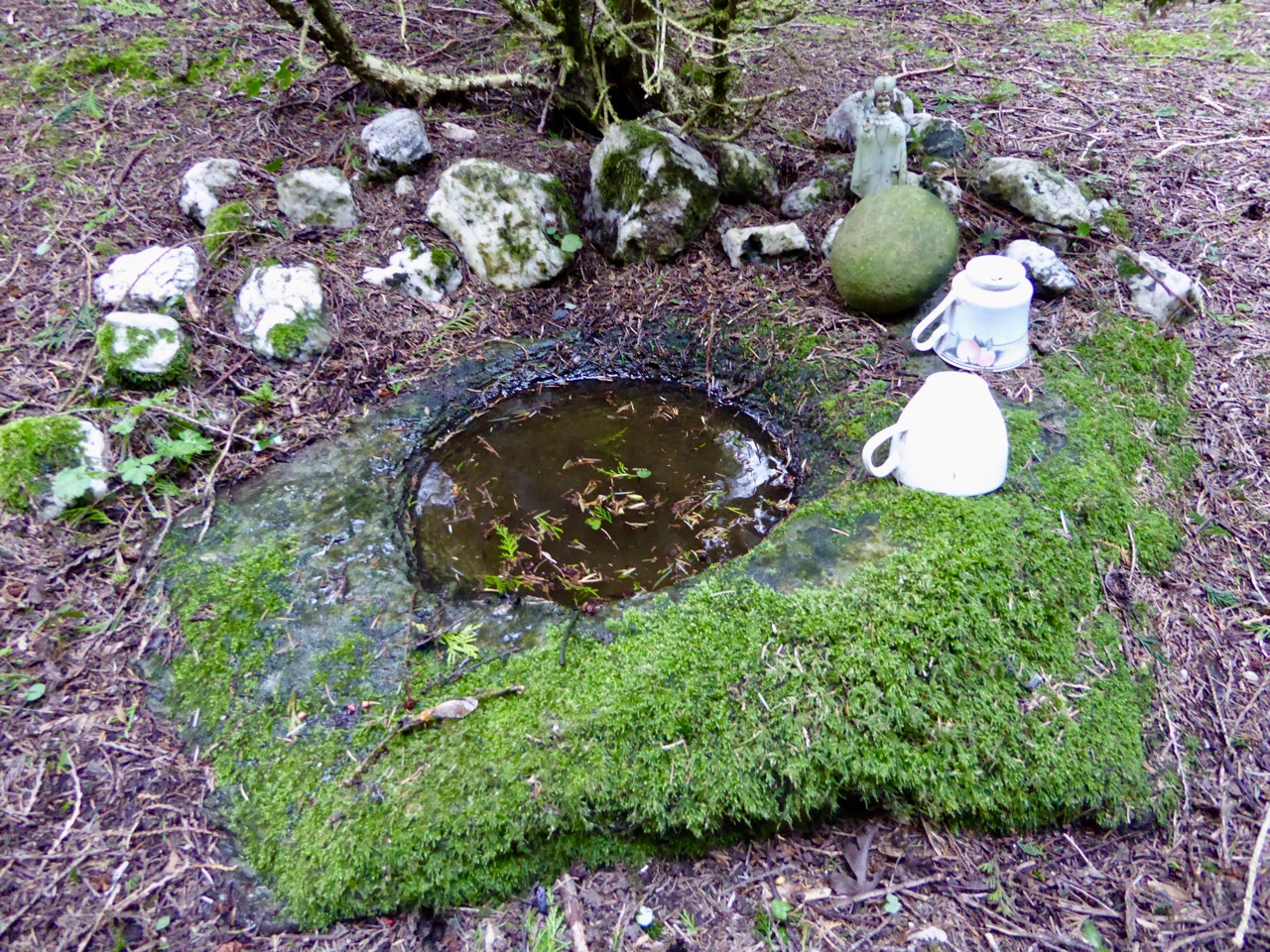
The Maulinward example on the header picture shows how the tradition of making offerings at some of these locations continues to this day. At other sites, such as the one below, the hollowed-out stone filled with rainwater takes on the properties of a holy well, and is visited for cures or simply good fortune.
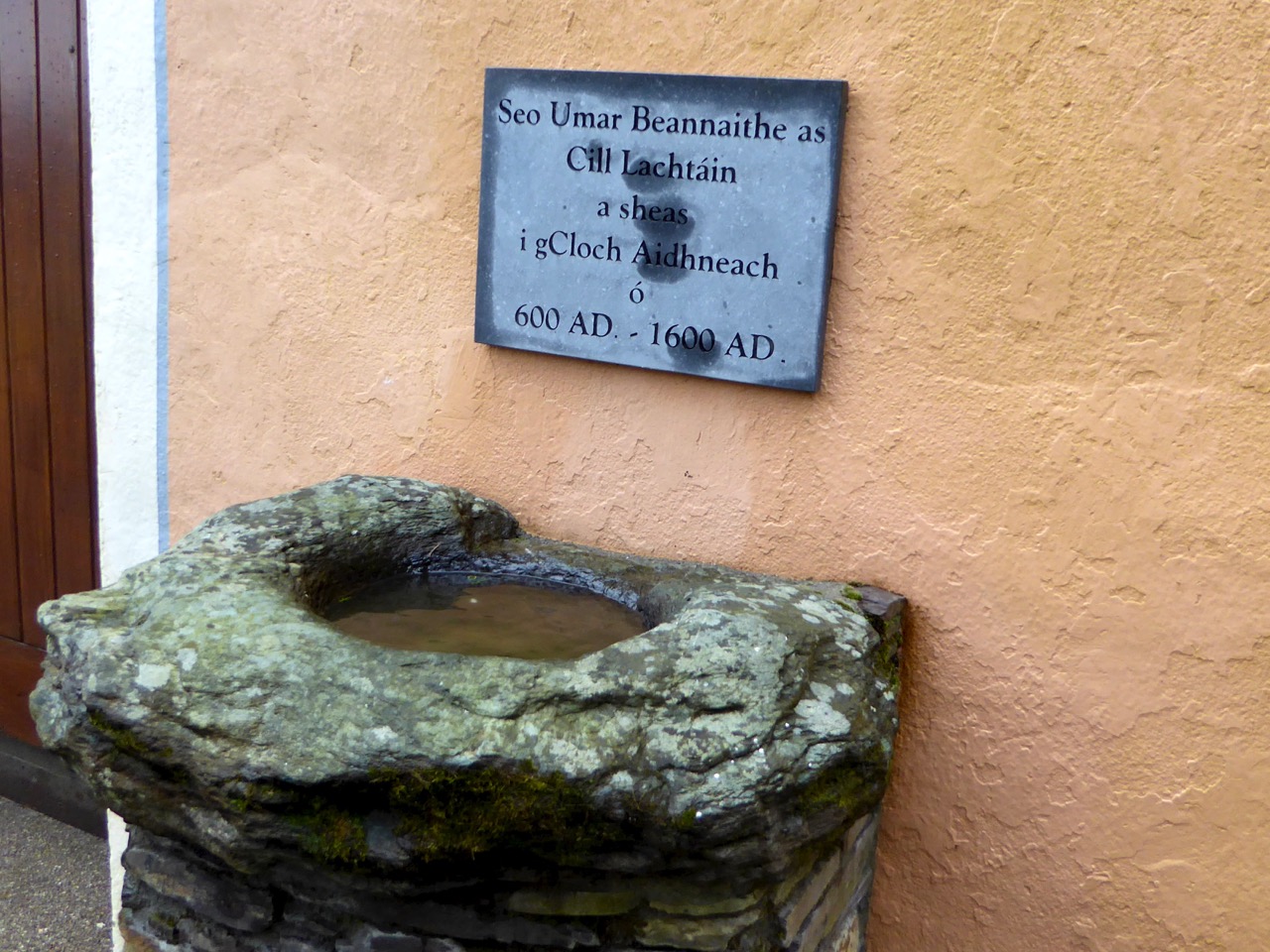
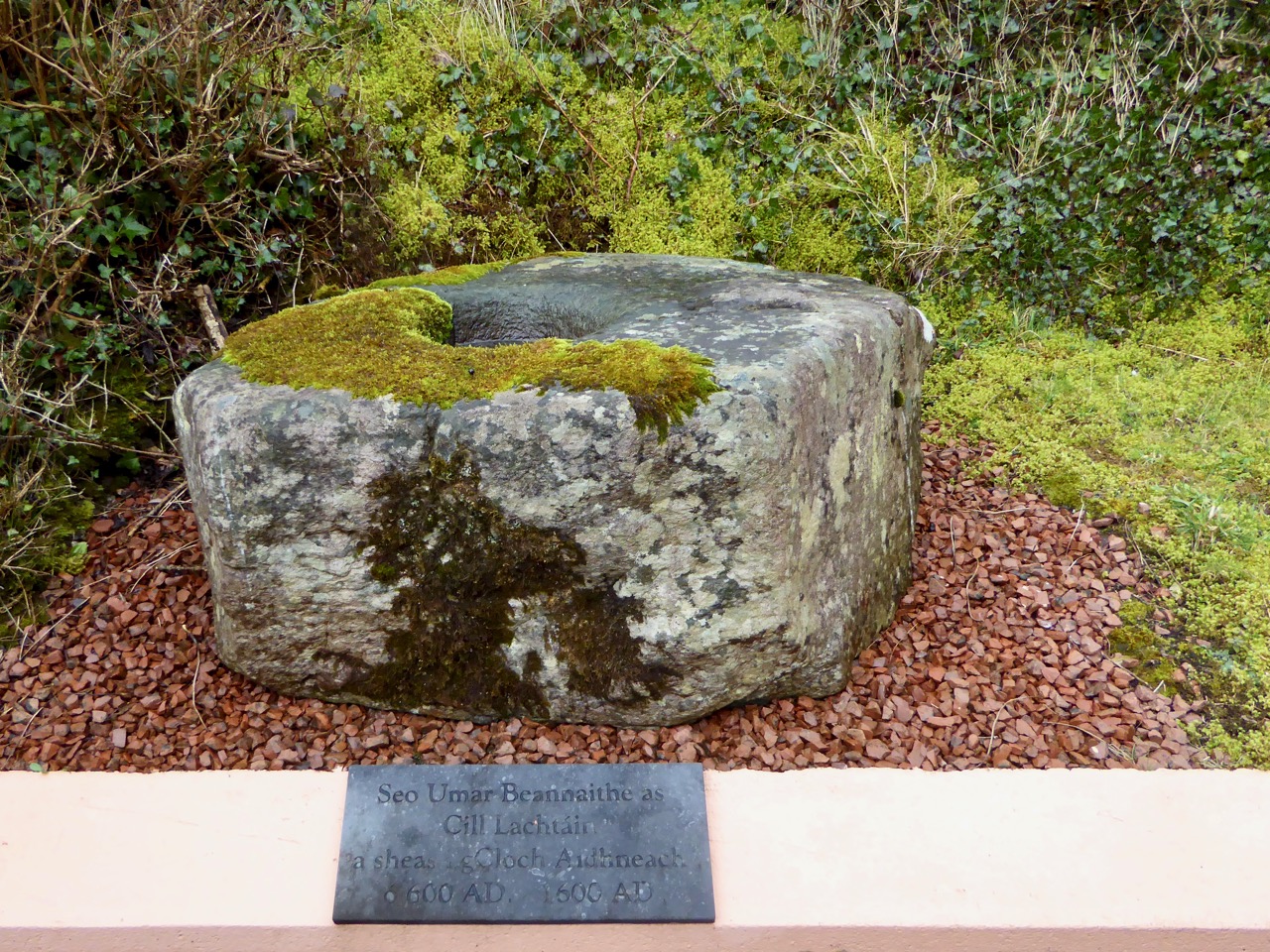
This example, outside the door of the church at Cill Lachtáin, Co Cork seems to have been mounted to perform as a holy water stoup: the plaque reads ” . . . This blessed font of Cill Lachtáin was standing in Cloch Aidhneach from 600AD to 1600AD . . . “ Others resemble fonts and are similarly associated with places of worship. Look at this striking stone from Timoleague Friary, whose purpose – according to tradition – is clearly stated:
In the sixth century, the Council of Tours ordered its ministers ” . . . to expel from the Church all those whom they may see performing before certain stones things which have no relation with the ceremonies of the Church . . . ” Such an order doesn’t seem to have prevented folk customs of curing continuing into the twenty-first century.
The ongoing use of bullauns as fonts, stoops or holy wells does not explain their original purpose (which is probably pre-Christian: here’s an interesting conjectural world view of the phemomenon), and it’s quite likely that we will never fathom for sure what they were for. The example above, at Kilmalkedar, Co Kerry is as enigmatic as they will get, with its multiple ‘basins’ carved into a large earth-fast boulder isolated in the middle of a field, although not far from a remarkably complex ecclesiastical site. But the one I find the most fascinating can be found along the Priest’s Leap road, a mere few steps away from our own home in West Cork . . .
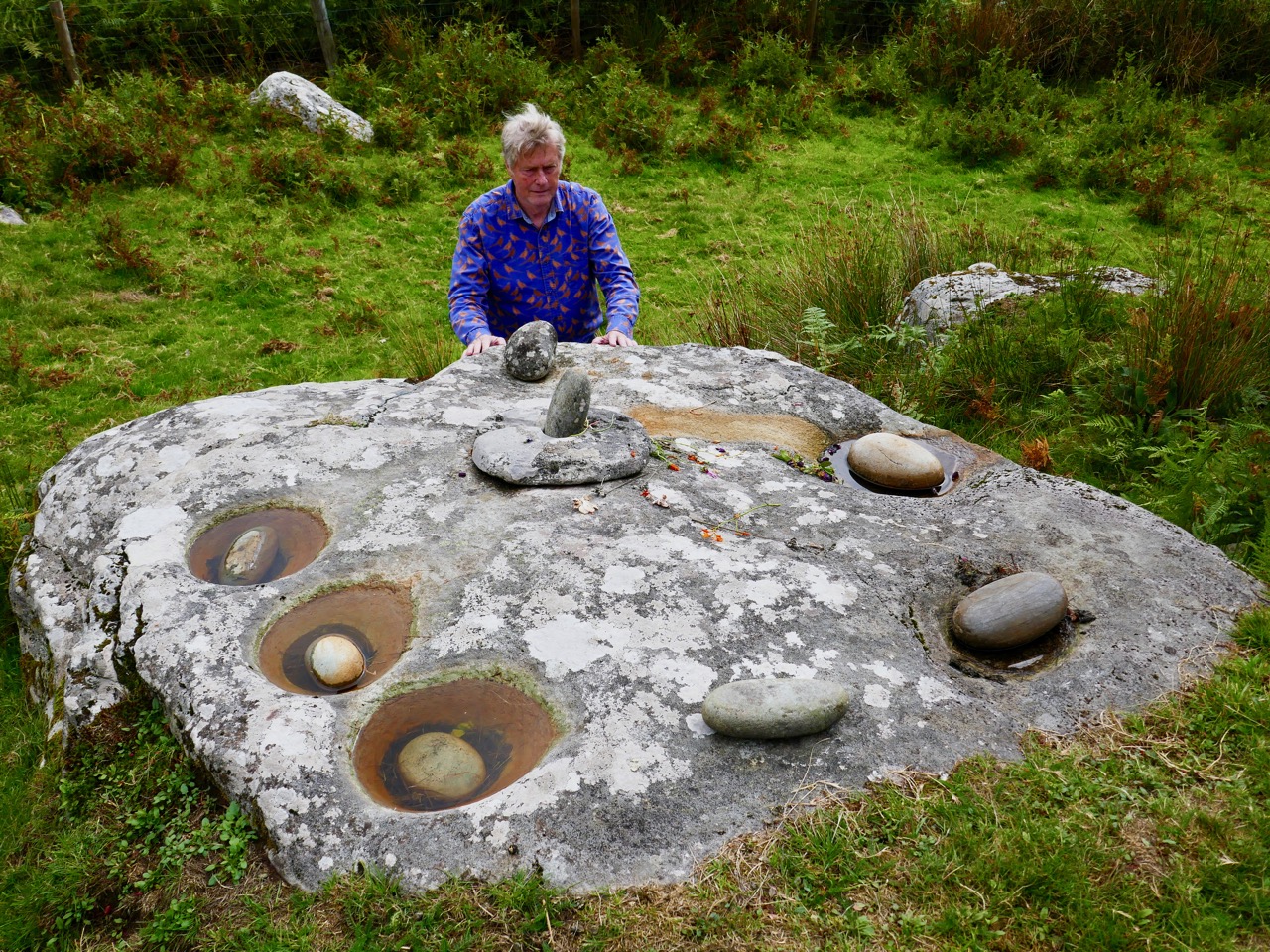
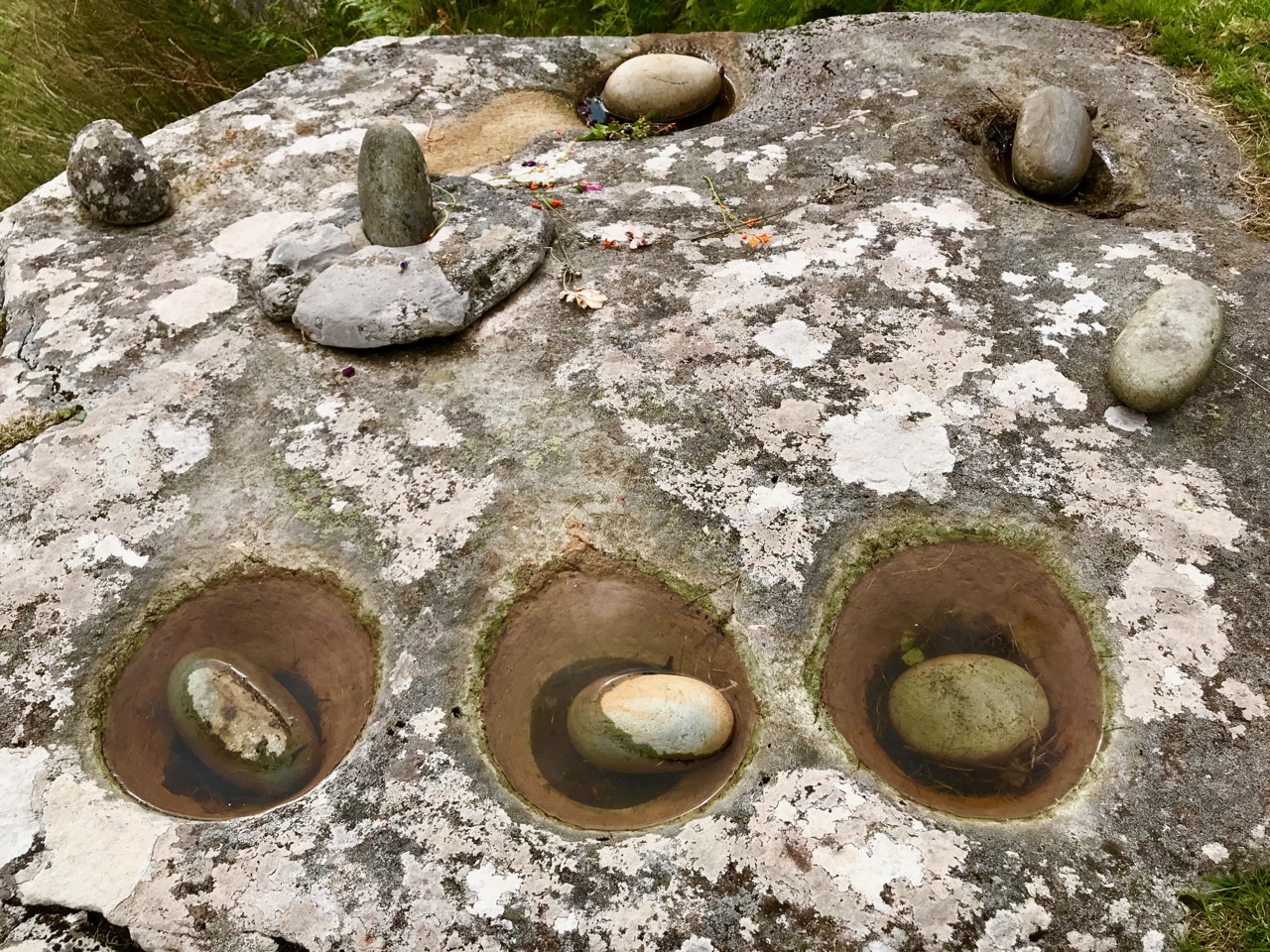
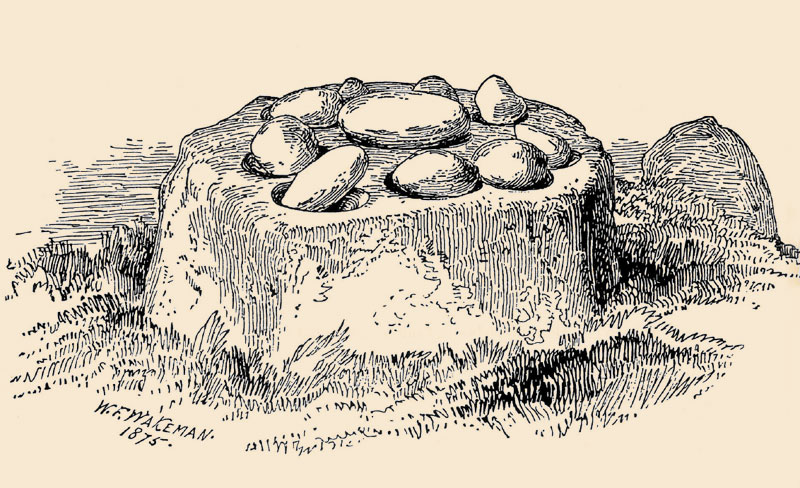
This rock outcrop – known locally as The Rolls of Butter – is large (I’m there to give it scale!) with seven scooped-out bullaun like basins and a somewhat phallic central upright stone. The basins each contain a large, smoothed pebble. Some folk traditions in Ireland identify such pebbles as ‘cursing stones’: “. . . if you wanted to put a curse on someone, you turned the stones anti-clockwise in the morning . . . ” However, the curse had to be ‘just’ otherwise it came back to curse you in the evening! The illustration below – of ‘cursing stones’ at Killinagh, Co Cavan was made by antiquarian W F Wakeman in 1875. He also noted the similar local folk traditions of these examples.
Many bullaun stones or stone groups around Ireland have been included in the National Monuments records, and number in the hundreds. Functional, magical, sinister? Who knows . . . Your guess is as good as anyone else’s. But one thing is certain – they are intriguing and mysterious. Keep a look out for them – as we do – in your travels around this land.
Note: this is a re-run of a post I published five years ago – but it’s been augmented, updated and – hopefully – improved!
We’re well into November, yet clear, dry days abound and we are drawn out into the lanes of West Cork. There are so many to choose from, and all are quiet, although we will always find someone to share a chat along the way. Yesterday we donned our boots and followed another of the Fastnet Trails – the Ilen River Loop. In fact, the boots were unnecessary as the whole route is on virtually deserted paved roads. If that sounds unexciting, let me tell you it isn’t: wherever you go in West Cork you won’t be short of sweeping green landscapes, broad views – mostly over mountain or water – and fragments of engrossing history jumping out to meet you.
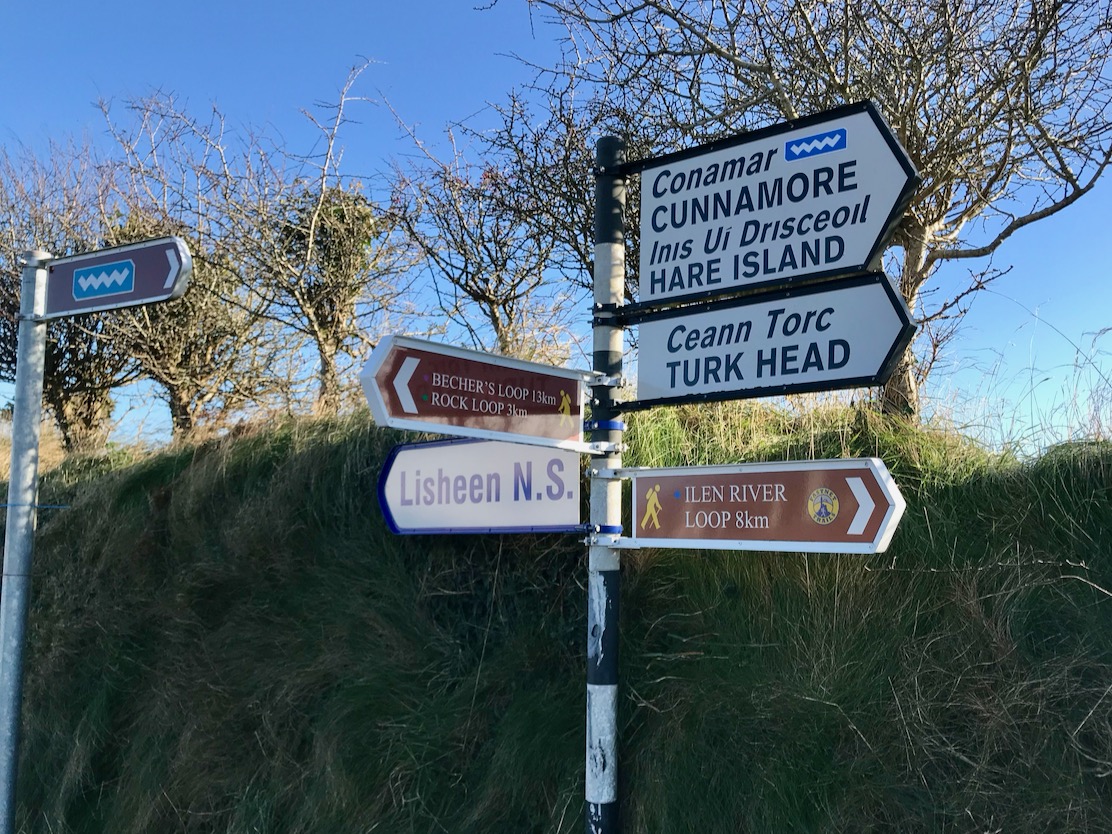
We started at the Lisheen trail head and covered the 8 kilometers in a bit over two hours. This did include some dawdling and chatting: in Ireland the latter is unavoidable, and applies to everyone you meet. With us were friends Amanda and Peter, and you’ll find Peter’s Hikelines account of the expedition here: his watercolour illustrations can only be described as ‘exquisite’.
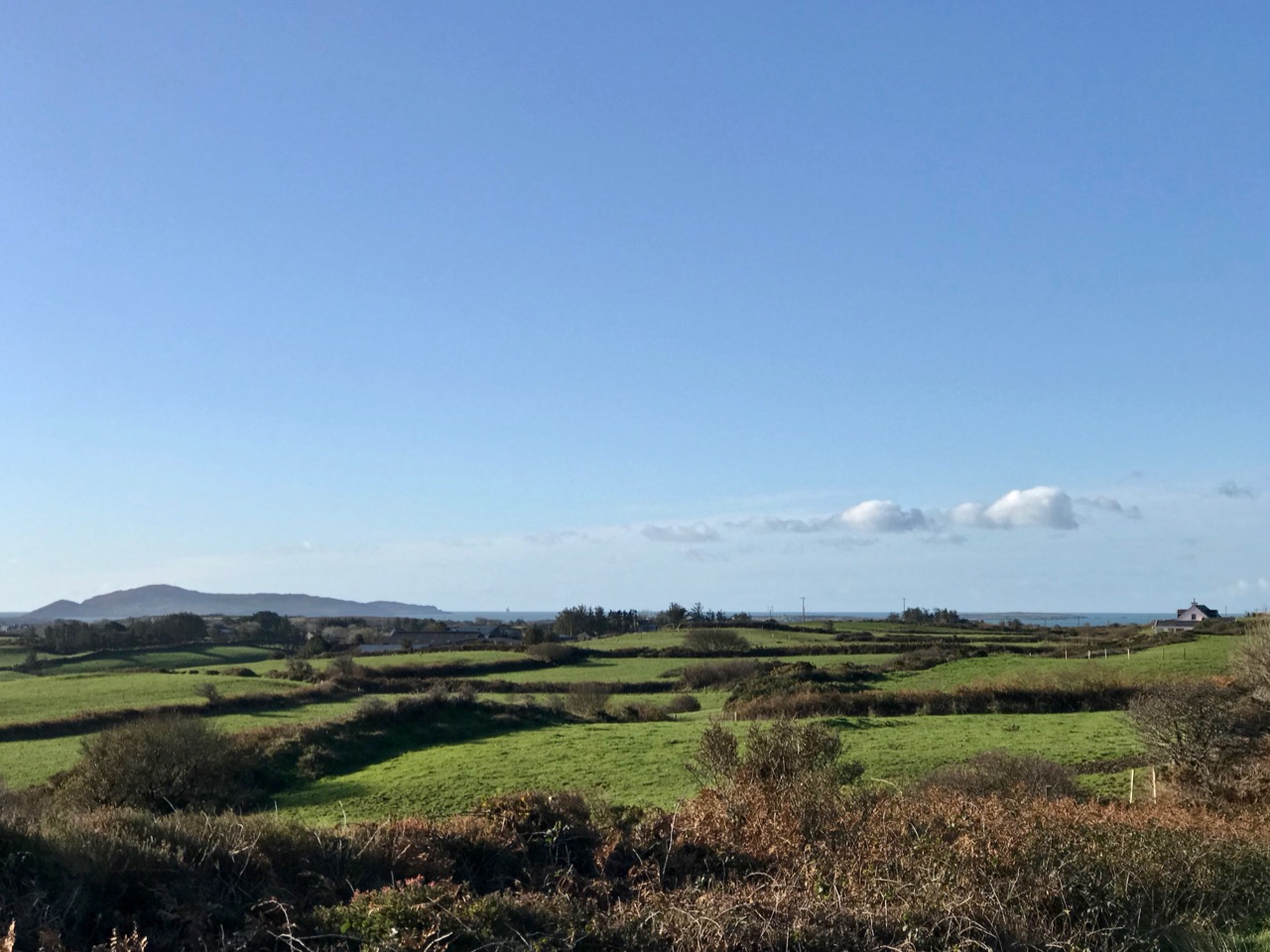
Look carefully (above) at the line of sea on the horizon: just visible is the unmistakeable silhouette of the Fastnet Lighthouse, justifying this route as a part of the Fastnet Trails network. It’s a wonderful asset for locals and visitors. You could simply drive along these routes, of course, but you just won’t get to see the details and appreciate the beauty. On foot you can pause at every turn and on every brow to properly take in the delectable countryside. And the network of trails is expanding – new routes are being developed at the west end of the Mizen: here’s another of Peter’s posts.
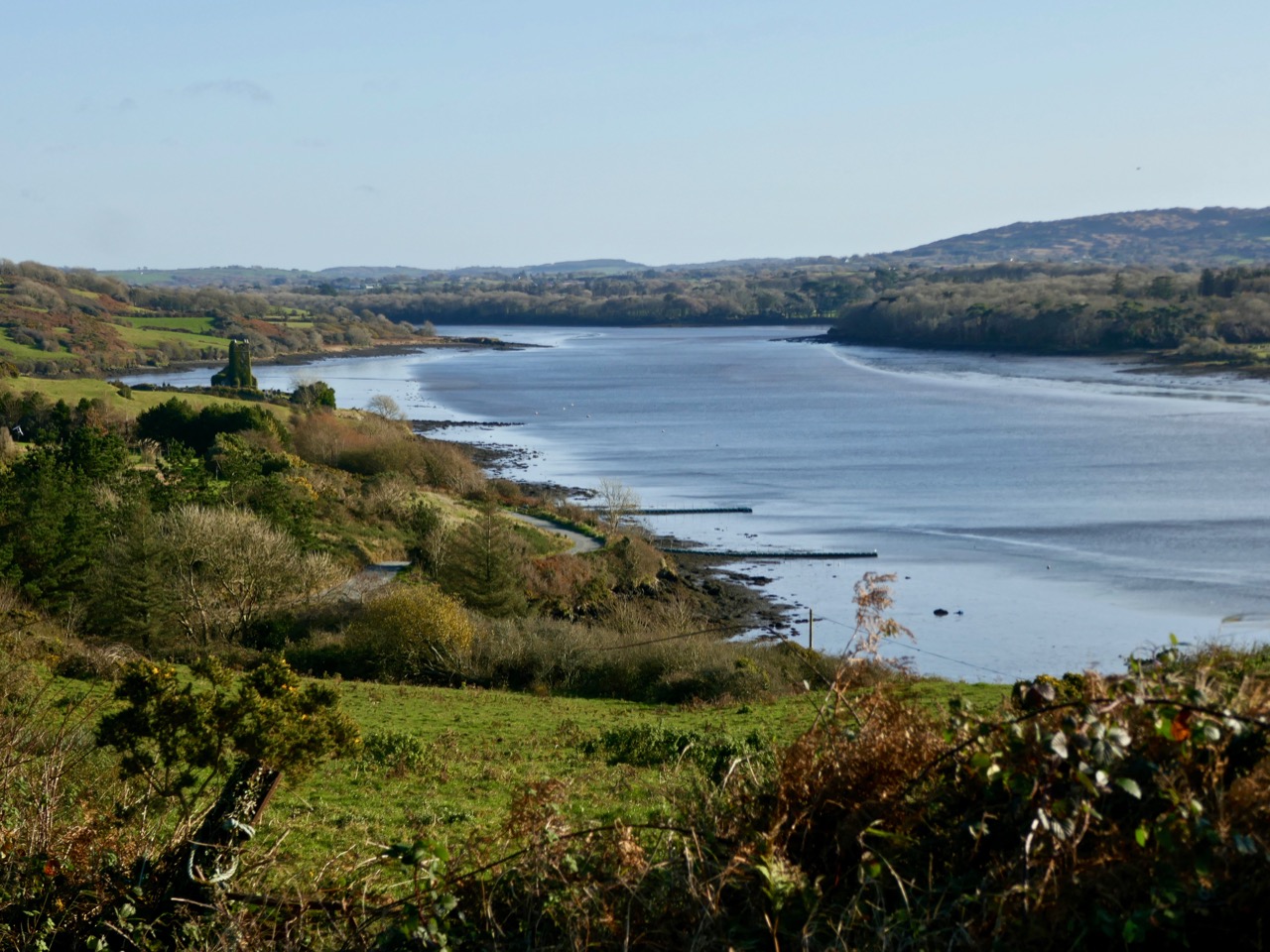
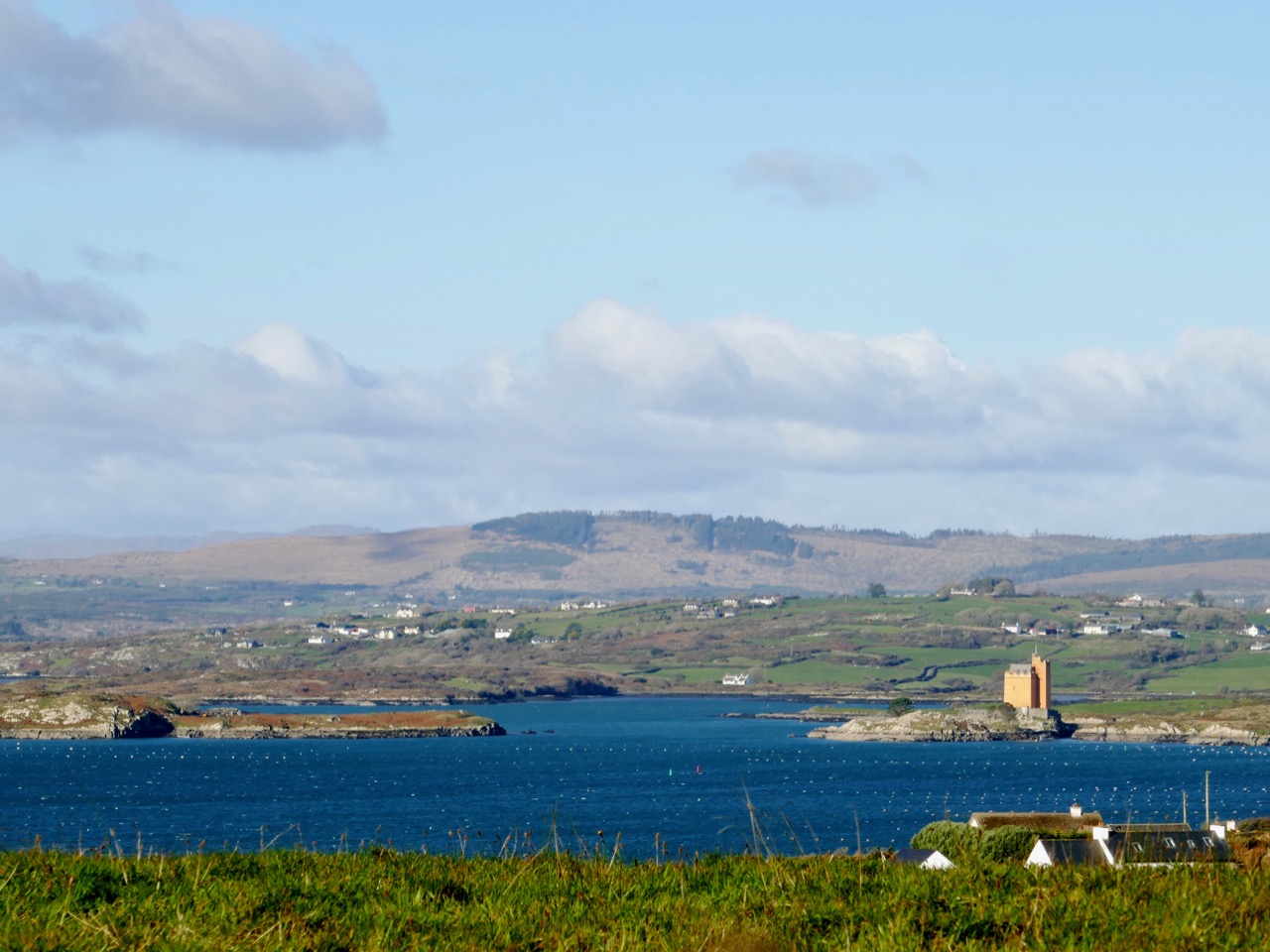
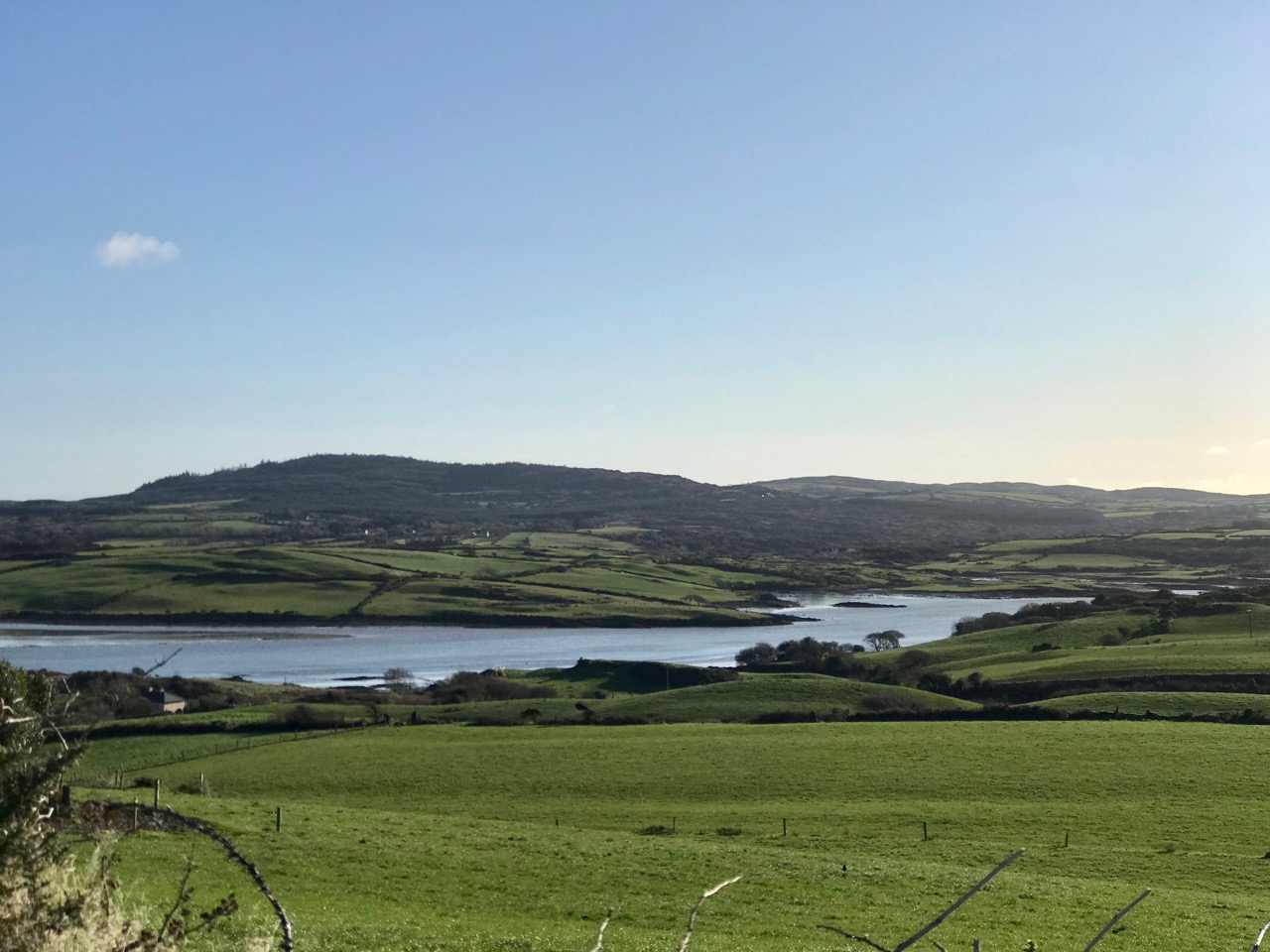
There are views to the north as well, looking into Ballydehob Bay which Jeremy Irons’ ochre coloured Kilcoe Castle dominates. Above the water can be seen the islands of Roaringwater Bay and the ridges of the Mizen and Sheep’s Head, and even the high peaks of the Beara Peninsula beyond. But we must focus on the subject of this trail, which is the broad estuary of the Ilen River as it winds inland, feeding into the woods and pastures of West Cork, narrowing but remaining tidal right up to Skibbereen: schooners used once to berth on the five quays serving that town.
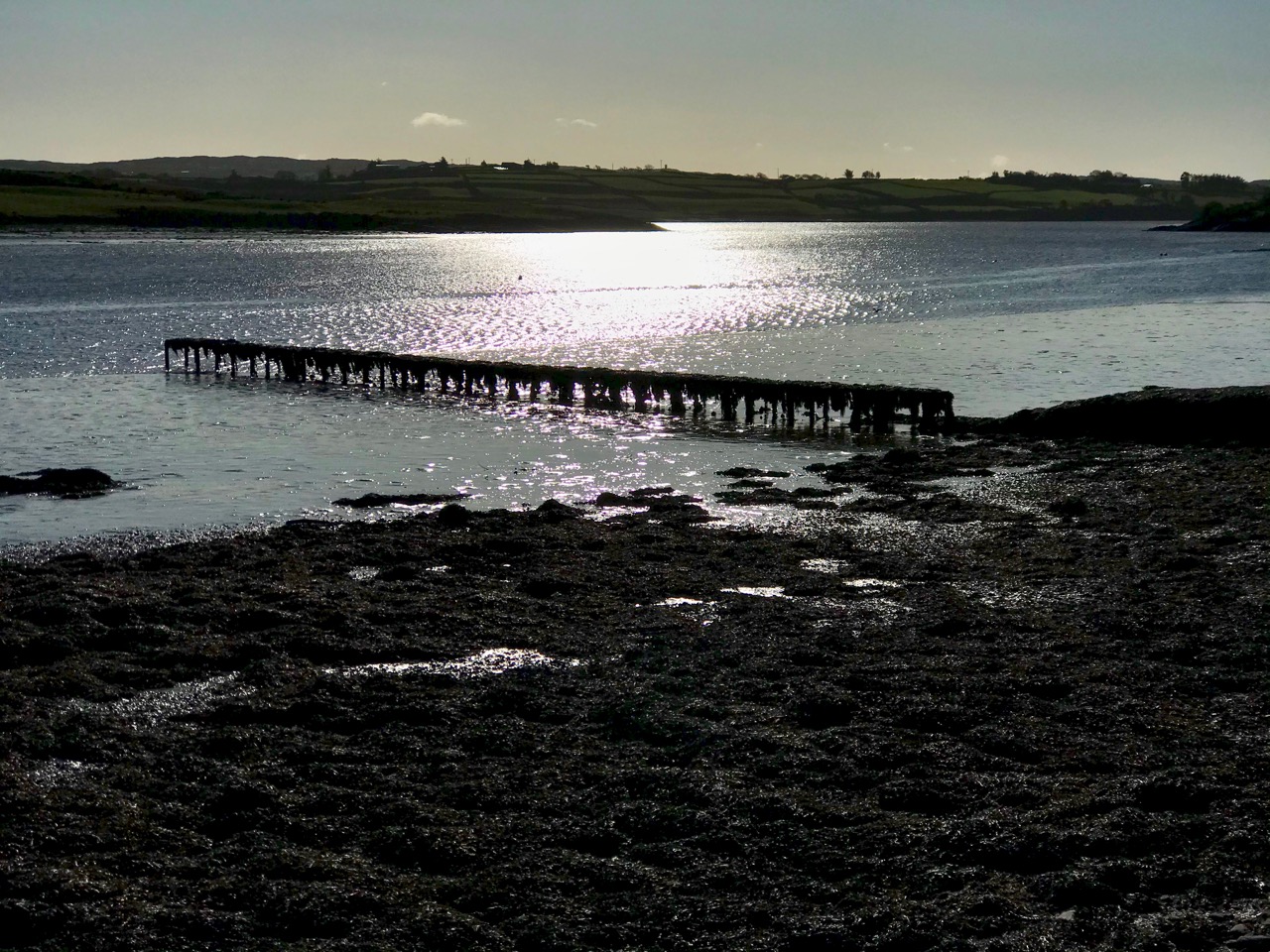
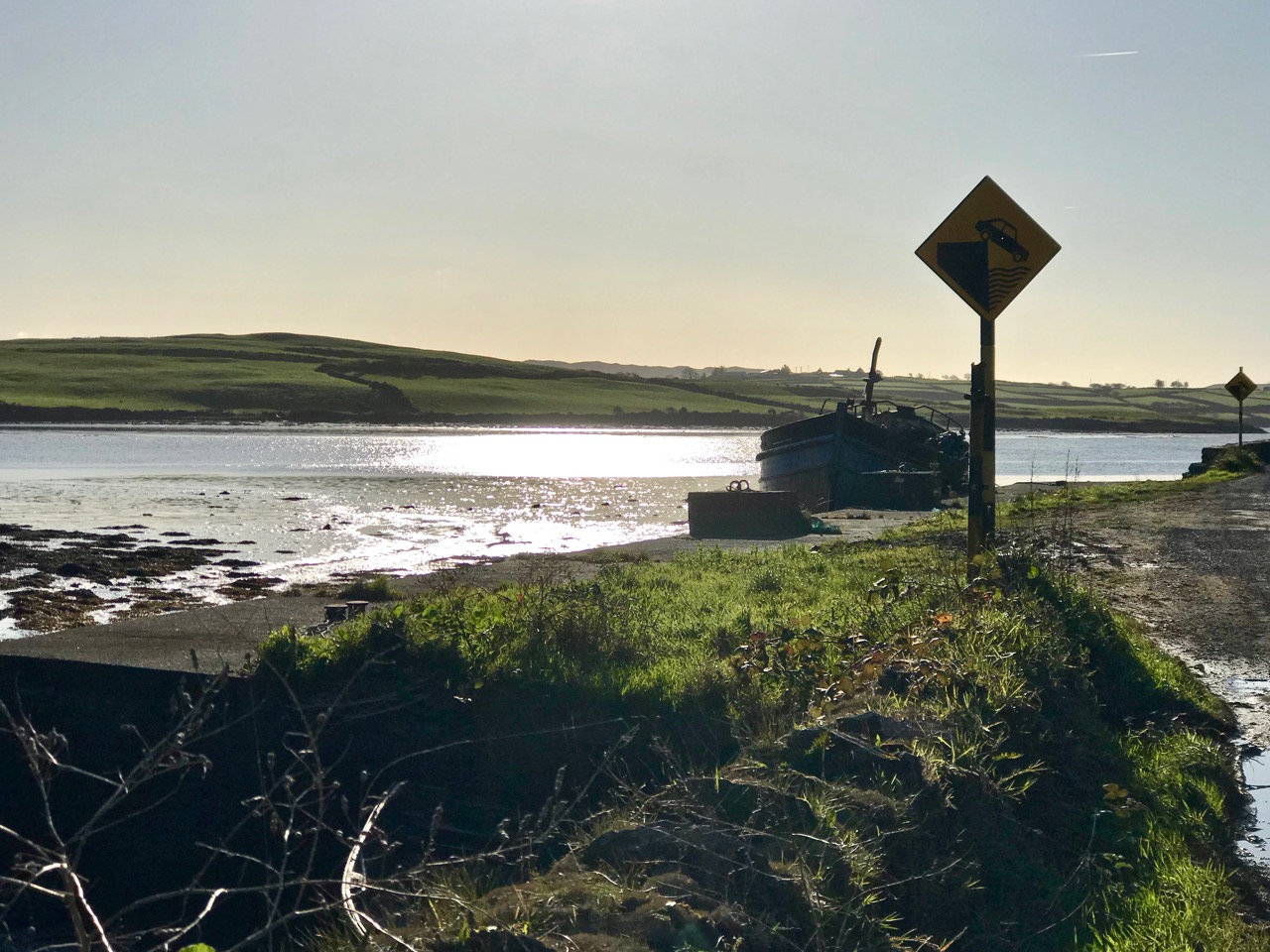
All along the coastline and river estuaries in West Cork are reminders of how important transport by water once was. Dozens of quays are still here, in good working order – there was a drive to revive and restore the more significant ones some years back. Also there are traces of more ancient ones which are slowly decaying into nature. All were put there to serve the isolated rural communities in the days when boreens were only narrow tracks, often impassable in the winter months. But on these western peninsulas no-one is more than a few miles from navigable water – and those quays were an invaluable asset.
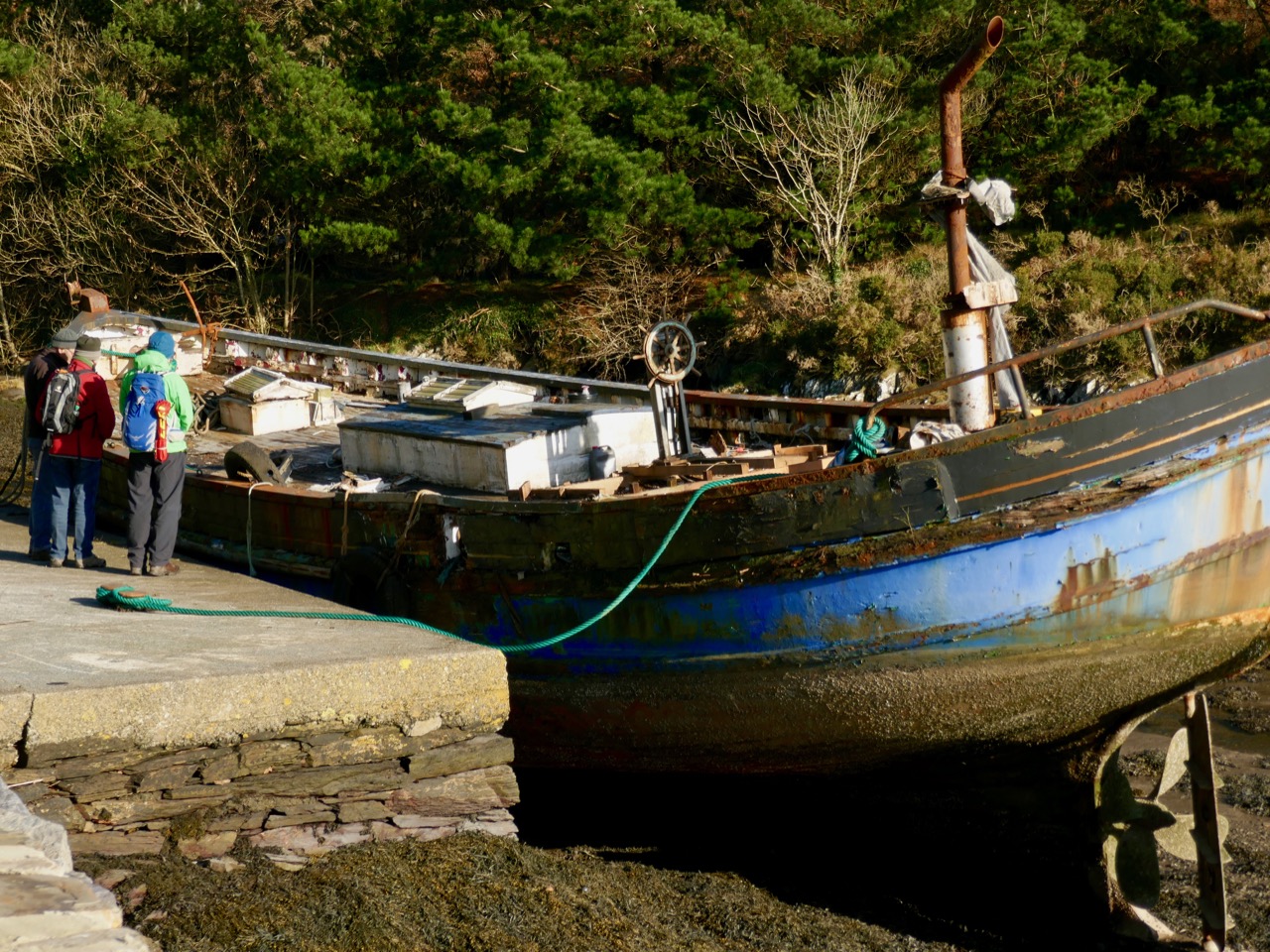
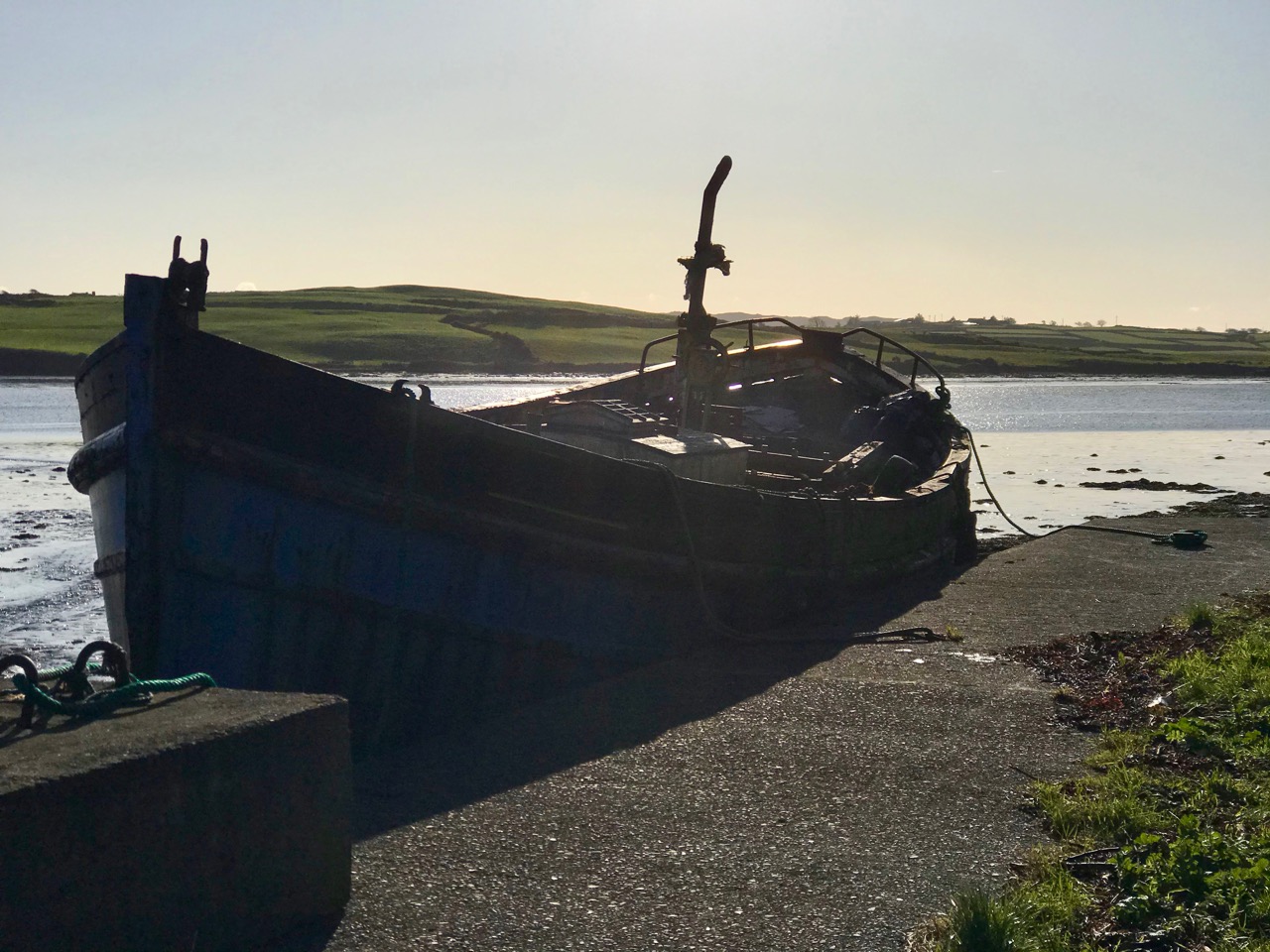
Our route passed right beside the Glebe Quay, where we came across the hull of an old fishing boat and – by chance – one of its former owners! Here we are, ‘at the chat’, above. This became a long ‘chat’ – as I was most intrigued to find out why this large vessel was sitting here in a deteriorating state – but we had to cut it short in the end as we were getting cold standing still! Our informant was Mike Williams, who Finola and I have met before: he lives on the shore of the Ilen River and has been involved in boats and boatbuilding for much of his life. He bought this former herring ring-netter some years ago with the intention of restoring her, but sold the vessel on to another enthusiast. The project did not succeed, however, and now the boat is on its way to the marine scrap yard – a sad but inevitable fate for many retired wooden craft.
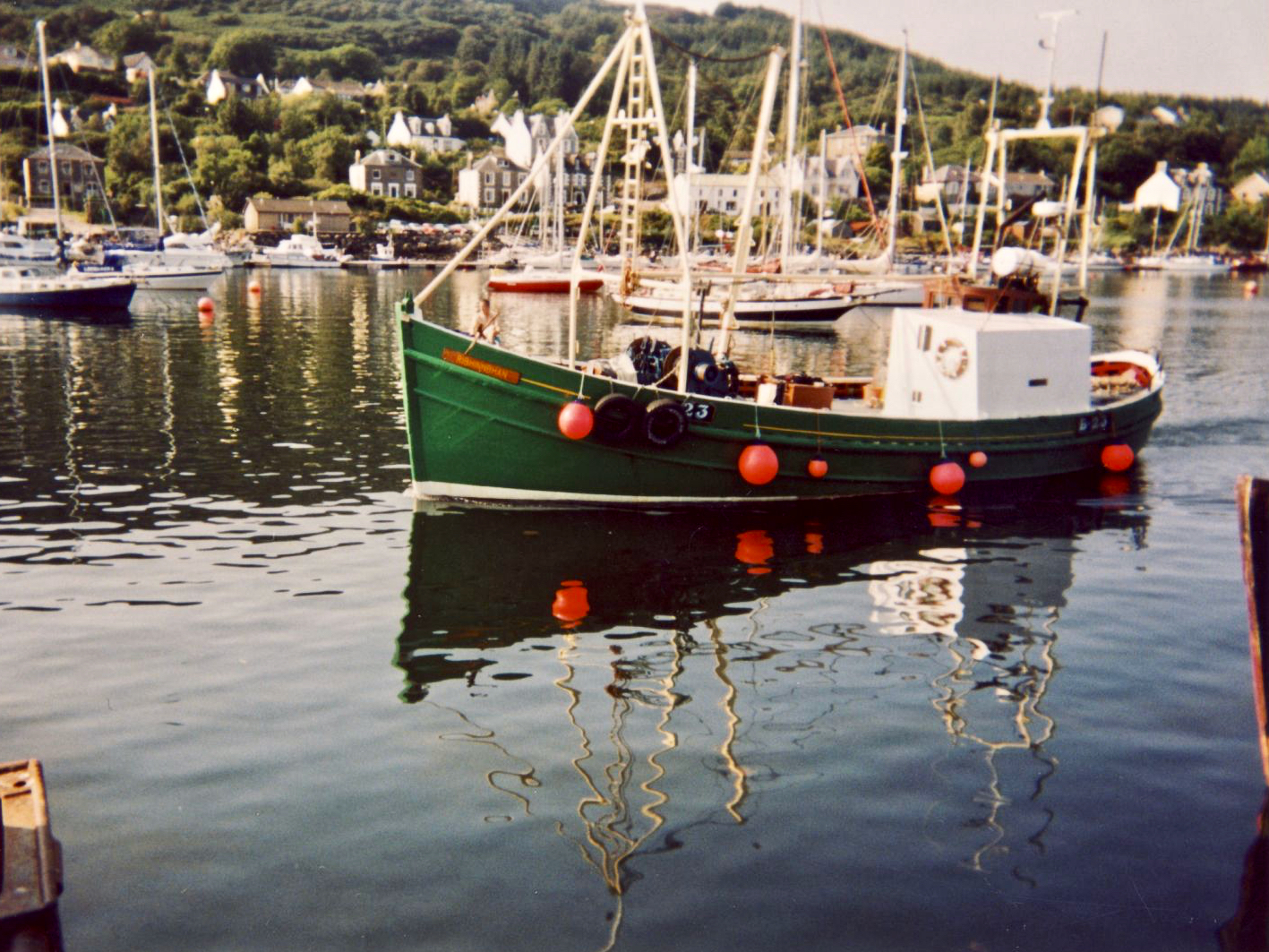
I did a bit of internet delving and was pleased to turn up some historical information on this boat, which Mike told us was named Ribhinn Bhan. Ribhinn comes from the old Irish word rhigan meaning ‘maiden’, while bhan in Irish means ‘white’. This vessel started life with the name Ribhinn Donn – ‘brown-haired maiden’, and was built in Scotland by Nobles of Girvan in 1966. She was first registered in Scalpay Isle – Sgalpaigh na Hearadh in Gaelic, one of the Outer Hebrides, close to Harris – and carried the number SY 371. She was renamed in 1973 and reregistered as B23 in 1989. She arrived in Tarbert, Co Kerry, Ireland in 2004, and Mike bought her in 2006. I’m including these two not-so-good quality photos of Ribhinn Bhan, which I traced, for historical interest: the first is the vessel in Tarbert, and the second follows her to West Cork; she is on the right, here, in the boatyard at Oldcourt, on the Ilen River, in 2007.
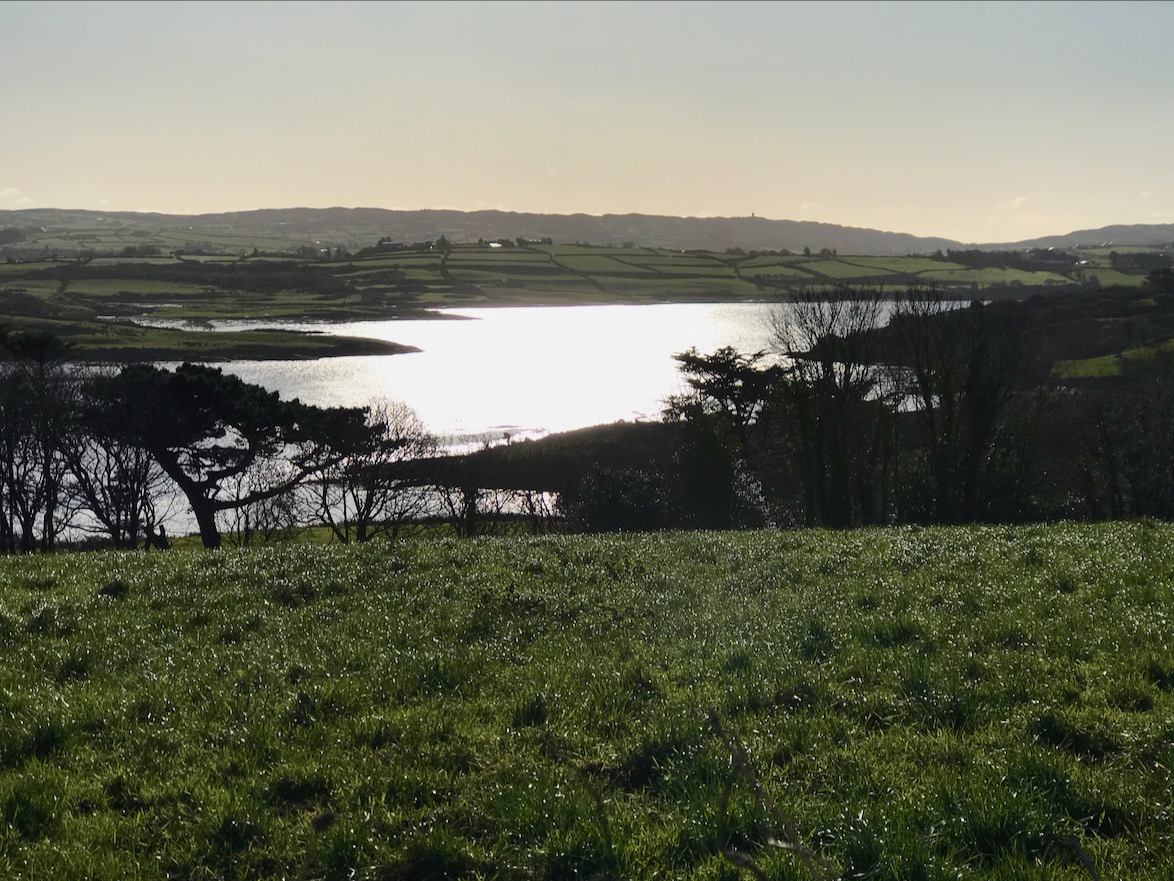
Moving on from the Ribhinn Bhan our path followed the line of the estuary, rising up to higher ground before turning back towards the trail head at Lisheen. There were many more sweeping views to be enjoyed, and the delight of being immersed in the simple ambience of rural life in West Cork, with all its unremarkable yet irresistibly attractive details.
We passed the quite remote but still running Minihan’s Bar – an ideal refreshment point on summer evenings – but not open for us on this November afternoon. The also remote seeming Saint Comghall’s Church, built in 1832, marked the return to the trail head and the end of our walk. It was a most satisfying expedition on a remarkably golden late autumnal day.
If the wind is in the south-west at Martinmas (10 November), it keeps there till after Candlemas (2 February) . . .
I’m writing about St Martin again! I’ve already put up posts about this character and his fascinating legacy over the past few years. He can take another – after all, we celebrate St Patrick year after year and that’s ok, because this is Ireland . . . But St Martin never set foot in Ireland (as far as we know) although he is well remembered in many Irish traditions, including that piece of weather-lore above. And here – as elsewhere in Europe – there’s a phenomenon known as St Martin’s Summer, or Martin’s Little Summer, which describes an unseasonable spell of warm weather, sunshine and clear blue skies that occurs around about now, in mid-November. In fact today – Martinmas or St Martin’s eve – has dawned warm and clear.
Header and above – looking across Rossbrin Cove from the garden of Nead an Iolair early this morning – St Martin’s Eve – conforming with the tradition of ‘Little Summer’ associated with the saint
The English poet John Clare (1793 – 1864) – sometimes called the peasants’ poet – wrote a very long poem about St Martin’s Eve: I’ll quote some verses as we go along. It’s worth noting that Clare was a great champion of traditional rural life, and was known as “. . . the greatest labouring-class poet . . . No one has ever written more powerfully of nature, of a rural childhood, and of the alienated and unstable self . . .” That’s according to his biographer Jonathan Bate. Although some of his work was well received in his lifetime, he was unable to make enough to keep him, his wife and seven children – and his alcohol consumption – on an even keel. He suffered from ‘strange delusions’ and spent the last twenty seven years of his life in asylums where, nevertheless, he continued to write.
Now that the year grows wearisome with age
& days grow short & nights excessive long
No outdoor sports the village hinds engage Still is the meadow romp and harvest song That wont to echo from each merry throng
At dinner hours beneath high spreading tree
Rude winds hath done the landscape mickle wrong
That nature in her mirth did ill foresee Who clingeth now to hope like shipwrecked folk at sea . . .
(John Clare, St Martin’s Eve, 1823)
Here’s St Martin, looking every inch a medieval knight – although in fact he lived in the fourth century. He was St Patrick’s uncle – possibly accounting for his popularity in Ireland. In this Italian representation he is shown cutting his cloak in two and giving half to a beggar: the act that has made him famous. He was a Roman soldier but gave up that calling to be consecrated as Bishop of Caesarodunum (Tours) in 371. Although he lived a long life, he is said to have died a martyr by being thrown into a mill stream where he was crushed by the wheel. He achieved acclaim as the patron saint of soldiers, but also managed to become the patron saint of conscientious objectors!
The Basilica at Tours, France (above). St Martin served as Bishop here from 371 – but reluctantly. It is said that he tried to hide from those who wanted to install him as Bishop, but his hiding place was given away by the cackling of geese – which have been associated with the saint ever since. Other stories tell how the saint destroyed pagan temples and cut down sacred trees: in one instance, the pagans agreed to fell their sacred fir tree, if Martin would stand directly in its path. He did so, and it miraculously missed him. There’s a relic in the St Catherine’s Convent Museum of Religious Art in Ultrecht, the Netherlands, which claims to be a hammer which St Martin used to fell pagan sites including sacred trees. Archaeological analysis has shown it was probably made in the 13th or 14th century from a late Bronze Age stone axe dating from c 1,000 – 700 BC. The handle contains a Latin text saying Ydola vanurunt Martini cesa securi nemo deos credat qui sic fuerant ruicuri (‘the pagan statues fall down, hit by St Martin’s axe. Let nobody believe that those are gods, who so easily fall down’). Here it is:
Beside the fire large apples lay to roast
& in a high brown pitcher creaming ale
Was warming seasoned with a nutmeg toast
The merry group of gossips to regale
Around her feet the glad cat curled her tail
Listening the crickets song with half shut eyes
While in the chimney top loud roared the gale
Its blustering howl of outdoor symphonies
That round the cottage hearth bade happier moods arise . . .
(John Clare, St Martin’s Eve, 1823)
It seems a little incongruous, perhaps, to come from a world of basilicas and silver hammers to ancient folk-customs in rural Ireland, but not so long ago Martinmas was greatly celebrated here. Kevin Danaher quotes Mason’s Parochial Survey:
On the eve of St Martin (who is one of the greatest saints in their calendar) in November every family of a village kills an animal of some kind or other; those who are rich kill a cow or a sheep, others a goose or a turkey; while those who are poor, and cannot procure an animal of greater value, kill a hen or a cock and sprinkle the threshold with the blood, and do the same in the four corners of the house; and this ceremonious performance is done to exclude every kind of evil spirit from the dwelling where this sacrifice is made, till the return of the same day in the following year . . .
Danaher also mentions a writer, Amhlaoibh Ó Súilleabháin, commenting in 1830 from County Kilkenny:
The eleventh day, St Martin’s Day. No miller sets a wheel in motion today, no more than a spinning woman would set a spinning wheel going, nor does the farmer put his plough team to plough . . .
The tradition undoubtedly refers back to St Martin’s death from being ‘ground by a mill wheel’. Significantly, there are numerous entries in the Dúchas Folklore Collection, dating from the 1930s, which show that these customs were still remembered and – on occasion – practised:
One of many examples from the Dúchas Folklore Collections which remember the importance of Martinmas customs
Martin King used kill a fowl every St Martin’s night in honour of St Martin. One year Martin forgot it and when he awoke in the morning the floor from his bedroom to the kitchen was covered with blood. Martin washed out the floor, but when he awoke again the following morning the floor was covered with blood again. This went on for three nights. Martin was very troubled about it so he told his story to an old woman that lived near him. The old woman told him it was because he had not killed something in honour of St Martin. Every year after that till he died Martin killed a hen or something in honour of St Martin . . .
(Eileen Donegan, Knockane, Listowel – collected for Dúchas 1935)
Another from Co Kerry:
St Martin’s day is held on the 11th of November. It is held as a feast day in honour of St Martin. The night before St Martin’s day people kill a goose or a chicken or some other kind of fowl, and they draw the blood and dip a piece of flax in it. They keep the piece of flax because it is said to be a cure for a pain in one’s side.
St Martin was a saint who was ground in a mill for his faith.
In olden times the mills used not work on that day The women in olden times used not work. No one would turn a wheel not even of a car.
(Mrs Walsh, aged 90 years – Tullamore, Co Kerry – collected for Dúchas)
The next piece is particularly interesting as it mentions St Martin’s association with a white horse:
It is a custom in Ireland to kill a cock on Saint Martin’s Night.
There was a man who emigrated to America. On St Martin’s night he was very sad. He was telling his friends that he would like to be home in Ireland, because if he were home he would kill a cock in honour of St. Martin.
He went outside and he went down the street. He met a man on a beautiful white horse. The man asked him would he like to go home. He said he was just wishing to be at home. He told him to get up on the horse. He did so and the next place he found himself was at his own door in Ireland.
The man told him to come out at a certain hour. He killed the cock and came out at the hour that he was told to do so. The man was waiting for him at the door. He got up on the horse and rode away. It was said that it was St Martin who brought him home.
(Maura Keating, aged 82 years, Passage East, Co Waterford)
St Martin’s Eve celebrations are still observed all over Europe. This is a festival in Italy, where children carrying lanterns watch out for the saint arriving on his white charger
What about Fenny Poppers? I hear you ask . . . Well, we have to go across to Northamptonshire, in England, for this surviving – and most curious – custom. St Martin’s Church, Fenny Stratford is to this day the scene of an event which has no apparent origin, nor any particular purpose. I won’t try to offer you an explanation – just to point out that it happens every Martinmas come hell or high water. Here’s a somewhat eccentric account of the event from a Movietone News snippet c 1950:
That’s probably enough about St Martin and his special day to last you another year. The subject is by no means exhausted!
Welcome to the UCD Library Cultural Heritage Collections blog. Discover and explore the historical treasures housed within our Archives, Special Collections, National Folklore Collection and Digital Library