Thaddeus McCarthy: The Bishop Who Never Was

This is the story of a man from West Cork who was appointed a bishop not once but twice, by two different popes, but prevented from assuming his duties by warring clan factions; a man now venerated in two countries.
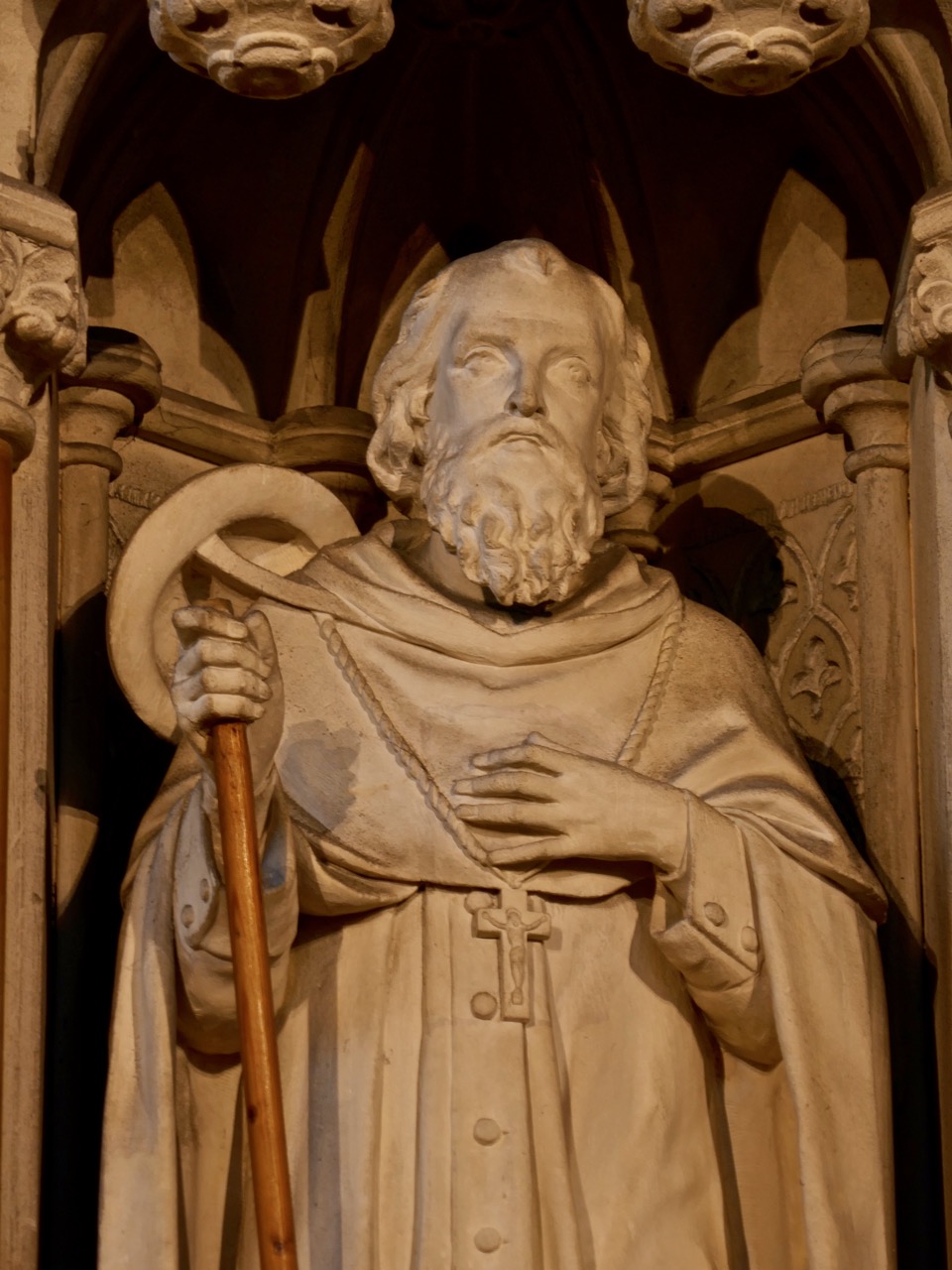
Thaddeus in his dedicated chapel in St Colmán’s Cathedral in Cobh

I had never heard of Blessed Thaddeus McCarthy until I stumbled upon his curious shrine in Cork’s North Cathedral. It’s a strange and glorious thing – two golden angels holding an ornate, bejewelled casket within which a glass tube contains, of all things, a leg bone. Nearby, a statue and a plaque provide more of the story.

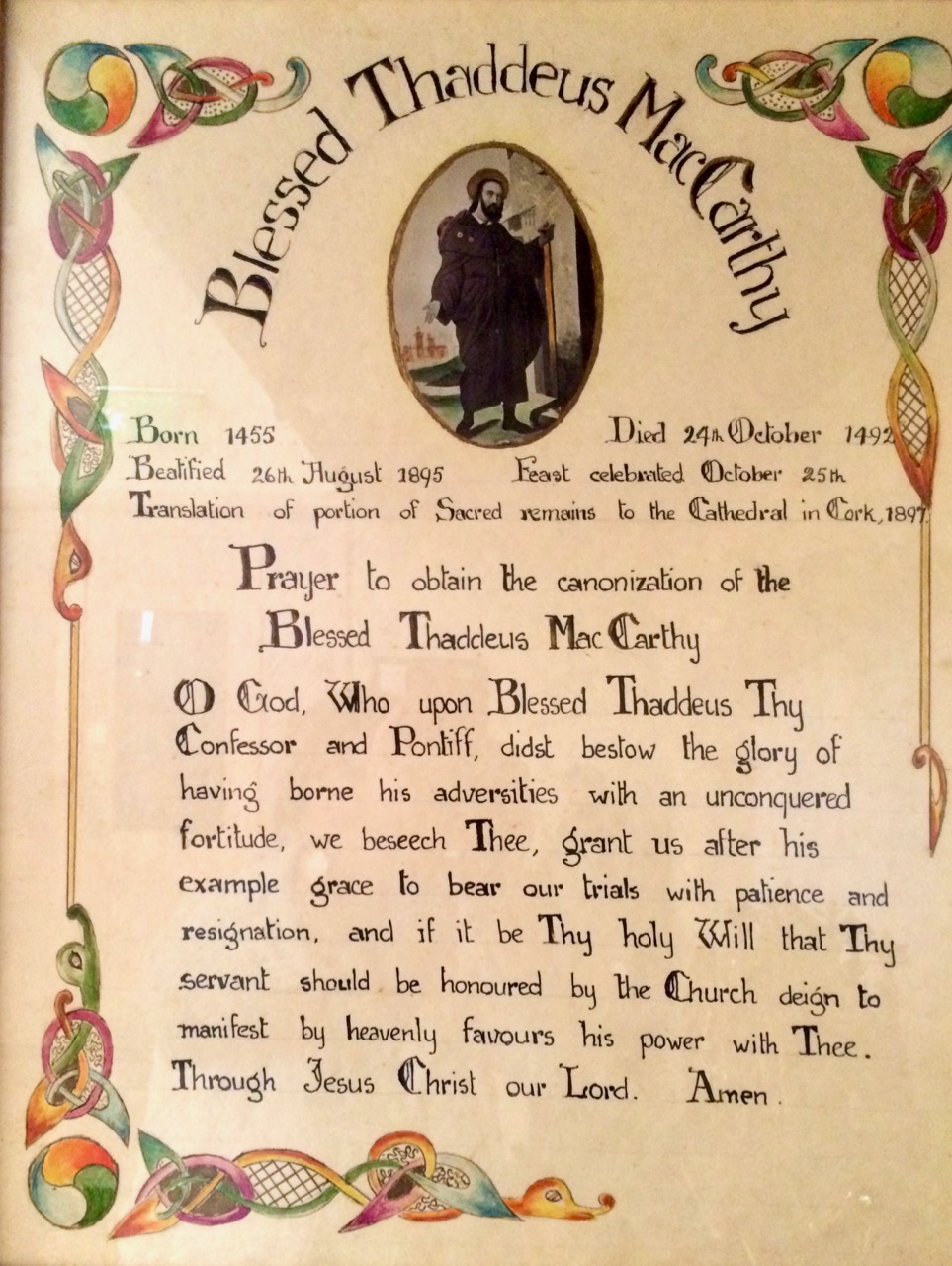
The relic of Thaddeus’s leg bone and a prayer to him, both part of the shrine on the North Cathedral, Cork

Once I had seen the shrine in the North Cathedral, it seemed I met the Blessed Thaddeus everywhere I went, and I came to know about his life over time. It is as much a story of the struggle for supremacy of some of the great Irish houses – the McCarthy Reaghs, the FitzGeralds and the O’Driscolls – during the turbulent fifteenth century, as it is the story of a holy man.

Thaddeus is often depicted wearing the scallop shell – symbol of a pilgrim

Thaddeus was born in 1455 in West Cork into the reigning Munster family of the McCarthy Reaghs, powerful lords who held sway in Carbery and Muskerry at the time and whose principal seat was in Kilbrittain. He studied under the Franciscans, probably at Timoleague Friary, and took holy orders before going off to Rome where he impressed the Pope (Sixtus IV) so much with his saintliness that he appointed Thaddeus Bishop of Ross (Rosscarbery See). Upon his return home, however, he found that an O’Driscoll was already Bishop of Ross (appointed by the same Pope – he had apparently forgotten, oops). The O’Driscolls were certainly not about to give up their hold on the See of Ross, so back went Thaddeus to Rome to ask the Pope to sort it out.

Thaddeus in Italy, dressed as a simple pilgrim, looking resigned and thoroughly saintly

After many inquiries and rumination, another Pope, Innocent VIII, appointed him Bishop of Cork and Cloyne. Once again, when he returned home, it was to find that the FitzGeralds had their own man in the position. Through all these trials Thaddeus bore himself with patience and dignity and encouraged his followers not to engage in violent behaviour on his behalf. His enemies worked to get him excommunicated and so off he went to Rome one more time, where the Pope confirmed his credentials.
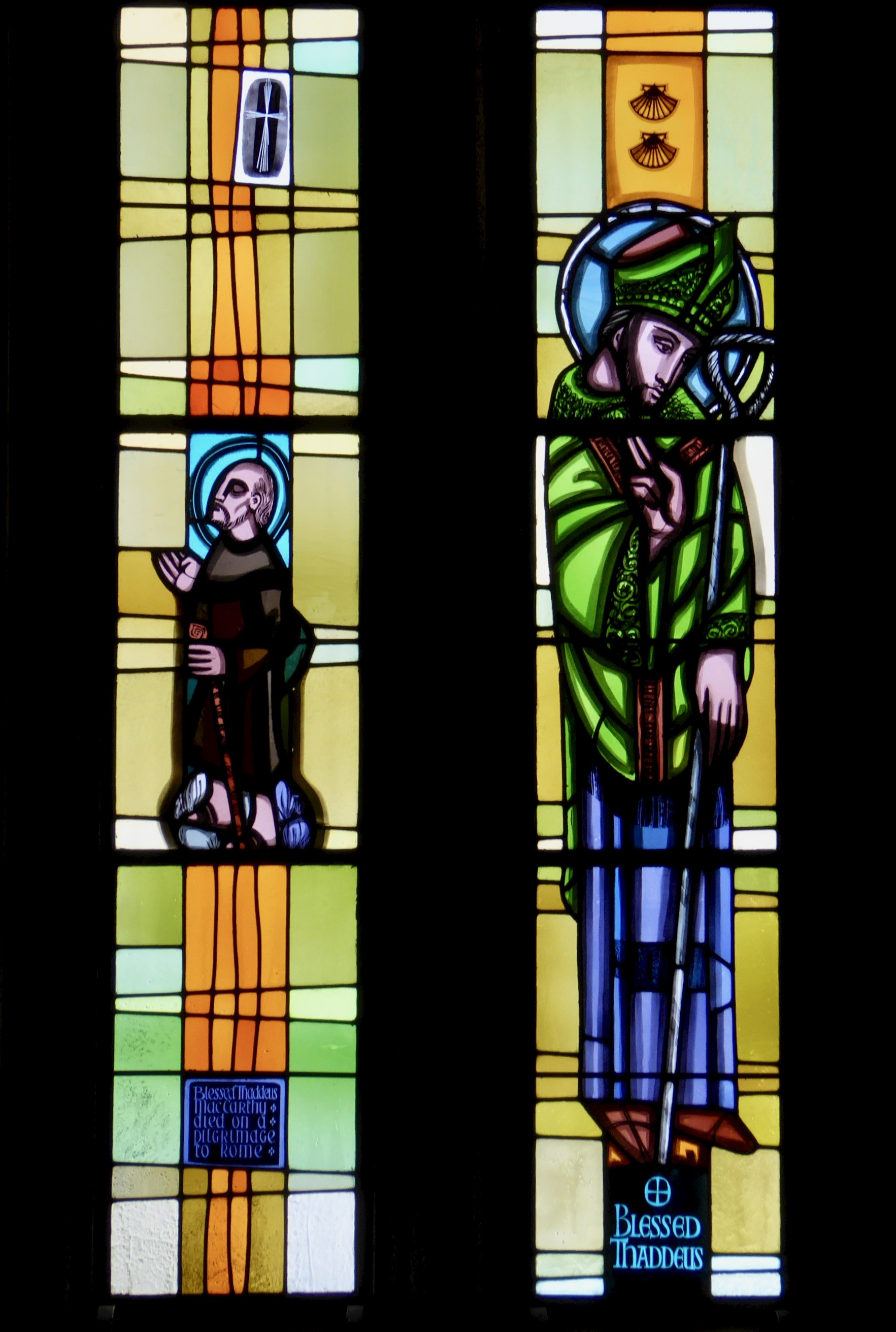
A window dedicated to Thaddeus in the Catholic church in Caheragh, near Skibbereen

On his journey back to Ireland he travelled alone in the guise of a simple pilgrim. He was only 37 years old, but worn out by his many travails he died in the night in a hostel near Ivrea in Italy. In the morning a bright light was seen to shine from the room where his body lay and the monks found him bathed in this mysterious glow. When they examined his possessions they realised he was an Irish bishop.
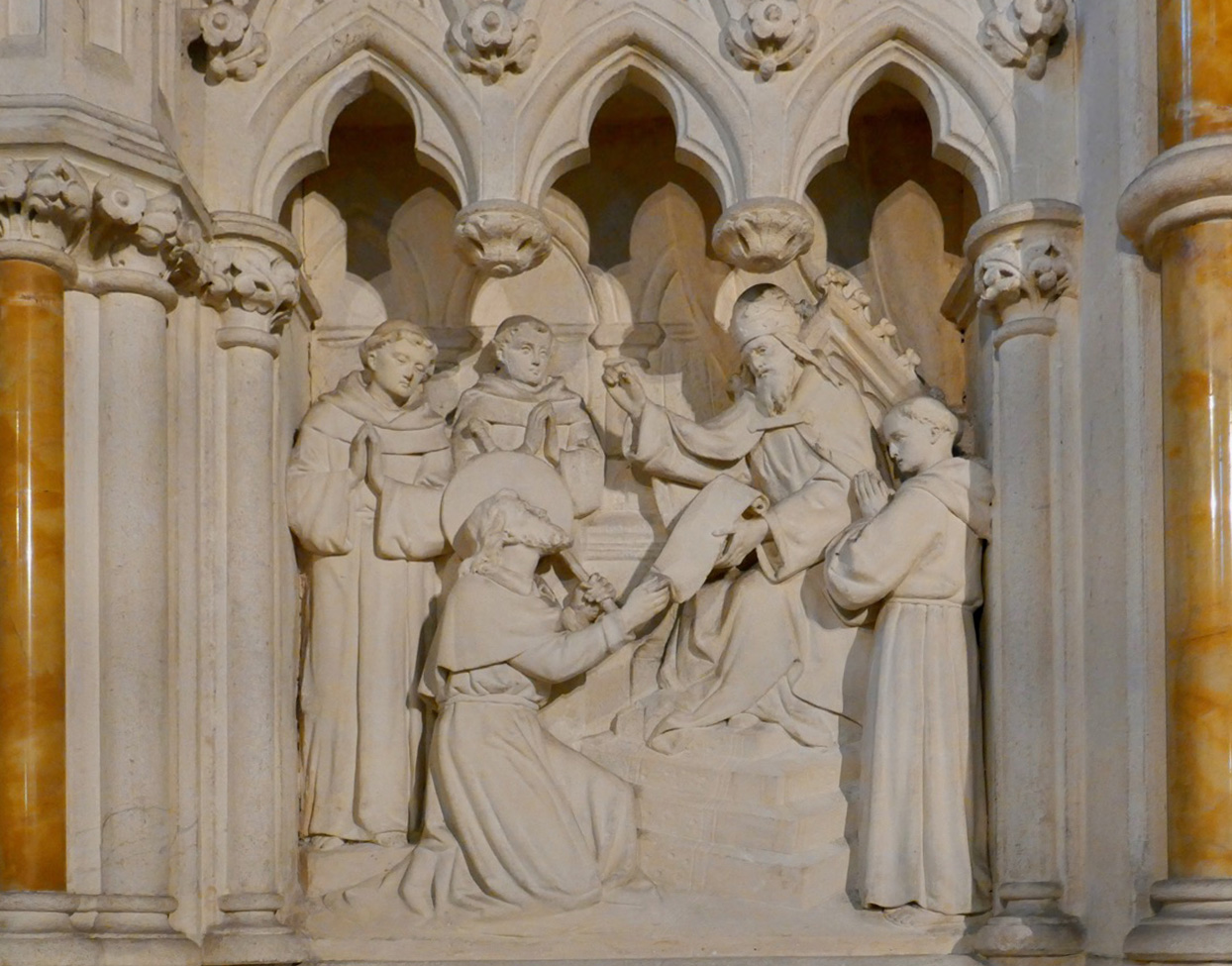
Thaddeus appeals to the Pontiff (detail of the Thaddeus altar, Cobh)

The Rev Patrick Hurley has written a full, two part account of the life of Thaddeus, published in the Journal of the Cork Historical and Archaeological Society for 1896 (here and here). The occasion for the paper was that the Irish, who had essentially forgotten about Thaddeus (although the McCarthy’s held on to a tradition of a saintly ancestor) had recently become aware of his status in Italy. I will let Fr Hurley take up the story of what happened next when Thaddeus died:

On hearing the news people flocked from all parts to see the pilgrim-bishop, who they regarded as a saint, and many sick were here cured and restored to health. Seeing this the bishop ordered the body to be carried to the cathedral, which was accompanied with great solemnity, the chapter, clergy and religious orders all going with a great multitude of people more in the way of a triumph than a funeral.

Depiction of the funeral, based on Fr Hurley’s account  (detail of the Thaddeus altar, Cobh)

Thaddeus was placed under the altar alongside the body of St Eusebius and there he is to this day. Eventually the tombs of both saints were opened and Thaddeus’s remains were re-interred in a reliquary (he was found to have red hair). His feast day is celebrated in October every year in Ivrea and many miracles have been ascribed to him over the centuries.
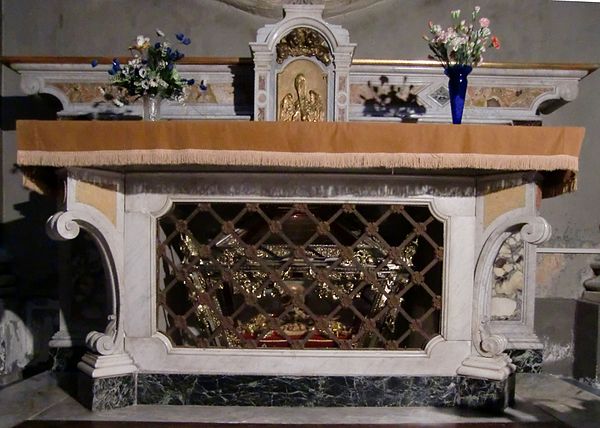
Blessed Thaddeus’s Reliquary in Ivrea, Italy

There’s even a 15th or 16th century poem, in Latin, about him. Fr Hurley provides a translation. Since he gives no author, it may be his own work, which would not surprise me as this is obviously an erudite and talented scholar. He started his career as the parish priest of Schull, was the priest responsible for the chapel and stations at Gougane Barra and also established the Irish training college at Ballingeary. He was a frequent contributor to the JCHAS.

Fr Hurley had attended a ceremony in honour of Thaddeus in Ivrea ‘recently’ when he wrote his two pieces. He remarks in awe on the majesty of the ceremonial and the great crowds who took part. Above all, he says, the solemn procession when, as if in triumph, the remains of the poor unknown pilgrim were carried through the streets he passed so many years ago, will not be easily forgotten.
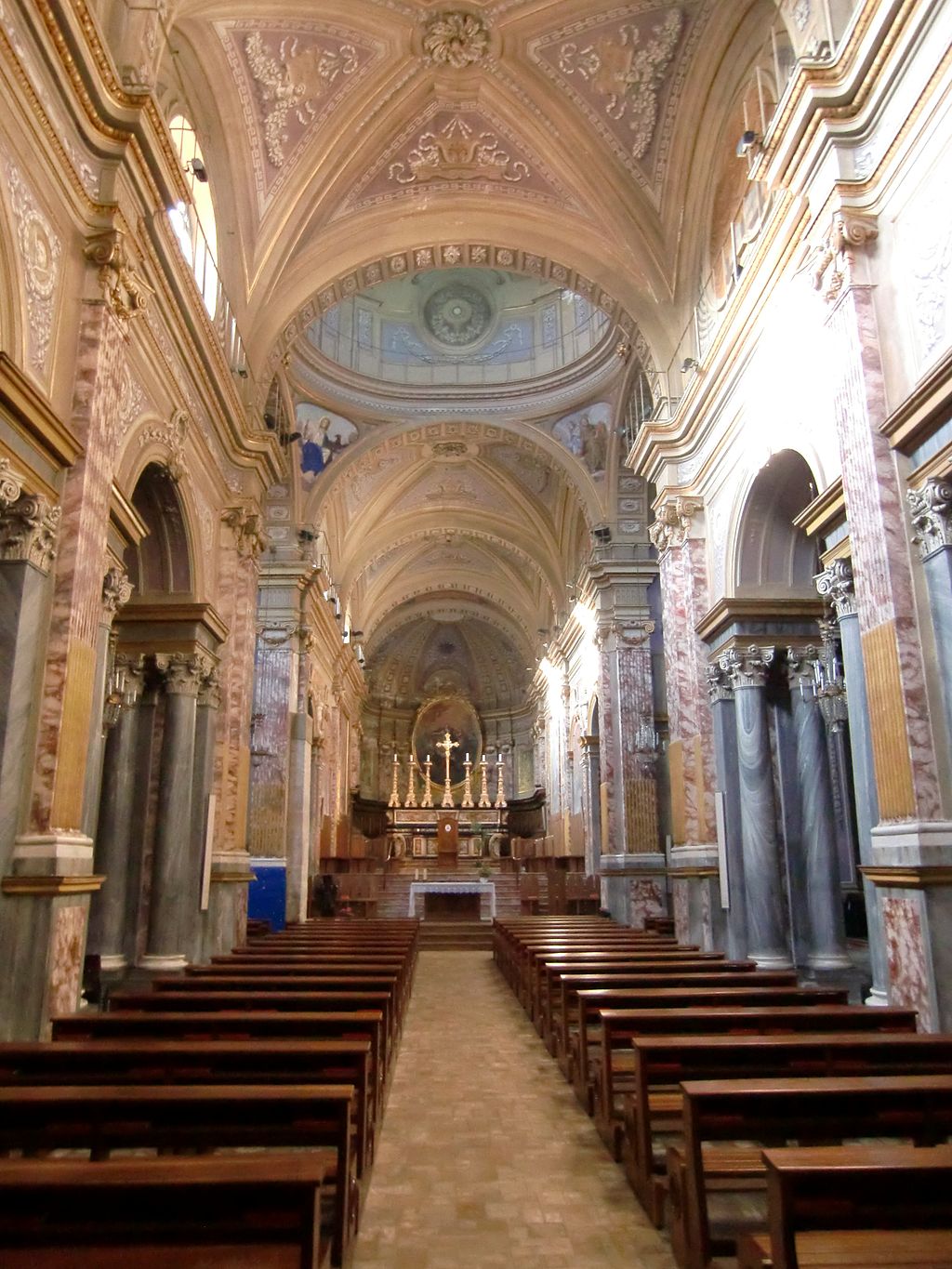
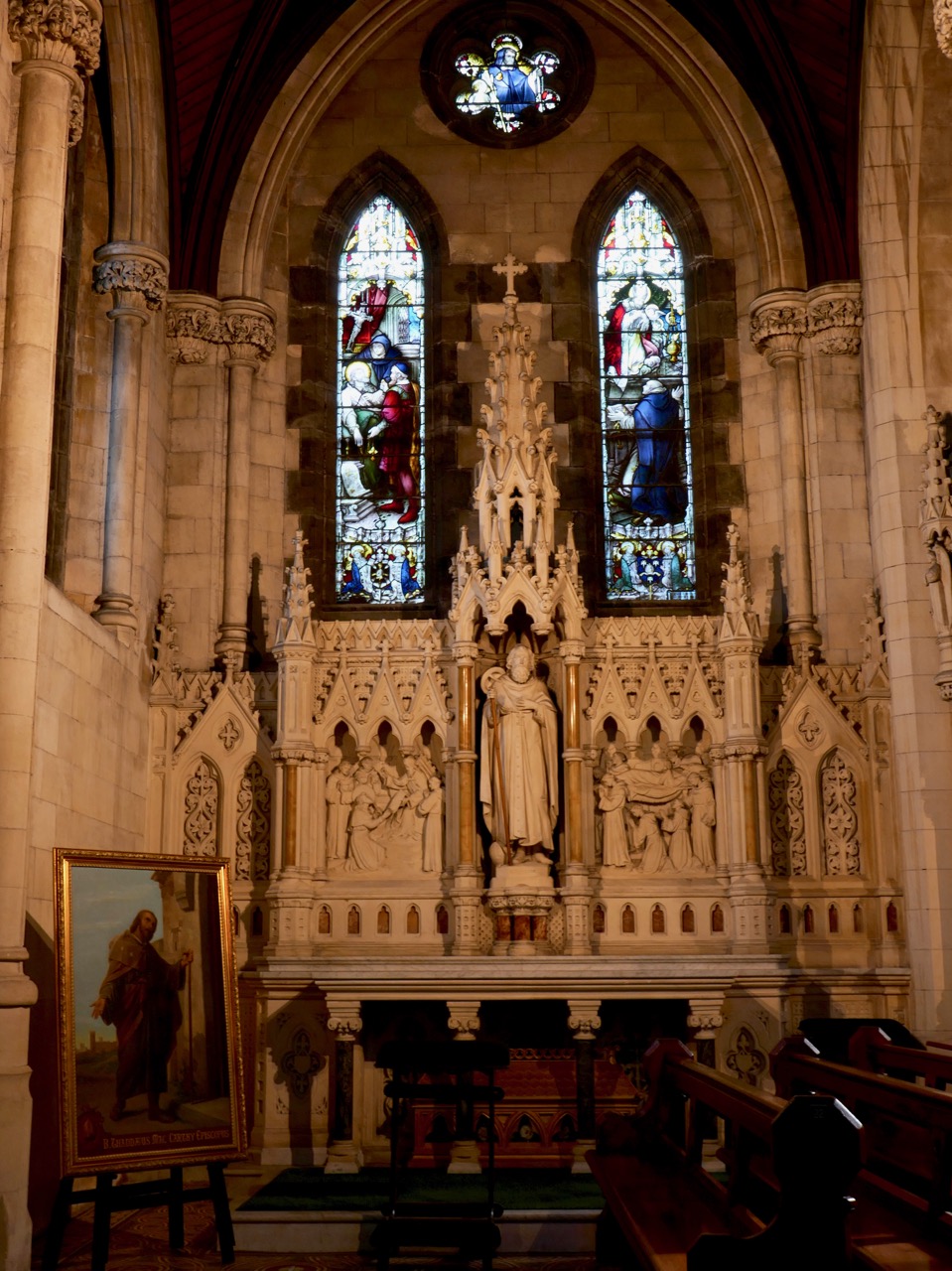
Above, the magnificent church in Ivrea, Italy, where Thaddeus lies and below, the equally magnificent side-chapel dedicated to his memory in St Colmán’s Cathedral, Cobh

In more recent times, it was agreed that some relics of the saint could be returned to Ireland – hence the leg bone that caught my attention in the North Cathedral. Ireland, and particularly Cork, had rediscovered their saint and veneration of this fifteenth century holy man spread rapidly. In St Colmán’s Cathedral in Cobh (the subject of Robert’s post this week) one of the side chapels is dedicated to him: this probably happened in a time of great enthusiasm for the revival of his cult following the rediscovery described by Fr Hurley. The design of the altar, the carvings, the mosaics and stained glass show that the artists were familiar with Fr Hurley’s account. 

The death of Thaddeus, St Colmán’s Cathedral, Cobh

In the years that followed, as new churches were built and older ones refurbished, Thaddeus lived on in stained glass and small shrines. I have no doubt that part of this comes down to his surname – we love the idea that the McCarthys, of a proud, ancient and powerful lineage, and the people of Cork, have our own saint.

A shrine to Thaddeus, including a reliquary (not sure what it contains) in the Catholic church in Clonakilty

Please read the comments for updated information
Darerca – A Neglected Saint

Ireland is ‘The Land of Saints’. The Catholic Online website lists 331 of them, but some get much better treatment than others. Last week we celebrated St Patrick – the news was full of it, as it always is on 17 March. Yet, just five days after Patrick’s Day – on 22 March – I was at a schoriacht and asked the assembled crowd who was the Saint for that day: nobody knew. It was the day for St Darerca and she is, unfairly, much neglected, especially since she is St Patrick’s sister. In order to redress the balance I have put together everything I can find on the story of St Darerca, and – because she has never been pictured (as far as I can tell) – I have illustrated it with some general Irish Saintly connections.

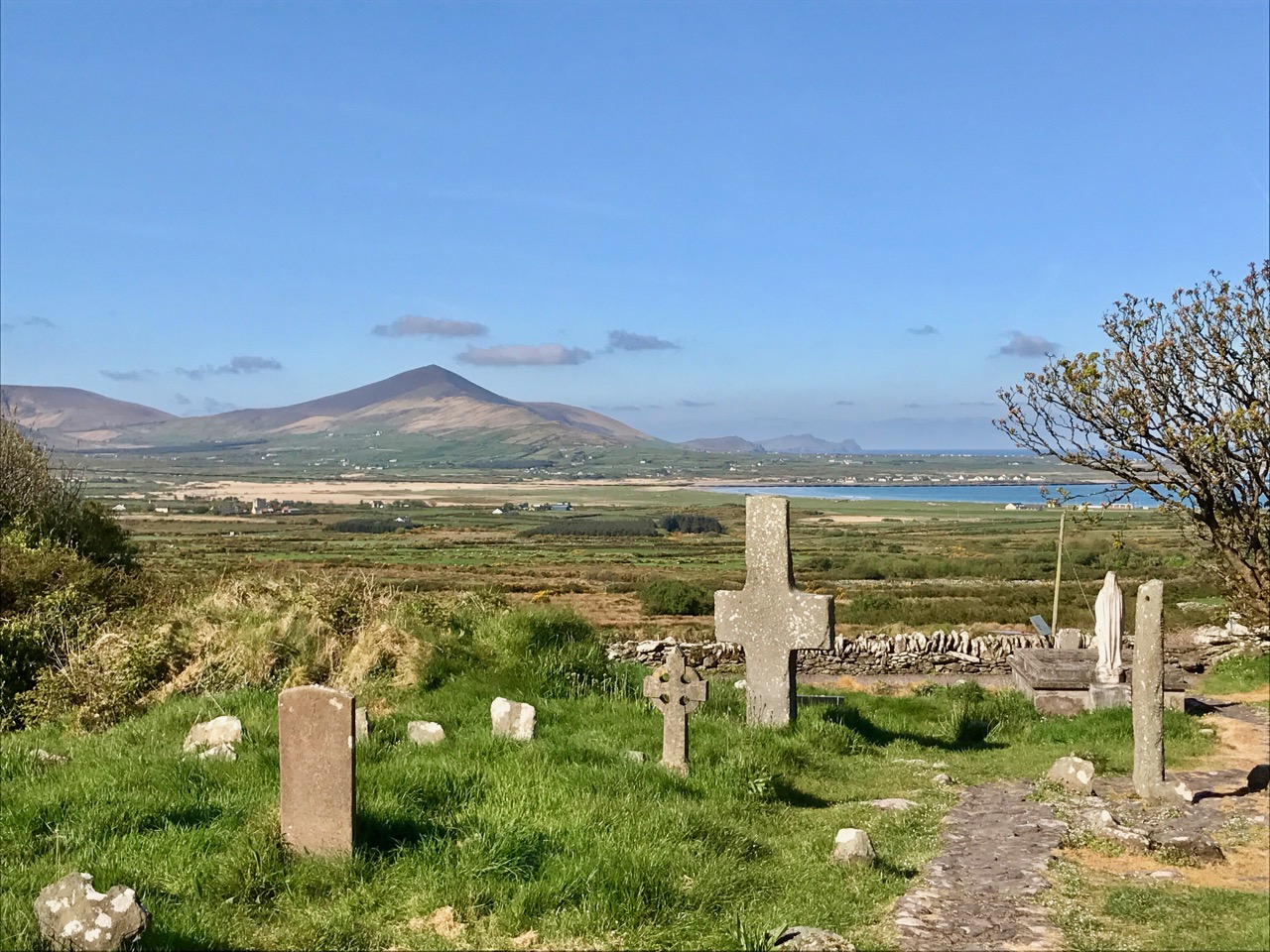
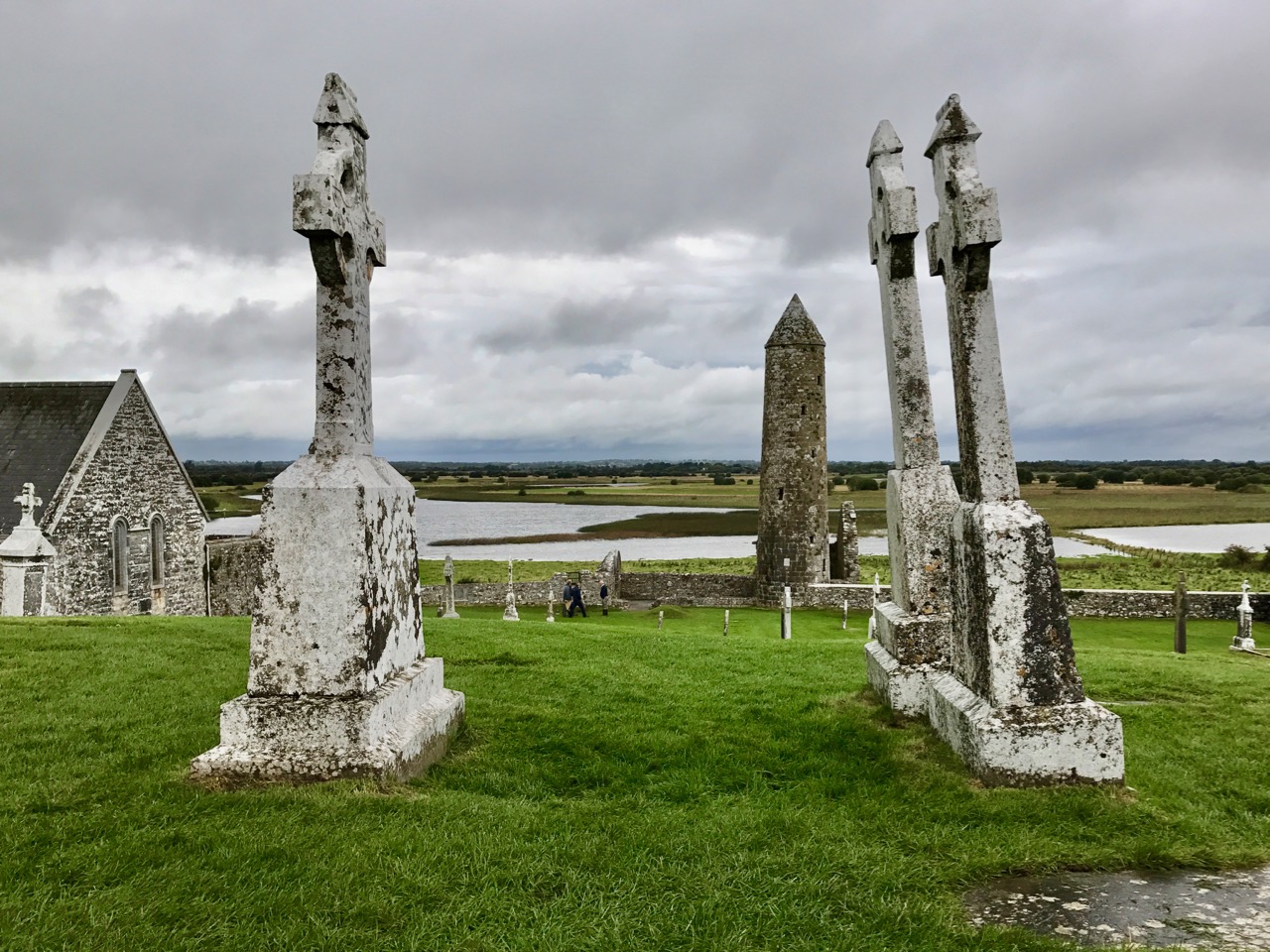
Land of the Saints: header picture – Clonmacnoise, Co Offaly – Ireland’s holy centre, and one of the oldest and most important early Christian settlements in Europe. Above – the beautifully located Kilmalkedar monastic site in Kerry has long associations with Saint Brendan the Navigator

St Darerca is first mentioned in the Vita tripartita Sancti Patricii (Tripartite Life of Saint Patrick), which some scholars believe was written in the sixth century – within a century of St Patrick’s death (possibly in 493 at the age of 120). In the Tripartite Life, we read that St Patrick had two sisters, and that when he came to Bredach in County Derry for an ordination, . . . he found there three deacons, who were sons of his sister Darerca . . . These deacons were eventually ordained bishops and became St Reat, St Nenn, and St Aedh, the . . . sons of Conis and Darerca, Patrick’s sister . . . 

Upper – St Patrick’s Bell; lower – inscription on another 10th century bell – both now in the National Museum, Dublin

In his own Confessio, St Patrick makes no mention of his sisters. The Confessio begins:

. . . My name is Patrick. I am a sinner, a simple country person, and the least of all believers. I am looked down upon by many . . .

But it’s a very brief account of his life, and hardly qualifies as an autobioigraphy.

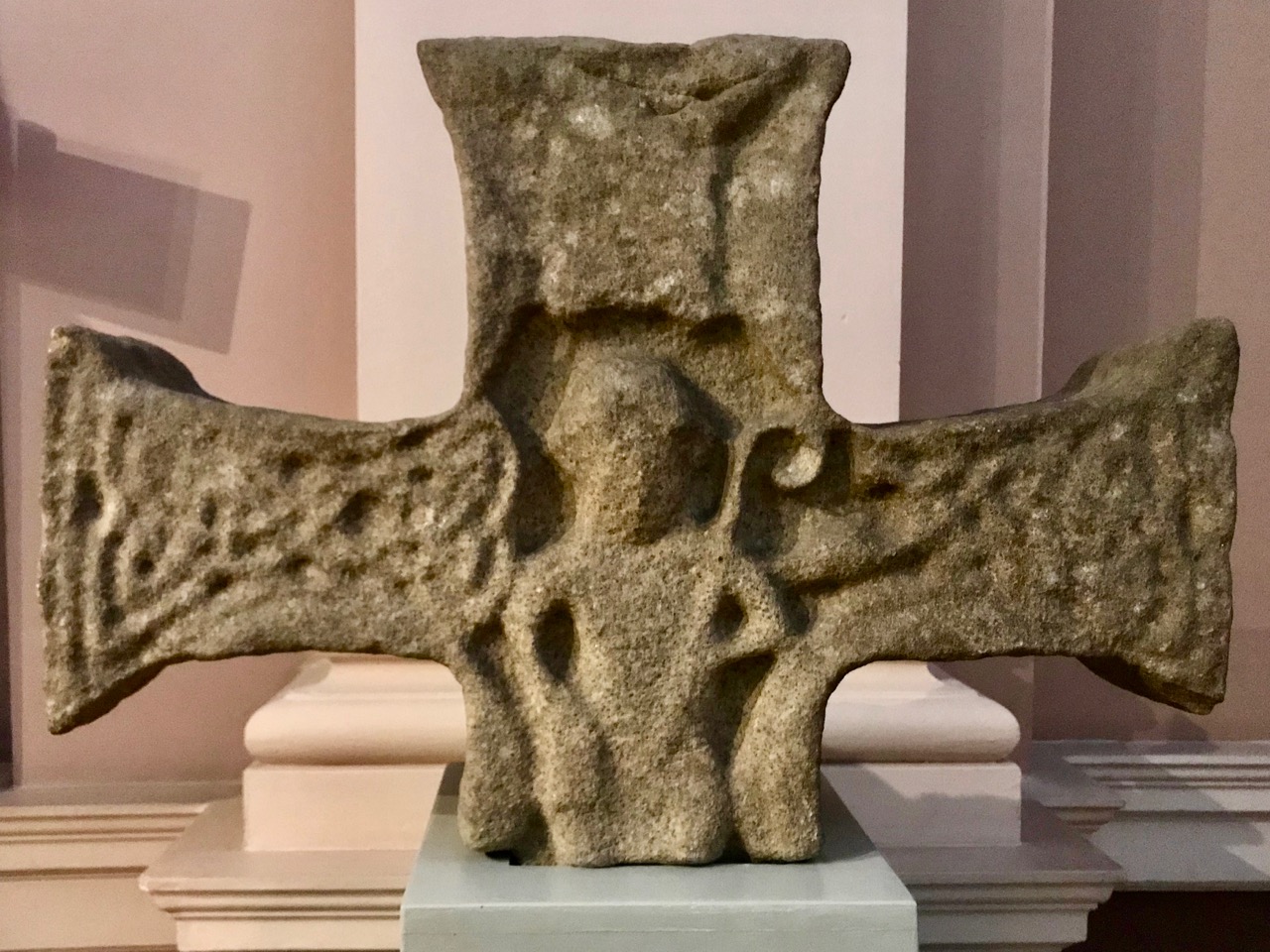
Medieval cross head, in the National Museum, Dublin

One version of the Tripartite Life suggests that both sisters were kidnapped from Britain along with St Patrick and returned to Ireland with him when he set out on his missions. A 17th century Irish hagiographer, John Colgan, collected fragments of information pertaining to Darerca . . . from Irish tradition . . . He asserted that St Darerca may have had as many as seventeen sons between two husbands, and that all of them became bishops. He also states that, according to tradition,  many of these became saints:

. . . By Darerca’s first husband, Restitutus the Lombard, she bore St Sechnall of Dunshaughlin; St Nectan of Killunche, and of Fennor (near Slane); of St Auxilius of Killossey (near Naas, County Kildare); of St Diarmaid of Druim-corcortri, in addition to five other children. By her second husband Conis the Briton, she bore St Reat, St Nenn, and St Aedh; ancient Irish authors also attributed her motherhood to St Crummin of Lecua, St Miduu, St Carantoc, and St Maceaith . . .

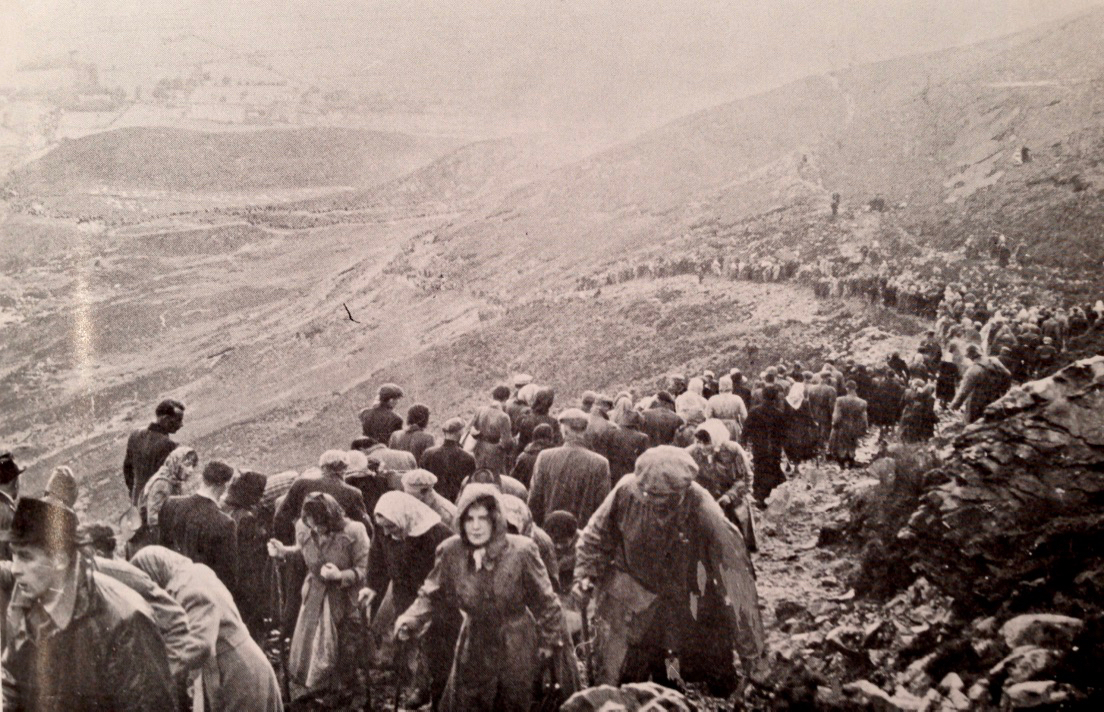
A 1950s photograph from Tomás Ó Muircheartaigh showing the annual pilgrimage to the summit of St Patrick’s holy mountain in Co Mayo, Croagh Patrick

St Darerca’s second husband, Conis, was said by some to be the King of the Bretons, although others only suggest that, by him, she gave birth to Gradlon the Great, who became King of Brittany. It’s really surprising (and a shame) that we don’t know more about Darerca: perhaps she has just always been overshadowed by her famous brother. As well as – perhaps – seventeen sons, she is supposed to have had four daughters, all of whom were also connected with the spread of Christianity in Ireland. Only two are named: St Eiche of Kilglass and St Lalloc of Senlis.

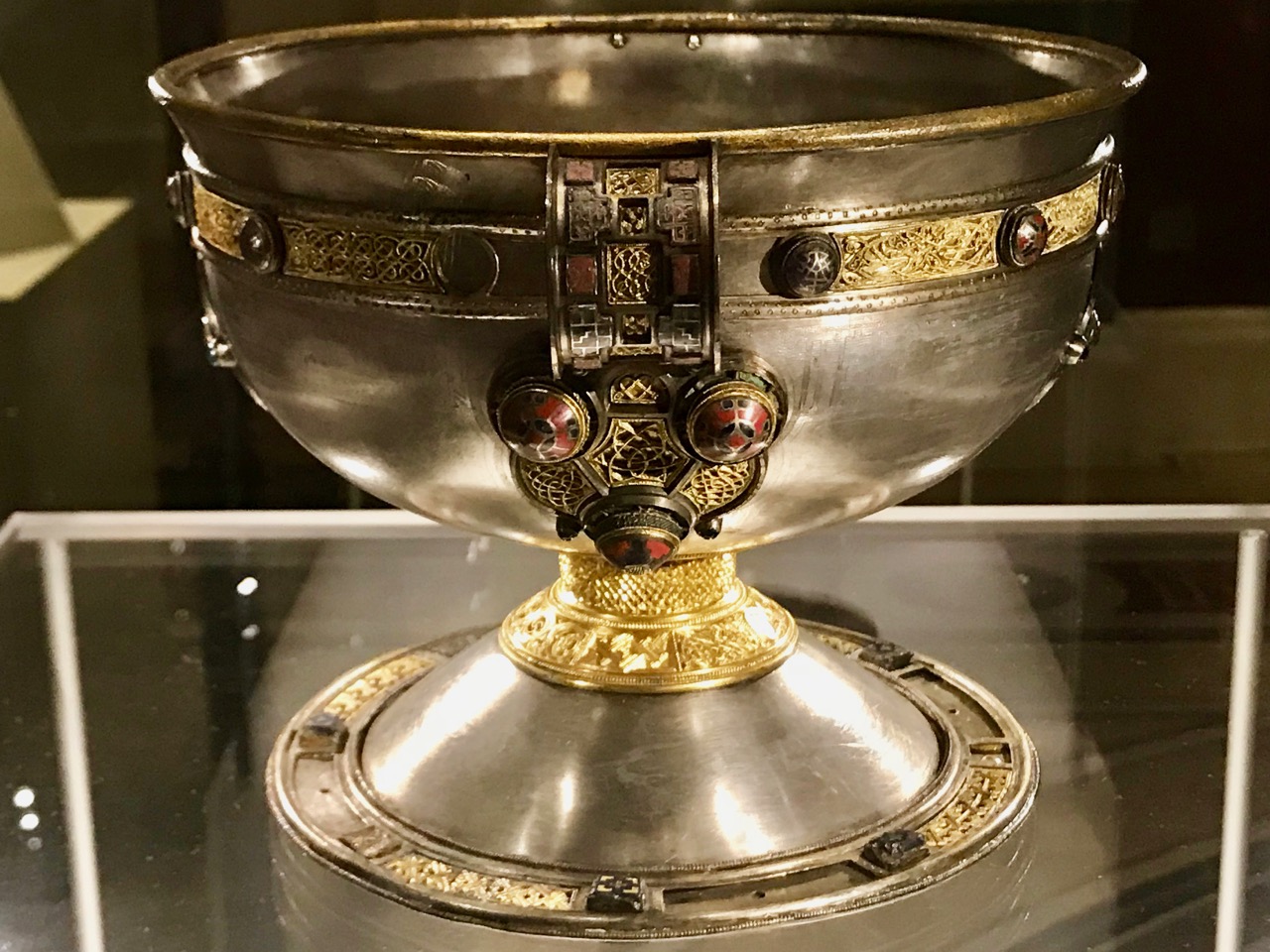
The Ardagh Chalice, National Museum, Dublin

There is a reference to Darerca as having another name: Moninna, said to have founded a convent at Killeevy, Co Armagh which was second in importance only to that at Kildare. A curious story is told to account for the change of her name to Moninna. The Irish commentary is translated into English by Whitley Stokes:

. . . Darerca was her name at first. But a certain dumb poet fasted with her, and the first thing he said after being miraculously cured of his dumbness was minnin. Hence the nun was called Mo-ninde, and the poet himself Nine Ecis . . .

Moninna studied theology, established convents in Ireland, Scotland and England and travelled to Rome. Perhaps most interestingly she is also known by the name Liamain, and there is a connection with an ancient stone on the island of Inchagoill in Lough Corrib. The ‘Pillar Stone’ on that island is known as Lugnaedon Pillar, a piece of Silurian grit stone, about two feet high with an incised cross on the north side, and two such crosses on each of the other sides. The inscription on the stone translates as . . . The stone of Lugnaedon, son of Limenueh . . . or Liamain. The pillar is said to originate in the 6th century, and would therefore be the oldest Christian inscribed stone in Ireland.

Two photographs of the 6th century Lugnaedon Pillar on Inchagoill Island. It is also known as the Rudder Stone because of its shape

The Benedictines say that Darerca’s name is derived from the Irish Diar-Sheare which means ‘constant and firm love’. And, finally, a piece of local folklore say that St Darerca blessed a poor man’s beer barrel so that it provided an endless supply of beer ever after!

Lives of the Saints – a detail from a stained glass window by George Walsh in St Kentigern’s Church, Eyries

So there you have it – scraps gleaned from many sources, some of which are not named – from which we can piece together an incomplete picture of an Irish saint who may well have done as much in her day for Christianity in Ireland as her famed brother. How about giving Patrick a rest next year and, instead, celebrating the day of St Darerca?

Knockdrum Stone Fort

There is no firm line that denotes where our most south-westerly Irish peninsula begins. Our series, Mizen Magic, has reported on walks, roads, views, history and archaeology which can definitely be defined as belonging to the Mizen (which we tend to think of as being to the west of, and including, its ‘gateway’ – Ballydehob). Perhaps we should start a series titled Magic Beyond The Mizen – in which case this would be the first: a report on a very prominent site about half an hour’s drive along the coast east of where we live: a historic structure – built within the last 2,000 years – but which contains evidence of much older human activity.

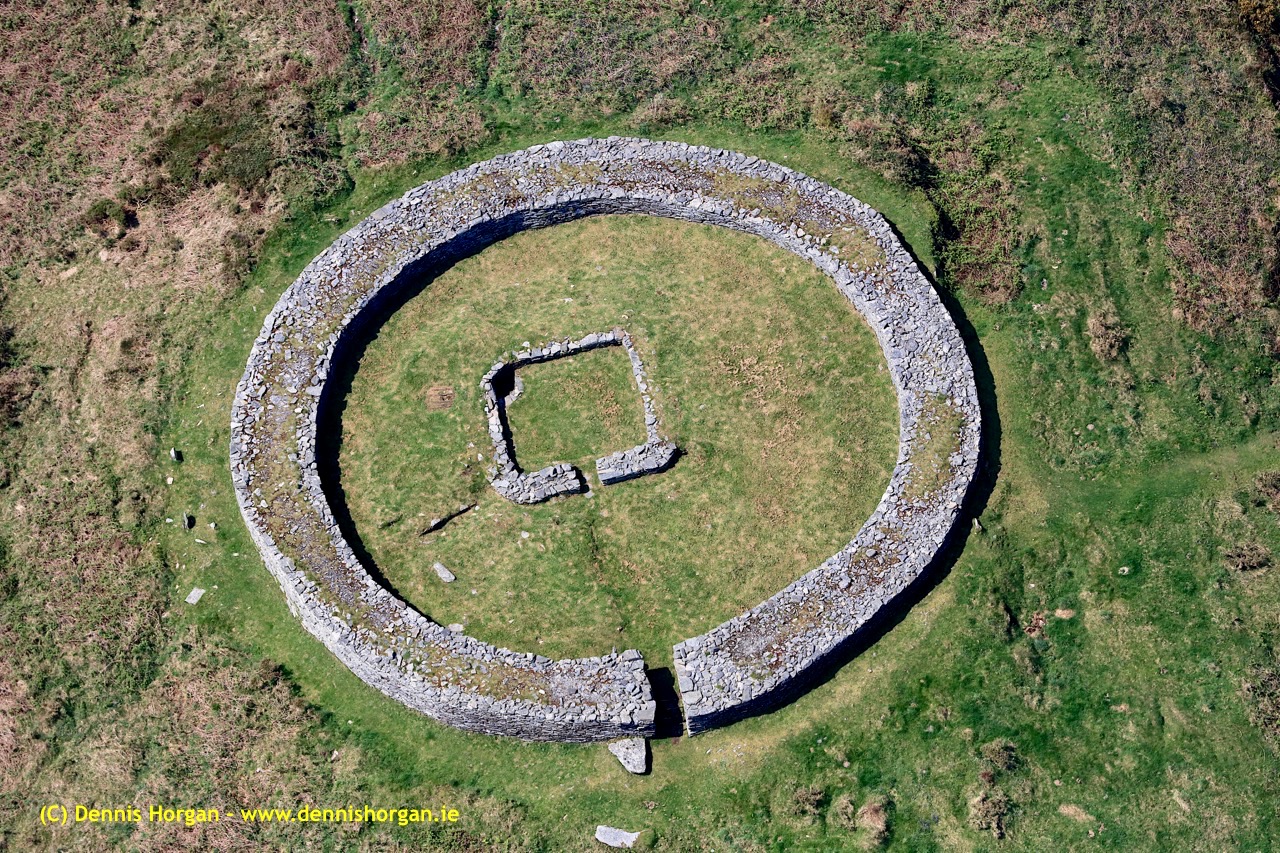
Here is an overhead view – the best way to see and understand the layout and construction of Knockdrum Stone Fort, which occupies a superb hilltop location in the townland of Farrandau between Skibbereen and Castletownshend. Thank you, Dennis Horgan – our professional West Cork aerial photographer – for allowing us to use this image: have a look at his website for other examples of his work, and for details of his excellent photographs and books.

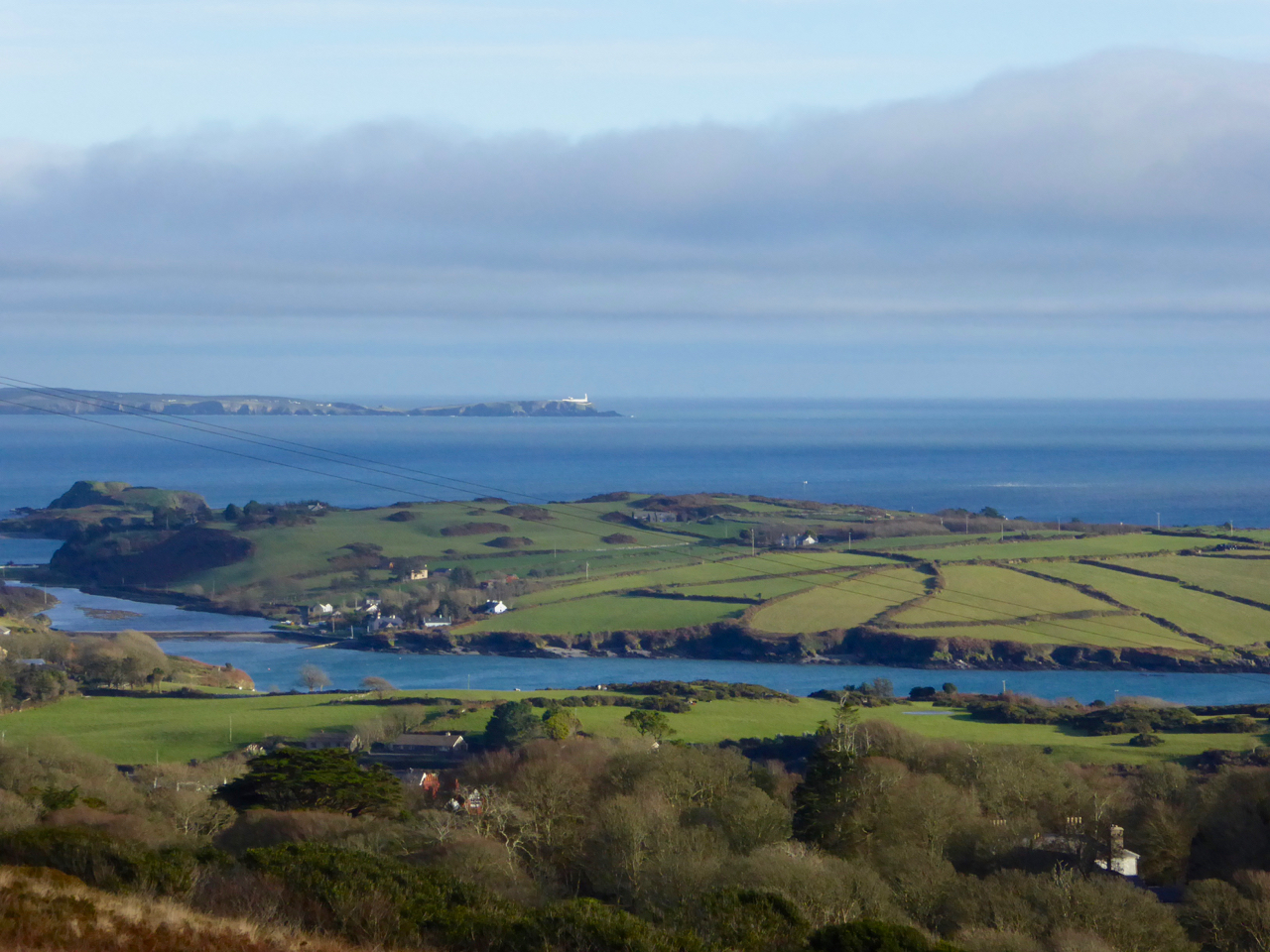
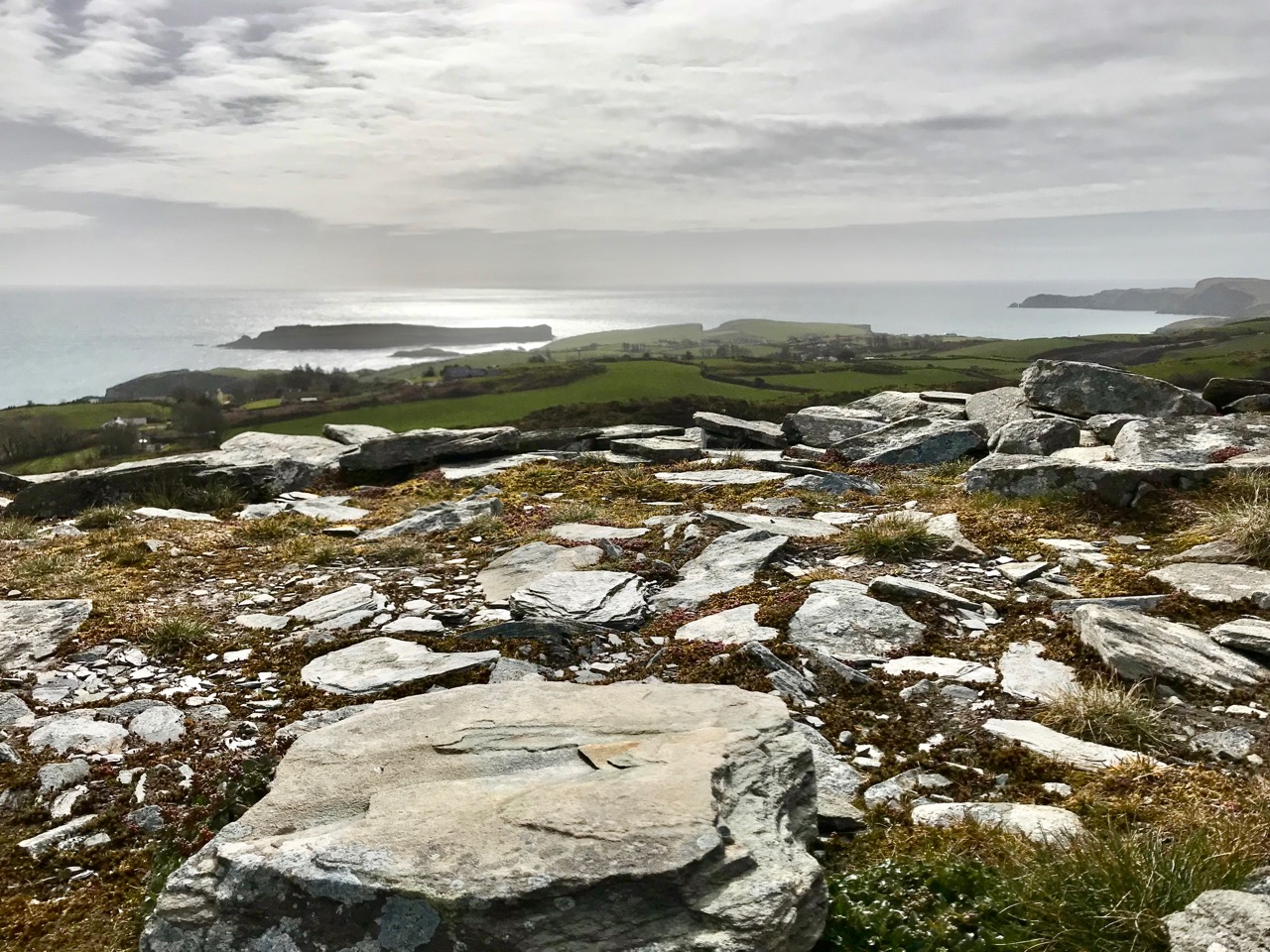
The Fort is located on a high ridge (although not on the summit of the ridge) with far-reaching views both inland and to the south, over the sea. The header picture looks from the Fort out to the west over Castlehaven to Galley Head in the far distance; the view in the picture above is due south – looking towards Horse Island, and the stone wall of the Fort is in the foreground. From these breathtaking vistas it’s reasonable to conjecture that Knockdrum Fort has a strategic siting, providing views of anyone approaching from the sea, and able to signal their arrival to dwellers in the ‘interior’ – the lands to the north. We cannot know for sure that stone fort structures had this – or any other – specific purpose: many theories have been advanced. Comparison with other examples is worthwhile. One of the largest stone forts in Ireland is Staigue Fort, near Sneem in County Kerry.

Staigue Fort (above) has a diameter of 27.5 metres, the present wall height is 5.5 metres, and the wall thickness is 4 metres. At Knockdrum the diameter is 22.5 metres, the present wall height is 2 metres and the wall thickness around 3 metres. The Duchas information board at Staigue says:

. . . This is one of the largest and finest stone forts in Ireland and was probably built in the early centuries AD before Christianity came to Ireland. It must have been the home of a very wealthy landowner or chieftain who had a great need for security . . . The fort was the home of the chieftain’s family, guards and servants, and would have been full of houses, out-buildings, and possibly tents or other temporary structures. No buildings survive today . . .

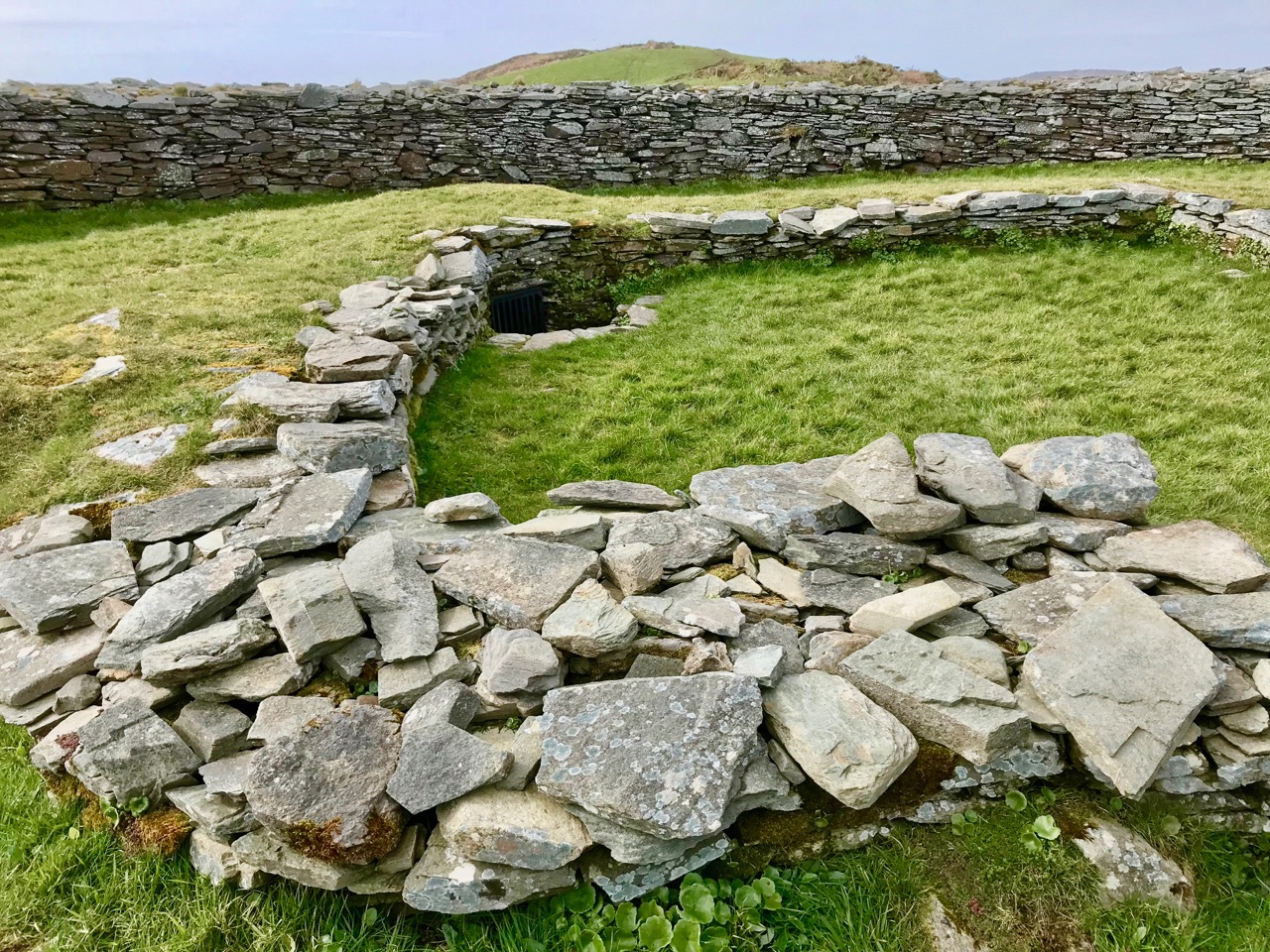
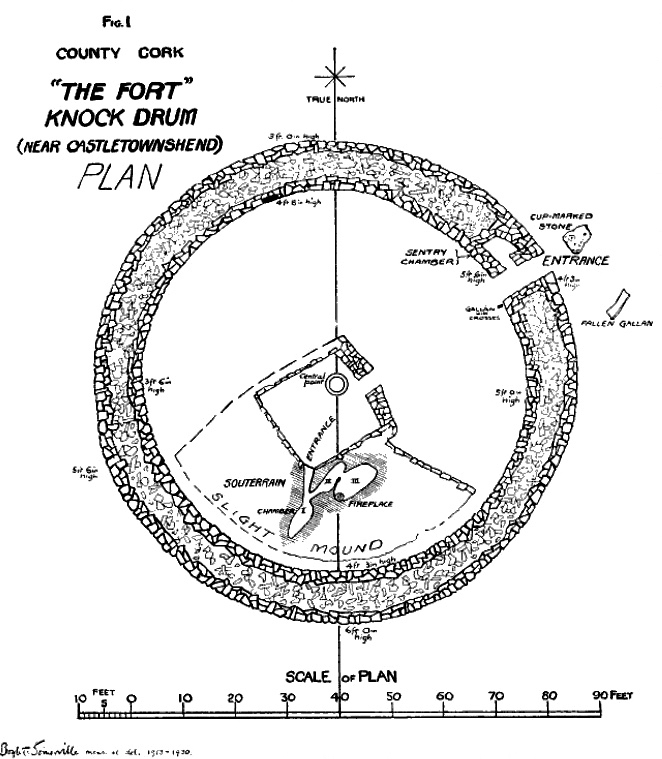
The picture above shows the present interior of Knockdrum Fort: the stone walls are likely to delineate a former building here. In the corner of the inner stone enclosure is the entrance to a ‘souterrain’ – a series of underground passageways. The souterrain is outlined on the following drawing of the Stone Fort which was made in 1930 after a detailed investigation of it by Vice Admiral Henry Boyle Somerville, the younger brother of writer and artist Edith Somerville of Castletownshend. Boyle, his life and his tragic death, is the subject of Finola’s complementary post today.

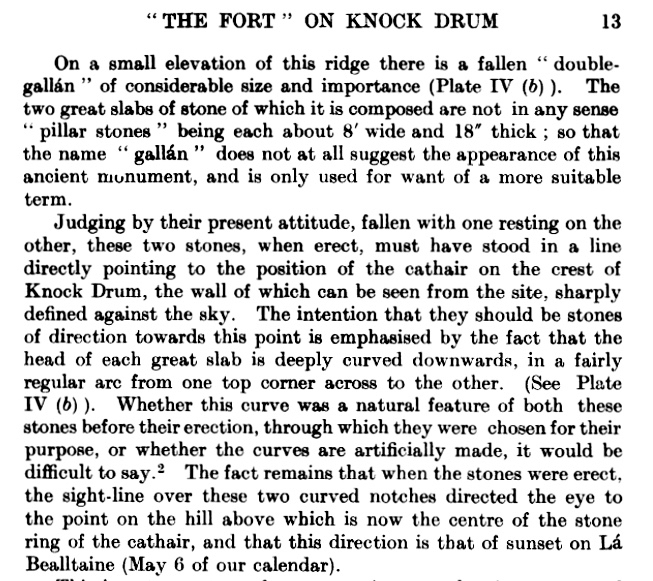
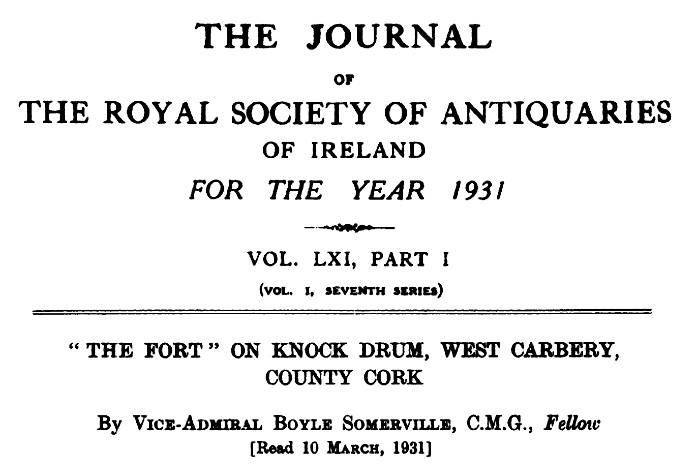
Finola is also discussing Boyle Somerville’s interest in the alignments of archaeological structures. In Boyle’s paper for The Journal of The Royal Society of Antiquaries of Ireland, 1931 (title page below), he presents the evidence that this Fort is on a solar alignment.

Boyle sets out the case for an alignment based on the Knockdrum Fort:

. . . This conception of the earlier use of the site of the cathair [the stone fort] for purposes which may perhaps be termed “religious,” seems to be borne out by the following fact. At a horizontal distance of about 600 yards to the E.S.E of the cathair, and at 210′ difference of level below it, there is a small rocky ridge standing up from the surrounding grass land. The name of the ridge is “Peakeen Cnoc Dromin,” The little peak of the white-backed hill . . .

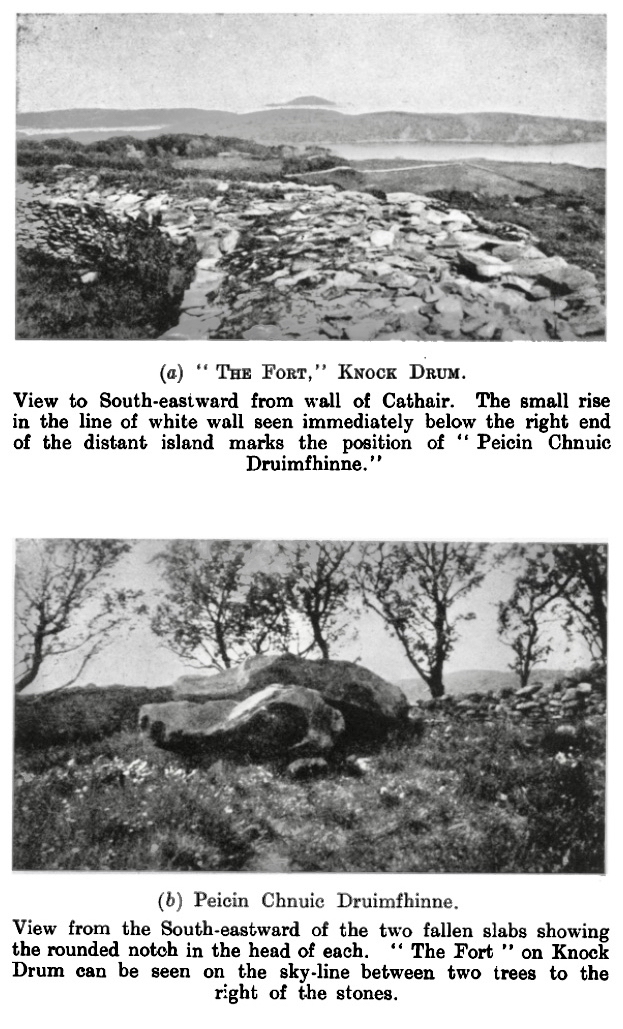
The following paragraphs and photos are from the Journal paper:

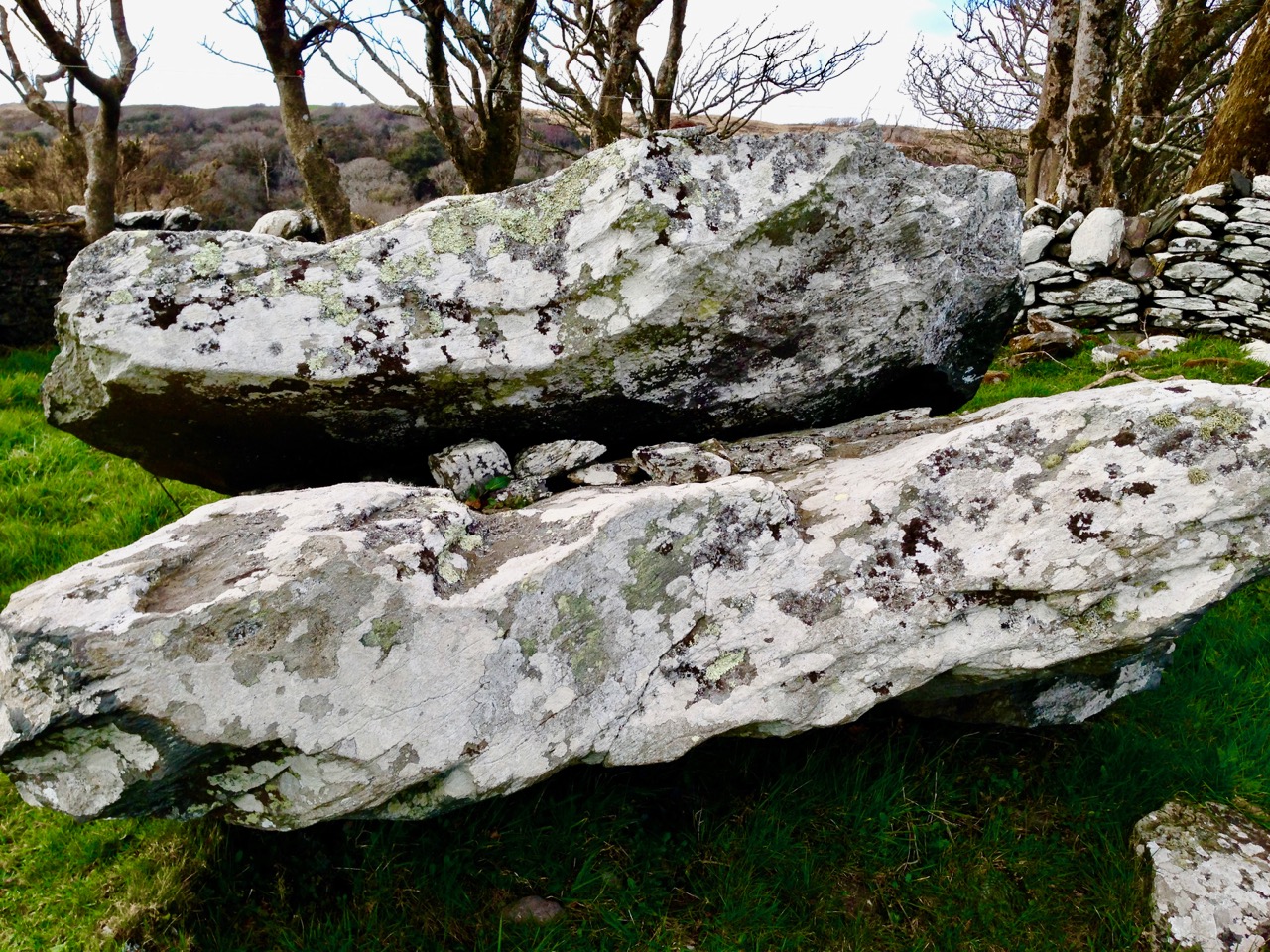
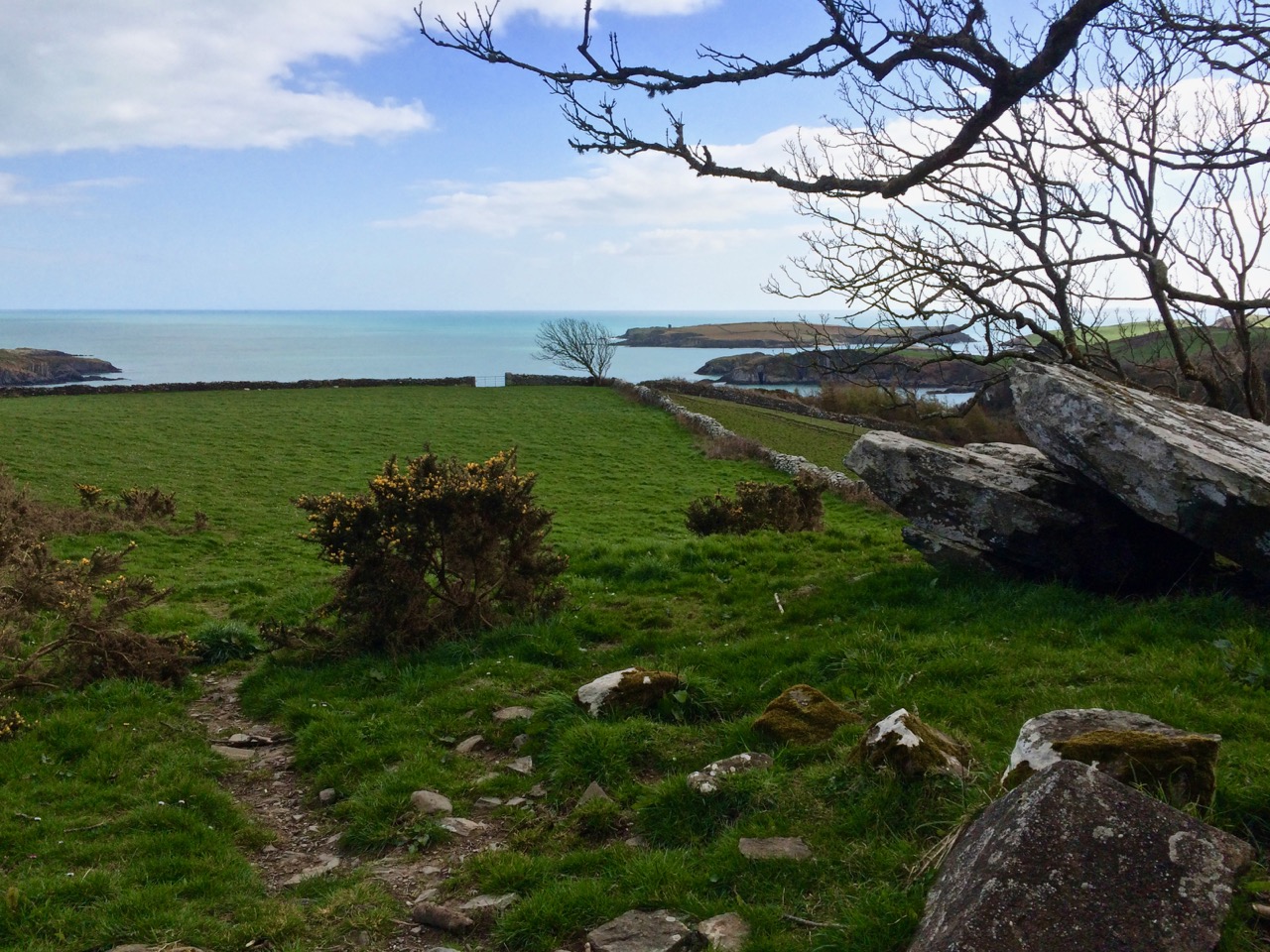
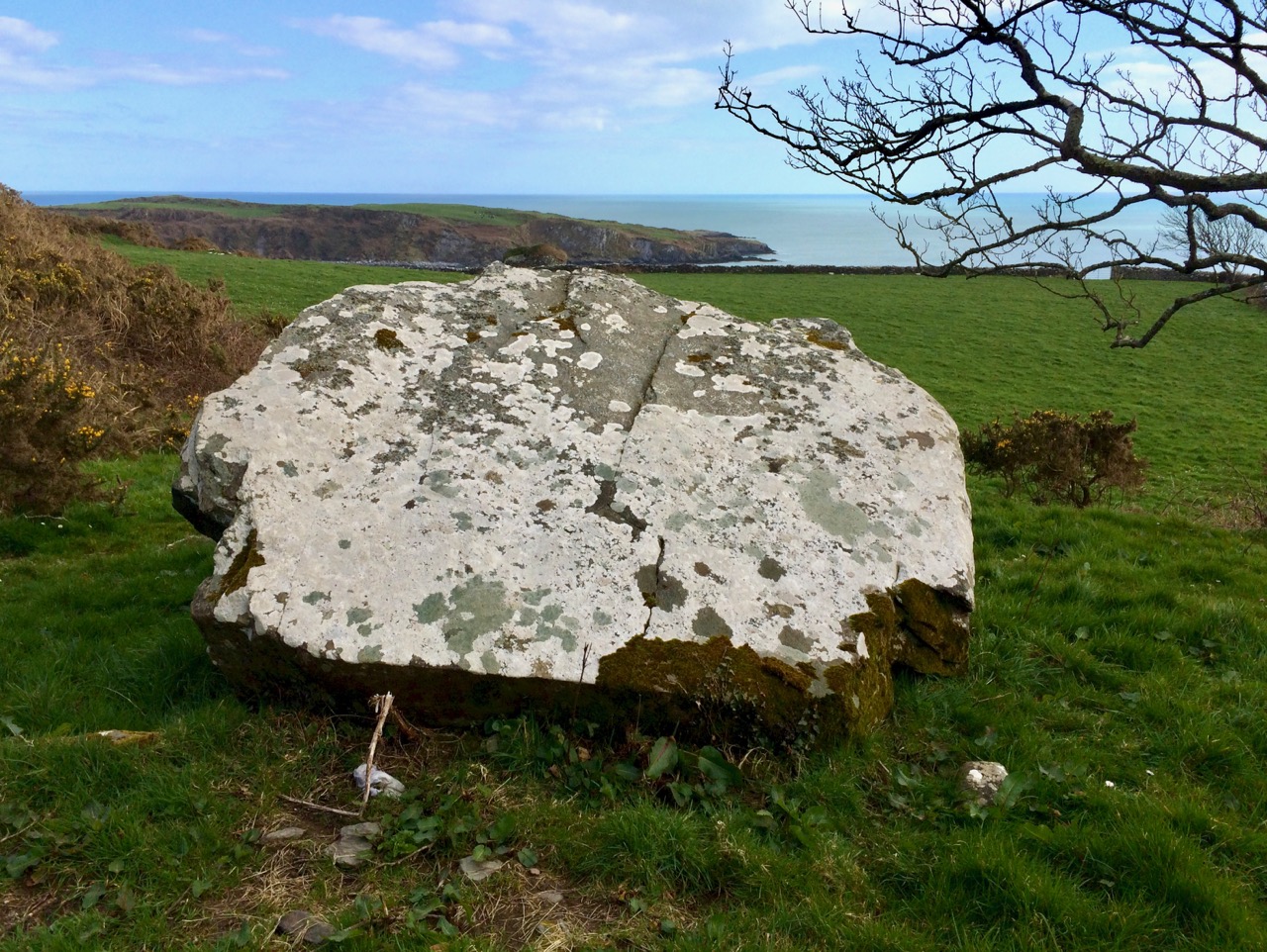
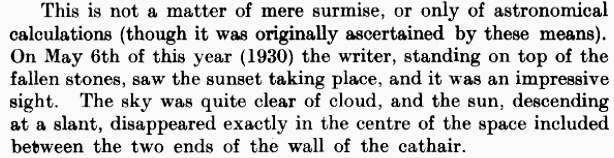
Finola and I are familiar with the Peakeen Cnoc Dromin from our researches into Rock Art: the uppermost stone (which does appear similar to the capstone of a fallen dolmen) is heavily cupmarked. The photos of the Peakeen (above) were taken before we had any idea that they might form an alignment connected with Knockdrum Stone Fort. We will have to revisit again at Bealltaine. Boyle confirmed his alignment theory by personal observation:

He went on to suggest:

. . . It is one of the clearest instances of intentional orientation between two ancient, and artificially formed monuments that can be imagined . . .

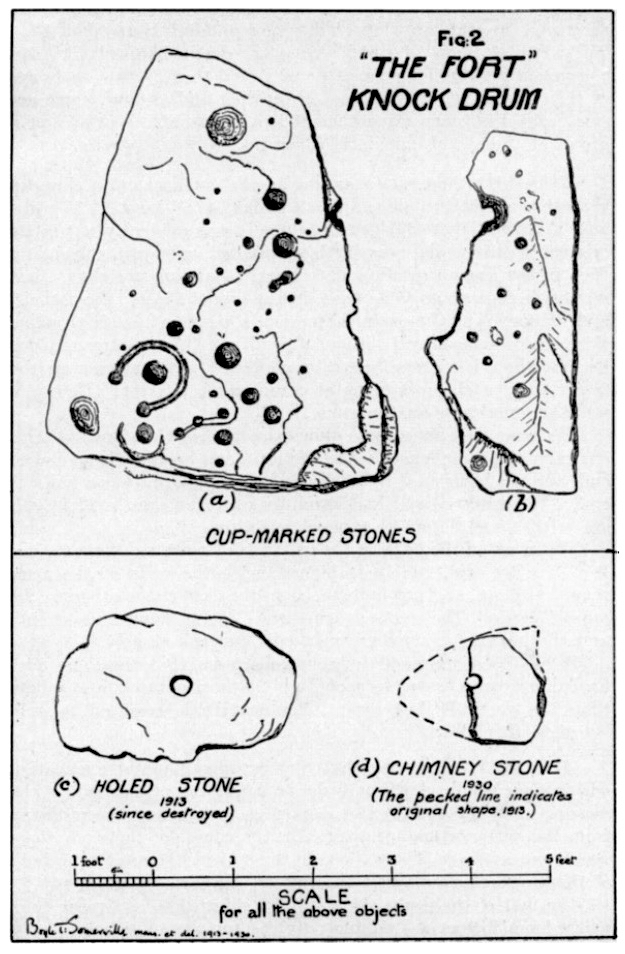
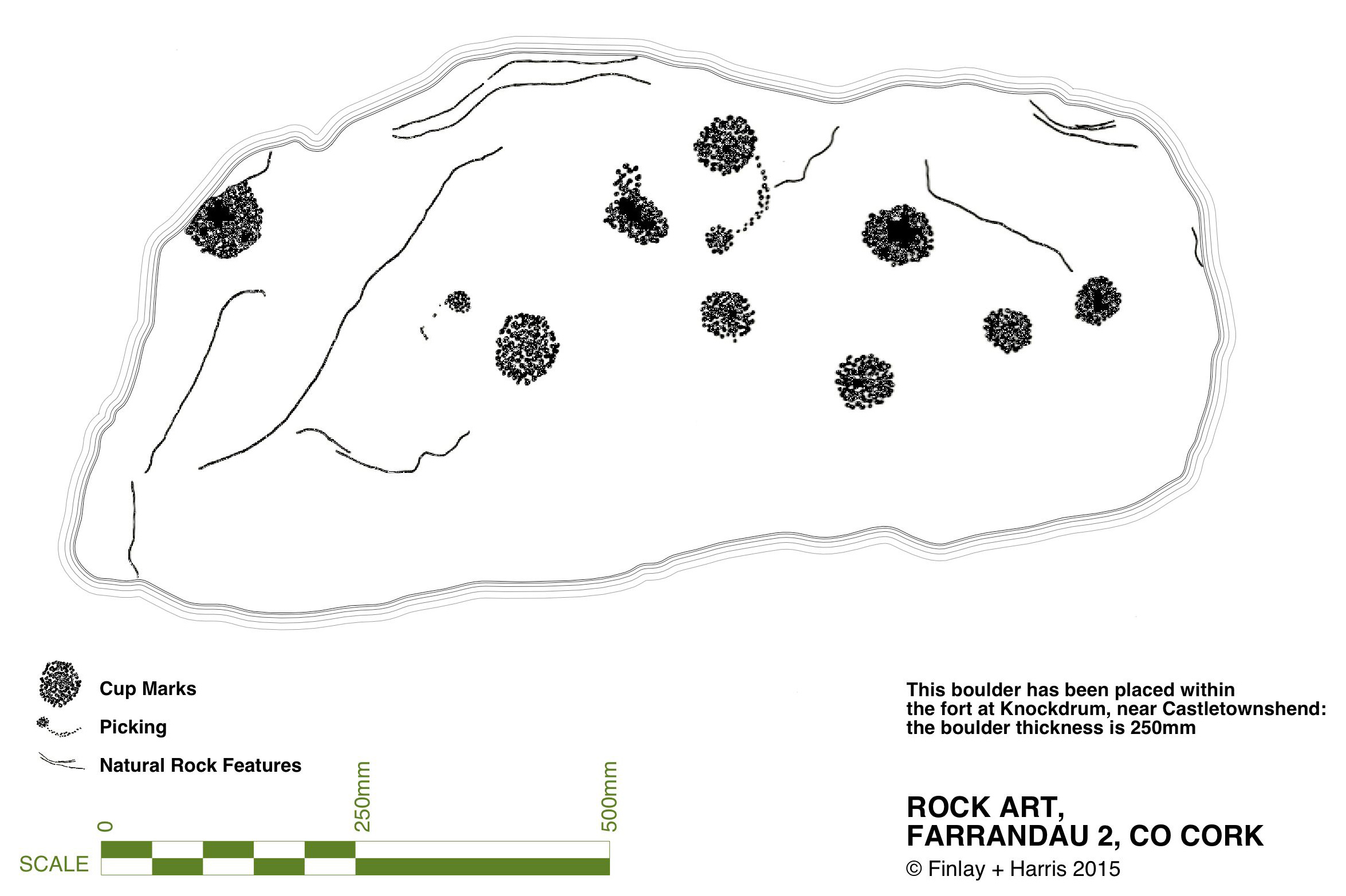
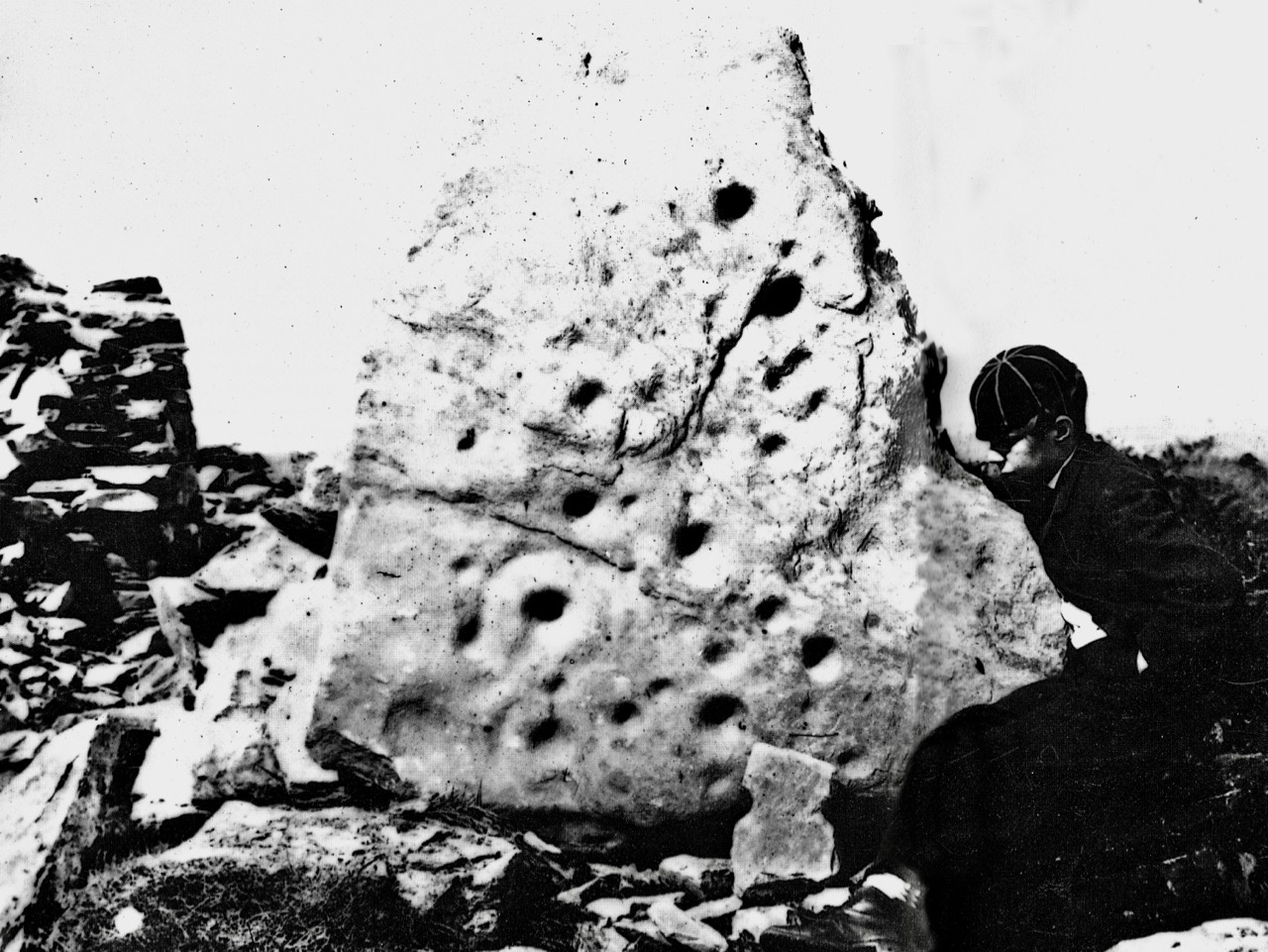
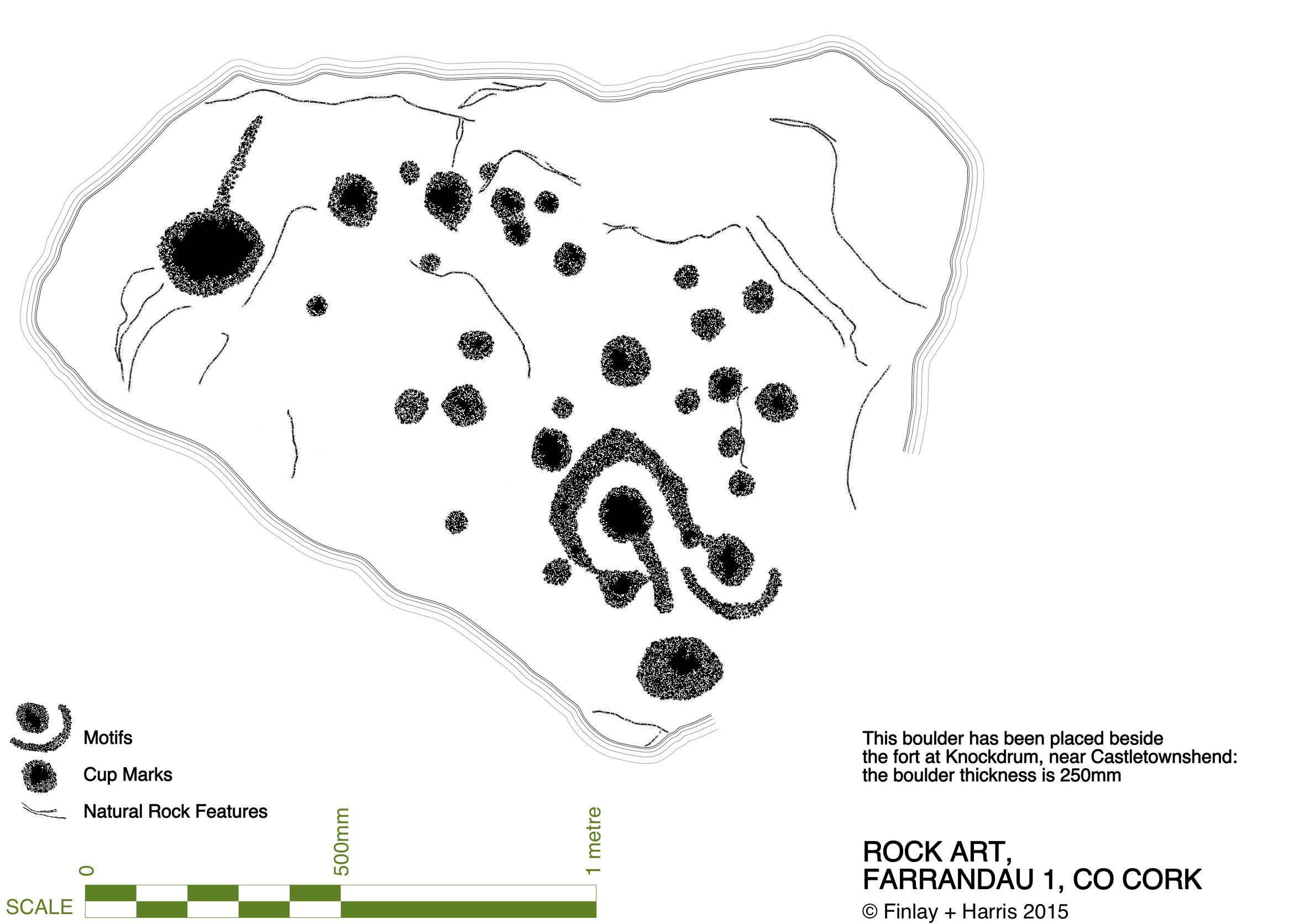
Of course, it can’t be the case that a cupmarked stone dating from anywhere between 3,000 to 5,000 years ago was in any way connected with a stone fort that dates from the early part of the first millennium AD. However, I have as yet omitted an important piece of information: at Knockdrum Fort, high up on the hill, are two further ancient cupmarked stones – and significant ones: the larger also exhibits Rock Art. Somerville illustrated them in 1930, and Finola recorded them in detail in 1973.

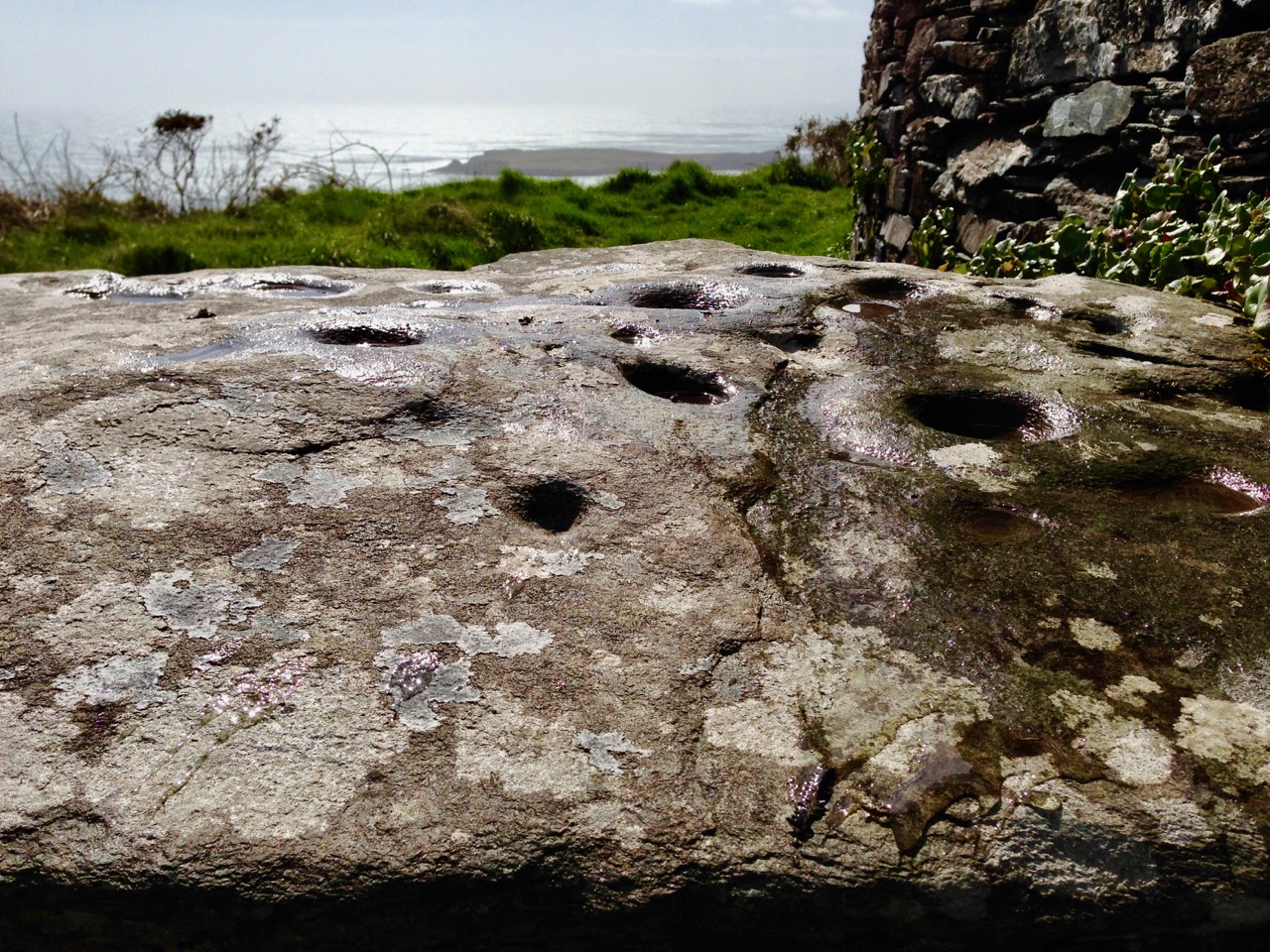
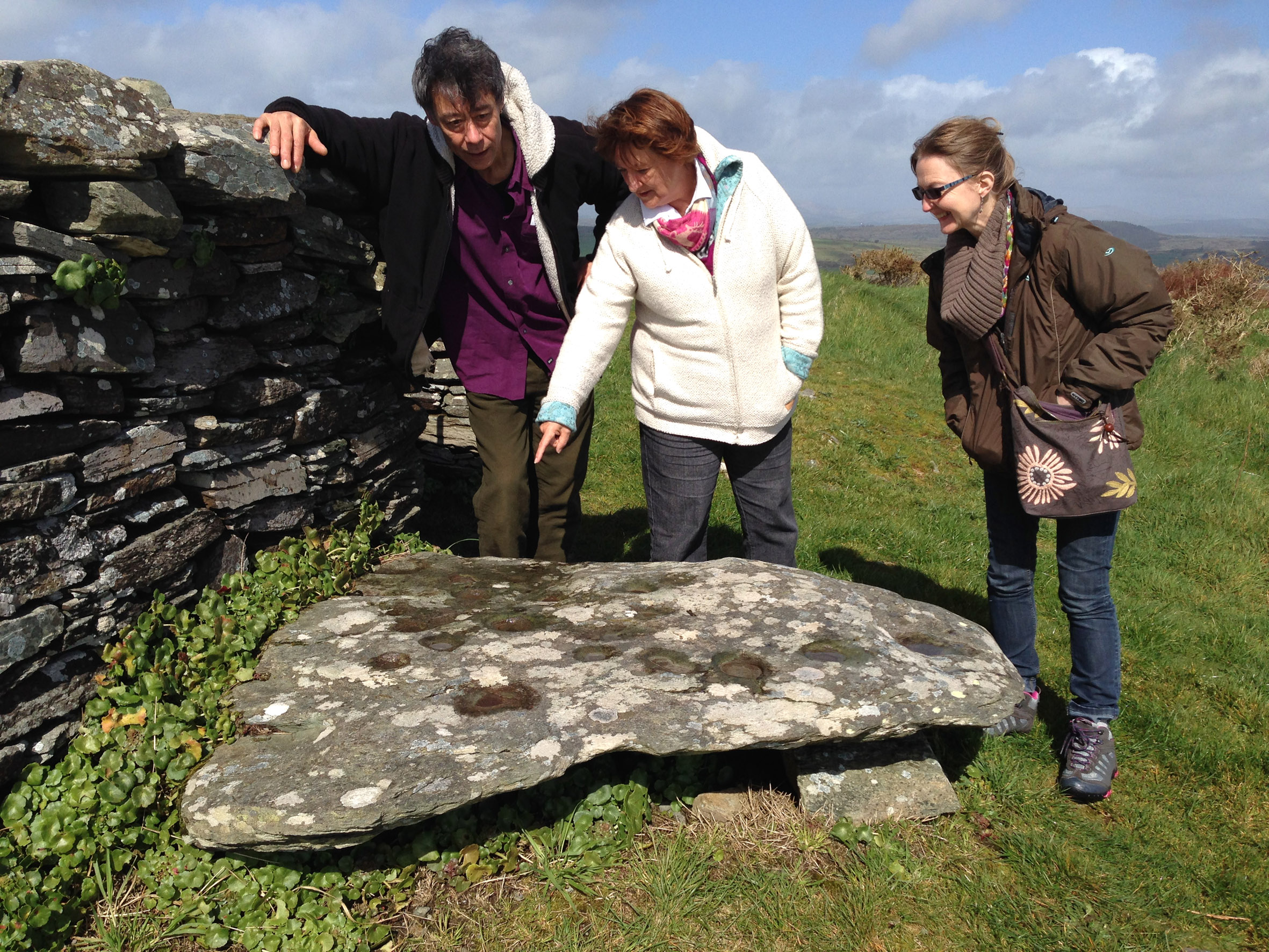
Images above are of the stones recorded at Knockdrum: topmost is Boyle’s drawing from 1930. Below Finola’s drawings are photographs of the large stone lying by the Fort entrance today: it is known that this has been moved, possibly during Somerville’s time. The old photograph immediately above is from the Coghill Family Archive and shows Arthur Townshend beside the stone, which is standing. Arthur was born in 1863: this photograph may record the occasion of the expedition by the young Somervilles and ‘their cousin’ (quite possibly Arthur) to Knockdrum described below, which took place in 1875. It is the presence of Rock Art and cupmarks at the Fort itself which tells us that the site must have had significance in far earlier times (perhaps that’s why the fort was sited in that location – rather than on the summit of the ridge), and Boyle’s reported alignment would have been with the carved rocks (or the important location that they marked) rather than with the comparatively modern stone fort.

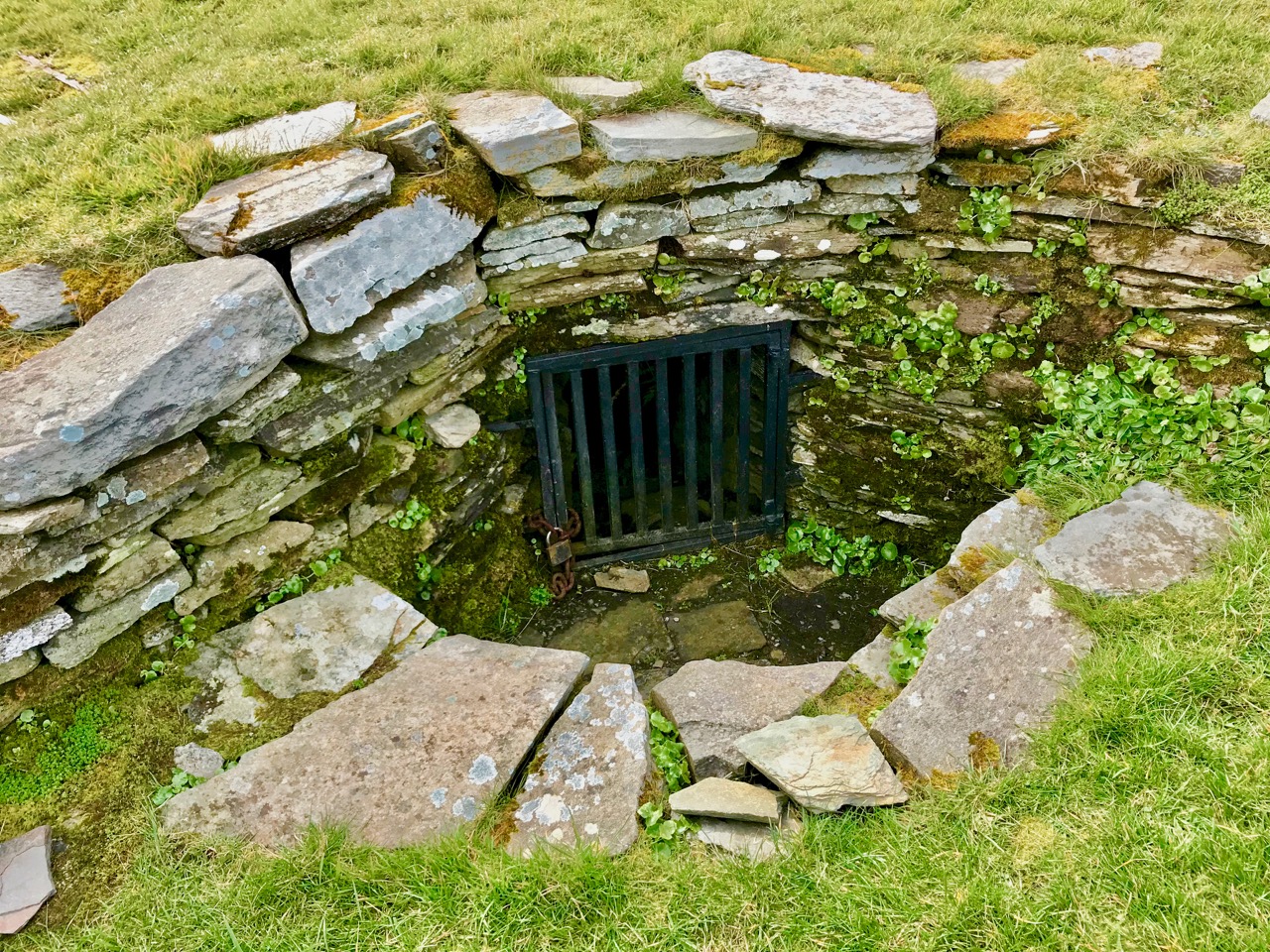
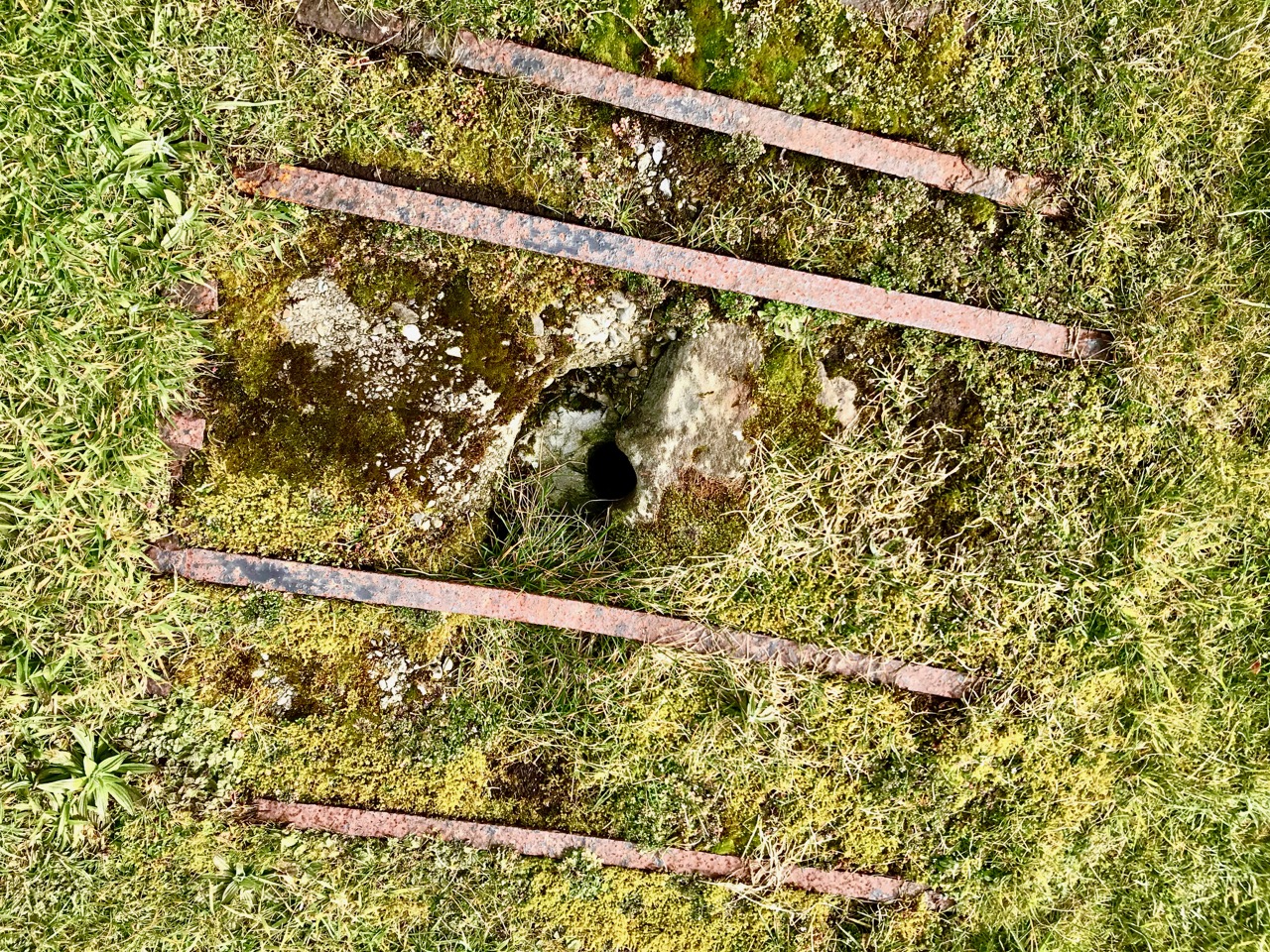
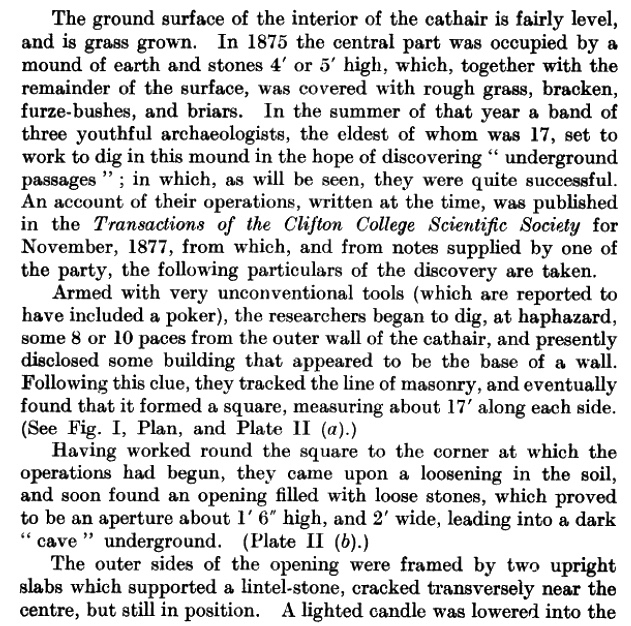
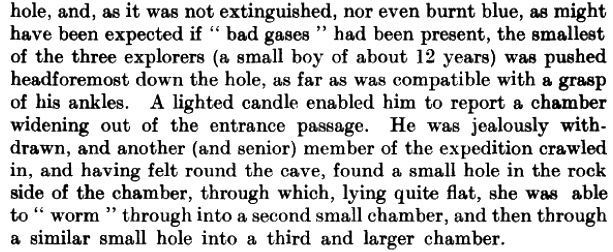
The souterrain in the enclosure of Knockdrum Fort (entrance in top photograph – ‘chimney’ in lower photograph) was explored in 1875, as Boyle recounts:

The ‘band of three youthful archaeologists’ are likely to have been Somervilles: Edith (the eldest, then 17), Boyle (then 12 – it was he who was lowered down into the discovered ‘cave’ by his ankles!) and, probably, a cousin. Great adventures, which would undoubtedly raise eyebrows today.

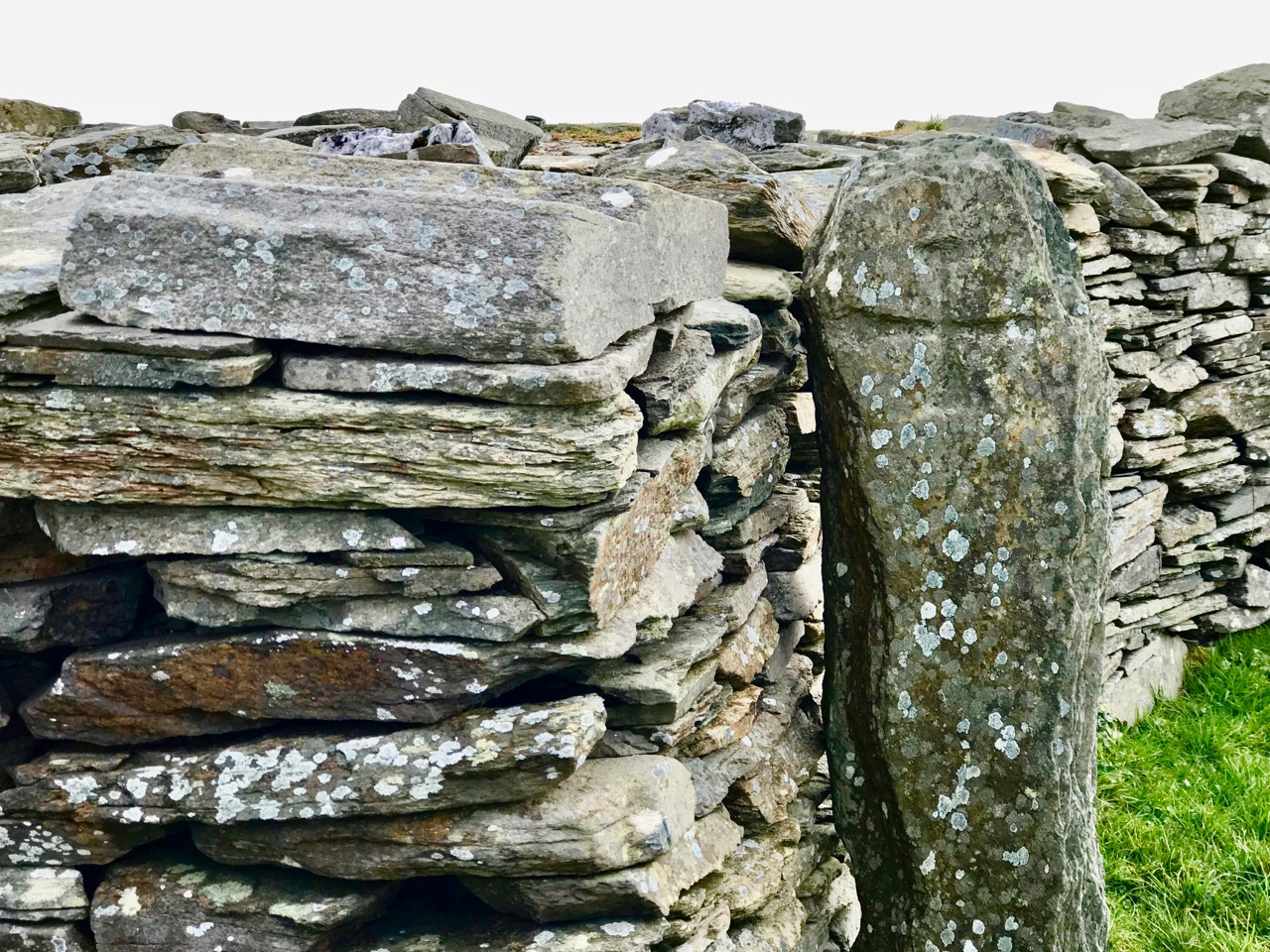
Within the fort enclosure is this cross-marked stone. It was apparently leaning against the wall in Boyle’s days, but has now been embedded close to the entrance. We visit this site often: this time we noted some significant disruption to the upper level of the dry stone walling, possibly caused by the fierce storm winds earlier this year. Compare the detail below with Dennis Horgan’s aerial view above, taken a few years ago.

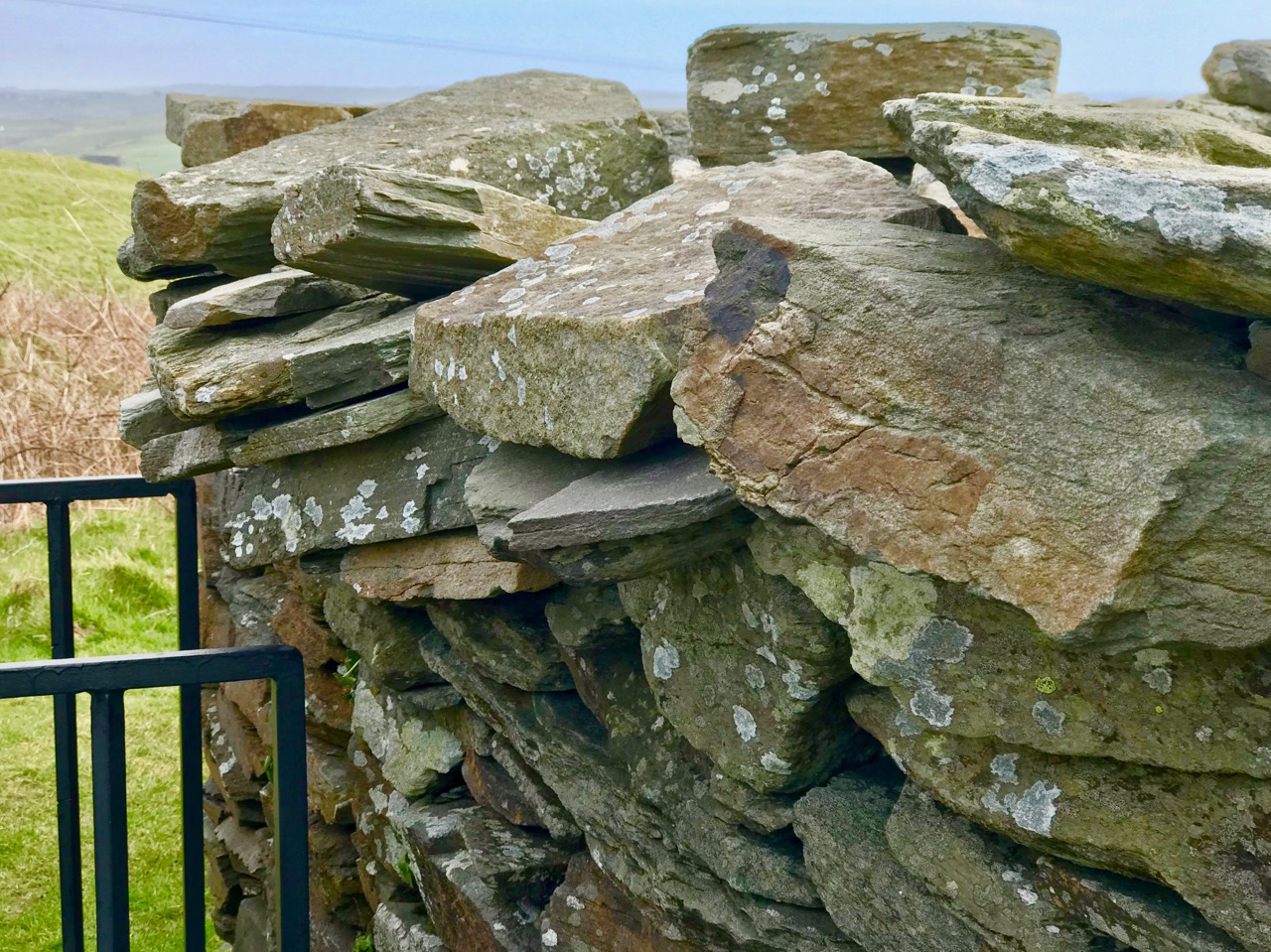
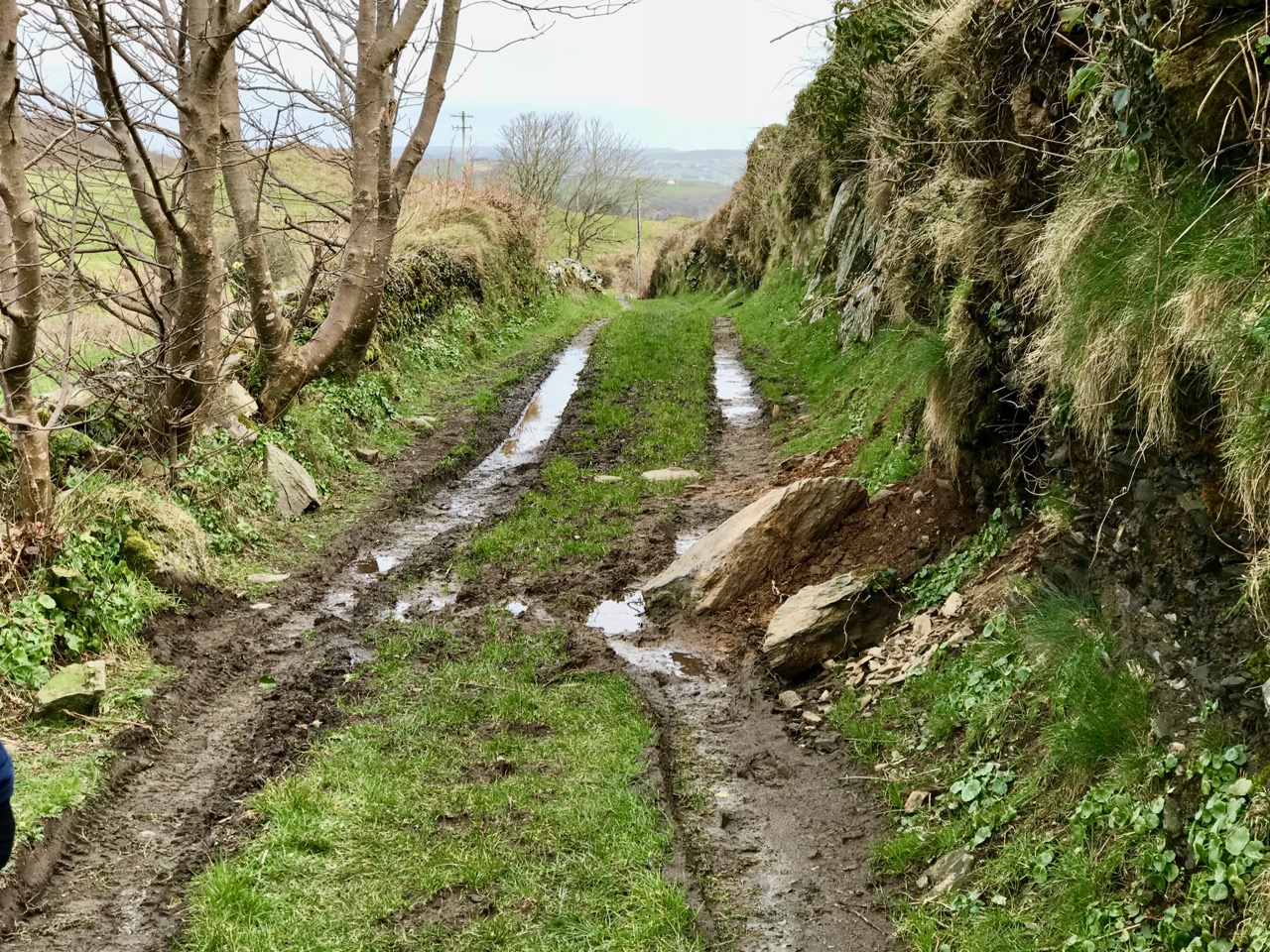
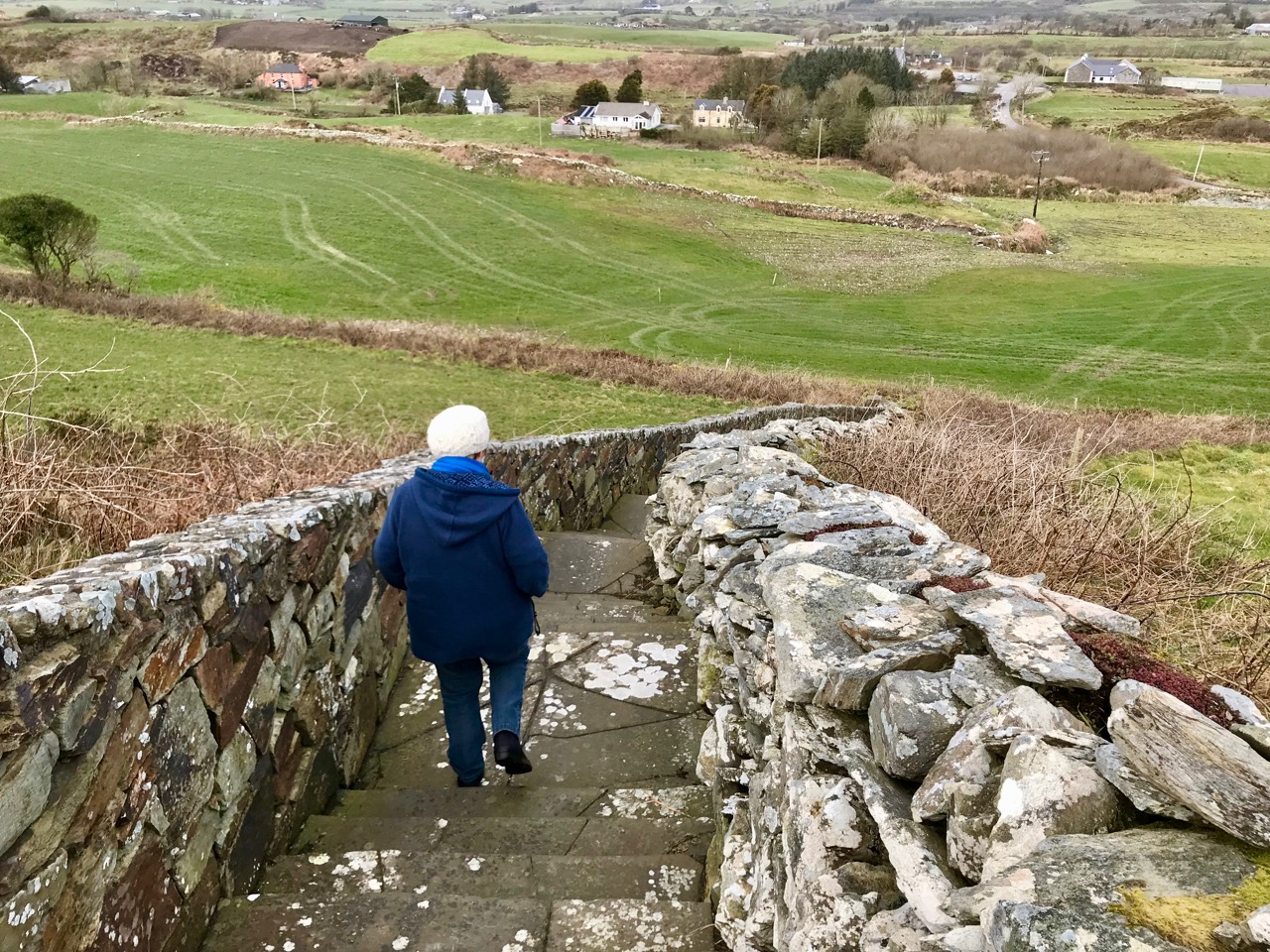
Some damage has also been suffered to retaining walls on the green boreen leading to the Fort from the main Skibereen – Castletownshend road (a walking route only), and on the stone walls beside the 99 steps which take you from the green path to the top of the hill. These are passable with care, but it is hoped that this monument – which is in State ownership – will be deservedly returned to good order before too long: it is one of the historic wonders of West Cork.

Kilkieran High Crosses – Medieval Gems

You will remember Saint Ciarán of Saigir, who was born on Cape Clear, perfectly framed in our view from Nead an Iolair? He was known as the ‘First Saint of Ireland’, preceding Saint Patrick by almost a century, and also as one of the Twelve Apostles of Ireland. A manuscript dating from 1629 and housed in the Bibliothèque Royale, Brussels, tells how the Twelve Apostles were educated together in Clonard, Co Meath – the most important monastic school in early Christian Ireland – under Saint Finian. It is said that ‘ . . . there were no fewer than 3,000 pupils getting instruction at one time in the school in the green fields of Clonard. The master excelled in exposition of the Sacred Scriptures, and to this fact must be mainly attributed the extraordinary popularity which his lectures enjoyed. Finnian’s gift for teaching and his absolute dedication to the ascetic ideal, inspired a whole generation . . . ‘ St Finian achieved the age of 140 years himself, while Ciarán – who went off to Cornwall where he is known as St Piran (you will also remember) – lived to be 206 before falling into a well on the way home from a wild party. There’s a lot to be said for being a saint in those days.

These are extracts from the OPW signboard located at the site

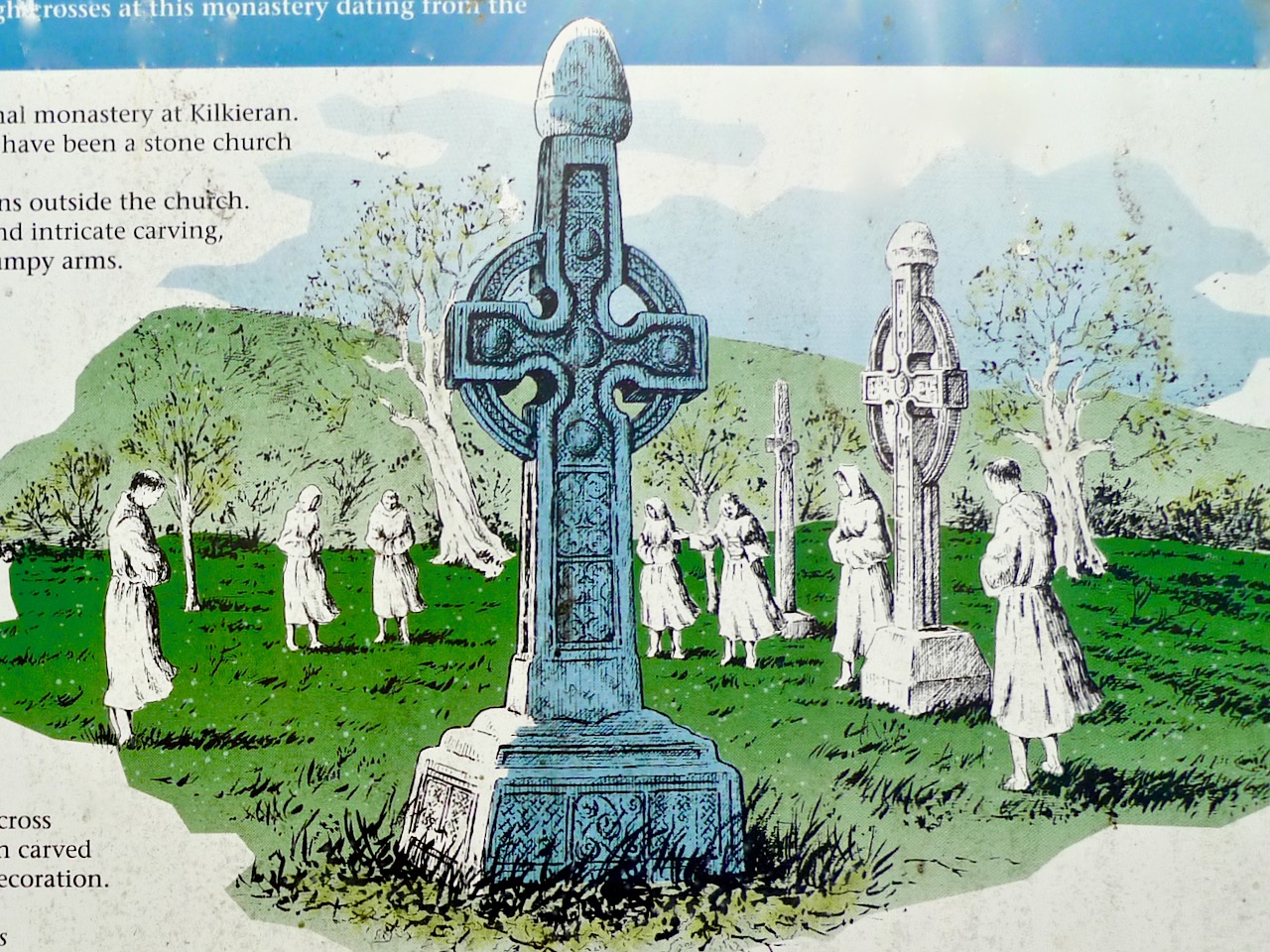
Why are we revisiting St Ciarán? Well, we’ve just past March 5th, which is his day, so we have to celebrate him. To do that we will go off to County Kilkenny, where there is a very important medieval site, noted for its high crosses but with plenty more to see: it’s a 45 minute drive north of Waterford city. The site, known as Kilkieran (Kieran is an alternative anglicised spelling, prefixed by ‘Kil’ which means ‘church of’) was once home to a monastery founded by St Ciarán, and the high crosses date from the 9th century.

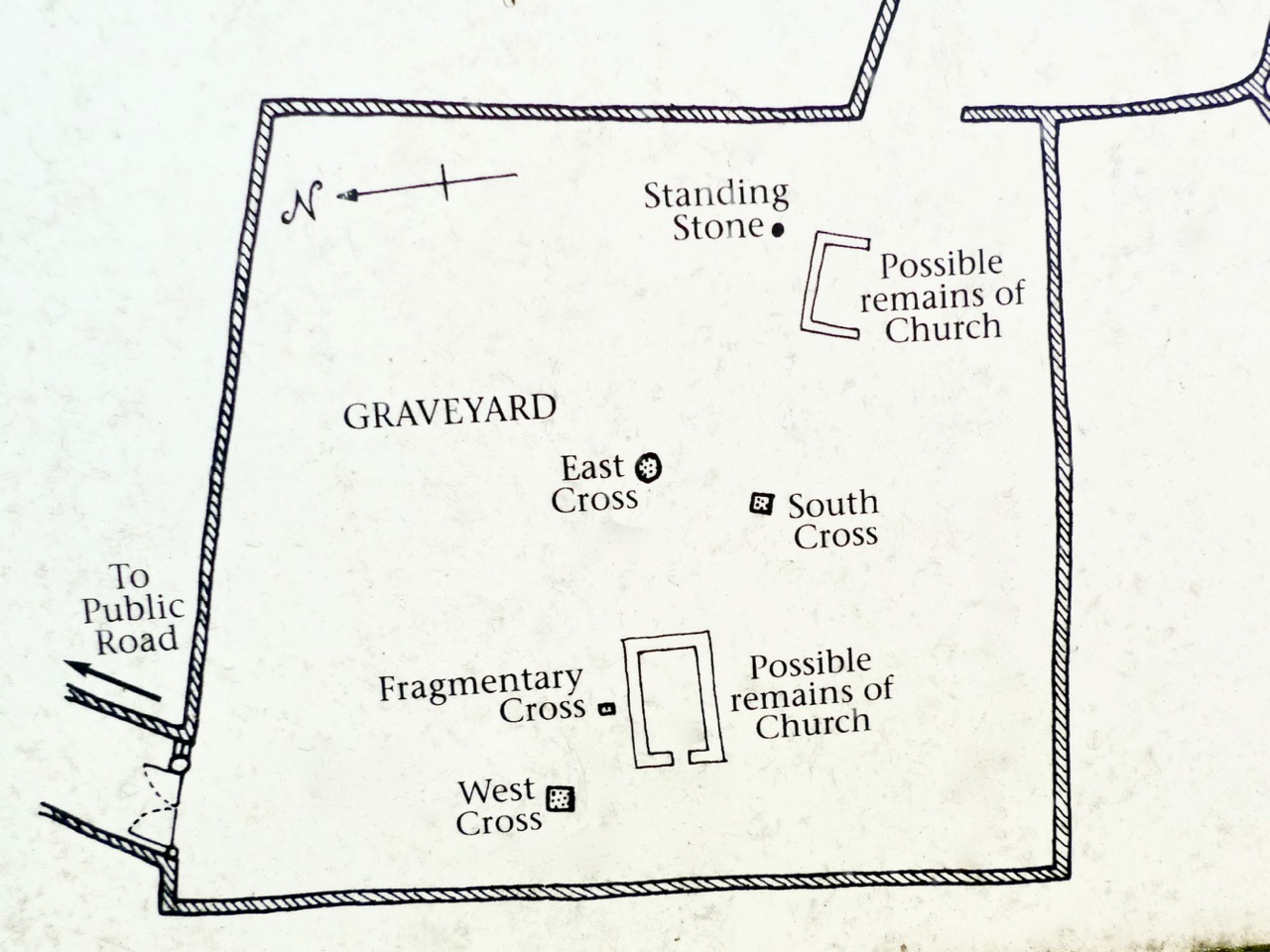
The West Cross has animal motifs and some unusual interlacing carved on the various elements; below is the site plan included on the OPW signboard

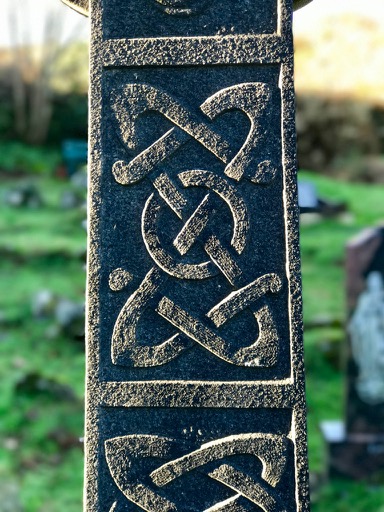
To be able to see exquisite artistic medieval carved stone from 1200 years ago still standing where it was first placed is remarkable. In other discussions on high crosses and similar works of expertise we have asked whether these gems should be preserved out of the elements – as some are – to prevent the deterioration which is undoubtedly taking place. While I tend to favour that approach – and it seems to me to be particularly appropriate where they are replaced by high quality replicas ‘in the field’ – there is something very special about visiting intact sites like this one. The whole conservation process is full of dilemmas.

The enigmatic East Cross – unlike any other Irish High Cross

There were once four crosses at Kilkieran. Three are still complete and in reasonable condition, although much weathered, while the fourth is just the stump of a shaft. One –  the East Cross – is unusual: it is slender, largely undecorated, with minimal crosspieces and no roundel. There’s a nice little tale about it: the cross was attacked and destroyed by iconoclasts, but was painstakingly reconstructed in the mid-19th century by blind local stonemason Paddy Laurence, who had lost his sight while working on the construction of the Palace of Westminster in London: the old Palace had been ravaged by fire in 1834 and was rebuilt to its present design under the auspices of Charles Barry and Augustus Pugin.

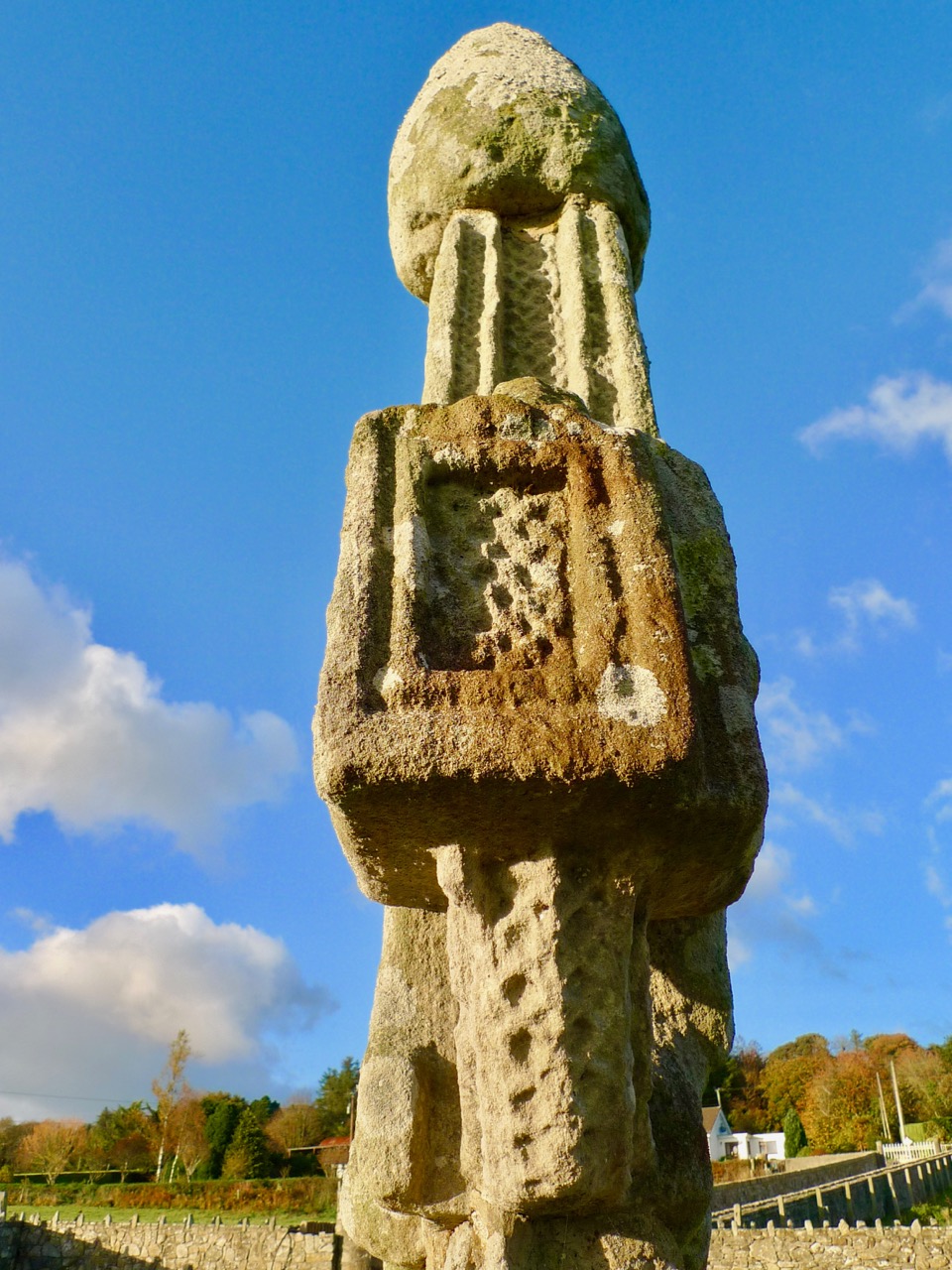
The plain South Cross: the large, acorn-shaped capping is found on other crosses in the ‘Ossory Group’

The high crosses at Kilkieran are simpler and less decorated than many others, but have a great dignity, especially in the context of the burial ground which has grown up around them. We were fortunate to visit them on a really clear day, when the shadowed relief stood strongly out.

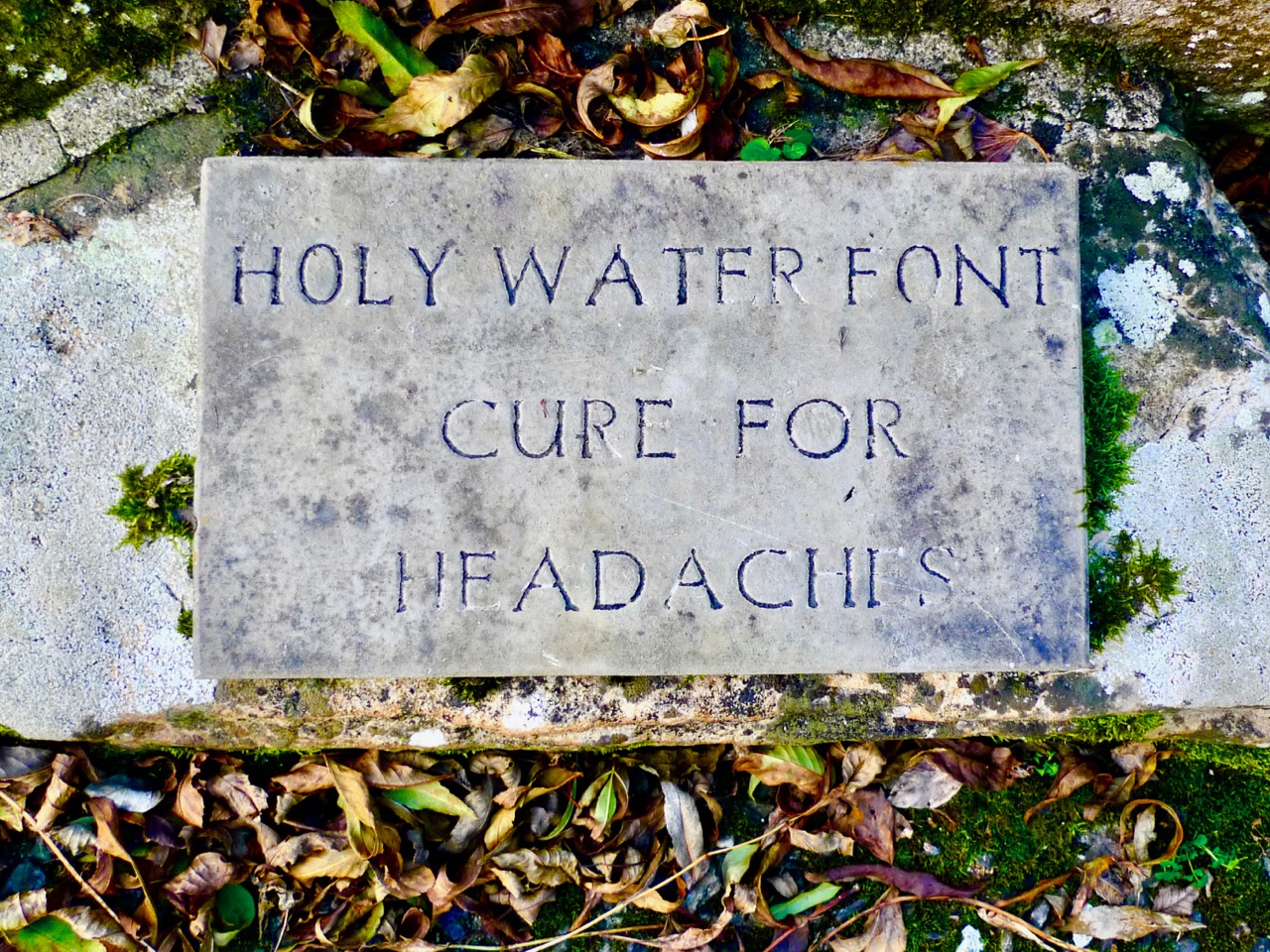
A still-visited Holy Well and bullaun stones are found on the old monastery site

You will want to go to Kilkieran yourself: when you do, don’t miss some fine ancient grave slabs and the nearby Holy Well. Then you should take yourself off to the other High Cross sites in what is known as the ‘Ossory Group’, beginning with nearby Ahenny. I’ll be writing about them all soon.

Below – an early carved grave slab on the site, carving on the West Cross shaft, and a detail of the West Cross ring

The Splendour of Cobh

My favourite sea voyage was on the (alas now defunct) Swansea to Cork Ferry. I travelled this route very many times while living in Devon and Cornwall, and most enjoyed the last leg of the journey to Ireland, when the ship entered the Lee estuary and made its way upriver to Ringaskiddy. In all weathers I was out on deck to watch the slowly changing scenery that welcomed my arrival in to Cork, knowing that it was surely the best place in all the world to be going!

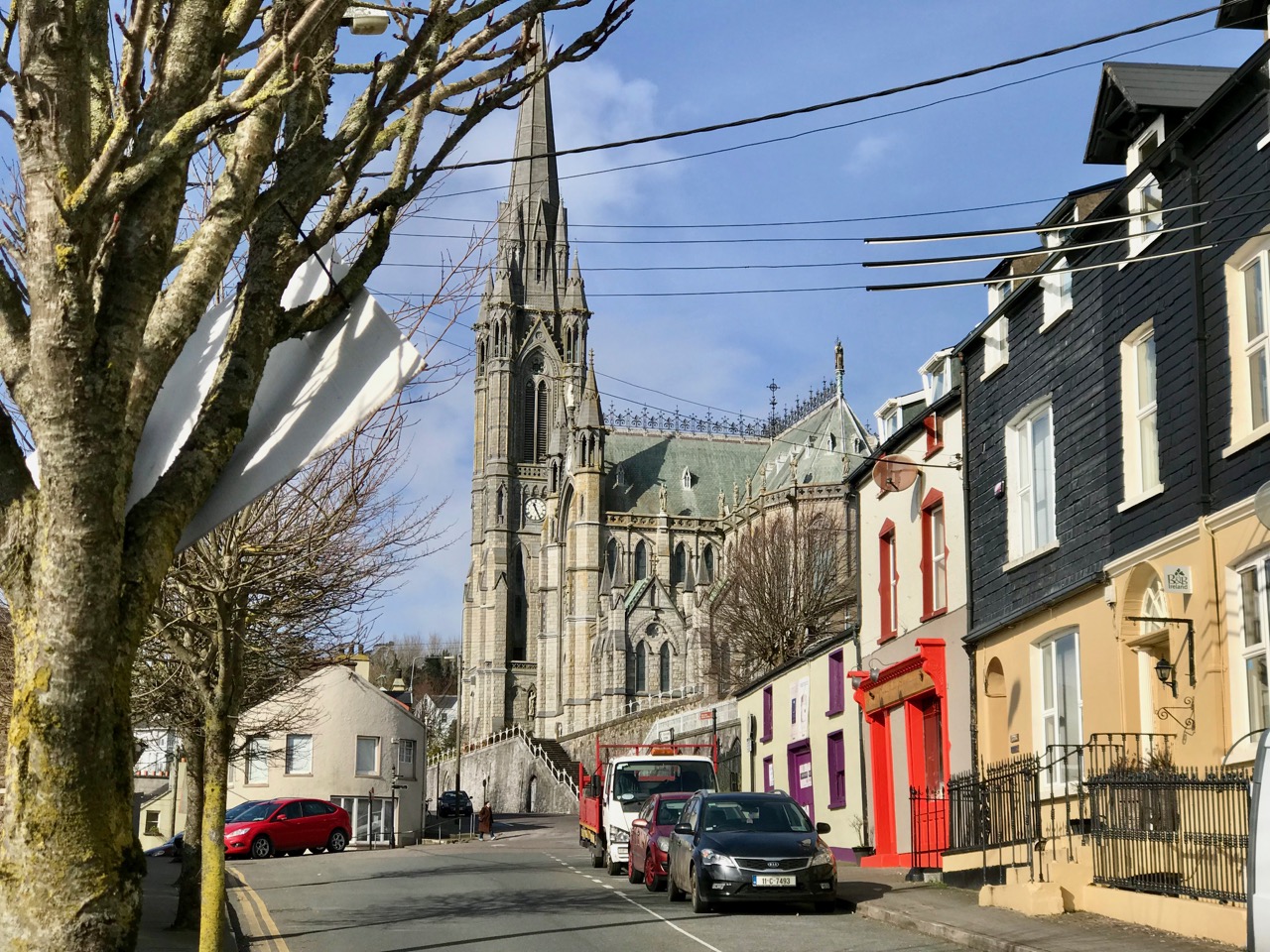
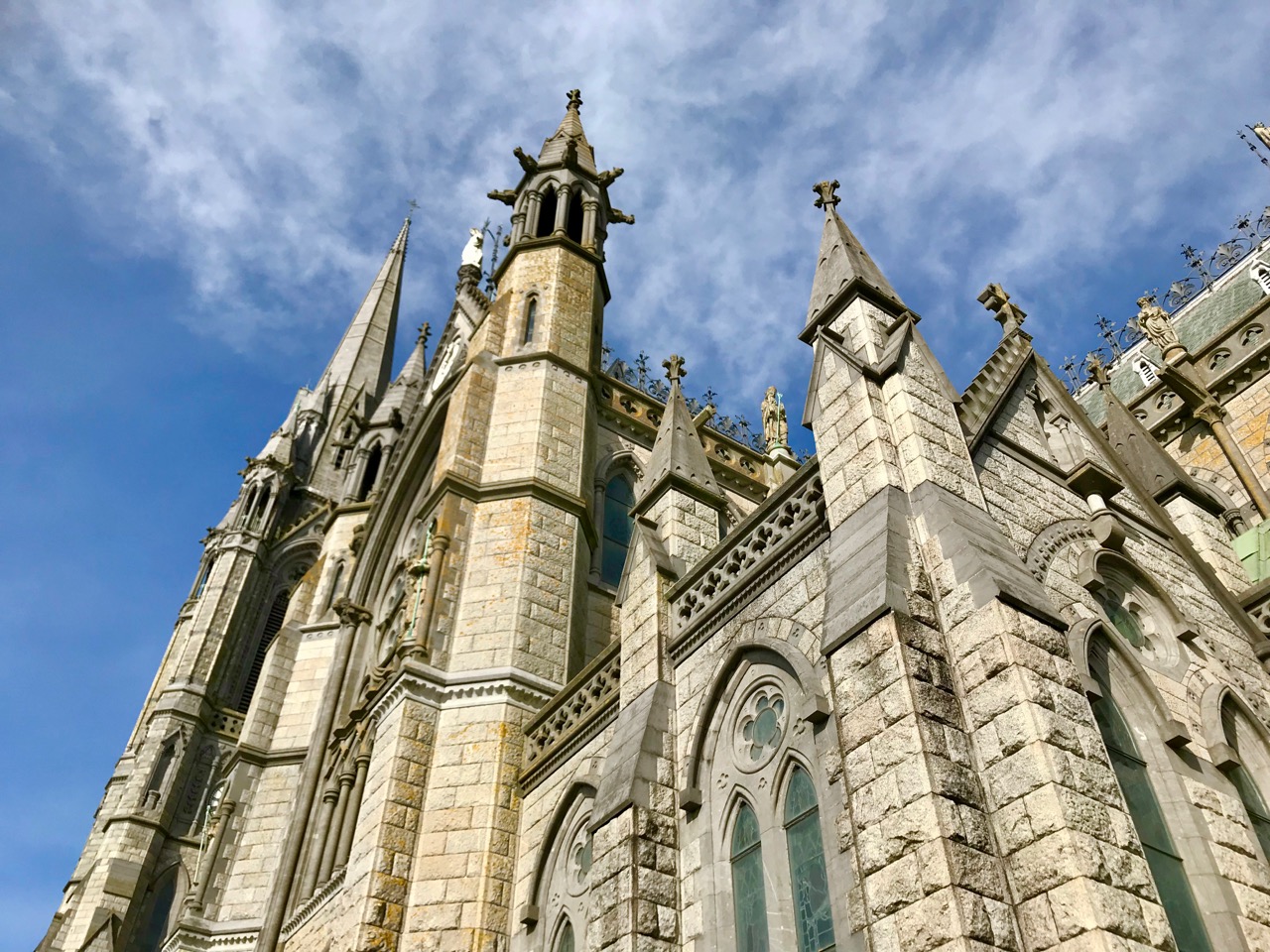
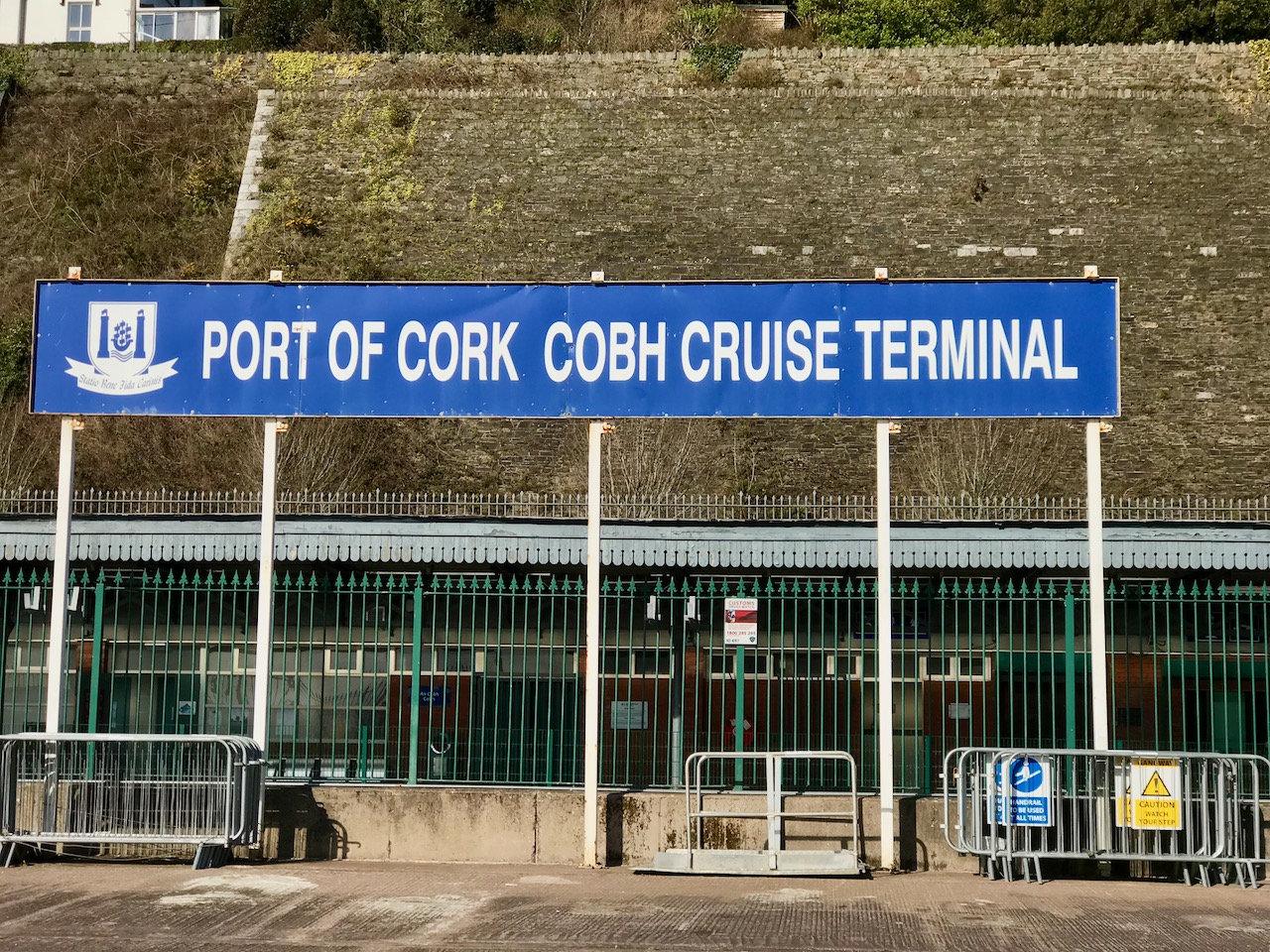
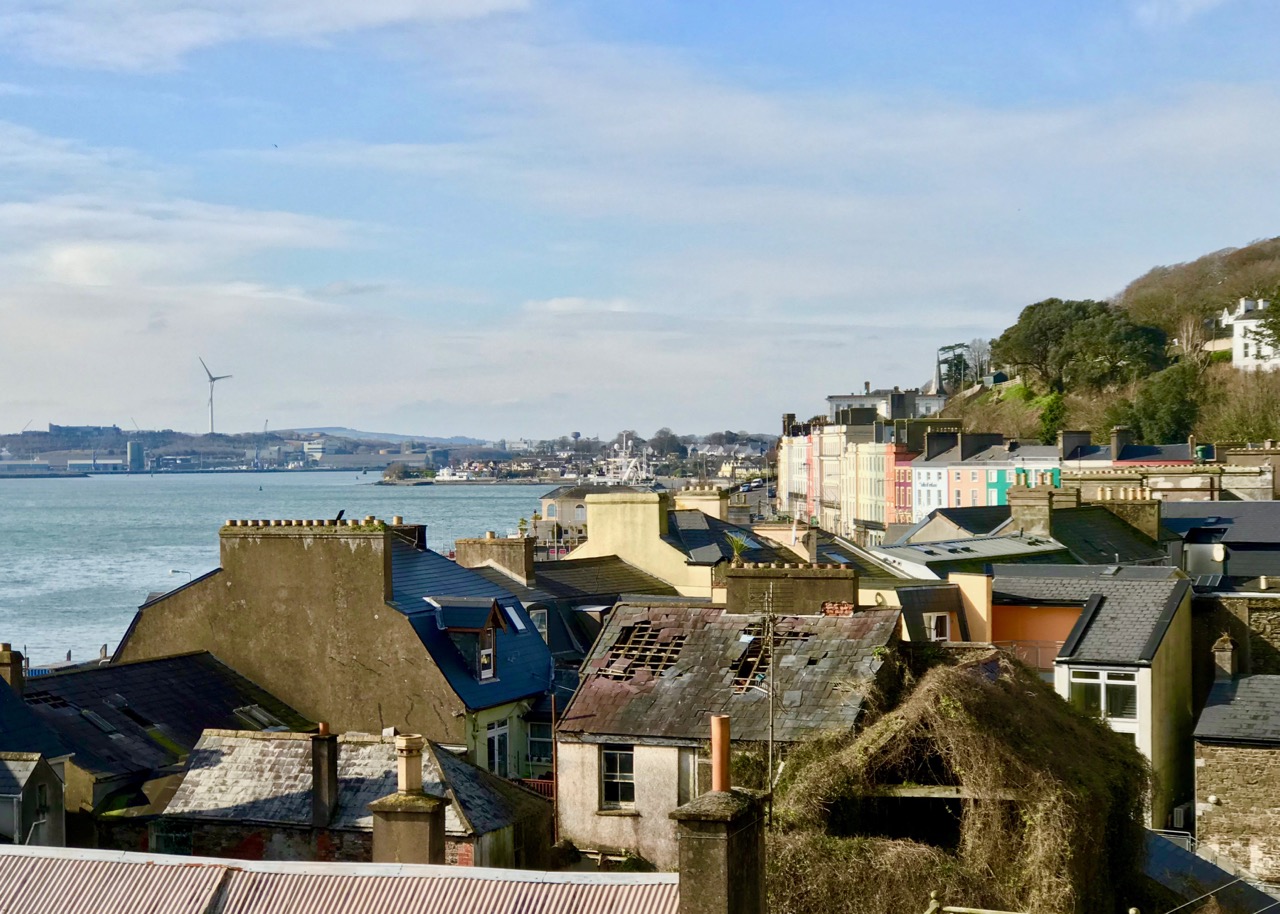
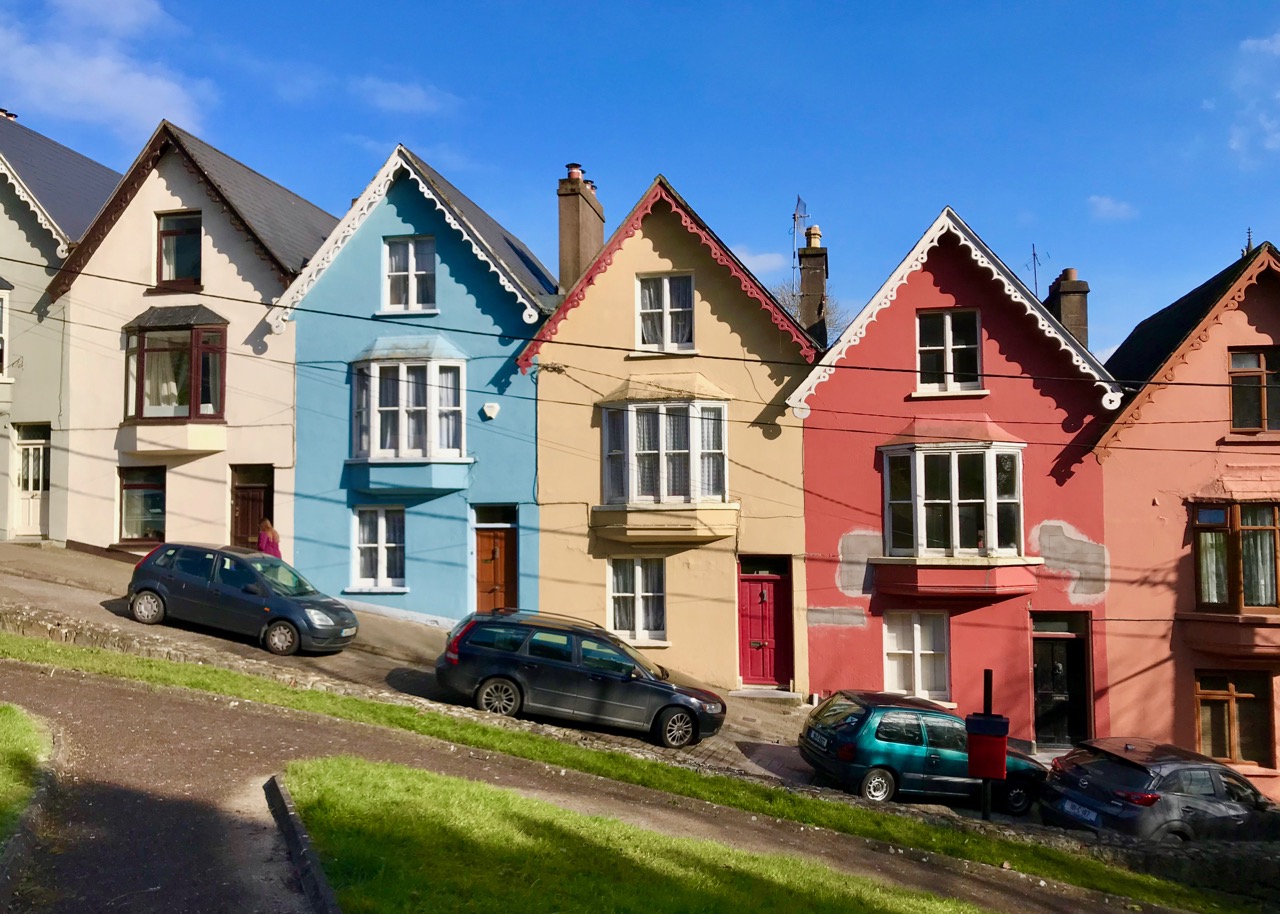
The excitement mounted when we steamed past the port town of Cobh, as the ferry terminal was then just around the corner. From afar I admired the way this settlement embraced the water with its long, colourful terraces lined up the steep hillside on which it was built, crowned atop by the magnificent Victorian edifice which I now know to be probably the finest architectural work of Edward Welby Pugin in Ireland: St Colman’s Cathedral.

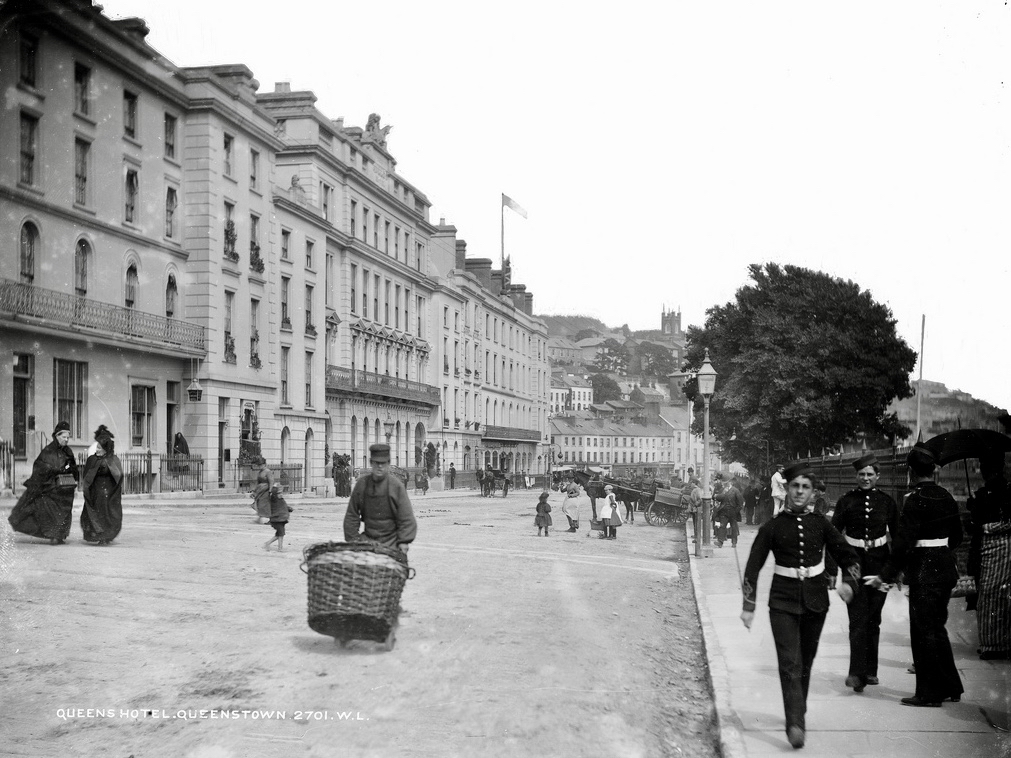
I am almost ashamed to confess, then, that I had never called in on Cobh until last week – and the visit was a relevation. First, let me clear up some possible confusions: the name is pronounced ‘Cove’ – and the word in fact comes from the English, but has been Gaelicised to Cobh, (Irish An Cóbh), the location having allegedly been known since around 1750 as ‘The Cove of Cork’. The name was changed to ‘Queenstown’ after a visit from Queen Victoria in 1849, and was then changed back to Cobh after the founding of the Irish Free State in 1922. Or – have I just contributed to the confusion? One thing is for sure: the strategic waterside location in the great natural harbour of Cork is the raison d’être of this grand town.

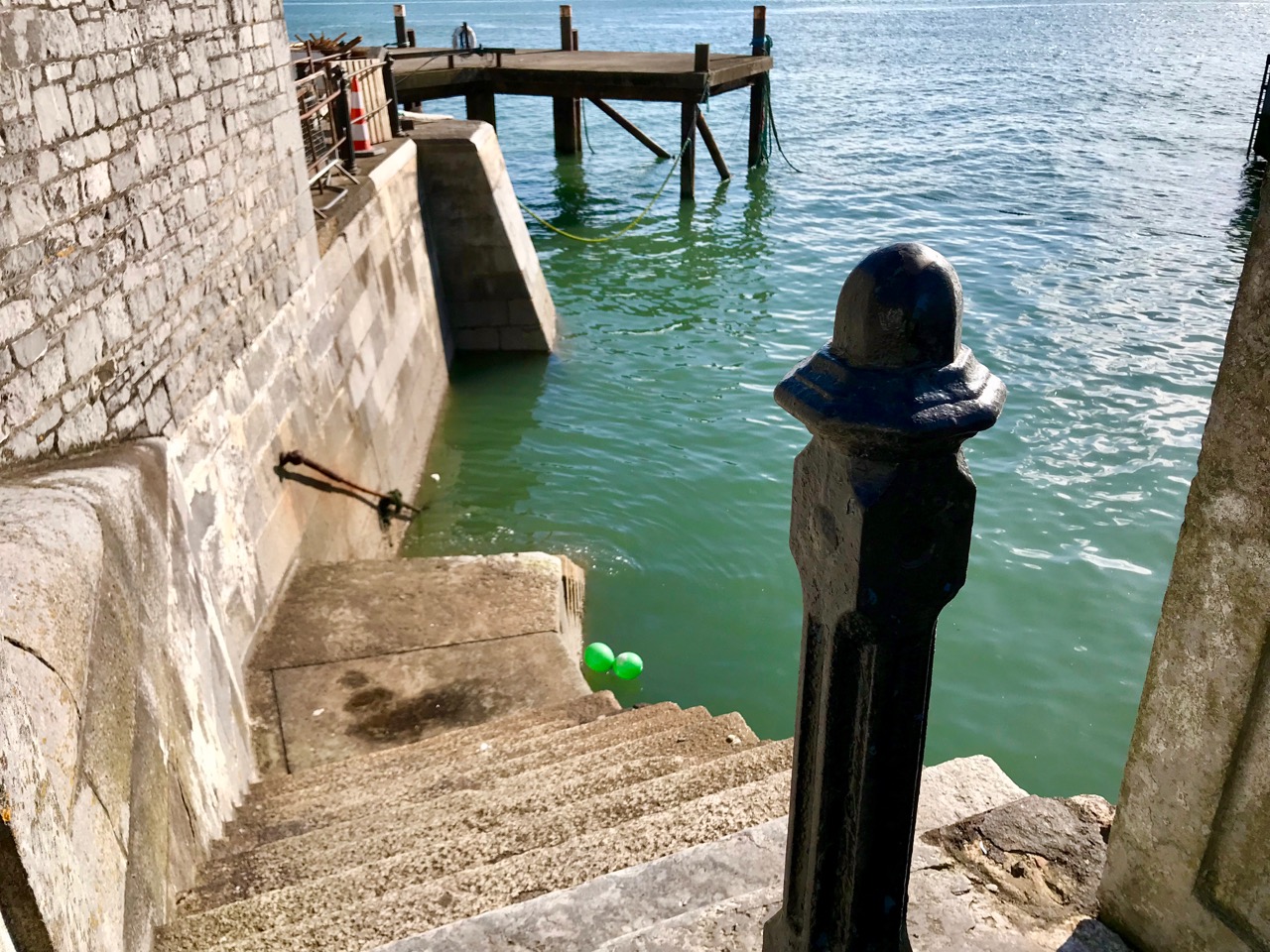
Yes, it’s all about the water, and the fact that it is located beside the “second largest natural harbour in the world by navigational area” (a claim also made, incidentally, by Halifax Harbour in Canada and Poole Harbour in the UK – the undisputed nomination for largest harbour is Port Jackson, Sydney, Australia). Cobh faces the wonderfully named Haulbowline Island and Spike Island, both of which have been established as defensive fortifications, and the former as an important naval dockyard since before Napoleonic times. Today, Cobh has the only dedicated cruise ship berth in Ireland.

Do you remember my telling of the story of Cessair and the first human footsteps on Irish soil in our own Bantry Bay? The story is recounted in the 11th century Lebor Gabála Érenn (The Book of the Invasions of Ireland). The same book tells us about Neimheadh and his followers the Muintir Neimhidh  – People of Nemed – who arrived soon after Cessair around 2000 BC, but in Cork Harbour and settled the islands there: Neimheadh, like Cessair, shared his genealogy with Noah and is said to be buried in a mound on Great Island, overlooking present-day Cobh.

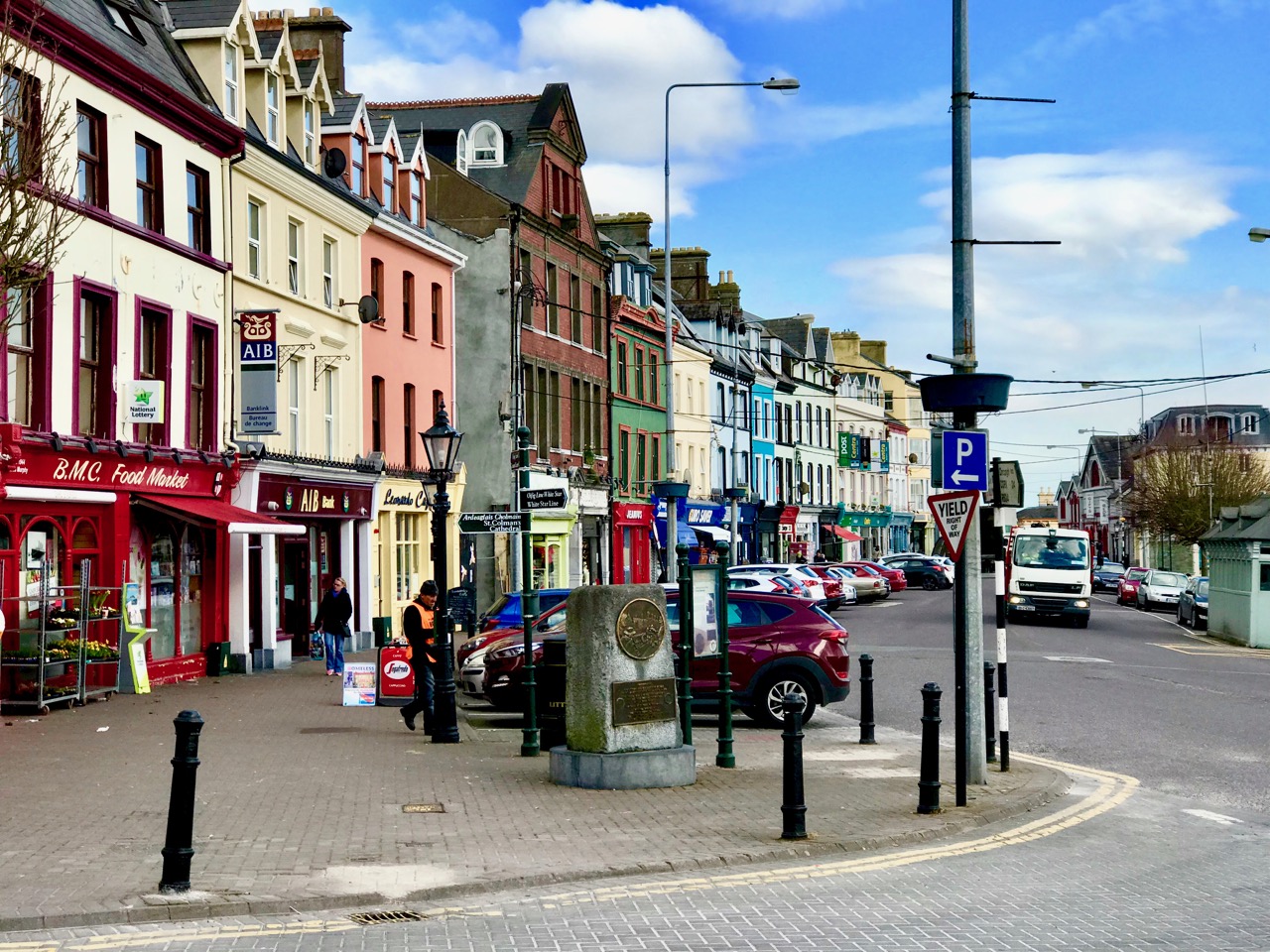
So why am I so impressed by Cobh? Perhaps it’s because – as an architect – I find the streetscapes so elegant, and quirky. For me it’s a cross between the horizontal graceful manners of Georgian Bath and the higgledy-piggledy uphill habitation of the steep lanes of Newlyn in Cornwall, where I lived for many years.

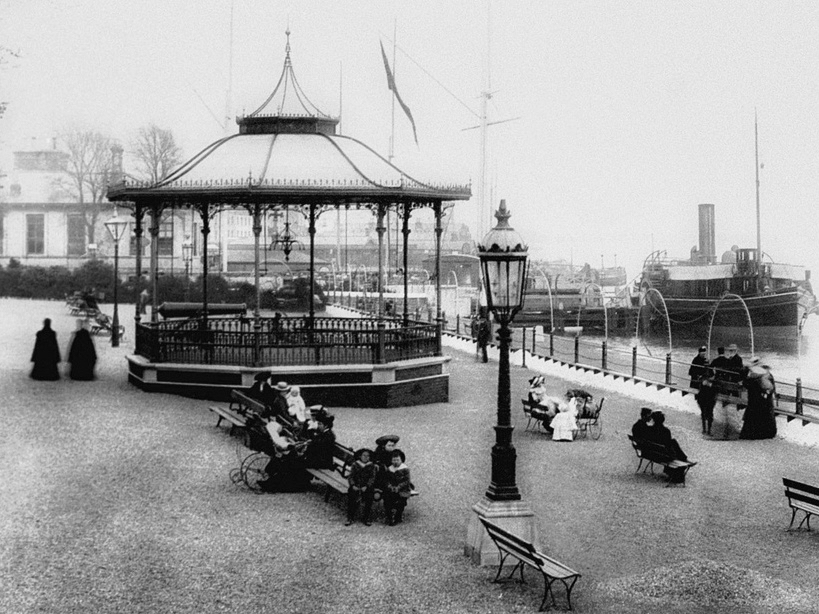
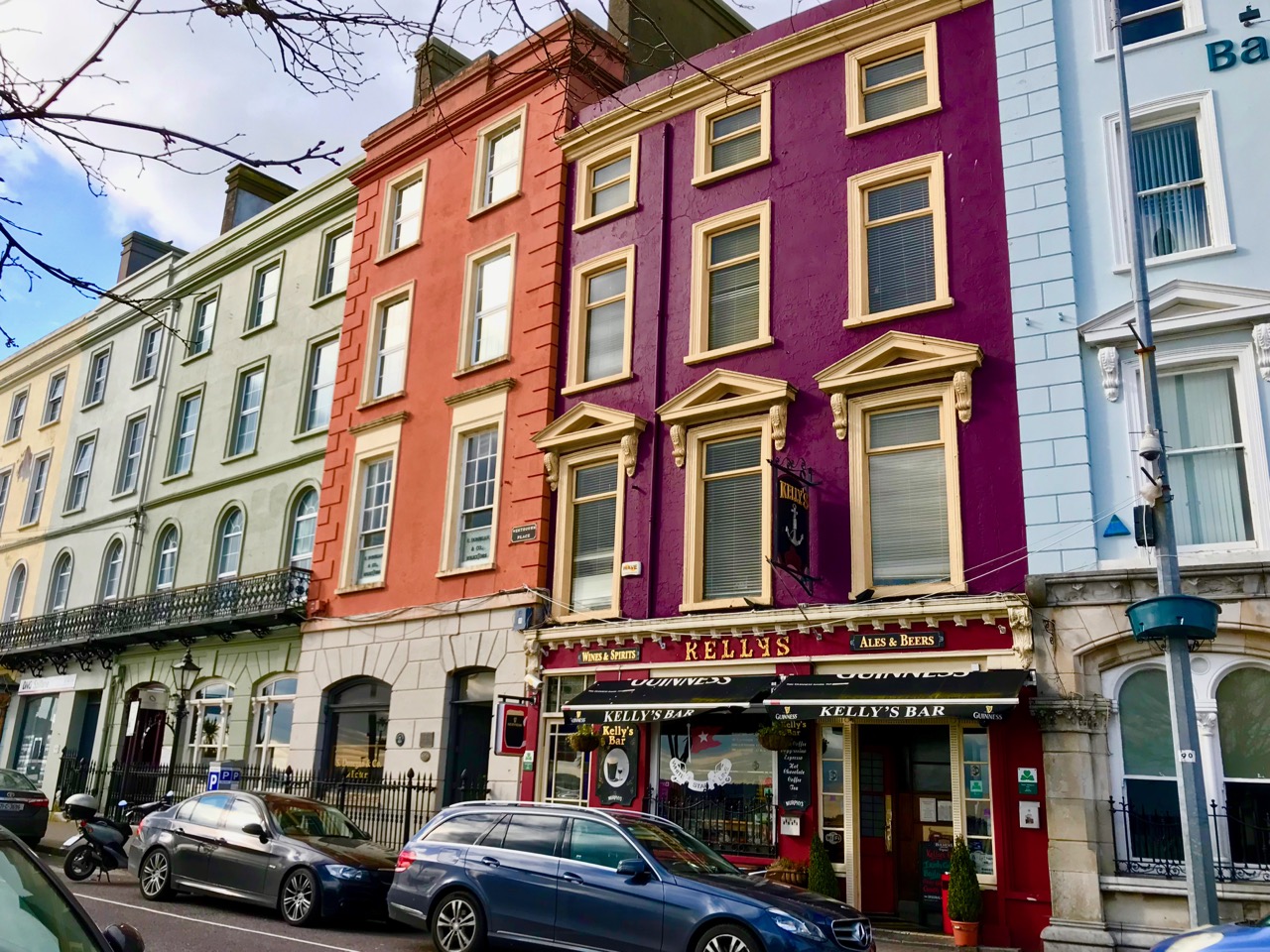
Above – Cobh yesterday and today, showing the elegance of the development of the town in the nineteenth century. Below – another side of Cobh: the steeply descending streets with some remarkable and picturesque terraces, crowned always by the glory of the Cathedral, which took half a century to build. Construction began in 1867.

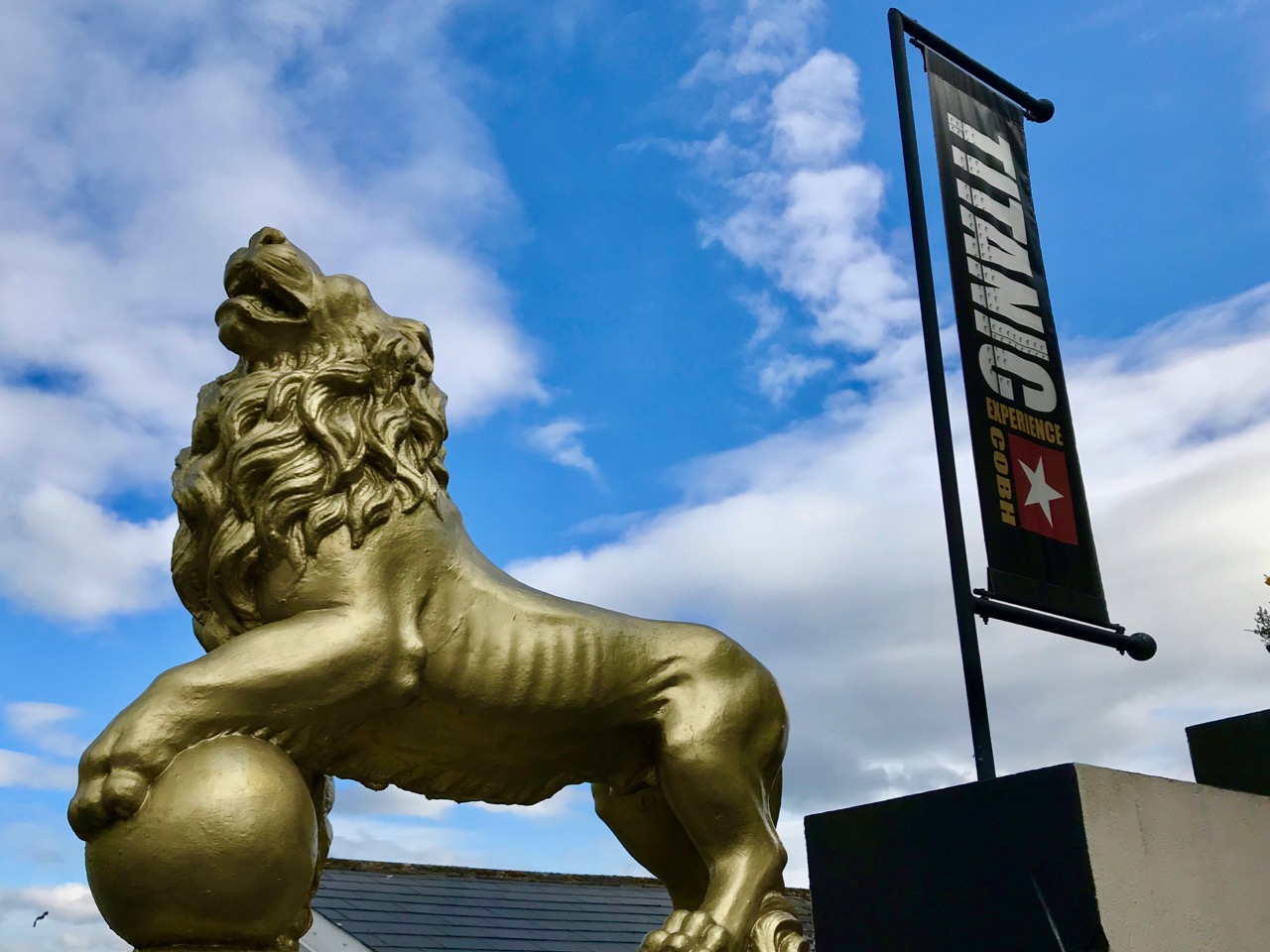
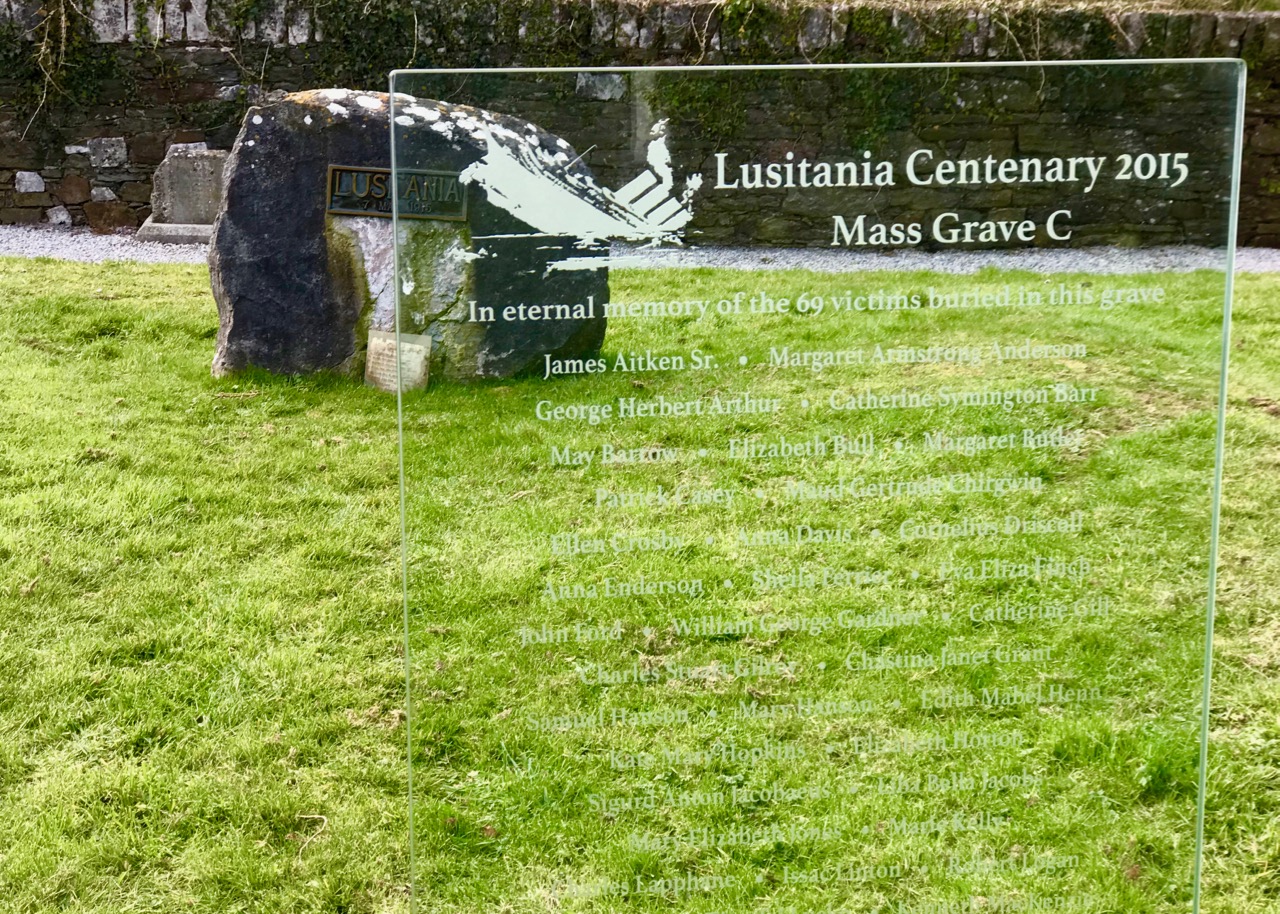
Cobh is such an attractive town to walk around: it should be the jewel on County Cork’s tourist trail. This post is a fairly minimalist photographic essay of what caught my eye on the day we visited. There is a lot more to explore: we never made it to the Heritage Centre, nor to the Titanic Experience, which has brought particular fame to the place in recent times: it was the final embarkation point on the ship’s fateful maiden voyage. All for another day. But we did get up to Cobh’s Old Church Cemetery, high on the hill, where the victims of the Lusitania sinking were buried in mass graves in 1915: a poignant place.

But it was the architecture that had me absorbed: well proportioned and detailed buildings – often simple – that may be overlooked except for the way in which they come together into such a dignified whole. And – such an exploration of colour!

There’s much more to tell of the story of Cobh, and – certainly – so much more to see. I will follow up this post in the coming weeks; the magnificent Cathedral can justify an article on its own. Hopefully you will visit yourself if you have not already done so: your eyes will be opened . . . Look out for the small details!


A Change to The Fastnet Lighthouse

Way back in 2014 I wrote about An Carraig Aonair: The Fastnet Rock and I have decided to repost that today, but with some updated information and photographs, because of an upcoming change announced by Irish Lights. Depending on the story, this is either a relatively benign but majorly cost-saving switch to LED lighting, or a change we must be vigilant about to make sure the Fastnet is left “intact and unharmed”.
Irish Lights tells us that structural repairs. . .are necessary to ensure the metal lantern room is properly secured to the granite tower and modernisation of the light source to an energy efficient rotating LED lantern. When these works are completed the outward appearance of Fastnet will be unchanged. The work will improve our environmental impact by significantly reducing the need for diesel and generators and by removing all mercury from the station. The range of the light will reduce from 27 to 18 Nautical miles.

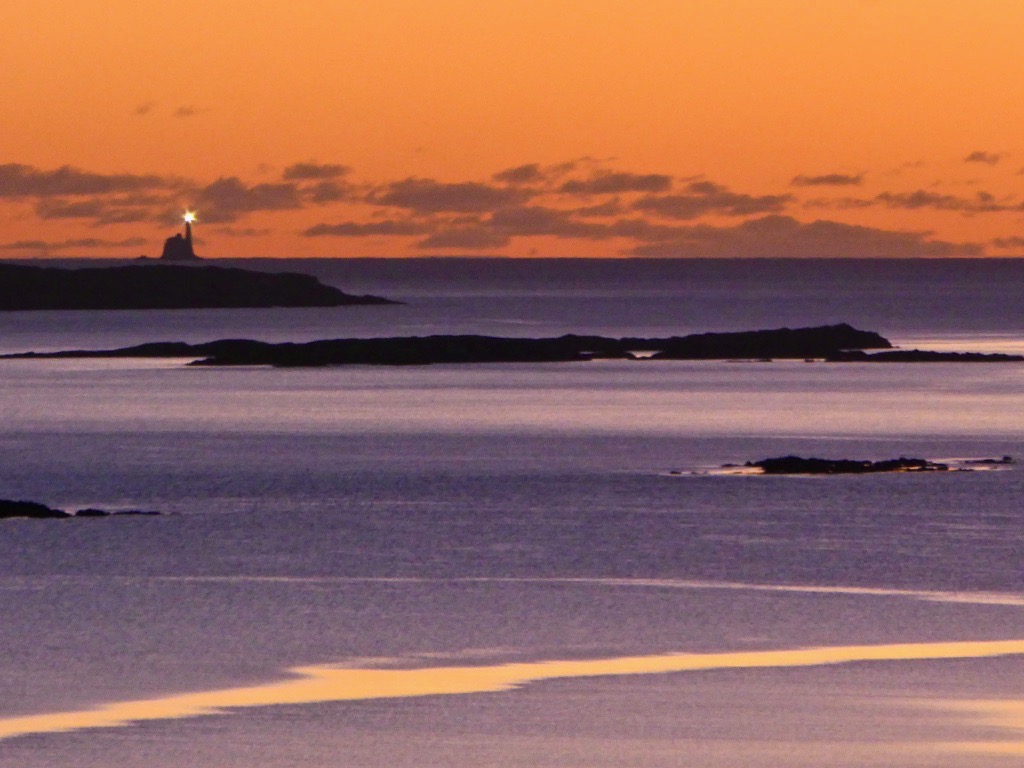
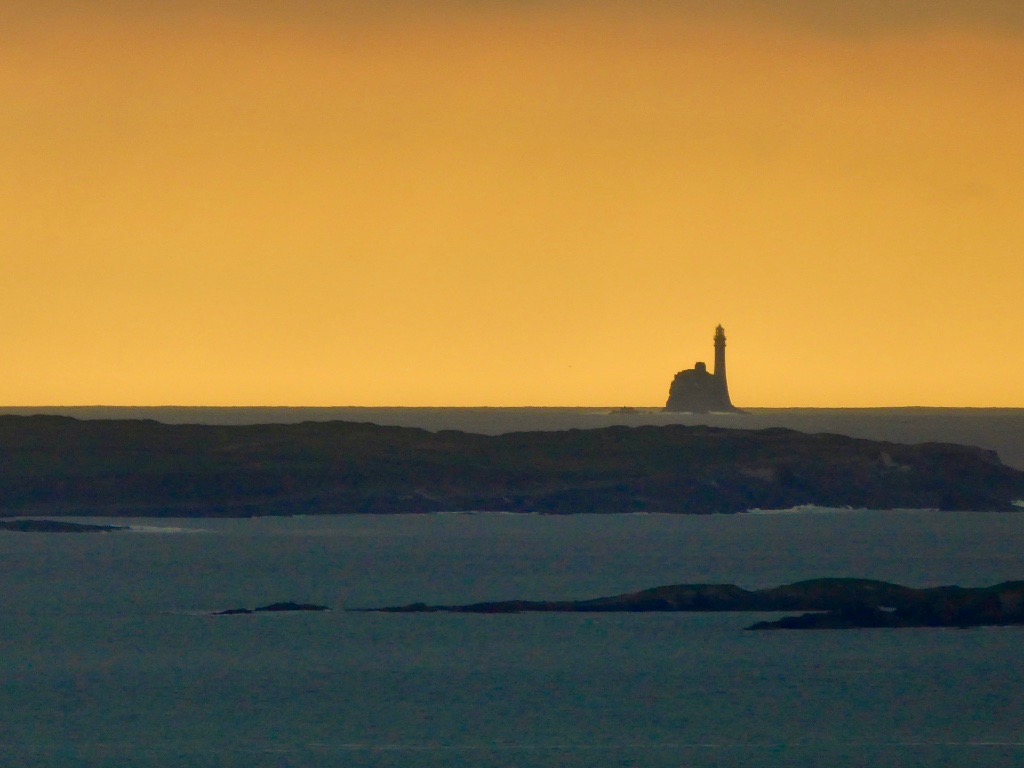
This photo was taken from our house, 12 miles (or 10.4 nautical miles) away

While this seems like a sensible and inevitable modernisation, with (according to this letter to the Irish Times) a very significant saving of €100,000 per year, those of us who live around Roaringwater Bay want more information: we want to be sure that the change does not negatively impact on the safety of our sailors and fisherfolk, and does not rob us of the iconic flash that is so much part of our lived experience in West Cork. There will be a meeting on Monday (March 5, 2018) at the Schull Sailing Club to discuss it all.

What follows now is the text of my post from June of 2014, lightly edited and with some newer photographs inserted.

Robert has written about our field trip to Cape Clear Island and I can now reveal that the journey also included a thrilling sail around An Charraig Aonair (Karrig Ane-er, The Lone Rock) better known as the Fastnet Rock; or to thousands of emigrants for whom it was the last sight of their home country, Ireland’s Teardrop.

We had been looking forward with great anticipation to visiting the rock close up. We can see it from our home, a far away mystical crag abounding with lore and legend. We have been awestruck by the waves crashing over the lighthouse in winter storms and wondered at the lives of the lightkeepers who once manned that treacherous outpost. We watched through our telescope as enormous yachts rounded the rock in the biennial Fastnet Race last summer, following the progress of the race on a special iPhone app. I have written elsewhere about the awful tragedy of the 1979 race, in which Gerard Butler and his fellow lightkeepers on the Fastnet played a crucial role in monitoring the participating yachts in the mountainous sea conditions. 

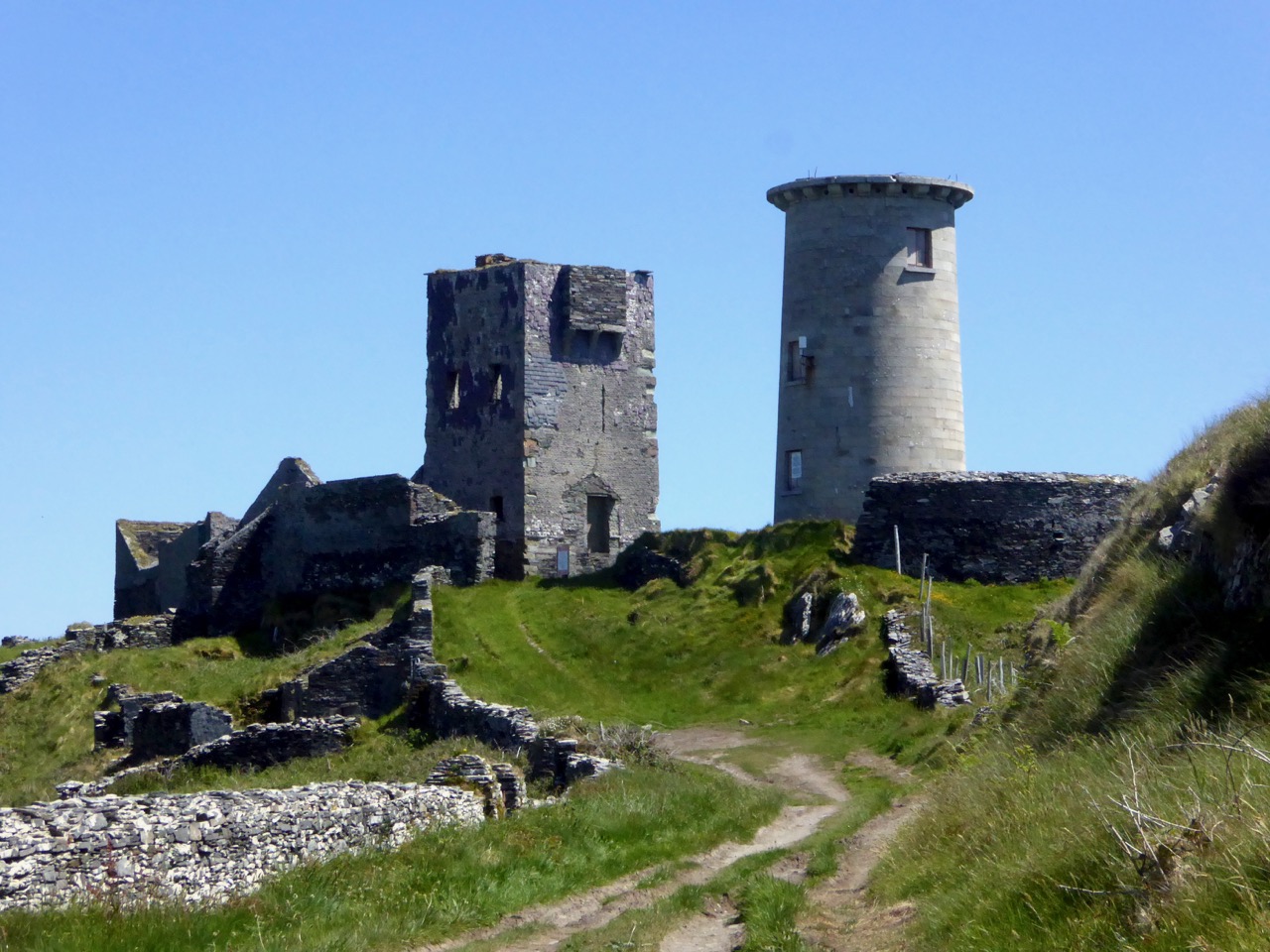
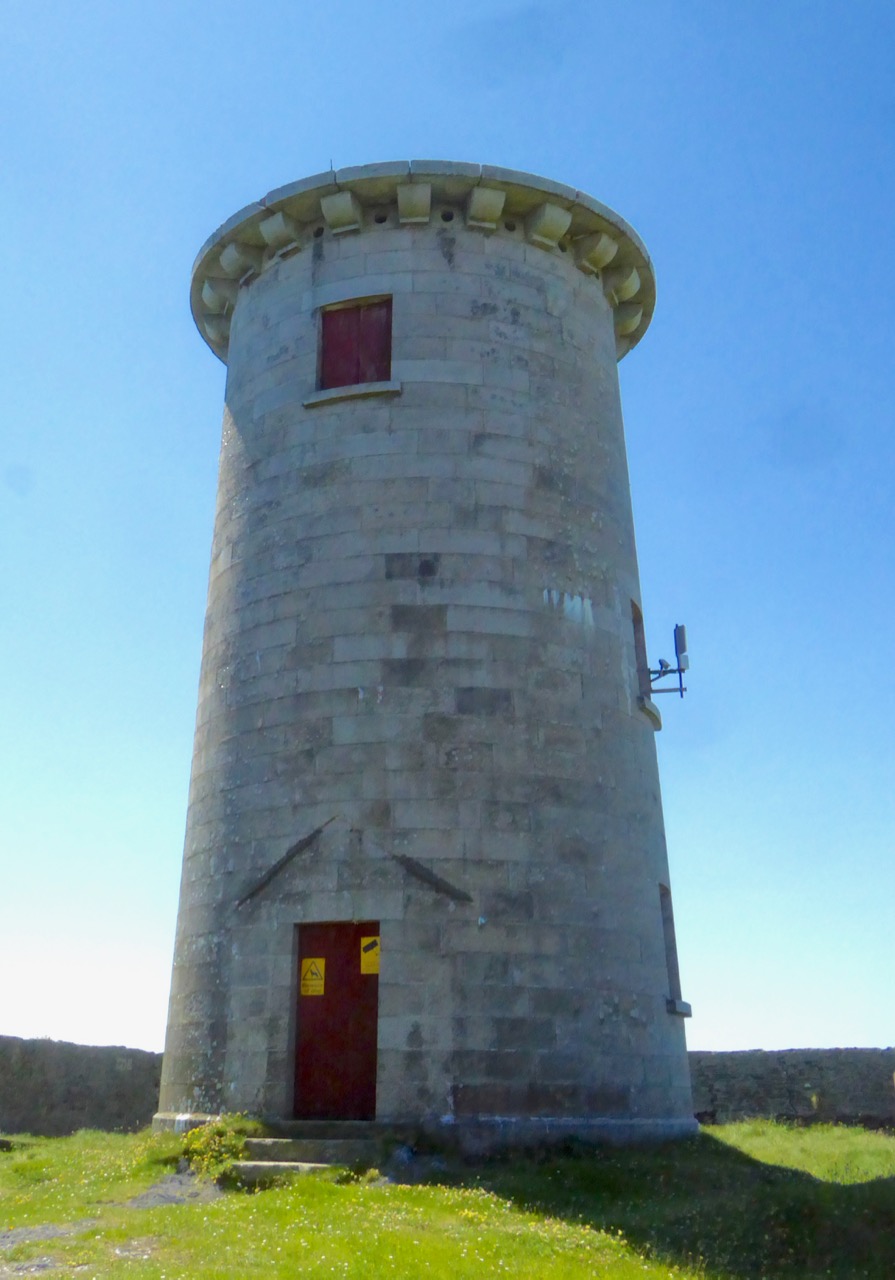
The signal station and the first lighthouse, on Cape Clear Island

The Fastnet was built to avoid such tragedies. Its first iteration was in 1818 as a lighthouse tower on a high point on nearby Cape Clear Island, beside the Napoleonic-era signal tower. However, the light was frequently obscured by fog and after the wreck of the Stephen Whitney in 1847 with 92 souls lost, it became clear that the best place for a lighthouse was on the Fastnet Rock. 

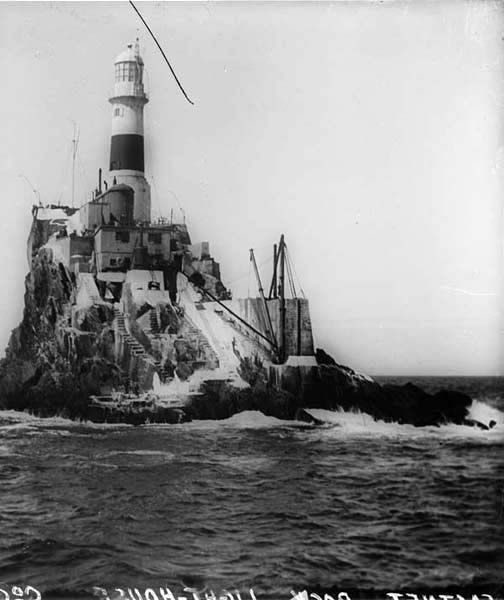
The great era of lighthouse building in Ireland got underway in the mid-nineteenth century. The engineering, design and construction expertise necessary to build lighthouses are impressive enough. Add to this the logistics of building on a tiny and inhospitable rock in a heaving sea on the edge of the Atlantic, and the sheer accomplishment of the objective is  staggering. The first attempt, started in 1849, was of steel and needed constant repair.

The first lighthouse on the rock – it was made of steel and didn’t last

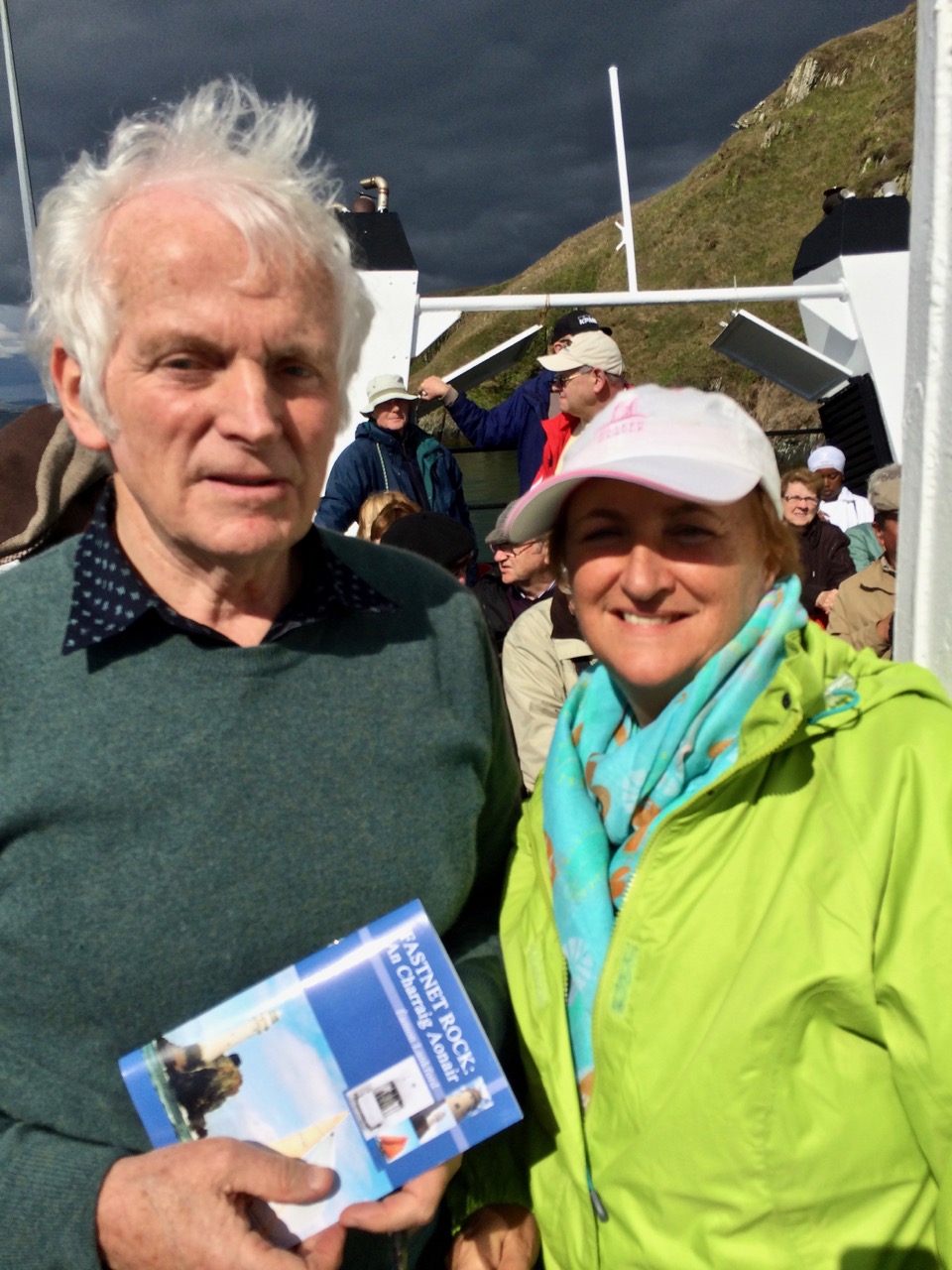
It was decided to replace it with a structure of Cornish granite and the current lighthouse first cast its beam over the waters in 1904. Eamon Lankford in his book Fastnet Rock: An Charraig Aonair describes the building process and provides old photographs illustrating how the granite blocks were ‘floated’ and hoisted on to the islet, having been first assembled and tested in Cornwall. The website Digital Irish Lighthouse Experience by Sandra Michler has an animated sequence showing how this was accomplished. it took eight years.

We were fortunate to have Eamon Lankford as one of our guides on our trip to the Fastnet

One of the best accounts of the building of the lighthouse was in a 2008 article in The Economist called Light on a Lonely Rock. The piece gives fascinating details into the dedications and hardships of the builders and calls the lighthouse “a monument of man’s gift to mankind.” I don’t know who wrote it, but it’s a terrific essay.

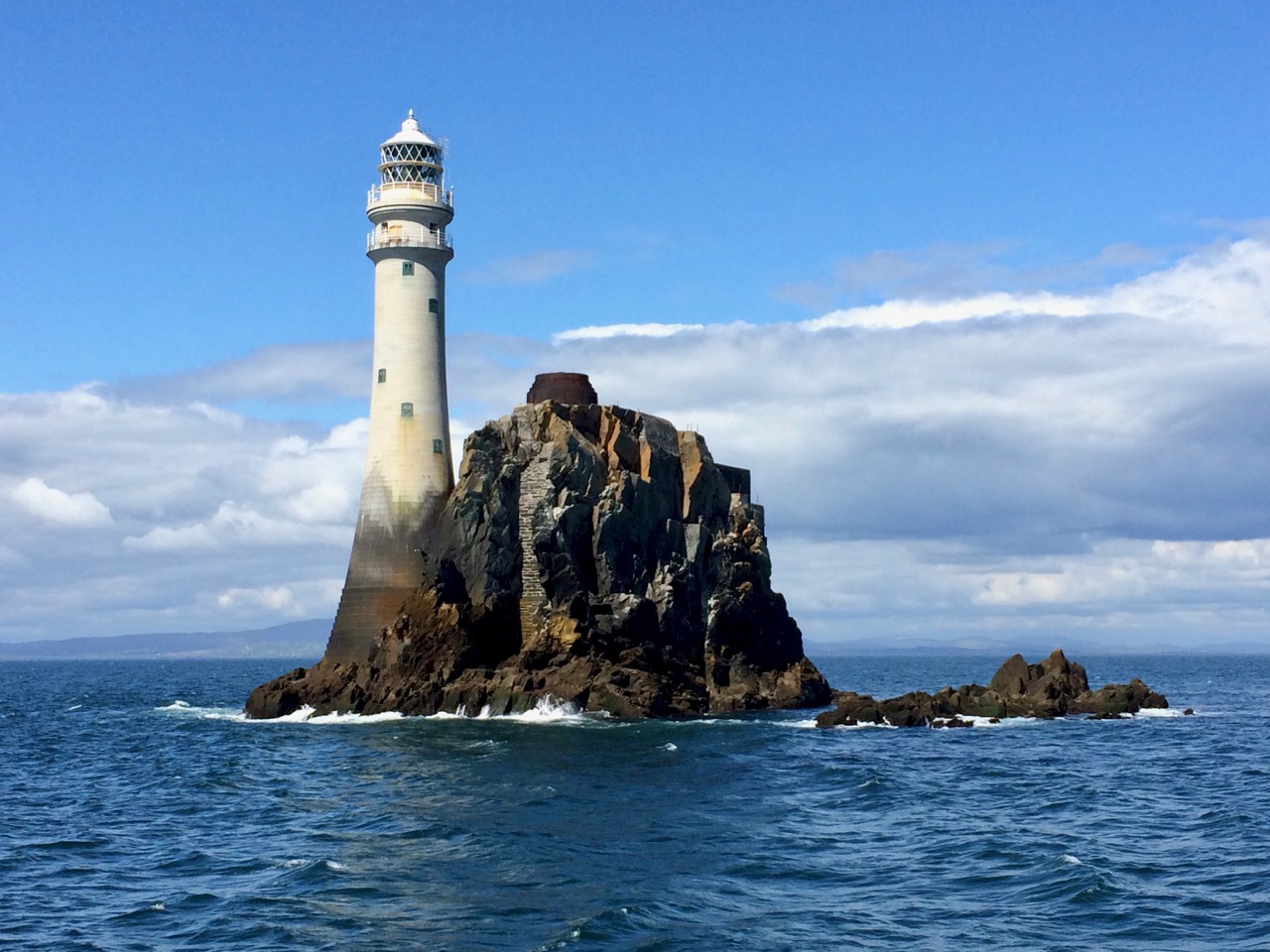
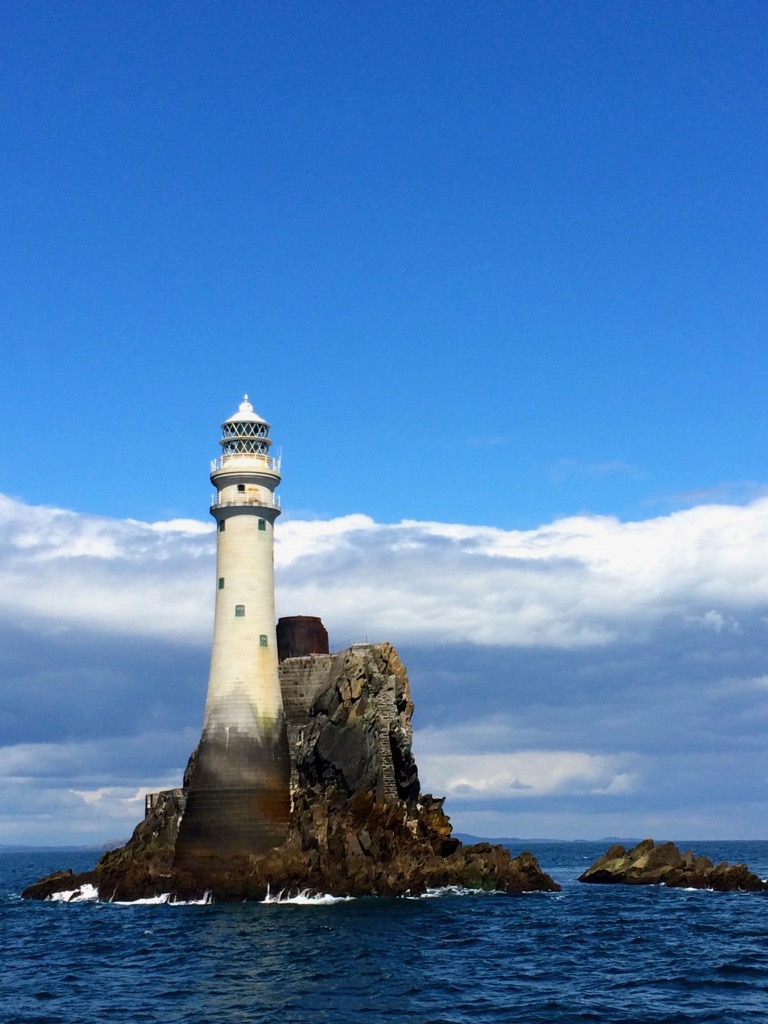
According to the Irish Lights website, Fastnet is the tallest and widest rock lighthouse tower in Ireland and Great Britain and was a monumental achievement when completed in 1904. Each of the granite stones of the tower is dovetailed into those around it, bonding the structure into a virtual monolith. This webpage also has several excellent photographs of the lighthouse from the air. What all photographs of the rock also reveal is that the lighthouse is a thing of beauty. Tall, slender and elegant and boasting two balconies, it personifies form and function in the most admirable fashion possible. (Take a look, for example, at Dennis Horgan’s website – he’s an acclaimed aerial photographer and his photograph of the lighthouse is probably the most iconic shot of them all.) Today the Fastnet is fully automated but in The Lightkeeper Gerard Butler describes what it was like to live on the rock in fair weather, when he fished and swam from the steps, and foul, when the seas crashed and roared over the lighthouse as it quivered and shook all night. 

The lighthouse showing the full extent of the Cornish granite and the stub of the old steel tower

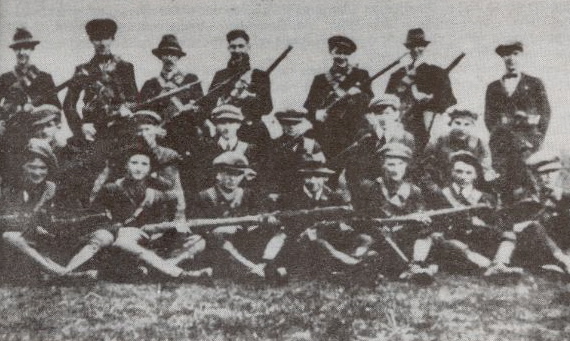
One of the stories we heard from Eamon concerned  a daring midnight raid on the lighthouse carried out by an IRA ‘Flying Column’ (experts in guerilla warfare) in 1921 during the Irish War of Independence. They were after the explosives used on the Fastnet to power the foghorn. [EDIT: I have some errors here – please see Finbarr O’Driscoll’s correct information about the raiding party in the comments section.] In researching this story further, I found an article in the 1999 Mizen Journal (no longer in print) by Frank Lannin, based on the eyewitness statement of Sean O’Driscoll.*
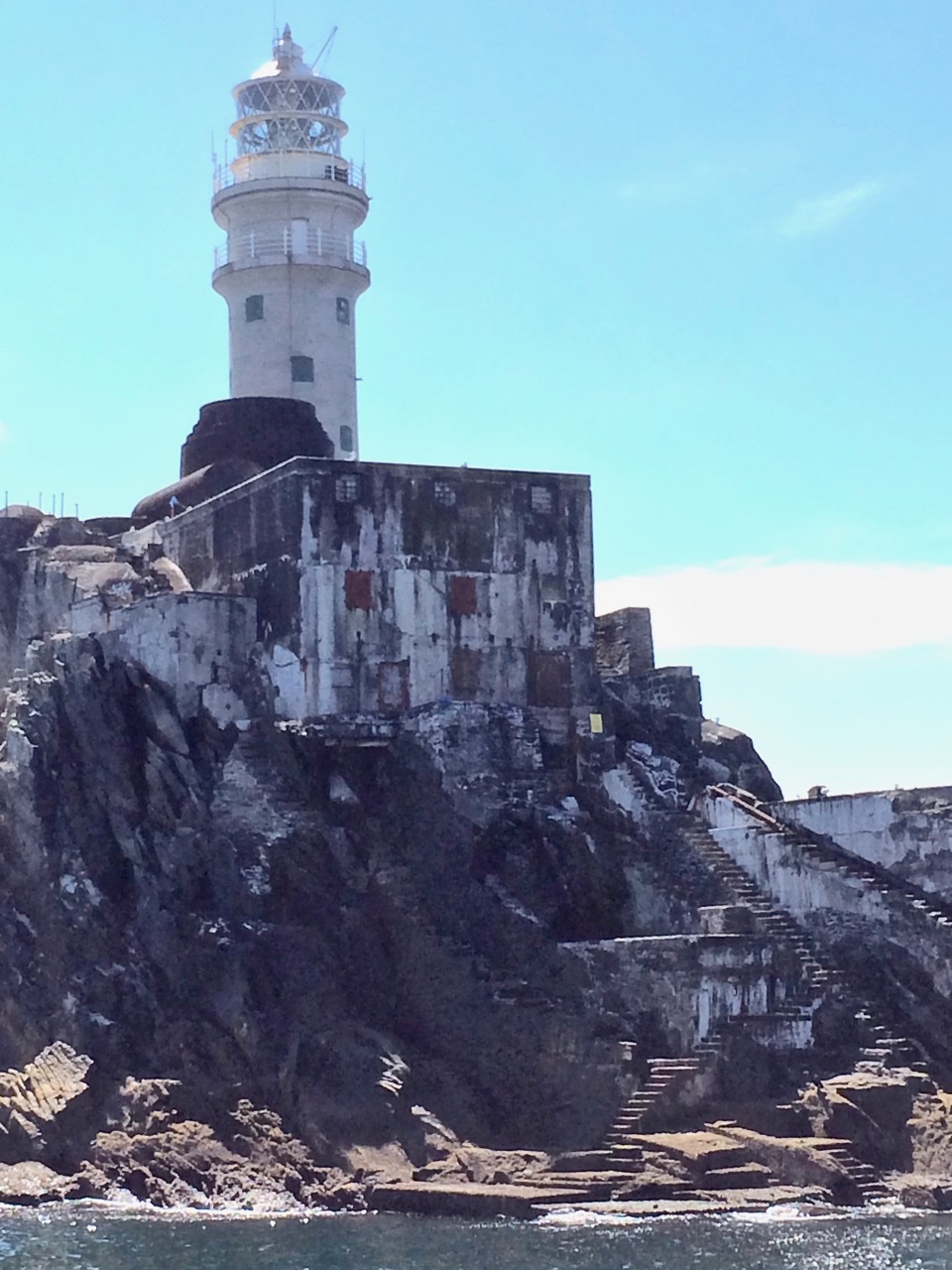
The Rock, showing the landing platform, steps and store

Here is part of Lannin’s account:

The breeze had freshened and caused the usual swell around the Rock and there was a rise and fall of several feet. The anchor was let out and the boat moved slowly to the landing place. Positioned on the bow was John O’Regan, a rope tied around his waist, a revolver in his pocket and balancing himself with the rise and fall of the boat. He would have to select the right moment to jump on the Rock and catch the iron ring which was fixed to the Rock. He knew where the ring was fixed, but to grasp it in total darkness was a feat that few would attempt. His vast experience as a seaman was now to be put to the test. As a wave was rising he jumped. It was a tense moment. As the wave covered him he grasped the ring with both hands. (It was an occasion for handclapping, but not tonight.) In seconds he had made the boat fast and the rest of the raiding party were landing on the platform. The huge steel door of the lighthouse was not locked. John was first up the spiral stairway leading to the room where the Lightkeeper was on duty. He put up no resistance and as a precaution the wireless was dismantled. Seventeen boxes of gun cotton and three boxes of detonators and primers were loaded on to the “Maire Cait” by means of the lighthouse derrick. in all, the spoils weighed but one ton. The daring mission was accomplished.

A Flying Column (this one from Tipperary)

The fog signal, together with the light, was an important aid to navigation for ocean going vessels. It was only in 2011 that the Fastnet foghorn was permanently discontinued, as modern navigation equipment rendered it unnecessary. All around the world people are missing the haunting sound of foghorns now, a sound so many of us grew up with. But at least we can see the light from Carraig Aonair every night and count its ‘character’ – one two three four FLASH…one two three four FLASH – and know that it’s doing its part to keep our mariners safe on the seas that roll outside Roaringwater Bay.
*See pages 18 to 20 of Sean O’Driscoll’s statement for his dramatic story of the raid.