The Souvenir Shop

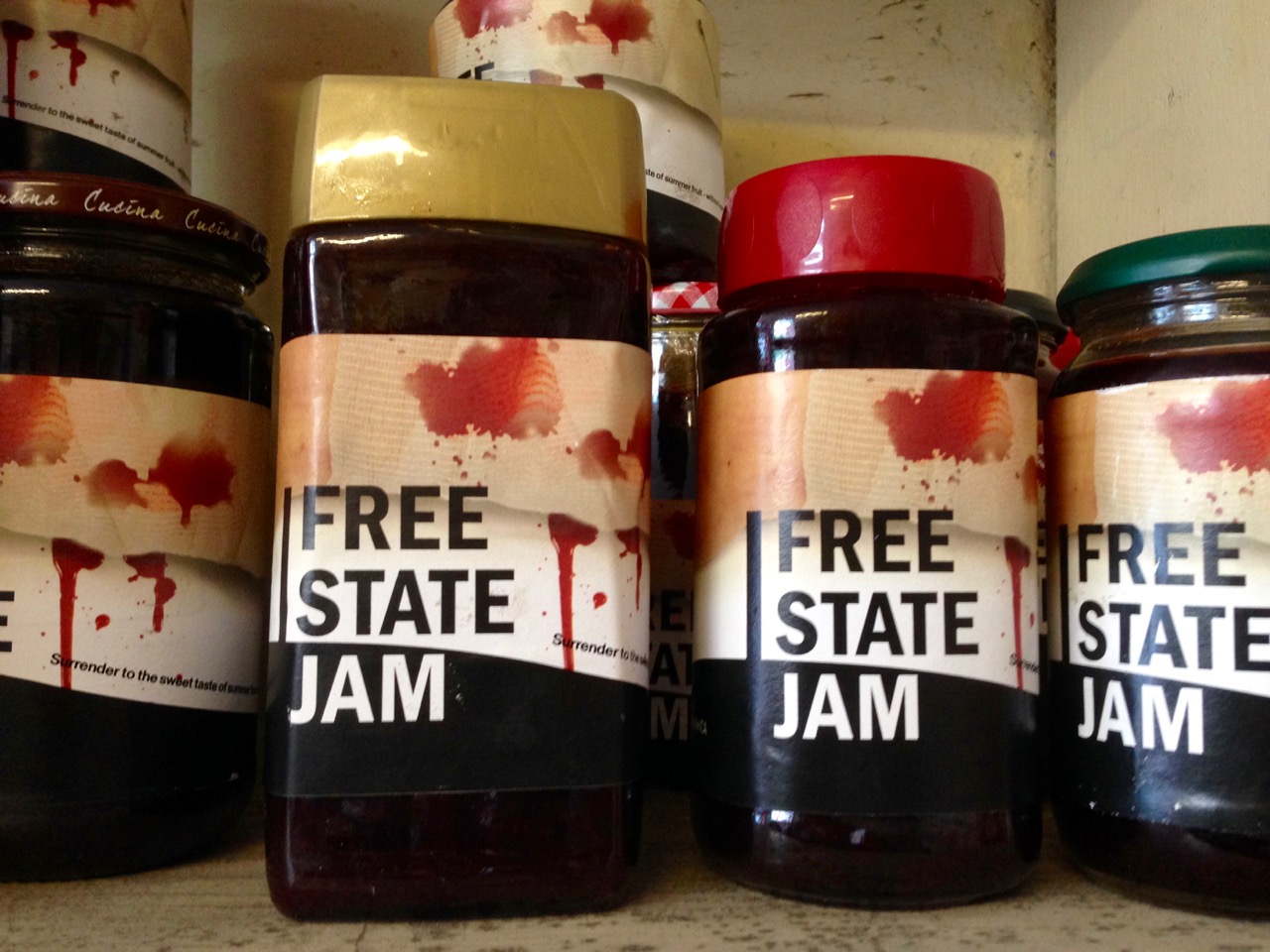
Free State Jam

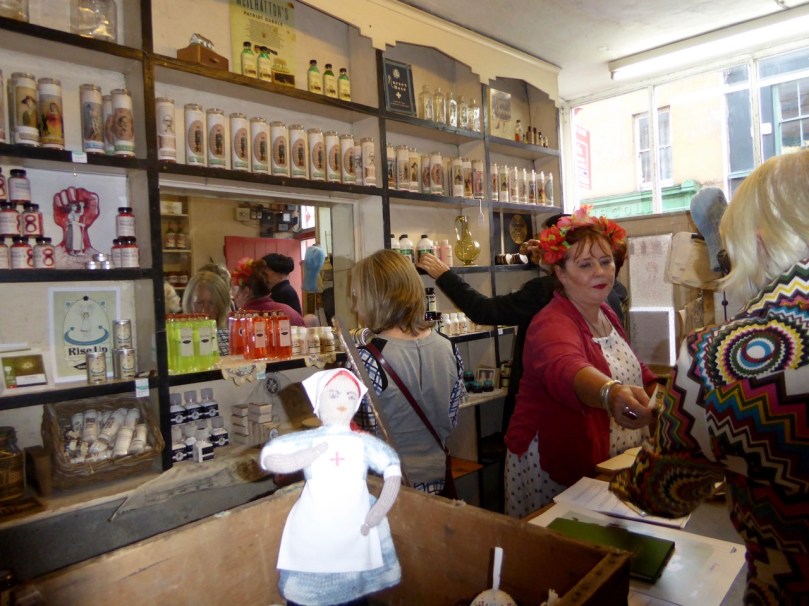
This is a first – a ‘live’ blog post! I’m writing it inside an art installation running as part of the excellent Skibbereen Arts Festival. The installation is The Souvenir Shop, and it’s a huge hit with visitors. The project is conceived by Belfast artist Rita Duffy and curated by Helen Carey, and is a very unusual perspective on the 1916 Rising commemorations.

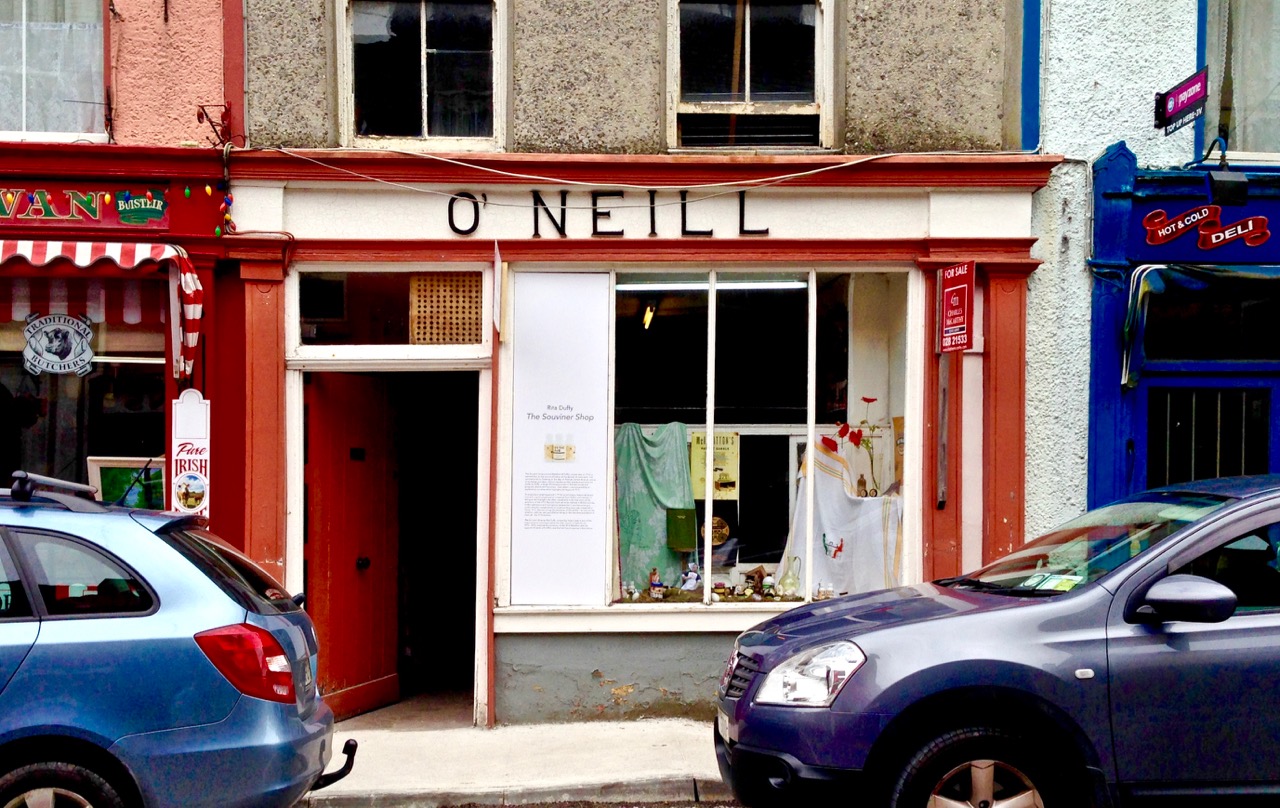
o'neill'sshop

The Souvenir Shop was first shown in Dublin earlier this year – here is a review from the Irish Times – and it’s now in the perfect setting here in West Cork: O’Neill’s old sweetshop on Townshend Street in Skibbereen. The premises has been empty for years and stepping inside it today is stepping into the past: a shop unchanged over generations.

customers

Rita in Shop

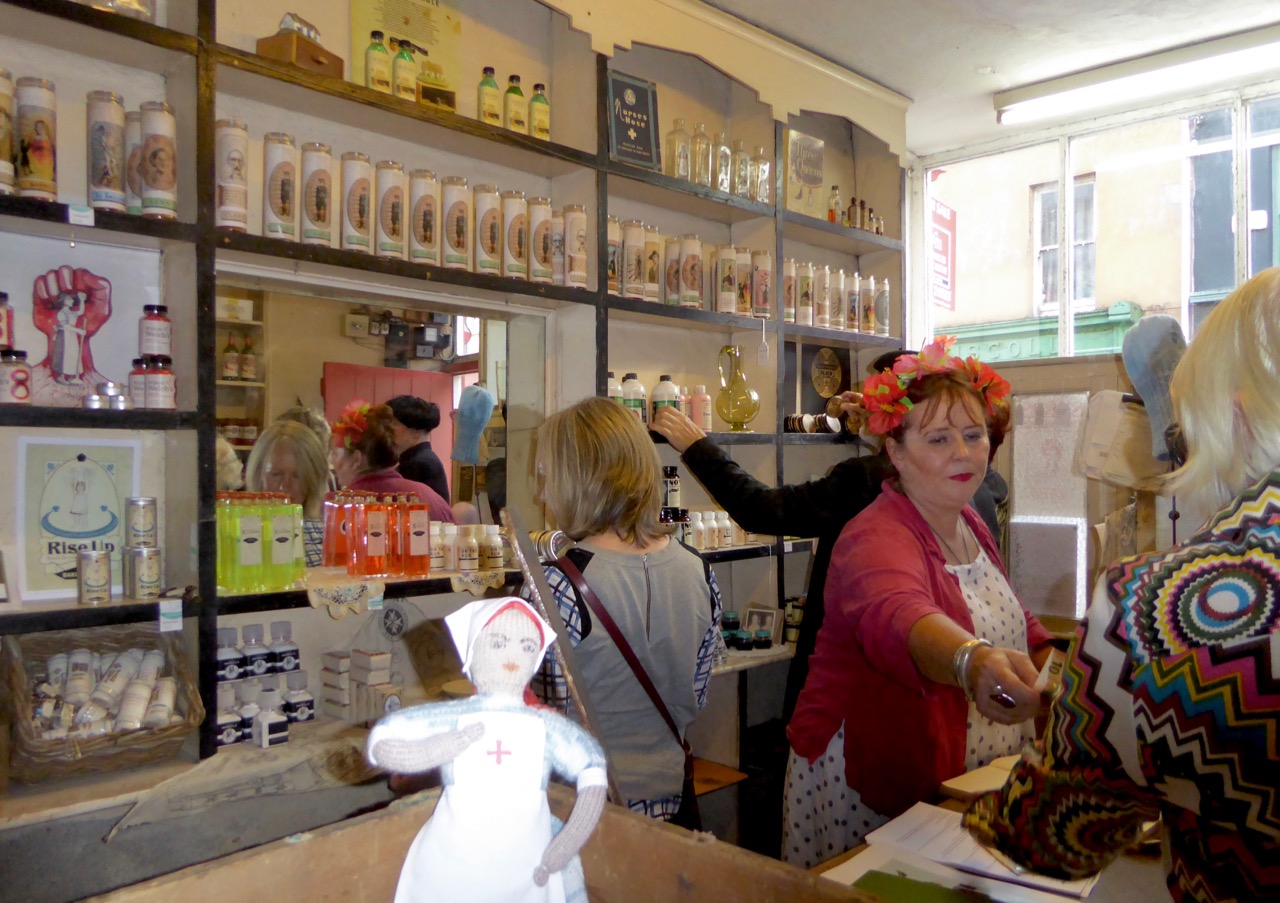
The atmospheric and nostalgic interior of O’Neill’s shop brought back to life by Rita Duffy (above): it displays and sells ‘souvenirs’ of the 1916 Rising and the events around it. It’s a piece of art which includes and embraces its customers and the ‘invigilators’ who, today, are Roaringwater Journal creators Finola and Robert

Finola and I are on our second stint behind the counter: we are the shopkeepers! We try to keep order as customers crowd in to look at the wares in display, all of which are designed by Rita. We met her in the shop on the first day of the exhibition and she explained that, during the Rising on Easter Monday 1916, many shops in Dublin were looted: the first was Noblett’s Sweet Shop on Sackville Street, and another was Tom Clarke’s tobacconist shop on Great Britain Street (now Parnell Street). She has re-made or re-imagined these shops for the installation, and filled the empty shelves of O’Neill’s with an incredible array of objects – most of which are for sale.

Dublin’s 1916 Easter Rising was accompanied by widespread looting of shops: Noblett’s Confectionery (top left – Dublin City Photographic Collection) and Clarke’s Tobacconist (bottom – National Library of Ireland) were among the first casualties. Tom Clarke himself (above right) was the first to sign the Proclamation of Independence, and was a driving force behind the rebellion

Rita Duffy’s subversive commentary on the Rising and the events that led from that time towards the present uneasy ‘peace process’  includes re-interpretations of everyday items that we would expect to see on the shelves of our local shops – soap, boot polish, tinned foods, tea, sweets, packets of seeds… It all looks very normal when you walk in – with a period flavour. We are finding that many of the customers today have fond memories of O’Neill’s sweet shop recalled from their childhoods and are delighted to come in and see it back in business: we can’t resist nostalgia. The initial impression is exactly that – a rosy-hued look back on our remembered past. Then we all start looking more closely at what is on the shelves and we are jolted out of our reveries…

Just a few of the items on sale today in The Souvenir Shop. Look carefully – ‘No Surrender stain remover’ shows James Connolly’s blood stained shirt worn during the Easter Rising; ‘His Majesties Ltd comforting diasporic foot soak for the wanderer who seeks a better footing’; ‘On The Run embrocation for the sore and twisted limbs of the dissident thinker (apply before sleep in a safe house)’; ‘Put my grandfather back together’ bandages; ‘Towards a New Republic Clear the Air vapour candle’…

It makes you laugh, initially – and then you have to think what you are laughing about. Balaclavas, in powder blue and pink with orange trim, for example. Black and Tan boot polish…? There’s a whole lot more to The Souvenir Shop. Rita Duffy has engaged the services of the Irish Countrywomen’s Association in Cavan (her studio is in Ballyconnell) to make Free State Jam and to knit – the balaclavas for example – but also some wonderfully bizarre religious iconography: did you ever see a knitted Pietá before?

Unexpected knitting courtesy of the Cavan Irish Countrywomen’s Association

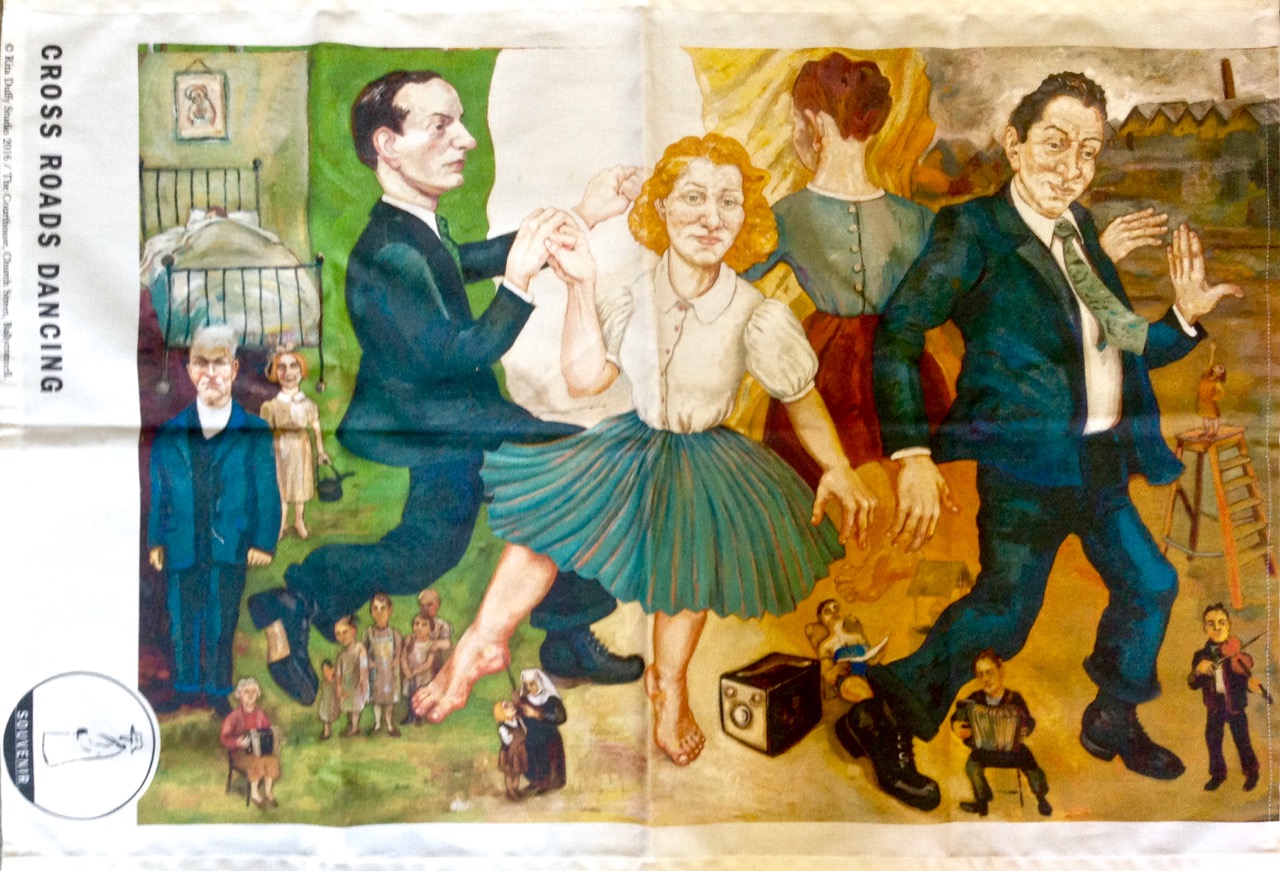
Rita has also produced tea towels, t-shirts, and some embroidered place-mats carrying rather uncomfortable messages to entertain your dinner guests with. There are also ceramics: teapots, dishes and glassware. It’s such an eclectic range of goods on offer in this shop. That’s why the crowds come in and spend what seems like hours browsing the shelves that once held jars of sweets and packets of tea. There are sweets and tea here today – children are delighted to be given some free samples – but they probably don’t understand the hidden messages on the colourful packaging.

Most stark, perhaps, are the seeds: Seeds of the Revolution: two packets for 5 Euros. The messages here are fairly easy to read, although harder to digest. They really are seeds in those packets, but you’ll have to plant them to find out what comes up, perhaps something else that has a subversive implication: I’ll tell you what mine are next spring!

Seed rack

There’s so much in The Souvenir Shop that I haven’t included in this little review – and I’m far too busy trying to fend off the demands of the customers while I’m writing this. If only they would get into an orderly queue – it’s like some sort of insurrection in here… But we’ll cope – and encourage you to come and see this piece of artwork while it’s still on (it finishes on Monday 1st August at 5pm). Step inside and you become part of the exhibit – just like we are right now. You’ll enjoy it, perhaps more than you should. It will certainly leave you thinking.

Cross Roads Dancing

The Souvenir Shop (…nothing is as it seems…) is one of the major projects commissioned by the Arts Council of Ireland’s Art 1916-2016, marking the centenary of the 1916 Rebellion – with the support of Cavan Arts Office and the Irish Countrywomen’s Association. It runs through the Skibbereen Arts Festival between July 22nd and August 1st in O’Neill’s old sweetshop on Townshend Street

Peas + Beans

Two Seáns

after gaiety

Meeting the President at the Ó Riada sa Gaiety Concert, March 1969 – from left: Seán Ó Riada, Seán Ó Sé, Niall Toibín, President Éamon de Valera, Ruth Ó Riada and Breandán Ó Buachalla (Irish World)

Festivals are high points of summer here in West Cork. Whatever the weather (and it’s always erratic), there is a very predictable buzz abroad wherever they happen. Rain or shine, people gather – the streets are busy, the cafés are full, the excitement is palpable.

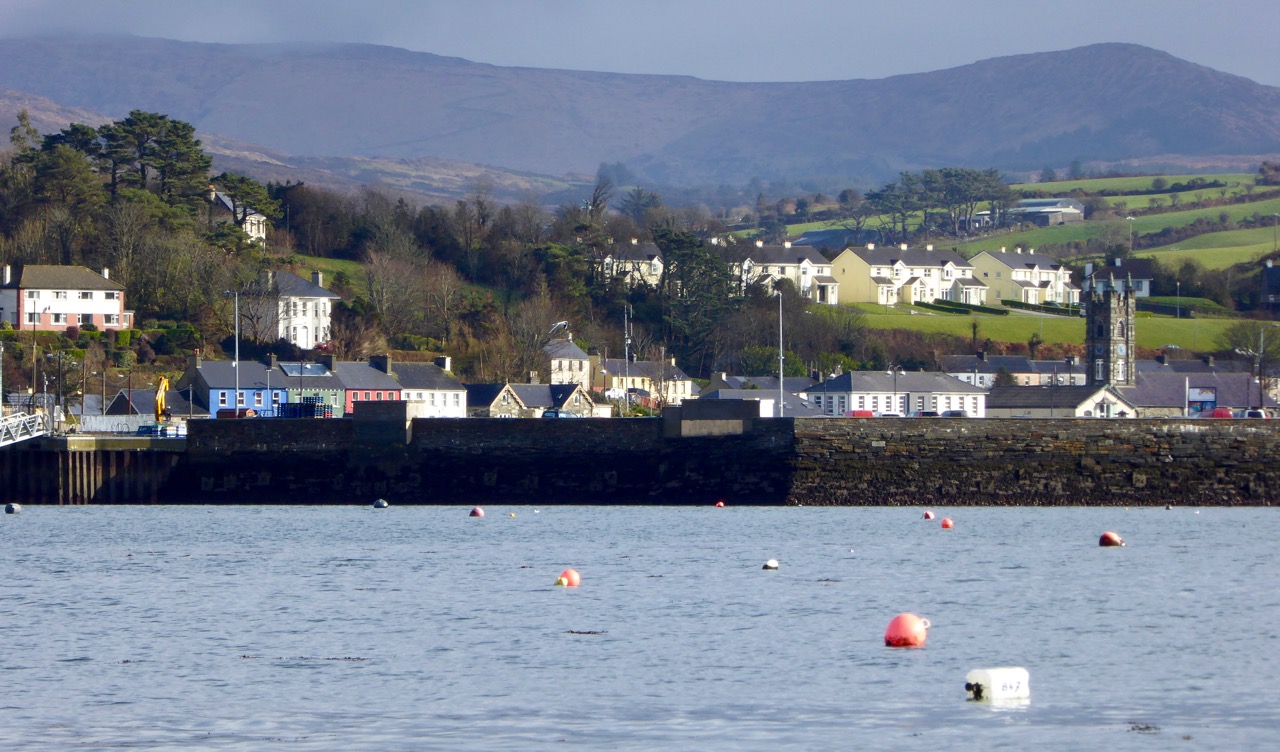
Bantry from the water

Colourful Bantry in the festival season

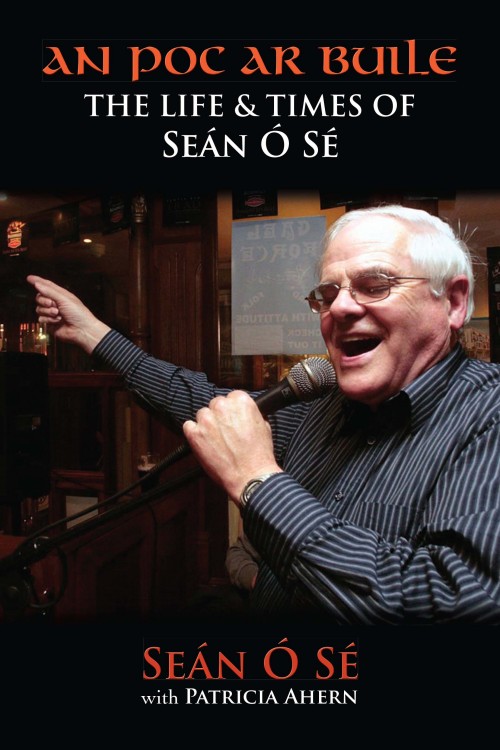
A highlight for us at the moment is the Literary Festival in Bantry, and we were particularly engaged this week by a couple of hours of chat, readings and songs from a ‘Bantry boy’ now turned eighty – Seán Ó Sé. Last year Seán became an author or, more exactly, he collaborated with Patricia Aherne to tell the story of his life – which is a fascinating one.

Seán_Ó_Sé

This Seán comes across as completely honest, unpretentious, and with a deeply embedded faith. Life has taken him on a long journey from Ballylickey – on the shores of Bantry Bay – to a world stage. Woven in with a full time teaching career in Wicklow and Cork (…I never took a day off in my teaching career to go singing… says Seán …Singing was for sport, but if there was jam, that was fine too…) he has been to – and performed in – Canada, America, Cuba, Russia and China, and is still a legend in his own country of Ireland – and particularly in his own corner of it, County Cork.

Mannings

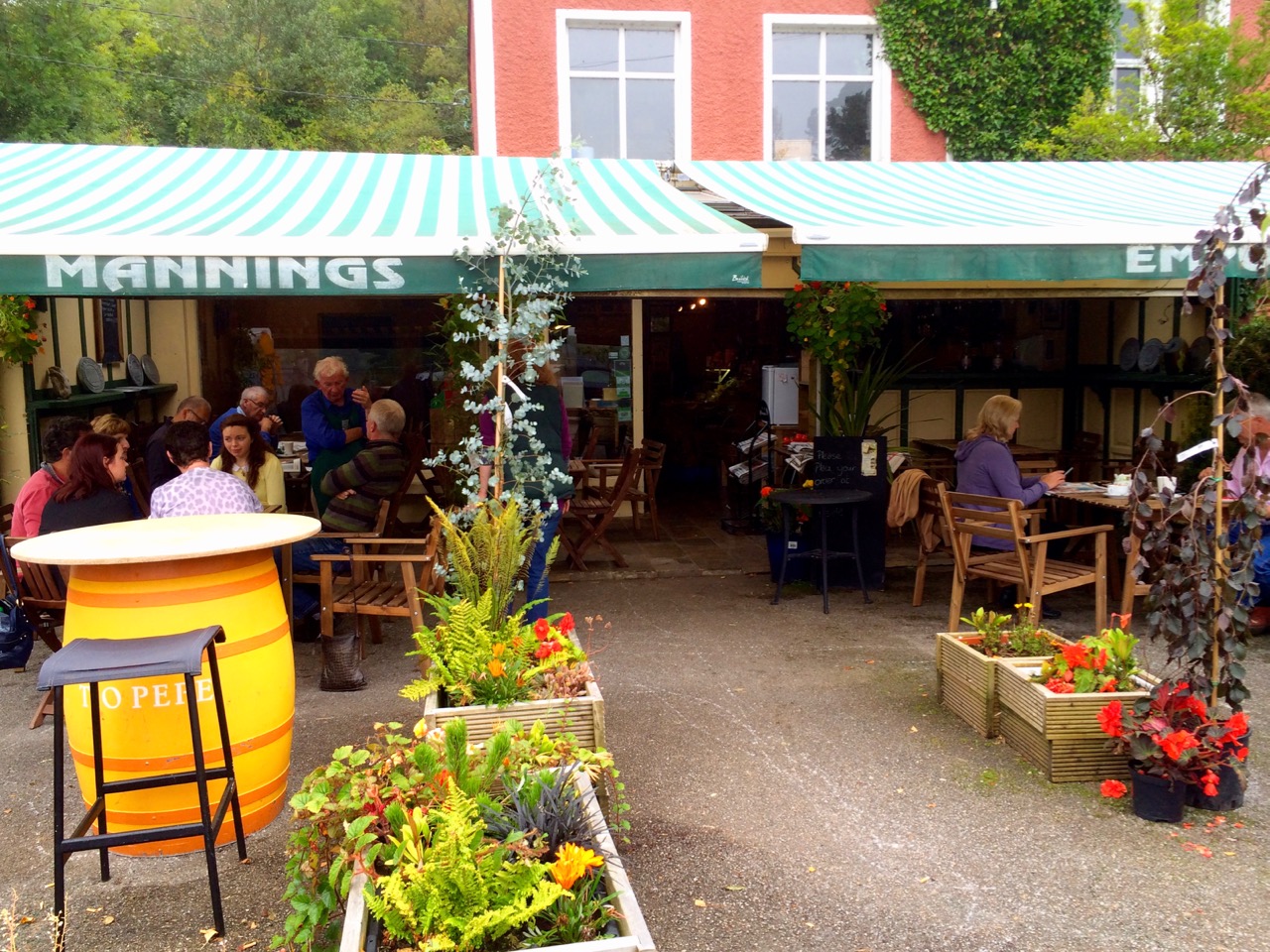
Seán Ó Sé was brought up in Ballylickey; he remembers Mrs Manning (Val’s mother) opening the shop – Manning’s Emporium – that now has a coveted reputation as one of West Cork’s favourite good food venues

He is both raconteur and singer and he has been close friend and colleague of our second Seán: Seán Ó Riada – a most profound influence on music in Ireland in the twentieth century. Seán number one told us about his first meeting – an audition – with Seán number two in the 1960s. In spite of being chronically shy the younger man must have made a good impression, and Ó Sé worked closely with Ó Riada on many of his major projects until the latter’s untimely death in 1971 – at the age of 40.

Famously, Seán Ó Sé was part of a group led by Ó Riada who performed at the Gaiety Theatre, Dublin, in March 1969. The concert was recorded and is now regarded as classic: …crucial in the outburst of quality traditional music in the 1970s and ever since... (Gael Linn). It’s interesting that this group debuted sounds that were hitherto little known in Ireland, where traditional music was mainly seen as a past-time indulged in only by ‘rural individuals with string tied around their trousers’ or by large ceilidh bands following in the dance hall convention. In fact, Ó Riada’s vision was already a reality in the Irish communities around Camden Town in London in the 1950s and 60s, fortunately recorded by collectors such as Bill Leader and Reg Hall. And, in any case, many of the members of the Ó Riada sa Gaiety group had been playing together since 1962: they called themselves The Chieftains!

Seán Ó Riada (left) and (right) the memorable Ó Riada sa Gaiety concert that ushered in a ‘new’ era of Irish Traditional Music: this is Ceoltóirí Chualann in March 1969, (l–r): Seán Ó Riada (Director and harpsichord), Peadar Mercier (bodhran), Éamon de Buitléar (accordion), Mairtin Fay, Sean O’Ceallaigh, Sean O’ Cathain (fiddles), Seán Potts (whistle), Micheal O’Toibride (flute) and Paddy Moloney (uillean pipes). Seán Ó Sé (vocalist) is at the front. Courtesy Gael Linn. The dress code was at Ó Riada’s insistence

Before the Gaiety concert Ó Riada had already made his name writing scores for Irish films, including the 1959 documentary by George Morrison on Ireland’s struggle for freedom in the period 1896-1918. Mise Éire (I am Ireland) uses music which draws on traditional themes. The film was hugely popular when the 1916 rising was commemorated fifty years on, and in the recent 2016 centenary commemorations the main theme – based on Róisín Dubh was often featured.  Róisín Dubh means “Dark Rose” and is one of Ireland’s most famous political songs. The modern translation is credited to Pádraig Pearse. Here’s a link to a fascinating recent TG4 documentary about the making of the film, which includes extracts.

mis eire film

Mise Éire was a sensation when it came out in 1959. It was widely shown during the 1966 commemoration of the Easter Rising in Dublin

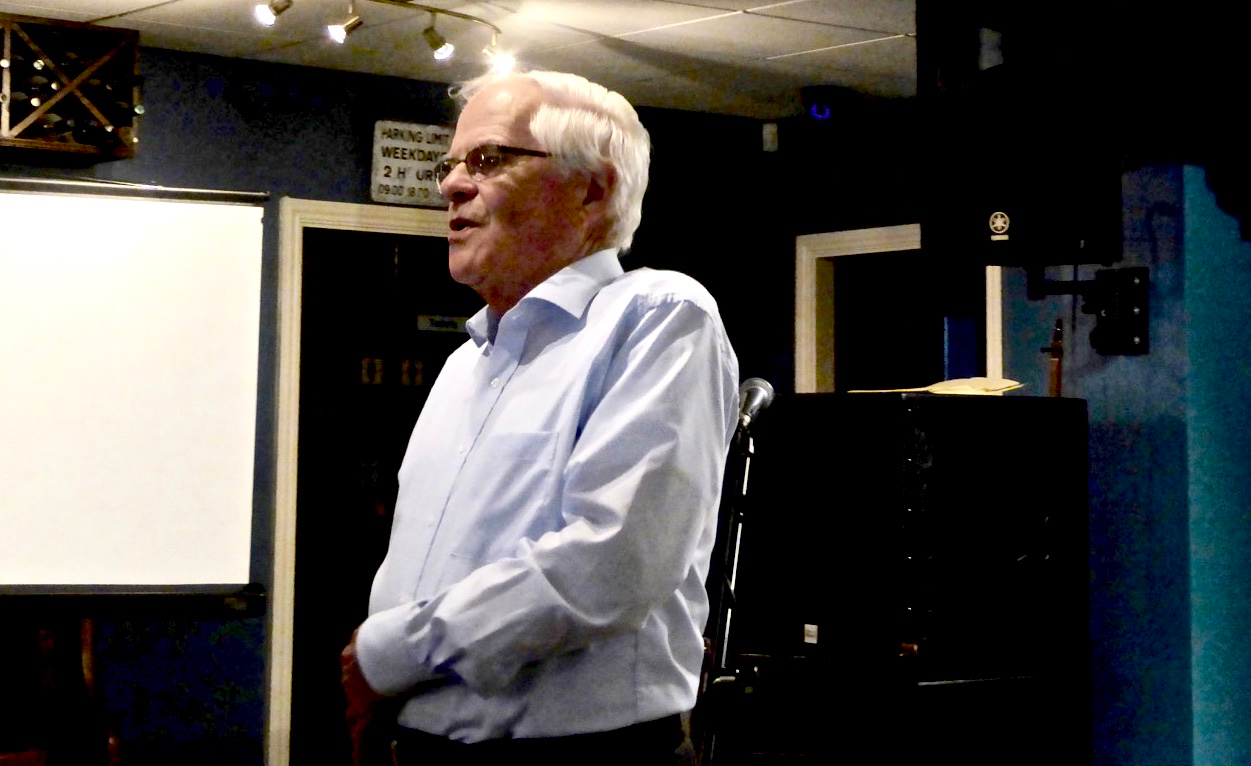
Our own Seán – Ó Sé – entertained us thoroughly at the Bantry Literary Festival, telling us his stories of a full and fascinating life, and his memories of growing up on the shores of Bantry Bay. Of course, he sang for us as well: a real treat…

singing in the mariners

That book title: An Poc ar buile; it means ‘The Mad Puck Goat’. Wherever Seán goes he will be asked to sing the song, and our session with him in Bantry was no exception. It’s supposedly a patriotic fighting song. In Irish, it tells the tale of a large billy goat who defied Cromwell and ran down the mountain to warn the people of Killorglin, Co Kerry, of the invading army. Killorglin survived the attack, and the event is commemorated every year on August 10th, when a wild goat is raised to the top of a scaffold tower and presides for three days over the festivities. Here is Seán singing about the goat’s exploits at the Cavan Fleadh Cheoil in 2010.

puck-fair

Killorglin’s Puck Fair, 1900

Ag gabháil dom sior chun Droichead Uí Mhóradha
Píce im dhóid ‘s mé ag dul i meithil
Cé casfaí orm i gcuma ceoidh
Ach pocán crón is é ar buile…

curfá

Ailliliú, puilliliú, ailliliú tá an puc ar buile!

Do ritheamar trasna trí ruillógach,
Is do ghluais an comhrac ar fud na muinge,
Is treascairt do bhfuair sé sna turtóga
Chuas ina ainneoin ina dhrom le fuinneamh…

curfá

Níor fhág sé carraig go raibh scót ann
Ná gur rith le fórsa chun mé a mhilleadh,
S’Ansan sea do cháith sé an léim ba mhó.
Le fána mhór na Faille Bríce…

curfá

Bhí garda mór i mBaile an Róistigh
Is bhailigh fórsa chun sinn a chlipeadh
Do bhuail sé rop dá adhairc sa tóin ann
S’dá bhríste nua do dhein sé giobail…

curfá

I nDaingean Uí Chúis le haghaidh an tráthnóna
Bhí an sagart paróiste amach ‘nár gcoinnibh
Is é dúirt gurbh é an diabhal ba Dhóigh leis
A ghaibh an treo ar phocán buile…

curfá

As I set out with me pike in hand,
To Dromore town to join a meithil,
Who should I meet but a tan puck goat,
And he’s roaring mad in ferocious mettle.

Chorus:
Aill-il-lu puill-il-iu – Aill-il-lu it’s the mad puck goat.

He chased me over bush and weed,
And thru the bog the running proceeded,
‘Til he caught his horns in a clump of gorse,
And on his back I jumped unheeded.

Chorus

He did not leave a rock that had a passage through,
Which he did not run with force to destroy me,
And then he gave the greatest leap,
To the big slope of Faille Bríce.

Chorus

When the sergeant stood in Rochestown,
With a force of guards to apprehend us,
The goat he tore his trousers down,
And made rags of his breeches and new suspenders.

Chorus

In Dingle Town the next afternoon,
The parish priest addressed the meeting,
And swore it was The Devil himself,
He’d seen riding on the poc ar buile.

Chorus

old bohereen

Possibly Over-Stimulated

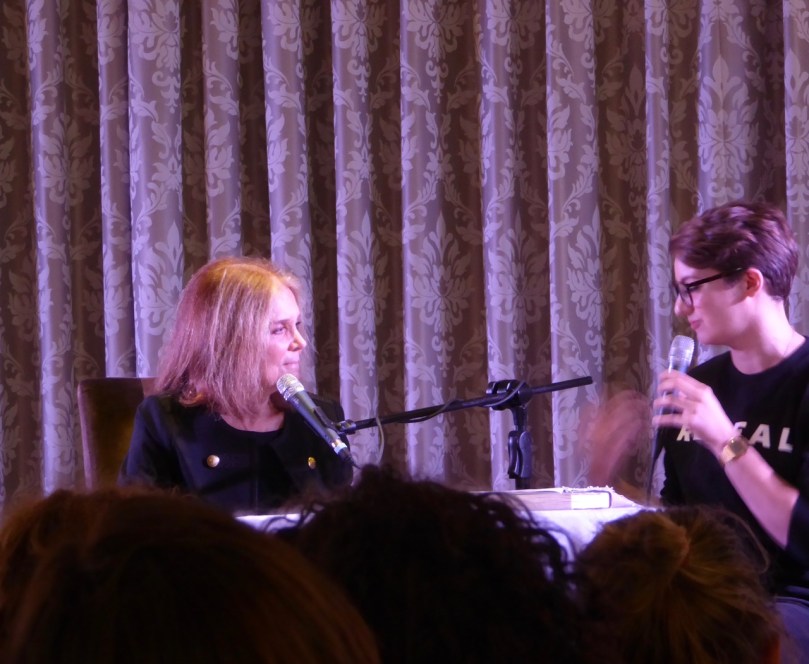
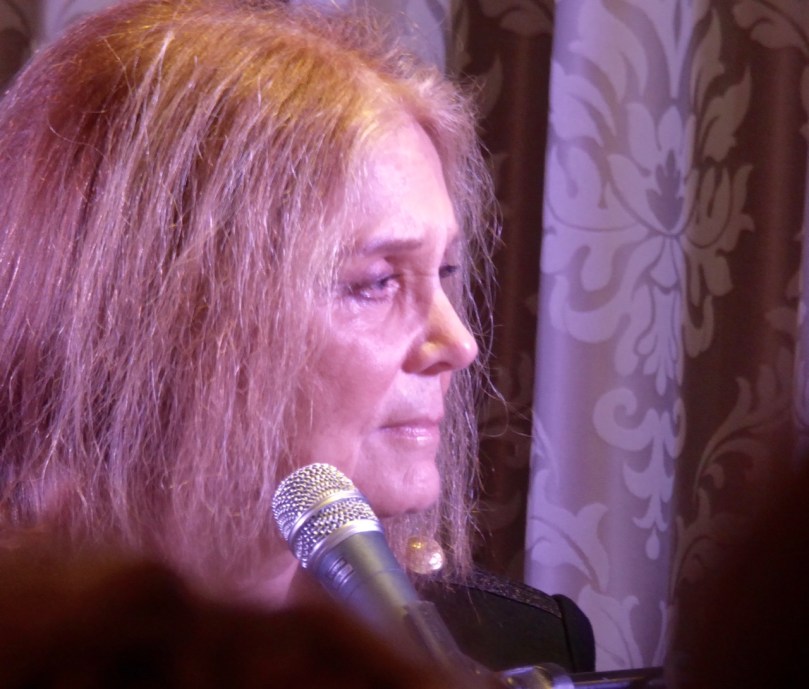
Gloria Steinem is an international icon. This week, we welcomed her to Bantry Literary Festival. Four hundred women, and a few men, rose spontaneously to our feet and clapped and cheered her entrance. First time I’ve seen a standing ovation before someone actually stepped on stage.

Gloria and

What followed was breathtaking – Gloria spoke, a little and beautifully, but mostly she listened as audience members asked questions and shared their own experiences as women in this country. People had come from far and wide to hear her and just to be there: people I admire and respect – Tara Flynn (see also You’re Grand) and Louise O’Neill. Lelia Doolan, for goodness sake, a Irish feminist icon in her own right. The conversations weren’t easy (misogyny, abortion, pornography, violence) and there certainly were dissenting and opposing viewpoints presented. But the atmosphere was respectful (if electric) and Gloria calmly dealt with each question in ways that were thoughtful and non-divisive. Two hours later, I think we all felt we had been present at a little bit of history.

Gloria

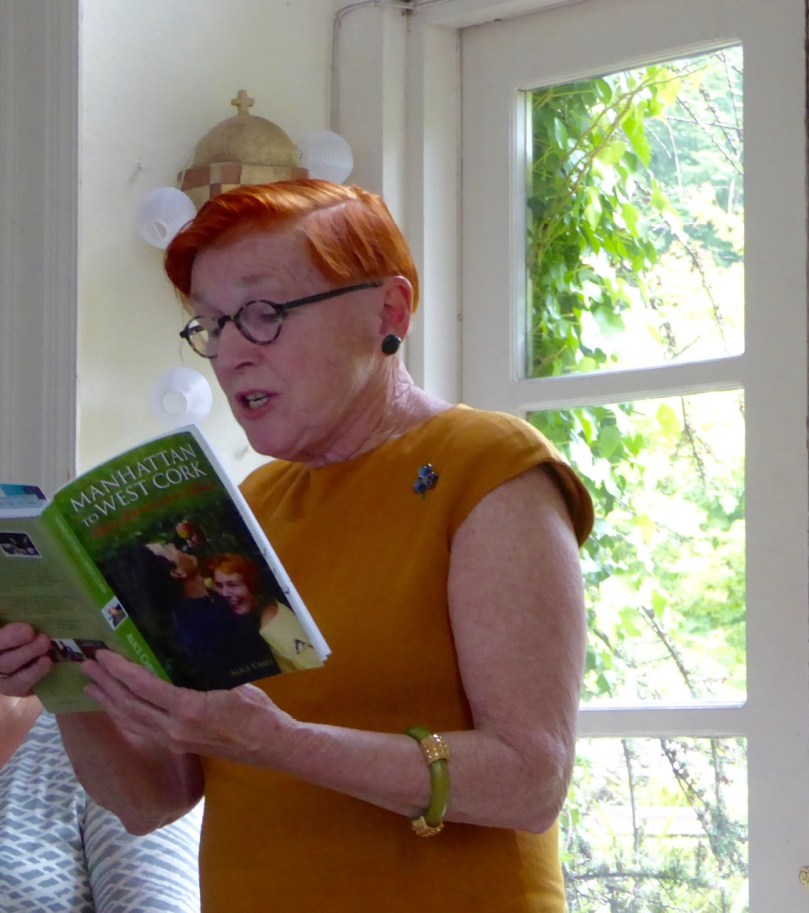
We attended other Literary Festival events and Robert is writing about one of them – the delightful evening with Seán Ó Sé. That evening formed a wonderful contrast to the talk by Alice Carey, a self-professed New York/Irishwoman, vivacious and stylish, but also moving in her descriptions of a childhood caught between two worlds.

Alice Carey

Alice Carey

And just as that Festival is ending, the Skibbereen Arts Festival is bursting upon the scene with a slew of gallery openings and a 60’s street party! Sometimes it’s hard to know where the dividing line is between business and the arts in Skibbereen. All the business people seem to support the arts and all the arts events seem to work well with the businesses. Shopfronts become display cases. Empty buildings are re-purposed as galleries and theatres. Employees and owners dress up and decorate. Everyone has fun.

Skibbereen shop windows. Hands up who remembers women wearing curlers all day in the 60s!

This Friday was a good example as Skibbereen went all out for a 1960s-themed street party of food and music, to celebrate the opening of the Skibbereen Arts Festival. I wrote about this festival a couple of years ago. As arts festivals go in Ireland, this one is only in its infancy, but it hit its stride right from the starting gate, with an eclectic mixture of art, theatre, music, spoken word, film, and events for children.

Robert used to have a van like that

This year we have tickets for all kinds of disparate events and may have to take a holiday when it’s all over! On Friday we attended three art show openings and then joined the throngs on Bridge Street to get into the 60s swing.

Angela Flowers Exhibition


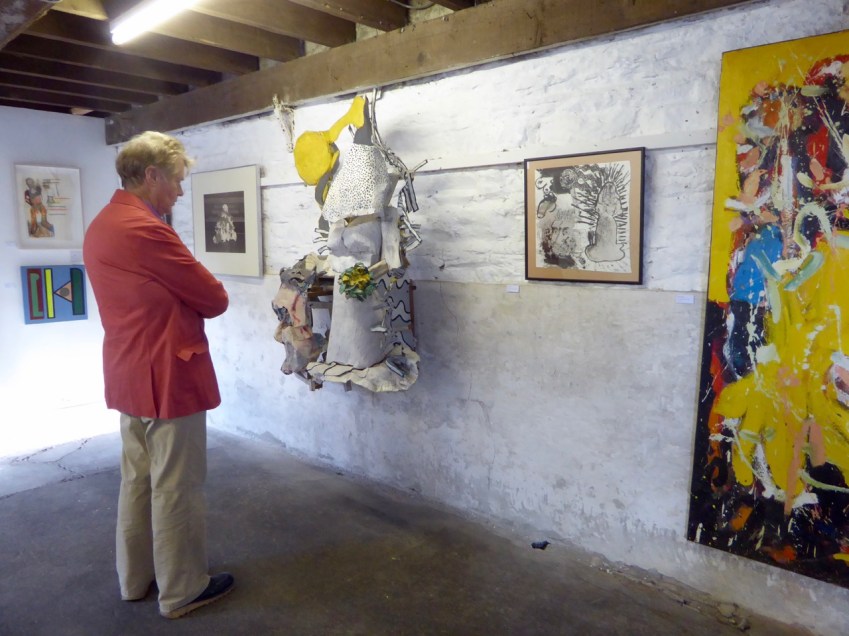
The old Bottling Plant makes an excellent gallery space, in this case for the Angela Flowers Collection

The first opening was extraordinary. Angela Flowers is one of Britain’s foremost gallery owners (she has two in London and one in New York), dealing with contemporary art. She has a house in West Cork and the pieces on display are from her own private collection. (Read more about Angela here and about her galleries here.) This is challenging stuff – no pretty paintings here, but compelling and engrossing. The exhibition was opened by Lord David Puttnam, the film producer and now digital champion and educator, who never misses an opportunity to support Skibbereen, where he lives full time.

Uillinn came next: the whole space was devoted to the work of John Kelly, a painter and sculpture with a studio in West Cork and an international reputation.

Yet a third art exhibition opened in an unused space down by the river – a huge L-shaped room perfect for such a purpose. This one was called Mór (‘Large’) and brought together the work of several artists who work in large scale. Huge canvasses and large sculptural pieces created an imposing and magisterial atmosphere.

Karen Hendy’s triptych (top) and Don Cronin’s piece titled ‘Windfall’

Then it was off to the opening of The Souvenir Shop by Rita Duffy. Robert and I have signed up for two ‘invigilation’ sessions at this quirky and unusual art installation, so I will write about it more at a future date, or post photos on our Facebook page.

Souvenir Shop

The Souvenir Shop

Before we staggered home, we joined the throngs of Skibbereen folk on Bridge Street for the 1960s party. The hippies were out in force!

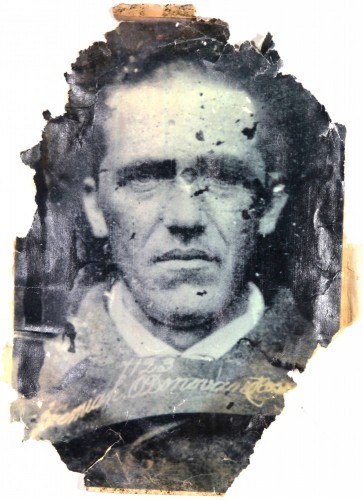
Finally, tonight, we attended a premier showing of the Film Rebel Rossa. Last year we met the two great-grandsons of Jeremiah O’Donovan Rossa in Skibbereen, here to attend various functions commemorating Rossa and to document them for a film they were making. Since I did extensive research on Rossa in preparation for a series of three posts (March Back in Time, O’Donovan Rossa – the First Terrorist? and Rossa: The Skibbereen Years), I was particularly interested in how the film turned out. They did a great job! Rebel Rossa turned out to be about Rossa, but also about family and about how governments celebrate such things versus how republican groups or local committees do it. Fascinating stuff and they are hopeful about getting a distribution deal.

Rebel Rossa

More, much more in the days to come. How am I going to cope? I came here to retire!

Hail the Mail

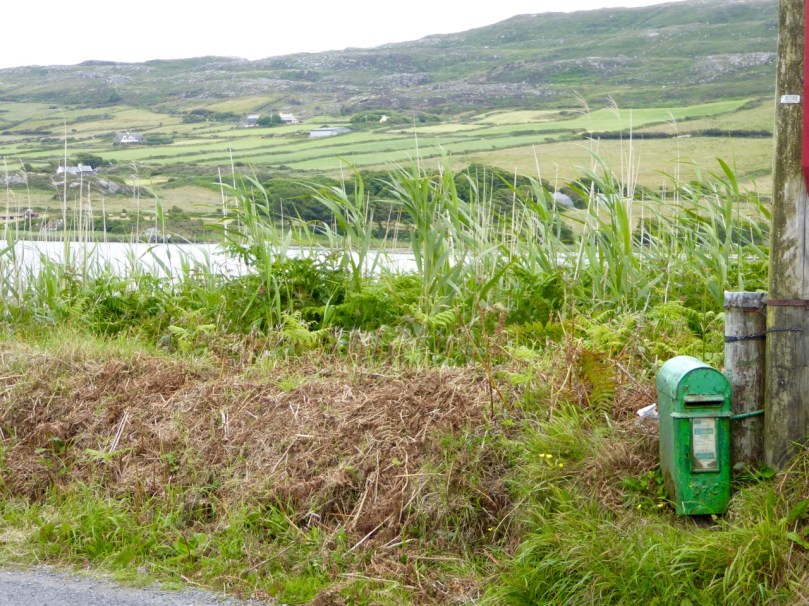
Rossbrin wall box

The first act of the Irish Free State after independence was to paint all the post boxes throughout the country green. It was a brilliant stroke – royal red replaced by emerald green in one of the most visible and ubiquitous symbols of national administration.

Penfold Skibb

The Penfold post box in Skibbereen, one of only a handful left in Ireland

Ironically, the post boxes themselves did not change, so the royal insignias were simply over-painted by the new colour. The result was a charming mixture of tradition and adaptation that serves as an ongoing reminder of the history of Ireland and its institutions.

A commemorative sheet of stamps which are going on sale to mark 200 years since the birth of Anthony Trollope (Royal Mail/PA)

Special stamps issued by the Royal Mail in 2015 to celebrate the bicentenary of the birth of Anthony Trollope

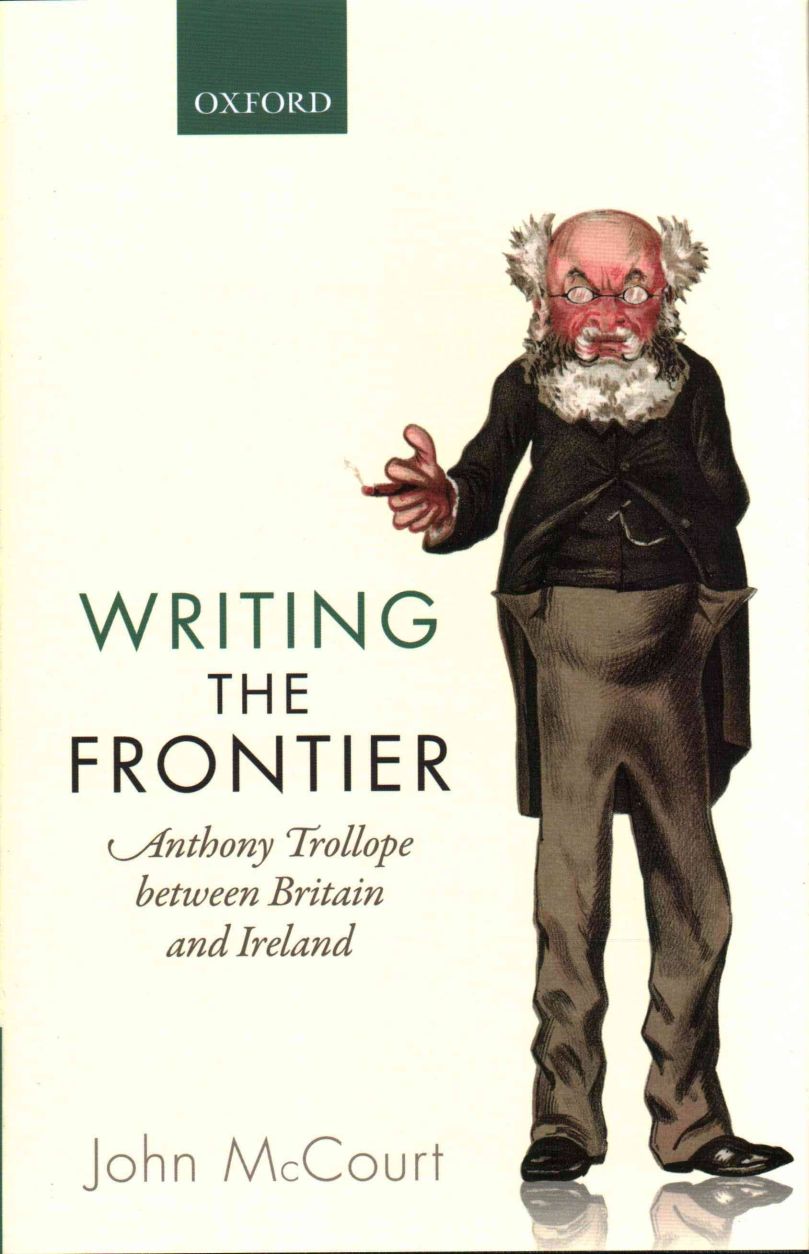
The first post boxes were introduced to Ireland in the 1850s by the novelist Anthony Trollope, then a Surveyor for the Post Office. Trollope was happy in Ireland and wrote several novels and stories set here, although they are not the works for which he is most remembered.

Trollope Book Cover

We don’t usually think of Anthony Trollope as an Irish novelist but he lived here for almost 20 years, spent working for the Post Office and writing

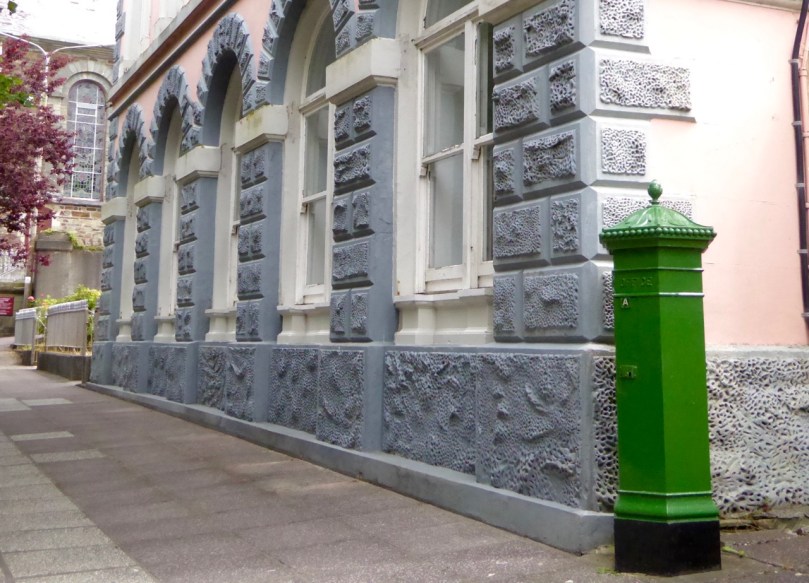
One of the earliest models for a free-standing post box came to be known as the Penfold, after its designer, J W Penfold. They were manufactured and deployed from 1866 to 1879 and very few have survived in Ireland to this day – only six are known and of these only three are still in operation. Skibbereen has one of those, and very fine it is: one hundred and fifty years old and still in daily use!

Penfold Acanthus Leaf

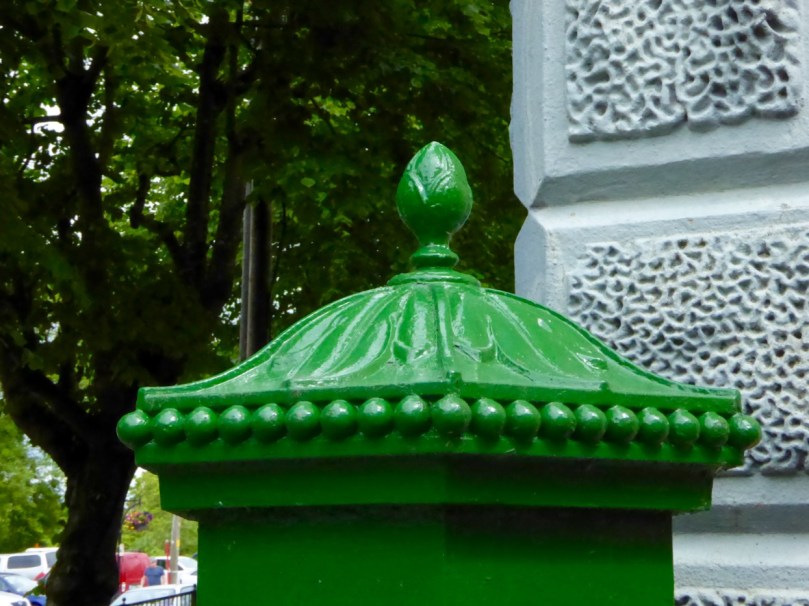
The hexagonal Penfold designed was apparently inspired by the Temple of the Winds in Athens (although the Temple is octagonal), with the addition of an acanthus leaf on the cap and a smart bud-shaped finial and beading.

BenQ Digital Camera

Photograph of the Temple of the Winds from Wikipedia

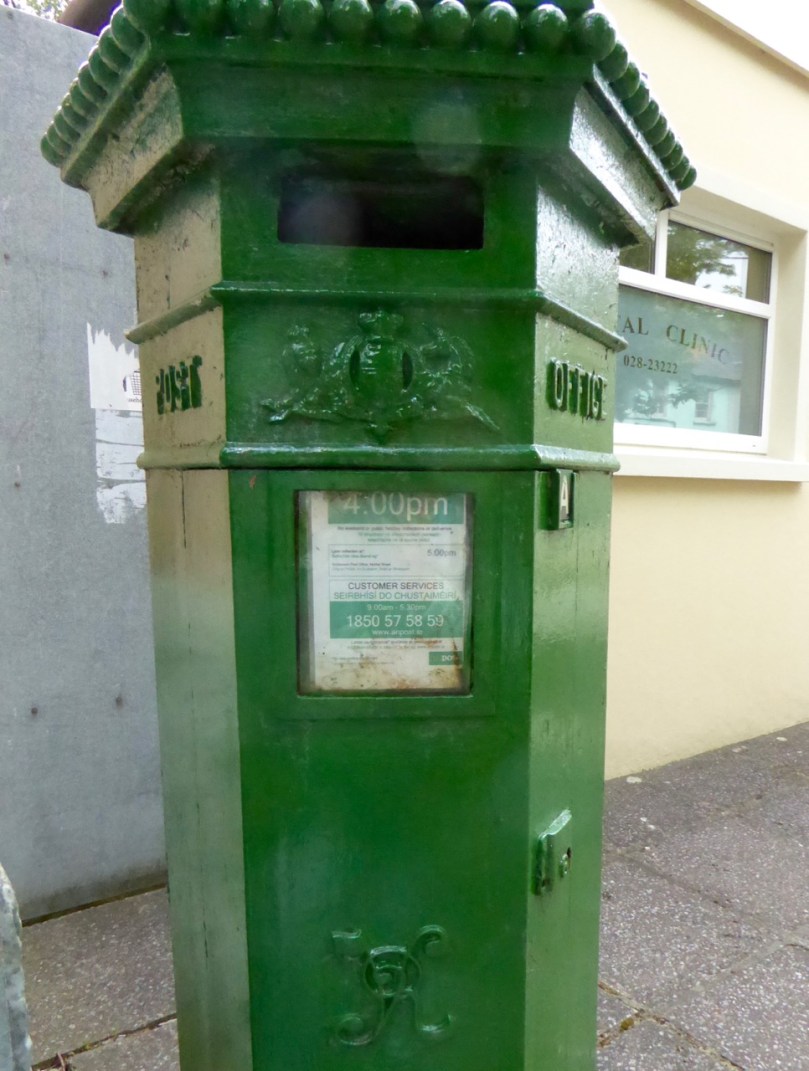
Our Skibbereen Penfold is in excellent condition: note the royal insignia and the entwined VR for Victoria Regina.

Penfold Skibb closer

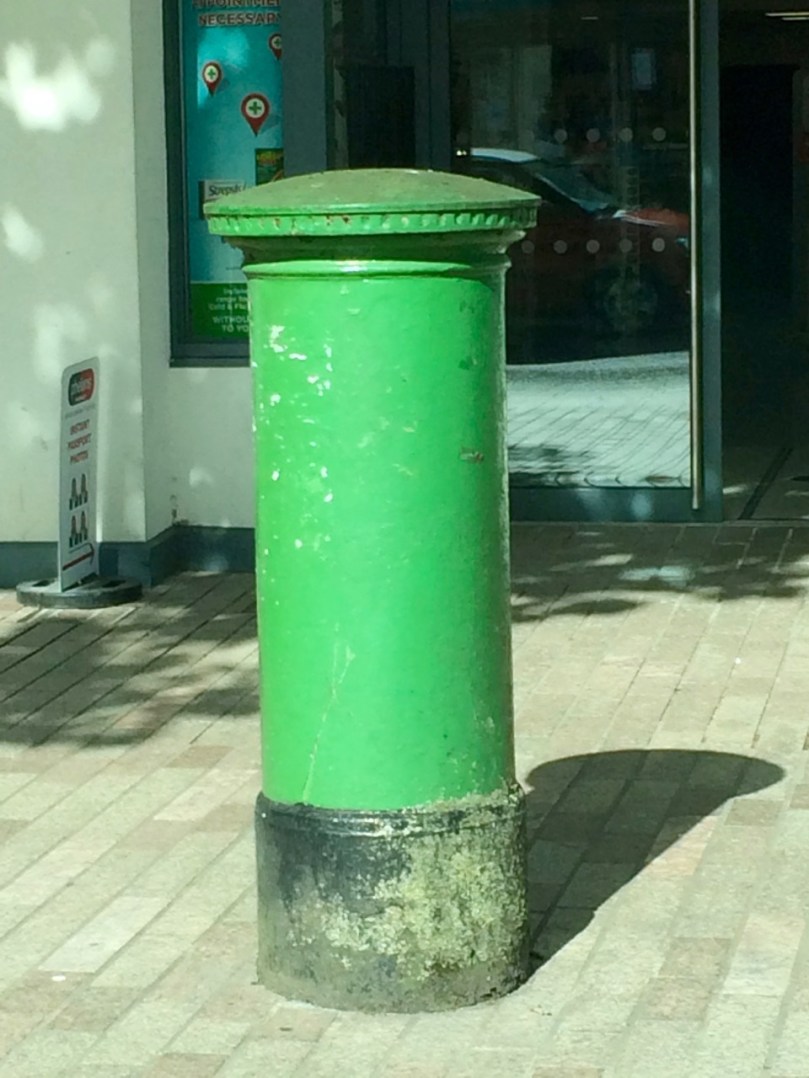
The Penfolds were replaced by round pillar boxes because there were too many complaints that the hexagonal design caused letters to stick. These cylindrical boxes can be seen everywhere in Ireland still, although mostly in towns and cities. The one below is on Grand Parade in Cork.

Cork Post box

Ferguson post box book

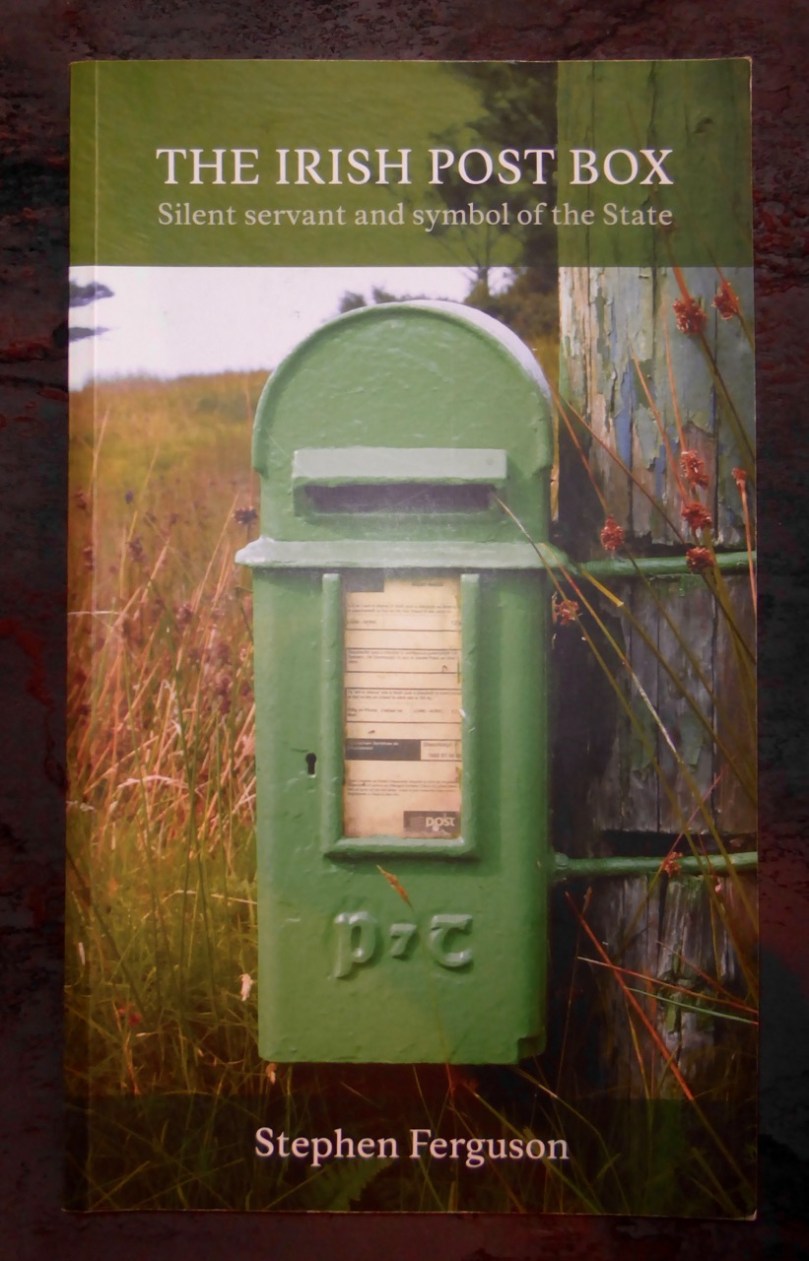
In his book The Irish Post Box, which I gratefully acknowledge as the source of much of the information in this blog post, Stephen Ferguson describes the three main types of post boxes that have been developed for use in Ireland: pillar, wall and lamp. In rural areas, such as West Cork, wall and lamp boxes are the most common forms I have encountered.

Skibb wall box

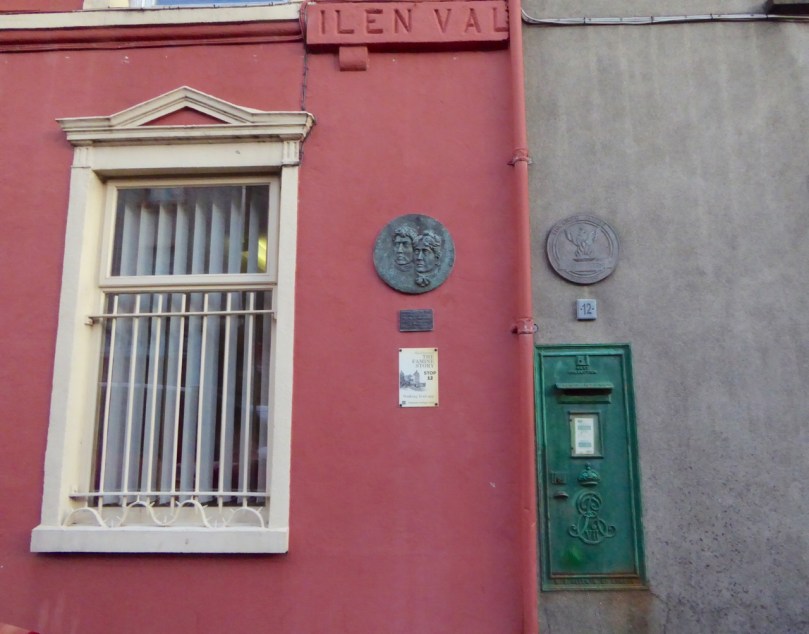
Here’s a representative wall box in Skibbereen. Interestingly, it’s part of a mini-complex of historical markers including the plaque to the Clerke sisters (see my posts From Skibbereen to the Moon Part 1 and Part 2 for more about these remarkable women and their family) and signs for the Skibbereen heritage walking trail, all mounted together on the wall of what was the main bank in Skibbereen during the Famine period.

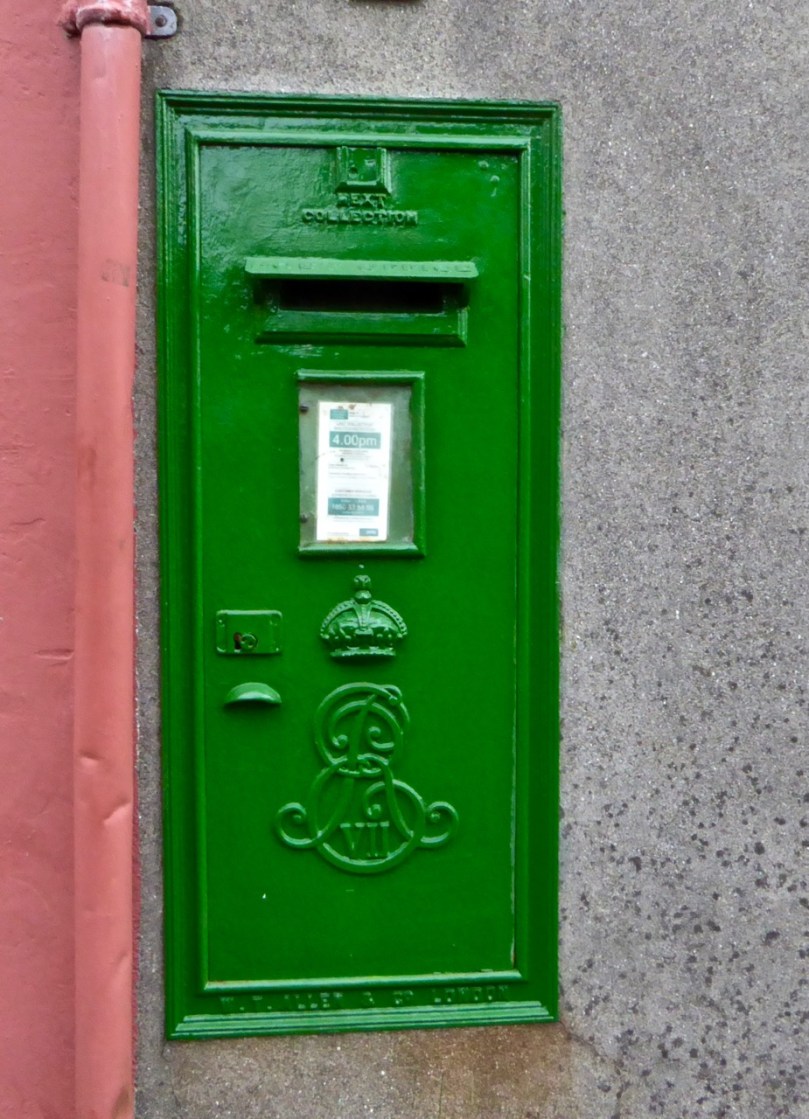
Skibb post box

The box was manufactured by W T Allen and Co of London and bears the ornately scrolled insignia  and crown of Edward the VII, which places it between 1901 to 1910.

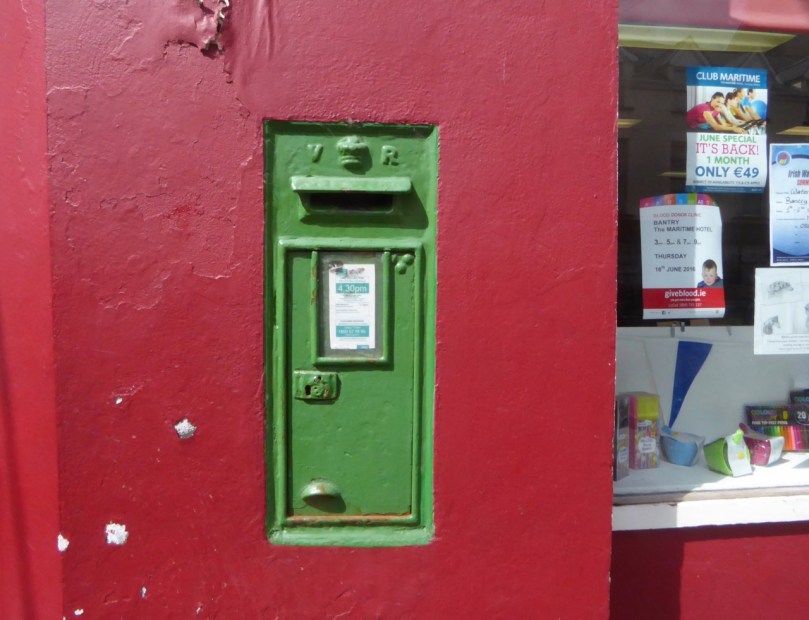
Bantry Wall Box

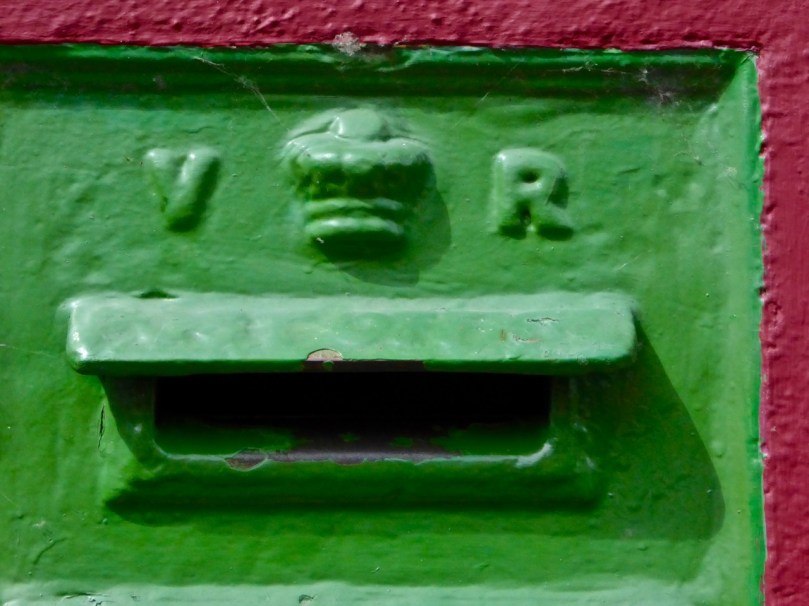
Here’s another nice one in Bantry, a Victorian one, although this time the VR lettering is simpler than on the Penfold. This one has been painted so often that the embossed POST OFFICE on the protective hood has almost disappeared under the layers.

Bantry Wall Box closer

Lamp boxes were designed for remote areas where a suitable wall might not be readily available. Ferguson explains: 

Lamp post boxes, based on a design used by the United States Postal Service, were first introduced in 1896 in London as a response to calls for more post boxes throughout the city. Affixed to a street lamp, the boxes were used at locations where the expense of a pillar or wall box could not be justified. In Ireland, however, they were often deployed in rural areas where, attached to a telegraph or specially erected pole by metal clips, they were very useful in extending postal collections to remote and sparsely populated regions. Tucked under hedges or used sometimes as a smaller version of a wall box, these post boxes were relatively cheap to make and easy to install and they symbolise…the extraordinary influence and reach of the Post Office as an institution at the height of its powers.

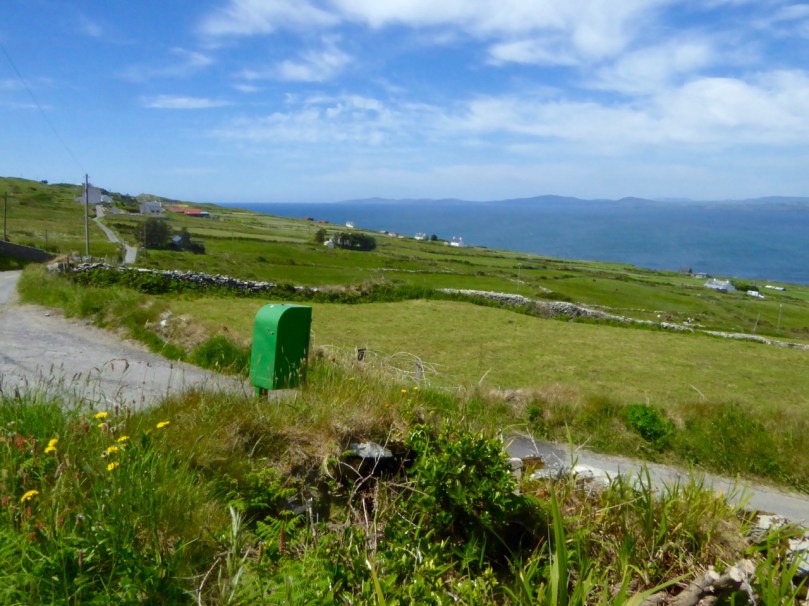
Post box near Barleycove

Driving or walking around rural Ireland, look out for ‘lamp’ boxes. Here’s one from the road near Barley Cove.

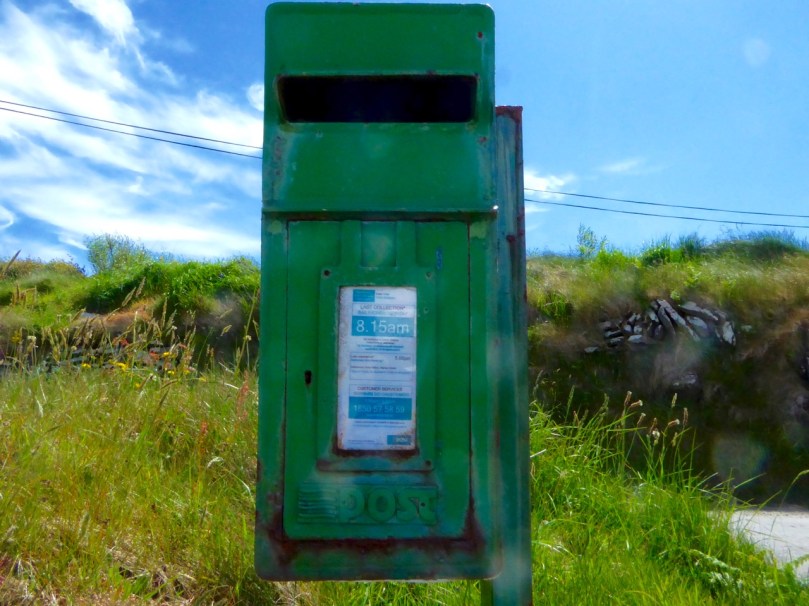
Pole Box near Barley Cove

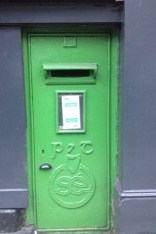
Post_Box_P_T_SE_Washington_Street__Cork.A closer inspection reveals this one bears the P & T logo that was in use between 1939 and 1984, before it was replaced by the brand ‘An Post’. Sometimes the old royal initials were ground off the boxes, or sometimes the doors were replaced with new ones bearing the P&T lettering, but it seems that considerations of cost (always paramount with the careful Post Office) allowed many to simply remain in place as they were. In the early years of the new state, some were embossed with the Saorstát Éireann logo (even sharing the door with a VR insignia) but that practice was relatively short lived and I have found no examples to it yet in West Cork. The website Irish Postal History has this example from Washington Street in Cork.

Most scenic postbox

On Cape  Clear – the most scenic post box in Ireland?

If no lamp post or suitable pole existed, a simple stake was erected to which a box could be attached. Cape Clear Island didn’t get electricity until the 1970s, so this post box (above and below) must predate the advent of poles. The logo, however, is that of An Post, which was established as the new brand in 1984. Perhaps the poles were only erected island-wide after the submarine cable was laid in the 1990s.

Cape Clear post box closer

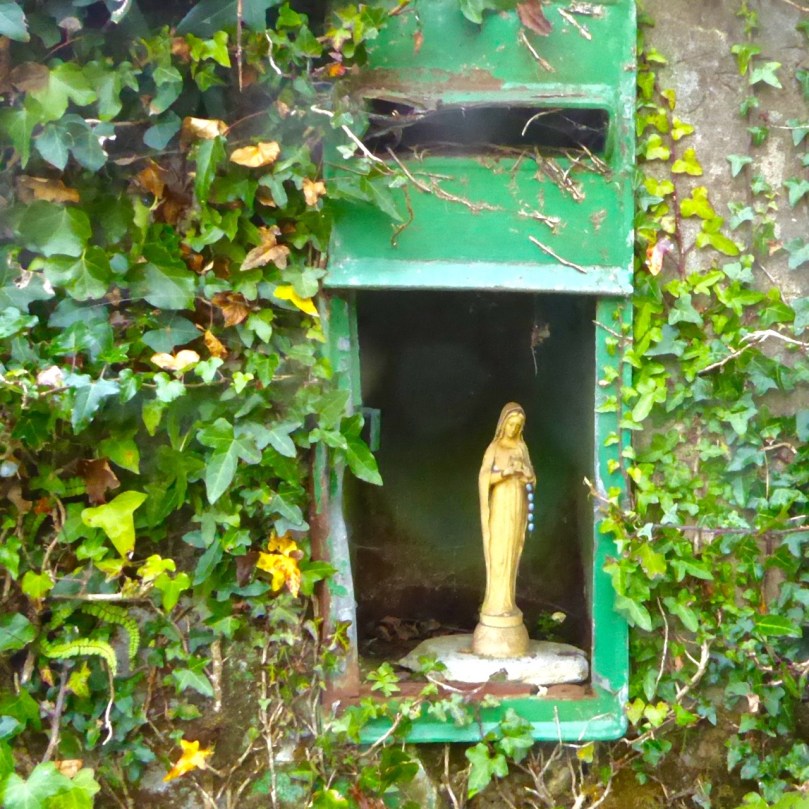
Not all mail boxes have been retained for active use – so what happens to them? Many simply remain in situ, as a picturesque reminder of times when we actually wrote to each other instead of texting or emailing. The one below at Rossbrin, near Ballydehob, was once attached to the wall outside the old schoolhouse. The first photograph at the start of today’s post shows its location.

Rossbring Wall box 3

And this one, at Ahakista, has been repurposed as a wayside shrine.

repurposed

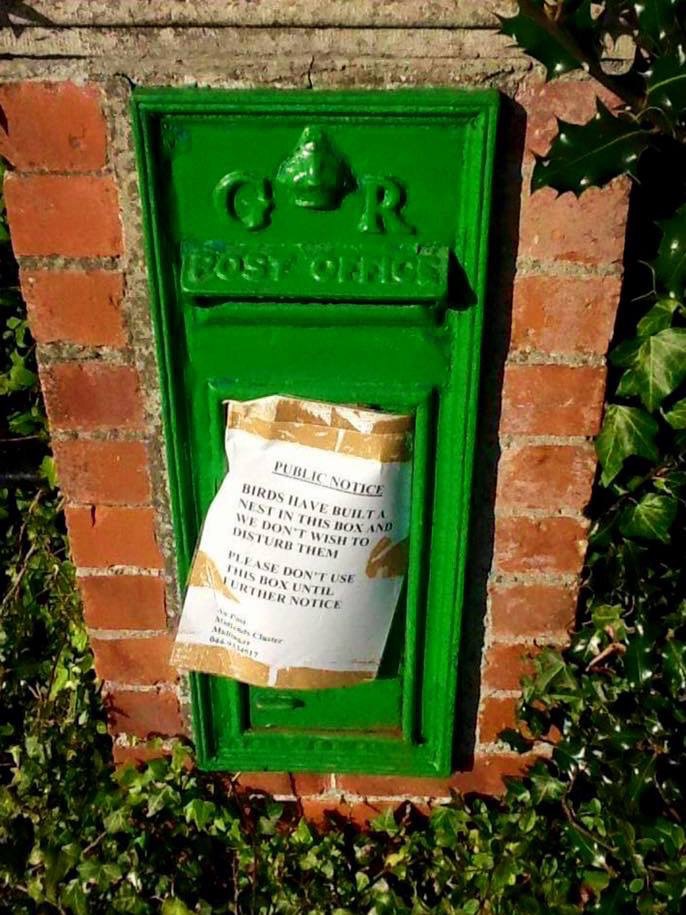
But even if it’s still in use, sometimes a mail boxes can’t be used for its real purpose, but has more important work to do! I don’t know where this last photograph was taken or whose work this is – it was widely circulated on the internet – but I would be happy to credit the photographer if I knew who it was. Delighted to have this also as an example of a post box from the reign of George V, 1910 to 1936.

Post box birds nest

Discovering Carrowmore

stone and sky

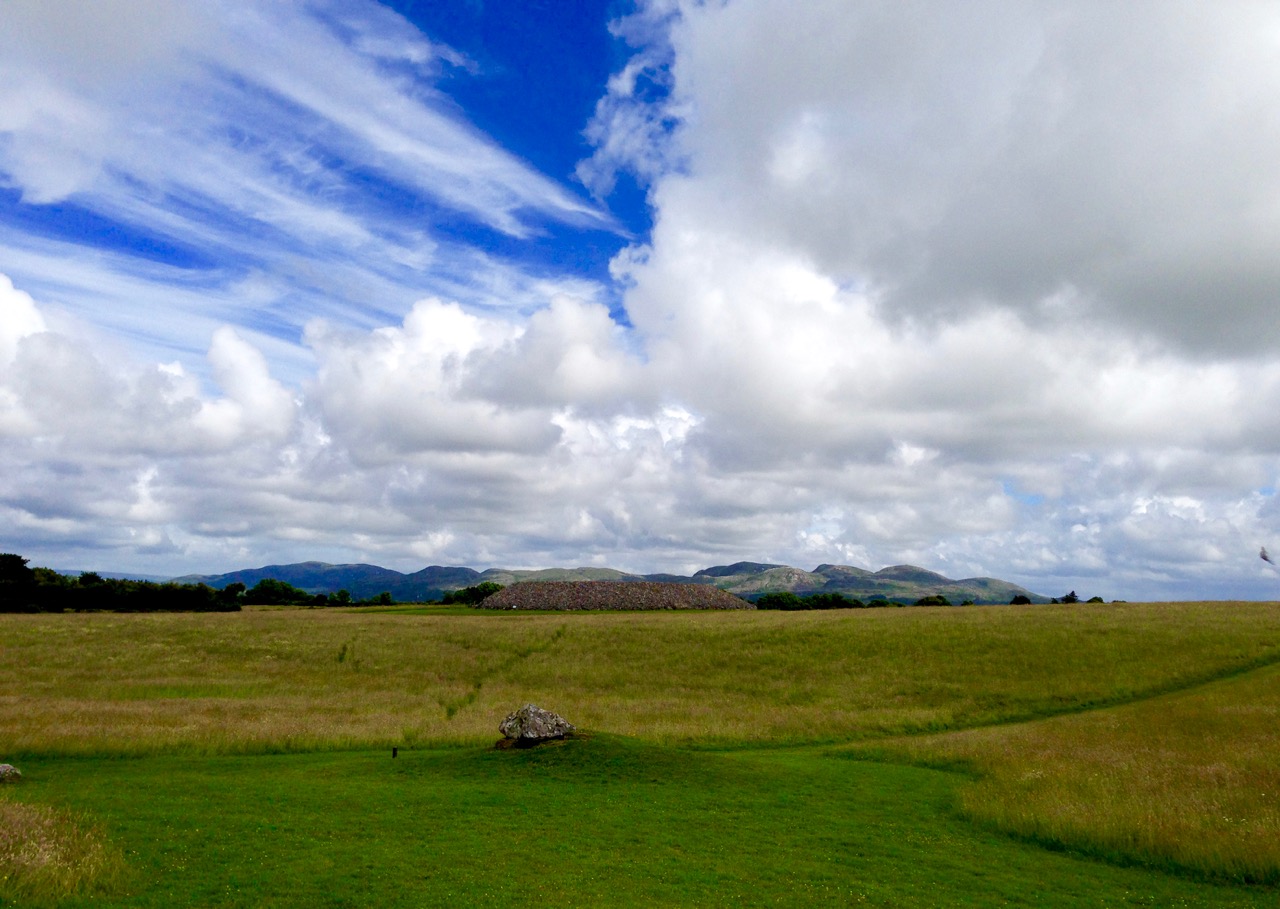
At the heart of the Coolrea peninsula in County Sligo lies one of the greatest megalithic complexes of ancient Ireland, An Cheathrú Mhór or Carrowmore as we call it today: the Irish name means ‘The Great Quarter’. Spread over a plateau of some 150 acres and centred on the high point of Listoghil are thirty recognisable tomb sites but it is suggested that there were once at least a hundred monuments here.

Carrowmore 1

The Carrowmore monuments that we know today cover over 150 acres: it’s likely that there is much more to this site which has been lost, or which remains to be recovered

The changing landscape has taken its toll: from the 18th century onwards land clearance and quarrying have damaged and obliterated many of the remains and even as recently as 1983 Sligo County Council sought to place a municipal landfill dump adjacent to the known sites. Fortunately a few alert local residents objected and took the case to the High Court in Dublin. Initially their objections were overruled but in 1989 an appeal to the Supreme Court was successful and the very important landscape context of Carrowmore has been saved, hopefully for all time. In that same year the state commenced purchase of a part of the site and has developed a sensitively planned visitor facility now run by the Office of Public Works. Since then more of the surrounding site has been purchased and is in public ownership.

stone and skyscape

Carrowmore landscape: this view to the great central cairn on Listoghil shows the nature of the terrain and the context of the monuments which it is so important to preserve

It’s the integrity of the complex that is so special here. The monuments found at Carrowmore are called boulder circles, though several have central dolmens or rudimentary passages. Generally around 12 to 15 metres in diameter, the circles contain 30 to 40 boulders, usually of gneiss, the material of choice for the tombs. Sometimes an inner boulder circle is also present.They are considered to be an early type of chambered cairn, or passage grave, though in fact, they may be the ancestor of a few monument types. This is the view of local man Martin Byrne, historian, artist, musician and our tour guide for the day. He pointed out to us how the passage of each of the boulder groupings is oriented, not towards a solar or calendrical event but to Listoghil, where an enormous cairn encloses a box-like stone chamber with a large capstone.

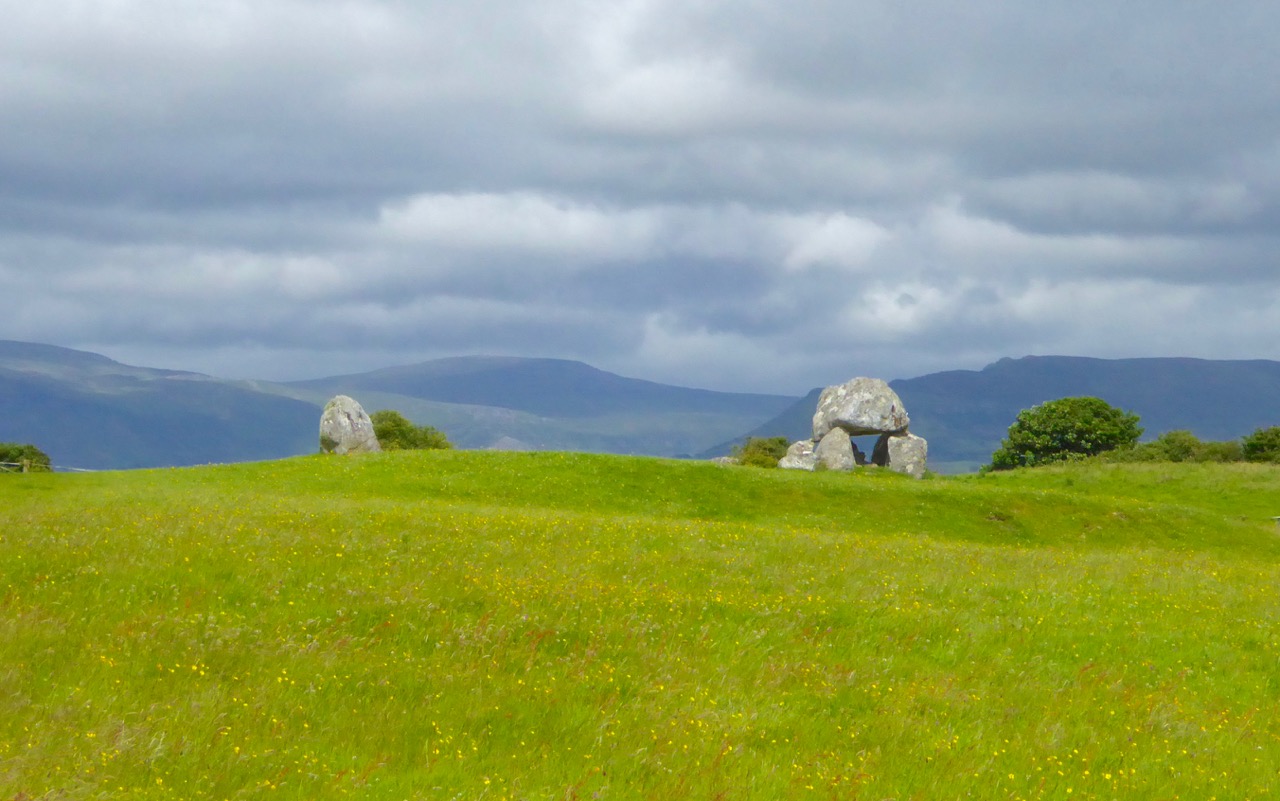
Monument, mountain and sky

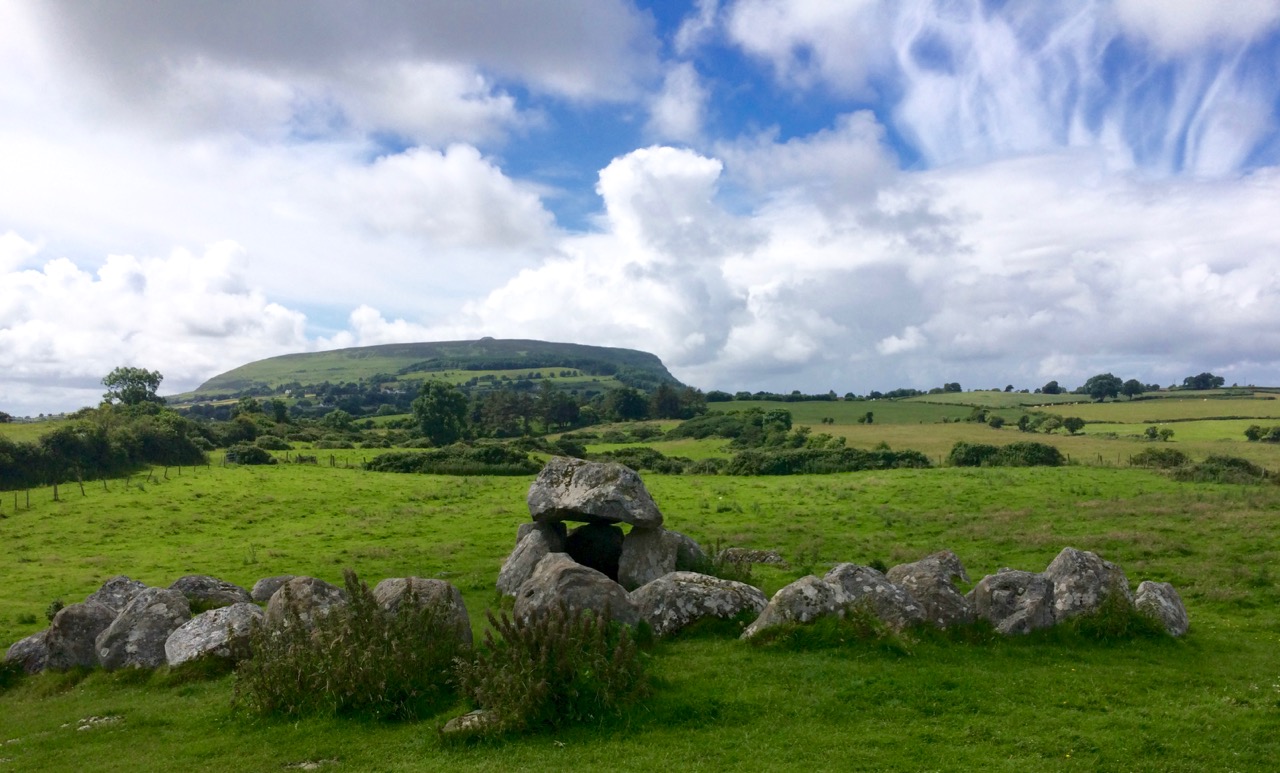
One of the boulder circles at Carrowmore with its central chambered tomb. This view is looking away from Listoghil and towards another significant landscape feature, Knocknarea, which is topped by the cairn known as Queen Maeve’s Tomb, 6 km to the west. There are 6 more mountain-top cairns on the peaks of the Ox Mountains to the south. The central focus of the Carrowmore complex is the cairn on Listoghil, although this is not as dramatically visible as many of the surrounding cairns

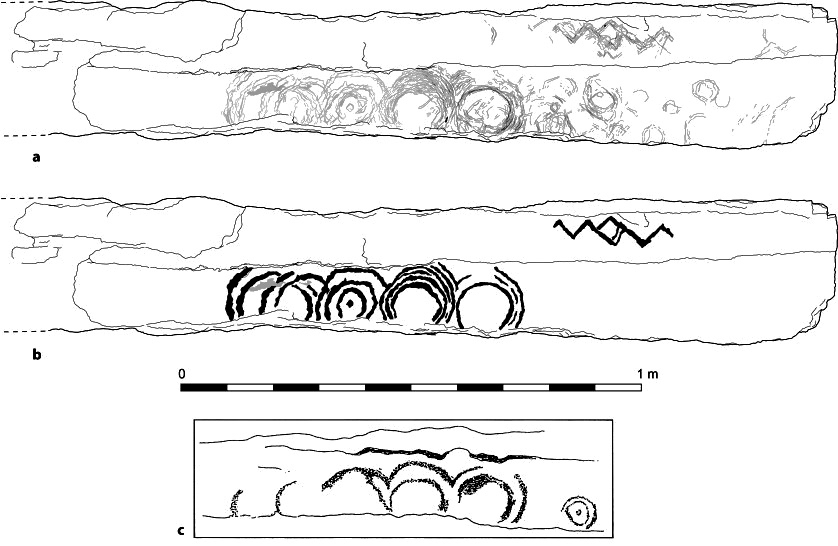
The chamber on Listoghil has been given a modern context, with the original cairn covering having been cut away to allow access. This chamber displays the only examples of rock art to be found so far within the Carrowmore complex. This is hard to see in normal lighting conditions, but successive observations have enabled these images to be made:

Listoghil carvings Guillaume Robin 1994

The formerly covered central chamber of the Listoghil cairn: top left is a photograph taken during excavations by Göran Burenhult in 1996-98 – this shows three boulders in front of the tomb which are said to have been an earlier Neolithic monument displaced by the tomb construction. Top right is the OPW interpretation board for the chamber and above are drawings of the rock art on the edge of the roof slab compiled by Guillaume Robin

It’s startling to discover that the Carrowmore complex could be over 6,000 years old: carbon dating from some of the finds has suggested this. If so, then it’s the earliest of the passage grave cemeteries in use in Ireland. Many cremated remains have been found over this site (spread over a long period of time), although unburnt human bones were also recovered in the Listoghil chamber. It could be speculated that the focal point of Listoghil must have been the resting place of a very important person – or dynasty; we will never know for sure. 

‘Accidental’ rock art and rock scribing noticed on monuments at Carrowmore: these boulders have natural markings on them but it is possible that the monument builders were attracted by these marks, which may themselves have inspired carvings

The Carrowmore complex has been visible enough historically to attract the attention of antiquarians – which is useful for later archaeologists, as some parts which are now lost have been historically recorded, albeit using methodology which would nowadays be considered inadequate. Gabriel Beranger, who was born in Rotterdam in 1725, settled in Dublin in 1760 and was a notable illustrator of antiquities in Ireland during a long lifetime; he visited and recorded Carrowmore. A local landlord, Roger Walker, carried out some excavations of the tombs in the 19th century but made no significant records; it is suggested that he was a treasure hunter. George Petrie surveyed the site and numbered the tombs in 1837 but it was another 50 years before archaeologist William Gregory Wood-Martin made the first methodically recorded excavations. William Wakeman produced some exquisite watercolour sketches in 1879. More recently Swedish archaeologist Göran Burenhult undertook detailed studies between 1977-1982 and 1994-1998 and this work included the excavation and subsequent reconstruction of the Listoghil cairn.

Upper Left: the work of Gabriel Beranger who visited the area in the 1700s – this shows Queen Maeve’s Tomb on Knocknarea. Upper right: William Wakeman’s watercolour of Tomb 4 in 1879 (Sligo County Library). Above: Listoghil chamber tomb today

Our guide Martin has studied the complexes at both Carrowmore and Carrowkeel (a future destination for us) for many years and is imbued with the archaeology and the landscape. He gently pointed us to the fact that relationships can perhaps be seen between the profiles of some of the boulders – particularly the capstones of the tombs – and the more distant landscape. I find this fascinating: I have always felt, as an architect, that there should be a conscious designed relationship between any building that is erected by human endeavour and the setting of that building within nature. Could these parallels that we might be seeing at Carrowmore be conscious?

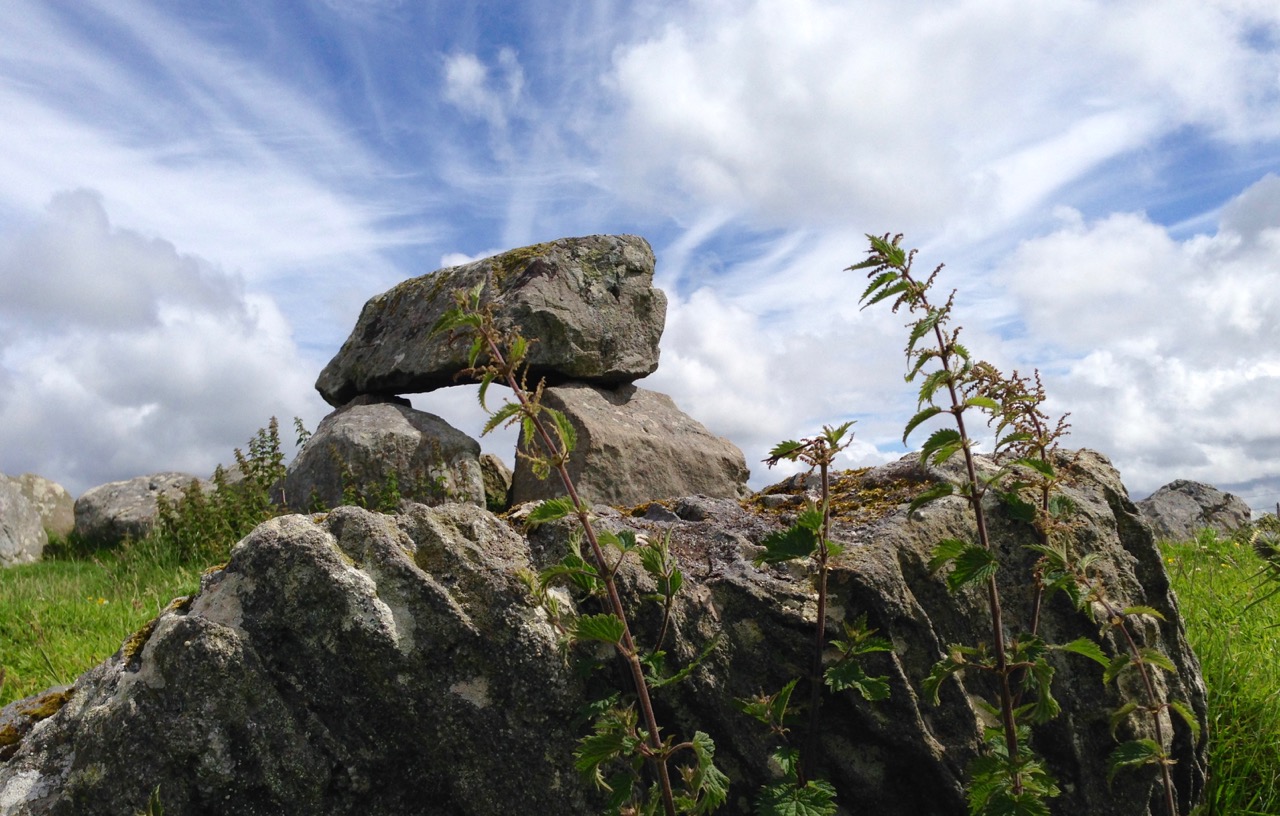
Dolmen and Mountain

Rocks reflecting nature? Were the capstones chosen to specifically echo the landscape context? A debatable – and very subjective – notion…

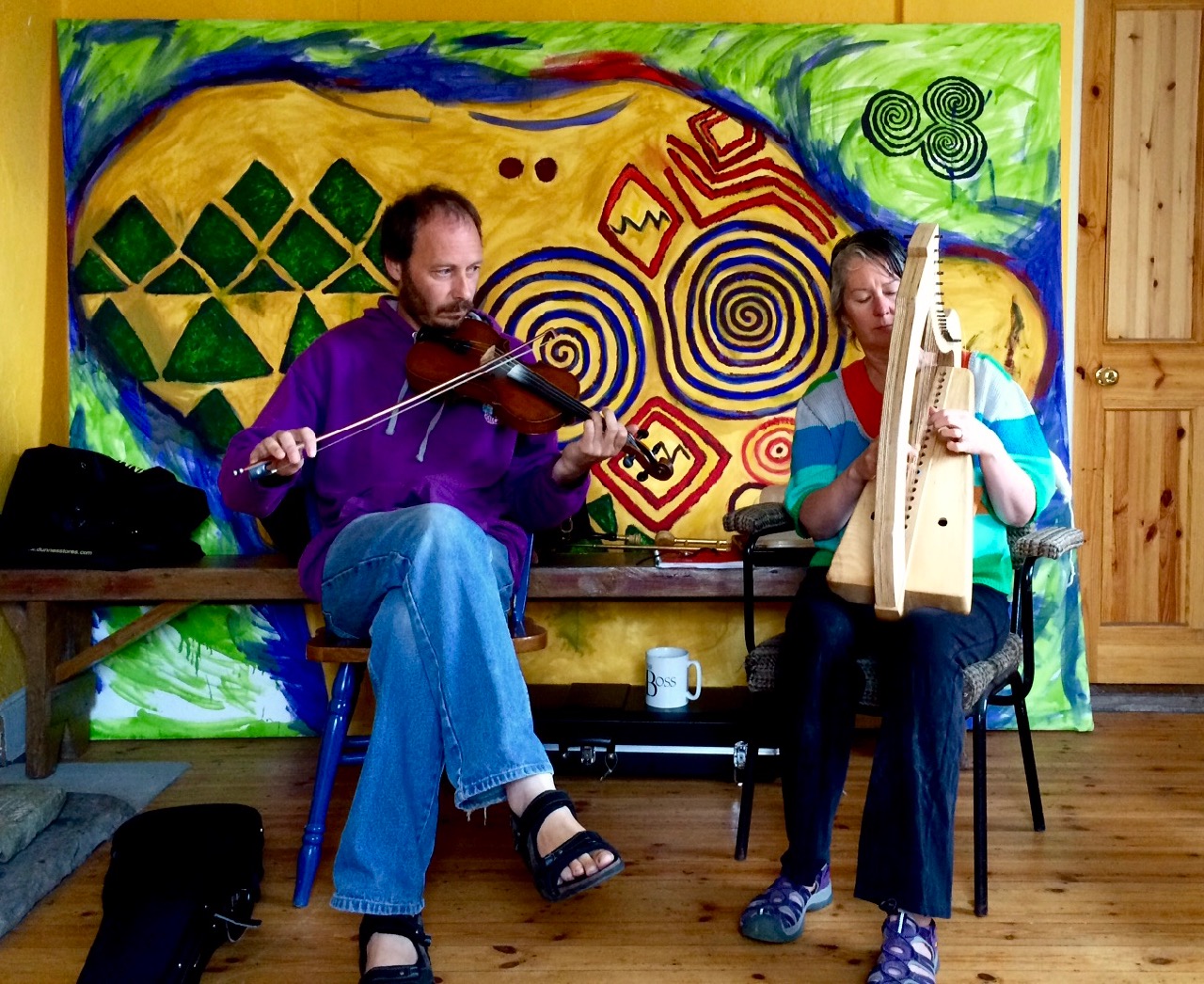
My day was made when I discovered that Martin was a musician – as is Margaret, and I joined them in their colourful house for a little session!

martin + margaret

A Bell for Bangor

Holg + Donagh 2

The man standing on the platform in the picture is Holger Lönze. You might remember him from Umha Aois, a post I put up last year about a group of artists and ‘experimental archaeologists’ who use Bronze Age metal working techniques to produce replicas of ancient tools, weapons and musical instruments. Holger – a sculptor – is a key member of that group: his workshop is in Schull and he has just completed a commission to make an enormous bell. You can see the project in progress on the right of the picture. On the left is Donagh Carey, another West Cork artist who worked on the casting.

Left: the original Bangor Bell – the inspiration for the new work – and, right: an early sketch design by Holger of the proposed bell sculpture

The story begins in the sixth century when Columbanus (the Latinised form of Columbán, meaning White Dove) was born in the Kingdom of Meath, now part of Leinster, Ireland, in 543. That’s about 50 years after the death (aged 120) of St Patrick. Patrick, of course, is the best known of the missionaries building up Christianity in Ireland, but he wasn’t Irish himself, having been born a Roman Briton. Columbanus was Irish, and he saw his mission as spreading Christianity from Ireland throughout the Continent of Europe. His mission was successful and St Columbanus is recognised in Europe as a founder of many monastic settlements during his travels in Gaul, Burgundy, the Alps and finally Italy where he established the great monastery at Bobbio, beside the River Trebbia. Columbanus died at Bobbio in 615 and his remains are buried in the crypt there.

Bobbio_bridge

The medieval bridge at Bobbio with St Columbanus’ great monastery beyond (photo by Herbert Ortner, Vienna, Austria)

There are great stories told about the life of Columbanus. When he walked in the woods, birds would land on his shoulders to be caressed, and squirrels ran down from the trees and nestled in the folds of his cowl. He is also said to have tamed a bear and trained it to pull the plough. Wolves would not harm him. He is usually depicted with a book and an Irish satchel, sometimes with sunbeams over his head. I’m not sure why but Columbanus is known as the patron saint of motorcyclists.

Saint Columbanus – left: depicted on a medieval fresco with book and sunbeams (note he is carrying a bell) and, right: sailing off to Europe with his companions

Getting back to West Cork and the bell: Columbanus travelled to Bangor, County Down – in the far north east of the island of Ireland – where he studied in the  Abbey until he was 40. A beautifully decorated bronze handbell was found near the Abbey by gravediggers in the 18th century; it is assumed to have been buried to keep it safe from Viking invaders in the 9th century. The Abbey is seen as the starting point for Columbanus’s missionary work in Europe and the bell (now in the North Down Museum) is associated with him, although unlikely to have been contemporary with his time there. Holger Lönze has always been fascinated by medieval bronze bells and has made replicas of many surviving examples. He cast a copy of the Bangor Abbey handbell using Medieval metalworking techniques in 2012, and the process is recorded in this video.

Holger’s full-sized replica of the Bangor Bell and (right) Holger in his studio explaining his techniques to Robert

The new sculpture – titled Fluctus Angelorum (Wave of Angels) was commissioned by Ards and North Down Borough Council for Bangor Abbey  as one of a series of works inspired by the extraordinary achievements of Columbanus and his companions. Based on the proportions of the original bell, the surface of the sculpture is shaped like the surface of the ocean. The sea-blue patina and breaking waves are a metaphor for Columbanus’ remarkable sea voyage. The 4m high bell was fabricated in bronze plate in West Cork using the ancient repoussé process – by alternating annealing and hammering and finally welding. It took no less than 400,000 hammer blows to transform flat sheets of bronze into this piece of sculpture!

Bell surface

In the workshop: the surface of the 4m high bell reflects the surface of the ocean and (right) the inside of the great bell: it is mounted on a stone plinth and lit at night. Both bells and waves are striking metaphors to mark the Saint’s 1400 miles journey from Bangor to Bobbio – 1400 years ago

The medieval Bangor Bell didn’t have a clapper: it was carried around and hit with a hammer. Taking me back to my days as a percussionist, Holger allowed me to hit the giant bell… It made a mighty sound! From West Cork the bell travelled the whole length of Ireland, passing its 8th Century sister bells in Cashel, Co Meath and Bangor. It is now installed in the Abbey grounds and was formally unveiled on 13th June. The sculpture is not yet complete – Holger is making a number of smaller ‘satellite’ bells which will be set around it, but even on its own it is a most impressive sight: the largest bell ever made in Ireland.

holger with bell

Artist Karen Hendy and Holger Lönze showing the maquette for the bell project in Schull and, below, the bell in its setting at Bangor Abbey

bangor context

I’m often repeating the message but there is no doubt that West Cork is the most creative place I have ever lived! All manner of culture flourishes here and we are privileged to live in a community where we can readily meet and appreciate the work of so many artists; and we have excellent galleries to showcase this work – The Blue House Gallery in Schull (next door to Holger’s workshop), Uillinn in Skibbereen, Catherine Hammond‘s excellent gallery, now also in Skibbereen and The Aisling Gallery in Ballydehob. We are spoiled!

With many thanks to Holger for allowing me to use some of his own images of the work progressing…