Wending the Boreens

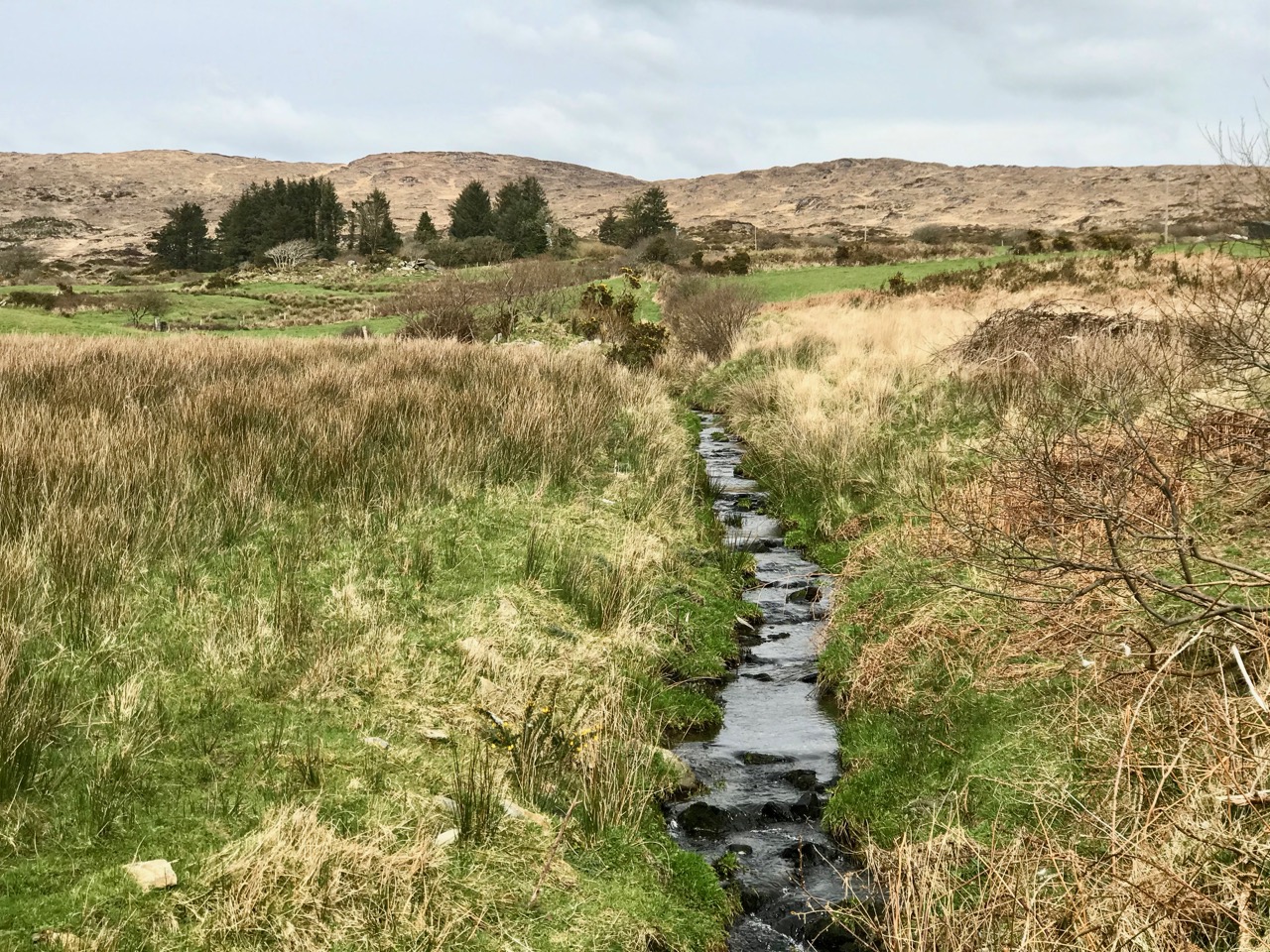
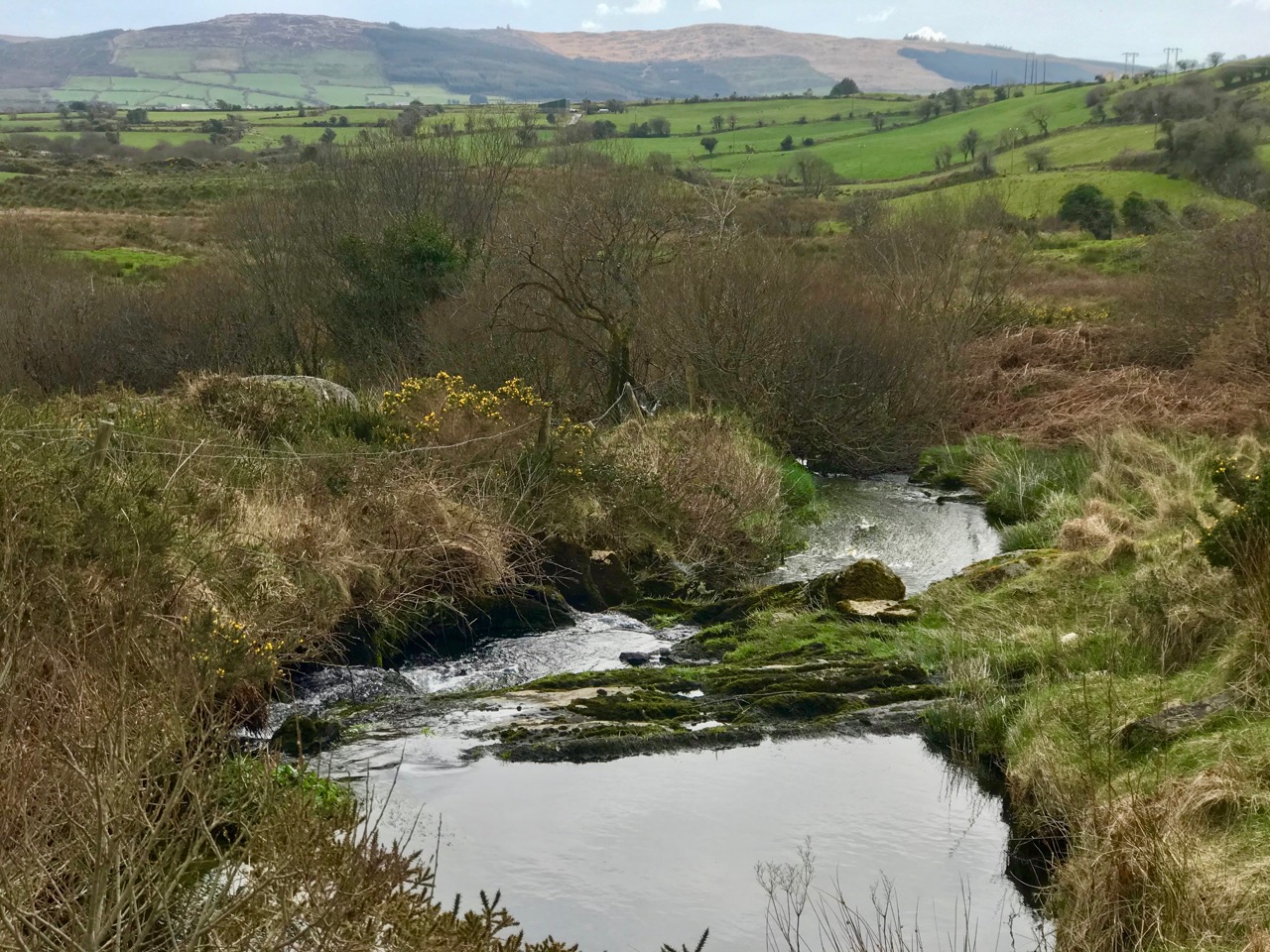
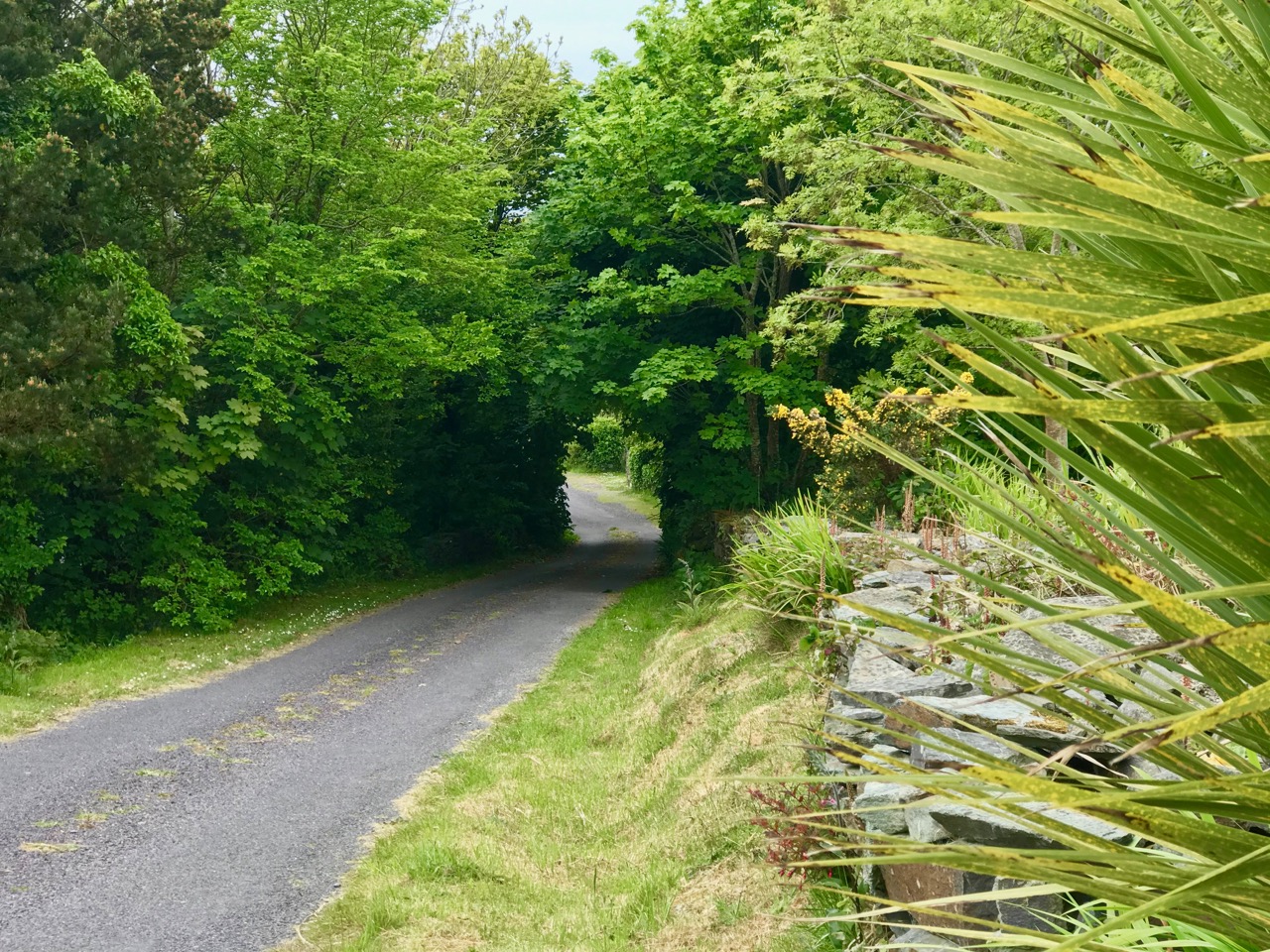
Only in Ireland can you wend your way along boreens. The Irish word is bóithrín, – a small bóthar (road). We are surrounded by them in our West Cork townlands. In these days of Covid19 restrictions, they are our whole world. With a maximum walk of 5 kilometres allowed, we can only ever be on boreens. But that’s no hardship – mostly they are beautiful (in fact they are all beautiful), and we enjoy every step we can take. So today’s post is simply a celebration of what is around us. But I have also combed the RWJ archives to look for boreens outside of our local area, for a bit of variety and comparison. Rest assured that any illustrations beyond our present limits were taken in other – normal – times!

Of course a ‘boreen’ or small road doesn’t have to be in a rural location, This fine boreen in Eyries, on the Beara Peninsula, is in fact a well used highway through the town, but you can’t deny that it is as atmospheric and picturesque as many of the rural byways shown here. It’s a moment in time captured for all time.
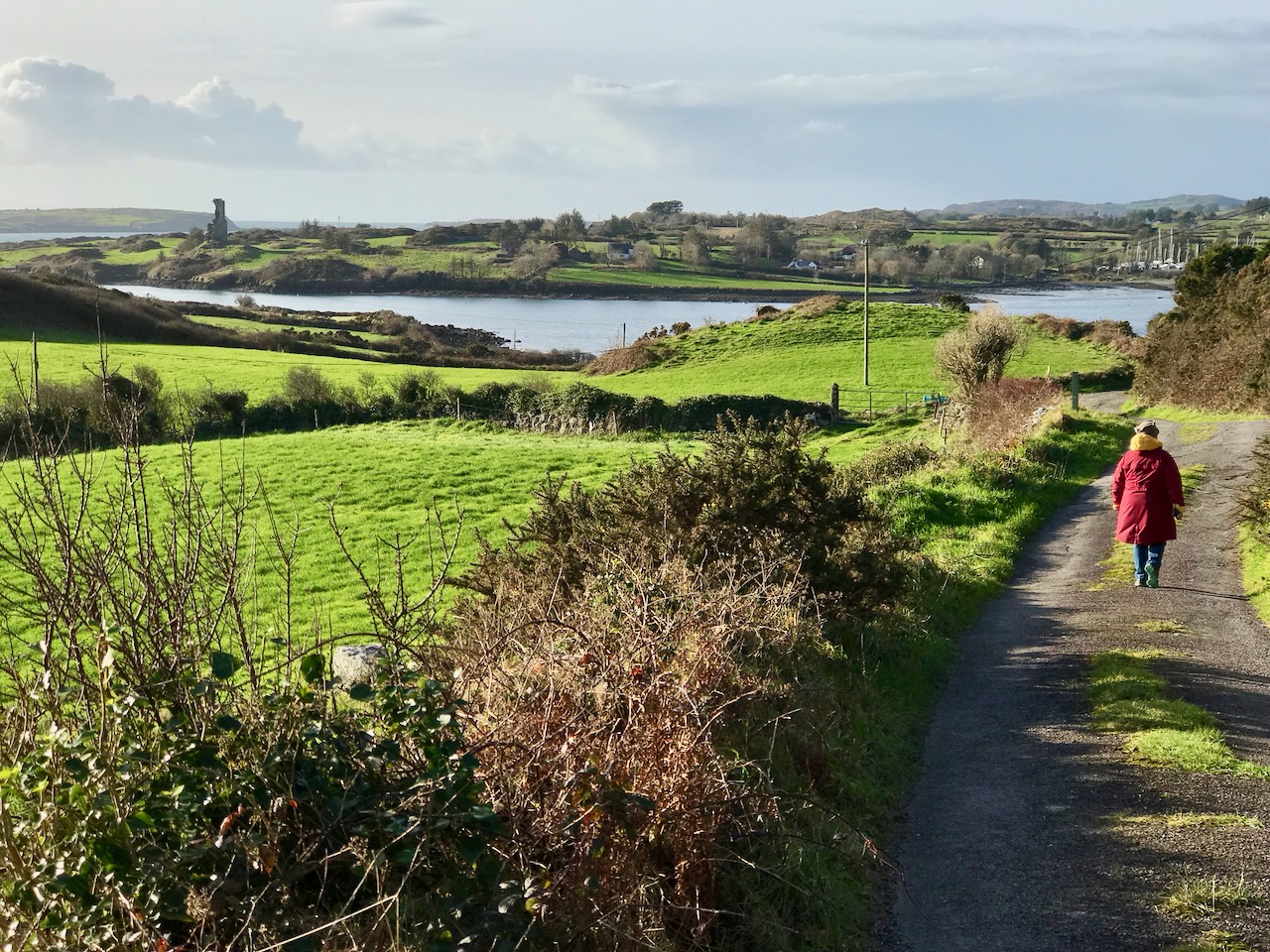
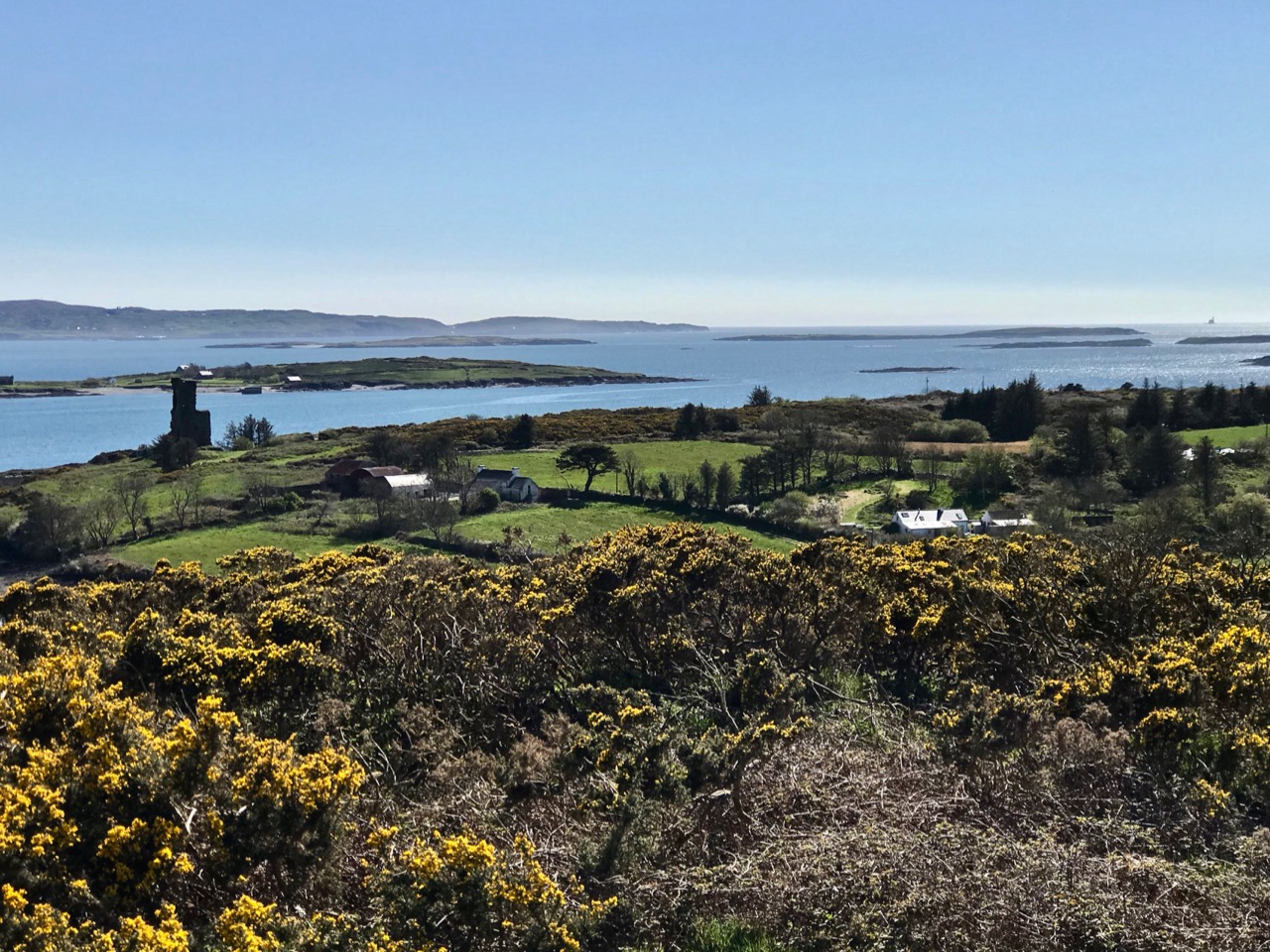
The photo at the top of the page is special for us: it’s the view we get when we turn out of Nead an Iolair, heading down towards Rossbrin Cove. And there (above) is our first glimpse of the sheltered harbour, overlooked by the medieval castle that was the home of Clan Chieftain Fininn O’Mahony in the 15th century. Not only do we have all the wonders of West Cork’s landscape on our doorstep, but we also have deep history as well…
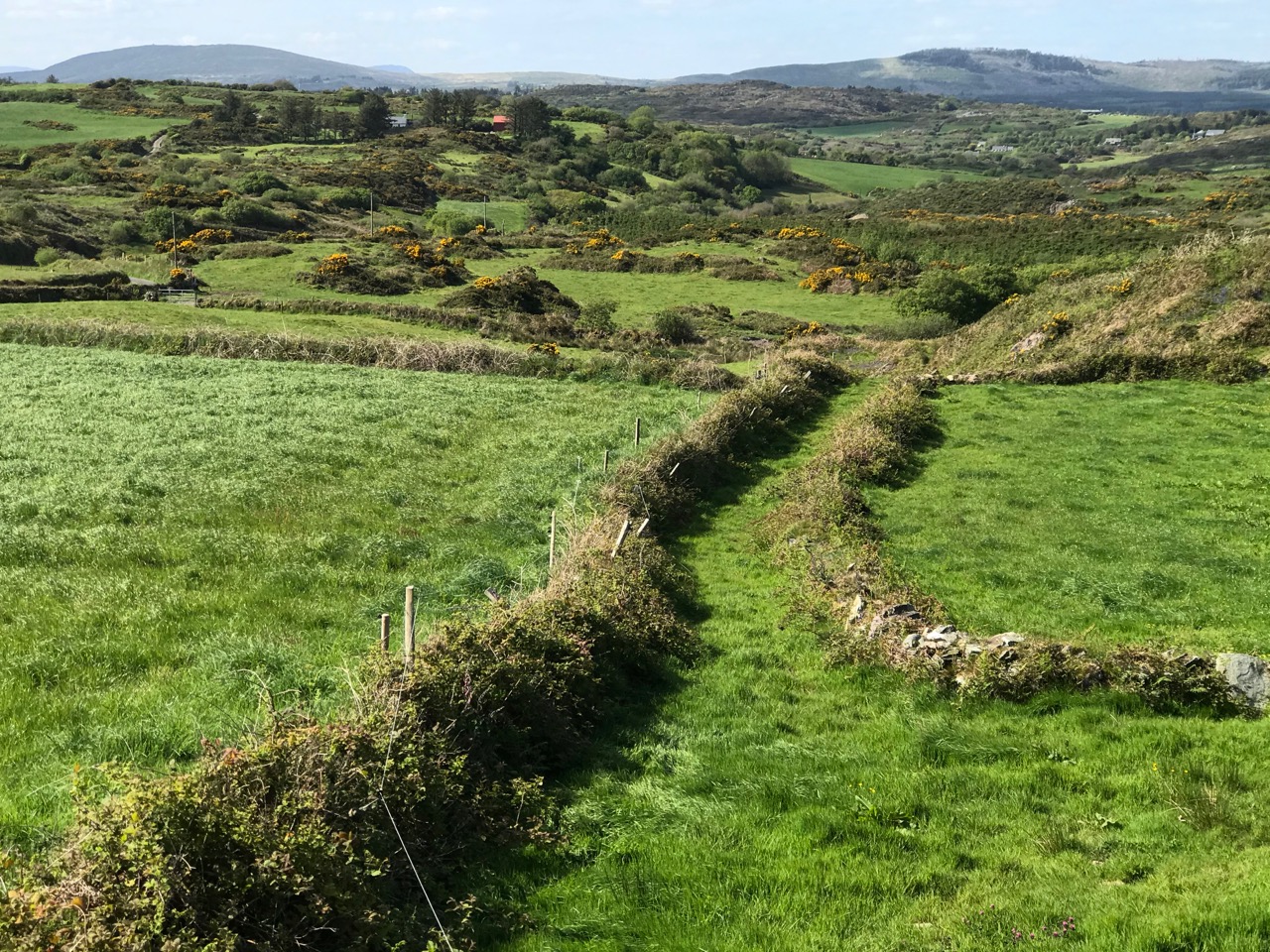
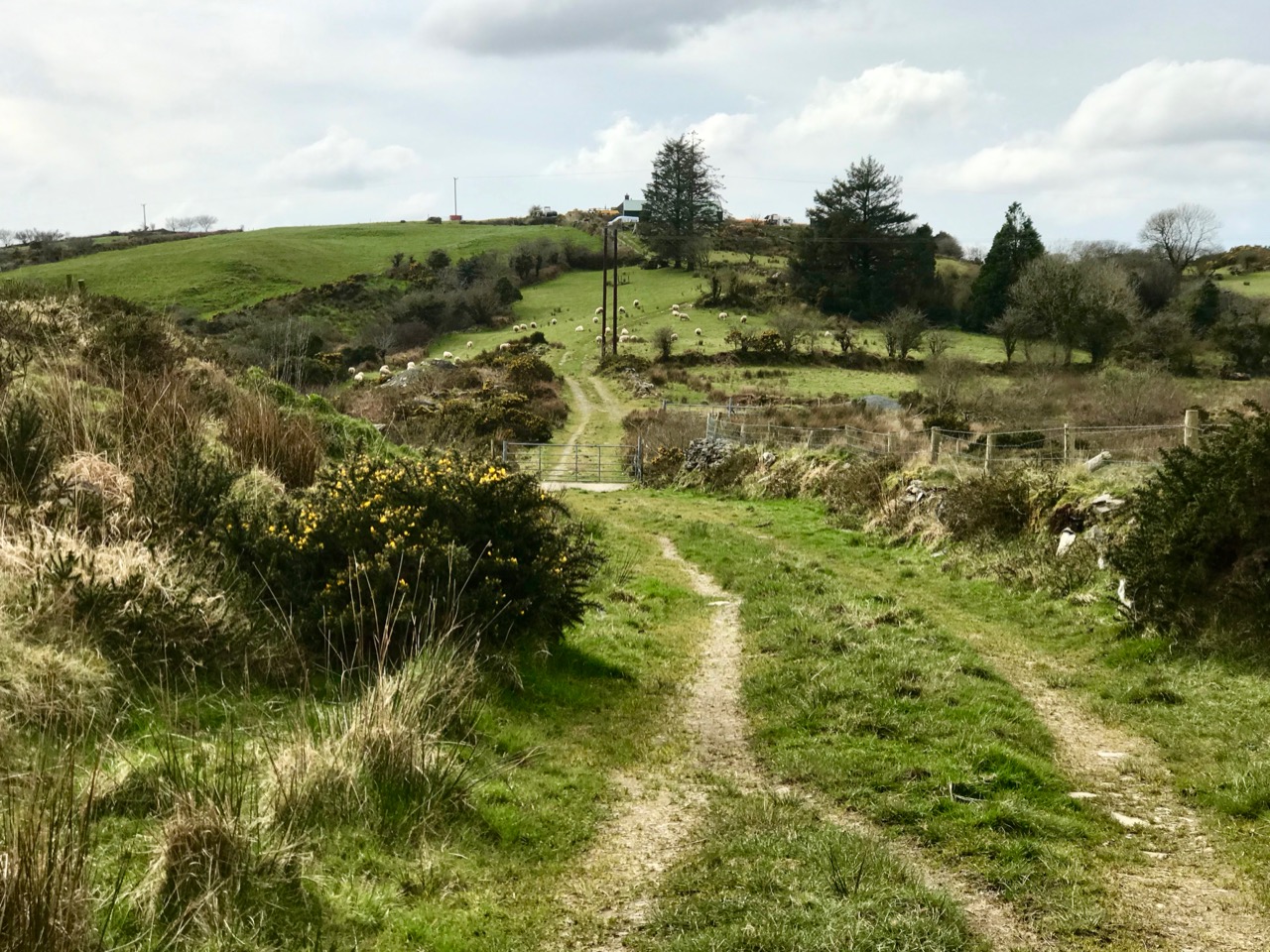
How much closer can you get to nature than this ‘green’ boreen just a short walk up the road from where we live in Cappaghglass? The stone hedge banks have become completely assimilated into the surroundings, and are a haven for so many native species of wildflowers, as Finola will readily point out to us!
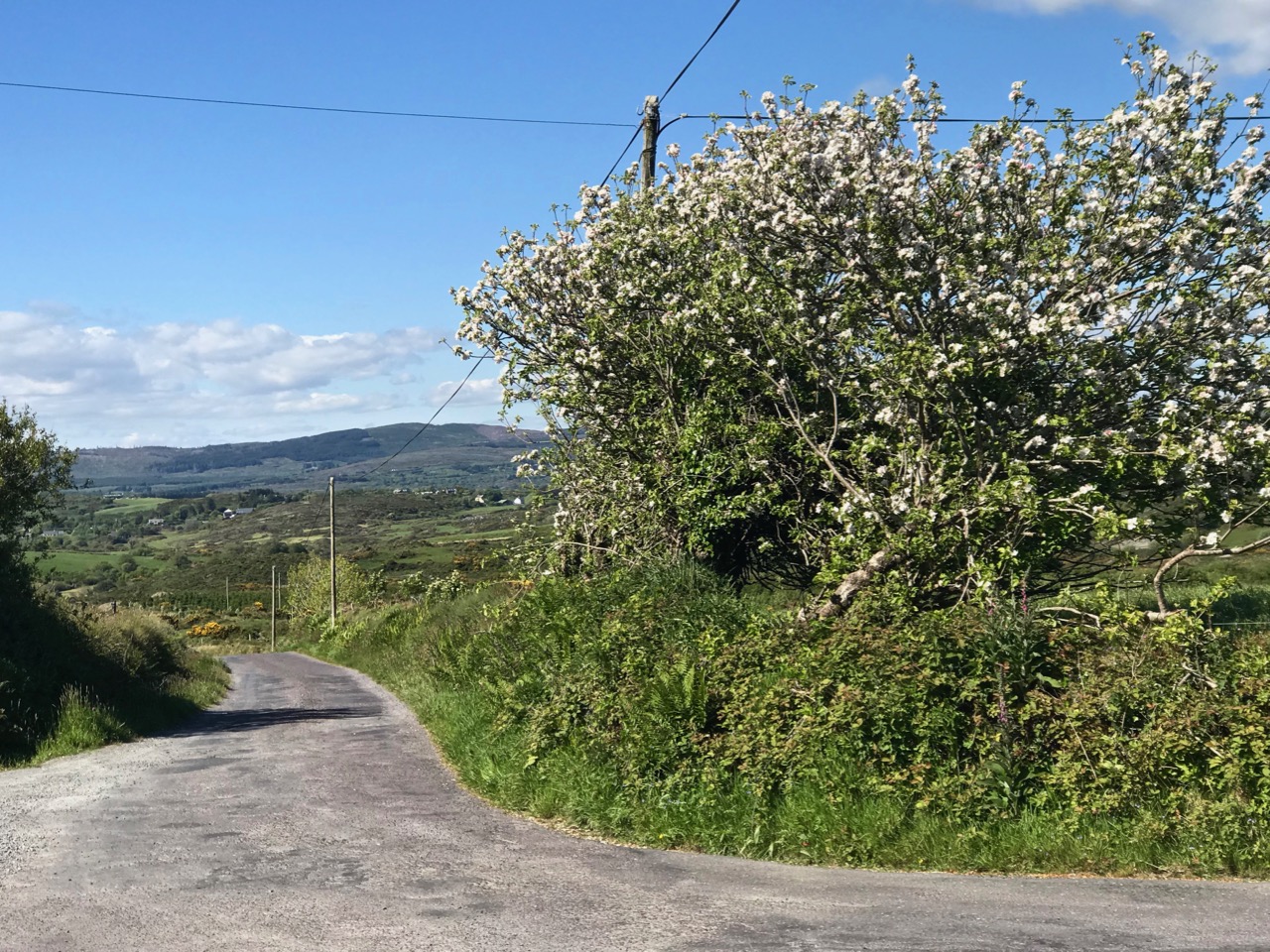
And just a few yards from that last green trackway is the boreen that takes us down into our village of Ballydehob. Those are apple trees flourishing as part of the natural hedgerow.
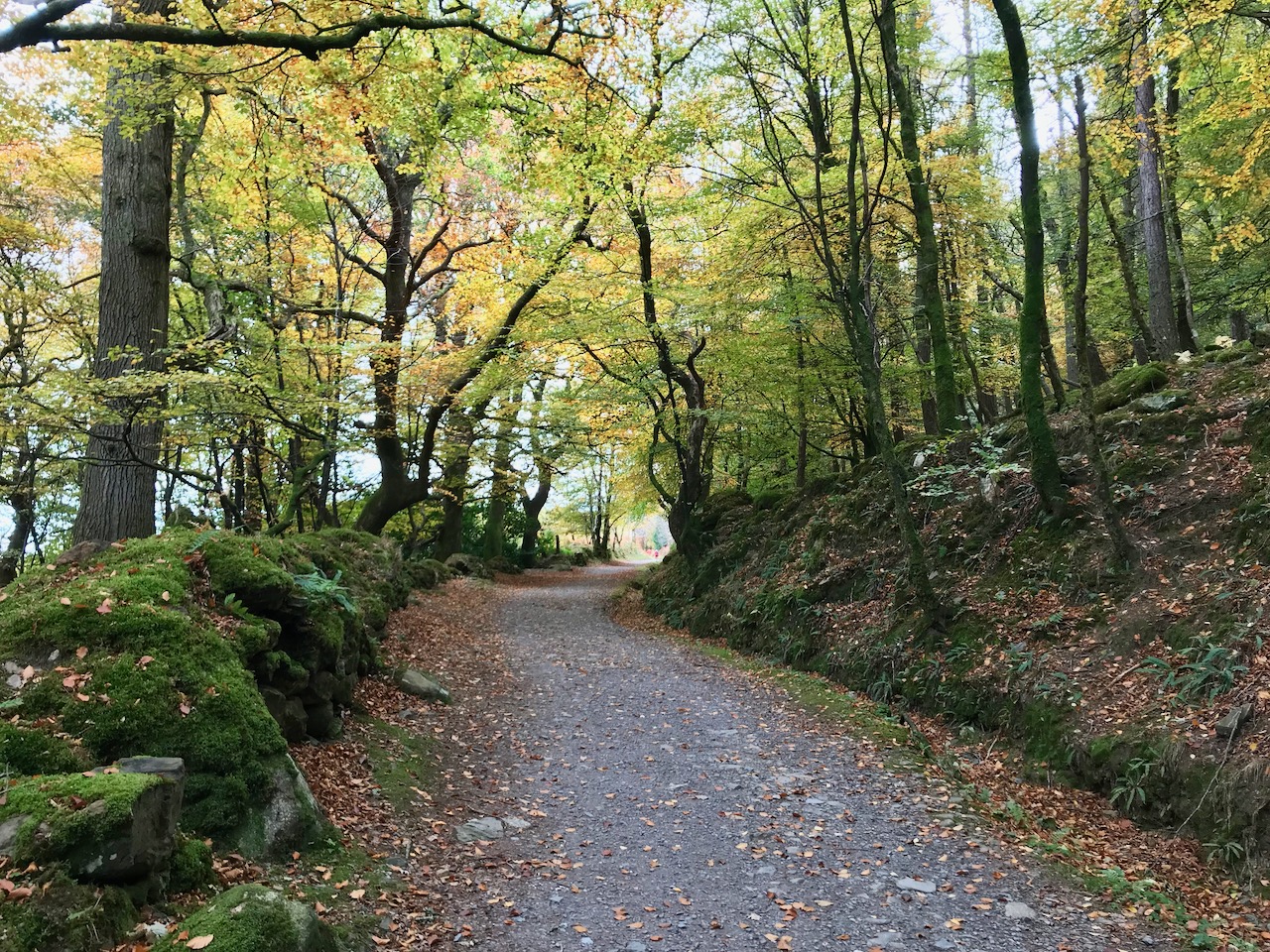
We have very little woodland around us here. This slightly mysterious tree-lined boreen was found on our travels near Glendalough, in County Wicklow, last year.

Close by the little harbour of Glandore (in Irish Cuan D’Ór – Harbour of Gold) in West Cork, we found a secluded boreen which pointed us towards an oddity: a pyramid in a graveyard – well worth a visit. Read about it in this post from two years ago.
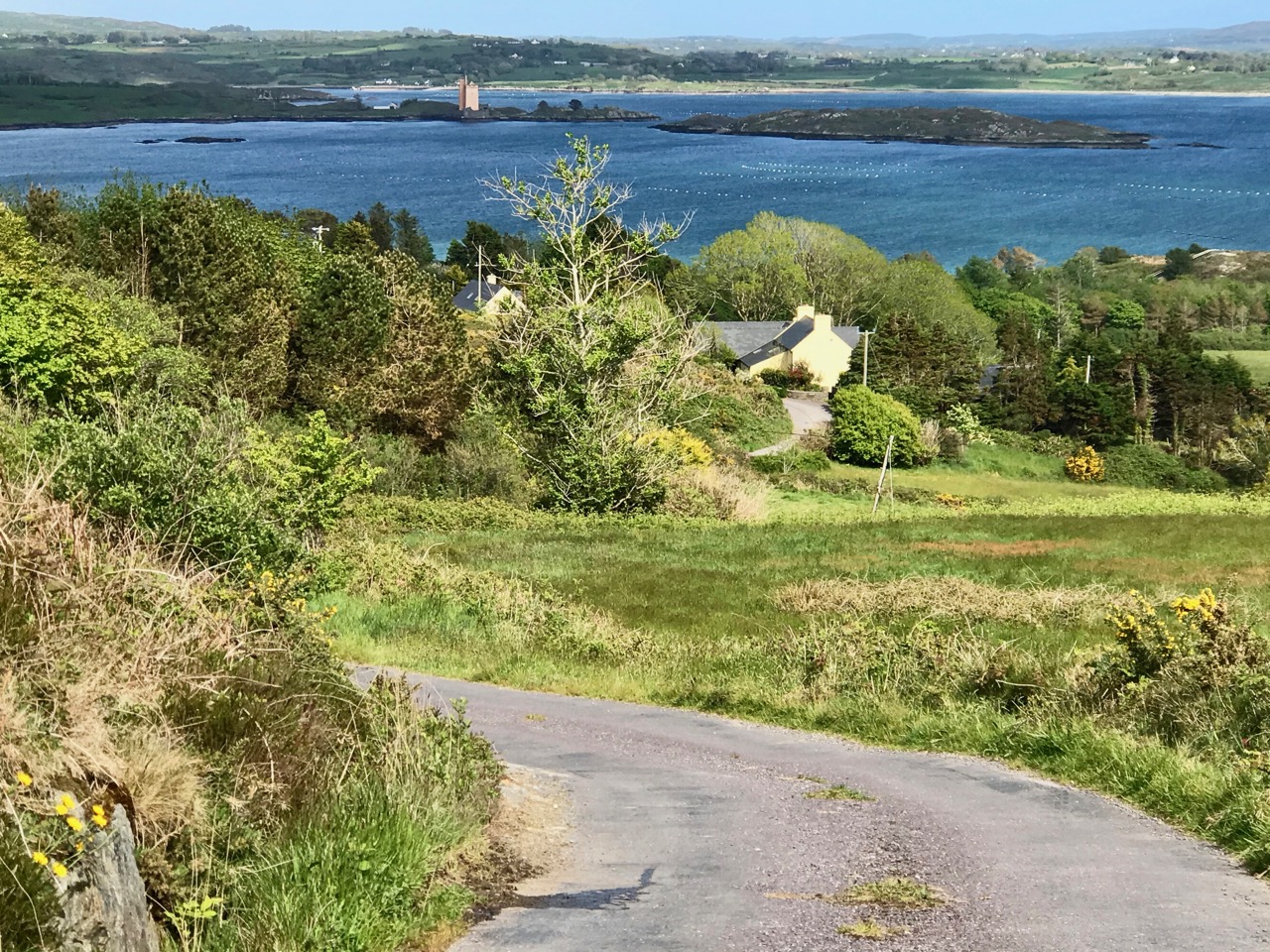
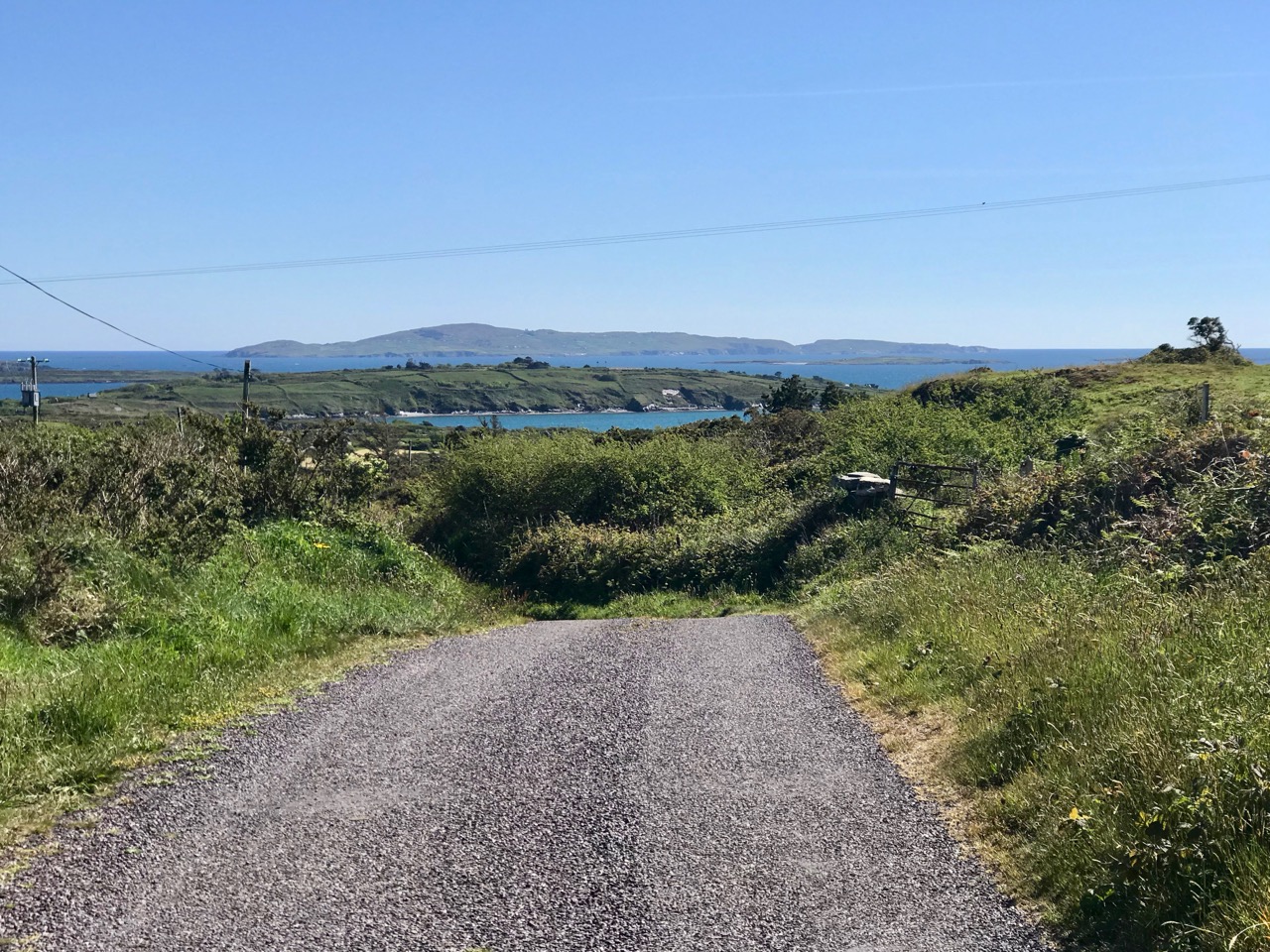
Returning to our own neighbourhood these two recent photos, taken only a couple of days ago, show how you can never quite know what you are going to find just around the corner or over the brow of the next hill. That’s Jeremy Irons’ Kilcoe Castle in the upper picture, and Cape Clear Island (on the horizon) in the lower one.
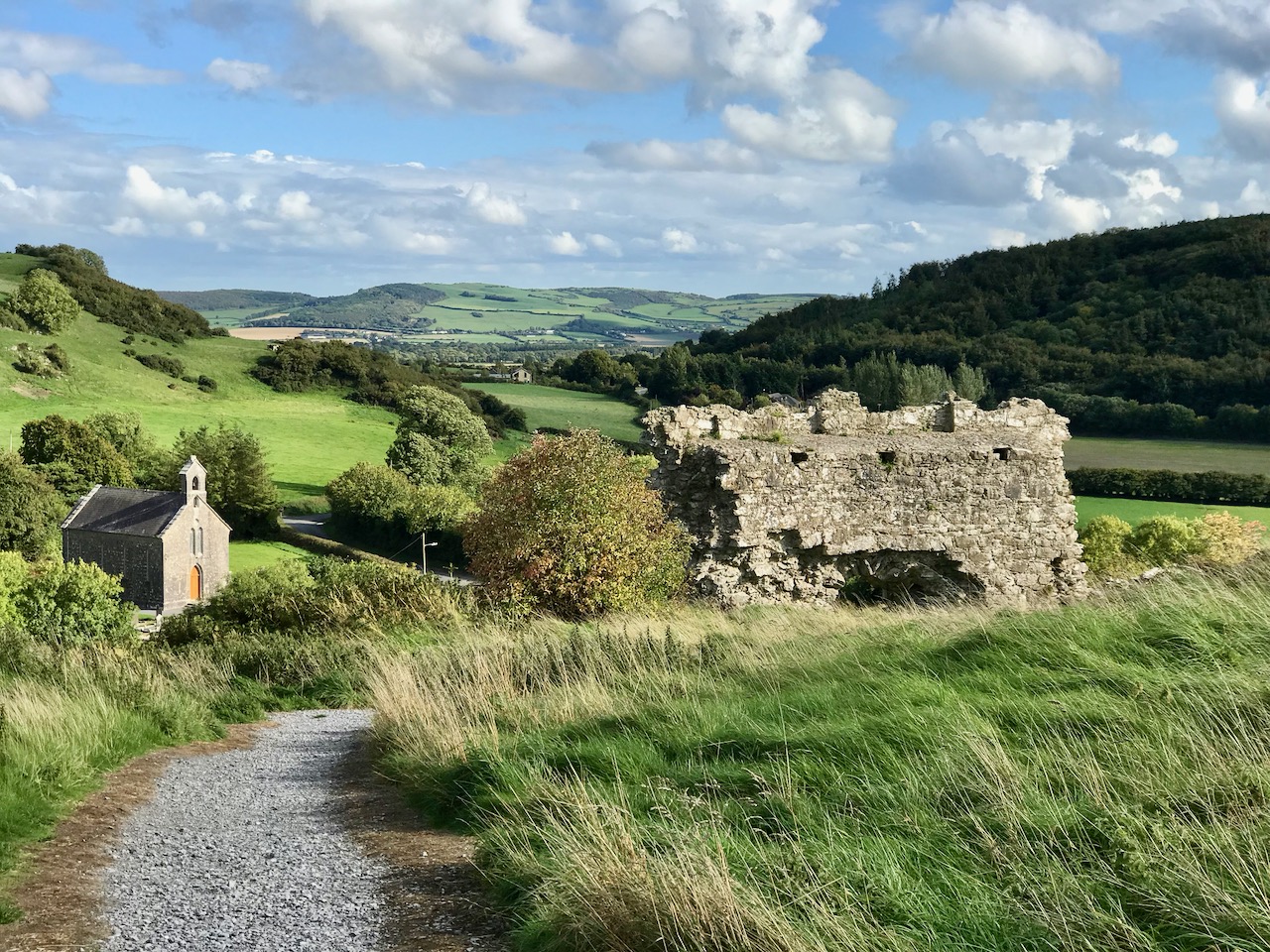
In contrast, here’s a little trackway that takes you up to the summit of the Rock of Dunamase in County Laois. This historic site with a view is associated with momentous events in the history of this country: in the painting by Daniel Maclise that hangs in the National Gallery of Ireland, The Marriage of Strongbow and Aoife is depicted as taking place at the now ruined Great Hall on the Rock. You can find the whole story of this most critical juncture in Ireland’s history in Finola’s post here.

Even further afield – in Ballymoney, Co Antrim – is this spectacular avenue of beech trees planted on the entrance driveway leading to an eighteenth century Georgian mansion, Gracehill House. This boreen – open to pedestrians – is known as the Dark Hedges, and we visited it when we explored the North of Ireland three years ago.

Although in normal times we travel a lot – on major roads and motorways, as well as boreens – the places we like the best are near to home. How could we not be impressed by the winding boreen that climbs to the top of Mount Gabriel, the highest point on the Mizen? Look at the spectacular views (above). The preacher Caeser Otway travelling in this area in 1822 wrote:

. . . On my way to Bantry I passed the dark and lofty Mount Gabriel and took my way over a dreary, comfortless tract of country. Let no one say after looking at these moors , studded over with cabins crowded with children, pigs, goats, cocks and hens that an Irishman is not an industrious creature . . . Men, women, boys and girls toiling up the mountainside with seaweed and sea sand in baskets on their backs . . . See them reclaiming from amidst rocks and bogs, patches of ground on which to cultivate their only food, the potato; and no one witnessing this struggle of human industry against nature, but must acknowledge that the Irish are a most industrious race . . .
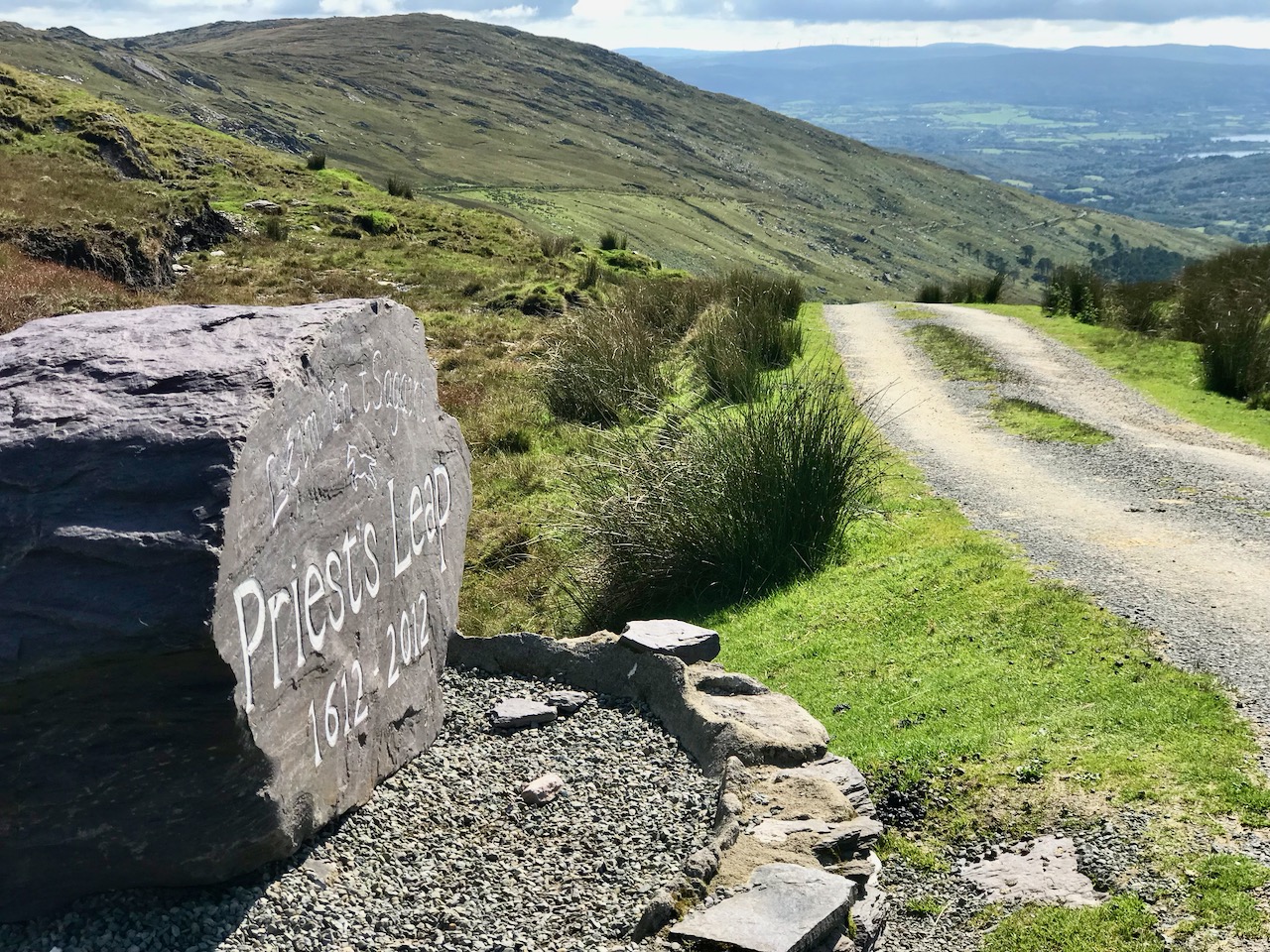
The 400 year old road that crosses the mountains from Cork into Kerry north of Bantry has to count as a boreen, as it’s single track for much of the way. The Priest’s Leap sign (above) marks the point at which the two counties meet. Although we have travelled all over Ireland in our explorations, this is still one of our favourite routes, and always will be. We so look forward to being able to go there again, when the present ‘lockdown’ is lifted.
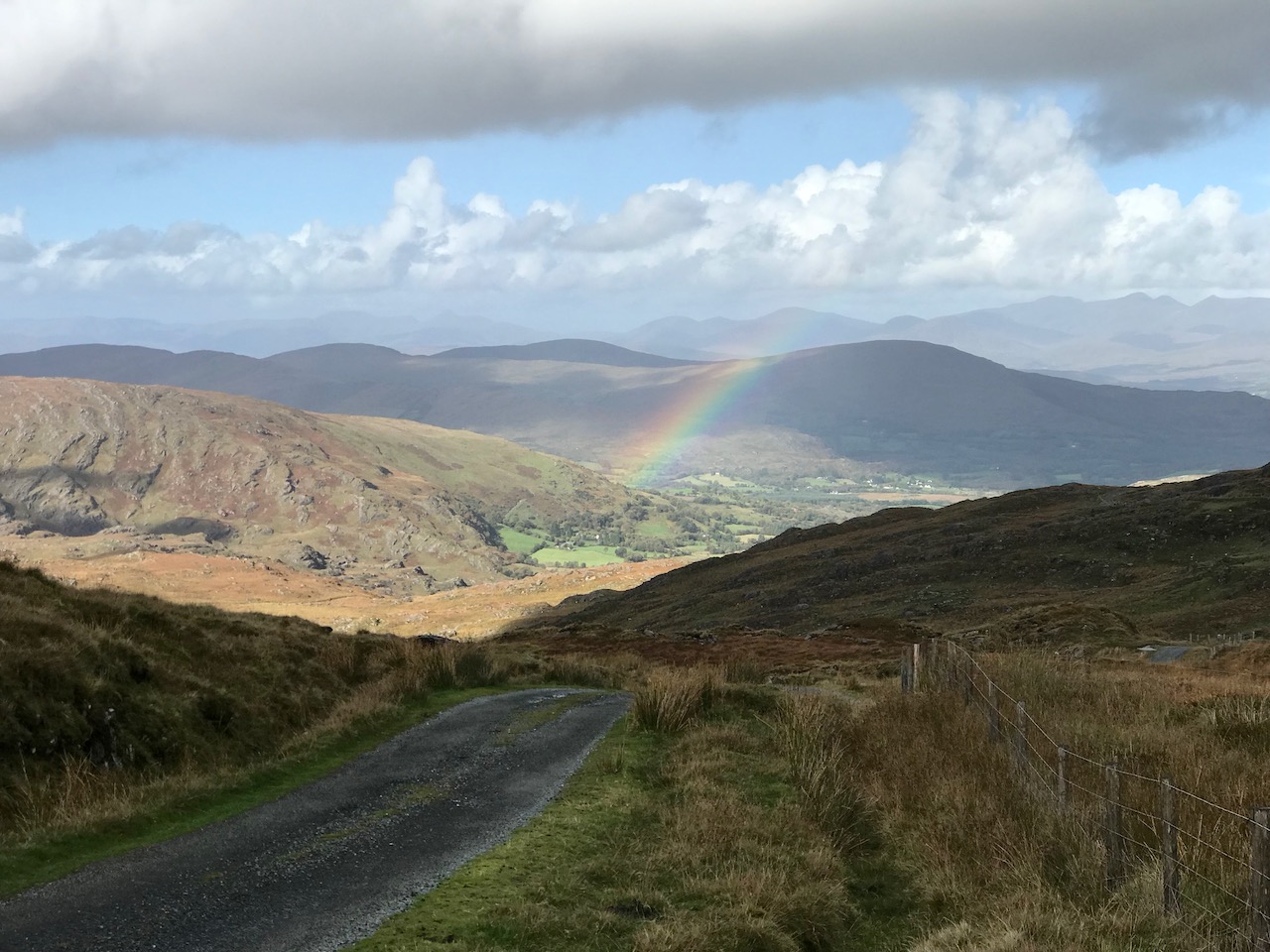
Another glimpse of the Priest’s Leap ‘boreen’.
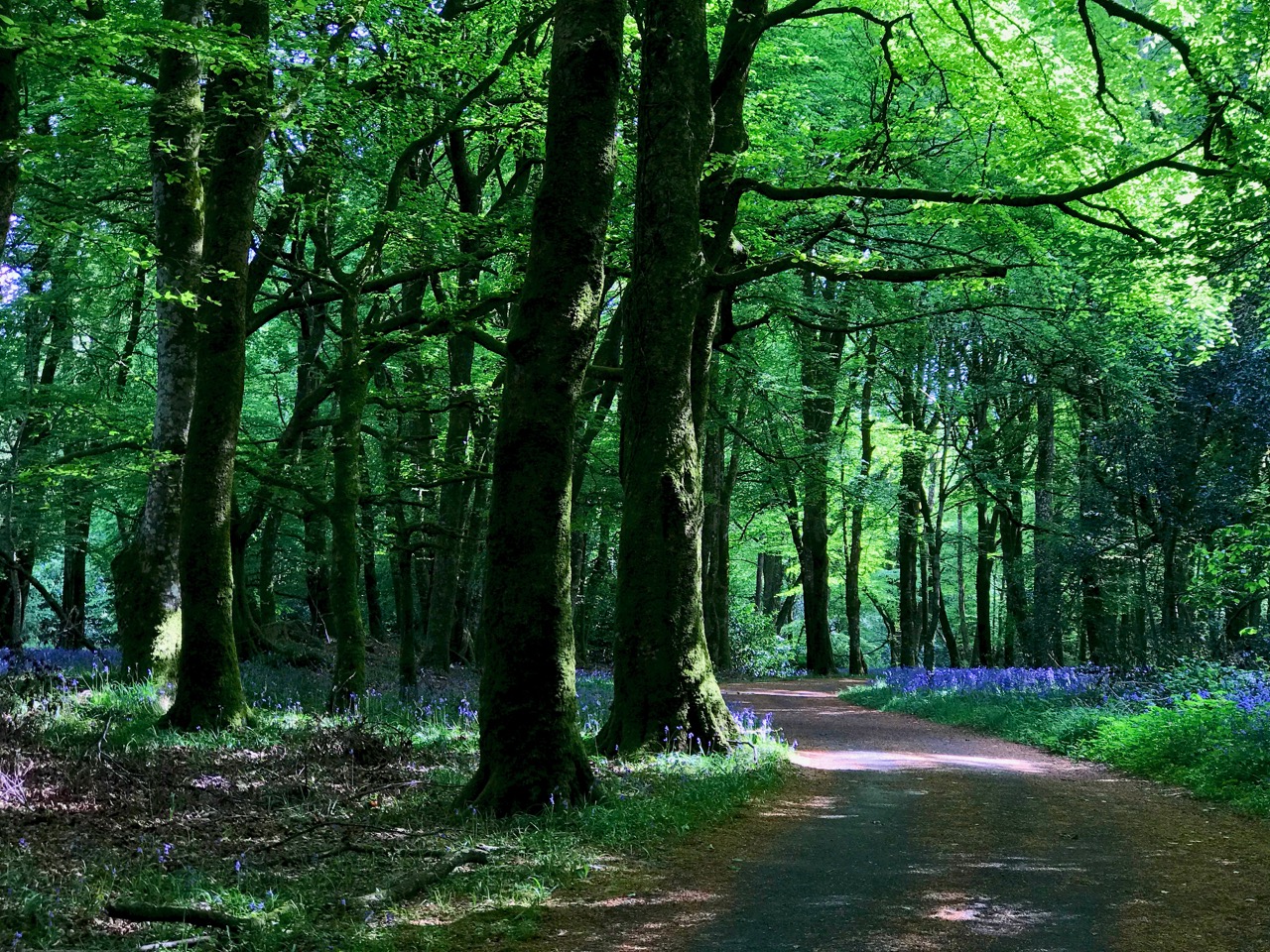
This elegant woodland boreen is a fine example of regency landscaping, being part of the Ballyfin Demesne in Co Laois. Like so many of Ireland’s fine luxury hotels, Ballyfin remains closed until the Covid19 restrictions are lifted.

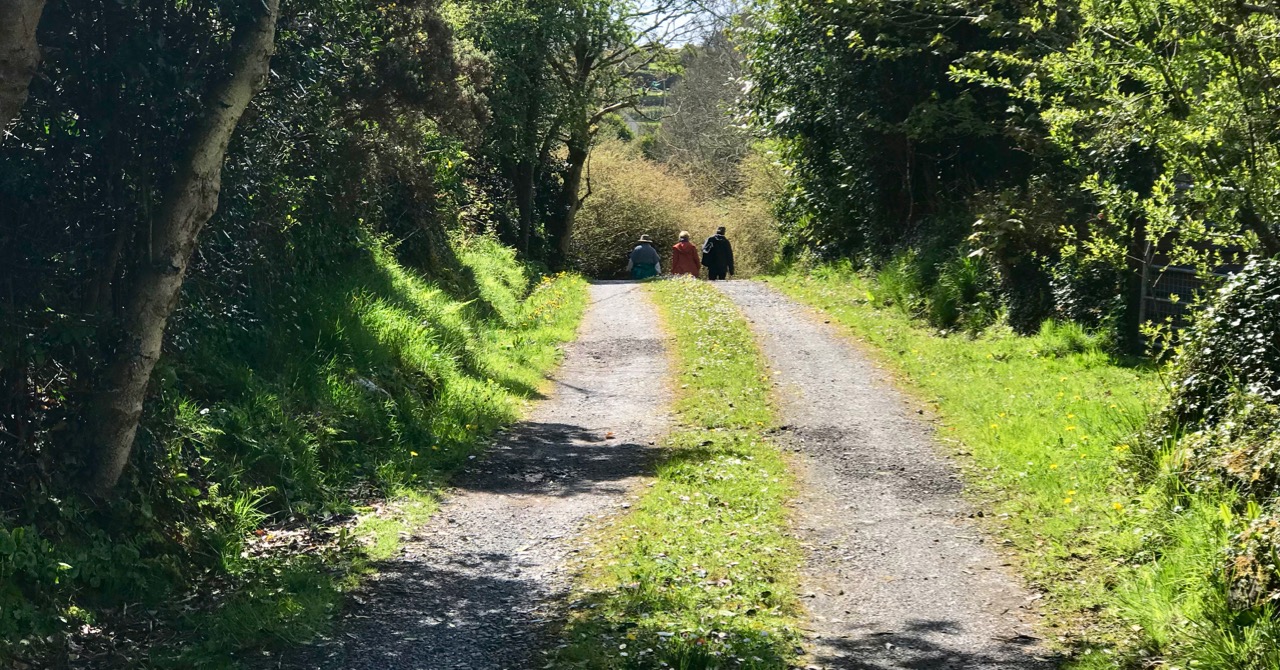
We’ll finish this post where we started – near to home in West Cork, with happy memories of unrestricted rambles with friends along the quietest and most beautiful of Ireland’s boreens . . .
Schull Sculpture – Anchor, Mermaid and Lunachán

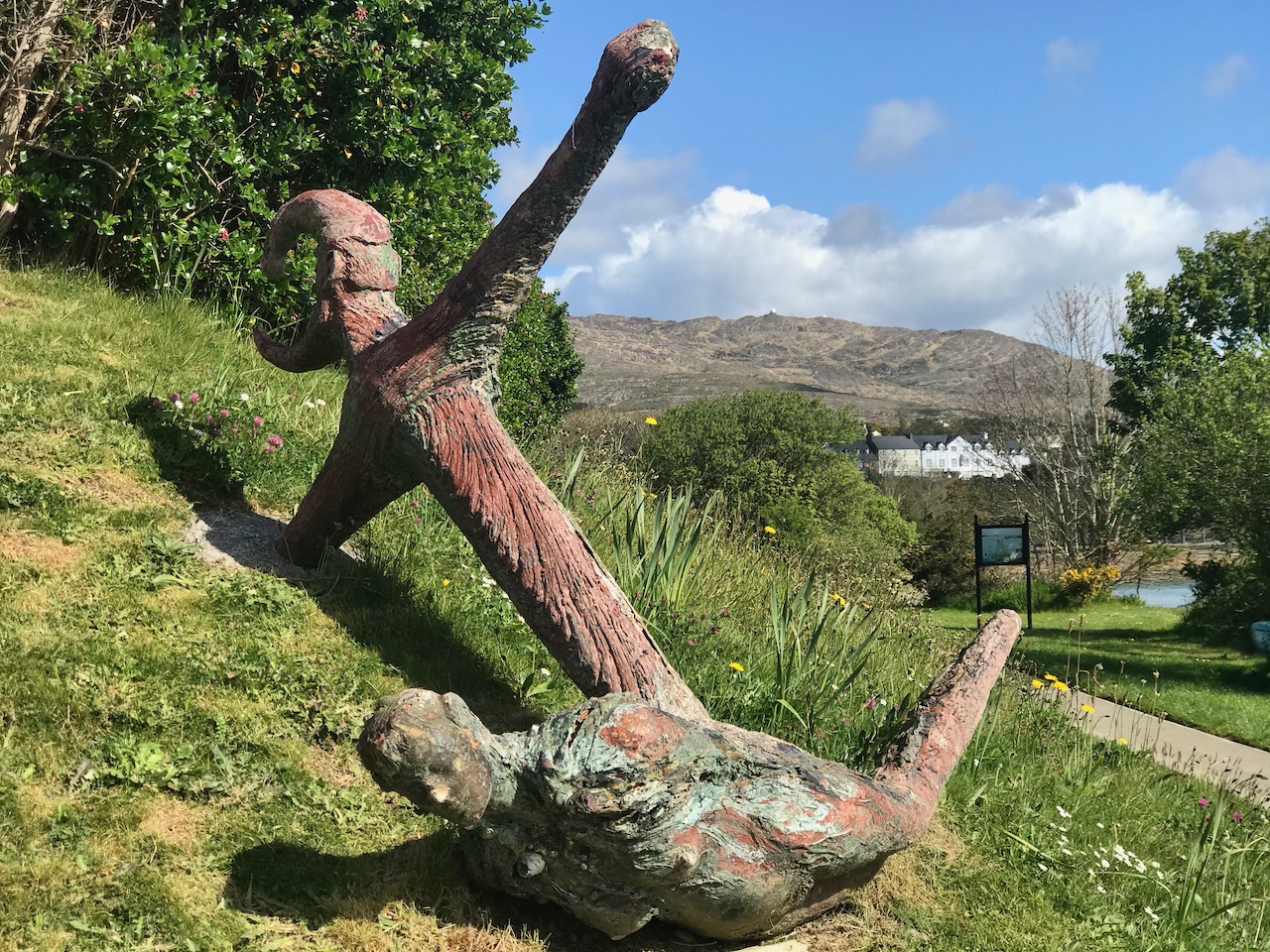
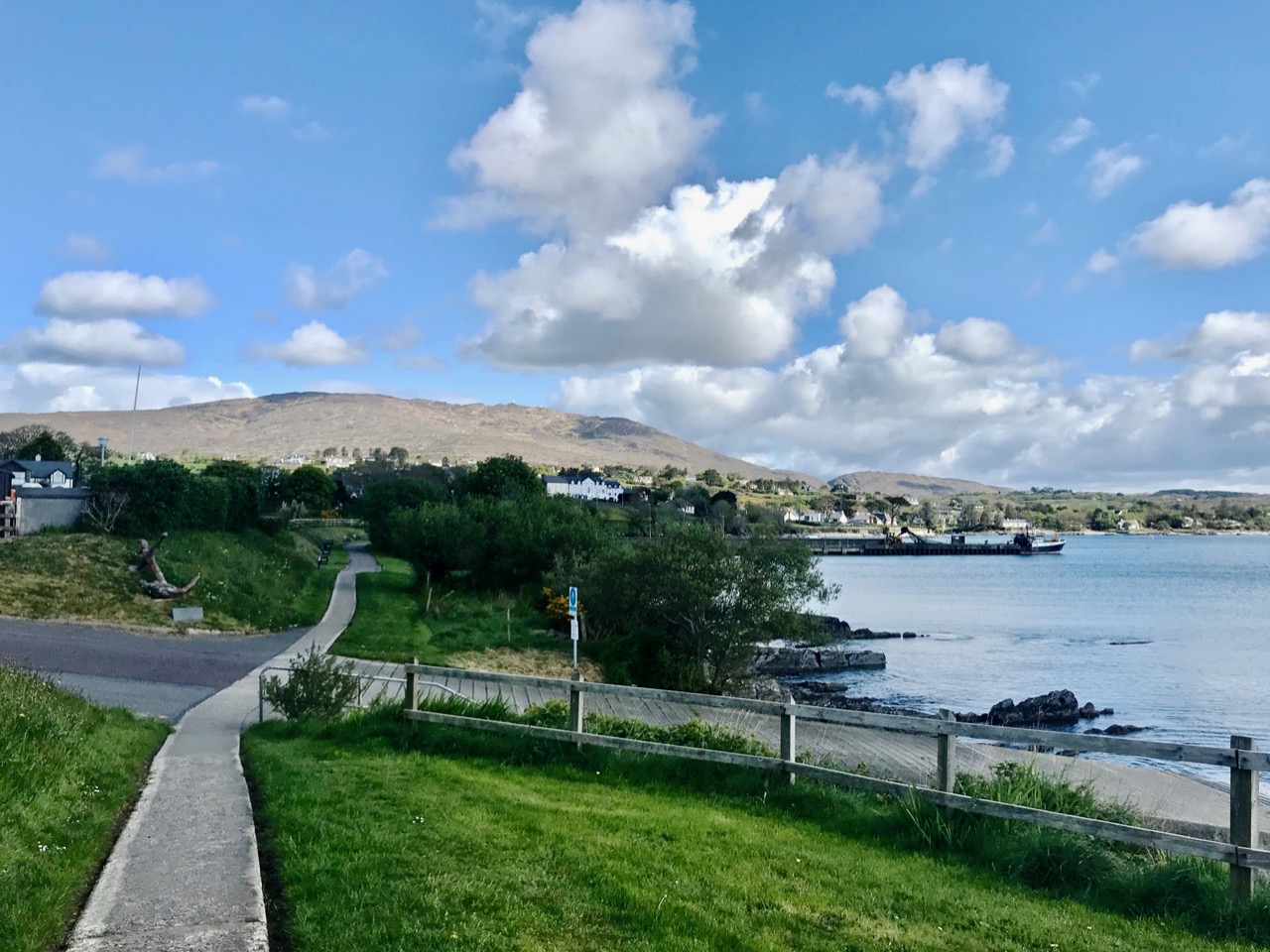
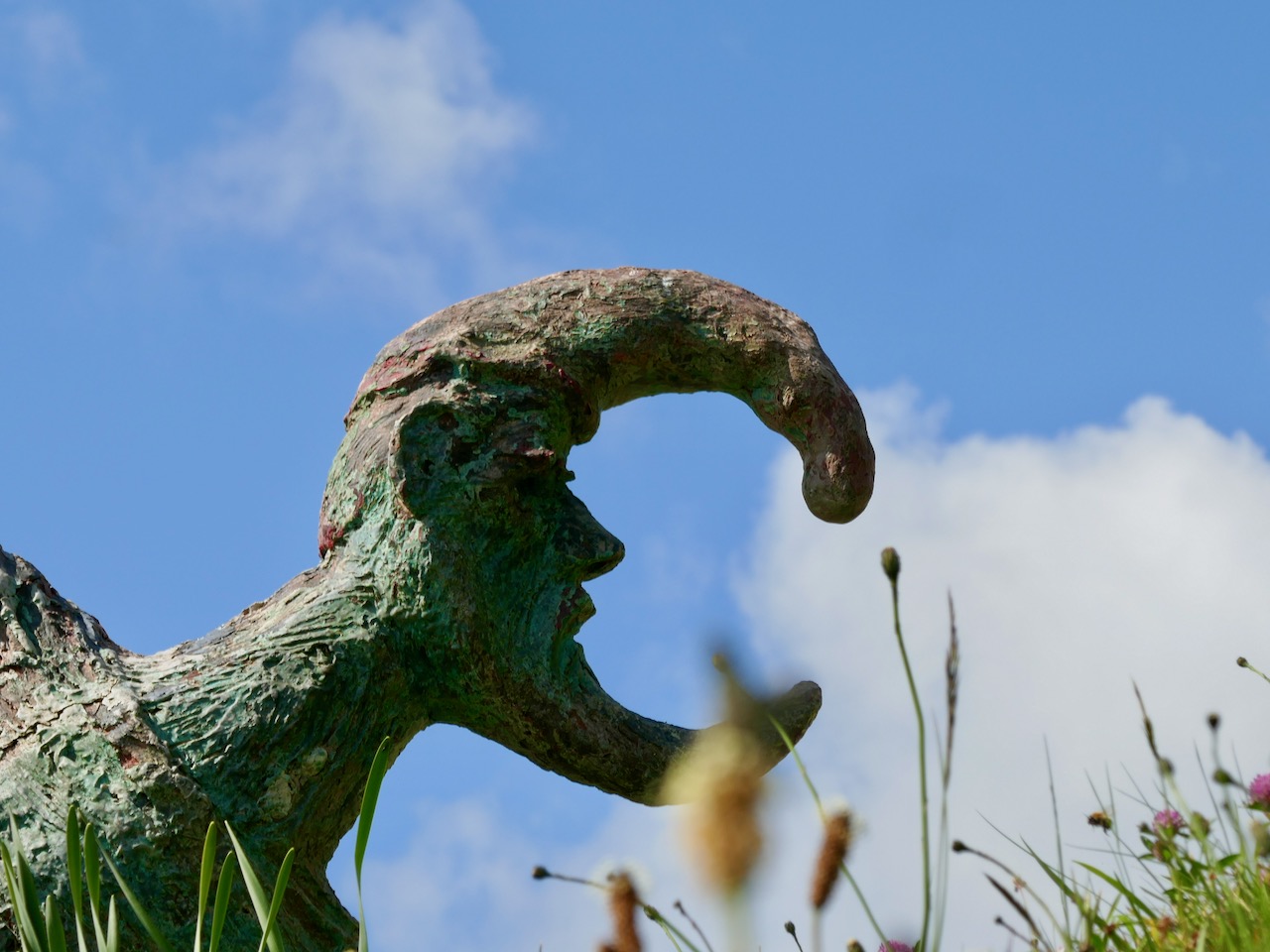
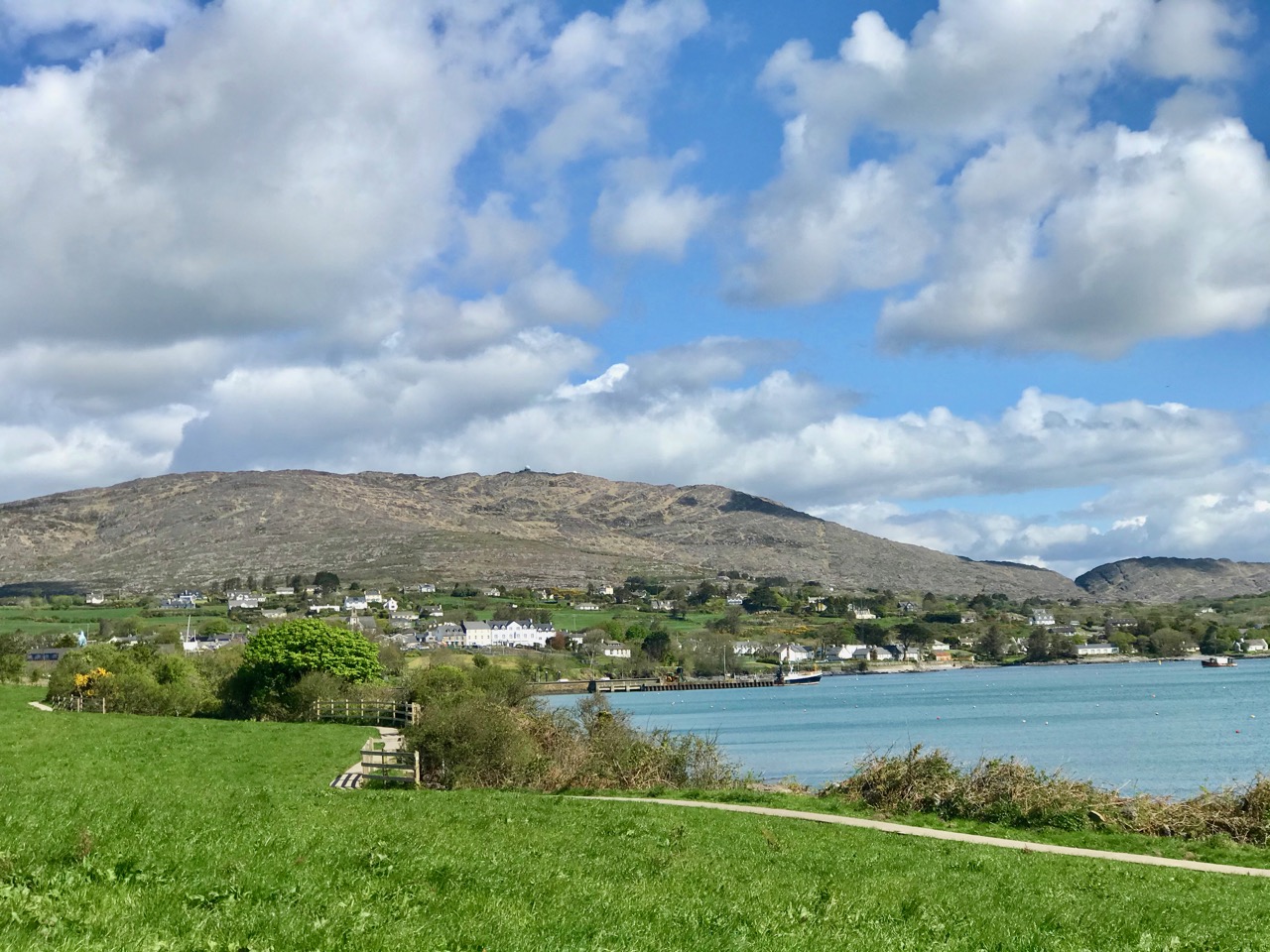
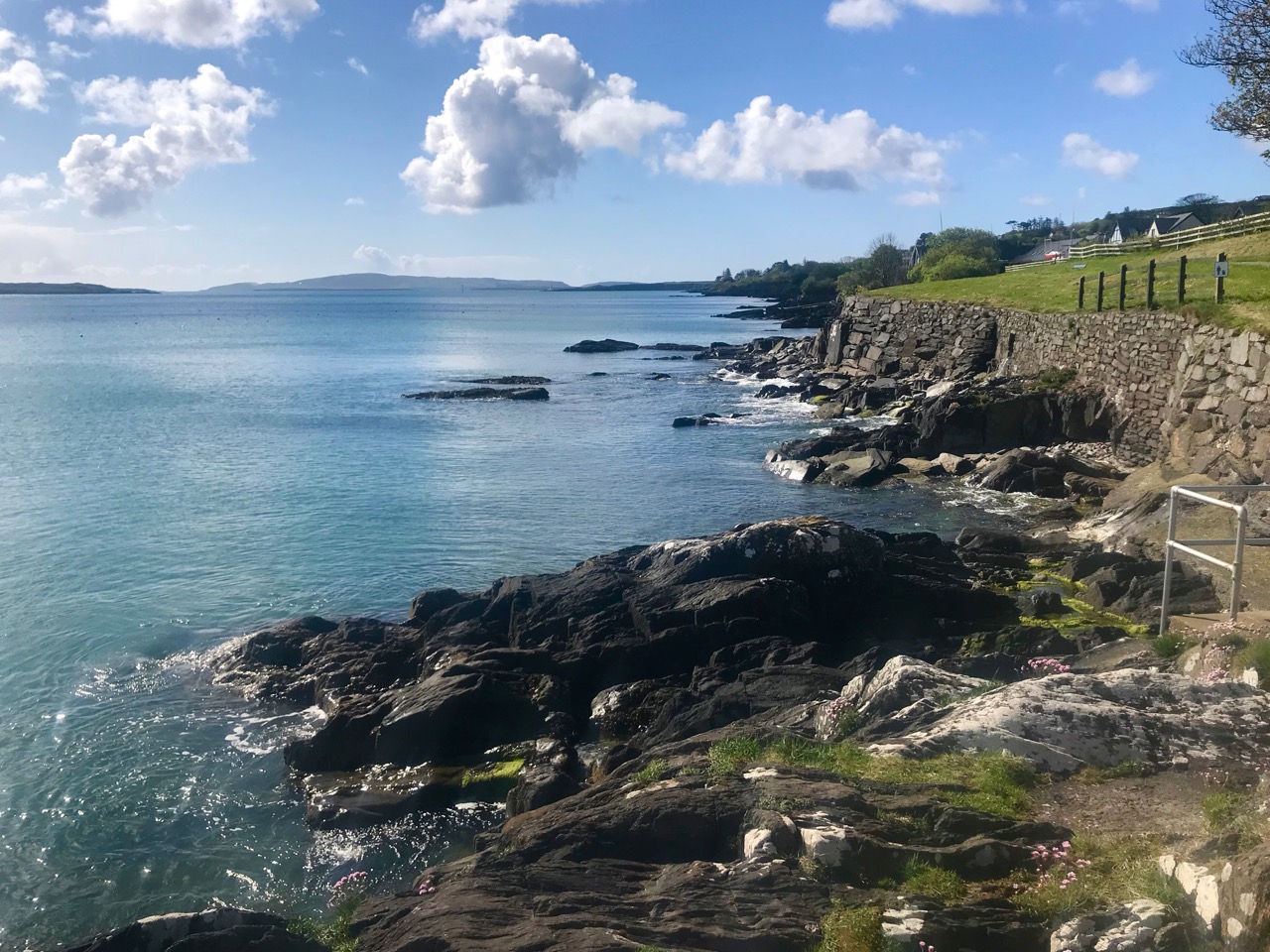
The harbour town of Schull, in West Cork, is wonderfully located on a naturally sheltered inlet looking out to Long Island Bay and ‘Carbery’s Hundred Isles’. From the pier you can take the Foreshore Walk (above) – a significant community asset – and follow a route which encircles the settlement, passing, on the way, another surviving piece of sculpture from the West Cork Arts Centre Living Landscape exhibitions, dating from the 1980s to the 1990s and masterminded by Cóilín Murray. We are indebted to Cóilín for providing an archive of photographs to the Ballydehob Arts Museum, and for being willing to contribute his own memories of the installation of the West Cork Sculpture Trail, which has greatly helped in putting together the story of this venture, over a quarter of a century later.

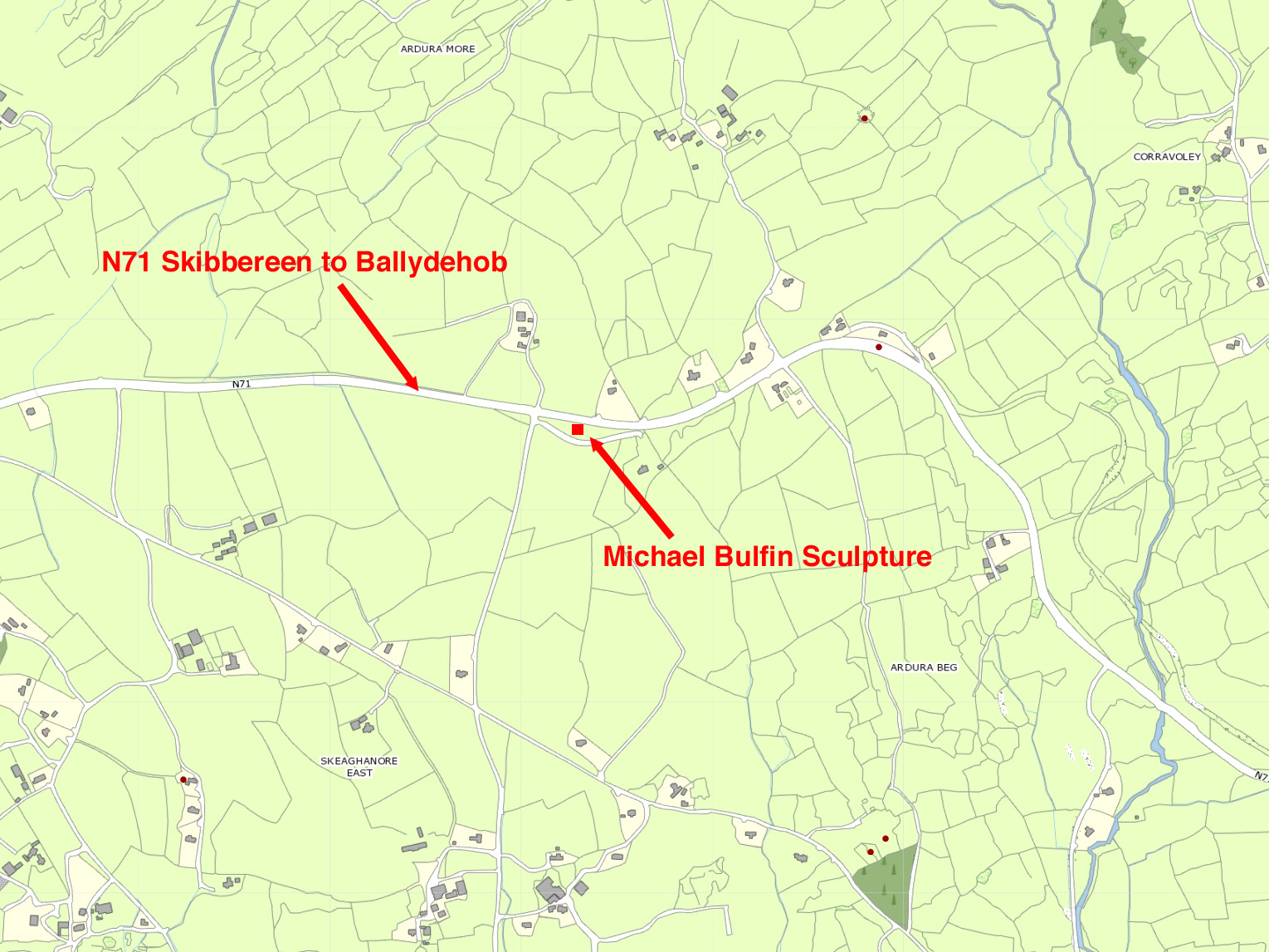
This is the second in a series of posts being published simultaneously by Roaringwater Journal and the Ballydehob Arts Museum, celebrating an important aspect of art history in West Cork. The first article – Behold, Their Bright Shining Future Rising Before Them – discussed Michael Bulfin’s ‘Pyramid’ sculpture beside the N71 road at Skeaghanore East between Skibbereen and Ballydehob. That work can still be seen, but is in a very overgrown state. The subject today is a piece by Mick O’Sullivan, titled Anchor, Mermaid and Lunachán. This is at present a well preserved surviving work from the Sculpture Trail although, like many others, it has suffered in the past from vandalism.

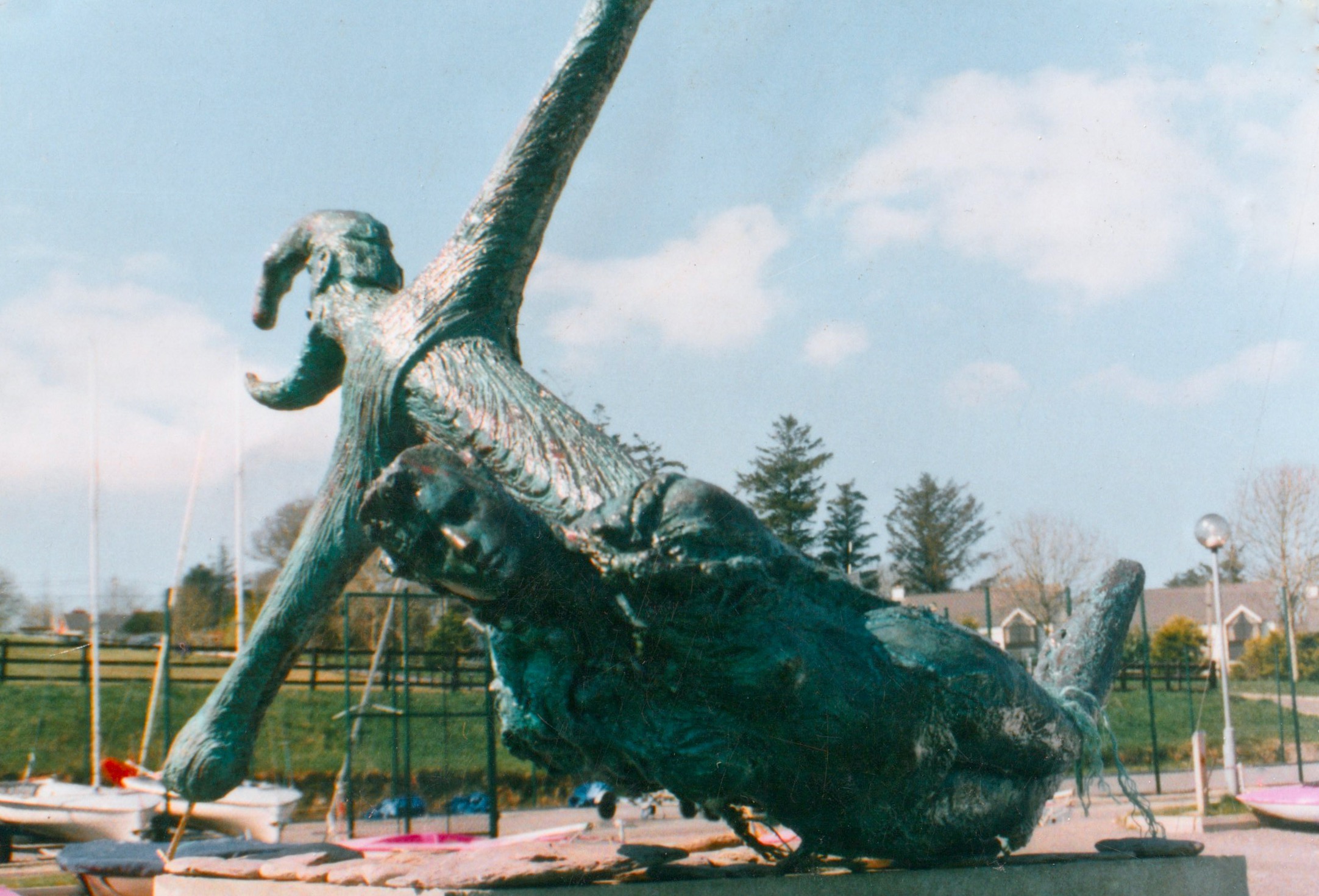
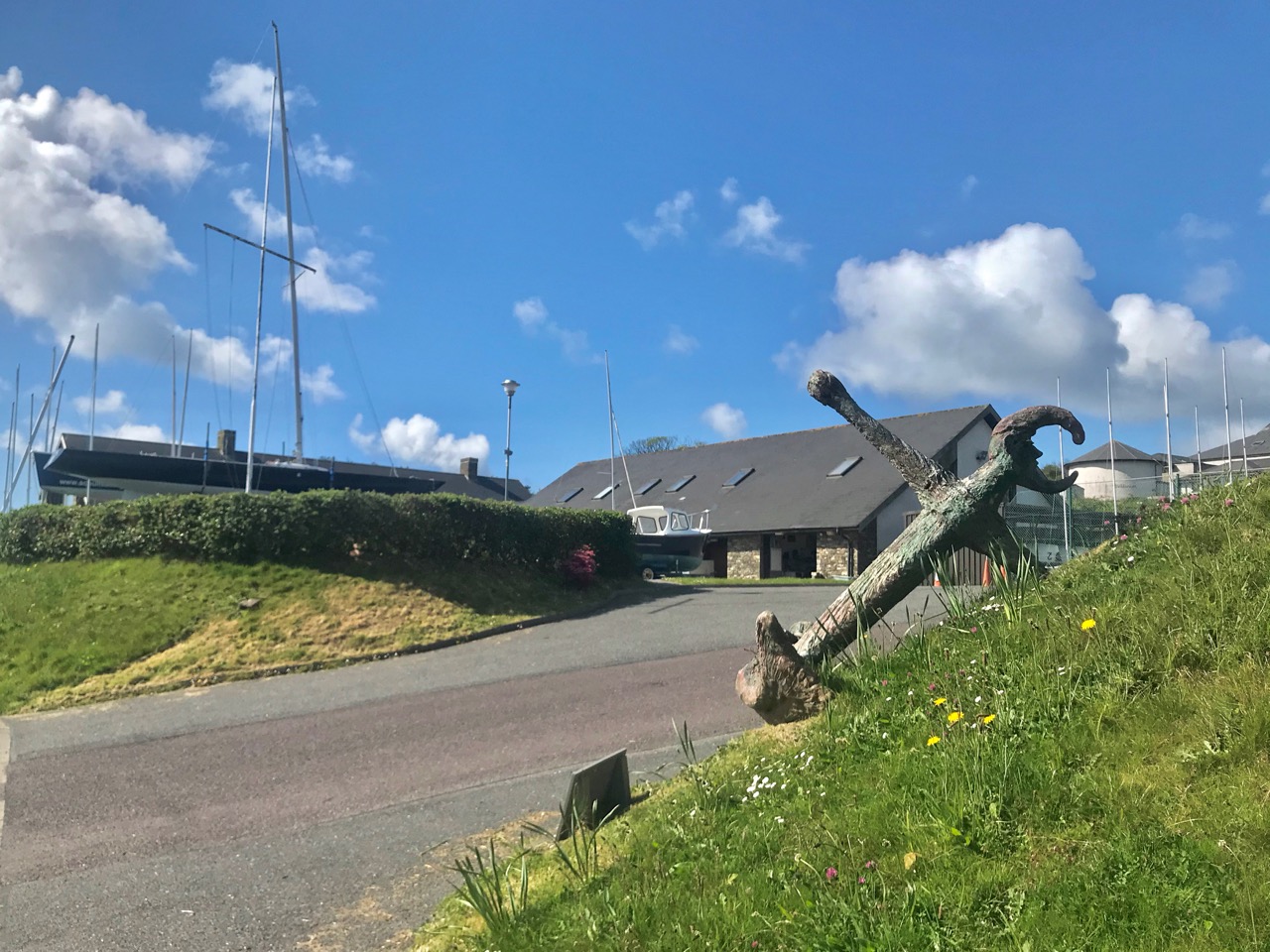
Upper – this photograph dates from the time of installation of the Anchor sculpture in Schull: it was originally situated close to the water below the Sailing School. Lower – the restored Anchor sculpture (far left of picture) is now sited above the Foreshore Walk, by the top of the slipway

The Anchor has the remarkably realistic texture of a corroded and barnacle-encrusted ancient piece of ironwork which might have rested on the ocean bed for countless years… In reality, it is fabricated from glass-fibre resin and – if dropped into the sea – it would float!

It was, in fact, sent out to sea… Deliberately damaged in the late 1990s, it was broken into two parts and thrown in the water. The two sections ‘sailed’ side by side towards Long Island until they were rescued by one of the Schull fishing boats. Eventually the remains of the artwork arrived in Cóilín’s garden in Skeaghanore, awaiting a saviour.

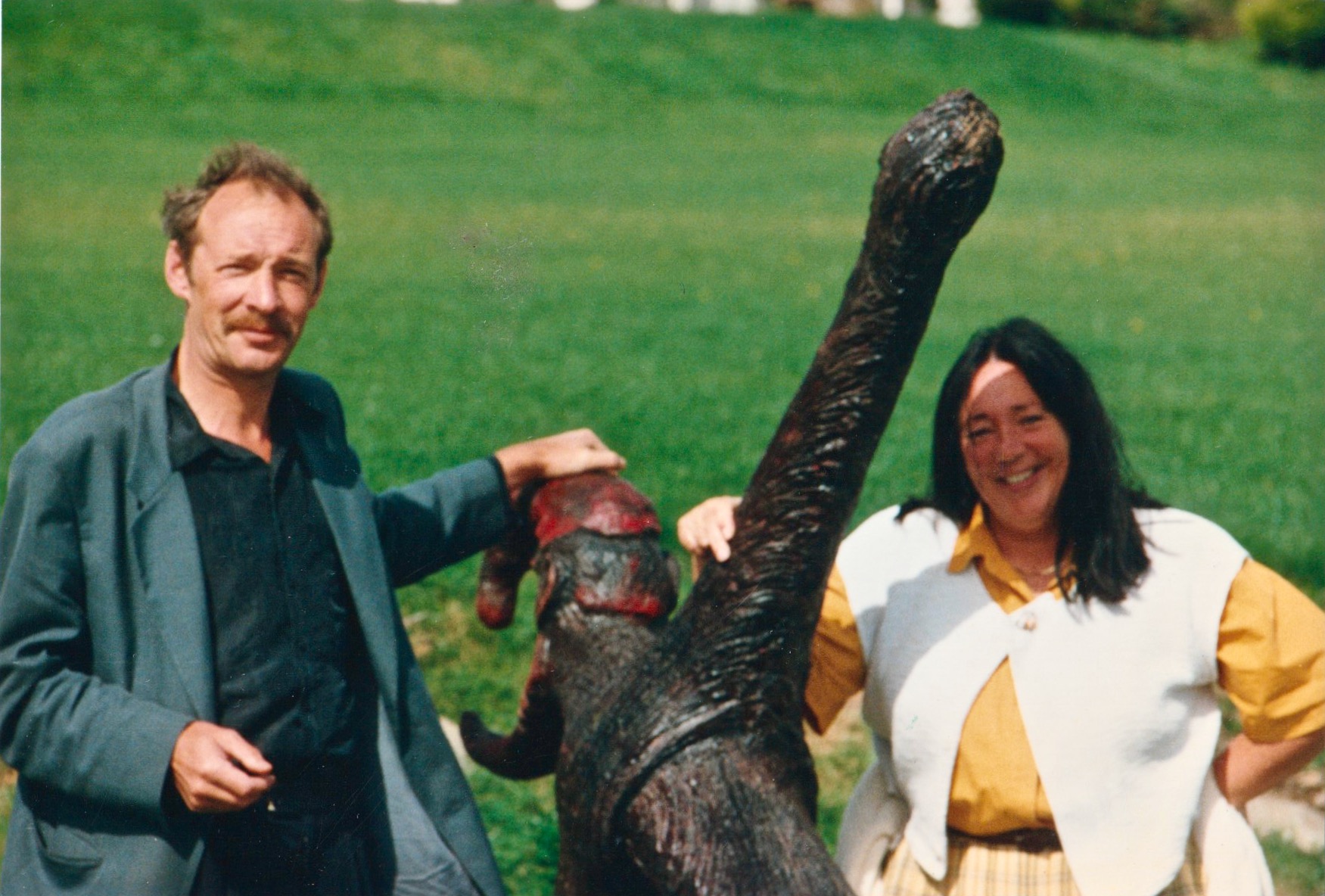
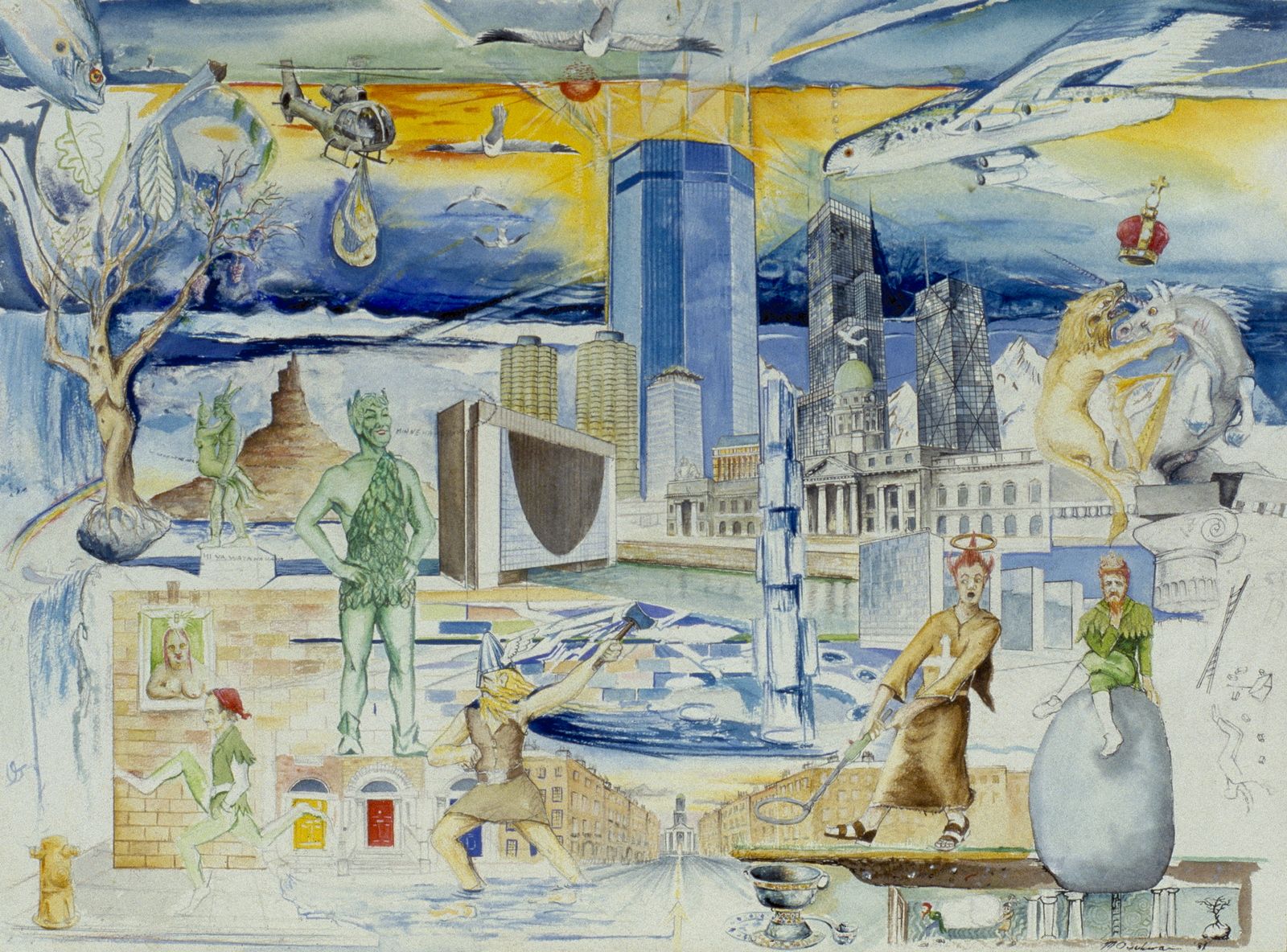
Upper – Michael O’Sullivan at the launch of his ‘Anchor’ sculpture, together with Christine Choice, board member of WCAC. Lower – a 1982 watercolour by Michael O’Sullivan: St Brendan Discovers the Crystal Pool (IMMA Permanent Collection)

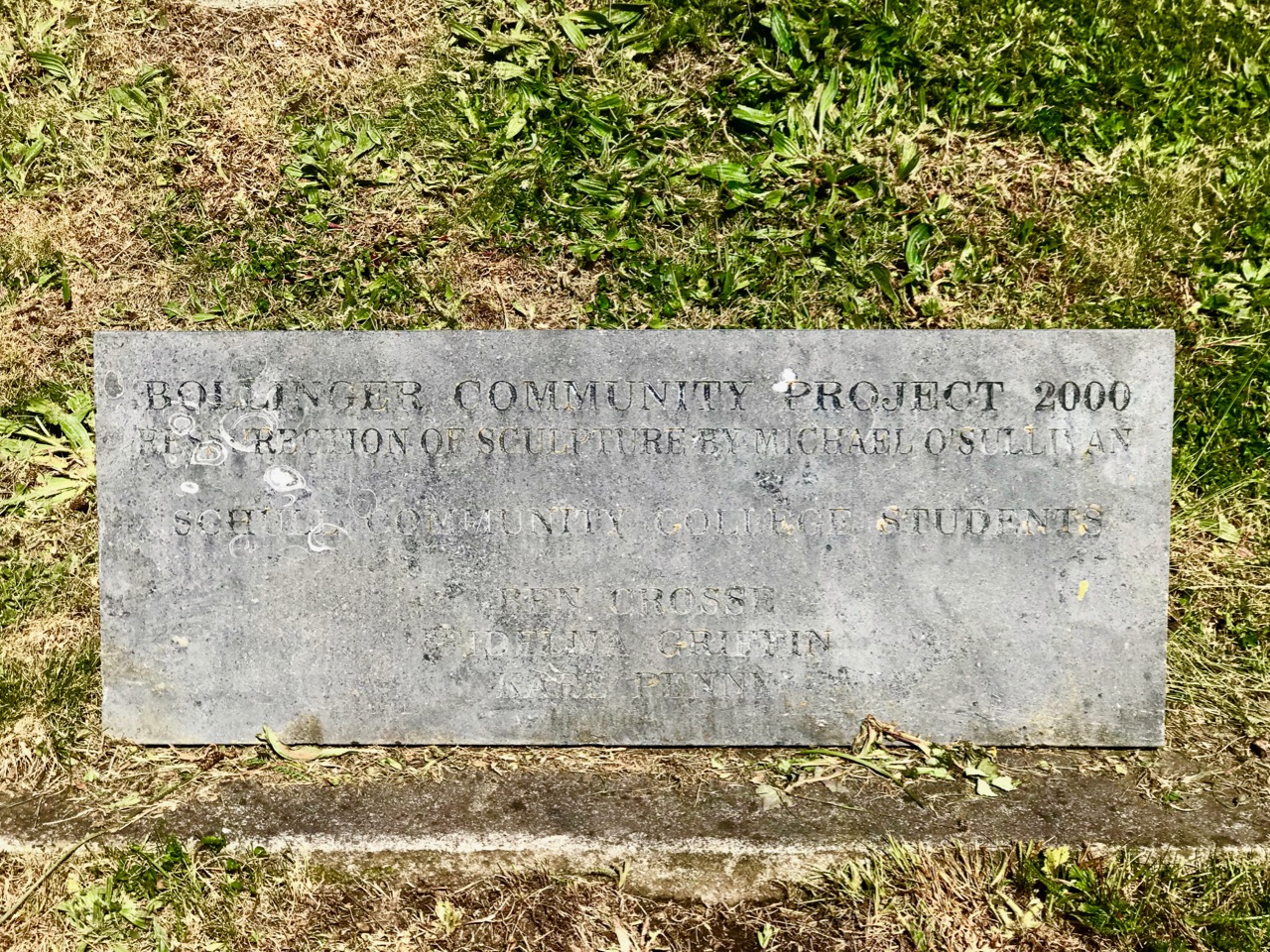
Michael O’Sullivan was born in Dublin in 1945. He gained a Diploma in Sculpture from the National College of Art and Design (NCAD), and was a lecturer there until his retirement. He has been greatly influenced in his life and art by the works of James Joyce, and is a noted scholar and lecturer on Joyce. Cóilín Murray and Michael O’Sullivan remain good friends and when the pieces of the anchor were recovered Michael came back to Schull to help in a restoration project on the sculpture instigated by a staff member at Schull College. The Anchor was reassembled and placed in its present position, where it is hopefully less vulnerable. A plaque there commemorates the 2000 ‘resurrection’ project and gives the names of the students who were closely involved in the reconstruction work.

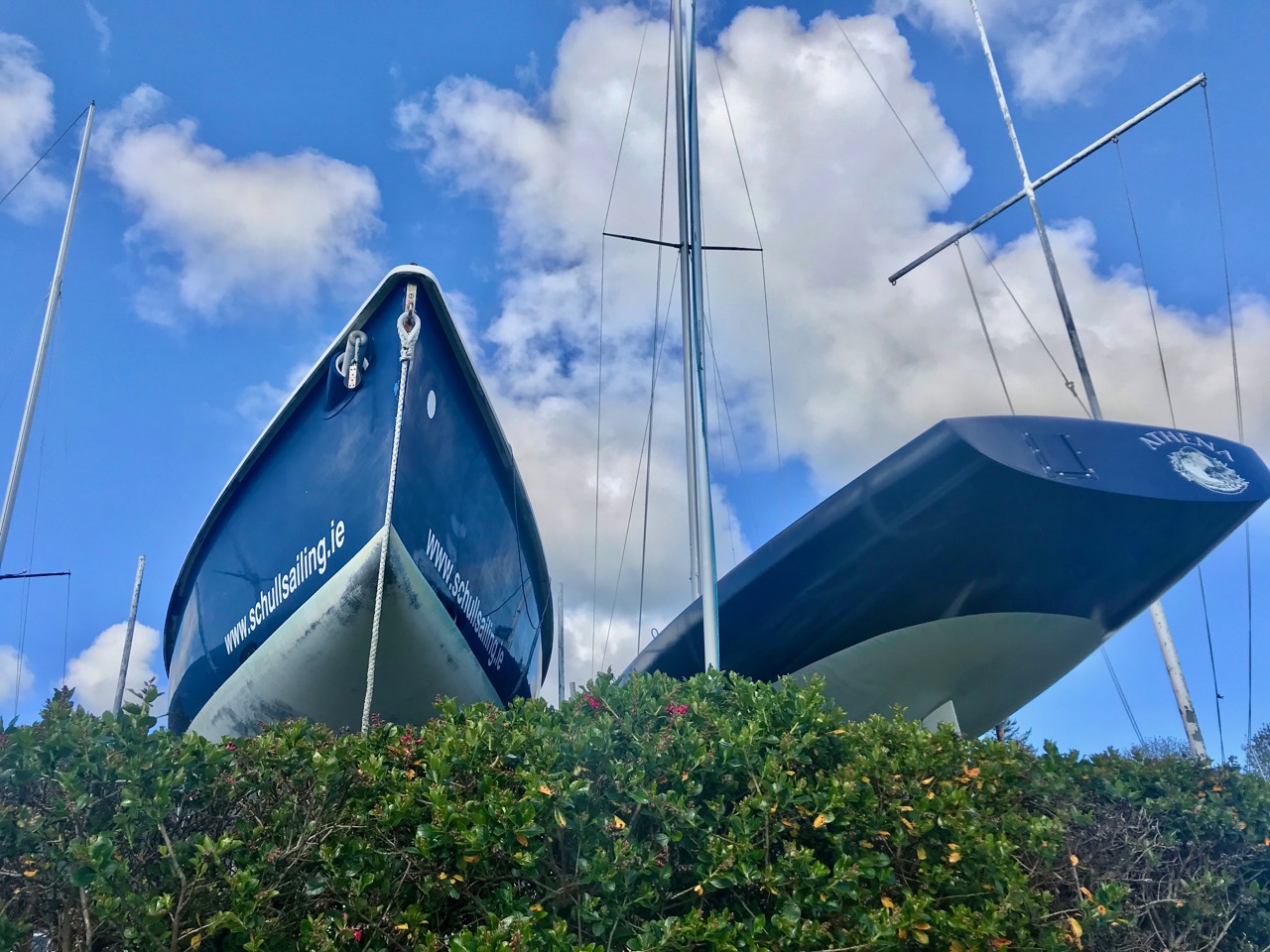
The restored Anchor is appropriately located in the context of the Schull Sailing Centre

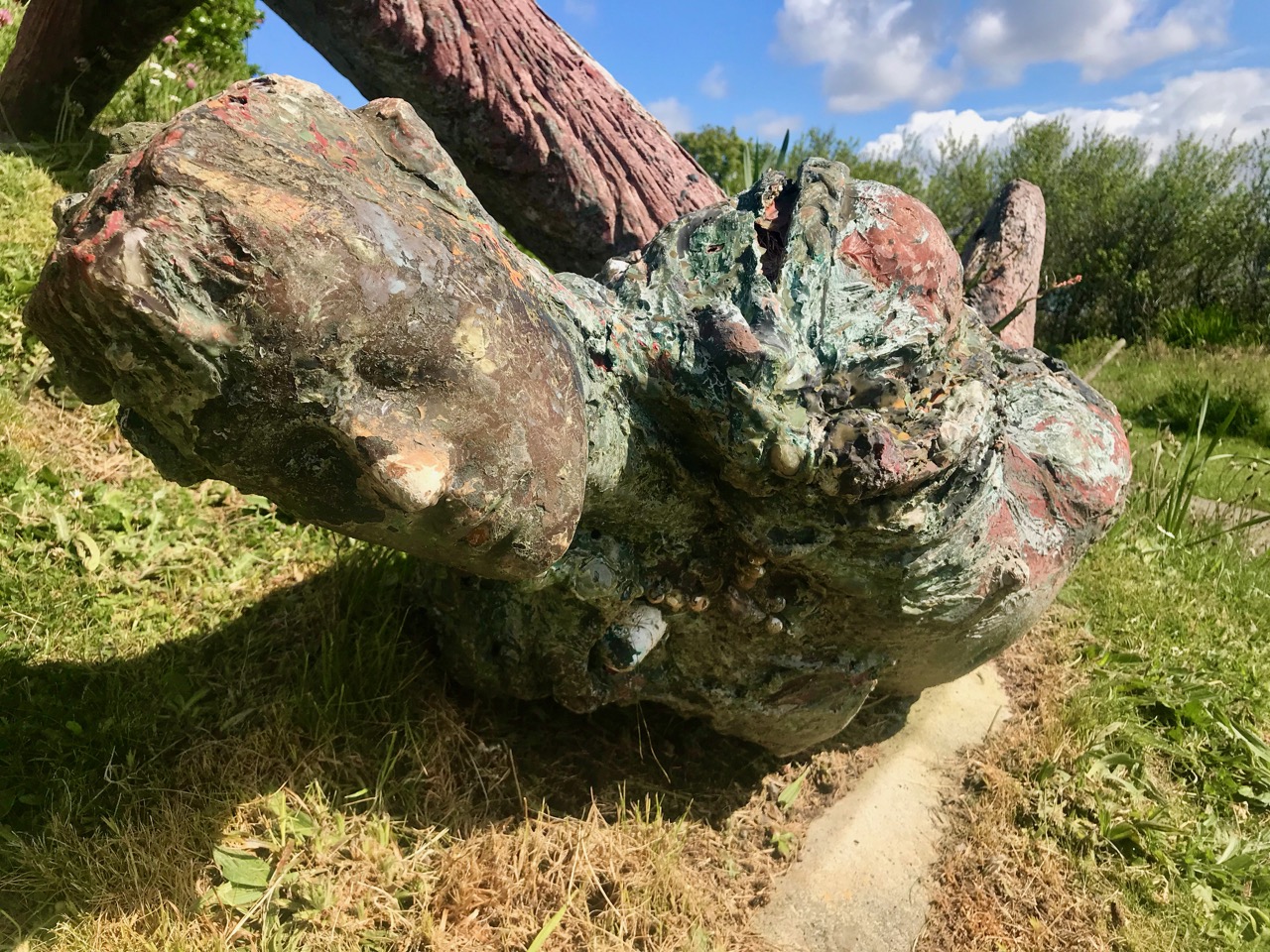
The word Lunachán – referring to the topmost part of the Anchor sculpture – is made up (by Michael)! I asked Cóilín for clarification and here is his response:

The word is an invention of his …Witty? ….
Amadán …in Irish …a bit of a fool …
Luna …the moon …
Lunachán …the reference to the moon and the howling at the full moon etc … Most of Mick’s work has layers and riddles…

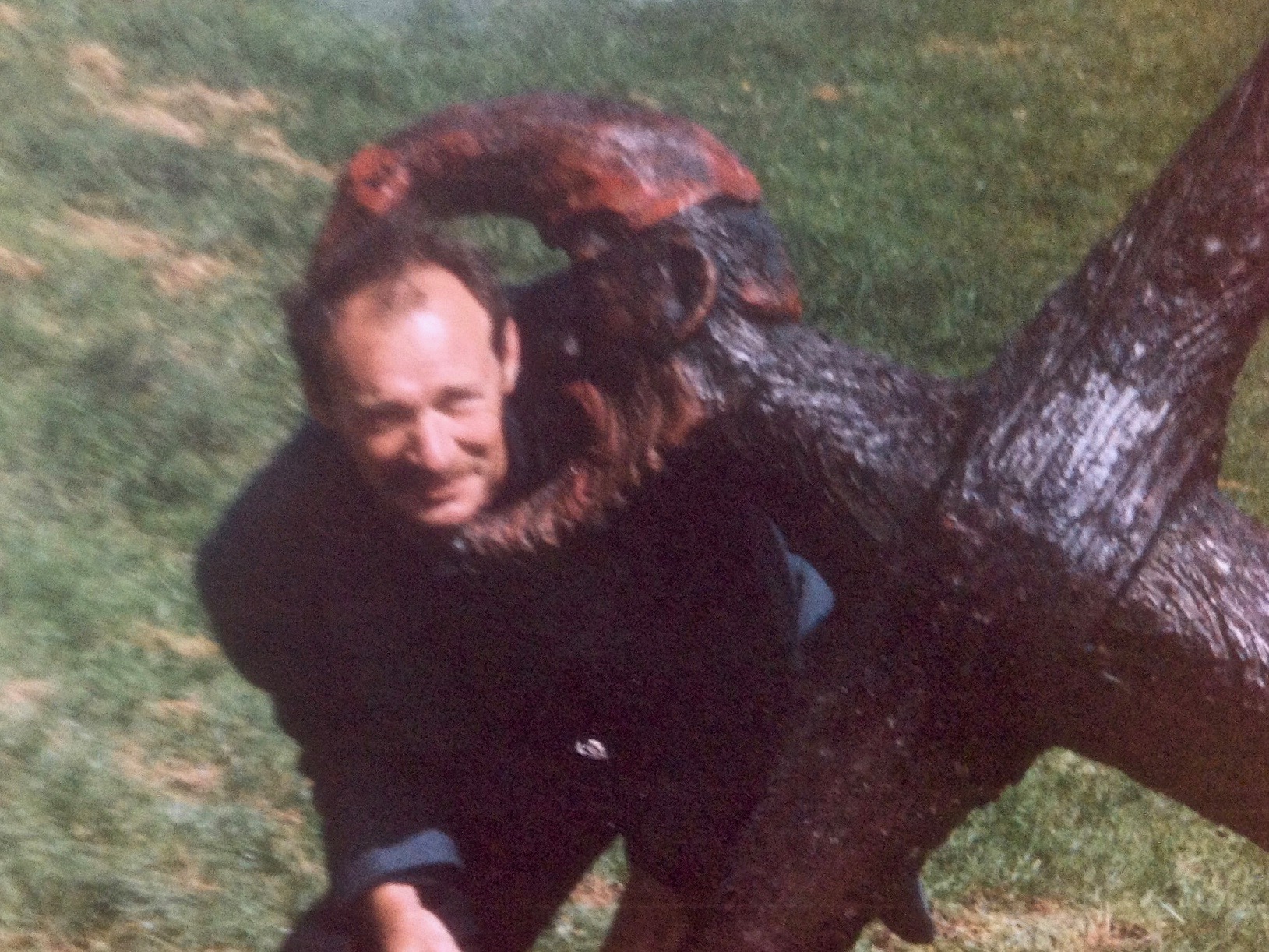
Upper – the Lunachán today. Lower – Michael O’Sullivan and Lunachán – shortly after the sculpture was first installed in Schull

It’s good that the community in Schull was sufficiently enthusiastic about the restoration of this sculpture to support its reinstatement in the Millennium year. Twenty years later, perhaps we should consider a revival of the West Cork Sculpture Trail with new artwork to link in to the few surviving pieces? The overall Living Landscapes project – of which this was just one part – helped to give the West Cork Arts Centre its still vigorous identity and national reputation. Surely – when tourists return to the Wild Atlantic Way post-Covid – such a venture could provide a stimulating cooperation between art and landscape?

Schull-Under-The-Mountain, spring 2020

April Flowers in the Magic Forest

Enchanting – that’s the word that comes to me when I think of The Magic Forest. Although at first I was drawn to the quirky art installations (see our post from five years ago), as I’ve become more interested in wildflowers I like to photograph them there, since it’s such a special habitat. So here is a selection of early spring photographs from the Magic Forest, to illustrate what a diverse and attractive plant life it hosts.

In their beautiful and comprehensive book, The Wild Flowers of Ireland: The Habitat Guide, Declan Dooge and Carsten Krieger describe what to expect in a native woodland. First and foremost, there are in fact very few native woodlands left in Ireland, of the kind of oak forests we might have seen in medieval times. However, the little woods that surround the Magic Forest fit their definition of an acid-soil natural woodland, with trees not so dense that light cannot penetrate, and lots of moisture underfoot giving ferns and mosses (below) a friendly environment. A visit to an undamaged native woodland, they state, is a remarkable experience.

While the Magic Forest is probably not as pristine and undamaged as it could be (it’s in the middle of farmed land, after all) it has been left to flourish intact for many years, thanks to the stewardship of Thomas Wiegandt, whose interventions have only added to the fairytale quality of the woods.

What we see inside is an excellent representation of an Irish woodland habitat in as unmanaged a situation as possible. Walking through it in early spring is an ethereal experience – I defy you not to be moved.

That is not to say that all the plants we find in it are all truly native – for example, the Yellow Archangel flower that flourishes here (above) is a garden escape that has naturalised widely across Ireland. There is a native Archangel, but we know this one is the introduced variety because of the silver markings on the leaves.

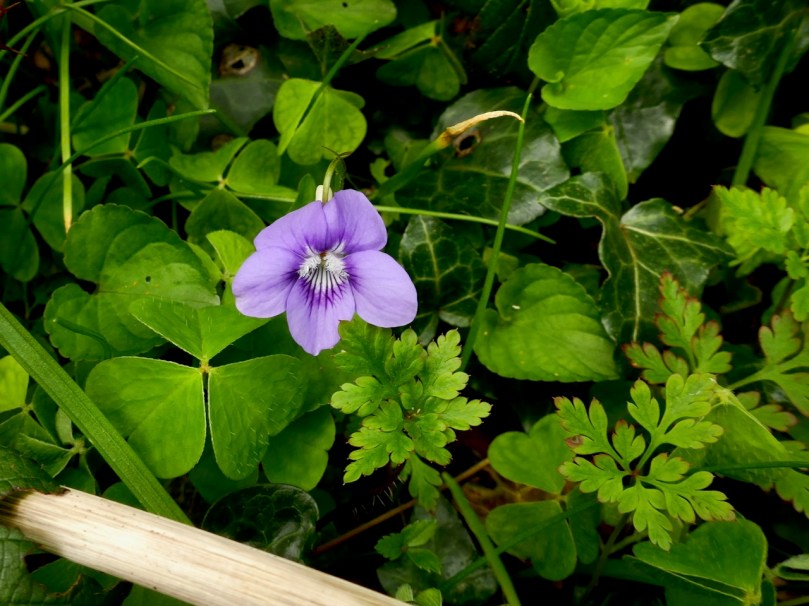
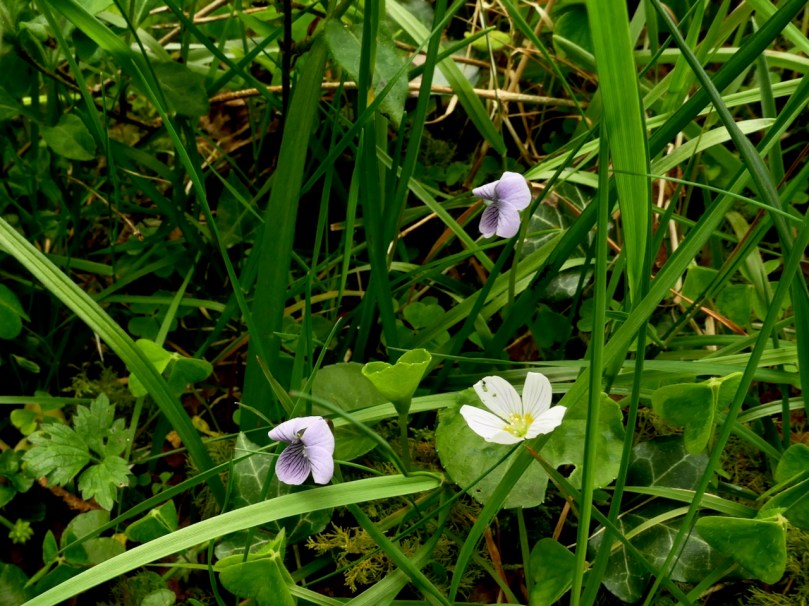
Dooge and Krieger point to the presence of Early Dog-violet (they call it Wood Violet) in woodland, but in fact what I have found in the Magic Forest are two types of violet – the Common Dog-violet (above) which is everywhere in West Cork right now, and the much less-seen Marsh Violet (below).

Because the Common Dog-violet can turn as it ages from its normal deep blue to the same pale lilac colour as the March Violet, you have to keep a sharp look-out for the differences, but once you see them together they are unmistakable.

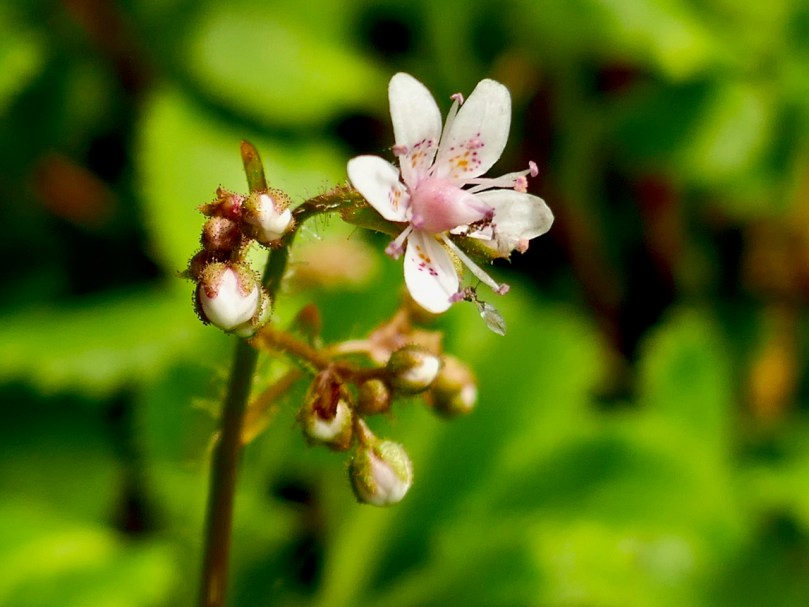
One of the nicest aspects of walking in woodland is the soft carpet underfoot. In The Magic Forest this tends to be a bed of Opposite-Leaved Golden-saxifrage (above), which loves damp dark places. This is an interesting flower in that it has no actual petals. The Sepals are bright green and unfold to reveal the stamens which are brown-tipped inside their little bed but shed the brown cover and turn bright yellow when fully open.

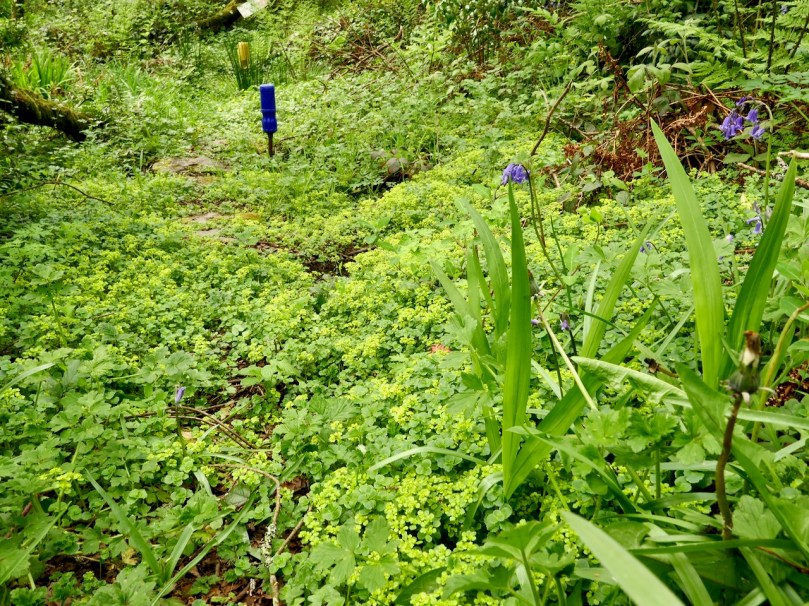
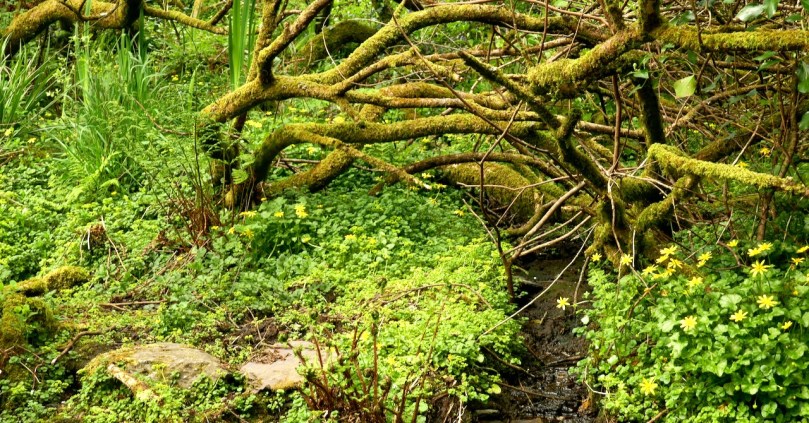
Getting right down on the forest floor (a little undignified and hard on clothing) is well worth it as all kinds of flowers are emerging up through the undergrowth. Celandines and Bluebells mingle above, while Celandines and Wood-sorrel cover the banks of a tiny stream (below).

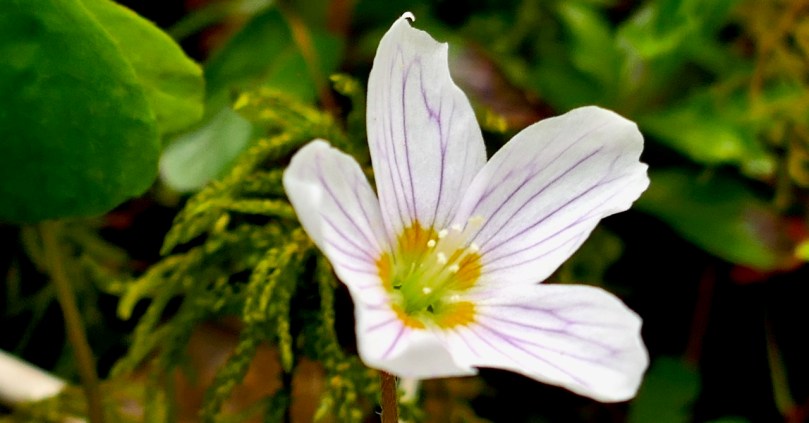
At this time of year, early spring, one of the most attractive species is Wood-sorrel, with its distinctive shamrock-shaped leaves. The delicate purple veining on the petals, leading down to a golden-yellow centre rewards close scrutiny.

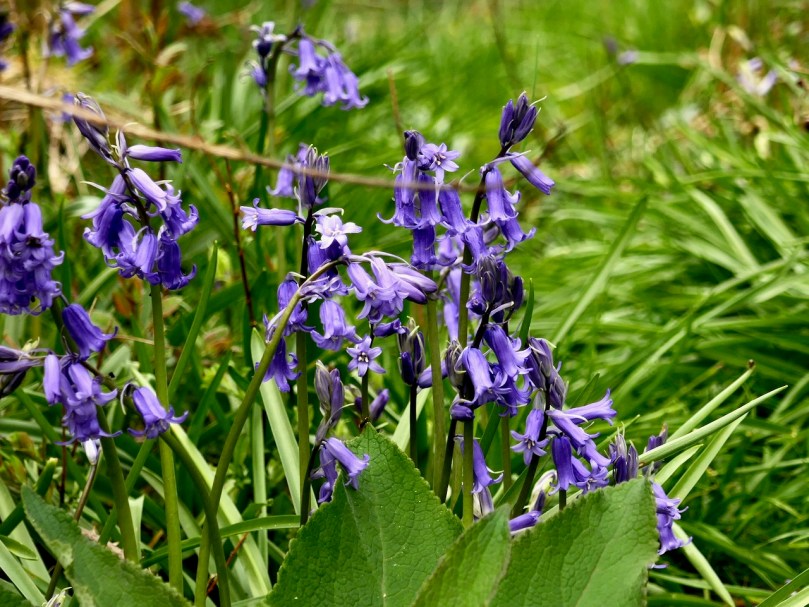
Of course, at this time of year, what we all love to go into woodland to see are the Bluebells and The Magic Forest abounds in native Bluebells. If you are wondering what the differences are between Native and non-Native (Spanish) Bluebells, here’s how to tell: we know these are native Bluebells because they have a lovely scent, their petals curl back, the flowers only grow on one side of the stem (the weight of which gives them that characteristic curve over), the anthers are white and the leaves are quite fine. All of these points can be observed in the photograph below – except for the scent! 

Bugle is another flower that loves this kind of environment, although it’s not quite as specialised as the Bluebell – I have seen it on hedgebanks as well where it might be getting moisture but not a lot of shade. Below, the two enjoy each other’s company.

Zoë Devlin, on her website Wildflowers of Ireland (my go-to resource, both print and online, and the best and easiest all round book to introduce you to Irish wildflowers) tells us, In his ‘Complete Herbal’ of 1653, Nicholas Culpeper wrote of Ajuga reptans [Bugle]: ‘if the virtues of it make you fall in love with it (as they will if you be wise) keep a syrup of it to take inwardly, and an ointment and plaster of it to use outwardly, always by you’.  A hand lens is a must for this flower – close up the tiny orchid-like flowers open wide to show their tonsils.

in Southwest Ireland we have a special group of plant species known as the Lusitanian Flora. Here’s a good explanation of what this means from Wikipedia:

The Lusitanian flora is a small assemblage of plants that show a restricted and specific distribution in that they are mostly only to be found in the Iberian Peninsula or southwest Ireland. Generally, the plants are not found in England or western France even though suitable habitat almost certainly exists in those regions. . . . This biogeographical puzzle has been a topic of academic debate since the middle of the 19th century. Conflicting, and as yet unresolved theories centre on whether the Irish populations are a relict, surviving from before the last ice age or whether they have been transported there in the last 10,000 years.
For a complete list of the Lusitanian species, take a look at my other favourite website – Irish Wildflowers by Jenny Seawright.

This is a longwinded way to introduce St Patrick’s Cabbage, the Lusitanian wildflower that crops up in The Magic Forest. The photos I have of it in the forest were taken just after it had started to bloom (above) so the flowers are yet sparse (below). You can see photographs of them in a more advanced phase in this post.

The final flower I want to highlight is the Cuckooflower, which is found in abundance in the fields all around the Magic Forest and to my surprise even inside it, although this is not typically a woodland flower. It likes the damp but it generally prefers open meadows. Besides being delightful, it is where the Orange-tip Butterfly likes to lay its eggs so look out for tiny orangey eggs on the stems. The flower varies in colour from almost pure white to a deep pink.

There is a LOT to see in the Magic Forest – once we are all able to travel again I highly recommend a walk in it (see our original post for directions) – at any time of year. You won’t be disappointed. And thank you, Thomas, for this gift to West Cork!

Robert chose to write about the Magic Forest too this week, but from quite a different perspective! Here’s his post, Mixed Magic Messages.


Mixed Magic Messages

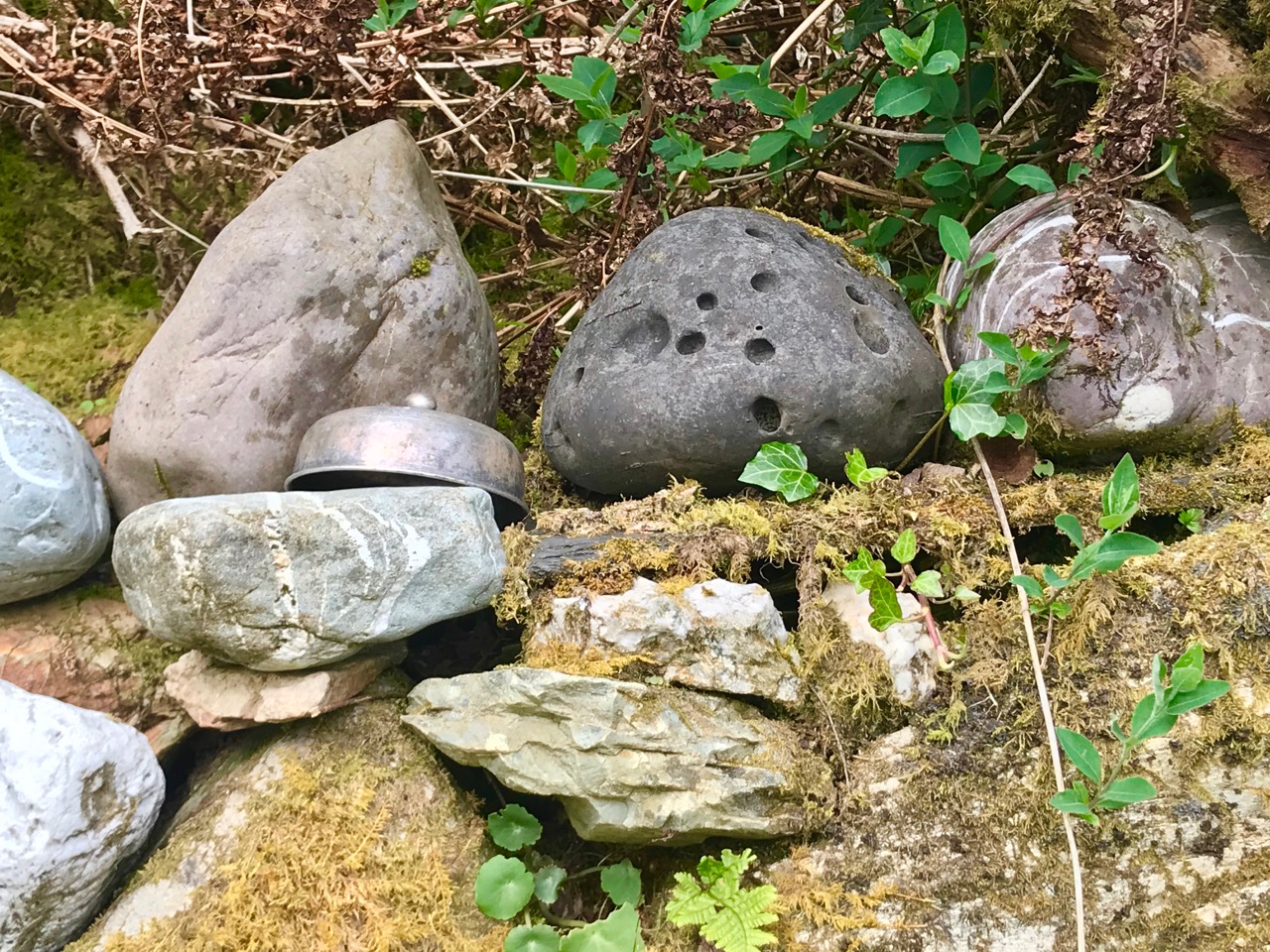
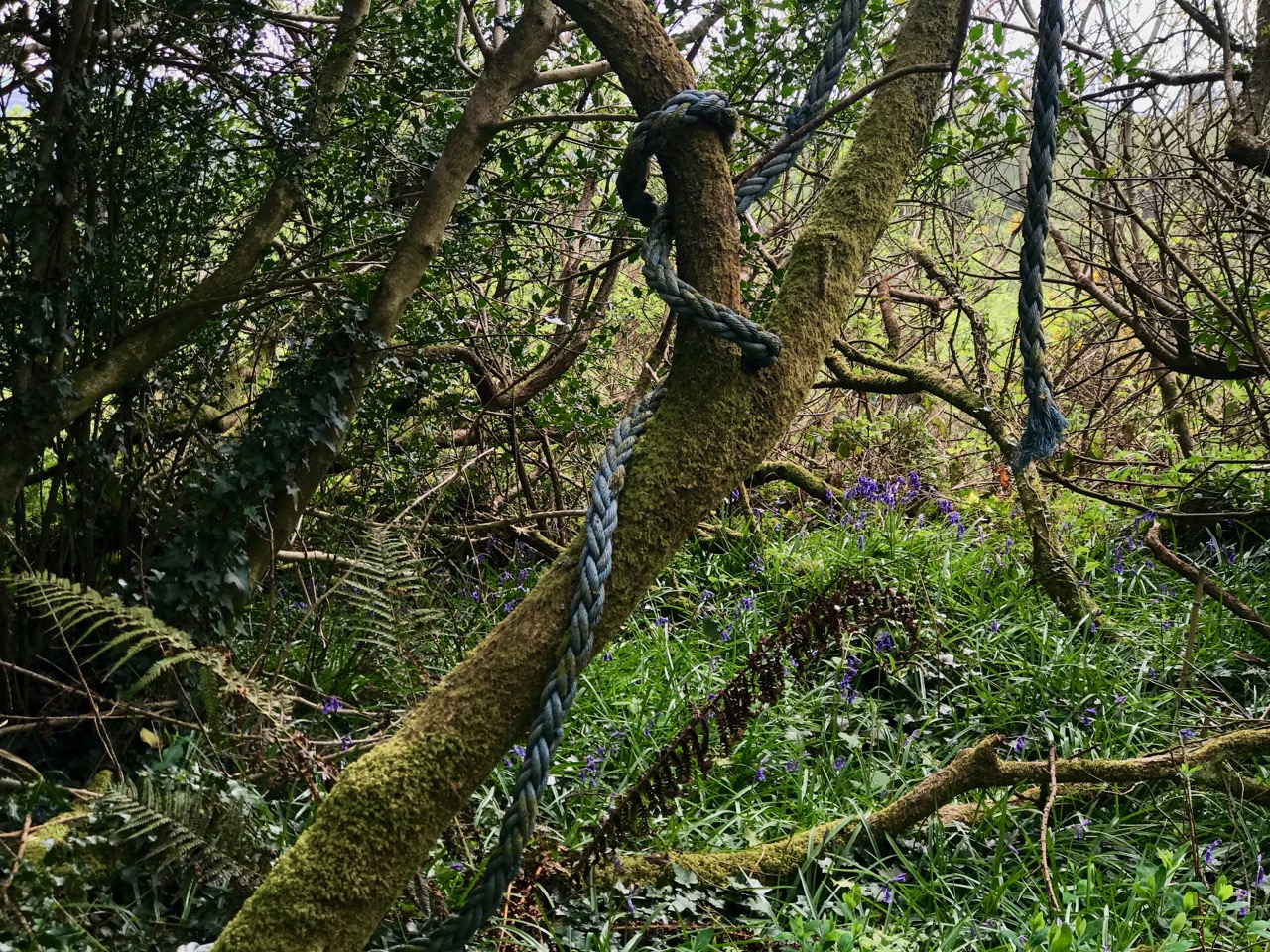
We first visited Thomas Wiegandt’s Magic Forest exactly five years ago. It’s just round the corner and over the hill from Ballydehob. As time has passed the walk has matured and mellowed: it’s the most picturesque and atmospheric place now – true magic! Thank you, Thomas, for creating this and for allowing anyone to access it (subject to lockdown limitations, of course)…

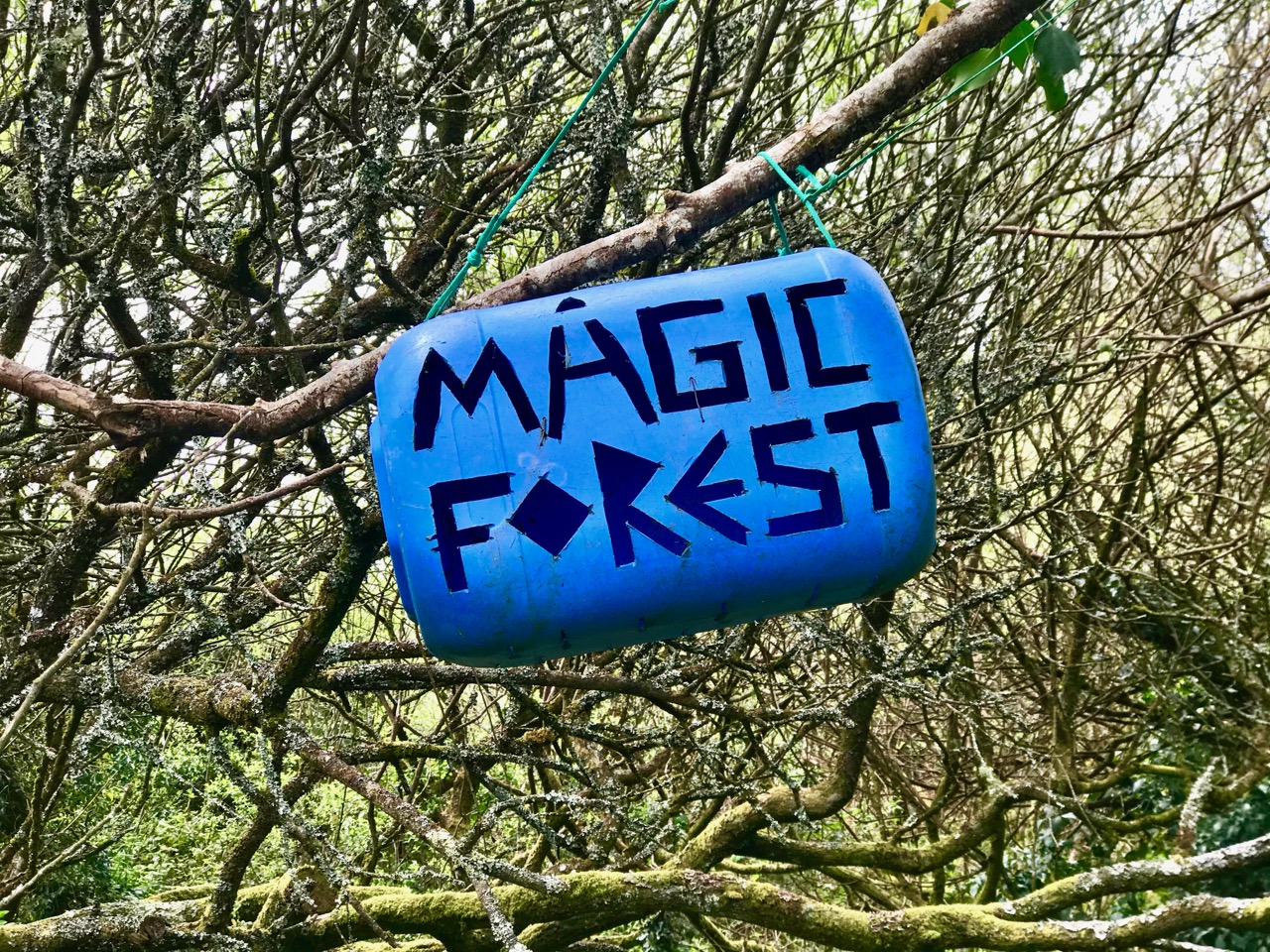
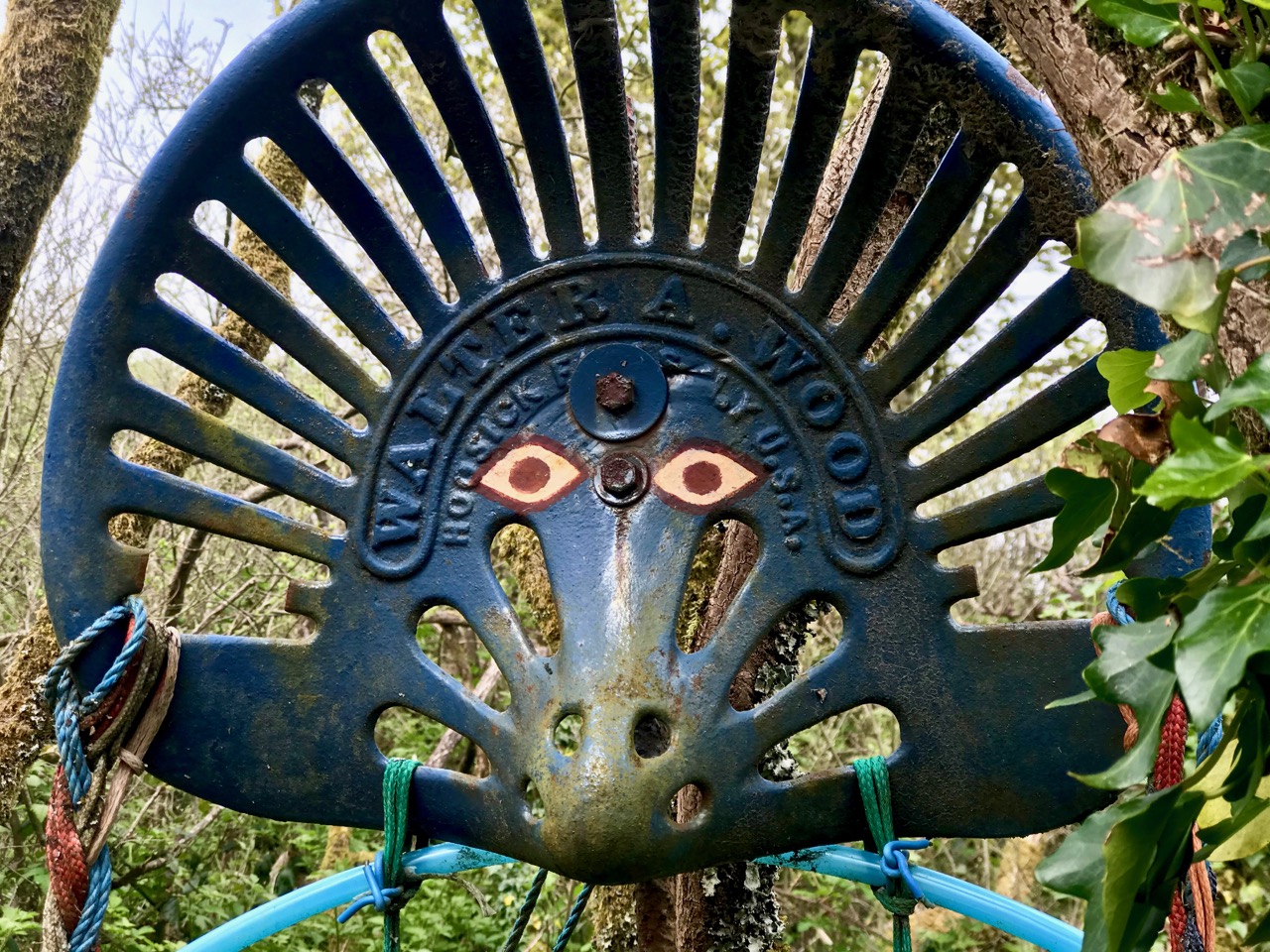
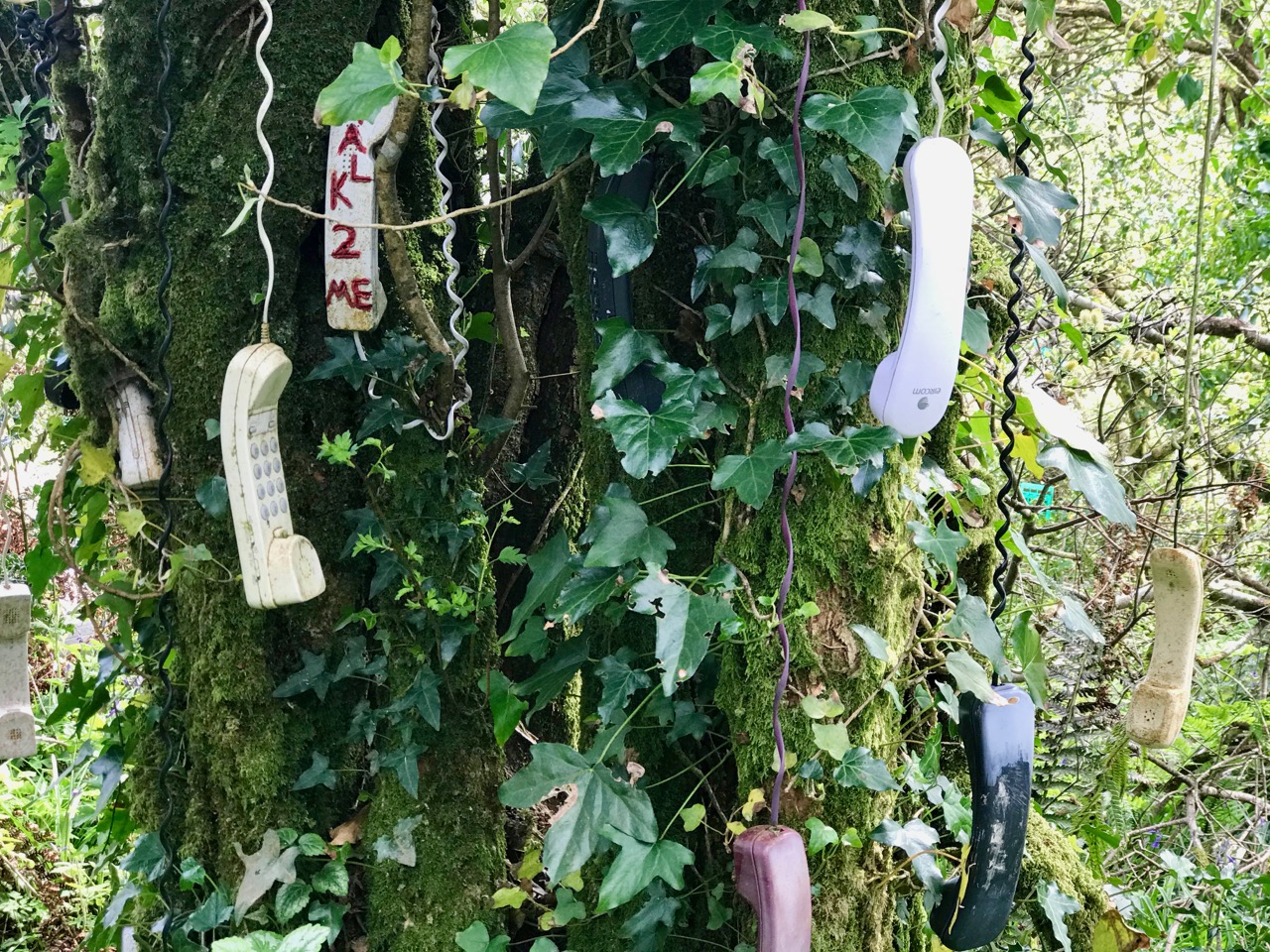
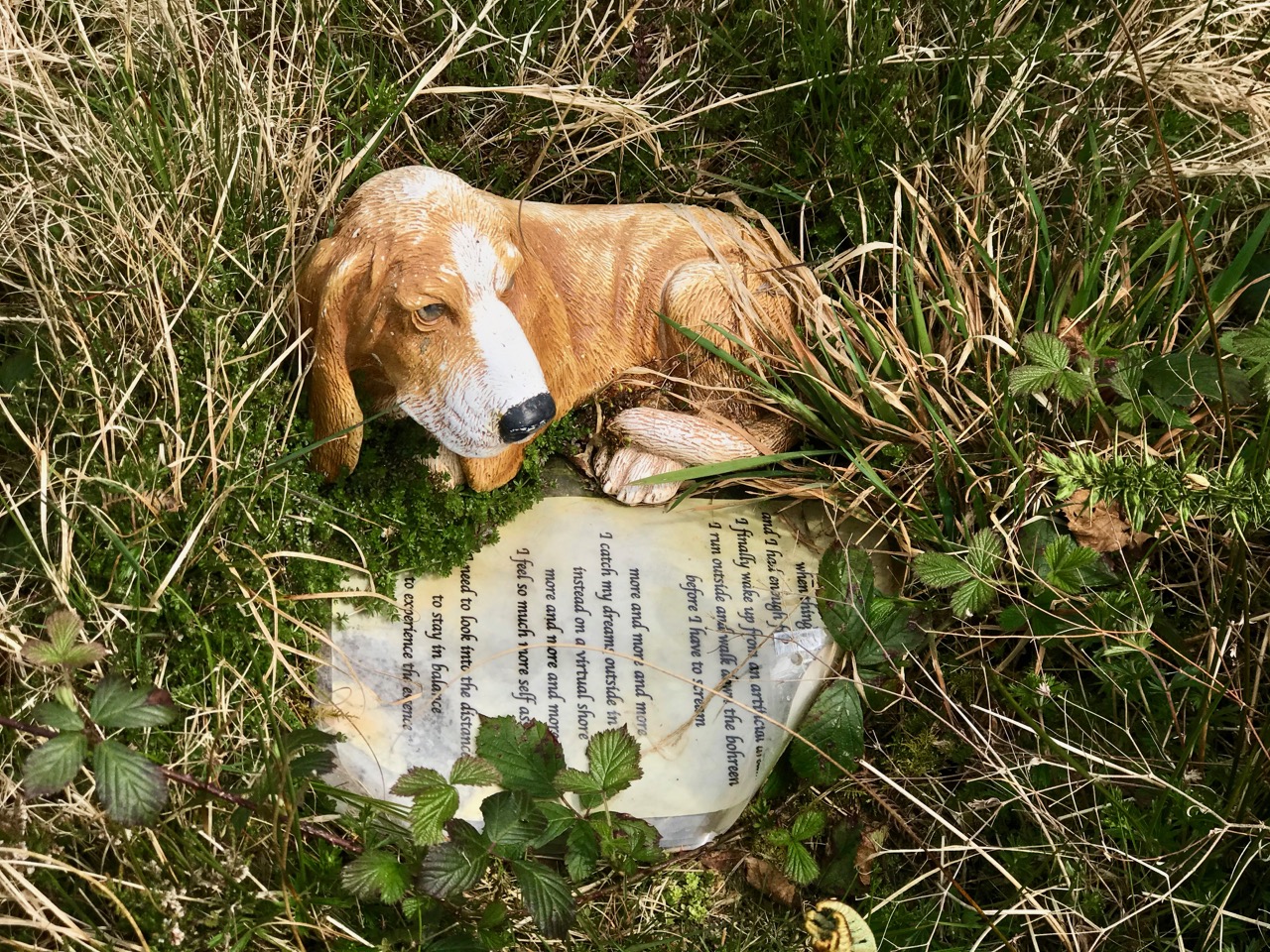
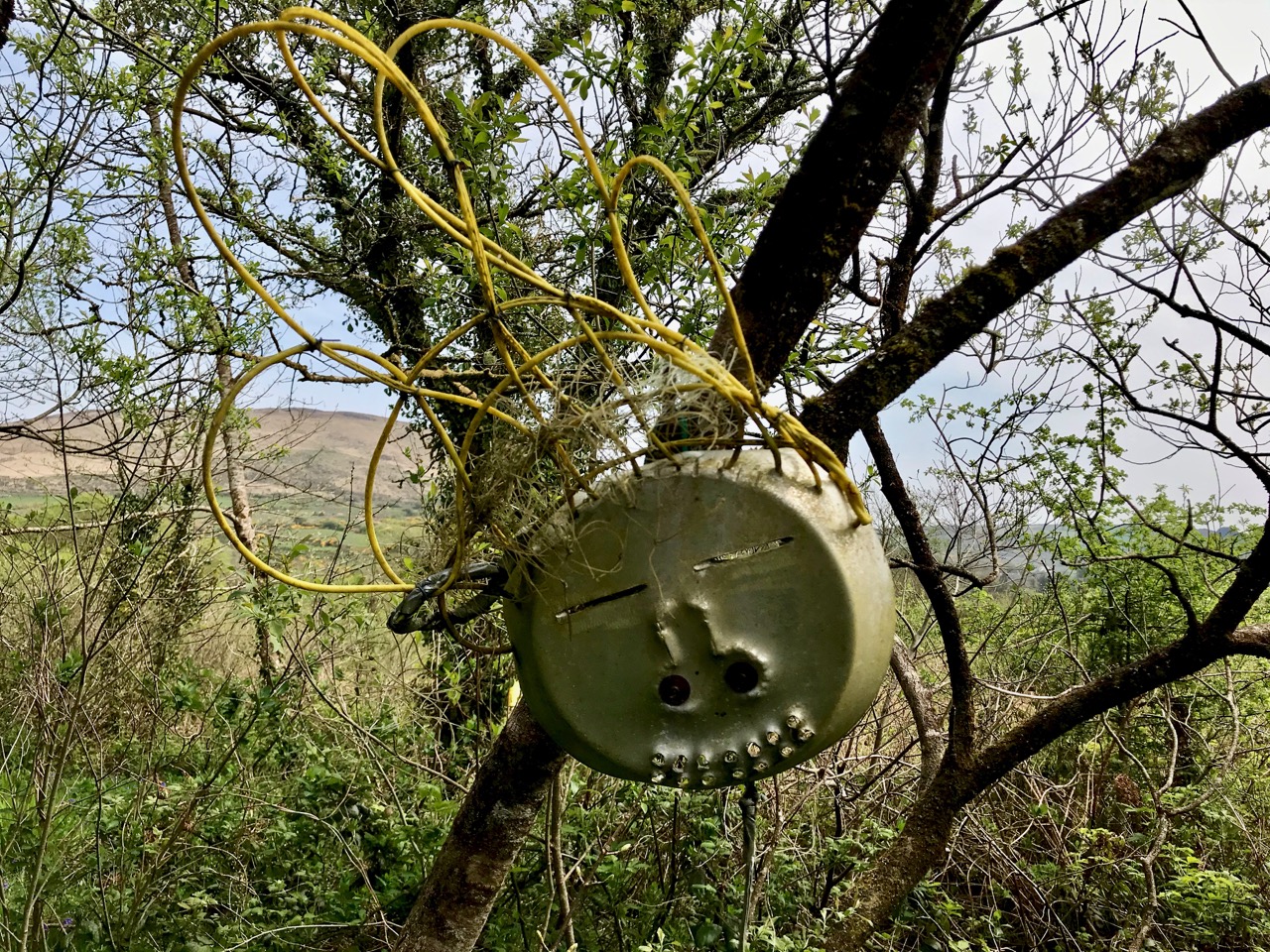
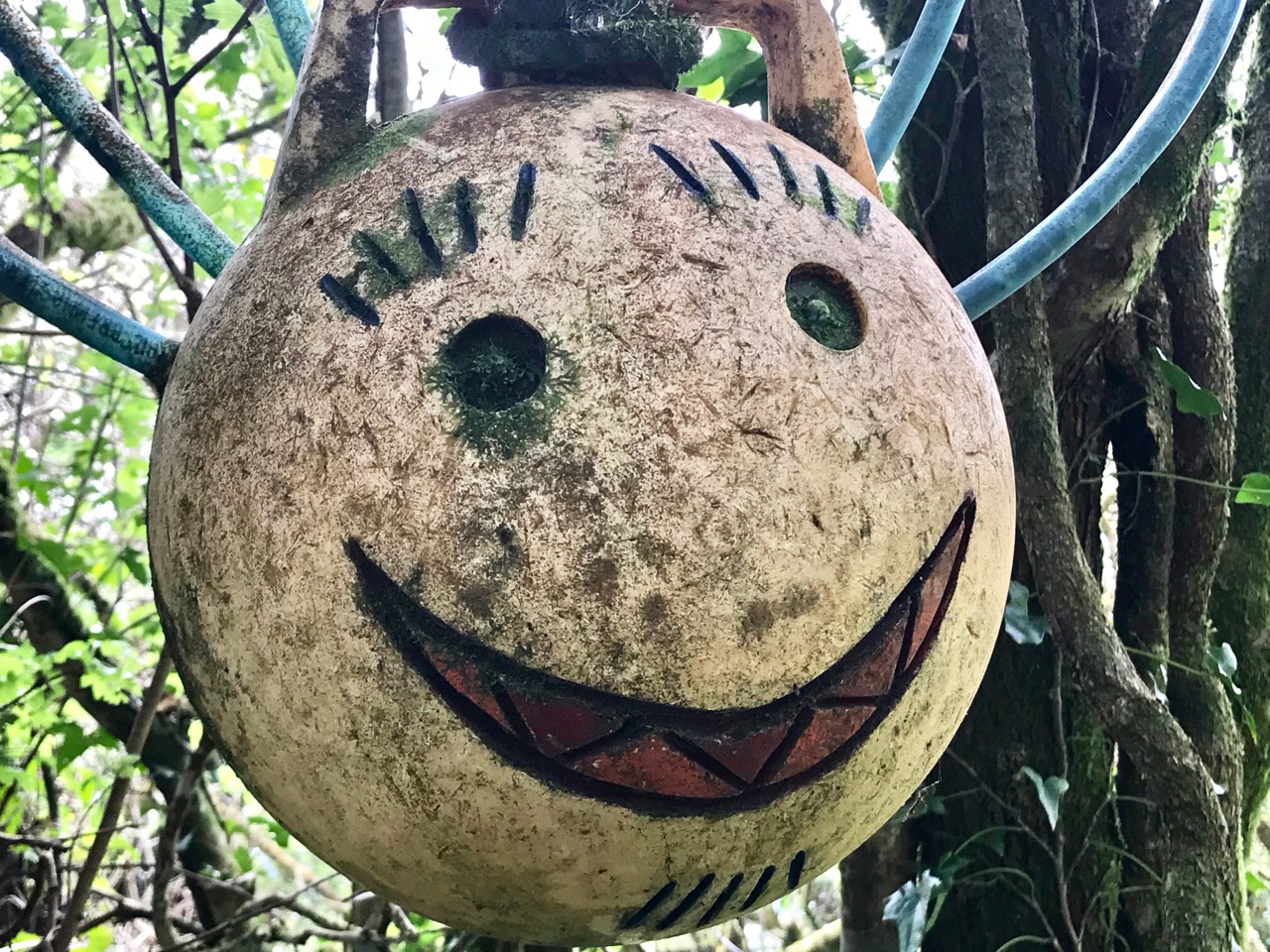
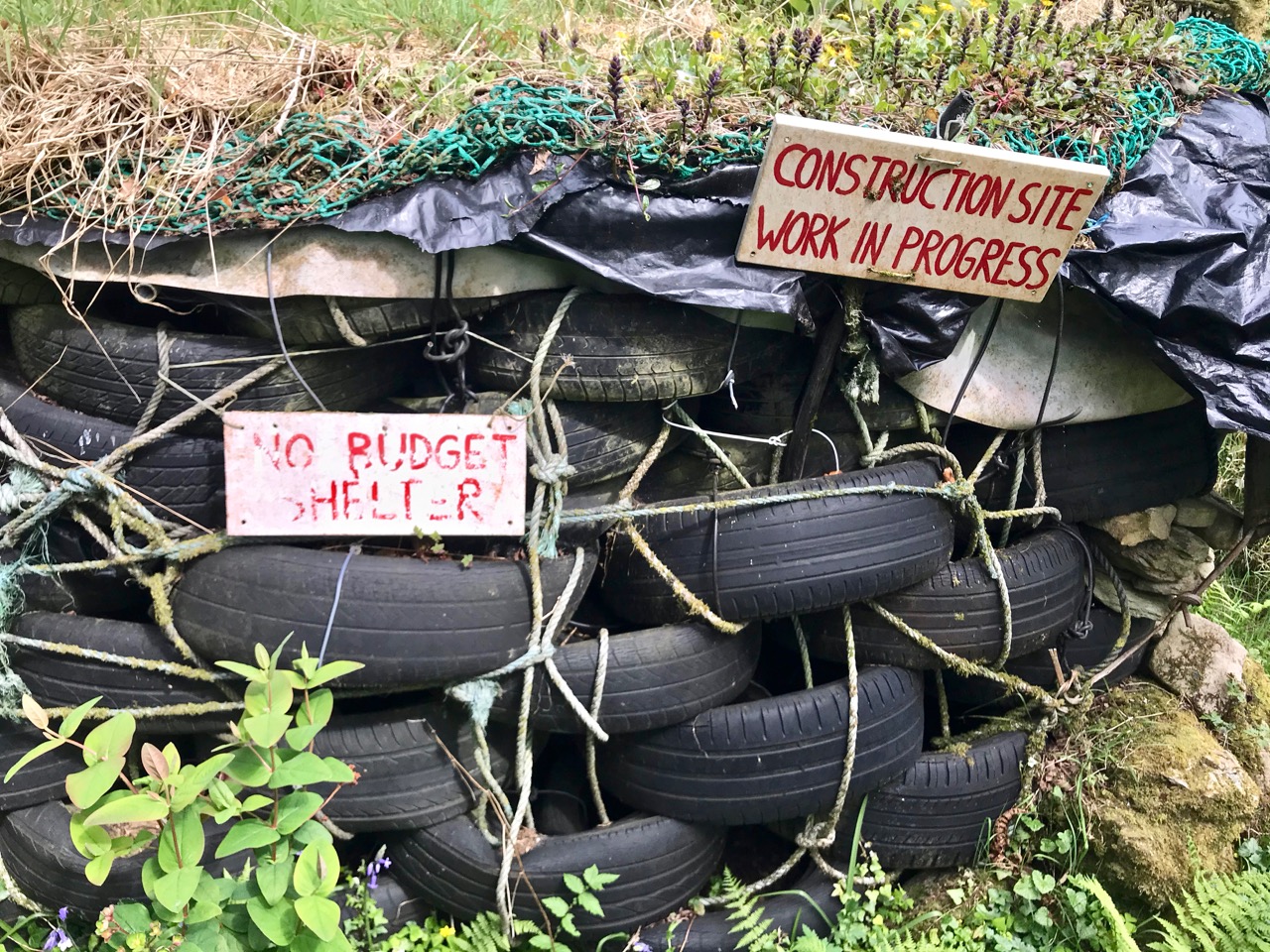
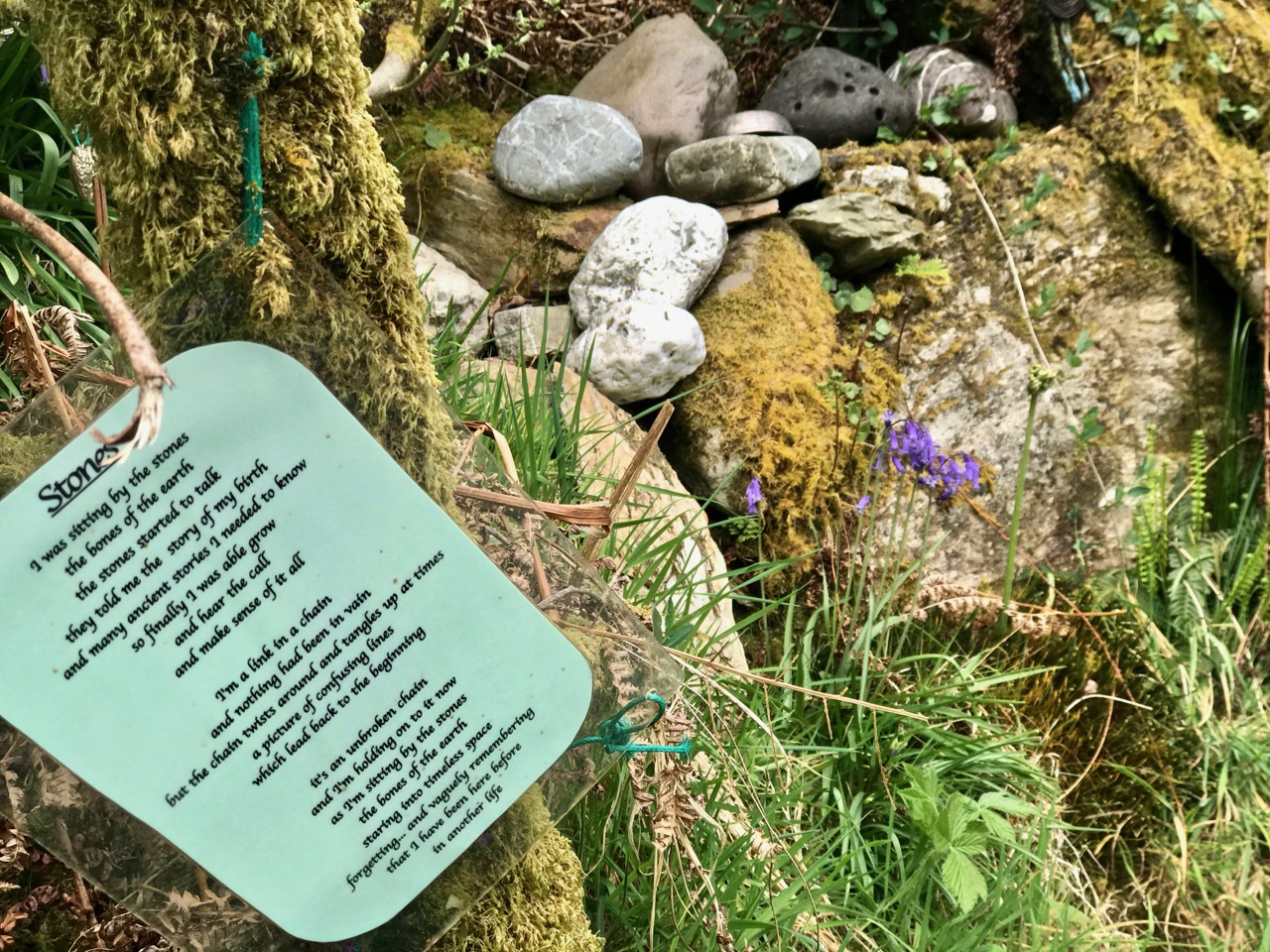
As a connoisseur of Irish signs and signage (have a look at my previous posts over the years), this walk is for me a delight and an abundant source of tangible examples from the world of human communication. There are explicit and comprehensible signs, enigmatic ones, symbolic messages, and allegories. It doesn’t matter whether we understand them, or even relate to them personally: it’s just all part of the magic of the forest.

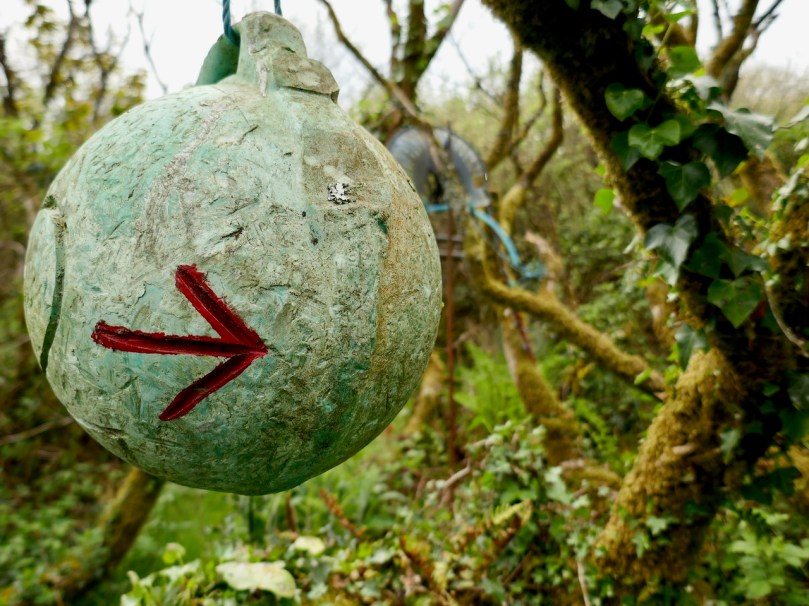
Who are the messengers? That’s really up to you to decide. here are some that I can relate to:

Each time we visit the Magic Forest, we come back with a different set of images. It’s just that there is so much here, you take in what appeals to you at a particular time.

A pantheist might find Gods and Goddesses in this forest… Others might see relics of a fading industrial age. It all depends on your point of view.

The forest itself will take over in the end. It’s certainly the case that, through the years, nature is absorbing everything. But, surely, it’s not a battle – just a mutual enhancement. Finola is definitely on the side of the natural world.

A place to think, meditate – or make music!

The whole place is a collaboration between the arts and nature. Enjoy the journey!

Behold, Their Bright Shining Future Rising Before Them

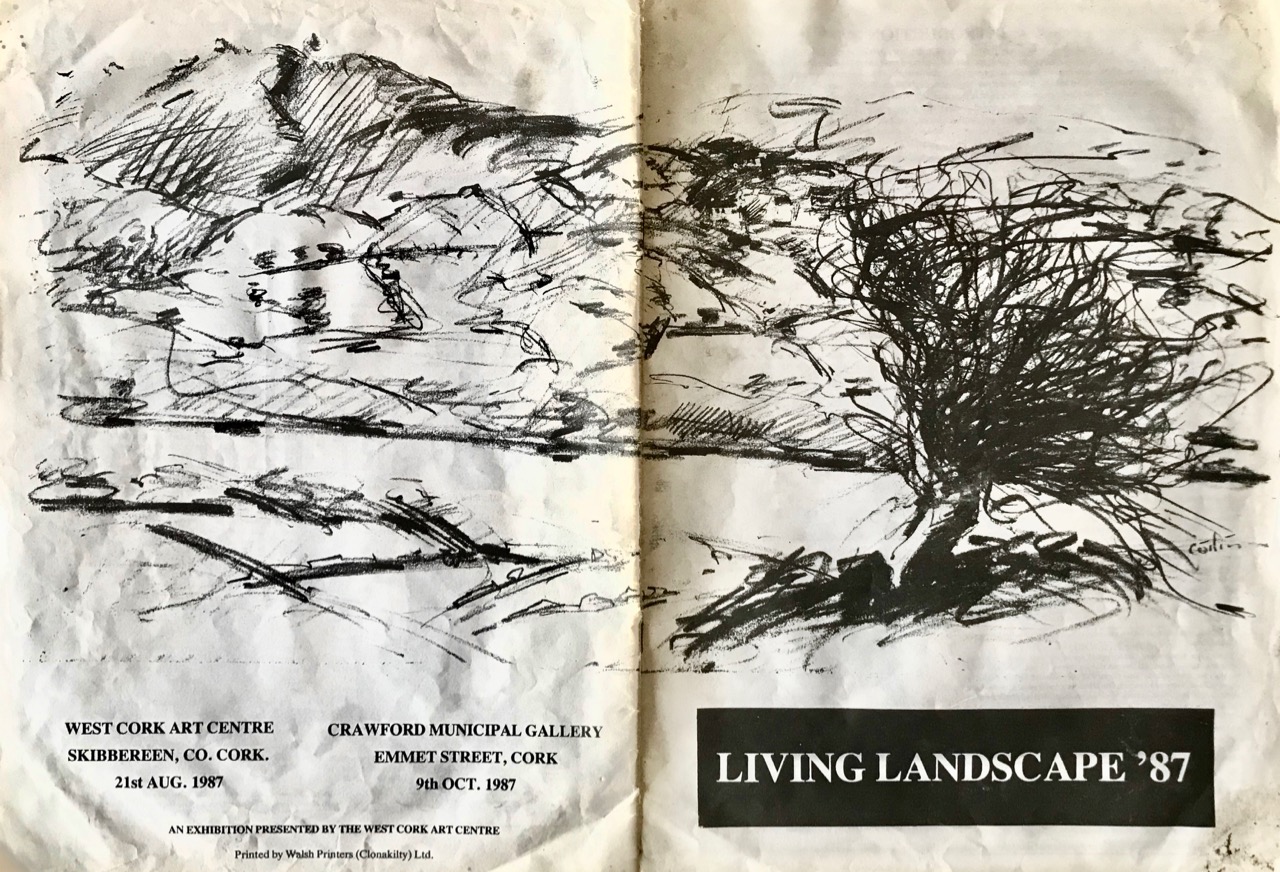
This is the first in a series of posts being published simultaneously by Roaringwater Journal and the Ballydehob Arts Museum, celebrating 33 years of an aspect of art history in West Cork. The Living Landscape series of art exhibitions ran from 1987 to 1996, masterminded and driven by the energies of Cóilín Murray. Cóilín has recently donated an invaluable file of photographs to the Museum, connected to a sculpture trail which was set up between Skibbereen and Schull in the early 1990s as part of this project. We are indebted to Cóilín for these items, and I will be using many of them in these posts.

Catalogue from the first Living Landscape exhibition, launched by the West Cork Arts centre and the Crawford Gallery, Cork, in 1987. The cover illustration is by Cóilín Murray

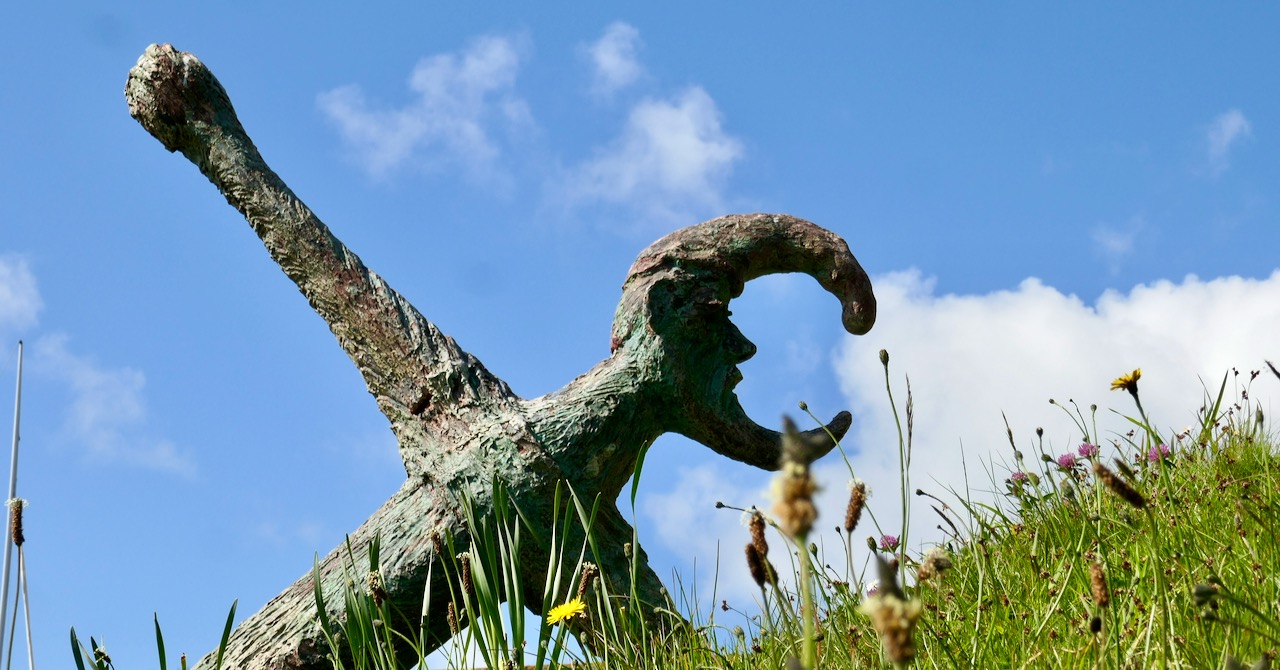
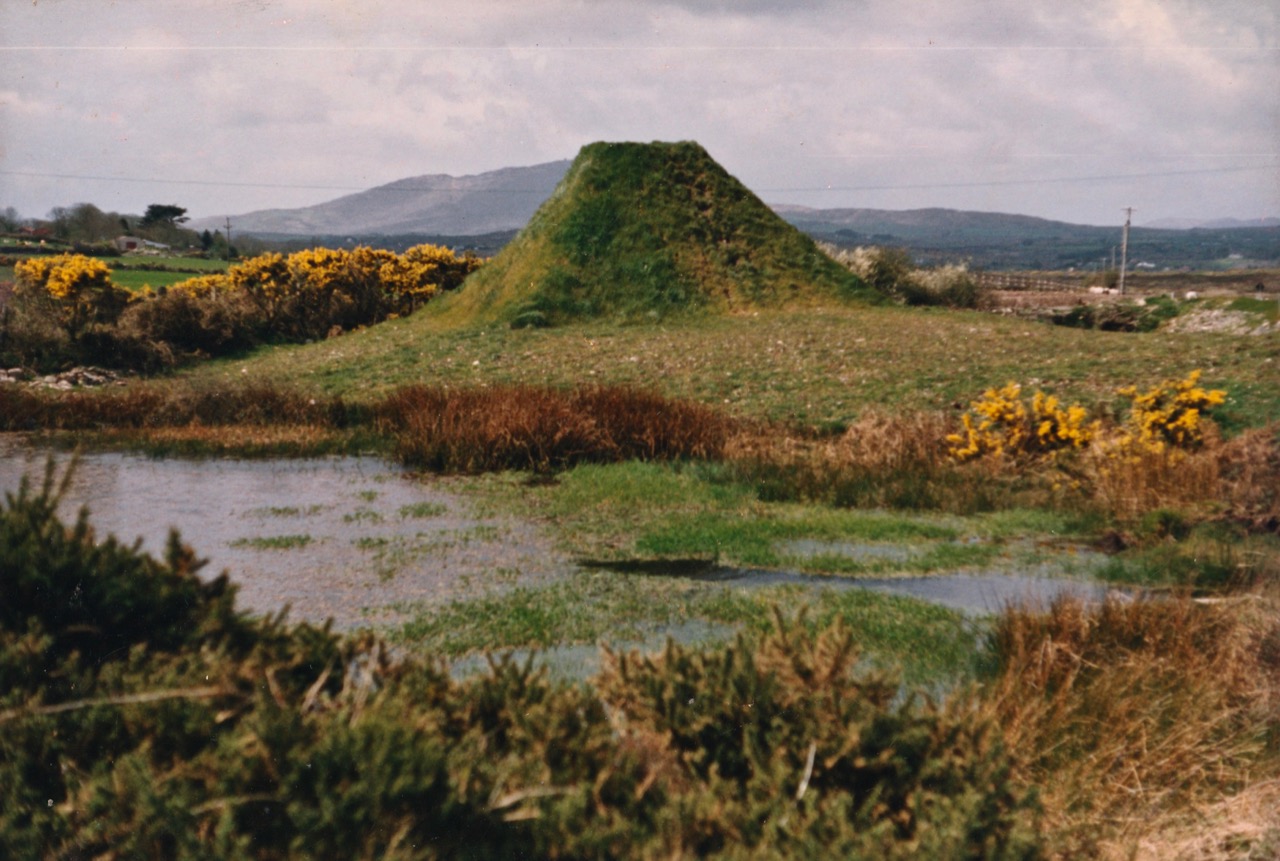
It’s fascinating to trace the sculptures which were set up more than 25 years ago along the N71 and R592 roads connecting Skibbereen with Schull. Most have vanished – some back to nature, some through destruction. But those which remain are now ‘enigmatic’ and must often excite comment and questions. This is particularly the case with the one in our header picture (taken recently), which is the central subject of today’s post. It’s a work by Michael Bulfin, born in 1939, one of Ireland’s most respected artists and a member of Aosdána (an association of artists whose work is deemed to have made an outstanding contribution to the creative arts in Ireland). The title of the sculpture is the title of this piece: Behold, Their Bright Shining Future Rising Before Them

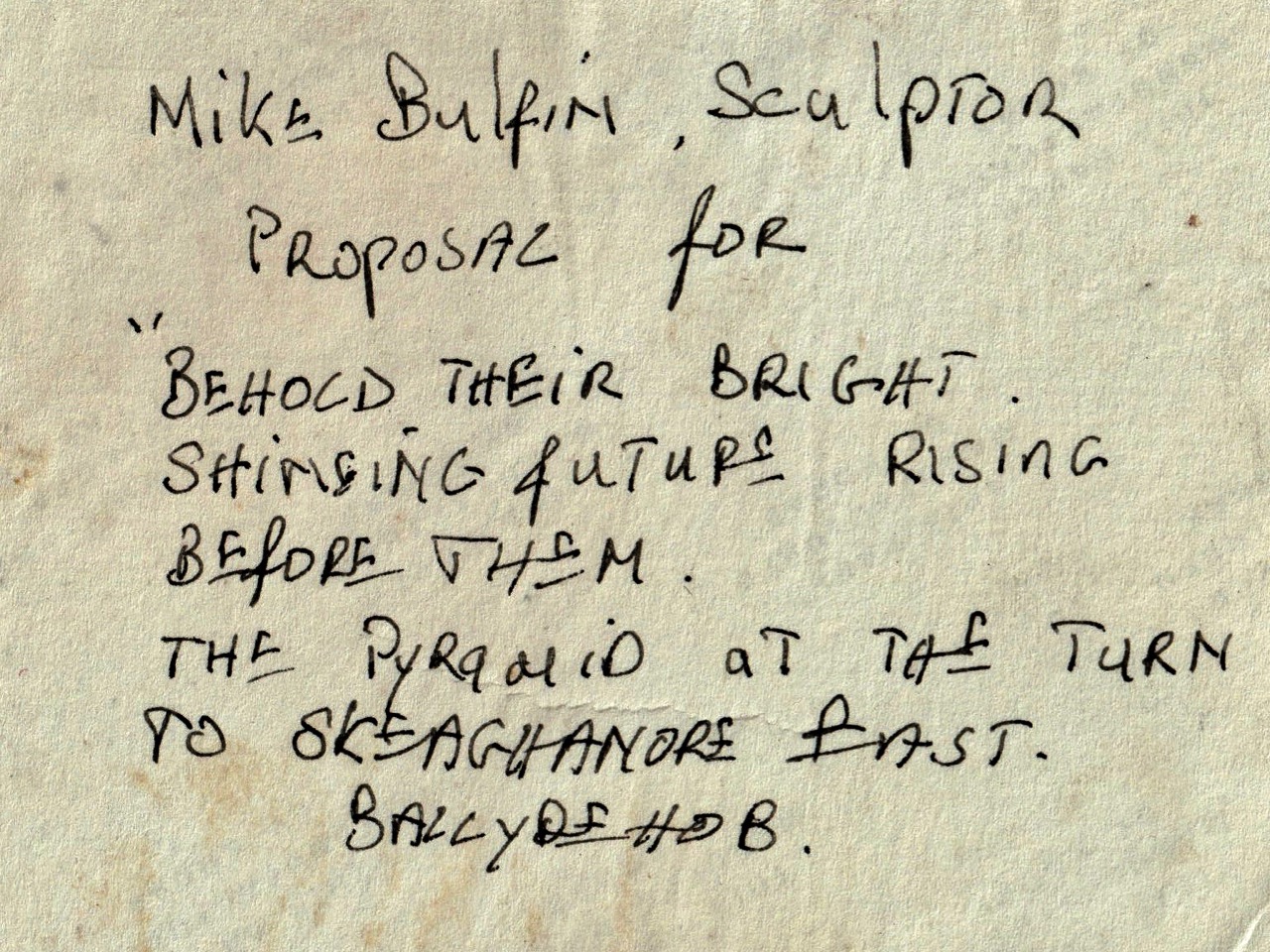
Michael Bulfin’s exhibition proposal was a piece of land art: a giant grass-covered earth pyramid crowned by a stainless steel pinnacle, with a cascade of boulders flowing down the surface – facing on to the main road running through the townland of Skeaghanore East. Upper, the design for the piece was submitted as a model. Lower – the inscription from the back of the original photograph.

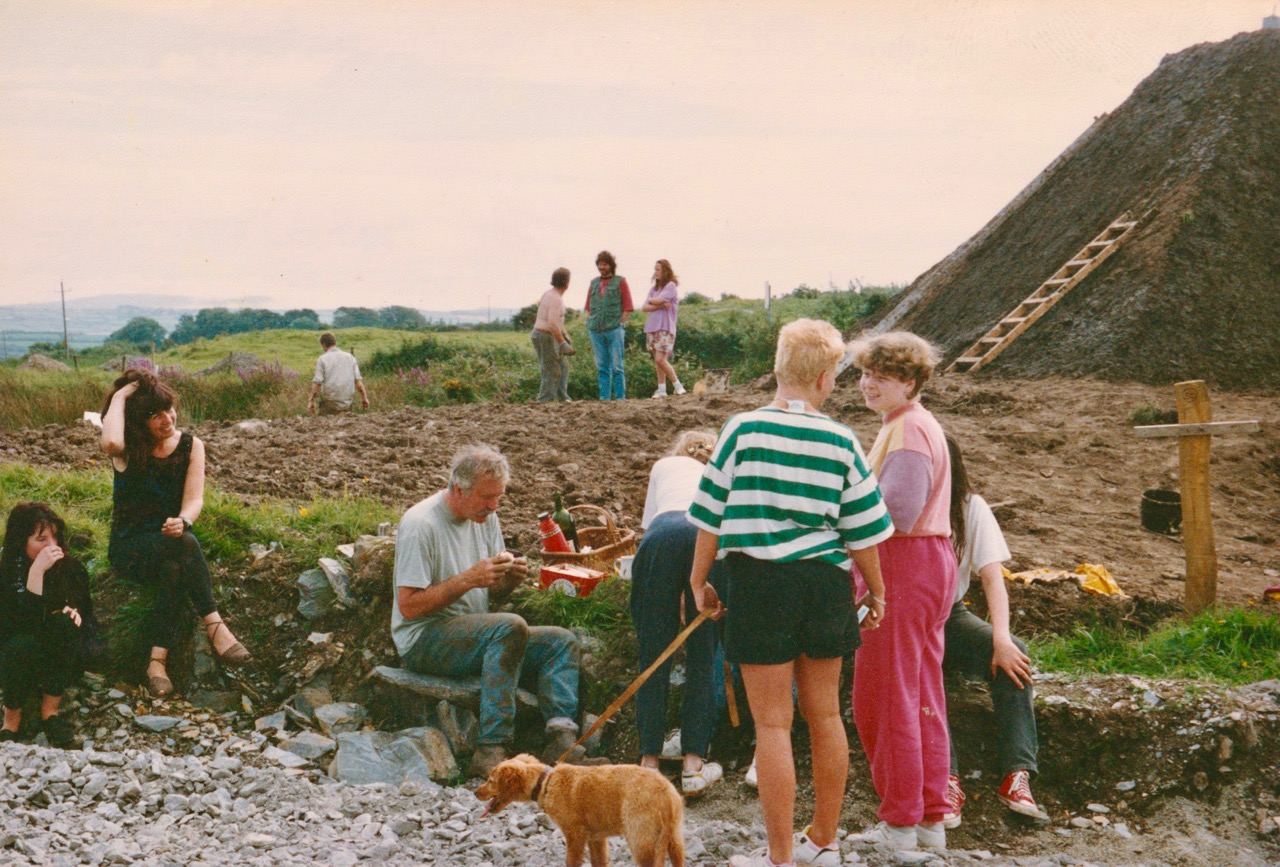
The task of physically realising this monumental piece was the product of many hands, including a number of volunteers from West Cork’s artistic community. The following ‘work in progress’ shots document some captured moments in time.

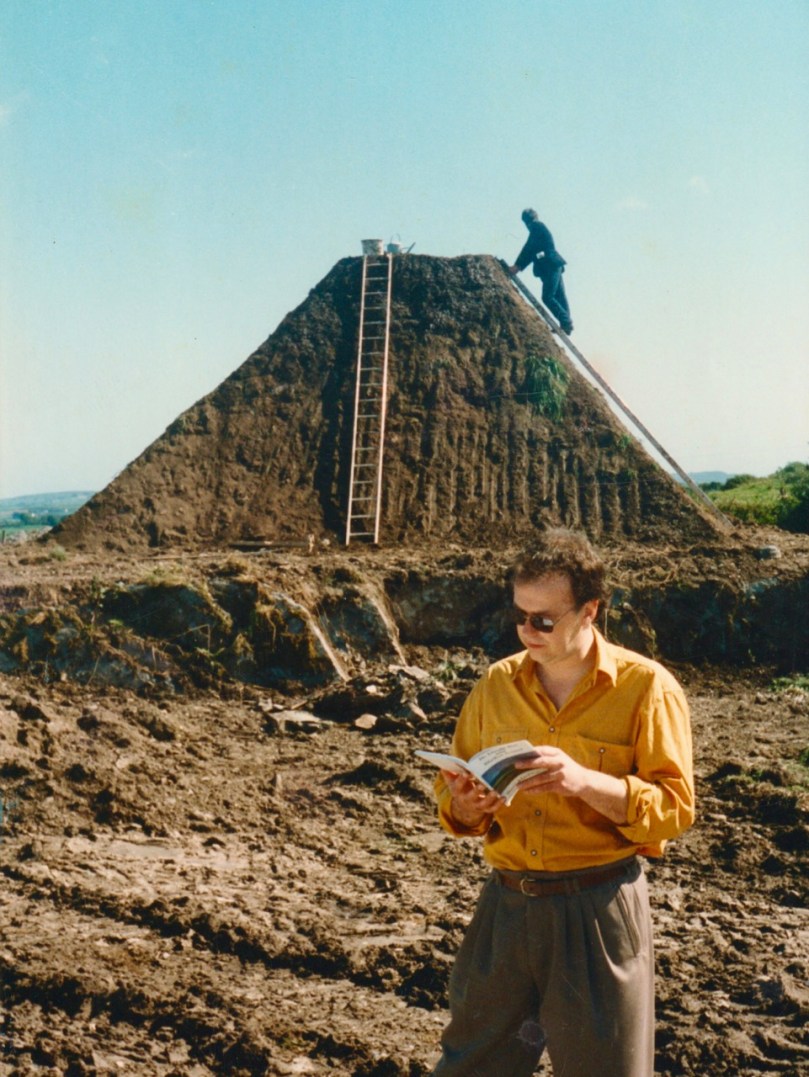
In this shot, Michael Bulfin is on the ladder, and painter Maurice Desmond watches the process

‘Lunch break on the day the mound was seeded’ – identified in this picture are (foreground left to right): Aoife Desmond, Deirdre Heaney, Mike Bulfin, Rosemary Murray (serving lunch), Ailne Murray and Niamh Murray. (Background): Simon Holler, Cóilín Murray, Gerry Walker and daughter

The project was well publicised; here Mike Bulfin is being interviewed by Anita Whooley for RTE, with Cóilín Murray looking on

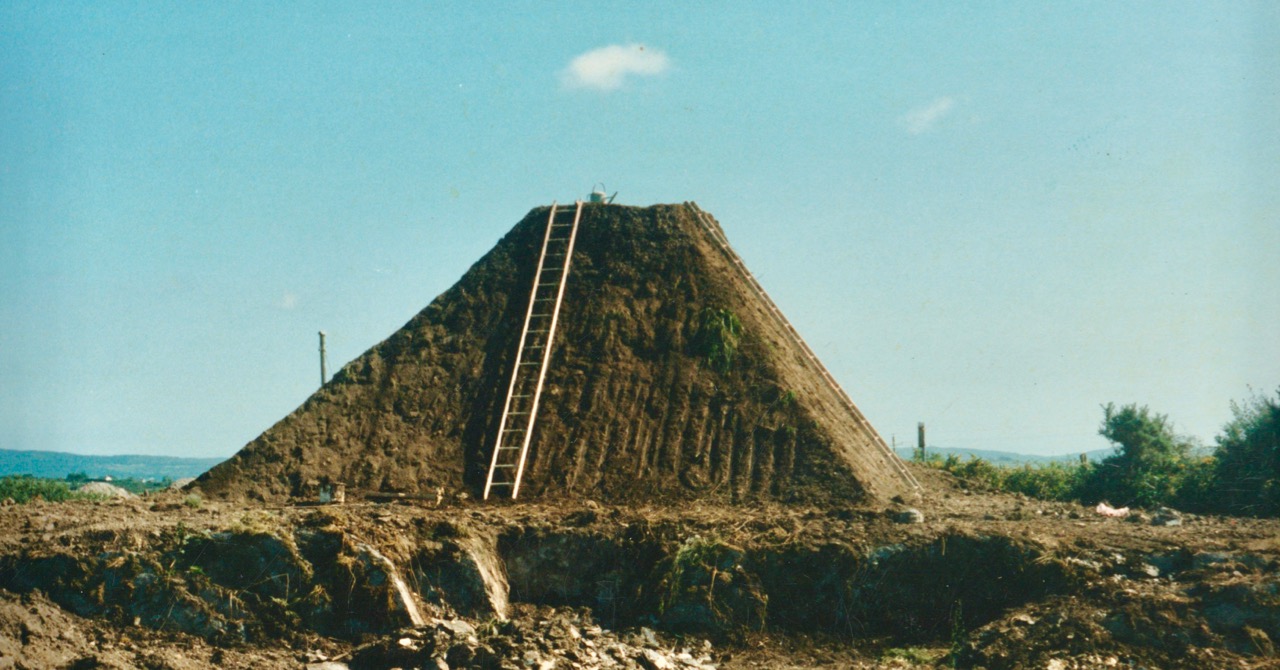
The mound ‘greening up’: the stainless steel pinnacle was added at a later date. The ‘cascade of boulders’ is not evident today: I am assured it is still there, shrouded by gorse and brambles

At the official opening of the Living Landscape Sculpture Trail the poet Steve McDonagh, founder of Brandon Books based in Dingle, Co Kerry, read from his work at each location. Steve McDonagh died in November 2010. As can be seen, the pyramid was unfinished on opening day!

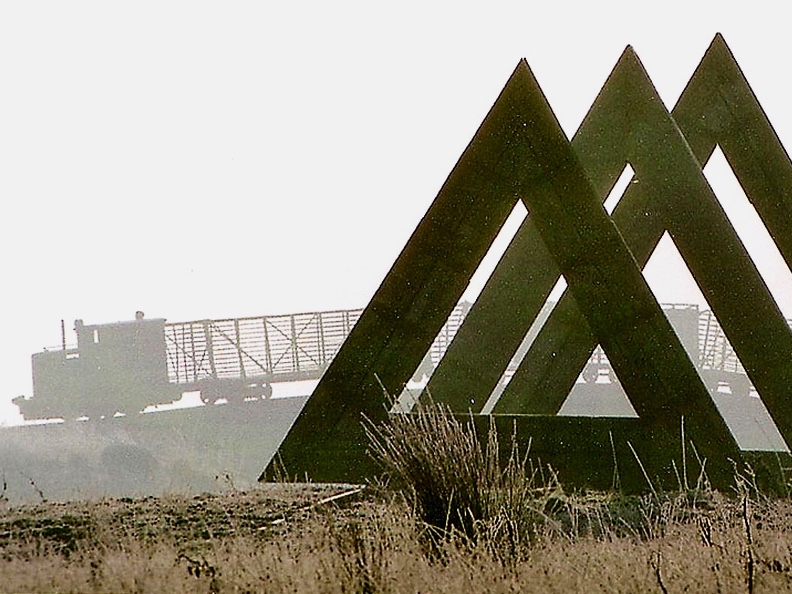
Michael Bulfin remains active in Ireland to this day. He lives in Co Offaly, and there is impressive work from him at the Lough Boora Parklands, including the eye-catching ‘Skytrain’ sculpture:

Something that could be considered in the future is a creative project based on the West Cork Sculpture Trail. This might restore or resurrect some of the pieces from the 1990s, and provide an opportunity for new work to take the place of those sculptures which are now lost.

Glens of the Scientists

It’s Easter Sunday, but we didn’t see the sun dancing at dawn this morning. In fact, so far it’s the first wet day that we’ve had since we’ve been in ‘lockdown’ because of the Covid 19 crisis. Such a contrast from the view over Roaringwater Bay yesterday (Saturday, see above) when the weather was absolutely flawless: no wind, blue sky over balmy sea, and temperatures akin to midsummer. But for today’s post I’m going back a few weeks to the days when Coronavirus was just something that was happening, in the news, a world away from West Cork – and we were still free to roam the countryside.

Spring equinox came early this year. We were out for it, in a biting east wind but dry under clear skies. Our destination was a vast landscape of glens and hills to the east of Bantry town. The place fascinates us: it is alive with prehistory. There are literally dozens of scheduled monuments spread over many townlands. They include stone circles, standing stones, stone alignments, ancient cairns and other anomalous stone groupings. This is probably one of the west of Ireland’s richest and most concentrated areas which records, through physical remains, human activity from the Neolithic period – the earliest settled farmers – through to the Bronze Age, when the first metallurgists began to explore and exploit the underlying geology of the landscape.

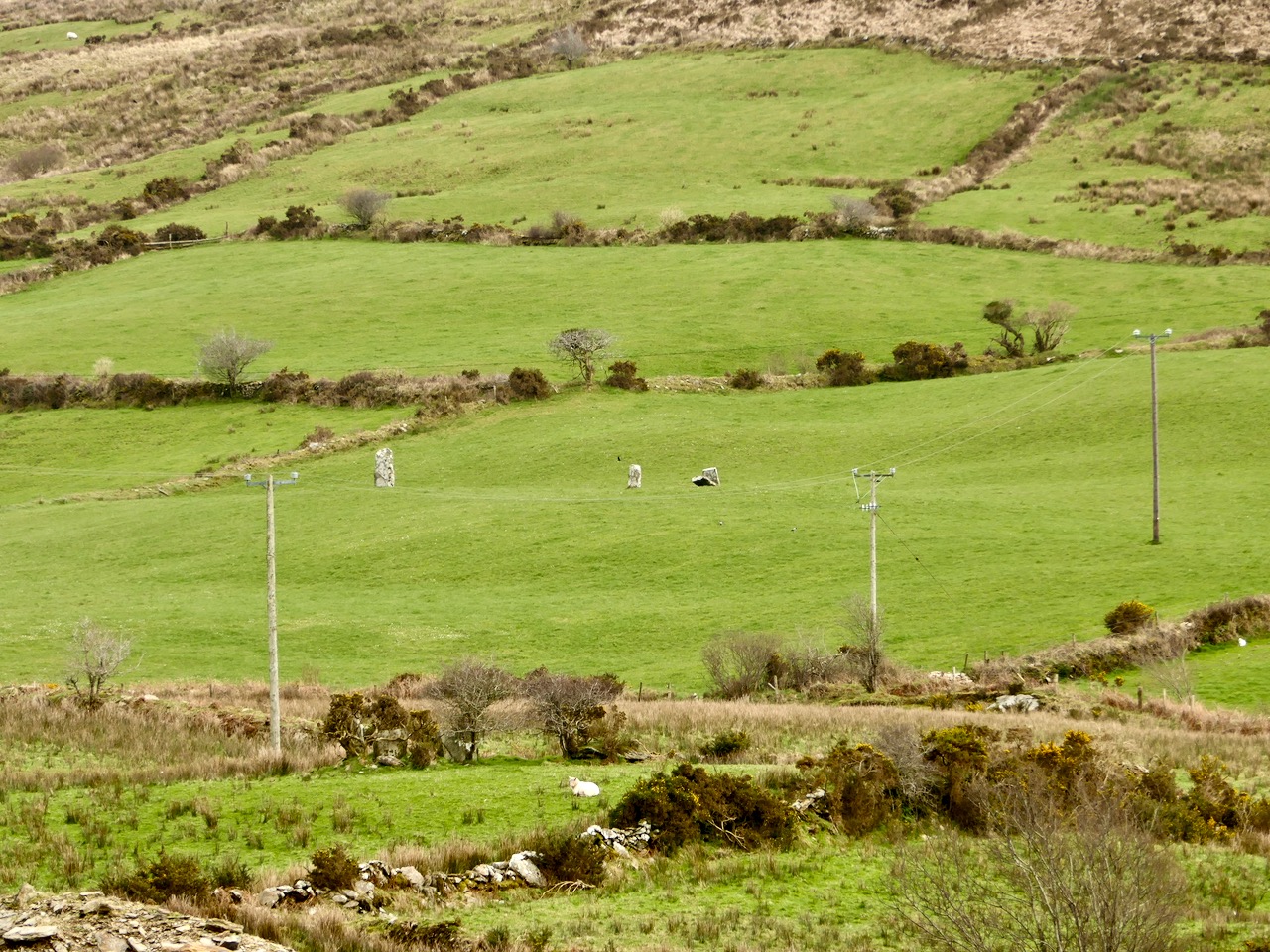
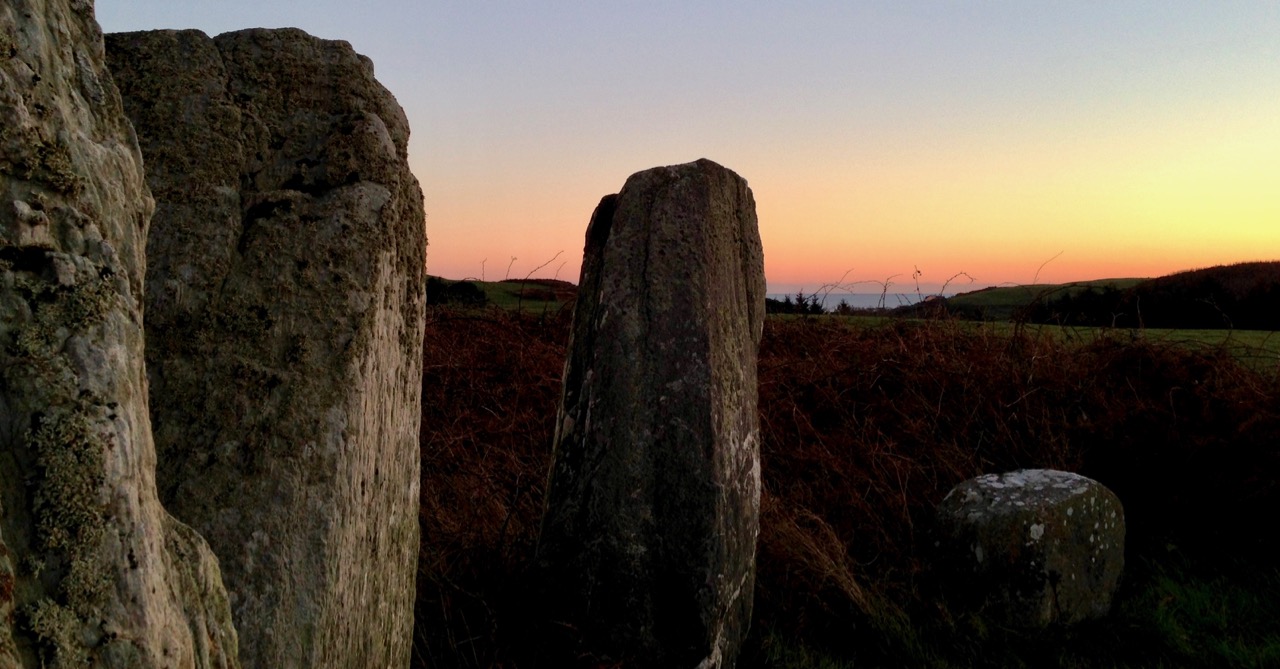
Upper – look carefully – there’s an alignment of three significant standing stones in these fields in Cullomane West, but our first stop was a nearby anomolous stone grouping which included an equinox alignment – (lower) – towards the west horizon

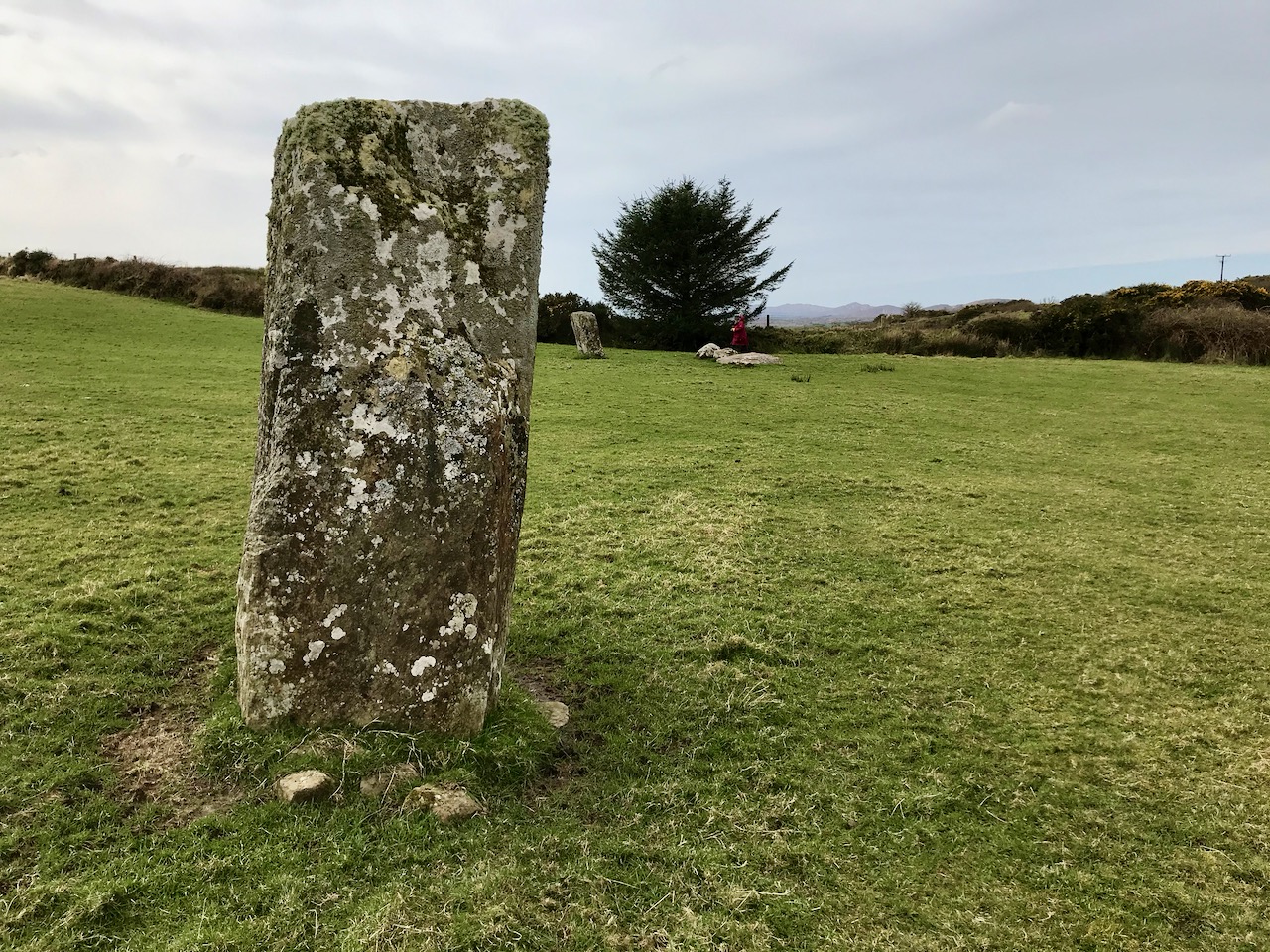
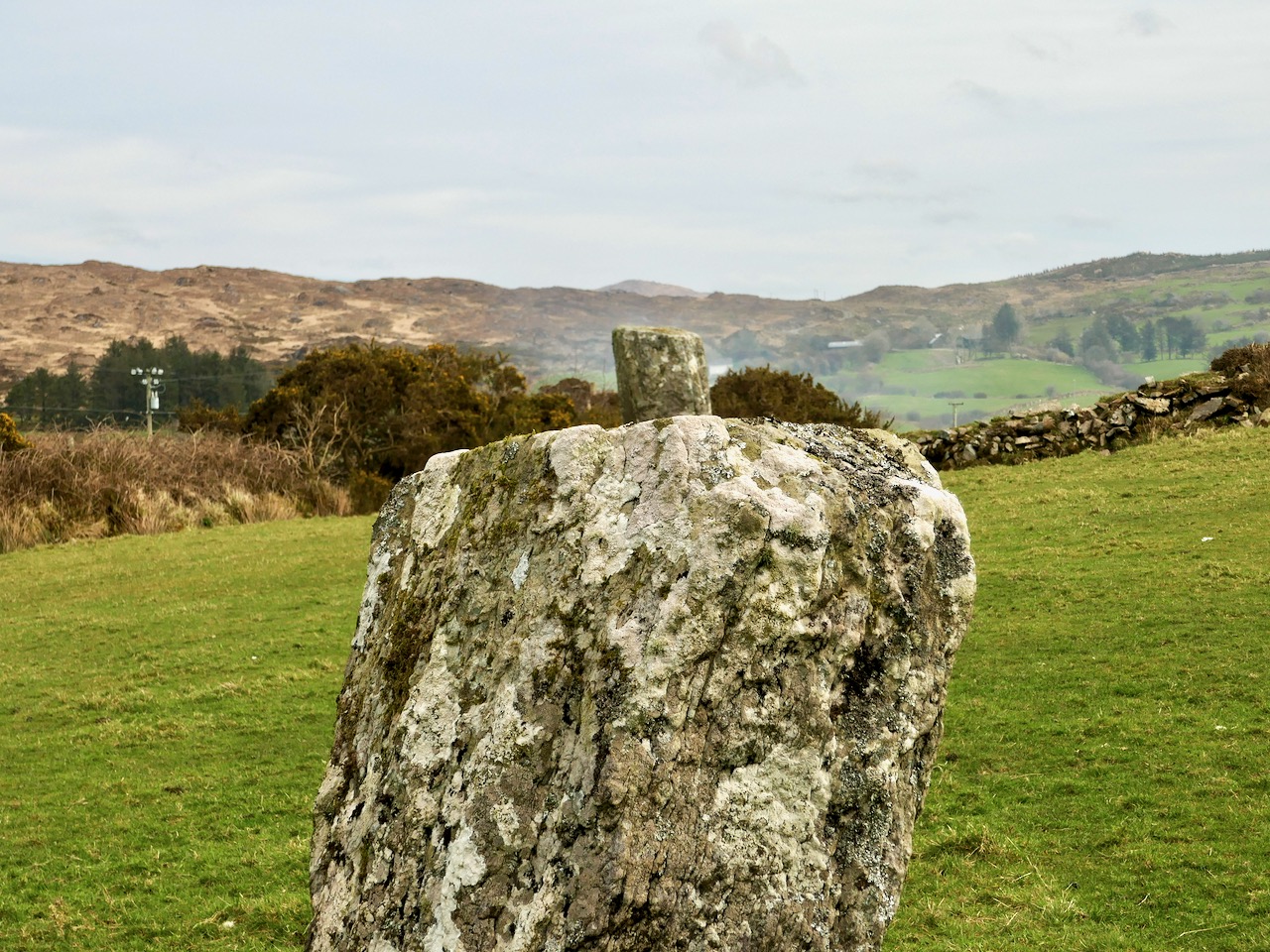
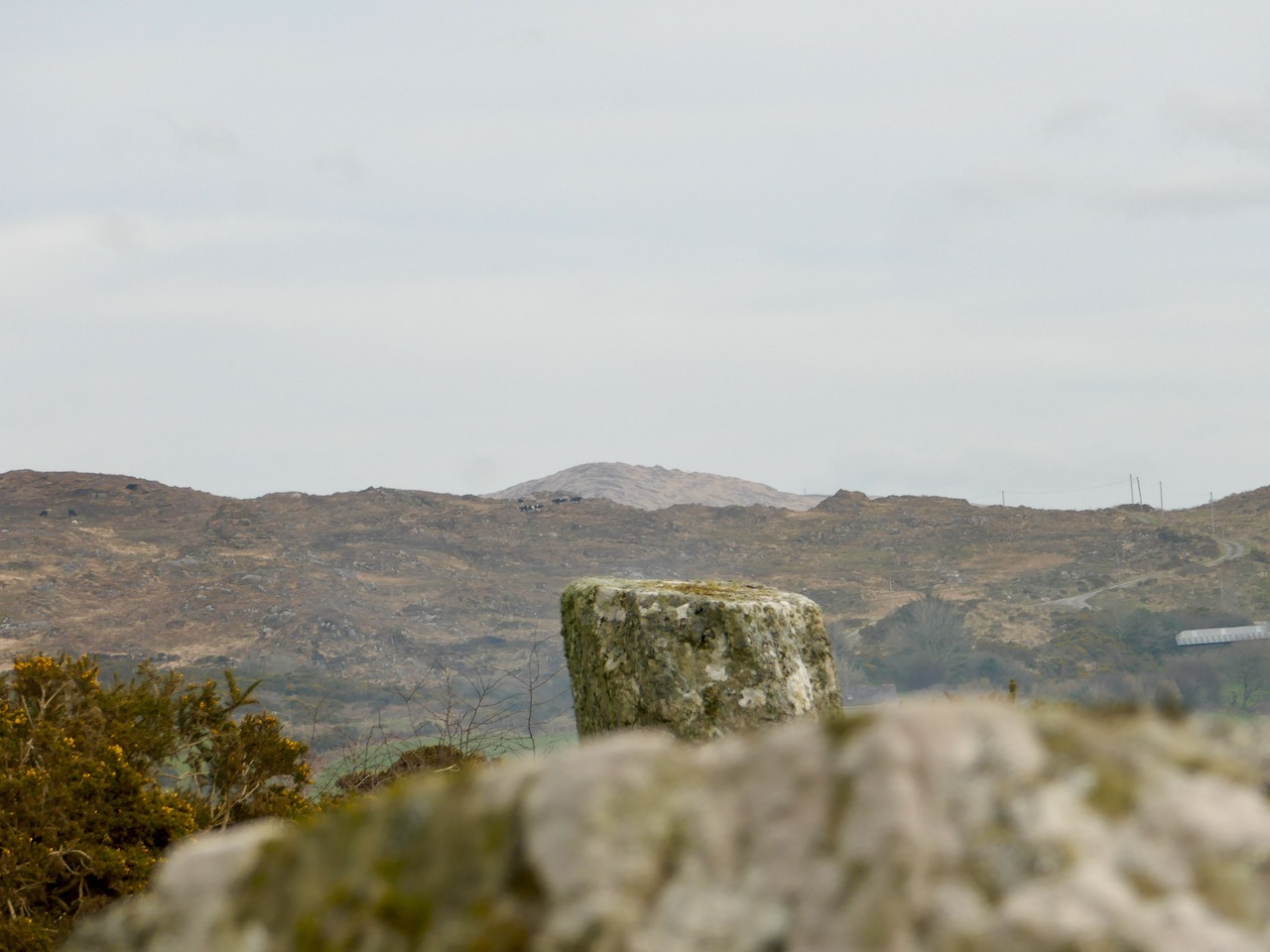
It was pure chance that we were out on the day of the spring (or vernal) equinox – the time when the length of the day equals the length of the night. And pure chance, also, that our first stop, in the townland of Derreengreanagh, presented us with a spring equinox alignment. We had the permission of the landowner to cross her fields to access these stones which are hidden away from any highway or byway. We found two substantial standing stones and a small group of recumbent stones. By checking the relative positions of the two tall stones on a ‘sunseeker’ app, we were able to establish that they line up perfectly with the spring equinox sunrise to the east and the spring equinox sunset to the west. Furthermore, the point at which the sun rises on the eastern horizon on this day is marked by a distant hilltop – also in perfect alignment:

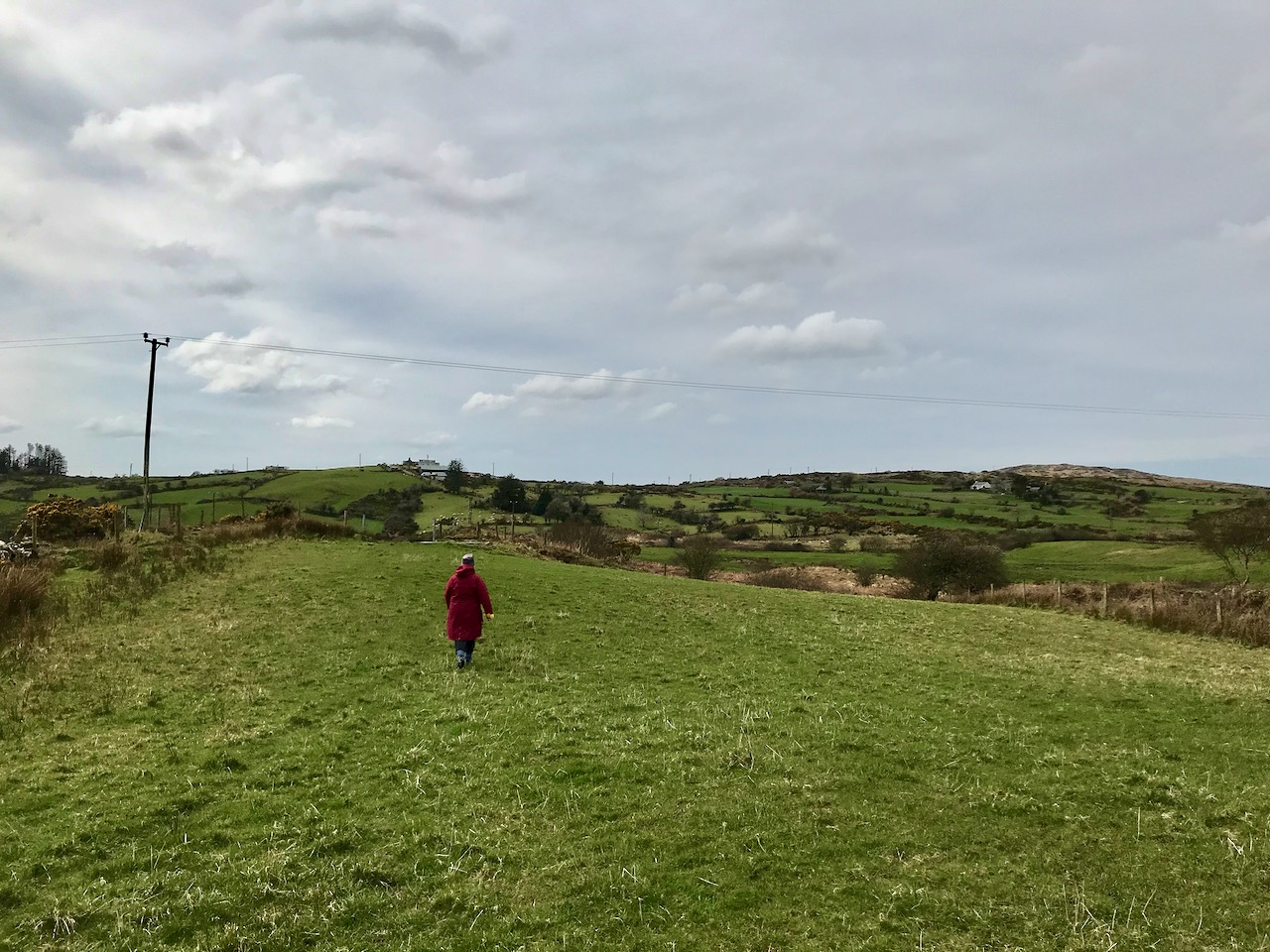
As I look around the glens on our wanderings, I see into the past. I see rich, sheltered meadows watered by natural streams, stunted oak forests, sunlit glades. I feel the warmth of the sun as it gets stronger, contained by the bowl shaped landscapes; I find flocks of sheep which don’t seem to mind our trespassing (carefully) on their domains – they are content with their environment. The place is at peace in its own time.

I try to feel closer to those who dwelled in this relative tranquility thousands of years ago. I can imagine that the shape of the landscape, and its natural offerings, attracted them. They might have been my own distant ancestors, or yours. But they were no different from you and me. Their lives were technologically unlike ours, but we can’t suppose that their responses to what was around them would be unrecognisable to us. They would have welcomed the abundance which fed them, through their ability to understand the principles of sowing and harvesting; they were able to make shelters from natural materials – wood, stone and furze. But, beyond the practicalities, surely they would have seen wonder in nature. How could they not respond to the ever changing light, the vastness of the sky, the awesome infinity of the stars? The strange movements of sun and moon… The constancy of things all around them?

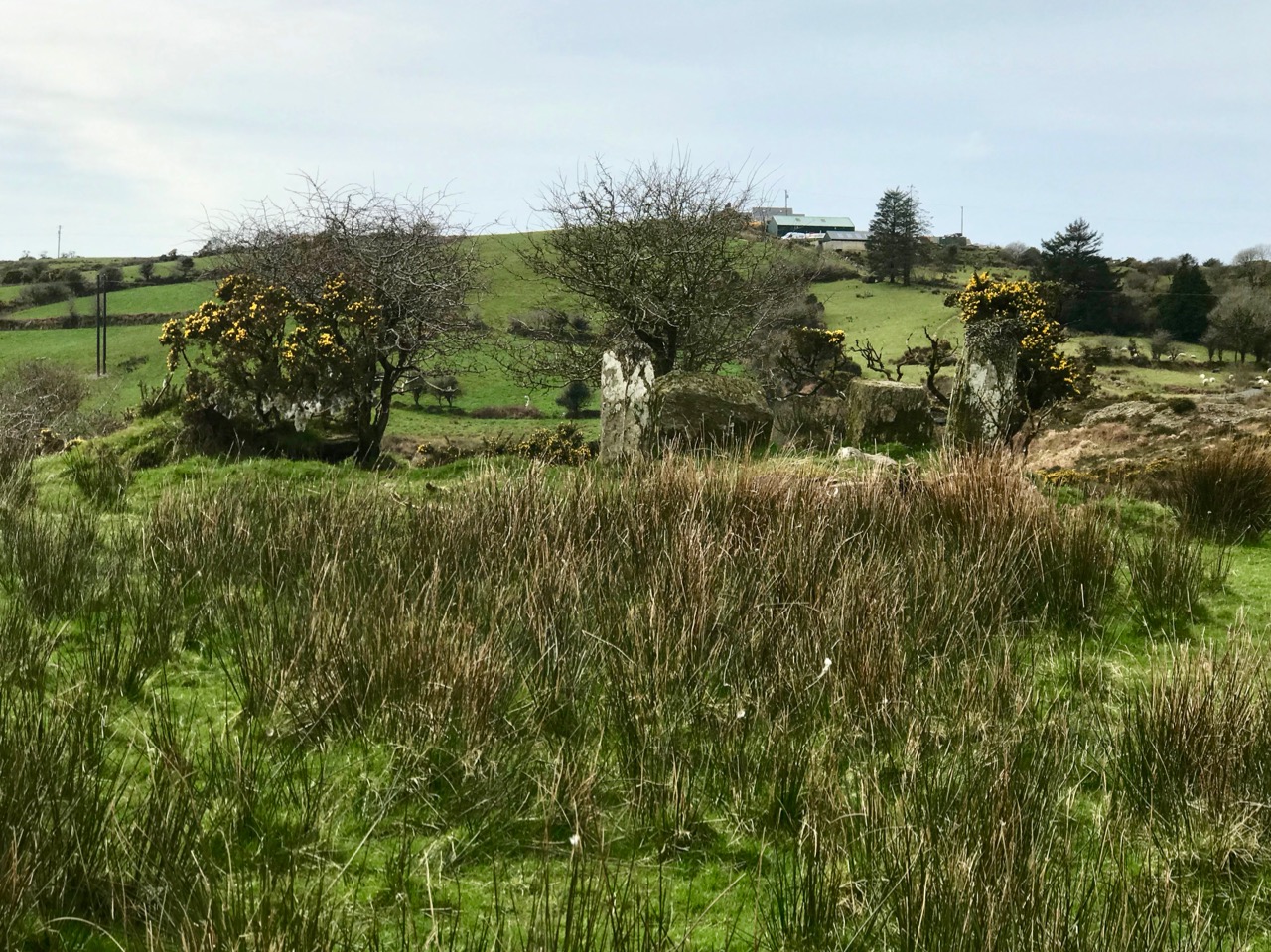
Hiding in nature: this five-stone circle in Baurgorm townland is heavily overgrown and guarded by thorn trees, yet it survives: its orientation and the alignment of the stones was undoubtedly deliberate

The next townland over from Derreengreanagh is Baurgorm, where our researches were rewarded with an almost intact five-stone circle. Within site of this is another stone alignment (see picture 3 above), and several other scheduled monuments are nearby. There is no ‘Stonehenge’ or ‘Newgrange’ in these glens: everything is relatively low-key and is unlikely to impress the average 21st century sightseer. Yet these stones are still there, set in the landscape where they were first placed – with a purpose – in these glens so many generations ago.

Walking the glens: walking through prehistory

In my opinion (and this is only my opinion, remember), the people who lived in these glens were our earliest scientists, and the surviving ancient stones are the hard evidence of their science. They were observing and recording the world they saw around them and marking the elements of that world which were of the greatest significance. One of these must have been the solar cycle. The equinoxes were of paramount importance: through the half-year after the spring equinox the days were longer, lighter and warmer, while through the half-year after the autumn equinox, their world was darker and colder with short days and long nights. The alignment of the standing stones at Derreengreanagh marks this calendrical division with great accuracy, and must have taken a great deal of time and human endeavour to set up. The shape of the terrain, the undulations of the horizon, and the daily progression of the sun had to be understood and integrated into a  construction so monumental that it has survived intact for 3,000 years or more. There’s nothing magic about this, or mystic or religious: it’s pure science.

Not just the sun, but the phases of the moon and the trajectories of the stars would have been observed and studied by our ancestors. What came before Christianity in Ireland? St Patrick’s work was to convert the Irish, but all he says in his own Confessio about them is that they worshipped ‘idols and unclean things’. But he also refers to ‘all those who adore’ the sun. That’s a fascinating concept: ‘adoration of the sun’. Patrick didn’t use the phrase worship of the sun. but he had specifically mentioned worship of idols. I could be reading too much into the Confessio as it has come down to us, but the concept of ‘adoring’ as opposed to ‘worship’ fits well with the idea of Ireland’s earliest settled people being obsessively concerned with the movement of this source of light, heat – and life. In the remotest regions of West Cork we find an ancient wisdom.