Wild Wall

It’s a wall like hundreds of other such walls in the city, an old remnant of some enclosure long forgotten. It’s been heightened in a more recent period, although it’s not clear why.  ‘Round back’ of a plumbing supply place in Cork, people walk and drive by it every day without a second glance. But if you pause and take a close look it rewards with an astonishing variety of plant life.

In their magnificent book The Wild Flowers of Ireland:The Habitat Guide Declan Doogue and Carsten Krieger devote a chapter to Old Walls and Ruins. Here’s how they introduce that chapter: Walls, they say

. . .have over time been colonised by a number of plant species, some of which seldom live elsewhere in Ireland. . . . Buildings are completely artificial structures. Therefore the question arises as to where these colonising species lived before these walls were built. Some species were either deliberately or accidentally introduced by man into the country, usually for medicinal or ornamental reasons, within the past 1000 years and have become established or persist on walls. Another group of genuinely native Irish species made their own way, spreading from natural and usually rocky habitats within the Irish countryside onto the new buildings of the time. In both cases there were enough points of environmental similarity between the plants’ original natural habitats and the buildings of the Irish countryside to make it possible for them to extend their range and find new homes. In a sense an ongoing botanical battle between the native and newcomer was being fought on the fabric of these old buildings. This struggle comes complete with issues such as natural succession, colonisation, displacement, local extermination and sheer opportunism. The conflict continues to this day and can be observed in most older towns and cities.

Walls have other characteristics friendly to certain plants: the stones warm up in the sun and retain their heat into the evening, acting, as Doogue and Krieger put it, as a sort of storage heater. Lime-rich mortar allows lime-adapted plants to flourish even in non-lime areas. Microclimate and soil conditions on top of the wall can be different from those on the sides, or on south-facing versus north-facing walls.
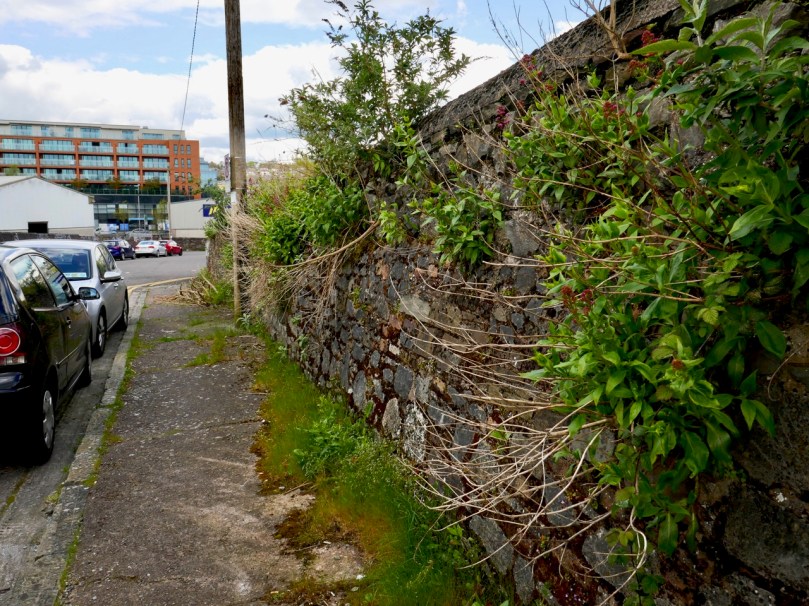
This wall in Cork exemplifies everything Doogue and Krieger describe – native and non-native species growing side by side in an environment where it seems impossible that enough nourishment could be supplied.

Oxford Ragwort

Some of the plants have intriguing histories. Take the humble Oxford Ragwort, the one that looks like a yellow daisy. (This is not to be confused with Common Ragwort, or Buachaláns as they’re known in Ireland, which are on the Noxious Weeds list – although that’s another story.) It was introduced into an Oxford botanic garden in 1690 from Sicily, but soon escaped and was seen all over the walls of Oxford. The University of Bristol takes up the story from there:

During the Industrial Revolution, Oxford became a thriving railway centre and Oxford ragwort found a new habitat in the clinker beds of the railway lines that fanned out of Oxford to all parts of the country. These ‘furnished the plant with a replica of the lava-soils of its native home in Sicily’, said Druce in his Flora of Oxfordshire. Referring to the fruits (achenes) of Oxford ragwort, he said ‘I have seen them enter a railway-carriage window near Oxford and remain suspended in the air in the compartment until they found an exit at Tilehurst’ (near Reading).

Because this species hybridises readily with other Senecio species (other Ragworts and Groundsel), this site adds, the introduction and spread of the promiscuous Sicilian S. squalidus has resulted in a great deal of evolutionary novelty among British Senecio – an amazing example of evolution in action. I love the idea of a promiscuous plant.

Herb-Robert – surely one of our most-loved wildflowers

Herb-Robert is among our most commonly seen (and known) native wildflowers – a dependable spot of brilliant colour almost all year round in a huge variety of environments, with its frondy leaves turning a brilliant red as the season wears on. However, on this wall it was joined by a cousin – Shining-Crane’s-bill.

And this is Shining Crane’s-bill!

In fact, I had to do a double-take, as I had never seen this flower before and at first I thought I was looking at a miniature Herb-Robert. While it might be easy to confuse the flowers, the leaves are totally different, with the Shining Crane’s-bill leaves being smooth and hairless, almost waxy, with a distinctive shape. I wish all similar species were this easy to tell apart upon close inspection!
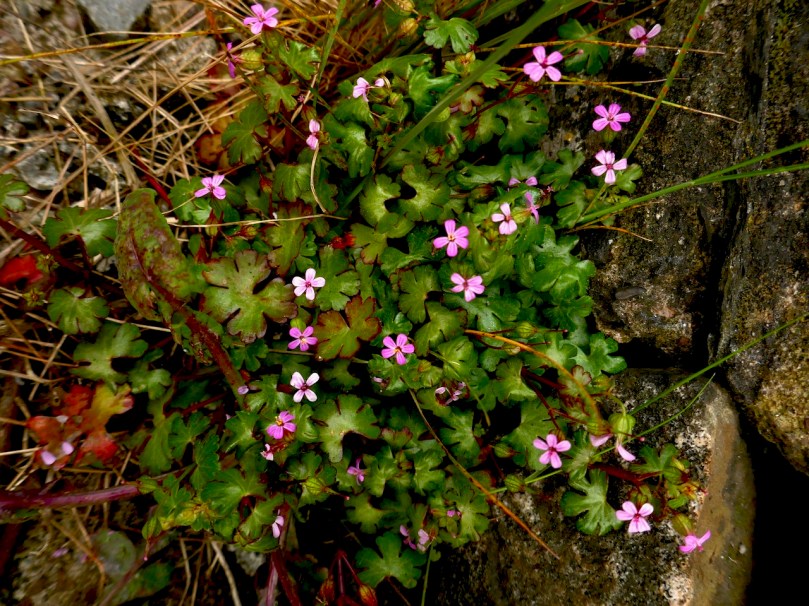
Shining Crane’s-bill – the flowers are smaller than Herb-Robert and the leaves are totally different

One of my favourite wall species has to be Ivy-leaved Toadflax – not a very pretty name for a truly spectacular flower. This is another Mediterranean plant, and we can blame Oxford for this one too, as it is thought to have hitched a ride on marble sculptures imported from Italy to Oxford in the seventeenth century. Once the flowers are finished, the seed heads bend away from the sun and towards the wall, dropping their seeds into the cracks – thus they are able to grow vertically up the wall.

Ivy-leaved Toadflax – every well-dressed wall should have some

At the bottom of the wall I thought I saw the ubiquitous dandelion, but once I looked closer I saw that the leaves were quite different. I think this is Smooth Sowthistle. Zoe Devlin of Wildflowers of Ireland tells me that the leaves can go this purplish colour in the absence of good soil. There are so many wildflowers that look, more or less, like dandelions – it has been a real journey of discovery to find out more about this large flower family.

Smooth Sowthistle and Ivy-leaved Toadflax in the act of climbing up the wall

Smooth Sowthistle is edible when young and has been used as fodder for animals. According to one authority I read, In Greek mythology Theseus is said to have eaten smooth sow-thistle to gain power before leaving to slay the Minotaur in its Cretan labyrinth, where it dined on human bodies, bull’s heads and young Atheneans.

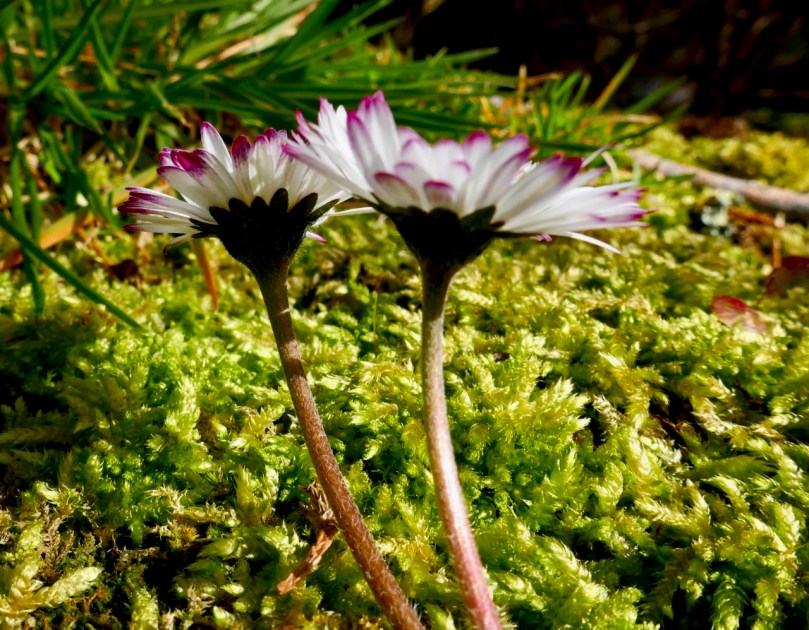
Rue-leaved Saxifrage. It’s also pictured in the lead photograph at the head of the post, where you can see the basal rosette

Growing from the mossy ridges in the wall was a delicate little white flower with a reddish basal rosette, and this turned out to be Rue-leaved Saxifrage. Although it was new to me, this little native beauty is common in many parts of Ireland. As the season progresses the stem, leaves and rosette become redder – hence ‘rue-leaved.’

Red Valerian sprouting from the wall, with Oxford Ragwort and Ivy-leaved Toadflax. The tiny fern growing in the cracks glories in the name Maidenhair Spleenwort

We all know the plant known as Red Valerian, yet another Mediterranean import. I saw it growing in huge masses in the Burren a couple of years ago, meaning it’s one of those plants that enjoys the lime-rich environment provided by the mortar in the wall.

This is not, by the way, the Valerian that the sleep-aid tea is made from, the one that makes cats go loopy. It can also come in shades of pink and white, all growing side-by-side.

Keel-fruited Cornsalad (above) is also known as Lamb’s Lettuce, although it doesn’t look like the supermarket variety known by the same name. It is, in fact, very edible, with a kind of parsley after-taste and packed with vitamins (although you probably shouldn’t pick it anywhere near dog-height). The tiny blue/purple flowers reward examination through a hand-lens if you have one.

It took me a while to identify one little plant growing close to the pavement (above). It turned out to be Petty Spurge and, although it is not native to Ireland it’s been here a long time and has spread widely. It’s not usually as red-tinged as this when you see it in ID sources. It’s of huge interest to scientists at the moment because of the potential of its sap (a toxic latex substance) to treat common forms of skin cancer. Several rigorous double-blind studies have come to the same conclusion that it is an effective treatment for non-melanoma lesions. It’s a hardy little thing too – seeds found in excavations, dormant for a hundred years, can still germinate.
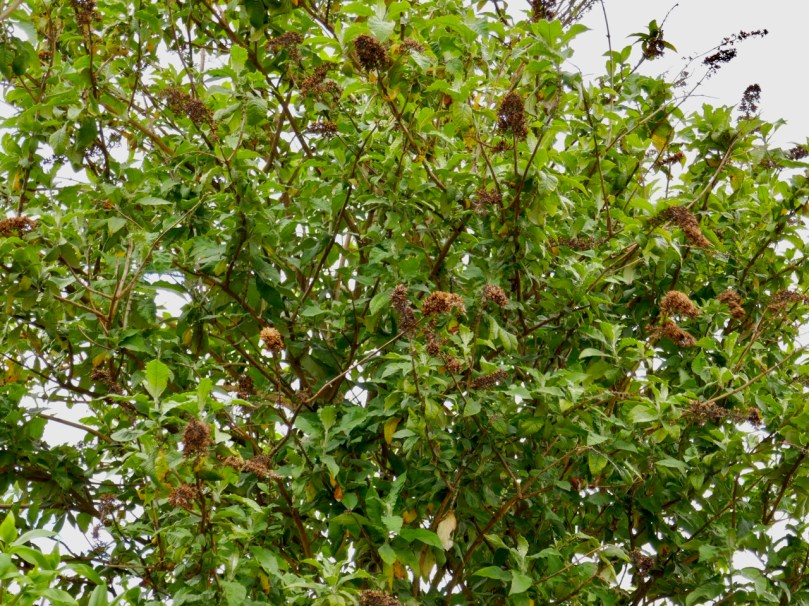
Finally, up on top of the wall is sprouting a Butterfly-bush (above); many of us know it as Buddleia. It’s well named, as butterflies love it. It was introduced into Europe by missionaries returning from China and it spread quickly as it will grow just about anywhere. What you see on this specimen are the remains of last year’s flowers: by June it will be hosting butterflies. Butterfly Bush may seem benign but like many other introduced species there is a dark side. First of all, as Tony O’Mahony points out in his Wildflowers of Cork City and County, it’s quite invasive and can take over and crowd out native species. The roots can do significant structural damage to the very walls it depends on for survival. More serious is the charge that, while it provides nectar for butterflies it is not a butterfly host plant – that is, one that butterflies can use to deposit their larva, which will then feed on the leaves. According to a spokesperson concerned about the destruction of chalk grasslands at Folkestone Warren in Kent: If left uncontrolled, then buddleia and other shrubs would have engulfed the chalk grassland. Clouds of butterflies used to be seen there, but now only common species can be spotted and even these are in decline, with the rarest ones disappearing altogether. Buddleia was eliminating butterfly habitat by killing off everything else, and while the shrub provided food for adults and larger insects, other plants were needed for butterflies in their larval stages.
So there you have it – it’s just like the human history of Ireland, full of invasions, adaptations, displacements and resurgence. All in a Wild Wall.

Rainforest Path

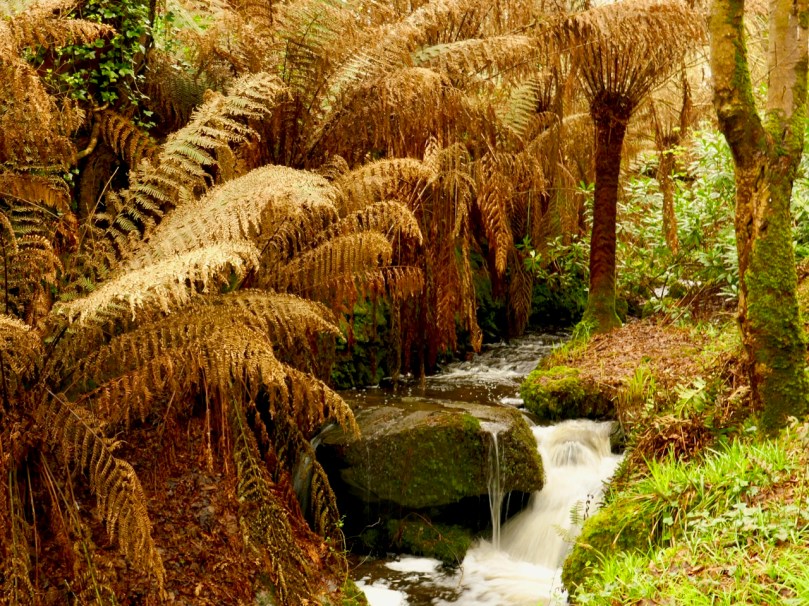
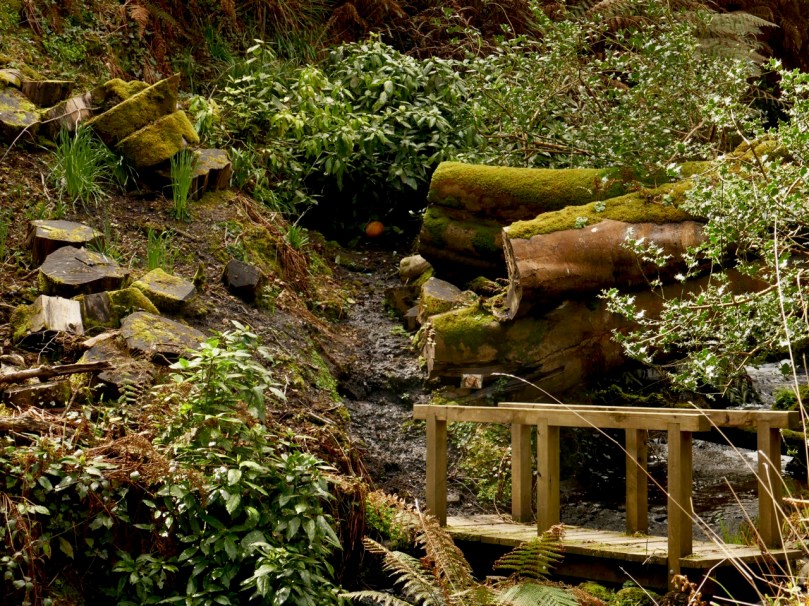
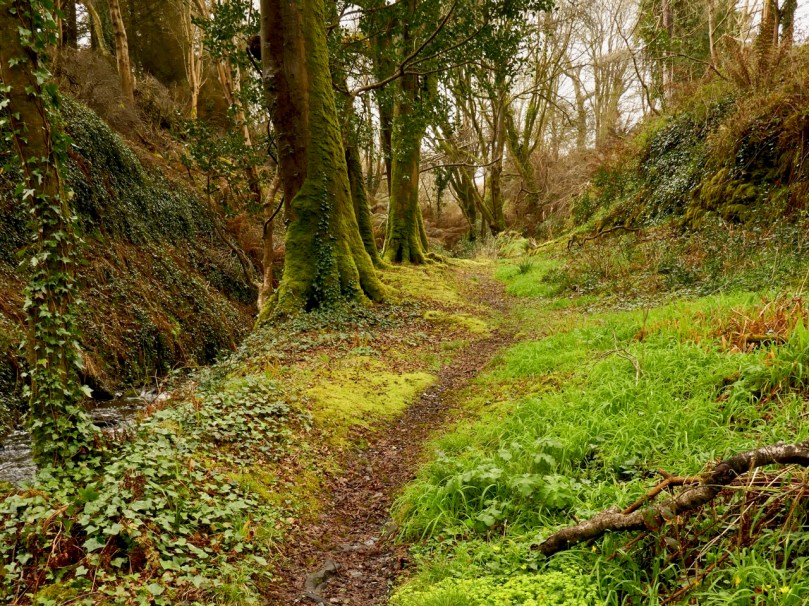
It’s a magical place, running up from an old graveyard by the sea, past a holy well, through a cool overhead canopy and along a tumbling stream. I’ve never met anyone else along the path, although I know the holy well is visited and the footbridge to it was repaired a couple of years ago.

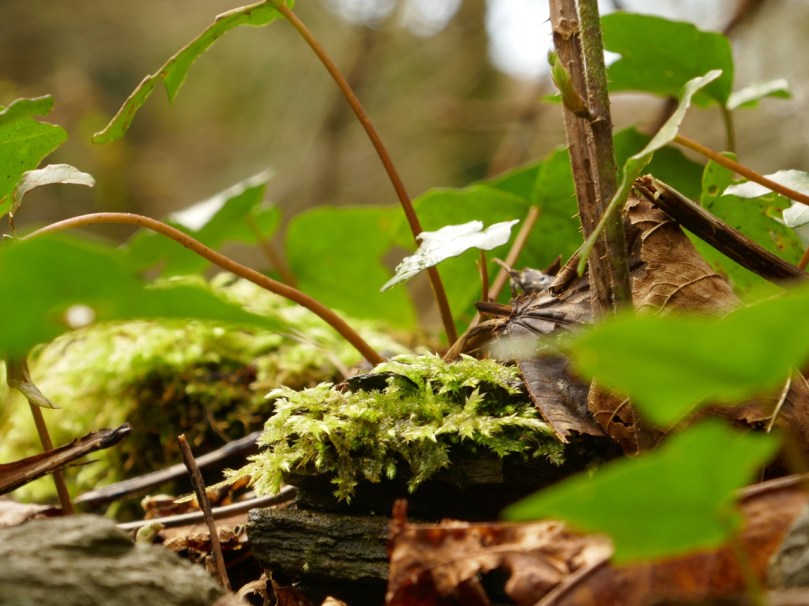
Moss and Navelwort on an old tree

There’s a big house at the top, with steps leading down to the path. Some of the more exotic plants are clearly imports, but mostly it seems that wildness has simply been encouraged, or not interfered with.

A mixture of native and imported ferns along the stream

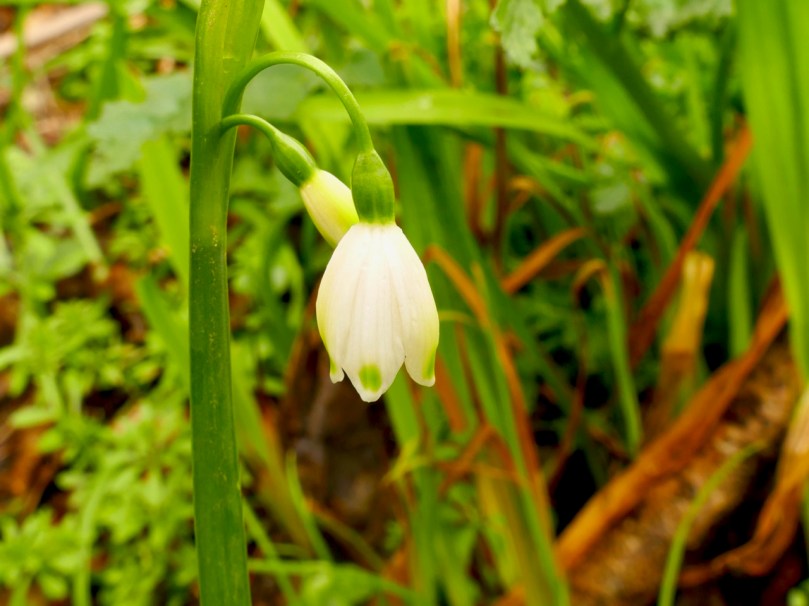
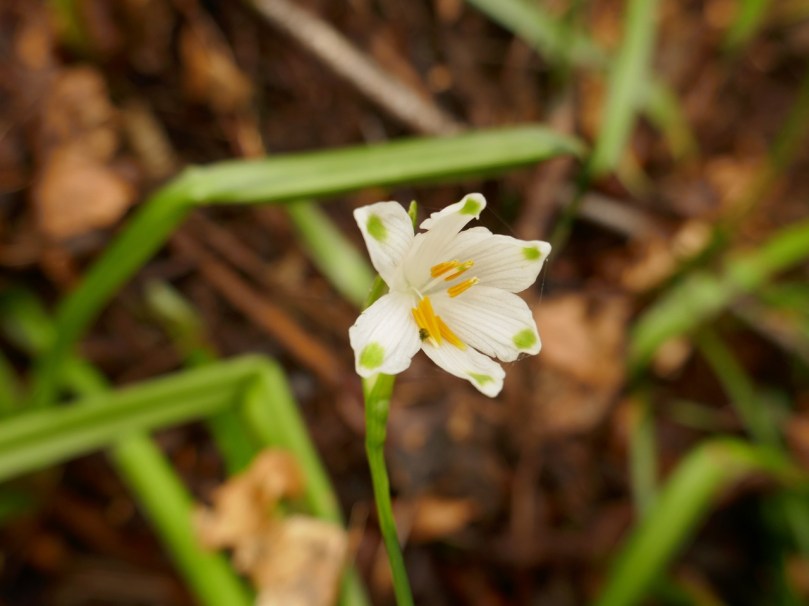
I went there twice this week. The first time was with my daughter-in-law, visiting from Canada, and we thought we spotted an unusual flower.  After a night of heavy rain I went there again on Friday equipped this time with my camera. Found it – and it looks as if it’s a Summer Snowflake, which is rare enough that I will report it to the National Biodiversity Date Centre. (Go on, it’s easy, you can do it too.)

The flower I was after – Summer Snowflake. Rare in Ireland but also widely cultivated – so is this a natural occurrence or part of somebody’s planting scheme?

What follows is a photo essay; my homage to a rainforest path on the brilliant morning after a rainy night. I will try to tell the story with my captions.

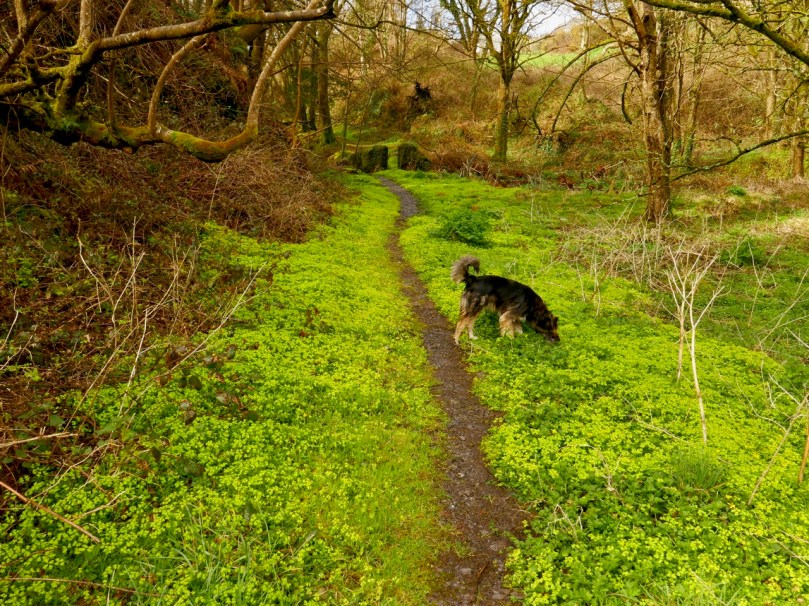
A friendly dog always accompanies me on this trail. The path is lined with Opposite-leaved Golden-saxifrage, providing a soft and bright green carpet. I also found it growing on old fallen logs

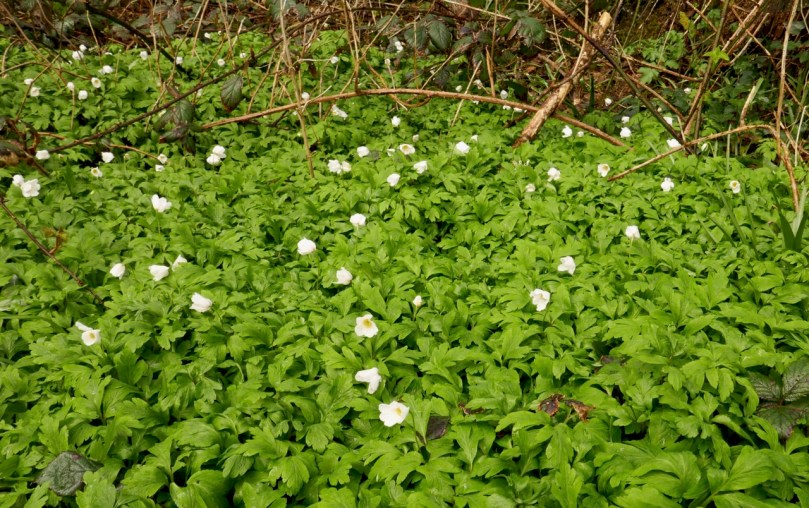
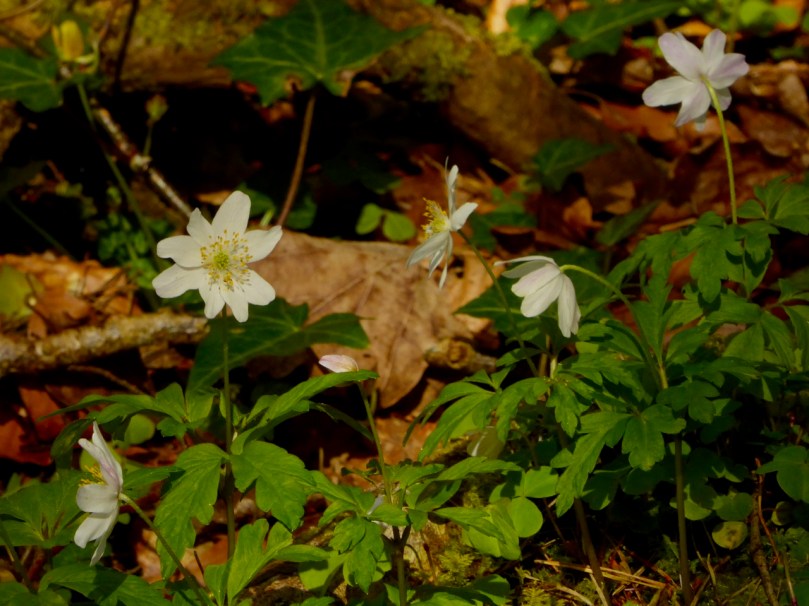
Lovely to find a large patch of Wood Anemone beside the stream

The Holy Well needs attention. The bridge has slipped and the path is too muddy to access the well. Read about this well in Amanda’s Holy Wells of Cork. The dog found her too.

This is Ivy-leaved Speedwell. The flowers are so tiny that it’s easy to miss, especially when it’s all mixed up with the Saxifrage

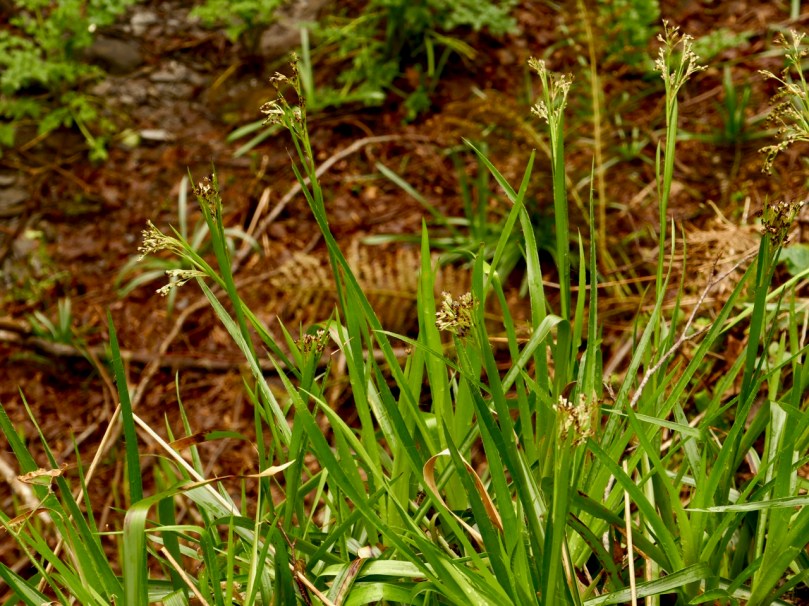
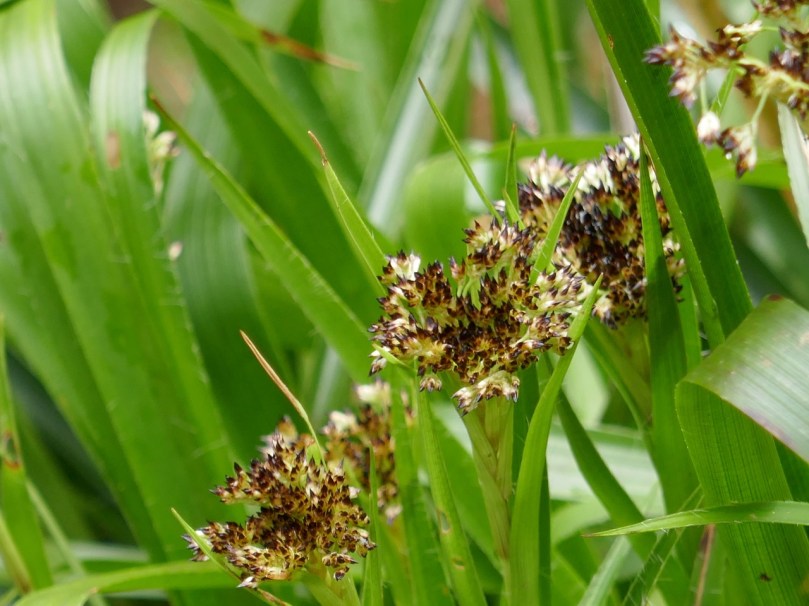
I was taken with this Greater Wood-rush growing along the bank

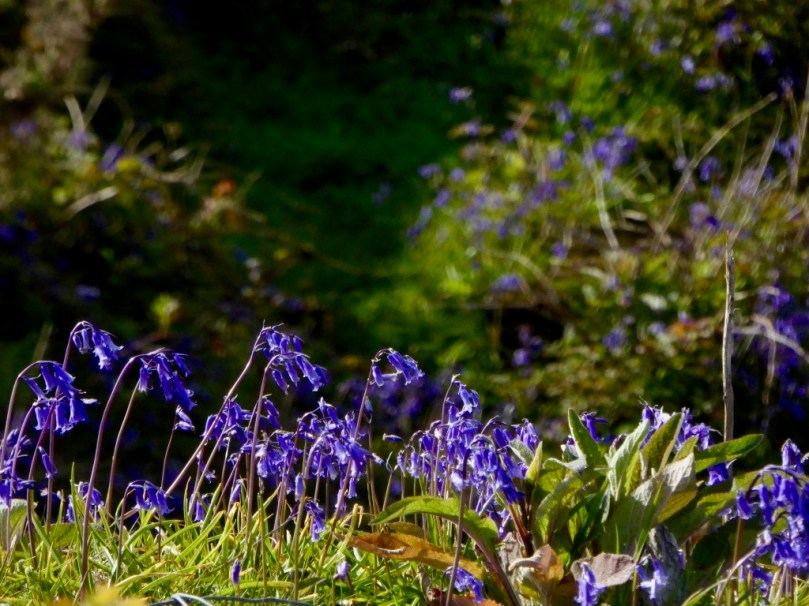
My first bluebells of the season

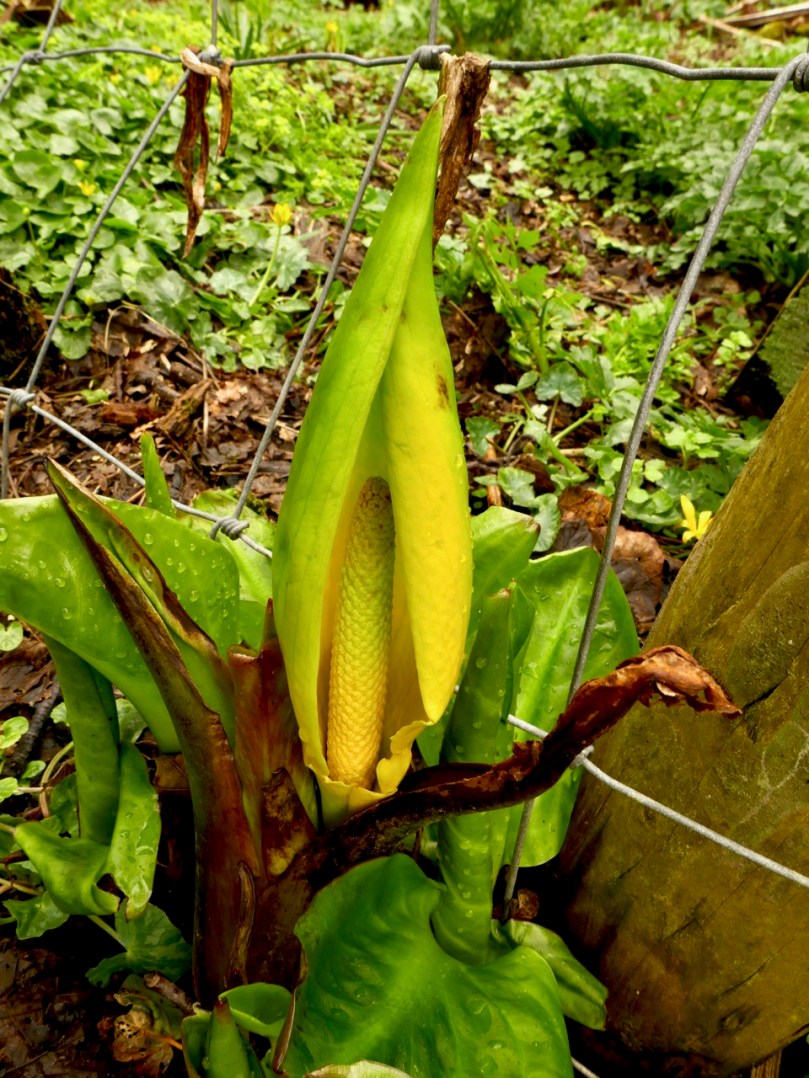
American Skunk-cabbage. Now classed as ‘potentially invasive’ in Ireland. I only saw one but I knew it immediately because they were so familiar to me in Canada. I’ll be reporting this too.

The path climbs upwards

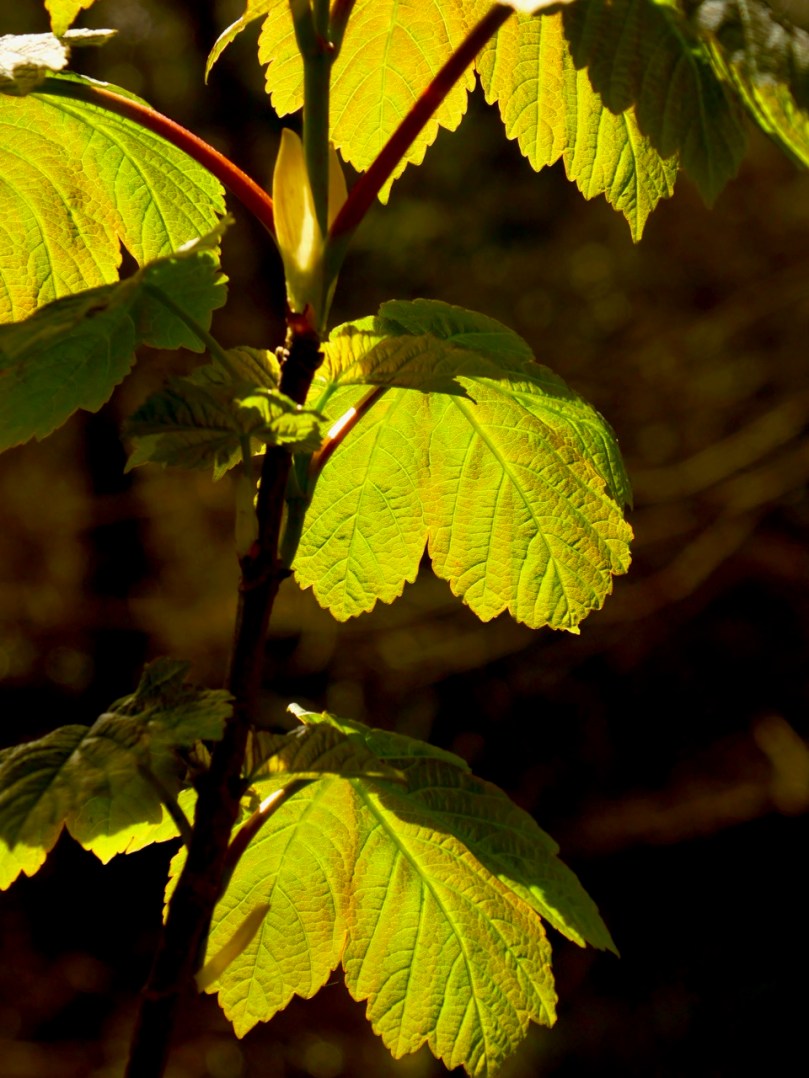
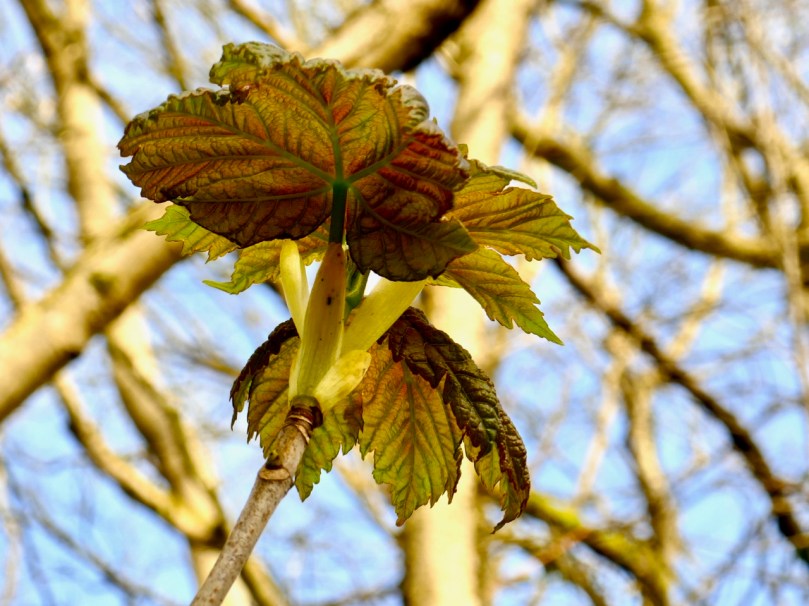
The sycamore are starting to bud and leaf. The intricacy of the underneath of the leaf!

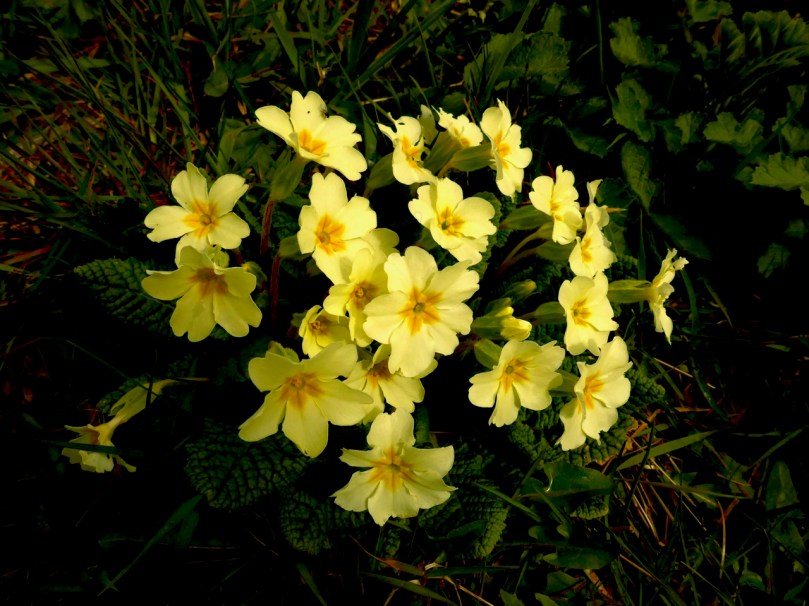
Everyone loves primroses

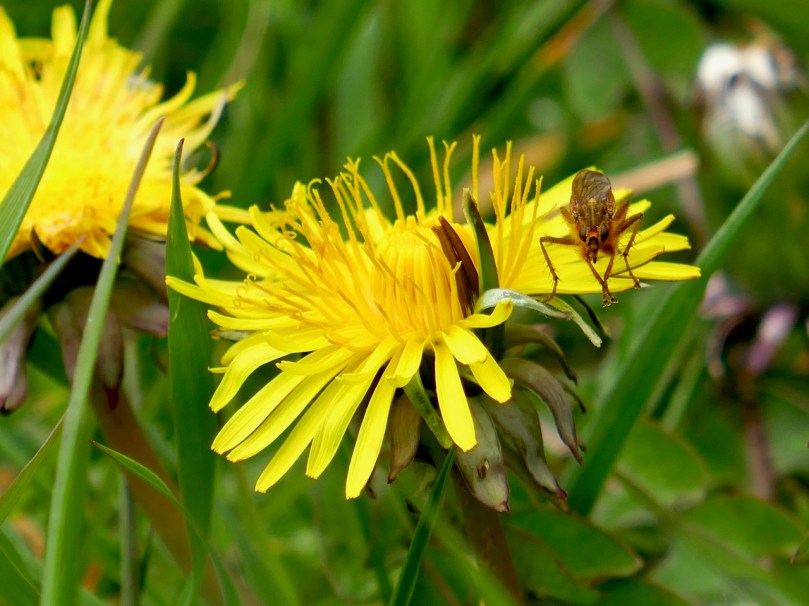
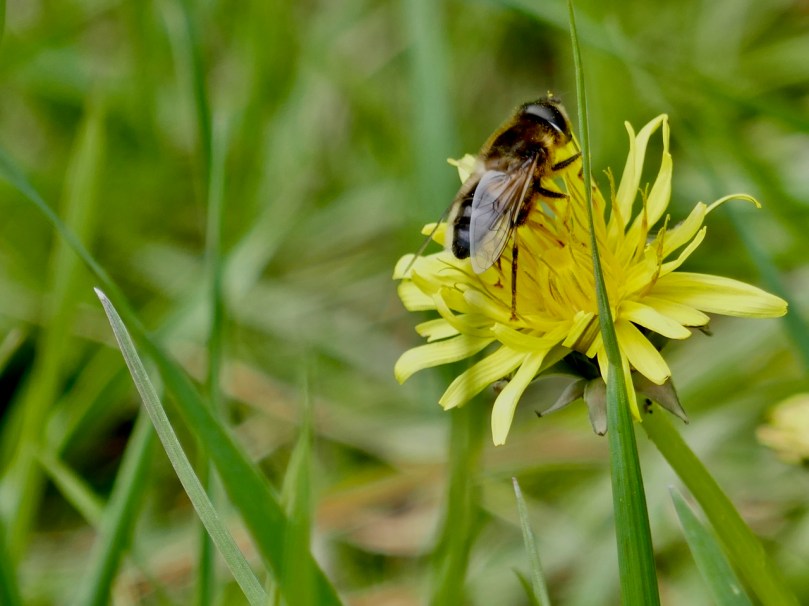
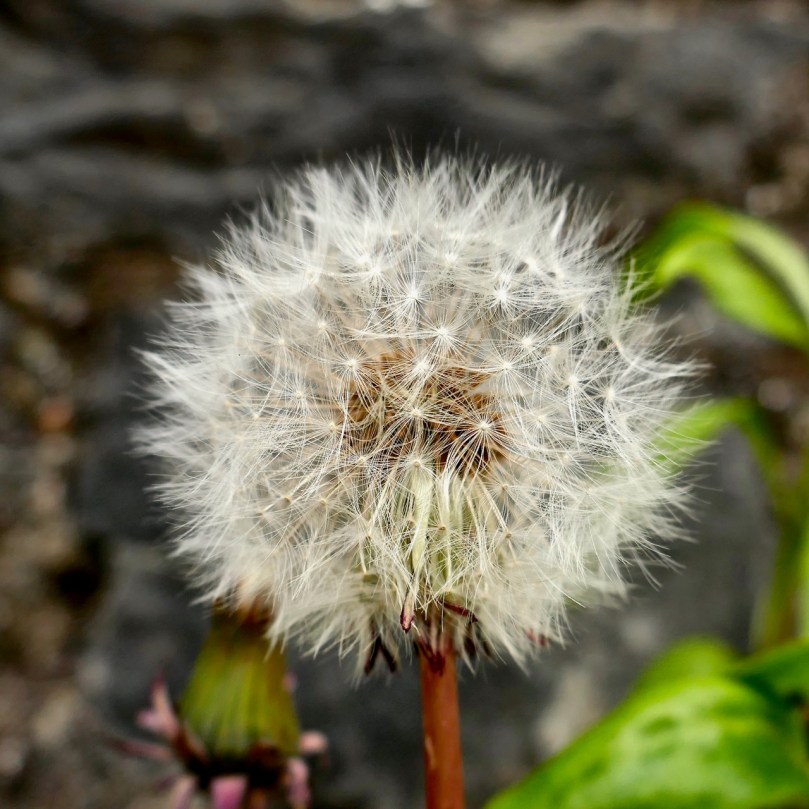
Lots of insects buzzing about the Dandelions – a hoverfly (top) and a bee

Take a walk in the woods and tell us what you’ve seen!

Mizen Magic 10: Sailor’s Hill

Fancy a walk? One with just enough elevation to get the heart going and with the reward of spectacular views at the top? It will take about an hour, maybe a bit longer if you stop to chat, or just gaze.

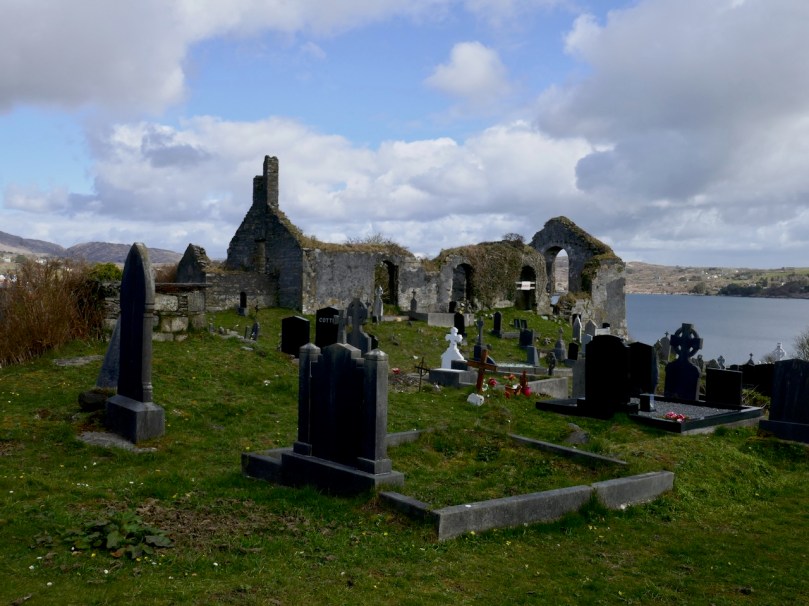
We’ve mentioned Sailor’s Hill before in the course of other posts – this one and this one. But it deserves a post of its own, because it’s a complete experience. Start from Schull and walk out along the Colla Road until you get to the old St Mary’s Church and graveyard. The National Monuments listing tell us that this was originally a medieval structure, although what we see in ruins now is mainly an eighteenth century church, situated in a picturesque burial ground. Turn right at that point.

You will notice the waymark signs. This is one of the newer extensions of the Fastnet Trails, and an initiative of a committed group in Schull. The walk up Sailor Hill is actually part of a larger walk, the Colla Loop – we are planning to do that one soon but only had time for this stretch of it today.

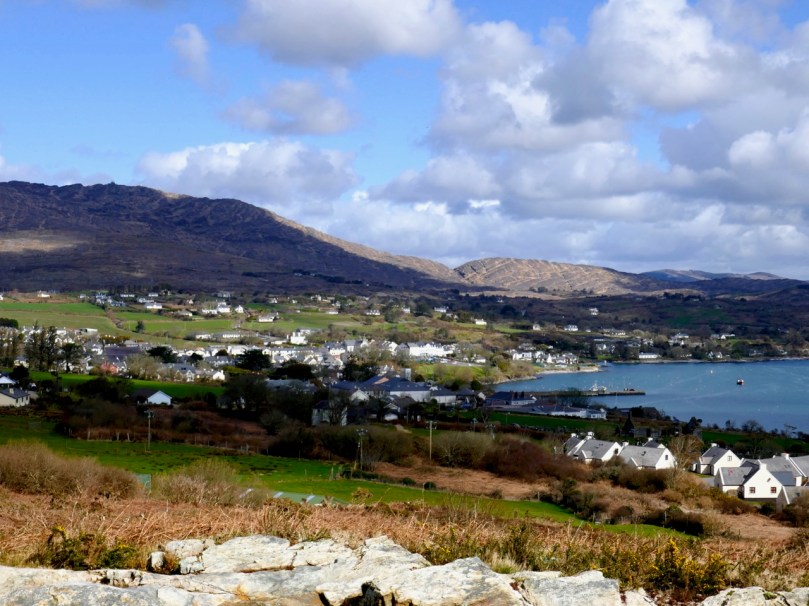
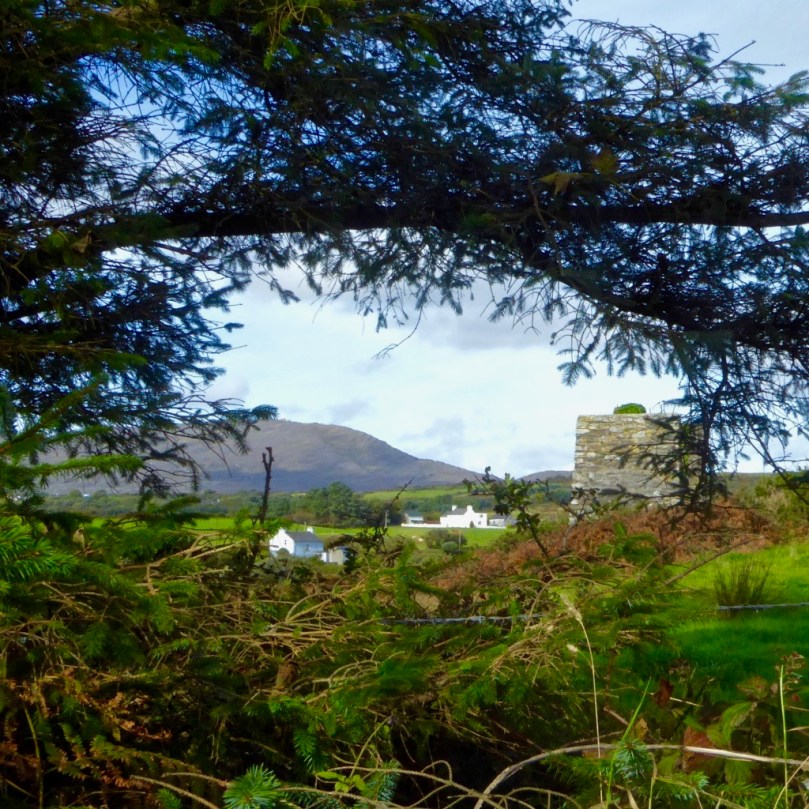
The road meanders gently upwards. Take the first left and then the next left. Views of Schull Harbour start to open out as the road rises. Looking back, you can see how Schull nestles at the foot of Mount Gabriel (see the photograph at the top of this post).

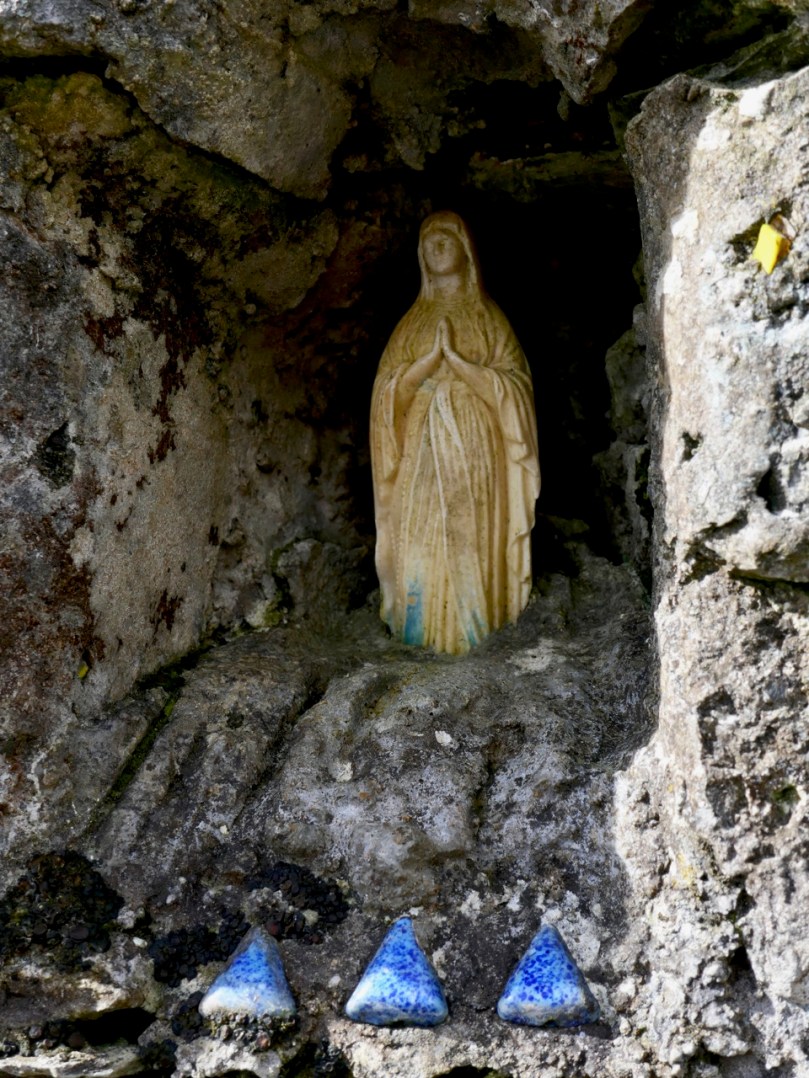
A tiny shrine in a gatepost

Later on, this boreen will be heady with Foxglove and Loosestrife and Oxeye Daisies, and later still the purple heather will dominate, but this is early spring and it’s been a long cold winter. 

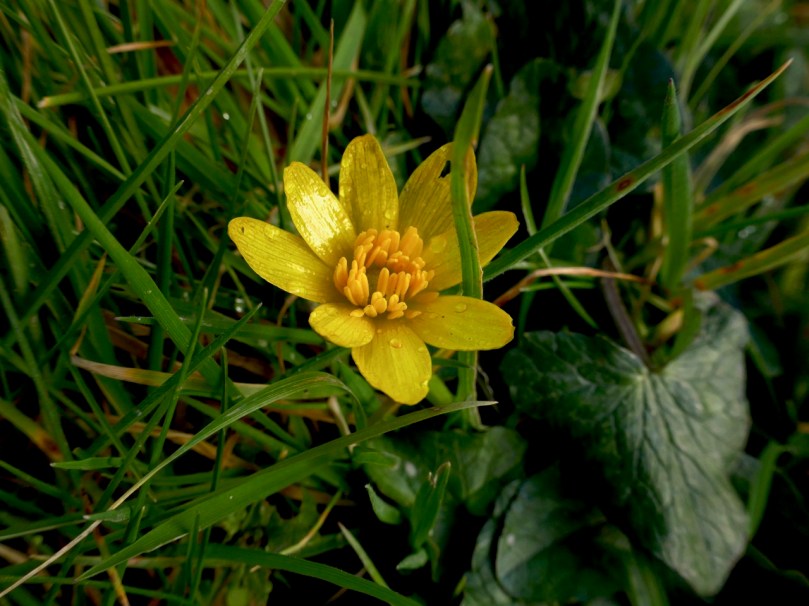
Everything is late this year, so I am happy to see the ever-reliable Celandine in profusion.

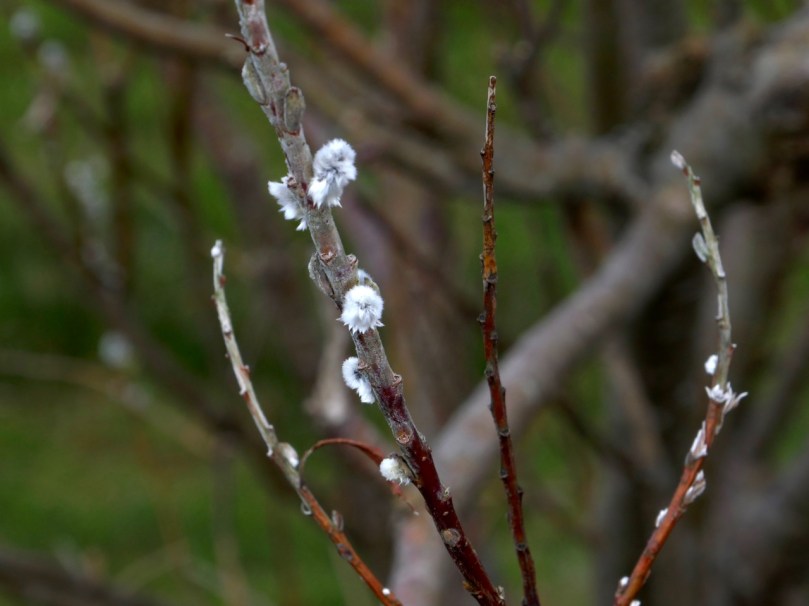
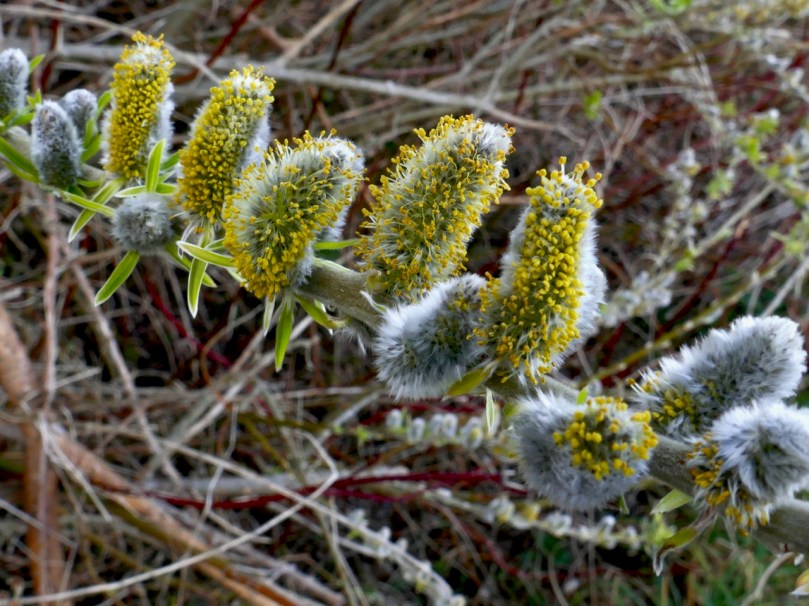
The willows are starting to bud out too, but apart from that, it seems that dandelions and lawn daisies are the only wildflowers brave enough to flourish along the way. Not that we disdain these humble flowers – they provide early and important nourishment for the insects and the bees. Must feed those pollinators!

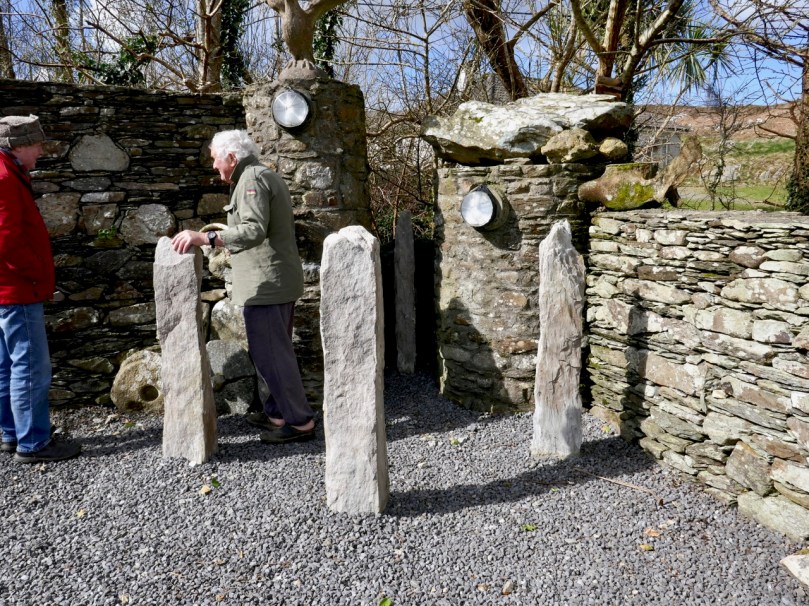
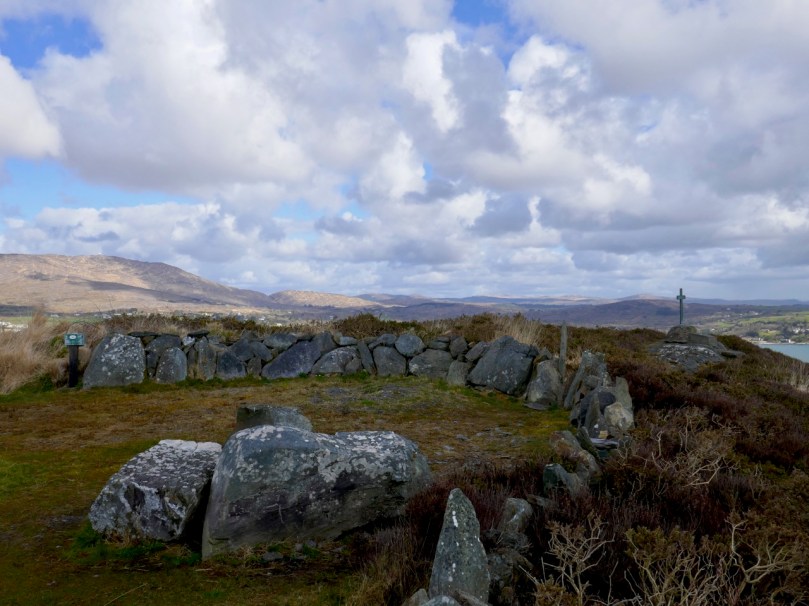
Connie and Betty Griffin have built a house with magnificent vistas near the top of the hill. They never stop adding to it, Betty with flowers and Connie with quirky additions, sculptures and walls. This time, he showed us his Sailor Hill Newgrange, a nifty arrangement of standing stones that respond to the rising sun by capturing the morning light in a stone recess.

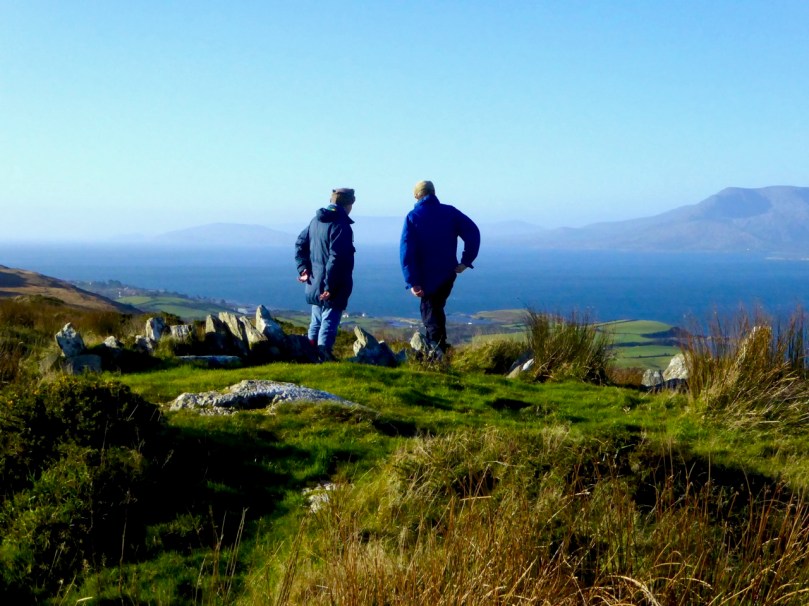
Connie demonstrates his sun calendar to Robert

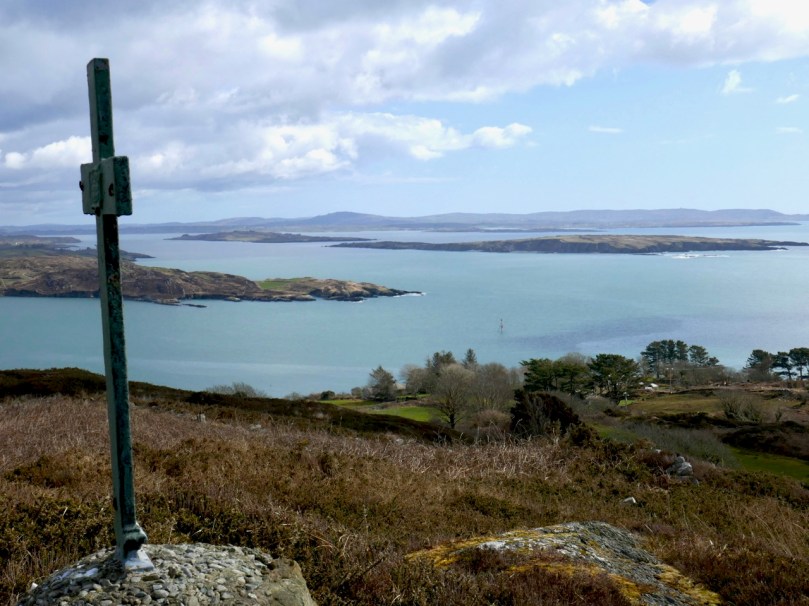
Up to the top then, and there it is – a breathtaking panorama that encompasses the whole of Roaringwater Bay and Long Island Sound to the south, and Mount Gabriel and its foothills to the north. Cape Clear, the Fastnet, Sherkin Island and all the smaller islands are laid out in front of you.

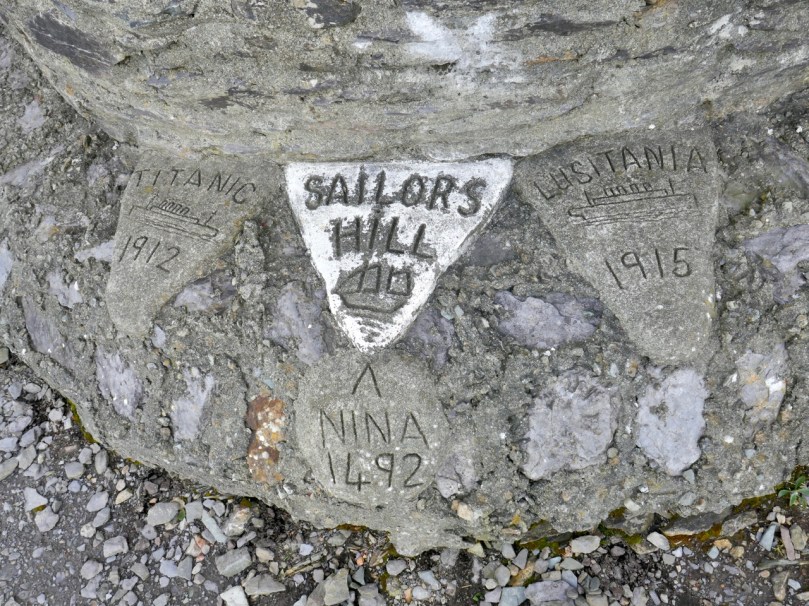
And there’s a cross and inscriptions, so you begin to realise that this site is about more than those views. Connie, who designed and built it, wants us to think about those who lost their lives at sea. It’s his own personal mark of respect and a reminder to us in the midst of all this grandeur to take a moment to contemplate on the power of the ocean and the fleeting nature of life.

I had to look up The Niña, 1492, and of course it was one of Columbus’ ships. He took the Santa Maria, the Niña and the Pinta on his voyage to the New World, but the Niña was his favourite. To learn why, take a look at this. But why is it here? Well, I’m not sure, but there is a tradition around here that Columbus may have visited West Cork on his way. His last provisioning stop may have been with the hospitable, learned and Spanish-speaking Fineen O’Mahony, Scholar Prince of Rossbrin

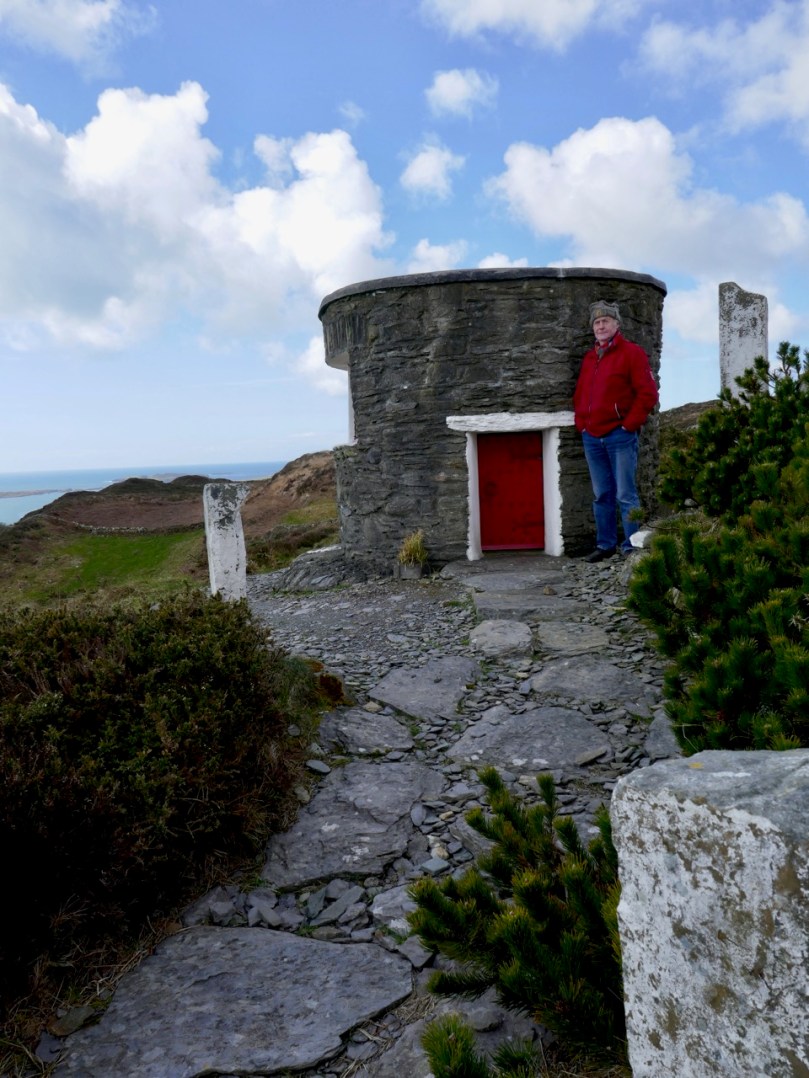
Connie has built his own tiny belvedere (he calls it his folly) perched to take maximum advantage of the view. It’s the perfect spot to sit, munch an apple, and enjoy a companionable chat before the walk down again.

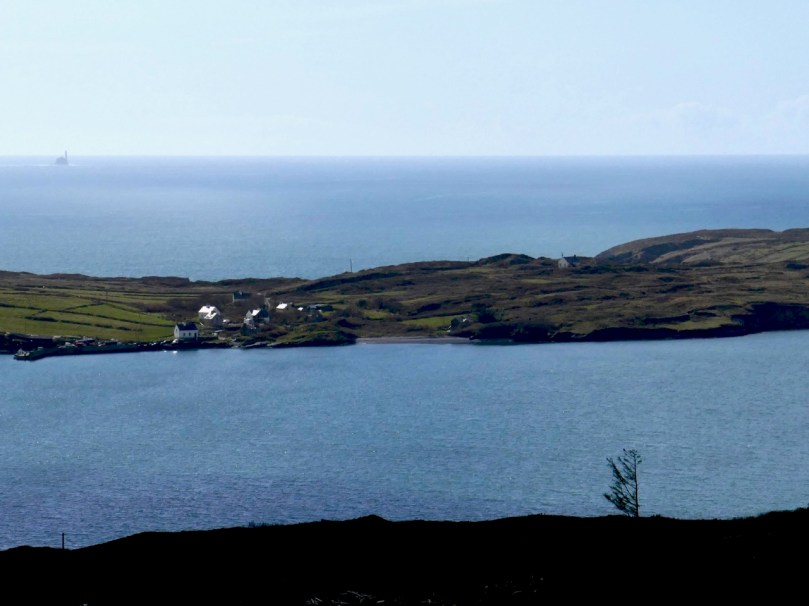
A final look out to sea. There’s Long Island and beyond it the Fastnet Rock with its iconic lighthouse.

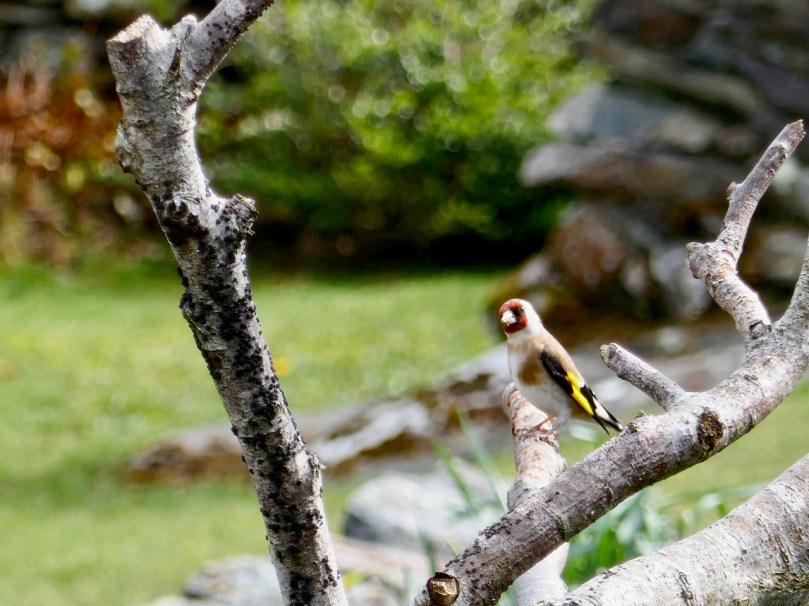
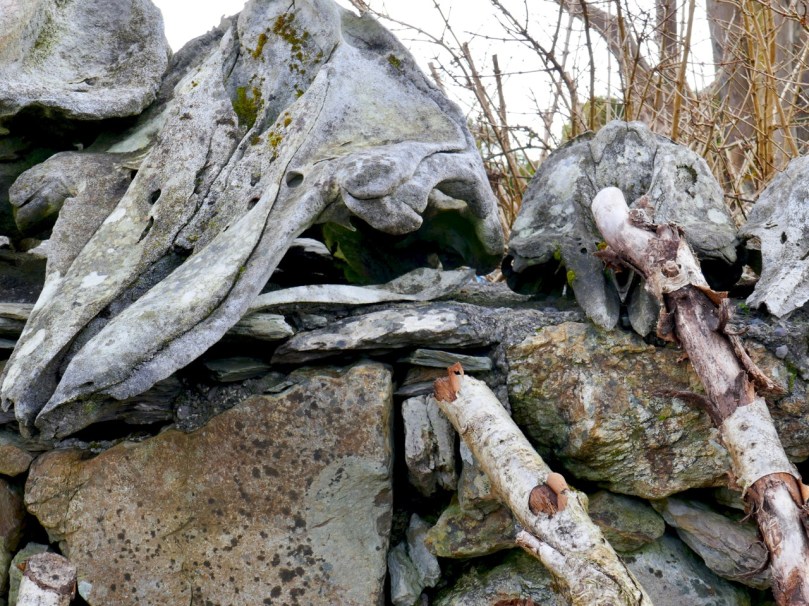
We paused to admire a Goldfinch in Connie’s garden, as well as his wonderful textural arrangement of sticks, stones and whalebones.

Thank you, Connie and Betty, from two happy walkers.

Mizen Magic 9: Rossbrin to Schull

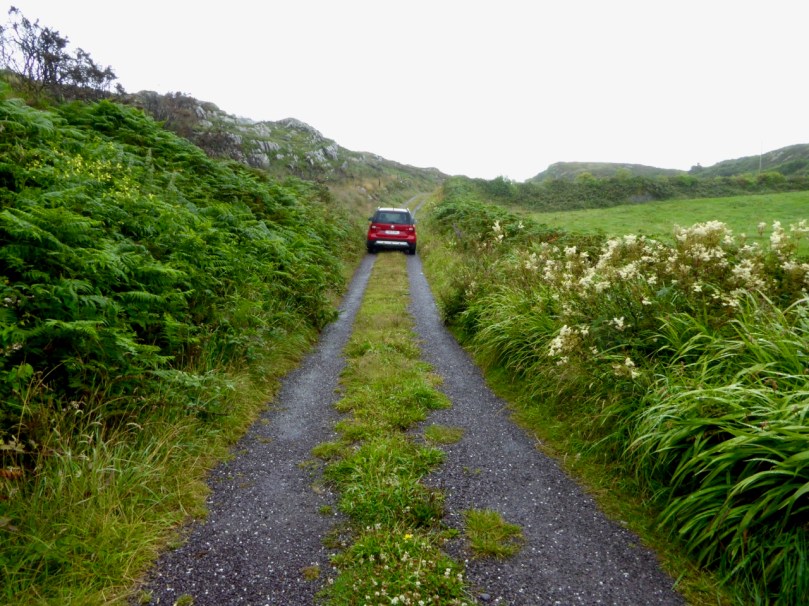
There’s a main road between Ballydehob and Schull, and then there’s a back road – a road that meanders through farmland and down half-forgotten boreens, a road lined with wildflowers and dotted with the remains of past history, a road that looks over once-inhabited islands. South of this road lies Mizen Magic 9.

Along the back road in early summer

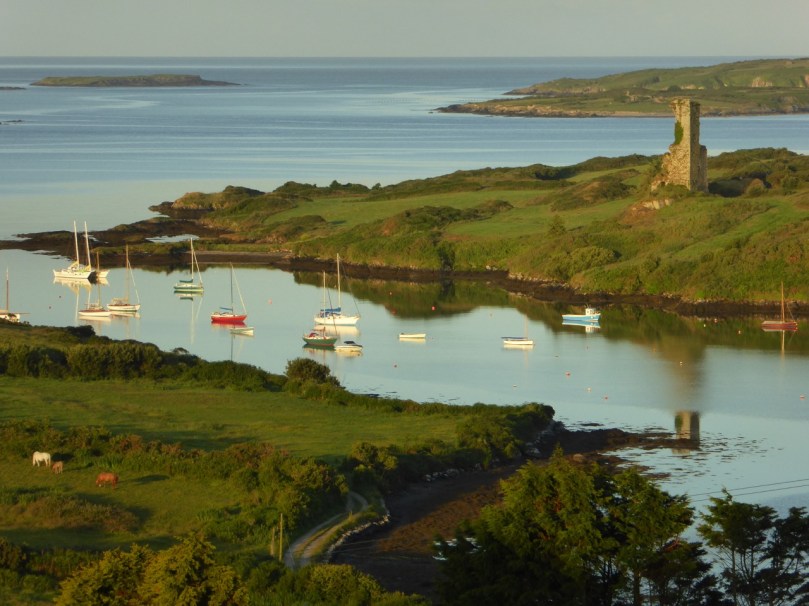
We’ll start at Rossbrin Cove – a place that Robert has written about over and over, like any writer with his own ‘territory.’ This was the home, in the 15th century, of Fineen O’Mahony, the Scholar Prince of Rossbrin.

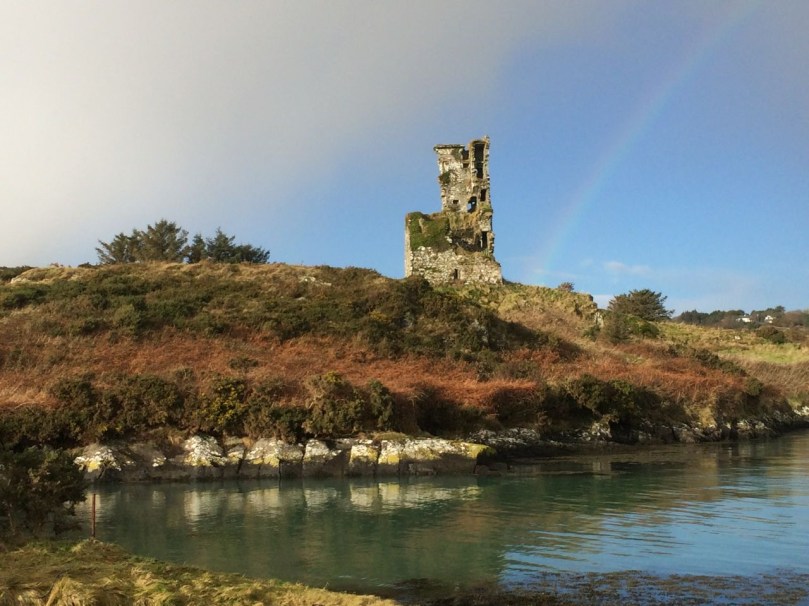
Looking down now on what’s left of his castle, it’s hard to imagine that this was a place teeming with life and learning – a mini-university where scribes and poets and translators transcribed to vellum (and to paper – a first in Ireland) psalters, medical tracts and even the travels of Sir John Mandeville. The castle has been in ruins since the 1600s, and we live in fear that the next storm will bring the last of it down.

Rossbrin Castle from the sea

The road runs through the townlands of Rossbrin, Ballycummisk, Kilbronogue, Derreennatra and Coosheen. Ballycummisk has a wedge tomb from the Bronze Age and a ring fort from the Early Medieval period – just to remind you that you are far from the first to want to settle in this place. In more recent times, and like Horse Island, it was once the centre of a thriving mining industry, but a spoil heap and stone pillars are all that remain.

Large ring fort, and the remains of mining activity, in Ballycummisk

Two islands dominate the views of Roaringwater Bay along this road. The first is Horse Island, owned now by one family, with its industrial past a distant memory. There have been various plans for Horse Island in recent years – a resort, a distillery – but so far it has resisted development.

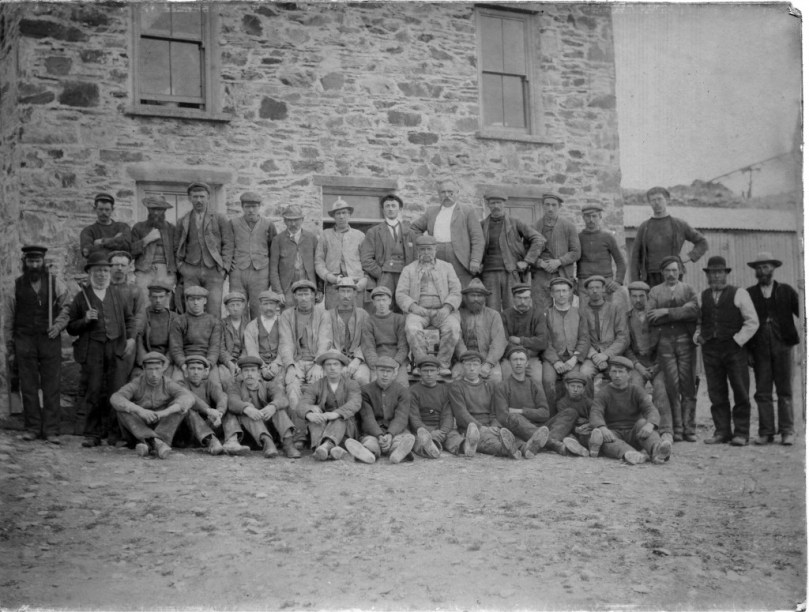
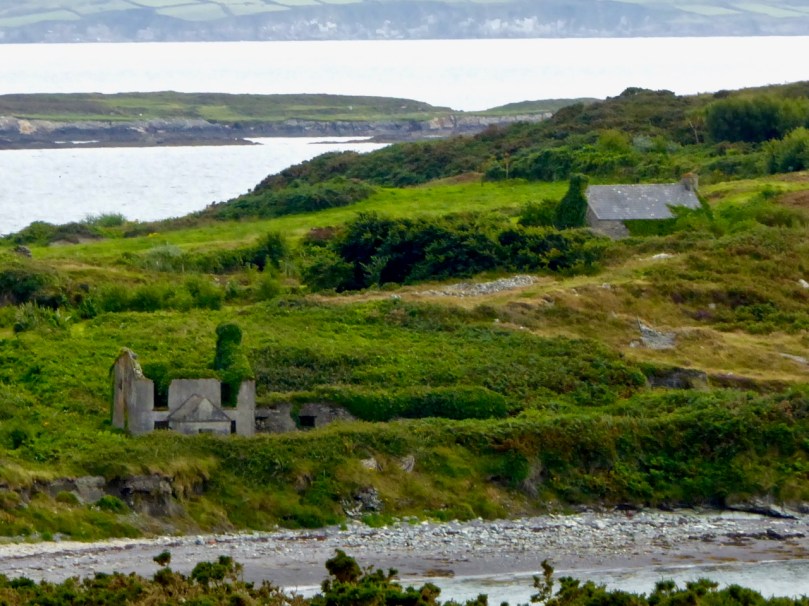
Horse Island Miners in 1898 and the ruins of miners’ dwellings

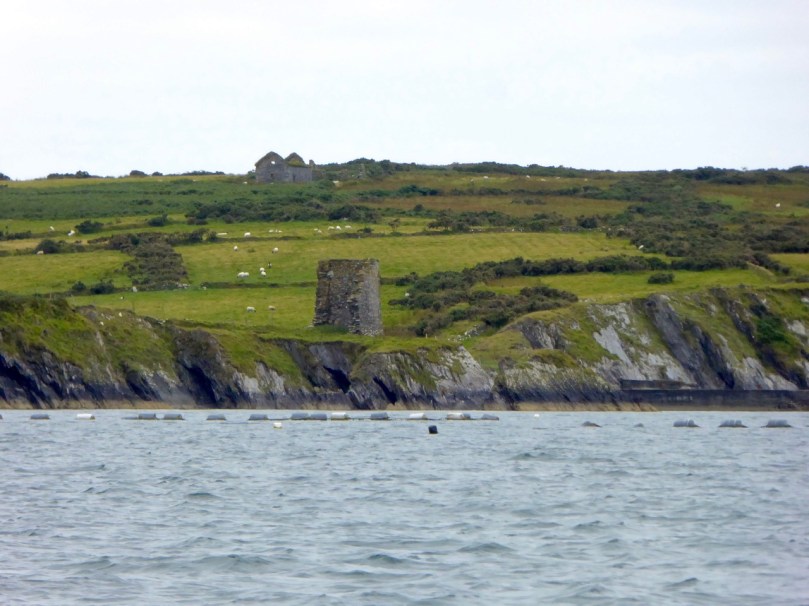
The other is Castle Island, home to yet another vestigial O’Mahony Castle – one of a string along the coastline, all within sight of each other and sited strategically to control the waters of Roaringwater Bay and their abundant resources.

There’s not much left of the castle on Castle Island

The O’Mahonys became fabulously wealthy in their day, charging for access to fishing and fish processing facilities and for supplies and fresh water. They also forged strong alliances with the Spanish and French fishermen and visitors who plied those waters – a friendship that was to cause great concern to the English crown and that was to spell, in part, their eventual downfall.
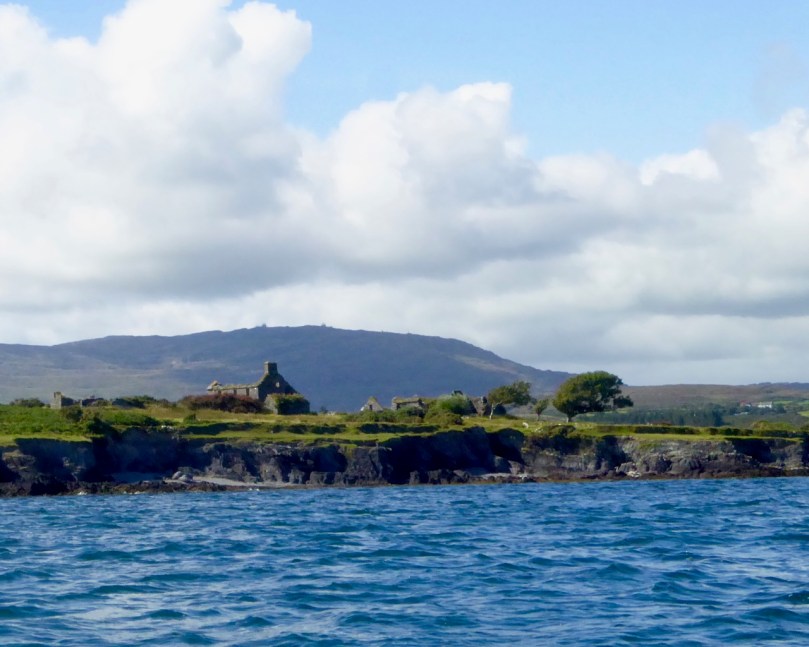
Ruined farm houses on Castle Island. The photograph was taken from a boat – that’s Mount Gabriel in the background

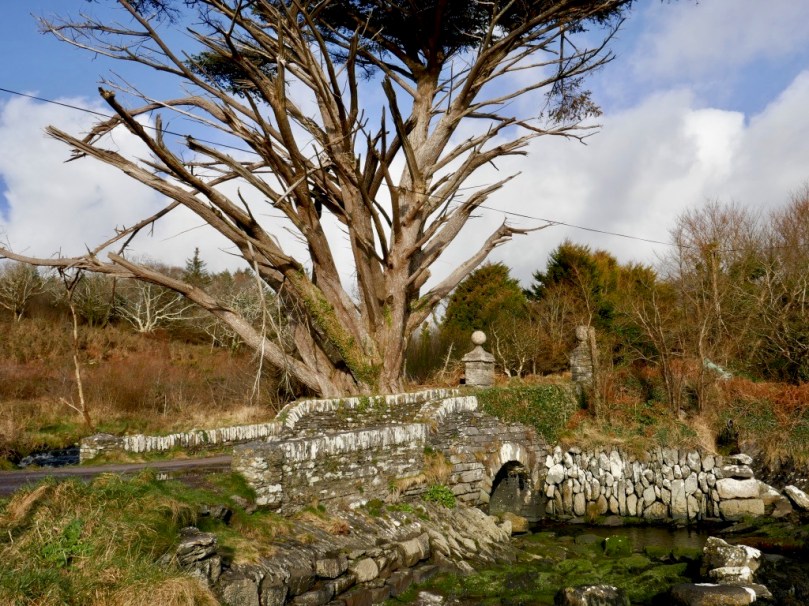
The closest spot to Castle Island (also uninhabited) is the beautiful little pier at Derreennatra. There is a large house up behind the pier, now inaccessible but once run as a guest house and famous for its hospitality. A curious bridge once gave access to the demesne and it remains a striking landscape feature, with its pillars and giant Macrocarpa tree.

Derreennatra Bridge

Continuing towards Schull we come to the last of the O’Mahony castles and the best preserved in this area. This is Ardintenant (probably Árd an Tinnean – Height of the Beacon – possibly referring to a function of the castle to alert others to the presence of foreign vessels) and it was the home of the Taoiseach, or Chief, of this O’Mahony sept.

Two ‘beacons,’ ancient and modern – Ardintenant or White Castle below and above it the signal stations on Mount Gabriel

The castle, or tower house, still has a discernible bawn with stretches of the wall and a corner tower still standing. If you want to learn more about our West Cork tower houses, see the posts When is a Castle..?; Illustrating the Tower House; and Tower House Tutorial, Part 1 and Part 2.

Ardintenant is also known as White Castle, a reference to the fact that it was once lime-washed and stood out (like a beacon!) to be visible for miles around. It appears to have been built on top of an earlier large ring-fort which in its own day was the Taoiseach’s residence before the fashion for tower house building.

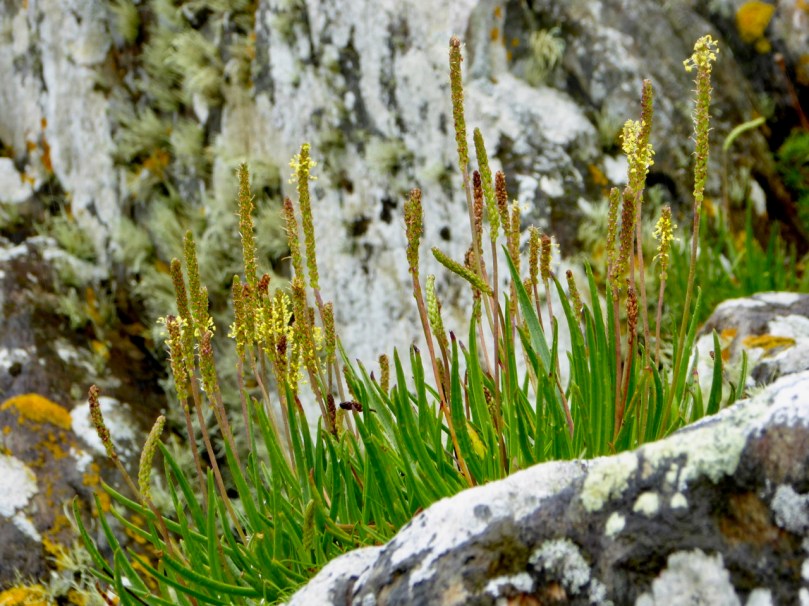
Sea Plantain at Coosheen

From Ardintenant we head south to Coosheen, a picturesque pebble beach known only to locals. It’s one of my favourite places to go to look for marine-adapted wildflowers. On a rainy day last August I saw Sea-kale, Sea-holly, Sea Plantain and Thrift, and drove back on a boreen lined with Meadowsweet and Wood Sage and past a standing stone whose purpose has been long-forgotten but that continues its vigil through the centuries.

Our final spot in Coosheen is Sheena Jolley’s mill house, now the gallery of this award-winning wildlife photographer. She has restored it beautifully and the gardens are a work-in-progress that manage to capitalise on, rather than overwhelm, the mill stream and the rocky site. This is also the starting point for the Butter Road walk – but that deserves a new post one of these days, a post in the Mizen Magic series. We have written one but it was a long time ago.

Take a walk, or a drive, down any part of this road – do it in summer when the boreens are heady with wildflowers, or do it in winter when the colours of the countryside are at their most vivid. Heck, do it any time!


Become a Citizen Scientist!

The National Biodiversity Data Centre, which is also known as Ireland’s Citizen Science Portal, is asking us to record certain spring flowers that we see. This is not a task, it’s a pleasure! What could be more delightful than wandering down a country boreen, stopping to admire the flowers (like the Cuckooflowers above, seen near Bantry) and in about a minute, sending off a record to the Data Centre?

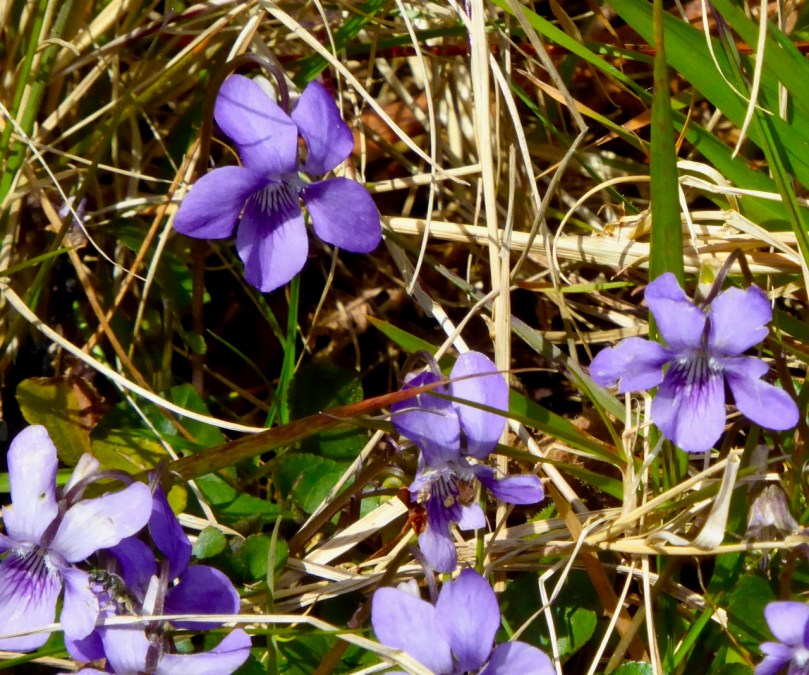
Common Dog-violets, Greenmount, near Ballydehob

Yes, they have made it that easy, with the most amazing little app. I’ll explain how to use it below, but first – why record spring flowers at all? Here’s what the NBDC says about that:

All recording is valuable as it contributes to furthering plant conservation in Ireland. Most plant recording takes place later in the summer. This project is particularly important as it encourages records of early-flowering species that can otherwise be lacking in data. Many of the spring flowering plants are very distinctive, making it a good way for those new to recording to get involved.

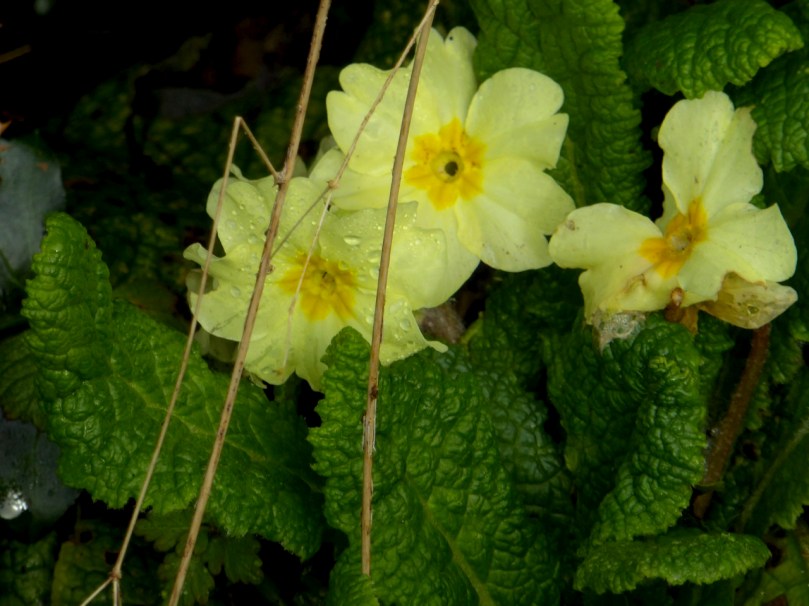
Primroses, Rossbrin

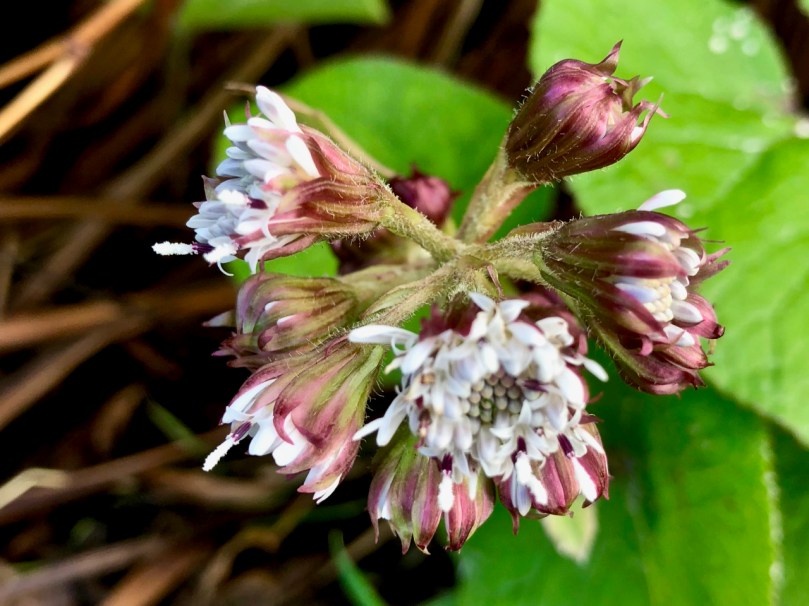
Most (but not all) of the flowers selected for this Spring Flowering Plant Project are common and can be found extensively around West Cork and elsewhere in Ireland. Here’s the list: 1. Bluebell 2. Common Dog-violet 3. Cowslip 4. Cuckooflower 5. Early Dog-violet 6. Early-purple Orchid 7. Lesser Celandine 8. Lords-and-Ladies 9. Primrose 10. Ramsons/Wild garlic 11. Toothwort 12. Winter Heliotrope 13. Wood Anemone 14. Wood-sorrel.

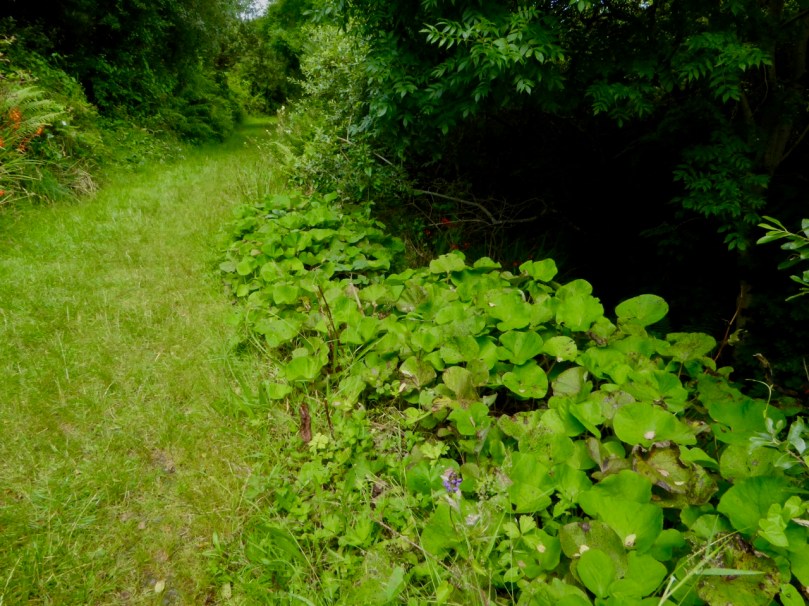
Winter Heliotrope is an invasive species and a common sight along roads and railway tracks. Here it has colonised the Butter Road

The Winter Heliotrope has been blooming since December, and I’ve already seen my first Primrose. But the real spring blooming time is yet to come, in March and April, and into May. That’s when our hedgerows will come alive with Common Dog-violets and Lesser Celandine, and the Cuckooflowers will suddenly appear in the fields.

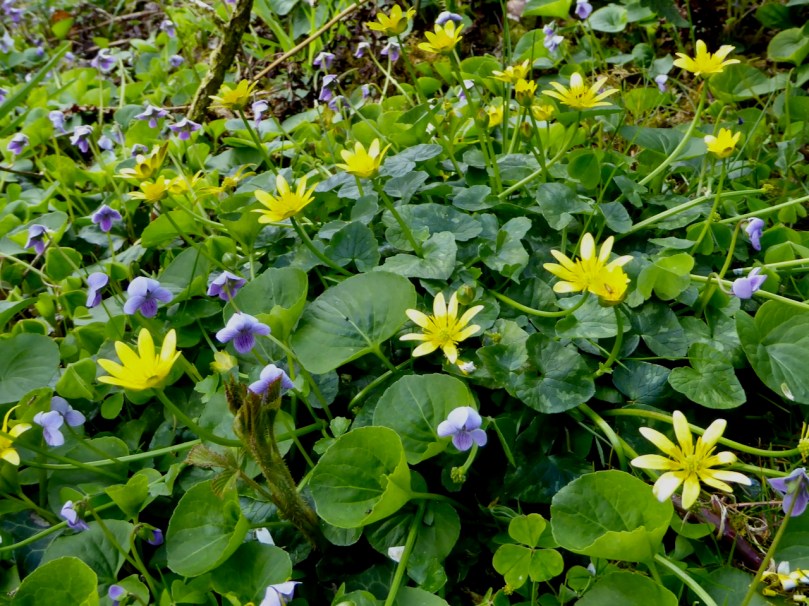
We saw these beautiful Lesser Celandine consorting with March Violets in the Magic Forest

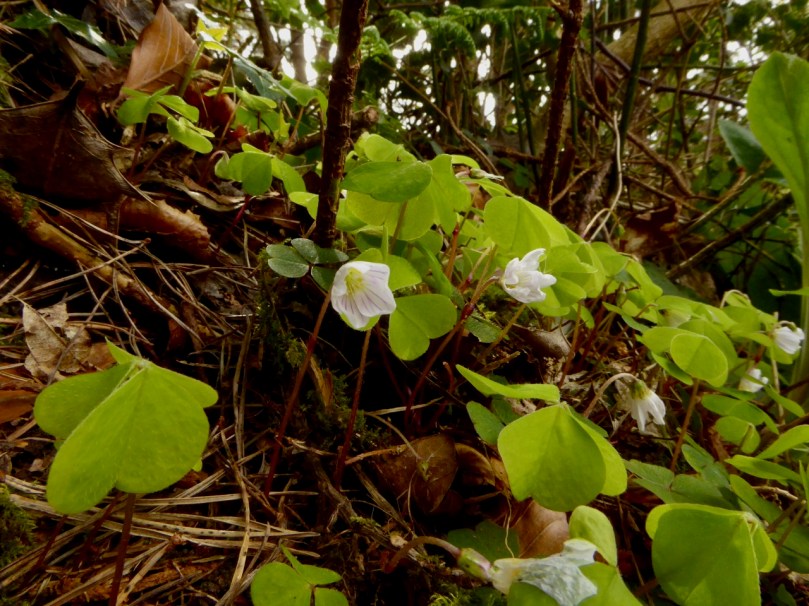
A venture into the woods will reward you with Wood Sorrel and Wood Anemone, and the ultimate spring experience – a carpet of bluebells. A trip to the Beara Peninsula early last April provided an opportunity to wander up the River Path at Gleninchaquin, surely one of the most picturesque spots in all of Ireland. Not only was it a gorgeous warm spring day, but the path wound its way through clumps of Wood Anemone and Wood Sorrel.

The Wood Sorrel leaves are like large shamrocks, while the flower has a sweet little white head veined with pink

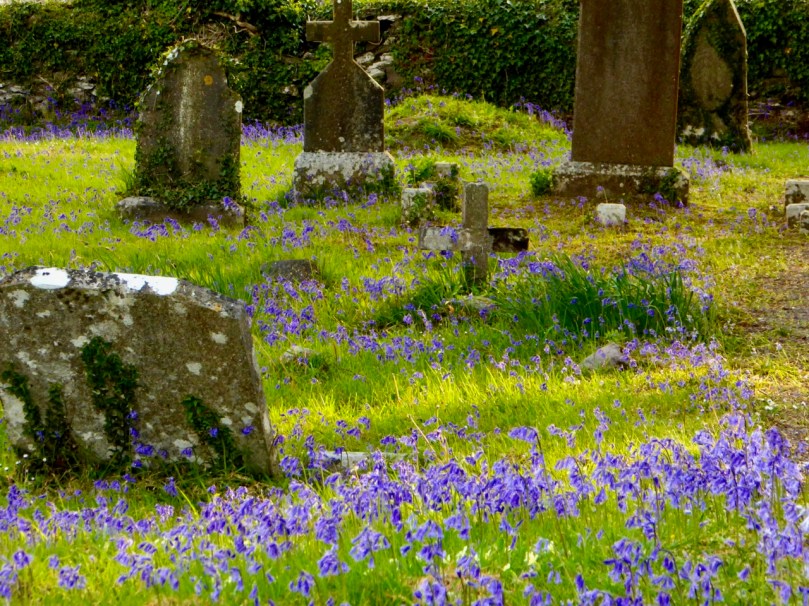
Returning through Kenmare we stopped by an old graveyard just outside the town, to find the entire area covered in bluebells. The other place to look out for bluebells is, perhaps surprisingly, in recently burned patches. It’s the only upside to a lot of the burning that goes on around here. The bulbs, like those of many flowers, are able to lie dormant underground for many years until the right conditions allow them to germinate.

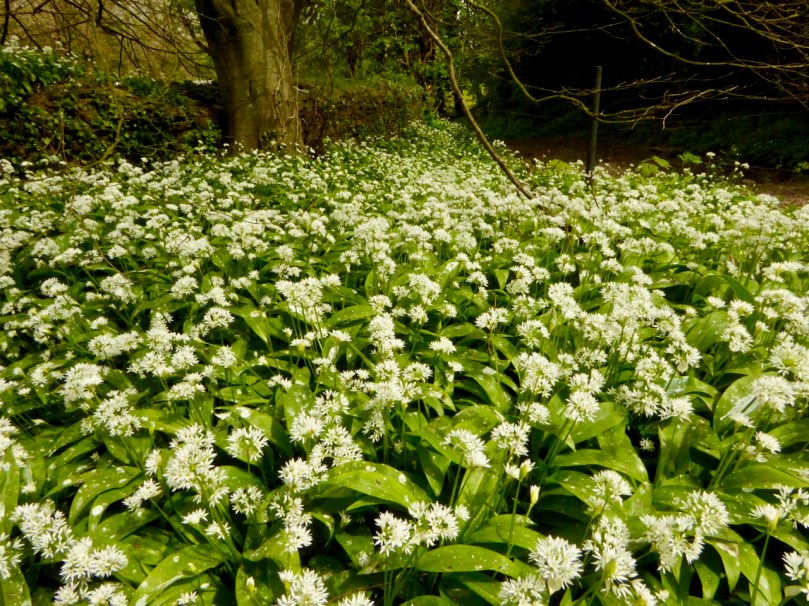
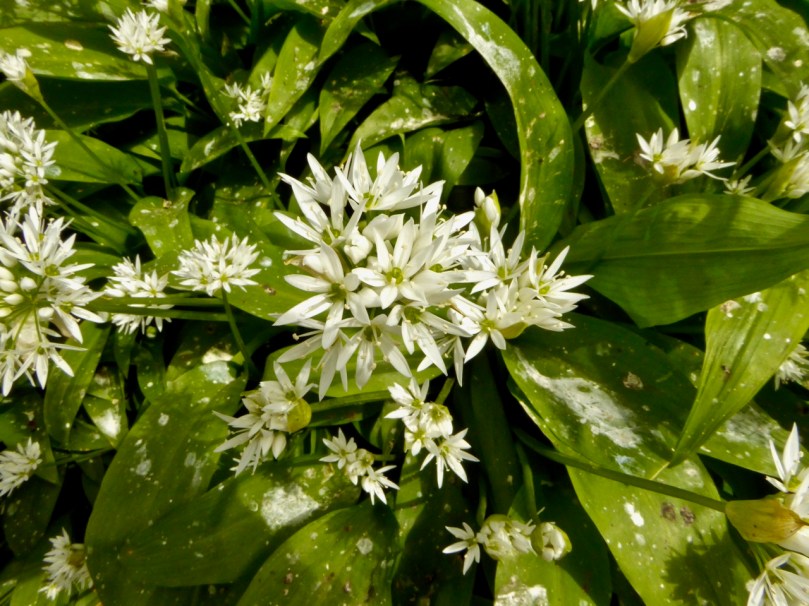
There’s always lots of Wild Garlic around, but the NBDC are asking us to record the native plant, also known as Ramsons, and NOT the ubiquitous Three-cornered Garlic that looks a little like white Bluebells. Ramsons are a little harder to find, although there is a magnificent stand of them near here. Unfortunately, it’s on a bad bend on a busy road, and also under an active rookery. When I finally managed to pull in safely last year, it was to discover that every plant was covered in rook droppings. There went my plans for Wild Garlic Pesto.

The Ramsons stand at New Court – and a close up of the effects of being located under a rookery

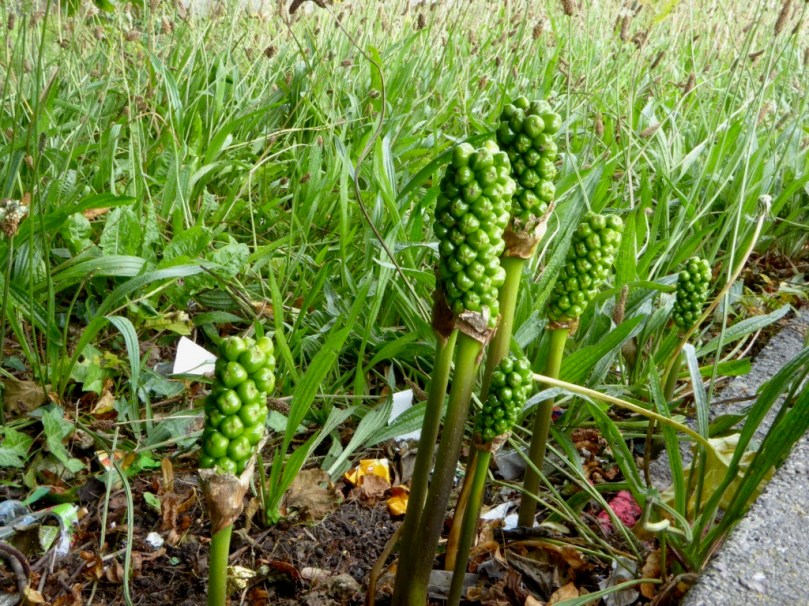
While I have lots of photographs of orchids, I have never seen the Early Purple Orchid. However, they have been spotted around Crookhaven, so that’s one of my goals for this year. I want to try to find some Lords-and-Ladies in their spring phase as well – the only photos I have are from the Caol Stream project I did last year, and they already have their green, highly poisonous spikes, which turn red later.

While the Common Dog-violet is, well, common, the Early Dog Violet is rare. I may have spotted one last year on the Sheep’s Head, but I didn’t get good enough photographs of it then to make a positive ID. If you’re unsure, always try to get shots of the leaves, or the basal rosette, and the context (hedgebank? stream bed? grassy field? disturbed ground?) – all this will help you when you download your photographs and look through your resources.

What I think is an Early Dog-violet, found on the Sheep’s Head. I wonder if I can find it again, as I need to verify this by taking better photographs

And speaking of resources – here are my go-to sites and books:

  1. Wildflowers of Ireland: Zöe Devlin’s book is the perfect companion for a walk – small enough to pack around and very easy to use, as it’s organised by colour and number of petals. Her website is likewise excellent and easy to navigate.
  2. Irish Wildflowers – if you can’t find it in Wildflowers of Ireland try this site. The information isn’t as expansive, but it’s good on Cork species and it’s searchable in a variety of ways.
  3. A Beginner’s Guide to Irish Wild Flowers – a handy little reference book that slips in the pocket. It’s published by the wonderful Sherkin Island Marine Station, and is organised by family groups. For such a tiny book it is packed with information (by John Akeroyd) and excellent photographs (by Robbie Murphy). If you can’t find it in a book shop, you can order it through the Marine Station.

Wood Anemone – a delicate beauty

Now – you want to get recording, so here’s what to do. Go to the App Store or Google Play and search for the free app ‘Biodiversity Data Capture.’ You will find a very clean and simple interface which exists for one purpose, to make it incredibly easy to record a sighting. The whole process of recording one flower takes about a minute!

First, find your flower! Make sure your Location Services is ON. Open the app, and in the app take a picture of the flower. While you are doing that, the app is busy establishing your location. From the Species Group, select Vascular Plants (last option). From the Species, select the flower. You can start to type the name and a list of near-spellings should come up. Site – type in the name of the place, for example, a townland or road. Select a habitat – whatever seems closest. Type in any comments you have, add your name and email address, and Save. Once that’s done, go back to My Sightings and hit the Upload button, or wait until you have several (or until you’re on WiFi) and hit Upload All.
Bluebells growing on a recently-burned hillside, where no Bluebells had been before

Don’t worry if you think you made a mistake. A real human checks all the records submitted (that’s why it’s important to include a photograph) and only includes verified records in the final selection. Now so – give it a go and tell me how you get along. And if you do, feel proud, because you will have joined the ranks of the Citizen Scientists of Ireland, all doing their bit to safeguard our precious biodiversity.
It’s Been Five Years! Finola’s Favourite Posts

I can hardly believe it – we’ve been doing this for five years now and we’re nowhere near running out of ideas for posts. And have you read Robert’s post? Imagine being called a 21st Century Robert LLoyd Praeger! Thrilled. But in fact as I dip into Praeger again I recognise in us the same impulse he had – to wander the land and discover all that it has to offer.

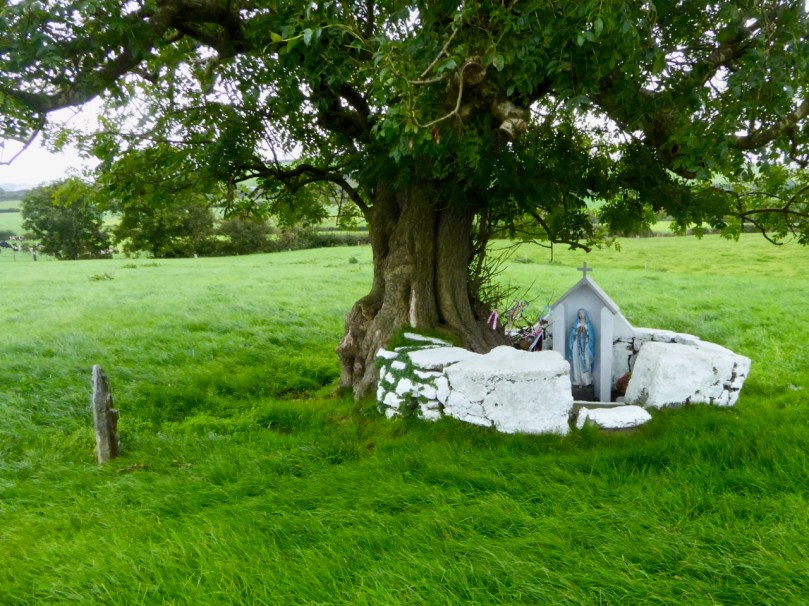
Amazing what you stumble across in the countryside, like this holy well and its offerings

One of the wonderful things about blogging like this is how much you LEARN every day, about Ireland, our neighbours, the ground we walk upon, the history and archaeology to be discovered around every corner, the wisdom of country people, the humour and expressiveness of Irish speech, the breathtaking beauty of the landscape. So where on earth to begin?

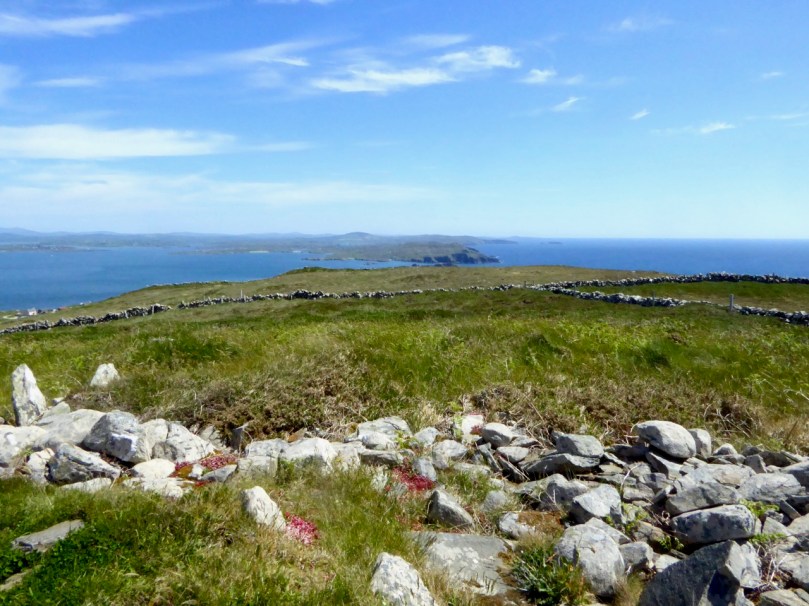
Our interest in archaeological sites led us to hike to the highest point on Cape Clear Island to see the sparse remains of a neolithic passage grave – and what a spectacular view there was from it, towards Sherkin Island and all the way down the coast of West Cork

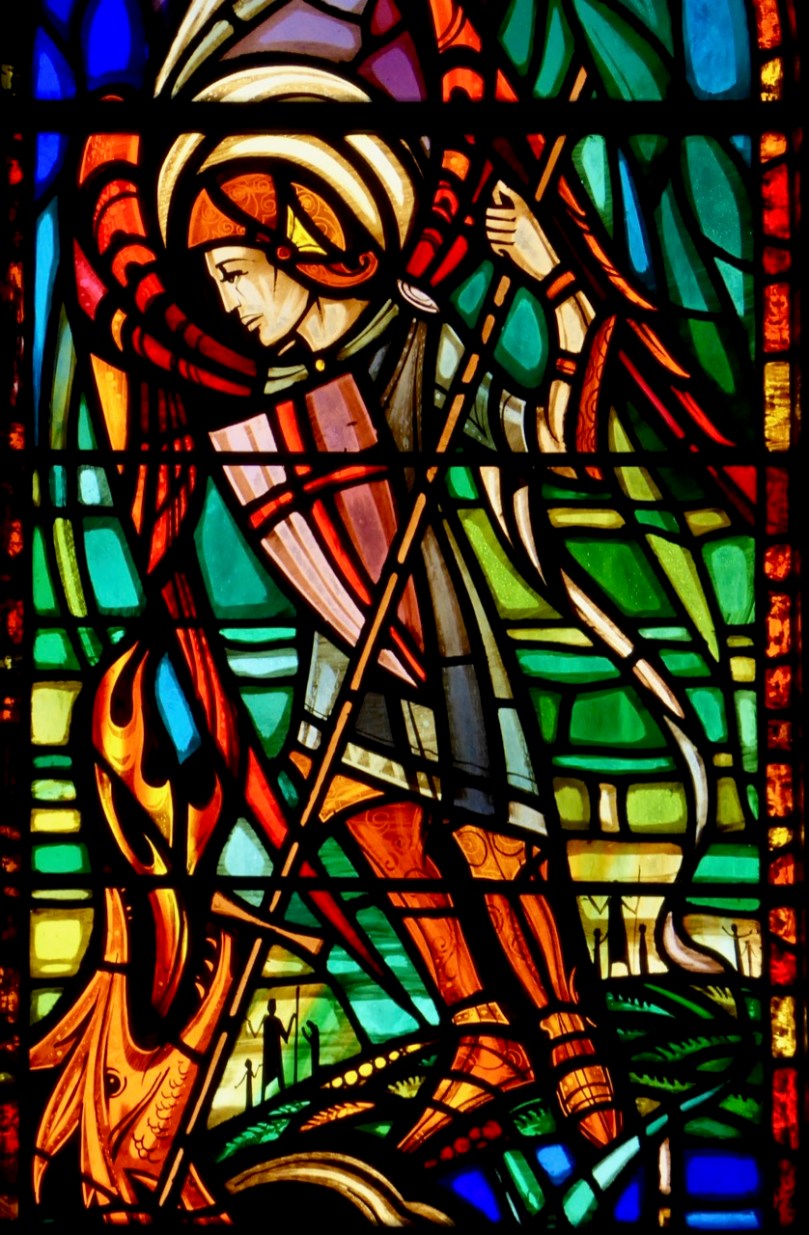
Like many, I sat in churches as a child unaware of the architectural splendours around me. One of the delights of returning as an adult is discovering Irish stained glass, really seeing it for the first time. Harry Clarke, of course, is always a favourite, but I have been thrilled to discover other artists too: Richard King, George Walsh, the artisans of the Tower of Glass. There will be lots more posts about stained glass in the future as I unearth more treasure.

A recent discovery, George Walsh windows in a rural church in West Cork. This is his rendering of the Archangel Michael defeating the devil as a dragon

Going back to my roots as an archaeologist has been an extraordinary journey – so much has changed, so much has not. I started out in archaeology in the 70’s, although life got in the way of that career eventually. It was a small profession then: it exploded in the 80s and 90s with the advent of huge building projects, then contracted again when the recession hit.

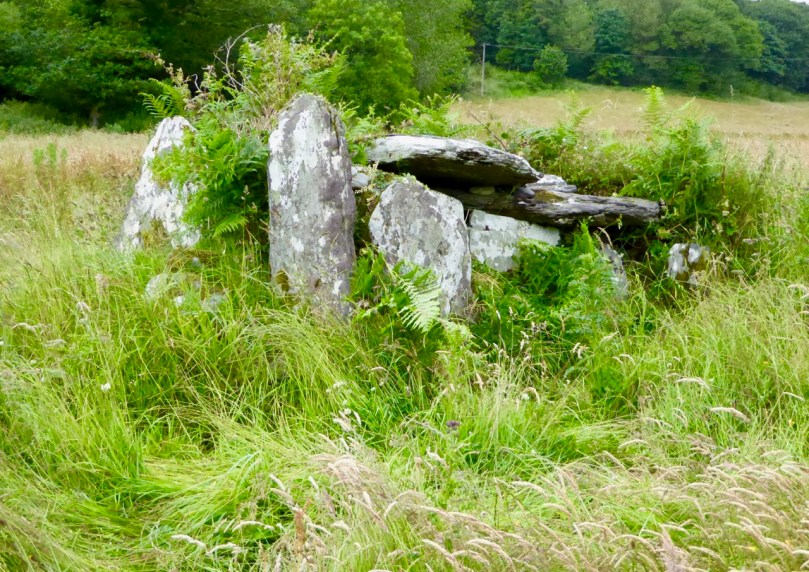
I love the quiet little sites you find when you least expect them – this is a wedge tomb in the middle of a field. It has cupmarks all over one of the capstones

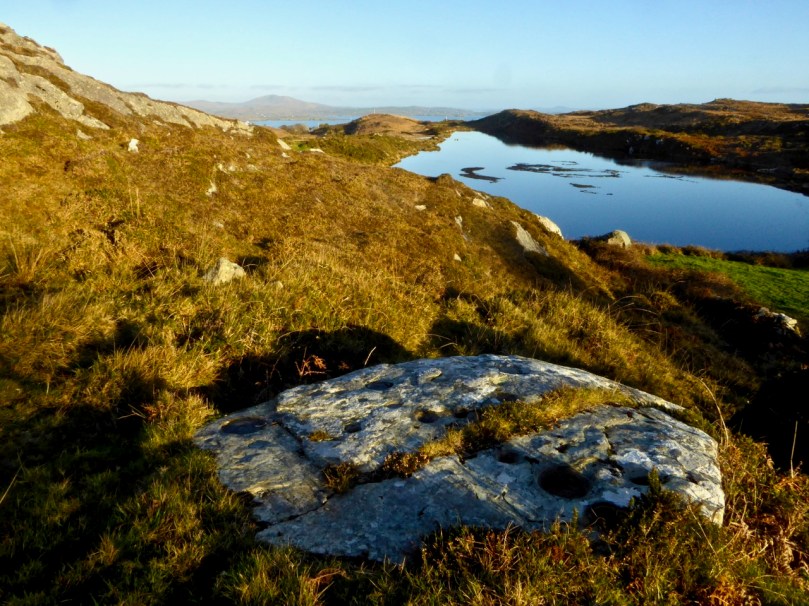
I have gone back to researching prehistoric rock art and finding that, while some excellent work has been done in this field over the last 40 years, there is a lot of scope still for an independent researcher to contribute to our appreciation of this little-known aspect of Irish prehistory. Along with our exhibitions, I’ve written several posts (not all of them happy) on this topic, and we are currently working on a paper for the Journal of the Bantry Historical and Archaeological Society on a special group of rock art panels at Ballybane.

Castlemehigan, one of our favourite rock art sites, with views right back over the Mizen Peninsula to Mount Gabriel

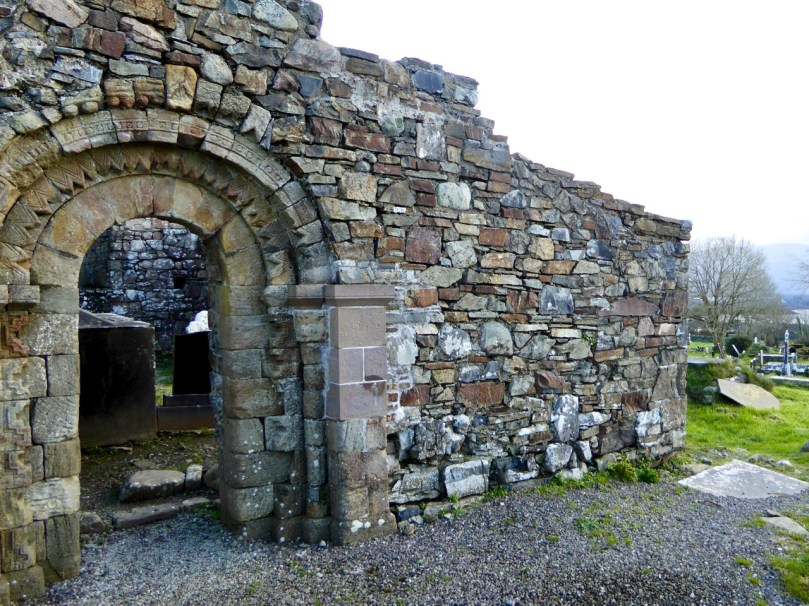
When I studied at UCC under Professor O’Kelly the emphasis was firmly on prehistory and we spent little time on medieval structures (or later ones, heaven forbid!). But when you are free to pursue whatever tickles your fancy, you find yourself wandering down a variety of rabbit holes. I became fascinated with Romanesque ecclesiastical architecture and with the tower houses (we just call them castles) that dot the countryside around here and the later iteration of the Big House – fortified manors. Visiting these intriguing ruins all over West Cork (and Ireland) has given me a whole new appreciation for how we lived and what we believed in the past.

This is the ruined romanesque church of Aghadoe in Killarney. It’s got this lovely doorway, but what makes it particularly meaningful for me is that my great-grandparents are buried in the graveyard it stands in

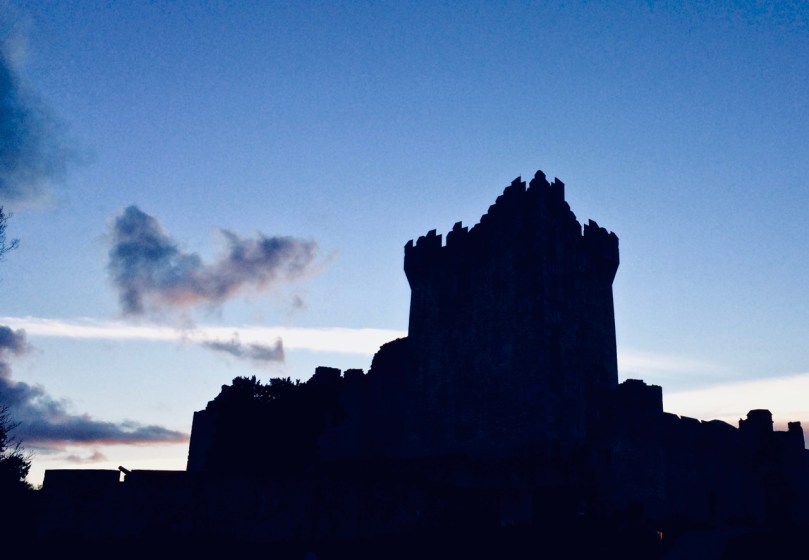
Ross Castle in Killarney against an evening sky

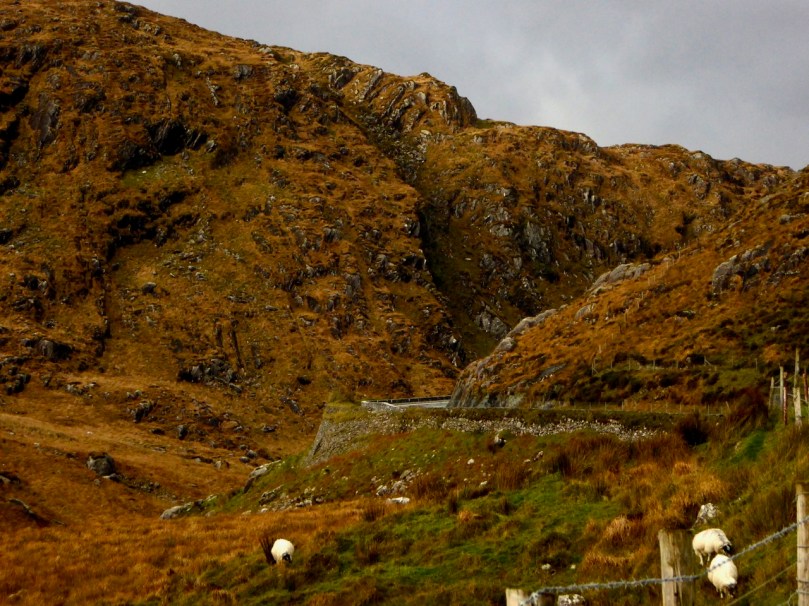
Living in West Cork is great FUN – there is always something to do and a new adventure around the corner. Many of the adventures we’ve had have been shared with our friends and fellow bloggers Amanda and Peter Clarke (Holy Wells of Cork and Hikelines). Visiting holy wells has introduced us to parts of Cork we might never have seen, to obscure saints with fascinating backstories and to folk practices that endure in the deep countryside. Walking the Sheep’s Head (my lead photograph, top of page), in all seasons, reminds us that you don’t have to go far to be immersed in jaw-dropping scenery and reminders of our ancient and more recent history.

The holy well of St Teskin, an East Cork saint

Lest you think that this is all sounding a bit academic, the posts that have been most fun to write were the ones on how we speak around here (and how you, too, can learn the basics of West Cork lingo), the ones in which I lamented my encounters with Irish bureaucracy, especially when it came to my driver’s license!

I still haven’t calmed down about the driver’s license – what they put me through, when I could have been driving THIS!

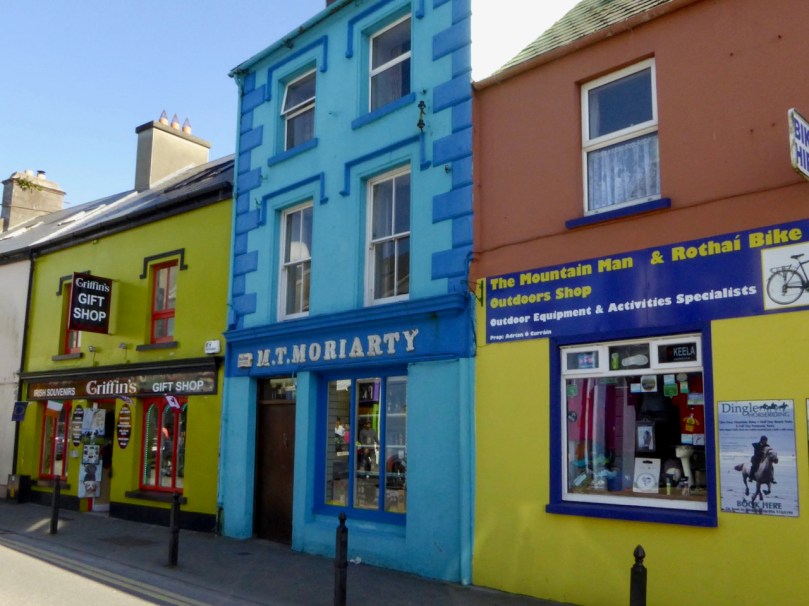
And I loved doing the posts about the tradition of painting our houses in arresting colours. With the colourful houses series, I feel a bit like a chronicler of a vanishing tradition – each time I look for one of my favourite pink or lime creations it seems to have been repainted a ‘tasteful’ variant on beige. Long live those brilliant colours – we would be poorer without them!

The town of Dingle is proudly keeping alive the tradition of painting each building a vibrant colour. – it’s a feast for the eyes

Finally, one of my greatest joys in the last couple of years has been to go for a walk with my camera and photograph the abundant wildflowers of West Cork. From someone who barely knew a daffodil from a daisy, I have developed a passion for the natural glories I see in the hedges, fields and yes, waste grounds, around me.

Just a typical roadside verge in West Cork

We adore West Cork, but we are also fearful for it as we see the pressures farmers face to make their land more and more productive. Inevitably, this means bringing in a rock breaker and turning the field into a mono-culture grass carpet. What we lose in this process – we humans, the bees and insects we depend on, the birds, and our heritage – is incalculable.

This tiny raised bog is home to some very interesting flowers, including the carnivorous Sundew

Here’s to many more adventures!

With friends like Susan Byron of Ireland’s Hidden Gems, or with my favourite travelling companion and blogging buddy, Robert!