Priests and Poets, Part 1

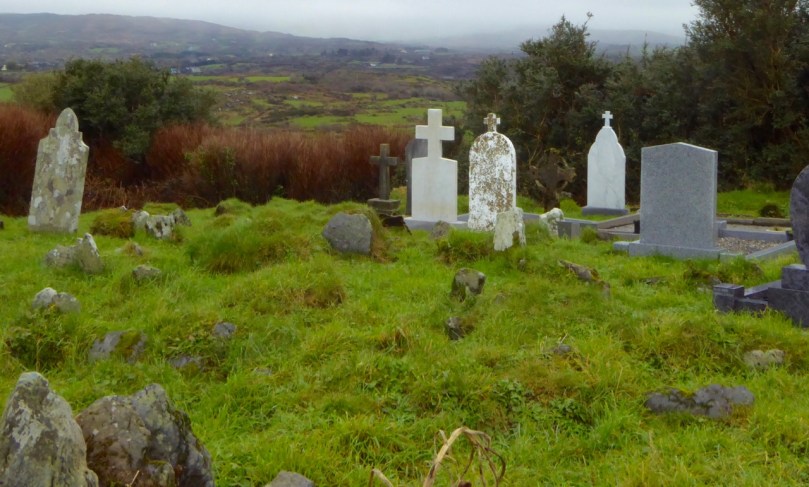
outlookOften, while walking the Fastnet Trails, I stop to wander around the old graveyard at Stouke, near Ballydehob. I am struck each time by the lonely beauty of the site, on an elevated hillside with vistas of the countryside and distant hills. I have also come to realise that this one small place resounds with echoes of the past – a past that in Ireland seems always so intricately woven into our present that it can never be ignored or forgotten.
From the wall

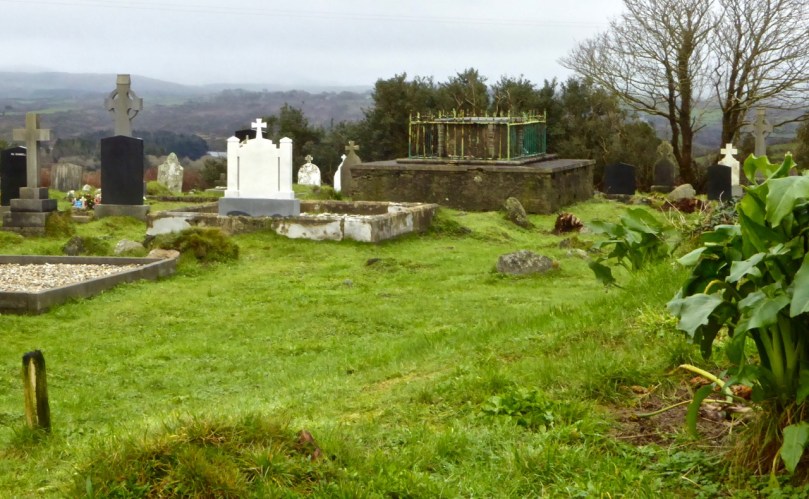
The Barry tomb dominates the graveyard

There is much to say about Stouke Graveyard and my theme of Priests and Poets but I will start with one grave in particular and leave the rest to a second post. This is the grave of Father James Barry, his brother, Father John Barry, their sister, Margaret, and their housekeeper, Julia Roberts. I have mentioned this grave before briefly, but I have now had an opportunity to look at it more closely.
offerings

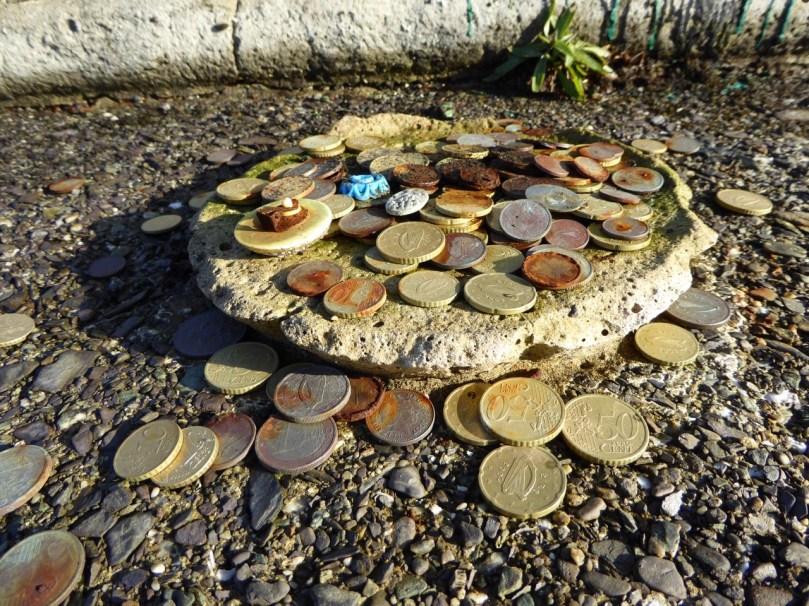
Coins and tokens have been left on the tomb

Why does this large chest tomb occupy the most elevated and central place in the graveyard? Why are coins and tokens left as offerings on it? Why, according to notes made by the Historic Graves Project, do people come to pray here on St John’s Day (June 24th) every year? Although I didn’t find all the answers, researching the questions led me to Father James Barry, Parish Priest of Schull before and during the Great Famine.
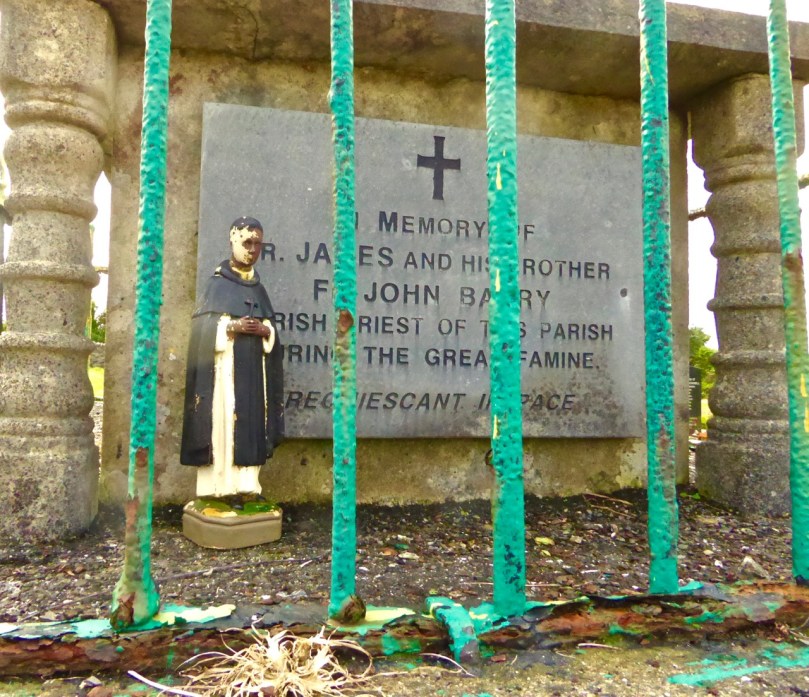
Frs Barry, Stouke

James was obviously a man of learning and compassion, and one who was called upon locally to be a spokesperson and advocate for his flock. Even before the Famine he gave evidence to boards of inquiry about the conditions in West Cork, pointing out the miserable diet, lack of proper clothing and housing, poor prospects for employment, the uncertainty of a lease being continued, the lack of compensation to tenants when lands were taken to build new roads, the desire of many to emigrate and the good account they gave of their experiences in their new homes.  He would have read their letters to them, since many of his parishioners were illiterate – his remarks focused on the many advantages of the New World, including a pointed reference to the absence of tyranny. In what seems like a very modern concern with income inequality, he commented on how the rich got richer as their tenants’ lives became ever more difficult. (Reported in British Parliamentary Papers)
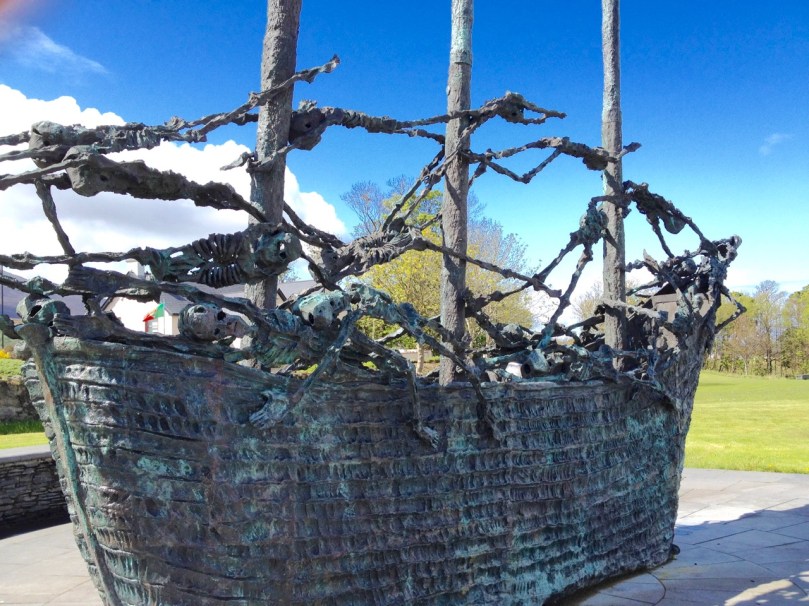
Famine Memorial at Murrisk

The Famine Memorial at Murrisk in Mayo. The ‘coffin ships’ that carried a generation of people to North America were notorious but for those who chose to go the voyage was preferable to the nightmare of famine at home

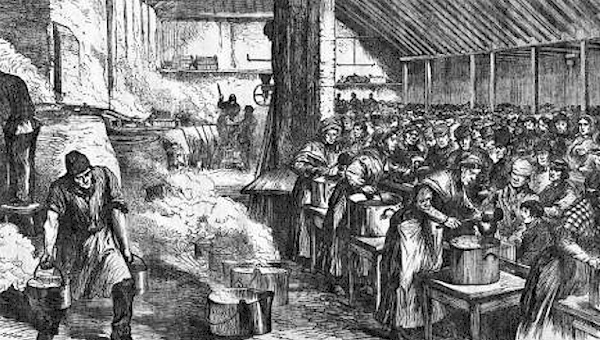
During the Famine, he and his brother, Father John, also of Schull parish, worked to help establish soup kitchens but insisted that more than soup be served, since the soup was not nutritious enough. Called eating houses, these places fed many people who would otherwise have died, and replaced the hated and ineffective Board of Works schemes that put weak and starving people to hard labour so they could buy their own corn, thus supposedly salvaging their dignity and rescuing them from the evils of pauperism.
soup-kitchen1

Famine Soup Kitchen

The efforts of the eating house committees crossed religious boundaries and appear to have been effective in slowing the rates of starvation to such an extent that in one of his depositions James states that “deaths were now so few that the slide-bottomed coffins were no longer in use.”
Among the unmarked graves

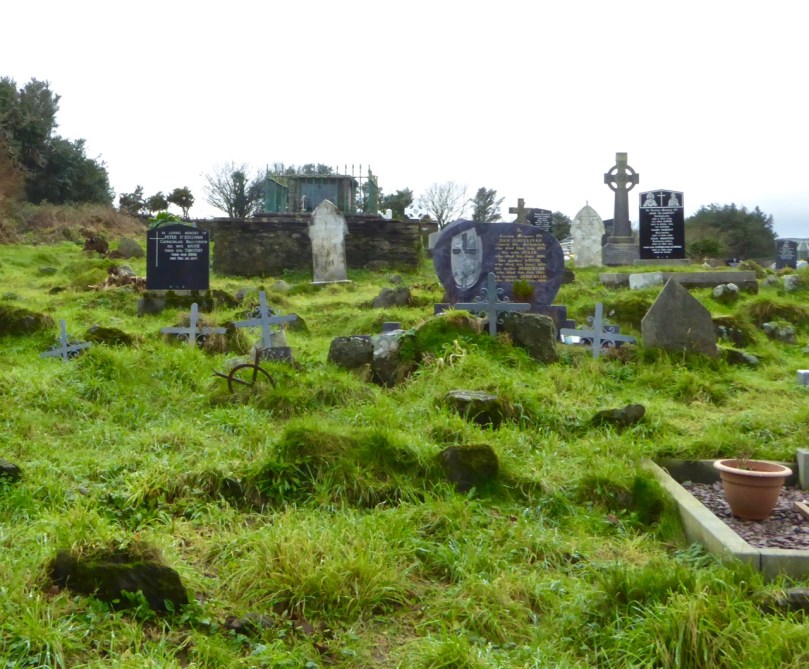
Many unmarked graves dot the Stouke graveyard, some no doubt dating to the Famine years

James advocated tirelessly for his parishioners, through giving information and evidence and through submissions to authorities. His anger is unconcealed when he describes his visit to the village of Kilbronogue near Ballydehob: Fever consequent upon starvation was spreading among the clusters of cabins…the townland  [will] soon be at the immediate disposal of the head landlord, Lord Bandon. There will be no need of extermination or of migration to thin the dense swarm of poor people…; this will take place without his lordship’s intervention or agency, I hope, to a better world. Indeed his words were prophetic – there is no longer a village in Kilbronogue.

Trench’s book, Realities of Irish Life, is available online. The illustration is of an incident in which tenants are down on their knees begging for a reduction in rent.

Fr Barry acted as a guide for William Steuart Trench, a controversial land agent who later described his visit to the famine-stricken area of Schull in the book Realities of Irish Life (available to read online). In cottage after cottage he found families sick, dying or dead. The account is heart-rending. It led me to wonder if James Barry could have been the model for Peter Gilligan in WB Yeats’ poem The Ballad of Father Gilligan.

yeats2The old priest Peter Gilligan
Was weary night and day;
For half his flock were in their beds,
Or under green sods lay.

Once, while he nodded on a chair,
At the moth-hour of eve,
Another poor man sent for him,
And he began to grieve.

‘I have no rest, nor joy, nor peace,
For people die and die’;
And after cried he, ‘God forgive!
My body spake, not I!’

He knelt, and leaning on the chair
He prayed and fell asleep;
And the moth-hour went from the fields,
And stars began to peep.

They slowly into millions grew,
And leaves shook in the wind;
And God covered the world with shade,
And whispered to mankind.

Upon the time of sparrow-chirp
When the moths came once more.
The old priest Peter Gilligan
Stood upright on the floor.

‘Mavrone, mavrone! the man has died
While I slept on the chair’;
He roused his horse out of its sleep,
And rode with little care.

He rode now as he never rode,
By rocky lane and fen;
The sick man’s wife opened the door:
‘Father! you come again!’

‘And is the poor man dead?’ he cried.
‘He died an hour ago.’
The old priest Peter Gilligan
In grief swayed to and fro.

‘When you were gone, he turned and died
As merry as a bird.’
The old priest Peter Gilligan
He knelt him at that word.

‘He Who hath made the night of stars
For souls who tire and bleed,
Sent one of His great angels down
To help me in my need.’

‘He Who is wrapped in purple robes,
With planets in His care,
Had pity on the least of things
Asleep upon a chair.’

Although this is an unusual poem for Yeats (he was not a Catholic and he did not often publish simple quatrain-based ballads) it reflects his interest in the Irish stories he collected and loved. It was a favourite, as you can imagine, of the nuns who taught us English, combining as it did ease of memorisation,  the religious fervour they hoped to inculcate in their convent classrooms and the unassailable respectability of having been composed by Ireland’s Nobel Laureate.
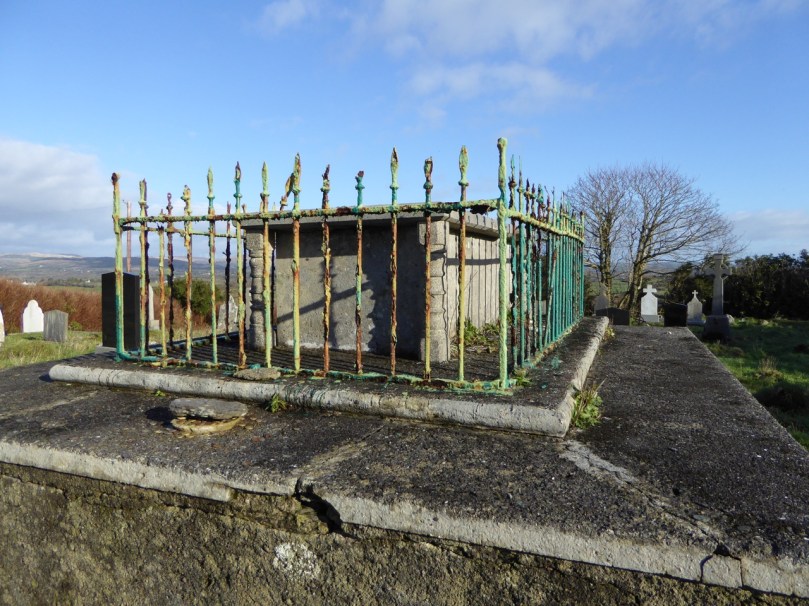
Brothers' grave

But back to the grave…the priests’ housekeeper, Julia Roberts, who died in 1838 was the first to be buried here. James and John’s sister, Margaret, died at the height of the Famine in 1848 (although we do not know if her death was in any way associated with this event). The Historic Graves record contains this intriguing note: When his sister died and was also buried here Sarah’s (should be ‘Julia’s’) coffin was in perfect condition. She was reburied with the parish priest even though she was not a Catholic.

James went on to serve as Parish Priest of Bantry and died in 1853. James’ brother, John was apparently similarly active but not much has survived recording his life. He took over from James as Parish Priest in Schull, where he served until his own death in 1863.
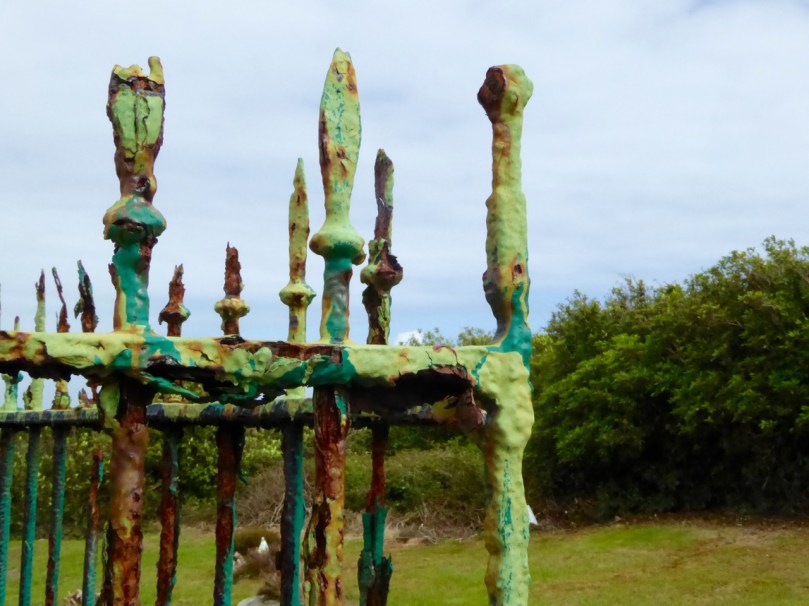
railings

Next week I will continue my tour of this wonderful spot – and we’ll have a little more poetry – although from a different source.
Beyond the Mizen: Top 14 West Cork Pics of 2015

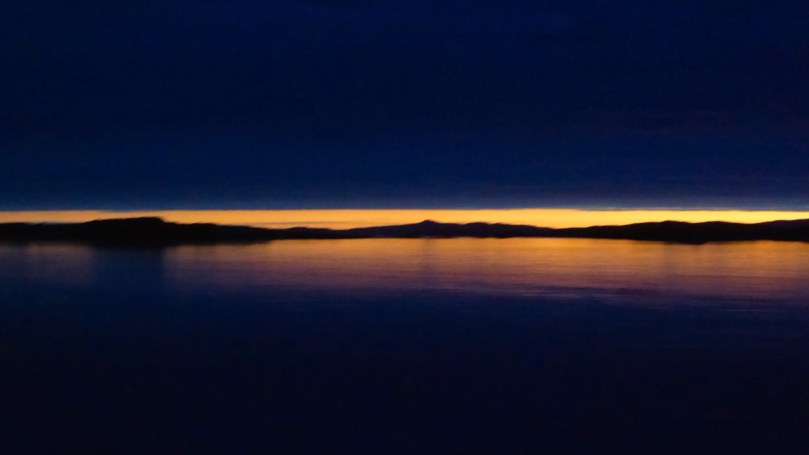
We were heading home from Hare Island after a Fit Up Theatre Performance, when this happened

We were heading home from Hare Island after a Fit Up Theatre Performance, when this happened

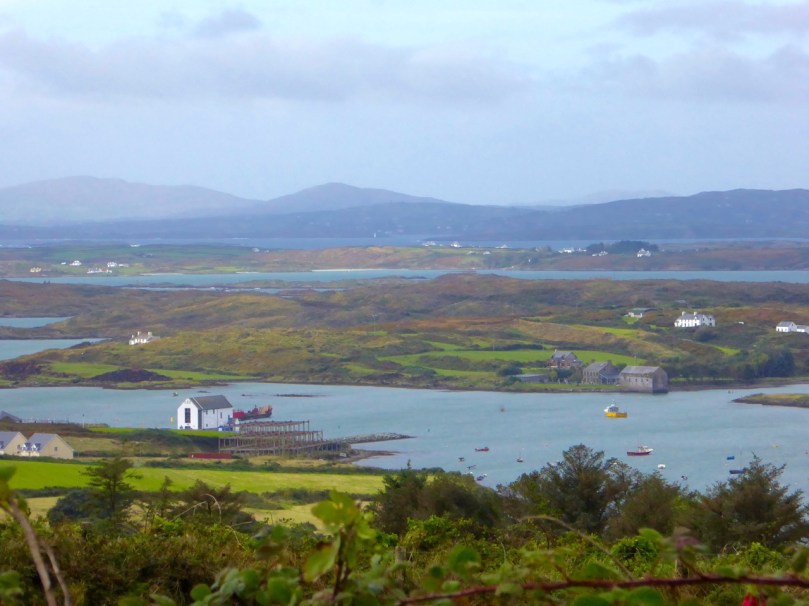
Many of our top Facebook photographs this year were from the Mizen, but not all. You also liked and shared photographs that captured the essence of other parts of West Cork.

Baltimore Bay and Ringarogy Island

Baltimore Bay and Ringarogy Island

I think the Baltimore Bay one was so popular because the colours are SO west Cork. When you get blue sky and clouds, the sea turns this amazing Caribbean blue and the contrast with the green fields and wilder high ground is gorgeous.

Lighthouse Loop, Sheep's Head

Lighthouse Loop, Sheep’s Head

This photograph of our friend Susan Byron of Ireland’s Hidden Gems is one of my favourites this year because of the impression it creates of sheer wildness.

Occasionally we get lucky with the local wildlife. Ferdia, the fox, used to be a regular around our place but has forsaken us recently for neighbours with higher quality leftovers.

Bantry House in winter

Bantry House

It’s possible to get good shots of Bantry House in winter, when the trees don’t obscure it from view.

Kilcoe Castle

Kilcoe Castle is such an icon on the landscape. This photograph shows the neighbourly way it interacts with the other houses around it.

Bardic School Loop, Sheep's Head

Bardic School Loop Walk, Sheep’s Head

This tiny abandoned cottage may have been part of the 17th Century Bardic School near Lake Faranamanagh on the Sheep’s Head. We’re looking across at the Mizen in this shot.

The Beara, from the Sheep's Head

The Beara, from the Sheep’s Head

And here’s the view from the other side of the Sheep’s Head, across to the Beara Peninsula, with the instantly-recognisable bulk of Hungry Hill to the far right.

Priest's Leap Valley

Priest’s Leap Valley

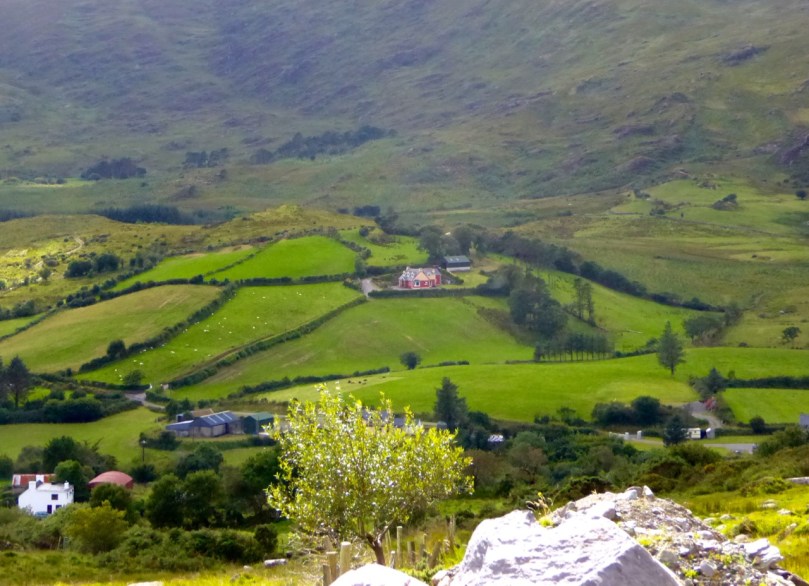
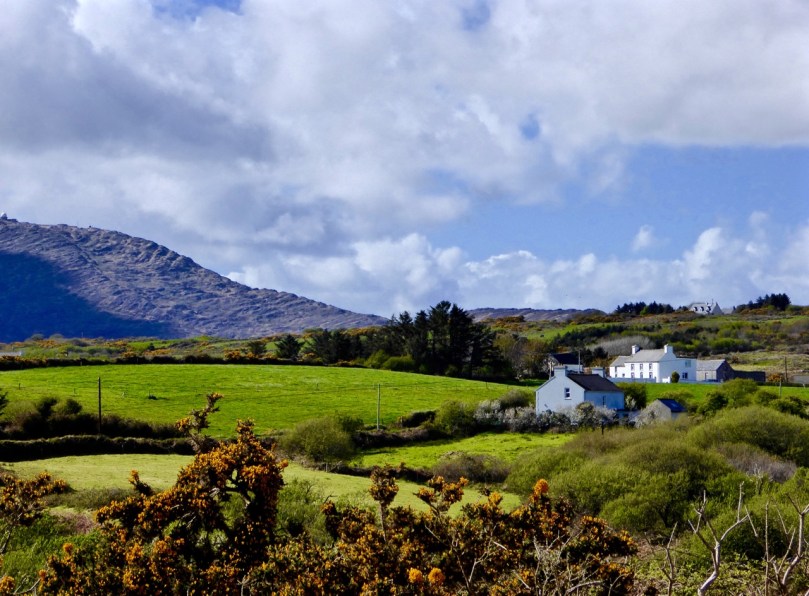
The long climb up to Priest’s Leap starts near Ballylickey and ends at a high mountain pass that separates Cork and Kerry. The views are spectacular from the top, but this shot of a colourful house and farms in the valley on the way up seemed to express something typical of West Cork.

Farm, Sheep's Head

Farm, Sheep’s Head

This farm appears to be carved out of the mountain land behind it.

Barloge Bay, at the entrance to Lough Hyne

Barloge Bay, at the entrance to Lough Hyne

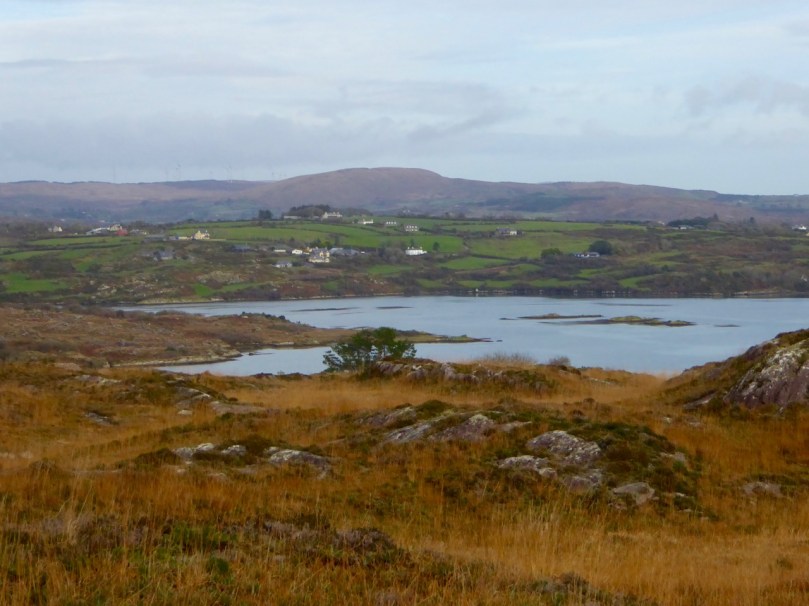
This was taken in November. I love the contrast of the turquoise water with the autumn colours of the bracken-covered hillside.

F

A final sunset to end this post. This was taken last February from the lay-by overlooking Roaringwater Bay on the N71. The light was extraordinary – a once in a blue moon kind of shot. The mussel beds make the water look like floating ice packs.

A big thanks to Celia Bartlett for helping us improve our photographic skills this year. We loved our workshop with her.

Happy New Year to all our faithful readers!

Mizen Magic 5: Top 14 Pics of 2015

Crookhaven in winter sunlight

Crookhaven in low winter sunlight

You love the Mizen! That’s all we can conclude when we look at which of our Facebook photographs resonated most with our readers and followers this year.

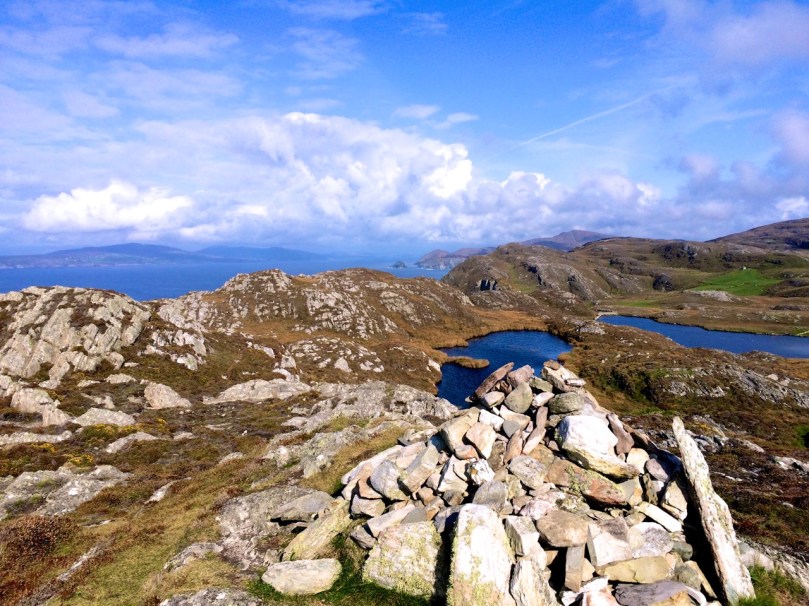
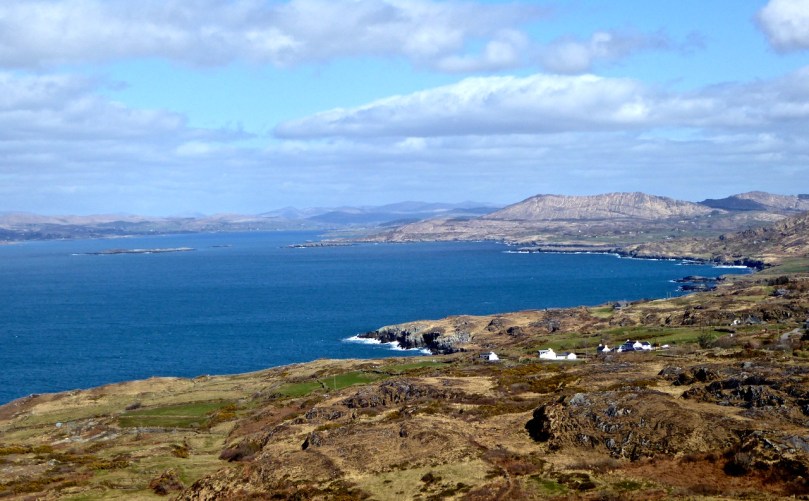
Cairn on Dunlough Head, looking east along the Mizen and Dunmanus Bay

Cairn on Dunlough Head, looking east along the Mizen and Dunmanus Bay

We post a couple of photographs each week on our Facebook page and we are always delighted when they are liked and shared. The vast majority of these images are from West Cork, and many are from our own Peninsula, the Mizen.

The tiny quay at Greenmount, outside Ballydehob. You pass this on the Rossbrin Loop Trail.

The tiny quay at Greenmount, outside Ballydehob. You pass this on the Rossbrin Loop Trail

So, as we look back over 2015, here are your top picks from the Mizen Peninsula, beginning with the most liked/shared. Next week, we will post the top West Cork (non-Mizen) Facebook photographs.

Near Dunlough Bay, on the way to Three Castle Head

Near Dunlough Bay, on the way to Three Castle Head

Not much text to plough through this week. Consider that your Christmas present from us!

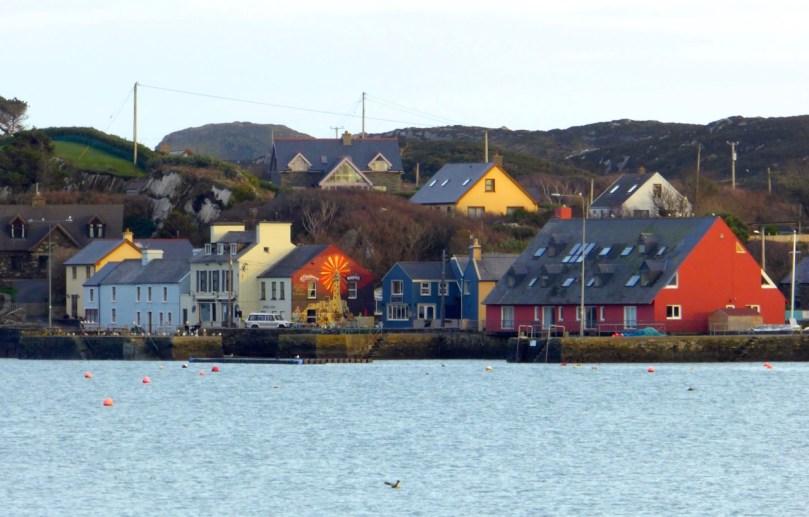
Goleen Village looks so colourful and inviting in the summer

Goleen Village looks so colourful and inviting in the summer

There’s nothing we like better than wandering around West Cork with our cameras – it’s an endless feast. Enjoy – and tell us which is your personal favourite!

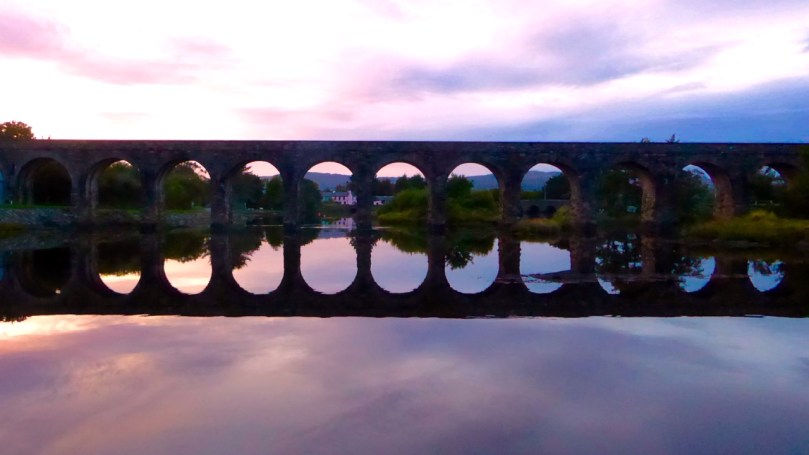
The famous 12 Arch Bridge at Ballydehob

The famous 12 Arch Bridge at Ballydehob

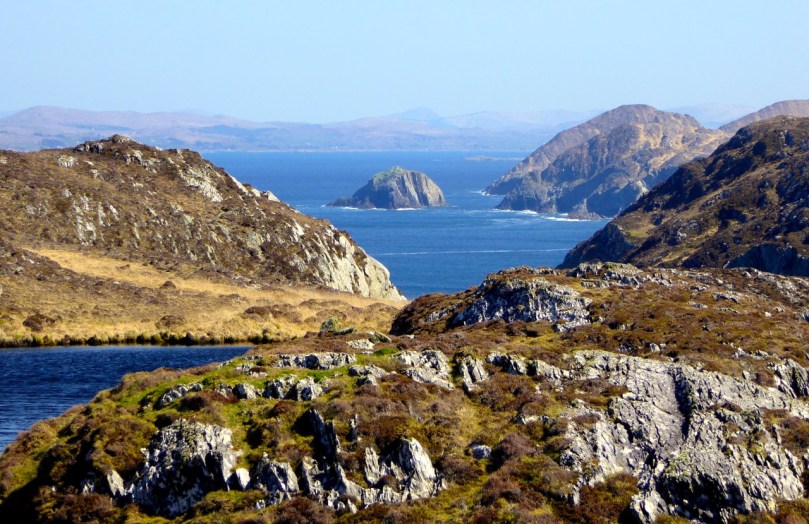
The Magnificent Mizen!

The Magnificent Mizen!

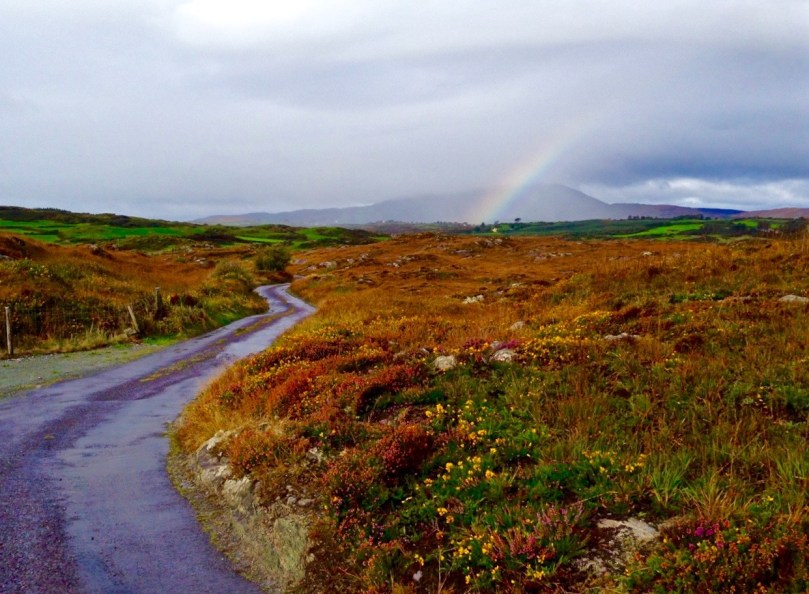
The Winding Road...the Cappaghglass high road in autumn

The Winding Road…the Cappaghglass high road in autumn

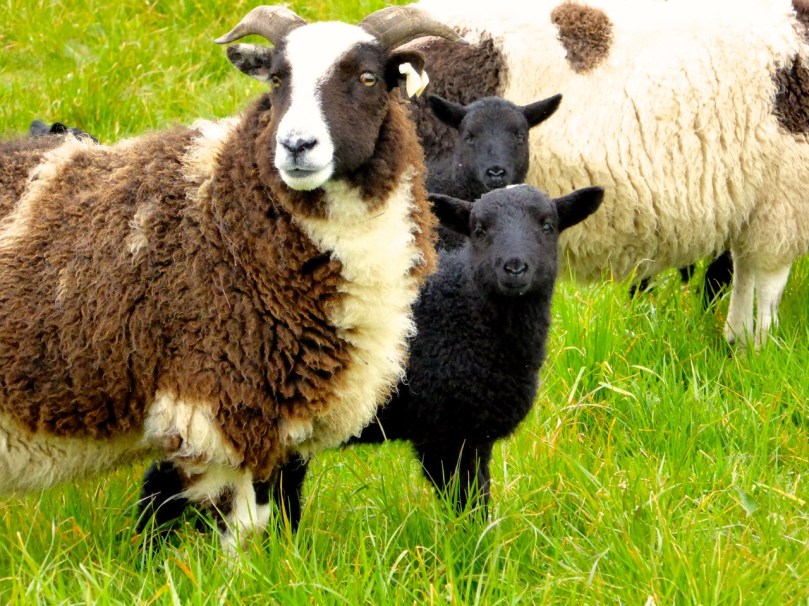
We saw these Jacob sheep on the slopes of Mount Corrin

We saw these Jacob sheep on the slopes of Mount Corrin

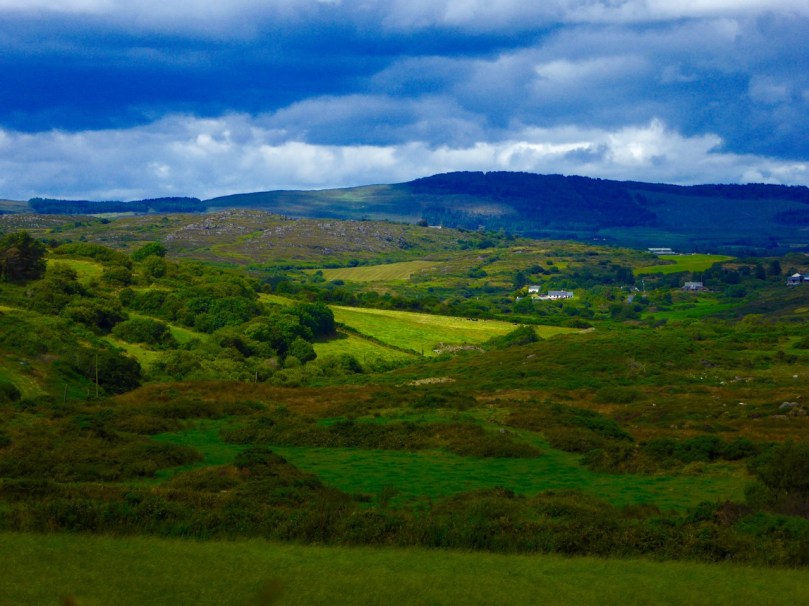
Sun and shadow - the quintessential West Cork lighting conditions

Sun and shadow – the quintessential West Cork lighting conditions

Farmhouses in the shadow of Mount Gabriel

Farmhouses in the shadow of Mount Gabriel

Ballydehob Bay. This one was taken close to the same place as The Winding Road, but facing the opposite direction, towards Foilnamuck

Ballydehob Bay. This one was taken close to the same place as The Winding Road, but facing the opposite direction, towards Foilnamuck

The North Side of the Mizen - so beautiful and so few people

The North Side of the Mizen – so beautiful and so few people

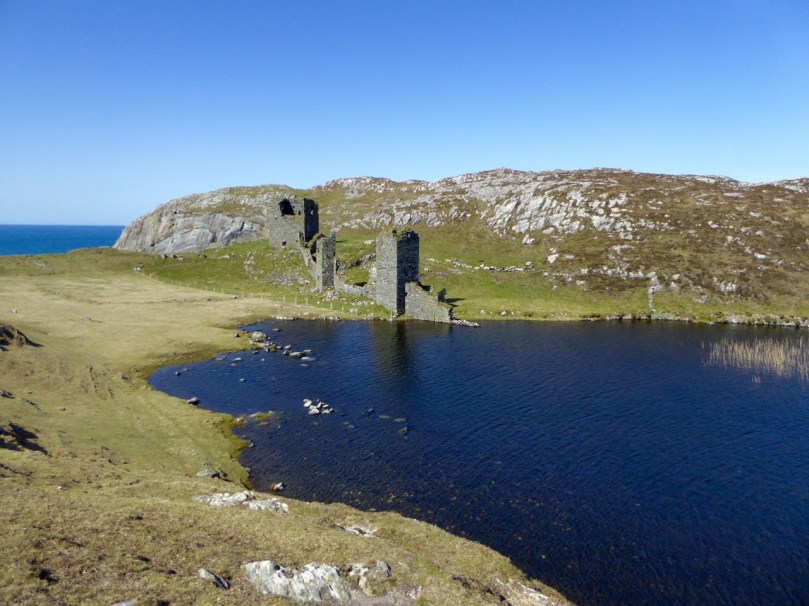
The Three Castles, from the lake

The Three Castles, from the lake. No Mizen post would be complete without at least one view of this iconic place

Coomkeen, Summer and Winter

Coomkeen Road, winterThe Coomkeen Loop Walk on the Sheep’s Head is one of the most richly satisfying walks in West Cork. And that’s saying something, in this land of jaw-dropping vistas and absorbing heritage.

Start, summer

The start of the trail in June

We walked it in June with our friends Amanda and Peter and again in November with our friend John. We had extraordinary days on both occasions. While the November day was cloudless, the one in June provided enough scattered cloud to supply that variation in light and shade that lends such atmosphere to the West Cork landscape.

And in November

And in November

To reach the start of the Coomkeen trail, drive from Durrus towards Ahakista and turn right at the Church of Ireland (before you get to the pier). Ascend to the top of that road and you will find a parking spot and the clearly marked trailhead. There are various ways you can do this walk. The complete loop is a 7km walk that brings you along the spine of the peninsula before you drop down onto tracks and then the road back up to the parking place. Our own favourite option is to walk until you reach the little lake and then retrace your steps along the ridge. Lough na Fuilla, Lake of Blood, is so called, the story goes, because thirst-crazed cattle found it dry and attacked each other in their frenzy.

Lough na Fuilla

Either way is fairly easy, although the complete loop presents a long steep climb back to the starting point. As with all Sheep’s Head walks, be prepared for any weather, wear good boots, bring a camera and leave the dog at home. If you want more information, consult the section on the Durrus Trailhead in Walking the Sheep’s Head Way.

Winter fields on Bantry Bay

Winter fields on Bantry Bay

Perhaps you think that it sounds fine to go for a mountain hike in June – but November? Yes, it was a little cooler and a lot windier, but the November hike was just as spectacular as the June one had been. Most striking of course, is the change in colour.

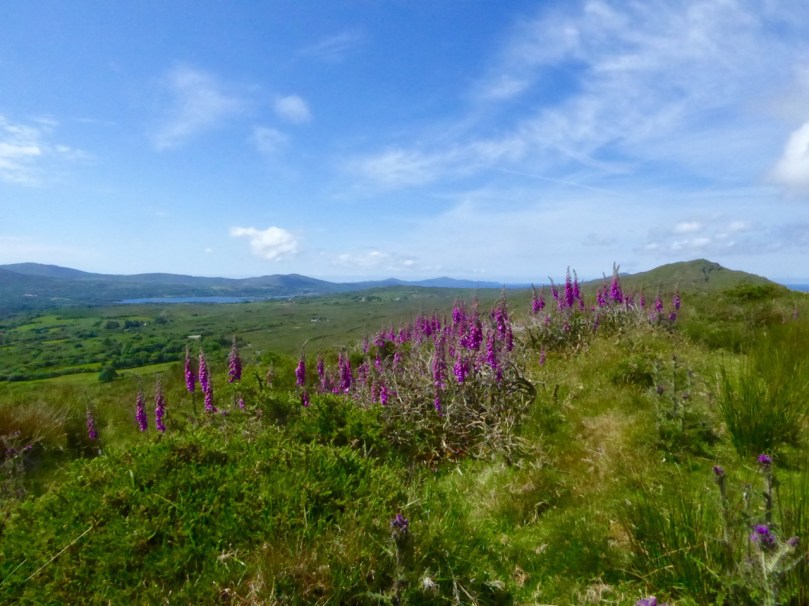
In summer the foxgloves are everywhere

In summer the foxgloves are everywhere

Because this is a ridge walk, the views are immense. To the north is Bantry Bay and Whiddy Island with its huge oil tanks. Beyond that are the mountains of the Beara, looking as wild and remote as, in fact, they are. To the south is Dunmanus Bay and the Mizen Peninsula. 

The Summit

The Summit

Amanda and Peter were able to show us an enormous standing stone on our June trip, although we missed it in November.

Rooska East standing stone

But we did visit the same ruin of a small farmhouse on the north side of the ridge. Incredible to think that someone eked out a living so high up. Although only a few broken down walls remain, the poignancy of the site comes from what was once a garden by the house, with thorn trees still bravely clinging on.

Further on are the remains of booleys – small huts used by the young people sent to mind the cattle on the high ground during the summer. Perhaps the little farmhouse was part of that endeavour.

Robert and John inspect the little ruined farmhouse

Robert and John inspect the little ruined farmhouse

Running along the ridge and crisscrossing the mountain are the remains of old stone walls. Impossible to tell how long ago they may have been first built, or how recently they functioned to separate pastures.

Walls, Summer

Walls, winterIn November the dominant colours are the blond of the grasses (called fionán, pronounced fyuh-nawn) and the amber, brown and honey tones of the bracken and heather, interspersed with the greenery of gorse and pasture. Although visually stunning, the predominance of the fionán (properly called Purple Moor Grass) and bracken have a less positive underlying meaning. They take hold where the hillside has been set on fire time and again. The fires that we often see here are supposedly to control the gorse and increase grazing for sheep, but in fact according to Birdwatch Ireland, repeat burning “has led to a loss of cover (protection) for Red Grouse…depletes moorland fauna, and can lead to soil acidification, leaching and thus soil degradation.”

In summer, it’s all green but the wild flowers provide bursts of colour.

In November, the only wild colour to be found came from a yellow brain fungus on a dead gorse trunk. Yes, it’s really called that, and is normally yellow but darkens after dry weather. It’s not feeding on the gorse, apparently, but on other fungus that is feeding on the wood. Charming.

Yellow brain fungus on gorse?

Do the walk, any time of year. Then show the photos to your friends and watch them make plans for a trip to West Cork. Or should we just keep this our secret?

Contemplating the route

Mount Corrin Walk

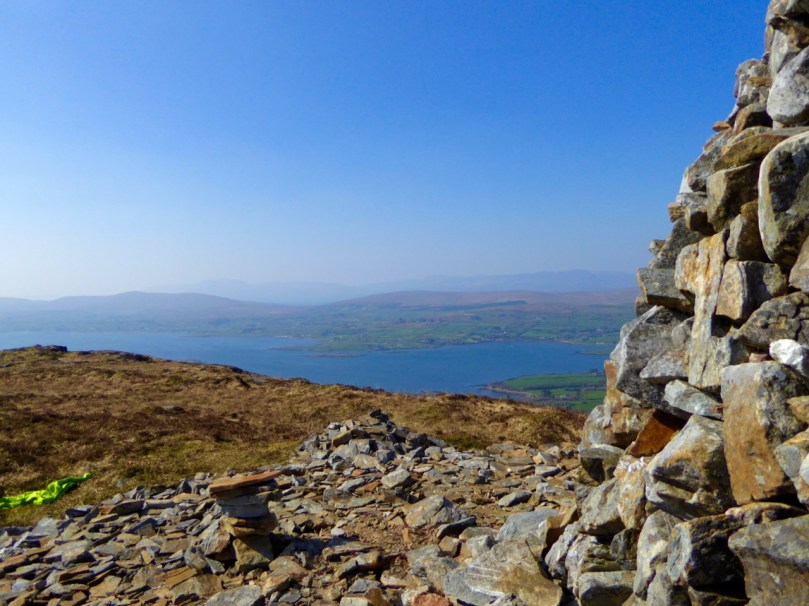
View from the cairn, Mount Corrin

View from the cairn, Mount Corrin

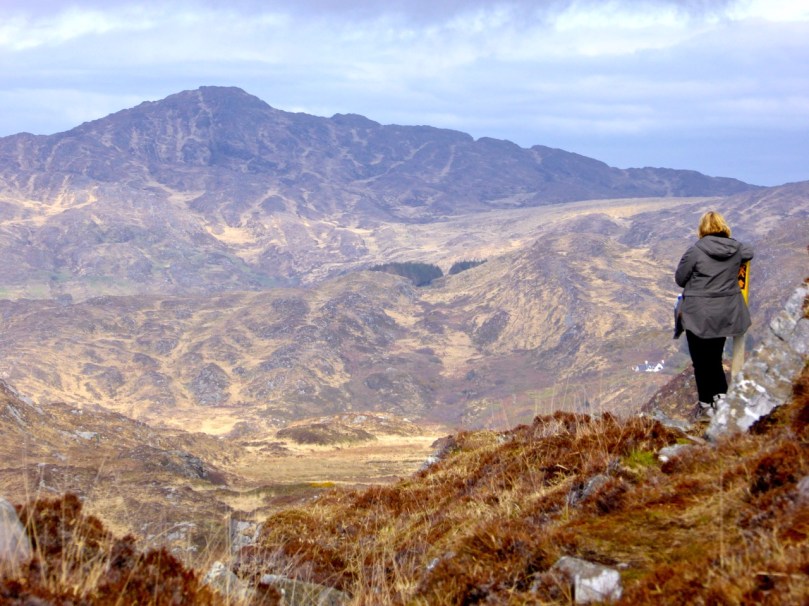
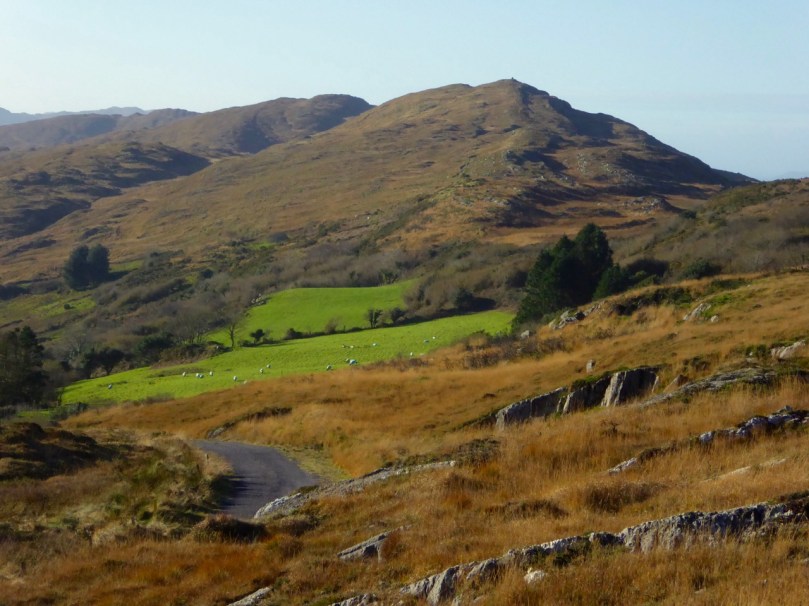
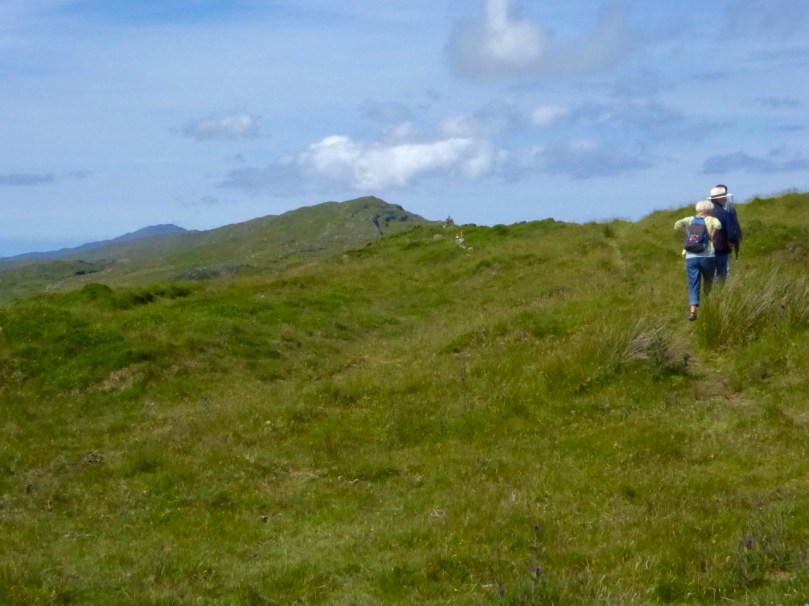
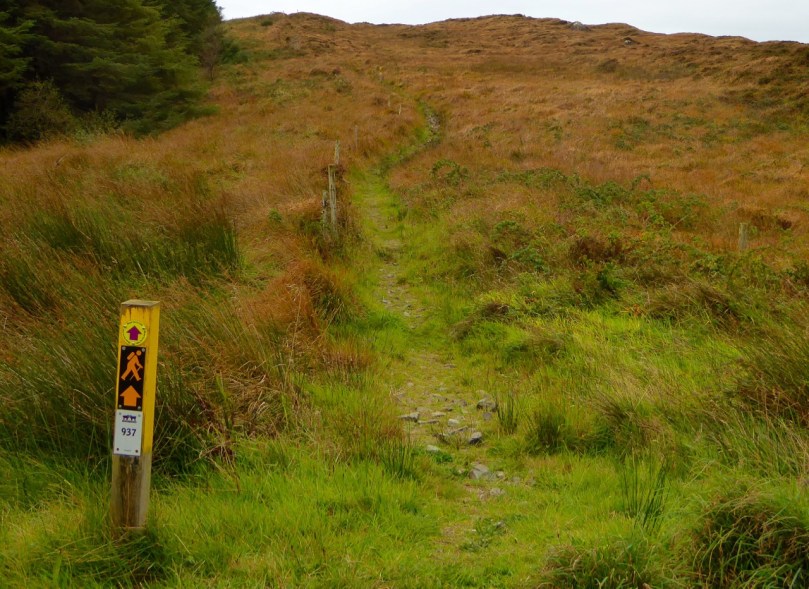
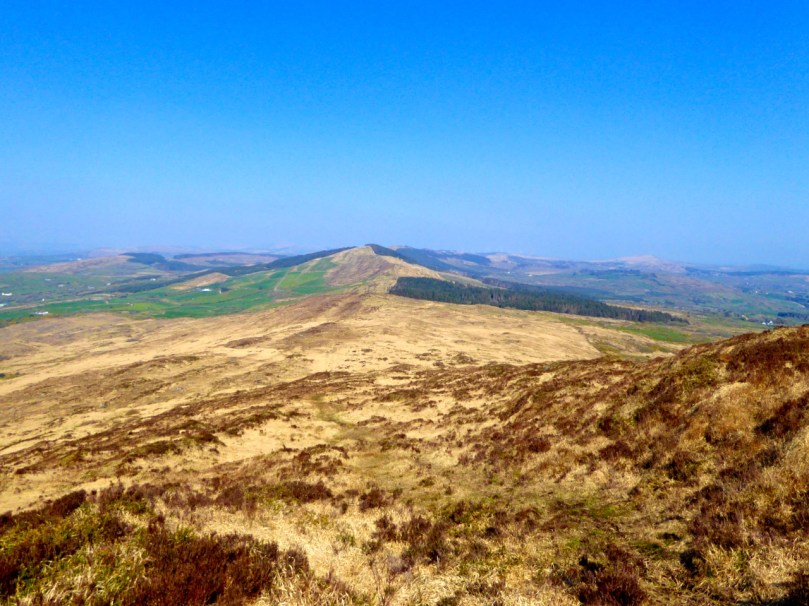
Walks that get you up to high places with panoramic views are terrific – especially when you don’t have to start at sea level! One such West Cork walk is Mount Corrin. Despite being on The Mizen, it’s part of the Sheep’s Head Walks system, which means it’s accessible and perfectly waymarked.

P1150782

The whole Mount Corrin loop walk is a 17km marathon and definitely not for the faint-hearted. But faint-hearted is exactly what we are, so we have chosen an option that can be easily accomplished on a pleasant afternoon – about a 5 km round trip. Some of these photographs are from a spring walk, and some from a fine autumn day.

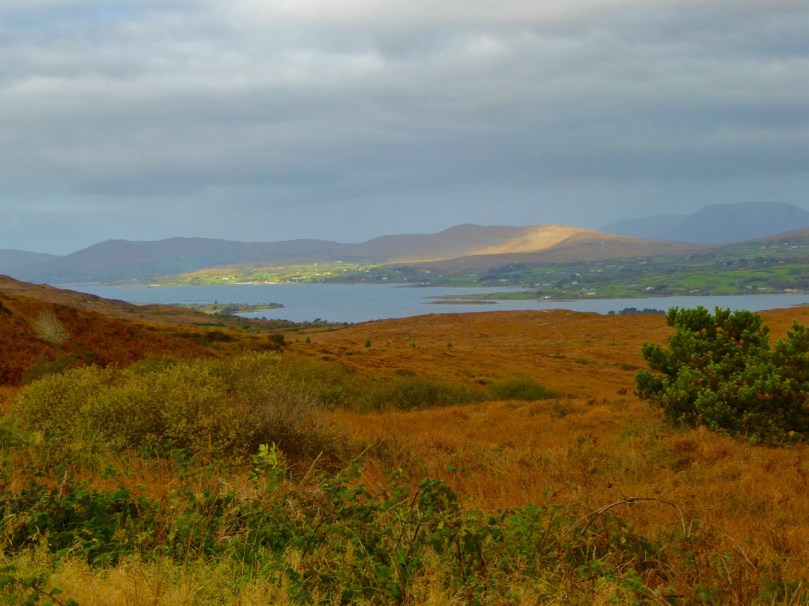
From the trail - the Sheep's Head

From the trail – looking across at the Sheep’s Head

Wear good boots and bring a camera but leave the dog at home as no dogs are allowed on the Sheep’s Head Way. And if you do want to do the Big Walk, we highly recommend you pick up a copy of Walking the Sheep’s Head Way by Amanda Clarke. She and Peter have brought out a Second Edition that includes all the loop walks and they do a fabulous job of describing the whole route and provide wonderful photographs of what you can expect.

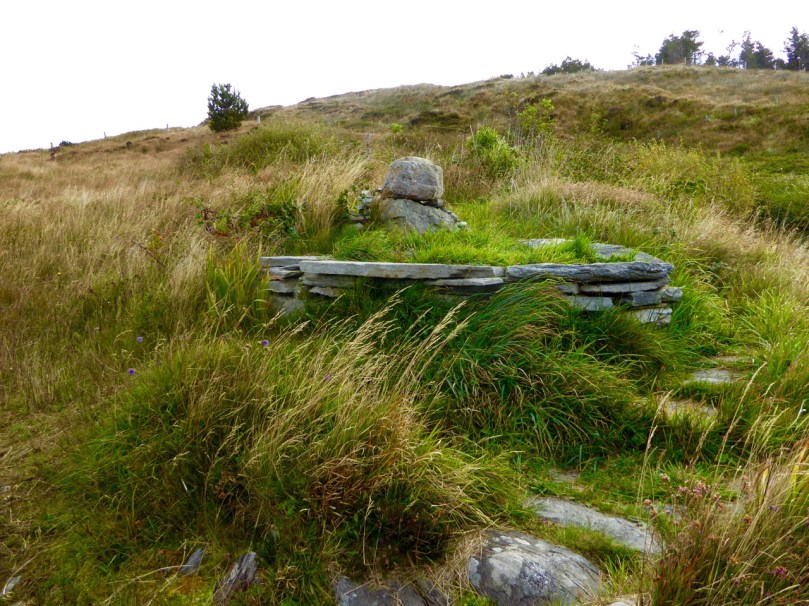
This curious little monument is right beside the parking spot

This curious little monument is right beside the parking spot

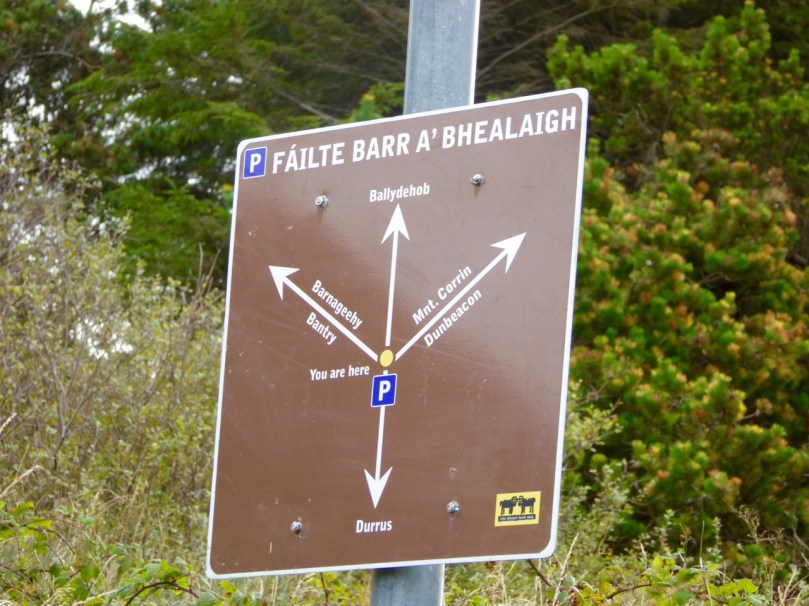
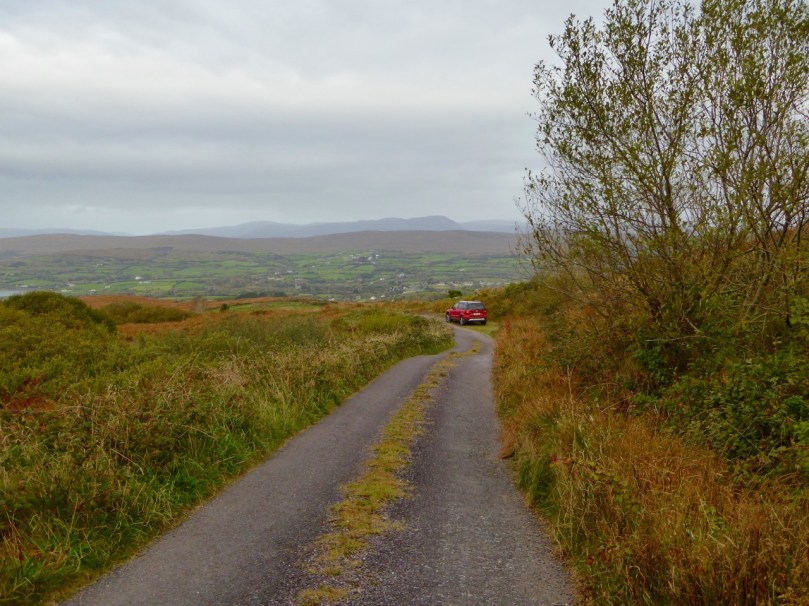
Our starting point is at a high point about half way between Durrus and Ballydehob. Drive out of Ballydehob via the road between Antonio’s Restaurant and Vincent Coghlan’s pub – that’s the Rathruane Road. About 3 km along this road you will come to a crossroads – turn right. Take the first turn left on that road and it will bring you up to the top of a hill. Once you cross over the top and start the descent on the other side you will see the waters of Dunmanus Bay ahead and to the left and a pull-out for parking on the right.

One of West Cork's most scenic parking spots

One of West Cork’s most scenic parking spots

This is your starting point – look back and you will see the way marked trail about 50ms back up the hill, running alongside a forestry plantation. It’s also your ending point: our walk will take you up to the summit and back.

P1150787

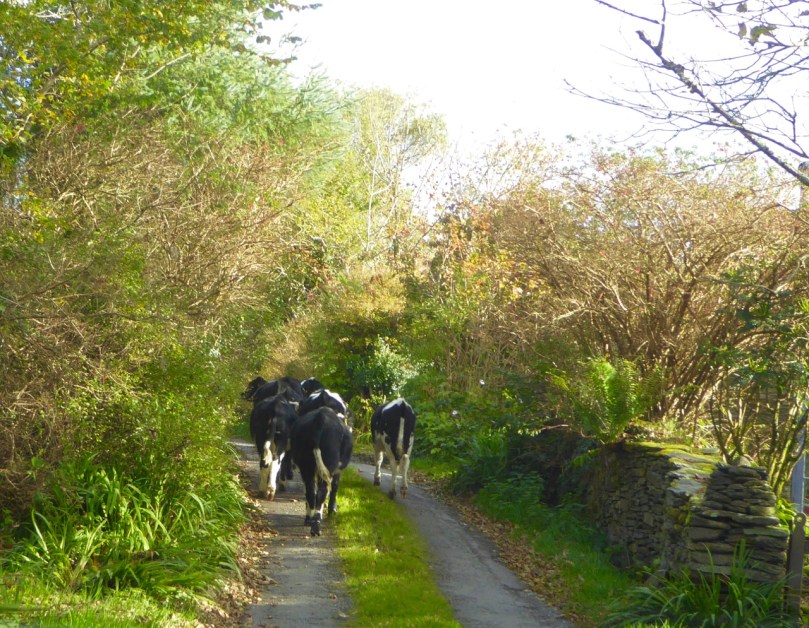
If you’re approaching from Durrus, take the R591 out of the village. Take the first turn left then the first right and follow the road to the summit. These are small country roads – be prepared to pull over or even reverse when you encounter other traffic.

Example of 'other traffic'

Example of ‘other traffic’

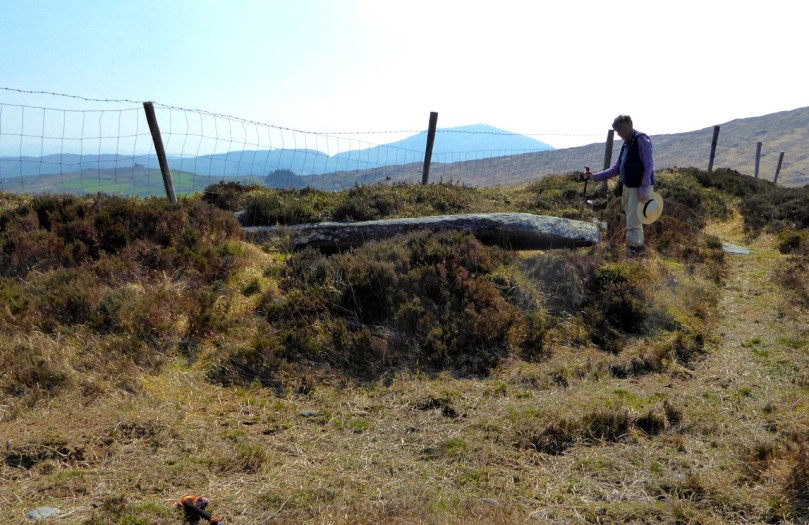
Once you set out, the first point of interest is what is described in the National Monuments inventory as a ‘megalithic structure’ and which looks likely to be a wedge tomb, although it is hard to be definitive about it. Whatever it is, it’s man made and intriguing.

A wedge tomb?

A wedge tomb?

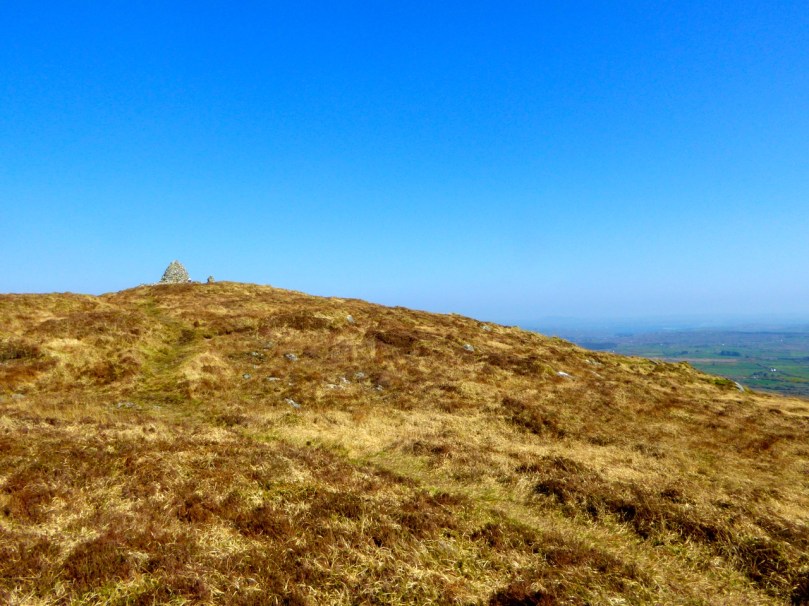
You can see the cairn ahead – your destination.

P1040223

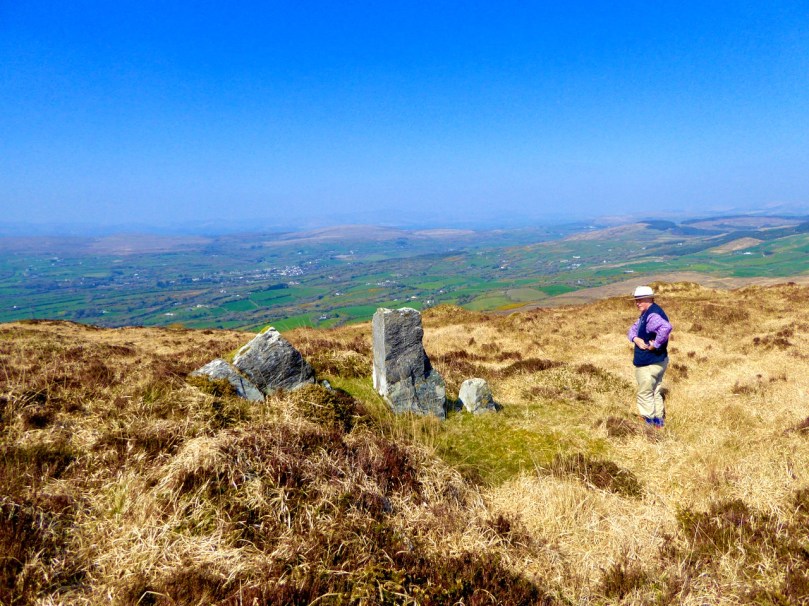
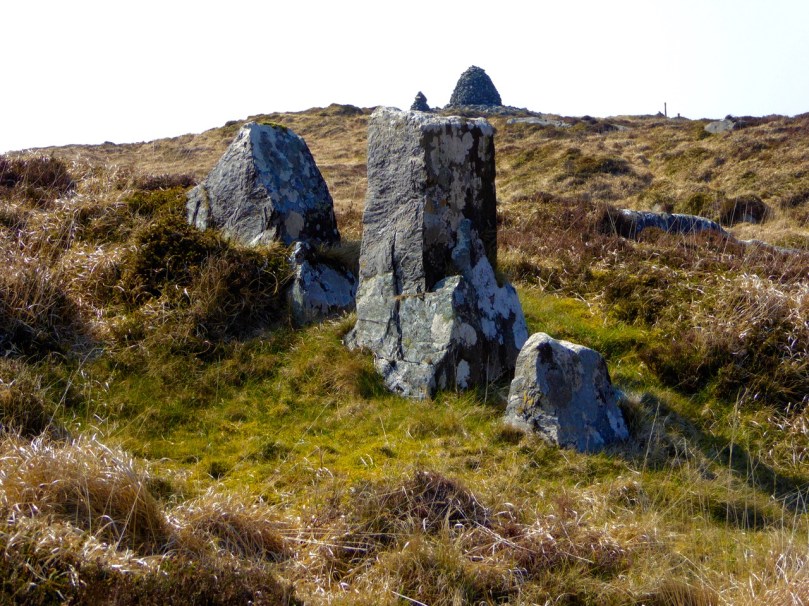
Before you get to it there is a row of standing stones. These ones are not marked on the NM inventory but it’s difficult to see what they could be other than a stone alignment. A final push now gets you to the cairn and to those panoramic views we mentioned.

P1040203

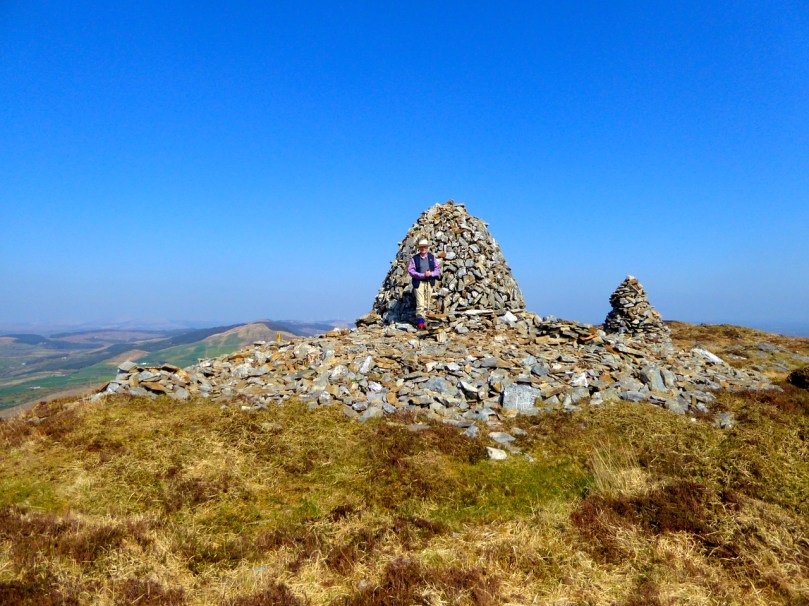
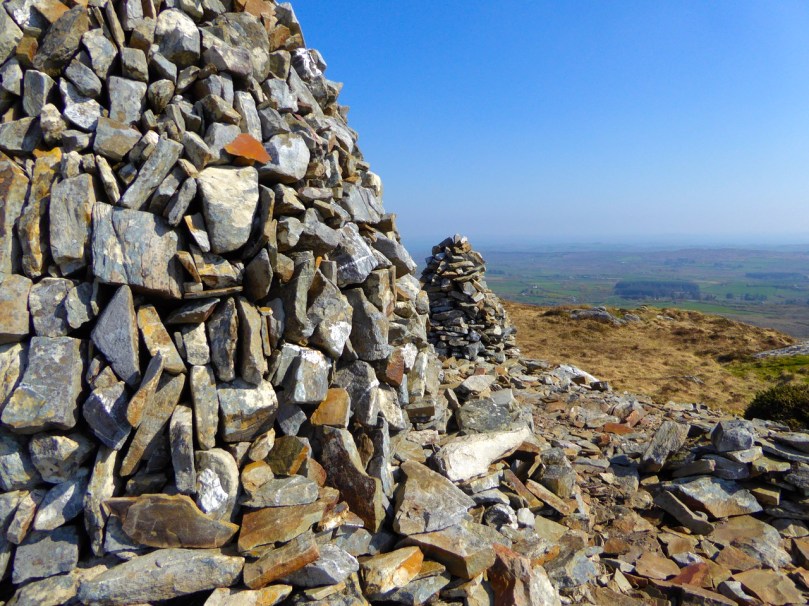
The first thing you’ll notice about the cairns (there are two of them) is the size of the large one and the scatter of stones all around them. The consensus seems to be that there has been a cairn on Mount Corrin since ancient times and that the current cairn, a more modern construction, sits on top of an older one.

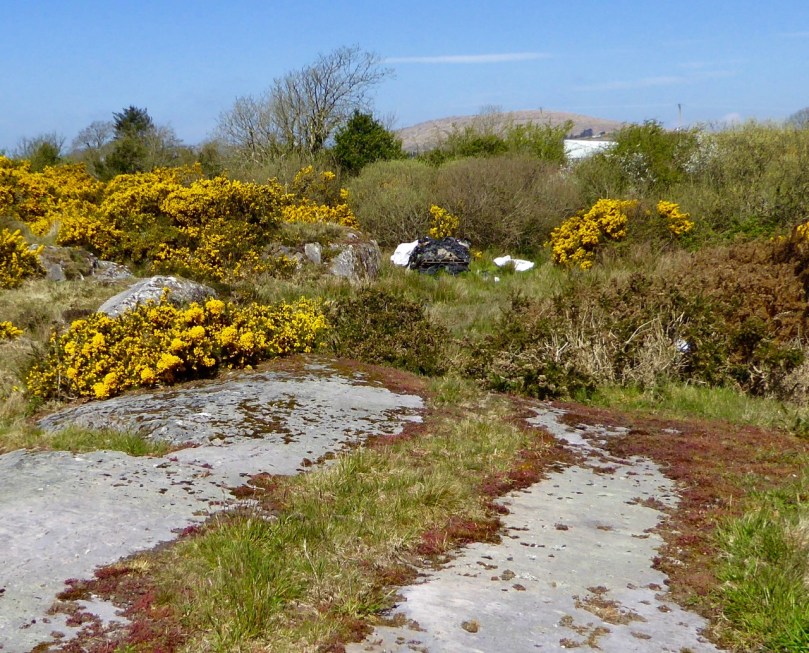
The cairn on Mount Corrin is visible from this panel of rock art at Rathruane

The cairn on Mount Corrin is visible from this panel of rock art at Rathruane

We have certainly noted that the top of Mount Corrin, like the top of Mount Gabriel, is visible from several prehistoric sites and a cairn would have enhanced that visibility. The most persistent story about the cairn, though, links it to Lord Bandon.

P1040210

The Bernards, Earls of Bandon, are associated with Durrus, having laid out the town in the eighteenth century and having used Durrus Court as a summer residence. They had many interests in the area, including mining, and the always-interesting Durrus History blog gives us this information about Mount Corrin:

Mary Catherine Henrietta Bernard of Castle Bernard daughter of Lord Bandon married Colonel Aldworth on the 30th July 1863 and an address and copy of ‘God’s Holy Word’ was sent by Rev Freke and the tenantry of Durrus to which she returned thanks.  At Dreenlomane Mine (operating until c1920) owned by Lord Bandon, Captain Thomas set tar barrels alight on Mount Corrin which illuminated the sky all night and the 150 miners and their wives were treated to refreshments and similar celebrations were held in Carrigbui.

P1040197

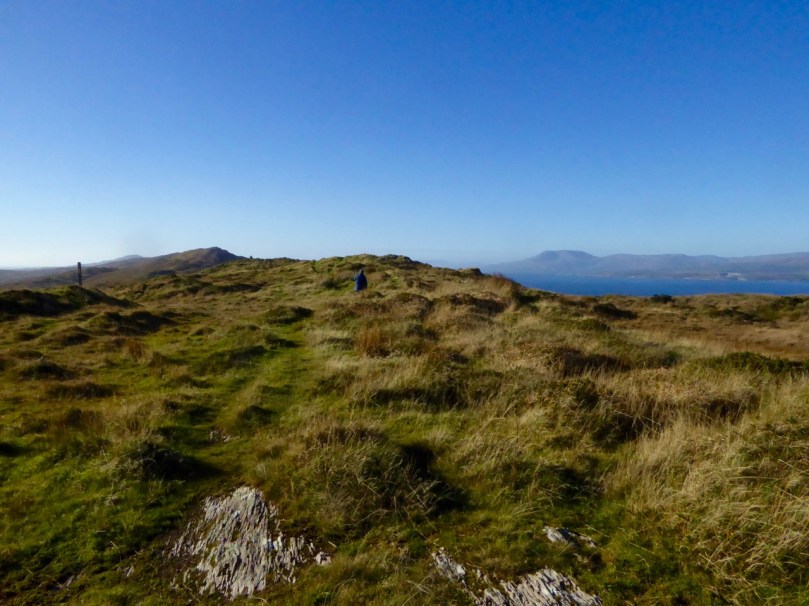
The views from the cairn are stupendous, taking in the West Cork Peninsulas and the hinterland across to the Kerry mountains. Take a while to wander around the top – see if you can spot the collapsed walls of ancient hut sites.

P1040217

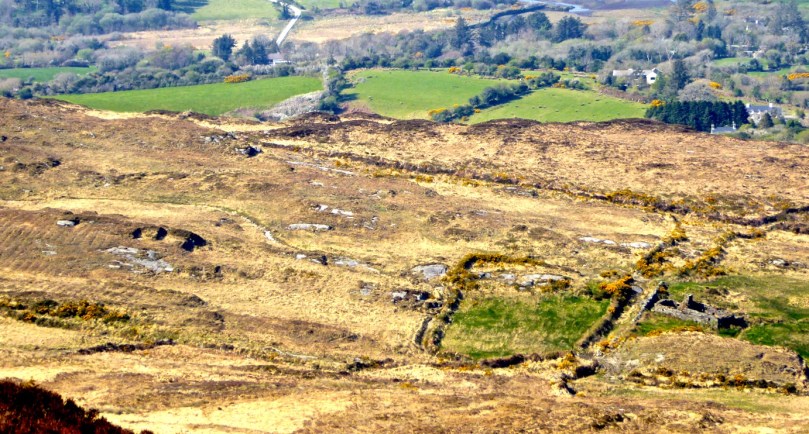
Making your way back, look down towards the farms on the northern slope of the mountain. You can still make out the unmistakeable signs of lazy beds, used to grow potatoes, and the ruins of houses abandoned long ago. It’s a poignant reminder that this land was once densely populated by people whose sole nutrition came from potatoes and who fled this area in the aftermath of the Great Famine.
P1040194 - Version 2

There now – that wasn’t gruelling at all, was it? And so rewarding. But still, a bit of effort required so you definitely deserve a coffee and cake at Budd’s, or a pint in Rosie’s. Tell them Roaringwater Journal sent you.

P1040200

All Around the Bloomin’ Heather

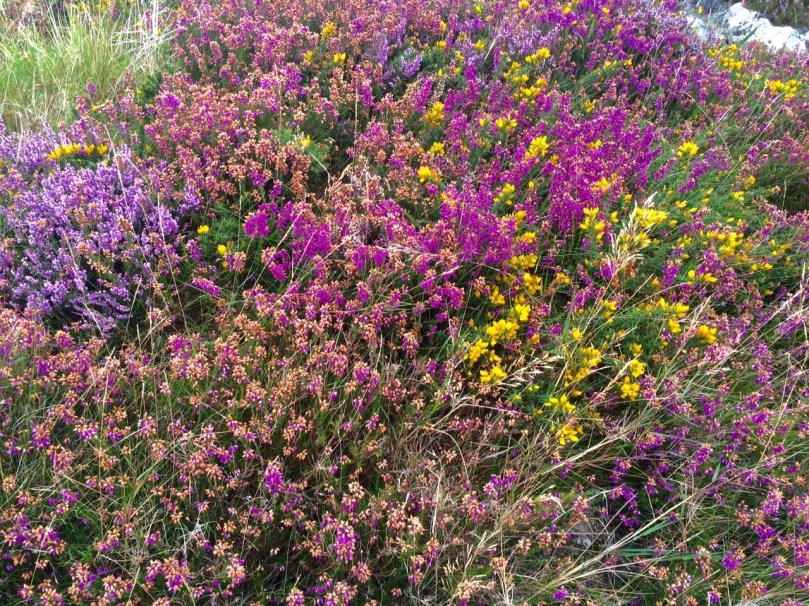
heathers CappaghglassHeather blooms here in late summer and through the autumn – not, as in the song lyrics, when “the summer time is comin’”. It washes the hillsides with a rich pink-purple that has to be seen to be truly appreciated. The gorse has a late bloom too and the combination of the purple heather and the brilliant yellow gorse is one of my favourite things at this time of year.

We’ve been walking the little roads around us in West Cork again, and observing the new cycle of hedgerow flowers since I last reported on them in June.

boreen

Inspired by my Ellen Hutchins experience, I set out to identify some of the most conspicuous of them, aided by my Zoë Devlin book and my friend Amanda.

Fuchsia Montbretia and blackberries

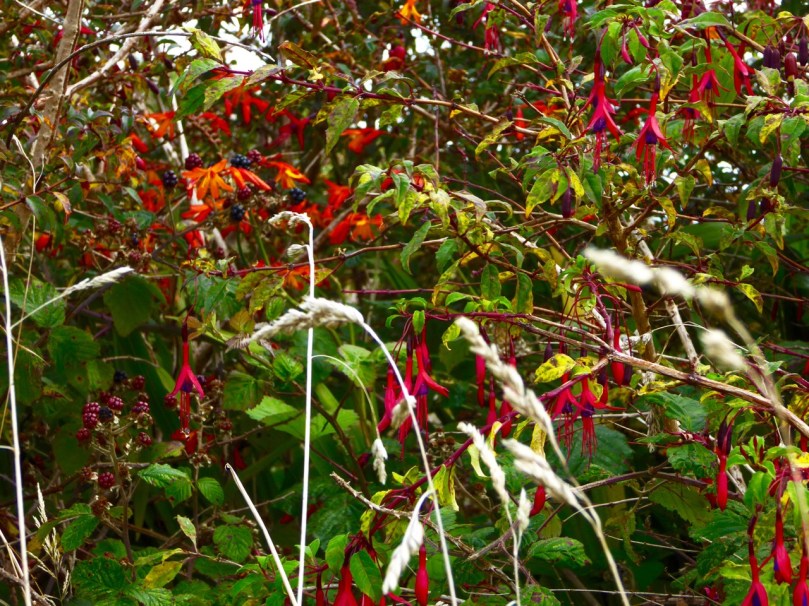
Most striking, of course, is that combination of drooping fuchsia and the gaily waving montbretia (or crocosmia) underneath. Although technically both are introduced species, together these two flowers define the south west of Ireland – it’s what we see in our mind’s eye when we think of West Cork.

Mainly montbretia

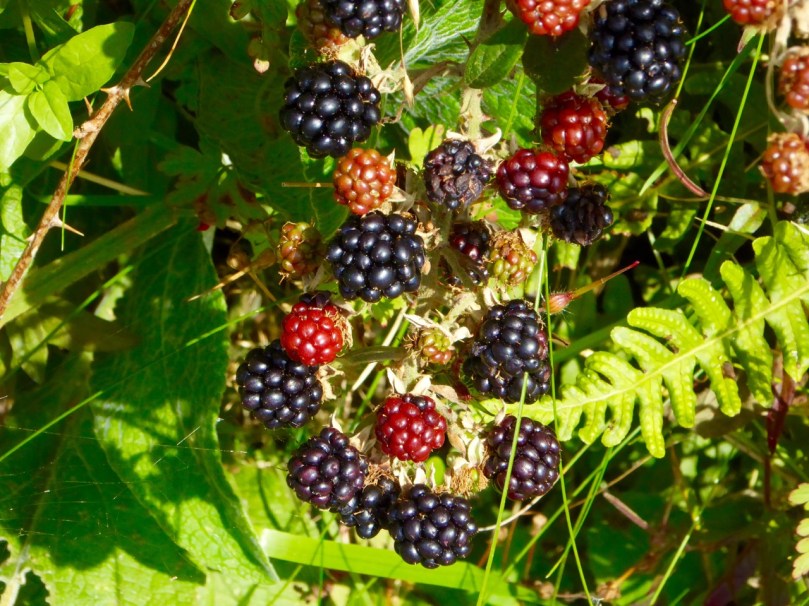
Now the berries are ripening and it’s impossible to walk without keeping an eye out for particularly juicy blackberries.

Blackberries

Although, because we’ve had a cold and wet summer, lots of the brambles are only flowering now.

blackberry flowers

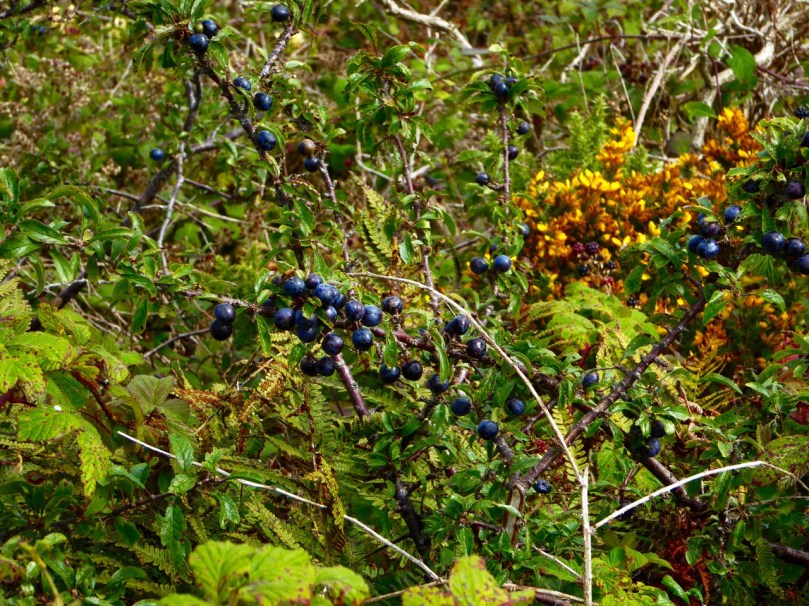
Sloes too, with their glossy blueblack skins are there for the picking. Sloes are the fruit of the blackthorn, often used for making sloe gin. They are actually a type of small plum and are considered edible after the frost. (Note to self – must try one!) Blackthorn hedges are common around here as they make an impenetrable, thorny cattle-proof fence. The wood was prized in the past for making walking sticks that could also be used as clubs, sometimes called shillelaghs. Traditionally, they were cured and acquired their glossy black colour by sticking them up the chimney.

Sloes

Whitethorn, or hawthorn, hedges and their red berries, or haws, are equally ubiquitous in September. We love to see our garden birds descend on the whitethorn trees in the winter, knowing that the haws provide an important source of nutrition for them.

Haws

The wild roses, white and pink, still sport a few blooms but now mostly the colour comes from the rose hips, the more domesticated ones huge and glossy and the wilder ones smaller and half-hidden among the brambles. I’ve never made rose hip jelly, which is apparently packed with Vitamin C, but I did pick up a delicious rose hip and apple jam at one of our local markets recently, and I’ve been enjoying it on my morning toast.

One of the dominant flowers in the hedges and ditches now is purple loosestrife. In lower-lying marshy ground it masses in a vivid amaranthine swath.

Loosestrife

We can admire it freely here, although when I lived in Canada I knew it as an invasive weed to be feared and eliminated. Researching this online, I came across this excellent article by the Examiner’s Dick Warner. As he explains it, once purple loosestrife established itself in North America…

In these new homes, without any natural ecological controls, it became invasive and threatened to choke up important watercourses. The main reason this doesn’t happen in Ireland is that purple loosestrife is kept in check by a number of specialised and very efficient insect predators.

There are known to be two species of beetle, two species of weevil and one species of moth that feed virtually exclusively on purple loosestrife and control its spread. In America, the first thing they tried when it started to become a problem was to control it mechanically, by cutting and removing it. When this didn’t work they tried chemical control, spraying it with herbicides. Not only was this equally unsuccessful, it had some very undesirable environmental repercussions. Using toxic substances in or around water is always problematic.

Then the scientists looked to Europe. They decided the moth with caterpillars that ate purple loosestrife was itself a potential pest, so they left it alone. But they imported the beetles and the weevils and they did an excellent job. It’s one of the classic success stories of biological pest control.

The grasses, brackens, hogweed and ragwort have colonised the hedges and jostle for space in the corners of the fields.

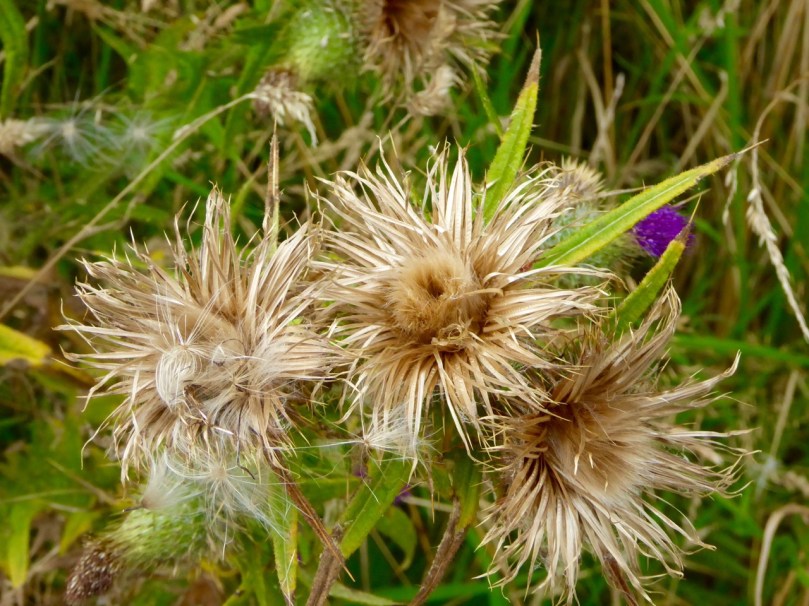
Thistles have now mostly lost their purple heads but are no less spectacular for that.

thistle seedheads

In fact seed heads of all kinds provide an ethereal fringe to many of the hedges, while the breeze in the grasses supplies the music. 

Thistles and seedheads

Knapweed (top) and ragwort seed heads

A few of the smaller flowers can be easily missed.

Common dog-violet (left) and tormentil (right)

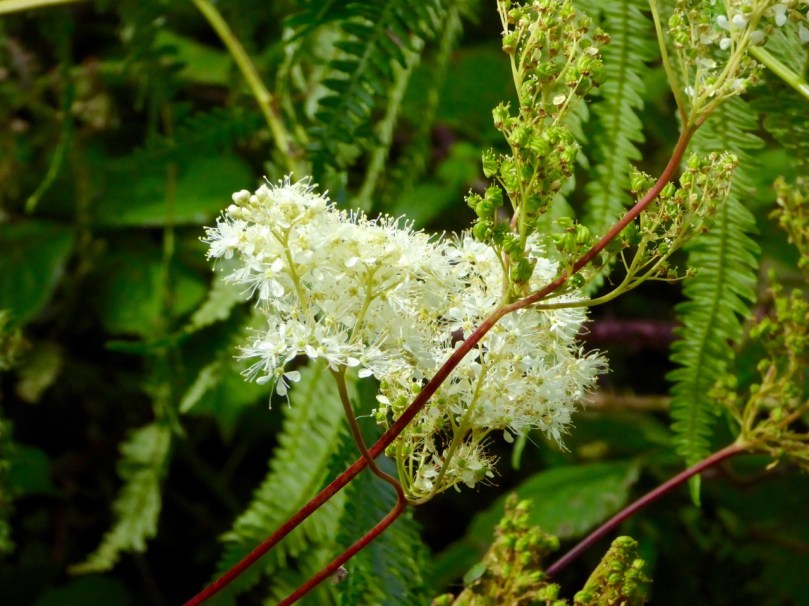
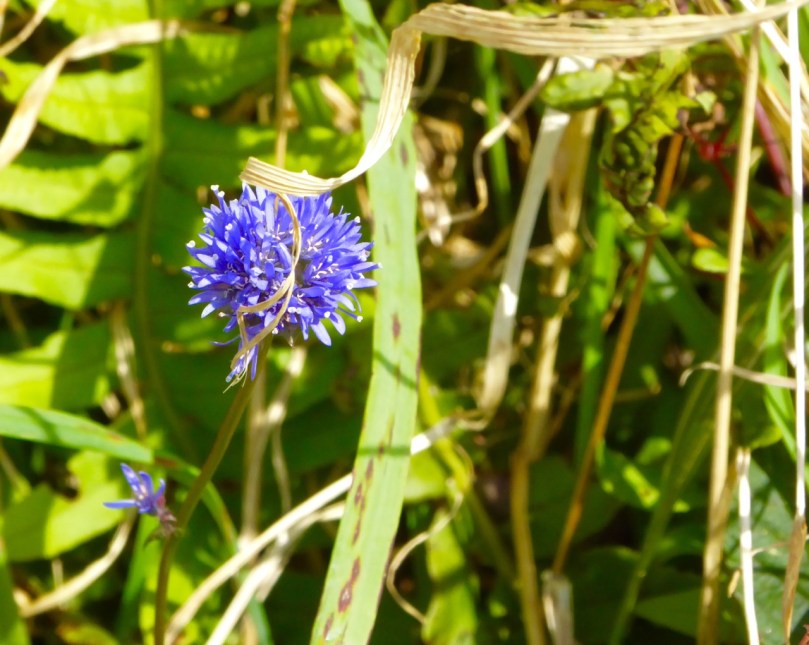
And even some of the larger ones are easy to ignore because they’re so common. But look closely…

meadowsweet

Scabious

Meadowsweet (upper) and Scabious (lower)

And here’s a handsome one – Hemp Agrimony, sometimes known as Holy Rope or St John’s Herb. Apparently you’re supposed to boil the root in ale as a purgative or to cure dropsy. Now you know.

Hemp Agrimony

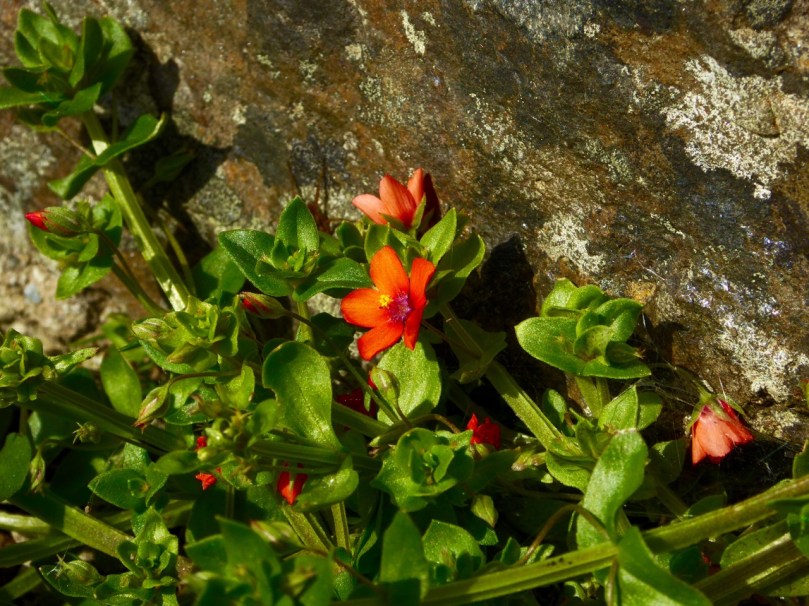
Finally, and because many of you cherish the memory of curling up with Baroness Orczy as teenagers, here’s a Scarlet Pimpernel.

Scarlet pimpernel

All the photographs in this collection, with one exception, were taken on one day, September 8. There’s more, so much more, to see and hear at this time of year along the boreens of West Cork, but I’ll leave it at that for now, except to show you whom I was sharing all this with on my walk.

FLY ON BLACKBERRY

Clockwise from top: blackberry, dog rose, rose hip, hawkbit, herb robert and a species of willowherb. All with visitors.

Oh and one more thing… there are many versions of the song Wild Mountain Thyme on YouTube, but this one struck me because of the lyrics. Subtle changes make the song both more romantic and more accurate. See what you think.

fuchsia