Simply Signs

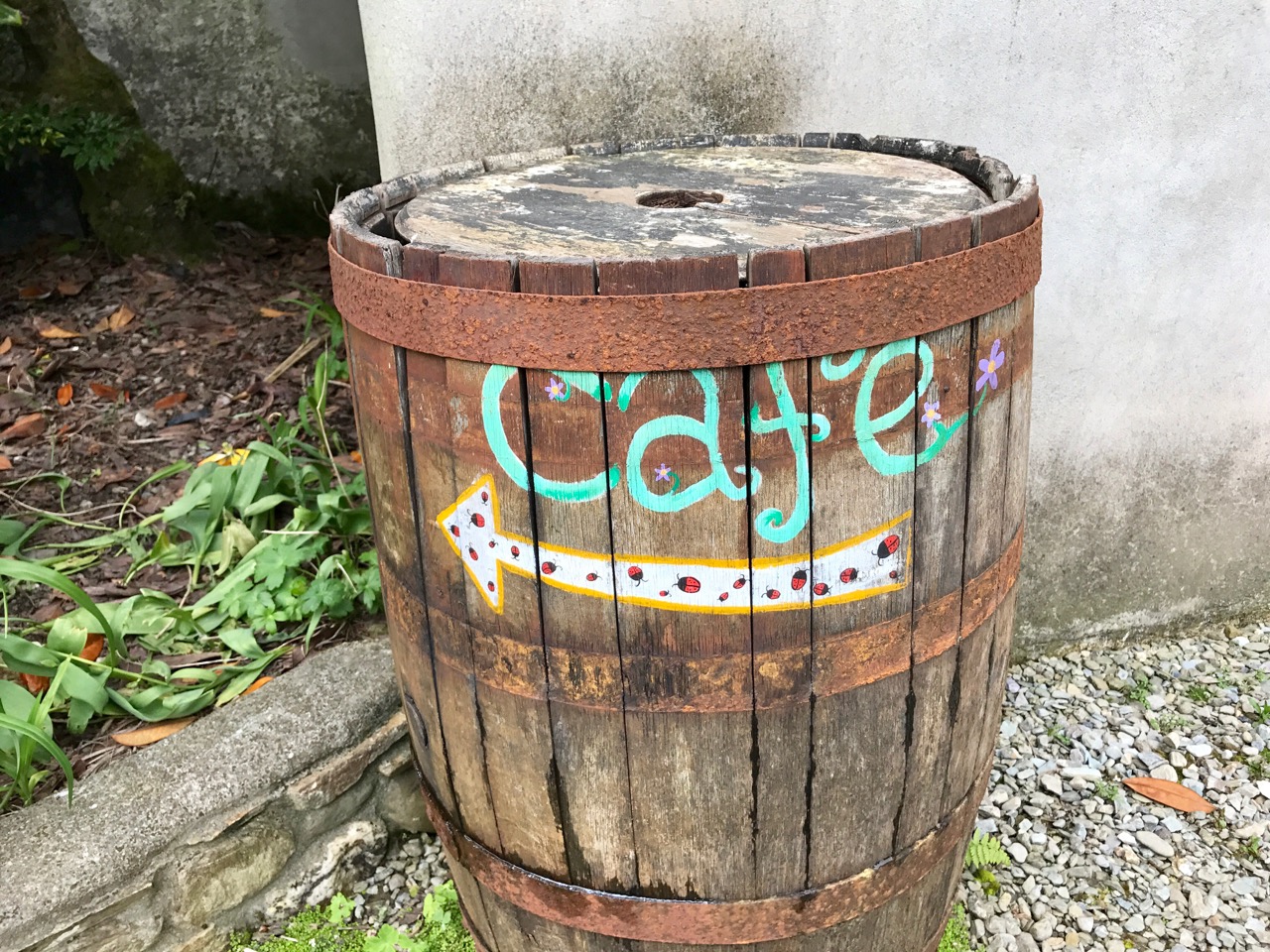
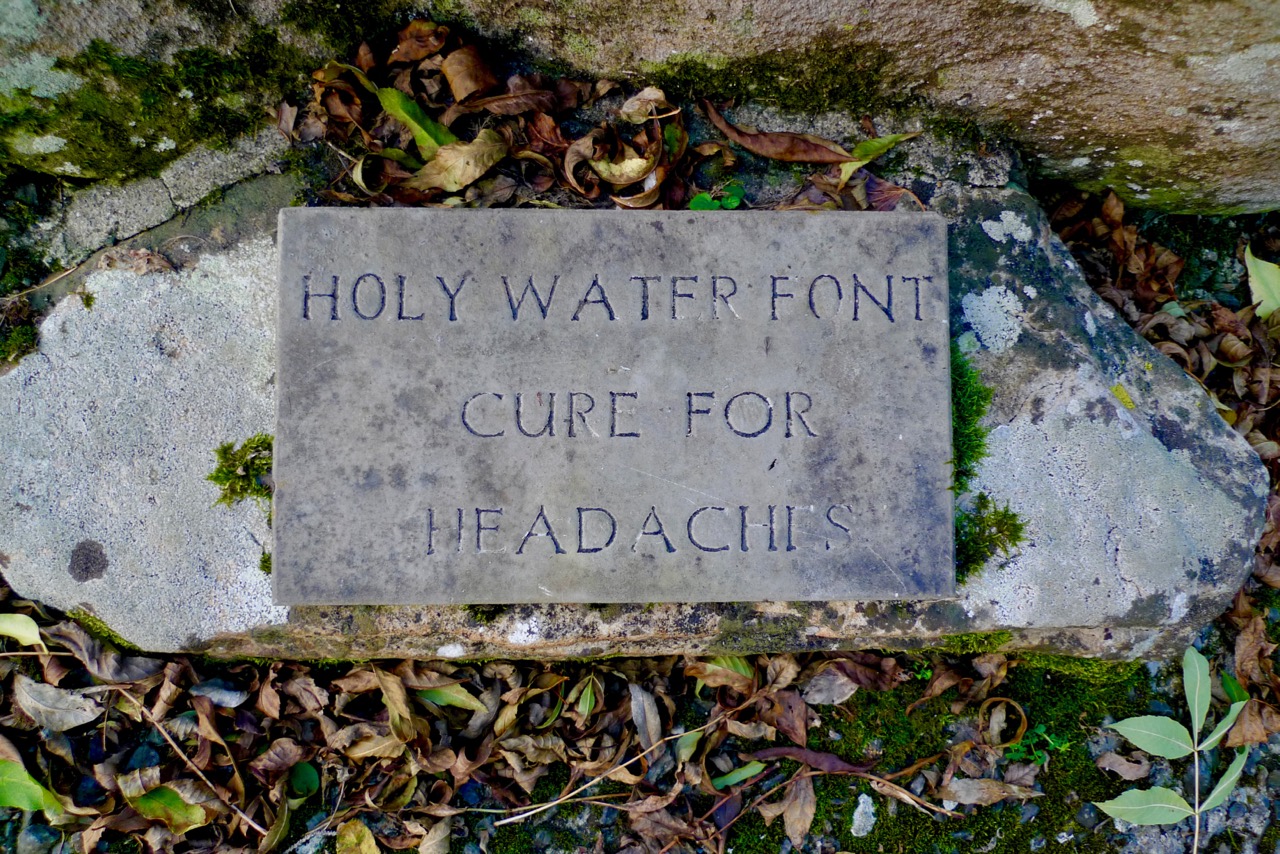
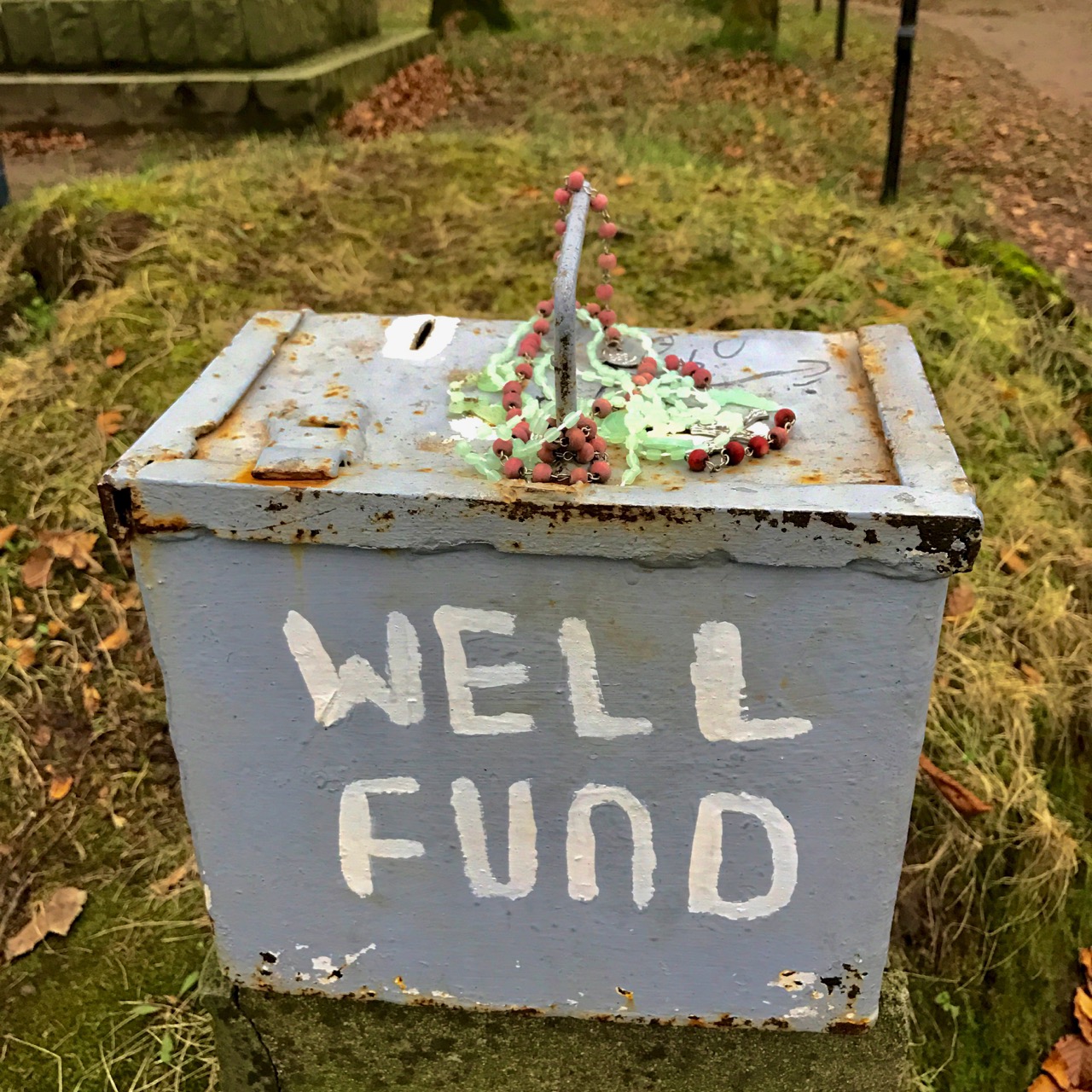
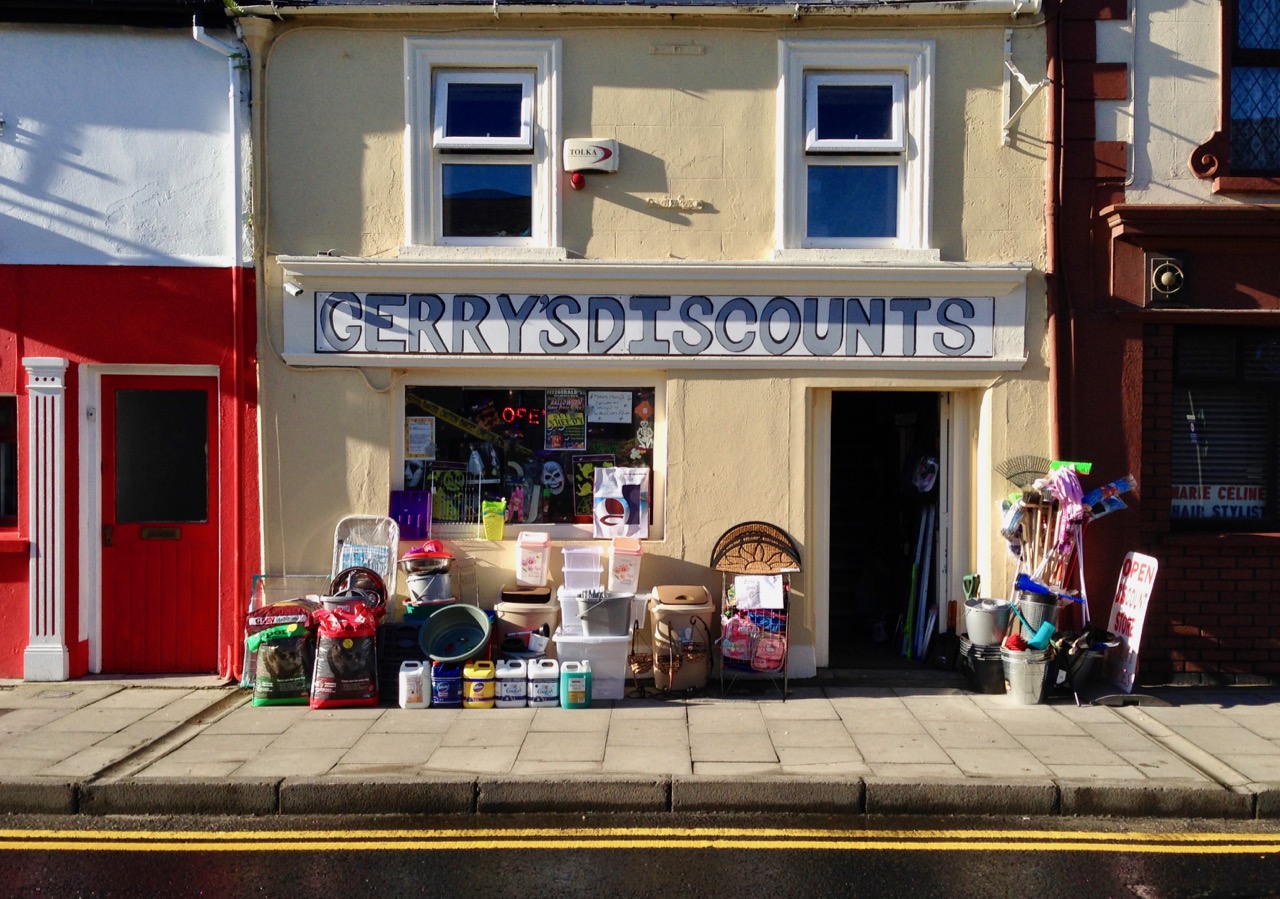
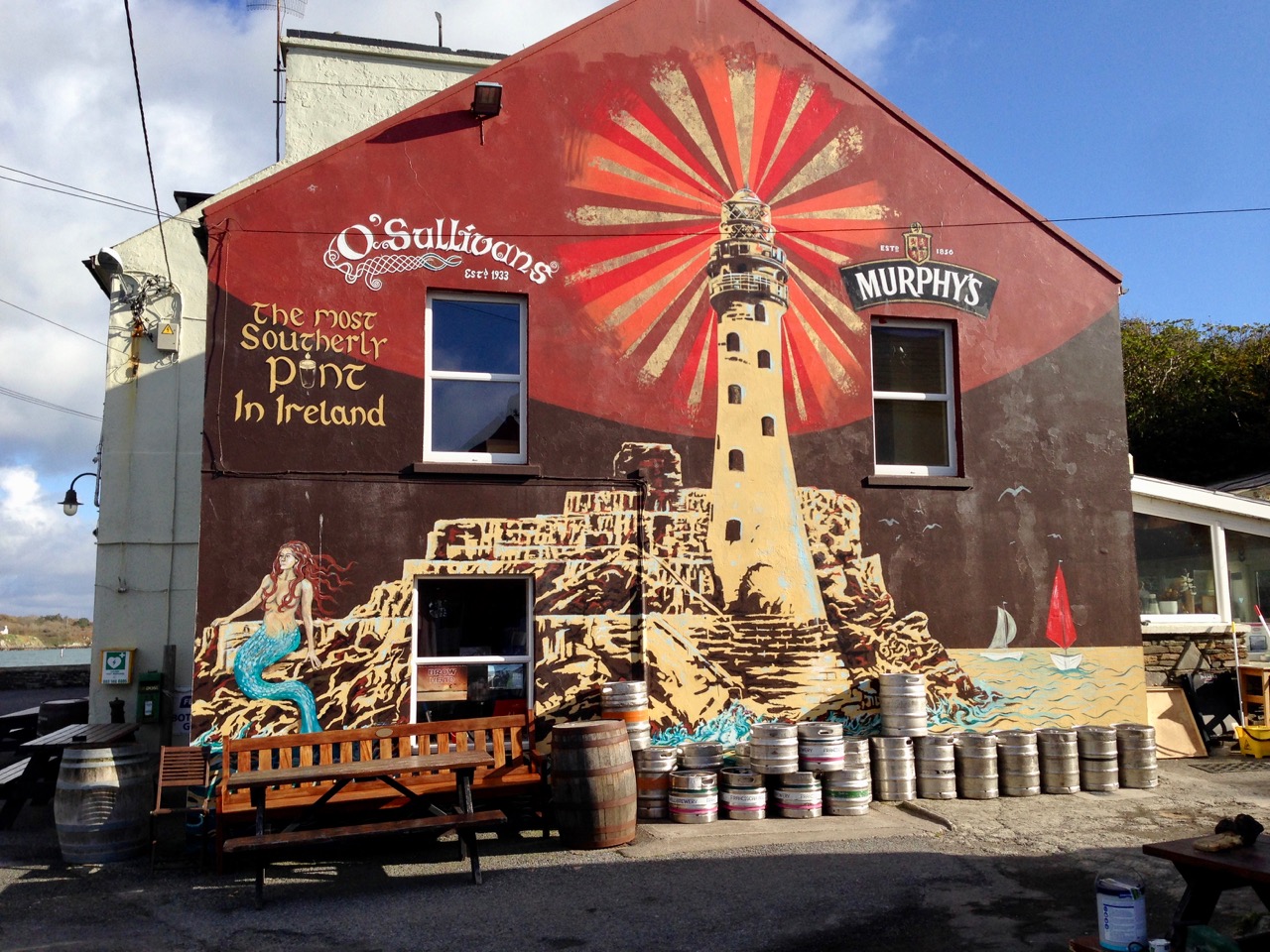
More sign spotting: always an agreeable pastime. These – which come from far and wide on our travels – add to previous collections of words and images spotted in Ireland: Good Signs, Juxtapositions, March Miscellany, and Impressions.

This is a very subjective survey: I’m showing things that I find intriguing or amusing – others will have different reactions. It just goes to show that, for us, there’s never a dull moment here: long may that continue.

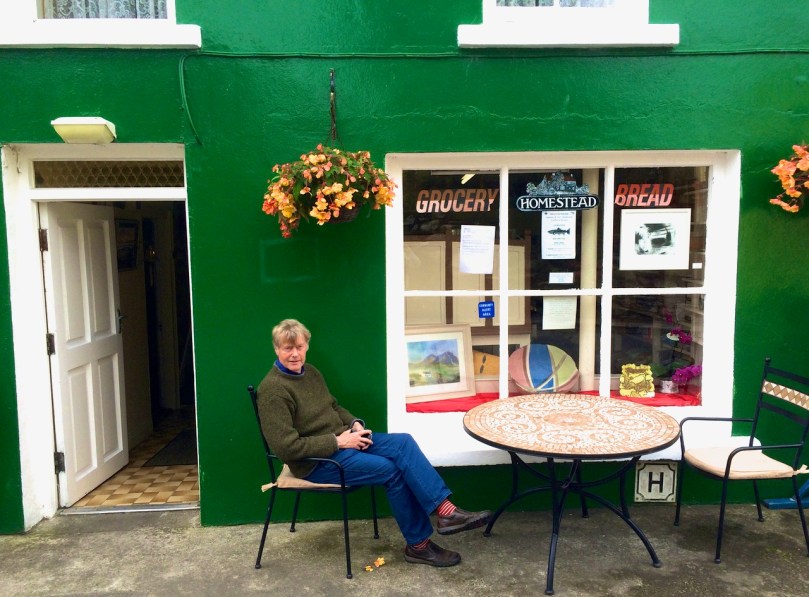
In Skibbereen: look carefully here: -some things are easy to miss!

That’s enough for now! There’s plenty more in the collection – look out for them another day.

Into the Blue…

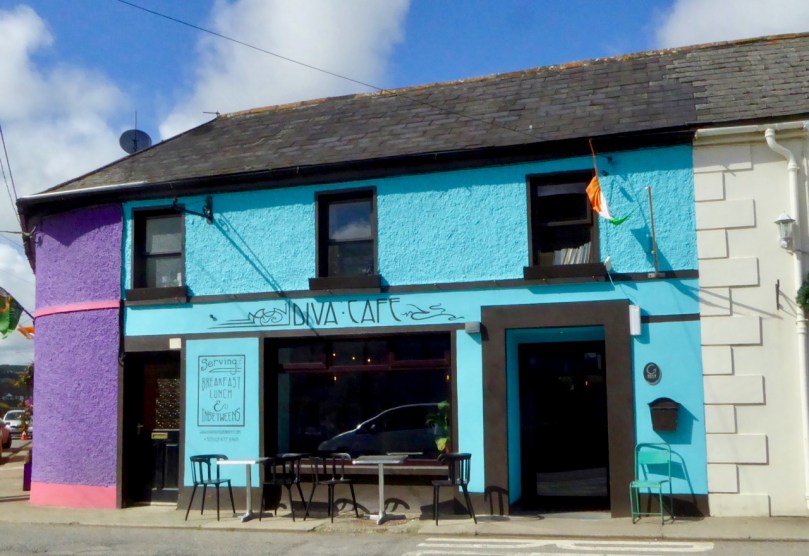
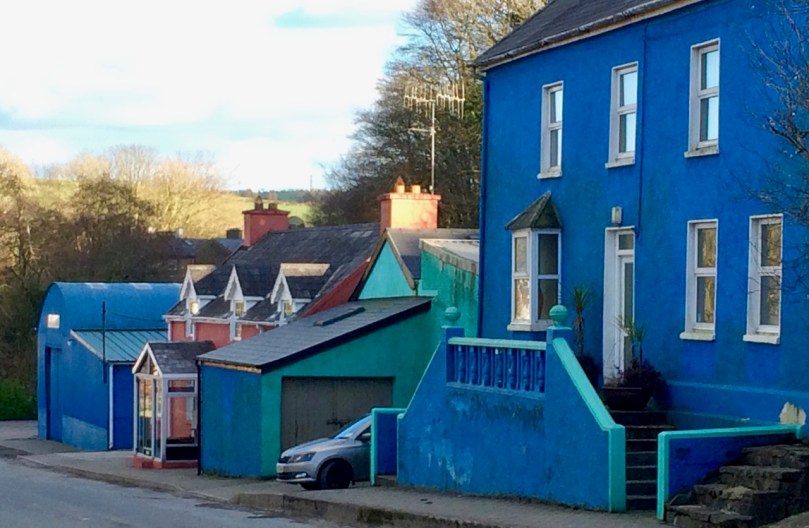
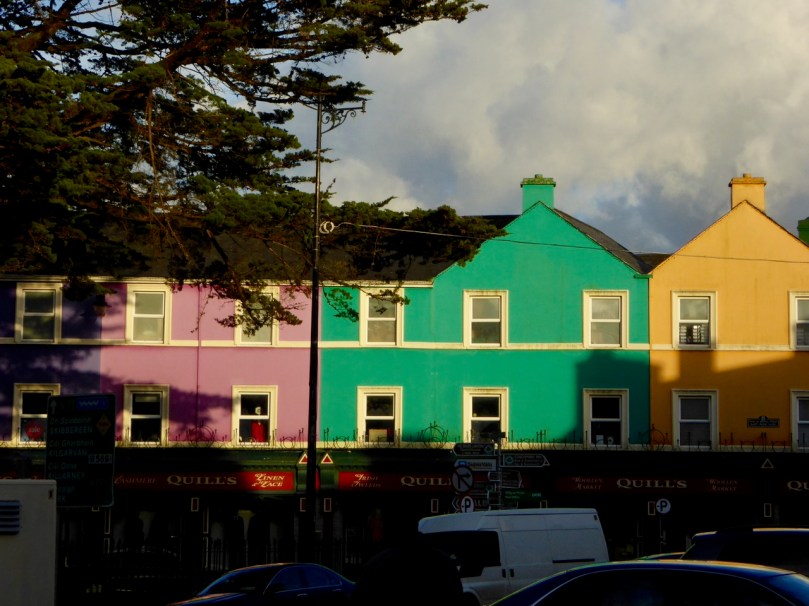
In this series on Ireland’s colourful buildings, we started off with purple and pink and proceeded through the colour wheel to the oranges and yellows and now we have arrived back on the cool side of the spectrum – the blues and greens. The Diva Cafe in Ballinspittle (above) has black trim that does nothing to tone down its exuberance, and it marries beautifully with the purple and pinks beside it, which were highlighted in our first post on this series.

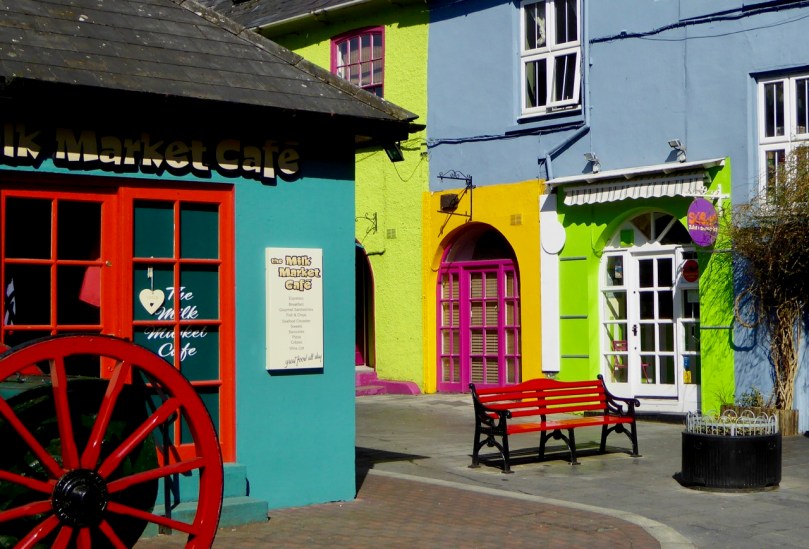
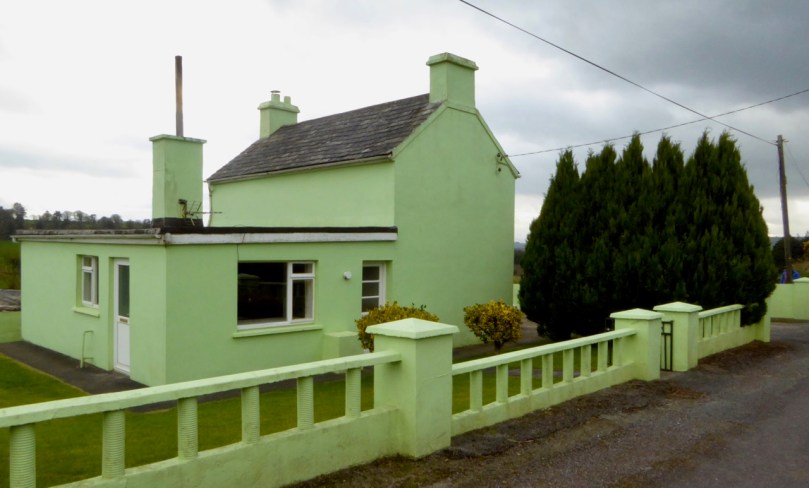
We left off the last post with a couple of lime greens, so here’s another, from Kinsale (above) to get us back in the swing of things.

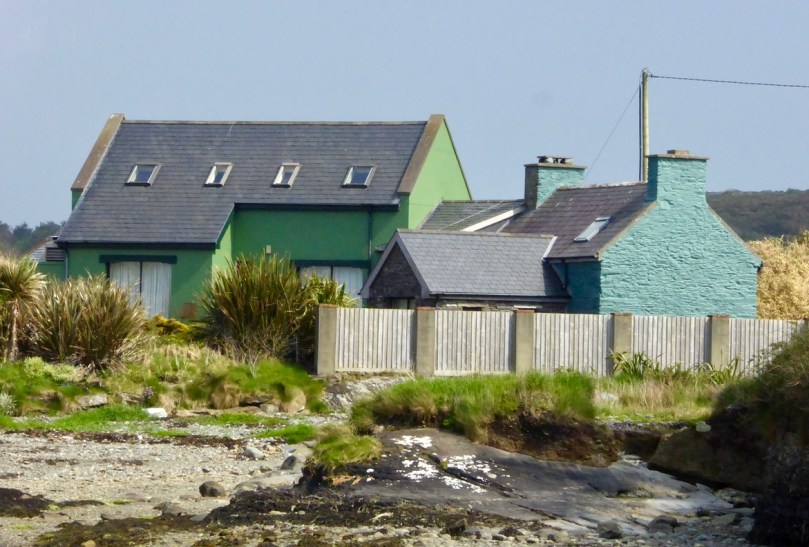
A bright green and a blue green are a great combination beside the sea – this house is at Dunmanus, on The Mizen

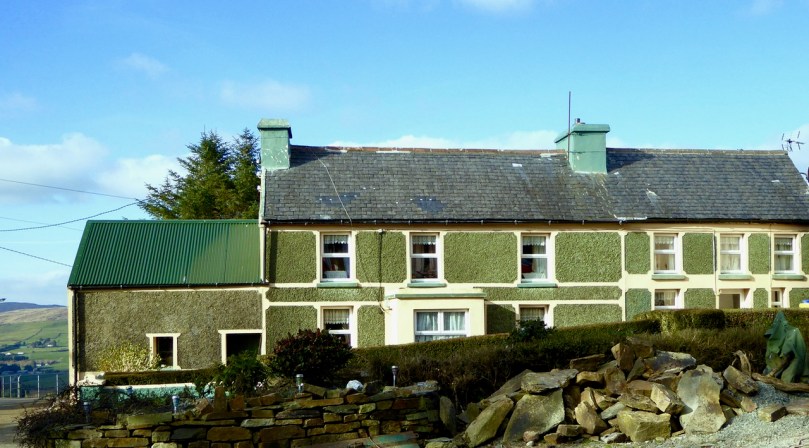
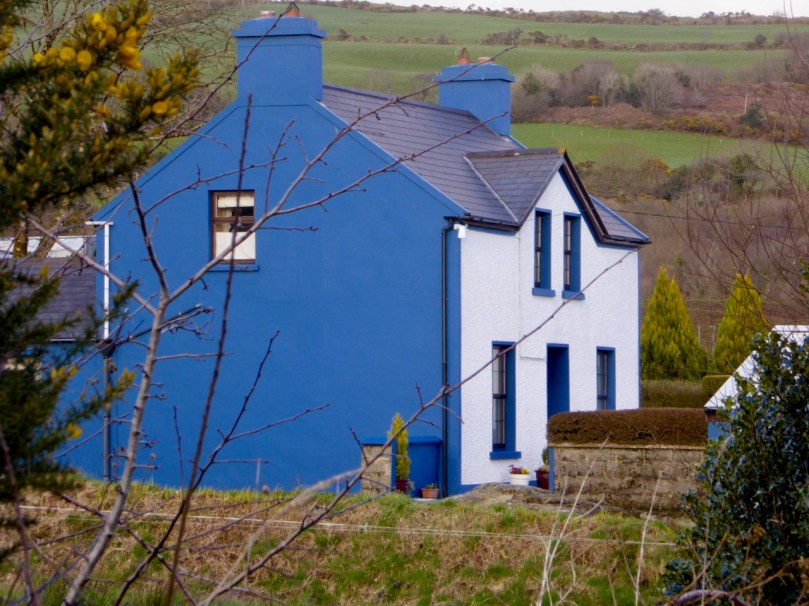
Blues and greens are the colours of the sky and the fields, so they don’t pop as much as the pinks and the oranges. In fact they can be quite subtle, when used in tones that blend in with their surroundings.

I love these two farmhouses, the first near Mount Kidd and the second near Coppeen

But in village streets, and especially when combined with the other colours of the streetscape, they can be as cheerful and arresting as the stronger hues around them.

Eyeries (top) and Kenmare (bottom)

There are shades of blue and green that people argue over – one will call it blue and another green.

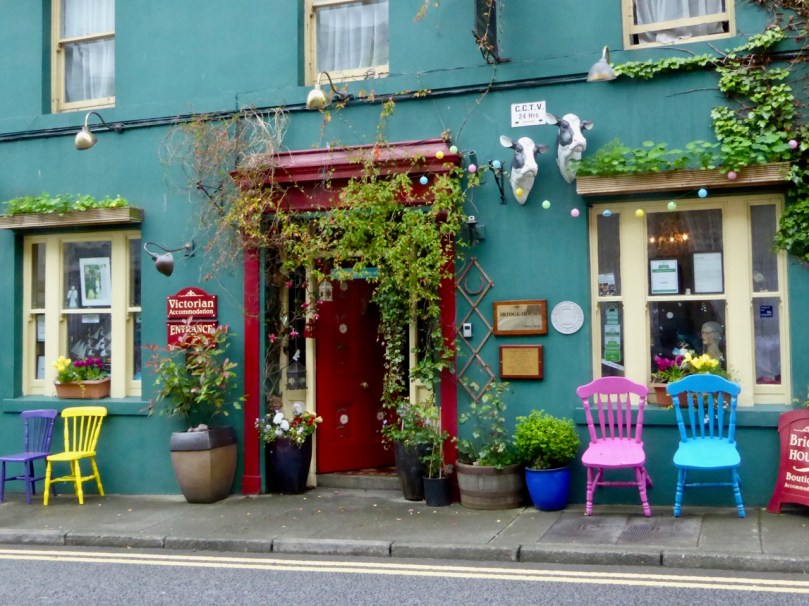
The fabulous Bridge House in Skibbereen – blue or green?

Those are the teals, ceruleans and turquoises, and St Patrick’s Blue, which is the colour of the Aer Lingus uniforms.

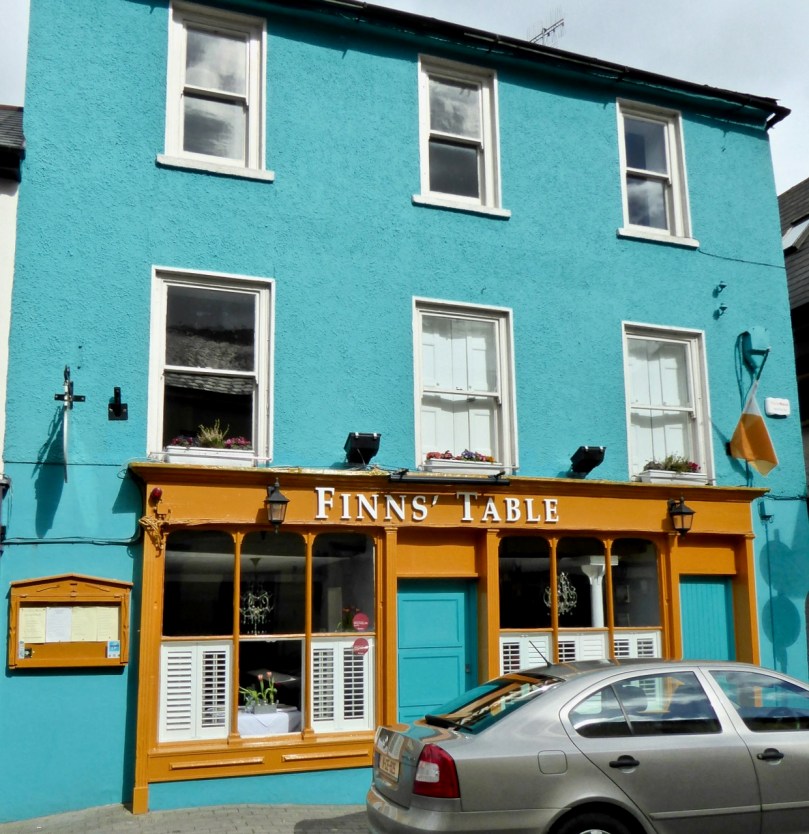
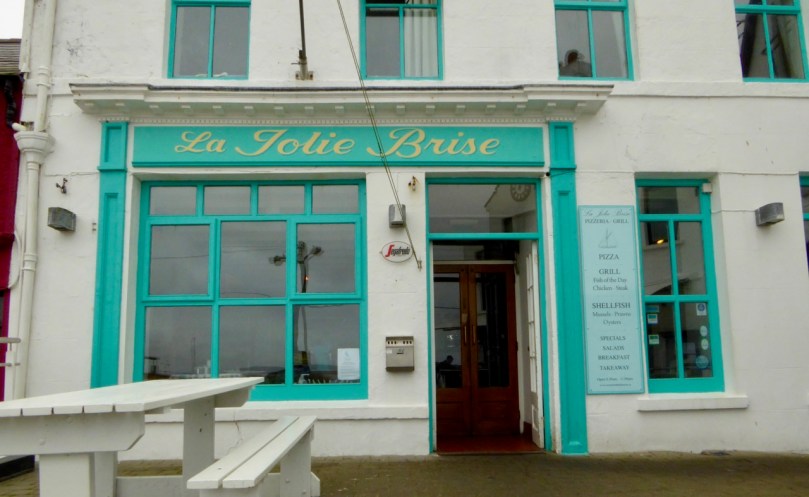
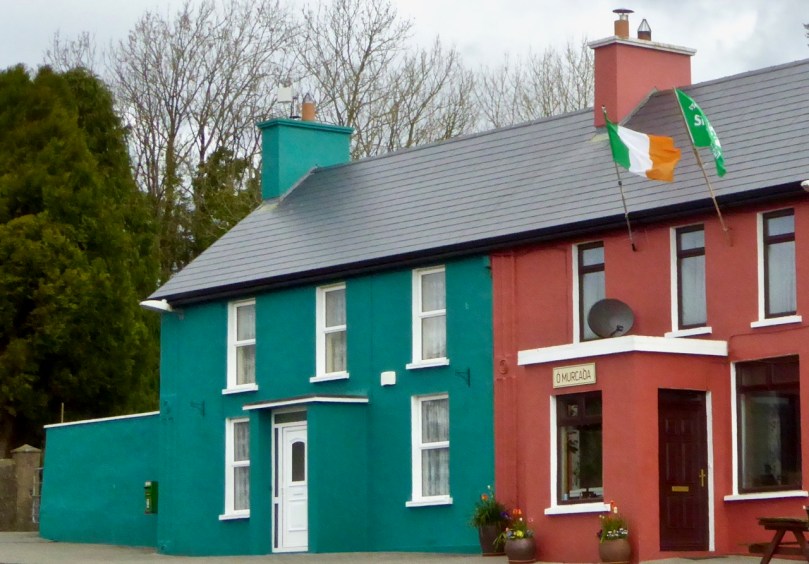
Finn’s Table in Kinsale, La Jolie Brise in Baltimore and a lovely brick and teal combo in North Cork

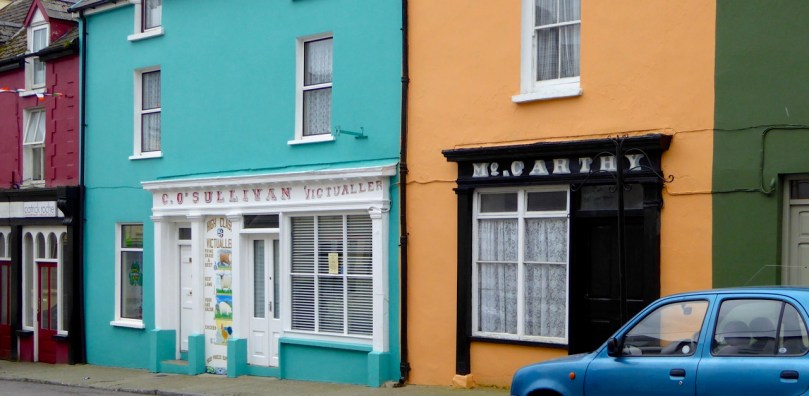
O’Sullivan’s butcher shop in Ballydehob has been closed for years, but it still retails its welcoming colours and graphics

True blues vary from the strong dark ultramarines and navy blues through the denims, duck eggs, periwinkles, sky blues and on to the paler shades and baby blues.

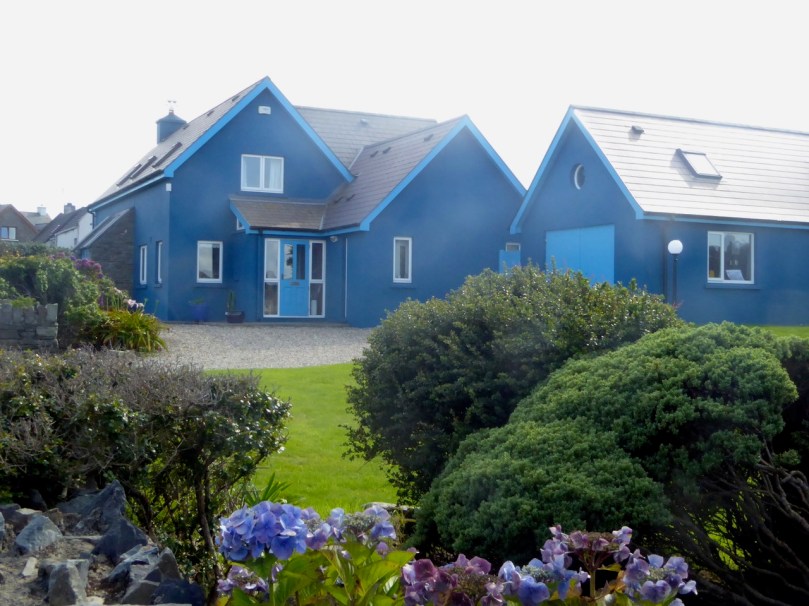
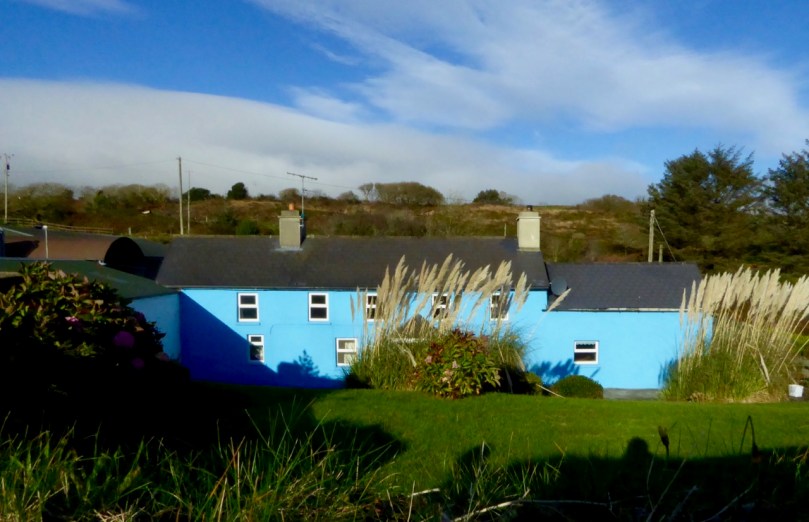
The first house is in Baltimore, the one underneath it was glimpsed somewhere on our travels

Blue matches well with other colours and is often used in combination. Some of the nicest buildings we’ve seen use blue with another colour to great effect.

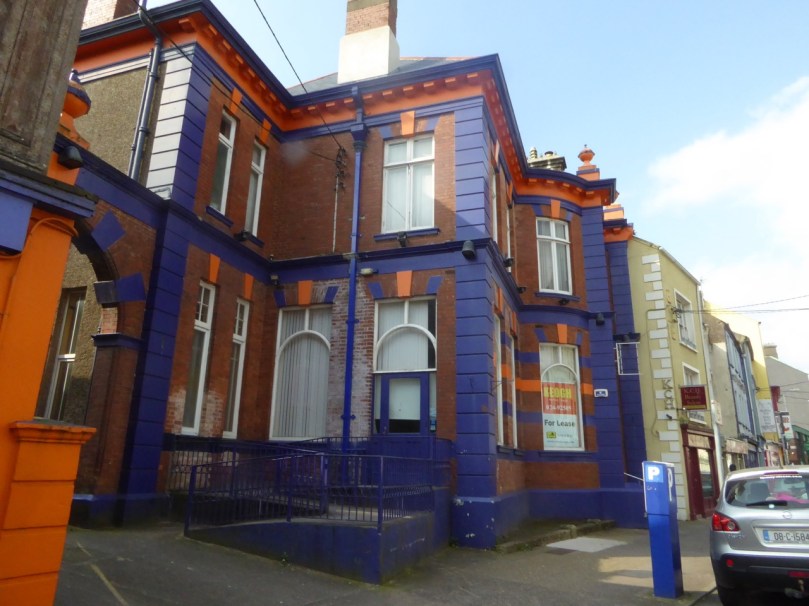
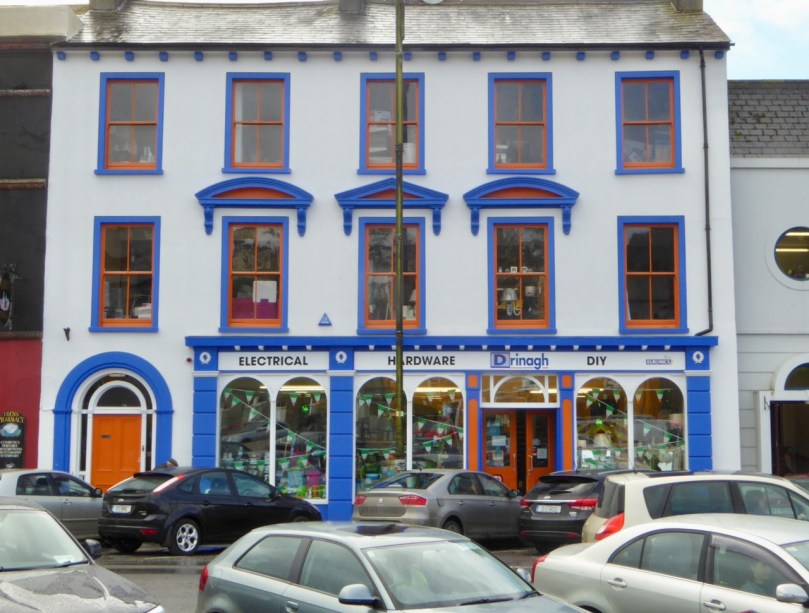
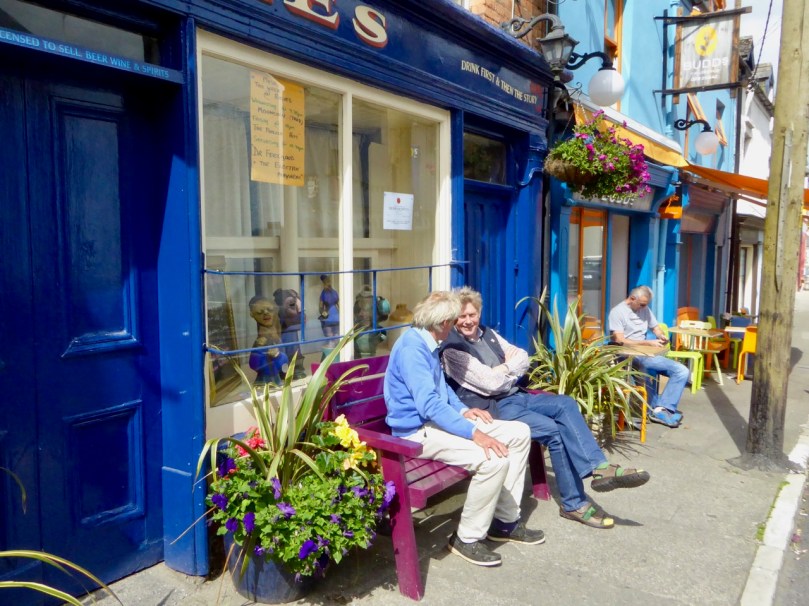
Three wonderful buildings that use blue in combination with orange tones – a bank in Youghal, a hardware store in Bantry and our own Budd’s Restaurant in Ballydehob (with Rosies pub for good measure)

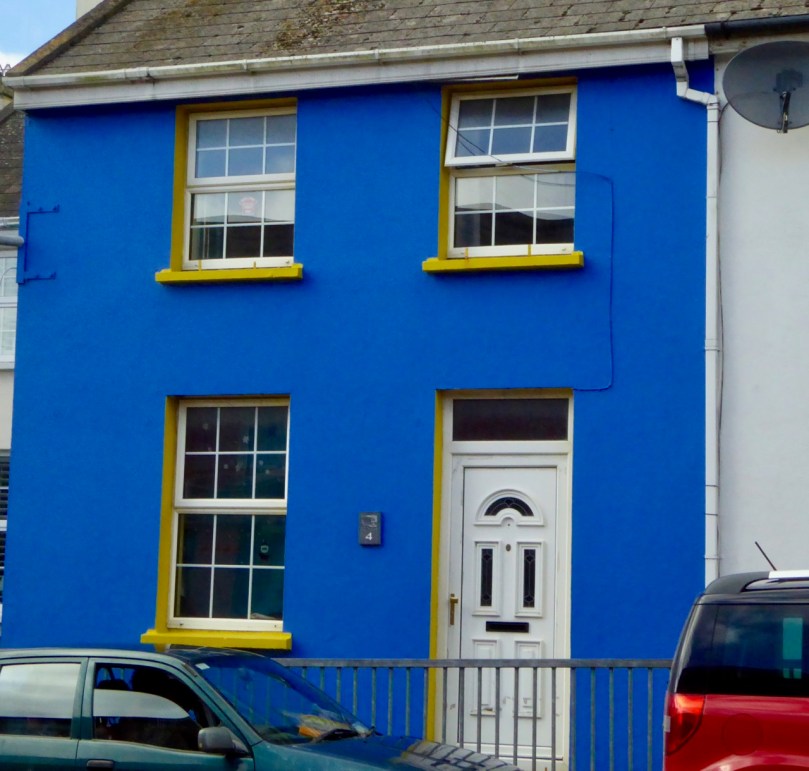
Yellow trim is a tried and true favourite
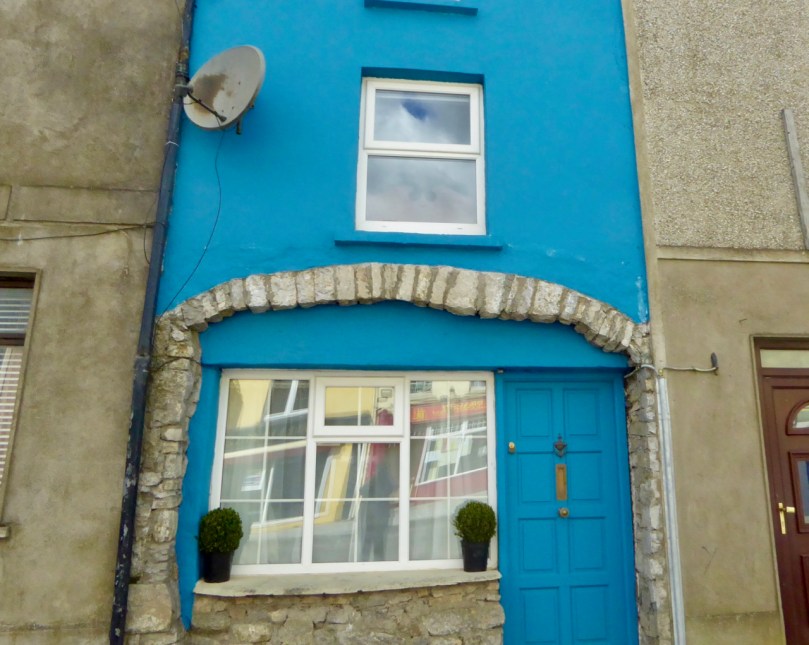
It might be one of the smallest houses I’ve seen, but it stands out when painted in blue
Blues and greens in Kilbrittain 
This one near Castle Donovan uses a strong blue cleverly as both a main and a trim colour

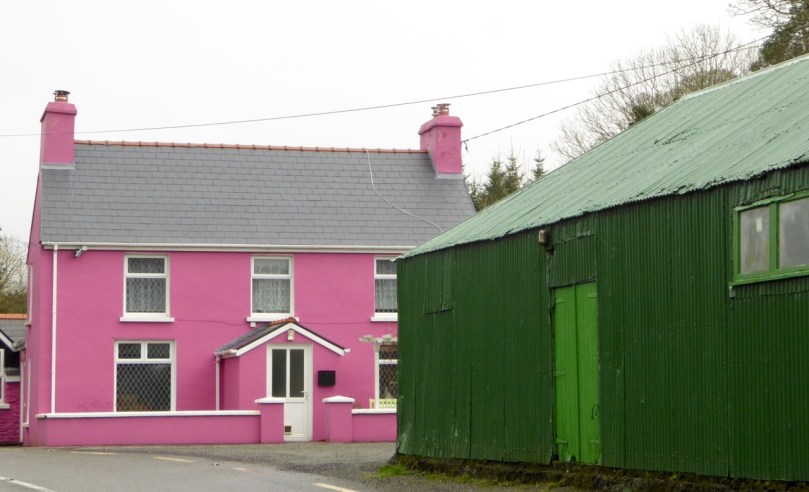
I’ve decided to end this series with this photograph of two side-by-side buildings in Adrigole on the Beara Peninsula.  The juxtaposition of the strong green and the vivid pink proves that when it comes to colour, anything can work!

Wild Atlantic Light – the West Cork Winter Edition

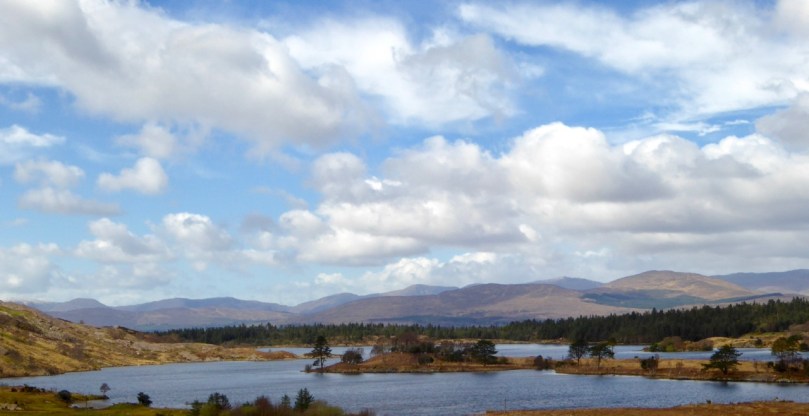
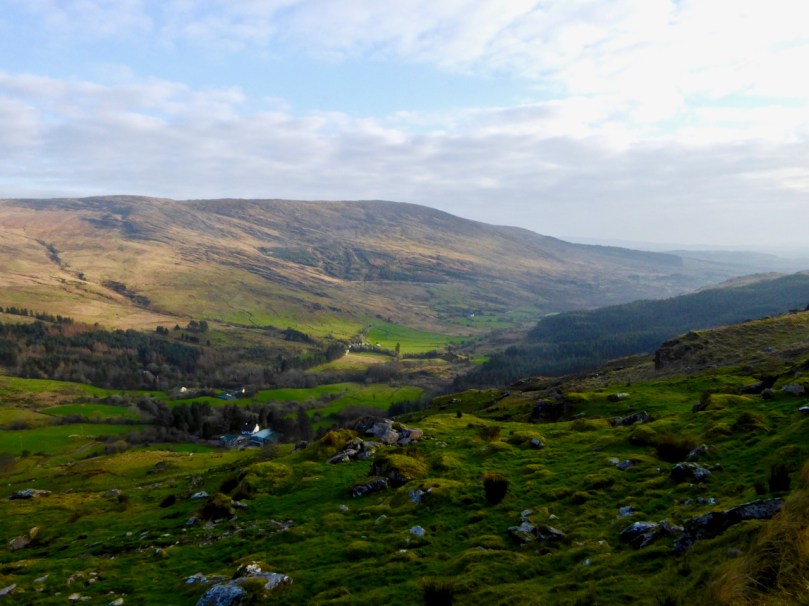
We are a maritime county and that affects our weather. It means that clouds are plentiful at all times of the year and that the weather can be highly variable and unpredictable. But the ocean, and the Gulf Stream it carries all the way from the Gulf of Mexico, also means that we have a slightly milder climate than the rest of Ireland. Beside the sea, the air is full of negative ions. That’s a good thing. Negative ions stimulate our senses and lead to a heightened sense of wellbeing.

Sure, we can have rainy days and bitter winds in the winter, but there are lots of sunny days too. When the sun shines in the winter, it is filtered through those drifting clouds to produce those marvellous effects of light and shade that lend such drama to the landscape.

In winter too, the colours are highly contrasting – the green of the fields change abruptly to the blondes and golds of the higher mountains. The bracken turns the colour of amber and the fionán grasses provide an expansive sea of rippling heath on higher ground. Snow caps the highest ridges, although it rarely descends to us mortals in the valleys.

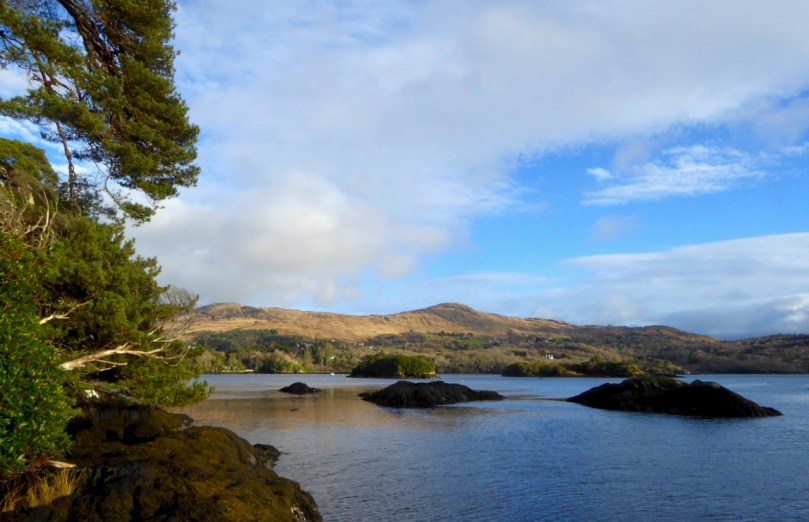
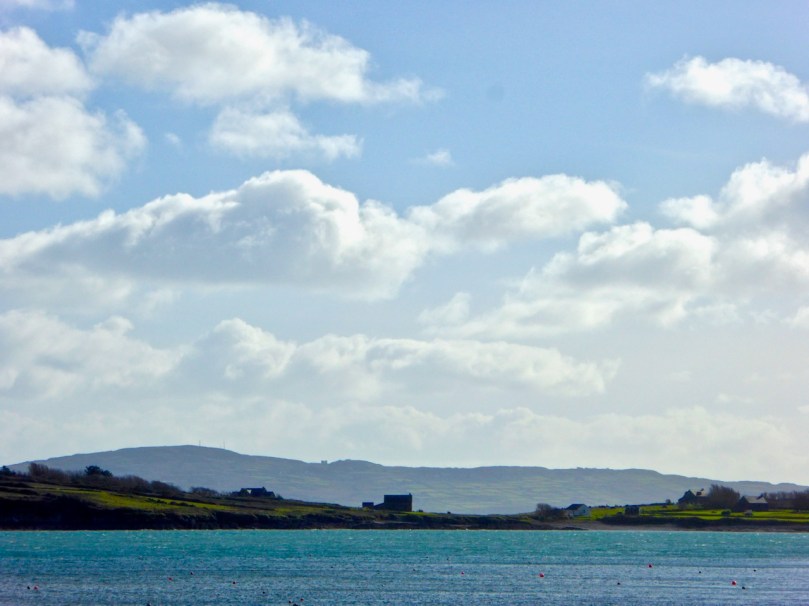
Under a blue sky the sea in West Cork turns the colour of the Mediterranean or the Caribbean. They tell me that has to do with having a sandy bottom and I am sure there are other scientific explanations, but really, you have to see it yourself to believe it.

Our underlying geology provides the ruggedness, the exposed sandstone ridges, and the deep coastal indentations that characterise the landscape.

The end result of it all – the sunshine, the clouds, the mountains, the sea, the contours and colours of the land – is the kind of light that artists dream of. The sheer clarity of it is startling – you can see from one end of the peninsula to the other in a way that city dwellers have forgotten it’s possible to do. That clarity brings out every hue and allows all the colours to sparkle against each other.

The photographs in this post were all taken in the first three months of 2017 – from the depths of winter to the first glimmerings of spring. We think you’ll agree that our Wild Atlantic Light is pretty special.

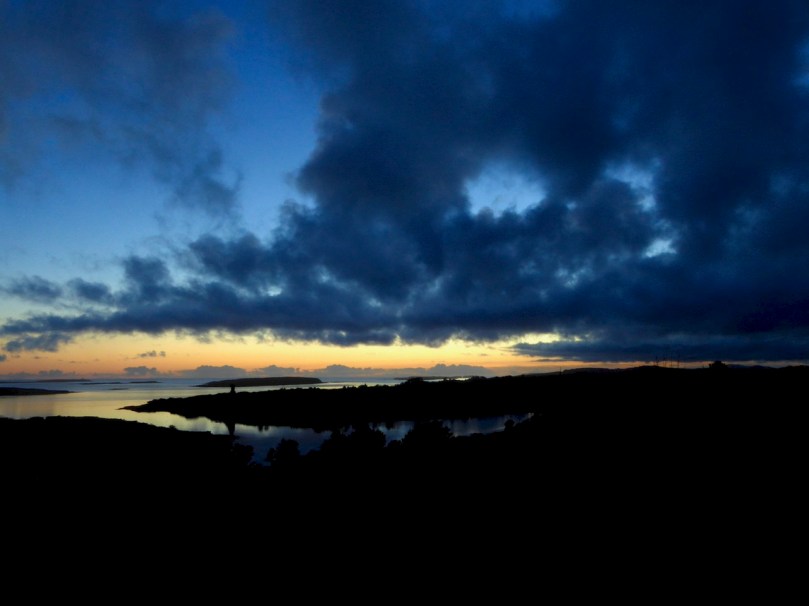
Even in the evening…

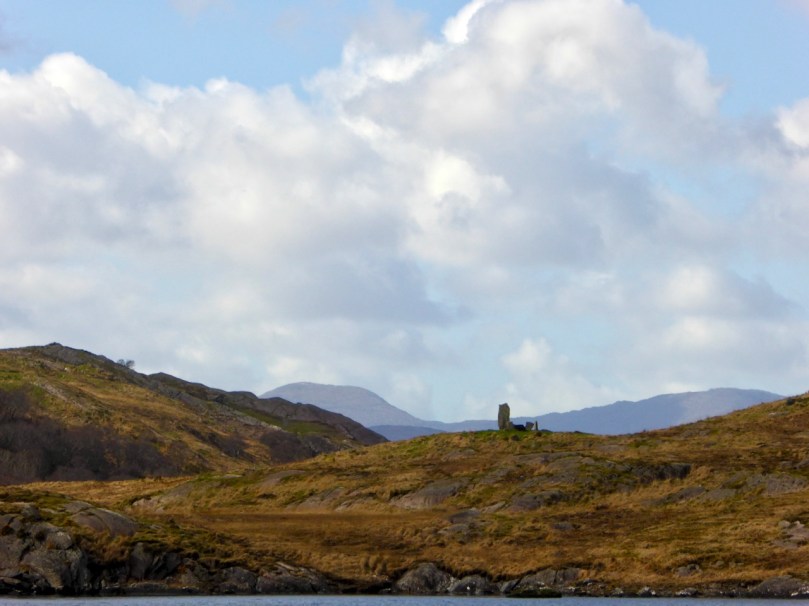
And especially when there’s a chunk of archaeology from our deep past in the landscape.

Tracking the Trains: Railway Reminiscence

…Like all children, the boys of Ballydehob found the platelayers’ trollies irresistible. A lady in Cambridge, Massachusetts wrote about her father (born in The Skames in 1900). Her father and some small boys recalled a ‘small hand-cart’ which was kept near the station and used by the platelayers. “When Mr Crocker, the station master, was not alert the small boys, led by Connie Sullivan, the acknowledged leader of the group because his father, Jack, worked on the railway, were able to steal off the cart. They would push it by hand towards Schull, getting the cart about one mile above the station. Then the boys would pile in and off they’d go down the hill past the station and up the hill on the far side until, caught by gravity, back would come the cart again at such breathtaking speed that it would rocket across the viaduct, then run back through the station. Mr Crocker would come out to see the speeding cart and sometimes shoot with a gun, always in the air and never to do any harm. He was a good chap, and we took advantage of him at the time…”

Last week I wrote about an exploration we had made of the old railway line that had served Ballydehob until 1947 – exactly 70 years ago. I was delighted – and excited – this week to discover a rare copy of a detailed history of the line in that Aladdin’s Cave of bookshops: The Time Traveller, in Skibbereen. The book The Schull & Skibbereen Railway was published  by The Oakwood Press in 1999, and has long been out of print. Although a modest volume, it is a monumental, detailed work which took half a century to write!

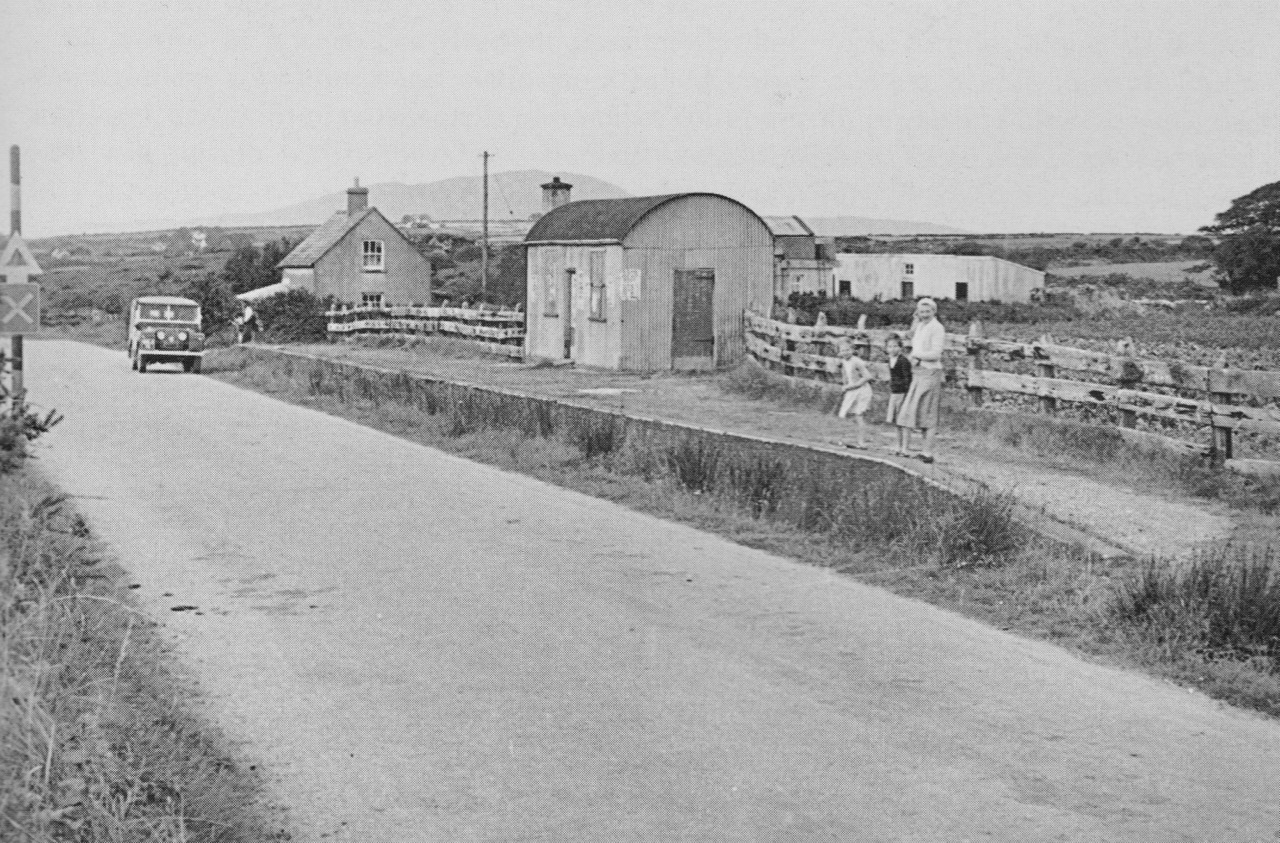
This is a view of Kilcoe Halt, taken in 1953 by the author of The Schull & Skibbereen Railway, James I C Boyd. At this time the line had recently closed, and the track had been taken up. The author’s wife and two daughters are in the photograph

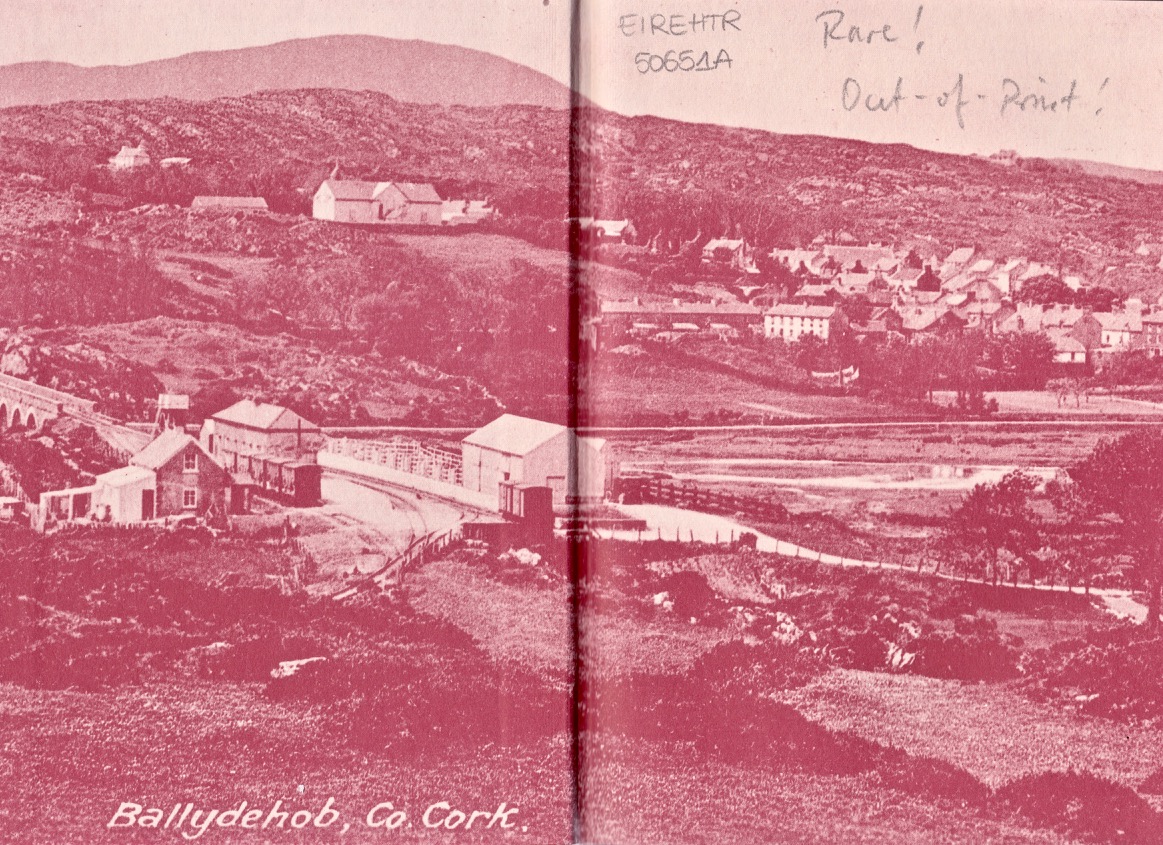
The header picture shows the endpaper of the book – a postcard photo of Ballydehob taken from the east of the station around 1910, when the railway was still in use. The 12 arched viaduct – mentioned in the extract given in the first paragraph – can just be seen to the left: that account doesn’t really make geographic sense, but – remember – it’s a story, told from a distance both in time and place.

It is Chapter 18 of the book, entitled Miscellanea, which has given me the most pleasure to read, although this is not to decry any of the highly informative data and history contained in the rest of it. The book’s author, James I C Boyd, explains the context of the chapter:

…Over the half century during which I have formed close associations with West Cork, there have been many reminiscences, conversations and situations surrounding this subject which were noted down at the time in the hope of further attention. Some were legendary, others biased, a valuable few were personal but all gave me an insight as to the ethos of the local people in relation to their railway. Bearing in mind that during those fifty year the line has closed completely and many of my informants have passed away, their memories have been set down here… Such recollections do not fall neatly into the pattern of the previous pages, so form a chapter entitled Miscellanea…

Left – James Boyd and his family; right – from the 25″ 1901 Ordnance Survey Map: Ballydehob, with the station and the viaduct

Born in 1921, Boyd went to school in Colwall, Herefordshire. There he encountered two influences: the first was W H Auden, who taught him English, and the second was a miniature railway line which was attached to the school: the Downs Light Railway. This venture is the world’s oldest private miniature railway – which can carry human passengers. It has a track gauge of 912” (241 mm). Set up in 1925 for the principal purpose of education, the Downs Light Railway is today the only railway in the world to be operated solely by children aged between 7 and 13 years. These two significant experiences in his life set Boyd on his own track: to become a writer and a specialist in railway history. His opus includes over 20 highly detailed accounts of narrow-gauge lines in Britain, Ireland and The Isle of Man (including this definitive work on The Schull & Skibbereen Railway) and countless articles, photographs and other collected information.

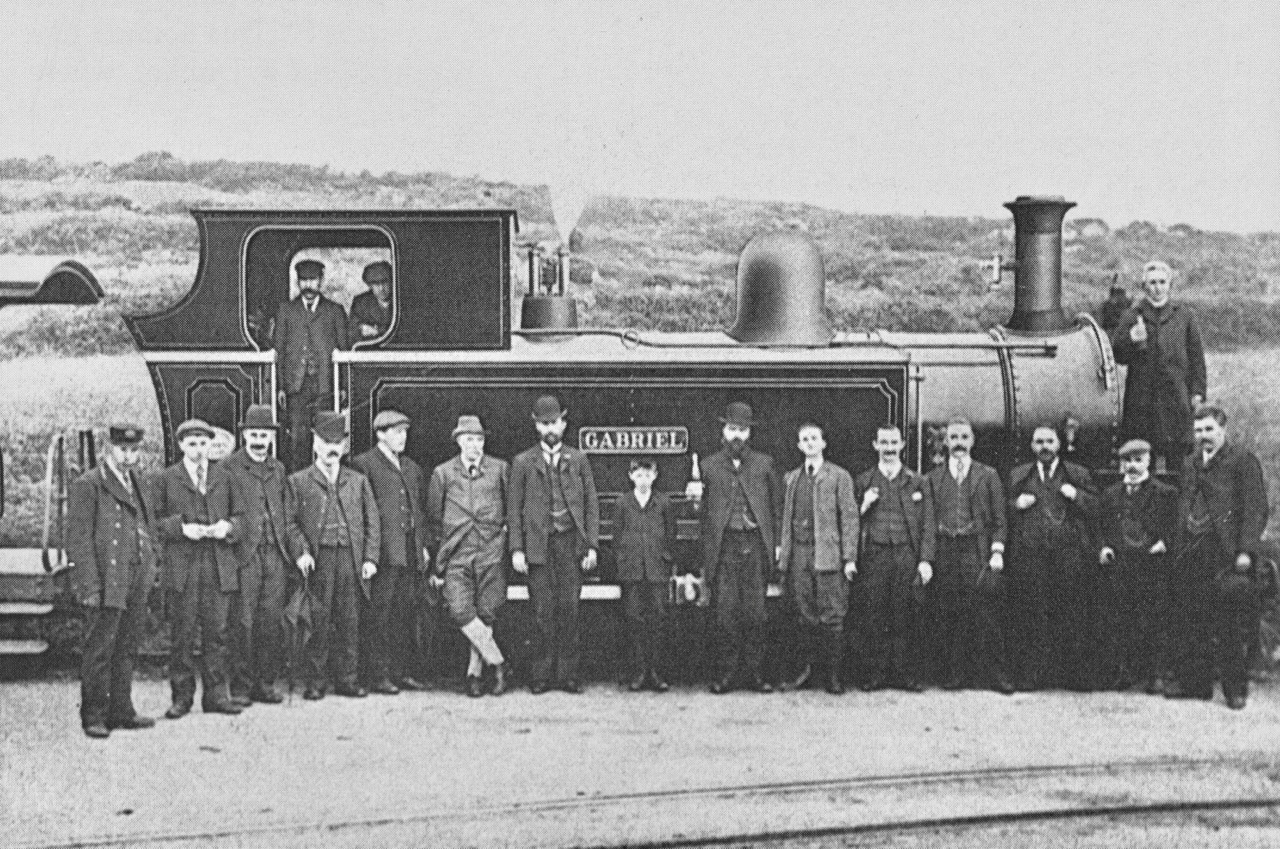
A photograph which Boyd found in a collection by G R Thomson: it shows the ‘naming ceremony’ which took place in 1906 on the Schull Pier extension line of a new locomotive ordered from Peckett & Sons of Bristol. Father John O’Connor, the Parish Priest of Schull, broke a bottle of champagne over the engine and christened it GABRIEL – after the mountain, not the Archangel!

From Mrs P McCarthy of Schull – recorded in Miscellanea:

…You were asking me about the men who worked on the track, and who lived in the crossing houses? There were two sets of men: one between Skibbereen and Ballydehob and the other went from Ballydehob to here. Denis McCarthy (or ‘Foxey Din’ as we called him on account of his red hair), his son Mick (he went on the broad gauge when the S & S closed), and Batty Harrington. Sometimes Paddy O’Donovan would help them… From Ballydehob we had Connie O’Sullivan, Jackie Daly (who was the Foreman for the whole line) and Gerry McCarthy, who was known as ‘Vanderbilt’ from the careful way he had with money. Then at the Skibbereen workshops there was Charlie Murphy the chargehand / fitter and Willie Cottam, the carpenter… I don’t remember about all the gatehouses – Mrs Connor was in Kilcoe and Hollyhill was occupied by two men; they may have been gangers. When the railway closed, the occupants were given the first opportunity to buy…

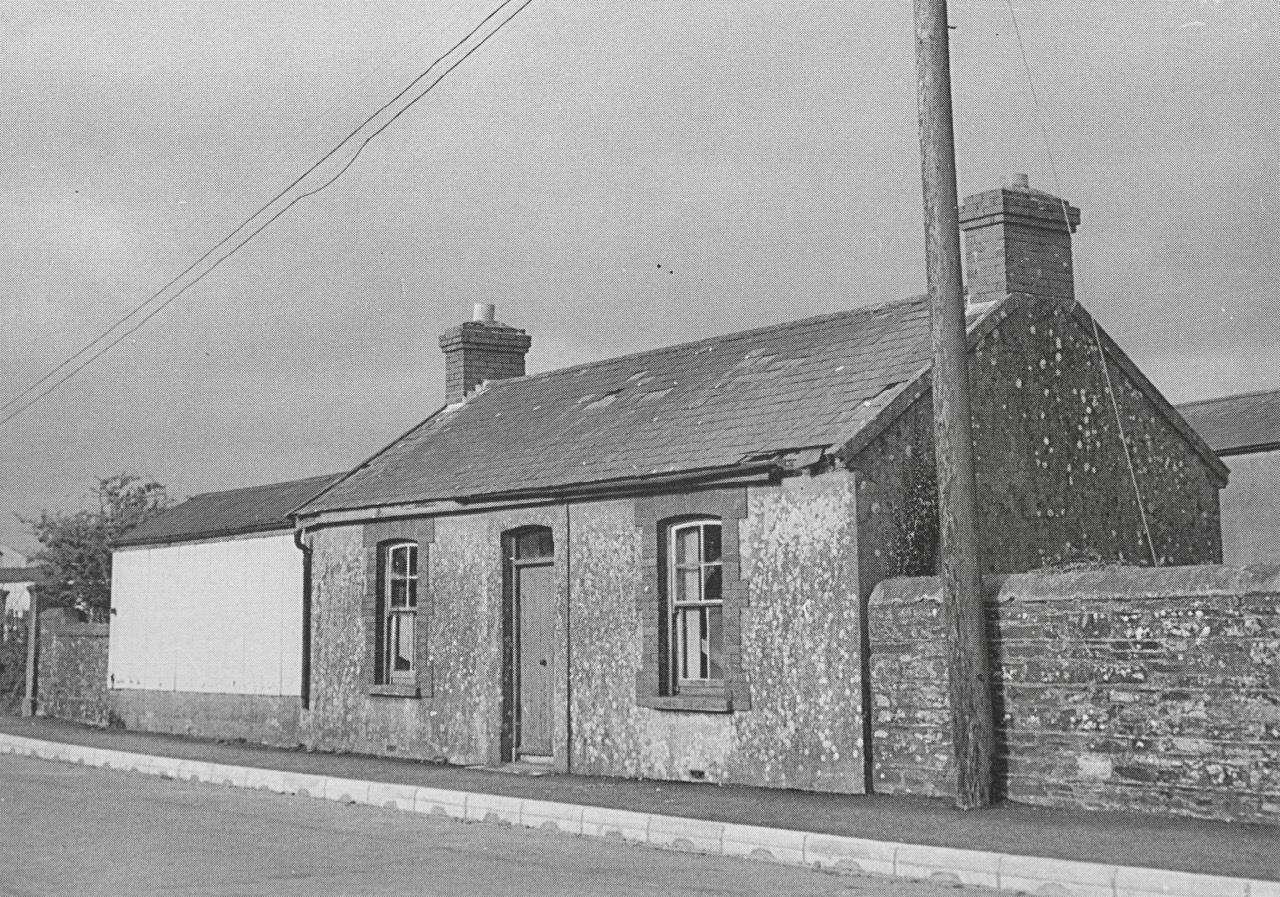
The Company Offices in Skibbereen, taken by James I C Boyd in the 1950s, after closure

From Miscellanea – an anonymous contributor:

…In the long school holidays, mother used to send us children out with a large tin bath of the sort we used in front of the open fire in winter. On reaching Schull station we, and the bath, would ride the first train, to drop off at the best places and comb the fields for mushrooms, only stopping when the bath was full. Then, dragging the unwilling receptacle behind us, we would bring it to the road alongside the railway, and so back to Schull again on the returning train…

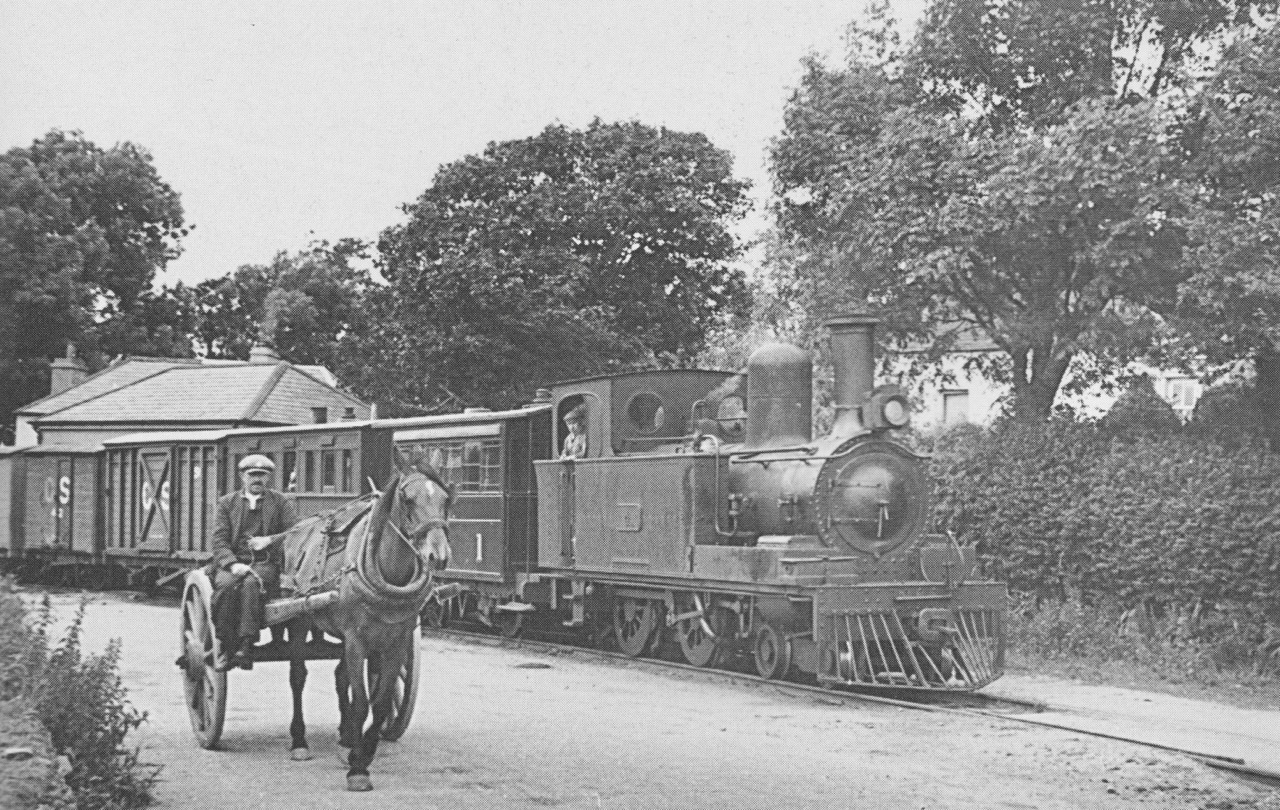
The line at Hollyhill, 1938: ‘Curly’ Hegarty is the driver. Photo by H C Casserly

From John Browne of Creagh:

…The Secretary of the Company [William Goggin] owned a bar at the corner of the main street [of Skibbereen] and that to the station – it was very convenient for those going by train… When the Directors wished to visit Skibbereen they ignored the Railway and used a converted Lancia armoured car, the property of one of their number. On alighting at the Skibbereen office, there would be fussing and genuflection akin to a royal visit…

…The curb-stone margin which divided the Railway from the highway in numerous places, was a considerable barrier. A party of my friends attended the Ballydehob Fair in an open car. On the return journey the driver was ‘very happy’, misjudged a bend and struck the kerb. The damaged vehicle had to be abandoned. The revellers walked back to Skibbereen, leaving the car to block the passage of the first Up train from Schull. However, the combined efforts of all the crew and passengers were needed to drag the wreck back on the road…

…Willie Salter of Castletownsend said that a pony and trap from Skibbereen often reached Ballydehob before the train; it was better that way if you were in a hurry. He would see passengers getting out near Crooked Bridge or Church Cross to give the train a push…

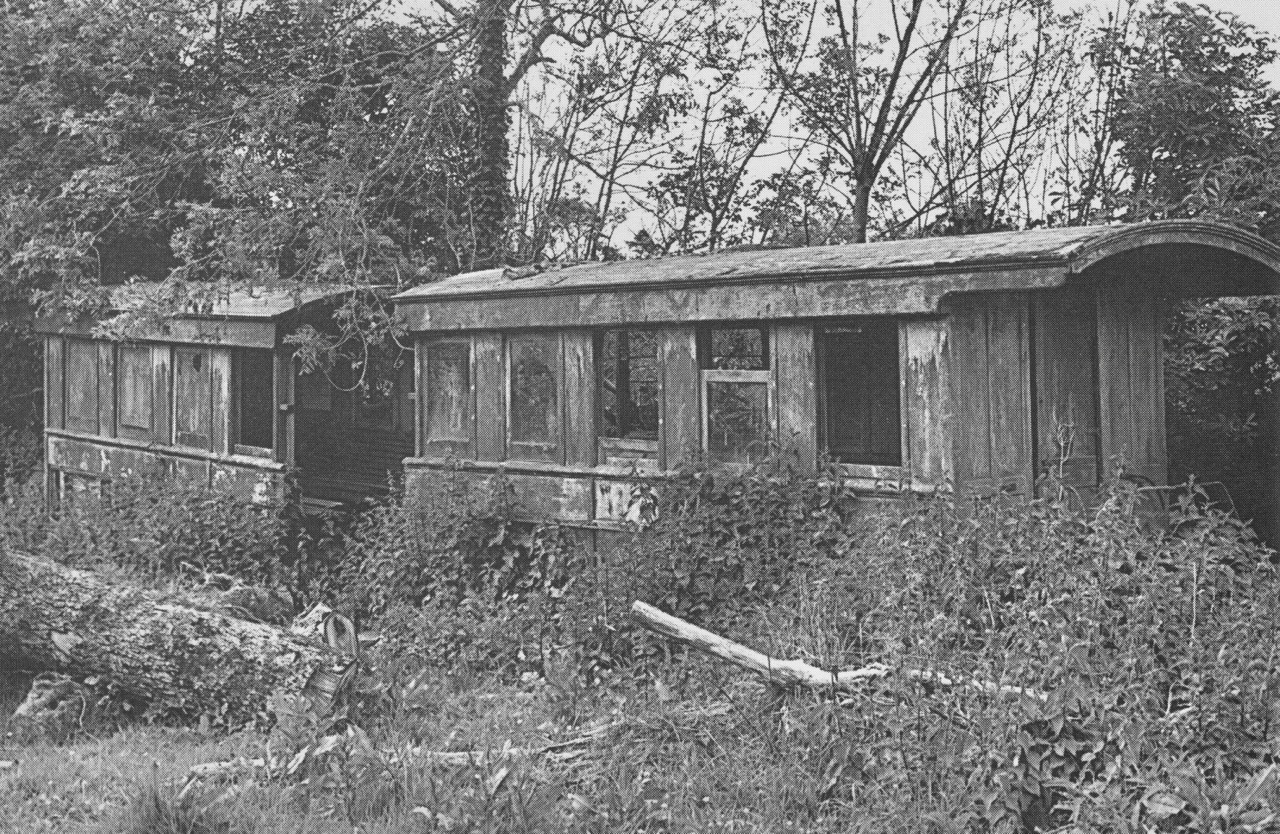
Sad days: James I C Boyd located and photographed this ‘Gloucester’ carriage from the S & S line in a field beside Bantry Bay in 1967. It had been sawn in half before final abandonment; is it still there today?

This post is a short taster of the treasures that this volume holds. A fuller review – and more Miscellanea – will appear in future posts. To finish today, we were delighted to find this photo taken by the author just around the corner from us. Finola’s article, here, tells the story of this Lost Landmark.

Tracking the Trains

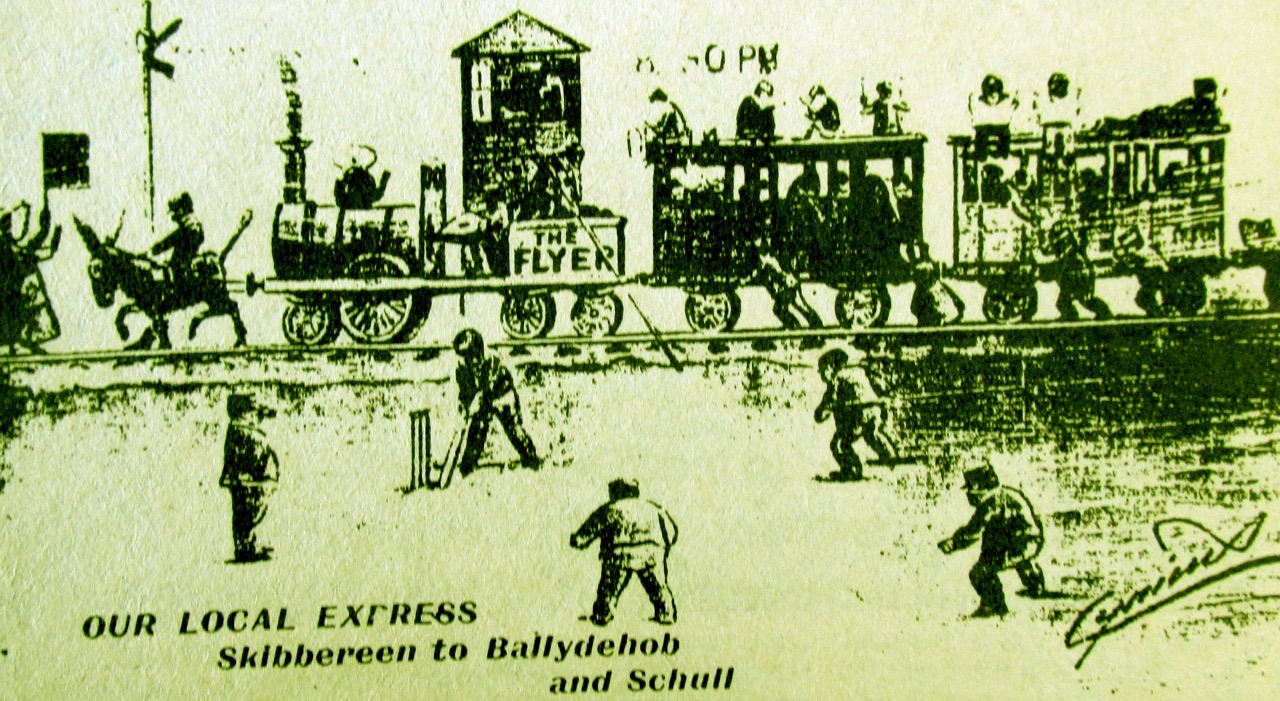
Ballydehob’s own railway was known, affectionately, as The Flying Snail. Way back in 2013 I wrote a piece about it. All our past posts are still online and can be found through the search facility on the header: if you want to have a look at this older piece, click here.

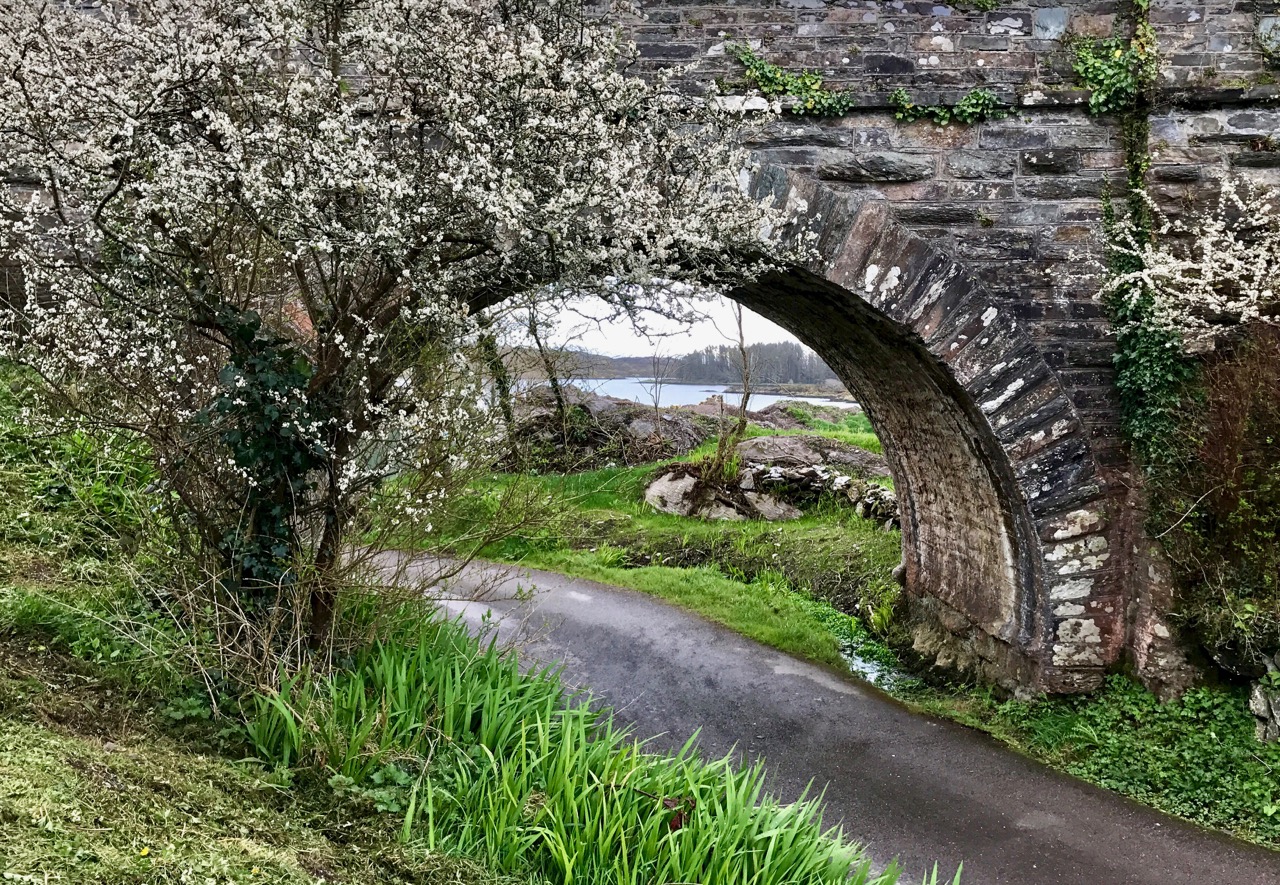
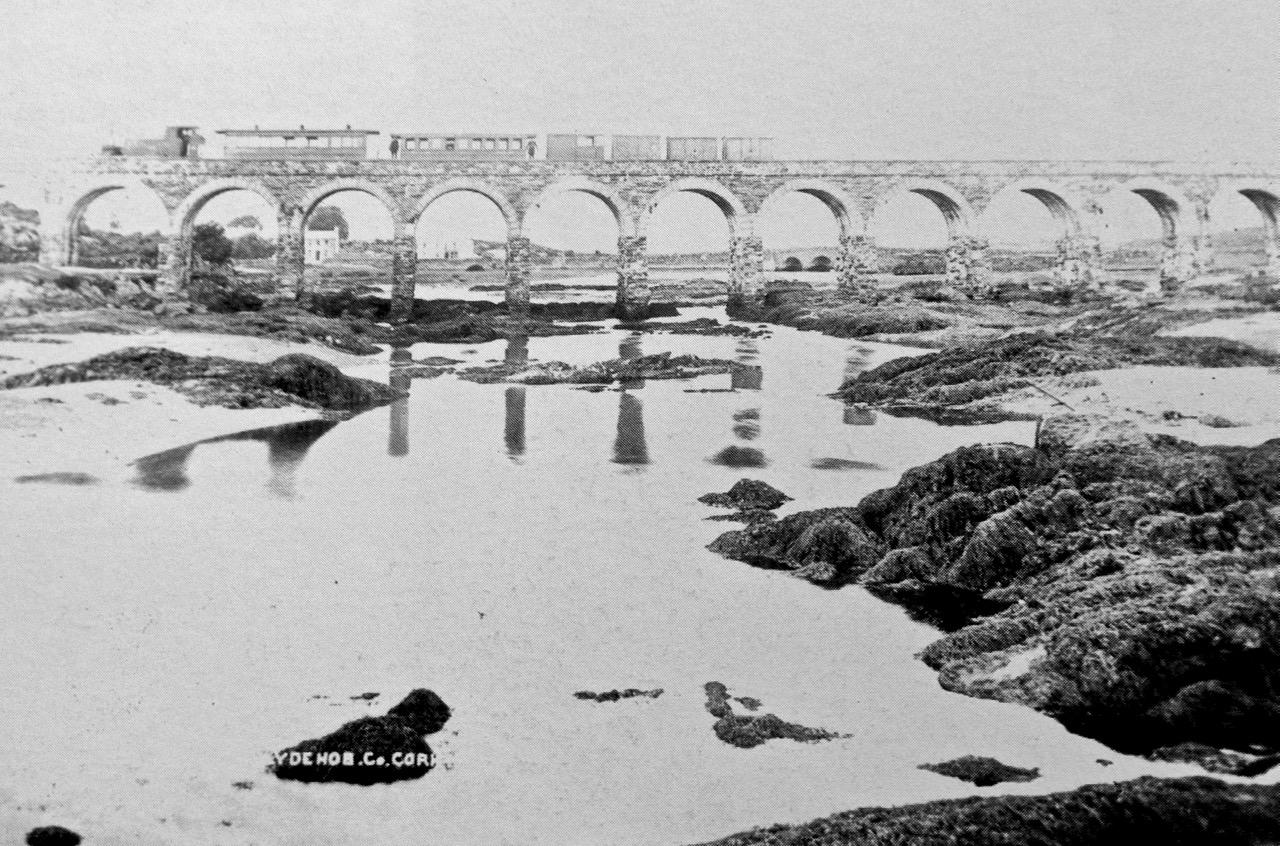
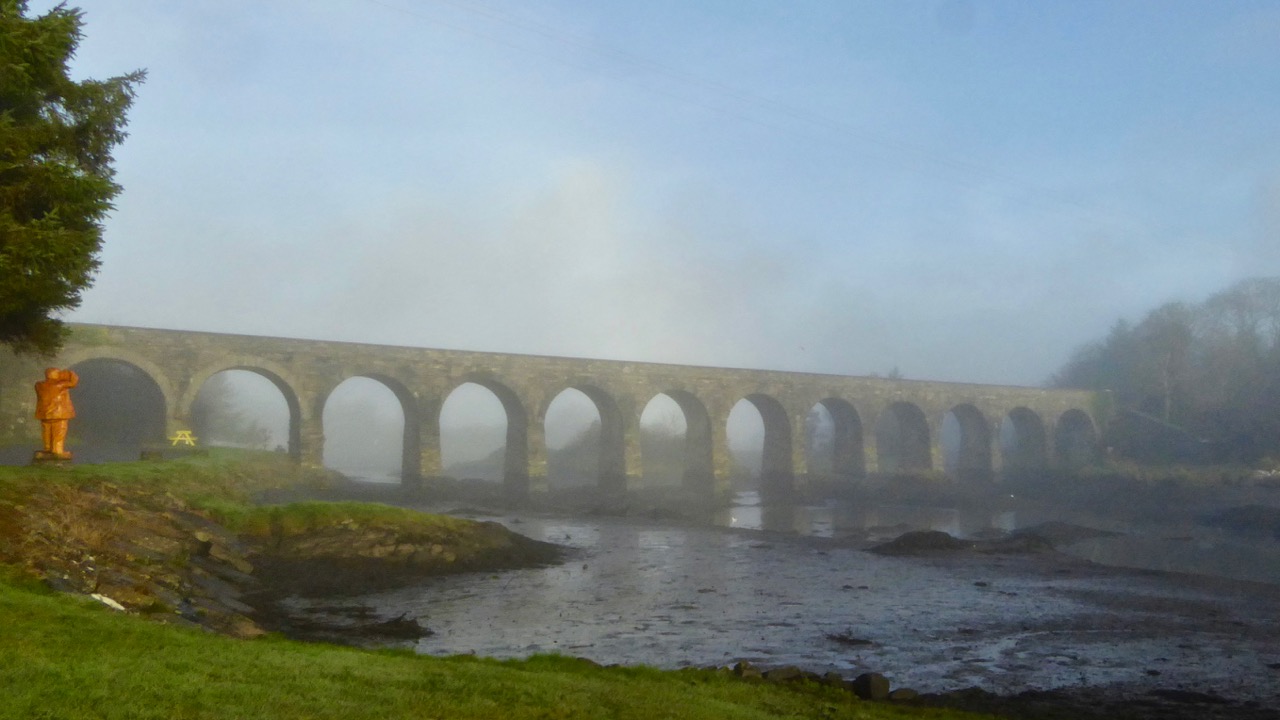
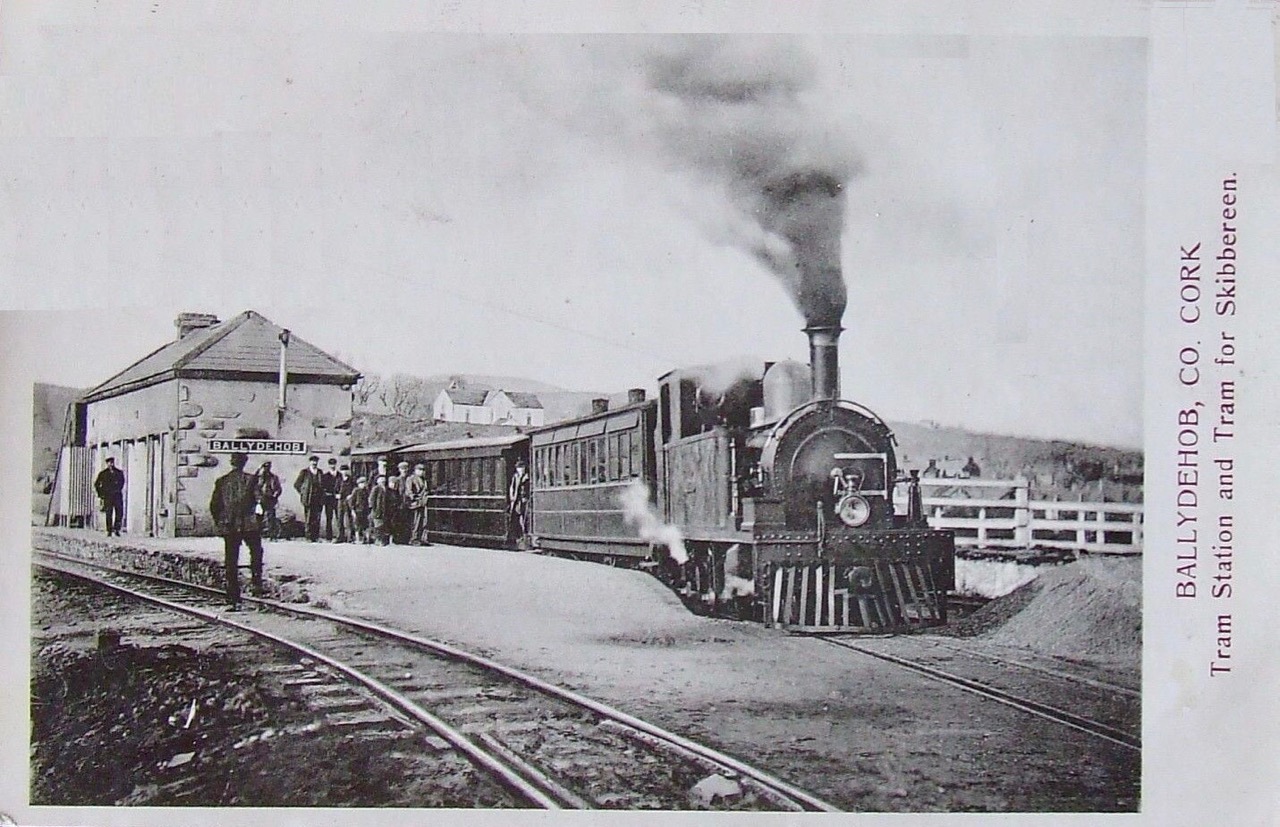
Header – this picturesque bridge lies to the west of the viaduct and crosses the small back road which leads down to the Quay; the early postcard above shows a little train negotiating the viaduct, probably fairly early in the life of the line; lower picture – autumn atmospherics, taken in 2016

This morning – a pale and rather cold First of April – I set out to see how much I could find remaining of the old railway line in Ballydehob. As an erstwhile amateur industrial archaeologist I can get very excited about a few stones piled up, or a depression in the ground, as long as I know it marks the last traces of a long-lost canal or railway line. Our little West Cork settlement in fact has a whole lot to interest the transport enthusiast, as I discovered on my walk.

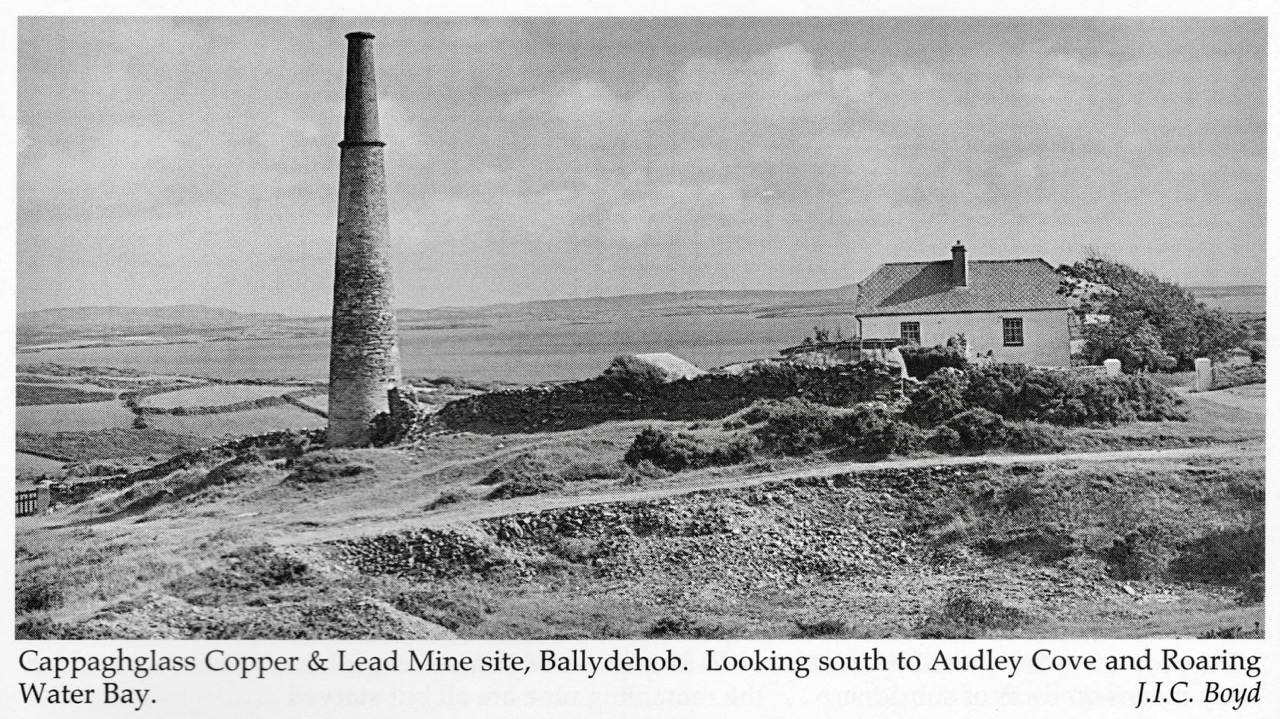
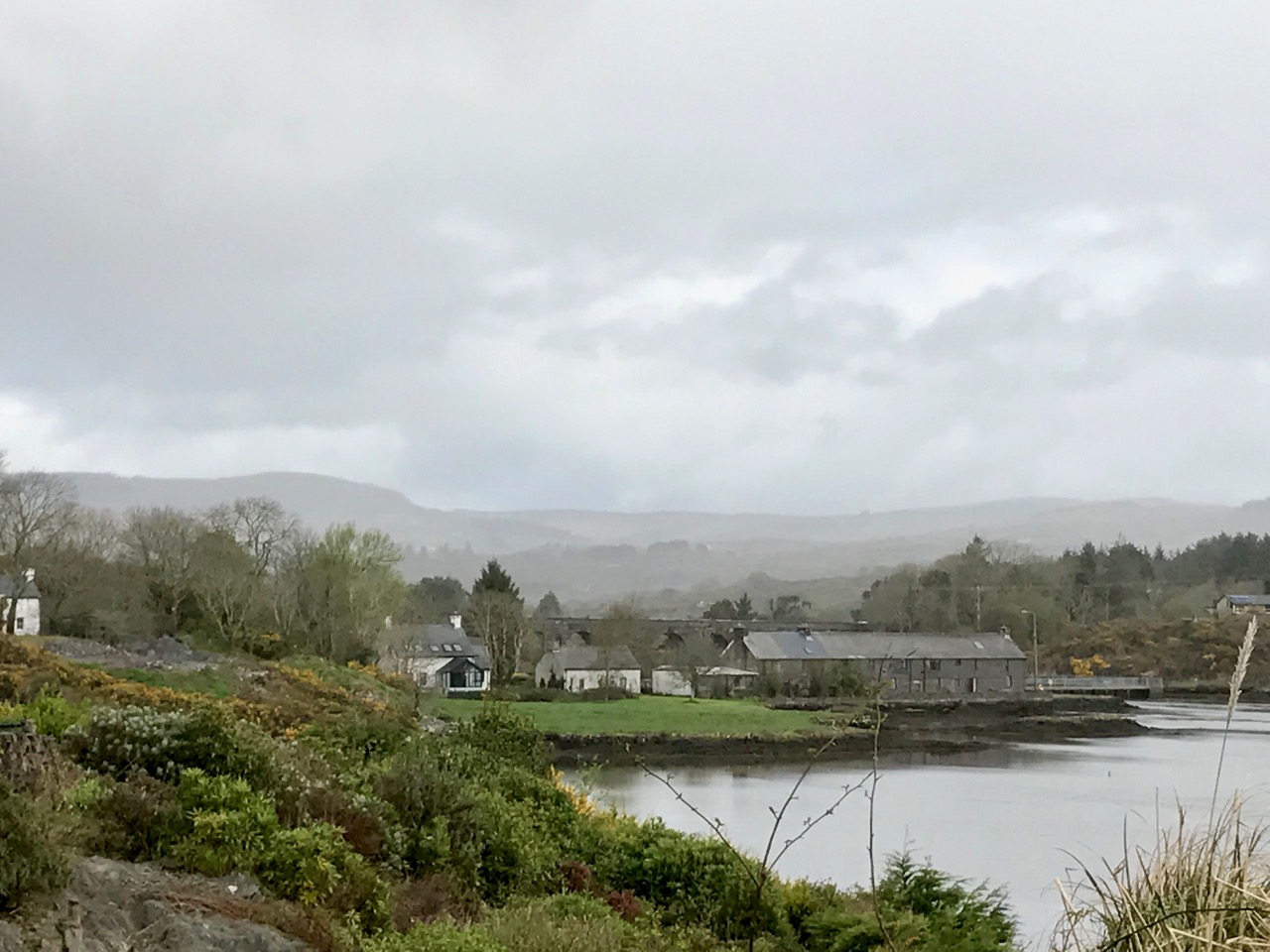
Today’s washed-out view of the Quay with the 12 arched viaduct behind it. This was a lifeline for the town before the railway came, and its commercial use survived the demise of the trains. In its heyday, the Quay was busy with arrivals of sand, seaweed, coal and timber, together with produce from the islands, and – once a week until the 1930s – a visit from the Cork coastal trading boat which brought in supplies of everything else, from sugar to cement. Around the mid 1800s (pre railway era) copper ore from the local West Cork mines was shipped out from here to Swansea

While researching this post I was pleased to find some additional early photos of the line that were not available when I first wrote on the subject, and I am including them on this page, with grateful thanks and acknowledgement to De La Salle Publication via Durrus History, and also to Irish Postcards at WordPress.

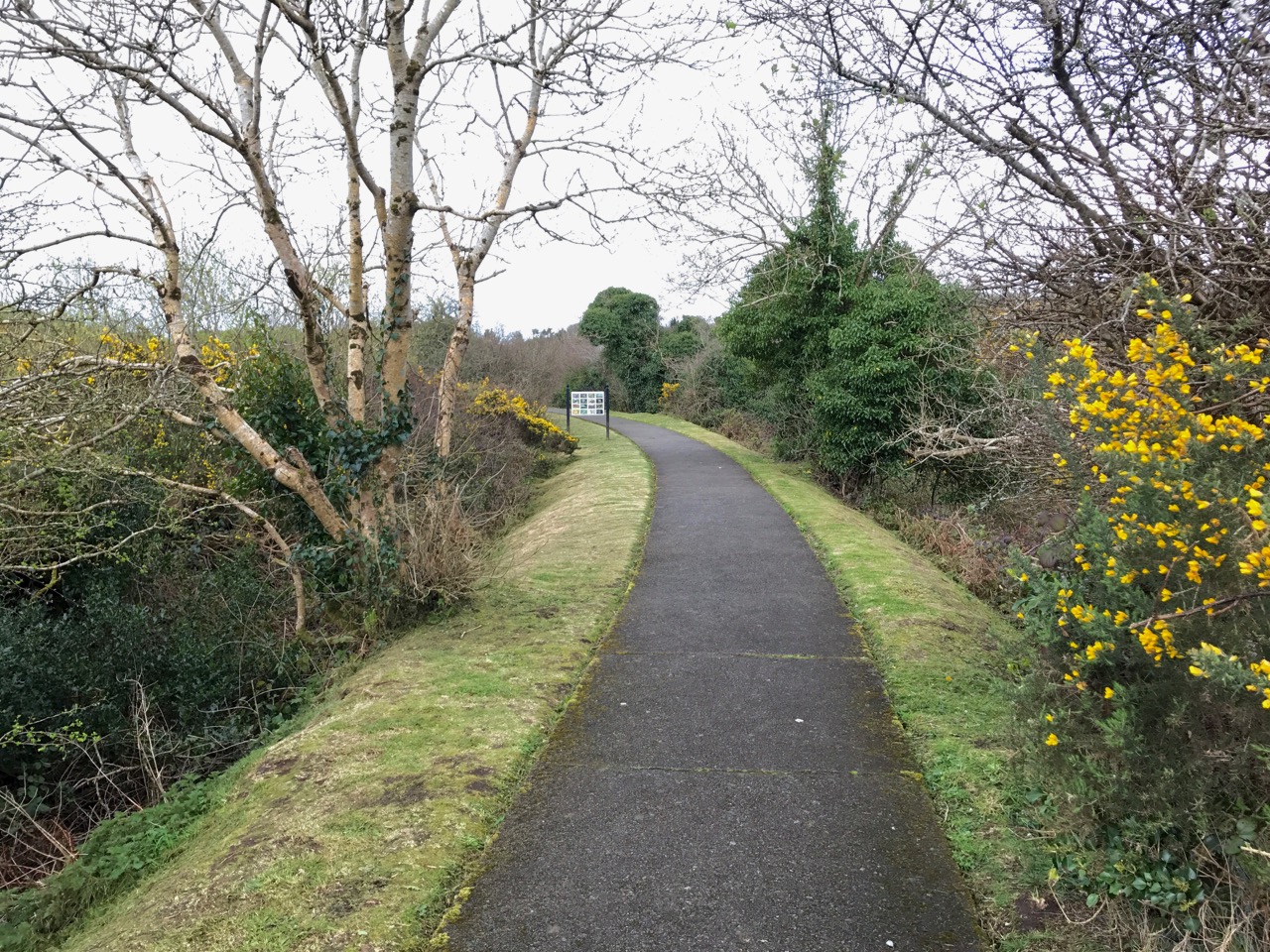
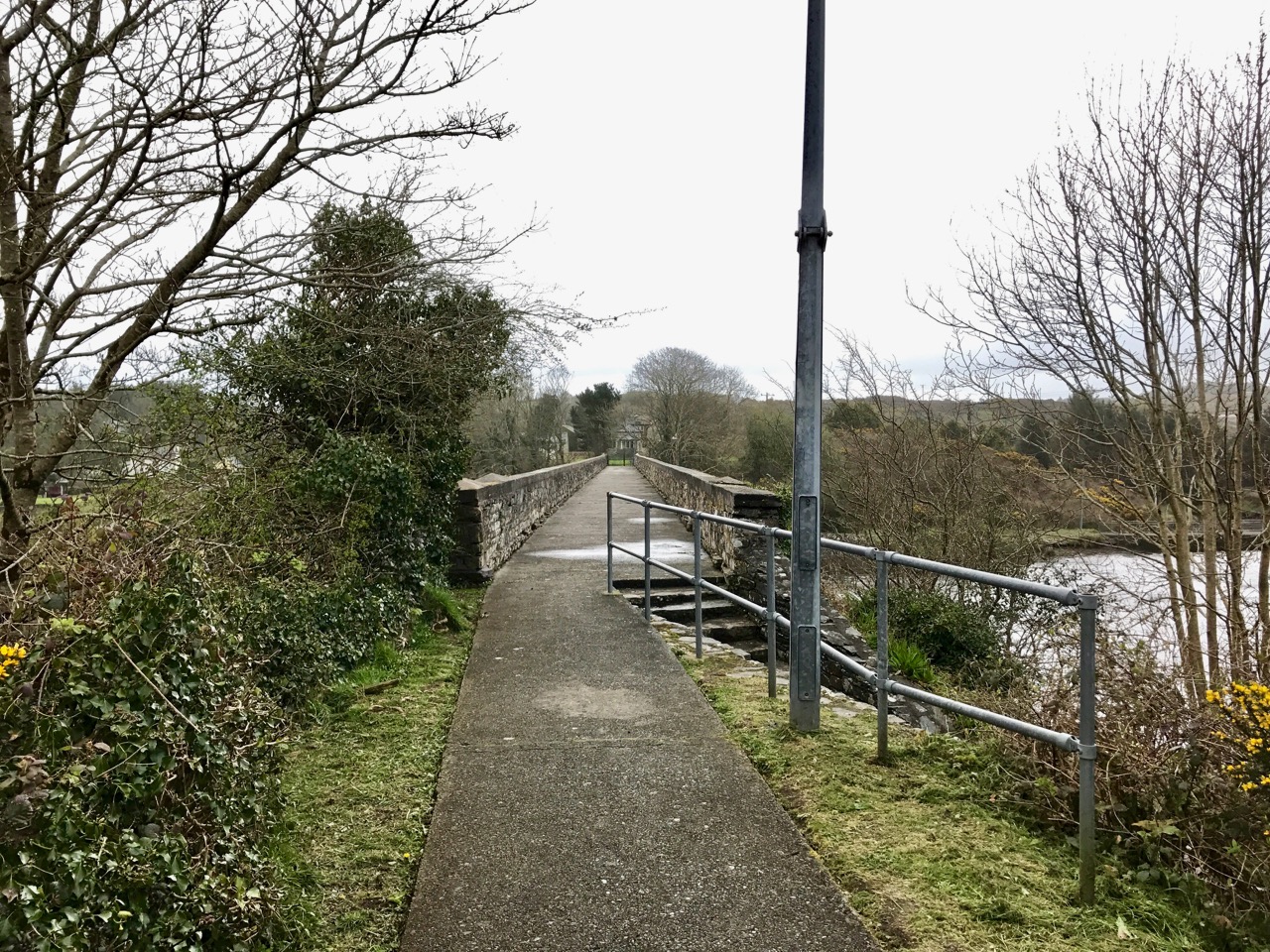
Ballydehob has established a public footpath on the line of the railway within the village. Top picture – the track bed to the west of the viaduct: the narrow gauge line from Skibbereen continued from here to Schull. Lower picture – the track bed crossing the viaduct over the river. The railway station was situated beyond this, quite a little way out of town

Sadly, the track-bed footpath only runs for a few hundred yards before petering out, but it is possible by walking over the viaduct to get a feel for what it was like to travel in the rather frail looking rolling stock of the 3ft gauge line, which was technically termed a ‘tramway’. If only enough of the old line had been retained to create a long-distance foot-and-cycling path, we would now have another amenity for locals and visitors to add to the wealth (food, culture, landscape and history) that’s already on offer here in West Cork.

Top left – along the boreen which runs from Ballydehob village centre (turn by Levis’ pub and go past the school) towards Cappaghglass and Schull can be found old railway bridge abutments – top right, while in the fields nearby the railway embankment is clearly visible – lower picture. Artefacts for archaeologists to ponder over a few hundred years hence, perhaps

The last train ran on the line in January 1947, so there must be many people around today who remember it in use. I am always on the lookout for anecdotes about it, so please let me know if you have any yourself, or know of anyone else who might have. There seems to be little recorded about travel on West Cork’s railways at the turn of the 19th / 20th centuries, although the train  journey to ‘Skewbawn’ (Skibbereen) does get mentioned in The Irish RM story Poisson d’Avril by Somerville and Ross. It’s quoted in Finola’s post on the Rossbrin Loop, here.

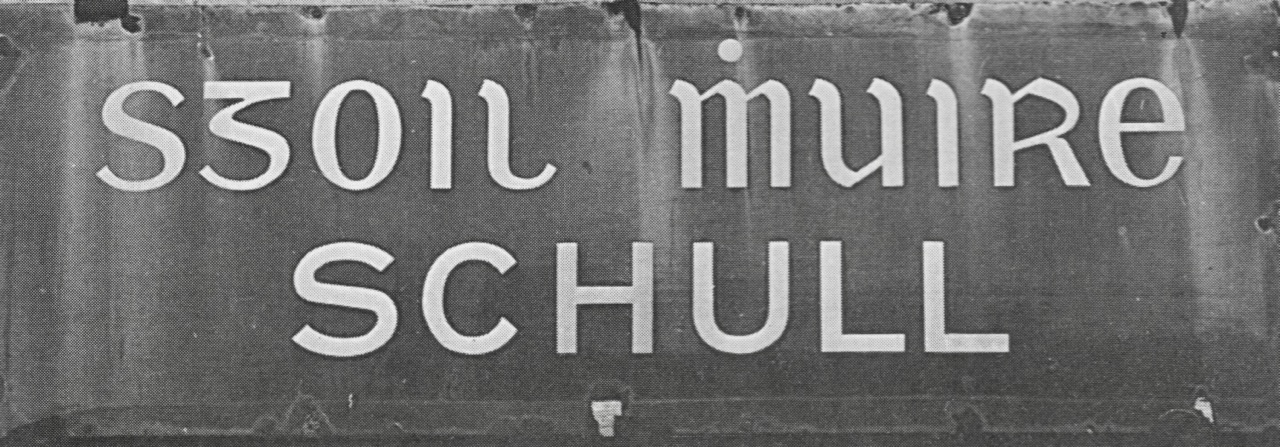
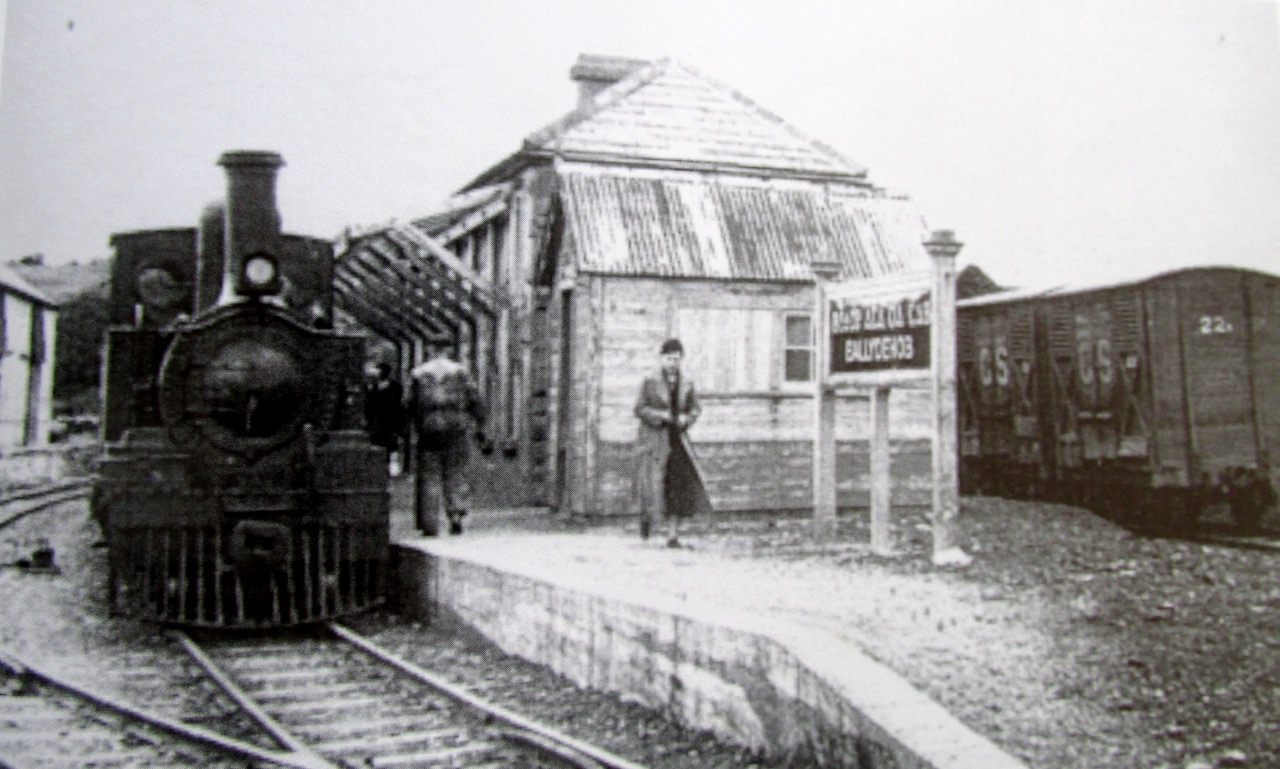
Above: two views of Ballydehob Station in use. The upper one is dated 1904. The lower one is much later and – because of the bilingual station name board – probably dates from after the 1925 amalgamation of all the smaller lines into The Great Southern Railway

There are many more traces of the line to be found in Ballydehob and beyond: look out for another post coming soon!

‘Twas Early Early All in the Spring

The world around us is starting to wake up from its winter snooze. We are shooing bees and wasps from our house and every day we see new flowers (like these Wood Anemones, above) peeping out at us from the verges and hedges. It’s estimated that this part of Ireland is about two weeks ahead of the more northerly counties, due to our milder and dryer climate. All of the photographs were taken in March, except for a couple on April 1st. But that’s OK, because the first three days of April are The Borrowed Days, according to Irish folklore, and still really March. 

Primroses – indelibly associated with early spring. Most are yellow (top) but a true wild pink variety (as opposed to a hybrid between wild and cultivated flowers) does exist too.  The little one about to open is growing out of a stone wall.

Although not yet in their full spring splendour, the boreens are sporting a plethora of wildflowers. And not just flowers but flowering trees and shrubs. In fact much of the colour and drama of the boreen come from shrubs at this time of year.
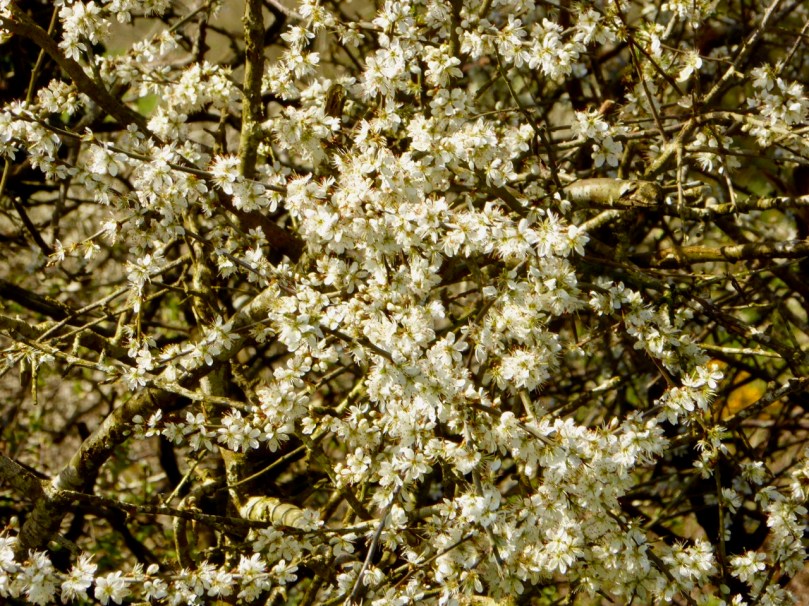
Blackthorn 

I set out to document the wildflowers of a West Cork March and found many old friends already showing themselves, as well as a few new acquaintances. Ready for a ramble? Let’s go.

We’ll start up in Stouke and walk back to Rossbrin by way of Kilbronoge. The first things that hits us of course is that heady combination of Gorse and Blackthorn along each side of the boreen. The Blackthorn flowers come before the leaves and they are beautiful when observed close up.
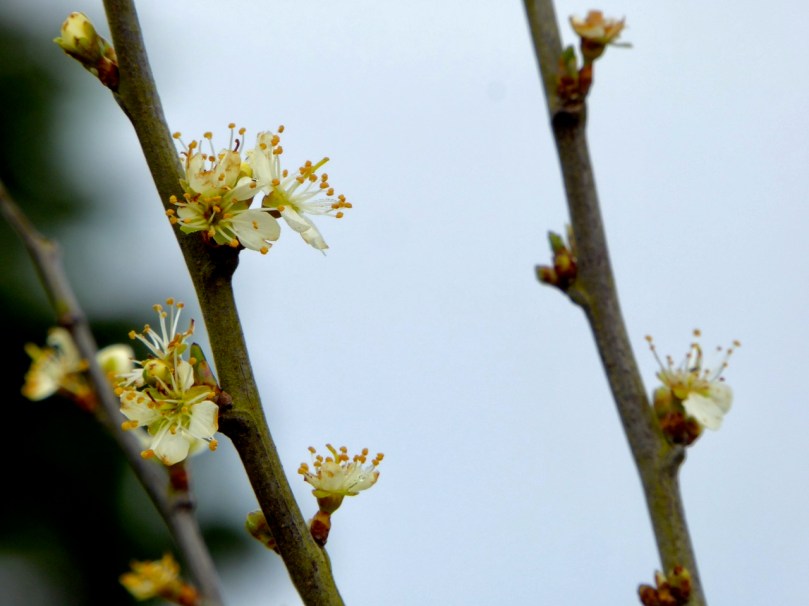
Blackthorn flowers

This year the Gorse seems especially vibrant – but I think I say that every year.
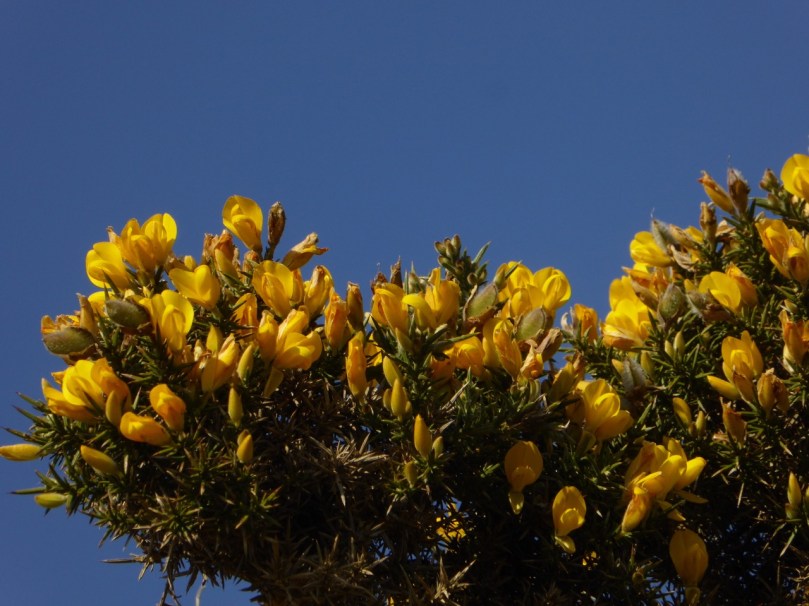
Gorse (upper) and Berberis (lower)

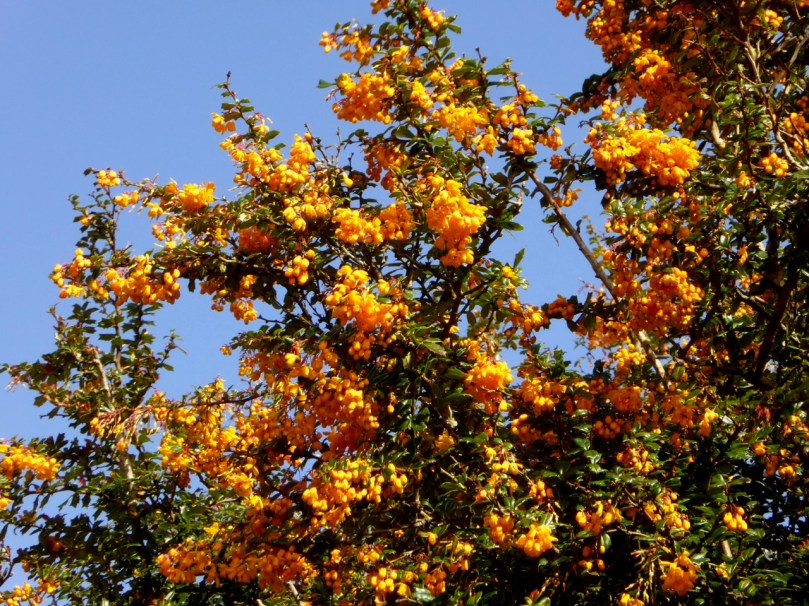
 At some point in the past, somebody planted Berberis as a decorative hedging, perhaps around the Stouke graveyard. It has spread and is still spreading. Although it was only introduced in the mid-19th century from Chile (by none-other than Charles Darwin!) it thrives here, happily lending its rich orangey tones to ensure you keep looking up.
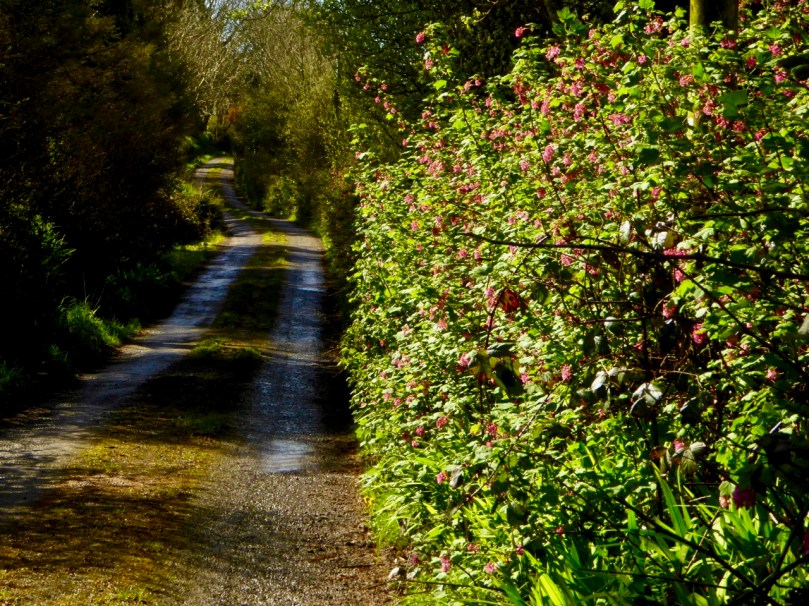
Flowering currant along the boreen

Further along we came across a long stretch of Flowering Currant. You smell it before you see it – all at once you’ll be sniffing and saying mmmm! Flowering Currant came to Europe about the same time as the Berberis and this one was probably originally planted as a hedge, but now the birds have spread it far and wide and it’s naturalised.
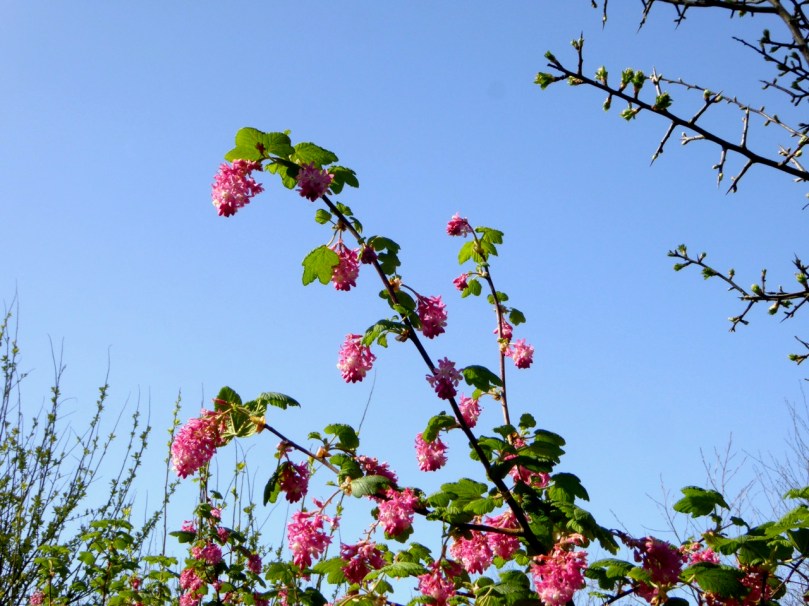
Close up, the flowers are spectacular and they have a strong and pleasant curranty aroma. Thank you to my friend Susan for introducing me to the Berberis and Flowering Currant.

As we make our way down to the water we are stopped in our tracks every so often to admire that quintessential early riot of yellow – Celandine. On its own, or mixed with bright pink Herb Robert or with blue Dog Violets, it’s a cheerful sight.

The Daffodils have gone over now, except for a few hardy souls in sheltered spots. I know Daffodils aren’t really wildflowers, but they grow so freely all over the place here, in the middle of fields, along the grassy verges, and especially in old graveyards, that I simply see them as yet another one of the spring flowers. 

Stitchwort is everywhere too, and little blue Speedwells – you have to be alert for that tiny blue pop of colour or you’ll miss them entirely. The first Common Vetch is just beginning to appear as well.

Stitchwort (top), Slender Speedwell (lower left) and Common Vetch (lower right)

Down on the water, we’re on the look out for Thrift, or Sea Pinks. There are none in Rossbrin yet, but I did see some on a sunny sea-cliff the other day. I risked life and limb to get a photo!

I was hanging over the cliff – but look at the other photographer in the background. I was concentrating so hard on the Thrift I never noticed until afterwards that somebody else was taking pictures too. She survived it, but it sure looks risky from this angle

When I was photographing the Thrift I noticed something else, further down the cliff face. I had to dangle over the edge to get a good shot and was convinced I had discovered a rare species! But here it is again along the Rossbrin Cove wall – it turns out to be Common Scurvygrass. And yes, it’s packed with Vitamin C and sailors used it in a tea to prevent scurvy. For something with an unattractive name, it’s rather fetching, don’t you think?

Common Scurvygrass

Along by the water several of the houses are fronted by stone walls. On one of them we found a whole world unto itself – a complete ecosystem.

Declan Doogue and Carsten Krieger in their marvellous book The Wild Flowers of Ireland: The Habitat Guide (brilliant – highly recommended!) describe what happens to old stone walls:

…Grit, sand and dust gradually accumulated in in the spaces between the cut stones and a thin soil began to form. The stones themselves functioned as a sort of storage heater, warming up by day and retaining heat well into the evening. These small areas were very much warmer and dryer than the surrounding wooded or grassy countryside… In these relatively favourable conditions, some species were able to spread much further north and west into cooler and wetter areas. At a local level a number of plants were enabled to grow in areas where there was no suitable ground for rock dwelling species.
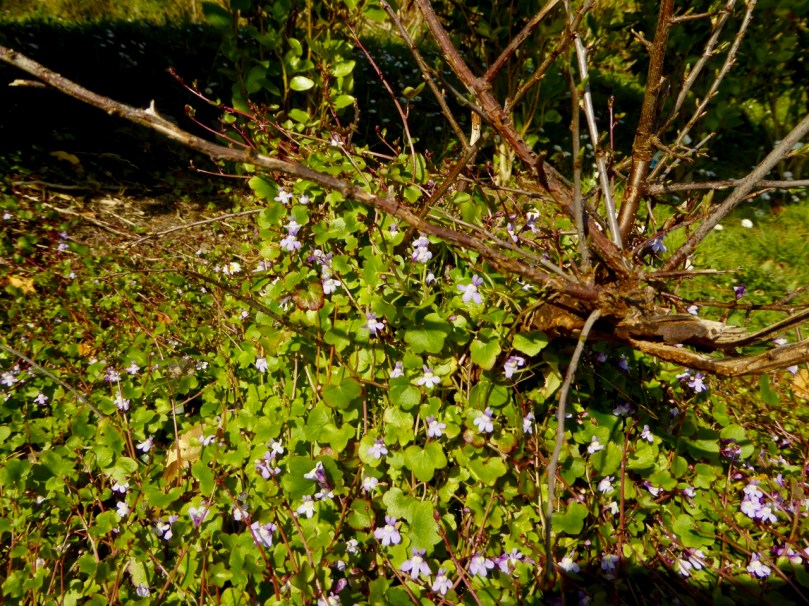
Ivy-leaved Toadflax (an introduced species) loves old walls

Conditions on the top of the wall can be different (drier, for example) than the crevices, or the face or base of the wall, thereby providing a variety of living conditions for different species of plants.

Ramping Fumitory (don’t you love that name!) has rooted well in the south face of the wall

Abundant and beautiful, Ivy-leaved Toadflax clings to the rock face and cascades down the front of the wall. Ramping Fumitory (which seems to be everywhere) had also found a foothold among the stones, and adds lovely flashes of pink.

Wild Strawberries and a little patch of Dandelions occupy space on top of the wall

This wall is south facing, absorbing the maximum amount of heat the sun can provide in West Cork in March. The top hosts Daisies and Dandelions, some newly emerging Scarlet Pimpernel and some Wild Strawberries (duly noted!).
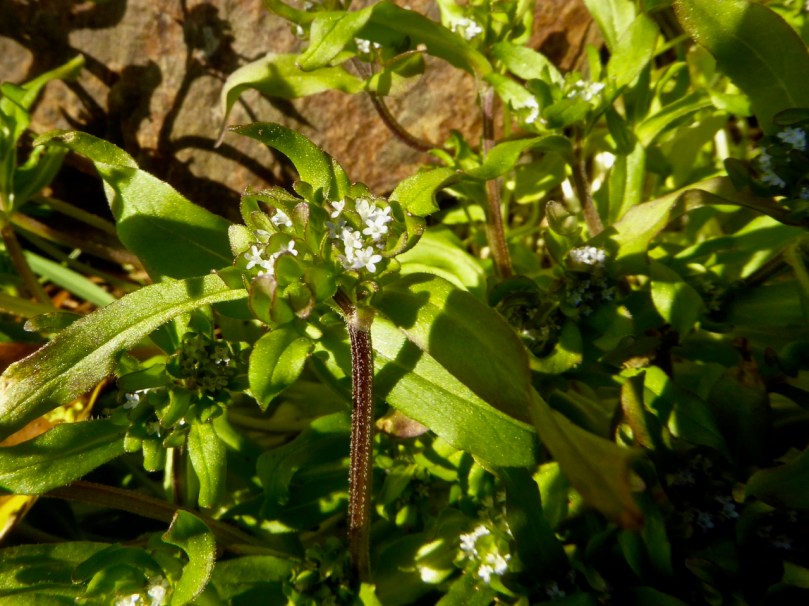
Common Cornsalad or Lamb’s Lettuce

It took me a while to even spot the tiny white flowers hiding among a particular foliage that was growing from spaces between the stones on the front of the wall. Difficult to photograph, as I don’t have a macro lens, this is Common Cornsalad, or Lamb’s Lettuce. As its name suggests, it’s edible, and a popular salad green in several European countries. If you want to get a better idea how tiny these flowers are, check out Zöe Devlin’s listing on her Wildflowers of Ireland site – click on the ‘see more images’ link.

Scarlet Pimpernel on the top of the wall – it’s one of only a very few native flowers in the orangy-red colour range
Nettles, ferns and Navelwort grow on the wall or at the base

This tiny fern is sprouting, in between the stones

But two of the species we found there speak to the indiscriminate nature in which a microclimate like this provides opportunity for all – both Three-Cornered Garlic and Chilean Iris benefit from this ideal patch of sunlight and warmth.
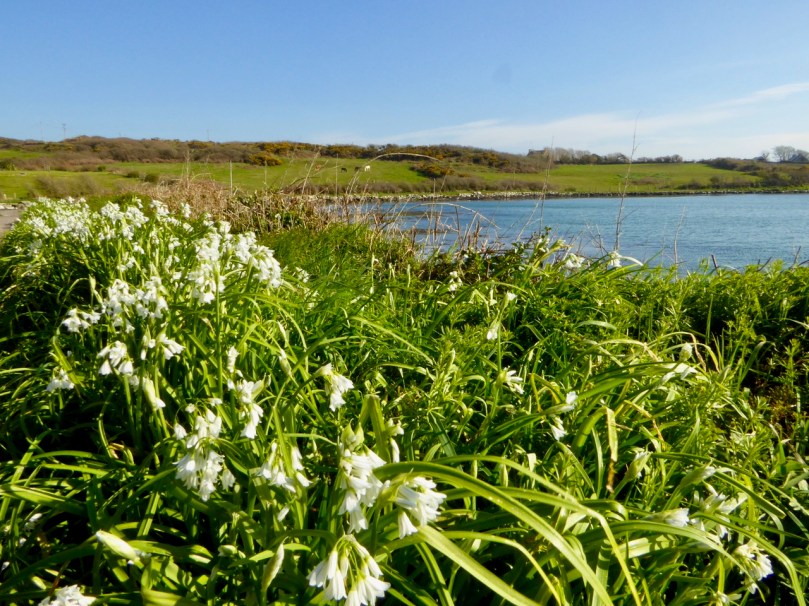
Three-Cornered Garlic is not our native wild garlic (that’s called Ransoms and is a broad-leaved variety). Tony O’Mahony in his excellent Wildflowers of Cork City and County* refers to it as an ‘ineradicable weed’ and says that ‘it poses a major threat to some West Cork native plant rarities’ (such as the Wild Onion). All parts are edible, and said to taste like a cross between an onion and garlic.

Chilean Iris

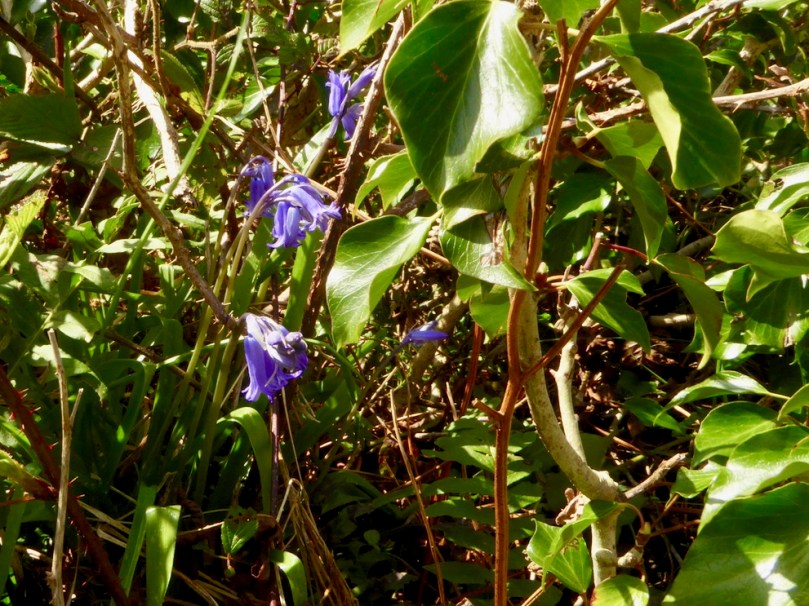
Chilean Iris is another invasive species, although not considered high-impact, possibly because it needs a warmer climate to grow. However, it has the potential to invade habitat preferred by our native plants. From Rossbrin we wend our way back to our own little patch of paradise. But something catches our eye on the way – can it be? Yes – our first Bluebells of the season, almost hidden in the brambles.
We’ve decided to leave part of our lawn unmowed this year, as an experiment in whether or not a wildflower meadow will develop. We have to be careful, as some areas are already full of Montbretia corms, which will be only too delighted to proliferate if left unchecked.

But we’ve identified an area as having potential. It’s south facing and relatively sheltered – and it’s already a haven for little Common Dog Violets, mixing with the Dandelions and Daisies to provide a colourful carpet. We’ll let you know how things progress.
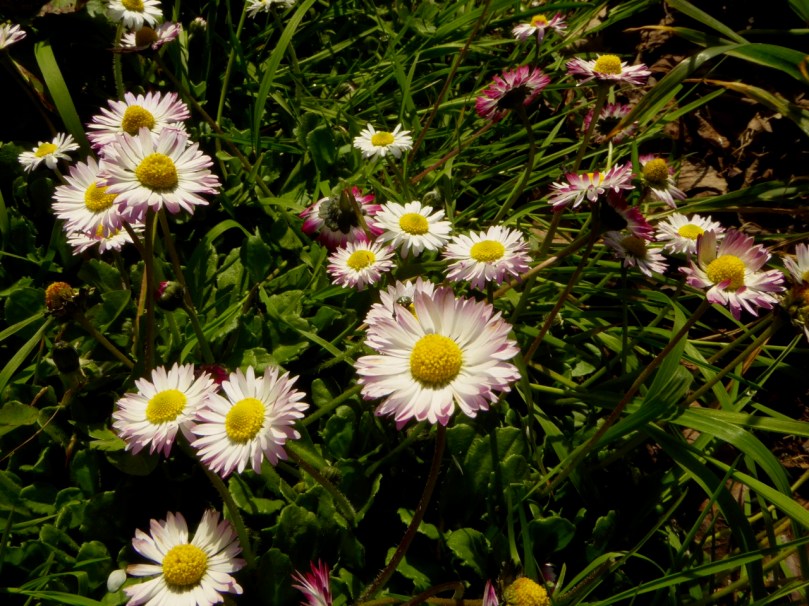
All this early spring wildflower exploration has made me look closer at the humble ones we take for granted – the Lawn Daisies and those pesky Dandelions. How did I never see before how utterly perfect they both are?
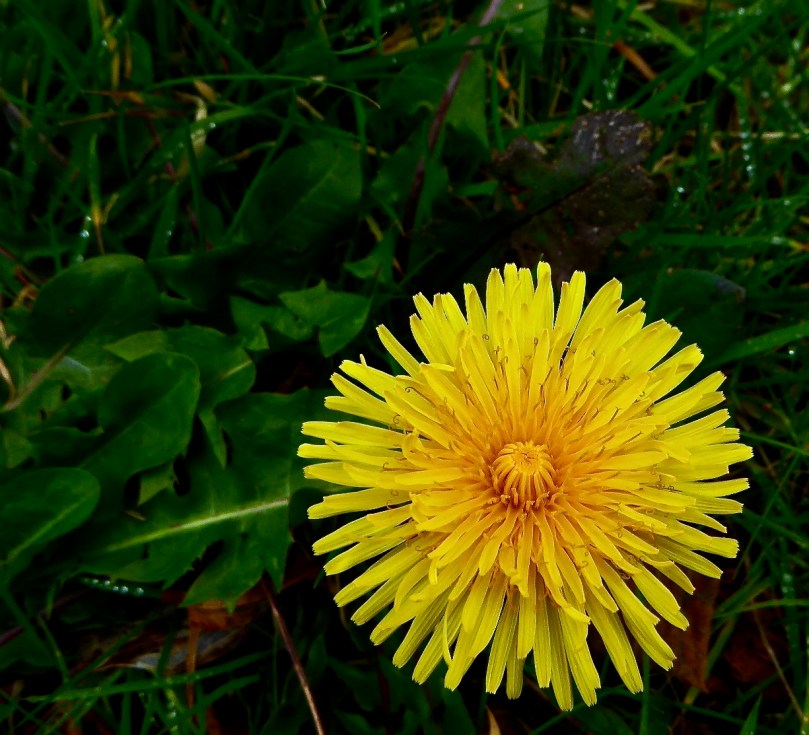
I will leave you with one final image – we found more Berberis down on the water, where it was clinging to a stone wall over the water. An astounding testament to the resourcefulness and strength of such a pretty and delicate-looking stem of flowers.

For more wildflower posts, click here.
*The book is out of print and quite hard to get, but worth the hunt.