Into the Blue…

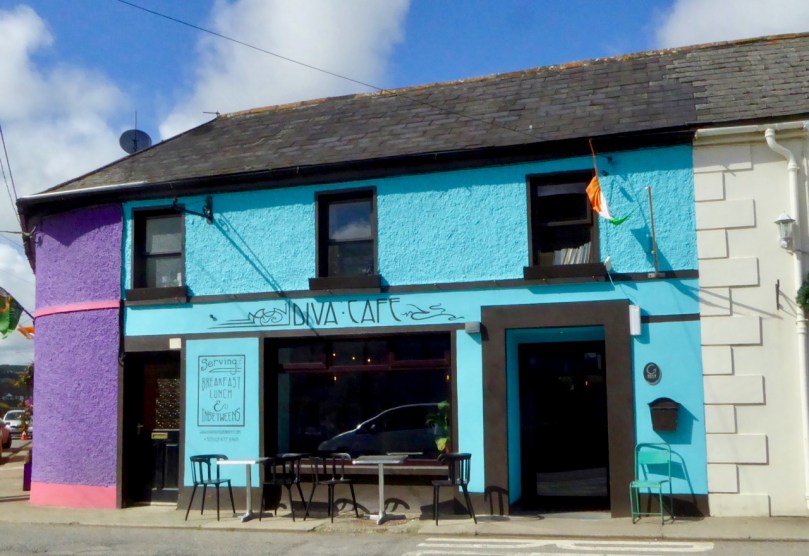
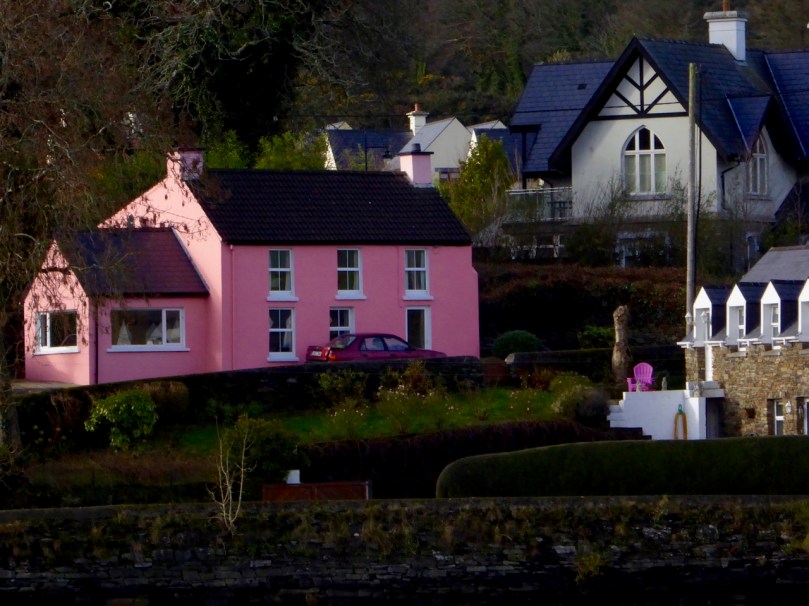
In this series on Ireland’s colourful buildings, we started off with purple and pink and proceeded through the colour wheel to the oranges and yellows and now we have arrived back on the cool side of the spectrum – the blues and greens. The Diva Cafe in Ballinspittle (above) has black trim that does nothing to tone down its exuberance, and it marries beautifully with the purple and pinks beside it, which were highlighted in our first post on this series.

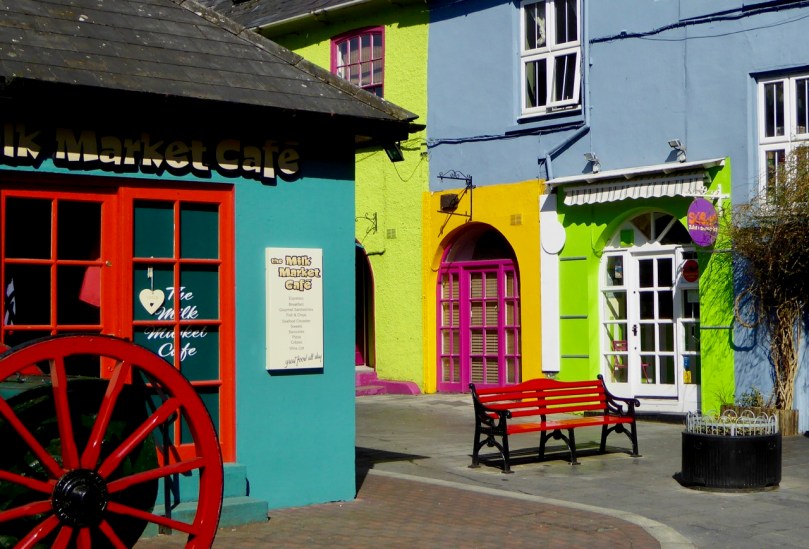
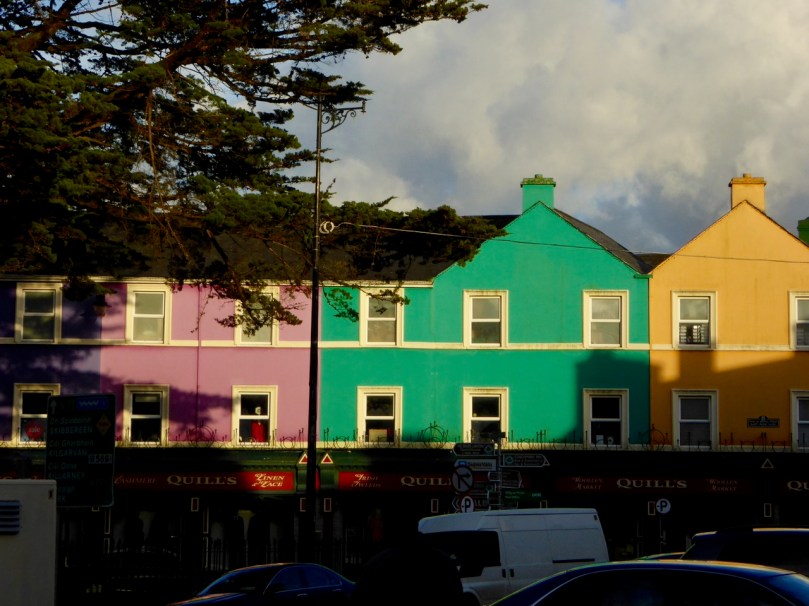
We left off the last post with a couple of lime greens, so here’s another, from Kinsale (above) to get us back in the swing of things.

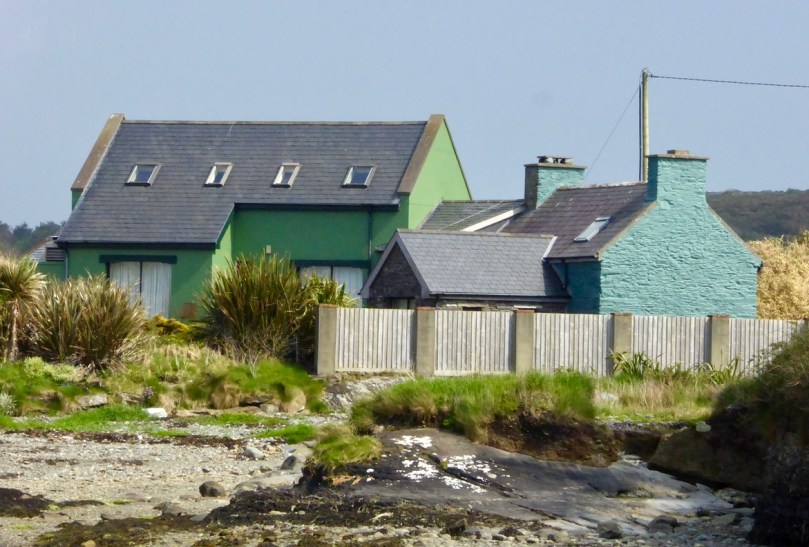
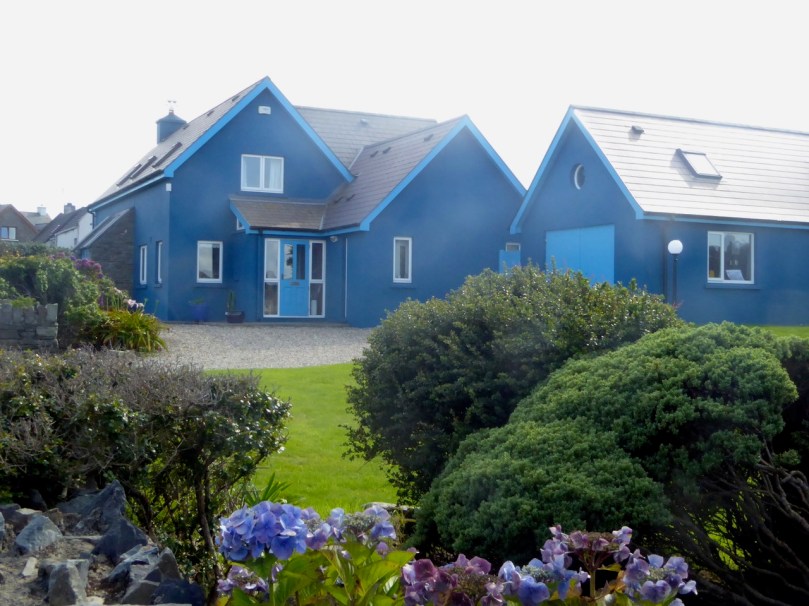
A bright green and a blue green are a great combination beside the sea – this house is at Dunmanus, on The Mizen

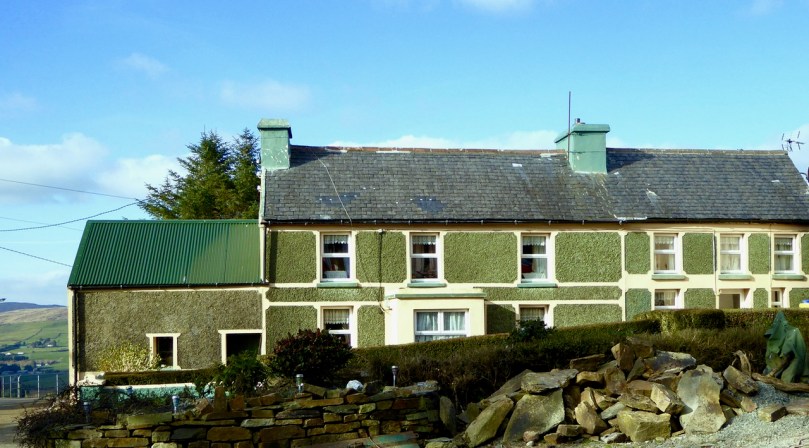
Blues and greens are the colours of the sky and the fields, so they don’t pop as much as the pinks and the oranges. In fact they can be quite subtle, when used in tones that blend in with their surroundings.

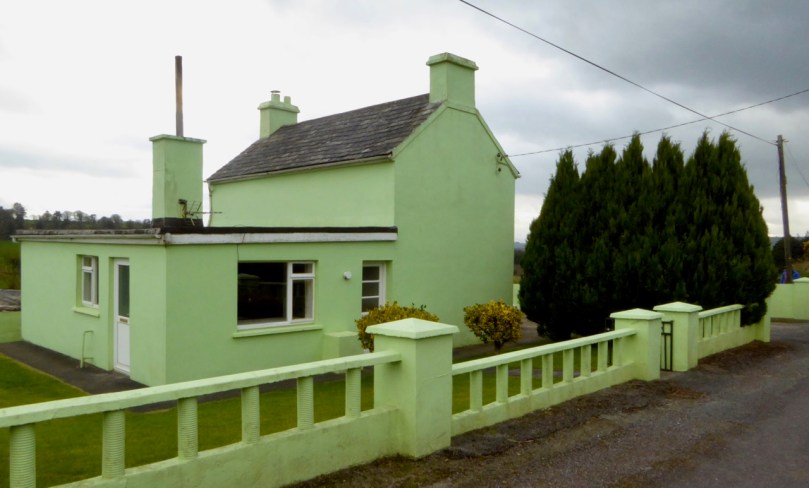
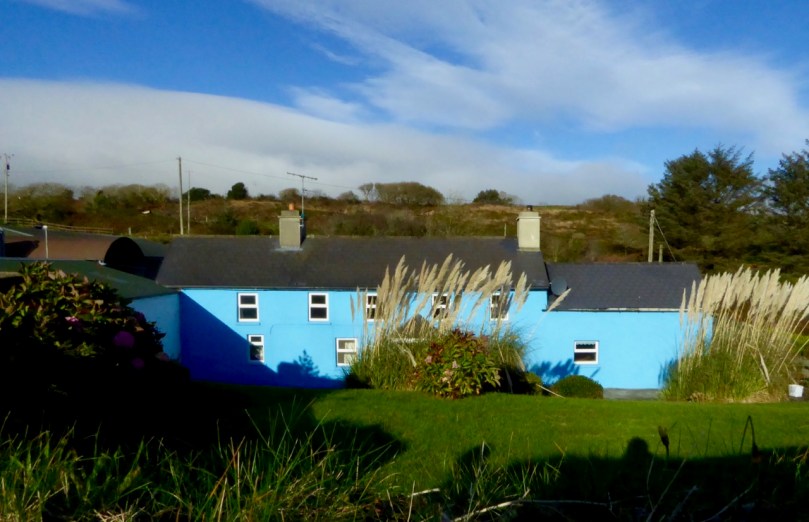
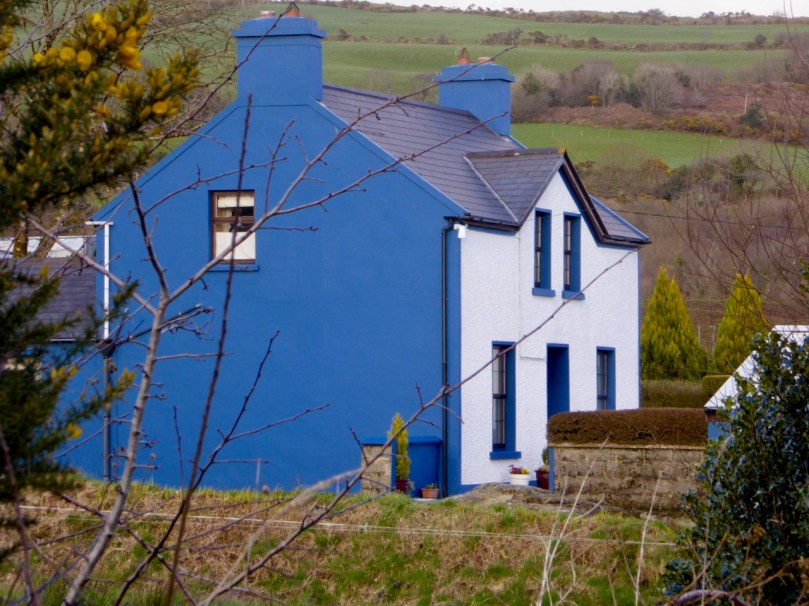
I love these two farmhouses, the first near Mount Kidd and the second near Coppeen

But in village streets, and especially when combined with the other colours of the streetscape, they can be as cheerful and arresting as the stronger hues around them.

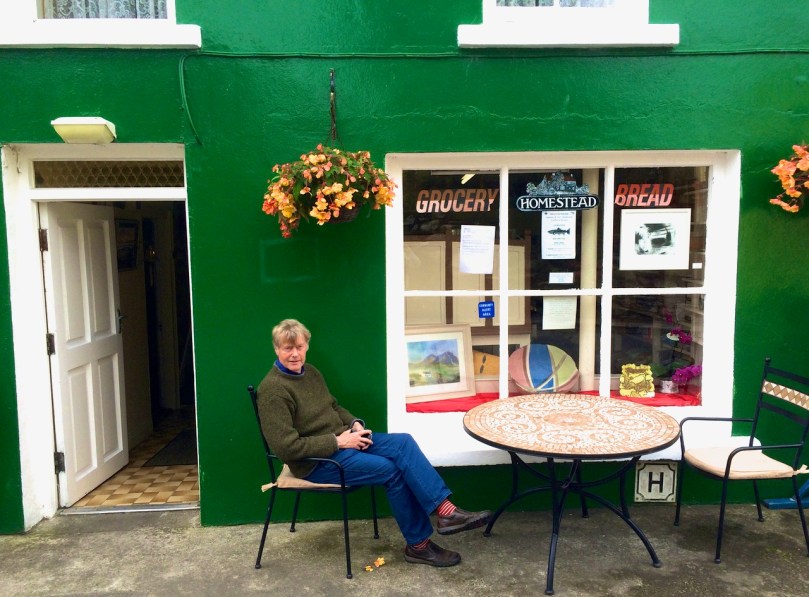
Eyeries (top) and Kenmare (bottom)

There are shades of blue and green that people argue over – one will call it blue and another green.

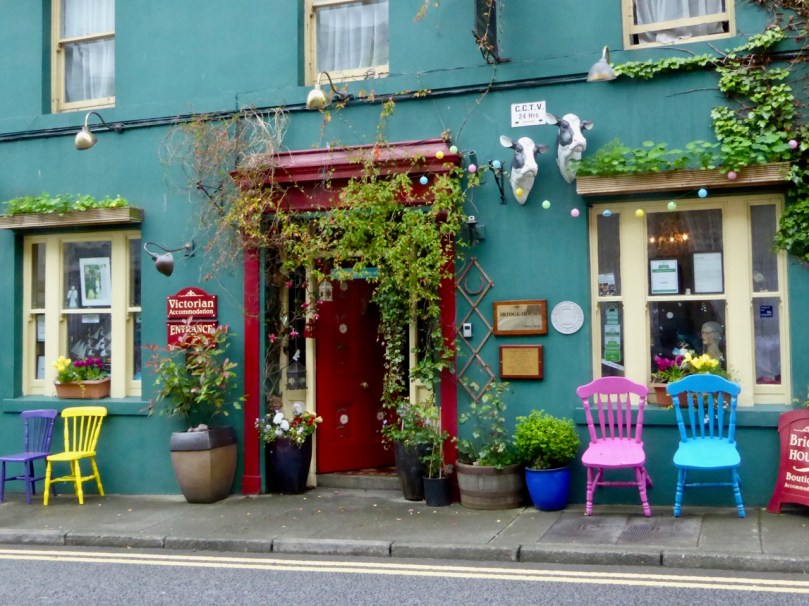
The fabulous Bridge House in Skibbereen – blue or green?

Those are the teals, ceruleans and turquoises, and St Patrick’s Blue, which is the colour of the Aer Lingus uniforms.

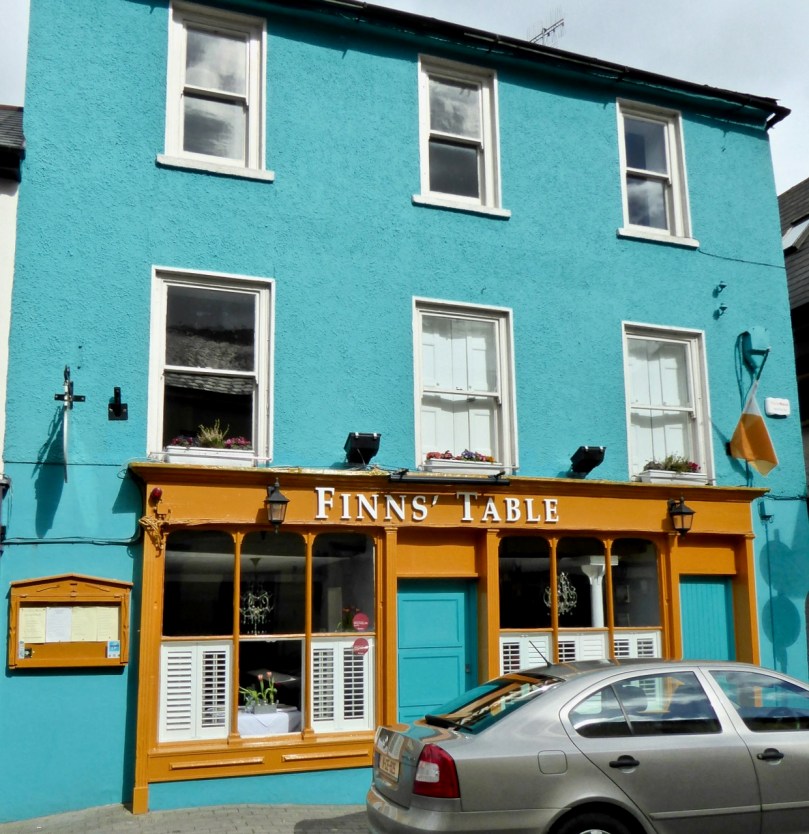
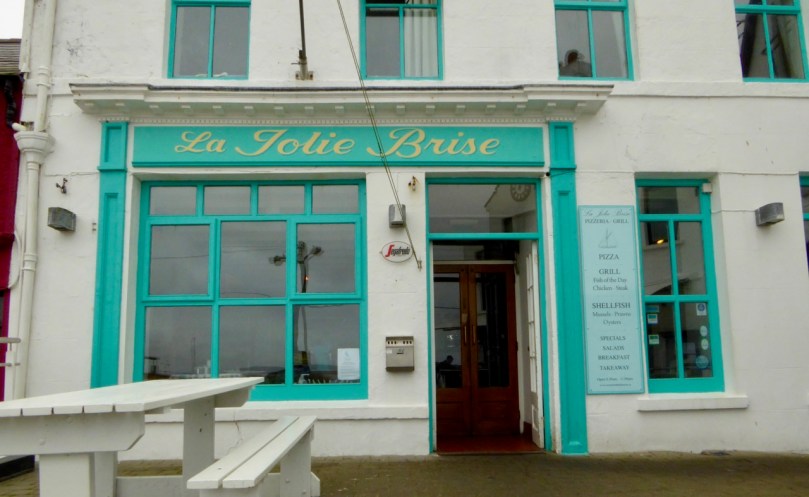
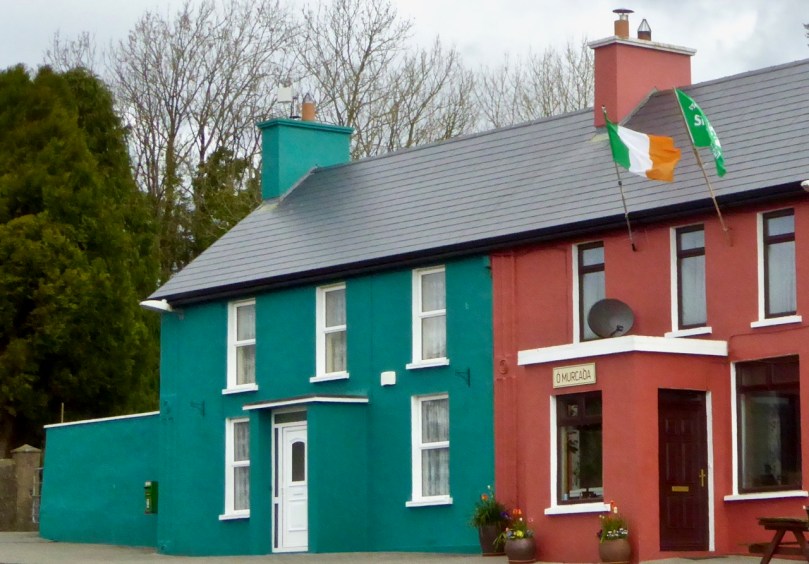
Finn’s Table in Kinsale, La Jolie Brise in Baltimore and a lovely brick and teal combo in North Cork

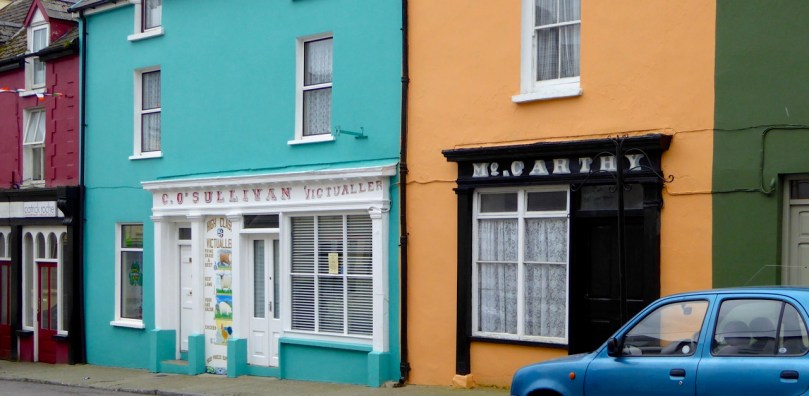
O’Sullivan’s butcher shop in Ballydehob has been closed for years, but it still retails its welcoming colours and graphics

True blues vary from the strong dark ultramarines and navy blues through the denims, duck eggs, periwinkles, sky blues and on to the paler shades and baby blues.

The first house is in Baltimore, the one underneath it was glimpsed somewhere on our travels

Blue matches well with other colours and is often used in combination. Some of the nicest buildings we’ve seen use blue with another colour to great effect.

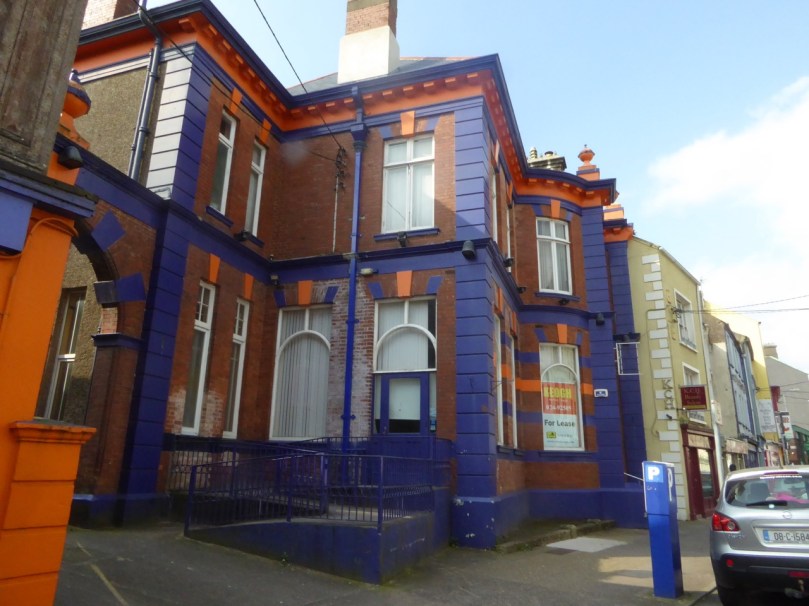
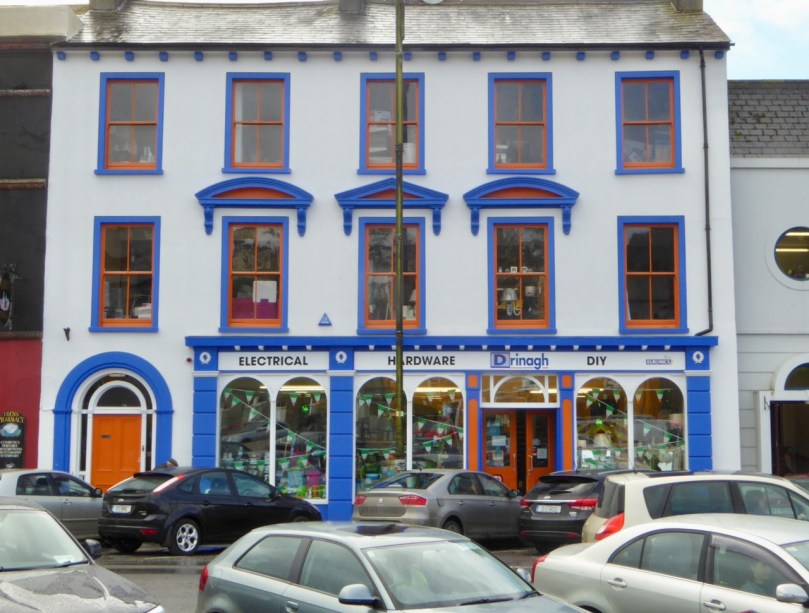
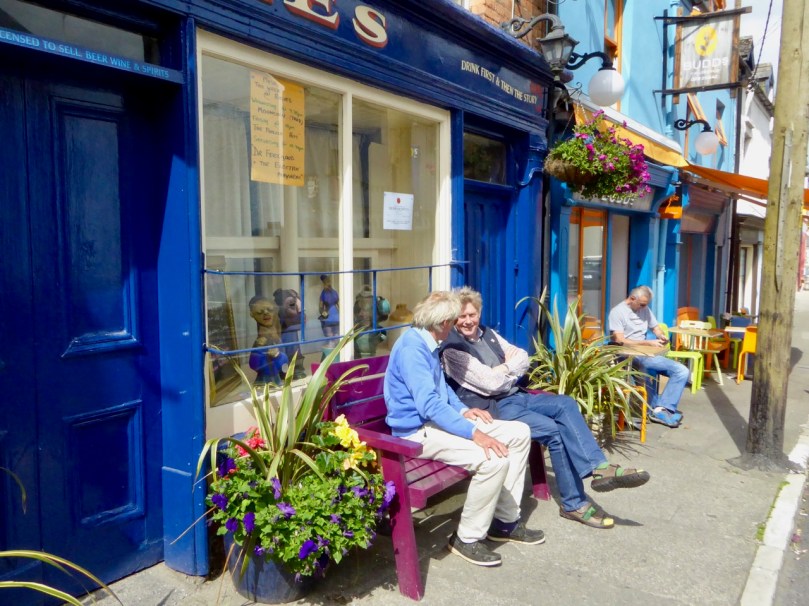
Three wonderful buildings that use blue in combination with orange tones – a bank in Youghal, a hardware store in Bantry and our own Budd’s Restaurant in Ballydehob (with Rosies pub for good measure)

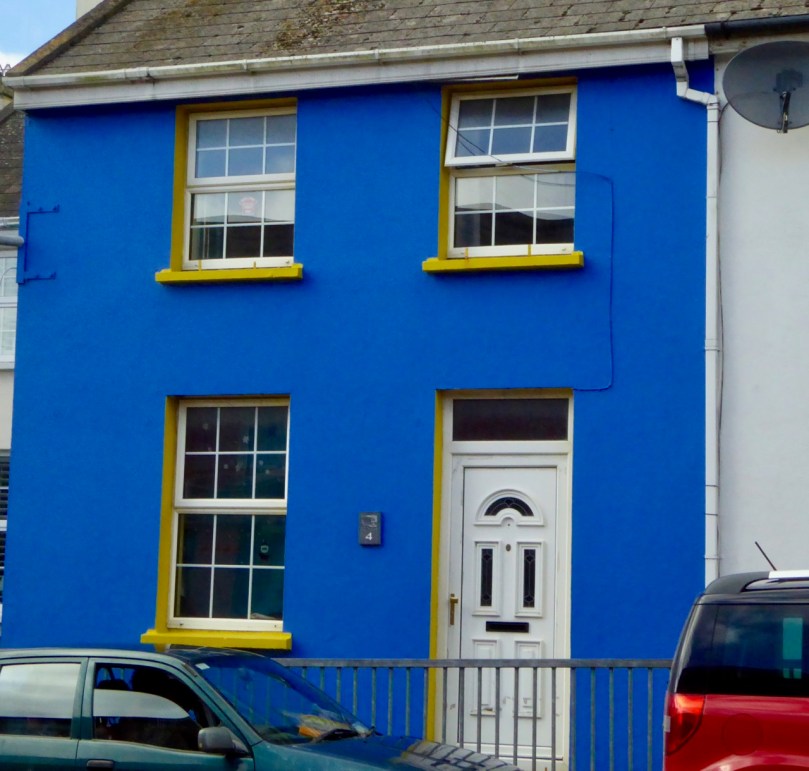
Yellow trim is a tried and true favourite
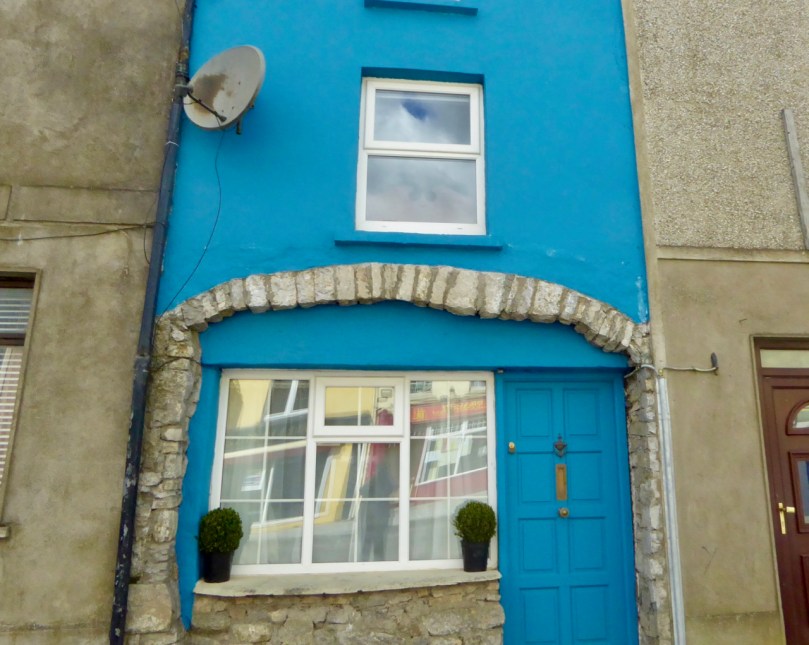
It might be one of the smallest houses I’ve seen, but it stands out when painted in blue
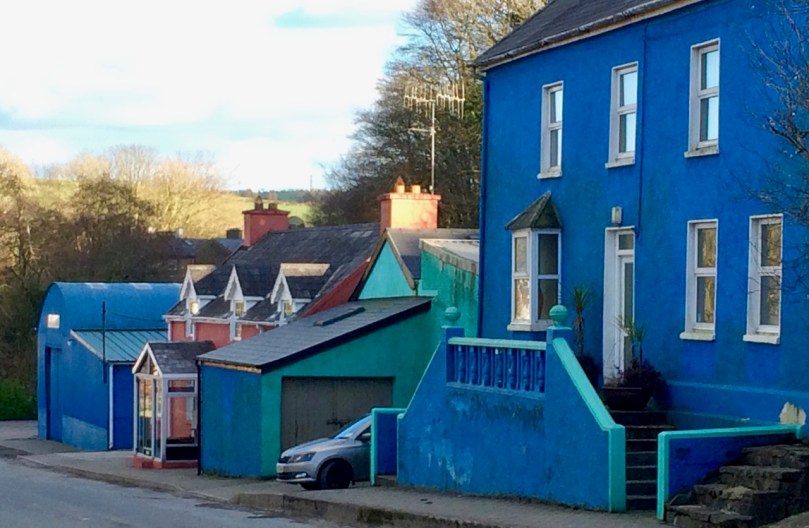
Blues and greens in Kilbrittain 
This one near Castle Donovan uses a strong blue cleverly as both a main and a trim colour

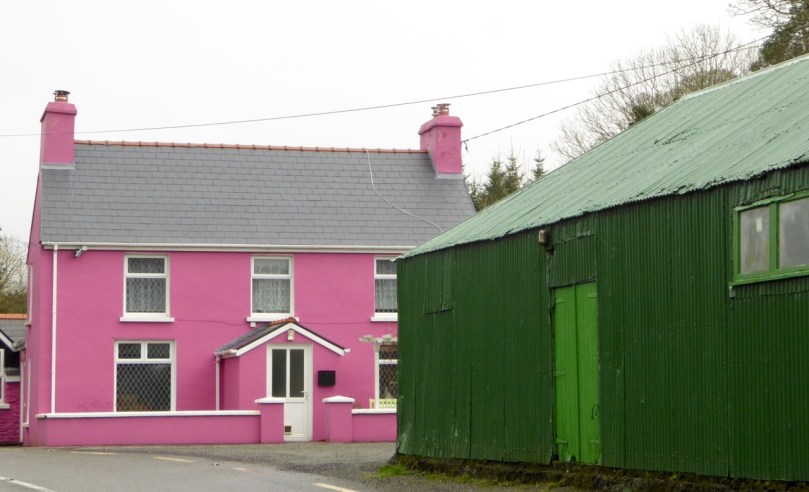
I’ve decided to end this series with this photograph of two side-by-side buildings in Adrigole on the Beara Peninsula.  The juxtaposition of the strong green and the vivid pink proves that when it comes to colour, anything can work!

Tracking the Trains: Railway Reminiscence

…Like all children, the boys of Ballydehob found the platelayers’ trollies irresistible. A lady in Cambridge, Massachusetts wrote about her father (born in The Skames in 1900). Her father and some small boys recalled a ‘small hand-cart’ which was kept near the station and used by the platelayers. “When Mr Crocker, the station master, was not alert the small boys, led by Connie Sullivan, the acknowledged leader of the group because his father, Jack, worked on the railway, were able to steal off the cart. They would push it by hand towards Schull, getting the cart about one mile above the station. Then the boys would pile in and off they’d go down the hill past the station and up the hill on the far side until, caught by gravity, back would come the cart again at such breathtaking speed that it would rocket across the viaduct, then run back through the station. Mr Crocker would come out to see the speeding cart and sometimes shoot with a gun, always in the air and never to do any harm. He was a good chap, and we took advantage of him at the time…”

Last week I wrote about an exploration we had made of the old railway line that had served Ballydehob until 1947 – exactly 70 years ago. I was delighted – and excited – this week to discover a rare copy of a detailed history of the line in that Aladdin’s Cave of bookshops: The Time Traveller, in Skibbereen. The book The Schull & Skibbereen Railway was published  by The Oakwood Press in 1999, and has long been out of print. Although a modest volume, it is a monumental, detailed work which took half a century to write!

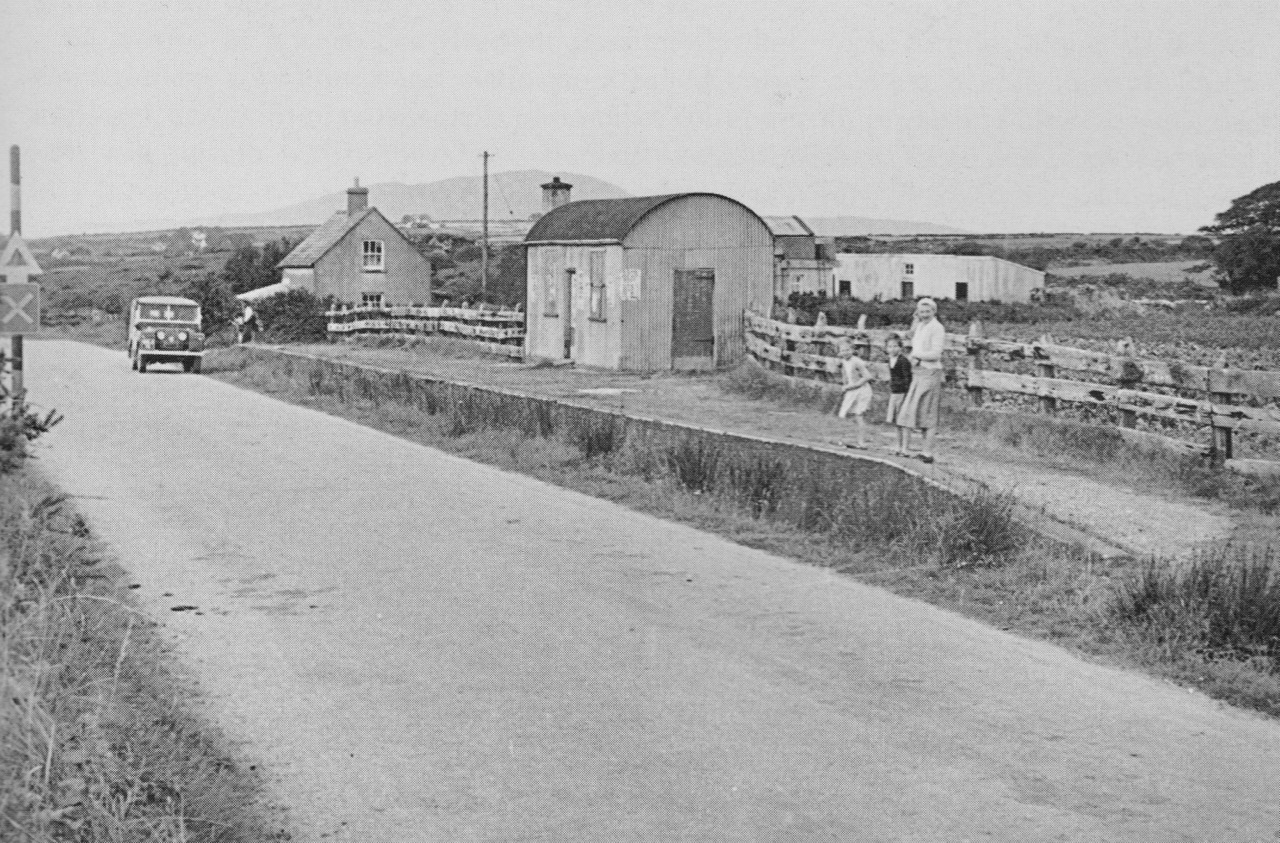
This is a view of Kilcoe Halt, taken in 1953 by the author of The Schull & Skibbereen Railway, James I C Boyd. At this time the line had recently closed, and the track had been taken up. The author’s wife and two daughters are in the photograph

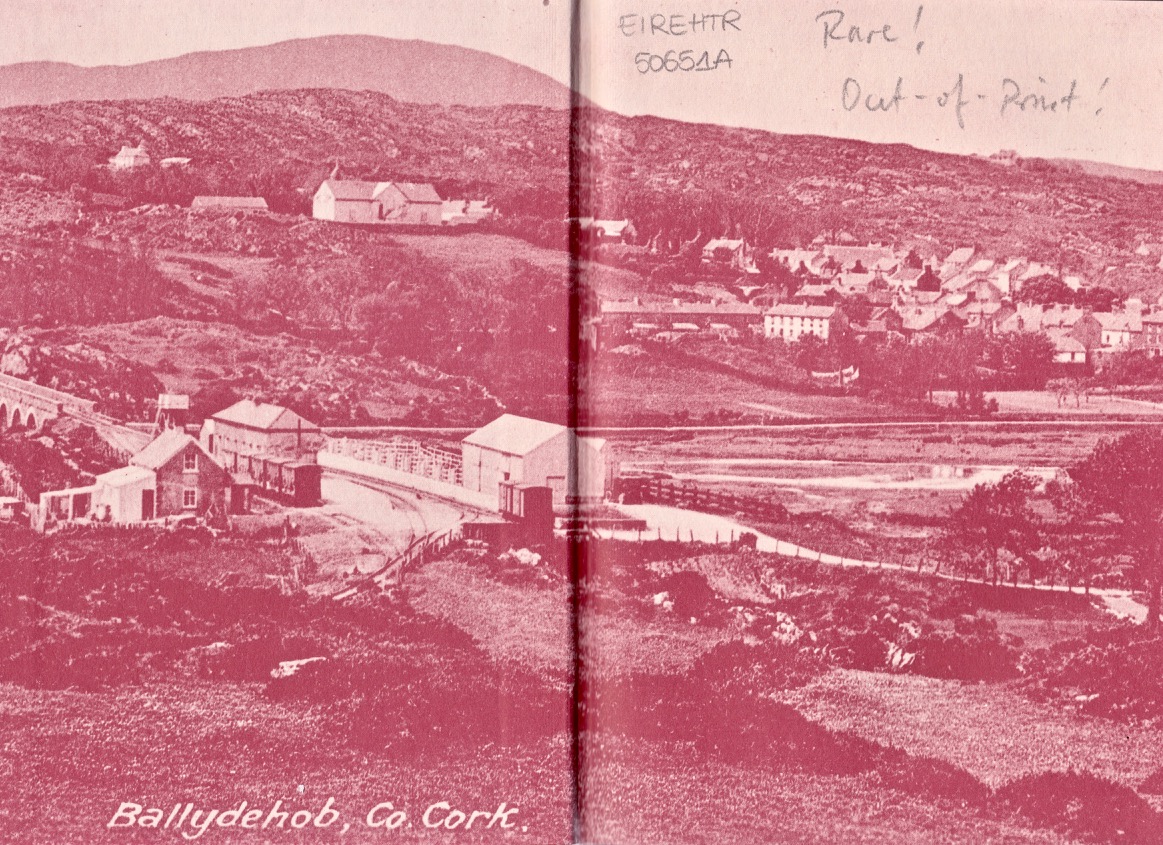
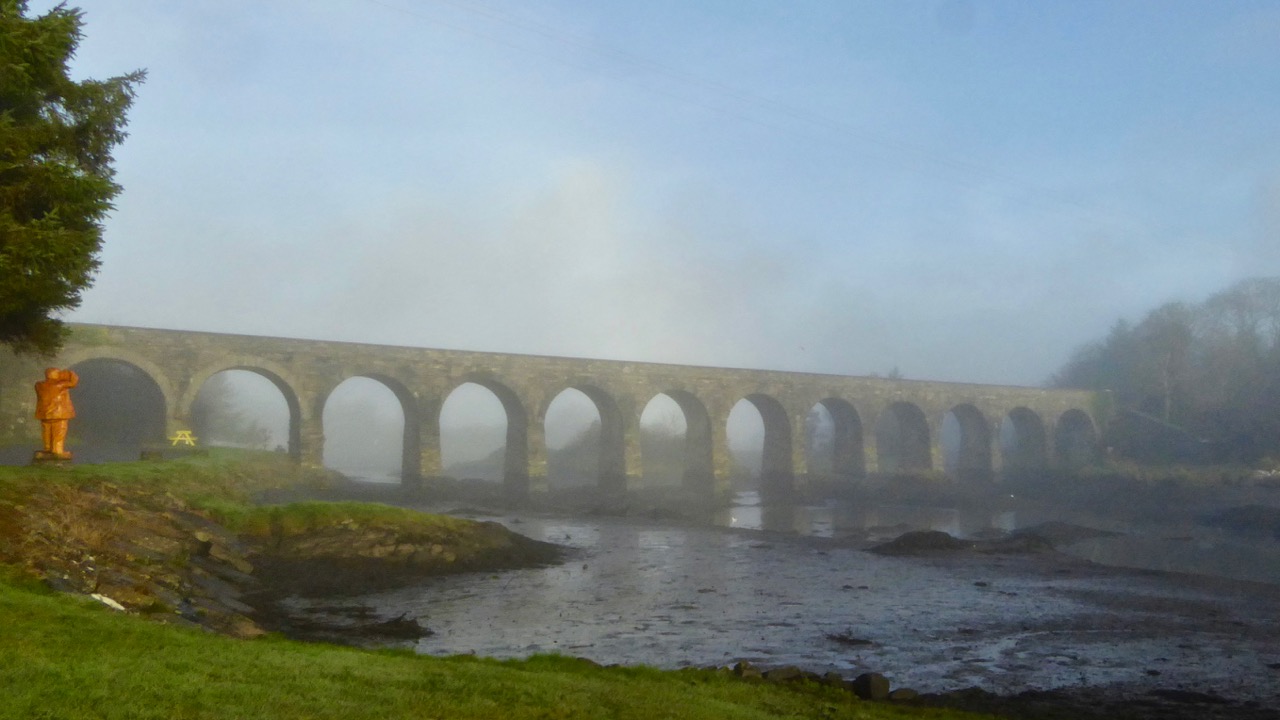
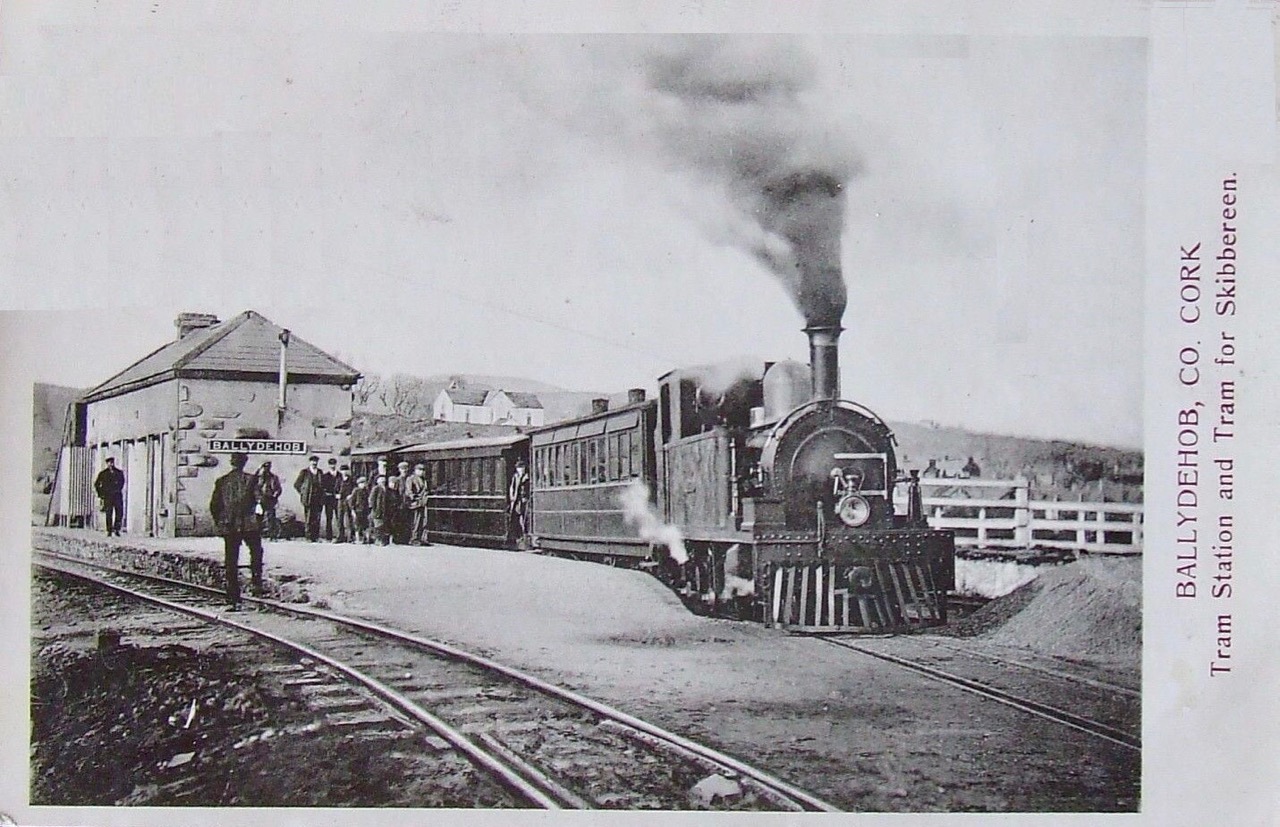
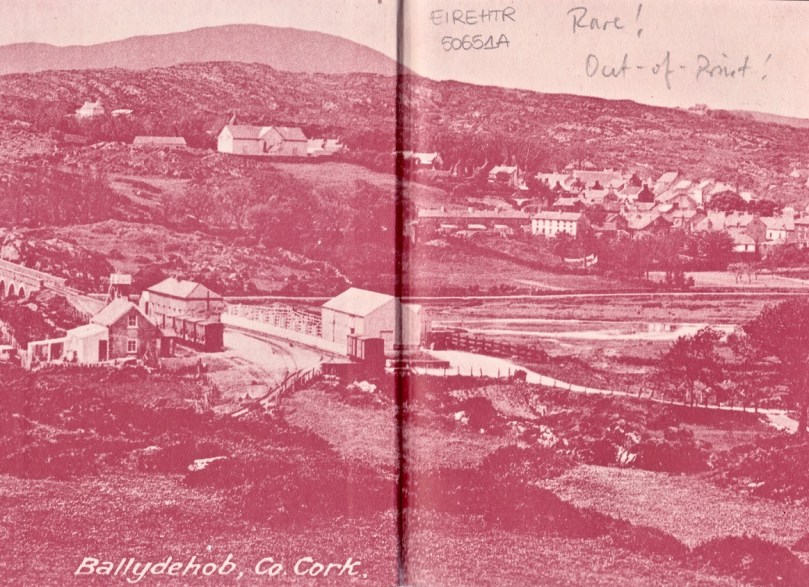
The header picture shows the endpaper of the book – a postcard photo of Ballydehob taken from the east of the station around 1910, when the railway was still in use. The 12 arched viaduct – mentioned in the extract given in the first paragraph – can just be seen to the left: that account doesn’t really make geographic sense, but – remember – it’s a story, told from a distance both in time and place.
It is Chapter 18 of the book, entitled Miscellanea, which has given me the most pleasure to read, although this is not to decry any of the highly informative data and history contained in the rest of it. The book’s author, James I C Boyd, explains the context of the chapter:

…Over the half century during which I have formed close associations with West Cork, there have been many reminiscences, conversations and situations surrounding this subject which were noted down at the time in the hope of further attention. Some were legendary, others biased, a valuable few were personal but all gave me an insight as to the ethos of the local people in relation to their railway. Bearing in mind that during those fifty year the line has closed completely and many of my informants have passed away, their memories have been set down here… Such recollections do not fall neatly into the pattern of the previous pages, so form a chapter entitled Miscellanea…

Left – James Boyd and his family; right – from the 25″ 1901 Ordnance Survey Map: Ballydehob, with the station and the viaduct

Born in 1921, Boyd went to school in Colwall, Herefordshire. There he encountered two influences: the first was W H Auden, who taught him English, and the second was a miniature railway line which was attached to the school: the Downs Light Railway. This venture is the world’s oldest private miniature railway – which can carry human passengers. It has a track gauge of 912” (241 mm). Set up in 1925 for the principal purpose of education, the Downs Light Railway is today the only railway in the world to be operated solely by children aged between 7 and 13 years. These two significant experiences in his life set Boyd on his own track: to become a writer and a specialist in railway history. His opus includes over 20 highly detailed accounts of narrow-gauge lines in Britain, Ireland and The Isle of Man (including this definitive work on The Schull & Skibbereen Railway) and countless articles, photographs and other collected information.
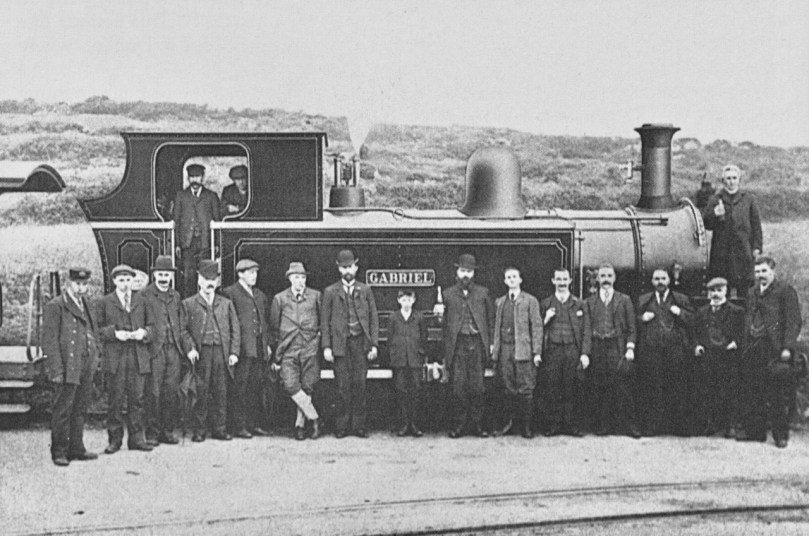
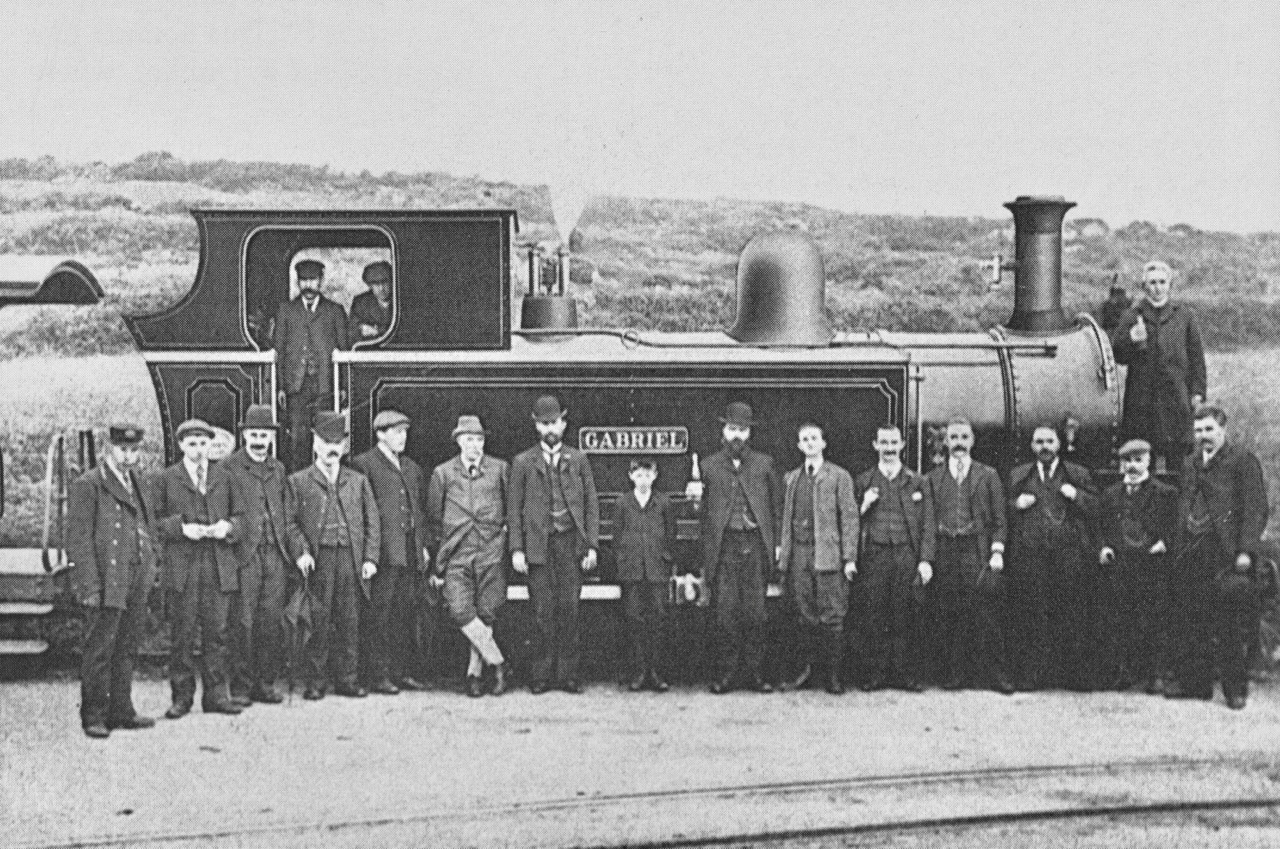
A photograph which Boyd found in a collection by G R Thomson: it shows the ‘naming ceremony’ which took place in 1906 on the Schull Pier extension line of a new locomotive ordered from Peckett & Sons of Bristol. Father John O’Connor, the Parish Priest of Schull, broke a bottle of champagne over the engine and christened it GABRIEL – after the mountain, not the Archangel!

From Mrs P McCarthy of Schull – recorded in Miscellanea:

…You were asking me about the men who worked on the track, and who lived in the crossing houses? There were two sets of men: one between Skibbereen and Ballydehob and the other went from Ballydehob to here. Denis McCarthy (or ‘Foxey Din’ as we called him on account of his red hair), his son Mick (he went on the broad gauge when the S & S closed), and Batty Harrington. Sometimes Paddy O’Donovan would help them… From Ballydehob we had Connie O’Sullivan, Jackie Daly (who was the Foreman for the whole line) and Gerry McCarthy, who was known as ‘Vanderbilt’ from the careful way he had with money. Then at the Skibbereen workshops there was Charlie Murphy the chargehand / fitter and Willie Cottam, the carpenter… I don’t remember about all the gatehouses – Mrs Connor was in Kilcoe and Hollyhill was occupied by two men; they may have been gangers. When the railway closed, the occupants were given the first opportunity to buy…
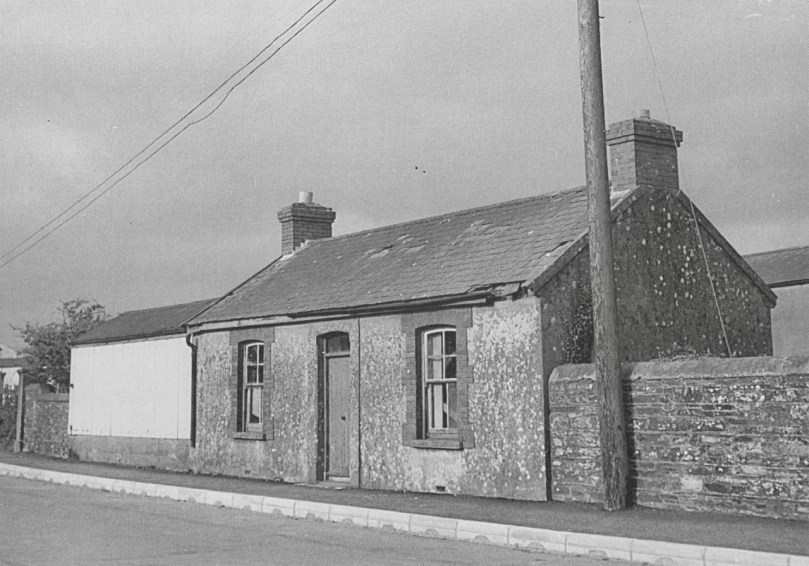
The Company Offices in Skibbereen, taken by James I C Boyd in the 1950s, after closure

From Miscellanea – an anonymous contributor:

…In the long school holidays, mother used to send us children out with a large tin bath of the sort we used in front of the open fire in winter. On reaching Schull station we, and the bath, would ride the first train, to drop off at the best places and comb the fields for mushrooms, only stopping when the bath was full. Then, dragging the unwilling receptacle behind us, we would bring it to the road alongside the railway, and so back to Schull again on the returning train…

The line at Hollyhill, 1938: ‘Curly’ Hegarty is the driver. Photo by H C Casserly

From John Browne of Creagh:

…The Secretary of the Company [William Goggin] owned a bar at the corner of the main street [of Skibbereen] and that to the station – it was very convenient for those going by train… When the Directors wished to visit Skibbereen they ignored the Railway and used a converted Lancia armoured car, the property of one of their number. On alighting at the Skibbereen office, there would be fussing and genuflection akin to a royal visit…

…The curb-stone margin which divided the Railway from the highway in numerous places, was a considerable barrier. A party of my friends attended the Ballydehob Fair in an open car. On the return journey the driver was ‘very happy’, misjudged a bend and struck the kerb. The damaged vehicle had to be abandoned. The revellers walked back to Skibbereen, leaving the car to block the passage of the first Up train from Schull. However, the combined efforts of all the crew and passengers were needed to drag the wreck back on the road…

…Willie Salter of Castletownsend said that a pony and trap from Skibbereen often reached Ballydehob before the train; it was better that way if you were in a hurry. He would see passengers getting out near Crooked Bridge or Church Cross to give the train a push…
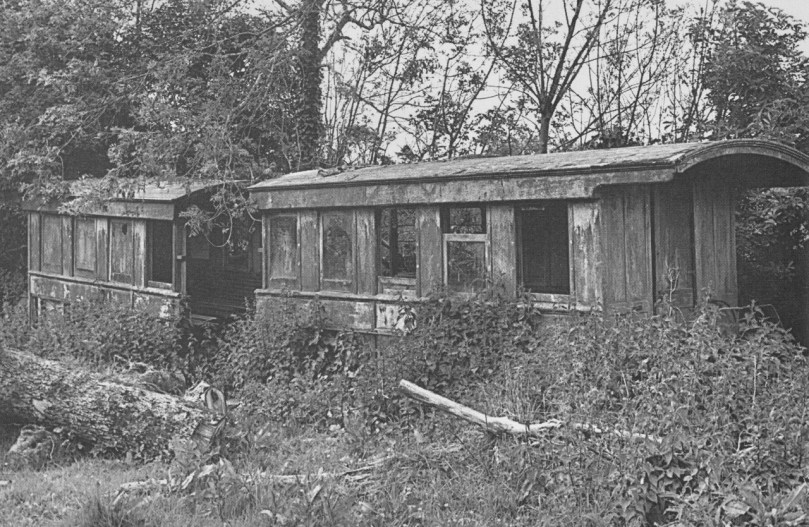
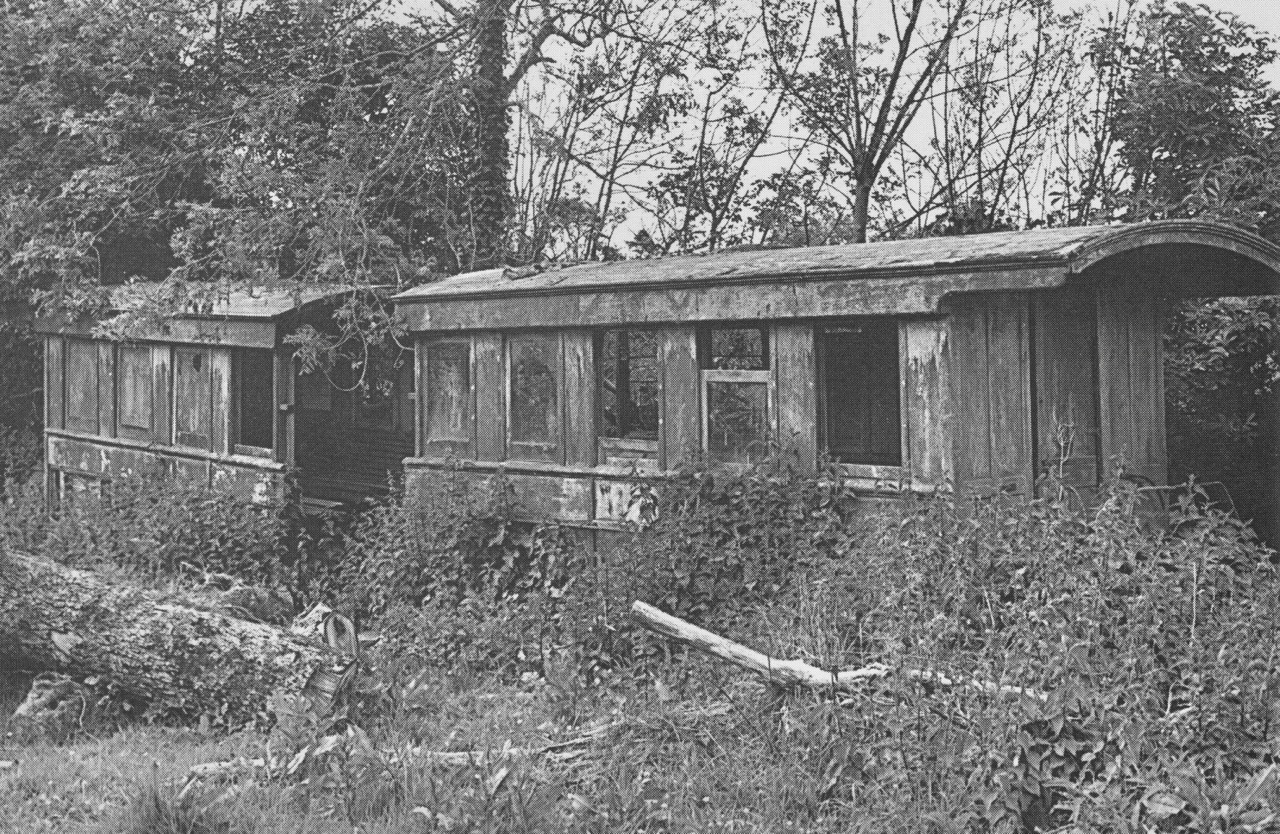
Sad days: James I C Boyd located and photographed this ‘Gloucester’ carriage from the S & S line in a field beside Bantry Bay in 1967. It had been sawn in half before final abandonment; is it still there today?

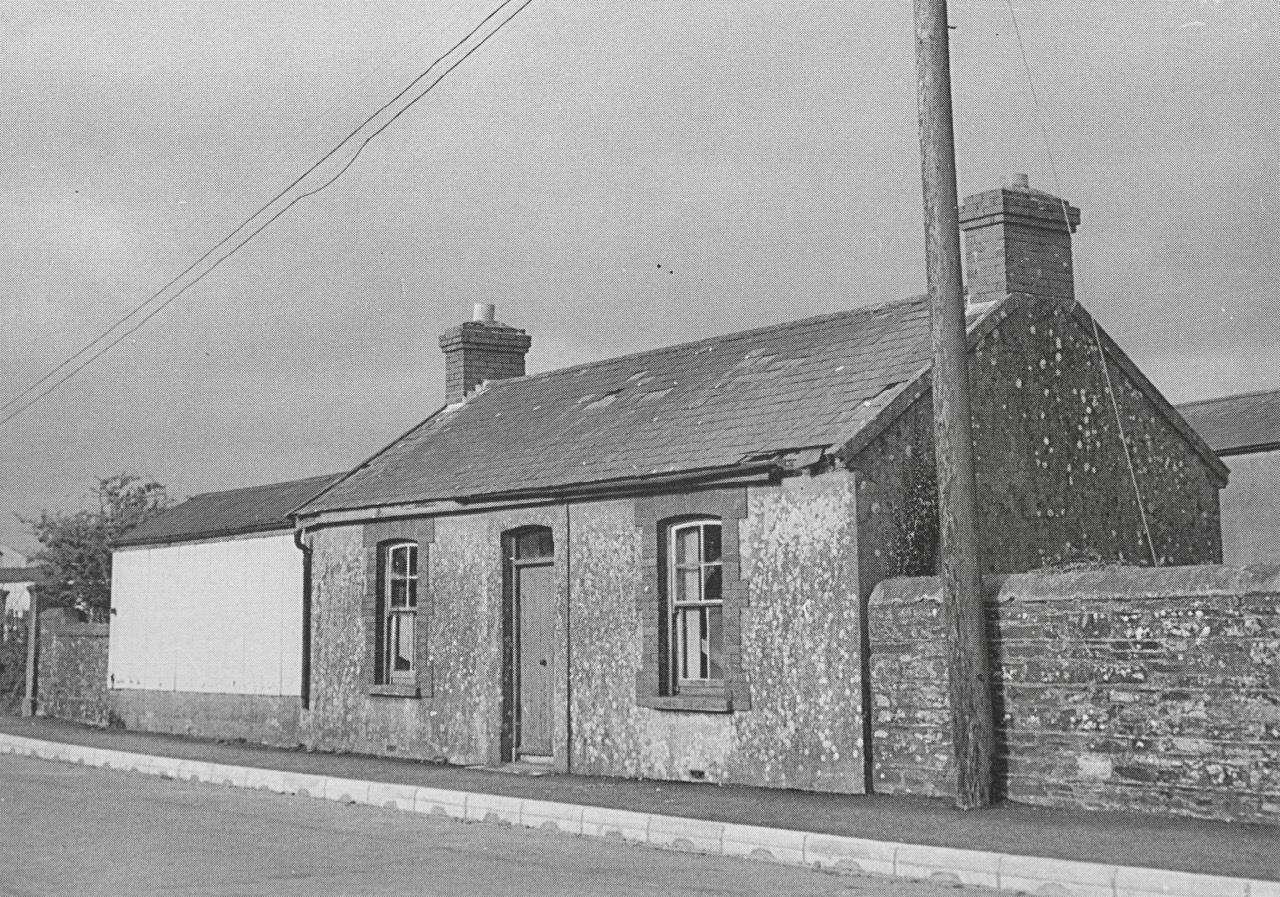
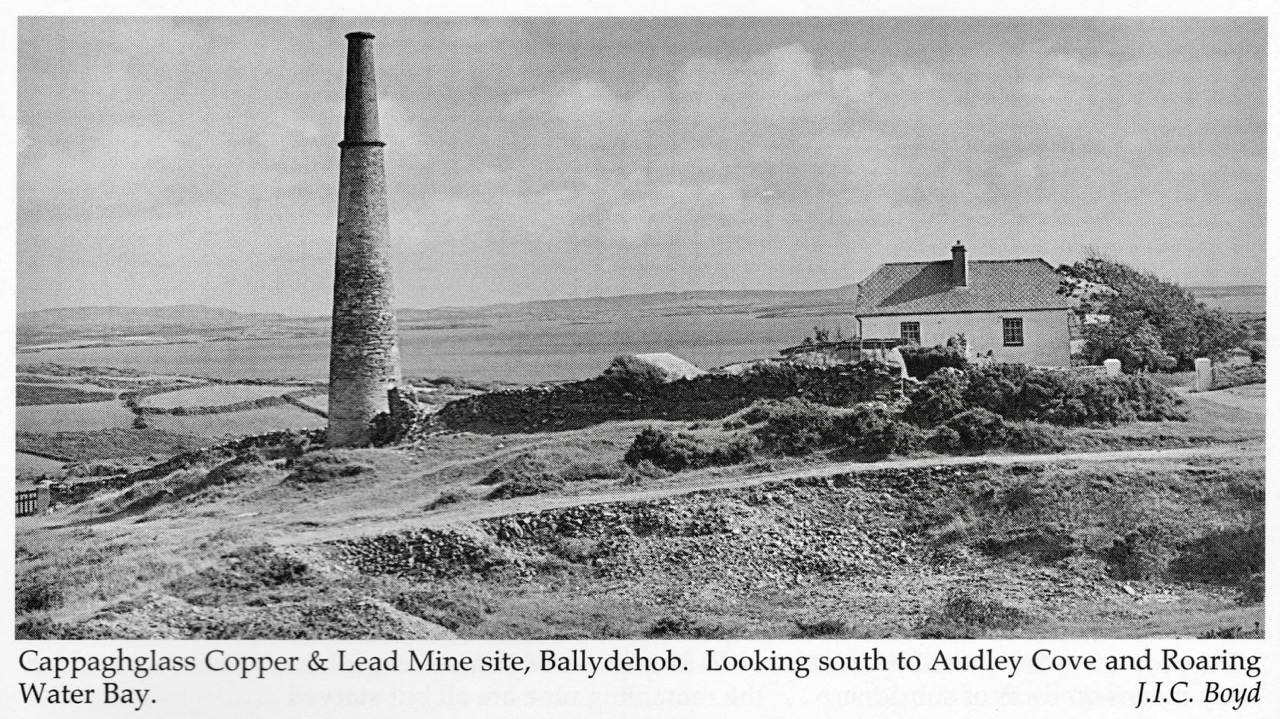
This post is a short taster of the treasures that this volume holds. A fuller review – and more Miscellanea – will appear in future posts. To finish today, we were delighted to find this photo taken by the author just around the corner from us. Finola’s article, here, tells the story of this Lost Landmark.
Tracking the Trains

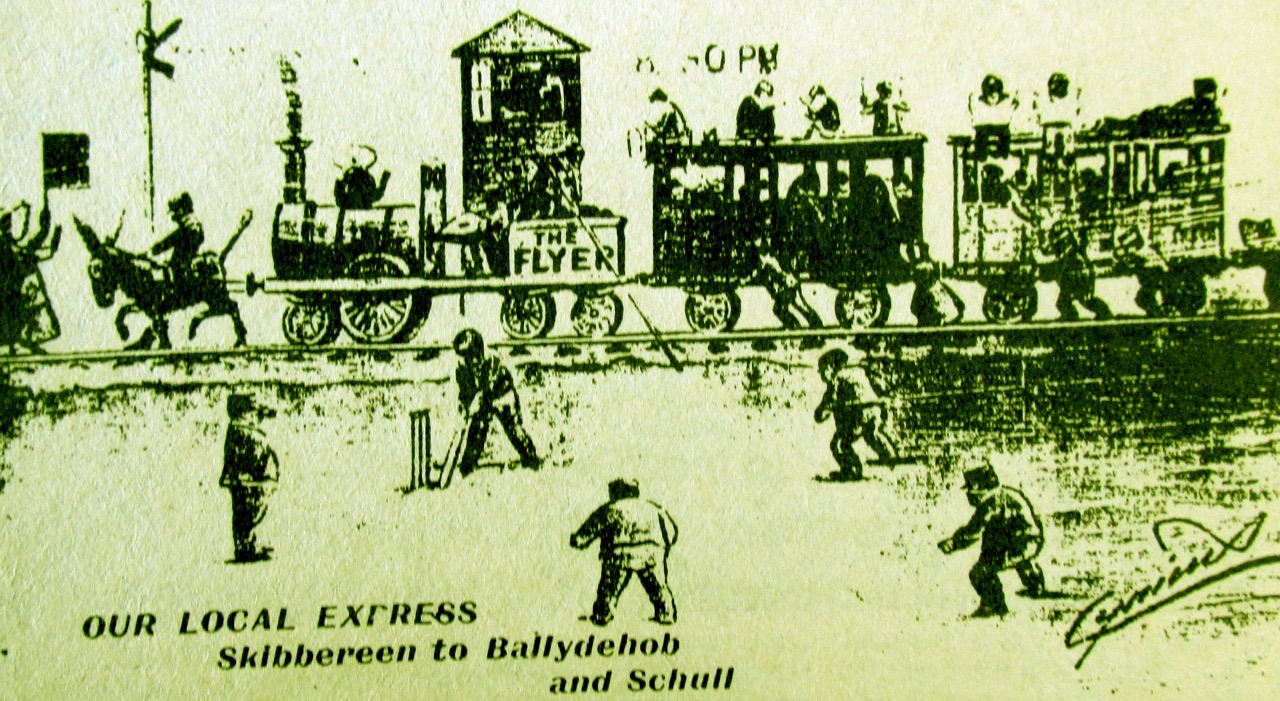
Ballydehob’s own railway was known, affectionately, as The Flying Snail. Way back in 2013 I wrote a piece about it. All our past posts are still online and can be found through the search facility on the header: if you want to have a look at this older piece, click here.

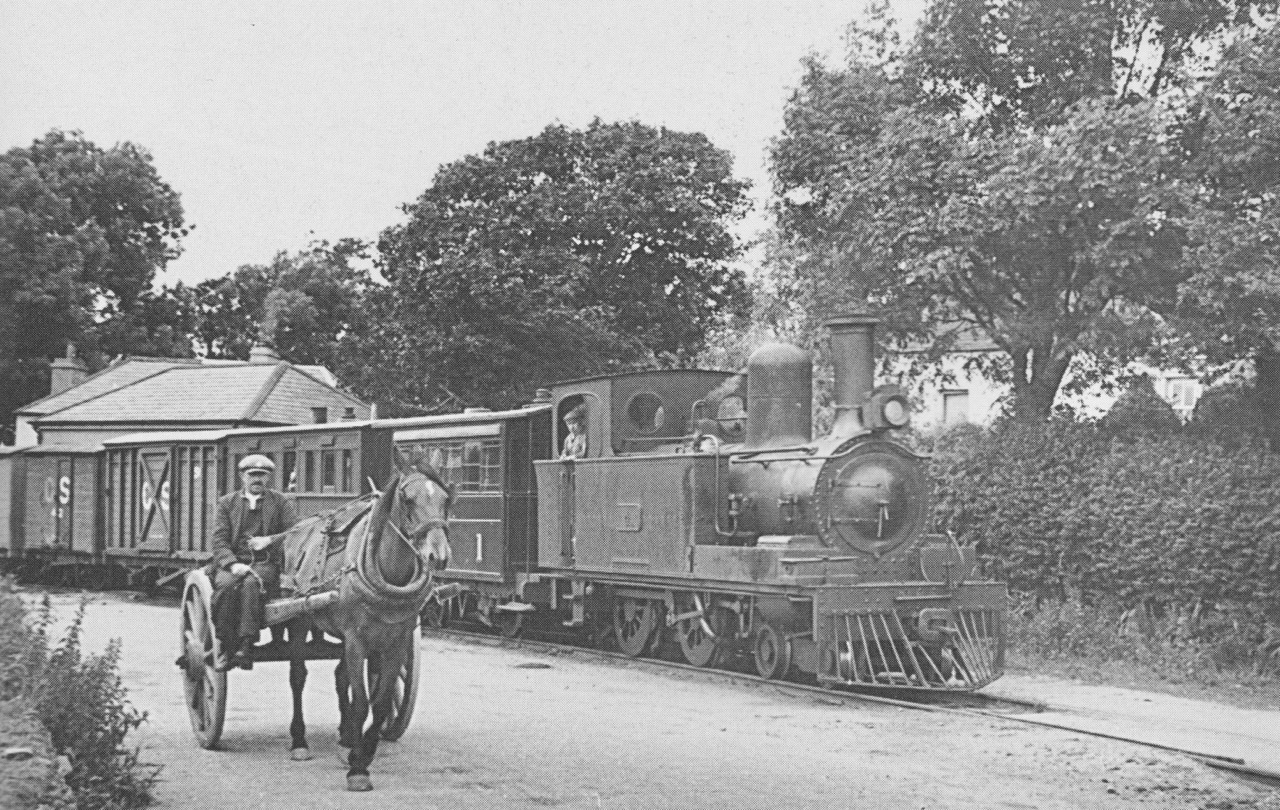
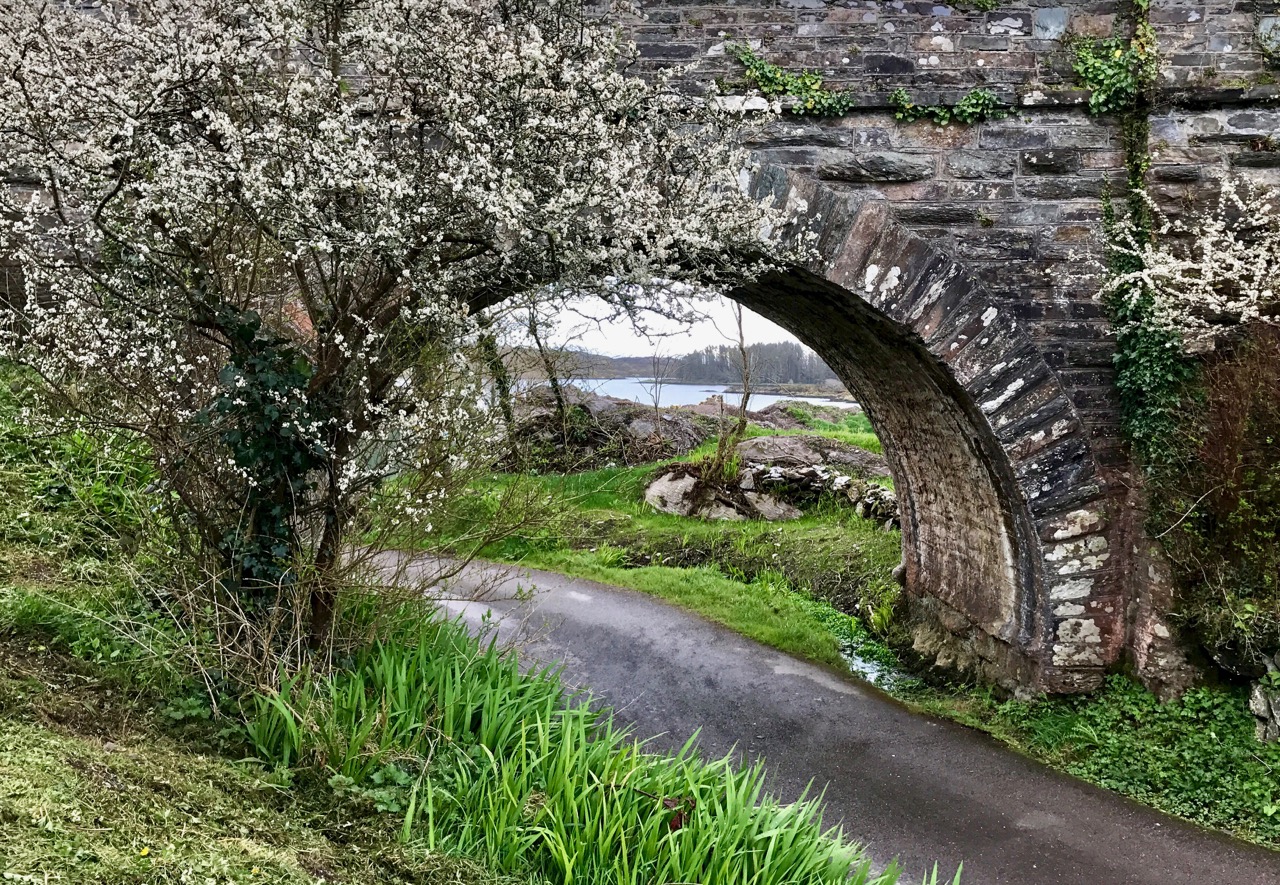
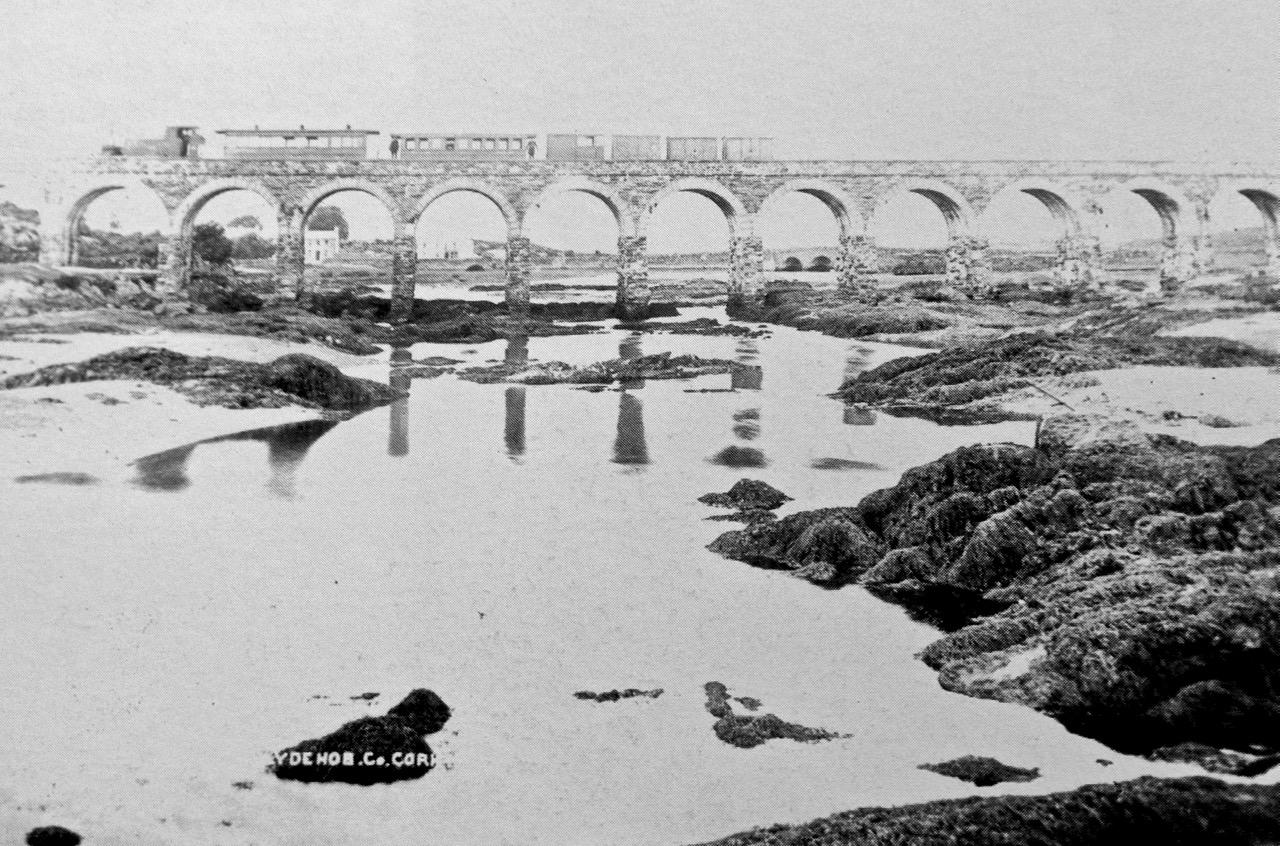
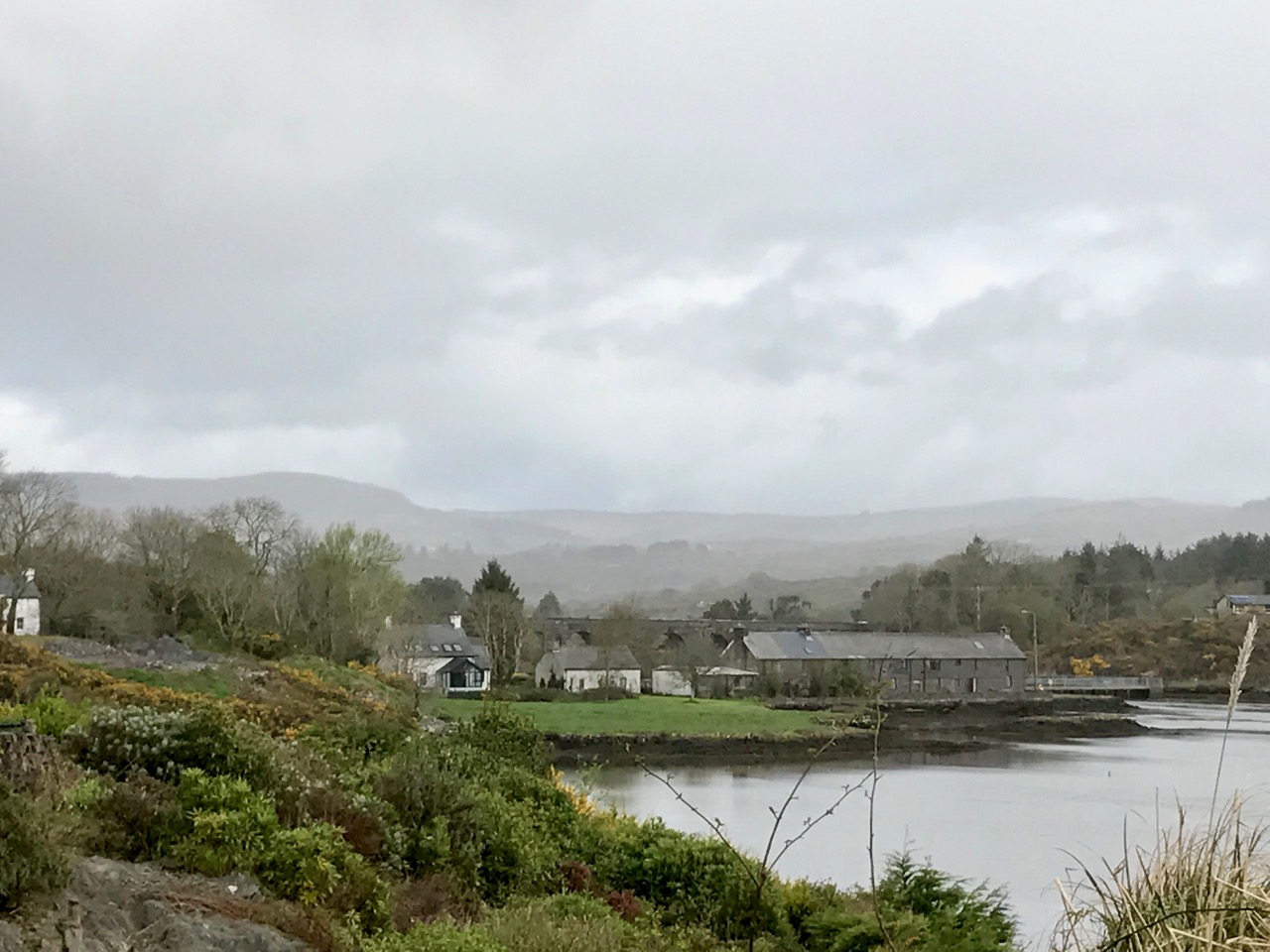
Header – this picturesque bridge lies to the west of the viaduct and crosses the small back road which leads down to the Quay; the early postcard above shows a little train negotiating the viaduct, probably fairly early in the life of the line; lower picture – autumn atmospherics, taken in 2016

This morning – a pale and rather cold First of April – I set out to see how much I could find remaining of the old railway line in Ballydehob. As an erstwhile amateur industrial archaeologist I can get very excited about a few stones piled up, or a depression in the ground, as long as I know it marks the last traces of a long-lost canal or railway line. Our little West Cork settlement in fact has a whole lot to interest the transport enthusiast, as I discovered on my walk.

Today’s washed-out view of the Quay with the 12 arched viaduct behind it. This was a lifeline for the town before the railway came, and its commercial use survived the demise of the trains. In its heyday, the Quay was busy with arrivals of sand, seaweed, coal and timber, together with produce from the islands, and – once a week until the 1930s – a visit from the Cork coastal trading boat which brought in supplies of everything else, from sugar to cement. Around the mid 1800s (pre railway era) copper ore from the local West Cork mines was shipped out from here to Swansea

While researching this post I was pleased to find some additional early photos of the line that were not available when I first wrote on the subject, and I am including them on this page, with grateful thanks and acknowledgement to De La Salle Publication via Durrus History, and also to Irish Postcards at WordPress.

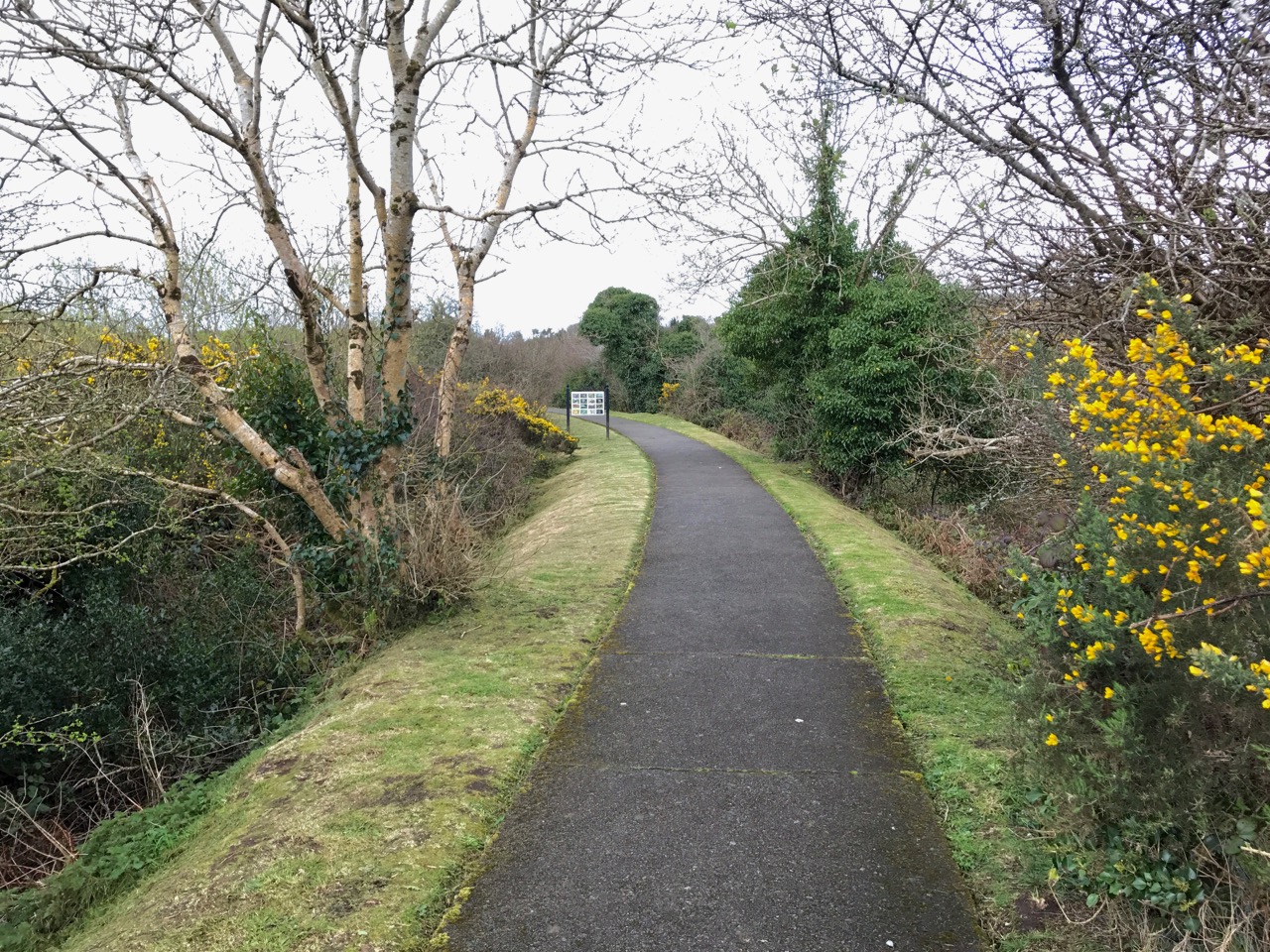
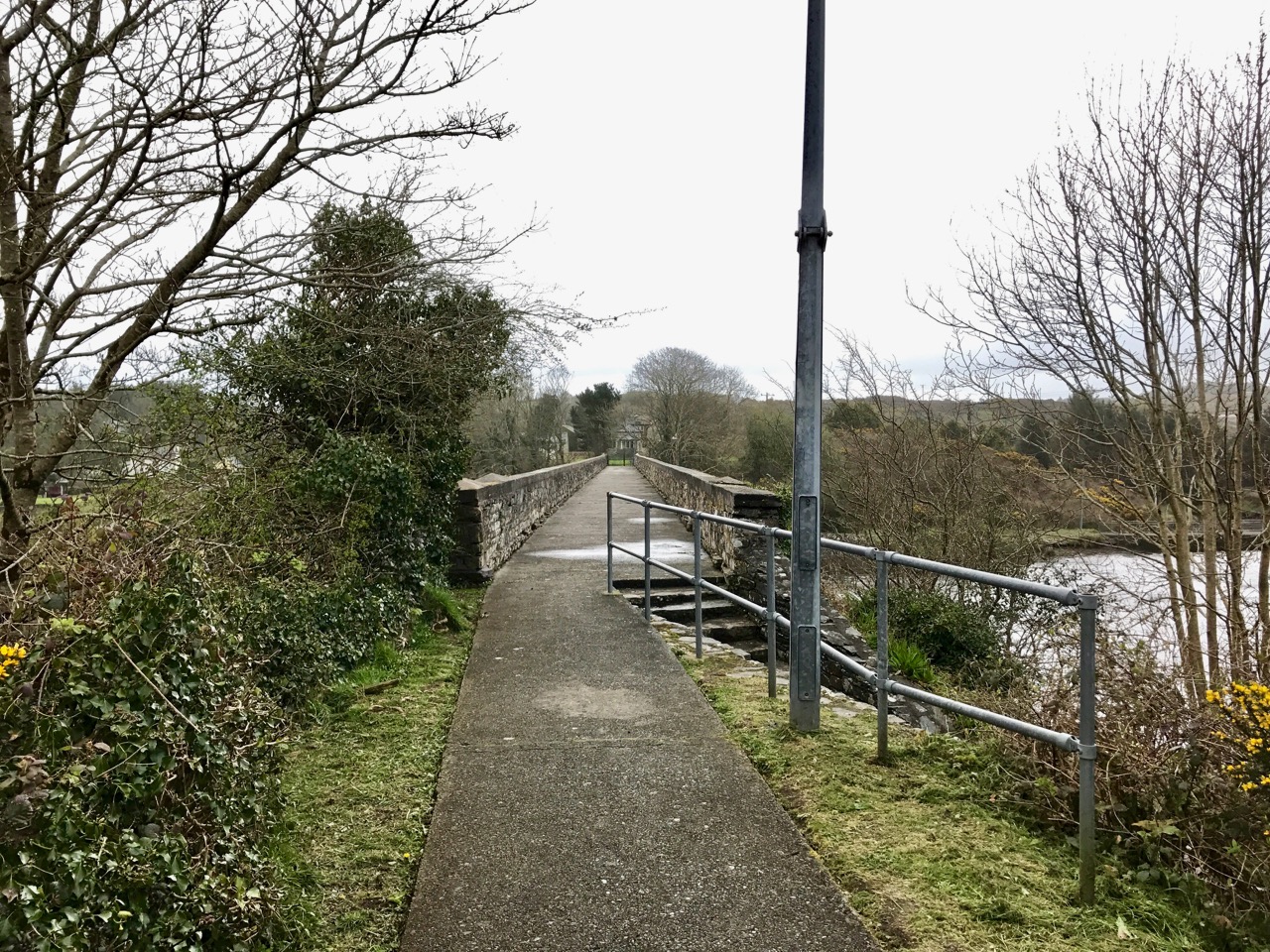
Ballydehob has established a public footpath on the line of the railway within the village. Top picture – the track bed to the west of the viaduct: the narrow gauge line from Skibbereen continued from here to Schull. Lower picture – the track bed crossing the viaduct over the river. The railway station was situated beyond this, quite a little way out of town

Sadly, the track-bed footpath only runs for a few hundred yards before petering out, but it is possible by walking over the viaduct to get a feel for what it was like to travel in the rather frail looking rolling stock of the 3ft gauge line, which was technically termed a ‘tramway’. If only enough of the old line had been retained to create a long-distance foot-and-cycling path, we would now have another amenity for locals and visitors to add to the wealth (food, culture, landscape and history) that’s already on offer here in West Cork.

Top left – along the boreen which runs from Ballydehob village centre (turn by Levis’ pub and go past the school) towards Cappaghglass and Schull can be found old railway bridge abutments – top right, while in the fields nearby the railway embankment is clearly visible – lower picture. Artefacts for archaeologists to ponder over a few hundred years hence, perhaps

The last train ran on the line in January 1947, so there must be many people around today who remember it in use. I am always on the lookout for anecdotes about it, so please let me know if you have any yourself, or know of anyone else who might have. There seems to be little recorded about travel on West Cork’s railways at the turn of the 19th / 20th centuries, although the train  journey to ‘Skewbawn’ (Skibbereen) does get mentioned in The Irish RM story Poisson d’Avril by Somerville and Ross. It’s quoted in Finola’s post on the Rossbrin Loop, here.

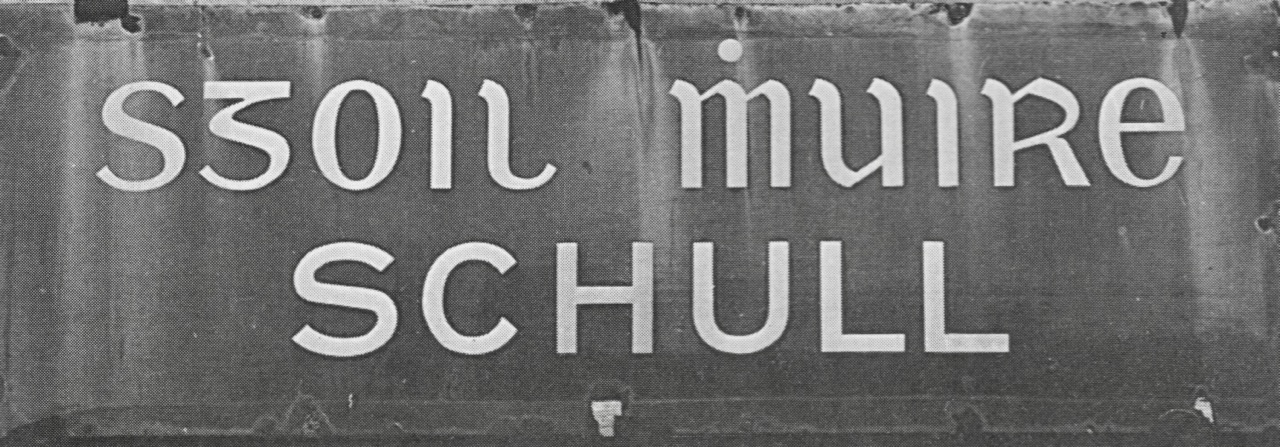
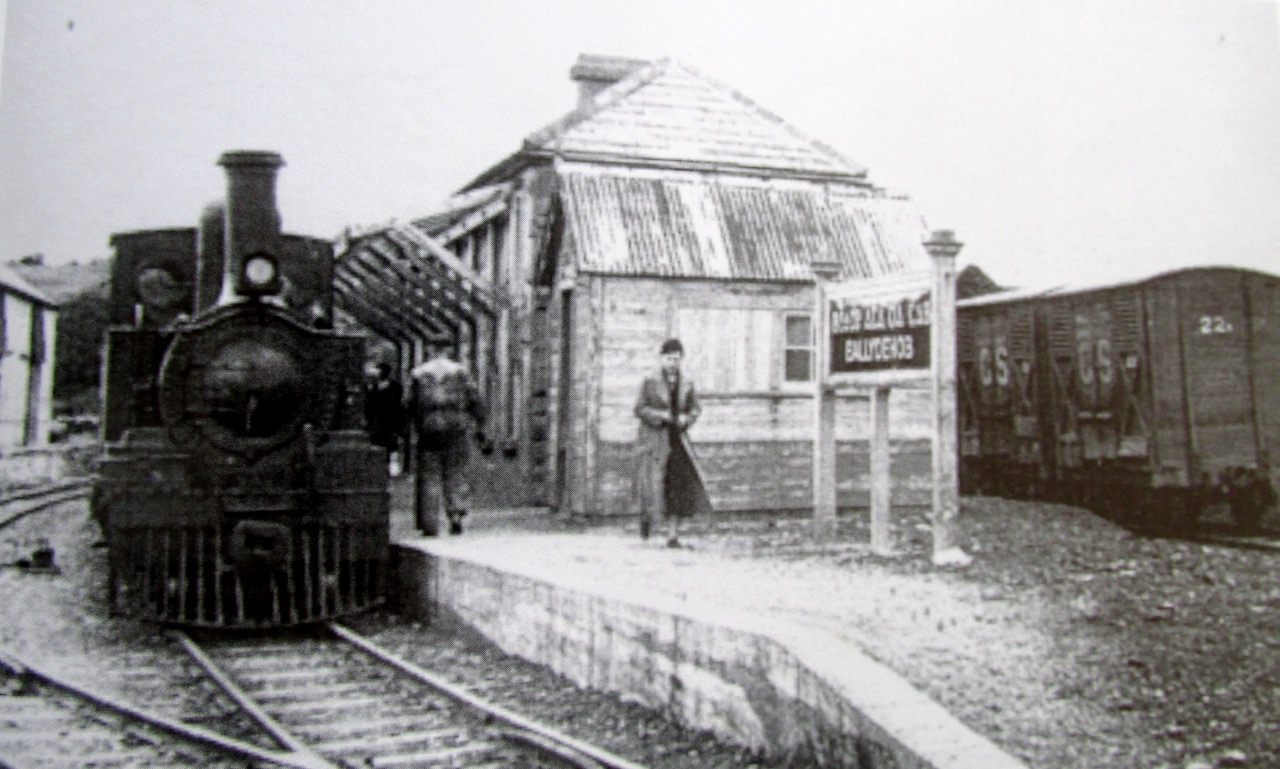
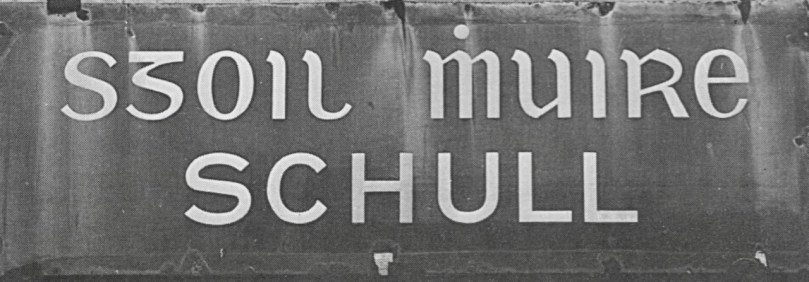
Above: two views of Ballydehob Station in use. The upper one is dated 1904. The lower one is much later and – because of the bilingual station name board – probably dates from after the 1925 amalgamation of all the smaller lines into The Great Southern Railway

There are many more traces of the line to be found in Ballydehob and beyond: look out for another post coming soon!

Purple and Pink – and Everything in Between

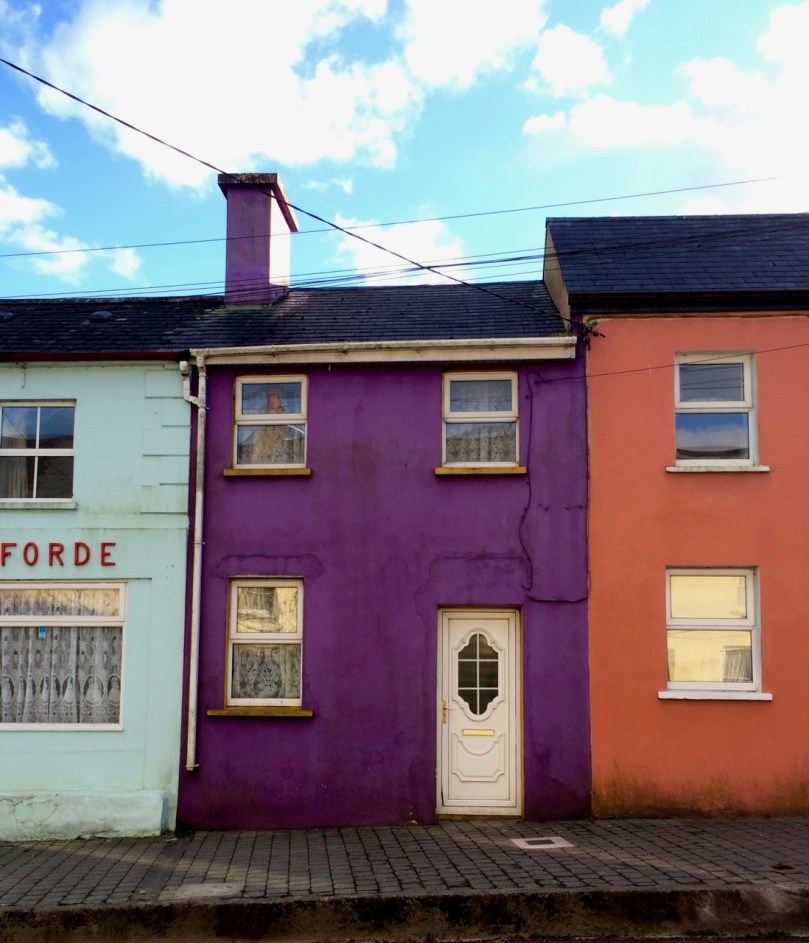
Purple house, colourful

You all know of my fascination with the colourful houses that dot the Irish countryside. It’s been a while since I posted about them so for new readers, check out A Lick of Paint and An Extra Lick of Paint and All the Trimmings.

Union Hall Pink

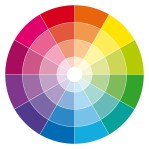
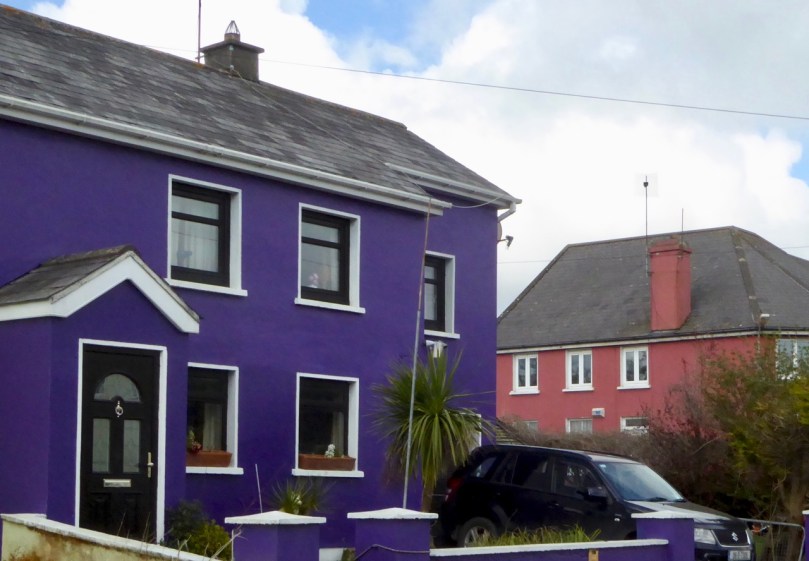
colour-wheelToday I am concentrating on the red side of the colour wheel – from purple to pink. We’ll stop where it shades into blue at one end and orange on the other. This gives us a vast range to choose from and, because it’s all diametrically opposite the greens of the Irish countryside, guarantees that the house will stand out in the countryside.

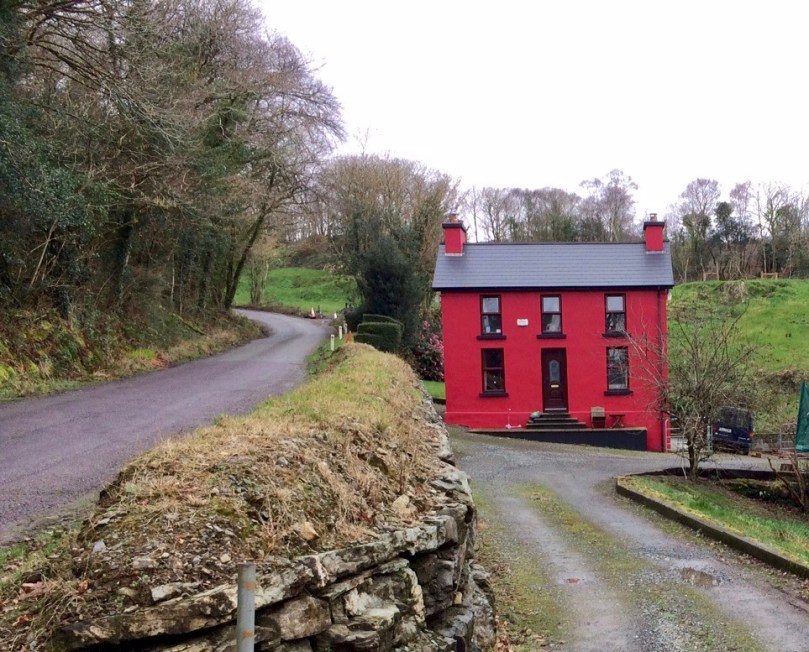
It’s always a wonderful surprise to come around a corner on a tiny boreen and discover something like this…

Red, Mill Little

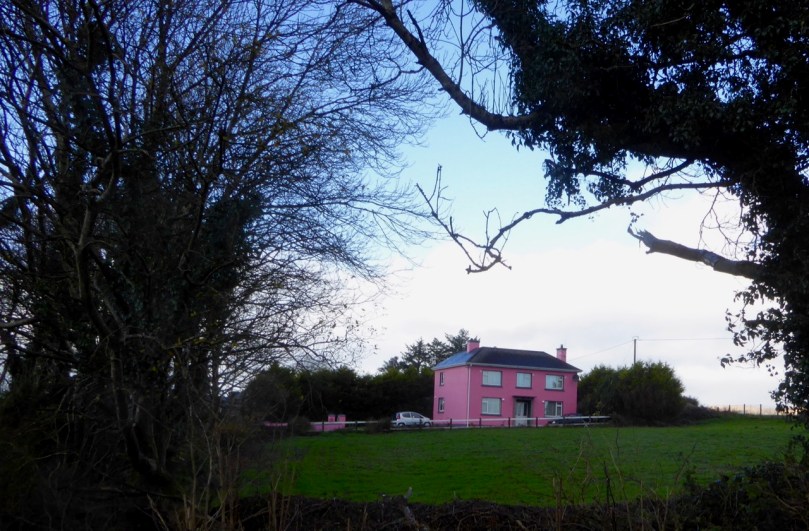
Or this…

Pink, North of Skibb

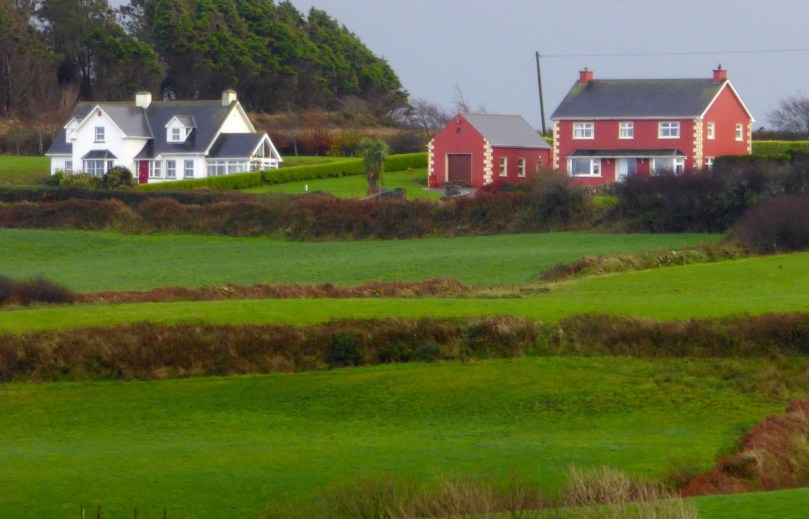
Or this.

colourful, north of Skibb

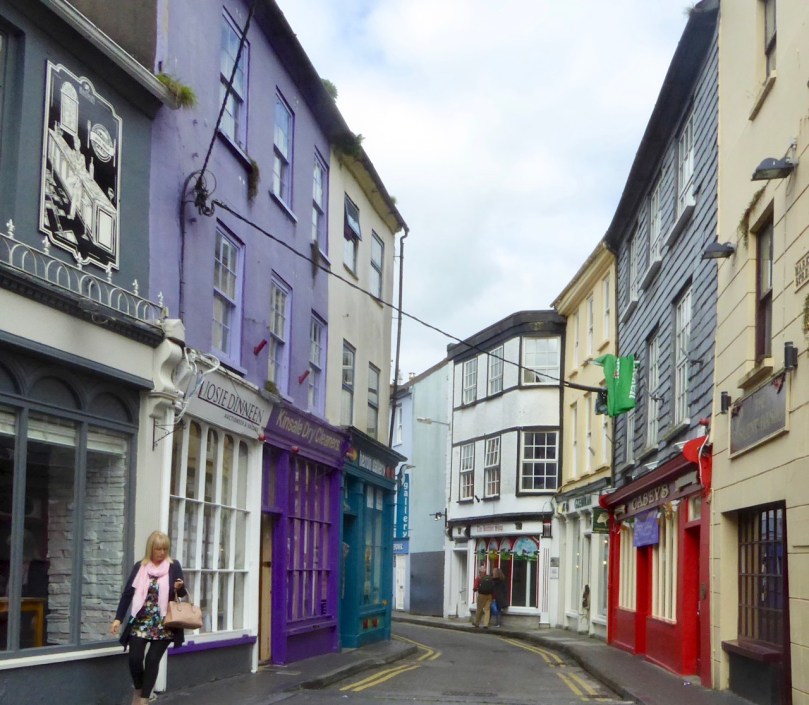
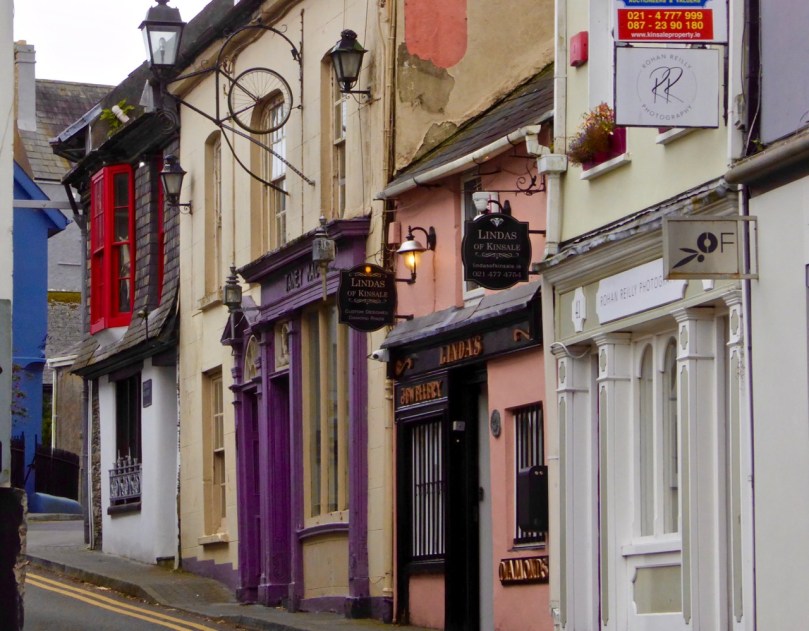
I’ve included a few shops as well, because – Kinsale! Located on the southernmost extent of the Wild Atlantic Way, it’s one of the most colourful of all Irish towns and a delight to stroll around.

Purple in Kinsale

Janey Mac Purple in Kinsale

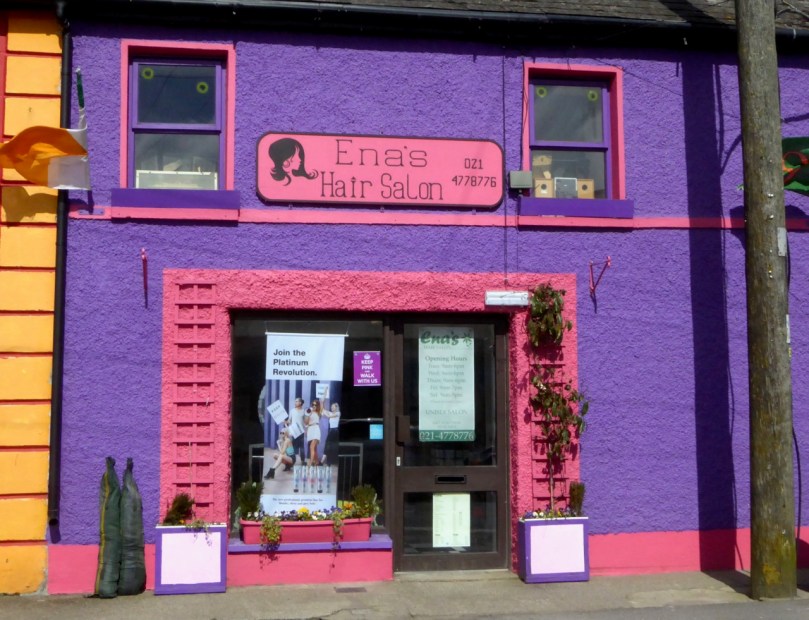
But it’s by no means the only colourful village – lots of other examples here too. Ballinspittle, for example – home of the famous grotto of the moving statue – is a kaleidoscope of colour.

Ena's, Ballinspittal

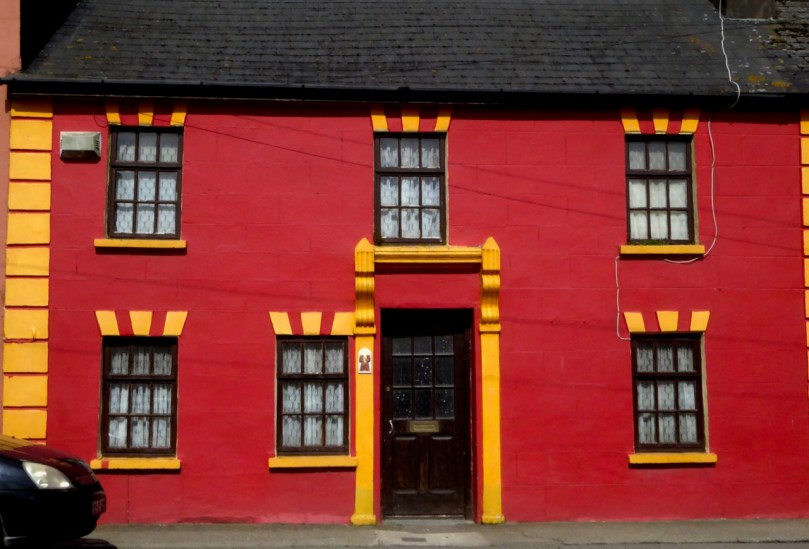
Ballinspittal red and yellow

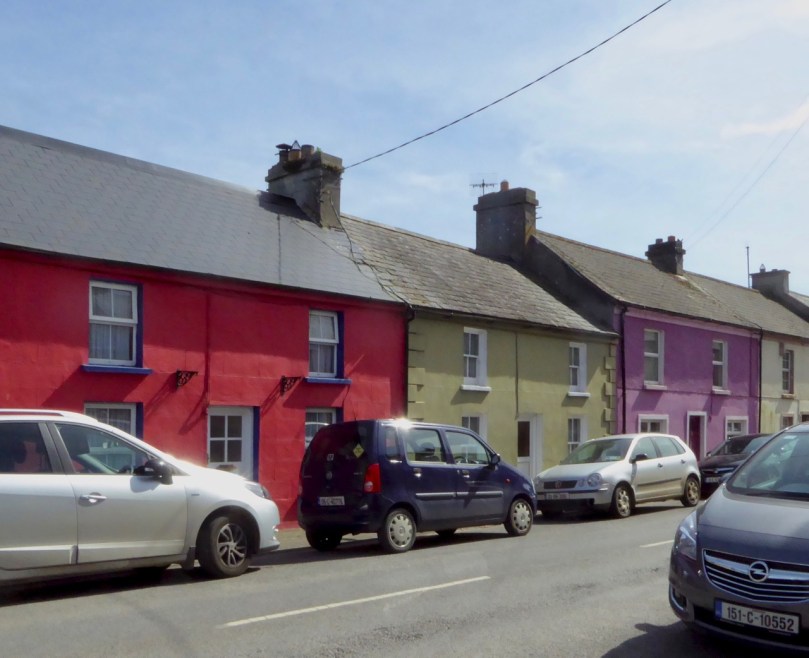
Humble terraced cottages can assert their individuality through subtle architectural variations, or through one huge difference – colour!

Kilbrittain Purple

colourful in Millstreet

The main streets of towns and villages are enlivened with splashes of bold colour that catch the eye and brighten your day.

Red and Lilac Timoleague

Purple and red, Ballinspittal

Perhaps one of the best examples I’ve seen of how a building can be transformed by colour comes from our own Ballydehob. Here is the old bank building, abandoned and unloved.

Bank House Before

And here it is now – our vibrant Bank House, home to the Tourist Information Centre and all kinds of events and occasions. As I said – purple and pink display to excellent advantage when contrasted with green!

Bank House from above

Next time we’ll wander over to a different area of the colour wheel. I’ve seen some mighty oranges and limes lately!

Lost Landmark

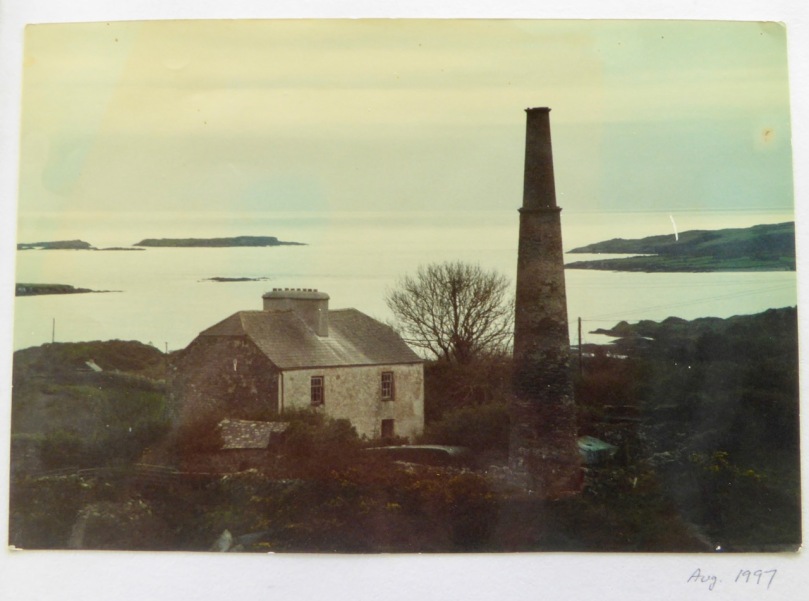
Photo 97It’s a sad thing to lose an iconic landmark. You know the kind I mean – the one that’s in every photo of the place, the one that helps to define it, the instantly recognisable image. In the case of West Cork, that would include the Mizen Bridge, the Galley Head Lighthouse, Ballydehob’s Twelve Arch Bridge, the castles at Three Castle Head, Bantry House, the Baltimore Beacon and of course the Fastnet Rock.

The morning after the lightening strike

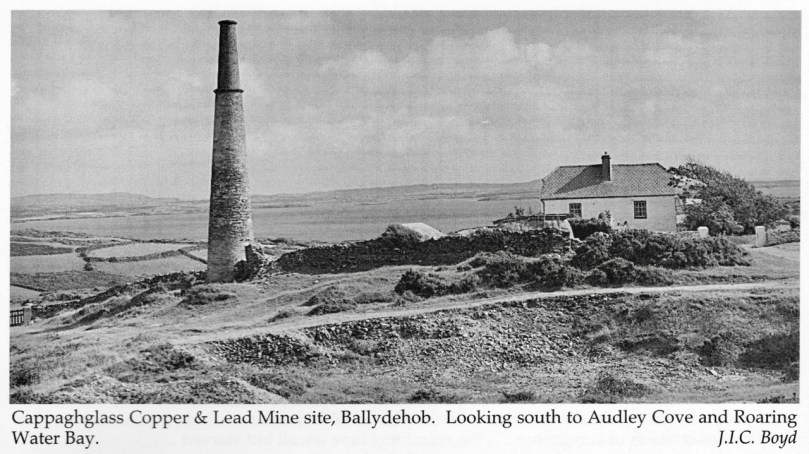
The Cappaghglass Mine Chimney the morning after the lightning strike

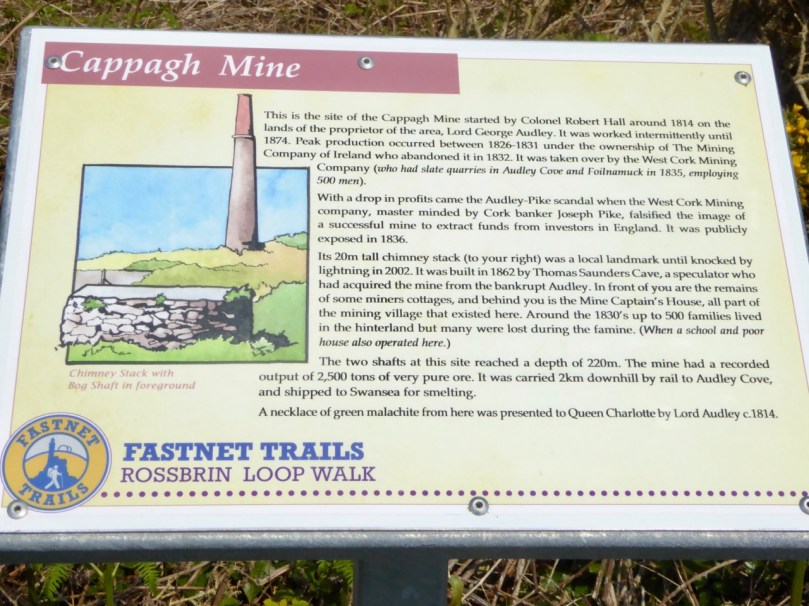
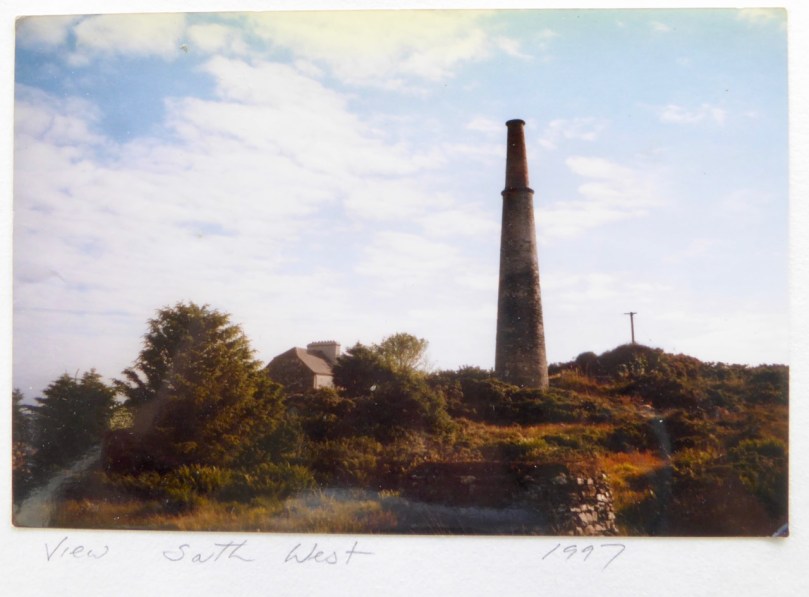
But we used to have another one, until it was hit by lightning and came down in 2002, 15 years ago this month. The mine chimney at Cappaghglass stood tall on the crest of the hill, visible for miles around from Mount Gabriel to Cape Clear, from Long Island to Baltimore.

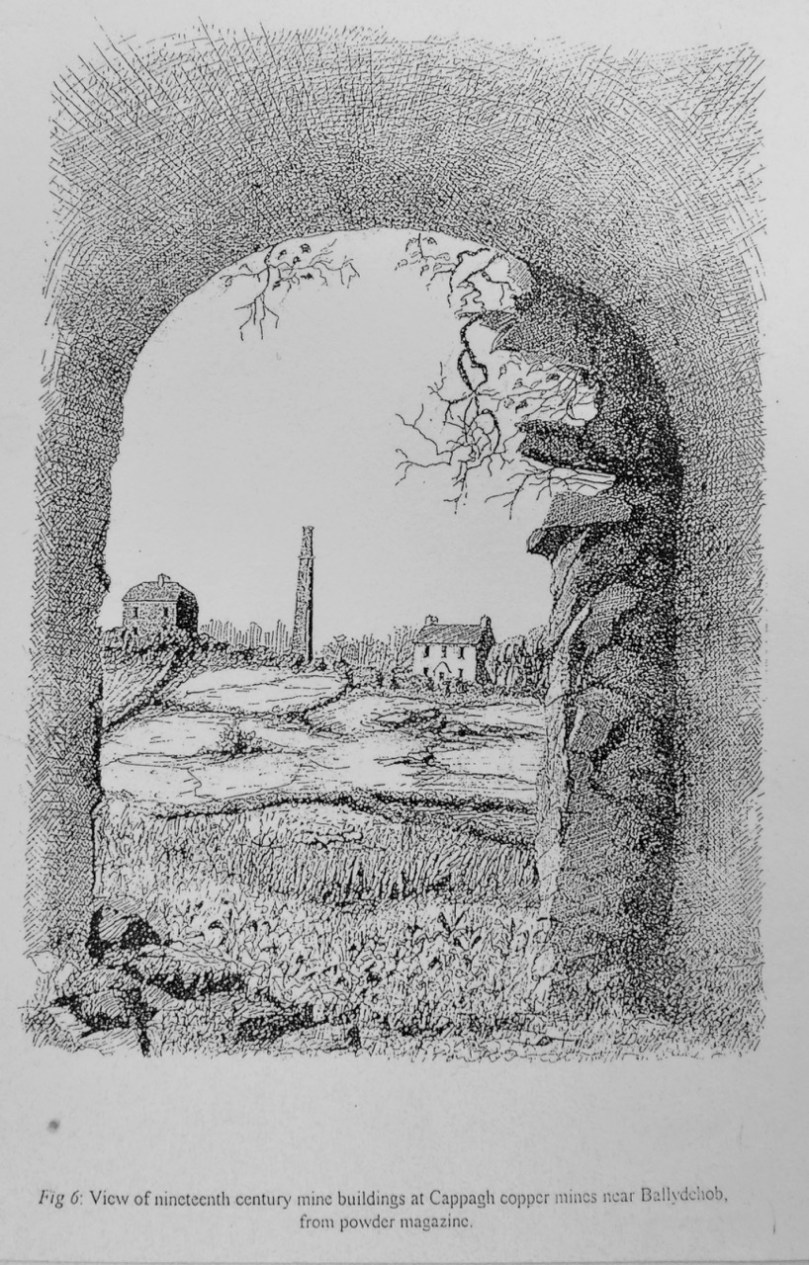
View from magazine

I don’t know the origin of this drawing. It’s a view of both mine captain houses and the chimney, taken from the south near Audley Cove

It was the most visible manifestation of the industrial past that has vanished so completely from this area. When it was built (to replace an even older one) in 1862 it was to vent steam from the engine that powered crushing machinery. Robert has written about the mining industry here – take a look at his post, Copper Country. At its height, hundreds of people were employed, above and below ground in the Cappagh Mine and what is now a lonely stretch of heathery hilltop was once a populous place.

Fastnet Trail sign

The chimney was so conspicuous on the landscape that it was used by the Admiralty to provide a reference point for mariners and by travellers to orient themselves in West Cork.

Admiralty Chart

Admiralty chart showing the ‘Steam Chimney’ as a reference point

As many landmarks are, it was also a favourite spot with locals – a place to walk out to on a fine summer’s evening or to bring your visitors to so they could admire the panoramic views over Roaringwater Bay and listen to tales of a grandfather’s backbreaking labour in the mines.

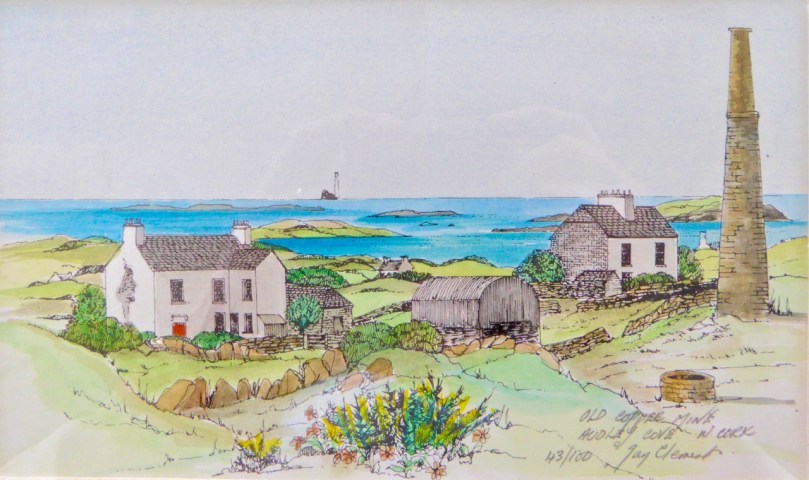
Jan Clement print

The storm that roared in on the afternoon of February 9 in 2002 came with no warning. It slammed into Cappaghglass with a noise like a jet engine. The first lightning strike killed several cows on an adjacent field, the next brought down the chimney and one after that hit the telephone wires causing a powerful surge to explode into the old Mine Captain’s House, by then the comfortable and modernised home of Terri and Mark O’Mahony and their family. The impact was devastating (we’ve seen the pictures) – the house was ruined and everyone inside was incredibly lucky to escape with relatively minor injuries.

Chimney stump

The chimney stump today

The O’Mahonys have rebuilt the Mine Captain’s House, but all that remains of the chimney is a stump. There was talk of reconstructing it but this never happened. In circumstances like this, all we have are the images that we can gather together to remind us of what an iconic structure this was. Fortunately, there are photographs and works of art extant that bear witness to how it dominated the landscape and that help us understand how it became such a beloved feature of the countryside.

Photo 97 to SW

Among the images that remain is a charming drawing by Brian Lalor (yes, he of Brian’s Sketchbook fame), commissioned by friends to celebrate Mark O’Mahony’s birthday. It shows the chimney and the house and since it was done in 2002 it must have been just before the lightning strike.

Lalor 2002 sketch

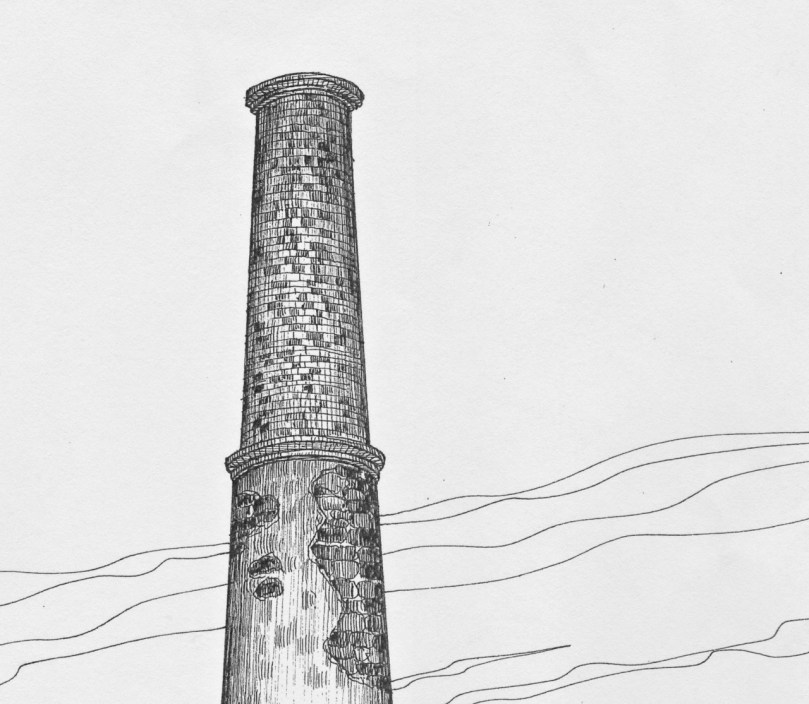
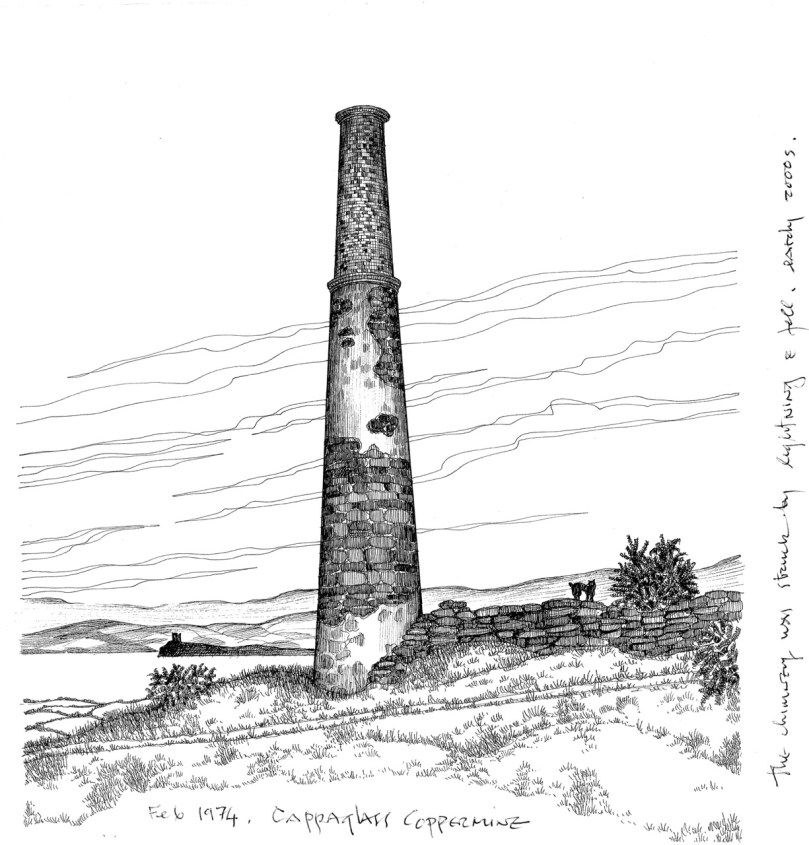
But last week a new image emerged – Brian came across a pen and ink drawing he did in 1974 and he has allowed me to use it in this post. Because Brian unites the eye of the artist with the training of the architect and archaeologist, this is an important new piece of documentary evidence, as well as being a work of art. Thus we can see that the lower two-thirds of the chimney were made of stone, with render still clinging to the outside in patches. The top third is brick, separated from the stone by a corbeled course of expertly laid brick – a feature that is repeated at the top of the chimney also.

Lalor Cappaghglass Chimney – closeup

In Brian’s drawing the chimney stands splendidly on the hill like a round tower and its medieval resonance is echoed by the distant castle across the water.

Lalor Cappaglass Coppermine

My thanks to Mark and Terri O’Mahony for allowing me to use their photographs and drawings in this post, and to Brian Lalor for giving me a copy of his sketch. It’s lovely to have this evidence – but of course I can’t help regretting that the chimney is gone forever.

Mining area

Cappaghglass now

The First Viral Sensation: How a Pre-Raphaelite Painting Inspired a Generation

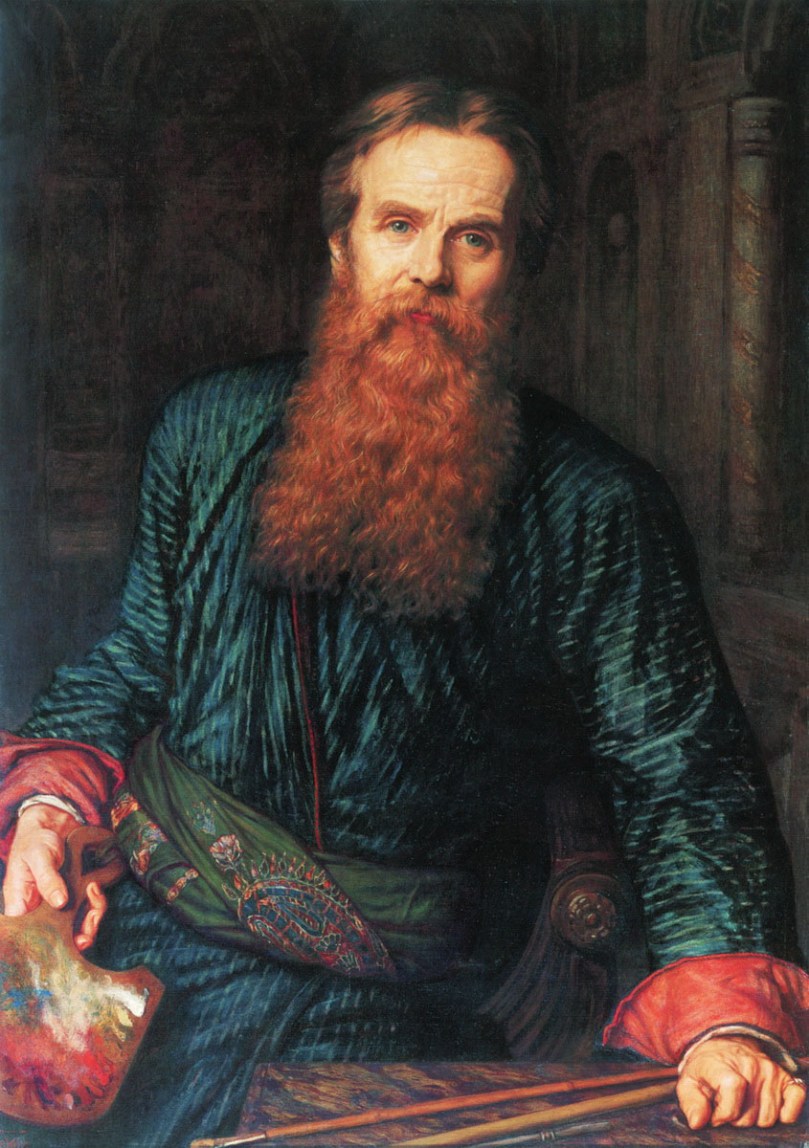
william_holman_hunt_-_selfportrait

Holman Hunt, one of the three founders of the Pre-Raphaelite Brotherhood

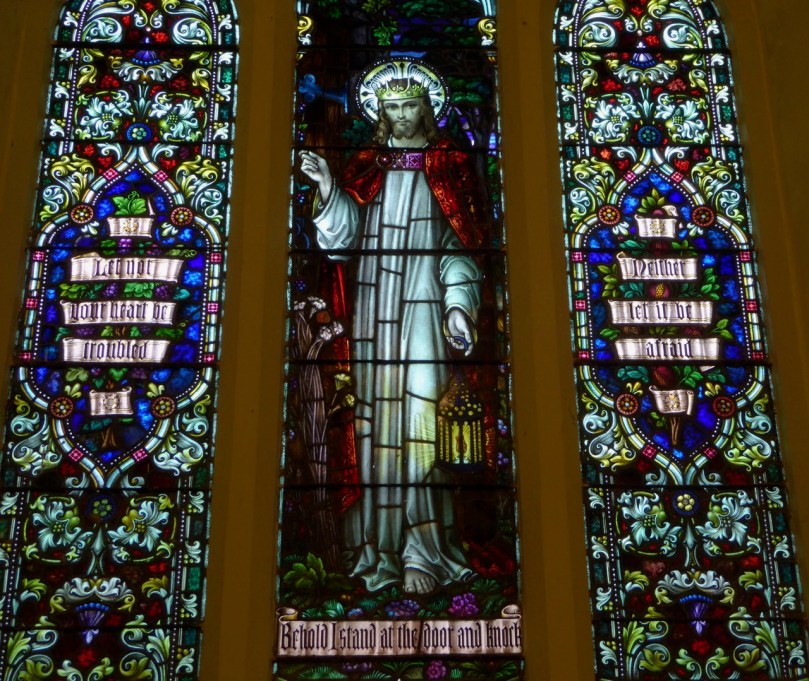
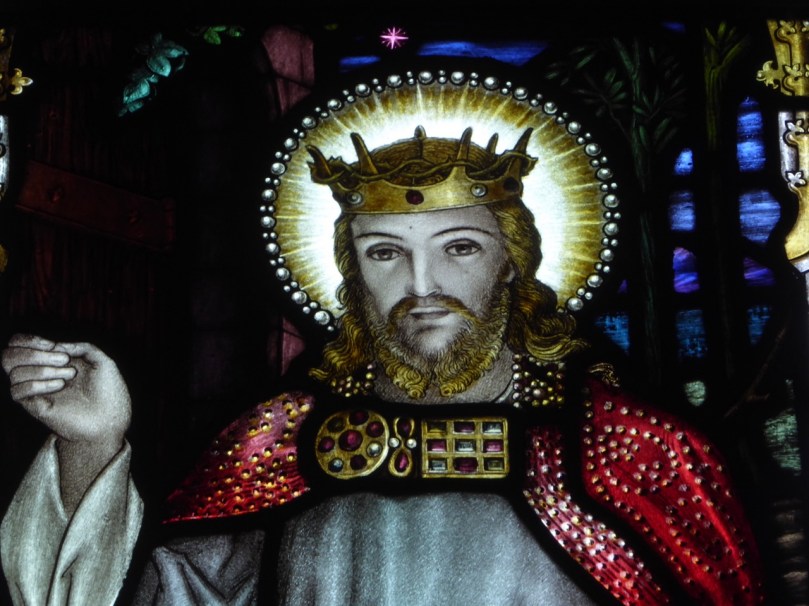
In preparing for an upcoming talk of stained glass in West Cork, I was struck by a single image that seemed to crop up again and again. The image was described as The Light of the World, or occasionally as Christ Knocking at the Door.

St Matthias Light of the World by Clokey of Belfast 1945

Christ as the Light of the World. This window, by Clokey of Belfast is in St Matthias Church of Ireland in Ballydehob

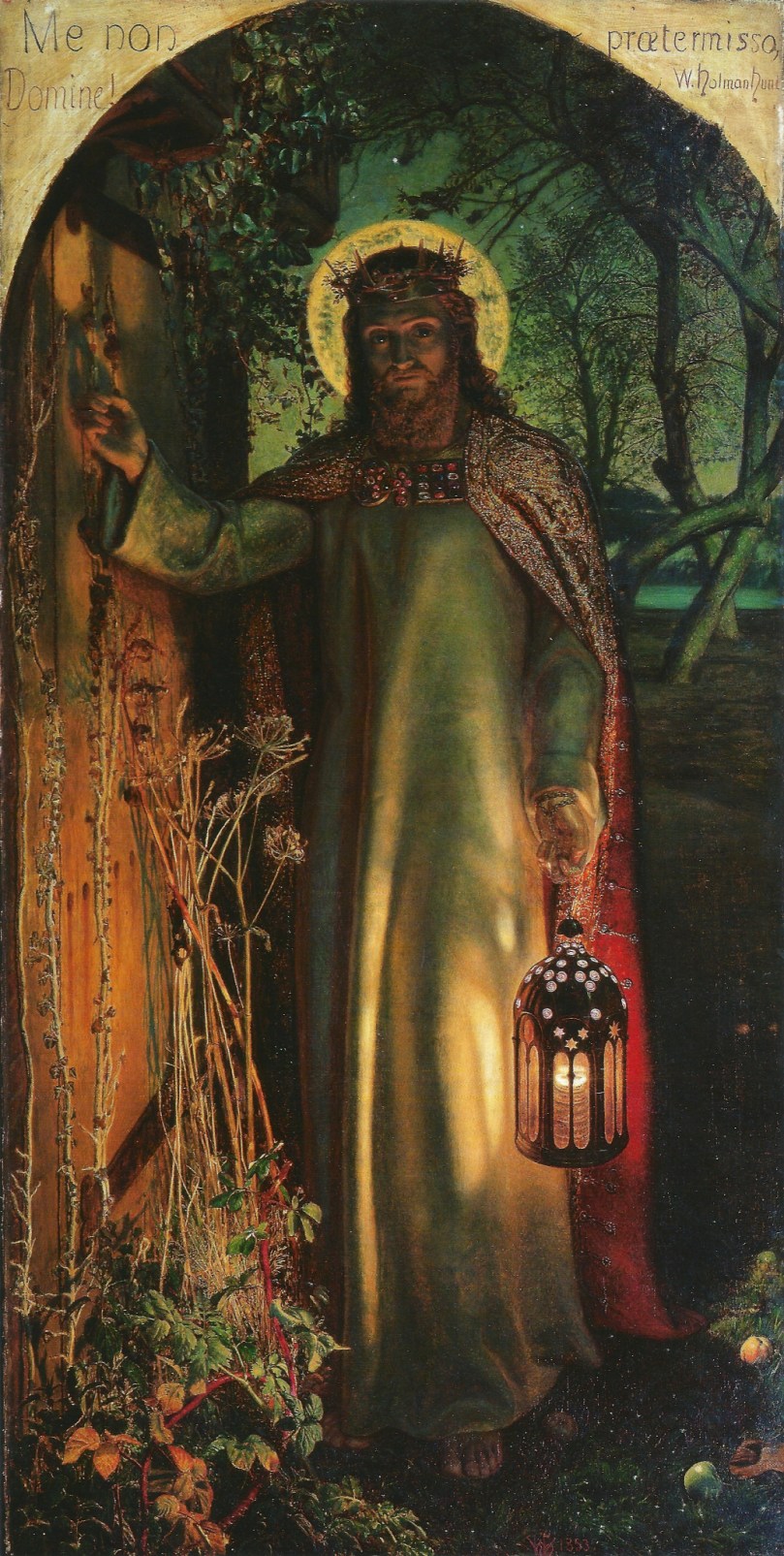
Curious, I searched online to find out more about the window and discovered to my astonishment that the painting upon which the window was based was The Light of the World by the Pre-Raphaelite painter Holman Hunt and, in the words of Robert Fulford, although…Hardly anyone today admires The Light of the World as art…it remains a historic moment in mass culture, the beginning of the great age of reproduction, the first image that millions of people knew intimately, and often loved.

hunt-light-of-the-world1

Holman Hunt’s Light of the World. It was based on Revelation 3:20 Behold, I stand at the door, and knock: if any man hear my voice, and open the door, I will come in to him, and will sup with him, and he with me.

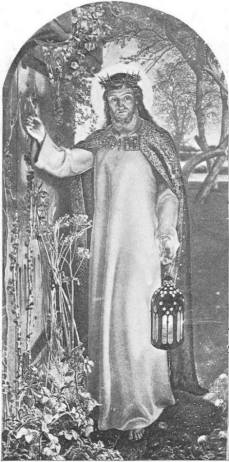
Hunt’s first version light-of-the-world-engraving(he eventually painted three) was begun in 1851 and was widely admired. But it was two other media that carried it to the status of international icon. The first was engraving (left) – the photography of its age in its ability to convey images to a mass audience – and the second was stained glass, just coming into its heyday as a result of recent innovations in church architecture and decoration.

The painting toured the world and attracted enormous crowds wherever it went. It is estimated that four fifths of the population of Australia viewed it, for example. Fulford describes it thus: In Melbourne in 1906 visitors stampeded, anxious to see it the moment it was open to the public. But if the crowd was rowdy at first, Maas writes, soon “an air of reverential awe descended on the gathering.” Men removed their hats, voices fell to a whisper. Some people stood or sat gazing at it for hours. A few visitors fainted. Later it toured South Africa and in 1907 returned in triumph to Britain and its final destination, St. Paul’s.

Rosscartbery Light of the World Mayer 1934

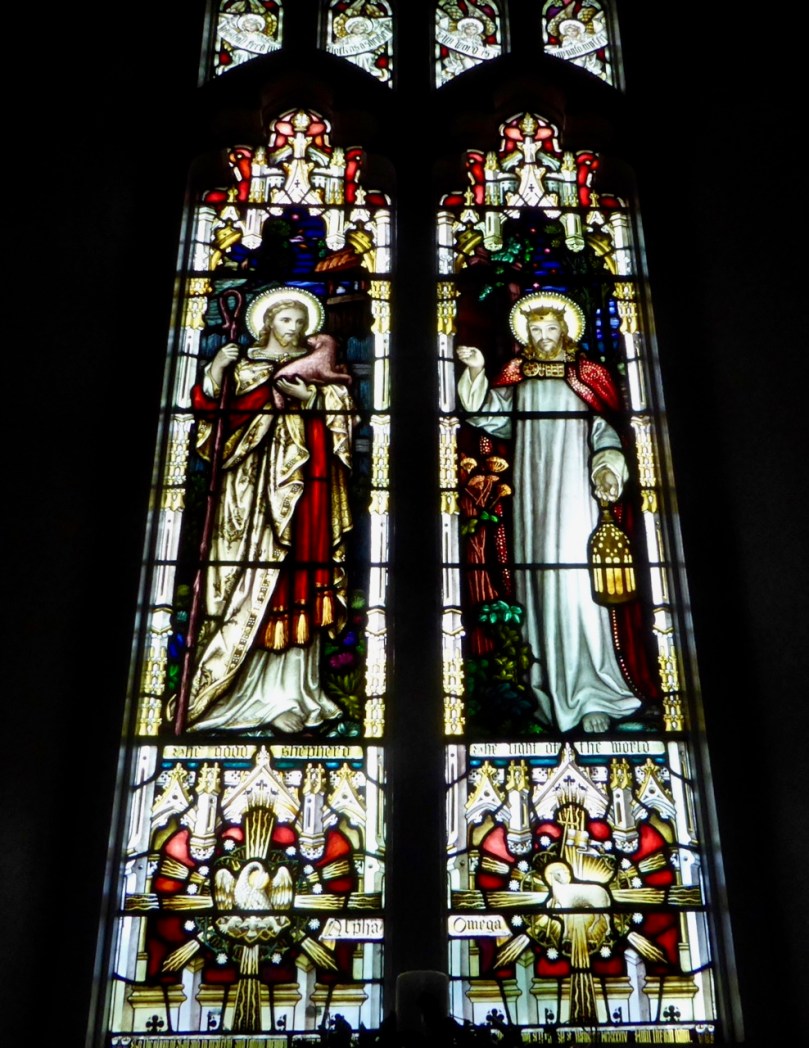
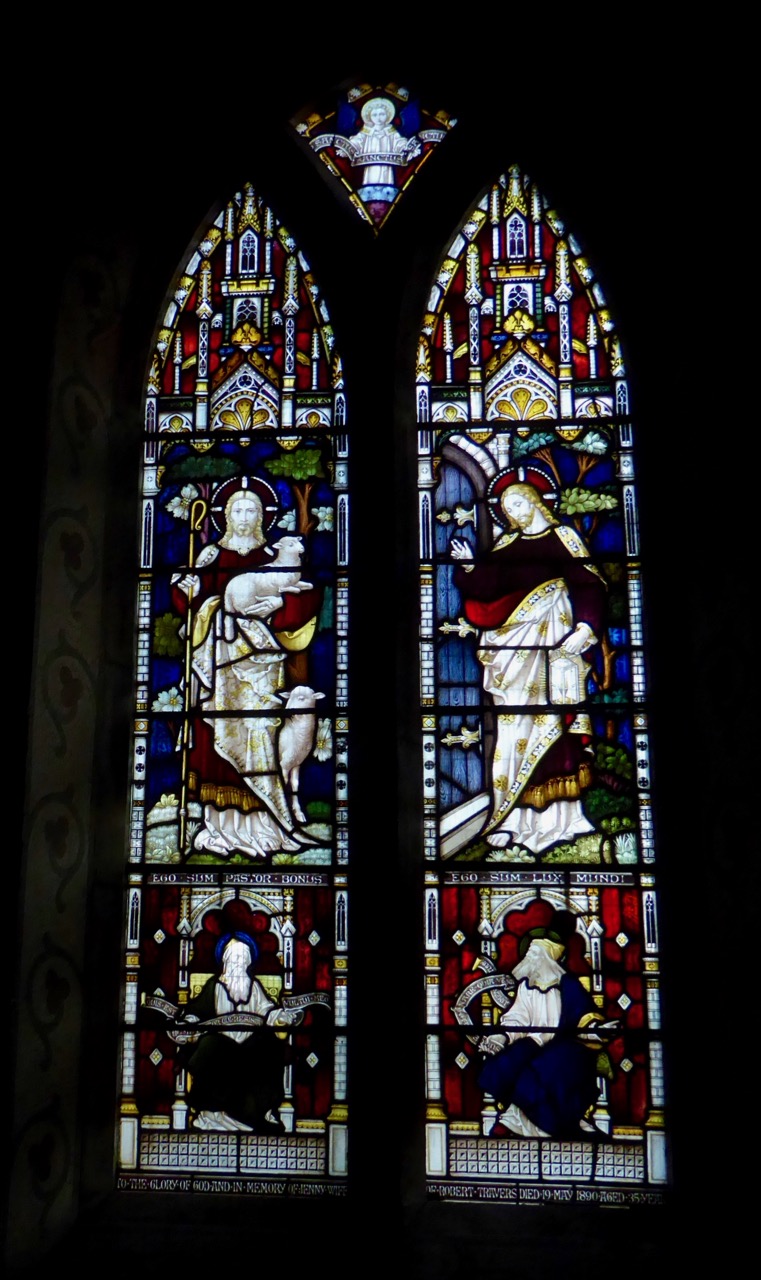
This window in Rosscarbery Cathedral is by Mayer of Munich. Christ as The Light of the World was often paired in a two-light window with Christ as the Good Shepherd

How to explain the appeal of this image? Holman Hunt himself gives us a clue. Writing in The Victorian Web, George Landow states that Hunt …believed that The Light of the World created its symbolic language in precisely the same way that men had formed language to express abstract and spiritual ideas. The important point is that, since the symbolism derives from what he takes to be essential habits of mind, it would be immediately comprehensible to any audience, because such “natural” symbolism does not require any knowledge of iconographic traditions. It appears he was correct, since the symbolism employed in the painting spoke directly to masses of people who took its message to heart and hung engravings and reproductions in their homes.

Rosscarbery Cathedral Light of the World detail

Detail from the Mayer window

And in their churches. In its listing of the glass in Church of Ireland churches, the website Gloine* lists 70 examples of Light of the World windows and a few others labelled Christ Knocking at the Door. Of these, about 65 are modelled directly on the Holman Hunt painting. Most of the stained glass studios are represented in the list – it was such a popular request that every studio had to have it in its catalogue. While there are more windows devoted to, for example, the Resurrection, or the Four Evangelists, they are all quite diverse representations, rather than being based upon a single original source. A similar list does not exist for Catholic churches, but it is unlikely that the Light of the World would be as prominent in them, mainly because most stained glass windows in Irish Catholic churches are later than the high point of popularity for Hunt’s painting.

Timoleague Good Shephard and Light of the World, 1890 Clayton and Bell

This window by Clayton and Bell dates from 1890 and is in the Church of the Ascension (C of I) in Timoleague

So here’s a challenge for you, Dear Reader. Have you seen this image in stained glass, or elsewhere? Were you familiar with the painting and aware of its impact? Do you have photos, stories or memories to share? Or is this an image that had its moment, particular to its day and time, and then disappeared from our consciousness like so many others have, before and since?

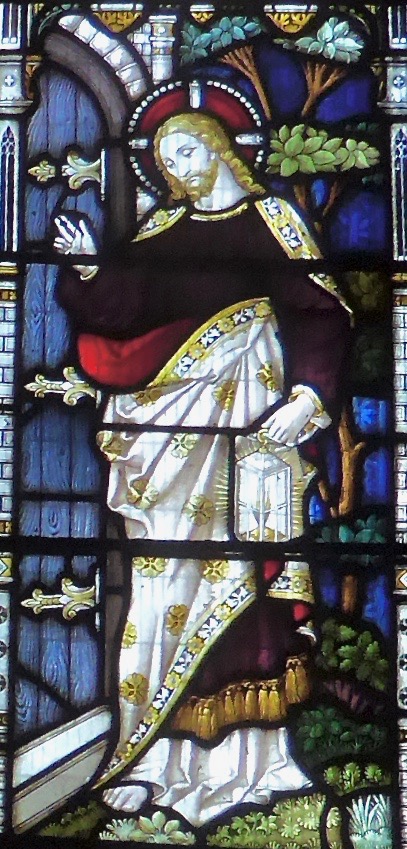
Timoleague Good Shephard and Light of the World, 1890 Clayton and Bell Detail

Detail from the Clayton and Bell window in Timoleague

*My grateful appreciation goes to Dr David Lawrence and the website Gloine – Stained glass in the Church of Ireland. This is a magnificent resource that contains information on almost every stained glass window in almost every Church of Ireland building in Ireland and Northern Ireland. It is awe-inspiring in its scope and erudition. The site lists two more examples from West Cork, Durrus and Caharagh.