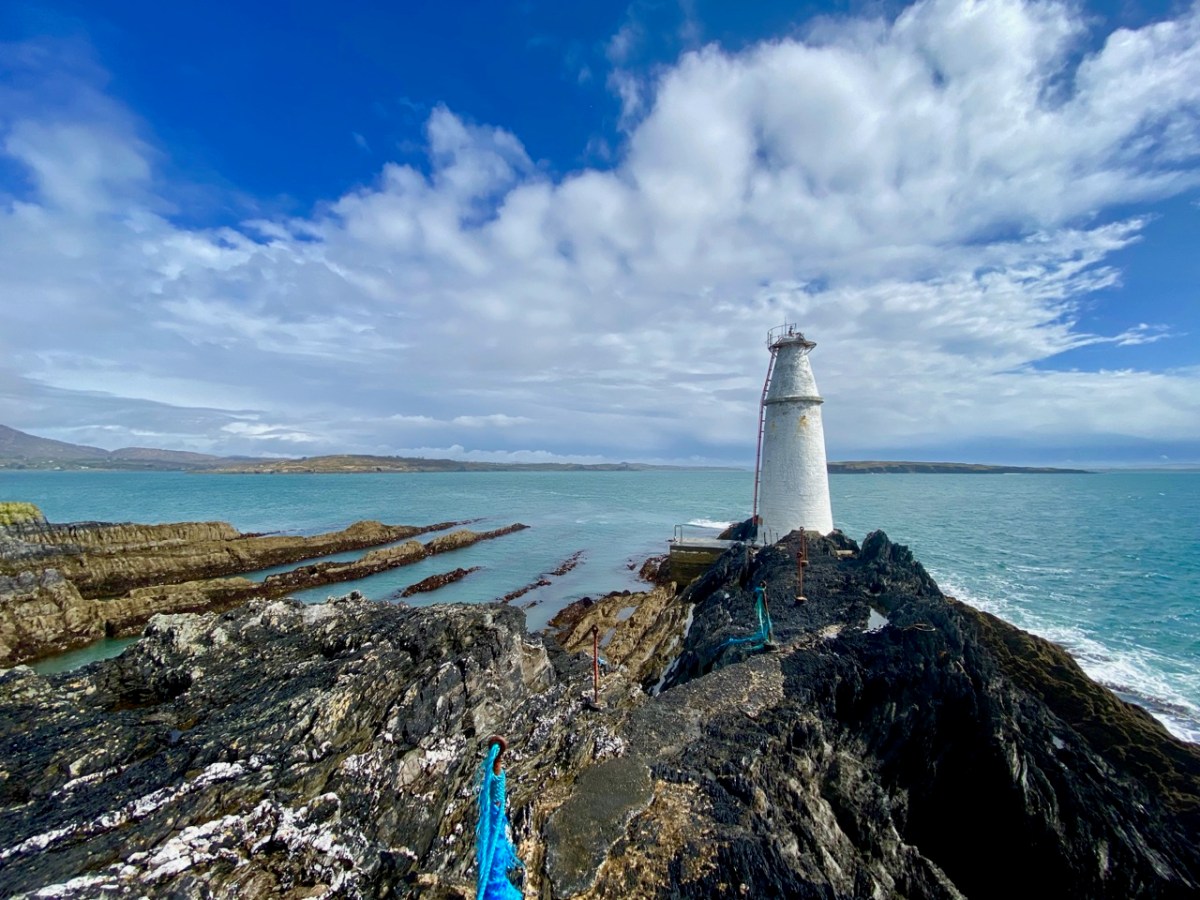
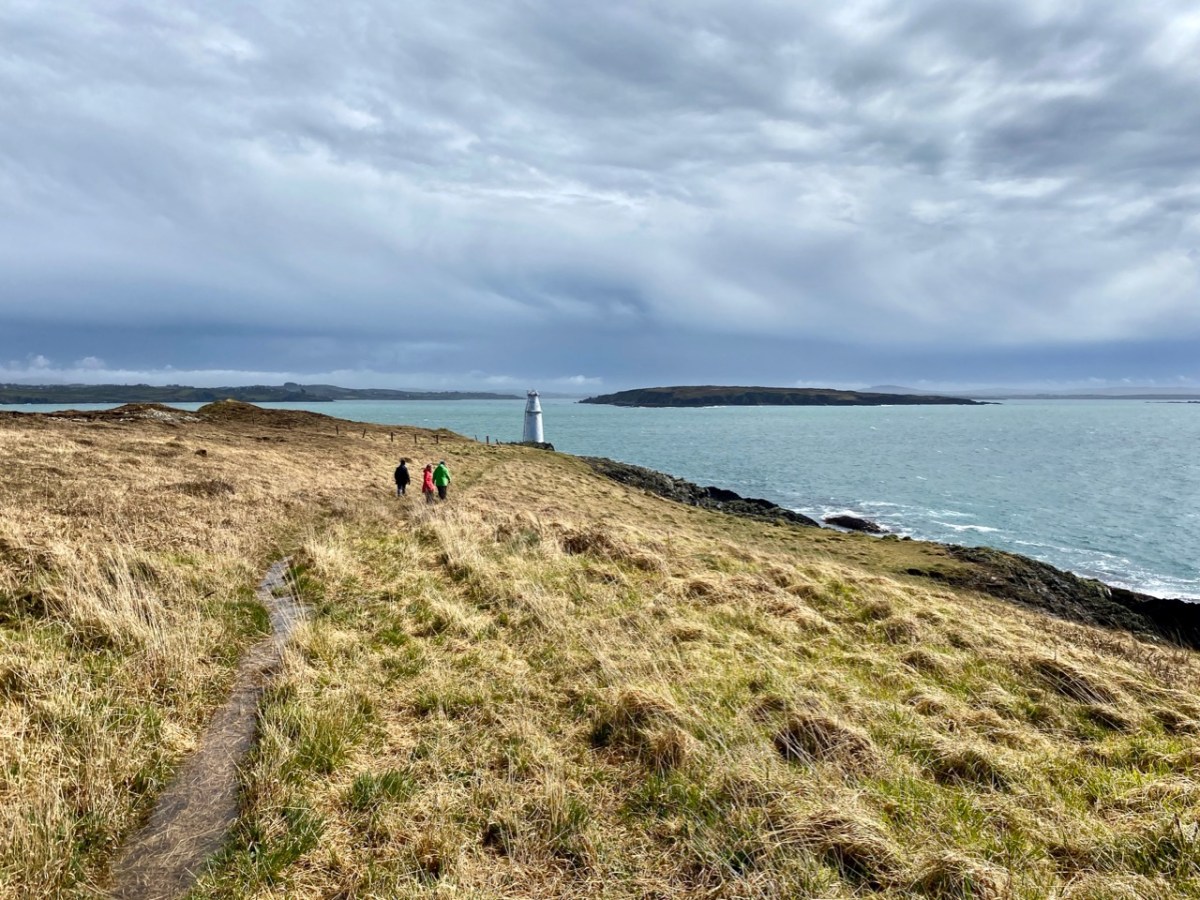
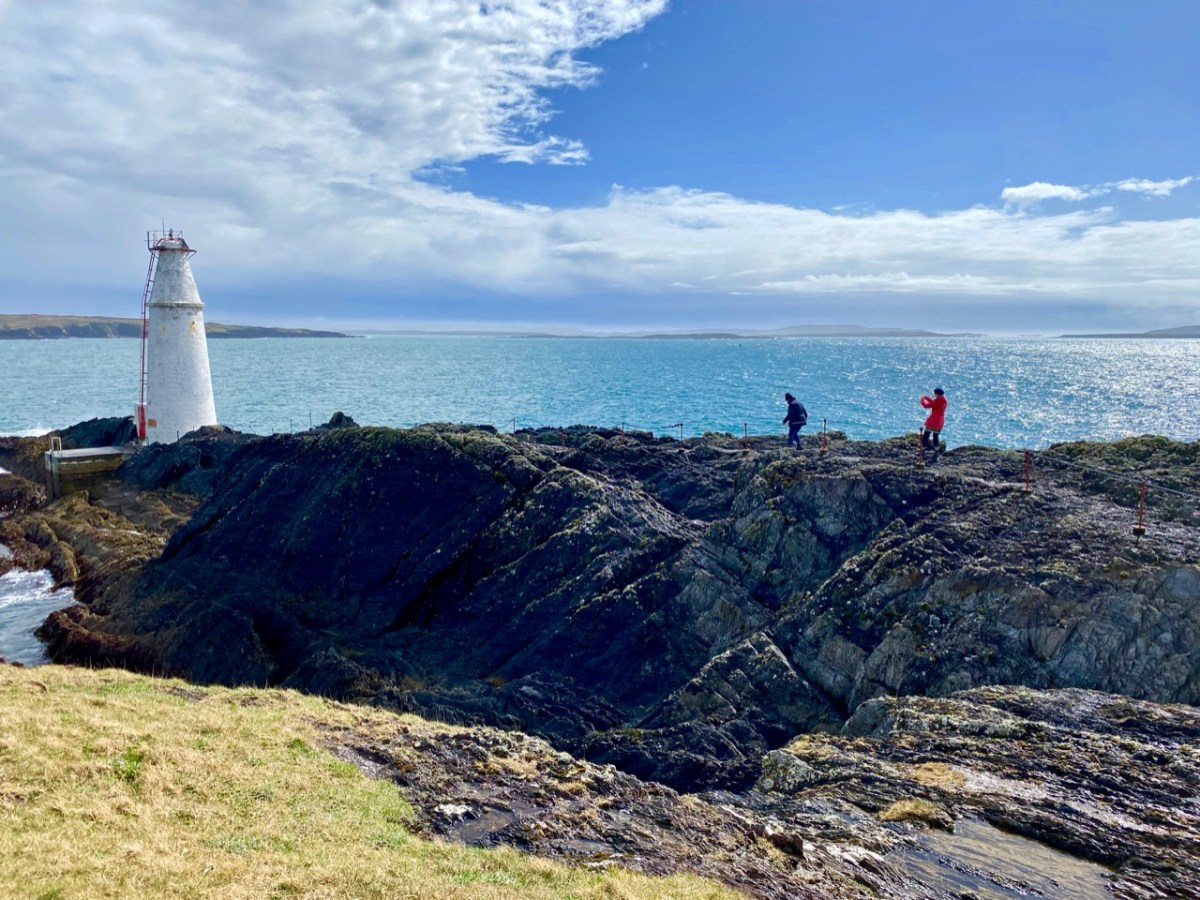
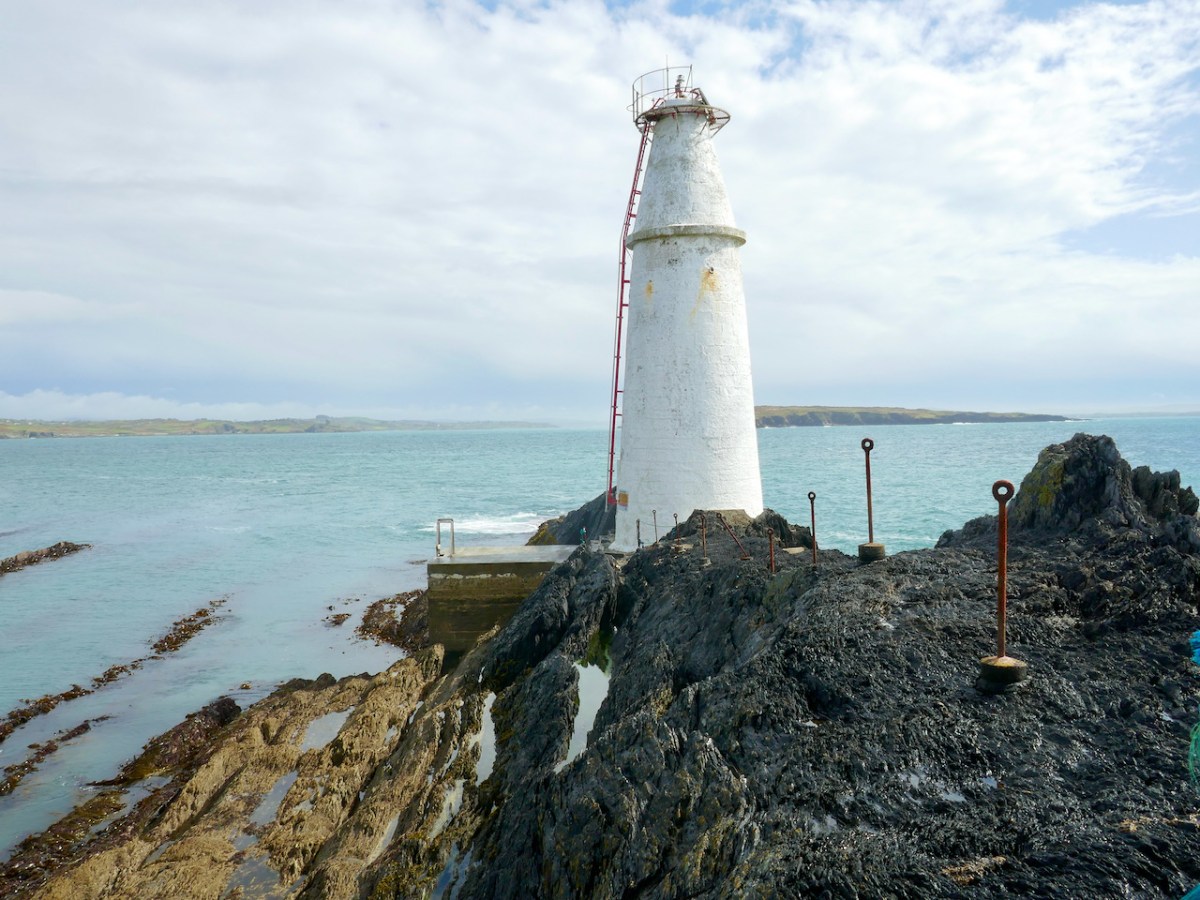
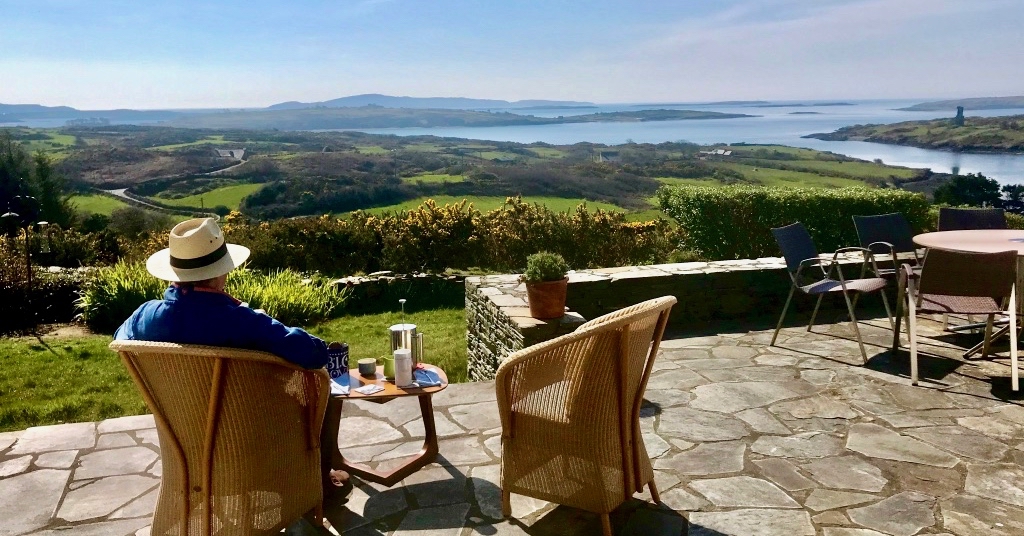
What better place to spend Easter Day than at the ‘Easter end’ of Long Island? We can see the island – out there in Roaringwater Bay – from our home here at Nead an Iolair. The lighthouse on the end of the island faces us – and winks through the night with the character of 3 quick flashes every 10 seconds. The narrow headland on which it stands bears the name ‘Copper Point’ – and so does the lighthouse.
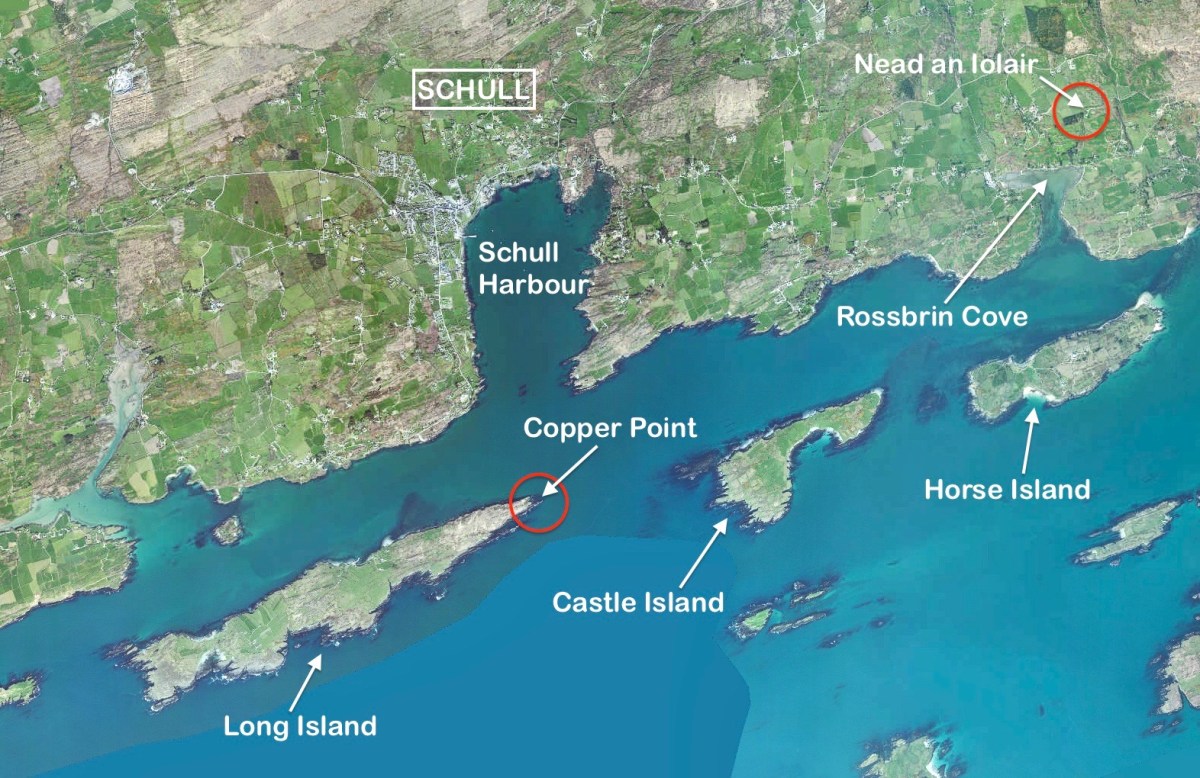
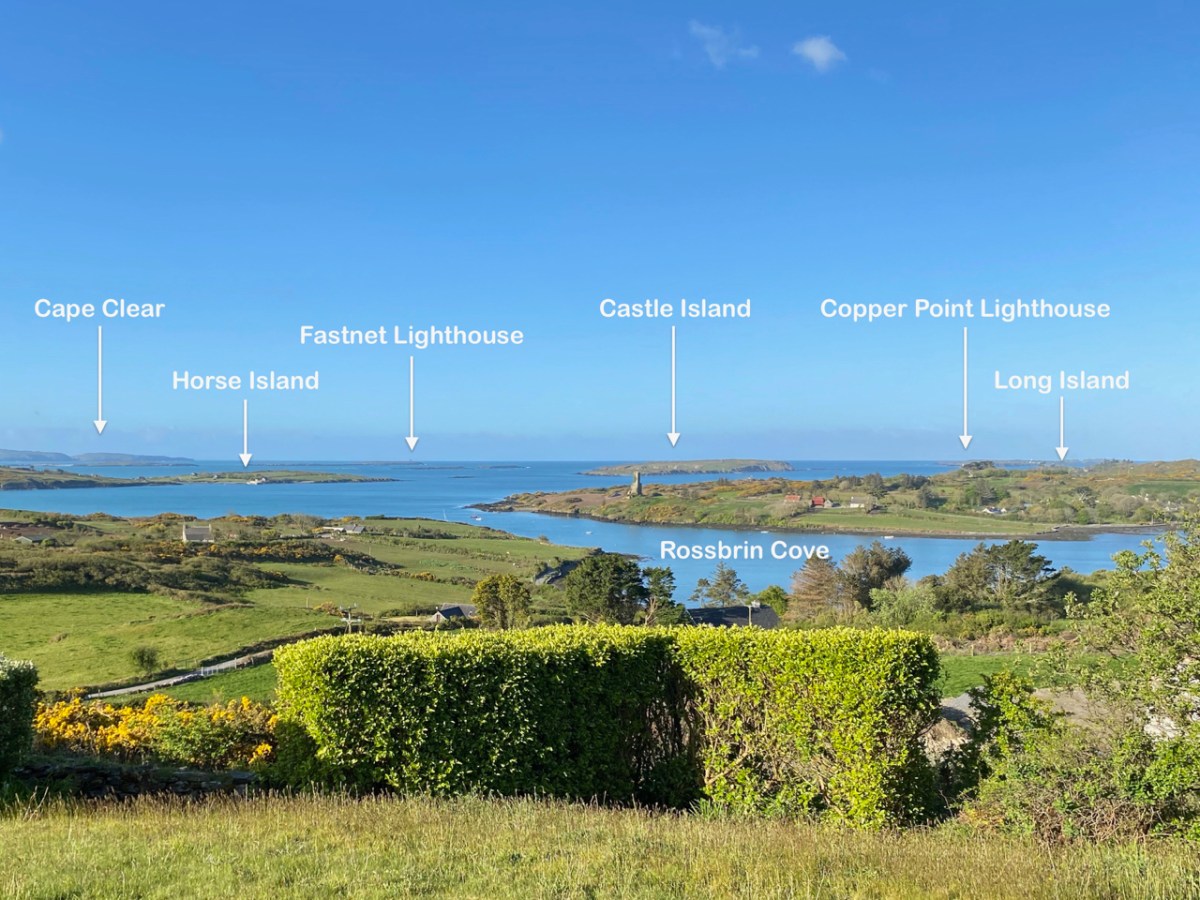
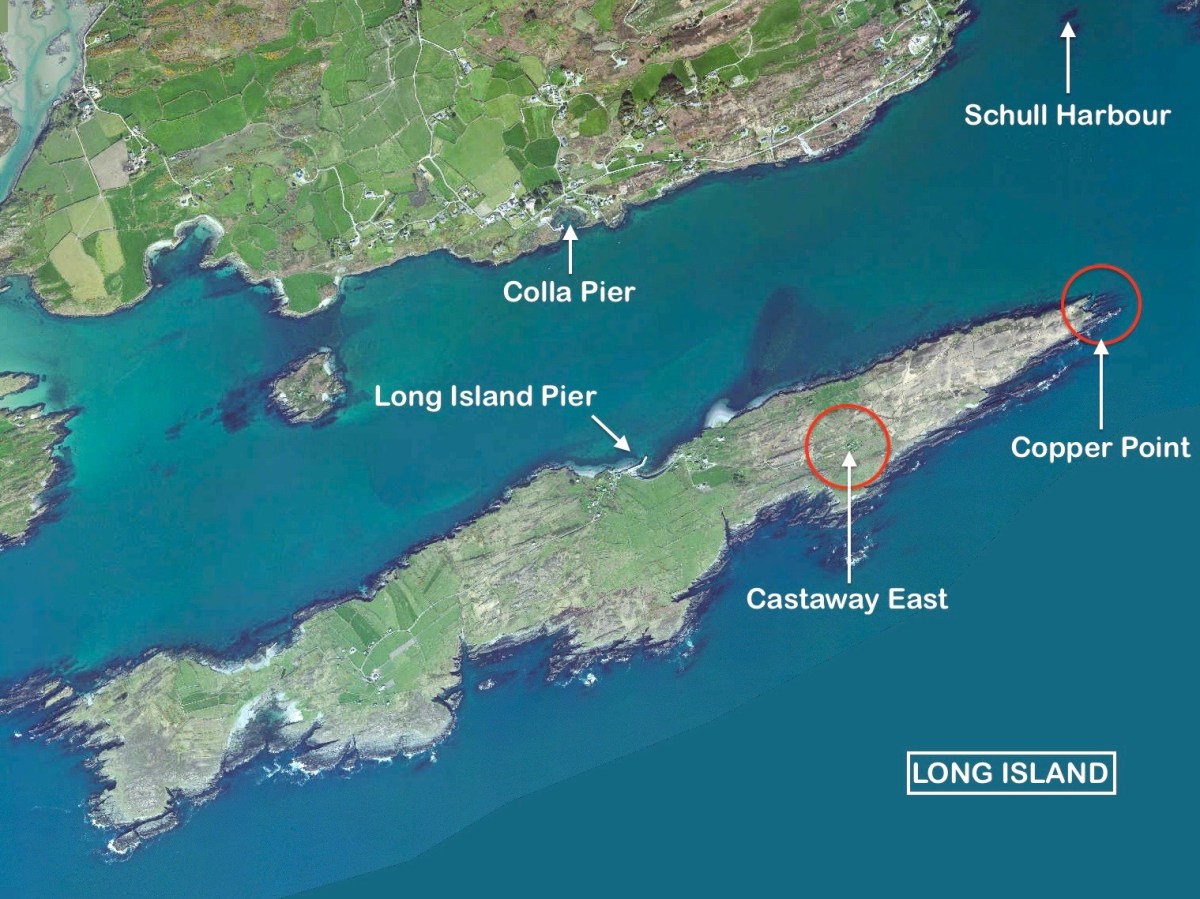
This aerial view shows Long Island in its context – a part of Roaringwater Bay and its ‘Carbery’s Hundred Islands’. Its neighbours to the east are Castle Island and Horse Island – all in our view – (that’s our view, below).
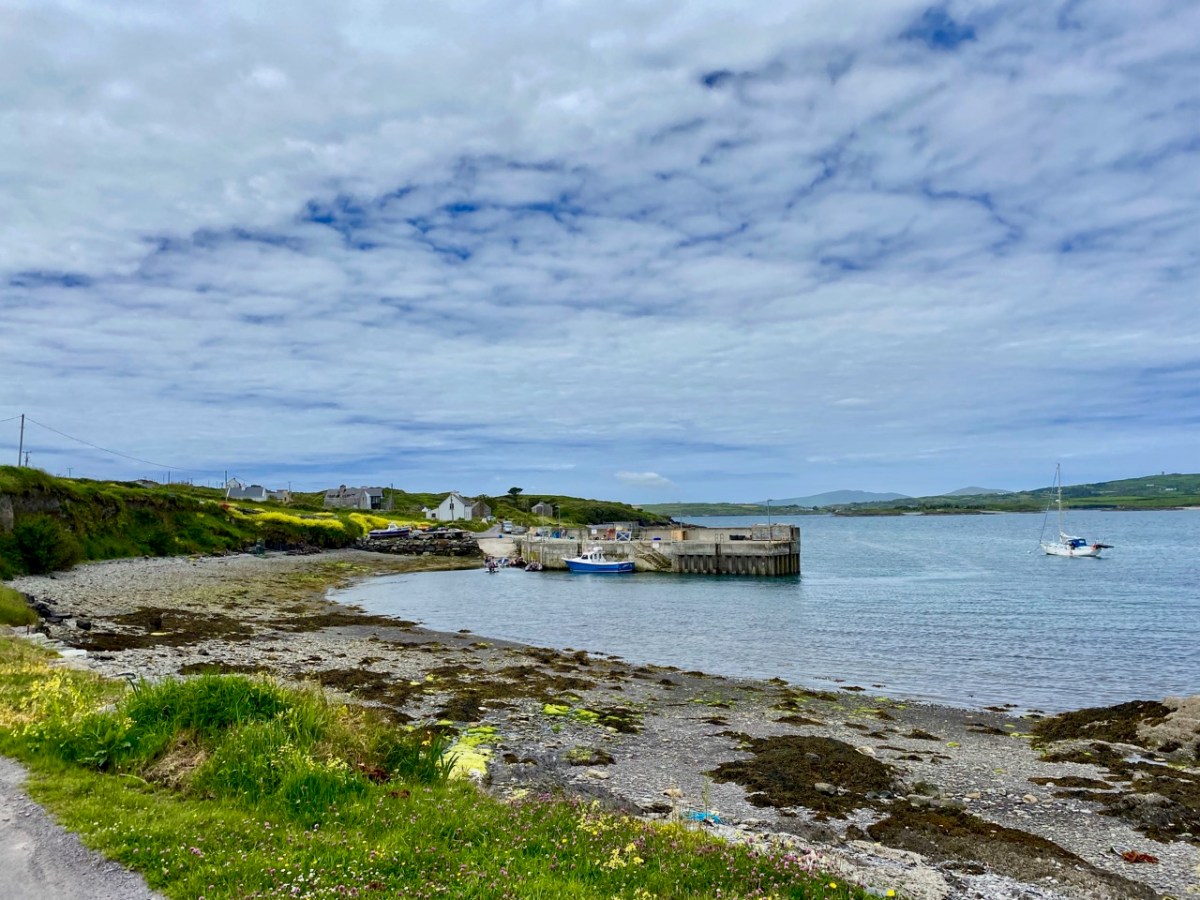
A closer aerial view of the island, above. It’s accessed by a regular ferry which leaves Colla Pier, a short distance from Schull town. The ferry arrives at Long Island Pier: there it is, on the pier (below).
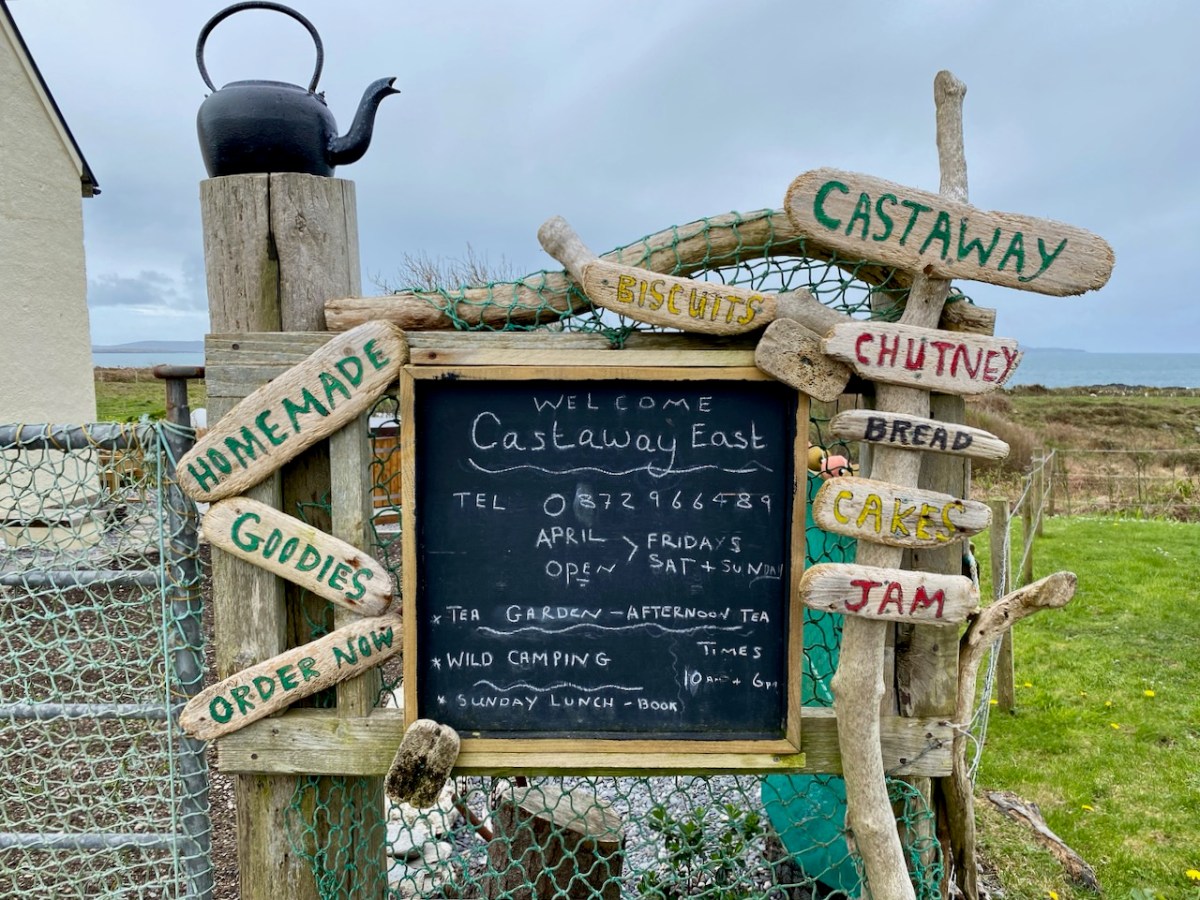
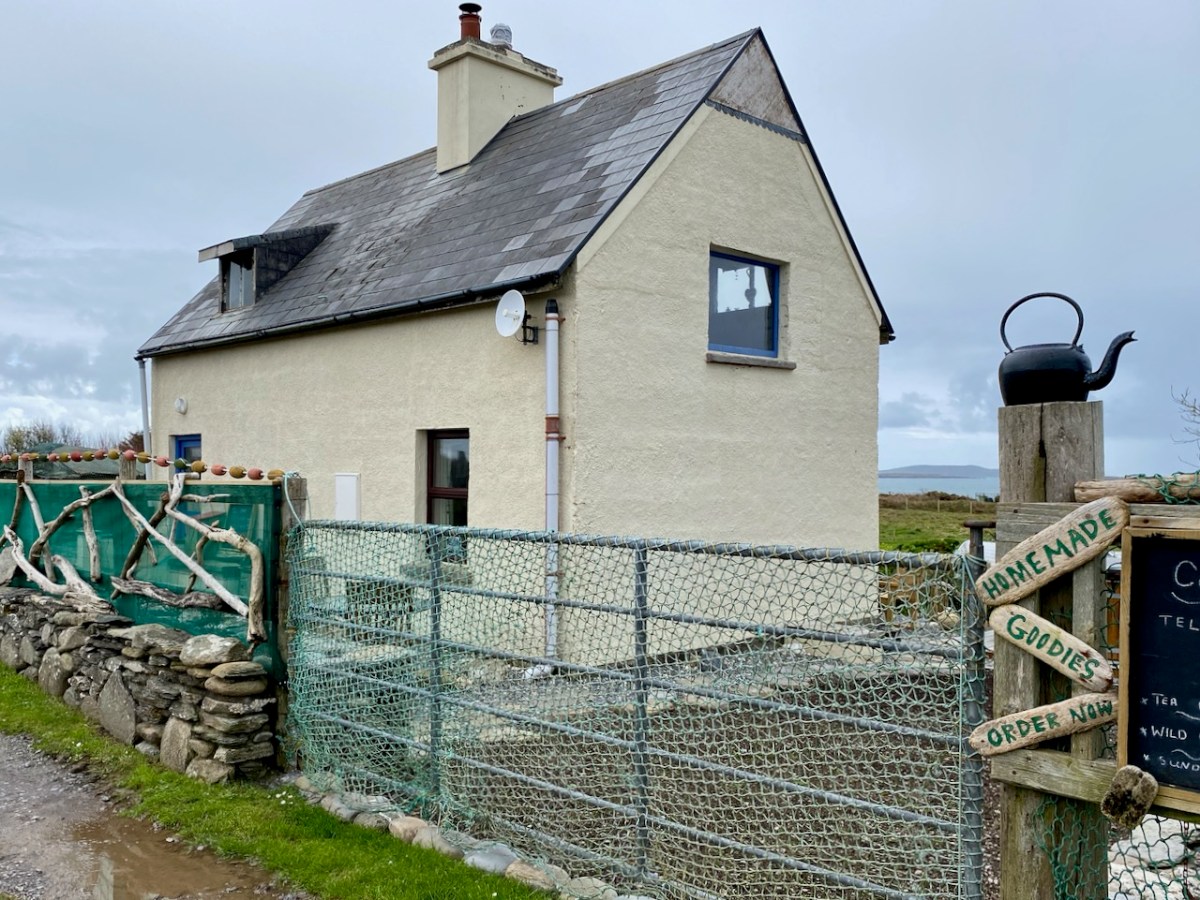
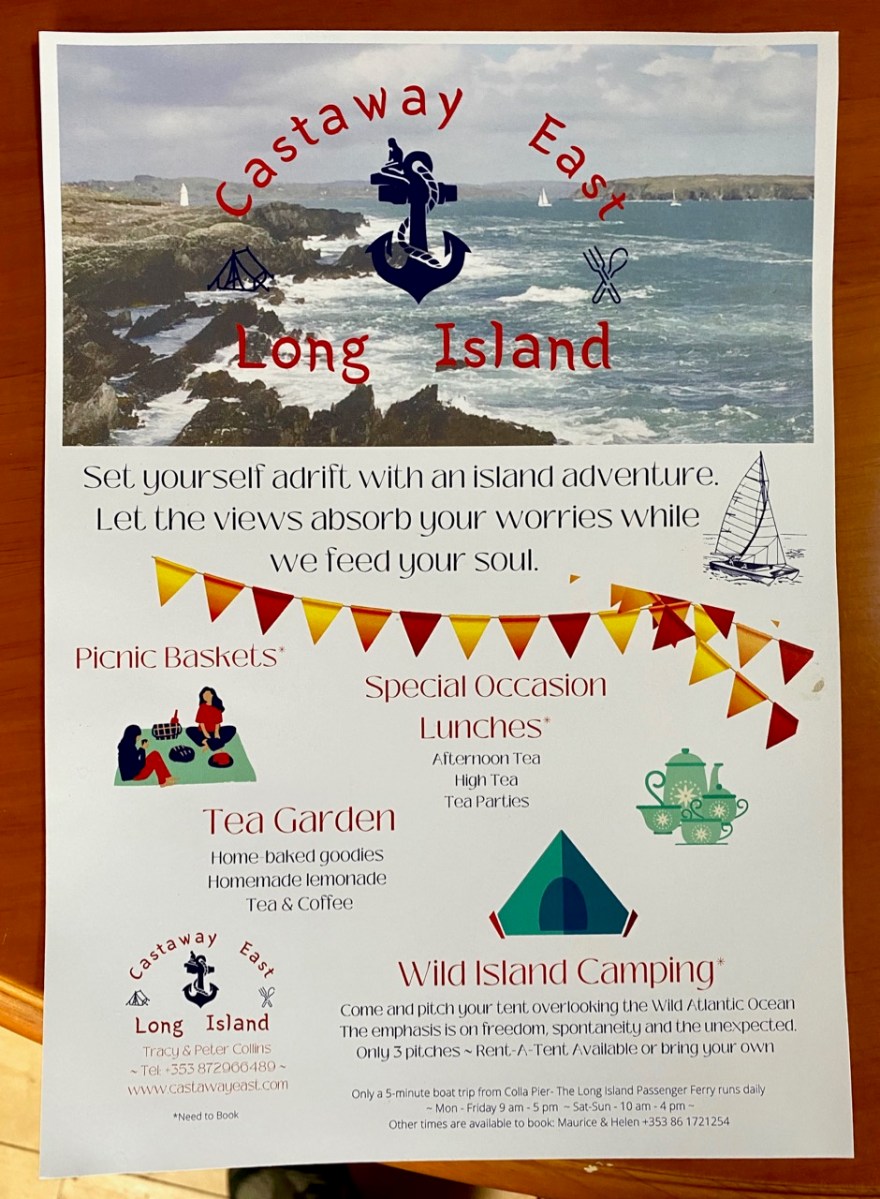
Our destination on this Easter Sunday was Castaway East – the furthest house on the ‘Easter’ end of the island. We have taken you there before, when we organised a Mad Hatter’s Tea Party in July of last year. The hosts there are Tracy and Peter, who served us brilliantly for that occasion, and also for the Wildflower Walks which Finola led last June: the Castaway crew provided a superb picnic for everyone, delivered to us at the island’s western end. This time we decided that we would test Tracy and Peter’s skills by ordering up an Easter Sunday lunch to celebrate a ‘special’ birthday for our good friend, Peter Clarke.
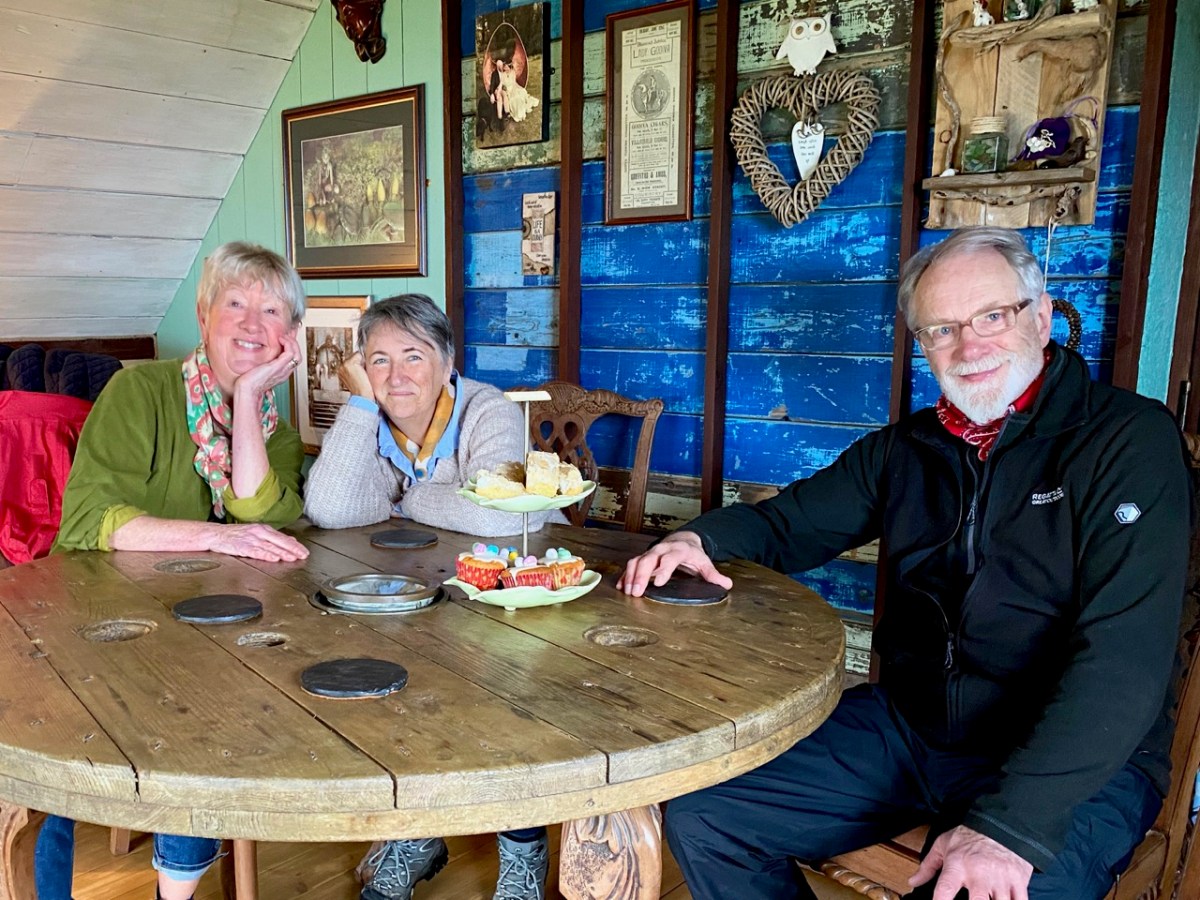
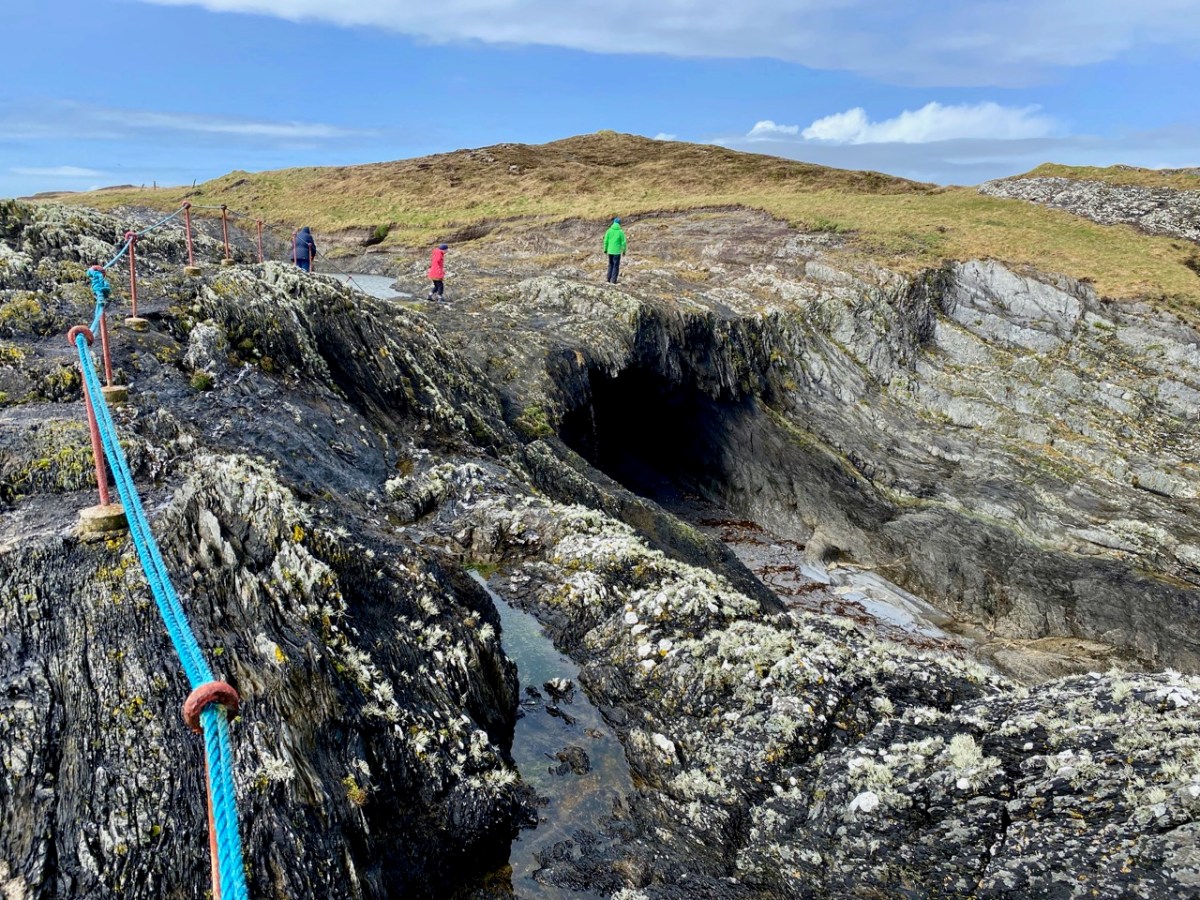
Amanda Clarke, Finola and birthday boy Peter, looking forward to a morning coffee (with delicious Easter treats) after arriving at Castaway East. We had an upstairs room in the Castaway house, with a good view over the island. Before lunch we had an opportunity to explore part of the island we had never been to before, heading down to Copper Point.
Why is it called ‘Copper Point’? Because there was a copper mine close by, one of many such enterprises that were seen in West Cork in the nineteenth century. Explorations on the island were started in the 1840s by the Cornish mining engineer Captain William Thomas: he wrote a Roaringwater Journal post for us a couple of years ago! William sank a trial shaft for 10 fathoms (60 feet) and extended a level south from this shaft for 3 fathoms. No metal bearing lode was found, and the mine was abandoned. Traces of these workings can still be seen not far from the lighthouse. It’s slightly ironic, perhaps, that the name ‘Copper Point’ arrived from somewhere and stuck.
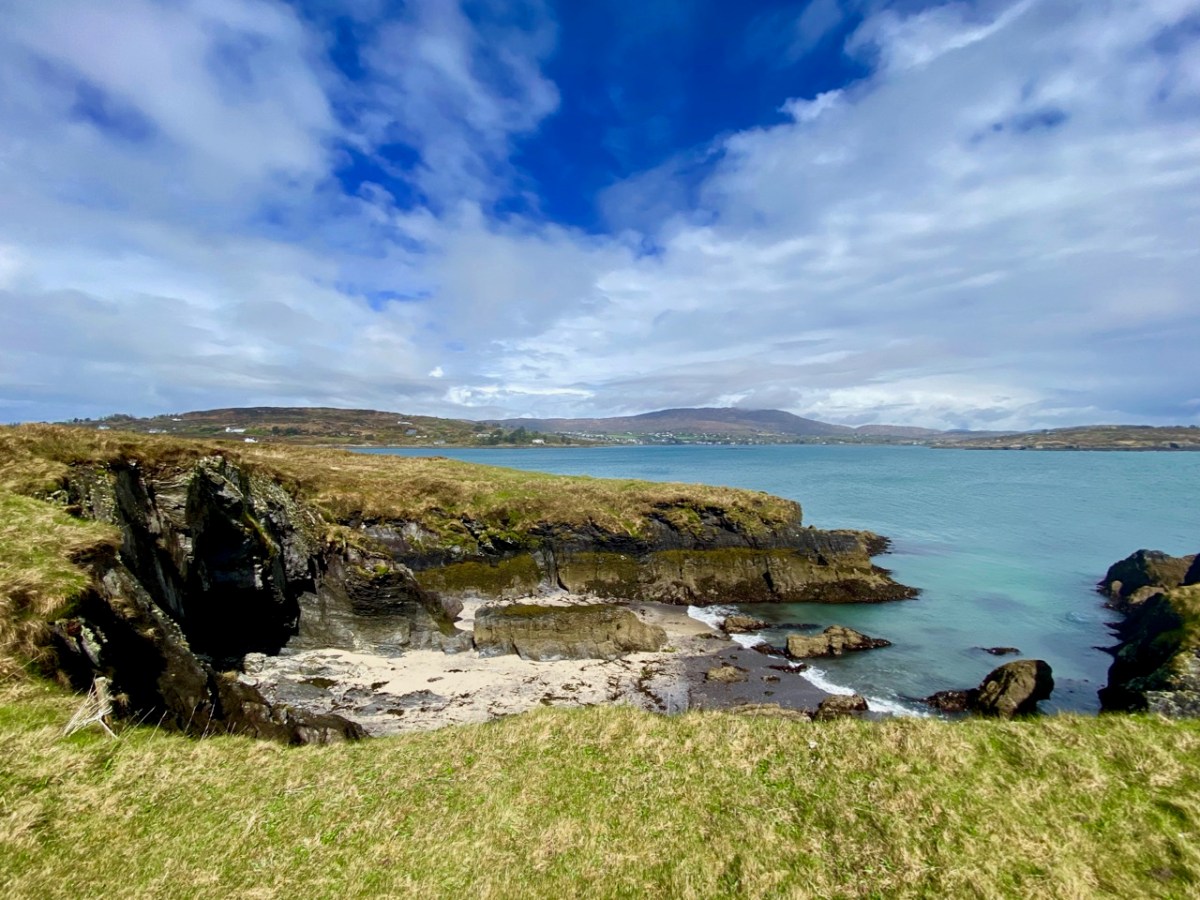
It’s a wild landscape – but very beautiful and imbued with atmosphere. We certainly worked up a good appetite while on our morning walk, and returned to the house with great expectations.
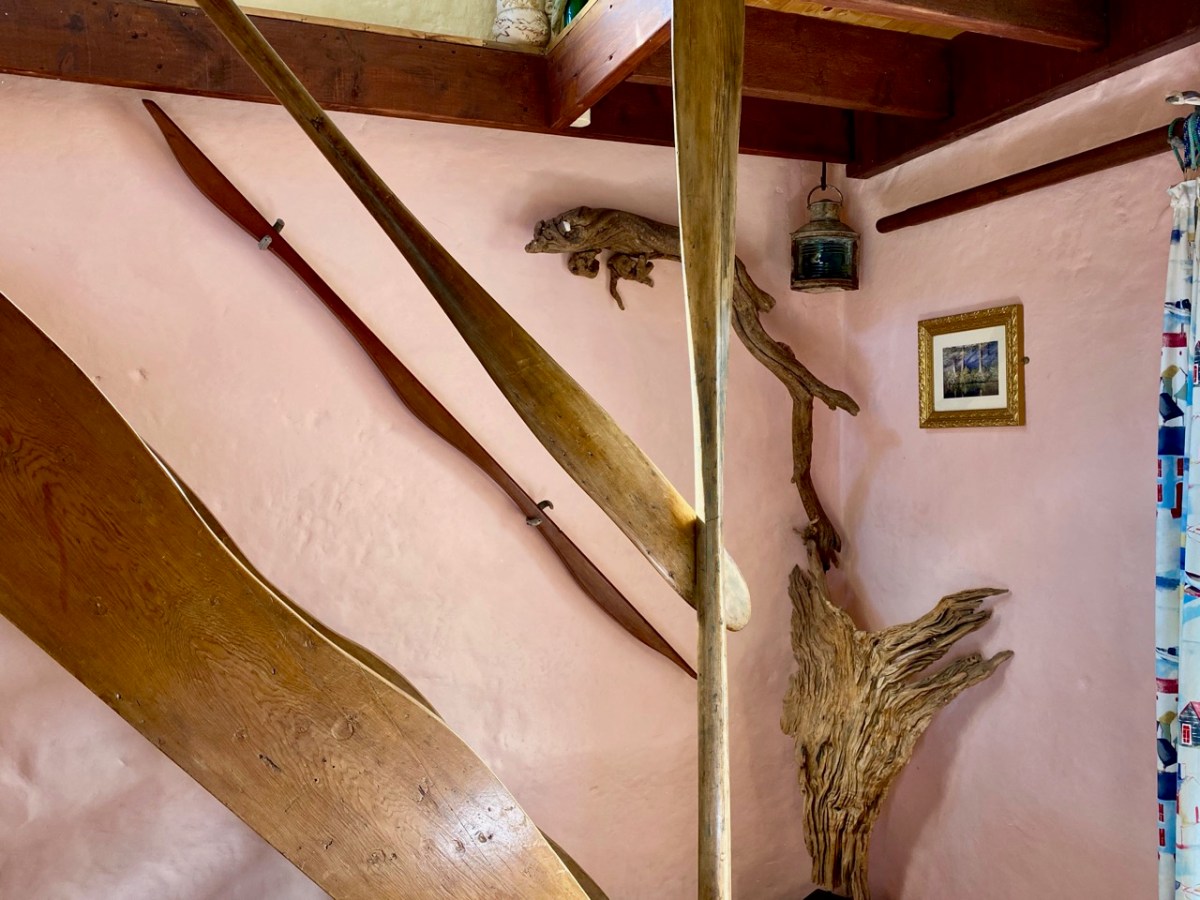
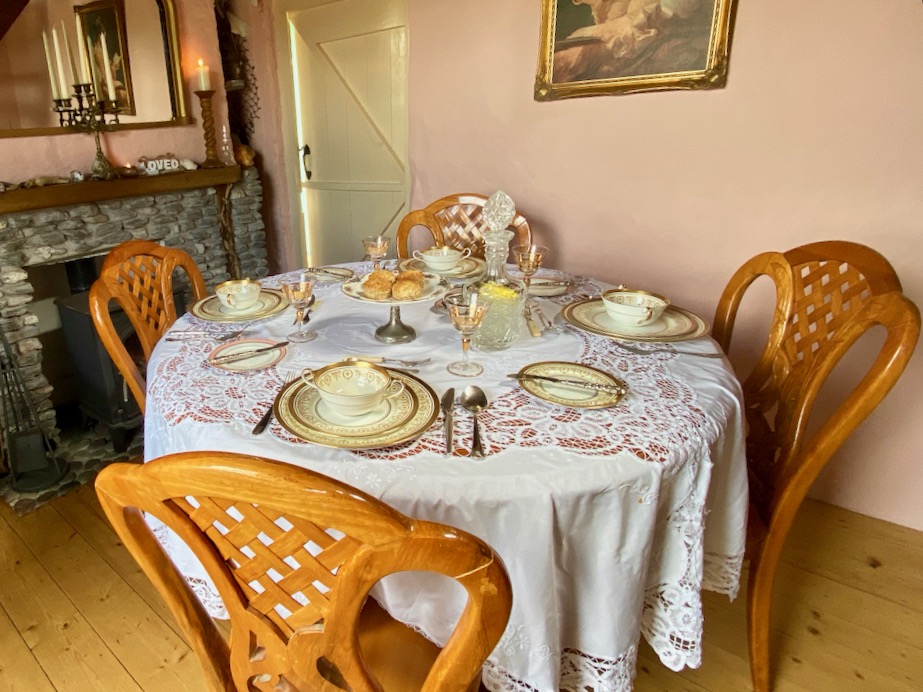
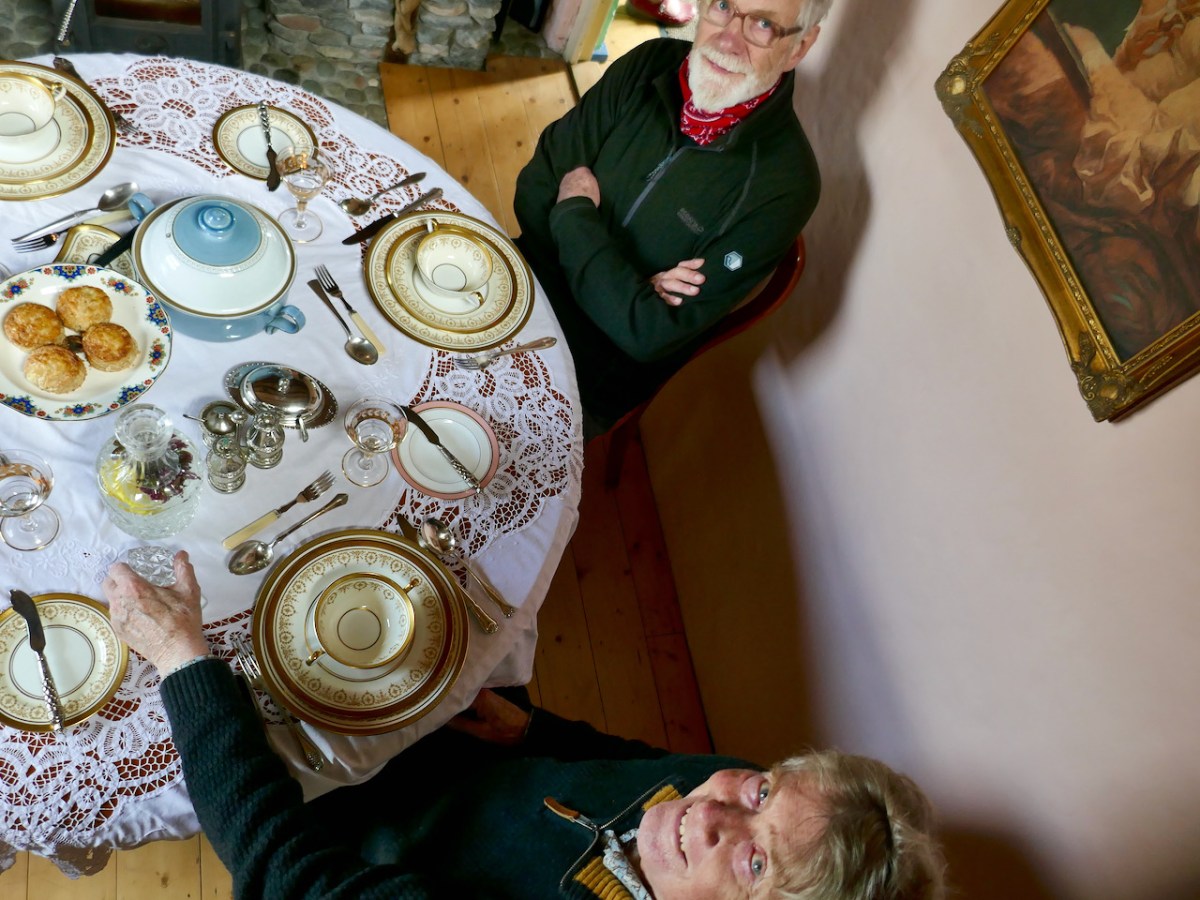
All those expectations were far exceeded when we sat down to our meal. We had a room to ourselves, attractively furnished and comfortable, with a welcome wood-burning stove on the go in one corner. Tracy and Peter have spent considerable time and energy upgrading what was a very run-down cottage, and have used locally available materials with impressive imagination.
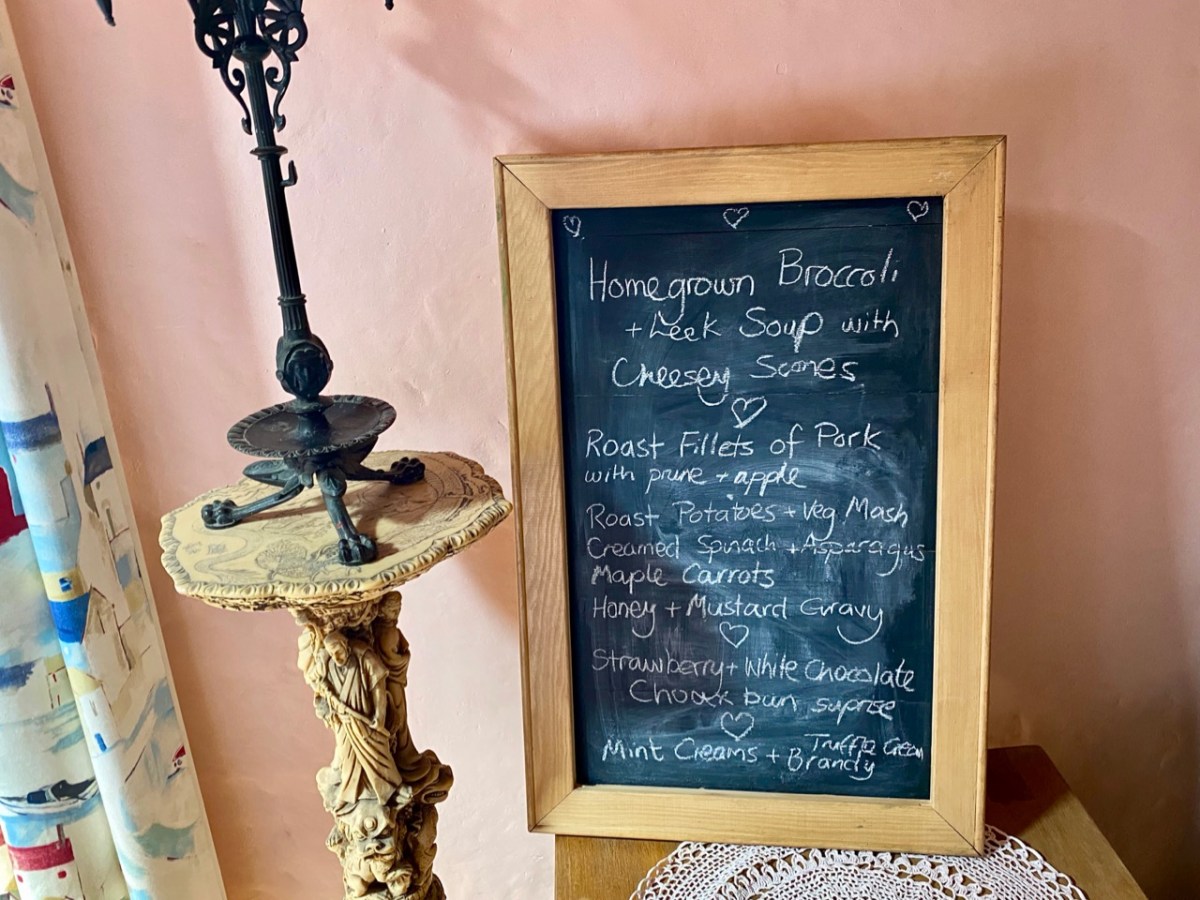
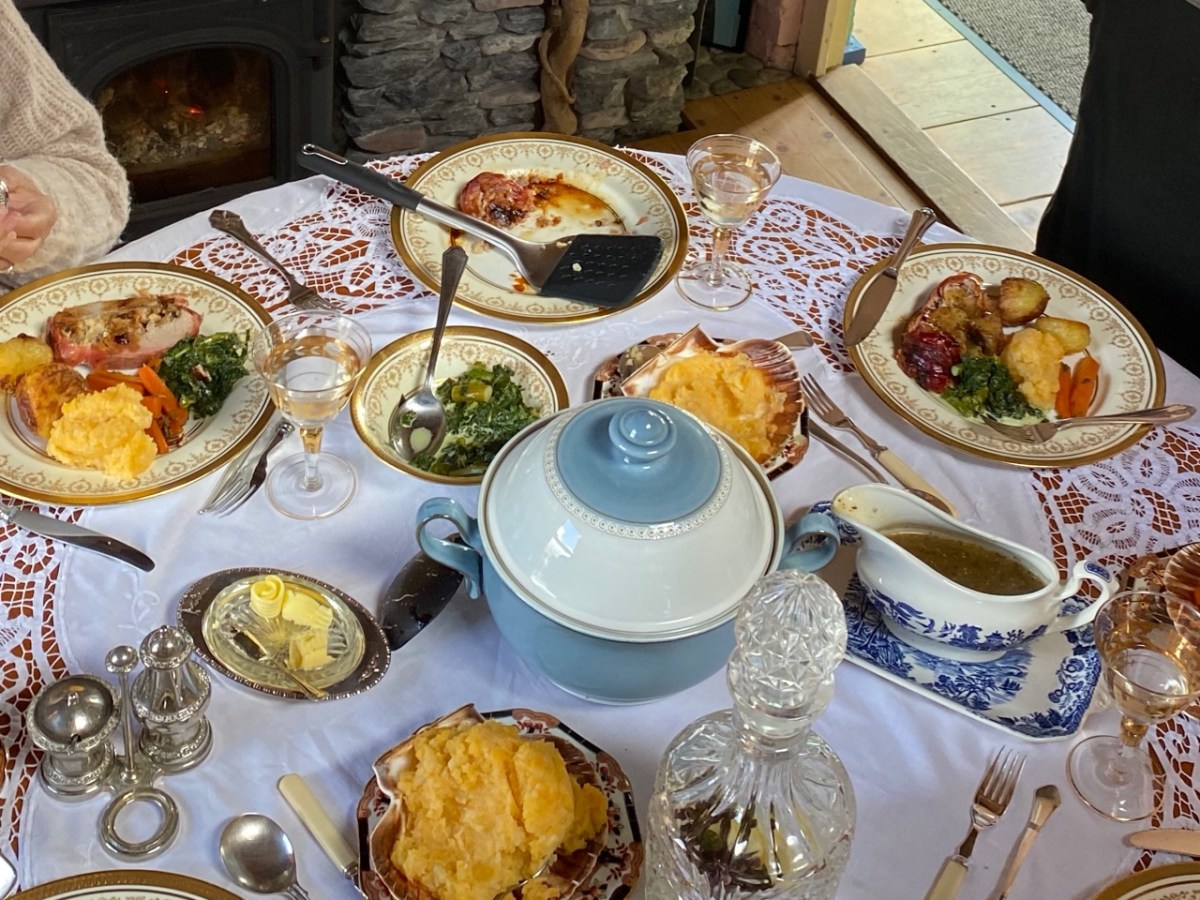
Tracy – in charge of the culinary delights – had worked out a menu which was entirely tailored to our various tastes (and dislikes) – and it was brilliant! All the courses were exemplary.
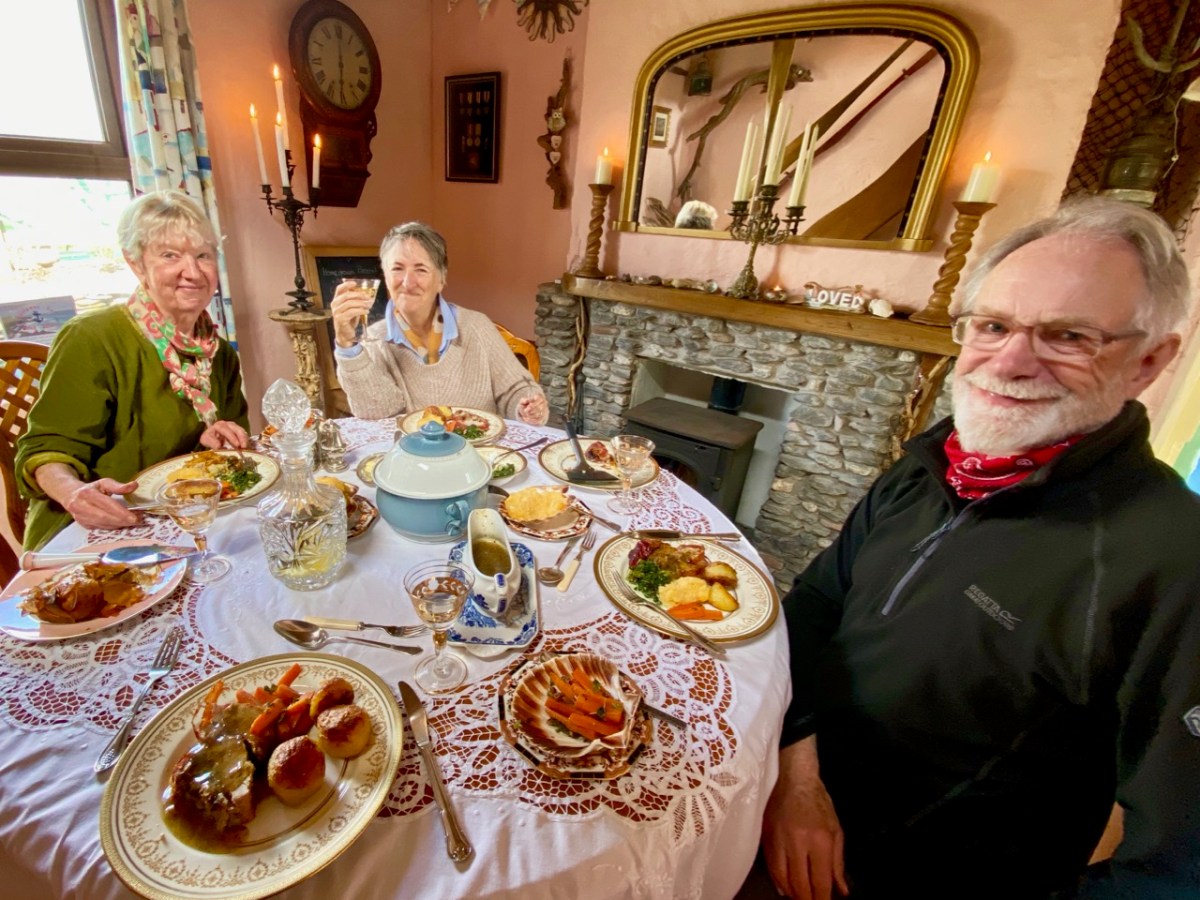
The main was a Sunday roast to make your mouths water… Fillets of pork for the three of us who are not vegetarian, and a miraculous stuffed filo pastry pie for Amanda. The accompanying vegetables were prepared without any meaty elements – so we could all savour them in equal measure.
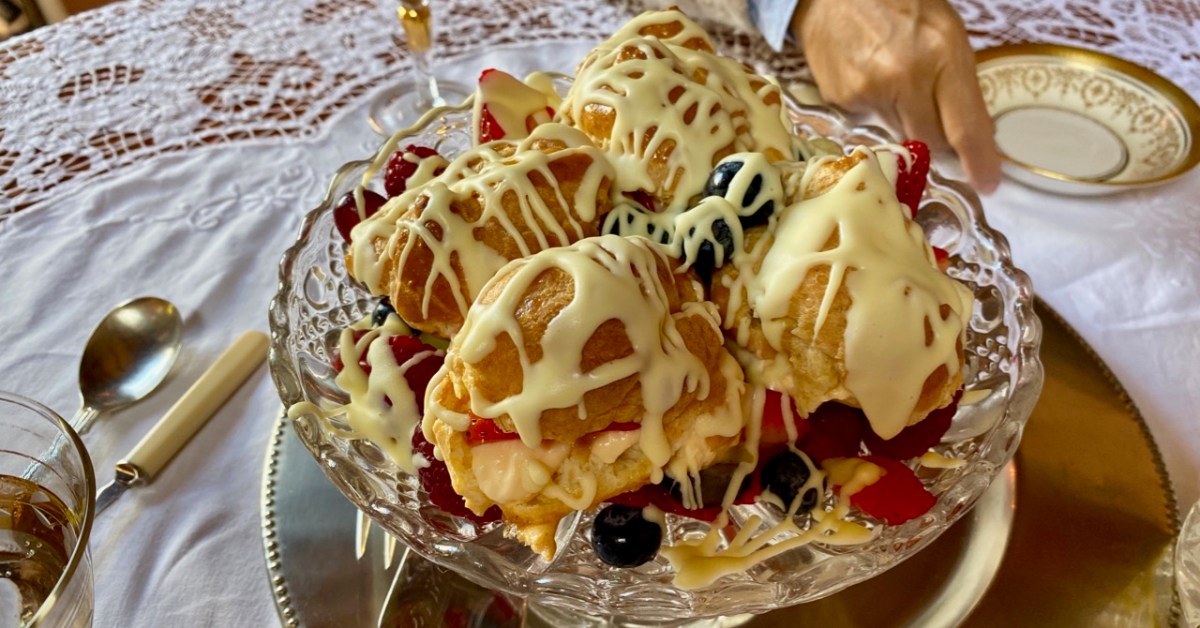
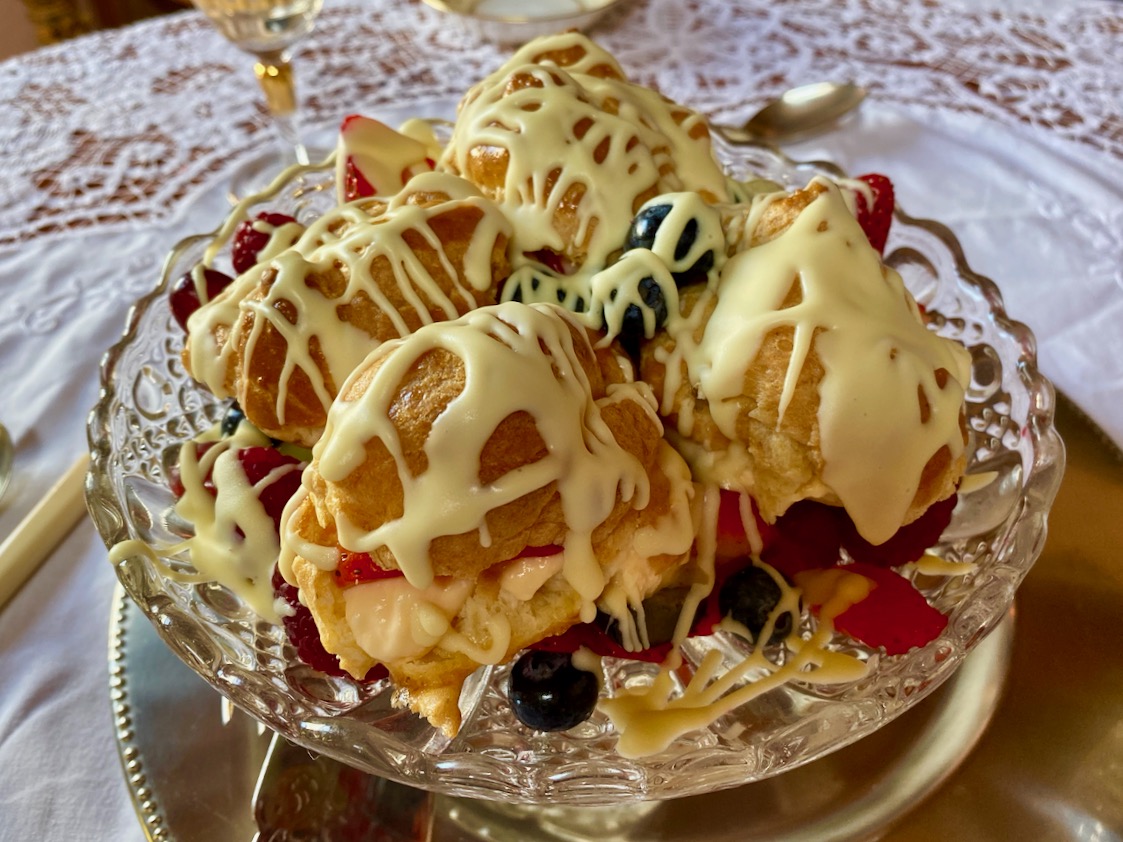
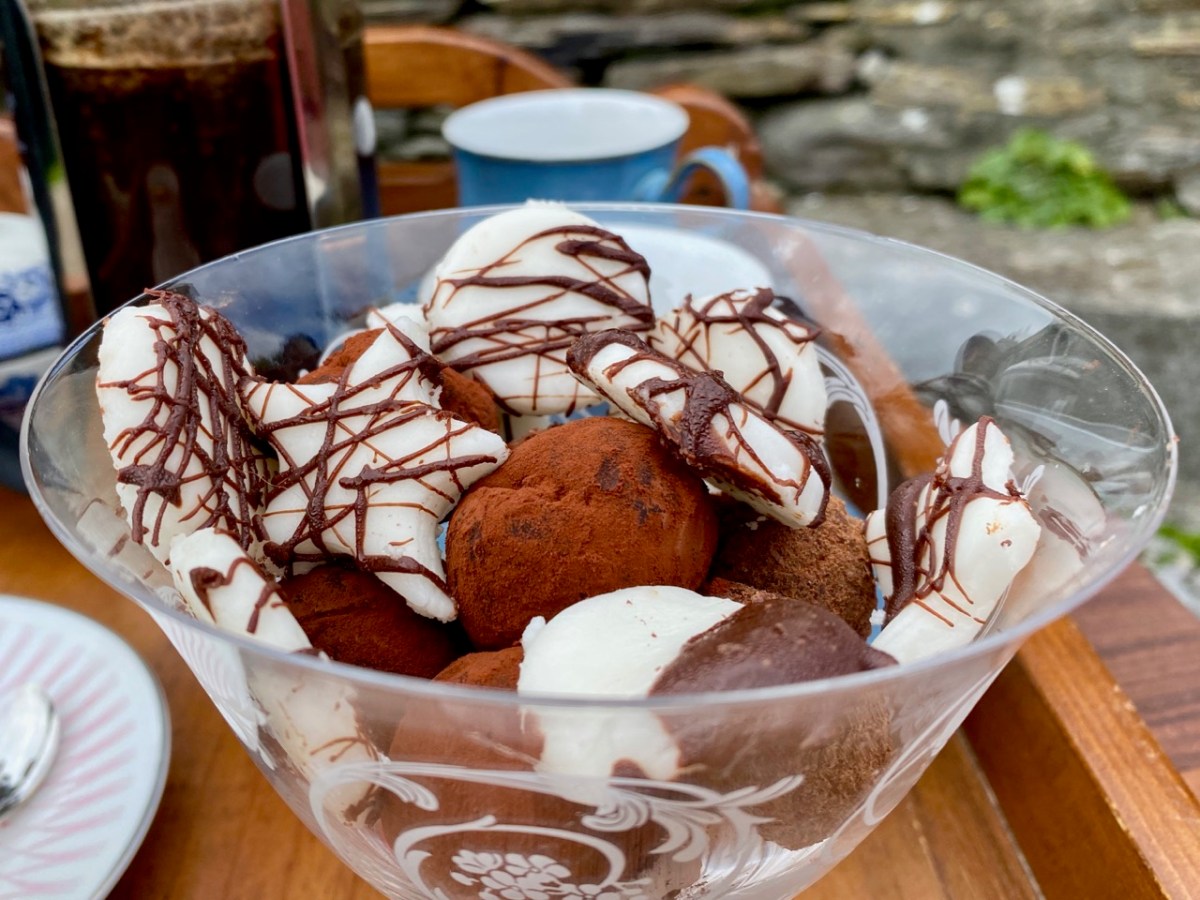
Peter was delighted with every aspect of his celebratory meal – we all were! The choux bun dessert was unbelievable; not a morsel was left behind. The riches never stopped: for our after-dinner coffee we went outside to the terrace-with-a-view and enjoyed home-made fondants and biscuits.
I think you’ve got the message… Sunday lunch at Castaway East is a very special experience indeed. Combine it with a good walk on a beautiful and atmospheric West Cork island and you will have a day you will always remember. If you want the experience for yourselves give Tracy and Peter a shout: they will be delighted to organise it for you.
Contact Tracy & Peter Collins on +353 872966489 or email simplytracy@icloud.com – They also have a campsite!
The preservation of placenames has become urgent in Ireland, as the keepers of the memory are getting older, and taking all their knowledge with them to the grave.
One group in Castlehaven and Myross has embarked on a fascinating project to try to rescue their local placenames before it’s too late, and are succeeding magnificently. In their undertaking, they are providing a model to any other community that wants to follow their lead. We met with Conor Buckley and Annette Glanton (above) as well as Vincent O’Neill recently to learn what this project is all about.
Annette showed us her work, which centres on Carrigillihy, near Union Hall. Her main informant was her father, who has an intimate knowledge of every inch of the area. Working with him, she has labelled fields, inlets, islands, cliffs and streams. The result is a detailed map of names – some in English, such as Badger’s Hole, but most in Irish, such as Faill na Cág (pronounced file na cawg – I will give approximate pronunciations in brackets after Irish words from here on), the Cliff of the Jackdaws. I am showing just a small portion of her maps, above.
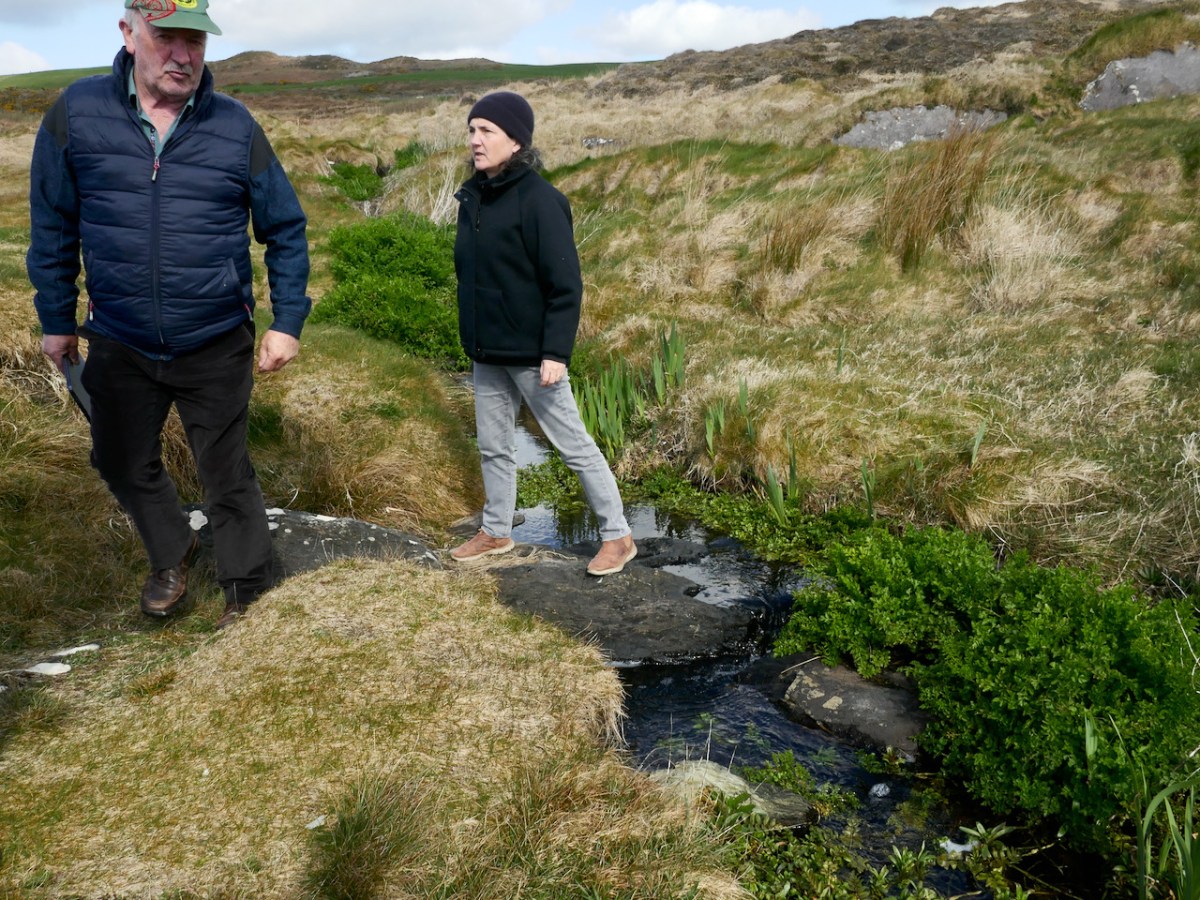
Conor then took us on a walk across the heath, to a vantage point where he could point out many of the surrounding features and name them. We crossed two streams on the way, and he told us each one was a townland boundary. We started in Castlehaven townland, crossed a stream into Glasheenaulin, and from there walked to Ballycahane, crossing the Glasheenaulin stream as we did so. Since a ‘glas’ is a rivulet, a glasheen is a small rivulet or stream, and aulin is an anglicised version of álainn, which means beautiful – so, we crossed the beautiful little stream, and indeed it was.
The historic map of the area, above, shows the townland boundaries in red. The middle boundary is marked by the Glasheenaulin, below, being crossed by Vincent and Annette.
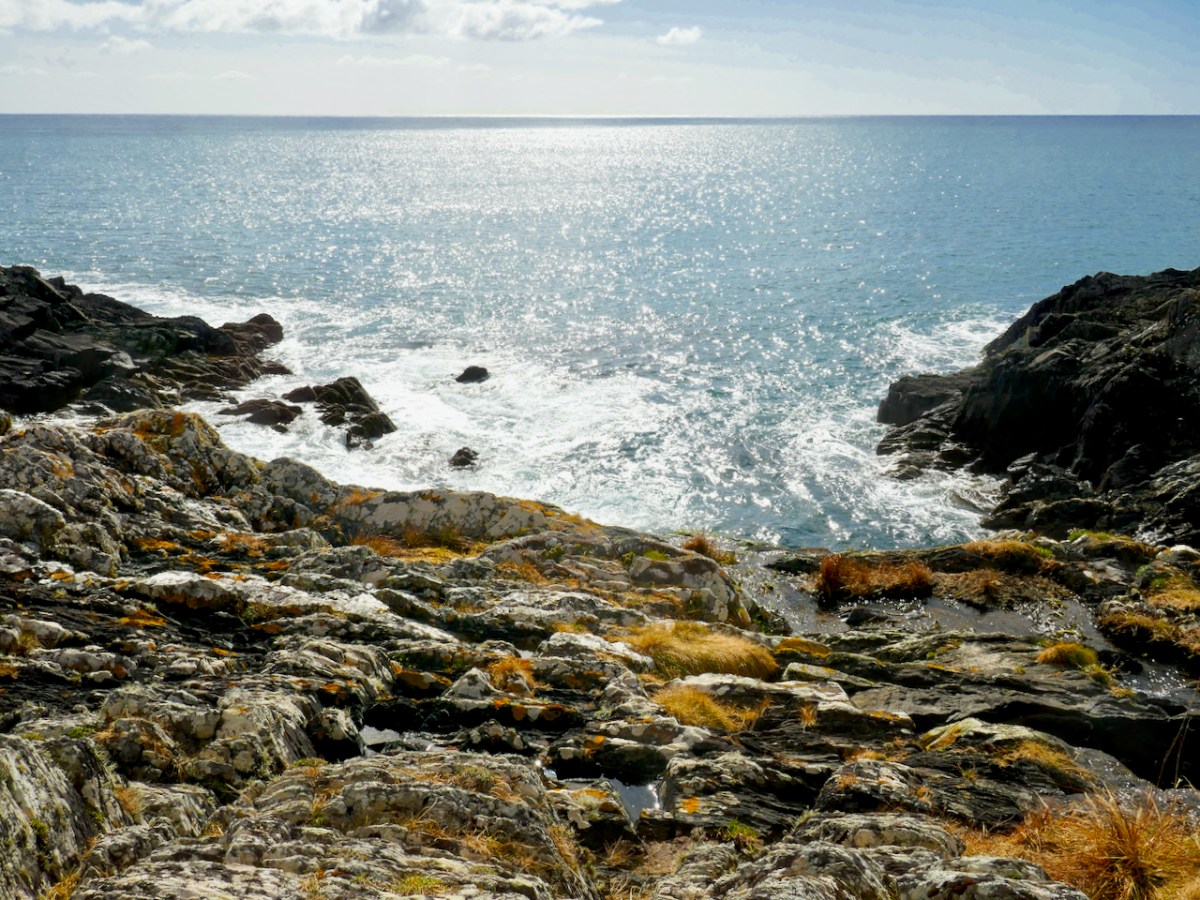
From our vantage point Conor pointed down to where the sea came boiling in over the rocks – perhaps because of this effect, this small inlet was called Poll a’ Choire (powl (rhymes with the bird, owl) a Quirrah), or the hole of the cauldron. However, he showed us that within all the roiling water and rocks was another, smaller hole, which filled and emptied with water, and told us that there was a possibility that the name might be Poll na Caora (powl na kay-ra) or Sheep’s Hole, since it may have functioned as a sheep-washing station! Welcome to the intricacies of figuring out Irish placenames!
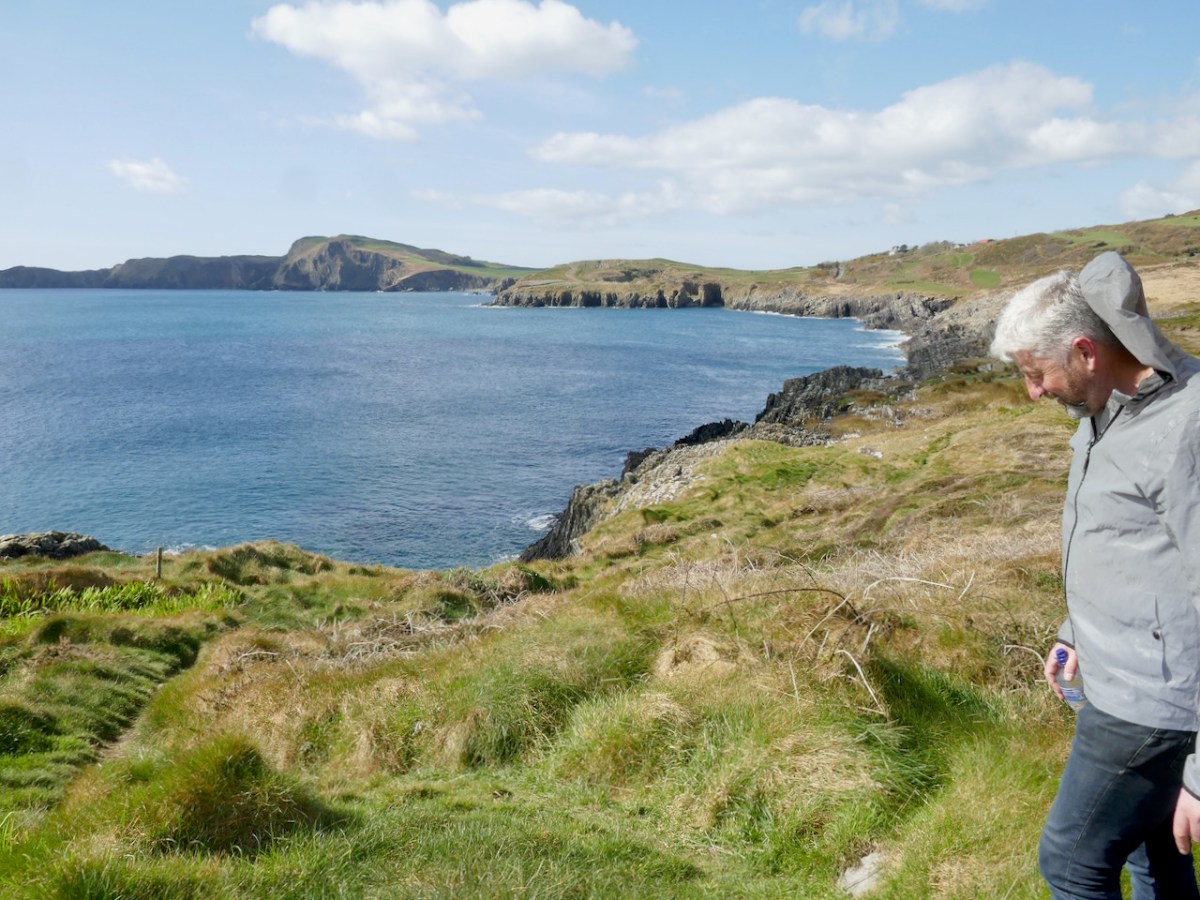
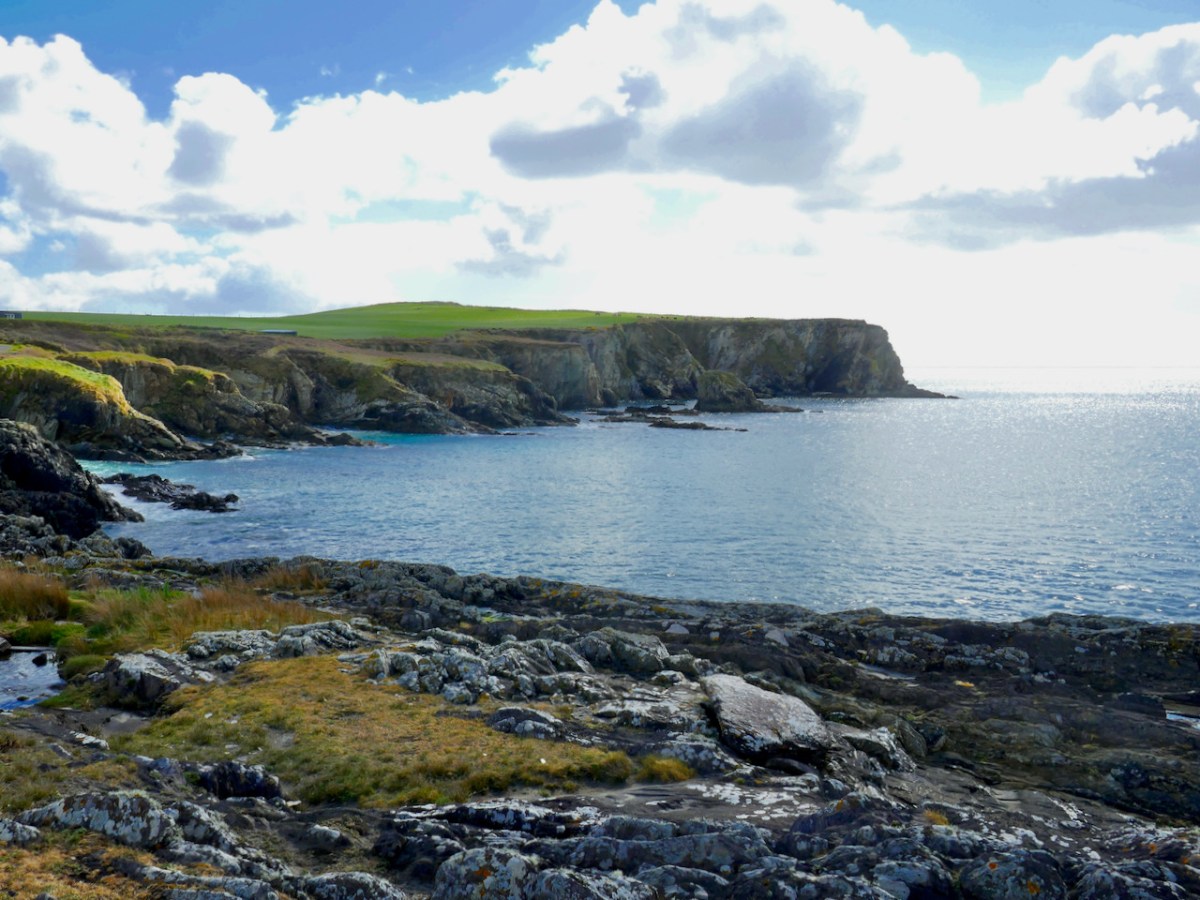
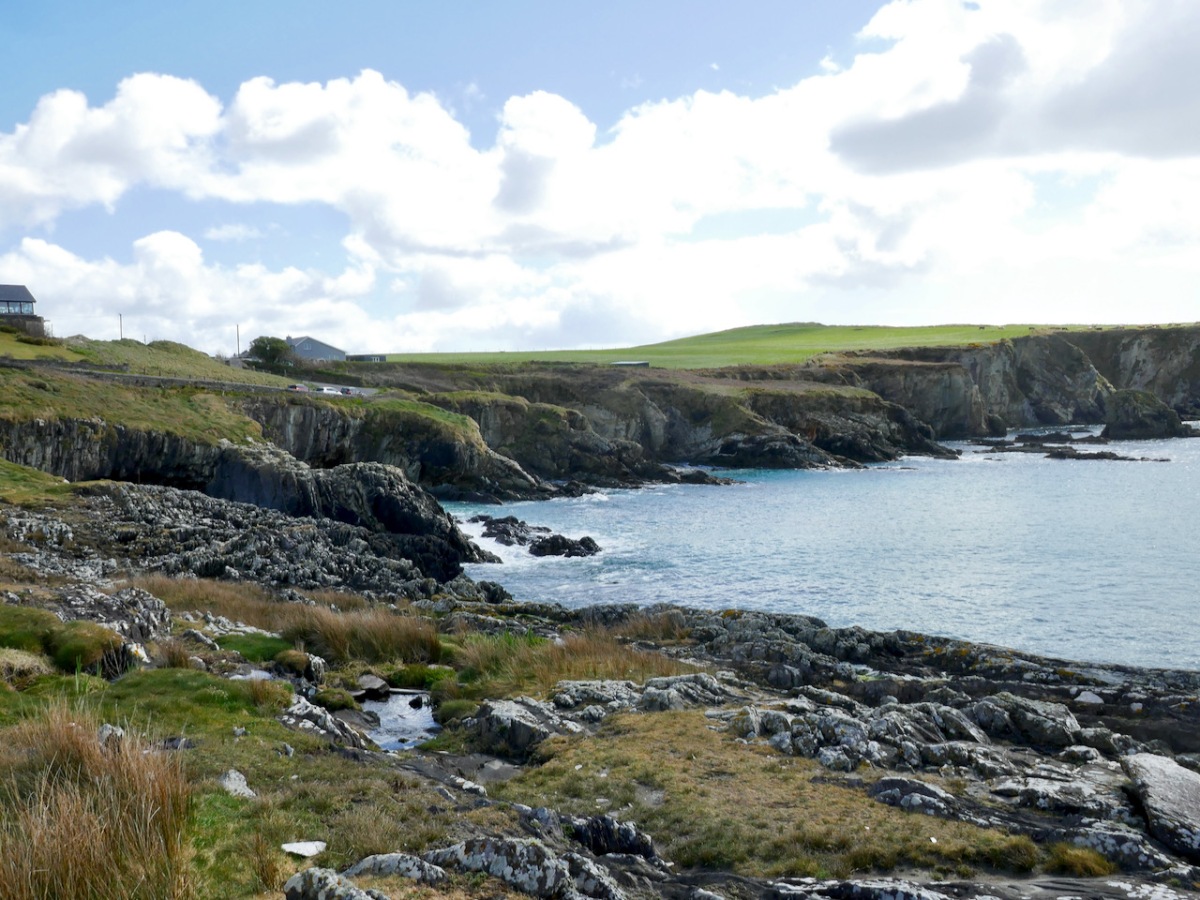
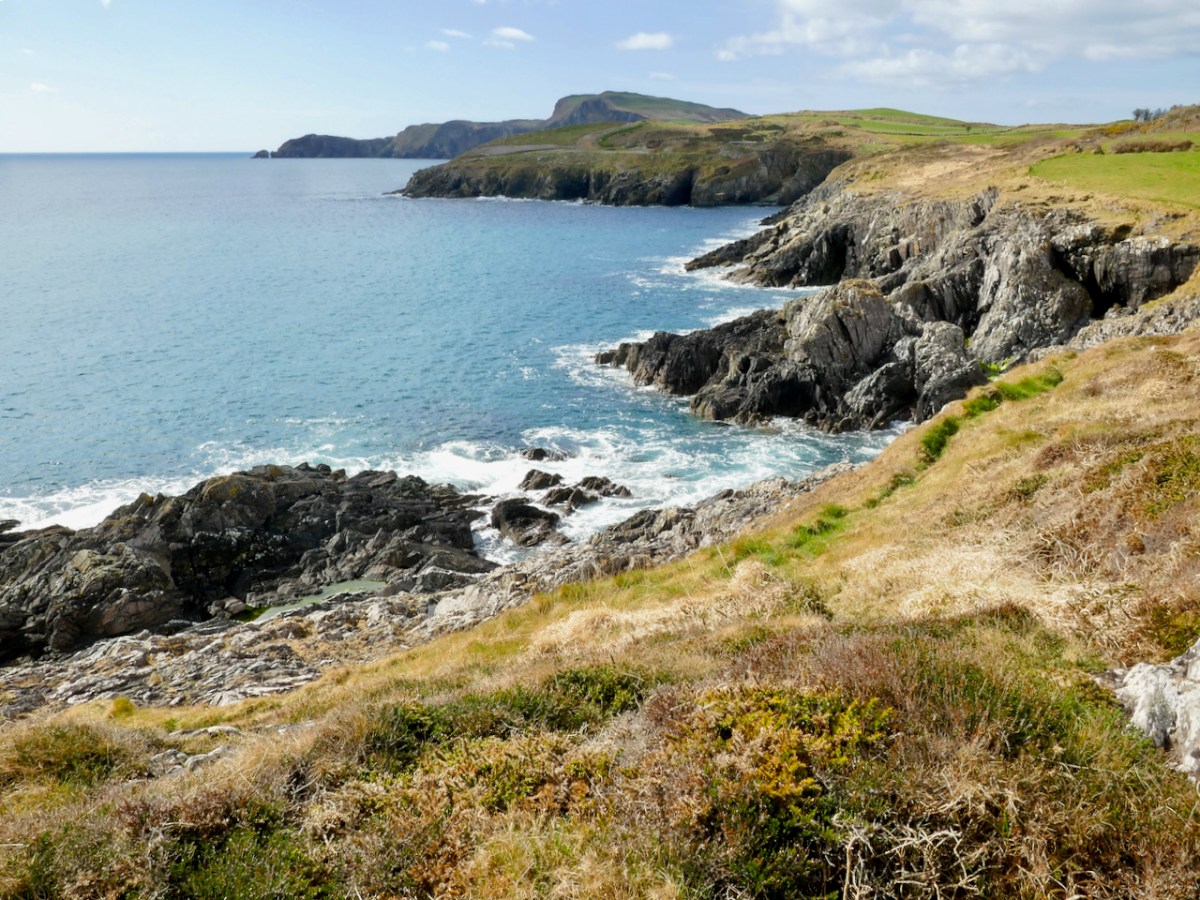
From the same spot we had a good view of the coast west and east. To the west is the unmistakeable mass of Toe Head – a promontory that has a distinctive rise (see the first and last photos in this post). On the near side is a hill which locals traditionally call Beann tSidháin (which they pronounce Been te Sheedawn), or peak of the fairy mound. A place with a name that included references to the Sí was a place to be treated with respect and caution – the Other Crowd was not always benevolent.
When I asked if it was possible that this might have been séideán (shay-dawn), meaning place of gusty winds, Conor gave me an insight into the depth of research that he and his advisory group undertake. He responded with several references to dictionaries, placename tomes – and a manuscript from the 1660s! I can just imagine the meetings of this group as they ponder of the possible variations and come to a conclusion – as Conor said to me, ‘it’s as much an art as a science.’
A lot of Toe Head itself has had names assigned, and I was intrigued by the name given to the piece of rock that has in the distant past, sliced off from the mainland (above). Locals call it the Sciollán (skull-awn), which means a seed potato – or maybe the piece of a potato that you can plant as long as it has an eye in it. Once you know that, you can’t unsee the nobbly bit of potato.
We will head east now, to the series of tiny inlets that indent the eastern side of Sandy Cove. Each one has a name, beginning with cuas – a cuas (koo-us) is a small inlet or cove although it seems to be used particularly in Cork and Kerry. To name each one makes total sense of course – if you were telling a neighbour which cuas you left pots in, or where you were going to dig sand, you all had a shared knowledge of the store of names.
Going from left to right along the bank you have:
Cuas a Chúir – this might be Inlet of the sea foam (cúr) or inlet of the tower (thúir). There is no tower here now, but Sandycove was once called Torbay, so maybe…
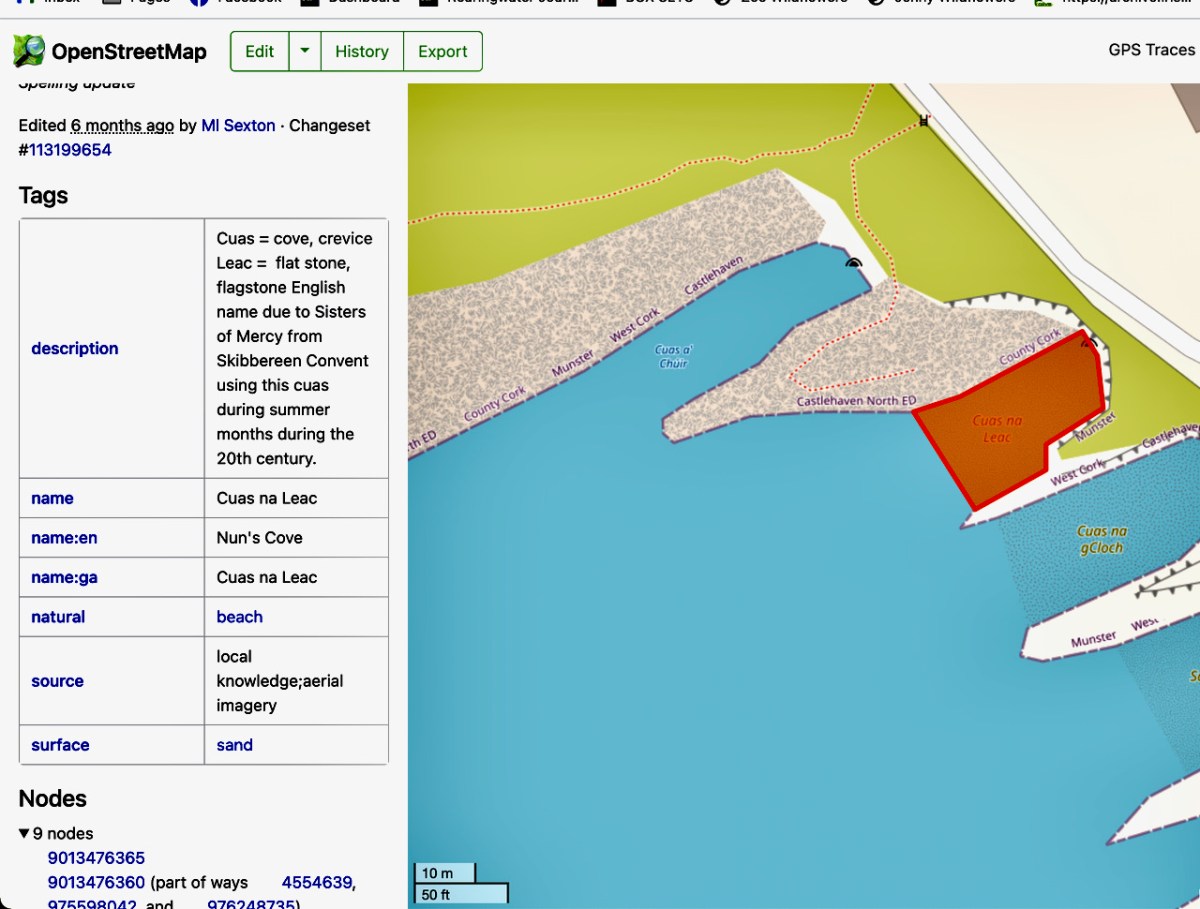
Cuas na Leac – a leac (lack) is a flat stone or flagstone. This cuas has an alternative English name – Nun’s Cove. Apparently it was the one used by nuns from the Skibbereen convent to swim in.
Cuas na gCloch – cloch (cluck) is a rock – hence, rocky inlet.
Sandy Cove – this is a preferred swimming spot for locals and visitors
Cuas na nGabhar. Lots of scope here! A gabhar (gower) is a goat, but apparently it’s also the name for a certain type of pollock, known as a scad. [Just to complicate things, it can also be a little white horse, and therefore white-crested waves. Gabhra Lír, for example, means the little white horses of Lír, who was the king of the world under the sea in Irish mythology. Whew! – But that’s just my own musings]
Cuas an Tairbh – tairbh (tarriv) is the irish word for bull, and the rock just off this point is the Bull Rock. It probably has the shape of a bull from some angles.
Cuas Móire – móire (moy-ra) is an adjective usually applied to a place that experiences great gusts of wind or rolling seas. Apt! But this could also simply be Cuas Mór (more), meaning Big Cuas, since it is the biggest one.
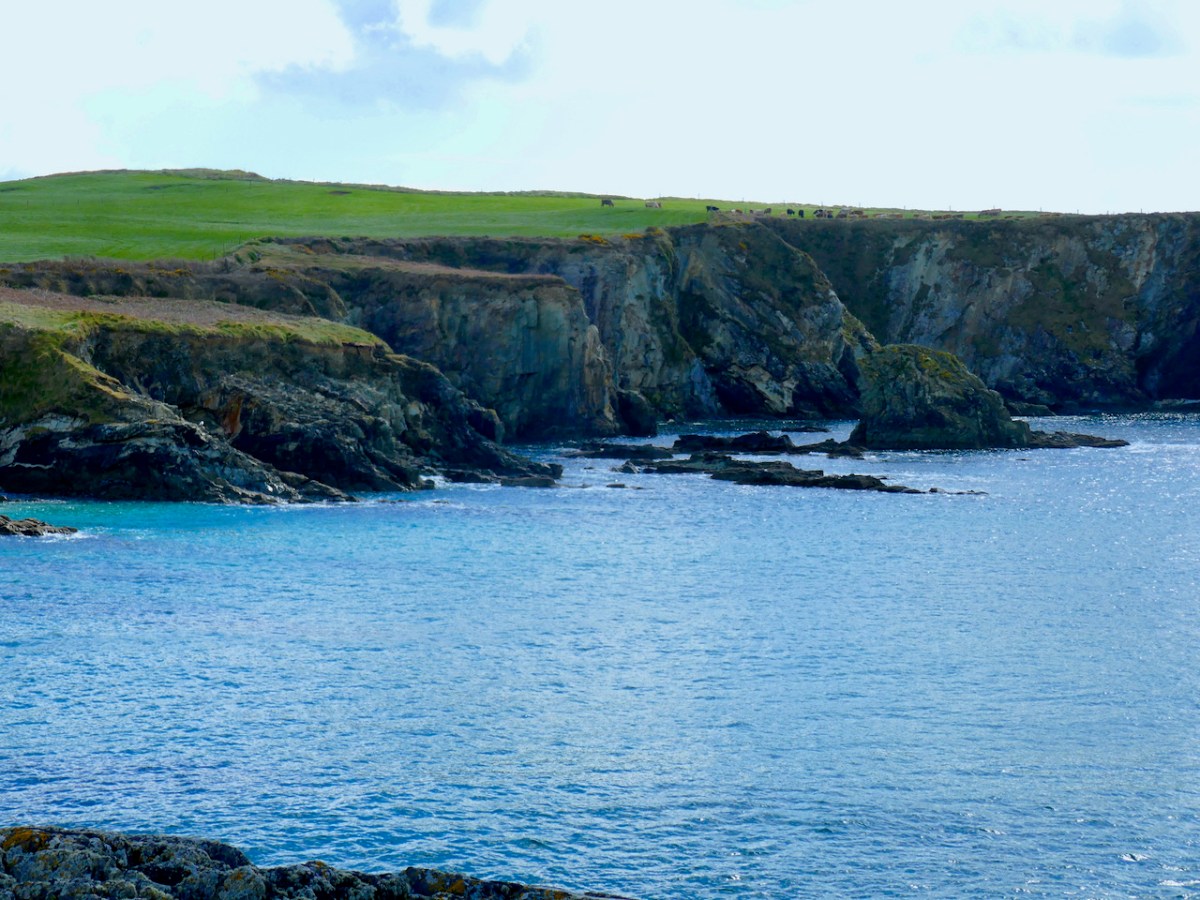
Just before the Cuas Móire theres a significant cliff labeled The Pulley (about where the cattle is in the photo below) and here’s the story about that name. On top of the cliff was a pole with a bar attached – the bar, with a pulley at the end of it, could swing out over the cliff. A long rope threaded through the pulley was controlled by a patient horse which was lead away from and toward the cliff, thus raising and lowering the rope. At the end of the rope was a large basket. A man climbed into the basket and was lowered to the bottom of the cliff at low tide. There he set about harvesting kelp with a tool that cut it off above the roots. As he gathered armfuls, he filled up the basket which was raised up to the field and piled onto a cart. He continued to do this until the tide came up to his neck, whereupon he jumped into the basket and was the last load to be pulled up.
Almost unbelievable, isn’t it? The hardship and courage of that – it was done all year round! Yet, as Vincent and Conor explained to us, sand and seaweed were the only fertilisers available to people and gathering both was an important part of the yearly round of labour needed to grow food. Both were also taxed by local landlords, so they were a commodity over which landowners exercised control. The National Museum has a good piece on seaweed harvesting, with photographs showing how it was done – no cliffs, alas. Another piece on RTE from 1962 shows hand harvesting in Clare.
You will have noted that all of these placenames are now on maps, which I have used in my illustrations. The site is https://www.openstreetmap.org/ and Conor, Vincent and their team are using it to record these names for posterity. Anyone can do this, but, as they pointed out to us, it’s best done in an informed way, since labelling a place with a modern name (e.g. Danny’s fishing cove) can perpetuate new, personal or inaccurate names. The team has annotated many of the placenames with additional information – such as about the possible names for Cuas a’ Chúir, above, and Cuas na Leac, below.
I have only given you a tiny look at what the Castlehaven and Myross Placenames team is doing – their work is extensive and ongoing. And it’s important – these are among the oldest ‘transparent’ placenames in Europe. As Conor explained to me placenames start out as transparent – people name what they see in front of them. But over time, the names become opaque, mostly due to a change in the dominant culture – a new language wreaks havoc with pronunciation of ‘foreign-sounding’ words. However, the names around West Cork, as long as there is someone who still remembers them, are as ancient as it gets. Hydronyms (place names associated with water) survive better than toponyms (land-based) possibly because they were a shared resource.
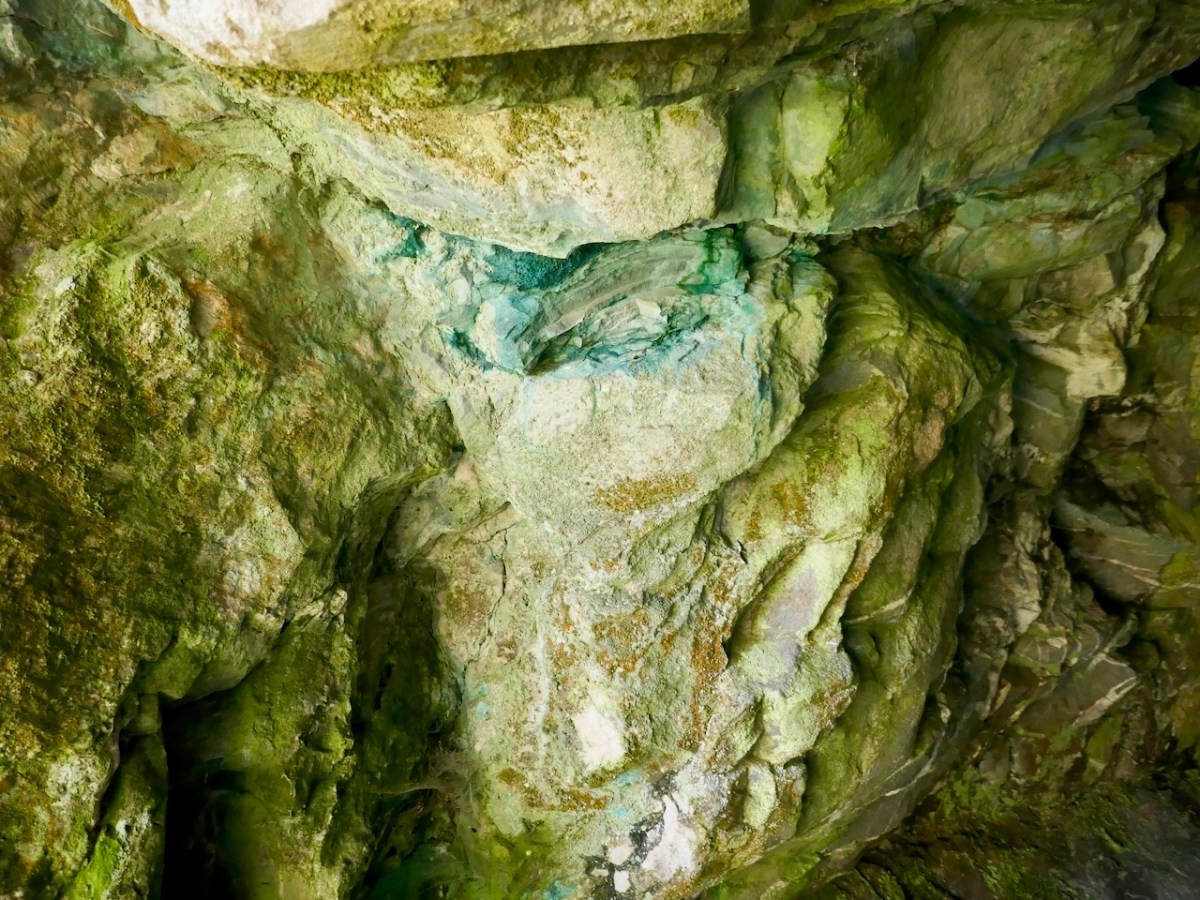
. . . Description: Listed as an ‘ancient copper mine’ in the RMP (1998). Located in rough hill pasture on the W side of a deep wide ravine running N-S across the hill. A natural cave with two E-facing entrances extends c. 35m W into the hill. The height varies from c. 1m to c. 4m and jagged rocks protrude from the roof. Loose stones are scattered on the uneven floor. While there are traces of green malachite copper staining in a few places there is no evidence to indicate prehistoric mining. The material in the spoil mound outside the lower entrance suggests some unsuccessful 19th century exploration for copper may have been carried out here. The evidence is not sufficient to warrant accepting this as the location of an archaeological monument . . .
archaeology.ie Compiled by: Connie Murphy
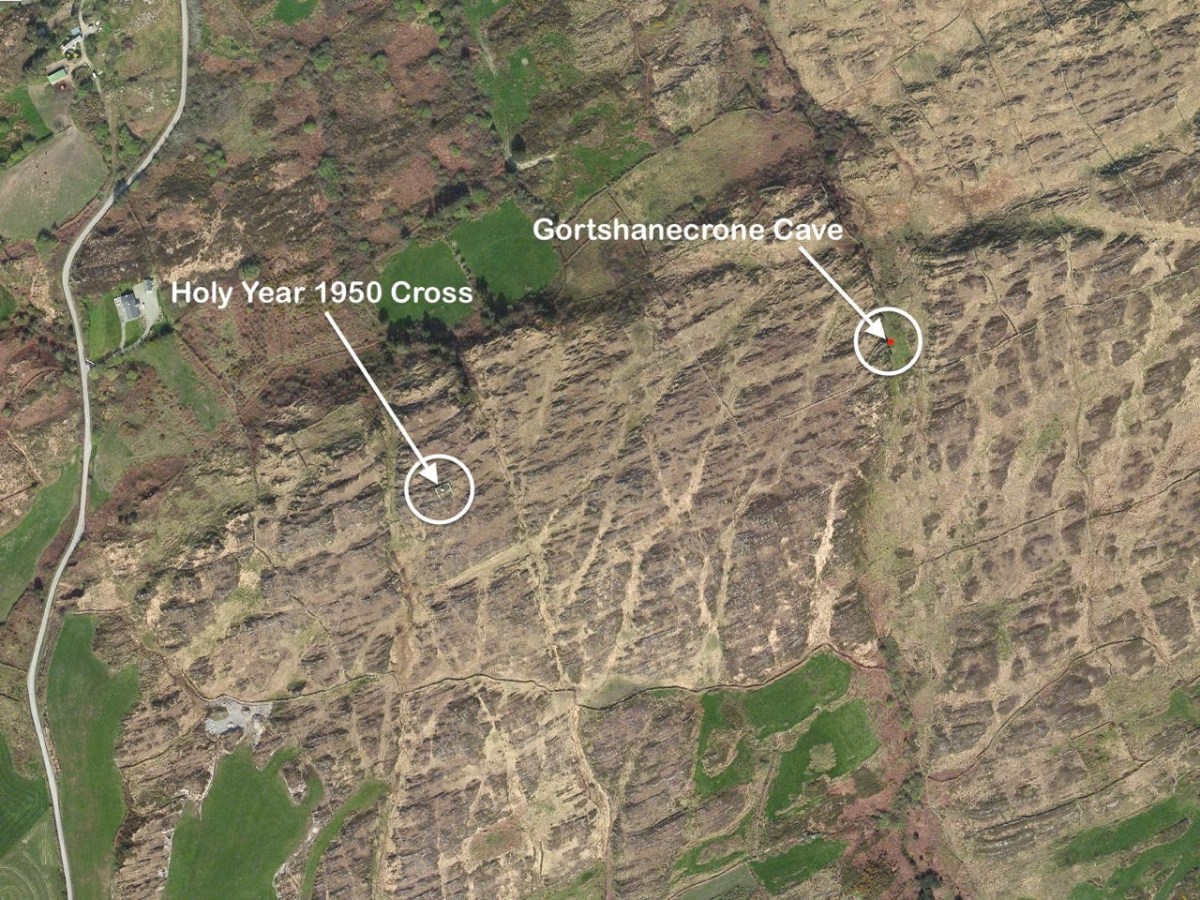
This now ‘redundant’ entry in the official records seemed to imply that the ‘ancient’ mine wasn’t there at all – it was just a cave. But the records also make no mention of any sort of inscription on the cave walls: perhaps, if there were scribings, they were considered ‘modern graffiti’ and of no historic interest. We set out to solve the mystery, accompanied by our intrepid friends David Myler and his children. David has written about the site on his own Facebook page.
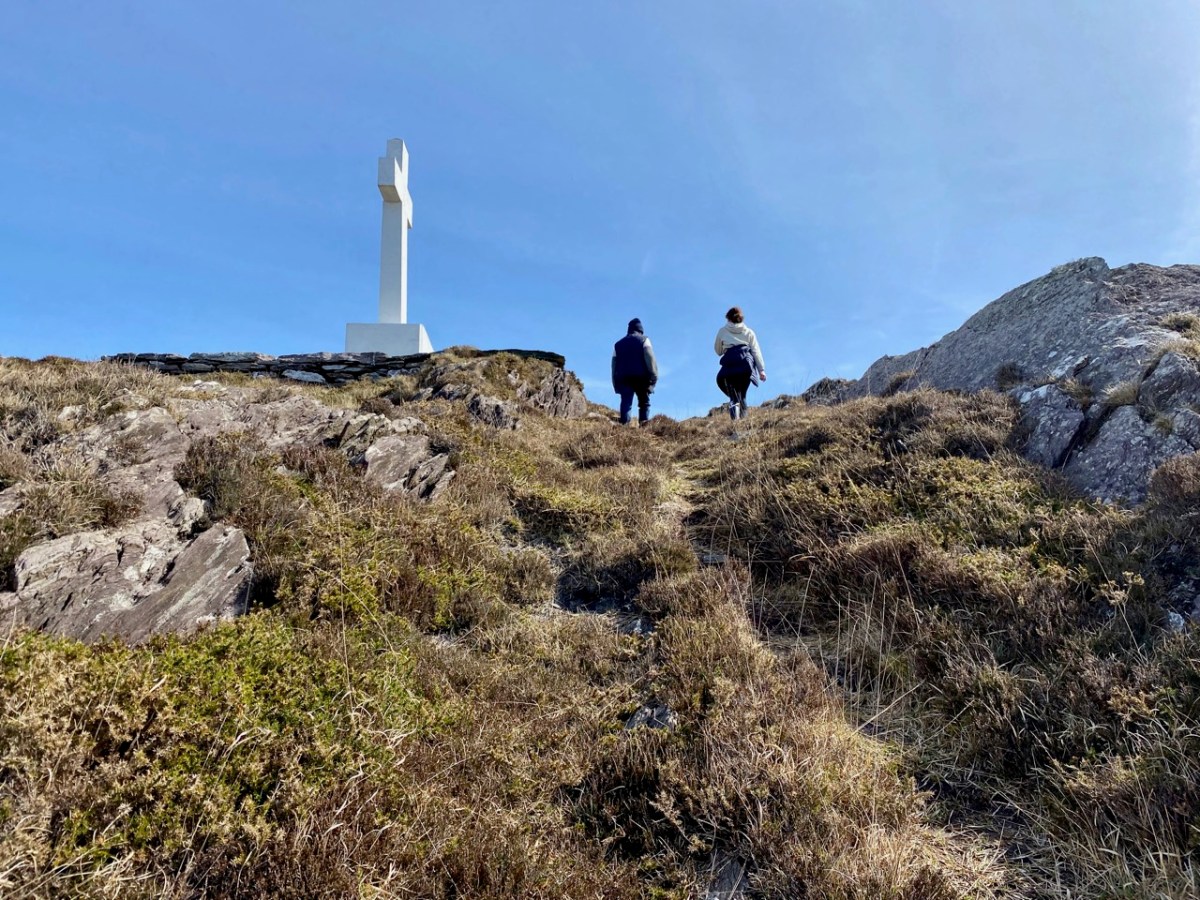
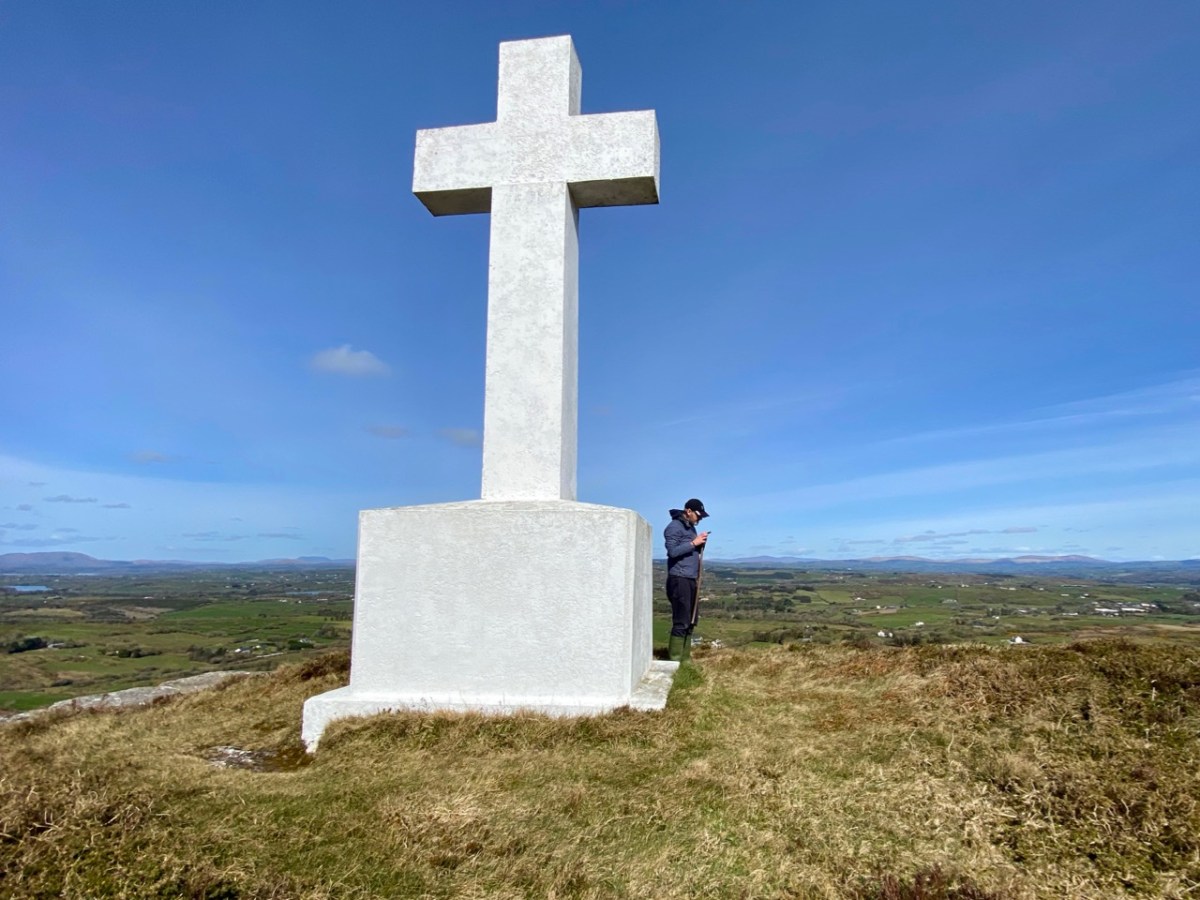
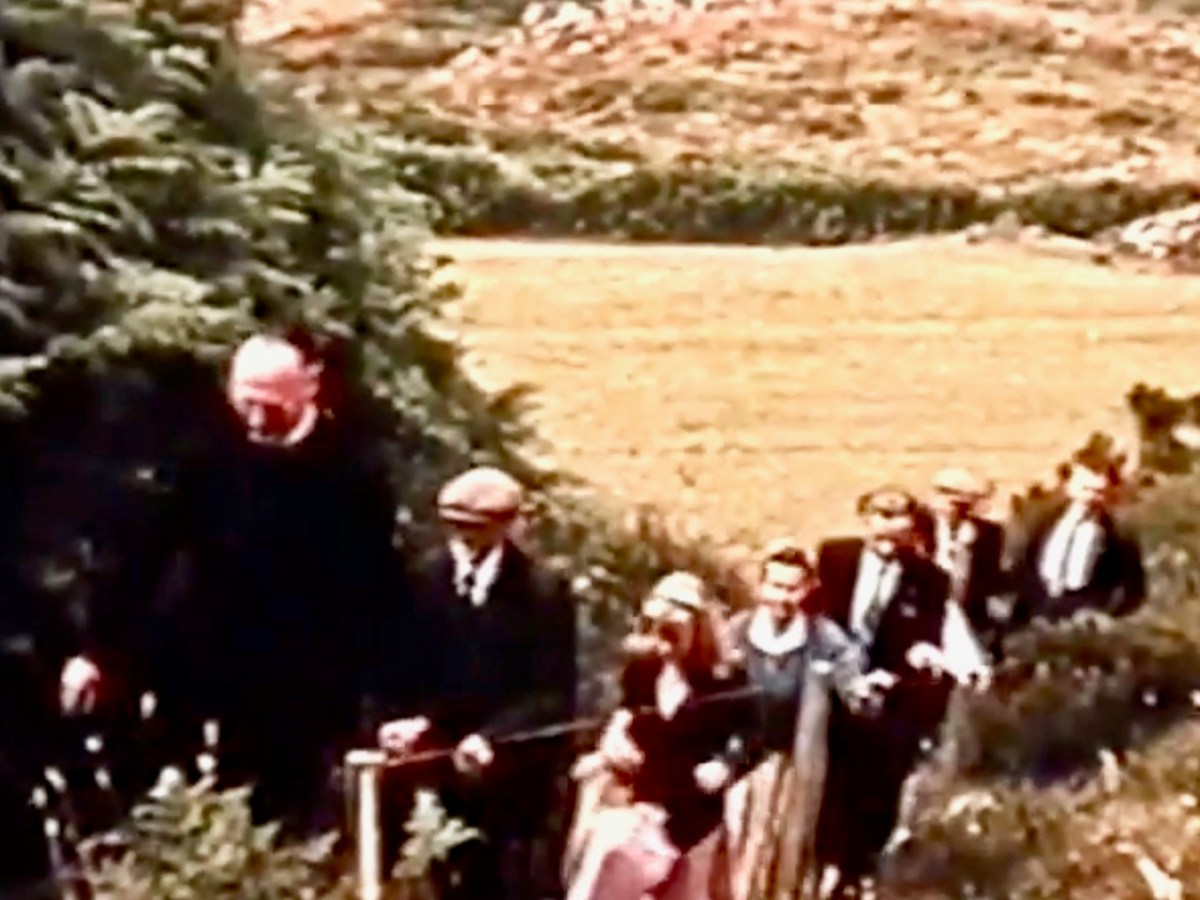
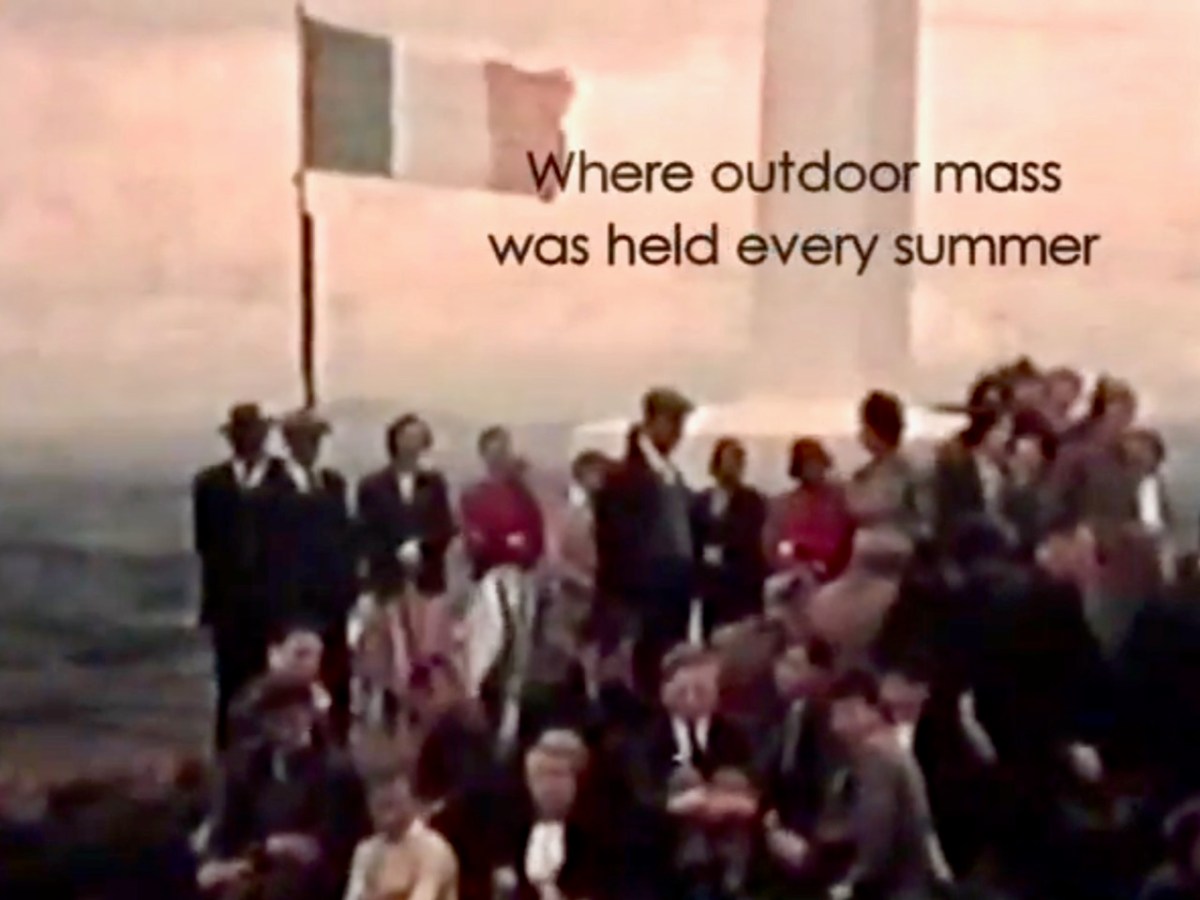
En route was another – much younger – piece of local history that we had long wanted to visit: an enormous white cross set up on top of Coom Hill to commemorate the Holy Year of 1950. Once visited on Corpus Christie day every year by a procession which started in Skibbereen, it remains an important local landmark and is situated with dramatic views in all directions.
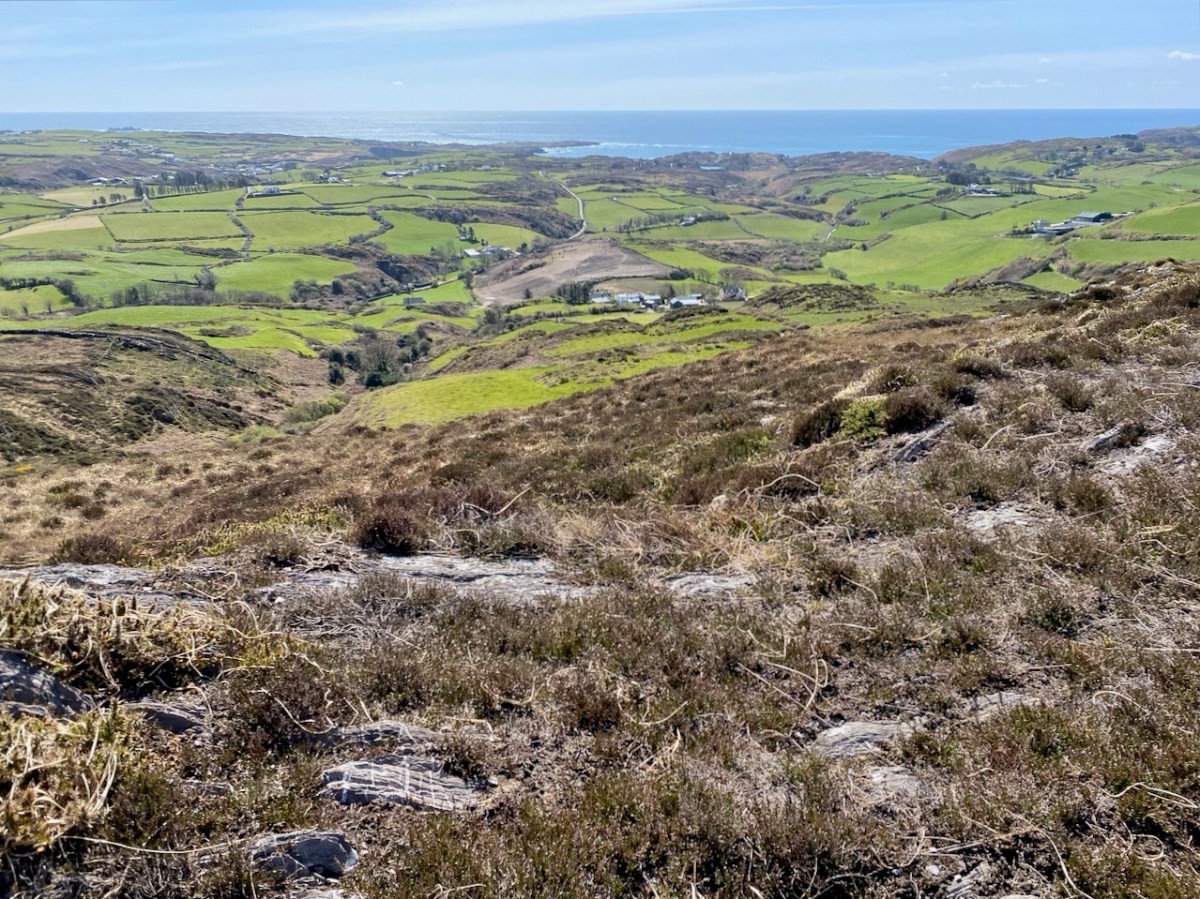
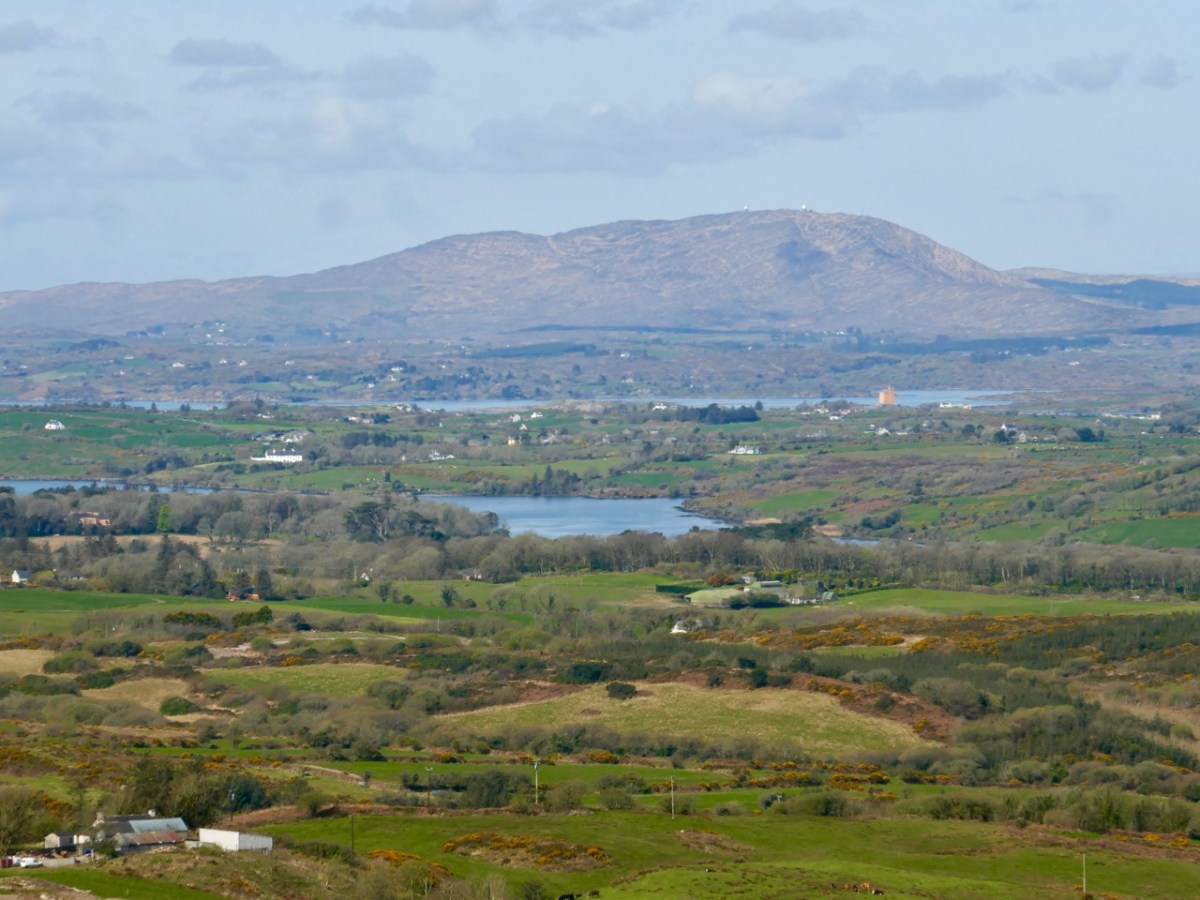
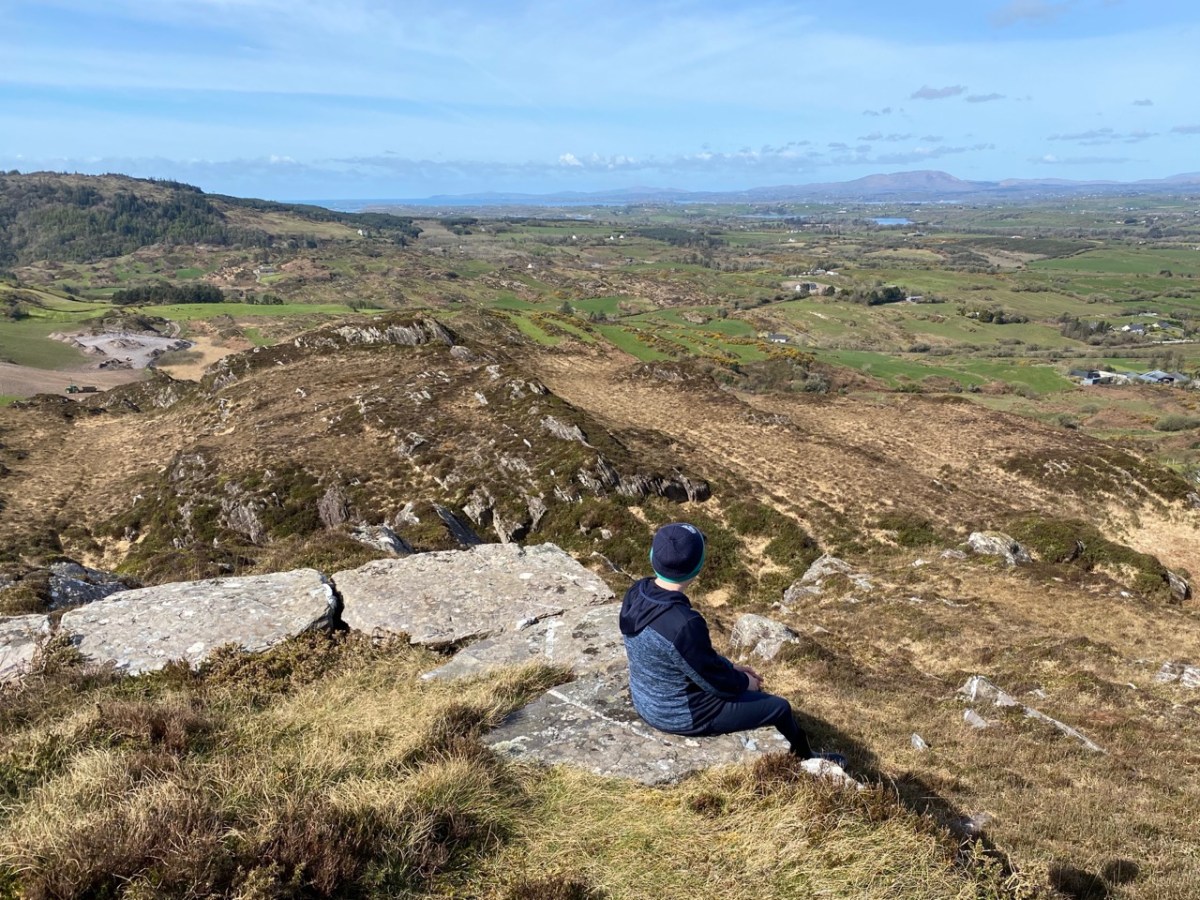
The two screenshots above are from a film taken in the 1960s, showing the procession to the cross. You can watch the full film online here. Below are some of the views which can be seen from the top of the hill.
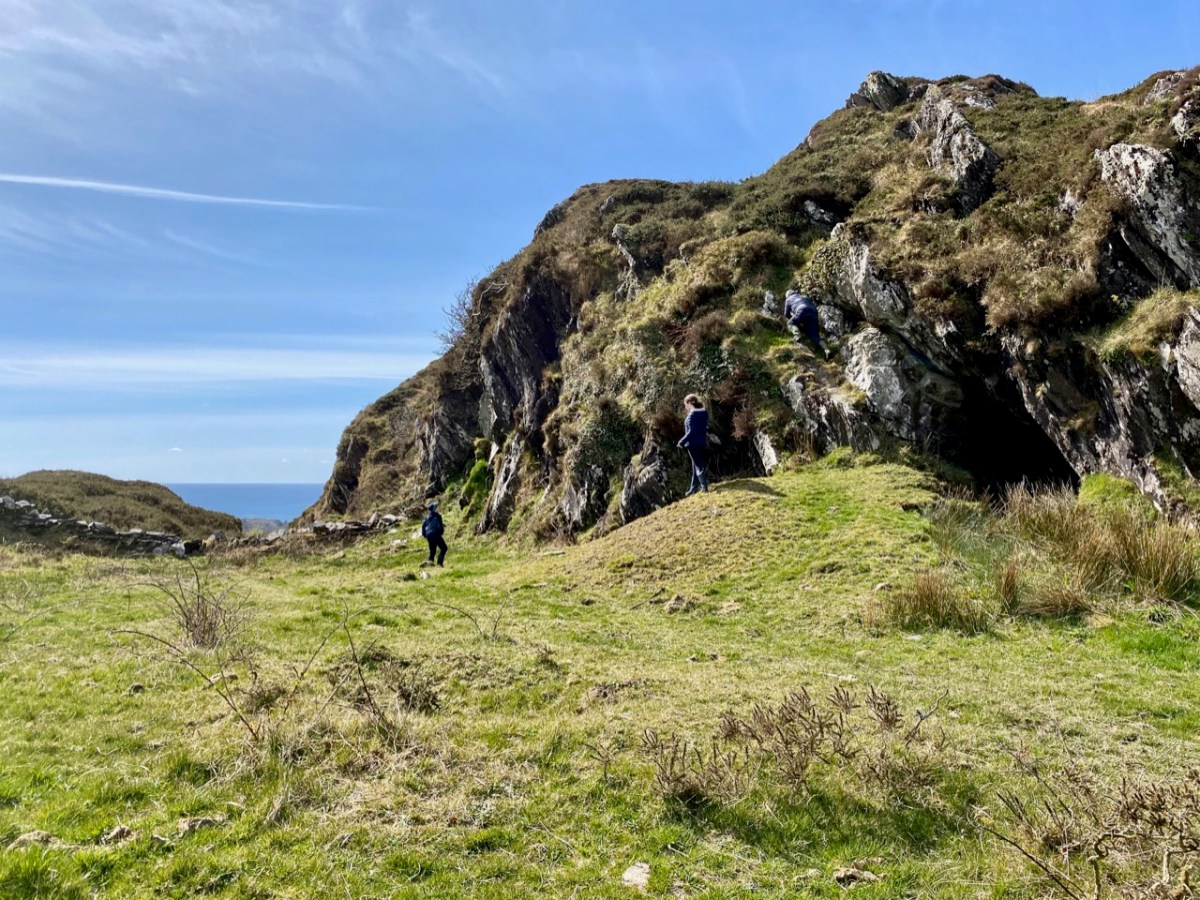
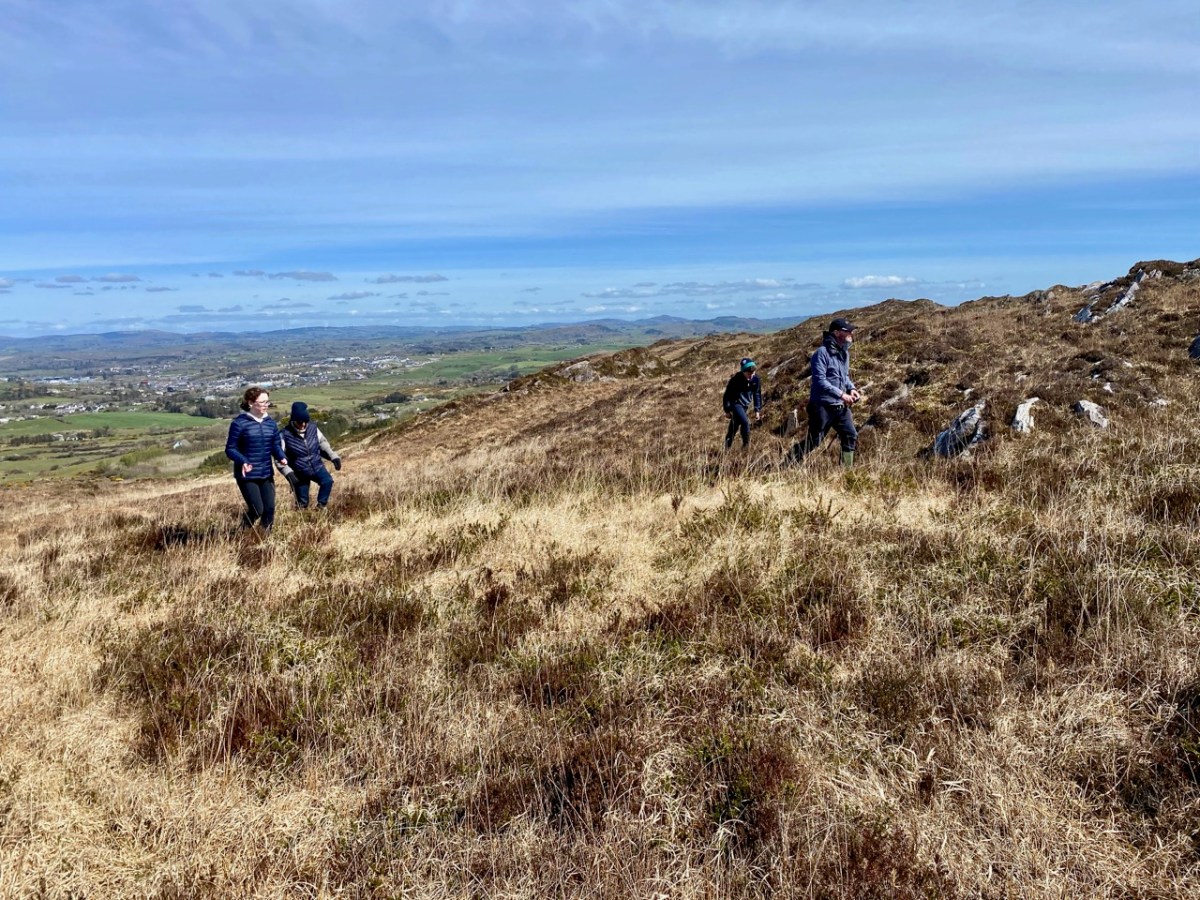
The cross – and the views – were only tasters for the adventures we had in store. Justin had researched the location of the ‘cave’ and his instructions unerringly led us across country towards a gulley – a substantial gash in the landscape running north to south, where the high land dropped away: tucked in just below us we found our goal.
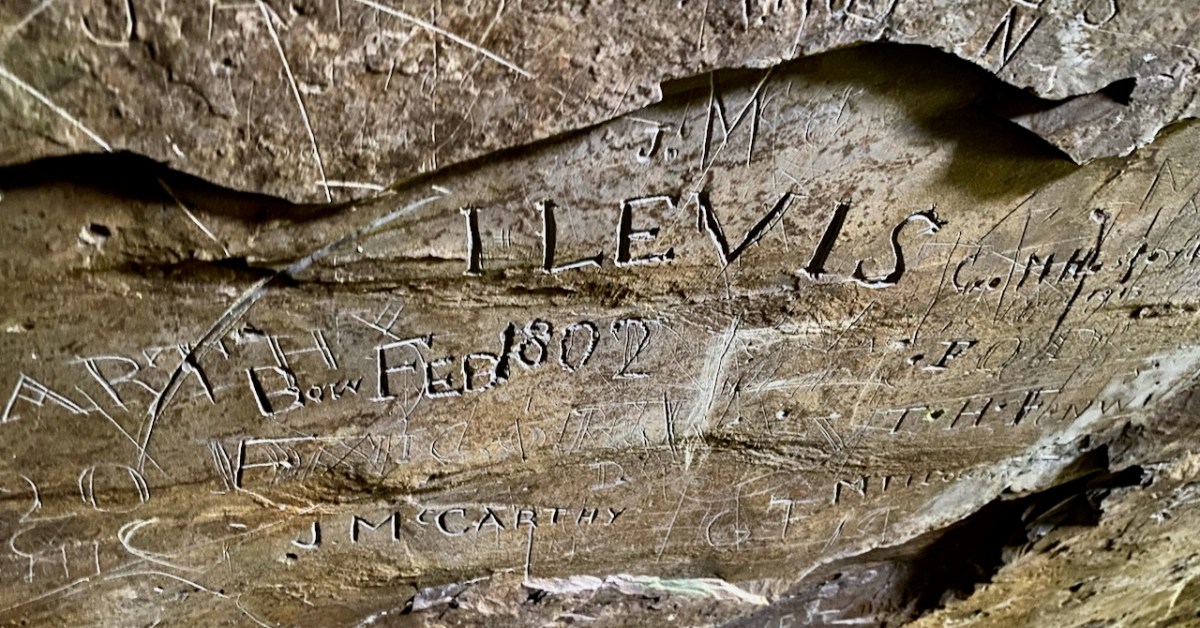
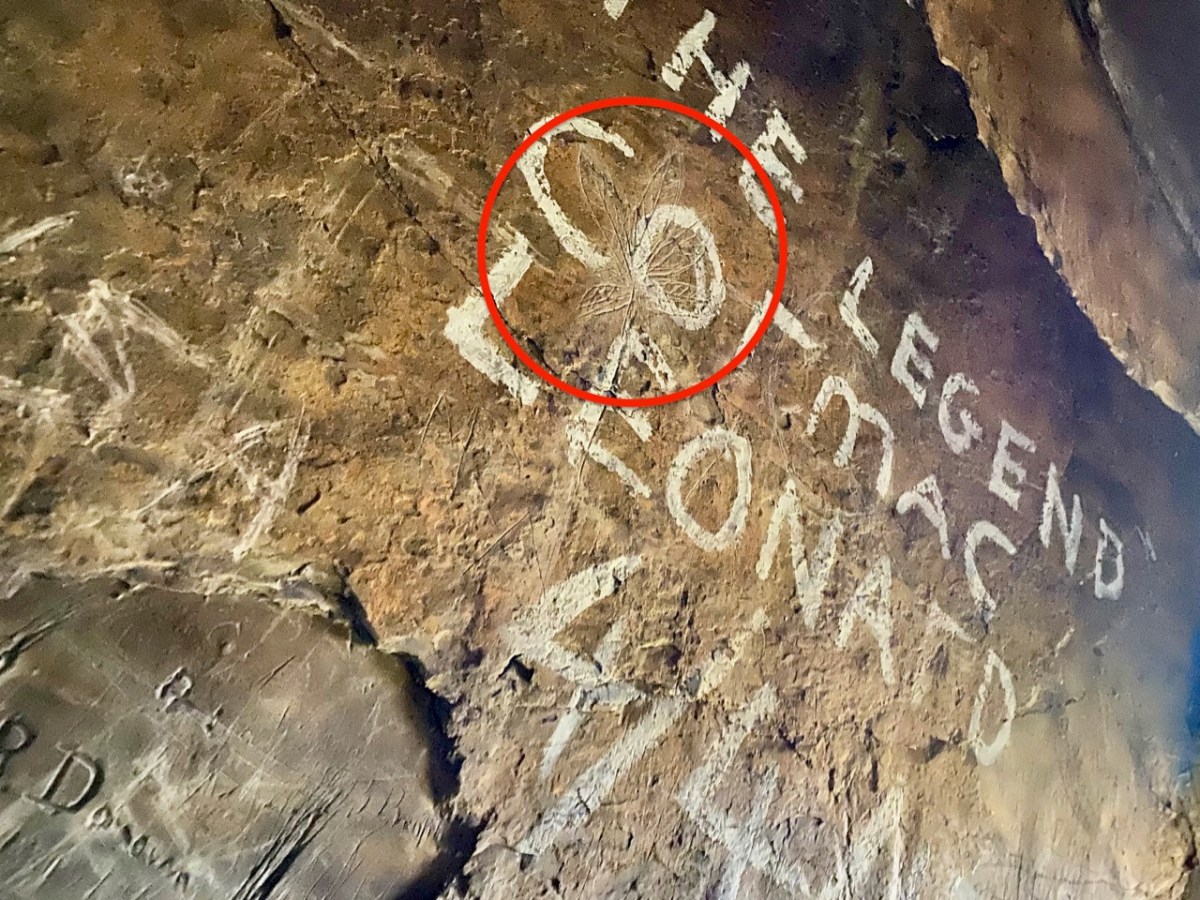
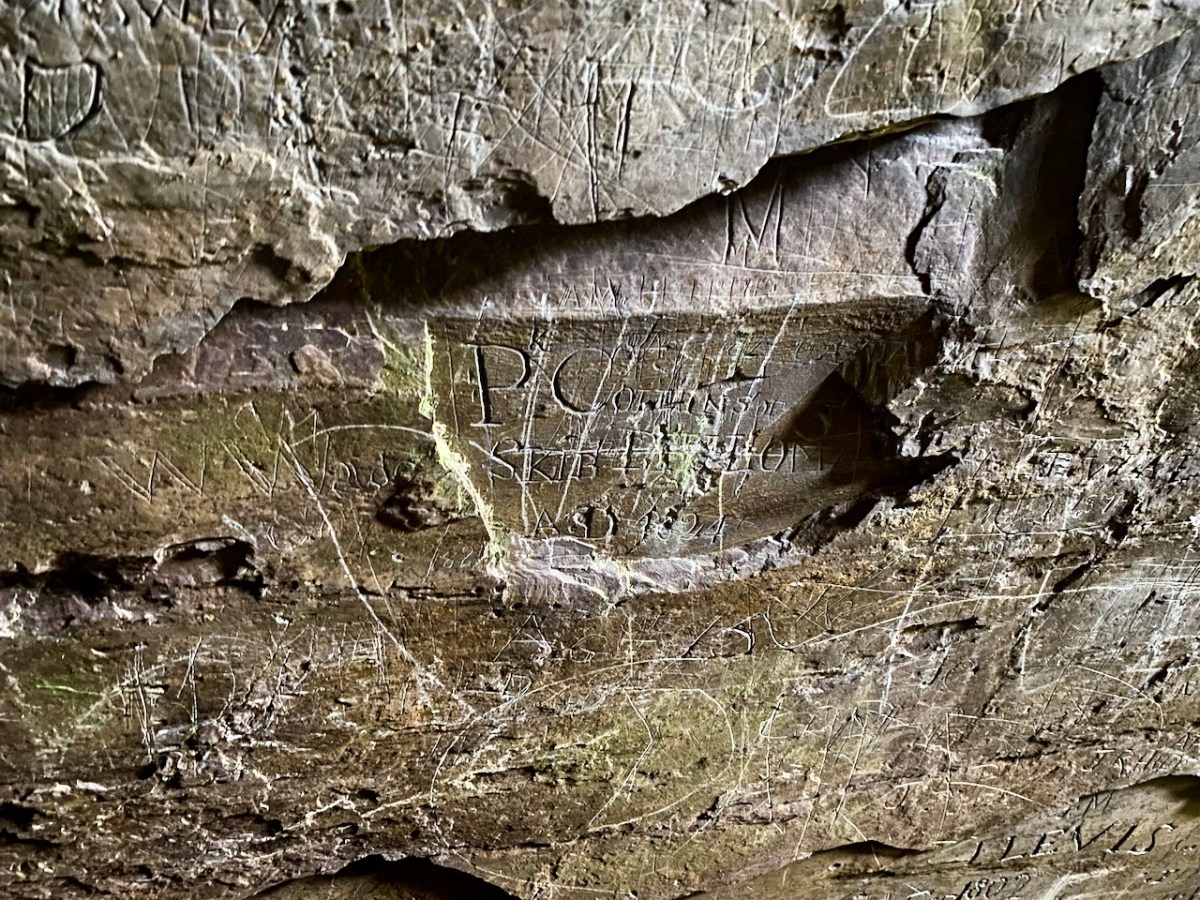
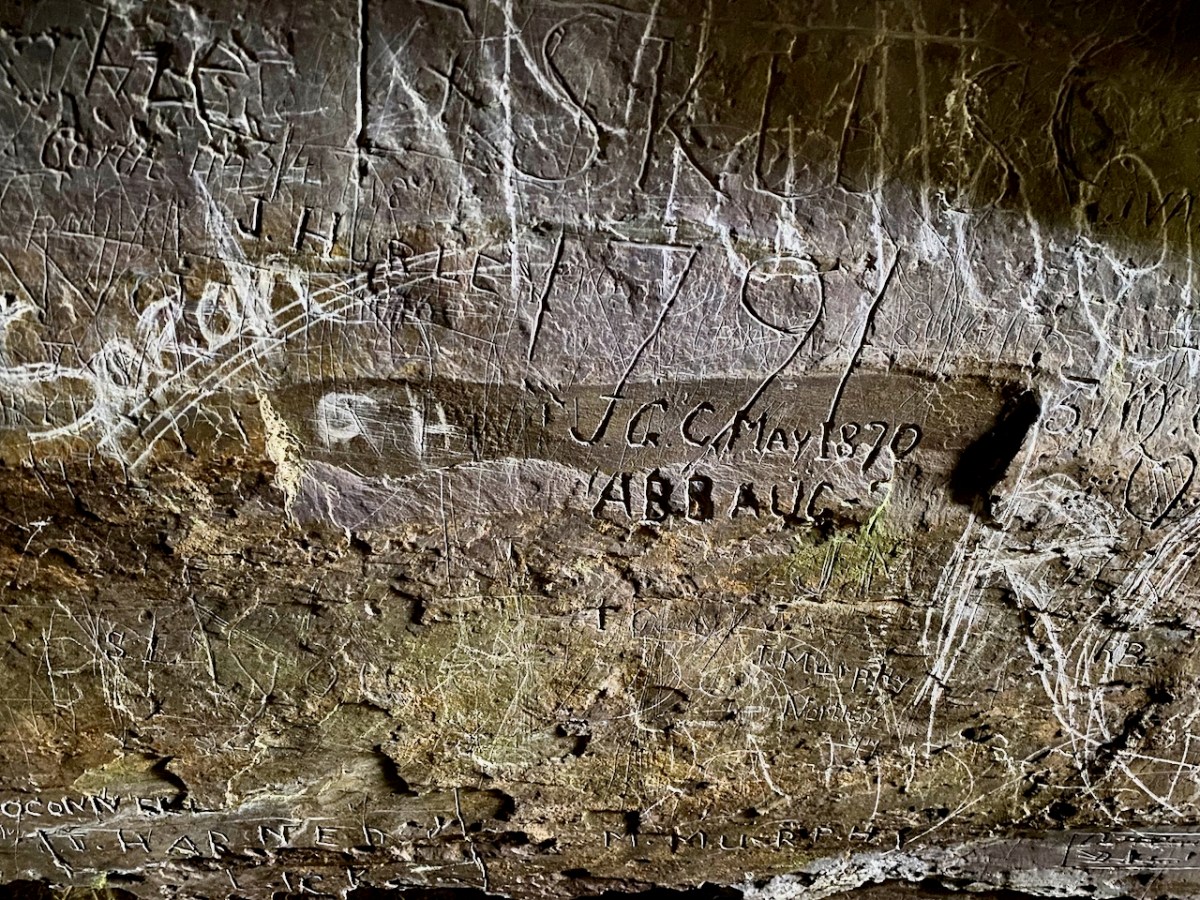
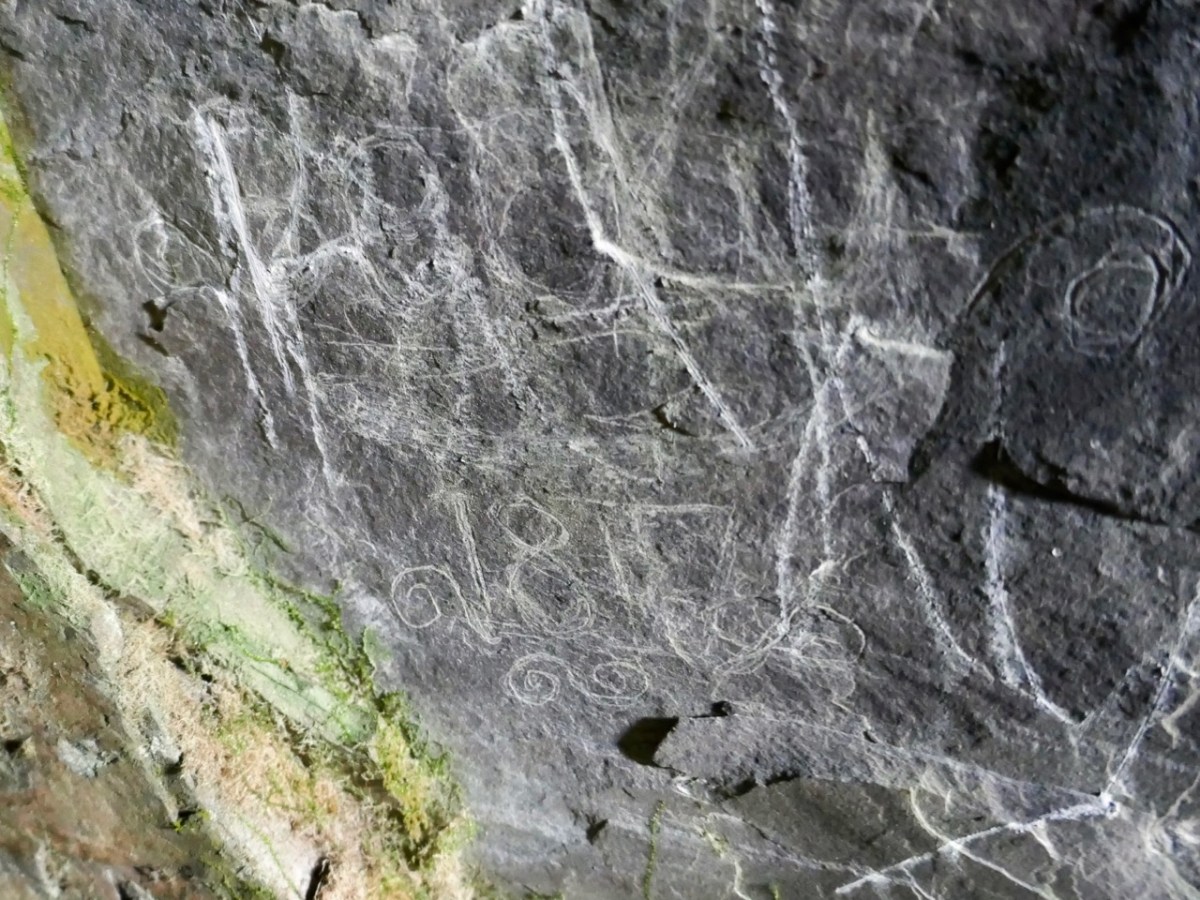
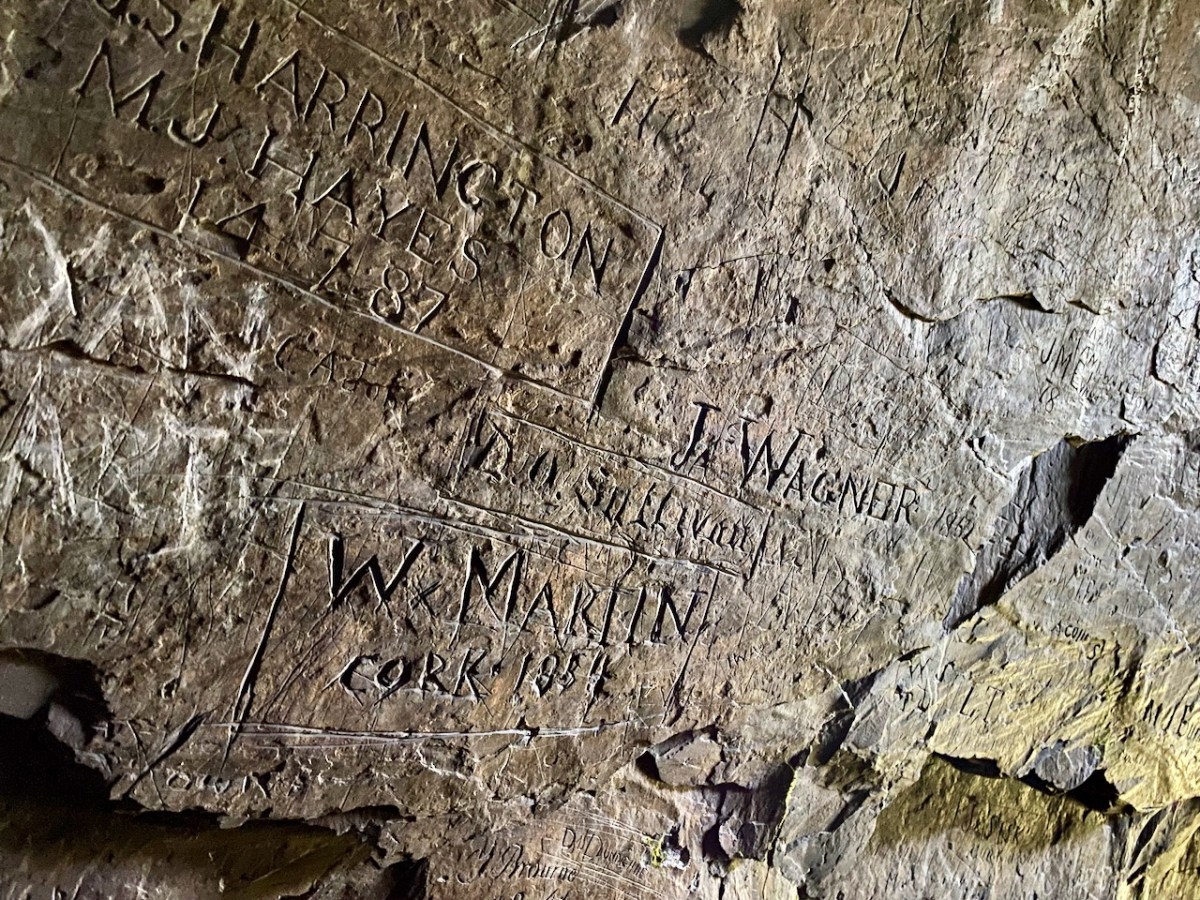
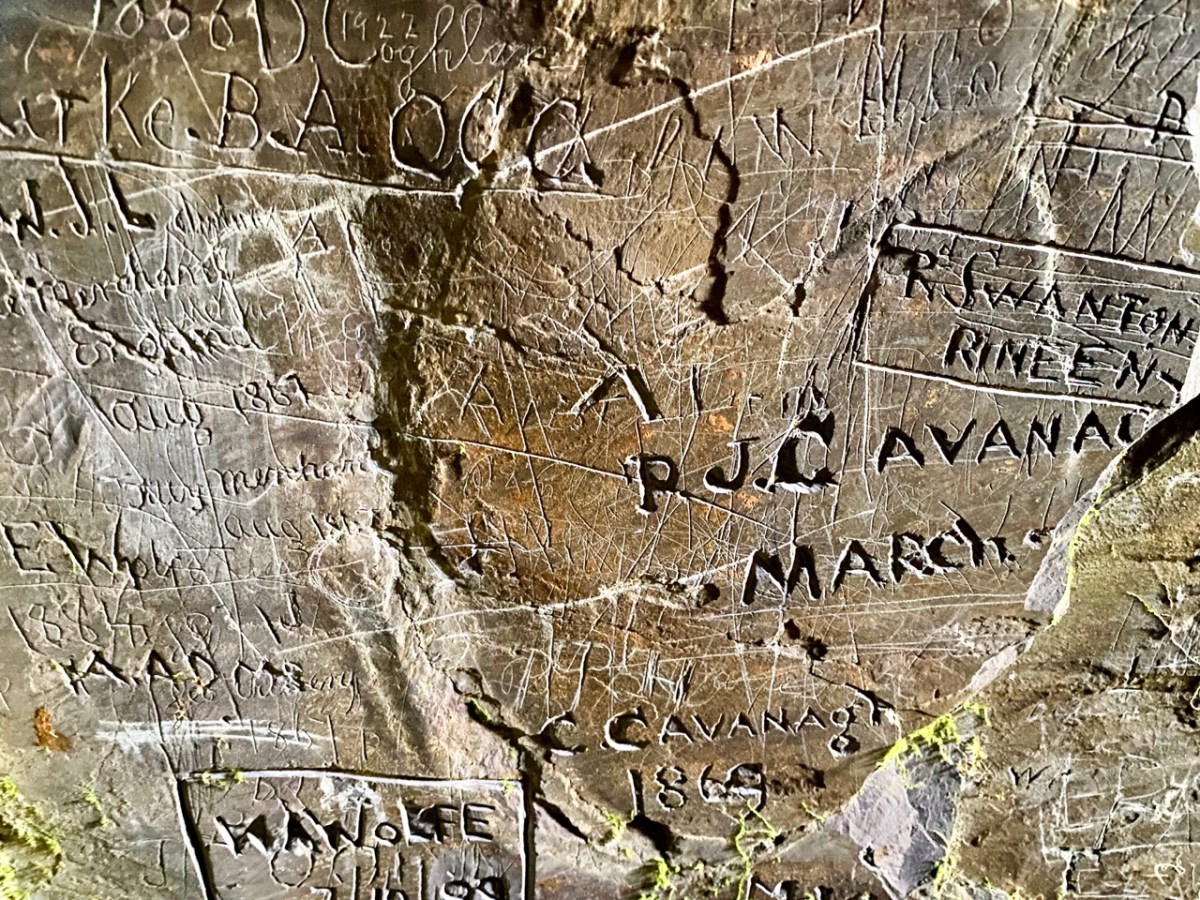
The cave has two entrances – higher and lower – and the rock faces within certainly look as though they had been worked in places. This could be from the “. . . unsuccessful 19th century exploration for copper. . .” mentioned in the archaeological record. But the exposed stone is covered in scratchings: names, words, dates from all periods – recognisably going back as far as the 1700s. There are also a few images, such as this group of leaves which has been partly obscured by modern-day painted lettering: – and note the harp in the top left of the next pic down:
We had been surprised that we could not find any written description of the graffiti which – although not ‘ancient’ – has to be of interest, as it is a record of marks made by people through many centuries. In our recent census (2022) we have all been asked to contribute to a ‘time capsule’ – our words will be sealed up ready for opening by future generations a hundred years from now. (Some of these words have been published on the internet. My favourite is the simple and poignant: “Is there anybody there…?”). This cave is a comparable ‘time capsule’ but perhaps less embracing of contemporary life.
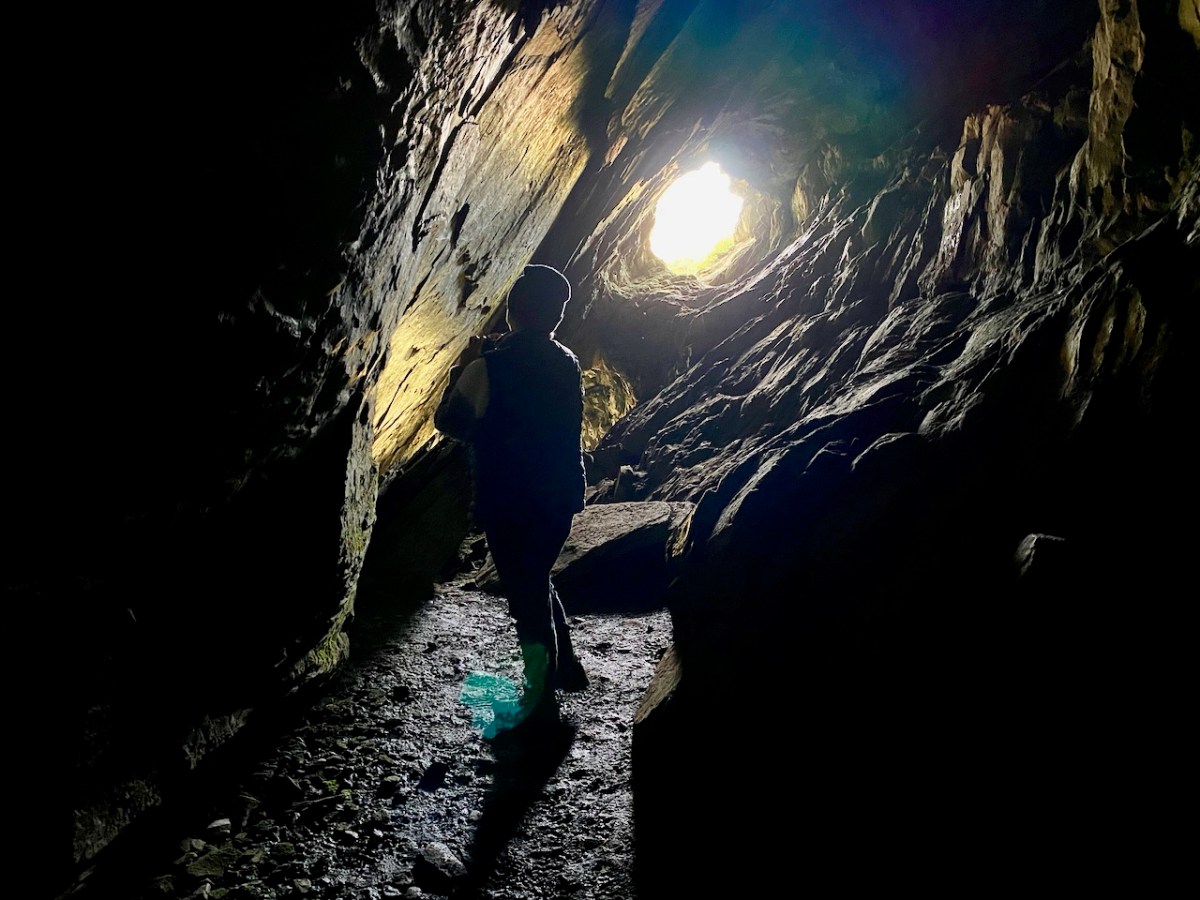
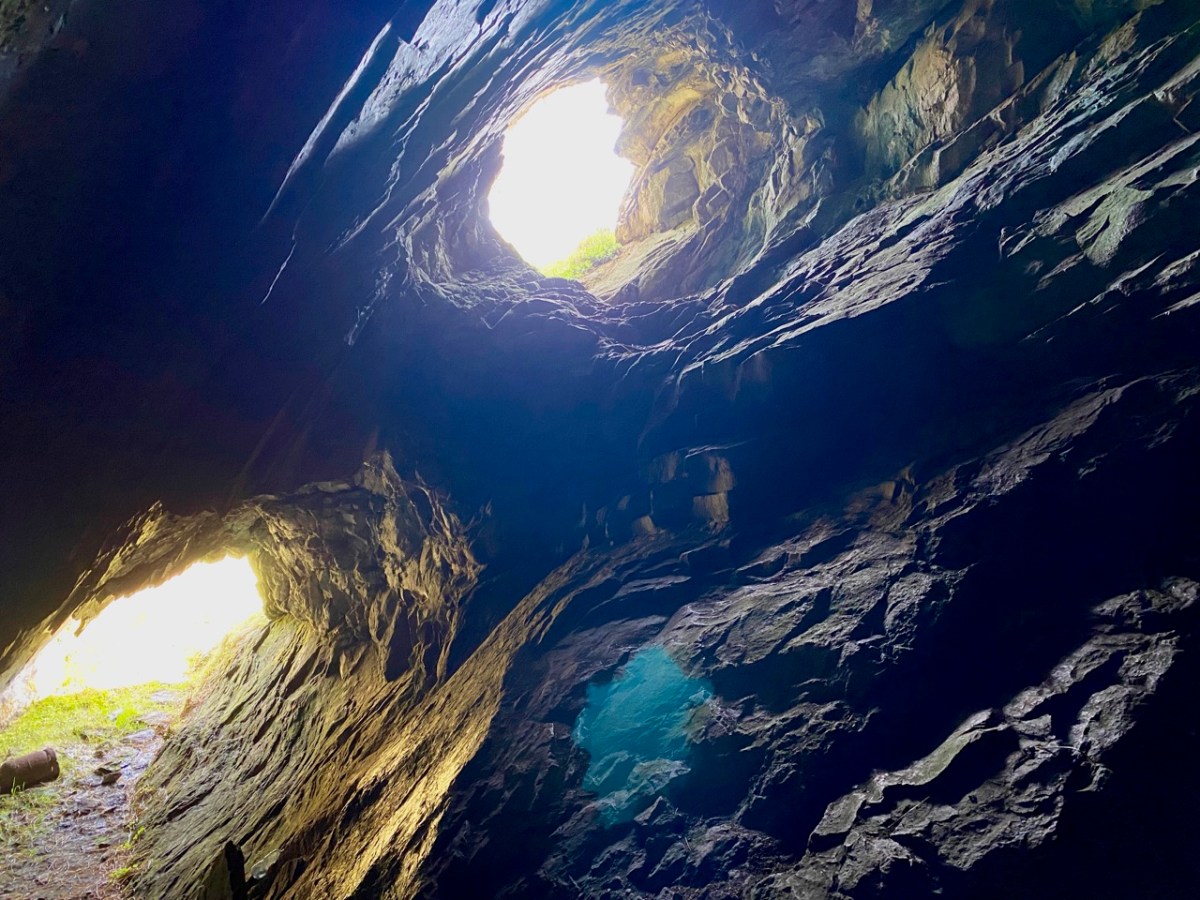
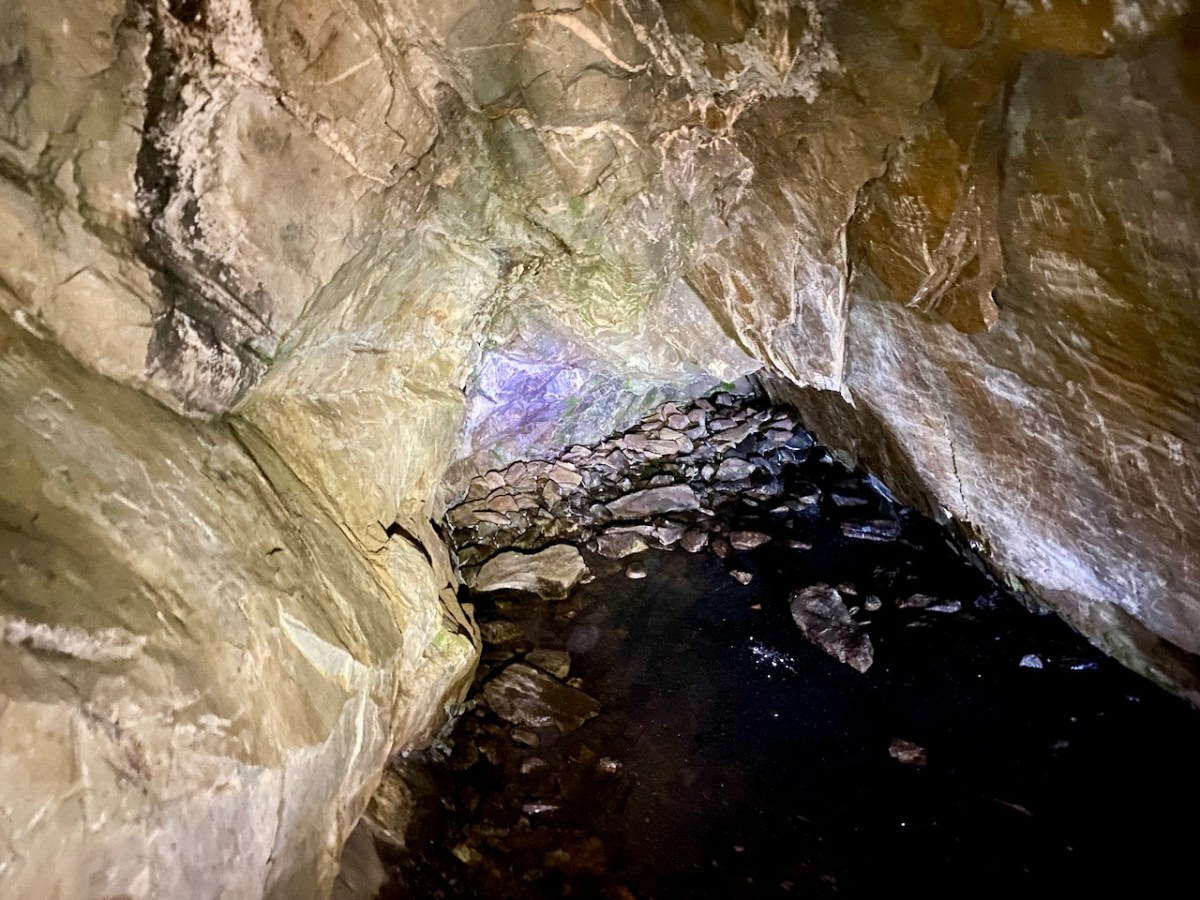
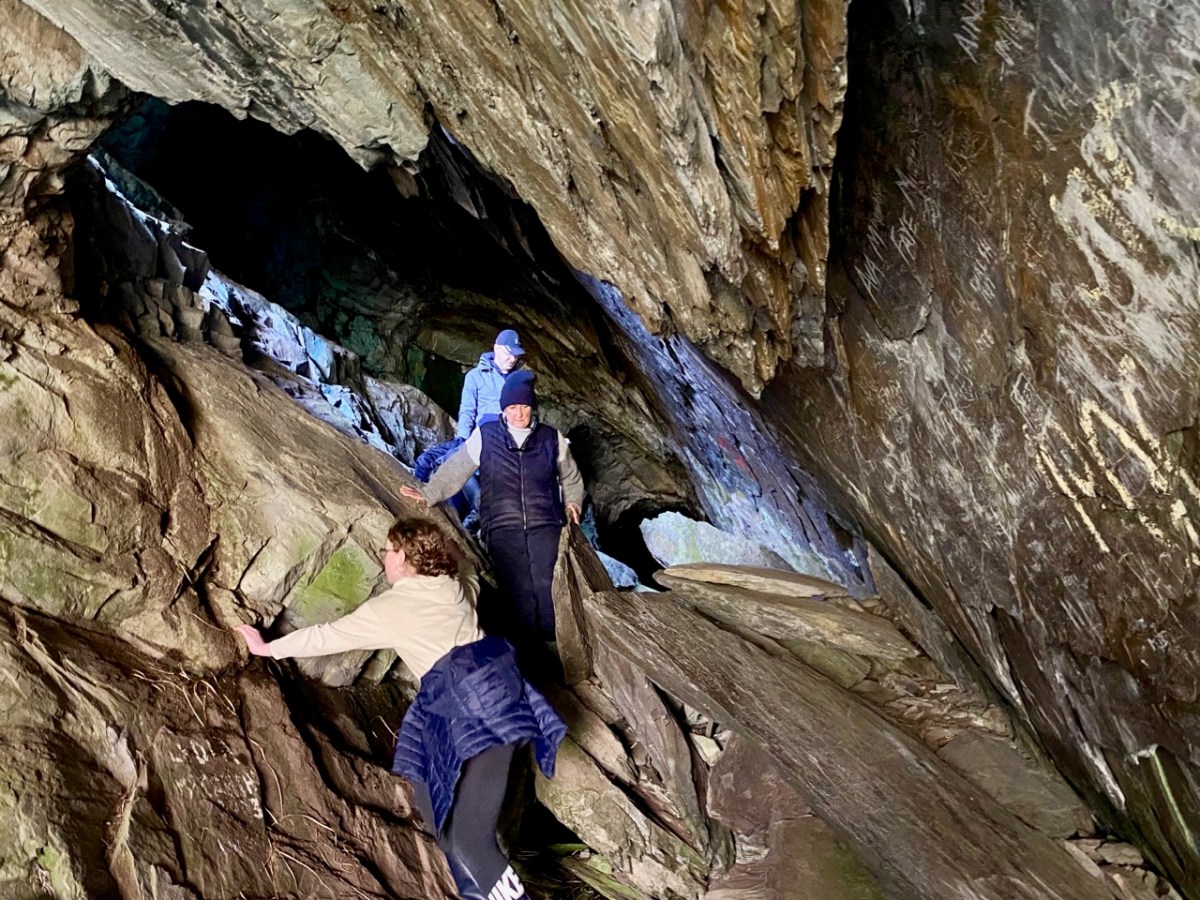
Centre, above: the copper staining, which is mentioned in the redundant archaeological record. Above is the far end of the cave, with some interesting lighting effects. The pic below gives an impression of the scale of the interior.
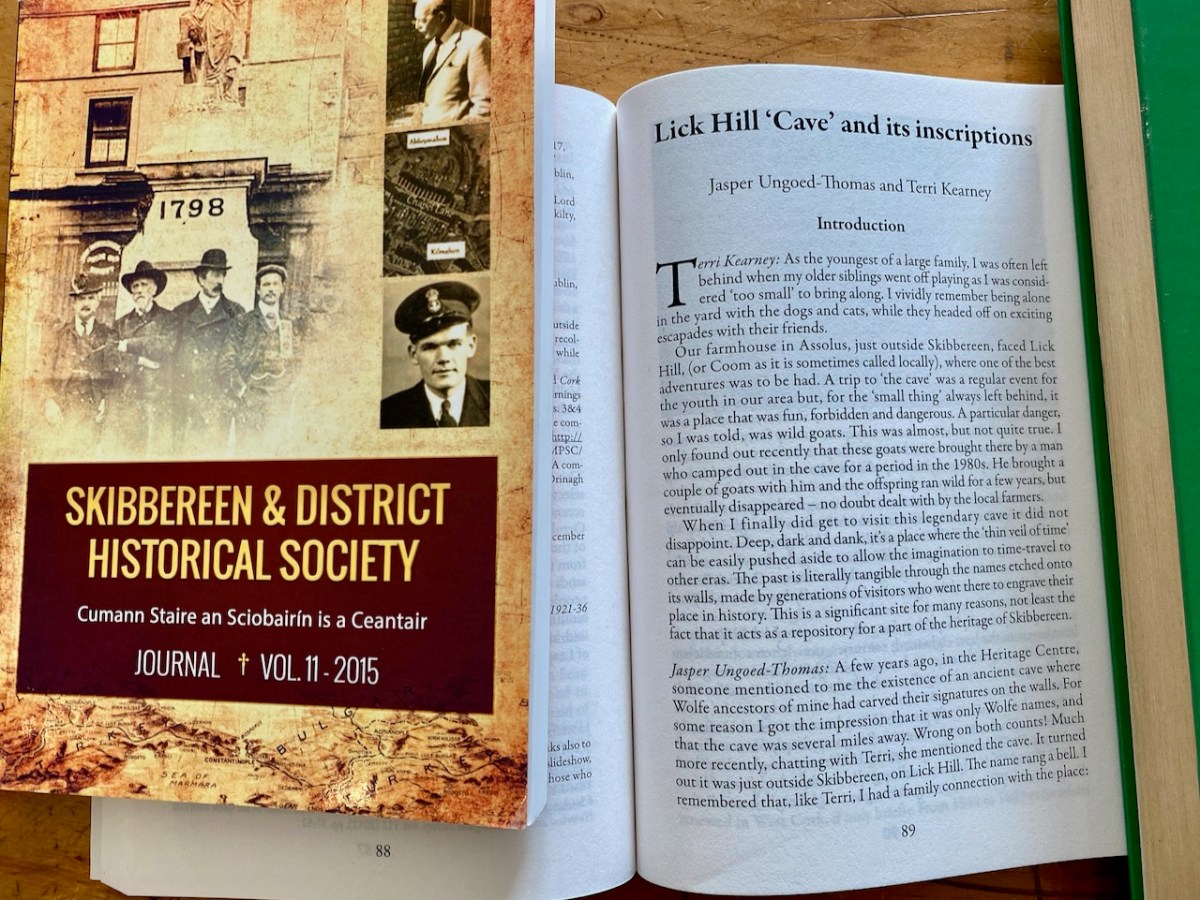
Before writing this post I made a few more enquiries, and discovered that the rock scribings had been thoroughly researched and written up in an article in Volume 10 of the Skibbereen & District Historical Society Journal, dating from 2014. The reason I had not previously discovered this was that the writers chose the local name of Lick Hill, rather than Coom Hill or the townland name (Gortshanecrone). Local knowledge is everything!
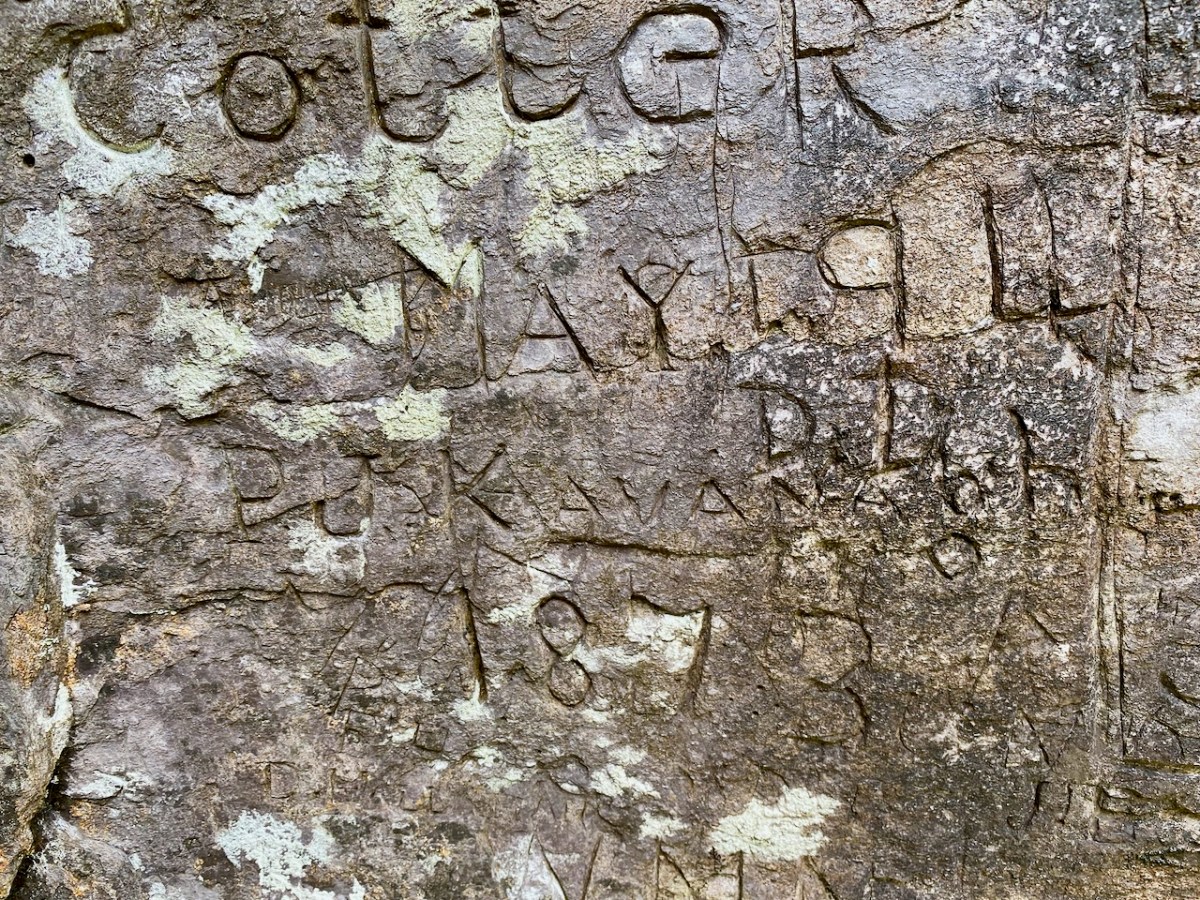
The excellent article is written by Jasper Ungoed-Thomas (whose ancestors – Wolfes – had carved their names on these walls) and Terri Kearney, who has been the Manager of the Skibbereen Heritage Centre since it opened in 2000. The Journal article is as comprehensive as you could ever need, with a full list of the names inscribed on the cave walls, together with information on those named where it is known. As an example, J Cotter, 1790 has the following entry:
. . . Cork Anglo-Protestant family, dating back to at least seventeenth century. Edward Cotter RIC during War of Independence. A Catholic branch existed by twentieth century. Edward Cotter was section commander of Bantry IRA . . .
Skibbereen and District Historical Society Journal , Volume 10 2014
The same Journal article describes well the techniques which have been employed in many of the scribings:
. . . The nature of the rock face, with its hard surface, inevitably influenced the quality of the inscriptions. From the late eighteenth century until the later twentieth century, those who wished to leave a record of their visit had little option but to carve their graffiti. It is quite easy to scratch a name, but the outcome is often difficult, if not impossible, to understand. Results which are usually, but by no mean always, easy to read can be achieved by cutting, probably with a knife. But almost certainly the fairly few very clear inscriptions were done with a sharp chisel. Presumably some visitors came prepared to inscribe their names, since proper carving is not easy; it demands time, application and skill . . .
Skibbereen and District Historical Society Journal , Volume 10 2014
Wolfe and Cotter names are seen in the examples above. Having visited the cave we perhaps thought our adventures were over for the day. However, getting back to where we had parked our cars was hazardous, as we opted to follow what seemed to be an easier route (I have to confess it was my suggestion!).
It proved to be a long and tedious trek. The terrain was uncertain and we had to negotiate bogs and steep, uneven surfaces where there were no visible footholds. When we wearily made it to a boreen, we found we still had far to go. A lesson learned: always go back the way you came – you know you will arrive! In spite of the strains, we had a great day out, and broadened our knowledge of local West Cork history. Don’t forget – as always – seek the permission (and advice) of landowners before you embark on any such exploration. And don’t unduly disturb the local residents!
The series continues! In my previous posts on Napoleonic Signal Towers around the Irish coast (the posts are listed at the end of this one) I stated that 81 towers were built between 1803 and 1806, of which 20 were situated in the County of Cork. Today’s example is firmly within the chimerical district of West Cork. I use the word ‘chimerical’ in this sense: “. . . existing only as the product of unchecked imagination . . .” as there is actually geographically no such place as West Cork, even though we write about it all the time – and claim to live within it!
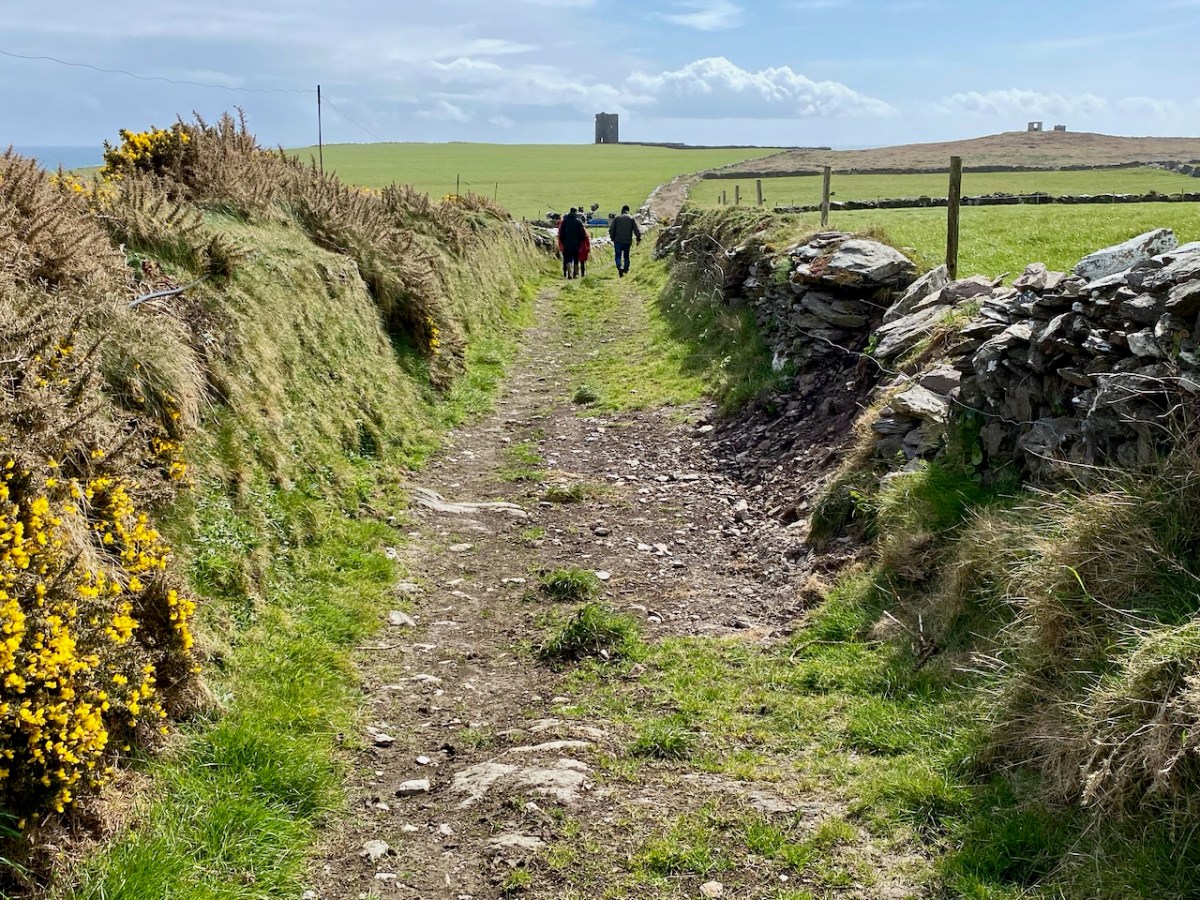
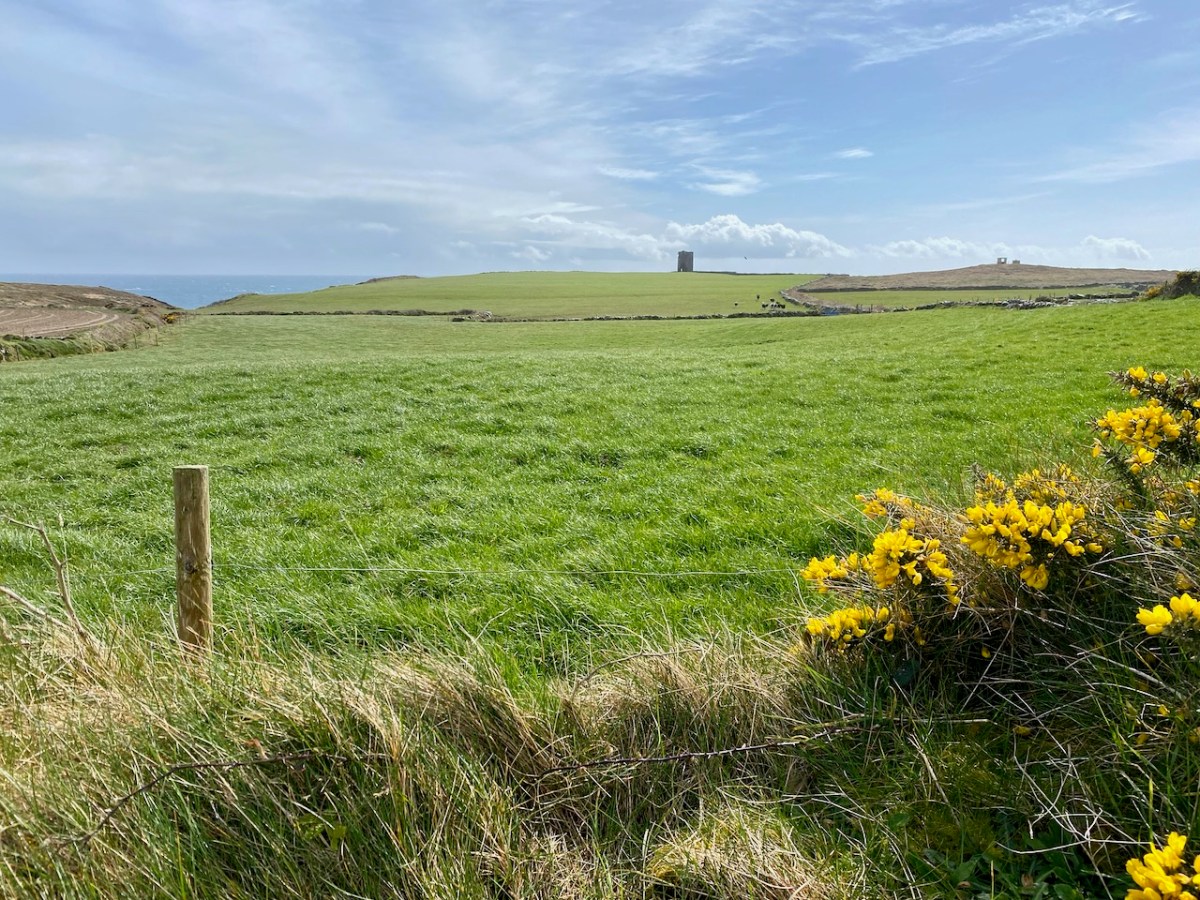
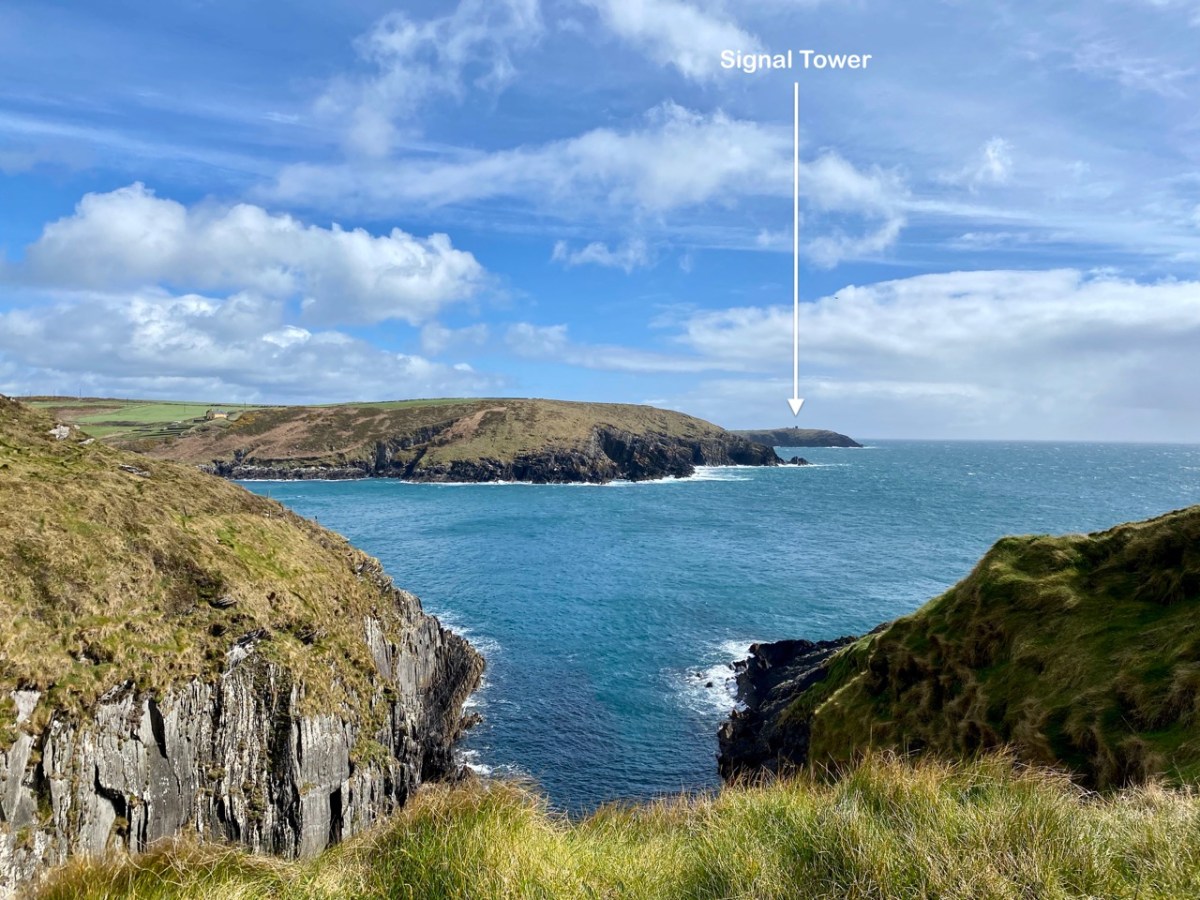
Today’s example has various names: Seven Heads (it’s sited on one of them); Leganagh (that’s the immediate locality) and Ballymacredmond, which is the townland name. It is also called Travarra on some maps and by local people: that is the name of a bay which is over a kilometre to the north-east (and refers to the Barry family who lived in the district). From this tower can be seen another to the west (Dunnycove or Galley Head – which I have written about here), and to the east the tower at The Old Head of Kinsale, here, which is in the present day the best standing example as it has been fully restored and is open to visitors as a historic structure.
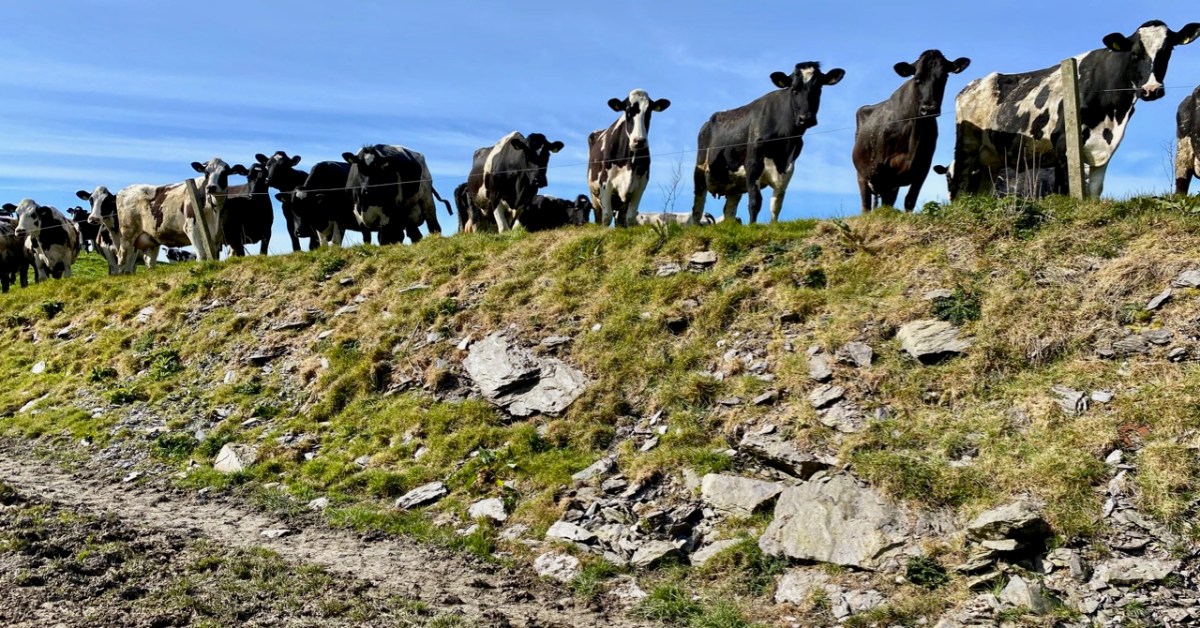
We also had bovine company (above)! This is a constant when you are walking in West Cork. As you can see, our day was mixed, with dark storm clouds and high winds interspersed with good spells of sunshine. The varying light enabled some dramatic photography:
The defined trackway and various well-built stone walls – which I am assuming are contemporary with the tower – show what a significant undertaking this project was in the early years of the nineteenth century. One particular wall to the west of the tower is a noteworthy structure as it is high (between 1.5 and 2.5 metres in places) with some puzzling lintolled openings. The photograph below I have borrowed with thanks from Dominic Creedon as I was unable to get close due to very adverse weather.
You can make out this enigmatic wall on the Google Earth image, above. It is parallel with, and to the west of, the old access road, and forms the western boundary of three rectangular fields. I can find no information on this wall on any history or archaeology sites. I’m tentatively suggesting that it might have been constructed as part of the signal tower works to create a sheltered garden or external storage area: the towers accommodated crews on a rotating basis while in use, and the ‘garden’ – if that is what it was – could have provided a welcome source of fresh produce.
This remote site is also of interest as it has the ruins of two World War 2 Coastal Lookout Posts within a short distance of the Napoleonic-era Signal Tower. I haven’t been able to find out why two were needed here: I can only assume that the first did not prove to give sufficient surveillance. This twentieth century context and link is not unusual, as both lookout posts and signal towers effectively served the same purpose: to keep a watch out for enemy activity, and to alert the appropriate authorities if such activity was spotted. In reality, no such activity was ever reported during either conflict. Written records exist from all the WW2 LOPs (Lookout Posts). Here is an example page from the Seven Heads site, typical of all such records:
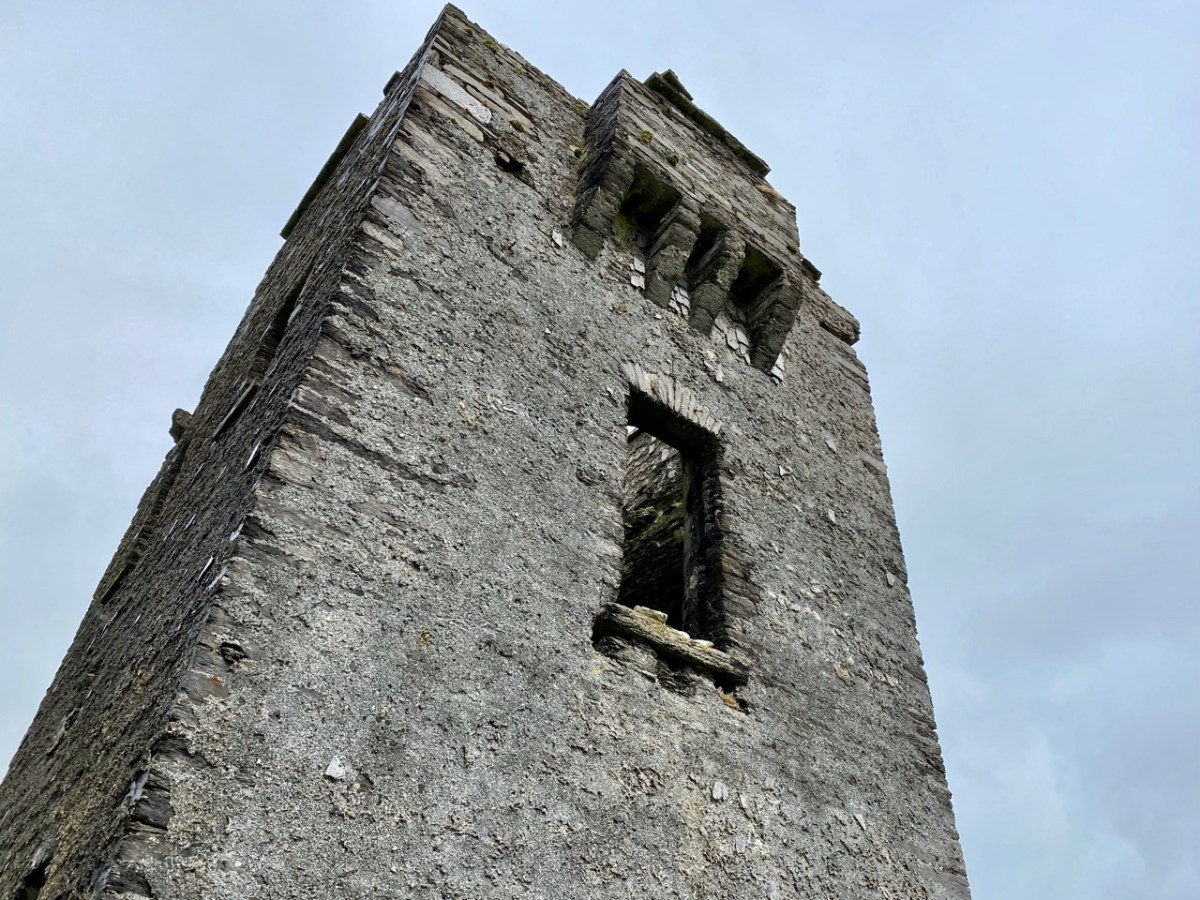
Above are various views of the Signal Tower: it is typical of such structures in general design and layout. Note the machicolation incorporated into the upper parapet: this is an echo of the design of medieval tower houses. The Seven Heads building is an open ruin and is slowly deteriorating. It is sure to crumble away over time. The Seven Heads Walking Trail takes you past the site.
Tailpiece: the pic below is taken from the Dunworley promontory fort, looking towards Seven Heads, and the final pic shows the dramatic sky which enhanced our visit.
The previous posts in this series can be found through these links:
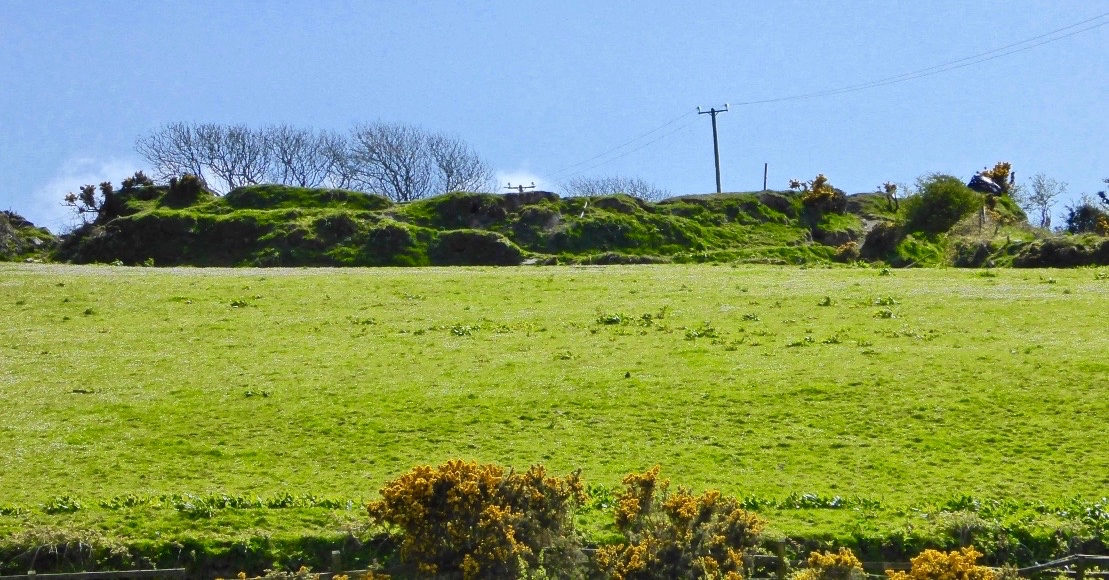
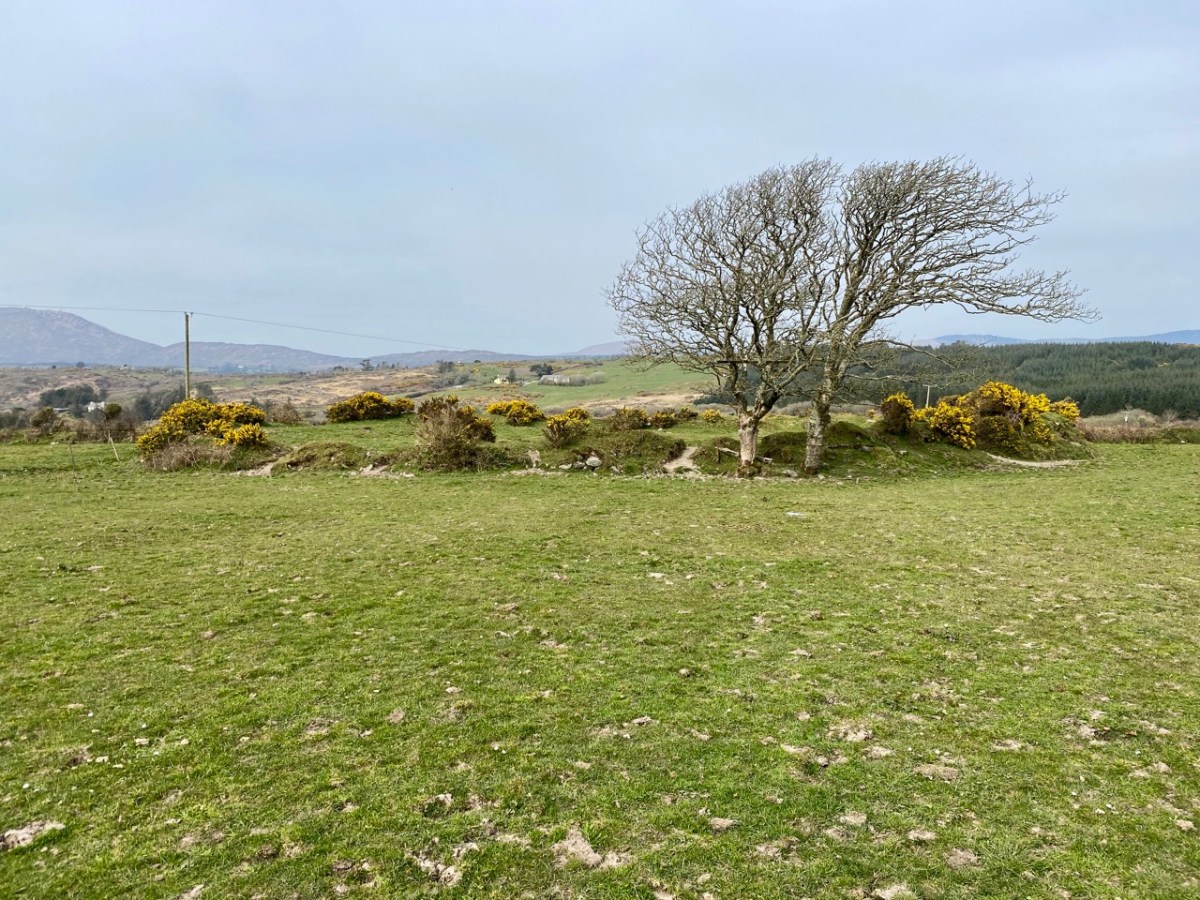
There’s a fine ringfort just over the hill from us – in the townland of Ballycummisk. A definition of a ‘ringfort’ in archaeological terms is given here:
. . . Many people lived in enclosed farmsteads known as ringforts in the Early Christian/Early Medieval period. Second to fulachta fiadh, they are the most common field monument surviving in Ireland with up to 60,000 examples, most dating to between 550-900AD. Ringforts are circular areas, measuring c24-60m in diameter, usually enclosed with one or more earthen banks, often topped with a timber palisade. In the west of Ireland the ringfort was often enclosed by a stone wall, with stone huts in the interior. Traces of iron and bronze working have been recovered suggesting some ringforts had very specific uses while others were multifunctional . . .
A simpler definition comes from the monumental 1200-page Volume 1 of the ‘New History of Ireland’ series published in 2005 and edited by Dáibhí Ó Cróinín: “archaeologists are agreed that the vast bulk of them are the farm enclosures of the well-to-do of early medieval Ireland”.
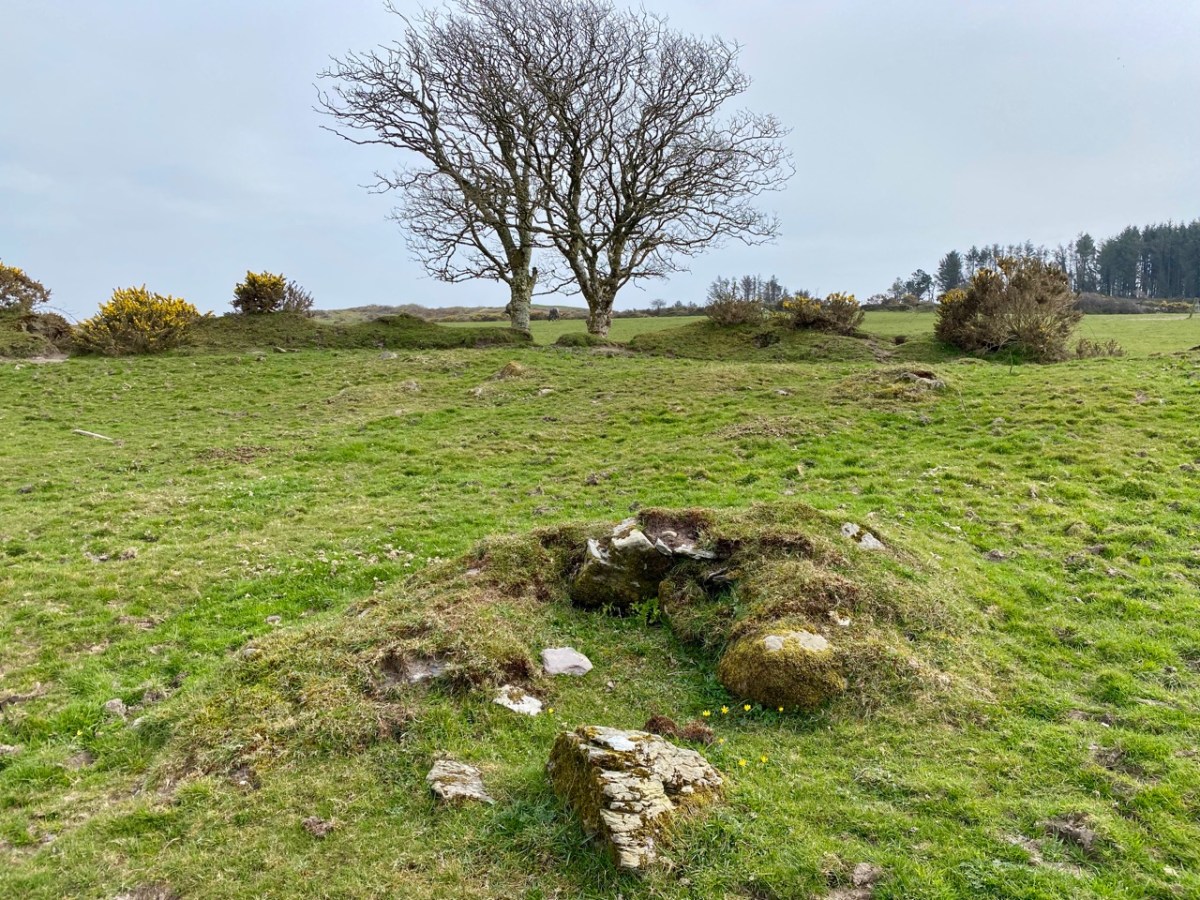
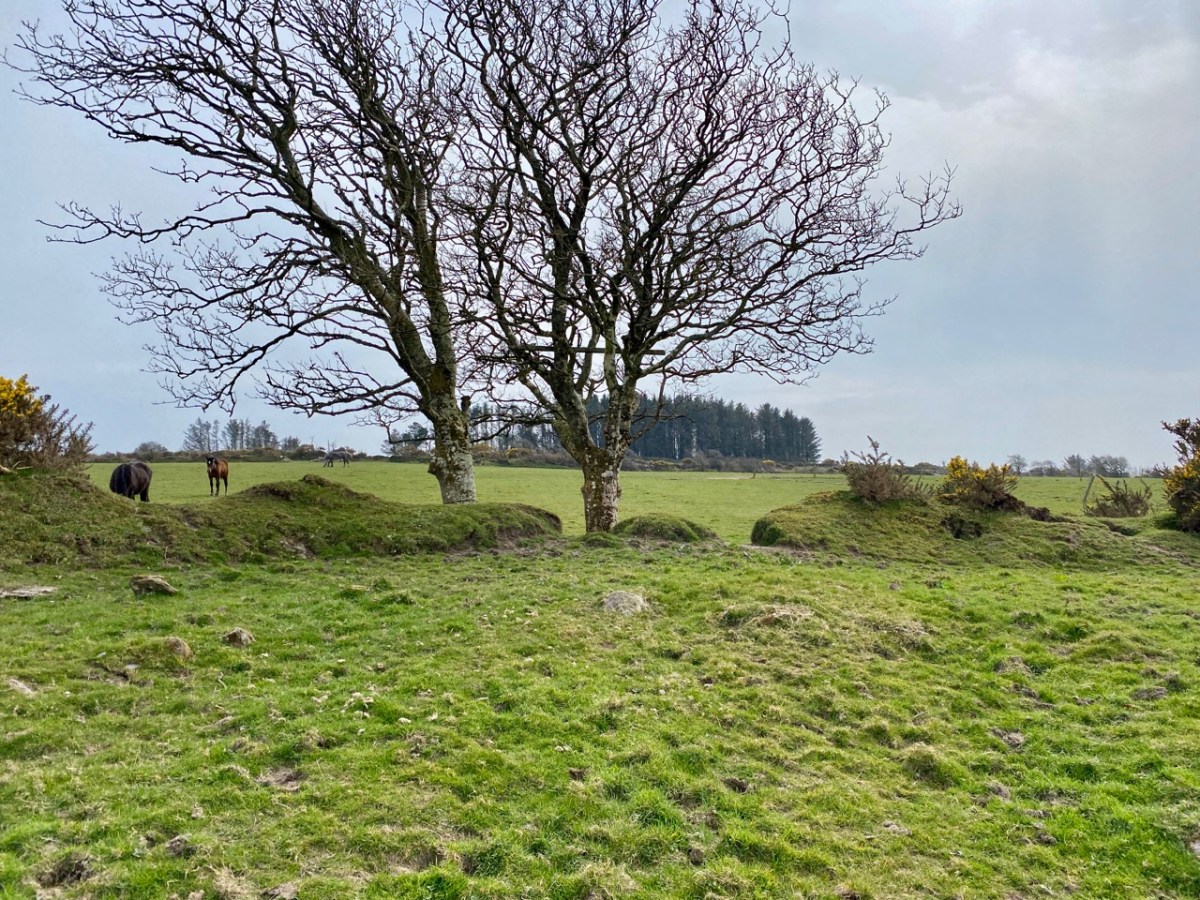
The upper picture is taken from within the ringfort enclosure; the north bank of the fort can be seen beyond a small stone outcrop which is said to be the site of a souterrain. Time for another definition:
. . . Souterrain: an underground structure consisting of one or more chambers connected by narrow passages or creepways, usually constructed of drystone-walling with a lintelled roof over the passages and a corbelled roof over the chambers. Most souterrains appear to have been built in the early medieval period by ringfort inhabitants (c. 500 – 1000 AD) as a defensive feature and/or for storage . . .
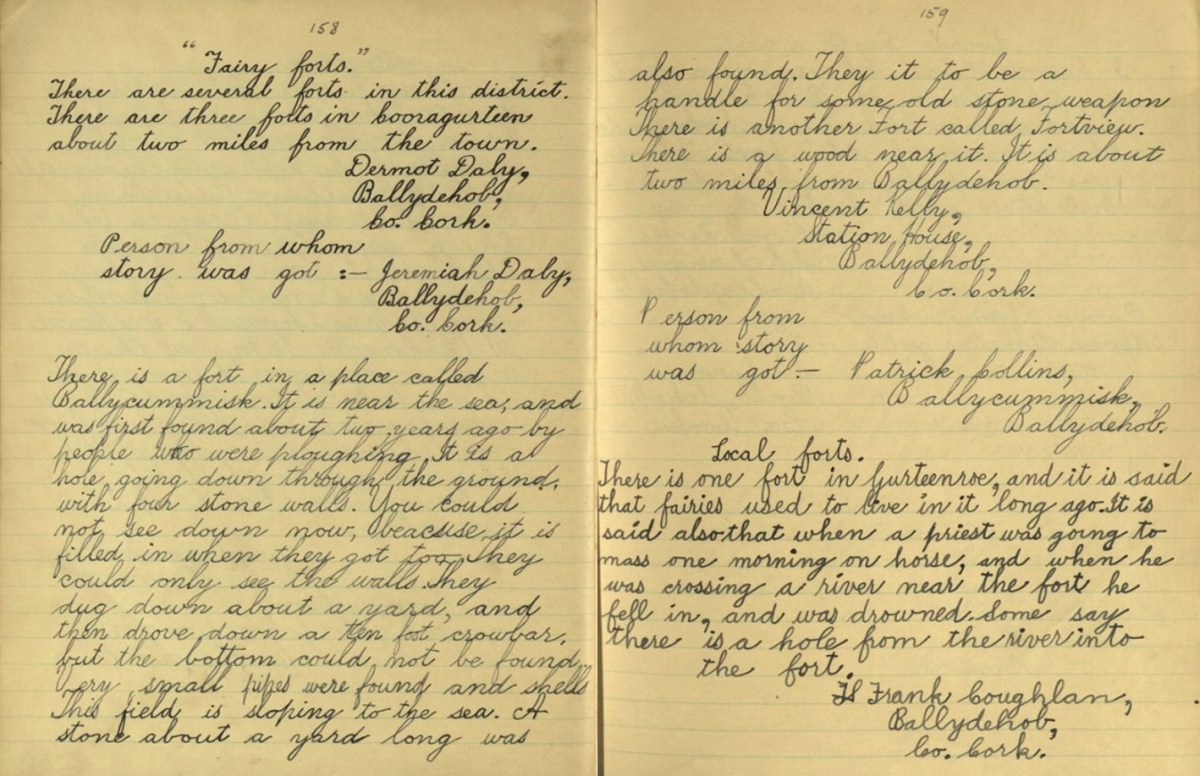
The Schools Folklore Collection is an important source of local beliefs and traditions – if not exactly historical information. The stories were collected in the 1930s but were remembered through family traditions which could go back through several generations. The example pages above – dating from 1936 – describe the Ballycummisk fort. Here is a transcription of the paragraph:
. . . There is a fort in a place called Ballycummisk. It is near the sea, and was first found about two years ago by people who were ploughing. It is a hole going down through the ground, with four stone walls. You could not see down now, because it was filled in when they got to it. They could only see the walls. They dug down about a yard, and then drove down a ten foot crowbar, but the bottom could not be found. Very small pipes were found and shells This field is sloping to the sea. A stone about a yard long was also found. They thought it to be a handle for some old stone weapon . . .
Schools Folklore Collection Frank coughlan Ballydehob
Frank Coughlan’s description almost certainly refers to the discovery of a souterrain. It doesn’t quite ring true as he says that “the field is sloping down to the sea”. In fact, the fields containing the ringfort are sloping southwards away from the sea, which is not visible at all from the site.
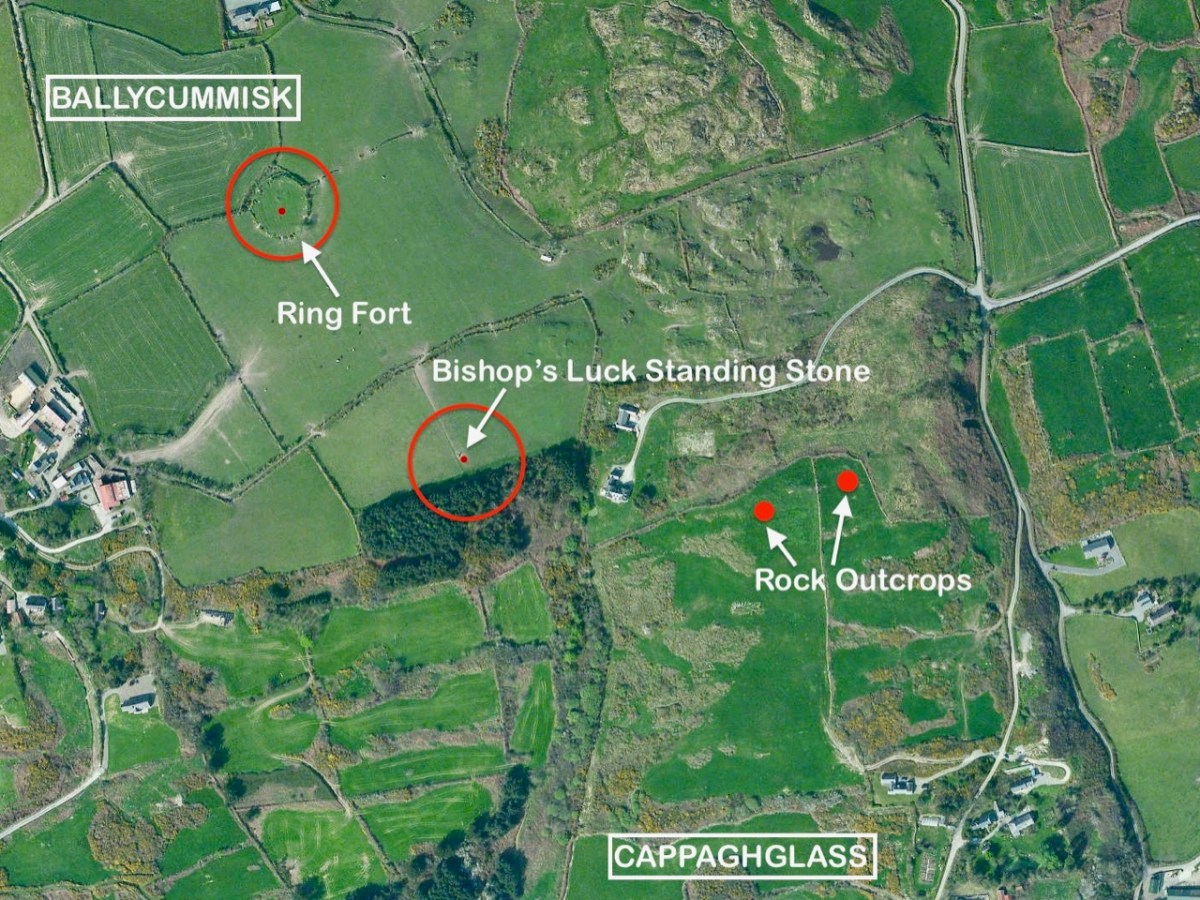
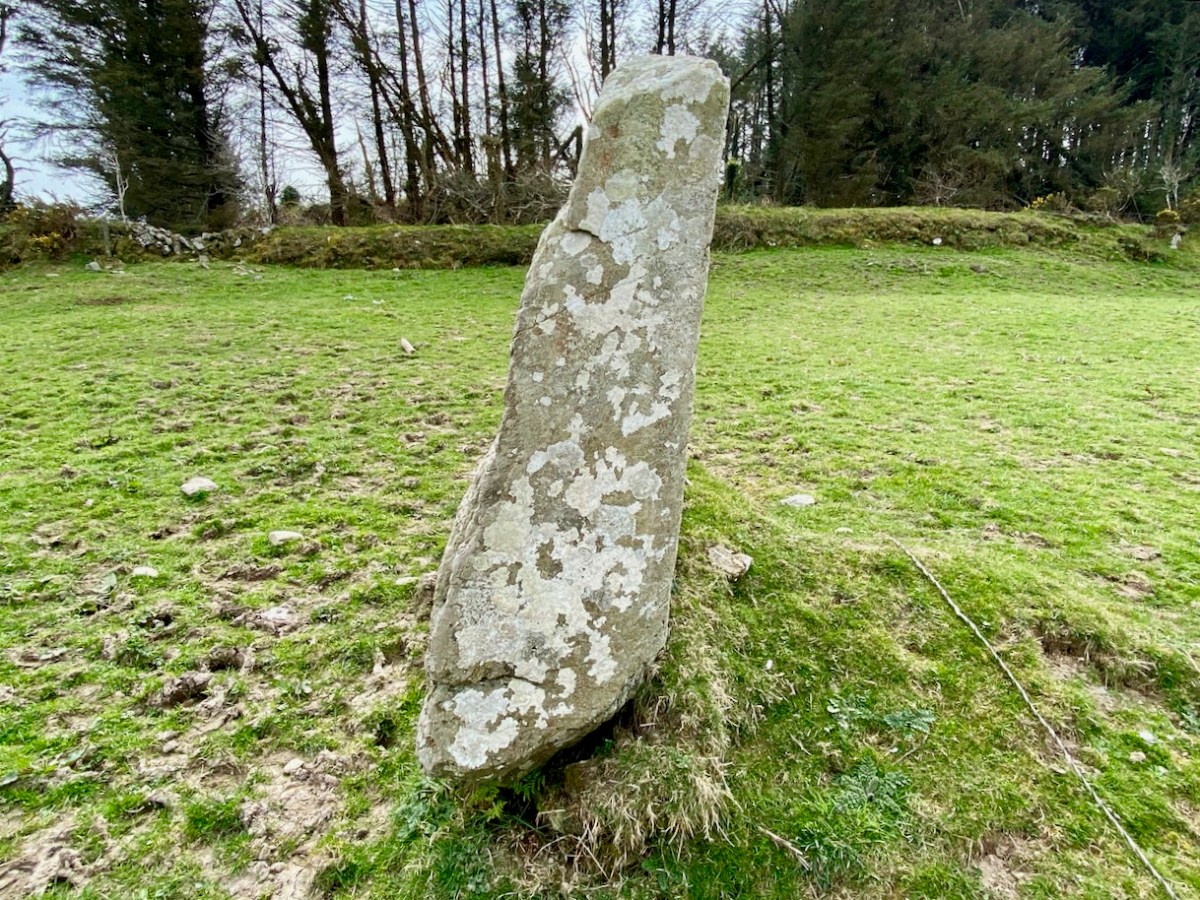
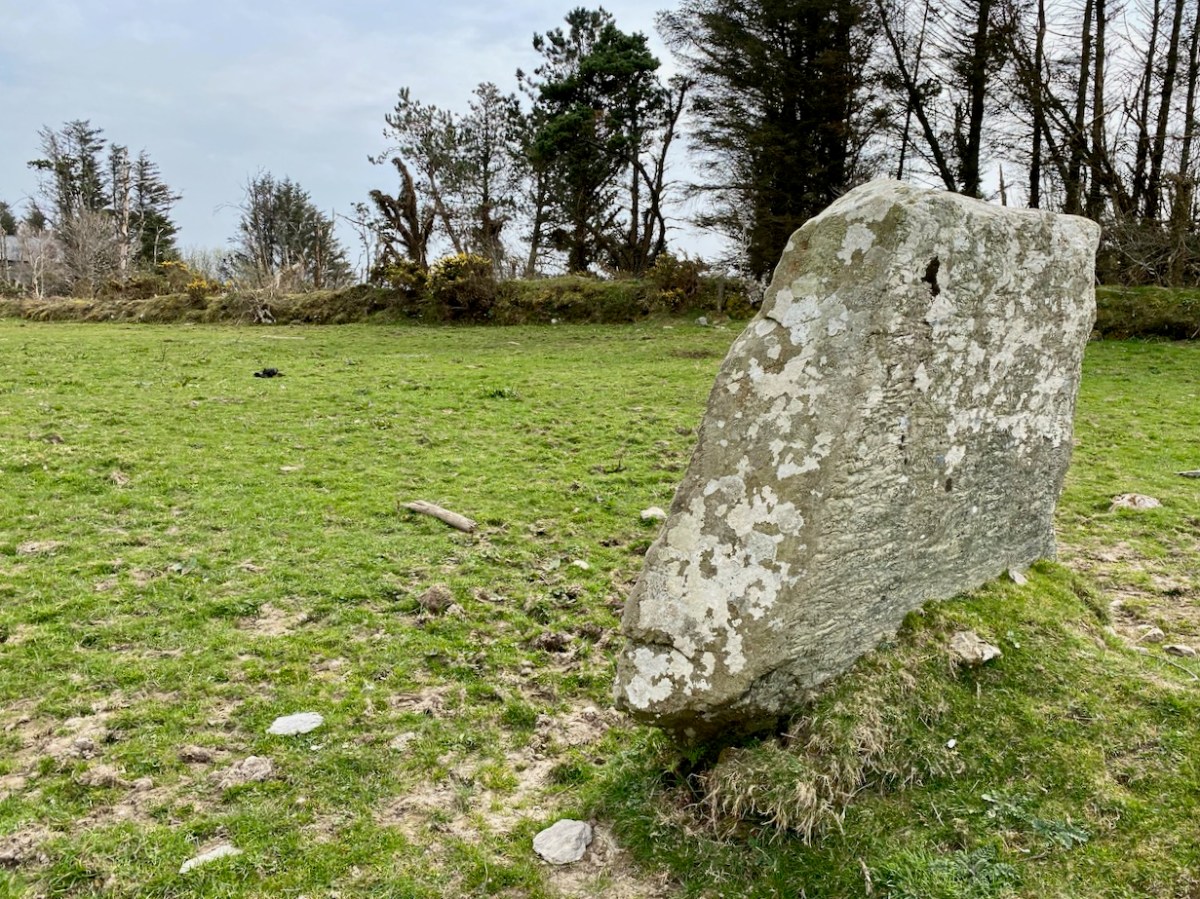
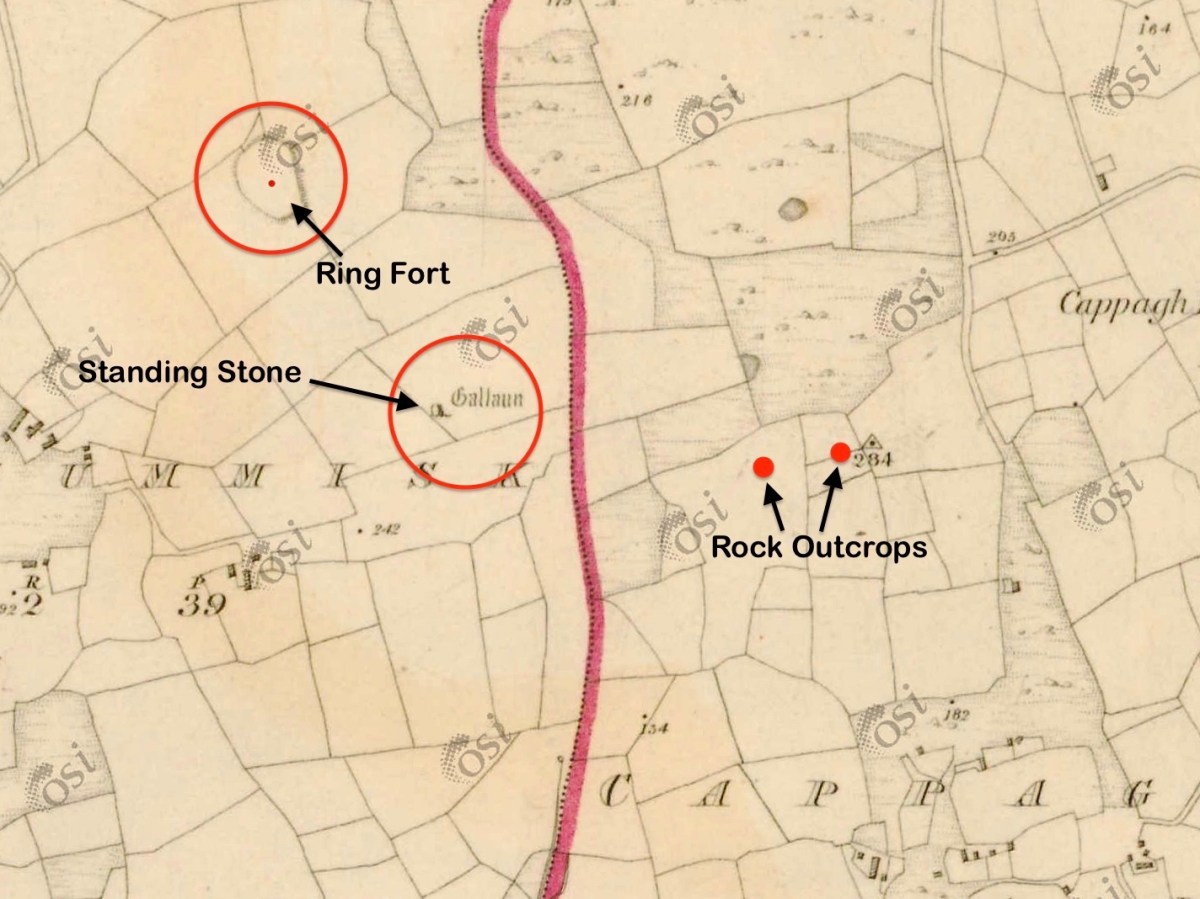
This aerial view shows parts of the townlands of Ballycummisk and Cappaghglass. The ringfort is marked. Another nearby feature – also shown – is a large standing stone, known as ‘Bishop’s Luck’.
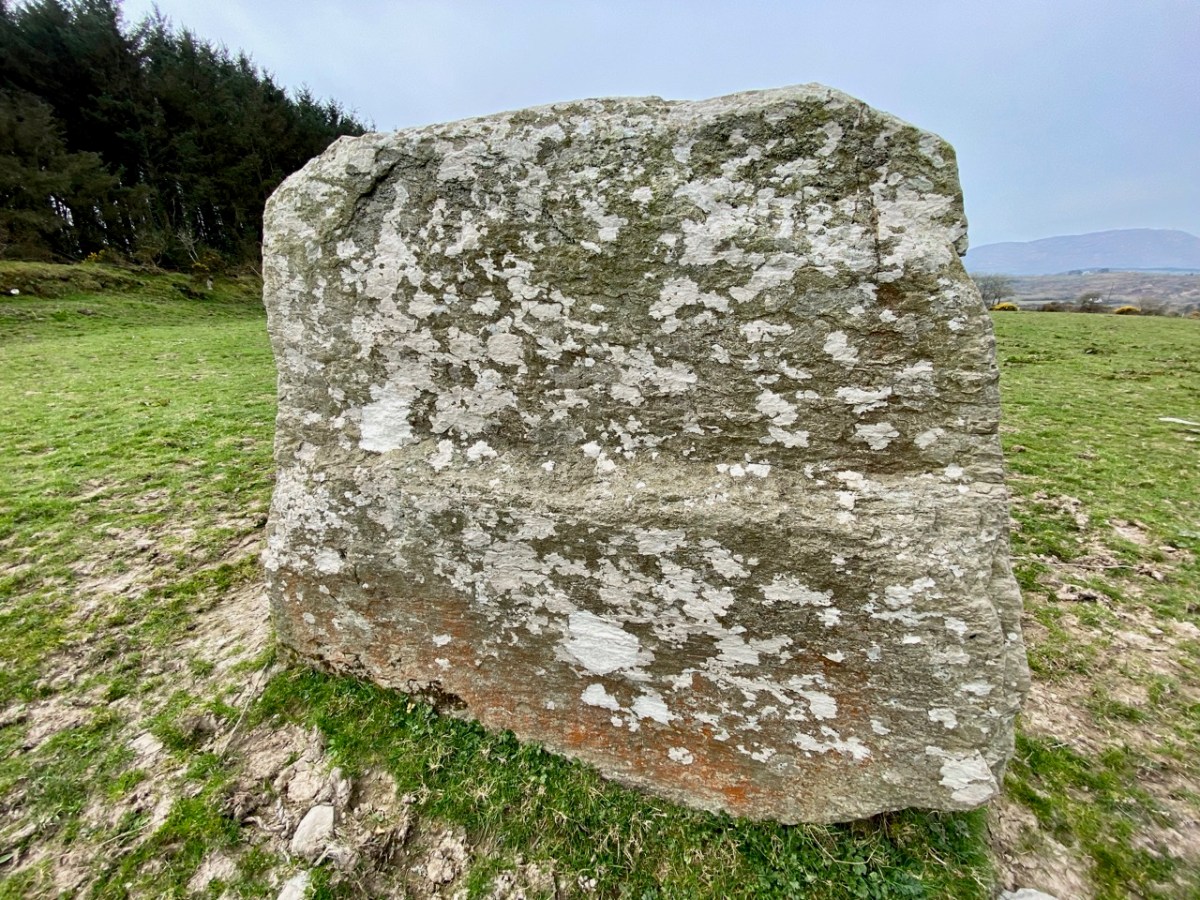
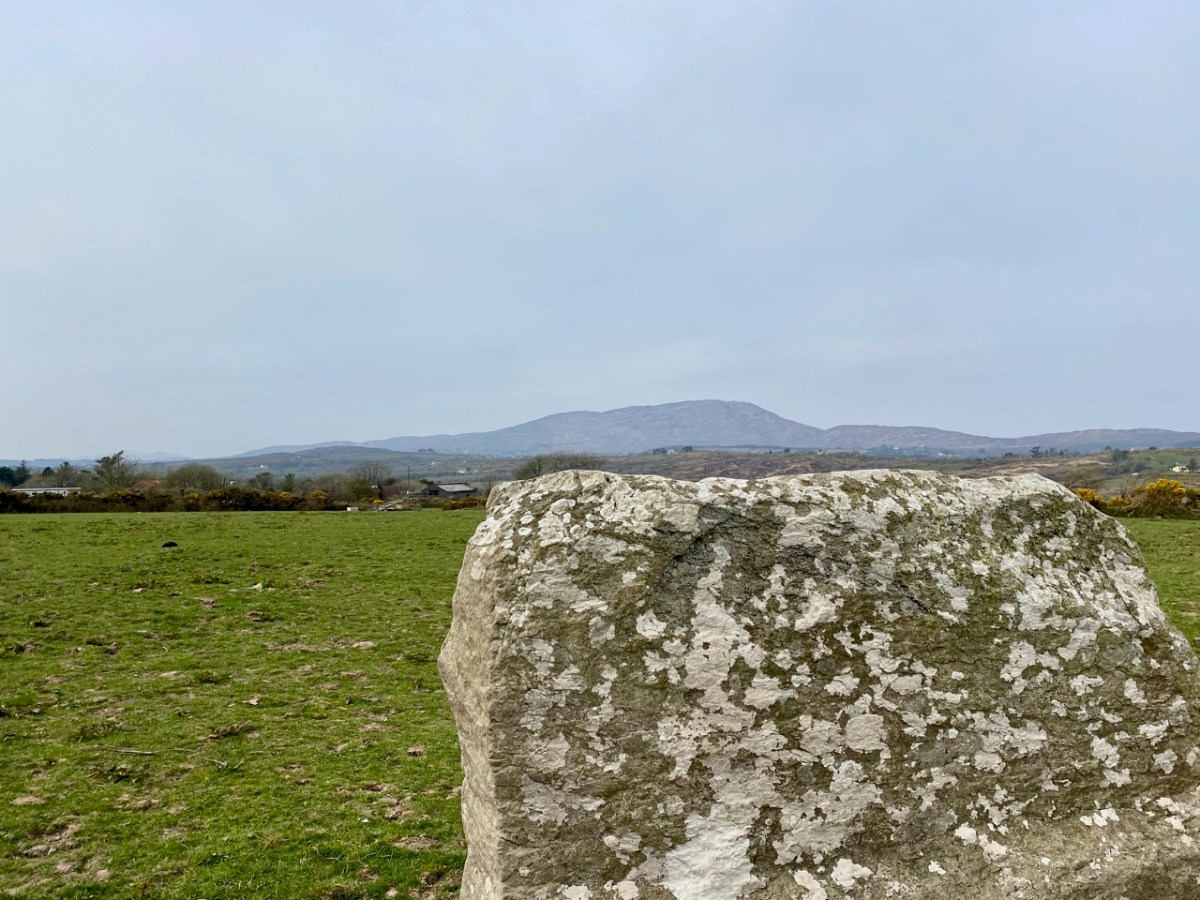
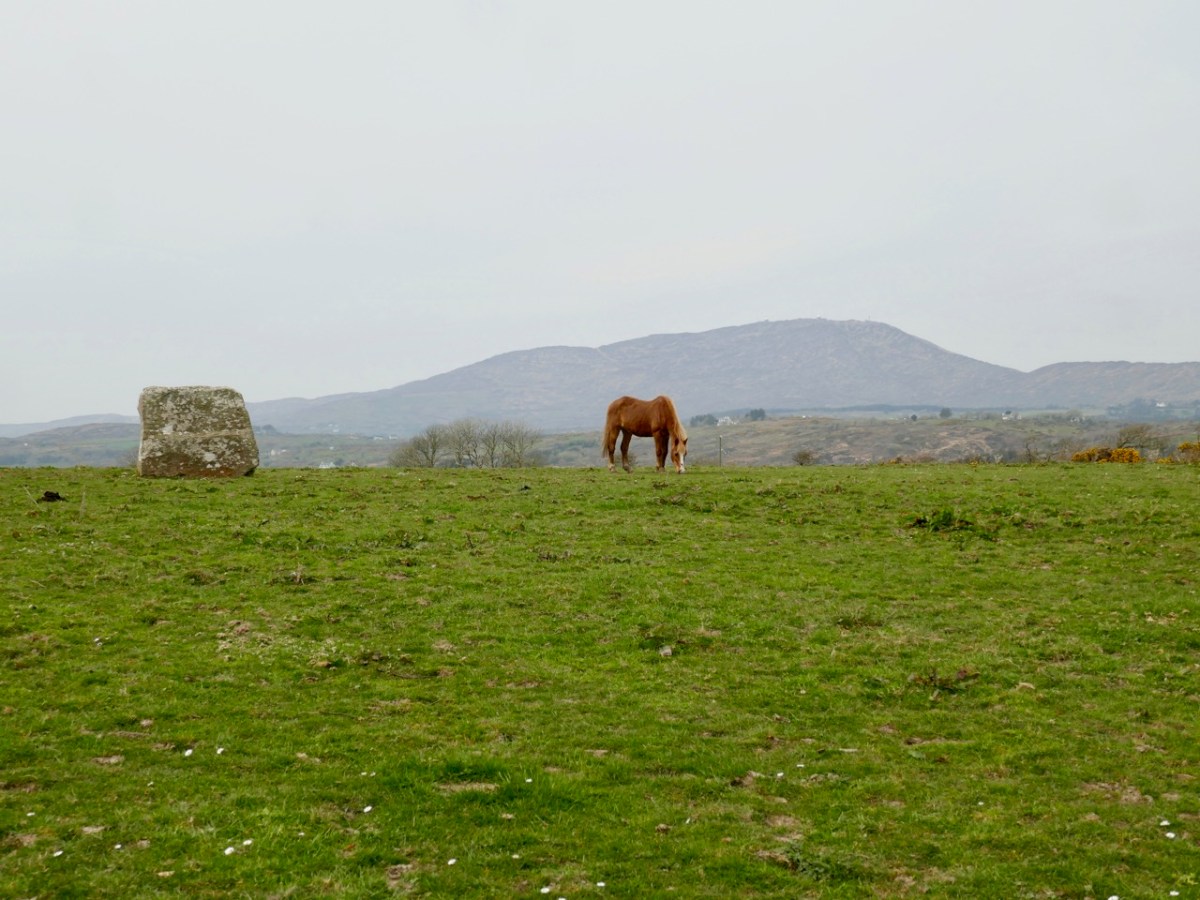
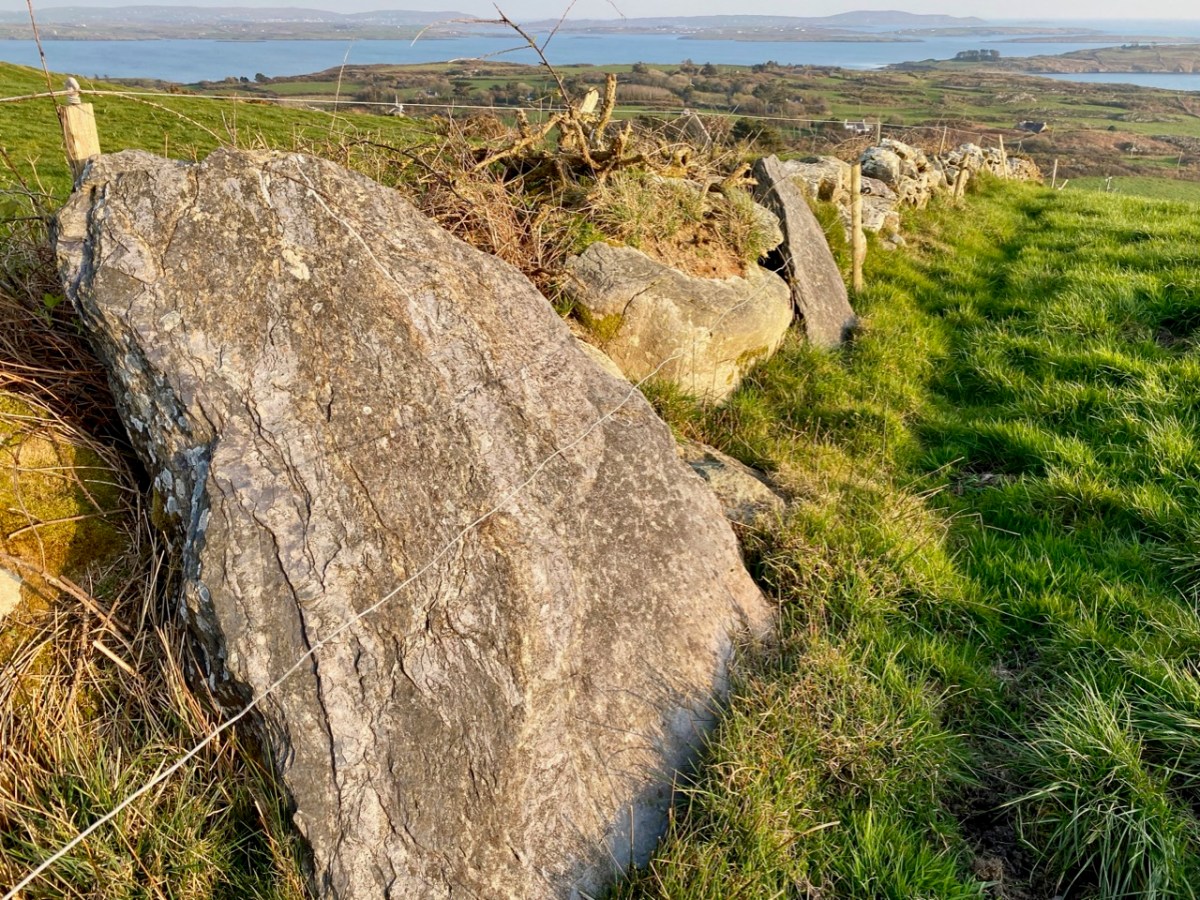
The stone is 1.6m high, 2.05m in length, and 0.45m in width: tall and wide in one direction, and relatively narrow in the other. It is also worth noting that the ‘long’ orientation is exactly North-South. This stone has been in this position for at least 180 years as it appears in the earliest edition of the 6″ Ordnance Survey (1830s), marked as ‘Gallaun’ – and even given a little illustration!
The standing stone is not far from the ringfort: perhaps there is a connection, although standing stones are generally reckoned to date from earlier times than the forts. Here is an extract from a recent article in Archaeology Ireland: Vol 34 No 1 (Spring 2020) pp 26-29, Wordwell Ltd:
. . . The classic standing stone surviving from the Bronze Age in Ireland is a rough-hewn or unshaped pillar, known as a gallaun (from the Irish gallán), generally oblong or oval in cross-section and up to 3m or more in height. Stones presumed to belong within this class vary considerably in height, from as little as 1m to as much as 6-7m in exceptional cases, the majority probably falling in the 1.5-2m range. Seán Ó Nualláin noted many years ago that in his experience the axis is generally aligned north-east/south-west. This is by no means a universal rule. Gallauns are by far the most numerous of all pre-Christian standing stones in Ireland. Approximately 600 are known in Cork and Kerryb alone. Beyond this region, examples are to be found extensively throughout the Irish countryside and many of them have attracted folk explanations . . .
Lone Standing Stones by Muiris O’Sullivan and Liam DowneY Archaeology Ireland 2020
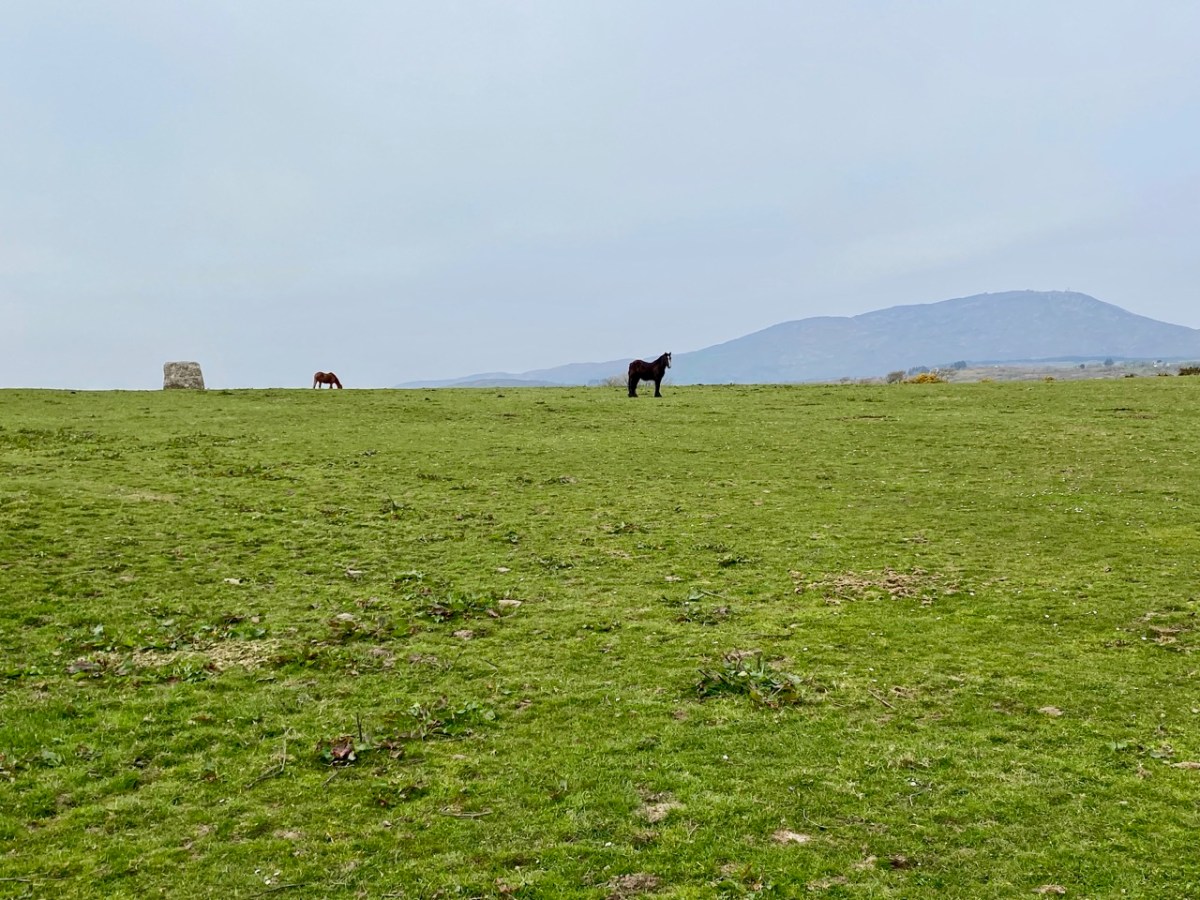
In these two pictures you can see the striking profile of the Bishop’s Luck standing stone against the skyline which features Mount Gabriel – the highest piece of land in the immediate area. Gabriel was an important place in prehistoric times as the centre of a significant copper mining industry – yet no artefacts have ever been found on the summit. In the lower picture you can see how the western edge of the standing stone ‘echoes’ the distant profile of Gabriel on the horizon. This is a phenomenon that has been noted a few times with regard to stones standing in the landscape. Here is Gabriel seen from the ringfort:
Finola has written comprehensively about standing stones in this Journal: here and here. O’Sullivan and Downey mention (above) that examples have attracted folk explanations. This doesn’t seem to be the case here: no mention is made of the stone in the Schools Folklore Collection. But surely there must be significance in the name: Bishop’s Luck?
But – hang on! There is ‘Bishop’ folklore associated with a site not very far away – in the neighbouring townland of Stouke. Finola recorded this in her 2016 post here. It’s a simple tale: The story goes that during the time of the penal laws a Bishop was confirming children nearby when the redcoats got wind of his activities and came to arrest him. He was beheaded. A bullaun stone in the graveyard at Stouke is supposed to be his head. If our possibly Bronze Age stone in Ballycummisk had anything to do with this, it should surely be known as Bishop’s Bad Luck?
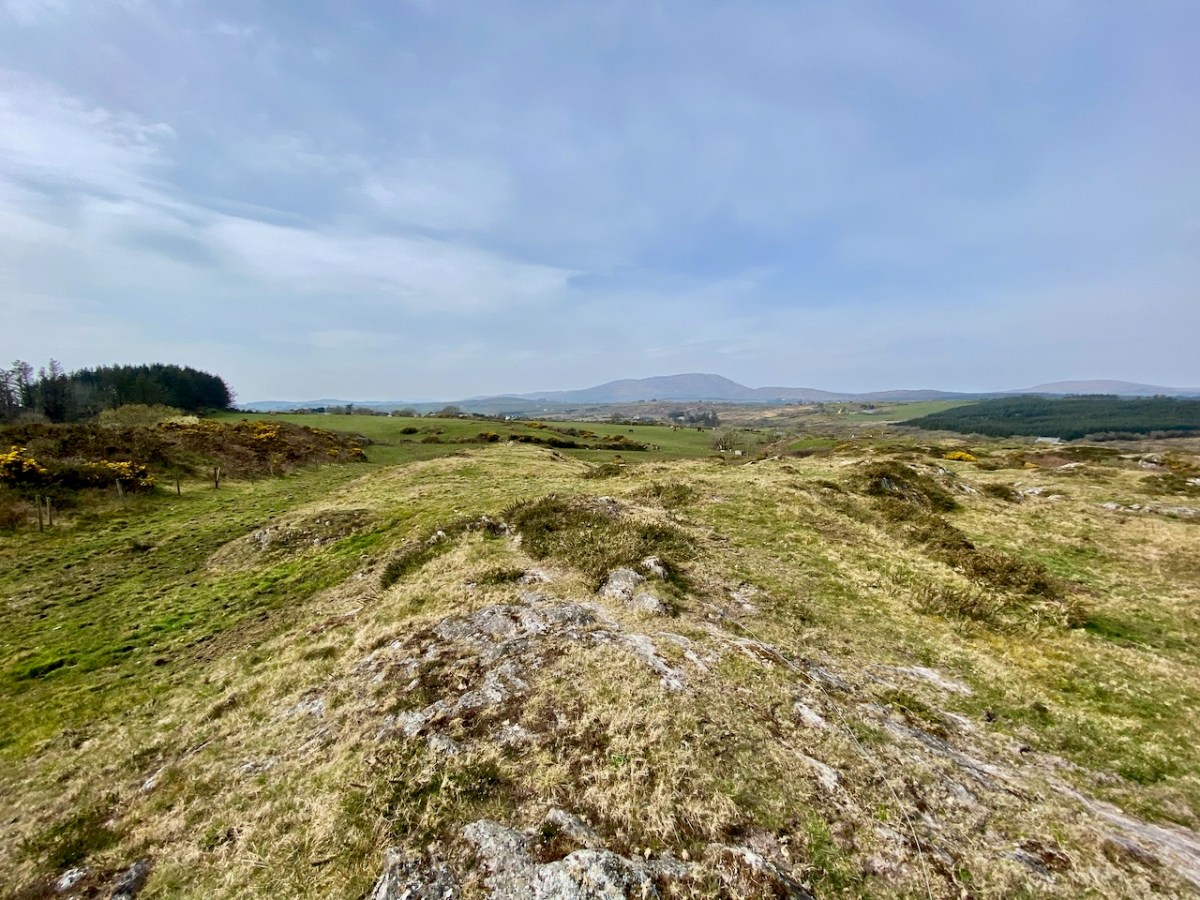
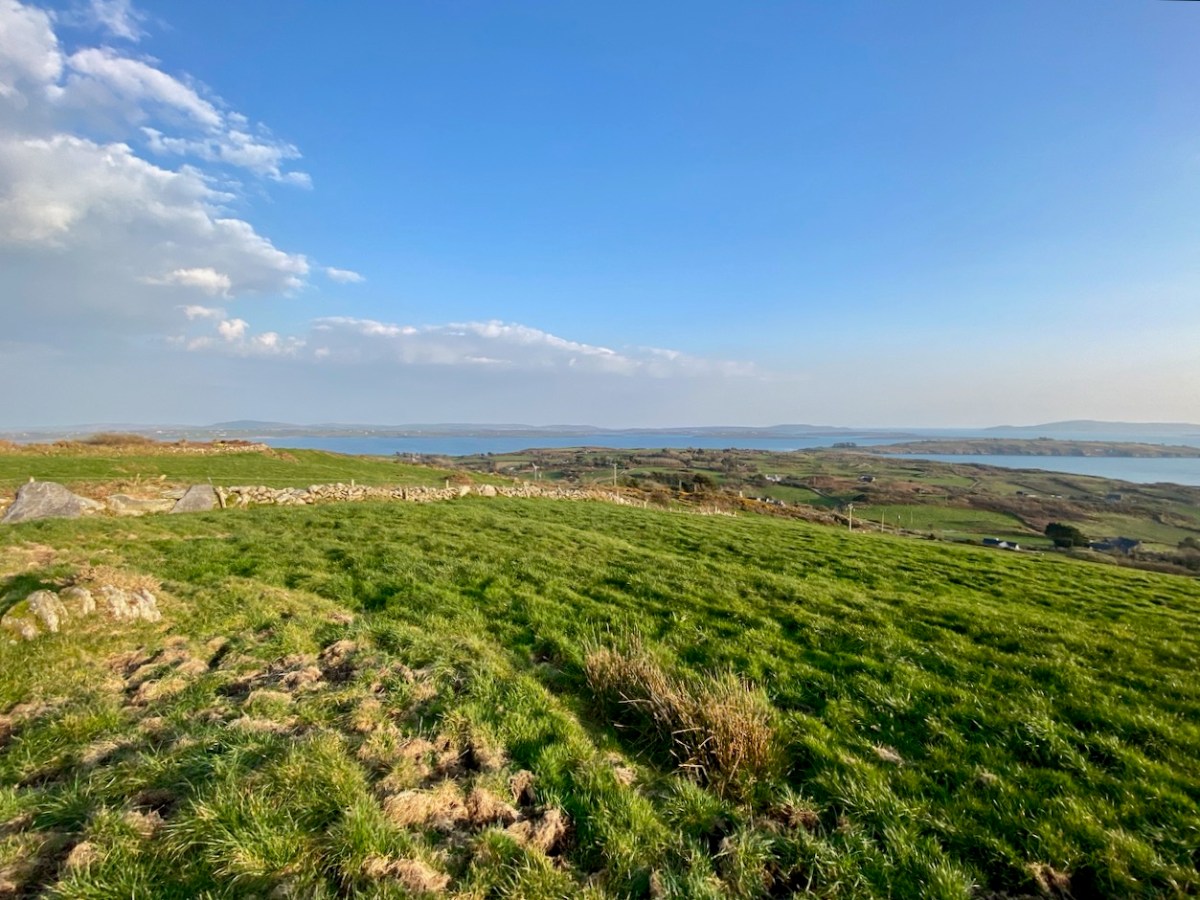
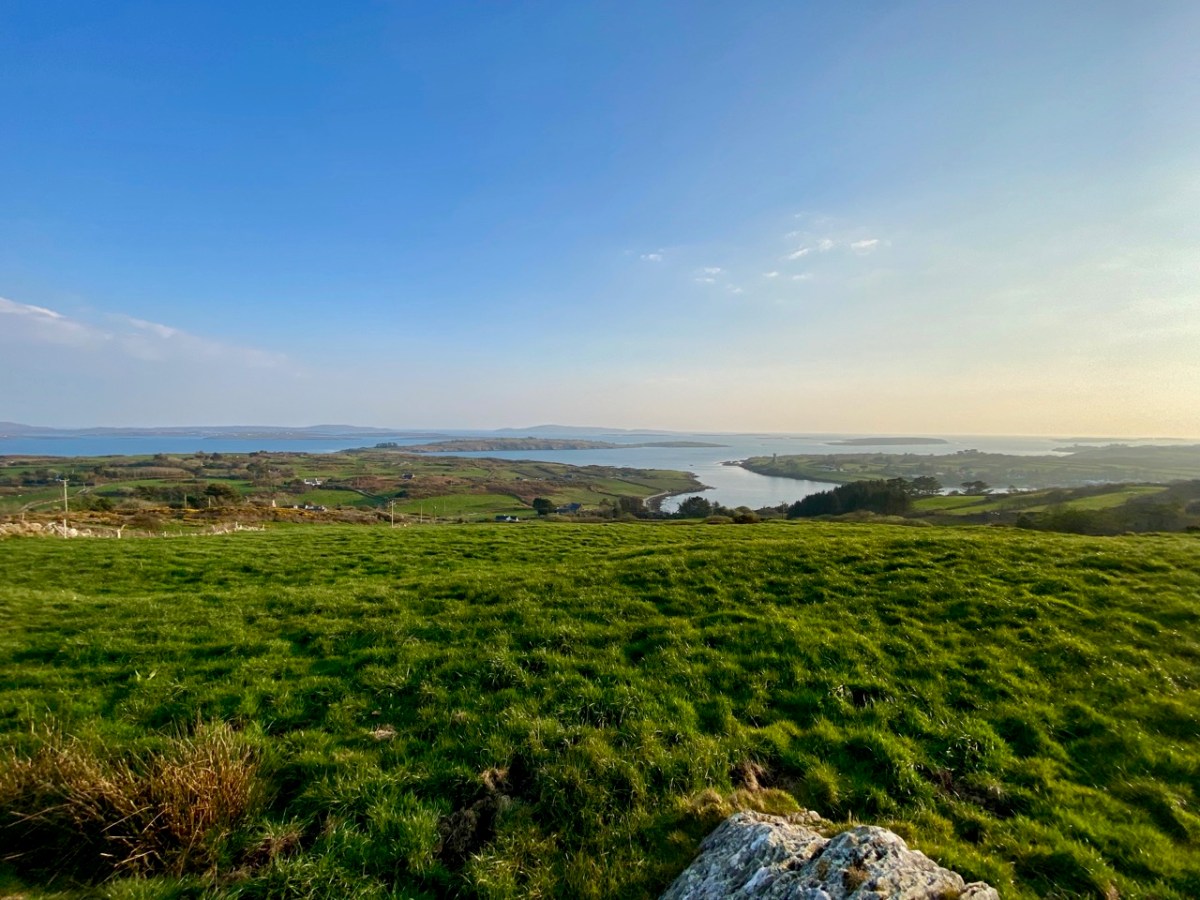
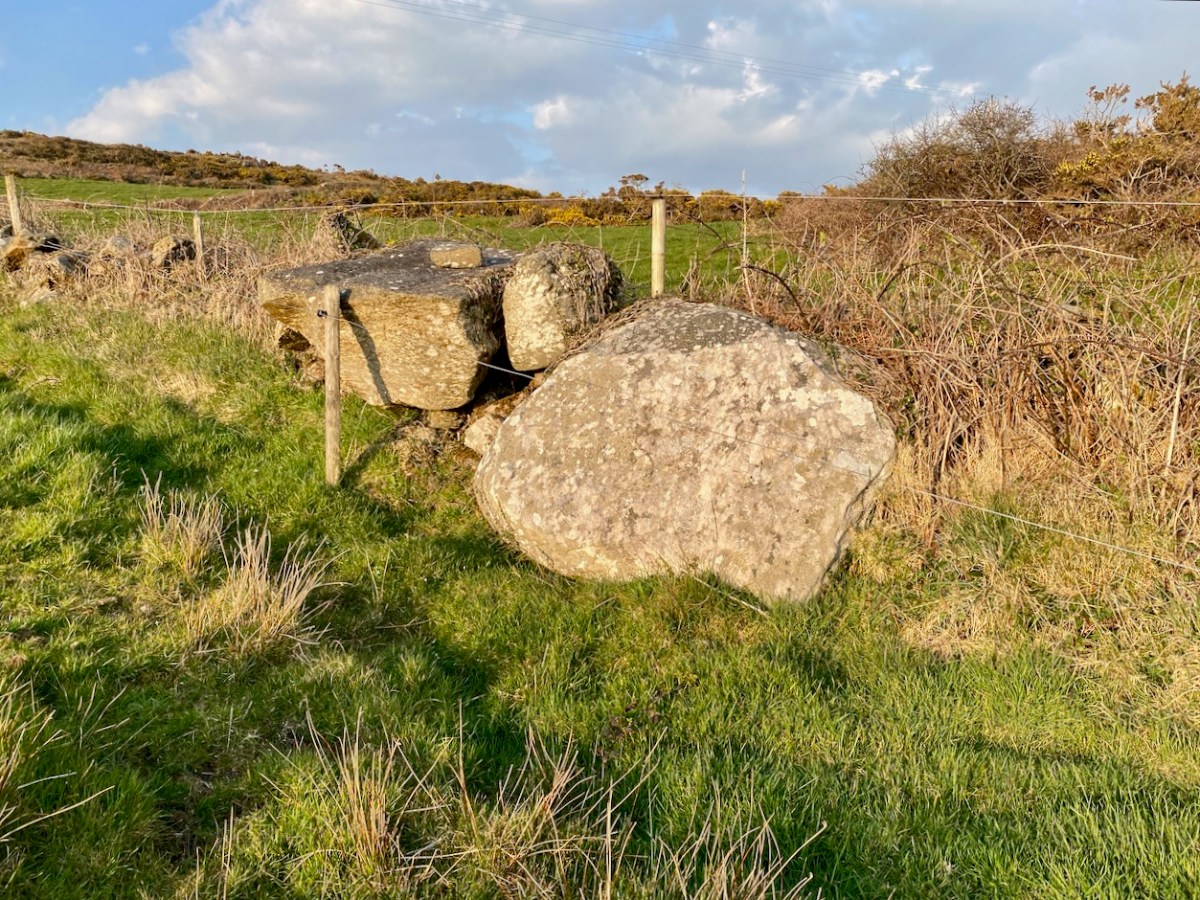
One further place that’s worth a mention here is the top of the hill to the south of the ringfort and standing stone. It doesn’t have a name, but it does have a magnificent view across to Rossbrin Harbour, with Cape Clear on the horizon in the far distance. There is a passage grave on the high point of Cape Clear. There seems to be some evidence for the inter-visibility of ancient sites, which makes me wonder whether there was ever any early structure on this hilltop. There are rocky outcrops there in the present day, and field clearance is evidenced by the presence of large slabs in the nearby field boundaries.
These are just thoughts, but I don’t mind thinking them! West Cork (and most of rural Ireland) must have much to reveal in terms of its ancient history. One point to remember: if you ever go searching yourself for archaeology or old sites, don’t forget that you will probably be entering private land. It is courteous to always seek permission: most owners are agreeable and – perhaps – may have stories to tell themselves.
We thought ourselves fortunate to have come through those years unscathed. But the Covid has caught up with us both! Two years later, when we thought we could stop worrying: quite suddenly we felt strange – and gave ourselves Covid tests, which showed up positive! Of course, we are both fully vaccinated, and perhaps took too much for granted. We continued to be careful and wore masks in crowds (not that we encountered many of those). Perhaps there’s an inevitability that most people will succumb to it. But we are fortunate that it has seemed like no more than a severe cold. We are almost at the end of our isolation period, and look forward to setting foot on the boreens again.
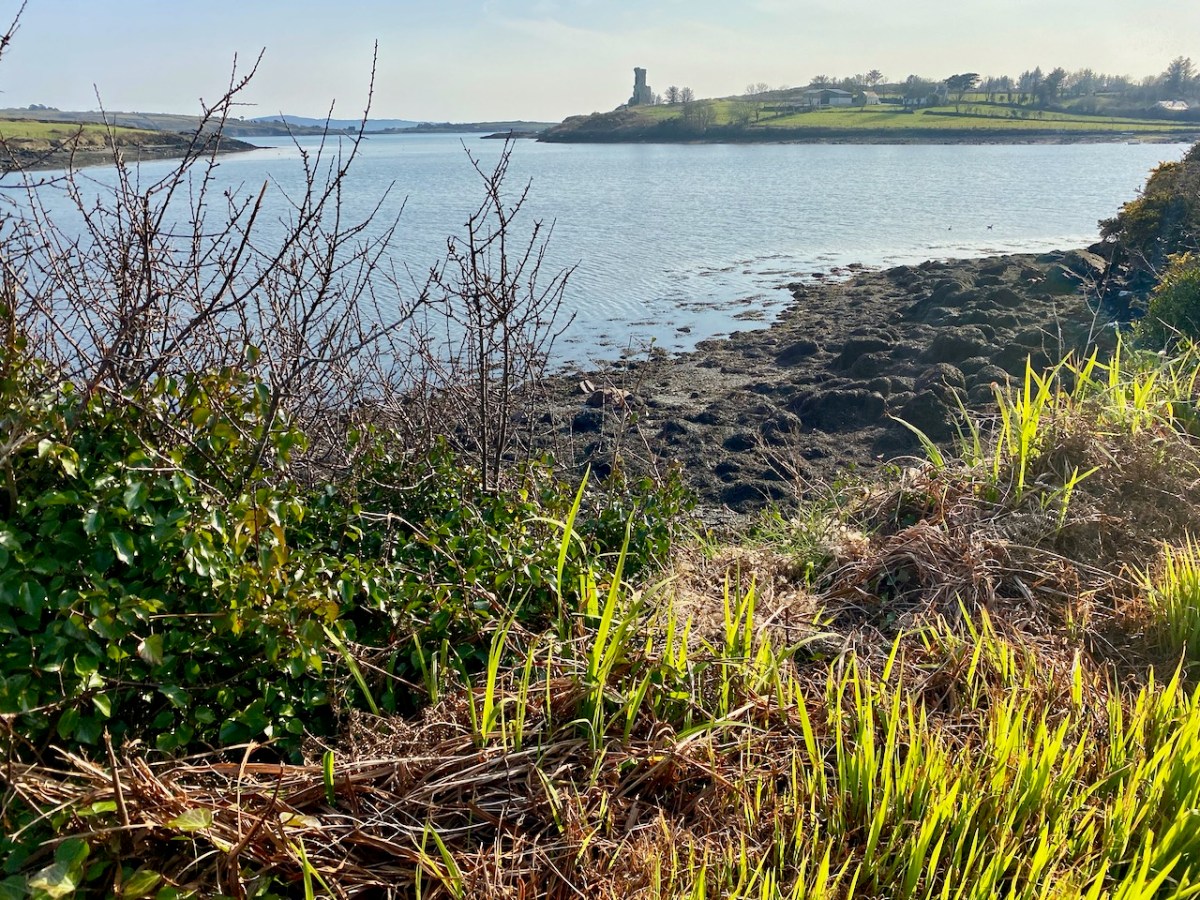
That’s our local tramping ground: Rossbrin Cove, yesterday. We couldn’t want for a better place to enjoy the lengthening warm days of this new spring which, so far, is proving exceptional for weather. Hopefully, by next week we will be back to normal, with new posts to interest and entertain you!
A pic of the Saturday market at Skibbereen just three weeks ago.
Welcome to the UCD Library Cultural Heritage Collections blog. Discover and explore the historical treasures housed within our Archives, Special Collections, National Folklore Collection and Digital Library


















 Roaringwater Journal