Anniversary

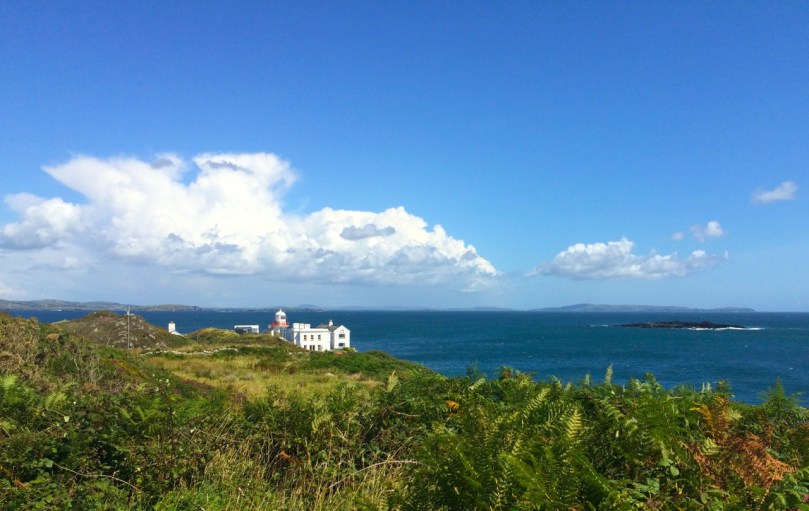
Rock Island Lighthouse

Rock Island Lighthouse

 Now so! A joint post from Robert and Finola…

It’s been exactly a year since we rebranded (that sounds so cool and corporate) and relaunched the blog. Roaringwater Journal: Six Months in West Cork became Roaringwater Journal: At Home in West Cork. What follows is a selection of links to some of our favourite topics of the past year (each link covers posts grouped under those tags), and some photos that didn’t make it into blog posts but which capture for us some of the magic of West Cork.

Carrigadrohid Castle

Carrigadrohid Castle

You, our dear readers, have taken the journey with us as we explored and settled into our new home, falling more in love with it with each passing week. 

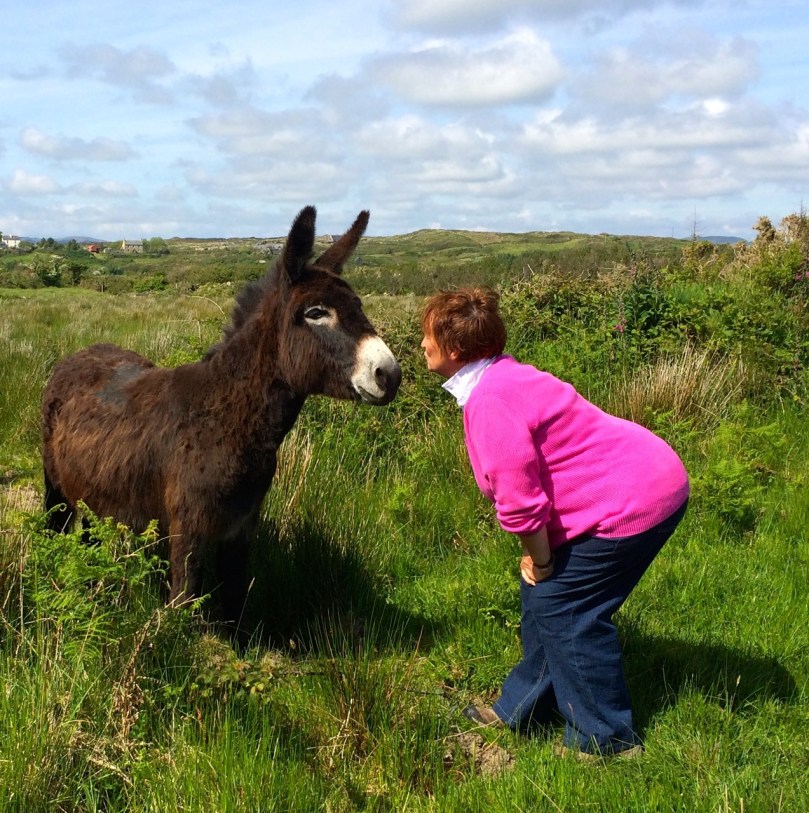
Kiss Kiss

Kiss Kiss

Well, perhaps Finola didn’t fall in love with irish bureaucracy – but, in fairness, like, St Gobnait herself wouldn’t be able to accomplish that. Although we experienced different aspects of bureaucracy, it was all the driving stuff that nearly did her in.

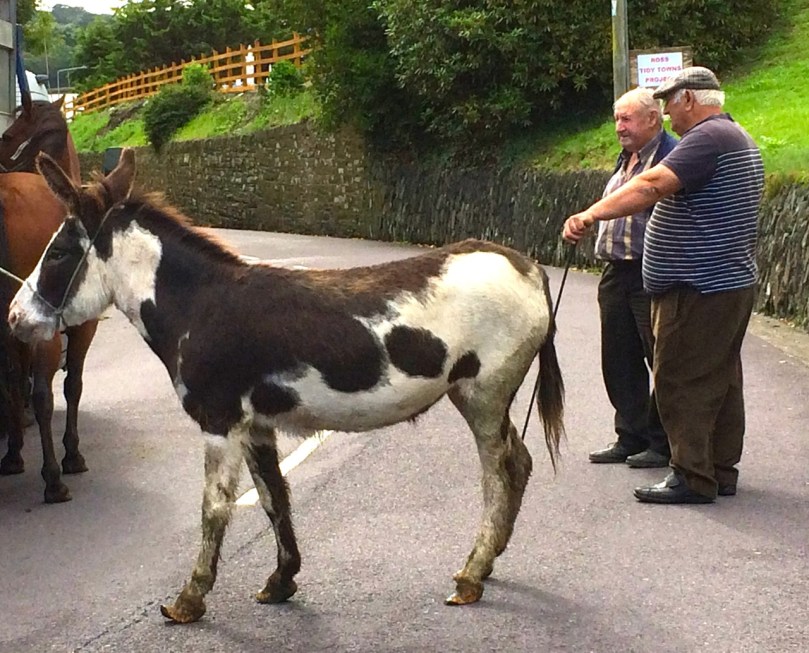
Roscarbery Horse Fair

Rosscarbery Horse Fair

We certainly fell in love with traditional music! And with the food of West Cork, the birds and the gardens. We learned a little bit about talking like a native, and a lot more about how to cope with the weather.

Yes, it's always raining here. You wouldn't like it.

Yes, it’s always raining here. You wouldn’t like it.

We explored the archaeology of this region, the folklore and the history – from the most ancient monuments, to the stone circles and standing stones, the forts and the castles, and more recent sites like the Schull workhouse. Above all, we visited rock art sites, appreciating more and more about them and about the conservation challenges they face.

Shelly Beach

Shelly Beach

Mostly we have spent our time on two peninsulas – the Mizen and the Sheep’s Head. And yet we have only scratched the surface: there is so much more to discover about this beautiful part of the world.

Cottage window, Rathbarry

Cottage window, Rathbarry

Before we embark on year two – a huge thank you to all our loyal readers from both of us! We love that you drop by to visit and we hope you continue to enjoy this gorgeous part of the planet.

On the ferry to Sherkin

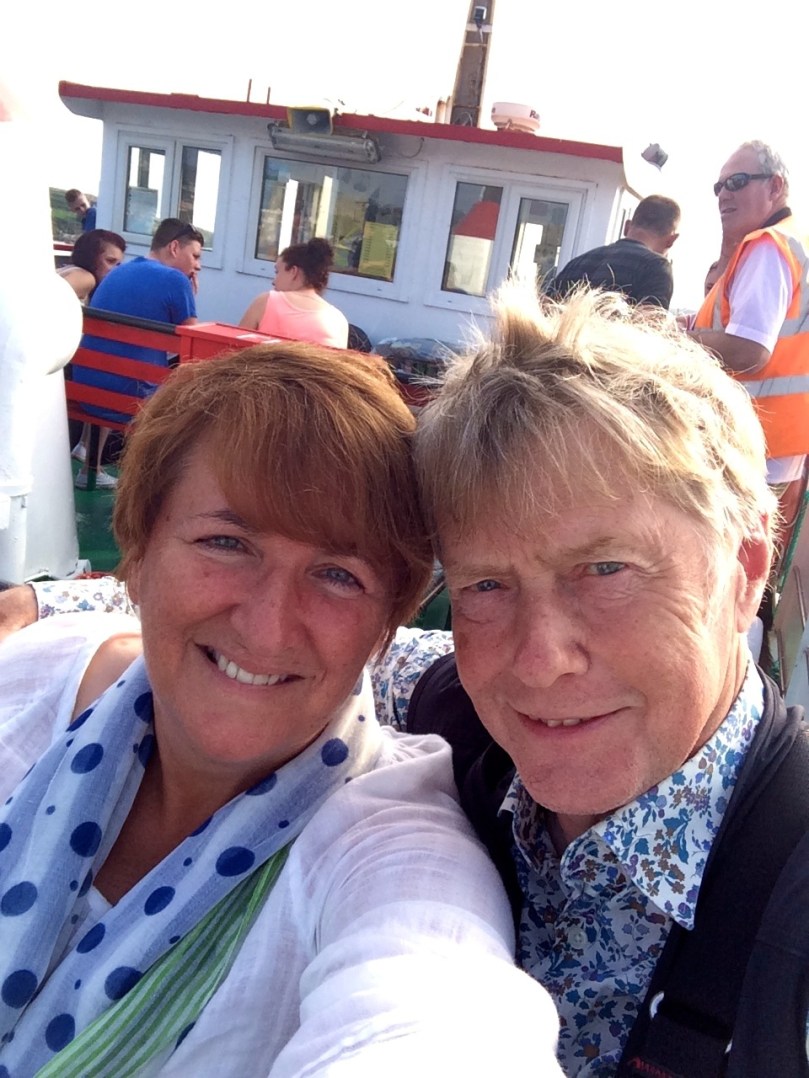
Selfie, on the ferry to Sherkin

We leave you with a little slideshow – a few remaining images to whet your appetites for a trip to West Cork.

This slideshow requires JavaScript.

We’re off to the Beara Peninsula today – look out for more about the Beara in future posts.

Ancient Tones – New Directions

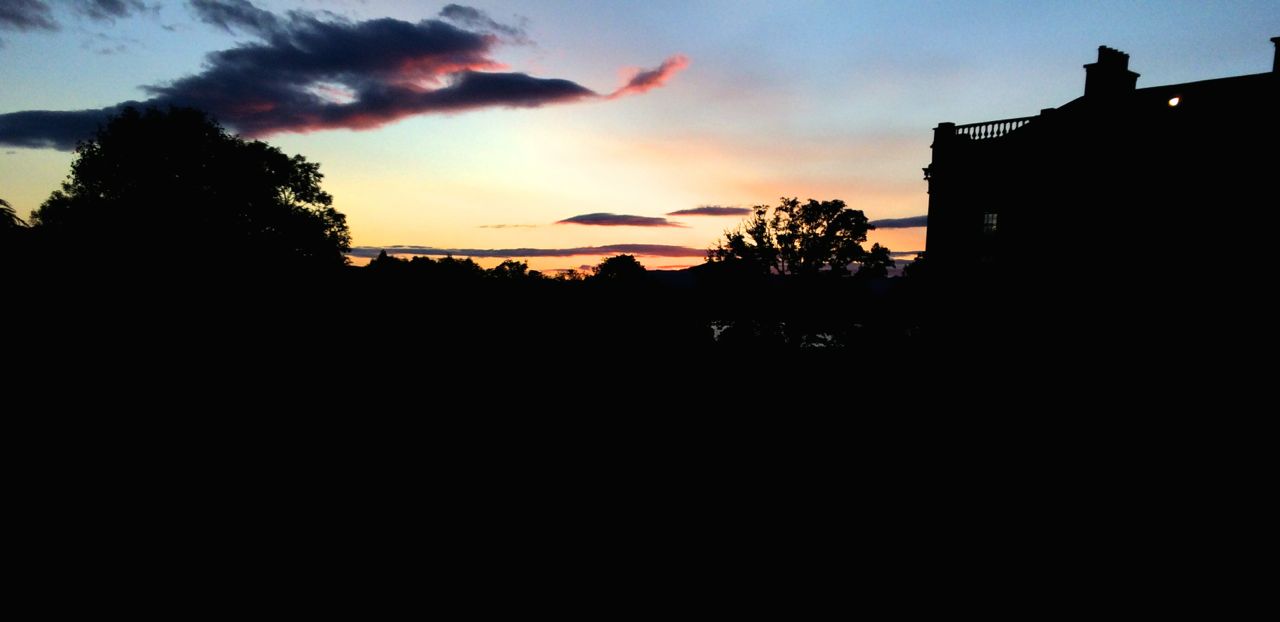
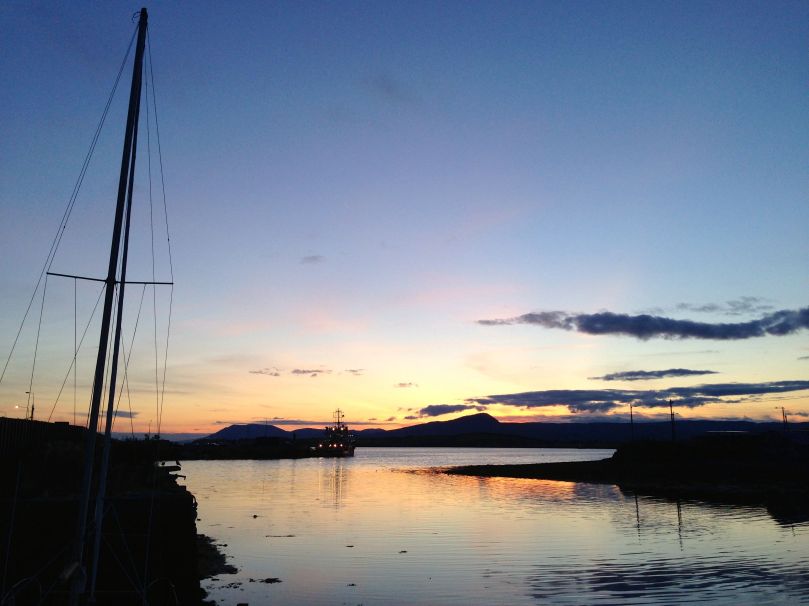
After the opening concert... Sunset over Bantry Bay

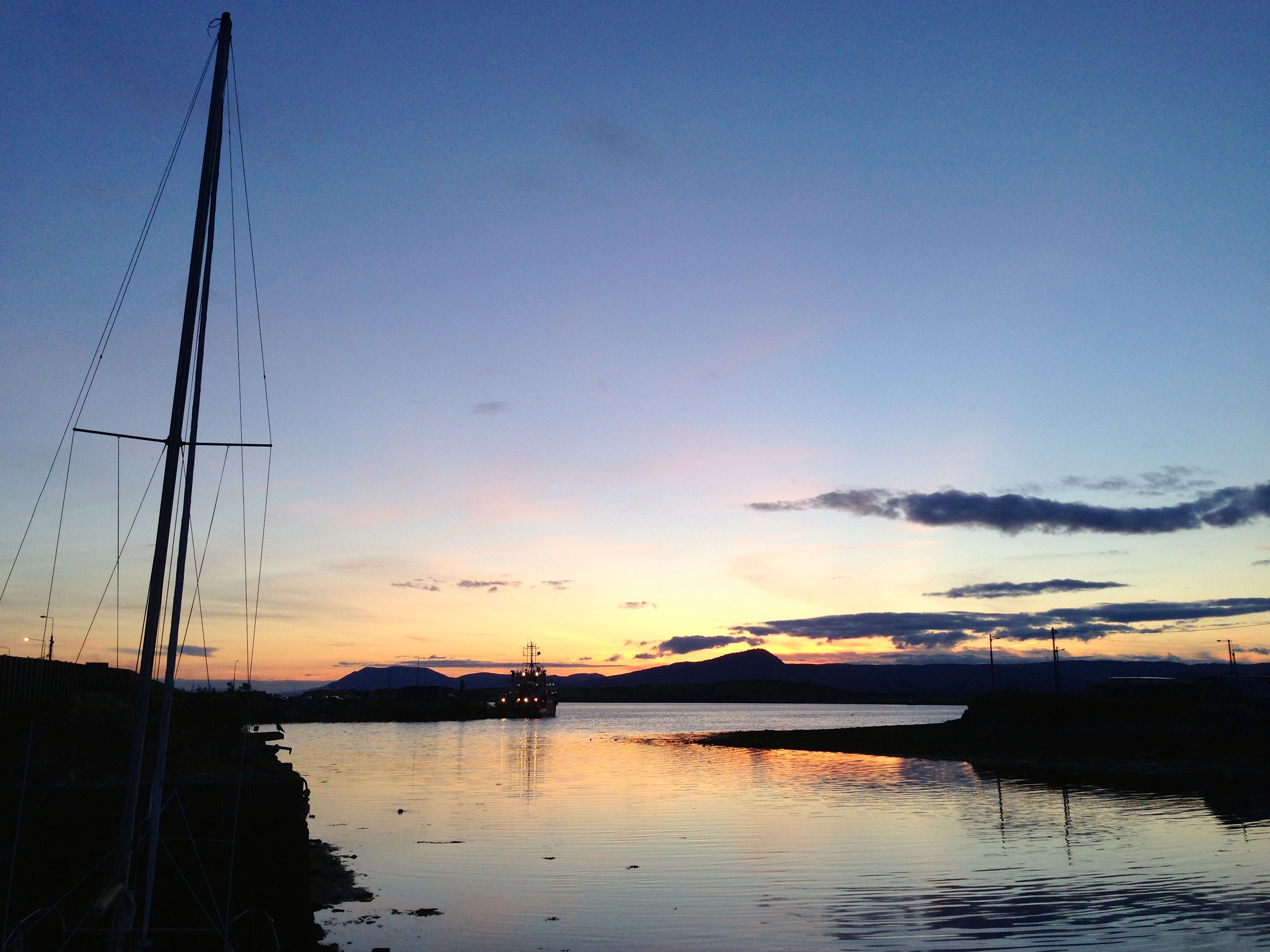
After the opening concert… Sunset over Bantry Bay

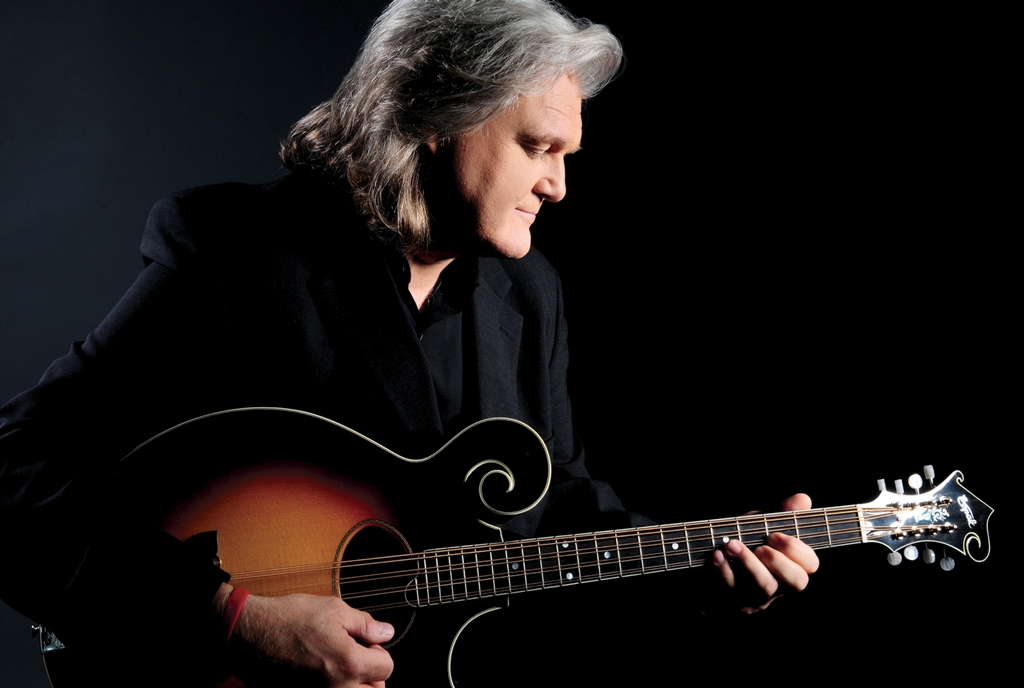
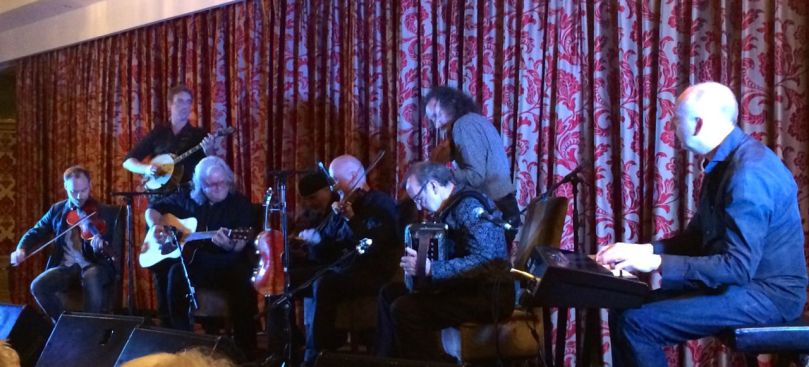
This year’s Masters of Tradition Festival (which closes tonight) had an unusual headline act – Ricky Skaggs – at its opening gig.. This giant of ‘country’, ‘bluegrass’ or ‘old timey’ music flew over from Nashville at his own expense to join Festival Director Martin Hayes and a host of traditional musicians on stage in the Maritime Hotel, Bantry. Why? Because there are big adventures going on in the world of Irish music today, and this Festival is at the leading edge of all this. Here’s a snatch of Ricky Skaggs: regardless of the film quality it’s well worth watching…
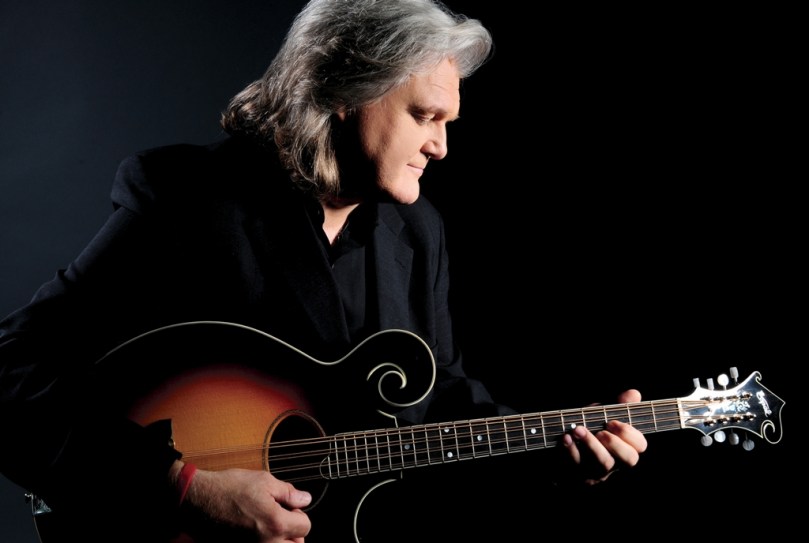
Ricky Skaggs
Ricky Skaggs

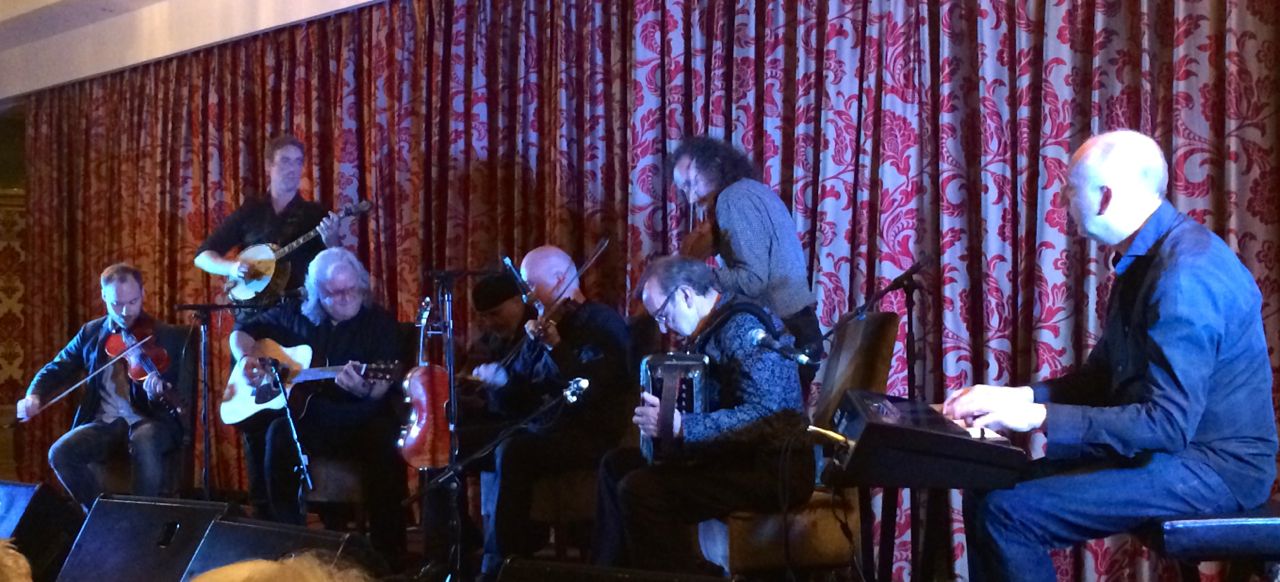
Skaggs, Hayes, Cahill,  Schrey and the Brock McGuire Band bring the house down in Bantry

Skaggs, Hayes, Cahill, Schrey and the Brock McGuire Band bring the house down in the opening concert

So, Ricky Skaggs got a good start in life, playing on the stage with the likes of Bill Monroe and the Foggy Mountain Boys (aka guitarist Lester Flatt and banjo player Earl Scruggs) at the age of seven! But at last Wednesday’s concert the biggest chord that was struck for me was Skaggs talking about Ancient Tones – his words for the the common roots of the music that they were all playing together:

“I’ve told people for years Celtic music is the foundation stone for bluegrass, even country music generally — though it is admittedly hard to hear the Irish influence in ‘new’ country today. Certainly, you can detect it in the old country ballads — it’s in the heart of the songs.” Bill Monroe was in agreement, he recalls. Without Irish music, there would never have been a bluegrass movement. “Mr Monroe talked about the old sounds and the ancient tones. He was referring to the sounds from Scotland and Ireland — he believed very much his music was a hybrid of that. He’s right of course — you hear bluegrass and you know the Irish influence is there. It’s in the fiddle and the mandolin, the harmonies and the guitar. In all of it, really.”
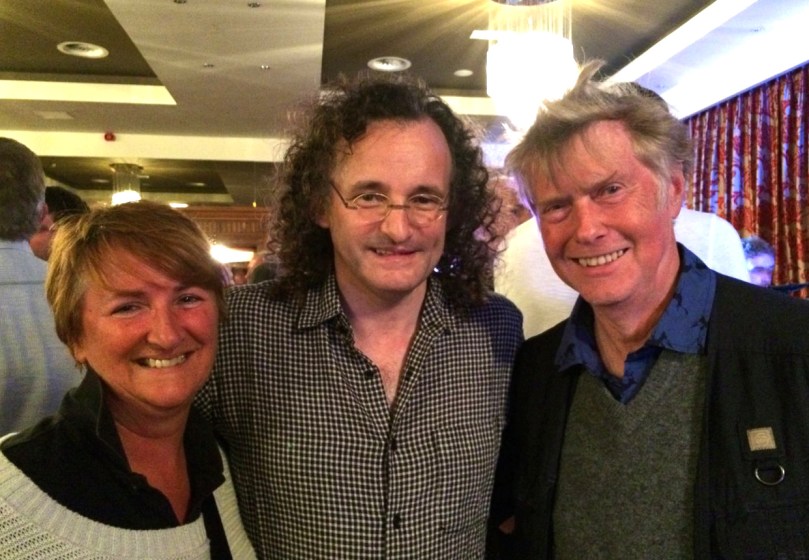
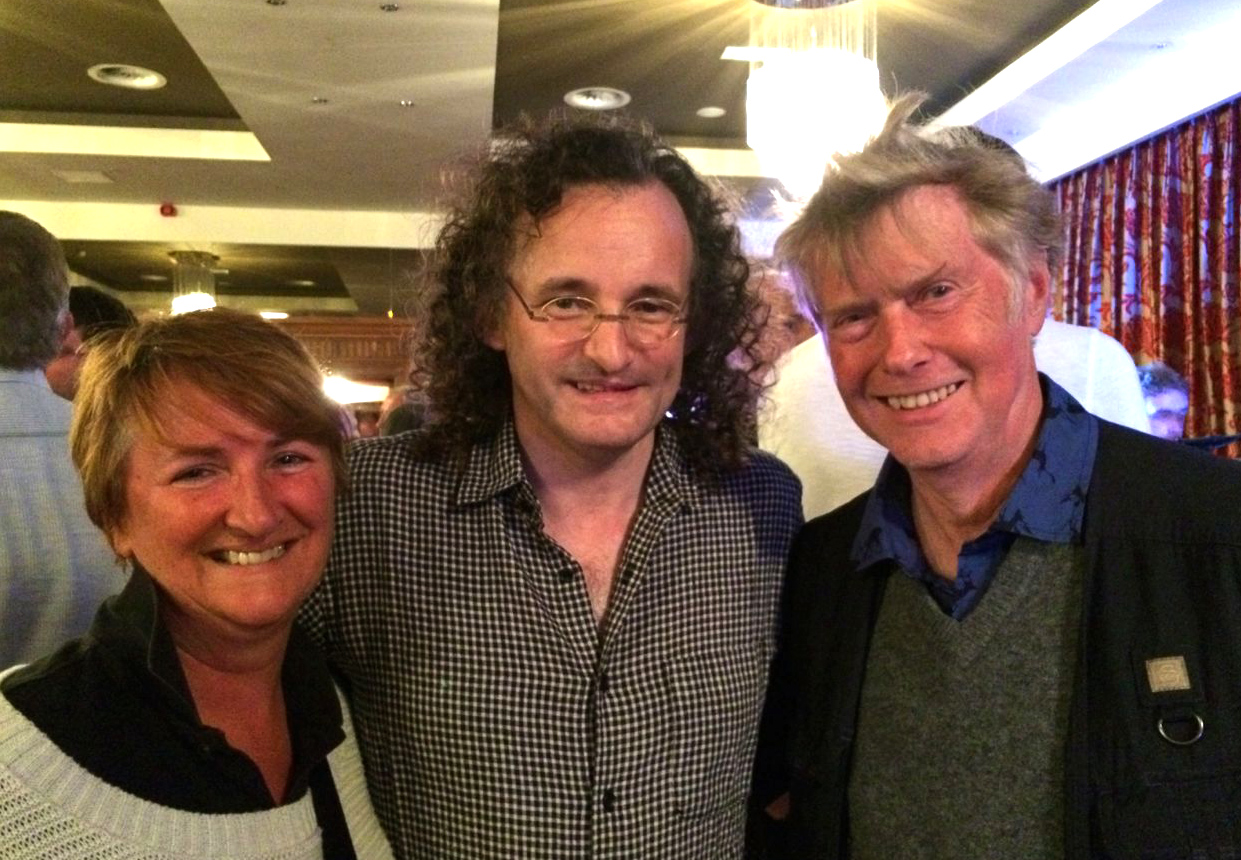
Festival Director Martin Hayes with groupies...

Festival Director Martin Hayes with groupies…

That first concert blew us away. We thought that it couldn’t get any better. It probably didn’t, but the energy, enthusiasm and innovation continued through the events of the week. Innovation in Irish Traditional Music? Oh, yes: we didn’t know what was in store for us, but we did know Martin Hayes’ philosophy:

“The main aim of this festival is to expose the unique artistic craft of various musicians. It’s also a kind of response to the fact that the country is full of festivals. I feel it’s important to highlight individual artistry in music rather than putting on a lot of bands that we’re all familiar with. International musicians have been a feature of the festival in the last few years.The festival is called Masters of Tradition rather than masters of Irish music or Irish traditional music because the idea is to have at least one act from abroad to see how other traditions stand in relation to our own. I want to offer something really different. I’m not saying that what I’m doing is better. It’s just a different way of approaching a festival. I certainly don’t see the point in replicating other festivals.There’s only a percentage of the population that gets seriously involved and connected with this festival. I think that’s fine. The festival is about highlighting the uniqueness of each musician’s voice. We try to choose musicians that have found their unique voice. I’m not looking for the latest blazing hot craze. Some of what the musicians express can be quite humble but effective and very touching as well.”
Máire Ni Cheileachair, Sean Nós singer

Máire Ni Cheileachair, Sean Nós singer

Among the – perhaps – ‘humble, effective and very touching’ performances were Sean Nós singers: carrying the tradition forward from its most ancient roots and presenting it in the simplest form – the unaccompanied human voice, a continuity of cultural expression which has passed through countless generations. We enjoyed the contribution of Máire Ni Cheileachair from West Cork and were impressed, as always, with critically acclaimed Iarla Ó Lionáird who grew up in the musical heartland of Cúil Aodha in the West Cork Gaeltacht. Like Ricky Skaggs, his fame came early: here’s his performance of Aisling Gheal dating from 1978 – when he was 14.

Finola has a link to another of Iarla’s iconic renderings on her post here – The Lament of the Three Marys. Throughout Ireland sacred songs such as this one were felt to function both as prayers and as direct substitutes for the caoineadh (‘keening’, women’s funeral lament) which was suppressed by the Church.
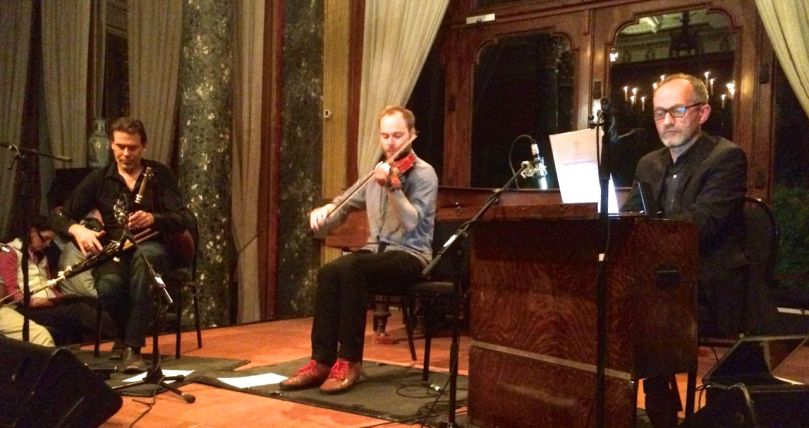
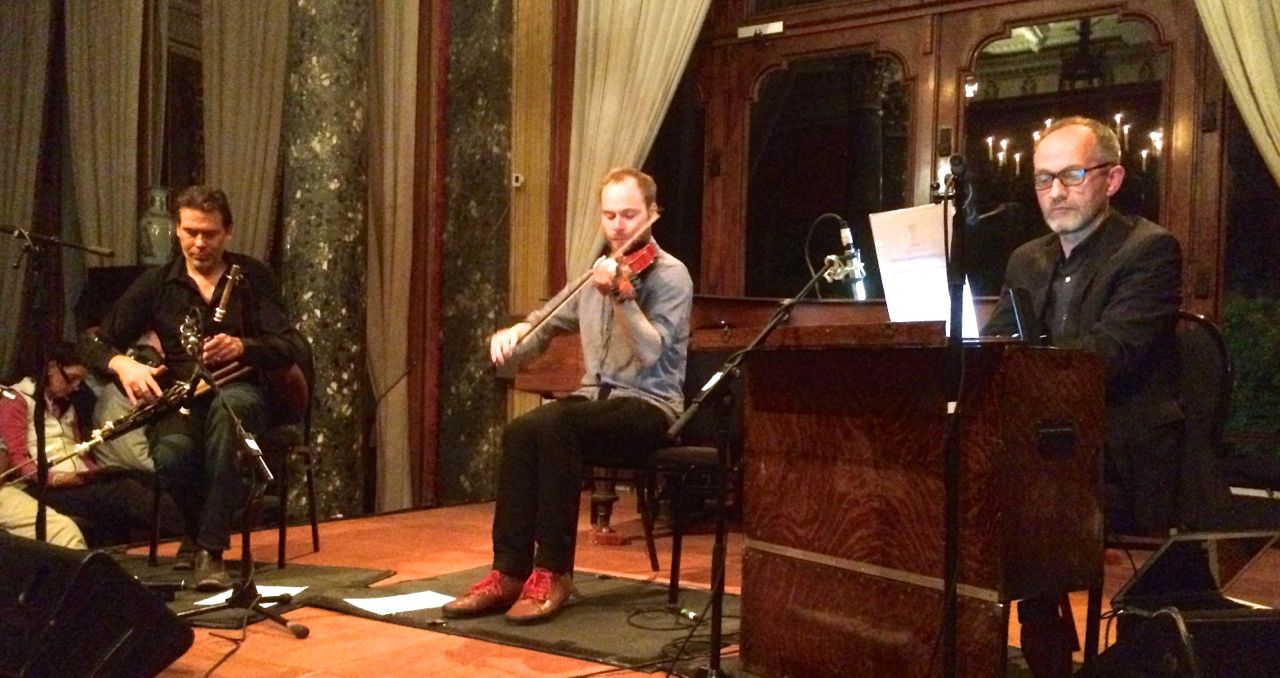
Ivan Goff, Cleek Schrey and Iarla Ó Lionáird - The Ghost Trio

Ivan Goff, Cleek Schrey and Iarla Ó Lionáird – The Ghost Trio

Finola says that I should have called this post ‘Ancient Tones – and Drones’. Iarla Ó Lionáird also heads up The Ghost Trio – which gave us Friday’s late night candlelit concert in Bantry House – Siobhan Long of the Irish Times described her impressions:

…”Drone City” is how Iarla O’Lionaird describes the antics of Ghost Trio, and he isn’t far off. Pipes, Hardanger Fiddle and harmonium coalesce to shape an atmospheric set that speaks more of the space and time inherent in traditional music than it does momentum. And what a welcome alternative take that is.This is a fine reminder of what atmosphere lurks within and without our tunes and songs

Boruma Trio

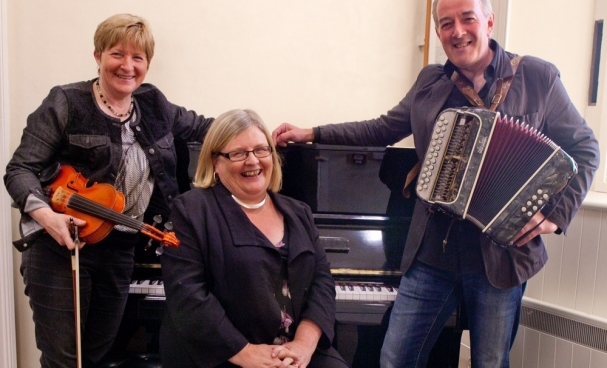
Boruma Trio – Eileen O’Brien, Geraldine Cotter and Andrew MacNamara

In a sharp swing back to pure tradition we were impressed by The Boruma Trio in Saturday night’s first concert. Straight music played on accordion, fiddle and piano, directly descended from the years when legendary Ceilidh bands such as the Tulla reigned supreme: Martin Hayes himself was reared on this kind of irish music as his own father – P Joe Hayes – led that band for 50 years. Martin wrote of his upbringing in Maghera, County Clare:
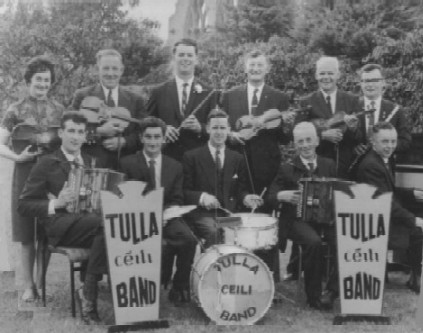
Tulla Ceilidh Band 1952

Tulla Ceilidh Band 1952

…However difficult it is to imagine my own life without music it is impossible for me to even know my father without his music. Music is part of his life in the same way that the land is part of him or in the way that we are Irish. It is inevitable and unalterable, we can never identify ourselves apart from our past as he could never identify himself apart from his music. His music fits comfortably into his life, there has always been balance, he never saw music as being anything other than normal and ordinary, a part of life that fits comfortably with his family, farm, religion and politics. He has a strong passion for music that has been tempered and maintained by equal and loyal devotion to the other interests in his life…

Martin’s earliest memories are of his father getting dressed up and being picked up to go and play somewhere, and in his child’s imagination it was always somewhere far away, exciting and important. On other nights the band practiced in the kitchen and when he had to go to bed Martin would leave the bedroom door open, a little bit, and listen to them play until he fell asleep.

I haven’t room on this post to list all the concerts (the full programme is here) – and we still have one to go! The standard of performances throughout has been consistently high. Perhaps the Harris/Finlay award for the most memorable experience – so far – has to go to Ensemble Ériu. In his introduction of this 7-strong group, Martin Hayes reminded us that we now have generations of young musicians who are very aware of their traditional heritage, but who are also being exposed to mainstream influences such as jazz and minimalism. Degrees, Masters and PhDs are offered in no less than 14 universities and colleges in Ireland at present in traditional music, song, dance, Ethnomusicology and Ethnochoreology. Students with backgrounds or deep interests in the folk traditions are exploring other contemporary voices and this ensemble – or ‘Project’ as its progenitors Jack Talty and Neil O’Loghlen prefer to call it – is a step in the New Directions so keenly being watched by Martin Hayes:

…The septet draws on a wealth of creative sources to perform arrangements of Irish traditional music rooted in the styles of West and North County Clare. This group brings together a chamber ensemble of some of Ireland’s most exciting young musicians from a range of performance backgrounds. The result is a unique combination of the fresh and familiar, a soundscape that is creatively progressive, yet rooted in tradition… (from the group’s website)

It’s hard to describe the musical experience that Ériu gave us last night. You’ll get some impressions from this film.

It brought to my mind the works of Steve Reich and Philip Glass, but was nevertheless unique. Who would have thought that such creative things could happen in this quiet West Cork backwater? It was stimulating, energetic – dynamic. I wonder what Martin has in store for us next year?
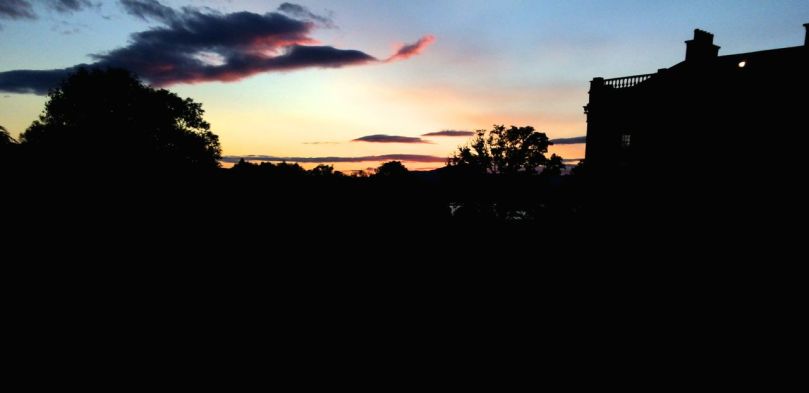
Quiet West Cork backwater? Bantry House - Festival venue

Quiet West Cork backwater? Bantry House – Festival venue
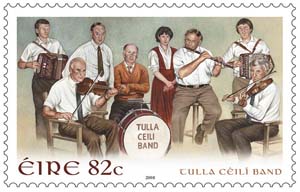
tulla stamp

Dear Minister

Share the road

Share the road

Readers will remember my travails with the Irish driving system. I wrote about having to apply for an Irish Driving License and then about the mandatory driving lessons and passing the driving test. I promised myself that when it was all over I would write to the Minister for Transportation and make recommendations about how people like me could be treated respectfully and flexibly.

I’ve finally written the letter and have extracted my recommendations below. I would be interested in whether readers agree with them. I’d also love to hear your personal experiences of driving in Ireland. It’s a unique experience in many ways – I am constantly bemused by what I observe as I navigate the boreens and village streets of this part of the world.

This slideshow requires JavaScript.

EXTRACT FROM LETTER TO MINISTER OF TRANSPORT, TOURISM AND SPORT

There is no justification for such an inflexible approach to holders of foreign licenses. I know Ireland is committed to negotiating mutual recognition agreements with other countries over time, and that Canada may be a little more complex since licensing is handled by individual provinces, thus  requiring recognition of ten provincial licenses rather than one national one. I also understand that progress is being made, but slowly.

Since my license happens to be Canadian, I will venture now to make some recommendations on an alternative approach to how holders of Canadian licenses (and by extension others) could be treated.

Recommendations:

  1. Retain the requirement for the Rules of the Road test – there are enough differences to make this a good idea.
  2. Waive the requirement for the mandatory lessons or reduce them considerably – four lessons would be more than adequate to cover some of the idiosyncrasies of driving in Ireland.
  3. Waive the requirements for the Canadian license holder to apply for an Irish Learner Permit.
  4. If, for whatever reason this is not possible or practical, waive the regulation whereby the Learner Permit then takes precedence over the Canadian License. In practice, this allows the Canadian license holder to continue to drive on their Canadian license for a year (as they can if they do NOT apply for a Learner Permit) while preparing for the road test.
  5. Conduct a desk review of all ten Canadian Provincial Licensing systems. They are all easily accessible online, and fully explained. I can assure you that each province in Canada has a rigorous and comprehensive learner-driver program, but don’t take my word for it – a civil servant in your Ministry can conduct this assessment in less than a week.
  6. Once you have done this, immediately declare a unilateral recognition of Canadian driving licenses, as your Ministry has already done for several other countries.

The Road Safety Authority is doing a good job of raising the standards of driving in Ireland. In doing this they are battling decades of deeply-engrained negative attitudes to careful driving and to adherence to licensing regulations, especially outside the major metropolitan areas. I applaud this progress towards real change to the culture of driving in Ireland. But please, allow flexibility in how the regulations are applied so that someone with 40 years of driving experience is not treated like a  beginning driver.

Sincerely

Finola Finlay

Don't get distracted by the scenery

Don’t get distracted by the scenery

I wonder if I will get a response. I will let you know.

Mooooove over!

Mooooove over!

One last image…

What the...?

What the…?

Mizen Magic 3: Brow Head

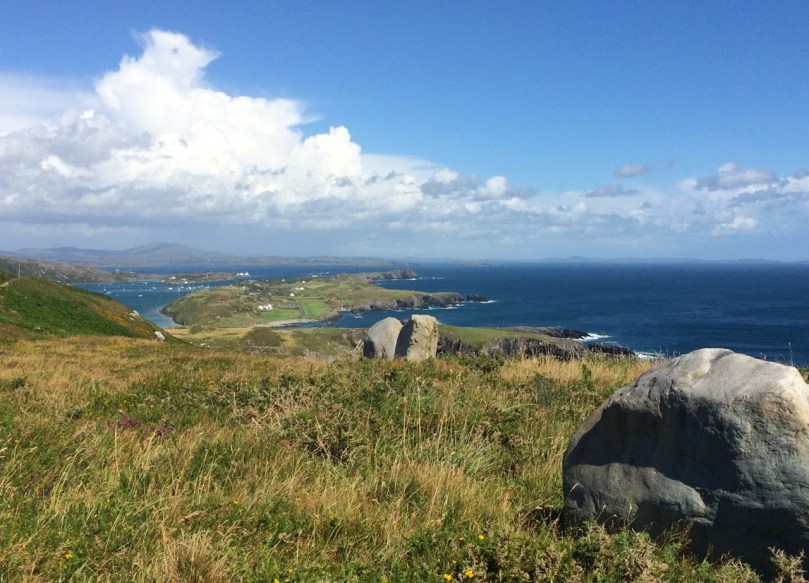
On Brow Head, looking back up the Mizen Peninsula

On Brow Head, looking back up the Mizen Peninsula

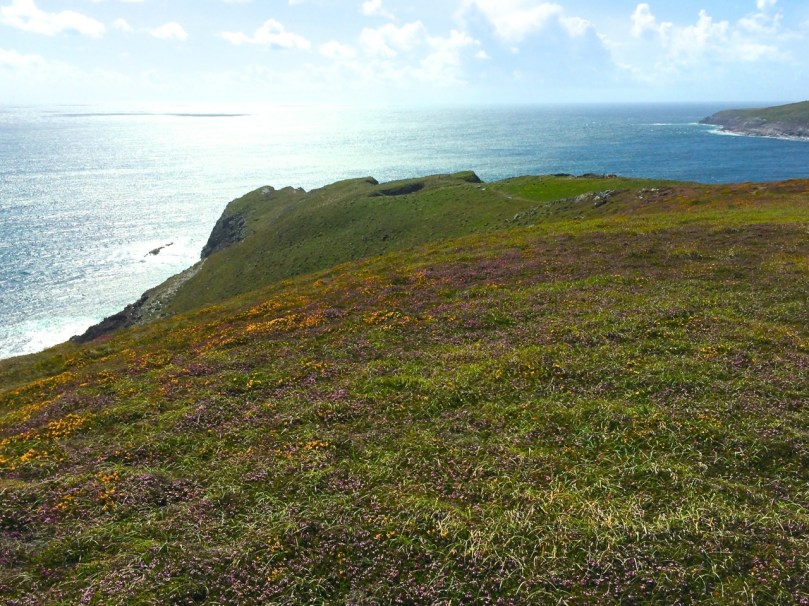
Contrary to popular belief, Mizen Head is not the most southerly point on the Irish mainland – that distinction actually belongs to Brow Head, just to the east. Brow Head doesn’t have the same profile as Mizen Head: many people have never heard of it. But it’s magnificent, steeped in history, wonderfully scenic and best of all, totally walkable.

Possible prehistoric field boundary, visible at low tide

Possible prehistoric standing stone and field boundary, visible at low tide

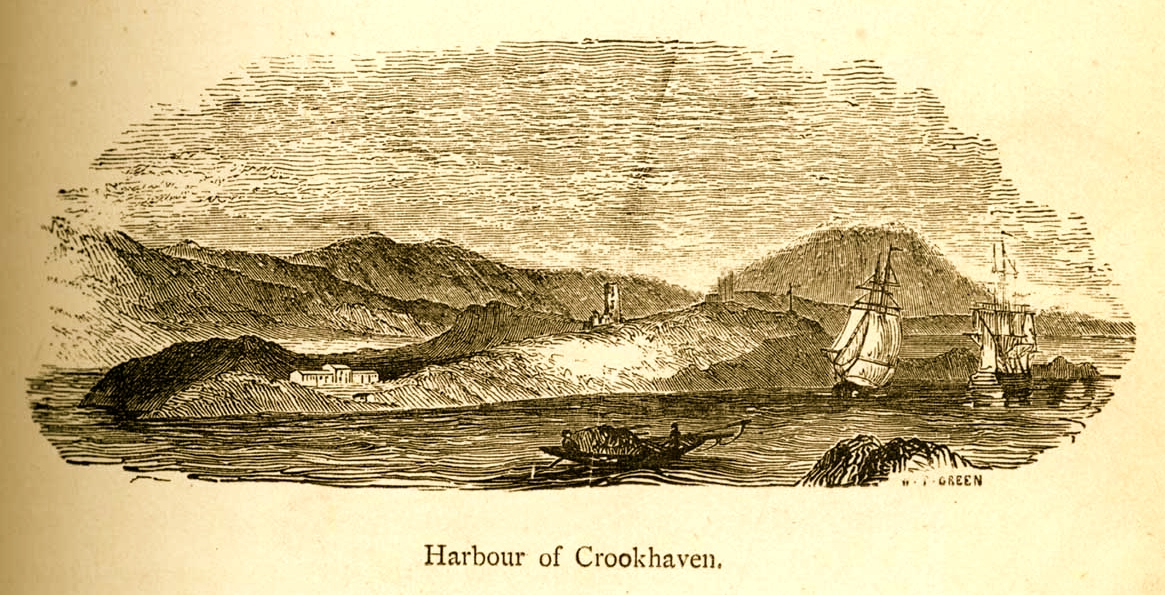
You arrive at Brow Head by driving west from Schull out towards Crookhaven. If the water is low in the Haven you may spy the remains of ancient field boundaries, covered at high tide.

Galley Cove

Galley Cove

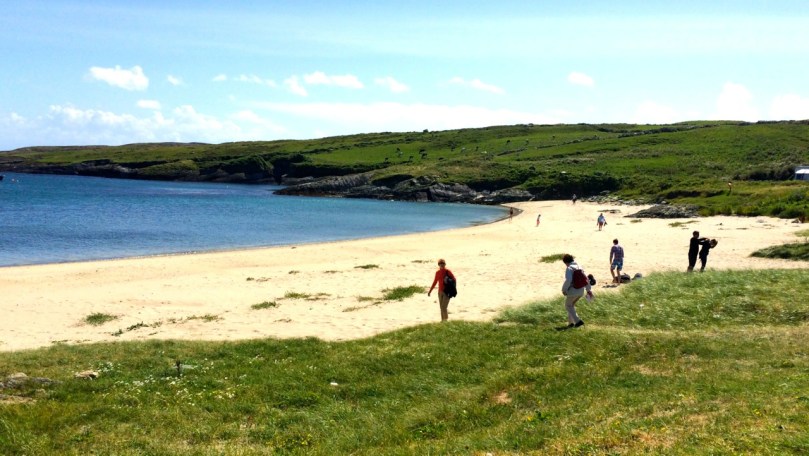
The starting point is Galley Cove – a smaller and quieter beach than the popular Barley Cove a little further west, but featuring the same white sand and inviting Caribbean-blue water. You can leave the car here and proceed on foot uphill if you’re feeling in the need of an aerobic workout. Or you can drive up the narrow road, but be warned: if you meet a car coming down you may have to reverse a considerable distance. There is parking for three or four cars at the top of the hill.

Recently-erected standing stones

Recently-erected standing stones

The first thing you’ll notice, in front of the lone house at the top of the hill, is an impressive row of standing stones, aligned to point back down the Mizen Peninsula. These are recent additions to the landscape, testament to the enduring tradition of erecting such stones in this part of the world.

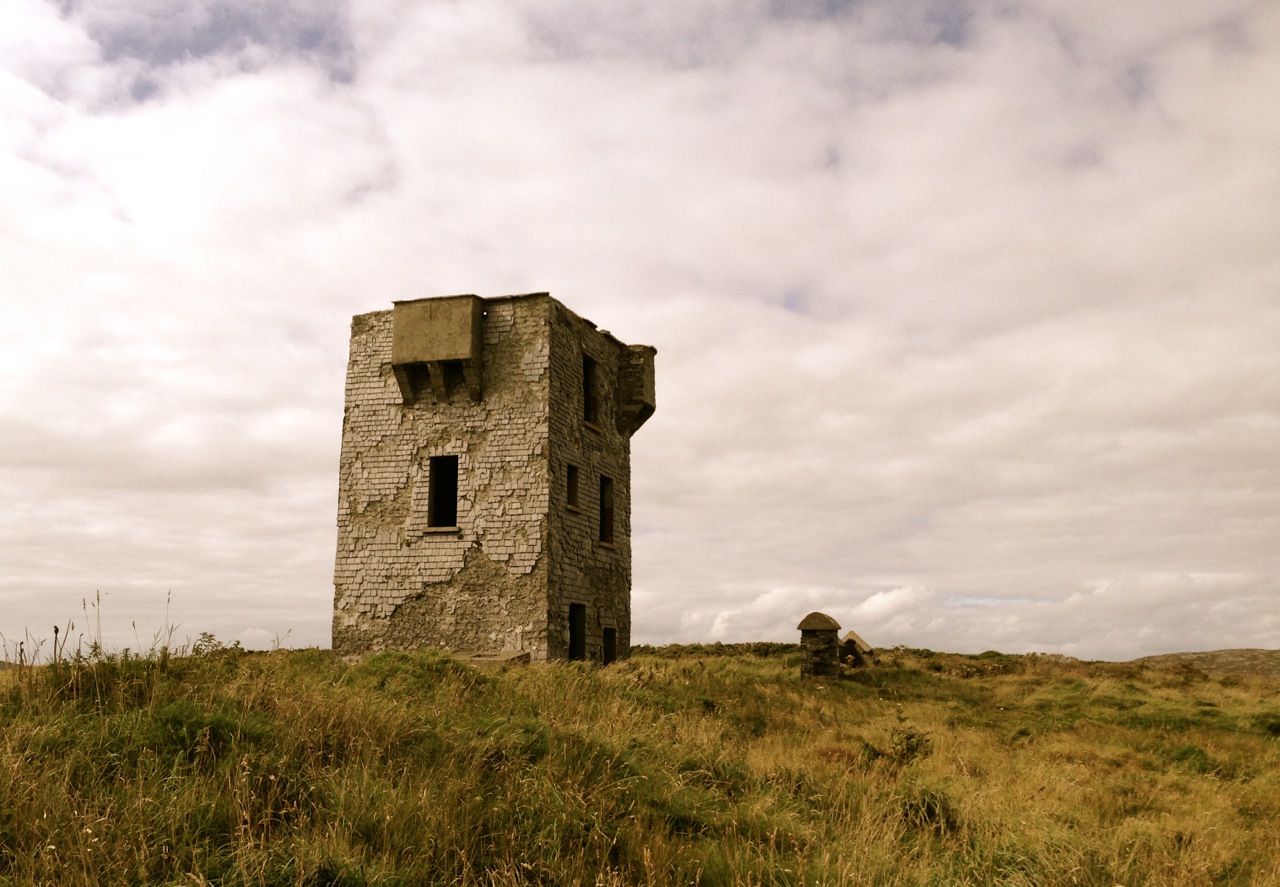
Scramble up through the heather to the remains of the Napoleonic-era signal tower and the Marconi Telegraph Station – see Robert’s post for more about Marconi and early wireless telegraph in West Cork. From here there are panoramic views east to Crookhaven and down the Mizen Peninsula, west to Mizen Head, North to Barley Cove and southeast to the Fastnet Rock.

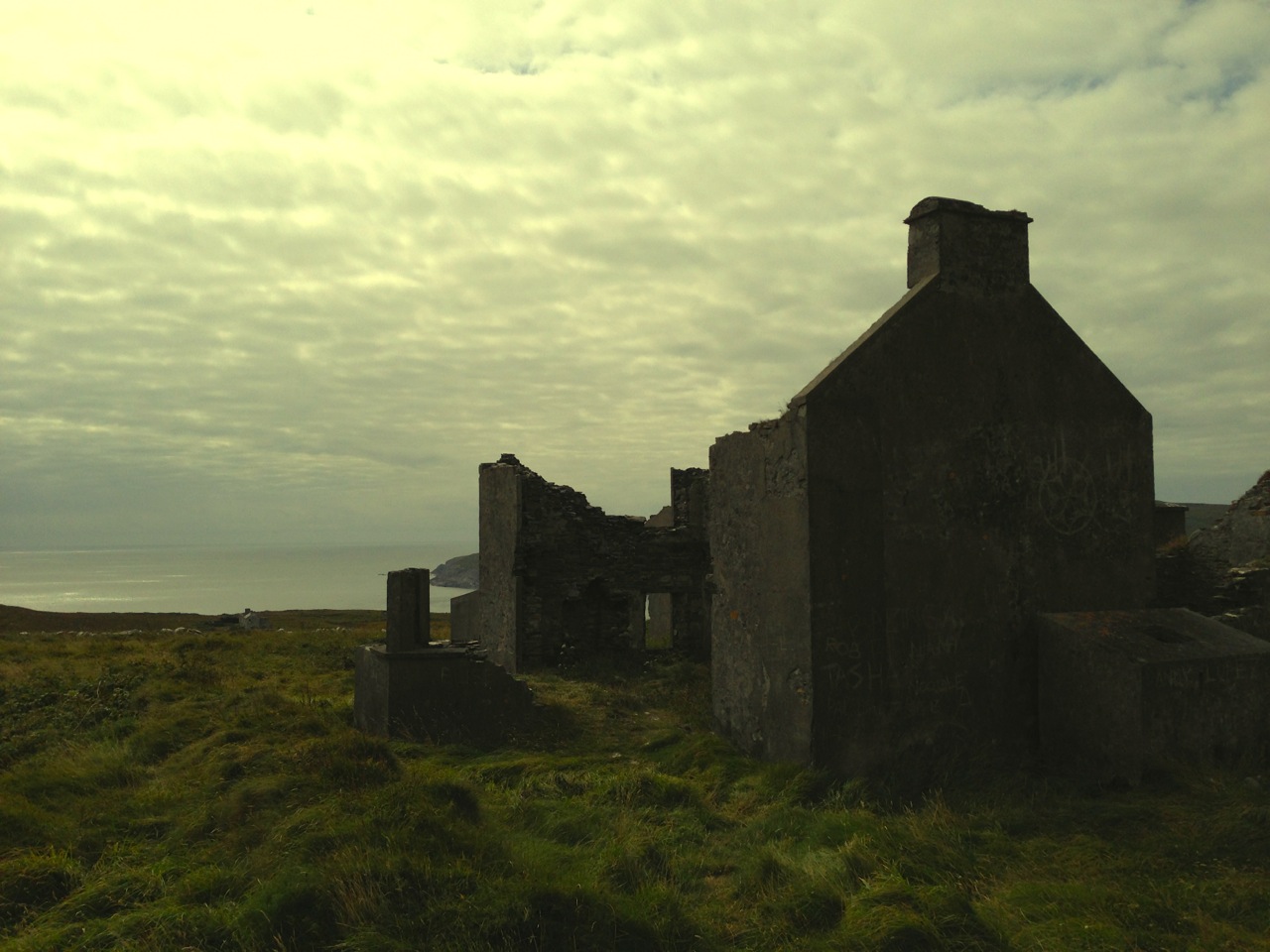
Follow the path now south west to the tip of the Head. This was a copper mining area in the nineteenth Century and you can still see the ruins of the Mine Captain’s house, miners’ dwellings and fenced off mine shafts. Abandoned cottages litter the north-facing slopes, with small overgrown fields defined by stone walls.

Near the tip of the Head you must cross a narrow causeway with steep cliffs on either side. This part is not for the faint of heart (or small children, perhaps) especially on a windy day. Find a sheltered spot at the end and sit a while. You may see gannets diving here, or dolphins in the waters below, and you will certainly be aware of the power of the pounding waves.

Next parish - America!

Next parish – America!

Before you leave, make sure that you make a wish – after all, this is a special place, and special places in Ireland have their own magic. 

Heron tracks

In the Haven

In Search of Ghosts

ruin

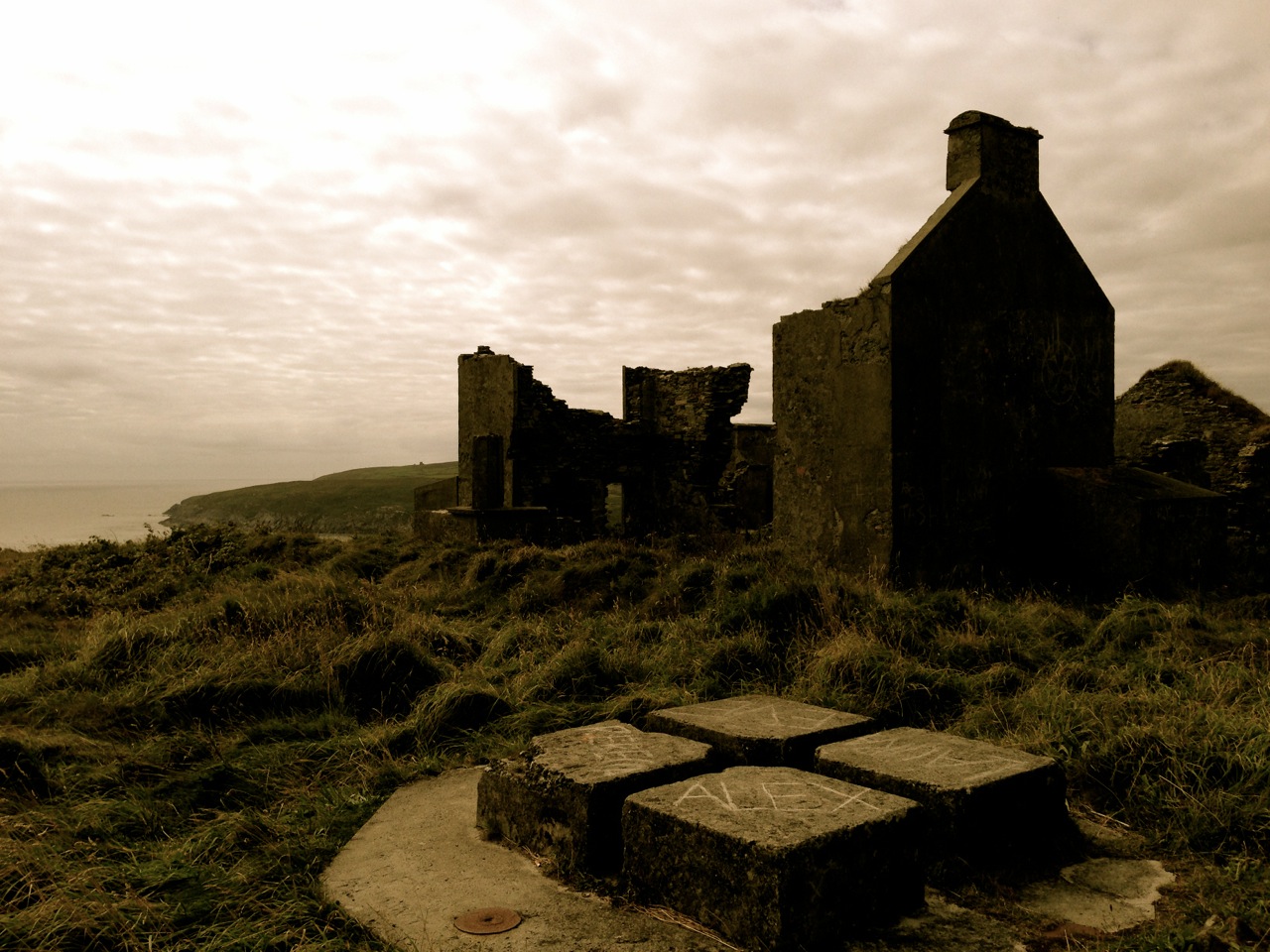
Lonely and wild – Brow Head is the most southerly point on the mainland of Ireland. There are ghosts here: ghosts of ancient people who created the stone monuments, perhaps 5000 years ago, that are now inundated by every tide in the bay at Ballynaule below this Irish ‘Lands End’; ghosts of early farmers who began to lay out field boundaries criss-crossing this windswept promontory; ghosts of the defenders of an empire who feared a French invasion that never happened; ghosts of the prospectors who sunk two shafts – now barely protected by rusting wire – during the nineteenth century copper mining era; and, lastly, ghosts of the pioneers of our own digital age, represented in the brooding ruins that crown the hilltop here above West Cork’s remotest village, Crookhaven.

Brow Head - haunt of ghosts

Brow Head – haunt of ghosts

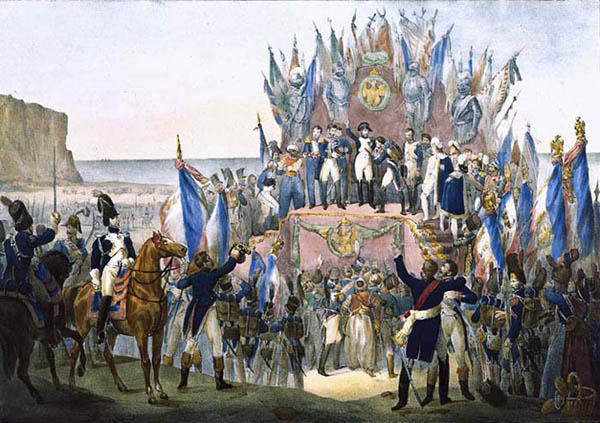
Charles Motte

Napoleon setting his sights on the British Empire 1804 (Charles Motte)

Facing up to Napoleon: Brow Head Signal Tower, built in 1804

Facing up to Napoleon: Brow Head Signal Tower, built in 1804 in anticipation of a French invasion

We can be very specific about one ghost: Guglielmo Marconi – born at Bologna, Italy, on April 25, 1874 to Giuseppe Marconi, an Italian country gentleman, and Annie Jameson, daughter of Andrew Jameson of Daphne Castle, Enniscorthy, County Wexford, Ireland. The Jamesons were and are renowned distillers of Irish Whiskey. It’s reasonable to say that Marconi was an ‘Irish Italian’, and that heritage was reinforced when in 1905 he married Beatrice O’Brien, daughter of the 14th Baron Inchiquin. Marconi’s fame is that he pioneered the commercial application of electromagnetic waves – or Radio.

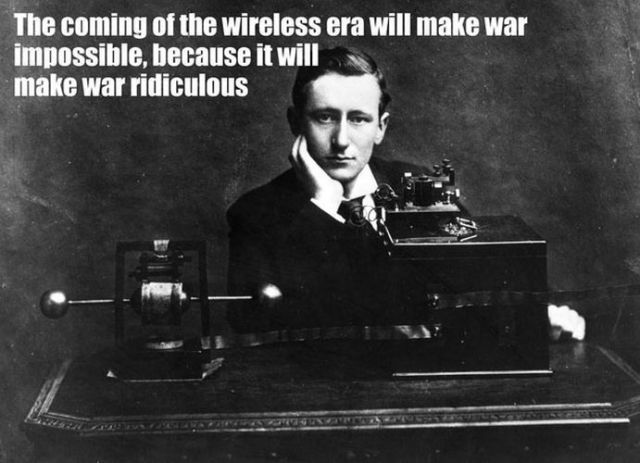
Marconi - wishful thinking!

Marconi – wishful thinking!

At the age of twenty one, Marconi was able to demonstrate to his father how, without any visible physical link (without wires), he could transmit dots and dashes through the rooms of their home in Pontecchio. “…When I started my first experiments with Hertzian waves…” he is quoted as saying, “…I could scarcely believe it is possible that their application to useful purposes could have escaped the notice of eminent scientists…” His parents used their influence to help him travel to England to meet the Engineer-in-Chief of the British Post Office with the result that in 1896 Marconi obtained the first ever patent in wireless telegraphy.

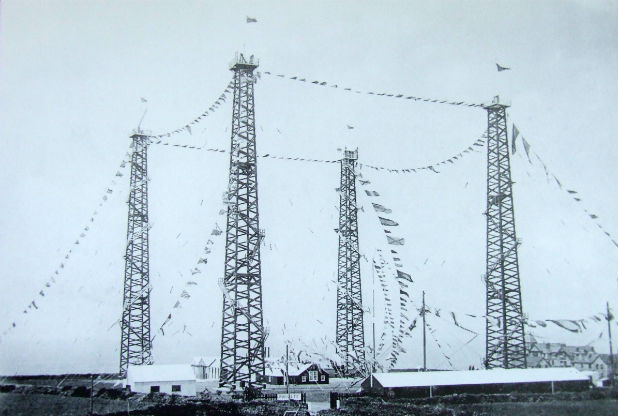
Signal Station at Poldhu, Cornwall, 1914

Signal Station at Poldhu, Cornwall, 1914

Marconi’s ambitions started in a room in Italy: by December 1901 he was able to send messages from Poldhu, Cornwall, to St John’s, Newfoundland, a distance of 2100 miles – an historic achievement. In his attempts to bridge the Atlantic with Radio waves he had explored the west coasts of Britain and Ireland for suitable telegraphic locations. One of his destinations was Crookhaven, which he visited many times – using the Flying Snail en route!

The Marconi Wireless Telegraph Station at Brow Head - exactly 100 years ago

The Marconi Wireless Telegraph Station at Brow Head – exactly 100 years ago

Brow Head was one of a number of transmitting stations set up by Marconi and it got off to a flying start soon after opening in 1901 when, in the presence of Marconi himself, Morse signals were received from Poldhu, 225 miles away. The fact that the Atlantic gap was conquered only a few months after this shows the rapid pace of developments at that time.

Calling America...

Calling America…

The village of Crookhaven had long been the first and last port of call for ships going between Northern European ports and America. Over the centuries ships stocked up here with provisions before tackling the open sea. Because of this, the major shipping lines had agents here. Reuters and Lloyds had flag-signalling and semaphore equipment on Brow Head to communicate with the maritime traffic, superseded by the telegraph station. At the end of the 19th Century it was said that “…you could cross the harbour on the decks of boats…” Up to 700 people are reputed to have lived in the area at that time: now, Crookhaven has a permanent population of no more than 40. An article written by one of the telegraph operators in 1911 summarises:

…As Crookhaven is the first station with which the homeward bound American liners communicate it is naturally a busy station. By the aid of wireless all arrangements are made for the arrival of the ships, the landing and entraining of the passengers and mails, whilst hundreds of private messages to and from passengers are dealt with. Messages are also received from the Fastnet Lighthouse, which is fitted with wireless, reporting the passing of sailing ships and steamers. These messages are sent by vessels not fitted with wireless by means of signals to the Fastnet, thence by wireless to Crookhaven, whence they are forwarded to Lloyds and to the owners of the vessels…
Engraving by Mary Francis Cusack, 1875

Engraving by Mary Francis Cusack, 1875

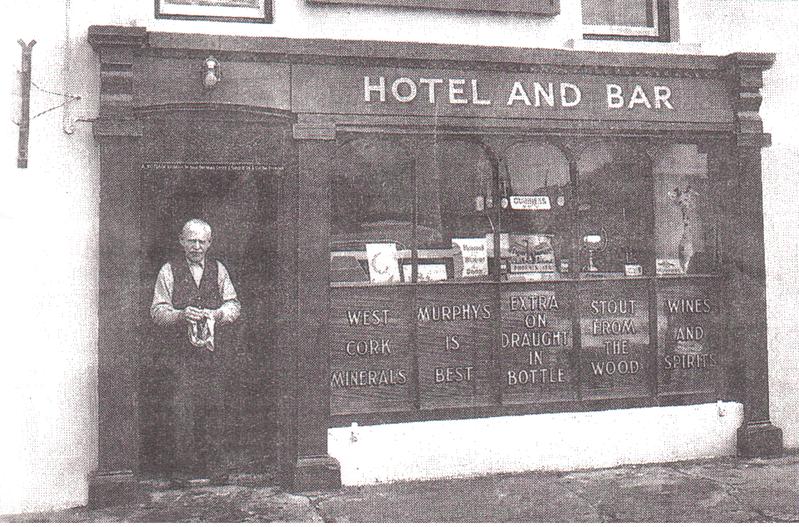
We have some first hand accounts of the workings of the signal station in its heyday from the handwritten log books of Arthur Nottage – for many years landlord of the Welcome Inn at Crookhaven – who died aged 90 in 1974. In 1904 he arrived in West Cork (from England) to work on a shift basis with one other man as Marconi telegrapher at Brow Head. Until 1914 he operated the Morse code apparatus with a salary – generous for the time – of £1 per week.

Arthur Nottage of Crookhaven

Arthur Nottage of Crookhaven

A hundred years ago telegraphy had advanced to such a stage that it was no longer necessary for stations to operate close to the shipping lanes, and small, isolated sites such as Brow Head were closed down. Legend has it that in 1922 the Irregulars destroyed the buildings during the Civil War.

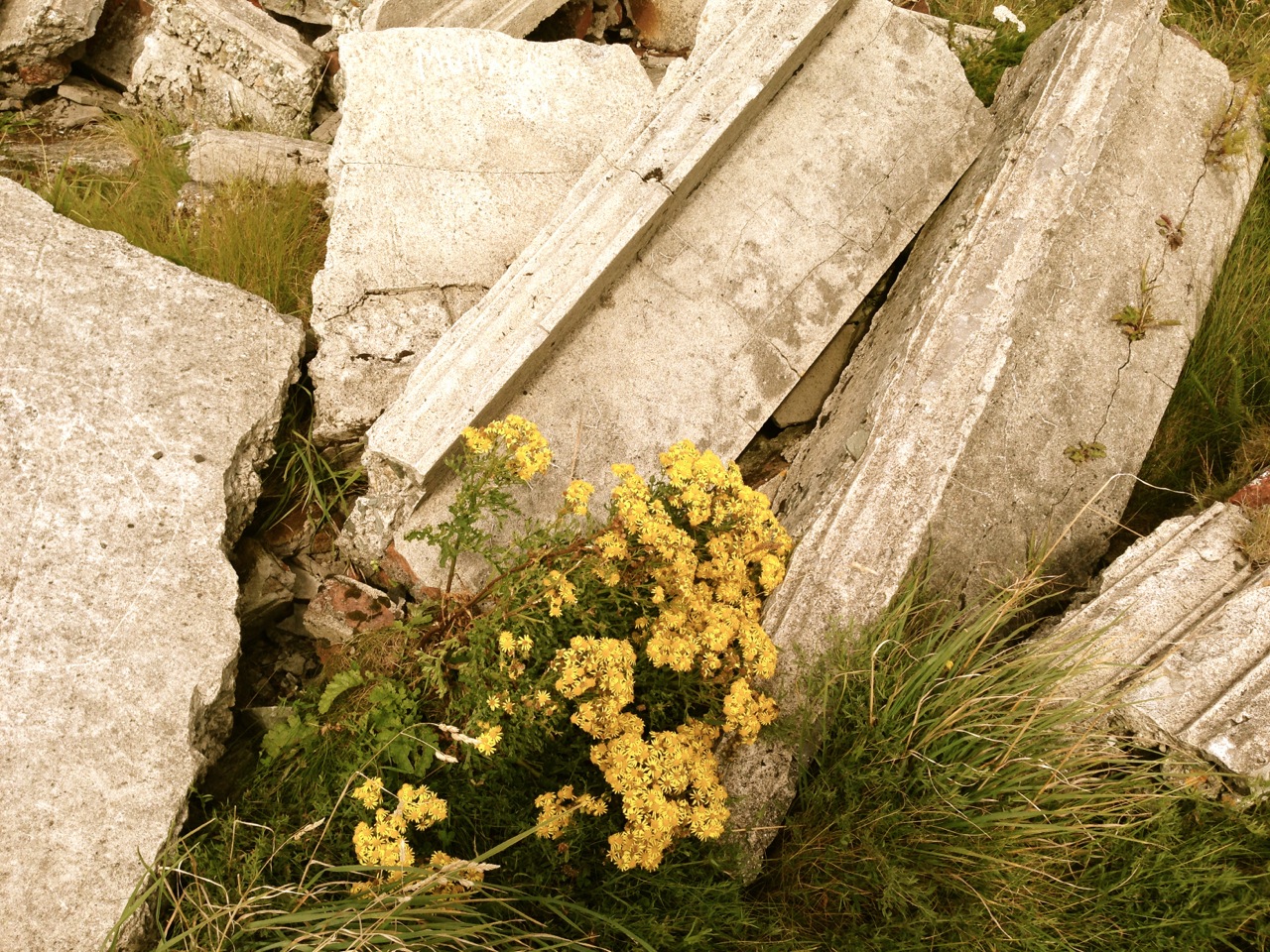
Becoming Archaeology: the ruins on Brow Head today

Becoming archaeology: the ruins on Brow Head today

Finola and I have both been inspired by the landscape and atmosphere of this Atlantic frontier. It’s a place we will return to. All West Cork landscapes are impressive, but this is a place apart. If you want to feel at the end of the world, walk here: you won’t meet many others, even in the height of the visitor season. Perhaps that’s because it’s haunted – but in the best possible way. Like so much of Ireland the world has come here – a mark has been made – memories have been left behind. Now, you hear the ghosts in the ever-present currents of wind and surf.

Base of Marconi's mast at Brow Head

Base of Marconi’s mast at Brow Head

(I am grateful to Michael Sexton and the Mizen Journal (Number 3 1995) for many fascinating items on the Crookhaven Telegraph Station not recorded elsewhere.)

Lúnasa

Garlic Sunday at Nead an Iolair

A summer storm approaches Rossbrin Cove

Lúnasa – in Ireland it’s the name for the eighth month, and a festival.

August? So that would relate to Lammas in English – the first of August?

loaf

Yes, Lammas is supposedly from the Anglo-Saxon Hlafmaesse – meaning ‘Festival of the Loaf’. Here it was traditional to bake bread at Lúnasa – a round loaf, which was cut into four and each quarter was then set in the corners of the barn where the grain would be stored, to ensure a good harvest.

So is Lúnasa the harvest festival?

By some accounts, yes. Although the beginning of August is a bit early for harvesting. Having said that – our music session in Ballydehob last night was temporarily disrupted by the sight and sound of a fleet of huge tractors and a combine harvester thundering through the main street in the dark – yellow lights flashing dramatically: after a prolonged period of hot sunny weather there was a big rain storm forecast, so the farmers were working through the night to get in as much of the crop as possible before the deluge.

And did the rain come?

It did – just in time to dampen the Ballydehob Wooden Boat Festival. But it certainly didn’t put a dampener on the spirit of the event.

A damp Boat Festival in Ballydehob

A damp Boat Festival in Ballydehob

Is Lúnasa celebrated in Ireland nowadays?

Well – it’s remembered: you may have heard of Brian Friel’s play Dancing at Lughnasa, turned into a film in 1998. It’s set in rural Donegal in the 1930s and poignantly tells of the lives of five women encapsulated through one summer month. It touches on ritual themes and the mixture of superstition and religion which still characterises life in Ireland today.

Now you’ve spelled it differently…

Well spotted! On the calendar it’s usually Lúnasa. It’s suggested that the word Lughnasa harks back to pagan times: there was a god – Lugh – who in Irish mythology led the Tuatha Dé Danann against the Fomorians. After the victory Lugh finds Bres, the half-Fomorian former king of the Tuatha Dé Danann, alone on the battlefield, and Bres begs for his life. If he is spared, he promises, he will ensure that the cows of Ireland always give milk. The Tuatha Dé Danann refuse the offer. He then promises four harvests a year, but the Tuatha Dé Danann say one harvest a year suits them. But Lugh spares his life on the condition that he teach the Tuatha Dé Danann how and when to plough, sow and reap.

That story rather neatly ties up the connection with the harvest… Any more traditions?

August is the holiday month and there are plenty of things happening in Ireland: my favourite is Puck Fair, held every year in Killorglin, County Kerry. I came across it by accident when I was travelling in Ireland some forty years ago; now it’s notorious.

Why?

King Puck

King Puck (www.abitofireland.com)

Well, the central feature is an enormous Billy Goat, captured in the wilds of the Kerry Mountains. He gets treated royally – literally, as on the first day of the Fair he’s crowned King by a twelve year old girl. He’s then placed in a cage on top of a high platform which looks out over the street fair, which continues for three days.

Puck Fair, Killorglin 1900

Puck Fair, Killorglin 1900

That certainly does sound pagan! What happens to King Puck after the Fair?

He goes back to the mountains. It’s not uncommon to see wild Goats up in Kerry.

Sheena Jolley's superb study of Kerry Goats

Sheena Jolley‘s superb study of Kerry Goats

Is there a story attached to King Puck?

Of course… During St Patrick’s travels he reaches the borders of Kerry. He has with him his herd of Goats which give him food and milk. During the night his goats are stolen and this means he can’t go any further (in fact he supposedly then never set foot in Kerry, which means that Kerry people were never converted from their old pagan ways!). ‘…He resolved to detour a community that was so utterly depraved and lacking in hospitality. However, a chieftain from the Barony of Dunkerran saved the day for Kerry. He presented as a gift for the Saint a magnificent Puck-Goat and a hundred of the finest Goats from his herds on the slopes of Glencar highlands. The Saint came no further west, but instead of a malediction he gave to Kerry that benediction that will live forever in the salutations of the Irish Race – “Go mbeannuigh Dia siar sibh”*. Killorglin being the natural centre of defence of the Barony at that time has ever since held the Puck-Goat in the highest esteem, and elevated him to the place of honour for three days each year…’ (Liam Foley – the Kerryman, 1945)

*May God bless you back

cove

And are you celebrating Lúnasa yourself?

We’re off to the Blessing of the Boats this morning in Schull. Then we’re over to Hare Island later on for an evening meal with friends who’ve sailed down to West Cork for the weekend.

Enjoy it!

Ready for the Harvest

Ready for the Harvest