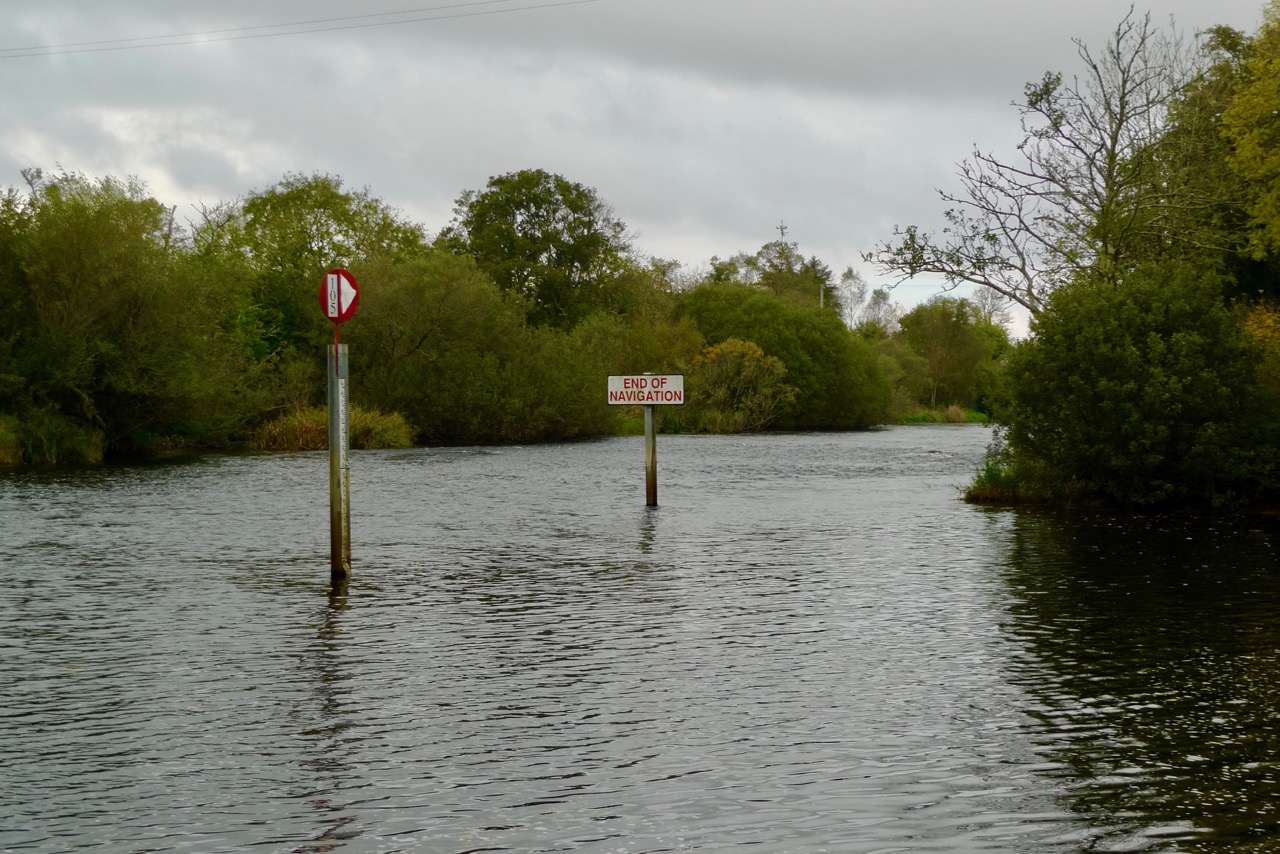
End of Navigation

end of navigation

In 1946, the Rolts travelled to the upper limit of the Shannon Navigation in their borrowed boat, Le Coq. In 2016, exactly seventy years later, we followed them and found ourselves in Battlebridge, Co Leitrim. The Rolts’ travels – and our journey retracing their steps – have been the subject of a series of posts on this blog, and there are still a few more to come!

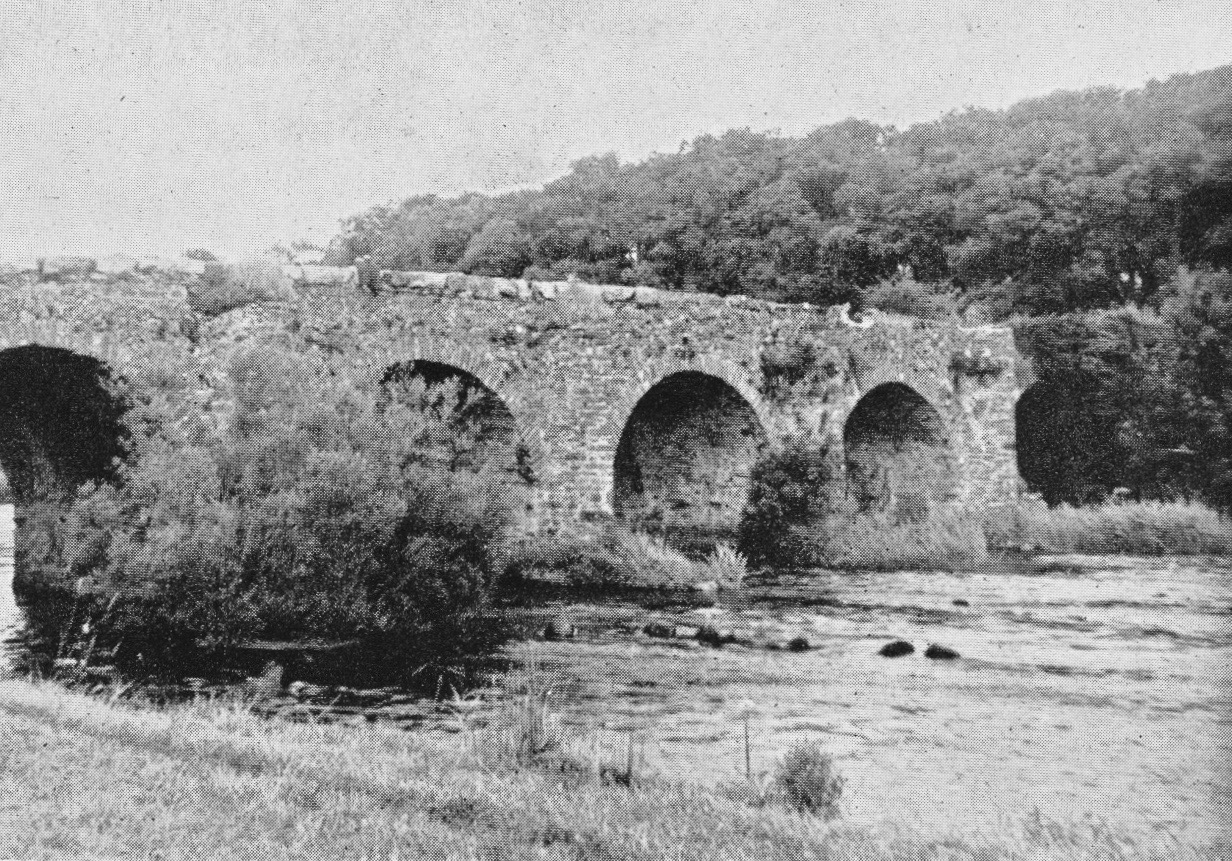
Battlebridge

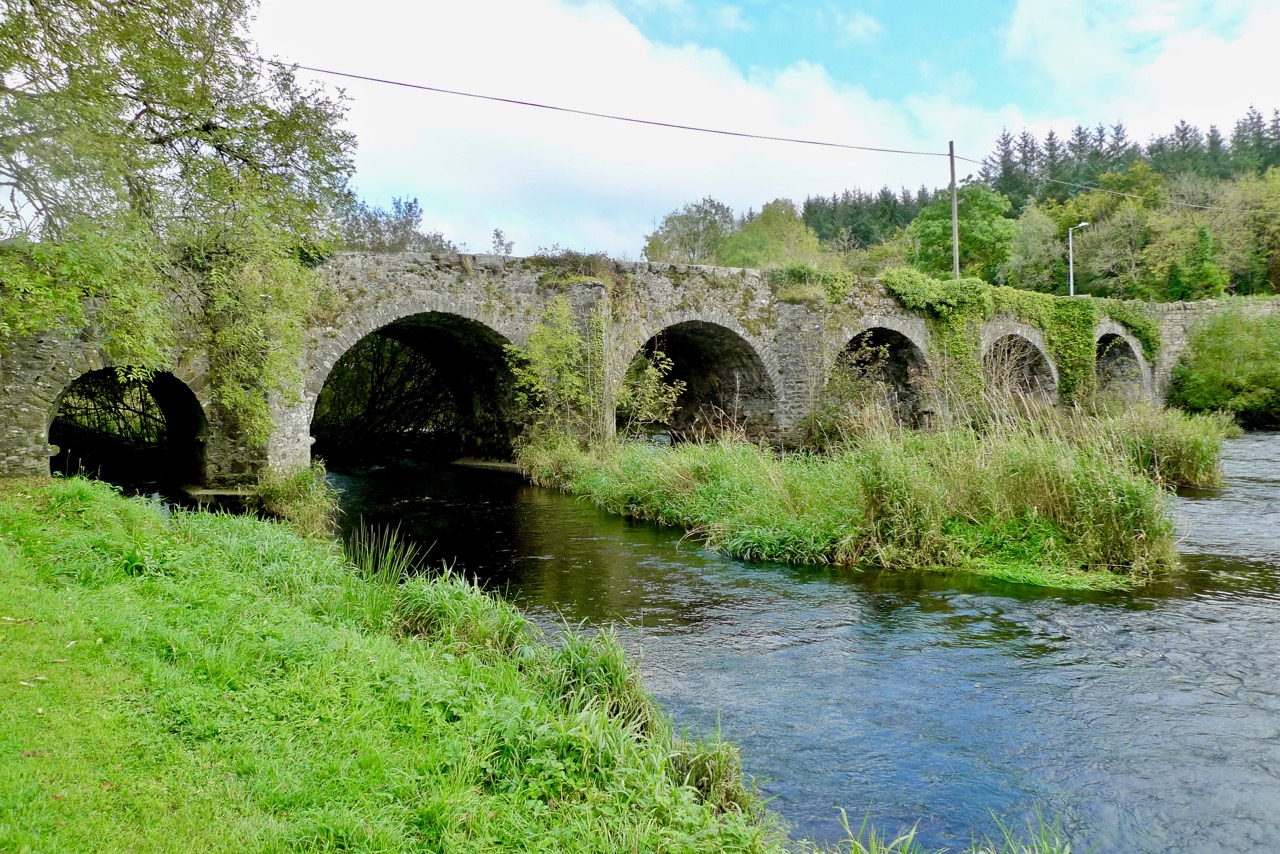
Battlebridge 2016

Upper picture: Angels Rolt’s photograph of the historic Battlebridge, taken in 1946. Lower picture: we revisited the site in 2016 – very little has changed

Battlebridge is still the ‘end of navigation’ on the Shannon itself. But, interestingly, it is now possible to travel by water much further north – something the Rolts were unable to do.

…It was but a brief journey to Battlebridge where the Shannon becomes a shallow stream brawling over boulder strewn rapids under the arches of the fine old bridge. Here, in the last few yards of deep water, we came about to moor to two trees beside the bank at the tail of the ruined entrance lock of the Lough Allen Canal. It was a delightful mooring, secure, secluded and sheltered, the country round being undulating and well-wooded, for we had now left the level plain for the fringe of the broken, lake-studded country of central Leitrim… (Green and Silver L T C Rolt, George Allen and Unwin 1949)

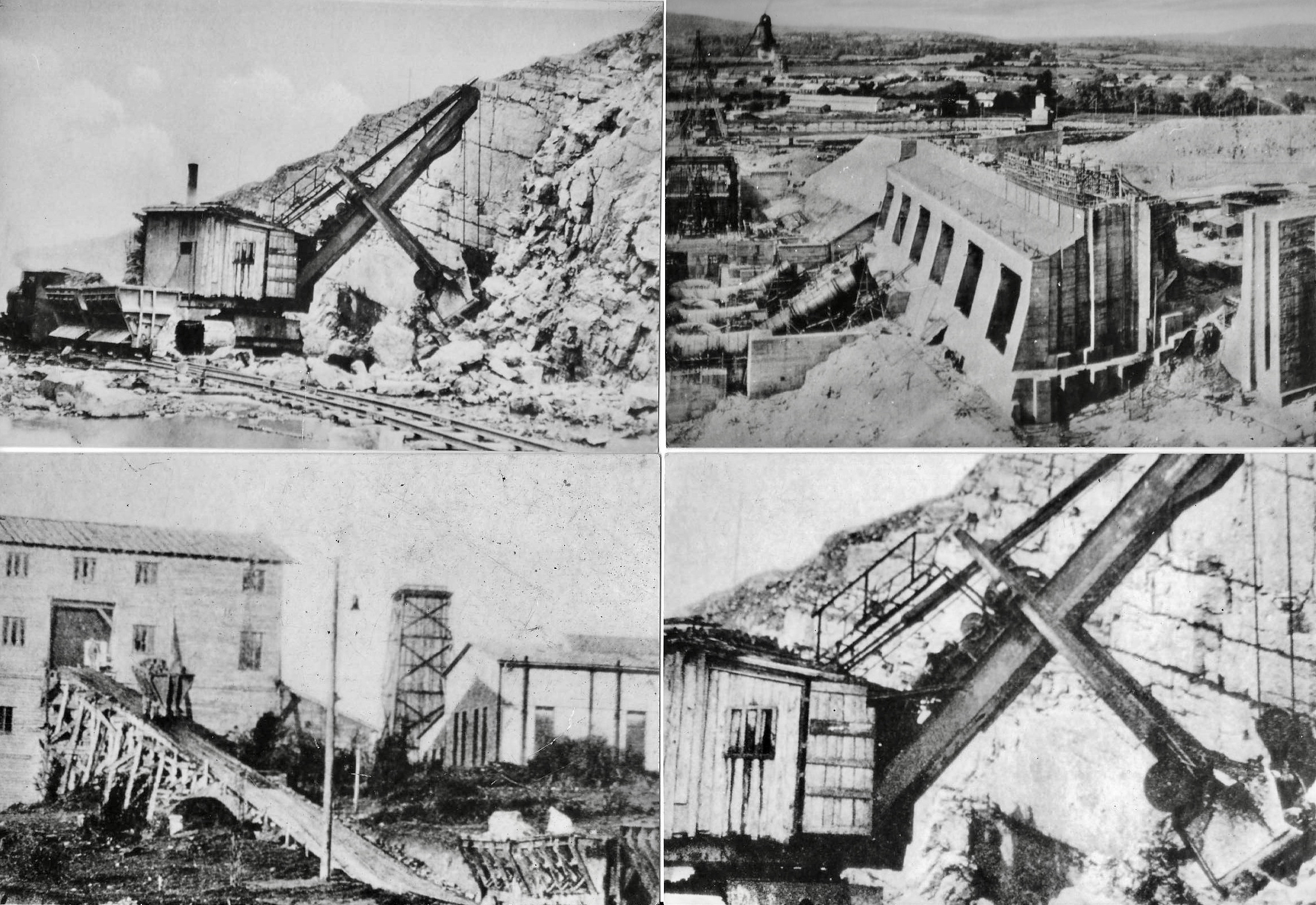
Ardnacrusha 1925

The huge Ardnacrusha power station – in its day the largest hydroelectric generating scheme in the world – under construction in 1925: it was completed and opened on 22 July 1929 and, by 1935, was producing 80% of all electricity in the Free State

The Lough Allen Canal connected the Shannon Navigation to the Lough: it was first opened in 1817. Boats would trade to quays on the lake with grain and return with sand or with coal from the Arigna mines. The fate of the canal was sealed when Lough Allen became a storage reservoir for the great hydro-electric station at Ardnacrusha. To increase its capacity, the level of the lake was raised by dam to a height above the old canal banks.

…The last trading boat left the Lough Allen Canal in 1927, while the last pleasure craft battled its way through the weeds in 1932. The lock-keeper, young Sean Nangle, still lived in the neat, freshly white-washed cottage beside the ruined entrance lock, but his duties were confined to bank ranging on the reach of the river below. Le Coq was the first craft to visit Battlebridge for seven years, so that our arrival was a minor sensation, and it was with a sense of newly discovered importance that Sean signed his name on our pass… (Green and Silver)

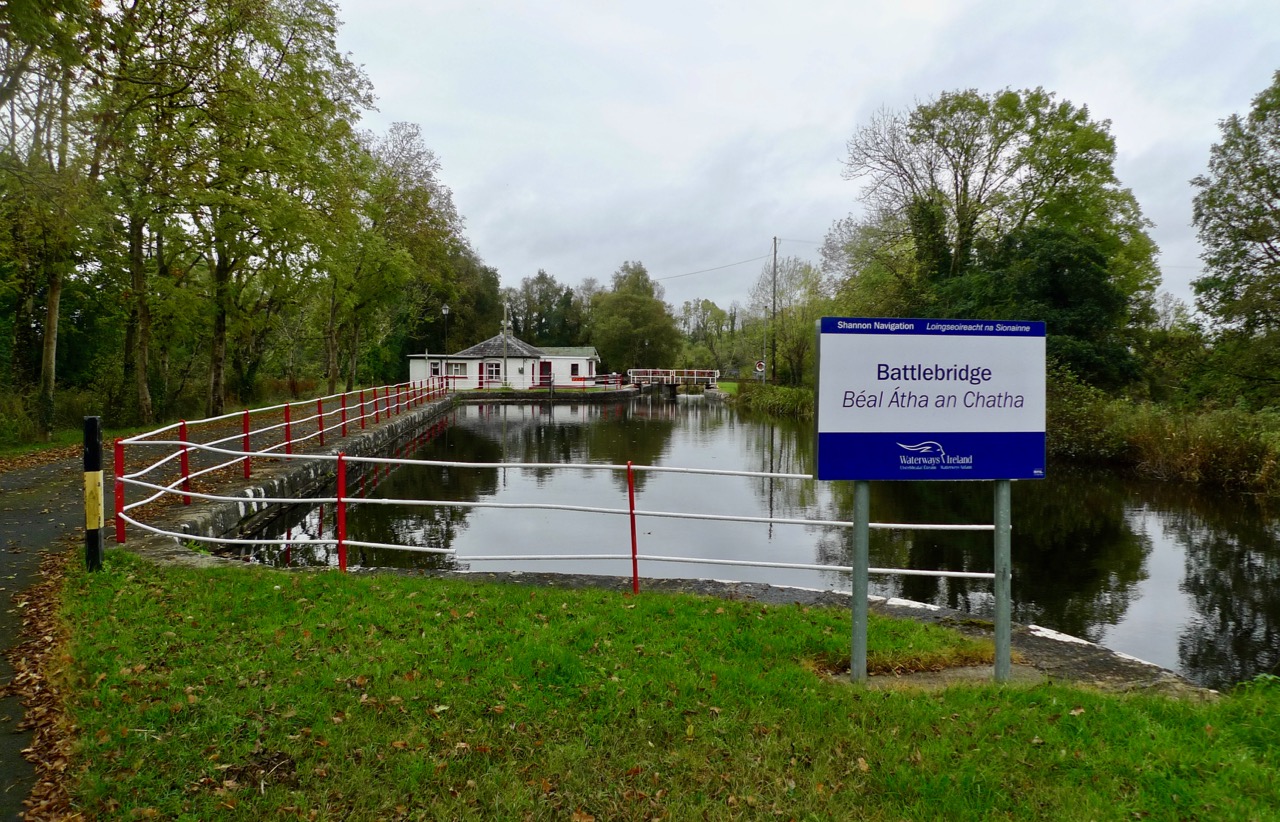
Battlebridge lock

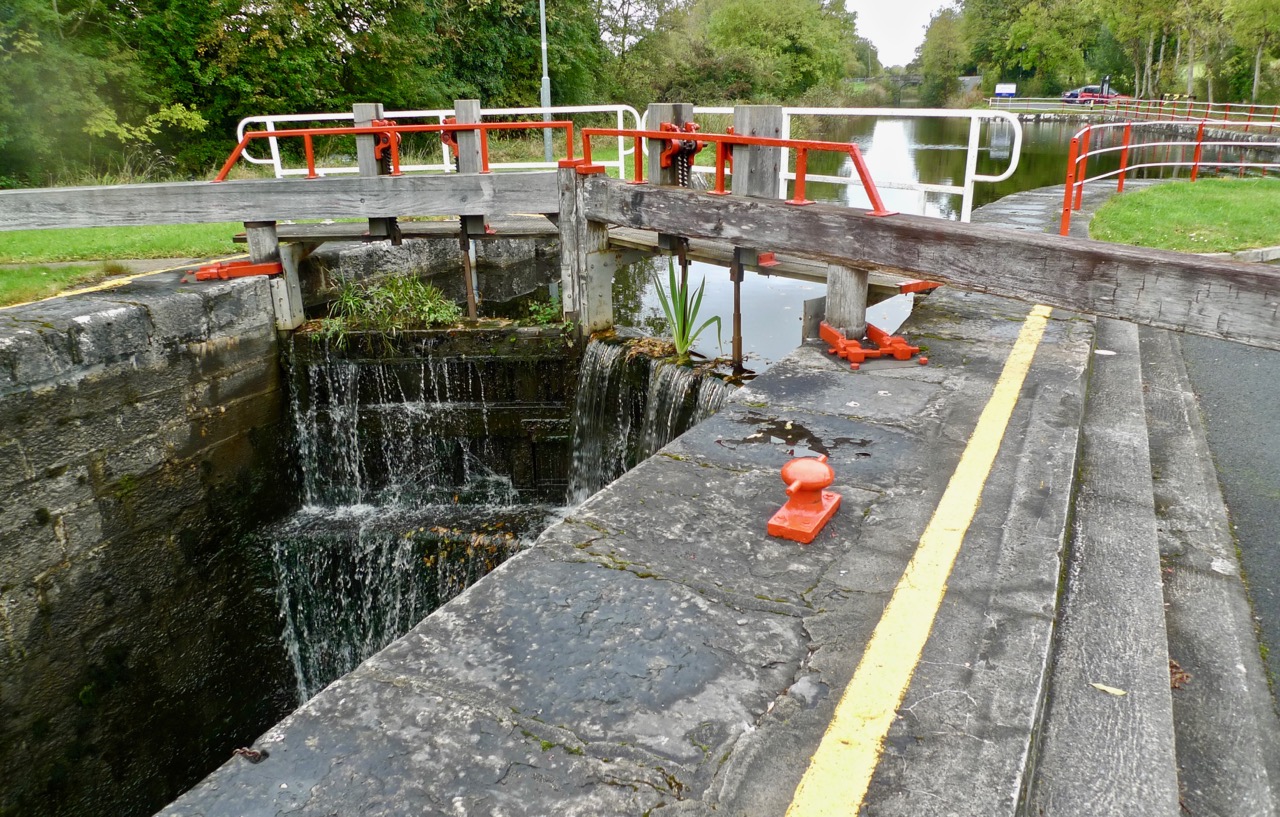
Battlebridge Lock, the first lock on the now restored Lough Allen Canal. The cottage in the distance was the home of ‘young’ Sean Nangle in 1946

One thing that the Rolts might never have anticipated was the revival of the Irish canals which has come about during the seventy years since their adventures, mainly during the economic boom of the decade or so from the mid 1990s. A cross-border authority – Waterways Ireland – is now responsible for a significant network of canal and river navigations within the island, including many that have been re-established. One is the Lough Allen Canal, now providing access from the Shannon to Upper Lough Erne in County Fermanagh, Northern Ireland.

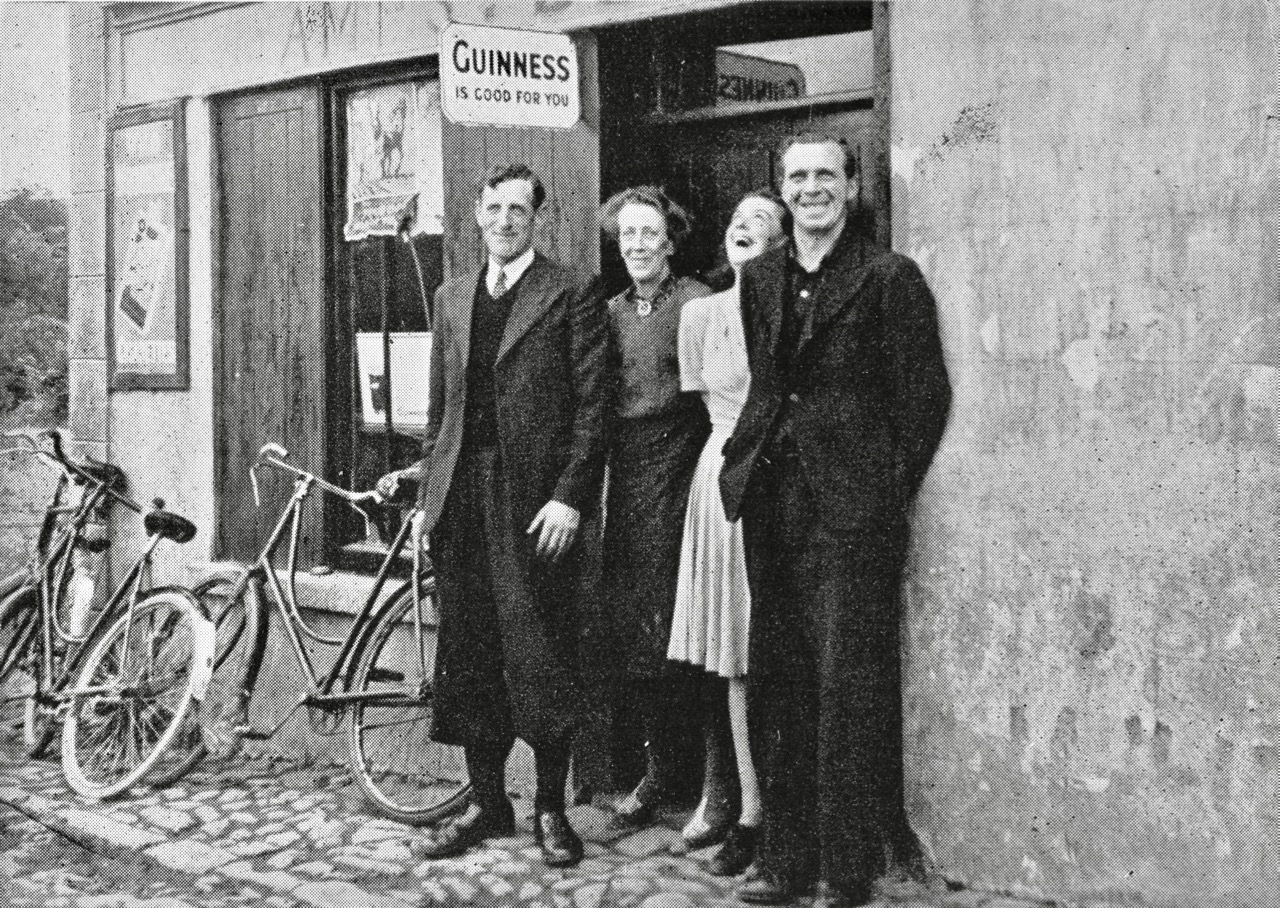
…That evening Sean accompanied us to the inn which stood by the road side just across the old bridge, and a grand friendly house it proved to be. Nowhere in rural Ireland did we find any lack of kindness, hospitality and friendship, but in these respects this little inn at Battlebridge is particularly memorable. For this, credit must go to the Beirne family, mother, daughter and son. I will not attempt to characterize them; they speak for themselves in their photograph. Leaning against the counter in the bare whitewashed bar we enjoyed the best glass of ‘single’ porter that we found on our travels, while intruding chickens pecked unconcerned about our feet. Through an open doorway a turf fire glowed in a wide open hearth equipped with crane and ratchet hook. Upon the fire reposed a squat, black pot-oven with more smouldering turf upon its lid… Conversation was interrupted when a drove of bullocks passed by with a soft patter of hooves. Everyone crowded to the door to comment and criticize and to speculate where they had come from and whither they were bound, an argument which was settled when the drover himself stepped in for a glass… (Green and Silver)

The Beirne Family

Biernes 2016

Beirnes

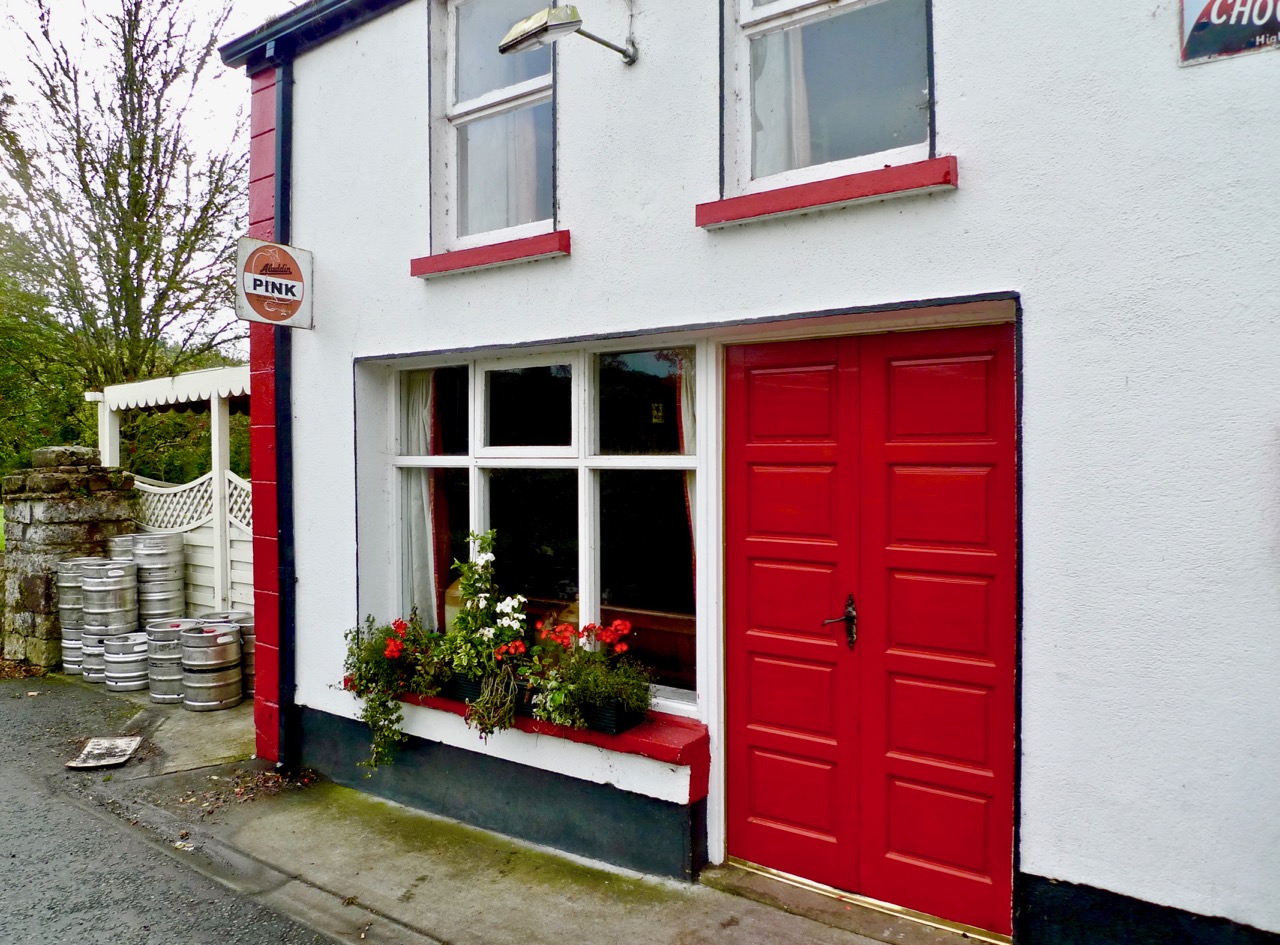
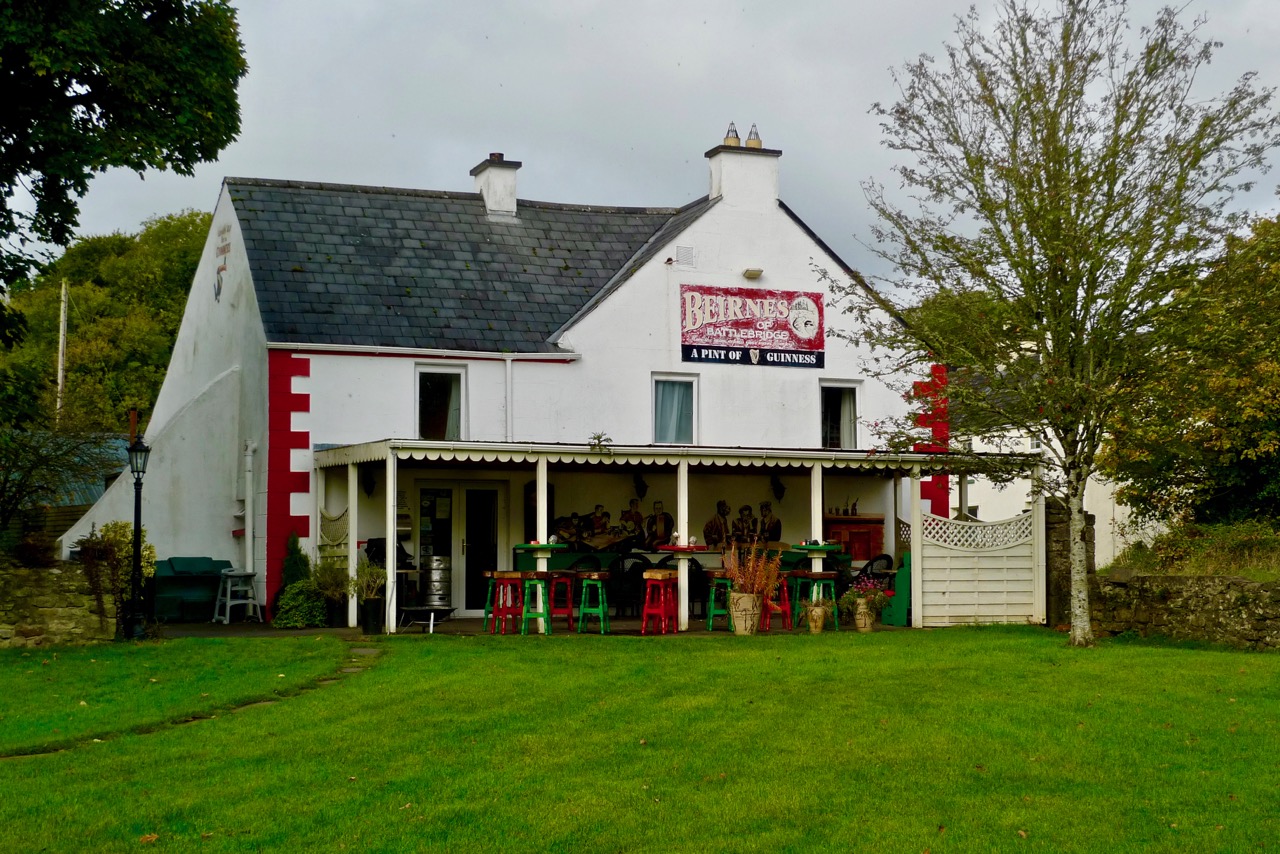
Upper picture: Angela Rolt’s photograph of the Beirne family in 1946. Lower pictures: Beirnes Bar is still trading in 2016

The re-opening of the Lough Allen Canal was heralded triumphantly in April 1996. I was pleased to find an archived RTE news report on that event. The official cutting of the tape was carried out by the Minister for Arts, Culture and the Gaeltacht – Michael D Higgins, now our President.

lock gates

Lough Allen

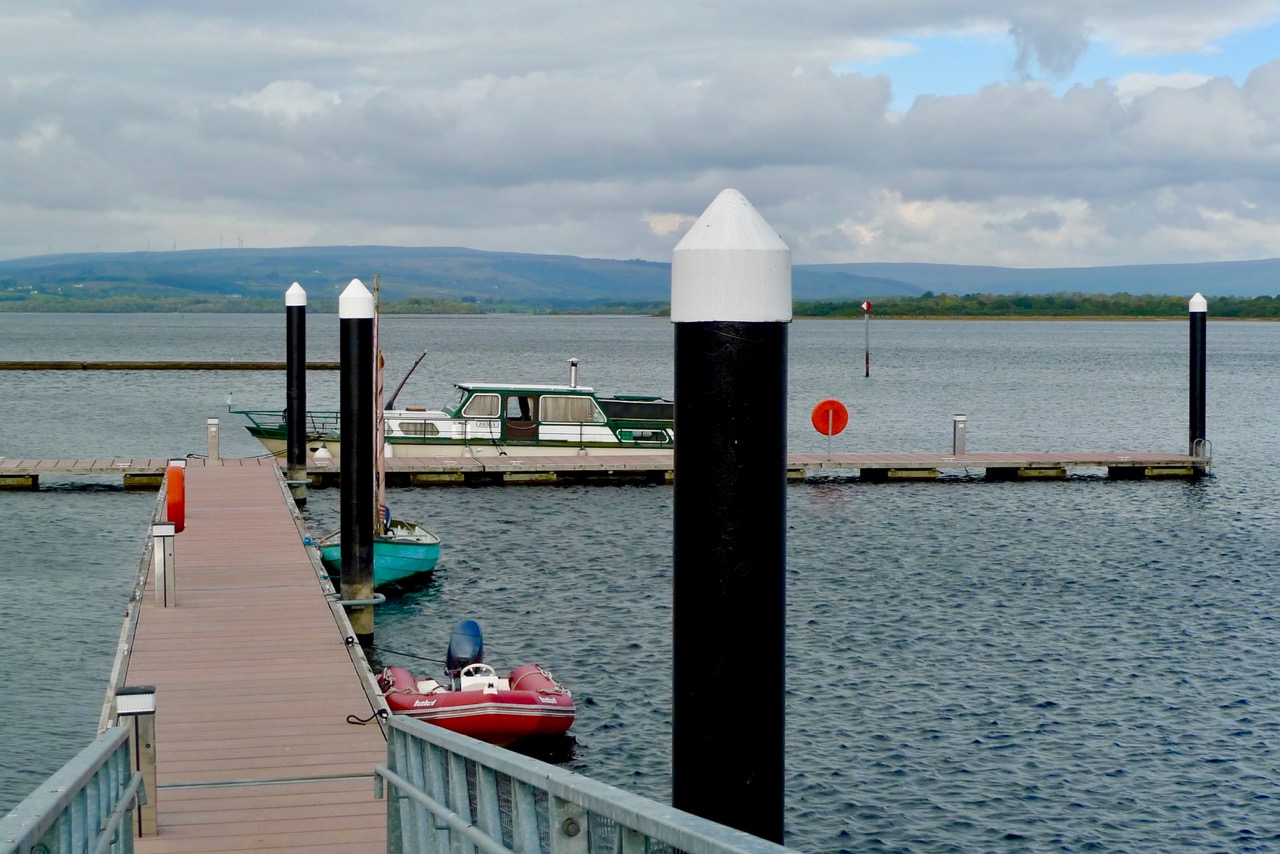
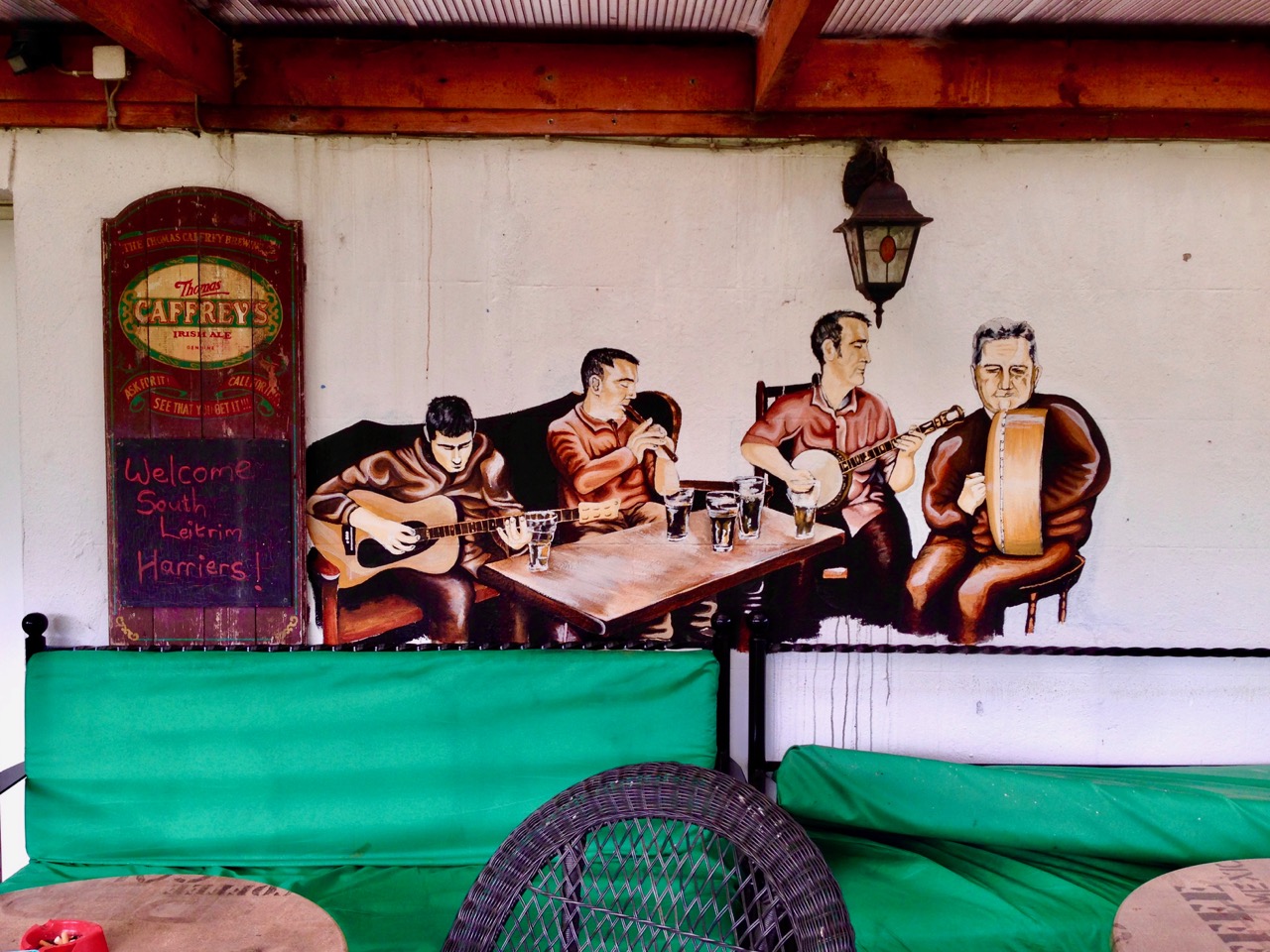
Upper picture: the lock at Battlebridge on the restored canal. Lower picture: Lough Allen today. Below: A mural on the garden terrace of Beirnes Bar

band playing

Sliding into Kerry

view from the road

My musical acquaintances might think that this post is all about Kerry slides – lively tunes which get aired sometimes at our session: here are some fine examples played by Éamonn O’Riordan, Tony O’Connell, Brian Mooney and Gearóid Ó Duinnín…

But they would be mistaken: this is the tale of a little wintry but sunlit exploration which Finola and I undertook on the eve of St Gobnait’s feast day. It involved crossing the border into Kerry, something which is not lightly done by Corkonians because of traditional rivalries (mainly on the Hurling and Gaelic Football fields). So we had to ‘slide’ over into the Kingdom and hope that none of our friends noticed our temporary absence.

Sheep flock on road

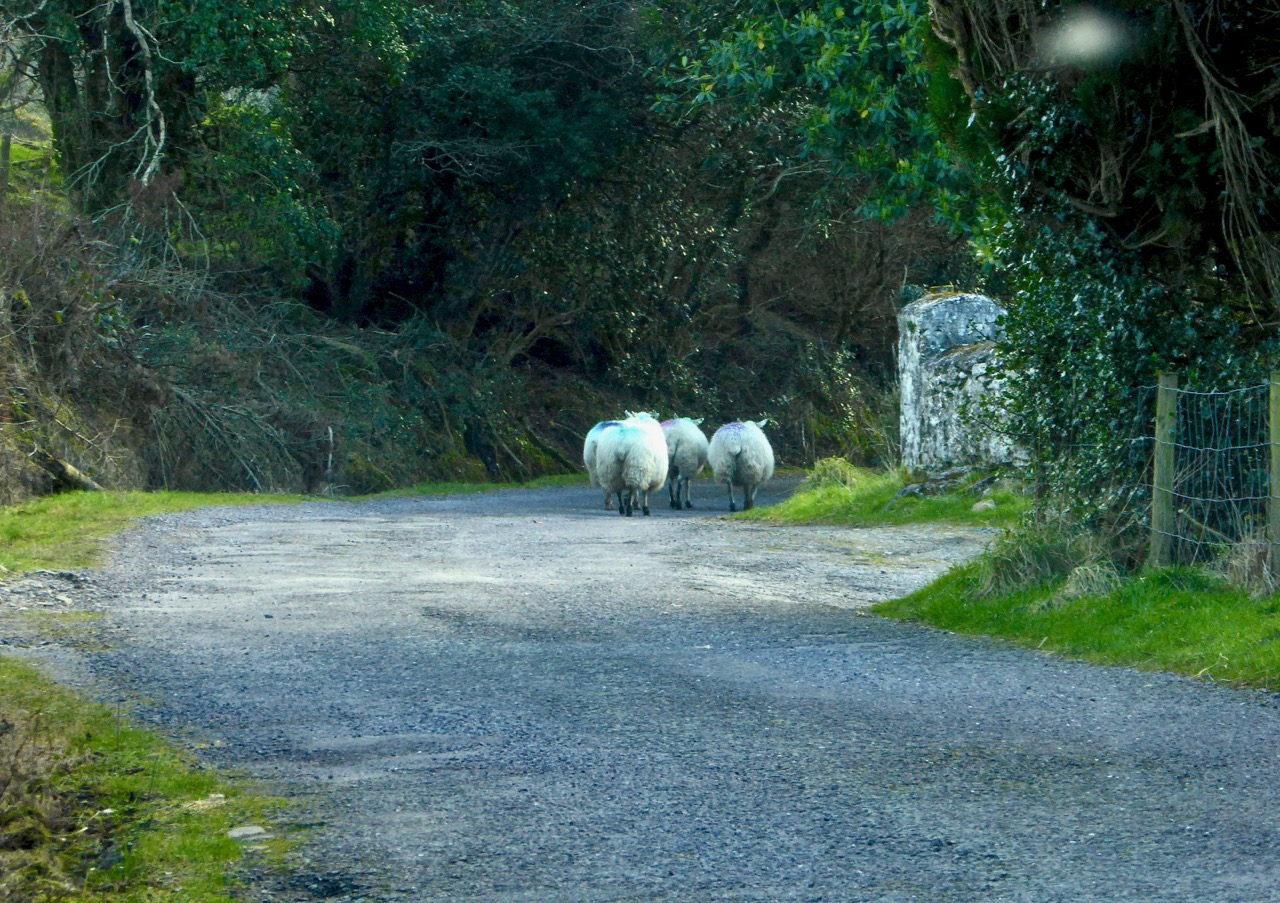
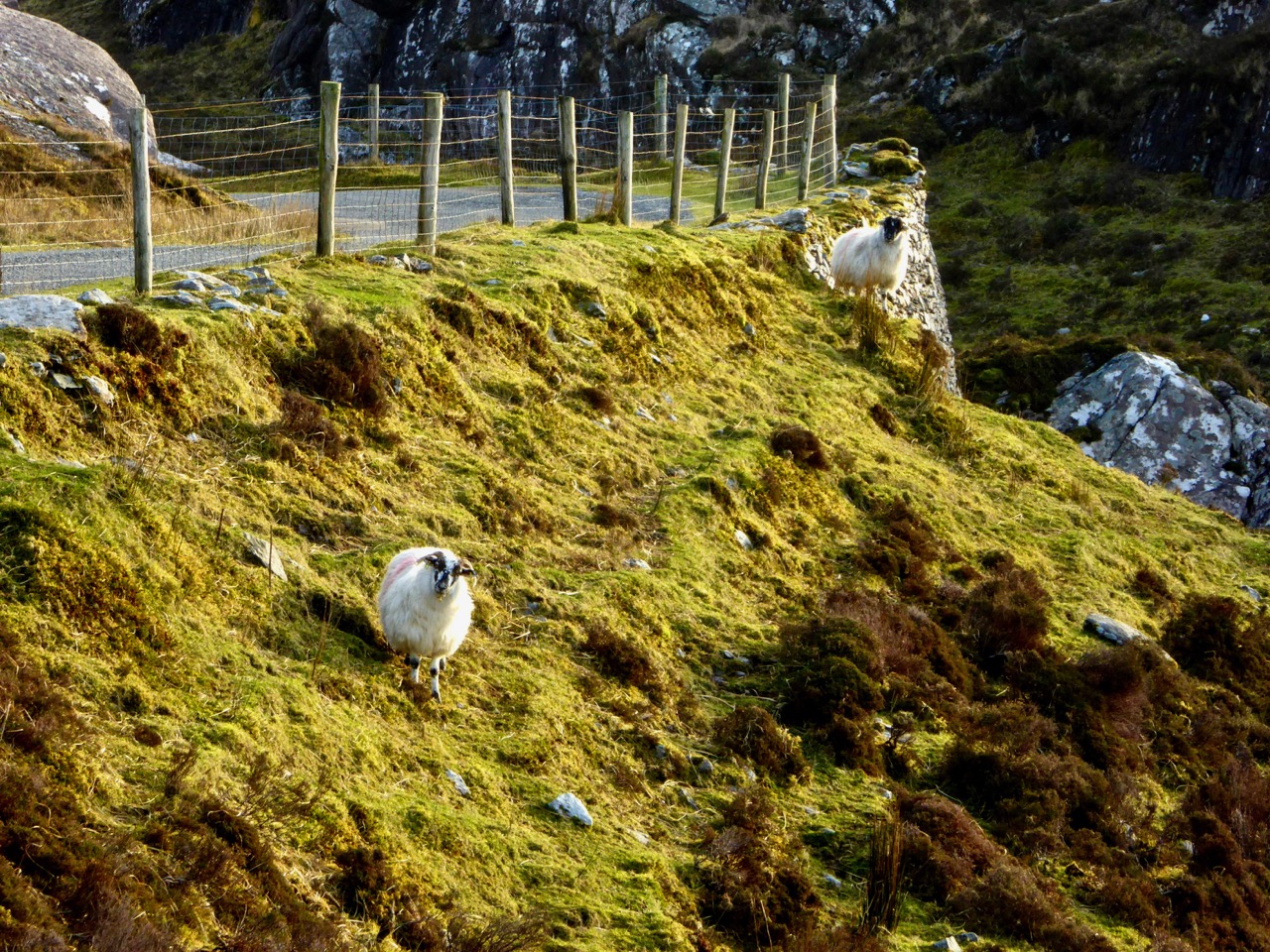
We had things to do in Kenmare (have a look at Finola’s post), but afterwards we took to the byways. We knew there is a remote, lonely and very beautiful road winding up over the mountains, shared only by a few wandering sheep, and determined that would be our way home. We headed off to the tiny settlement of Kilgarvan and there saw a signpost that said Bantry 25: we turned on to the boreen that follows the Roughty and Slaheny Rivers and immediately entered another world.

Macaura's Grave signpost

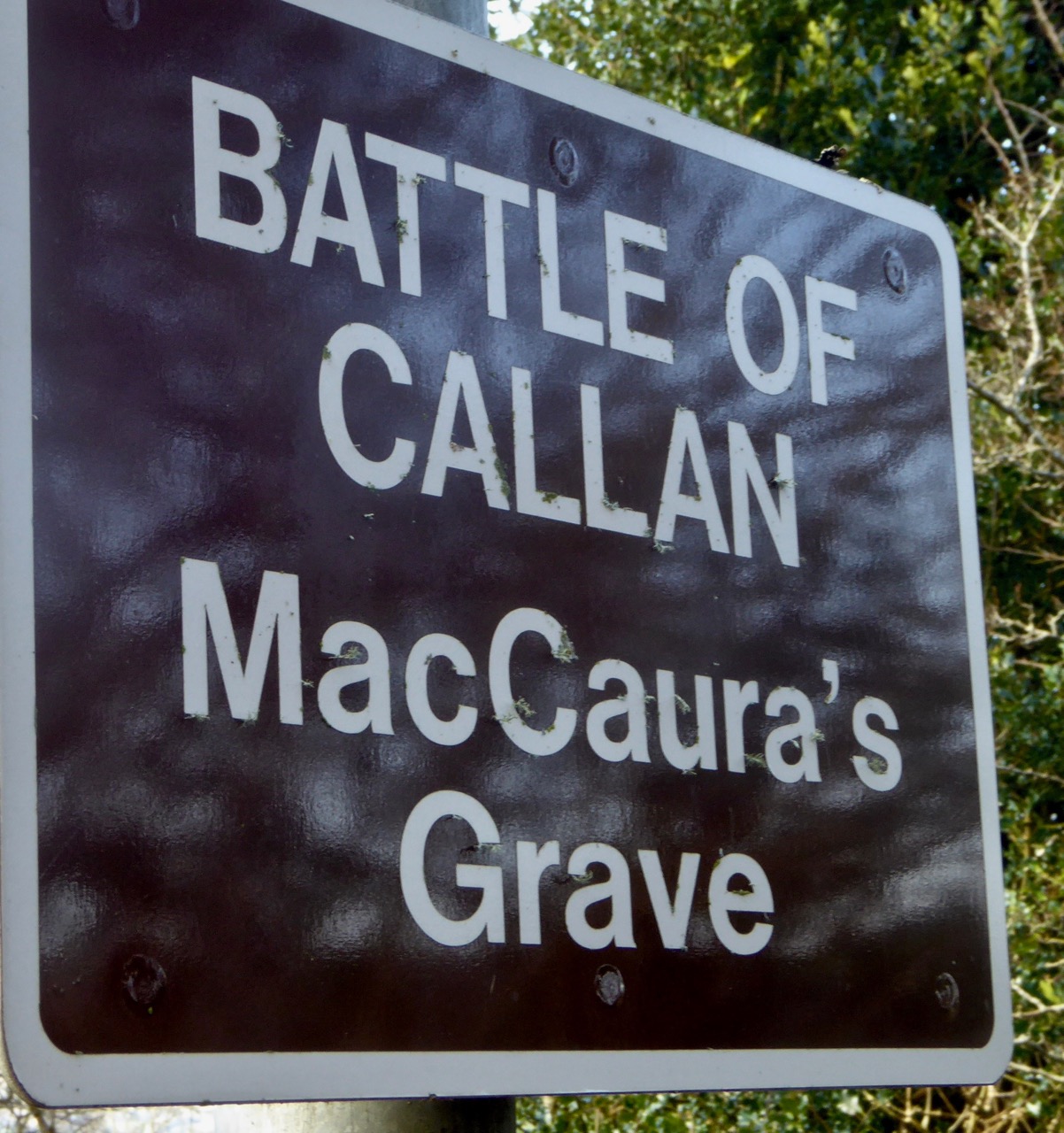
We hadn’t gone very far along the road before we were intrigued by a brown signpost – beckoning us along an even smaller boreen. Macaura’s Grave: neither of us had any idea who Macaura was, so we had to go and investigate. After about ten minutes of twisting and turning and trying to guess which of the unmarked and unsigned lanes to take whenever we came to a junction, we found ourselves back on the road we had just left! By now we were determined that Macaura was not going to get the better of us, so we flagged down a young lad who was in charge of a fine red tractor. He was very forthcoming, and told us that the grave was well worth a visit, then proceeded to give us a set of instructions that involved turning this way and that – signifying to the air which ways these were. Not a little confused, we drove off again.

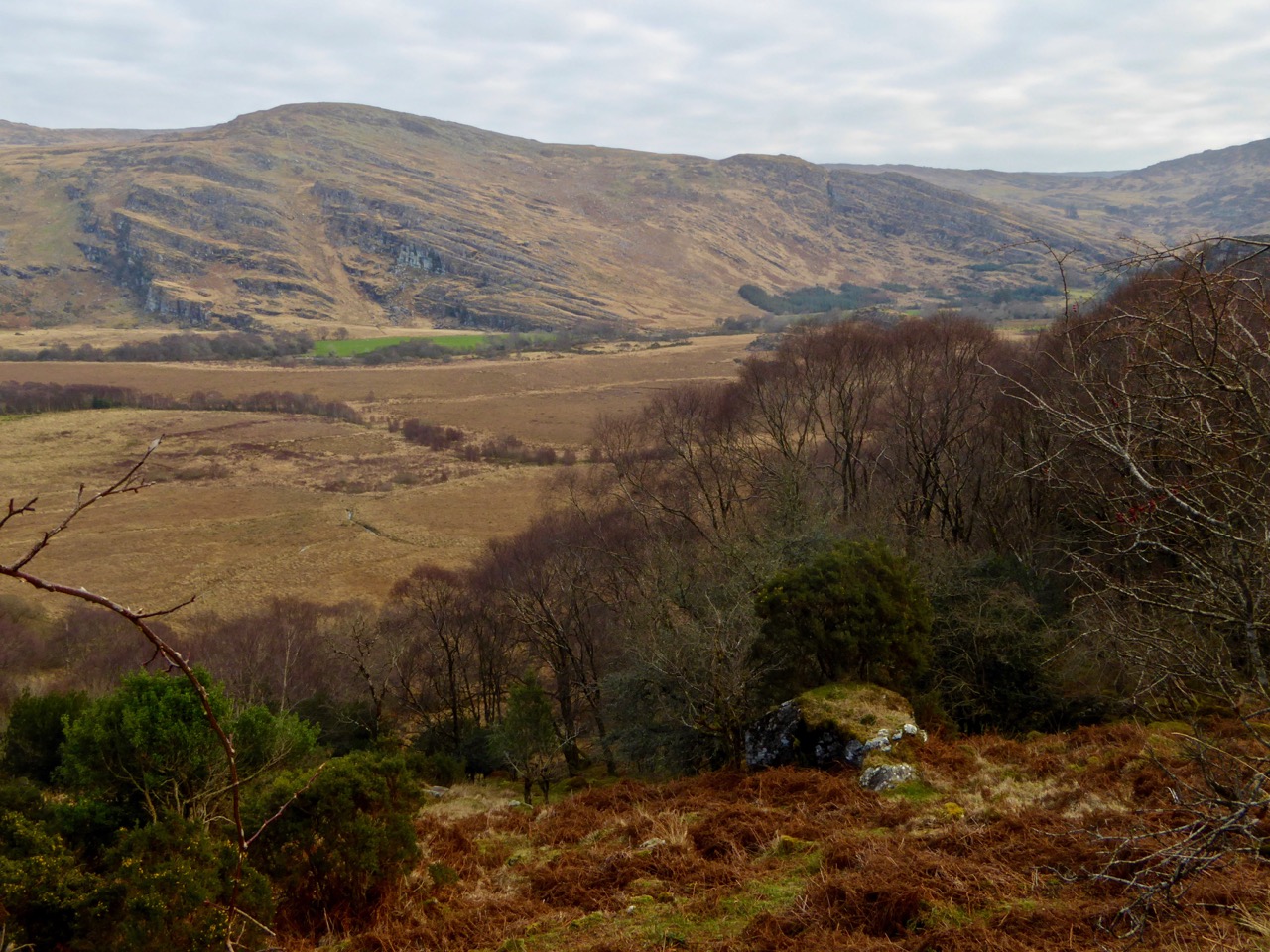
View from near grave

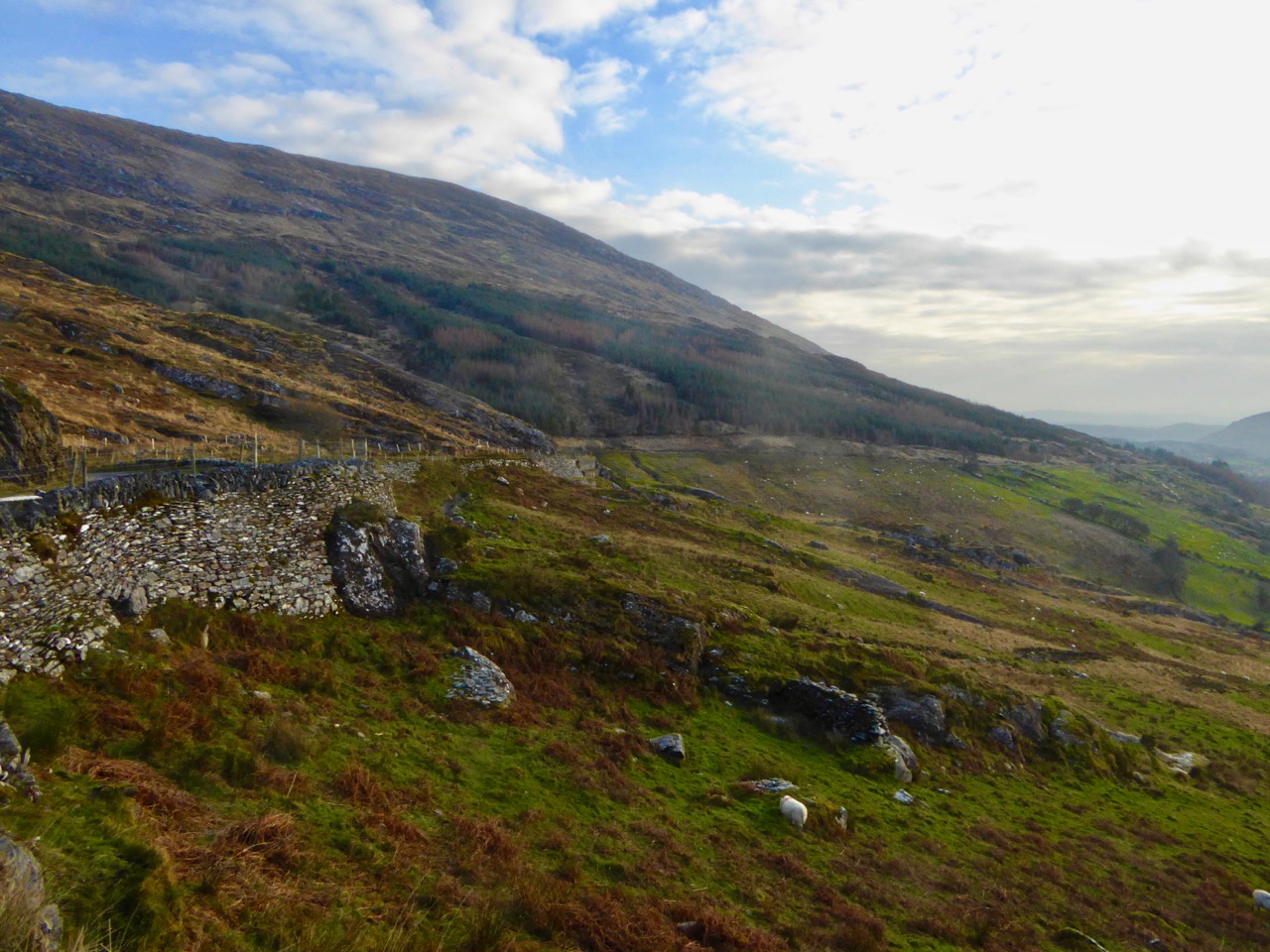
It was no hardship to be exploring the magnificent countryside in south Kerry: the views were breathtaking and the variety of colours on the mountains in sunlight and shadow this early spring day was astonishing. A bit more head scratching and a few more twists and turns down a stony trackway and we were there!

Modern sign

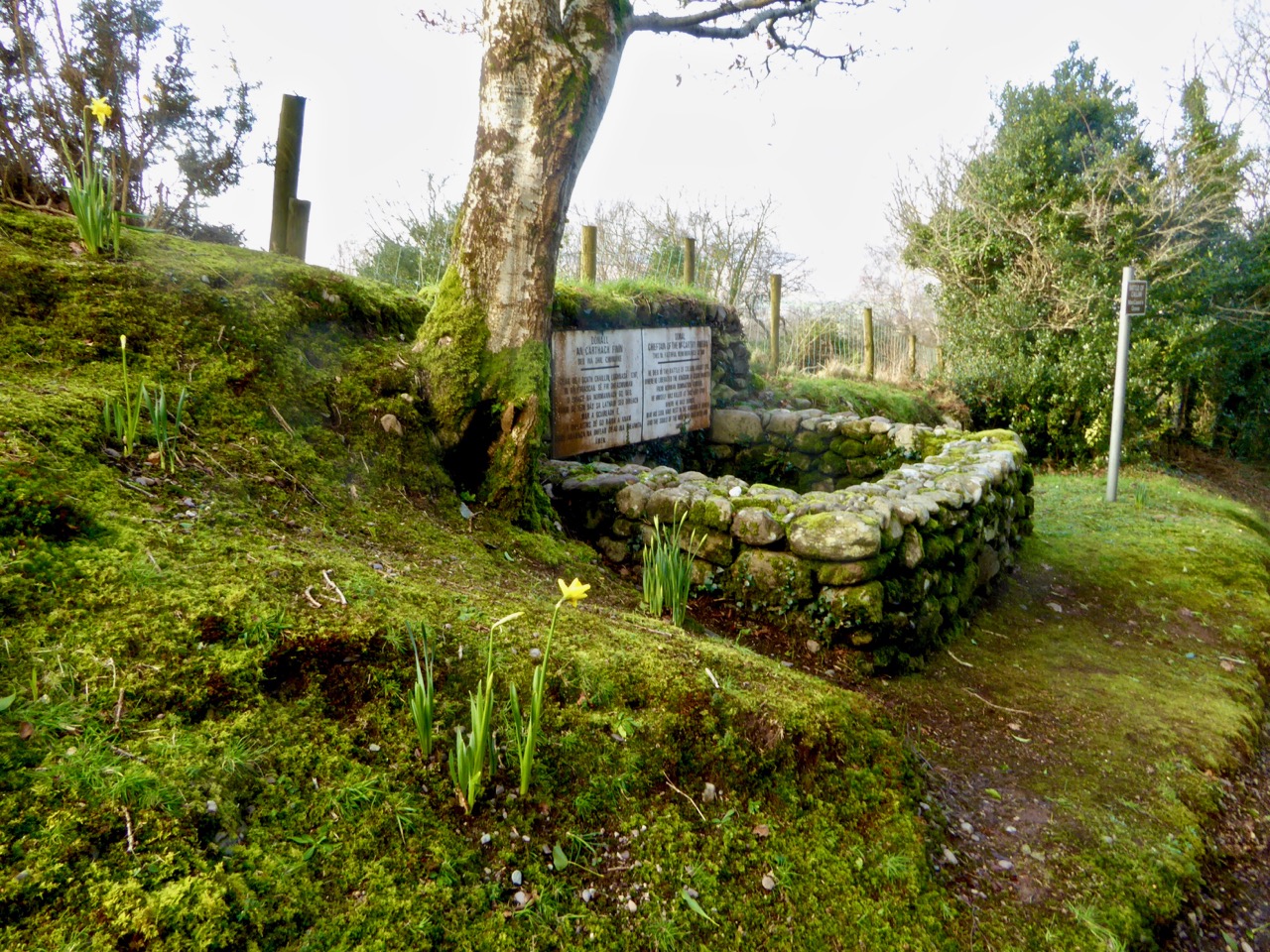
Now we knew. Not only had we found the grave of Macaura – that’s the old Irish way of saying McCarthy – but we had come across the site of one of the most significant battles in Irish history! The Irish chieftain, Finín McCarthy (named as the ‘King’ of Kerry – and that’s why Kerry is known as The Kingdom), joined up with the O’Sullivan Beare from West Cork and the O’Donoghues from Ross Castle to rout the Normans, who were led by Sir John Fitzgerald. This battle took place in 1261. 1261! Over eight hundred years ago… This confirms my thesis that you can’t go anywhere in Ireland without stumbling over history. The Anglo-Normans had claimed their stake in Ireland from 1169 when Strongbow (Richard de Clare) arrived with the blessing of Henry II (and the Pope – who saw the Irish church charting its own course and not following Rome!). Reasonably, the Irish chieftains objected to the Norman invaders, hence this confrontation.

Grave Inscription

In the Journal of the Cork Historical and Archaeological Society, 1961, Volume 66, there is a comprehensive – but not entirely enlightening – article by Diarmud Ó Murchadha on The Battle of Callan:

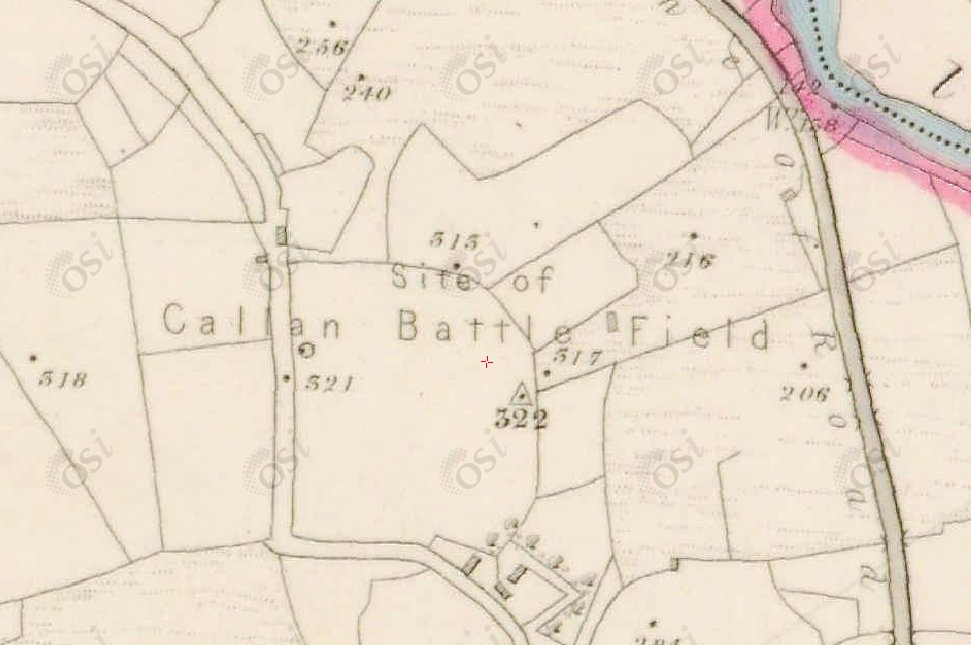
…Finghin Mac Carthy had learned much from his opponents during his years of conflict, while he had the added advantage of knowing intimately the territory over which he fought. At Callann he chose his battleground, at a spot where a mountainy river called the Slaheny joins the Ruachtach, close by the castle of Ardtully. No doubt he reckoned that here the heavily-armoured cavalry of the invader could be used to the least advantage. Battle was then joined and Finghin mac Domhnaill mic Charthaigh emerged victorious… Unfortunately no details of the conflict – apart from the names of those slain – are available. Incidentally, the fullest account of the battle is given, not by the Munster annals, but by the Annals of Loch Ce and Annals of Connacht:

AD 1261 – A great war was waged, and numerous injuries were committed in this year by Finghin, son of Domhnall Mac Carthaigh, and his brothers, against the foreigners.There was a great hosting by the Geraldines into Desmond, to attack Mac Carthy, but it was Mac Carthy attacked them, and defeated them…

The Annals go on to record the fact that Finghin followed up his victory at Callan by attacking and destroying every Norman castle and stronghold in Munster. As the sign over Macaura’s Grave tells us: …he liberated the Kingdom of South Munster from Norman domination forever…

battle-of-callan-site

But who is it that the Macaura Grave celebrates? ‘Donal, Chieftain of the McCarthy Fineens’… Presumably this is not the Finghin, who, according to the Annals, went on after the battle to rout the Normans out of Munster: the Finghin who is known as mac Domhnaill mic Charthaigh – ‘son of Domhnaill MacCarthy’. Could it be his father (Donal is an Anglicisation of Domhnaill)? In which case it was the clan chieftain who died in the battle and his son who went on to clear the Normans out of Kerry. There are a few accounts of the battle, but none of them clarify this. It all happened a long time ago, of course, and memories fade. In fact this site was all but lost: an article in The Kerryman takes up the story, illustrated by this photograph:

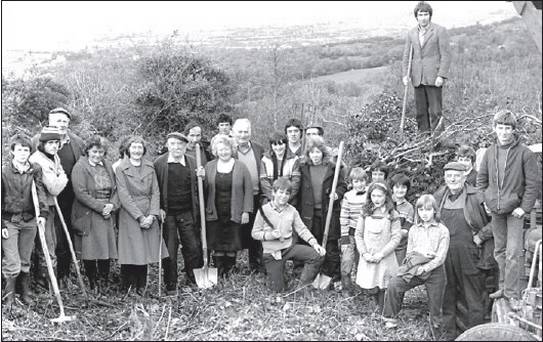
1981-clearing-the-site-of-the-grave

…The men of Kilgarvan were busy in November 1981 – making a road fit for a king! The king in question is Finín McCarthy who died in 1261 after being the first Irish king to defeat the Normans, thus giving Kerry the name of the Kingdom… Legend has it that after the battle, McCarthy stood on a ditch to survey the battlefield, when a dying Norman killed him with an arrow. McCarthy was buried on the spot, and a large slab was used as a headstone. The grave now lies on a narrow little road in Callan beside Tom Healy’s farm. When retired Dublin civil servant Frank Shanley spent a recent holiday in Kilgarvan he went looking for the grave, which was buried by shrubs and bushes… He decided to organise a meeting of the local men to try and get them to improve the grave and access to it…. It was Dan O’Sullivan, Down, Tom O’Donoghue and Michael Teehan, who were slaving away widening the roadway from eight feet wide to 16 feet, when he visited in November 1981… Apart from the narrow roadway and the briars and trees, there was also a steady stream of water running over the grave, but the men got the pipes to divert the water in another direction. There was no actual inscription on the grave that the men could read, but there were a series of lines and crosses on it, which they hope will be examined by an expert…. They hope that when they have the roadway to the grave cleared, they can erect signposts to the grave, and notices around the grave telling the history of McCarthy’s death in the battle of Callan…

Macaura's Grave

So we have the ‘men of Kilgarvan’ – back in the 80s – to thank for leading us to this now tranquil but historically turmoiled and fascinating spot. There is still the puzzle of which McCarthy is commemorated: perhaps we’ll never know for sure. But it’s not bad to have access to a story which has survived for the best part of nine hundred years – just about within living memory by Irish standards! After this excitement we continued our journey over the spectacular Coomhola road through the mountains towards Ballylickey and gently slid back into West Cork. If you can cope with very narrow roads (it’s not so bad – we only saw two other vehicles, both local farmers, in the whole 25 kilometres!) it’s one of the great road trips of Ireland – with the added bonus of a history lesson to be taken in.

Beyond the tunnel

Sheep on the edge

The Winding Road

Tiny Ireland

Bunratty Castle

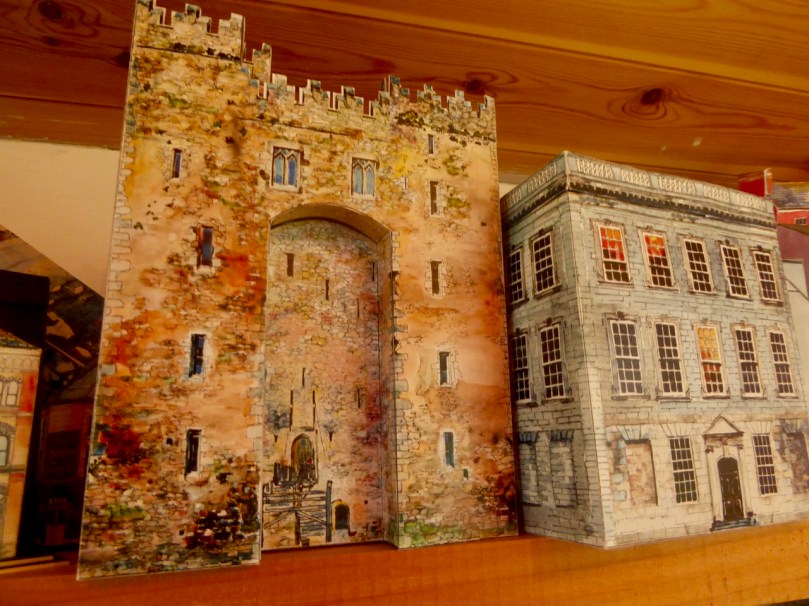
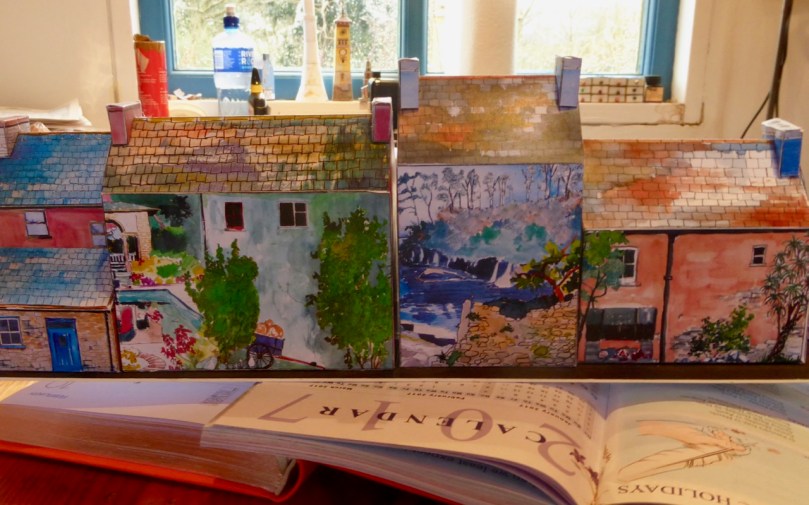
If you live around here or have visited Ireland you’ve seen them in all the best gift shops: Tiny Ireland – those intriguing paper models of Irish buildings and towns that make the perfect gift.

Top photograph: Bunratty Castle. Above: Skibbereen, the model and the real thing, and Tiny Cobh

They say that a true craftsperson makes it look easy. But this week we visited Tiny Ireland in her studio and found out first hand just how much talent and research and imagination goes into every single detail.

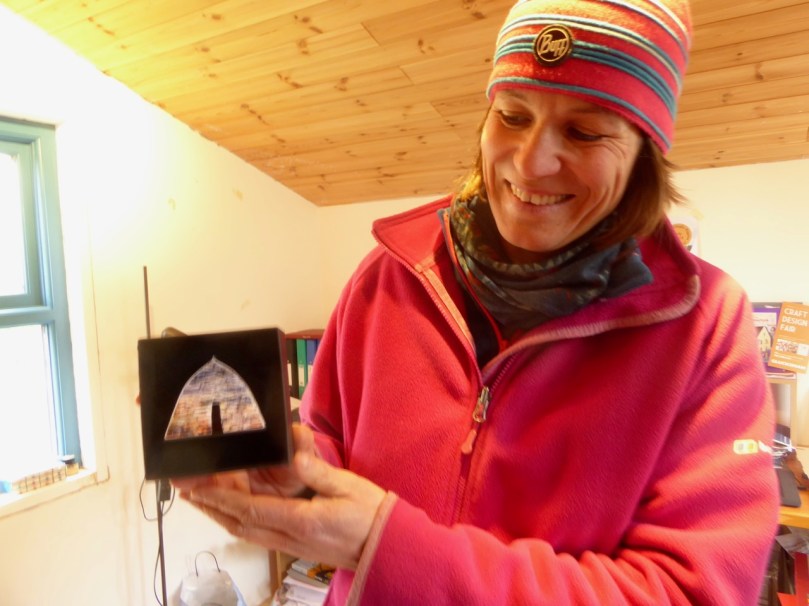
Anke with boxed Gallarus

Anke shows us her Tiny Gallarus

And who is Tiny Ireland? Meet Anke Eckardt. She’s lived here in West Cork since she was a little girl, plays a mean tin whistle, is an artist, a master joiner and boat builder and joint owner with Rui of West Cork Boats. The idea for Tiny Ireland came to her when she made some paper models with and for her son Fionn to complement his train set. That was ten years ago. She has been making models ever since, but devoting herself seriously to it for the last five years.

Designer at work – Anke in her studio. Full marks for anyone who can guess the pub she’s working on.

Anke starts with familiarising herself with the town or village. She wanders round with her camera, talks to everyone, gets a feel for the place, and then does extensive research on the history of the area. In the case of West Cork, like any other native she already knows every inch of it – the stories, the atmosphere, the iconic buildings, the colours and contours of the landscape. She tries to capture that same sense of place wherever she goes.

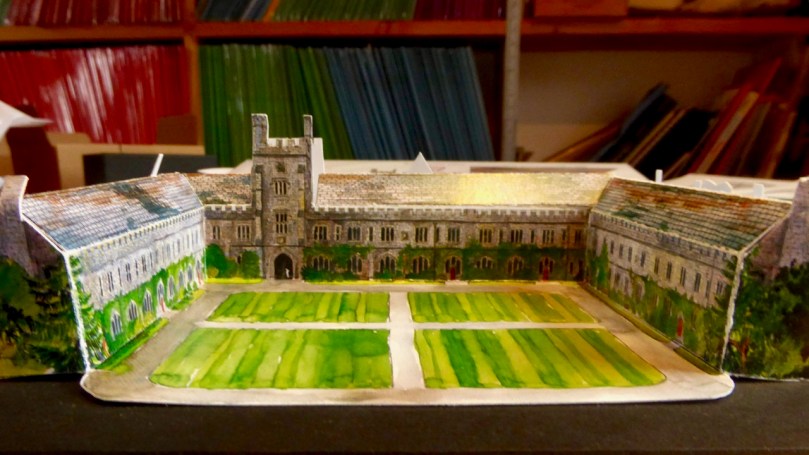
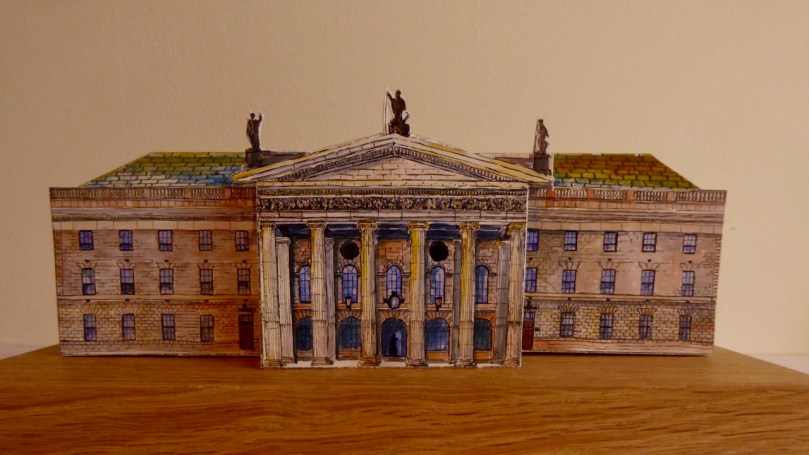
UCC

GPOTop: Both Anke and I went to University College Cork and the Quad holds a special place in our hearts. Bottom: Anke’s contribution to the 1916 commemorations – the General Post Office in Dublin

Back in the studio she decides on which buildings to use and starts drawing and painting and figuring out what should go where on the model and what extra details to include. Each building occupies one sheet in the kit. Anke wants each sheet to be a beautiful object in itself, to be poured over before you even start the scoring and cutting process. Can you imagine the cleverness it takes to construct even one building? Add to that all the little details that go into making it unique and contributing to its cultural and geographic character.

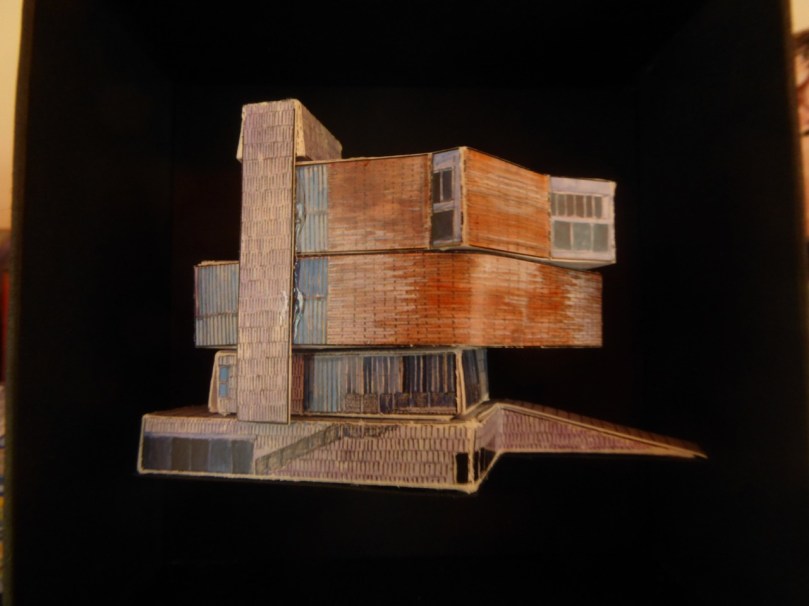
Glucksman Gallery in box

Not just traditional buildings! Here is the ultra-modern Glucksman Gallery at UCC

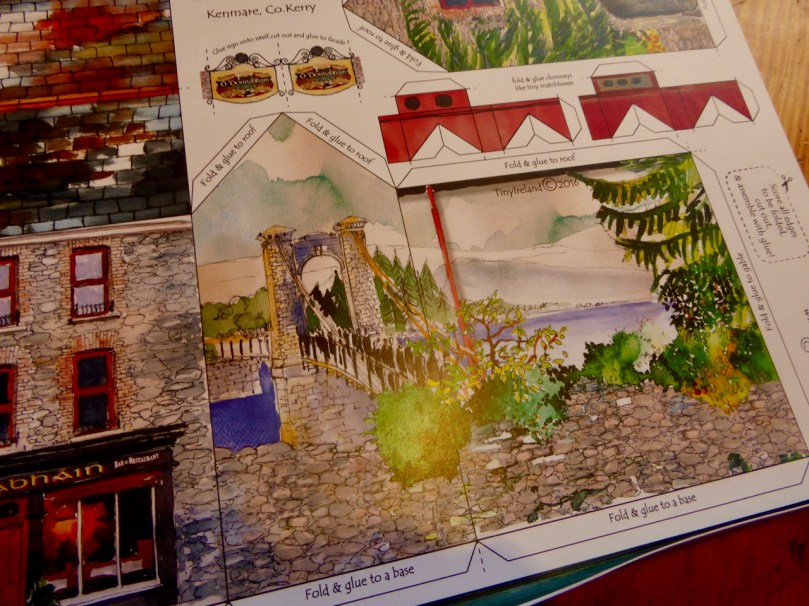
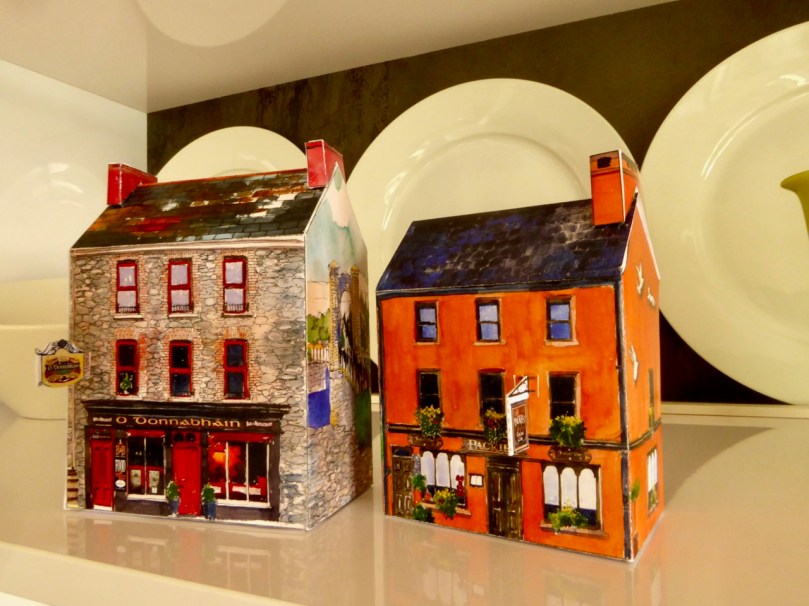
We came home with a Tiny Kenmare kit so that we could experience the assembly process first hand. Not only was this great fun but it gave us additional insights into both the craft of model making and the lovely additional details that Anke has inserted into each piece – details that extend the model into little bits of history.

Robert assembles Packie’s Pub

The second Kenmare building we assembled was O’Donnabháin’s pub and guest house (pronounce it O Dunn-eh-vawn’s). Look around the side – Anke has added the image of a funeral coming over a suspension bridge. Curious, I looked up what this was all about and found that Kenmare did indeed have the first suspension bridge ever built in Ireland – read an amusing account of its history here – and that the funeral was a real one, that of an IRA man murdered by the Black and Tans in 1921.

Kenmare Funeral

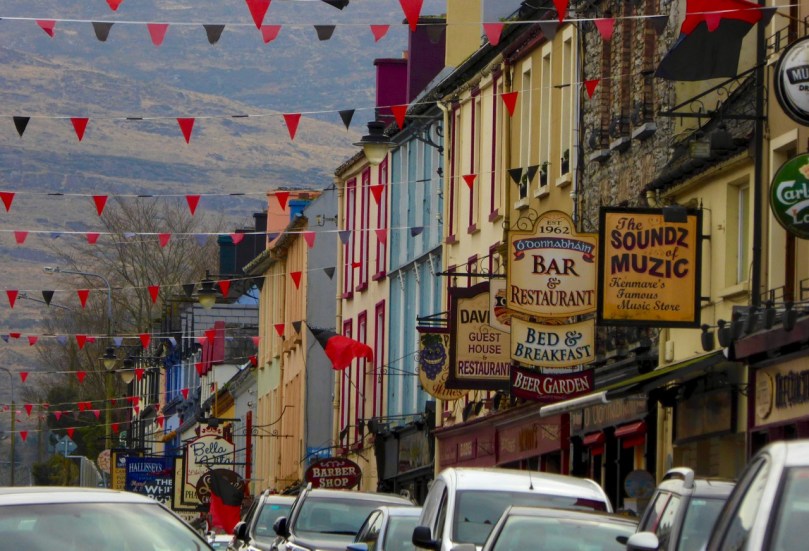
On the shelfKenmare is as scenic and colourful as any town anywhere has a right to be. It’s a great shopping town too, with wonderful cafes and pubs, and right on the justly-famed Ring of Kerry.

Colourful Kenmare 1

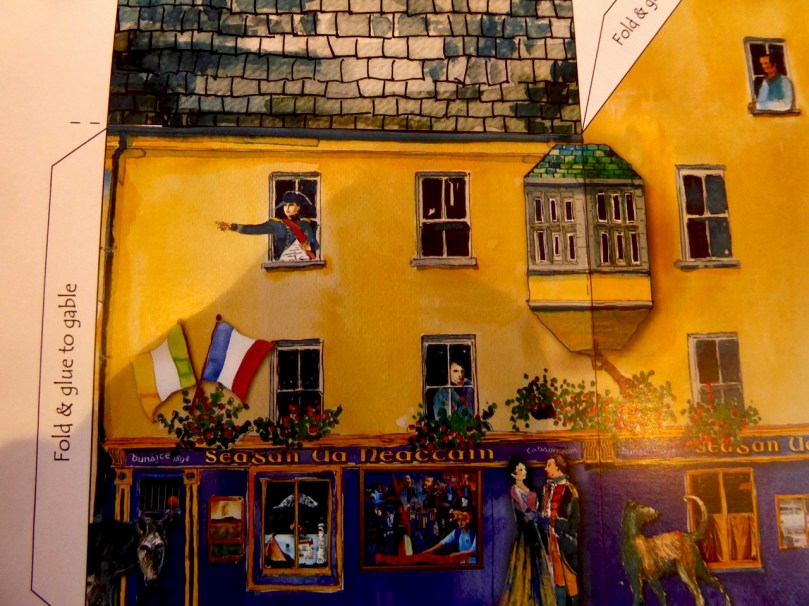
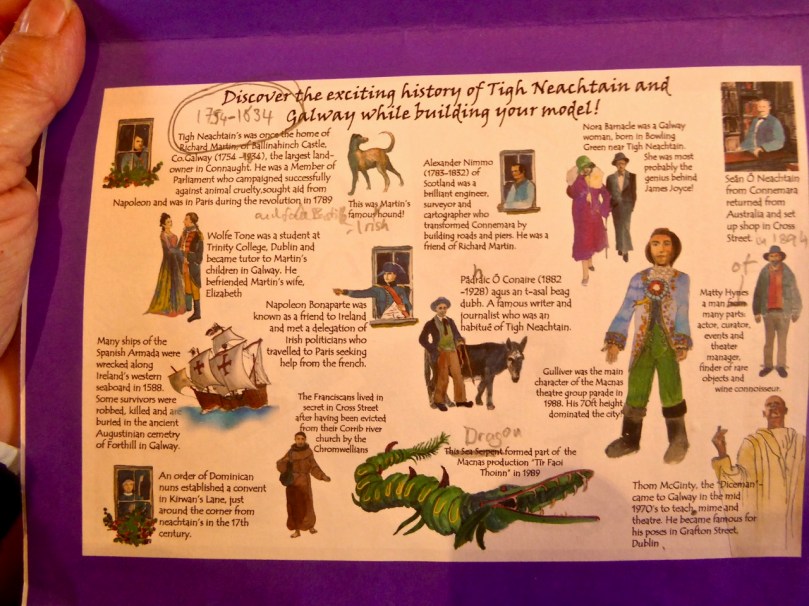
Every model Anke makes is unique and delightful. Individual pubs, shops, castles, etc are often made at the request of the owner. Here’s one for Tigh Neachtain in Galway. Anke showed us a draft of the Explanation sheet that goes with it. It’s an object lesson in how one building can encompass the story of a town. Richard Martin, by the way, is better known to history as Humanity Dick.

Tig Neachtain

Tig Neachtain ExplanationFor tourists, Tiny Ireland models make the perfect gift, light and packable and chock full of the real Ireland. For all of us, making one engages us in a creative act that comes out of the rich imagination and artistic talent of Anke Eckardt.

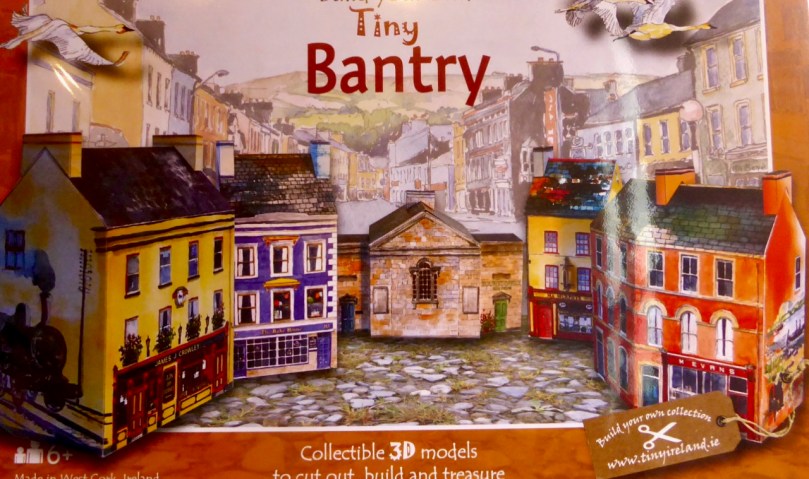
Tiny Bantry

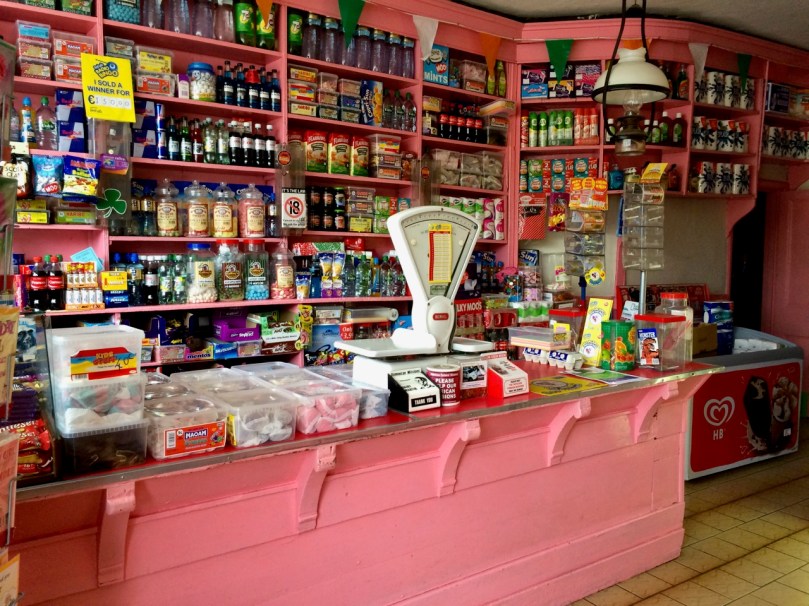
Evans InteriorTiny Bantry – note Miss Evans traditional shop on the right. Here’s what it’s like inside. For more on this and other traditional Irish shops, see Shopping for Memories

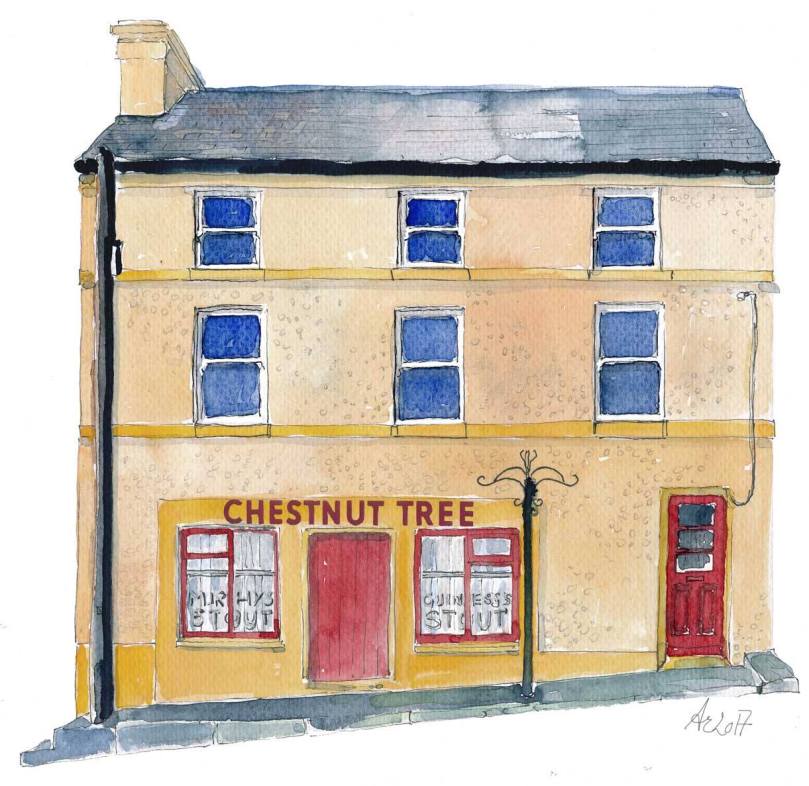
And it’s not just models. Recently Anke has started to produce charming watercolours of the traditional shops and pubs she loves. We in Ballydehob have loved her posts on our wonderful old shopfronts. Here’s an example – Just drive down our main street and you can’t miss The Chestnut Tree.

chestnut-tree

Happy cutting and glueing!

Around the back

The First Viral Sensation: How a Pre-Raphaelite Painting Inspired a Generation

william_holman_hunt_-_selfportrait

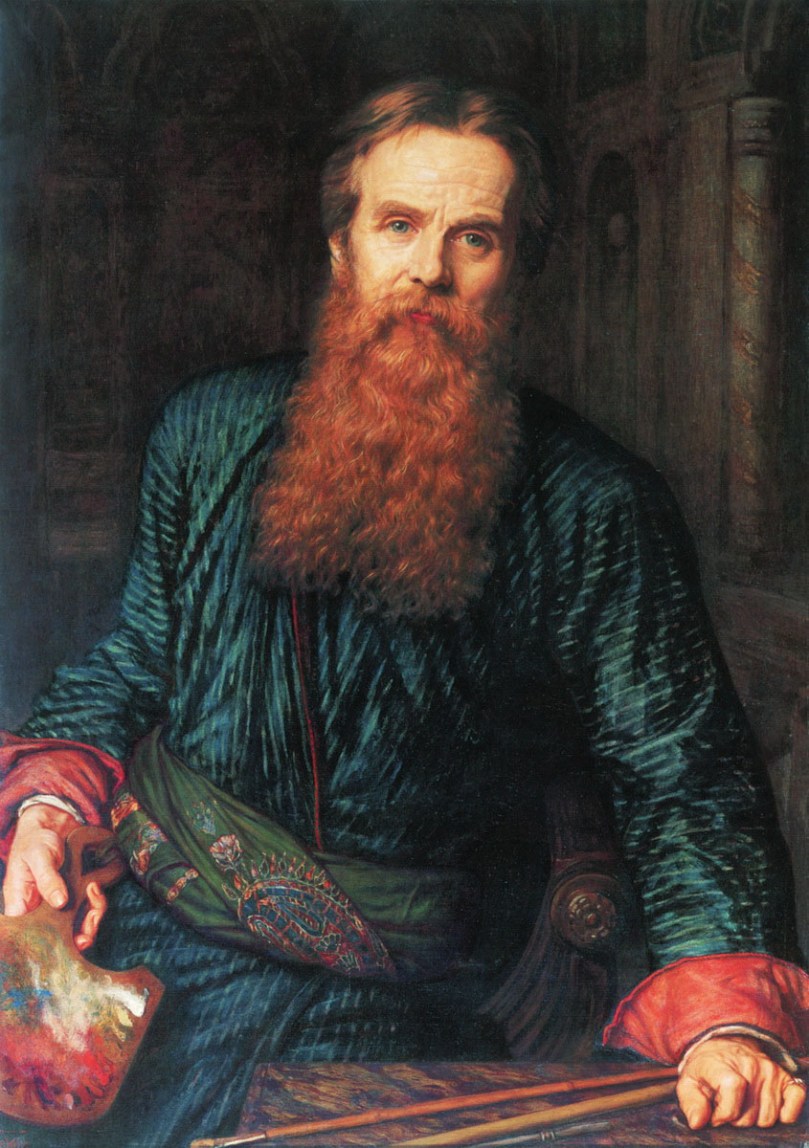
Holman Hunt, one of the three founders of the Pre-Raphaelite Brotherhood

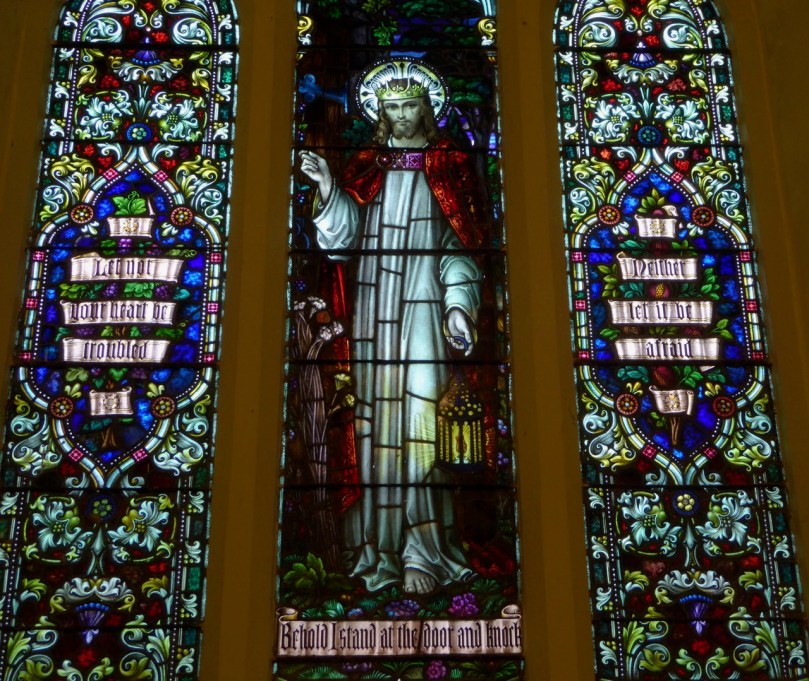
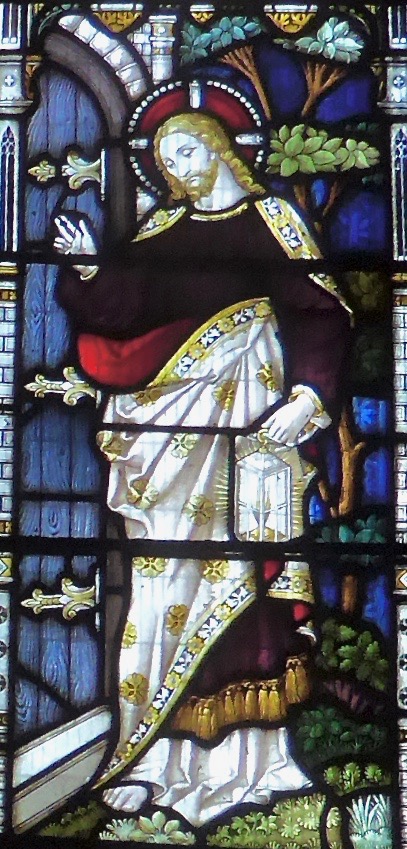
In preparing for an upcoming talk of stained glass in West Cork, I was struck by a single image that seemed to crop up again and again. The image was described as The Light of the World, or occasionally as Christ Knocking at the Door.

St Matthias Light of the World by Clokey of Belfast 1945

Christ as the Light of the World. This window, by Clokey of Belfast is in St Matthias Church of Ireland in Ballydehob

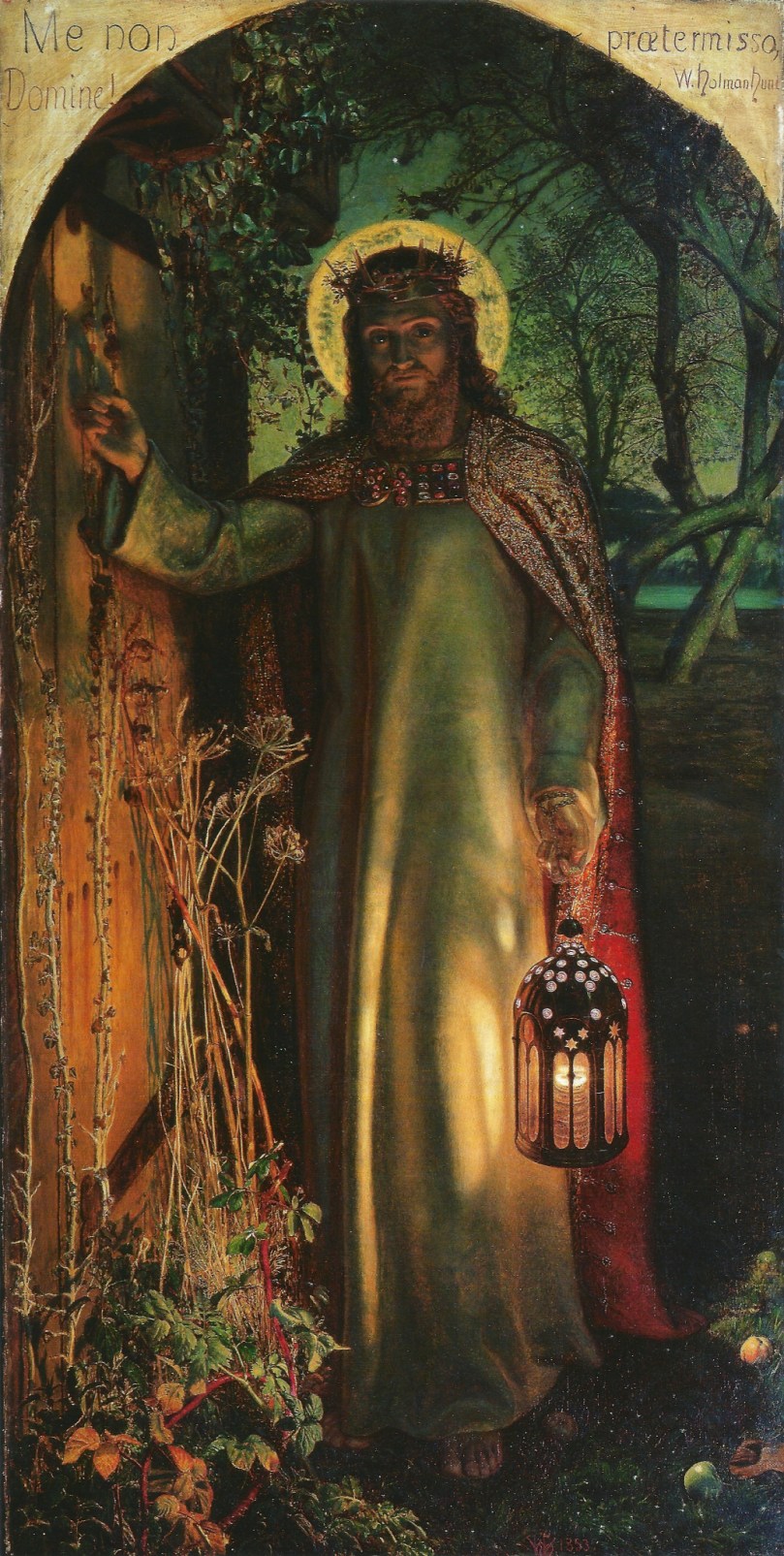
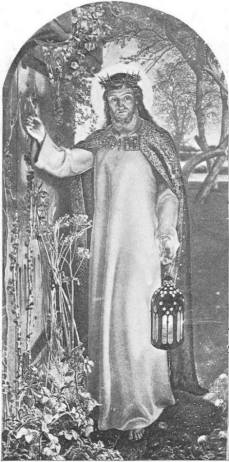
Curious, I searched online to find out more about the window and discovered to my astonishment that the painting upon which the window was based was The Light of the World by the Pre-Raphaelite painter Holman Hunt and, in the words of Robert Fulford, although…Hardly anyone today admires The Light of the World as art…it remains a historic moment in mass culture, the beginning of the great age of reproduction, the first image that millions of people knew intimately, and often loved.

hunt-light-of-the-world1

Holman Hunt’s Light of the World. It was based on Revelation 3:20 Behold, I stand at the door, and knock: if any man hear my voice, and open the door, I will come in to him, and will sup with him, and he with me.

Hunt’s first version light-of-the-world-engraving(he eventually painted three) was begun in 1851 and was widely admired. But it was two other media that carried it to the status of international icon. The first was engraving (left) – the photography of its age in its ability to convey images to a mass audience – and the second was stained glass, just coming into its heyday as a result of recent innovations in church architecture and decoration.

The painting toured the world and attracted enormous crowds wherever it went. It is estimated that four fifths of the population of Australia viewed it, for example. Fulford describes it thus: In Melbourne in 1906 visitors stampeded, anxious to see it the moment it was open to the public. But if the crowd was rowdy at first, Maas writes, soon “an air of reverential awe descended on the gathering.” Men removed their hats, voices fell to a whisper. Some people stood or sat gazing at it for hours. A few visitors fainted. Later it toured South Africa and in 1907 returned in triumph to Britain and its final destination, St. Paul’s.

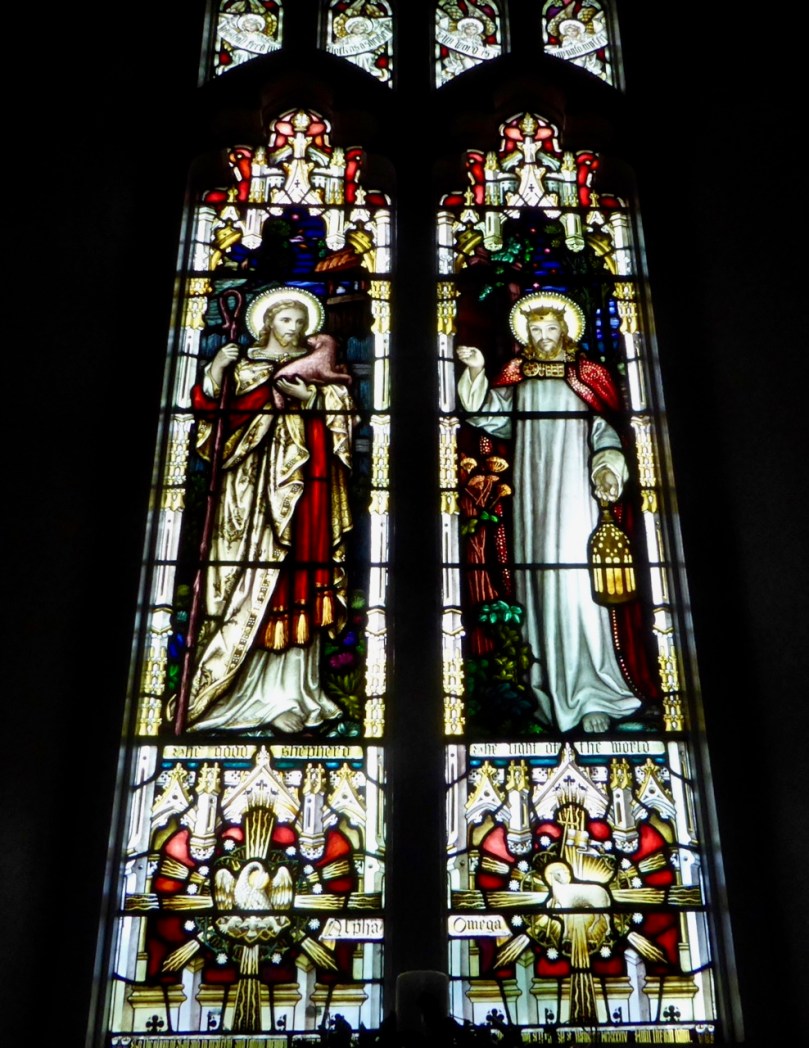
Rosscartbery Light of the World Mayer 1934

This window in Rosscarbery Cathedral is by Mayer of Munich. Christ as The Light of the World was often paired in a two-light window with Christ as the Good Shepherd

How to explain the appeal of this image? Holman Hunt himself gives us a clue. Writing in The Victorian Web, George Landow states that Hunt …believed that The Light of the World created its symbolic language in precisely the same way that men had formed language to express abstract and spiritual ideas. The important point is that, since the symbolism derives from what he takes to be essential habits of mind, it would be immediately comprehensible to any audience, because such “natural” symbolism does not require any knowledge of iconographic traditions. It appears he was correct, since the symbolism employed in the painting spoke directly to masses of people who took its message to heart and hung engravings and reproductions in their homes.

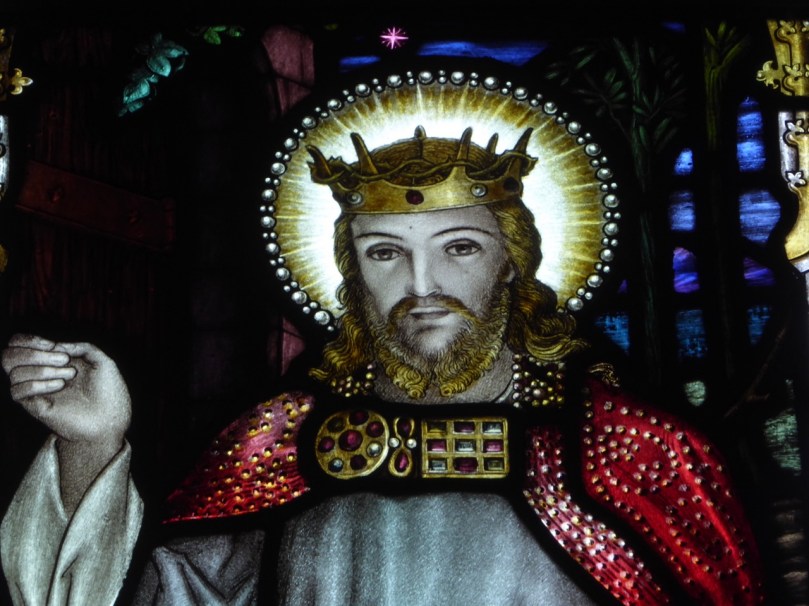
Rosscarbery Cathedral Light of the World detail

Detail from the Mayer window

And in their churches. In its listing of the glass in Church of Ireland churches, the website Gloine* lists 70 examples of Light of the World windows and a few others labelled Christ Knocking at the Door. Of these, about 65 are modelled directly on the Holman Hunt painting. Most of the stained glass studios are represented in the list – it was such a popular request that every studio had to have it in its catalogue. While there are more windows devoted to, for example, the Resurrection, or the Four Evangelists, they are all quite diverse representations, rather than being based upon a single original source. A similar list does not exist for Catholic churches, but it is unlikely that the Light of the World would be as prominent in them, mainly because most stained glass windows in Irish Catholic churches are later than the high point of popularity for Hunt’s painting.

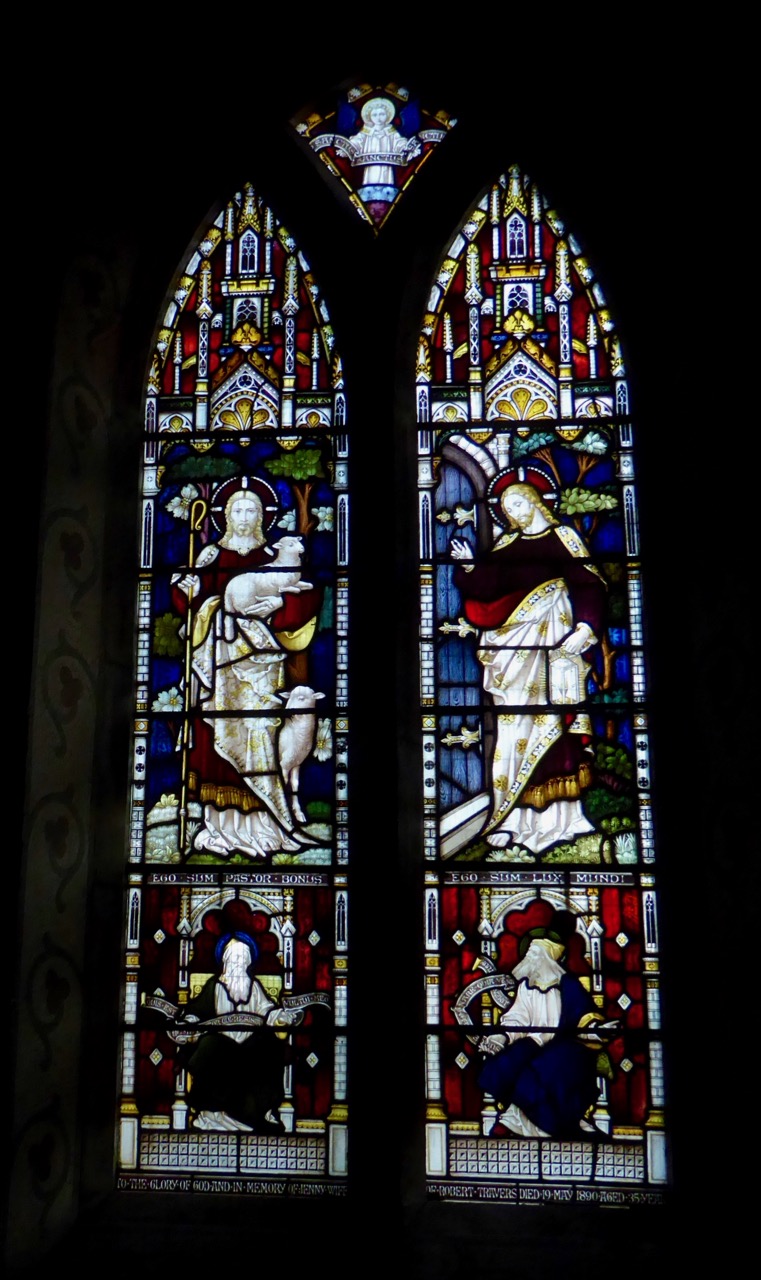
Timoleague Good Shephard and Light of the World, 1890 Clayton and Bell

This window by Clayton and Bell dates from 1890 and is in the Church of the Ascension (C of I) in Timoleague

So here’s a challenge for you, Dear Reader. Have you seen this image in stained glass, or elsewhere? Were you familiar with the painting and aware of its impact? Do you have photos, stories or memories to share? Or is this an image that had its moment, particular to its day and time, and then disappeared from our consciousness like so many others have, before and since?

Timoleague Good Shephard and Light of the World, 1890 Clayton and Bell Detail

Detail from the Clayton and Bell window in Timoleague

*My grateful appreciation goes to Dr David Lawrence and the website Gloine – Stained glass in the Church of Ireland. This is a magnificent resource that contains information on almost every stained glass window in almost every Church of Ireland building in Ireland and Northern Ireland. It is awe-inspiring in its scope and erudition. The site lists two more examples from West Cork, Durrus and Caharagh.

Nest of the Eagle

eagles over nead

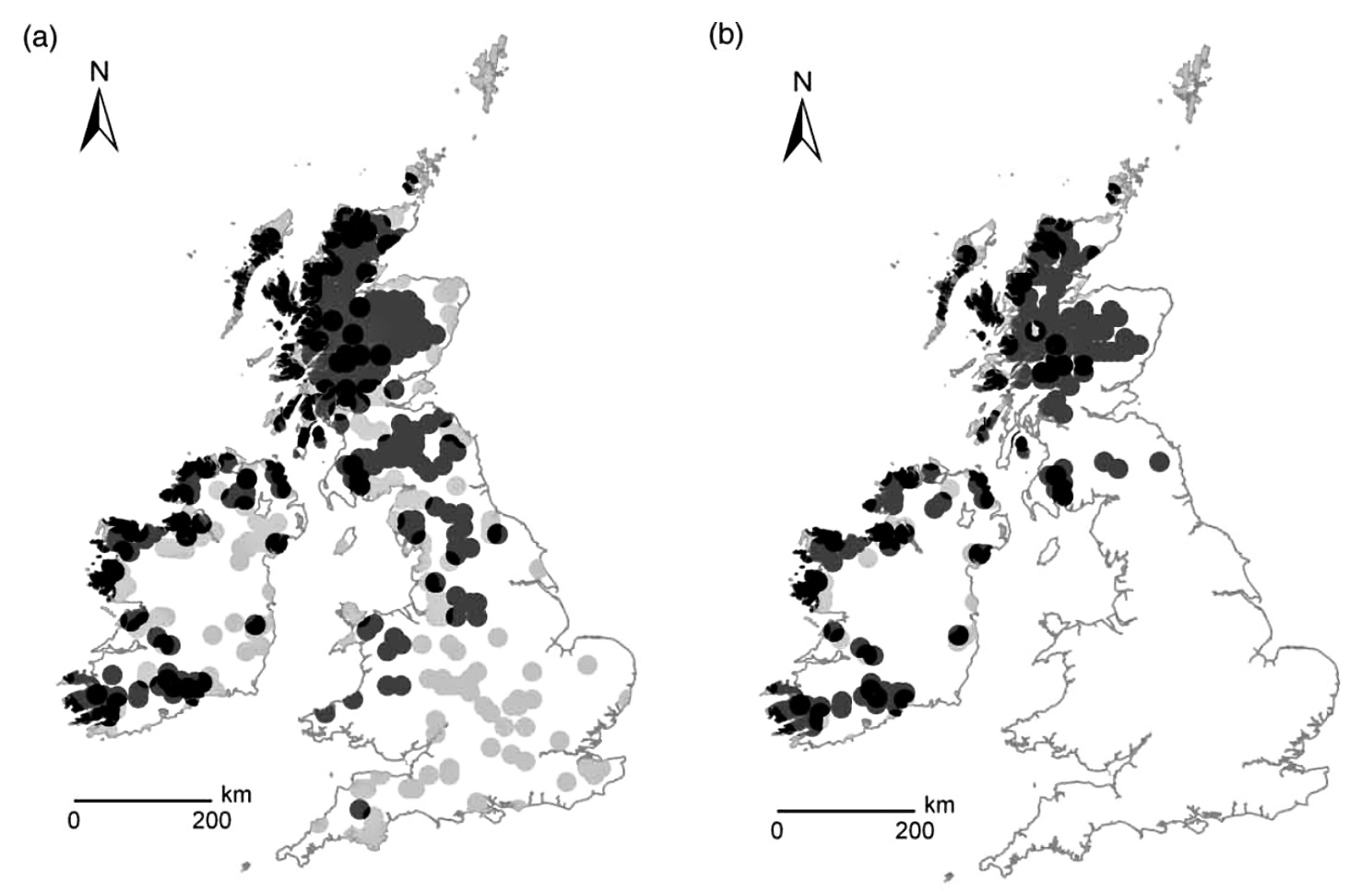
Nead an Iolair – that is the house we live in, here in the townland of Cappaghglass, West Cork. That’s it, in the picture above, with a pair of eagles flying overhead… We don’t see them very often. Well, in truth, we haven’t seen them at all – this is a bit of photographic magic – and wishful thinking. Nead an Iolair – our Irish readers will know that this means Nest of the Eagles – is a perfect name for the site, suspended way up above Rossbrin Cove – a good lookout with higher ground behind: exactly the right environment for the big birds. There were undoubtedly eagles here once – and in various other parts of Ireland – but when and how many? As with most things nowadays, someone has carried out the research and there’s a study available online. It’s worth a read, but I can summarise the main points: analysis of place-names and documentary evidence from the last 1500 years enabled the following diagrams to be drawn up:

eagles data

Data from The history of eagles in Britain and Ireland: an ecological review of placename and documentary evidence from the last 1500 years – Evans, O’Toole and Whitfield, RSPB Scotland 2012. Diagram (a) is 500AD and diagram (b) is 1800AD. The dots show Golden Eagle locations in dark grey, White-tailed Eagle locations in light grey and overlapping of both species in black

The diagram shows that White-tailed Eagles have lived here on the Mizen Peninsula 1500 years ago, and both species have been located a little further up the west coast as recently as 200 years ago. In 2001 fifty young golden eagles were released in Glenveagh National Park, Donegal, in an attempt to reintroduce the bird to Ireland. In a similar project to reintroduce white-tailed eagles,  one hundred of the birds were brought from Norway to the Killarney National Park between 2007 and 2011, and up to September 2016 thirteen chicks have survived. The aim is to get at least ten chicks flying from their nests each year. Six white-tailed eagle chicks have flown from their nests in Ireland in 2016, making it the most successful year yet; one of these chicks was born near Glengariff, which is only just over the hill from us in terms of an eagle’s range. So we remain ever hopeful that the white-tailed eagles (sometimes known as white-tailed sea eagles) will soon make their way down here to Nead an Iolair – attracted, perhaps, by the name. We’d be very pleased to see them circling overhead – they are the largest birds on Ireland’s shores. Already our bird feeders attract avians of all shapes and sizes, and they generally get along fine with each other, although the smaller birds do make themselves scarce when Spioróg turns up!

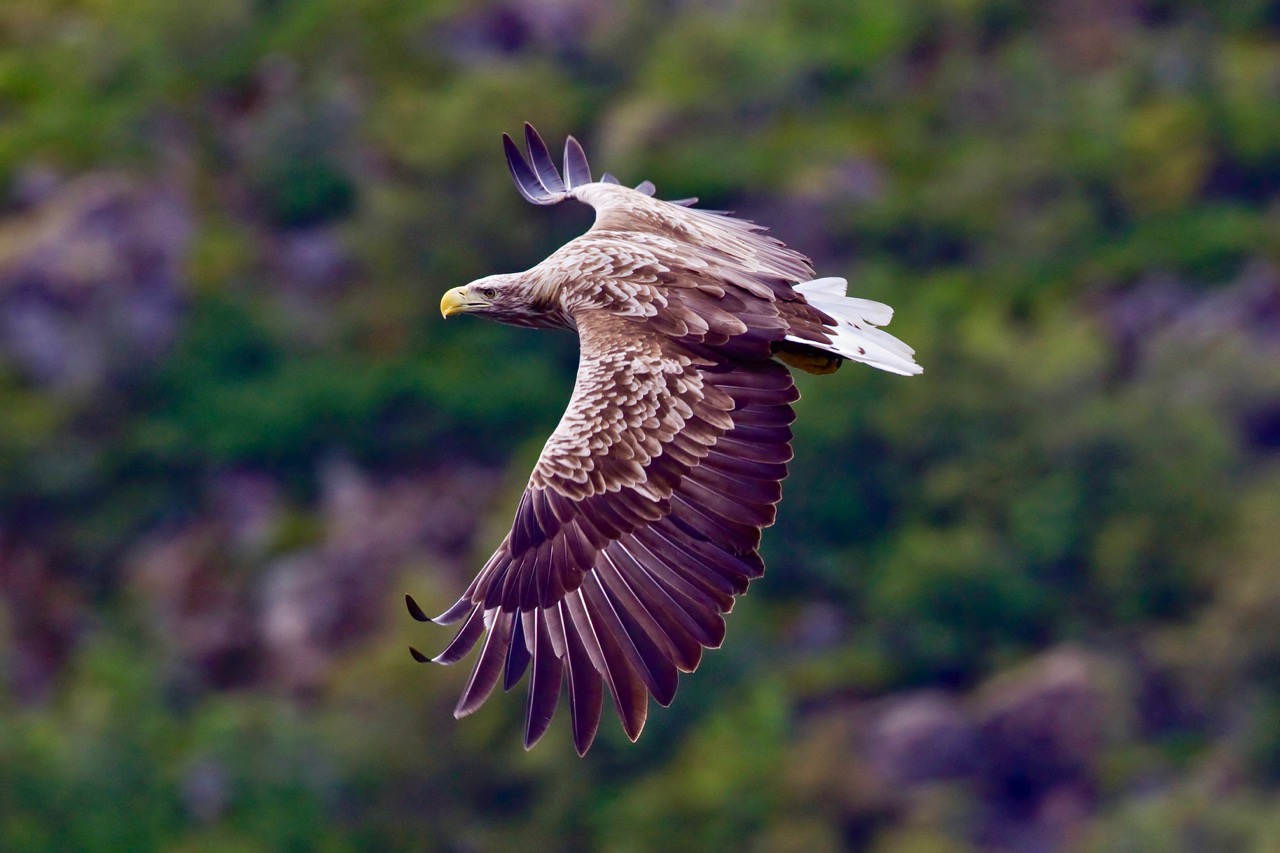
White-tailed sea eagle

A superb photograph of Haliaeetus albicilla – the white-tailed eagle or white-tailed sea-eagle, by Yathin S Krishnappa (via Wikipedia Commons). This was taken in Svolvaer, Norway – geographical source of the birds that were reintroduced into Killarney National Park within the last decade

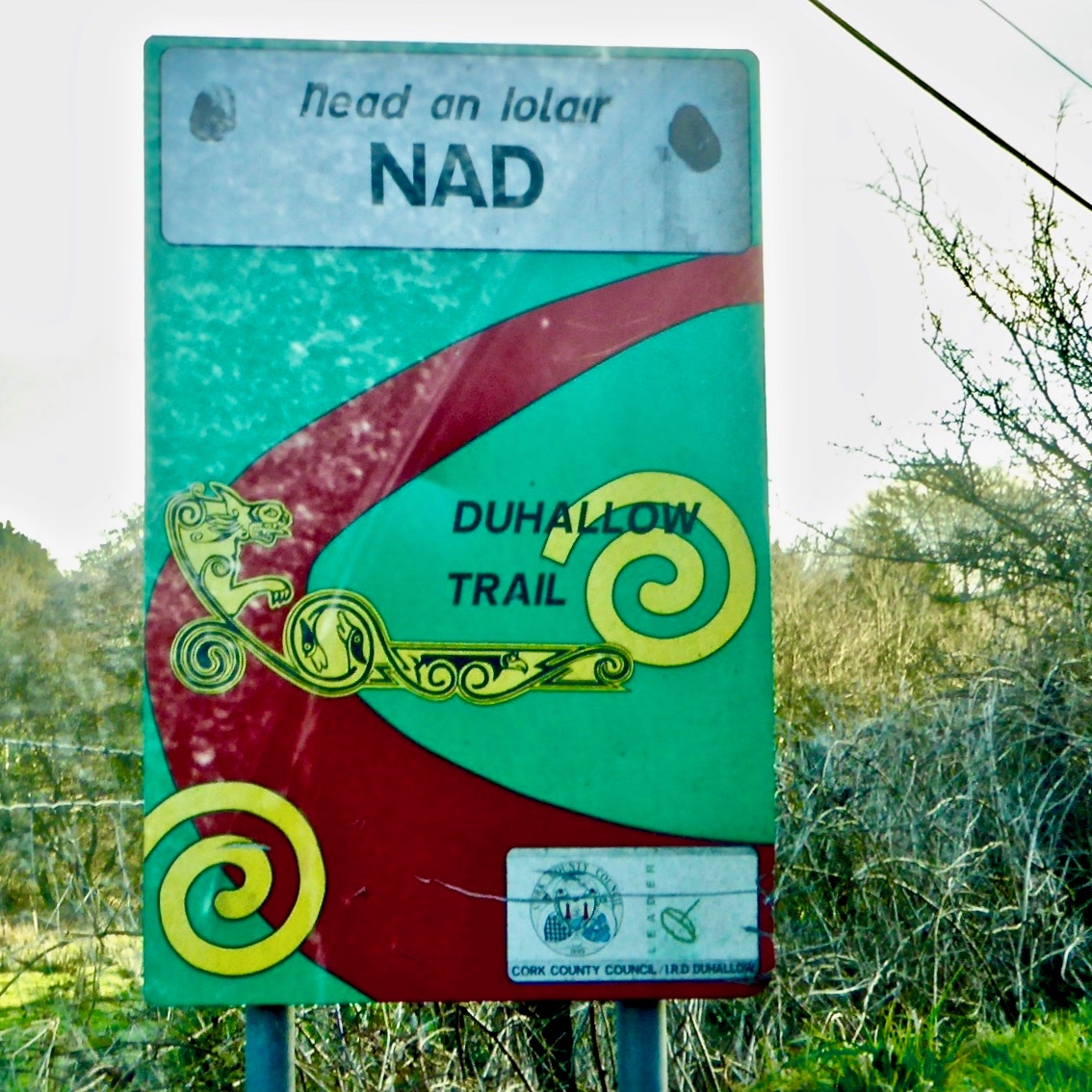
Whenever we are on our travels we look out for the word Iolair (eagle) in place-names. We found one in Duhallow, a Barony in Cork County, just north of the wonderfully named Boggeragh Mountains. In fact we were alerted by signposts directing us to Nad or Nadd (nest) and found ourselves in a tiny settlement which was determined to point out its links with the eagles.

nad road sign

eagle on post 2

large eagle's nest sign

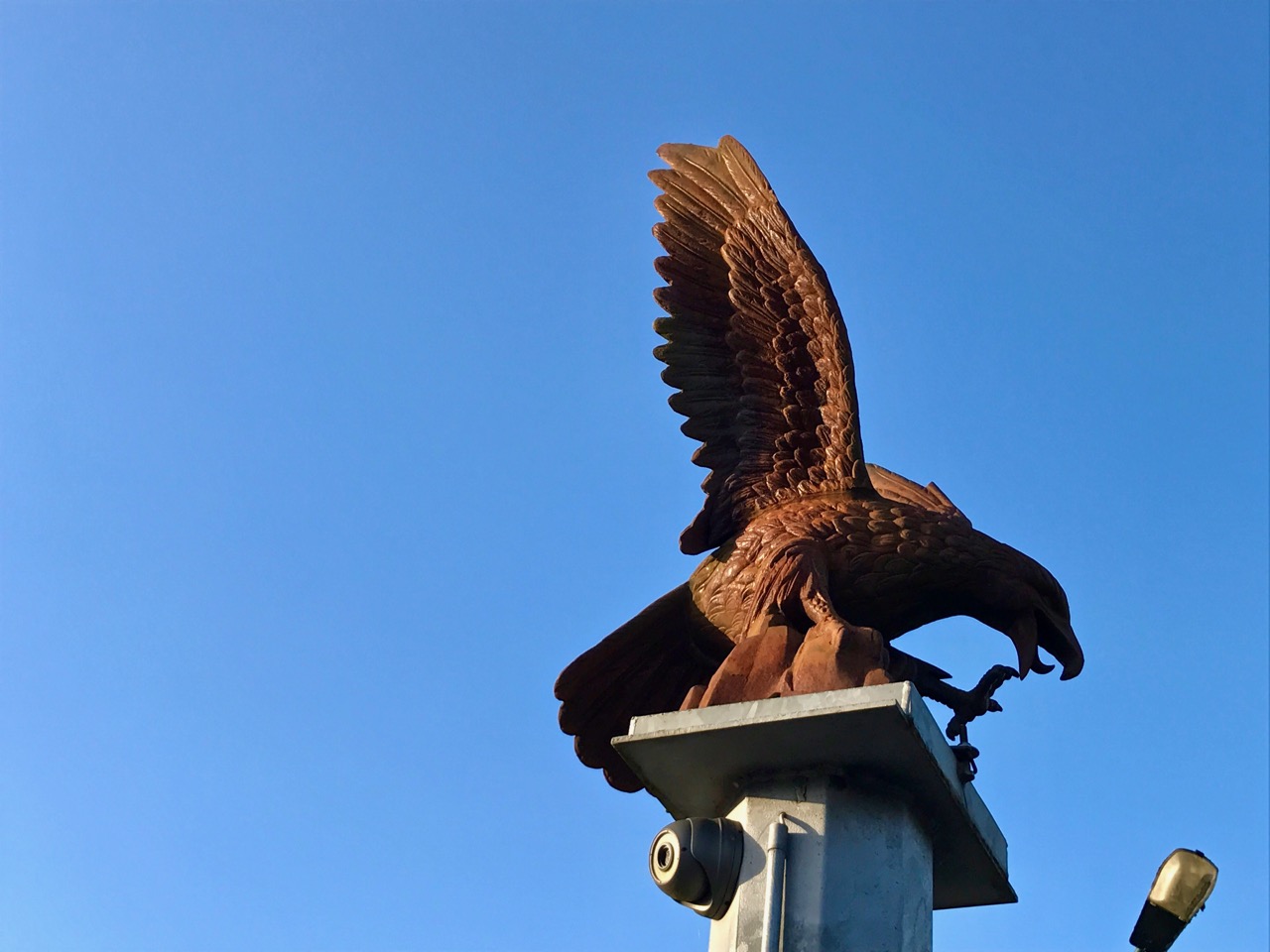
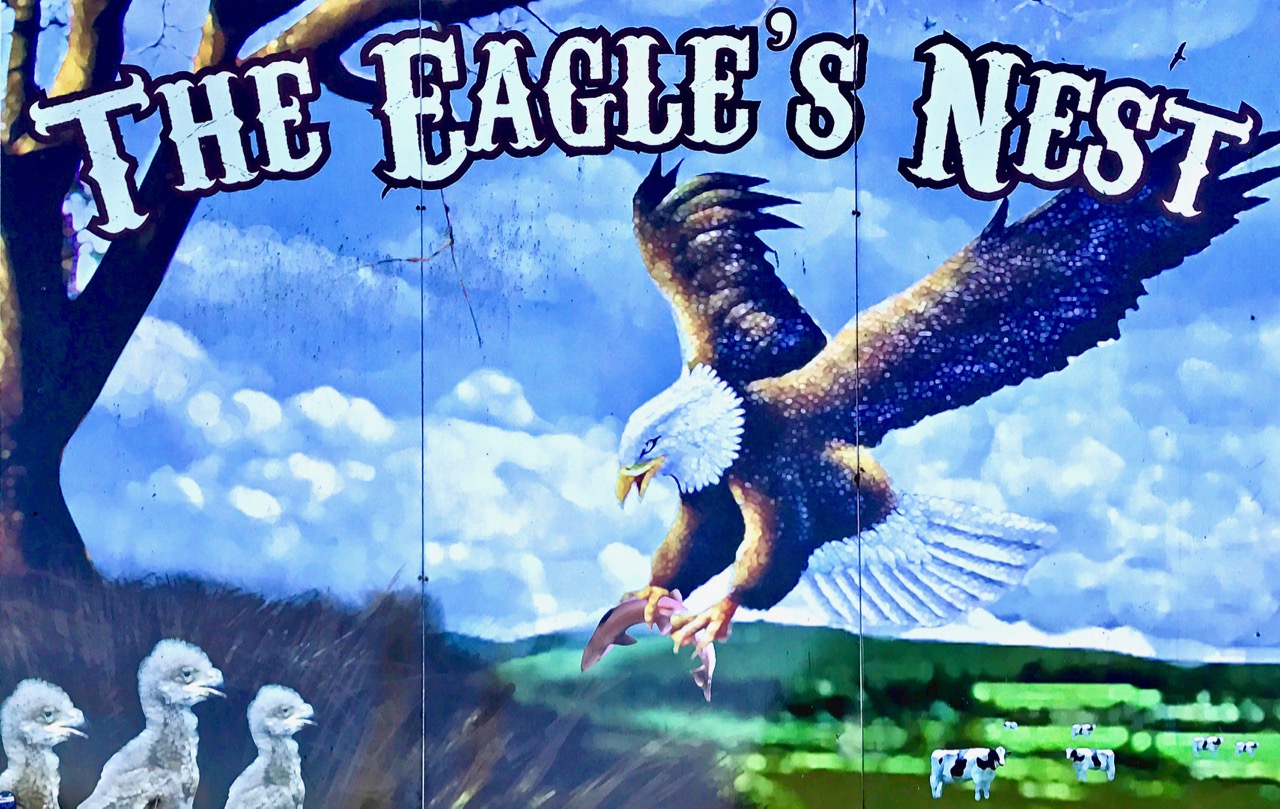
The village of Nead an Iolair in Duhallow, North Cork makes its associations with eagles very clear. The pub is named The Eagle’s Nest, and there is a fine sculpture of the bird sitting Nelson-like on a column beside it

Besides these features the village has a poignant memorial dating from the struggle for independence: a reminder of harsh realities still within living memory. The words that stand out are May God Free Ireland.

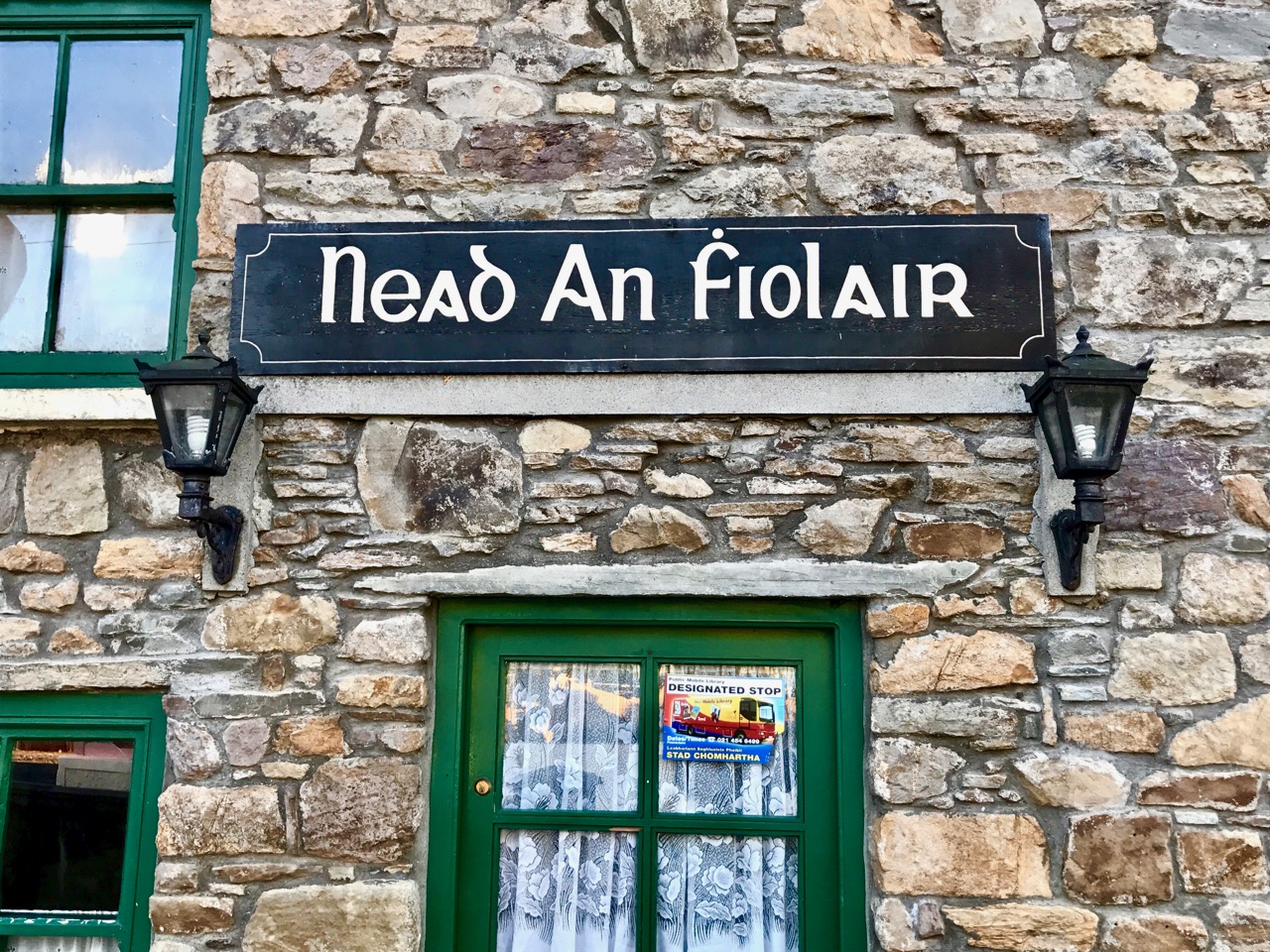
Back to the eagles and – in an interesting diversion into semantics – we noticed that the name over the door of the pub is in old Irish script and has introduced an additional character to the word Iolair – it looks like an ‘f’. Finola tells me that the use of the accent over that ‘f’ – which is known as a búilte – serves to silence the letter. In modern script it would be converted to ‘fh’: so fhiolair would still be pronounced ‘uller’. But we can’t find any precedent for using the word in this form. Perhaps an expert in Irish language can help us here…?

nead an fiolair

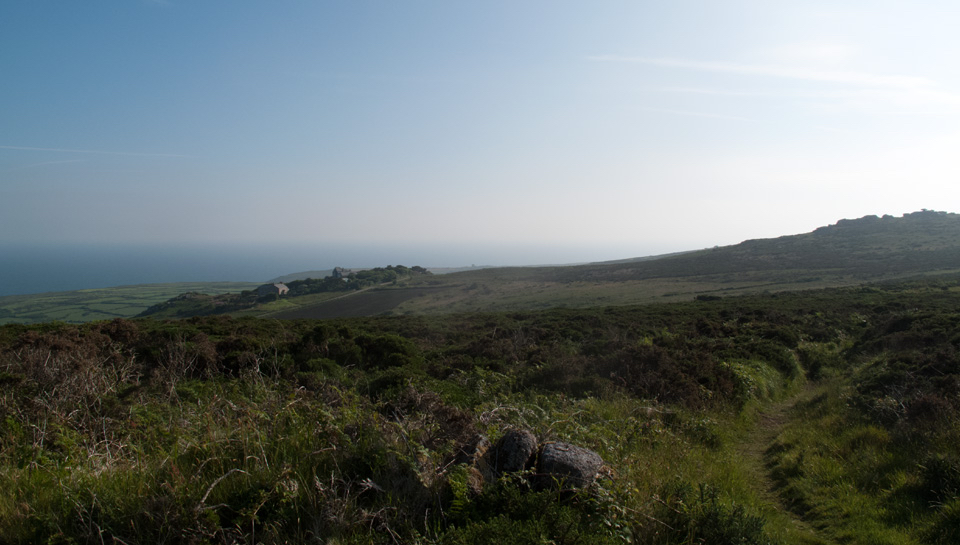
Regular readers will be aware that I am always on the lookout for links between Cornwall and the West of Ireland (and there are many). Interestingly, Nead an Iolair is one of them. Just outside St Ives, on the north coast of Cornwall, is a superb house, also called Eagle’s Nest. It was the family home of Patrick Heron, one of the influential St Ives School artists. When I lived in Cornwall I frequently passed by the house and was always impressed with its location – like us now, it is high up above the coast with a commanding view over the myriad small fields and out to the ocean. I always thought I would like to live there, because of that view… Now I have my own Eagle’s Nest – and I couldn’t be more content.

eagles Nest cornwall

Looking across the Cornish moorlands near Zennor, towards Eagle’s Nest – photographed by the artist Patrick Heron, whose home this was

Scissors Cut Paper Wrap Stone – a Review

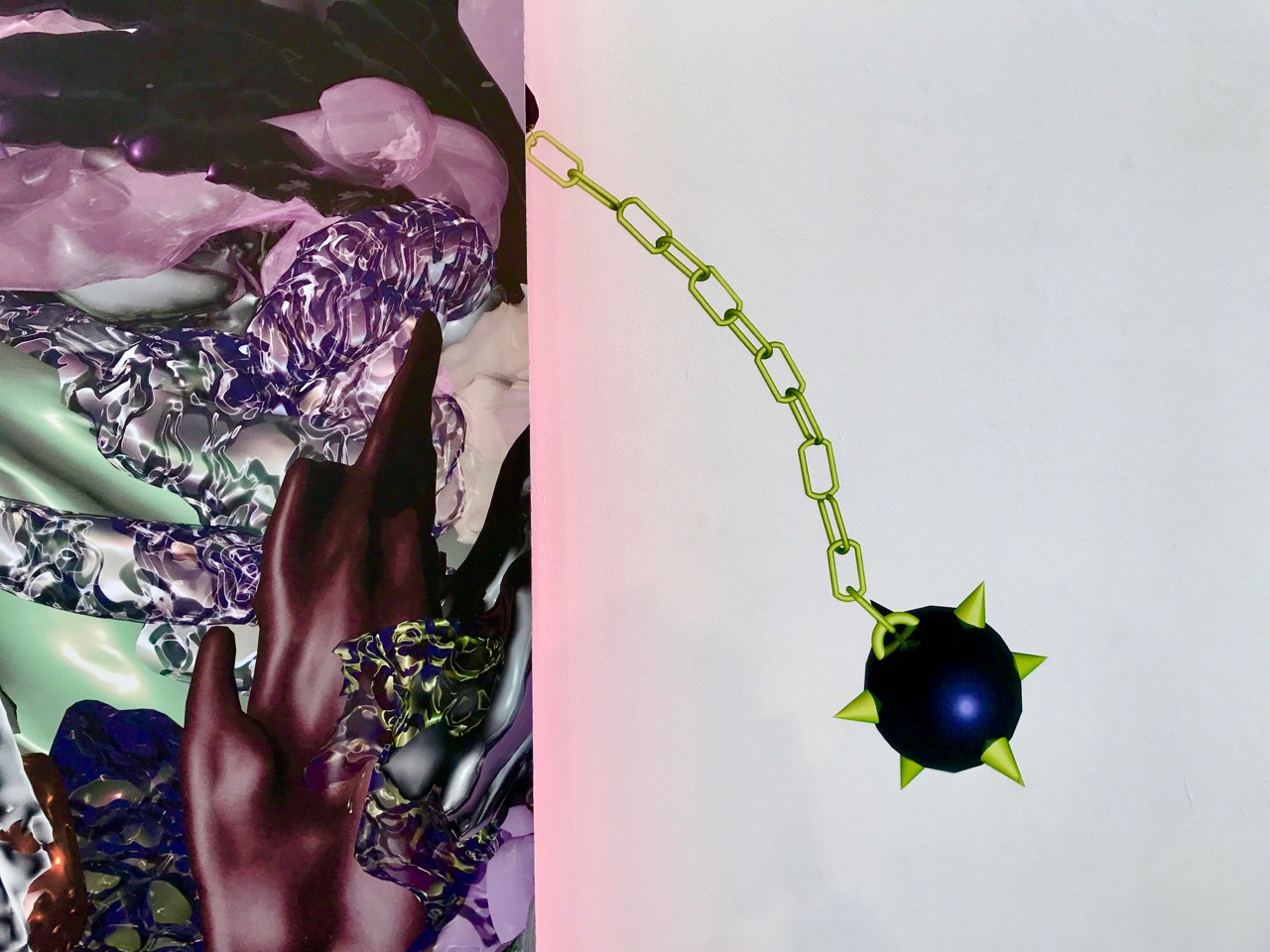
ball graphic

The current exhibition at Uillinn, the West Cork Arts Centre gallery in Skibbereen, is a ‘must’ for anyone interested in contemporary artistic expression – but be aware it’s challenging. Having seen the exhibition being assembled before the opening I decided that I would visit it twice – firstly without giving myself any prior knowledge of the subject matter – and then once more, following a gallery tour led by Alison Cronin of Uillinn and a gallery talk by Jennifer Mehigan, one of the participating artists.
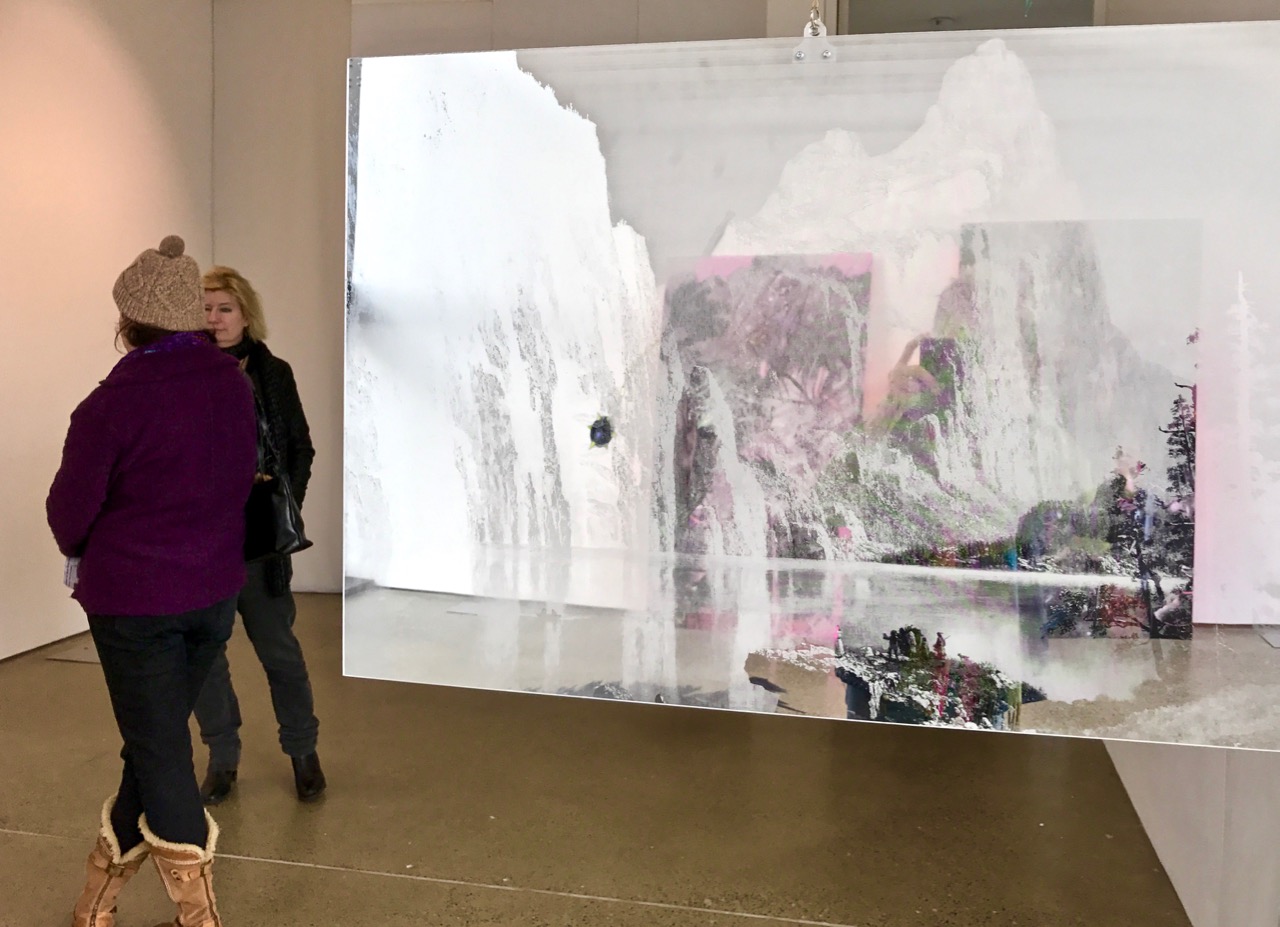
large reflection

I’m very concerned, nowadays, by how ‘art’ is presented, especially ‘art’ which seems divorced from traditional expectations (painted pictures, sculptures etc). I’m fine with all fresh forms of art – and frequently excited by them – but I sometimes wonder whether our artists think about their communication with us… Do they feel that the work should in every way be self-explanatory (we will come away fully informed just by looking at, taking in and understanding the work) – or should their sometimes complex ideas and presentations be explained by accompanying texts, gallery tours, catalogues etc? So I tend to approach every new exhibition with an open mind, hoping for clarity but – firstly – looking for impact from the work. I suppose, at my age, I still think of ‘art’ as being something which should initially stir me, excite me or overwhelm me just through the visual sense: I’m perfectly happy to stand back and look through complex layers of understanding (if necessary) to find the reason for the existence of the artwork, provided it has initially given me that excitement – or whatever emotion – because it will then have drawn me in and made me curious. Some contemporary exhibitions do leave me flat and unstimulated (not many!) and then I have no desire to probe them any further: for me they have failed, but that’s only me, I know. Ultimately, ‘art’ is probably the most subjective of cultural expressions. And that’s all good!
spectators 3

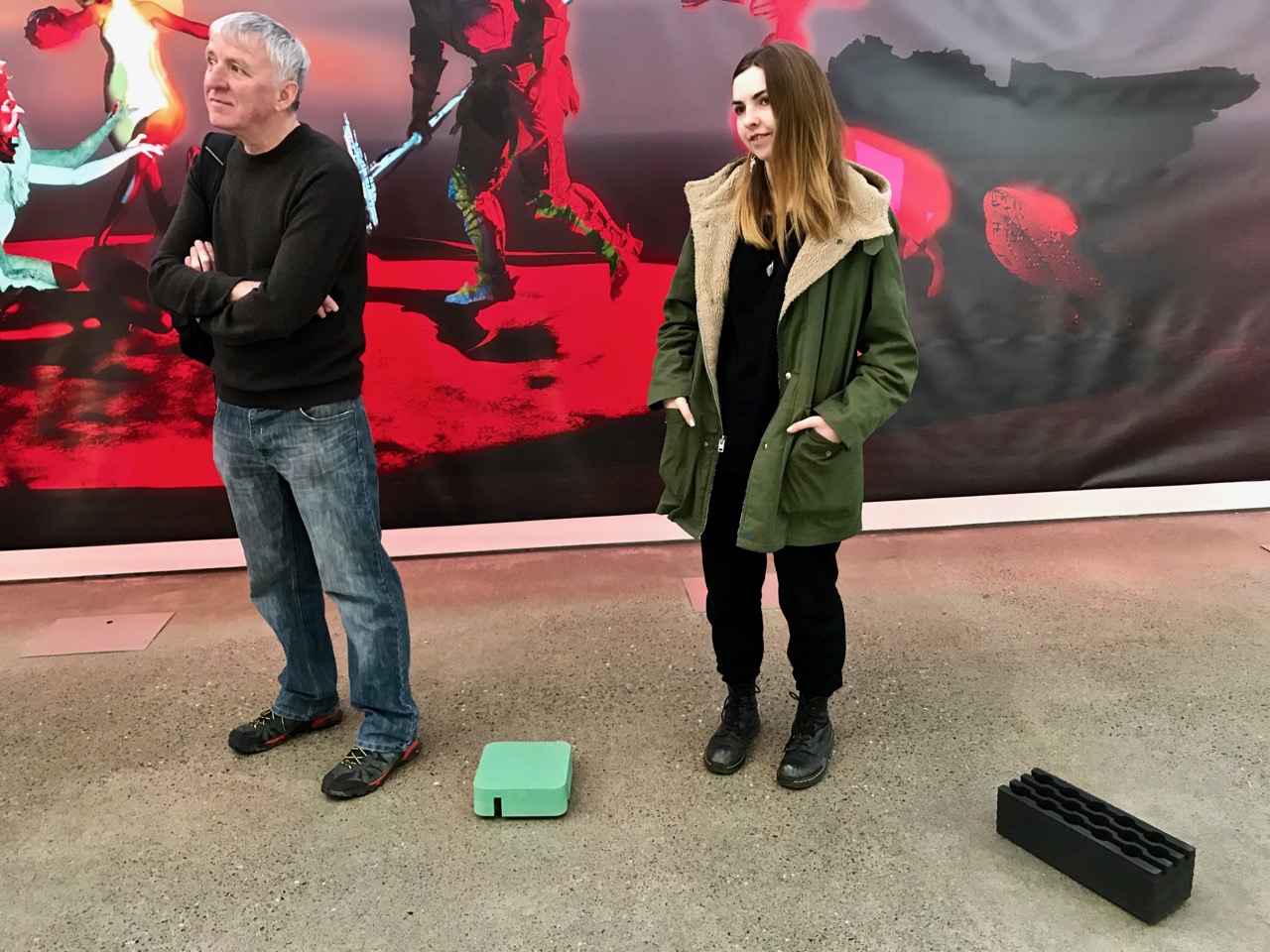
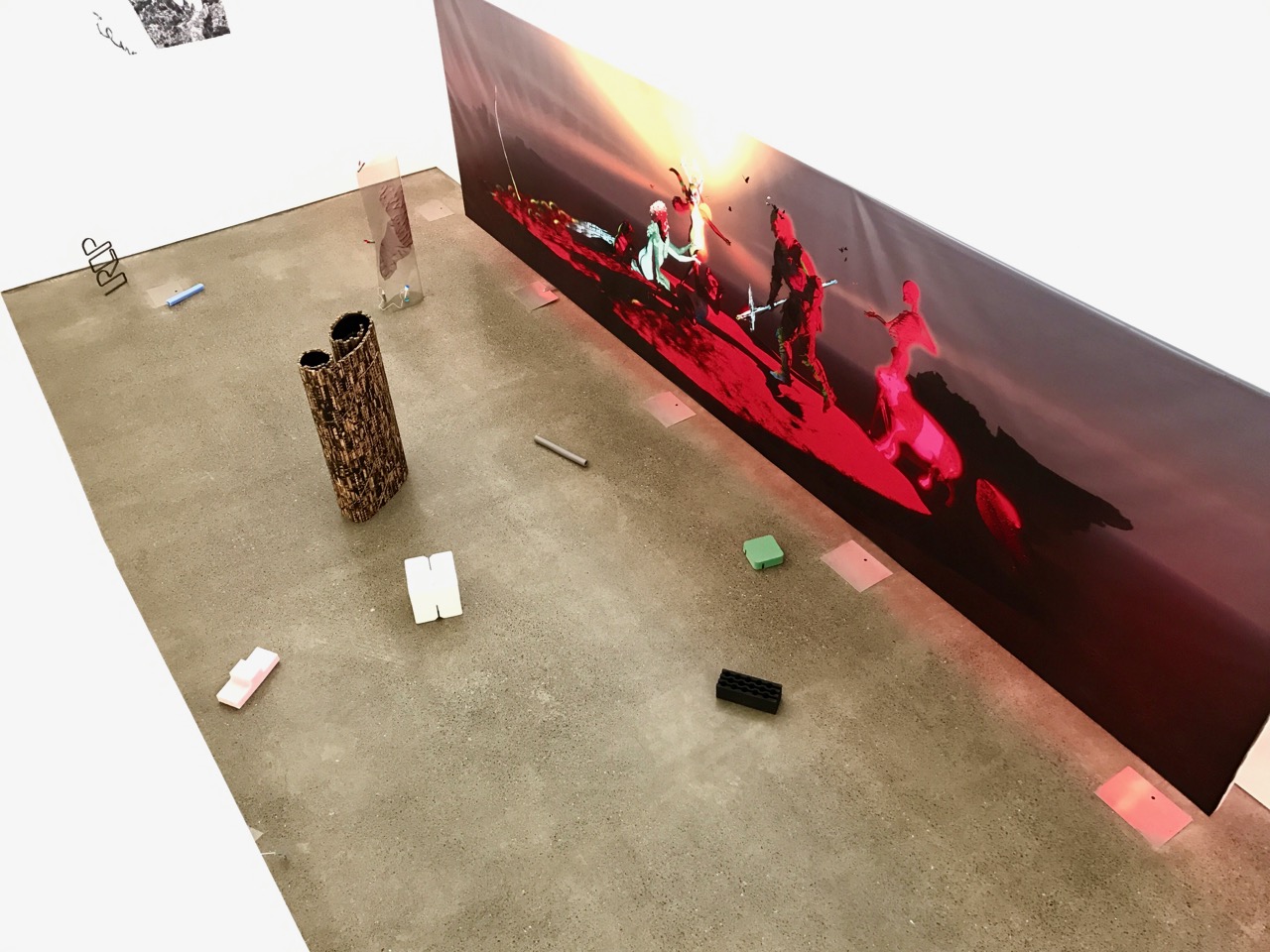
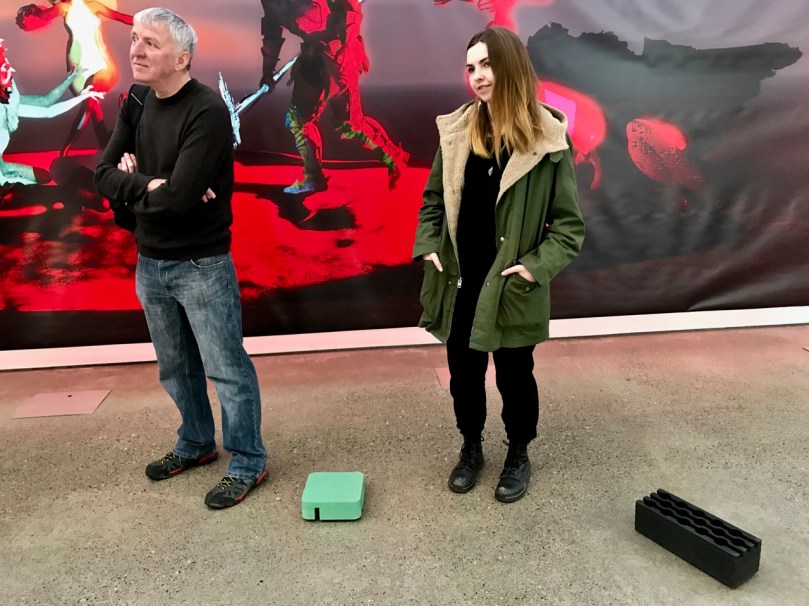
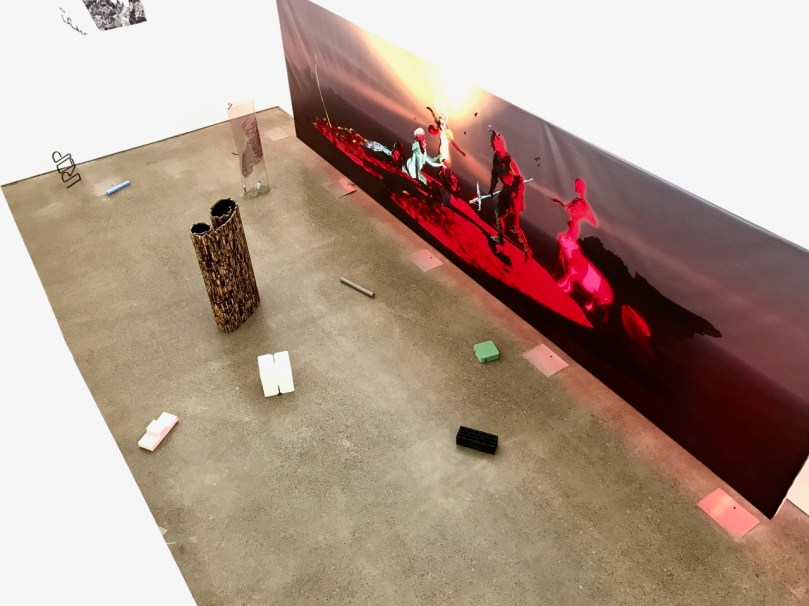
John Russell’s huge backlit print – and two of Eva Fàbregas’s beasts that move around the gallery floor, apparently with a life of their own! 

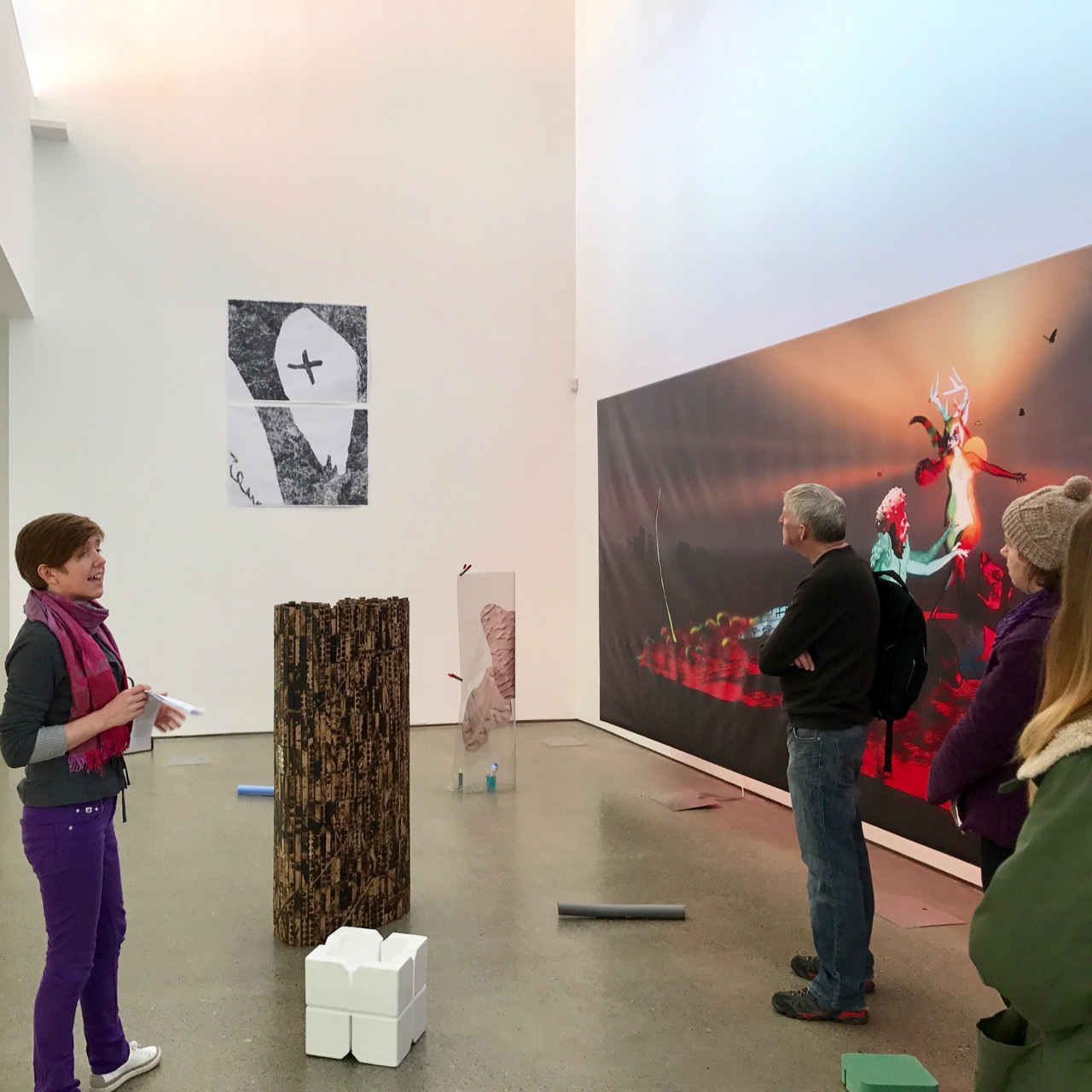
So – how did I react to my initial, completely unguided, tour of Scissors Cut Paper Wrap Stone? I’m pleased to say that I was stimulated – and positively so. I’m always attracted visually by large scale, colour, and things out of the ordinary: that gives you some clues! There are certainly unexpected experiences here. You walk into the first gallery and are hit with a huge print vibrating off the wall, its boundaries emphasised by coloured light behind it. It’s a riot of red – half-human and half- beast figures in a sort of Star Wars tableaux. But then, once you have taken that in you realise that the floor is alive – crawling with more strange beasts that look as though they have had another life as something mundane and practical and are now reincarnated to follow you around the gallery – perhaps to threaten you. What are they? Gallery assistant Kevin enlightened me when he came in to dismantle and repair the mechanics of one of these errant aliens: they are all made from packaging materials fitted with electric motors, and their trajectories across the gallery floor are completely random, referencing, perhaps, their previous lives travelling unsung and unrewarded all around the world. It’s funny how we give life to inanimate (but in this case animate) objects that appeal to us: perhaps it’s a jump back to childhood days when we made things from cereal packets and egg boxes but were then convinced that we had breathed existence into the monsters, dragons, spaceships, princesses (maybe) that we produced. Talking to the gallery staff I was fascinated to hear that some visitors were absolutely convinced that these pieces of mobile packing were imbued with very sophisticated artificial intelligence and really did follow them around and confront them! Remember, this was still before I had any knowledge of the intentions or stimuli behind the exhibits.
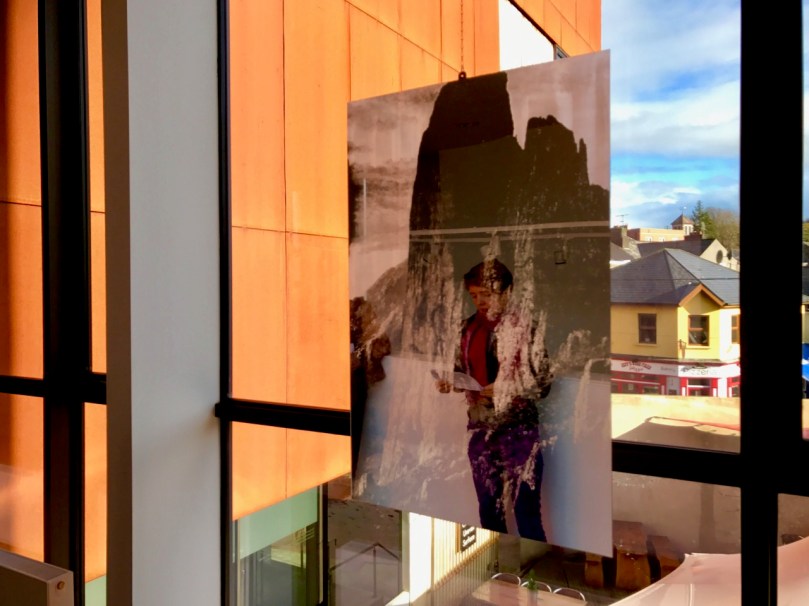
balcony capture

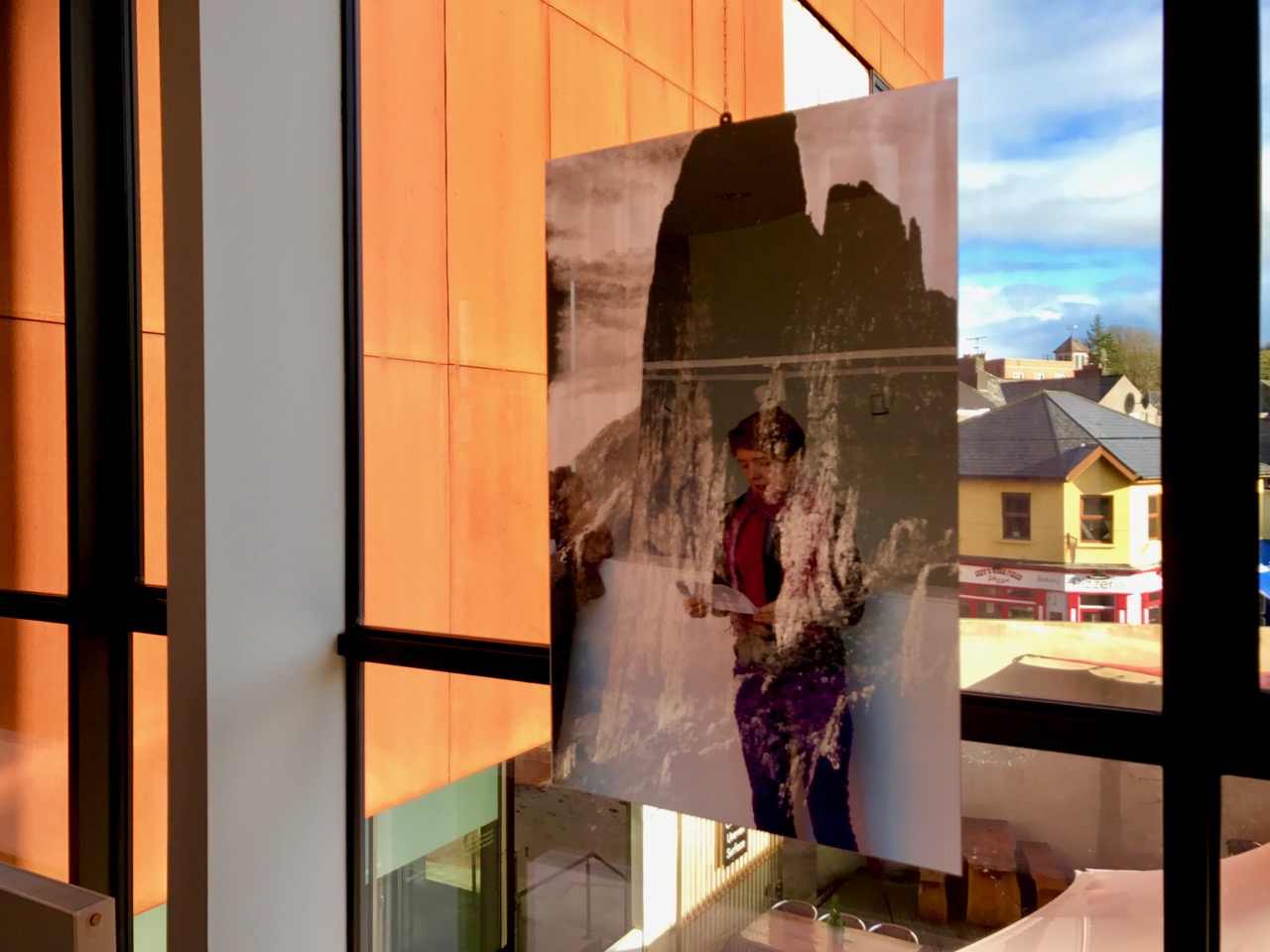
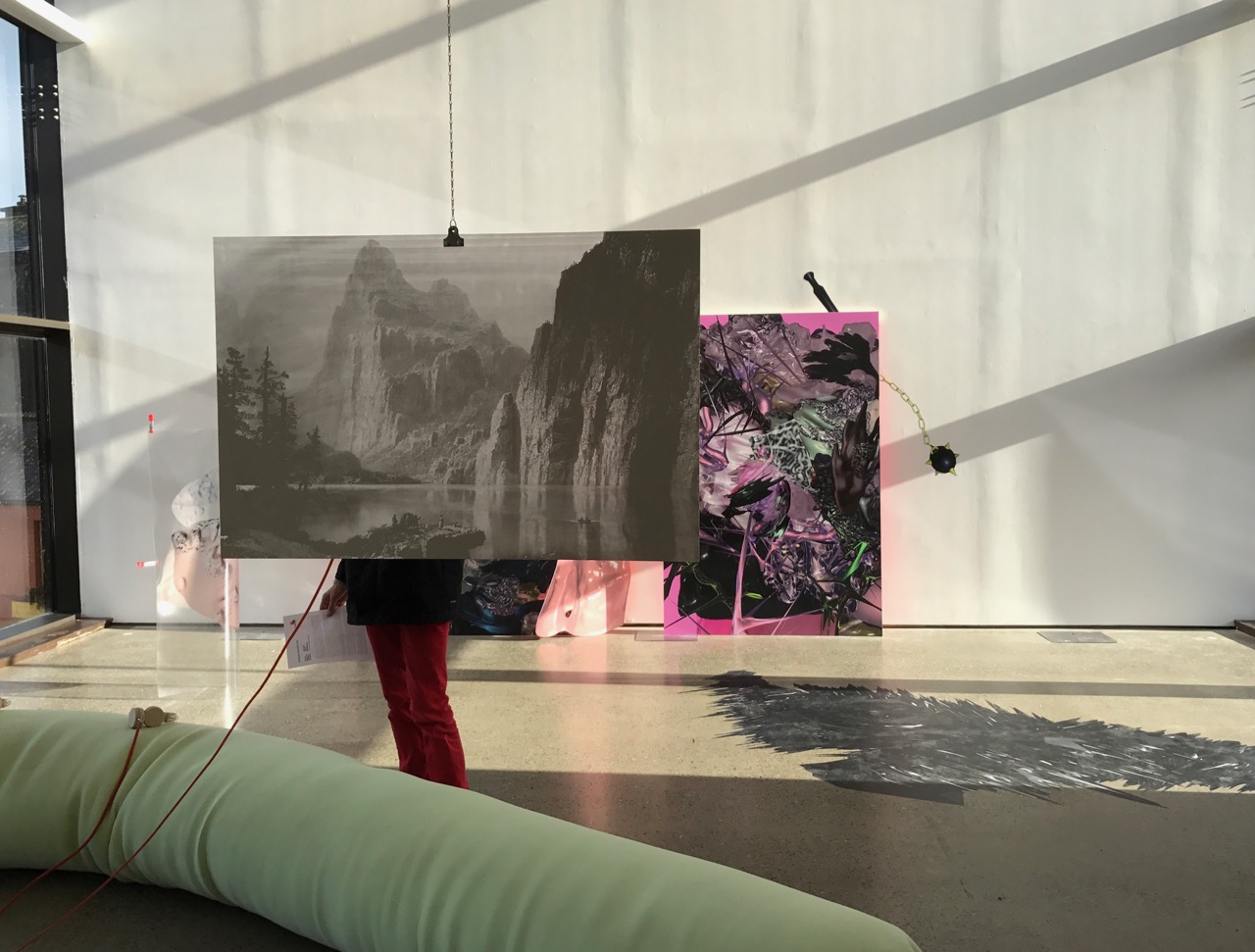
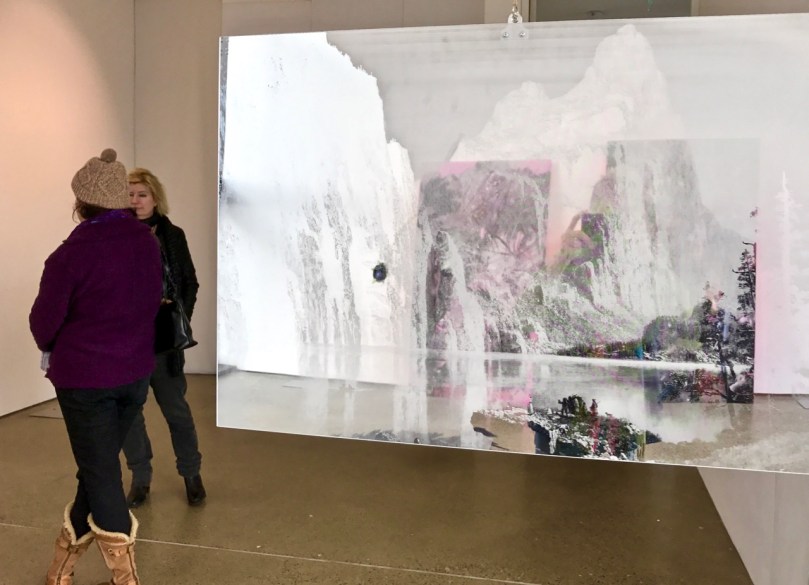
Moving upstairs to the second gallery I found the walkway obstructed by rotating panels of some material (was it glass?) that seemed to be engraved with semi transparent images: they looked like iconic landscape scenes. As I watched, I realised that at certain points in their spinning I was able to see through them, but at the same time also see reflections on their surfaces – of me, of the gallery, of the view through the windows… I liked these very much, and the dymanic nature of their movement and the unpredictable refractions and reflections. I was keen to know how their conception fitted into what I had seen previously downstairs, but I couldn’t guess.

The spinning panels – ‘Orphan Transposition’ – are by Alan Butler and feature acrylic panels laser-etched with images of Yosemite National Park: they also have an intentionally accidental life of their own through the changing surface reflections

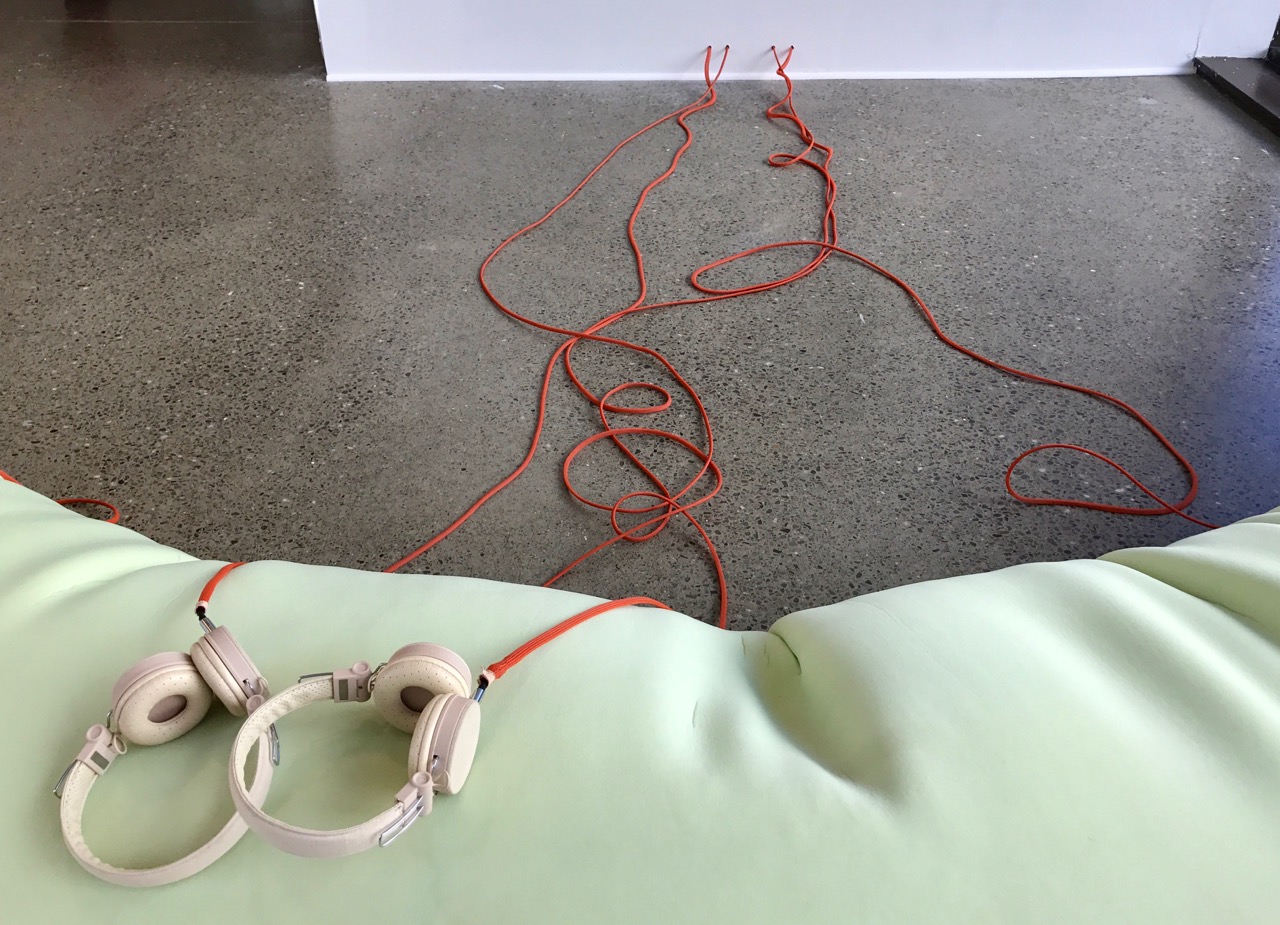
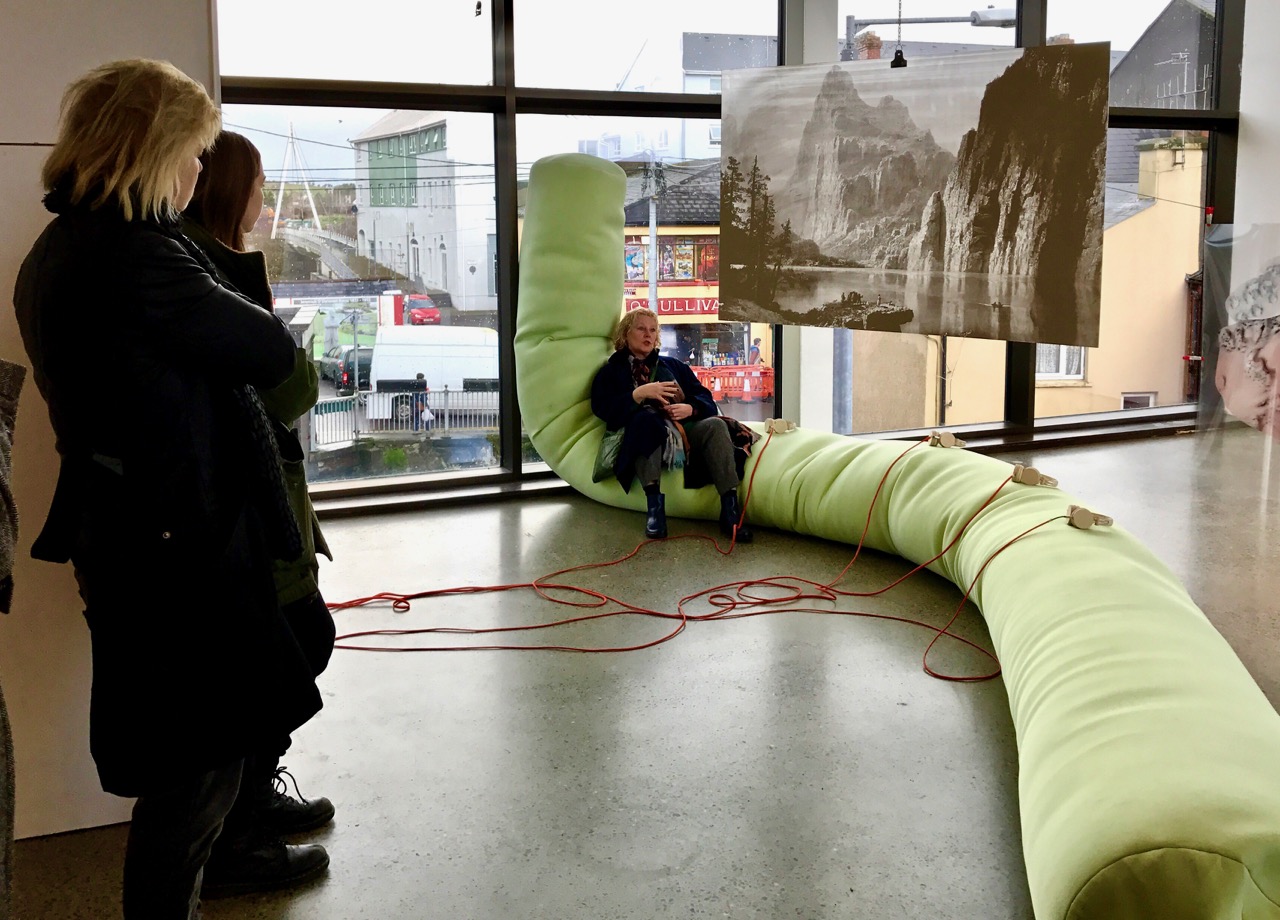
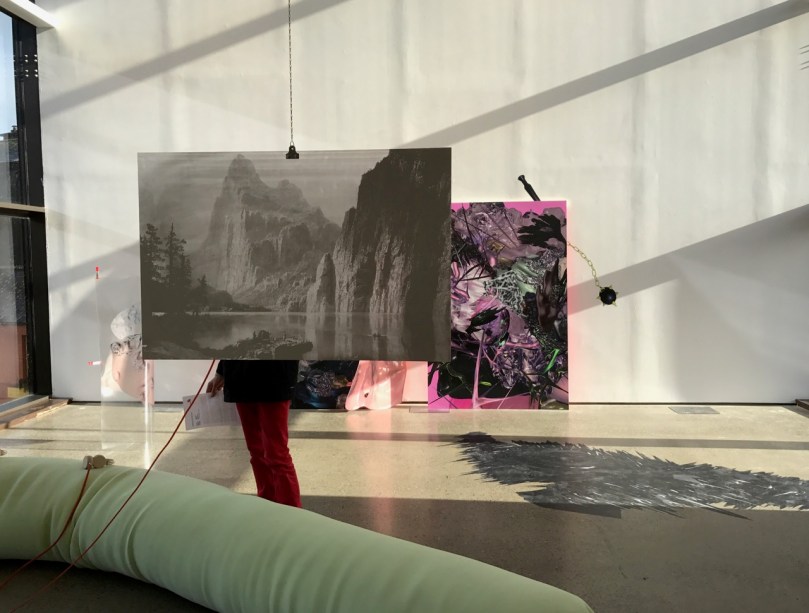
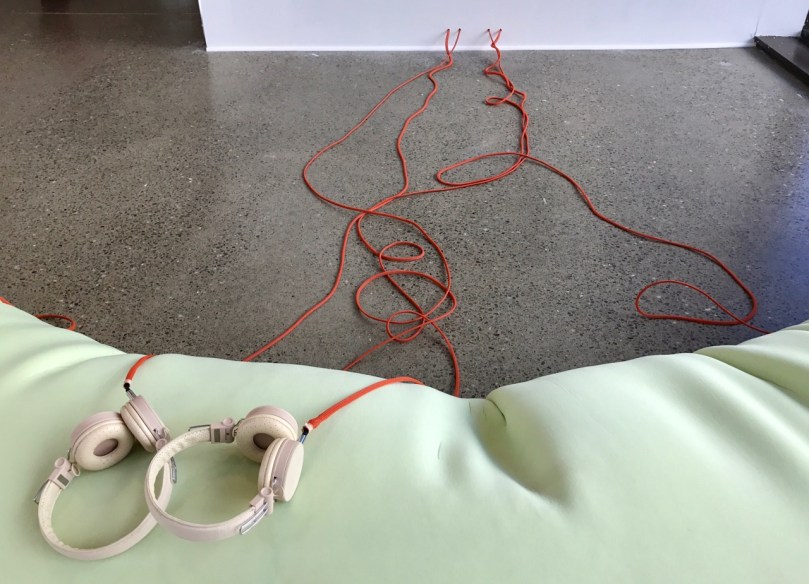
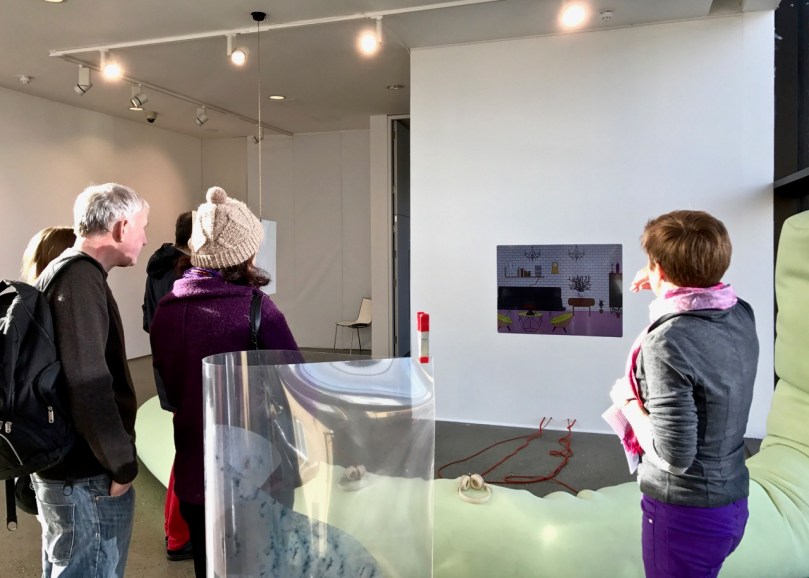
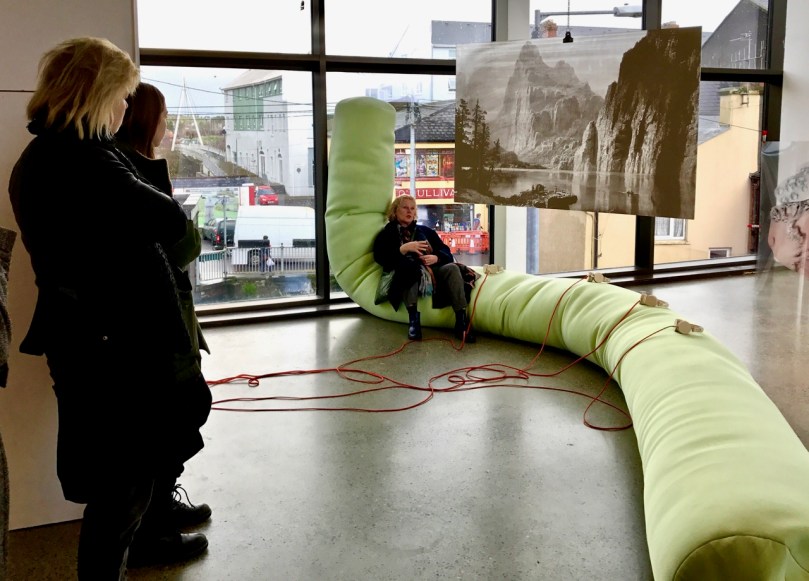
The second gallery held more surprises – and delights. Approaching through a narrow corridor I could see layers: more big, colourful panels on the far wall, more hanging, spinning sheets of opaque transparency, and a very contrasting soft, organic shape seeming to slither across the floor. As I came closer I realised that this shape was not slithering – or moving at all, disappointingly: it was a way of seating people in front of a screen, and was linked in to an array of very funky ‘designer’ headphones (white) by a jumble of thick, red chords.
upper gallery close

phones and cables 2

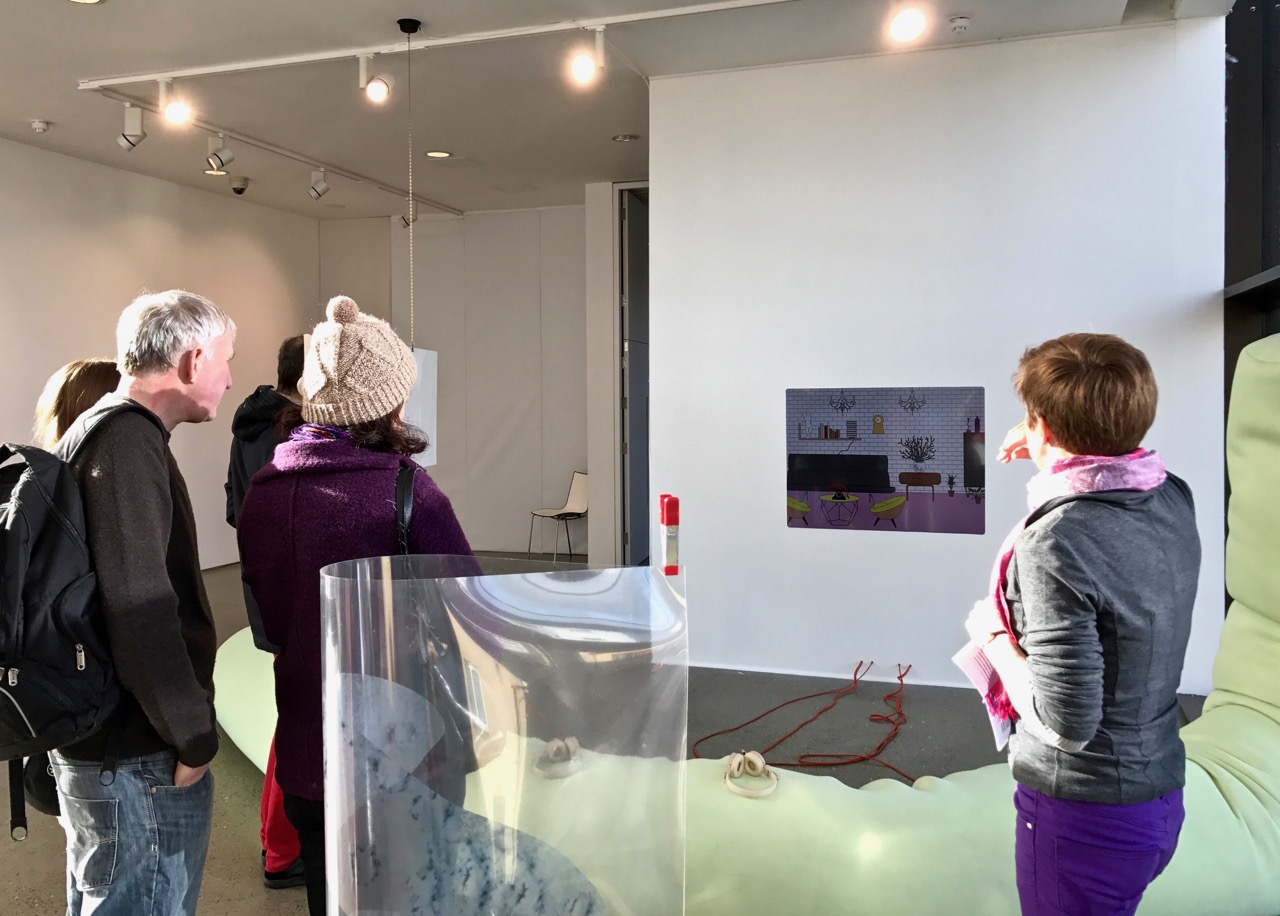
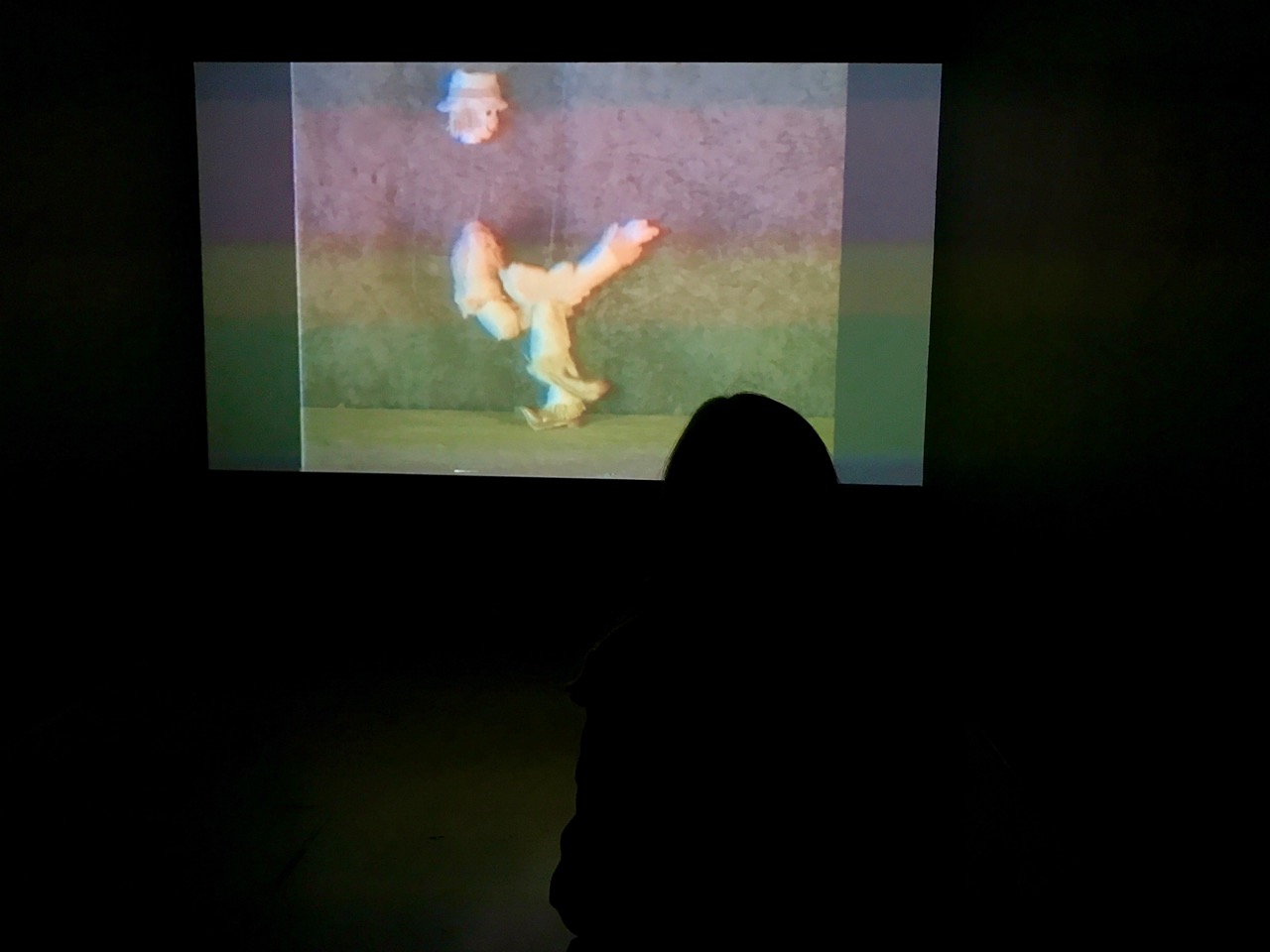
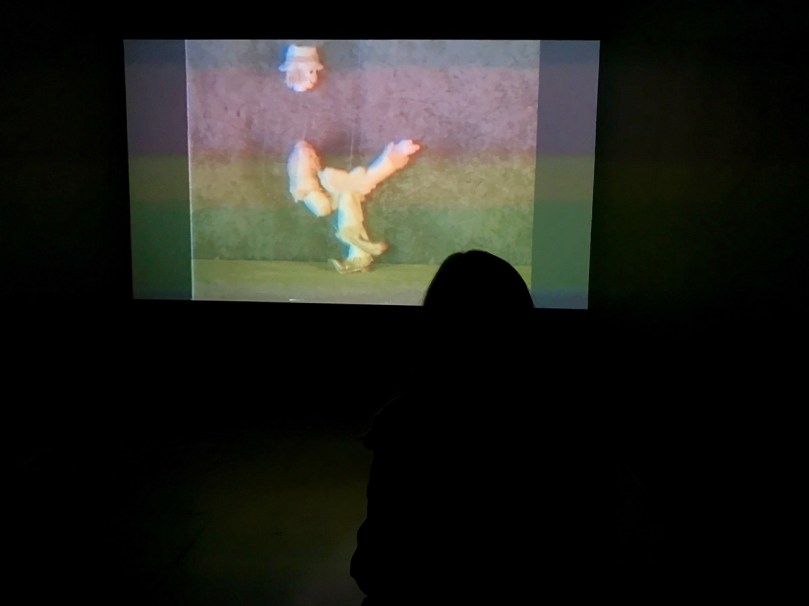
I sat and watched the ‘show’ – and listened to clunky music and a strange commentary – and then realised I was completely out of my depth! I had no clue what was going on. My attempt to experience the exhibition without any preparation or foreknowledge had failed. This applied to all the other work in the upper gallery also: superb large graphics on the walls and floors, printed acrylic sheets suspended on smart steel stands, and, in a darkened cubicle, a film of puppets which reminded me completely of ‘Bill and Ben the Flowerpot Men’! Now, how many of you remember them, dear readers? I don’t suppose any of the contributing artists are of my generation – so, is that pure coincidence? Anyway, I could not feel a sense of connection between the exhibits: but I liked the experiencing of them, nevertheless.
okea projection

puppet show

Upper – Eva Fàbregas’s The Role of Unintended Consequences (Sofa Compact) – which can be enjoyed on the comfort of a squishy serpentine furniture sculpture – and, lower – puppets feature in Andrew Norman Wilson’s Reality Models

It all began to come together and make sense when I took the gallery tour and artist talk (having first read an accompanying written commentary). Wonderful!  The title of the exhibition – Scissors Cut Paper Wrap Stone – which I only knew as a childhood game (and one which I played with my own children) is also the title of a science fiction novella written by Ian McDonald (from Belfast) in 1994. It’s evidently something of an iconic work for those who follow the genre (I don’t particularly, although I have read a little sci-fi). I now know that the participating artists were asked to familiarise themselves with the book and respond to it in a way which they feel comments on our present times: there was no collaboration as such between the artists on the overall exhibition (as I understand), but the curators have put the work together in a way that does begin to set out a narrative.
digital panels

In the optional (€12) catalogue that accompanies the show, Alissa Kleist & Matt Packer (the curators) write an introduction. I was struck by this paragraph:

…From an artistic perspective, Scissors Cut Paper Wrap Stone [ie the book] can be read as a wishful fantasy of artistic power. It describes visual art without recourse to the systems of academic analysis and understanding that have defined the art-history books for the past century and more; instead it promises an encounter with art that frees the ‘rapture’ that Jean-Francois Lyotard describes as being harboured within art itself: an art that hits us straight to the core of our physical being…
cow pic 3

Wow! isn’t that what I was trying to say about my approach to new exhibitions – looking for impact from the work, being stirred, excited or overwhelmed before having any understanding of it? It’s a wonderful way of putting it: …the ‘rapture’ harboured within art itself… Suddenly, I realise that I’ve approached this exhibition exactly as the curators would want me to: first I have the visceral experience, then comes the understanding! Or is it that I have now walked into the exhibition and become a part of it?

Back to the book (via the catalogue):

…In the book, McDonald tells the story of a young student, Ethan Ring, who develops the ability to create digital images that bypass rational thought and control the mind of the viewer…

I’m worrying now – am I being controlled by the digital images in the exhibition?

…Ethan develops a technology of ‘fracters’ – mind-controlling images that have the power to heal, cause pain, induce tears or ecstasy. The utopian promise of this image technology is short-lived as Ethan finds himself blackmailed into employment by the ‘Public Relations’ department of the ‘European Common Security Secretariat’, who demand that he uses the fracters for the purposes of interrogation and assassination, as and when they require…

This is frightening stuff. The book was written in 1994 but in our own time we are suddenly being confronted by concepts of ‘fake reality’ – and aren’t we shocked by governments who seem to be veering off into nonsensical directions, apparently against the wishes of the public majority? Suddenly, I’m seeing an uncanny relevance which these artists – inspired by the concept of the book – have made to our own predicaments. From the catalogue again:

…In a way that is typical of the cyberpunk genre of science fiction, Scissors Cut Paper Wrap Stone is written with the strategy of combining prosaic everyday miseries with the ‘cognitive estrangement’ of a world that has been accelerated beyond our control…
cow stuff

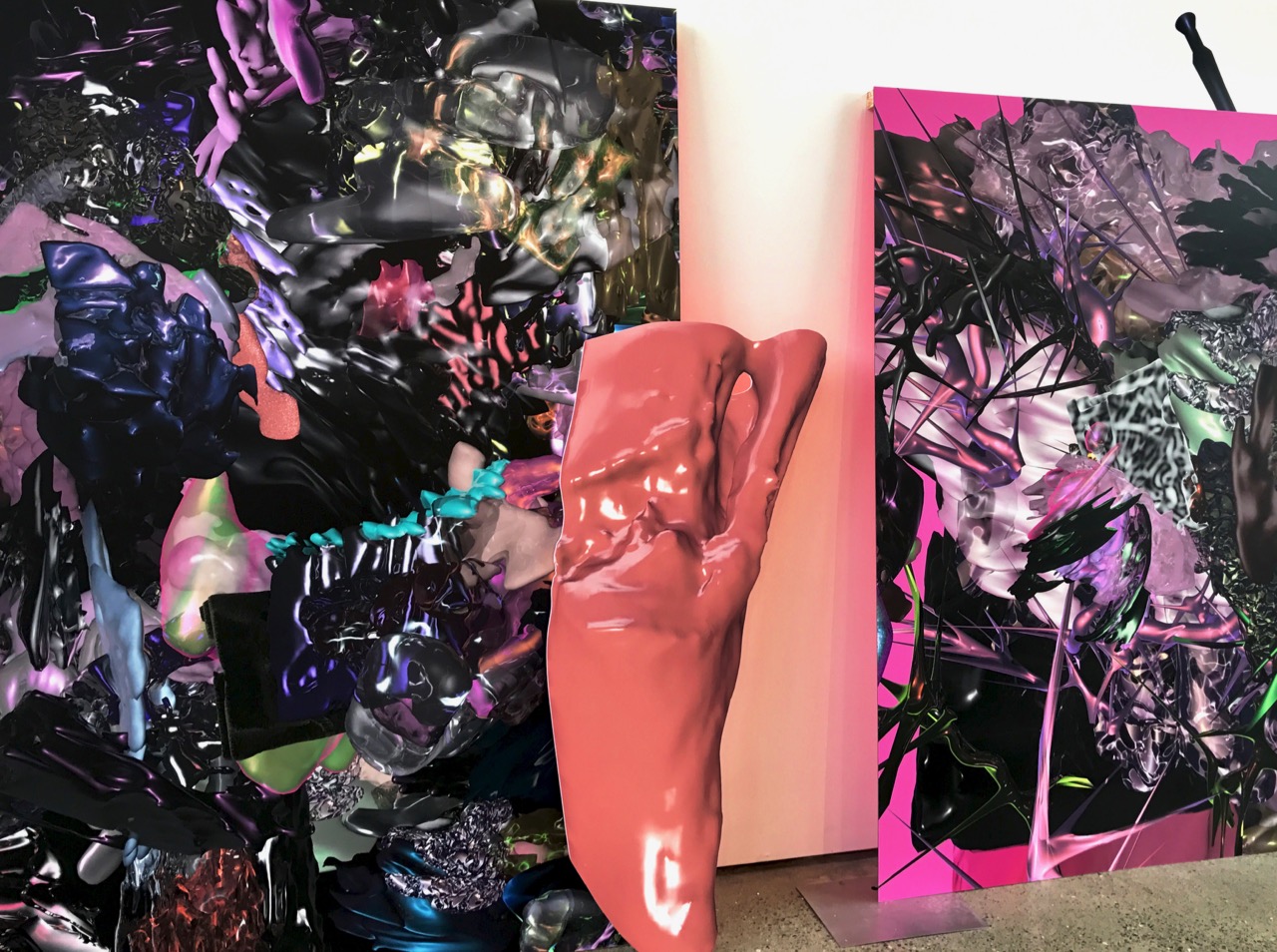
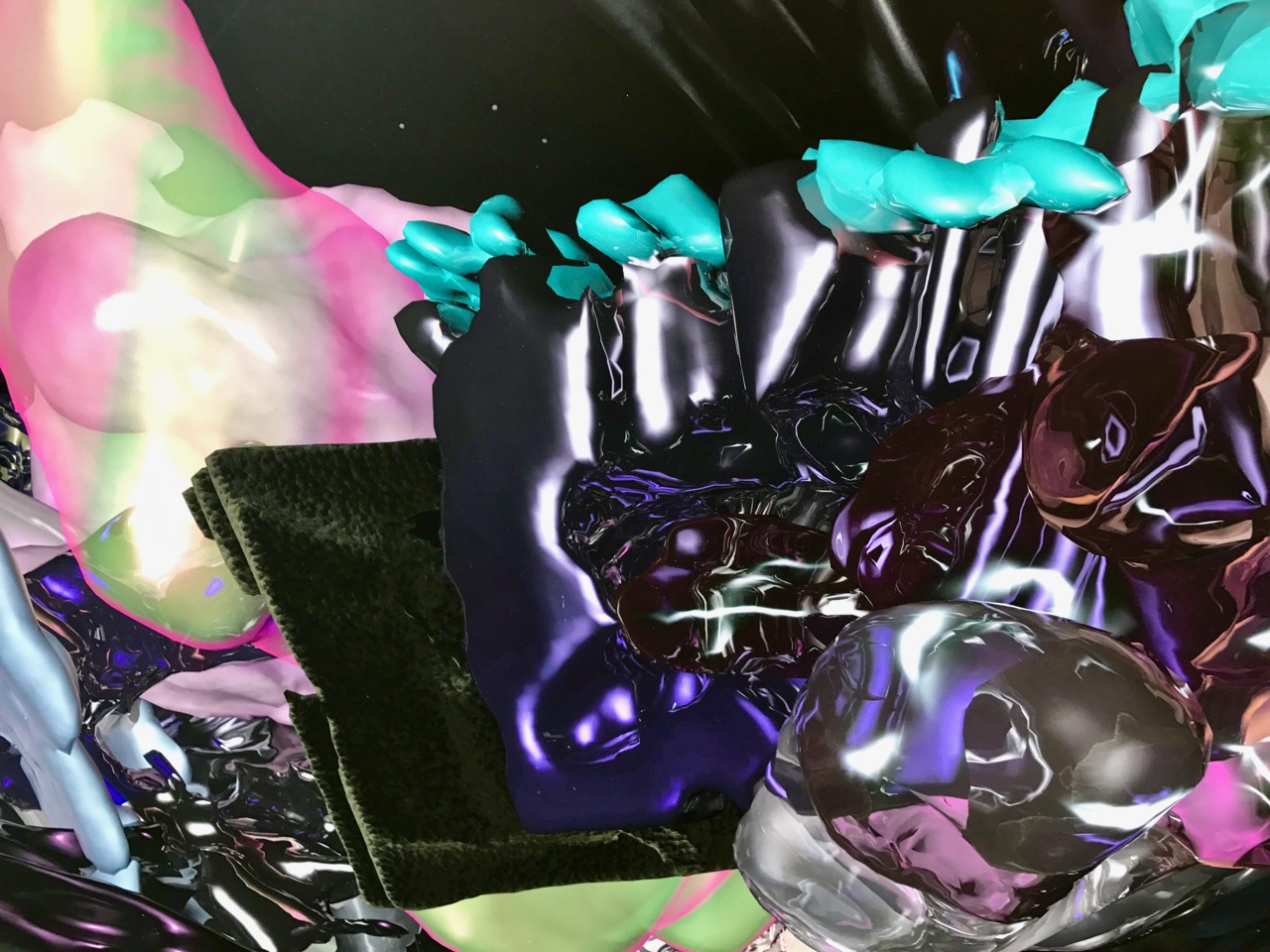
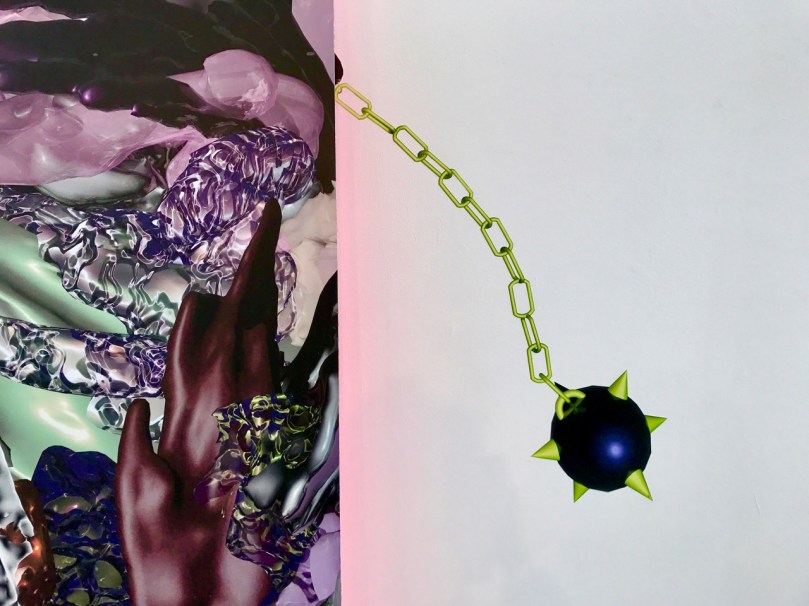
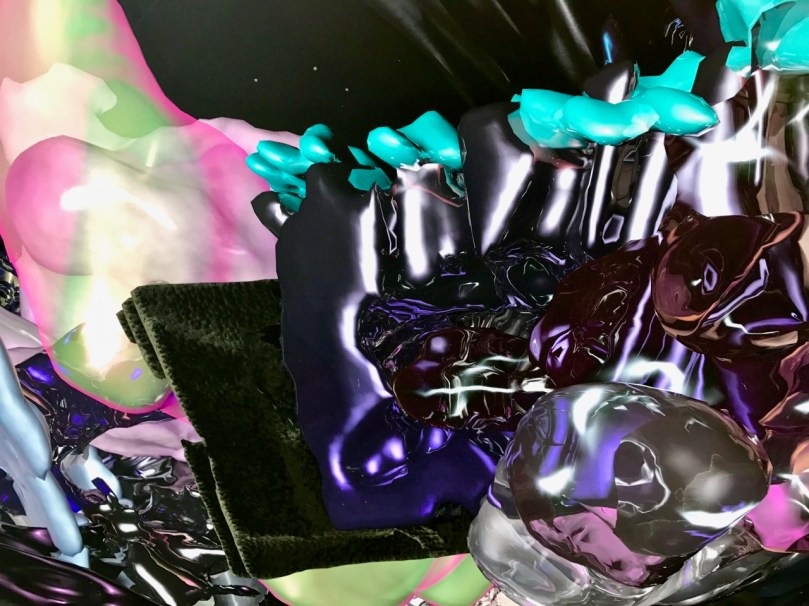
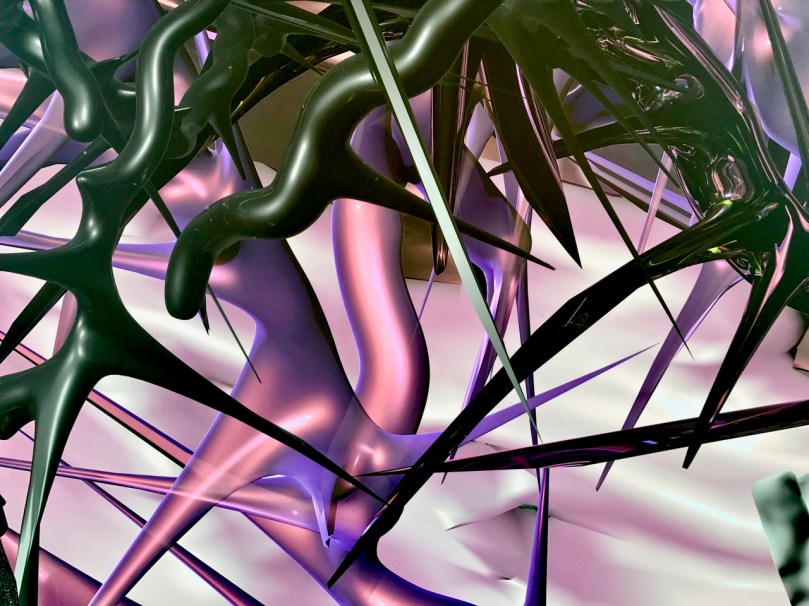
A detail from one of Jennifer Mehigan’s stunning prints made from collages of three-dimensional digitally generated models: this one illustrates the Bovine Spongiform Encephalopathy virus – better known as Mad Cow Disease

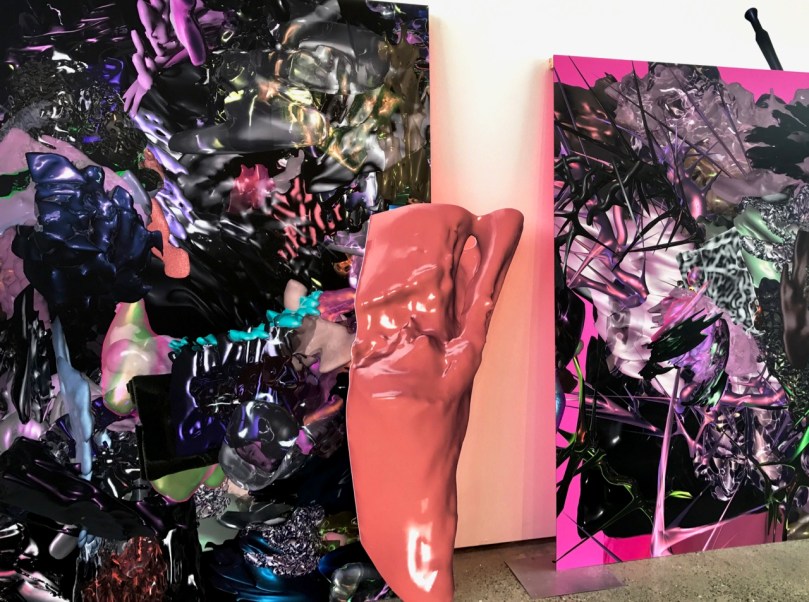
Lastly, I should mention the gallery talk by Jennifer Mehigan. She has only been involved in the Uillinn, Skibbereen, iteration of this show. Knowing that now, I think the overall exhibition will have been considerably poorer without her contribution. I think my strongest instant reactions (rapture?) have been to her large digitally produced panels. Now that she has explained their conception I am even more impressed. She asked us to consider the cow…

The cow is an unnatural beast. Human intervention keeps it permanently fertile so that it produces food for us. It gives us its milk: it dies for us. But also – again through human intervention – it eats itself. This generates the Bovine Spongiform Encephalopathy virus – better known as Mad Cow Disease. This kills humans. Be afraid…

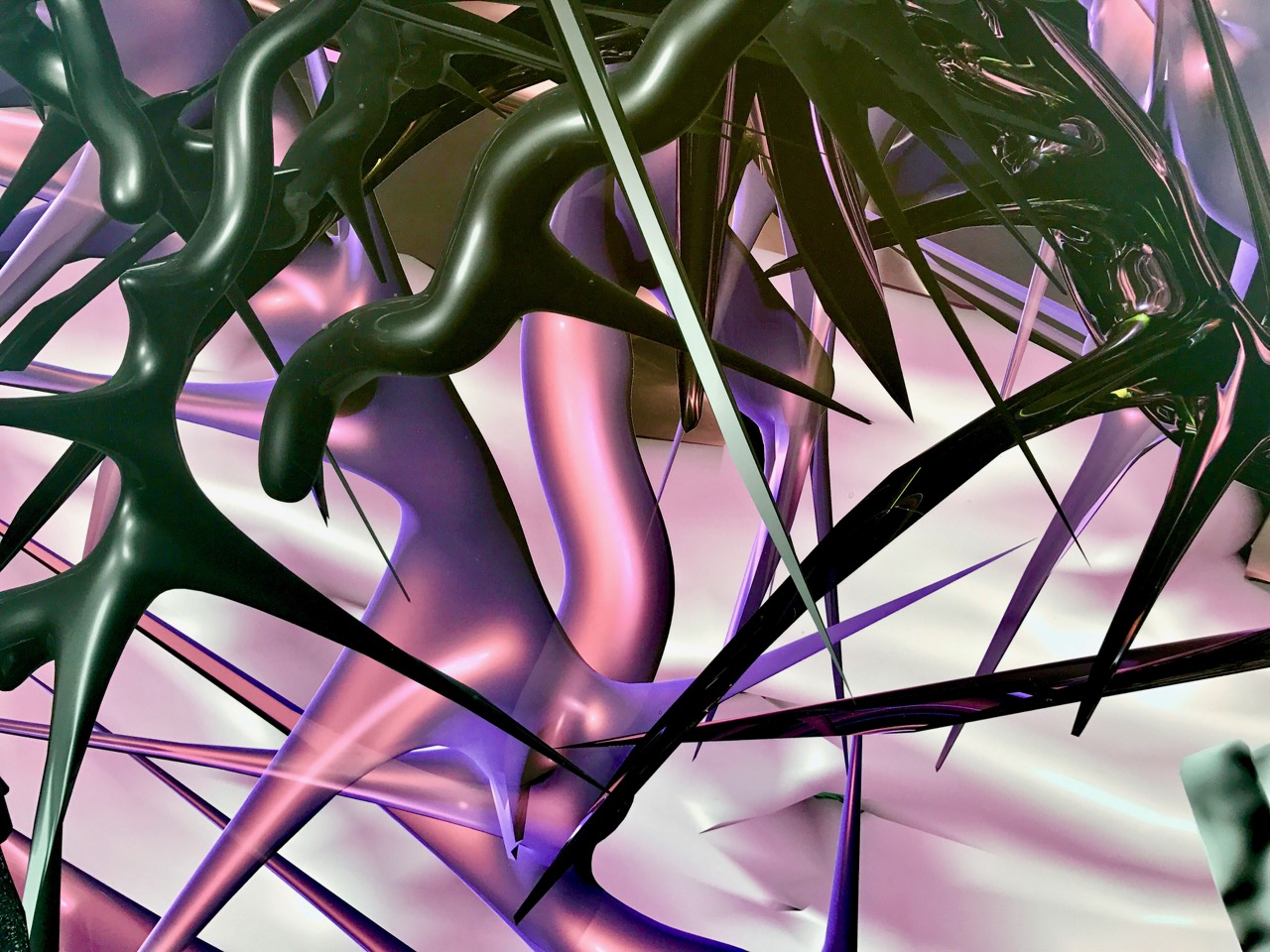
Jennifer’s gorgeous panels are made using a highly complex technology – 3 dimensional modelling software. With this software she has constructed a cow’s stomach, bacteria found inside the human gut, the mad cow disease virus, and Drombeg Stone Circle (that’s the link to human intelligence). She’s put all these things together into bizarre, visually stunning collages and presented them to us as compelling two-dimensional images leaning up against the end wall in Uillinn where they sparkle and shine in the sunlight: we are seeing the fracters and, behind them, the government departments who are manipulating world perceptions of reality.
from above

Powerful images from a strong exhibition. Step beyond the images and we see power – or a commentary on power. Statements are being made here – perhaps subversively – about the world in which we live today. That’s great – that’s art.
resting

The exhibiting artists are: Alan Butler, Pakui Hardware, Jennifer Mehigan, Andrew Norman Wilson, Clawson & Ward, Eva Fàbregas, John Russell

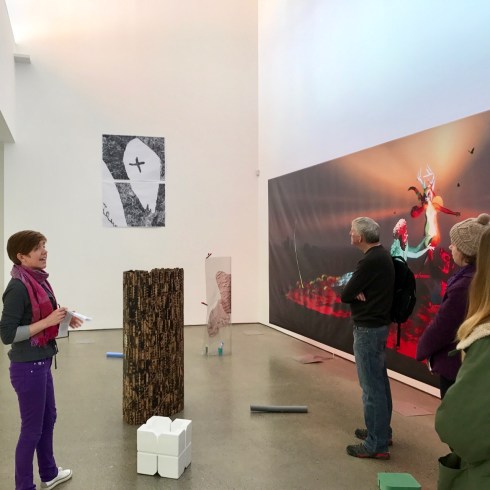
Scissors Cut Paper Wrap Stone is on at Uillinn, Skibbereen until 25 February 2017. The gallery is open Mondays to Saturdays from 10.00am to 4.45pm: there are guided gallery tours on selected Saturday mornings – check with Uillinn: enlightening and well worth attending! Here’s Alison Cronin in action:
in the gallery