Man of Music

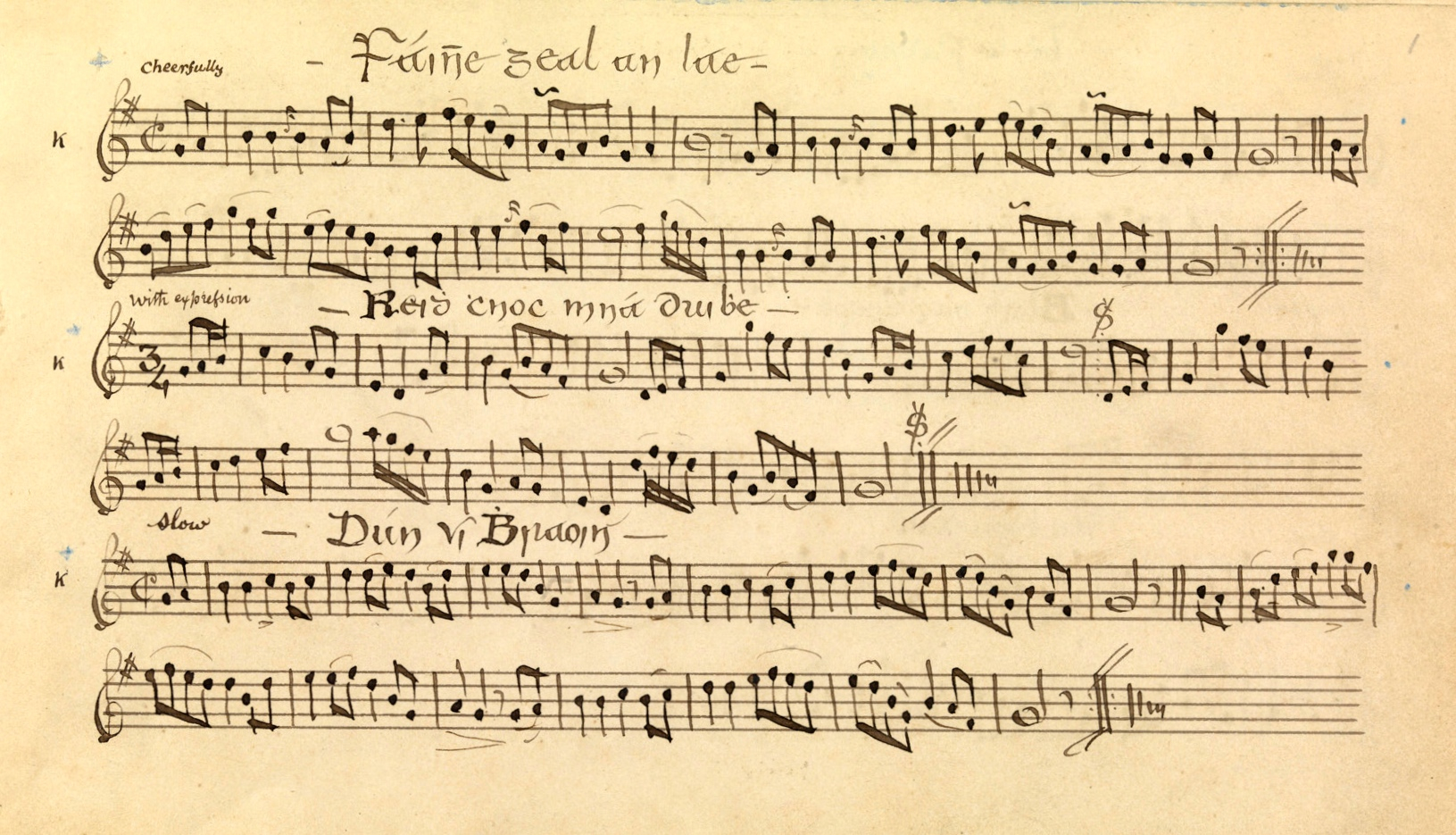
A page from the manuscript of Canon Goodman - Trinity College Library

A page from the manuscript of Canon Goodman – Trinity College Library

Long-term readers of our posts will have encountered Canon James Goodman already – in our first post after we moved in to Nead an Iolair we covered the 2013 Canon Goodman Concert, an annual affair which takes place in Abbeystrewry Church, Skibbereen. This means we have lived here for exactly one year now, as the 2014 Concert took place last Sunday. In the intervening 12 months I have researched this Skibbereen hero in greater detail, and he deserves a whole post to himself!
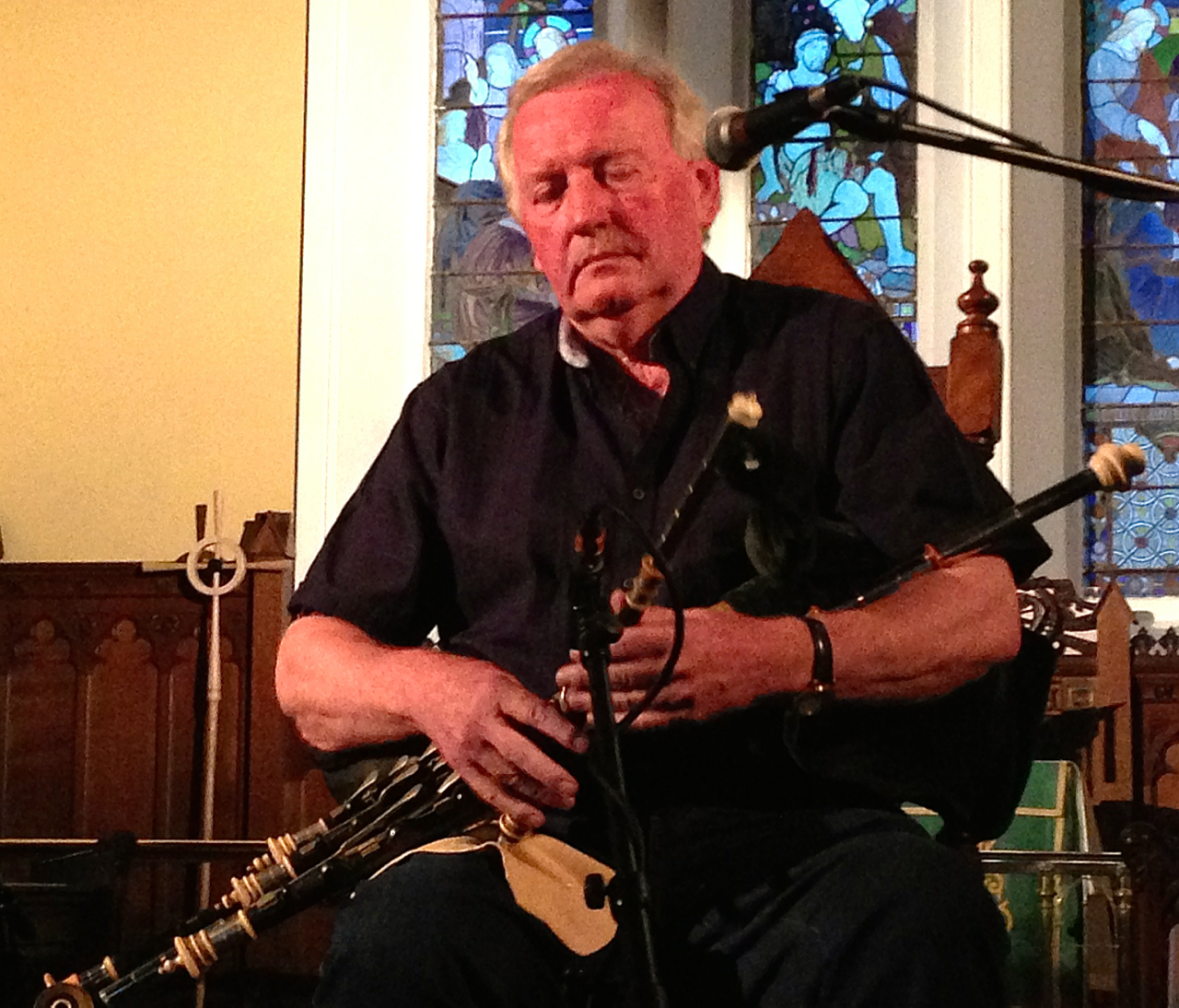
Uilleann Pipes Maestro Liam O'Flynn plays Skibbereen

Uilleann Pipes Maestro Liam O’Flynn plays Skibbereen

The Annual Canon Goodman Concert is part of the Arts Festival which Skibbereen hosts every year: Finola has reported fully on this event, which has kept us on our toes for the whole week. Stars of the concert were Liam O’Flynn and Paddy Glackin. I first saw Liam in Exeter back in the 1970s – we’ve both aged a bit since then…

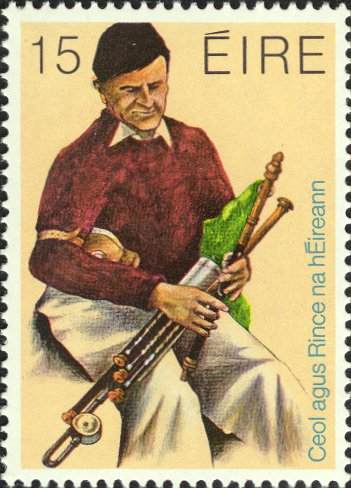
The Canon is remembered particularly for his expertise in playing the Uilleann Pipes – Ireland’s national instrument. If you’ve never seen this played, have a look and a listen to the extract from the Skibbereen concert below: it is a complex instrument, whose component parts include windbag, bellows, a chanter, drones and regulators – also the piper’s apron (sometimes known as a popping strap), which is a cloth placed on the knee of the player to form a seal with the open end of the chanter – as the lifting of the chanter from the knee is one action which can alter the sounding of the pipe between legato and staccato. It’s hard to simply explain the methodology of the pipes – just consider that the player has to keep the bellows moving with one elbow, maintain correct inflation of the bellows with the other (the Irish píobaí uilleann literally means ‘pipes of the elbows’), use the fingers of both hands to form the melody on the chanter, and to lift it from the knee, and use the wrist or fingers (or, as I have seen on occasion, the end of the chanter) to ‘play’ the regulators, forming chords and adding rhythm – not forgetting to make sure the drones are in tune.

James Goodman was born in 1828 in Ventry, County Kerry – then a Gaeltacht area: he was raised as a native Irish speaker, and this stood him in good stead as, in later life, he became Professor of Irish at Trinity. In his youth he was described as ‘…having an attractive personality and was well-liked and popular…’ He took a great interest in traditional life and, particularly, The Music. He learned to play the flute and the pipes while growing up. His father was Rector of Dingle and, after studying at Trinity, James was himself ordained into the Church of Ireland in 1853, moving with his wife Charlotte  to the living of Creagh Parish, between Baltimore and Skibbereen.
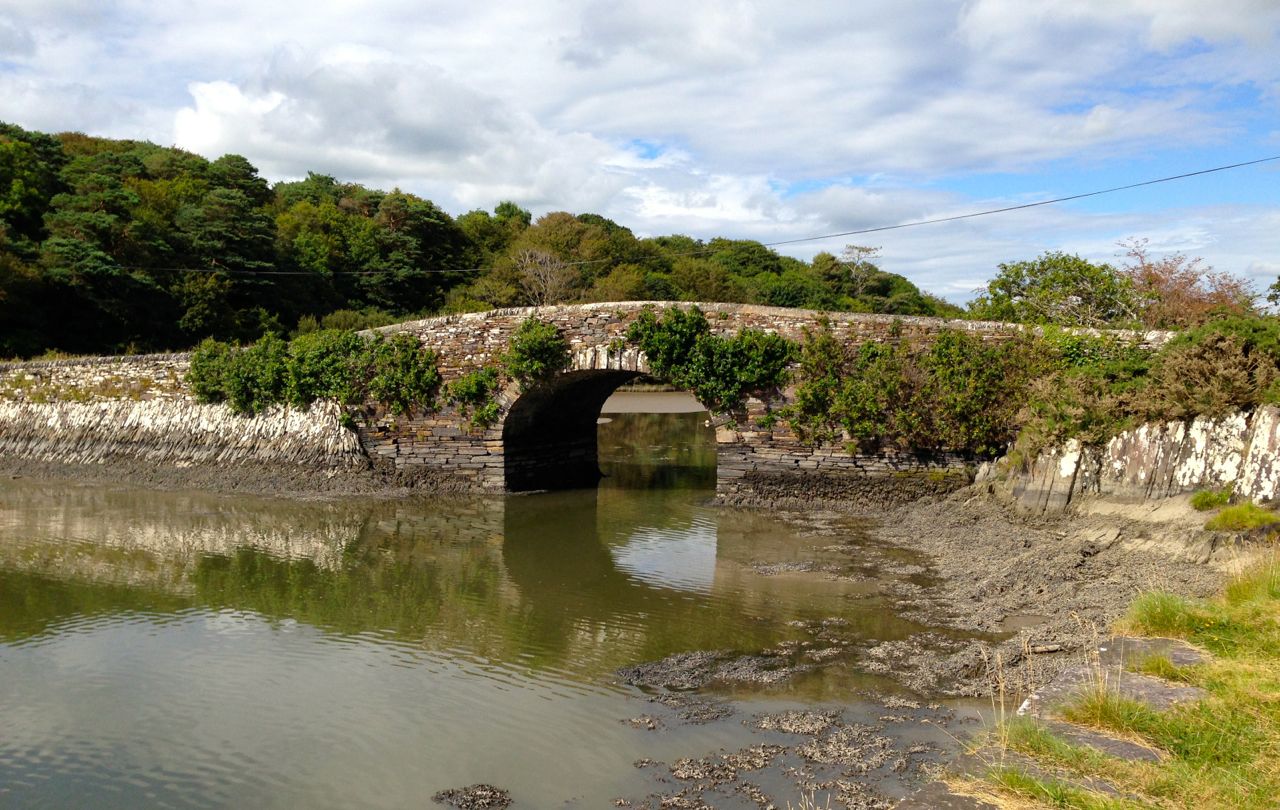
The bridge at Creagh
The bridge at Creagh

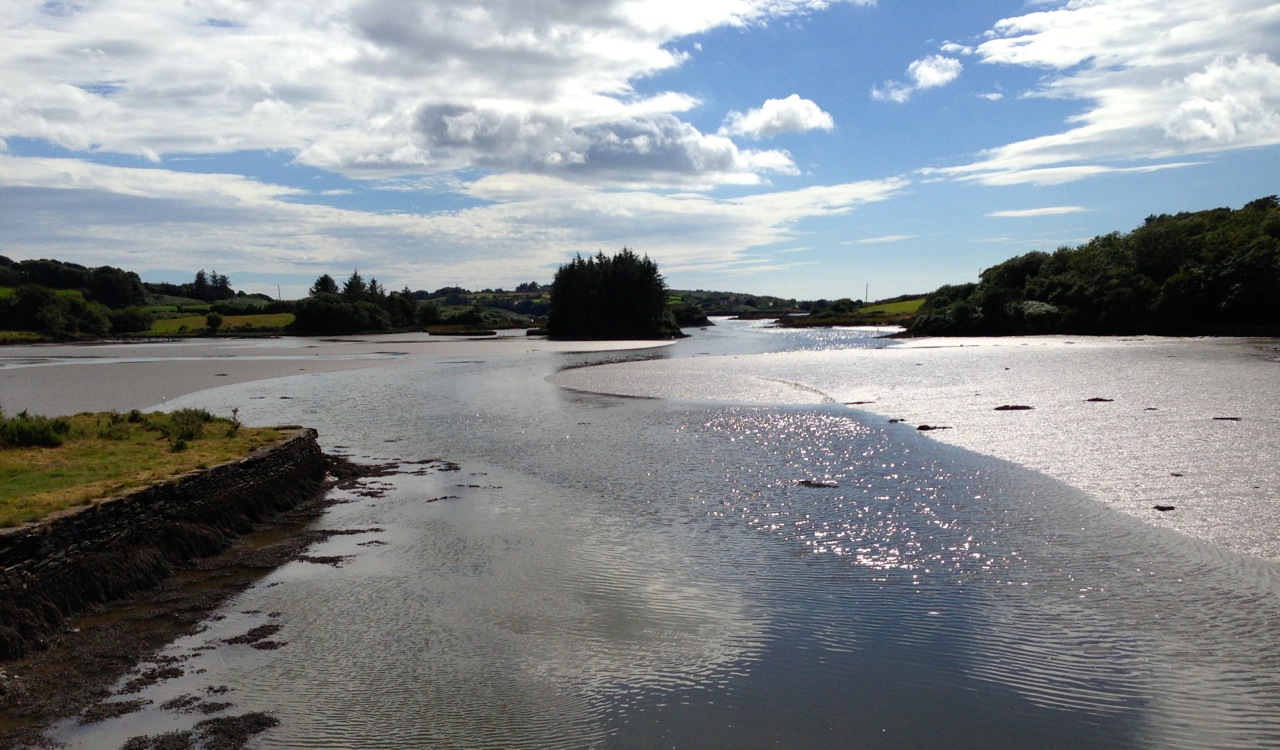
Creagh: River Ilen

Creagh: River Ilen

In 1860 the Goodman family (by now they had three sons) moved to Ardgroom, also in the Gaeltacht, where he took the post of Curate of Kilaconenagh. While there, he began his collection of Irish traditional melodies, learning hundreds from Tom Kennedy, a blind piper whom he had known back in Ventry. The Goodman Collection is the first great body of Irish traditional music ever to have been gathered: it numbers over 2,300 tunes and songs. For many years these lay dormant in the archives of Trinity College Library and they have only recently been  studied and published. Every year at the Skibbereen concert some of the tunes are included in the programme, allowing us to hear the music of Ireland being played just as it was in town and townlands many generations ago.

A story is told of his time in Ardgroom: one weekend an impressive steam yacht anchored in Castletownbere Harbour; on the Sunday, James Goodman was aghast to be told that a distinguished company, including a well-known historian, was coming ashore to attend morning prayer in his church. He felt very nervous at the thought of having to preach to such important people so he delivered his sermon in Irish, knowing that they would not understand it. Shortly afterwards an article appeared in an English periodical stating that Irish was still so much in use in outlying districts in Ireland that it was Customary for clergymen in some Church of Ireland churches to conduct the service in English and to preach in Irish!

rectors

Enigma: the register in Abbestrewry Church, showing Canon Goodman as Rector in 1857; his inauguration there wasn’t until 1867

James Goodman returned to the environs of Roaringwater Bay when he was made Rector of Skibbereen and Canon of Ross. His church was Abbeystrewry, which now hosts his memorial concerts. He was responsible for the building we have today: he initiated a project to demolish all but the tower of the old building and provide a modern worship area, and he paid for much of it himself. It was in 1879 that Goodman was appointed Professor of Irish in Trinity College Dublin  and combined this position with his clerical duties in Skibbereen, spending half of every year in each location.

The Canon died in 1896 and was buried, at his own request in Creagh – his first living. Finola and I searched out the burial ground and his grave. We had previously glimpsed the four pinnacles of the Church of Ireland tower rising mysteriously among the trees on the banks of the Ilen river: when we walked down the long green trackway that is the only access we were struck by how beautiful and yet how poignant the place is.

Side by side are Catholic and Protestant churches – both in ruins. The gravestones give away which is which: old Irish names  define the former, and the church there has returned almost completely back to nature. The Protestant church still stands, but its windows are uselessly boarded up: there are holes in the roof and the crumbling building is prey to the weather. There is an inescapable air of desolation at the site, yet the nearby newer burial ground beside the water is idyllically located and wonderfully peaceful.

Canon Goodman wrote of his life: …ionnus nach raibh aon nidh dob annsa liomsa óm óige, ná bheith ag éisteacht le seaneachtraighthe agus sgéalta fiannuigheachta; ná ceól ba bhinne am chluais ná ceol sármhilis na hÉirionn.  (…so that there was nothing dearer to me from my youth than to be listening to the old tales of adventure and the stories of Fionn, nor any music sweeter in my ears than the surpassingly sweet music of Ireland). The story goes that James Goodman was buried at Creagh along with his own Uilleann pipes: in the silence of the place we had a good listen…
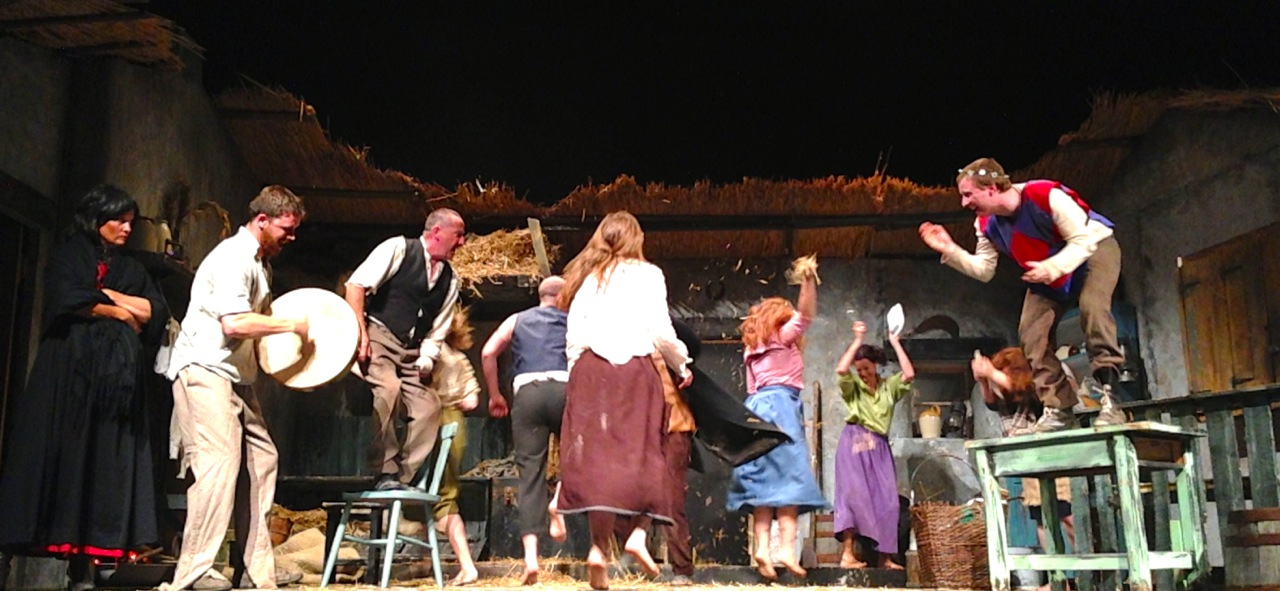
Playboy...

Playboy…

While Goodman was Professor at Trinity he had a student who became renowned: John Millington Synge. Synge was also an Irish scholar and spent much time in the Gaeltacht – particularly in the Aran Islands. It was there he wrote his most famous work, The Playboy of the Western World. Finola has already mentioned that this was also performed – superbly – during the Skibbereen Arts Festival this year: a treat for us – and for the Canon, perhaps.
st0024

Fit-up

Summer Evening on Sherkin

Summer Evening on Sherkin

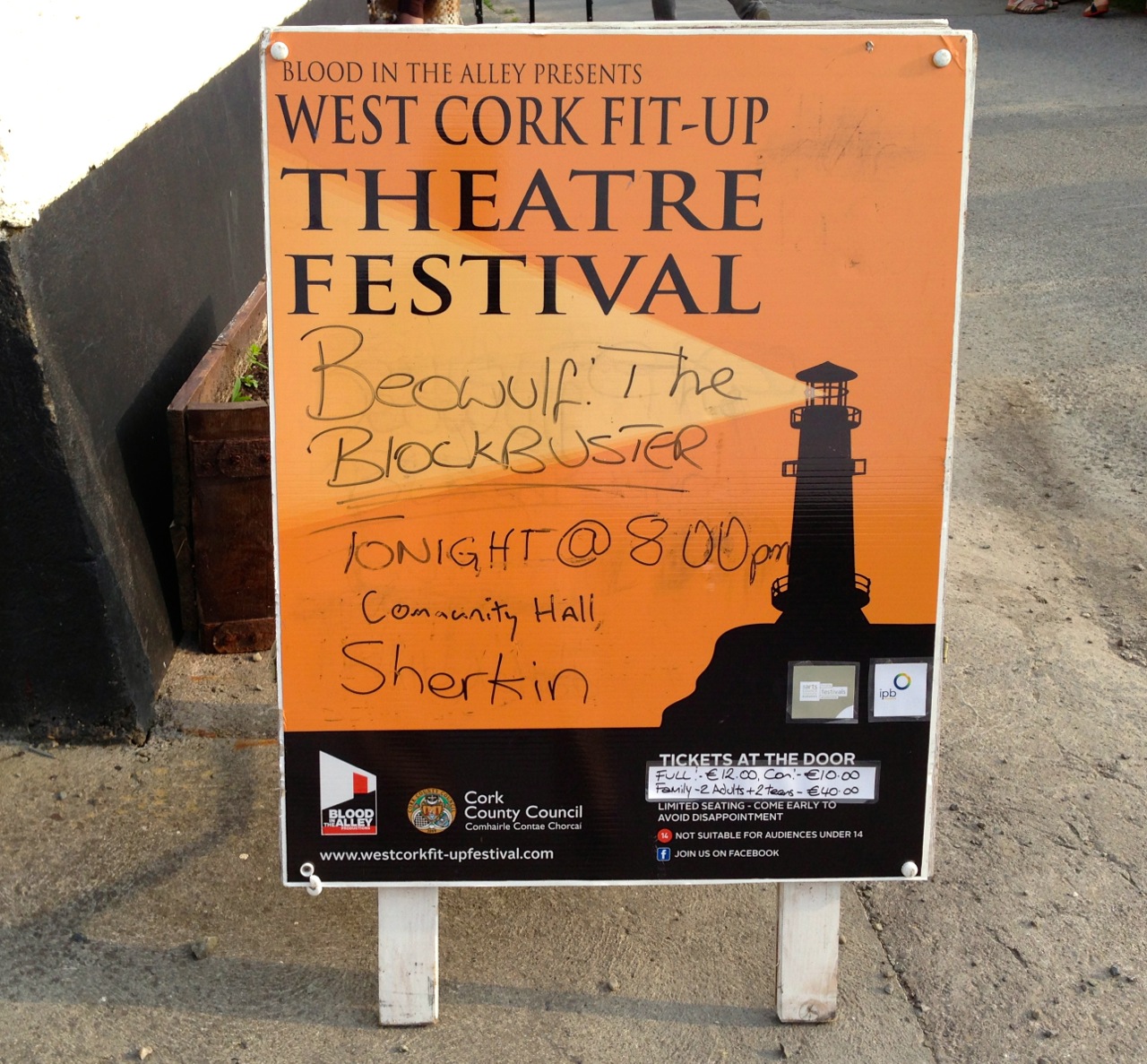
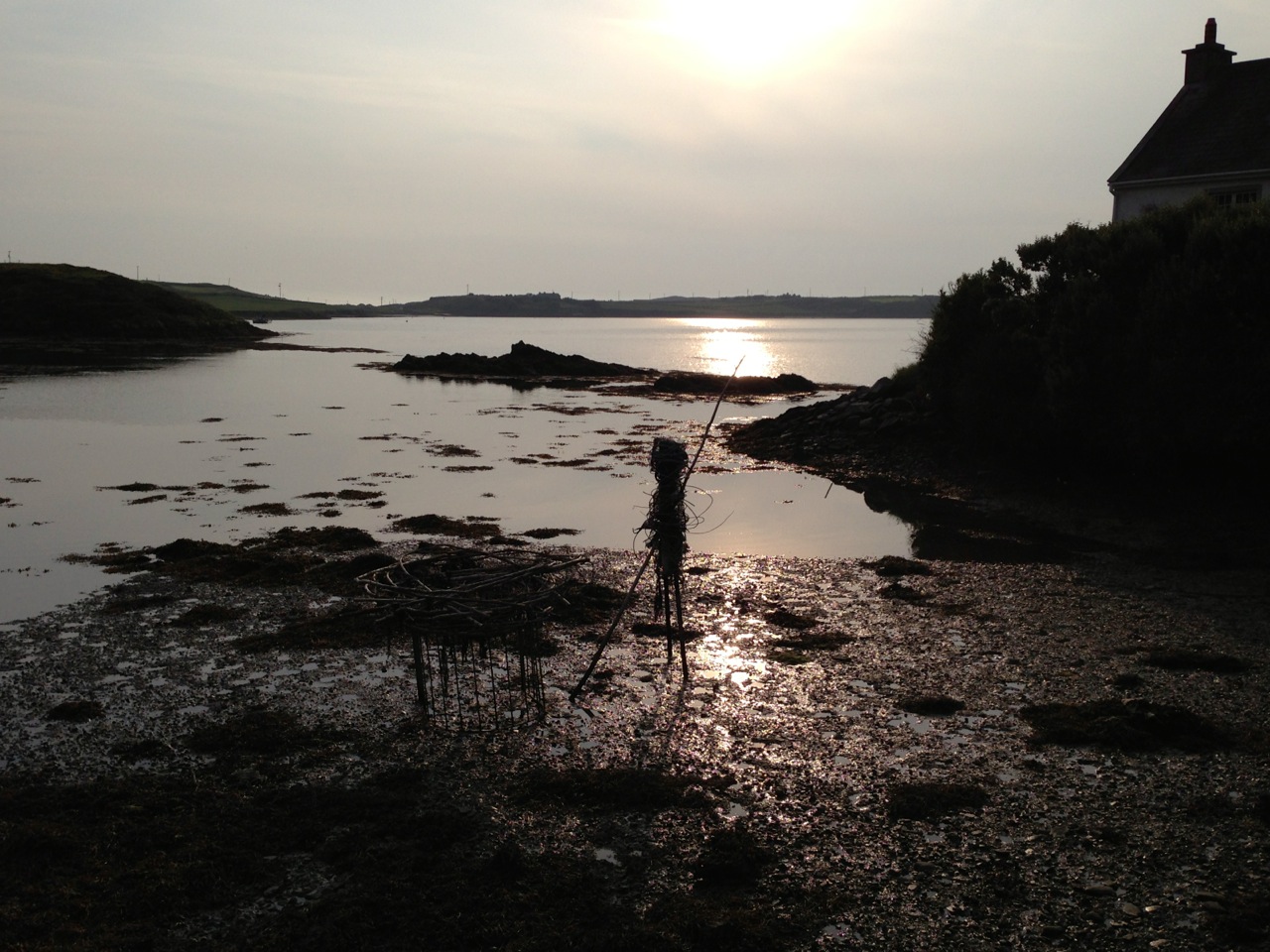
Theatre is alive and well in Ireland. If we went to every play that’s put on within a twenty kilometre radius of Nead an Iolair all through the year we’d be exhausted. Every community seems to have its own acting group, while professional companies are always coming out to the wilds to perform in front of usually packed and enthusiastic audiences. Venues don’t get much wilder than the Community Hall on Sherkin Island, a small space beside an even smaller public library, both of which look out on to the idyllic view above.

We went out on the late ferry to Sherkin recently to catch the West Cork Fit-up Theatre Festival’s production of Beowulf: The Blockbuster. The Beowulf story I know well: my good friends Michael and Wendy Dacre, back in Devon, have it in their repertoire and I have thoroughly enjoyed Michael’s renditions of some of the early English words accompanied by Wendy’s shadow pictures and songs. But this version was very different – written and performed by one man, Irish Times Theatre Award winning actor Bryan Burroughs and developed and directed by Edinburgh First Fringe winner David Horan. The story – commonly cited as one of the most important works of Anglo-Saxon literature – dates from before 1000 AD (there is a written version from that time in the British Museum). Bryan Burroughs sets it in a present day context: a father dying from cancer has a last chance to connect with his son, a boy with a fim-soaked imagination, and uses Beowulf to capture the boy’s attention. poster

Sherkin gave the performance a deserved double standing ovation. We were bowled over by it. Here on this little shard of land in the far west of Ireland we had seen an epic tale enacted without any scenery: we had witnessed the Scandinavian warrior Beowulf defeating Grendel, a horrific swamp demon and then killing an even more terrifying monster – Grendel’s mother. All this on the floor of the unadorned Community Hall, the only ‘props’ being coloured lights.

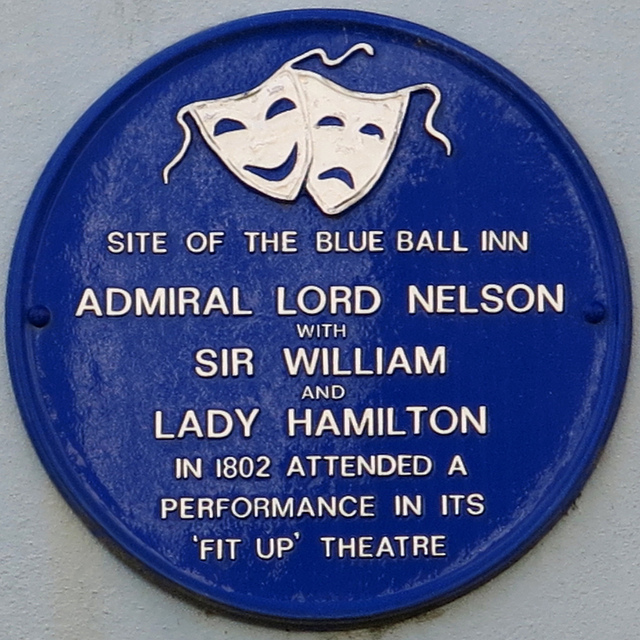
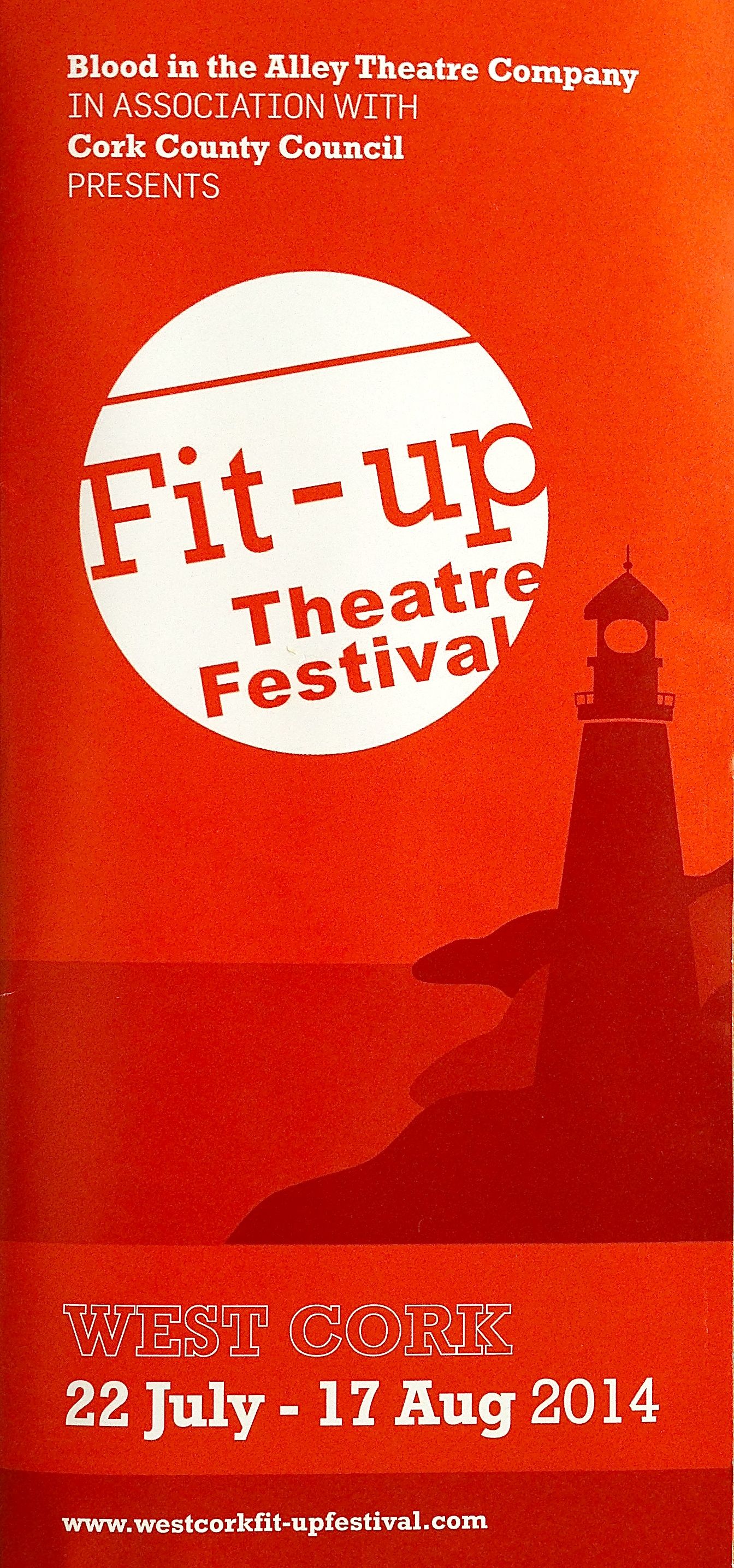
It’s sobering, perhaps, to think that this same production received rave reviews in New York: ‘PHANTASMOGORIC…dazzling, poignant…’ announced the New York Times, while the Sunday Times gave it 5 stars and said ‘…an utterly compelling, comic and vibrant one-man stage phenomenon…’ and here we were in faraway West Cork, where the Fit-up Festival is an annual event: it’s based on an ancient tradition – travelling players calling in on small communities and transforming a yard, a pub or just someone’s back room into a world stage. Fit-up means exactly what it says – ‘fitting up’ the space whatever its limitations, and the term goes back a very long way.

An early reference to 'Fit-up' in England

An early reference to ‘Fit-up’ in England

Of the Edwardian era, the Cambridge History of British Theatre says: ‘…Towns too small for a theatre building might be visited by a portable theatre for a couple of weeks or even a season, or a fit-up company would play in a hall of some sort – two-night stands mostly; a melodrama one night, a farce the next, and then up and away…’

Outside of our own Fit-up, Beowulf has inspired a large corpus of literature, critique and media retellings. Most notable, probably, is Seamus Heaney’s translation, pretty faithful to the Anglo-Saxon original. The fairly recent film versions have some entertainment value but don’t expect too much from their interpretations of the old texts.

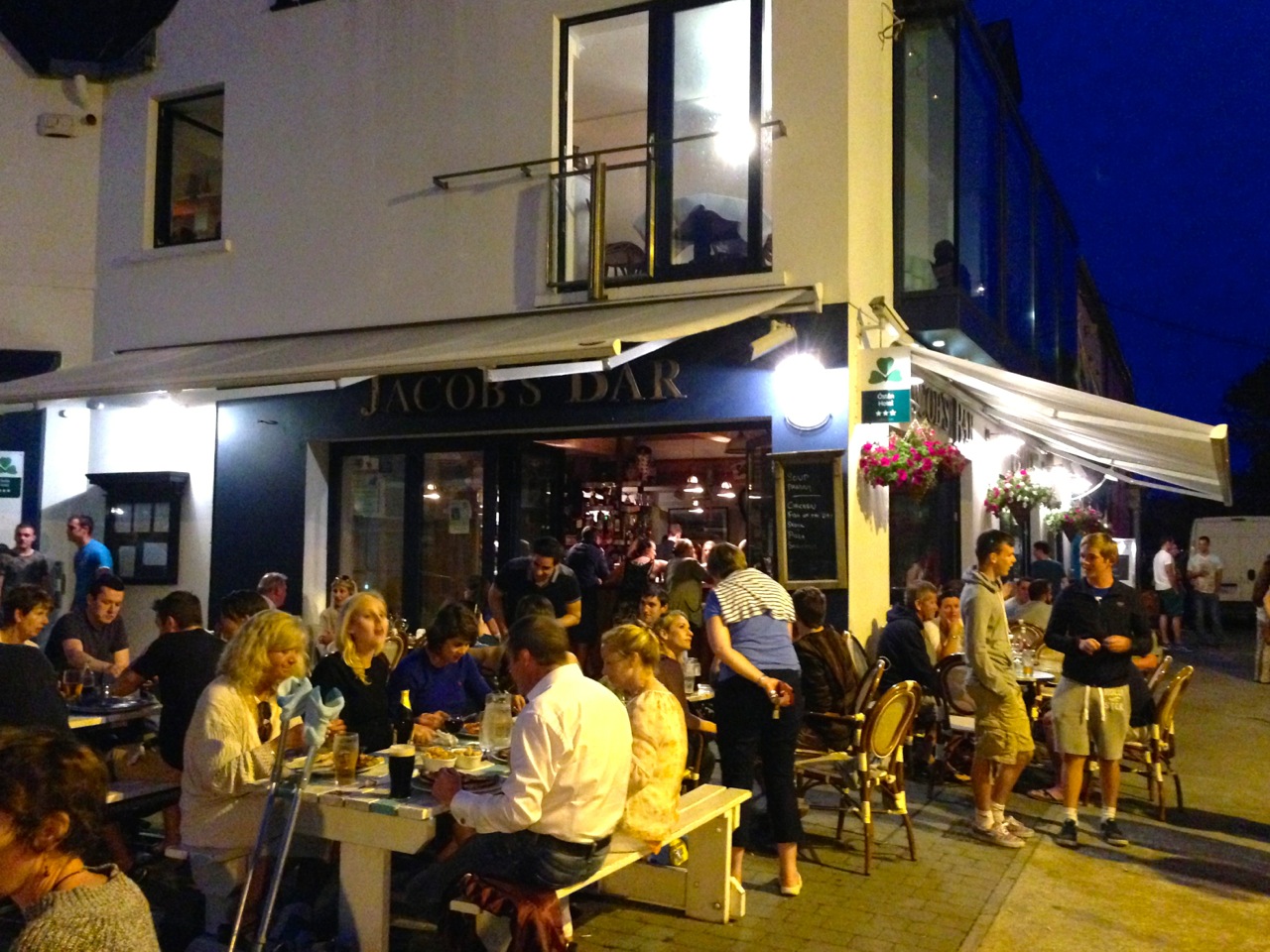
It was a little surreal, leaving the island after such a memorable experience and returning in the dark across the water to Baltimore, where the holiday atmosphere was in full swing – rather untypical of our normal West Cork experiences…

Summer night in Baltimore

Summer night in Baltimore

Just to finish, here’s a snippet worth listening to: an RTE sound documentary of reminiscences around the old ‘Roadshows’ in Bray, Co Wicklow in the middle of the last century – very much the spirit of the Fit-ups… Finola remembers them well!

logo

Out and About with Visitors in West Cork

At Coppinger's Court

At Coppinger’s Court

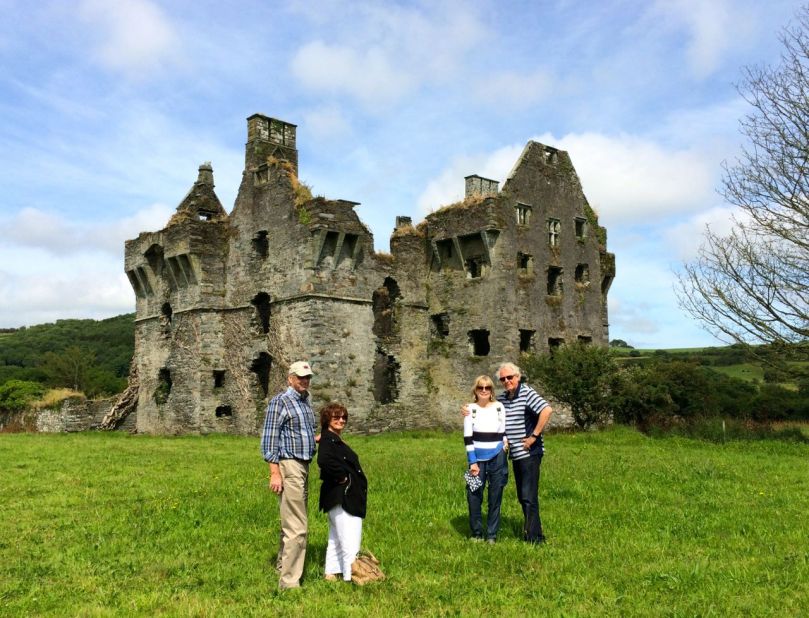
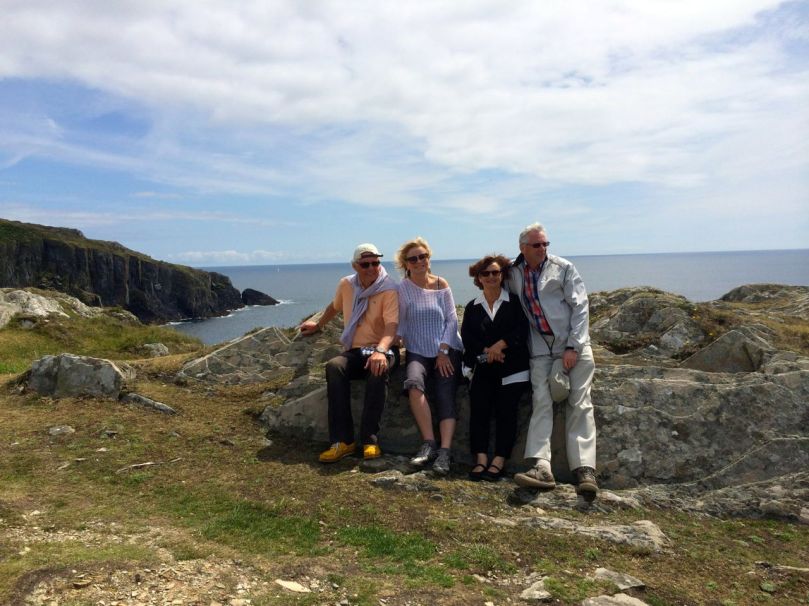
Vi and Grant and Jan and Brian came to stay last week – good friends from Canada here to see the Real Ireland. 

We had some challenges right away. First, the rental car Grant had booked was under repair and the substitute, although it nominally held all six of us, was too cramped and uncomfortable to venture too far afield. Second, muscle wear and tear issues among the group dictated that walks not be too long or arduous. 

No problem! The weather was (mostly) fine, we got in one good hike on the Sheep’s Head, and then set about discovering the delights of flatter terrain, local amenities and cultural events. Robert and I hadn’t toured Bantry House before, although we had been there for concerts. The house will be a future post in itself, but for the moment it’s worth recording that this may be the last summer to see it with its original furniture, as much of it is on the auction block later this year.

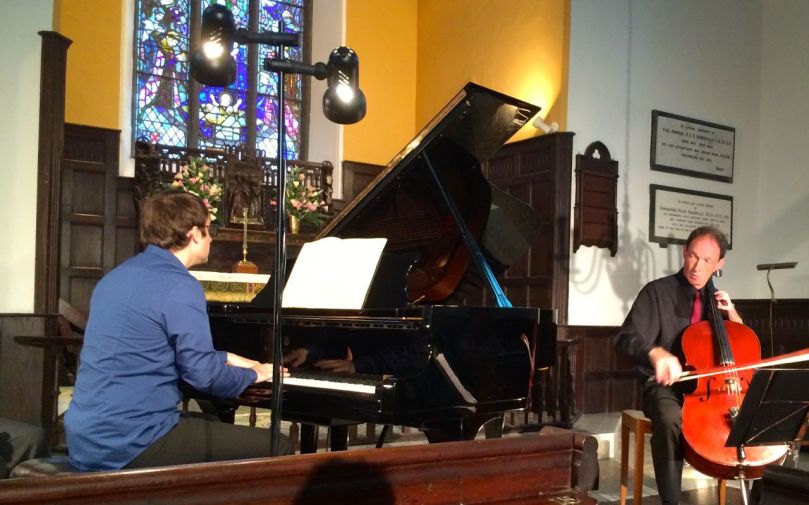
One day we spent exploring the area south east of Skibbereen. We started with lunch at Glandore overlooking the harbour, then on to the obligatory stop at the Drombeg Stone Circle, one of the better-know recumbent stone circles that dot West Cork. On to Coppinger’s Court (another subject for a full post), a 17th century fortified house and home to one of the fearsome characters in West Cork history. Back then to Castletownshend and dinner in Mary Anne’s, followed by a concert in the little church of St Barrahane’s. This was an evening of Beethoven, Debussy and Rachmaninov with Christopher Marwood of the Vanbrugh Quartet on the cello, and the brilliant young American Alexander Bernstein on the piano. It was truly a world-class performance, eliciting a standing ovation from the appreciative audience.

At Drombeg, Jan and Brian

At Drombeg, Jan and Brian

Concert In St. Barrahane's, Castletownshend

Concert In St Barrahane’s, Castletownshend

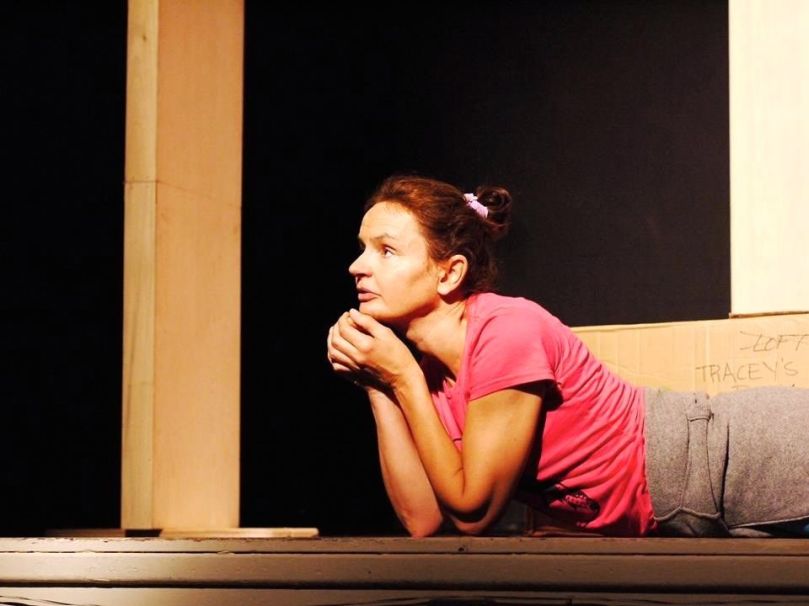
Another day, we wandered around Schull, dipping into the shops and stopping for coffee. Later that evening we attended PlayActing Theatre’s two one-woman shows in the local parish hall. Karen Minihan brought us up to date with her character, Eileen, going through a midlife crisis – it was moving, sad and funny all at once. Then Terri Leiber took us into the experience of eight-year-old Stacey negotiating the dysfunctional lives of the adults around her in 1960s Britain – a tour de force in which she played every role, with a minimalist stage set, a soundtrack from the times, and a beautiful nuanced performance.

Terri Leiber in May the Force

Terri Leiber in May the Force

Shopping at the local markets always makes food preparation easier and fresher and we all took turns. 

In Baltimore, we walked out to the Beacon, with its marvellous views of Sherkin Island and the faraway mountains of Kerry. We hope it’s a good memory to take away of this special part of Ireland. 

At the Baltimore Beacon

At the Baltimore Beacon

Vi and Grant, Jan and Brian – Ferdia has been missing you already!

Ferdia

Ferdia

Alma Mater

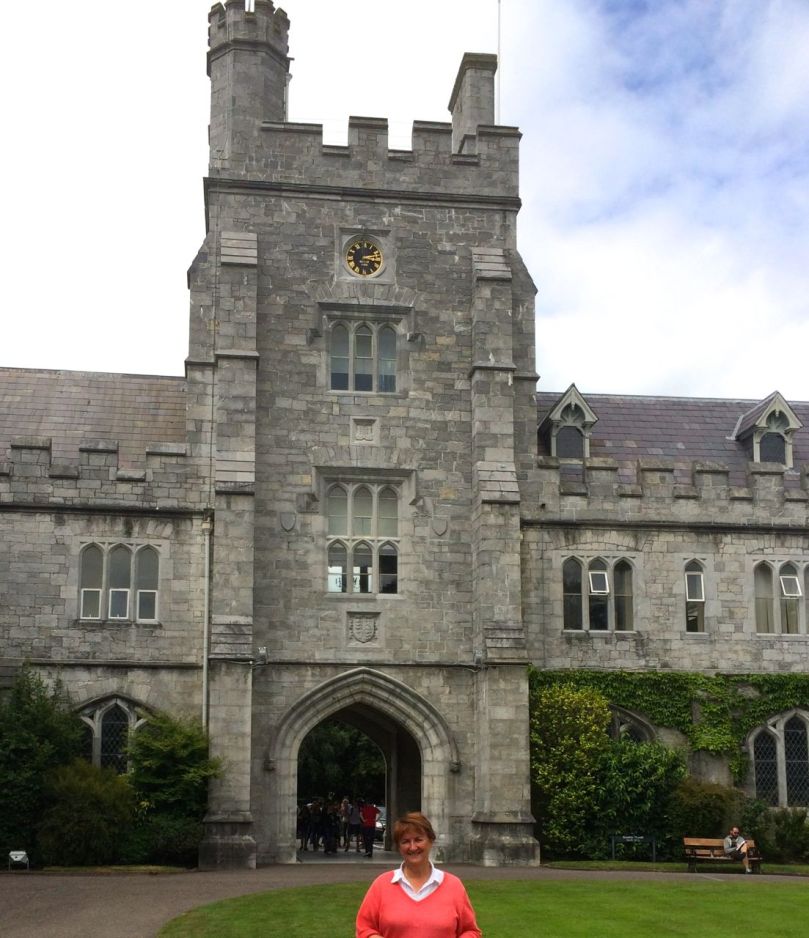
The Clock Tower, University College Cork

The Clock Tower, University College Cork

We have lovely friends visiting from Canada and we have been out and about every day showing off West Cork, so this is just a little post from me today. When we went to pick them up at Cork Airport we had some extra time, and spent it at University College Cork.

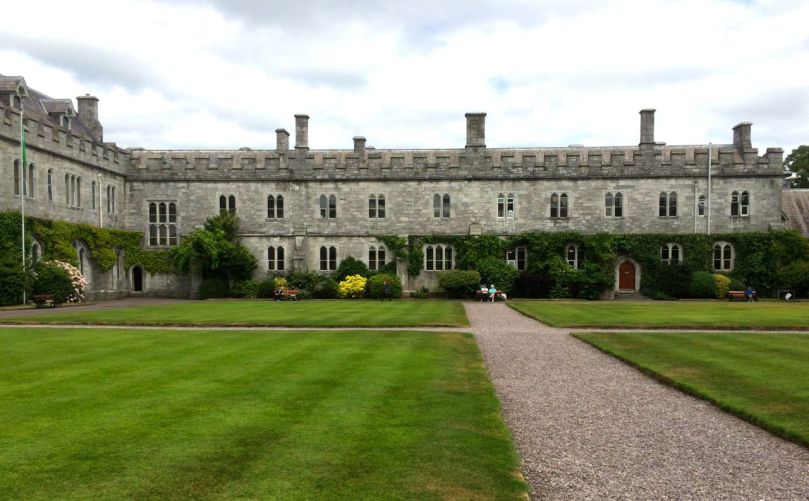
The Quad

The Quad

I attended UCC from 1968 to 1973 and graduated with a BA and MA. The University (or De College as we called it) was much smaller then – I seem to remember there were a couple of thousand students, whereas now there are 20,000. Student life revolved around the Quad, the Rest (restaurant), the library and the lecture halls.

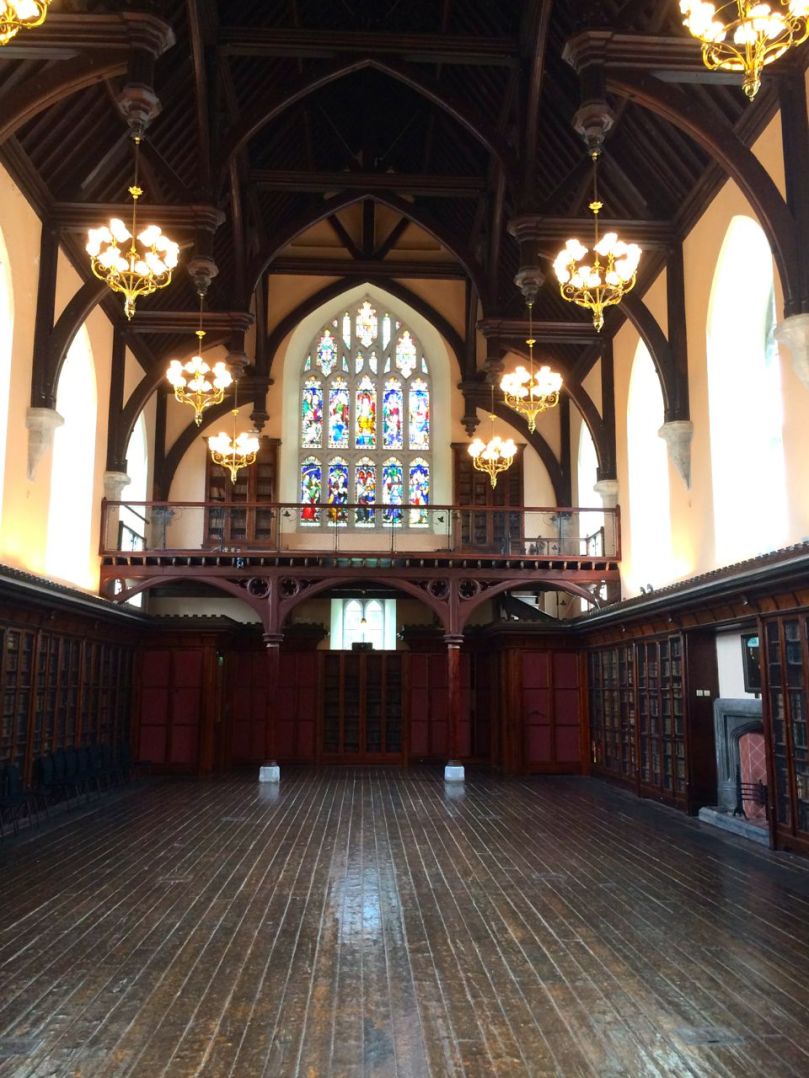
Aula Maxima

Aula Maxima

The Aula Maxima, a beautiful book-lined room, was used for exams, conferring ceremonies and concerts. I first saw The Chieftains there in the early 70s. As a student of history and archaeology, the Stone Corridor was important to me – see Robert’s post for more on this.

Window in the Aula Maxima

Window in the Aula Maxima

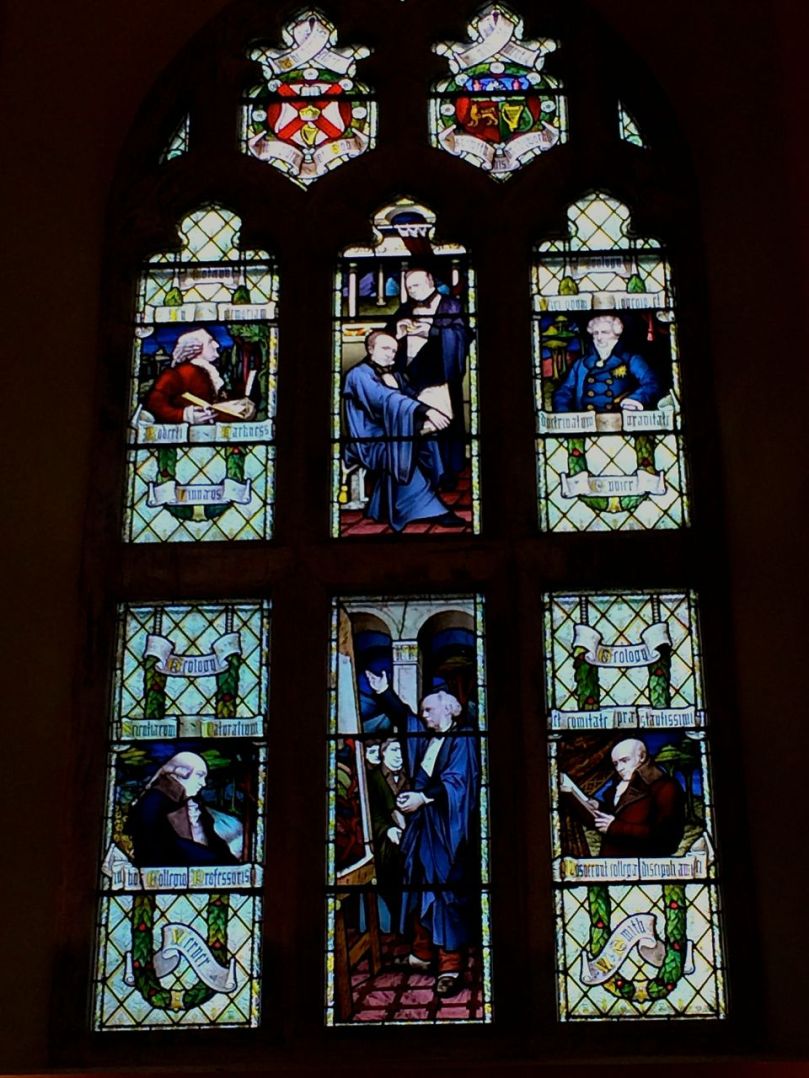
UCC was founded, as Queens University Cork, after Queen Victoria, in 1845. It’s motto, Where Finbarr Taught, let Munster Learn, reflects the importance of Cork as a centre of Early Christian learning led by St Finbarr. Today, it is highly regarded internationally for its research and innovation. Most of the teaching and learning takes place in smart new buildings with modern labs and high-tech facilities.

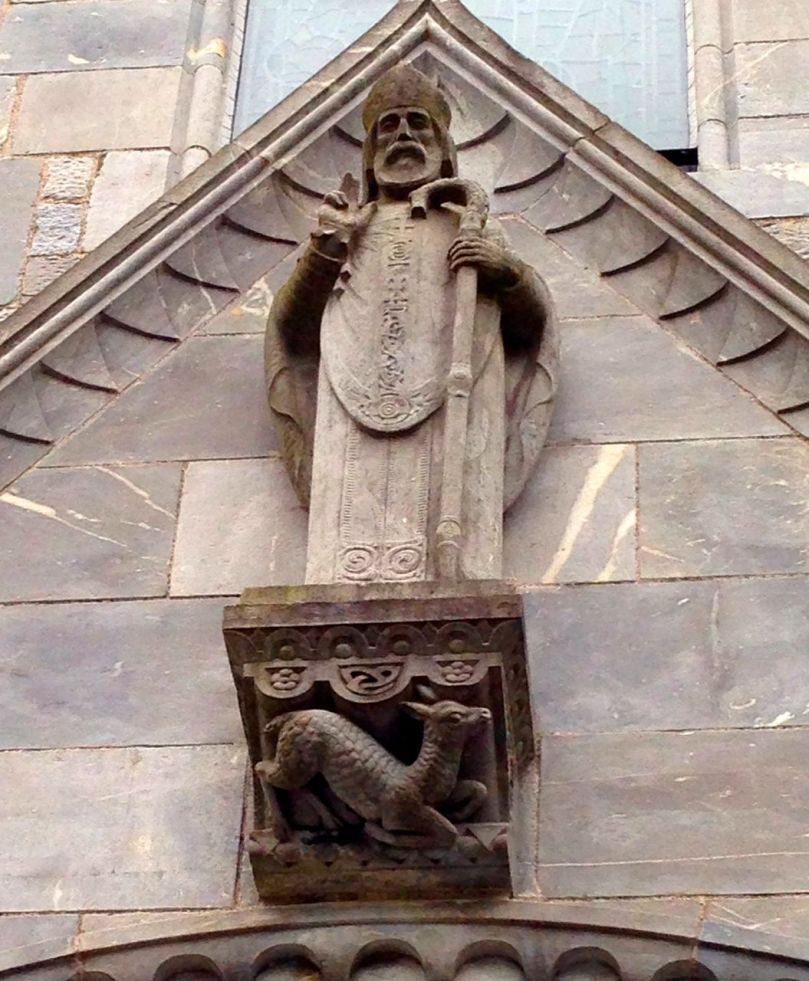
St. Finbarr keeping and eye on things

St Finbarr keeping an eye on things from the Honan Chapel

If you’re visiting Cork, drop up to UCC and soak in the ambience of a traditional university, with cloistered corridors, old oak floors and echoing stone hallways. And say hello to the the shades of St Finbarr.

Ogham

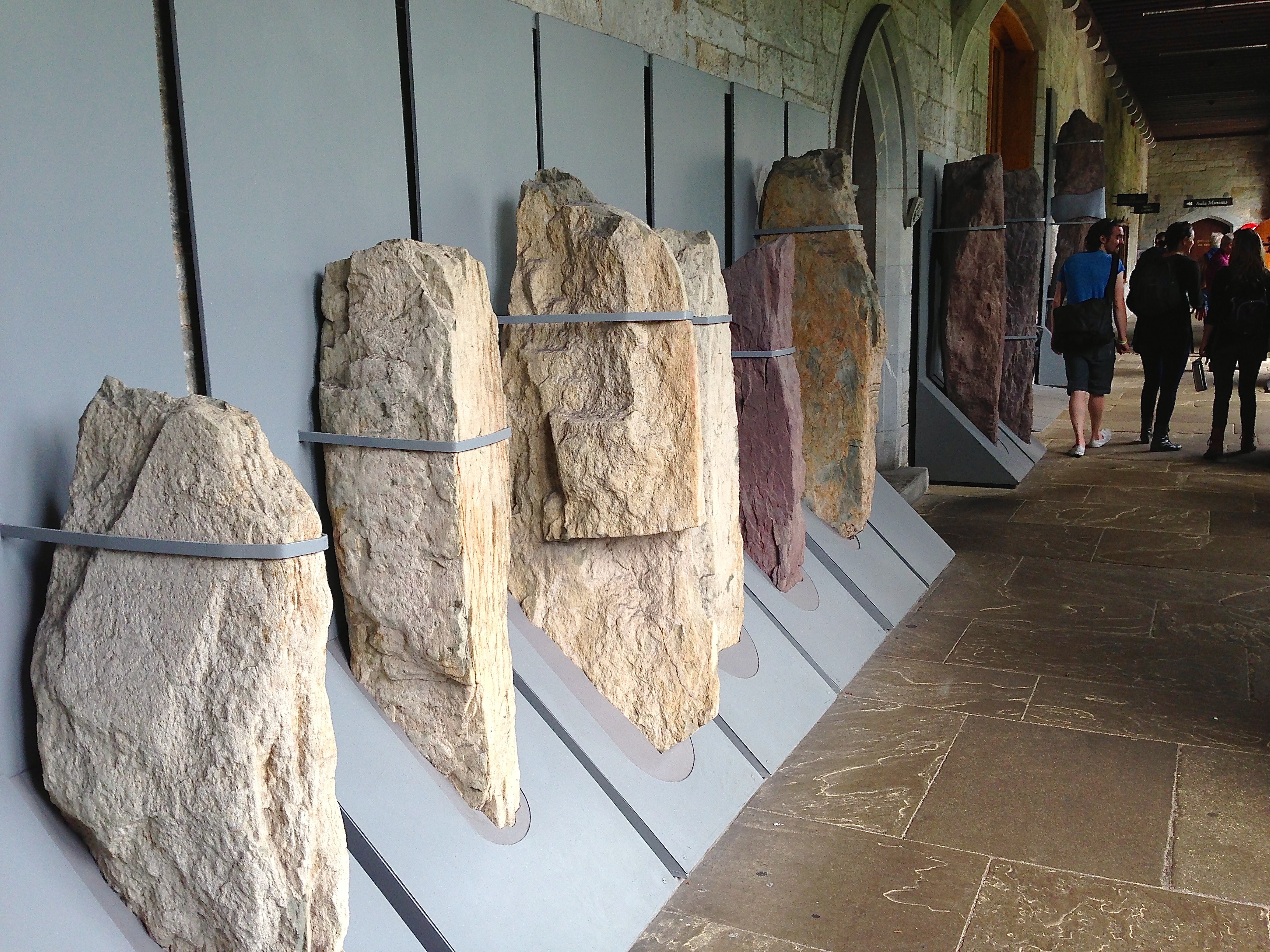
Captured! Ogham stones held in iron bands at UCC

Captured! Ogham stones held in iron bands at UCC

The Scythian King Fénius Farsaid lived at the time of the building of the Tower of Babel – some stories suggest that he had a hand in its construction. He gathered around him a group of scholars and methodically researched the new languages which were being spoken by the dispersed builders of the tower. Their work produced four languages: Hebrew, Greek, Latin and – the most sophisticated – Ogham. _ogham


Thus was the story that the bards of old related to explain the carvings on Ogham Stones (sometimes spelled Ogam but always pronounced oh-am) which are found in northern Europe, the greatest number being in the South West of Ireland.

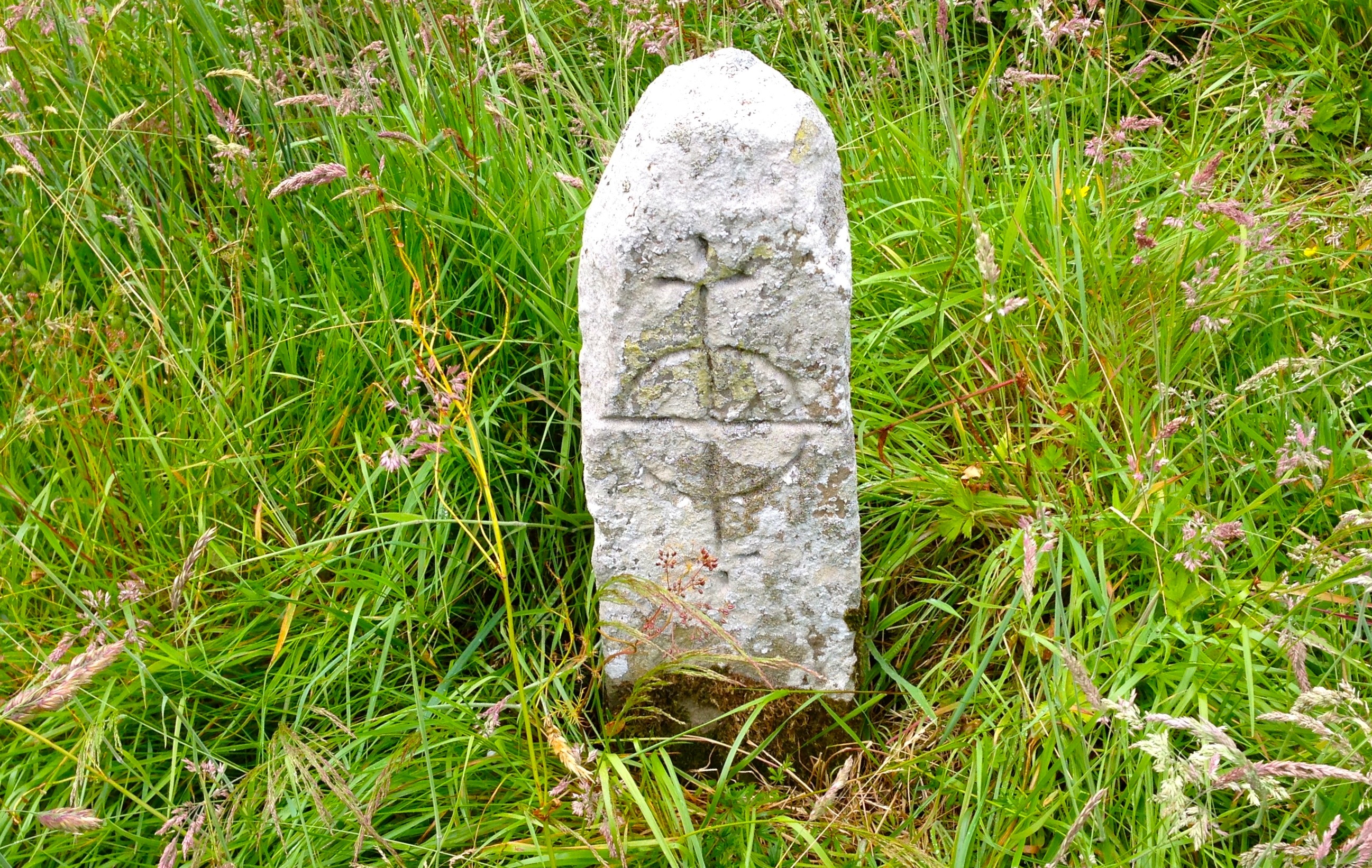
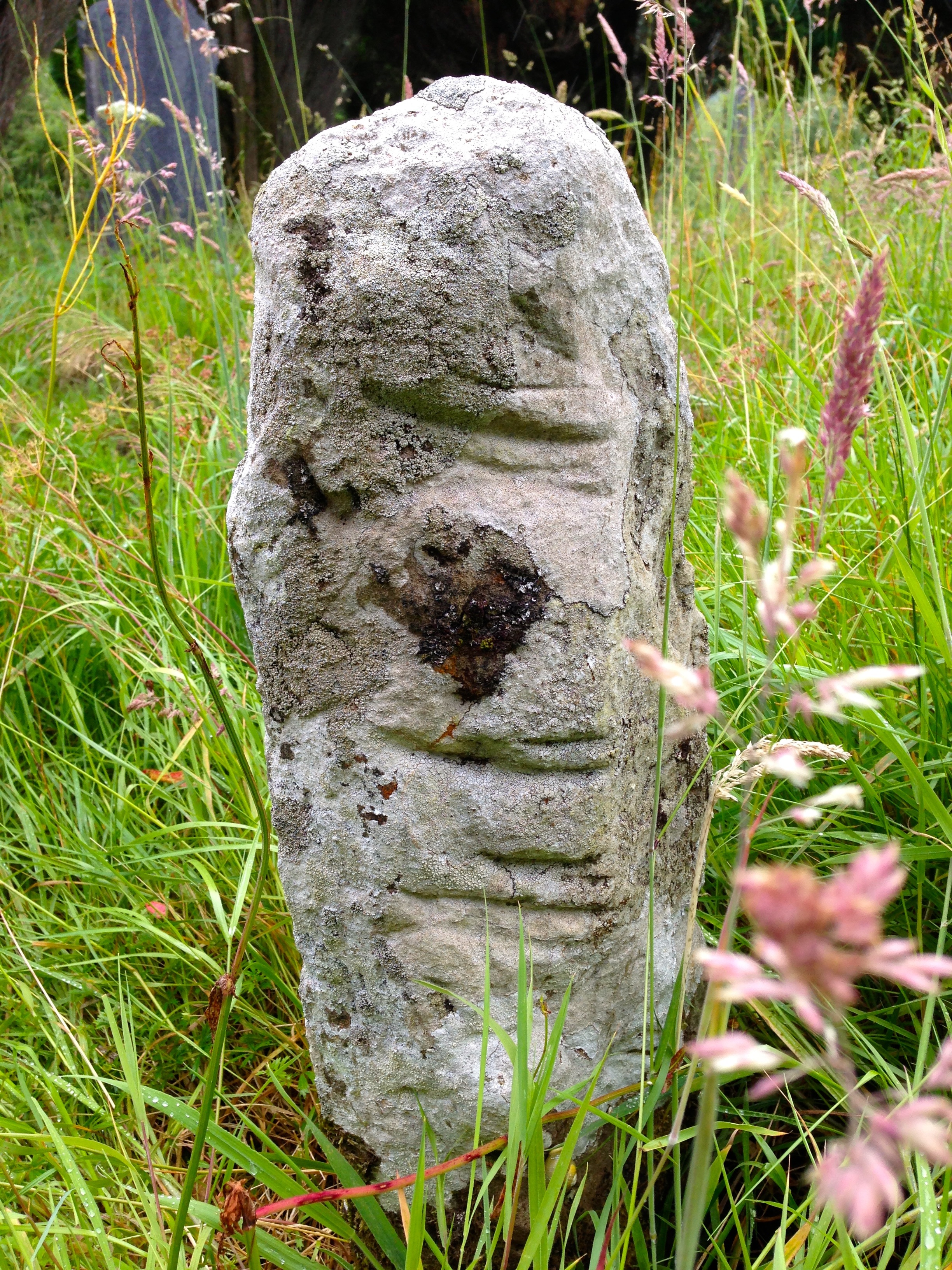
King Fénius named each of the letters of the Ogham alphabet after his best scholars – 25 in all. The ‘letters’ are in fact simple lines inscribed on stone, either on opposite sides of a vertical line or on each side of a sharp corner of stone – the position and angle of each line defining the letter. Words are read starting at the bottom, going up the left side of the line or corner and coming down on the other side, and are generally thought to represent names, suggesting that the inscribed stones are memorials.

ogham

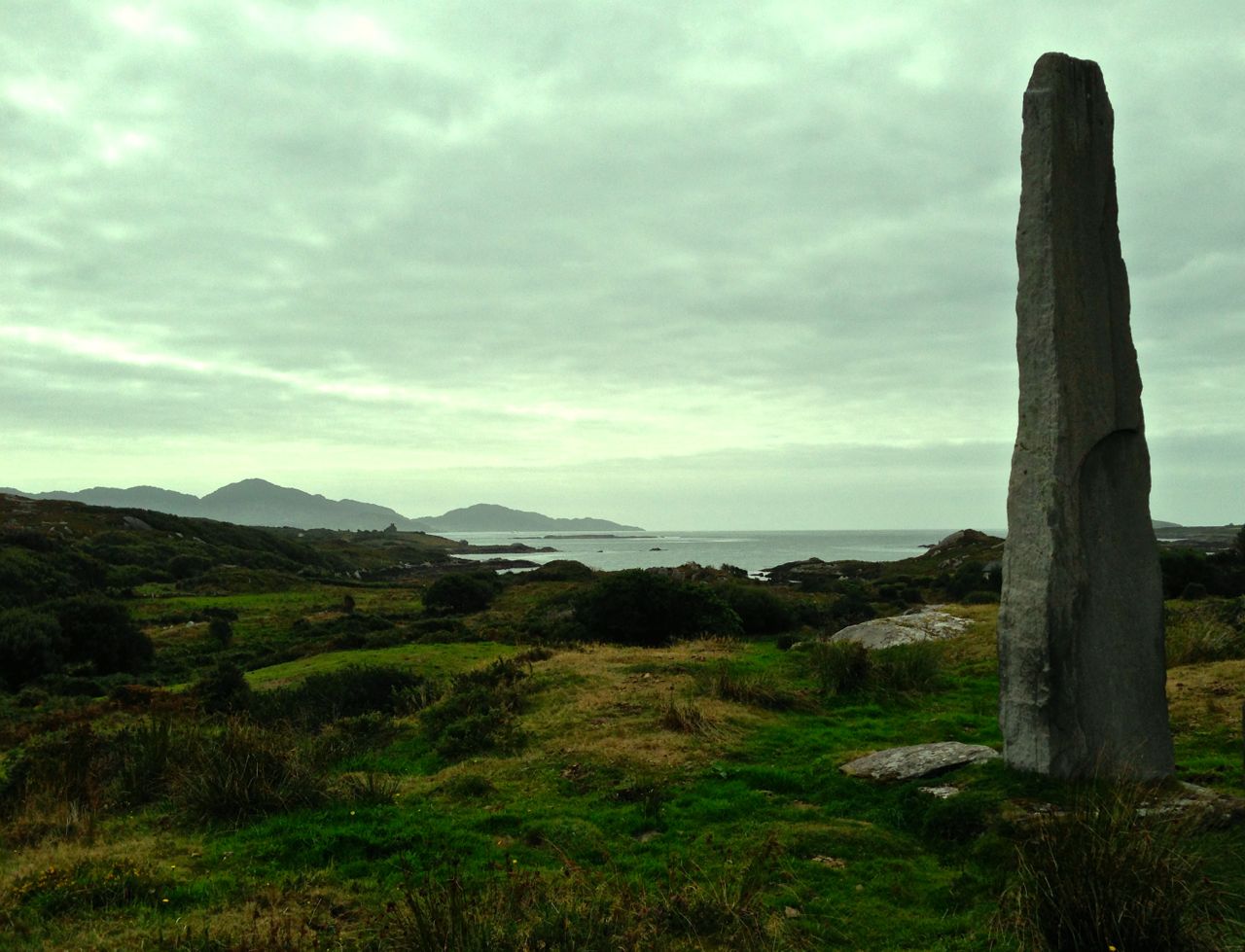
Ballycrovane – the tallest Ogham Stone in the world is in West Cork

If you subscribe to the King Fénius theory of Ogham Stones (and why wouldn’t you?) you might wonder why historians place them in the early medieval period (4th to 9th centuries) and associate them with Christianity. Many of them appear to have been inscribed on older standing stones, including the gigantic megalith at Ballycrovane, overlooking Kenmare Bay and 5.3 metres tall.

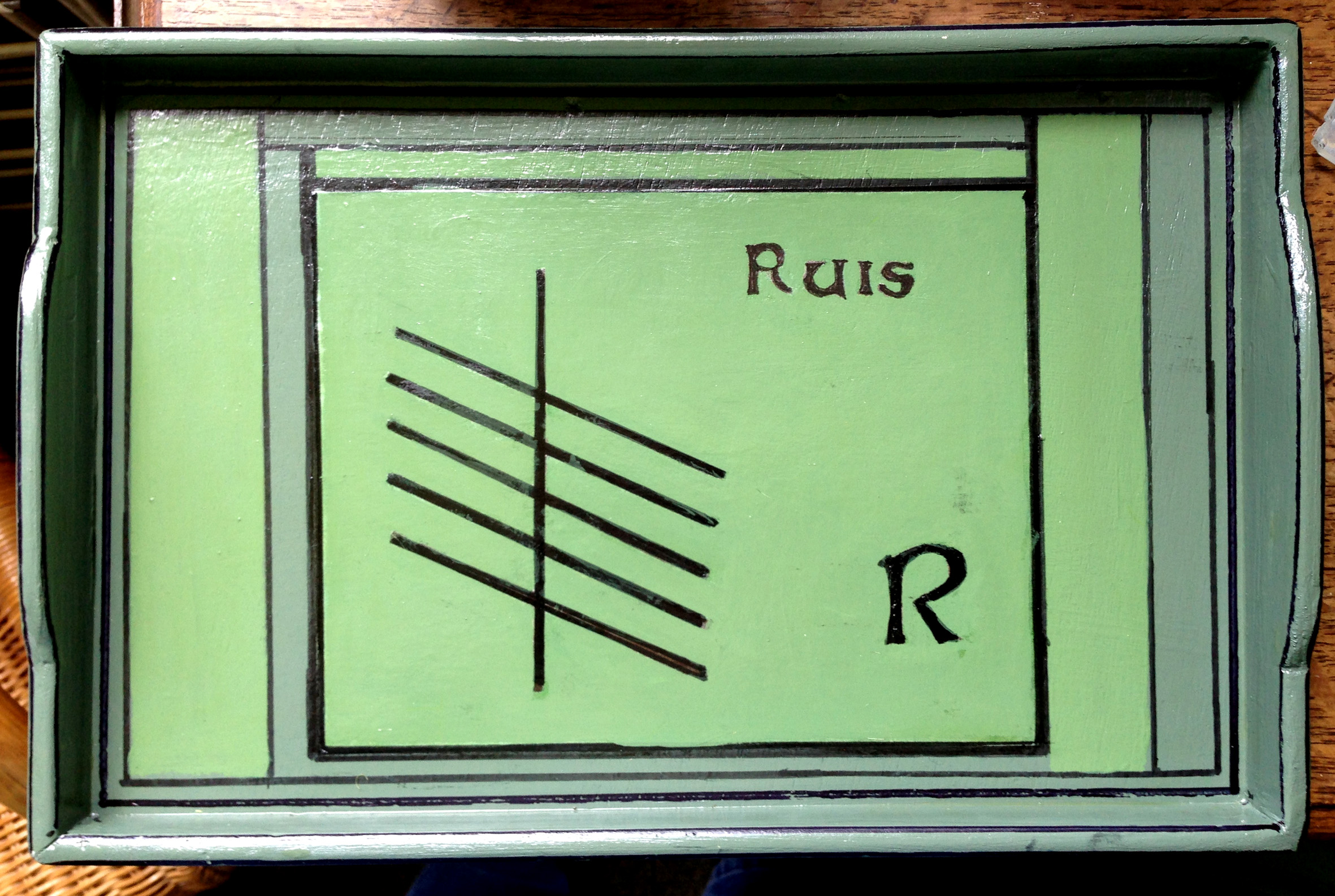
An Ogham tray by Danny

An Ogham tray by Danny

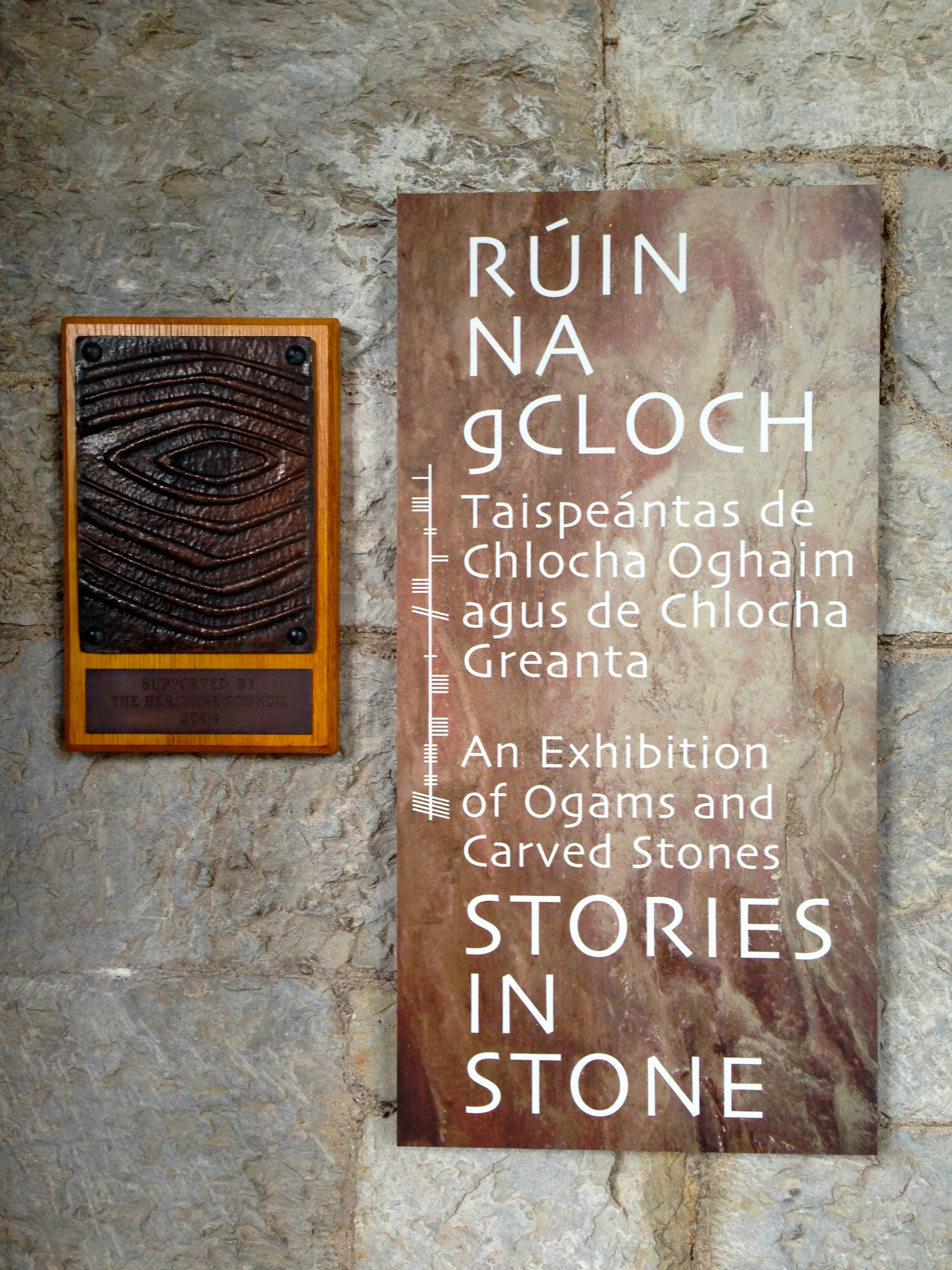
Ogham is not a forgotten language: it is a saleable item of Irishness. But, consider – quite apart from the many examples of Ogham stones which remain in the wild there are those which are kept in captivity. Take a look in the Stone Corridor at University College Cork – there is a remarkable collection there, a collection that raises questions in my mind: why have the stones been removed from their original siting? Is that an archaeologically sound thing to do – to take them from their historic context and chain them up so unnaturally in a long, dark and urban corridor? If it’s time to give the Elgin Marbles back to Athens then it’s certainly got to be appropriate to redistribute the Ogham stones (and the other inscribed stones and Rock Art that are in the Corridor) back to their natural habitats – in the wilds of West Cork… maulin

In its rightful place: Maulinward Ogham Stone near Durrus

In its rightful place: Maulinward Ogham Stone near Durrus (front and back)

corridor

Cork Menagerie

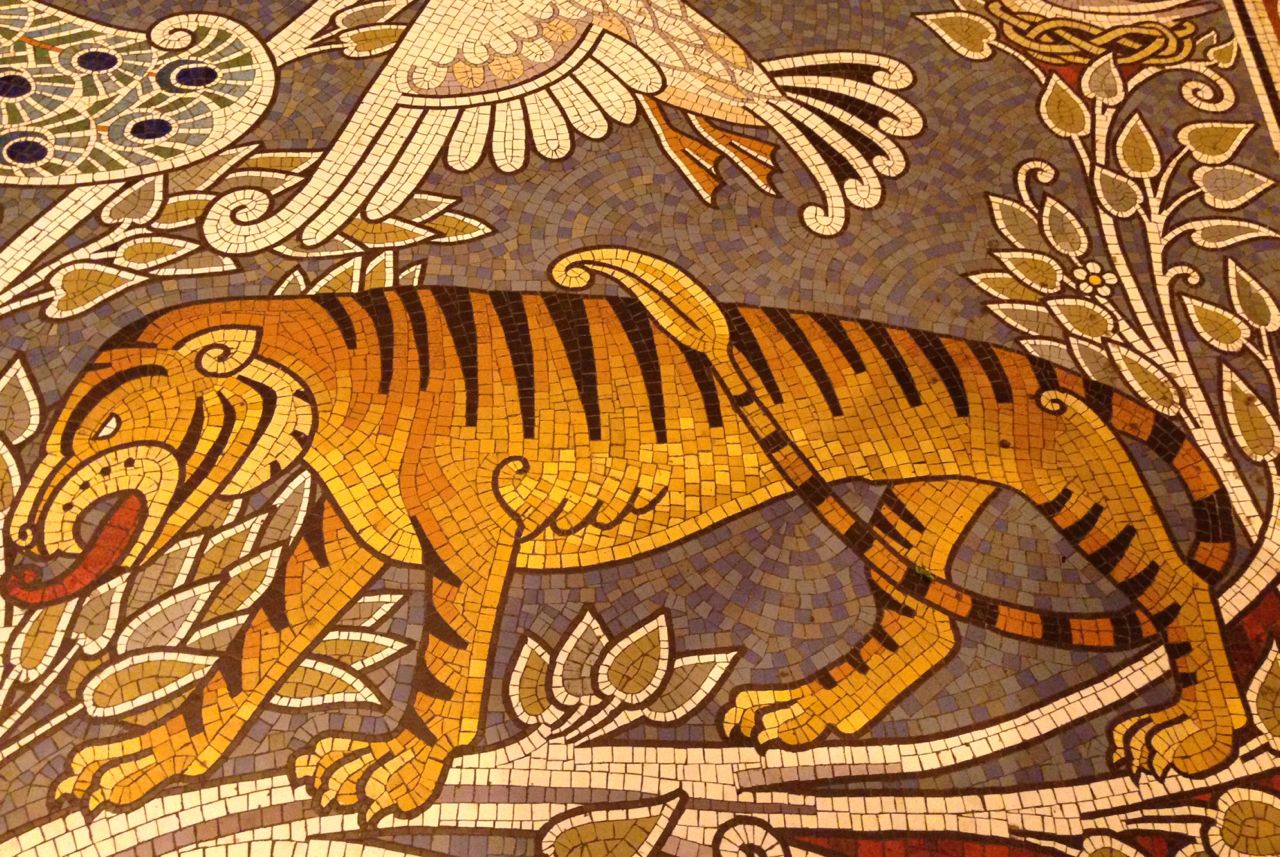
tiger

Cork does have a wildlife park – over in Fota, to the east of the city. But I think Cork’s real menagerie is on the University campus – The Honan Chapel, built almost a hundred years ago, and opening its doors to Catholic students in November 1916.

Ireland’s universities have a fascinating history: Pope Clement V authorised the first one in 1311, and this was based in St Patrick’s Cathedral, Dublin. This institution ‘came to an abrupt end’ with the Protestant Reformation of the 1530s, and Trinity College Dublin was founded as the ‘University of the Protestant Ascendancy’. At this time, England had the Universities of Oxford and Cambridge, while Scotland had Universities at St Andrews, Glasgow and Aberdeen.

In 1908, the Irish Universities Act was passed, by which the National University, consisting of the Constituent Colleges of Dublin, Cork and Galway was founded. Part of this act decreed that of the finance provided for the new University, none should be applied ‘… for the provision or maintenance of any church, chapel or other place of religious observance …’ It was left to a Cork merchant family – the Honans (who made their wealth through butter) to provide a hostel and chapel for Catholic students. 

‘…The chapel, itself, is in perfect accord not only with its immediate surroundings, but also with the wide heritage of art handed down to us by the early native church building. It is one of the best reproductions of the ancient style of building and it exemplifies, in a striking manner, all that is best in the Hiberno Romanesque architecture of the tenth, eleventh and twelfth centuries…’ The Honan Chapel, M J O’Reilly, Cork Univeristy Press, 1966

legilium

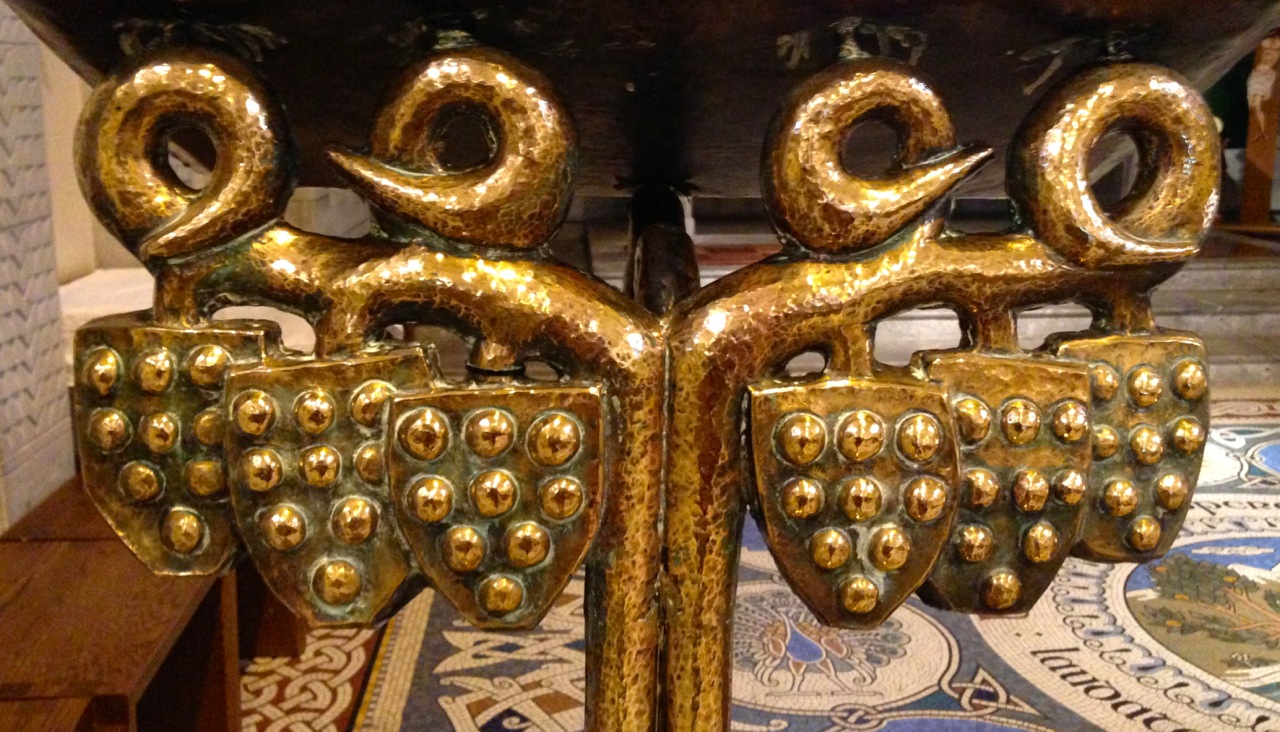
Lectern decoration

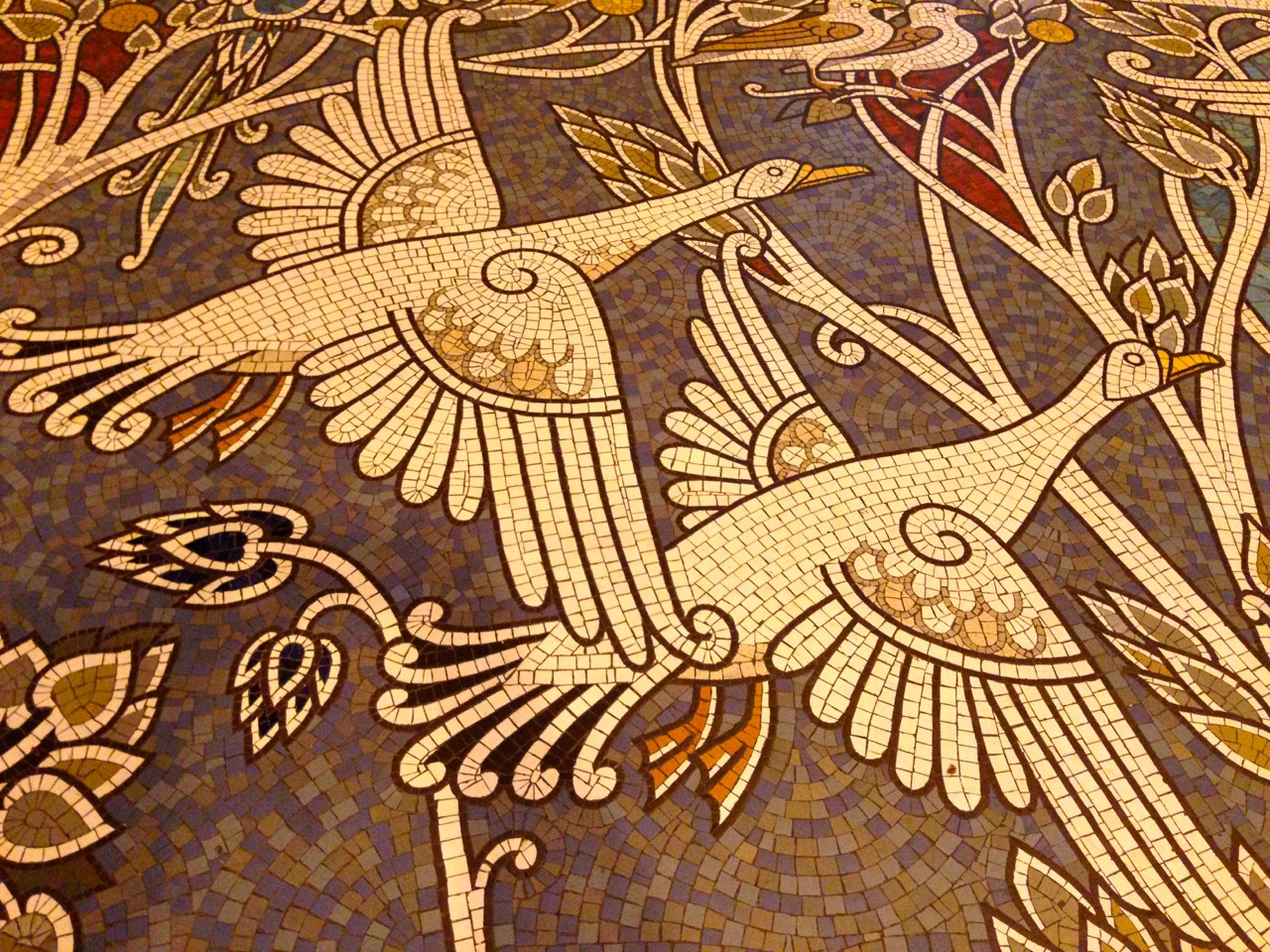
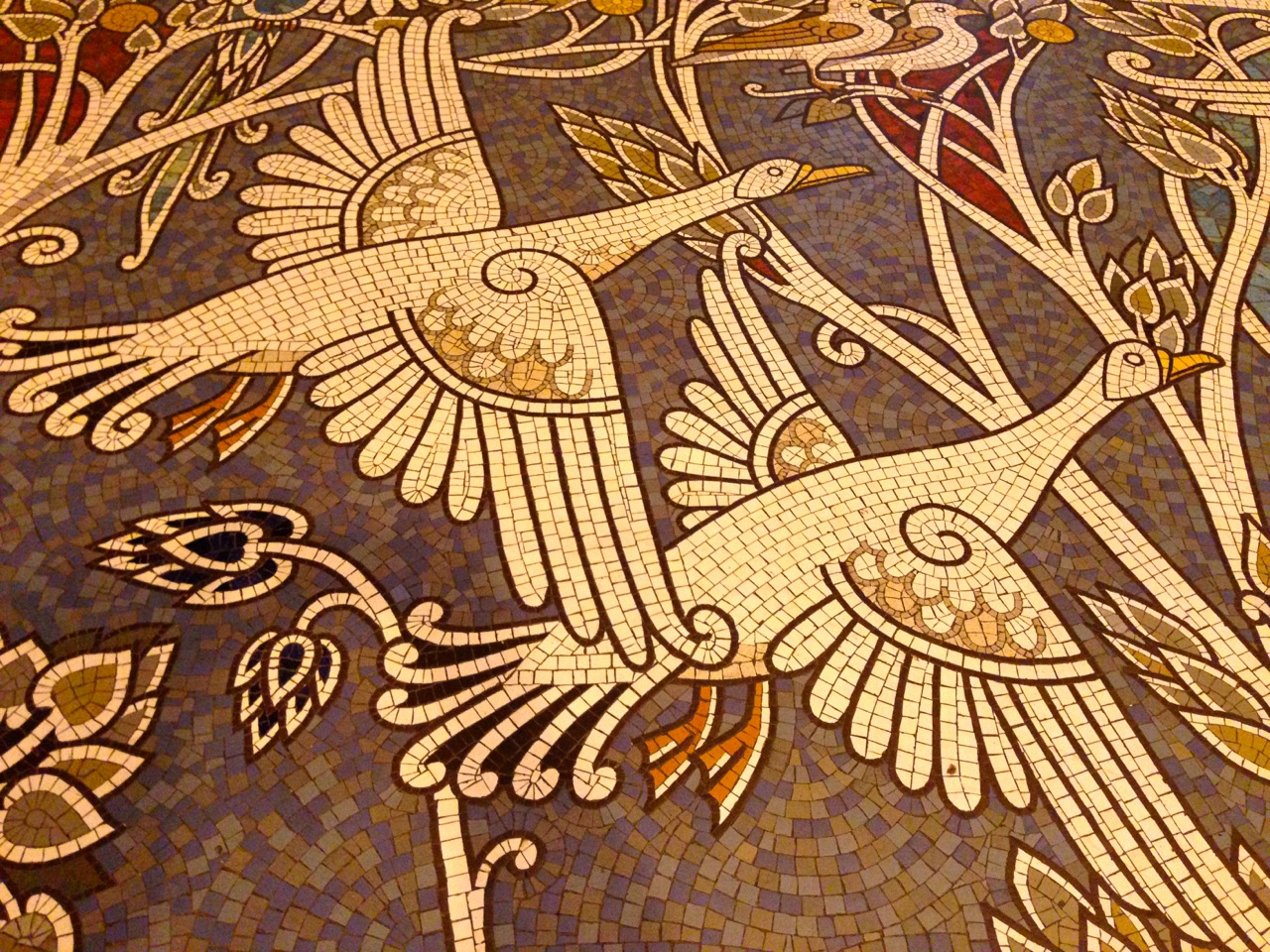
The interior of the building abounds in exquisite artworks. It’s a feast for the eyes wherever you look: stained glass windows by Harry Clarke stand out (including St Gobnait) – but, for me, the real treat is the mosaic work on the floors, designed by Ludwig Oppenheimer of Manchester. A River of Life runs the length of the nave from the entrance door to the sanctuary where, amidst a riot of pattern and colour, the menagerie unfolds: there are birds and beasts, fish and fowl all contained in decorated borders with Celtic knots and patterns. The only analogy I can think of is a medieval illuminated manuscript such as the Book of Kells, where the pages and margins are extravagantly ornamented with figures of humans, animals and mythical beasts in vibrant colours imbued with Christian symbolism.

The Chapel is dedicated to St Finbarr, Patron Saint of Cork. The foundation stone, laid on the 18th May 1915, records ‘… built by the Charity of Isabella Honan for the scholars and students of Munster…’ The architect was James F McMullen.

swans