A Medieval High Cross – Out of Place

I was intrigued by this advertisement in the current edition of the Irish Arts Review (March – May 2020). Morgan O’Driscoll is based in Skibbereen, West Cork and specialises in Irish art. Paul Henry (1876 – 1958) fought an uphill battle in his own lifetime to get his work recognised. In 1911 Paul Henry and his wife Grace exhibited in Leinster Hall, Dublin. One critic commented that the Henrys: ‘ . . . seldom rise above the dead level of mediocrity and too often fall below it . . . ‘  In that exhibition was a work, The Potato Diggers: it didn’t sell until the 1930s. In 2013 it was included in a sale by James Adams & Sons, Dublin – and fetched €400,000! Just a decade ago, a Paul Henry might have been expected to sell for a few thousand – now, 40 years after his death, he’s a star!

Paul Henry painted by his wife Grace in 1899

So why am I intrigued by the O’Driscoll advertisement? Take another look – the title of the painting is given as Celtic Cross at Lough Derg. I have taken an interest in Irish medieval High Crosses, and published a few articles on them in this Journal. In particular, this one – The Wonders of Monasterboice. Here’s a couple of photos from that post: the left one is an image of the west face of Muiredach’s Cross taken in the early years of the twentieth century – when the carving appears to be more clearly defined than it is today – and on the right is Finola, giving scale to the same cross just a couple of years ago. This cross – named after Abbot Muiredach mac Domhnaill, who died in 923AD – is one of the finest in the country, standing 5.5 metres tall.

Looking at a detail from the Paul Henry painting (above), there is a remarkable similarity between the ‘Lough Derg’ cross and Muiredach’s Cross at Monasterboice. So – I hear you suggest – are they twins? Not exactly: in fact, through the medium of painting, one cross can be in two places at once! There is no ‘Celtic Cross’ at Lough Derg, so our artist has taken Muiredach’s Cross and placed it in his picture. Why?

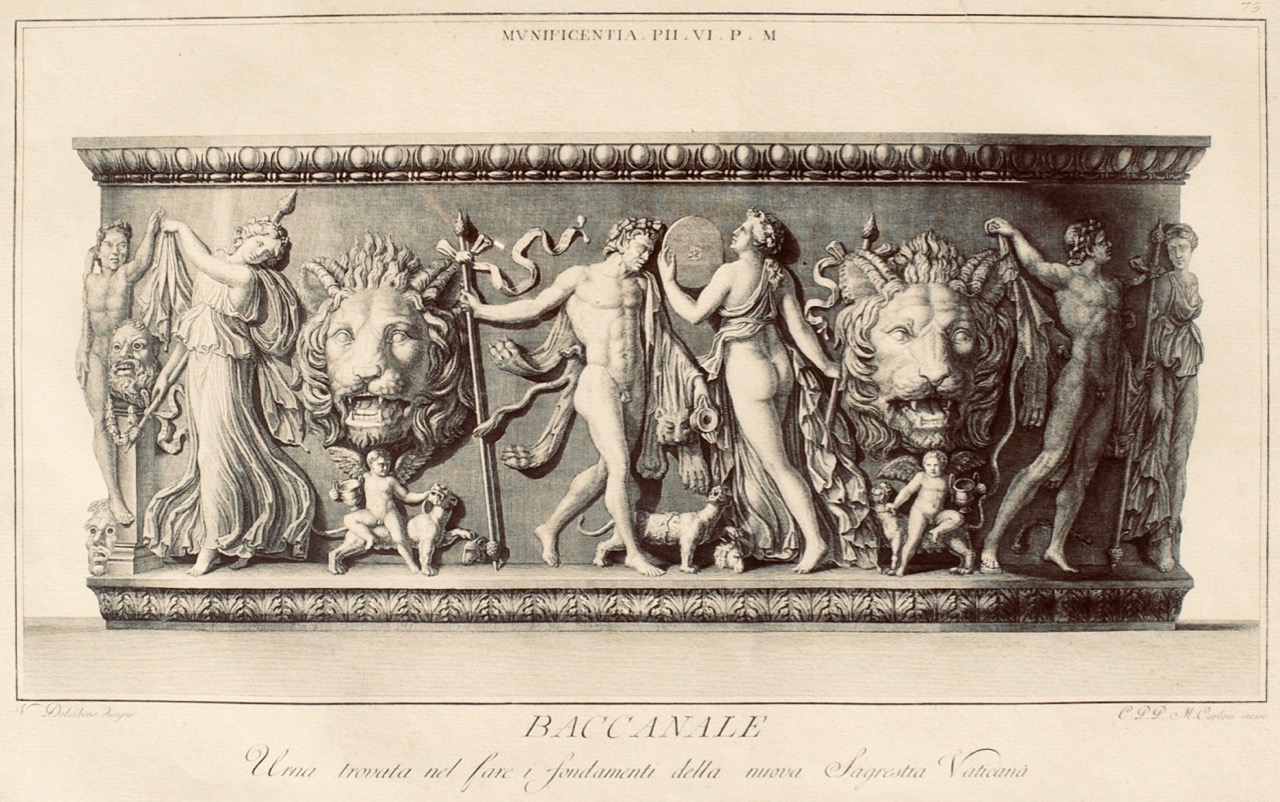
At this point I can’t resist showing you this antiquarian drawing of Muiredach’s Cross (above), probably dating from the eighteenth century, although I haven’t been able to find the author of it. It’s fascinating that all the elements of the cross are portrayed: the central figure in the roundel – presumably Christ – the various figures on the  panels above and below and on either side, and the two cats on the base looking very much like comfortable fireside moggies. But look how all the images have become stylised: medieval has been transported to Georgian neo-classical!

Baccanale – an example of a 1782 copperplate engraving by Marco Carloni, Rome

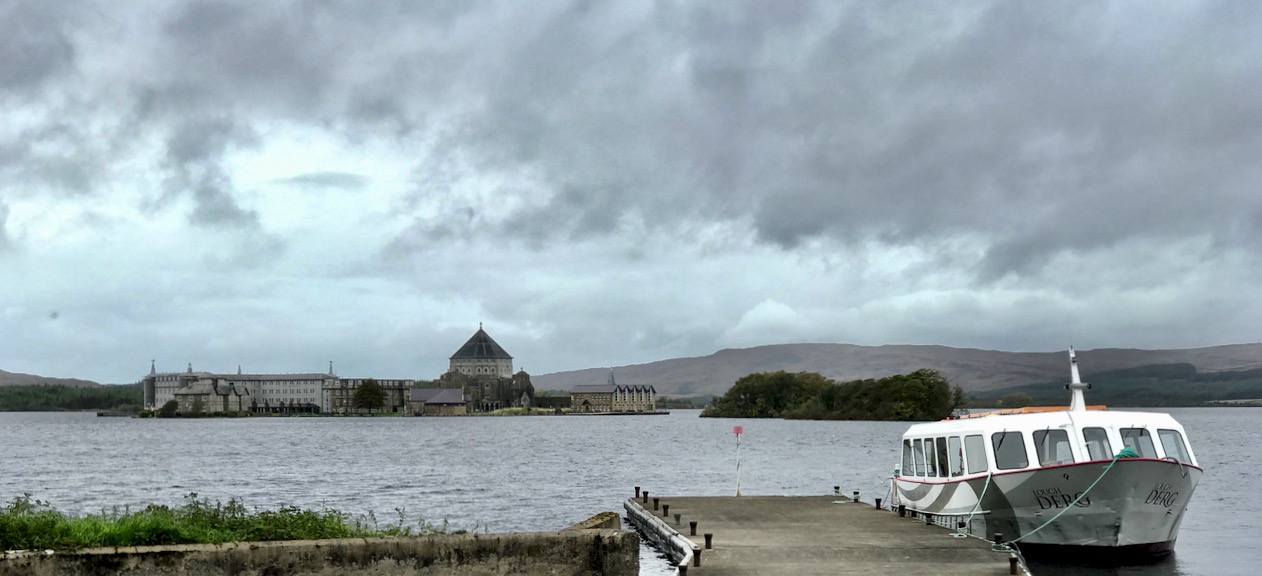
Before we explain Paul Henry’s stretching of the truth, let’s consider something else: there are a few Lough Dergs in the country, but the most famous – and the one most likely to be depicted by an artist who is showing off Ireland might be Saint Patrick’s Purgatory, which I covered in this post, also from two years ago.

Lough Derg, showing the pilgrimage site of Station island, and the surrounding landscape

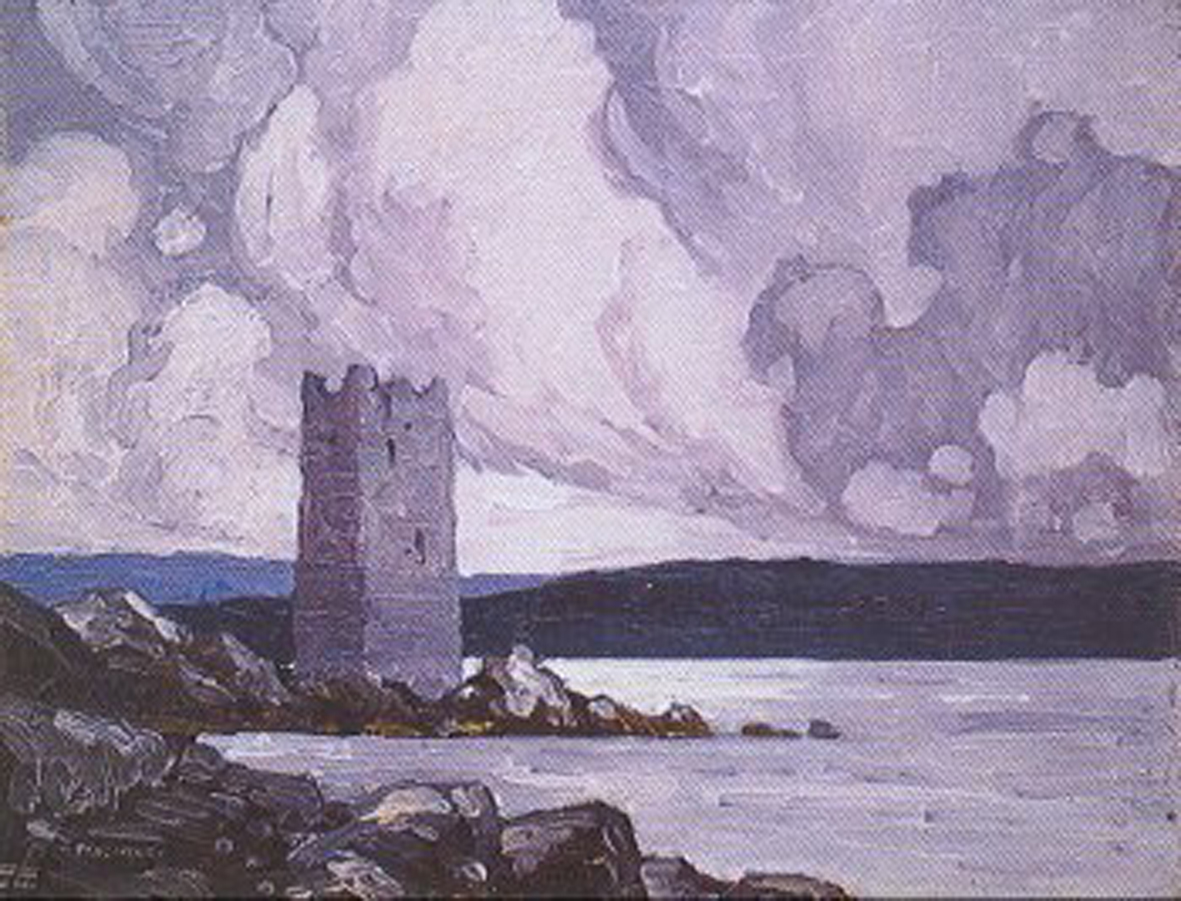
It’s a bit of a stretch of the imagination to see the setting of Lough Derg, with its fairly low-lying hills, in the background of Paul Henry’s painting. And where is that little tower house on the spit of land behind the ‘Celtic Cross’? Well – maybe it’s here:

This painting by Paul Henry is known as Grace O’Malley’s Castle: it is picturesquely situated at Kildavnet, in the south-east corner of Achill Island, County Mayo, which Paul and Grace first visited in 1910. So inspired were they by the landscape and the apparently idyllic simple way of life that they remained on Achill for a decade. Here’s another view of the O’Malley castle by Paul Henry:

So the ‘Celtic Cross at Lough Derg’ is, in fact, a medieval high cross from Monasterboice, County Louth, and it is set against the stunning scenery of Achill, County Mayo. We can’t blame Morgan O’Driscoll (or anyone else who can be identified) for giving the painting a misleading name. It seems that originally the work was just titled ‘Celtic Cross’: here are some insights from Paul Henry’s biographer, Brian Kennedy, in the Irish Arts Review Yearbook 1989 / 1990 –

. . . Henry was egocentric and occasionally used artistic licence with historical facts in the same way he might have done in a painted composition . . .

. . . In 1917 the Irish Times thought he was developing a decorative treatment of the landscape whereby his imagery was not realistic but was symbolically Irish . . .

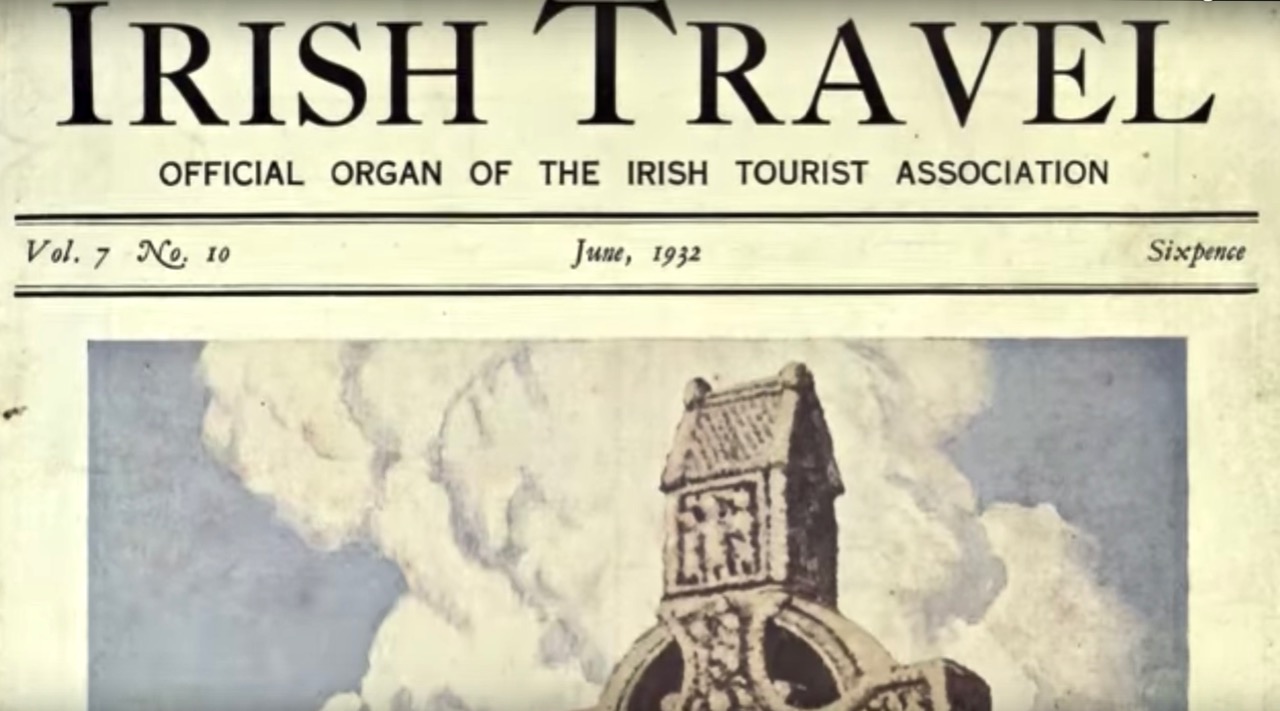
And the following is from Paul Henry: With a Catalogue of the Paintings, Drawings, Illustrations, by S B Kennedy, Paul HenryYale University Press, 2007: it tells us that the painting was clearly known as ‘Celtic Cross’ in 1924, and was in the collection of Seán T O’Kelly, Ireland’s second President (between  June 1945 and June 1959). When sold by Adams in 1984 the painting had acquired the additional wording . . . at Lough Derg . . .

. . . 611 Celtic Cross 1924. Oil on board 24 x 22 (61 x 56). Signed ‘PAUL HENRY’ . . .

Private collection. Prov: Sean T O’Kelly; sale, Adams, Dublin 19 July 1984. Lot 86, as Celtic Cross at Lough Derg, repr. Irish Travel, vol 7, no 10, June 1937 repr. on front cover. Almost certainly a composite composition . . .

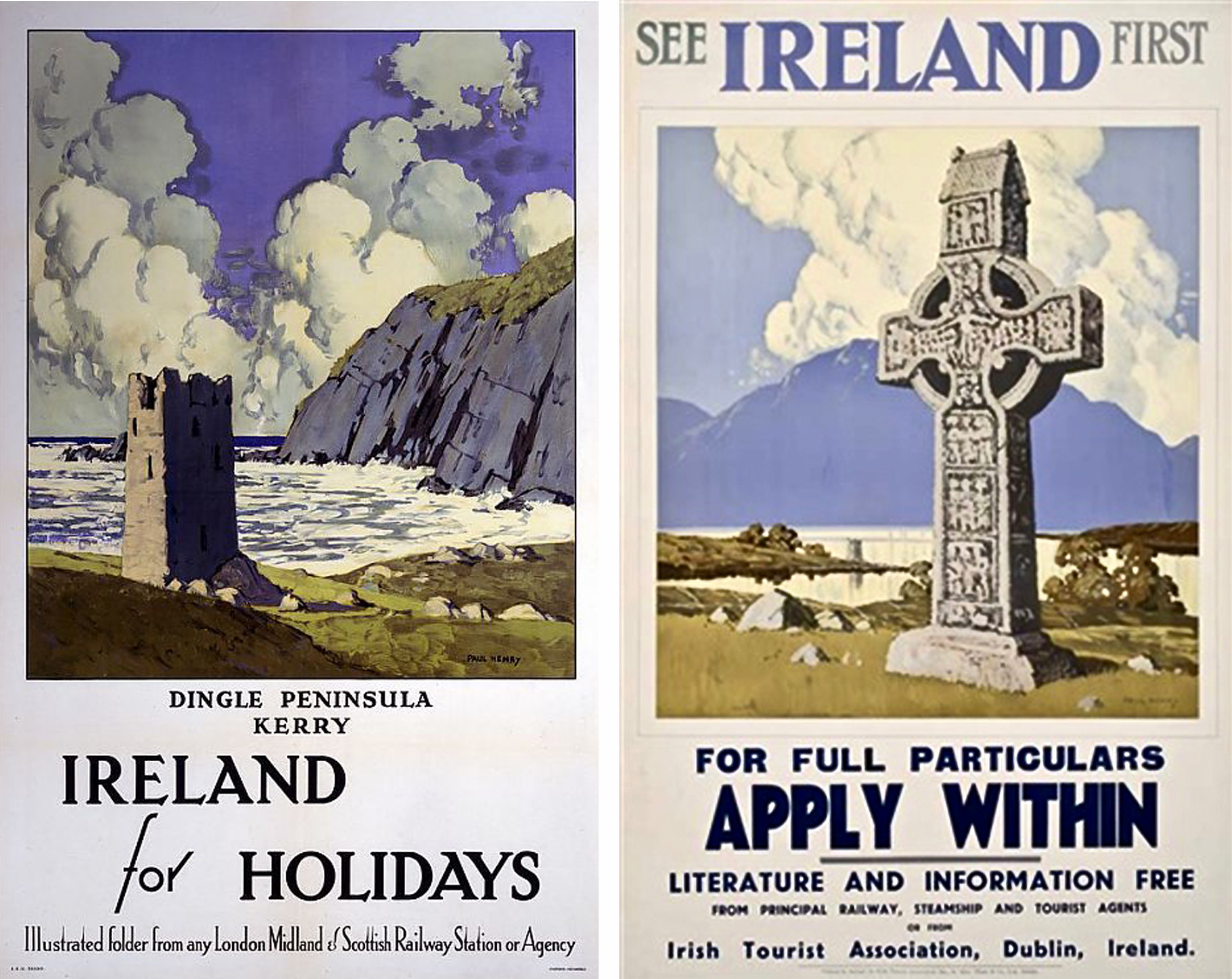
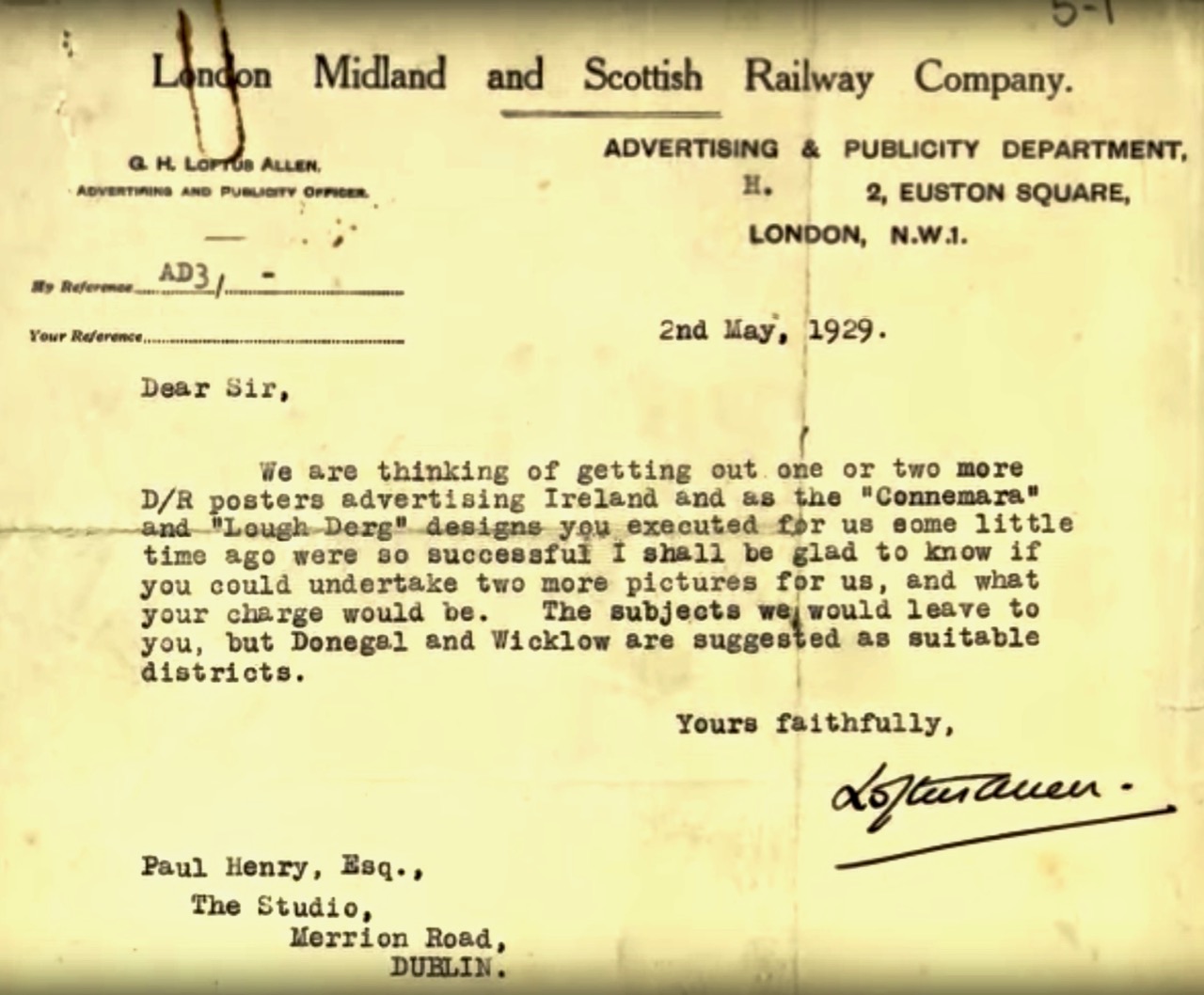
As with most artists – who need to earn a living – Paul Henry willingly accepted commissions. He was successful in selling ‘popular’ work to railway companies and the Irish Tourist Association (above – 1920s and 30s).

A “Lough Derg” design is mentioned in the Railway Company’s letter (above). Below is another – for British Railways: this is more likely to be the Lough Derg on the Shannon.

Has this helped to unravel the enigma of Paul Henry’s Celtic Cross at Lough Derg? Whether or not you are convinced, I’m sure you would like to have the painting hanging on your wall – me too! Although it would be so much better if it could go permanently into a public collection The sale is coming up in April . . .


Antiquarians Loved Glendalough

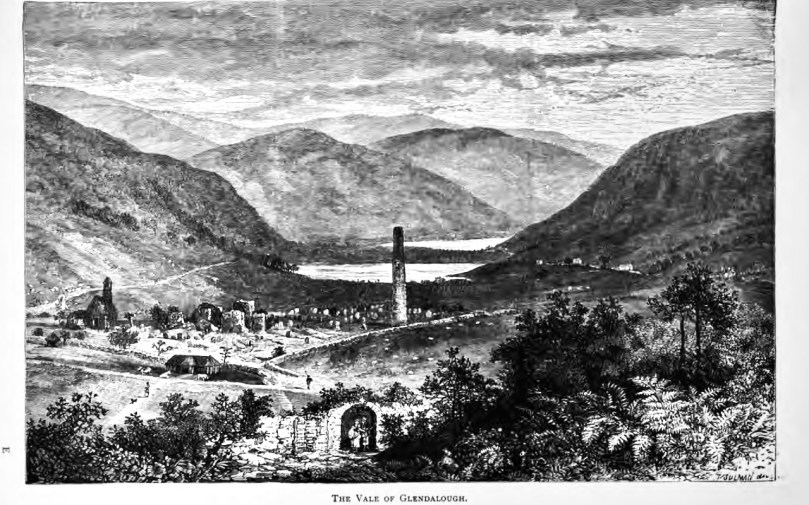
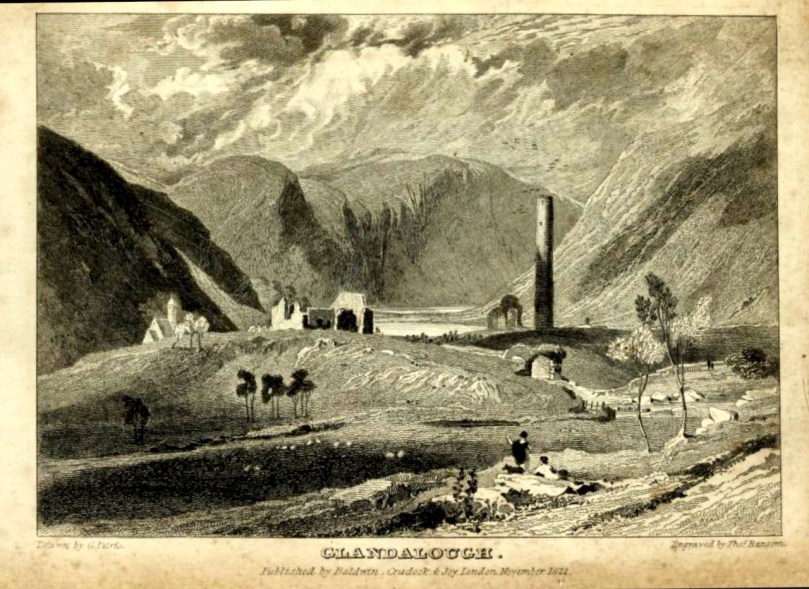
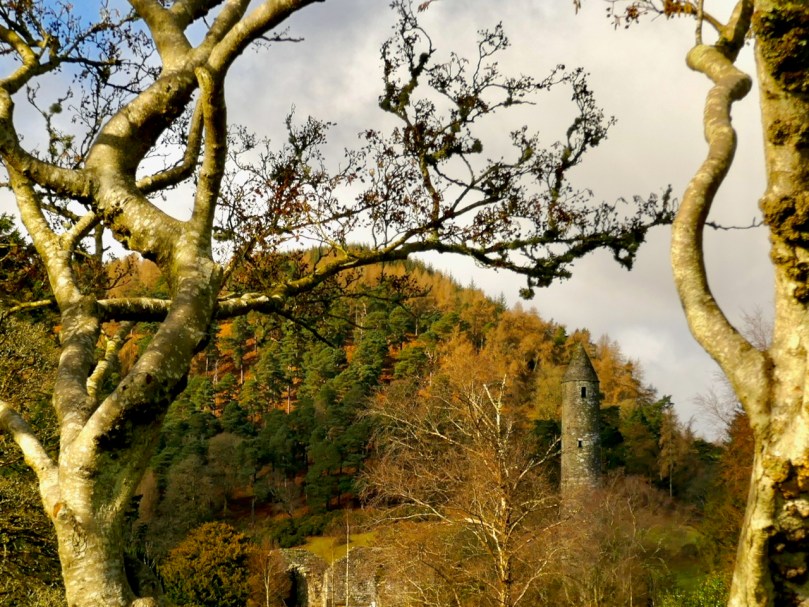
Researching a post on Romanesque architecture at Glendalough, I have come across so many depictions of Glendalough by tourists and antiquarians that I thought I would start by sharing some of these with you, by way of a general introduction to this outstanding heritage site. Situated in the heart of the Wicklow Mountains, the ecclesiastical settlement of Glendalough occupies one of the most beautiful valleys in Ireland and this combination of wild scenery and picturesque ruins made it a favourite of antiquarians, travellers and illustrators.

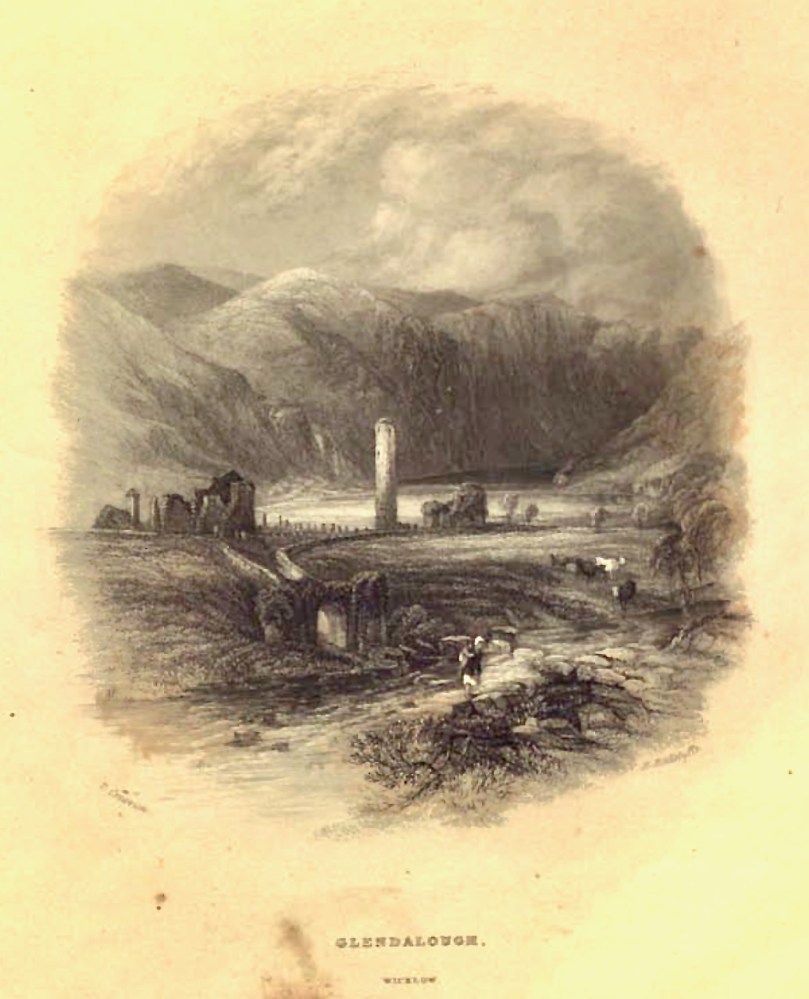
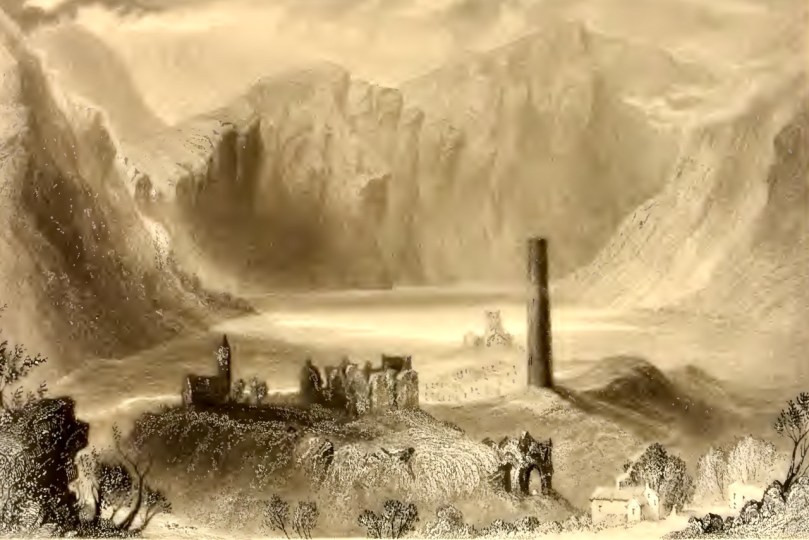
This illustration from Halls Tour of Ireland, Vol II, published in the early 1840s, concentrates less on architectural accuracy and more on an impression of romantic picturesqueness, although it does get the main features more or less right

Another view, this time by Lovett from his Irish Pictures of 1888

This is also a highly significant archaeological and historical site. I’ve been reading a most lucid and illuminating guide to it and I highly recommend it – Glendalough by Christiaan Corlett. Chris is an archaeologist with the National Monument Service and nobody knows this place better than he. Of the valley he says, Is there anywhere else in the Christian world that can boast so many churches and related buildings dating from before the year 1200 that have remained so intact?

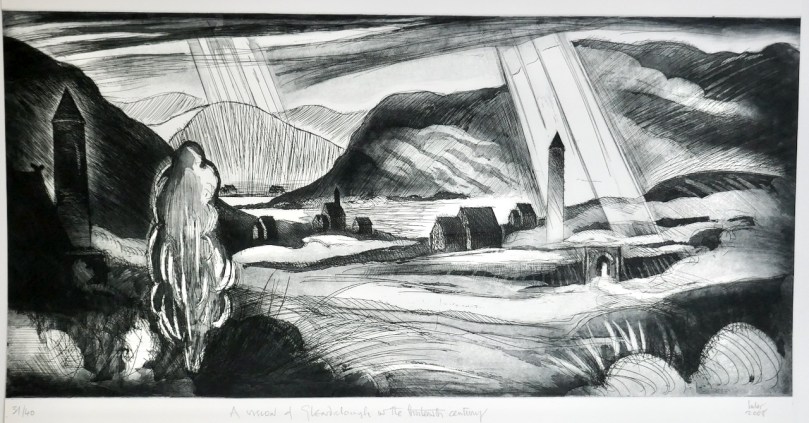
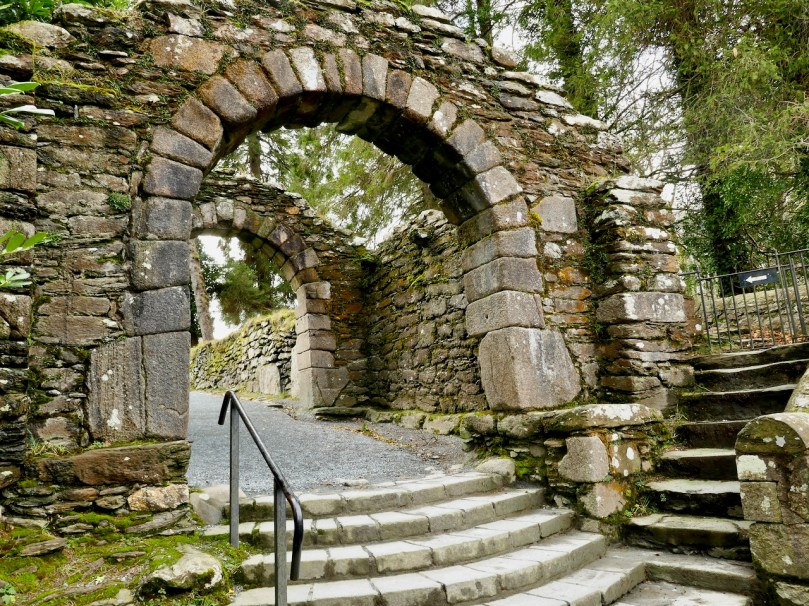
I’ve started this post with the most recent image, done in 2008 by our friend Brian Lalor, but in the style of an antiquarian drawing and showing the full scope of structures at Glendalough – eight churches and three towers – as the valley would have been seen in the thirteenth century. The round tower is the most prominent feature on the landscape – and the image that most visitors take away with them. It was, of course, originally a bell tower (although it may have served other functions) since the call to prayer was an important part of the monastic day. In the drawing directly above, done by W H Bartlett (see last week’s post about this wonderful illustrator) about the same time as the Hall’s Tour sketch, you can see that the round tower is roofless. Although once again Bartlett is careful to create a wildly romantic scene he also shows the principal structures, including the Gatehouse, which is pictured below as it is today.

Note the projections of the wall on either side of the arch – these features are known as antae and were typical of early church construction in Ireland. See my post Irish Romanesque – an Introduction for more on this topic

Of the two other bell towers, only the one atop St Kevin’s Church still exists. The other was similarly situated on Trinity Church but has since collapsed. But we do have evidence of it – see the final illustration in this post! Here we see why antiquarian drawings are so important. The ravages of time have taken their toll on the buildings and carvings at Glendalough: some have simply disintegrated away while some carvings recorded by these early illustrators have disappeared, presumably stolen.

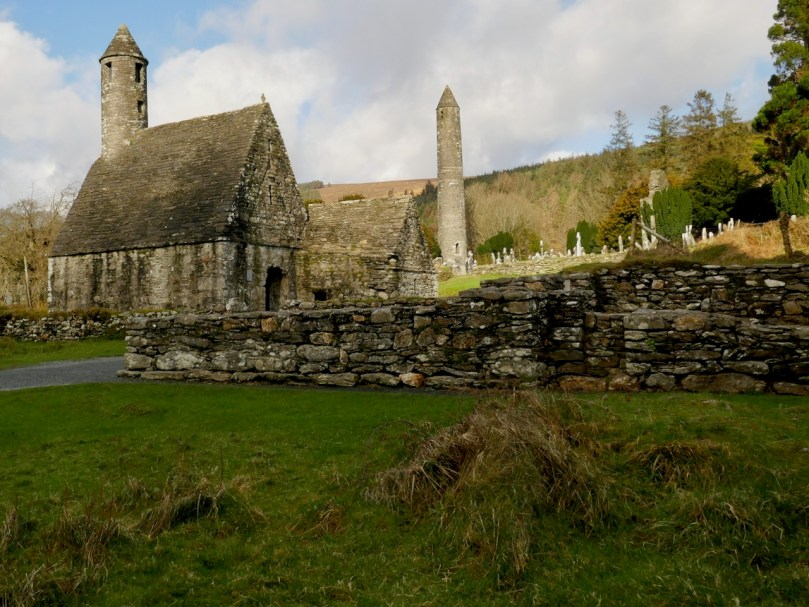
St Kevin’s Church, the vestiges of St Ciaran’s Church (foreground), the Round Tower, and the east wall of the Cathedral

There’s another consideration too – the well-meaning rebuilding efforts of the Victorian period. As a consequence of the Disestablishment of the Church of Ireland which came into effect 150 years ago on Jan 1, 1871, responsibility for all the ancient ecclesiastical sites transferred from the Church of Ireland to the state, and from there to the Office of Public Works. An urgent need to conserve ruinous buildings combined with an enthusiastic approach to ‘reconstruction’ and improvement led to many monuments all over Ireland getting a make-over. As one of Ireland’s premier tourist destinations, then and now, Glendalough became the focus of such activity.

A Petrie engraving from 1827

Perhaps the most visible change was to the round tower, which was blessed with a brand new conical cap. The work was done carefully, using stones found at the site, and there is ample evidence that this was the original shape of the roof.

Some of the other reconstruction efforts may be less accurate, perhaps based more on conjecture than on evidence, but at least in the case of Glendalough the antiquarian drawings could provide some clues as to the condition of the monuments within the last 100 years, if not in their original state.

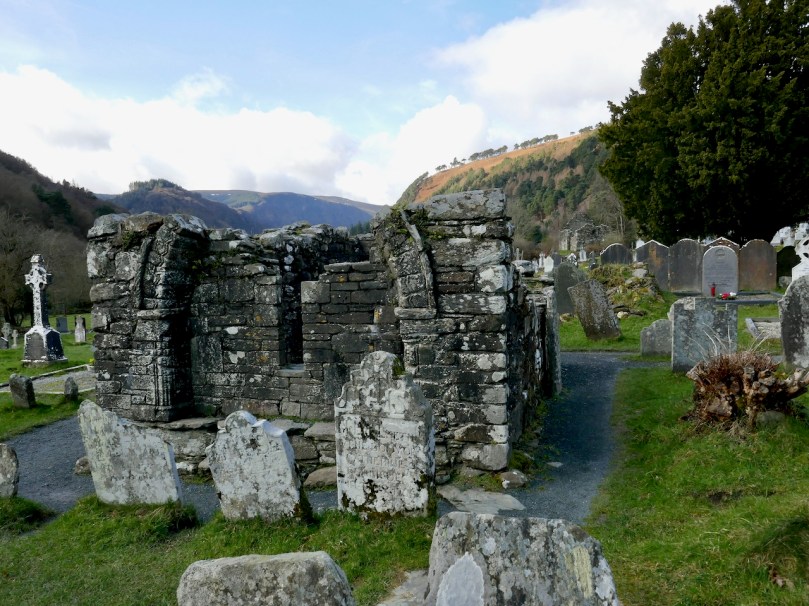
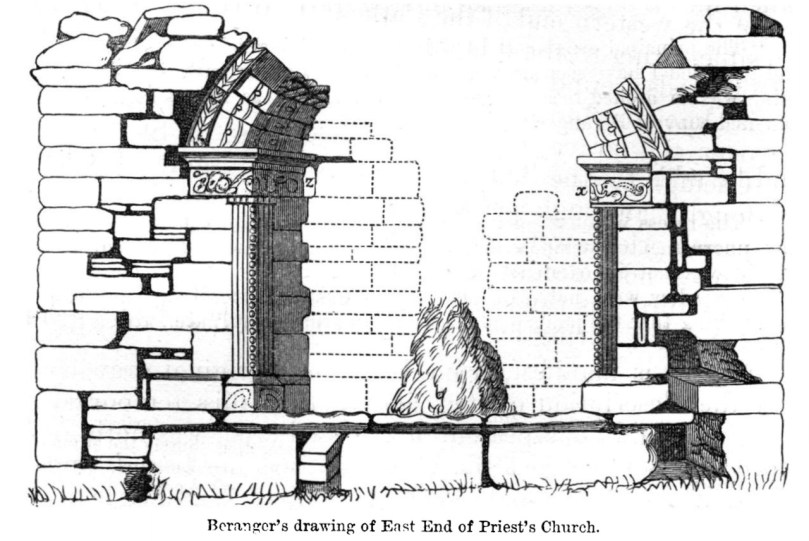
The Priests’ House (above) is a case in point. It had almost totally collapsed. As Corlett says, what can be seen today is a reconstruction carried out in the 1870s from the stones that survived among the rubble. This has presented a lot of problems for our attempts to understand the original nature of function of this building.

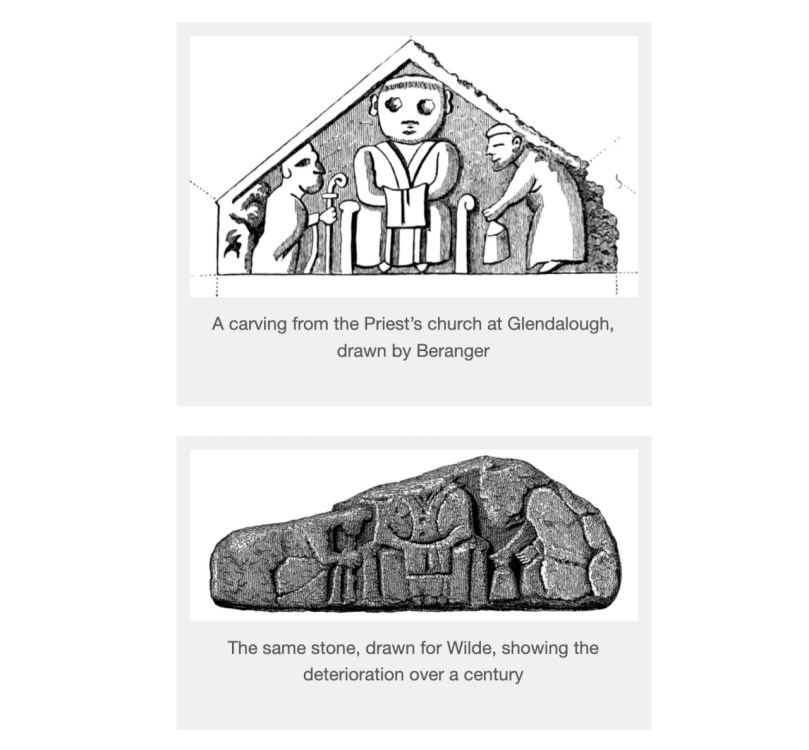
The Board of Works focused on the drawings of Gabriel Beranger from 1779 and rebuilt the elaborate romanesque arch as Beranger had depicted it. It remains somewhat controversial since it is highly unusual for such a feature to be on the outside of a building, although Corlett points out that its function may be related to the veneration of relics inside the chapel by pilgrims mounting the step to gaze through the small window.

Next time, I will concentrate on the architecture of Glendalough. It dates mostly from the 12th century and illustrates gloriously the persistence of traditional building designs from the early Irish church as well as the introduction of the Romanesque style with its arches and carvings. Some of the best examples are those that fewest people visit, so you may have a couple of surprises in store.

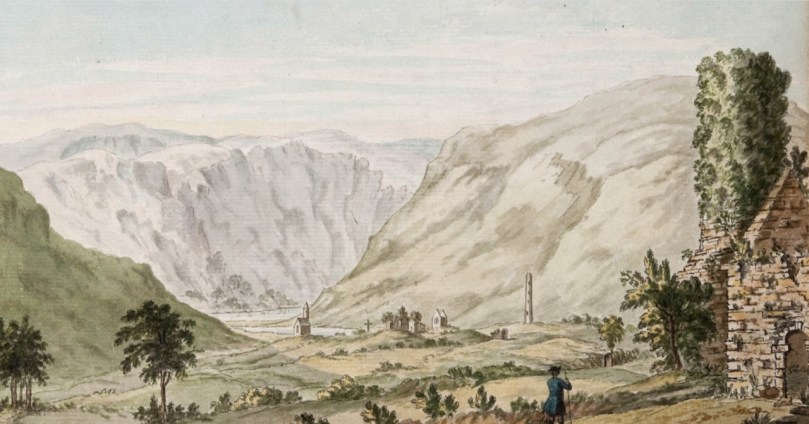
Beranger’s painting of Glendalough, done in the 1770s and showing the bell tower on Trinity Church, now gone

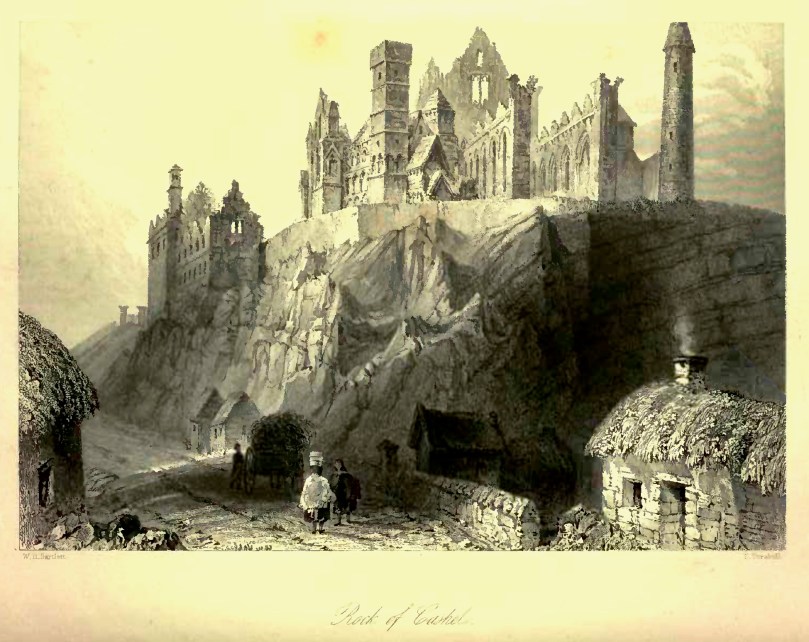
Scenery and Antiquities – W H Bartlett in Nineteenth Century Ireland

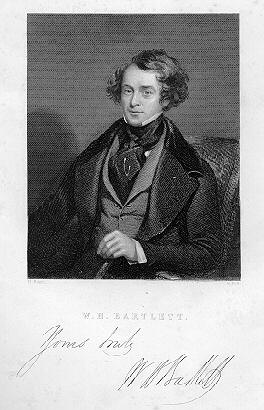
William Henry Bartlett was one of the foremost geographical illustrators of his day and he travelled the world producing images for his publisher, George Virtue. He came to Ireland at least twice, as witness his illustrations for Ireland Illustrated, published in 1831 and for Scenery and Antiquities of Ireland in 1841.

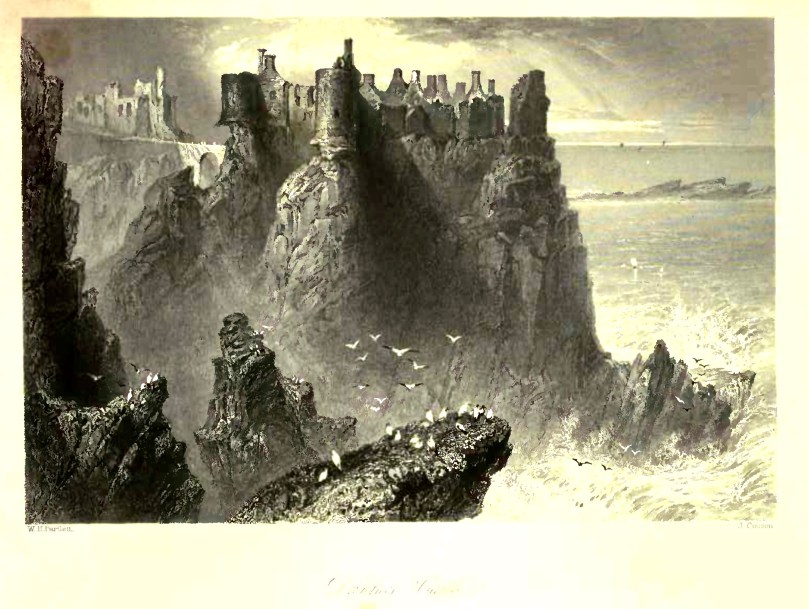
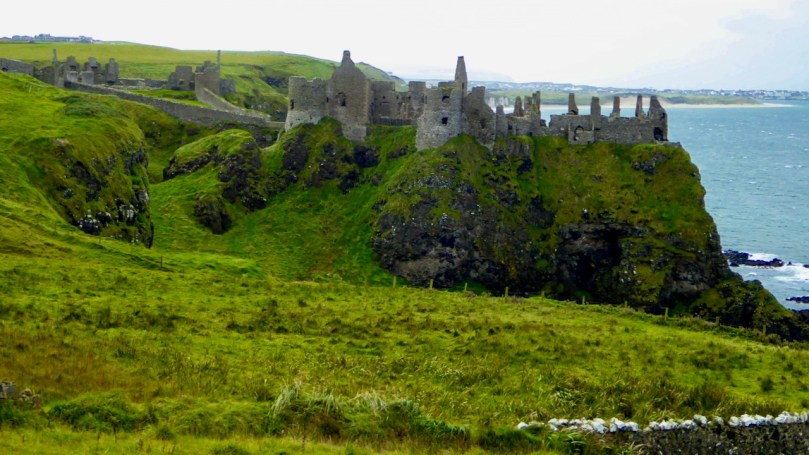
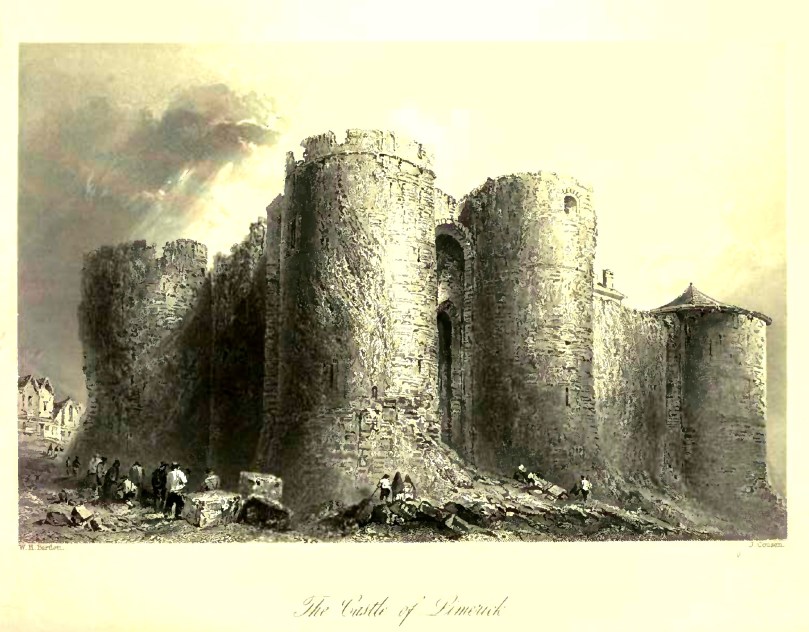
Dunluce Castle By Bartlett and a recent photograph. While accurate in architectural detail, Bartlett also manages to convey the impression of the wildly romantic, remote and craggy location in a way a photograph simply fails to do

Bartlett’s method was to do a sepia wash painting, as detailed and accurate as possible, and this was then engraved by the expert engravers employed by Virtue – he used the same ones as Turner. But Bartlett was also an artist, not content with reproducing only in a factual manner. Like other artists of the period he strove to convey an impression, particularly of monumental scale and wild romanticism.

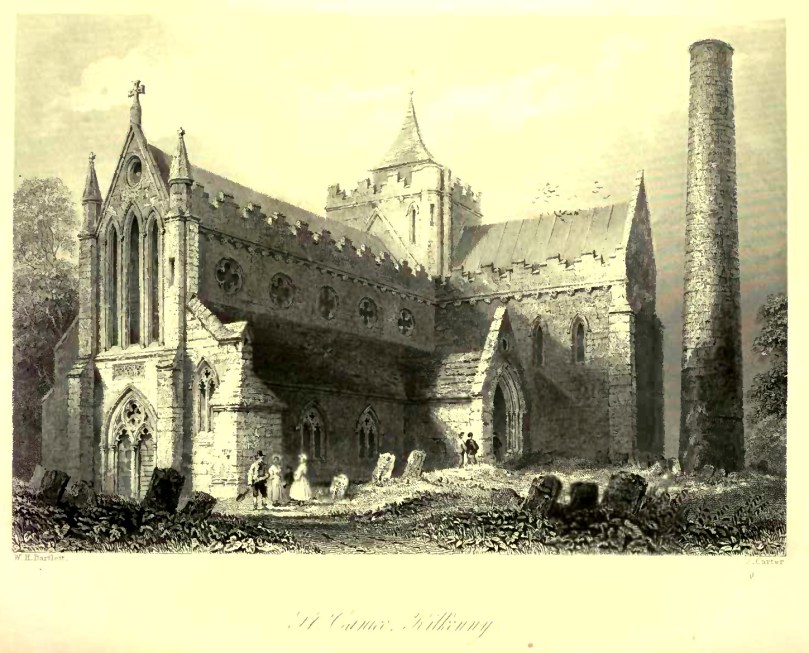
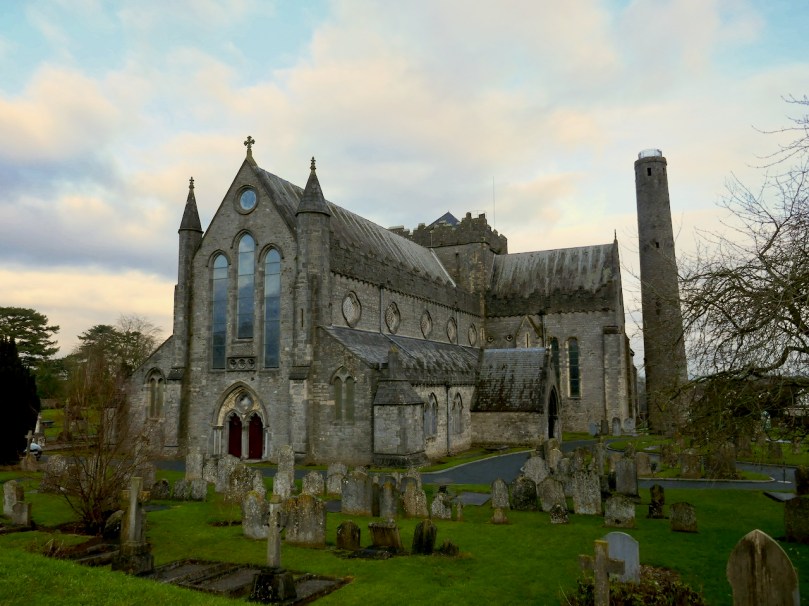
The results for his Irish engravings are wonderful indeed – and important, since they enable us to compare what he saw with what remains today. Some of his illustrations are so exact that comparison with a modern photograph shows that the object of the drawing has survived in much the same condition for almost 200 years.

St Canice’s Cathedral, then and now

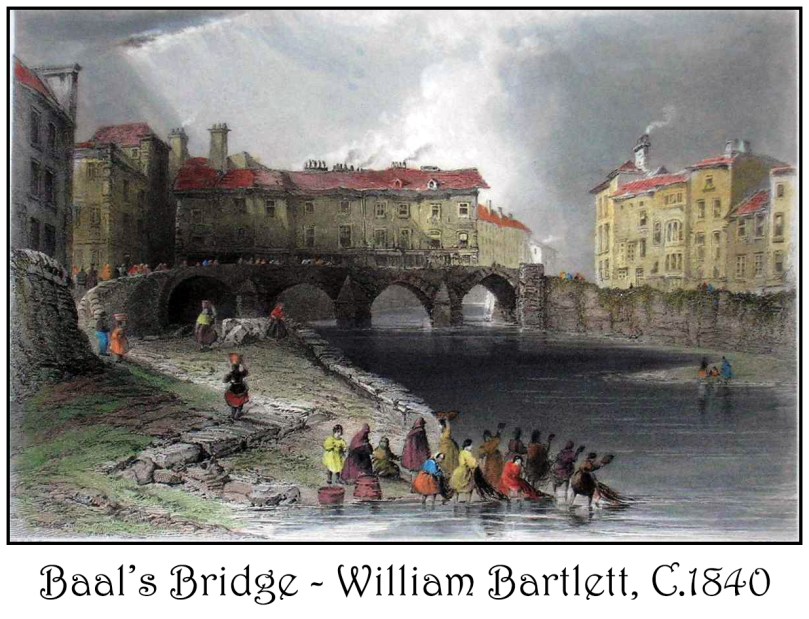
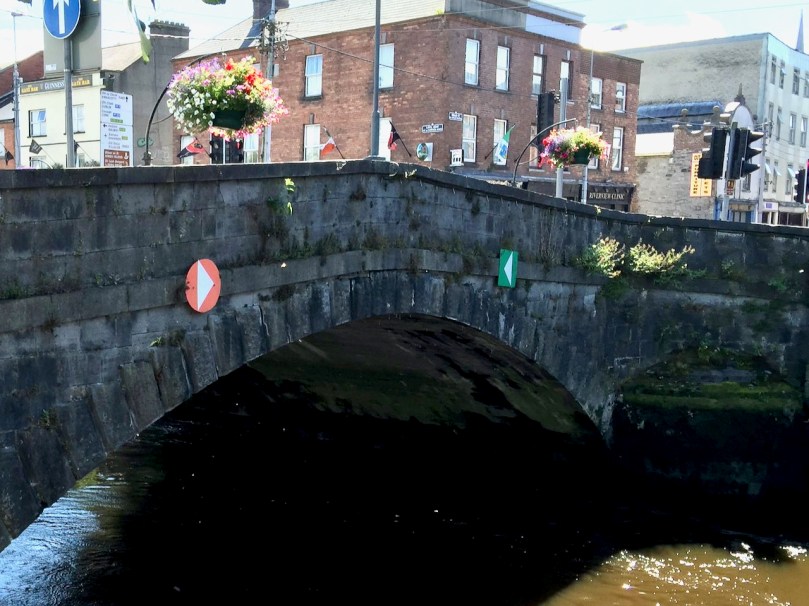
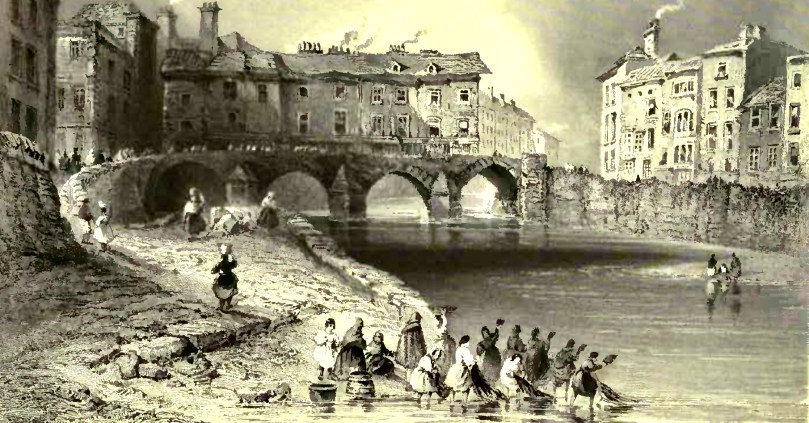
Others allow us to see what is no longer visible on the ground – the Old Baal’s Bridge, in Limerick, for example, was demolished by 1830, so Bartlett’s pictures of it are an essential reminder of this picturesque and unusual structure.

A colourised version (not sure when this was done) of Bartlett’s Old Baal’s Bridge in Limerick, and the bridge that is there today

Although he illustrated streetscapes and contemporary buildings, Bartlett had a particular fondness for antiquities. Wherever he could, he selected scenes that contained ruins of abbeys or castles or ancient monuments such as high crosses.

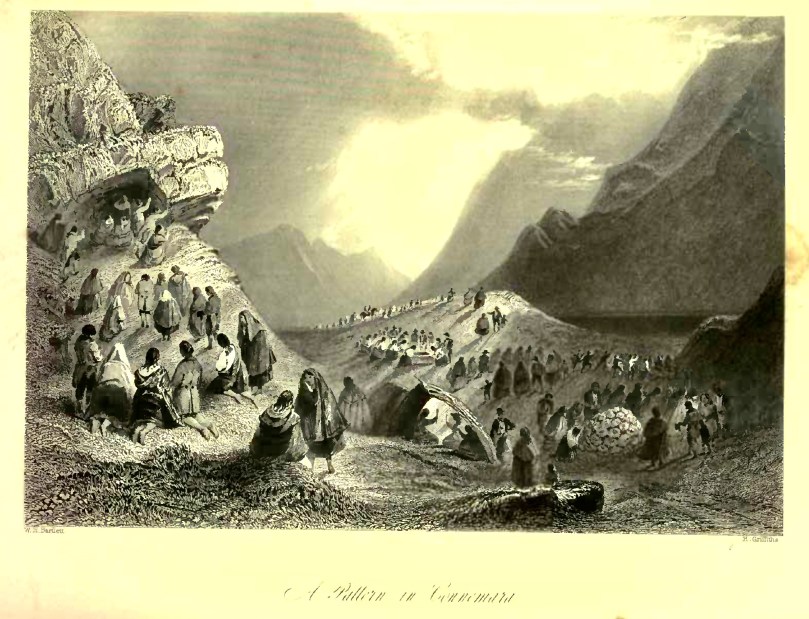
He also, almost incidentally, has left us many scenes of daily life or of special occasions, such as the women washing clothes at the Old Baal’s Bridge, or the Pattern in Connemara.

I have provided comparison shots for Bartlett’s illustrations wherever I have them, and have limited myself to a few of the better-known places in Ireland. The writers of Scenery and Antiquities, N P Willis and J Sterling Coyne, also deserve a post of their own at some point, so I can see that we will be re-visiting this book in the future!

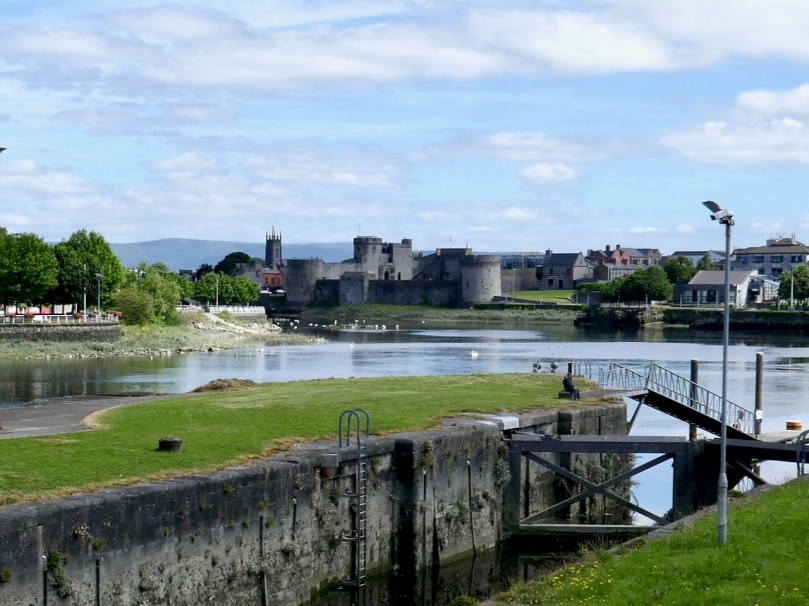
King John’s Castle in Limerick, and below is Bartlett’s original engraving of the Old Baal’s Bridge


Ireland in the 1950s – Through the Lens of Robert Cresswell

This post complements last week’s overview of the work of Dorothea Lange, who spent several weeks in County Clare in 1954, documenting the rural way of life she observed there in over 2,400 monochrome photographs. That’s a monumental collection which can only be fully accessed by visiting the Oakland Museum of California. We are fortunate to have a book of some of her Irish work – Dorothea Lange’s Ireland – published by Eliott & Clark, Washington, 1996 and a current exhibition which includes some of her images at Dublin’s Museum of Decorative Arts & History, Collins Barracks. That same exhibition features the work of two further documentary photographers, one of whom is our subject today: Robert Cresswell (below):

The Paris-based American anthropologist Robert Cresswell (1922-2016) remained on in France after WWII, having served in the US army there for four years. Following the completion of his studies in anthropology in Paris, he arrived in Ireland in 1955 with the ambition of carrying out an anthropological analysis of an Irish rural community. Taking the advice of the Irish Folklore Commission he chose Kinvara, County Galway. The small rural town of Kinvara and its agricultural hinterland would become the base for his study, published in 1969 as ‘Une Communauté Rurale de l’Irlande’ . . .

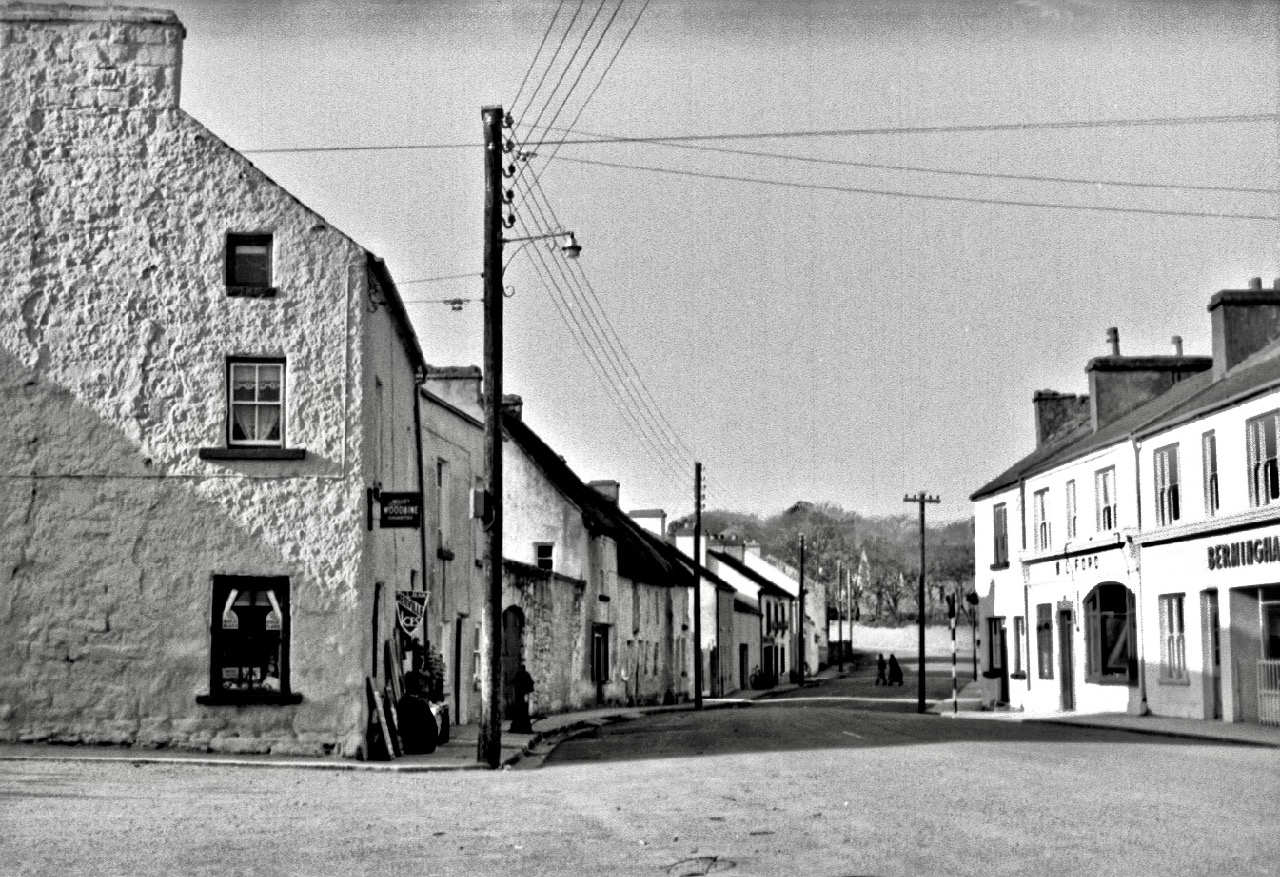
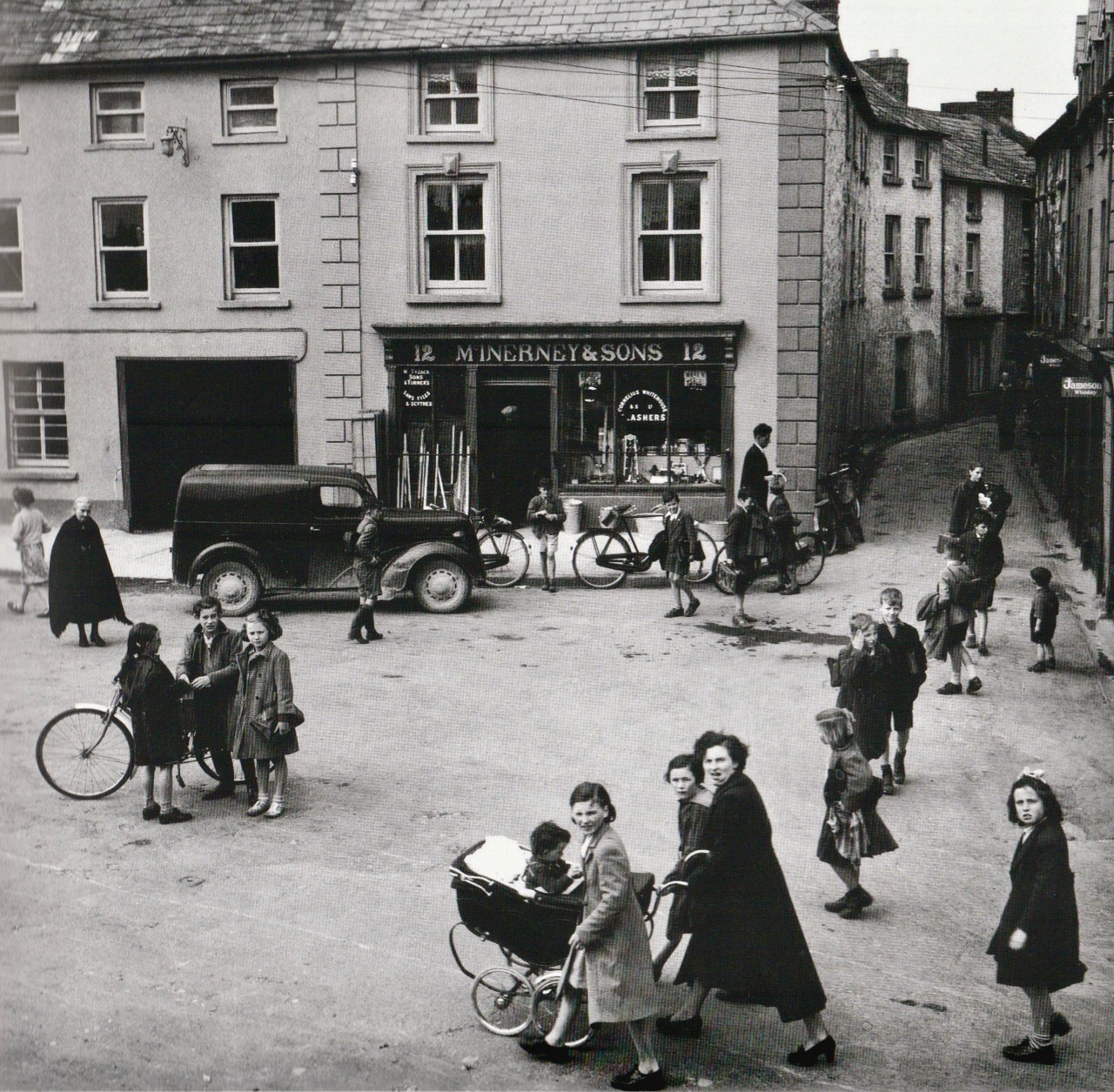
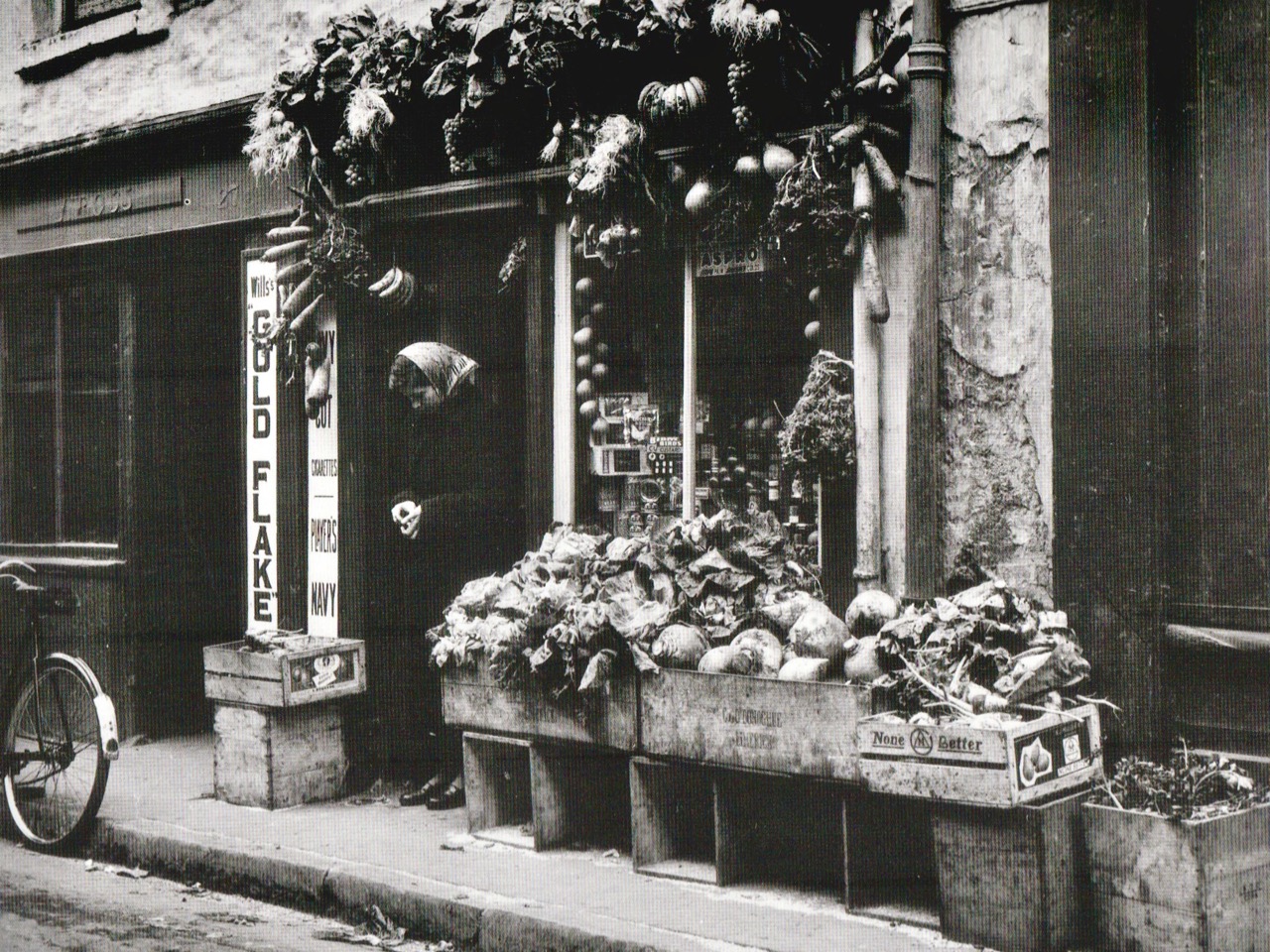
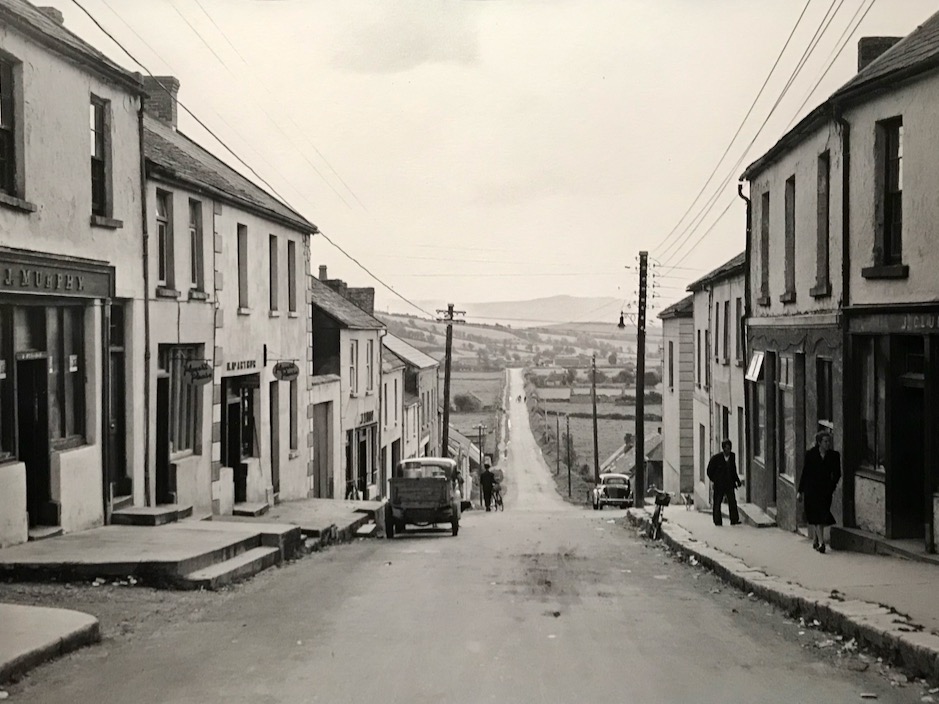
Header – Kinvara on Fair Day, 1955 by Robert Cresswell. Above – Kinvara, Co Galway, streetscape; compare these to Dorothea Lange’s views of Ennis and Tulla, Co Clare (in last week’s post), taken in the same period

While the photographic essays by Dorothea Lange and Robert Cresswell bear close comparison – and how hugely interesting it is for us to see Irish rural life through those lenses nearly 70 years ago – it’s fascinating to consider that both came from very different backgrounds and disciplines, but were equally absorbed by the iconic images each of them was capturing – giving us a visual ‘time capsule’ of Ireland as it was apparent a few generations ago.

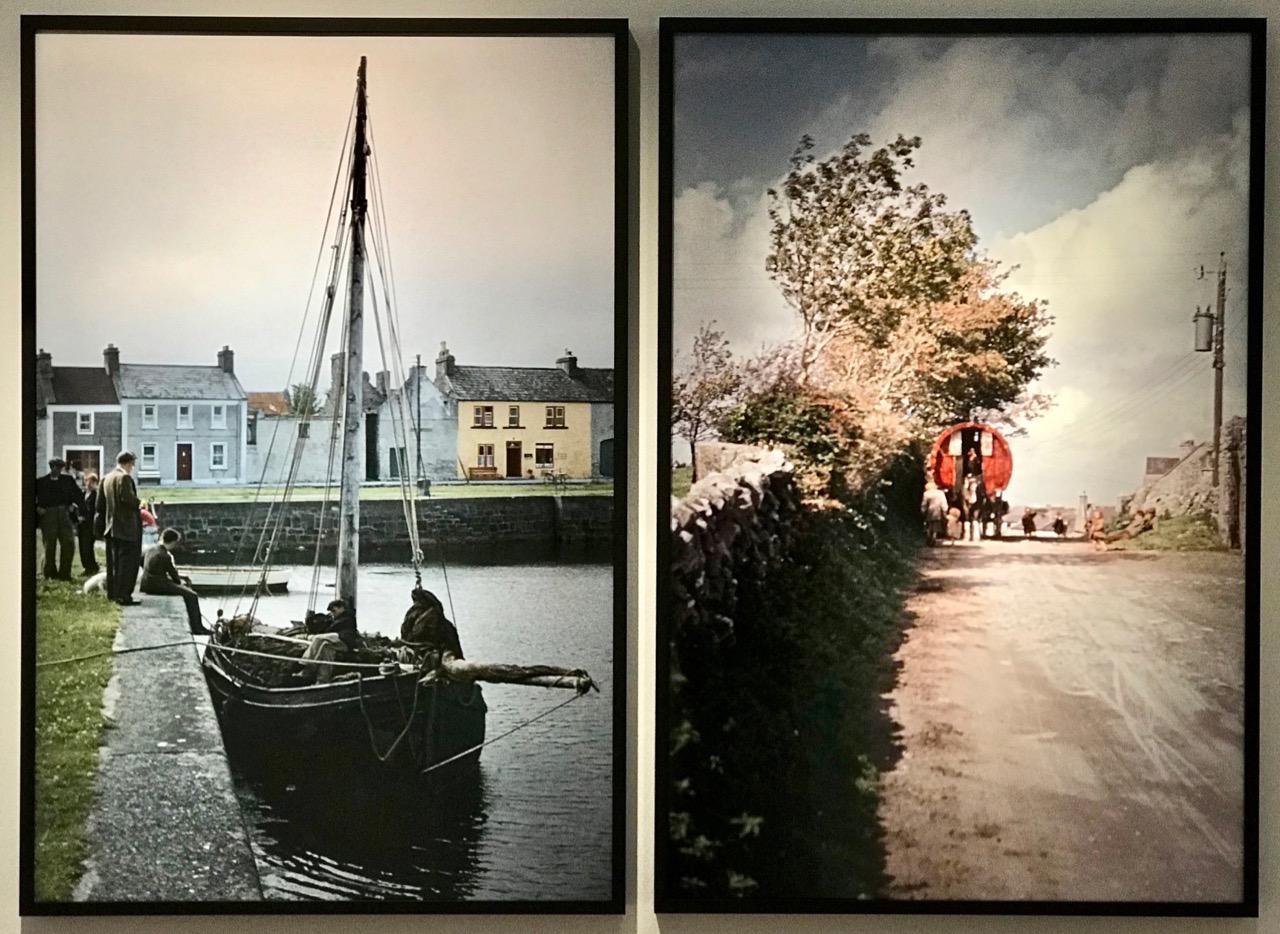
Above – examples from the Dublin exhibition showing the work of Cresswell taken from his colour slides

Robert Cresswell was a pioneer in some respects, in that he used Kodachrome film to produce colour slides, in the days when monochrome documentary photography was the norm. Some professional photographers could not cope with the idea of using colour, partly because they considered the images were not realistic. Ansell Adams felt that ‘. . . color could be distracting, and could therefore divert the artist’s attention away from creating a photograph to its full potential . . .’ while Henri Cartier-Bresson famously uttered his opinion that ‘. . . color is bullshit . . .’ – which was all he ever said about it, allegedly! My own (humble) opinion is that there is something about monochrome photographs which seems to draw the eye and enhance the atmosphere, particularly with historic images. I can’t explain this – there is no logic: it’s just a personal response which I am always aware of.

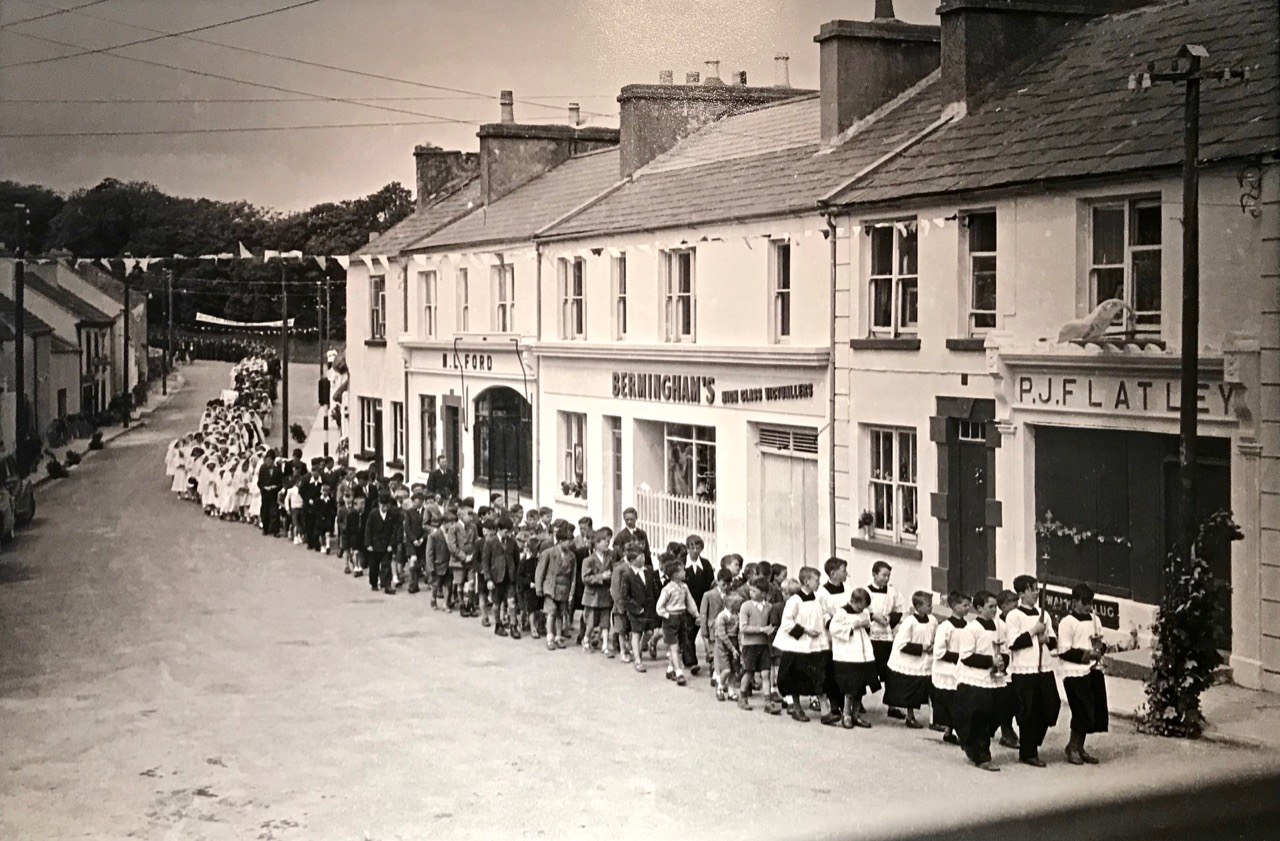
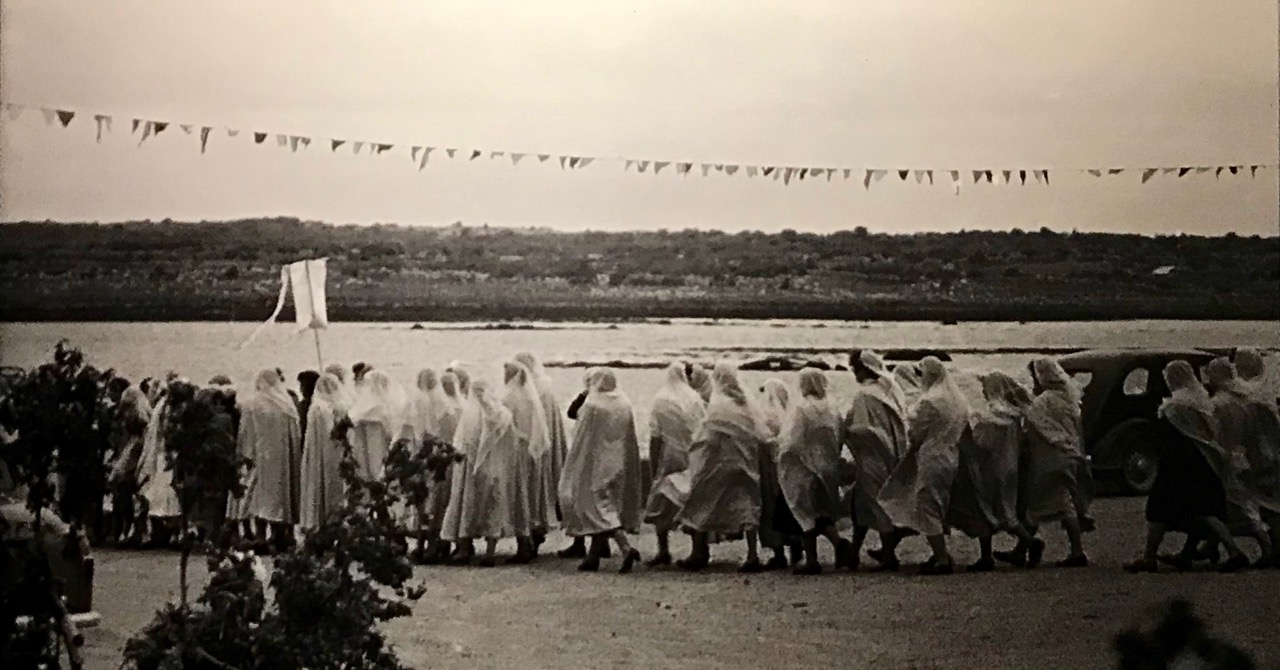
Above – monochrome Kinvara: the Forge, and Corpus Christie procession

Robert Cresswell lived in the Kinvara community for fifteen months between 1955 and 1956, returning for short periods in 1957 and 1958. The quotations in this post are from the exhibition text panels:

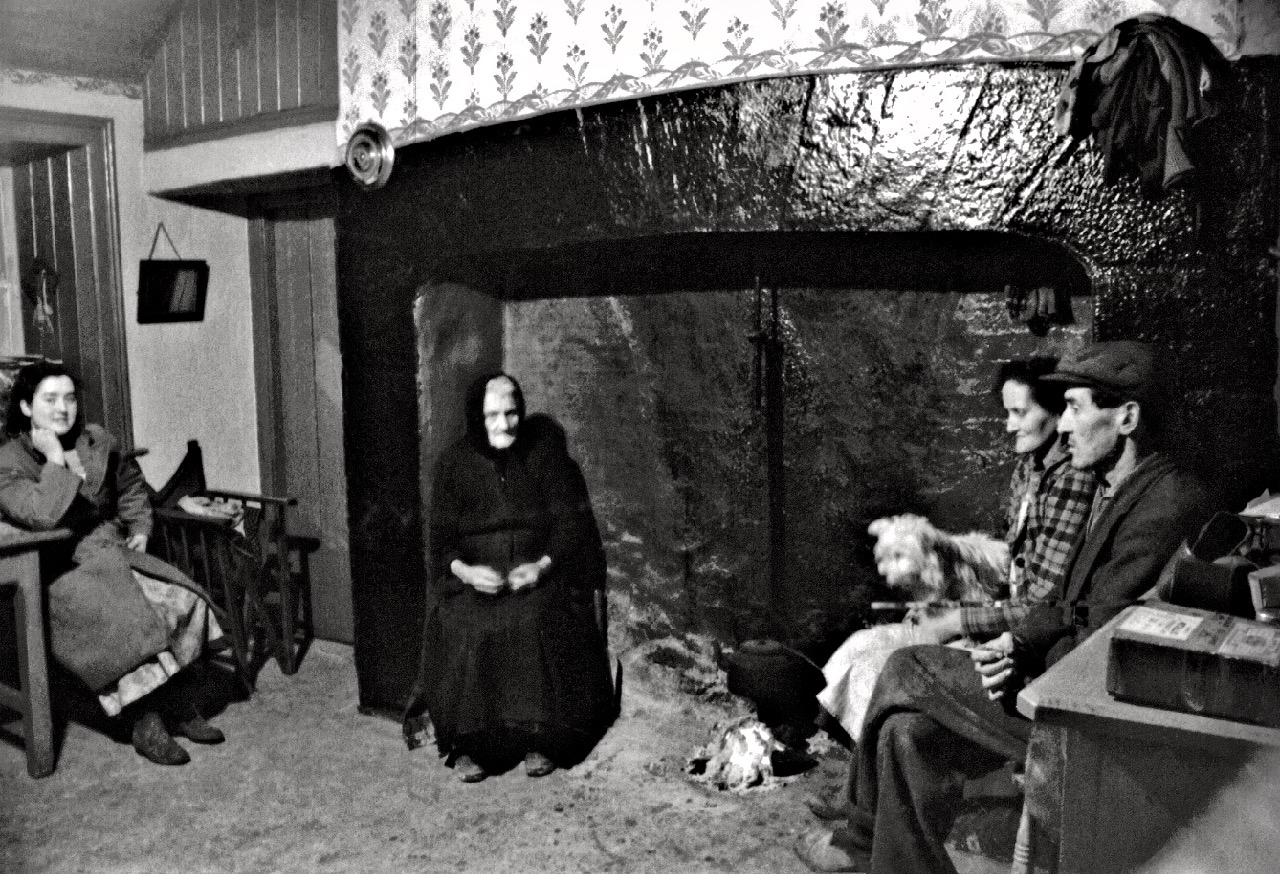
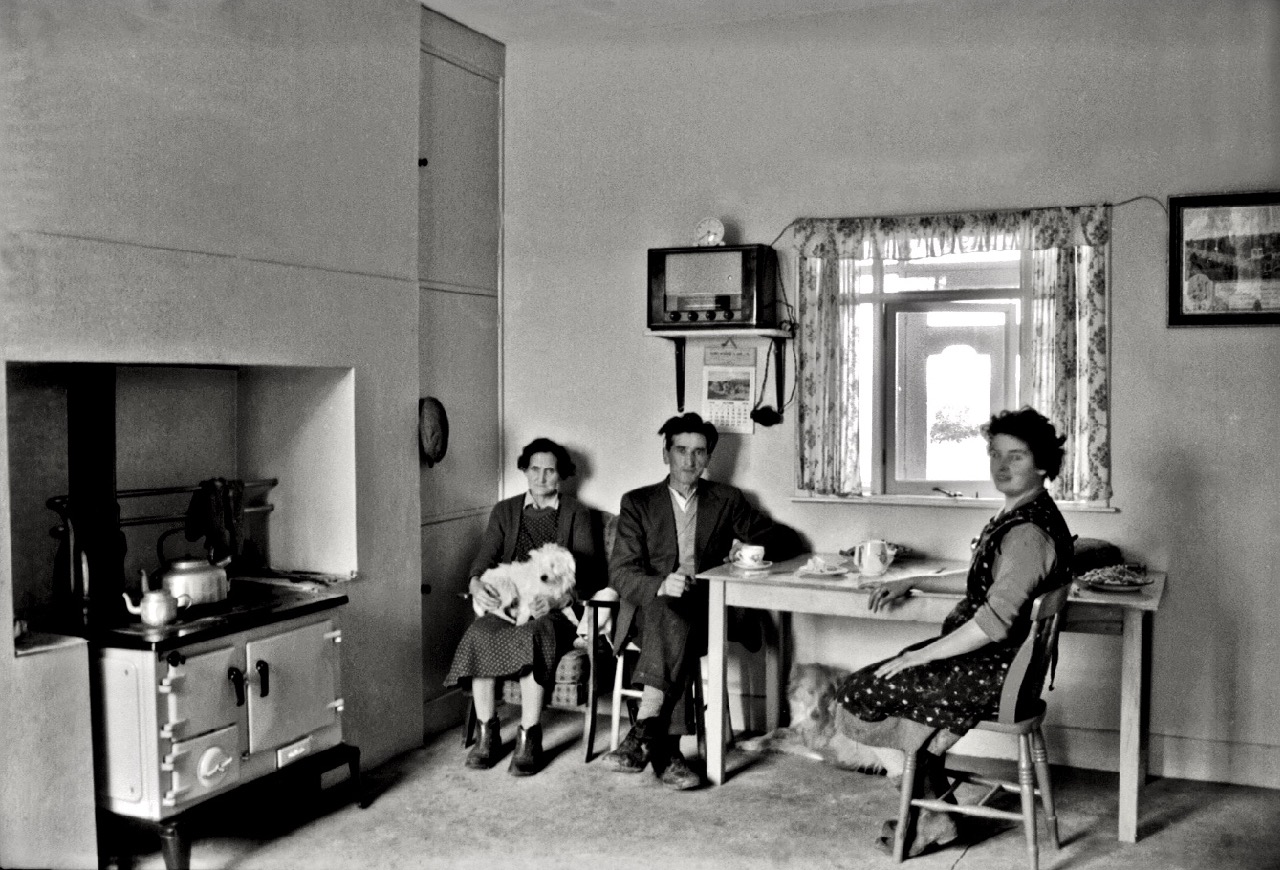
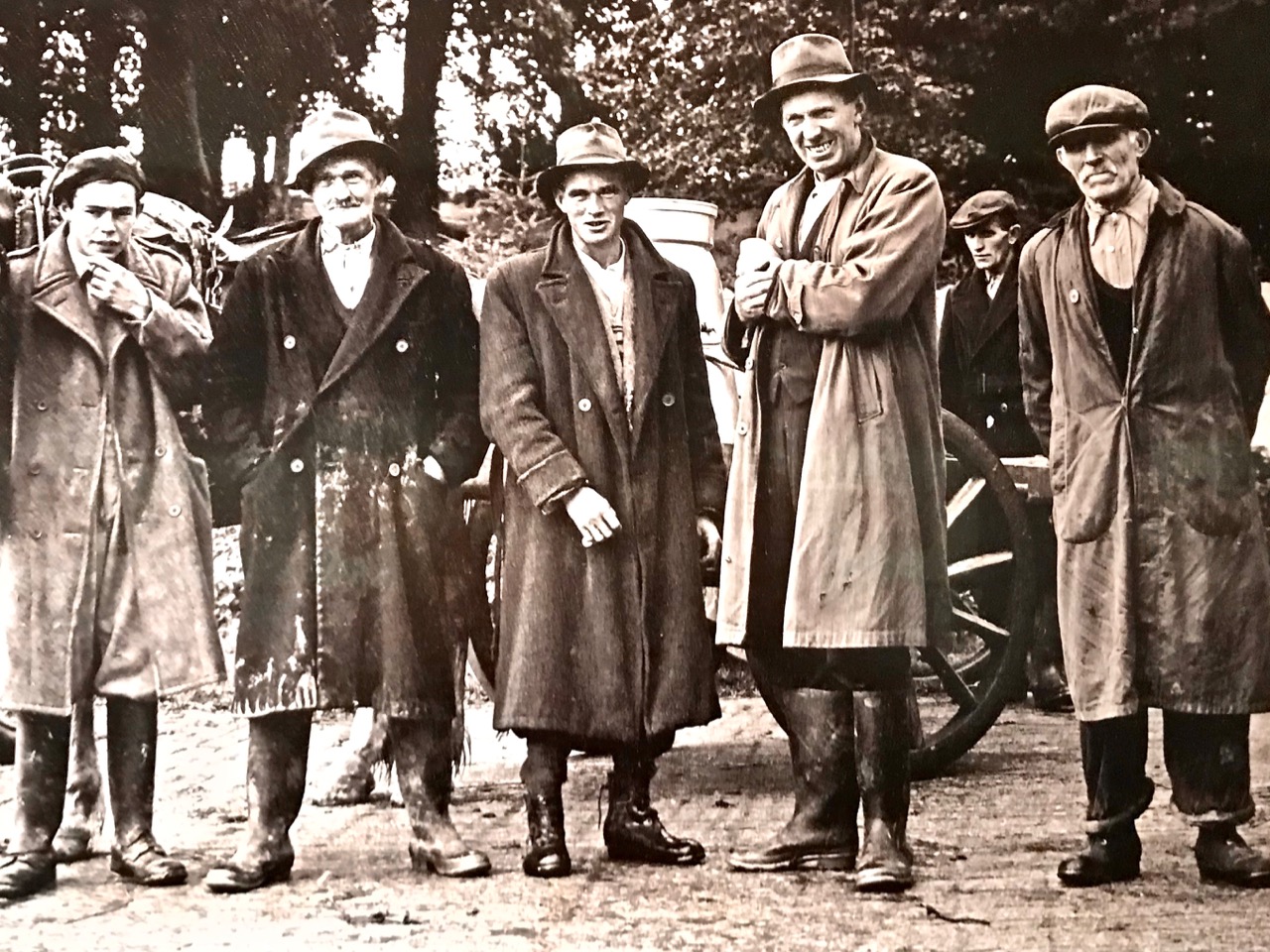
Capturing more than five hundred images . . . Cresswell photographed the people of Kinvara, their countryside, their work on sea, shore and land, the daily lives, religious processions, and fairs and markets. Documenting the changes that were occurring in the shift from a traditional farming community to a wider market-led economy, he was motivated to emphasise a community in transition over one operating in the continuity or stagnation of tradition. His photographs generally portray a well-functioning society, but his interpretation of emigration as the ultimate destructive agent in community and country profoundly influenced his understanding of rural life in a small community in 1950s Ireland . . . The population of the parish of Kinvara sustained a net loss of 80% between 1841 and 1956 . . .

Above: a community in transition – contrasting pictures of family life in Kinvara recorded by Cresswell in the mid 1950s

Tempting though it is to show you much more of Cresswell’s work here, I really want you to go and see for yourselves. The exhibition at Collins Barracks, Dublin continues until April this year, and is well worth making the effort to visit. Robert Cresswell lived a long life; in 2010, then aged 88, he donated his entire collection of documentary photographs and cine film of Kinvara to the Irish nation. He waived his own copyright to this unique work in favour of all persons who wish to use any of it for educational or heritage purposes (but not for commercial gain without prior permission). Copyright now rests with Kinvara Community Council, who have published an excellent website here. I have used a small number of images from the collection to supplement those we found at the exhibition, in order to give you a fair cross-section of the entirety of Cresswell’s opus.

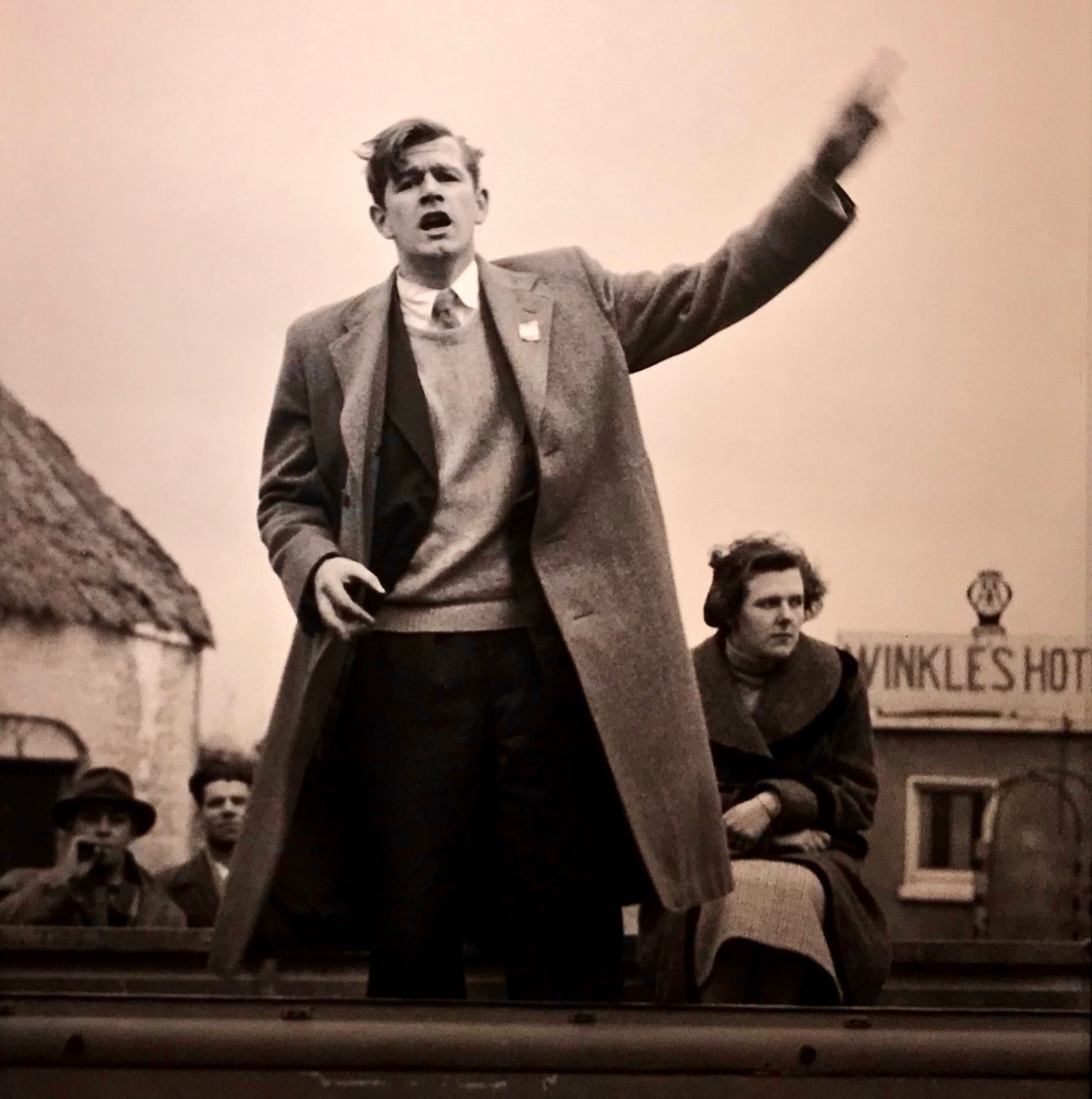
In a mirror of present-day events in Ireland, here’s a shot by Cresswell of the Sinn Fein candidate Murchadh Mac Ualtair canvassing in Kinvara for the 1957 General Election with Peggy Linnane. In that election Fianna Fáil, under Éamon de Valera, took 78 seats with 48.3% of first preference votes, and Sinn Féin took 4 seats with 5.3% of first preference votes. In our 2020 election, just passed, Sinn Féin, under Mary-Lou McDonald, took 37 seats with 24.5% of first preference votes in a thoroughly divided result, leaving us all in a bit of a dilemma! But I digress . . .

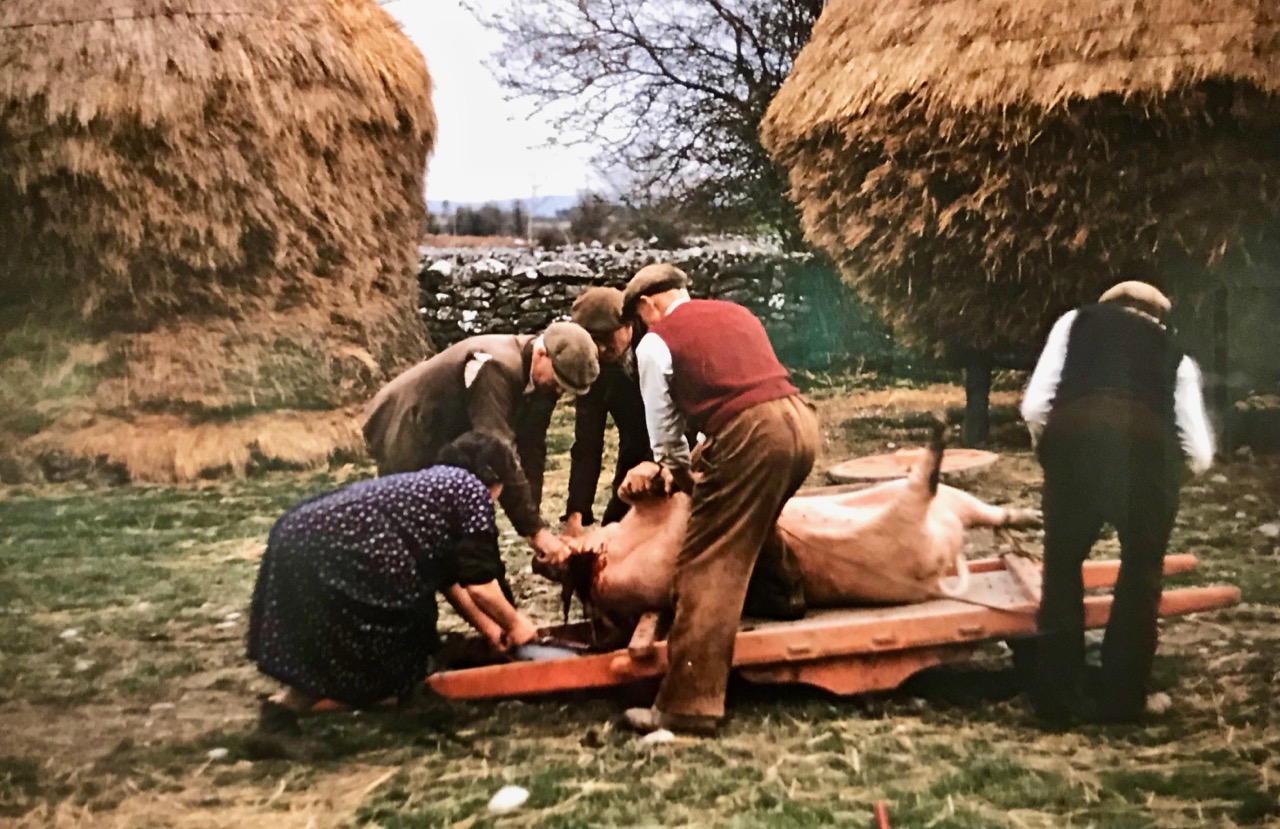
Another of Cresswell’s colour images, showing the killing of the pig – a family affair

There is one more photographer in this exhibition, who I will feature in a future post – watch this space! One last image from Robert Cresswell, possibly another view of the Corpus Christie parade:

1950s Ireland

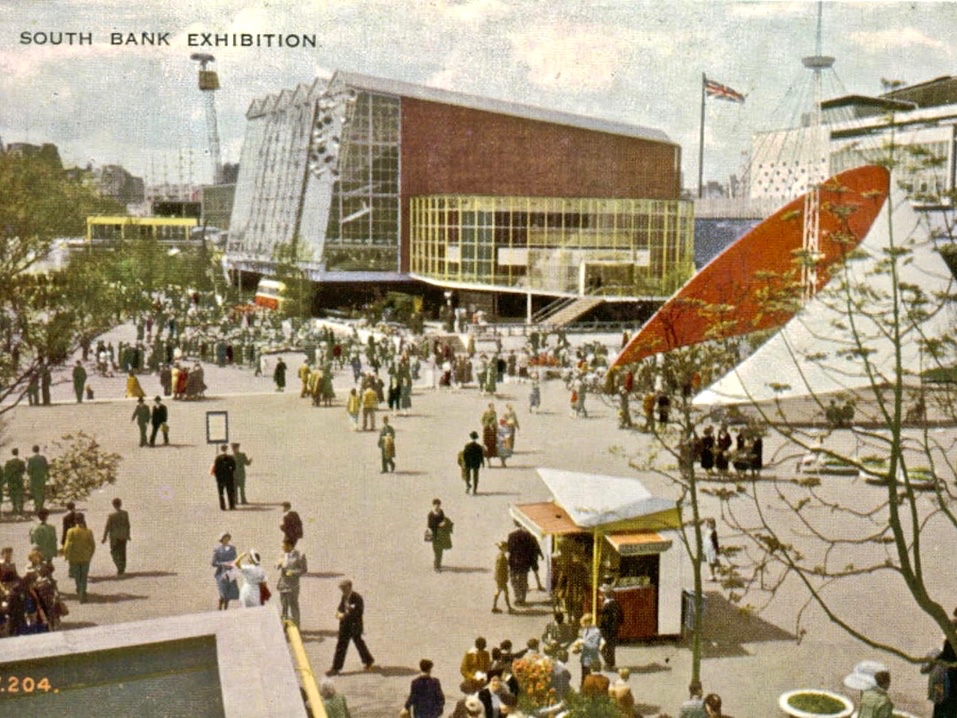
1950 happened 70 years ago – obviously. My earliest substantial recollection of the 50s era was a visit to the Festival of Britain, London, in 1951: I was five years old, and the memory has lasted. Incidentally, that year also saw my very first day at school, a traumatic experience from which I have never fully recovered – but that’s a story for another day!

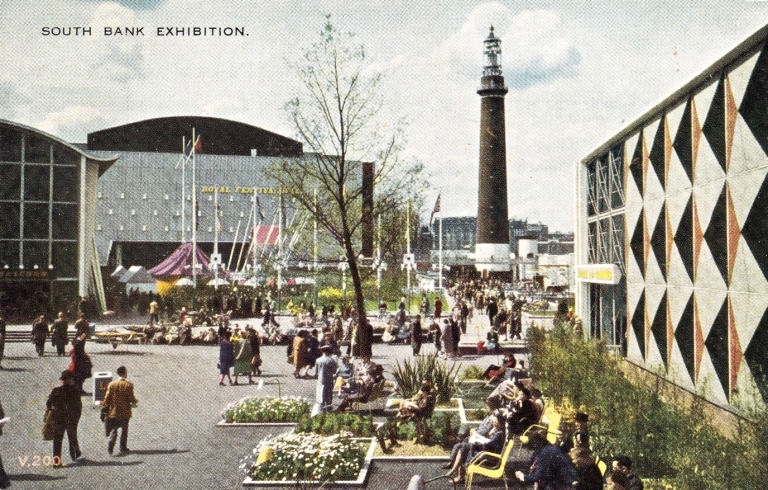
I suppose that the seeds of an interest in building and engineering structures must have been in me then, because it is the architecture of that Festival that has stayed with me – and which probably influenced me in my own later career. Not that I ever designed a Dome of Discovery, or a Skylon – more’s the pity, but I think I have always related to the throwing off of tradition and the embracing of new and exciting shapes and colours which came out of the Festival. I believe we are overdue a revival of that bravado to lift our spirits once again.

I was pleased to find these contemporary picture postcards of the 1951 Festival of Britain: everything is exactly as I remember!

In the words of the Festival’s Director-General, Gerald Barry, it represented “a tonic to the nation” after twenty years in which Britons had successively endured economic depression, total warfare and acute post-war austerity. However, the Festival of Britain was the product of a left-wing government and it has been said that Churchill (then leader of the opposition) held the view that the whole venture was “three dimensional socialist propaganda”. I’m not sure that this is really true, as he attended the Festival and evidently spent all day riding up and down the escalators – then a novelty – with great delight! I also remember those escalators: we called them moving stairs (I still do – just like I still call the cinema the pictures). Finola clearly remembers riding on Ireland’s first moving stairs, in Roche’s Department Store, Dublin. But that was 1963; today’s post is all about the 1950s, but in rural Ireland.

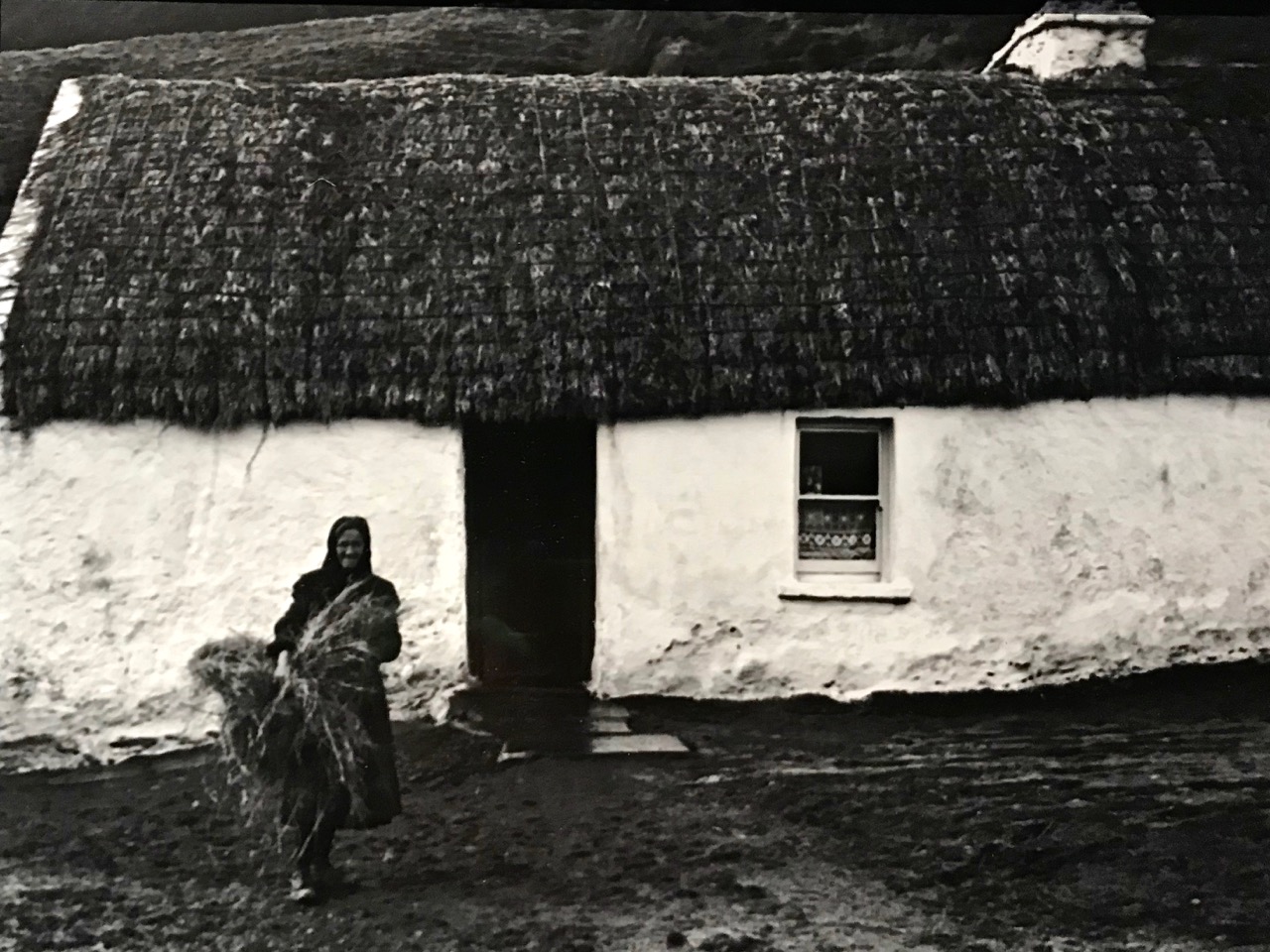
The Half Door, an image from rural Co Clare by Dorothea Lange

On a recent trip to Dublin we visited Ireland’s Museum of Decorative Arts & History at Collins Barracks. We went specifically to see an exhibition: Ireland in Focus: Photographing Ireland in the 1950s. This features “rare images of forgotten Ireland” by three world renowned documentary photographers, one from France and two from North America. Each of them visited Ireland during the 1950s to record a traditional way of life that was perceived to be vanishing as the twentieth century progressed. For anyone interested in Ireland and its recent history, this is not to be missed: it runs until April. In this post I shall show some examples of the work of one photographer: Dorothea Lange. The others will get a showing in future posts.

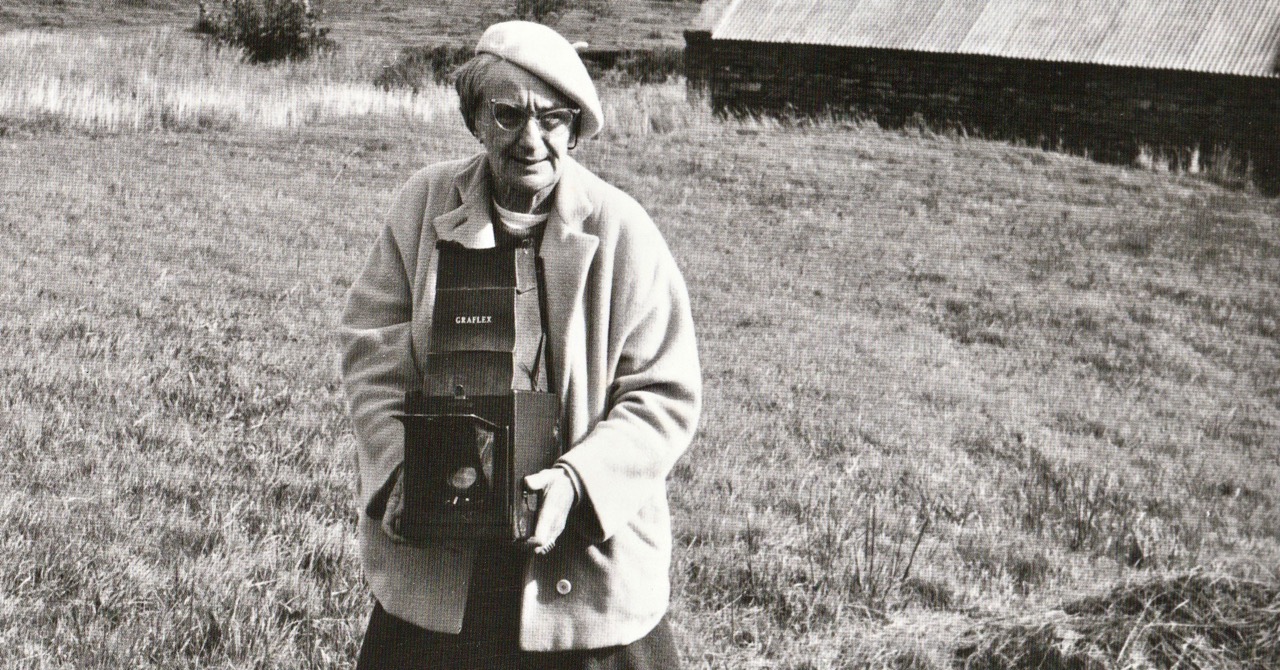
Dorothea Lange, a portrait taken by her husband Paul S Taylor on the Texas Plains in 1935

We had already been introduced to Dorothea Lange as my good friend John (also an expert photographer) recently gave us a copy of a book of her Irish photographs. Sponsored by Life Magazine, she visited the western seaboard in 1954, staying for several weeks in County Clare. She took over 2,400 photographs, which are now fortunately archived in the Oakland Museum of California. In the introduction to the book Dorothea Lange’s Ireland Eliott & Clark Publishing, Washington, 1996, Daniel Dixon writes:

. . . Dorothea Lange was not an avid reader. But among the few books which became her favourites was a description of the sort of culture that drew her attention time and again throughout her career, a rural society where customs, beliefs, and the way of life itself were tied to the soil. The book was called The Irish Countryman. Written in 1937 by a young anthropologist from Harvard, Conrad Arensberg, it documented and analyzed the social and economic traditions of Irish rural life and discussed how they were affected by religion and superstition. In it, Arensberg located the family farm at the hub of this complex system and explained how each generation placed an overriding importance on ‘keeping the family name on the land’ . . .

Why is it that we are so drawn to old photographs? Lange’s pictures paint a view of rural life in Ireland that is barely a lifetime away – yet it seems far longer ago. But, living in rural Ireland today, we can so easily relate to those times and – most probably – regret that they have passed. Of course, if we lift the veneer of nostalgia, we know that life was harsh, then and – for all the problems of this world – it is so much easier now. We doubtless have regrets principally for the loss of the people that are portrayed; moments preserved for all time on film, but that can never be recaptured.

Quite apart from the people, we do like to see how places have changed. These images of 1950s Ennis, now a sizeable county town, hark back to simpler times, for sure, in Lange’s work:

You won’t see every one these pictures in the exhibition – I have taken some from the book. They all complement each other. But it’s all only a small part of what Dorothea Lange recorded. What of the several hundred other images? At least they are kept safe, although not available on line. Lange was born in 1895 and succumbed to cancer in her seventieth year, 1965. A few months after her death the Museum of Modern Art in New York mounted a retrospective of her work. It was the first one-person retrospective by a female photographer held at MoMA. She is remembered far more for her images of the Great Depression years in the American West than she is for her visit to Ireland, but here we should be grateful for her documentary work that has added to our records of Irish rural life in the last century.

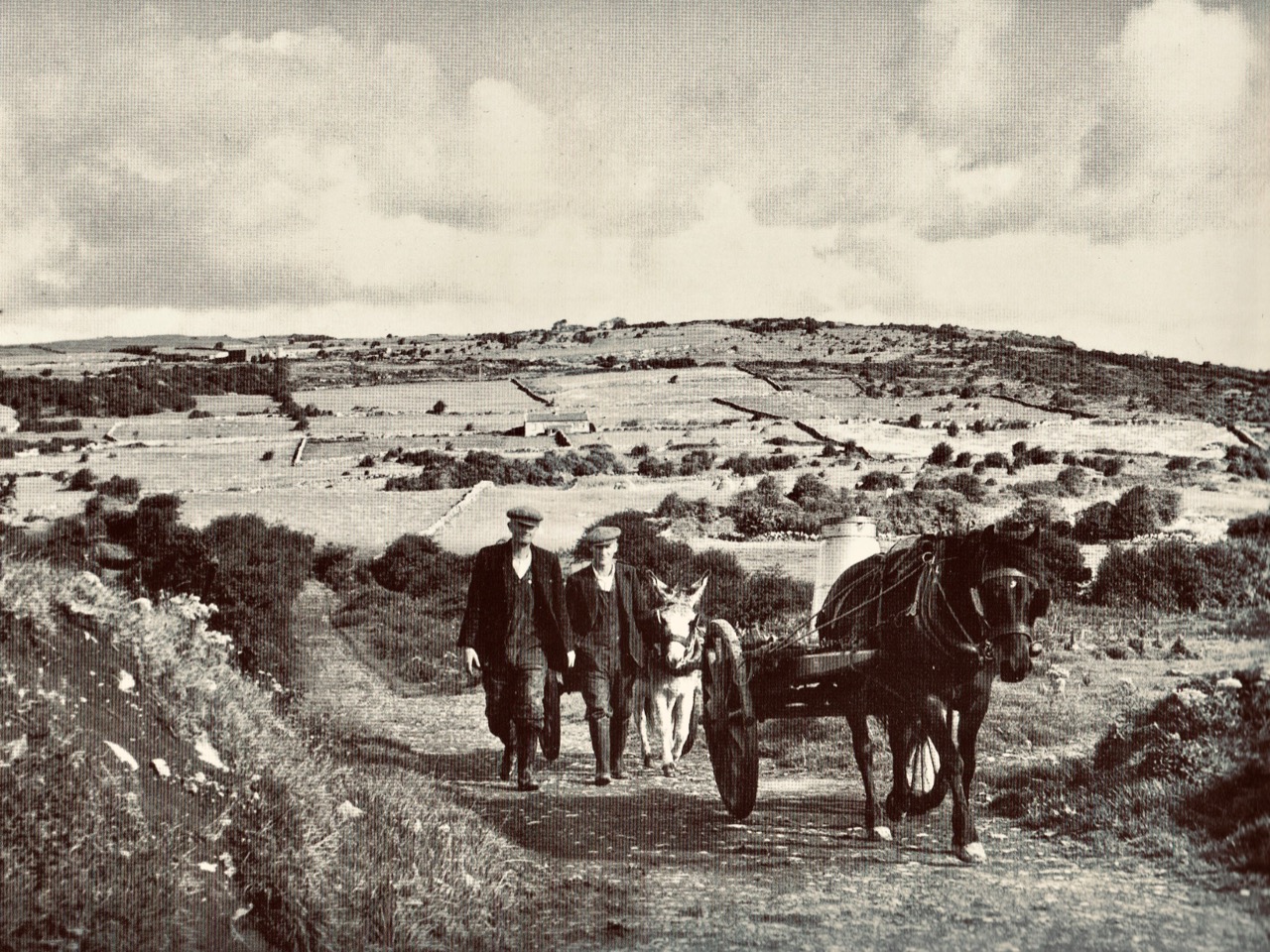
Top – Tulla, Co Clare; above – going to the Creamery, Co Clare, 1954. Below: Dorothea Lange in Ireland

Irish Romanesque 3 – Monaincha, the Isle of the Living

There are places on this island that seep into your soul. You come away with a sense of having visited another world, of having passed through a portal and been lucky enough to come back to tell the tale. Such a place is Monaincha in Tipperary.
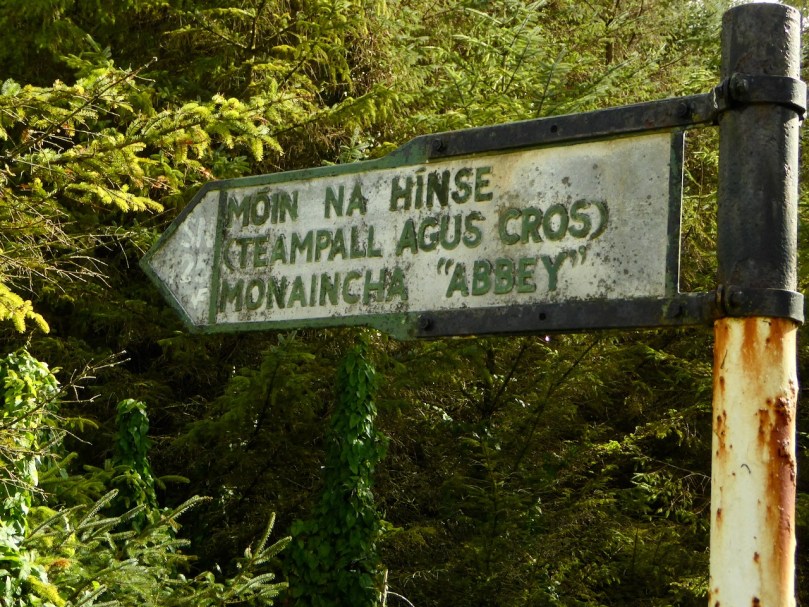
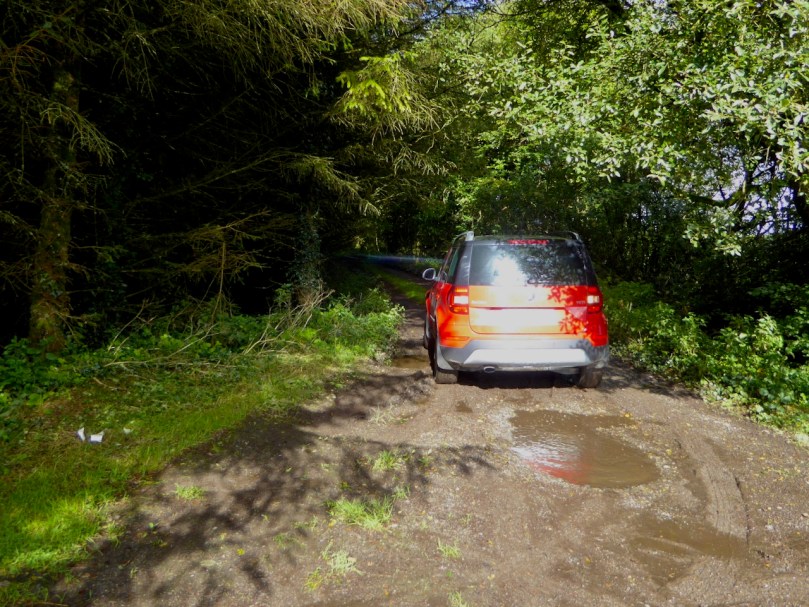
We made this trip because I was studying Irish Romanesque architecture and Monaincha is a fine example, but we had no real idea what to expect and it caught us off guard. An ancient signpost directed us down a rough track through the trees and then by foot across the fields. Our first glimpse was of what looked like an island in the middle of flat land.
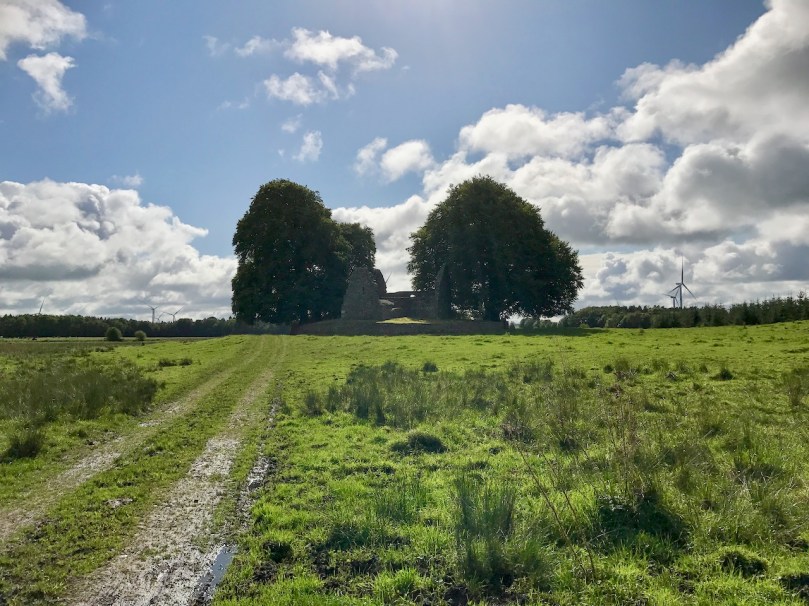
We weren’t wrong – this had been an island, called Inchanambeo (Incha na mBeó) which translates as Island of the Living. Curious name, but of course, this being Ireland, there’s a story to it. Here it is from Dúchas, the School’s Folklore Collection, collected by a 12 year old in the 1930s:

On this lake were two islands; the Island of the living which was the smaller of the two was a place to where saints went who wanted to live alone – with God. It was called the Island of the Living because it was said that no one could die who went on this island. Of course this is not to say that their bodies could not die – it meant that their souls could not die, because Our Lord said “He that eateth of this bread shall live for ever”. No woman could go on the large island because she would die. This was often experimented, when men brought female animals on the island but they dropped dead the moment their feet touched the island.

Hmmm – as a woman, perhaps I did indeed go through some kind of portal, since I managed to live through the experience. That explains the Otherworldly feeling!
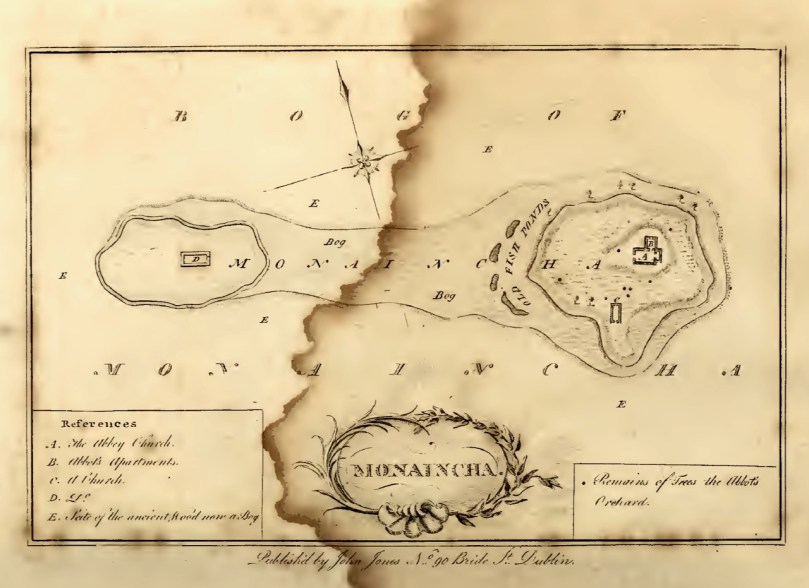
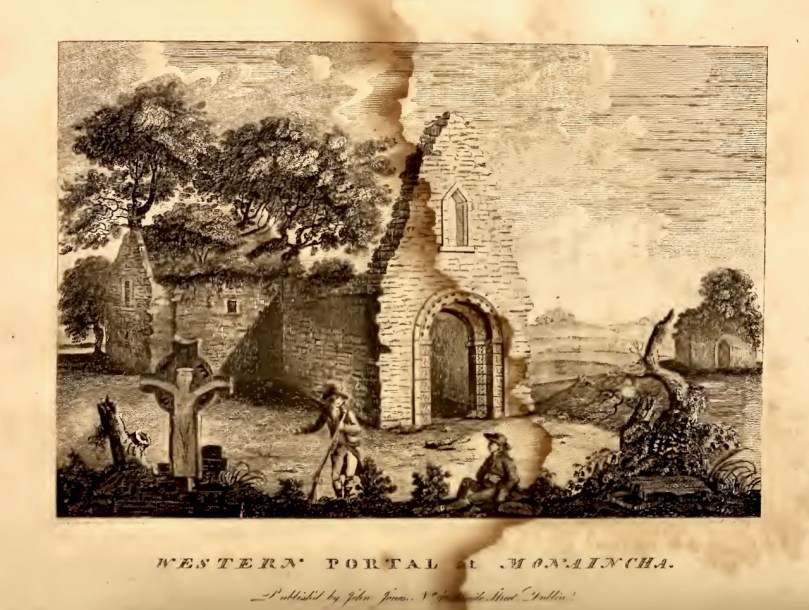
The top image and this one are from Ledwich’s Antiquities of Ireland, published in 1790. His map clearly shows that both islands were still there at that time, with a building still in place on the small island, while the first illustration shows the second building on the large island, no longer there

For this and more Duchas stories about Monaincha, go to this link on the Dúchas website. You will see that Cromwell sacked the monastery, that the woman who gave away the monks’ location was turned to stone along with her cake of bread, that the lake contains hidden treasure, that the water if used improperly would not boil, that many miracles were associated with the saints who lived on Monaincha, and that a white lady roamed the area until banished by a priest but not before she left her mark on him (read the story).
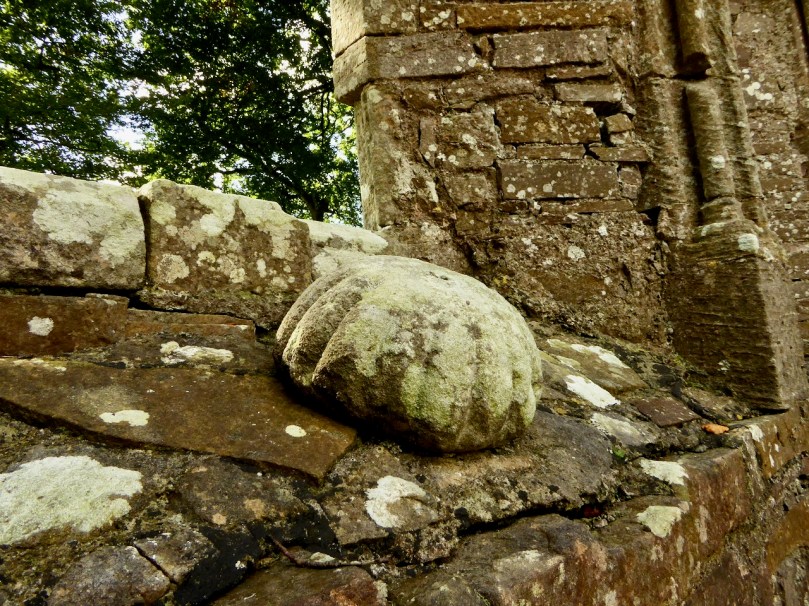
And here it is – the cake of bread that was turned to stone

One of those saints was St Canice, who came on retreat to this sacred spot:

He did not let anyone know where he was but he got letters and messages each day by means of the Garnawn Bawn. This was the White Horse which passed each day without a guide from Agherloe to Monahinche.
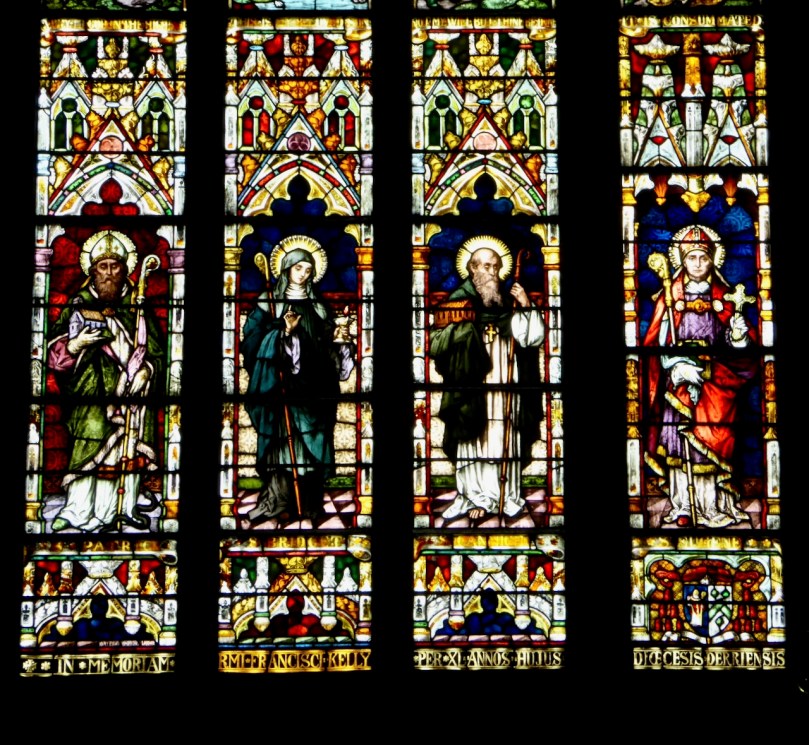
St Canice (second from right) in good company with Sts Patrick, Brigid and Eugene. He’s holding his cathedral. The window is in St Eugene’s church in Derry

But it was St Cronan who built the church:

St Cronan and his monks sought a place where they could build a residence. They proceeded to the parish of Bourney to a place called Bogawn  but looking towards Monahincha they saw the sun shining on it and so fixed the site of their future home on Monahincha. St Cronan lived for a long time in Monahincha and while he was there he prayed a great deal and performed many miracles.

For a more academic history of Monaincha we turn to the bible of all things Romanesque, the Corpus of Romanesque Sculpture. From it we learn that:

Originally known as Inis Loch Cré, the name Mona Incha was only given to the site in the in later centuries. The earliest monastery here was founded by St Cainneach of Aghaboe in the 7thc as a hermitic settlement. Column Mac Fergus died on Inis CrÈ in 788 as did Elarius, anchorite and scribe, in 807. The latter was St Elair, or Hilary who was patron of the monastery in which the Culdees were instituted in around the 10thc. In 902 Flaithbertach, King of Cashel, came here on pilgrimage. An Augustinian community was established at Mona Incha during the mid-12thc.

In 1397 the monastery, containing a prior and eight canons, was taken under the Pope’s protection and released from paying Episcopal dues because of its extreme poverty. At about the same time the Book of Ballymote described Mona Incha as the 31st wonder of the world! In c.1485 the prior and convent finally moved to Holy Cross at Corbally, as the canons found the vapours from the marshes surrounding the island unhealthy. Following the Dissolution the church was used as a penal chapel. 
Much of this is based on the erudition and scholarship of Harold Leask, whose three volume book Irish Churches and Monastic Buildings has a section on Monaincha. He also authored, along with C MacNeil, an article in the Journal of the Royal Society of Antiquaries of Ireland which is a very comprehensive account of all that can be gleaned from annals and hagiographies of the history of Monaincha*.
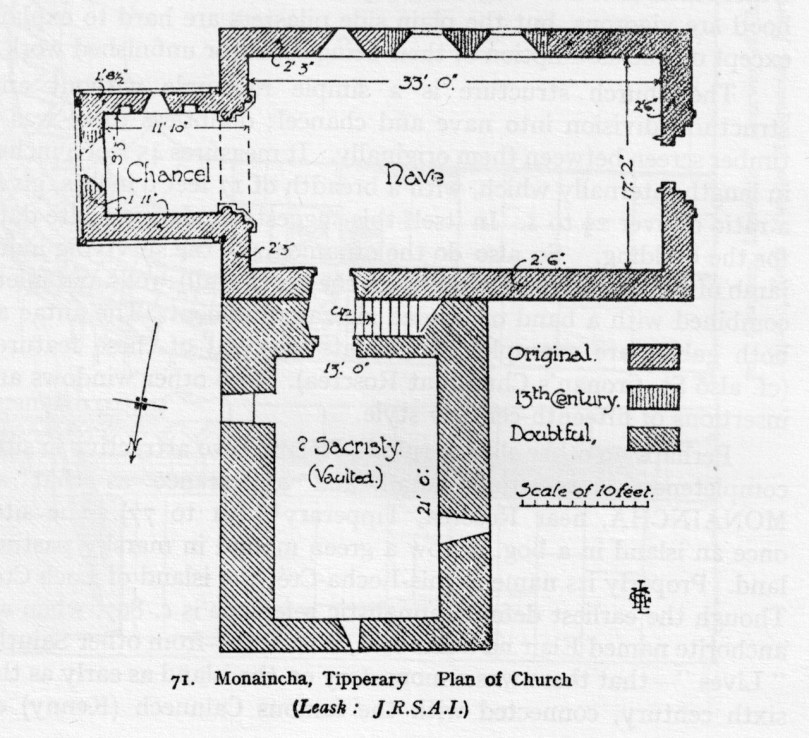
Leask’s plan of the ruins at Monaincha

He cites Gerald Barry’s (better known as Giraldus Cambrensis) Topographia Hibernia (written in 1188), to show how ancient is the tradition of the Isle of the Living.

There is, he says, a lake in North Munster containing two islands, a greater and a less. The greater has a church of an ancient religious order and the less has a chapel served by a few celibates whom they call Celicolae or Colidei [Culdees – an ancient hermetic order]. No woman or animal of the female sex could enter the greater island without dying immediately. This has been put to the proof many times by means of dogs, cats, and other animals of that sex, which have often been brought to it as a test, and have died at once. As regards the birds of the district, it is wonderful how, when the males settle at random on the bushes of the islands the hen birds fly past and leave the males there and avoid that island like a plague, as if well aware of its natural power.  No one ever died or could die in the smaller island, whence it is called the Isle of the Living; yet from time to time persons are afflicted with deadly ailments and suffer agonies to their last breath. When they feel there is no longer any hope of really living, and by the increase of their disease they are in the end so distressed that they would rather dies outright than continue in living death, they have themselves brought at last in a boat to the greater island, and they give up the ghost as soon as they touch the land.

Leask and MacNeill go on to state that the place had been the site of pilgrimage formerly and some stations were still visible in 1848, and that the proprietor of the place had drained the lake in the 1820s or so and forbade all access to the church either for burial or pilgrimage, destroyed tombstones and erected round the church a circular mound, composed, the people say, of the mortal remains of the hundred generations deposited in that favourite churchyard.
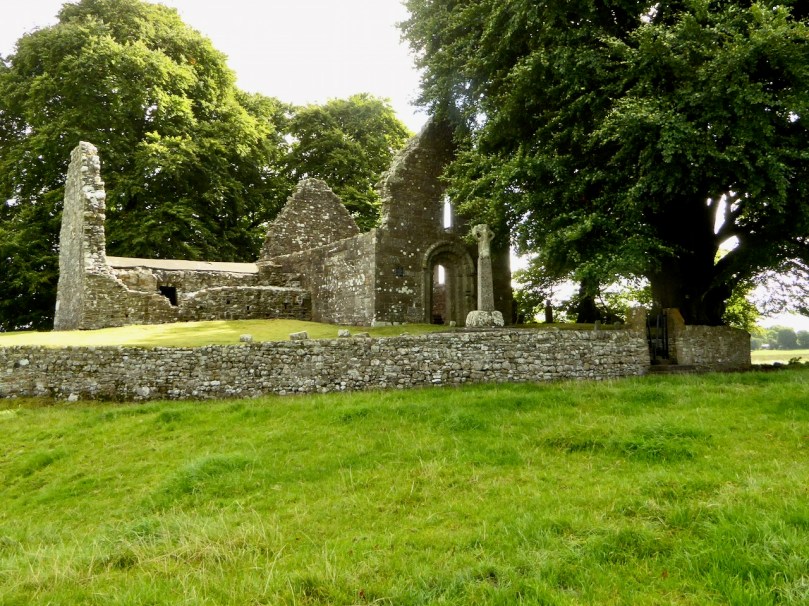
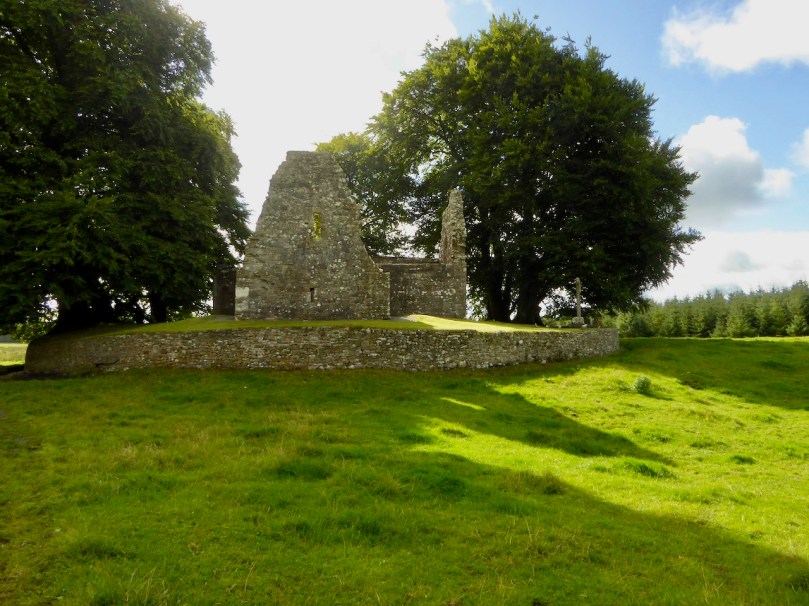
What was once the larger island (there is no sign now of a second one) is still, as Leask described in the 1920s, a circular raised platform, due to the draining of the surrounding land, but there is still very much a sense of travelling across an open expanse to get to it. Marooned in the middle of a large field, the island is visible as a group of very tall trees and it’s not until you get close to it that you begin to see the structures.
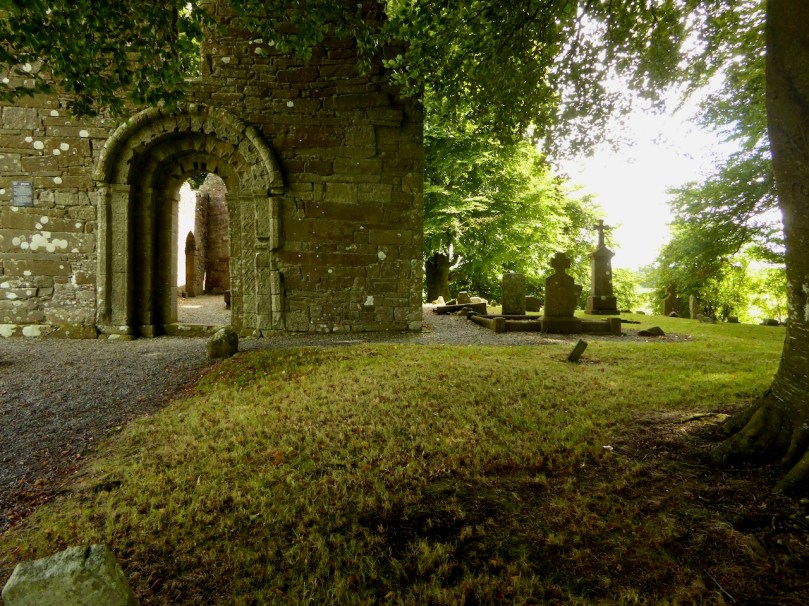
As with many such sites in Ireland, the graveyard surrounding the ruined church, despite what Leask asserts, appears to be still intact. This adds to the reverential feeling of the place, as do the enormous trees, which must be hundreds of years old. A partly reconstructed high cross stands at the entrance – Robert wrote about this one in his post Fading Treasures.
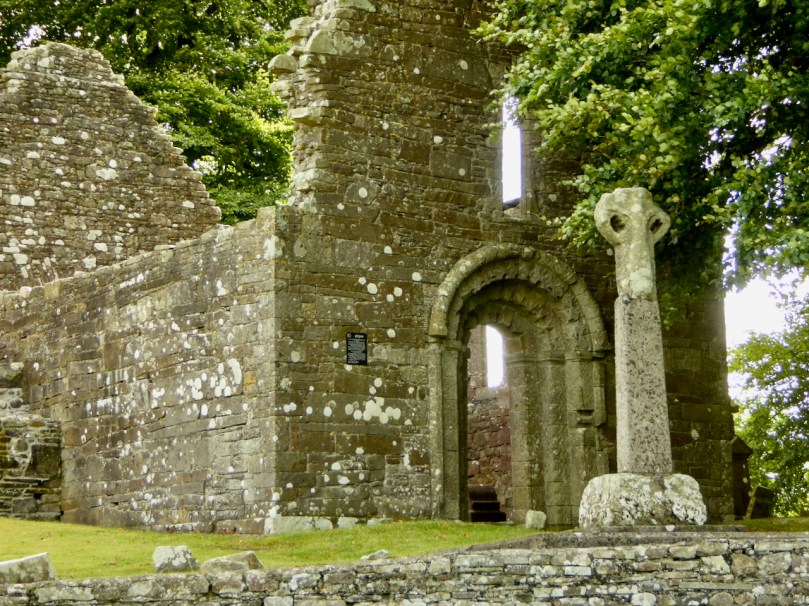
The church is a Romanesque gem. (For more about Irish Romanesque architecture, I have provided a list of previous posts at the bottom of this post.) Dating to the twelfth century, it is a nave and chancel church, fairly typical of the time. There is a later addition on the north side, referred to as a sacristy in Leask’s plan. The sacristy is shown in the Ledwich drawing (first image at top of post), which dates from the 1790s.  As could be seen also in Ledwich’s site map, there was much more to the whole site than there is now.
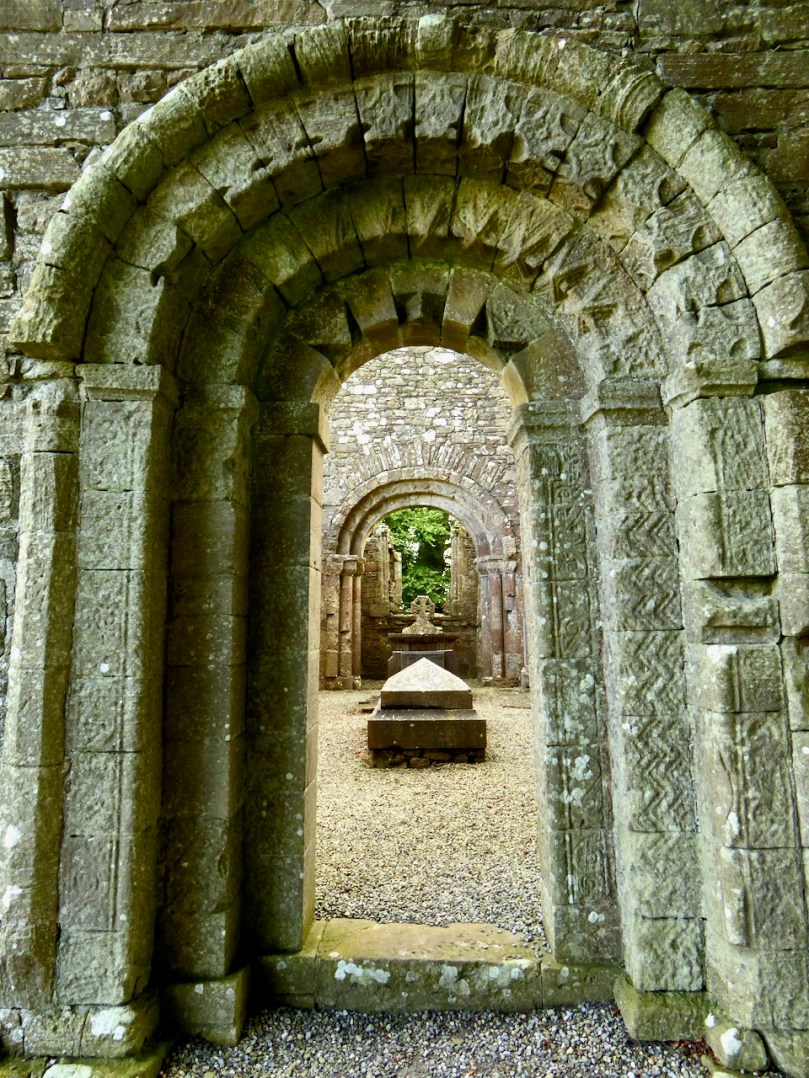
The main door has three (or four, depending on who’s counting) orders, each one carved in the Romanesque fashion with chevrons, zigzags, pellets, floral motifs within lozenges, and some scrollwork. Although weathered, most of the the carvings are still clear to see and very attractive. There are hints of animal heads but they are difficult to discern.
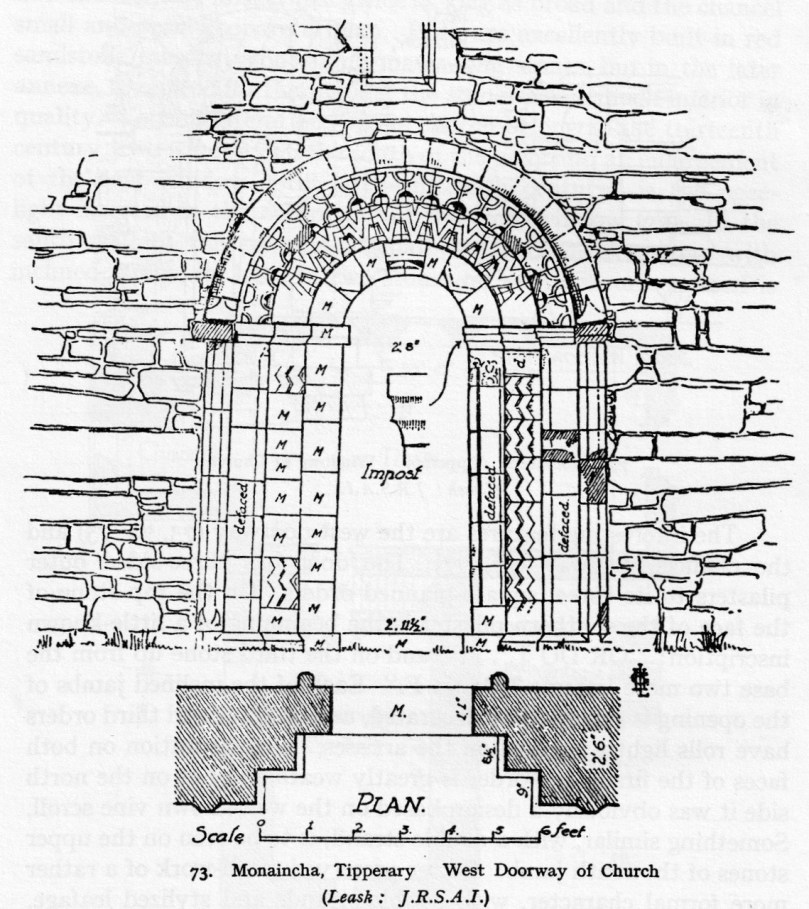
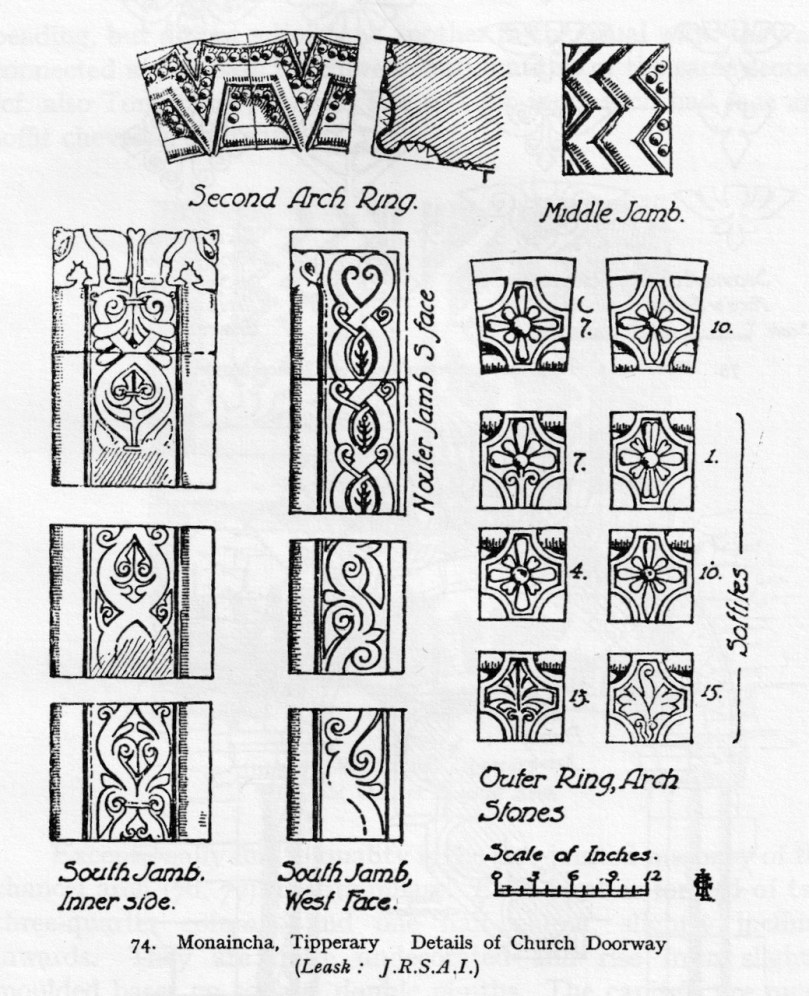
One of the pleasure of Leask’s accounts is his wonderful line drawings. In his plan of the door M stands for ‘modern’ – the doorway was repaired, probably by the Office of Public Works, at some time before his visit

The door is much plainer on the inside, with only one order and no visible carvings. This is normal in Romanesque buildings – the difference between the elaborate entrance and the unadorned exit is often quite startling.
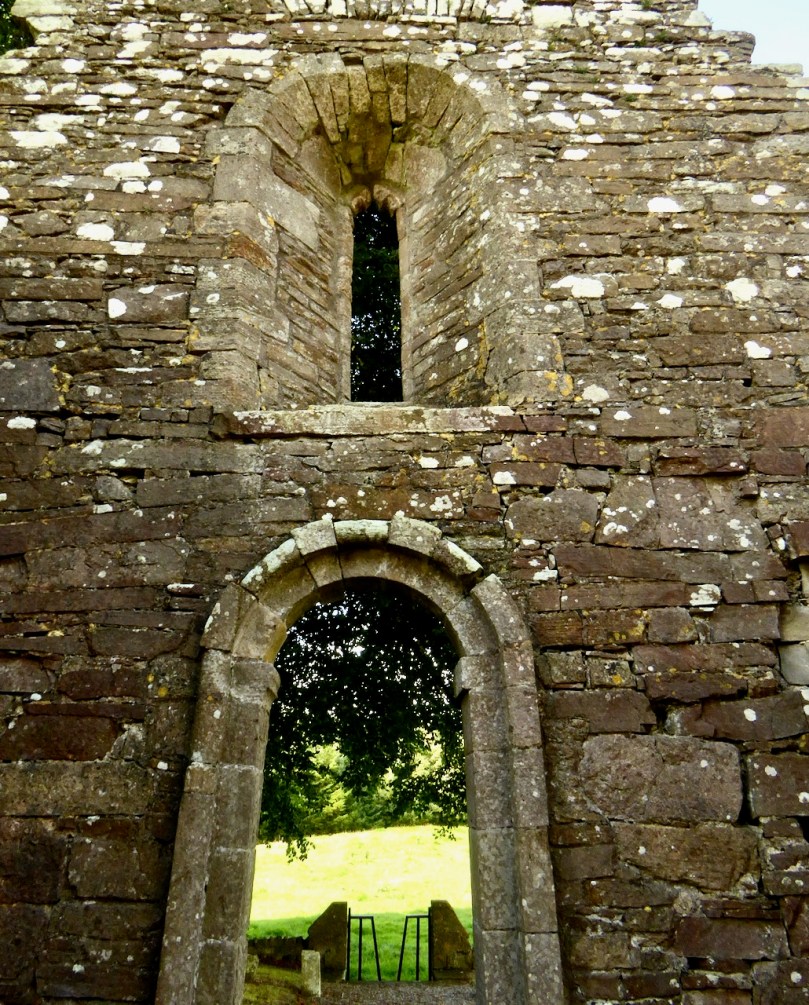
Above the door is a narrow window that was modified in the 15th century by adding an ogee head to the top of the frame

Inside, the nave has some fine windows, although not all of them bear scrutiny as original to the 12th century period of construction.
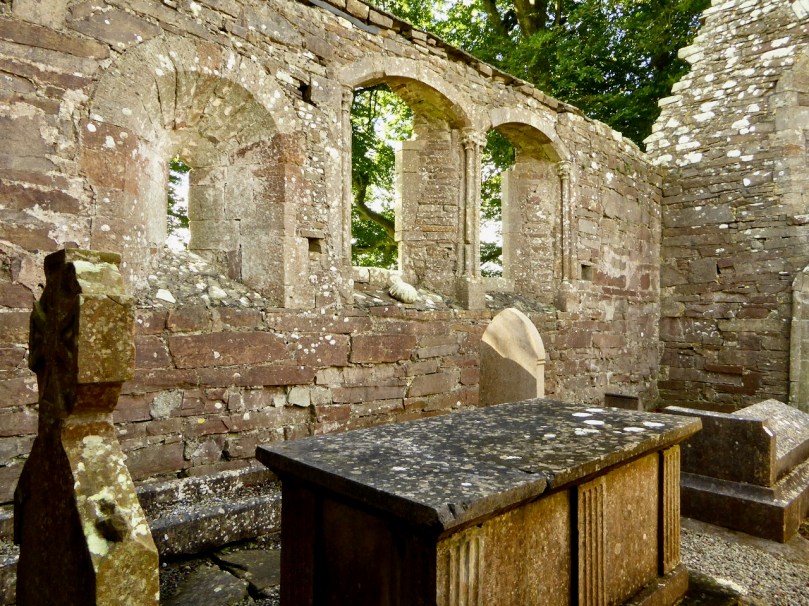
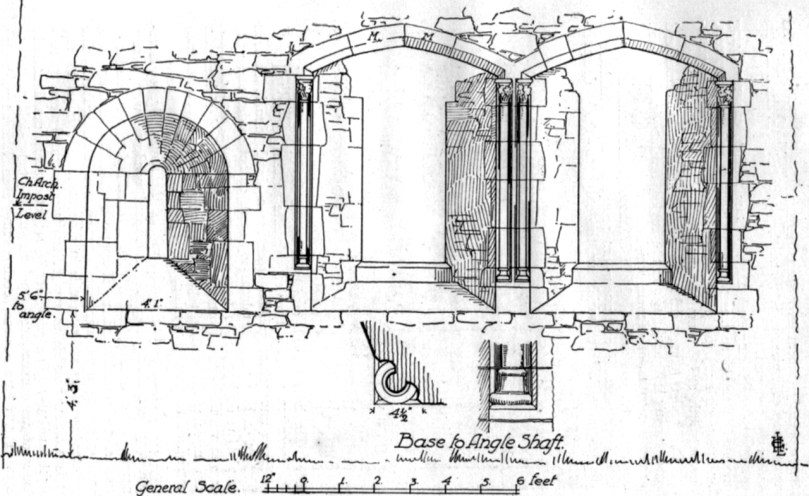
Only the smallest window is recognisably Romanesque

But it is the chancel arch that dominates the space. It separates the small chancel – the area where the altar would have been and mass would have been celebrated – from the nave where the monks and the faithful would have gathered.
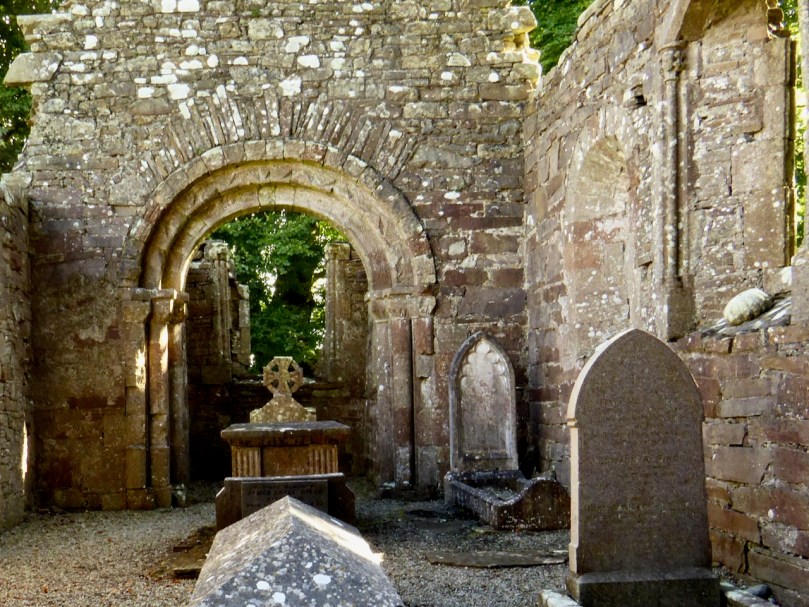
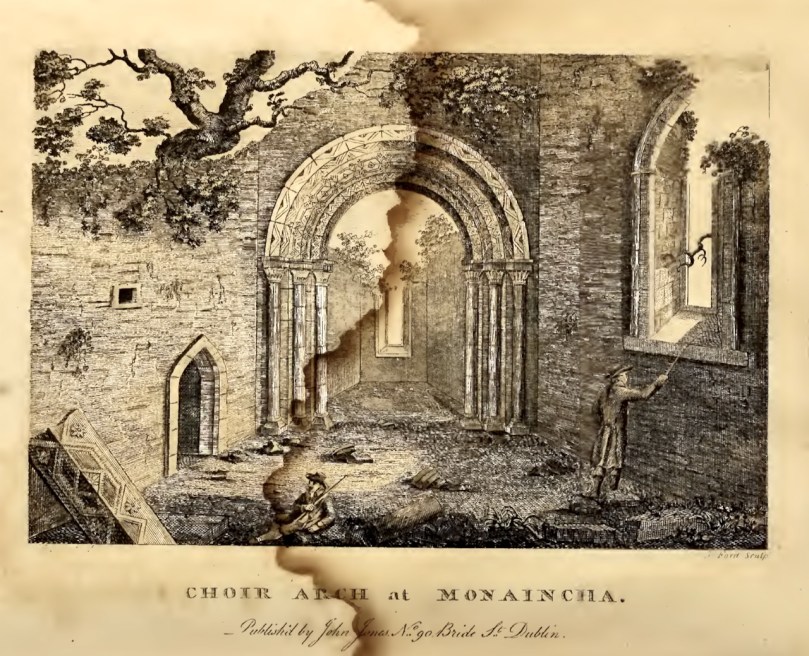
Photograph taken in 2017 and drawing done in 1790. In Ledwich’s drawing the entry to the vaulted sacristy (probably 15th century) is on the left

The arch is characteristic – three orders with carvings on both the arch and on the jambs, which are slightly inclined. The capitals are scalloped. The decoration is similar to that on the main door, indicating it was probably carved at the same time and maybe by the same hands.
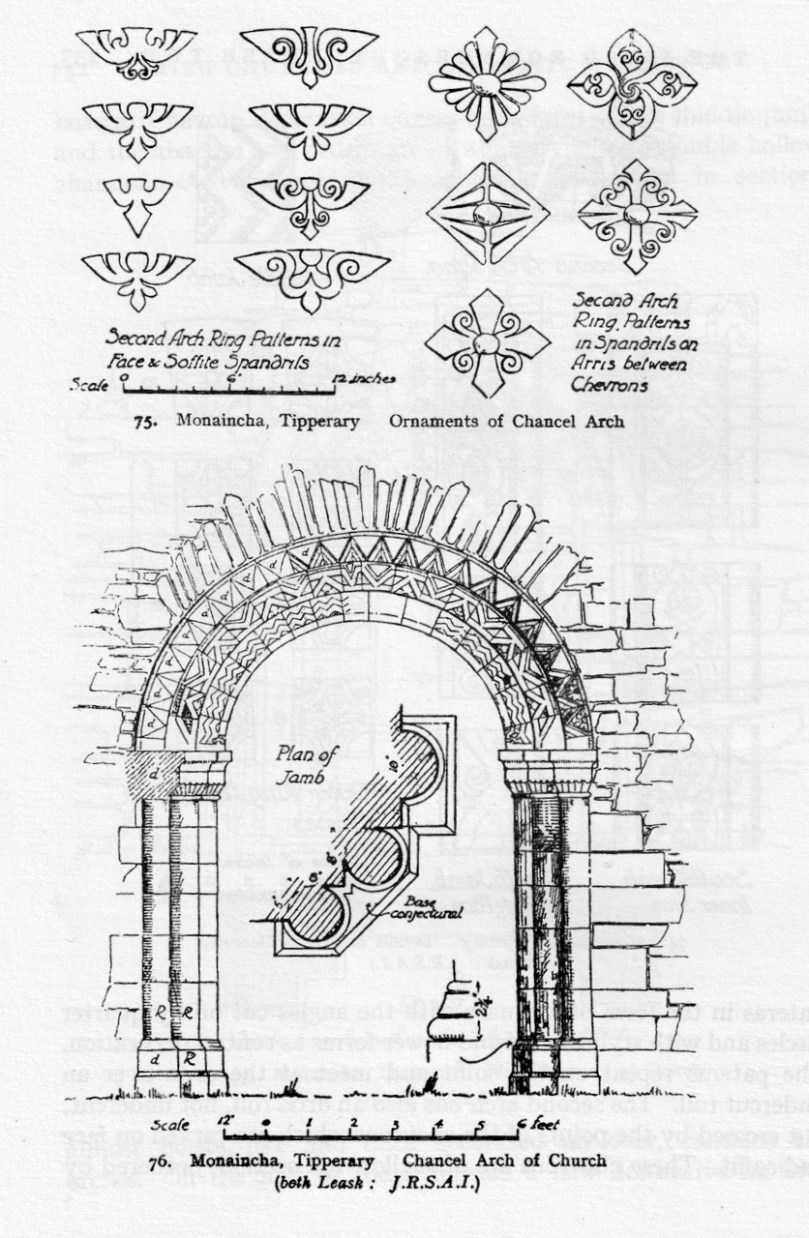
The experts at the Corpus compare the carvings to the Nun’s Chapel at Clonmacnoise and say, The squared patrae on the outer order of the doorway find an almost identical parallel at Clonfert (Galway), although at Clonfert the floral decoration of the motif does not vary. The closest comparisons to the chevron ornament are found at Killaloe and Tuamgraney (Clare). These comparisons suggest a construction date of c.1180, perhaps to coincide with the establishment of the Augustinian canons at the site.
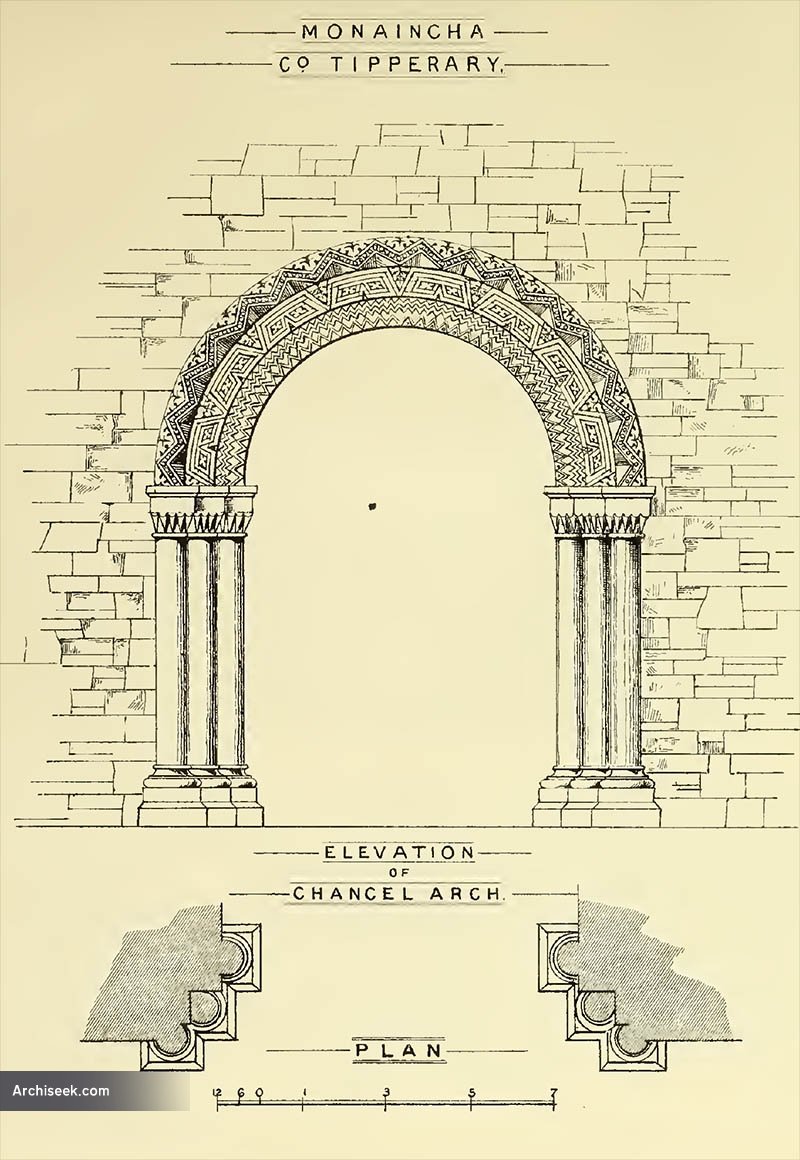
Another view of the chancel arch, this time from Archiseek

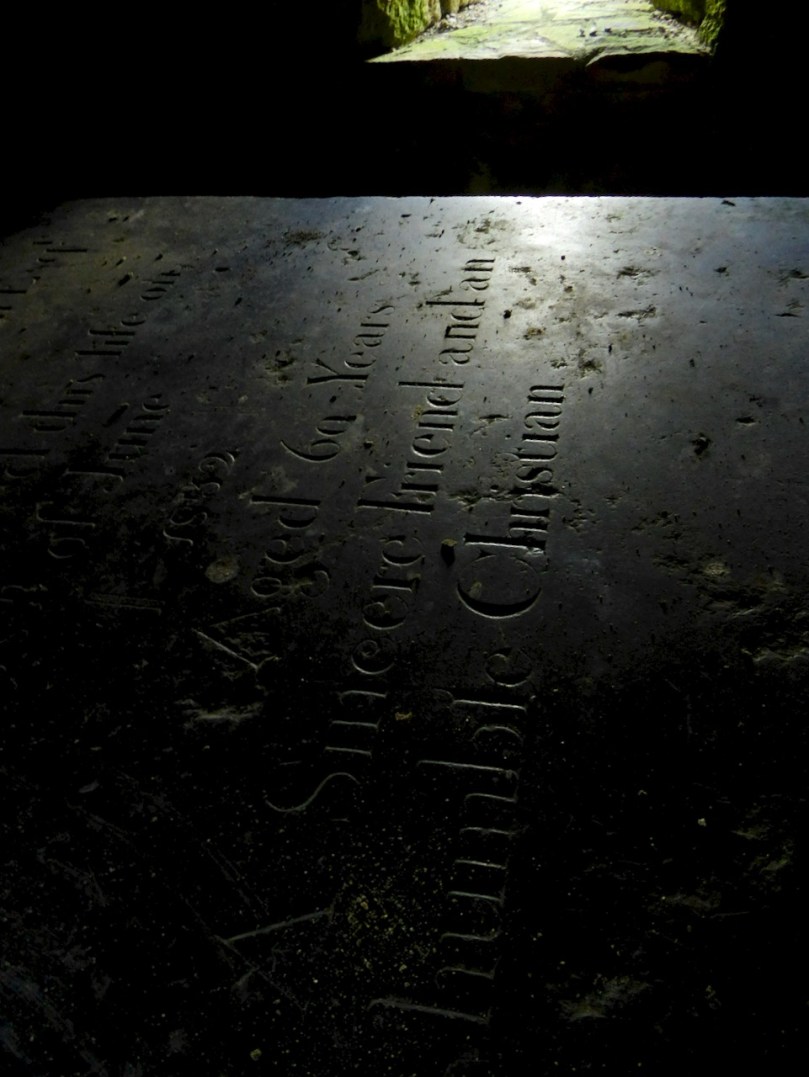
The ground floor of the sacristy is vaulted and contains tombs. This one memorialises A Sincere Friend and An Humble Christian and dates from 1832

The vaulted sacristy was added in the 15th century (Leask comments on the inferiority of its construction) and several other later modifications are visible to windows. There are  now no other buildings on the island, and of course no trace of the second island or of any other structures that one would associate with a 12th century monastic settlement, such as a round tower or an enclosing circular wall.
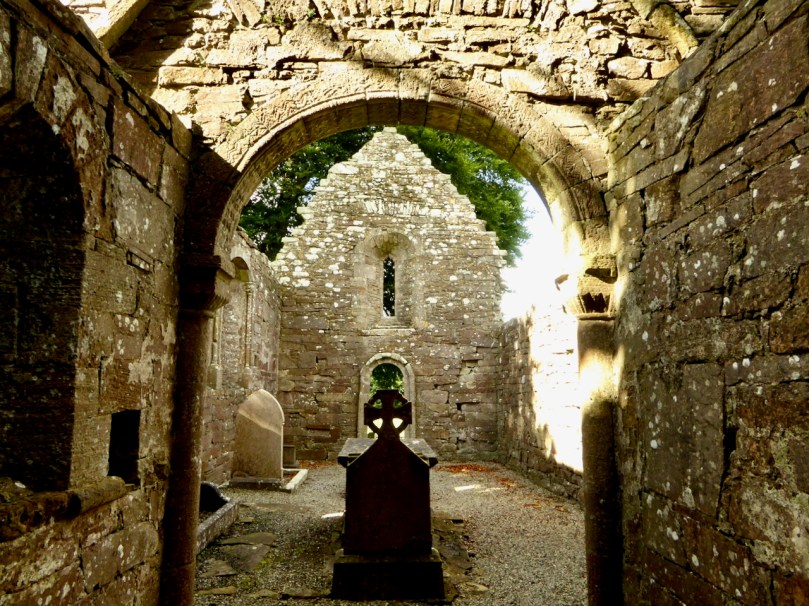
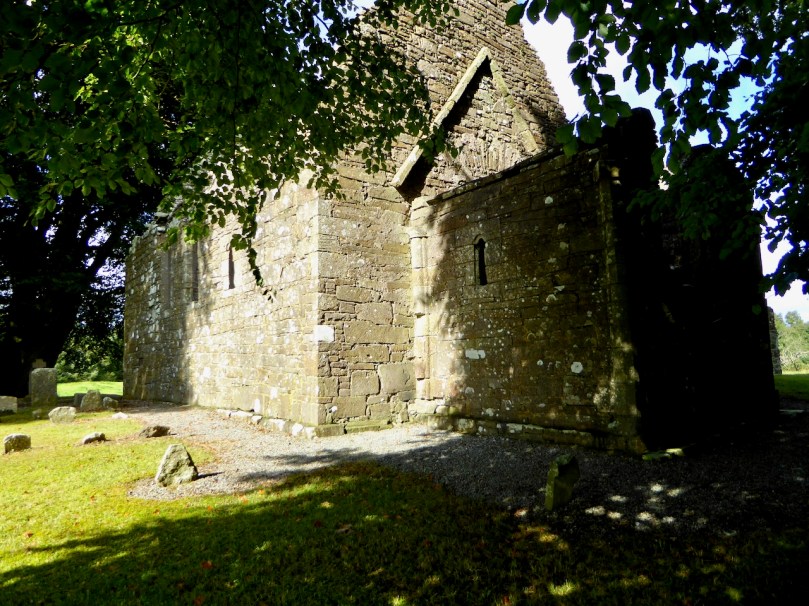
No matter – what is there is magical. We spent so long at Monaincha that the light was declining as we were leaving. It added to the atmospheric feeling of the place, and a sense that we were travelling back to ordinary life from the storied Isle of the Living.
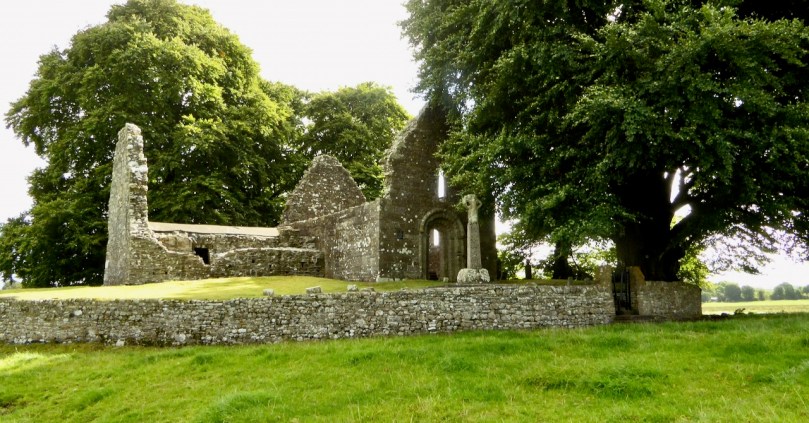
In this, I share the emotion with Harold Leask, whose love of this site shines out in his writing. In his book he states, Perhaps no other church ruin in Ireland is so attractive in site, interesting detail and appearance. . .  In the Architectural Notes that follow the JRSAI history he writes, I first saw it. . . upon the afternoon of a summer, its walls golden in the rays of the westering sun, the little green mound with its circling wall and groups of beech trees forming a perfect setting in the level bogland, bright with ragweed and and bordered in the distance by woods. The whole effect was very suggestive of a Petrie water-colour sketch, with just that delicacy and precision which is the great charm of his work.
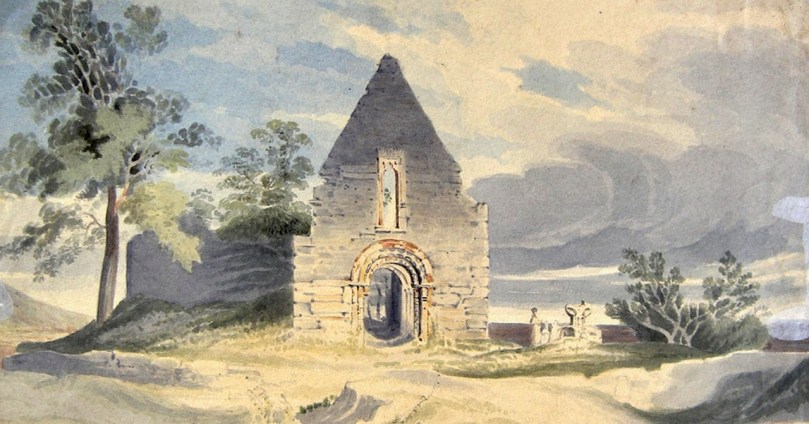
Leask may have been thinking of this very sketch by our old friend George Victor Du Noyer from a drawing by Petrie. It is marked ‘unfinished’ and indeed the sacristy is entirely missing**

*McNeill, C., and Harold G. Leask. “Monaincha, Co. Tipperary. Historical Notes.” The Journal of the Royal Society of Antiquaries of Ireland, vol. 10, no. 1, 1920, pp. 19–35. JSTOR, www.jstor.org/stable/25514550. Accessed 16 Feb. 2020

**George Victor Du Noyer, “Ideal Irish Church from a colour drawing by Geo: Petrie. Monaincha. Unfinished,” Royal Society of Antiquaries of Ireland, accessed February 16, 2020

More about Irish Romanesque Architecture:

Irish Romanesque – an Introduction

Irish Romanesque 2 – Doorways

Cormac’s Chapel: The Jewel in the Crown (Part 1)

Cormac’s Chapel: The Jewel in the Crown (Part 2)

Off the M8 – Kilree Monastic Site