Mizen Magic 17: Delights of Dunmanus

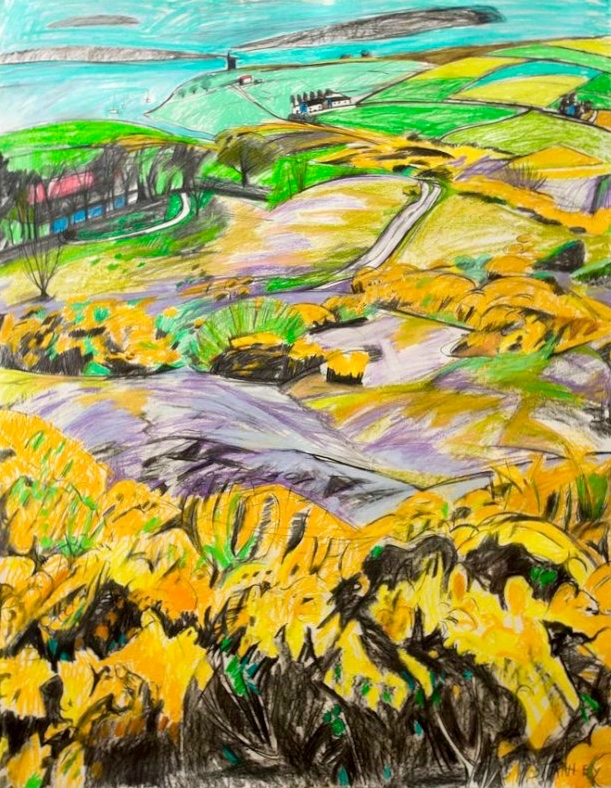
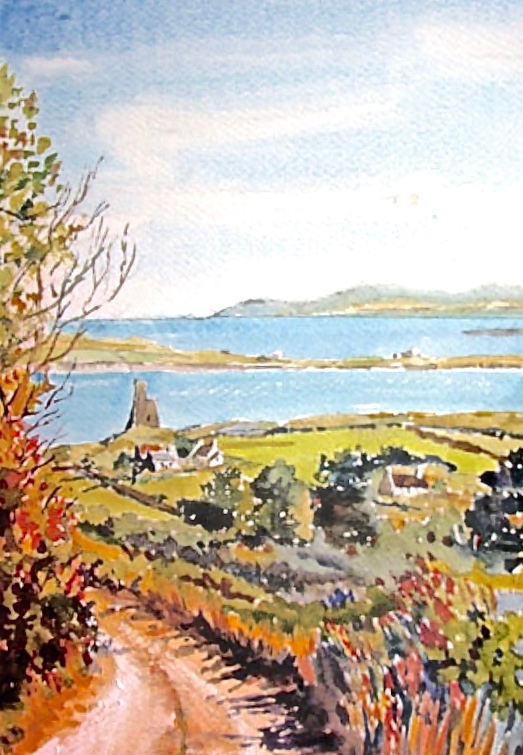
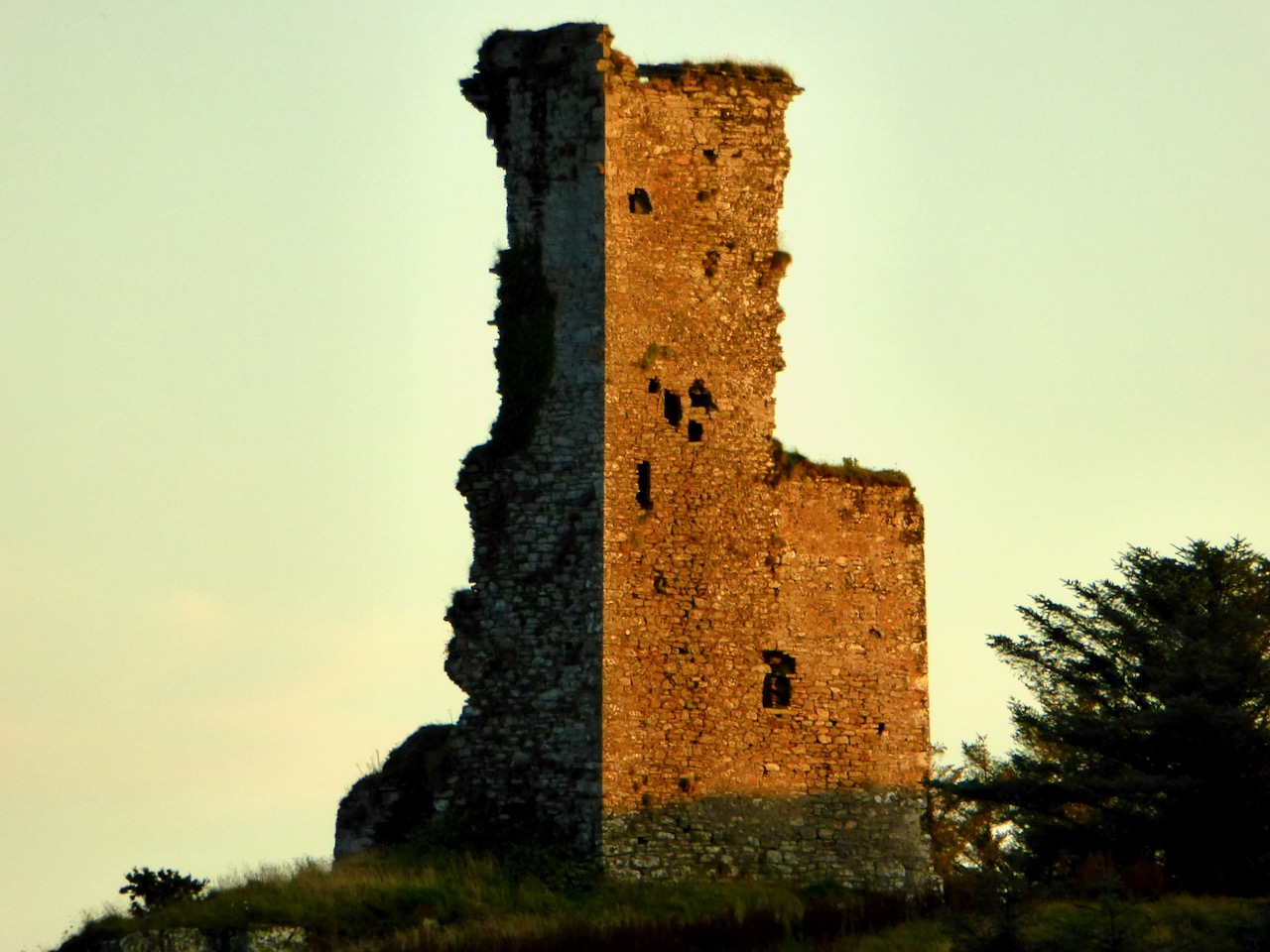
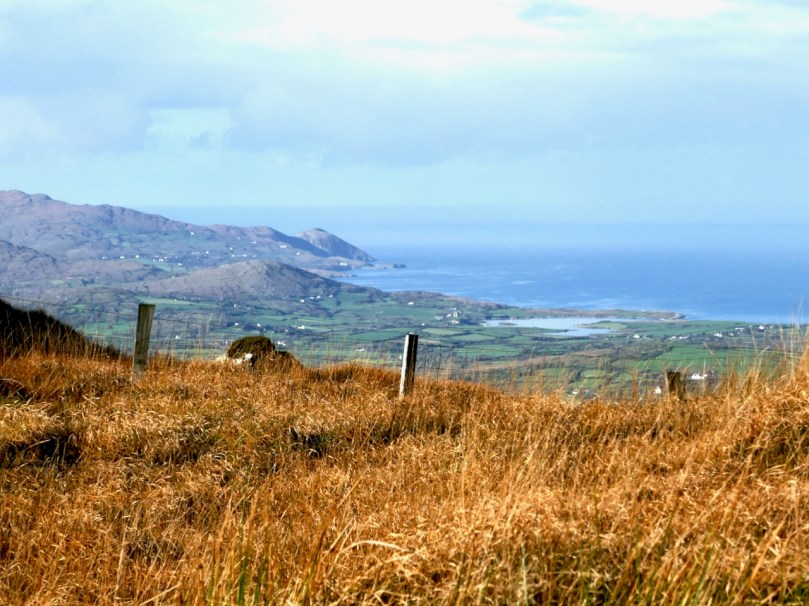
As we often do, we set out on a sparkling day last month to explore a part of the Mizen we aren’t familiar enough with yet. Our plan consisted of pouring over the OS Number 88 map and having an AHA! moment of realising that we haven’t been to a particular spot. This time, the dart landed on an area just northeast of Dunmanus Castle (seen above from Mount Gabriel), where it looked like there was a trail running along the water that would afford magnificent views of Dunmanus Bay and the Sheep’s Head. Things didn’t go quite as planned. . .

Red line: the trail we wanted to walk. Blue line, the trail we actually walked.
Arrows – yellow, Dunmanus Castle; pink, boulder burial; blue, Killhangel Church

We’ve written about this area before – specifically, in Mizen Magic 13 Robert described the promontory immediately to the northwest of the castle, with its ancient stone walls and its spectacular sea arches. This area has recently been re-fenced and isn’t as easy to access as it was.
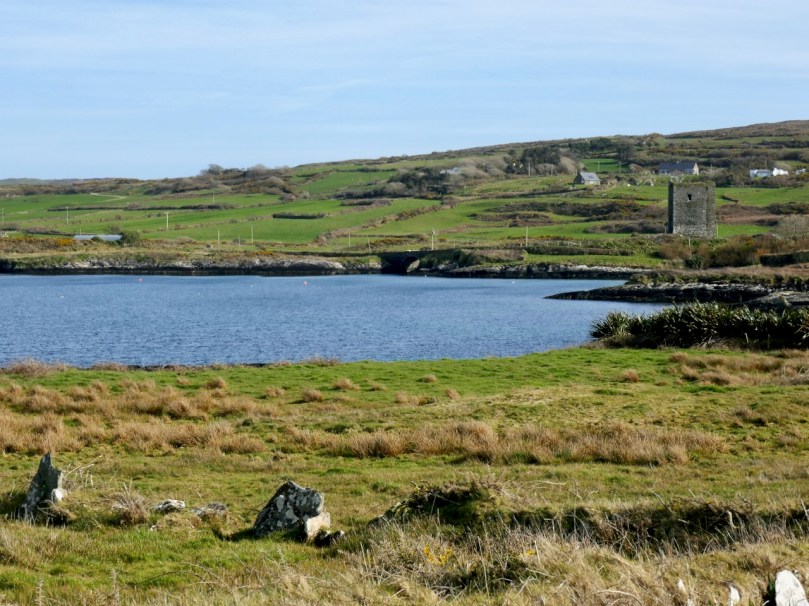
The Castle and bridge from the promontory

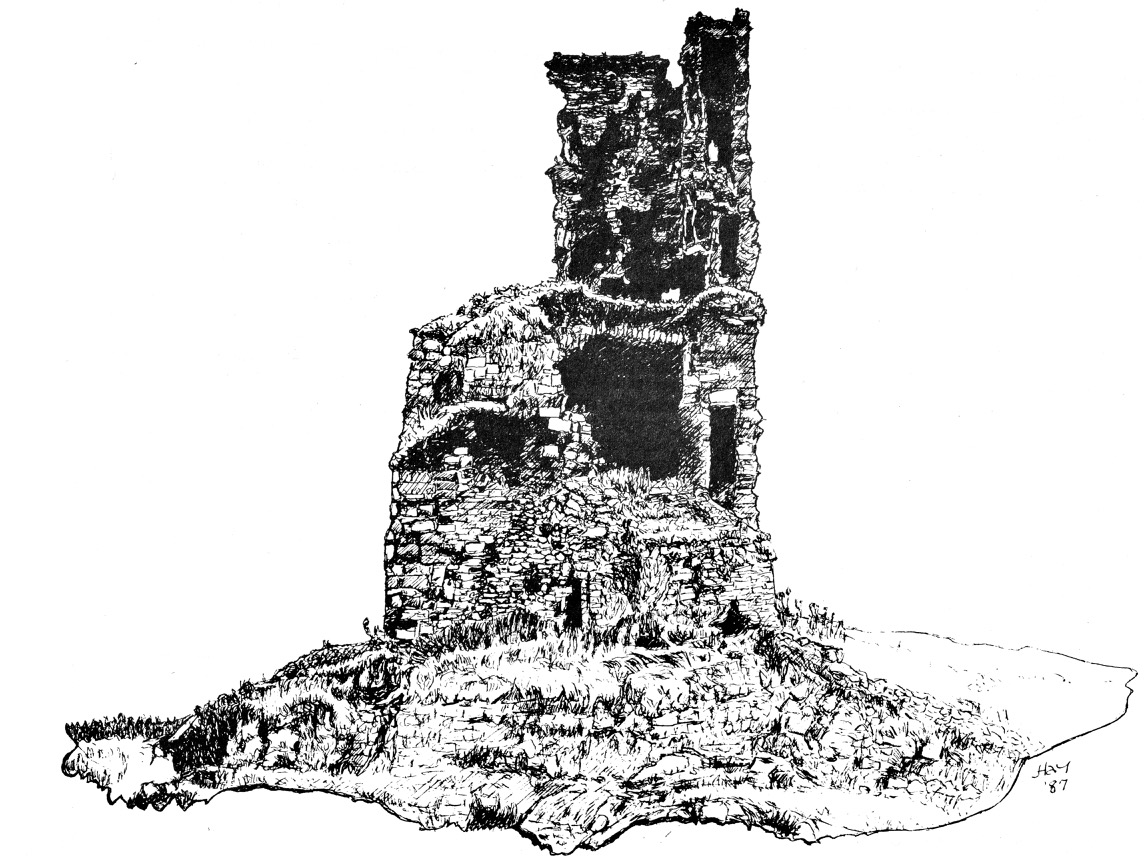
The Castle, of course, is the most prominent landmark in this area. Built by the O’Mahony’s in the 15th century, it is a classic early ‘raised entry’ type of tower house, with complicated internal architecture that allows restricted access to different parts of the building at different levels – including to an oubliette. My post When is a Castle..? has a good description of these kinds of castles, typical of West Cork.
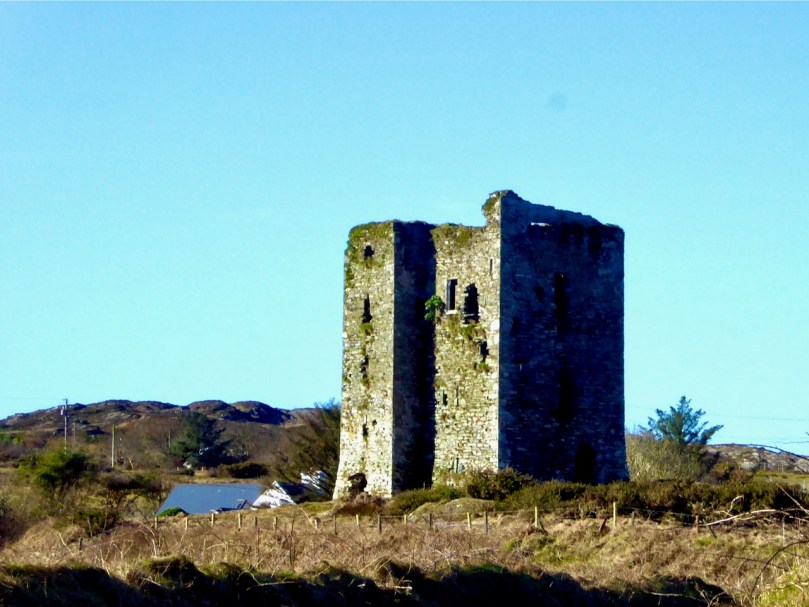
But today we were heading away from the Castle, towards the townland of Knockeens, where, on the map, we could see this promising trail. But you can’t just go right there – a little meandering is always in order when you’re in countryside this beautiful and this interesting.
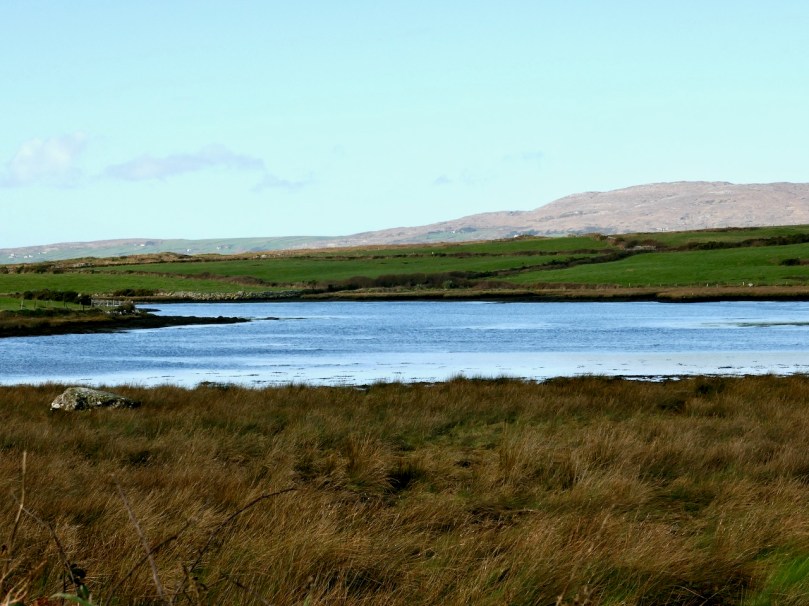
So we stopped to admire the Dunmanus boulder burial (it’s the rock in the lower left of the photograph above). Boulder burials are Bronze Age monuments, although they may have been used for purposes other than to mark burials. See my post Boulder Burials: a Misnamed Monument? for more about this intriguing group of archaeological sites, more widespread in West Cork than other parts of the country, and often associated with stone circles or standing stones. This one is unusual in that it is low-lying (most are in more commanding positions) and the base gets covered at high tides.
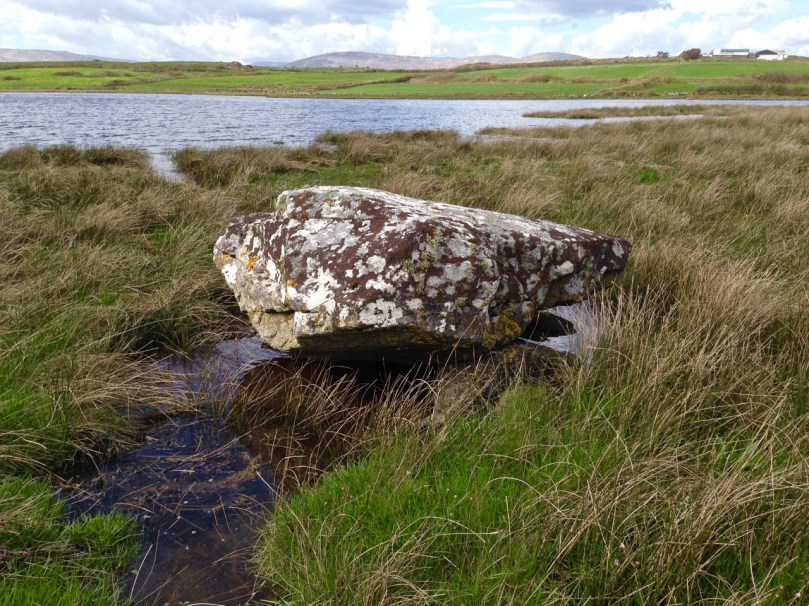
Crossing over an unnamed stream that rises on Mount Gabriel and empties into the sea here, we arrive at the point where we can leave the car and proceed on foot.
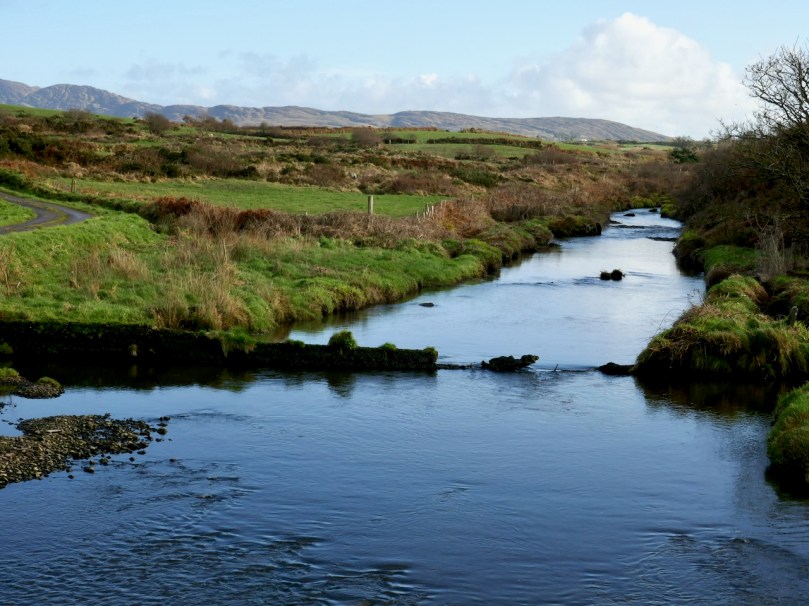
A short walk up an old boreen leads us to a clachán – a tiny settlement of houses, now all in ruins. The residents had magnificent views back down to the bay in their day, but as people say around here, you can’t eat scenery and the families who lived here are long gone to a better life elsewhere.
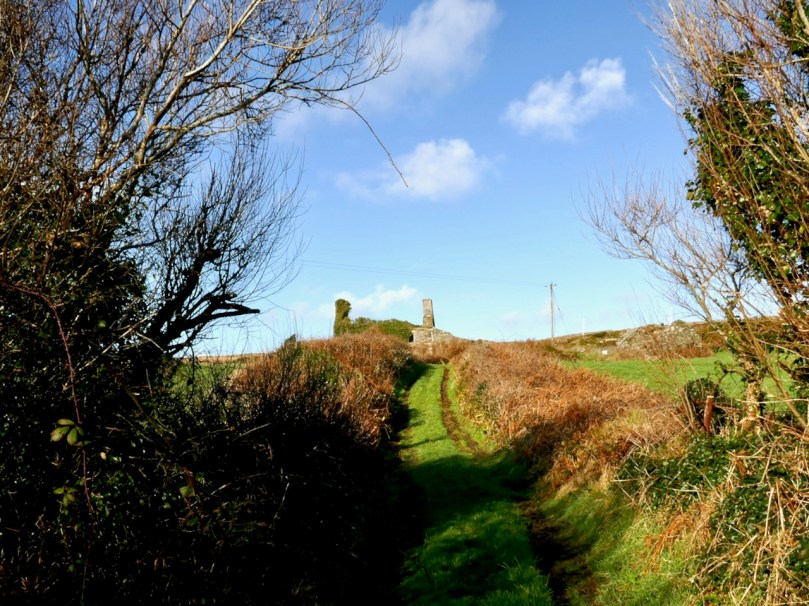
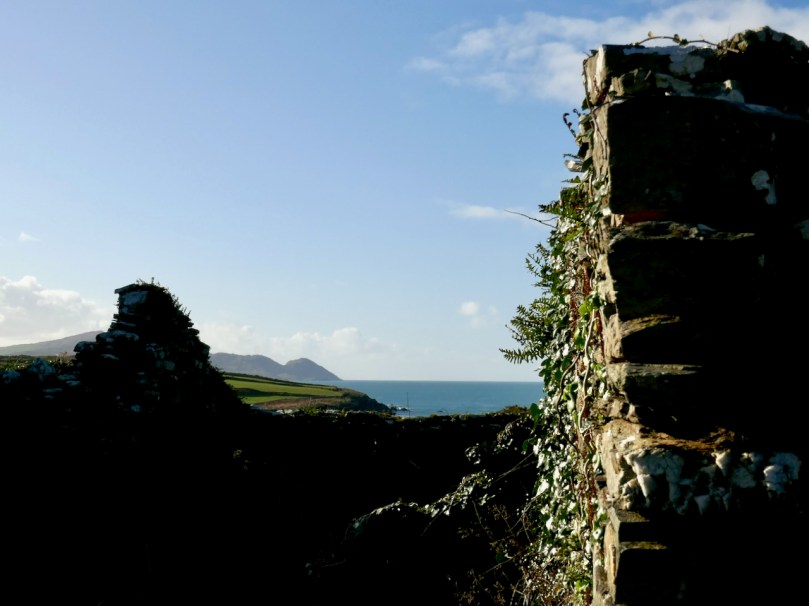
Just beyond the clachán we ran into our roadblock – an enormous puddle extended over the path. It was too deep to walk through and the boreen was fringed with thick gorse bushes we couldn’t push past. Stymied, we decided to climb up above the path and look for a way around. Easier said than done – between stands of gorse, boggy patches to go around (or sink into), sheep paths that went nowhere, we spent an hour or so wandering around the hillside and finally admitted defeat.
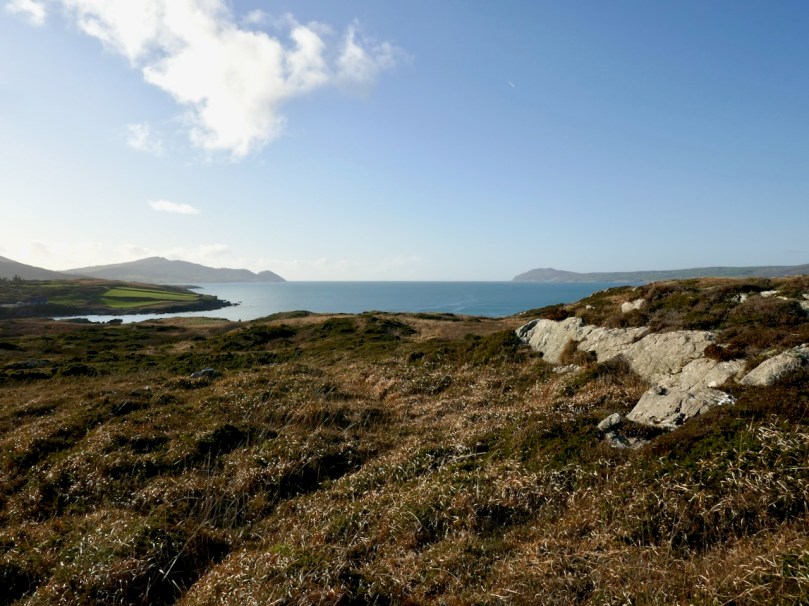
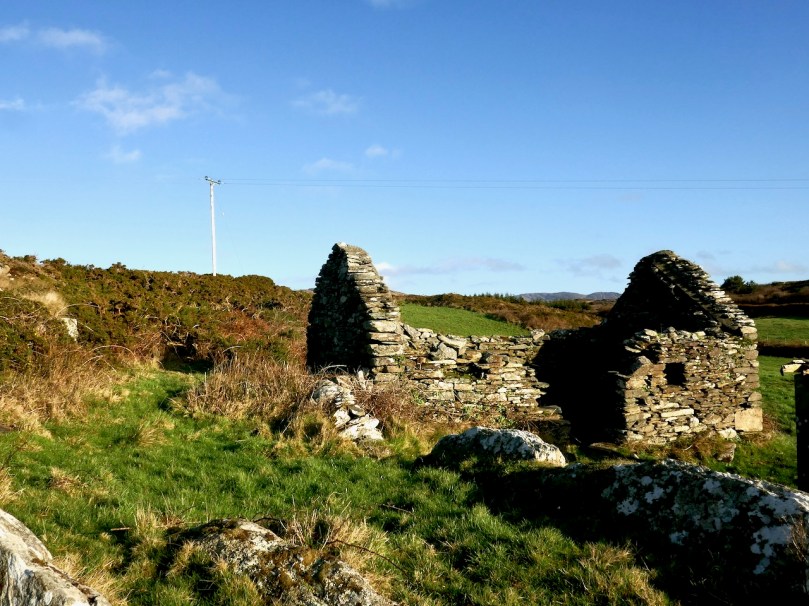
It wasn’t wasted time though – it was wonderful to be out in the crisp air, surrounded by all the magnificence of the Mizen, thinking about the generations who had wrested a subsistence out of that unpromising land. When we finally got back to the car we decided to see if we could approach the trail from the other side, and set off in that direction.
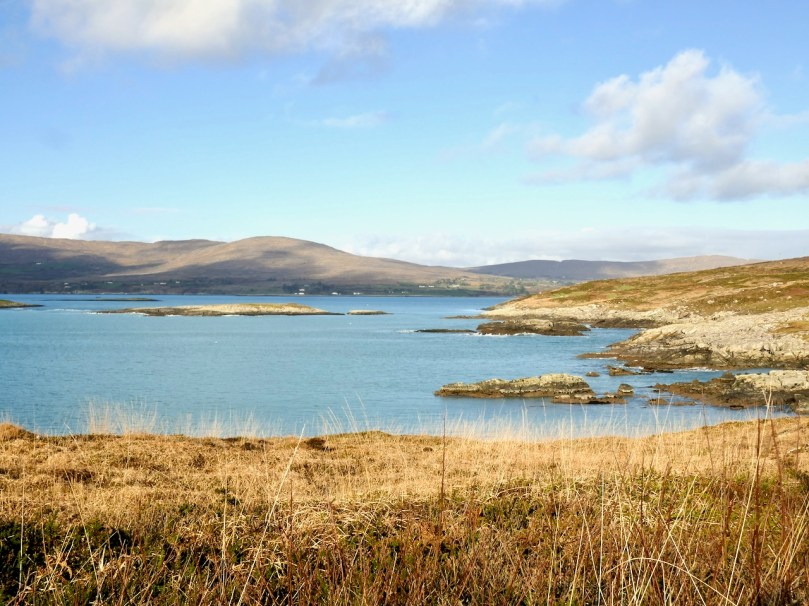
Looking across to the Sheep’s Head

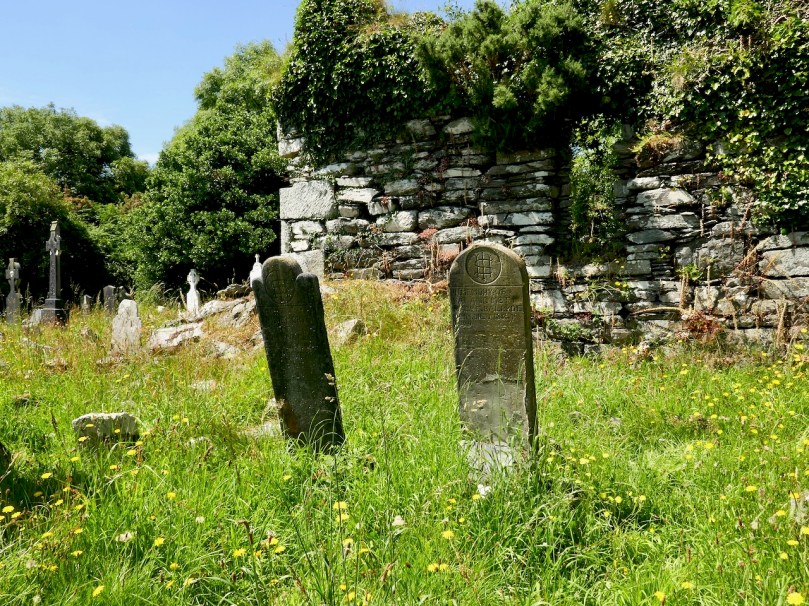
Along the way we had a quick stop at the ruined late-medieval Kilheangul Church (Church of the Angels). It’s a special little spot that deserves a post of its own someday, so I won’t say much about it now. This photograph of it was taken in the summer.
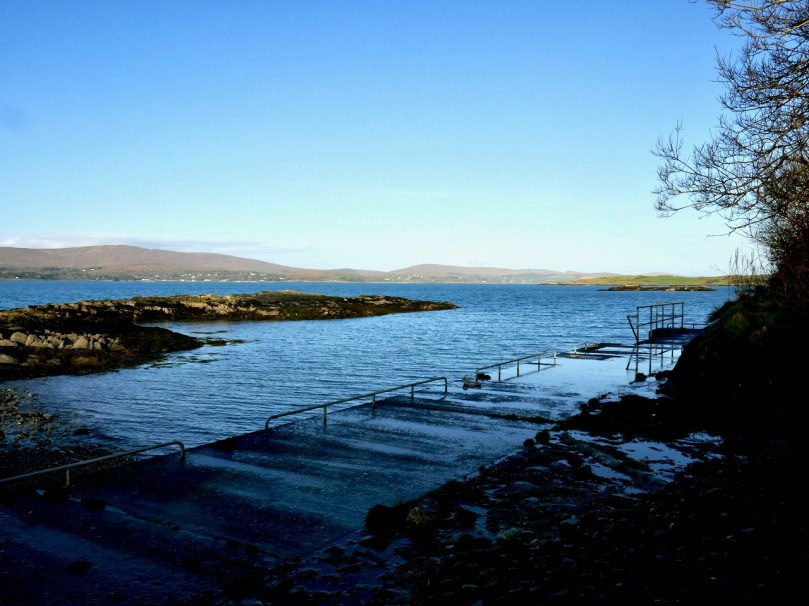
By the time we arrived at the other end of the trail, beside a small pier, it was starting to get dark, as befits a January afternoon, so discretion dictated that we leave the rest of the adventure to another day. 
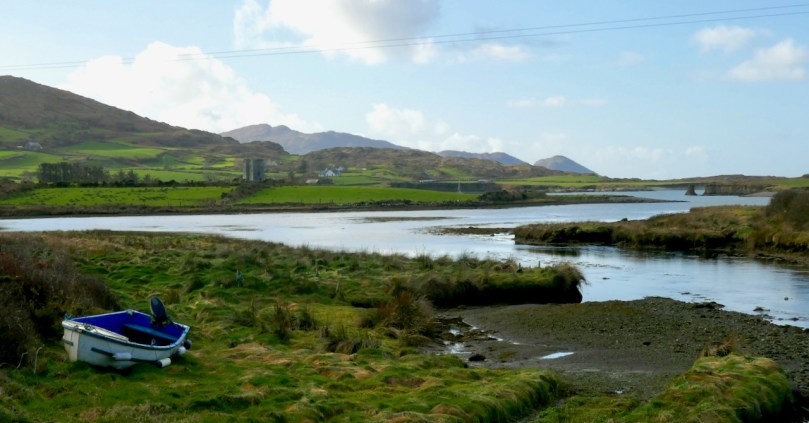
The day started out to be about walking the trail – it ended up being about everything around it. That’s the thing about the Mizen – the journey is the destination. 
 

Seán Keating – Escaping the Storm

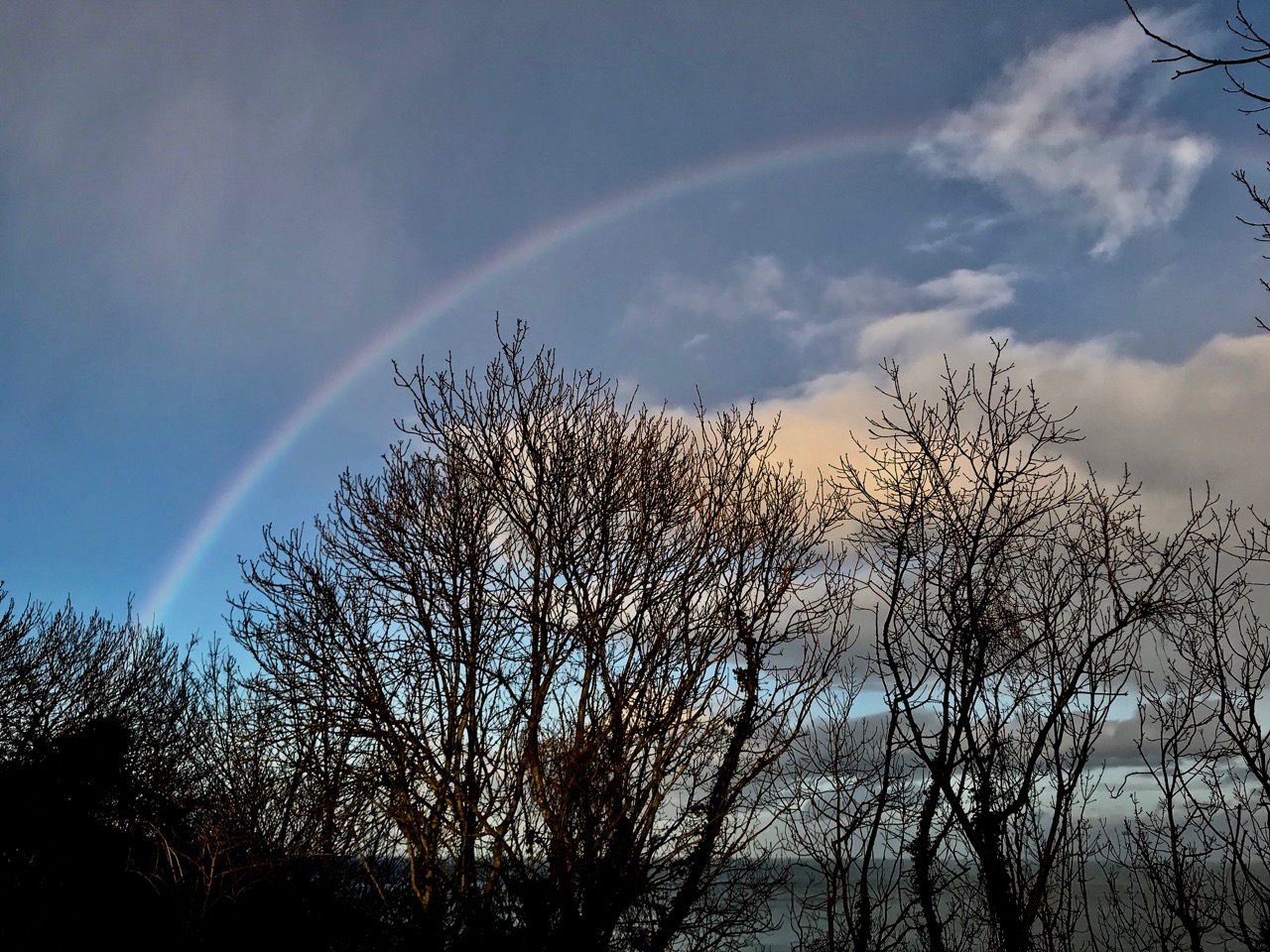
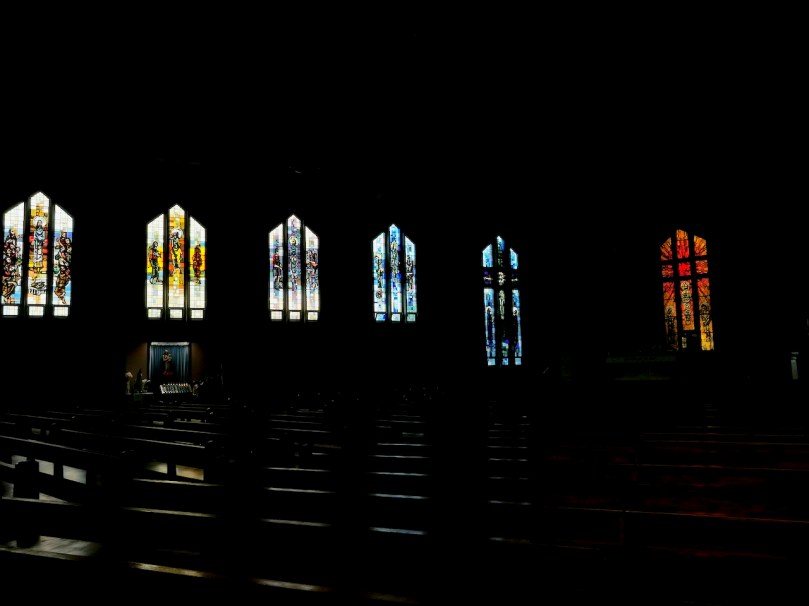
Storm Ciara was upon us as we headed over to the east coast – a mere few hops from Nead an Iolair. But it wasn’t all black clouds and thunder and lightning: winter storms here in Ireland feature high winds and spectacles such as this rainbow (above) which seemed to hang in the sky over County Wicklow for hours. When the rain comes, we often find refuge in a church – especially if it helps Finola’s quest for new stained glass windows. Sometimes they seem to reflect the weather patterns:

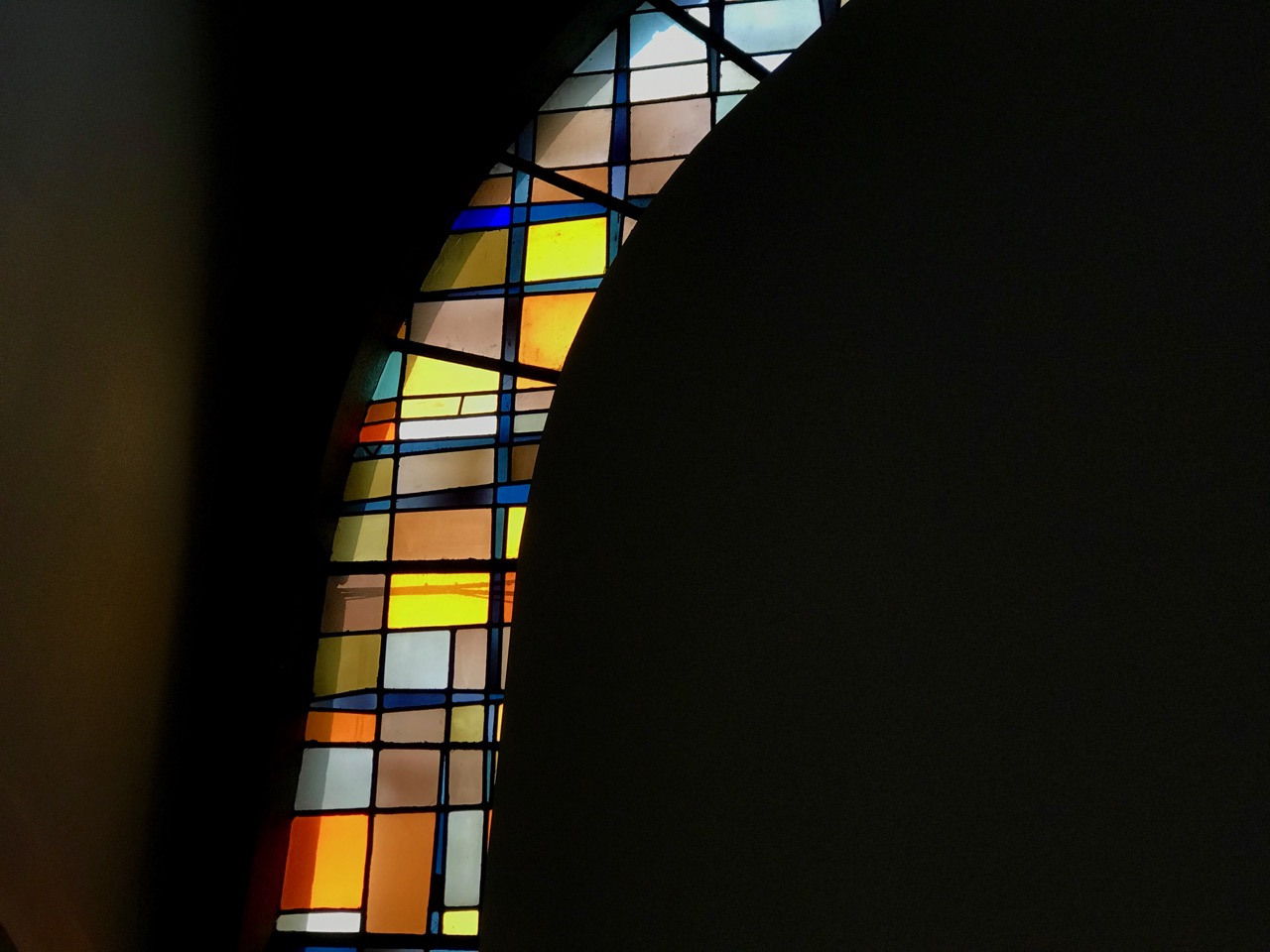
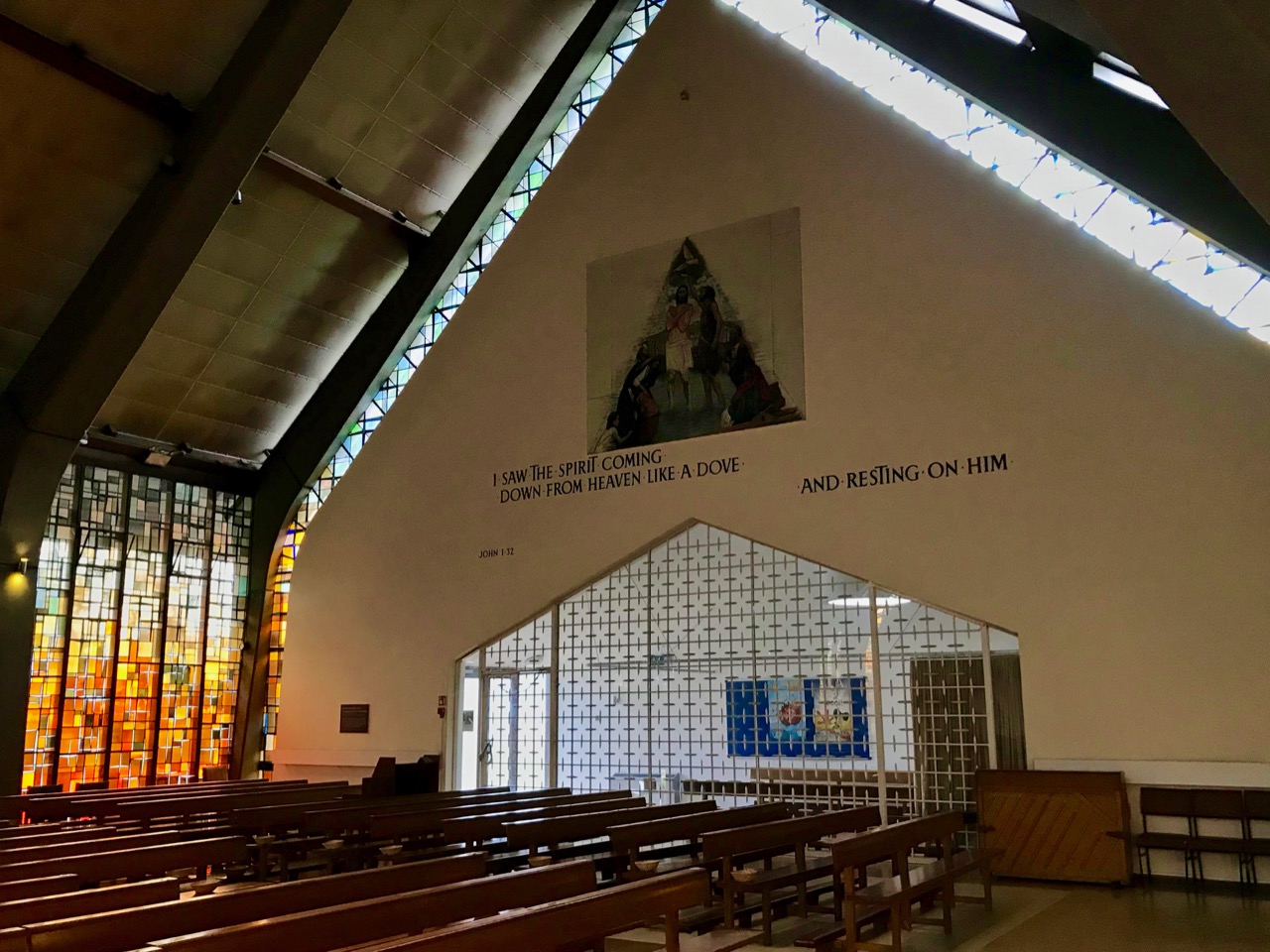
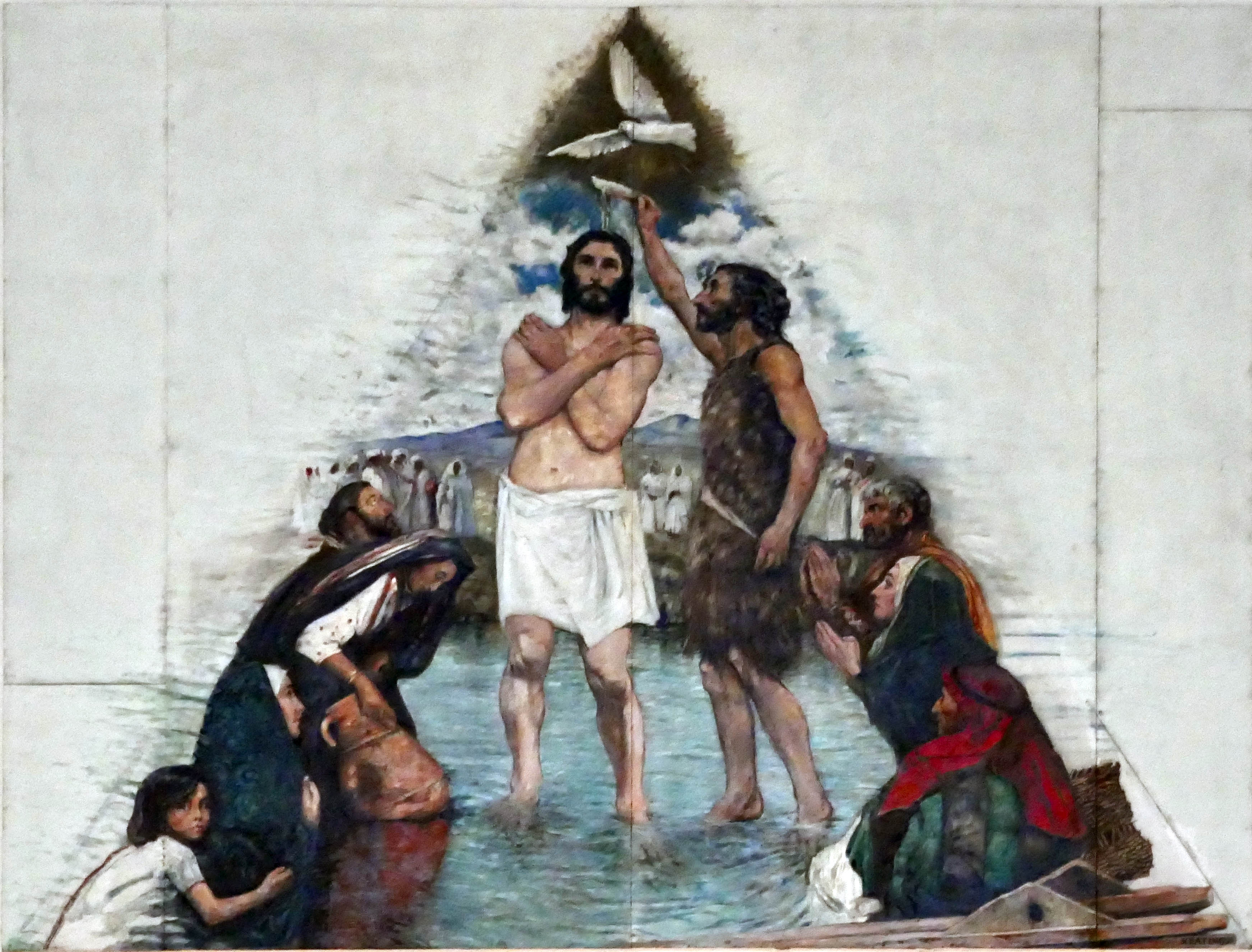
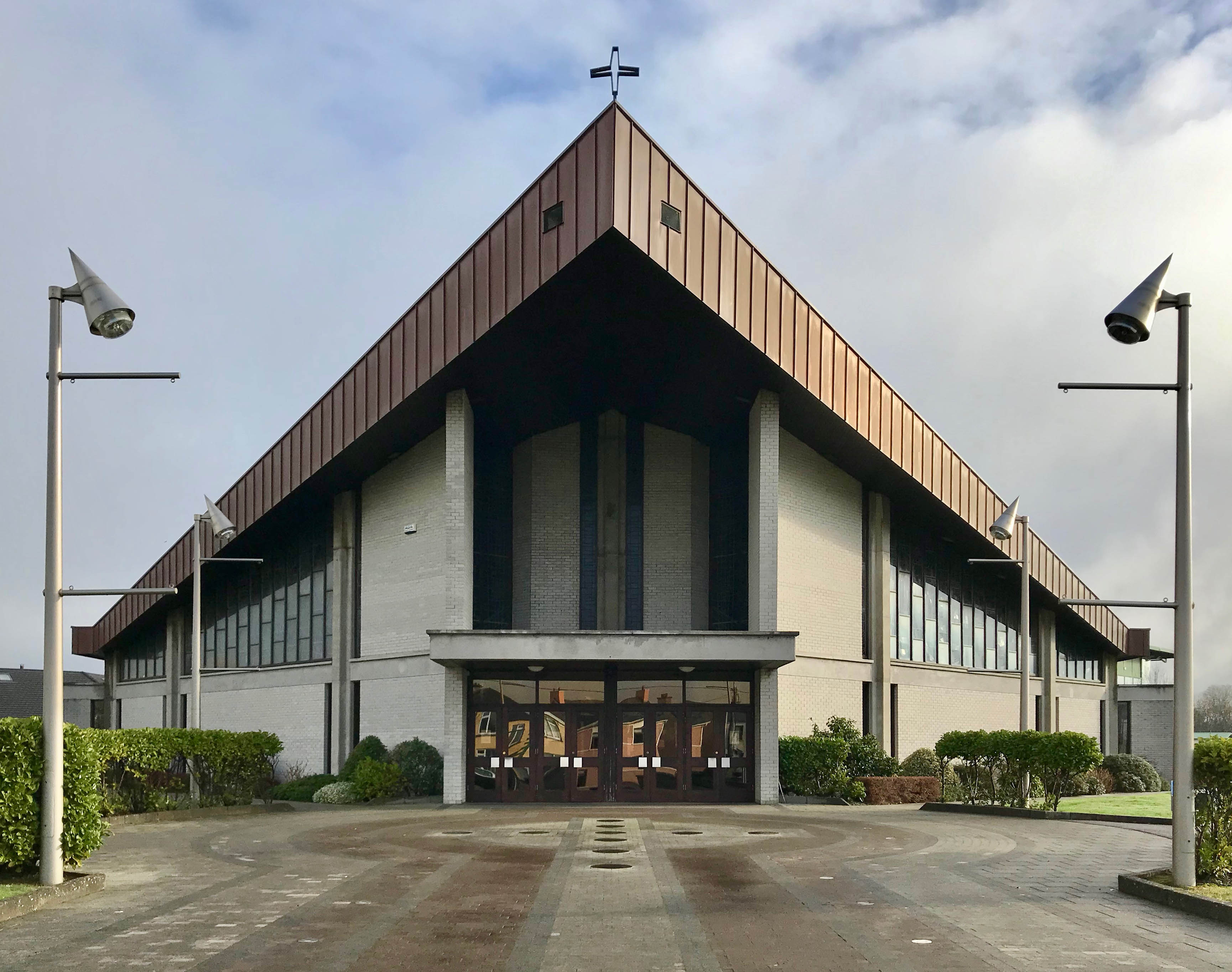
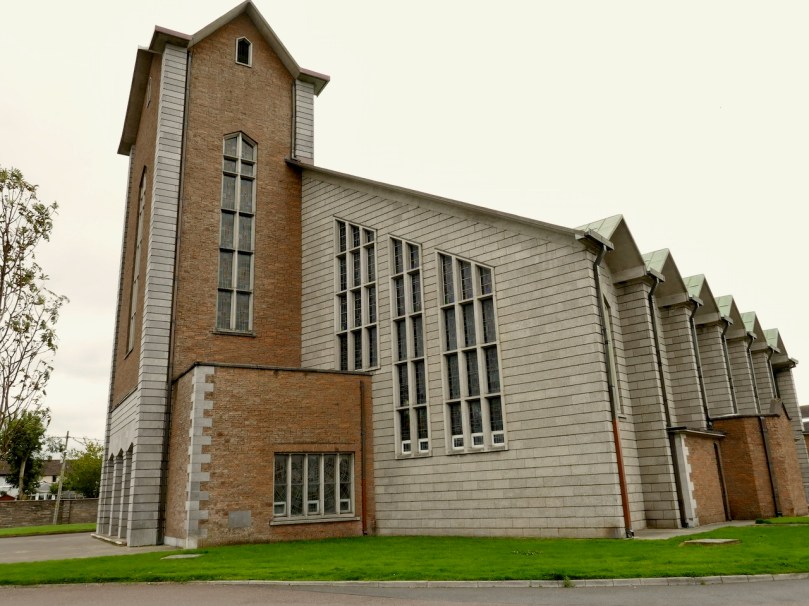
This panel, which could be seen as an indoor rainbow, is in an impressively large church in Ballyroan, Rathfarnham Parish, County Dublin: it was built in 1967 to seat a thousand. What caught my eyes was not the array of windows by Murphy Devitt (Finola has written extensively about this creative partnership), but two murals high on the walls of the crossing. I was delighted to find that these were painted by one of Ireland’s great artists working through the turbulent twentieth century – Seán Keating.

Seán Keating’s ‘Baptism of Christ’ mural in the Church of the Holy Spirit, Ballyroan

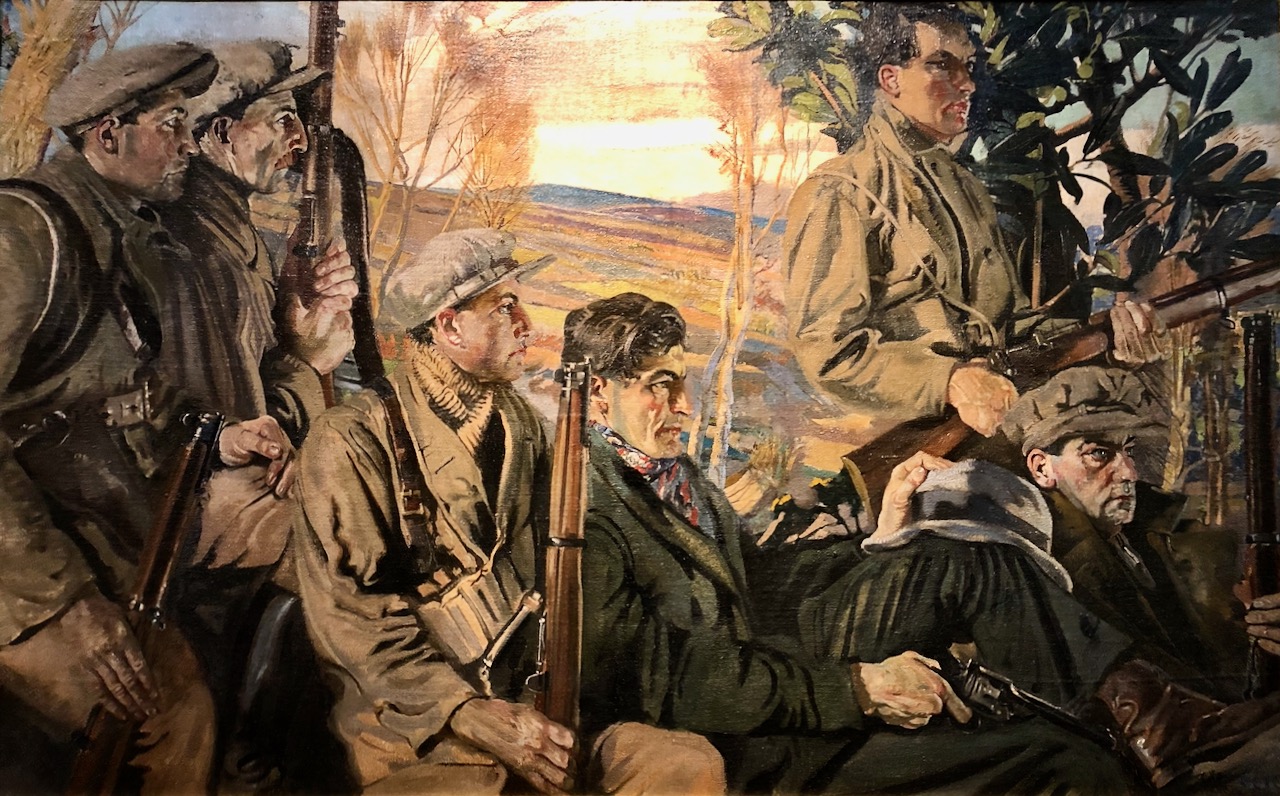
I am always surprised to find that Keating is under-appreciated: yes, he gets mentioned in books of art history, and is reasonably well represented in the state’s galleries. Yet you will also find terms such as ‘not great art’ applied to his work by critics and commentators. This is possibly because he is best known for his documentary work and, particularly, for his raw representations of the tempestuous years of Ireland’s struggle to gain independence. Here is ‘Men of the South’, dating from 1921 when there was a ceasefire in the Irish War of Independence while the Anglo-Irish Treaty was being negotiated and out of which the Irish Free State was born.

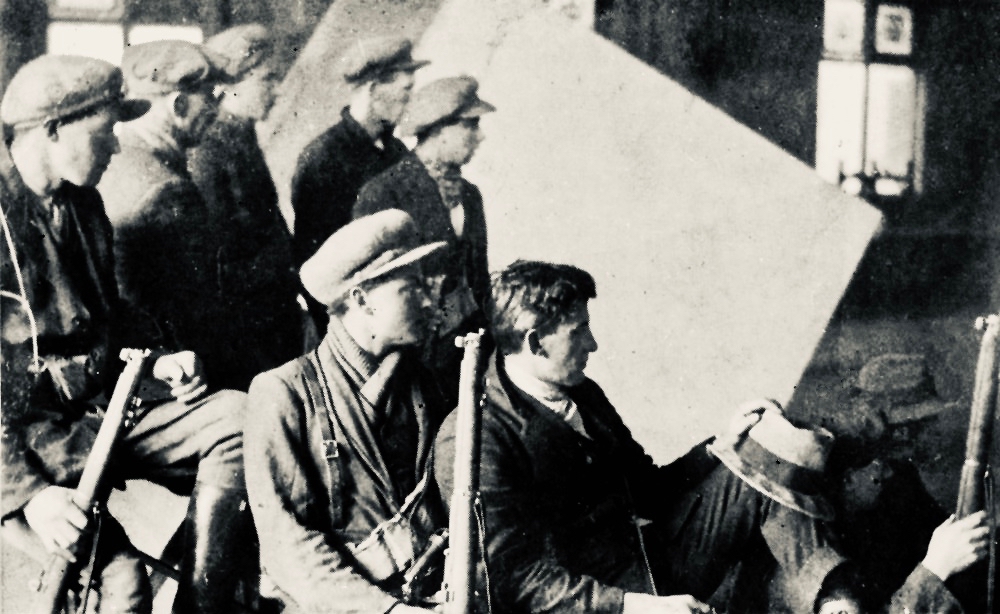
Top: Men of the South – Seán Keating’s documentary portrayal of the North Cork Brigade of the Irish Republican Army. Below the painting is one of the photographs taken in Keating’s Dublin studio in preparation for the work. Two versions of this painting were made by the artist: the one above is in the Crawford Gallery, Cork City, while the other (which depicts eight men) is now in Áras an Uachtaráin, the official residence of the President of Ireland.

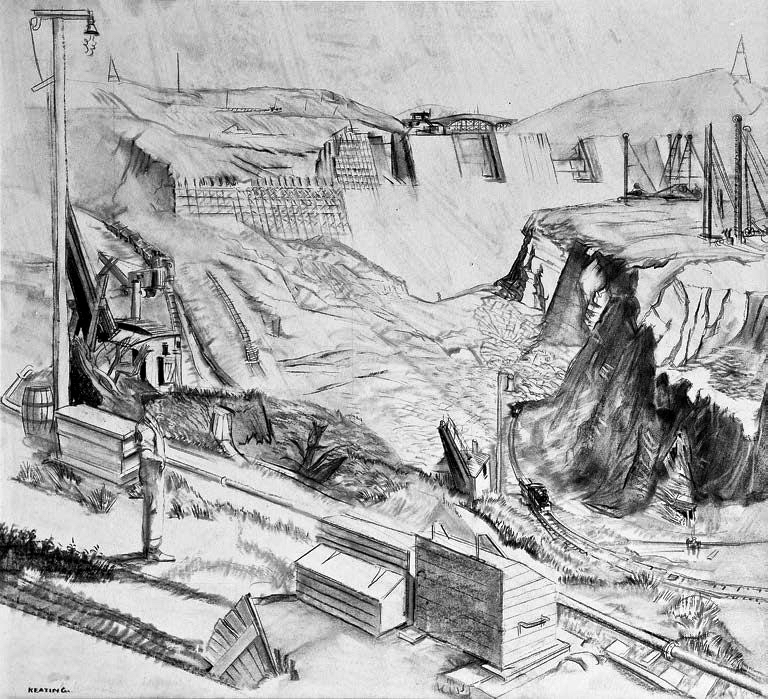
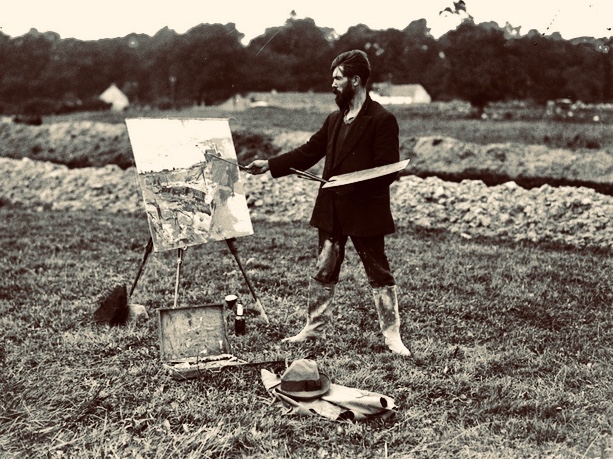
After the War of Independence and the abhorrent Civil War which followed it, Keating’s work concentrated on documenting the founding and burgeoning of the new State. Scenes of conflict were replaced by works showing industrial development, such as Ireland’s largest ever civil engineering contract: harnessing the power potential of the State’s major waterway, the River Shannon. The construction of a dam and hydro-electric generating station at Ardnacrusha, County Clare, together with a country-wide electric distribution infrastructure, was a symbol of major importance to the nation’s fledgling government. Keating began recording the work in 1926, soon after inception. No-one had commissioned him – he saw the significance of making dramatic documentary work of this nature, but his vision was eventually recognised by the Electricity Supply Board (ESB) – which now owns the largest collection of Keating’s paintings in Ireland. Above is one of the artist’s working sketches of the dam under construction.
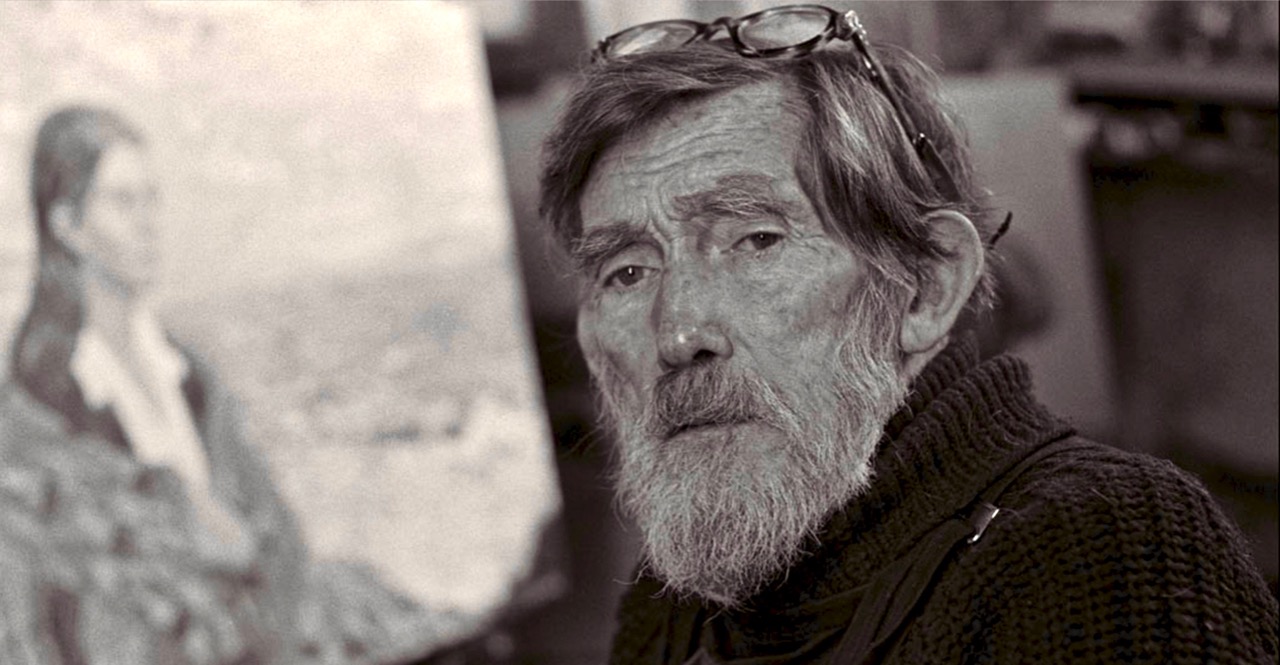
Seán Keating painting en plein air at Ardnacrusha, 1920s

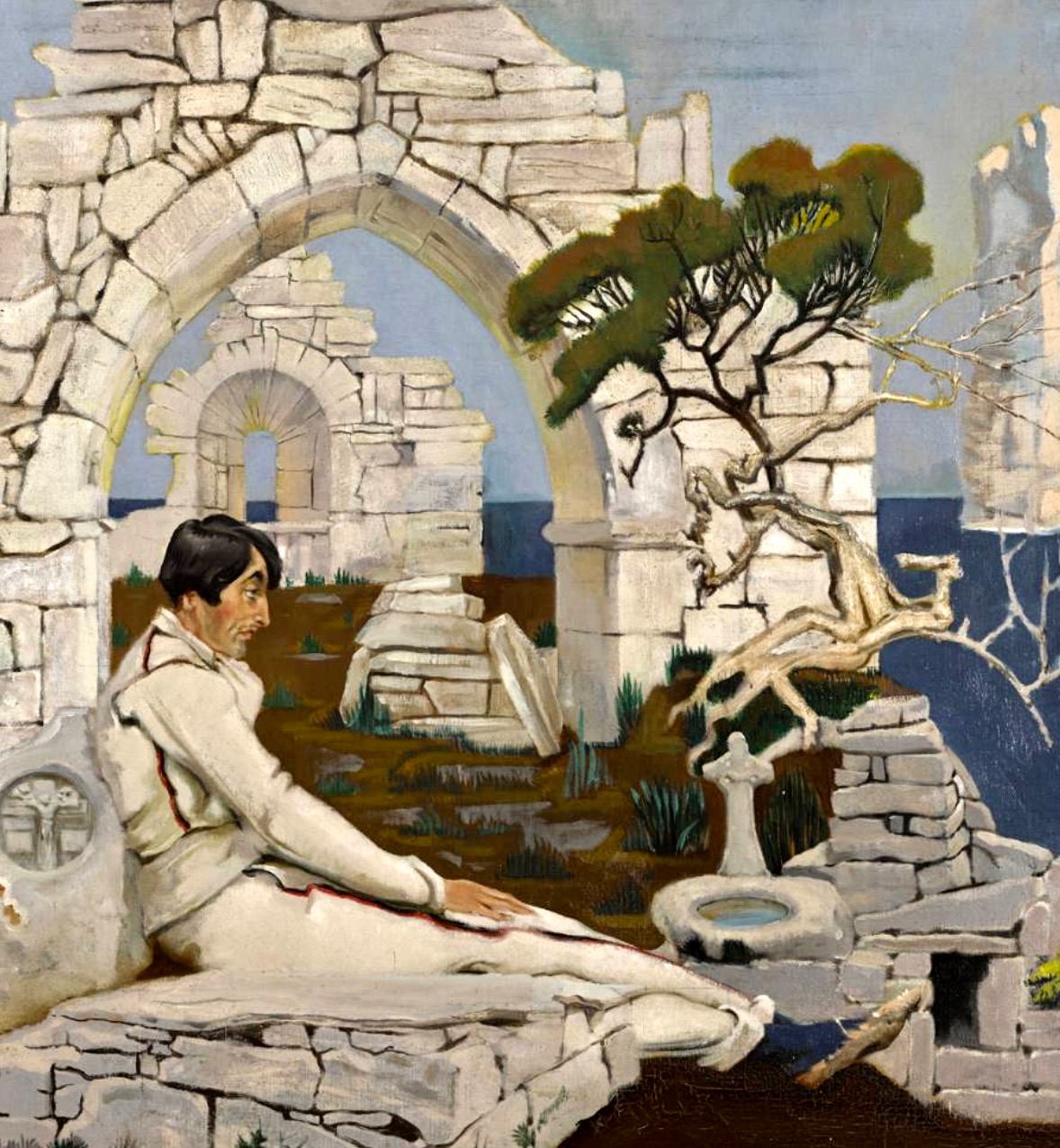
Keating studied under William Orpen in Dublin. He was to become one of Orpen’s important pupils (and, latterly, his assistant) and his documentary painting style owes a debt to his teacher. One of his famous early paintings is Thinking Out Gobnet (below), a portrait of his good friend Harry Clarke, dating from 1917. Keating and Clarke frequently visited the Aran Islands together. The painting shows Clarke sitting on a grave slab within the ruins of Teampall Chaomháin (St Kevin’s church) on Inis Oírr, along with a holy water font at his feet, and a holy well to the bottom right of the image. The suggestion is that Clarke is finding inspiration for his series of eleven windows for the Honan Chapel, Cork, which include a fine representation of St Gobnet. The ‘healing’ symbolism of the holy water and well are deliberate references to Clarke’s TB, the illness which ended his life at the age of 41.

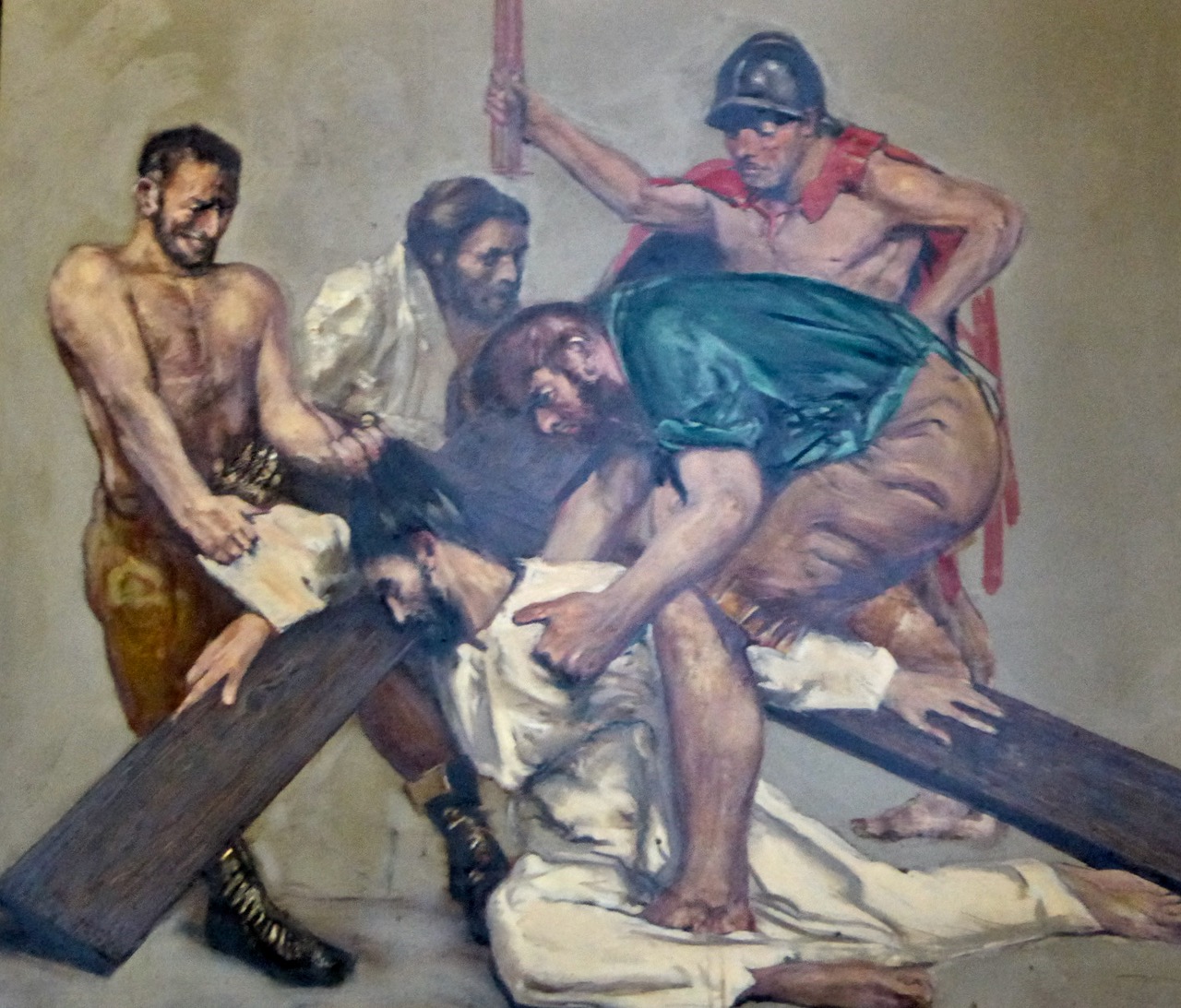
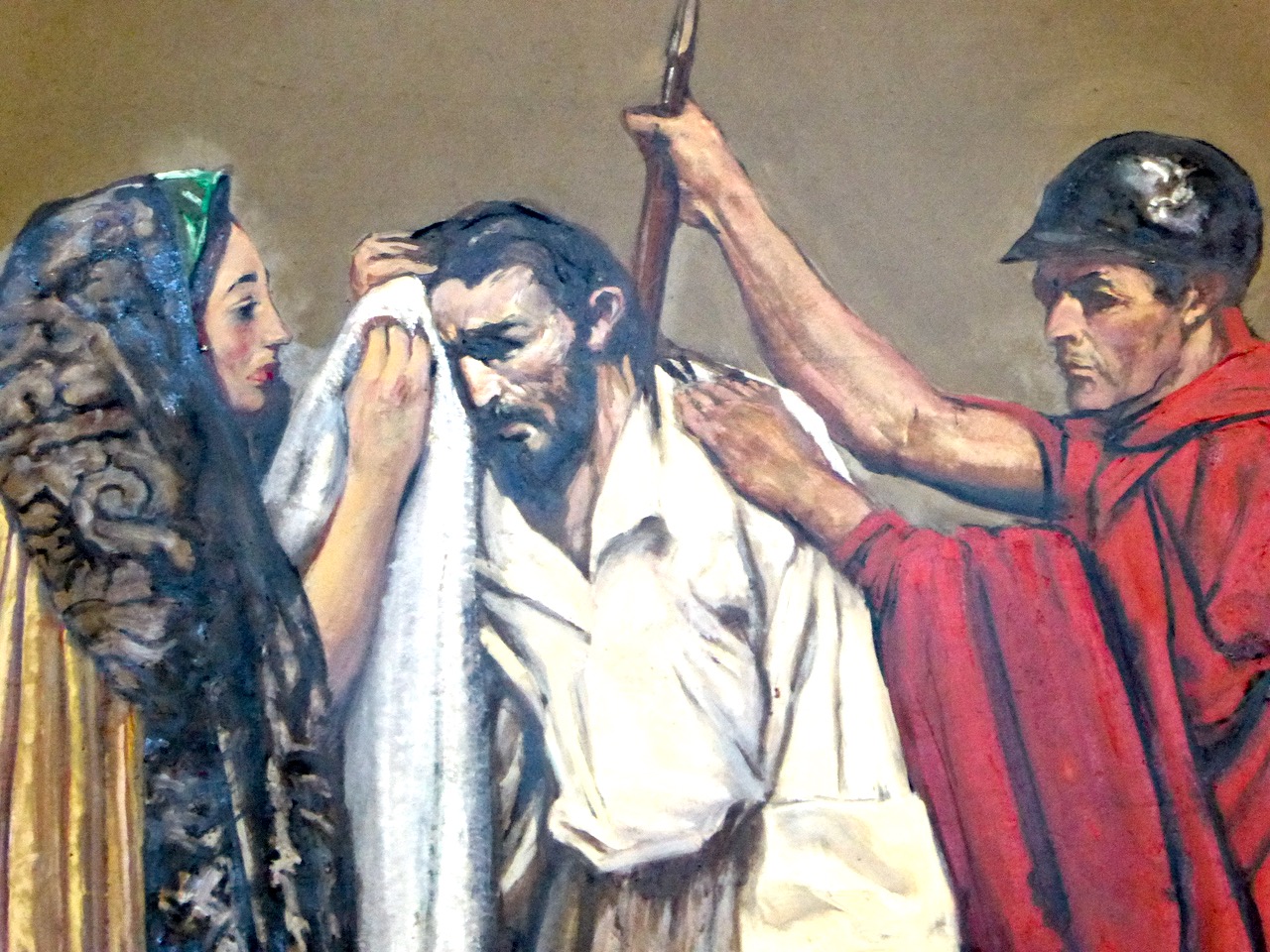
Seán Keating was always a committed Catholic, and we have seen many examples of his artwork in churches, including the murals at Ballyroan. Most striking, perhaps, are the Stations of the Cross which he painted for St John’s Church, Tralee – the church which features in Finola’s wonderful Irish Arts Review article (and RWJ blog post) about Ireland’s Newest Stained Glass Window.

Stations of the Cross by Seán Keating in St John’s Church, Tralee, County Kerry

Back to Ballyroan: while we were sheltering from the tempest and admiring the church architecture, and the murals, I was delighted to find out that Seán Keating had lived for much of his life just down the road, in Ballyboden, in a house which he had designed himself. He attended mass regularly at Ballyroan until his death in December 1977, aged 88.

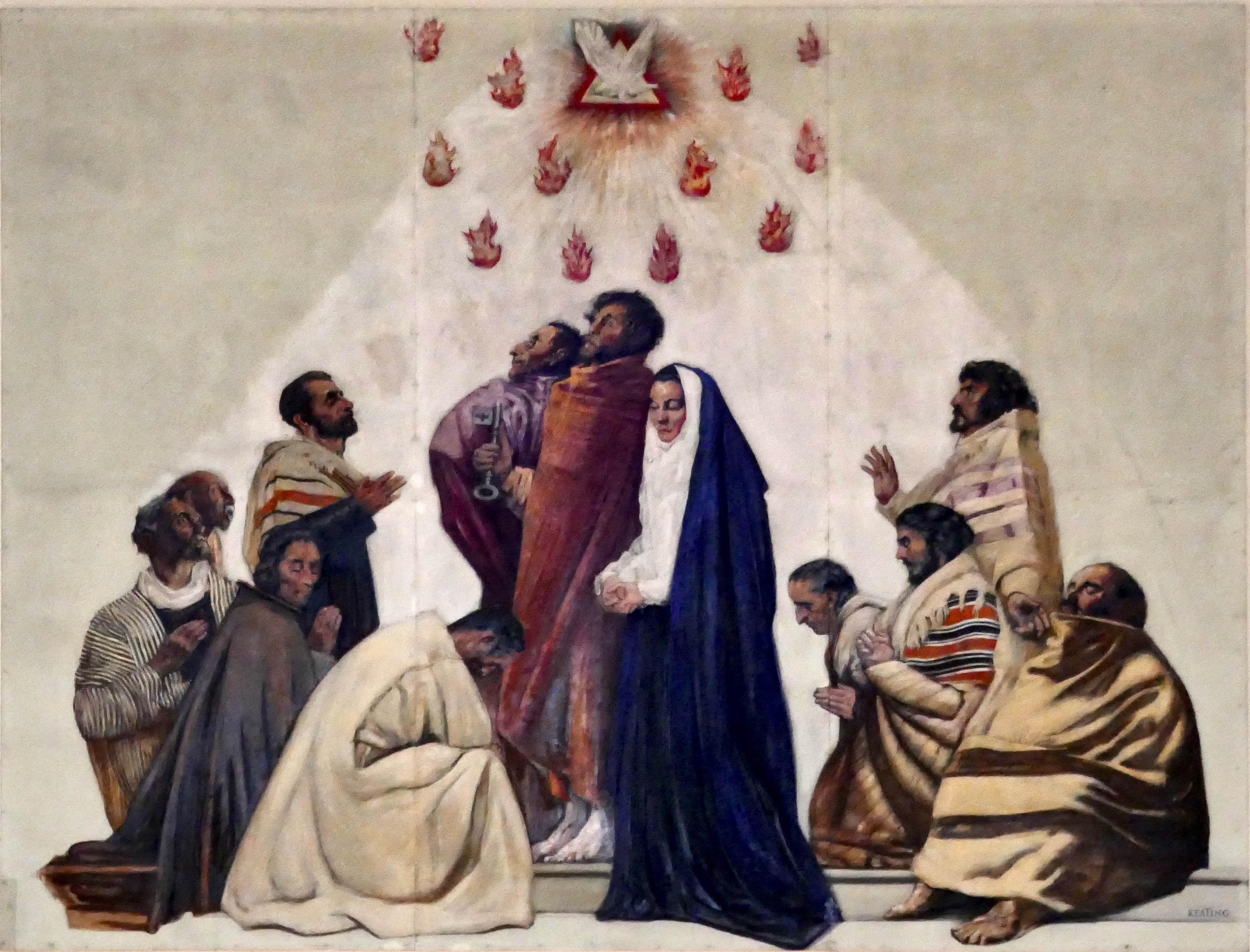
Keating’s mural The Descent of the Holy Spirit in his own church of Ballyroan, Parish of Rathfarnham, installed in 1967

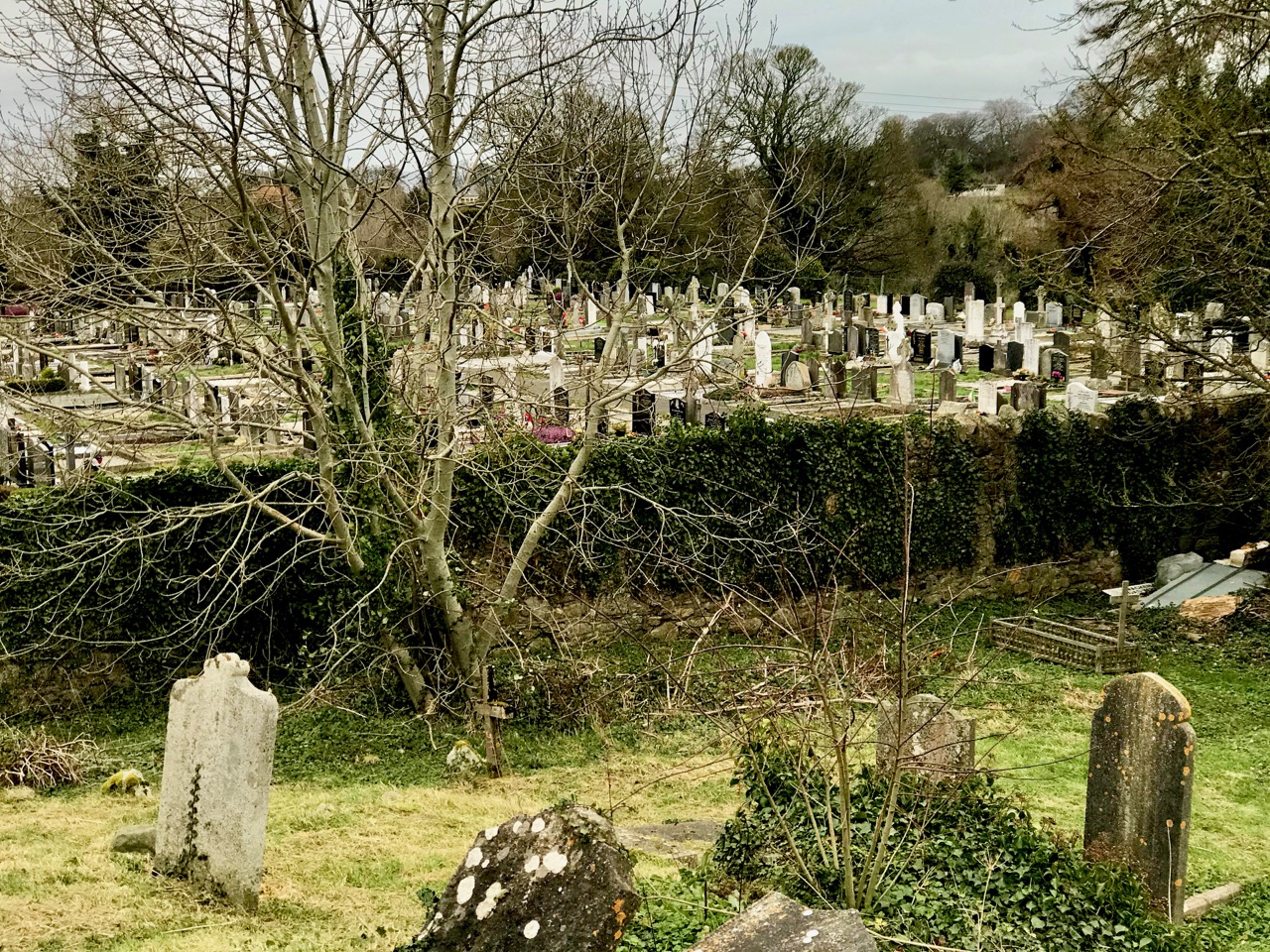
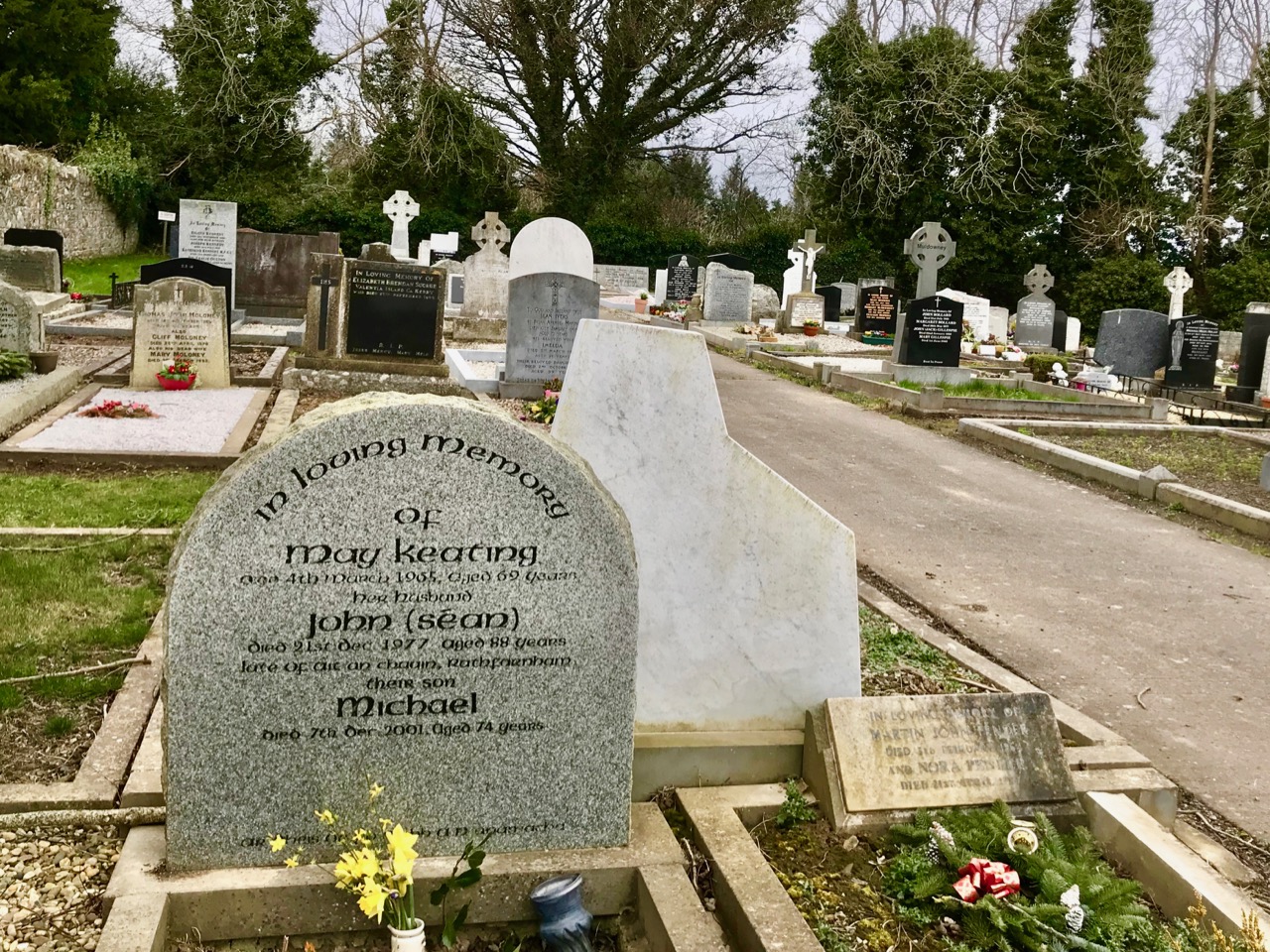
We discovered that Keating is buried in the nearby Cruagh Cemetery, so we had to head out into the storm again to find his grave. It is as unassuming as he apparently was in life: a visitor would not be aware that herein lies one of modern Ireland’s greats.

Cruagh Cemetery, Co Dublin (top) is the resting place of Seán Keating. His grave is shared with his wife, May, and son Michael

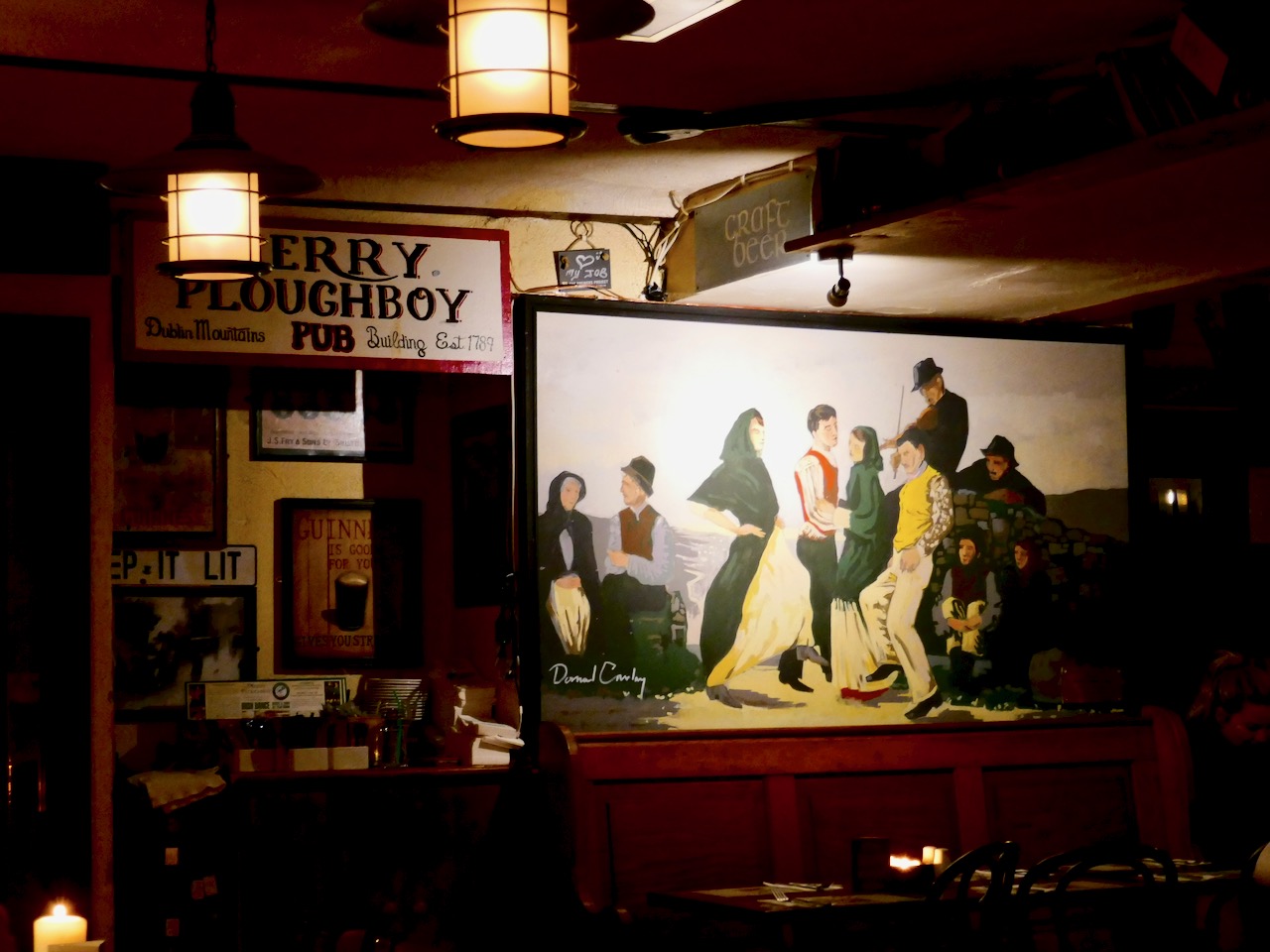
Our little artist’s memoir is almost over. The gale continued with ferocious lashing rain: cold and hungry we made a beeline for the local pub – the Merry Ploughboy, evidently a famous music venue. It was warm and welcoming, and full of a crowd watching Six Nations Rugby on the big screen (Ireland won the match).

In the lounge we were intrigued to find an oblique reference to Seán Keating – a painting which has a nod to his style but is by a different artist!

We agreed that our day trip to the east, in the teeth of the gale, was a memorable way to discover the life, work and death of one of Ireland’s significant artists.

Brendan in Bronze

Do you know the story of St Brendan? He – ‘The Navigator’ – went to North America long before Columbus. Nearly a thousand years before, in fact: Brendan was born in the fifth century. The story of his voyage, and his remarkable adventures with his fellow monks, has inspired art, music and song ever since then. Here’s the beginning of Christy Moore’s version:

A boat sailed out of Brandon in the year of 501
’twas a damp and dirty mornin’ Brendan’s voyage it began.
Tired of thinnin’ turnips and cuttin’ curley kale
When he got back from the creamery he hoisted up the sail.
He ploughed a lonely furrow to the north, south, east and west
Of all the navigators, St Brendan was the best . . .

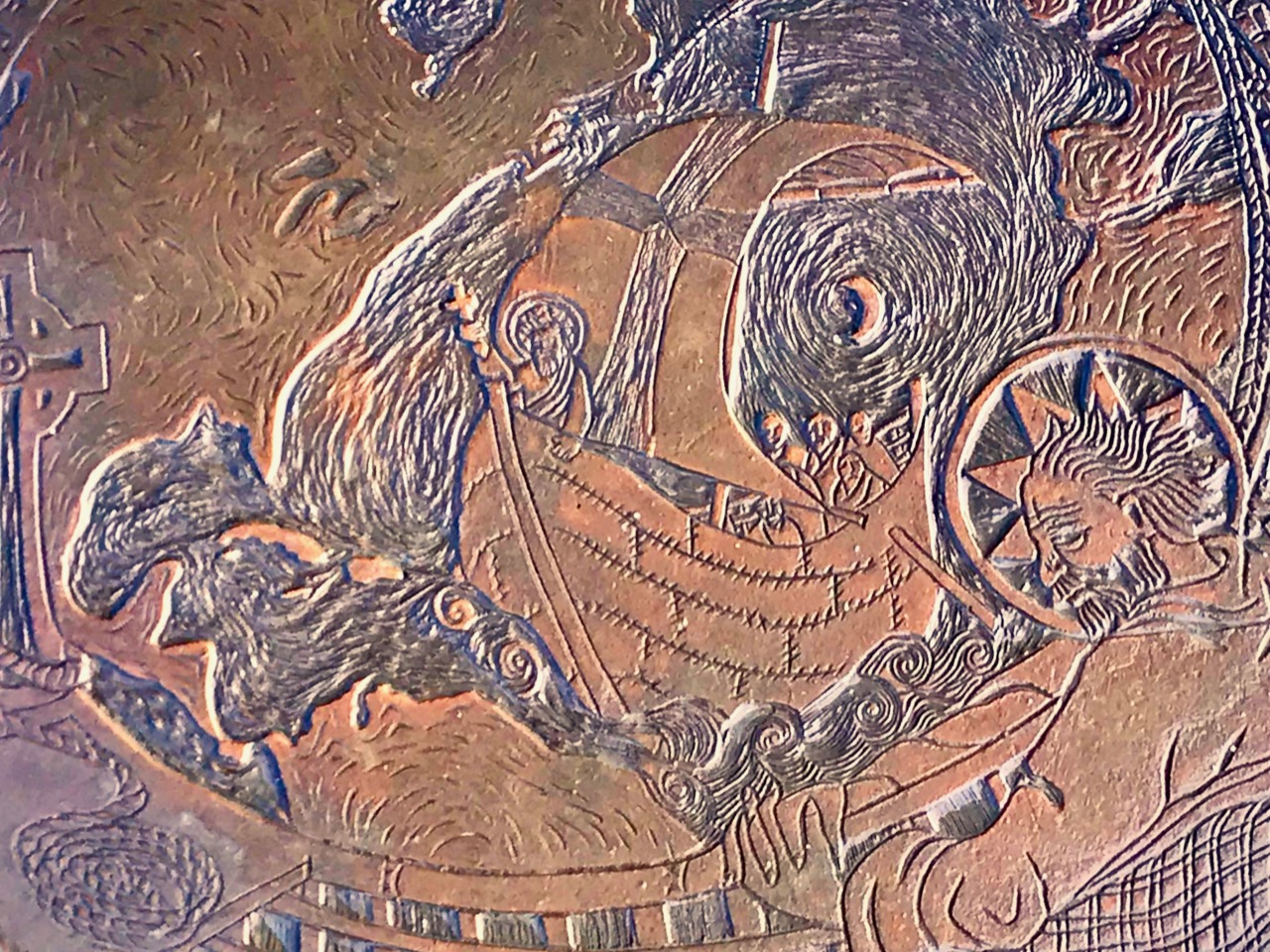
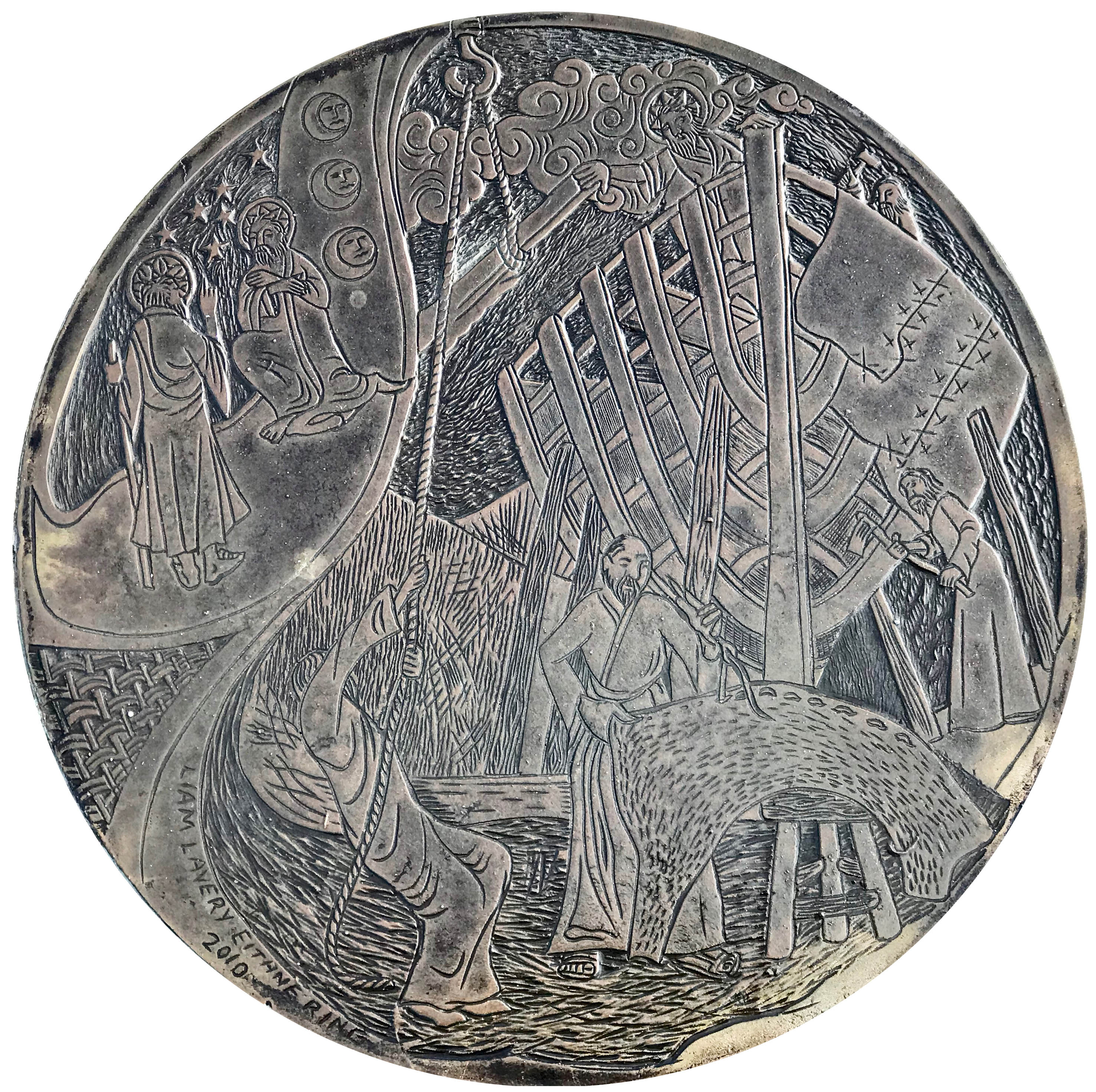
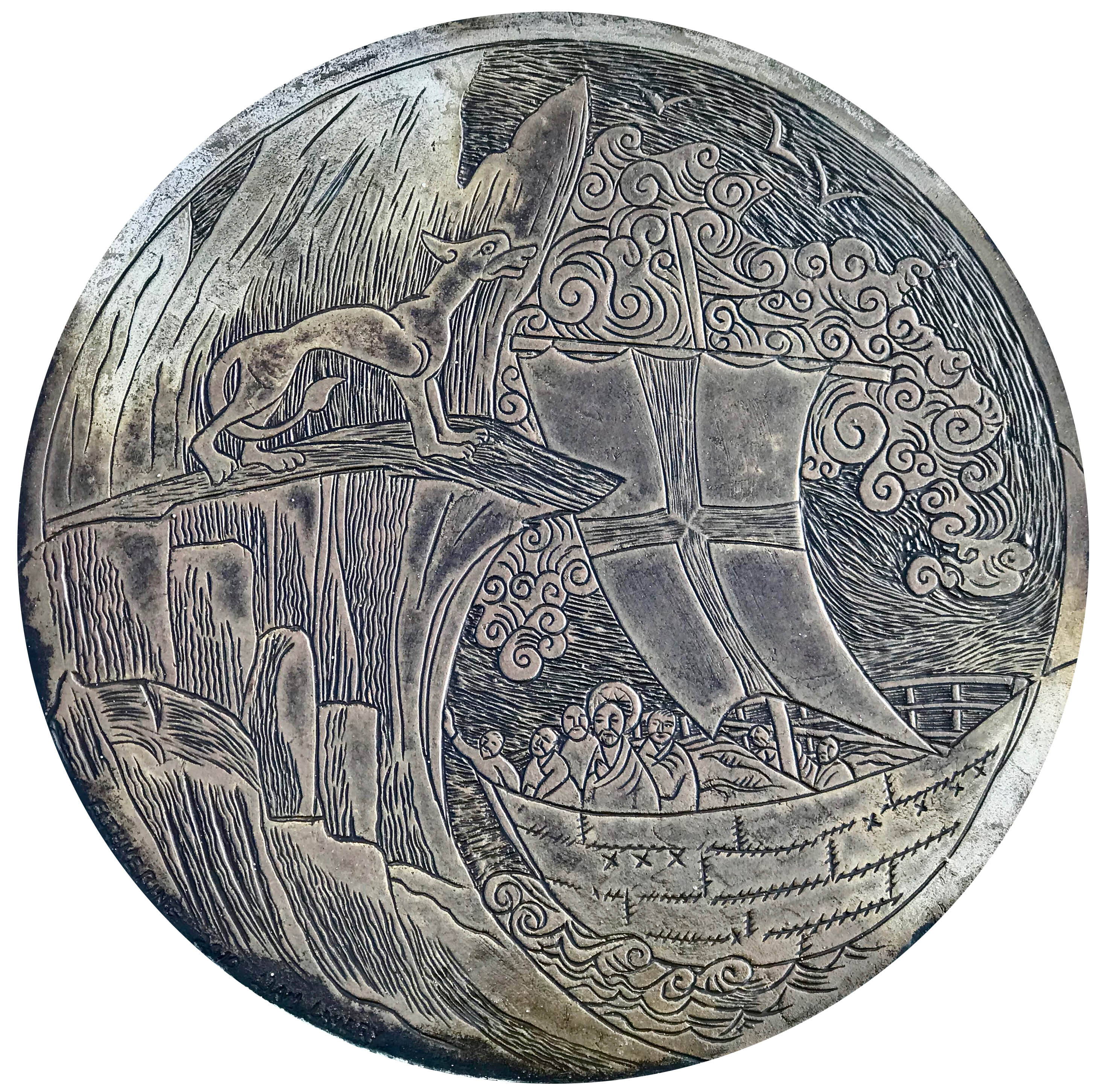
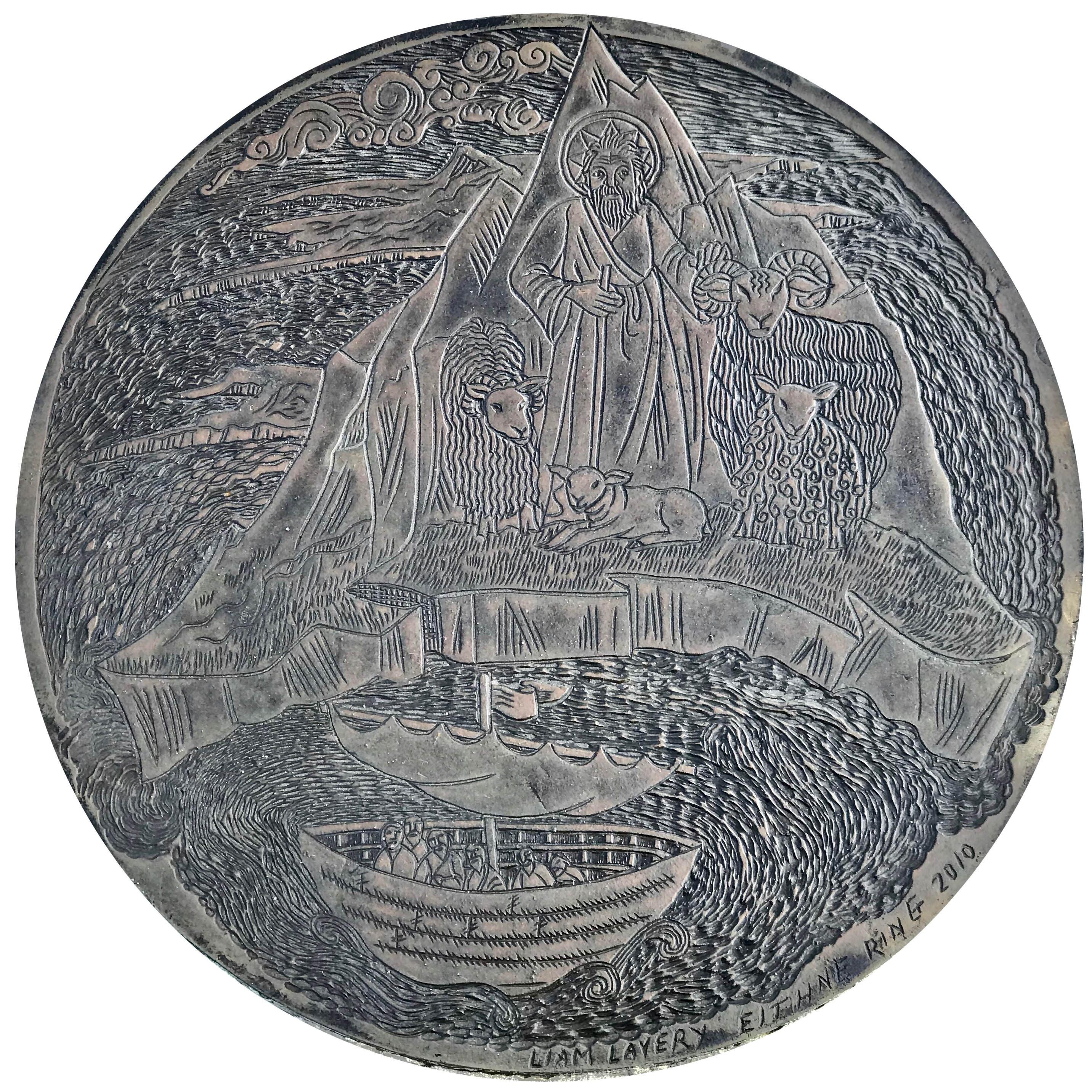
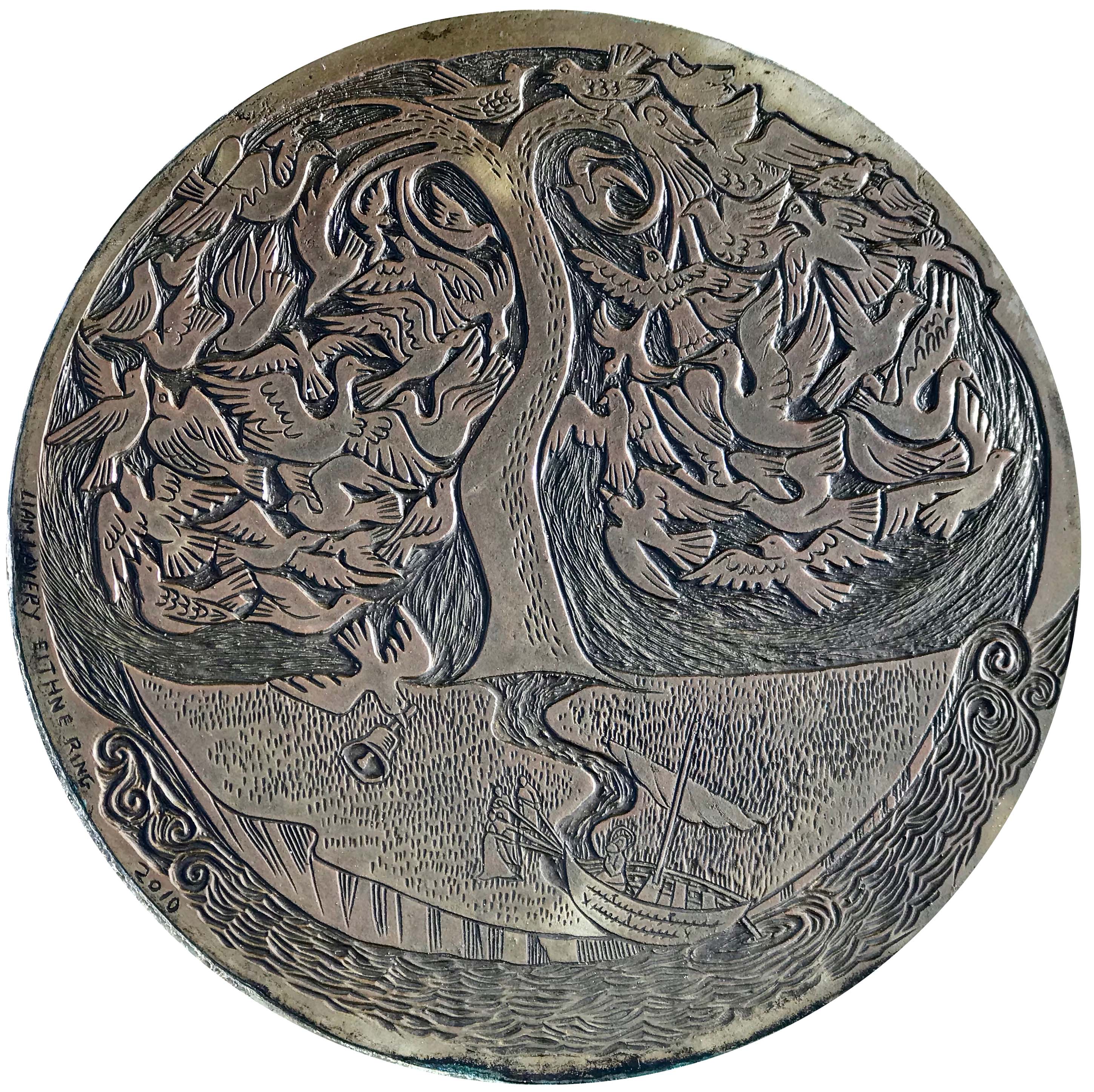
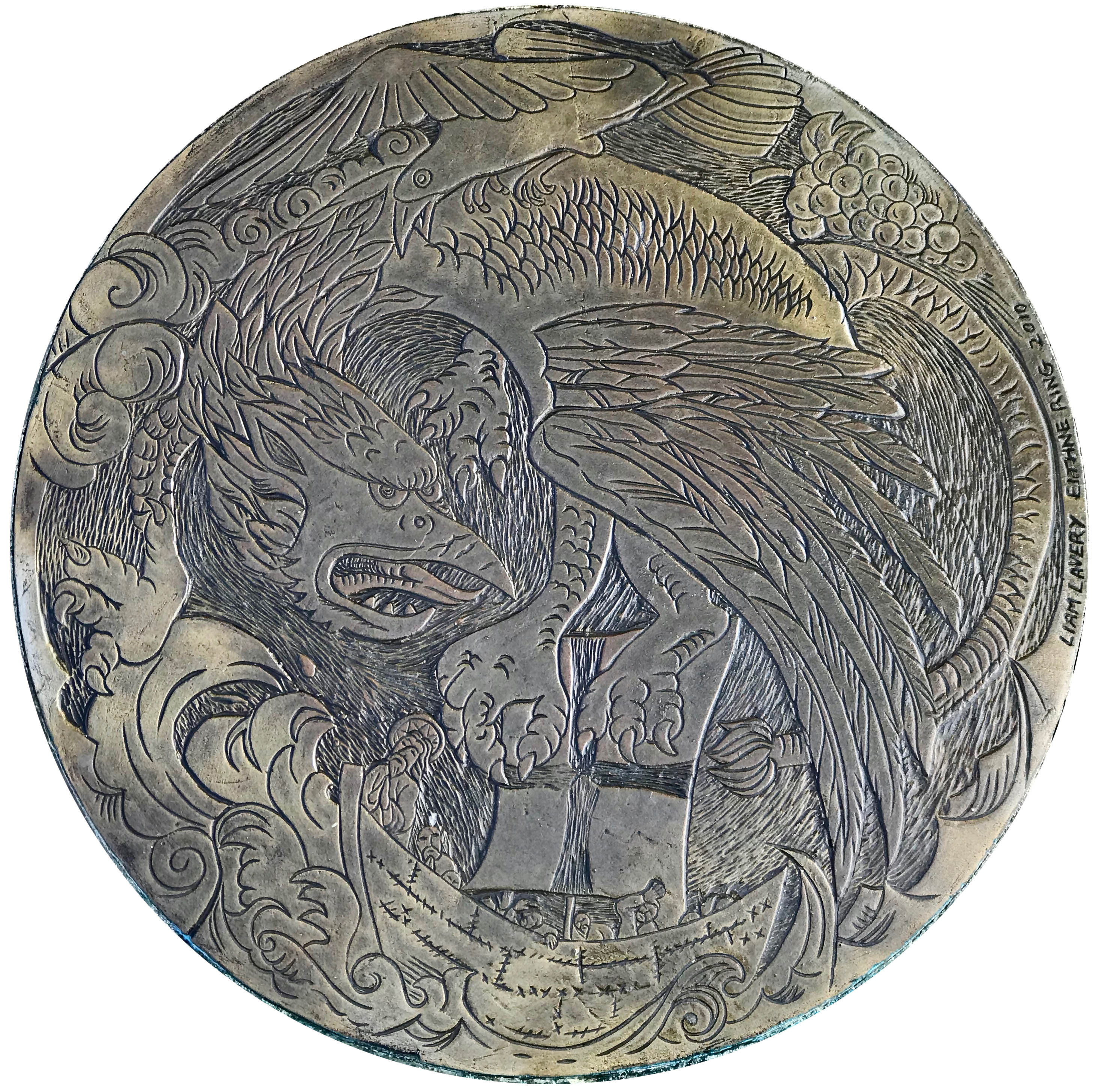
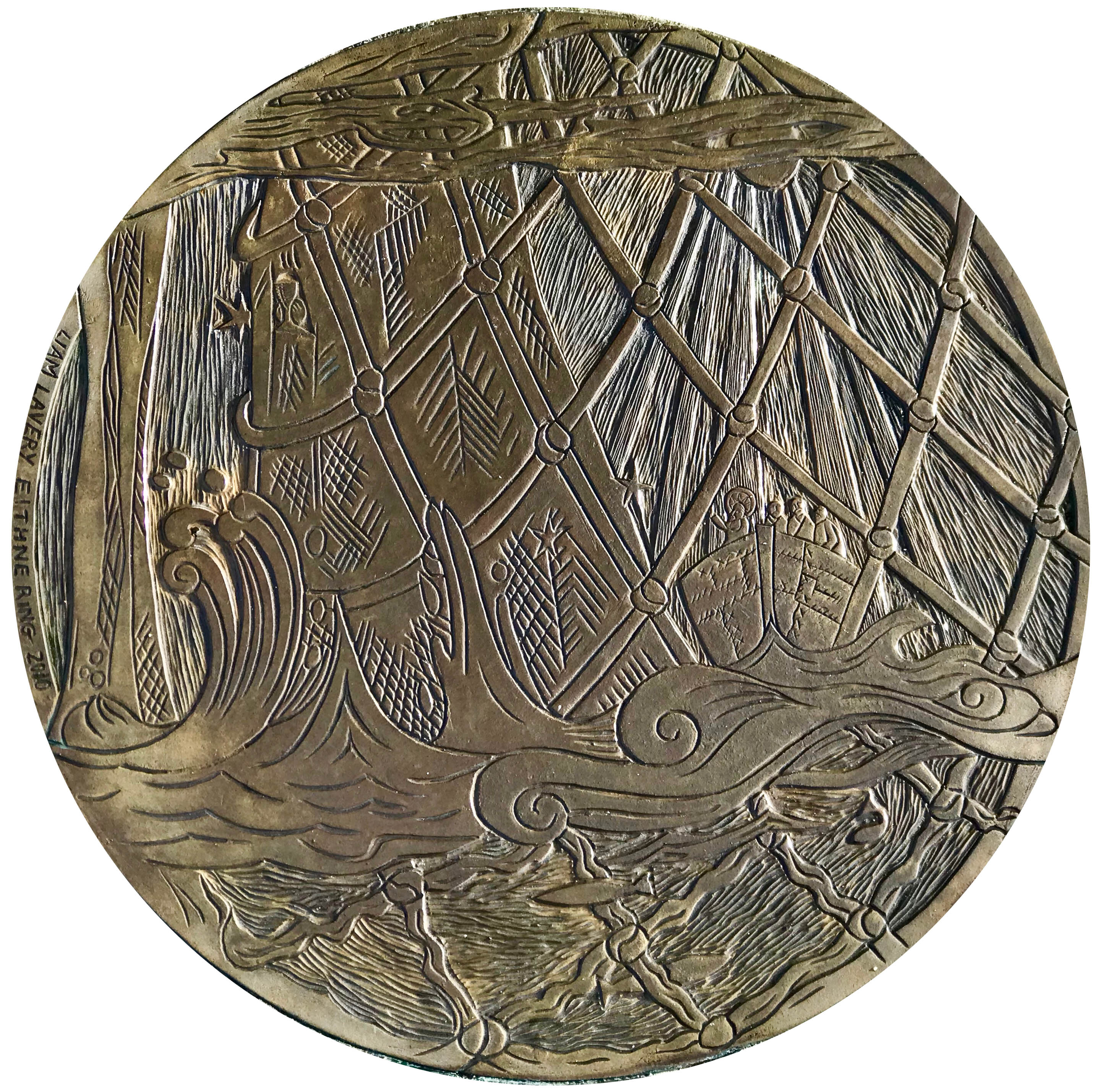
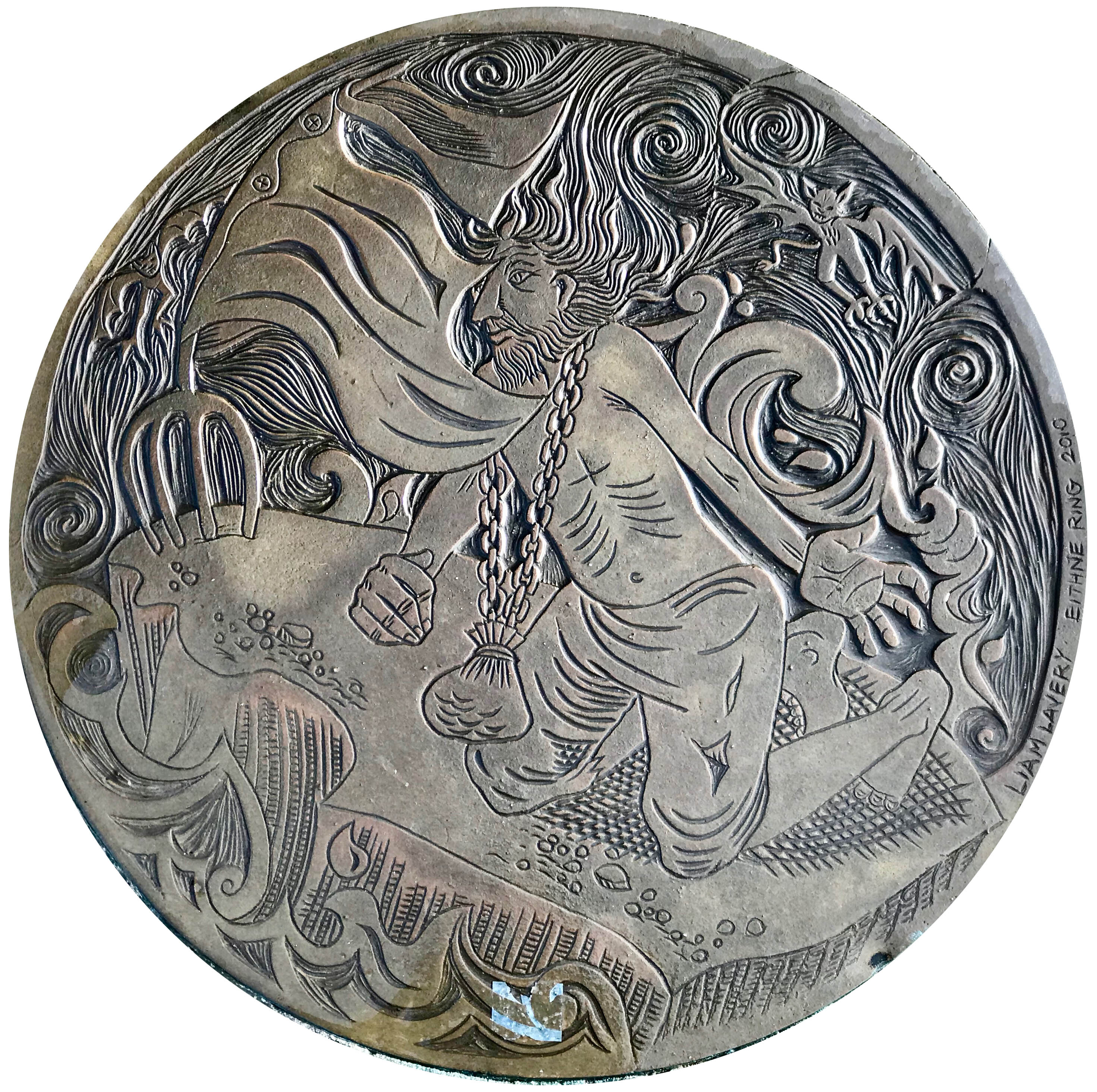
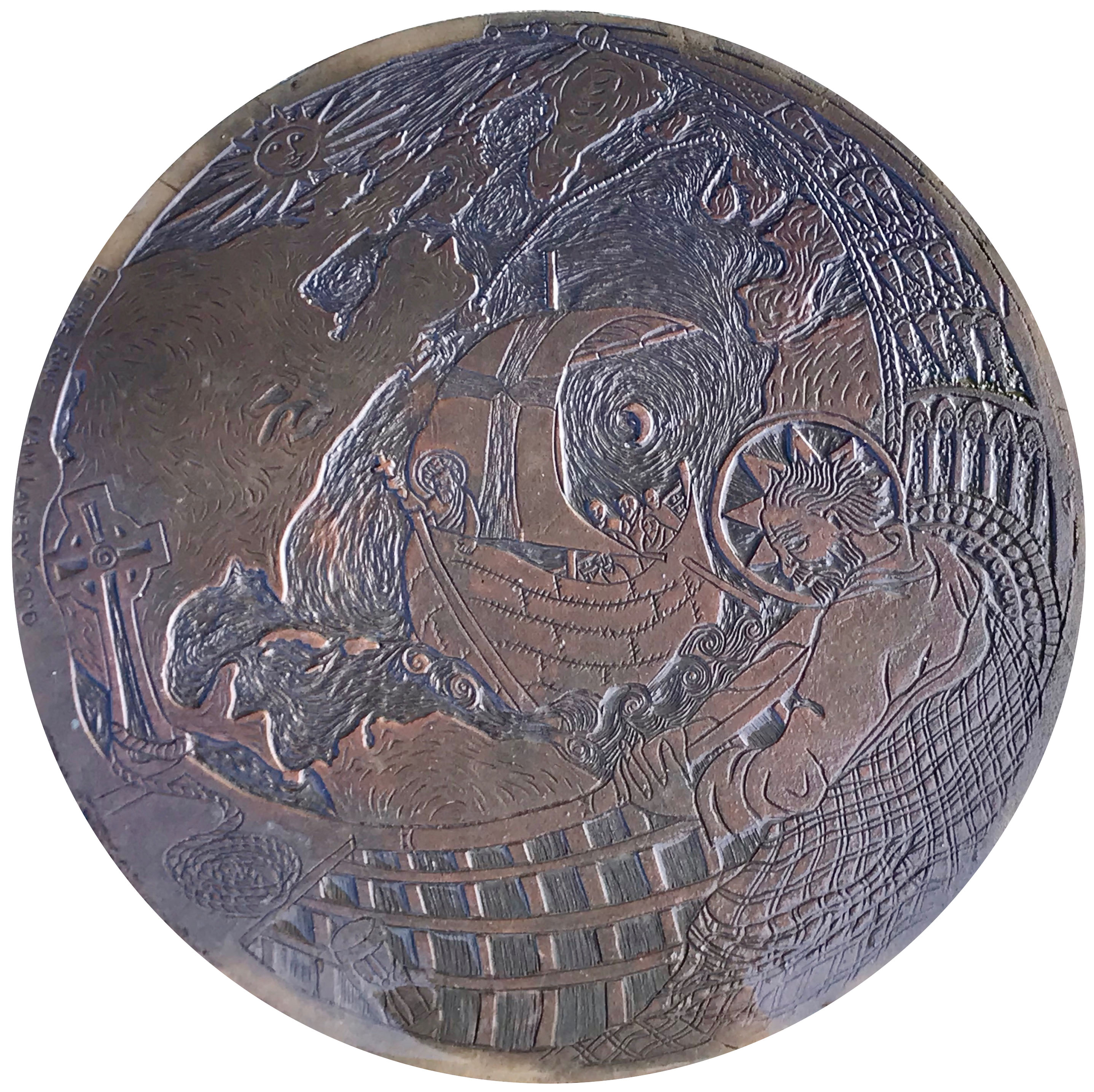
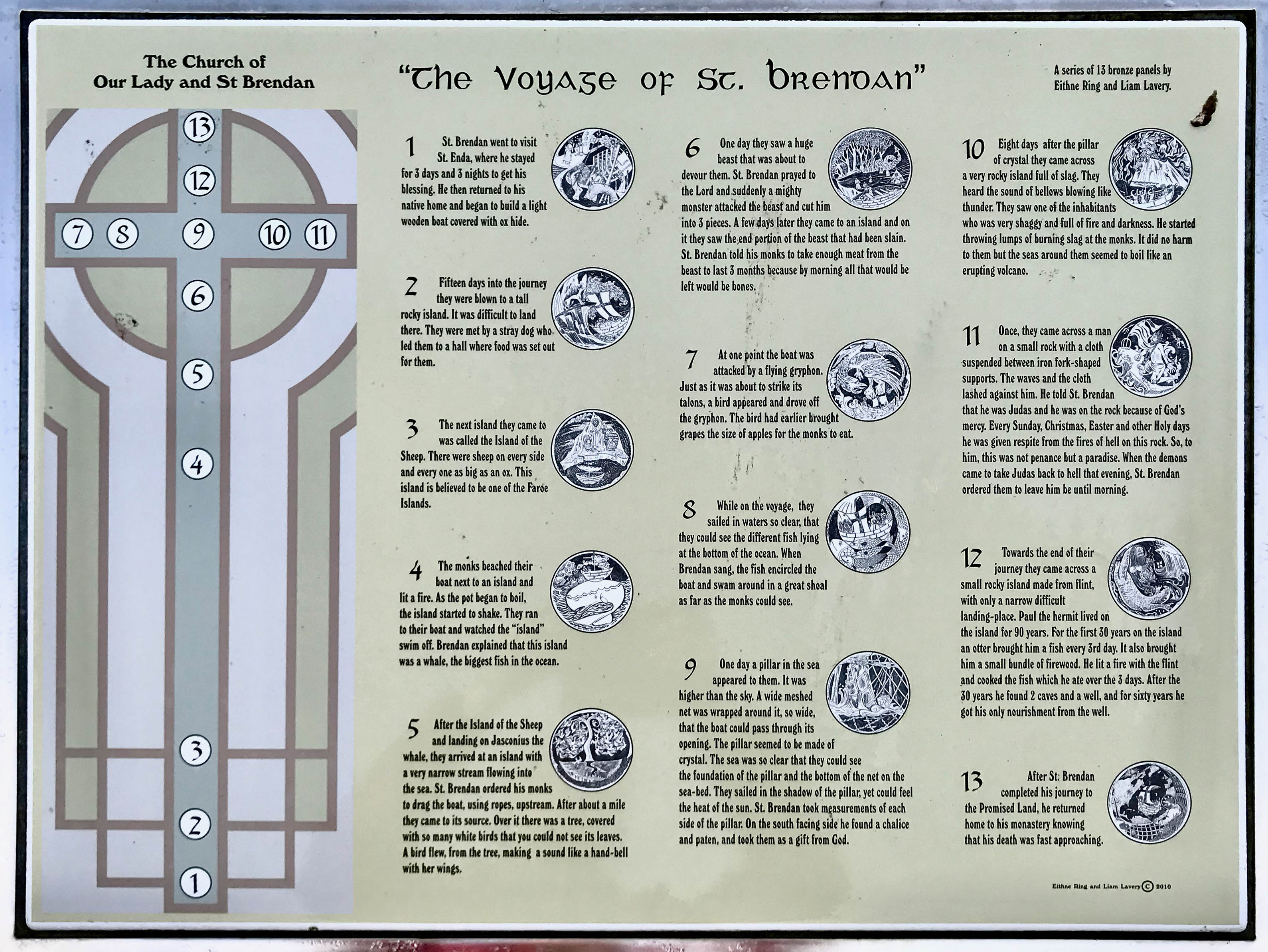
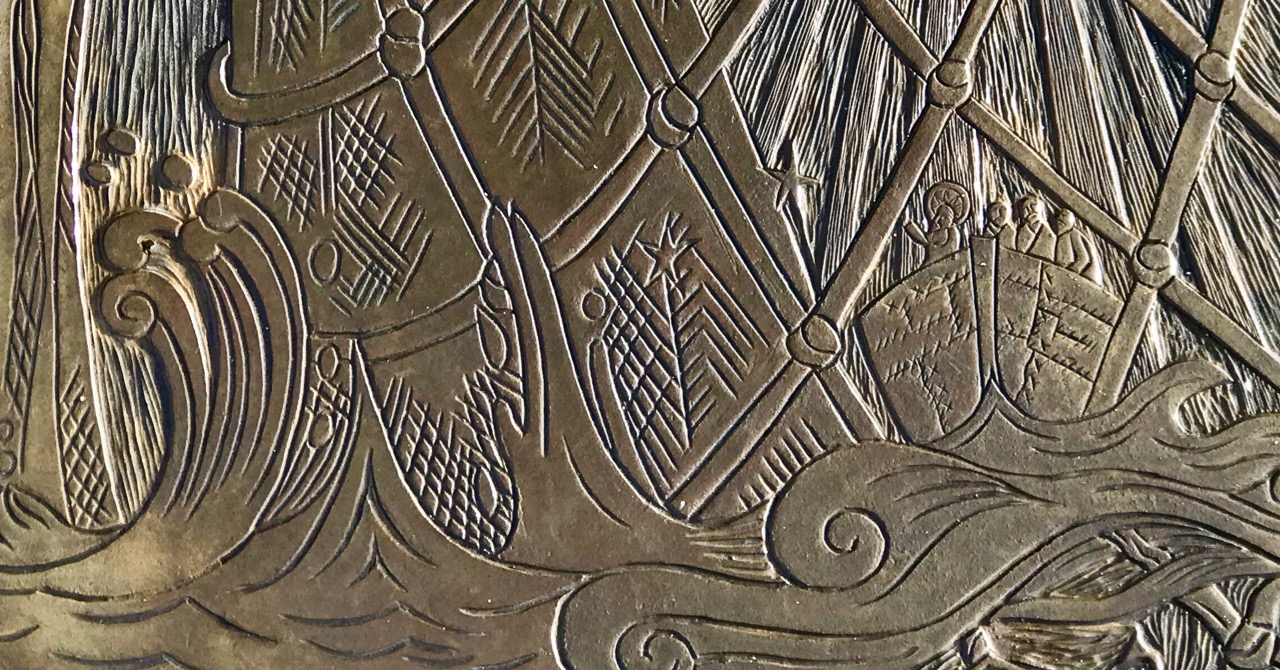
We went to Tralee, Co Kerry, to visit the Church of Our Lady and St Brendan: Finola was looking for windows by Murphy Devitt (which are spectacular) and I chanced upon a set of bronze roundels laid into the paving leading up to the main entrance (above). I felt I had to record them here, as they illustrate and tell the whole story of the Saint so wonderfully well. The large medallions were designed and made by Eithne Ring and Liam Lavery, and were installed in 2010. As far as I know this is a unique record of the voyage: well worth a visit – but don’t miss the windows!

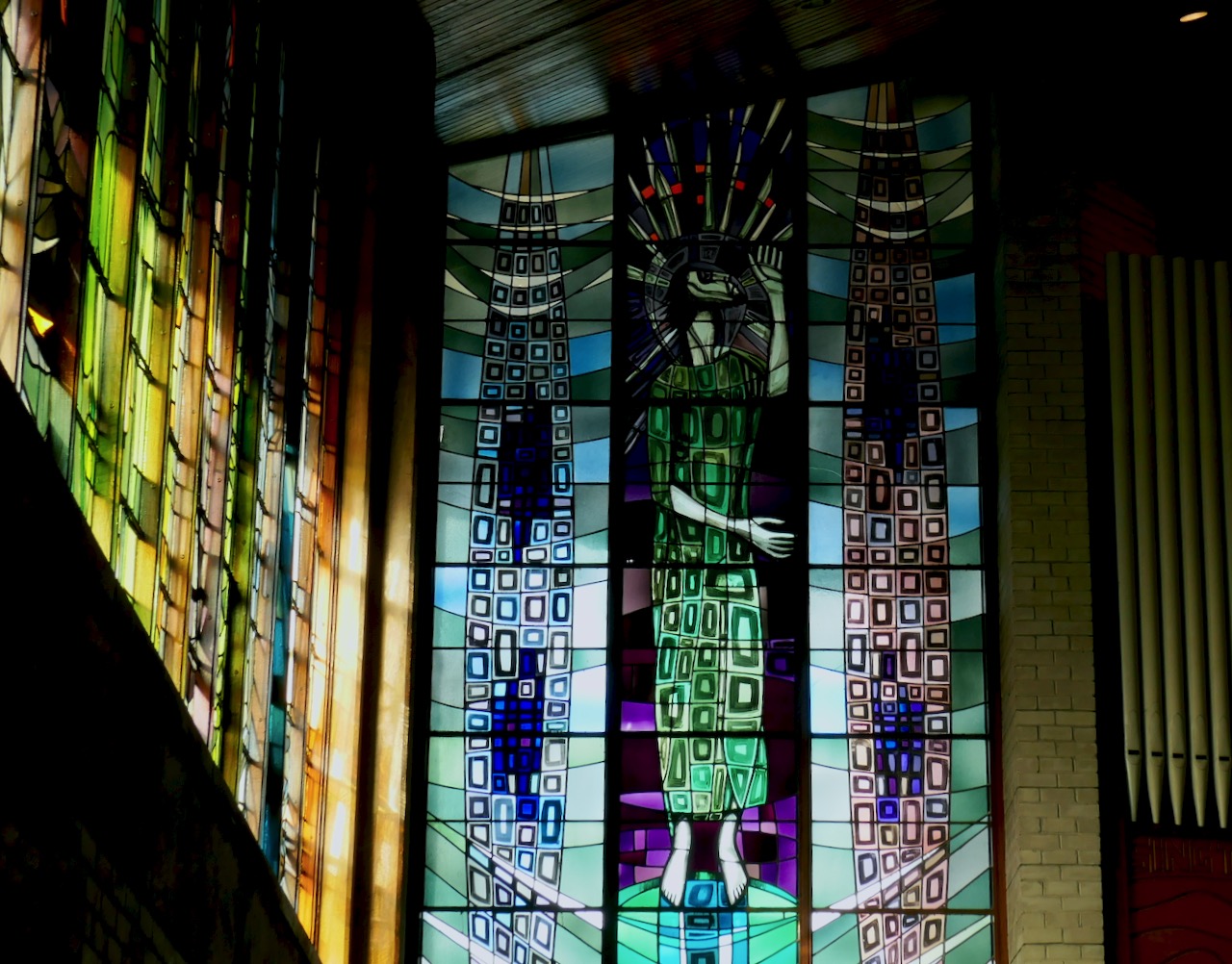
St Brendan: part of a huge stained glass installation by Murphy Devitt in this Kerry church

I’m showing the roundels in the order in which you encounter them as you approach the main doors to the church, and giving a very brief description of the subject of each. At the end you will find a commentary provided by the designers, which gives more detail.

1 St Brendan visits St Enda prior to building his boat

2 On a rocky island, Brendan’s crew are led by a hound to a miraculous hall of food

3 The monks find an island inhabited by giant sheep

4 Brendan and his companions land on an island, light a fire and celebrate Mass; they discover that they are on the back of a whale!

5 An island of white birds: one is ringing a bell

6 The monks take meat from a beast that has been slain by a monster

7 On the Island of Grapes the monks witness a battle between a gryphon and a bird: the bird is victorious

8 All the fish in the ocean come to listen to Brendan while he sings

9 Brendan finds a huge crystal pillar rising out of the sea

10 The sea is boiling like an erupting volcano

11 Brendan and his companions meet the unhappy Judas chained to a rocky island

12 The travellers find a hermit who has been fed by an otter for forty years

13 Brendan returns to Ireland to prepare for his death

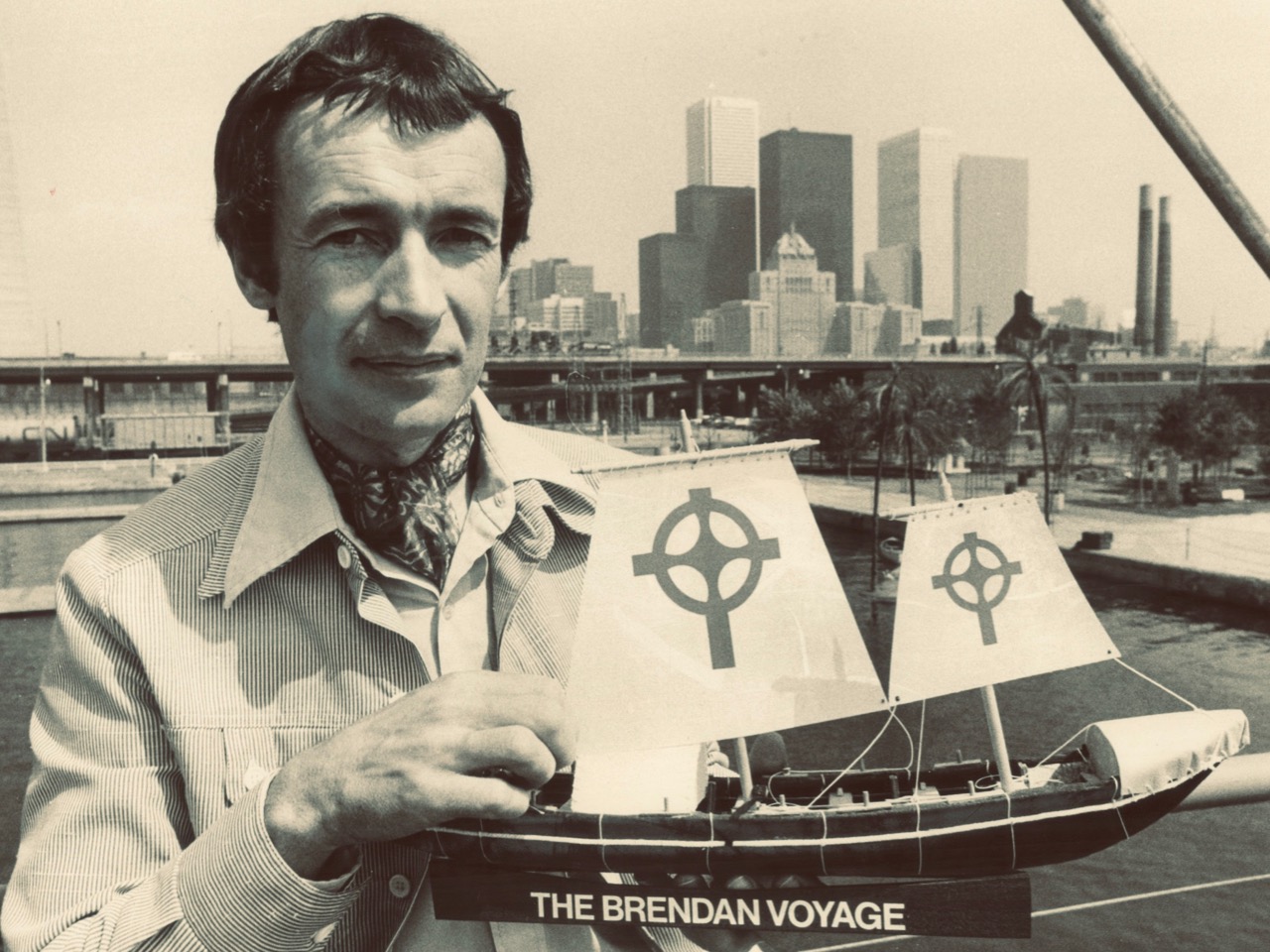
So now you know the bones of Brendan’s story. Now listen to the music! Saun Davey’s Brendan Voyage, a suite for uillinn pipes and orchestra, is a masterpiece inspired partly by the Saint himself, but also by Tim Severin’s 1976/77 recreation of the journey across the Atlantic in a leather clad boat:

Tim Severin pictured with a model of the boat in which he recreated the Saint’s journey

Let’s give the last words to Christy Moore, and the chorus of his Brendan song (you can find all the lyrics here):

“Is it right or left for Gibraltar?”
“What tack do I take for Mizen Head?”
“I’d love to settle down near Ventry Harbour”,
St Brendan to his albatross he said . . .

Imbolc – How Our Ancestors Welcomed Spring

February 1 – we celebrate it as St Brigid’s day now, and support the call for making it a national holiday. But we have celebrated it in Ireland forever as Imbolc, the calendar marker that heralds the arrival of spring.

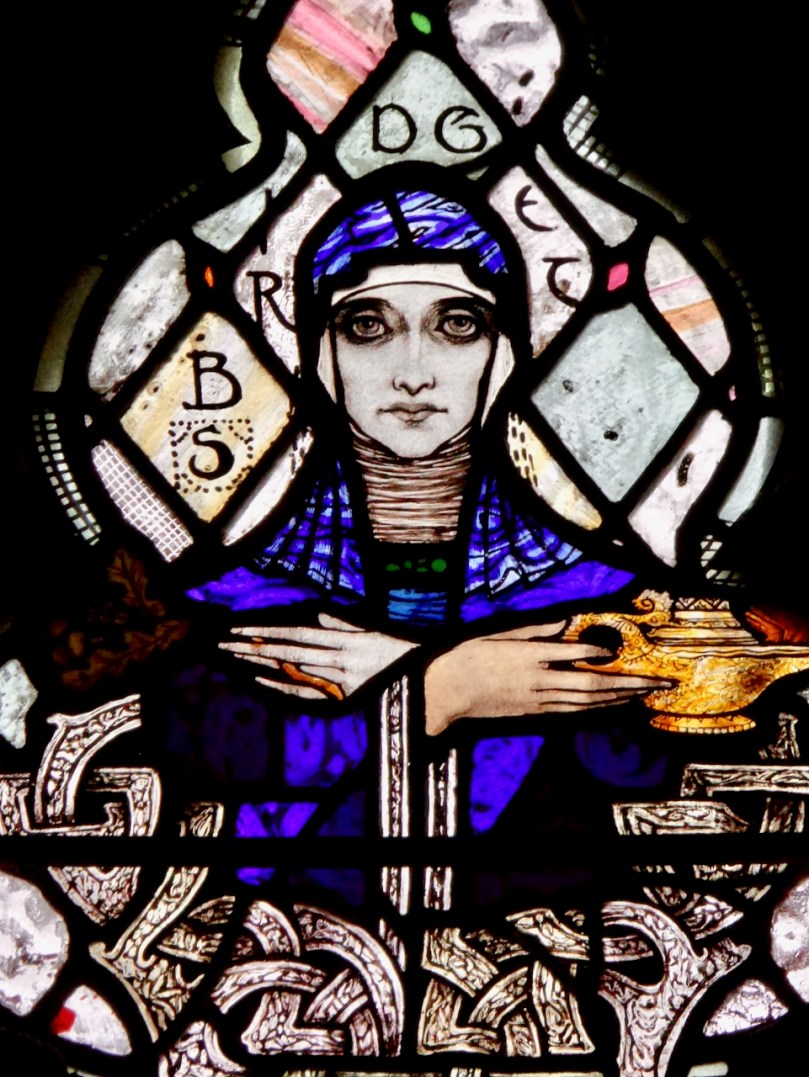
St Brigid by Harry Clarke in St Barrahane’s Church, Castletownshend

What follows was originally a Joint Post by Finola and Robert, written way back in 2013. We have edited it to update the links and added some new photographs and are republishing it now.

Archaeologists have long been aware of the astronomical siting of some Irish megalithic sites, such as at Newgrange, and Loughcrew Passage Graves in Co Meath and Drombeg Stone Circle in West Cork.

Inside Cairn T at Loughcrew

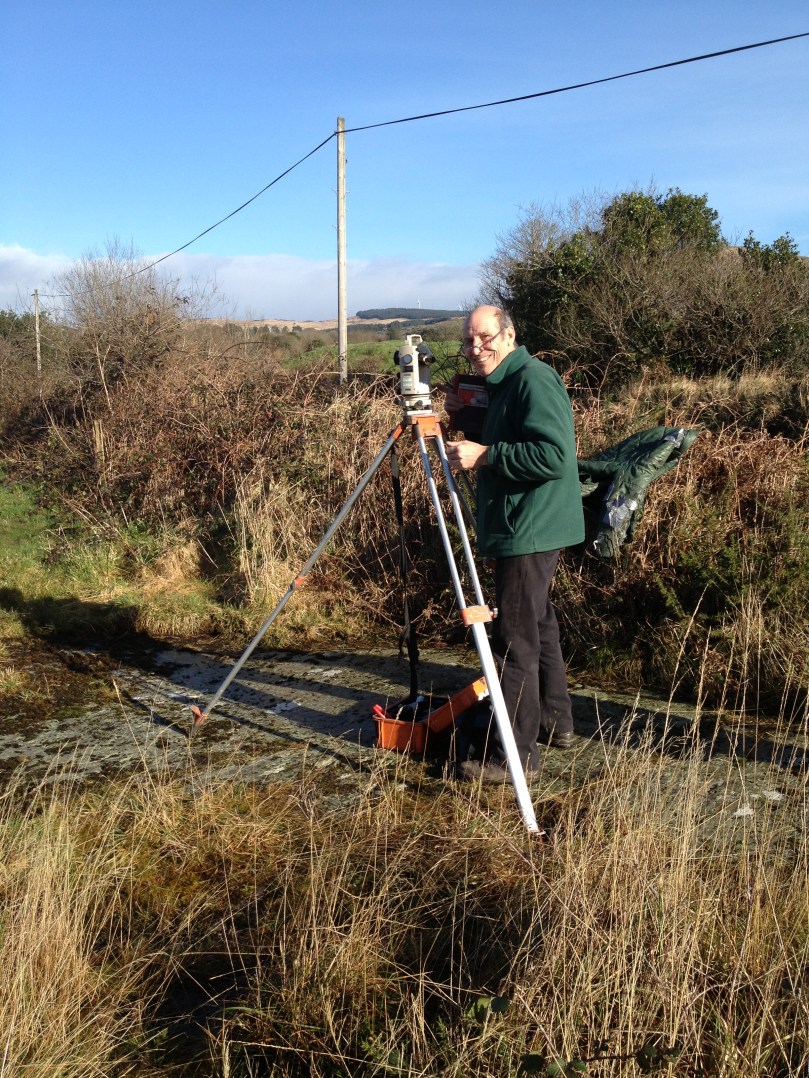
We have become intrigued by the work of Michael Wilson, a talented amateur astronomer who is singlehandedly documenting the astronomical siting of many monuments in this area. Recently he has turned his attention to prehistoric rock art. Mike’s website contains an astonishing body of work, meticulously researched and rigorously recorded, along with explanatory notes.

Michael Wilson and his Whole Horizon Analytical Technique (WHAT)

Michael Wilson carries out his Whole Horizon Analytical Technique (WHAT)

His thesis, in a nutshell, is that the builders and carvers of Neolithic and Bronze Age times were keen observers of the day and night skies and were intimately familiar with their surroundings. They situated their megaliths and rock art in places where the contours of the horizon allowed them to mark significant solar and lunar events, such as solstices, equinoxes, lunar settings and risings, and intermediate points. Thus, the sun at the winter solstice might rise at the highest point on a nearby mountain, or set in a deep notch in the hills at the spring equinox.

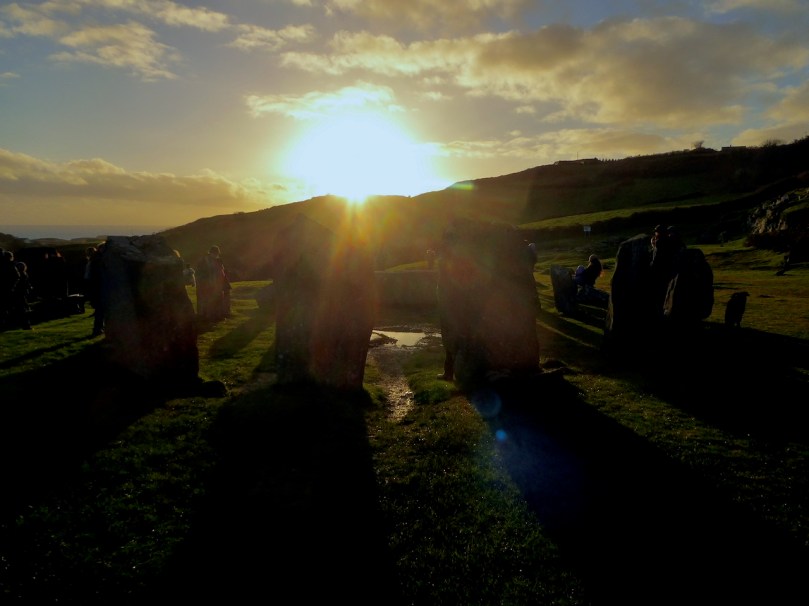
At Drombeg Stone Circle people gather on the winter solstice to watch the sun set over the recumbent stone

The solar calendar has four quarter days (the solstices and the equinoxes), four cross-quarter days (the half way points between the solstices and the equinoxes) and a further finer division into points half-way between the quarters and cross-quarters: an ancient 16 month calendar.

A few days ago [in 2013], Michael posted this:

Imbolc, the spring cross-quarter, is almost upon us. It will be on Feb 1st by the Gregorian calendar, where it is commonly known as St Bridget’s Day or Candlemas, but this is not the correct day. By day-count, the times to celebrate will be sunset on the 3rd and sunrise on the 4th. Astronomically, the sun will be exactly half-way between the winter solstice and the spring equinox at about 16:13 GMT on Feb 3rd, while Feb 2nd is the day to see the sun rise and set at the prehistoric positions for marking this festival.

We set out for our favourite rock art site, Ballybane West, before dawn on Feb 2nd, feeling incredibly lucky to have a clear sky. As the sky brightened, and the nearby hills started to receive the sun’s rays, the carvings on the rock surface became clearly visible.

The sun is already hitting the high ground across the valley

Then, the sun rose, exactly where Michael’s predictions said it would, at the highest point of a rounded hill on the horizon. As people had been doing 4000 years ago in this exact spot, we marked the cross-quarter day of Imbolc – a time when the land starts to warm up, the first spring flowers appear, and the ewes are visibly pregnant.
The carvings light up in the dawn rays

The slanting rays of the rising sun provide perfect lighting for seeing rock art, which is often difficult to observe at other times

If Michael is correct, we have to incorporate a new possibility into our thinking about rock art. There have been indications before that the location of the carved rocks was significant. For example, there is often a view of water or of a significant mountain, some theorists have posited that they are ancient boundary markers, and some rock art sites are inter-visible with each other.

But this way of looking at rock art elevates the actual siting of the rock as most important, and allows us to view the carvings themselves as a way to indicate the purpose of the site – a means to an end rather than an end in itself. The motifs, though, will probably remain as enigmatic as ever.


Murphy Devitt in Cork, Part 3

Our final two Cork churches are a small private chapel and a large public church. Then I will provide some suggestions for where else to go to see Murphy Devitt windows. If you haven’t read them already, Part 1 is here and Part 2 is here.

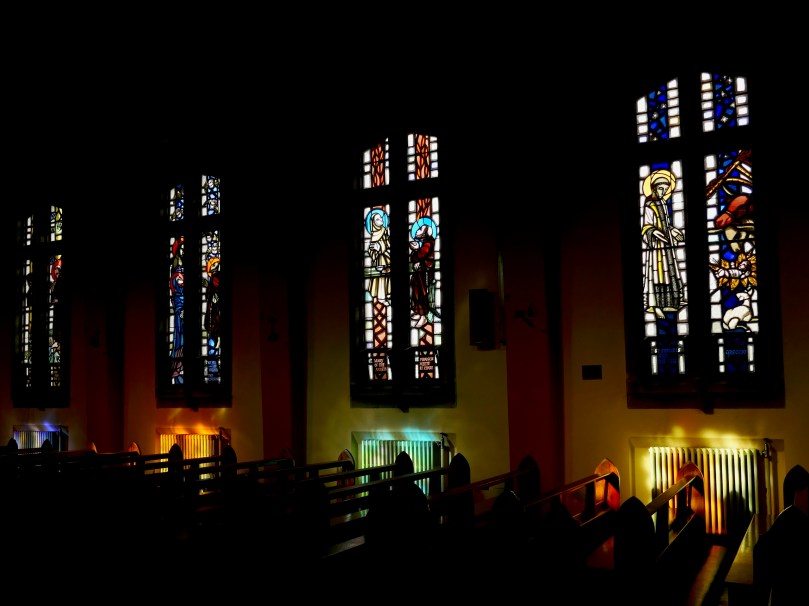
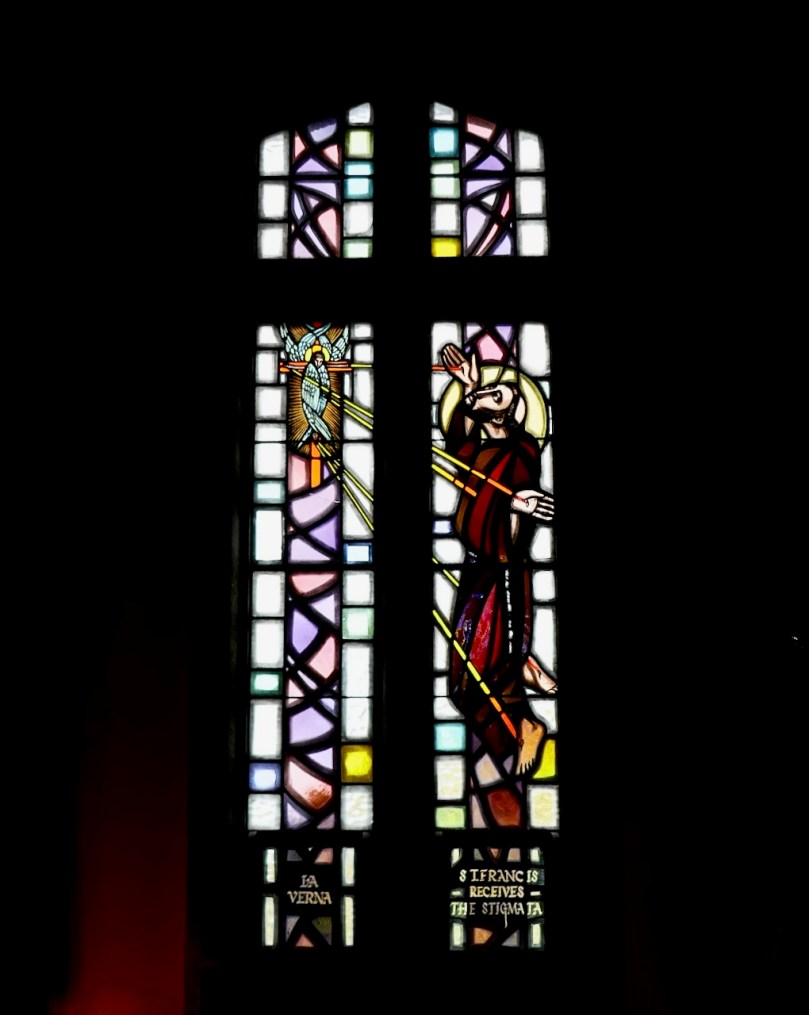
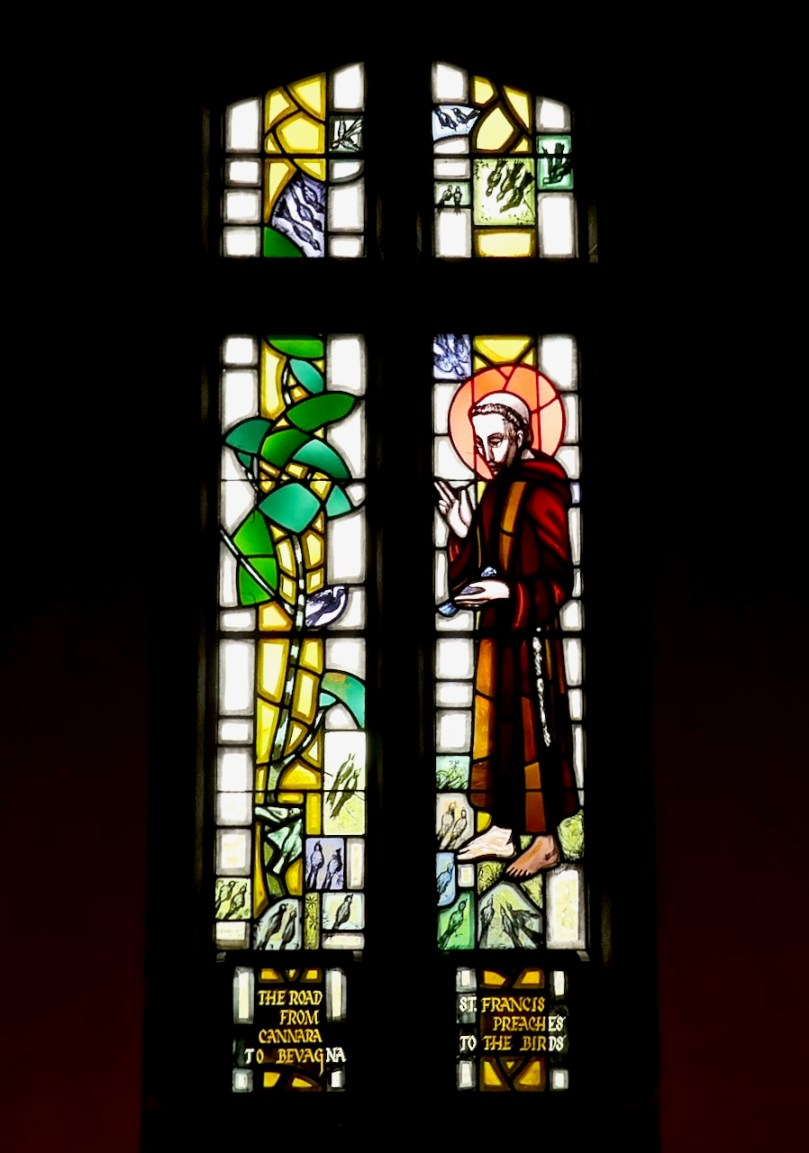
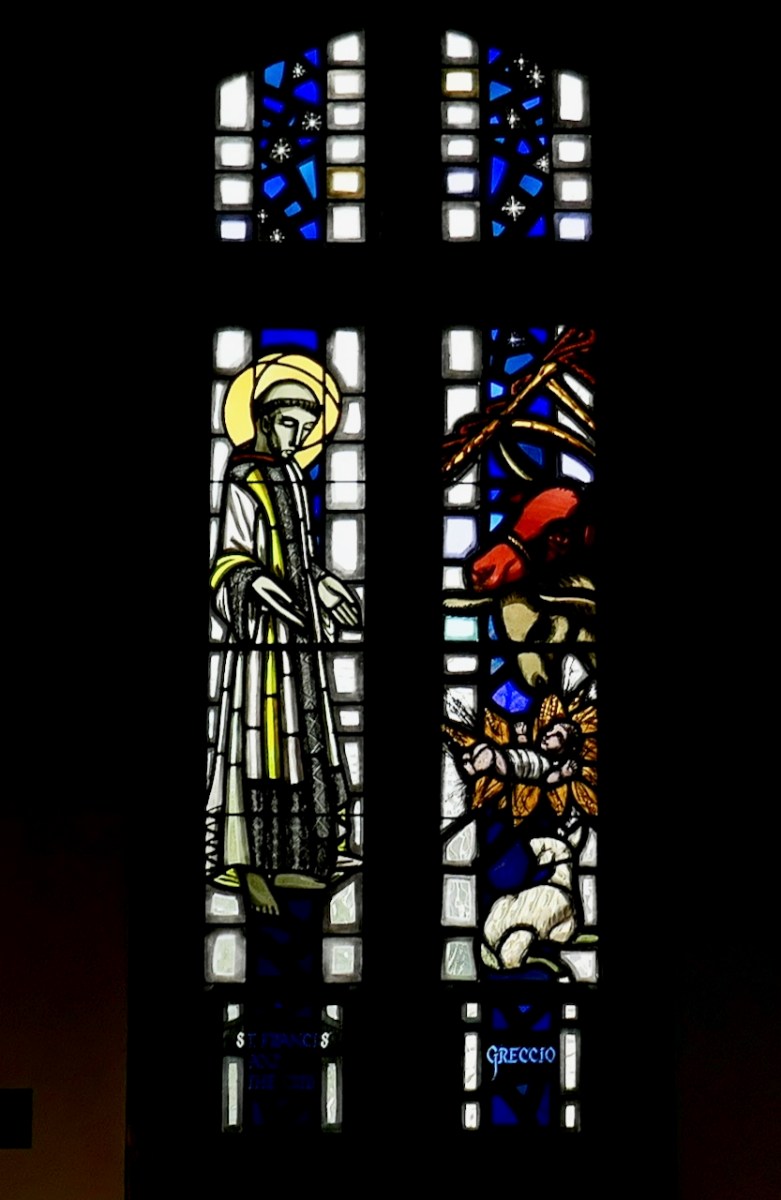
The private chapel first. It’s in Rochestown, attached to a Cappuchin Franciscan school and Friary* and it dates from 1961. It’s all about St Francis – his life and his famous Canticle. Scenes from St Francis’s life make up the large windows on the right side of the aisle. We see him receiving his stigmata, preaching to the birds, setting up the first Christmas crib scene in Greccia.

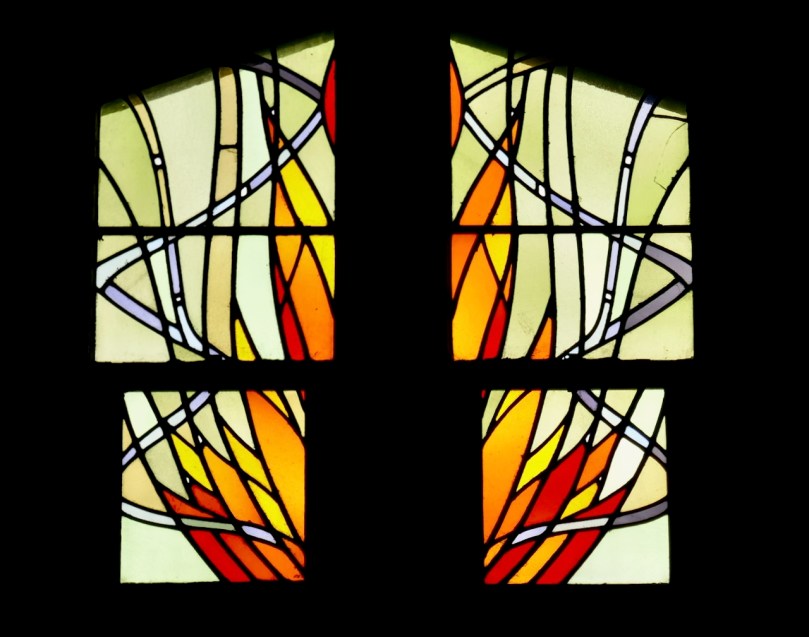
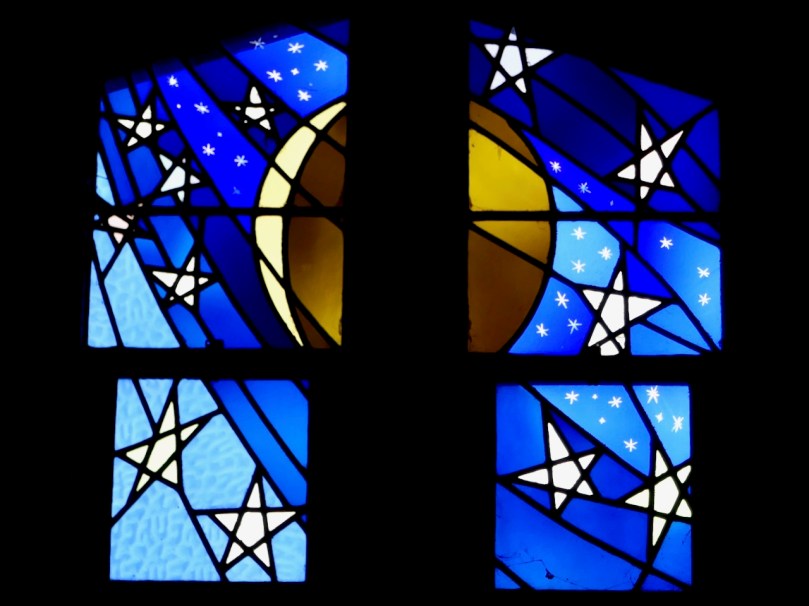
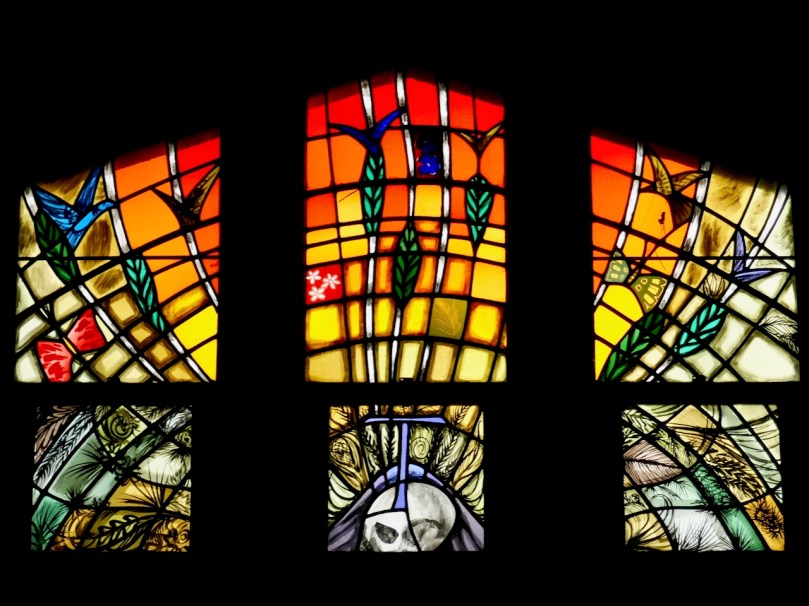
The Canticle references occupy smaller clerestory windows. They are a sensitive response to the well-known lines:

Praised be You my Lord through Brother Fire,

Through whom You light the night

and he is beautiful and playful and robust and strong.

Praised be You, my Lord, through Sister Moon and the stars,

In the heavens you have made them bright, precious and fair.

Praised be You my Lord through our Sister, Mother Earth

Who sustains and governs us, producing varied fruits with coloured flowers and herbs.

The Church at Mallow is a large and impressive modern edifice opened in 1967. The windows occupy both side walls, with many abstract panes filling in other spaces.

By 1967 Johnny was teaching full time at the National College of Art and  routinely invited his best students to work for the Studios in the summer. In this case, the student was Terry Corcoran, who, while he did some more stained glass windows on his own subsequently, went on to a career mainly as a painter. His website is here

The design was all Johnny’s, and both Johnny and Róisín provided direction to Terry. As a result, it is hard to distinguish a different hand in these windows – as with all MD windows they are a collaboration, but with the powerful and distinctive look and feel we’ve come to expect from their style.

Compare with this window in Mayfield – the figures have become slightly more stylised

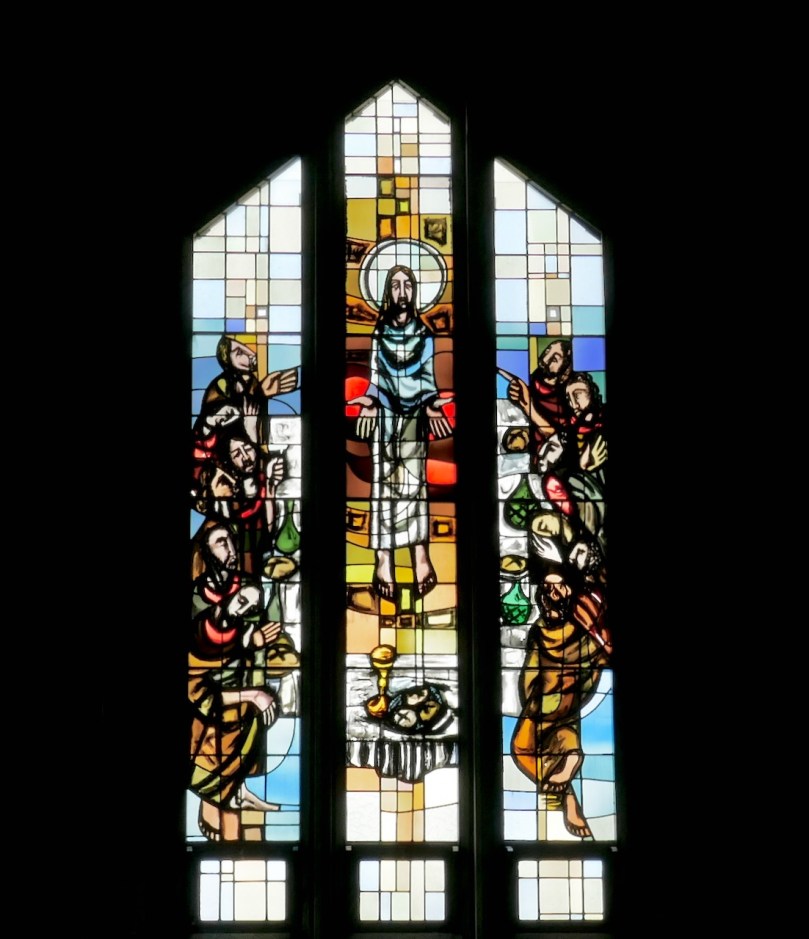
The Last supper – a masterpiece of window design

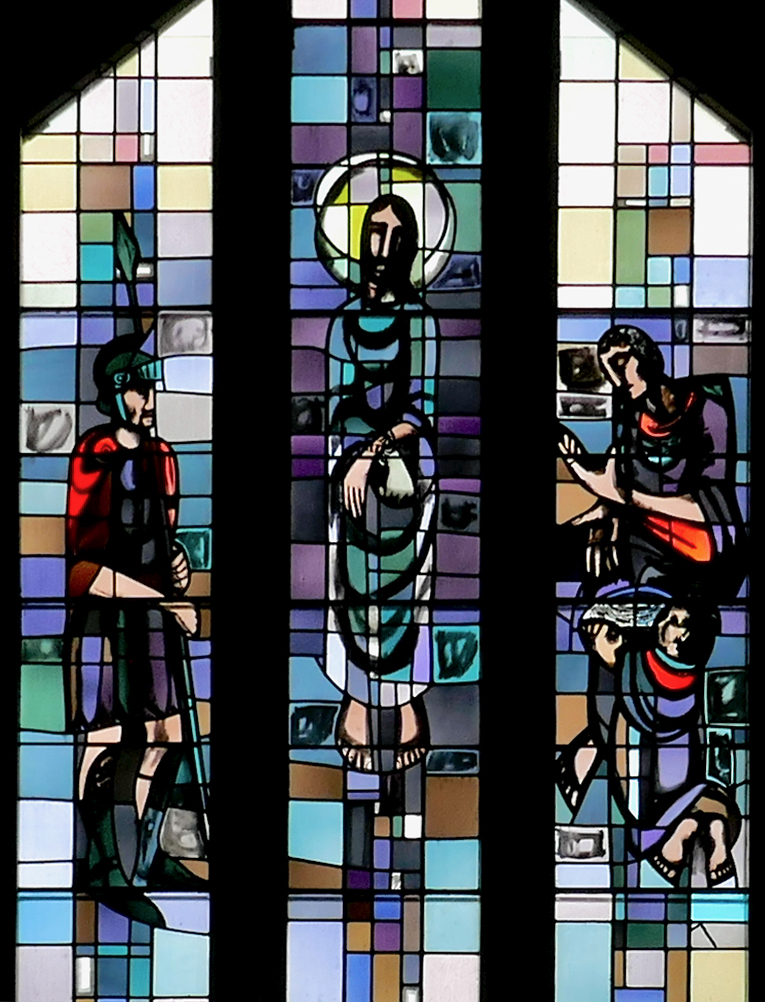
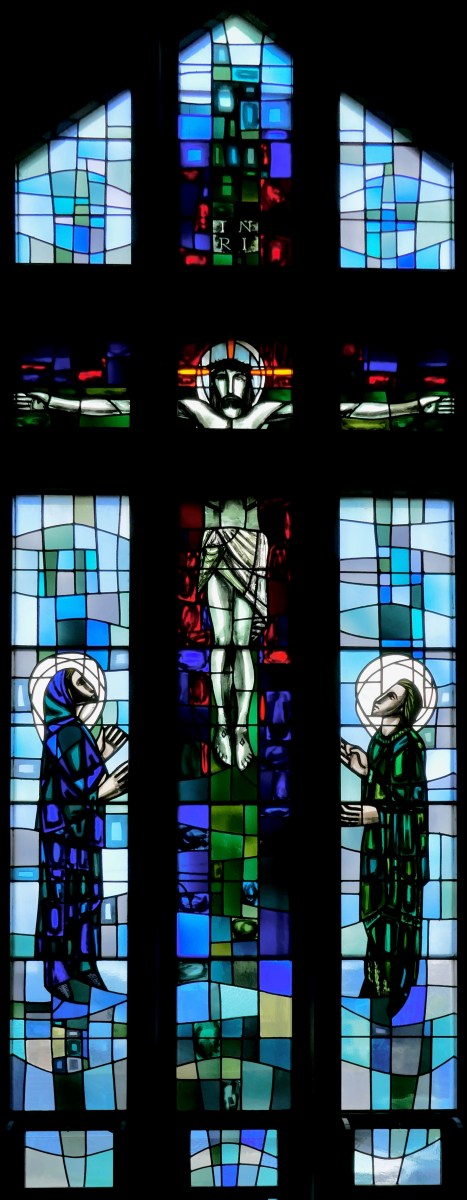
The Crucifixion window with its sombre blues and greens

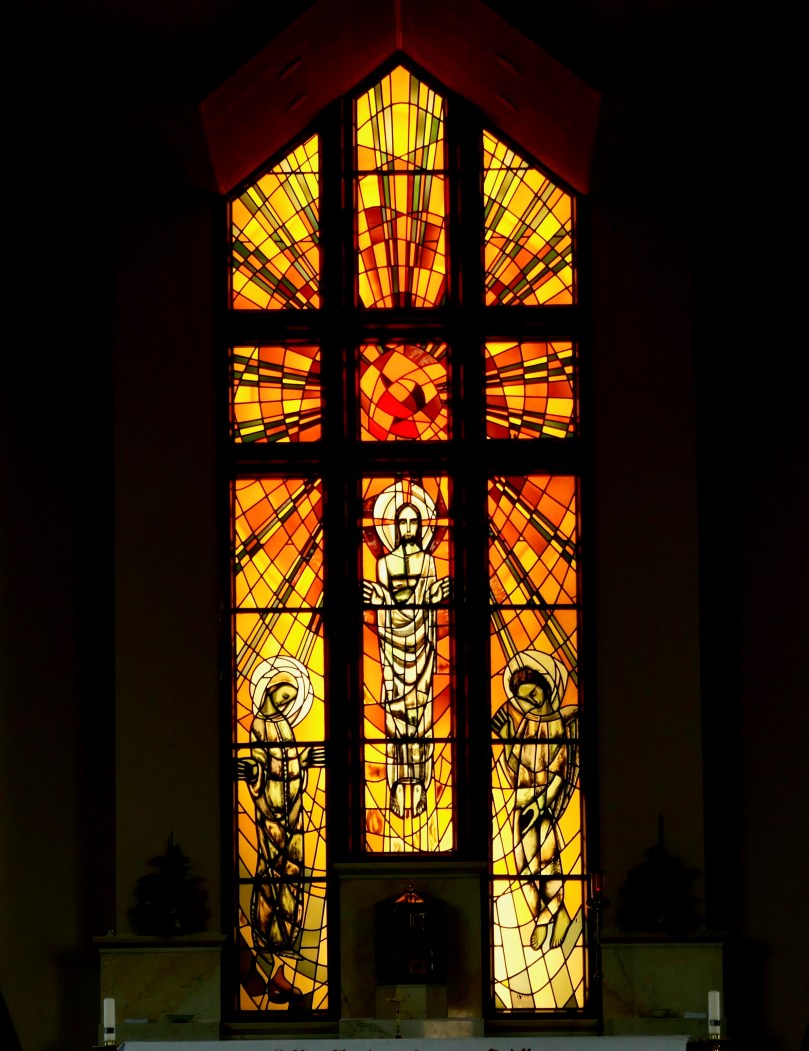
The Resurrection window (above in glorious hues of red and orange) was originally immediately to the right of the altar, but in the late 1980s the Parish Priest had it moved to behind the altar, where it had to be back-lit. This left an opening with no stained glass and the priest turned to Murphy Devitt once more. By then, the Studios had been dissolved, but Johnny and Róisín continued to work with Des under a loose arrangement covered by ‘Des Devitt and Associates.’

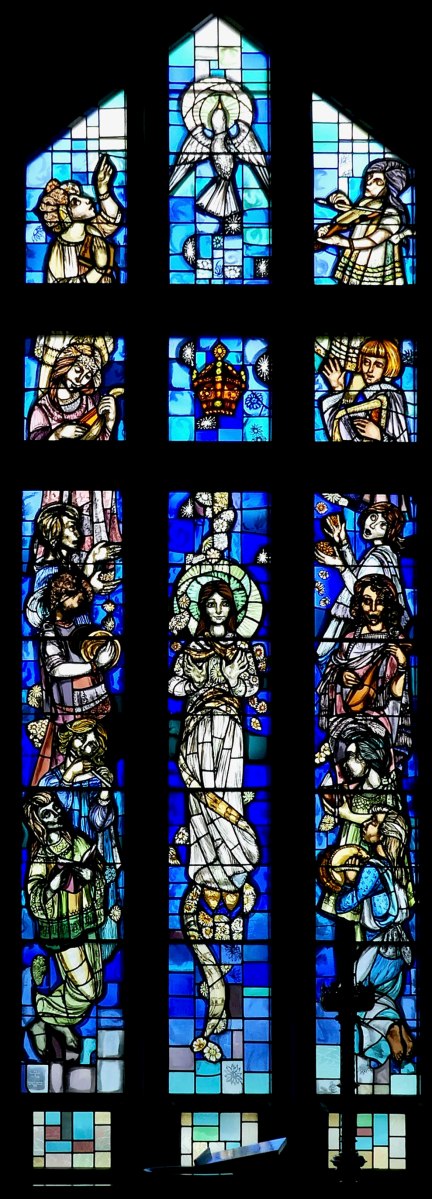
Róisín Dowd-Murphy’s Assumptions window in full

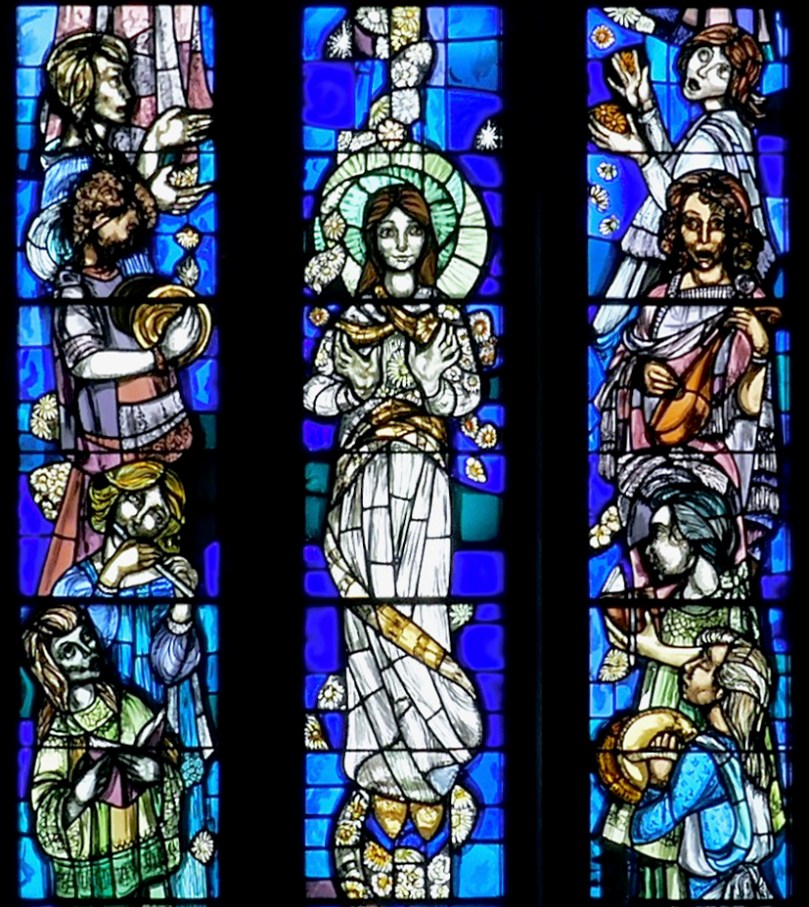
This window is pure Róisín and is quite at odds with all the other windows in the church. To me, it is a delight, as it showcases Róisín’s style in all its Boticelli-inspired emphasis on costume, hair, flowers and musical instruments. Contrast it with the Assumption window in Mayfield (click here for the image). Although she drew the cartoon for both windows, the Mayfield Assumption had to fit with the overall design for that church, whereas in Mallow she simply followed her own inclinations and what we get is unfiltered Róisín.
Assumption, a closer look

Not everyone is lucky enough to live in Cork, so I want to include a few non-Cork Murphy Devitt windows before I end this series – windows that are open to visit and which are every bit as spectacular as the best of the Cork examples.

Cahir Catholic Church has MD abstract/symbolic windows, including this little window where Johhny’s love of the wobbly and wavy line is clear – also note the unusual glass

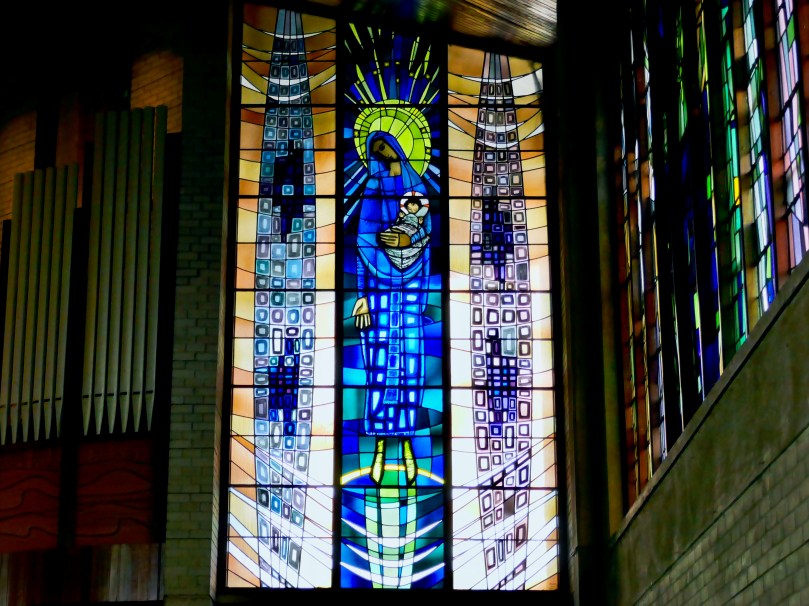
The Church of Our Lady and St Brendan in Tralee has two huge representations of its patrons, as well as extensive and beautiful abstract windows.

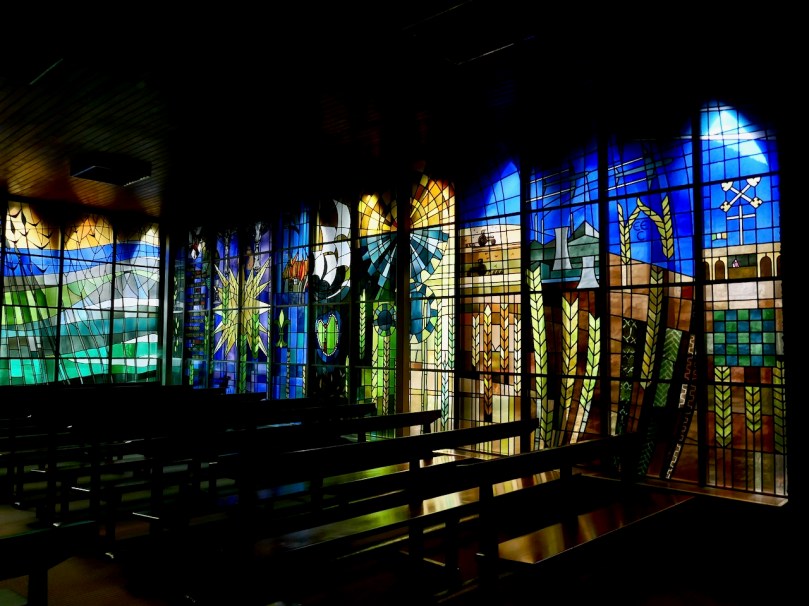
All the glass in St Michael’s, Dunlaoghaire, is Murphy Devitt, done in the early 70s. Soaring panels of abstract colour punctuate the severe interior and bathe the interior in a warm glow. No photograph – you’ll have to see this one for yourselves. In Limerick, the Dominican Church has a floor to ceiling wall of glass (below) that, among other things, depicts the history of Limerick.

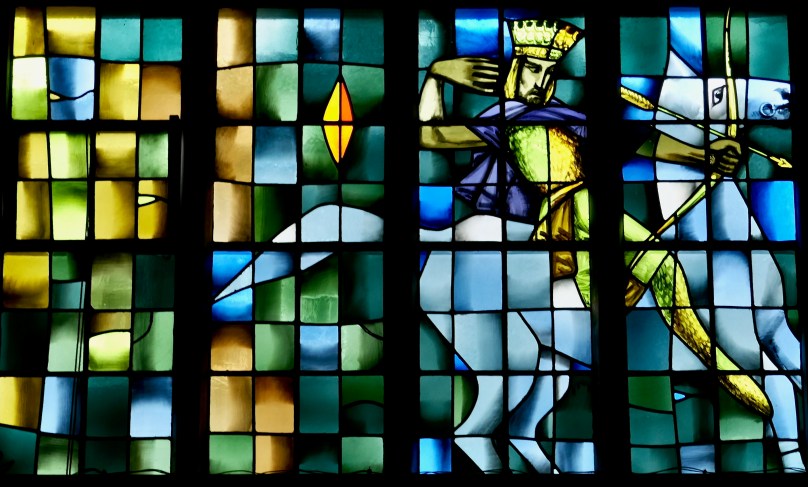
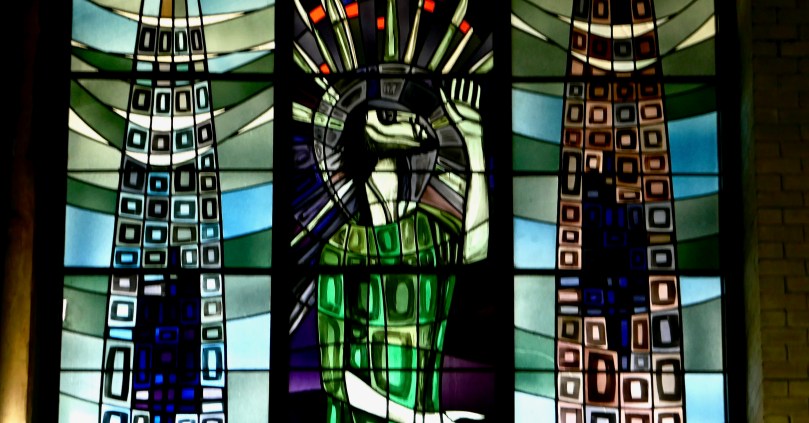
The chapel attached to Newbridge College contains a set of windows based on the Book Of Revelations, an unusual theme for a Catholic Church. My friend and colleague, David Caron, has written a piece on these windows for the Summer 2019 edition of The Irish Arts Review, with brilliant photographs  by Jozef Vrtiel. I recommend that article to you, not least for the erudite and highly readable commentary on the iconography, including the Four Horsemen of the Apocalypse, one of whom is below.

That concludes our exploration of this extraordinary Studio, its artists and craftspeople. It’s been a rare pleasure for me to discover them all, and their brilliant windows. Please take a look at the Murphy Devitt website – it’s a work in progress, but it will give you a list of churches and you may find one near you. Let me know!

Brendan, in the Church of Our Lady and St Brendan, Tralee

*Thank you to Fr Sylvester of the Rochestown Cappuchin Franciscan Friary for facilitating my photographing the windows. The chapel is private so these windows are not normally available to view.

Looking at Rossbrin

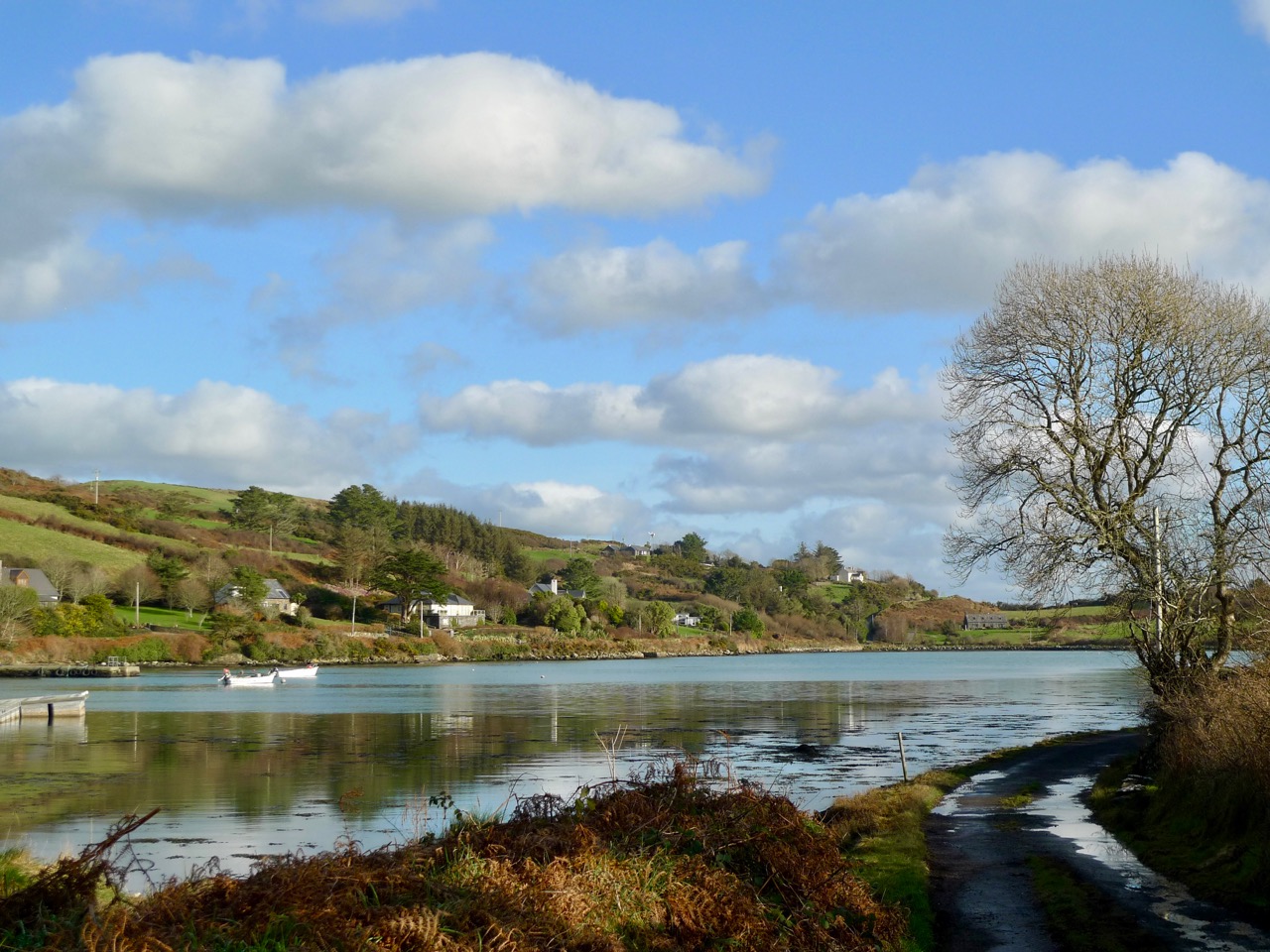
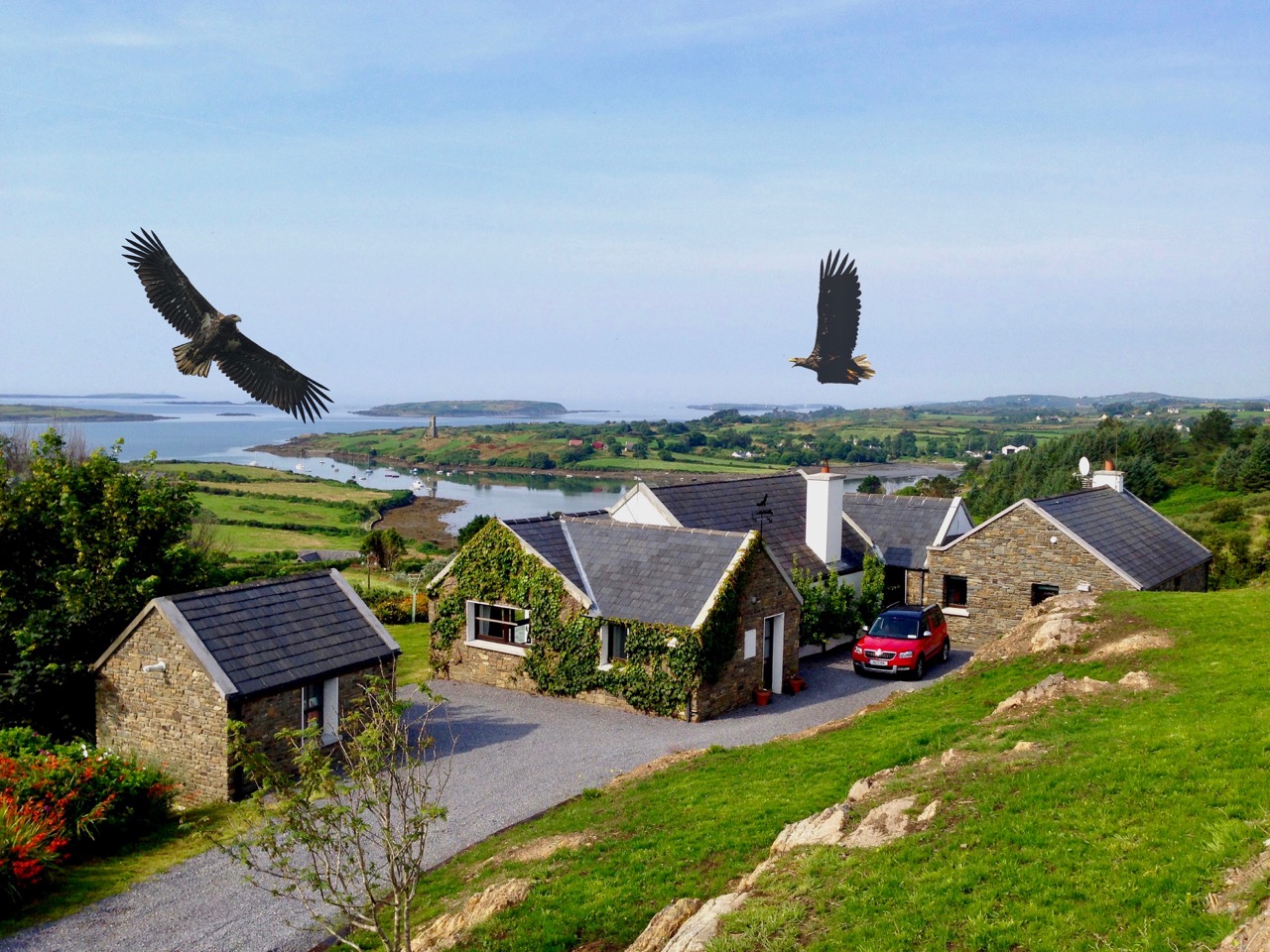
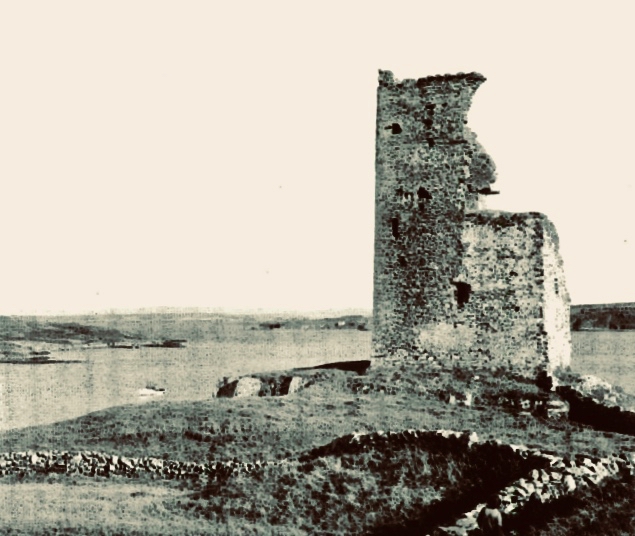
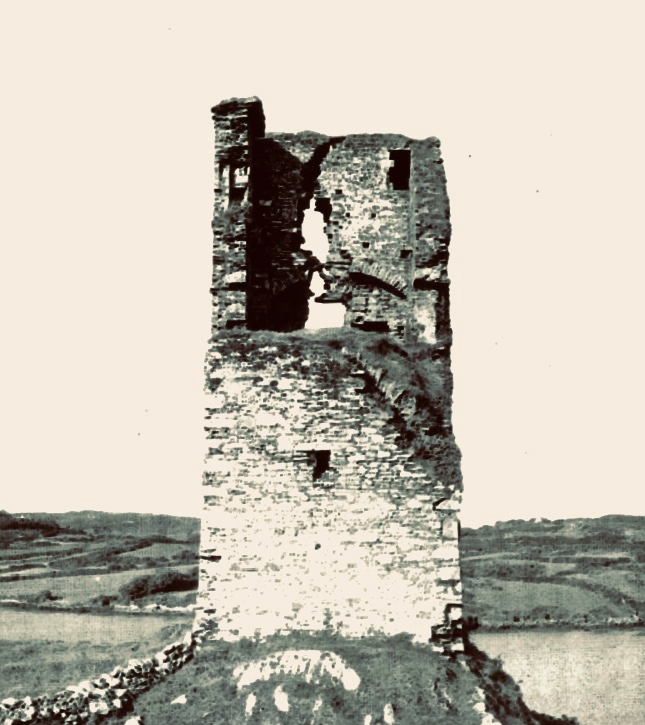
Last week we talked a little about the history of Rossbrin’s medieval castle, and the importance of this natural inlet as a historical centre of fishery, scholarship and European culture. Rossbrin Cove stills serves as an anchorage and refuge for sailing boats on the edge of Roaringwater Bay, but is now a peaceful haven, with only the sounds of the shore birds and slapping masts to lightly disturb an overriding tranquility that gives the place a very particular atmosphere. Our photograph (above) is taken on the boreen going to the castle; on the skyline in the centre is a wind turbine, and just below that is Nead an Iolair (Irish for Eagle’s Nest). The picture below shows the eagles wheeling over our house, with Rossbrin Castle and our view to the Cove beyond.

I have been exploring images of the Cove and its castle – some historic photographs and a few artists’ impressions. As it’s right on our doorstep, we have taken many pictures of Rossbrin during our years here. I am also sifting through a few of these.

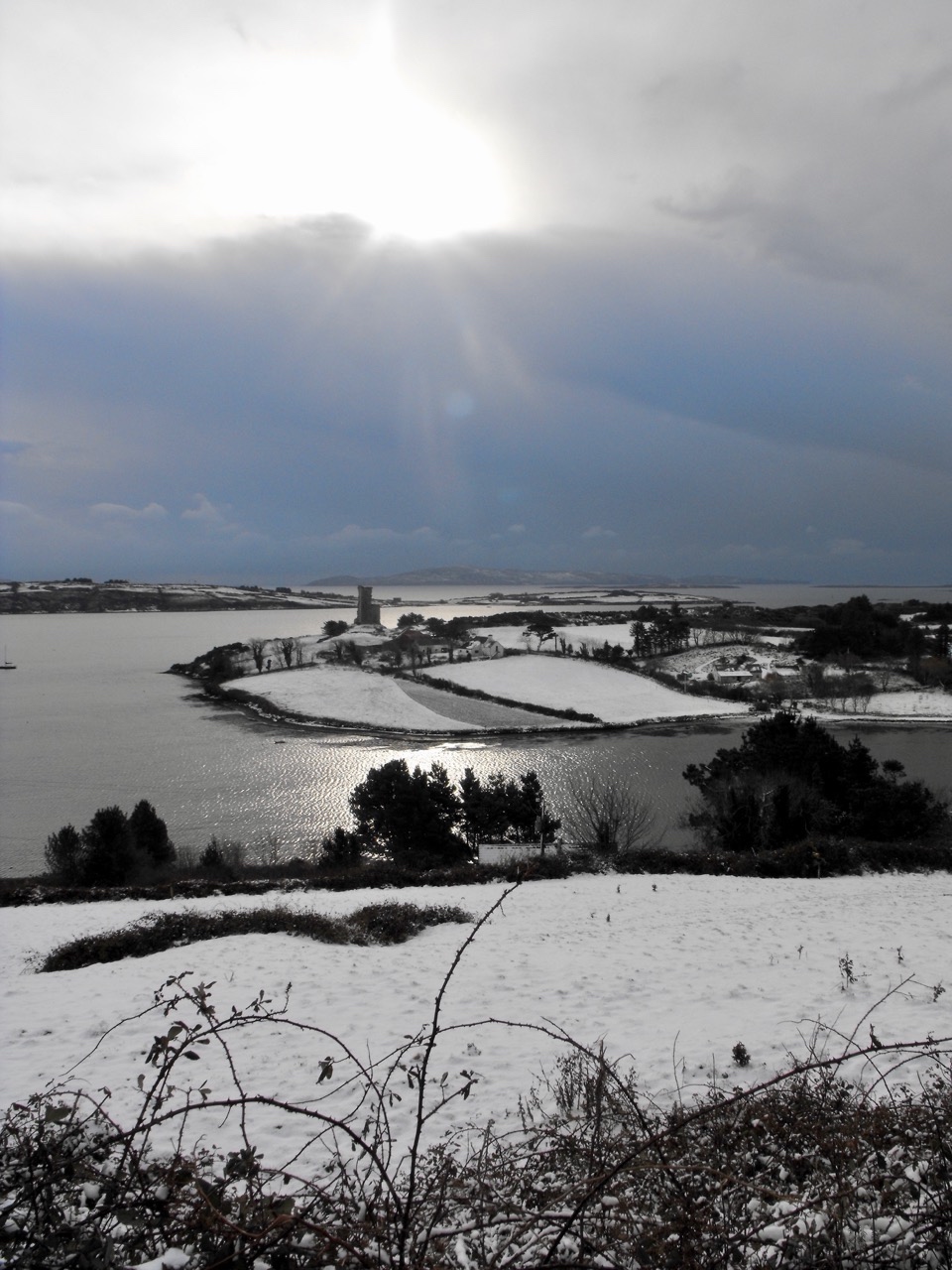
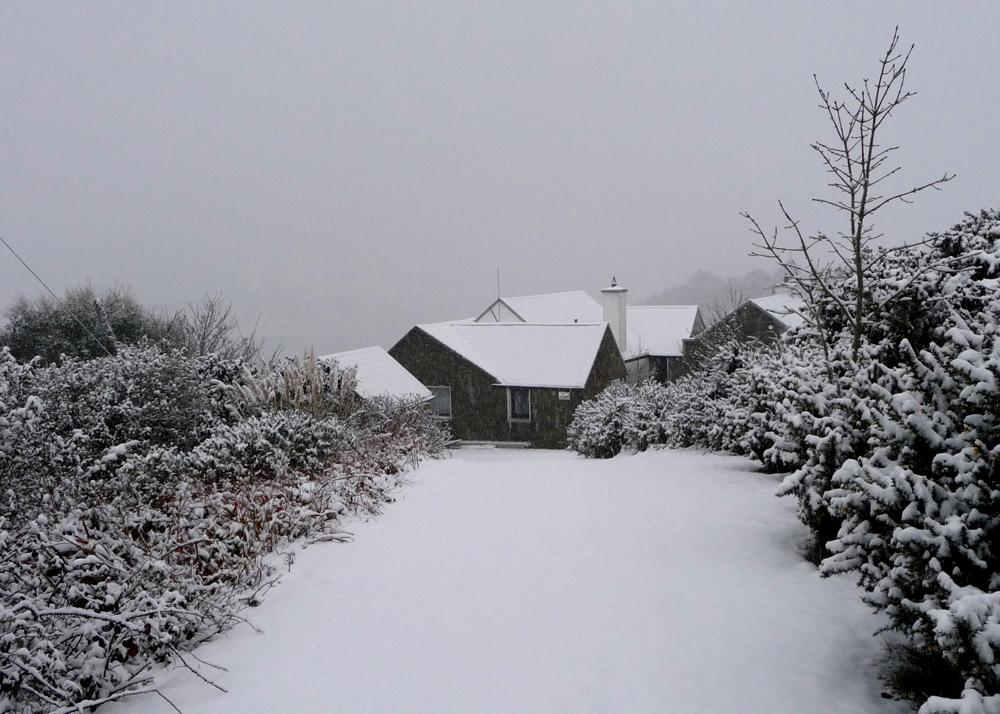
Ten years ago, the west of Ireland experienced an exceptional snowfall, and above is a photograph taken by our near neighbour, Julian van Hasselt, before we arrived. Mostly, our weather is relatively mild due to the effects of the gulf stream on the south-western coast. The castle can clearly be seen here, beyond the fields of Castle Farm. This view of our house (below) was also taken in 2010 by our neighbours Dietrich and Hildegard Eckardt:

I showed a couple of early photographs of the castle last week. Here are two more taken before a substantial part of the ruined structure was toppled by a storm in the 1970s:

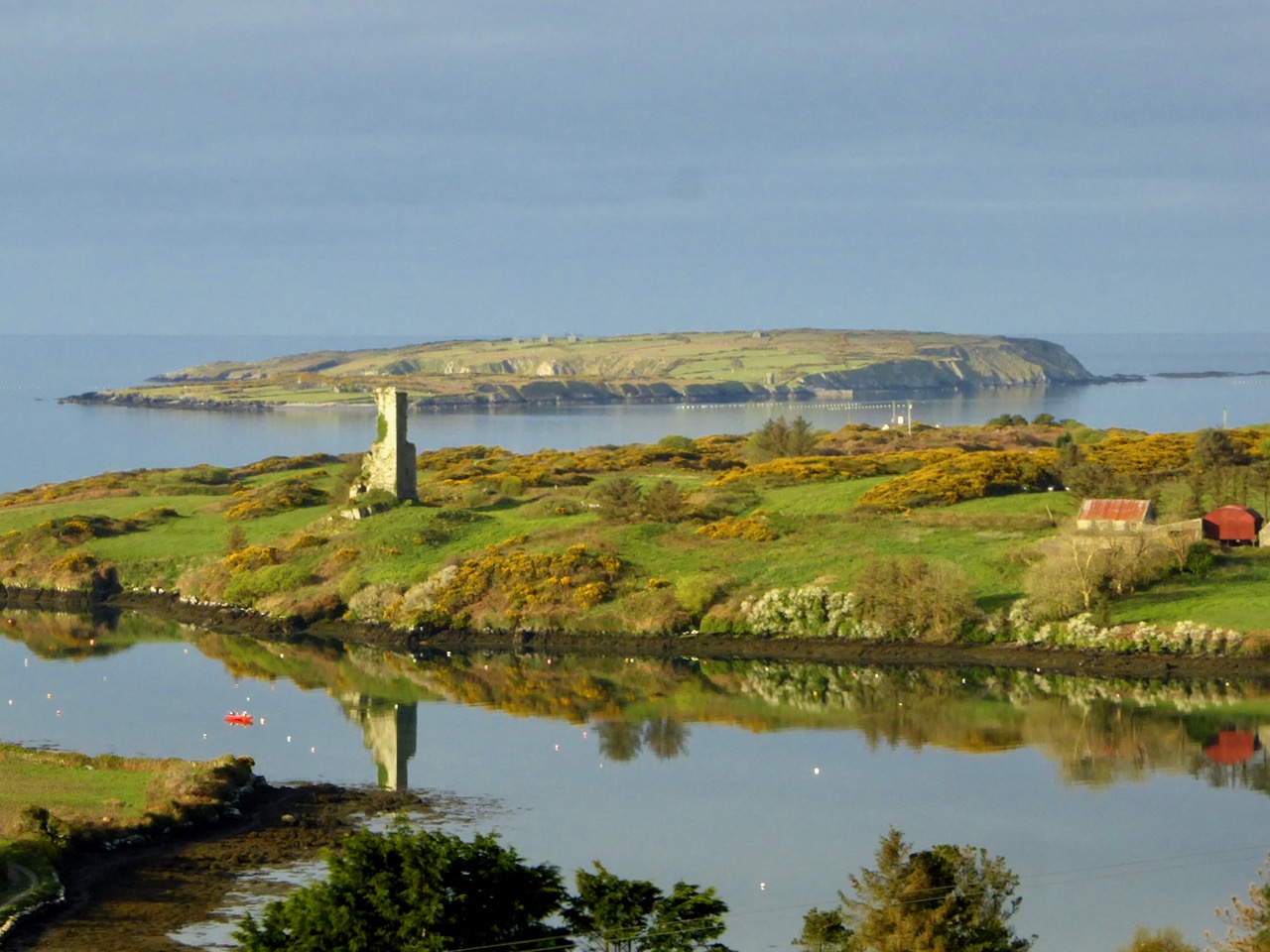
It’s good to see a bit of context, so here is another winter view of the castle on its rock with Castle Island behind. That island was also part of the O’Mahony territory. It is farmed by its present owner but no-one lives there now. You can make out the ruined castle on the island by the shore, just to the right of centre; it’s one of many that can be seen on, or close to, the shores of the Bay.

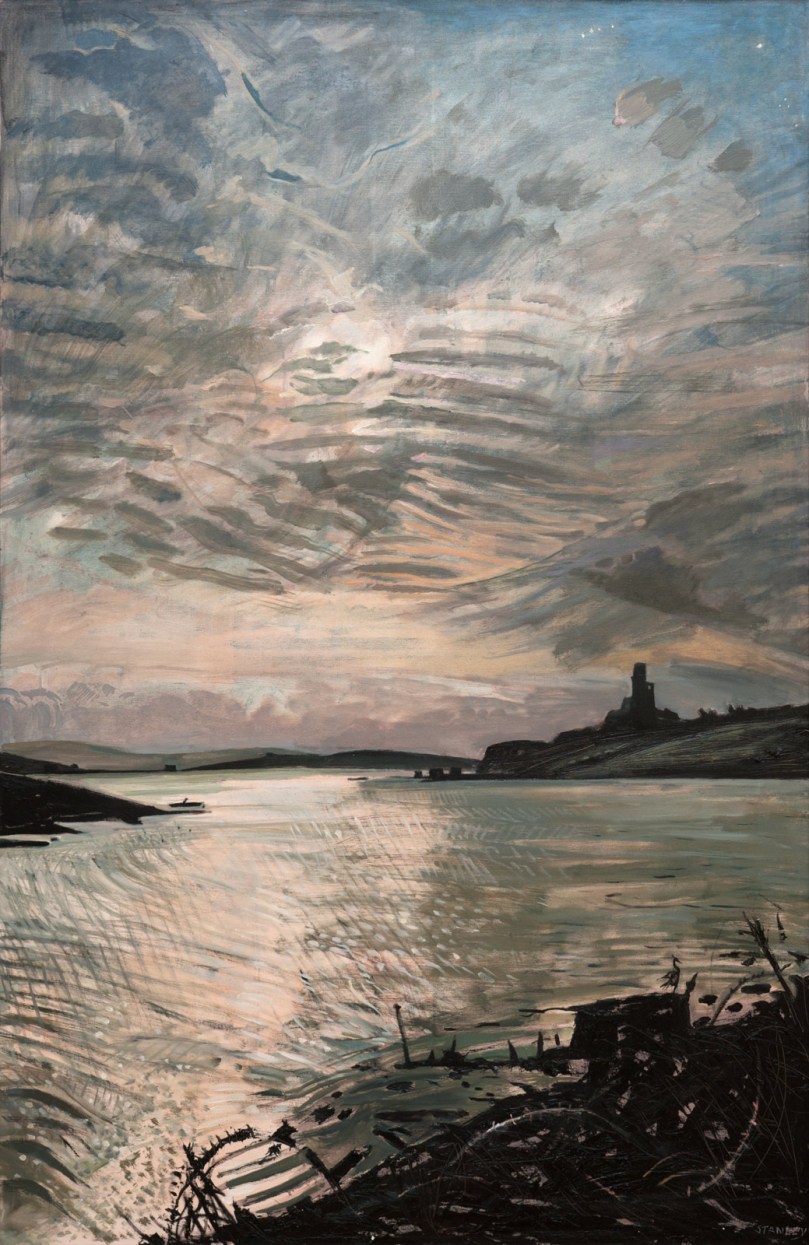
Let’s have a look at some of the art works that feature the Cove and the Castle. Jacqueline Stanley was one of many artists who was attracted to the beauty of West Cork. Now in her nineties, she moved from England to Ireland in the mid 1970s and purchased the old School House at Rossbrin as a country retreat: it has only recently changed hands.Here are two of her works, depicting Rossbrin. You can find more on her website.

I particularly like this view (above) which was painted by Jackie from the vantage point above the high road going down to the Cove, close to the remains of the copper mine at Ballycumisk. Last week I showed a painting by Geraldine van Hasselt, Julian’s mother, also from the 1970s. Every painting or photo is a historical document – and important to retain, in view of the fragile nature of the structure today.

Our friend Peter Mabey is an architect and artist. He has lived in West Cork for a long time: he and I were at college together in Kingston, Surrey, and were surprised to meet each other by chance in Skibbereen market a good few years ago now. Above is one of his attractive watercolours looking down towards the Cove. The vantage point looks remarkably like the one chosen by Jackie Stanley. Below is a drawing of Rossbrin from the monumental work The Castles of County Cork by the late James N Healy, published in 1988 by Mercier:

The ruin is a romantic reminder of past times, enhanced by the changing weather moods of Roaringwater Bay. This photograph, by Finola, emphasises the character of the place:

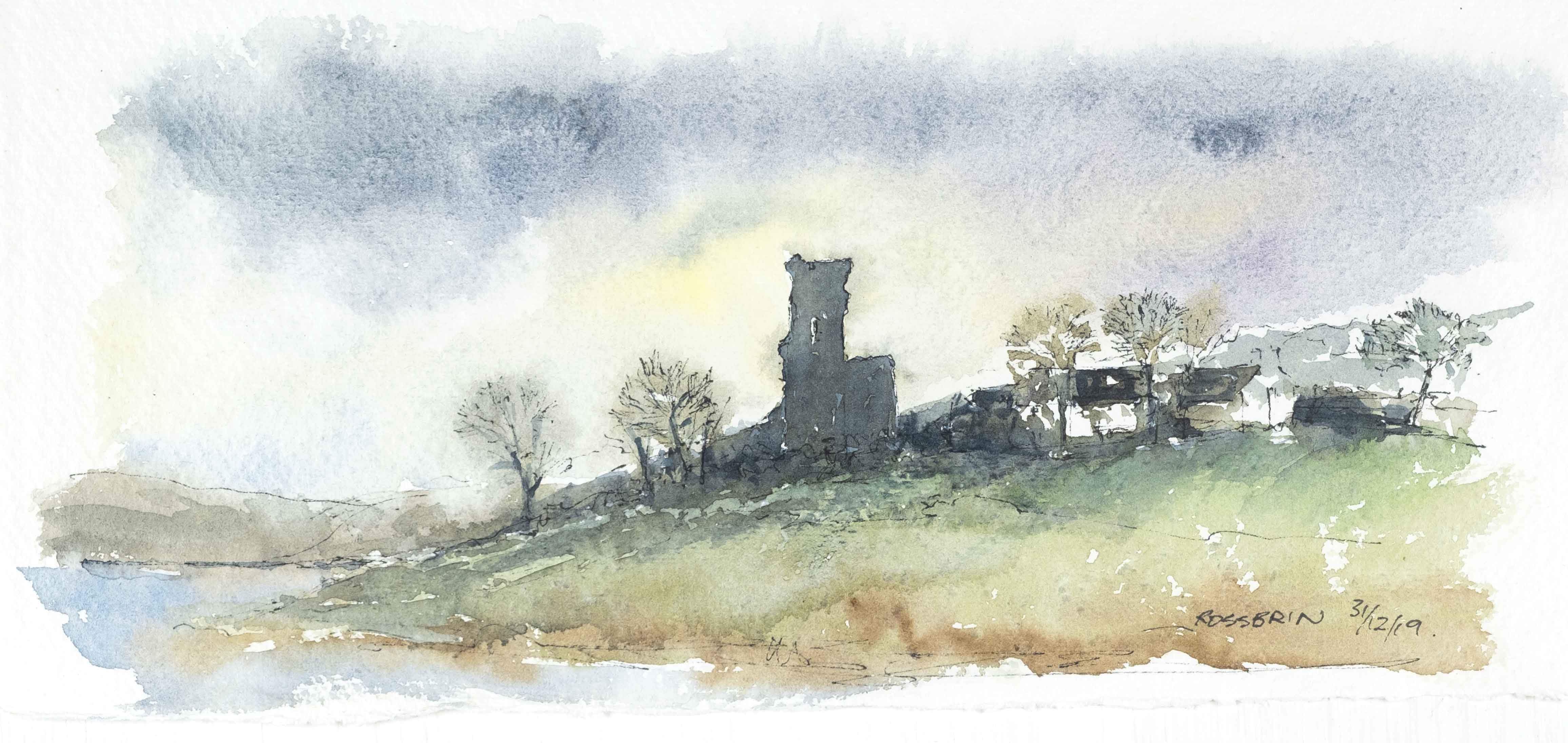
I can’t resist finishing this little two-part foray into the medieval remnants of our historically significant ‘centre of culture and learning’, which now languish on the edge of the waters below us with an artist whose work we admire: Peter Clarke, who writes and illustrates the Hikelines blog. His watercolour sketches are exquisite and always atmospheric. He has kindly allowed me to use his portrayal of Rossbrin Castle as my tailpiece. Thank you, Peter – and thank you to all the other artists who have been inspired by this remote and beautiful part of Ireland.