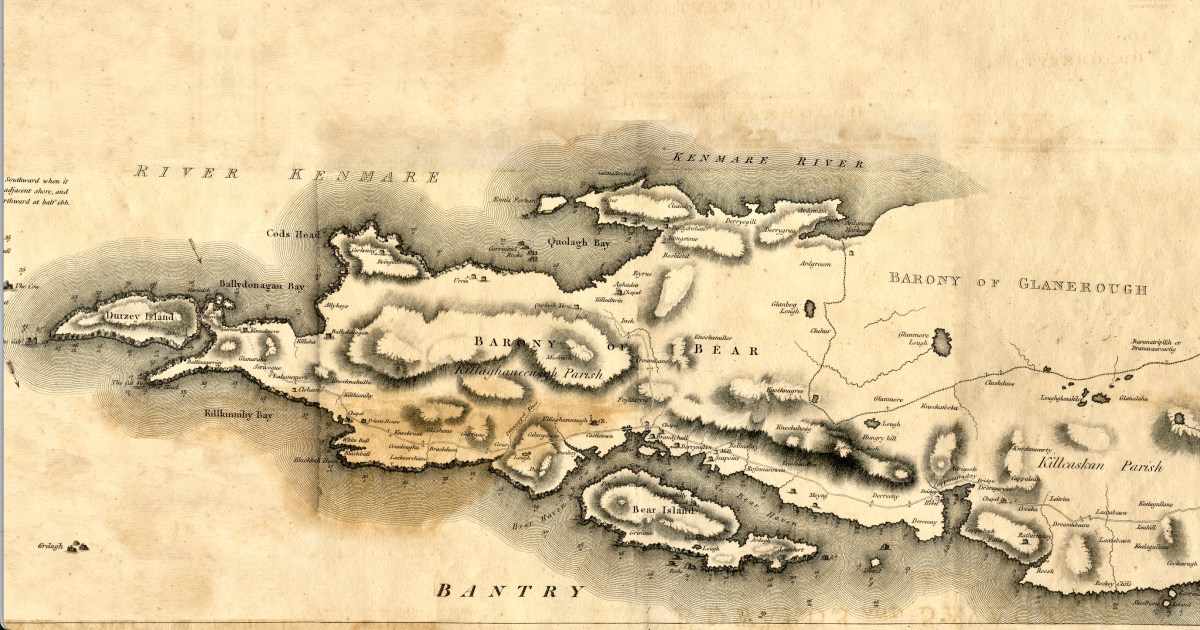
The 1811 Grand Jury Map of Cork by Neville Bath: Part 3, Sheeps Head, Beara and Bantry

I”m going to try to be slightly less detailed this time (I find that hard!) or we will never explore the rest of Cork. This post will concentrate on the area north of the Mizen – our two other peninsulas, Sheeps Head and Beara.
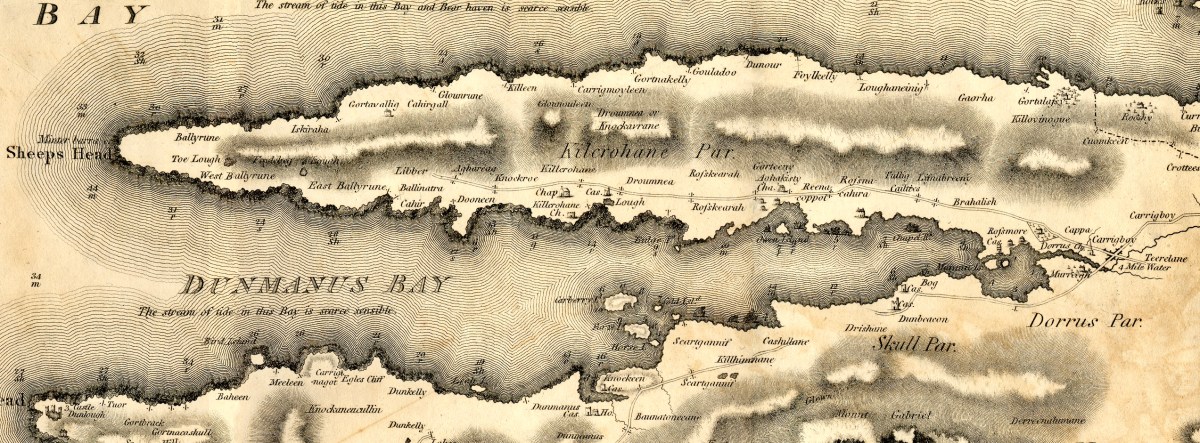
Sheeps Head (and it has an apostrophe in some maps and not in others, so I’m leaving it out) is given here as the head at the westernmost extent of the peninsula. But of course, we now call the whole Peninsula Sheeps Head. Or, if you prefer, by its Irish name of Muintir Bheara (Mweenter Varra) which means, confusingly, the people of Beara.
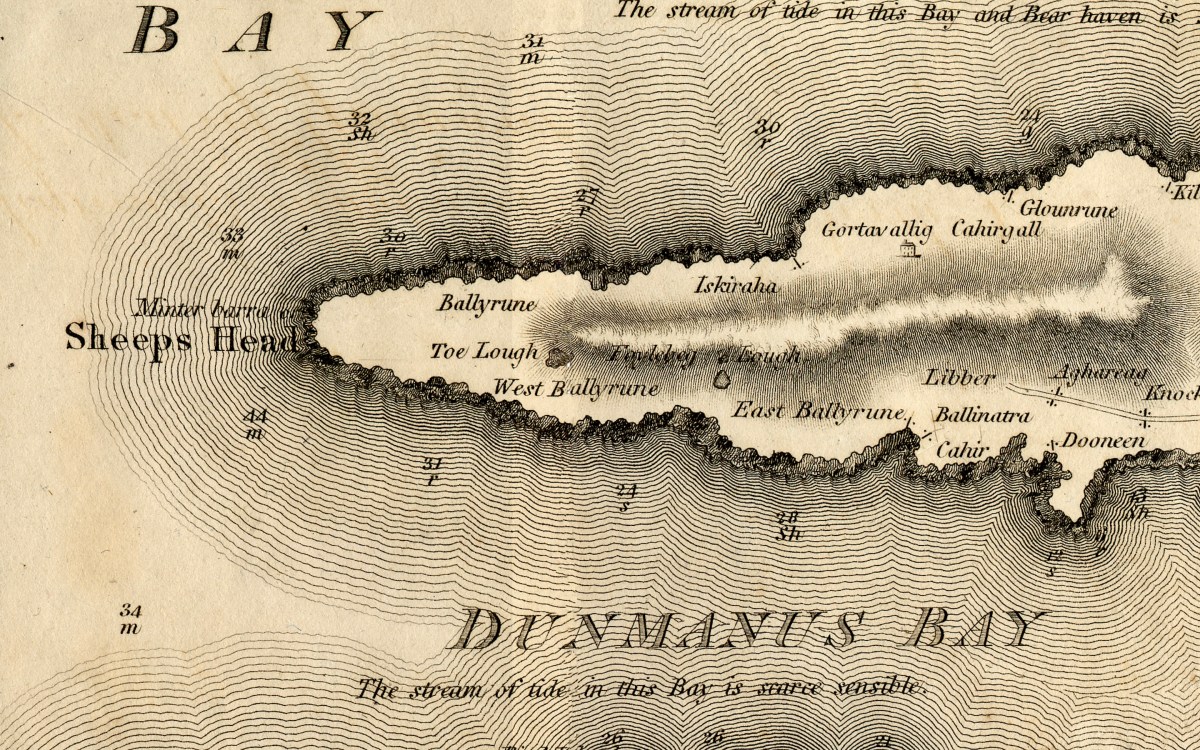
Besides a single house at Gortavallig, the only words on the east end of the map refer to placenames. The road does not extend beyond Dooneen. Nowadays, of course, this is a well-walked, prize winning set of trails that will bring you off road for the most part into wild and scenic country.
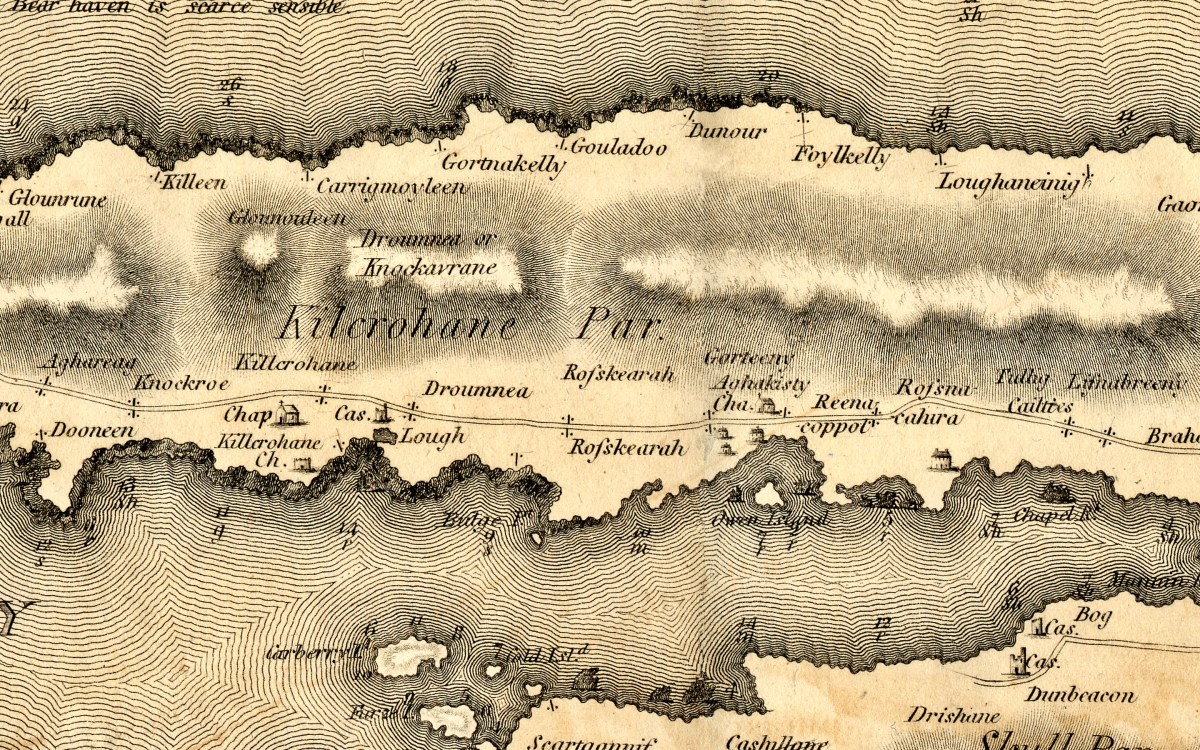
KIlcrohane and Ahakista have churches and chapels but no real communities in the 1790s. The castle near Kilcrohane is the vestigial one built by the O’Daly clan, the famous bards, at Lake Farranamanagh. There are no roads on the north side, and none crossing the Peninsular.
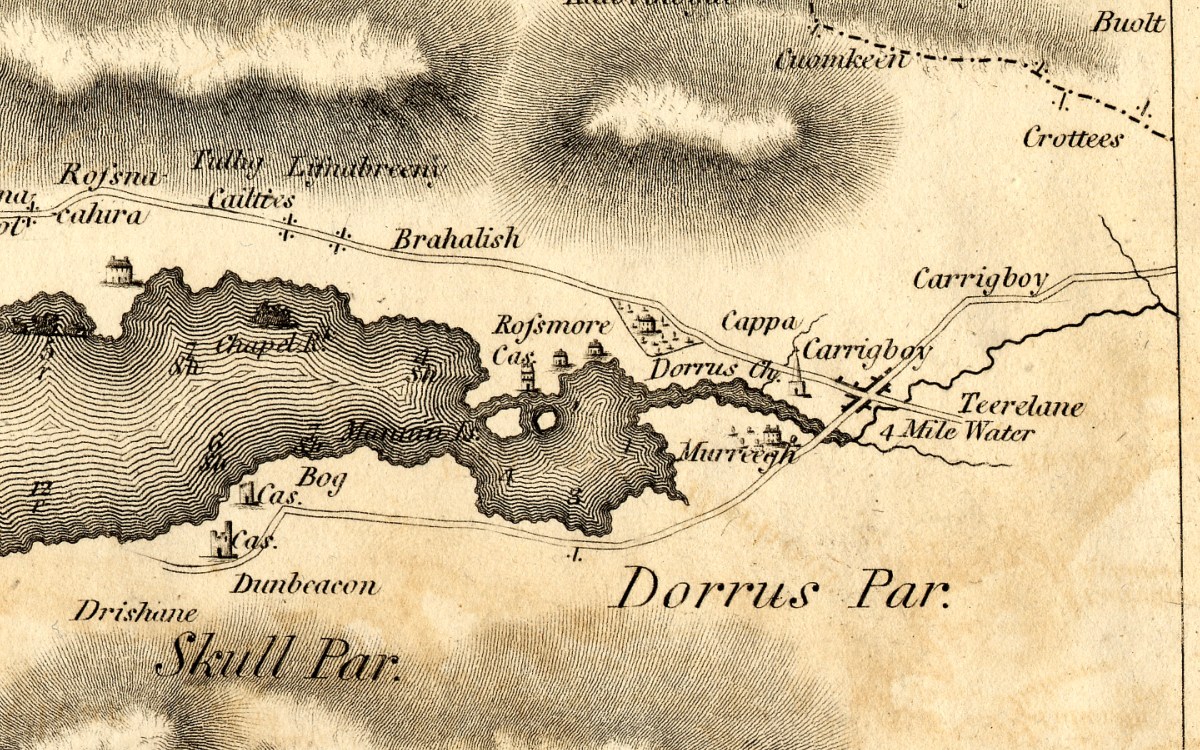
At the head of Dunmanus Bay is Durrus, shown as a community with a steepled church. The small treed estate is Durrus Court, where the 17th century manor house is still standing. The remains of Rossmore Castle can also still be seen. But here’s an interesting thing – there are not one but two castles shown at Dunbeacon! Very mysterious – there is certainly no sign of a second one now, and nothing in the archaeological record.
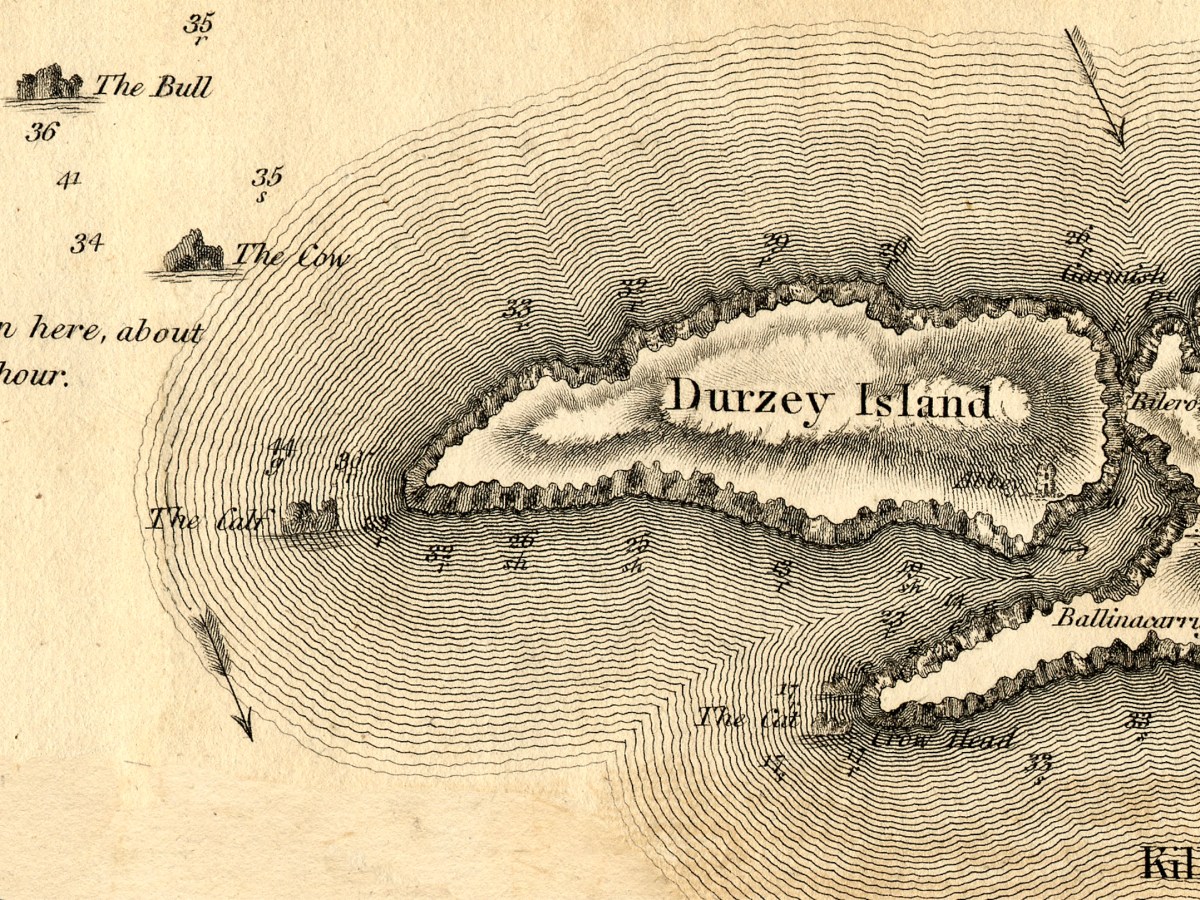
Let’s leap now, as Fionn MacCuamhaill might have done, to the next peninsular up – Beara. The full extent of it is shown in my lead photograph, and above is the eastern end and specifically Dursey Island. The Calf Rock is offshore, with the Cow further put and the storied and spectacular Bull Rock further out again. I do plan to visit it one day! Dursey is the only place in Ireland that you get to by cable car and has a tragic history. An Abbey is shown on the eastern shore. National Monuments tell us that “According to the soldier-writer and native of Dursey, Philip O’Sullivan-Beare, writing in 1621, it was a ‘monastery, built by Bonaventura, a Spanish Bishop, but dismantled by pirates'”.
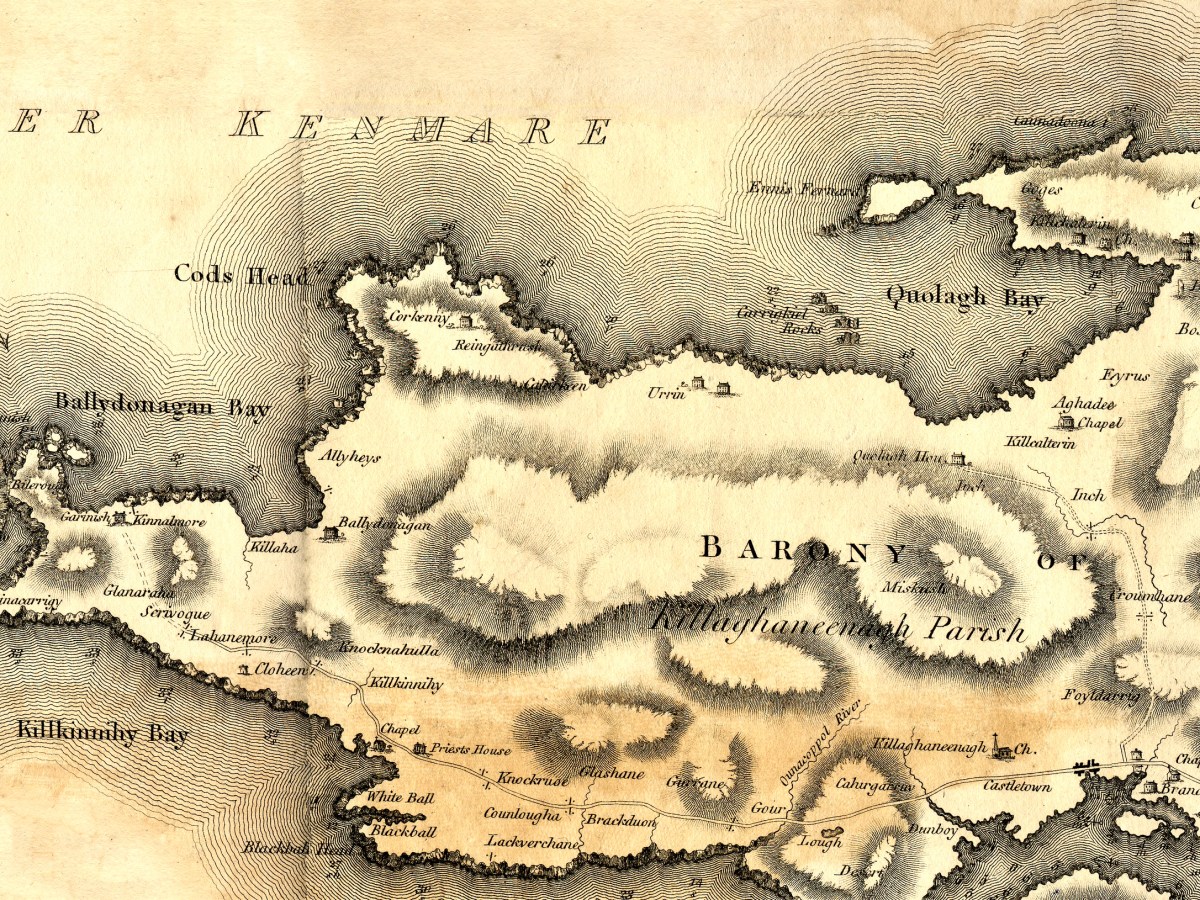
The western end of the Peninsula is mountainous. A road extend along the southern side but not the northern. This is one of the few places in Ireland we have a very old map to make comparisons. Take a look at my post Elizabethan Map of a Turbulent West Cork and Elizabethan Map of a Turbulent West Cork 2: The Story, for a lively take on mapping this part of Ireland 200 years earlier.
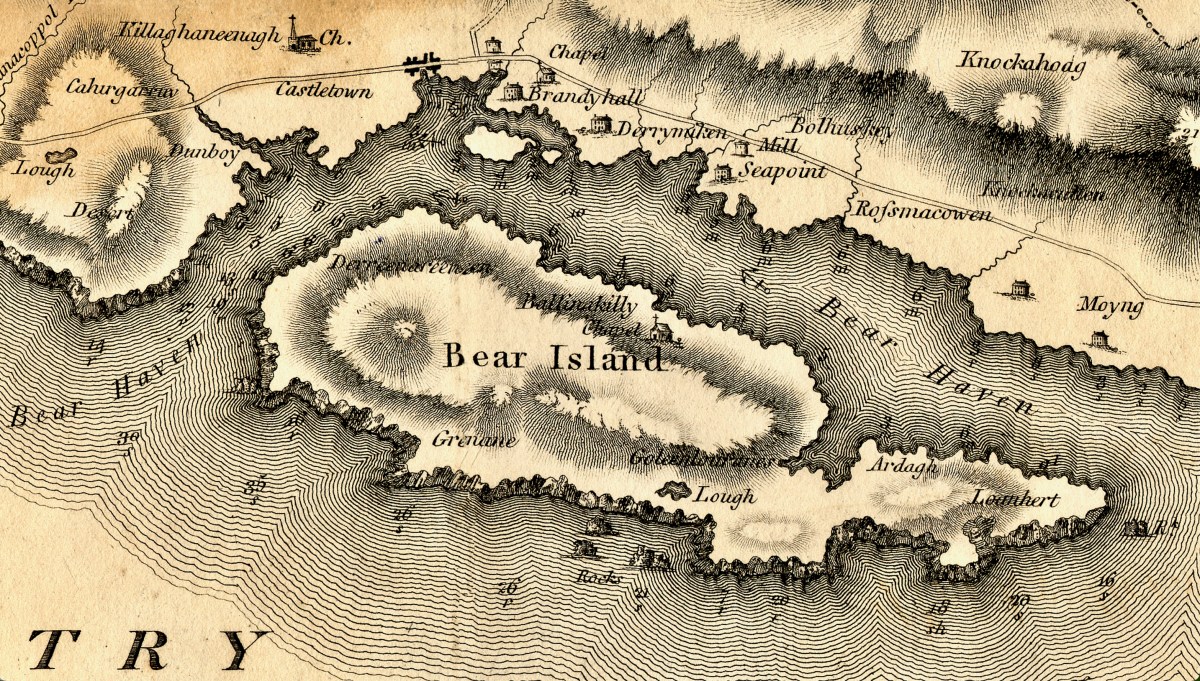
Bear Island is featureless apart from a chapel but Castletown (more properly known as Castletownbere or Castletown-Berehaven) is shown as having a town or village and several substanital houses, a mill, and a church with a steeple. Interestingly, the castle at Dunboy, the siege of which is chronicled in the older map, is not shown at all in this one.
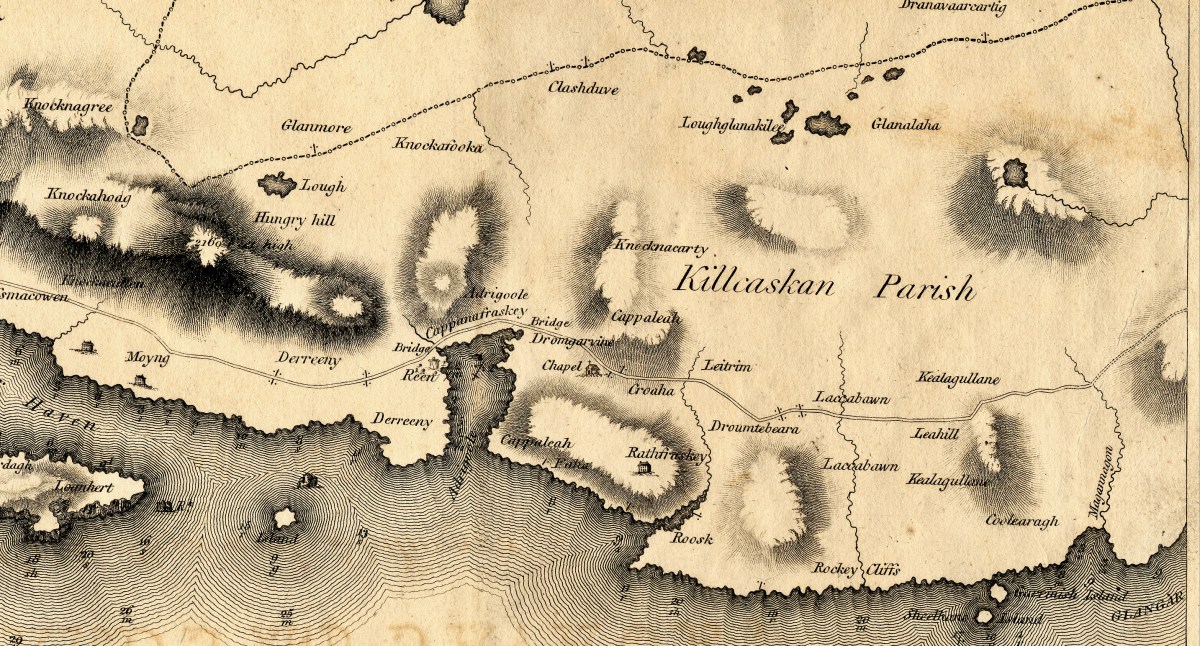
Moving eastward, very little human activity is noted on the map, but Hungry Hill is there and Adrigole Harbour. The dotted line marks the division between Cork and Kerry.
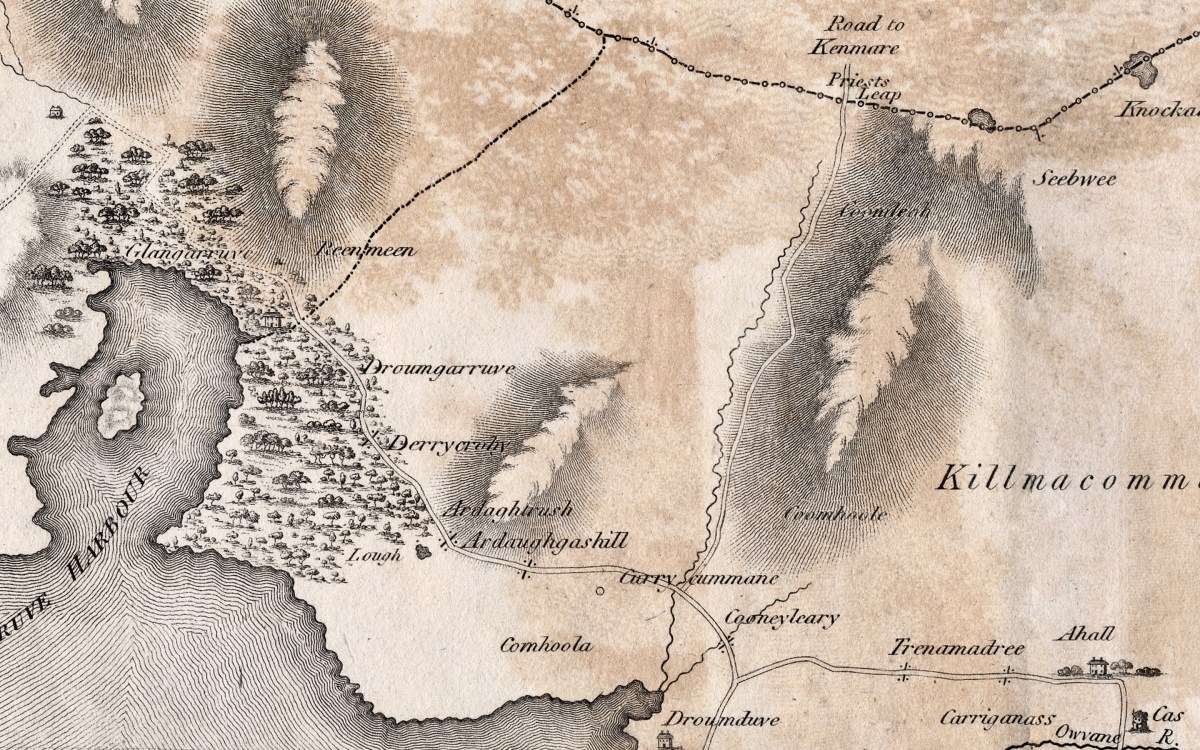
Then, there seems to be a bit missing – Glengarriff (or here, Glengarruv) Harbour is surrounded, then as now, by substantial forests. The only road to Kenmare at that time was the Priest’s Leap, even now a death-defying and vertiginous climb.
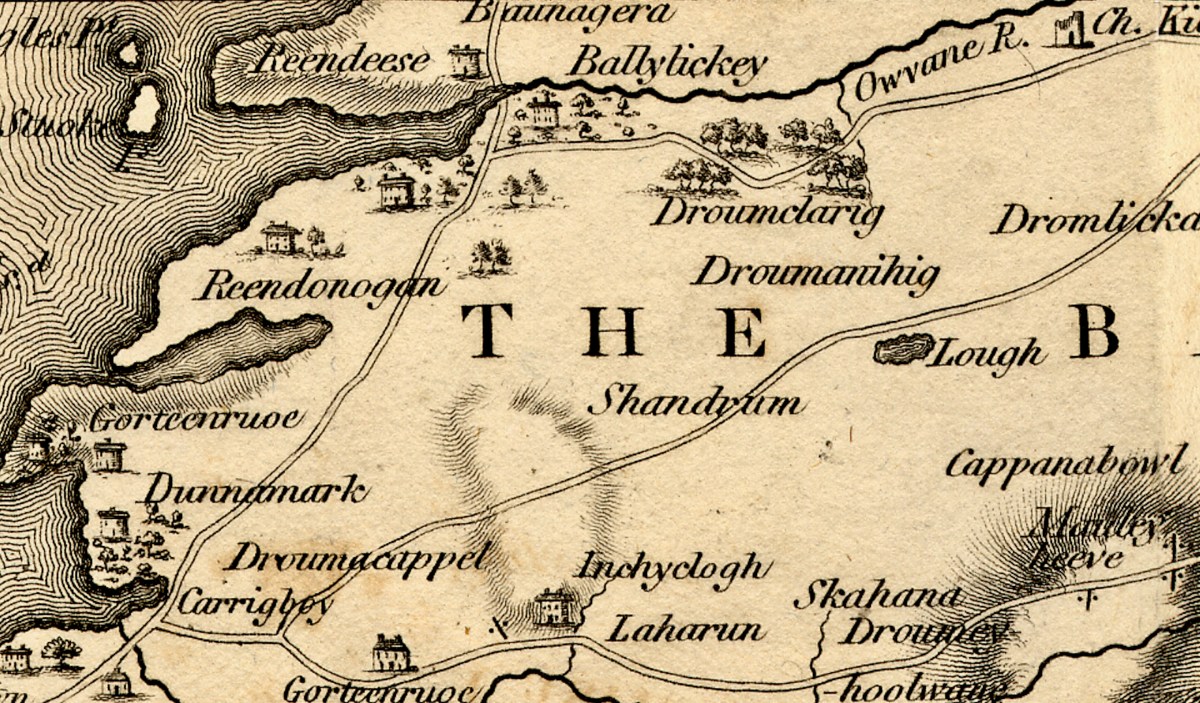
I’ve blown up the Ballylickey section as it holds particular interest for me – here depicted is the home of Ellen Hutchins! There’s a large house, surrounded by trees, on the banks of the Ouvane River. This is especially exciting as Ellen was living here at exactly that time! Born in 1785, she was botanising and making all kinds of discoveries until her untimely death at only 29 in 1815. After the sparsely annotated Peninsulas, it’s interesting to see more houses noted as we near Bantry.
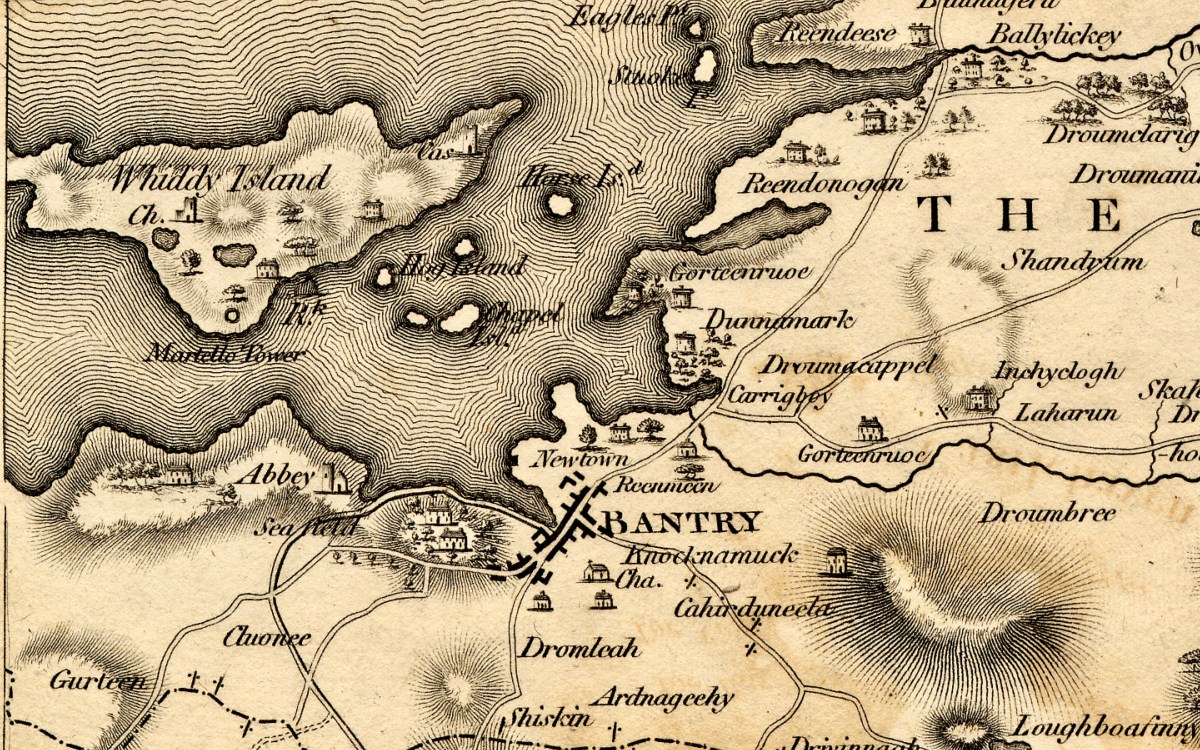
Bantry is shown as a large town – with Bantry House, built on the early 1700s, dominating the landscape just as it does today. The Abbey has disappeared (it was a Franciscan establishment) but has given its name to the Abbey Graveyard at the southern end of town. We’ll finish with Whiddy Island and a genuine mystery – note the Martello Tower (below). There were actually three circular fortifications constructed on Whiddy after the abortive invasion by the French in 1796. Known as the West, East and Centre Batteries (or ‘redoubts’); this is probably the Centre one. They were very solidly built and can still be seen.
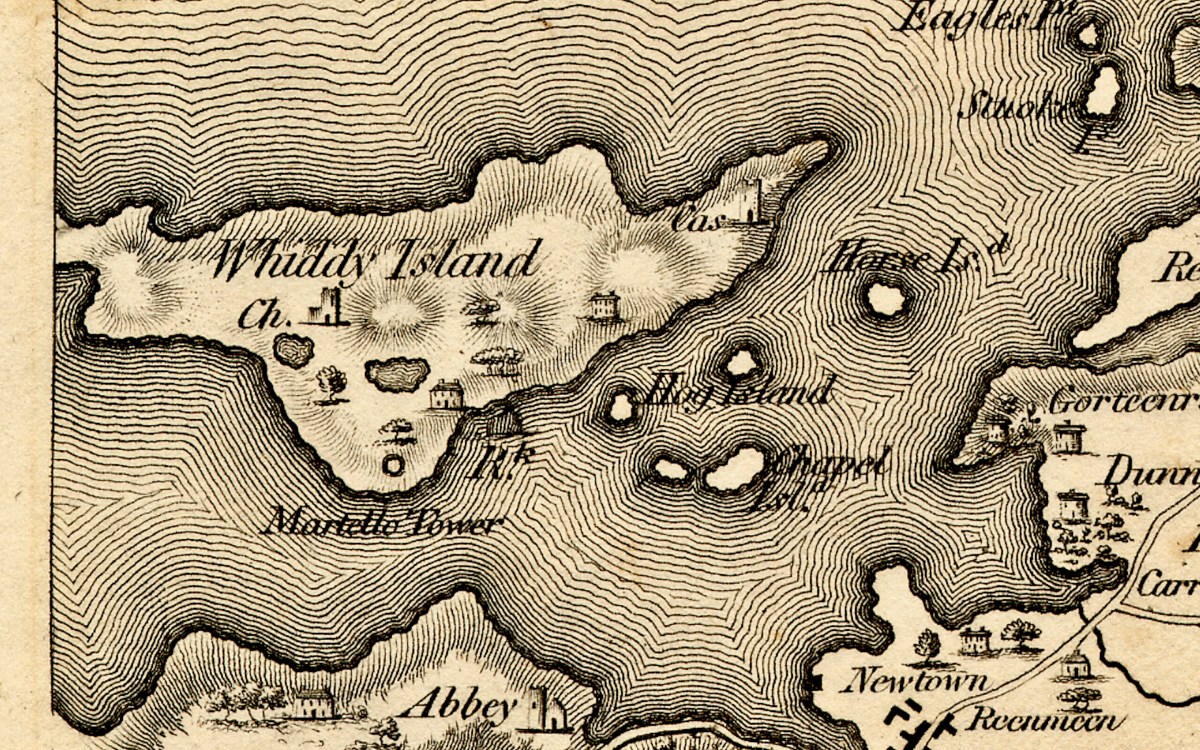
We know this map was done in the 1790s, and these redoubts, like the Signal Towers dotted along the coast, were built to warn of another French incursion and to defend Bantry Bay. The signal towers were built around 1804 and abandoned by 1815 after the Battle of Waterloo. None of them is noted on the Bath map, consistent with our understanding that the Cork map was completed in the 1790s. Martello towers date to the same period – the first of them were built in 1804, mostly along the east coast. The only actual Martello tower in this area is on Garnish Island. It was built in 1804/5 and does not show up on the island in the Bath map – see Glengarriff Harbour, above. The Whiddy Batteries are shown on the National Monuments records as dating to 1804 to 1807. They are round – more like the shape of a martello than the tall rectangular signal towers that were built around West Cork. But was the term Martello common at this time? Might this be a later addition to the map? Although it was completed in the 1790s it was not published until 1811, allowing for the possibility of editing and changes. Anybody have any comments on this – it’s a head-scratcher!

In High Places

Here is a collection of photographs taken in West Cork from some of the high places: ridges, peaks, mountain paths. The pics were all taken around ten years ago, and haven’t been used in our blog posts previously. They serve to show stunning landscapes, of course, and hopefully illustrate the variety of the country which surrounds us here. The header is taken from the peak above Three Castle Head.

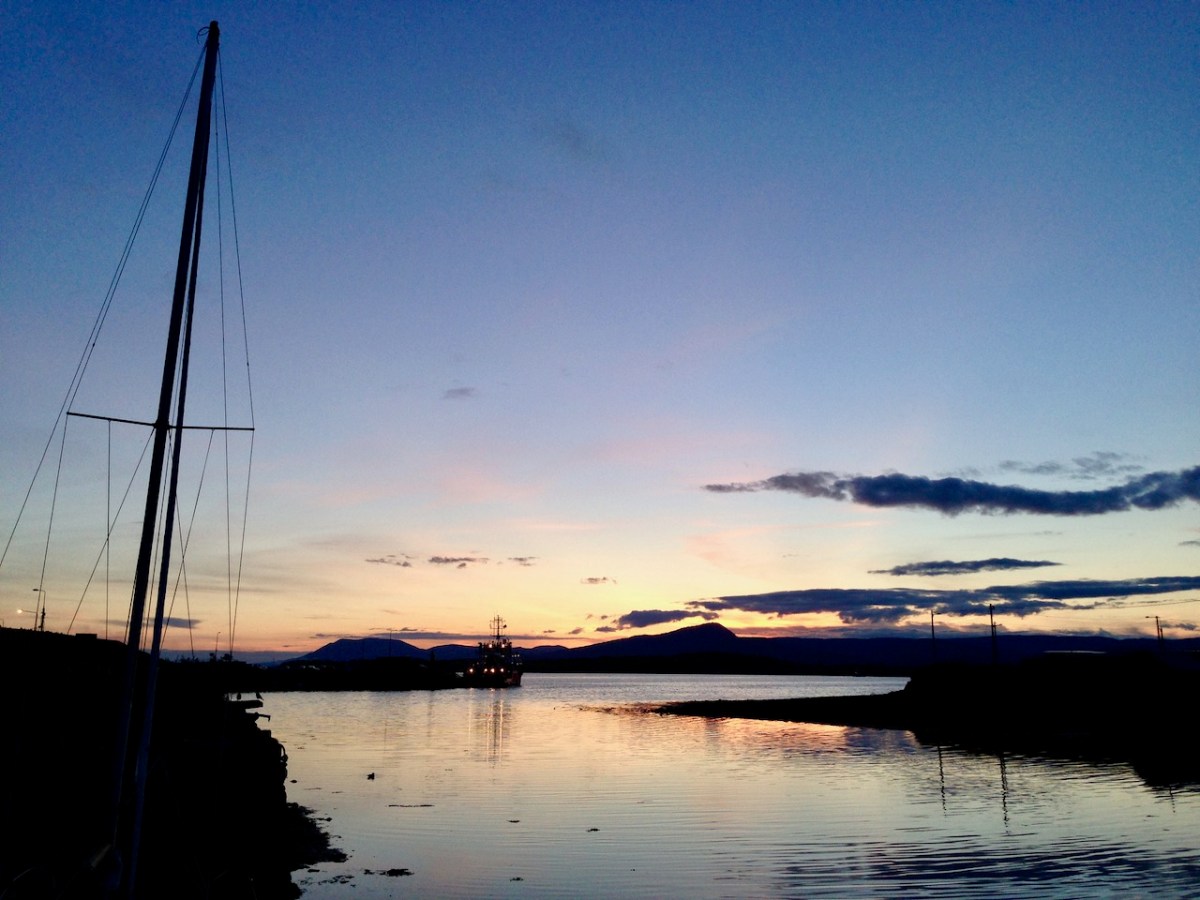
The upper pic is looking down on Bantry town from the high ground to the south, while the lower one reminds you of the evening view from Bantry at sea level.

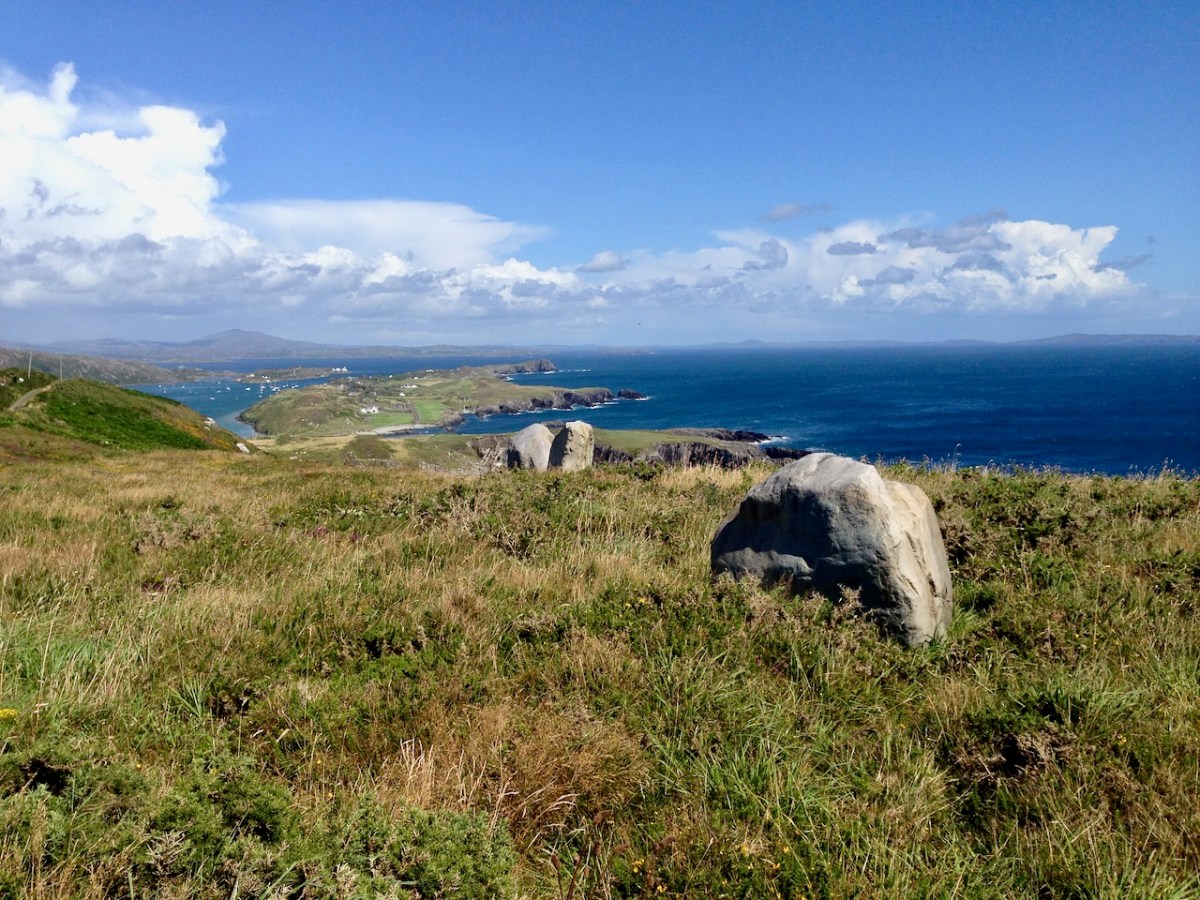
If you leave your car at Galley Cove Beach and walk up the steep track towards Brow Head you will come across this enormous stone row – and you will look back to the peninsula of Crookhaven. Don’t be fooled by the stones: they have been placed on this site fairly recently. They are impressive, nevertheless.

And here is a closer view of Crookhaven.

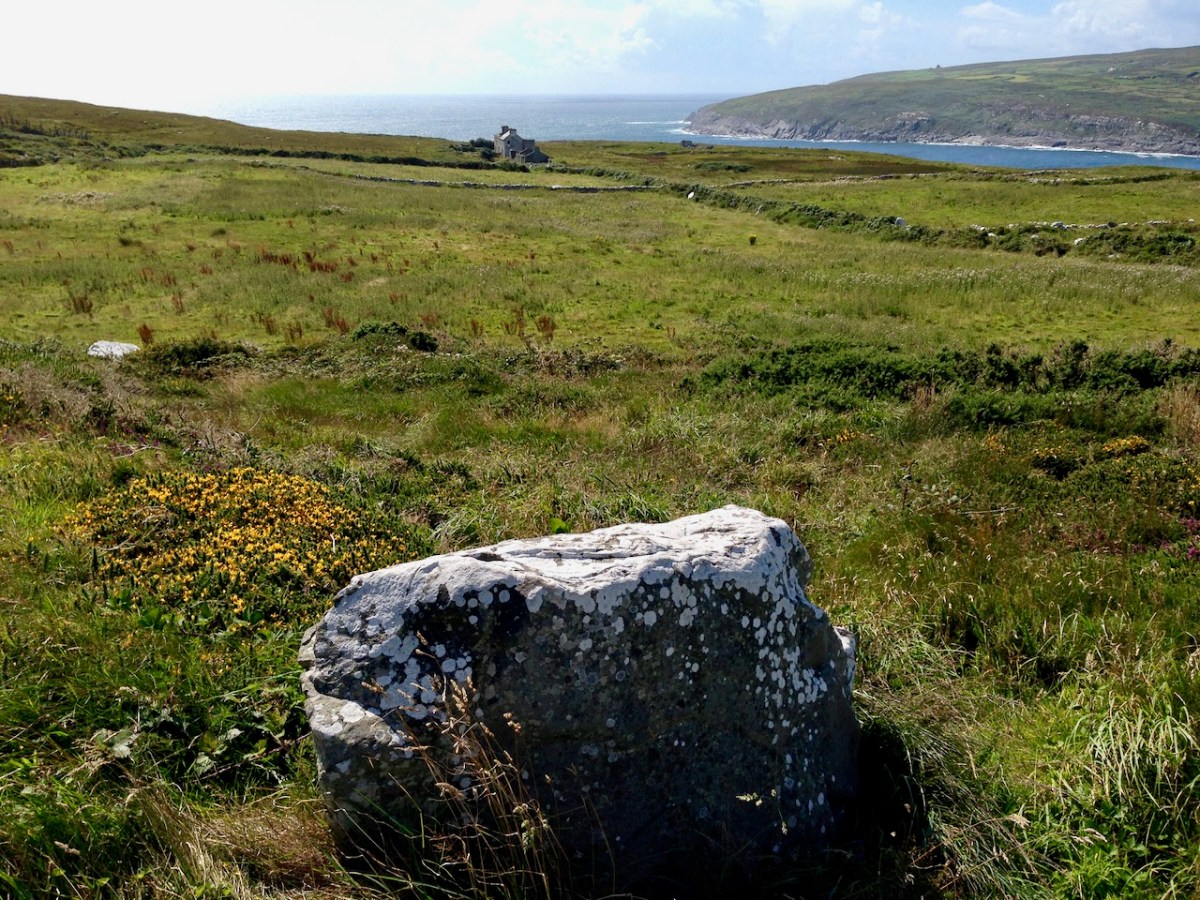
While turning from this spot and looking west, you will see the end of the coastline at Brow Head. This stone is likely to be more anciently placed. In the distance is Mizen Head with its Napoleonic era signal tower at Cloghane.

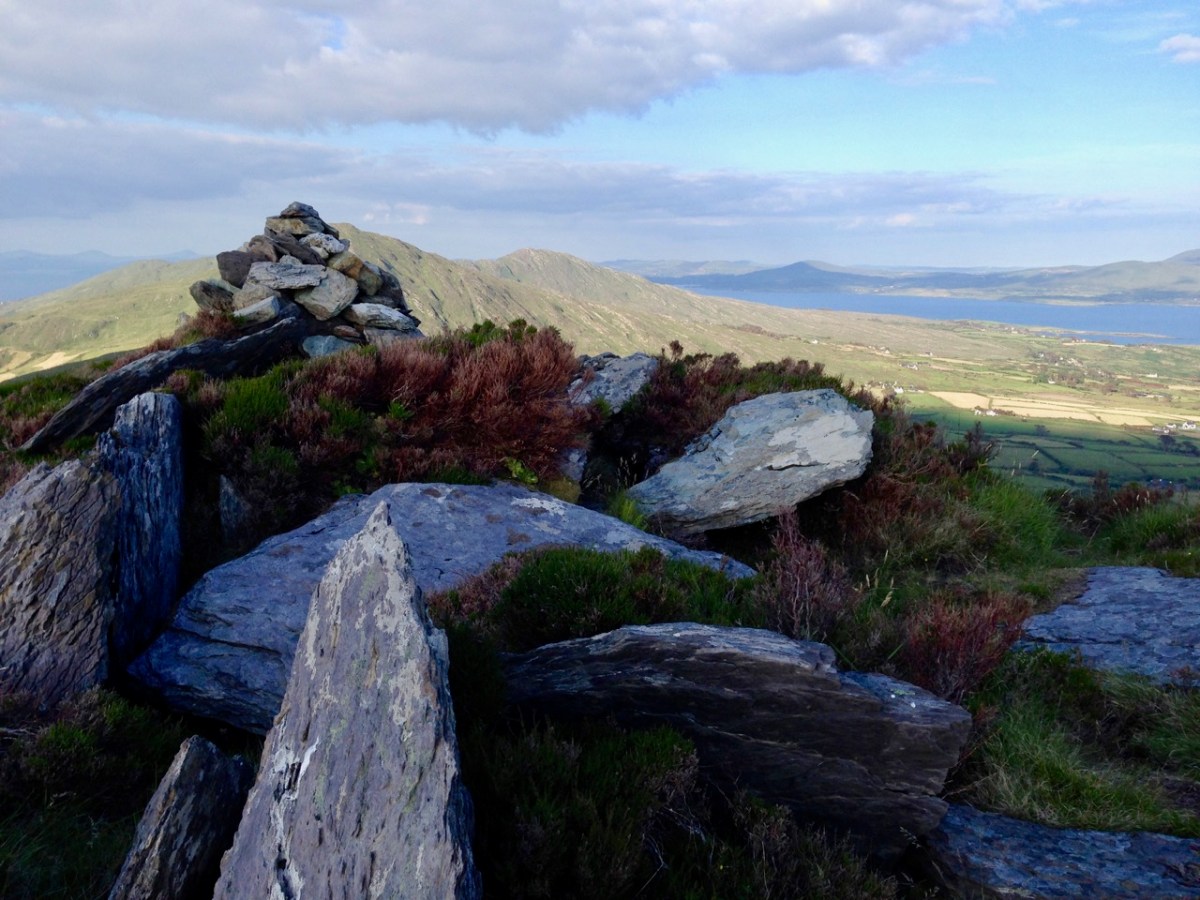
Contrasting light effects seen on the footpath that follows the ridge on the Sheep’s Head Way. That’s the spit of land that runs from east to west between the Mizen Head and the Beara Peninsula. There are cairns on the summits, with the remains of a wedge tomb and a Marriage Stone to be seen along the way.

The view north from the heights of the Sheep’s Head takes in the Beara Peninsula and – seen above – the high point of Hungry Hill dominating the distant rugged landscape.

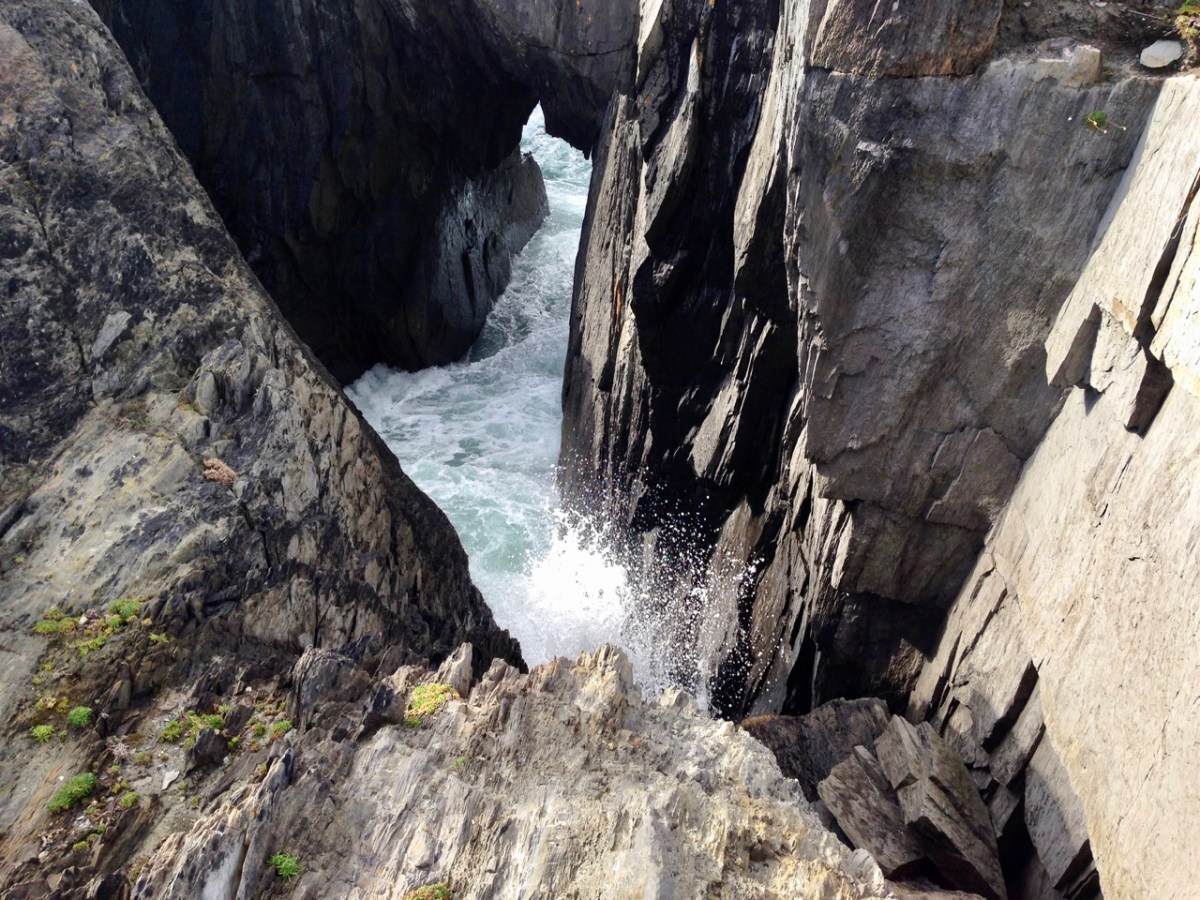
You are never far from the coastline in West Cork. Look out for wild seas constantly sculpting the rocks over millennia.

From our home in Cappaghglass we look out to our own ‘high place’ – Mount Gabriel. This enigmatic tract of land dominates the area and is imbued with legends and folklore. It is also one of the most atmospheric of our peaks at all times of the year.

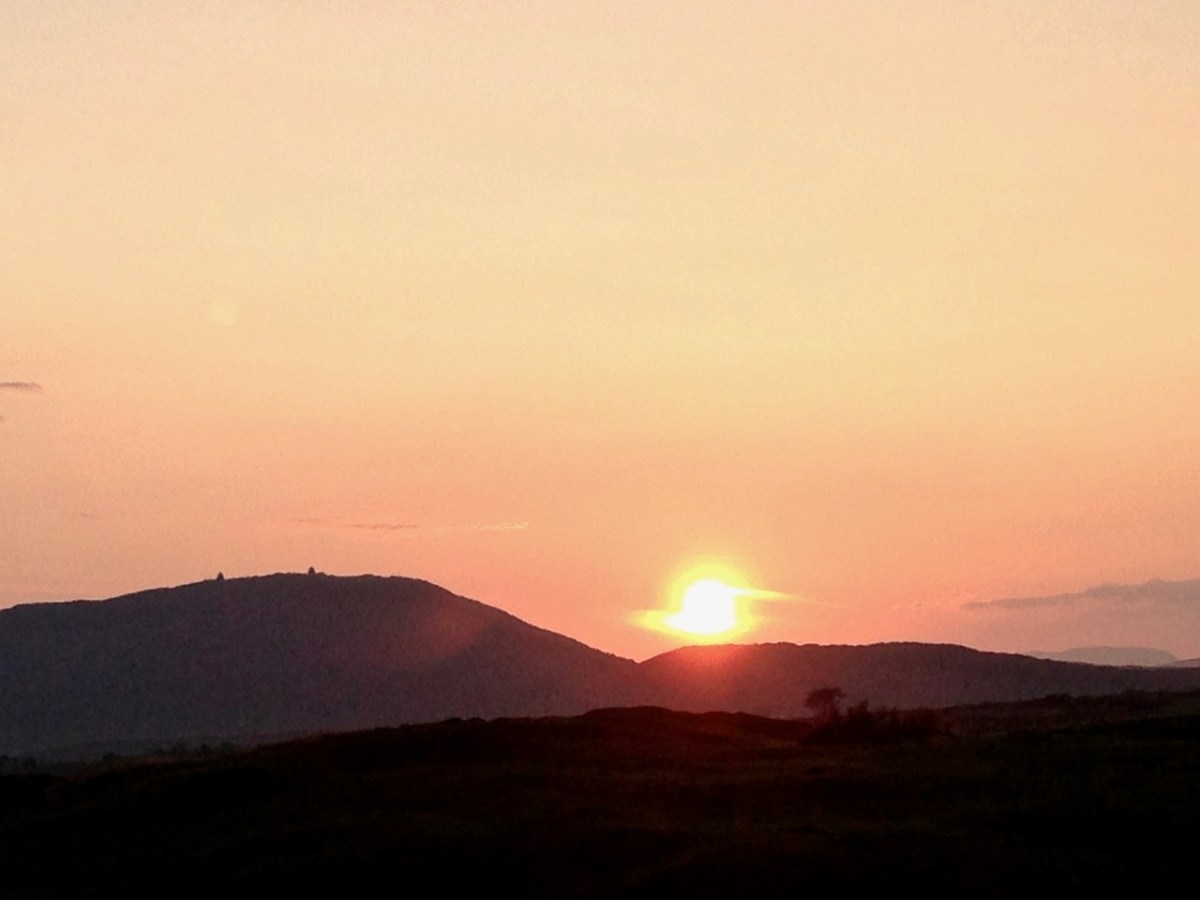
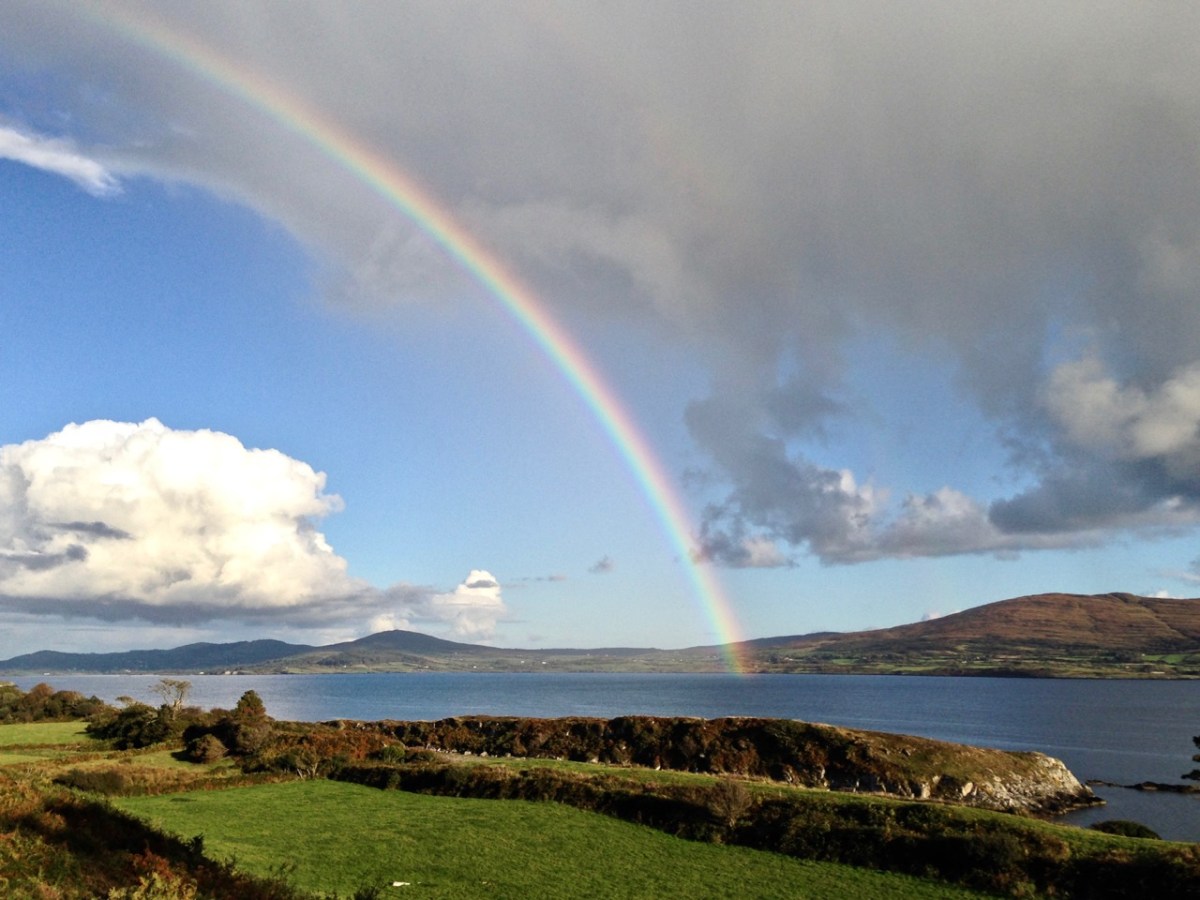
Another local view for us (above): we face out to Rossbrin Cove on the Mizen Peninsula. Finally, the celestial spectacle (below) finds its pot of gold on the shores of the Mizen.

Creswick’s Cork

I’m fascinated by how artists captured Ireland through the centuries and have recently discovered a new one – Thomas Creswick. We mostly know Creswick’s Irish work through the engraving of his Irish landscapes for nineteenth century books on Ireland.  

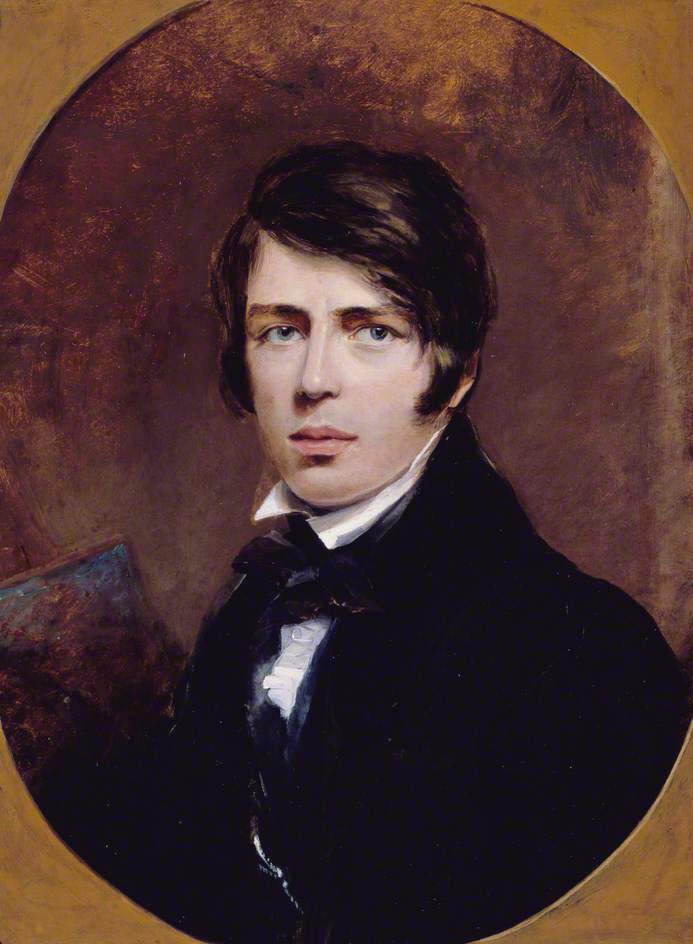
First – who was Thomas Creswick? He was born in Sheffield in 1811, but is always associated with the Birmingham School of painters. Victorian loved their romantic landscapes and Creswick was a favourite, thanks in large part to the innovation of engraving, through which paintings could be reproduced in black and white and mass-produced. His self portrait shows a darkly handsome young man, fashionably dressed and coiffed. 

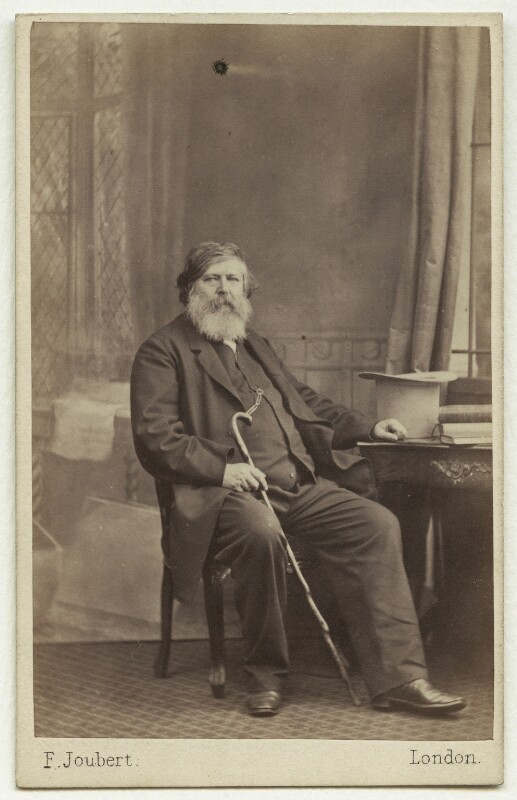
Here he is as an older man, in a photograph from the British National Portrait Gallery (used under license). He was painted at around this time by his friend William Powell Frith and the painting shows the same distinguished gentleman. However, the painting, on the Royal Academy website, is accompanied by a pen-portrait which is less complimentary than the painting.

William Powell Frith counted Creswick as one of his best friends, describing him as ‘good nature personified’. This tasteful portrait, composed in muted tones, certainly depicts a man of benevolent appearance and dignified bearing. However, this portrayal is at odds with many accounts of Creswick’s appearance and personality. Frith’s daughter recalled a ‘festive, rollicking and amusing’ man whose conversation was peppered with swearwords and who ‘was too fond of both food and drink to be always in the best of health’. Creswick’s larger-than-life character was not universally appreciated. Other landscape artists, in particular, accused him of exerting his influence amongst the Academicians to exclude his rivals from the institution. Creswick’s detractors made much of his unkempt appearance and reputed aversion to soap and water, nicknaming him ‘the big unwashed’.

Whatever about his personality, his skill as a painter was never in question, and drew high (and rare) praise from Ruskin for his attention to detail and his ability of draw directly ‘from nature’. The only other landscape artist Ruskin praised was Turner. Creswick did indeed draw from nature, doing many of his sketches and some finished paintings en plein air, a rare enough approach in those days.

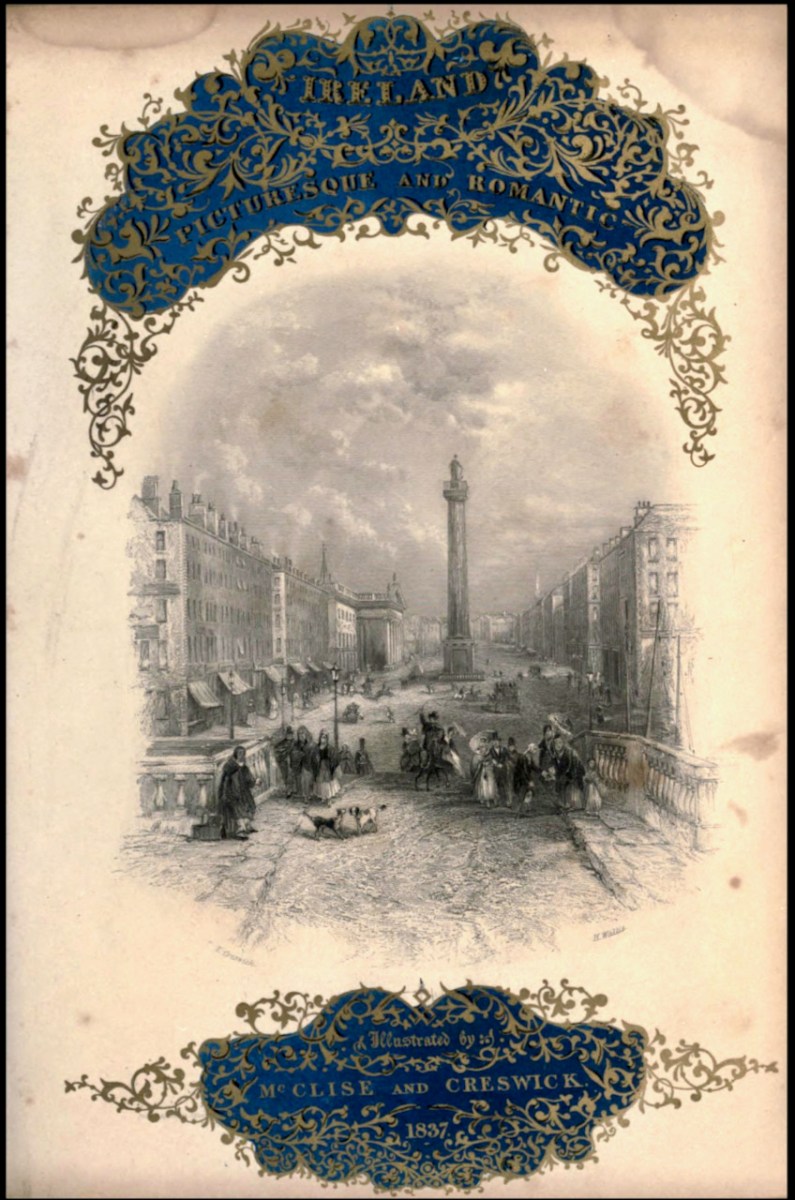
Although most of his paintings were of rocky glens and pastoral river scenes in England and Wales, he travelled to Ireland and visited many of the famous beauty spots then becoming favourites with British tourists. His illustrations (engravings of original paintings) can be found mainly in two volumes. The first is Picturesque Scenery in Ireland (no publication date) with all the illustrations by Creswick, and the accompanying text by “A Tourist”. The other is Ireland, Picturesque and Romantic, published in 1837/38 with text by Leith Richie. Both are available on the marvellous Archive.org. Some of the illustration are the same in both books and some are different.

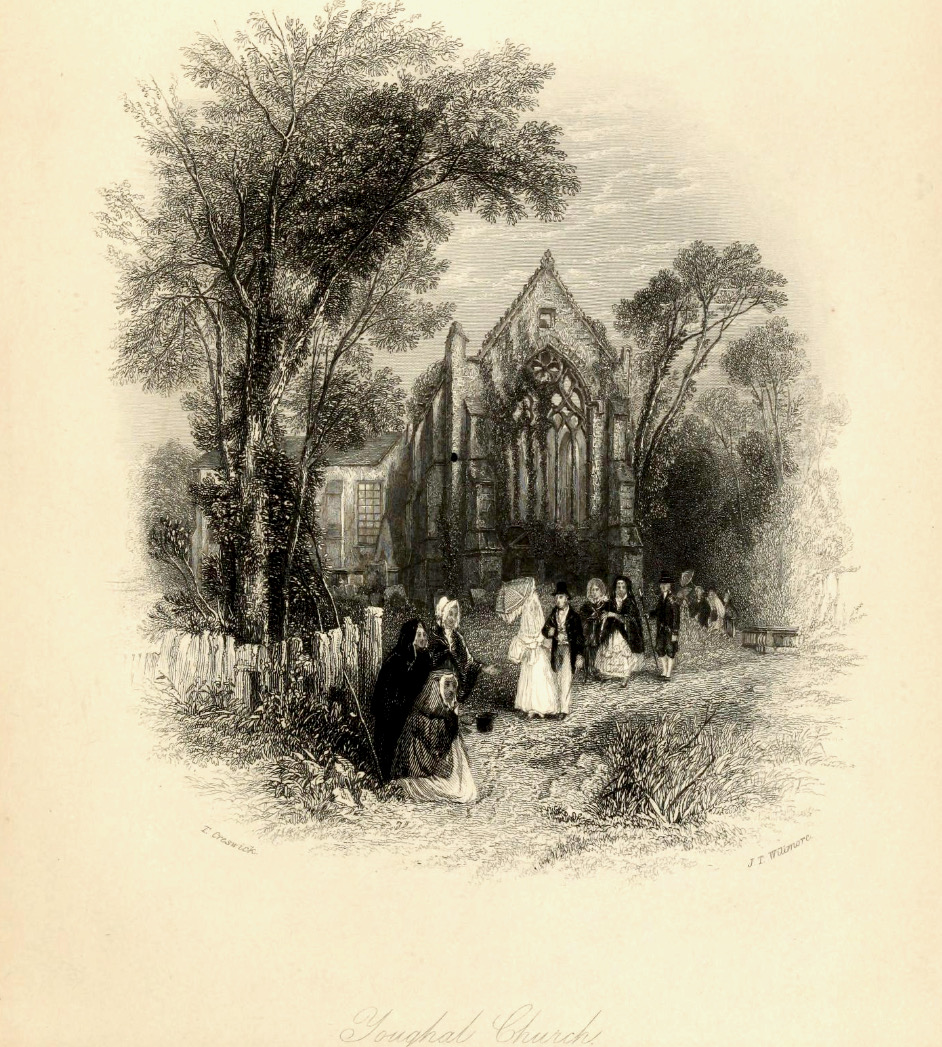
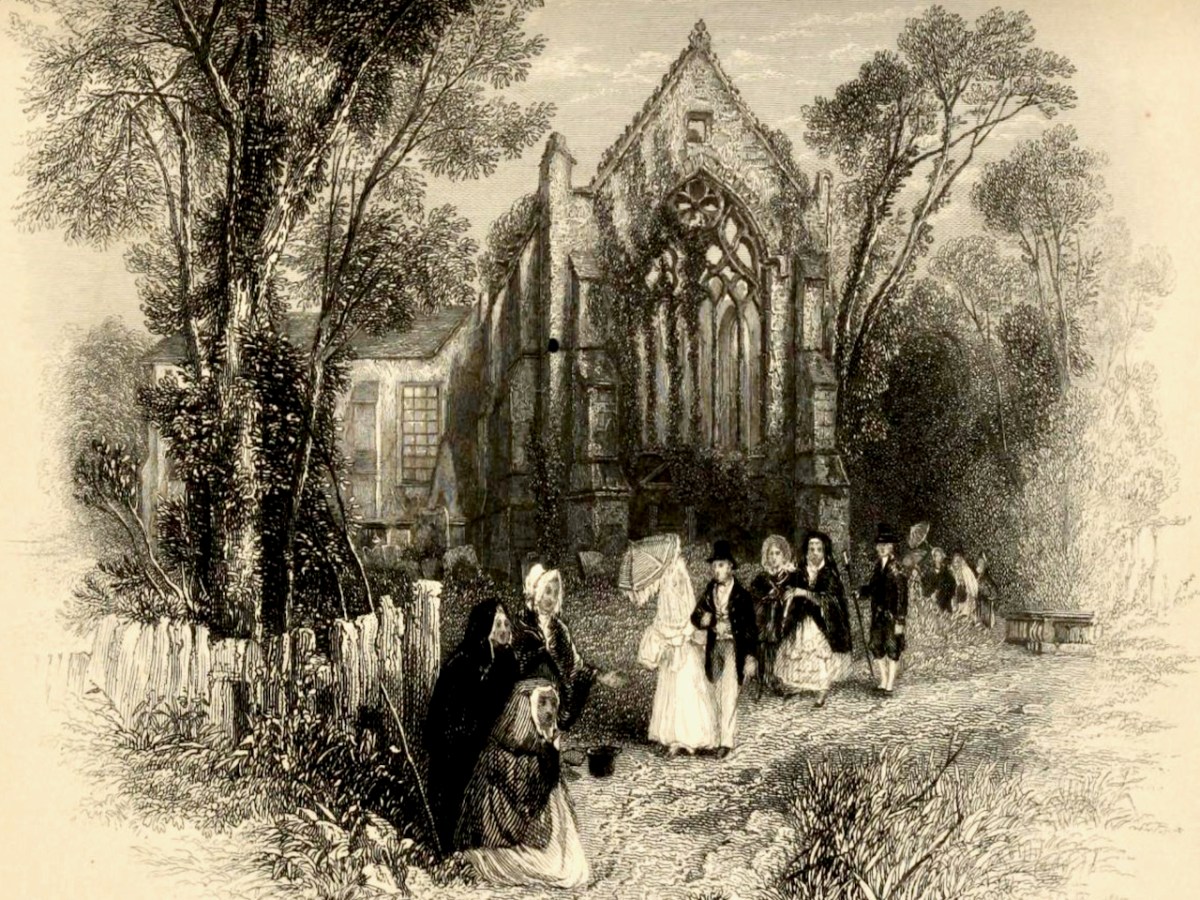
I’ve chosen to confine the illustrations I’m using for this post to Cork. Let’s start at the far east of the county and move west. So – first up is Youghal. Having been in Youghal recently for the excellent Youghal Celebrates History, which concentrated on St Mary’s Collegial Church and its 800 years of history, I loved Creswick’s depiction. He captures the roofless (now roofed) ruin, rendering the complex tracery of the tall window very accurately. His polite and well dressed ladies and gentlemen, visiting the romantic ruins, must run a gauntlet of begging women, one of who is wearing the Cork hooded cloak.

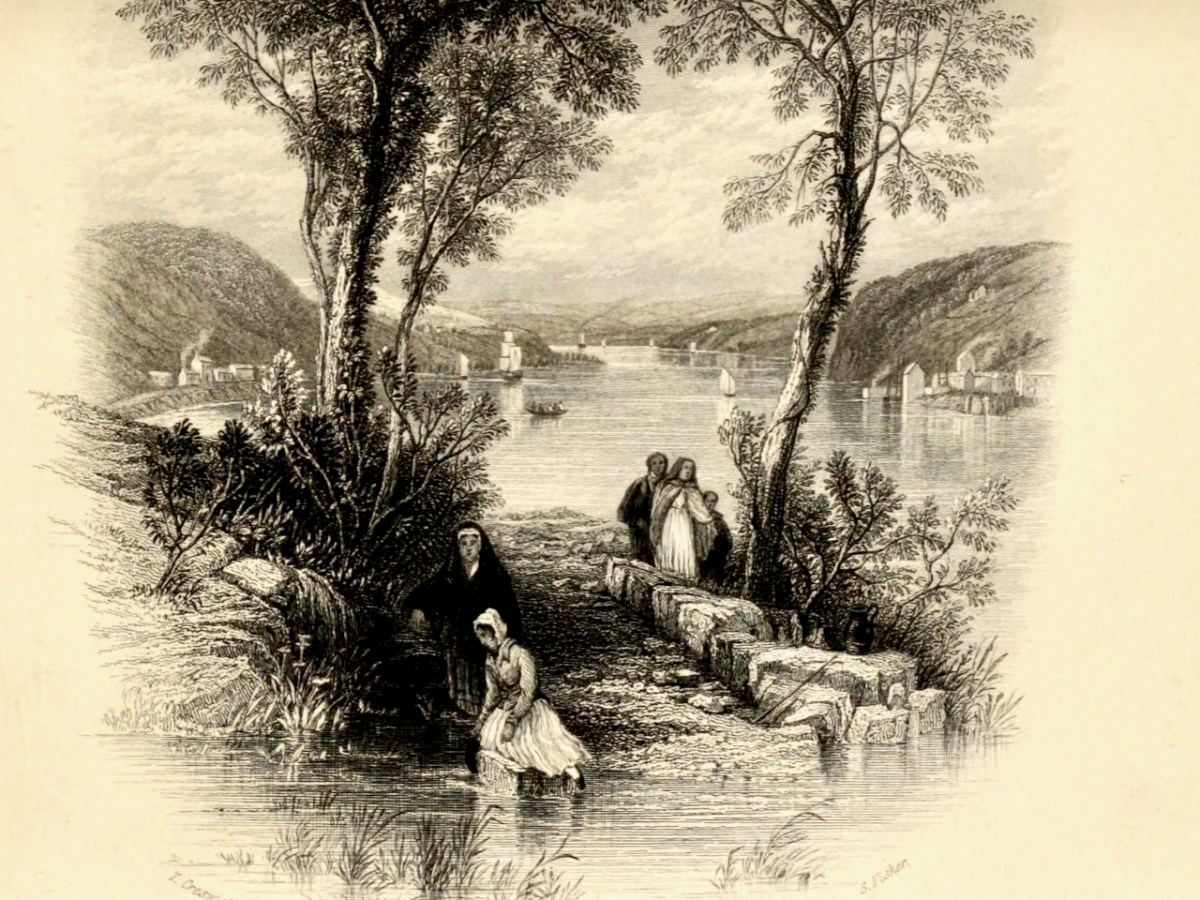
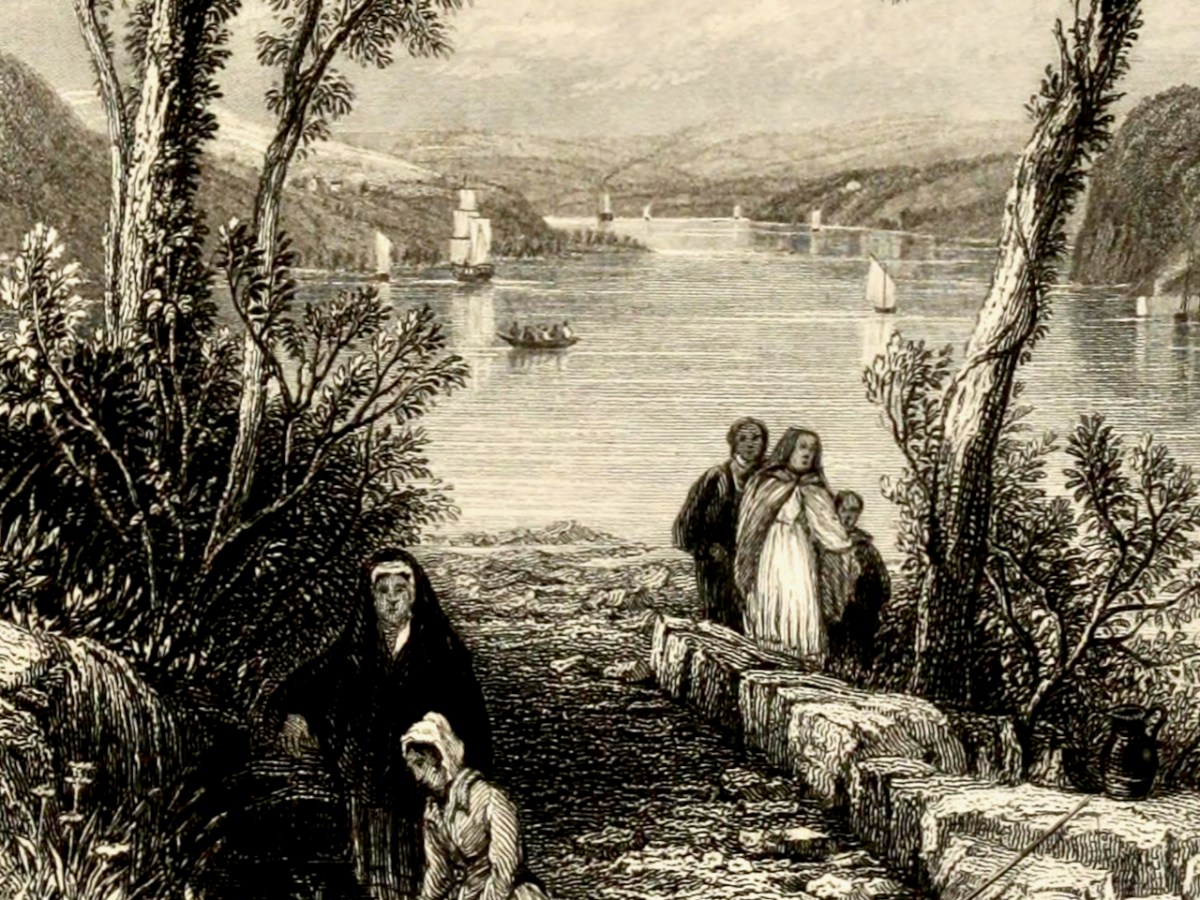
Moving westwards, we come to the ferry at Passage West – a journey Robert and I took only yesterday. For us it was a quick trip on the ultra-efficient car ferry, but Creswick shows an altogether more leisurely affair involving a rowing boat. The view of the boat is framed between trees. Figures in the foreground include a woman drawing water from the River Lee in a ewer – not something I’d want to do today.

The Passage Ferry Scene is a good example of the Picturesque Idiom, which had its conventions. According to Simon Cooke on The Victorian Web, artists such as Gainsborough and Constable

followed the compositional rules of the Picturesque and Creswick similarly adheres to its iconography. Drawing on the many examples of the type, he deploys a semiotic made up of trees (typically placed as framing devices), a well-defined foreground (usually populated with peasants or cattle), a stream, river or pathway, an architectural feature (castle, house, church), a large expanse of sky, and a prospect (often of mountains), or a vista reaching into the far distance. 

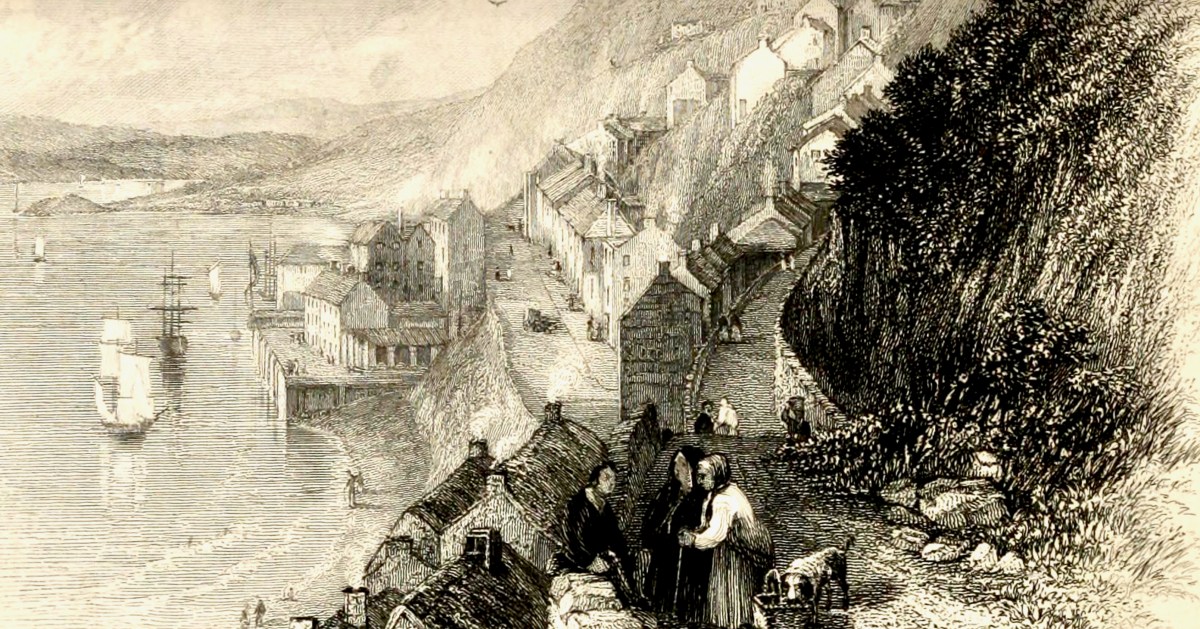
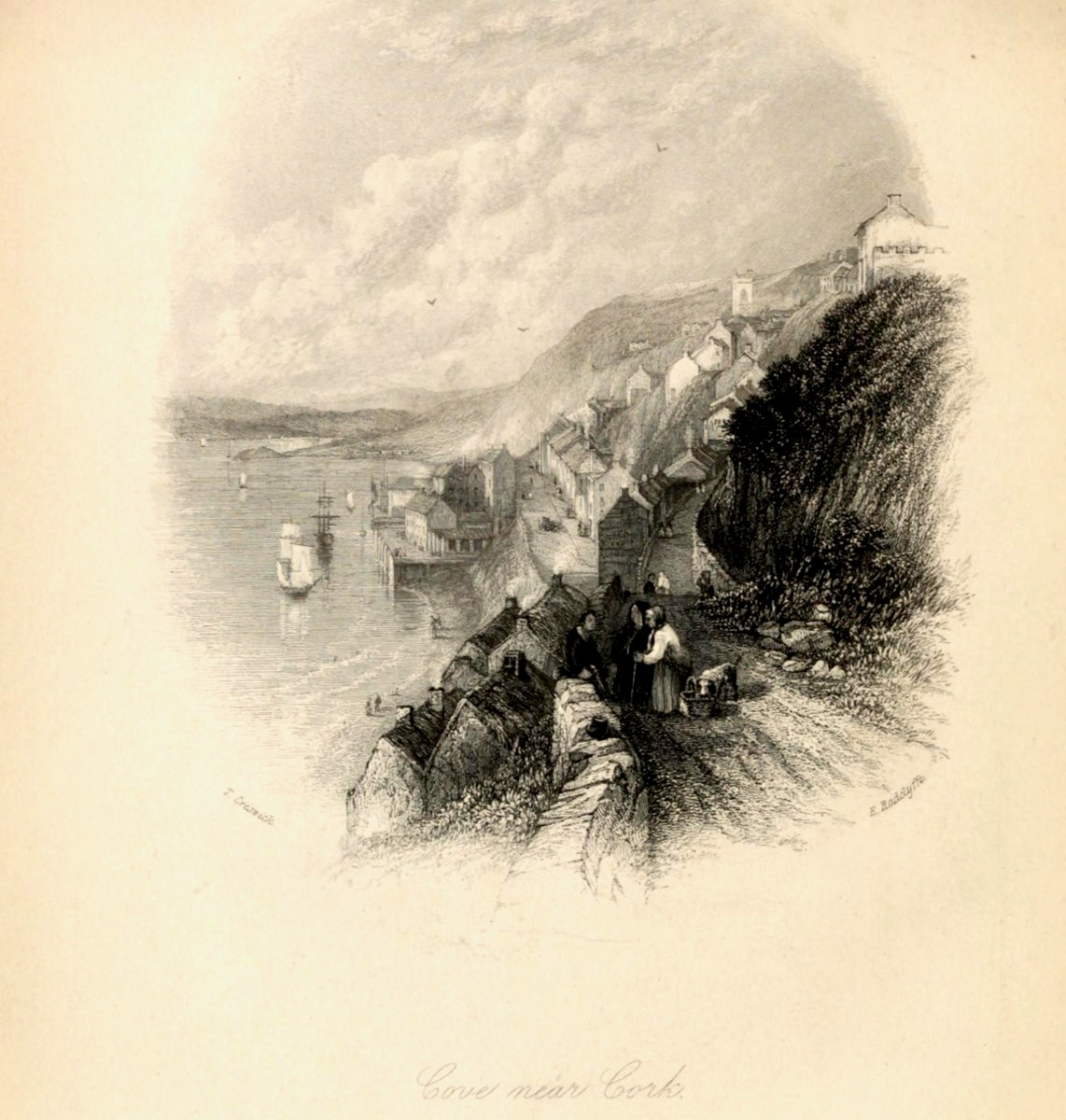
Next stop is Cobh (below, then called Cove, afterwards rechristened Queenstown, and finally reverting to Cobh). Creswick’s image is of an older town, before extensive docks were built, and captures the steepness of the roads and the precipitous way the houses cling to the hills.

Those steep narrow streets are still there, in Cobh. Below the seated figures is the area of fishermen’s cottages known as The Holy Ground. There’s no sign yet of the magnificent St Colman’s Cathedral, which didn’t get started until the 1860s. See the lead image in this post for a closer view of Cobh.

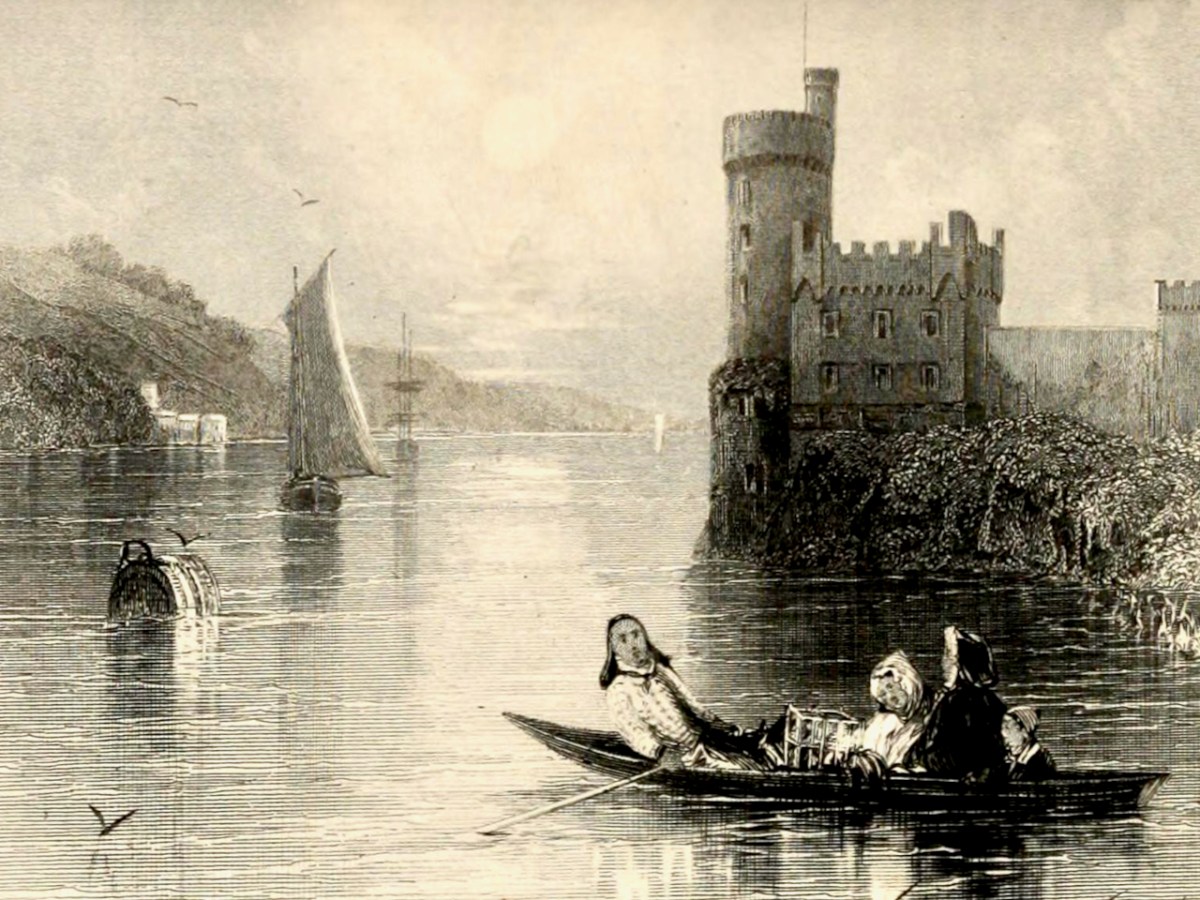
Blackrock Castle has to be one of the most painted pieces of scenery in Cork – so romantic, as it sits on its watery outcrop on a bend of the River Lee. In the foreground a family rows out to do what – set a lobster pot? – while a gaff-rigged sloop makes its way upriver.

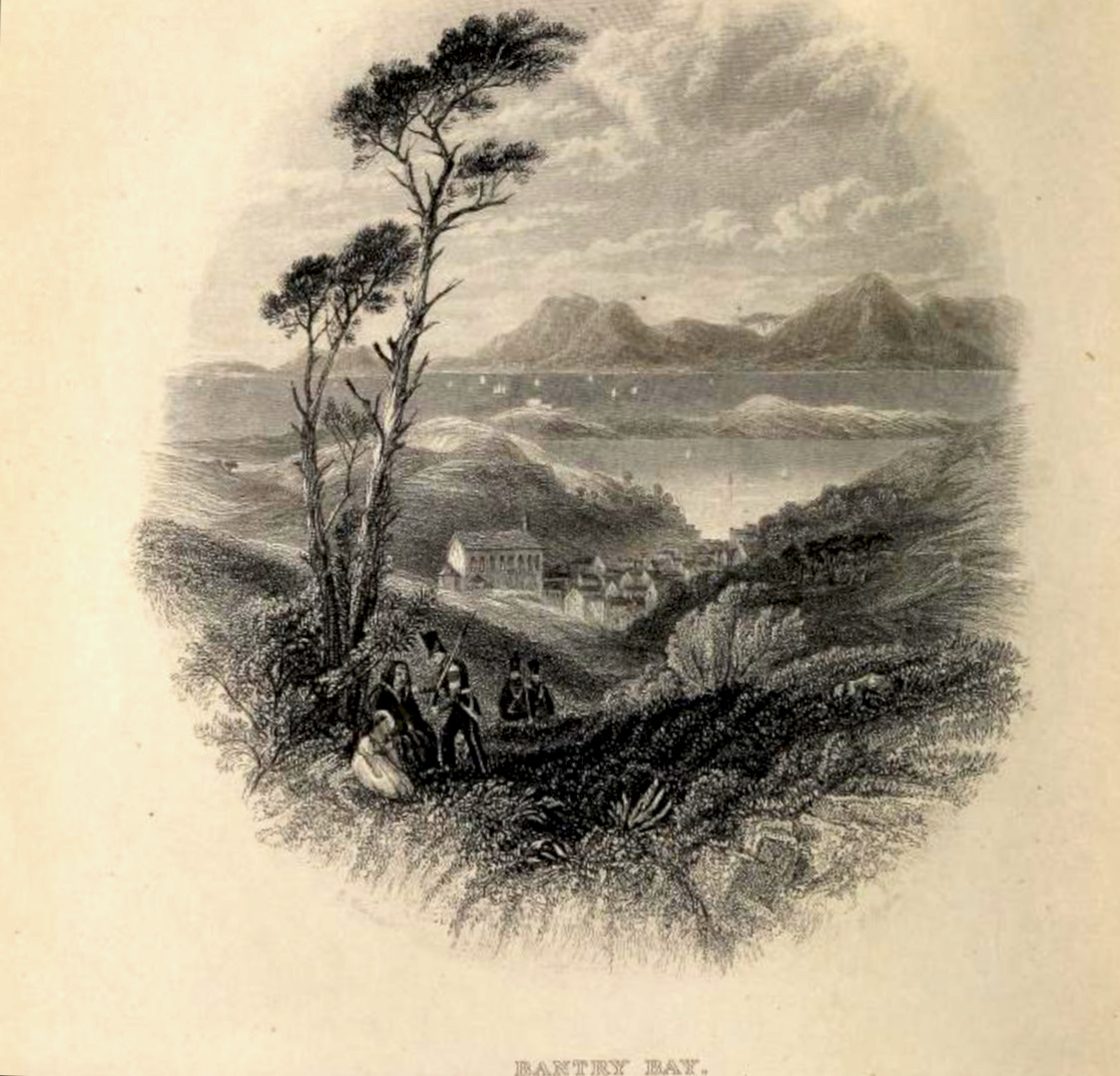
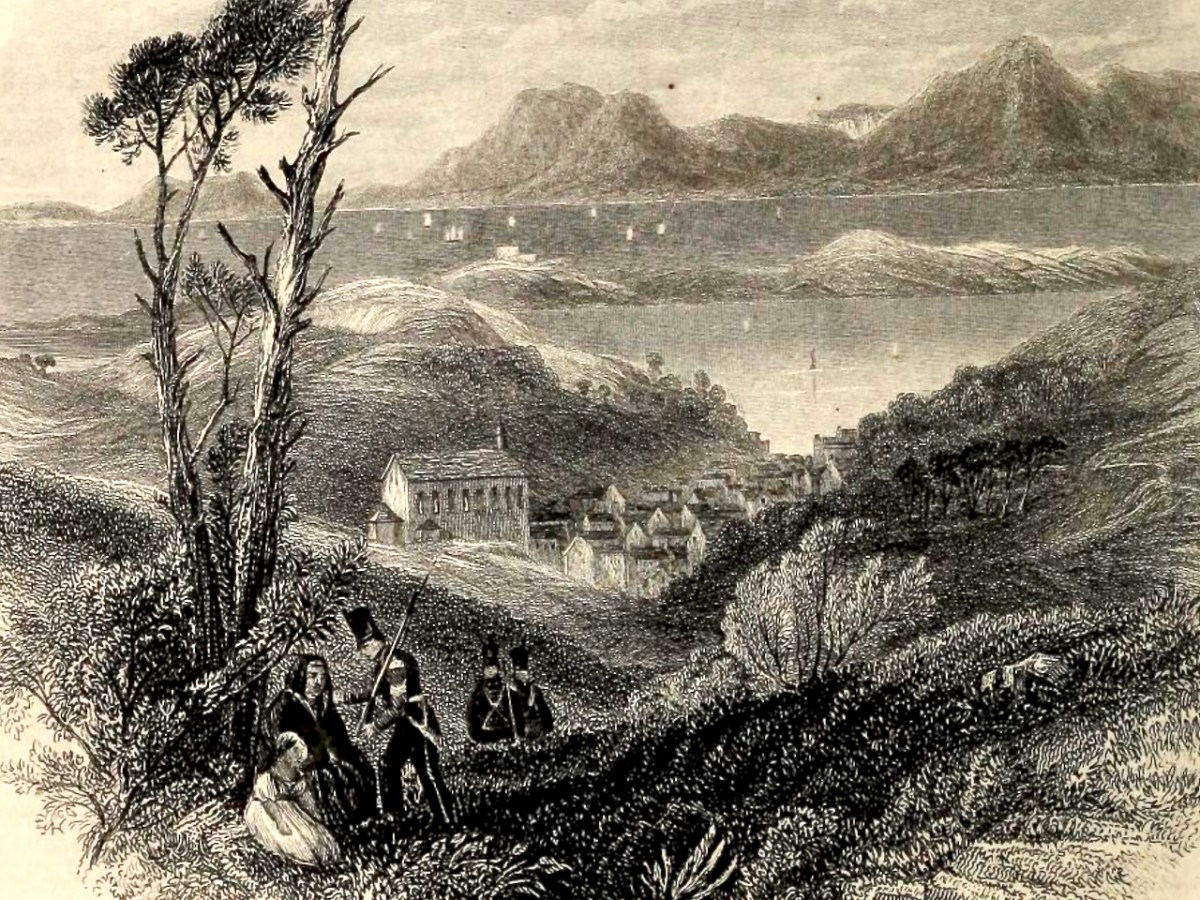
Our final scene is Bantry Bay. St Finbarr’s Church was built already in the 1820s, even before Catholic Emancipation, and sits proudly on an eminence above the town. In the foreground is an enigmatic scene in which a soldier (with other soldiers advancing up the hill) is grasping the shoulders of a woman, who sits with a young girl under a tree. Are we witnessing an arrest, or a compassionate gesture of assistance?

Bantry Bay is spread out beyond the town, which slopes down to the water. The Battery on Whiddy Island, long in ruins, is clearly visible. The mountains of the Beara rise in the background, including the Sugarloaf on the right.

There is a full-colour painting by Creswick of Glengarriff but it is not copyright-free. You can view it here. If you want to see more of his illustrations, take a look at the books on archive.org – Dublin and Wicklow are well-represented.

Elizabethan Map of a Turbulent West Cork

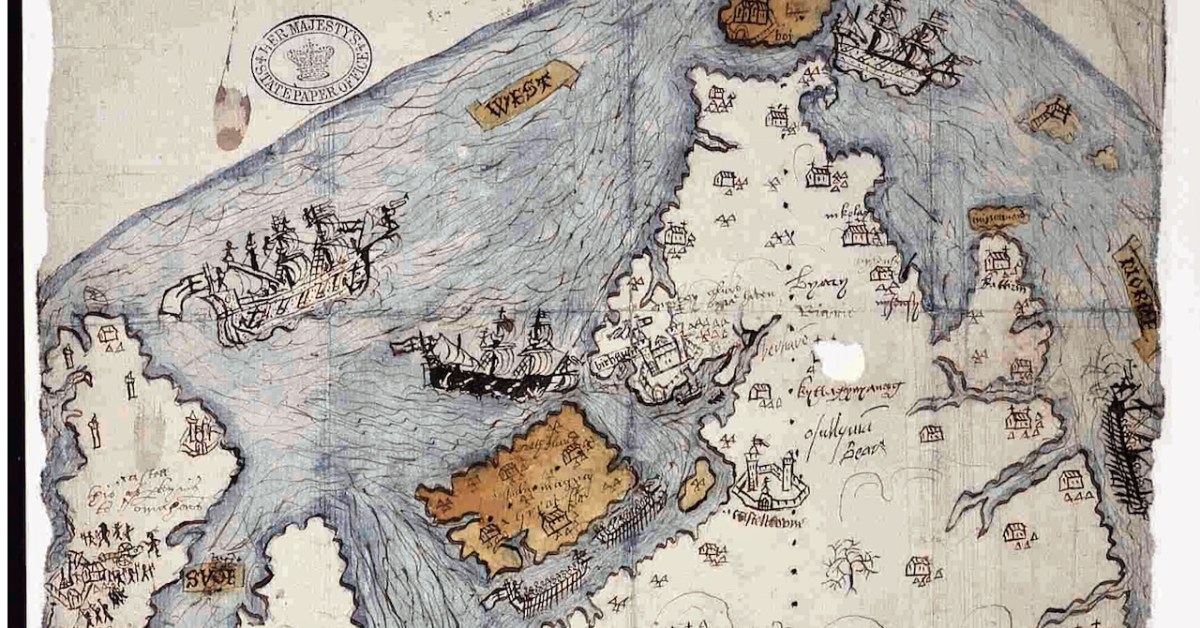
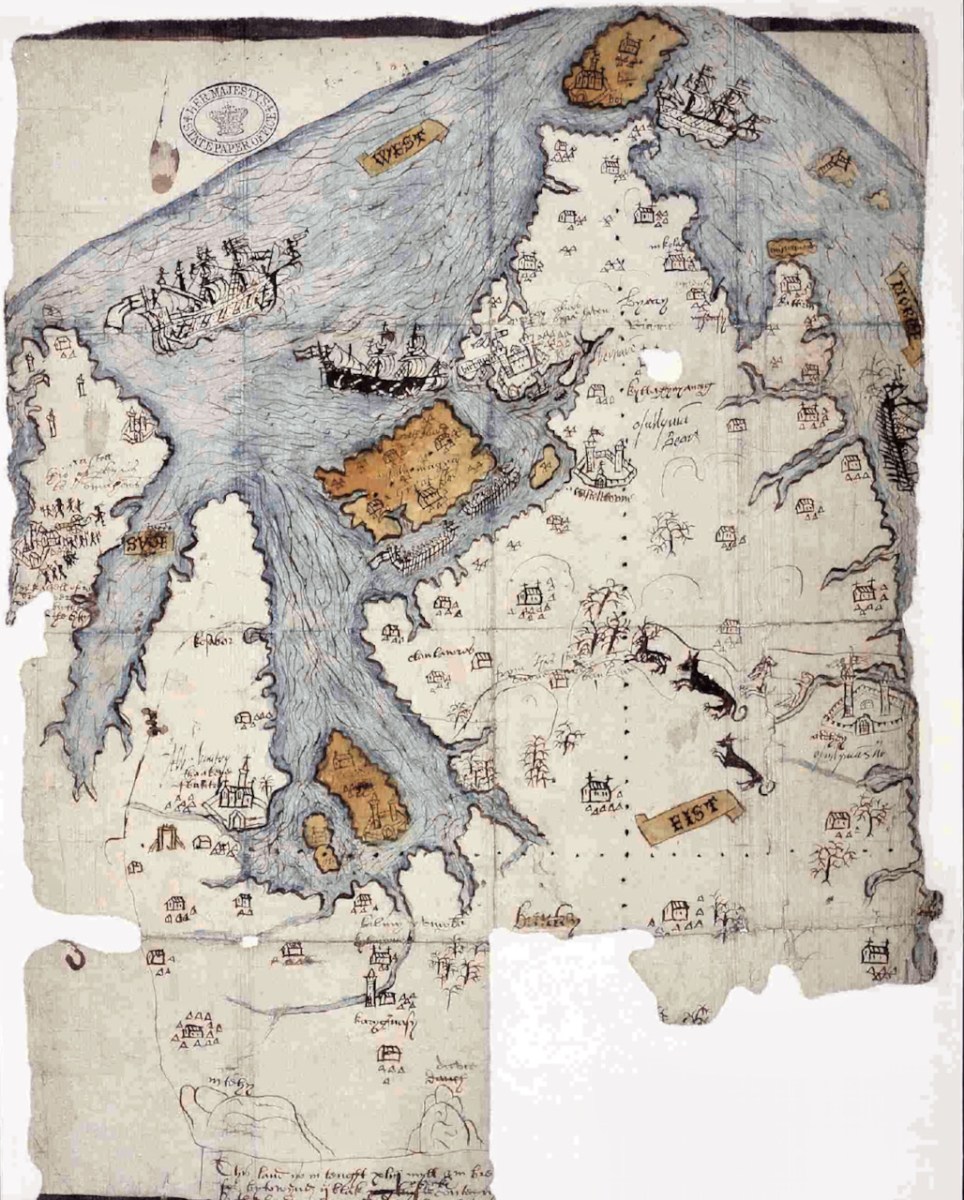
The Elizabethans were map-makers, especially if they needed information for the purpose of wars and conquests. I was first alerted to this extraordinary map of West Cork by a reference in the O’Mahony Journal (subscription needed) and then to a piece written on it for the Journal of the Cork Historical and Archaeological Society in 1958 by P O’Keeffe who labelled it a Map of Beare and Bantry. Neither of these sources had a good image of the map and so, intrigued, I sent off a request for a digital copy to the British National Archives. It arrived by return email, at no charge. What a service! (Irish national repositories take note.) Here is the complete map.
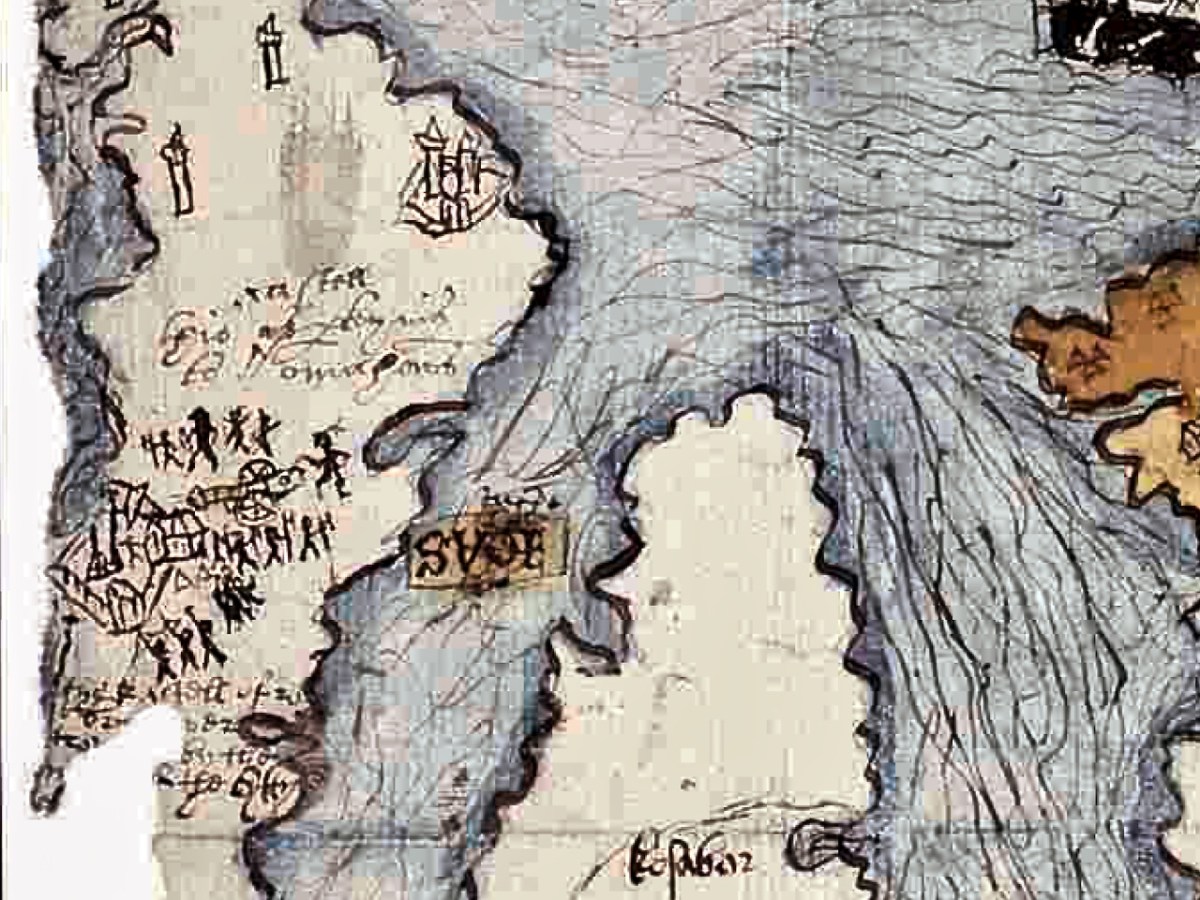
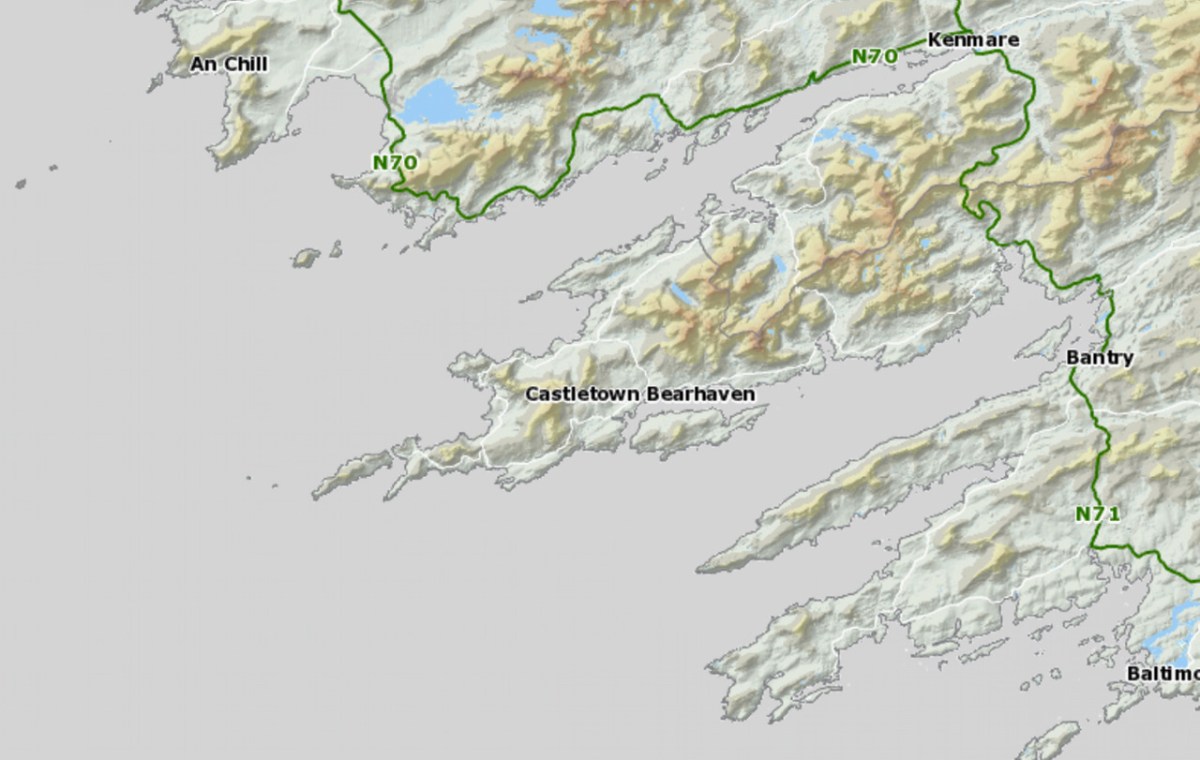
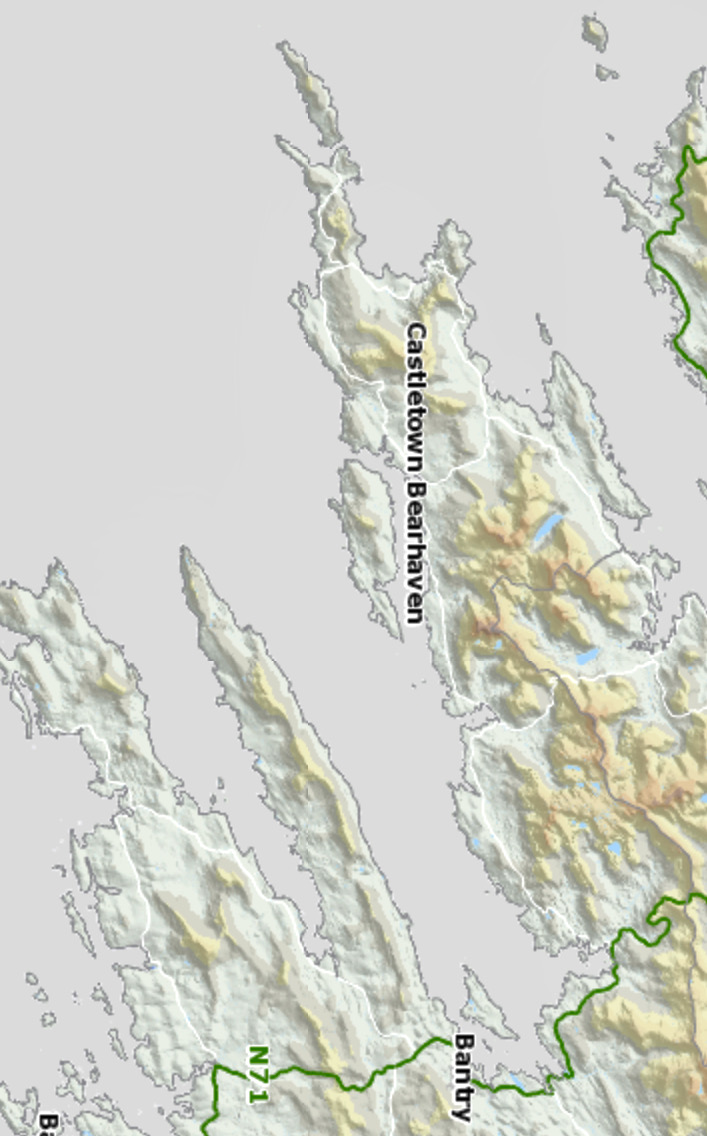
While it is clear that this map dates to the Elizabethan period, there are many questions about it: who did it, for what purpose, exactly when? For this post I want to go through elements of the map and identify, as far as possible, what it depicts. A subsequent post will deal with what is actually going on – that is, what are the actions that are being chronicled. Let’s start with the fact that the map is quite accurate. It depicts the three peninsulas of West Cork – the Mizen, the Sheep’s Head and the Beara – and the inlets in between them. It is oriented east-west rather than our modern convention of north-south, but the cardinal points are clearly identified. The map is drawn on paper, with the sea coloured in blue and the islands in brown. I have provided maps below of the same area, the first in our typical north-south orientation and the second as it is orientated in the historical map.

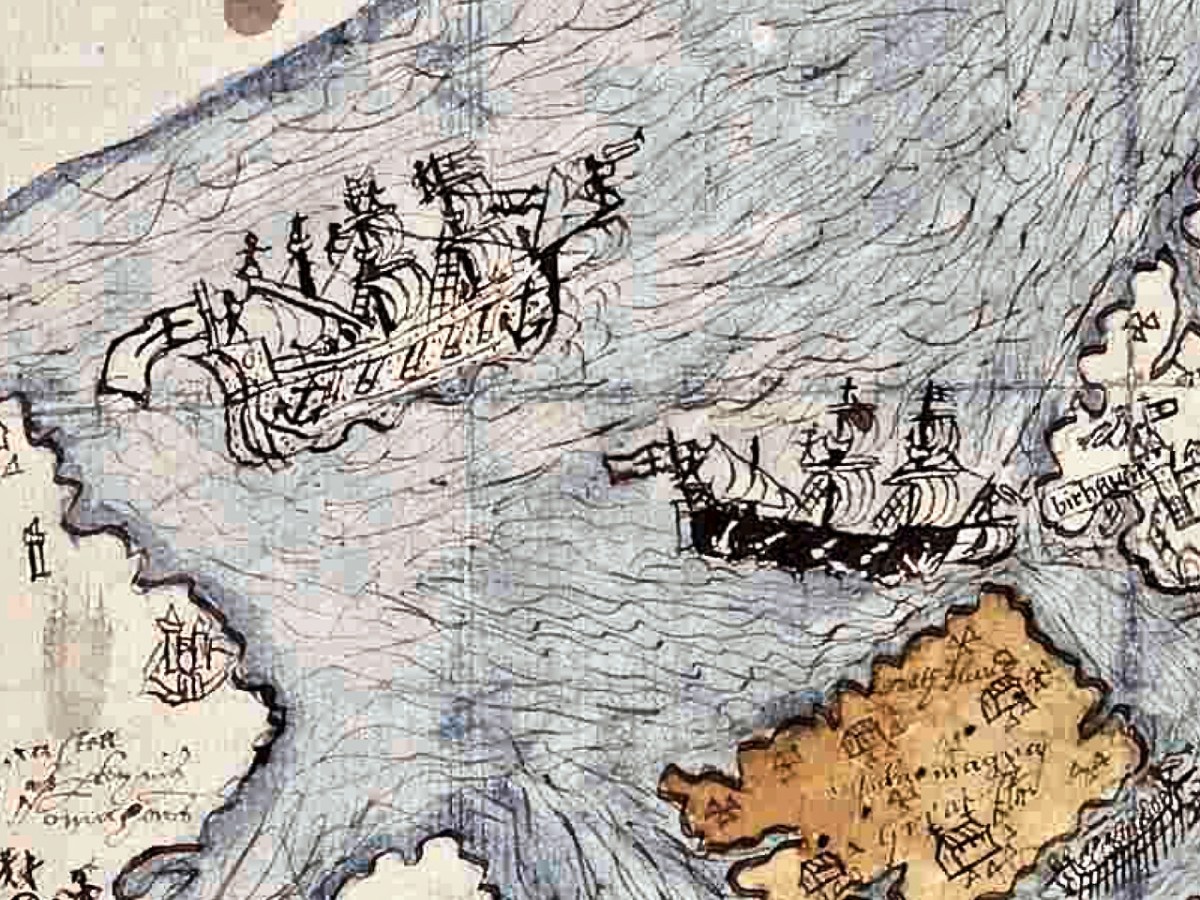
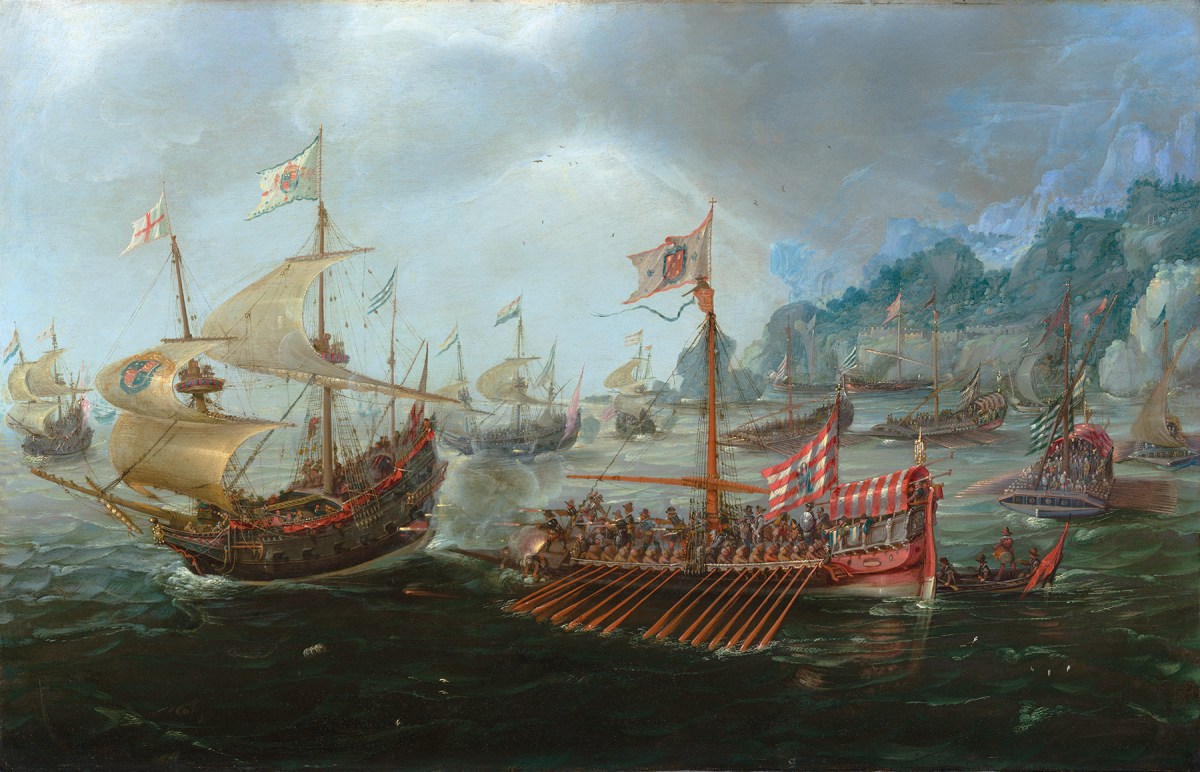
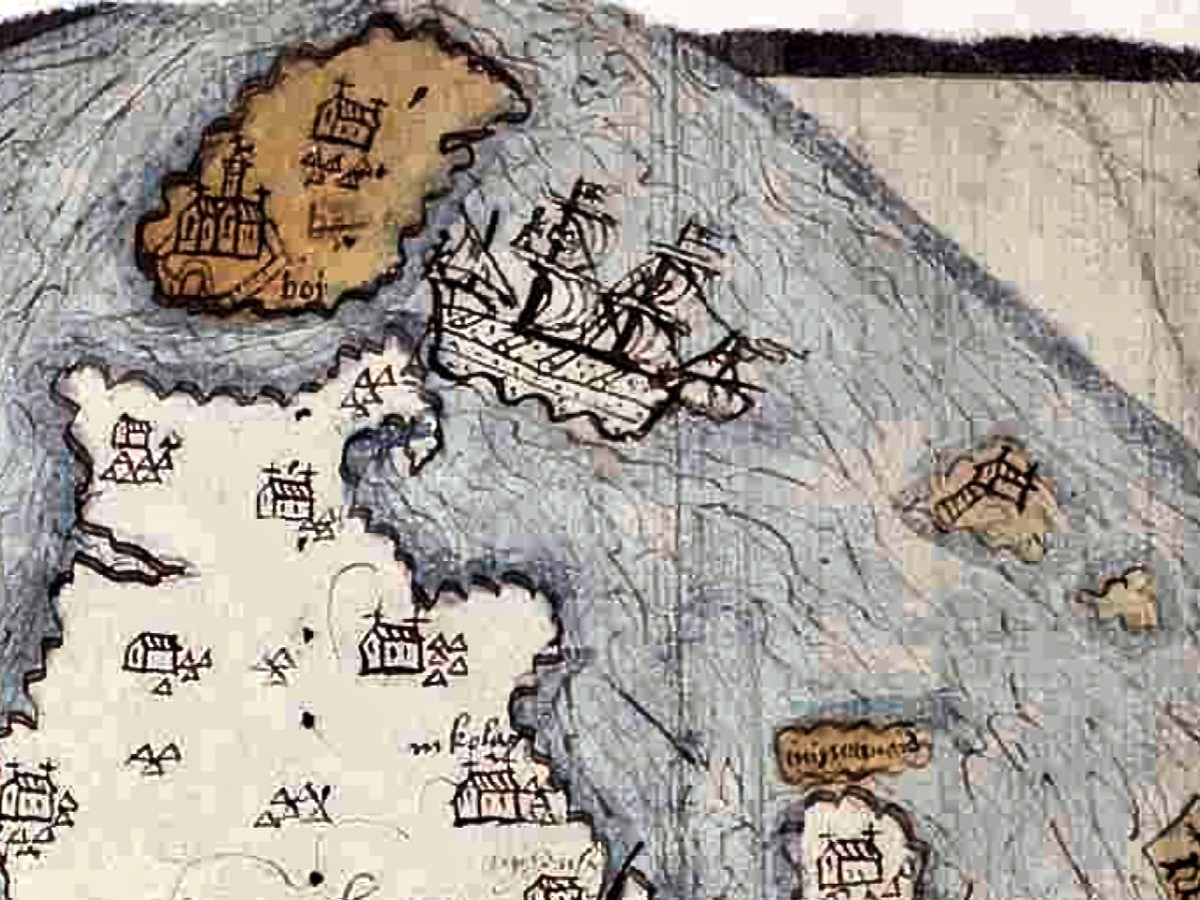
The sea is shown teeming with ships – warships and galleys. Taking a closer look at the two north of Bear Island we see two different ships, one light and one dark. Each is in full sail, with men on the riggings and in the look-outs. They have cannons emerging from the hull, a trumpeter aft and a bugler on the bow-spit.

As a reference, here is a painting by Andries van Aervelt showing the kinds of ships that were engaged in The Battle of the Narrow Seas (1585) – both the full-sail warships are shown as well as galleys.

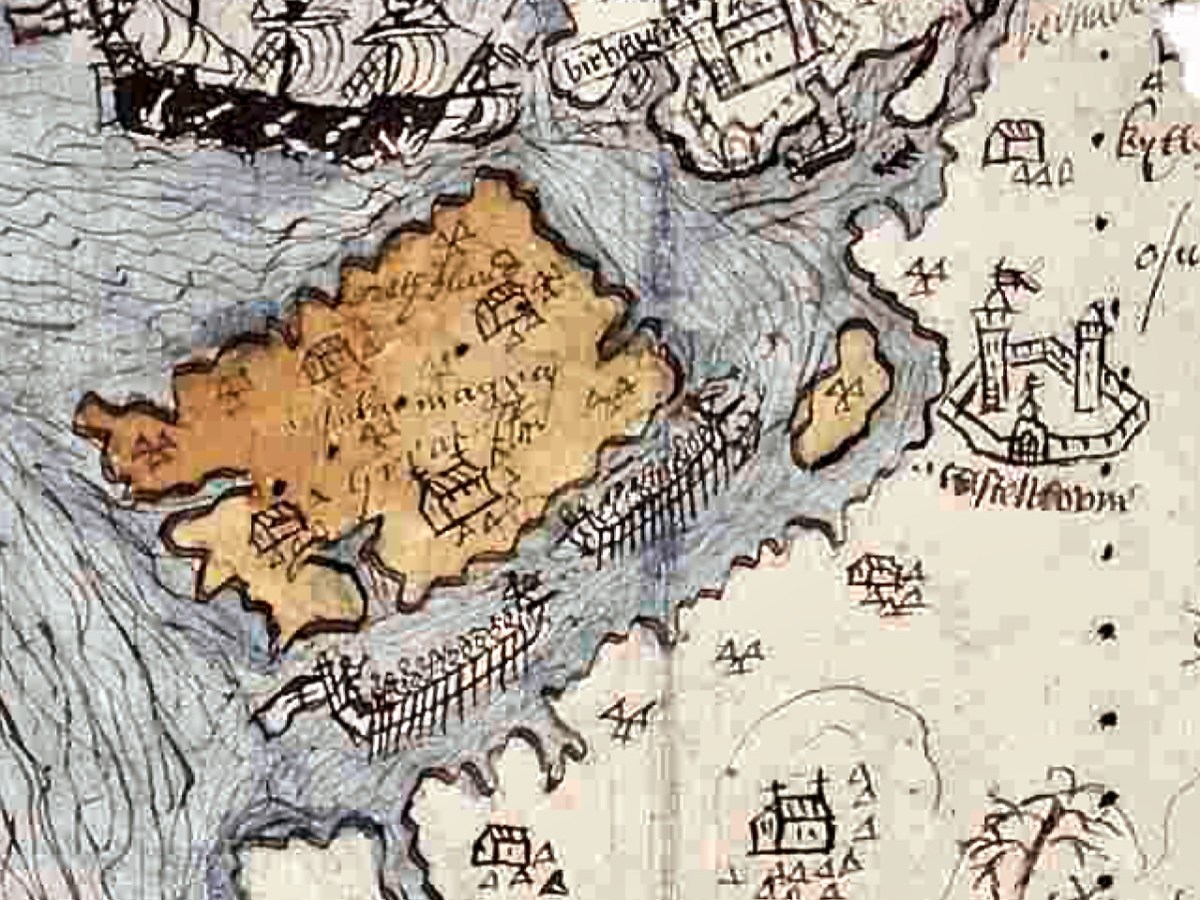
Galleys were also deployed here, shown between Bear Island and the mainland (below). The lead galley has a trumpeter on the bow, while the second galley shows a man blowing a horn in the stern and what looks like a drummer on the bow (like those ramming speed scenes in Ben Hur). The rowers were often convicts and the life of a galley rower was brutal. This map shows a single row of oars. Galleys essentially provided platforms upon which armed soldiers could shoot, and had the advantage of being more stable than sailing ships and often faster, depending on wind and swell. 

Another warship (below) is rounding the tip of the Beara , heading for Dursey Sound. Dursey Island has both a church and a castle on it. There isn’t much trace of this now, but there was an O’Sullivan castle on a small grassy peninsula on Dursey, described as two rectangular buildings with a rectangular enclosure in the National Monuments records. It was destroyed in 1602 (more about that in the next post) along with what was then left of the church, known as Kilmichael, which was already in a ruinous state. At the right, in this section of the map, are two rocky islands, one with a set of steps leading up to a church. Could this be Skellig Michael? The other candidate is Scariff Island, off Lamb’s Head, which had a monastic settlement and hermit’s cell on it.

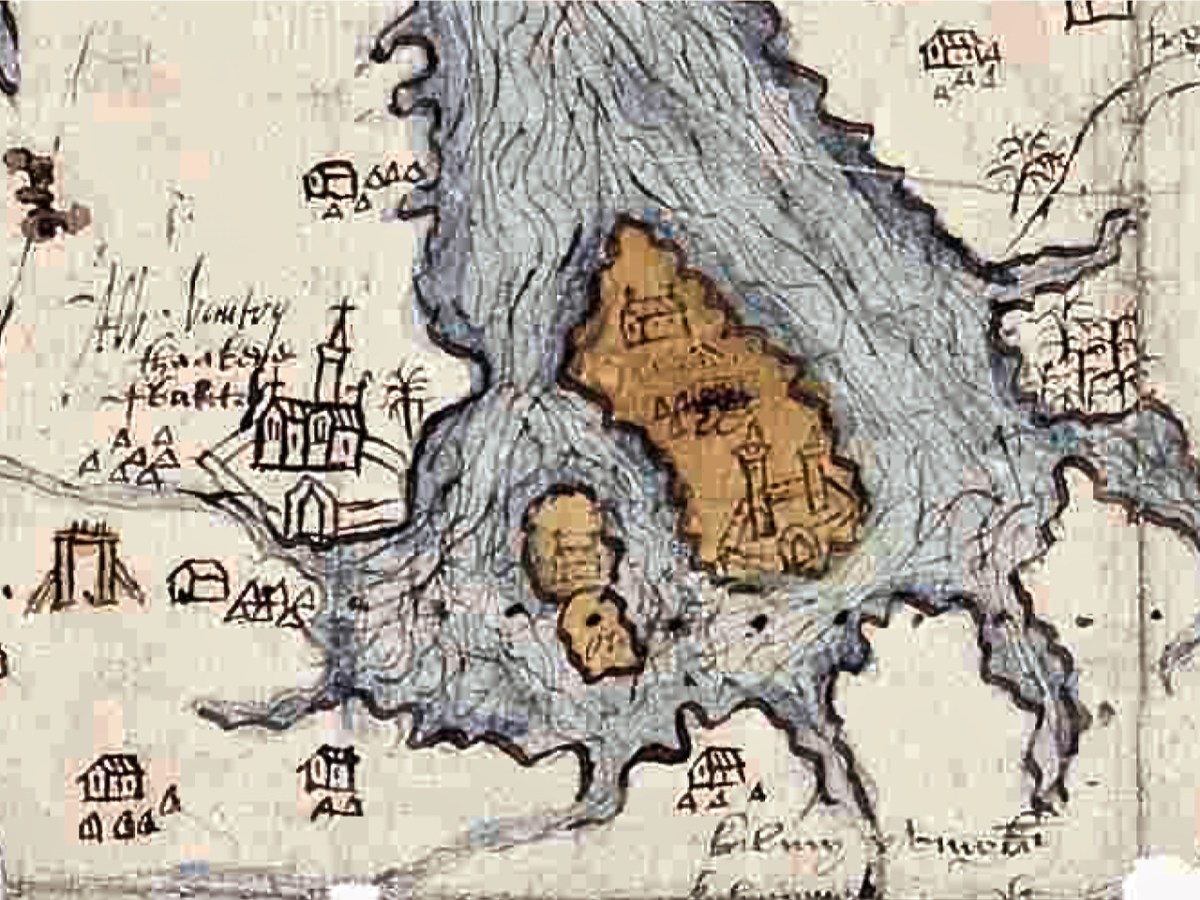
Let’s take a look now at the area around Bantry (below). The large church is of course the Franciscan Abbey that stood here, where the graveyard is located There is a church shown on the aptly-named Chapel Island between the mainland and Whiddy (no trace if it now remains), and both a church and a castle on Whiddy.

The fragmentary remans of an ecclesiastical enclosure can still be seen at the graveyard on Whiddy, while the O’Sullivan Castle has only one wall still partly standing. That’s it, below.

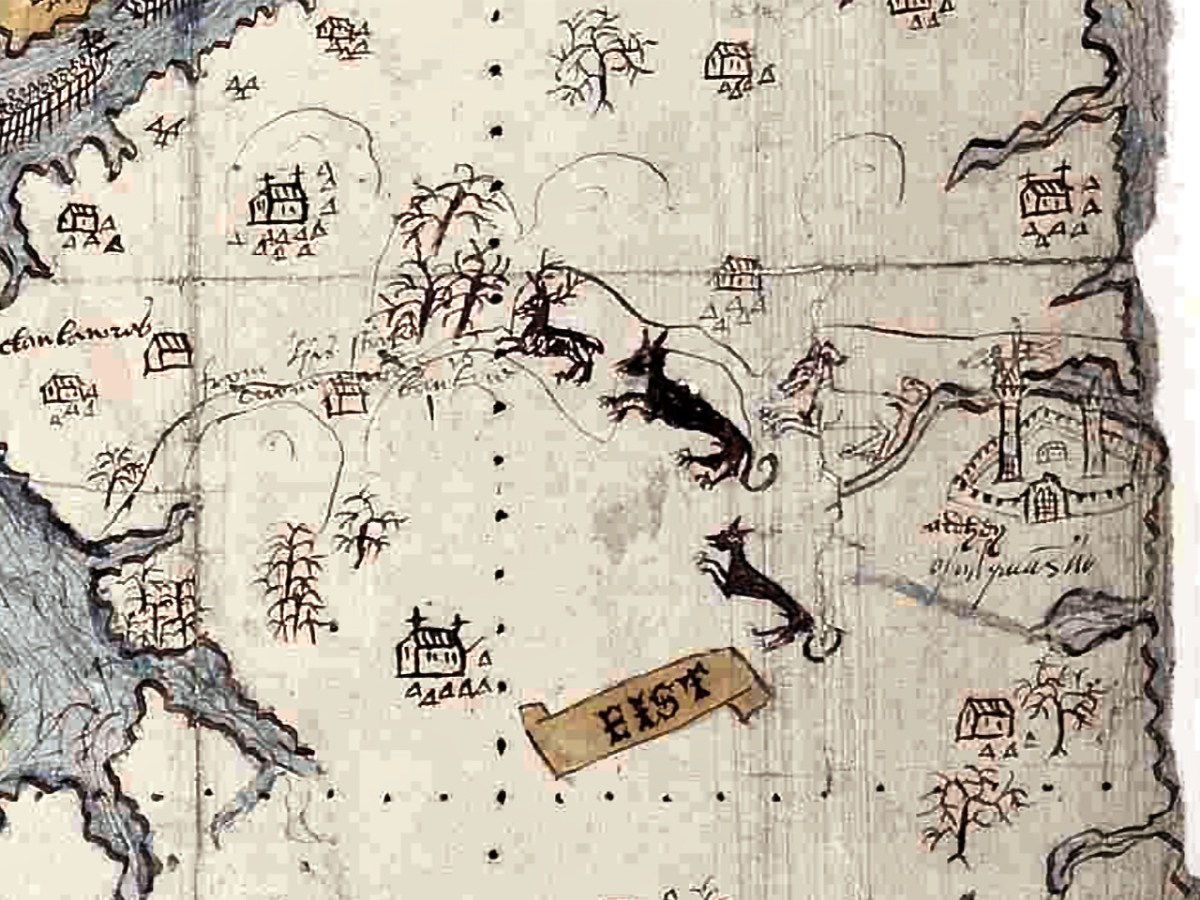
The hinterland of the Beara is shown with trees and animals. Either this is a hunting scene with dogs chasing a stag, or it is meant to show the wildness of the interior, with wolves and deer. Settlements are indicated by churches surrounded by a cluster of cabins (not that different from Irish villages up until recently), and there is a castle labelled Ardhey and O Sulyvans Ho. This is likely to be the ruined casted of Ardea, which actually stands on the other side of the Kenmare River – the Iveragh side rather than the Beara side.

The final depiction I want to highlight is of the Mizen. Several towers dot the  landscape as well as two substantial castles, one of which is under siege. 

Which castles are these – especially the one being attacked? Tune in next week!

Welcome to the Stranger: Asenath Nicholson in West Cork

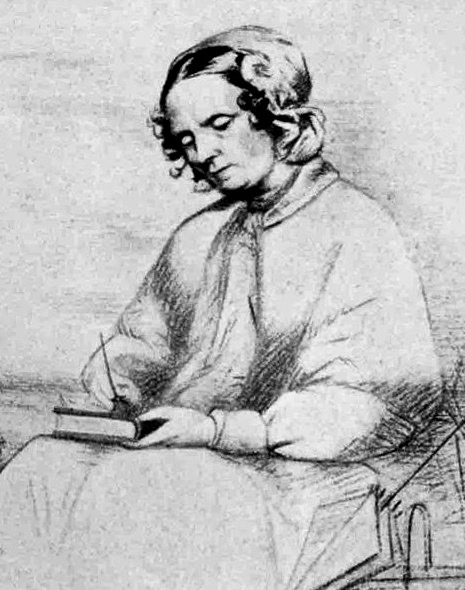
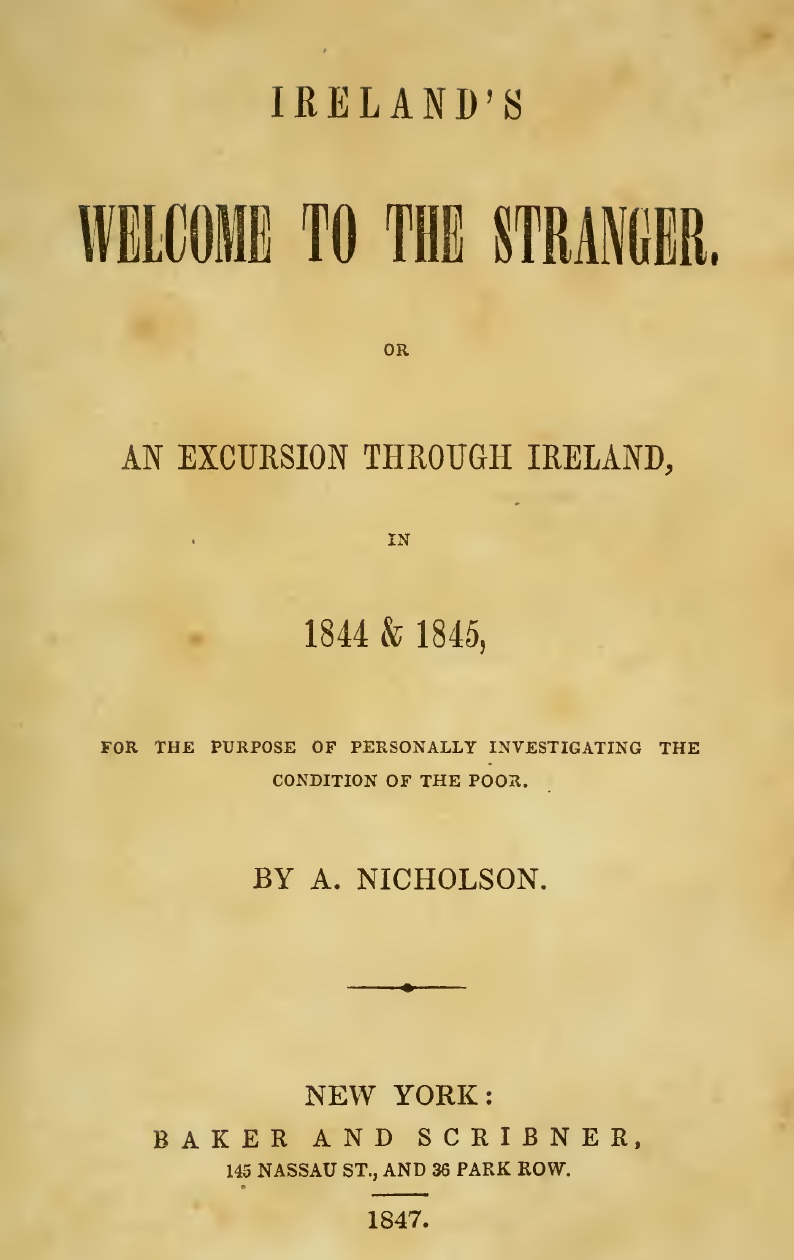
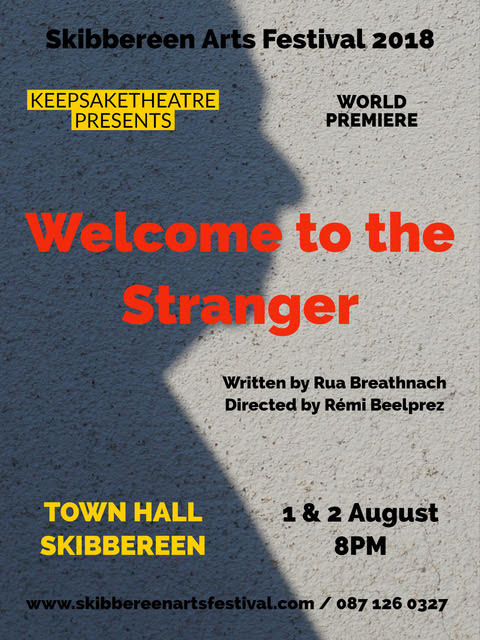
Who was Asenath Nicholson? When I saw that a new play was to be performed during the Skibbereen Arts Festival this year, I became curious about the subject. The play, Welcome to the Stranger, is based on Asenath’s books, Ireland’s Welcome to the Stranger, and Annals of the Famine in Ireland written about her sojourn in Ireland before and during the Great Hunger. As an eye witness account of the conditions she saw, it is invaluable. So why is she not a household name?

As I discovered, there is actually quite a lot about Asenath available online, much of it centred on the research of Maureen O’Rourke Murphy of Hoffstra University, who has written the definitive book on Nicholson, Compassionate Stranger, as well as editing Asenath’s own writings for re-release. Prof Murphy has provided a piece about the book to Irish Central, and the book itself has been comprehensively reviewed in the Irish Times by Christine Kinealy, Director of Quinnipiac’s Great Hunger Museum. Both of these articles summarise Asenath’s life and the significance of her account of her time in ireland, so pop over there now for a quick read, and then come back here. There is also a lecture by Prof Murphy online (entertaining and erudite), as well as a very well-done radio documentary (although I can’t find out who produced it). These take a bit longer so save them for later.


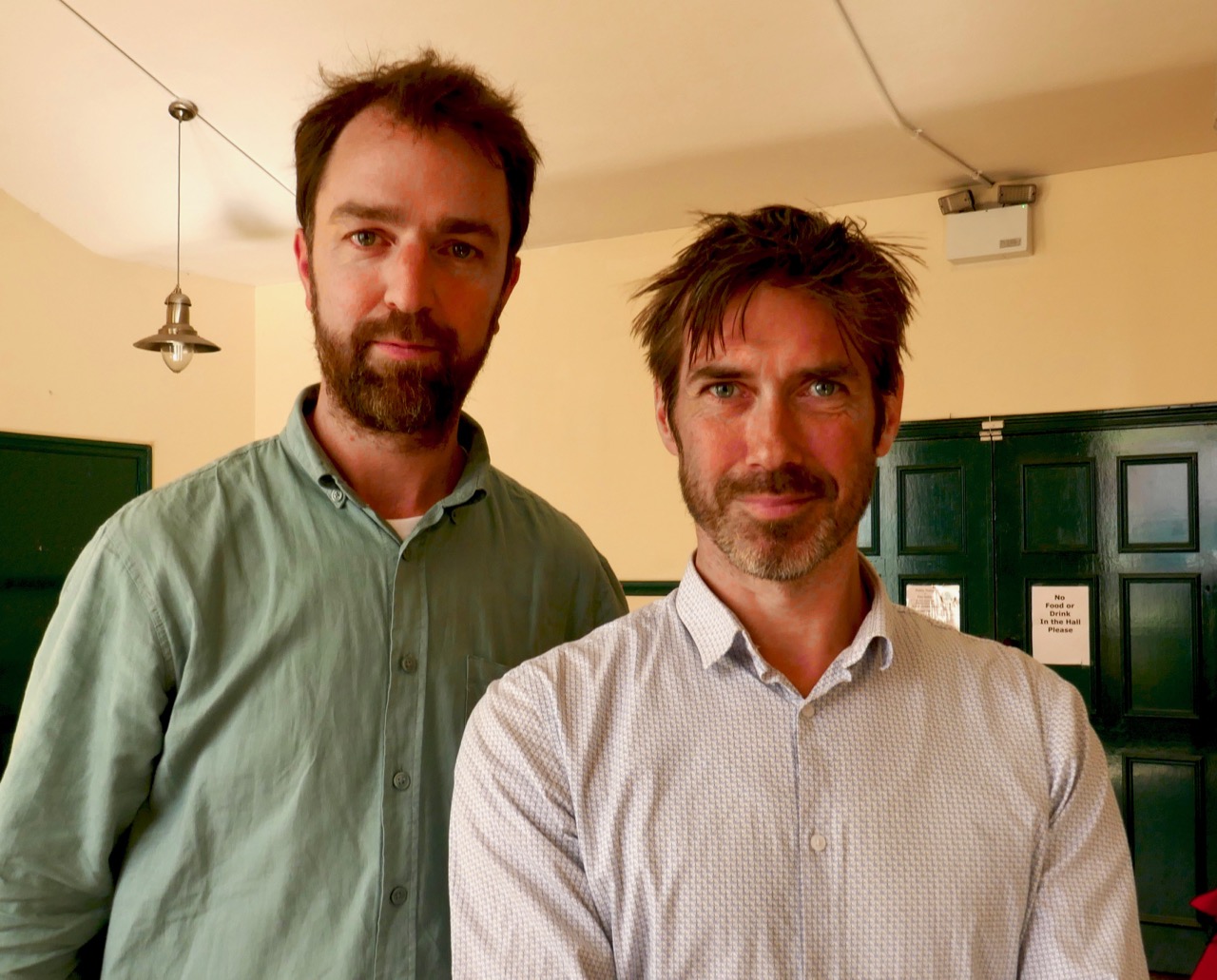
Rua Breathnach, the writer of the new play, is taking an interesting approach to depicting Asenath’s lengthy time in Ireland (four years in all) and the production is being staged and directed by his long-time collaborator, Rémi Beelprez. It will debut in Skibbereen on Aug 1, followed by a discussion session. Robert and I have our tickets already (you can get yours here) and are looking forward to seeing what Rua and Rémi have done with such rich source material.

Rua and Rémi

Seeking more information, I discovered that Ireland’s Welcome to the Stranger is available online in its original form, and also in a clickable version, and of course I was immediately drawn to the chapters about her time in West Cork and in Bantry in particular. This was in February 1845, before the potato crop had failed for the first time, but here Asenath describes perfectly the conditions that prevailed among the poor which led ultimately to the catastrophic events of the next few years – the extreme poverty and lack of resources, the lack of employment of any sort, and the dependence on a single food source.

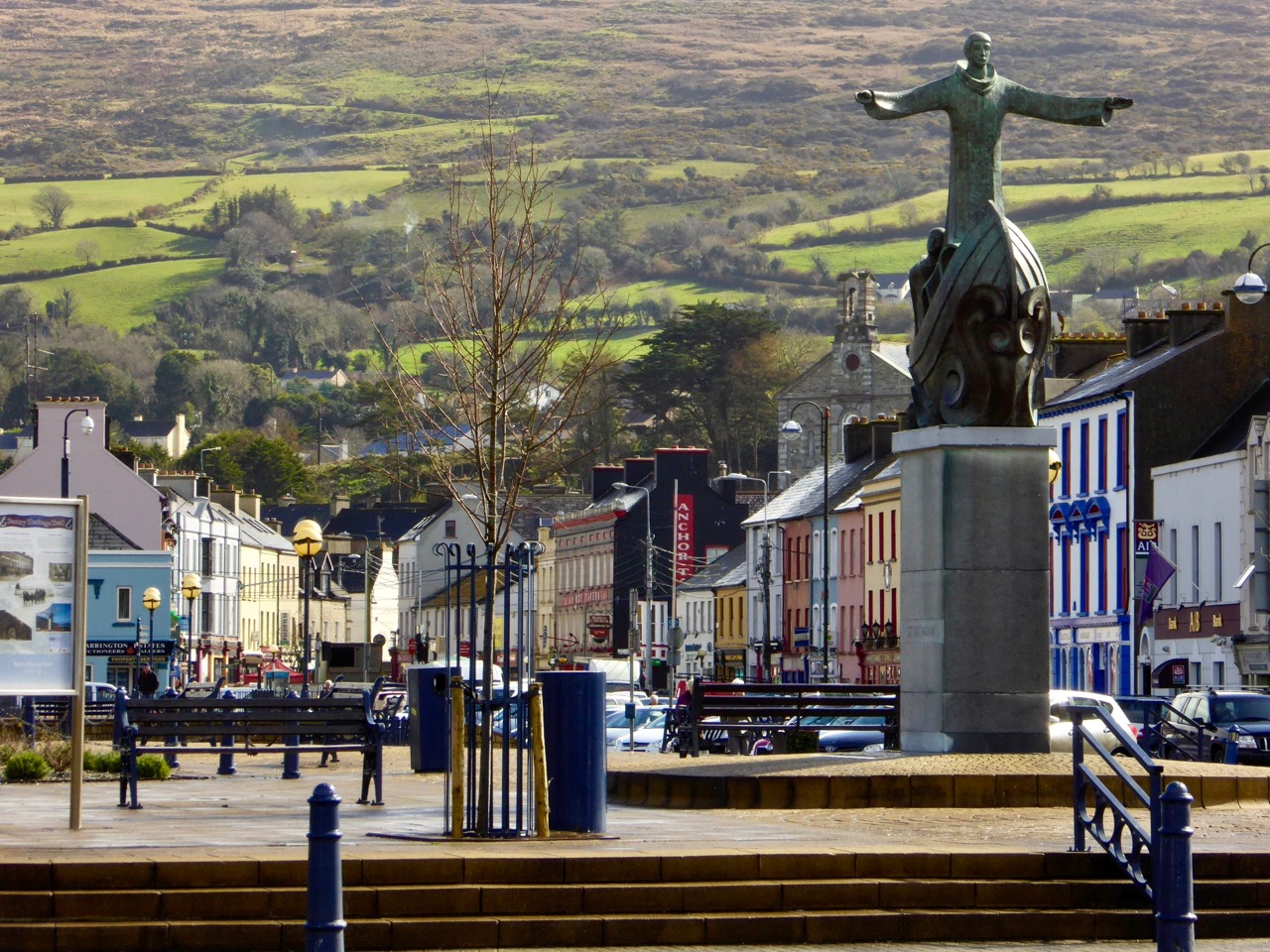
Bantry as it is now, a thriving and attractive market town

Her chapter section heading is “Arrival at the miserable town of Bantry.” Here is why she went there:

When about leaving Cork for Killarney I intended taking the shortest and cheapest route ; but Father Mathew said, “If you wish to seek out the poor, go to Bantry; there you will see misery in all and in every form.” I took his advice, went to Bantry, and there found a wild, dirty sea-port, with cabins built upon the rocks and hills, having the most antiquated and forlorn appearance of any town I had seen; the people going about not with sackcloth upon their heads, for this they could not purchase, but in rags and tatters such as no country but Ireland could hang out.

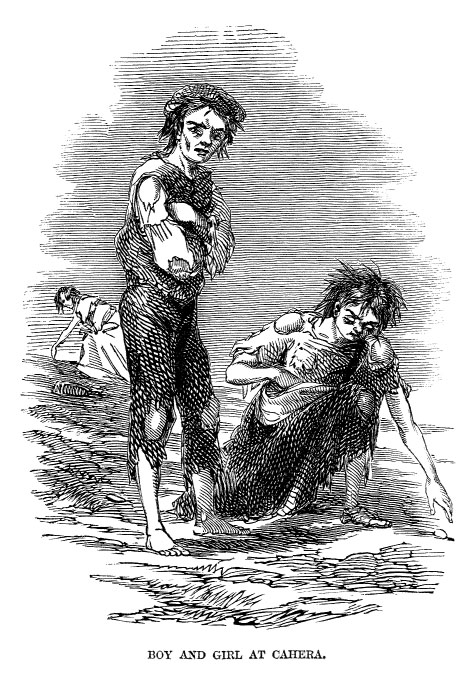
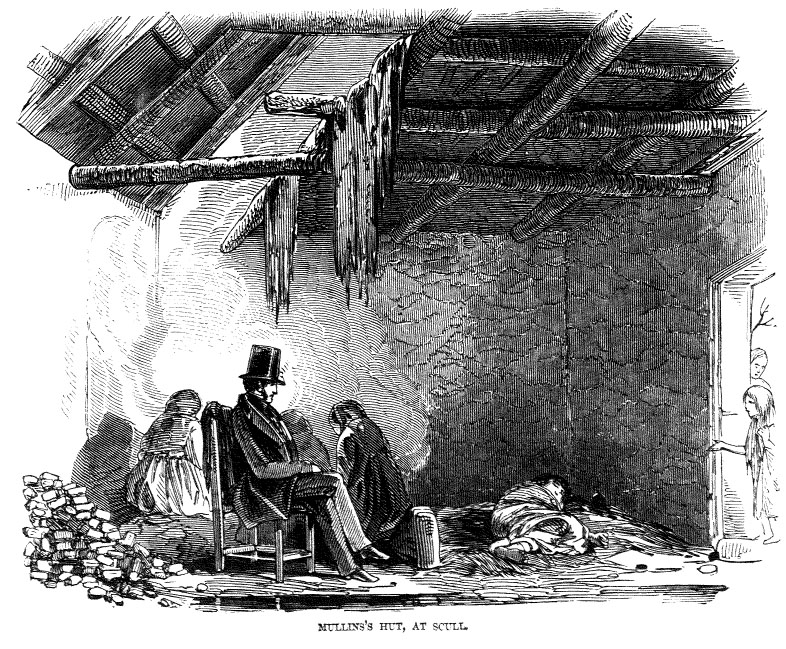
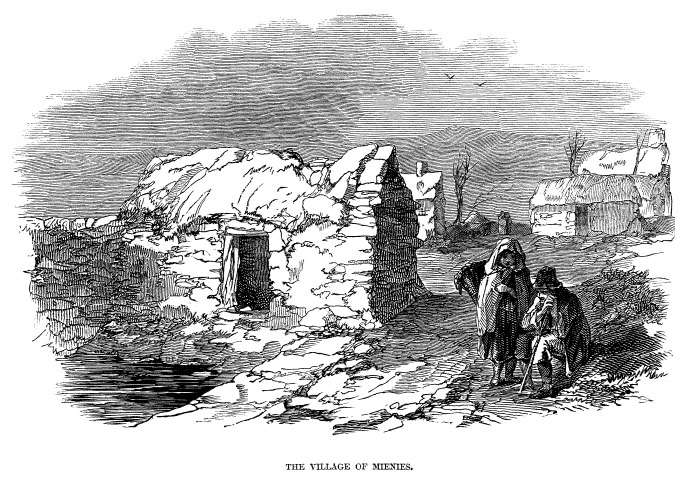
This and the other wood engravings* are by James Mahony for the Illustrated London News of 1847, and are from Niamh O’Sullivan’s book, The Tombs of a Departed Race; Illustrations of Ireland’s Great Hunger, available at The Skibbereen Heritage Centre. 

Asenath was in Ireland specifically to observe and record the conditions of the poor, but she was unprepared for what she saw in Bantry. She even feels moved to warn her readers, If you have tears, prepare to shed them now.

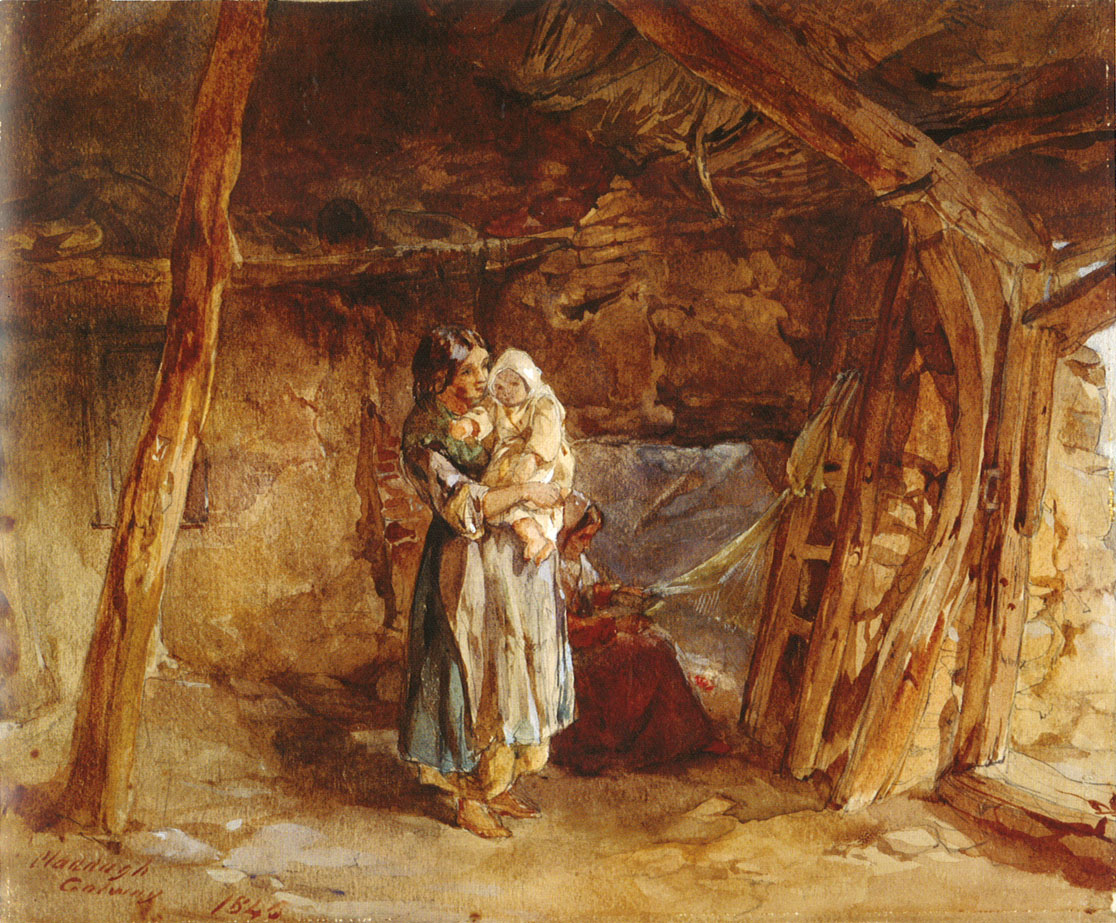
The morning opened my eyes to look out upon sights which, as I write, flit before me like haggard spectres. I dressed, went forth, and made my way upon the rocks, found upon the sides of them some deplorable cabins, where smoke was issuing from the doors, and looking into one, the sight was appalling – Like an African kraal, the door was so low as to admit only a child of ten or twelve, and at the entrance a woman put out her head, with a dirty cloth about it; a stout pig was taking its breakfast within, and a lesser one stood waiting at a distance. The woman crouched over the busy swine with her feet in the mud, and asked what I wanted?. . .Looking in, I saw a pile of dirty broken straw, which served for a bed for both family and pigs, not a chair, table, or pane of glass, and no spot to sit except upon the straw in one corner, without sitting in mud and manure.

There was a new workhouse in the town, which Asenath describes as lofty and well-finished but it was closed and shuttered, though all things had been ready for a year ; the farmers stood out, and would not pay the taxes. Asenath goes on to say The poorhouse was certainly the most respectable looking of any building in Bantry; and it is much to be regretted, that the money laid out to build and pay a keeper for sitting alone in the mansion, had not been expended in giving work to the starving poor, who might then have had no occasion for any house but a comfortable cottage.

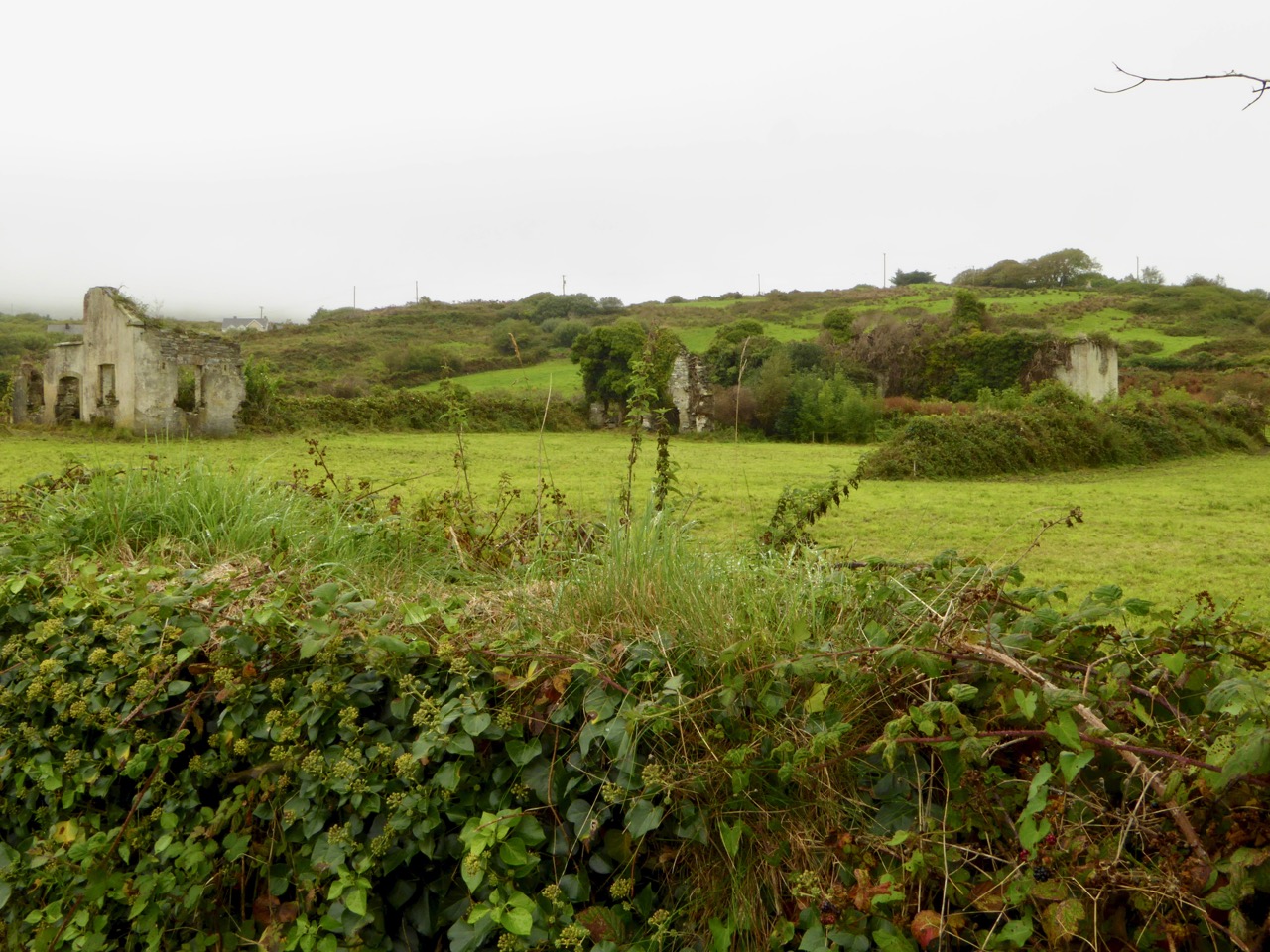
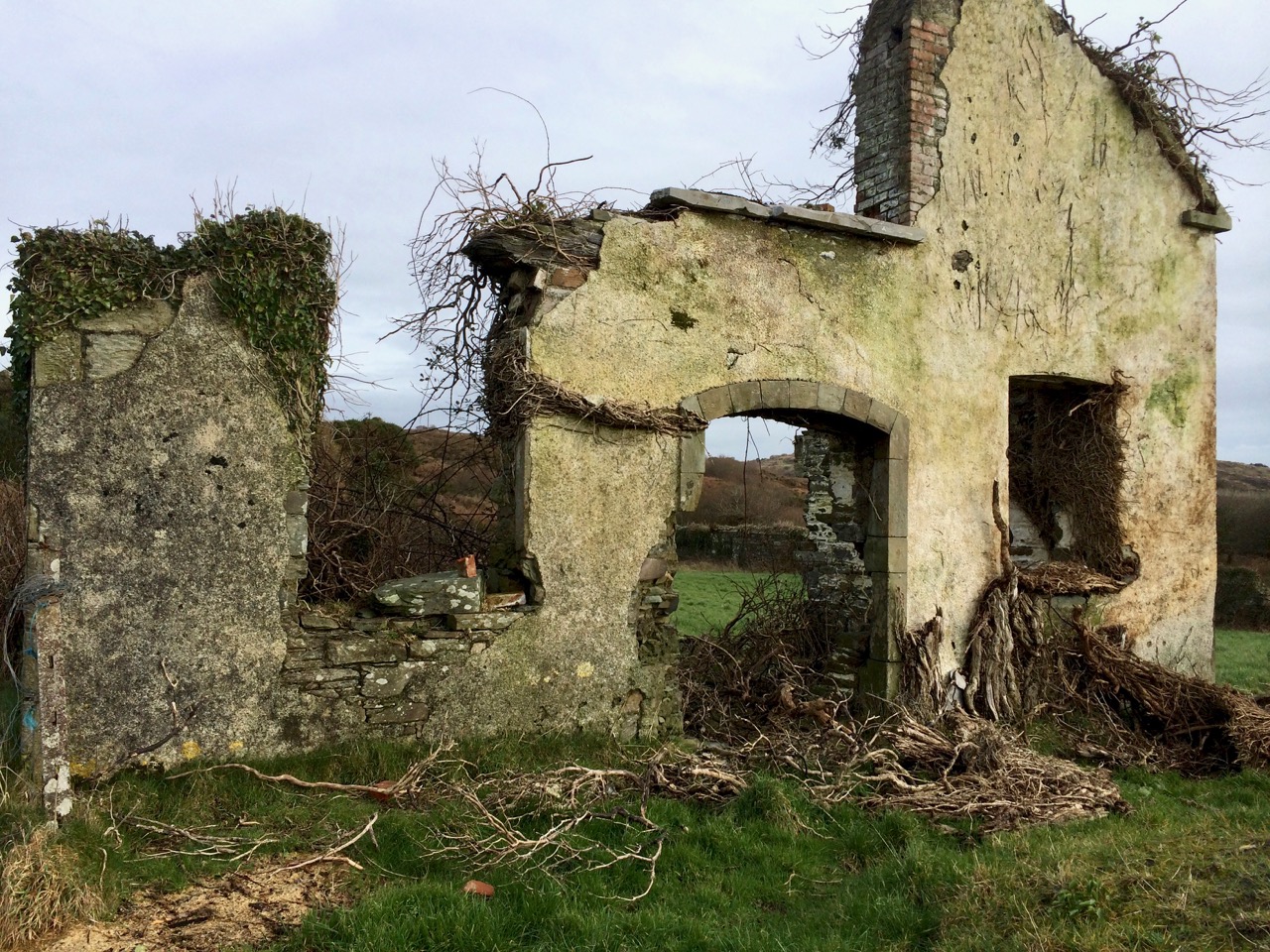
The ruins of the Schull Workhouse

As an aside, in the end the workhouse did open, but the conditions in it were appalling. You’ll find a link to Dr Stephen’s report (be warned, it’s heart-rending) in our post about the Schull Workhouse, which also contains lots of information about workhouses in general.

Asenath refers to ‘wading’ through the streets of Bantry. She describes a set of dwellings called Wigwam Row: a row of cabins, built literally upon a rock, upon the sloping side of a hill, where not a vestige of grass can grow, the rock being a continued flat piece like slate. The favored ones who dwell there pay no rent, having been allowed in the season of the cholera to go up and build these miserable huts, as the air upon the hill was more healthy. And there, like moss, to the rocks have they clung, getting their job when and where they can, to give them their potatoes once in a day, which is the most any of them aspire to in the shortest winter days.

As she walks, Asenath sings hymns and dispenses tracts and testaments, some of which she keeps in an enormous bearskin muff. She attracts attention everywhere she goes and the children of Bantry follow her around. Begging is endemic and she is frequently cheated. However, she comes to admire the Irish and particularly their sense of hospitality and their generosity to her and to each other. In a typical description she writes about a Bantry woman with whom she interacts: I looked at this woman, and at the appurtenances that surrounded her. “The whole chart of Ireland,” from lips that could neither read English nor Irish! She had a noble forehead, an intelligent eye, and a good share of common sense; she had breathed the air of this wild mountainous coast all her sad pilgrimage, and scarcely, she said, had a “decent garment covered her, or a wholesome male of mate crossed her lips, save at Christmas, since the day she left her parents that raired her.”

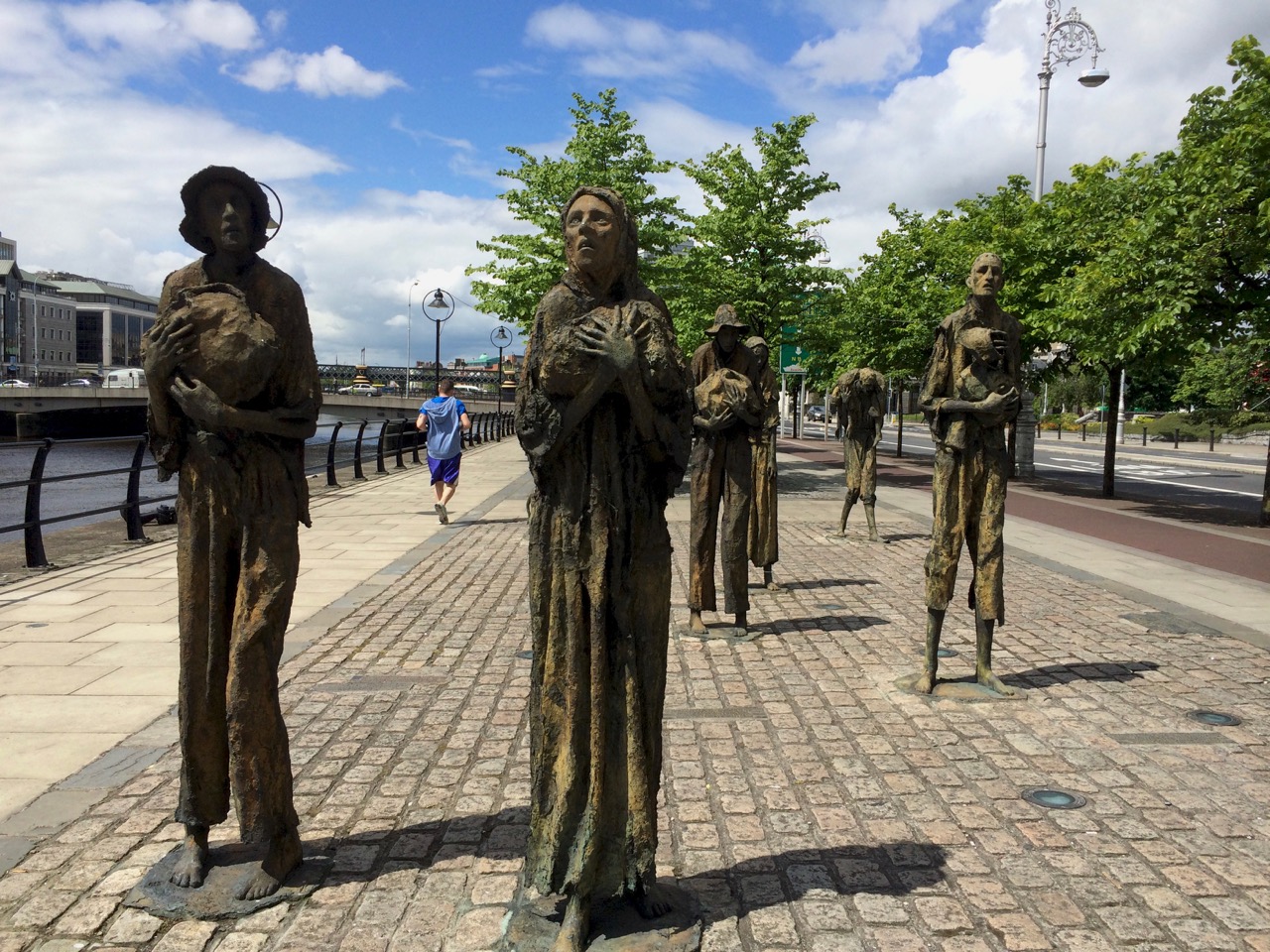
Famine Memorial, Dublin

We will leave Asenath on the road to Glengarriff, struggling to make headway as the magnificent scenery claims her attention, to the relief of her helper, John, who, burdened with her ‘purse’ and her muff, is able to take frequent rests while she catches up. She has given us a unique, first-hand, eye-witness account of Bantry in 1844 – one that contrasts tragically with the beautiful market town we have come to know well. She went on to travel the length and breadth of the country and to open her own soup kitchen in Dublin at the height of the Famine, this time dispensing bread, rather than tracts – let’s follow up with her in August at the play!

The interior of an Irish cabin in 1844 by Francis William Topham,  painting now in the Ulster Museum

This summer we also look forward very much (harrowing as it will be) to a major exhibition at Uillinn (the West Cork Arts Centre): Coming Home is an exhibition of the largest Famine-related art collection in the world. It’s on loan from Quinnipiac University in the US, and opens on July 20th. There will also be a very special Performance/Event at the Schull Workhouse by acclaimed Irish artist Alanna O’Kelly titled Anáil na Beatha, Breath of Life. Future posts!

*More about wood engravings, from Brian LalorThe process is an exceptionally important pre-photography development in visual communication terms and, in its day (early 19C), quite as radical as email. The reporter, O’Mahony, drew on the spot in pencil, the drawings were sent by postal coach and packet boat to London where a team of engravers worked through the night to meet the publishing deadline, on the small (generally 4” square) blocks of fruitwood that fitted with the type into a letterpress printer. For speed, they often had a number of engravers working on a single image by using separate blocks which were then bolted together. On the ILS 1844 image of Ballydehob (not shown) you can see the joins.

Orange to Green – For the Week That’s In It

Right so…where were we when we got interrupted by the bould Saint Patrick? Ah yes, on the red side of the colour wheel. Let’s keep moving, so, on to orange and through the yellows till we hit the greens. (For anyone tuning in for the first time, take a look at Purple and Pink, which also has links to previous posts on our penchant for colourful buildings.)

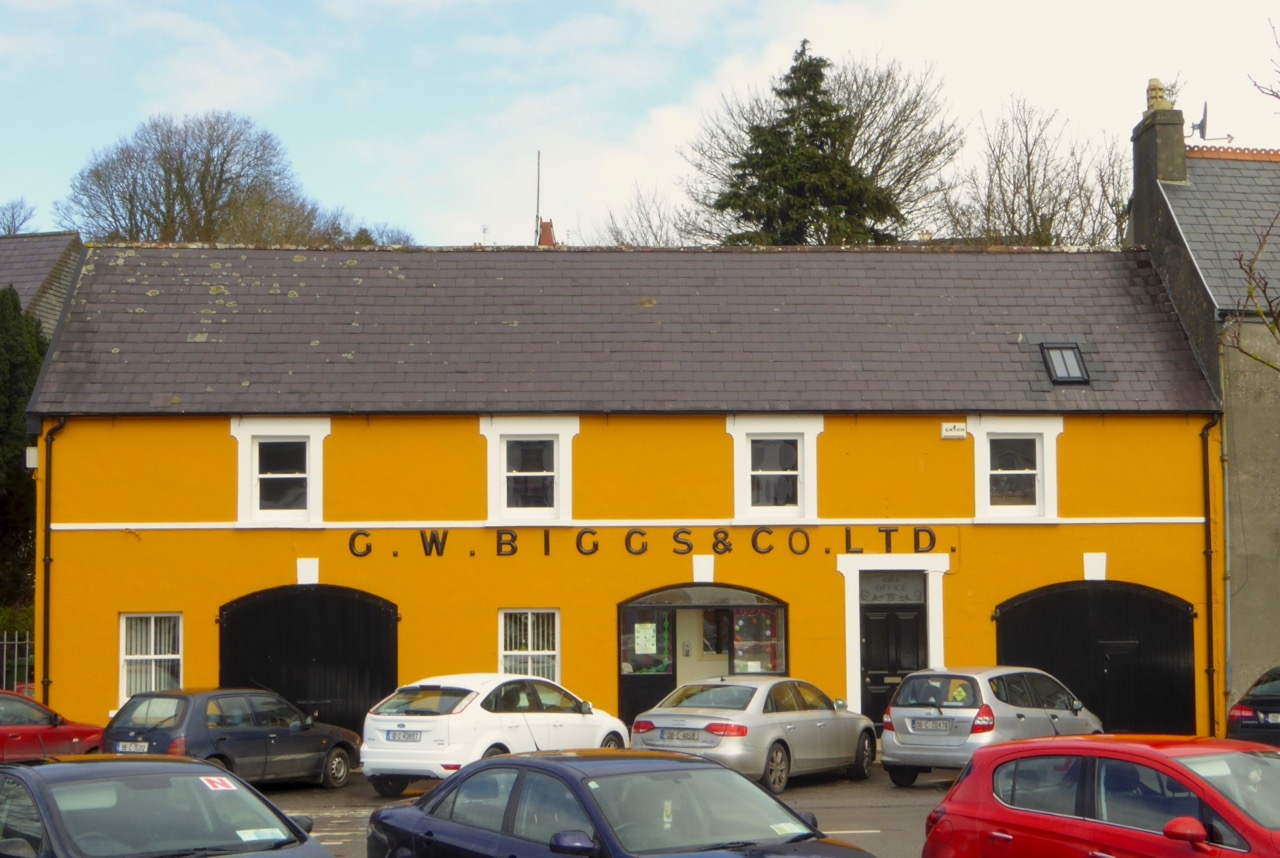
Biggs is an iconic building in Bantry

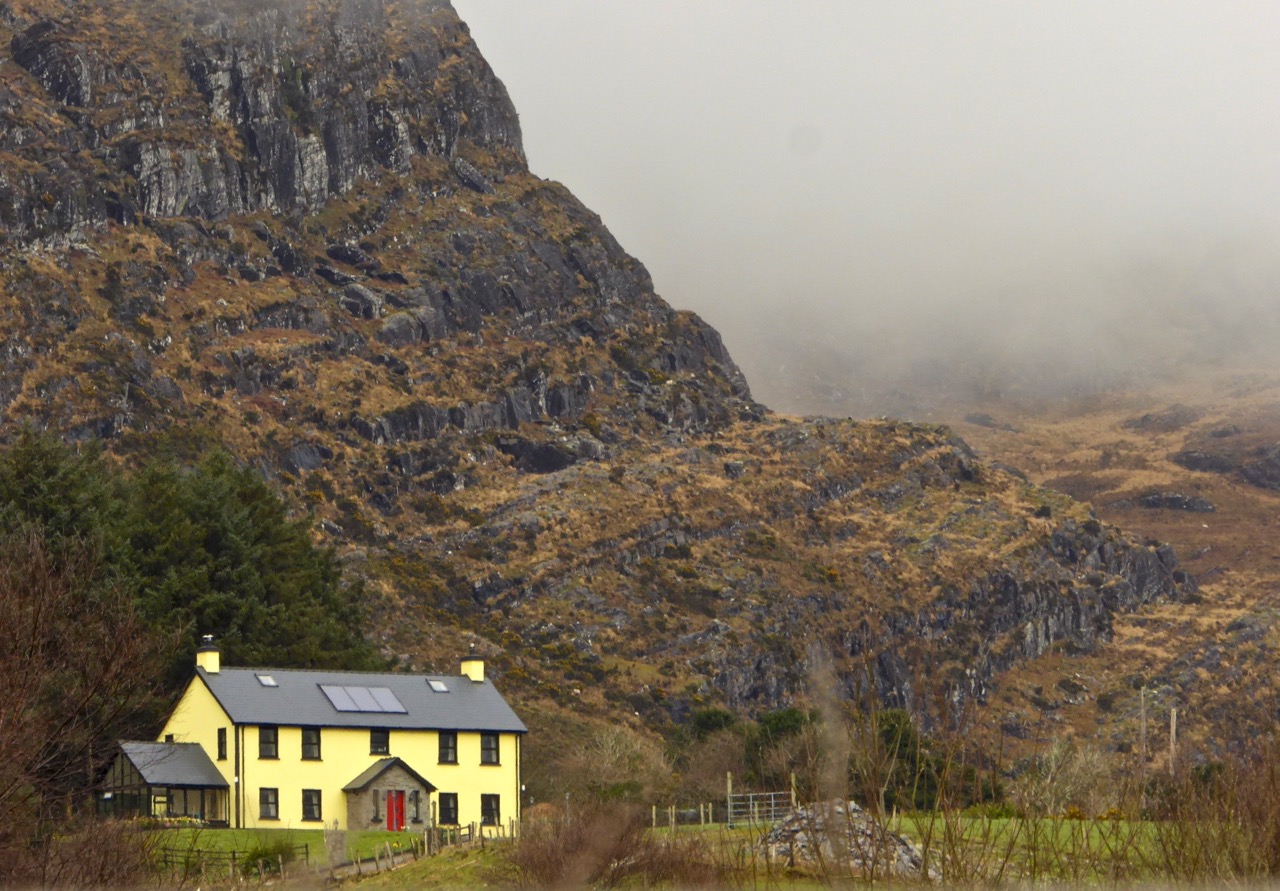
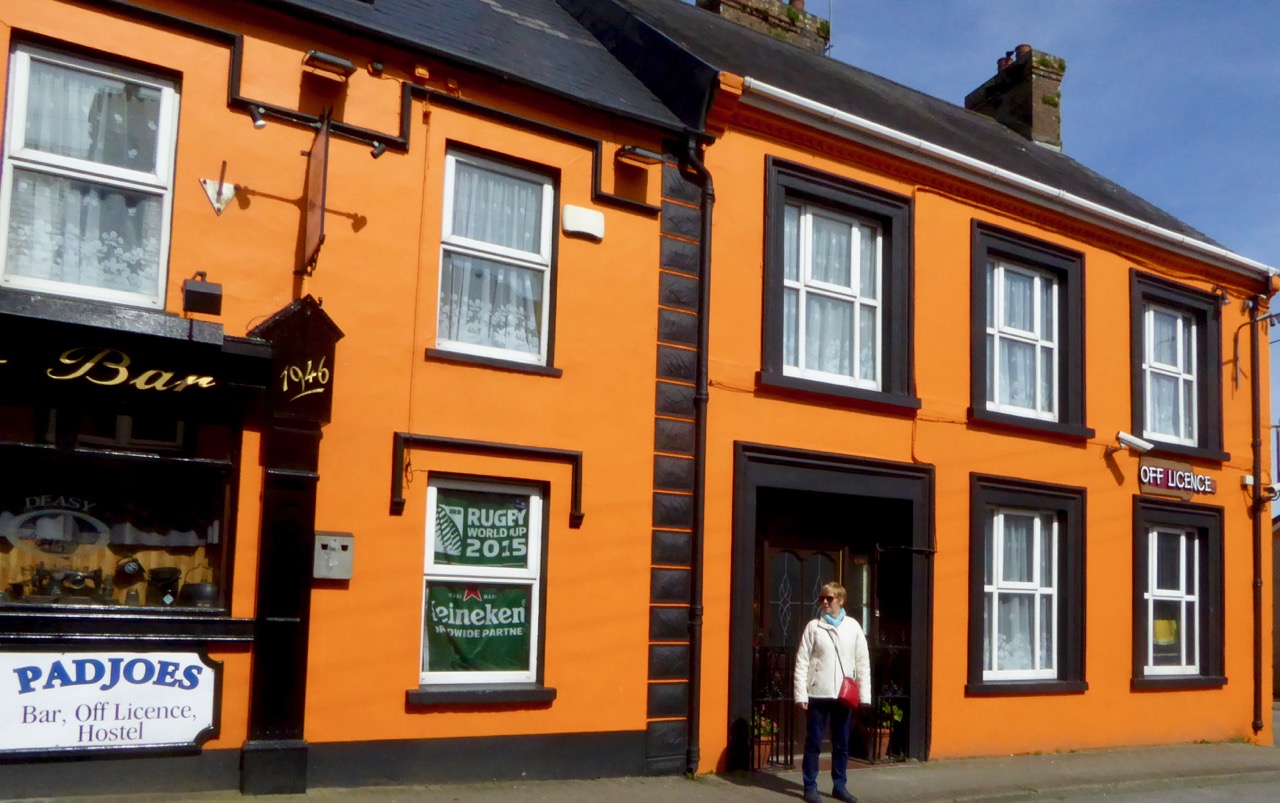
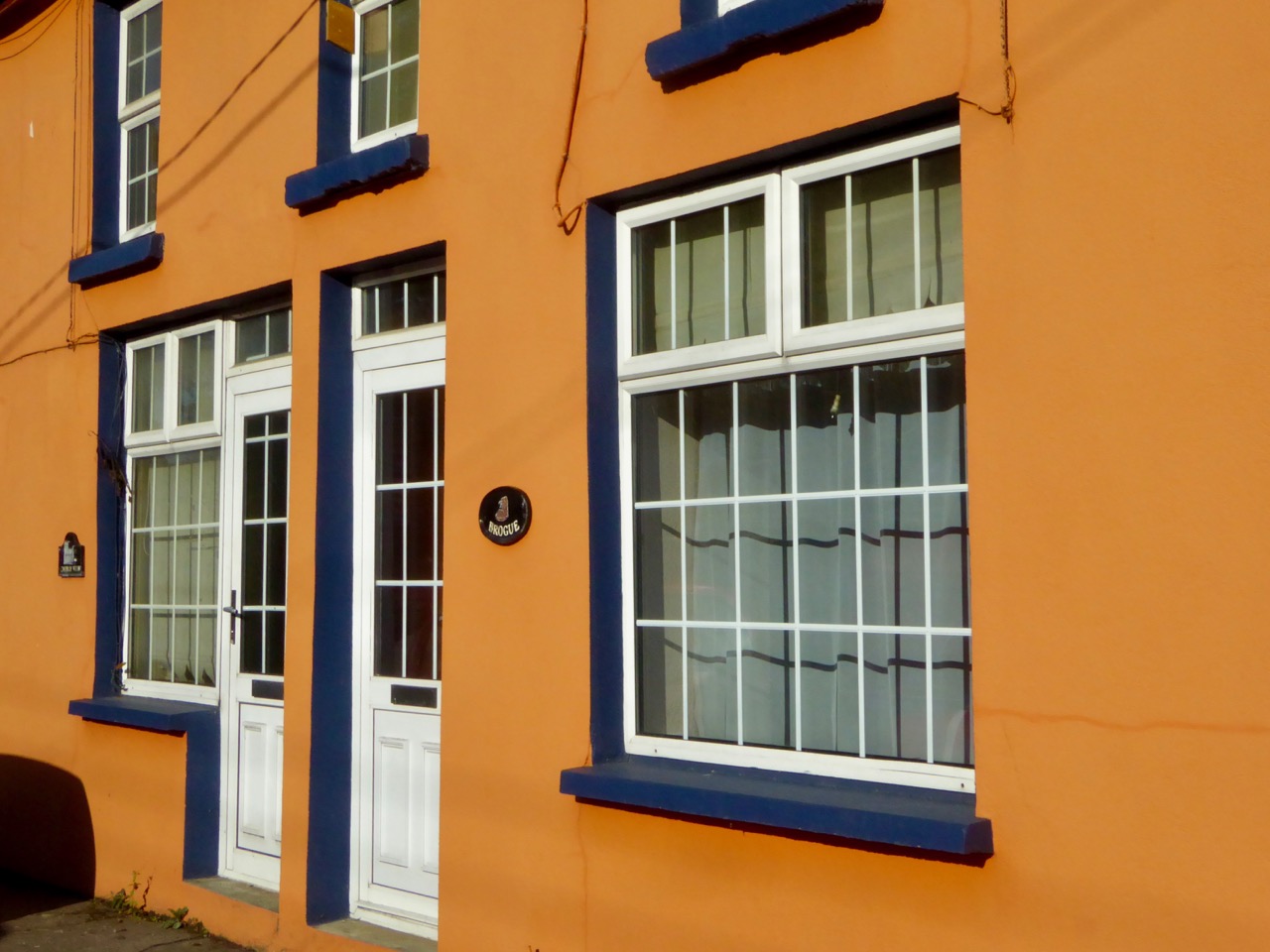
We’ll start with the orangey ones (except I couldn’t resist heading off with this gorgeous house on the Beara Peninsula). Orange is a startling shade but also surprisingly sophisticated.

Timoleague (top) and Leap

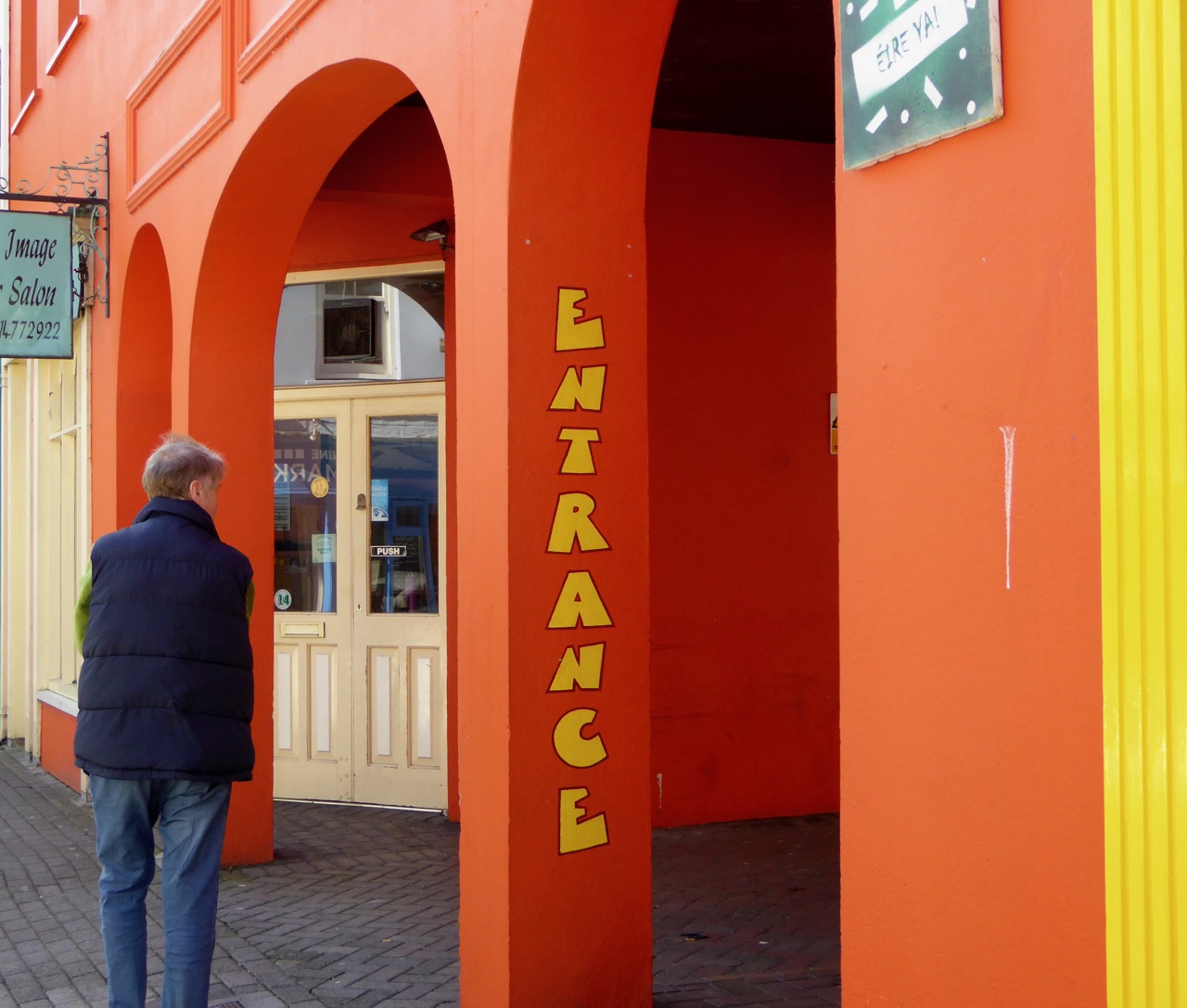
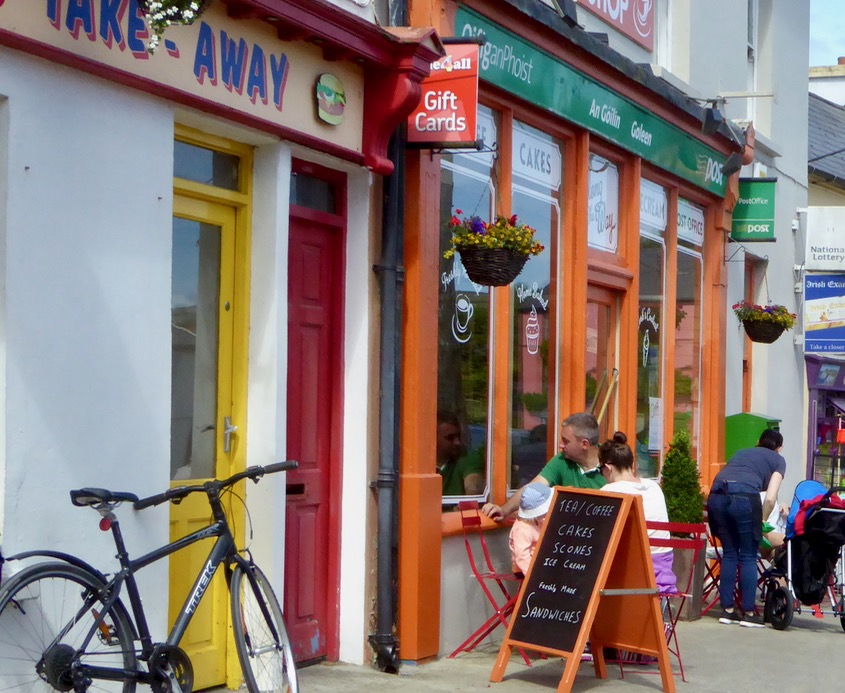
And some times just plain fun. Nothing like a splash of sunshine to brighten your day!

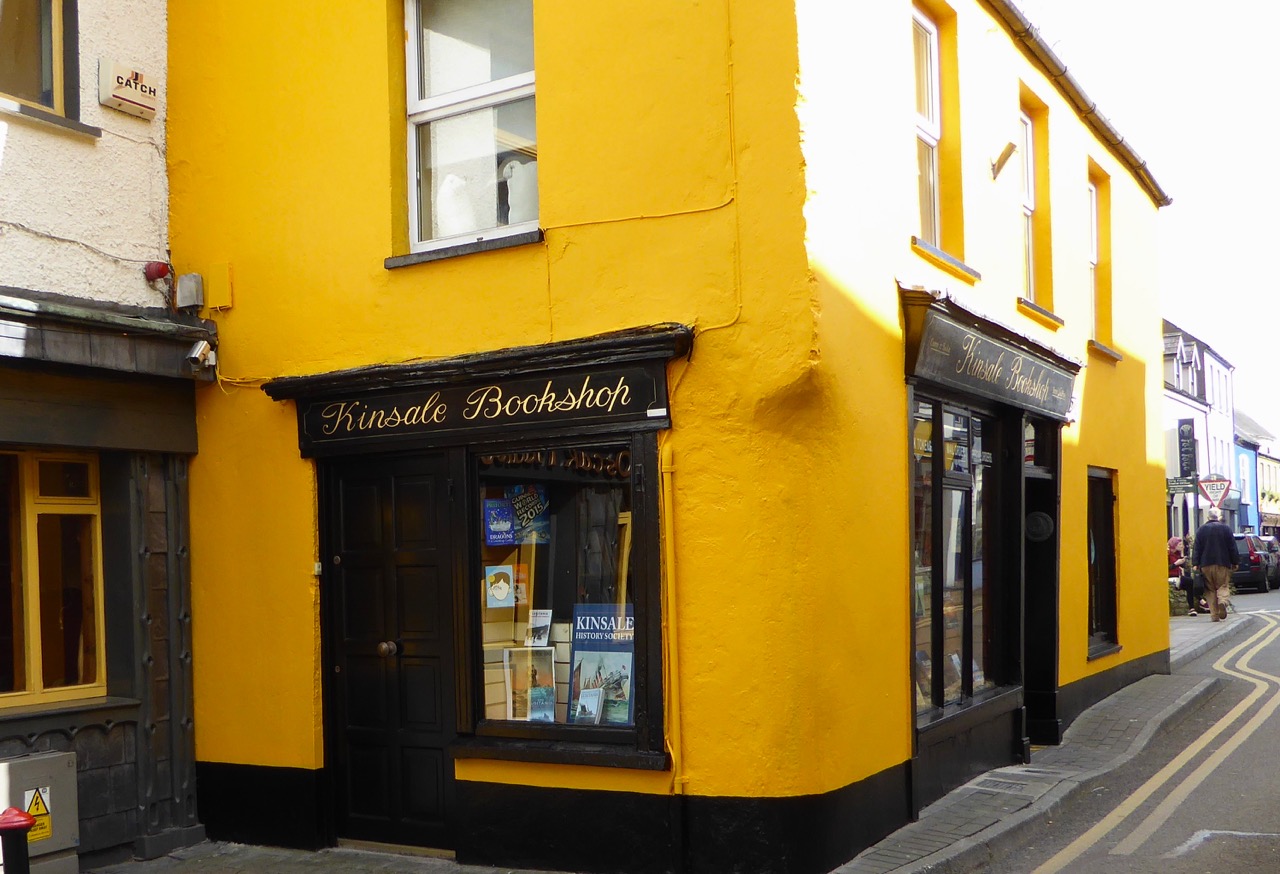
Kinsale (top) and Goleen

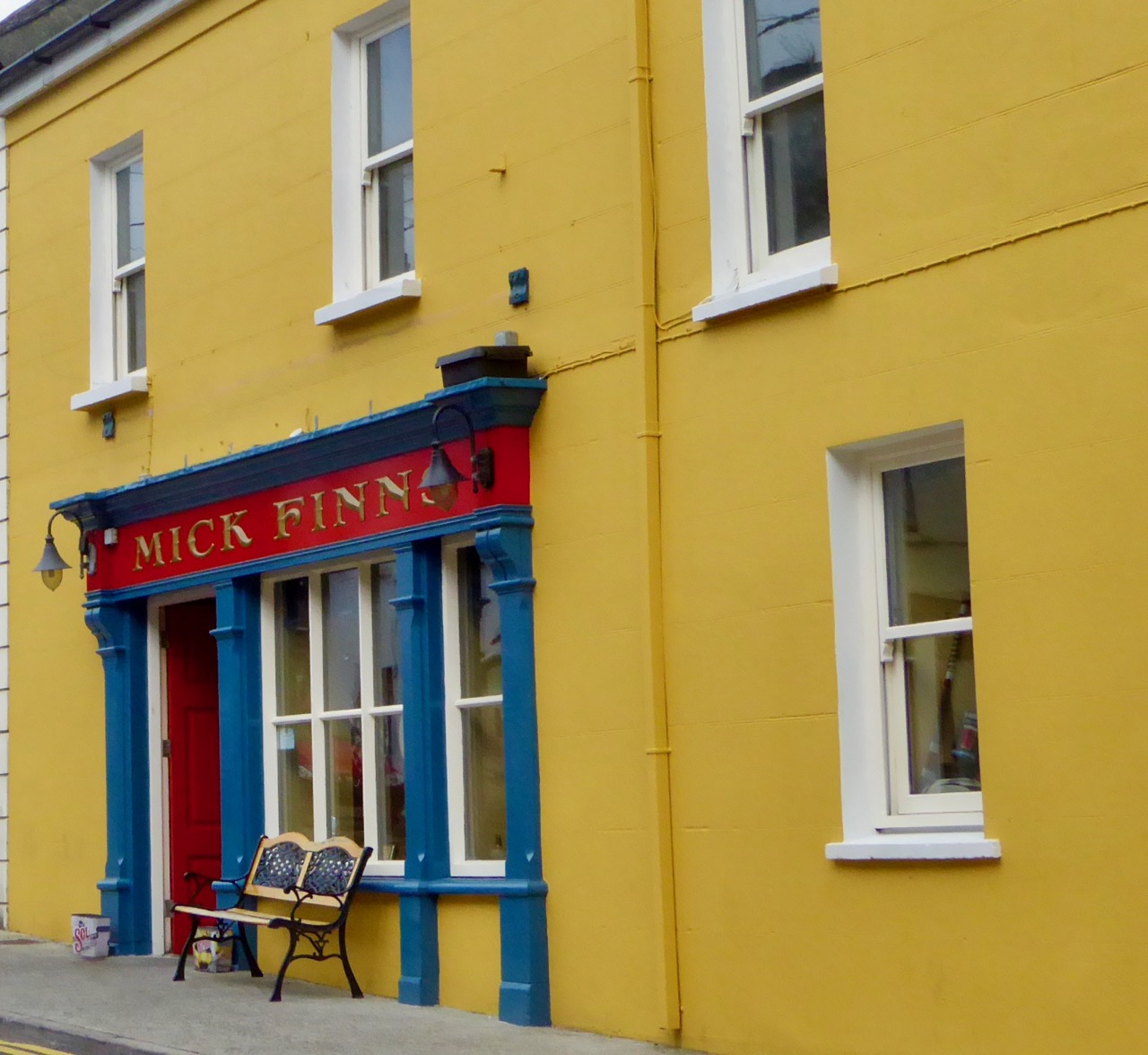
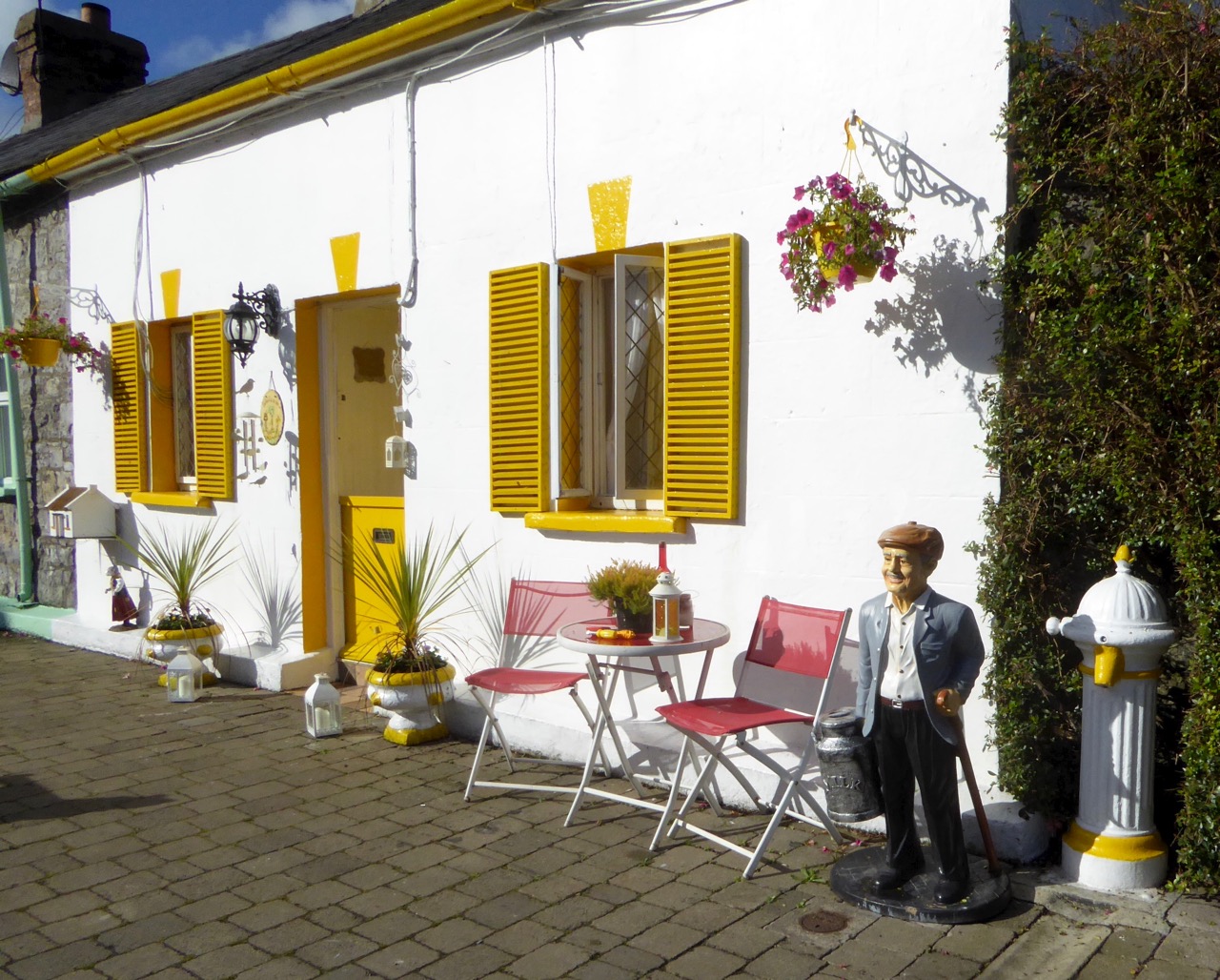
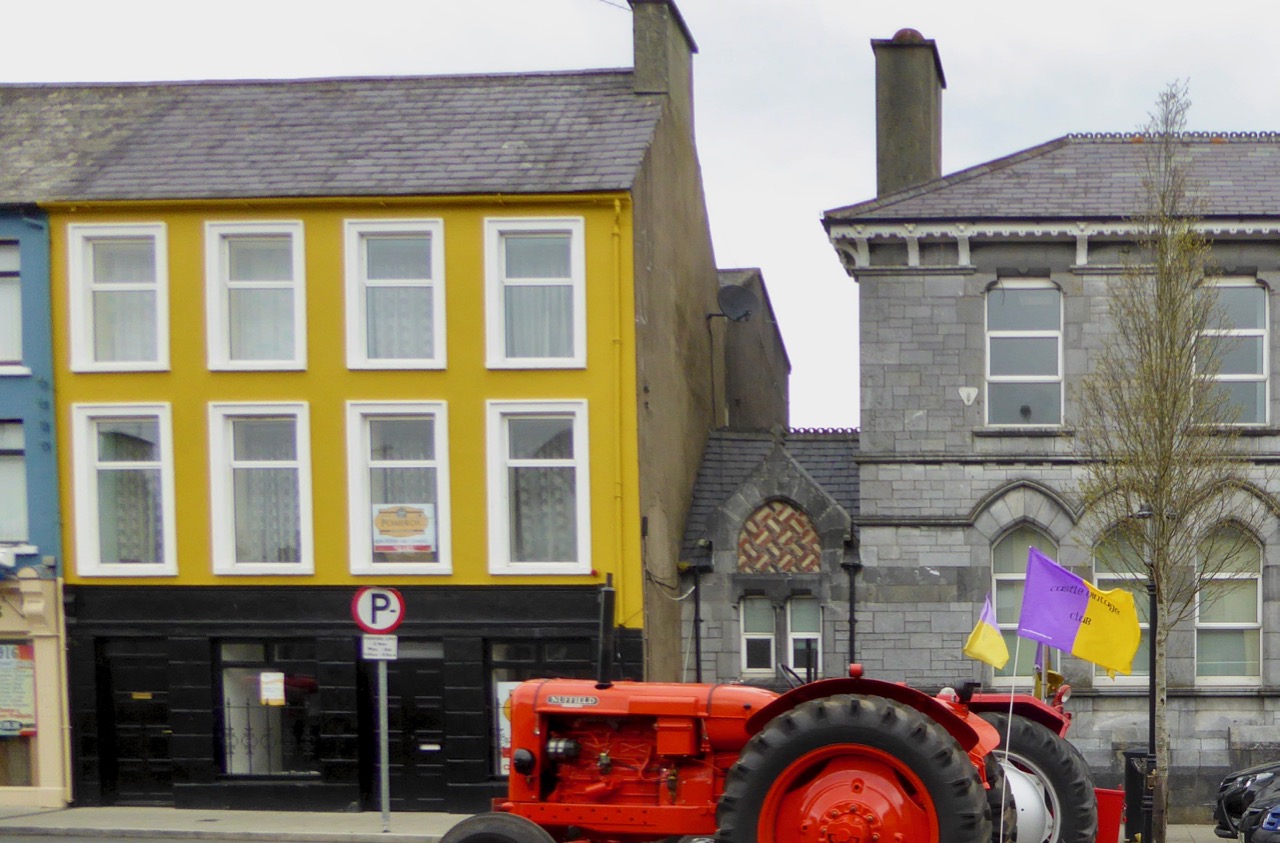
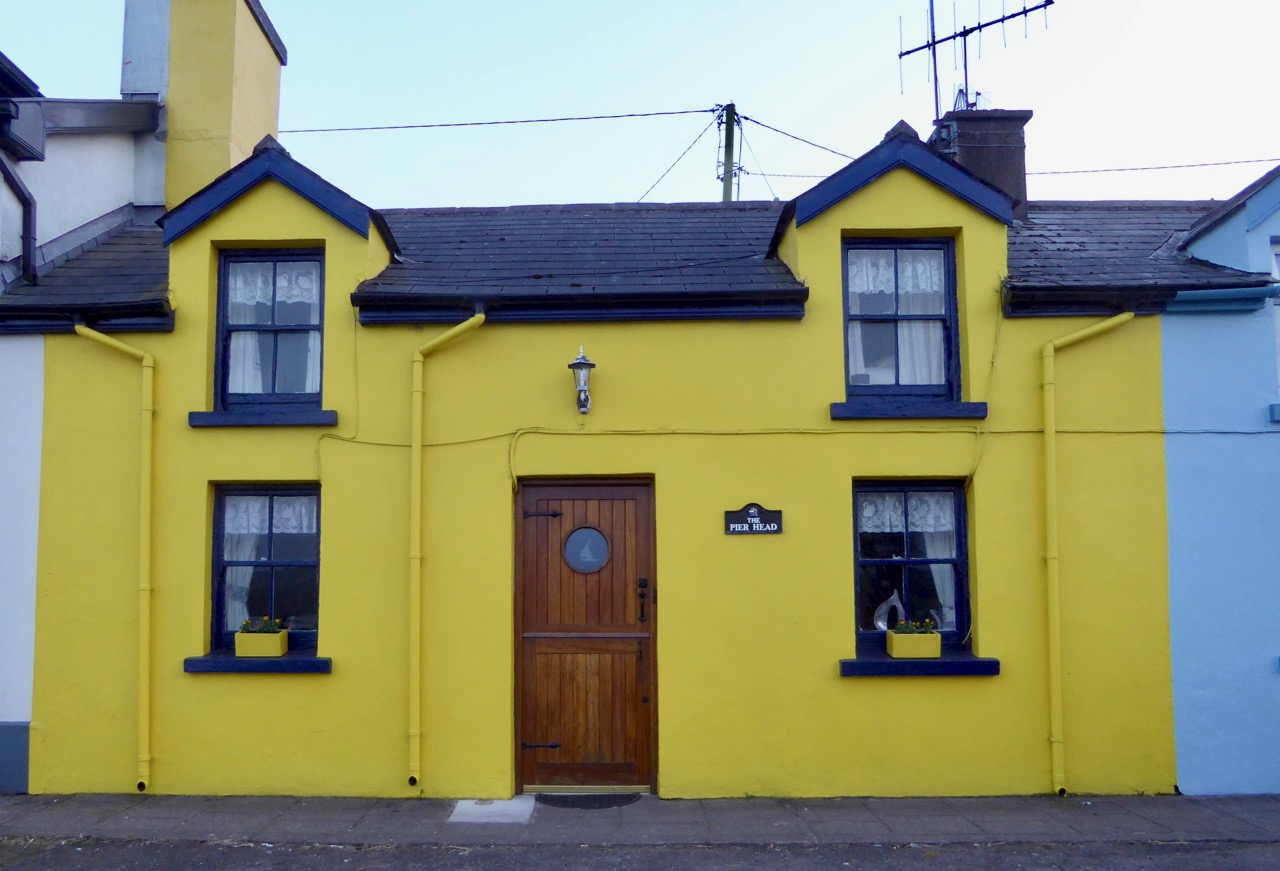
On to the yellows – a favourite of many, it seems, both shop-owners and householders.

Kinsale, Clonakilty, Kilmallock

Depending on the trim, yellow can seem quite electric. I love this shop in Millstreet (above)

This one is in Aghada, East Cork

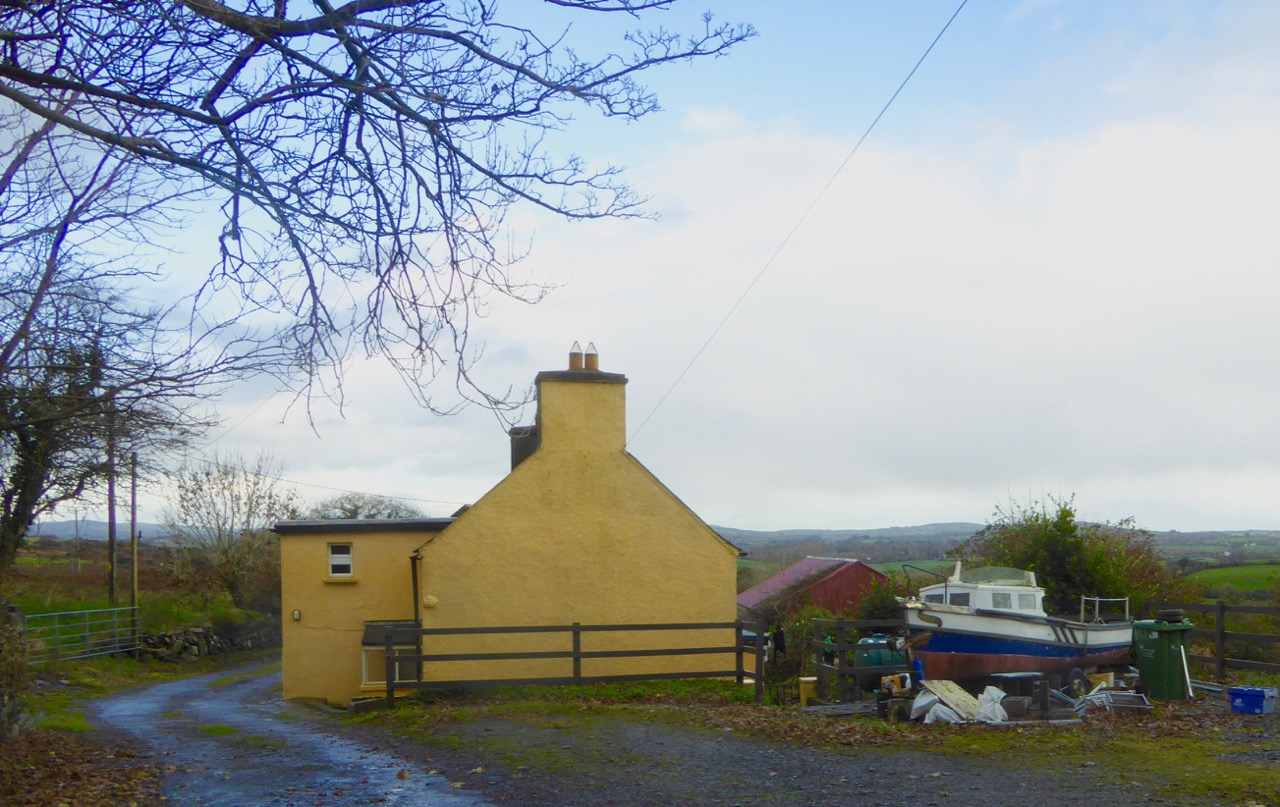
Wonderful collection of colours on and around this farmhouse

More Kinsale

Eyeries, on the Beara, is one of the most colourful villages in Ireland. It’s where you’ll find the rainbow

The Ludgate Centre, in Skibbereen. It’s just as colourful inside

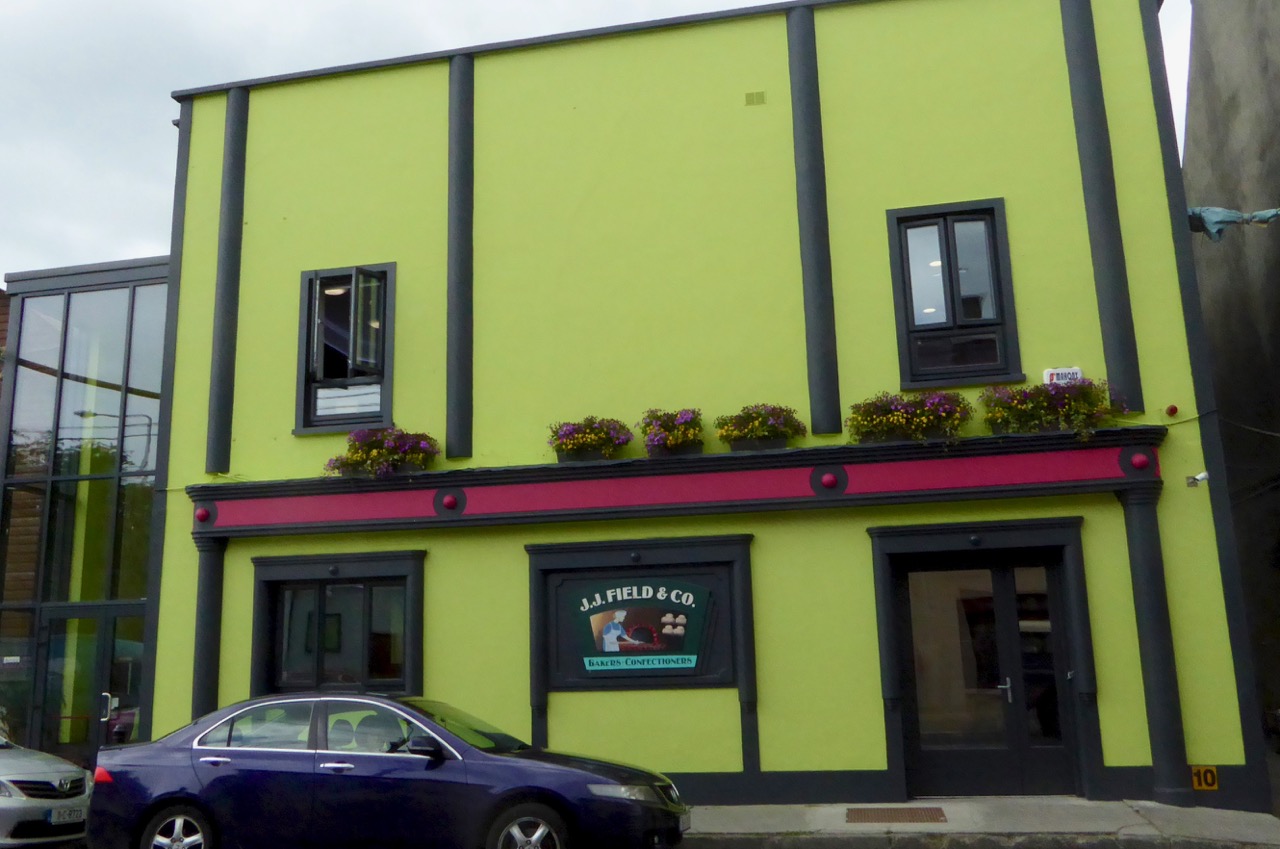
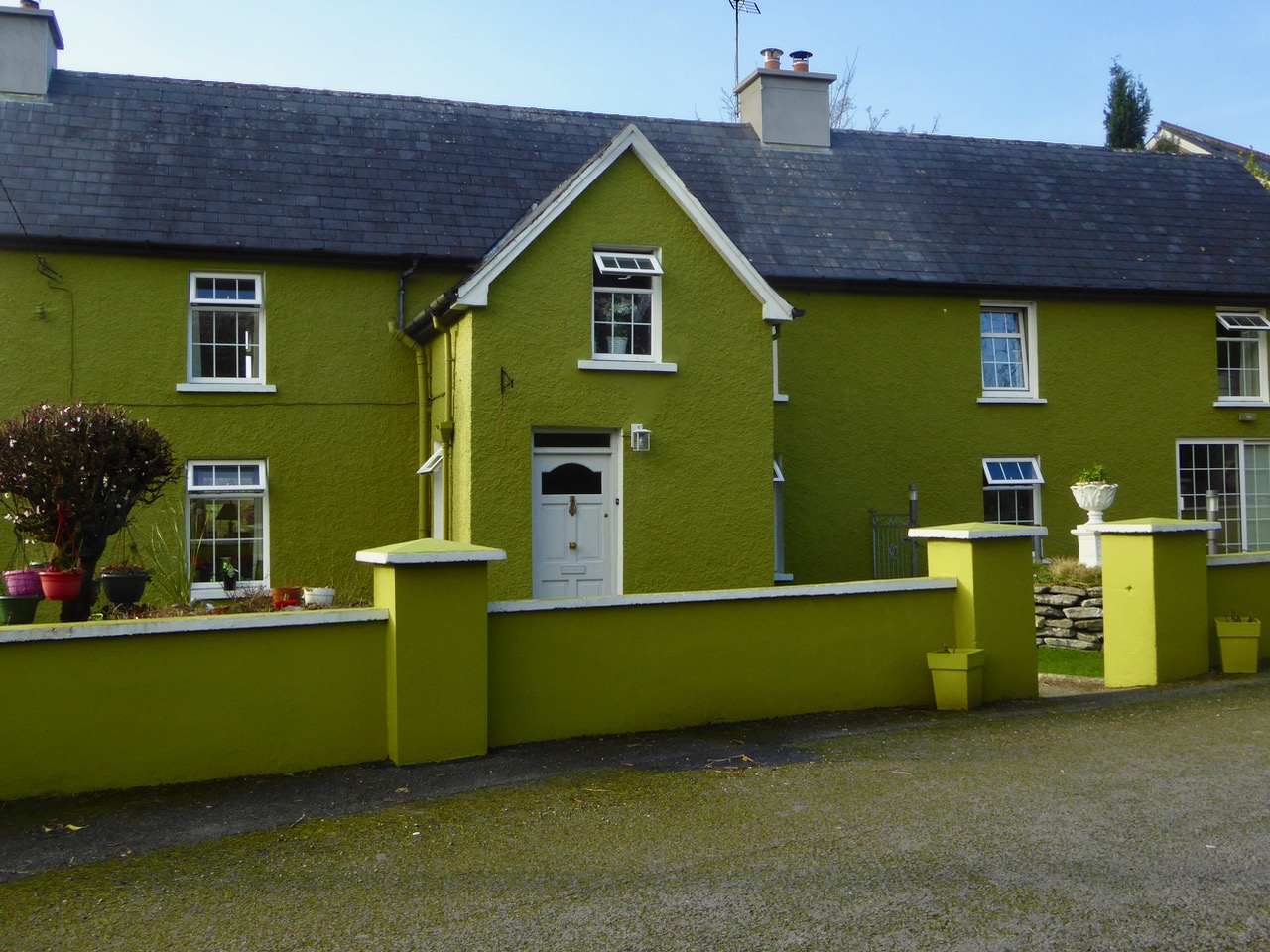
I’ll stop just shy of true greens and leave them and the blues for next time. The limes, above and below, are the exact right transition colour from yellow. Don’t you agree?

A real beauty, in Kilgarvan

And, if you really need your green fix NOW, head over to Robert’s post, Spring Green.