Fortified Manor Houses in West Cork – a Tudor Status Symbol

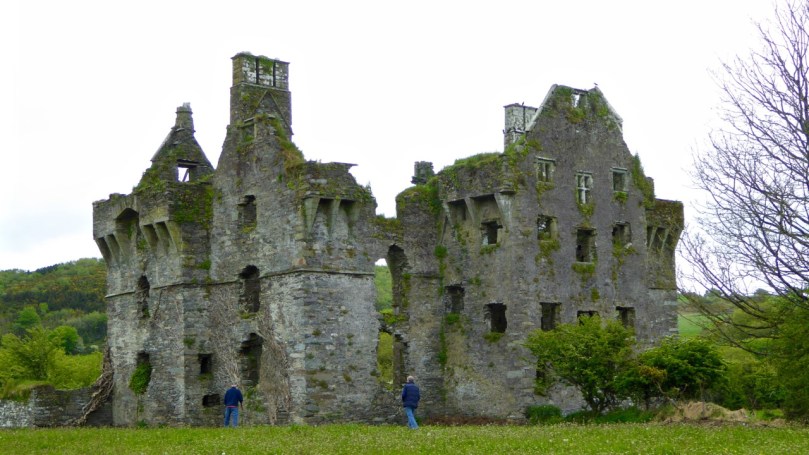
Coppinger's Court, Ballyvireeen, near Rosscarbery

Fortified houses are a distinctly Irish phenomenon. The Tudor period in Britain ushered in a great era of manor house building with many distinctive features. But England was a peaceful place – the owners of these great houses did not expect to be attacked. Tudor Ireland was a very different environment: life was still dangerous and conflict between the native Irish and the planter class, or between Irish clans, was common.

Machicolations at Coppinger's Court

Fortifications at Coppinger’s Court – projecting machicolations

Up to the end of the 16th century the castle/tower house was the residence of choice of the powerful – a tall stone keep mainly focused on defensive features and horribly uncomfortable to live in. (See Illustrating the Tower House for a complete run-down on tower houses.) The new manor houses emphasised the horizontal rather than the vertical, and were built with comfort in mind. However, they incorporated some of the defensive features of the tower houses – they were “fashionable but defendable.”

Mullioned windows

While tower house windows were notoriously tiny, they became much larger in the new manor houses

In Ireland they represented

a public display of power and wealth…[and] a long-term investment in their owner’s regional future and were monuments to an aspiration for an English and Continental house style suited to local Irish conditions. On a basic level the construction of a fortified house represented the owners’ desire to modernise and Anglicize.

This quote and much of the information that follows are taken from The Fortified Houses of County Cork: Origin, Fabric, Form, Function and Social Use of Space, by Joe Nunan, who has generously made it and related material available on his website.
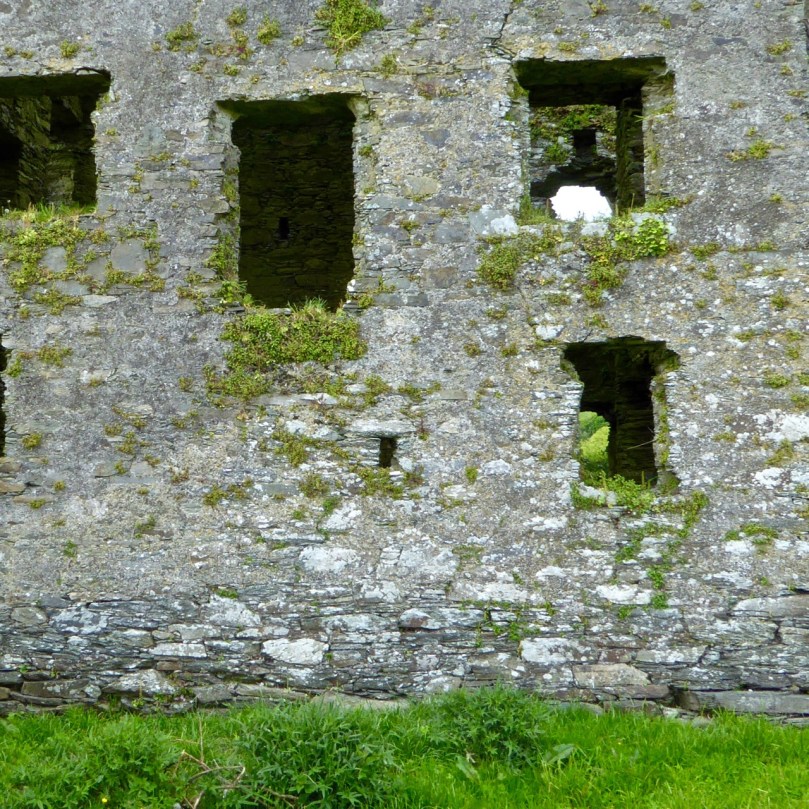
Gun loop at ground floor level, Coppinger's Court

At Coppinger’s Court, a small gun loop in the wall among the large windows

Fortified houses were built of stone but unlike tower houses all internal floors, stairs and partitions were of wood. Defensive features included machicolations, bartizans, wall walks, gun loops, corner towers or wings to provide for flanking fire. They were built starting about 1580 up to about 1650, in a style generally known as Elizabethan.
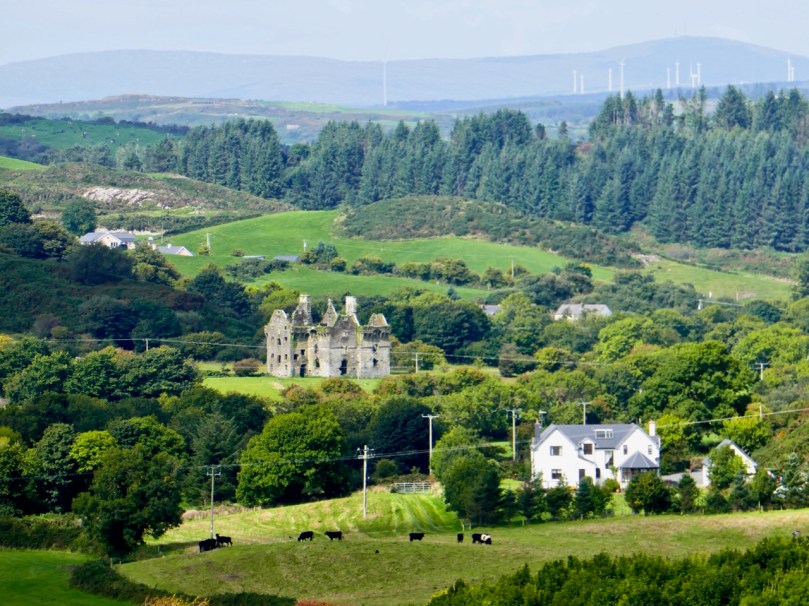
Coppinger’s Court marooned among the fields and modern houses, near Rosscarbery. Walter Coppinger had a vision of a large settlement along the Roury River here, but it never came to fruition

There are four surviving fortified houses in West Cork (although Joe Nunan would include Baltimore Castle as well). The most impressive is Coppinger’s Court, in Ballyvireen townland near Roscarbery: indeed it is one of the most magnificent examples of this type of dwelling in Ireland. Some of the mullions remain in upper windows, and a sharp eye will spot gun loops in the outer walls. The machicolations are particularly fine, with impressive cut stone supports. This was the home of the infamous Sir Walter Coppinger, whose plan was to build a complete settlement around him in this lovely spot on the banks of the Roury River. He was a despot who got rich through clever manipulations of mortgage documents and he was said to hang his enemies from one of his windows.
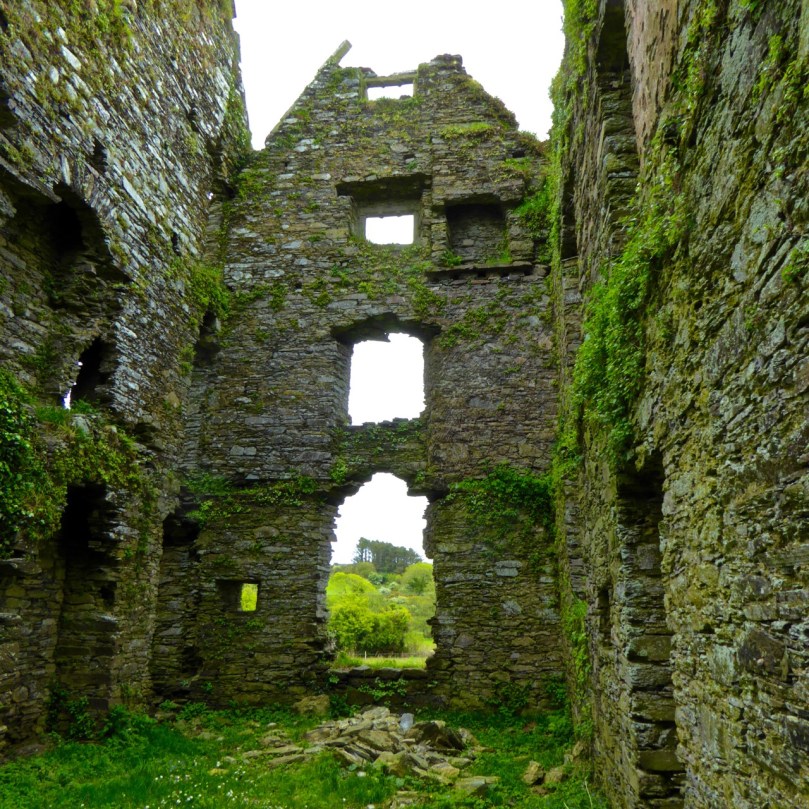
The chimney on top of this wall has fallen - note the pile of stones on the ground.

The pile of stones in the foreground is the remains of a fallen chimney

The house was so awe-inspiring in its time that the legend developed that it had a window for every day of the year, a chimney for every week and a door for every month. The house was eventually attacked and ransacked in 1641 and has sat in ruins ever since. Sadly, one of the magnificent chimneys fell down in the storms of early 2014. Evidence of a bawn wall remains, with possible outdoor cooking areas.
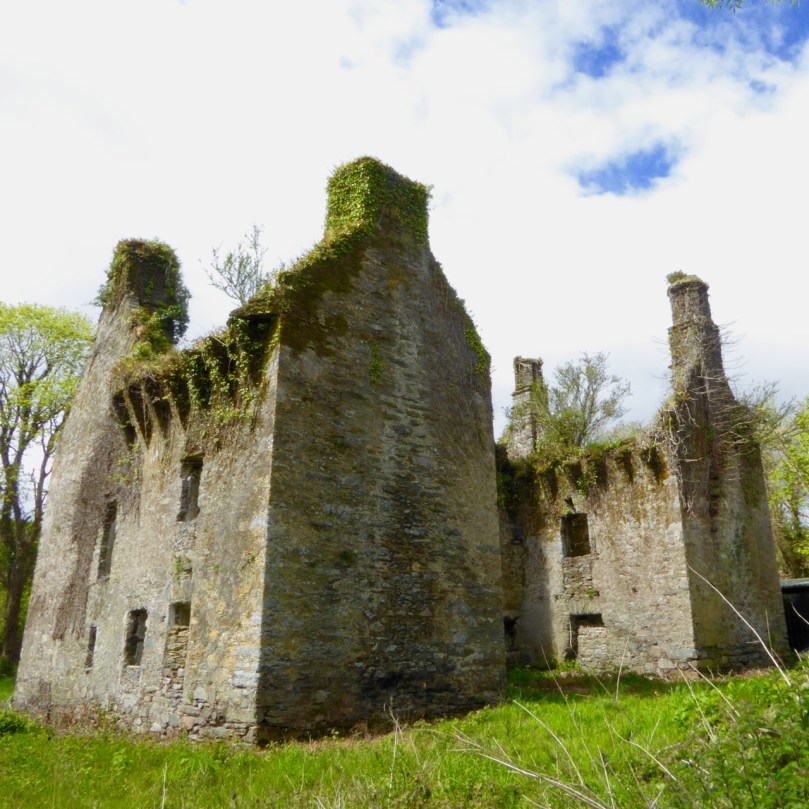
Gearhameen - a U shaped plan

Geerhameen Fortified House, also known as Coolnalong. This view shows the U-shape design

The fortified house at Gearhameen near Durrus, built by the MacCarthy Muclaghs, provides evidence of the comfort that these new ‘castles’ provided. The household work was done on the ground floor – large kitchens contained huge fireplaces, and in this house we can see the main kitchen fireplace had a bread oven to one side and a slop hole for sweeping out leftovers to the pigs (see below), who must have been in an attached pen (the smell!).
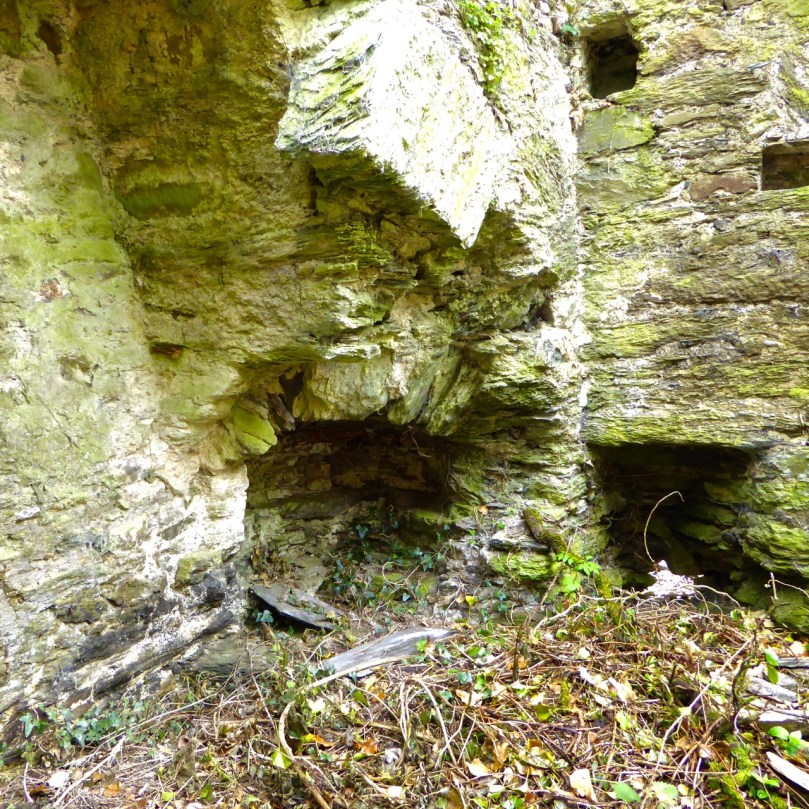
Large ground floor fireplace with bread oven

The first and second floors have large fireplaces, with magnificent herringbone chimneys still intact (and hosting nesting choughs).

Rather than the machicolations we see at Coppinger’s Court, corbels on the outside walls probably supported wooden or stone platforms.
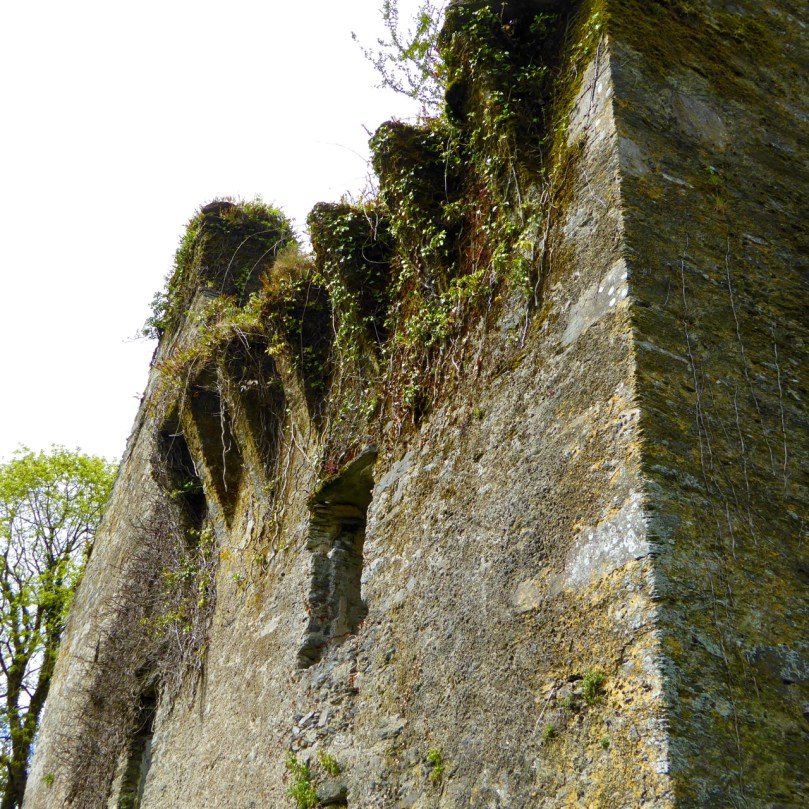
Corbels supported a platform for defenders

Like Coppinger’s Court, the outer walls still stand to their full height, but the loss of a keystone above one arch, and the consequent development of a large crack above it (below), bodes ill for that section of the wall.
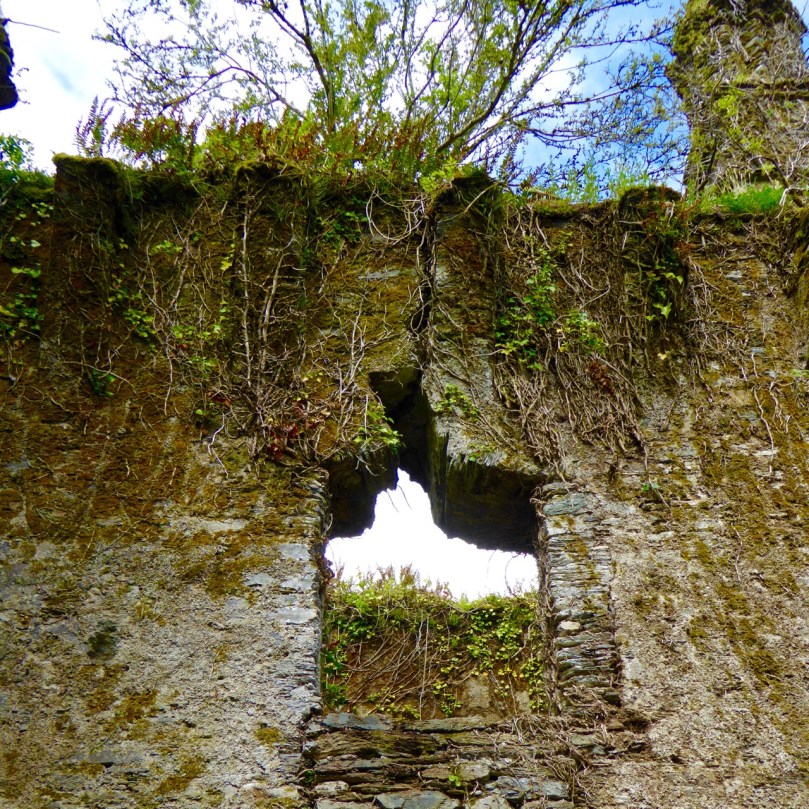
Missing keystone

The house at Reenadisert, near Ballylickey, (below) has been built onto and within over the centuries, serving as a modified dwelling place and as farm buildings. It was the stronghold of an O’Sullivan.
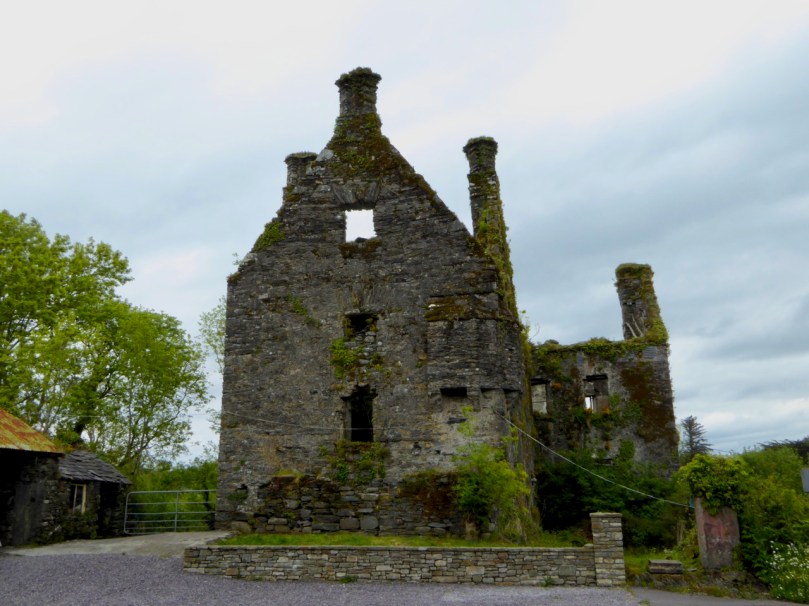
It is in a very ruinous state inside – the eeriness is enhanced by an enormous crows’ nest that has fallen from inside one of the chimneys to rest on the ground. There is evidence of a basement but this cannot be accessed.
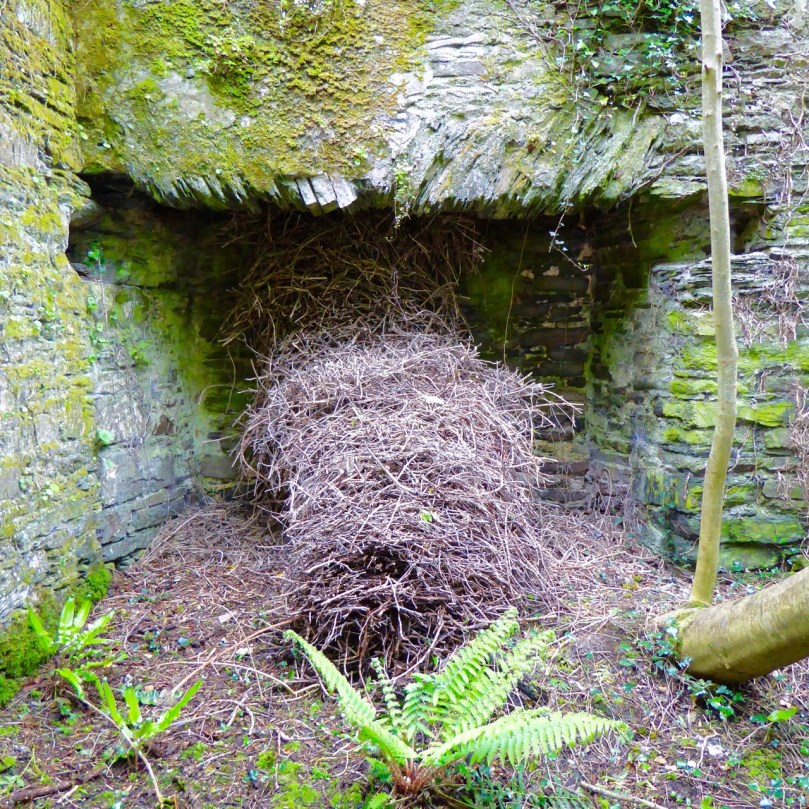
Fallen nest

A corner tower sports an impressive bartizan (corner machicolation).
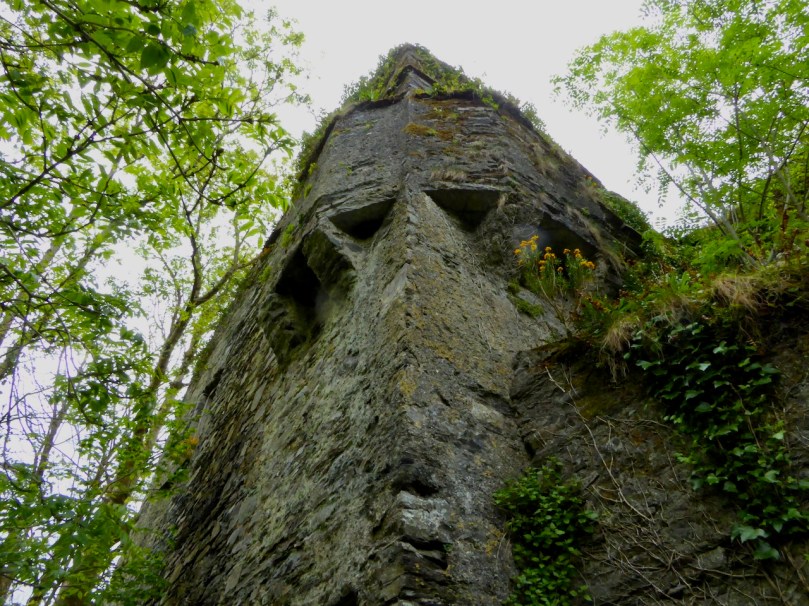
That this house is still standing is something of a miracle. It is on the same land as a ruined hotel and Celtic Tiger-era abandoned housing project and I cannot find out any information about its ownership or future.

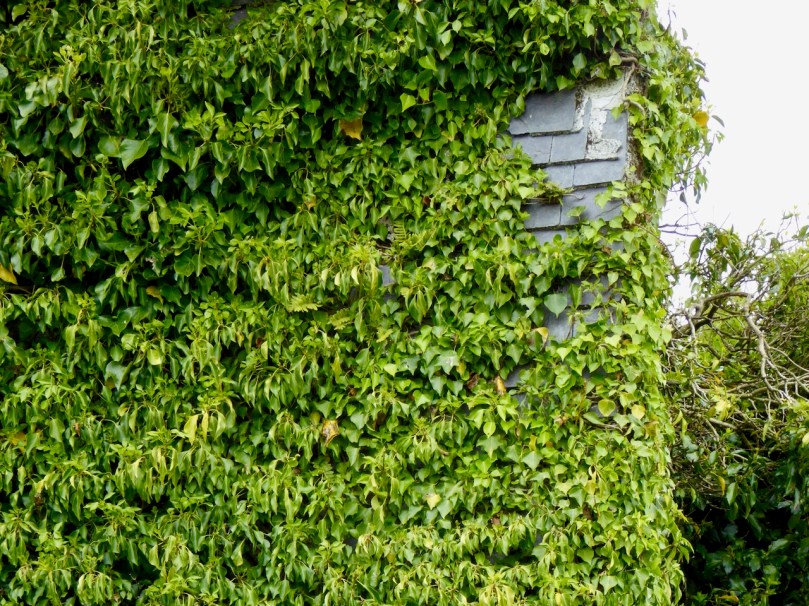
The final house (below) is at Aghadown, once home to the Becher family, and consists only of one wall with attached towers. Ivy has threatened to take over most of it – I love Leask’s description of ivy – “destructive green mantle beloved of the sentimentalist.” The house occupies high ground and once had a commanding view. Nearby are the remains of a belvedere and pleasure garden that once formed part of the demesne. Have a look at Capturing the View: Belvederes in West Cork for more on this feature of Aughadown House
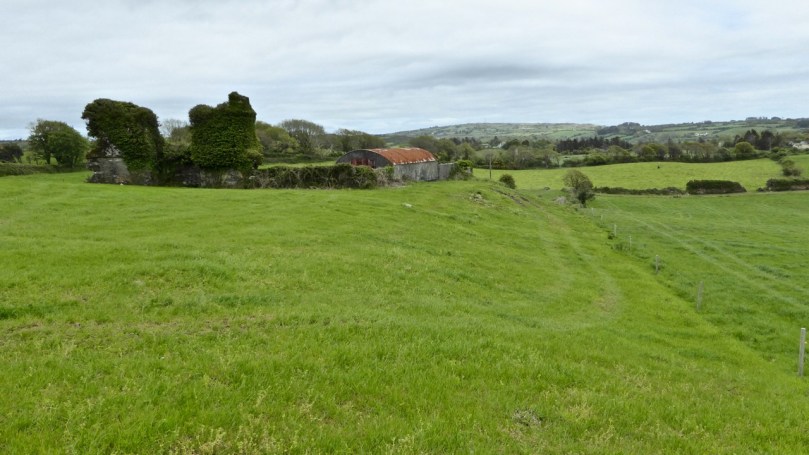
Aghadown Fortified house occupies high ground with a commanding view

Through all that ivy one can make out traces of the slate that once hung on the wall above the ground floor, the outline of corbels at roof level, and a string course between the ground and first floor.
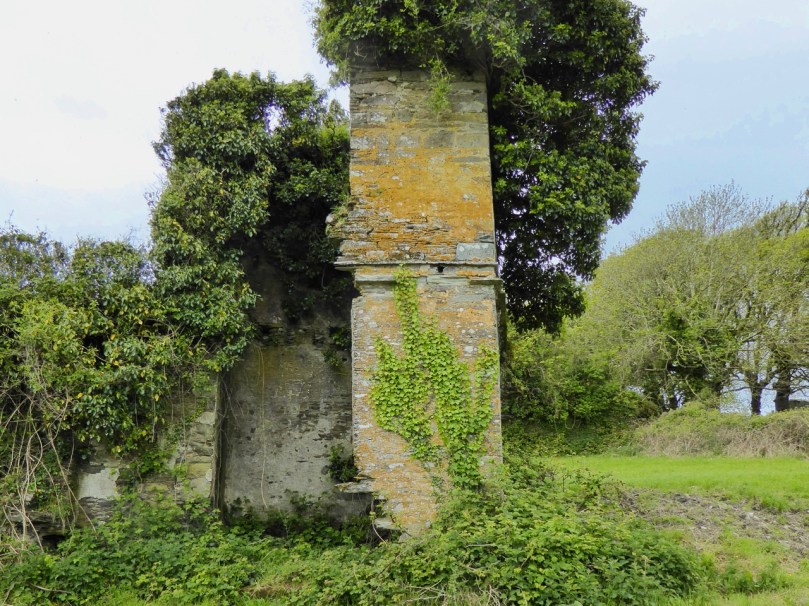
One of the Fastnet Trails goes past Aughadown House now, and there is a neat little plaque giving more information about the house and the Bechers.

Joe Nunan provides useful summations of Irish fortified houses. Among other points, he says the following:

The fortified houses built in Co. Cork had a unique Irish architectural quality and a distinct southern English look and feel; the result of contacts built up between both regions, politically through plantation-immigration and economically, through trade with the port and fishing towns of Waterford, Cork, Kinsale, Youghal and Baltimore. The social changes that took place in Tudor England were reflected in architectural form by the elites in that society and it was the latter who spearheaded the Munster plantations. They were noblemen who viewed Munster as another region within a larger England and it was through these individuals that the initial architectural influence of the many gabled, oblong country manors with circular, square, rectangular and hexagonal corner-towers was introduced into Co. Cork.
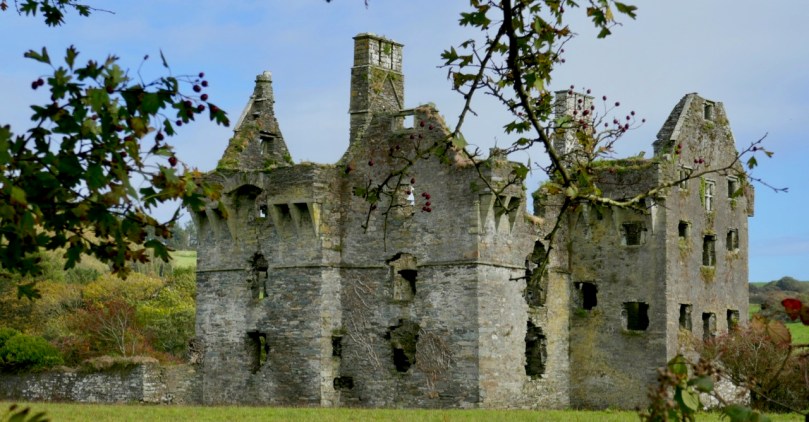
We are lucky to have these fine examples of  fortified houses in West Cork still. However, all of them  are in a perilous state of dereliction. Gearhameen’s owner has tried to stabilise the building and stave off collapse but all of them may eventually succumb to the natural ravages of time. That’s a sad thought.

An earlier version of this post was written in 2015, now edited and updated.

Heir Island Bread School – Revisited

A version of this post was originally written way back in 2013 but guess what? Patrick and Laura are still running their bread school on Heir Island, and are about to add a new one in Wicklow too. This is a live-in-the-memory experience and I heartily recommend it to anyone. Makes a great Christmas present! Check out The Firehouse website for more details and to register your interest – these course sell out fast! The bakery/cafe is now based in Delgany, Co Wicklow, and is a superb, and award-winning, spot for coffee or lunch.

What follows now is the post from 2103, but edited and updated. Apologies for the photo quality, these were my pre-proper camera days. But Robert and I, you will not be surprised to hear, don’t look a day older. Right?
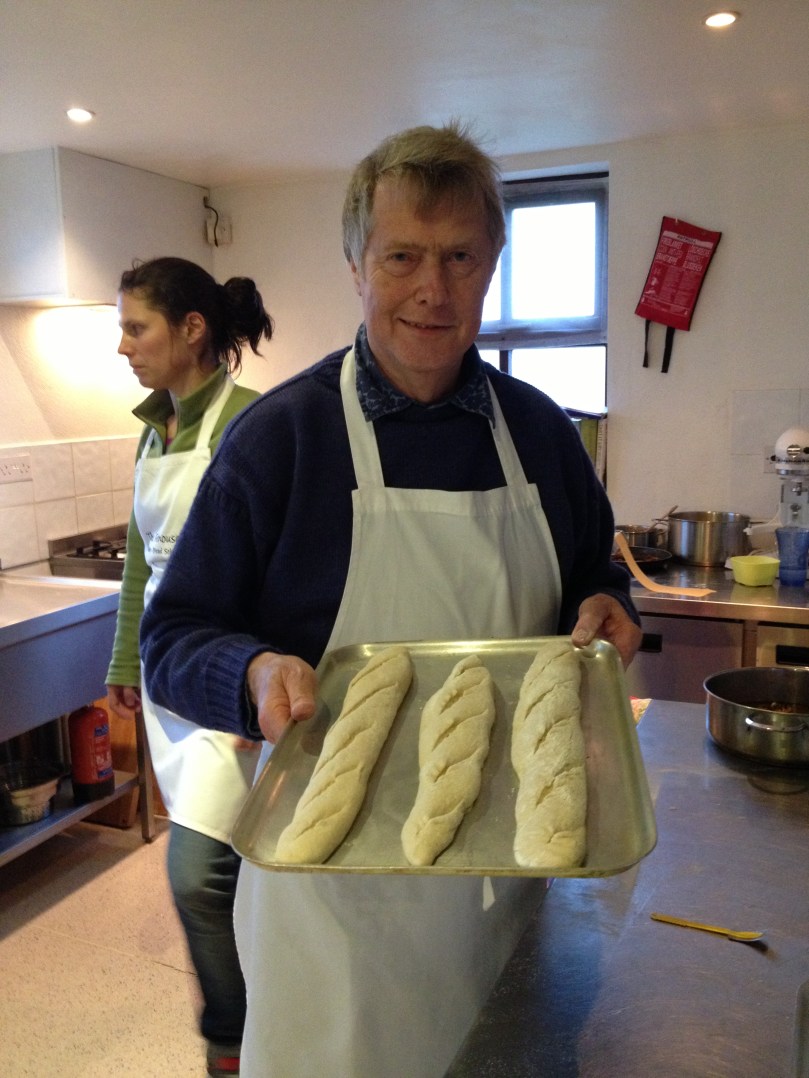
January 2013: We got the most incredible Christmas present from Noah, Robert’s son! It was a day of learning to bake bread at the Firehouse Bakery on Heir Island, about a 20 minutes drive from Ard Glas. While Robert had some experience of baking with yeast, I had none, and considered myself yeast-phobic.

Our day started at 10:00AM with the short ferry ride to the  Island. (For more on Heir Island, see our post Heir Island – a Modern Paradise). We were picked up by Laura Moore who drove us back to the house/school/bakery and plied us with coffee and brownies to get us in the mood. The baker/instructor is Patrick Ryan, who ran his own bakery in Bath, England, and has written the inspirational The Bread Revolution with his bakery partner. He plunged us right into the process by introducing his four students to our bowl of sourdough, explaining what is was and how it worked. Patrick is passionate about sourdough and making real bread and feels many wheat and gluten intolerances (other than Coeliac Disease, of course) may be related to modern mass-baking methods.

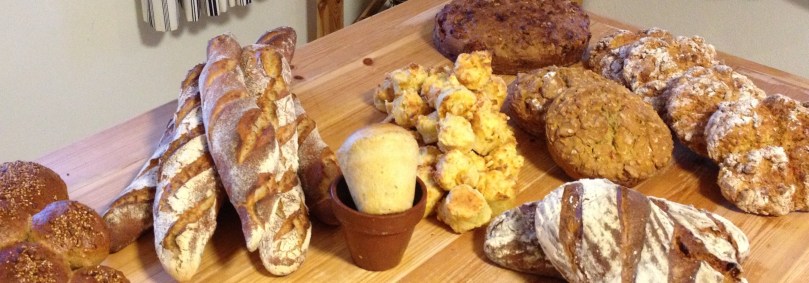
Then it was all mixing and kneading and scraping until we had a loose ball of dough which was set aside to prove while we got on with the next project – in my case a granary ‘bloomer’ and pull-apart buns and in Robert’s some baguettes.

We moved on from there to muffins, flowerpot bread, orange cake, brownies, cookies and soda bread. I thought I was on more solid ground with whole wheat soda bread but this was soda with a twist – each of us made a different version. We made thyme, mustard and cheddar; apple and cider with caraway; honey, blue cheese and walnuts; and roast butternut squash and cheddar and each version took different shapes, including mini-muffin shapes.

All our bread was baked in Patrick’s custom-built outdoor oven, heated by burning logs inside it. At the end of the day we sat around a table eating Laura’s excellent soup and pasta – she had been cooking away all day as we were baking – with samples of our own bread. We divided all the bread between the four of us and headed back to the ferry. We have a freezer full of bread, a fistful of recipes, directions for sourdough starter, a sense of accomplishment, and memories of a warm and friendly learning atmosphere. What I don’t have? Yeast-phobia!

The Enigmatic Bullaun

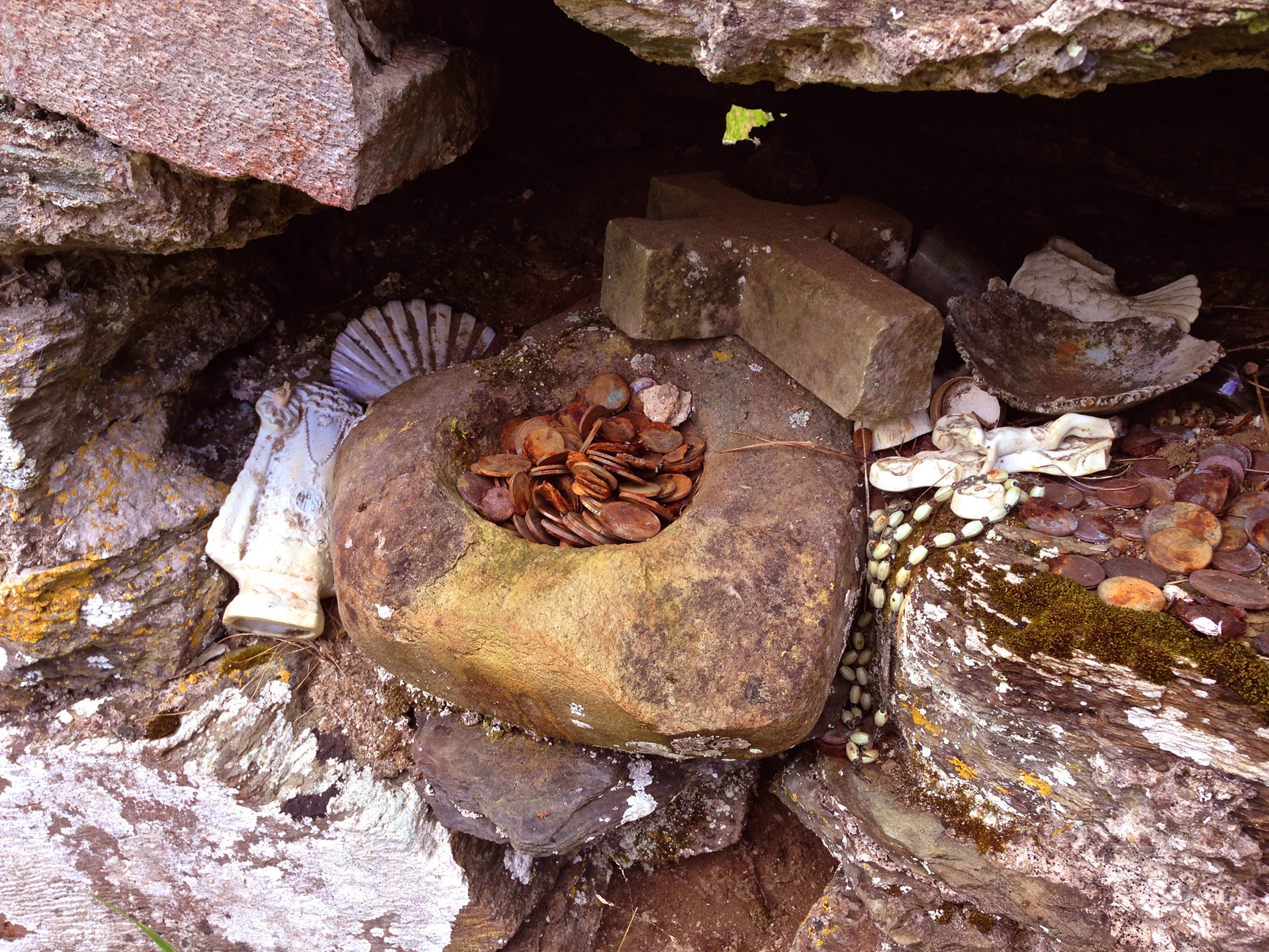
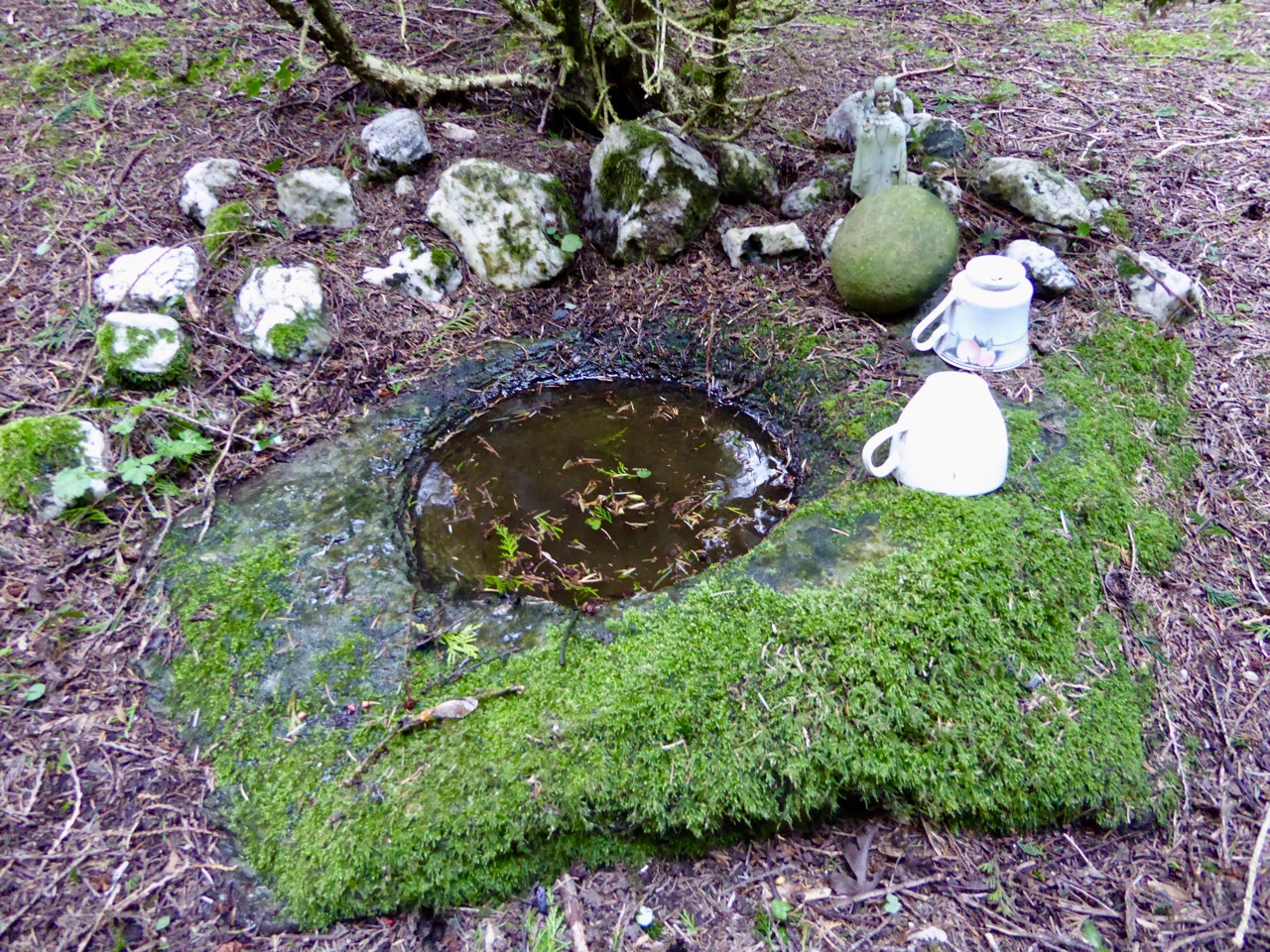
Bullaun Stones abound in Ireland. They are usually found nowadays at sites with ecclesiastical connections, as in the example above at Maulinward, an ancient West Cork burial ground. This association does not reduce or affect their traditional uses – according to folk convention – to cure or to curse. The Irish word Bullán means ‘bowl’ – a water container. At pilgrimage sites, such as St Gobnait‘s, Ballyvourney (below), the bullaun stones often hold quartz fragments or smooth, rounded pebbles – perhaps incised with a cross – which are turned around each time a pattern or procession is completed.

The Maulinward example on the header picture shows how the tradition of making offerings at some of these locations continues to this day. At other sites, such as the one below, the hollowed-out stone filled with rainwater takes on the properties of a holy well, and is visited for cures or simply good fortune.

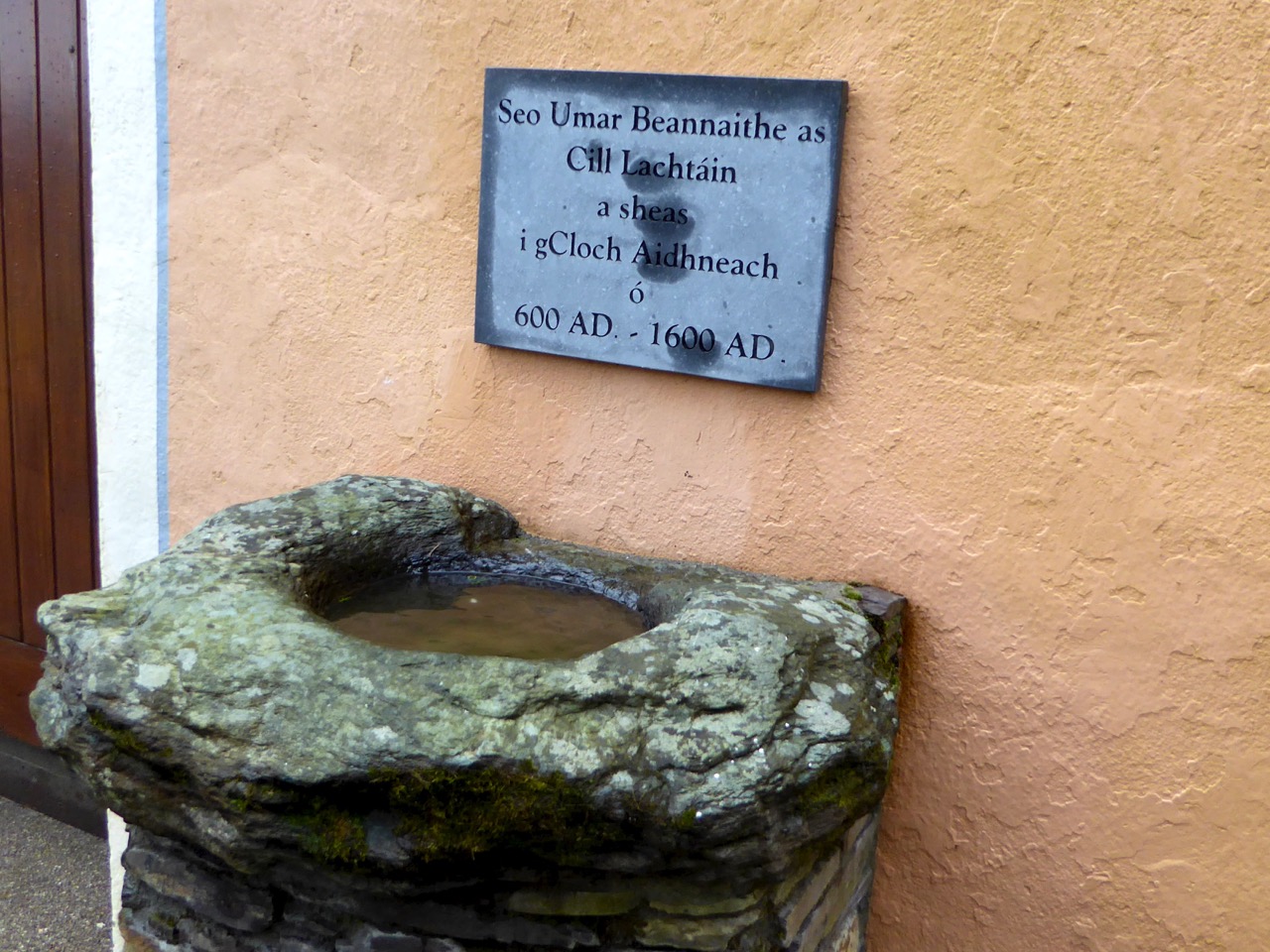
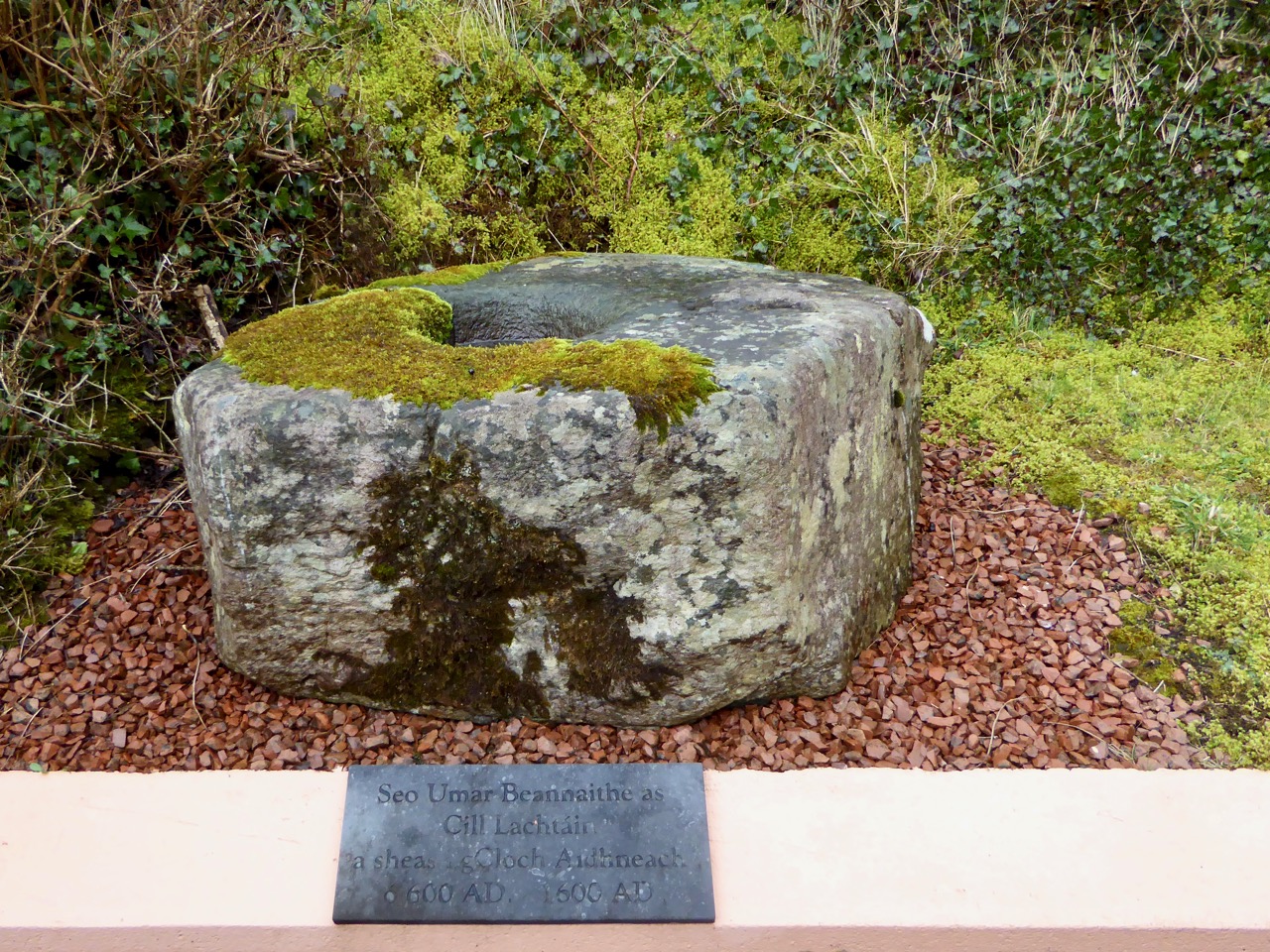
This example, outside the door of the church at Cill Lachtáin, Co Cork seems to have been mounted to perform as a holy water stoup: the plaque reads ” . . . This blessed font of Cill Lachtáin was standing in Cloch Aidhneach from 600AD to 1600AD . . . “ Others resemble fonts and are similarly associated with places of worship. Look at this striking stone from Timoleague Friary, whose purpose – according to tradition – is clearly stated:

In the sixth century, the Council of Tours ordered its ministers ” . . . to expel from the Church all those whom they may see performing before certain stones things which have no relation with the ceremonies of the Church . . . ”  Such an order doesn’t seem to have prevented folk customs of curing continuing into the twenty-first century.

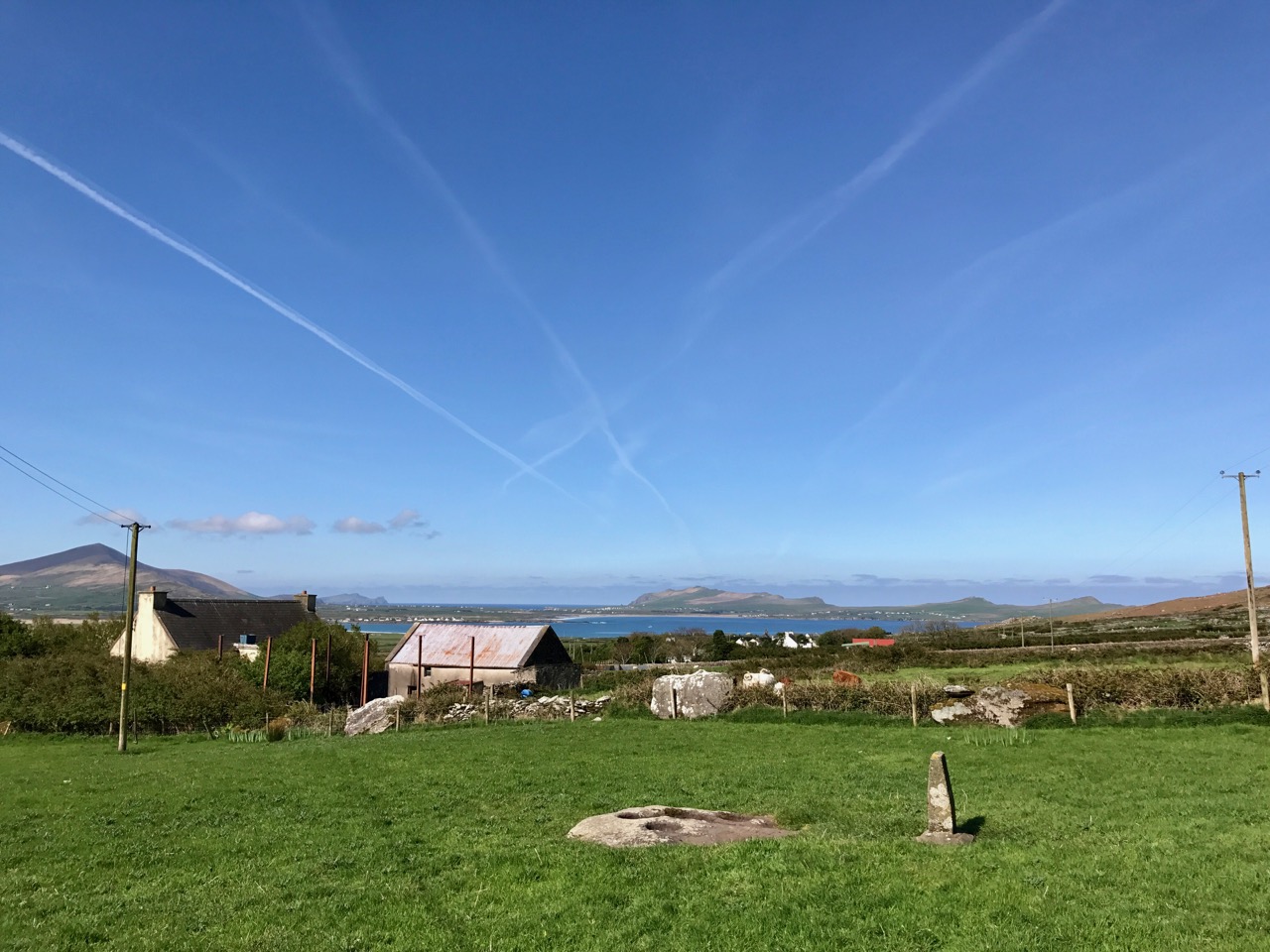
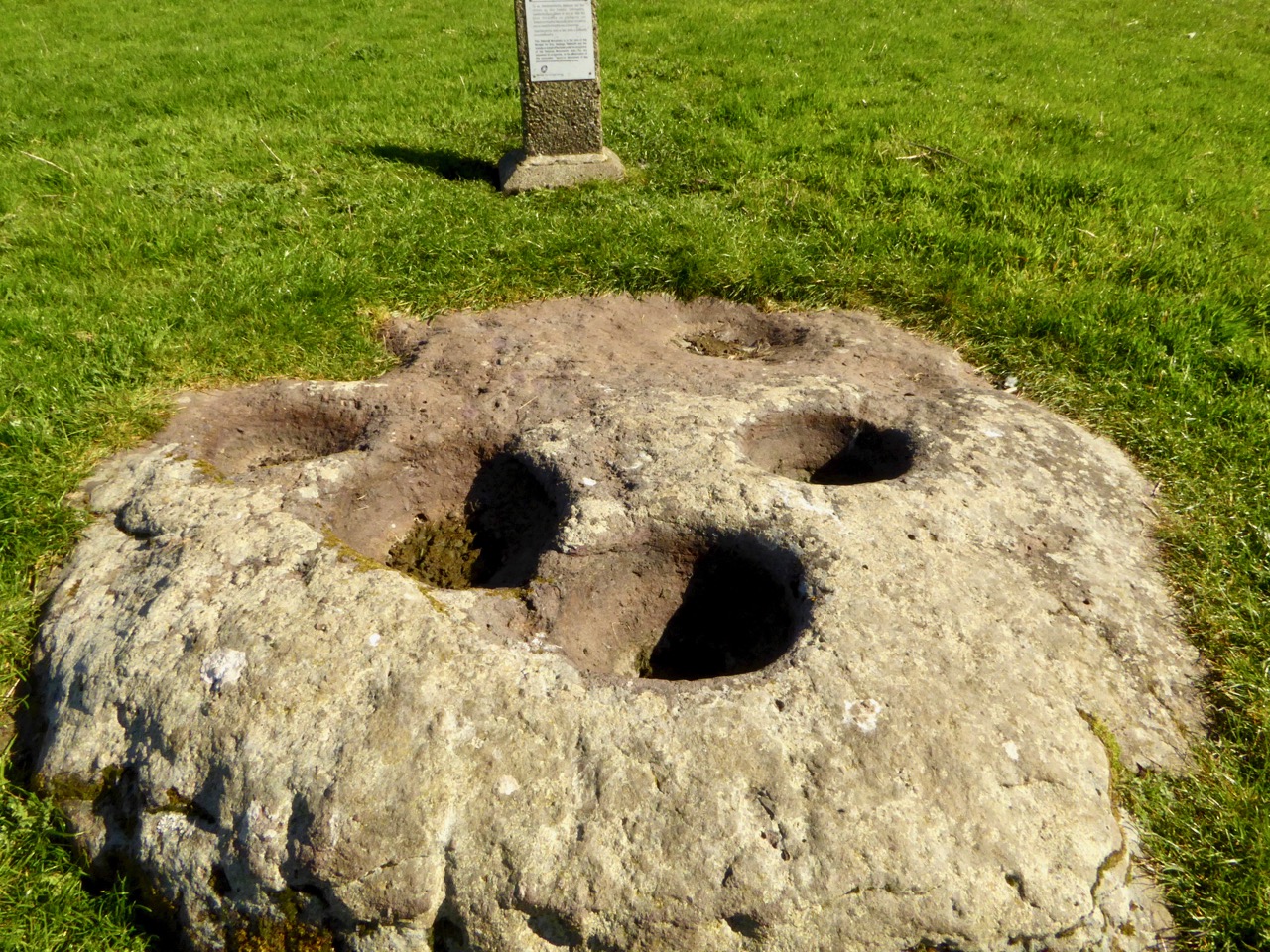
The ongoing use of bullauns as fonts, stoops or holy wells does not explain their original purpose (which is probably pre-Christian: here’s an interesting conjectural world view of the phemomenon), and it’s quite likely that we will never fathom for sure what they were for. The example above, at Kilmalkedar, Co Kerry is as enigmatic as they will get, with its multiple ‘basins’ carved into a large earth-fast boulder isolated in the middle of a field, although not far from a remarkably complex ecclesiastical site. But the one I find the most fascinating can be found along the Priest’s Leap road, a mere few steps away from our own home in West Cork . . .

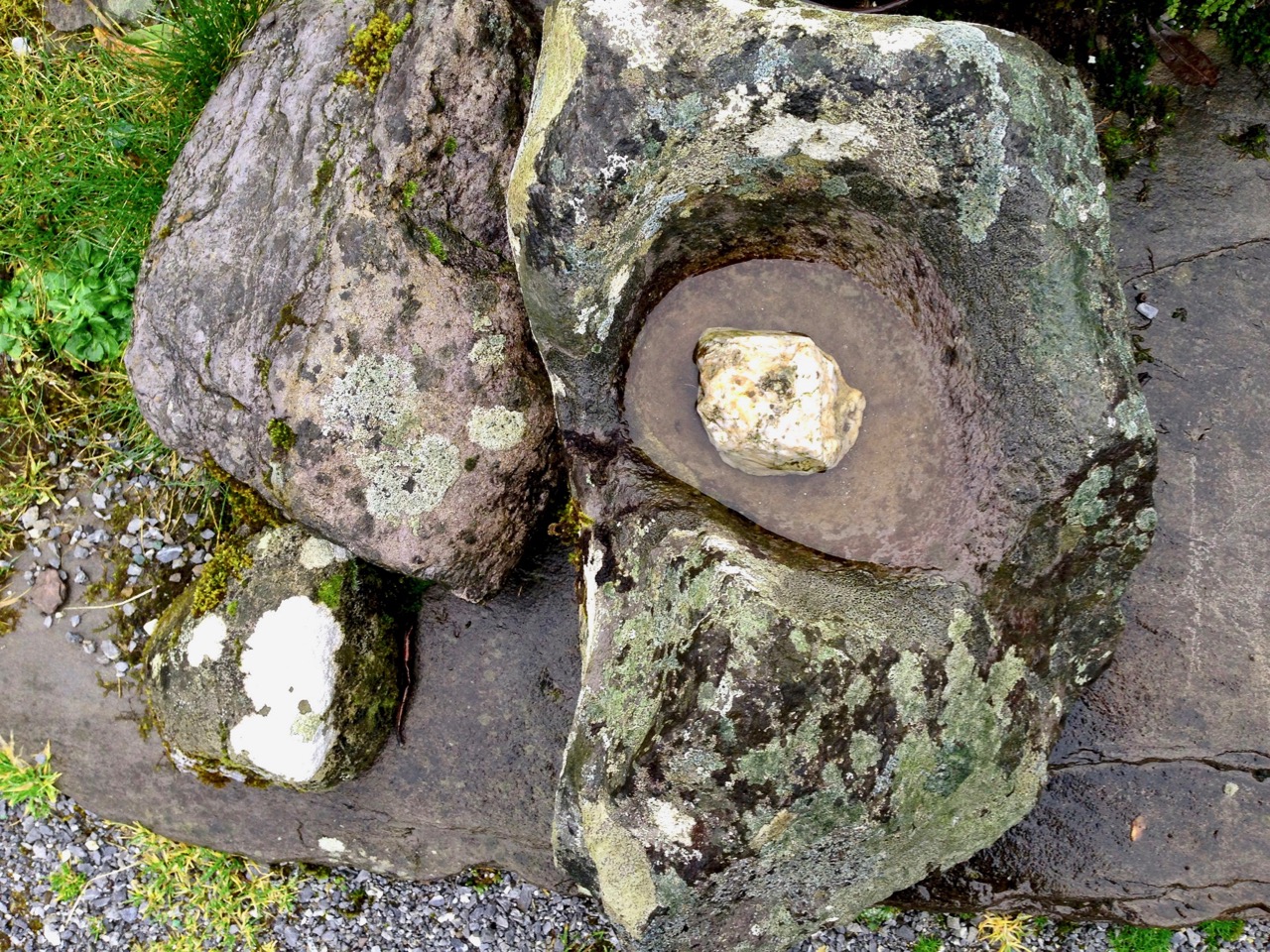
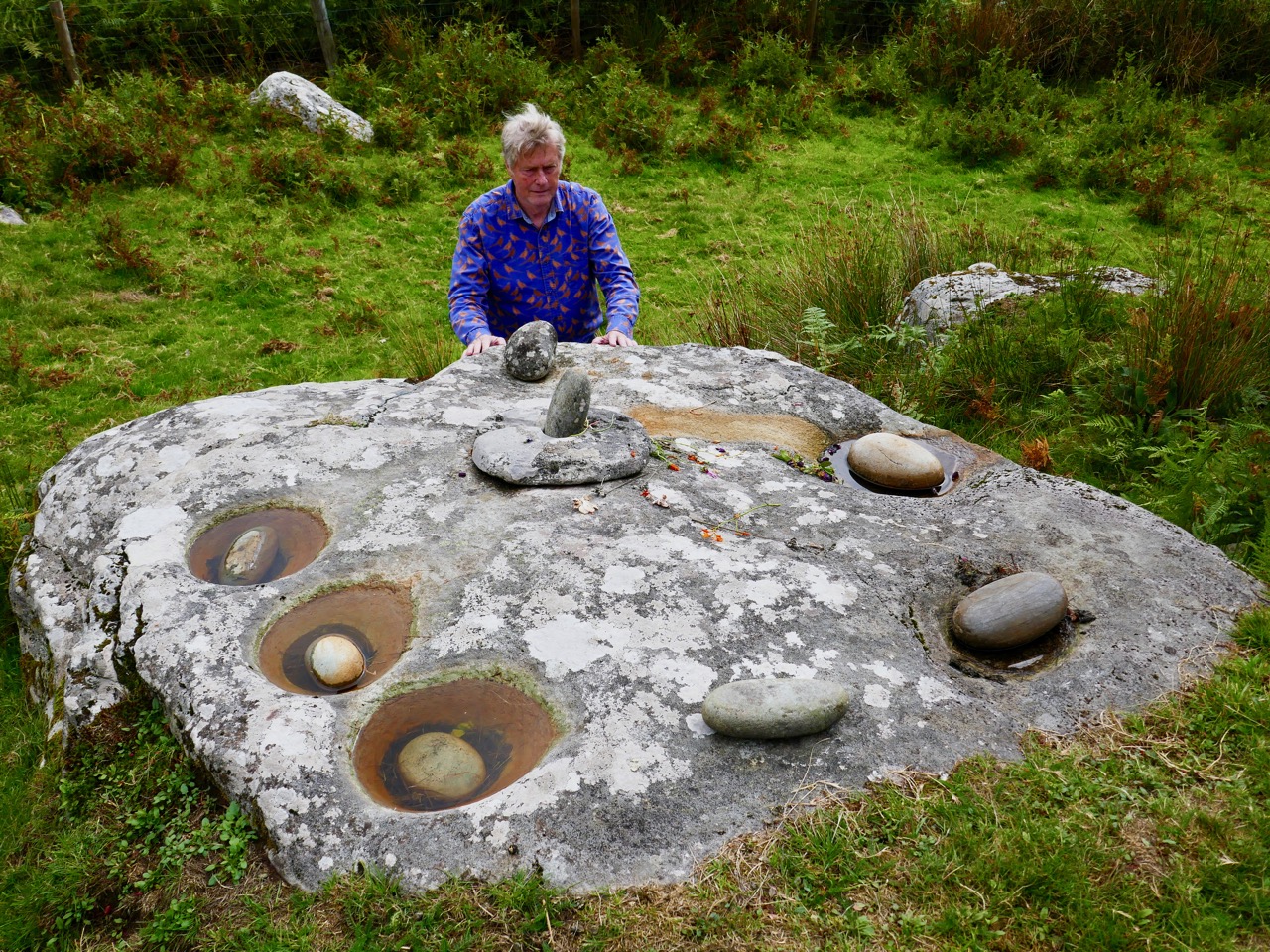
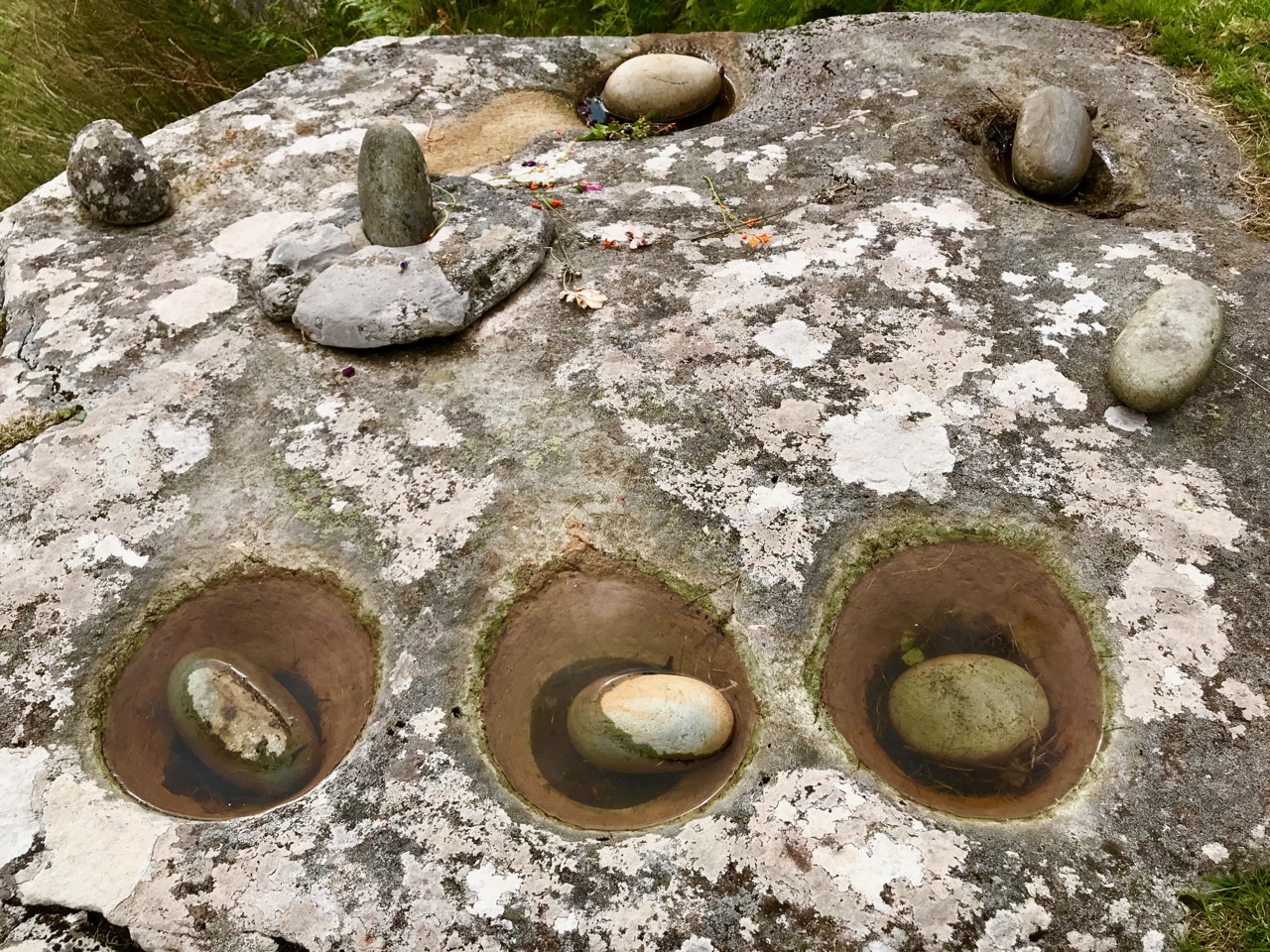
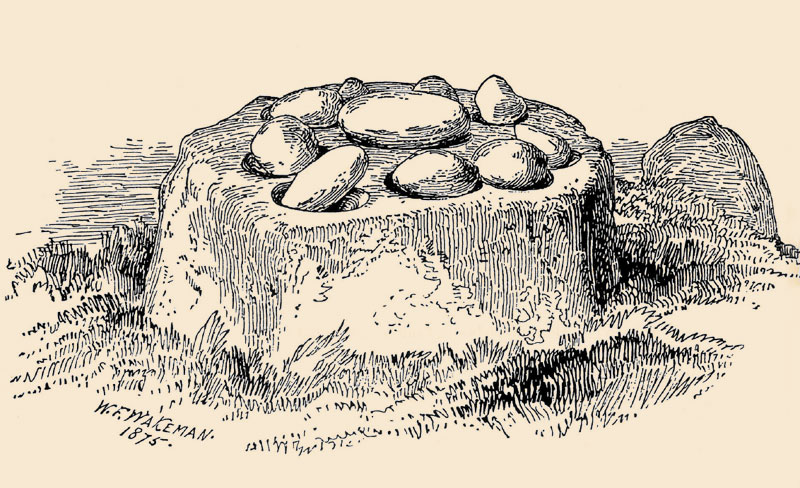
This rock outcrop – known locally as The Rolls of Butter – is large (I’m there to give it scale!) with seven scooped-out bullaun like basins and a somewhat phallic central upright stone. The basins each contain a large, smoothed pebble. Some folk traditions in Ireland identify such pebbles as ‘cursing stones’: “. . . if you wanted to put a curse on someone, you turned the stones anti-clockwise in the morning . . . ” However, the curse had to be ‘just’ otherwise it came back to curse you in the evening! The illustration below – of ‘cursing stones’ at Killinagh, Co Cavan was made by antiquarian W F Wakeman in 1875. He also noted the similar local folk traditions of these examples.

Many bullaun stones or stone groups around Ireland have been included in the National Monuments records, and number in the hundreds. Functional, magical, sinister? Who knows . . . Your guess is as good as anyone else’s. But one thing is certain – they are intriguing and mysterious. Keep a look out for them – as we do – in your travels around this land.

Note: this is a re-run of a post I published five years ago – but it’s been augmented, updated and – hopefully – improved!

No Wrens Were Harmed in the Making of this Post!

Wran Hunting has featured before in Roaringwater Journal: that’s the way that St Stephen’s Day – 26 December – has been celebrated for generations in ‘Celtic’ parts of western Europe, specifically Ireland and The Isle of Man, but also in Cornwall – where it’s now only a memory – Brittany, Wales and Scotland. ‘The Wran’ is a very strong surviving tradition here, especially on the west side of the country. The Dingle Gaeltacht is the place to go if you want to see all the action (click on the bottom right of the window to turn on the sound):

In our own Ballyedhob community ‘The Wran’ is not forgotten. In fact you can even find a poem written about it in the Duchas folklore records. This was recorded in the 1930s by John Levis, aged 32, who took it down from Jeremiah Driscoll, aged 64 years. Jeremiah had been a Wren Boy in Ballydehob. Here’s the poem:

Come all you ladies and gentlemen,

For tis here we come with our famous wran

With a heart full of cheering for every man

To rise up a booze before the year is gone.


Mr O’Leary we came to see,

With our wran so weak and feeble,

The wran is poor and we can’t feed him,

So we hope your honour will relieve him.


We’ve hunted our wran three miles and more

We’ve hunted this wran all around Glandore

Through hedges and ditches and fields so green,

And such fine sport was never seen.


As we copied our wran again

Which caused our wran-boys for to sing,
She stood erect and wagged her tail,
And swore she’d send our boys to jail.


As we went up through Leaca Bhuidhe

We met our wran upon a tree,

Up with a cubit and gave him a fall,

And we’ve brought him here to visit you all.


This the wran you may plainly see,

She is well mounted on a holly tree,

With a bunch of ribbons by his side

And the Ballydehob boys to be his guide.


The wran, the wran, the king of all birds,

St Stephen’s day he was caught in the furze,

Although he is little, his family is great,

So rise up landlady and fill us a treat.


And if you fill it of the best,

We hope in Heaven your soul will rest,

But if you fill it of the small,

It won’t agree with our boys at all.


To Mr O’Leary and his wife

We wish them both a happy life,

With their pockets full of money, and their cellars full of beer,
We now wish a merry Christmas and a happy New Year.


And now, our song is ended, we have no more to say,

We hope you’re not offended for coming here today,

For coming here this morning we think it is not wrong,

So give us our answer and let us all be gone.

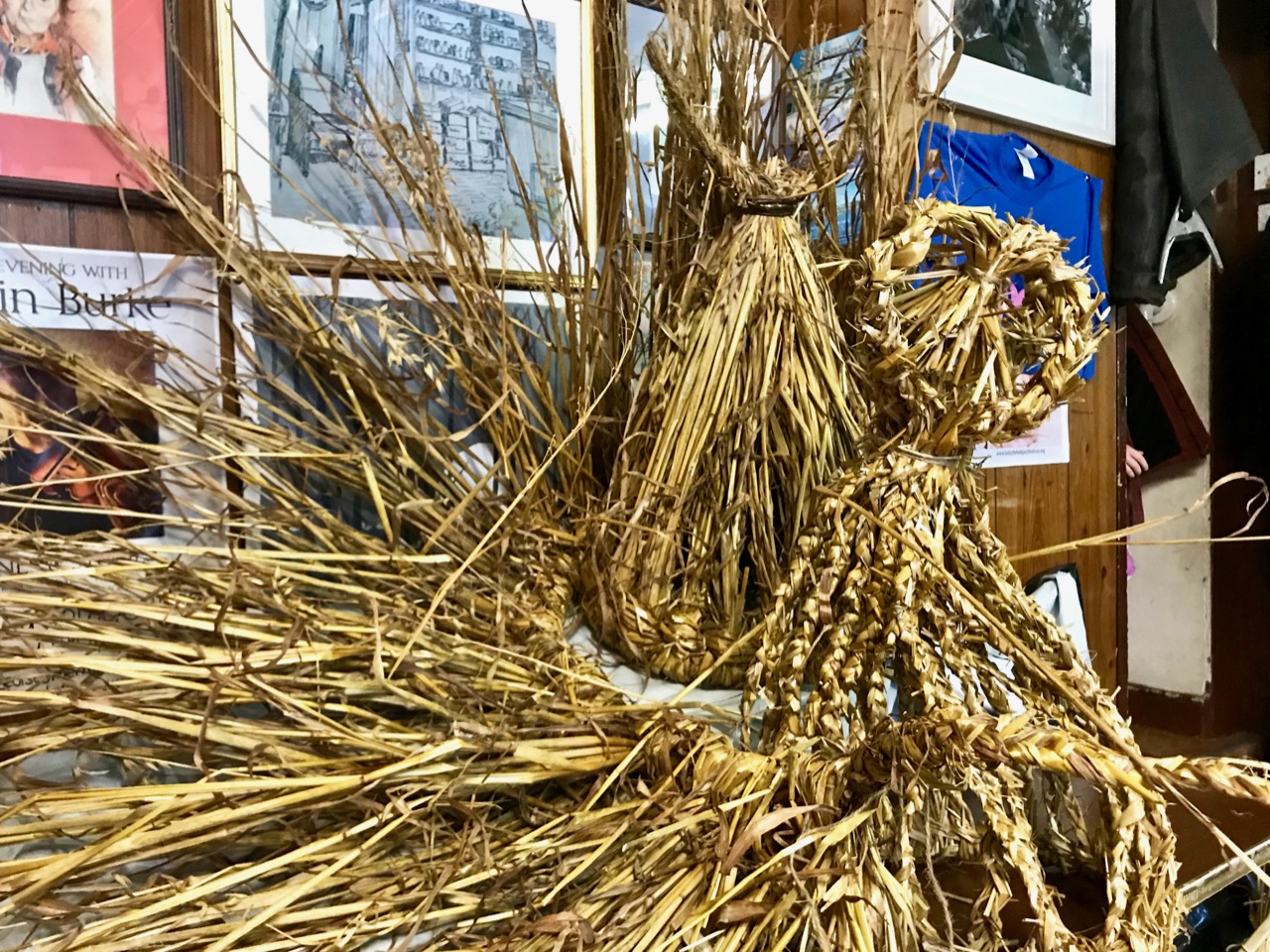
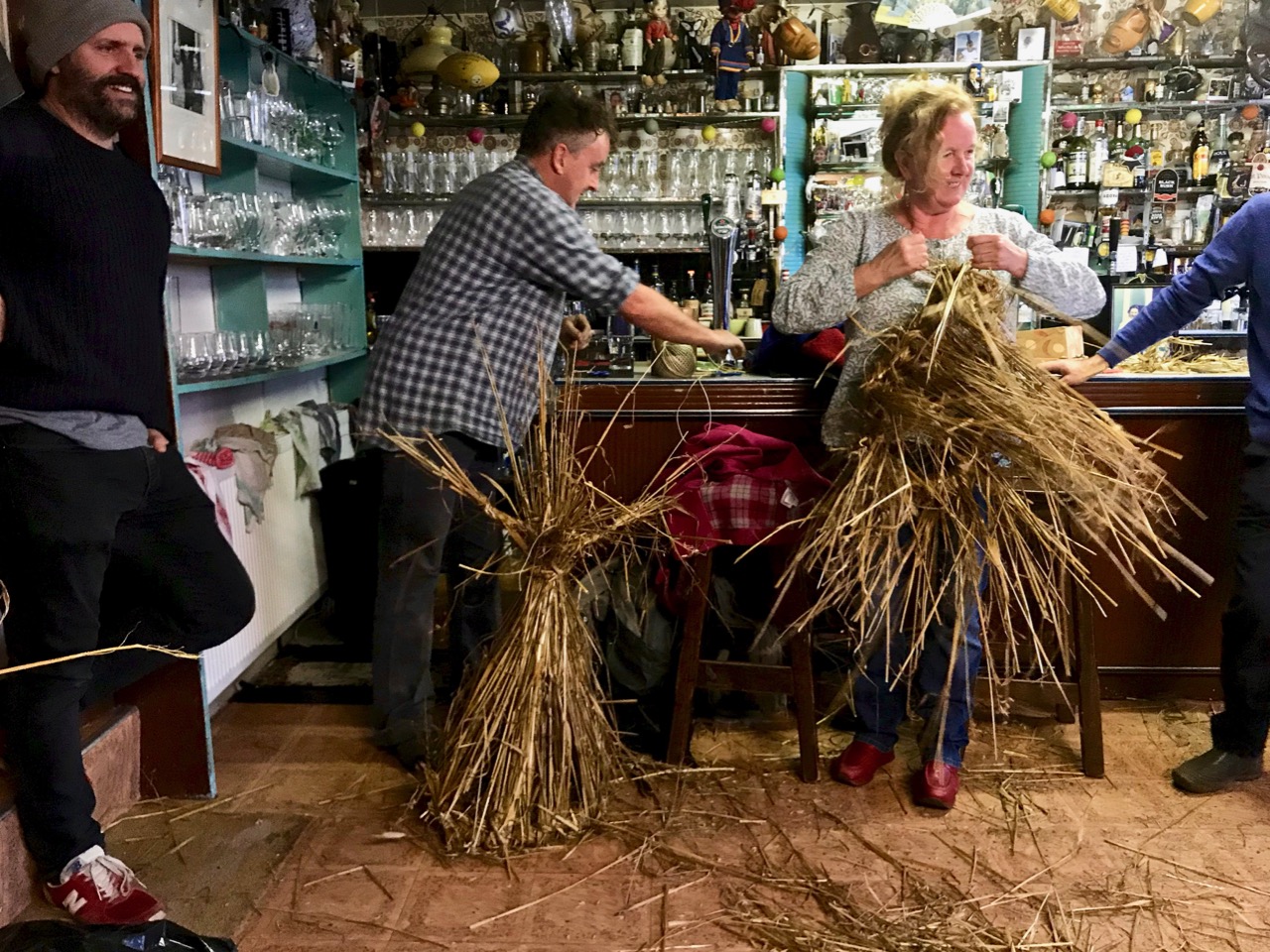
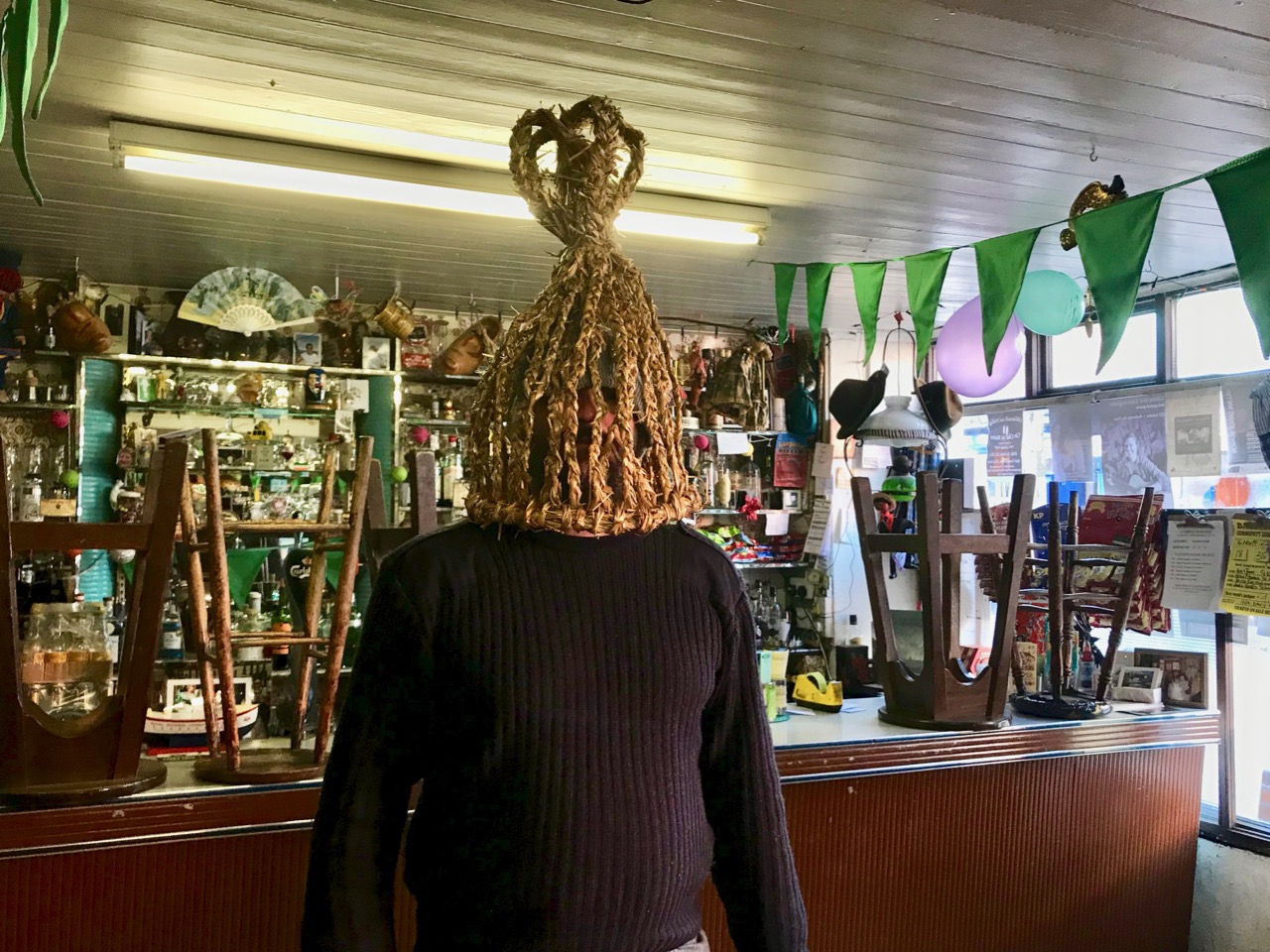
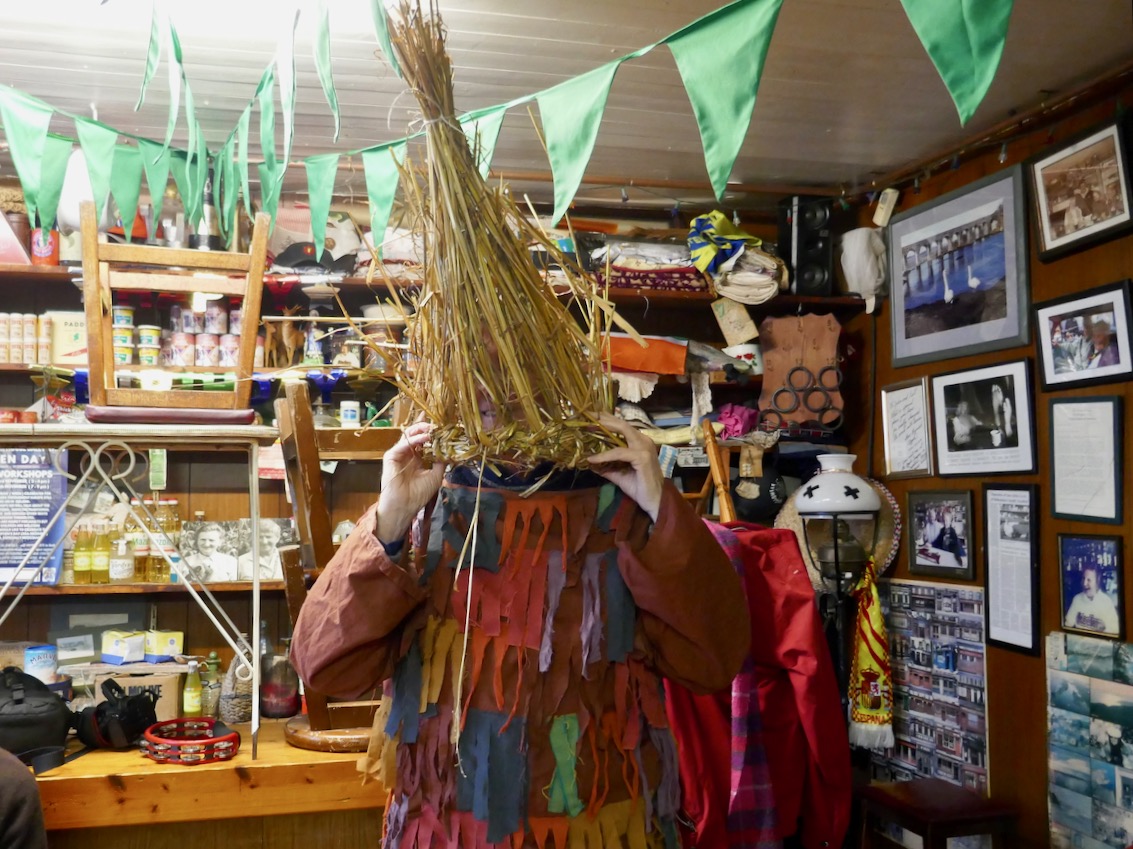
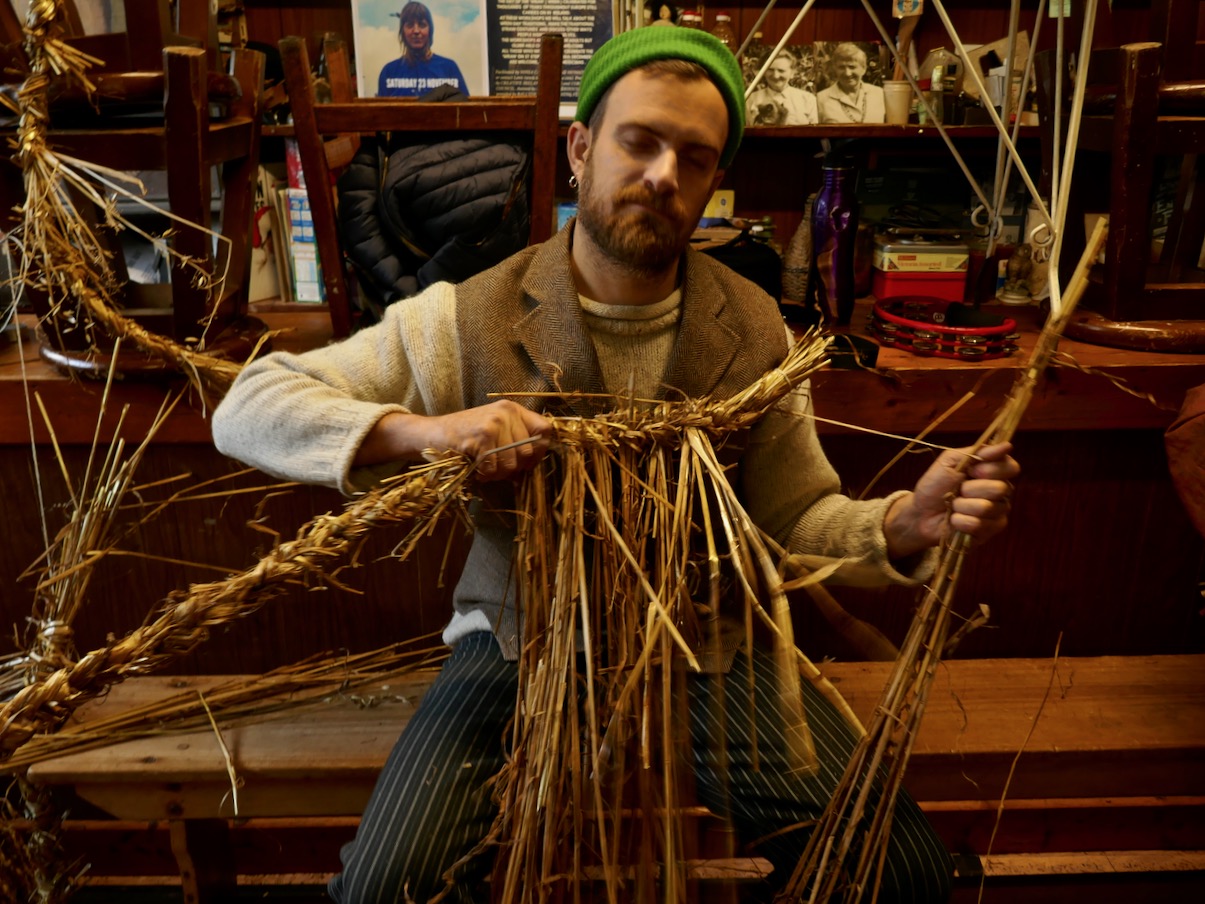
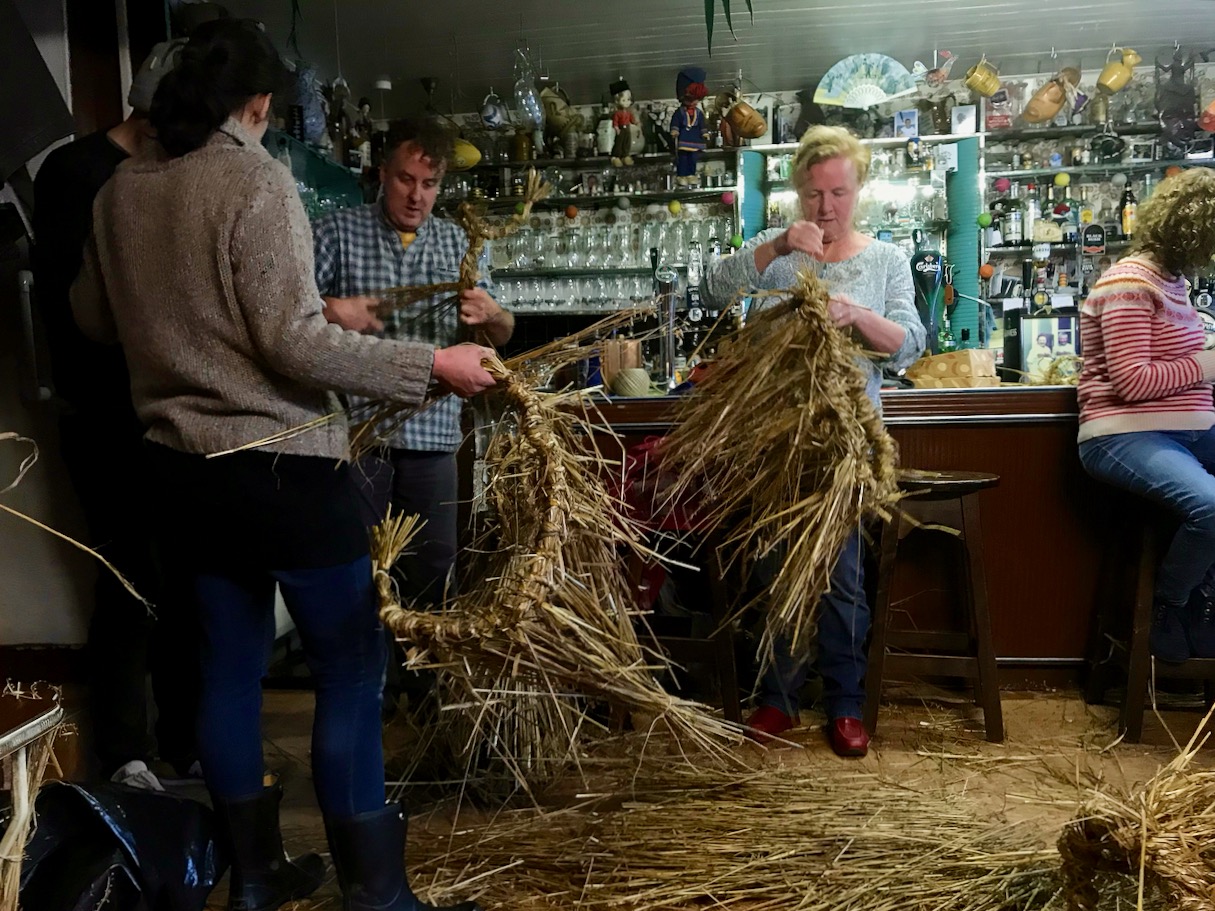
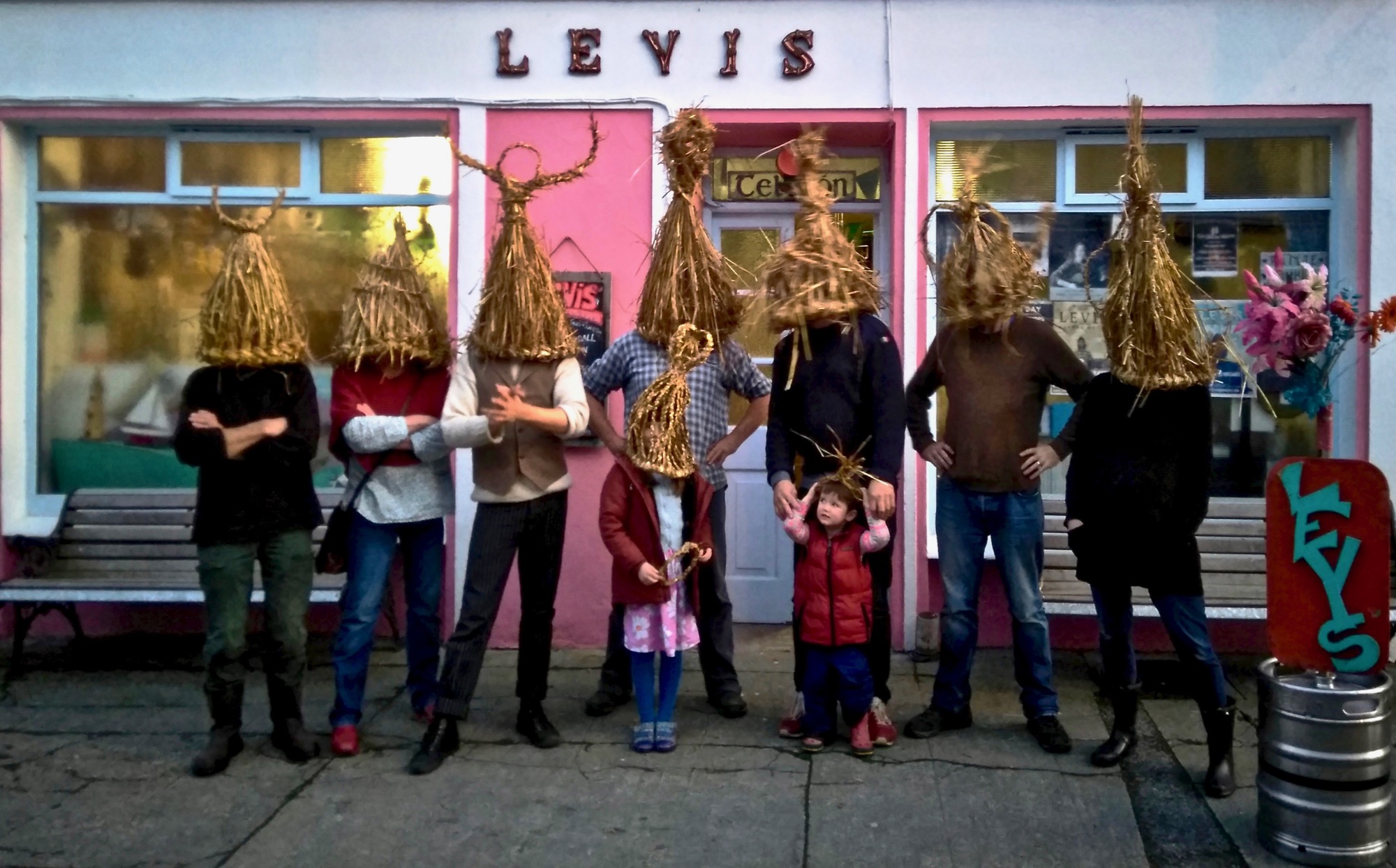
By good fortune there’s ‘Mr O’Leary’ above! He’s the landlord of Levis’ Corner House Bar in Ballydehob – which is the subject of Finola’s post today. He’s on the left in the upper picture, looking on at the Wran Workshop which he allowed to take over his pub yesterday. Basically that involved covering the whole place in straw out of which, magically, appeared a whole lot of wonderfully crafted Wran masks. Joe is wearing a fine example in the lower picture.

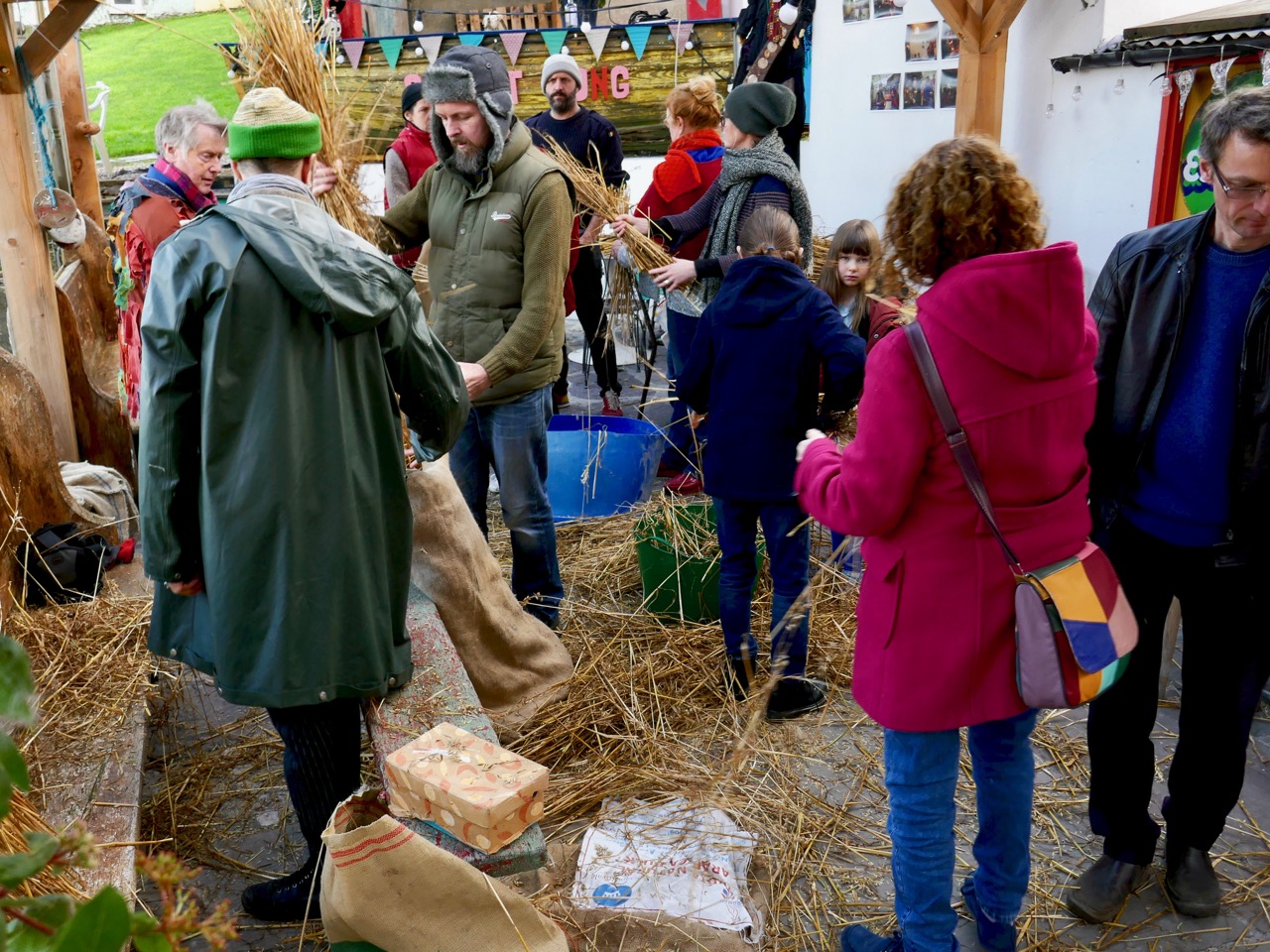
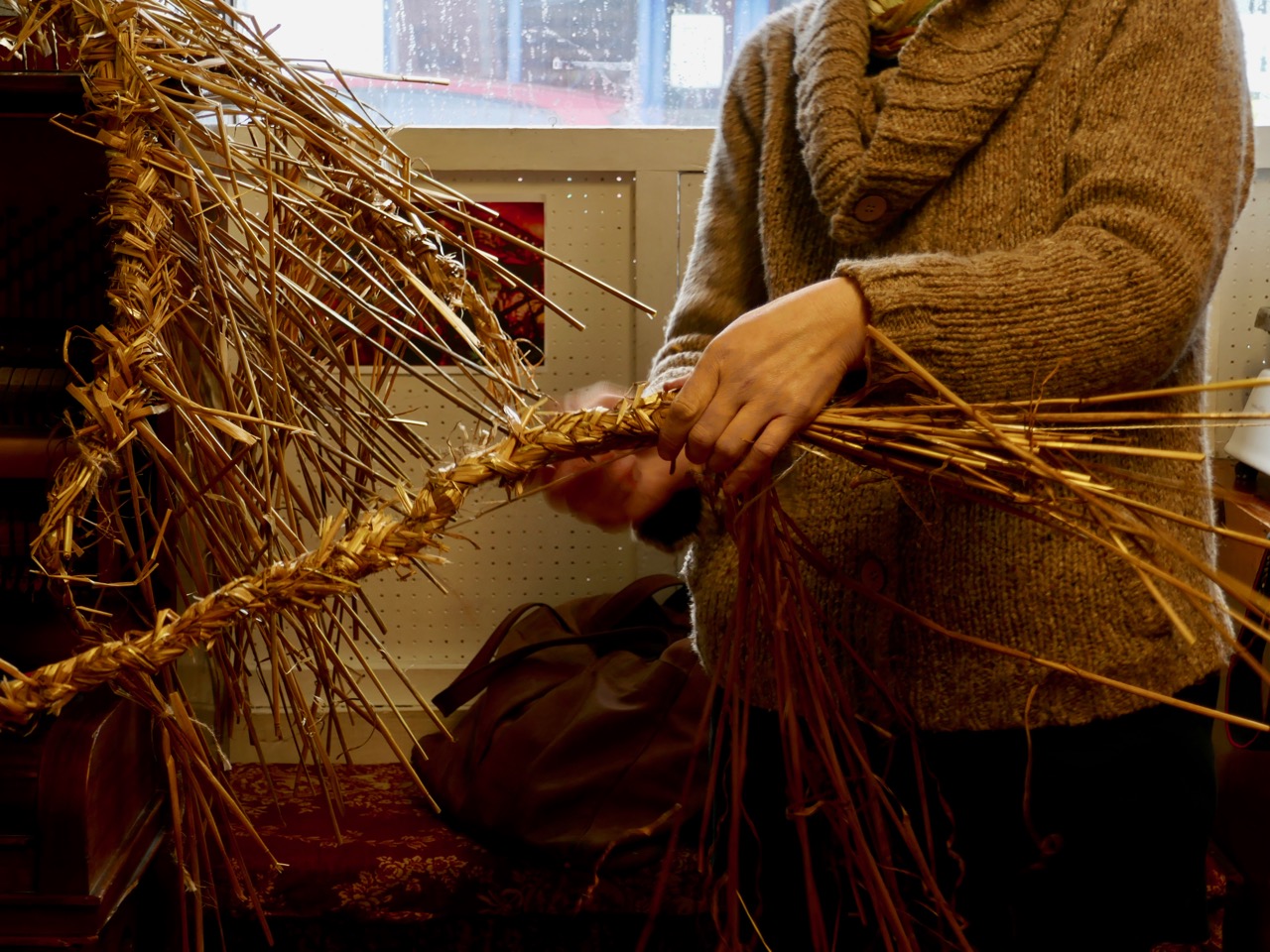
The afternoon started outside, in Levis’ garden, where we were all given guidance on preparing the straw. We had to strip away the leaves and any heads which had been left behind, and produce bunches suitable to be plaited and then turned into ropes which would form the basis of the  hats or ‘masks’ traditionally worn to disguise the wren hunters.

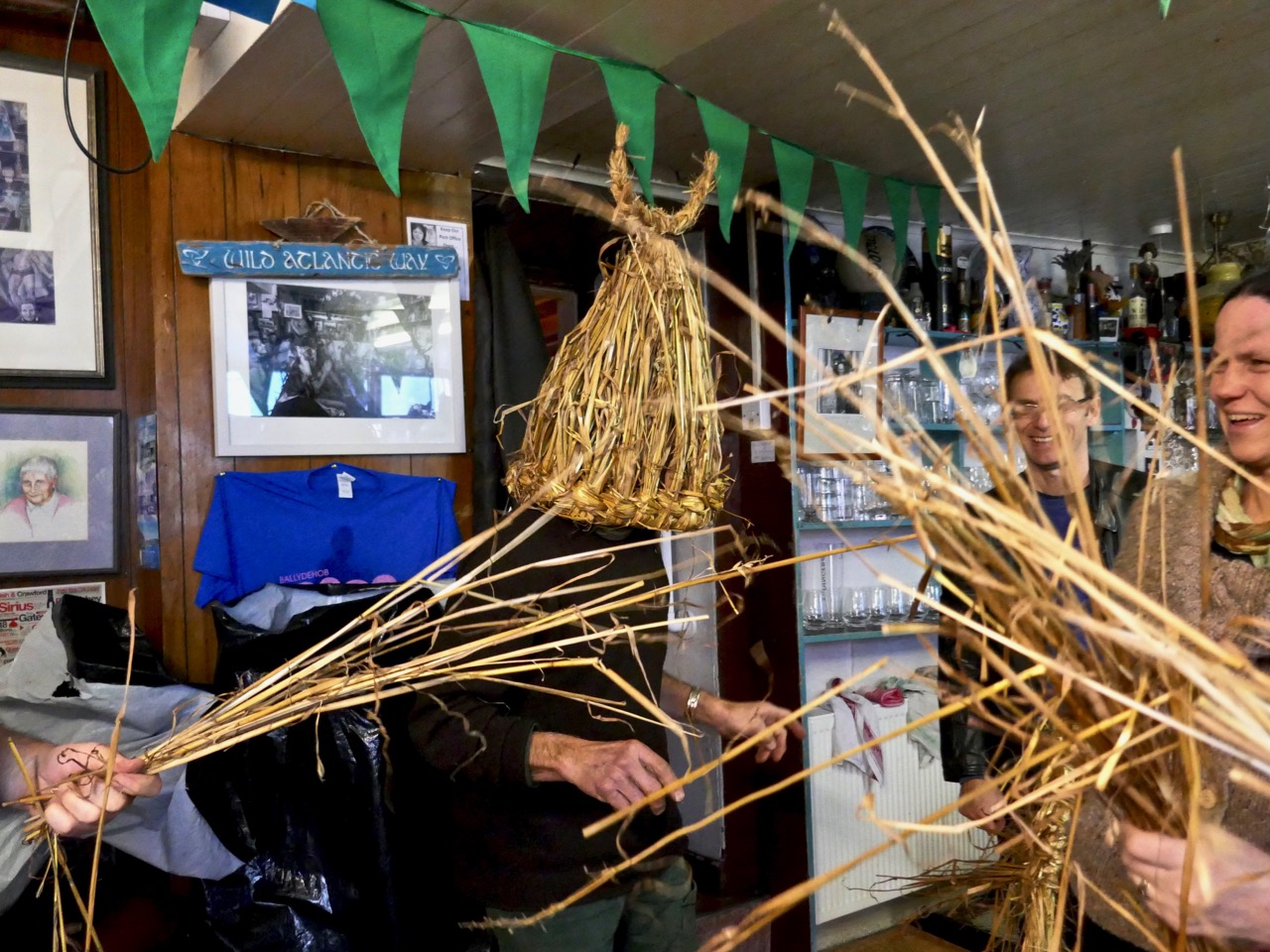
On the right here you can just catch a glimpse of workshop maestro Sonia Caldwell, inspecting another fine mask. Sonia is determined that Ballydehob will embrace the Wran tradition (vestiges of which have appeared on the streets over the years) and re-energise it in the way that only this West Cork village’s vibrant community knows how. I can just imagine that in a couple of years’ time people will be flocking to see ‘The Wran’ in the same way that they flock to the Jazz Festival and all the other festivals and events that happen annually here.

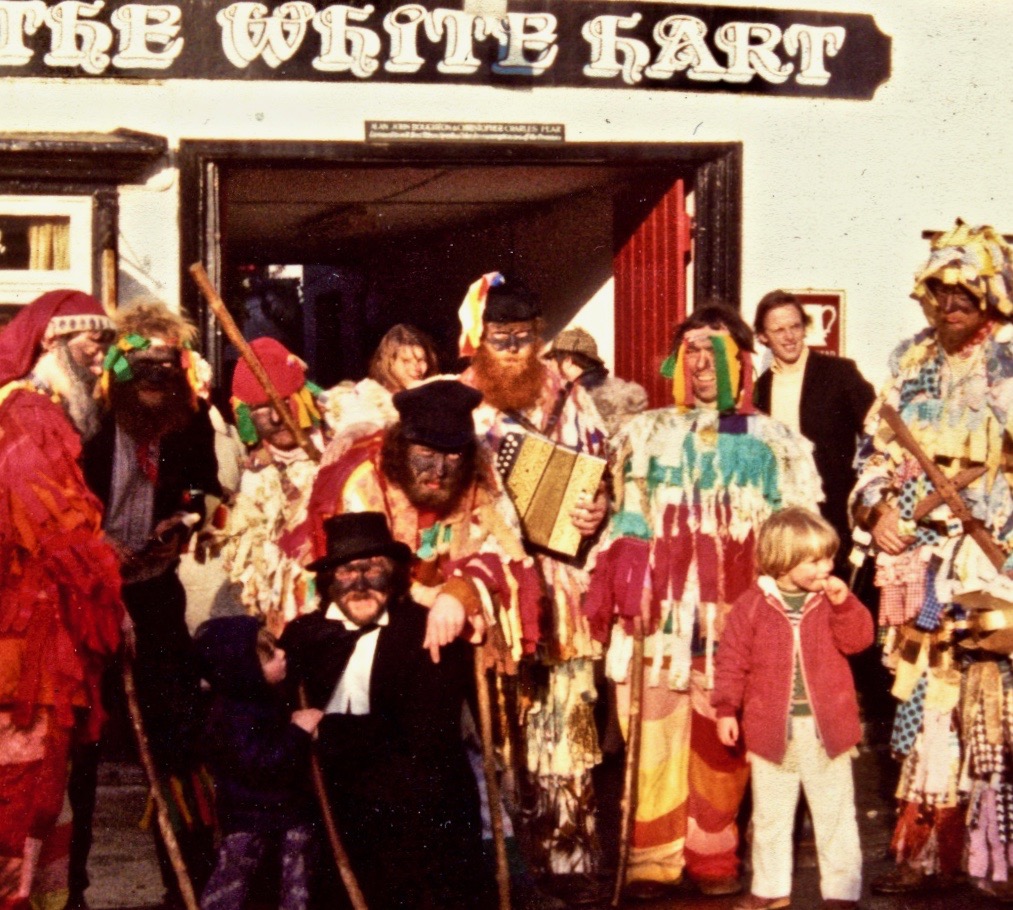
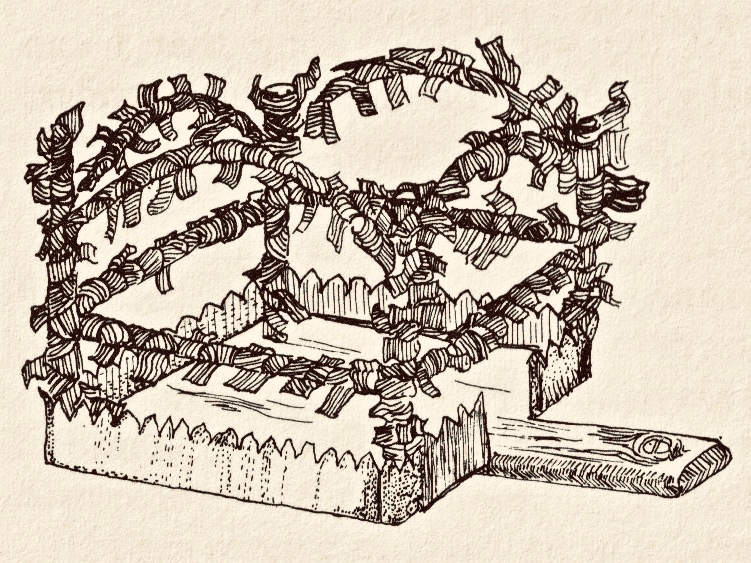
Finola and I were at the workshop, and there I am with work in progress on the straw mask which we made (upper picture). You’ll notice that I’m wearing ‘tatters’: I’ve had these for years, and I used to don them for our own mumming tradition in Devon which also happened on 26 December (that’s me with the squeezebox mumming in the 1970s! – lower picture). Over there we called St Stephen’s ‘Boxing Day’ because that was when ‘Christmas boxes’ were given to the postman, the milkman and anyone else who provided their services through the year. Interestingly, Kevin Danaher mentions the ‘Wran box’ which was taken around the houses by the wrenners (or Wran Boys) and used to collect money ‘for the Wran’. This illustration of a Wren box from County Galway is from Danaher’s book The Year in Ireland:

The workshop in Levis’ was very well attended, and there is clearly great enthusiasm for reviving this custom. Sonia collected the straw at the annual Thrashing in Ballydehob – which is a traditional harvest celebration. It’s not easy to find the right straw for making the masks nowadays: anything that has been through a combine harvester has been flattened and will not survive the plaiting.

It’s a complex process, but the group coped well in acquiring the new skills under Sonia’s tutelage. You can see for yourself how successful the day had been in the last picture below. The making – every year – has always been part of the tradition where it’s still practised today. Sometimes the straw masks (which are only one part of the ‘disguise’) are destroyed after Stephen’s. In some of the Dingle traditions they are ritually burned on the following St Patrick’s Day.

Sonia is holding a further workshop – also at Levis’ Corner Bar – next Thursday 28 November at 7pm. It’s free to attend: please come and join in: you’ll learn more about the history of The Wran, and there’s likely to be some music too! And then on Stephen’s Day itself it’s out into the boreens and byways of Ballydehob to look for a wren . . . Don’t worry – the days are long gone when our (almost) smallest bird would lose its life: it’s a token hunt, the point of which is the disguising, the visiting around the streets, and the celebrations afterwards, which will extend late into the night!

Many thanks to Pól Ó Colmáin for providing this wonderful photograph of the results of the workshop!

Levis’s of Ballydehob: Behind the Shop Counter

It’s a storied kinda place – everyone who has ever been to Ballydehob knows it and everyone has something to tell you about that time when . . .

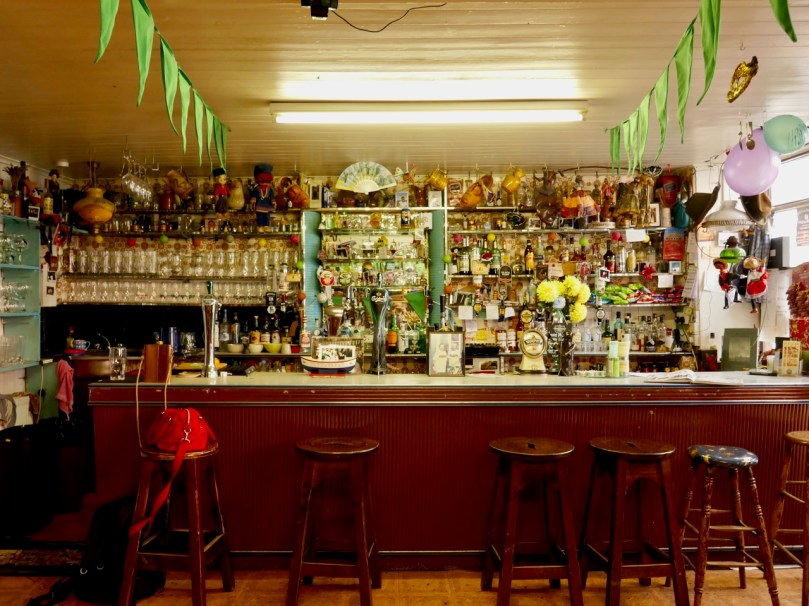
It was run by two sister, the famous Nell and Julia Levis, as a shop and a pub. The shop was on one side and the pub on the other – a familiar layout in rural Ireland.

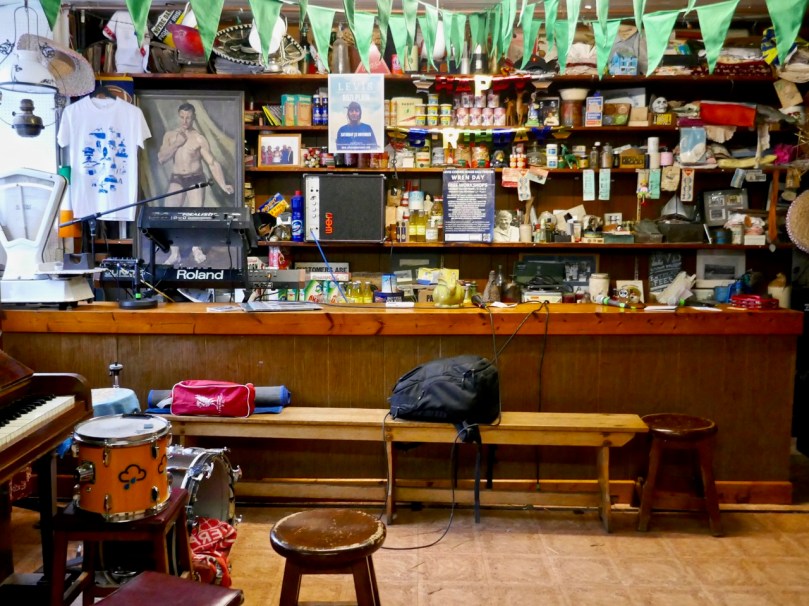
The shop side is all set up for a music gig in the upper photo

For a wonderful introduction to Levis’s I heartily recommend the documentary Keeping the Doors Open, one of the RTE Docs on One series, this one by Leanne O’Donnell. Made in 2014 it tells the story of the passing of Nell and Julia’s banner to the next generation, Joe and Caroline, who have re-invented it as the unlikeliest of music venues. Unlikely, because it still looks exactly as it did in Nell and Julia’s day. But highly successful – just take a look at its list of awards and browse the upcoming acts.

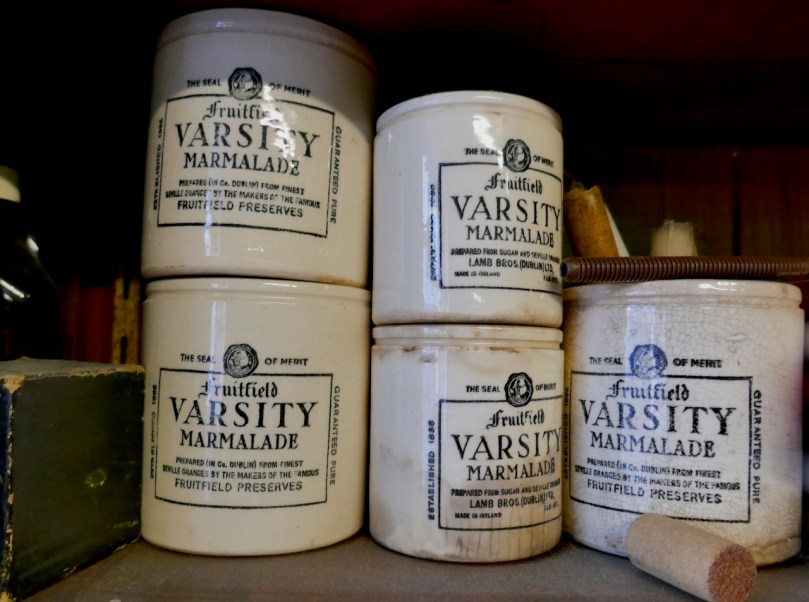
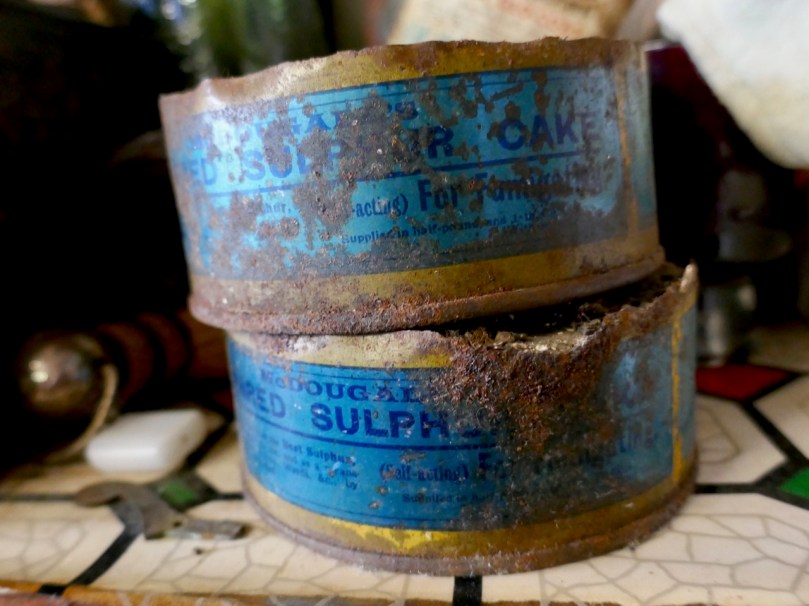
Sulphur Cake – what on earth . . .?

And those acts take place behind the counter and in front of the old grocery shelves. It’s surprisingly effective – a juxtaposition of old and new, of the domestic and the artistic. Try driving through Ballydehob on the night of a gig, with people spilling out into the street and others arriving in the hopes of somehow squirming into the already packed pub. Amazingly, they usually succeed. 
In the last couple of years the grocery side stars again! Every Wednesday local producers arrive with their vegetables, breads and juices and the place comes alive once more as a mini farmer’s market. You have to get there early!

And of course it’s still very much a village pub, where locals and visitors can go for a drink and the chat of an evening. And occasionally it does a stint as a workshop – see Robert’s post today on making ‘Wran’ hats. Nothing on the shelves in the grocery side is for sale any more. Most of reached its ‘best before’ date over 20 years ago, if not longer.

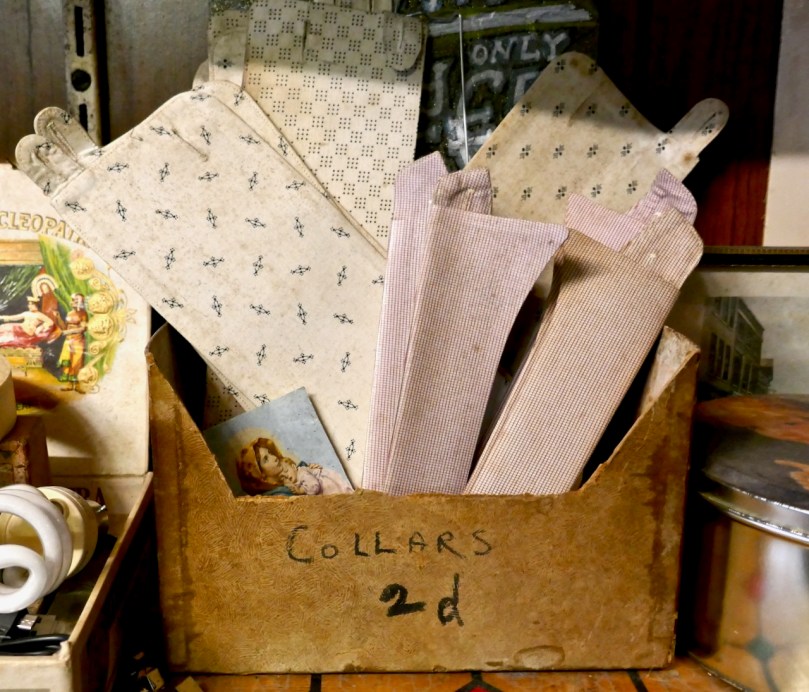
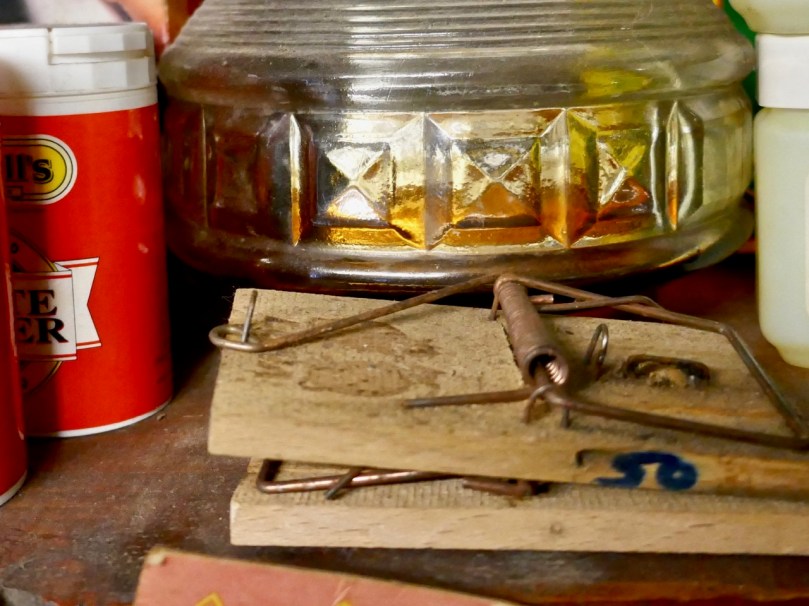
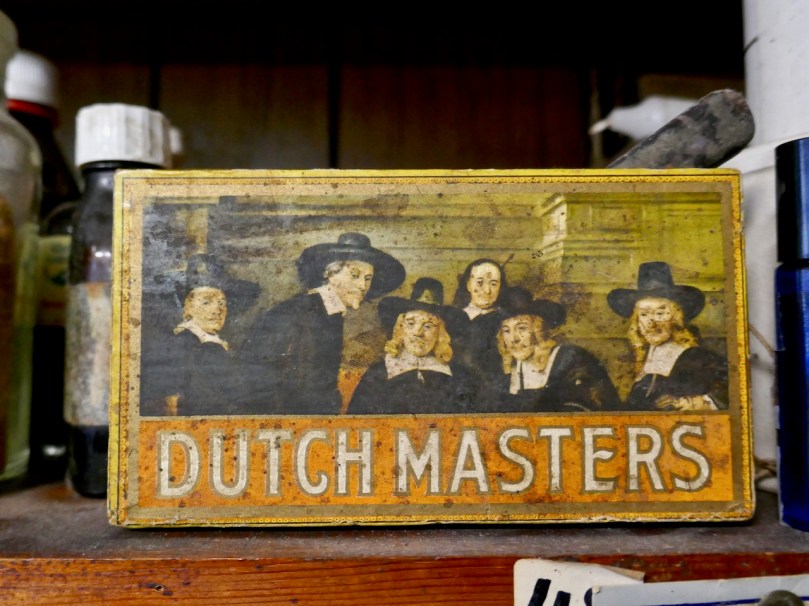
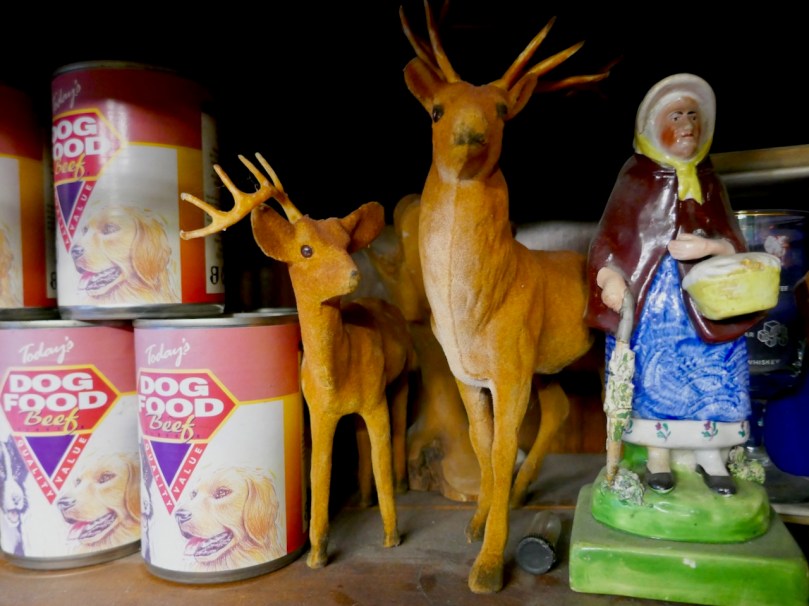
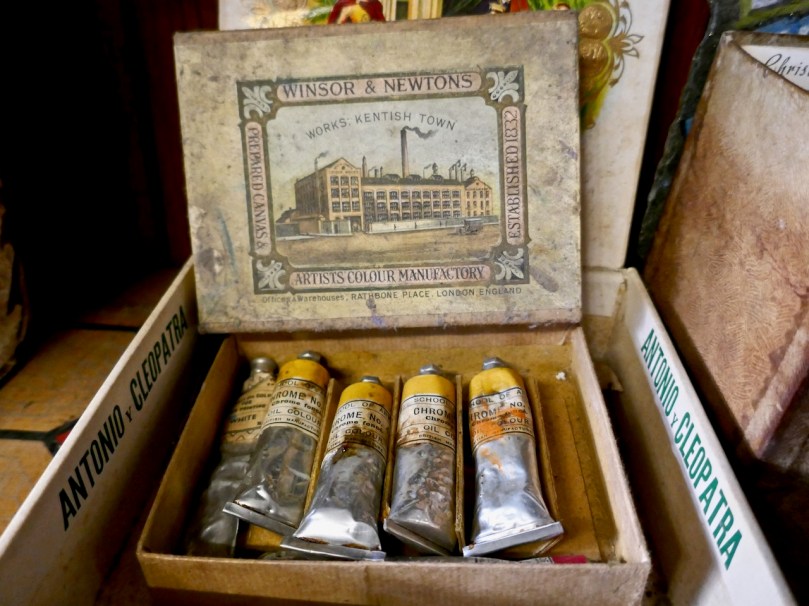
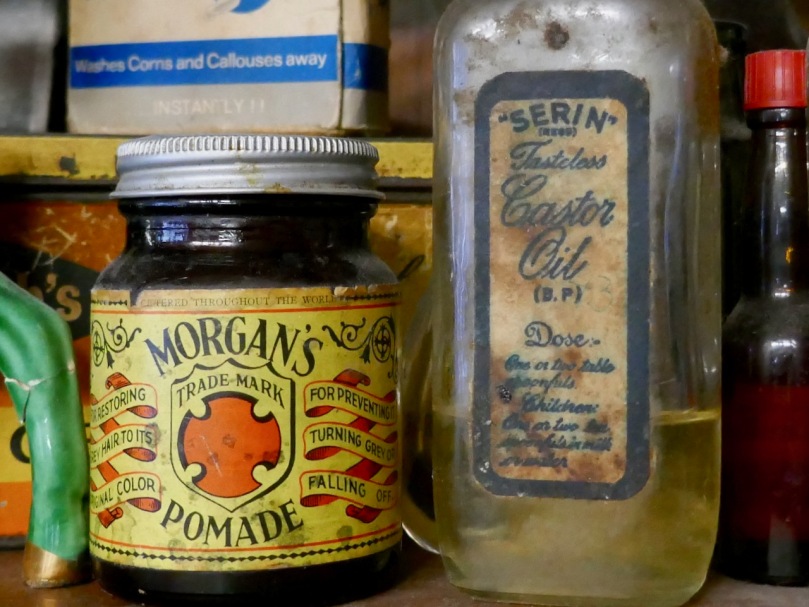
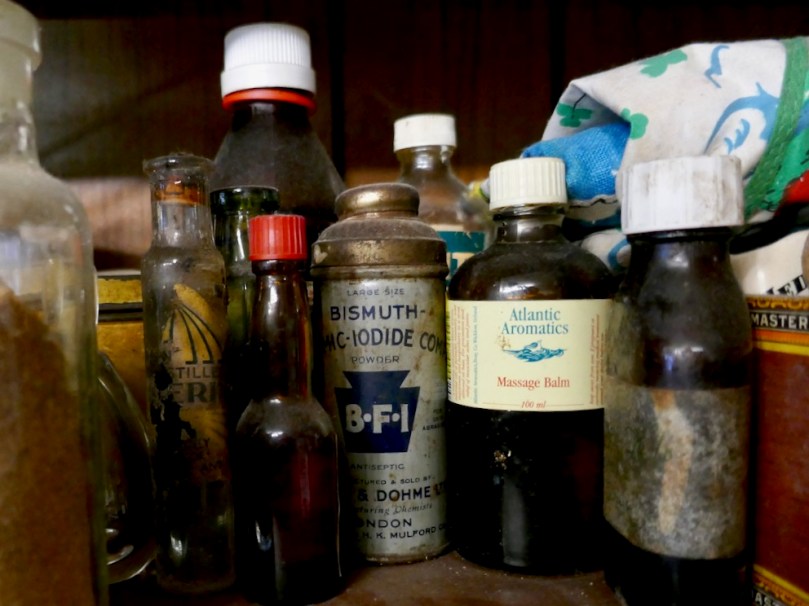
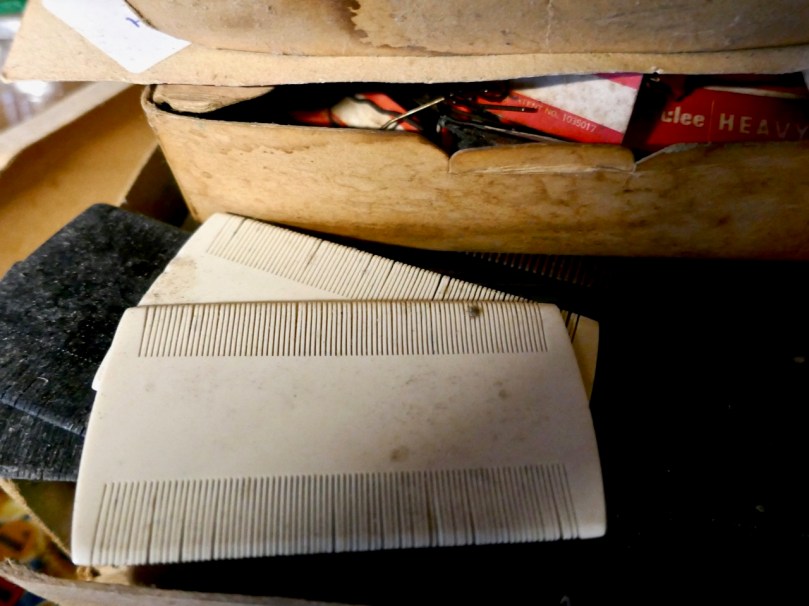
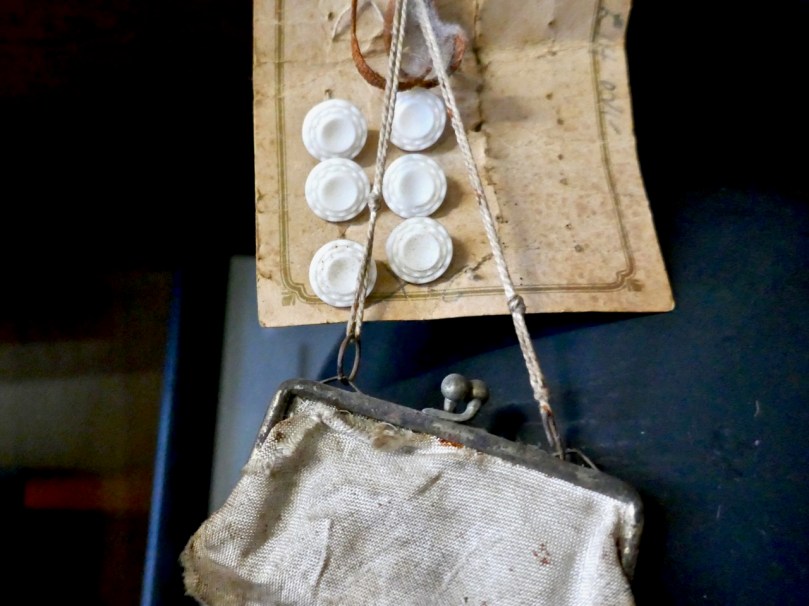
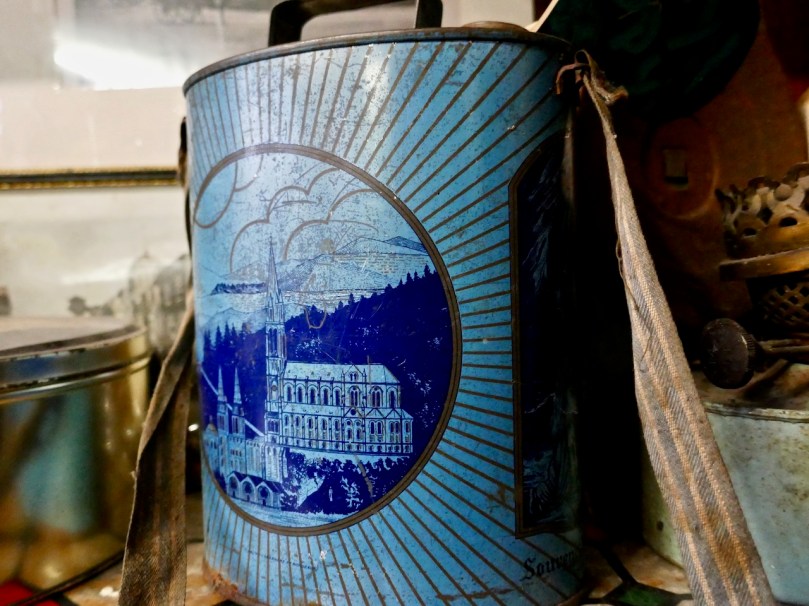
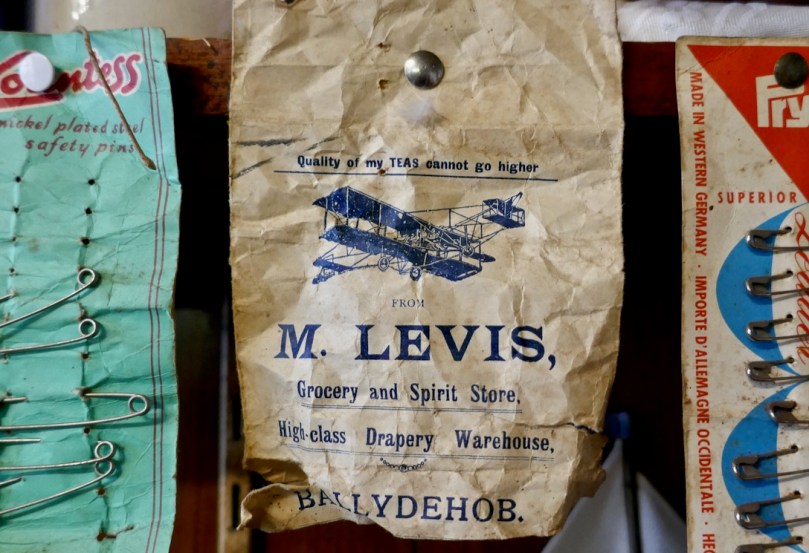
Joe (Nell and Julia’s grand-nephew) allowed me some time on my own over the last couple of days to take a good look at the shelves on the grocery side and this post is a photo-homage to those shelves. They represent only a section of what’s there, gently resting under layers of dust and memory.

Need some basic groceries? Some cleaning supplies or sewing notions? How about tobacco or sweets? And because Ballydehob was a haven for artists (and we have our own Arts Museum to prove it) you might run out of oils or pastels at the wrong moment.

All that medicinal stuff our mothers used to dose us with – Syrup of Figs, anybody? Looks like that kind of thing was in demand in Ballydehob. And if all else failed, well there was always an appeal to Lourdes.

We all love a bit of nostalgia, don’t we? What do you see that you remember from childhood? What stories do these images conjure up for you?

And when are you coming over for a pint?


We are on Twitter!

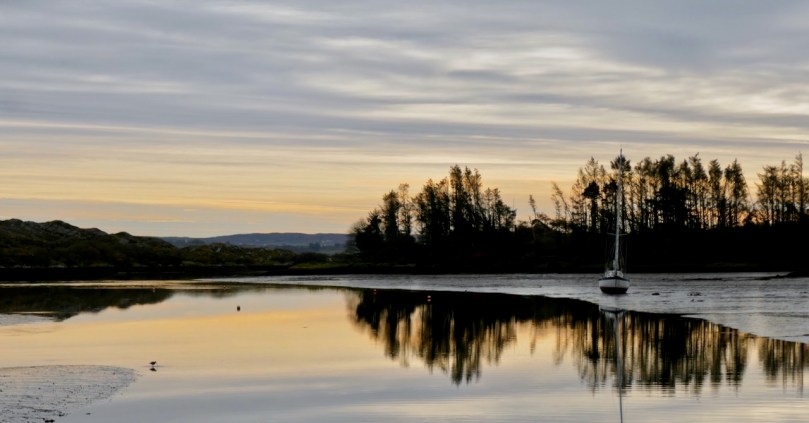
You wouldn’t want to do anything too hastily, like. We’ve only been blogging since 2012 –  beavering away, week after week, to let you all in on the epic stories and fabled landscape of West Cork (that’s Ballydehob Bay above, taken today). That’s seven years, 665 posts, four thousand regular followers, four hundred thousand visitors and about three quarters of a million views. About a third of you come from Ireland, two sizeable chunks of you from the USA and the UK, then Canada and after that it’s the United Nations of Readers. There’s a couple of African countries where we have yet to find a reader – and Greenland. Come on, Greenland!
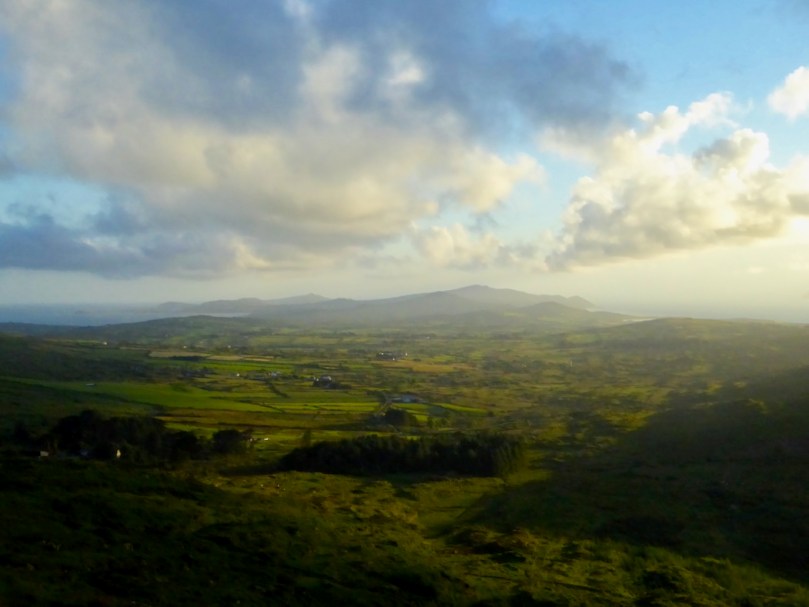
Our beat – the Mizen Peninsula, from the top of Mount Gabriel

We’ve been called “West Cork’s premier Arts and Culture blog” and “…The wonderful literary and visually rich website . . . is a treasure, a sort of 21st century Robert Lloyd Praeger, online…” We’ve had letters and comments from all over the world, some of which have led us down all kind of interesting avenues for further research. It’s been humbling and exhilarating and we are grateful for all your support.
You can expect lots of archaeology – still working on more posts about stone circles, like this one at Ardgroom on the Beara

In all that time, we’ve operated across two platforms. First our blogging platform, WordPress, and second, Facebook, which we joined in Sept 2014. Both are marvellous, user-friendly (well, most of the time) services that have allowed us to connect to our readers and promote both our blog and West Cork. As a couple of retired professionals with average techie skills, that’s been a godsend.

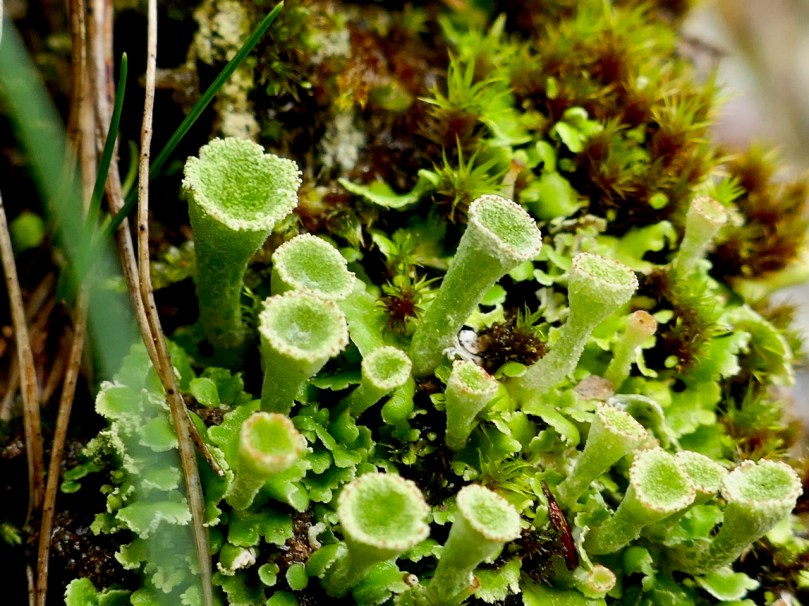
From the Big Picture to something hard to see with the naked eye – these tiny Pixie Cup lichen are growing in our own garden

And now we are venturing from the Blogosphere to the Twitterverse. We’ve set up a Roaringwater Journal Twitter account, with the handle @RoaringwaterJ. We’ve tweeted a few recent favourite posts just to get us started, and will be tweeting all our new posts as they are published, and maybe the odd photograph or two as well.

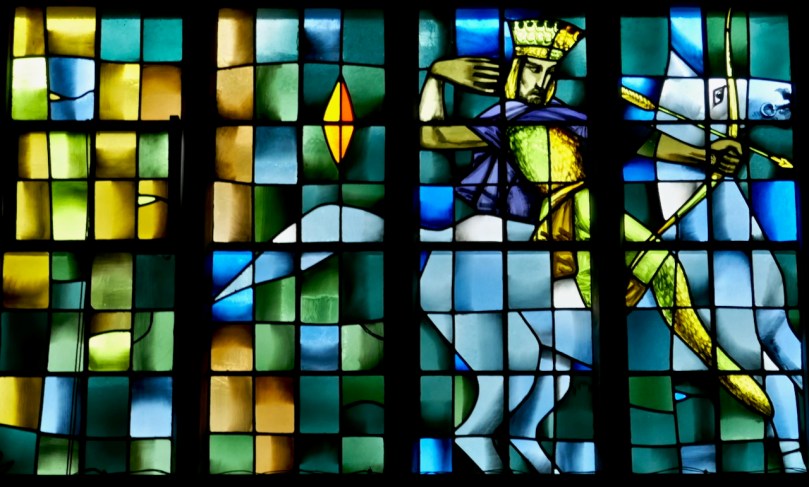
We’re planning to look in depth at the wonderful Murphy Devitt stained glass windows in Cork soon. Here’s one of the Horsemen of the Apocalypse from a MD window in Newbridge College

Don’t worry, Facebook Friends – we are staying on Facebook too. But if you have a Twitter account, please do drop by @Roaringwaterj and hit that Follow button. It’s taken us 7 years to get here, after all.