Two Seáns

after gaiety

Meeting the President at the Ó Riada sa Gaiety Concert, March 1969 – from left: Seán Ó Riada, Seán Ó Sé, Niall Toibín, President Éamon de Valera, Ruth Ó Riada and Breandán Ó Buachalla (Irish World)

Festivals are high points of summer here in West Cork. Whatever the weather (and it’s always erratic), there is a very predictable buzz abroad wherever they happen. Rain or shine, people gather – the streets are busy, the cafés are full, the excitement is palpable.
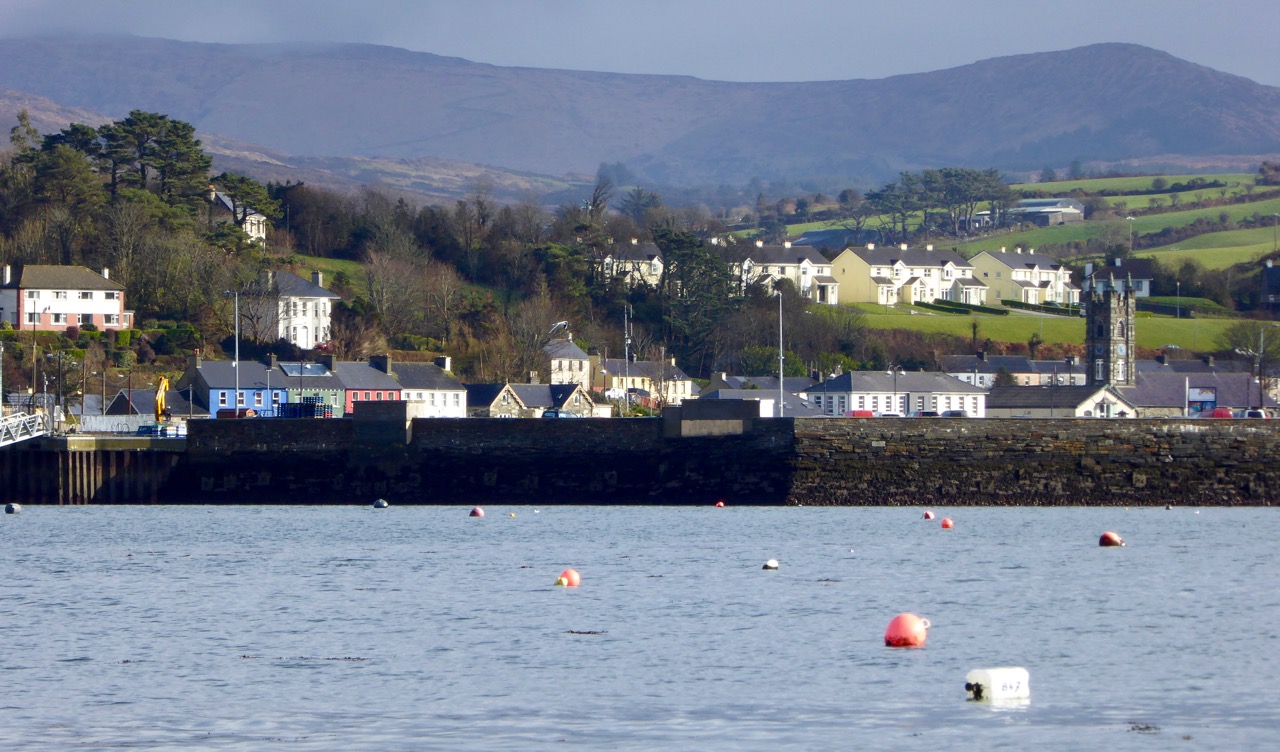
Bantry from the water

Colourful Bantry in the festival season

A highlight for us at the moment is the Literary Festival in Bantry, and we were particularly engaged this week by a couple of hours of chat, readings and songs from a ‘Bantry boy’ now turned eighty – Seán Ó Sé. Last year Seán became an author or, more exactly, he collaborated with Patricia Aherne to tell the story of his life – which is a fascinating one.
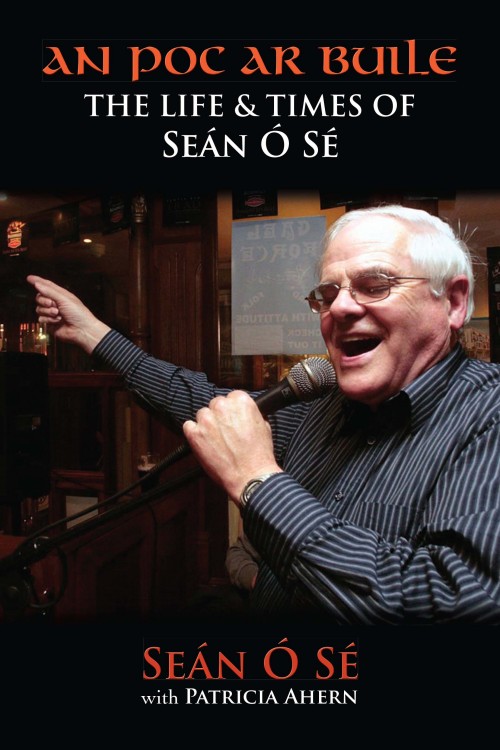
Seán_Ó_Sé

This Seán comes across as completely honest, unpretentious, and with a deeply embedded faith. Life has taken him on a long journey from Ballylickey – on the shores of Bantry Bay – to a world stage. Woven in with a full time teaching career in Wicklow and Cork (…I never took a day off in my teaching career to go singing… says Seán …Singing was for sport, but if there was jam, that was fine too…) he has been to – and performed in – Canada, America, Cuba, Russia and China, and is still a legend in his own country of Ireland – and particularly in his own corner of it, County Cork.
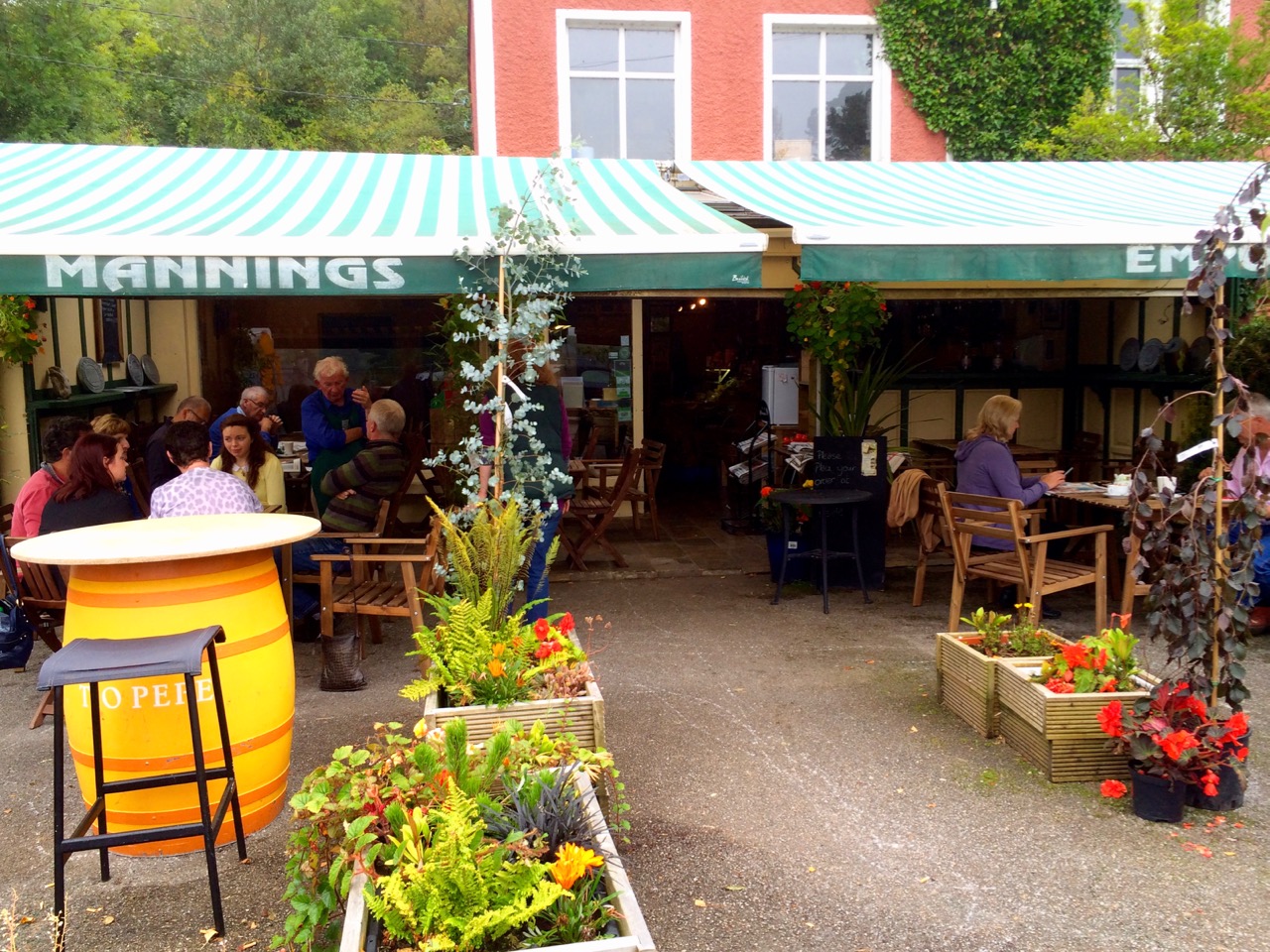
Mannings

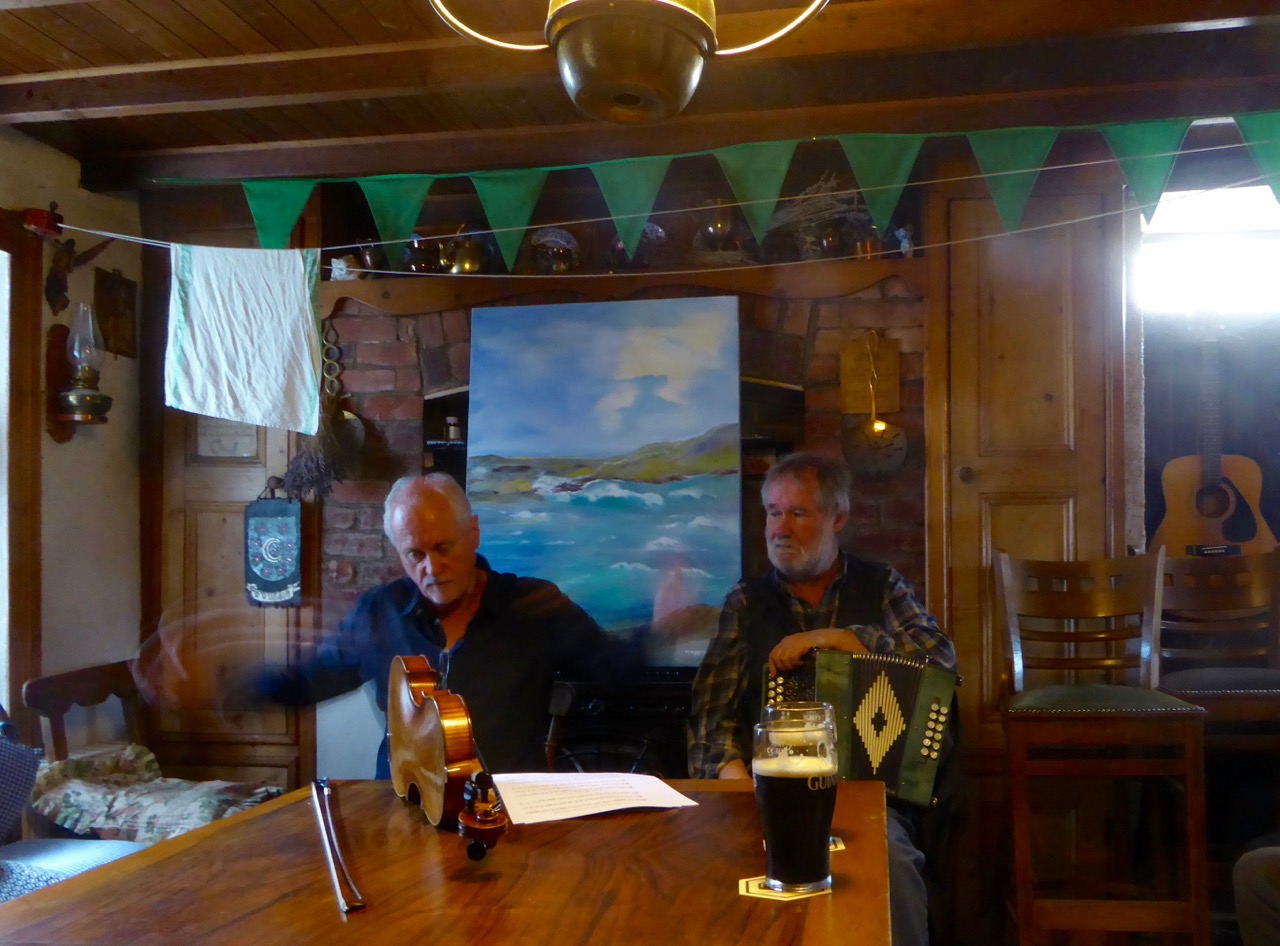
Seán Ó Sé was brought up in Ballylickey; he remembers Mrs Manning (Val’s mother) opening the shop – Manning’s Emporium – that now has a coveted reputation as one of West Cork’s favourite good food venues

He is both raconteur and singer and he has been close friend and colleague of our second Seán: Seán Ó Riada – a most profound influence on music in Ireland in the twentieth century. Seán number one told us about his first meeting – an audition – with Seán number two in the 1960s. In spite of being chronically shy the younger man must have made a good impression, and Ó Sé worked closely with Ó Riada on many of his major projects until the latter’s untimely death in 1971 – at the age of 40.

Famously, Seán Ó Sé was part of a group led by Ó Riada who performed at the Gaiety Theatre, Dublin, in March 1969. The concert was recorded and is now regarded as classic: …crucial in the outburst of quality traditional music in the 1970s and ever since... (Gael Linn). It’s interesting that this group debuted sounds that were hitherto little known in Ireland, where traditional music was mainly seen as a past-time indulged in only by ‘rural individuals with string tied around their trousers’ or by large ceilidh bands following in the dance hall convention. In fact, Ó Riada’s vision was already a reality in the Irish communities around Camden Town in London in the 1950s and 60s, fortunately recorded by collectors such as Bill Leader and Reg Hall. And, in any case, many of the members of the Ó Riada sa Gaiety group had been playing together since 1962: they called themselves The Chieftains!

Seán Ó Riada (left) and (right) the memorable Ó Riada sa Gaiety concert that ushered in a ‘new’ era of Irish Traditional Music: this is Ceoltóirí Chualann in March 1969, (l–r): Seán Ó Riada (Director and harpsichord), Peadar Mercier (bodhran), Éamon de Buitléar (accordion), Mairtin Fay, Sean O’Ceallaigh, Sean O’ Cathain (fiddles), Seán Potts (whistle), Micheal O’Toibride (flute) and Paddy Moloney (uillean pipes). Seán Ó Sé (vocalist) is at the front. Courtesy Gael Linn. The dress code was at Ó Riada’s insistence

Before the Gaiety concert Ó Riada had already made his name writing scores for Irish films, including the 1959 documentary by George Morrison on Ireland’s struggle for freedom in the period 1896-1918. Mise Éire (I am Ireland) uses music which draws on traditional themes. The film was hugely popular when the 1916 rising was commemorated fifty years on, and in the recent 2016 centenary commemorations the main theme – based on Róisín Dubh was often featured.  Róisín Dubh means “Dark Rose” and is one of Ireland’s most famous political songs. The modern translation is credited to Pádraig Pearse. Here’s a link to a fascinating recent TG4 documentary about the making of the film, which includes extracts.

mis eire film

Mise Éire was a sensation when it came out in 1959. It was widely shown during the 1966 commemoration of the Easter Rising in Dublin

Our own Seán – Ó Sé – entertained us thoroughly at the Bantry Literary Festival, telling us his stories of a full and fascinating life, and his memories of growing up on the shores of Bantry Bay. Of course, he sang for us as well: a real treat…
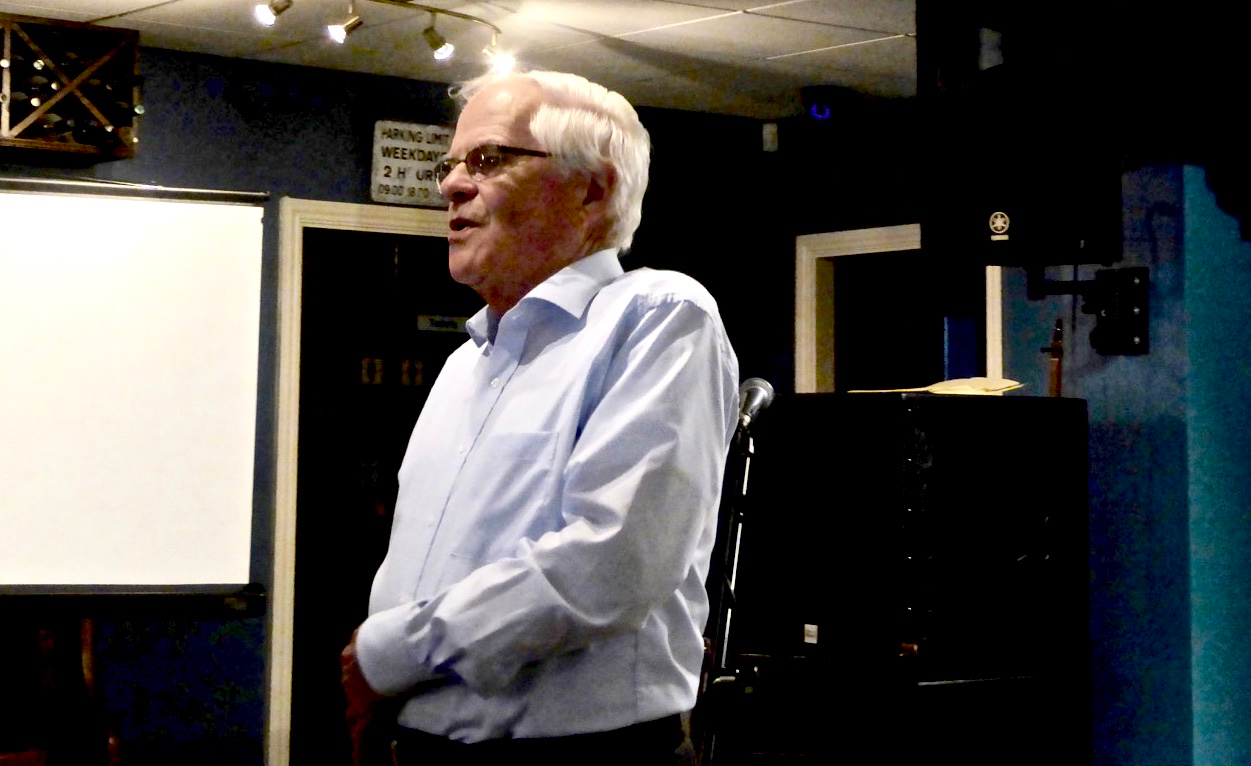
singing in the mariners

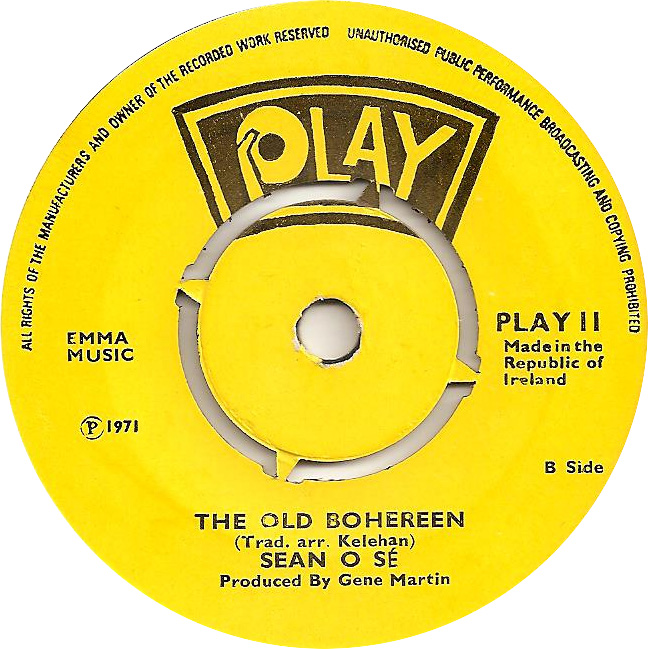
That book title: An Poc ar buile; it means ‘The Mad Puck Goat’. Wherever Seán goes he will be asked to sing the song, and our session with him in Bantry was no exception. It’s supposedly a patriotic fighting song. In Irish, it tells the tale of a large billy goat who defied Cromwell and ran down the mountain to warn the people of Killorglin, Co Kerry, of the invading army. Killorglin survived the attack, and the event is commemorated every year on August 10th, when a wild goat is raised to the top of a scaffold tower and presides for three days over the festivities. Here is Seán singing about the goat’s exploits at the Cavan Fleadh Cheoil in 2010.

puck-fair

Killorglin’s Puck Fair, 1900

Ag gabháil dom sior chun Droichead Uí Mhóradha
Píce im dhóid ‘s mé ag dul i meithil
Cé casfaí orm i gcuma ceoidh
Ach pocán crón is é ar buile…

curfá

Ailliliú, puilliliú, ailliliú tá an puc ar buile!

Do ritheamar trasna trí ruillógach,
Is do ghluais an comhrac ar fud na muinge,
Is treascairt do bhfuair sé sna turtóga
Chuas ina ainneoin ina dhrom le fuinneamh…

curfá

Níor fhág sé carraig go raibh scót ann
Ná gur rith le fórsa chun mé a mhilleadh,
S’Ansan sea do cháith sé an léim ba mhó.
Le fána mhór na Faille Bríce…

curfá

Bhí garda mór i mBaile an Róistigh
Is bhailigh fórsa chun sinn a chlipeadh
Do bhuail sé rop dá adhairc sa tóin ann
S’dá bhríste nua do dhein sé giobail…

curfá

I nDaingean Uí Chúis le haghaidh an tráthnóna
Bhí an sagart paróiste amach ‘nár gcoinnibh
Is é dúirt gurbh é an diabhal ba Dhóigh leis
A ghaibh an treo ar phocán buile…

curfá

As I set out with me pike in hand,
To Dromore town to join a meithil,
Who should I meet but a tan puck goat,
And he’s roaring mad in ferocious mettle.

Chorus:
Aill-il-lu puill-il-iu – Aill-il-lu it’s the mad puck goat.

He chased me over bush and weed,
And thru the bog the running proceeded,
‘Til he caught his horns in a clump of gorse,
And on his back I jumped unheeded.

Chorus

He did not leave a rock that had a passage through,
Which he did not run with force to destroy me,
And then he gave the greatest leap,
To the big slope of Faille Bríce.

Chorus

When the sergeant stood in Rochestown,
With a force of guards to apprehend us,
The goat he tore his trousers down,
And made rags of his breeches and new suspenders.

Chorus

In Dingle Town the next afternoon,
The parish priest addressed the meeting,
And swore it was The Devil himself,
He’d seen riding on the poc ar buile.

Chorus
old bohereen

Learning from the Masters

matt + jackie

It’s midsummer – and time for the Fastnet Maritime and Folk Festival in Ballydehob. Amongst the distinguished guests this year are these two regulars: Matt Cranitch and Jackie Daly. They hail from the Sliabh Luachra on the Cork, Kerry and Limerick borders. I’ve made mention of this area before, particularly in Slides or Jigs and The City of Shrone: the name means ‘Rushy Mountains’. I can’t resist quoting from this anonymous and wry review of a book published in 2003:
…I’ve just come across a book which may interest serious Sliabh Luachra obsessives, though not those merely in search of new polkas and slides.  “Sliabh Luachra Milestones”, by Diarmuid Moynihan, is an attempt at the first general history of the area, and grew out of a thesis on early road development in Sliabh Luachra.  It covers, in outline at least, such topics as archaeology, Christianity (traces have been found, apparently), early descriptions by English invaders, historical events, settlement patterns, maps, and of course, roads…
rushy glen

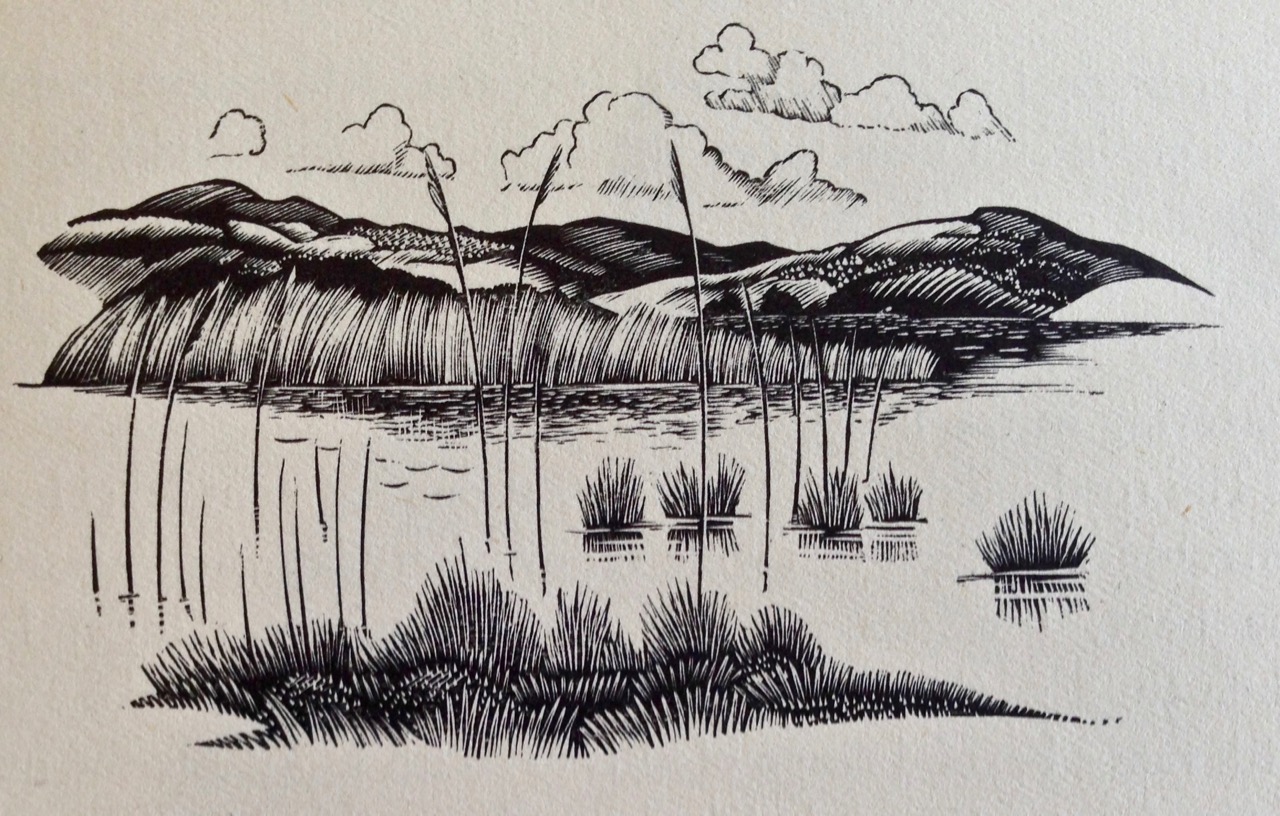
The rushy glens of Sliabh Luachra – from a woodcut by Robert Gibbings

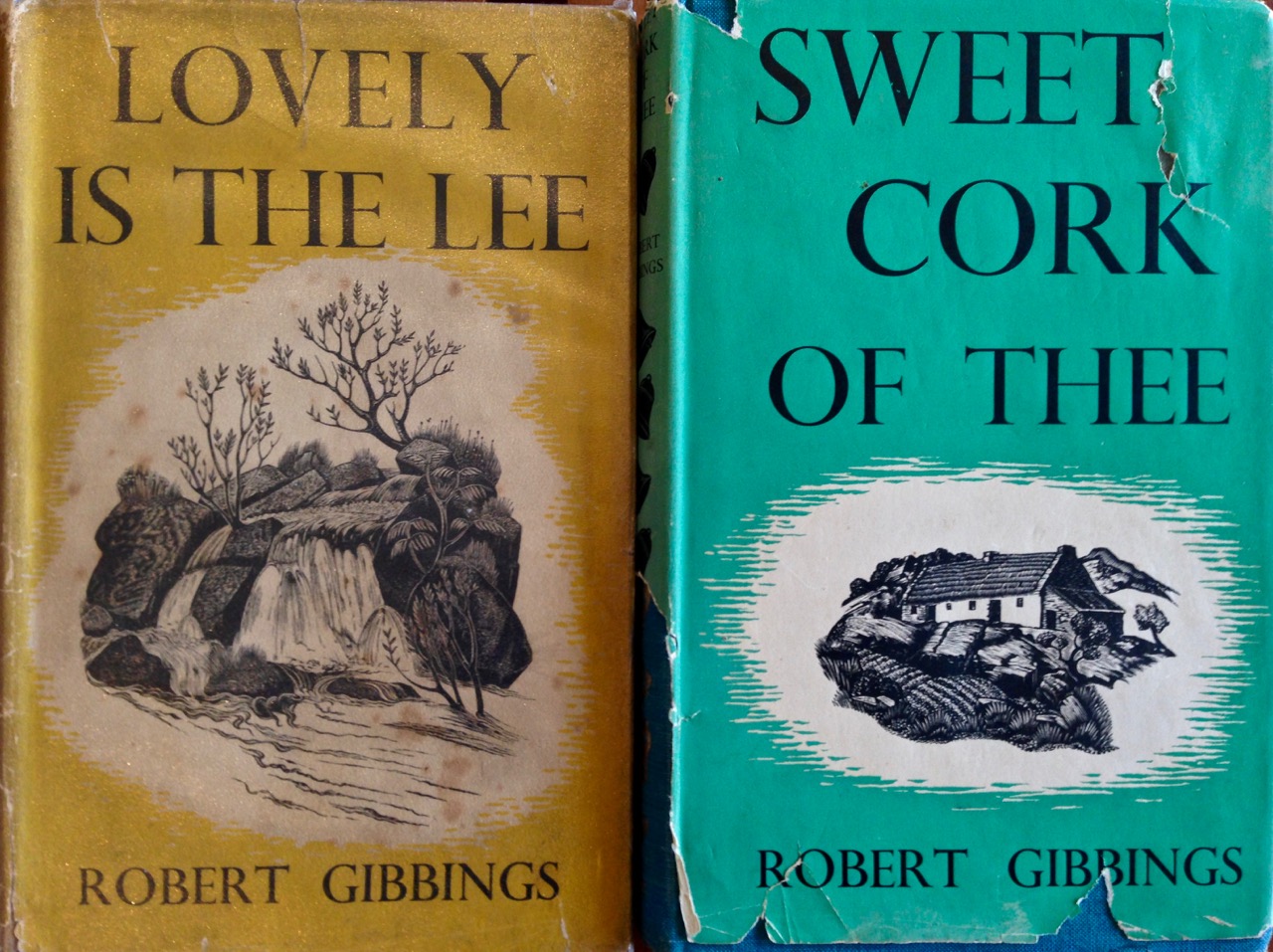
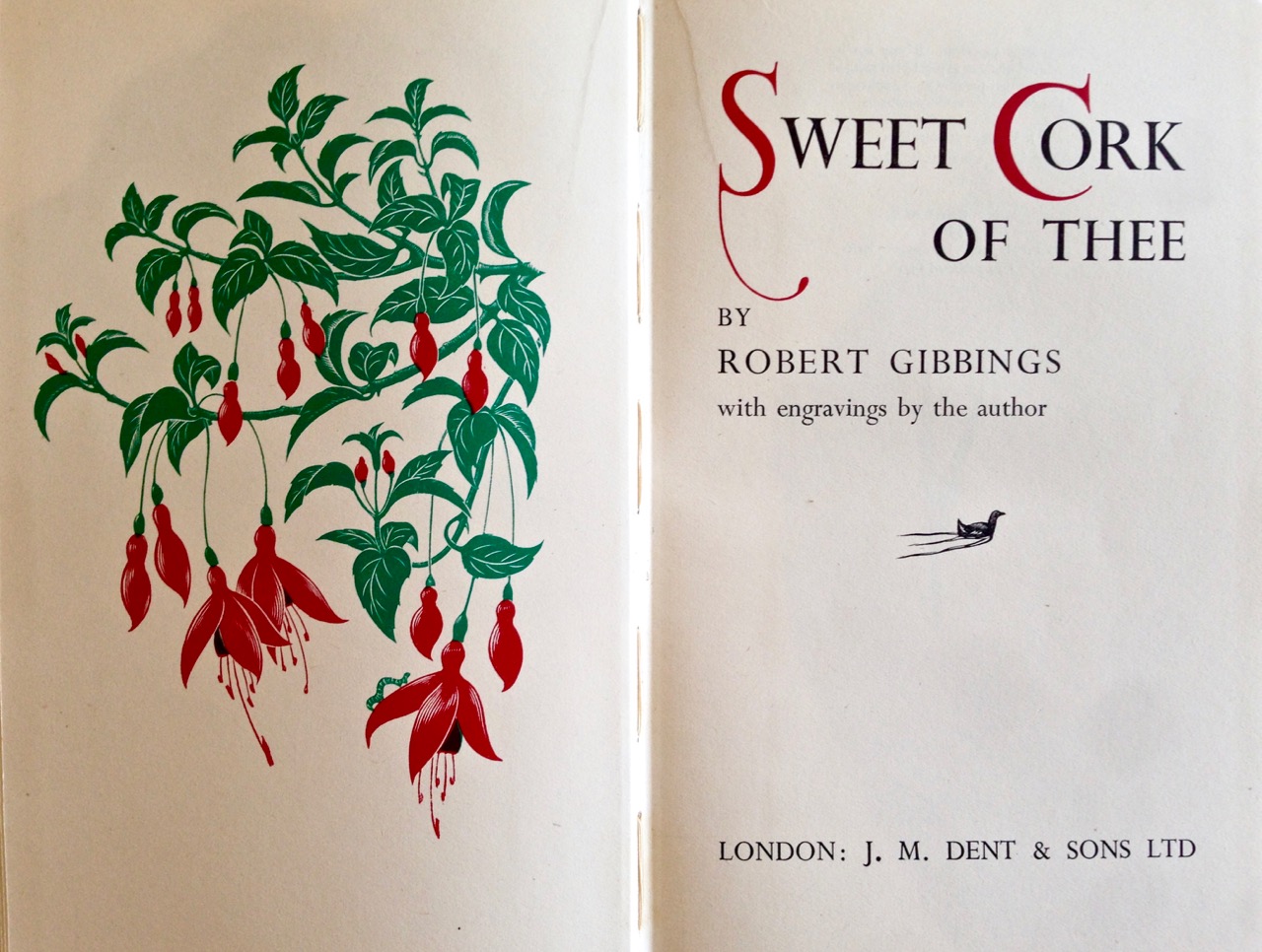
So, am I a Sliabh Luachra obsessive? I think I probably am… It all started in the 1970s when my good friend Danny gave me two books by Robert Gibbings – Lovely is the Lee (J M Dent 1945) and Sweet Cork of Thee (J M Dent 1951). They are my most treasured books in our extensive collection of Irish literature and both are set, in part, in the Sliabh Luachra – and it was these books that set me on a journey that – 40 years later – has brought me here to Nead an Iolair, and to the wealth of musical tradition that we enjoy.

Gibbings books

Sweet Cork title

Jackie Daly is only a year older than I am, yet I remember looking up to him as a master when I first started listening to Irish music half a century ago: I suppose we must both have been more youthful then! He grew up with the music of course: his father played the melodeon, and he played at local ‘crossroads dances’ with a neighbouring mentor Jim Keefe. I still have – and still play – the recordings of Sliabh Luachra musicians that I bought in the early 1970s (and which are still available from Topic Records). Matt Cranitch is a distinguished and respected fiddle player who has also has an academic career and has lectured widely on Irish traditional music.

Here’s a taster from the Festival sessions – Matt, Jackie and friends finishing up a set of iconic Sliabh Lauchra slides in Rosie’s Bar

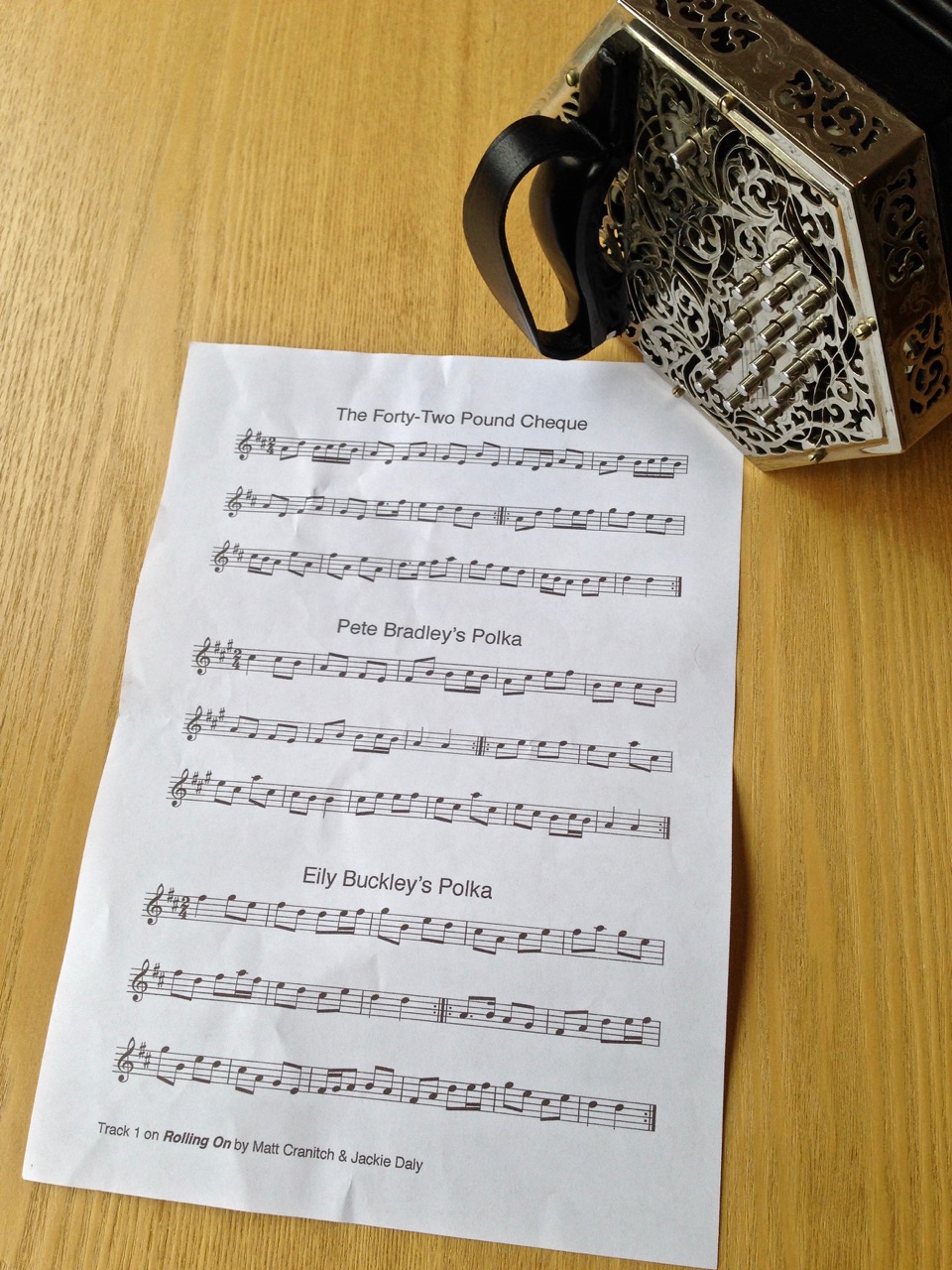
I was fortunate to attend a workshop with Matt and Jackie in Levis’s on Saturday. After a fascinating talk on their traditions we all ended up learning a set of polkas. Wonderful! Those without instruments were cajoled to sing the tunes, so it was a communal affair.

Here you’ll catch the end of a tale by Jackie and a few bars of a beautiful slow air (Maidin Ró-Mhoch) from Matt

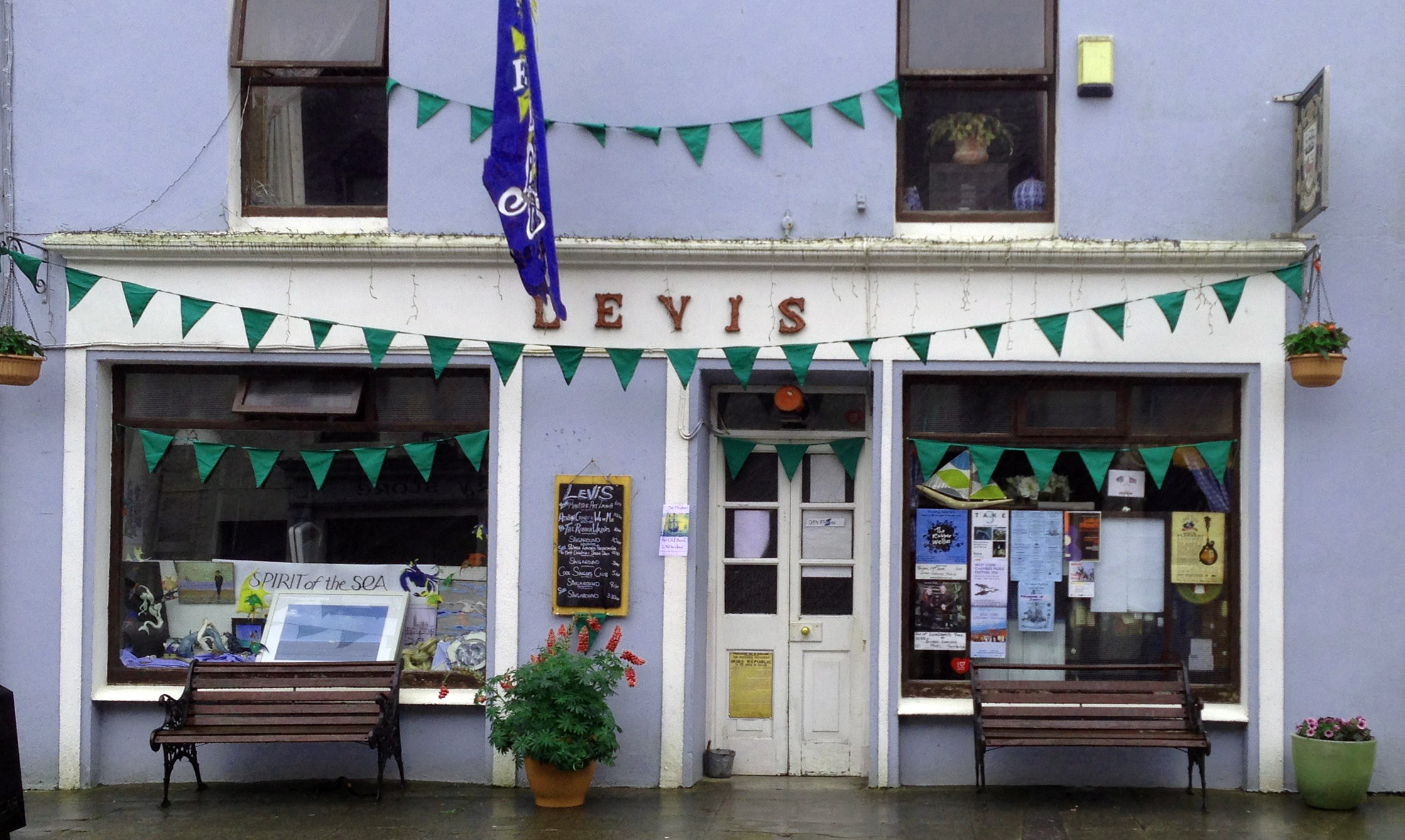
The workshop took place in the intimate setting of the back parlour of Levis’s Corner House – on its way to becoming one of the top music venues in Ireland through the efforts of Joe and Caroline yet always keeping its distinctive character.

Levis midsummer day

It takes me a little while to pick up new tunes but the duo were good and patient teachers and we were doing quite well by the end of the session. I thoroughly recommend their latest CD Rolling On (2014), which includes Maidin Ró-Mhoch and many other fine Sliabh Luachra pieces.

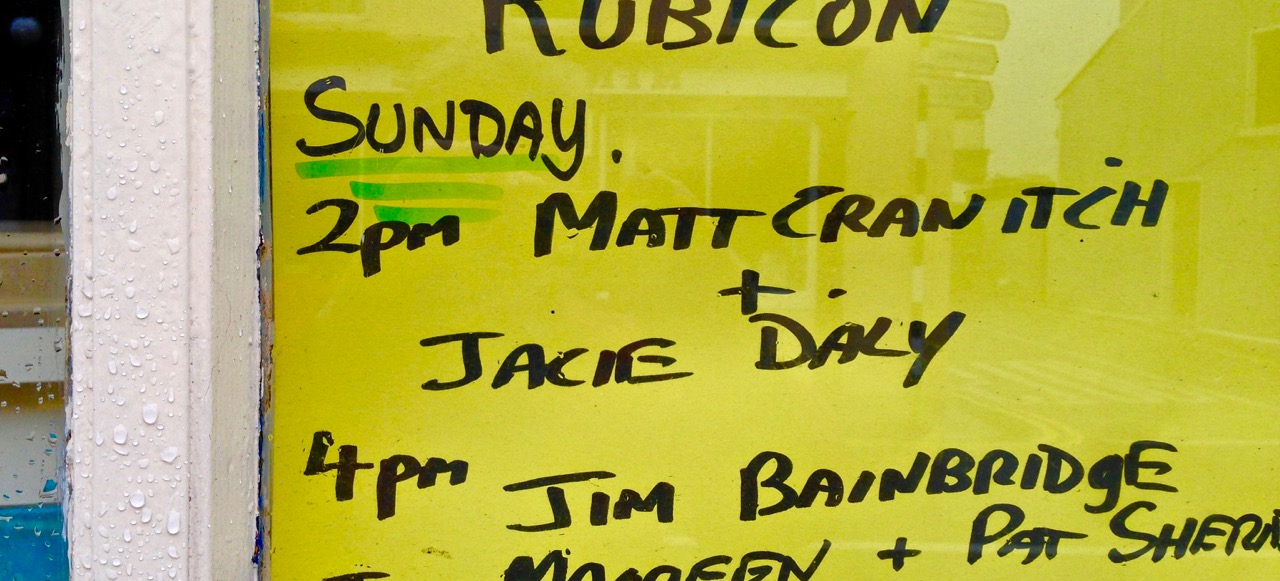
As usual, Ballydehob has embraced this festival – one of many through the summer – and the town is rocking in the rain… there are visitors from afar: Hyttetu – a maritime themed male voice choir from Norway, Swansea shantymen Baggyrinkle and very many others, including someone who has been at the forefront of the Irish folk music scene for many years, Andy Irvine.

yellow poster

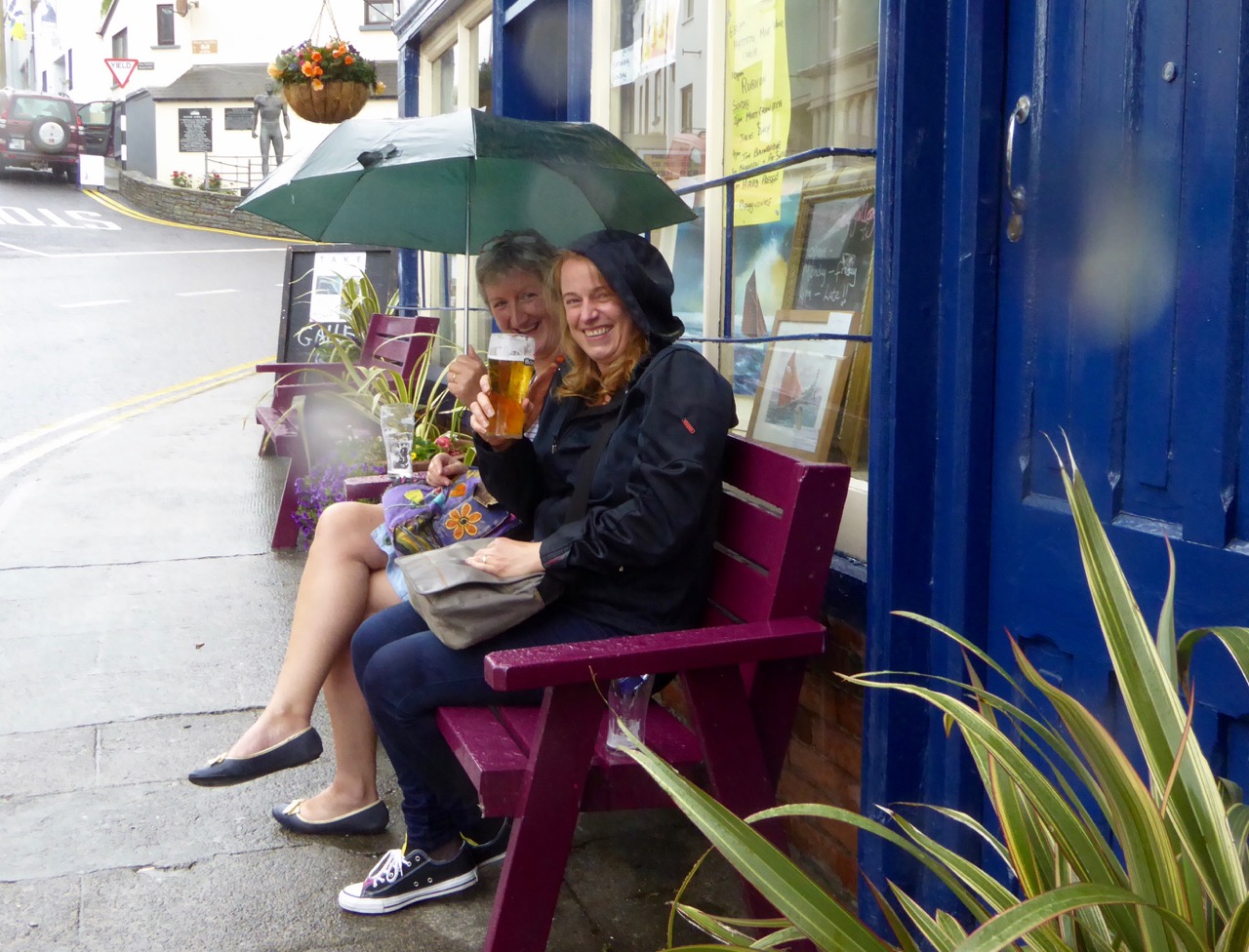
festival time!

Festival time – midsummer’s day!

So many thanks to all the organisers, particularly Dick Miles and Cathy Cook, and the landlords of all our local hostelries: it wouldn’t happen without them. Now I’m off home to get dry and practice those tunes!

3 polkas


Labbacallee

rookery

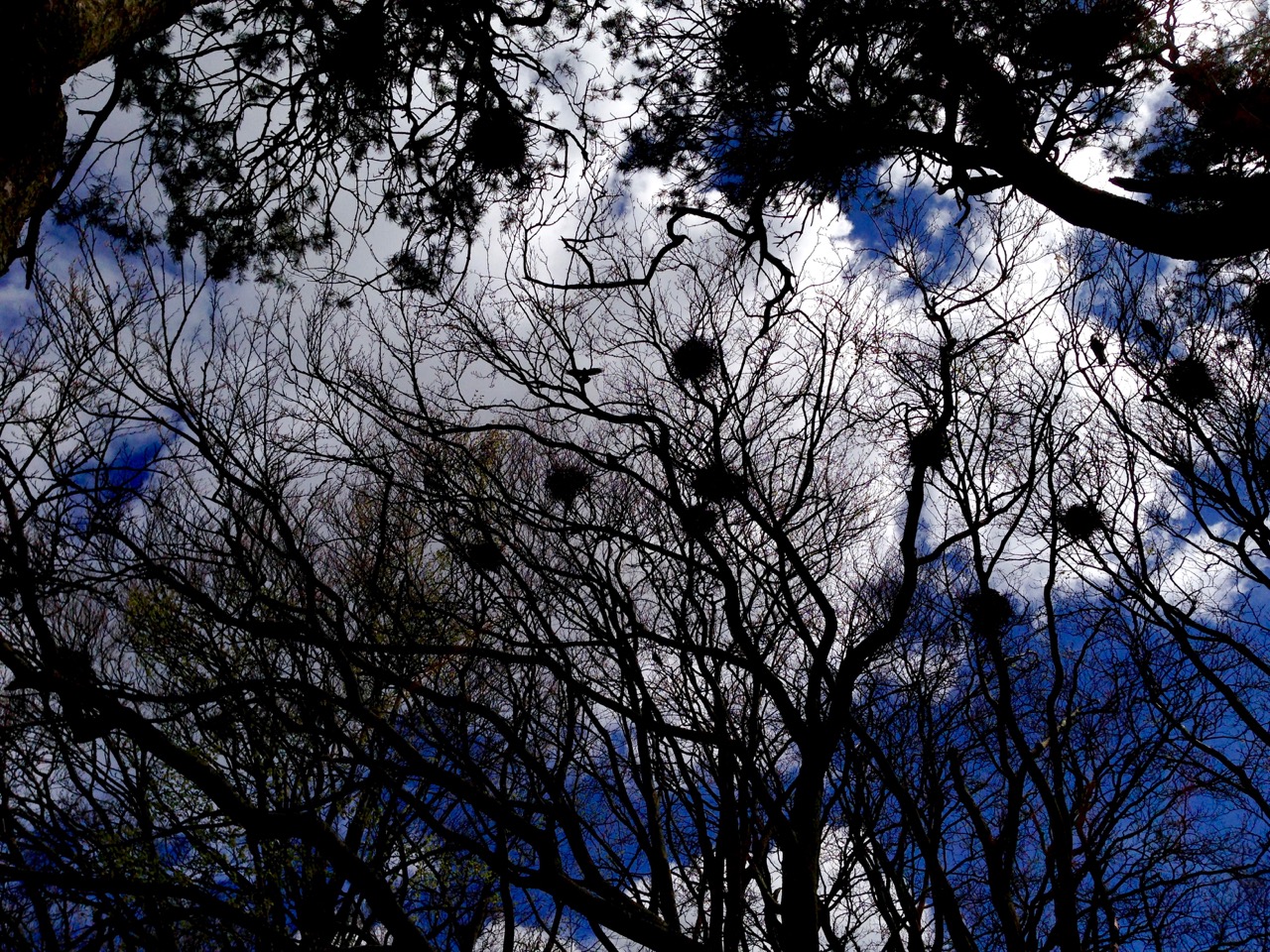
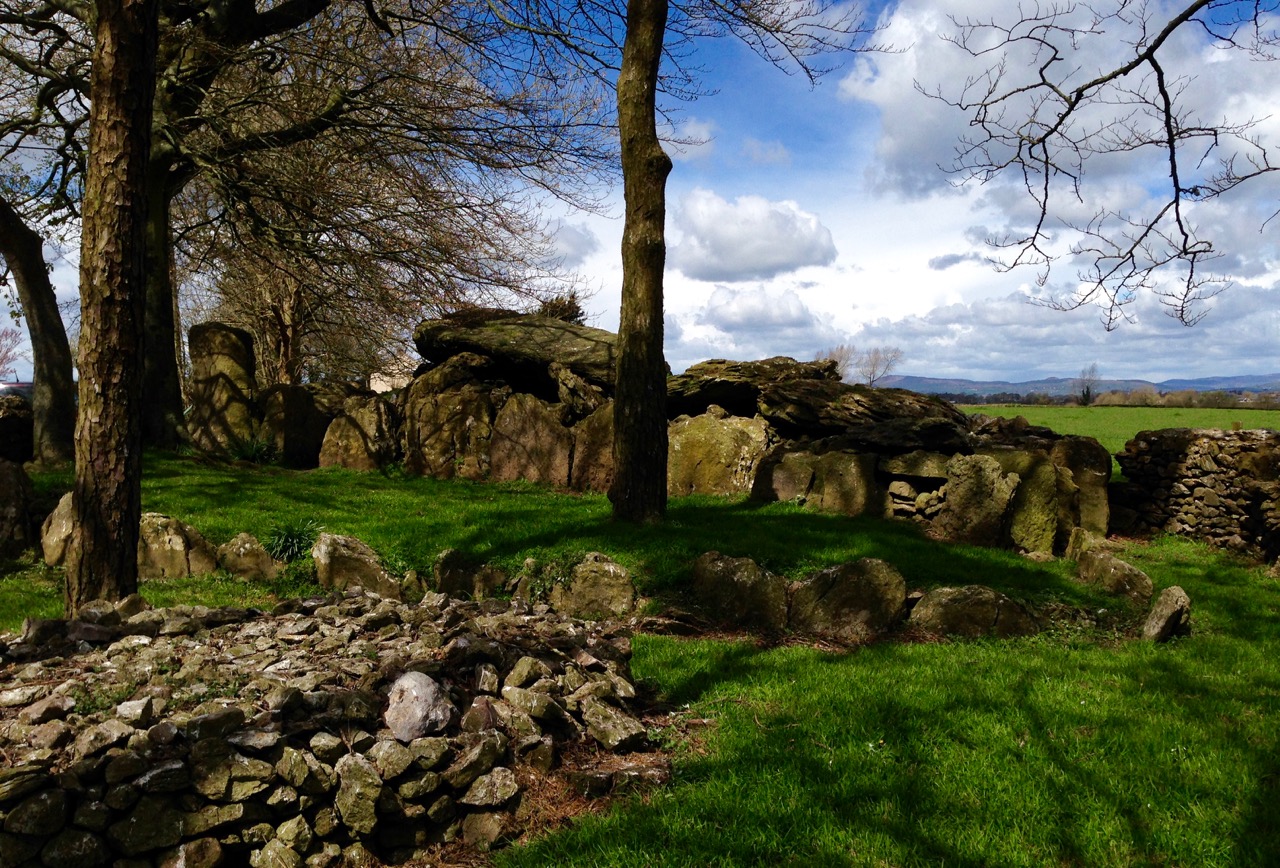
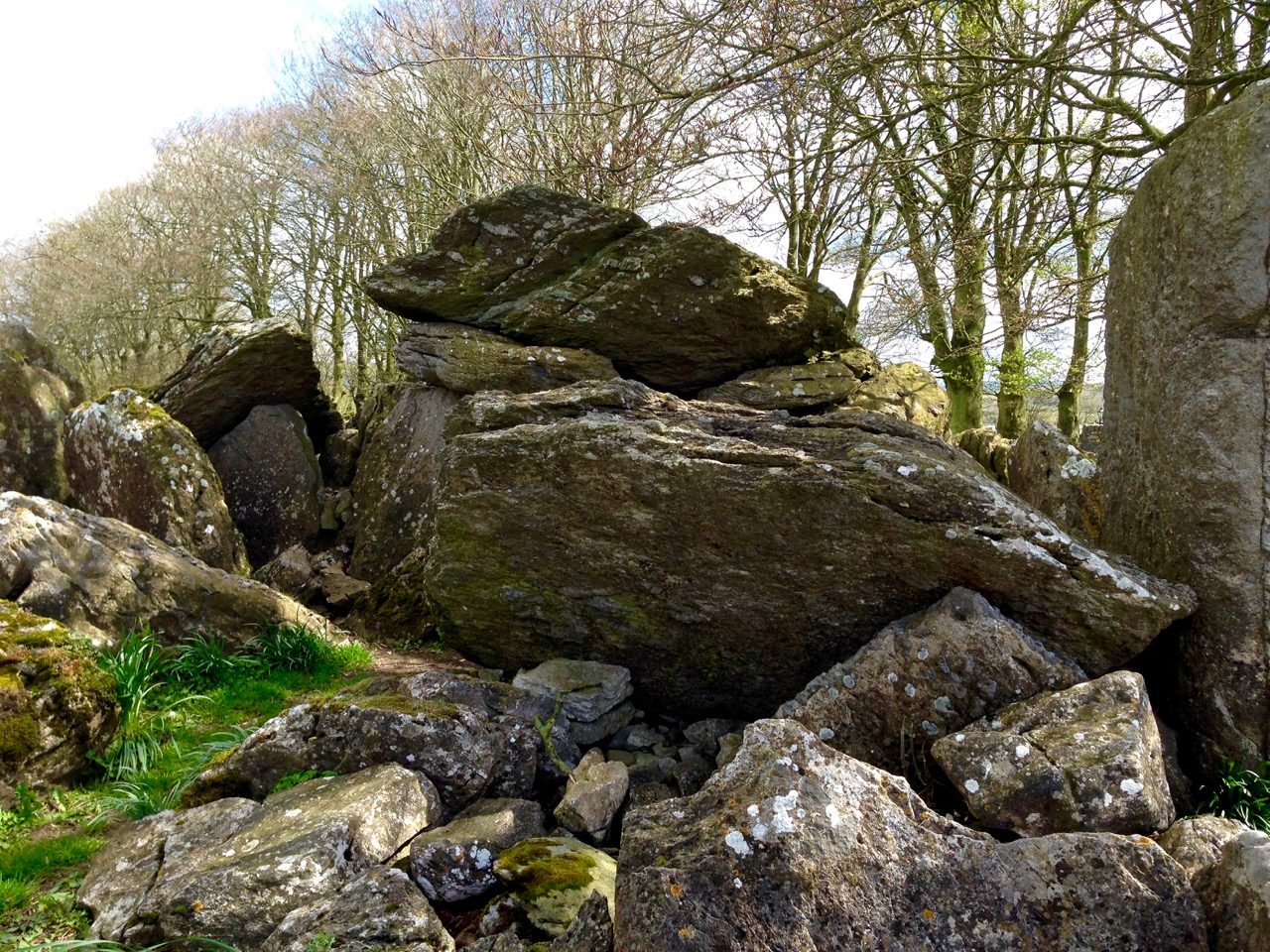
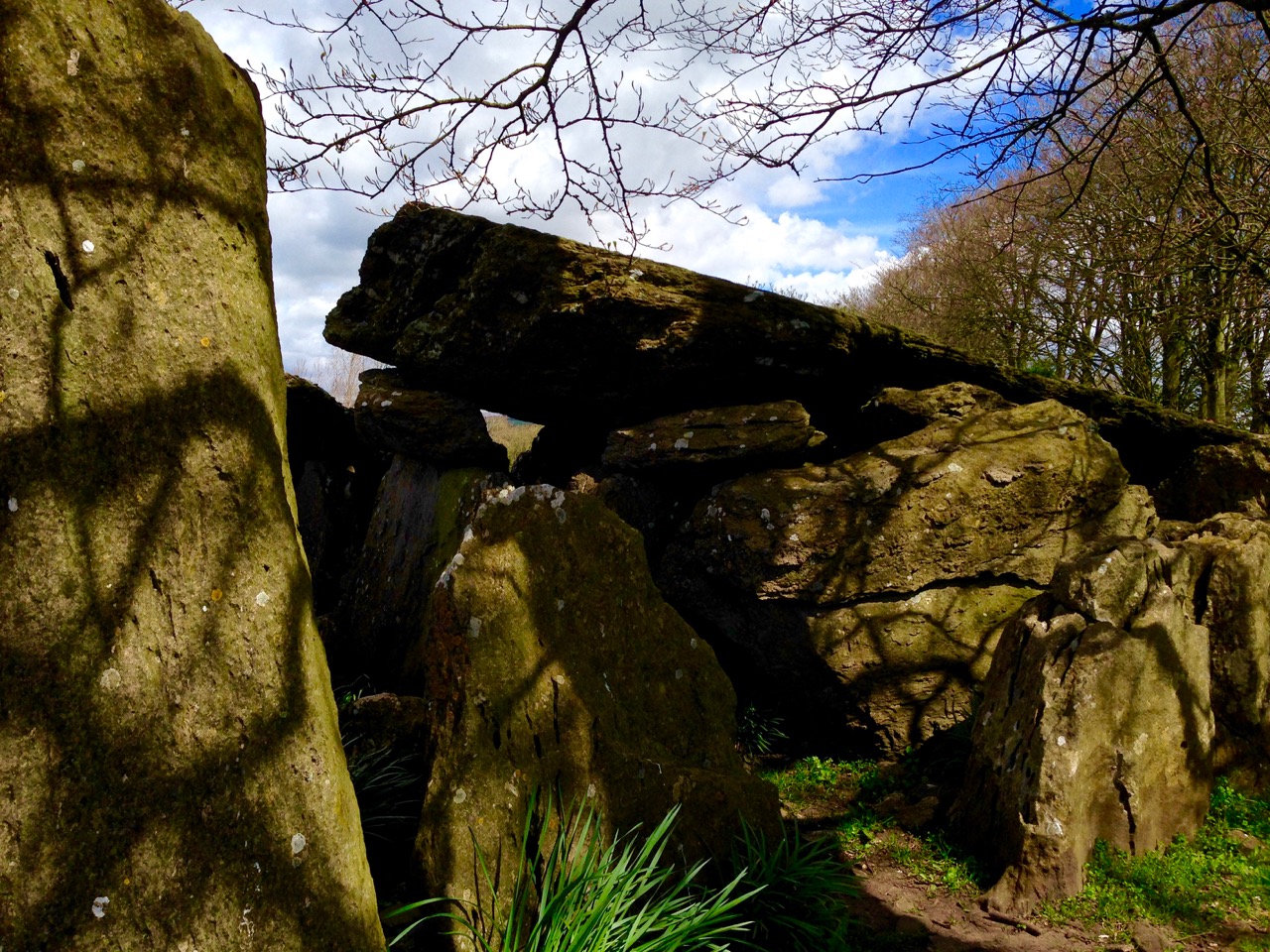
My strongest memory of our visit to Labacallee wedge tomb, Co Cork, earlier this summer was the rookery above it. Our presence seemed to make this multitude of large black birds restless: there was a constant movement over our heads – a mixing up of flapping feathers, wind in the still bare branches and screeching protests. These are the unpaid guardians of this monument, apparently the largest of its kind in Ireland, with a long documented history and a wealth of folklore.

labbacallee view

Labacallee today: it must once have been an impressive and dominant feature on an open landscape. Now it has been closed in by fields, trees and a byroad running north out of Fermoy. In the foreground is a cairn, possibly made in relatively modern times from material excavated from the monument

Finola has written about wedge tombs. She calls them The Last of the Megaliths: court-tombs, portal-tombs and passage-tombs are slightly earlier constructions, built before c2000 BC, while wedge tombs date from some 500 years after this. According to the Archaeological Inventory of County Cork Volume 1 (Stationery Office Dublin 1992) …The more numerous and widespread wedge-tombs are relatively small and simple constructions, so called because of an increase in height and width from the chamber rear to the entrance front. They generally face in a south-westerly direction, an orientation they share with stone circles and stone rows…

labbacalle back end

The east facing – and narrower – end of the wedge tomb

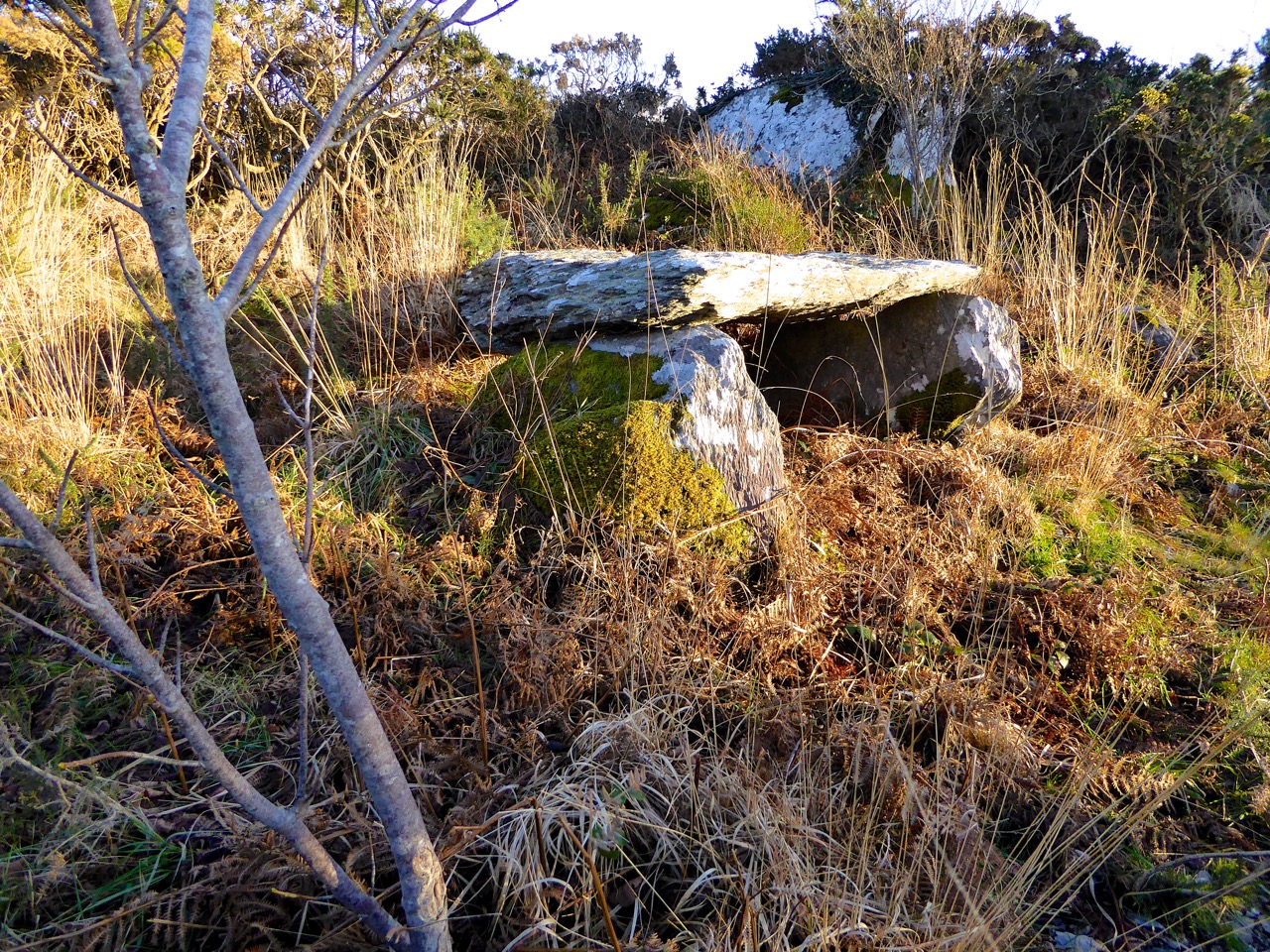
Labacallee is enormous, especially if you are only familiar with examples such as Altar, west of Goleen (itself sizeable) or our own more domesticated version at Kilbronogue, a neighbouring townland:

kilbronogue-wedge-tomb

A more ‘human scale’ wedge tomb at Kilbronogue, West Cork: many thanks to Stephen Lynch, a near neighbour, for looking after this example and allowing us access

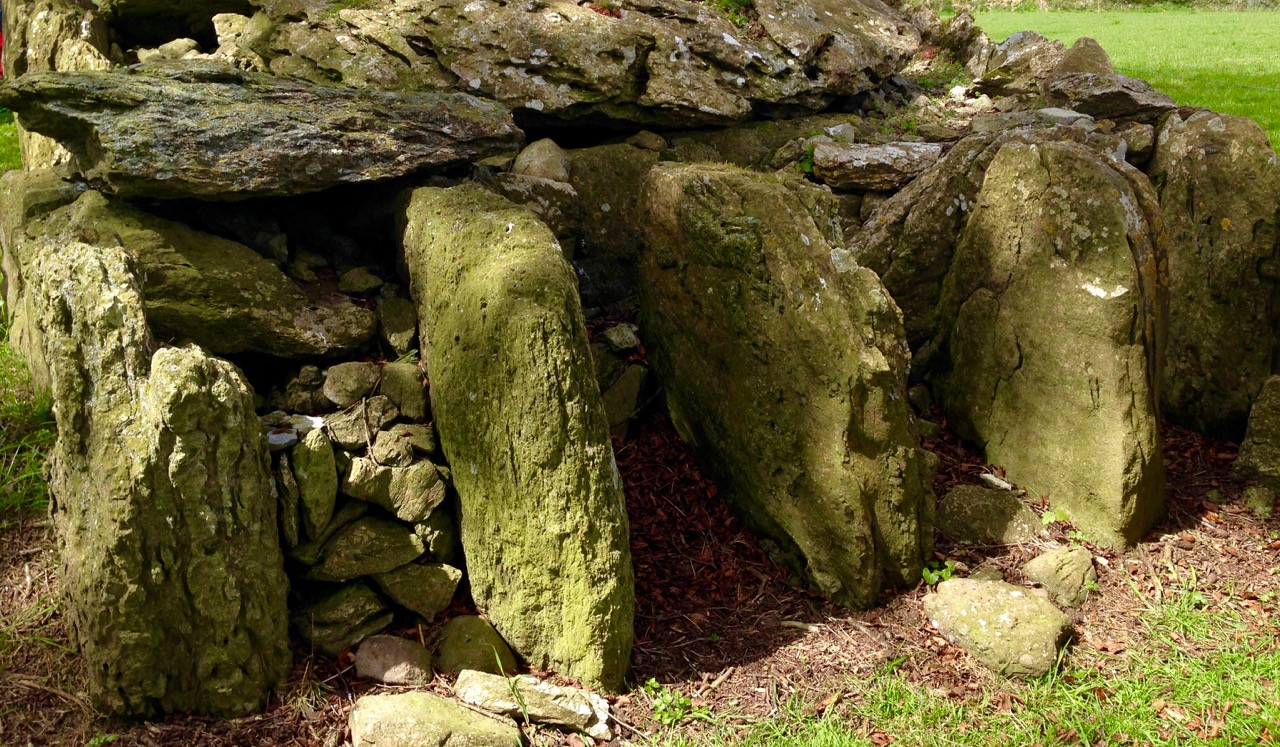
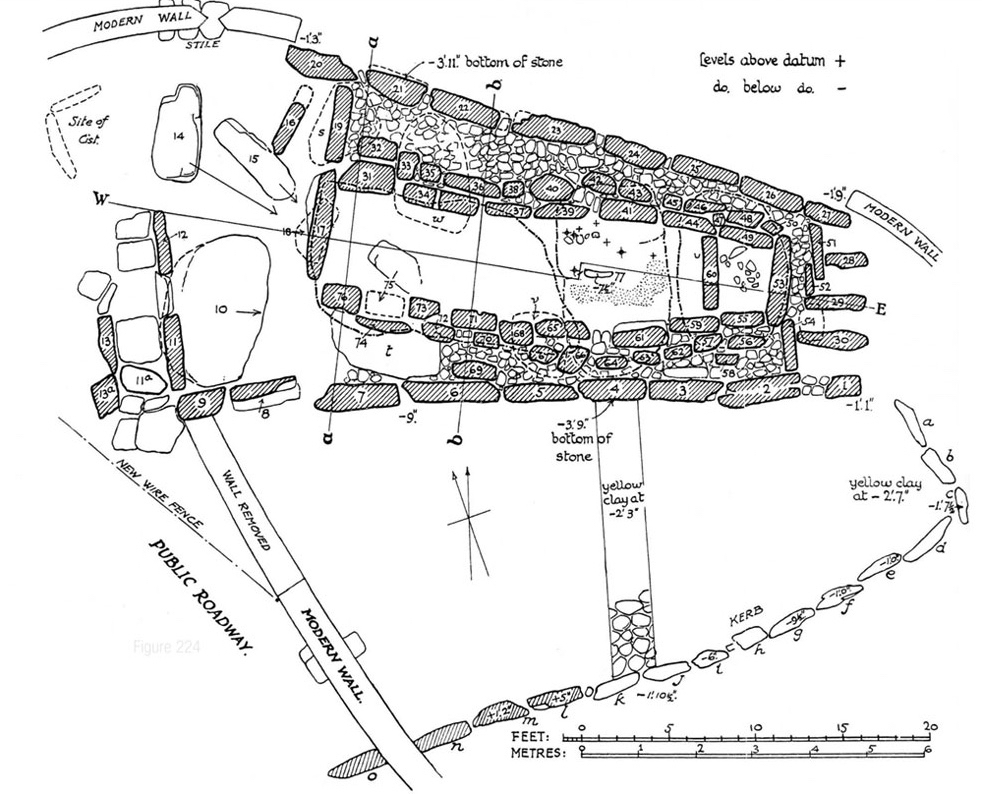
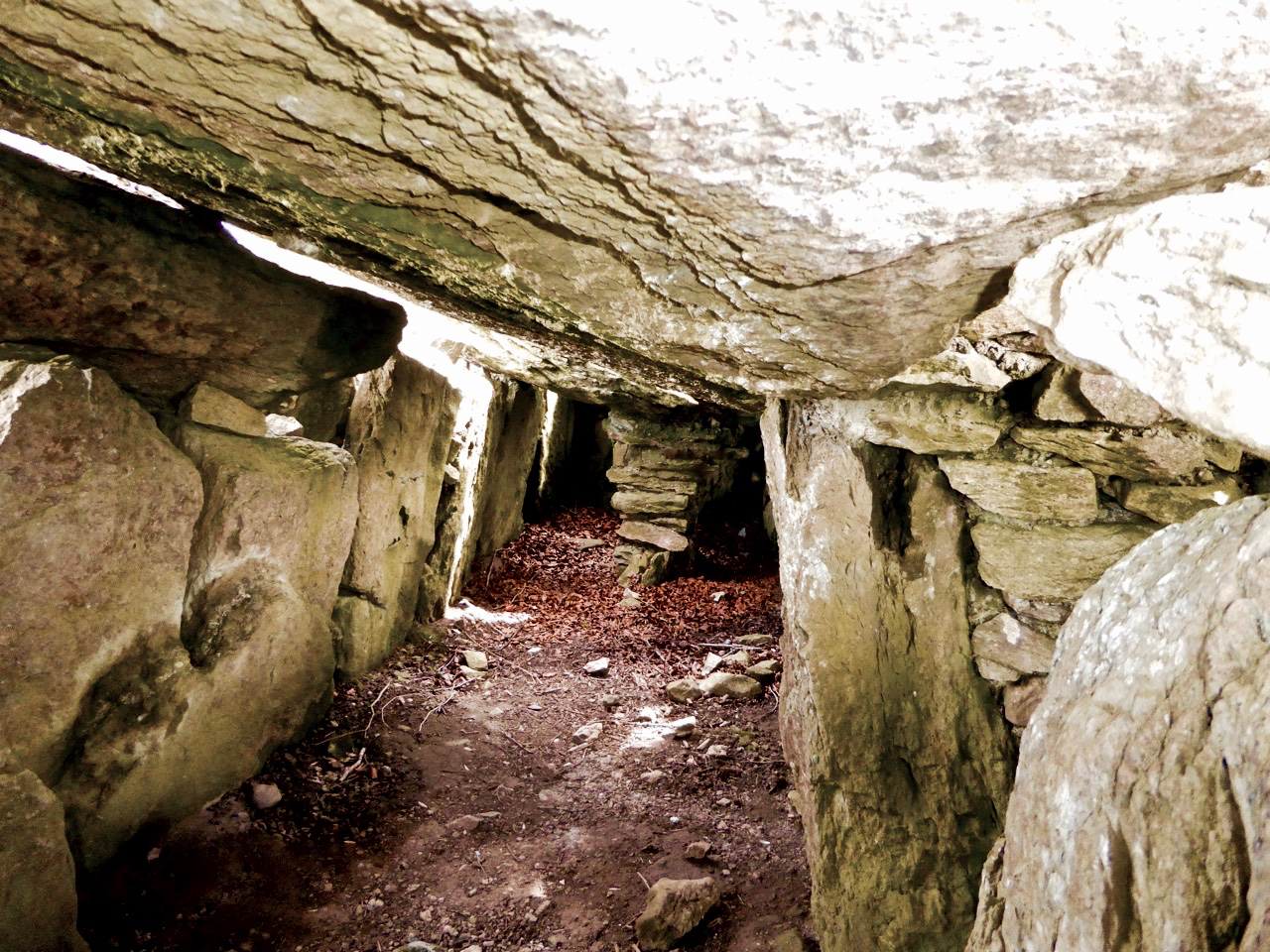
Labbacallee – the name seems to be from the Irish Leaba Caillighe – ‘the bed of the witch’ – measures some 14 metres by 8 metres overall. It has a series of upright stone ‘walls’ supporting three capstones. The largest of these measures 5 metres by 2.5 metres and is a metre in thickness: it must weigh at least 10 tons. These stones house three ‘chamber’ enclosures.

tomb plan

Plan of Labbacallee wedge tomb drawn following the excavation by H G Leask and Liam Price in 1934, from Proceedings of the Royal Irish Academy Volume 43

The tomb has been recognised as an important site in British and Irish archaeology over a long period. English antiquary John Aubrey, who lived from 1626 to 1697 (and who was incidentally described as “Shiftless, roving and magotie-headed…”) is recognised as one of the first serious recorders of historic sites. He was also a keen collector of folklore and, like me, felt that the stories that local people told about the monuments around them were valuable insights into perceived history.

John Aubrey and a drawing of Labbacalle  he published in 1693. While you can see in the drawing the principle of a chamber constructed of upright stones and roofed with large slabs, there is very little resemblance in the drawing to the structure itself (which was anyway in a ruinous state in Aubrey’s lifetime). It has been suggested that Aubrey obtained the sketch – or a verbal description of the tomb – from a Mr Gethyng who lived close by it
A drawing from the1897 work The Dolmens of Ireland, their Distribution, Structural Characteristics, and Affinities in Other Countries; together with the folk-lore attaching to them and traditions of the Irish people by William Copeland Borlase 1848 -1899. This Cornish antiquary and politician spent part of his life in Ireland so it is likely that he did visit the tomb. Certainly the drawing is more true to life than Aubrey’s. After what has been described as ‘high living’ Borlase died in disgrace, having been involved in scandal and bankruptcy
Artistic interpretations of a subject: views of Labbacallee dating from 1827 (top), 1844 (below left) and 1845 (below right by George Wilkinson)

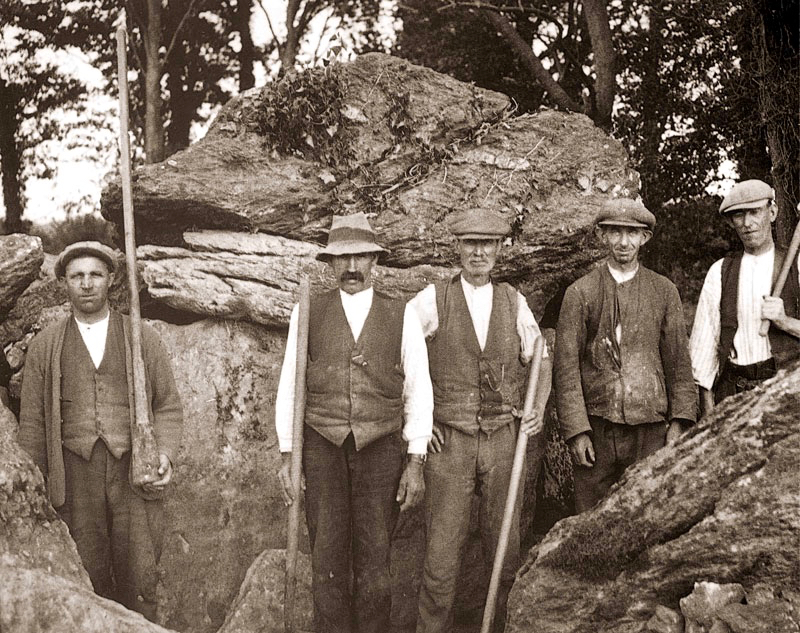
The first full scientific examination and excavation of the tomb was carried out in 1934 under the supervision of H G Leask, using workers paid one guinea per week as part of a government unemployment relief plan. According to the excavation report, at this time the smallest chamber was filled to the top with rubble, including earth, stones, ash and the bones of animals and humans. When these were cleared a skeleton of a woman was exposed, together with a bone pin which might have fastened a garment or shroud. The woman’s skull was missing but later found upright (as though on display?) in the large main chamber. One of the leg bones of the skeleton was deformed: this led to the speculation that her handicap may have set her apart in life, giving her a status that was either feared or revered: she might have been ‘marked out as a witch’.

labercalle excavators

Leask’s excavation team in 1934 (top) and (left) his drawing of the headless skeleton as found; (right) the separated skull of the ‘witch’

I am fascinated that ‘folk’ or oral traditions survive through generations, centuries and even millennia. In the case of Labbacallee, we know that the name existed back in Aubrey’s time – over three hundred years ago – and was undoubtedly well established by then. Could it be that the name – ‘bed of the witch (or hag)’ – was the persisting memory of the interment of an important person, perhaps a priestess or shaman, from very ancient times?

hag's bed

The Hag’s Bed – the main chamber in the monument, where the skull was found

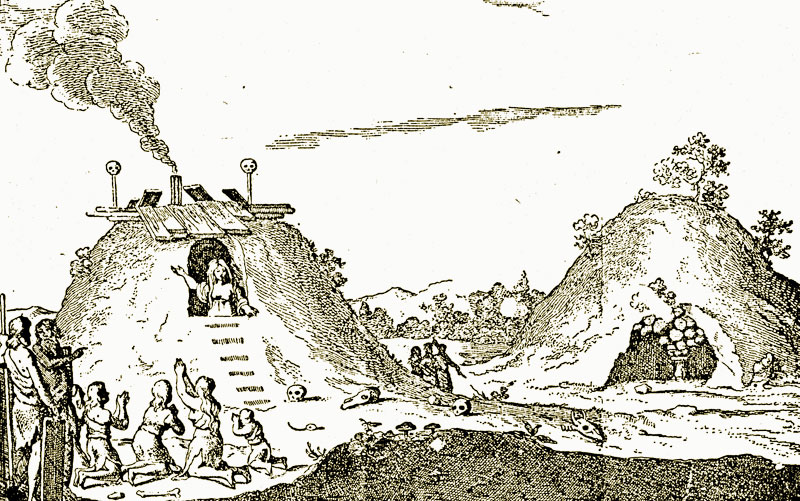
While the excavators were exploring Labbacallee they found evidence to suggest that the tomb (or part of it) had been an occupied dwelling at some point during its history. The notion that some historic and prehistoric monuments were (or are still) the dwelling places of the Old Ones, or The Other Crowd – supernatural beings possibly descended from ancient invaders of Ireland – or had in fact been used in some way by practitioners of magic – is not unknown. Borlase’s 1897 work on The Dolmens of Ireland… included this illustration (albeit from the Netherlands) of ‘A ‘White Woman’ (wise woman or witch?) prophesying from a dolmen-mound’. It’s not a big leap to the idea of a witch being buried in a wedge tomb.

whiteWoman borlase

Legends specific to a ‘hag’ of Labbacallee suggest that she was married to a druid, Mogh Ruith, who ‘had an eye’ for the hag’s sister. In a fit of jealously the hag chased the druid towards the River Funchion. He reached the water and started to cross it: the hag threw an enormous boulder which struck the druid, toppling him and pinning him down under the water. As far as we know, he’s there to this day!

labbacallee stones

Stories in stone: Labbacallee landscape

Another story specific to Labbacallee also involves a drowning – and a warning! This version is from theirishplace.com:

…Whatever the provenance and history of the remains found in the Labbacallee Wedge Tomb, there is no doubt that it is a site around which legends abound. One of the most pervasive legends tells that one day, very long ago, four local men went to the tomb in the middle of the night, with the aim of digging for the treasure that they had heard was buried there. As they started to dig, it is said that an enchanted cat appeared, fire bursting from its tail, terrifying the men, who were dazzled by the light emitting from it. Panicking, they ran screaming from the scene, and in the ensuing panic one fell into the nearby river (Funchion) and drowned. The remaining men lived to tell the tale, and their experience stood as a stark warning to others that they should never, under any circumstances, disturb the resting place of the long dead at this most mysterious of megalithic sites…

labbacallee shadows


Slides or Jigs? Polkas or Reels?

young fiddler close

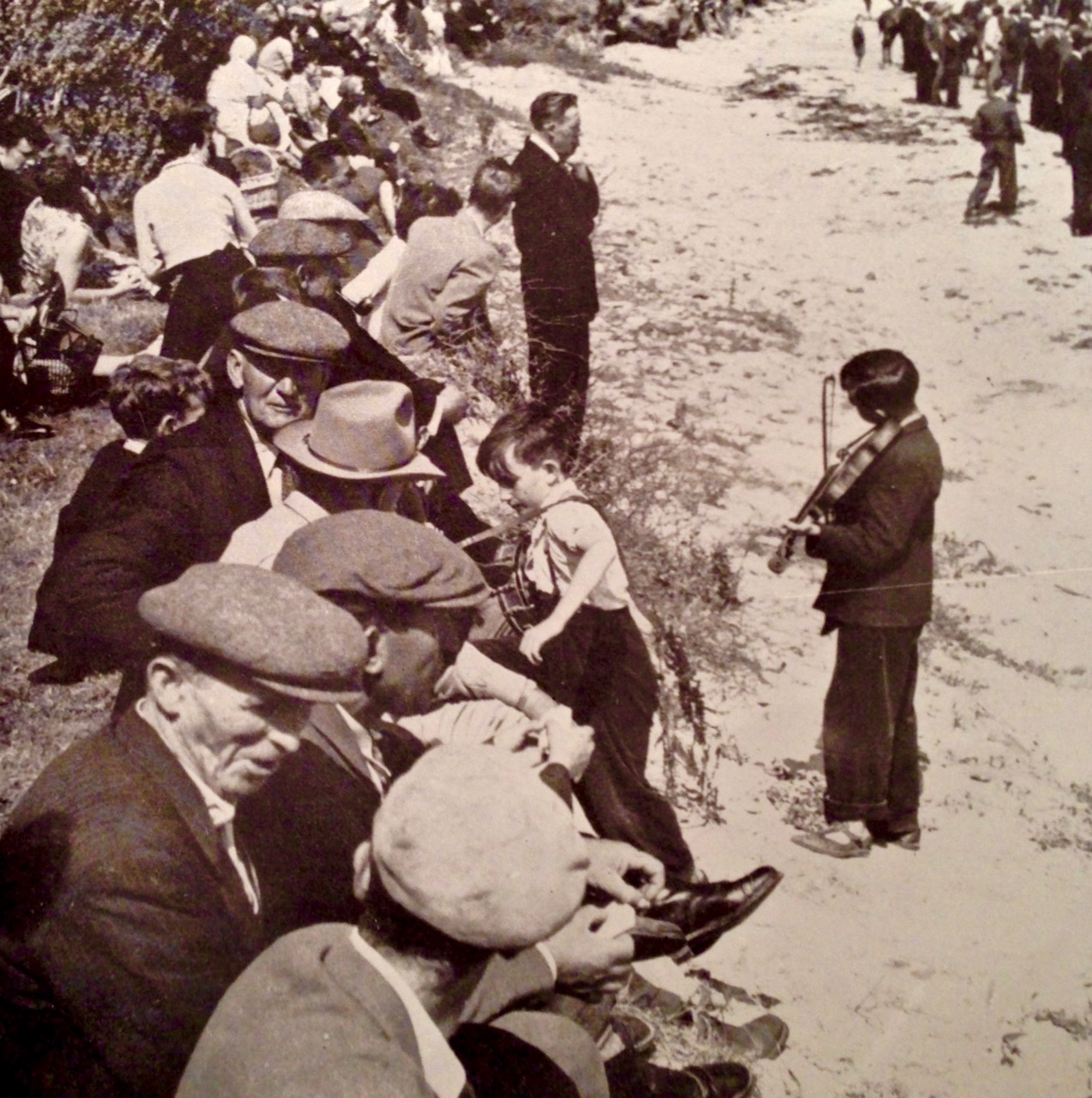
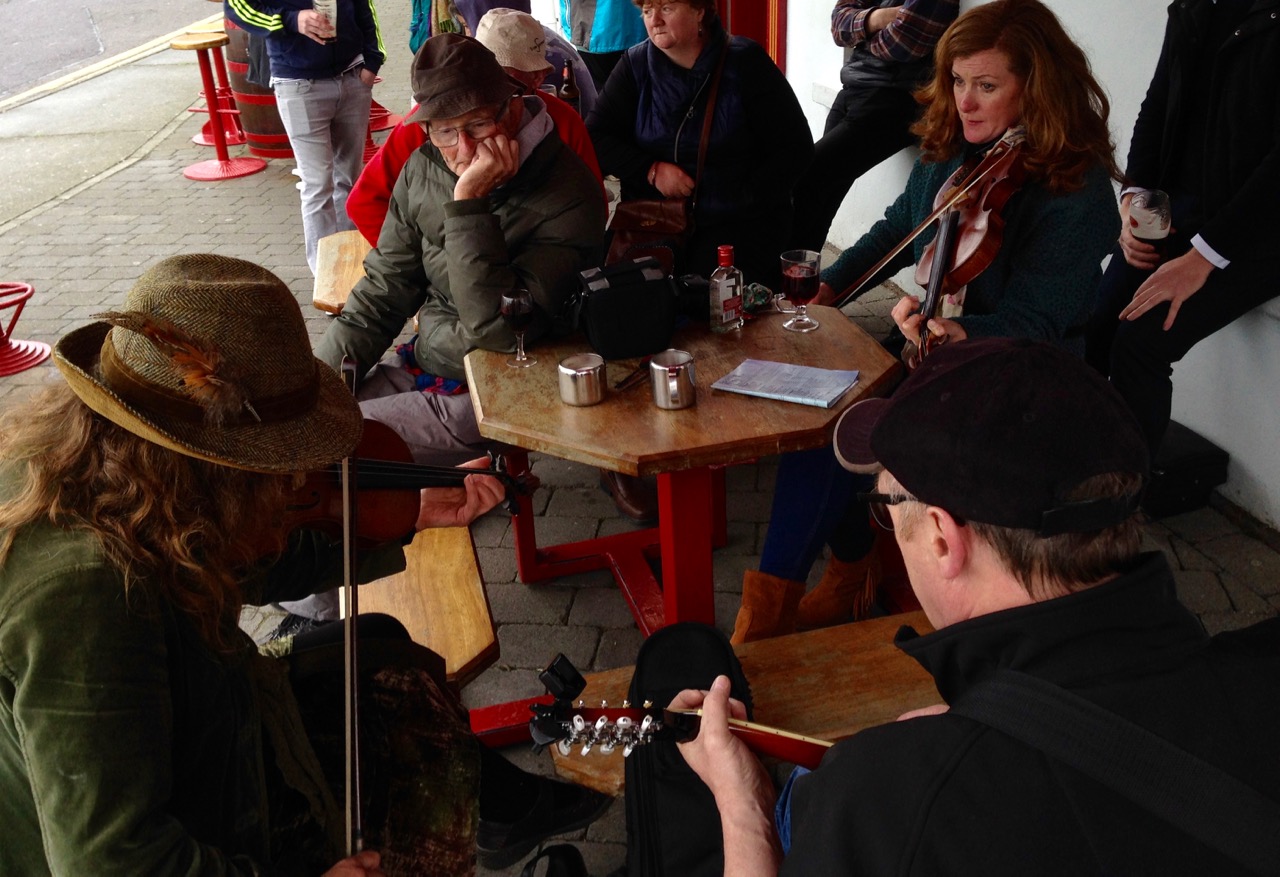
Two young musicians – from the collection of Tomás Ó Muircheartaigh, who documented life in rural Ireland between the 1930s and the 1950s. We do not know at what outdoor gathering this atmospheric picture was taken, but perhaps there is a polka or a slide being played there…

Way back in the last century (it was the nineteen seventies actually) I first came to Ireland in pursuit of traditional music. I found it a-plenty. At that time, the music of the Sliabh Luachra was very much in vogue: local sessions and Fleadh Ceols were full of polkas and slides…

Classic recordings of traditional music collected from the Sliabh Luachra during the sixties and seventies: The Star above the Garter is published by Claddagh, while the others are from the Topic Record catalogue

My post last week came to you from the City of Shrone, which is within this area, in the border country of Cork, Kerry and Limerick. The strong surviving music traditions here have an unmistakeable character – fast and lively. I was reminded of that tradition this week when I came to the wonderful Fiddle Fair in Baltimore and listened to Tony O’Connell from the Sliabh Luachra in recital with Brid Harper, a highly regarded Donegal fiddler. They are an excellent duo – here’s a little taster from that concert (Kerry Slides):

As an aspiring concertina player myself I was bowled over by Tony’s playing, especially of the quintessential Kerry slides. But what is a slide you might ask? And how do you tell a slide from a jig?

Saturday’s recital in Saint Matthew’s Church, Baltimore: Brid Harper and Tony O’Connell playing Kerry Slides

Here’s some help, extracted from discussion boards, specifically on the subject of slides and jigs:

…Uninitiated listeners and even some tune-book editors have mistaken slides as hornpipes, single jigs, polkas, or double jigs, since slides share various traits with each. Once you know a few, you realise they are distinct from any of those…

…Note that slides are peculiar to the Southwest of Ireland, and some are directly related to double jigs, single jigs, or hornpipes played elsewhere in Ireland. Musicians quite familiar with slides are generally unfamiliar with single jigs, and some otherwise respectable authorities on the slide have rashly pronounced that single jigs “are the same as slides.” We can have some sympathy with that by understanding that these musicians simply use the term “single jig” to mean “slide,” and are apparently unaware of the existence of the distinctive “single jig” rhythm in Irish music. Over the course of the 20th century the customary notation for slides shifted from 6/8 to 12/8, which I think is an improvement in accuracy…

Both these statements (from irishtune.info) tell us about the confusion between jigs and slides, but they don’t tell us exactly how you define either of them. Let’s try this, from the same source, regarding slides:

The tempo is rather quick, often in the 150 bpm range, if you were to count each heavy-light pair as a beat. But in practice each beat of a slide (counting around 75 bpm now) gets two pulses, which is either a heavy-light pair (very close to an accurate “quarter note, eighth note” distribution) or a quite even triplet – not a jig pattern. Thus if all four group-halves in a bar were triplets – which is uncommon – you’d have a twelve-note bar. The ratio of heavy-light pairs to triplets in a slide is slightly in favour of the pairs, which again clearly distinguishes them from double jigs. Most slides break the pattern once or twice in a tune by delaying the strong note for a bar’s second group until that group’s second half, creating a cross-rhythm with respect to the foot taps. Other unique characteristics of slides are not necessary additional information for identifying them – only for playing them…!

I’ve puzzled over this (and other advice) for some time: I sort of understand it, but I think it’s impossible to describe a rhythm in words… However, I was pleased to find this mnemonic for slides by the poet Ciaran Carson – it says it all:

“blah dithery dump a doodle scattery idle fortunoodle”

gougane

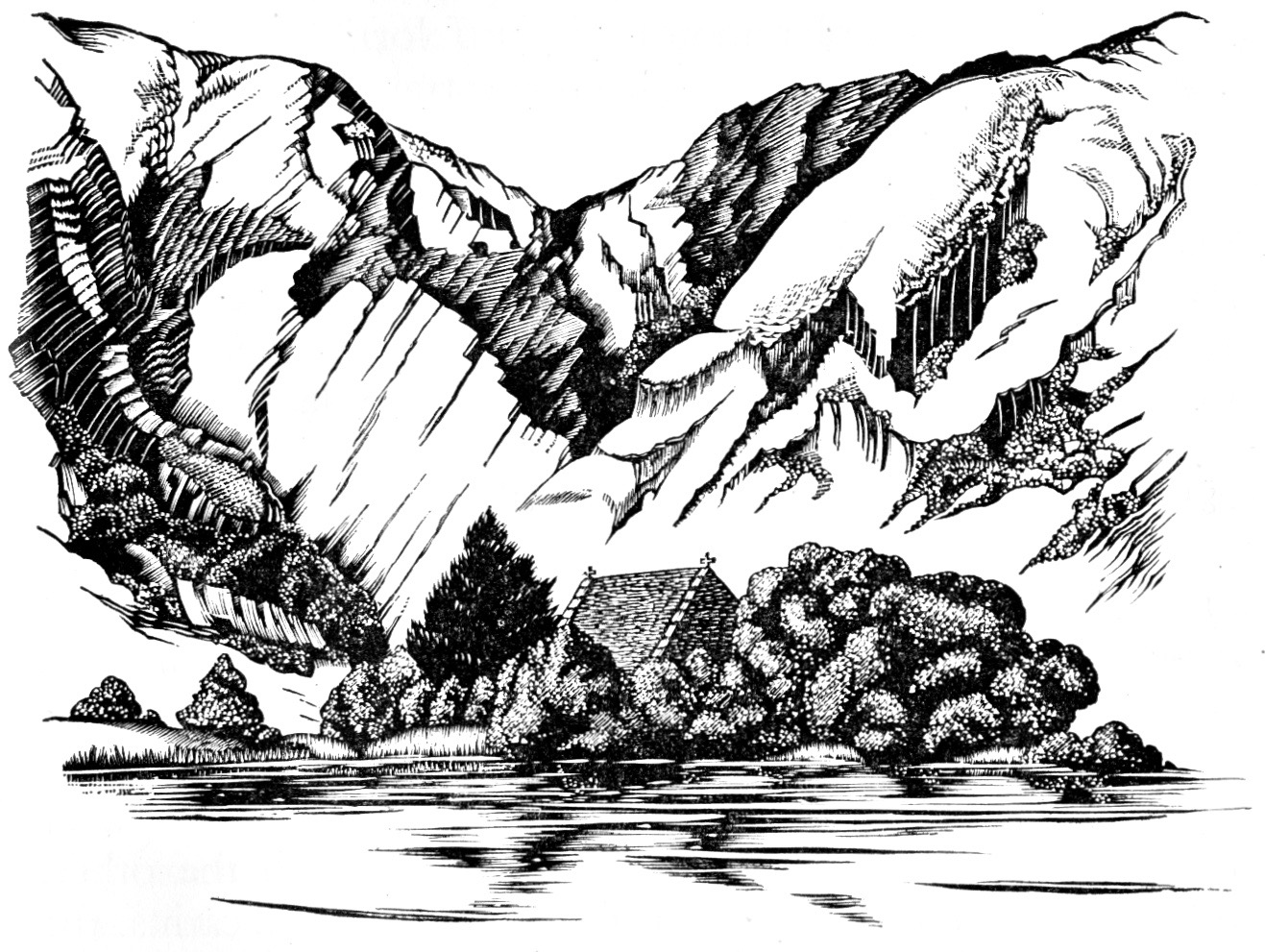
An evocative engraving of Gougane Barra, in the Sliabh Luachra, by artist and writer Robert Gibbings, taken from Lovely is the Lee, J M Dent, 1945

How about polkas and reels? Polkas, in particular, are popular in the Sliabh Luachra tradition:

…The polka is one of the most popular traditional folk dances in Ireland, particularly in Sliabh Luachra. Many of the figures of Irish set dances are danced to polkas. Introduced to Ireland in the late 19th century, there are today hundreds of Irish polka tunes, which are most frequently played on the fiddle or button accordion. The Irish polka is dance music form in 2/4, typically 32 bars in length and subdivided into four parts, each 8 bars in length and played AABB. Irish polkas are typically played fast, at over 130 bpm, usually with an off-beat accent… (Also from irishtune.info)

Reels are probably the most popular tune type within the Irish traditional dance music tradition:

…Reel music is notated in simple meter, either as 2/2 or 4/4. All reels have the same structure, consisting largely of quaver (eighth note) movement with an accent on the first and third beats of the bar…

fiddle fair outdoors

At the Baltimore Fiddle Fair, informal sessions are essential interludes

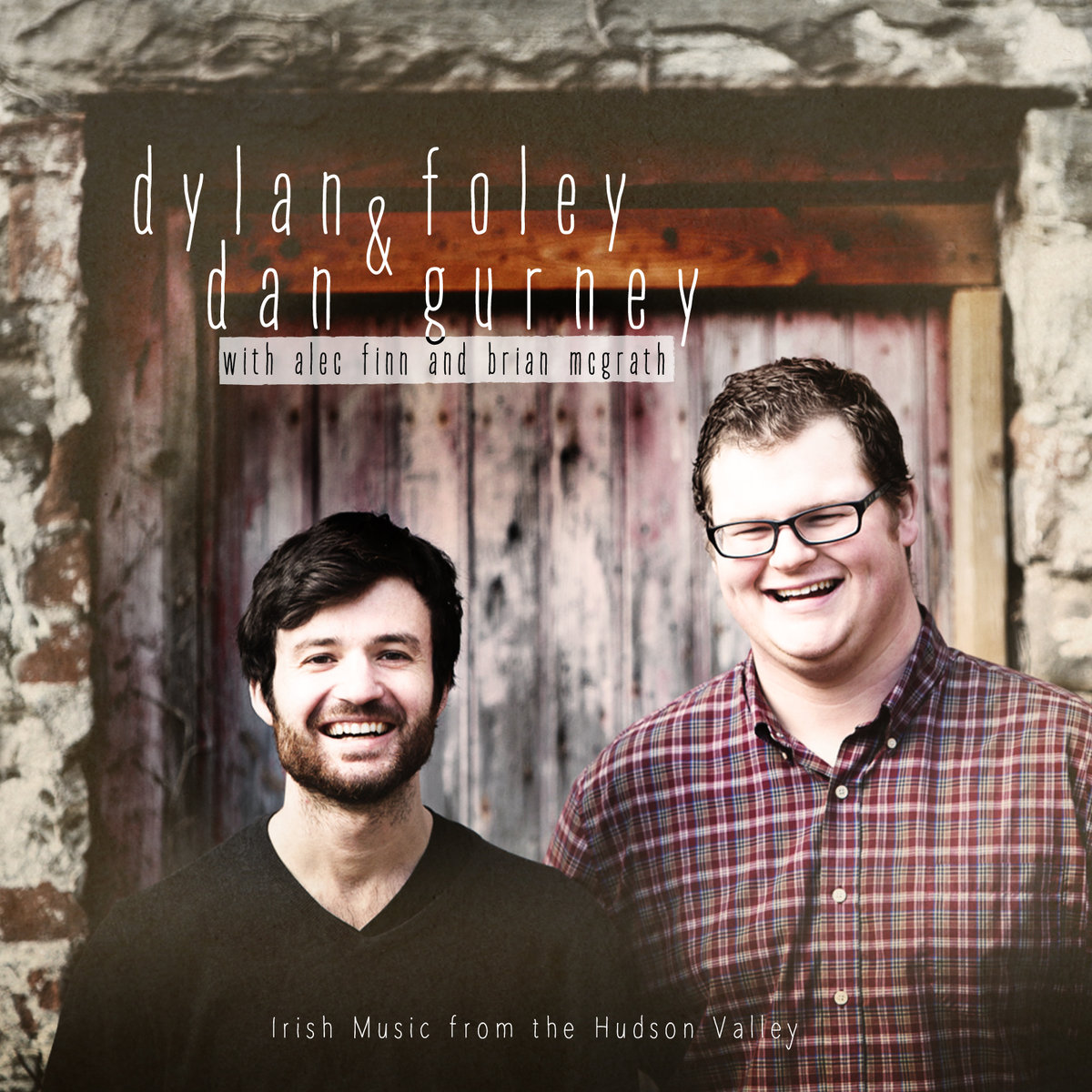
Definitions are all very well and these can only be generalisations. In the end it’s what is being played – and what you hear – that counts. For me, the music in Ireland is like history: it’s built into the landscape and the psyche. Irish people are survivors and have travelled all over the world and back. So has the music! This was emphasised today when we had another excellent recital in the church by Dylan Foley and Dan Gurney, fiddle and accordion.

foley gurney

They both come from the Southern Catskill Mountains in New York State. Much of the Irish music they play was learnt directly from Father Charlie Coen who emigrated to the United States from the village of Woodford in County Galway in 1955, bringing the music traditions from East Galway with him. Here’s an excellent example of the music travelling across the world and back again: Fr Coen played The Moving Cloud reel on his concertina, but his instrument had some buttons missing so he adapted it, and the adapted tune is what we heard Foley and Gurney playing in the church today. Listen first to another Fiddle Fair maestro, Noel Hill playing the reel from his 1988 album The Irish Concertina:

Now the same reel which has travelled from Ireland to Baltimore via the Catskill Mountains:

I hope you can hear those ‘odd’ notes! But there’s nothing so right or so wrong in Irish music: the grand finale for us today was a memorable concert with French Canadian fiddler Pierre Schryer, Donegal box player Dermot Byrne and Australian born guitarist Steve Cooney. They played music with an Irish bias but harvested from many traditions. It left us breathless…

Liscarrol: Cork’s Keepless Castle

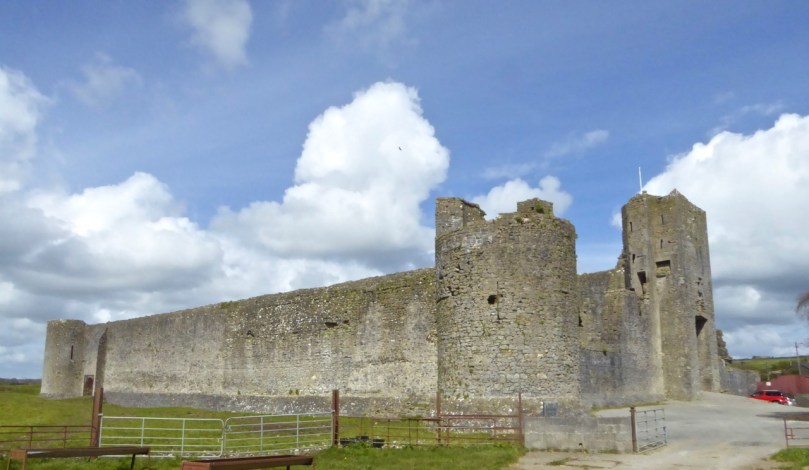
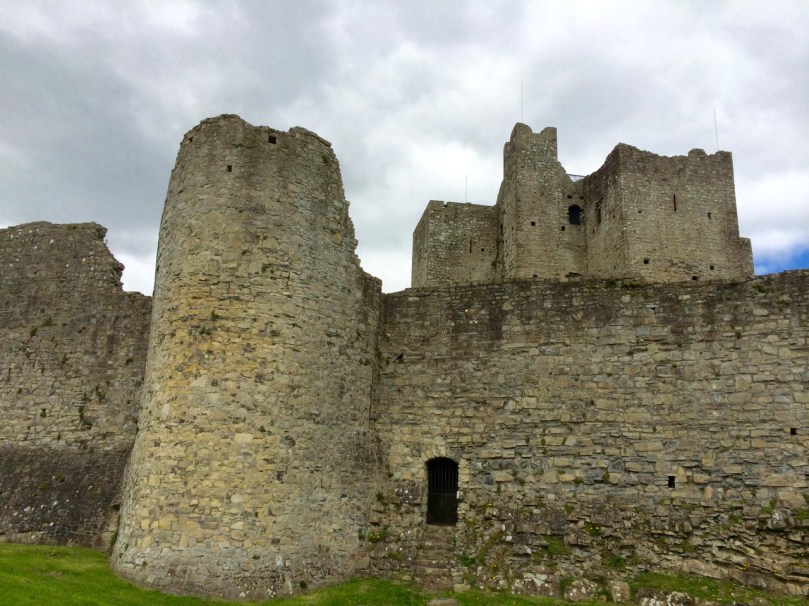
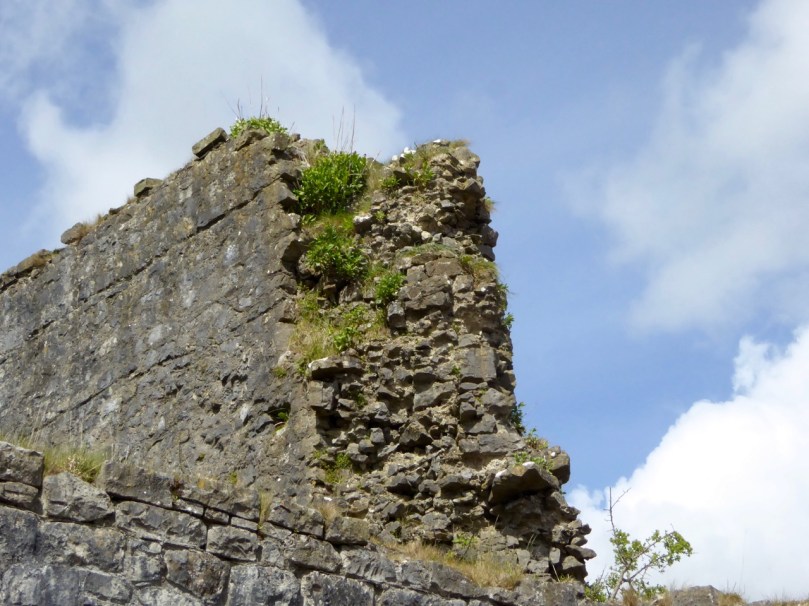
Liscarrol walls and towers

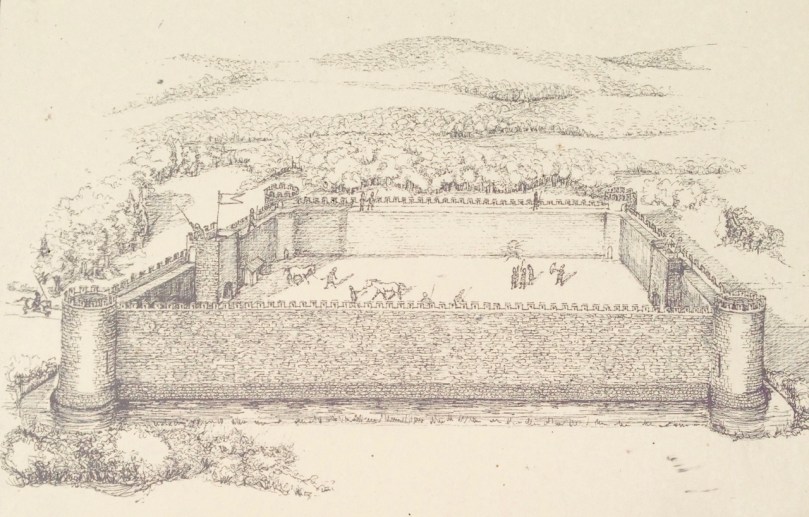
As soon as the Normans arrived in Ireland (1169) they set about building enormous fortifications, the like of which had never been seen in this country before. Dublin Castle was typical, but not a lot remains to be seen of the original shape. More accessible is Limerick Castle – a space enclosed by imposing stone walls with corner towers and a strong gatehouse. Few of these very early castles remain. Leask, in his Irish Castles, termed them keepless castles, since they had no central tower houses or keeps. (Regular readers of Roaringwater Journal will recall several earlier posts about castles – these refer almost exclusively to the much smaller tower houses, most of which date to the 15th century and later. See When is Castle…? Tower House Tutorial Part 1 and Part 2, and Illustrating the Tower House.)

Trim Castle with Keep

Trim Castle in Co Meath is one of our best examples of an early Norman castle with a central keep

Alongside the keepless castles, and gradually taking over in popularity, were built those in which a tower, or keep, was the dominant feature located inside those high curtain walls. These great Norman castles were the predominant form during the late 12th and early 13th century. However, in the late 13th century, for some reason, keepless castles experienced a resurgence and several were built around the country. Most of these are in a ruined state and of course some have entirely disappeared or been so altered as to be unrecognisable.

Liscarrol front elevation

In the middle of the village of Liscarrol in North Cork – this!

But there’s one (and only one) in Cork and it has has retained all its magnificent features. On a recent trip to Duhallow (mostly looking for holy wells with Amanda and Peter of Holy Wells of Cork) we rounded a corner on a country road approaching the village of Liscarrol and there it was – as unexpected as it was jaw-dropping!

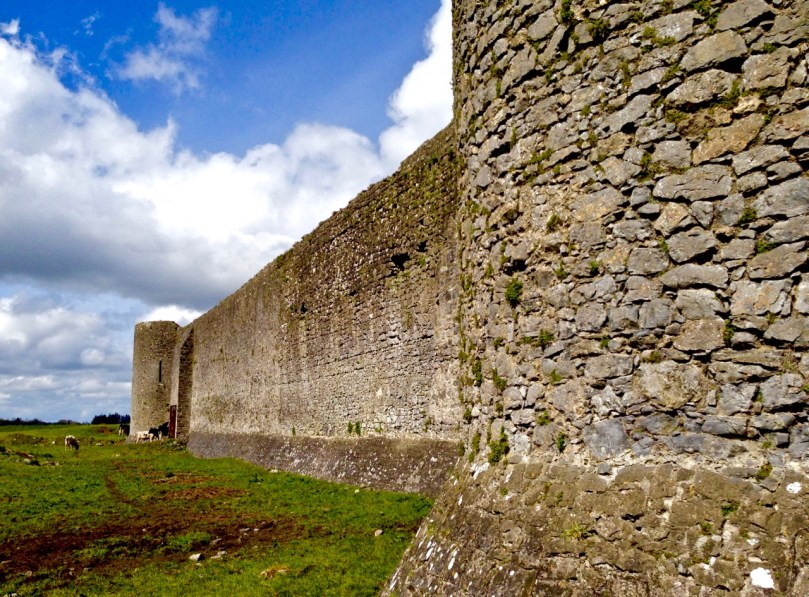
bawn walls

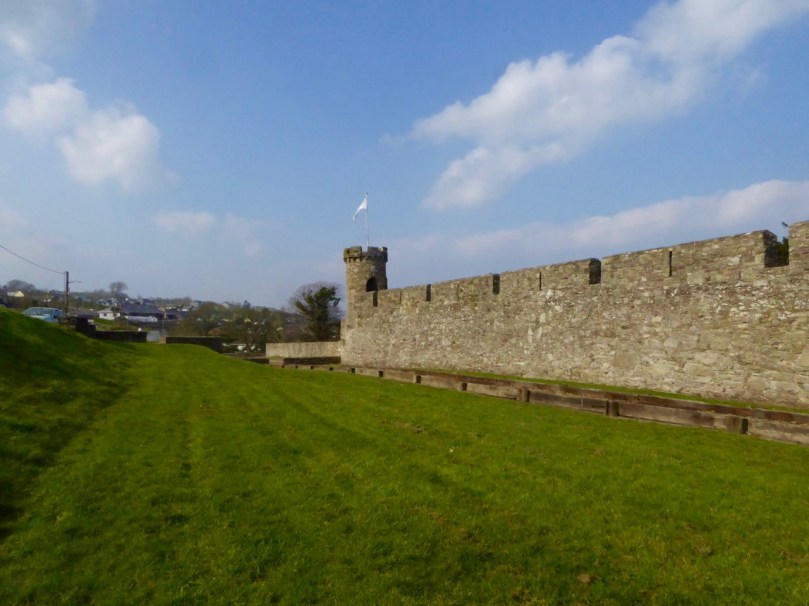
Note the splayed base batter of the walls, providing a solid foundation

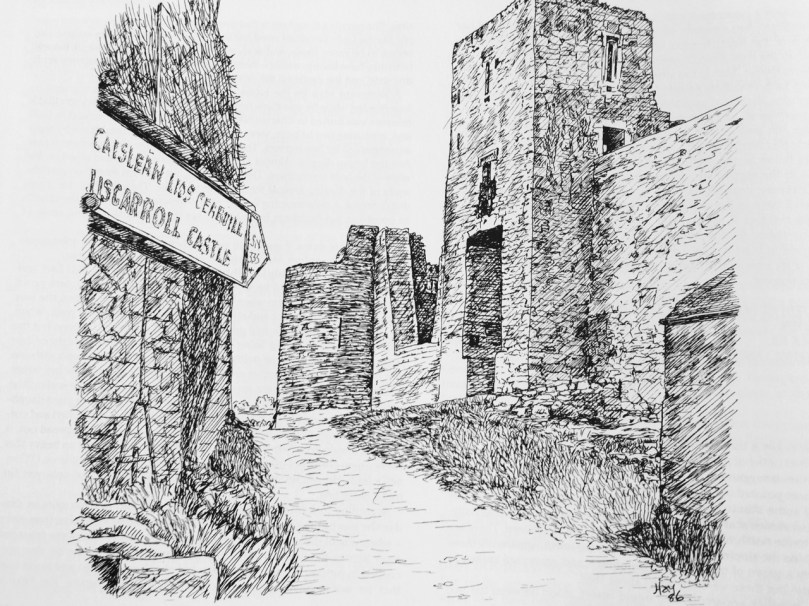
Liscarrol Castle was probably built in the mid-13th century by the De Barry family but eventually passed into the possession of the Percevals in the 17th century. It was besieged by an Irish army of loyalists in 1642, but was eventually subdued and retaken by the parliamentarians under Sir Hardress Waller, whereupon it was again occupied by the Percevals who owned it into recent history.  James N Healy, in his magisterial The Castles of County Cork provides a detailed account of the back-and-forth sieges of the 1640s, as well as a charming sketch of the castle as it was in the early 1980s, when the key could be obtained from a local pub.

Liscarrol by Healy

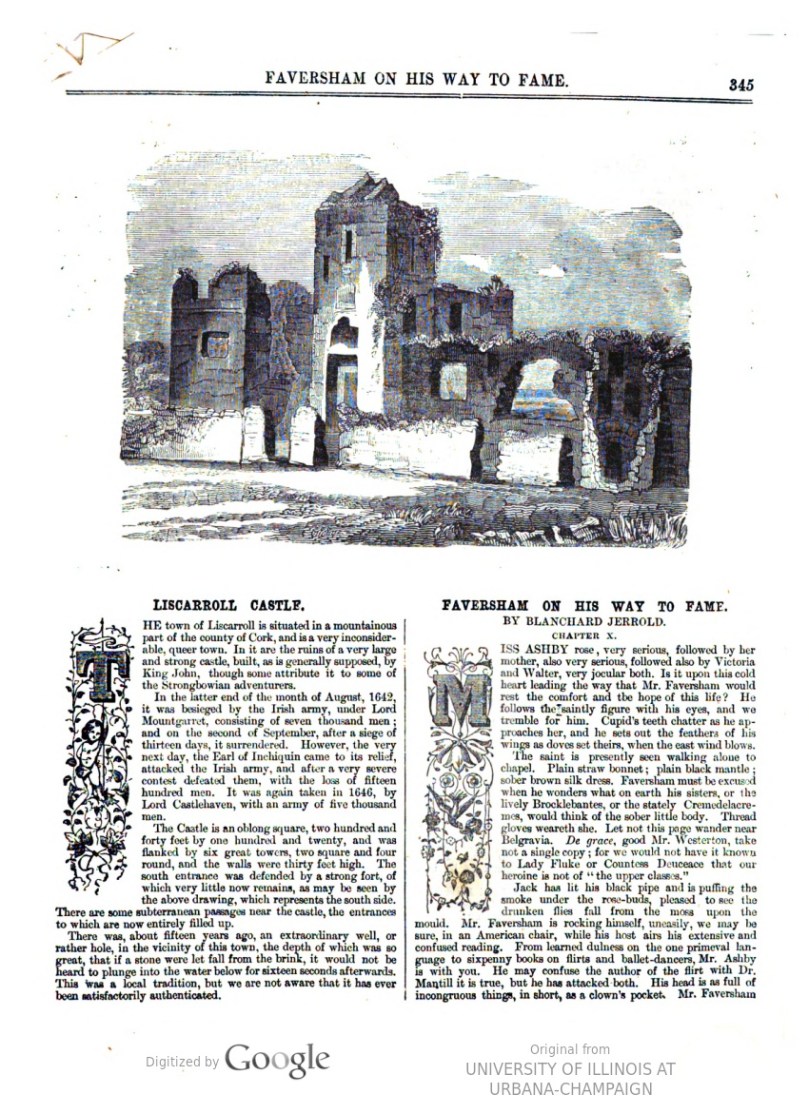
It was extensively repaired and stabilised by the Office of Public Works (OPW) on several occasions in the 20th century. The sad state of the walls can be seen in a picture from The Illustrated Dublin Journal of 1862.

Liscarrol from Illustrated Dublin Journal

The Illustrated Dublin Journal is available online through the kindness of the University of Illinois

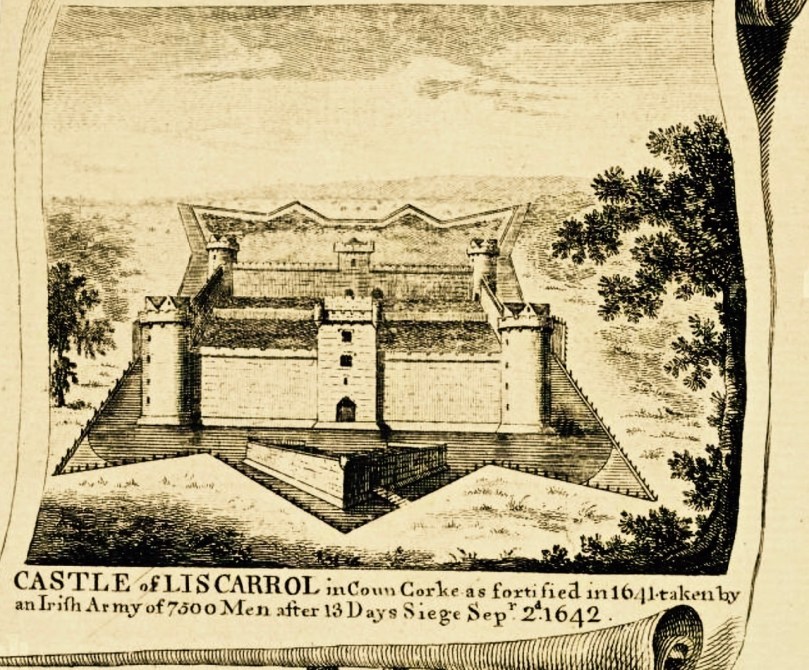
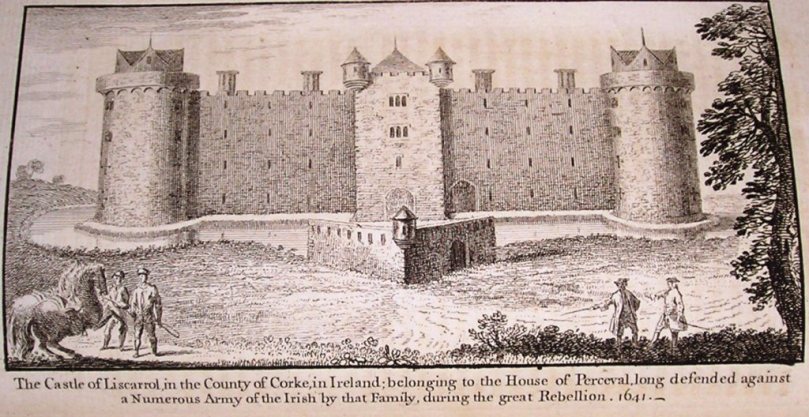
There are several older illustrations of Liscarrol Castle and they show two features that are no longer obvious today. The first is a moat, which must have been drained a long time ago as the ground is dry around the walls.

Liscarrol Castle drawing

The second is an outermost fortification known as a ravelin – a triangular projection that would have been the first line of defence in front of the entry tower.

OLYMPUS DIGITAL CAMERA

Both illustrations above are courtesy of the National Library

Rubble Construction

A section through the wall showing the rubble construction between outer facings of worked stone

How did a keepless castle work? Quoting Prof Tadgh O’Keefe of DCU, the description of Roscommon Castle (another of the keepless castles) has this to say:

Earlier on in the 13th century, two Royal castles in Ireland at Dublin and Limerick were built- the first castles in Europe that were built as keepless castles with an encircling wall that included towers. The emphasis in castle design here was on the encircling curtain wall. This wall included large barrel towers used as storage and partly living space, with emphasis on a residential gate house.

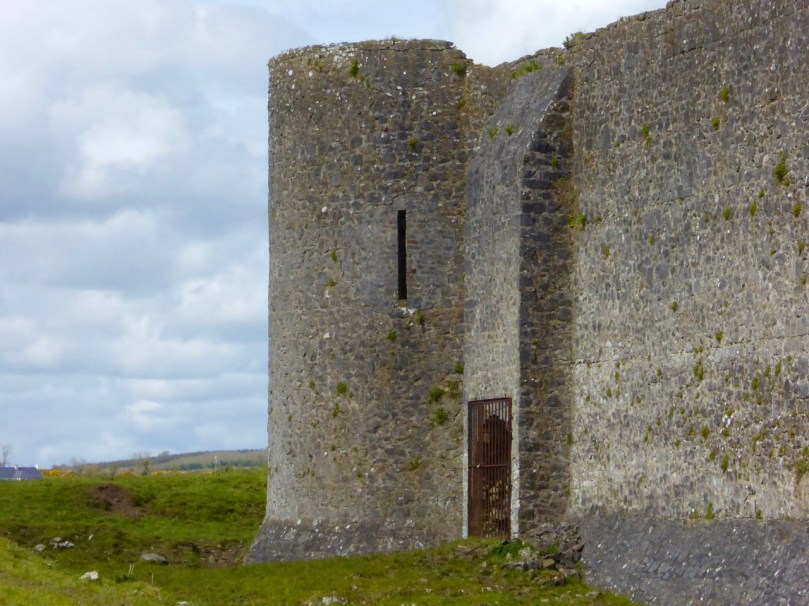
postern gate

The enclosure of these castles then contained further buildings, possibly built from wood or mud. The move to a keepless castle design seems meaningless to us today until we start thinking about the difference this would have made in terms of castle defence.

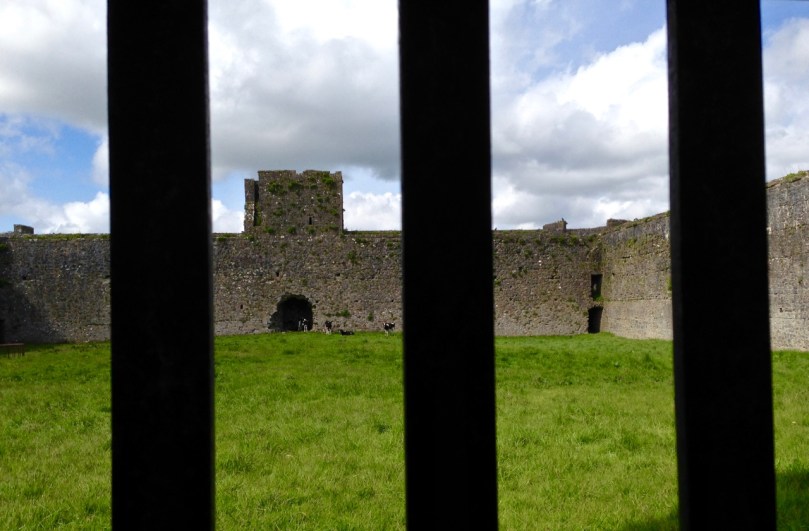
castle behind bars

The interior of this enormous enclosure is now home to some bullocks

In a castle with a keep, the attacker would have stormed and overcome the walls first, and then attacked the keep where all defenders would have withdrawn to now. Defending the keep was dependent on a single gate/ door holding up, and the bawn then had to be re-captured as well. In a keepless castle, defenders withdrew into the super thick walls themselves, supported by food storage and living space in the towers. The walls contained arrow loops facing both sides of the walls, meaning both the bawn AND the outside of the castle could be defended at an advantage. So, in fact, the move to a keepless castle design was an ingenious innovation providing super safe castles.

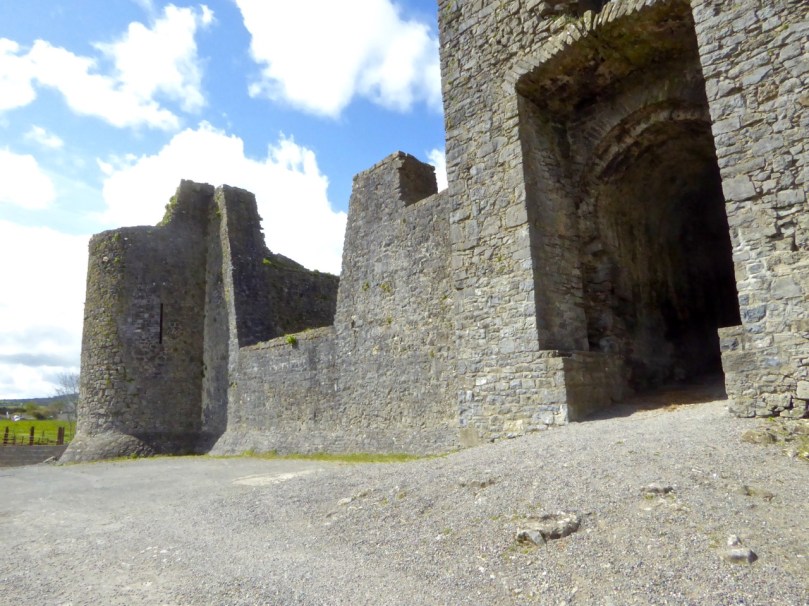
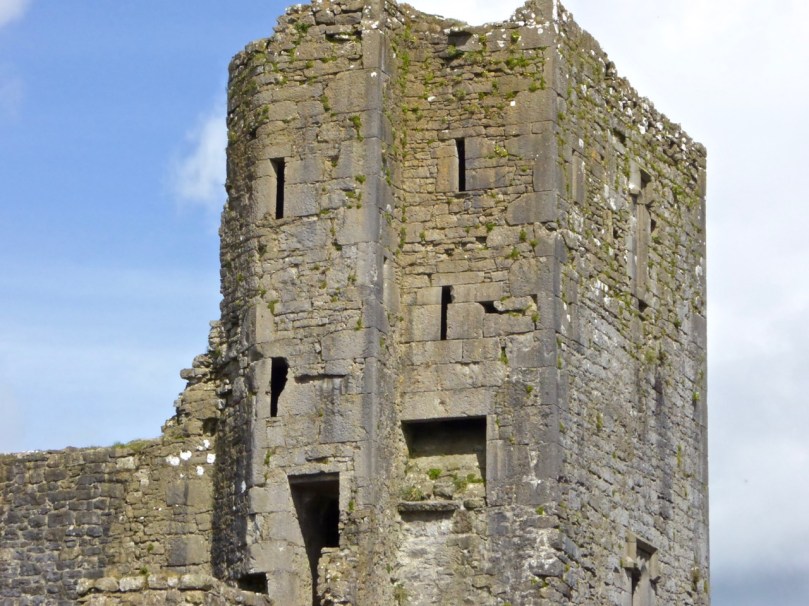
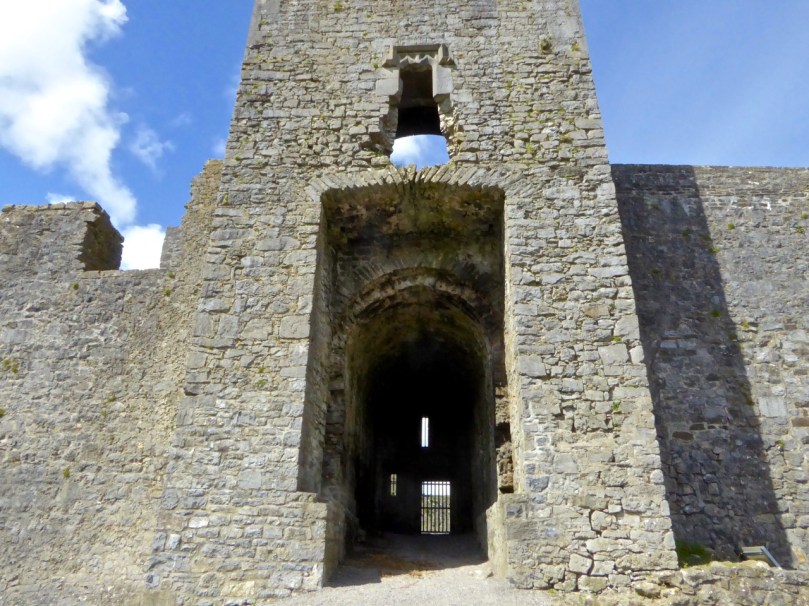
Entrance tower

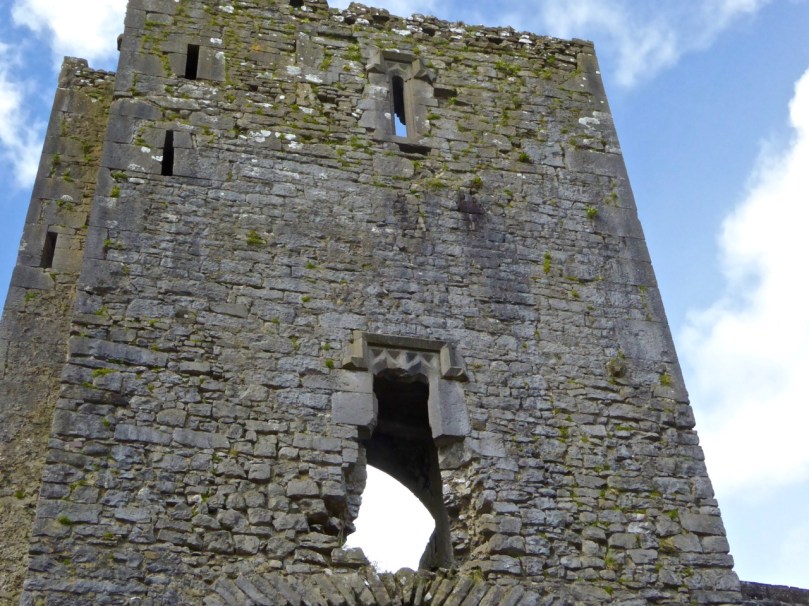
The entrance tower would have provided living space for the De Barrys and the Percevals. Note the garderobe chute high on the walls, and the entrance off the battlements

The entrance is one of the most impressive aspects of the castle. Many defensive features were deployed, including murder holes and a portcullis.

Liscarrol entrance

liscarrol signSome modifications to the earlier structure are visible here and there, although on the whole it remains truly a thirteenth century stronghold.

Later window features

Windows were widened, probably in the 15th century – the ogee heads are a dead giveaway

The only problem with Liscarrol Castle is that it is accessible solely on the outside – the inside was occupied by a small herd of young cattle. Given the amount of public money that has been spent on it, this seems an immense pity. Duhallow and its towns and villages are doing a great job at putting together interesting tourist experiences: Liscarrol Castle, unique and awe-inspiring, could be a jewel in its crown.

keepless castle pic

And to finish off in good old Irish tradition – there is, of course, a tune called The Walls of Liscarrol. Have a listen.

Youghal’s Walls

Outside the walls 2

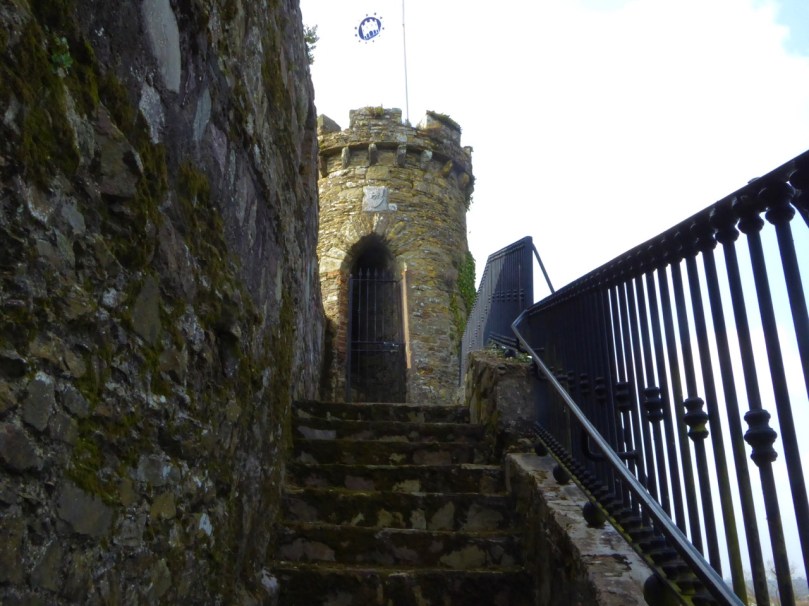
Walled towns are relatively rare in Ireland and it’s even rarer to find substantial sections of wall still standing. But Youghal (pronounced YAWL), in County Cork, miraculously has a significant extent of its medieval wall still in place. 

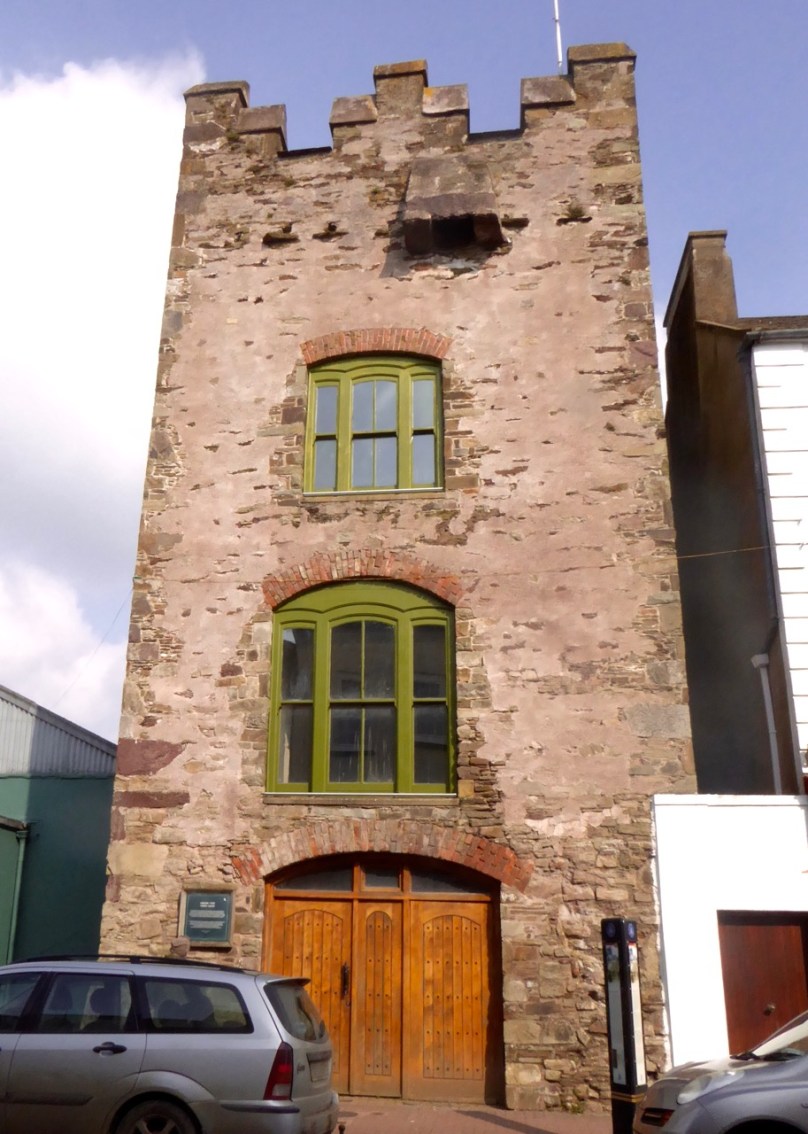
Mural Tower

Drew’s Tower, one of the mural towers that punctuated  the wall. Some of the others were called Montmorenci, Half-Moon and Banshee Towers

A walking tour of Youghal is a great way to spend a day. Robert is writing about the wondrous Collegiate Church, one of the highlights of the tour but by no means the only stop of interest.

Boyle's Almshouses

Almshouses built by Richard Boyle and still in use today

The history of Youghal is inextricably mixed up with Walter Raleigh, an early resident, and Richard Boyle, the Great Earl of Cork. They lived here in Tudor times, but the town started out as a Viking stronghold. The Norsemen may have built earthen defences, precursors to the later stone walls.

PacataHiberniaYoughalc 1600_800x537

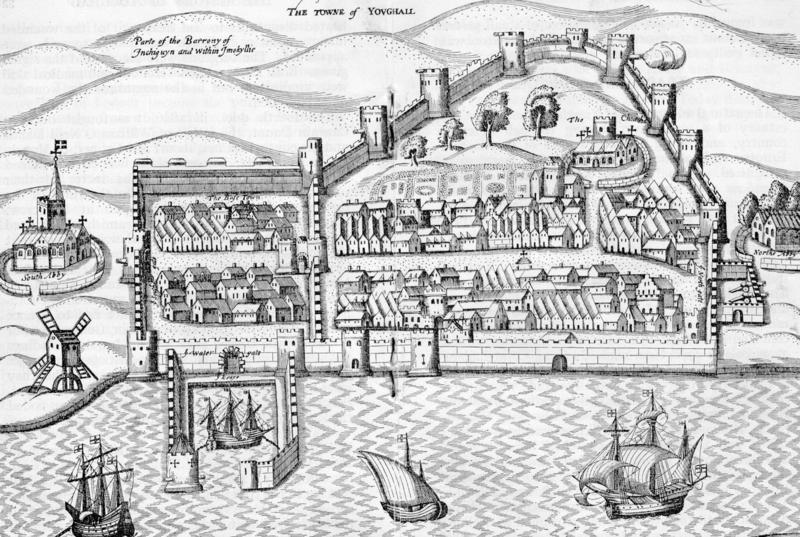
Map of Youghal from the 17th century Pacata Hibernia. The smaller walled section to the left was known as Base Town or Irish Town. It was for the native Irish and the entrance to the main town was through a guarded gate. Note the heavily fortified quay walls

It’s not hard to understand the importance of Youghal if you consider its strategic setting. Situated in an excellent natural harbour, it guarded access to one of the south coast’s longest and most navigable rivers – the Blackwater. The Irish and Norse banded together to defend Youghal against a Norman raiding party that had sacked Lismore in 1173. They were unsuccessful, and from then on Youghal became a Norman town. It was these Normans who built the first sections of the wall, in the 13th century.

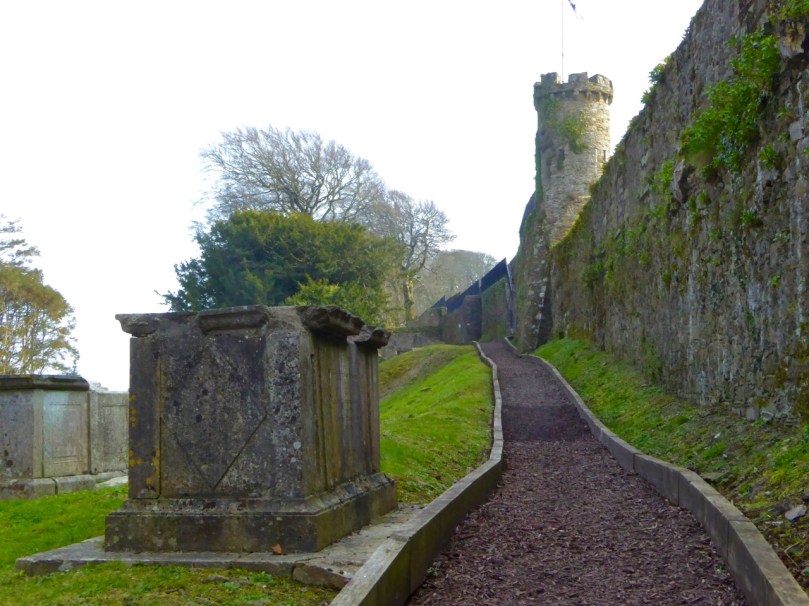
Walls above graveyard

The great family of Fitzgerald, Earls of Desmond, dominated the town for the next three hundred years. The Desmonds ignored the dictates of Dublin Castle and lived like independent princes – a factor that was to lead to their eventual downfall and along with it the decline of the old Gaelic order and the arrival of a planter class from England that would include Raleigh and Boyle.

View from Walls

Youghal occupied an important position at the mouth of the Blackwater, with a sheltered harbour

But in the early medieval period, before those troubles, Youghal prospered and became the 6th largest port in Ireland and a booming centre of trade.

Portugal sent wine, oil and olives; Spain, iron, lemons, oranges, shumack; France, silk, salt, spirits, vinegar; Amsterdam, paper; Flanders, bark, tapestry and silk; Rotterdam, cider, coffee-mills, corn powder, earthenware; Bremen, iron, oak-boards, and Rjenish window glass; Norway, balks and deals; Drontheim, oars, spars masts etc. Articles of luxury were imported in abundance; amongst other articles of fashion, we have ivory combs, fans, head-rolls, masks and papers of patches.**

Tynte's Castle streetscape

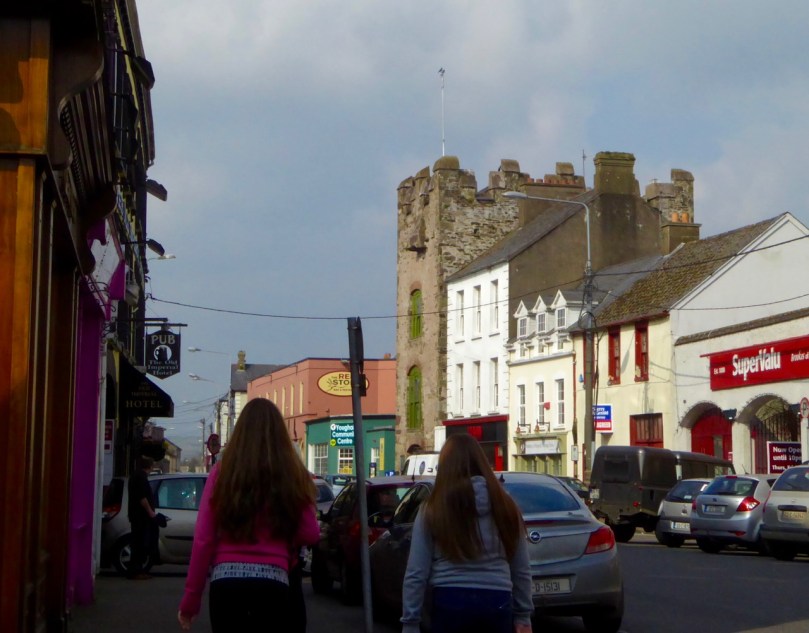
Tynte’s Castle which once overlooked the quay walls and helped to defend the town

To the sea side the main defence consisted on the quay wall, which was strengthened with crenellations and fortified by towers. One of those towers, Tynte’s Castle, is still in use on the main street. It was once the home of Elizabeth Spenser, widow of the poet Edmund Spenser, to whom he wrote the love poem Epithalamion. Spenser was not popular in Ireland – read more about that here

Tynte's Castle

The quays and the walls behind the town were the subject of petitions for ‘murage grants’ over the centuries as they were difficult to maintain and the town itself was subject to attack from the sea by pirates and by the ‘Wild Irish’ from the high land behind the town.

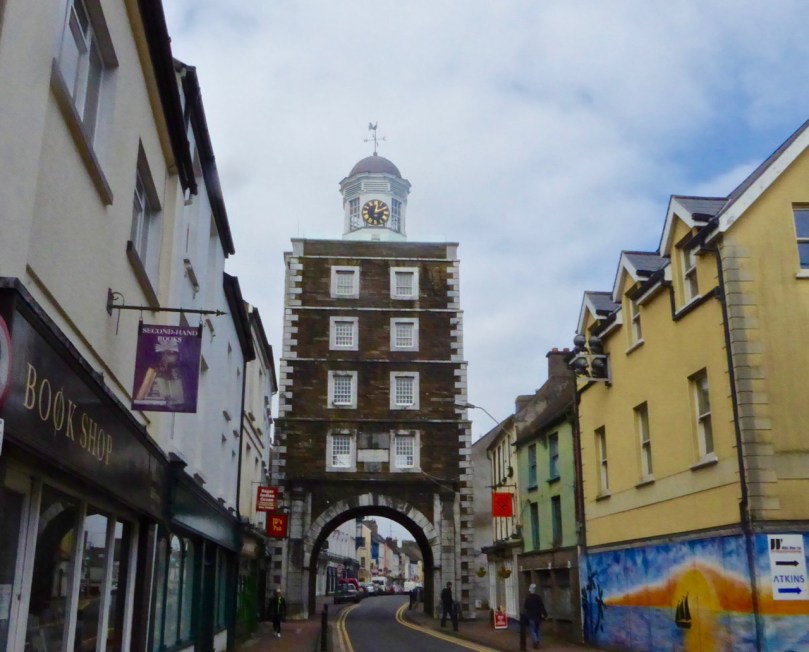
Clock Gate

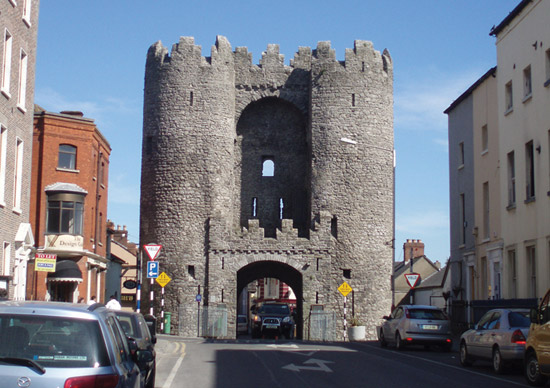
Access to the walled town was provided by means of guarded gates. While no original gates have survived, the Clock Gate, built in 1777, is located where the original gate was. The current tower functioned as a gaol for many years. It is believed the original gate may have looked like St Laurence’s gate in Drogheda, one of the few town gates surviving in Ireland.

laurencesgate-01

The surviving town gate in Drogheda – St Laurence’s Gate – shows us what Youghal’s gates would have looked like

The town was attacked and devastated by the Desmonds in 1579. Eventually driven out and defeated, the Earl’s lands were forfeited to the crown and granted to Sir Walter Raleigh who came to live in the house called Myrtle Grove. He later sold his lands to Richard Boyle, under whose energetic patronage the town once again prospered and the walls were repaired. Much of what we see now dates to this period.

Model of walls

A model of the town – this section shows the walls in the north-east section, St Mary’s Collegiate Church and Myrtle Grove

Walls were rendered obsolete by the advent of heavy canon and they gradually fell once again into decay by the late 1700s. Meanwhile the prosperous town needed wider streets and gates were removed, although the portion inside the walls kept its medieval layout for the most part.

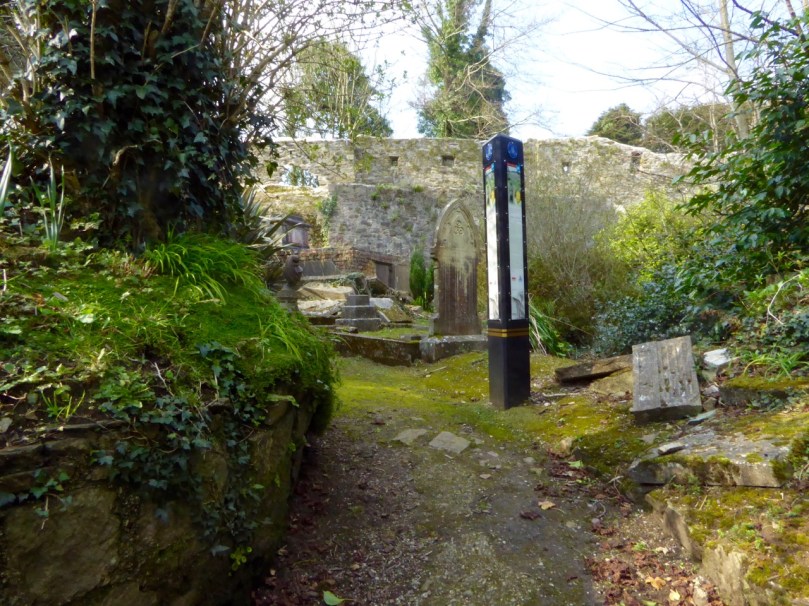
Through the graveyard

The old graveyard behind the Collegiate Church and within the walls is waiting to be explored

Enough of the town wall survived, however, and the citizens of Youghal are rightly proud of it. They have undertaken an ongoing program of  stabilisation and repair. For one thing, they have removed the ivy that threatens to destroy so much of our medieval heritage.

Wall repairs

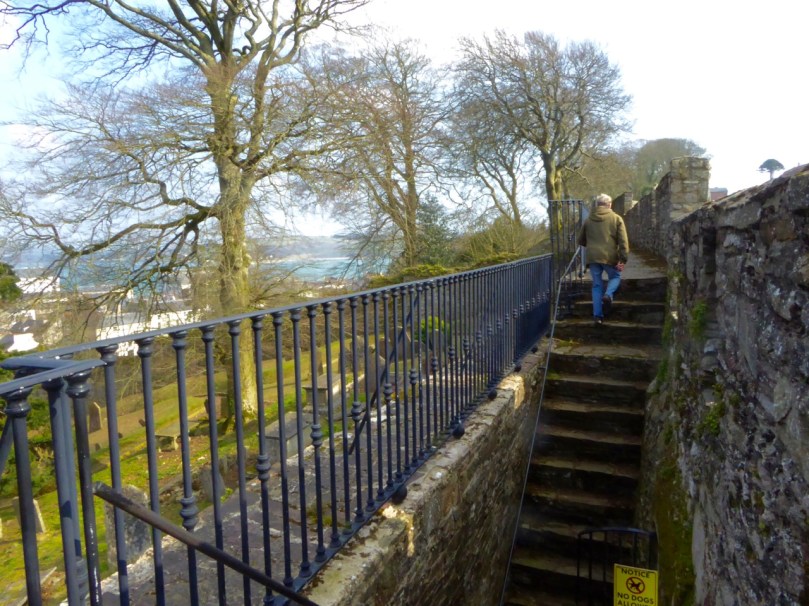
Today, you can wander freely around the walls. There are magnificent views from the top, where you can appreciate the strategic importance of the port and admire the formal collegiate gardens preserved as a town park. Take one of the walking tours offered by the Youghal Heritage Centre – in a land steeped in history, this experience ranks as unique!

Wall walk

**This quote and much of the information in this post came from the excellent publication: Youghal Town Wall: Conservation and Management Plan, by Cork County Council. Thanks also to the Youghal Visitor Centre for the walking tour map and the friendly greeting.