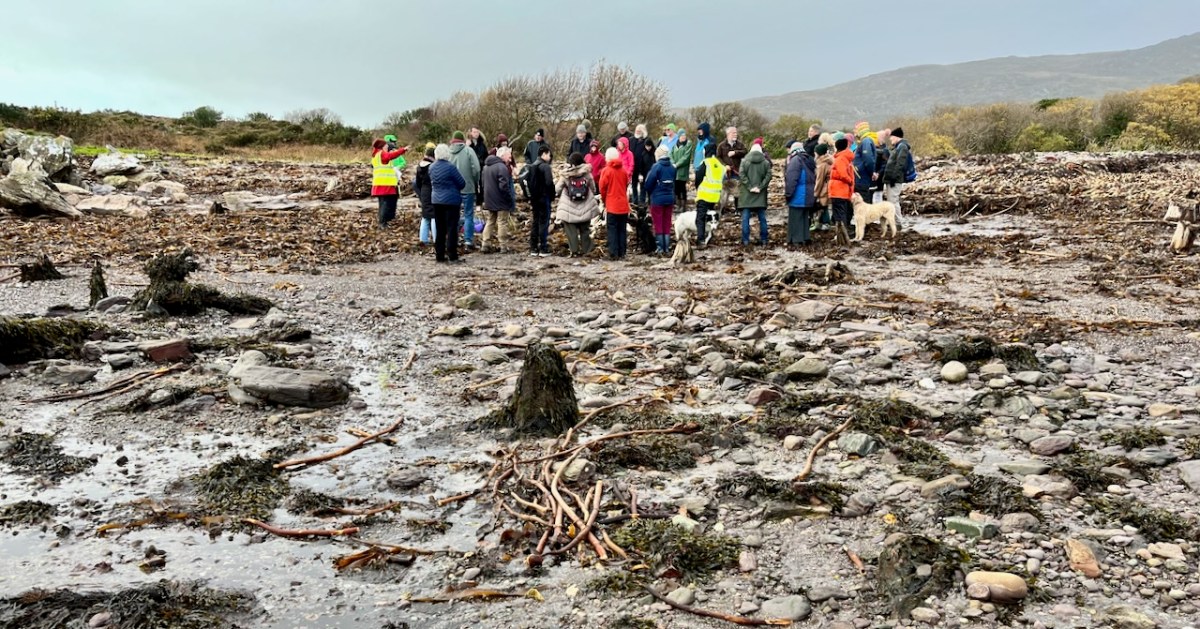
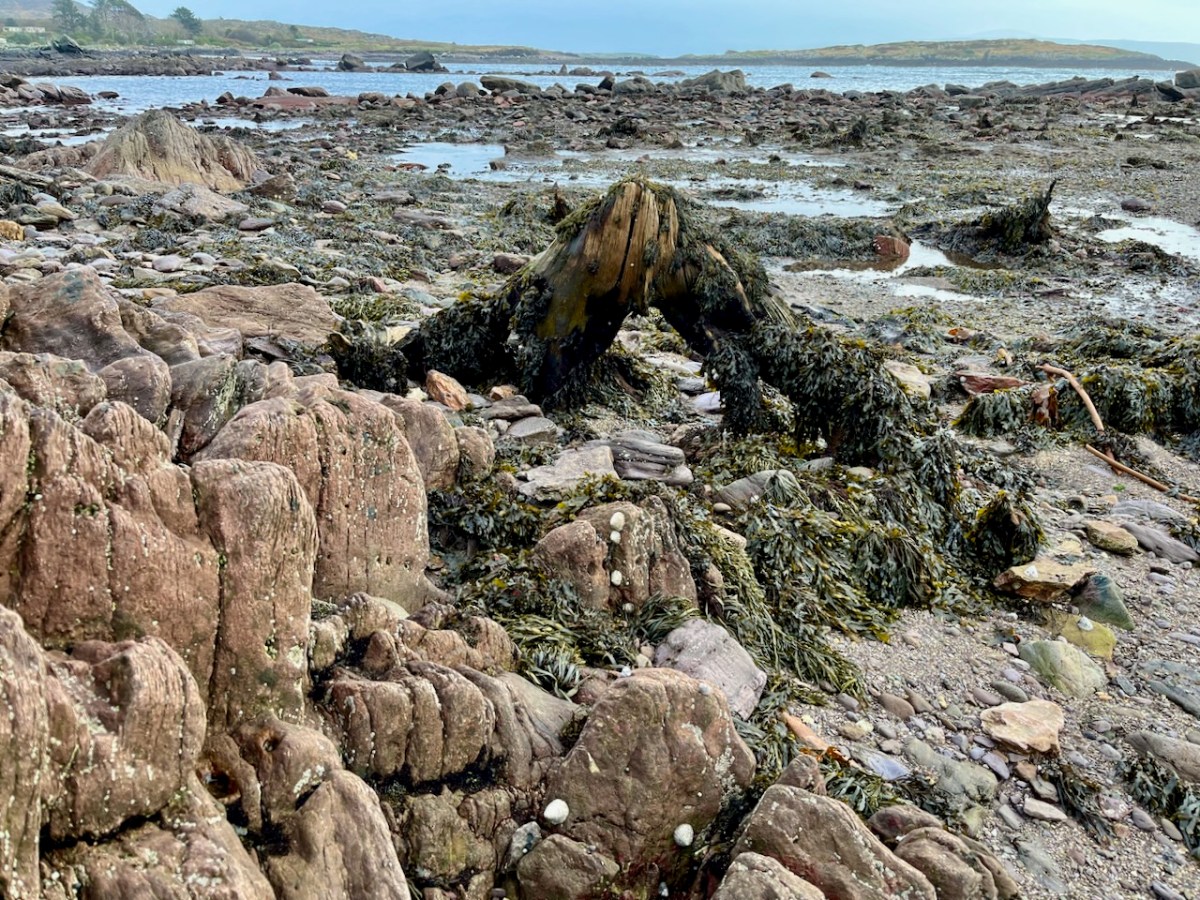
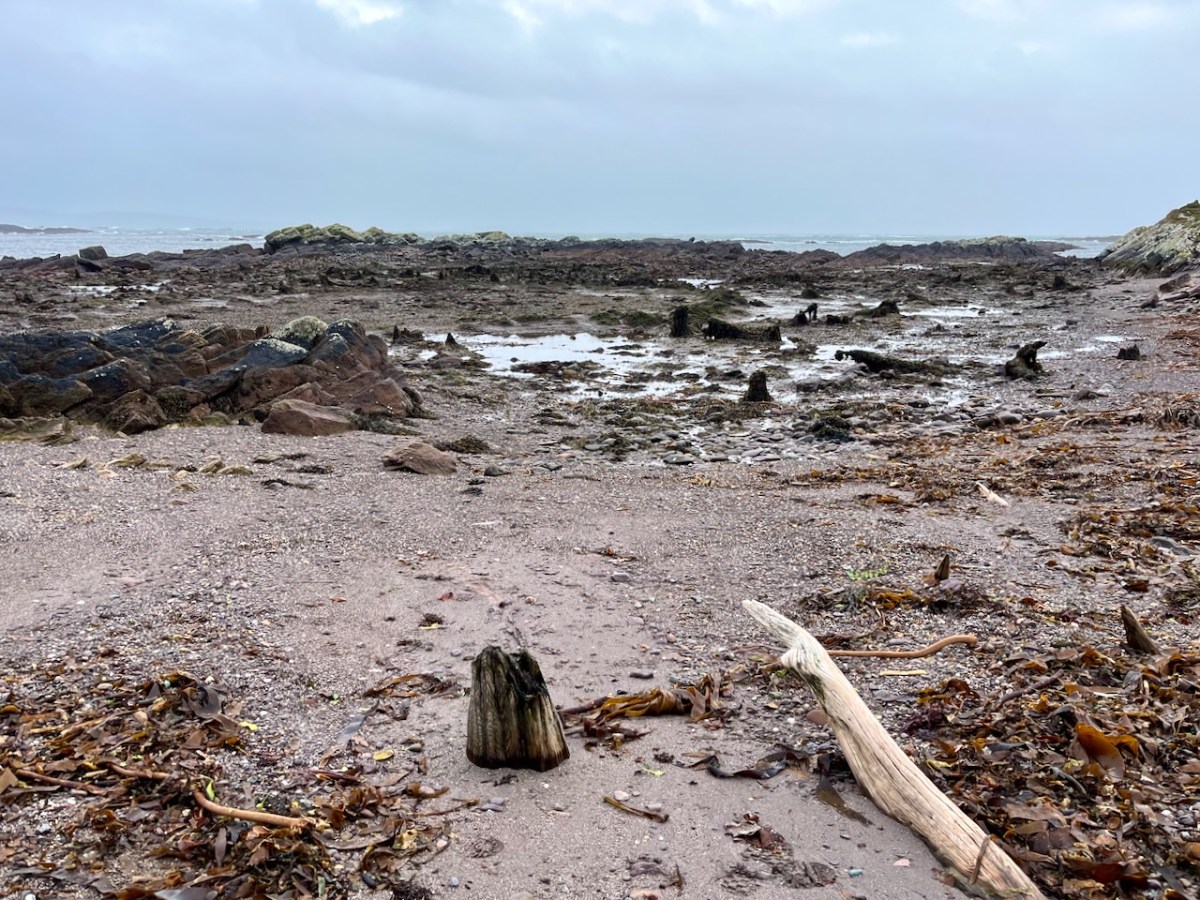
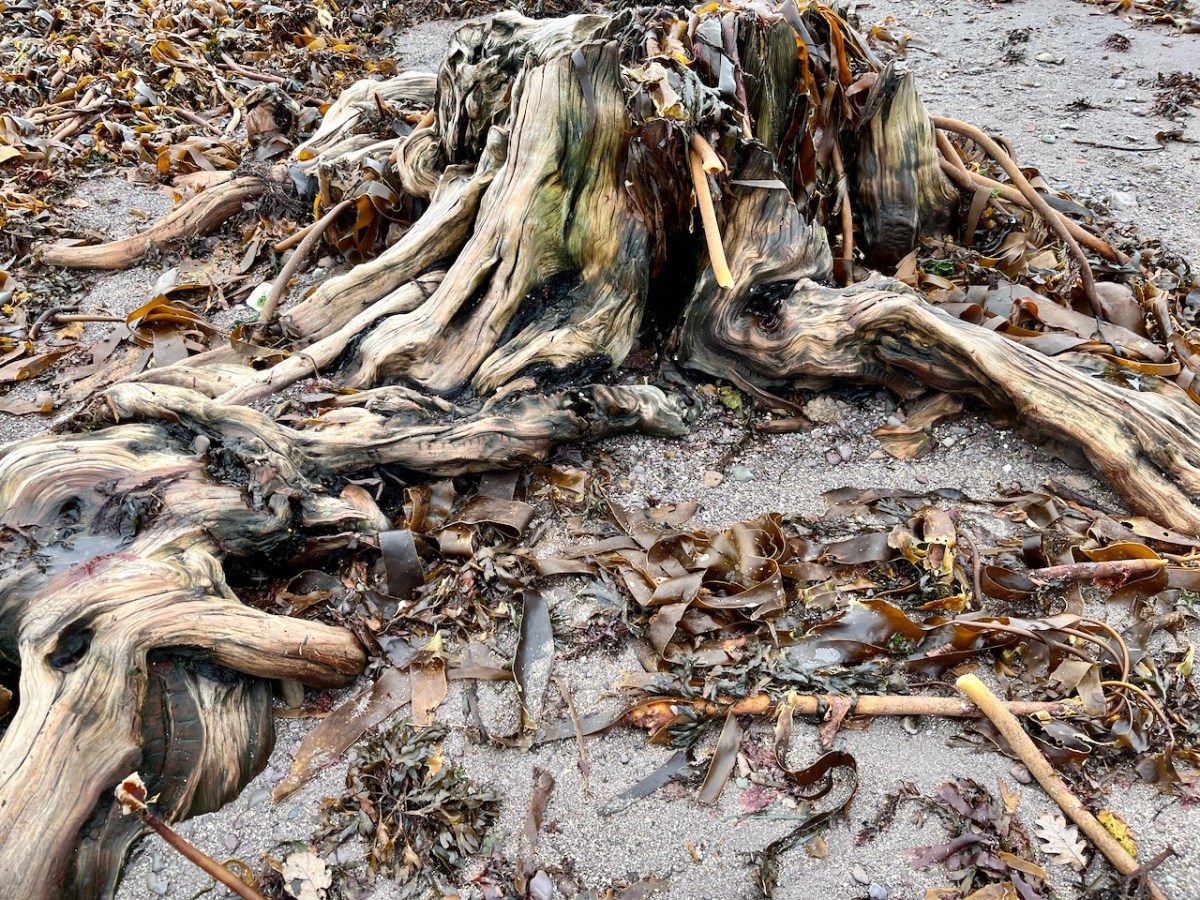
‘Drowned Landscapes’ – that’s an adequate enough description for us to look again at a subject which RWJ covered five years ago in this post: Tralong Bay, Co Cork – give it a read. I was reminded of the subject when we took part in an Archaeology Festival based in West Kerry just a week ago: Amanda’s current holy well blog describes the expeditions. One of the sites visited was Bunaneer Drowned Forest, where we saw stumps of trees on the beach there which were alive thousands of years ago. At low tide many tree remains become visible at Bunaneer, near Castlecove village on the south coast of Kerry’s Iveragh Peninsula. Our guides for this expedition were plant biologist Calum Sweeney and archaeologist Aoibheann Lambe.
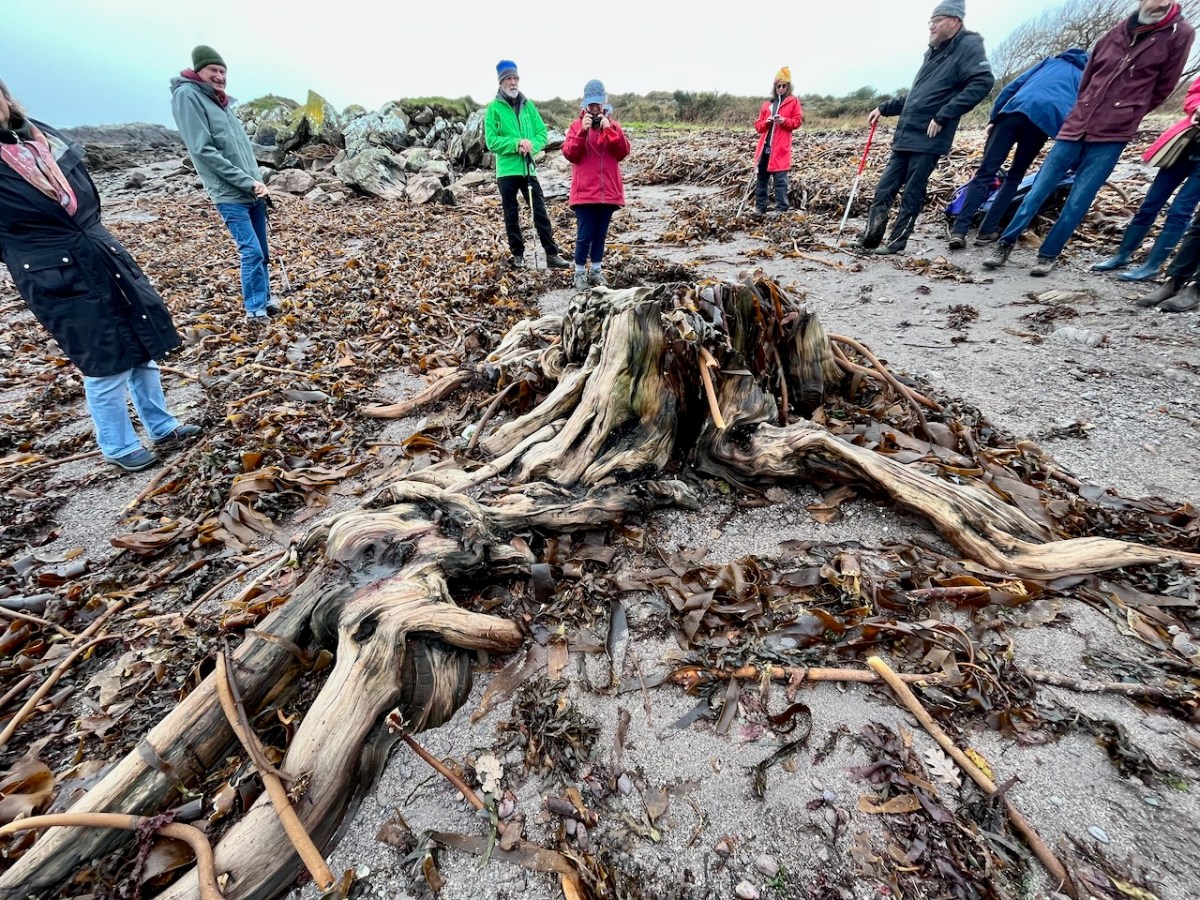
This large jumble of roots (above) is known as Goliath. All the remains here can be seen at regular low tides: at other similar sites elsewhere in Ireland, remains of ancient tree boles and roots are only revealed when tides are exceptionally low. I find it remarkable to be able to see and readily touch these archaic pieces of timber: we are communing with distant history!
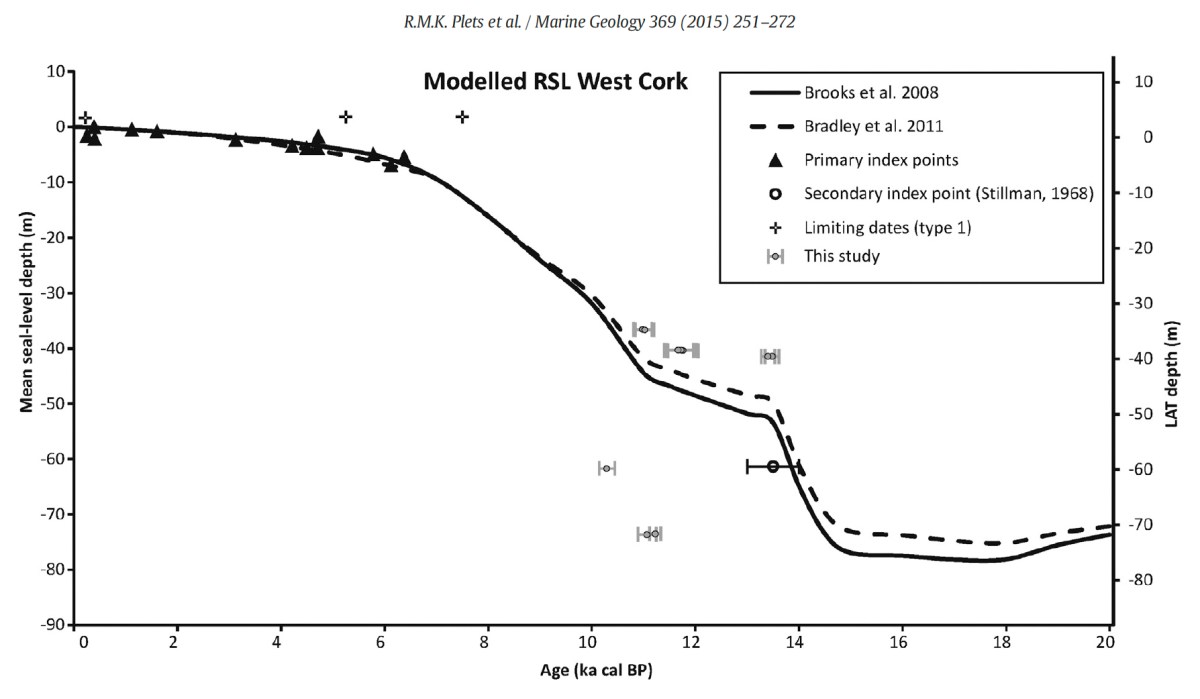
Carbon dating has shown that these remains were alive between three and a half and five millennia ago. This is evidence that sea levels were significantly lower then, and that the shore line was further out – perhaps 50 metres from where we see it today. We are constantly – and quite rightly – being warned about rising sea levels resulting from our changing climate in the long term: here we see clear verification that it’s a continuing – and now apparently accelerating – process.
Our friends Robin and Sue Lewando were also on this expedition. Robin has a particular interest in sea-level changes in the Late Quaternary and subsequent eras, and he pointed me to a 2015 paper which explores the subject specifically in the Bantry Bay area of West Cork. That’s a good place to be looking at ancient history: remember the story of Cessair – Noah’s daughter-in-law – who came ashore at Donemark? You first read about it here! So this is a scientific diagram which sets out how sea-levels have been changing over time in our locality:
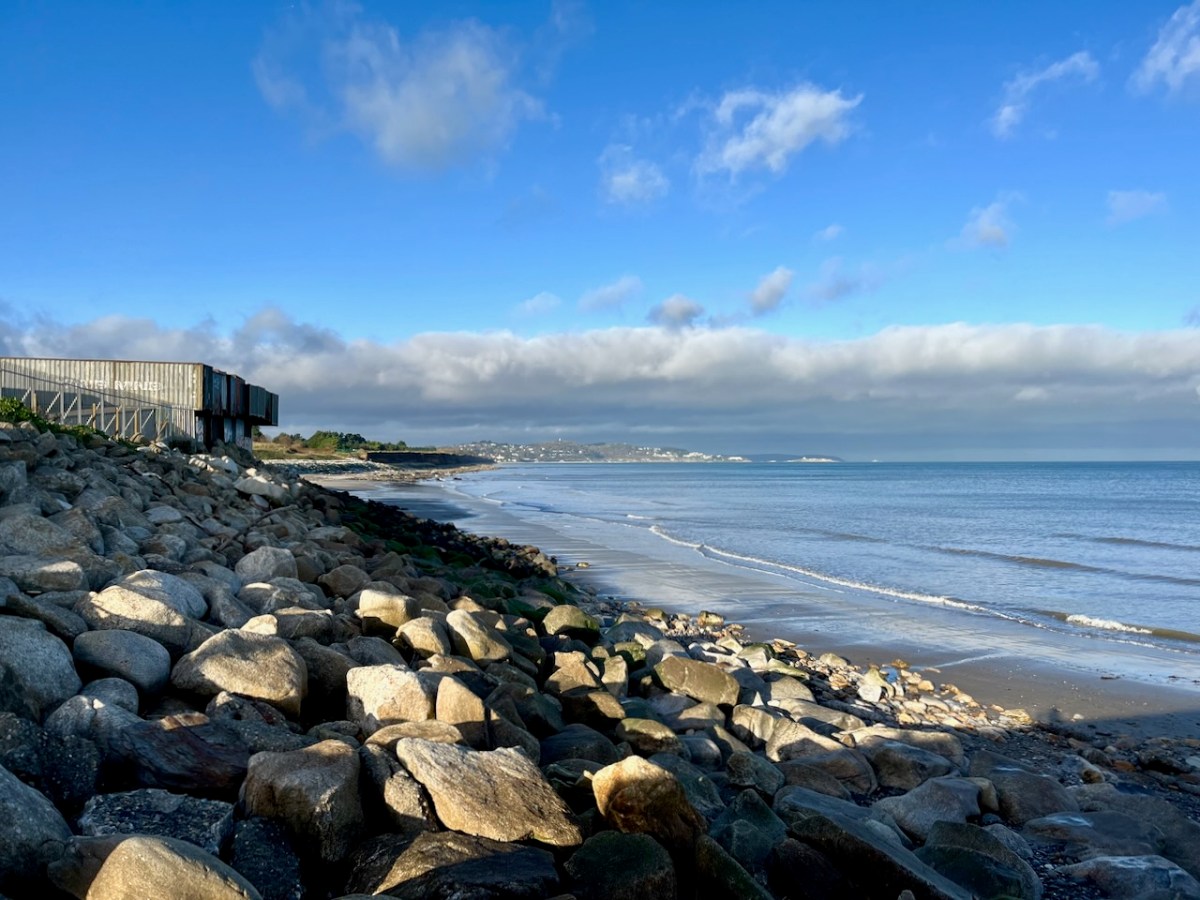
It’s an interesting comparison to take our horizons wider in our study of changing sea levels across the islands of Ireland. Over on the east coast – north of Bray, Co Wicklow – there is another substantial area where tree remains have been revealed at certain tidal conditions.
Above are the areas of beach between Bray and Killiney where ‘drowned forest’ remains have been observed. While at Youghal, Co Cork, further finds have occured:
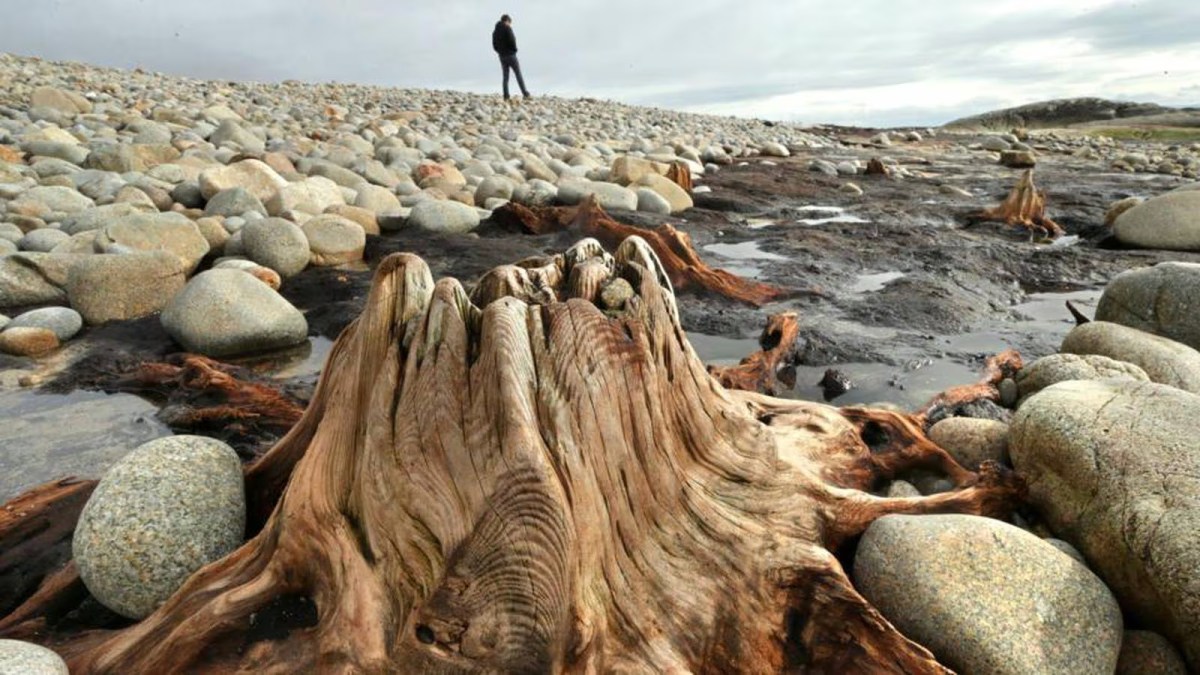
This example catches our interest because the name of the settlement – Youghal – is derived from the Irish word ‘Eochaill’ meaning ‘Yew Woods’: they were evidently once common in the area, leading us to wonder whether the tree remains in this instance are of yew. In 2014 the following account of another ‘ancient drowned forest’ discovery appeared in the Irish Times (photograph courtesy of Joe O’Shaughnessy):
. . . Walking out on to the shoreline at low tide, geologist Prof Mike Williams points to the oak, pine and birch stumps and extensive root systems which were once part of woodlands populated by people, wolves and bears. These woodlands extended out into lagoons and marshlands that pre-dated the formation of Galway bay, Prof Williams says.
An extensive layer of peat also exposed at low tide in the same location in Spiddal was formed by organic debris which once carpeted the forest floor. The stumps at Spiddal are surrounded by root systems which are largely undisturbed. The carpet of peat is covered in strands of a reed called phragmites, which can tolerate semi- saline or brackish conditions.
“These trees are in their original growth position and hadn’t keeled over, which would suggest that they died quite quickly, perhaps in a quite rapid sea level rise,” Prof Williams adds. Up until 5,000 years ago Ireland experienced a series of rapid sea level rises, he says. During the mid-Holocene period, oak and pine forests were flooded along the western seaboard and recycled into peat deposits of up to two metres thick, which were then covered by sand.
Prof Williams estimates that sea level would have been at least five metres lower than present when the forests thrived, and traces of marine shell 50cm below the peat surface suggest the forest floor was affected by very occasional extreme wave events such as storm surges or tsunamis. He says most west coast sand-dune systems date to a “levelling” off period in sea level change about 5,000 years ago. Dunes in Doolin, Co Clare, are older still, having first formed around 6,500 years ago.
Prof Williams has located tree stumps in south Mayo and Clare, along with Galway, which have been carbon dated to between 5,200 and 7,400 years ago at the chrono centre at Queen’s University, Belfast. Some of the trees were nearly 100 years old when they perished . . .
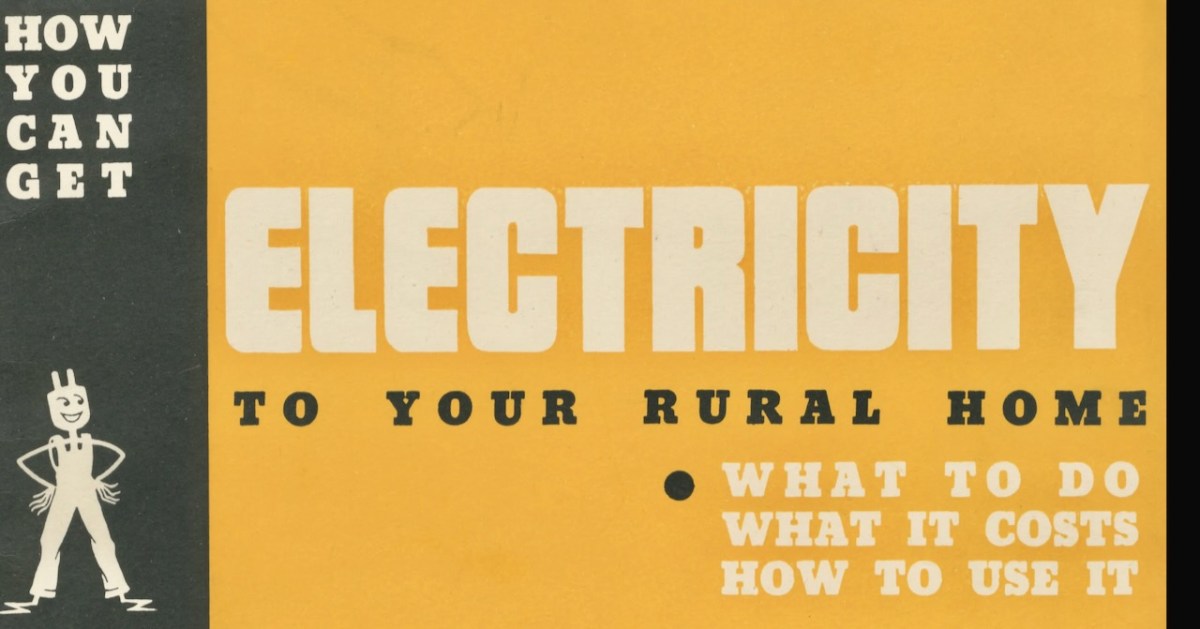
There are a thousand ways to tell a story. I thought I had written up much of what’s to know about the coming of Electricity to the rural areas of Ireland in this series (click the link). However, I now realise I have missed a dimension in this recounting: I haven’t included the direct experience of the populations whose lives were upturned by this state-imposed revolution. I haven’t written about that – but someone else has!!
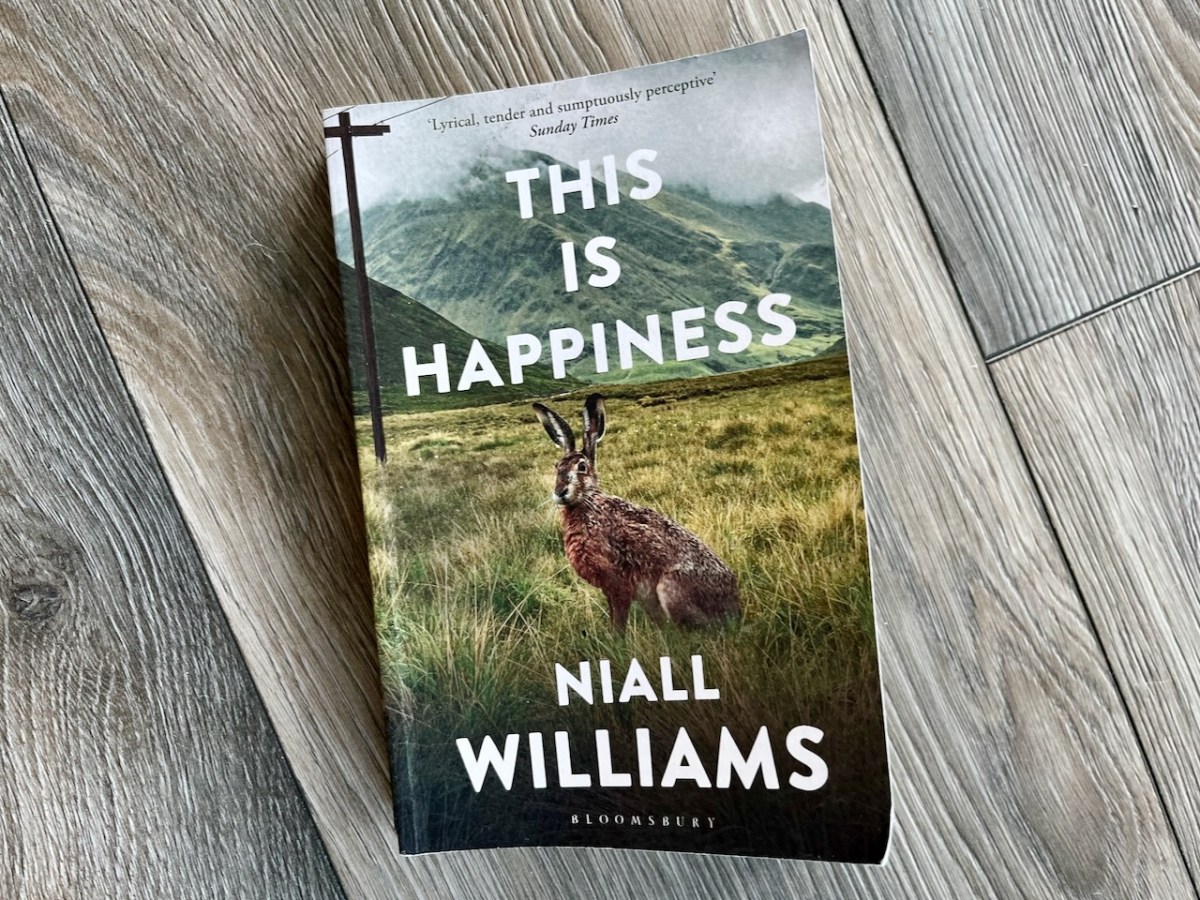
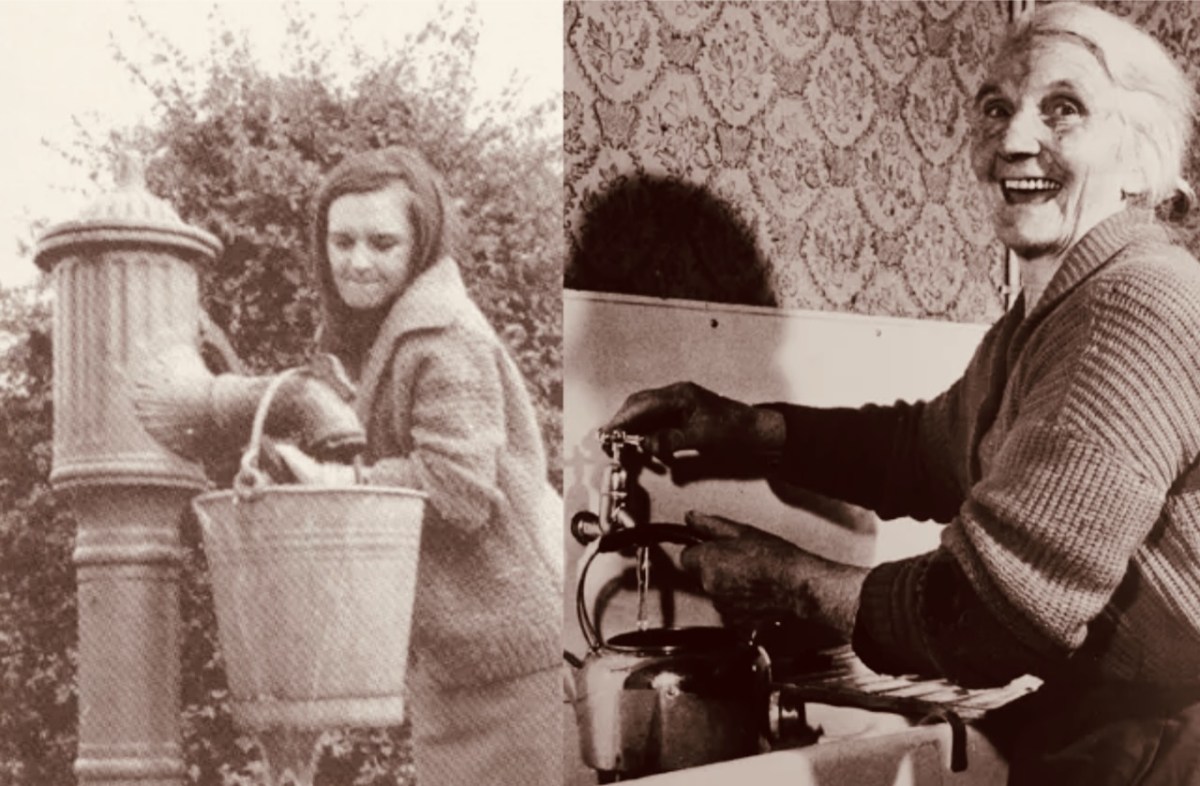
Our very good friend Amanda – she of the holy wells – presented me with this book (and not just because it features a hare on its cover!) . . . This is a brilliantly written novel that concerns itself with the detailed lives of a small close-knit community – Faha – in County Clare, at the time of the heralding, and then the arrival of, electricity. The ‘voice’ of the book is a 78 year-old man remembering growing up and coming-of-age in the 1940s and 50s, and experiencing first-hand the changes that electricity brought to the order of things in rural Ireland. In fact the author – Niall Williams – was born in 1958, towards the end of that period, and has used his writer’s skills to invoke the colour and tenor of the times and, of course, the inevitable suspicions, consternations and conservatism that were inherent in a community and lifestyle which had changed very little over generations and many decades.
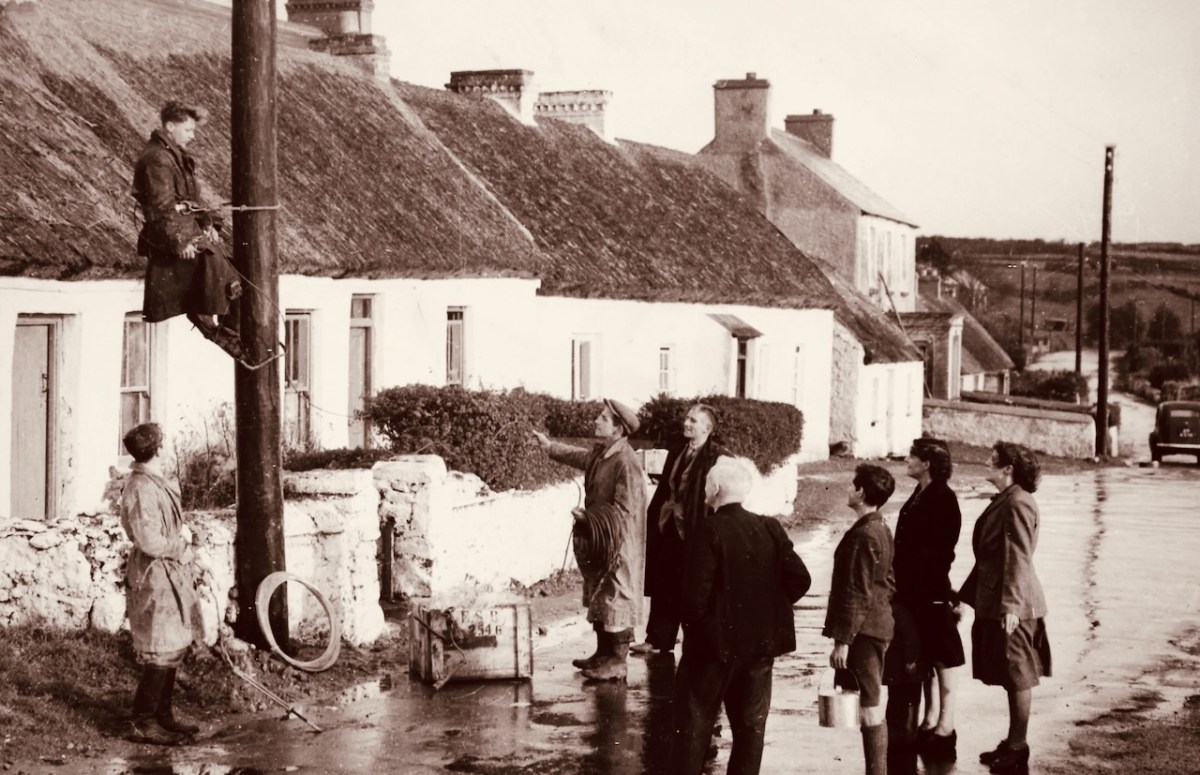
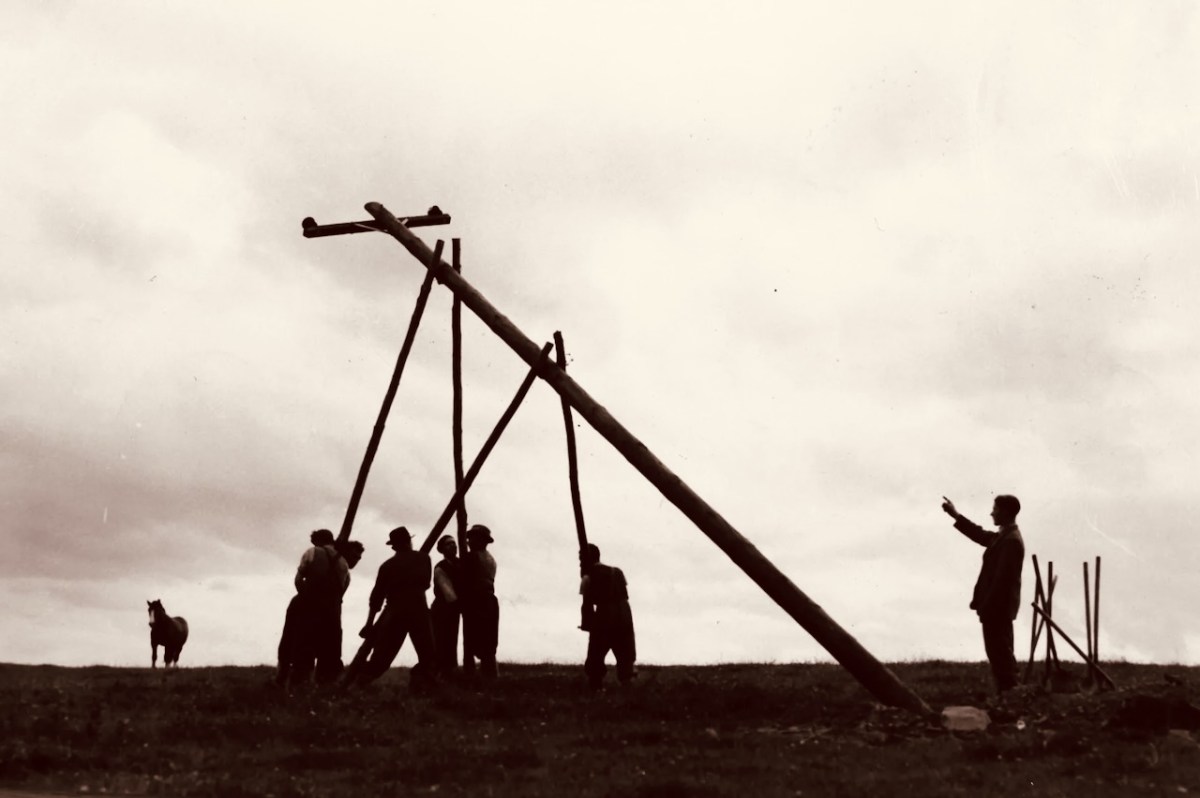
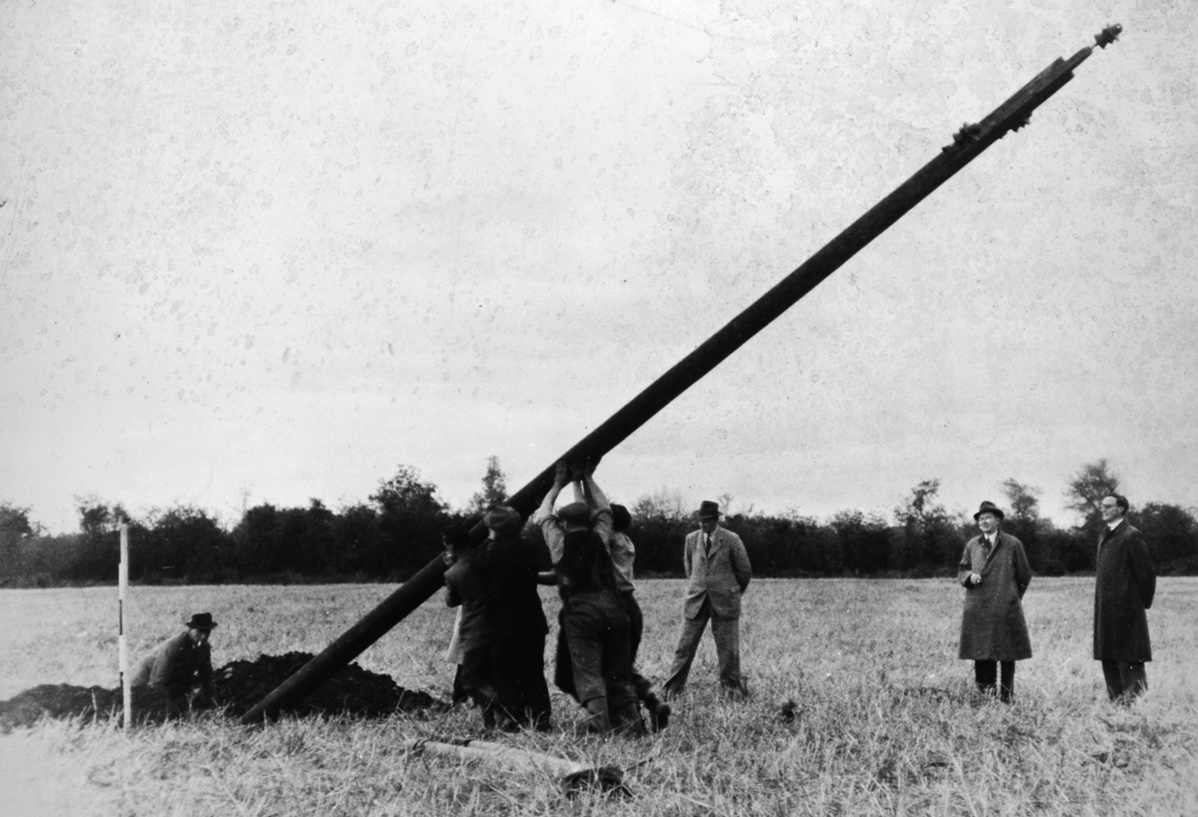
Rosses Point Village, Co Sligo: the poles arrive, 1940 (ESB Archives, which has been an invaluable source in my own search for information on the events of the time)
The book – This is Happiness – is outstanding. I consumed it eagerly, and I’m giving you a few extracts to whet your appetites. I thoroughly recommend that you read it, even if you think your interest in Ireland’s rural electrification is but brief. It’s also a story about people’s personal lives, of course, and all the characters are beautifully painted and completely credible. In terms of reality, my feelings are that Niall Williams has been scrupulous in his research, and deserves the accolade of having creatively told an absolutely true piece of social history through his particular medium of narrative romance.
Firstly, consider how ‘The Electricity’ had to be taken across rural Ireland: a landscape that was seldom accommodating – using poles and wires. Here is Niall Williams’ account of how the poles were purchased – all this can be verified:
. . . The electricity poles, it turned out, would not be Irish. Irish forests, we had learned in school, were felled to make Lord Nelson’s fleet and were now fathoms deep with the rest of the Admiralty. Instead, after extensive research, which in those days meant sending a man, the Board learned that the best place to purchase the poles was the country of Finland. To Finland they dispatched a forester, Dermot Mangan. Mangan had never been north of Dundalk. He tramped through the snow directly to the Helsinki offices of Mr Onni Salovarra, stood melting alarmingly beside the ferocious stove and said he was there to negotiate for poles on behalf of the Irish State.
Mr Salovarra thought him a novelty. He considered the comedy of the clothes the Irish thought adequate to the Finnish winter. The shoes, the shoes were little more than cardboard, a detail that inexplicably moved him, conjuring a country poor and valiantly endeavouring to overcome its circumstances. Still, business was business. Like all who had to outwit savage climate, Mr Salovarra eschewed sentiment and offered an inflated price of £4 a pole.
Mangan furrowed his brows and melted some more. He was not a businessman, his prime negotiation was with saws, but he had been told to drive for £3 and 10 shillings per pole, and if things did not progress, the Department Secretary had told him, drop in a mention of Norway, they won’t like that.
Mangan sat down. He said he was sorry he had travelled so far in vain. He said he had been hoping to see the glory of the Finnish forests, which he believed the finest in the world, but now he would have to travel on to Norway.
Mr Salovarra said £3 and 10 shillings per pole.
Mangan said he would send word back to the Government and asked for the nearest telegram office.
Right here is the only one, said Mr Salovarra and smiled. He had the kind of teeth that suggested the tearing of fish-flesh.
Mangan wrote up the words of the telegram. Please send this, he said, and passed the wording across the desk to Mr Salovarra. The message was written in Irish.
Mangan crossed the frozen street and into the tropic of a wooden hotel where three stoves were kept going and the floor of the lobby wore a permanent stain of male thaw. His room was spartan but it was overhead Reception and the heat fairly cooked him. The floorboards up there been shrinking and creaked like the bones of old men, but they dried his shoes in jig-time. In the same jig-time the stitching of them gave up the ghost and you could hear the tiny snaps of the cobbler’s thread as the soles came loose. The fish he ate for dinner was larger than the plate. He had no idea what kind it was, but with enough salt you could eat timber was Mangan’s thought.
He went back to Mr Salovarra the next day and received the telegram of the Government’s response, which was also written in Irish. Translated, it read: Delighted with offer. Accept on behalf of State.
Mangan looked across at Mr Salovarra whose teeth were smiling. ‘Offer refused,’ he said.
Mr Salovarra could not believe it.
‘Look here,’ said Mangan, and read aloud the impenetrably harsh sounds of the Irish. He finished with a flourish the sign-off, An tUasal O Dála.
Mr Salovarra asked him what An tUasal meant and Mangan explained that in Irish we remembered we were noblemen and greeted ourselves as such.
Mr Salovarra said £3 a pole.
In all, ten telegrams went back and forth from Helsinki to Dublin, all of them in Irish, and, because in Irish and incapable of being translated in Finland, they were able to take on whatever degree of intransigence Mangan thought apt. Ultimately, because of the unnegotiable severity of the Gaelic, Mr Salovarra was bargained down to £2 a pole, and on that the two men shook.
But that was not the end of it. Now fearful that their inexperience might be taken advantage of, the Electricity Board insisted that each individual pole be inspected, calipered and approved by Mangan himself before being shipped to Ireland.
Mangan told Mr Salovarra he would have to stay in Finland for some months. He was to visit the northern forests in person.
Mr Salovarra lifted onto his desk the gift of a pair of fleece-lined lace-up boots and made a small respectful bow. An tUasal, he said.
Dermot Mangan travelled by sleigh to the snowbound forests of Finland. In the deep woods was a preternatural silence and the sense of the beginnings of time, and Mangan was not surprised to learn of the Finnish epic poetry of the Kalevala in which the earth is created from pieces of duck egg, and the first man, whose name is not Adam but Väinämöinen, starts by bringing trees to barren ground.
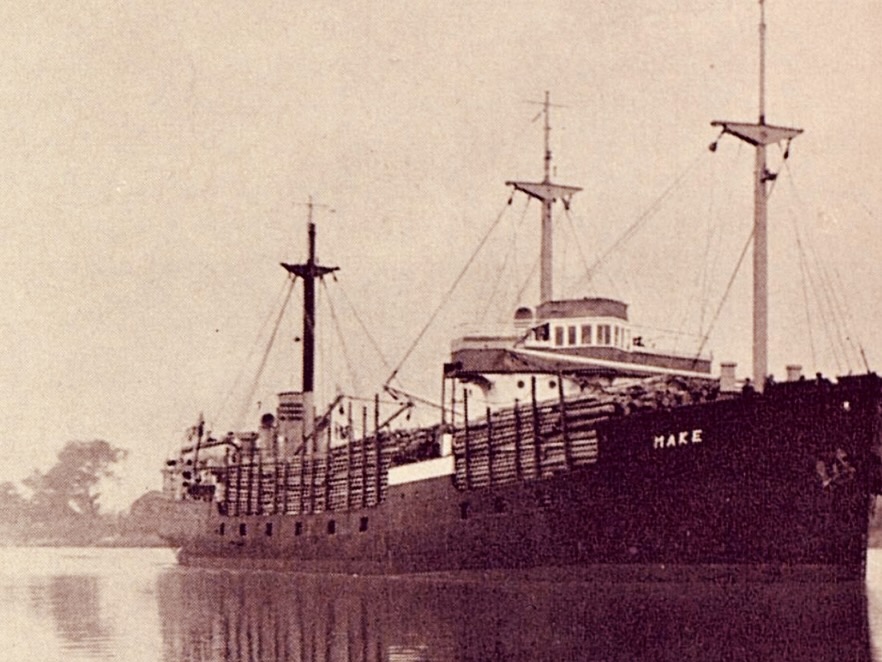
Mangan took to the woods. They were his dream habitat. He wore furs, Mr Salovarra’s boots, and went from pole to pole and made his mark, selecting the ones that in time would criss-cross the green spaces of Ireland. He became a story, and that story was well known by the electric crews that came in to Faha and told and retold it with greater or lesser detail. But the fact is that for the next 30 years, May to December, there was always a ship bringing poles from Finland to port depots in Dublin, Cork or Limerick. In the interest of story, sometimes you could do no worse than go out into the country, find one of those quiet roads where time is dissolved by rain, look out across ghost fields that were once farmed, and you’ll see still see some of those poles An tUasal Mangan first laid a frozen hand on in the forests of Finland . . .
Niall Williams – This is Happiness
One of the largest consignments of poles from Finland: the MV Make navigates the Shannon Estuary c1950 ESB Archives
One million poles were erected in Ireland, and 50,000 miles of electric cable were strung from them. Here’s the account from the book of one pole’s progress:
When we came into Quirke’s there was a quorum in shirtsleeves gathered around a fresh hole in the front field there. Quirke’s was mostly stones and the pole was on the ground while the men assessed whether enough stones had come out to make a third attempt to stand it. When Christy and I came into the avenue our arrival seemed propitious and we did the thing all men do, we came over for a look into the hole, nodding the tight-lipped nods that masqueraded as expertise. Two long lines of rope ran across the grass to a jittery grey horse waiting with Quirke. The third attempt was decided by a smack of the ganger’s hands. Christy threw off his jacket and, because there are coded imperatives in the company of men, I did the same, we stood in to raise the pole.
With a sharp hup hup from Quirke and a worry from his rod of osier the horse took the tension. Head down and hands out on the sticky sweat-melt of the creosote, I saw nothing and heard only the grunts of effort and the come on come on of the ganger, the now now, men as the shaft of timber sank into the hole and then began to rise like a giant’s needle into the sun. It was wonderful. I felt a surge of joy, the simple, original and absolute thrill of a physical victory over the ardours of the terrain, a pulse so quick as to pass instantly in through the arms of each man, into the blood and brain the same moment with the pole triangled now at nine o’clock, now ten, Come on come on, effort increasing beyond the point when no increase seemed possible and yet was found.
And because of that surge, because I was given over completely to the thrust of a communal triumph I had never experienced before, I didn’t hear the rope snap…
Niall Williams vividly recreates a gathering in Faha when the people of the village were summoned to a demonstration of what the benefits of ‘The Electricity’ might herald:
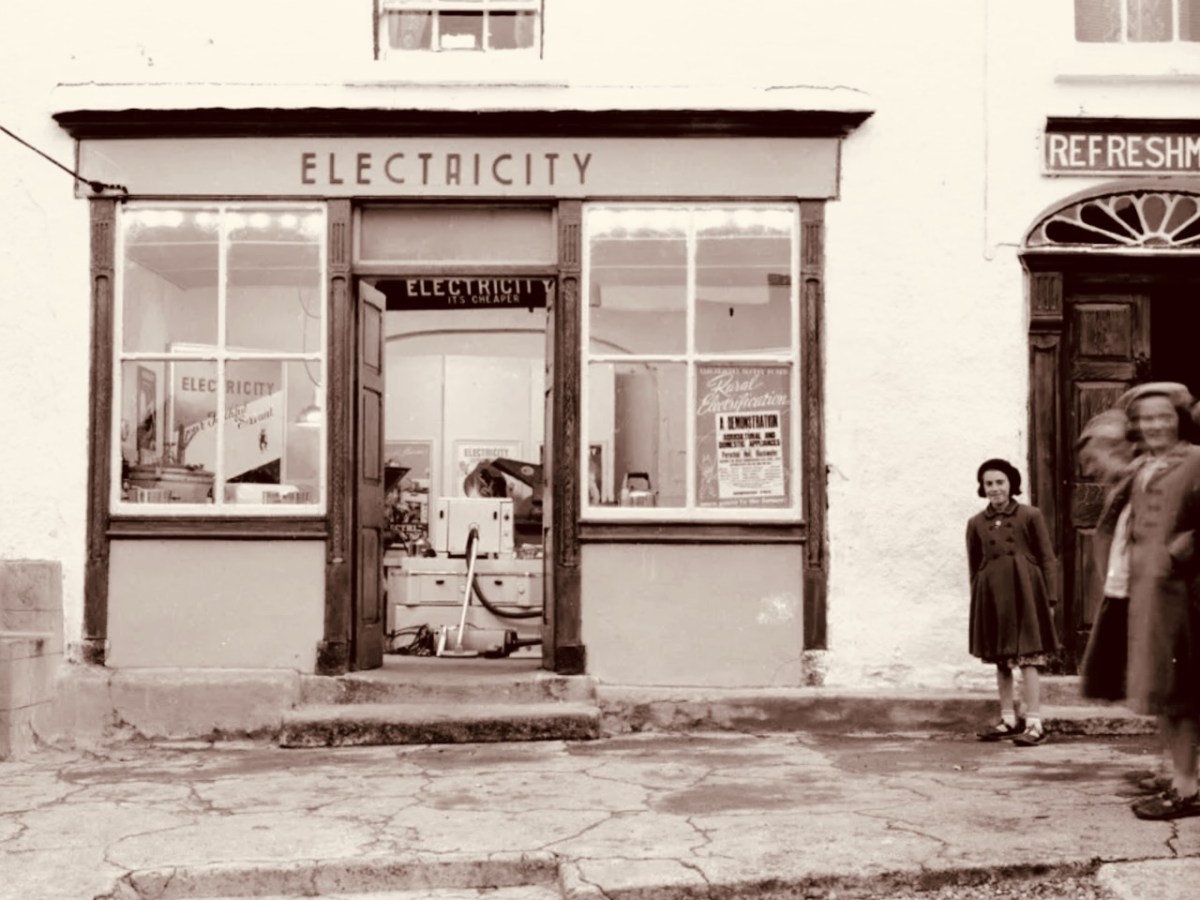
. . . One afternoon the stools and chairs were brought in from the garden and set around the kitchen because a summit of the neighbours had been called. Moylan, a salesman from the electricity company, was doing the rounds. Because it had the telephone and the air of unofficial post office, because it was already deemed connected, my grandparents’ house was chosen for the demonstration of what the future was bringing.
The meeting had been called for three in the afternoon. Moylan was a nine-to-five man, three was when he was at his peak, and country people have no work that couldn’t be left aside for something as essential as electricity, was his position. A Limerick baritone with a magnificent sweep of black hair, he arrived in the yard in the van. Sonny, help me carry these in, was his greeting. When he saw the smallness of the kitchen – the slope of the floor doubling the cramped illusion – he had to overcome the familiar fall of his heart that this was a lesser stage for his talents, and not let it impact upon his performance.
‘Where is everybody?’ He asked Doady.
‘Everybody is coming,’ she said.
Into the kitchen on a handcart Moylan hefted a selection of machines whose existence to that point had been notional. Many were white and of such a gleaming newness it seemed nothing in the parish was as white as had previously been thought. All had a black wire coming out the back with a three-pin plug that looked both imperative and nakedly masculine, as though in urgent need of finding a three-holed female. Moylan laboured to get the washing machine in and around the turning of the front door whose jamb was predicated on human dimensions. Doady said it was a shame Ganga wasn’t there to help. The turf needed turning, he’d announced abruptly that morning, and headed with Joe (the dog) to the bog.
In clusters of shyness, the neighbours began arriving.
Moylan had already given a performance in the village, and the reviews were good. ‘Nice little house you have,’ he said to Doady, the sweat shining off him standing in front of the twelve-foot hearth where small sods were sighing a complacent smoke unaware that their time was running out.
The centre of the room was taken with the machines and the neighbours came in around them muted and respectful the way they did when there was a body laid out. They settled into the chairs, onto the stools and benches, and let their eyes do the talking for a while. Mostly it was the women. Those who were not eyeing the electrical equipment were taken by Moylan’s shoes, which were two-toned, extra-terrestrial, and with an air of Hucklebuck. Maybe the Shimmy Shake too.
While the practical business of bringing the electricity to the parish was almost exclusively the domain of men, inside the houses the jurisdiction over electrical equipment, kettles, cookers, hairdryers and washing machines, was conceded to women. Only two men came to the summit. First, because it was taking place in the kitchen in daytime, and second, because men refused to be summoned, it outraged their dignity, and nothing in the known world had yet required that absolute submission accept Christ, and even with Him it was leeway. The two men were Bat from back the road who came in, God bless all, with cap low and eyes down, and Mossie O Keefe who was the Job of Faha . . . O Keefe’s mother died when the cart turned over on her, his father went into the bottle, he himself married the woman in love with his brother, one of his sons went in a threshing machine, the other drowned in a ditch.
There were others, the room filled and the sunlight blocked at the window, but Moylan couldn’t wait forever. Emboldened by the air of event, and with the fattened authority of farmyard matrons, three hens came inside the open front door, nestling down in a bath of sunshine to watch. Neither in nor out, I was perched on the back step.
To give Moylan his due, he had his routine down pat, Now I want you first to look at this, a combination of science and circus in an actor’s boom, This, this machine, will do all the work. It will wash your clothes for you. He lifted the lid and drew out a white towel, as though the washing and drying had happened in the time it took him to say the sentence and here was the proof. He had devised this touch himself and was proud of it. It was the only proof possible without electricity and had the added boon of making it seem as if he himself was the current or at least its conductor. Further to this, ten seconds into his pitch a film of sweat was glistening on him, lending him a shine which he didn’t dab away, believing it translated as electric excitement and disguised the actual truth, that he was being cooked by the fire.
His audience was rapt by the important and foreign sounds of spec and kilowatt in that 200-year-old house, and by touch and look Moylan kept relaying the words to the magic of the machines that sat mute but powerful like idols . . .
Niall Williams – This is Happiness
An early shop selling electric appliances – Blackwater, Co Waterford, 1955 ESB Archives
I have set out these extracts from what is a good-sized novel. Hopefully they will whet your appetite and make you seek out the book: it’s a good read. Finally, I’m taking a page which is close to the end of the story. And this isn’t just about electricity – it’s speaking of a vanished part of Ireland’s rural history:
. . . My grandparents never took the electricity. They didn’t act as though there was a lack. They carried on as they were, which is the prayer of most people. They lived in that house until they were carried out of it, one after the other. Because the twelve sons in the corners of the world couldn’t reach a verdict, the house was left to itself. The thatch started sagging in two places like consternated eyebrows, brambles overtook the potato ridges and came up the garden, and soon enough in under the front door. Soon, you couldn’t see the house from the road. Soon, too, the bits of hedging Doady had stuck into the ditch to camouflage the broken Milk of Magnesia bottles grew to twelve feet and fell over and grew along the ground then, marrying thorn bushes and nettles and making of the whole a miry jungle. When the roof fell in the crows that were in the chimney came down to see the songbirds sitting in Ganga’s chair eating Old Moore’s and that way becoming eternal. When grown a man, one of the Kellys took out the kitchen flagstones for a cabin he was making. He took out the stone lintel over the fireplace after, and a year later came back for half the gable when he needed good building stones for a wall.
In time, as with all modest places of few votes, Government would be looking the other way when its policies closed Faha’s post office, barracks, primary school, surgery, chemist, and lastly the pubs.
In time, the windmills would be coming. Gairdíen na scoile and Páirc na mónaigh would be bulldozed to straighten the bends in the road to let the turbines pass. Any trees in the way would be taken down. Two- and three-hundred-year-old stone walls would be pushed aside, the councillors, who had never been there, adjudging them in the way of the future.
By that time, my grandparents’ house would be another of those tumbledown triangles of mossy masonry you see everywhere in the western countryside, the life that was in them once all but escaping imagination . . .
Niall Williams – This is Happiness
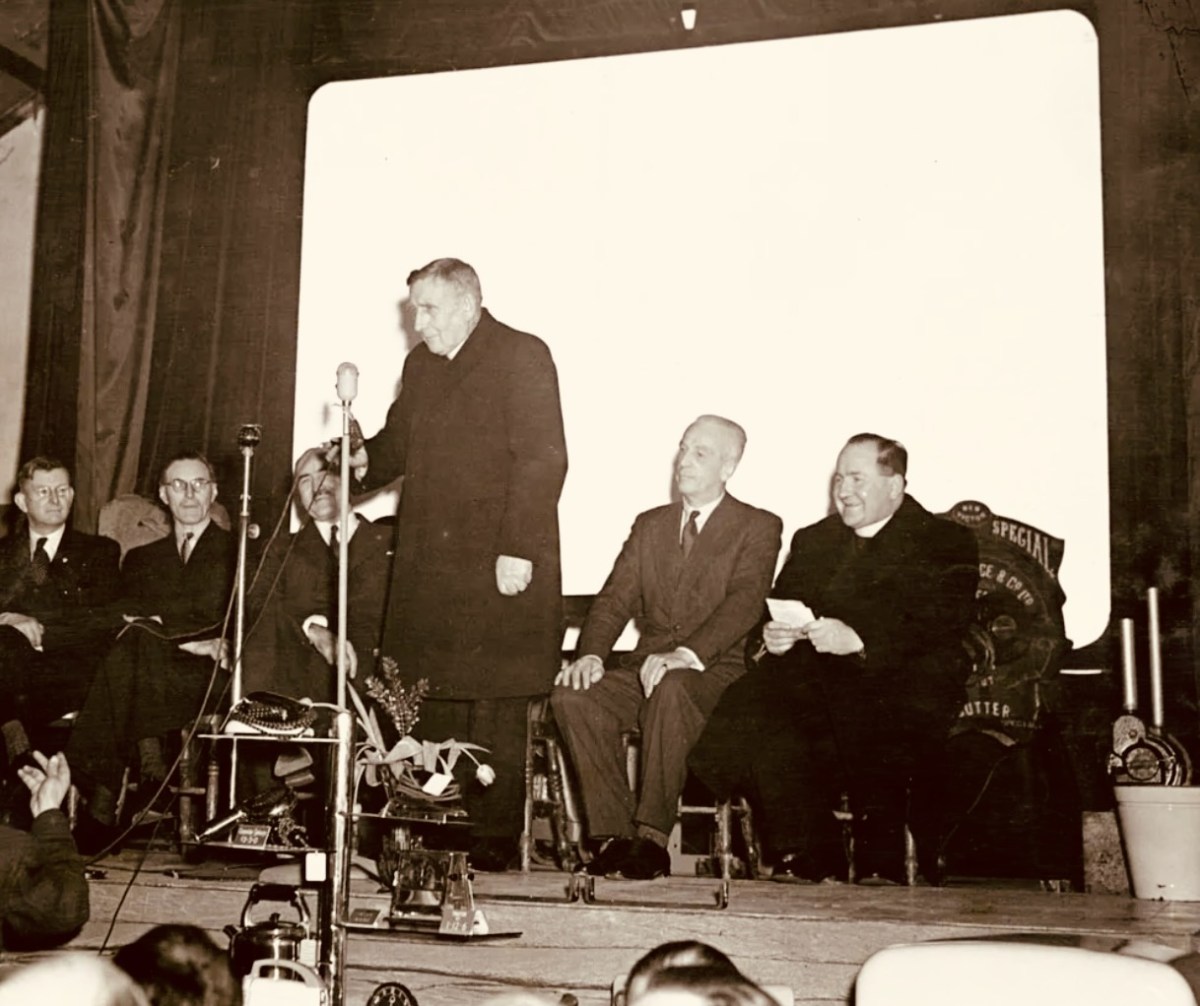
Switching-on ceremony Kilsaran, Co Louth 29 January 1952 – the 55,000th consumer! ESB Archives
A big thank you to Amanda Clarke for sending this book my way!
This is Happiness by Niall Williams, published by Bloomsbury 2019
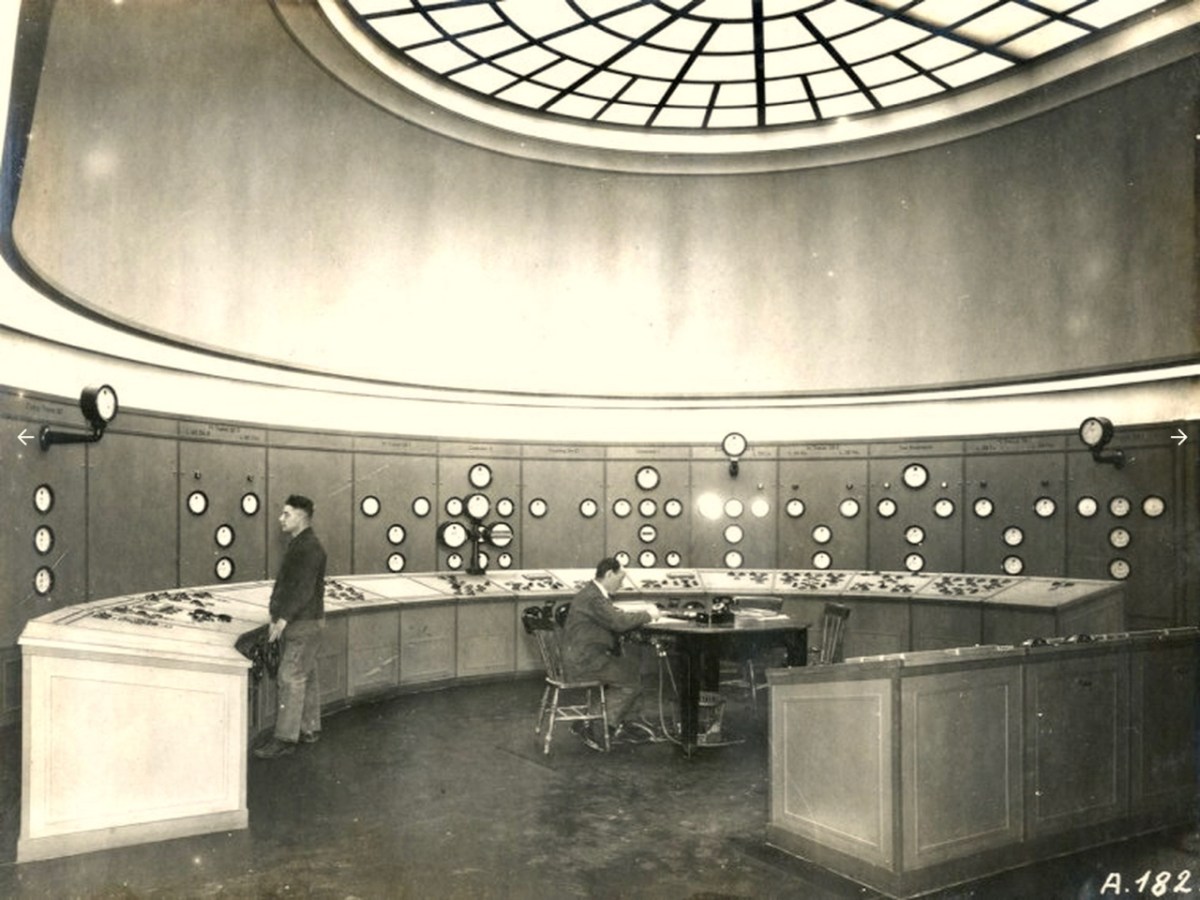
In my recent posts I have set out a brief history of how the new State became electrified – and how this affected the urban and rural ways of life in Ireland. An important part of the story was the building of the hydro electric power station at Ardnacrusha, on the River Shannon, between 1925 and 1929. That’s the original control room, above, unaltered since construction – there’s not a screen in sight! Most of the works of the station are now handled elsewhere using screens and keyboards rather than dials and switches. This site became the nerve centre for the electrification of Ireland and the National Grid was established in tandem with the project.
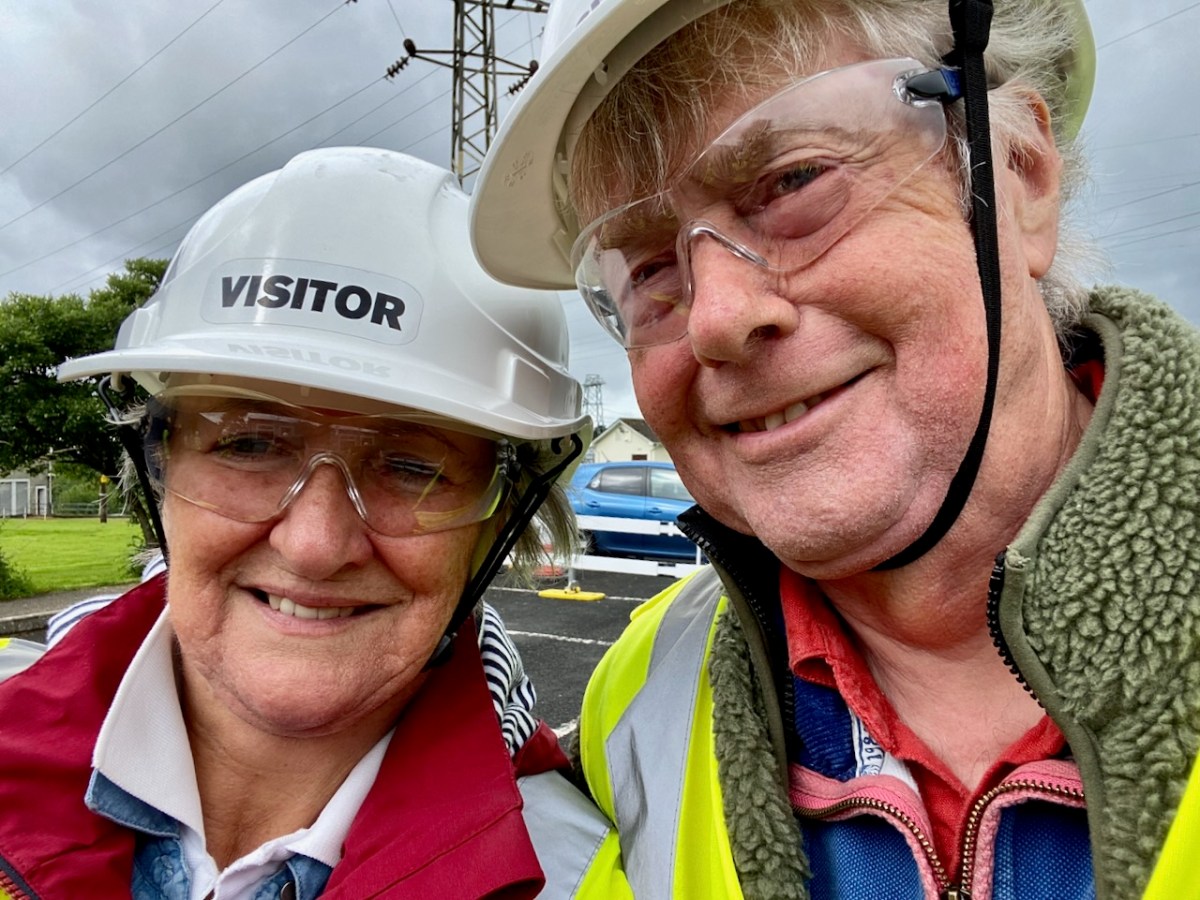
This selfie shows Finola and I on a visit to Ardnacrusha last week. (If you want to go yourself you have to book in advance). We had a great time! And I’ll be reporting back on that trip in due course. But first I want to take you back in time – more than a thousand years . . .
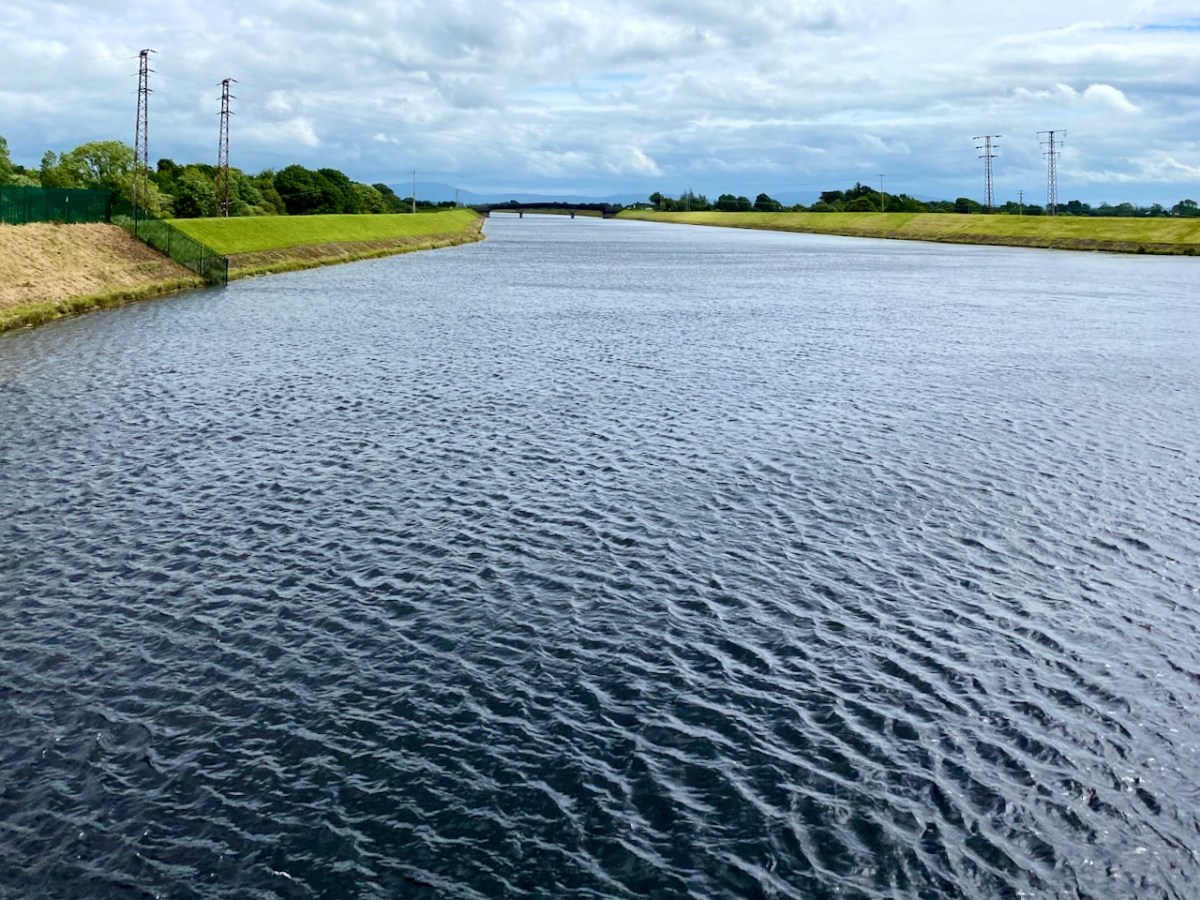
Here’s the River Shannon today, just north of the power station. There’s a big head of water there, and the river had to be dammed and flooded to maximise the feed to the turbines. The significantly raised water level had consequences.
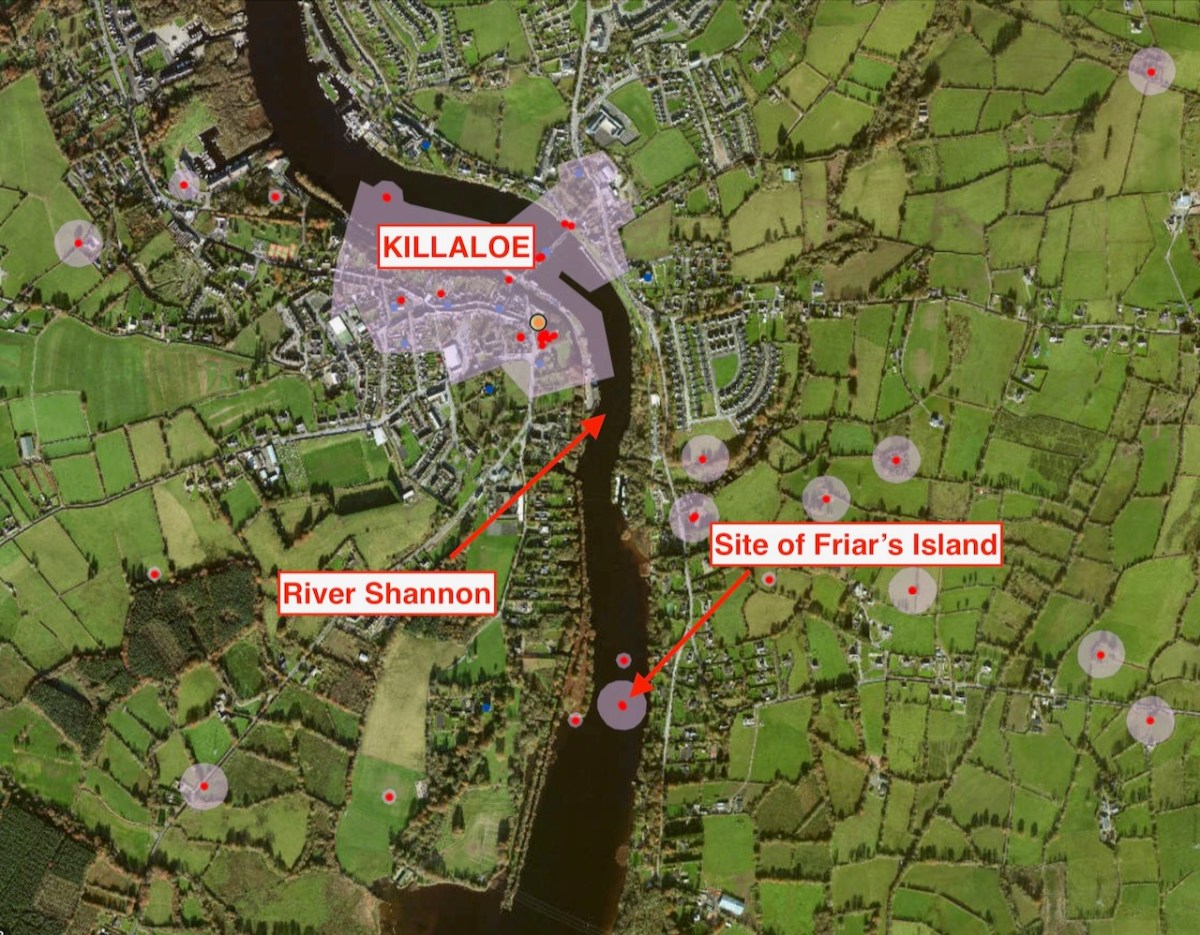
The aerial view, above, shows the river today with its elevated water level. In the pic you can see the ‘Site of Friar’s Island’ indicated: before 1930 there was an island there, on which were some noted relics, including the Oratory of St Molua of Kyle (also known as St Lua), who died in the year 608. His feast is celebrated on August 4th. It’s said that crowds used to assemble there on that day, most of them wading across the water to get to the island. This description of the saint is from the Schools Folklore Collection (informant Tom Seymour, aged 60, Cloncully Co Laois):
. . . We don’t know where he belongs. Some say he belongs to Killaloe. He had his monastery in Kyle. Near the monastery he had a big stone where he used to pray. There are two big holes where he laid his elbows, and two more where the tears fell. In Ballaghmore there is a trough laid up on a stone. It is always half-full of St Molua’s water. The hottest day in the summer the well is always half-full of water. When he died the people of Killaloe wanted to bury him in Killaloe and the people of Kyle wanted to bury him in Kyle. They made two coffins, one went to Kyle and the other to Killaloe. He had another monastery in Offaly . . .
Schools Folklore Collection
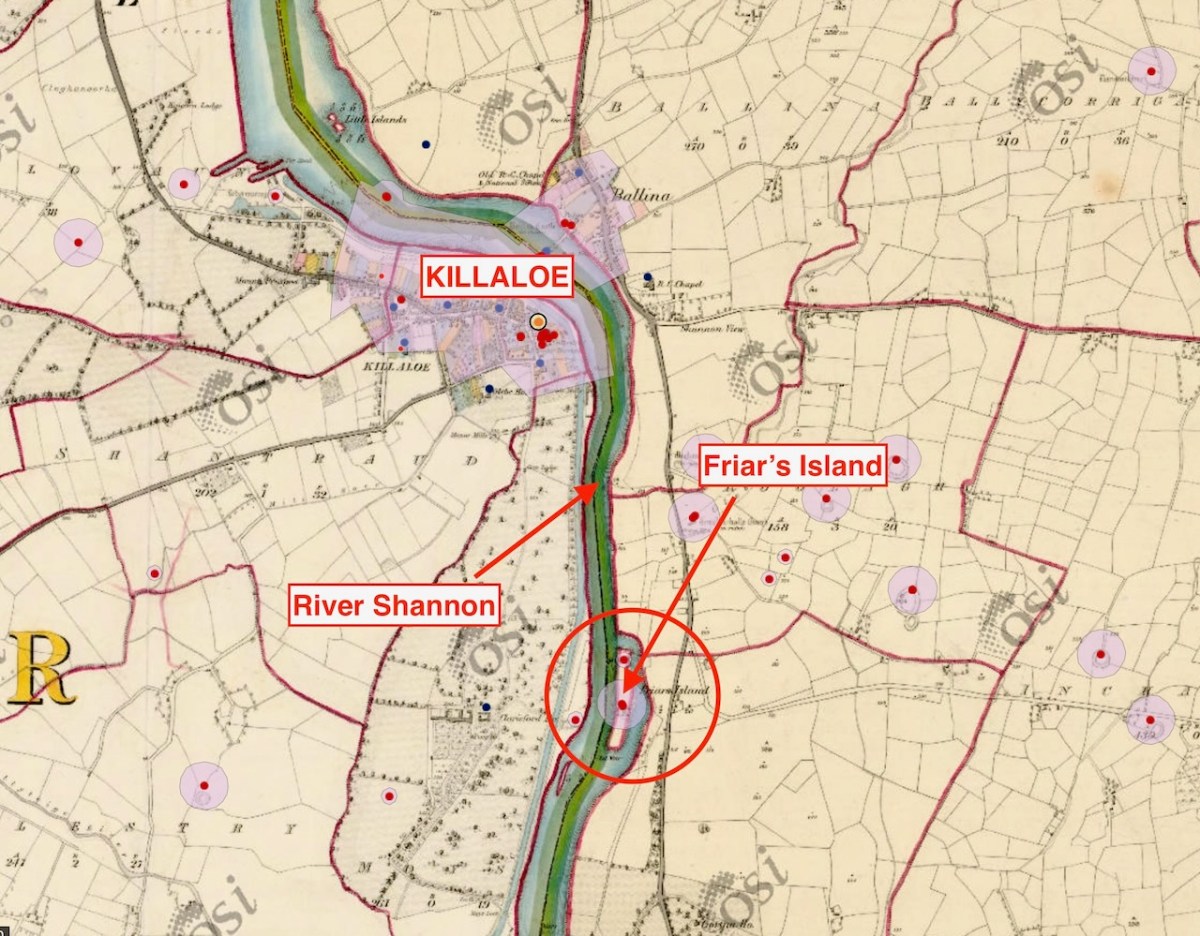
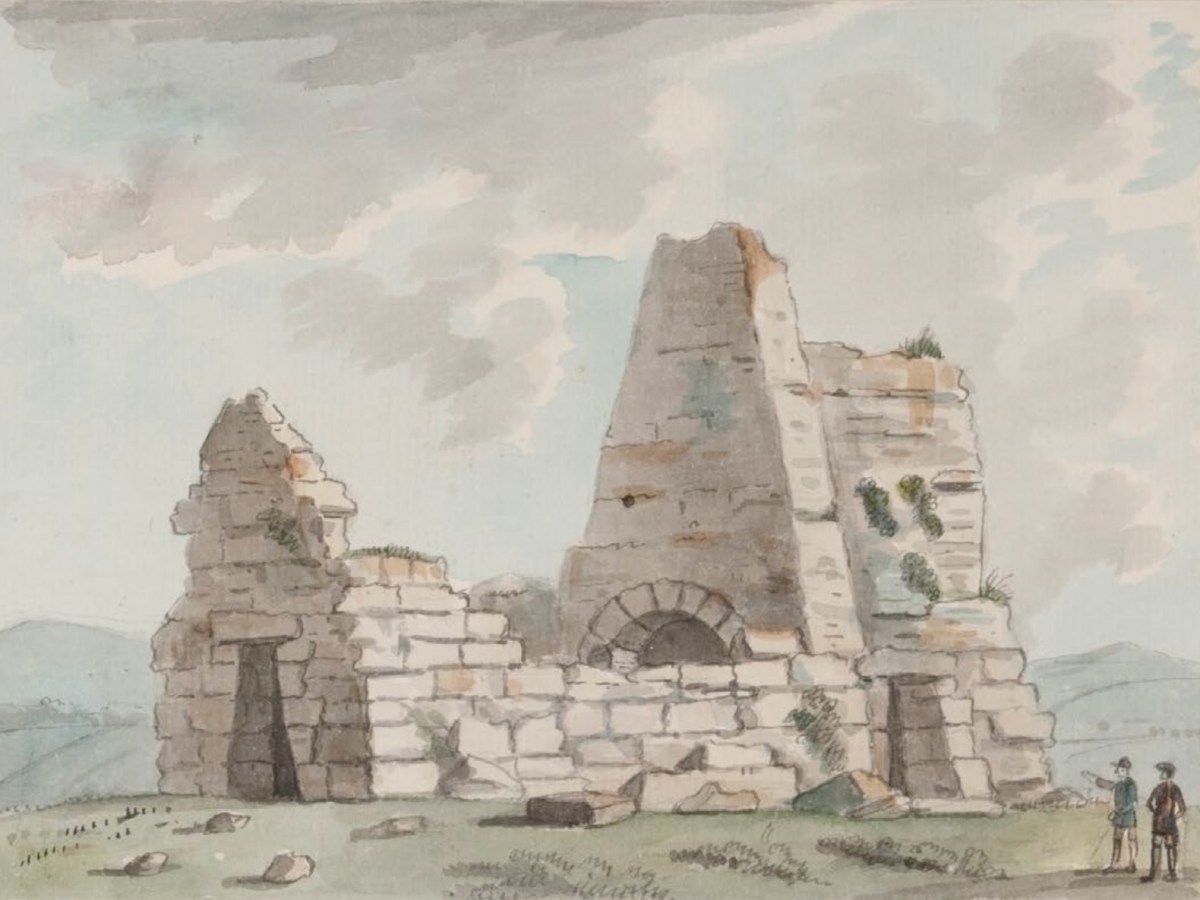
In this extract from the early OS 6″ map (above) you can see that the island was quite substantial. The pilgrimage involved visiting a holy well and St Lua’s Oratory. The small church was by tradition built by the saint, although it seems likely to date from the ninth or tenth centuries.
St Lua’s Oratory – Eighteenth Century water colour – Royal Irish Academy. The figures are somewhat out of scale. Below is a photograph of the Romanesque structure taken on the island in the 1920s.
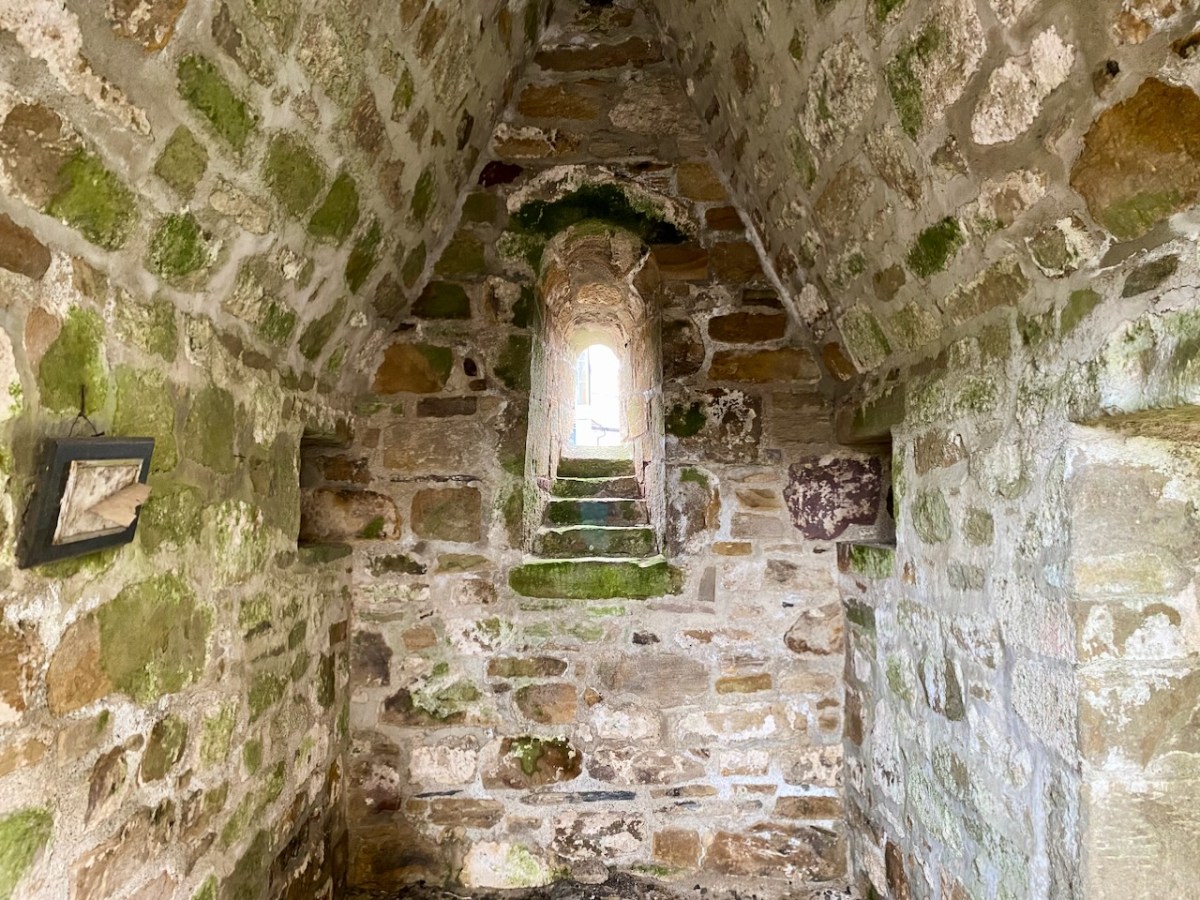
. . . The nave walls are constructed with uncoursed cyclopean sandstone masonry while the chancel walls are constructed with roughly squared stones of smaller size. The chancel has a single-light round-headed E window with stepped sill-stone and unusual flat-headed doorway in the S wall. The round-headed chancel arch has curious jamb-stones which are not flush with the chancel arch and project inwards. The triangular-shaped chancel roof is bonded with lime mortar and is well preserved. The nave walls are poorly preserved and only survive several courses high with a trabeate doorway in the W wall. Excavations at Friar’s Island prior to the removal of the church revealed that the church was constructed on a stone platform enclosed by a possible cashel with a revetment wall of unknown purpose. A second stone platform (dims. 22ft (6.71m) N-S; 50ft (15.25m) E-W) was located to the S of the church and eleven skeletons were uncovered under or close to the foundations of the N wall of the church (Macalister 1929, 16-24) . . .
National Monuments Service description
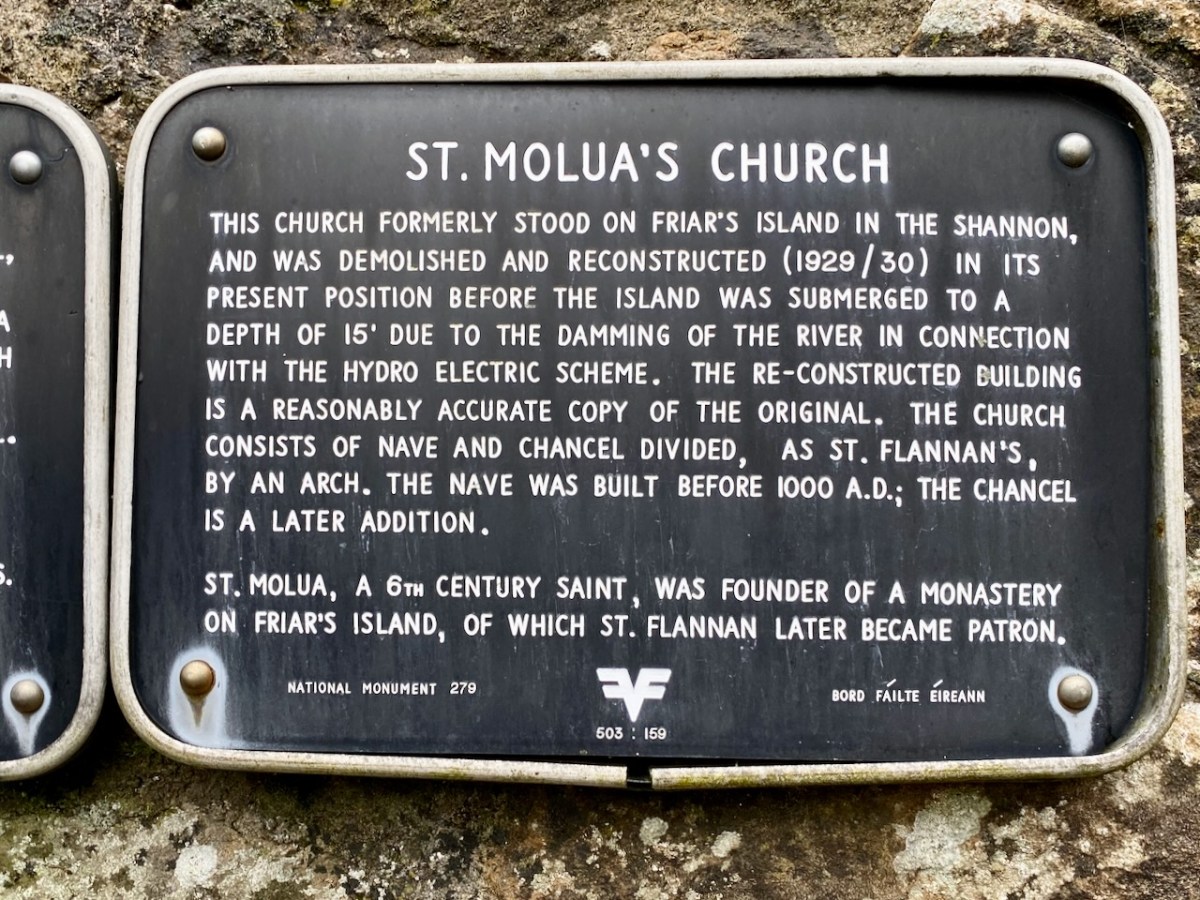
As the plan to establish the new power station progressed, it became obvious that the level of the river below Killaloe would have to be raised significantly in order to maximise the water power turning the turbines to be installed: some five meters, in fact. The consequence for Friar’s Island were that it would be flooded, and the Oratory would be lost.
Considerable debate ensued, the main factions being archaeologists, engineers, and the Catholic Church. Politically, the efficient functioning of the new power station was paramount in order to show the State and the world that Ireland was an entity to be reckoned with. At the same time, the archaeologists were keen to project that the independent country recognised and championed its very rich ancient heritage, and would therefore go out of its way to preserve all surviving artefacts. The Catholic Church was anxious to show allegiance to all aspects of progress in the State, while noting that it was also the fundamental root of the unique Irish culture that led to the historical founding of sites such as St Lua’s Oratory. I was fortunate to be given access to a paper by Niamh NicGhabhann of the University of Limerick: Medieval Ireland and the Shannon Hydro-Electric Scheme: reconstructing the past in independent Ireland. Here’s an abstract:
. . . This essay considers the position of Irish medieval buildings in the early years of the twentieth century. Focusing on the treatment of the oratory of St Lua at Killaloe, it examines the ways in which the ruins of the medieval past were used to signify a range of political, religious and cultural ideas and attitudes. The rising water levels following the Shannon Scheme works (begun in 1925) meant that this stone oratory was moved from its original position on Friar’s Island to the grounds of St Flannan’s Roman Catholic Church in 1929. The resulting paper trail reflects the complex processes of decision-making within a civil service in transition as the new Irish Free State calibrated its position with regard to the past and the treatment of medieval ruins throughout the countryside. The case study of St Lua’s oratory is considered here in the context of the nineteenth-century tradition of scholarship on medieval buildings, the development of the idea of a national Irish architecture during this period, and the impact of this tradition on subsequent engagement with the buildings of the medieval past . . .
Above – a surviving photograph of St Lua’s Oratory being disassembled in 1929. The various debates had produced three alternative solutions to the dilemma of the impending inundation of Friar’s Island:
1 – Allow the island and the ruins to vanish below the flood: by far the cheapest course of action.
2 – Build a new concrete platform (effectively a new ‘island’) above the level of the flood water, and transfer the remains of the building to this.
. . . The RSAI officially responded in support of the second proposed scheme of work, involving the elevation of the building and the construction of a concrete pier. They suggested one amendment to the plan, that a ring of grass be added around the building to give the concrete plinth the appearance of an island. Given that both the RSAI and the OPW were in favour of the second scheme as the most appropriate and cost-effective course of action, the fact that the oratory was eventually moved and transported some distance from the site, however, reflects competing values, as well as several structural problems that emerged in the second scheme as proposed. As works progressed, it became clear that the elevated island site would be eventually undermined by the flow of the river, making this process untenable . . .
3 – The Scheme that was eventually adopted involved dismantling the Oratory and re-assembling it as faithfully as possible, on a suitable mainland site. Initially the suggested site was on the Clare bank of the Shannon, but the ground conditions were not suitable for a permanent structure.
. . . A further plan for relocation was also progressed, which involved moving the ruin into the town of Killaloe, and locating it beside the later and larger oratory of St. Flannan, and the medieval cathedral of St Flannan. These plans were at quite an advanced stage by mid – 1929, with several drawings and maps produced by Leask’s office for the purpose. However, while the preservation process was certainly hampered by these structural issues, ideological concerns also had a direct impact on the treatment of the oratory . . . The intervention of Bishop Fogarty was also noted on 13 July 1929, when the Limerick Leader reported that “the safeguarding of such a venerable relic of primitive Christian architecture is due to the timely intervention of Dr Fogarty, Bishop of Killaloe, who put the matter before the Government”. (Limerick Leader, 13 July 1929) . The use of the word “relic” as opposed to “ruin” is significant here, reflecting an interpretation of the site as part of a tradition of faith, rather than of architectural or antiquarian interest . . .
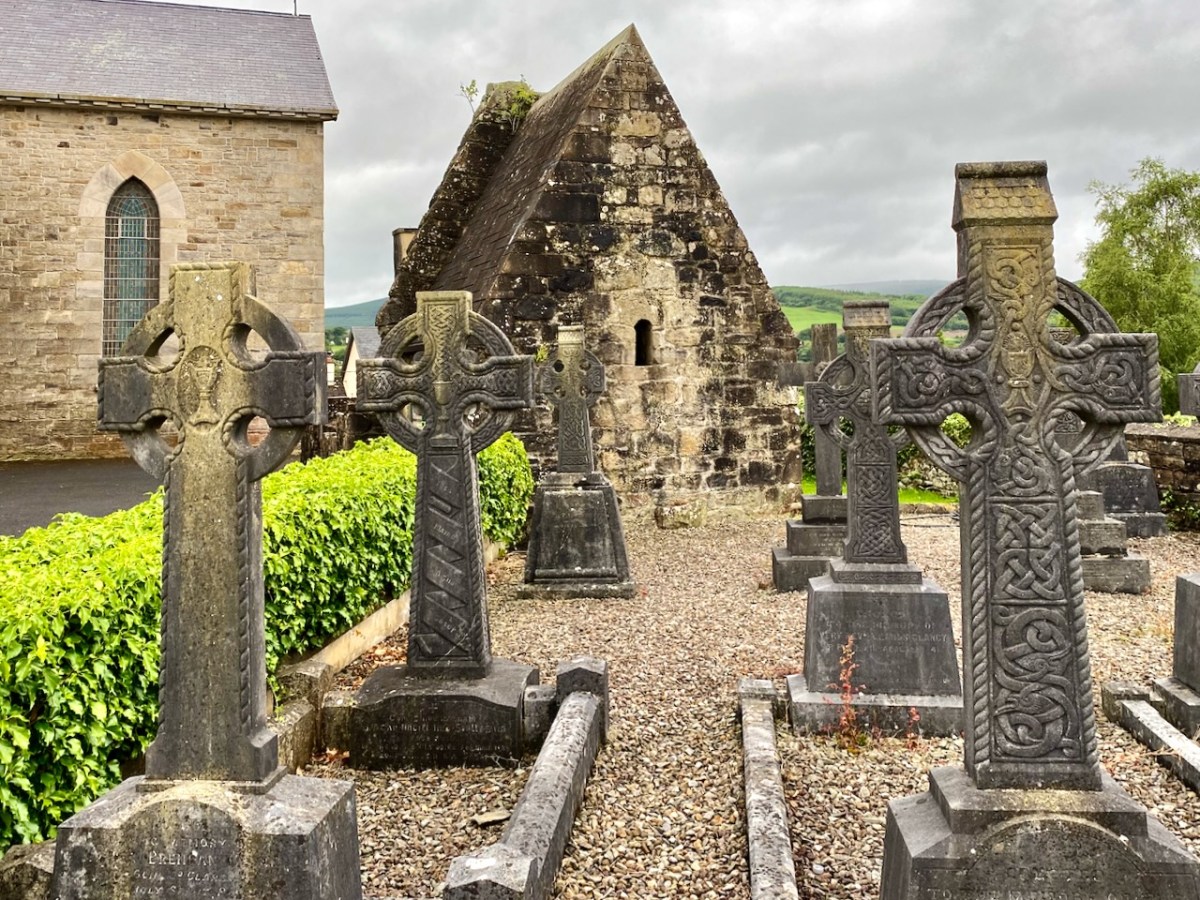
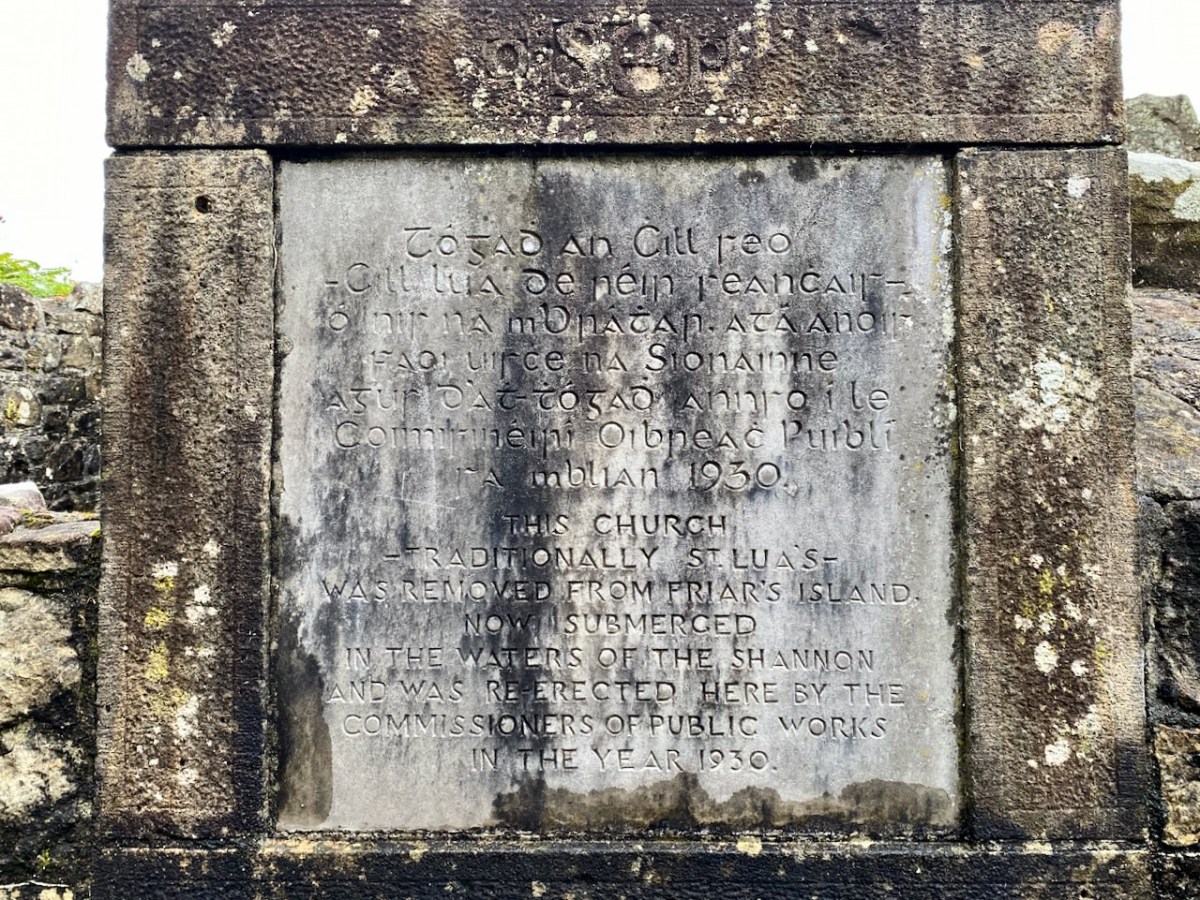
In this photograph of the Oratory as it stands today in the church grounds at Killaloe, it is perhaps worth wryly commenting that we see a true piece of early medieval architecture behind the screen of ‘pseudo’ high crosses. We have a good record of how the remains were dismantled and accurately re-assembled: this was written by the archaeologist H G Leask MRIA in 1930:
. . . In order that the rebuilding should be, as far as was possible, an accurate one, it was necessary to adopt a system of marking the stonework by which the original stones should occupy their original positions when reassemble. The stones being very varied in size and irregular in shape, and laid uncured, no system of numbering such as could easily be applied to squared ashlar was admissible. To the Clerk of Works in charge, Mr C J Dowdall, must be given the credit for the scheme finally decided upon. This consisted in marking with paint of different colours a series of level lines at two feet vertical intervals all round the exterior and interior wall faces. These lines were crossed again by a series of vertical lines at the same intervals but of one distinctive colour for each wall face inside and out. Where the squares formed by this grid of paint enclosed, unmarked, a number of small stones, diagonal lines were added to each square to ensure that every stone showed the same marking. A complete series of elevational photographs of each wall face was taken and careful drawings were also made with the coloured guide lines indicated upon them. On the large plot of ground on the opposite side of the river kindly lent by Major Lefroy, above future water level, timber guide planks were laid down as a frame to each wall and gable face. On the timber frames the coloured guide lines were indicated and the stones when transported were laid down face upwards, in sand, in correct relation with the coloured marks. Each wall, of course, was divided in two vertically along its length and “displayed”. Important quoin, jamb, and arch stones were numbered in colour in regular order. The transport over the Shannon was carried out by means of a specially built barge and a rope stretched from shore to shore, the workmen simply “handing” the boat across by this means. An inclined trackway with truck and winch was erected by Messrs Siemens Bau Union and two small temporary jetties by direct labour. The Most Reverend Dr Fogarty, Bishop of Killaloe, vested a site in the Church enclosure on the summit of the hill in Killaloe town, and the building has been erected there and is now (May, 1930) approaching completion. (Note: the work of re-erection was finally completed in July, 1930) . . .
The Church of St Lua, or Molua, Friar’s Island, Co Tipperary, Near Killaloe Further Notes – H G Leask 13 May 1930
A couple of afterthoughts to finish off with: a letter from Canon Clancy to Leask, dated 14 October 1930, asked whether a gate could be installed, as it is “liable to be desecrated by boys using it as a urinal, in fact, some boys have already been using it”. And a contemporary cutting from the Nenagh Guardian noted that . . . works cost thousands of pounds are being misused on a “folly” in demolishing St Lua’s Chapel and hiding it in a yard when they could have lifted it above the waters and put a strong light in it that would have illuminated the whole country round, and made it one of the sights of the place . . .
I am grateful to Niamh NicGhabhann for allowing me access to her excellent paper on the tensions surrounding the proposals for the Oratory remains. Further information on the Electrification of Ireland can be found in these posts:
There’s a wealth of tales to be told about the first decades of independent Ireland. The 1920s and 1930s saw a flourishing of confident projects portraying a nation on the cusp of change, establishing itself in Europe and beyond. One such was the hydro-electric scheme at Ardnacrusha on the River Shannon. Foundations were laid in 1925 and works completed within four years, providing the young country with what was then the world’s largest power station. The intention was to enable everyone in Ireland to avail of the most trendsetting modern commodity: electricity.
The documentary photo above looks like a scene from a science-fiction film: it’s the control station at Ardnacrushsa, shortly after the completion of the project. This, and many other of the illustrations which I will refer to, are taken from the excellent ESB Archives: I am very grateful to them for the use of these. The building of the huge dam and power station was documented in fine detail – and not just in words and photographs. The notoriously outspoken and visionary artist – Seán Keating – chose to record the accomplishments in his own medium, painting.
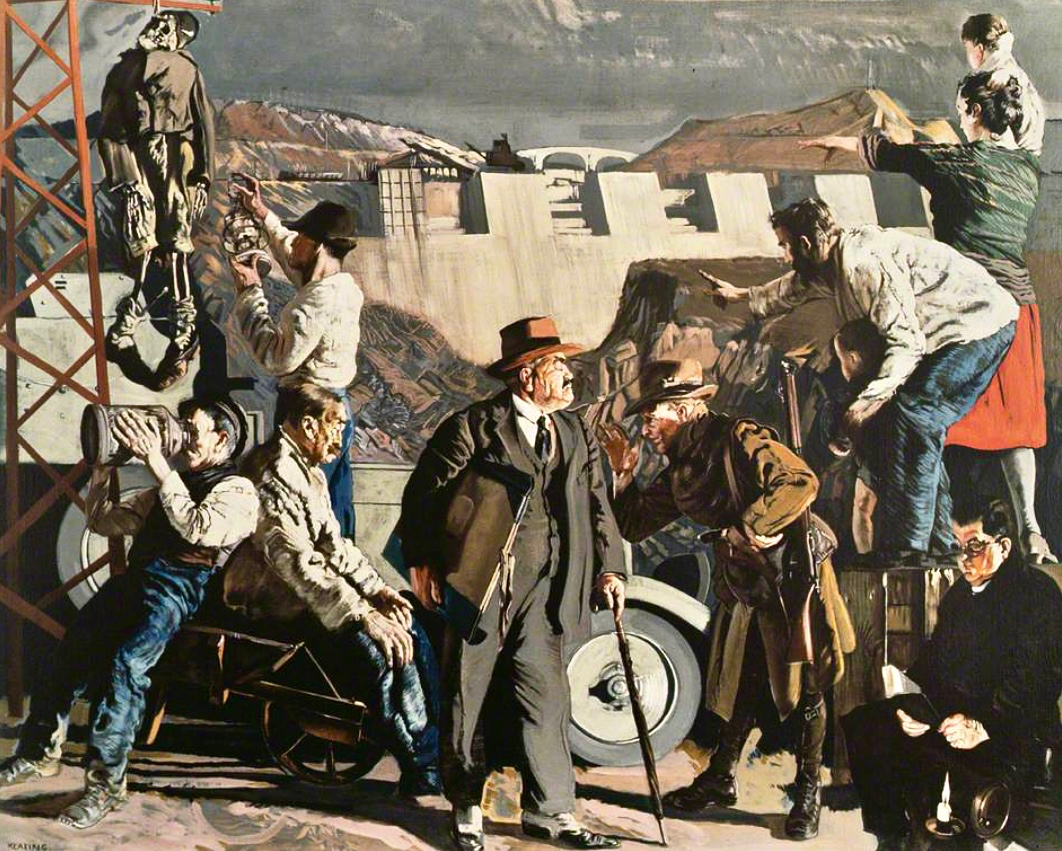
This is one of Keating’s works from the time: Night’s Candles are Burnt Out. (Thanks to Gallery Oldham). It is, perhaps, the finale of his series drawn and painted during the construction of the works – which he undertook on site under his own initiative and without a sponsor. Art historian (and biographer of Keating) Dr Éimear O’Connor suggests:
. . . Keating went down to Ardnacrusha because he knew that the construction project was emerging history. It was all happening around where he was born and raised. The machinery was going to carve up this landscape that he saw as ‘a medieval dungheap’, that was how he described it in later years. And this was a metaphor for him, the whole thing was all about Ireland moving forward into modernity. Night’s Candles features the dam at Ardnacrusha, but also includes a group of figures in the foreground, all of whom represent different aspects of what Keating saw as the Ireland of the day. When he showed it at the Royal Hibernian Academy in Dublin, it was called ‘the problem painting of the year,’ which Keating thought was hilarious. They couldn’t get their heads around this idea of what he was trying to do at all . . .
O’Connor: Seán Keating: Art, Politics and Building the Irish Nation, 2013 (Irish Academic Press)
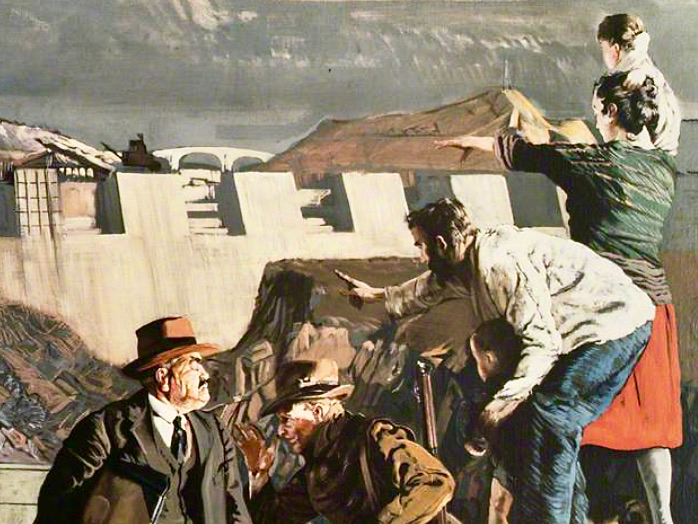
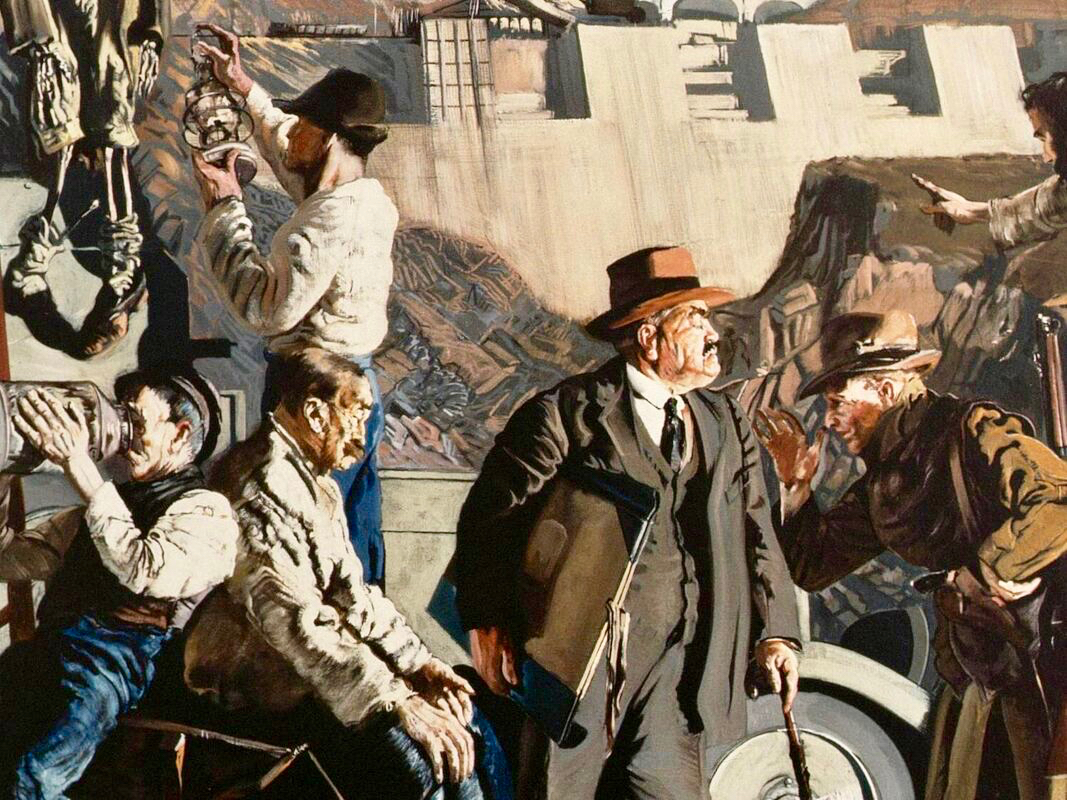
In this detail from the painting we see Keating himself (top right) together with his wife and sons, pointing to the vision of Ireland’s future. On the left of the full painting is Keating again, inspecting a hanging skeleton, perhaps reminiscent of the Famine. Most significantly, perhaps, at the bottom right is a priest reading by the light of the candle. O’Connor is clear about this portrayal:
. . . It tells you an awful lot about Keating and his attitude to the Church at the time. Like many others in the cultural sphere in Ireland, he was disappointed with post-Treaty Ireland, with successive governments and the Church, who were in cahoots, if you know what I mean. He knew well that the whole country was tied up with them, and with that kind of organized religion that was deeply conservative. And Night’s Candles is very much an expression of that disappointment, I think . . .
O’Connor: Seán Keating: Art, Politics and Building the Irish Nation, 2013 (Irish Academic Press)
It’s worth dwelling on this painting a little longer, and viewing Keating’s thought processes, through O’Connor’s eyes:
. . . What Keating was trying to do was reflect upon a country on the brink of change. It was in those years, in the 1920s, that the term ‘gombeen man’ came into being. We all know that it means the kind of businessman or politician who’s making money off the backs of everybody else. And that’s the gombeen man in the middle of the painting. I think it’s quite clear that Keating’s hope was that modernity, as represented by Ardnacrusha, would end all that stage-Ireland paddywhackery that had prevailed for years . . .
O’Connor: Seán Keating: Art, Politics and Building the Irish Nation, 2013 (Irish Academic Press)
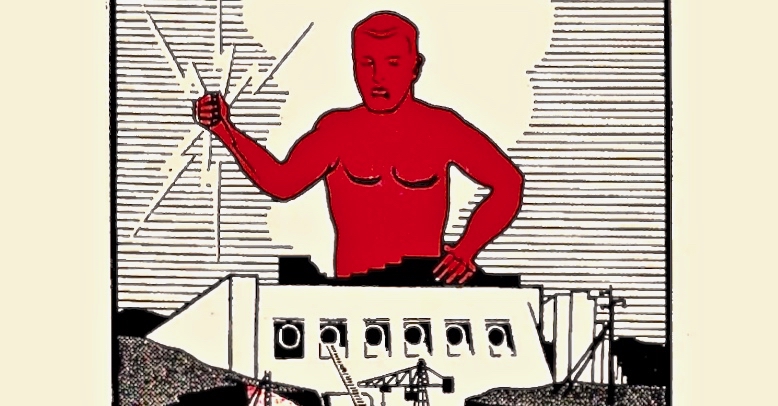
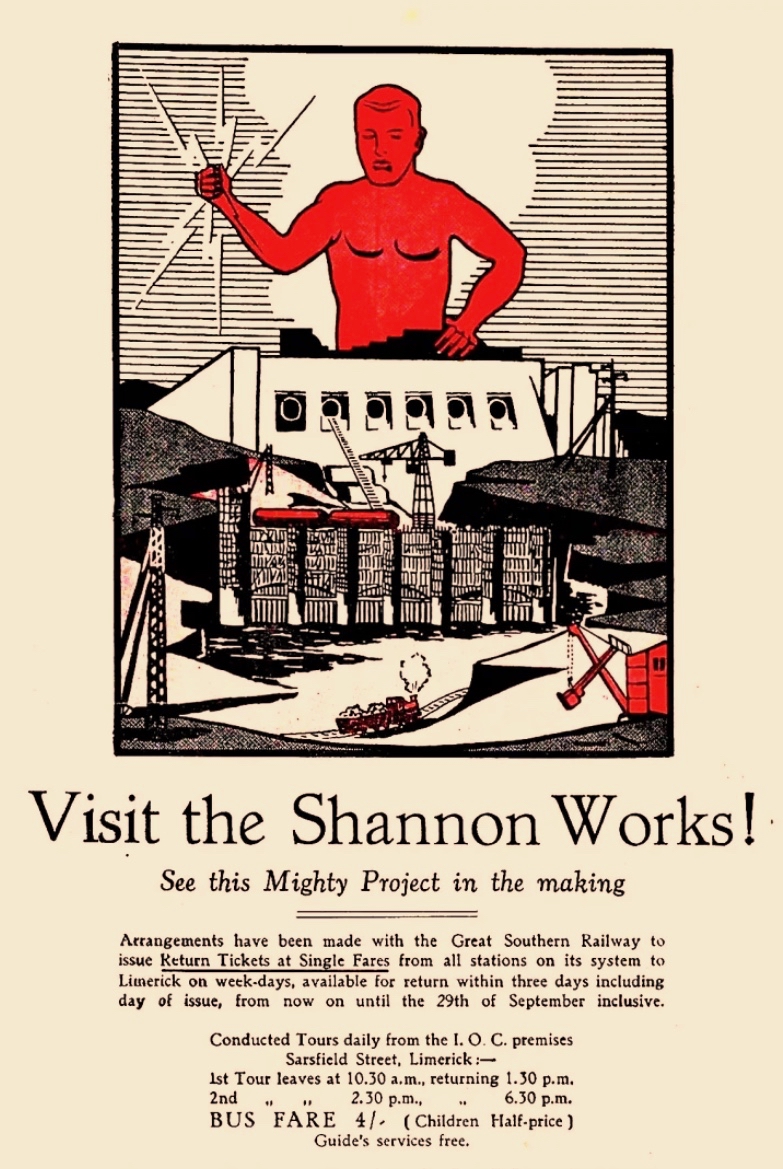
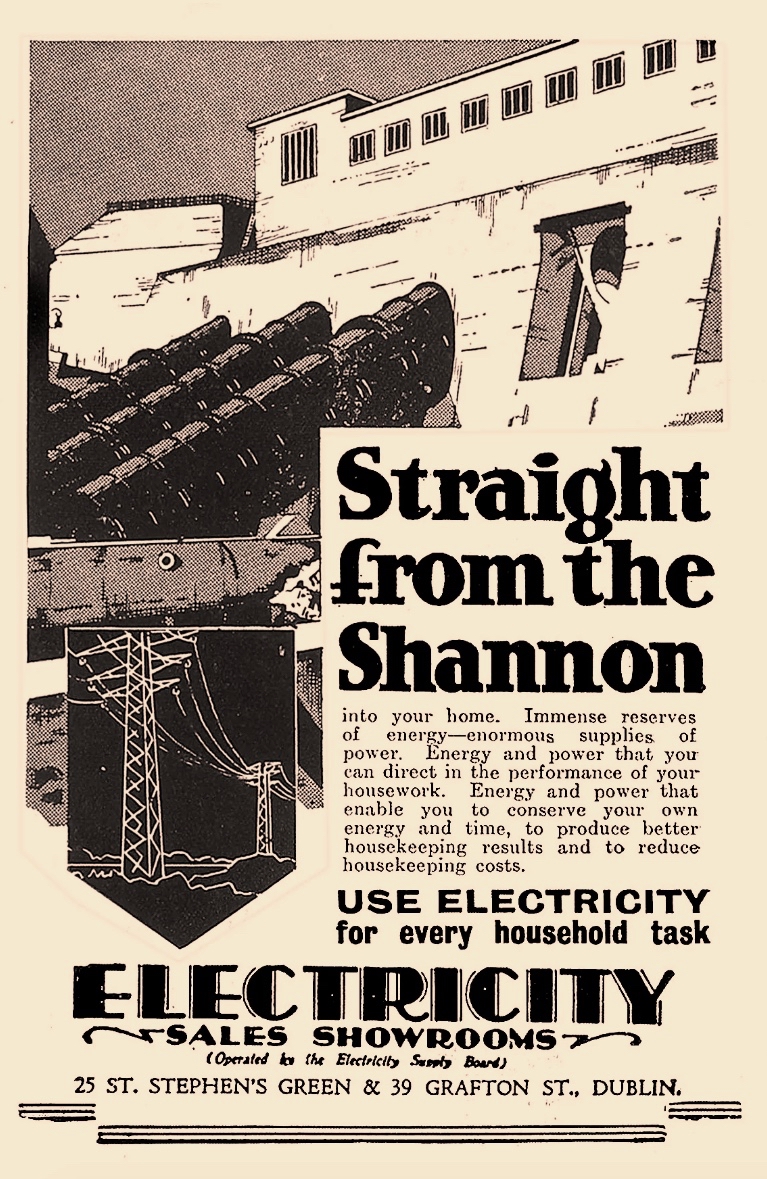
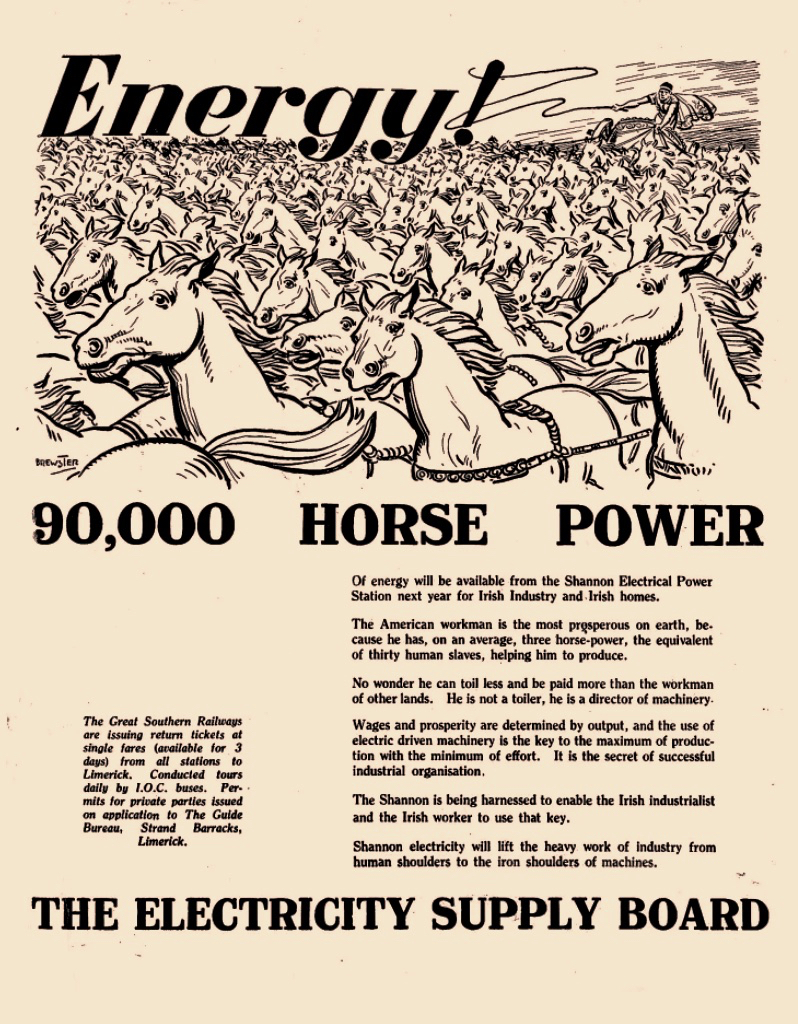
Above – posters from the time of the construction work at Ardnacrusha (ESB Archives). It was certainly the most exciting project in Ireland’s young days, and tourism was encouraged. Hand-in-hand with the major works themselves went a crucial publicity campaign to encourage people to embrace the coming of a readily available electricity supply to homes and businesses. The steps taken to try and ‘get the message across’ was an uphill task. Considerable funds were expended – and a large sales force garnered – to tour the country and persuade the population to buy into the project.
The visuals, humour and underlying psychology of this Ardnacrusha construction-era promotional poster really appeal to me. In case you can’t read the ‘small print’, this is the message that’s being pushed:
. . . 90,000 Horse Power of energy will be available from the Shannon Electrical Power Station next year for Irish Industry and Irish homes . . . The American workman is the most prosperous on earth, because he has, on average, three horse-power, the equivalent of thirty human slaves, helping him to produce. No wonder he can toil less and be paid more than the workman of other lands. He is not a toiler, he is a director of machinery . . .
Post-Famine, America was always seen as the ‘golden land of opportunity’ for Irish emigrants. Now, in 1930, we are being told that Ireland will have the capability to match those fabled fortunes!
. . . Shannon Electricity will lift the heavy work of industry from human shoulders to the iron shoulders of machines . . .
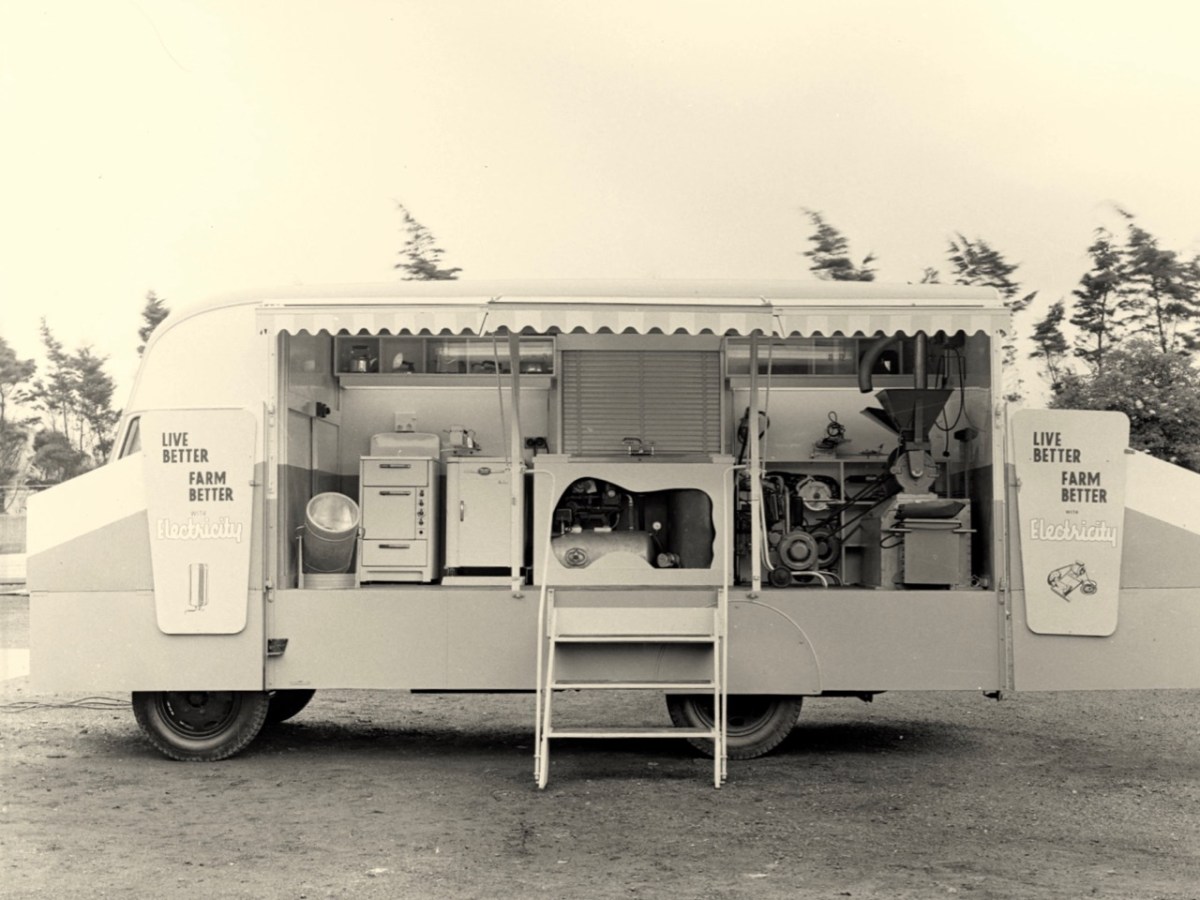
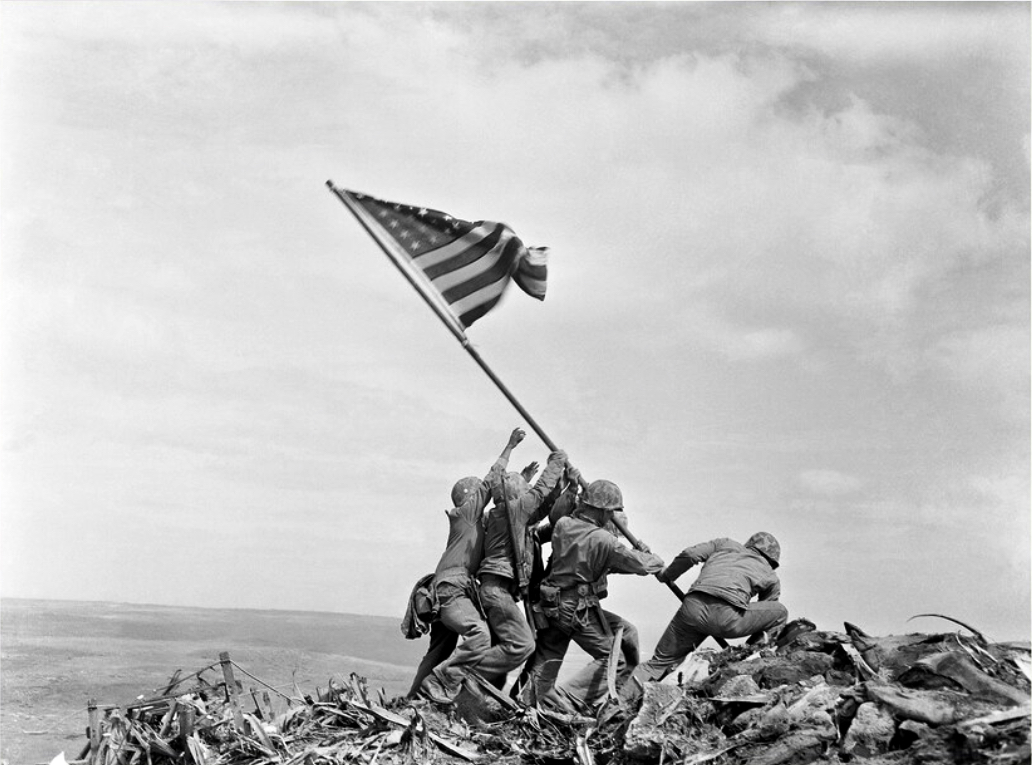
The coming of electricity across Ireland opened up markets for retailers to vend a host of innovative gadgets. This mobile electricity showroom from the 1950s (ESB Archives) covers the gamut of lighting, cooking, refrigerating, water supply to sinks using pumps, milking machines and labour-saving devices for farms. In a future post I want to focus on Rural Electrification, which was a long haul: taking poles and wires out into the extensive hinterland. This was – arguably – the most heroic part of the process of electrification, and we can’t help wondering whether the following somewhat iconic ESB print of the first ‘peg’ being raised at Kilsallaghan, on 5 November 1946 was inspired by the famous Iwo Jima Victory photograph taken by Associated Press photographer Joe Rosenthal on February 23 1945 (lower pic). Both portray a moment of triumph.
Many thanks are due to Michael Barry who referred me to material from the ESB Archives covering our own West Cork areas. Watch out for our commentary on this in a forthcoming post!
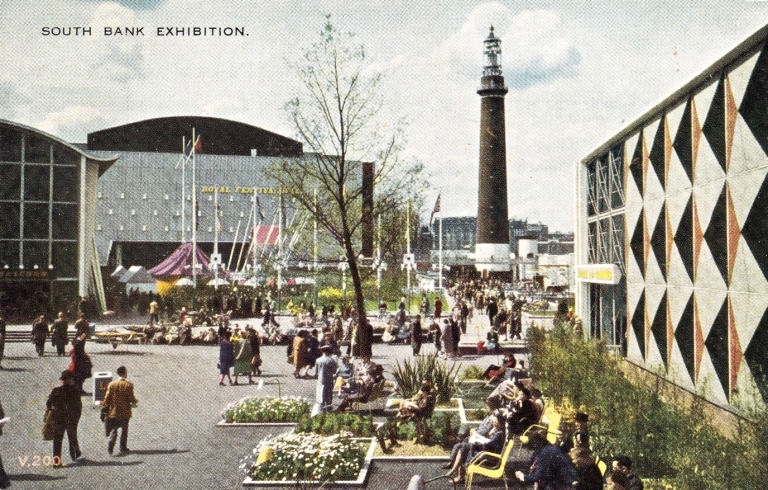
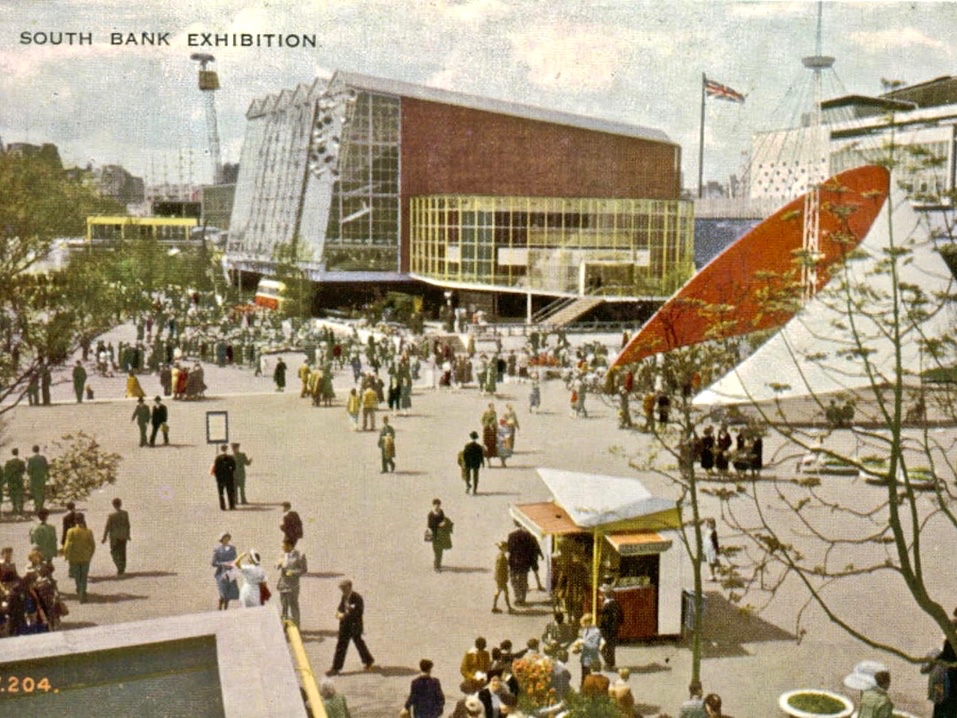
1950 happened 70 years ago – obviously. My earliest substantial recollection of the 50s era was a visit to the Festival of Britain, London, in 1951: I was five years old, and the memory has lasted. Incidentally, that year also saw my very first day at school, a traumatic experience from which I have never fully recovered – but that’s a story for another day!
I suppose that the seeds of an interest in building and engineering structures must have been in me then, because it is the architecture of that Festival that has stayed with me – and which probably influenced me in my own later career. Not that I ever designed a Dome of Discovery, or a Skylon – more’s the pity, but I think I have always related to the throwing off of tradition and the embracing of new and exciting shapes and colours which came out of the Festival. I believe we are overdue a revival of that bravado to lift our spirits once again.
I was pleased to find these contemporary picture postcards of the 1951 Festival of Britain: everything is exactly as I remember!
In the words of the Festival’s Director-General, Gerald Barry, it represented “a tonic to the nation” after twenty years in which Britons had successively endured economic depression, total warfare and acute post-war austerity. However, the Festival of Britain was the product of a left-wing government and it has been said that Churchill (then leader of the opposition) held the view that the whole venture was “three dimensional socialist propaganda”. I’m not sure that this is really true, as he attended the Festival and evidently spent all day riding up and down the escalators – then a novelty – with great delight! I also remember those escalators: we called them moving stairs (I still do – just like I still call the cinema the pictures). Finola clearly remembers riding on Ireland’s first moving stairs, in Roche’s Department Store, Dublin. But that was 1963; today’s post is all about the 1950s, but in rural Ireland.
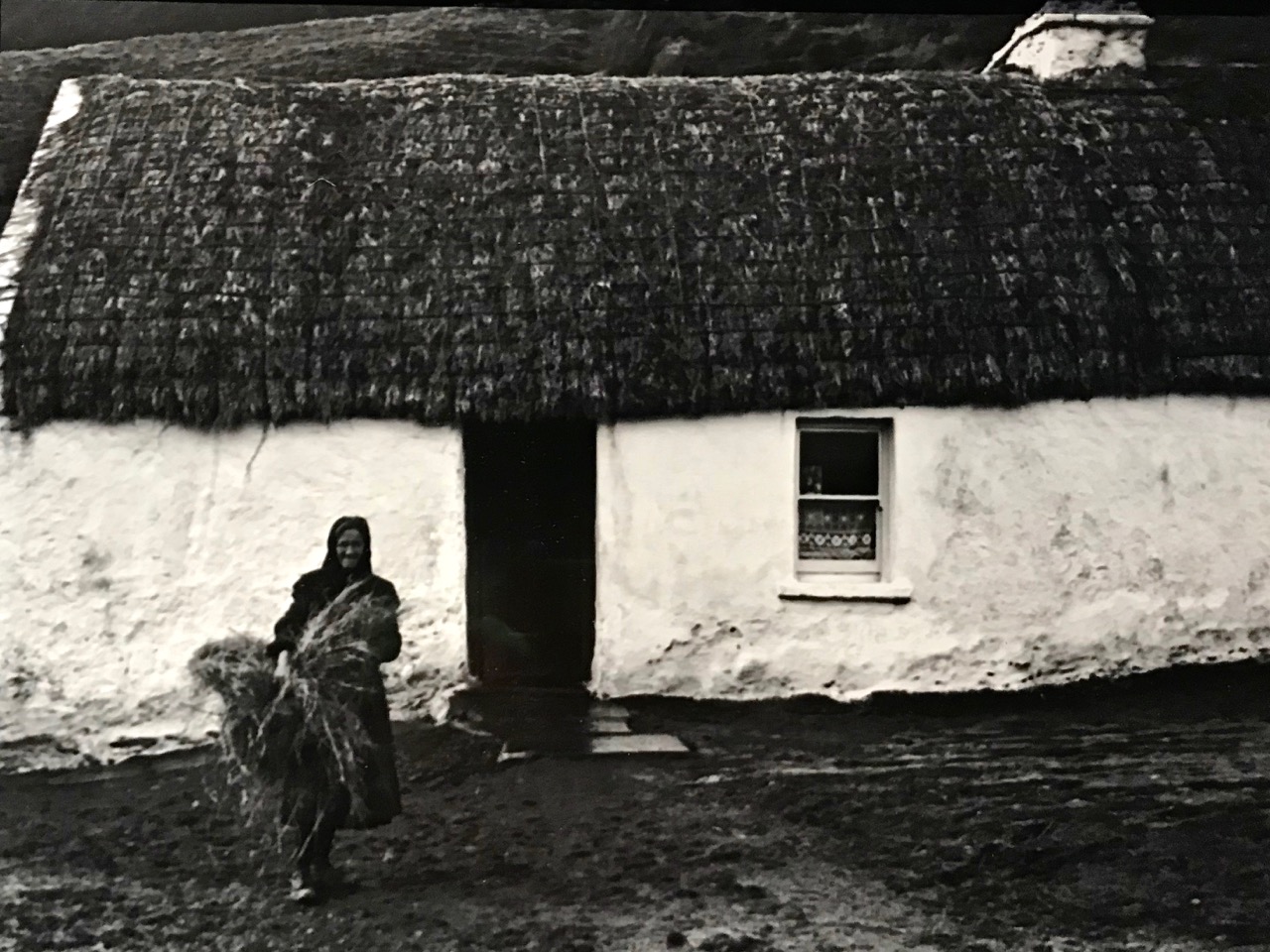
The Half Door, an image from rural Co Clare by Dorothea Lange
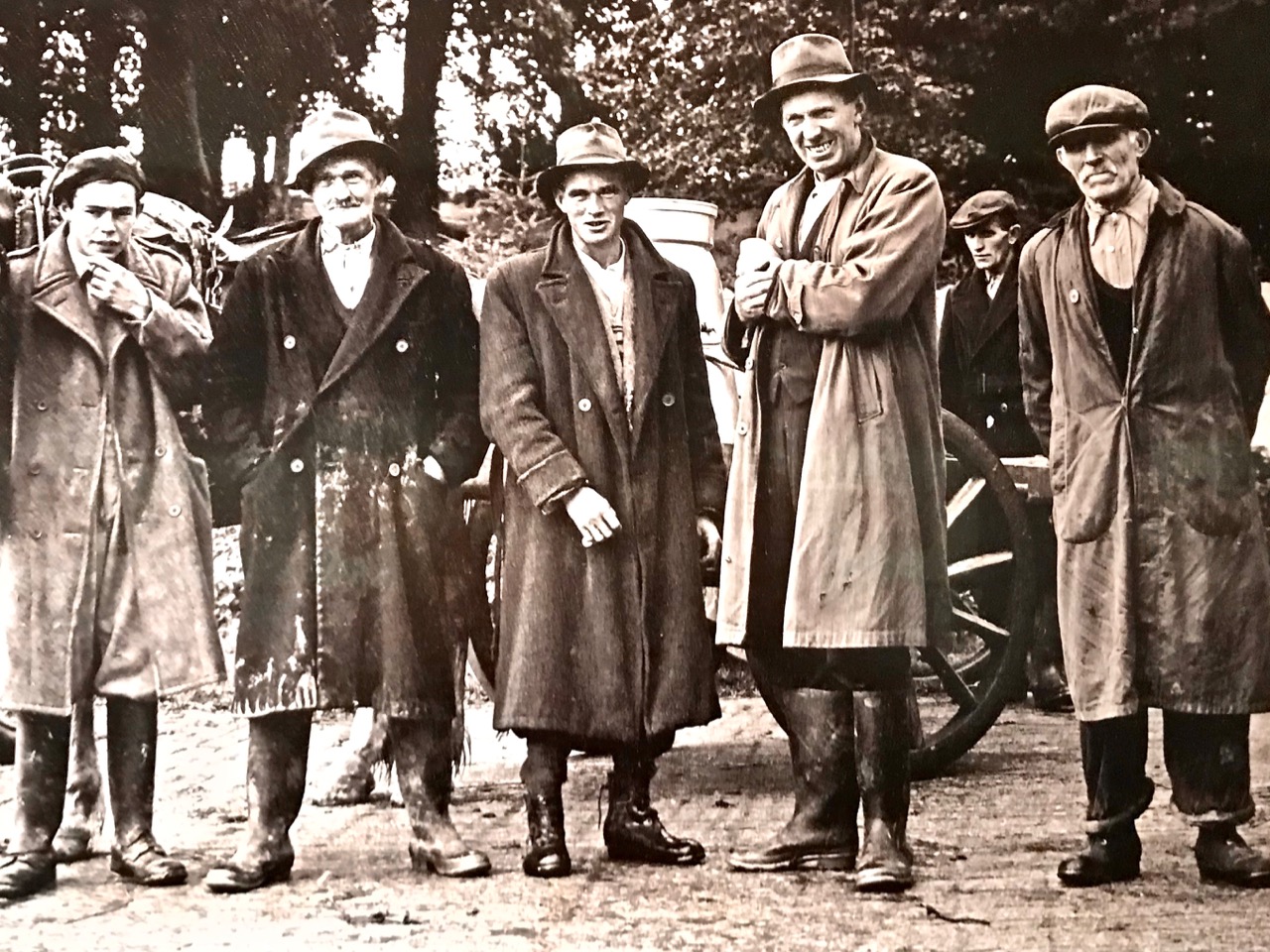
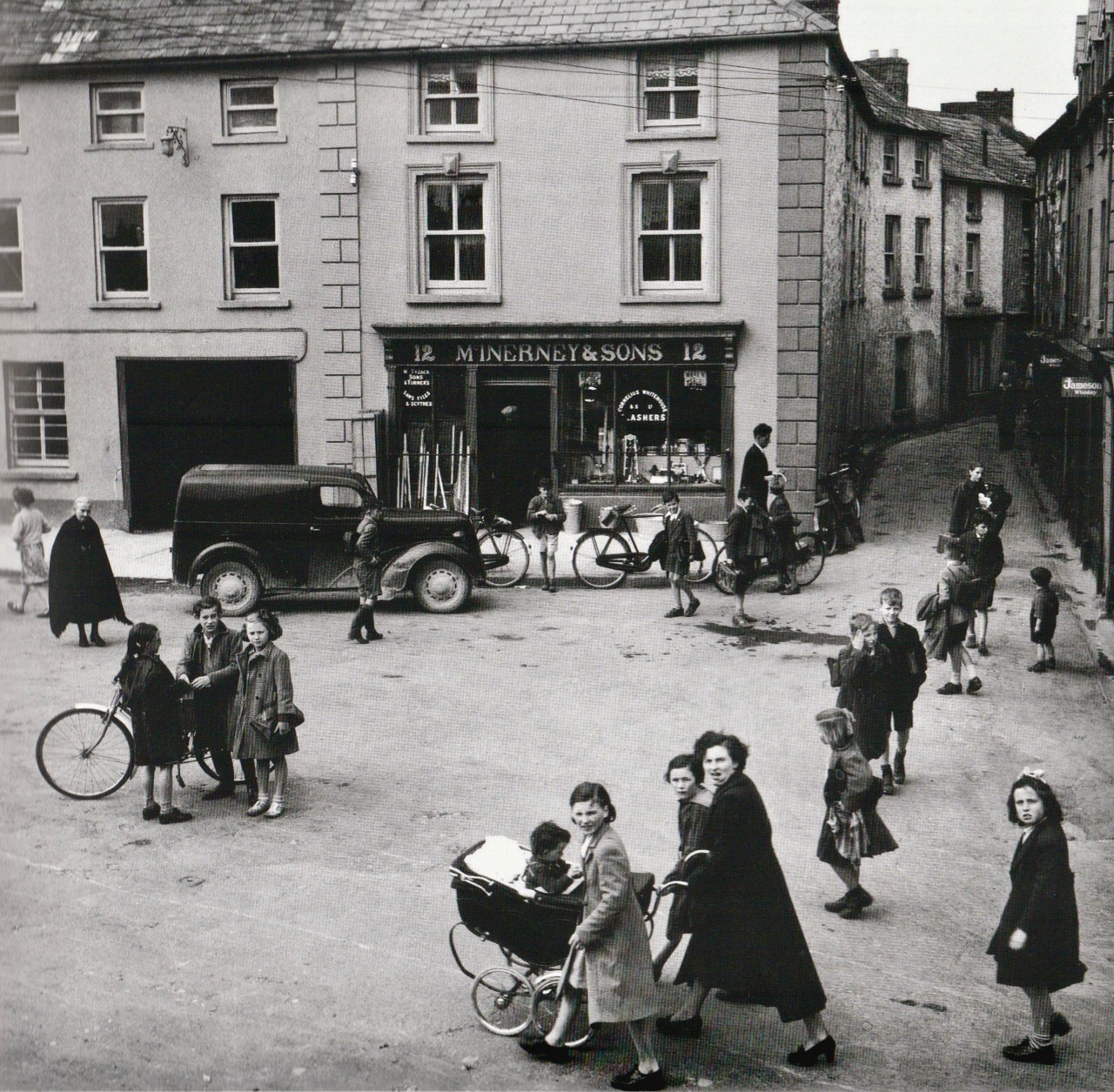
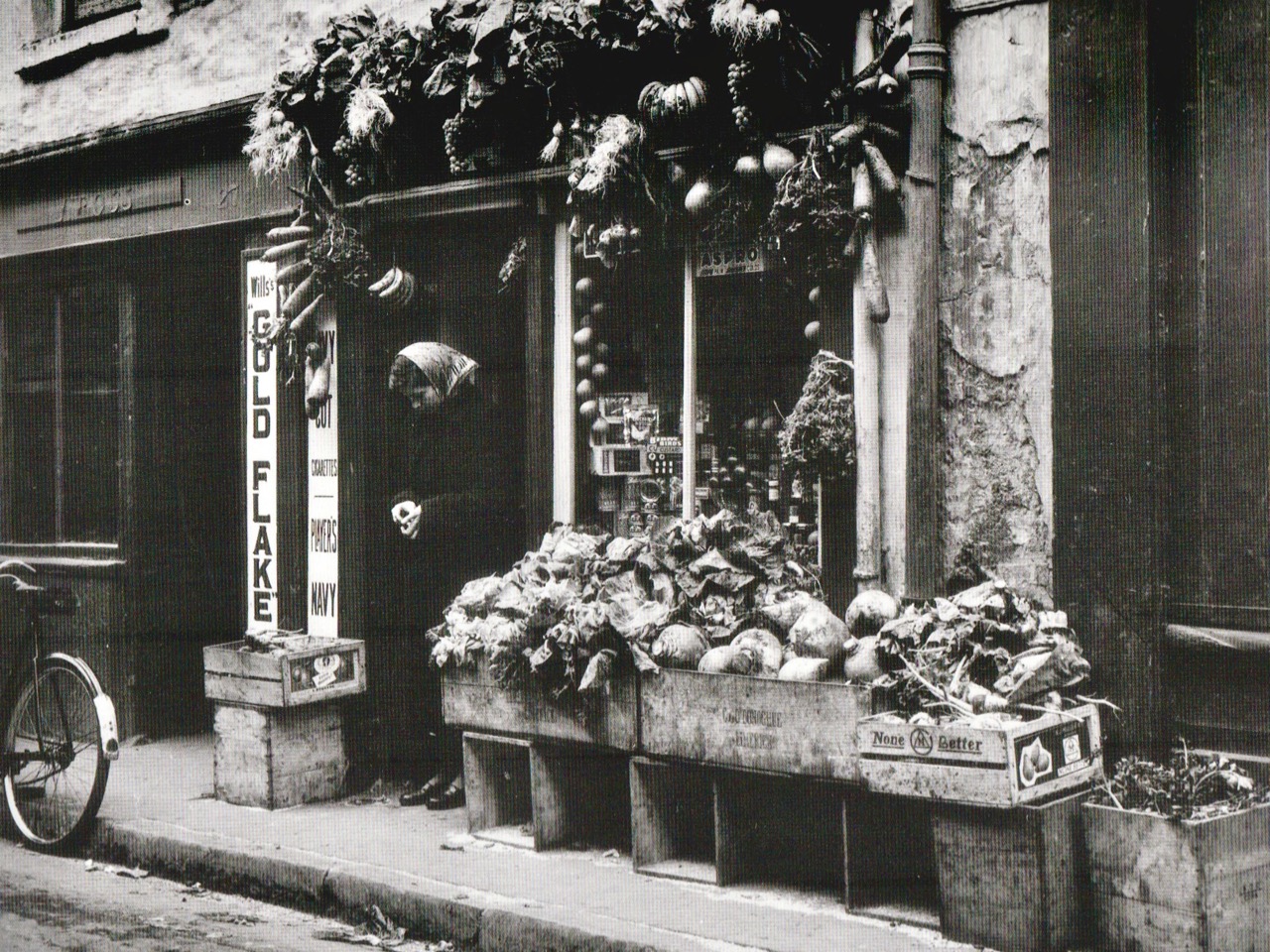
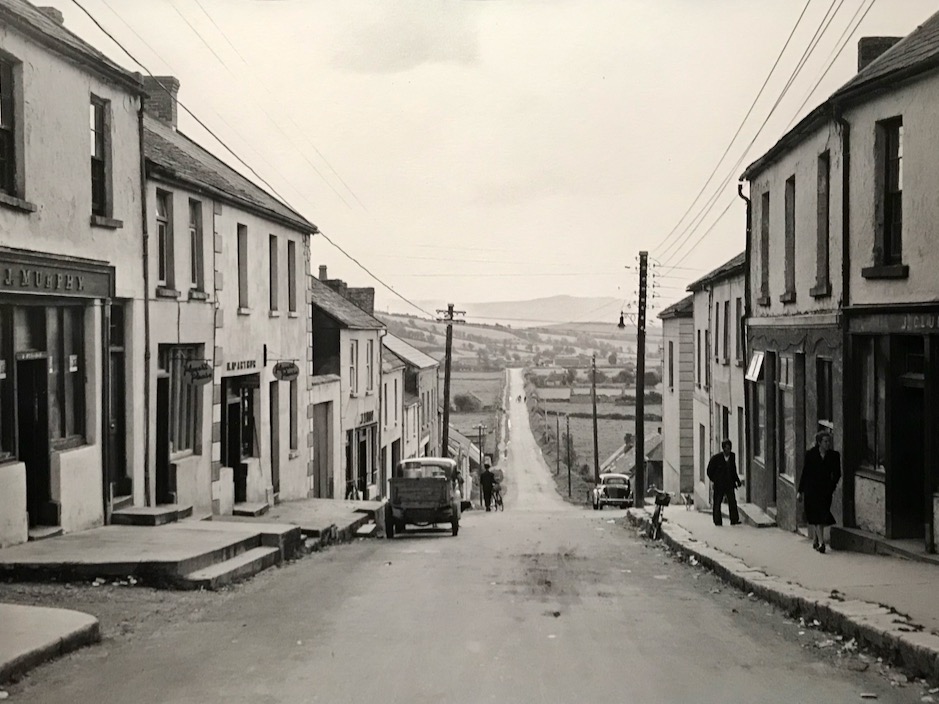
On a recent trip to Dublin we visited Ireland’s Museum of Decorative Arts & History at Collins Barracks. We went specifically to see an exhibition: Ireland in Focus: Photographing Ireland in the 1950s. This features “rare images of forgotten Ireland” by three world renowned documentary photographers, one from France and two from North America. Each of them visited Ireland during the 1950s to record a traditional way of life that was perceived to be vanishing as the twentieth century progressed. For anyone interested in Ireland and its recent history, this is not to be missed: it runs until April. In this post I shall show some examples of the work of one photographer: Dorothea Lange. The others will get a showing in future posts.
Dorothea Lange, a portrait taken by her husband Paul S Taylor on the Texas Plains in 1935
We had already been introduced to Dorothea Lange as my good friend John (also an expert photographer) recently gave us a copy of a book of her Irish photographs. Sponsored by Life Magazine, she visited the western seaboard in 1954, staying for several weeks in County Clare. She took over 2,400 photographs, which are now fortunately archived in the Oakland Museum of California. In the introduction to the book Dorothea Lange’s Ireland Eliott & Clark Publishing, Washington, 1996, Daniel Dixon writes:
. . . Dorothea Lange was not an avid reader. But among the few books which became her favourites was a description of the sort of culture that drew her attention time and again throughout her career, a rural society where customs, beliefs, and the way of life itself were tied to the soil. The book was called The Irish Countryman. Written in 1937 by a young anthropologist from Harvard, Conrad Arensberg, it documented and analyzed the social and economic traditions of Irish rural life and discussed how they were affected by religion and superstition. In it, Arensberg located the family farm at the hub of this complex system and explained how each generation placed an overriding importance on ‘keeping the family name on the land’ . . .
Why is it that we are so drawn to old photographs? Lange’s pictures paint a view of rural life in Ireland that is barely a lifetime away – yet it seems far longer ago. But, living in rural Ireland today, we can so easily relate to those times and – most probably – regret that they have passed. Of course, if we lift the veneer of nostalgia, we know that life was harsh, then and – for all the problems of this world – it is so much easier now. We doubtless have regrets principally for the loss of the people that are portrayed; moments preserved for all time on film, but that can never be recaptured.
Quite apart from the people, we do like to see how places have changed. These images of 1950s Ennis, now a sizeable county town, hark back to simpler times, for sure, in Lange’s work:
You won’t see every one these pictures in the exhibition – I have taken some from the book. They all complement each other. But it’s all only a small part of what Dorothea Lange recorded. What of the several hundred other images? At least they are kept safe, although not available on line. Lange was born in 1895 and succumbed to cancer in her seventieth year, 1965. A few months after her death the Museum of Modern Art in New York mounted a retrospective of her work. It was the first one-person retrospective by a female photographer held at MoMA. She is remembered far more for her images of the Great Depression years in the American West than she is for her visit to Ireland, but here we should be grateful for her documentary work that has added to our records of Irish rural life in the last century.
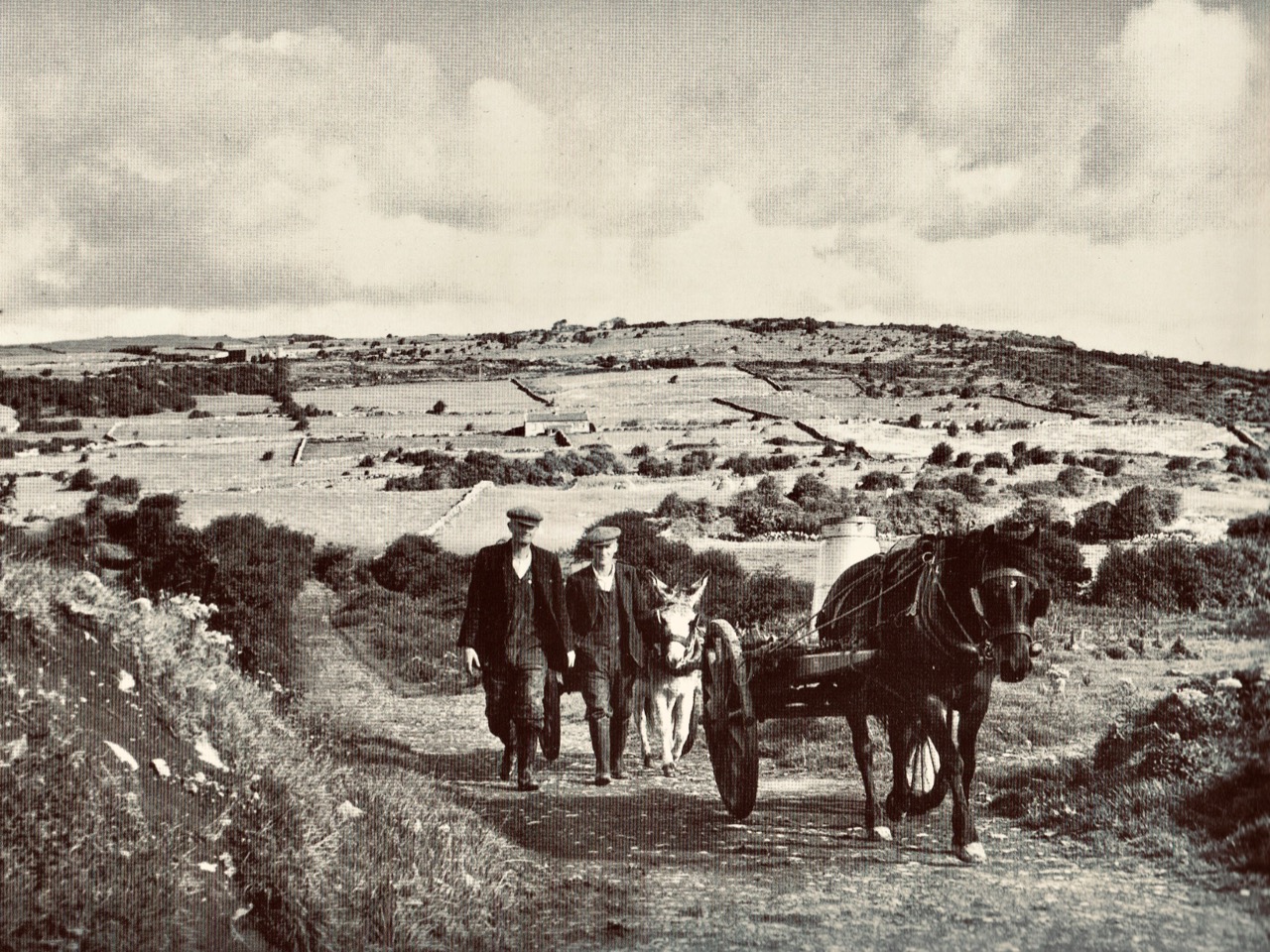
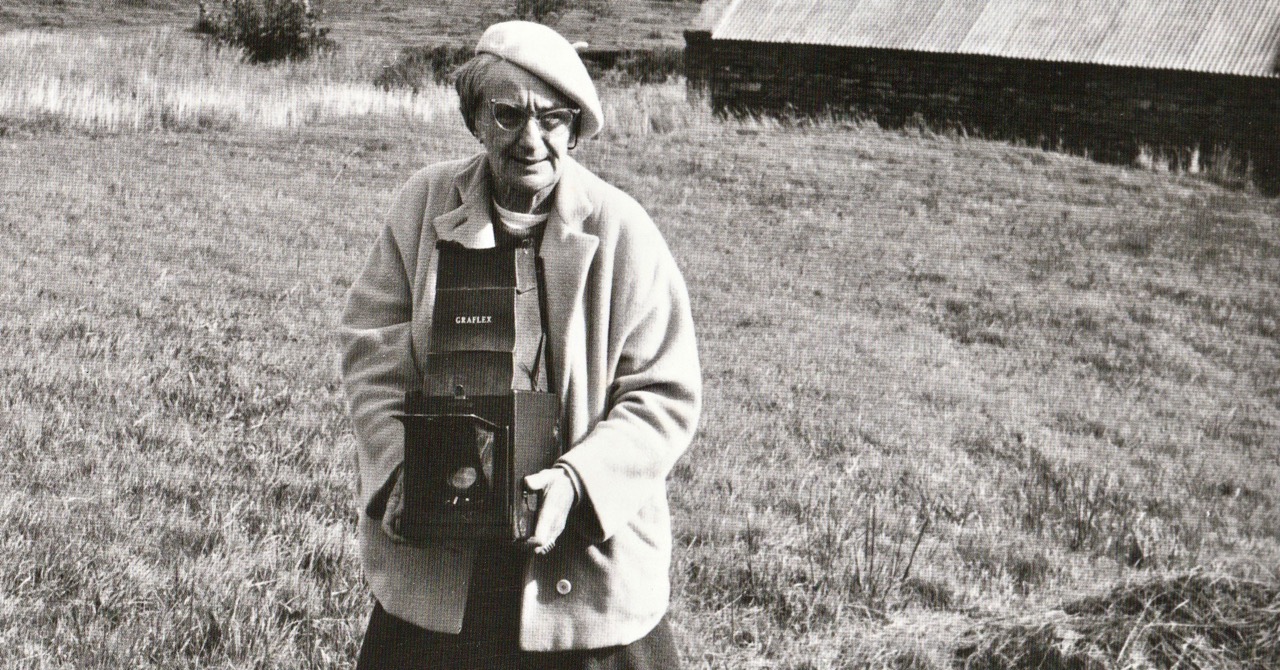
Top – Tulla, Co Clare; above – going to the Creamery, Co Clare, 1954. Below: Dorothea Lange in Ireland
One of the many archaeological excitements in Ireland last summer was the discovery of a hitherto unknown passage grave with significant carvings beside Dowth Hall in the Bru na Boinne area of County Meath. These carvings are likely to date from around 5,500 years ago. In the picture above (courtesy of agriland.ie) from left to right are Minister for Culture, Heritage and the Gaeltacht Josepha Madigan; agri-technology company Devenish’s lead archaeologist Dr Cliodhna Ni Lionain; Devenish’s executive chairman Owen Brennan; and Professor Alice Stanton.
As you know, we are Rock Art addicts, so this week went along to this year’s Stone Symposium in Durrus, West Cork, to hear Cliodhna, above, give a fascinating illustrated talk on the finds at Dowth. Have a look at this post on the inaugural Stone Symposium from 2017. It’s great that the event is thriving and attracting interest and participants from far and wide.
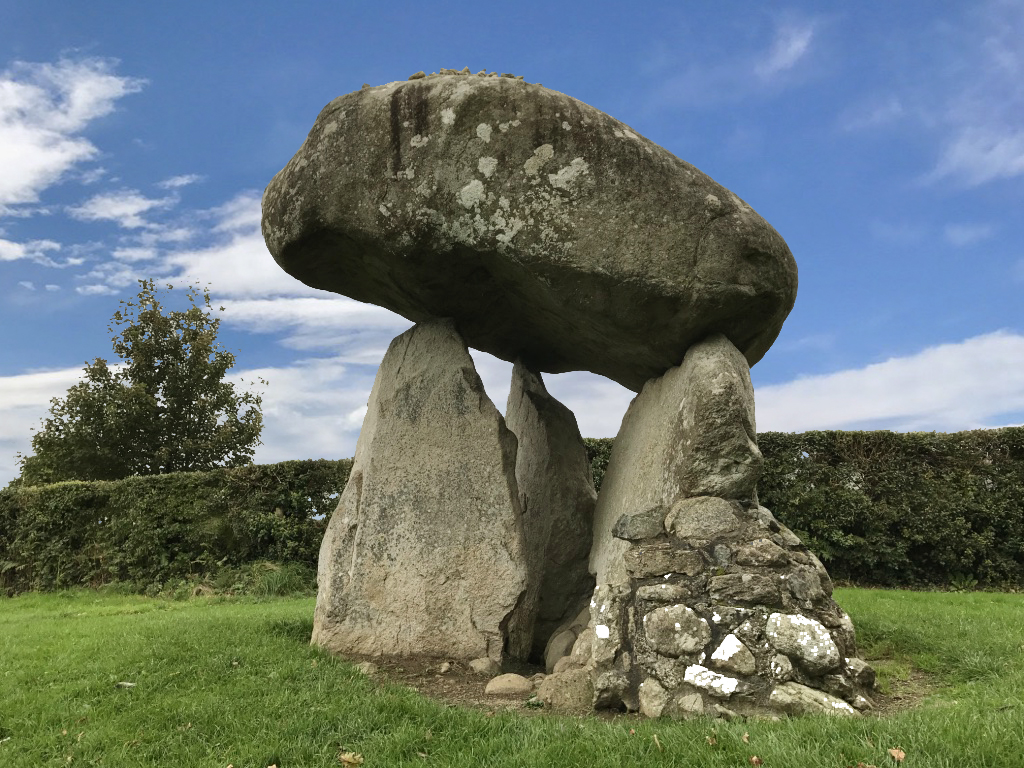
Our attendance at the Symposium set me thinking about the whole subject of stone. It’s the most basic of creative materials, as relevant today in construction and art as it was to our Neolithic ancestors. Proleek Dolmen in County Louth (above) is an example of the early use of stone to create a structure which made a huge impact on the landscape. It’s a portal tomb over 3 metres high, and the supporting stones are around 2 metres high: the capstone is estimated to weigh 35 tons. It’s probably a more visually impressive structure today – in its ‘naked’ state – than it was when completed, as it is likely to have been covered over with a mound of earth and / or stones. There is folklore attached to this monument: it is known locally as the Giant’s Load, having been carried to Ireland by a Scottish giant named Parrah Boug McShagean, who is said to be buried in the tomb or nearby.
Here’s another portal tomb – the largest in Europe – which I discussed in this post from last year. It’s known as Brownshill Dolmen, and is in County Carlow. Finola is in the picture to give the scale. This capstone is said to weigh 103 tons. The portal tombs demonstrate the use of stone in its rawest and most spectacular state: they are examples of Ireland’s earliest architecture, and we don’t really know what they were for. Perhaps it’s to do with status, either of the builders or of the chiefs or priests who might have been buried in them. They certainly make mighty marks on the landscape…
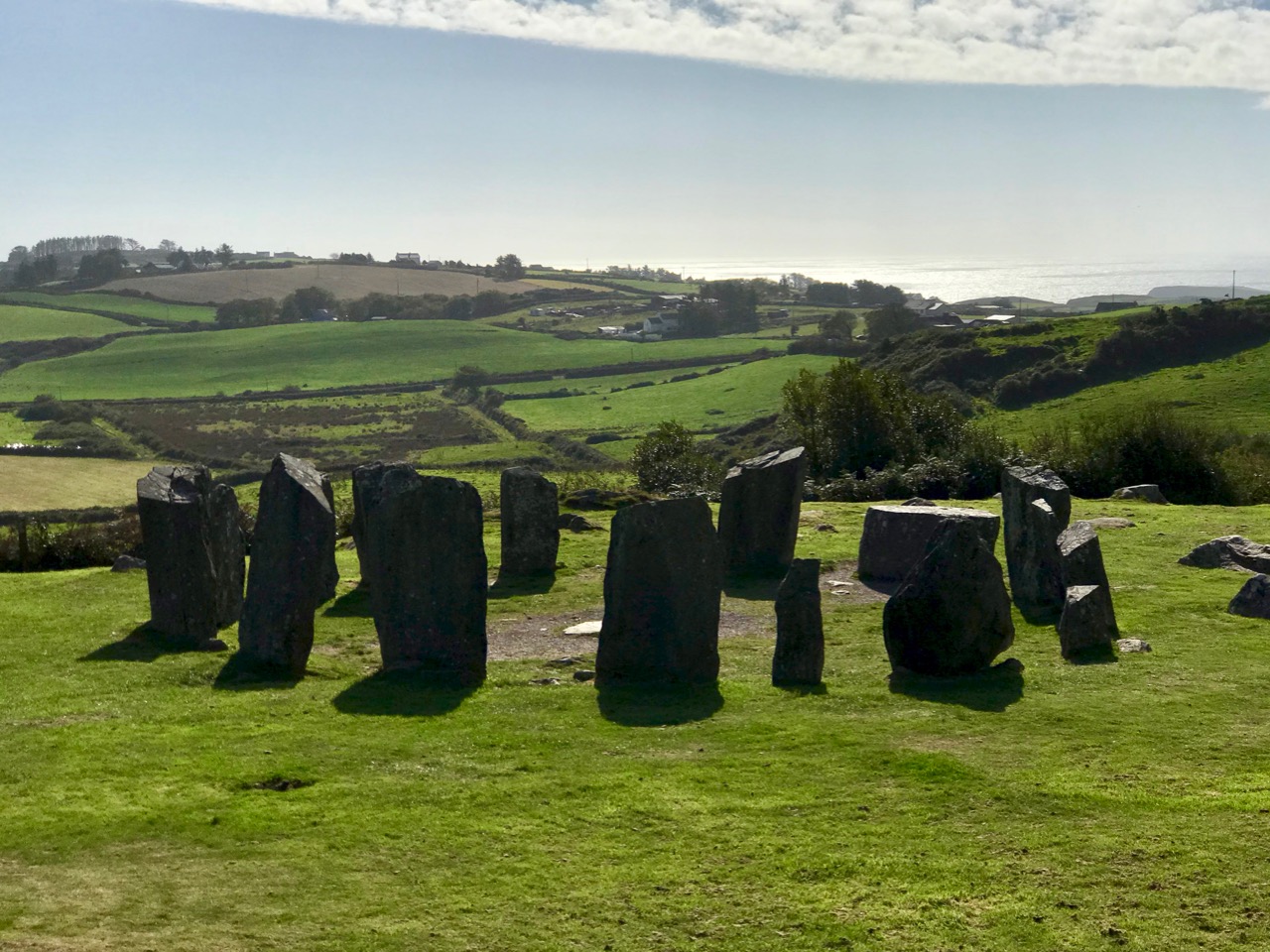
…As do all the other stone monuments which celebrate their makers – although perhaps they remain enigmatic to us today. Bronze Age stone circles have always fascinated, and at least we know that they have orientations which must have been significant. Drombeg in West Cork (above) is much visited at the winter solstice, when the path of the setting sun falls over the recumbent stone when observed through the two portal stones at the east side of the circle.
While the earliest dwellings of the inhabitants of Ireland thousands of years ago were probably constructed from organic materials – earth, sticks and furze – stone began to play a part in architectural construction in Christian times. The remarkable Gallarus Oratory (above) on the Dingle Peninsula, County Kerry, was long thought to have dated from around the 8th century, although an early commentator – antiquarian George Petrie, writing in 1845 – suggested:
I am strongly inclined to believe that it may be even more ancient than the period assigned for the conversion of the Irish generally by their great apostle Patrick . . .
It’s a fascinating discussion to follow – Peter Harbison sets it out in detail here, and concludes that the Oratory could have been built as late as the 12th century, even after the great Romanesque flowering which included the building of monastic settlements and round towers.
The 12th century cathedral and (possibly earlier) round tower at Ardmore, County Waterford (above), should be a Mecca for stone enthusiasts because of its monumental architecture and carvings: St Declan founded the site in the 5th century, and his monastic cell survives. The Romanesque period in Ireland has many other examples of stone craftsmanship to show, proving that working with stone had become a high art in those medieval times. The examples below are from Killaloe Cathedral in County Clare.
One of the finest Romanesque sites is the Rock of Cashel in County Tipperary. Finola has written in detail on this architectural gem here and here. Suffice it for me to illustrate only one of its treasures – Cormac’s tomb, a sarcophagus beautifully carved in the ‘Urnes’ style – a Scandinavian tradition of intertwined animals.
For centuries, stone has also been a ubiquitous utilitarian building material all over Ireland. ‘Castles’ or – more properly ‘Tower Houses’ – date from roughly 1400 to around 1650, and many remain in a ruined condition, particularly on the coastline of West Cork: we can see five of them from Nead an Iolair. Some have been restored in modern times, including Jeremy Irons’ Kilcoe Castle. The example below is from Conna, East Cork.
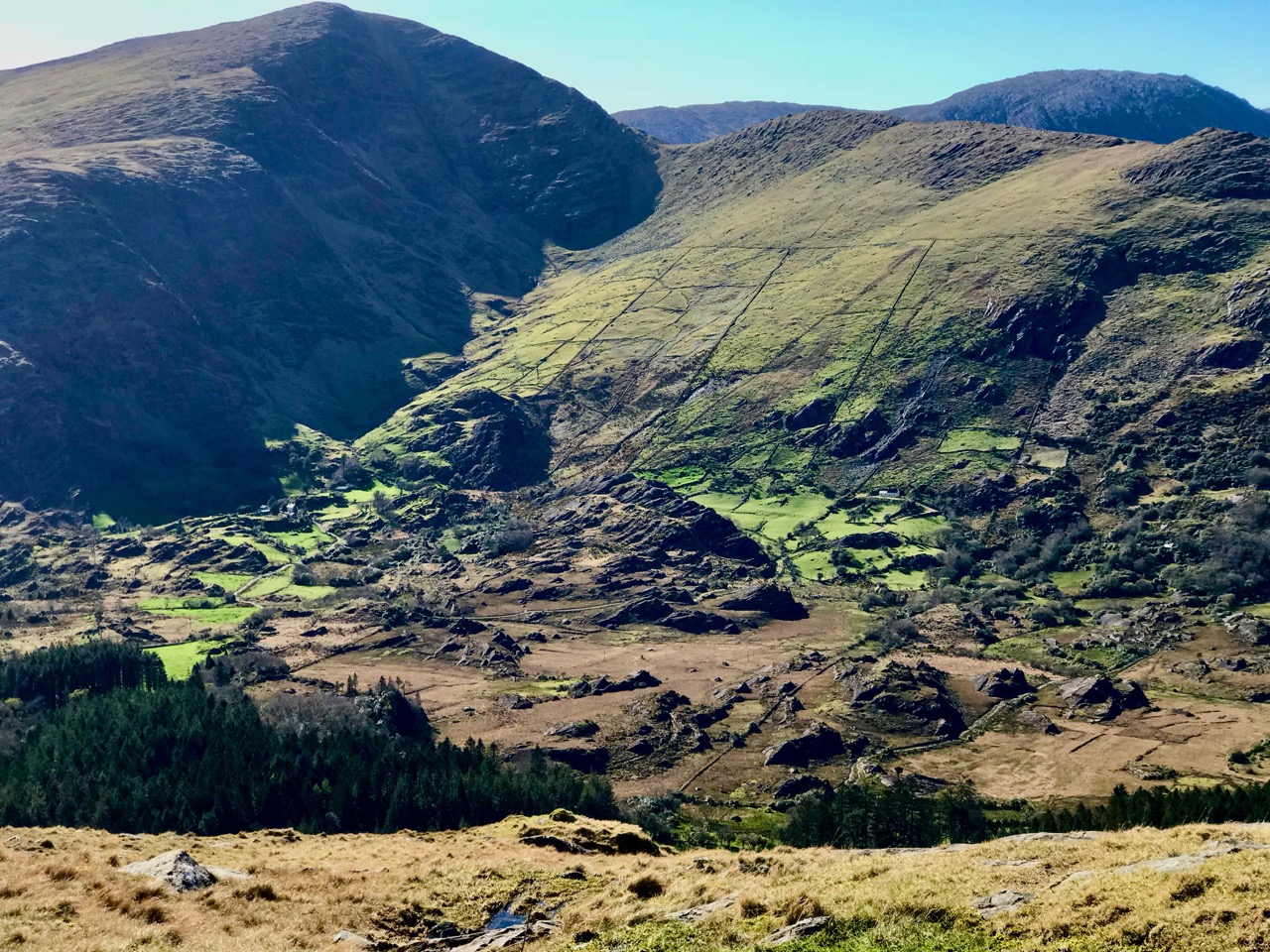
Ireland’s landscape is sculpted from stone. Drystone walling is an ancient tradition still practiced for dividing up land, and varies considerably in style regionally, reflecting the differing geology across the island. Two examples from the Beara Peninsula (below) show the essential geometry of field patterns which stone wall building has created over the centuries.
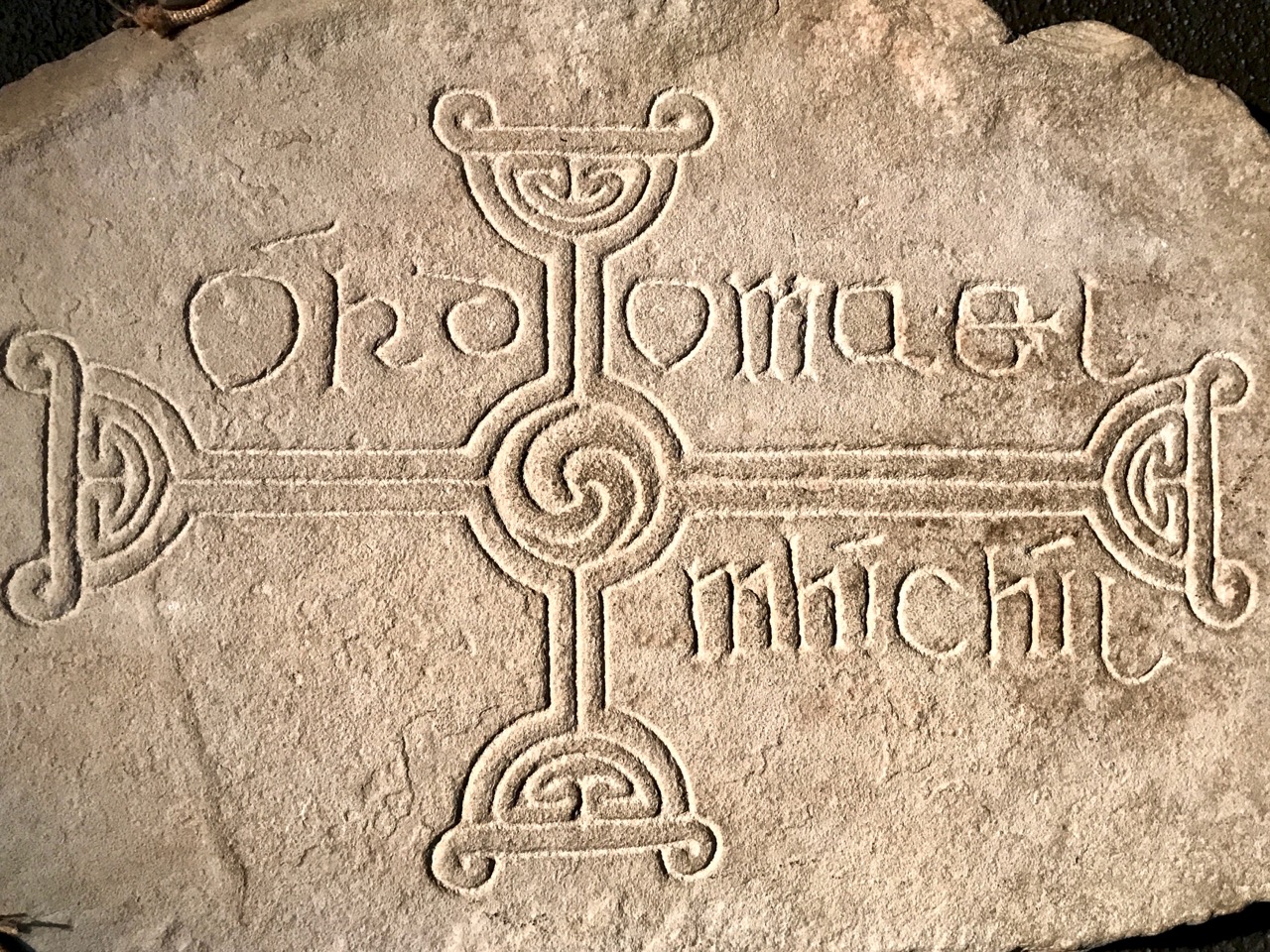
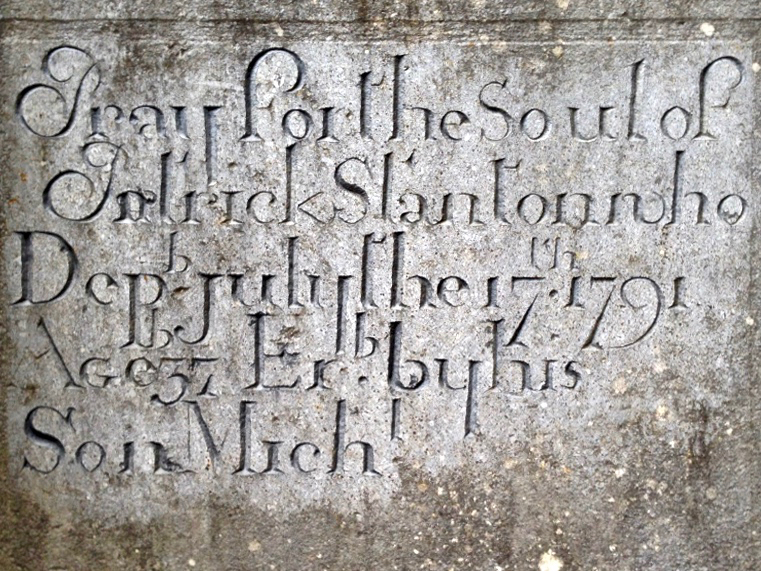
Stone has also long been a medium for communication. We have commemorated our ancestors for centuries with grave markers, often with elegantly carved lettering. Of the two examples below, the first is from Clonmacnoise, and is likely to be early medieval, while the second is an inscription from 1791.
This is just a brief history of our use of stone, dating over thousands of years: I have chosen many examples – almost at random – but hope that I have demonstrated how important it is to continue this ancient craft. The West Cork Stone Symposium is doing sterling work in promoting it today: long may this continue!
Welcome to the UCD Library Cultural Heritage Collections blog. Discover and explore the historical treasures housed within our Archives, Special Collections, National Folklore Collection and Digital Library

















 Roaringwater Journal