To Puncture the Mysterious – Finbarr and the Serpent

There are two St Finbarrs, Patron Saint of Cork – the one you read about in academic studies, and the saint of myth and legend. If you’re of a romantic turn of mind, I recommend you avoid the first of these. It will do your heart no good to read the forensic analyses of the origins of his cult and who he might really have been.

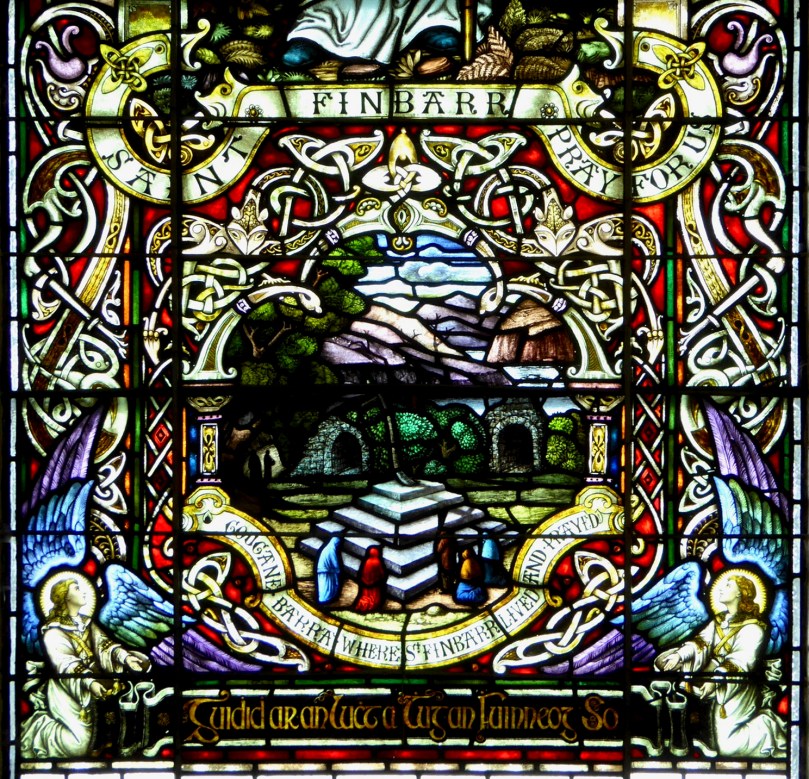
The legendary Finbarr: Arriving at Gougane Barra in this window in Caheragh by Murphy Devitt; and being consecrated as a bishop by angels in an Earley window in St Finbarr’s church in Bantry, donated by William Martin Murphy

No – far better to read the hagiographies, which lay out his virtues, for he was godlike and pure of heart and mind, like Abraham; mild and well-doing, like Moses; a psalmist, like David; wise, like Solomon; firm in the faith, like Peter; devoted to the truth, like Paul the Apostle; and full of the Holy Spirit, like John the Baptist. He was a lion of strength, and an orchard full of apples of sweetness.

St Finbarr’s monastic site as reconstructed by Fr Peter Hurley in the 1890s and still a place of pilgrimage. The window is in the Church of St Finbarr and the Holy Angels in Inchigeela and is a flamboyant example of Watsons of Youghal’s Celtic Revival style

He is associated with Cork, of course, but probably most closely with Gougane Barra, that idyllic mountain lake where he is said to have founded his first monastic community. Gougane Barra – the rocky cranny of Finbarr – lies in a cleft in the Shehy Mountains and from it the River Lee flows eastwards across Cork to empty itself into its mighty harbour.

The oratory at Gougane is an in-demand wedding venue and home to stained glass windows by Watsons of Youghal, including this one of Finbarr

Legend has it that when St Finbarr arrived to set up his cell the lake was occupied by an enormous serpent, called Lú (or Louie, in some accounts) who, having had it to himself naturally resented the saint’s arrival and on one occasion arose and tore the chalice from his hands as he was celebrating mass. Finbarr raged and prayed and with the power of God to sustain him he summoned Lú from the depths and banished him forever from the lake.

Lú underfoot, being banished by Finbarr

Lú departed, thrashing his giant tail as he went and such was his anger and strength that he carved a deep valley as he went. The water from the lake flowed into the valley and thus the River Lee (below) was formed.

Our favourite contemporary poet, James Harpur, has re-imagined this story as a classic spiritual struggle. He has given me permission to use his poem, Finbarr and the Serpent of Gougane Barra. This is the perfect answer to the desiccation and disappointment of academic analysis – the power of Finbarr’s legend lies in the timeless battle between good and evil – whether that’s between a saint and a serpent or between a saint and his demons.

Did it exist?

                   For hours I’d scan the surface

Hope for a splash, a shadow in the water,

Anything

               to puncture the mysterious.

At night I’d set the traps with squeaking bait.

But nothing came

                            except a badger and an otter.

Yet still I felt its presence by the lake.

At last, I snapped: I drove the serpent out

With curses, shouts – I exorcised the beast

Along with every slithering scaly thought.

But soon … I could not bear the certainty

Of absence, emptiness.

                                     I headed east

To settle where the plains of marshes lie

And built a trap, a cave-like oratory;

And here I pray for god

                                      to coil around me.


A Hobby Horse in Ireland?

Surviving tradition in Ireland – a May garland seen on a threshold in Schull, West Cork. on May Day this year

We are in the month of May. How significant is that here in Ireland? Well, if it’s any indication, it’s a fact that Irish folklorist Kevin Danaher (1913 – 2002) gives far more space in his writings to May and traditional May customs than to any other single subject or season.

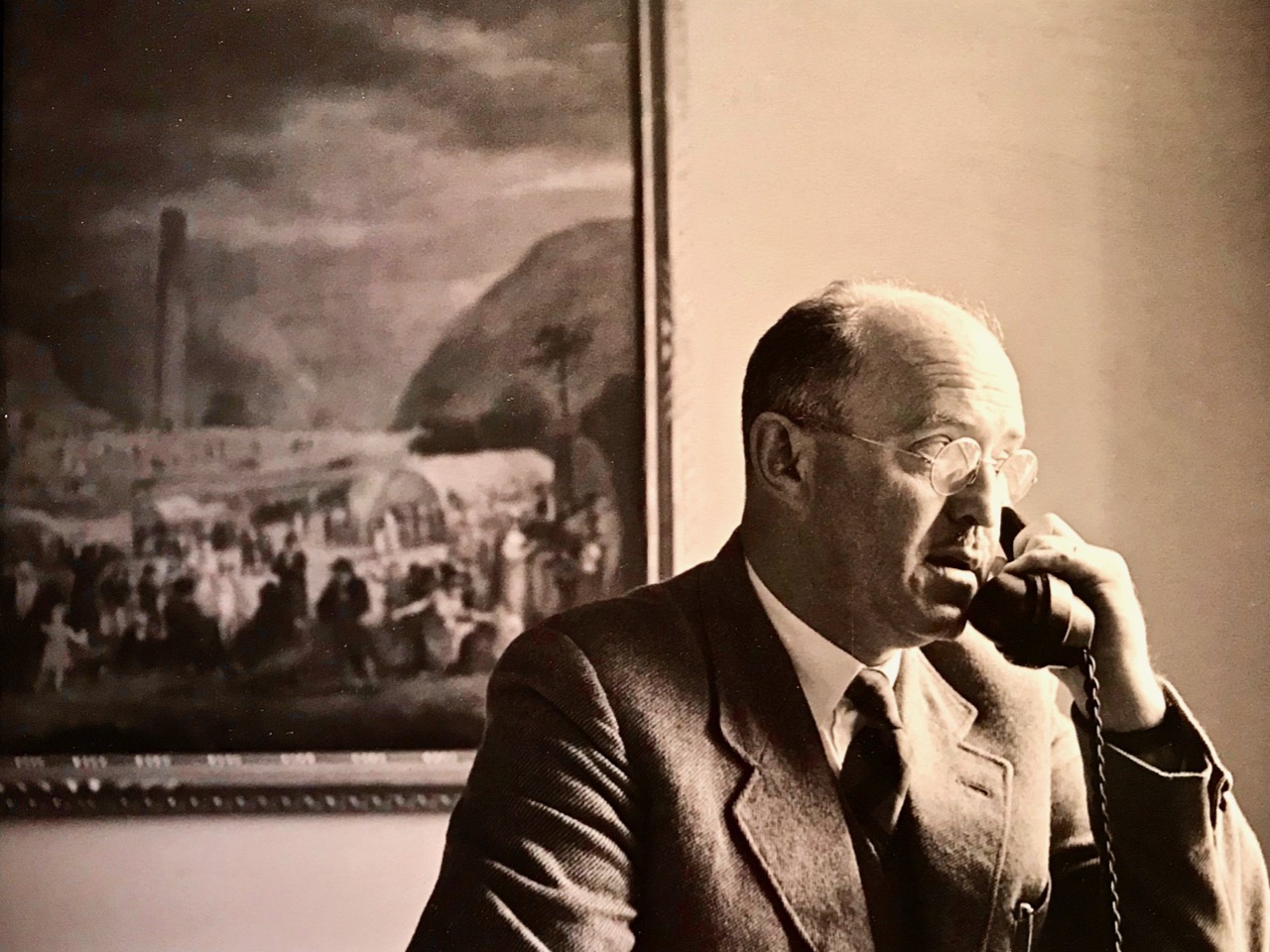
Kevin Danaher of Athea, Co Limerick, at the Irish folklore Commission in 1954. the photographer was Dorothea Lange, who features in this post

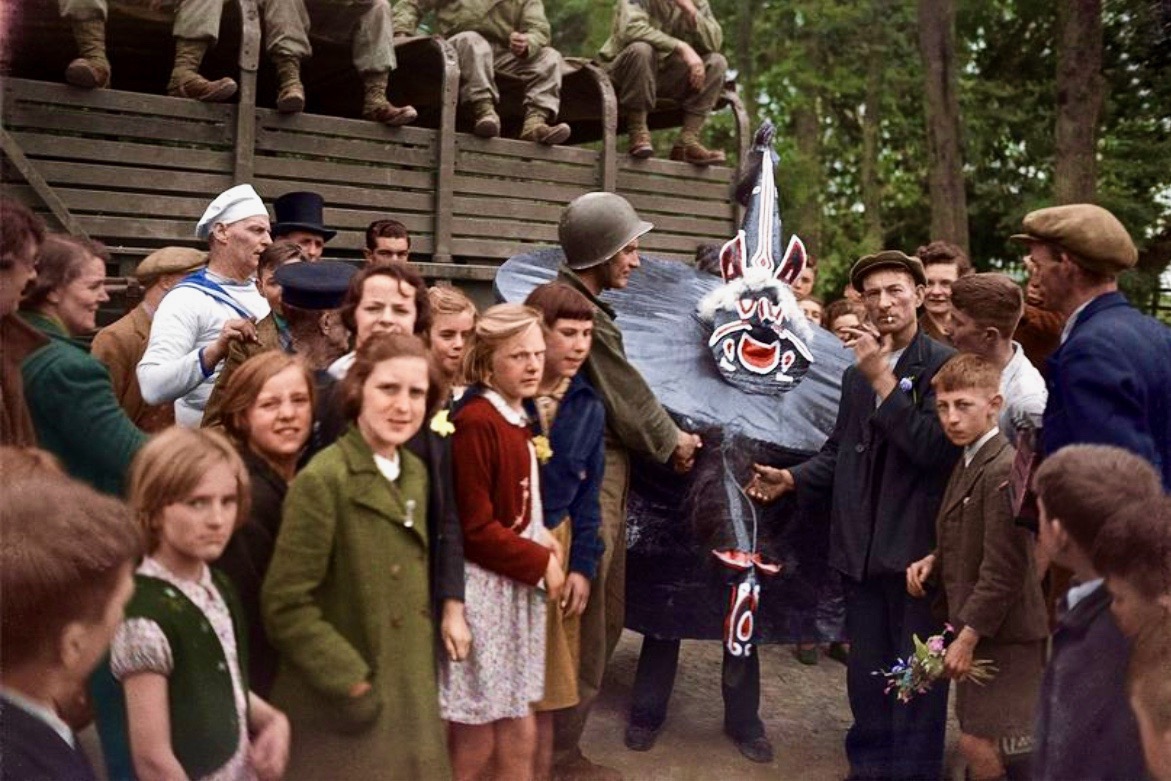
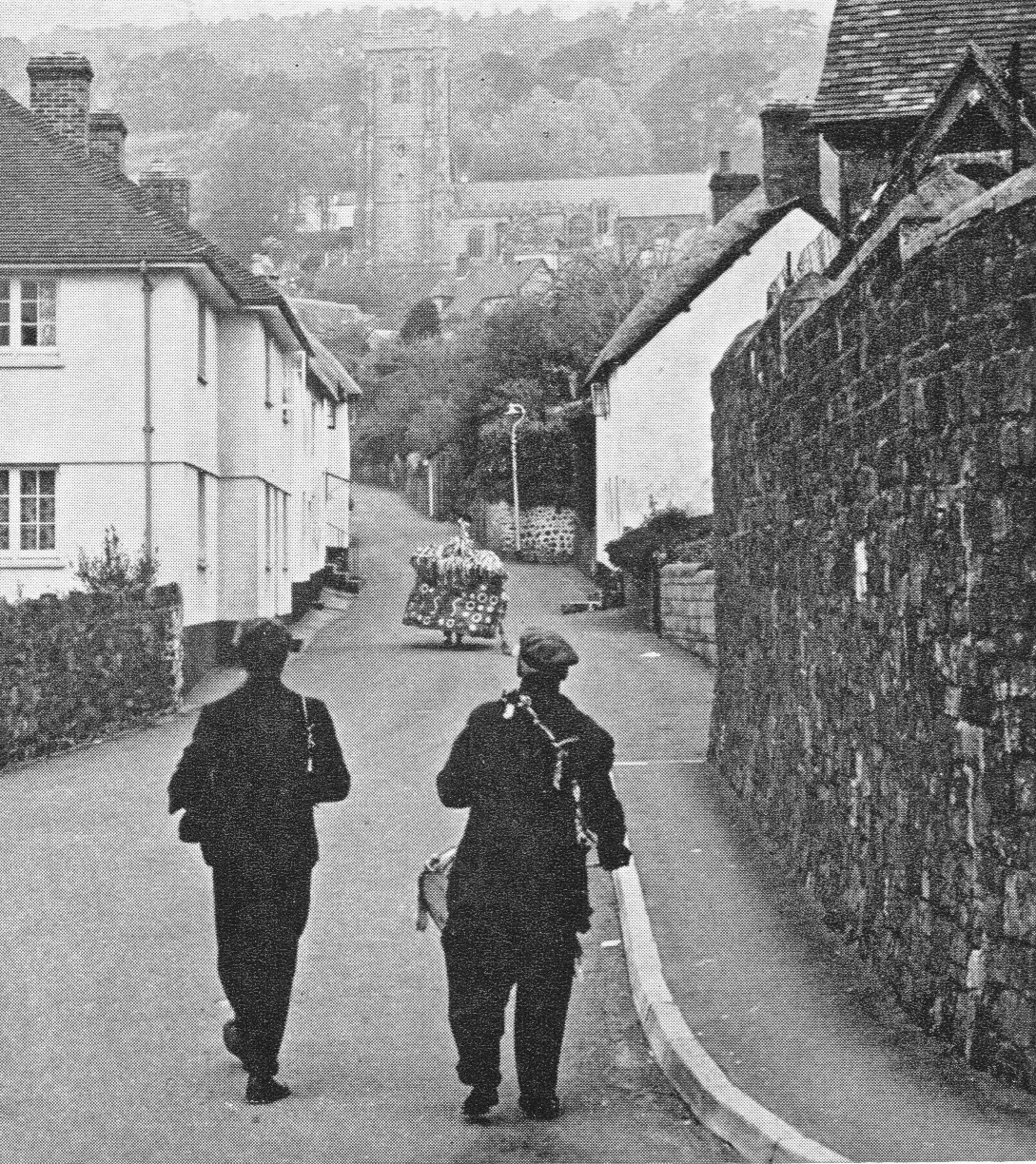
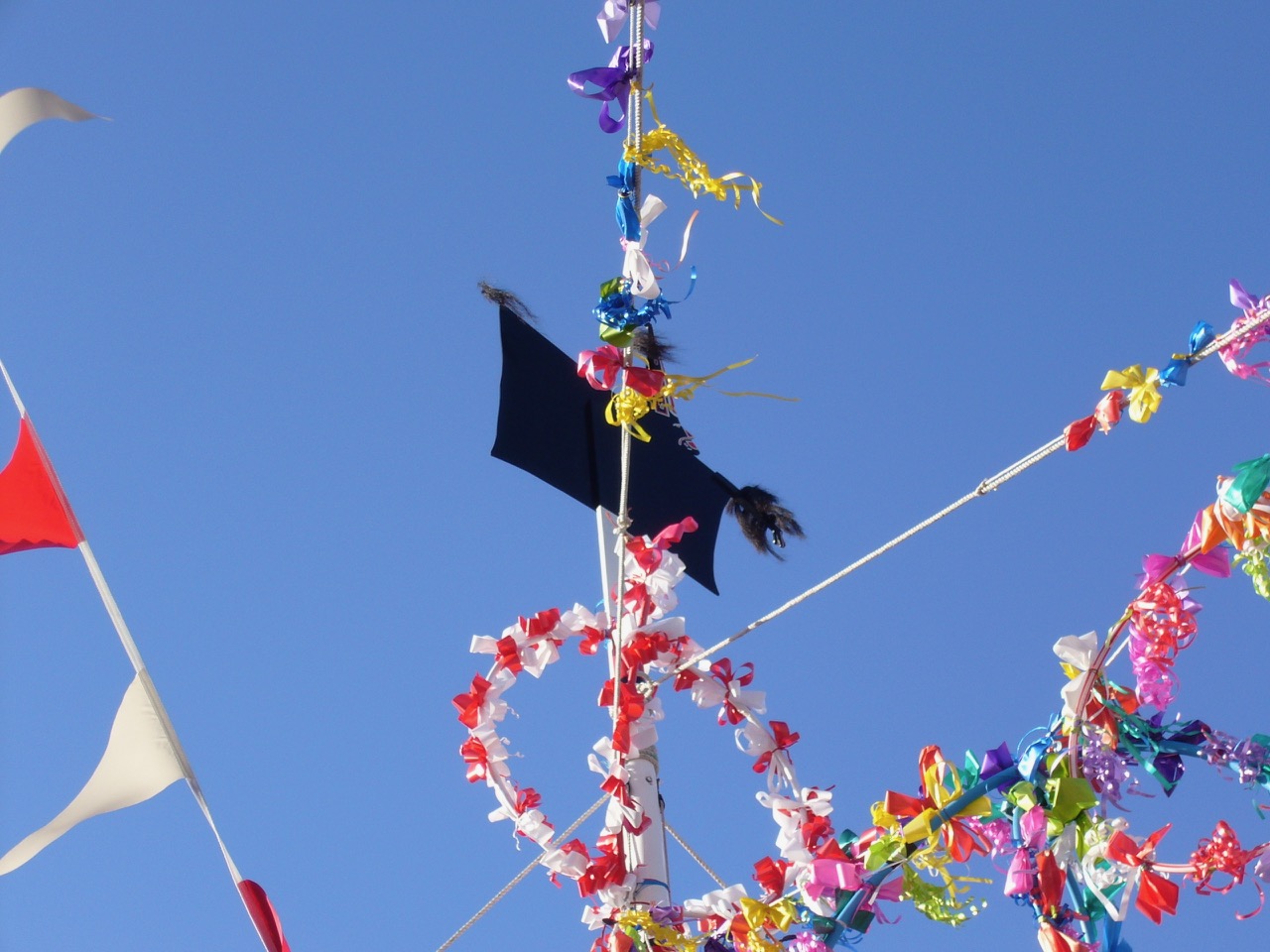
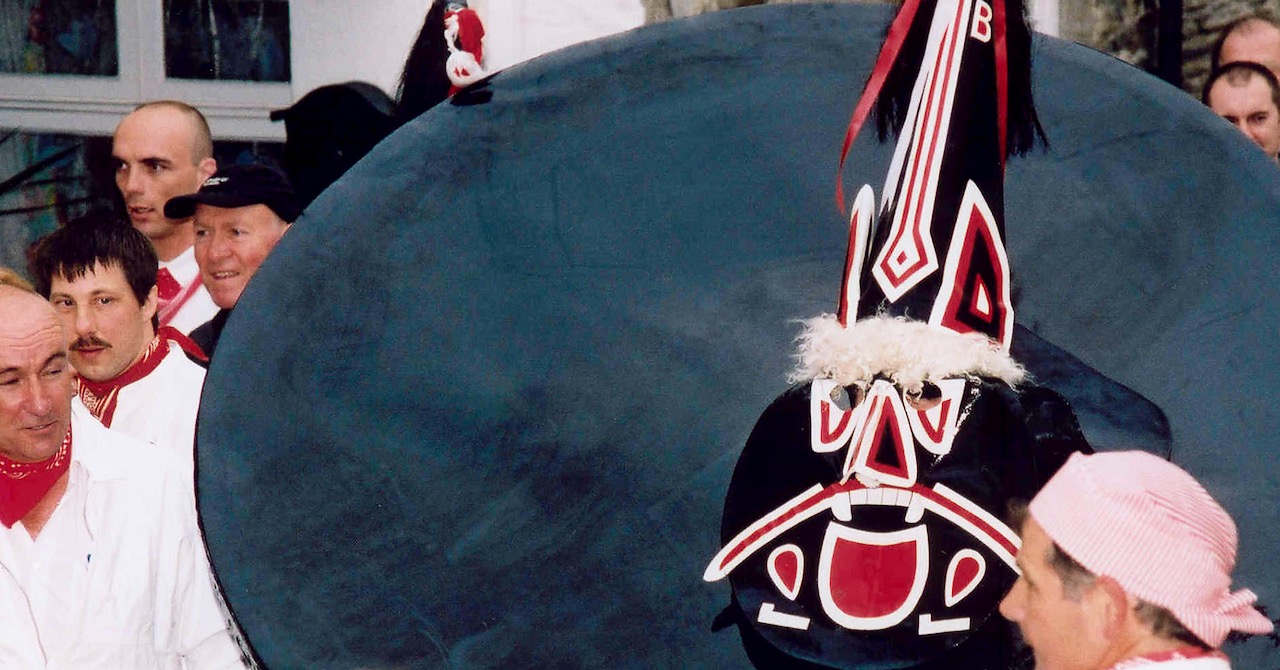
In the west of England, which has always had close links with Ireland in terms of language, culture and industry – the month of May has long been celebrated with a strong focus on the ‘Hobby Horse’, a phenomenon which bridges the worlds of superstition, spectacle and folklore. In two places – Padstow in Cornwall and Minehead in Somerset – Hobby Horse (or, colloquially ‘Obby Oss’) festivals are huge events – usually. In 2020, sadly, both had to be cancelled due to Covid19 restrictions: probably the first time in hundreds of years that they have not taken place. The Minehead Oss has a recorded history that goes back to at least 1465, while in Padstow they will tell you that the Obby Oss has been revered forever on the First of May with never a break.

The Padstow Oss has survived through peacetime and wartime. This rare photograph (above) – attributed to Joshua Barret – was taken in 1944, while the early 20th century photograph (below) of the Minehead Oss is my all time favourite of a folk custom: the Oss always has and always will perambulate the town every year, even if no-one is interested in watching it!

As we find this very strong May tradition thriving (usually) in the west of England, we might expect to see an equivalent in Ireland, but you can’t immediately think of a Padstow or Minehead equivalent. Oh, yes – the Hobby Horse is purely Irish, in that there was once a now extinct breed – called a Hobby – which is said to have been the genetic source of all race horses since pre-Roman times!

. . . It is possible to trace the root of the Irish Hobby back to the northern Iberian Peninsula where this peculiar population of horse seemed to first be recognised about 700 BC, identified as the Celtic Horse. It was a small horse, gaited and exceedingly fast. It was the fastest horse in the known world back then, by 400 BC the Greeks called them the Thieldones and immortalized them on the frieze of the Parthenon, and this breed was already the Roman’s preferred steeds for racing. Pliny even writes about them in 77 AD, and we know when the Romans invaded Britain they brought those horses with them. But the Romans found that when they arrived they were met by the natives who had Celtic Horses already–horses which had been brought to Britain centuries earlier in trade from Spain by the Phoenicians for the metal mined there . . .

(Source – Sport Horse Breeder.com)

I won’t dwell on this idea that the Irish Hobby Horse was the ancestor of all modern pure bred sports horses – and was probably responsible for the innate Irish love of everything to do with horses and sport – as I am getting completely out of my depth here, and it’s all a bit off-topic anyway! Although, who knows how and where that name might have migrated over the centuries?

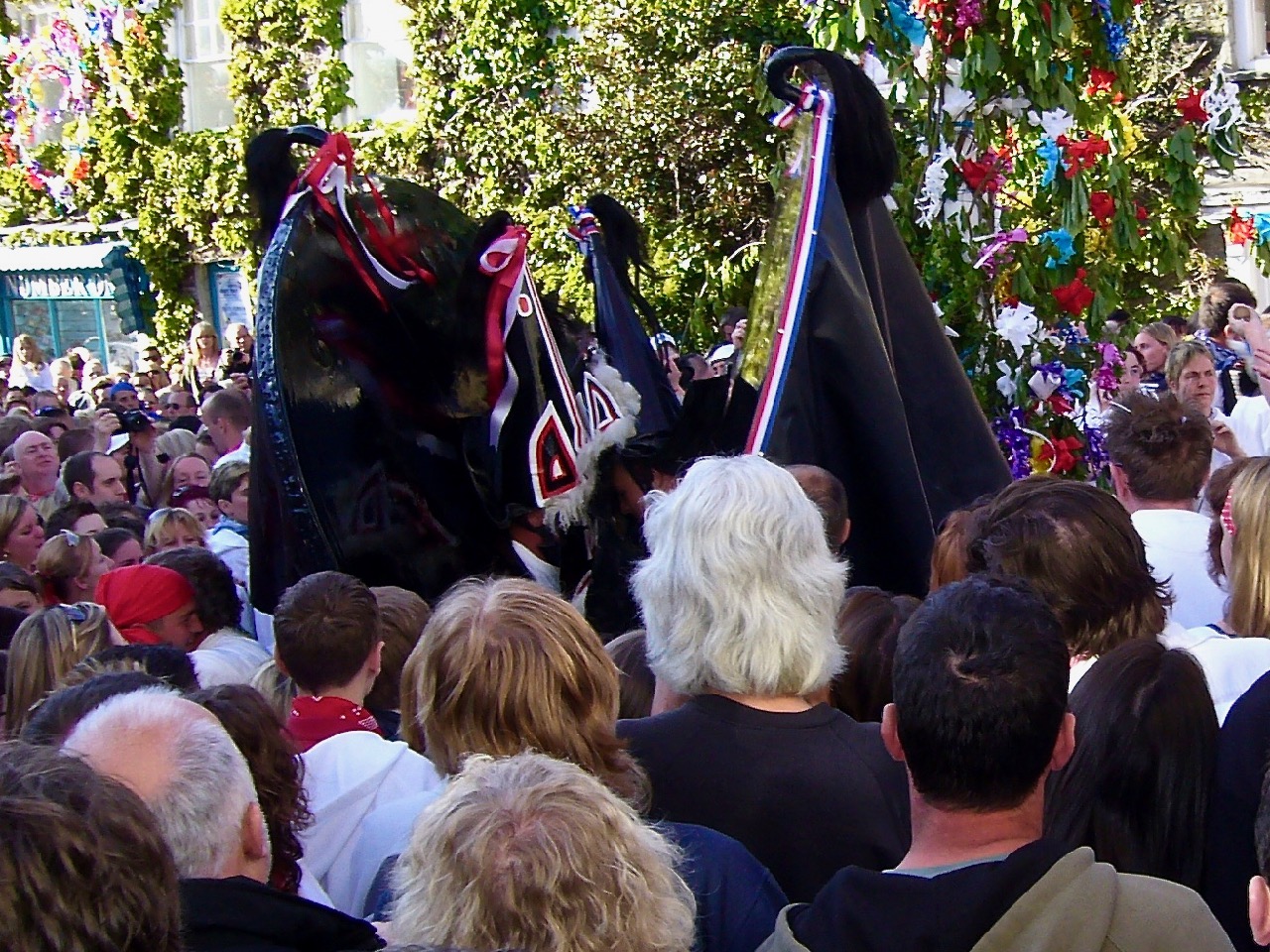
The culmination of the Padstow ceremony on May Day is the ‘meeting’ of the Red and Blue Oss at the huge maypole in the Town Square on the evening of the day (above). They have to close the town to all traffic because of the enormous crowds who attend, and you can see why the ‘social distancing’ rules could never have been applied to the event. Let’s hope that in future years ‘normality’ will have returned sufficiently to our lives to ensure that these ancient customs continue. In my lifetime I have been to Padstow on May Day at least thirty times, and also to Minehead on many occasions: I have good memories of them both.

In order to find a precedent in Ireland for a traditional Oss, I have mined the enormous archive that Kevin Danaher left behind in the Irish Folklore Commission, and I am pleased to report a whisper of success! Danaher uses various sources to summarise an account of traditions taking place in Ireland on May Day:

From the diary of Joshua Wight, a Quaker, we learn that so late as the middle of the eighteenth century, propitiatory rustic processions took place in the south of Ireland. The observer records, that about noon in the month of May, 1752, there passed through the streets of Limerick many thousand peasants marshalled in companies, representing various branches of agriculture…


And Thomas Crofton Croker (1825) tells us of what he calls mummers:


‘They consist of a number of the girls and young men of the village or neighbourhood, usually selected for their good looks, or their proficiency, – the females in the dance, the youths in hurling and other athletic exercises. They march in procession… Two of them bear each a holly-bush, in which are hung several new hurling-balls. the bush is decorated with a profusion of long ribbons which adds greatly to the gay and joyous, yet strictly rural appearance of the whole. The procession is always preceded by music; sometimes of the bagpipes, but more commonly of a military fife, with the addition of a drum or tambourine. A clown is, of course, in attendance: he wears a frightful mask, and bears a long pole, with shreds of cloth nail to the end of it, like a mop, which ever and anon he dips in a pool of water, or puddle, and besprinkles such of a crowd as press upon his compassions, much to the delights of the younger spectators… The Mummers during the day parade parade the neighbouring villages, dancing and receiving money. The evening, as might be expected, terminates with drinking’.


Patrick Kennedy, in The Banks of the Boru, describes a similar procession:


‘After a reasonable pause we had the delight of seeing twelve young men come forth, accompanied by the same number of young women, the boys dressed much more showily than the girls… To heighten the beauty of the spectacle, out sprung the fool and his wife, the first with some head-dress of skin, a frightful mask, and a goat’s beard descending from it. Though we knew that the big bluff, good-natured countenance of Paudh himself was behind the vizard, we could scarcely refrain from taking flight, not being able any more than other children to look on an ugly mask without extreme terror. His wife (little Tome Blanche, the tailor) was in an orange-tawny gown, flaming handkerchief and mob-cap, and had a tanned, ugly female mask, fitting pretty close to her face. Paudh’s first salute to his friends was a yell, a charge in various directions, and a general thrashing of the crowd with his pea-furnished bladder suspended from a long stick. Mrs Clown had a broom, and used it to some purpose when she found her friends disposed to crowd her.’


There is also mentioned by Sir William Wilde, together with something like a hobby horse (Popular Irish Superstitions, 67):


‘From Monaghan we have a graphic account of a somewhat similar proceeding: there the girls dressed up a churn-dash a s a “May babby” and the men, a pitchfork, with a mask, horse’s tail, a turnip head, and ragged old clothes, as a “May boy” but these customs have, we believe, long since become quite obsolete.’

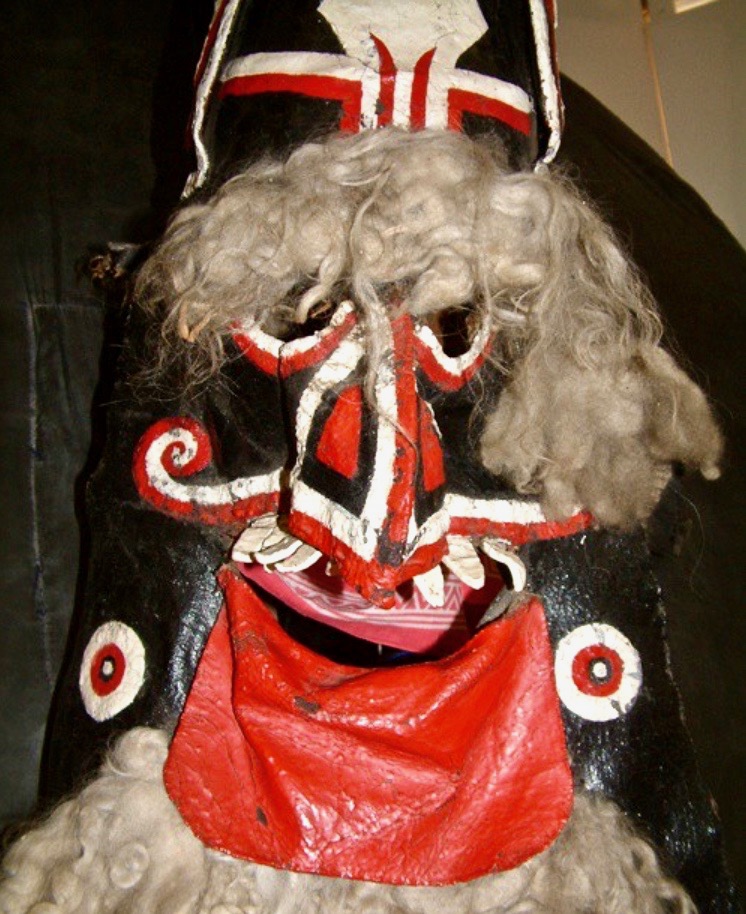
The mask worn by the Obby Oss at Padstow could have evoked the description by Patrick Kennedy, above: some head-dress of skin, a frightful mask, and a goat’s beard descending from it . . . This particular representation, once used in the Padstow processions, is now a museum piece. So here I present my argument that we can find descriptive evidence of traditional Hobby Horses in Ireland as part of the May festivities. If anyone finds other instances or has direct personal experience or stories passed down which involve Hobby Horses, or activities which sound like the examples described in Danaher’s reports, above, please let me know.

Mizen Mountains 3 – Letterlicky Cairn, or ‘The Old Bog Road’

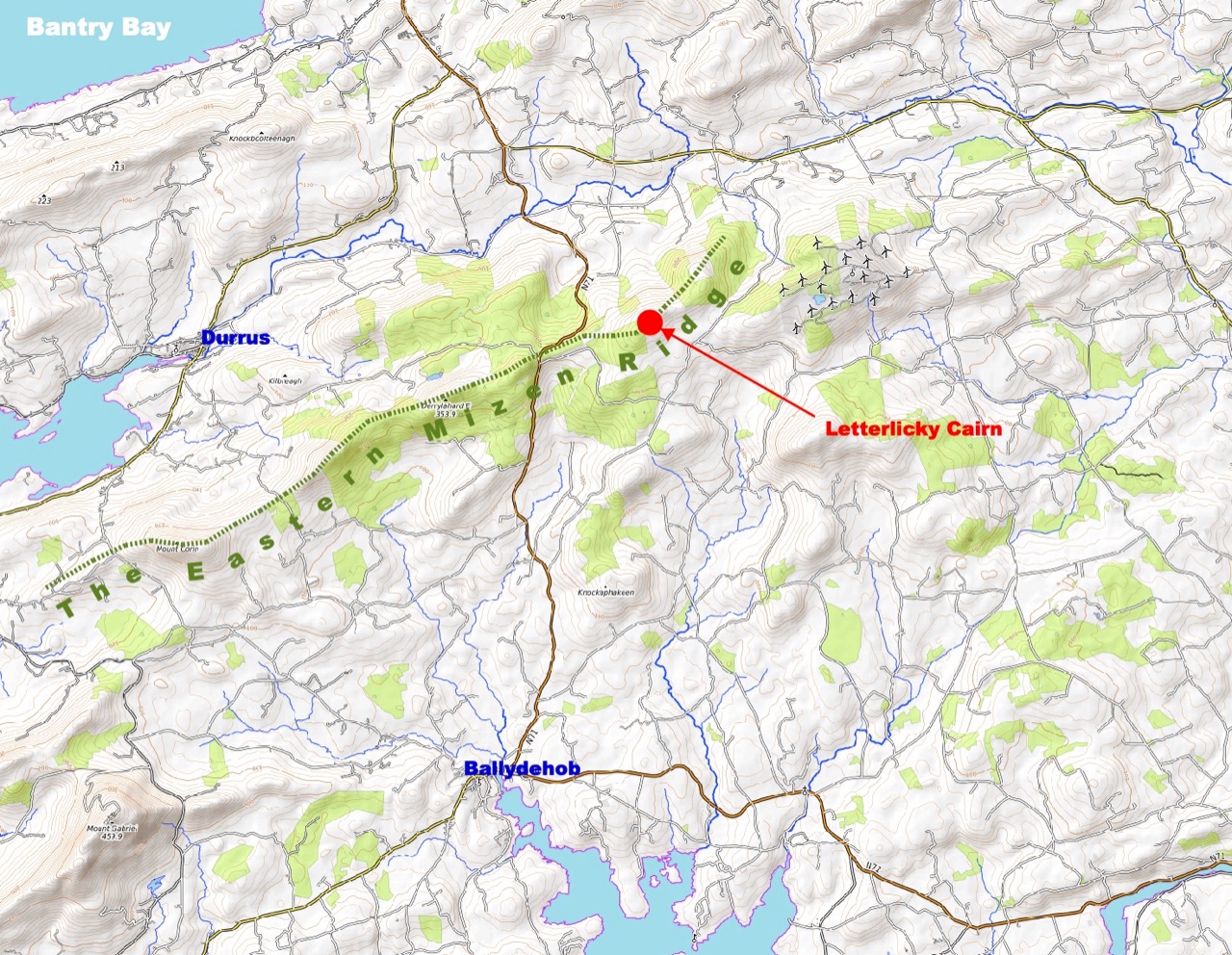
I confess I’m stretching things a bit here: the 297m peak in the townland of Letterlicky, West Cork, fits well enough into my definition of mountains – anything above the 200 metre contour line. But is this one on the Mizen? We think of our own village of Ballydehob as being ‘The Gateway to The Mizen’ in the south-east, and it would be logical to have another ‘Gateway’ at Durrus, where the northern coastline of the Mizen meets the Sheeps Head. If you draw a straight line between these two points, then today’s subject misses out. But – there are no straight lines in nature, and this peak is a continuation of a natural ridge line that rises down on the Mizen near Mount Corrin and runs east.

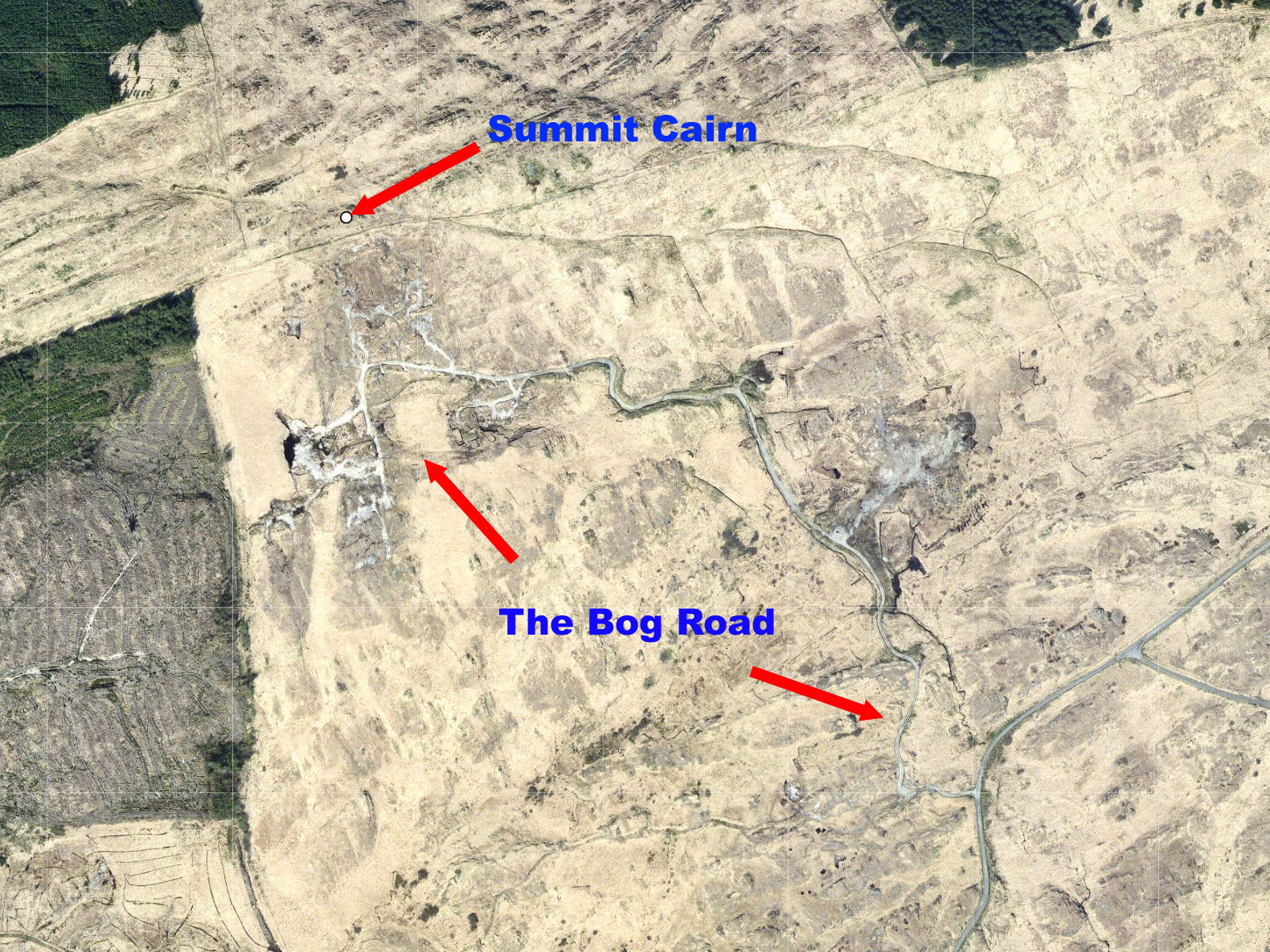
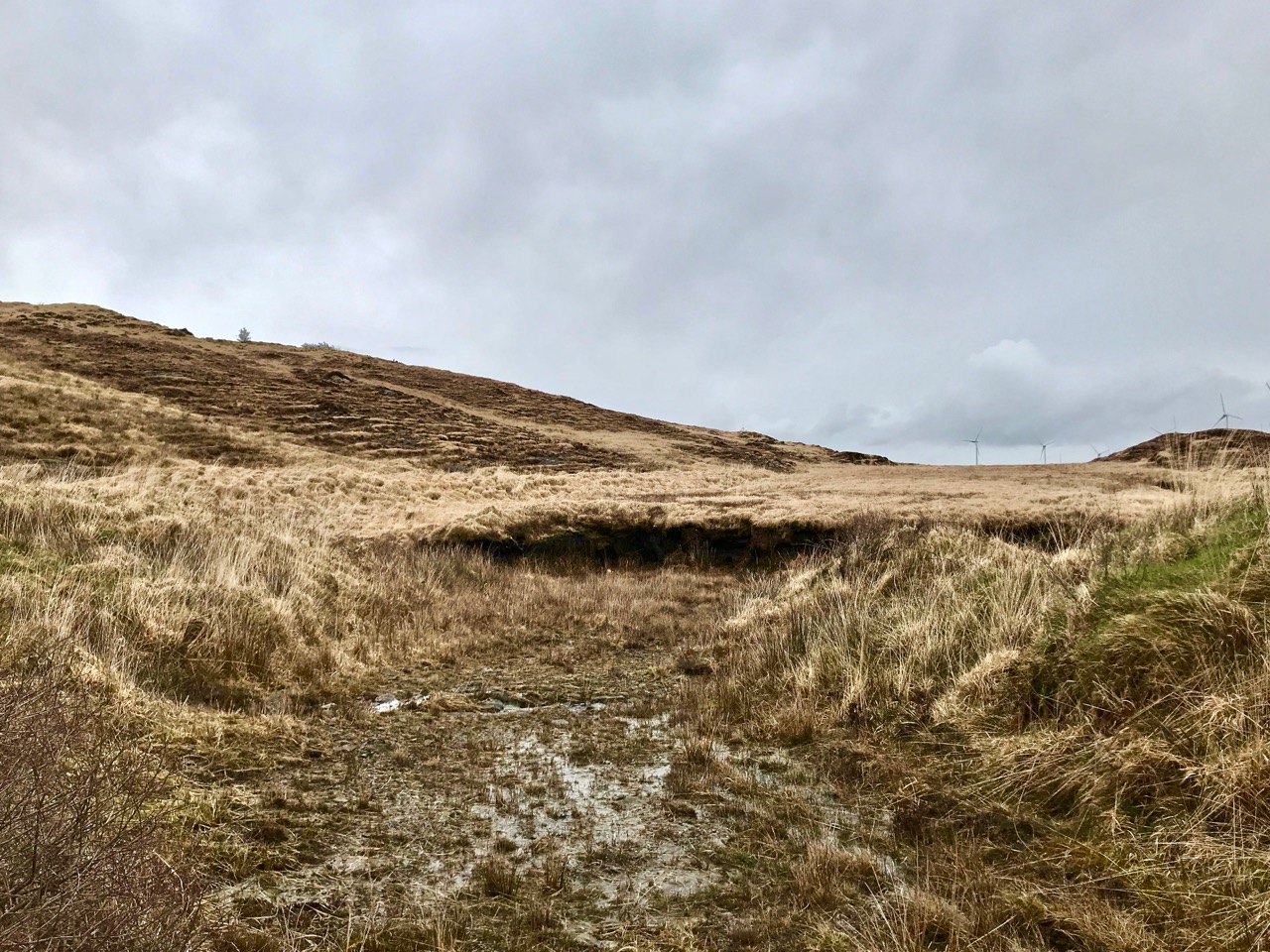
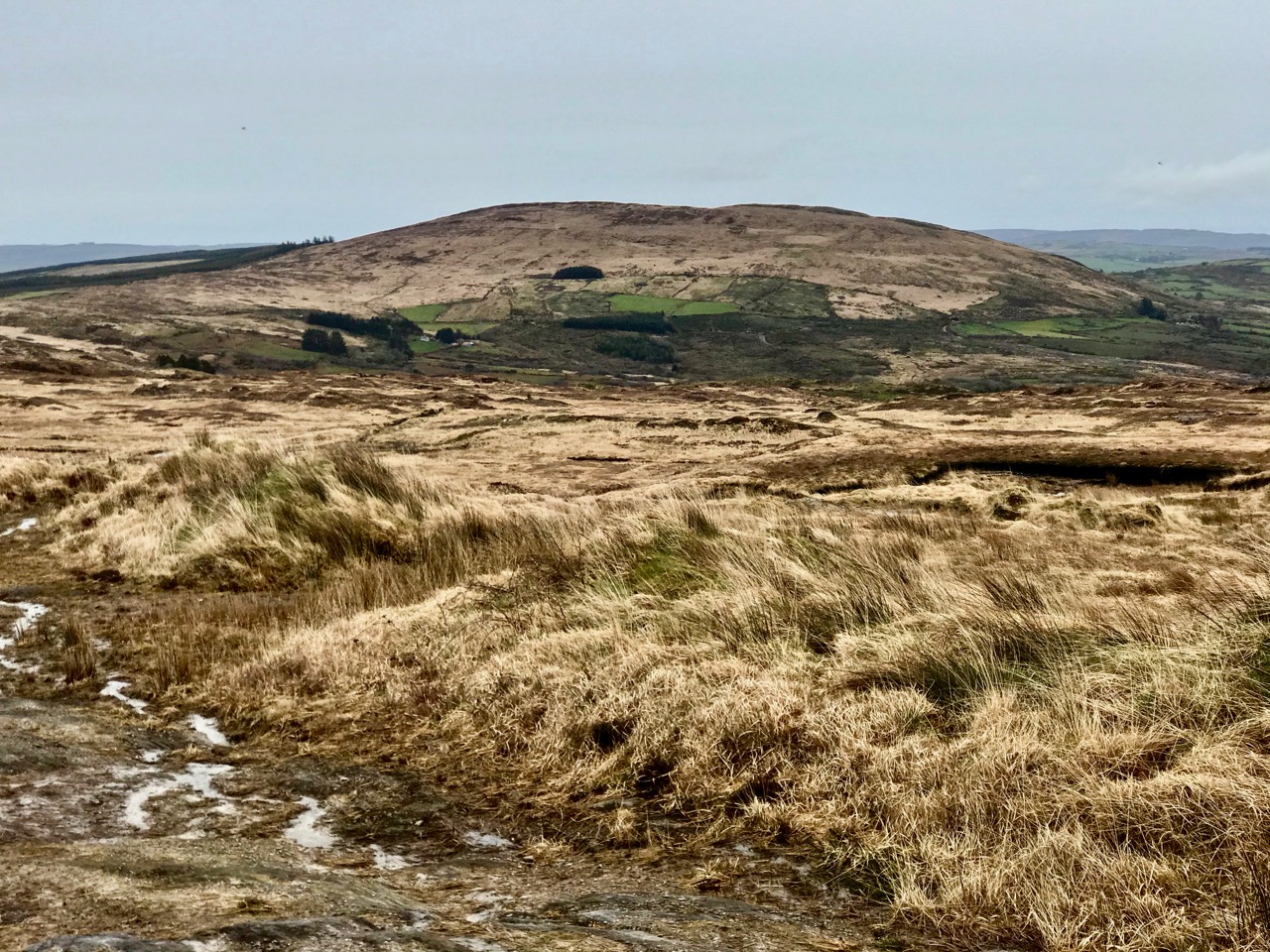
But if you are uncomfortable with my concept of what is or isn’t the Mizen, just go with the subtitle of this post: The Old Bog Road. We found Letterlicky Cairn quite by accident as our exploration set out to follow a trackway that we had often passed, on the high road to the north of Ballybane West. We had no idea where the track would take us, but it’s very well defined, roughly paved and probably quite old. As we journeyed up into the hills, we could see that the track was there to serve peat workings which must have been used for generations. The extent of the peat workings – and the line of the old road serving them – show up well on the aerial map view below.

It was a sunless mid-March day when we set out: the wind was in the east and there was little colour in the landscape. There were, as yet, few signs of spring. We could see the ridge in the distance and, happily, the track appeared to climb towards it. In Ireland, the days of cutting peat for fuel are numbered: commercial operations will cease by 2025. Generations of families in rural areas have historically cut peat by hand and lay claims on the rights to do this. Increased regulation will eventually see this tradition declining along with all other fossil fuel production as carbon neutral ways to produce energy are developed. It seemed significant that the large array of 20 giant wind turbines on the high land to the east was a constant backdrop on our journey along the Old Bog Road.

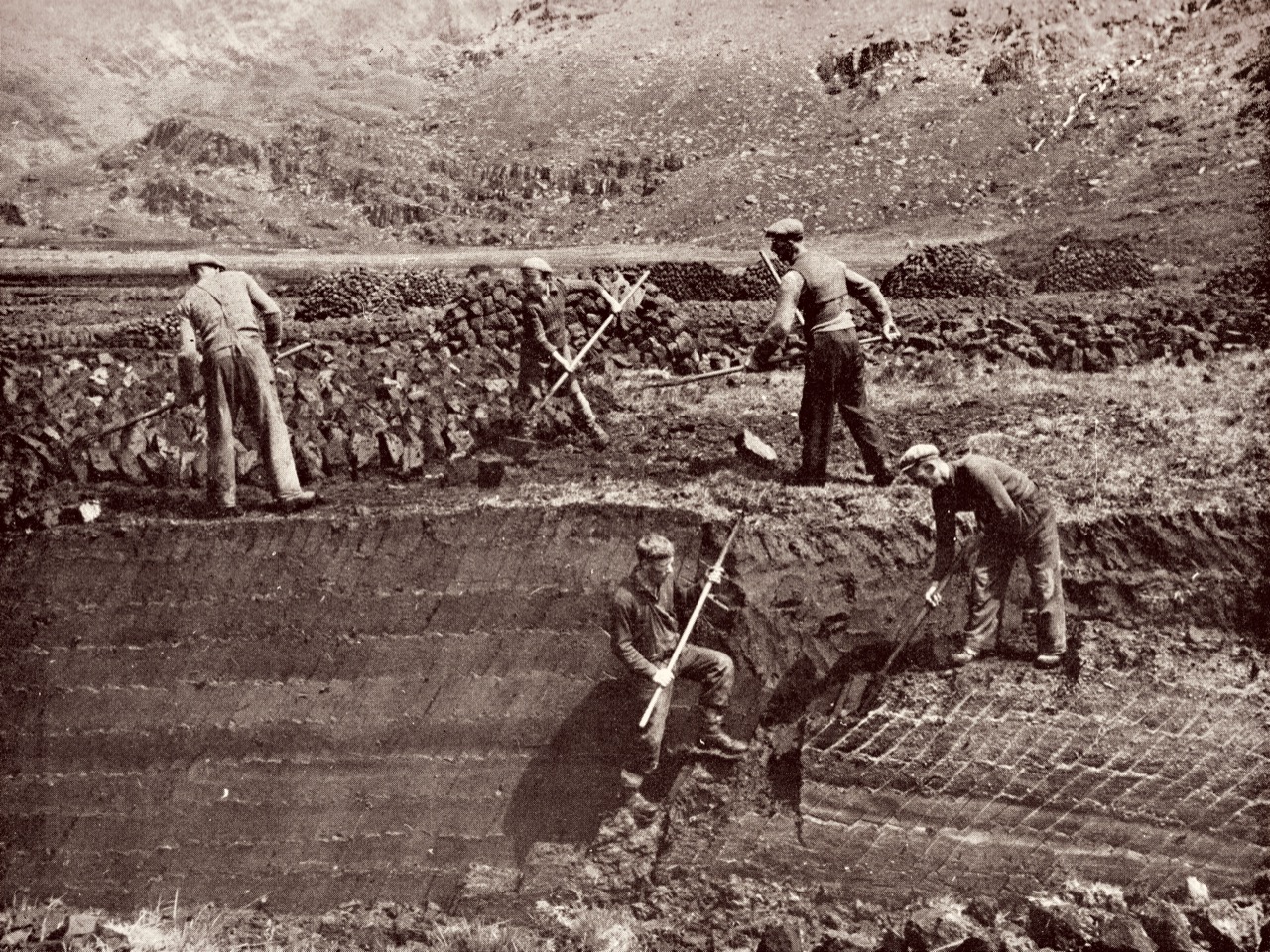
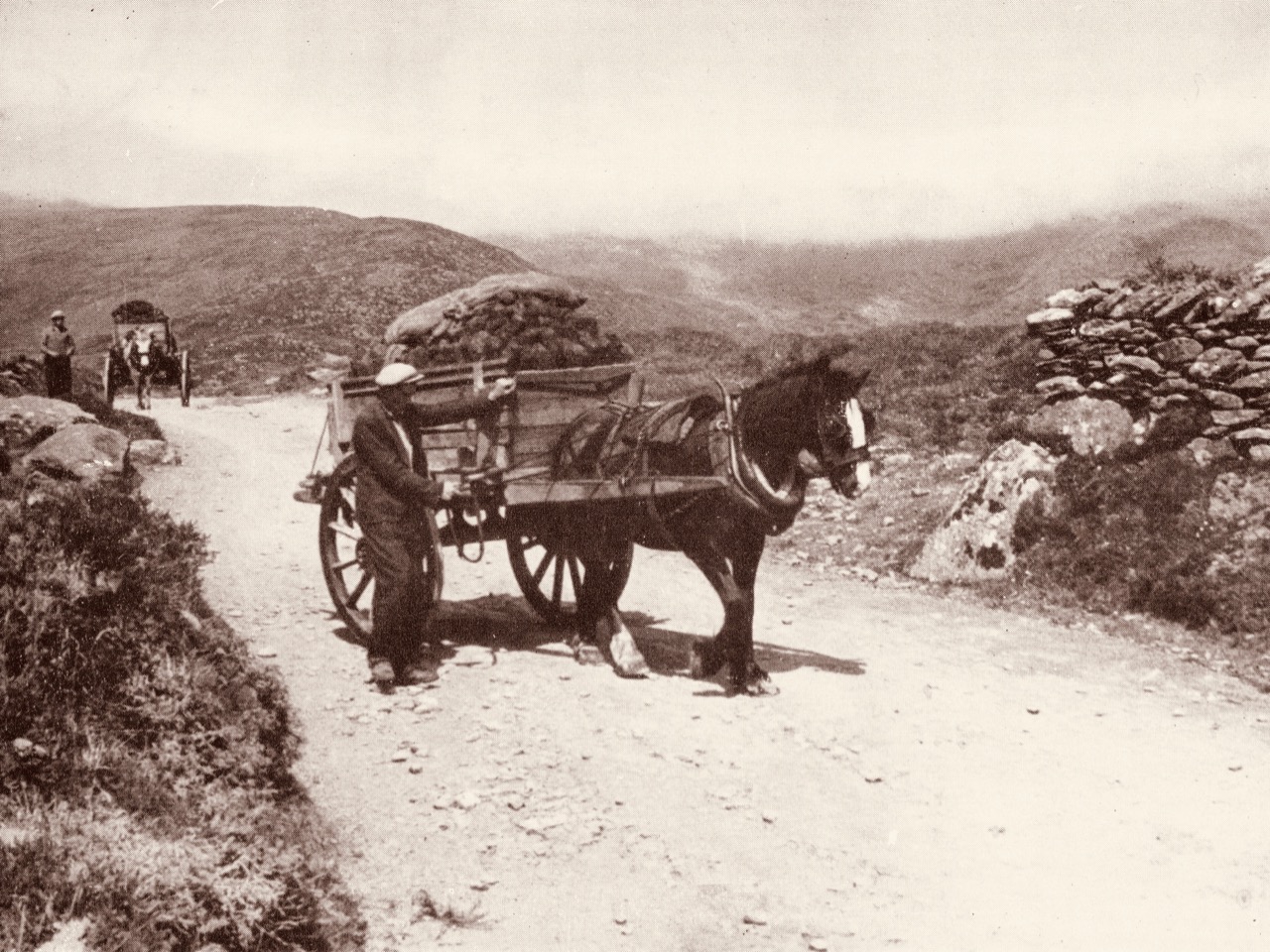
Tomás Ó Muircheartaigh (1907 – 1967) was an amateur photographer who recorded life in rural Ireland during the first half of the twentieth century. We have used examples of his work in previous posts. These two prints (above) demonstrate the hand-working of peat faces and the transporting of sods from the workings. Our Old Bog Road would have seen similar sights in its heyday.

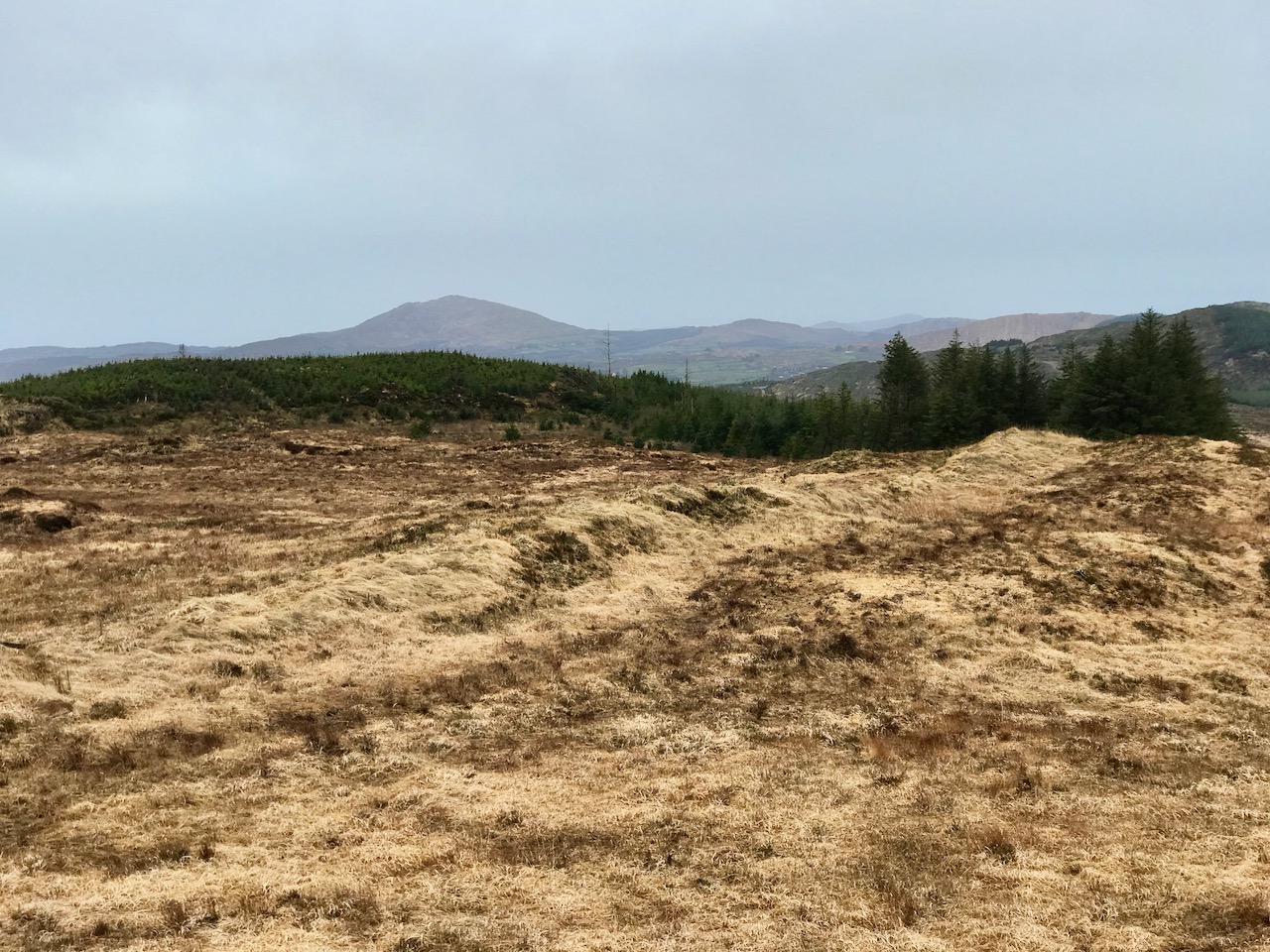
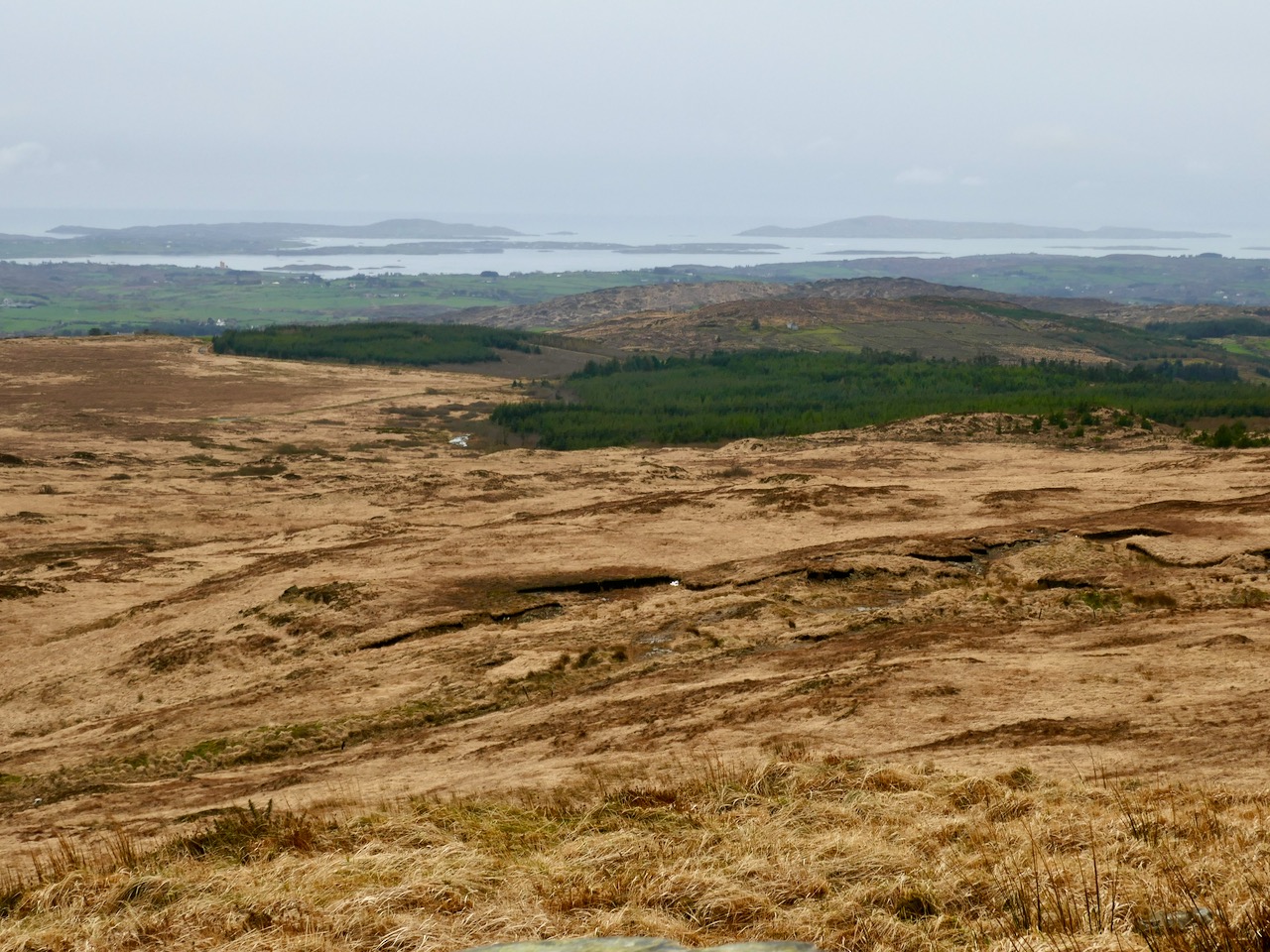
As we threaded our way through the peat workings, we could see the track carrying on towards the ridge. We had done no prior research into the area we were traversing, but as the way grew higher and higher – and we realised we must be coming to a high point in the landscape – we wondered whether there would be any signs of ancient activity on the mountain top. We could see other high points around us – Mount Kidd to the south and Mount Gabriel to the west – and, beyond, a spectacular distant view over Roaringwater Bay: a place like this would have been considered special, surely, to those who knew it thousands of years ago.

Views from the Old Bog Road: upper – Mount Kidd; middle – Mount Gabriel, and lower – the islands of Roaringwater Bay

As we rounded the last bend in the trackway we could see the summit ahead of us. Initially, we were delighted to see a substantial cairn. But we were surprised by the number of larger, roughly shaped boulders and slabs which were lying around it. Also, there seemed to be a substantial earthen raised platform.

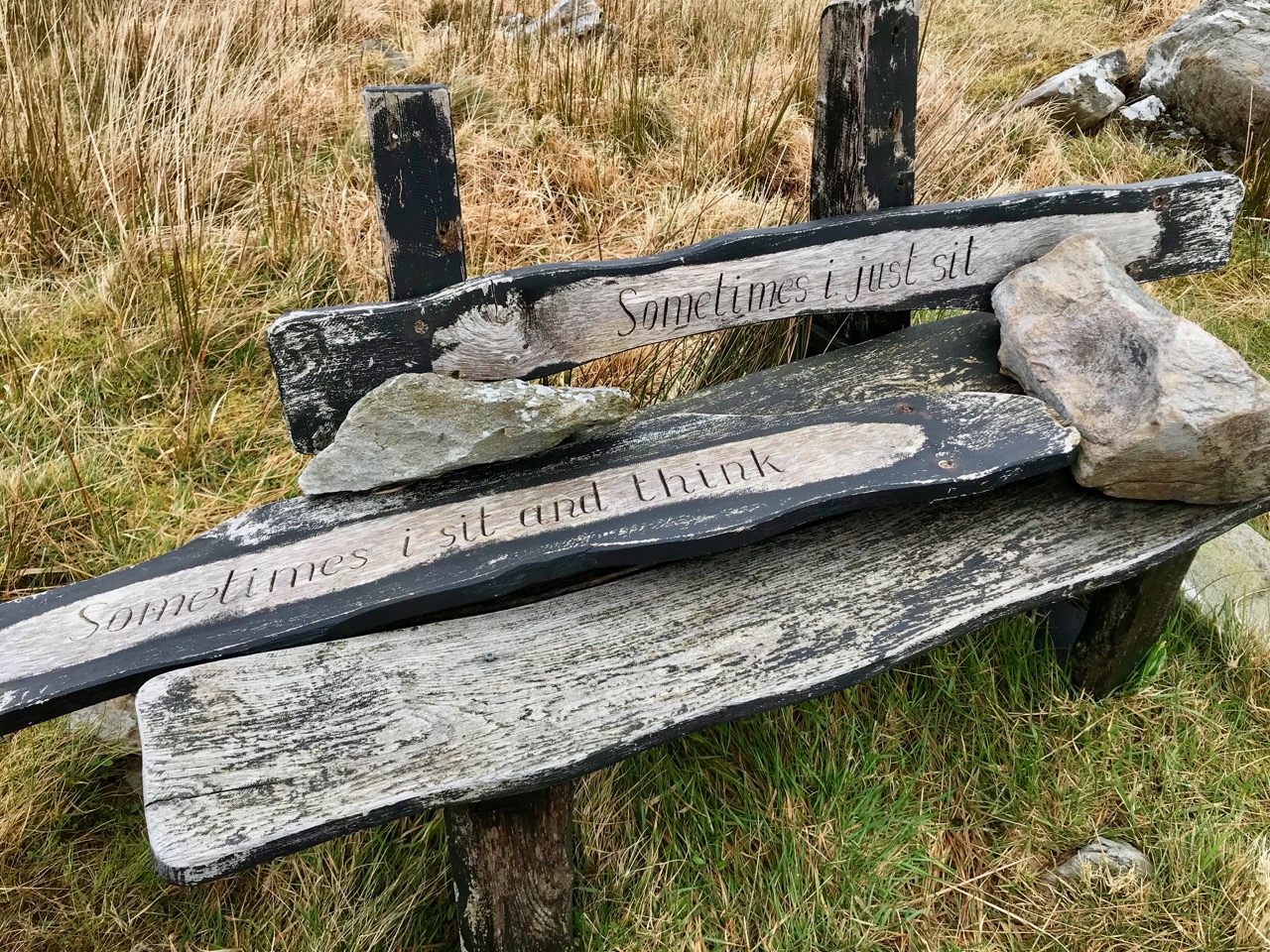
To add to the interest – and the enigma – there were some 21st century monuments on the same hilltop. An inscribed bench and a carved wooden marker which resembled a gravestone, with wording on both sides:

Our subsequent enquiries have given us a little information about Mick Townshend (1951 – 2012). He was well know locally, related to the Townshends of Castletownshend, and lived near Ballybane West. The bench was made by his friend Charlie, and was intended to be installed in Ballydehob: we don’t know why it is now here at the mercy of the elements, but it’s easy to imagine someone finding such a place inspirational, and perhaps asking to be remembered at this spot.

Although it wasn’t the best of days, the view to the north was exceptional, taking in Bantry Bay and the Beara mountains beyond. It’s a place that demands to be returned to. As we prepared for the descent we heard the sound of a small engine, and suddenly there was farmer Florence McCarthy arriving on a quad bike with two collies running behind: they were searching for lost sheep. Good chat was had – although, in deference to the Coronavirus crisis, we all kept the currently regulation distance apart. It felt very unnatural to not shake hands, and we forgot to ask for a photograph, until Florence was just disappearing over the brow of the hill!

Florence

The cairn is a scheduled monument, described prosaically on the Archaeological Survey Database as: Circular area (19.5m N-S; 19m E-W) defined by scatter of large rectangular stones. The Duchas folklore collection proved far more interesting, although I can’t be sure that this entry from Gort Uí Chluana School, Bantry, in 1936 is referring to the same cairn:

Long ago when some of the people from the north of Ballydehob used be carrying their “firkins” of butter to Cork they used go through an old road in the town land of Letter Lickey . . .


On the side of this old road it is supposed that one man killed another with a stone. After that it was the custom with the old people; who ever happened to pass that stone should throw a stone near the spot the stone was dropped at the man or if not something would happen to the person afterwards. Up to the present day there is a cairn of stones to be seen on the side of this old road . . .

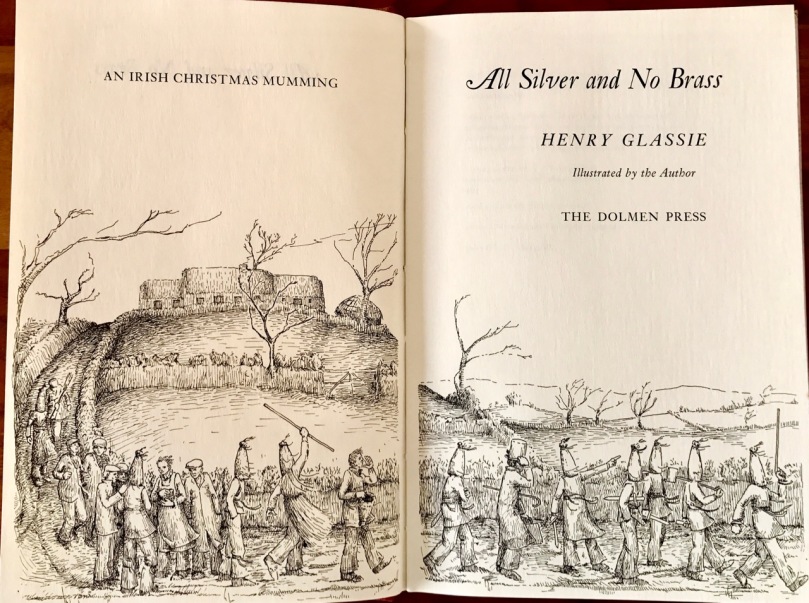
All Silver and No Brass

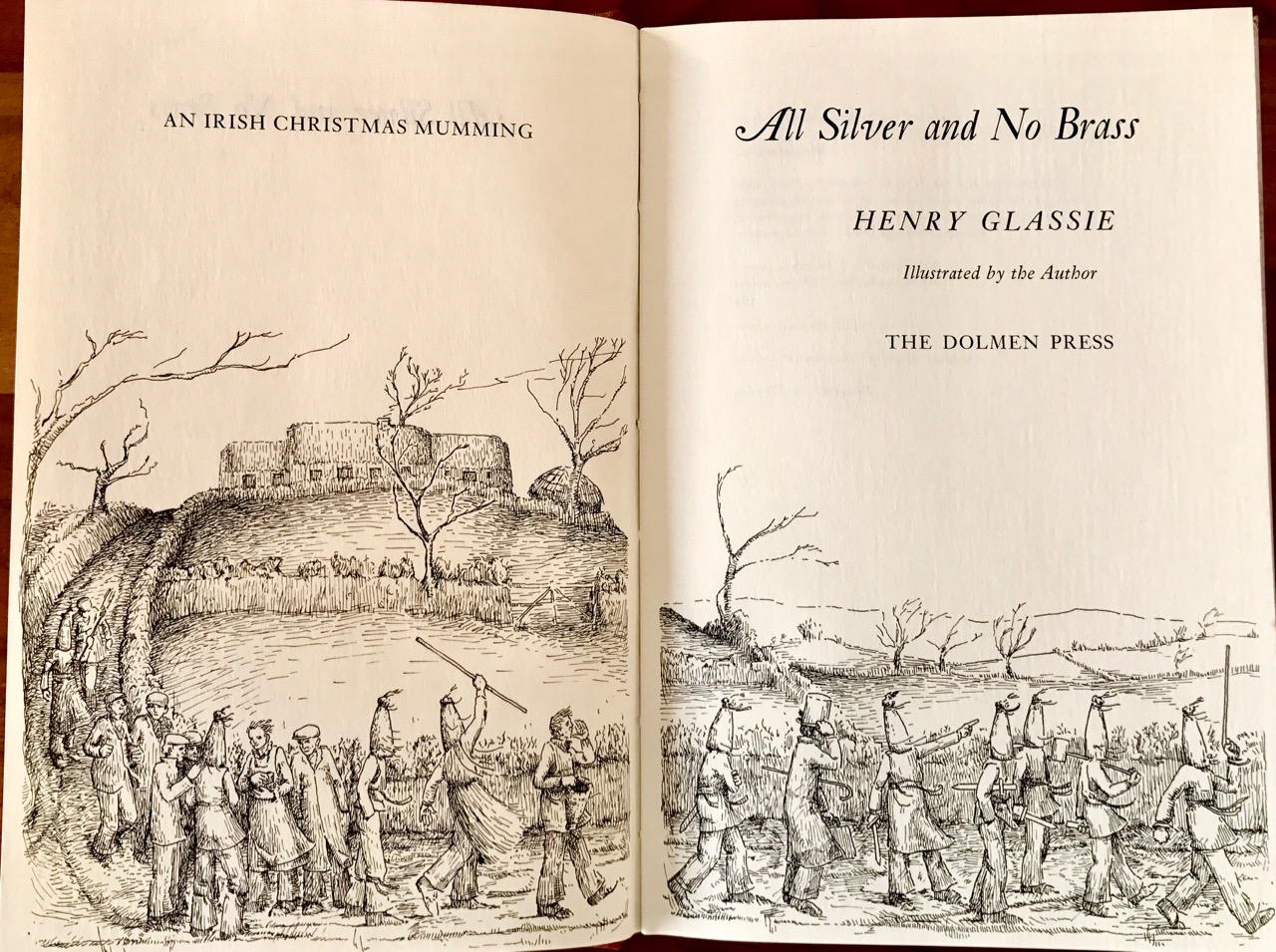
title page full

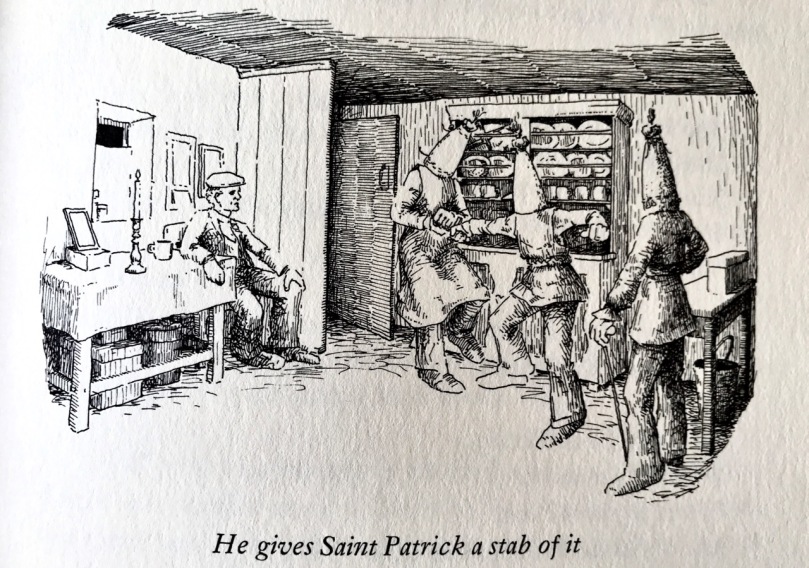
To celebrate St Stephen’s Day, I’m republishing this post from a couple of years ago. Both Mumming and Hunting the Wren were (and still are) traditional activities which take place on the day after Christmas in many parts of Ireland. I was pleased to find Henry Glassie’s volume on the Mumming Tradition in Northern Ireland in my younger days: as a Mummer myself, I was eager to search out any material on this then neglected subject, and was pleased to find this volume. It is written and illustrated by Henry Glassie, a Professor of Folklore at Indiana University Bloomington, and is the product of an extended field trip to County Fermanagh in the early 1970s. The title comes from the Mummers’ plea for the audience to put money in their hat or box – preferably silver coins!

Henry Glassie – born 1941 – has written many books about life and traditions in Ireland. His first was All Silver and no Brass, published by The Dolmen Press in 1976

…Winter nights in Ireland are black and long. A sharp wet wind often rises through them. Midwinter is a time to sit by the fire, safe in the family’s circle, waiting for the days to lengthen and warm. It is no time for venturing out into cold darkness. The ground is hard, the winds bitter. But for two and a half centuries, and possibly for many years before them, young men braved the chilly lanes, rambling as mummers from house to house, brightening country kitchens at Christmas with a comical drama. Their play, compact, poetical, and musical, introduced an antic crew and carried one character through death and resurrection…

(From the Preface to All Silver and no Brass by Henry Glassie)
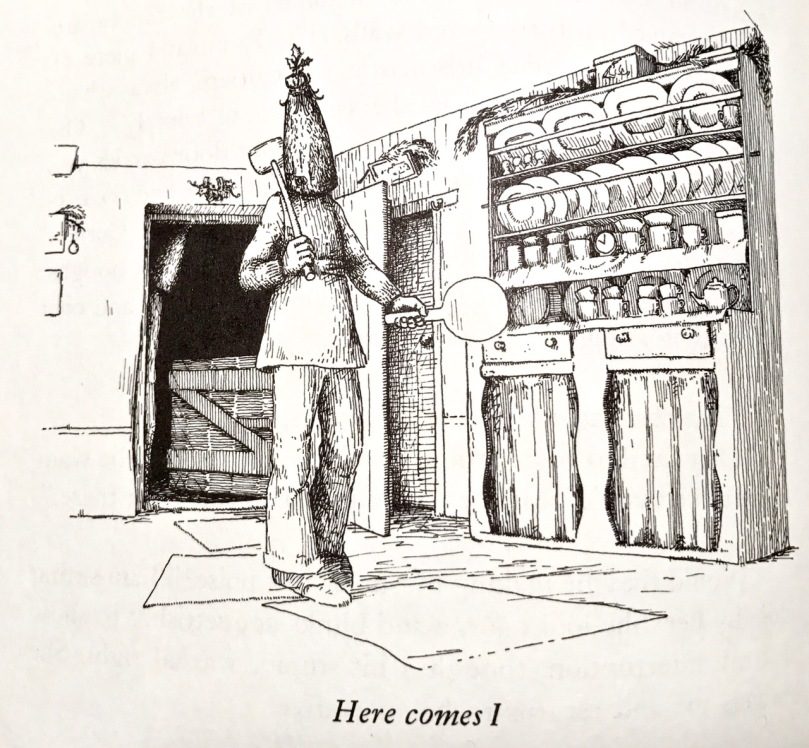
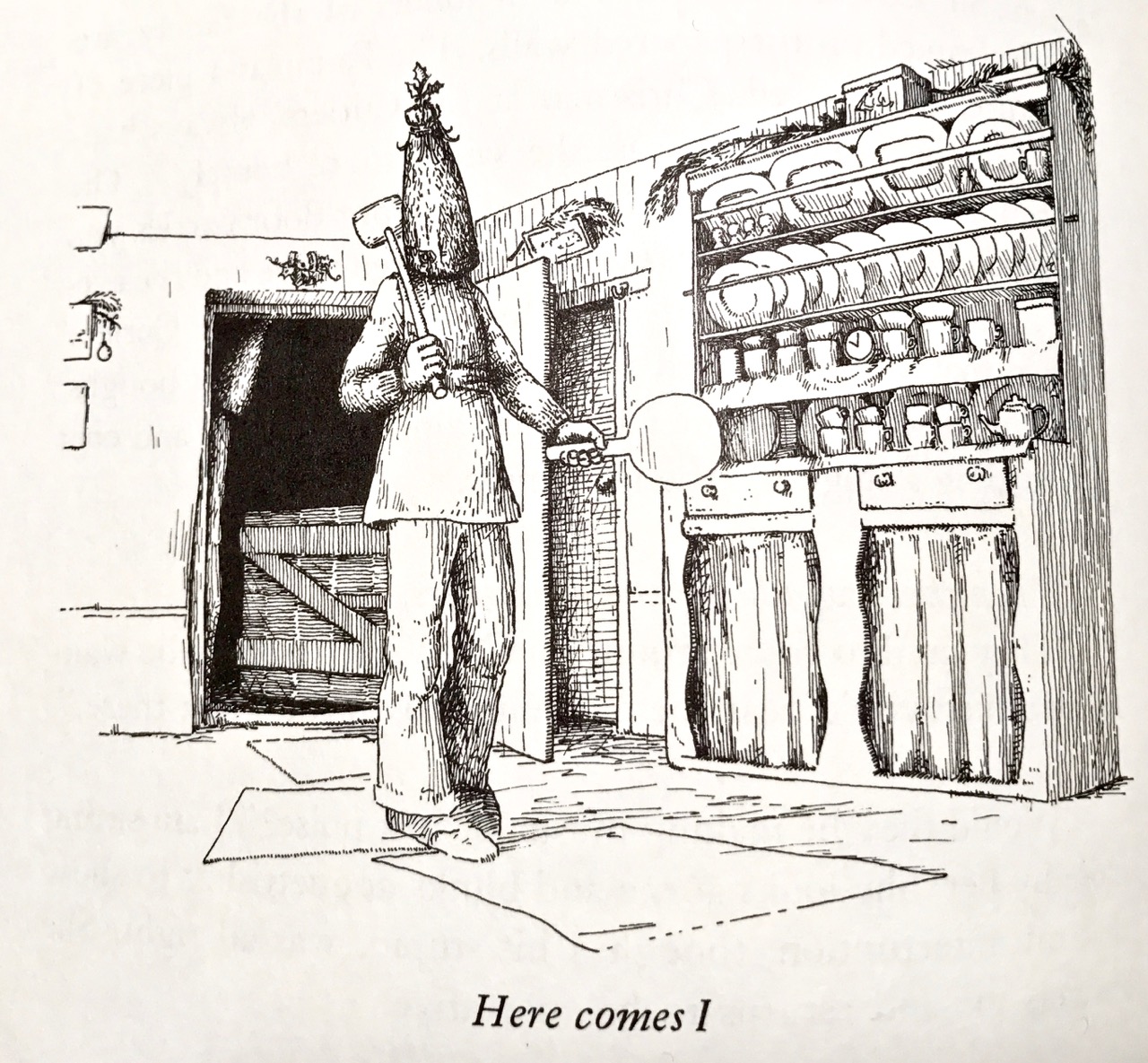
here comes I

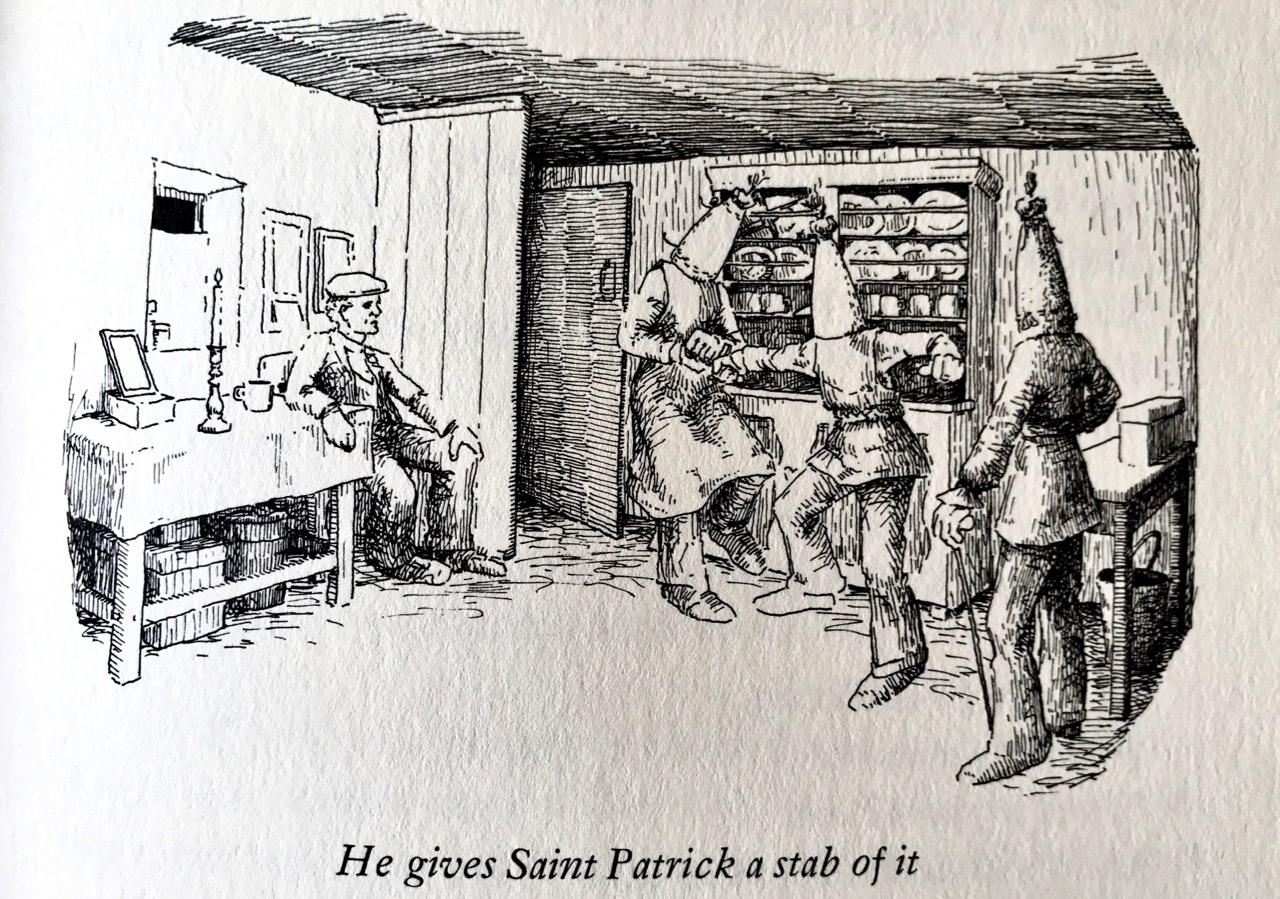
saint patrick

Glassie stayed in Ireland during the Troubles, and deliberately chose a community that was close to the upheavals of those days.

…Mumming was neither my project nor my goal. My project was the creation of an existentially grounded ethnography of people in trouble… We settled next to the barbed-wire bound barracks in the southwest Ulster town of Enniskillen, in the County Fermanagh, about twelve miles north and east of the burning border. I began quickly, luxuriously conducting my study on foot. I came to know every dog, bog, path and field in a small area south of the town, lying west of Upper Lough Erne, its waters as bright, its isles as green as promised in the old ballad of the Inniskilling Dragoon…

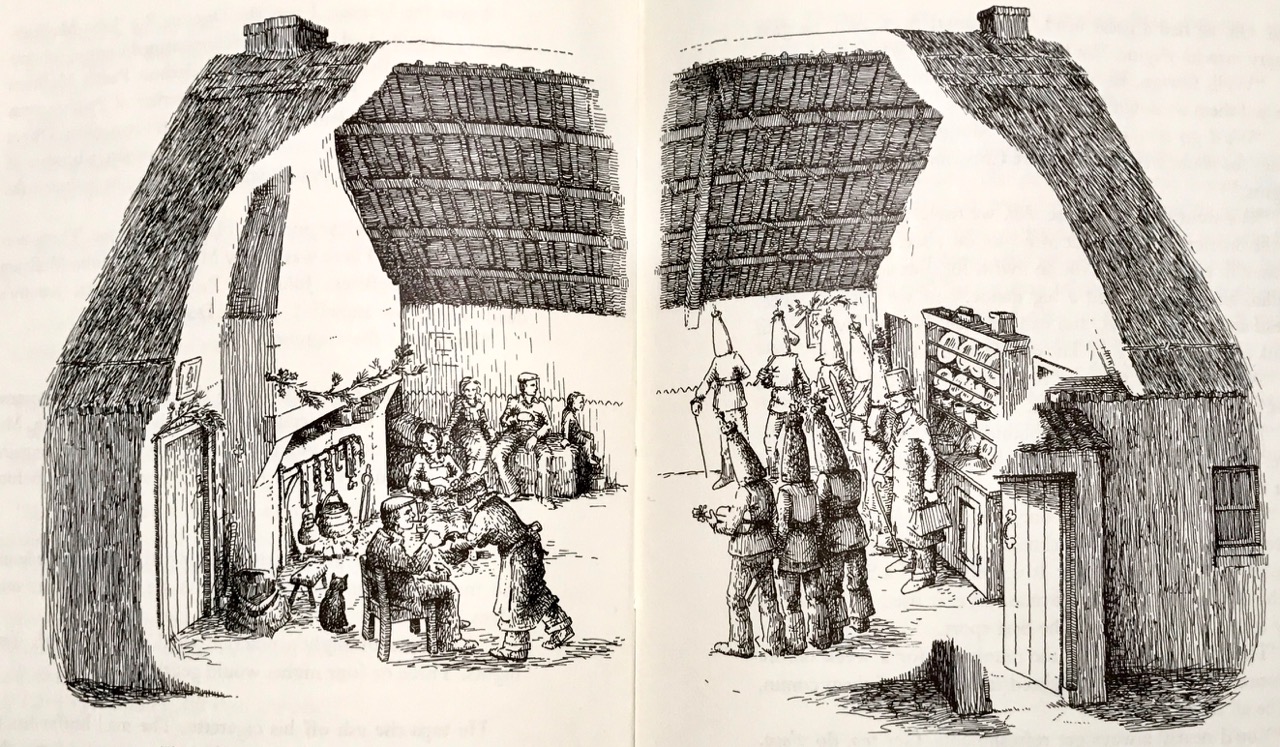
Enniskillen, from a photograph dated 1900, and Henry Glassie’s illustration of the mummers ‘Doin the Town’ as remembered in the 1970s

I like the way the book is set out. One section transcribes a number of conversations that Glassie has with people who remembered – and had been involved with – the mumming tradition.

…Most of the kitchens at the centers of those white houses were opened willingly, generously to me. My Americanness set me outside the local social categories, so I got on well with people of opposed political and religious persuasions. More of the people were Catholics than Protestants, more were men than women, more were old than young. Almost all had made courageous adaptations within the terrors that frame our lives. That was what interested me most: how daily life passed sanely, even artfully, despite armored cars hurtling down the country lanes, despite bombs that cracked the air and rattled the windows. I had forgotten all about mumming. Then one evening Mrs Cutler and I were chatting about Christmas and she mentioned the mummers’ arrival as the season’s high point. Suddenly excited, I asked if any of the play’s performers were still alive, and she listed people I knew well. All of them were men in their sixties and seventies who had begun to stand out in my thinking as exceptionally energetic, outgoing, and articulate. From that time on, I asked many questions about the drama, its performance, meaning, and purpose. I learned that the memory of mumming is cherished…
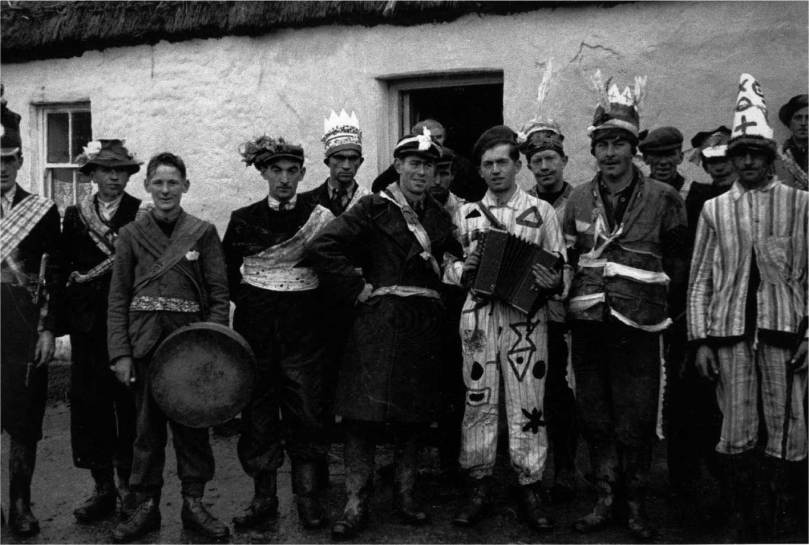
wren-boys

Upper picture – Wrenboys from Athea, Co Limerick, 1946 and below – ‘Mummers hunting the wren’ in Macroom, Co Cork, around 1950

Glassie talks at length to two brothers, Peter and Joseph Flanagan, who have very clear memories of taking part in the mumming.

“…We’d just take every house that we faced, whether we’d be admitted or not. We’d just take every house that we’d face. Of course, there was people on the other hand that wouldn’t admit them because it might frighten the youngsters, you see, or cause some confusion. That’s the way. That’s the way it goes now. So, You all stood at the door and…”

He twists and rapidly knocks five times on the table.

“…’who’s there?’

“…’Captain Mummer. Any admission?’ Yes, aye, or no: that was the way. ‘Any admittance for Captain Mummer and his men?’

“and if the person was pleased to admit you, well, they’d open the door. Throw it wide open for you.

“And Captain Mummer walked in.”

Peter moves quickly from his seat and down the kitchen. His heavy boots sound sharp on the floor. He closes the front door behind him, raps on it thrice, and re-enters. He strides ten feet into the kitchen and stands to deliver his lines, turning his torso to project to the audience assembled in a semi circle that runs from the front table past the hearth to the back table. Joe and I are fixed upon him…

“Here comes I, Captain Mummer and all me men.

Room, room, gallant room, gimmee room to rhyme,

Till I show you some diversion round these Christmas times.

Act of young, and act of age, the like of this were never acted on a stage.

If you don’t believe in what I say, enter in Beelzebub and he will clear the way.”

Frowning, Peter returns to his stool. It has been years since he has thought of the rhymes. “Let me see now,” he says, and sits repeating the speeches of Beelzebub and Prince George under his breath. Joe picks up the large turf out of the fire with the tongs and sets them at the front of the hearth. He sweeps the thick ashes off the iron to his side with a besom, places new turf against the backstone, and arranges the old coals next to them. The smoke and glow increase as the new turf ignite. Joe, too, went mumming, but he went out less often than Peter and cannot remember the part he played. He sits back as Peter starts in again…

Henry Glassie’s drawing of ‘how a mummer’s hat is made’ together with two examples from more recent times

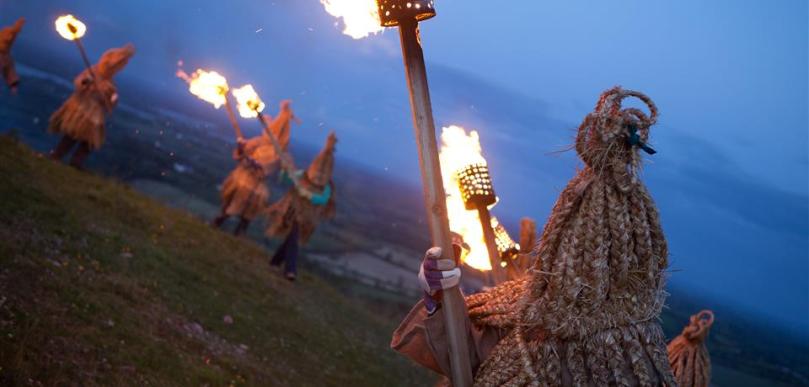
Glassie’s writing goes on to describe the recollections of the play from those who undertook the performances. It is an invaluable record: his informants have now passed away. They would probably be surprised to know that their plays have not been lost: a new generation is performing in the north – and elsewhere on the island of Ireland. They would be even more surprised, perhaps, to learn that their own play breathes again: there is a Mummers Centre in Derrylin and the Aughakillymaude Community Mummers (Aughakillymaude translates as the wooden field of the wild dog) perform regularly in the area around Christmas time once more, while at other times they travel across Europe keeping the spirit of mumming in Ireland very much alive:
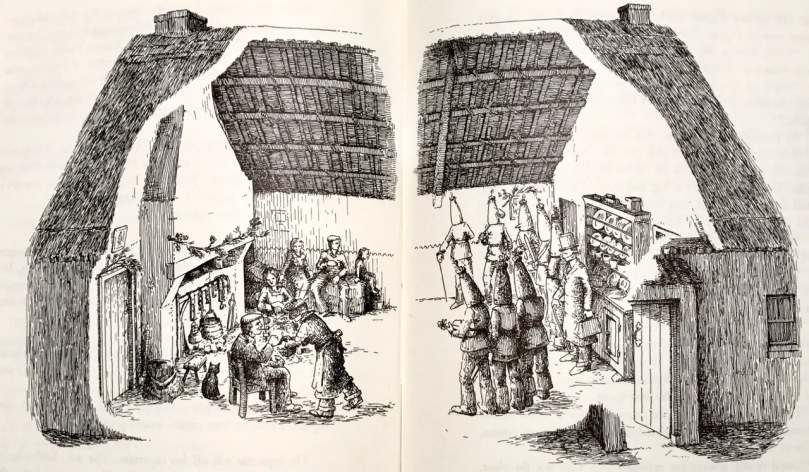
the performance

Henry Glassie’s reconstruction of the performance before the hearth – above. Below – Aughakillymaude Community Mummers in full cry
aughakillymaude-mummers

Aughakillymaude Community Mummers in full cry (above)  and (below) Henry Glassie’s reconstruction of the performance before the hearth

Ireland’s Santa Claus!

You may remember my excitement when – a few years ago now – I found out that the real St Valentine is interred in the Carmelite Church in Dublin. But here’s a palpable marvel: at Jerpoint, Co Kilkenny,  the bones of St Nicholas are reputed to be buried.  Yes – the Santa Claus St Nicholas! Tradition has it that a band of Irish Norman knights from Kilkenny went to the Holy Land to take part in the Crusades. As they headed home to Ireland, they ‘seized’ St Nicholas’ remains, bringing them back to Jerpoint, where the bones were buried – some say – under the floor of the Abbey (others say they repose nearby at the old church of St Nicholas).

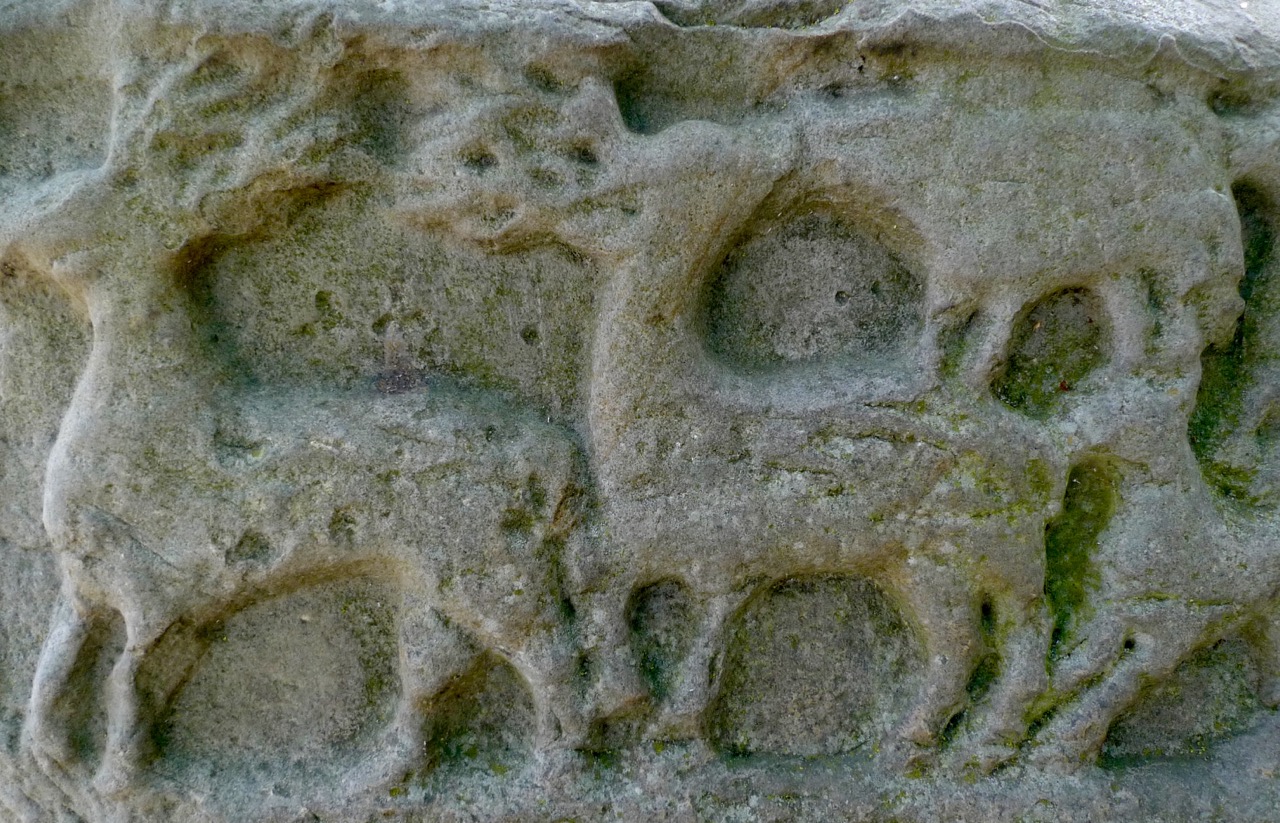
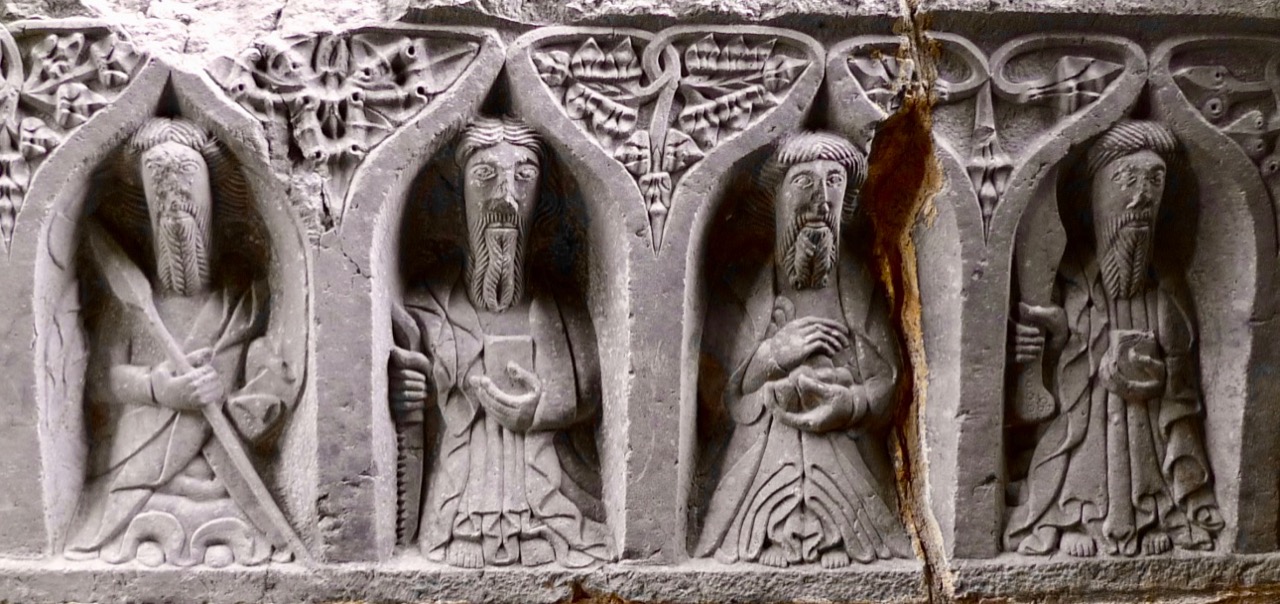
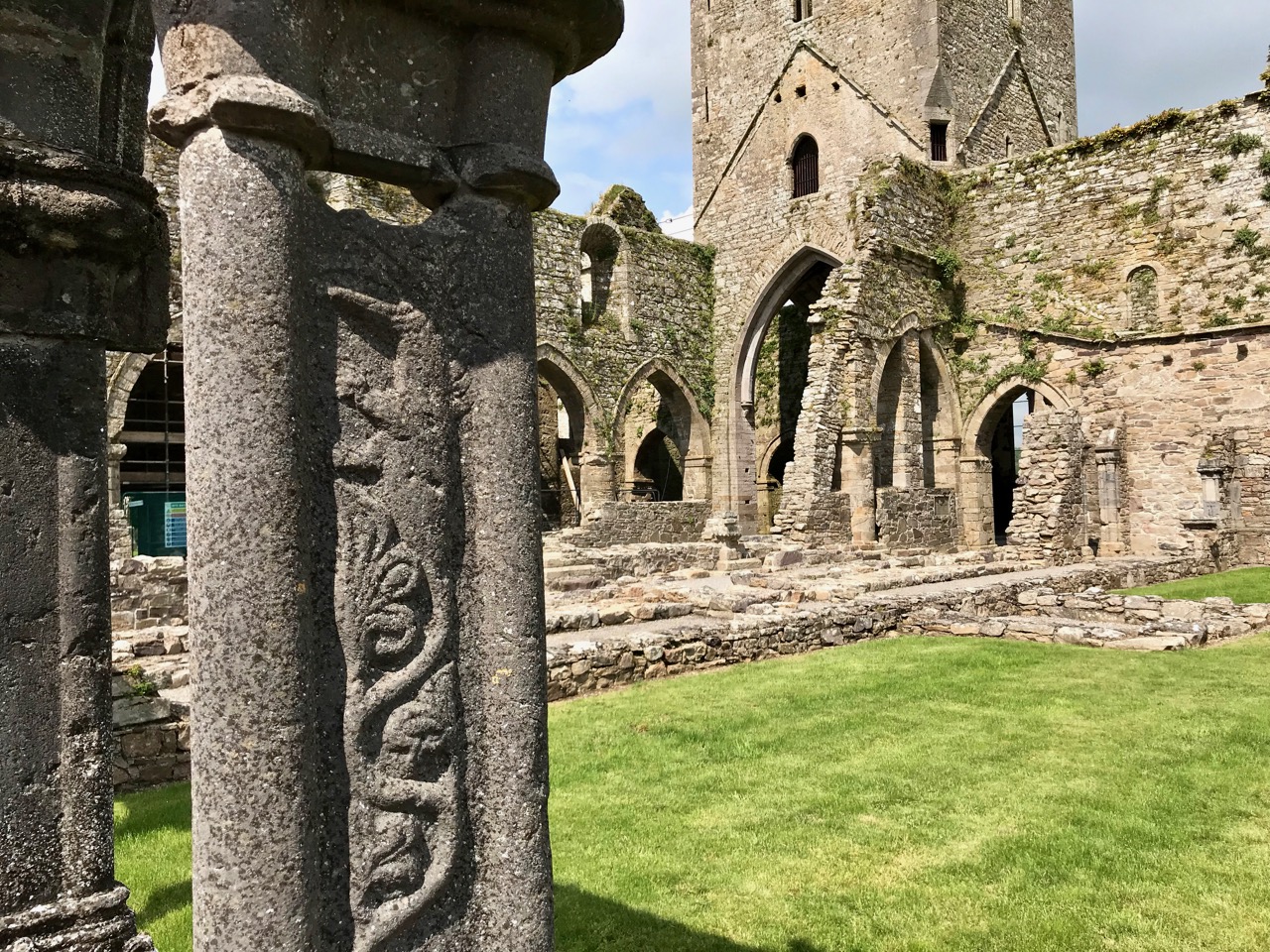
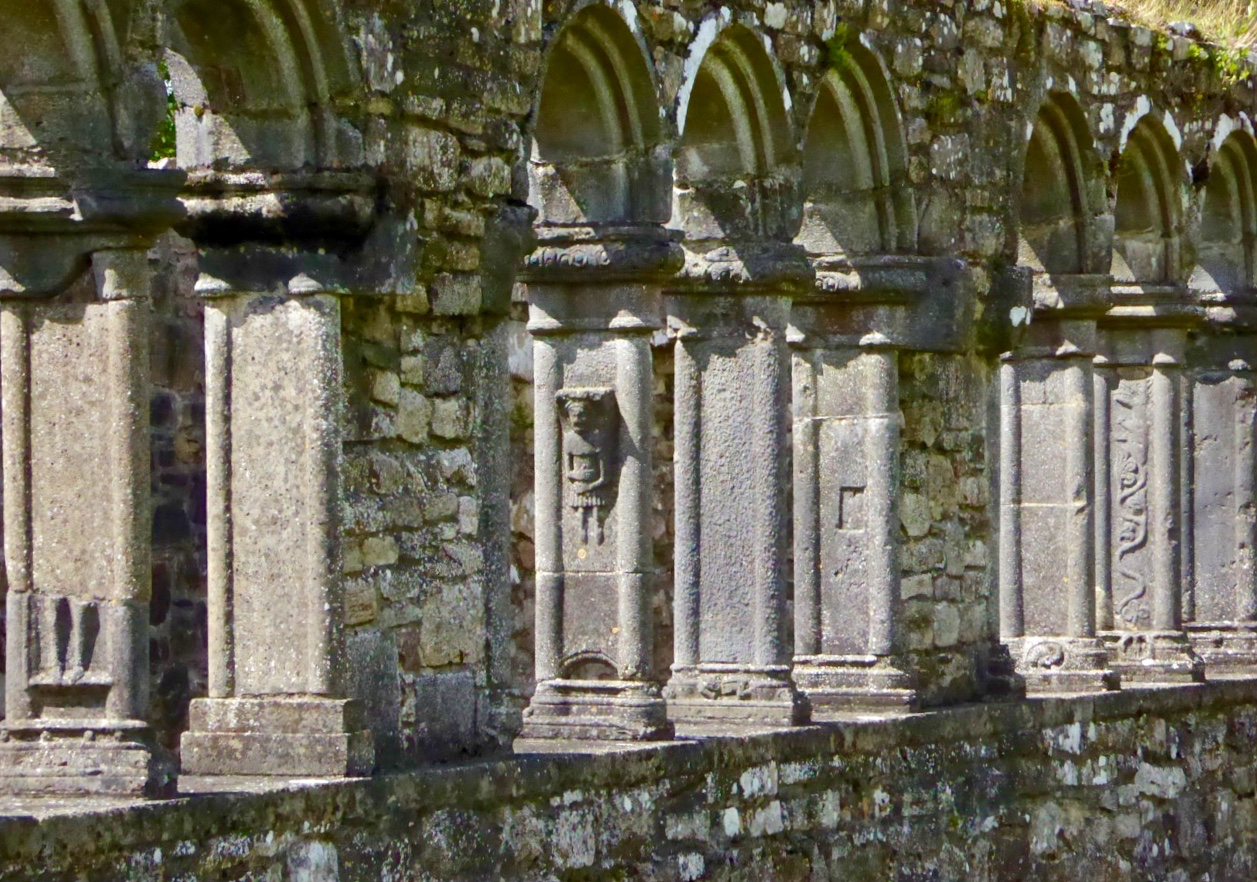
We first visited Jerpoint back in 2015, on a trip that took us to County Meath where we explored the monastic city of Kells (the famed book was written and illustrated there) and also where we found the medieval image of Santa’s reindeer in the header of this post! It is carved on to the base of the town’s Market Cross. We also visited Kells Augustinian Priory – a different Kells but in County Kilkenny  – and Jerpoint Abbey itself, a Cistercian monastery rife with carved figures, some up to 900 years old. Look at the ‘Weepers’, above, carved by members of the O’Tunney family – sculptors from Callan who worked in the 15th and 16th centuries. These four represent saints and show how they were martyred: St Thomas with a lance (left), St Simon with a saw, St Bartholomew holding a skin (he was flayed to death) and St Paul with a sword.

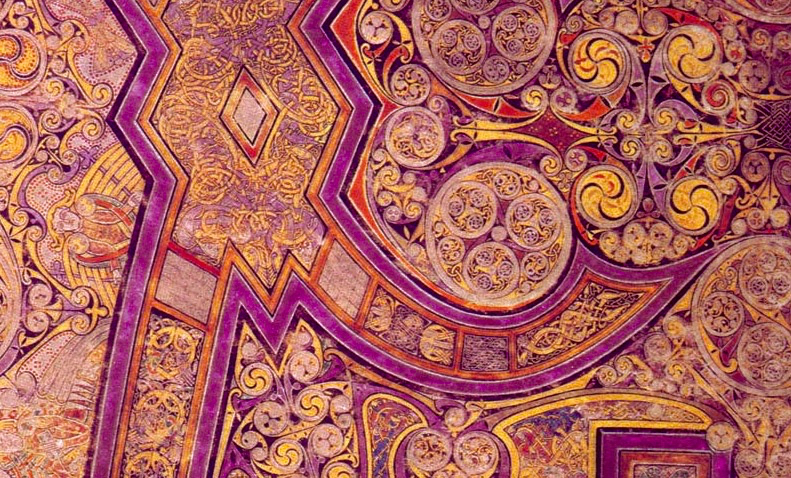
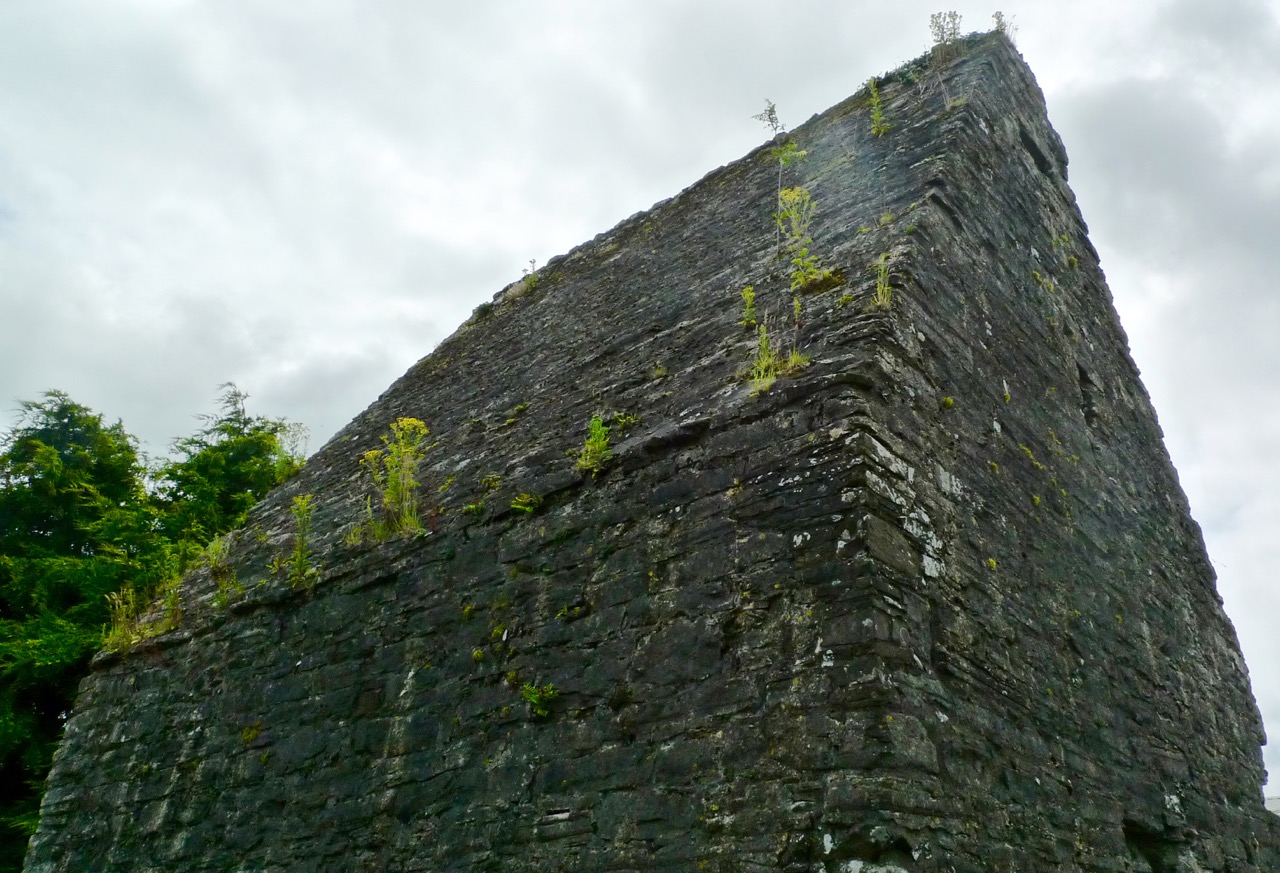
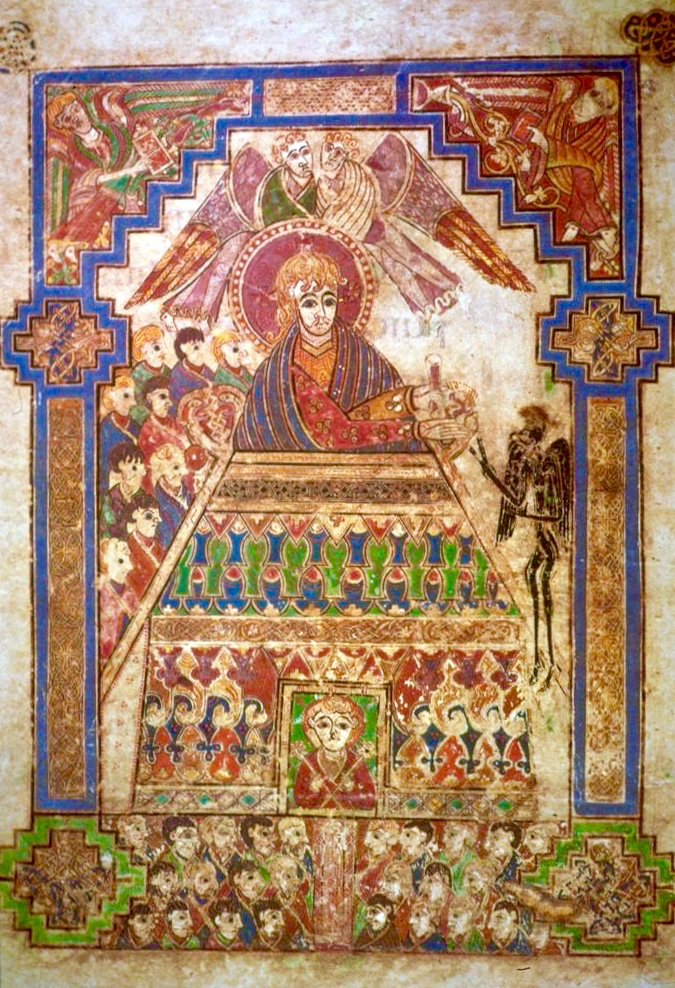
The Book of Kells is worth more than a passing mention, especially as some commentators have likened the medieval carvings at Jerpoint and other contemporary monastic foundations in Ireland to ‘illuminated manuscripts cast in stone’, because of the richness of the characters, the decoration and the detail. The Book (that’s just one example of the incredibly detailed capitals on a single page, above) probably dates from the 8th or 9th centuries and may either have been written in its entirety in Kells, or started by St Columba’s community in Iona and completed in the Scriptorium in Kells. That building still exists! In fact it (or something very like it) is illustrated in the book. It’s known as St Colmcille’s House – we went to have a look at it, and were fortunate to have a tour by its guardian.

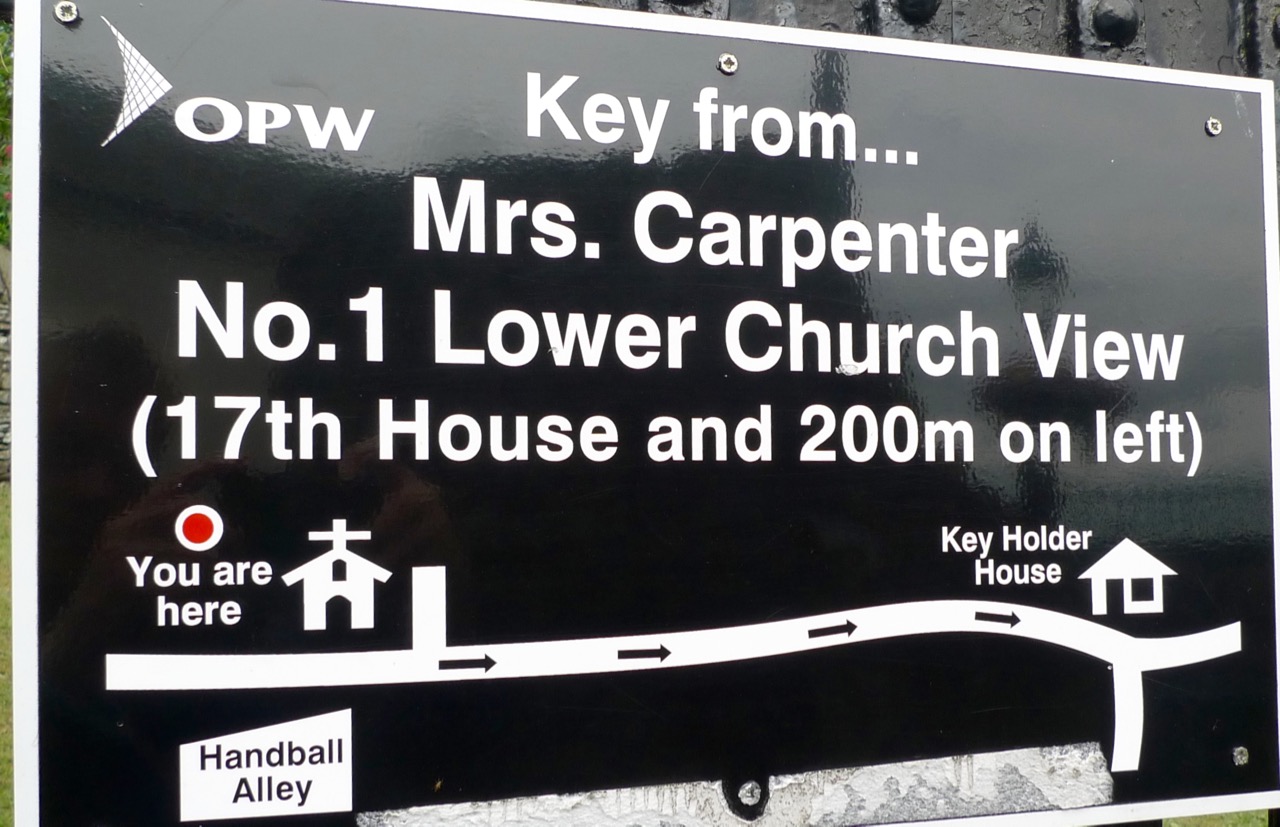
Here is the ancient stone roofed oratory of St Colmcille’s House (above), supposedly the place where the Book of Kells was written – or, perhaps, completed. The upper floor of the building has a small window oriented to focus sunlight on the writing table. St Colmcille’s bed was also kept here – a large and heavy stone slab – until it was stolen in the 1950s! A few hundred years earlier (in 1007)  the Book itself was stolen from Kells and eventually found in a nearby bog. It stayed in Kells until 1654, when it was sent to Dublin for safekeeping: it is now on permanent display in Trinity College.

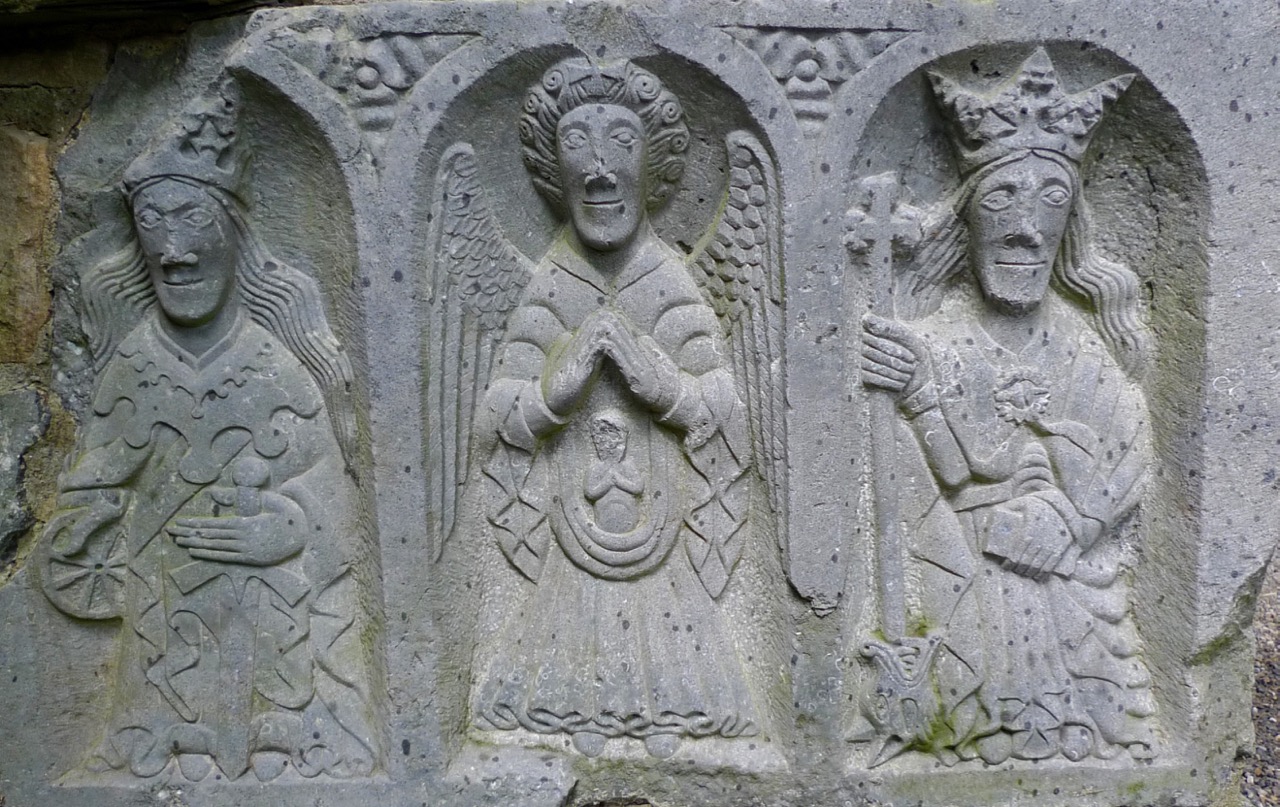
(Above) another page from the Book of Kells, which may be an illustration of the Scriptorium at Kells, and – perhaps – a self-portrait of the writer: see him sitting in the doorway to the house working away with his quill pens. Back to the medieval feast at Jerpoint: the trio below, from Jerpoint, are St Catherine – with her wheel, Michael the Archangel and St Margaret of Antioch – who is conquering a Dragon.
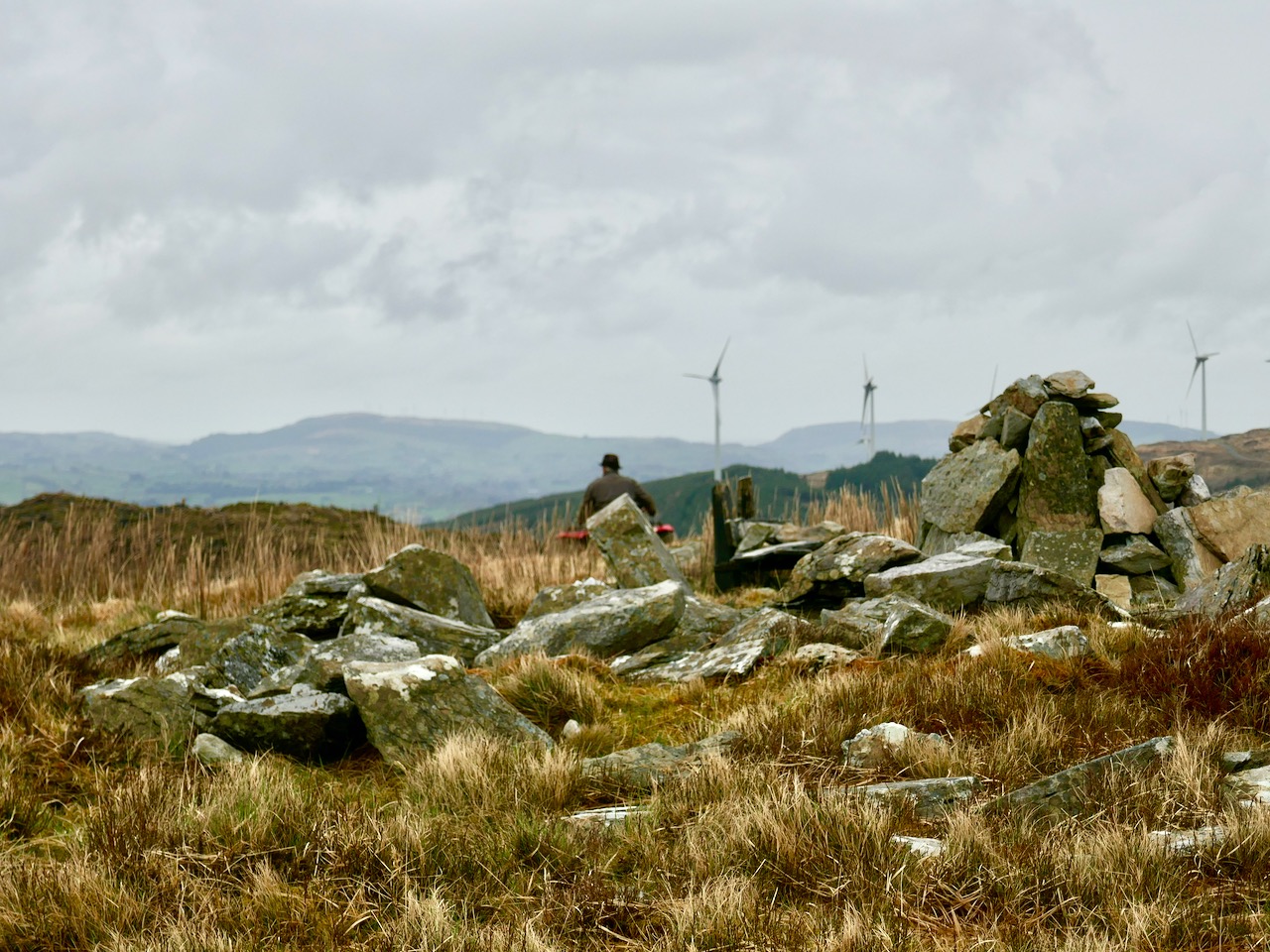
At Jerpoint it’s not just the tombs and the Weepers which fascinate: there is a 15th century cloister which, in its heyday, displayed a riot of carvings both saintly and secular. Some of these are in situ; some are partially destroyed and others have been recovered during archaeological excavations, and placed on display in a little museum. Among them we identified knights, ladies, animals fantastic and real, and ‘ordinary folk’ – including a man with stomach ache!
‘The Bones of Santa Claus’ (Author Bill Watkins)

Where lie the bones of Santa Claus, to what holy spot each pilgrim draws
Which crypt conceals his pious remains, safe from the wild wind, snows and rains?

It’s not in Rome his body lies, or under Egypt’s azure skies
Constantinople or Madrid, his reliquary and bones are hid.

That saint protector of the child, whose relics pure lie undefiled
His casket safe within its shrine, where the shamrocks grow and rose entwine.

Devout wayfarer, cease your search, for in Kilkenny’s ancient church
Saint Nicholas’ sepulchre is found, enshrined in Ireland’s holy ground.

So traveller rest and pray a while, to the patron saint of orphaned child
Whose bones were brought to Ireland’s shore, safe from the Vandal, Hun and Moor.

Here lie the bones of Santa Claus, secure beneath these marble floors
So gentle pilgrim, hear the call, and may Saint Nicholas bless you all!

I hope this topical little foray into some of our archives demonstrates once more how easy it is to find history (and legend) wherever you go in this special land. In fact, it’s very difficult to travel far here without tripping over the past. It’s often fairly low-key. Most sites are protected as scheduled monuments; some are in the good care of the Office of Public Works and have guides and visitor centres. Many are remote, open to the wind, rain and sunshine and free for us all to visit: very often you will have the history all to yourself.

The Enigmatic Bullaun

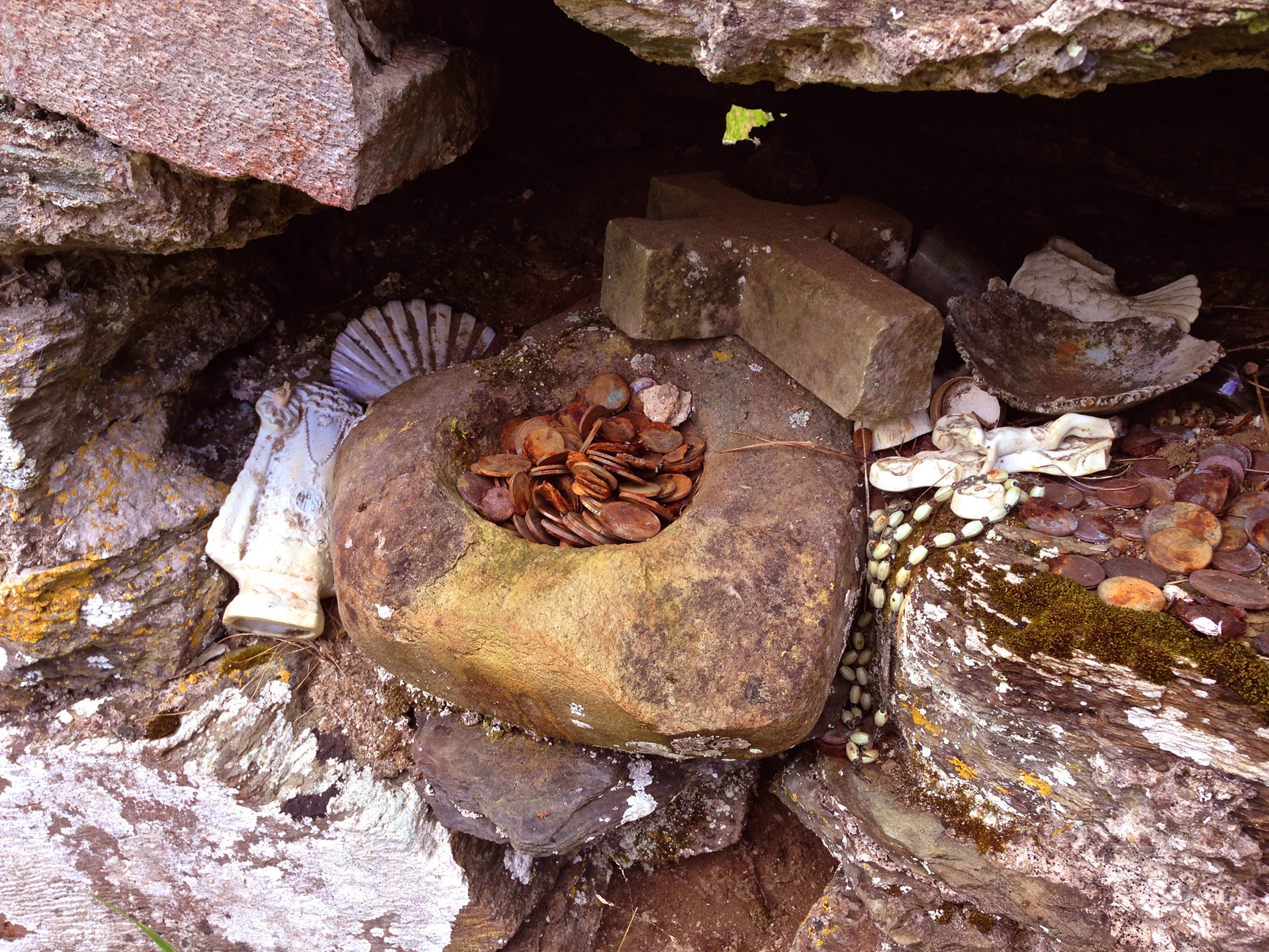
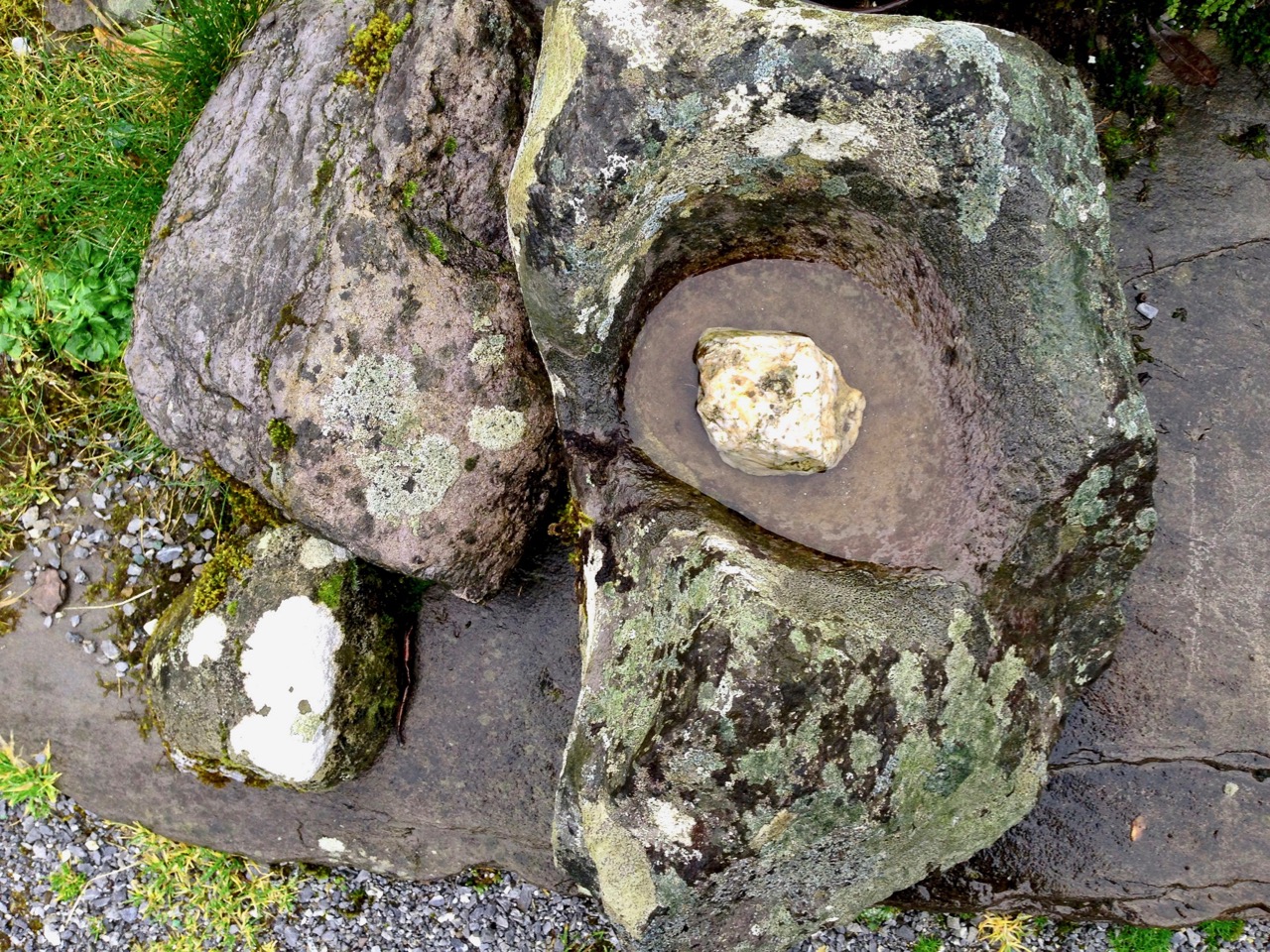
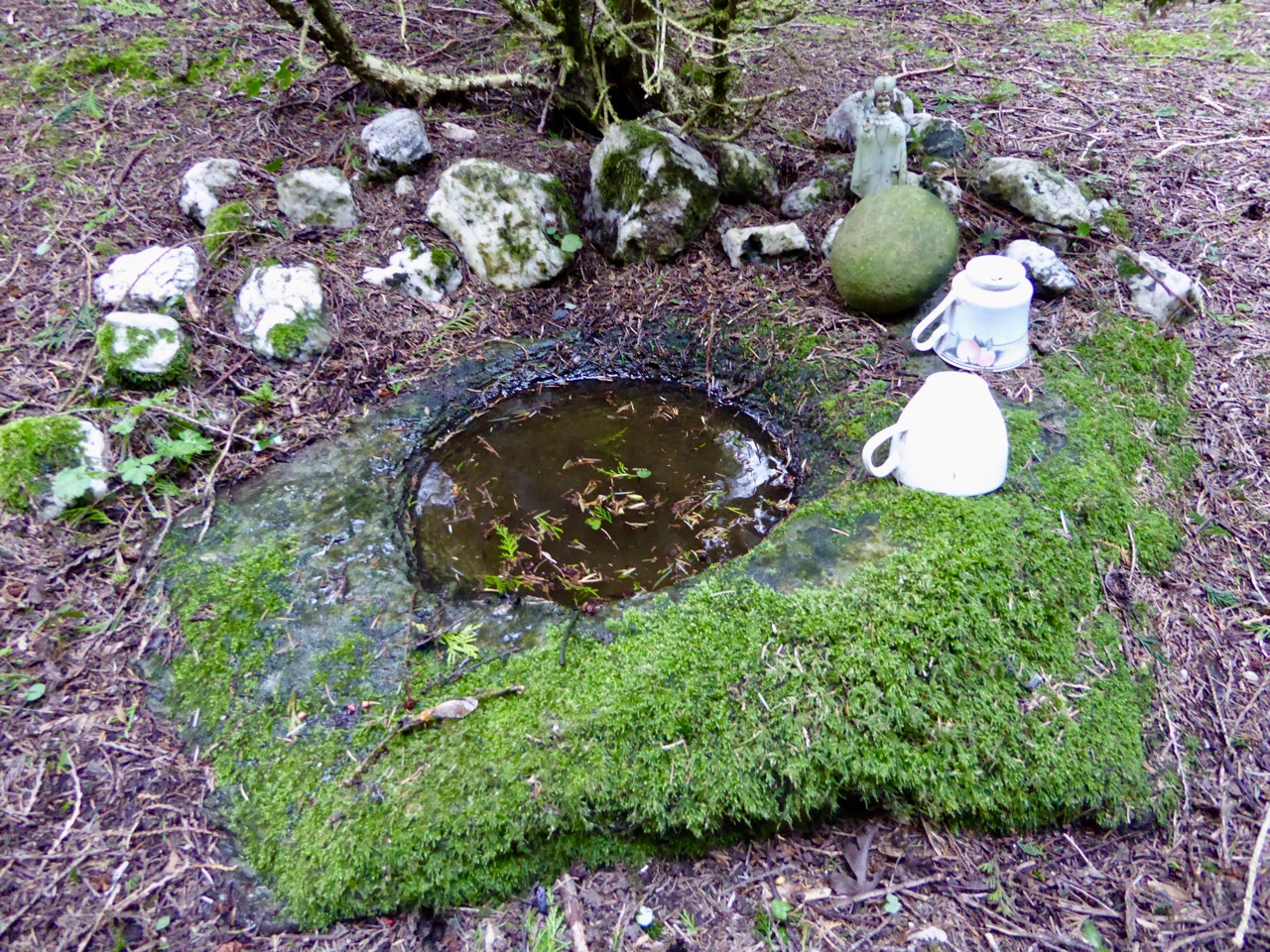
Bullaun Stones abound in Ireland. They are usually found nowadays at sites with ecclesiastical connections, as in the example above at Maulinward, an ancient West Cork burial ground. This association does not reduce or affect their traditional uses – according to folk convention – to cure or to curse. The Irish word Bullán means ‘bowl’ – a water container. At pilgrimage sites, such as St Gobnait‘s, Ballyvourney (below), the bullaun stones often hold quartz fragments or smooth, rounded pebbles – perhaps incised with a cross – which are turned around each time a pattern or procession is completed.

The Maulinward example on the header picture shows how the tradition of making offerings at some of these locations continues to this day. At other sites, such as the one below, the hollowed-out stone filled with rainwater takes on the properties of a holy well, and is visited for cures or simply good fortune.

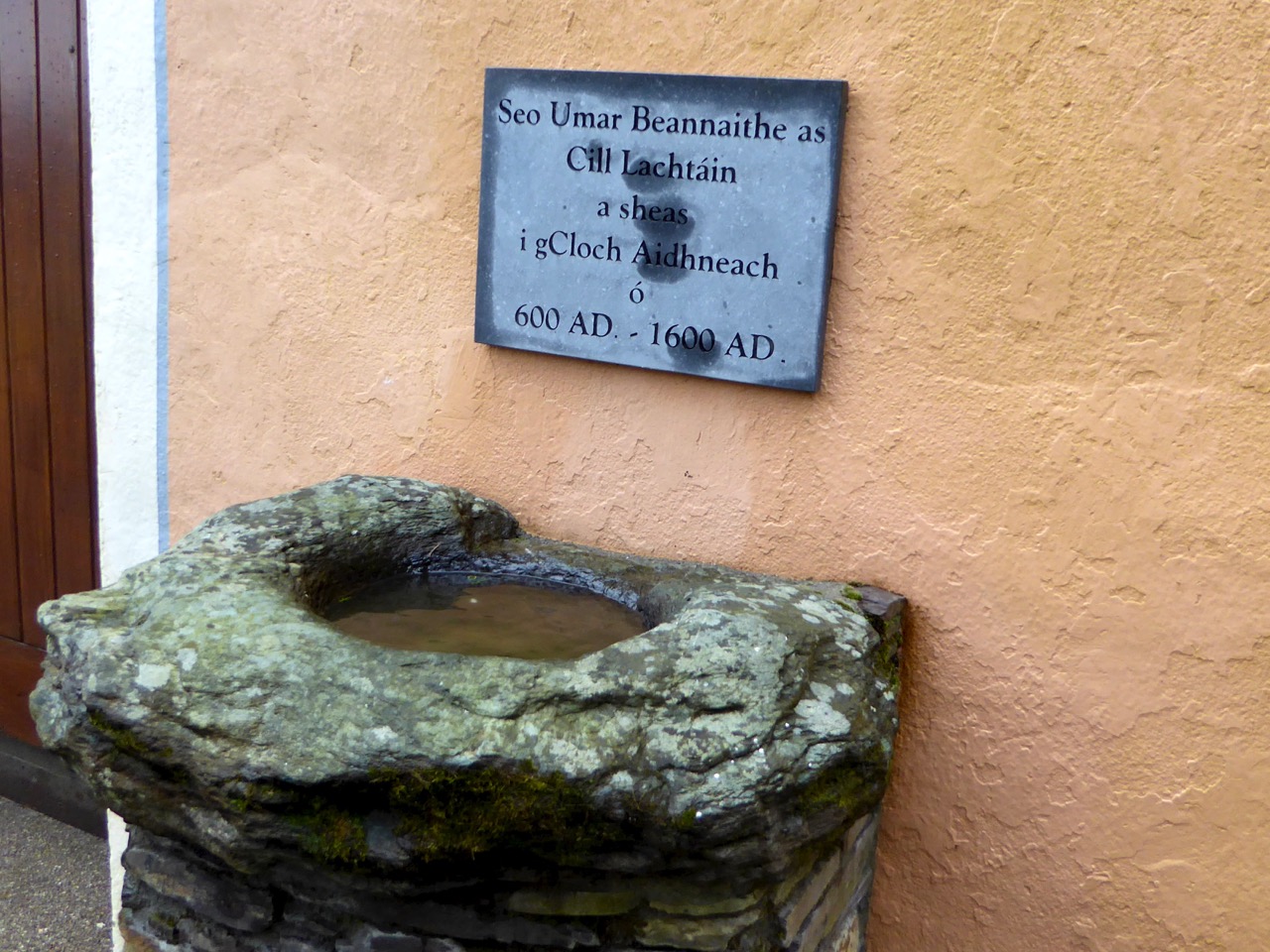
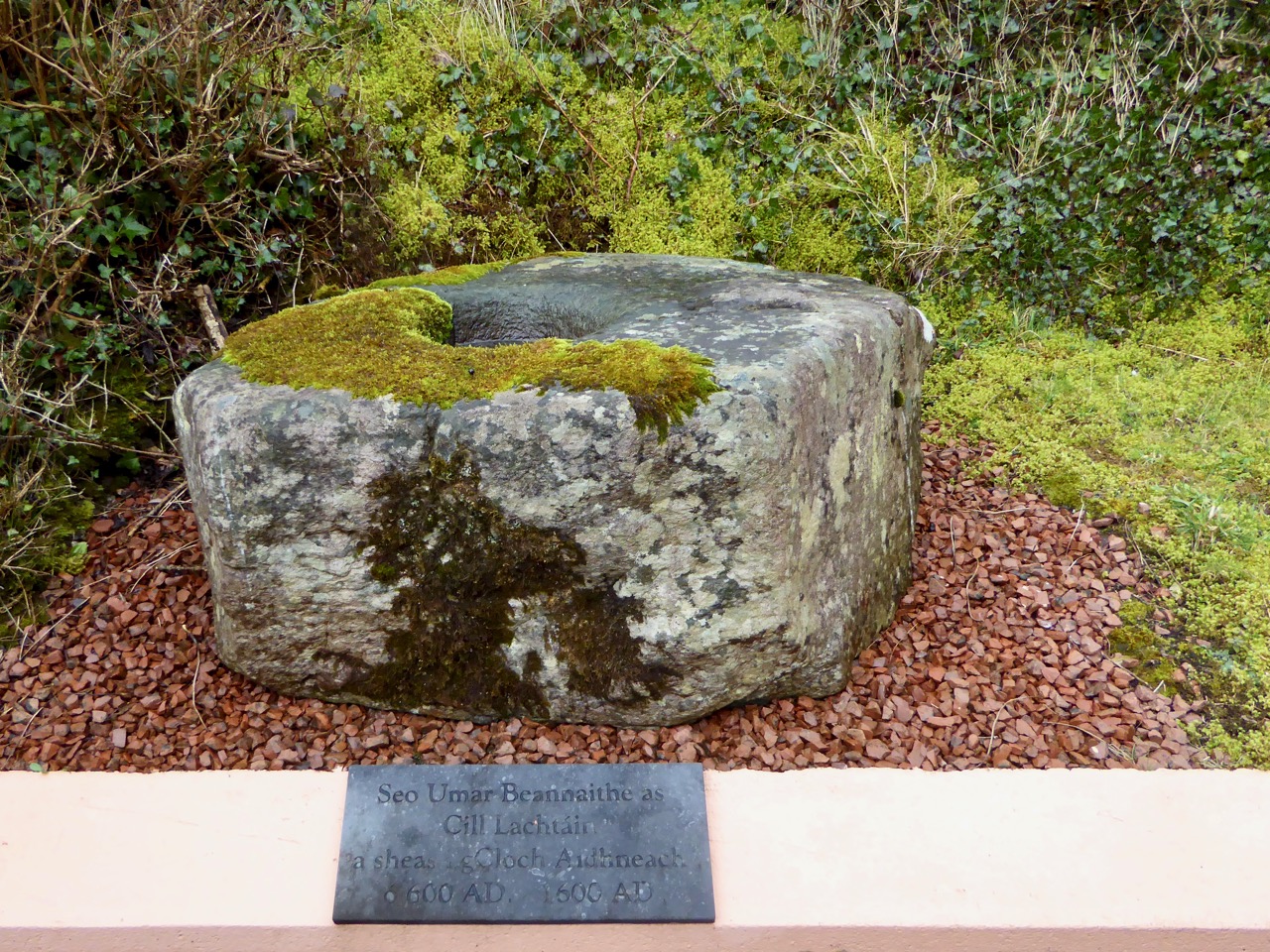
This example, outside the door of the church at Cill Lachtáin, Co Cork seems to have been mounted to perform as a holy water stoup: the plaque reads ” . . . This blessed font of Cill Lachtáin was standing in Cloch Aidhneach from 600AD to 1600AD . . . “ Others resemble fonts and are similarly associated with places of worship. Look at this striking stone from Timoleague Friary, whose purpose – according to tradition – is clearly stated:

In the sixth century, the Council of Tours ordered its ministers ” . . . to expel from the Church all those whom they may see performing before certain stones things which have no relation with the ceremonies of the Church . . . ”  Such an order doesn’t seem to have prevented folk customs of curing continuing into the twenty-first century.

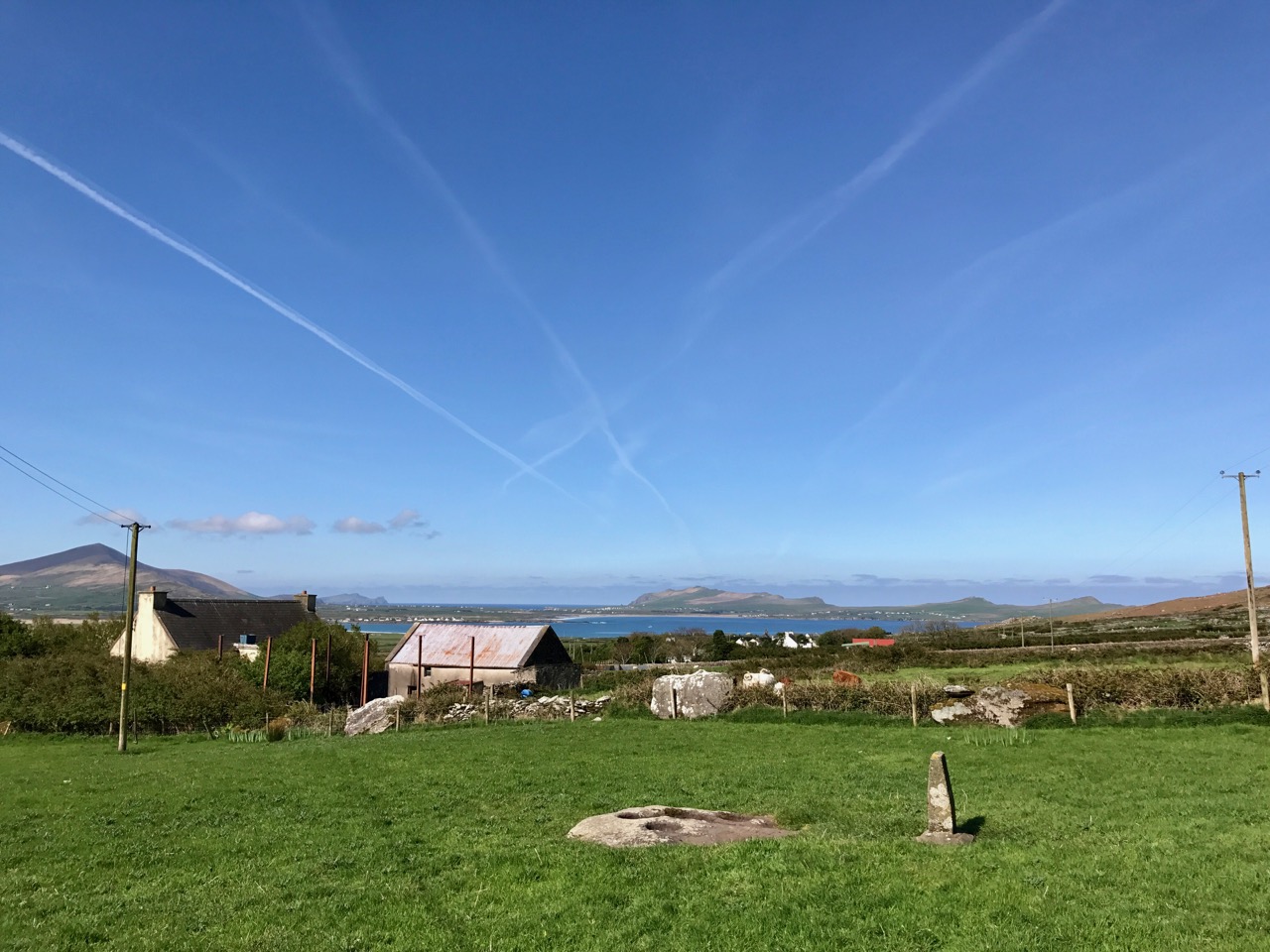
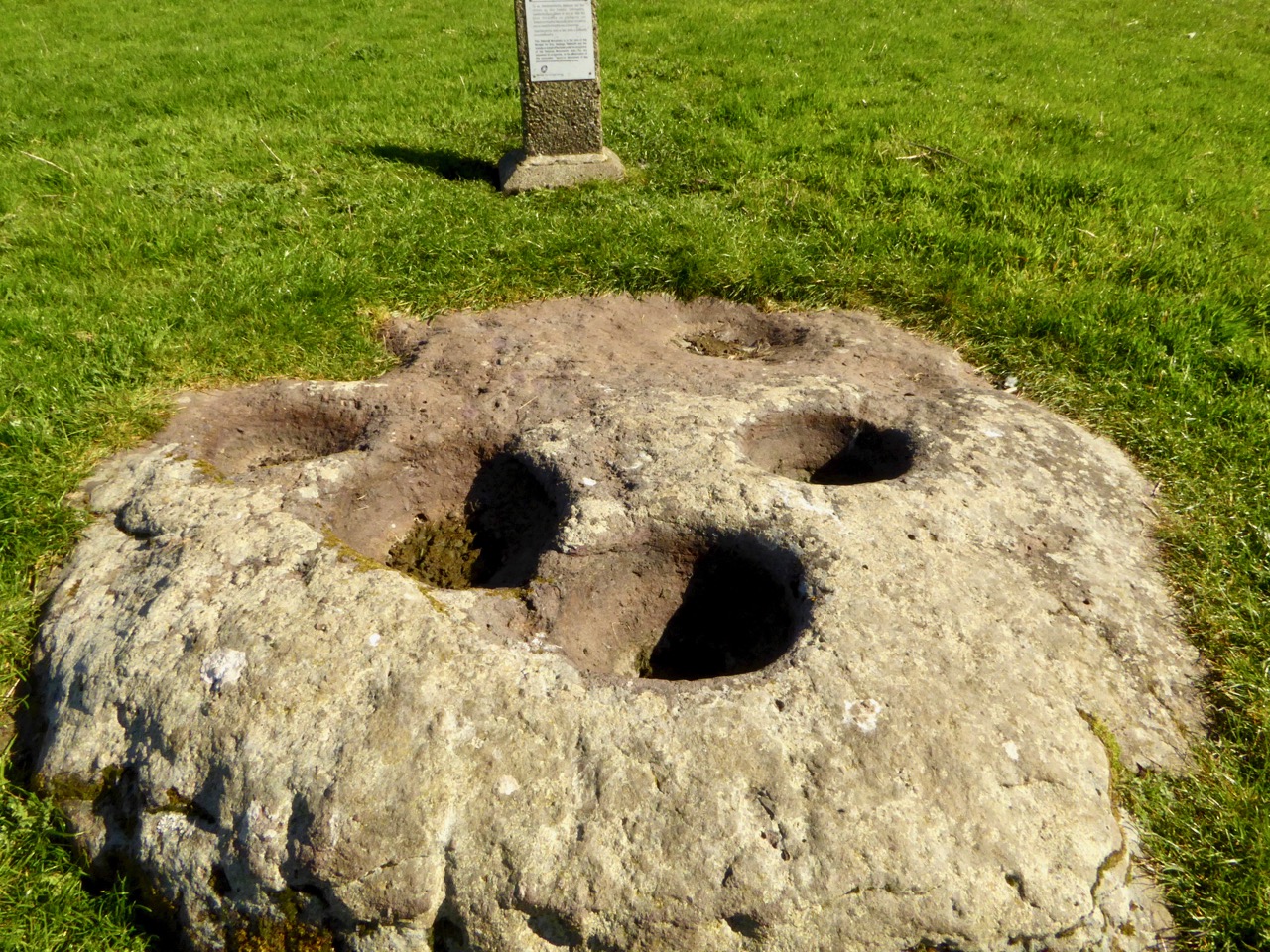
The ongoing use of bullauns as fonts, stoops or holy wells does not explain their original purpose (which is probably pre-Christian: here’s an interesting conjectural world view of the phemomenon), and it’s quite likely that we will never fathom for sure what they were for. The example above, at Kilmalkedar, Co Kerry is as enigmatic as they will get, with its multiple ‘basins’ carved into a large earth-fast boulder isolated in the middle of a field, although not far from a remarkably complex ecclesiastical site. But the one I find the most fascinating can be found along the Priest’s Leap road, a mere few steps away from our own home in West Cork . . .

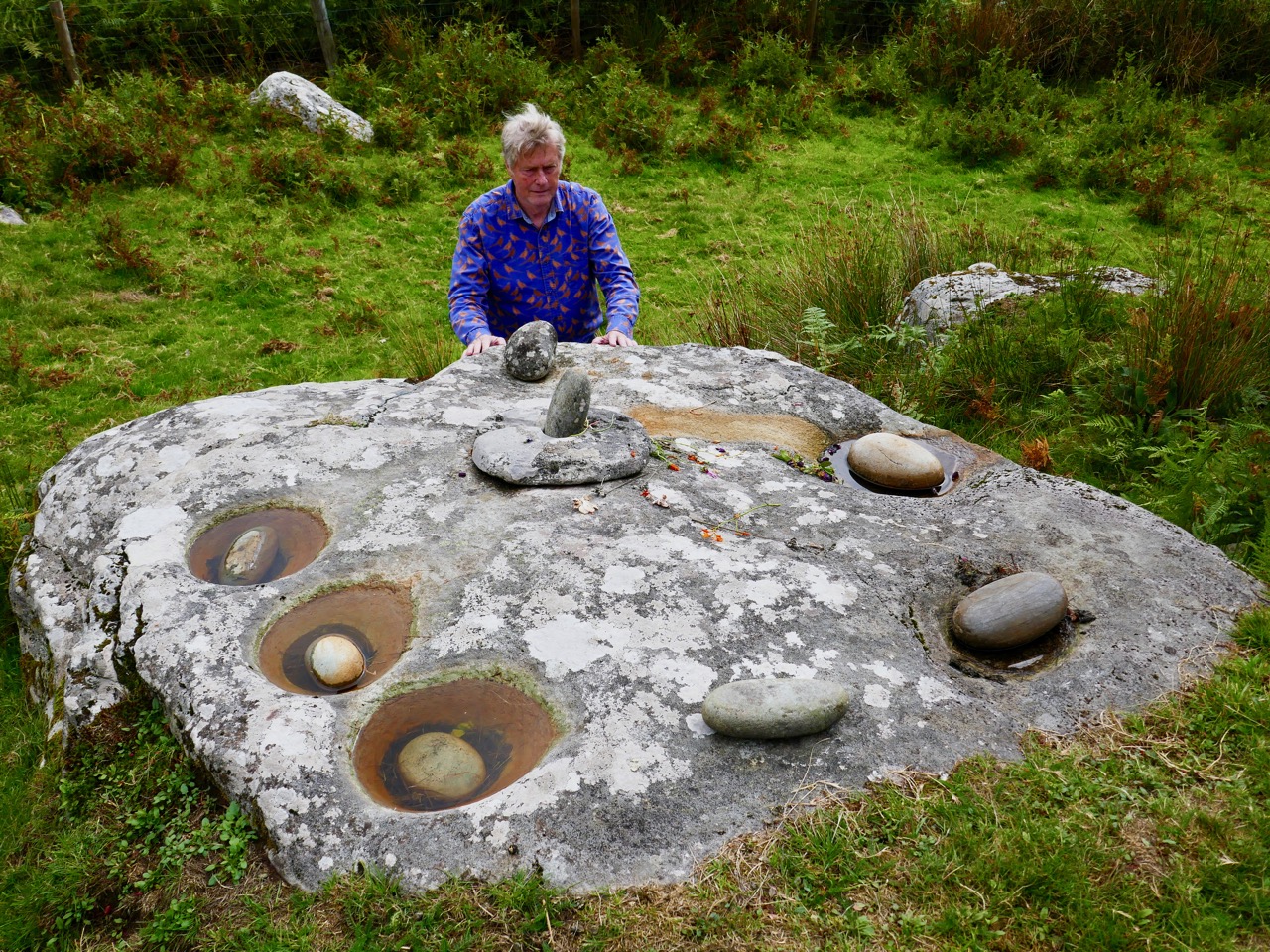
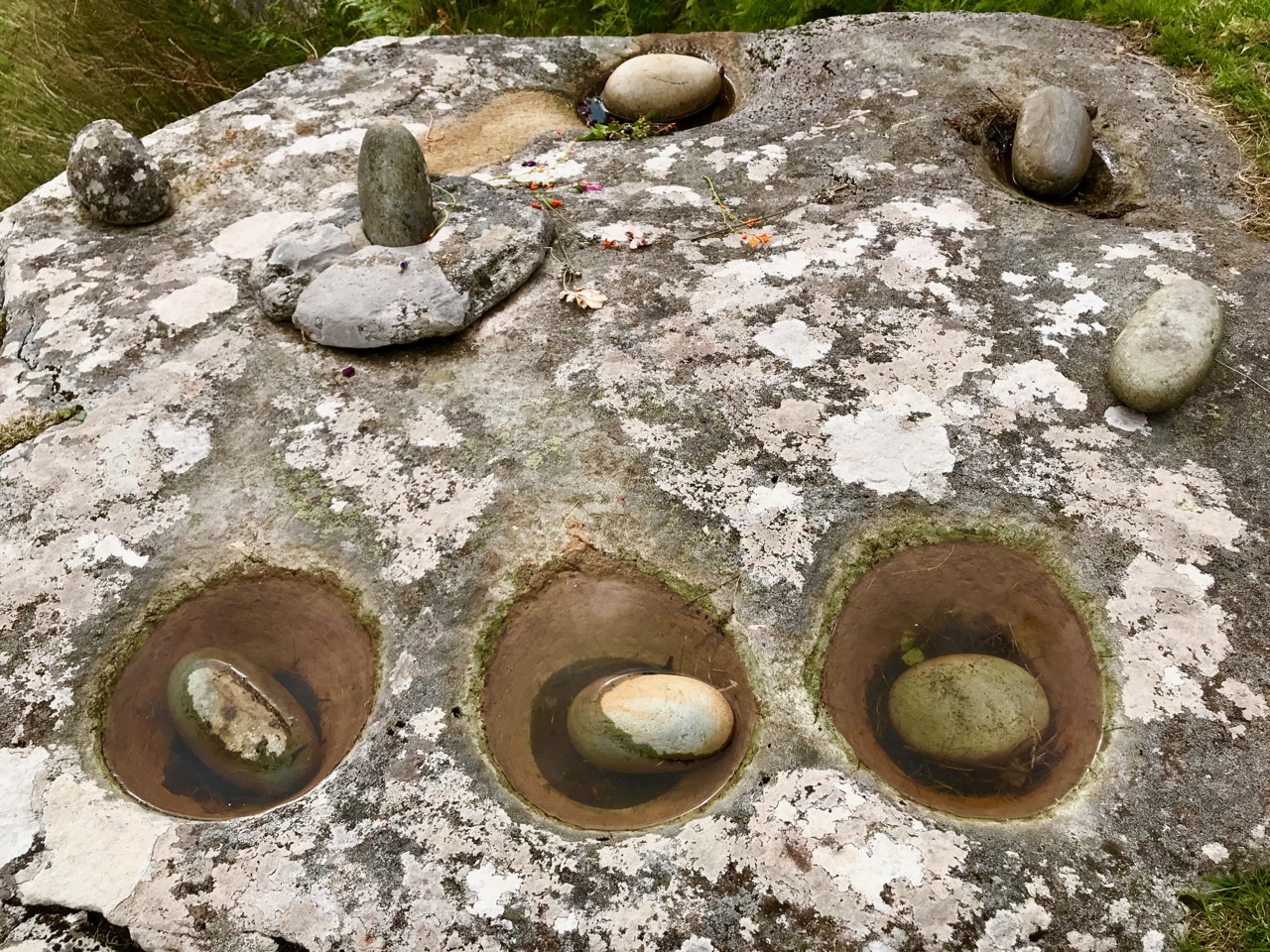
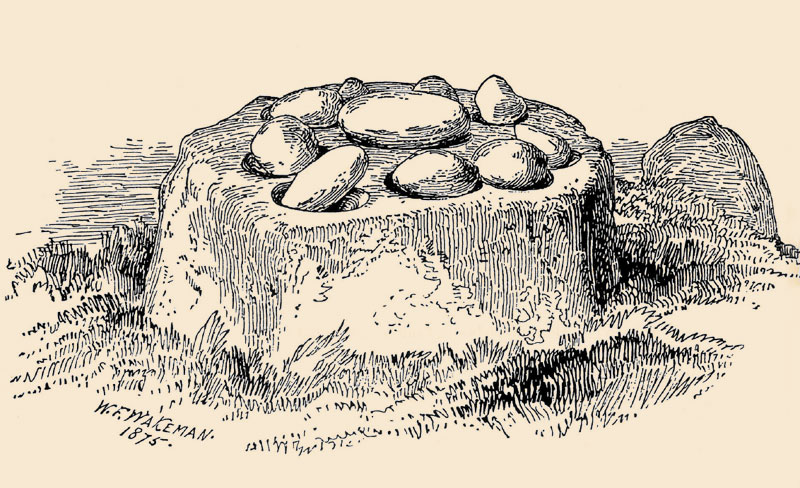
This rock outcrop – known locally as The Rolls of Butter – is large (I’m there to give it scale!) with seven scooped-out bullaun like basins and a somewhat phallic central upright stone. The basins each contain a large, smoothed pebble. Some folk traditions in Ireland identify such pebbles as ‘cursing stones’: “. . . if you wanted to put a curse on someone, you turned the stones anti-clockwise in the morning . . . ” However, the curse had to be ‘just’ otherwise it came back to curse you in the evening! The illustration below – of ‘cursing stones’ at Killinagh, Co Cavan was made by antiquarian W F Wakeman in 1875. He also noted the similar local folk traditions of these examples.

Many bullaun stones or stone groups around Ireland have been included in the National Monuments records, and number in the hundreds. Functional, magical, sinister? Who knows . . . Your guess is as good as anyone else’s. But one thing is certain – they are intriguing and mysterious. Keep a look out for them – as we do – in your travels around this land.

Note: this is a re-run of a post I published five years ago – but it’s been augmented, updated and – hopefully – improved!