Good Well Hunting: Duhallow

St John's Well 1

Amanda started her blog, Holy Wells of Cork, in February and oh my goodness she already has over 100 wells documented. Not just documented – recorded, photographed, mapped, described, researched and written up in a charming cheerful style that’s a hoot and a pleasure to read.
AB 1 Laitiaran

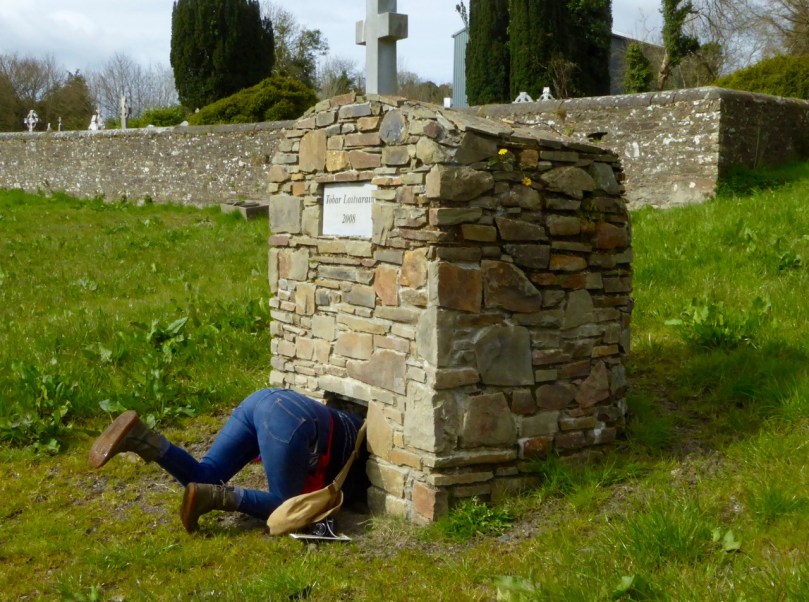
Standard Amanda shot as she checks out St Laitiaran’s Well  

Robert and I go along on her well-finding trips every now and then. Between accompanying Amanda, and wells we’ve gone to ourselves, we’ve visited about half the wells in her gazetteer. The sheer variety is astonishing, as also is the varying state of preservation. From muddy holes in the ground to gleaming and designed surrounds – holy wells come in all shapes, all sizes, and all conditions.
duhalloworiginal

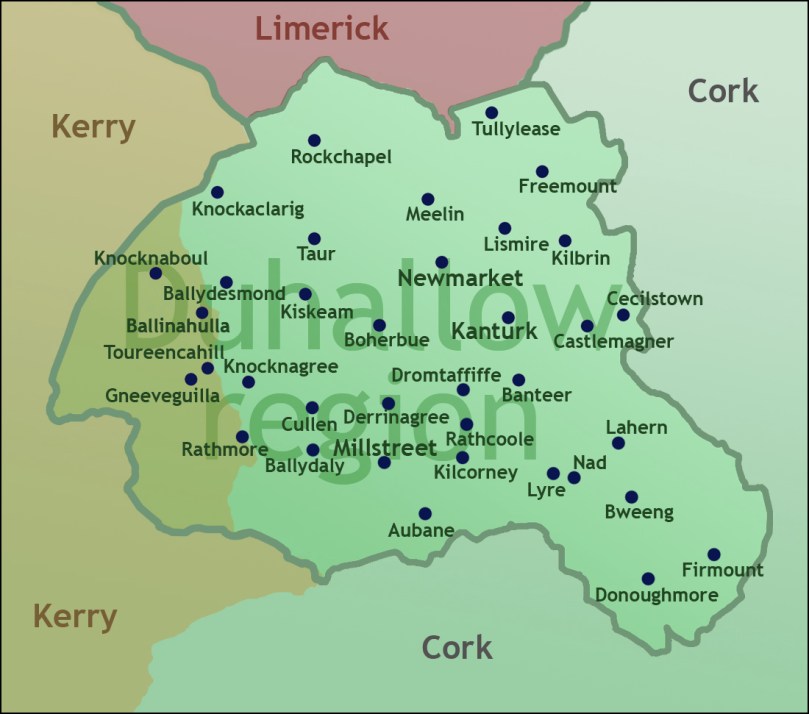
Duhallow – isn’t that a lovely word? It’s a lovely place too – a barony (part of Ireland’s old land division system) that occupies the northwest corner of the county of Cork. It’s mostly rolling hills and farmland, drained by the headwaters of the Blackwater River, with the Derrynasaggart and Boggeragh mountains to the south and the rich agricultural lands of Limerick to the north, while the Kingdom of Kerry lies just over the county border to the west.
Duhallow Sign

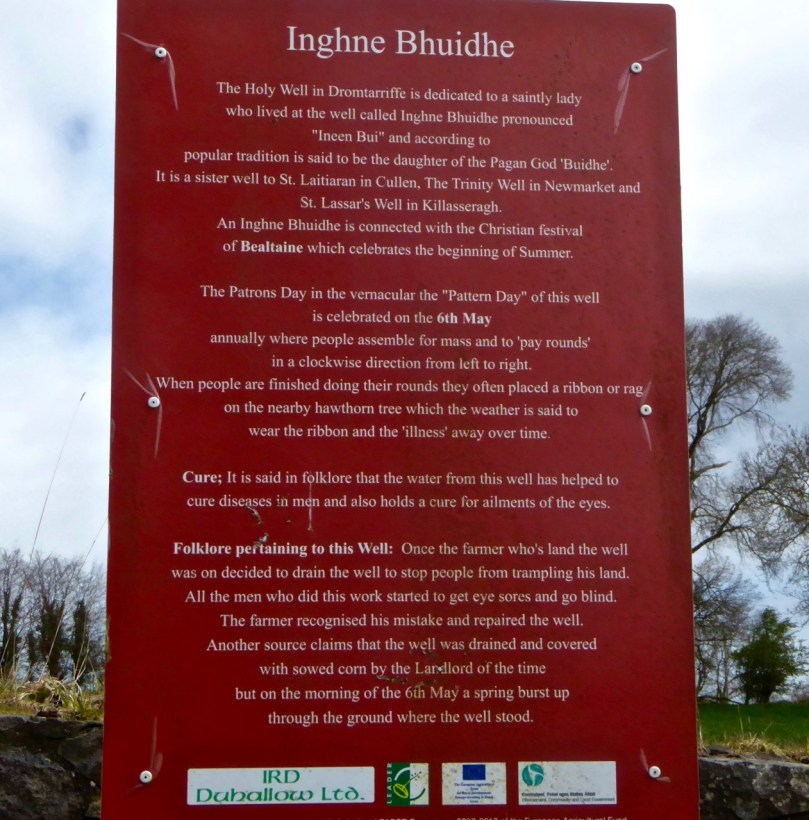
Duhallow has its act together when it comes to holy wells – the local development committee has developed a Holy Well Trail. A brochure leads you around the trail and at each well is a detailed history of the well, the saints associated with it, the cures attributed to it, and the rounds and prayers to be undertaken.
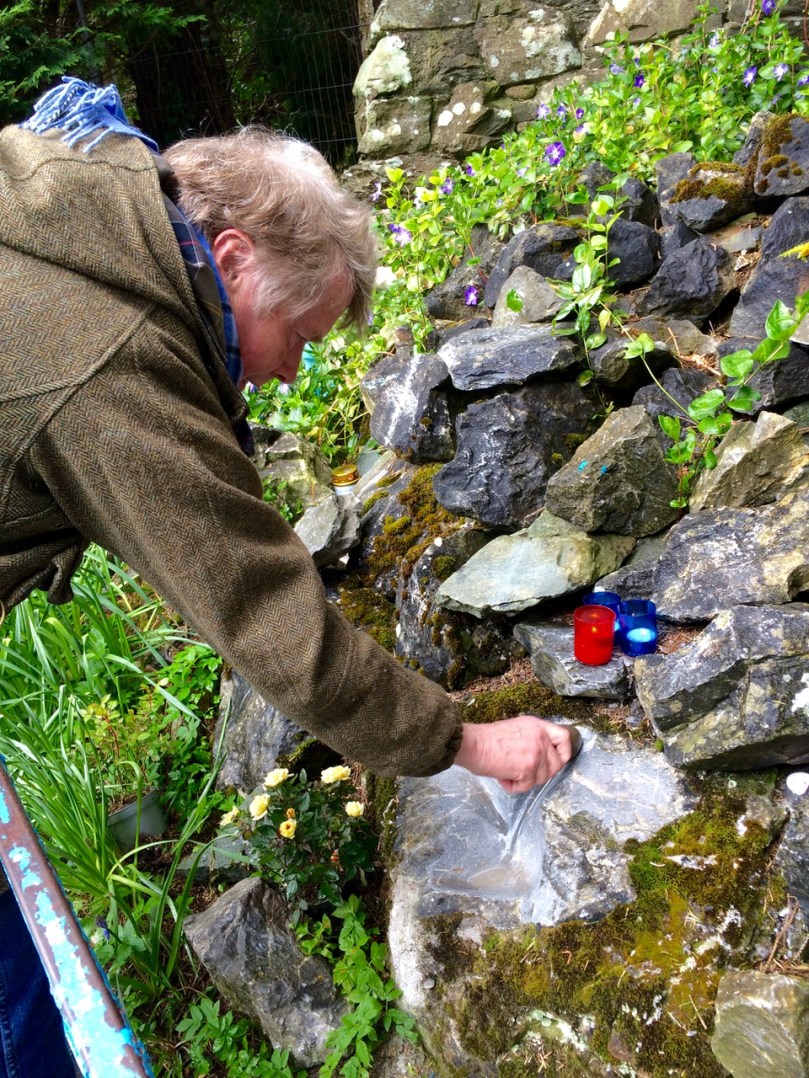
Tubrid Well Millstreet

Robert makes his markTubrid Well, Millstreet. Robert adds his mark to the cross inscribed by hundreds of pilgrims

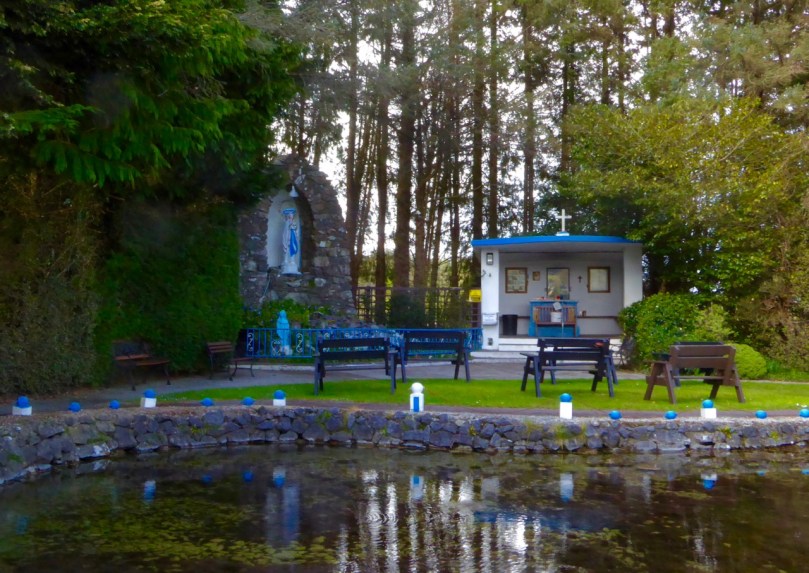
At  many of these sites mass is still said once a year and cups and bottles are provided so that you can drink, or take away, some of the water. The Tubrid Well outside Millstreeet is the largest and most active. While we were there people came and went and fresh flowers and candles were in evidence. This is a well that even has its own Facebook page!
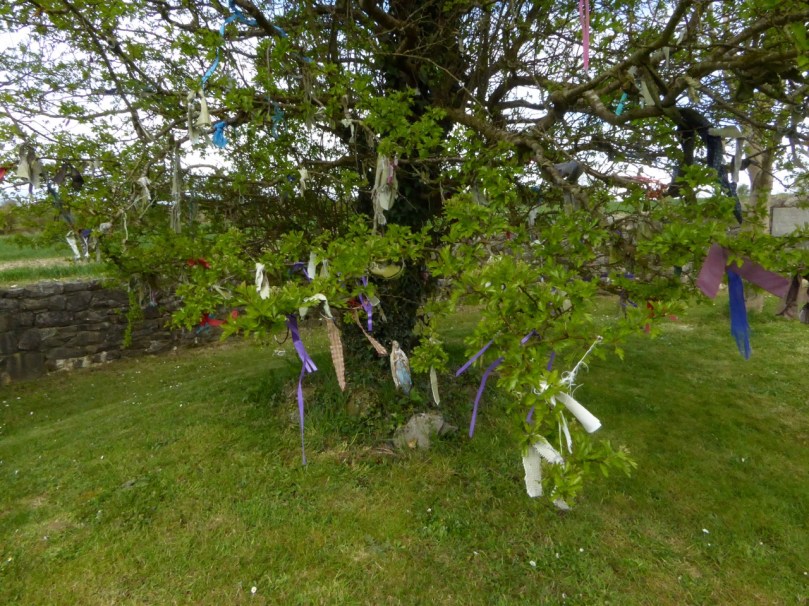
Inghne Buidhe rag tree

A rag tree at the well of Inghne Bhuidhe

The well devoted to Inghne Bhuidhe (Inyeh Bwee, daughter of Buidhe, the Yellow-Haired) provided a complete contrast – out in the middle of corn fields, surrounded by a low wall and with a rag-festooned thorn tree looming over it. This one had a remote and tranquil vibe, suitable for contemplation.
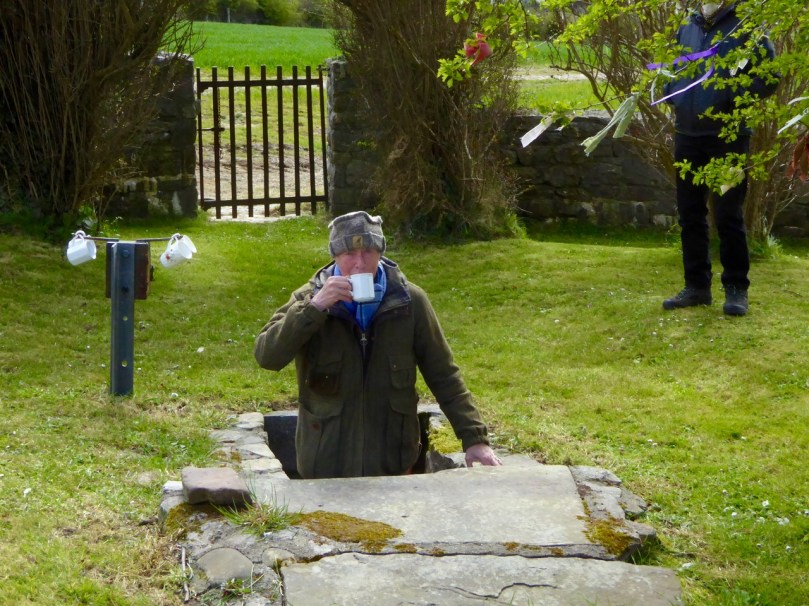
Tasting the water, Inghne Bhuidhe

My  personal favourite was the Trinity Well near Newmarket, mainly because it was built inside a fulacht fiadh (pronounced full okt feeah) – that’s an ancient (possibly as far back as the Late Bronze Age) cooking place where stones were heated and then rolled into a trough of water. Over time, the used stones built up into a horseshoe-shaped mound that surround the trough – now re-purposed as a holy well. It was a marvellous testament to the timeless character of special places in the deep countryside. 
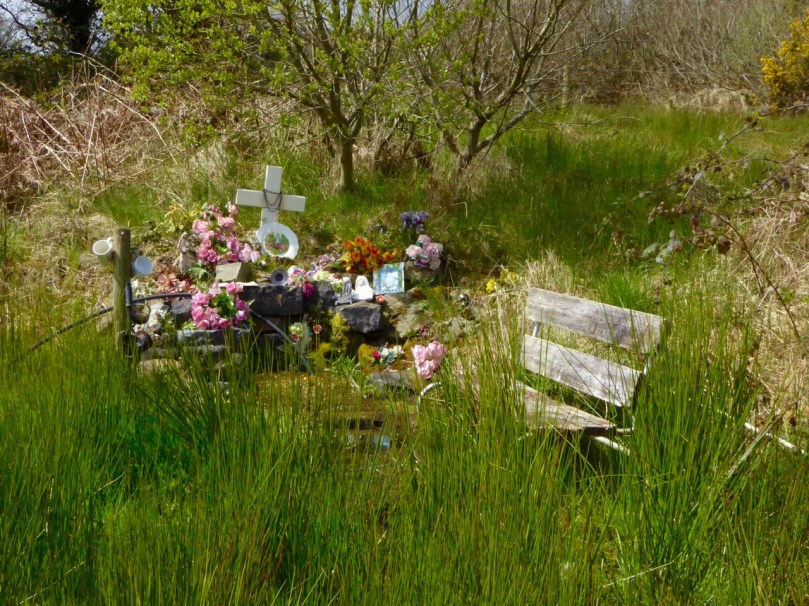
Trinity Well in Fulacht Fiadh

Trinity Well, formed from an ancient fulacht fiadh

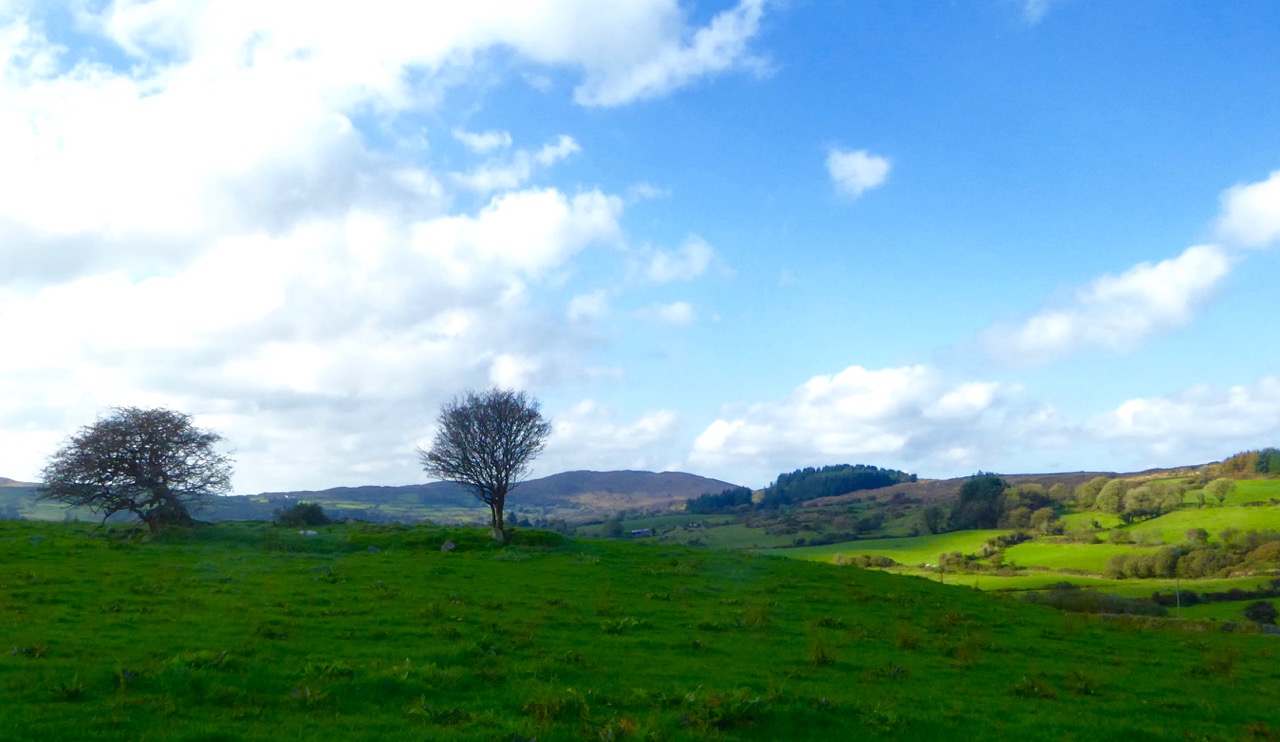
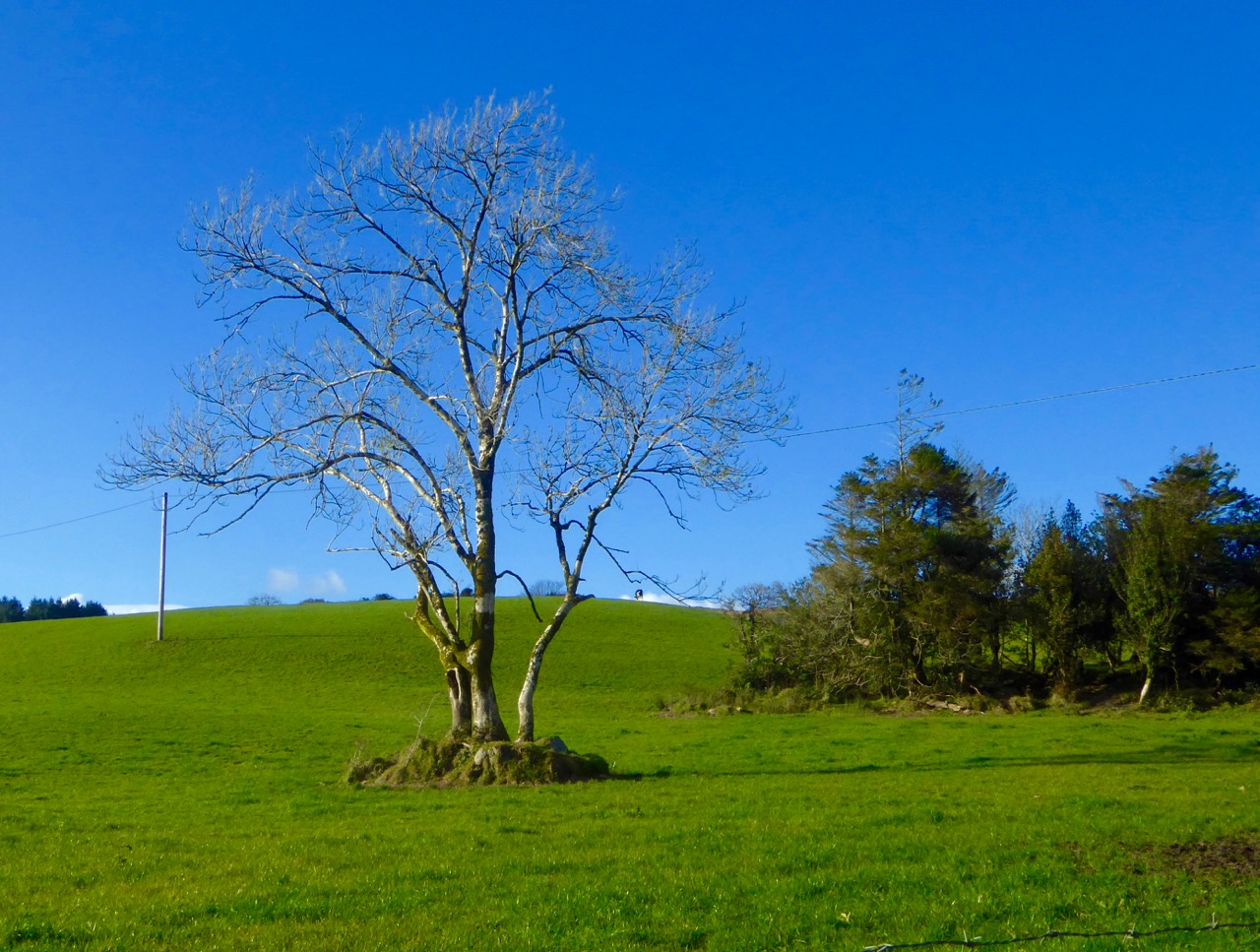
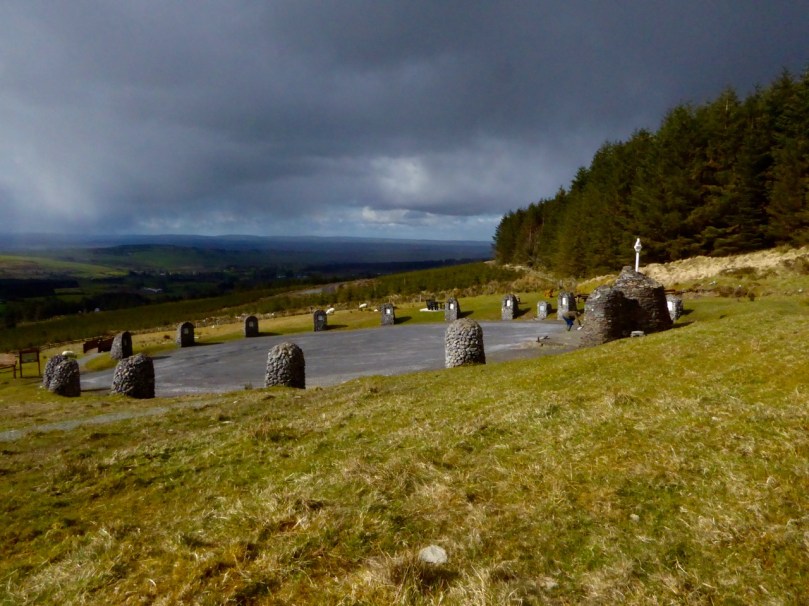
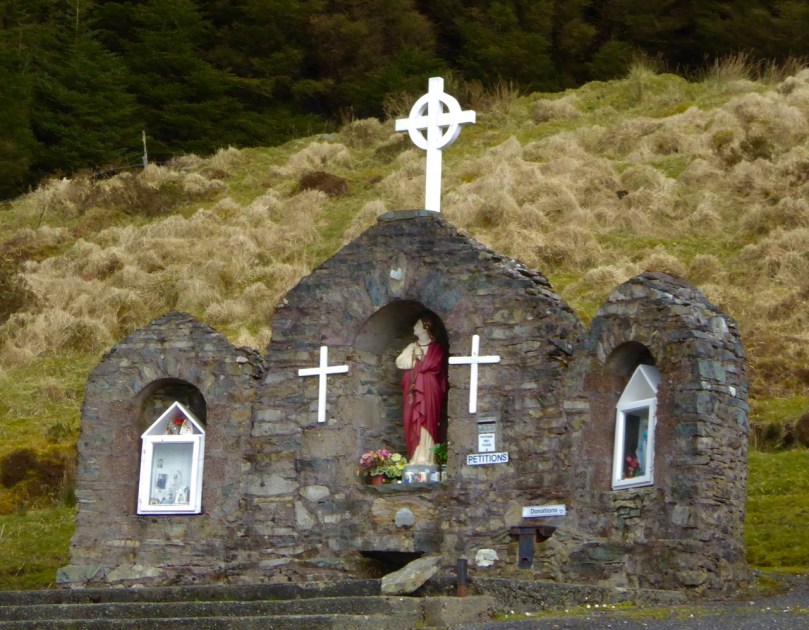
One of Duhallow’s wells is high in the Mushera Hills and dedicated to St John. The first photo in this post shows the location and extent of it. Back when the veneration of holy wells was at its peak, this one was the site of an enormous pilgrimage on St John’s Eve, June 23rd, every year. As with many such events the prayers and devotions of the daytime gave way to the partying of the night time and eventually the church acted to curb what they saw as the excessive debauchery of the occasion. Read Amanda’s account of the goings-on at Gougane Barra for an insight into the aprés-penance hooleys.
St John's Well 2

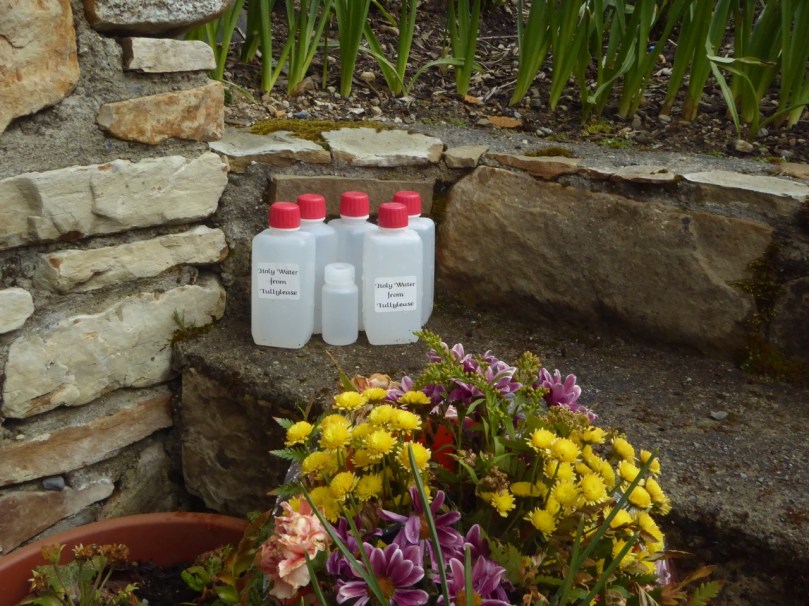
Tullylease had three wells, one devoted to Mary and another to St Beirechert (a saint whose name is spelled in a bewildering number of ways). The third well turned out to be something different – see below. The Marian well is thoughtfully stocked with holy water. Some of it is now in our bathroom to see if a few drops added to the bathwater will fend off the rheumatiz. So far, so good.
Holy Water

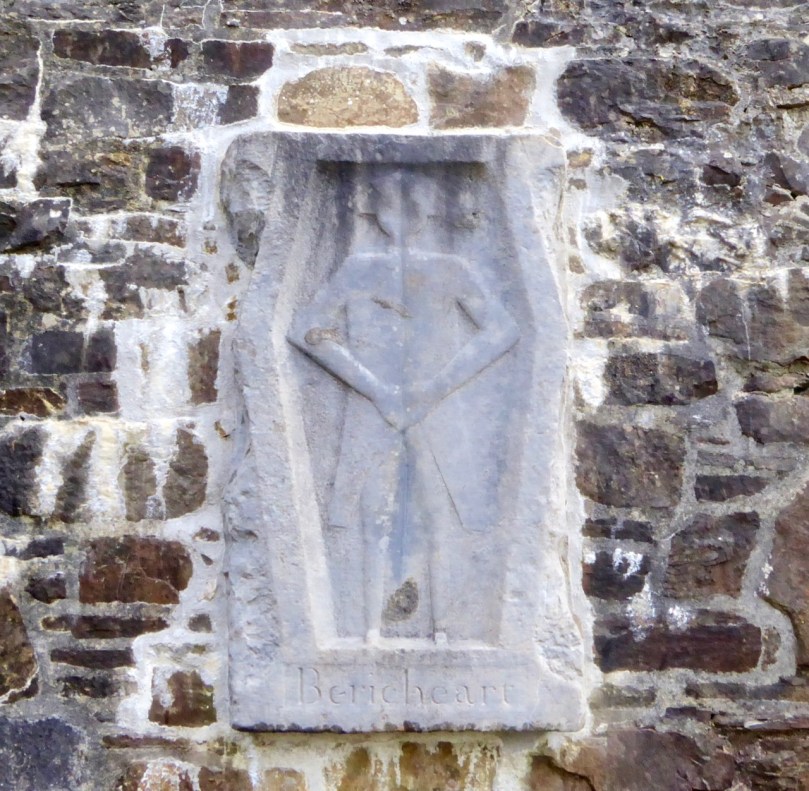
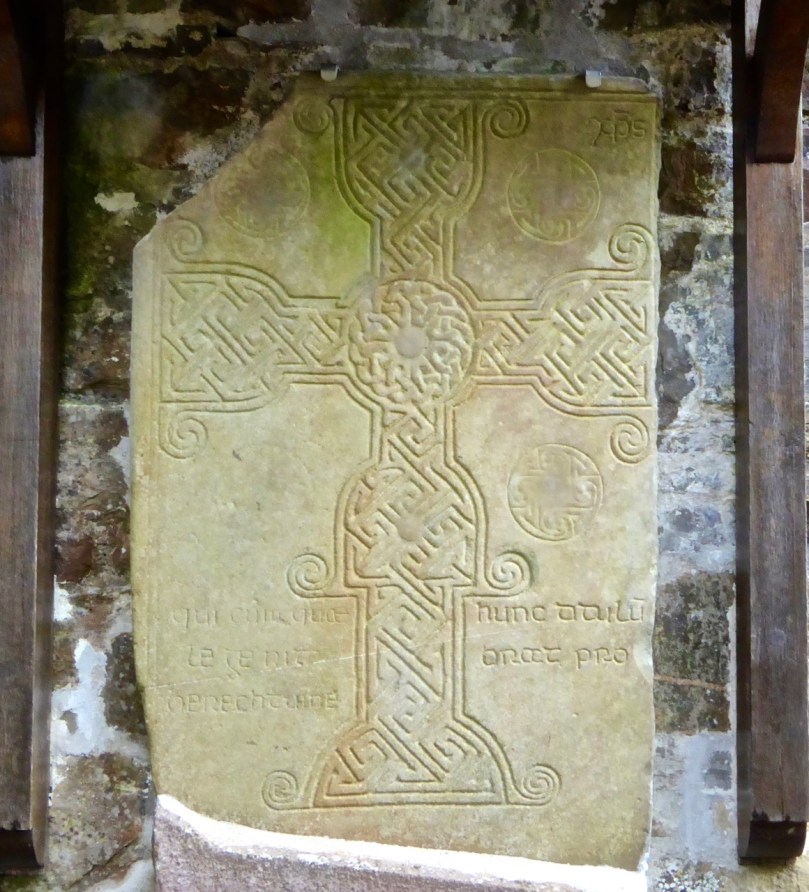
St  Beirechert’s church has several interesting carvings: St Beirechert himself in an unlikely swallow-tailed coat and tricorn hat, several fragments and a wonderfully worked cross slab with interlace design.
Bericheart in swallowtail coat

We  were intrigued to learn recently that this very cross was used as a model for the design of leather and fabric pieces for UCC’s Honan Chapel, an Arts and Crafts masterpiece, when it was being built a hundred years ago. I can’t show you a picture of that, as it’s undergoing painstaking conservation, but click here to see a modern use of the design!
Tullylease cross slab

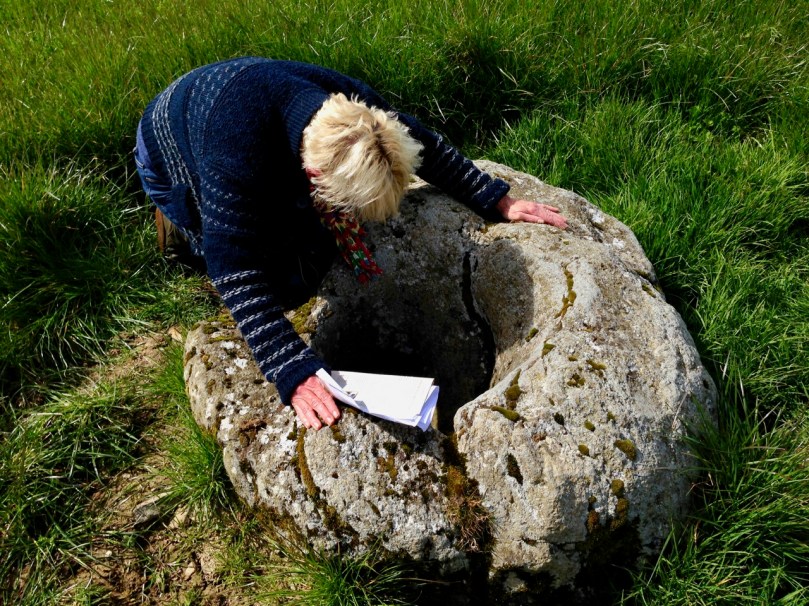
The final well we saw at Tullylease  wasn’t really a well at all but a bullaun stone – a big one. It’s supposed to cure headaches if you rub your forehead all around the rim, so here is Amanda, about to give it a try.
Amanda headache well

Our last stop was at a well for St Brigid. This one had a kind of cupboard containing a book in which visitors can write their prayers and ‘intentions’. It was fairly up to date, indicating recent visits.
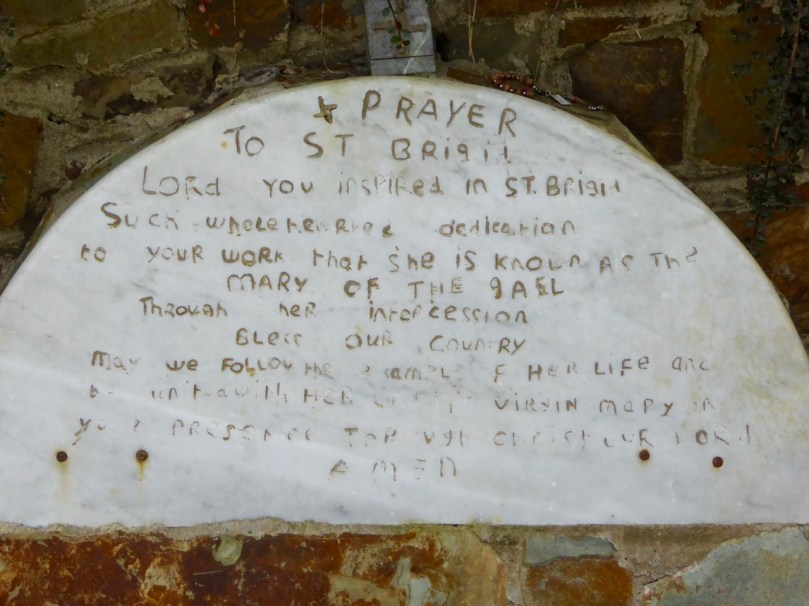
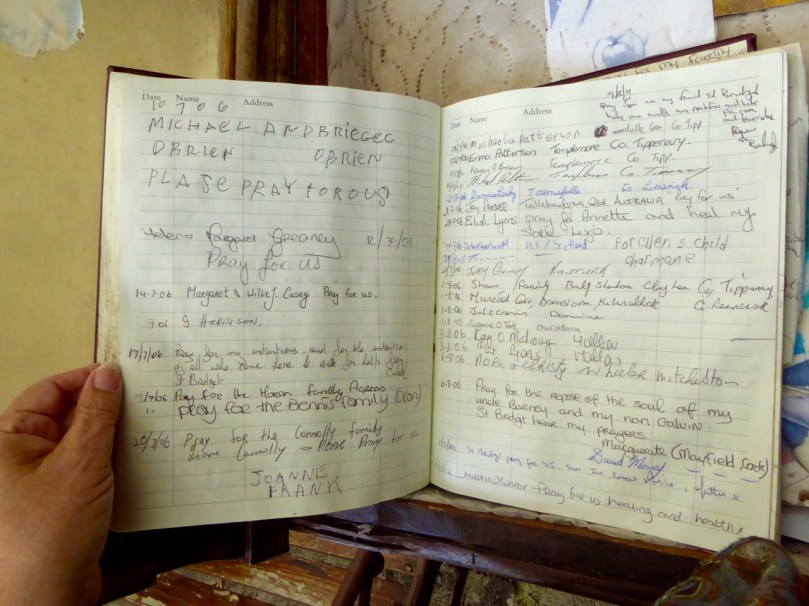
Brigid's Well, prayer

St Brigid Pray for usIn  this post I have concentrated on the Duhallow wells, as examples of how one community has embraced this aspect of its heritage and created a wonderful experience for its residence and for visitors. For a detailed description of each of the ones I’ve mentioned here, browse through the North Cork section of Amanda’s Gazetteer.
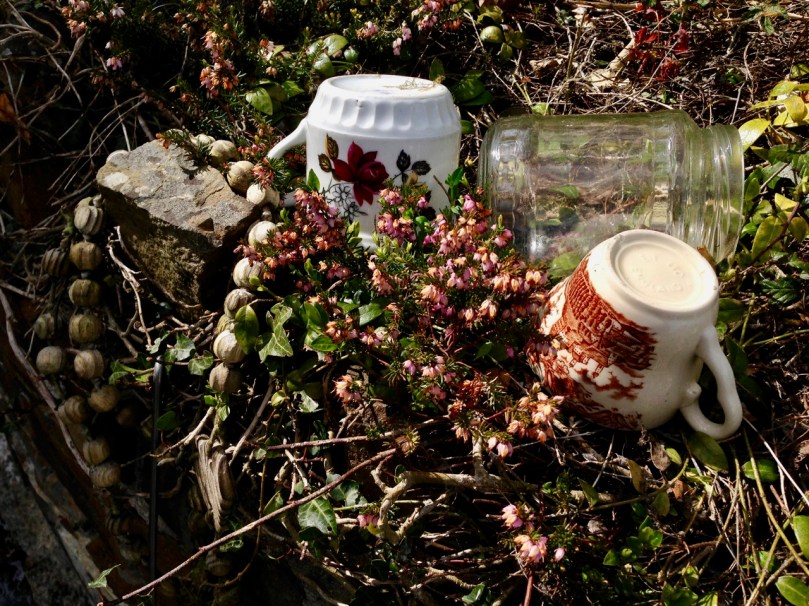
Brigids well cups

But following a brochure and a map to wells that are tidy and well signed is not a fair representation of how you find holy wells in the field! In my next Good Well Hunting post I will invite you to come with us as we fight brambles, mud and neglect, as well as discover little gems still intact and visited in the deep countryside.

Wild Beasts of Ireland

tiger at feet st canice

There are wild beasts all around us!  Animal, fish, serpent or fowl, real or mythical, carved, painted – imagined. This is my second ‘Menagerie’ – previously we explored the Honan Chapel in Cork, and I was struck by all the wildlife representations there, as set out in this post from over two years ago.

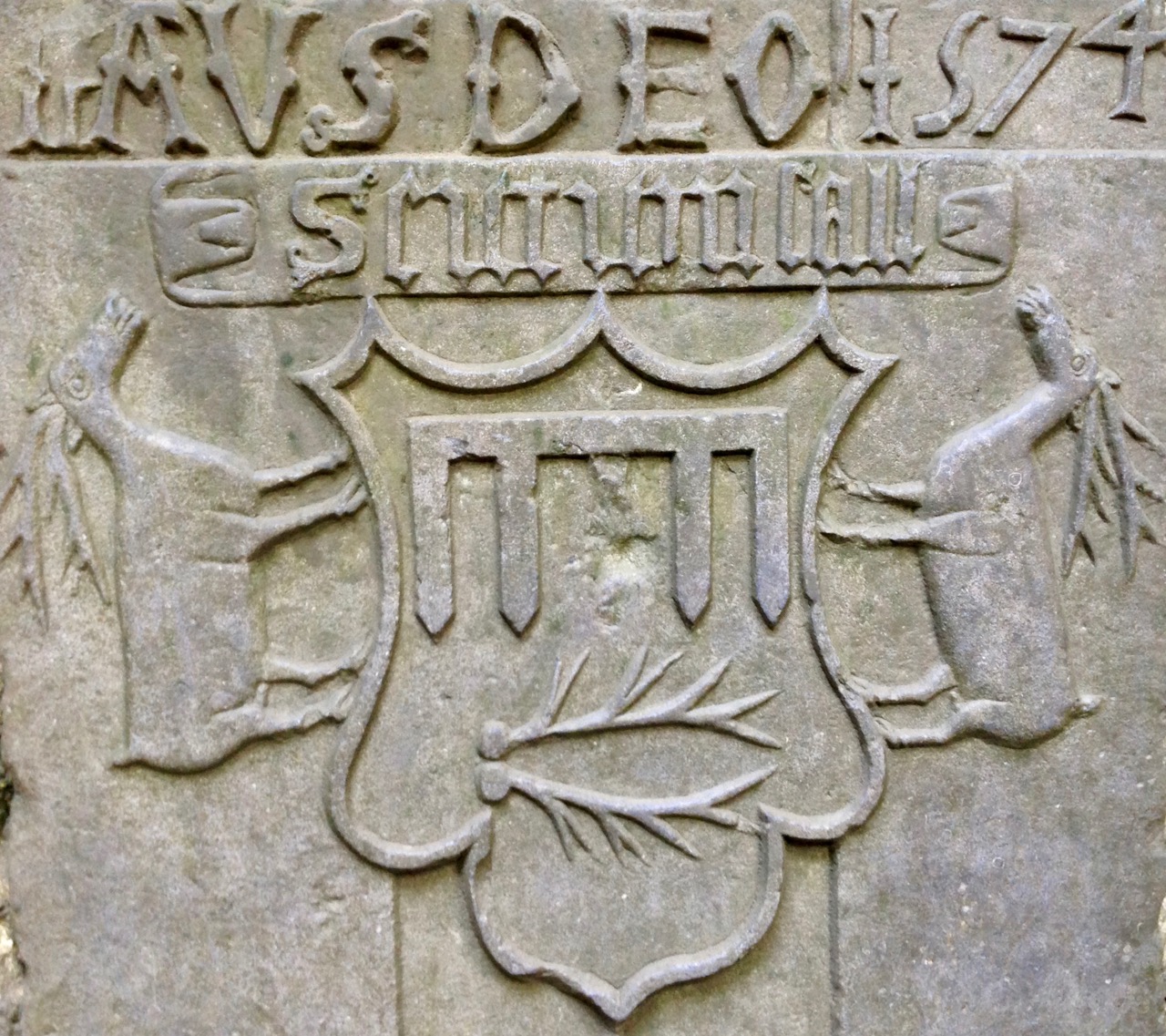
2 deer cashel

Deer and antlers on a memorial plaque in the Cathedral at Cashel – one of the earlier representations here, dating from 1574. Top picture – believed to be a tiger, this fine beast lies at the feet of a medieval knight in St Canice’s Cathedral, Kilkenny

Our travels take us around many of Ireland’s historic sites, and I’m always on the lookout for Creatures – they are abundant everywhere. Countless stories of the saints involved animals: they are common symbols on tombs and heraldic plaques, but we can’t resist also using them today – for inns, shop signs or just decoration on the streetscape. Have a look around you – you might be surprised how many you can see…

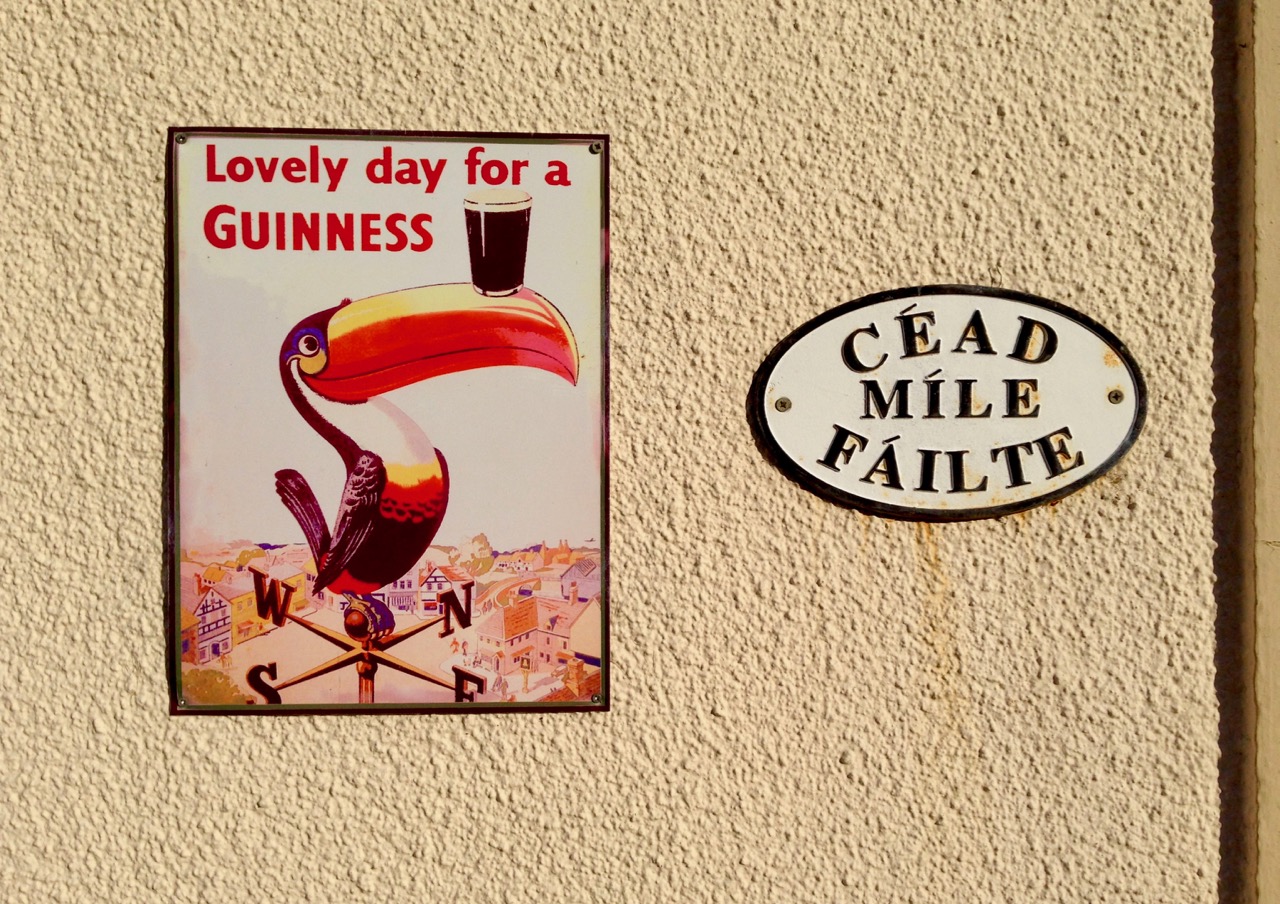
toucan guiness

Inhabited streetscapes: top – two Kilkenny Cats undoubtedly belonging to Dame Alice Kytler and, above – there are plenty of these toucans still around in Ireland! They originate from a ‘zoo’ advertising campaign for Guiness begun in 1935 (abeted by Dorothy Sayers who wrote captions and verses); the toucan campaign flourished until 1982

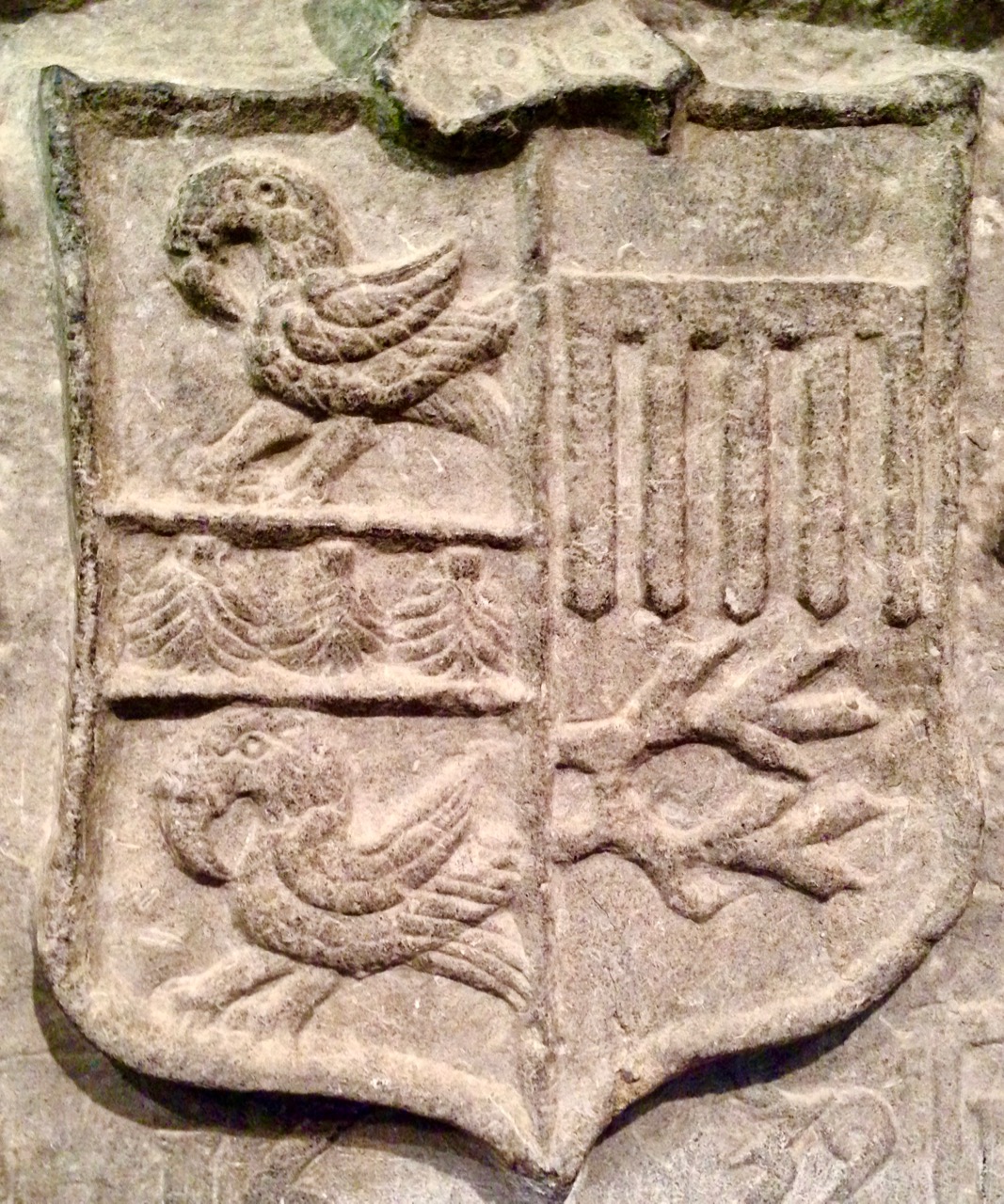
Nobody has ever claimed the toucan as an Irish bird, but pelicans were certainly not uncommon in medieval carvings here. That’s because the pelican in early Christianity symbolises atonement as it was believed to wound itself in order to feed its young with its own blood.

2 birds shield cashel

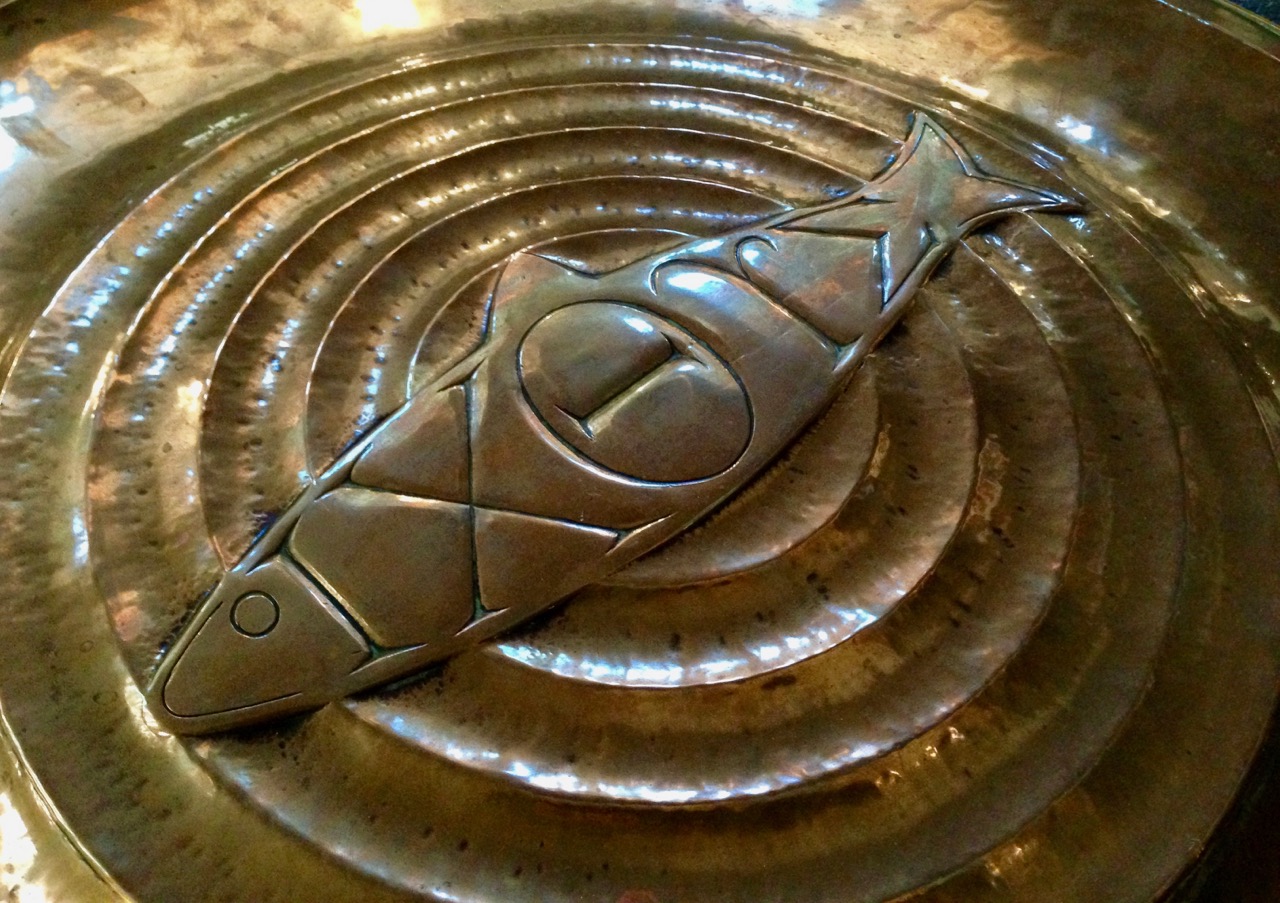
fish lid st canice

Christian symbolism: top – medieval pelicans at Cashel, and below – a fish incorporated in a modern lid to the ancient font in St Canice’s Cathedral, Kilkenny. The Greek ΙΧΘΥΣ is an acrostic for ησοῦς Χριστός, Θεοῦ Υἱός, Σωτήρ, literally translating as Jesus Christ, Son of God, Saviour

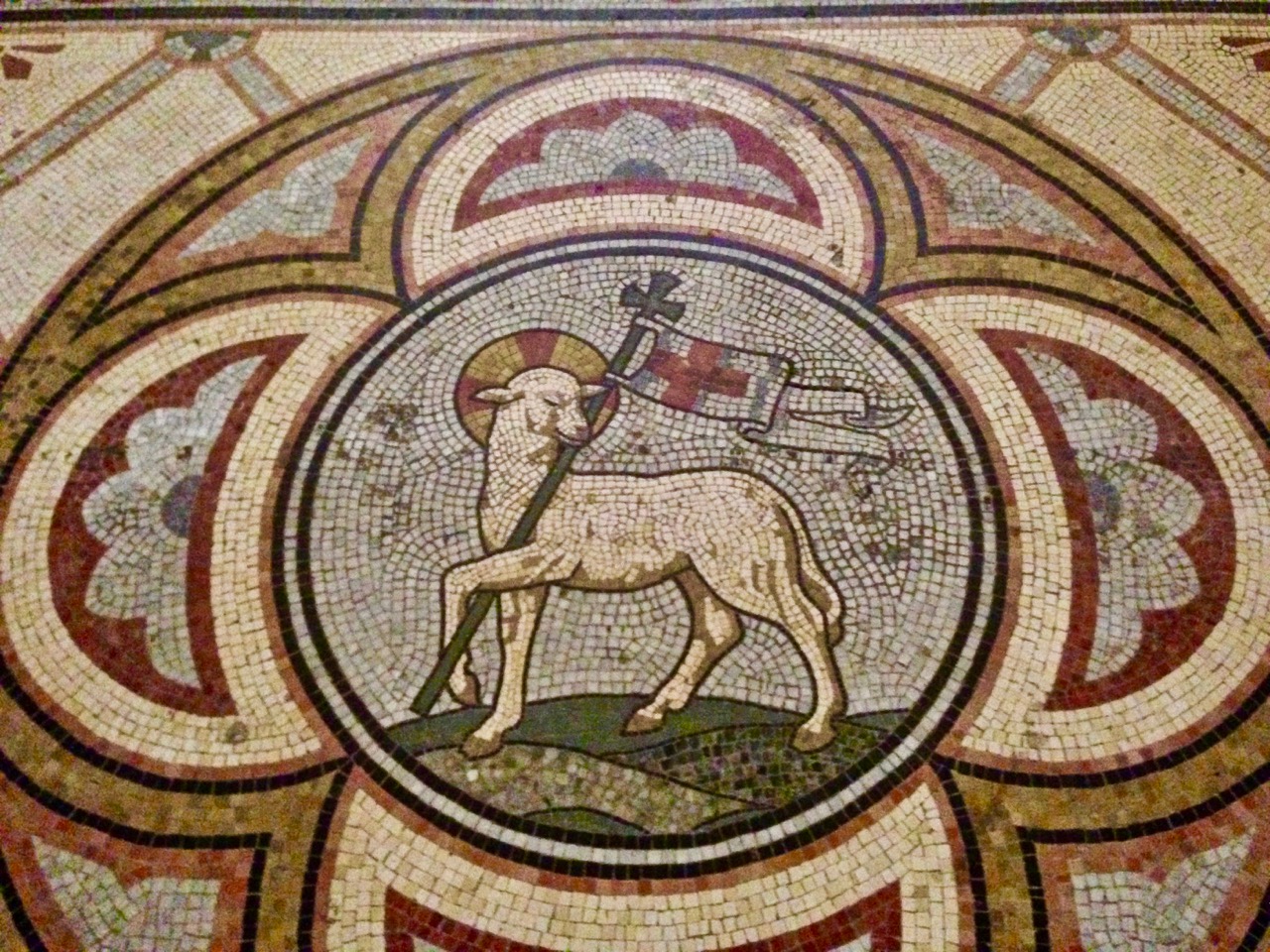
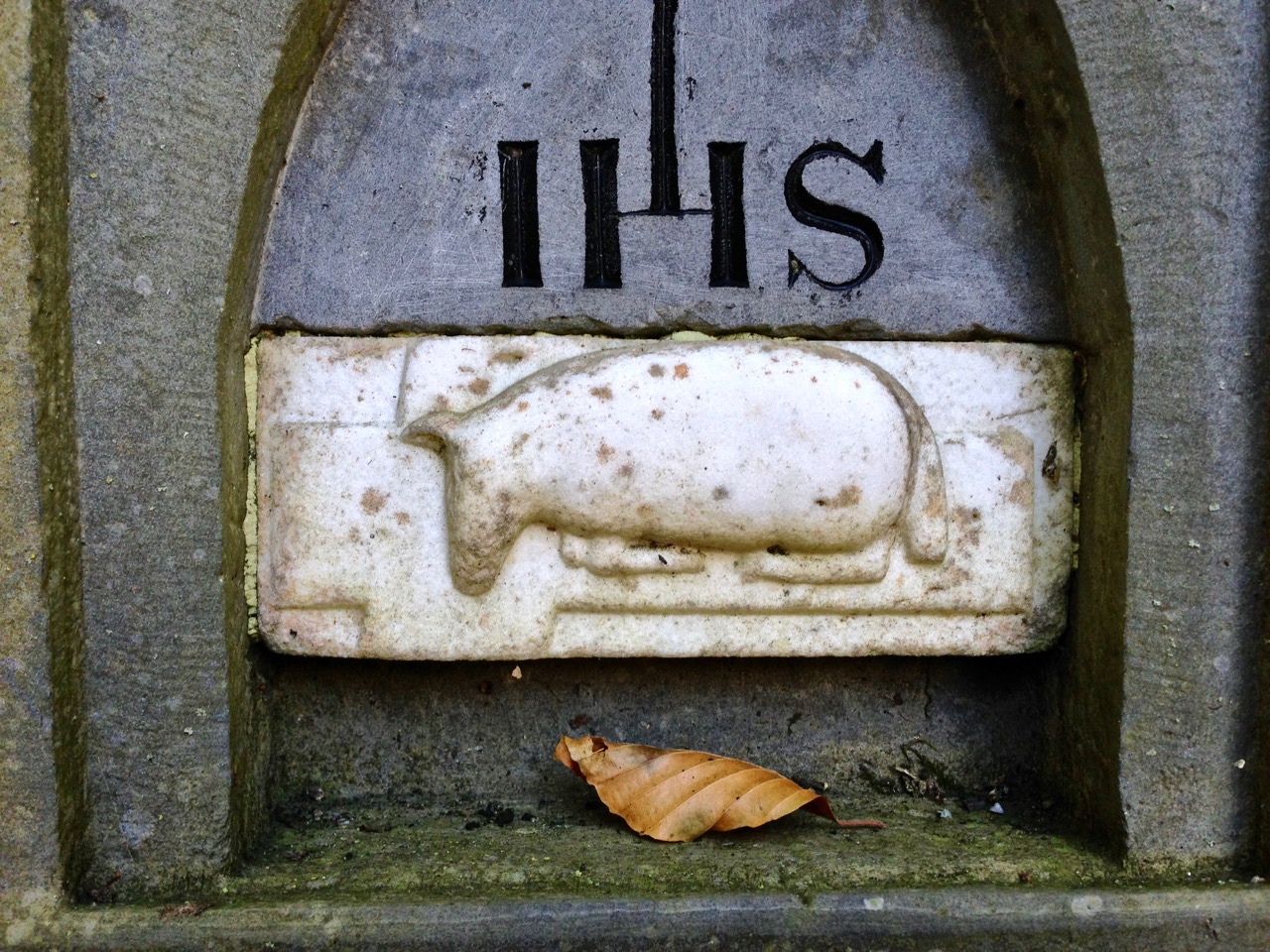
Also in Christian symbolism the lamb represents Jesus – the Lamb of God – who was sacrificed in order to atone for human sin.

lamb with pennant kilkenny

ihs lamb detail
Top picture – not a wild beast, perhaps, but a pascal lamb mosaic in St Mary’s Cathedral, Kilkenny. Lower picture – this strange creature is also a lamb, from a graveyard memorial in Killeen, Co Meath

Lions are popular animals in Britain and Ireland, possibly because they appeared on royal crests and were therefore associated with status and dignity. I was surprised to find bears and eagles well represented.

All the lions (graphic tiles and wistful memorials) are from the Collegiate Church in Youghal. The stained glass is from St Peter’s Church, Bandon, Co Cork and shows off bears (from crests of the Earls of Bandon – their motto was Bear & Forbear), eagles, another lion and – for good measure – a fine serpent

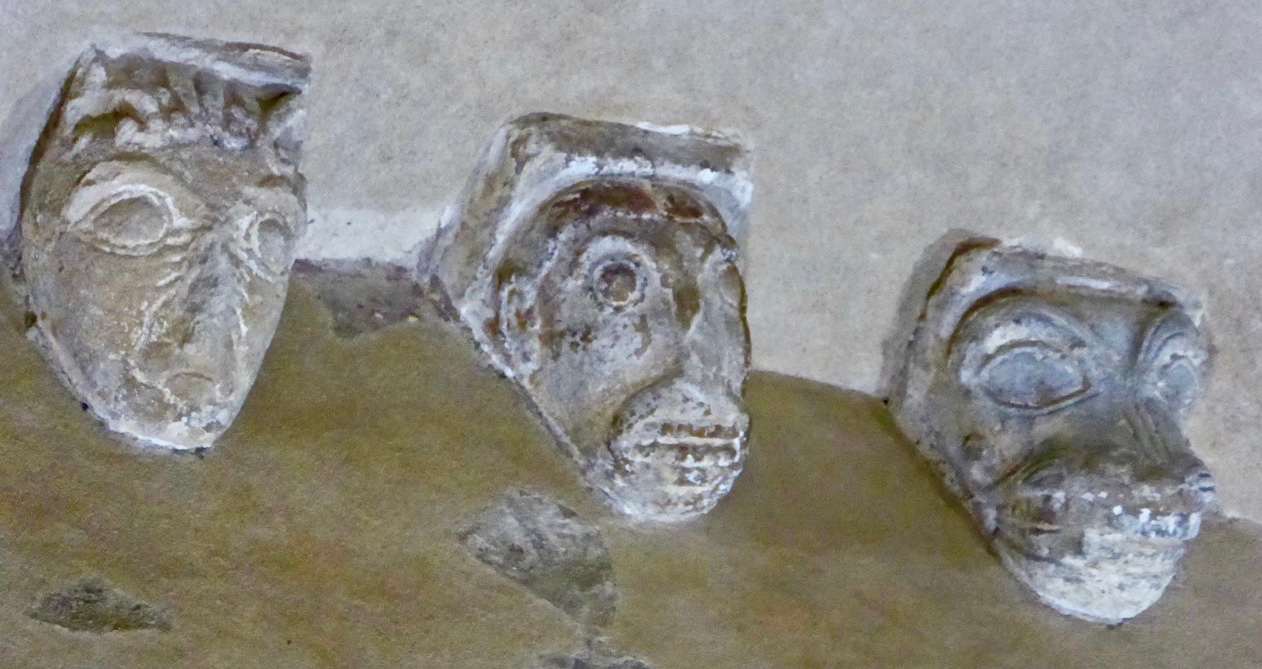
Some of the most splendid and oldest carved stonework in Ireland is to be found at Cormac’s Chapel, Cashel and at Clonfert Cathedral, both dating from the twelfth century. The Hiberno Romanesque doors and arches display arrays of human heads but also numerous creatures.

Heads cormacs chapel

Upper pictures – a small selection from the riotous carvings at Clonfert Cathedral, Co Galway and – lower picture – ambiguous creatures from Cashel, Co Tipperary: all are around 900 years old

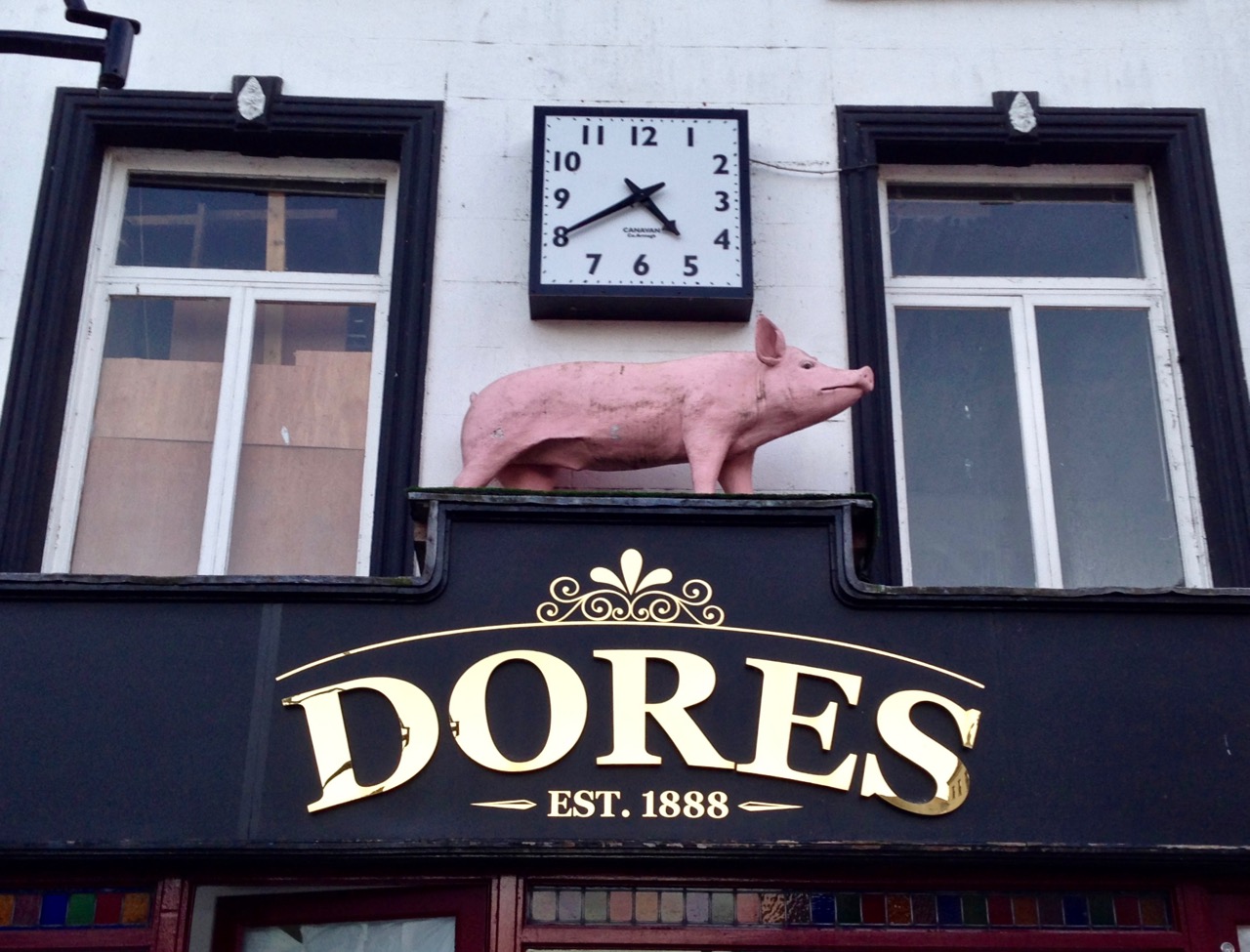
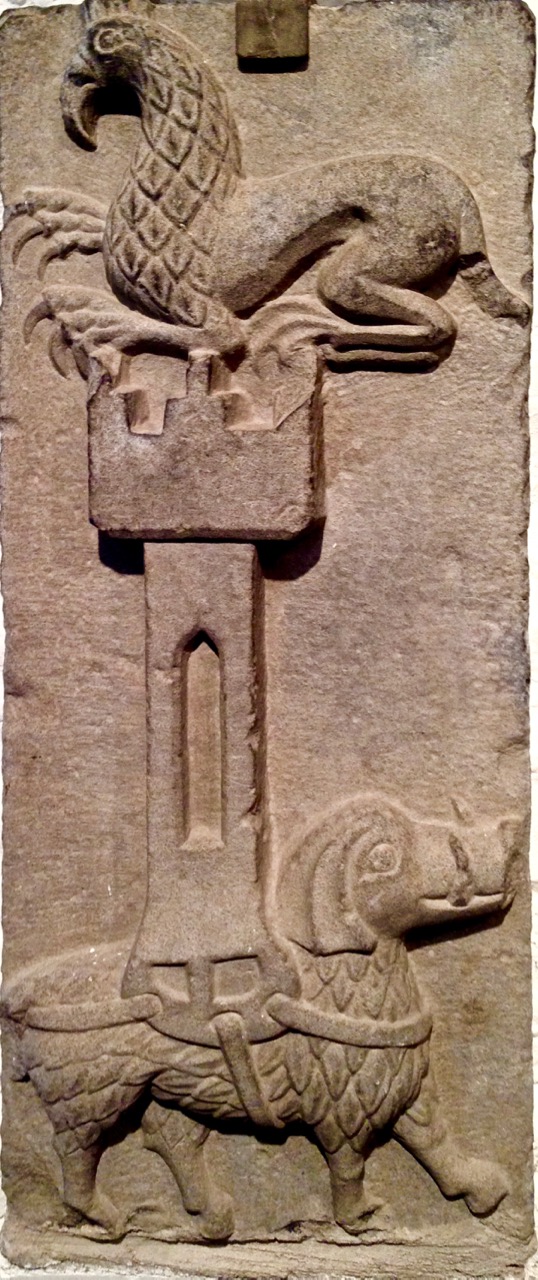
I’ll round off for now with some more cat-like creatures and a Kilkenny pig. Oh – and a carving we found in the Cashel museum, titled ‘Elephant and Castle’. Both the carving and the name are enigmatic, as the creature with a castle on its back (wherein resides another creature – a gryphon?) looks to me like a boar with feathers!

pig dores kilkenny

Elephant + Castle


The Fiddle-Maker’s Ghost

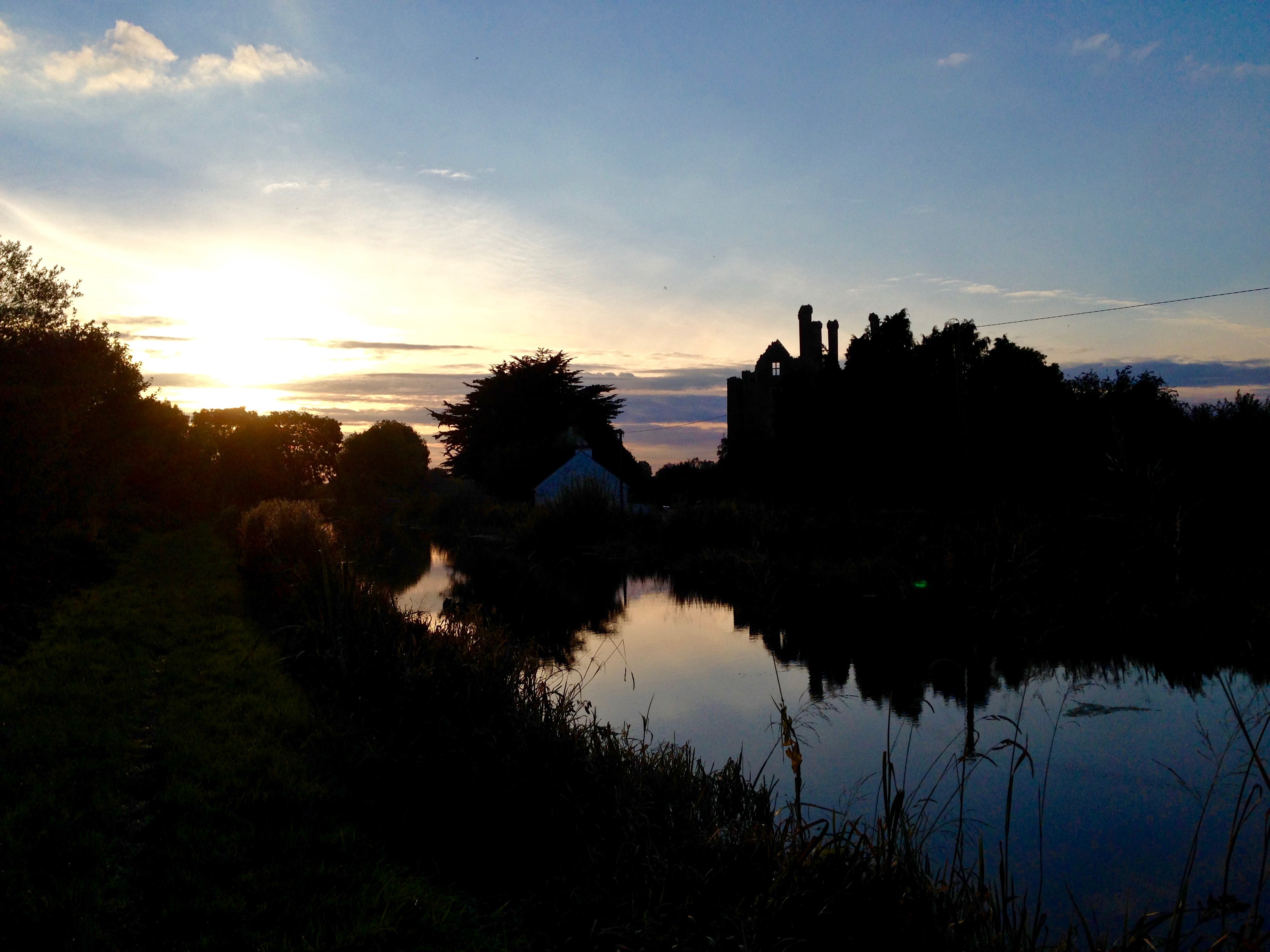
ballycowan sunset

We were chasing ghosts on our whole journey, following in the wake of Angela and Tom Rolt who travelled the waterways of Ireland exactly 70 years ago – in 1946; their odyssey was described in Rolt’s book Green & Silver. I received this book as a prize for essay writing when I was at school in the early 1960s and it fanned my interest in canals but also in Ireland. I had always intended to explore the canals of Ireland and this year Finola and I did just that – to mark the seventieth anniversary of the Rolts’ voyage, and to mark my own seventieth birthday.

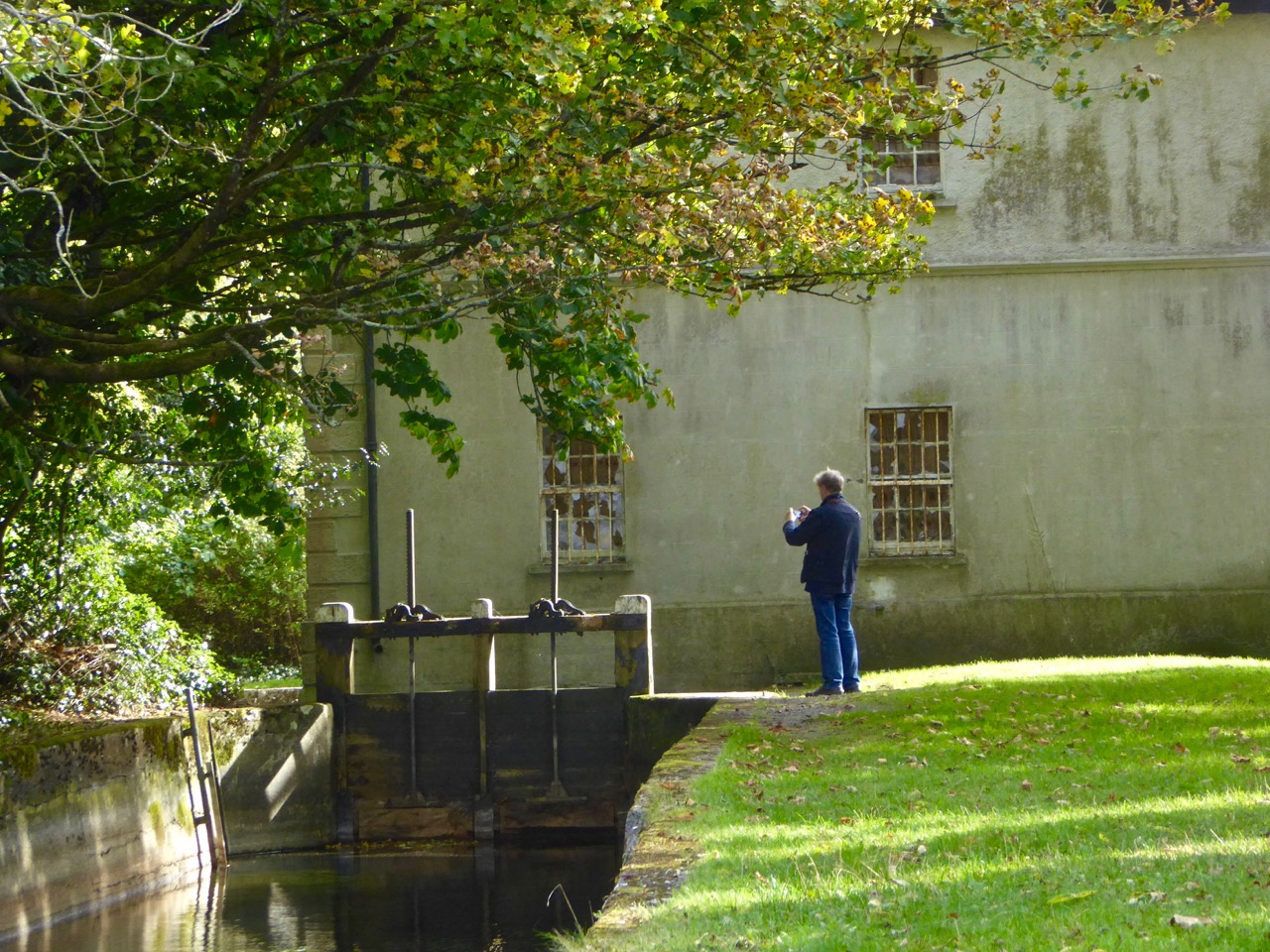
Robert at the feeder house

Top picture – ghostly reflections beside the Grand Canal at Ballycowan. Above – Robert photographing the impressive sluice house on the Royal Canal Feeder at Lough Owel: sadly, the house is empty and now deteriorating

The first ghosts we looked out for were the Rolts themselves. Would anyone have remembered them? Did they make enough of an impression – two eccentric English travellers intent on discovering a way of life in Ireland which had almost ended at that time? Their book is remembered today by canal enthusiasts; in fact there is a plaque given to anyone who completes the circumnavigation of the Royal Canal, the Shannon and the Grand Canal. It’s known as the Green & Silver Route. As the Inland Waterways Association of Ireland says, …with the closure of Ireland’s Royal Canal in 1961, Rolt’s Green and Silver offered successive generations of boaters the only opportunity to experience this journey by boat. His book offered a glimpse of what might be experienced if, and when, the canal was restored. Rolt was the first to document a successful transit of the route in Green & Silver, a book which had such a positive influence on the development of the Irish waterways… The book has gone into five editions, so the journey is certainly not forgotten. However, we did not meet anyone who had stories to tell about the Rolts; nothing seems to have passed down through the generations about them – perhaps this post might bring something out?

Left – the frontispiece of my copy of the Rolts’ book. Right – the Green & Silver Plaque, presented to boaters making a circumnavigation of the now restored route that the Rolts followed seventy years ago

But there are other ghosts in the pages of Green & Silver. The Rolts passed through Draper’s Bridge Lock on the Royal Canal:

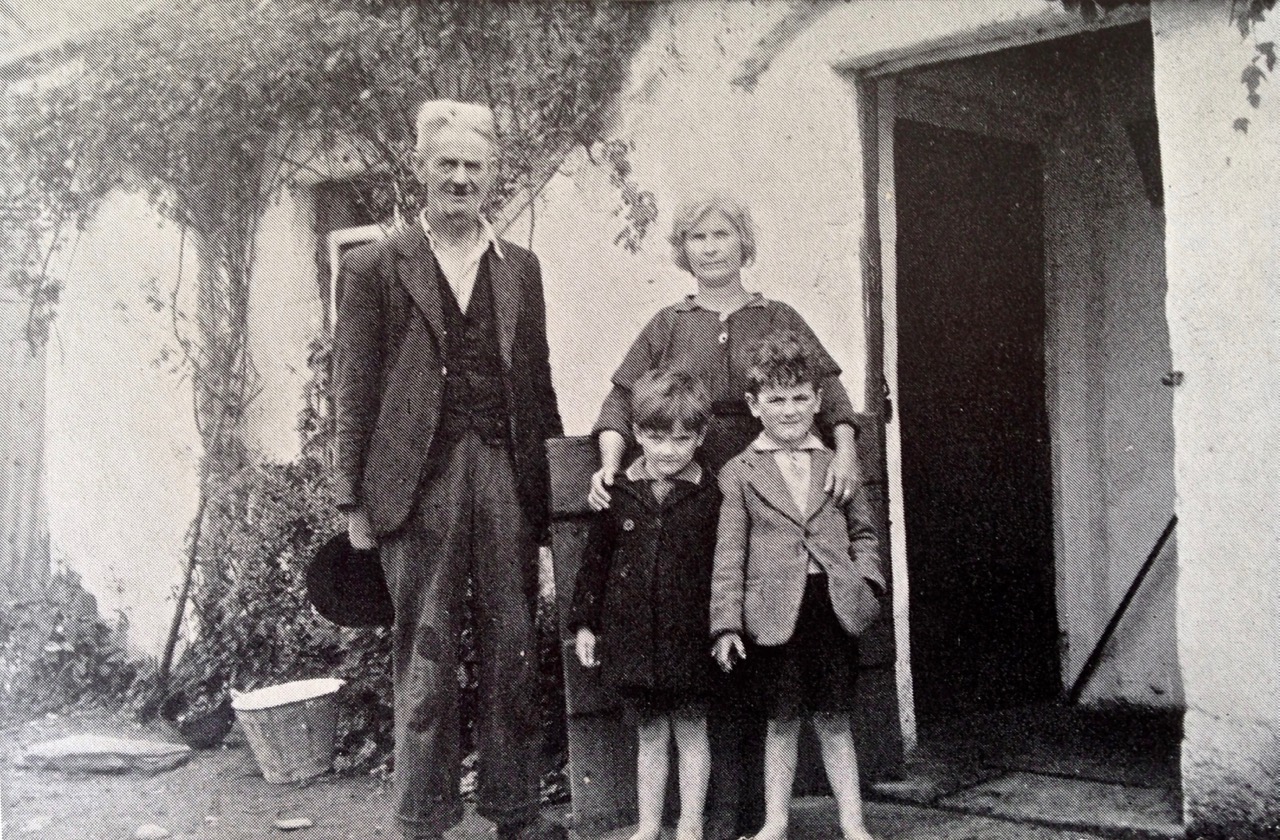
…The canal bore a more and more disused appearance the farther we went westwards, and at Draper’s Bridge lock beyond Abbeyshrule it was obvious that the chamber was rarely filled. Clumps of yellow musk in full blossom were growing out of the chinks in the masonry and looked so beautiful that we were sorry to drown them. The lock-keeper insisted on presenting us with some magnificent new potatoes which he dug from his garden while we were locking through. He refused to accept payment but, noticing Angela’s camera, asked if she would take a picture of himself with the family. She gladly agreed and took a photograph of ‘himself’ with his handsome silver-haired wife and two small boys standing before the half-door of the lock cottage. I hope he was satisfied with the print we sent him…

keeper and family

Angela Rolt’s photograph of the lock-keeper’s family at Draper’s Bridge Lock, Co Longford, taken in 1946

The children in this photograph could well still be alive, in their seventies. Some of the lock cottages on the canals are still lived in by families who have connections with the canals through generations. We were hopeful that we might discover someone at the lock who could point us to these young faces, a lifetime away?

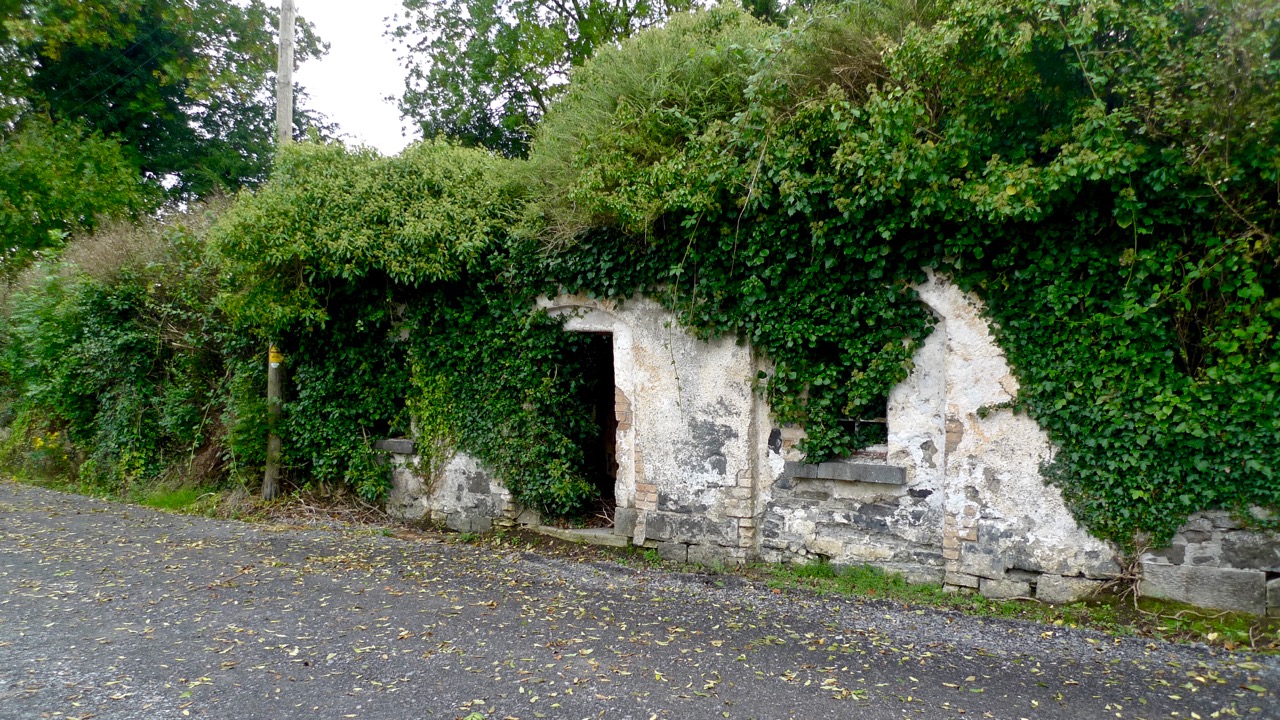
Draper's Bridge Lock House

Only ghosts, alas… The cottage is in ruins today. This is unusual, as most of the original lock cottages on the Royal Canal have been retained. There is no sign of why this one has not survived. The Rolts did not name the lock keeper in the book, but I have since discovered that he was Jack Keenaghan. A ghost now with a name, at least.

drapers bridge lock

Lock 39 on the Royal Canal, at Draper’s Bridge. Samuel Draper was Secretary to The Royal Canal Company during the construction of the canal

The Rolts were able to include part of the lower Shannon and Lough Derg in their voyage. They met up with a friend who lived at Kilgarvan, and I was intrigued by this description of a visit to Ballinderry:

…That afternoon our friend and I walked into the nearby village of Ballinderry where we visited Dick Stanley the local baker and proprietor of the village shop…

…In the intervals of baking bread and minding his shop, Dick Stanley makes violins. His art is entirely self taught, he uses the crudest of tools, and he finds and seasons his own materials. He showed us one instrument which he had recently completed and another which was in the course of construction. Though my companion had already told me something of his activities I had expected something which, though praiseworthy enough, bore all the evidence of amateur workmanship. Consequently, even if I had been told nothing I could scarcely have shown more surprise when Dick Stanley put own my hands the beautiful, perfectly finished violin that he had made. Had I not seen the same fine craftsmanship exhibited in the other instrument which was under construction, I doubt if I should have believed that he really had made it. The sound-board was cut from a pinewood beam salvaged from a ruined mill nearby, the body was of sycamore, the pegs of holly wood, while the bridge and frets were of black bog oak dug from the neighbouring bog. None of the instruments he had so far made were exactly the same. He had begun by copying an old fiddle, but he had discovered the improvement and differences in tone which were produced by subtly varying the shape and depth of the sound-box or the thickness of the sound-board. No doubt these critical dimensions are well known and have been standardised by commercial makers but Dick Stanley took nothing for granted. Like all true craftsmen he strove for perfection and expressed a dissatisfaction with his violins which was not false modesty. He admitted, however, that each instrument he had made had a better tone than its predecessor, and his latest one certainly sounded the mellow soul of sweetness as he ran the bow over it. Unfortunately, however, he could not give us an adequate idea of its capabilities because, strange to relate, he was no performer on the violin. He played the flute, using an old finger-stopped instrument with which he often obliged at local gatherings and it was his son who played his fiddles…

…When we had taken our leave of this accomplished craftsman we adjourned to John Tierney’s bar close by, where, to the accompaniment of much village gossip and racy badinage, we fortified ourselves against our walk through the rough weather with pints of porter. Then back to Kilgarvan where we were once more royally entertained despite our protestations that we had surely outstayed our welcome. Never were storm-bound travellers so fortunate in their haven…

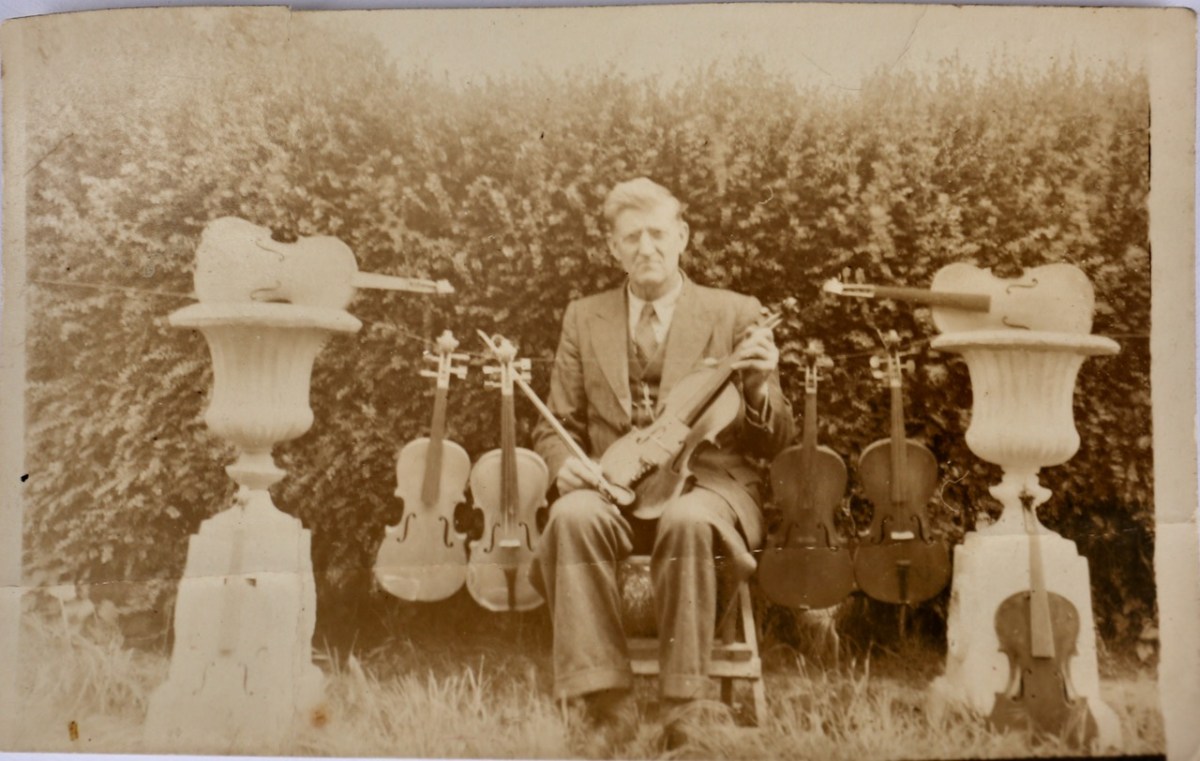
We determined that this self-taught fiddle maker was one ghost we were definitely going to track down. Sadly, no photograph of the man or his fiddles is included in the book; nevertheless we felt an exploration was worth making: it would be impossible that no-one in the village remembered the existence of such a craftsman. I even entertained the hope that someone might still have one of his fiddles – and give us a tune!

ballinderry

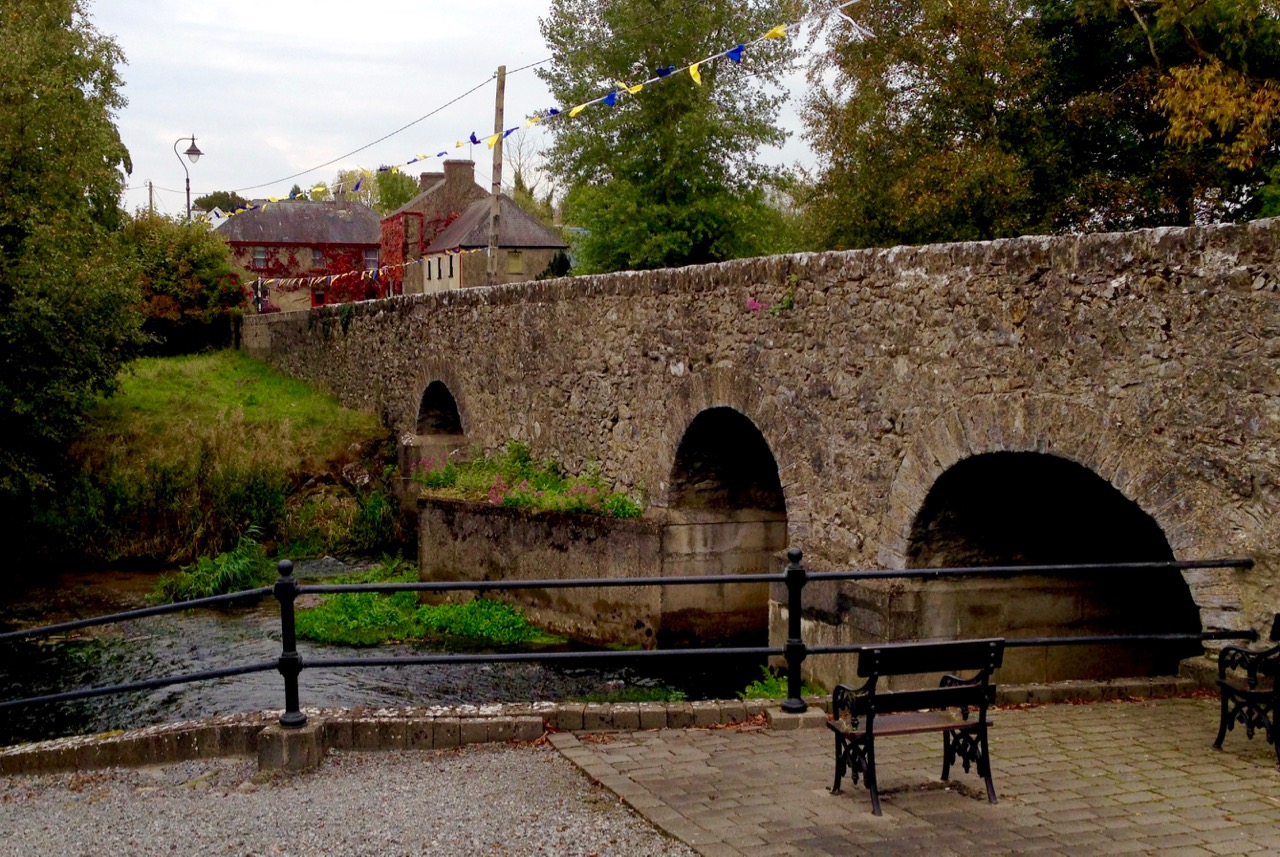
The ancient bridge at Ballinderry over the Ballyfinboy River, built c 1790

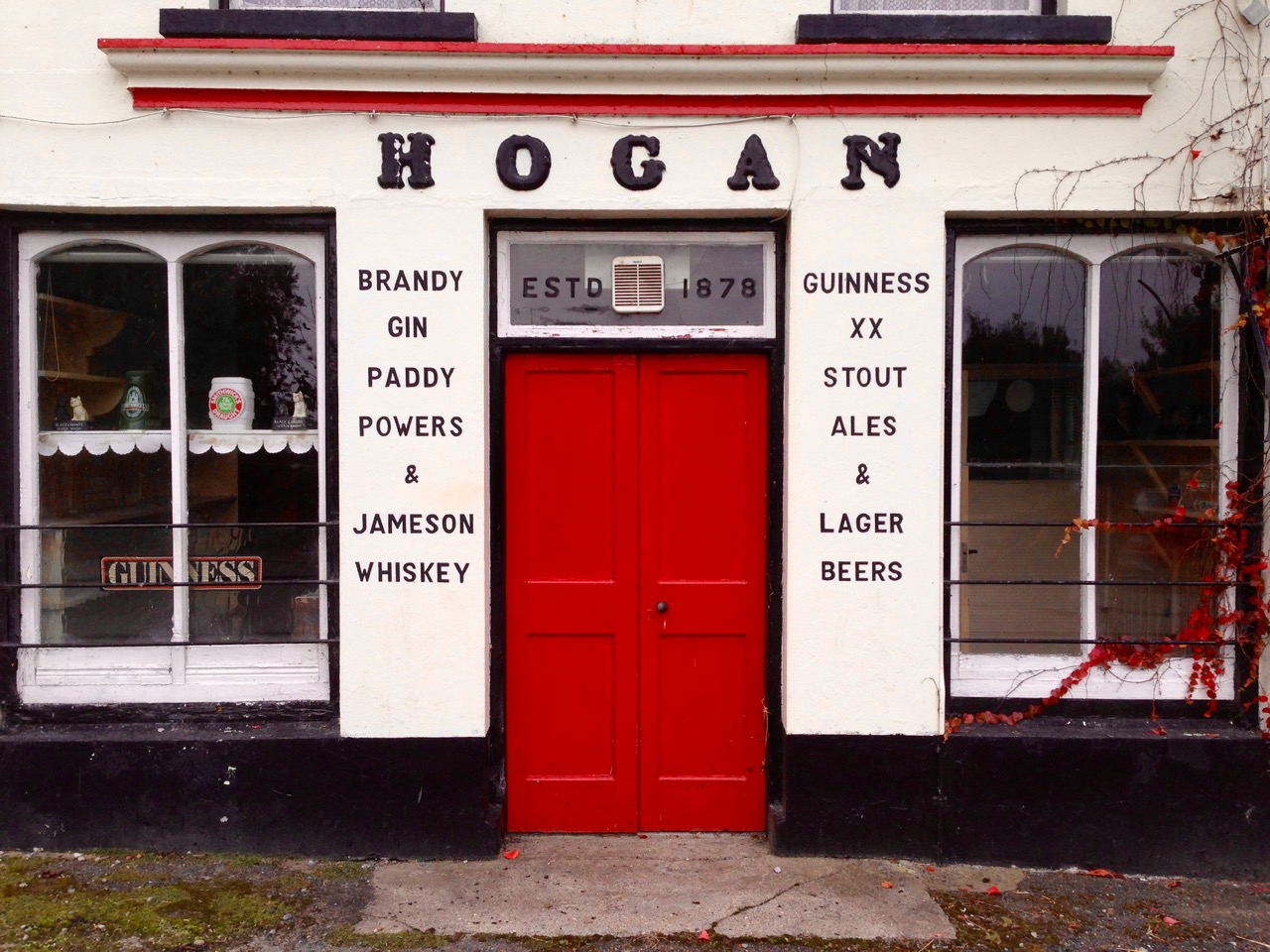
We arrived at the village and admired the old stone bridge over the Ballyfinboy River before walking up through the single street of the settlement. On the right was what had obviously once been the village shop and bar: Elsie Hogan’s. Attached to it was a fine stone residence, resplendent with red painted doors and window surrounds, although now fading.

hogan shopfront

The fallen shop sign was not a good omen. We peered through the windows and could see empty shelves and an old weighing machine. It felt desolate, but its abandonment – if it was abandoned – could only have been recent. Was this Dick Stanley’s shop? Or might we have been on the wrong track? We pressed on up the village street. There were other houses, and another pub – The Tavern. This also appeared deserted.

the tavern

No sign of life: the deserted village of Ballinderry was determined not to give up its ghosts

We walked the length of the village. We knocked on doors. We shouted: no shout echoed back. A car repair shop was locked up, in the middle of the afternoon. Houses were obviously occupied but, on that day, no-one was at home. We listened – silence. Yet, did we hear or did we imagine – far off, perhaps on the wind – the thin, ghostly sound of a fiddle being tuned up?

scroll

Footnote:

Have a look at the comments below – this story has generated many responses from folks who have memories of this place and these times. One contributor (Les Abbot) sent me a photo of an unfinished fiddle made by Dick Stanley, which I have added below. Les is the great-nephew of Dick Stanley so it’s wonderful to have this direct link with Rolt’s adventures in 1946! Many thanks, Les, for adding colour to this post, and to everyone else who has contributed . . .

The work of Dick Stanley

Note added July 2024 – and we have a photo of the man himself! Kindly sent to us by Tony Donoghue, this is Dick Stanley with some of his fiddles. Tony adds that Dick also made the garden ornaments. As his Godson, Tony knew him as an older man, not given to the softer emotions. He had been, and remained, an ardent republican. He was interred in Gormanstown Internment Camp during the civil war and Tony has donated his certificates from there to the National Museum, Collins Barracks.

The Murdering Glen

On the walk

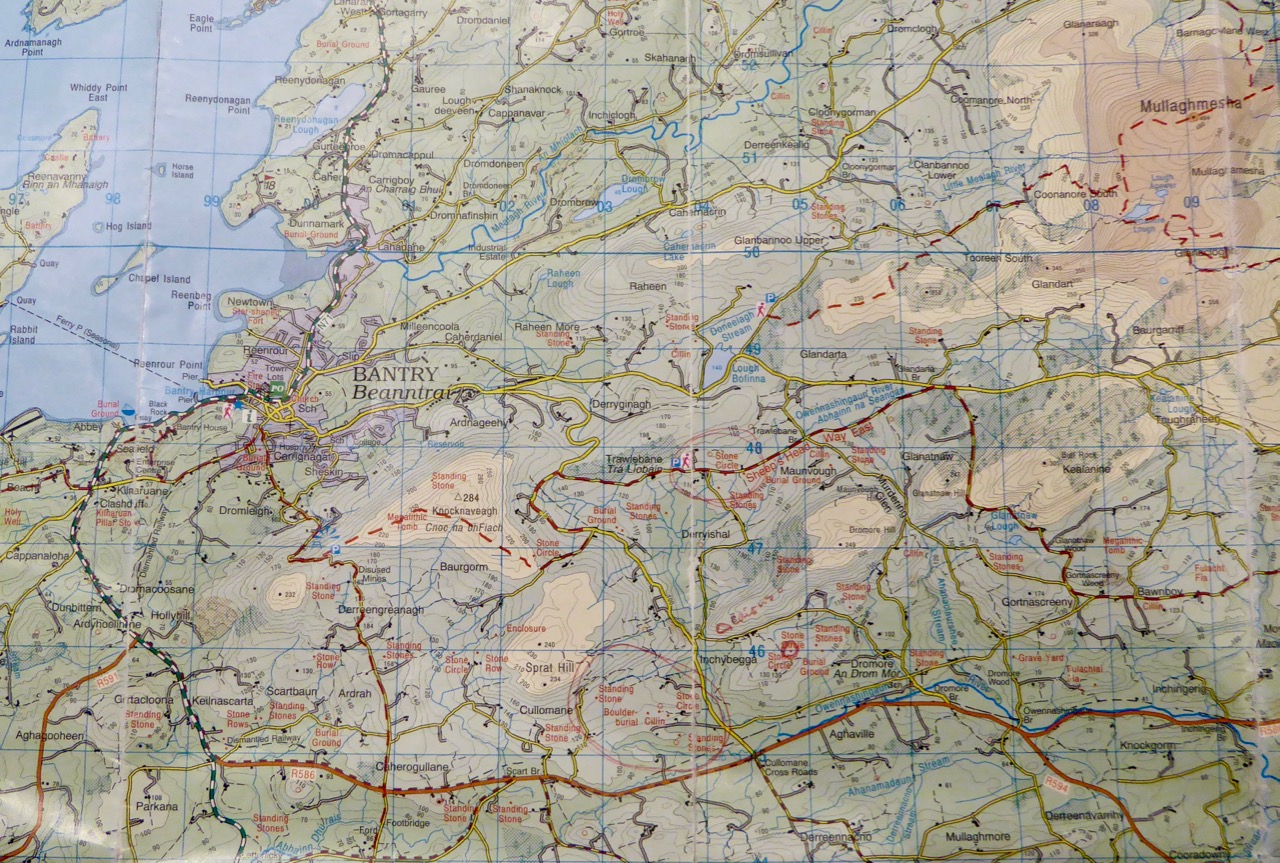
The long valleys that run eastwards from Bantry are filled with antiquities – Discovery Map 85 is dotted with red circles of places we want to tramp around. We have been particularly intrigued by the ‘Murdering Glen’, labelled on the map: can you see it?.

Murdering Glen Map

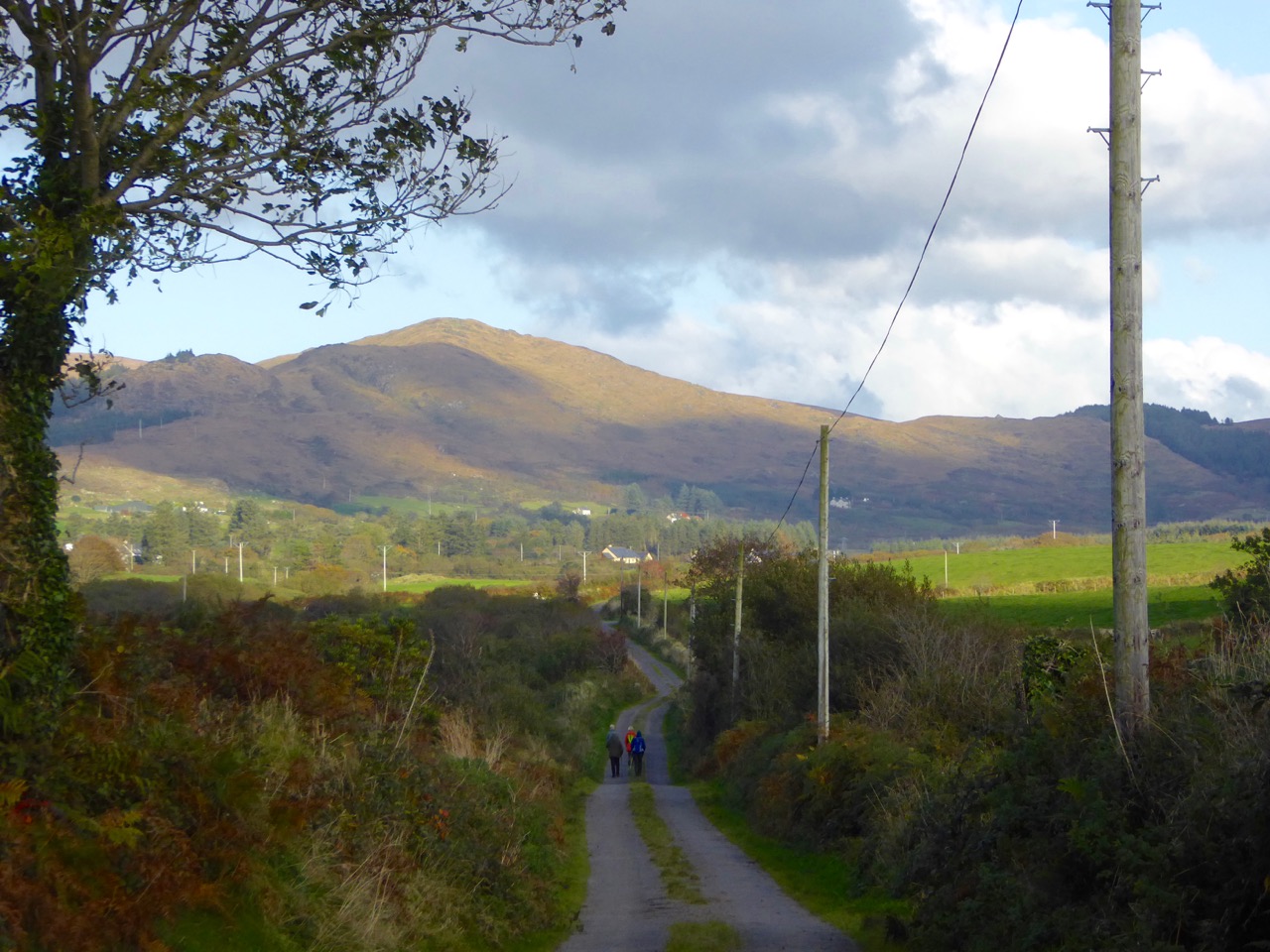
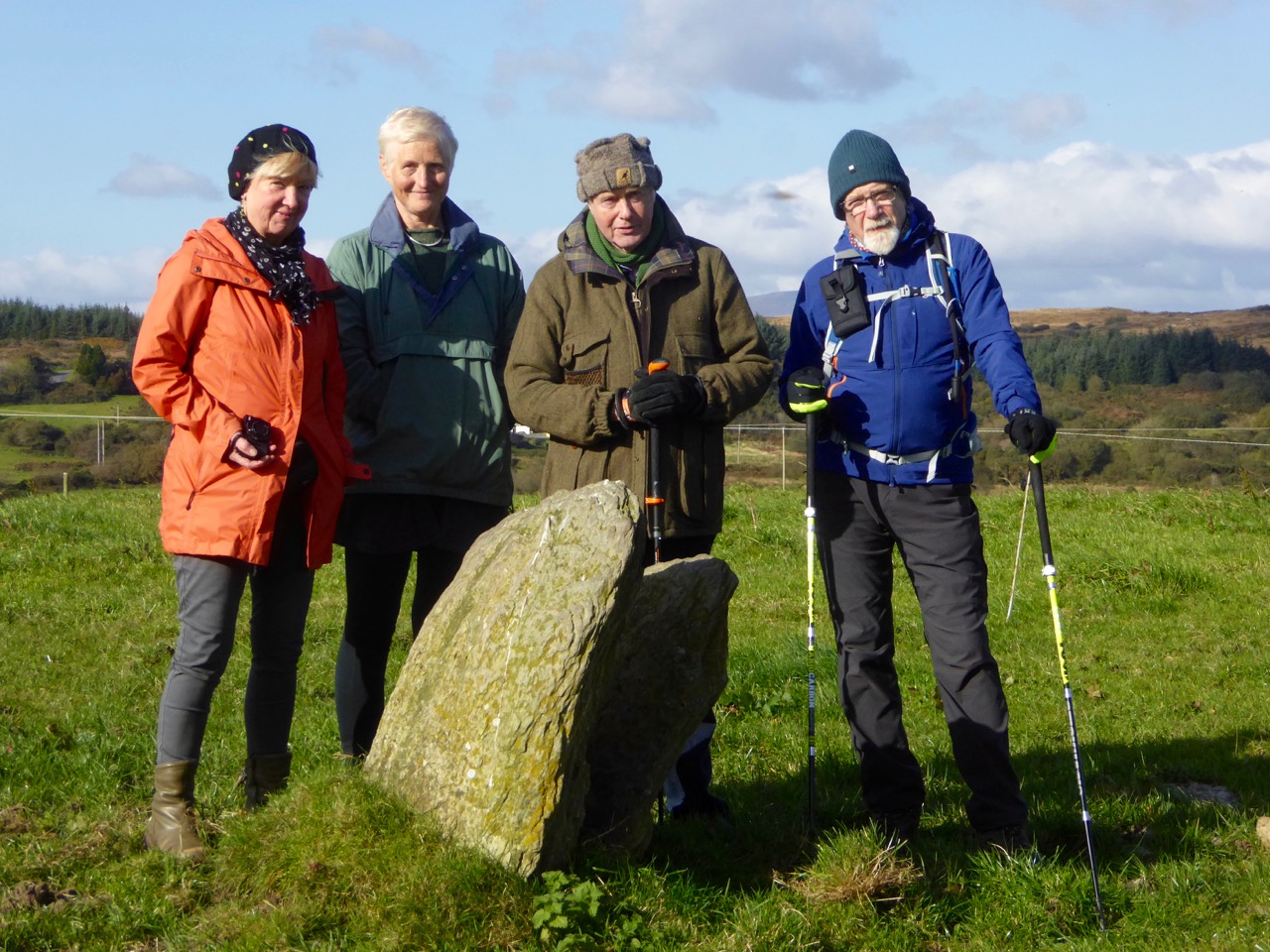
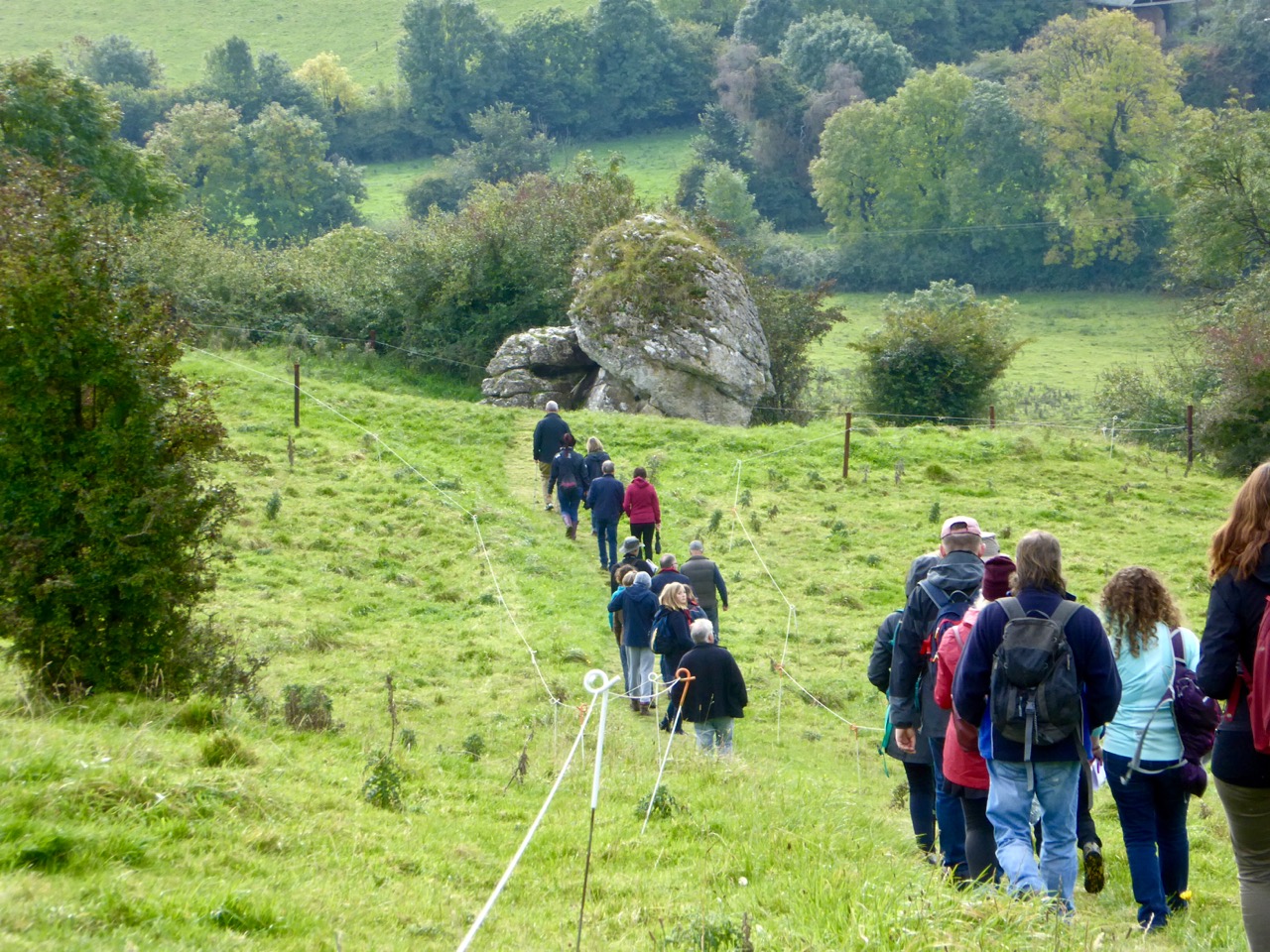
Today we got a chance for a thorough exploration of the Murdering Glen, on the invitation of our friend Bridget, who lives there and is a keen explorer herself. After a wonderful lunch supplied mainly from her garden we set out up the road towards the Glen, with Bridget assuring us that the place appeared peaceful enough these days and not to worry.

Murdering Glen

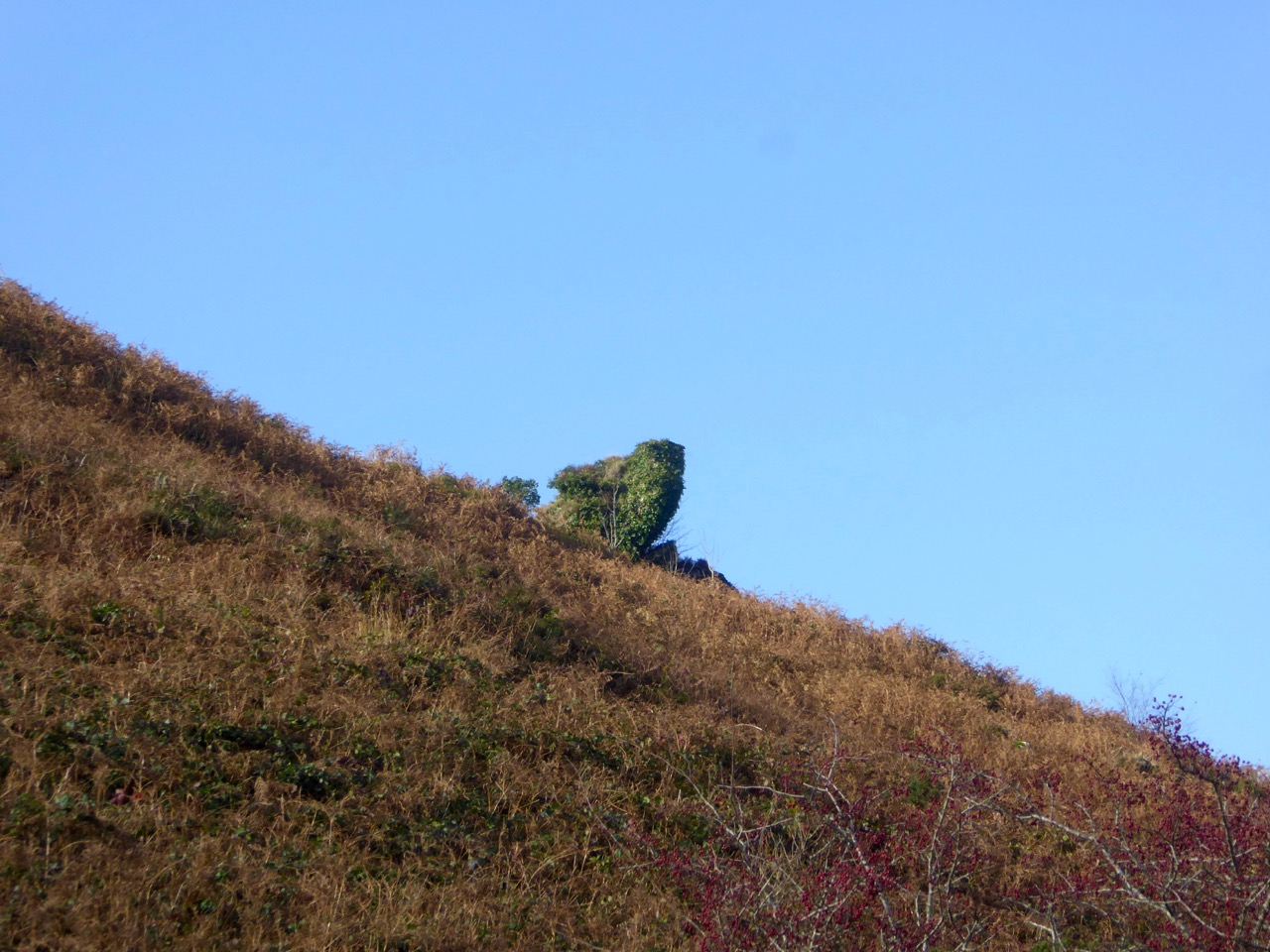
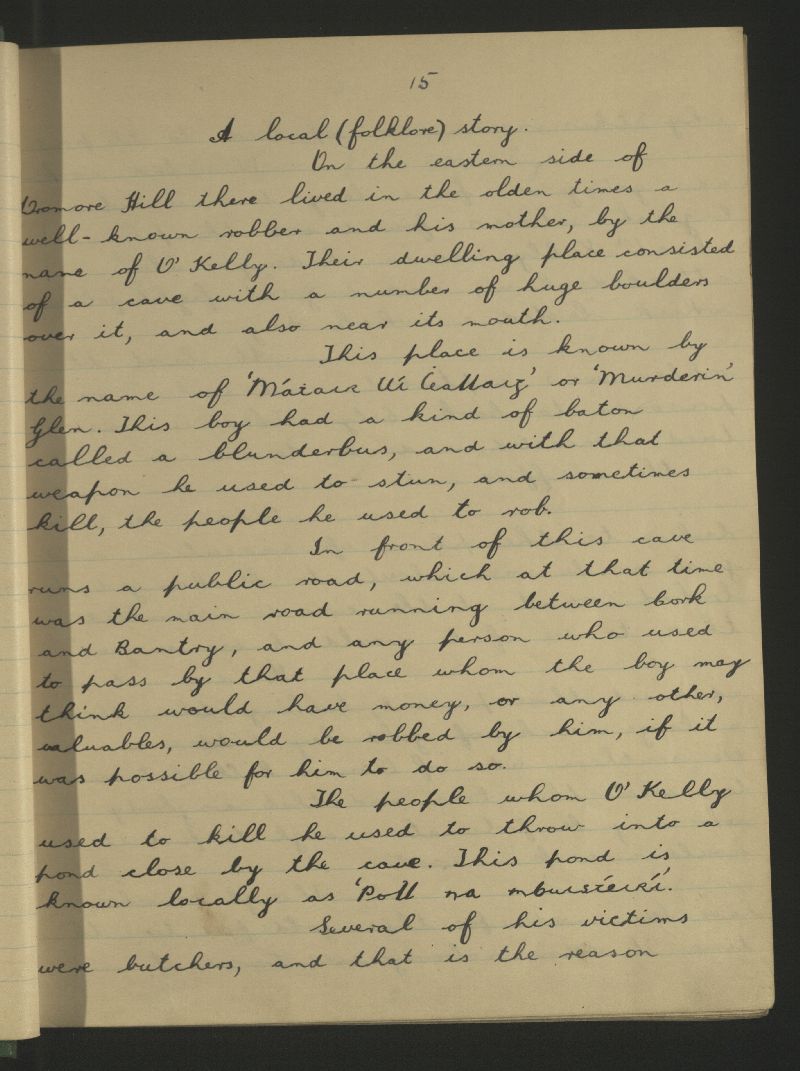
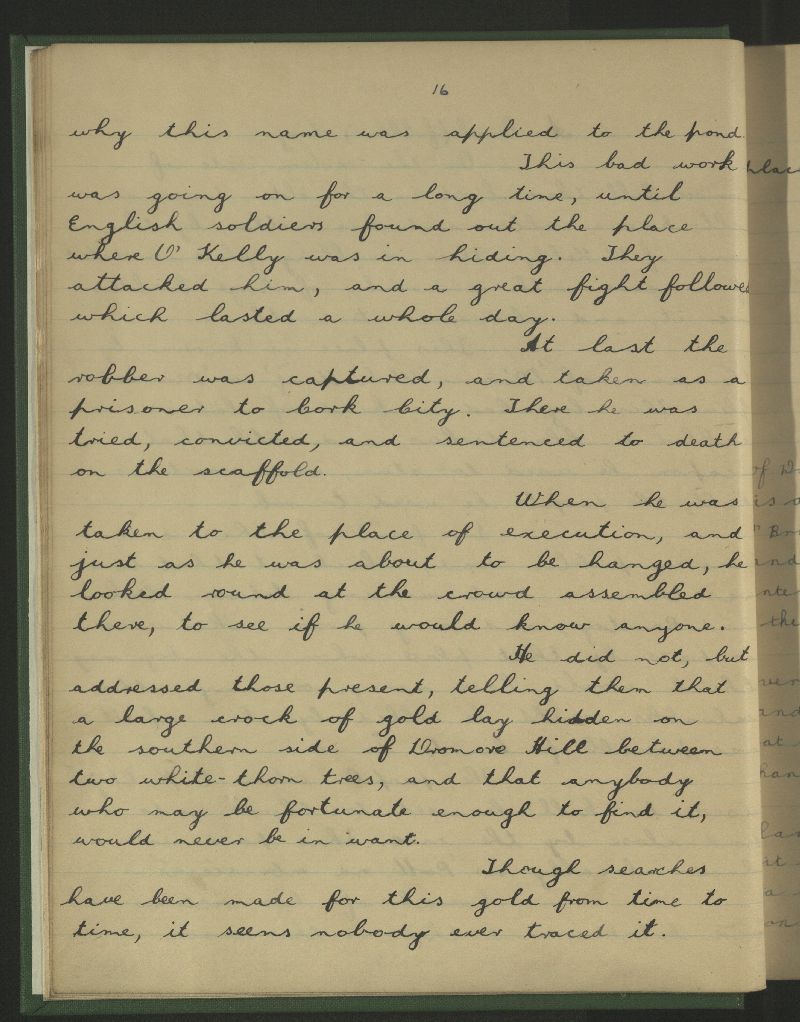
The Glen is indeed dramatic, with steep sides and an enormous overhanging rock – just the kind of place for a brigand to lurk. In this case the brigand (and his mother) were locals, by the name of O’Kelly, who would lay in wait for travellers and murder them for their gold, before throwing them into the Butcher’s Pool.

Murder Rock

In  the 1930s schoolchildren in every National School in Ireland were asked to write down the stories they heard at home and these were recorded, in their own writing, by the National Folklore Commission. Here is the outline of the project, as presented on Duchas, the website that now stores that collection:

For the duration of the project, more than 50,000 schoolchildren from 5,000 schools in the 26 counties of the Irish Free State were enlisted to collect folklore in their home districts. This included oral history, topographical information, folktales and legends, riddles and proverbs, games and pastimes, trades and crafts. The children recorded this material from their parents, grandparents, and neighbours. The scheme resulted in the creation of over half a million manuscript pages, generally referred to as ‘Bailiúchán na Scol’ or ‘The Schools’ Collection’.

To my delight, I was able to find the original story in the collection – and here it is, in the handwriting of schoolboy Michael Keohane from Dromore National School. I think you will agree he has done a magnificent job of telling the local legend.

murdering-glen

murdering-glen-page-2Before we left the murderous spot Bridget led us up to the mass rock, on a ledge on the side of the valley. It was a block of sparkling quartz, with holes to collect water, into which you can dip your warts in hopes of a cure.

Bridget shows us the mass rock

We  walked then towards the Trawlebane Bridge, where Robert and I had joined the walk two years ago to honour and remember Chief O’Neil. Robert’s post, The Chief, will take you back to that day and show you the spot where, before we started the walk, participants decided to put on an impromptu display of Crossroads Dancing, just as local people would have done on a fine summer evening in the old days.

Trawlebane Crossroads

There was more, much more to see, just in the immediate neighbourhood. We spent time in a Cillín first, in the middle of a field, with a magnificent blackthorn tree to mark the lonely spot where unbaptised children were traditionally buried. Read more about this practice in my post Unknown Souls.

Cillín

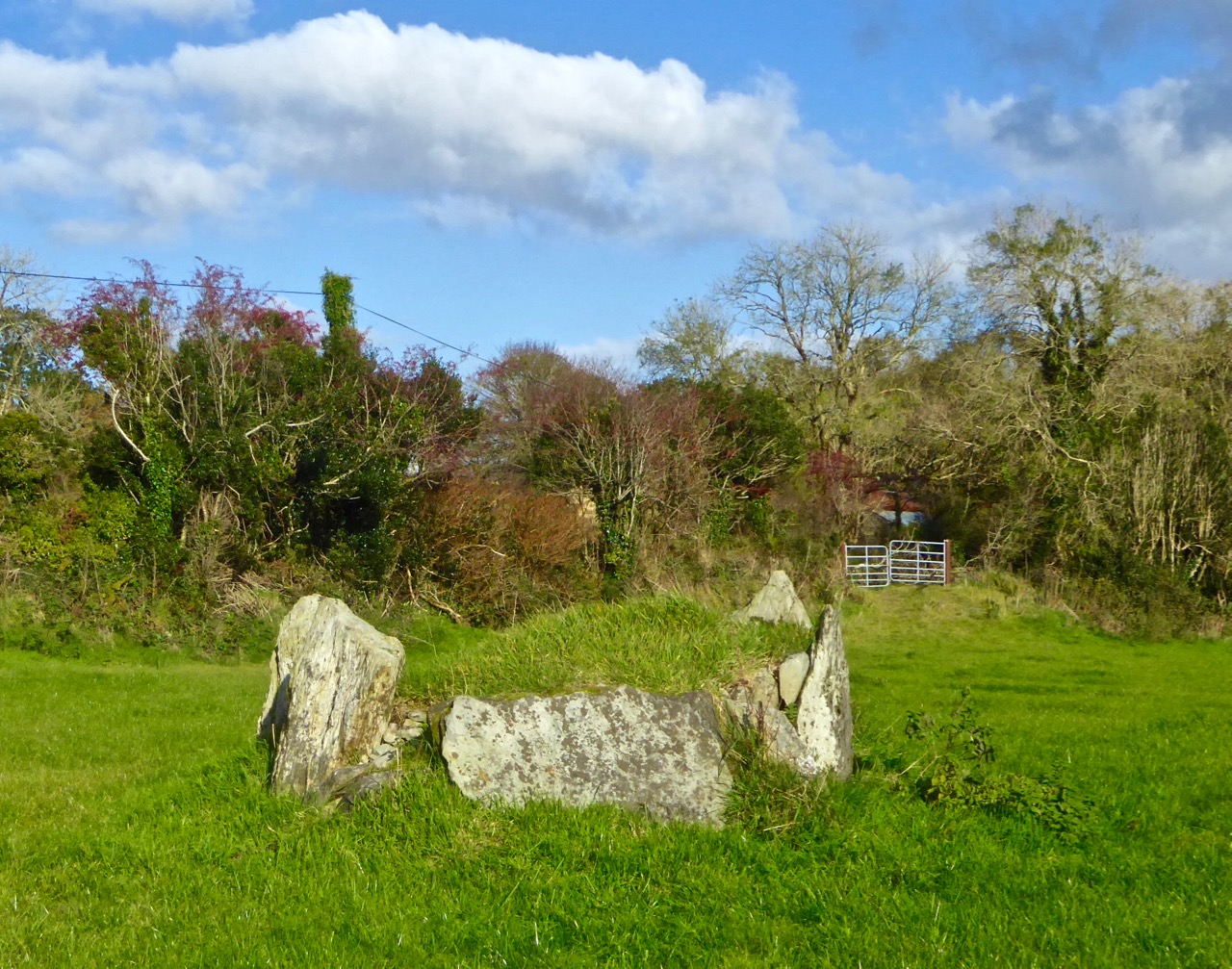
Blackthorn TreeA little five-stone circle was next – a classic of its kind, with four stones set on edge and a recumbent stone marking the axial alignment. (See more examples of them in my post Family-Friendly Archaeology). Besides three sites in nearby Kerry, these small stone circles are only found in Cork. They mirror exactly the larger multiple-stone circles, just with fewer stones – an efficient variation requiring fewer resources to erect but accomplishing the same outcomes.

Five stone circle

Unfortunately, this five-stone circle has been filled with field debris, creating the appearance of a mound

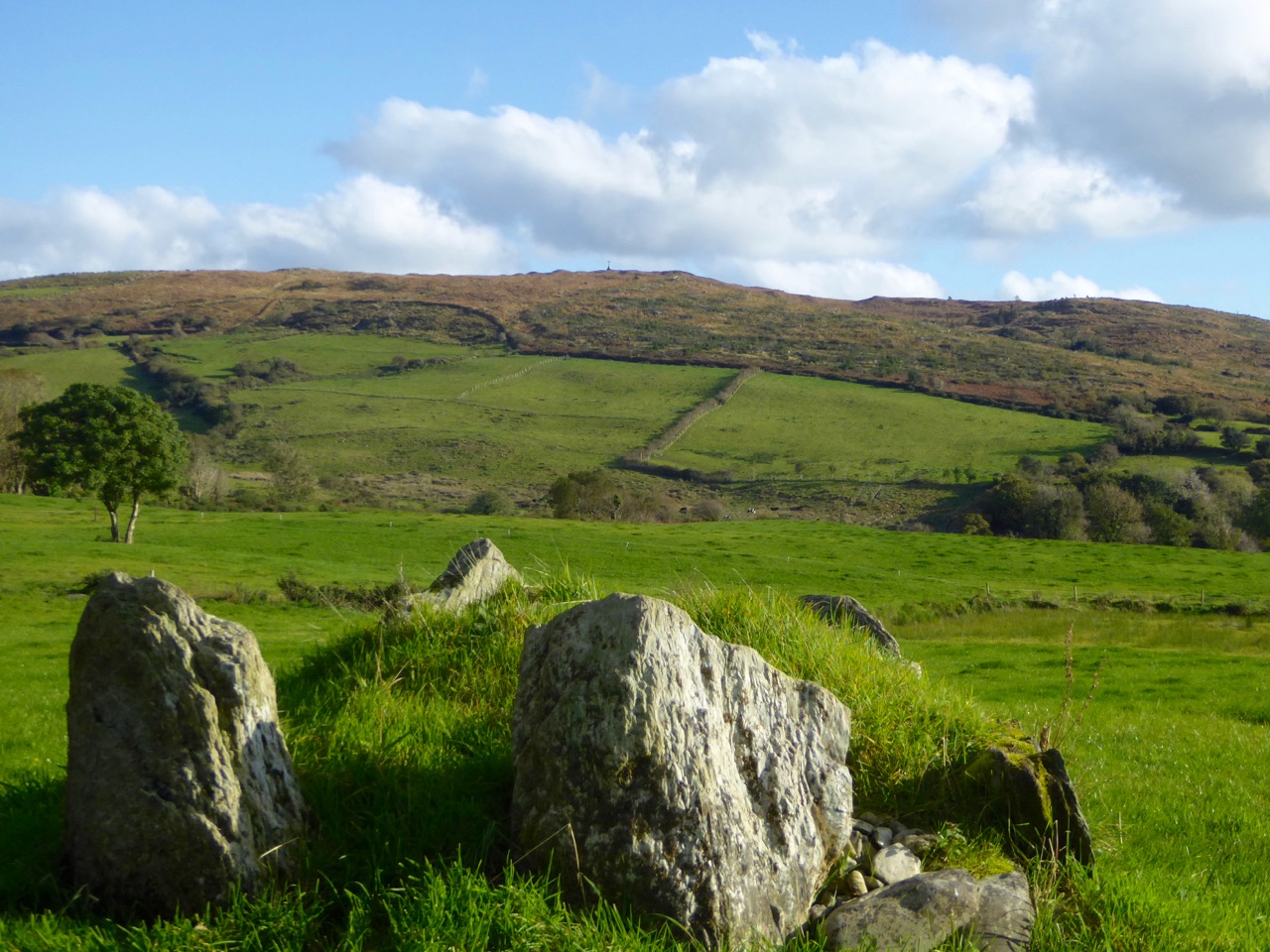
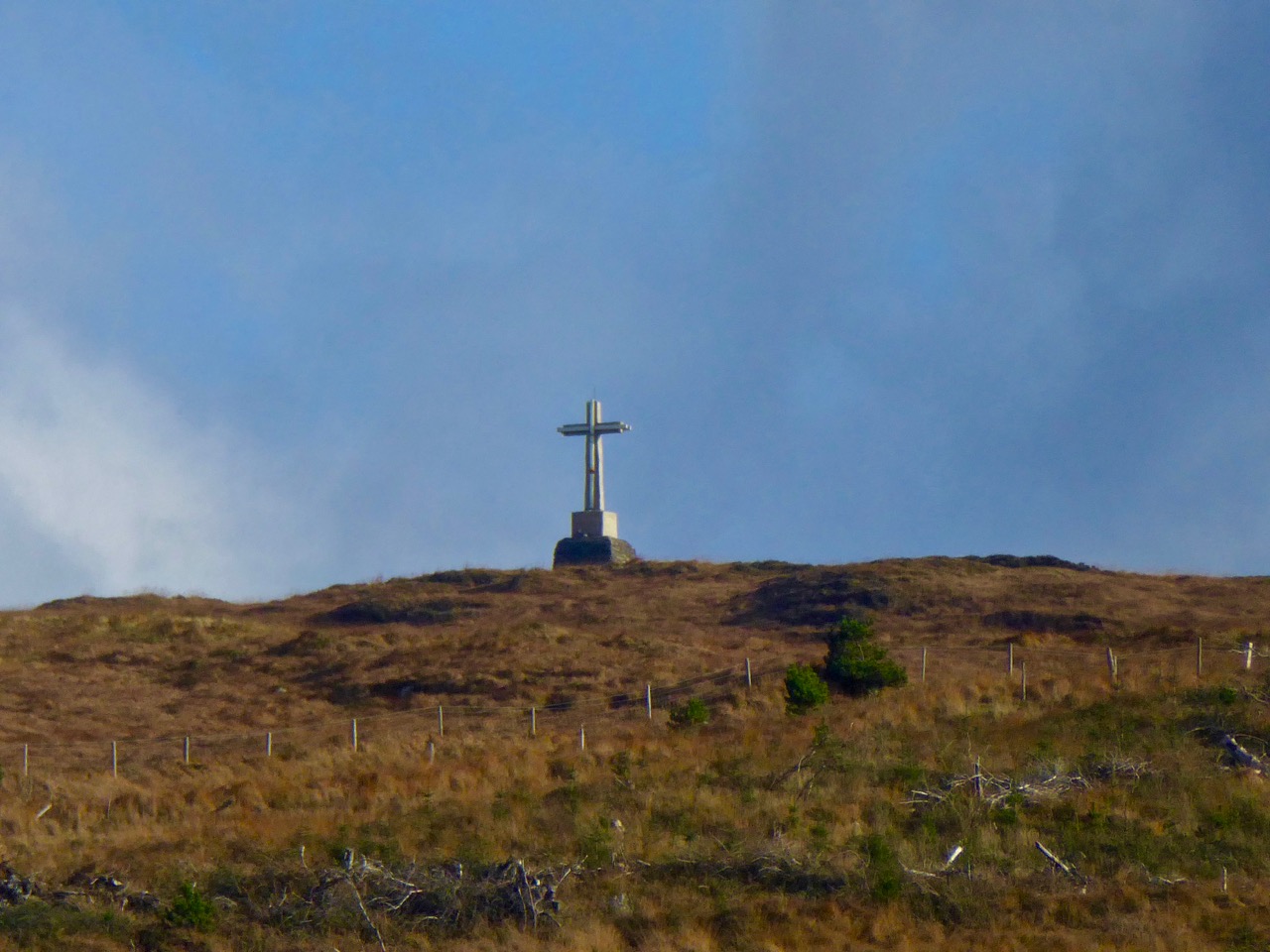
We also passed numerous ringforts and several standing stones. Looming over us as we walked was Dromore hill, on top of which was erected, in the Marian Year of 1954, an enormous cross, now rather improbably lit up at night. The cross is clearly visible from the stone circle and the standing stones, presenting opportunities to ponder on the juxtaposition of what is considered sacred in its own day, and what communities will expend precious resources to erect at different times over millennia.

Cross above circle

CrossOn  our trip to Sligo recently Robert and I were sensitised to the phenomenon of monuments seemingly echoing or imitating the topography behind them – see his post Discovering Carrowmore for more about this. I was struck by one of the standing stones – the top did seem to echo the hill behind it. Coincidence?

Standing Stone shape

October in West Cork can feature some of the best weather and walking conditions of the year. Today did not disappoint, with blue skies and crisp air.

Tree

Thank you, Bridget, and our other exploring companions Amanda and Peter, for a marvellous day of Murder, Mythology and Megaliths.

At the rabbit ears

The Navel of Ireland

eyes of the goddess

Today we happened upon the Navel of Ireland. That’s the name given to the Hill of Uisneach in the townland of Loughanavally, in the barony of Rathconrath, in the county of Westmeath. It’s an archaeological centre of powerful cultural significance, one of (possibly) six ‘royal’ sites in the island of Ireland.

palace rendering

Seen in the developing visitor centre below the Hill – an artist’s reconstruction of the ‘Royal Palace’ on the Hill of Uisneach, County Westmeath

Today, Ireland is divided into four provinces: Leinster, Ulster, Munster and Connacht. The Irish word for this division is cúige, which literally means ‘fifth part’. That’s confusing, until you learn that there was, before the Norman invasion, a fifth province, known as Mide. The Irish word Midhe means ‘middle’. Mide has survived as a county – Meath; but this large county was divided in two during the time of Henry VIII, and we now have both Meath and Westmeath.

Justin the guide 2

catstone in context 2
Upper picture – Justin, our tour guide, explains the significance of the earthwork known as the ‘Royal Palace’. Lower picture – approaching the Navel of Ireland, the focal point of the Hill of Uisneach

Uisneach was probably the ancient headquarters of the fifth province, but was also particularly important because it was the place where all the provinces came together. The provinces were formerly administered by the dynasties, or ruling families of the day, and it is likely that they met up here to ensure that laws were fair and consistent through the whole of the land, and also to exchange news and stories, to feast, and to hold contests. In that latter context the tradition survives – rugby and hurling contests between the provinces in Ireland are madly important events – and their followers positively tribal!

ancient trackway 2

distant fort 2

Upper picture – an ancient trackway appears to lead to another circular enclosure on a distant hilltop (shown in the lower picture)

Uisneach is privately owned – and a working farm – but we are fortunate that the owner fully appreciates the significance of the place and allows access – by permission – through the services of a number of guides who are well versed in its known history and traditions. Our tour guide today was Justin – a complete Uisneach enthusiast. We followed him for two hours and were shown many of the currently accessible sites. There are very many more: access to others is being worked on, as is a small visitor centre, so a visit to Uisneach is an evolving experience. Some of the hill was excavated, intermittently, over a period of years during the 1920s by R A S Macalister and R L Praeger. In 2001 a long term project was started by Dr Roseanne Schot  of NUI Galway: this is continuing. Future plans for the archaeological investigations include aerial Lidar surveys which could uncover hidden features and artefacts without excavation.
Justin talks about the first archaeological excavators of the Hill (left) and (right) describes the ‘wood henge’ which has been found by laser scanning on the Hill’s summit

While the science of archaeology is being focussed on Uisneach, the equally important investigations of folkore and mythology (the stories of the hill) are also in full swing. Naturally, St Patrick made an appearance on the hill back in the day (we were shown his stone ‘bed’) and I was fascinated to read, later, that Geoffrey of Monmouth in his 11th century History of the Kings of Britain tells how stones from Uisneach were magically transported to Stonehenge. From the top of the hill it is said that you can see twenty counties – and all four (five?) provinces. The day of our visit was not quite clear enough for this, but we did ascend to the summit, where we could see the remains of a passage tomb – perhaps five thousand years old – although these had been disturbed and disbursed by the Ordnance Survey, who placed a trig point there back in the 1800s.

walking to the catstone

Our visit to The Catstone, an enormous glacial erratic which became the meeting place of the chieftains of all the provinces of Ireland

The goal of our little expedition was the Navel of Ireland – by tradition the centre of the whole land, and the place where the meetings of dynasties took place. It’s a little way on from the summit of the hill and only enjoys some of the views, but it is marked by an enormous natural boulder set into a circular earthwork of human construction: Justin painted a word picture for us of each of the chieftains sitting at the head of his own province on the banks of the earthwork and facing the stone while all the important affairs of state were discussed. Culturally this was where the provinces met. In relatively modern times the boulder has been called The Catstone: some say this is because it resembles a cat, others would have it that a cat is a traditional symbol for a place where our world meets the ‘otherworld’.

decorating the goddess

Upper left – the entrance to Uisneach symbolises the Bealtainne Fires which have been celebrated on the hilltop. Upper right – an image of Lugh on the shores of the lake (middle pictures) where he is said to have met his end. Lower picture – Eriu being adorned with autumnal hues

On our way down from the hill we met with a large crowd coming up. They were off to the Catstone for a ceremony of their own which involved drumming and singing – and, possibly, making contact with the ‘otherworld’ themselves. I think there’s a continuity here: a gathering place imbued with some deep significance and referenced to Irish mythology through Eriu, a goddess who gave her name to Ireland, and Lugh – a god or ancient hero who, according to the stories, met his death in a lake near the summit of the hill. Whatever your beliefs, there’s no denying that the Hill of Uisneach has been an empowering place in ancient times, and remains so today.

With thanks to Justin for such an erudite and enthusiastic tour of the Hill, and great appreciation of the interest and generosity of the Clarke family in allowing the Hill to be researched and visited

Below – off to the ceremony on Uisneach Hill

ready for the ceremony

Champions for Ireland

wolfhounds

Irish Champions – ancient warriors, wolfhounds and rain at the Tailteann Games 1924

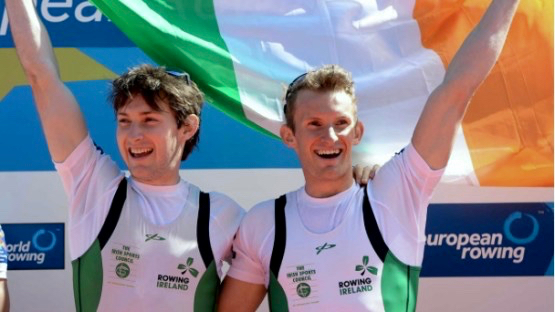
We heard hearty cheers coming across the water on Friday, when Ireland won the Olympic silver medal in the Lightweight Men’s Double Sculls Final. The cheers we heard were not coming from Rio, however (although there were plenty there), but from Lisheen, the tiny West Cork parish that’s just around the corner from us. That’s where Gary and Paul O’Donovan hail from. We think they have declared a public holiday there in honour of the two rowing brothers who, prior to this title, won gold at the European Championships in Brandenburg in Germany this year – the first Ireland rowing crew to become European Champions. This success set me looking at the records of Irish Olympic achievements over the years.

NGI 941

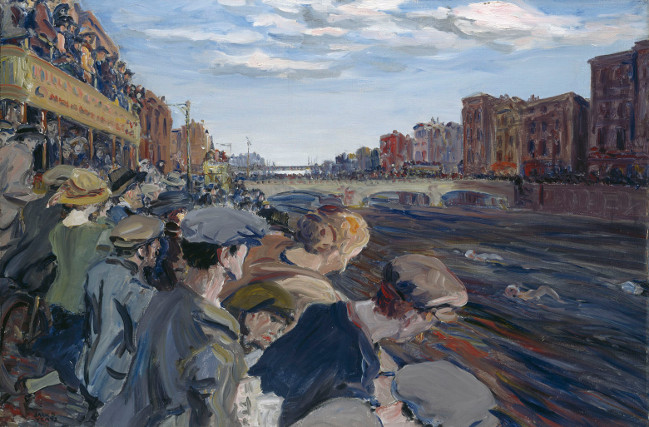
The Liffey Swim by Jack Butler Yeats, painted in 1923. Courtesy National Gallery of Ireland

Independent Ireland was represented at the Olympic Games from 1924 onwards. No Irish athletes won medals in 1924 but Jack Butler Yeats won a silver medal for the above painting and Oliver St John Gogarty won a bronze medal for literature in that year. Did you know that between 1912 and 1948 competitions in the arts were part of the Olympic Games? For a small nation Ireland has made its mark in the games: in Melbourne in 1956 Irish athletes and boxers won 5 medals between them – a gold, a silver and three bronze, and in London in 2012 boxers, athletes and a showjumper won 6 medals – a gold, a silver and four bronze. 1996 was a memorable year when, in Atlanta, Michelle Smith won 3 golds and a bronze for swimming.

An original cover from the 1924 programme for the Tailteann Games, an artist’s perception of the ancient games and (right) two medals struck for the Games

While researching this information I came across Tailteann Games. The word is pronounced ‘tell-tin’. The eleventh century Lebor Gabála Érenn (the Book of the Invasions of Ireland) states that the games were founded by Lugh Lámhfhada, Lugh of the Long Arm – the first High King of Ireland – as a mourning ceremony for the death of his foster-mother Tailtiu. Lugh buried Tailtiu underneath a mound in an area that took her name and was later called Teltown in County Meath, not far from the Hill of Tara. It’s perhaps significant that the games took place around the festival of Lughnasa – at the beginning of August. Accounts vary as to the historical periods in which the games were held: some say as early as 1800 BC, while a more generally accepted dating seems to be from the 6th to the 9th centuries AD: the festival died out after the Norman invasion but was later revived as the Tailten Fair, consisting of contests of strength and skill, horse races, religious celebrations, and a traditional time for couples to contract ‘trial’ marriages. These were allowed under Brehon Laws: couples could meet and live together for a year and a day – at the end of this time either party could end the marriage on the ‘Hills of Separation’.

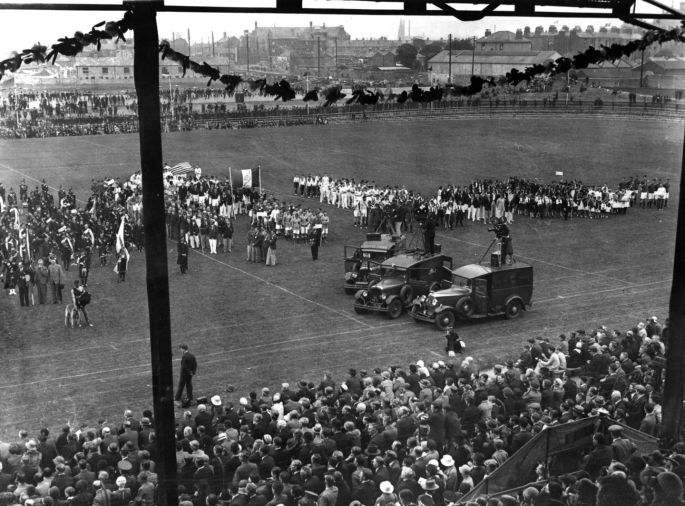
Presumably these photographs are from the ‘Opening Ceremony’ of the 1924 Tailteann Games held in Croke Park

While the 1924 Olympics were being held in Paris (where Finola’s grandfather was a member of the Irish team) a revival of the Tailteann Games was held in Croke Park, Dublin. This ‘meeting of the Irish race’ or ‘Irish Olympiad’ had been announced by Éamon de Valera in Dáil Éireann in 1921 to celebrate the founding of the Irish Free State, but the event was delayed because of the Anglo-Irish War and the Irish Civil War. Organised by the Gaelic Athletic Association (GAA), it was open to all people of Irish birth or ancestry. Participants came from England, Scotland, Wales, Canada, the USA, South Africa and Australia as well as Ireland. 

image

Note the media presence at the 1924 Tailteann Games: newsreel cameras mounted on to motor vans  

Tailteann Games were held again in 1928 and 1932. The name survives today as Rás Tailteann, which is an 8 day international cycling race around parts of Ireland. This race has run every year since it was founded in 1953 and has developed into a much sought after event by professional and amateur teams from many parts of the world: it is able to award qualifying points that are required for participation in Olympic Games and World Cycling Championships.

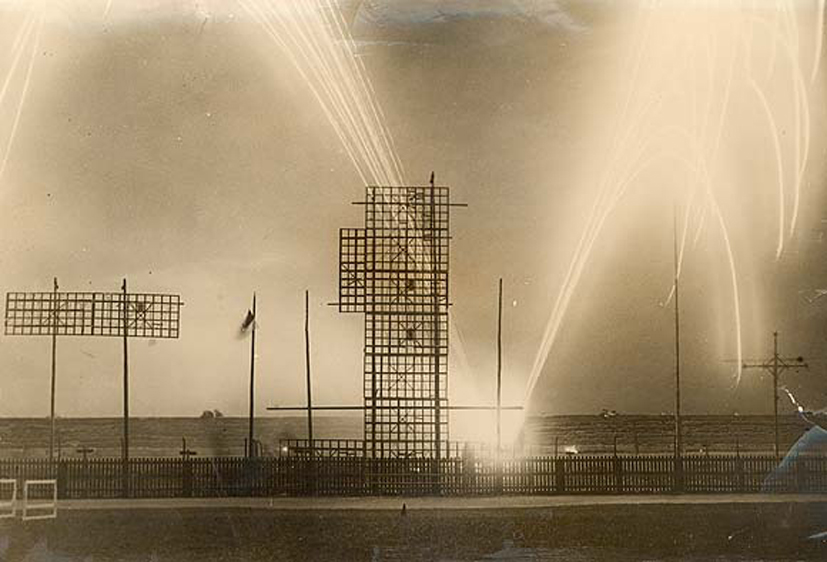
Fireworks_at_the_First_Tailteann_Games_August_15,_1924

No modern games ceremony would be complete without a fireworks display: (top) this unusual photograph shows the fireworks at the 1924 Tailteann Games. (Lower left) a 1958 poster for the Rás Tailteann. (Lower right)  We watched this year’s Rás Tailteann on the road to Ballydehob. (Below) Paul and Gary O’Donovan – West Cork lads in Rio on Friday added a 2016 Olympic Silver to their many achievements (photo afloat.ie)

brothers