Harry Clarke, Brendan, Judas – and Matthew Arnold

St Brendan was a favourite subject for Harry Clarke.
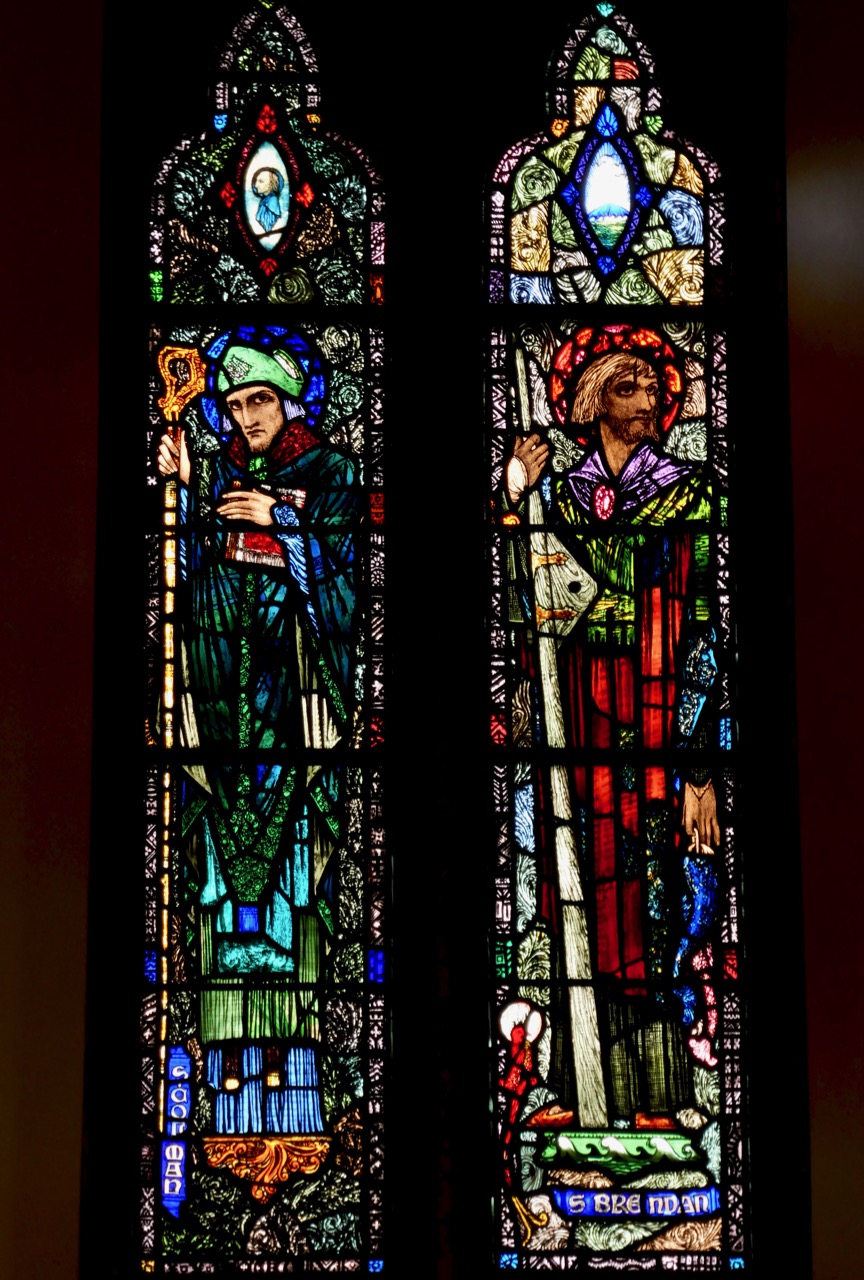
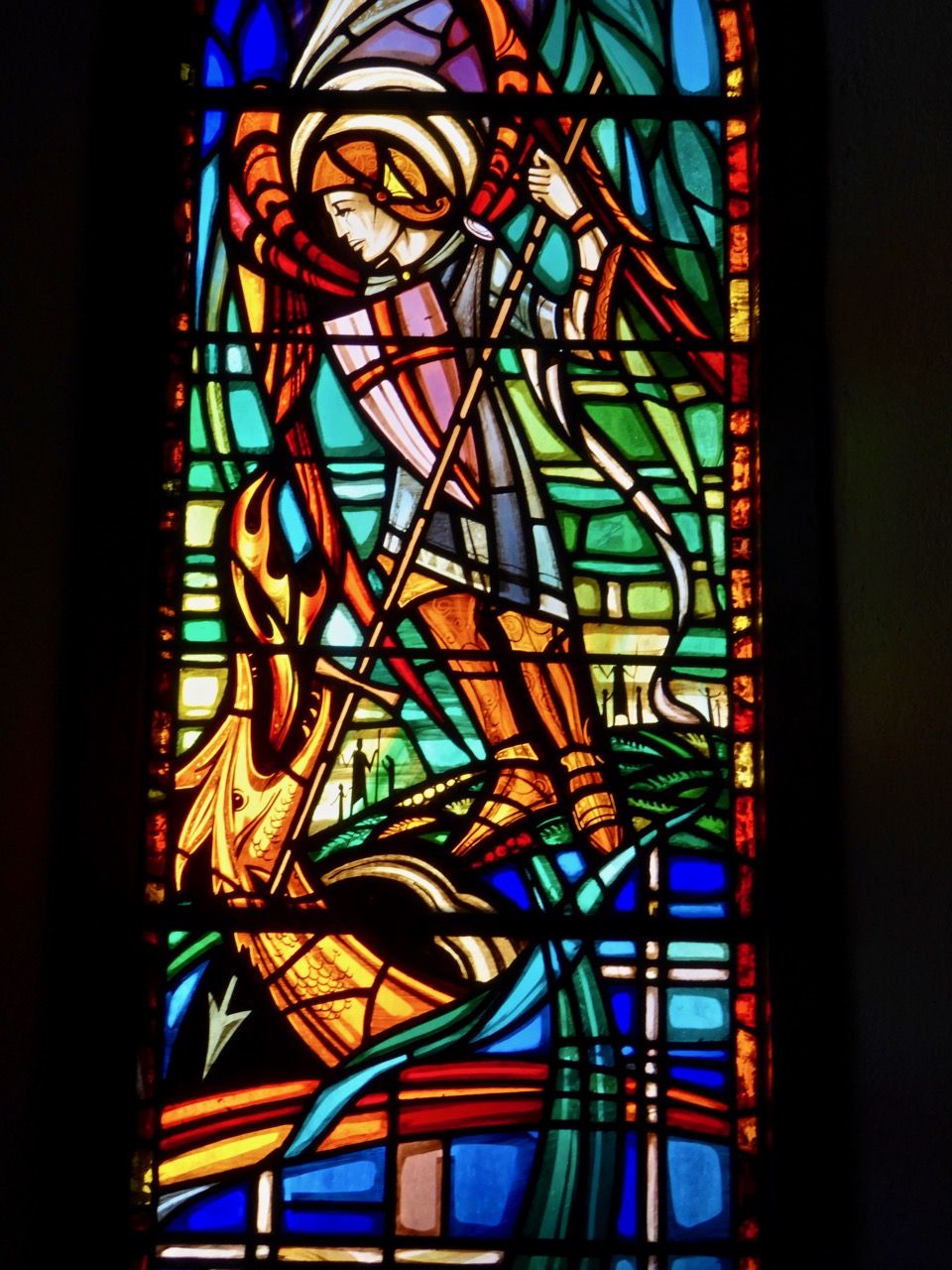
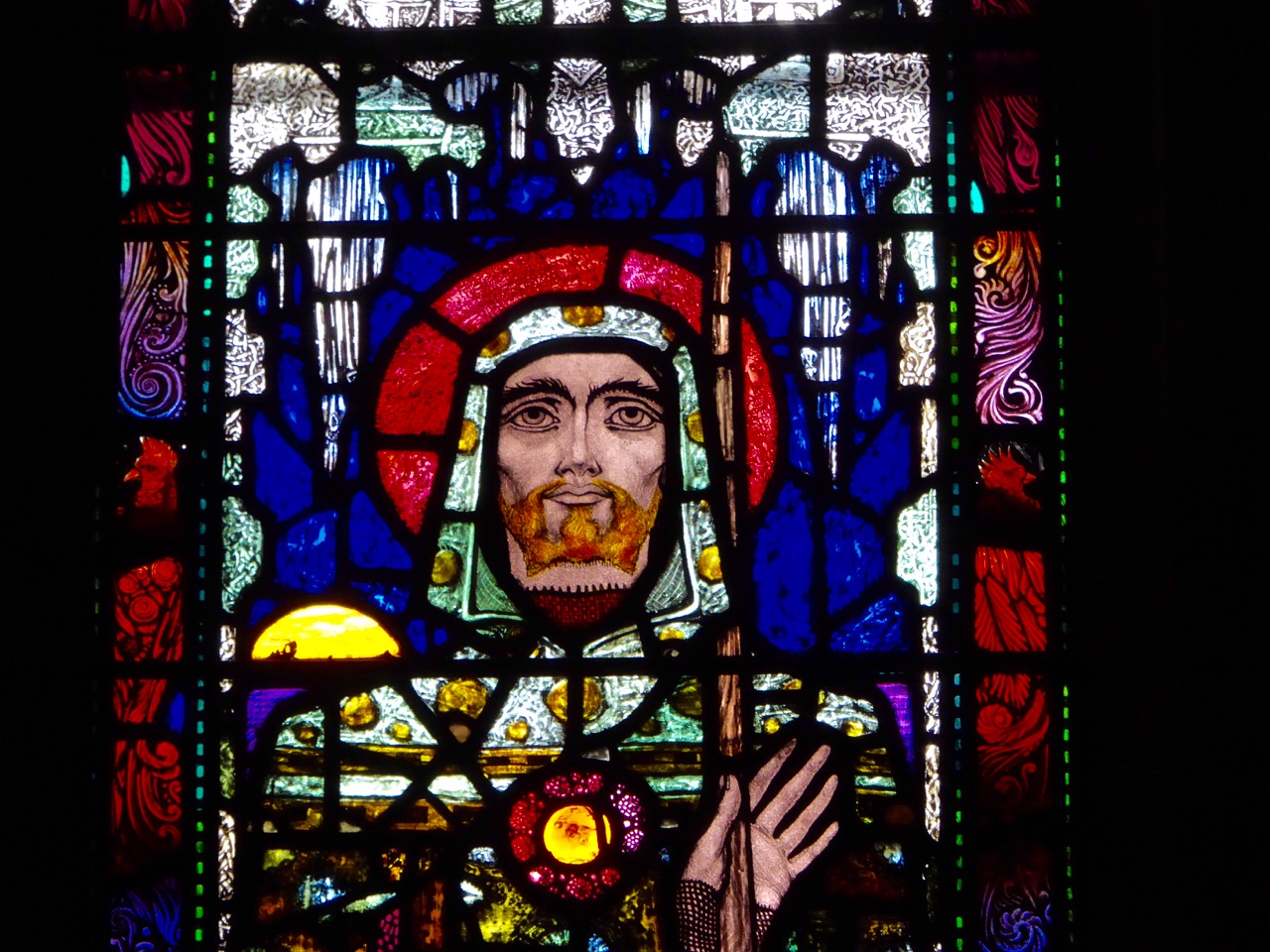
Four of his windows depict the saint: a prizewinning student piece from 1911; his Honan Chapel commission of 1916; the Ballinrobe windows from 1924-25 (pictured above); and the windows designed for the Rathfarnham Jesuit Retreat in 1928 and subsequently relocated to Tullamore (pictured below).
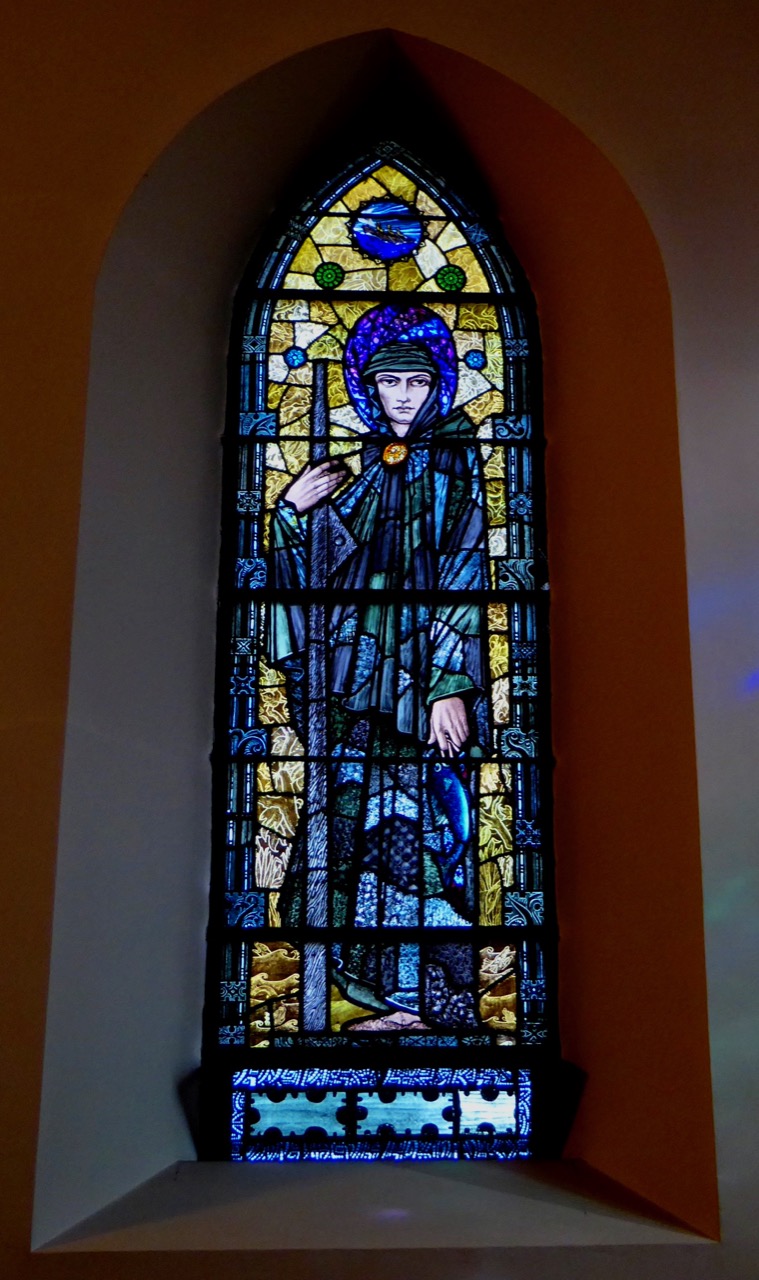
The Tullamore Brendan (above) is recognisably based on that from Ballinrobe, but in this window a youthful Brendan, as described by Paul Donnelly, ‘engages the viewer directly with a penetrating look’  

Harry researched his subjects extensively and ensured that anyone working on his windows did too. Paul Donnelly, in his fascinating essay Legacy and Identity: Harry Clarke, William Dowling and the Harry Clarke Studios (in Harry Clarke and Artistic Visions of the New Irish State) tells how he sent his apprentice, William Dowling, off to the National Library to read all that was available on his subject when he was working on the Rathfarnham window (above and below).
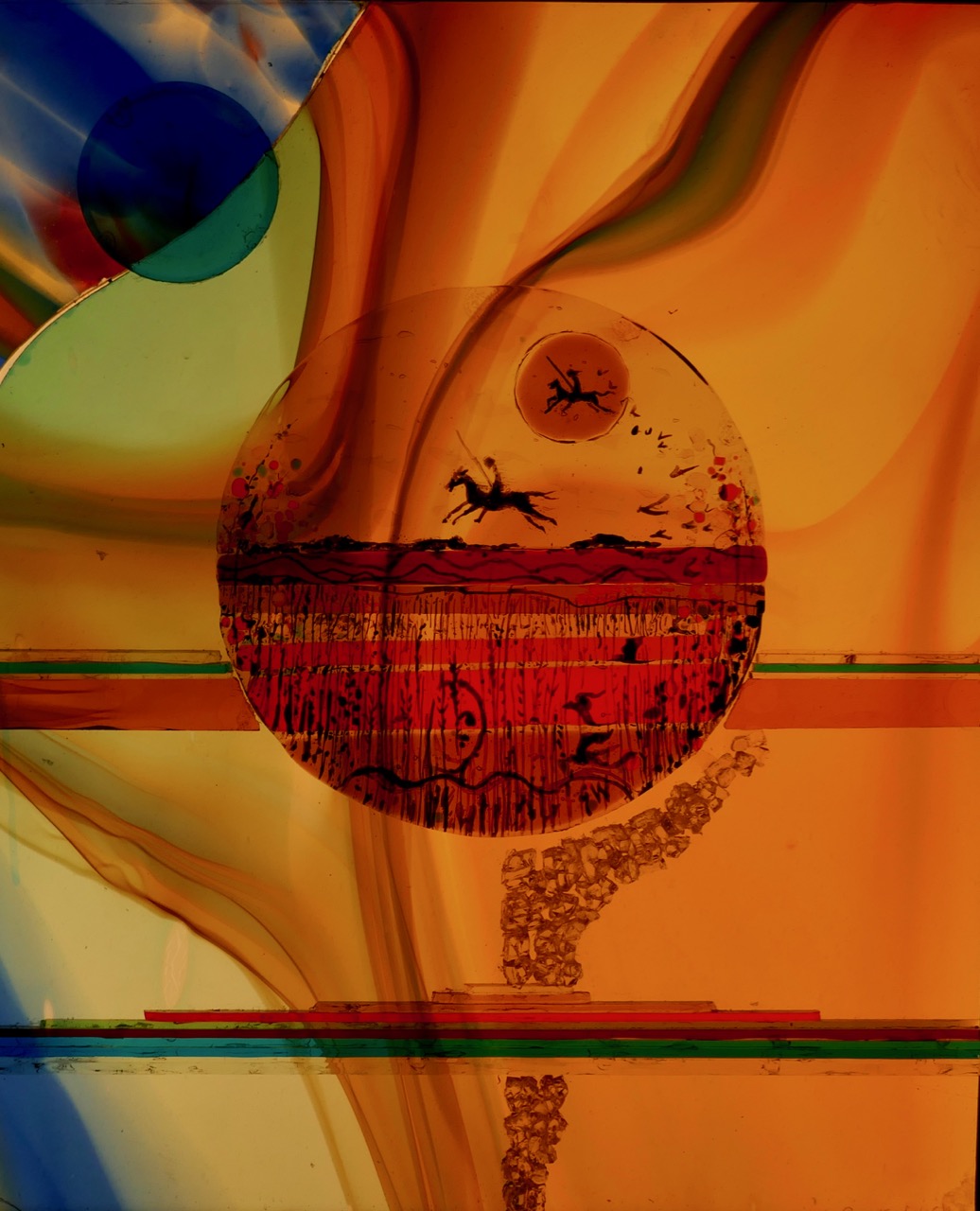
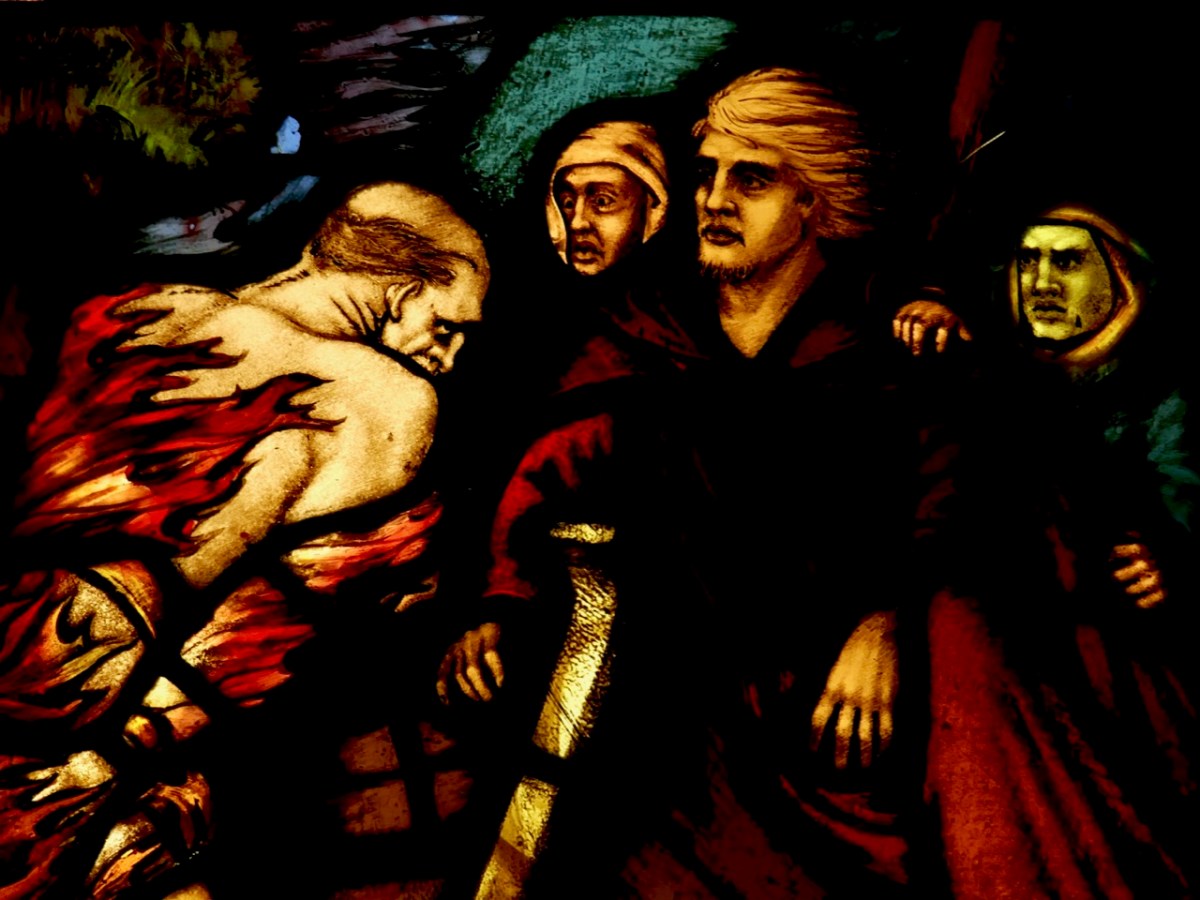
Nicola Gordon Bowe, in the Life and Work of Harry Clarke, felt that Harry was influenced by Matthew Arnold’s poem, St Brandon, when he set about designing his student piece, now in the Crawford Art Gallery. Based on the Medieval best-seller (there are over 100 versions still extant and many translations) Navigatio Sancti Brendani Abbatis, Arnold’s poem tells of an incident on the voyage in which the Saint meets with Judas, tied to an iceberg in the ocean. There are several slightly different accounts of this part of the voyage, but Arnold’s poem is compelling, and beautifully told.
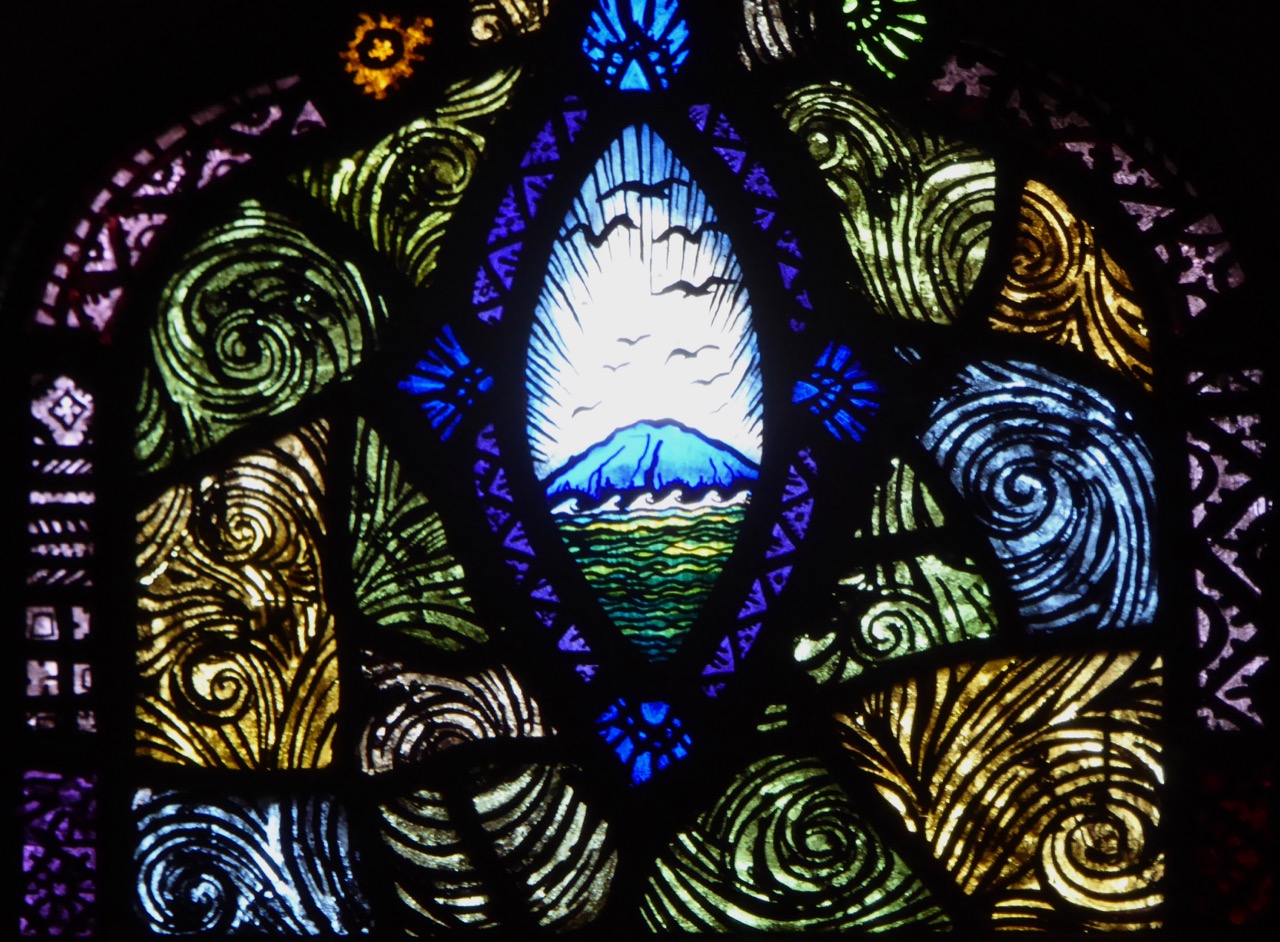
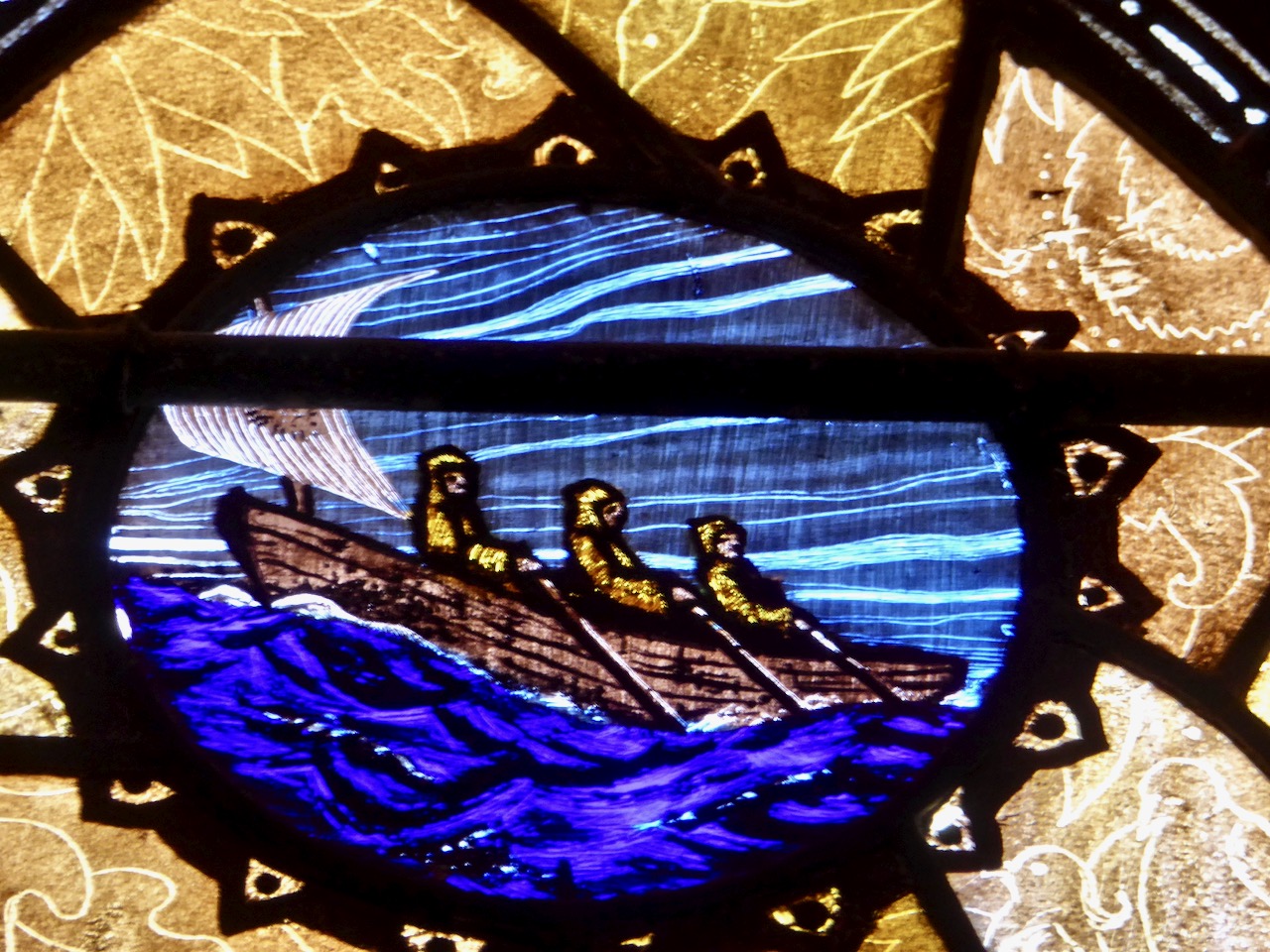
From the Ballinrobe window, a detail showing what Brendan was seeking – the Land of Promise

Both in his poetry and criticism, Arnold explored issues of morality versus religion, and themes of alienation and redemption. Clarke was constrained to work on religious subjects since most of his stained glass commissions came from churches, but revelled in the chance to introduce details from mythology and ancient hagiographies (such as O’Hanlons Lives of the Irish Saints which he consulted exhaustively) and to use those details as a springboard for his own imagination.
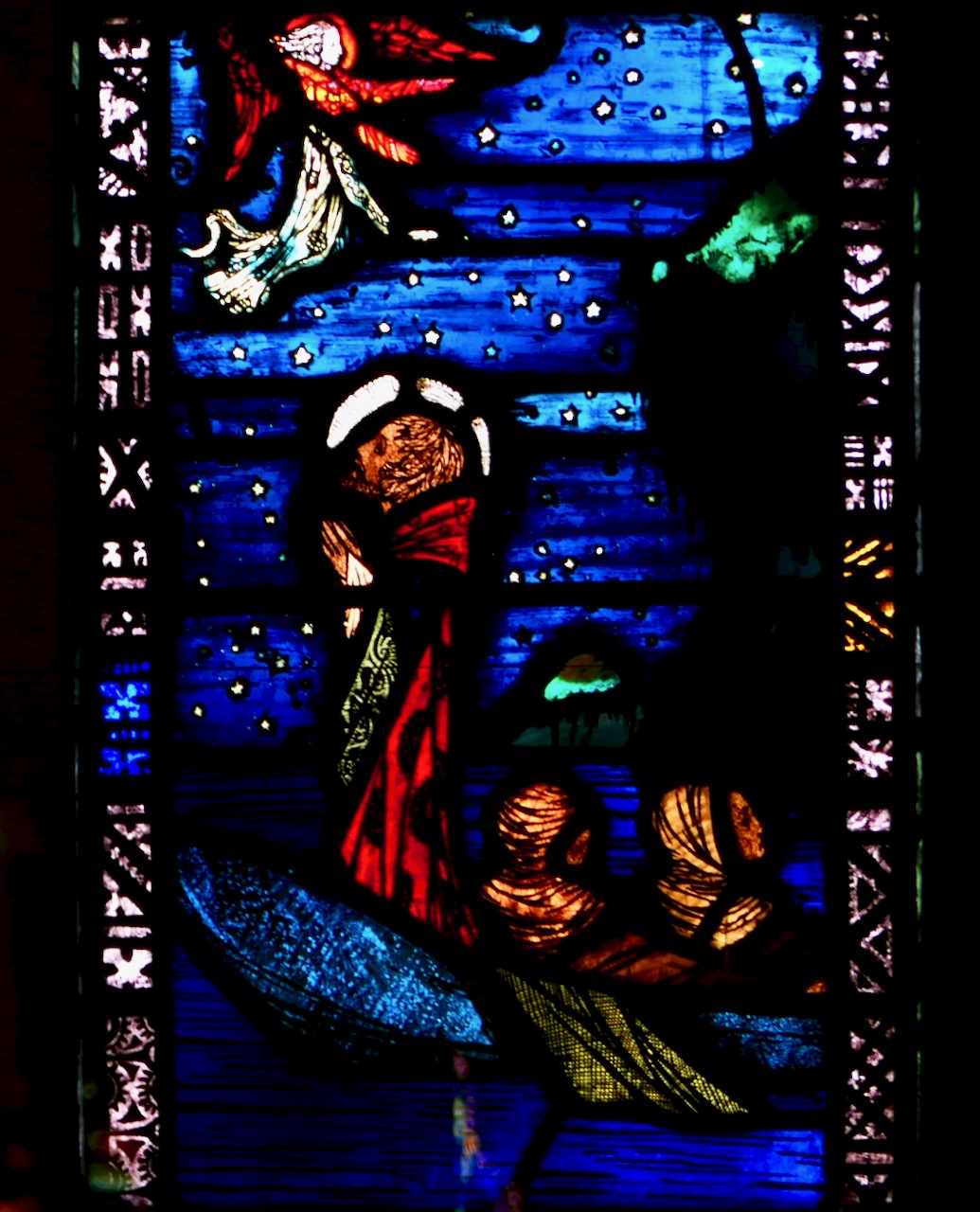
Also from the Ballinrobe window, the bottom panel shows Brendan praying  at the bow of the boat and an angel appearing

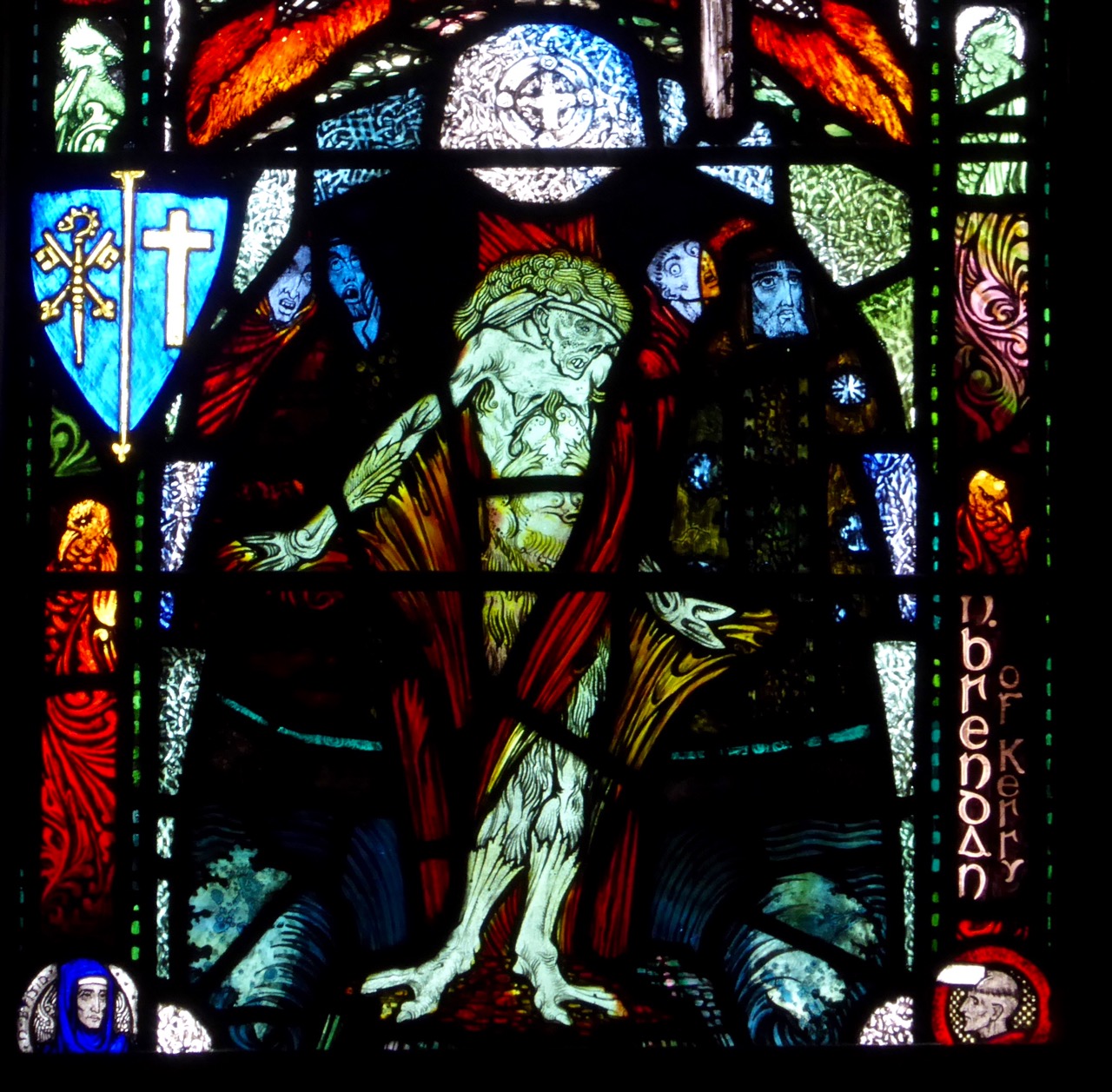
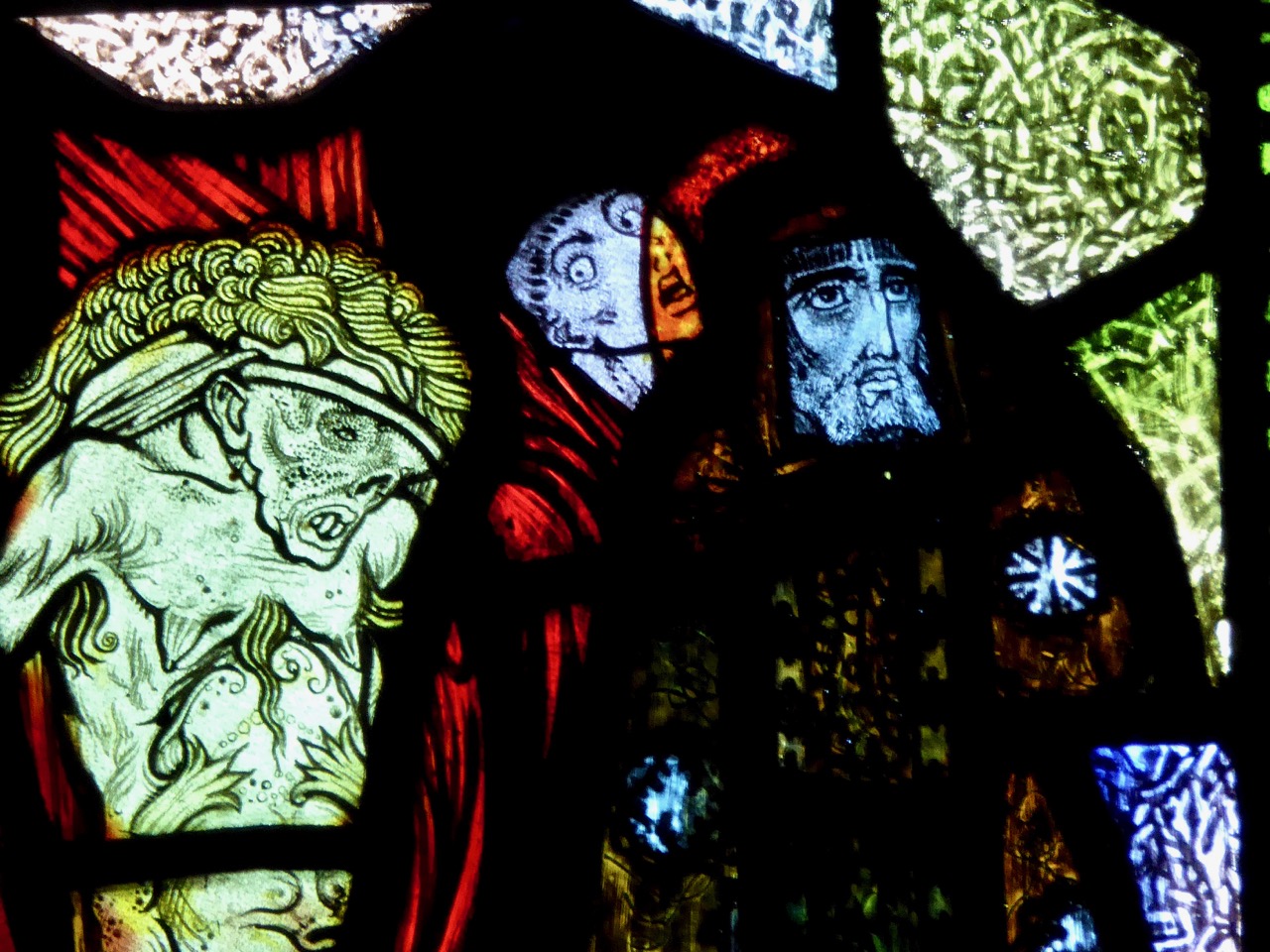
We can see the progression of his art, and his growing interest in the macabre, in the two depictions of Judas. Both are emotive and powerful, but in the first, from 1911, Judas is shown as a fully human, tortured man. In the Honan window, from 1916, he has turned into a monster with scales, feathers, fur and claws. One constant is that Brendan’s companions look on in shock and horror in both pieces, while the saint remains unmoved, gazing thoughtfully and perhaps compassionately on the scene.
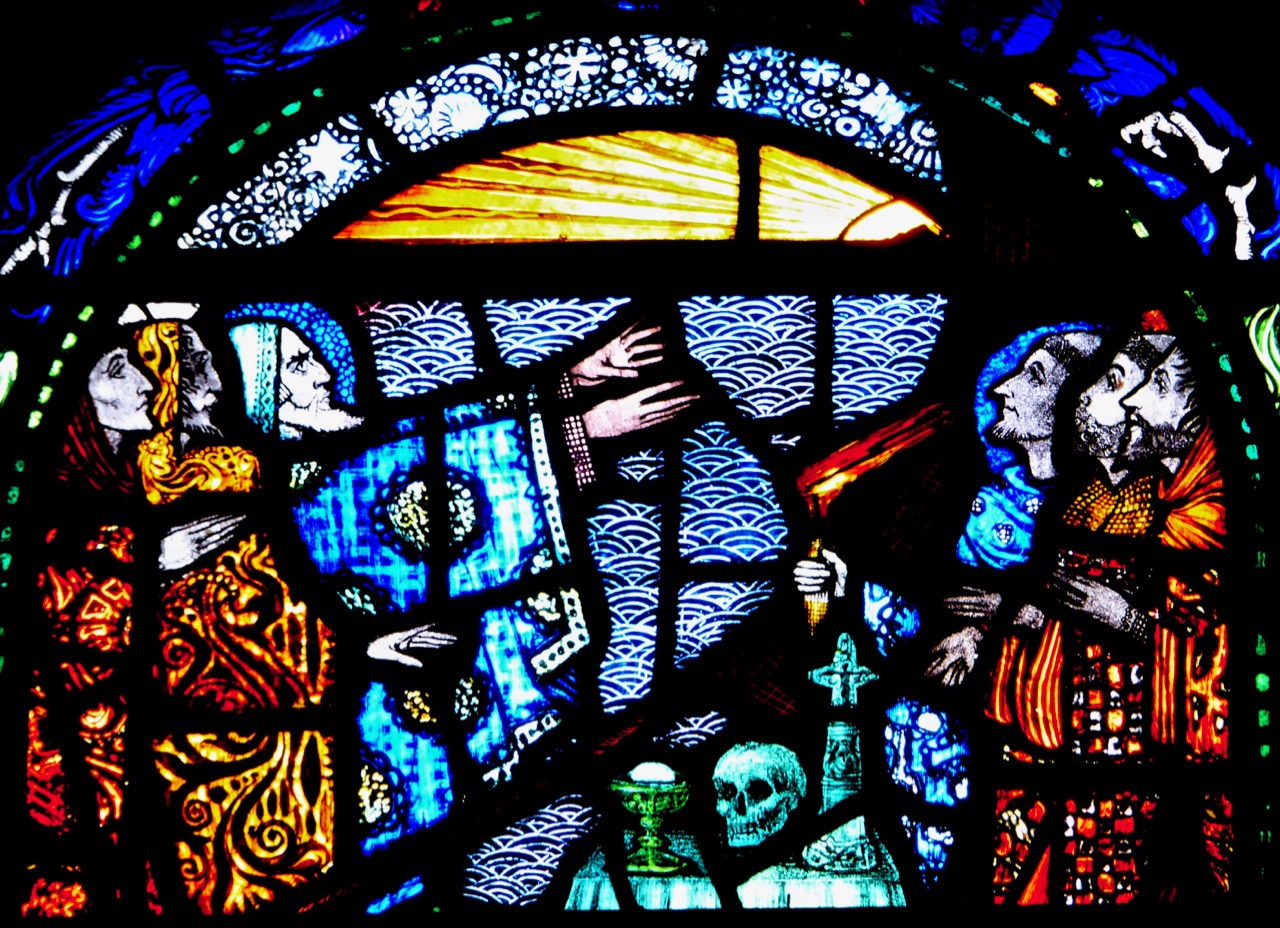
From the Honan window, according to Gordon Bowe: ‘The upper panel which perhaps represents Brendan’s vision of Paradise, is spanned by a golden hemisphere and depicts the saint at sea in his coracle, preaching to his companions as they approach the skull-ridden coastline of America in their search for the Islands of the Blessed’

Harry went on to design two more Brendan windows, but chose different details for them. In fact, he wrote to Monsignor D’Alton at Ballinrobe, ‘The meeting with Judas I have done too often to do again with enthusiasm.’  Arnold’s poem was first published in 1860. He died in 1888 and Harry was born in 1889, so their lives did not overlap. But Harry was very well read and Arnold, at the turn of the century, was still considered one of the major poets of the Victorian era. I think you will find that the poem and the windows are a successful collaboration between two iconic figures of art and literature. I give the poem now in its entirety, illustrated by Harry Clarke. [The first image is from a panel in Tullamore, originally part of the St Brendan window but separated from it when the windows were relocated. The second and third image are from the 1911 student piece; the next three from the Honan Chapel 1916 window.]

Saint Brandan sails the northern main;

The brotherhood of saints are glad.

He greets them once, he sails again;

So late!—such storms!—The Saint is mad!

He heard, across the howling seas,

Chime convent-bells on wintry nights;

He saw, on spray-swept Hebrides,

Twinkle the monastery-lights;

But north, still north, Saint Brandan steer’d—

And now no bells, no convents more!

The hurtling Polar lights are near’d,

The sea without a human shore.
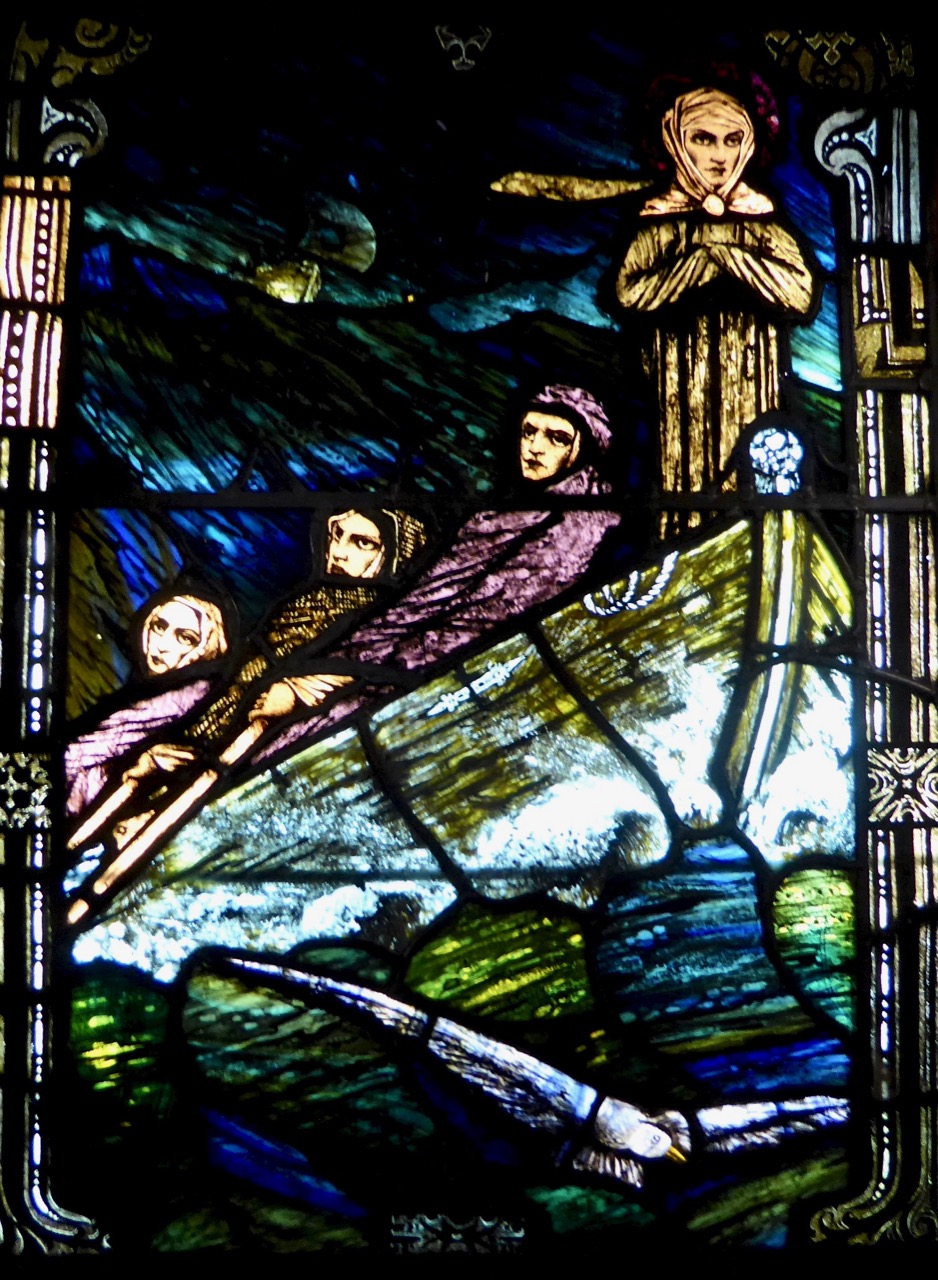
At last—(it was the Christmas night;

Stars shone after a day of storm)—

He sees float past an iceberg white,

And on it—Christ!—a living form.

That furtive mien, that scowling eye,

Of hair that red and tufted fell—

It is—Oh, where shall Brandan fly?—

The traitor Judas, out of hell!
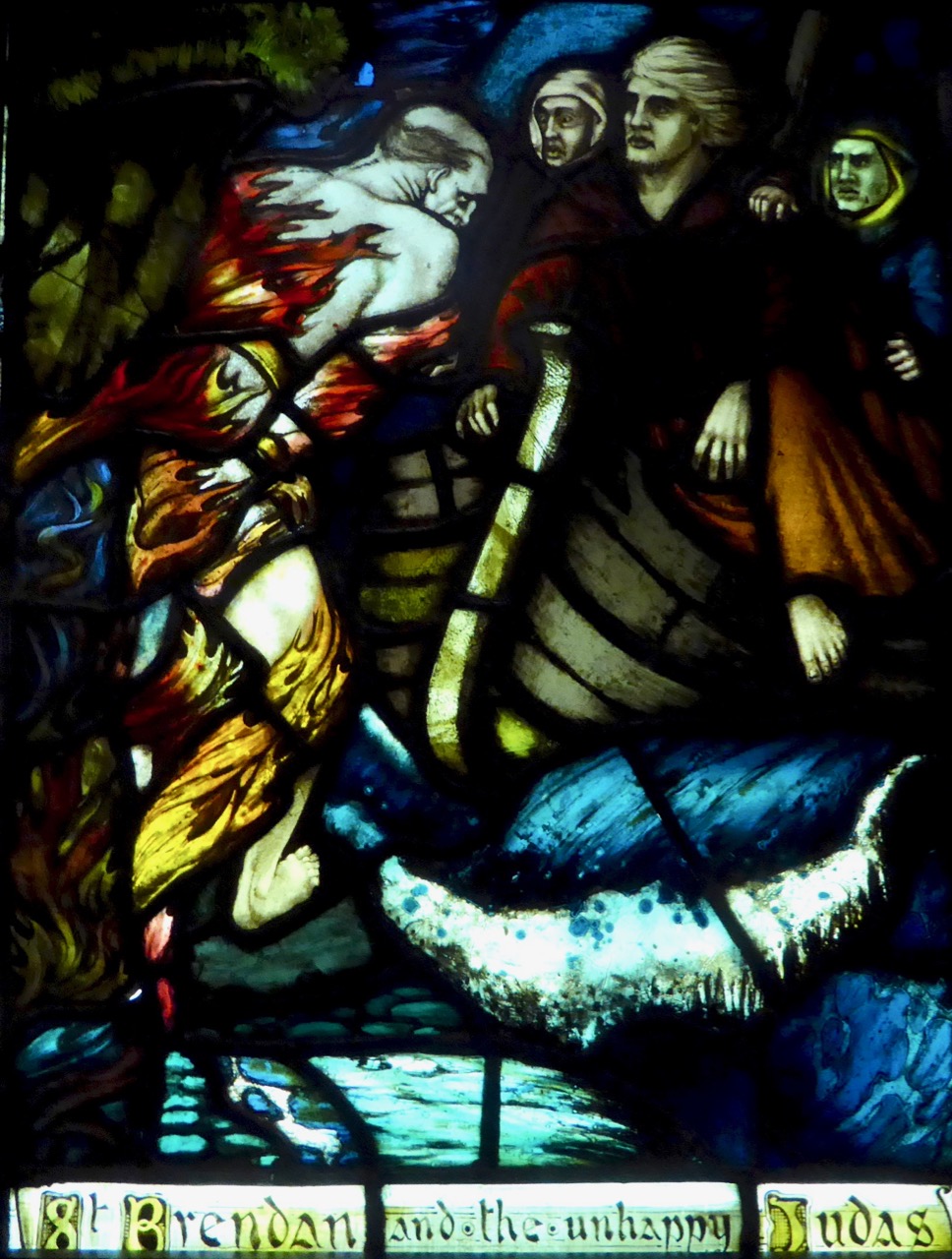
Palsied with terror, Brandan sate;

The moon was bright, the iceberg near.

He hears a voice sigh humbly: ‘Wait!

By high permission I am here.

‘One moment wait, thou holy man

On earth my crime, my death, they knew;

My name is under all men’s ban—

Ah, tell them of my respite too!
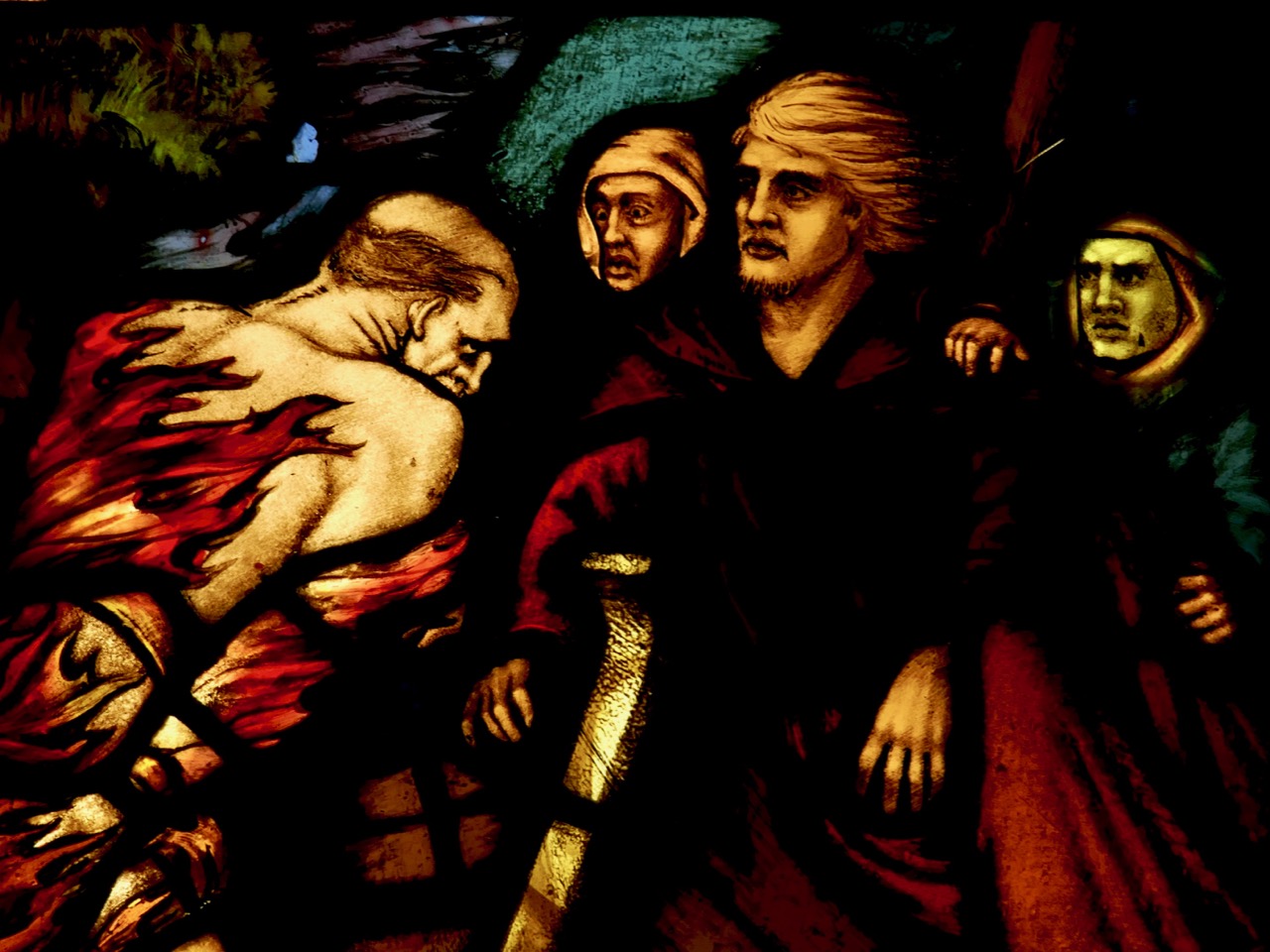
‘Tell them, one blessed Christmas-night—

(It was the first after I came,

Breathing self-murder, frenzy, spite,

To rue my guilt in endless flame)—

‘I felt, as I in torment lay

‘Mid the souls plagued by heavenly power,

An angel touch my arm, and say:

Go hence, and cool thyself an hour!
”Ah, whence this mercy, Lord?’ I said.

The Leper recollect, said he,

Who ask’d the passers-by for aid,

In Joppa, and thy charity.

‘Then I remember’d how I went,

In Joppa, through the public street,

One morn when the sirocco spent

Its storms of dust with burning heat;

‘And in the street a leper sate,

Shivering with fever, naked, old;

Sand raked his sores from heel to pate,

The hot wind fever’d him five-fold.
‘He gazed upon me as I pass’d

And murmur’d: Help me, or I die!—

To the poor wretch my cloak I cast,

Saw him look eased, and hurried by.

‘Oh, Brandan, think what grace divine,

What blessing must full goodness shower,

When fragment of it small, like mine,

Hath such inestimable power!

‘Well-fed, well-clothed, well-friended, I

Did that chance act of good, that one!

Then went my way to kill and lie—

Forgot my good as soon as done.

‘That germ of kindness, in the womb

Of mercy caught, did not expire;

Outlives my guilt, outlives my doom,

And friends me in the pit of fire.
‘Once every year, when carols wake,

On earth, the Christmas-night’s repose,

Arising from the sinner’s lake,

I journey to these healing snows.

‘I stanch with ice my burning breast,

With silence balm my whirling brain.

Oh, Brandan! to this hour of rest

That Joppan leper’s ease was pain.’—

Tears started to Saint Brandan’s eyes;

He bow’d his head, he breathed a prayer—

Then look’d, and lo, the frosty skies!

The iceberg, and no Judas there! 
 

Ballydehob on Bahnhofstrasse!

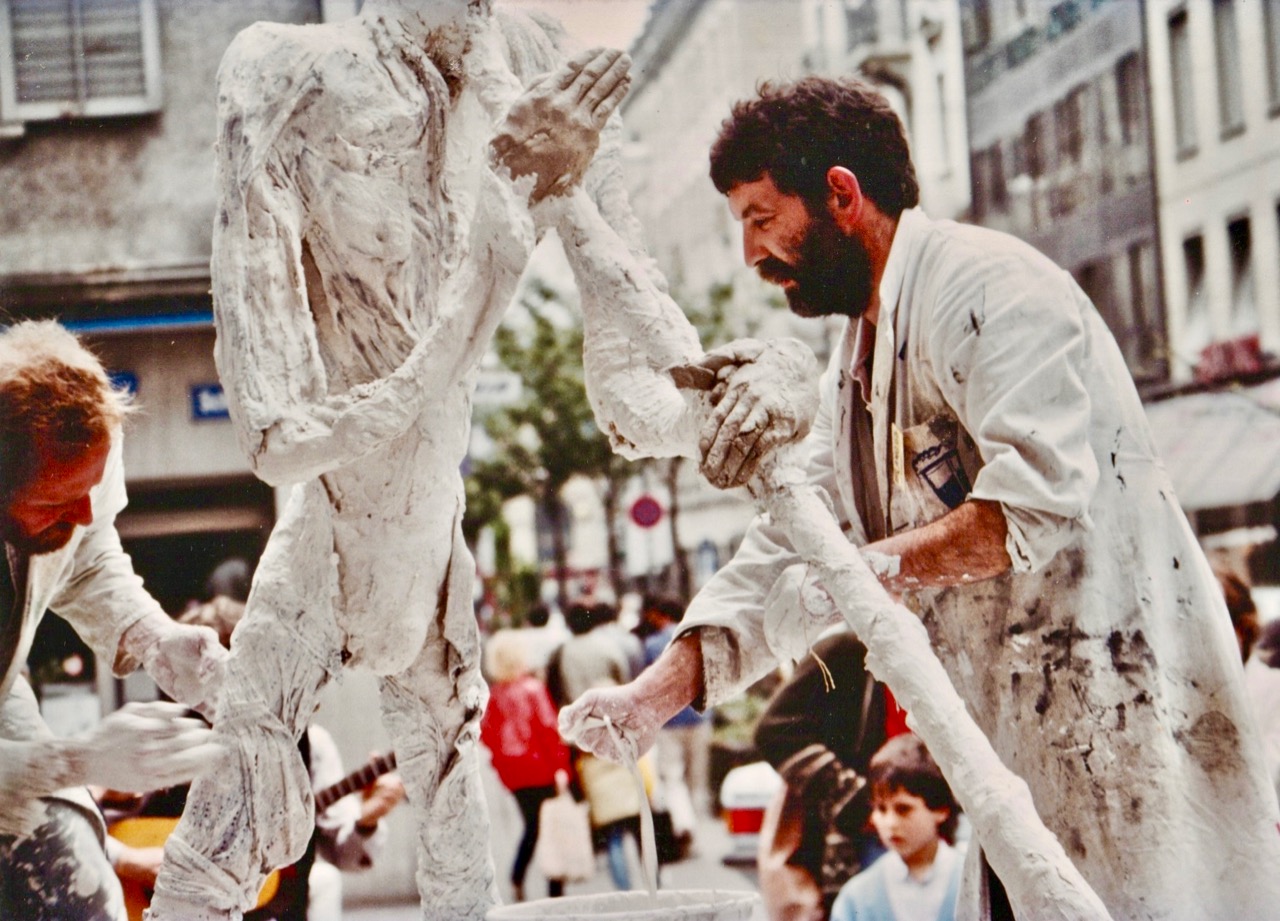
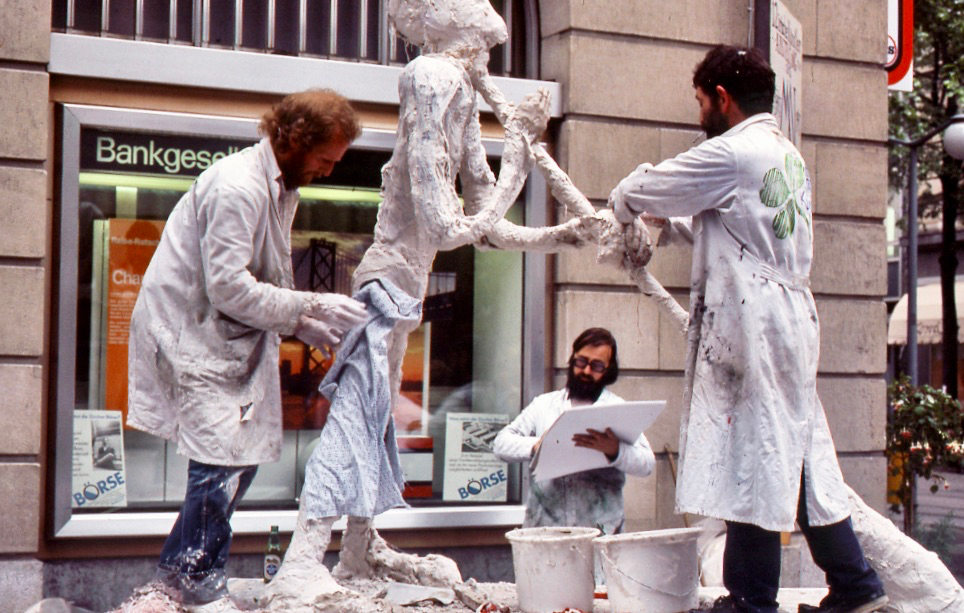
What are all these people looking at? Is this Ireland? And when? Firstly, what they are looking at is a street performance – and the performers are Irish – not just Irish, but all from West Cork! And, the spectators are in Switzerland! We know exactly when this happened: 34 years ago. Here’s the story, and here is what they were watching:

Brian Lalor – Curator of our Ballydehob Arts Museum – was one of a group of artists who travelled from West Cork to Zurich in May 1985 to put on a large exhibition of their work in the city. He is telling the story through one of the two new exhibitions which has just opened in Bank House, Main Street, Ballydehob – and which will be running through to September this year. Plenty of time to come and have a look, but don’t miss it! The exhibitions can be seen when the Mizen Gateway Tourism Centre is open in the former bank building, right in the centre of town. Generally, Bank House is open Mondays to Wednesdays, 12 noon to 6pm, and Thursdays to Saturdays, 11am to 5pm. Because the centre is partly run by volunteers, please check by phone prior to coming: 028 25922.

The original 1985 exhibition poster was produced as a limited edition artwork by Coilin Murray, one of the participants

Having set up the exhibition in the Reithalle, Zurich – a fine, capacious premises, the artists realised that relatively few people were coming to see it, as it was a fair way out of the main thoroughfares, and little publicity had been organised in advance. So they put their creative heads together and came up with the idea of making a piece of art in the city centre – something which no-one could ignore.

The artists took as their starting point one of the most important sculptors of the 20th Century, Alberto Giacometti, from Switzerland. He was famous for his ‘matchstick figures’: have a look at the book cover above. Ballydehob’s version of ‘Giacometti’ was built on a trailer – mainly by artists Ian Wright and Pat Connor – and he was playing an Alpenhorn. Brian Lalor made several sketches of the event (you can see him in the picture above, and one of his sketches above that): these sketches have lain dormant for 34 years and have not been shown anywhere until the Ballydehob exhibition, where they are being unveiled for the first time. Although a serious business, it was all a bit tongue-in-cheek. I think you can tell that by the name the artists gave their statue – Jack O’Metti! However, it was a tremendous success, and the crowds came flocking.

A further dimension was added to the street performance when John Verling had his legs encased in a plaster cast by Ian Wright, all the while singing the sean-nos song ‘The Rocks of Bawn’. The significance of this particular event escapes me . . .

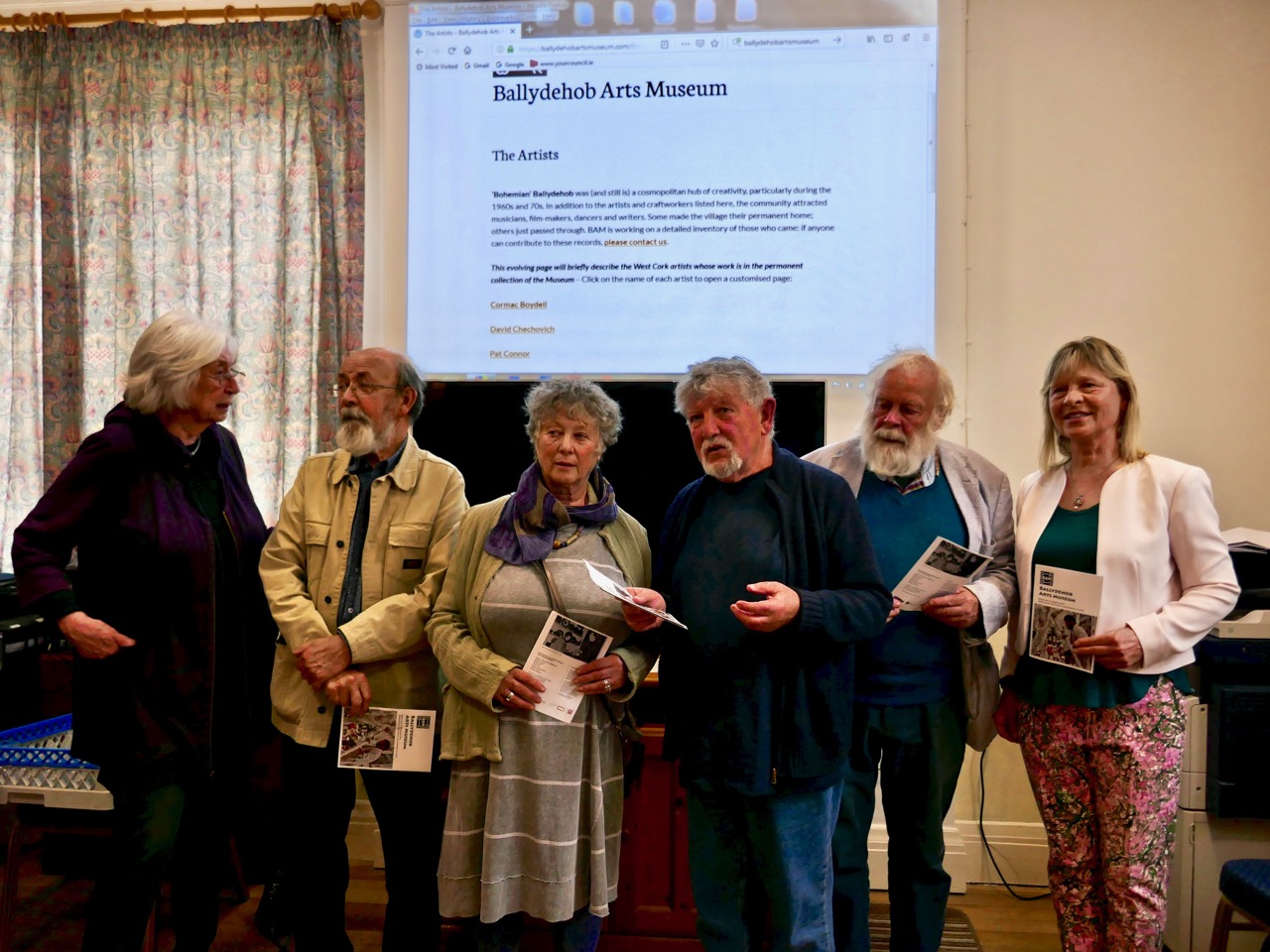
At the opening of our exhibition last Thursday, there were present several of the artists from the early days, some of whom had contributed to the events of Zurich ’85: it was an historic occasion!

A line-up of West Cork artists from the heady Bohemian days: Birgitta Saflund, Brian Lalor, Leda May, Pat Connor, Jim Turner and Carol James. All pictured together at this week’s opening of the Ballydehob Arts Museum

There’s more! The Ballydehob on Bahnhofstrasse story is only one of the new exhibitions in Bank House; the other is The Irish Tea Ceremony. If that intrigues you, I’m not going to give the game away. Come and see for yourself what goes on in this little corner of Ireland – and be amazed!

Find out much more by visiting our brand new website – launched along with the exhibition:

www.ballydehobartsmuseum.com

Mizen Magic 13: Dunmanus Promontory

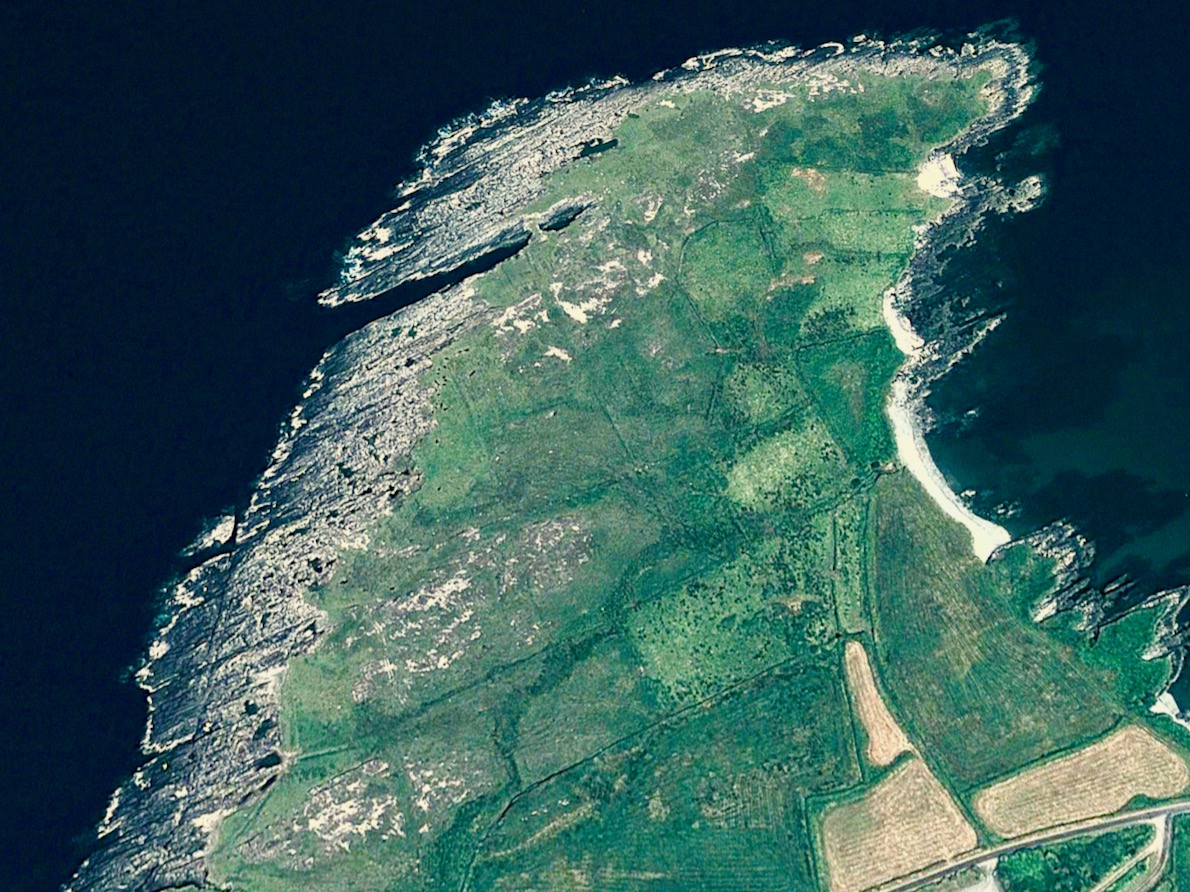
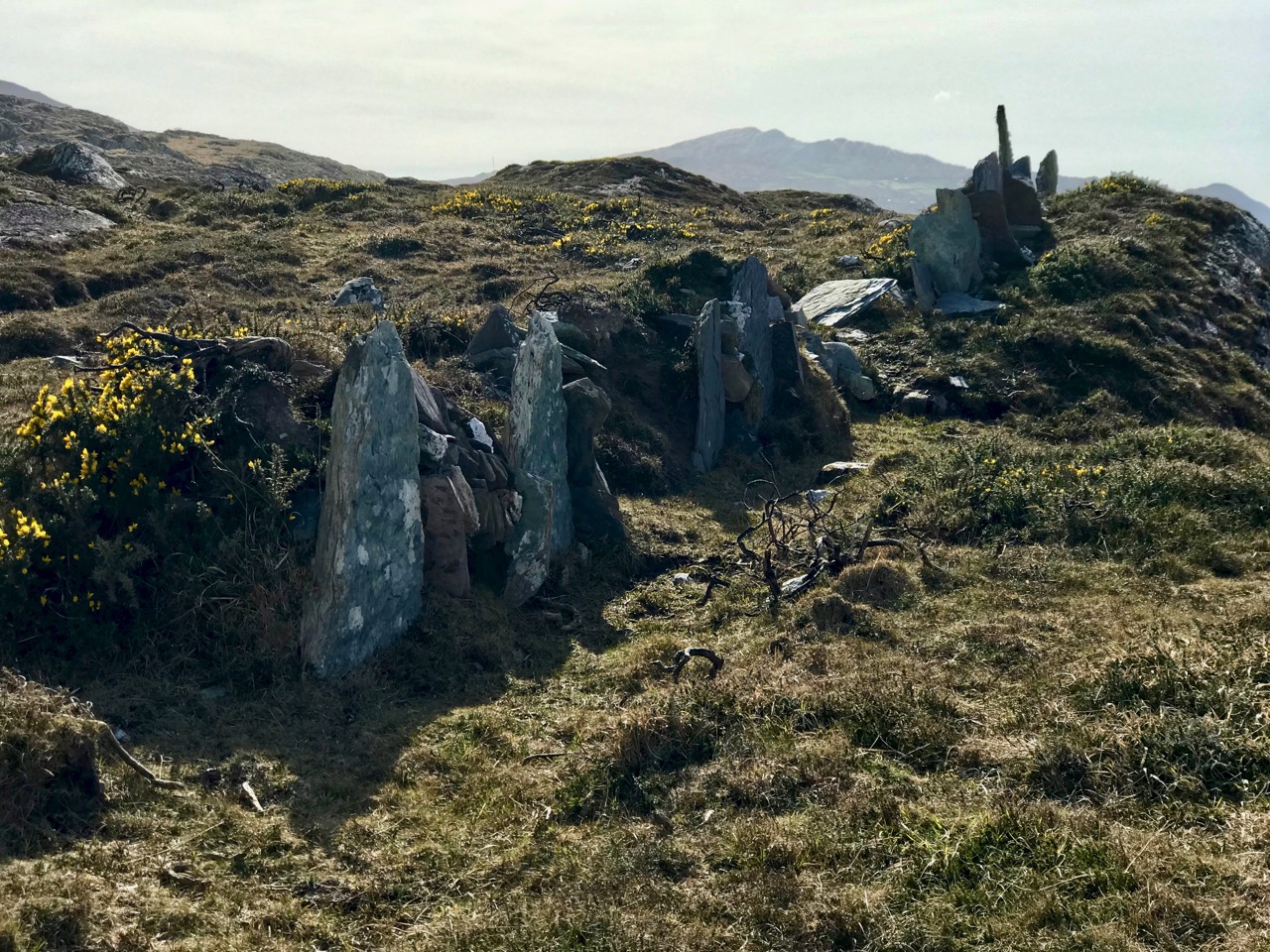
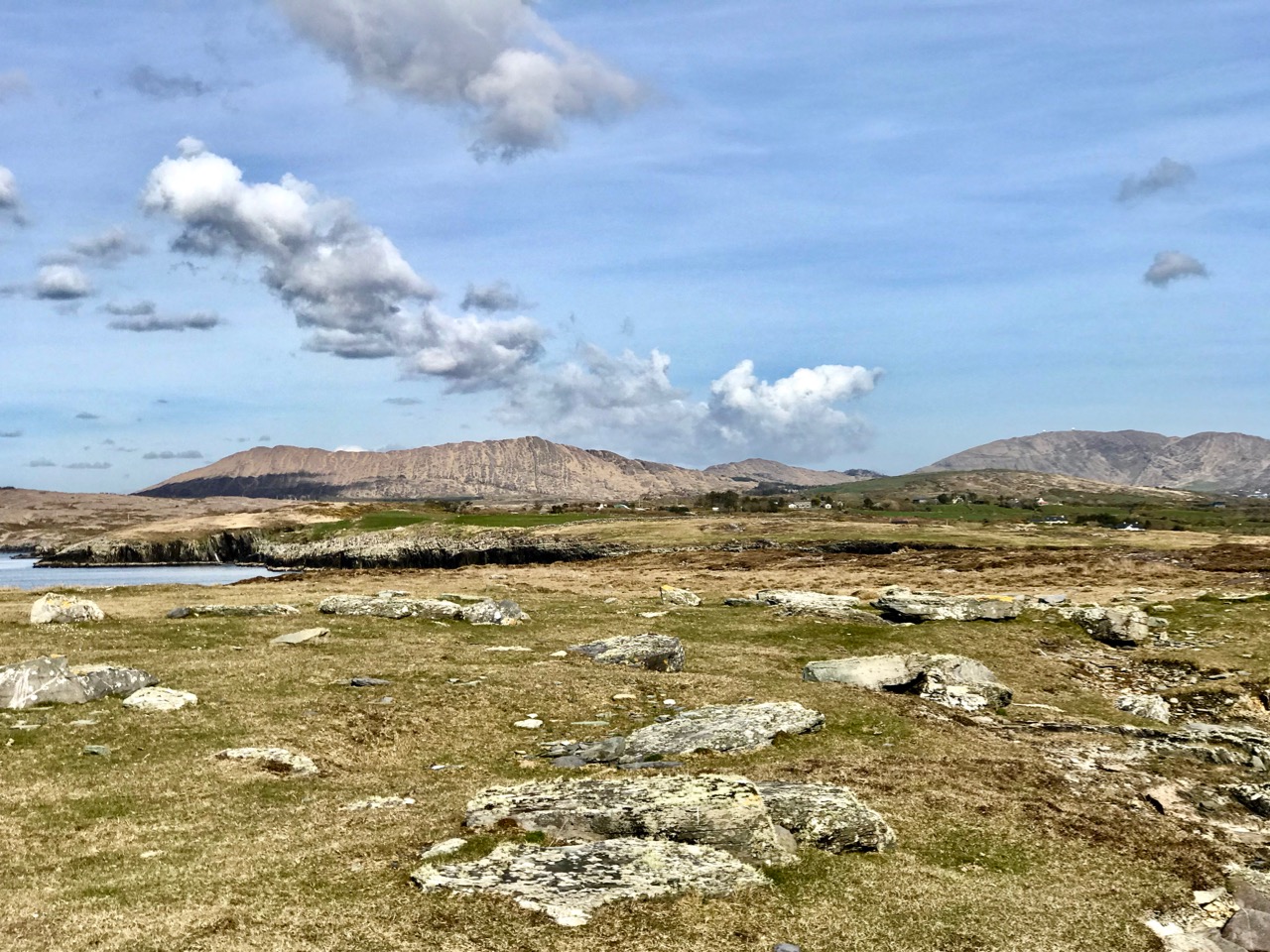
It’s geologically and archaeologically fascinating – a substantial natural promontory just to the north of Dunmanus Castle: well worth an exploration. But, do be warned – there are cliff edges, exposed fissures, ankle-wrenching undulations and bogs to overcome. Also – it’s private, so please seek permission before crossing the land.

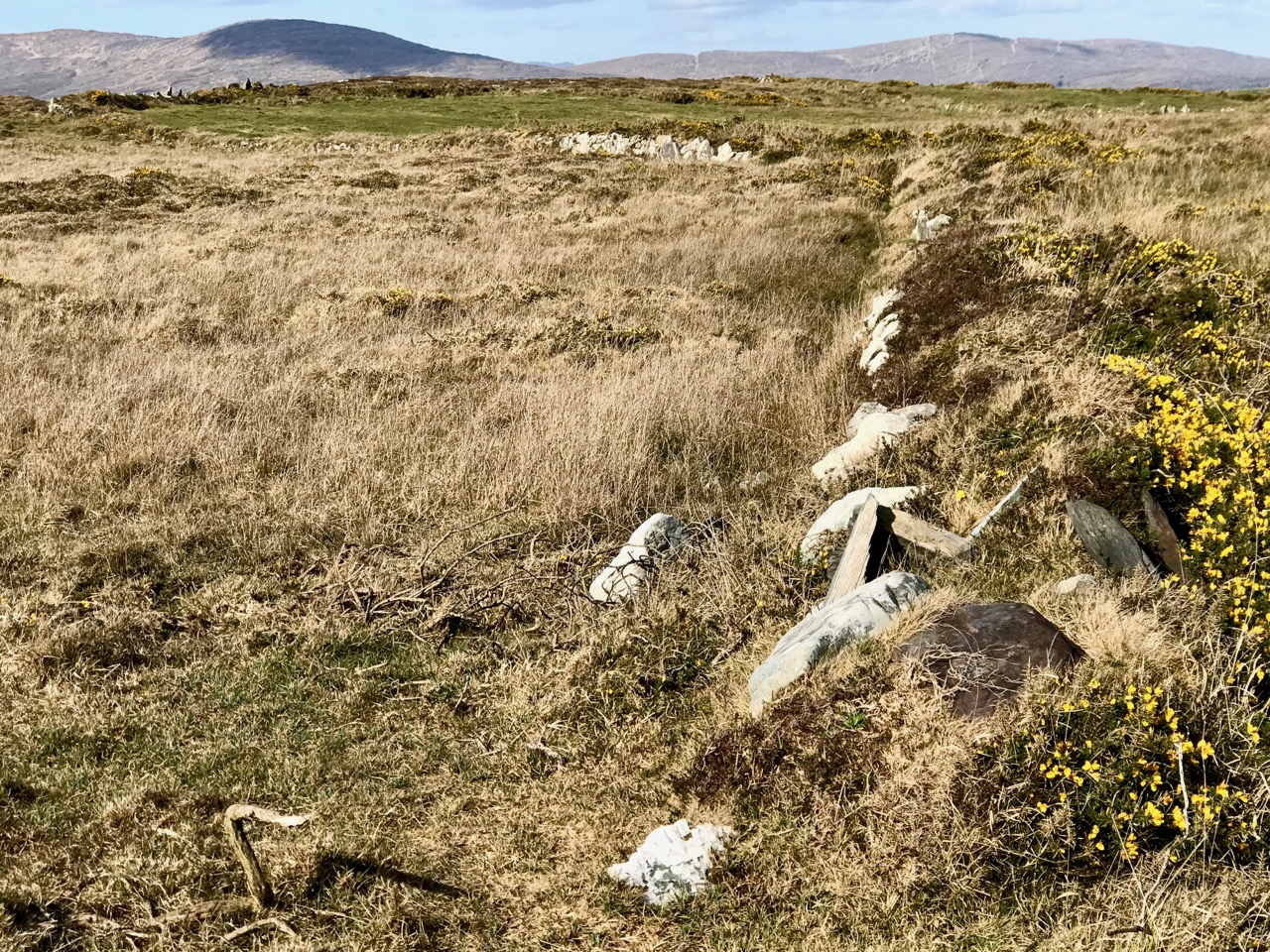
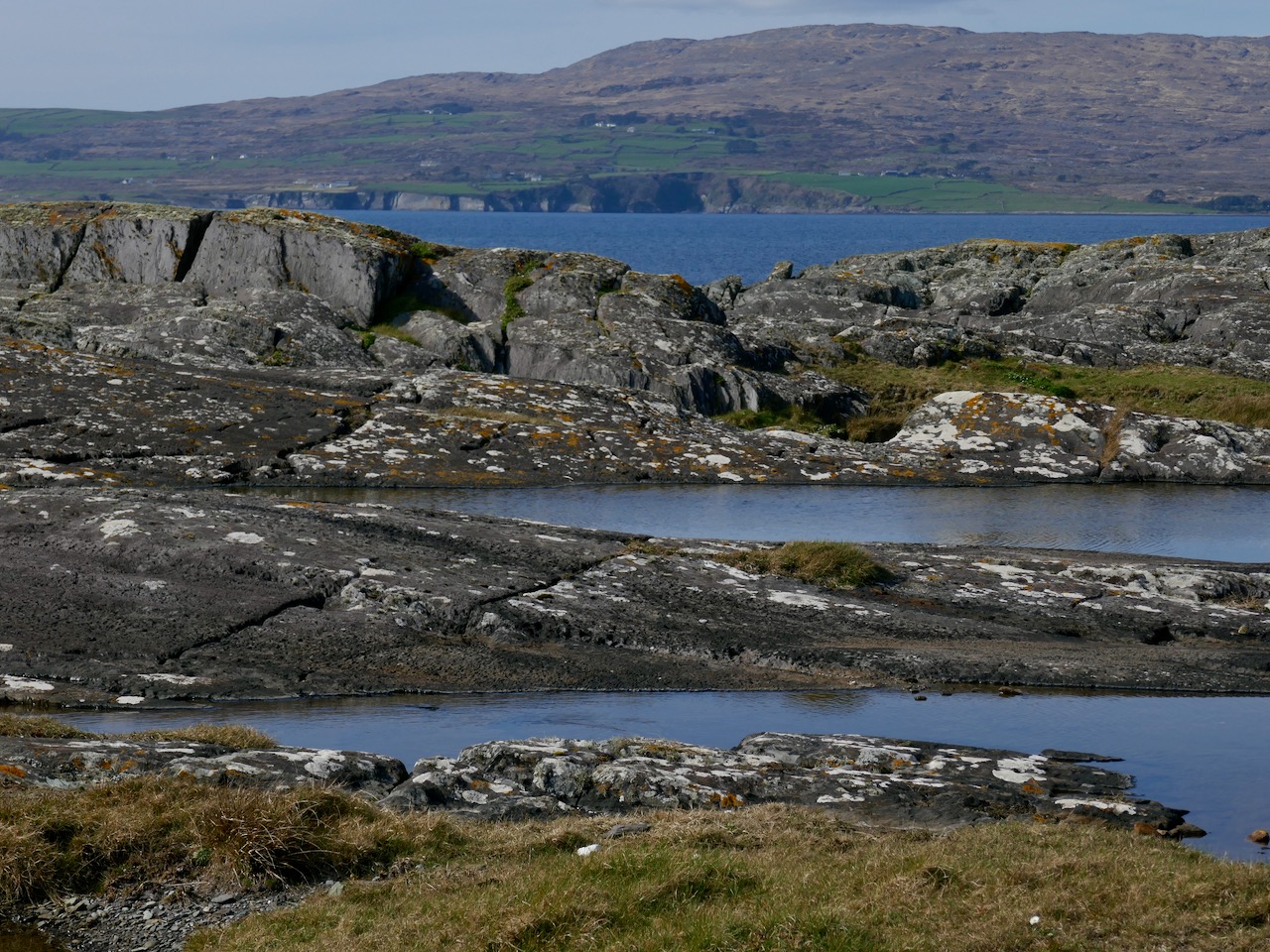
The west side of this shark’s fin-shaped promontory is wildly exposed to the ocean and its gales. You can see from the aerial views, above, how the rock bed is bare and visible, and the vestigial fields which occupy – or once occupied – the east side peter out, and the walls and banks which once formed them fade away altogether over on the left. In fact, these Google Earth images give a better impression of the oddly shaped enclosures than can be seen on the ground.

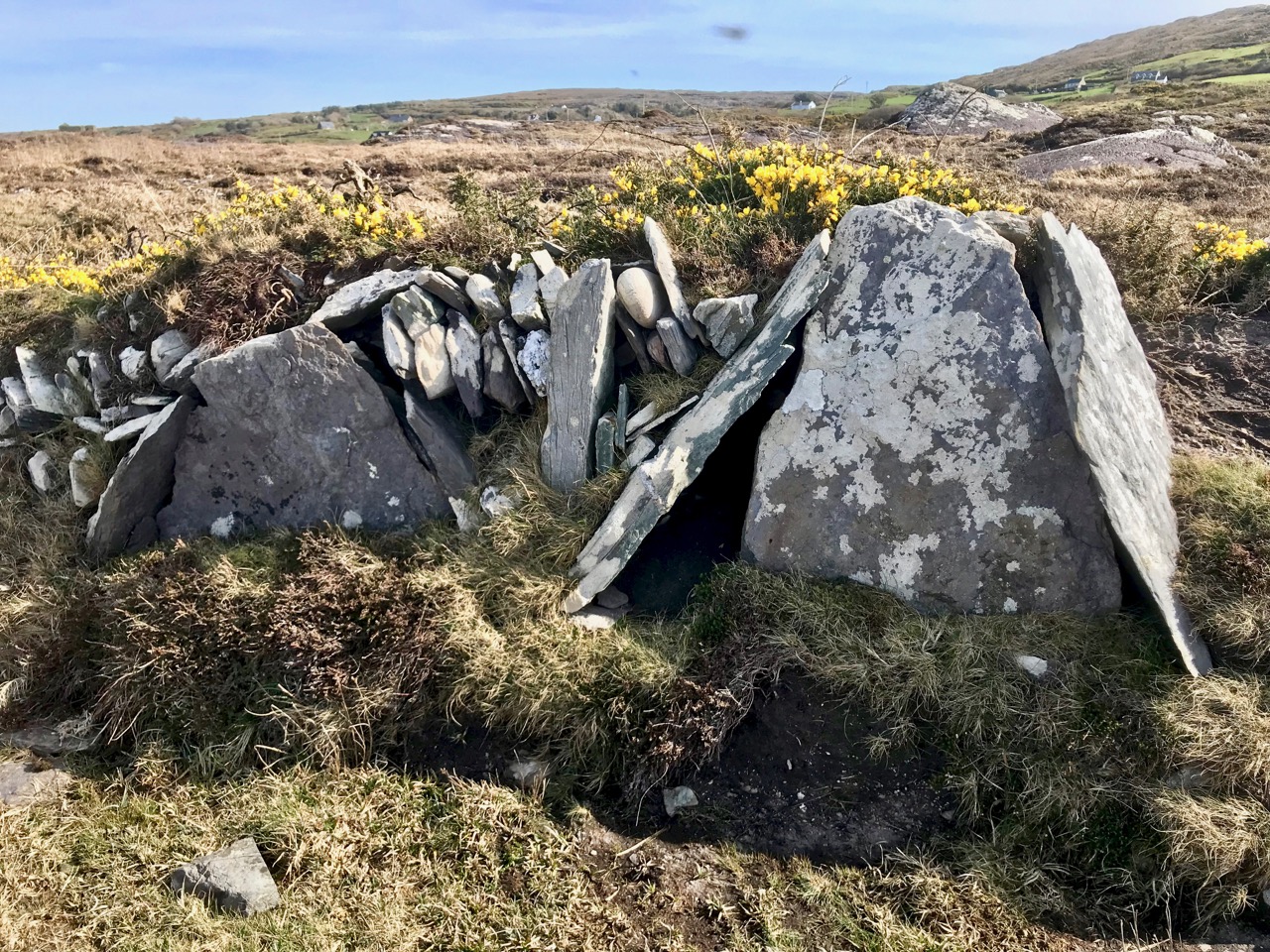
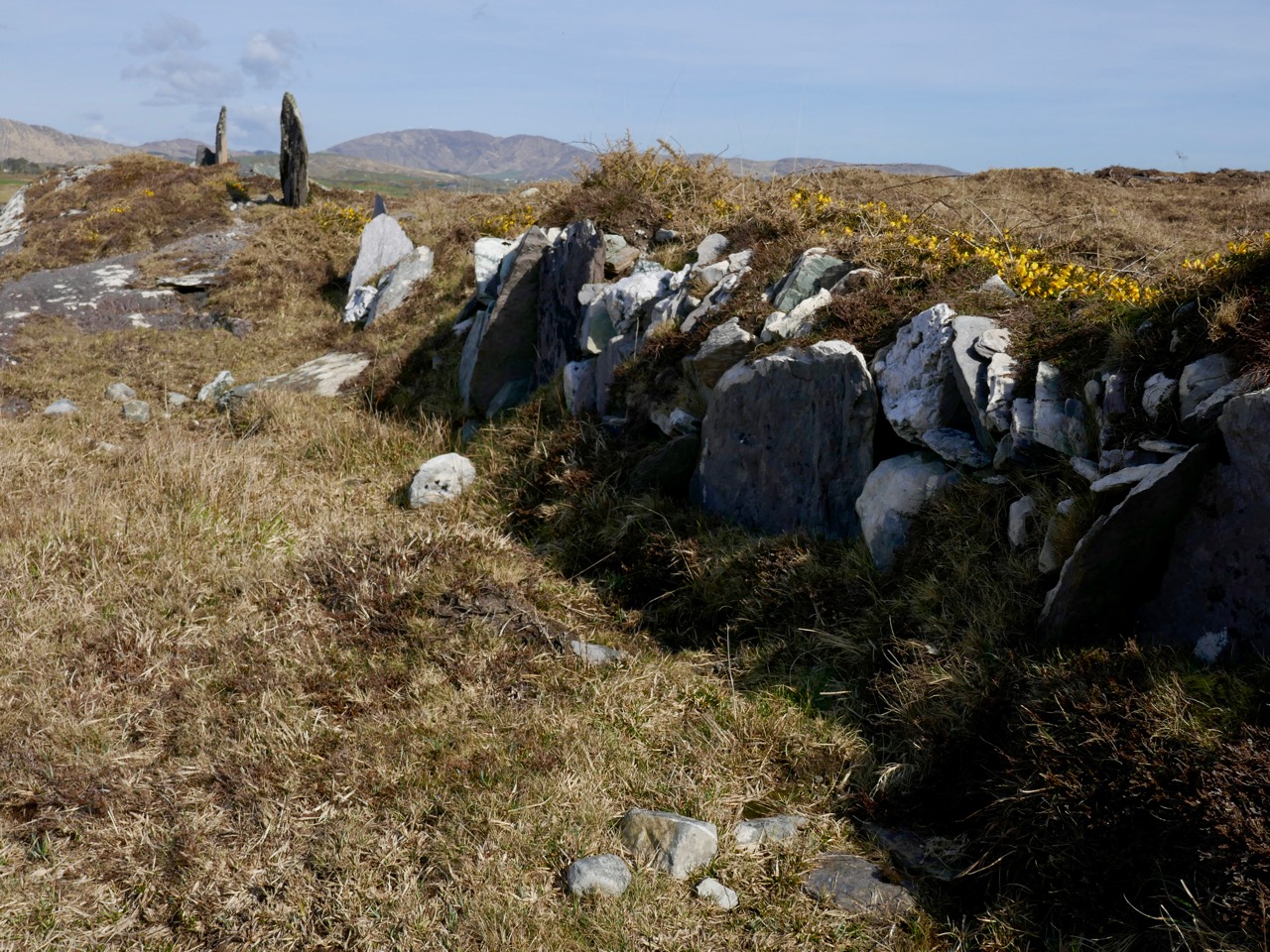
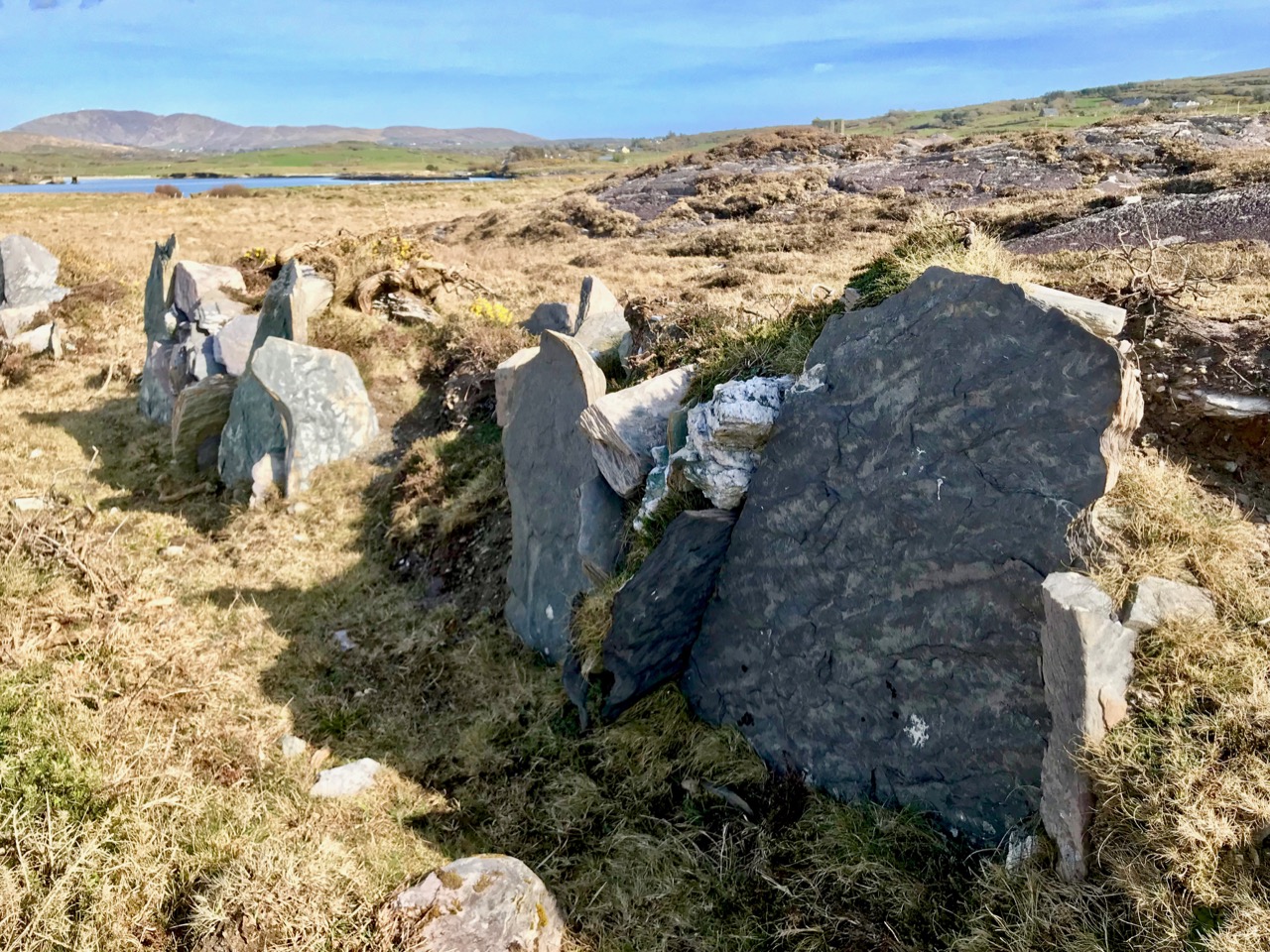
Three examples of many varied boundary features on the promontory are shown above. Each is differently constructed and they range from a series of vertically-set slabs to rocks-and-rubble and a raised bank reinforced with stones. In the picture below, follow with your eye the boundary as it traverses the scrub and makes a large S-bend on to the ridge facing the distant horizon.

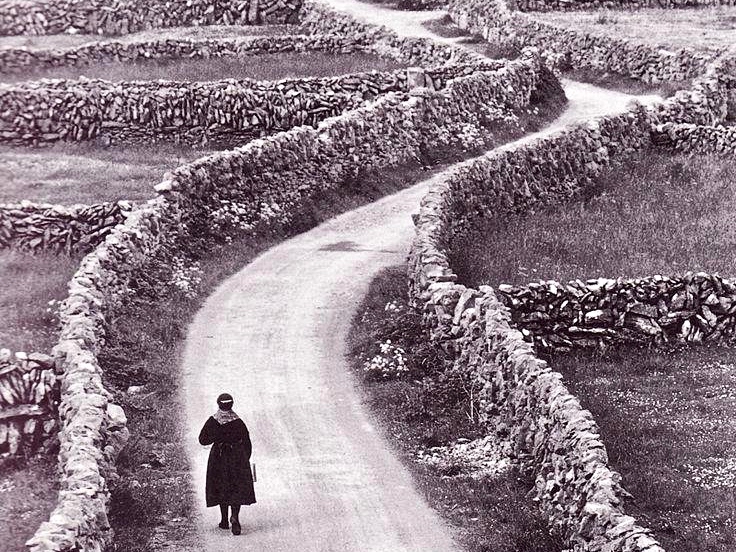
Ireland – especially the west of it – is a huge stone landscape. Wherever people have settled, they have moved the stone and used it. To make fields, or any enclosures, they have had to clear the land. The stone taken from the land is used – sometimes to build shelter, often to build myriad walls to define the holdings. Here’s a striking example from the Aran Islands:

Nothing is recorded on the National Monuments Survey about these land boundaries at Dunmanus – or the significance of the promontory as a whole. Was it once a promontory fort? There are others on this coast. It could easily have been defended along the line of the present road running across the south. However, the land is flat and low, and there is no shelter.

Flat stone surfaces – of old red sandstone – remind us of the Burren landscape in Clare, and we can suppose that the present windswept bog and scrub could once have supported agriculture. But when? In medieval times, perhaps, when the nearby Dunmanus tower house was a thriving centre of occupation and, probably, commerce. In the shelter of the bay the little quay at Dunmanus survives and is still used by small boats searching out shellfish and scallops.

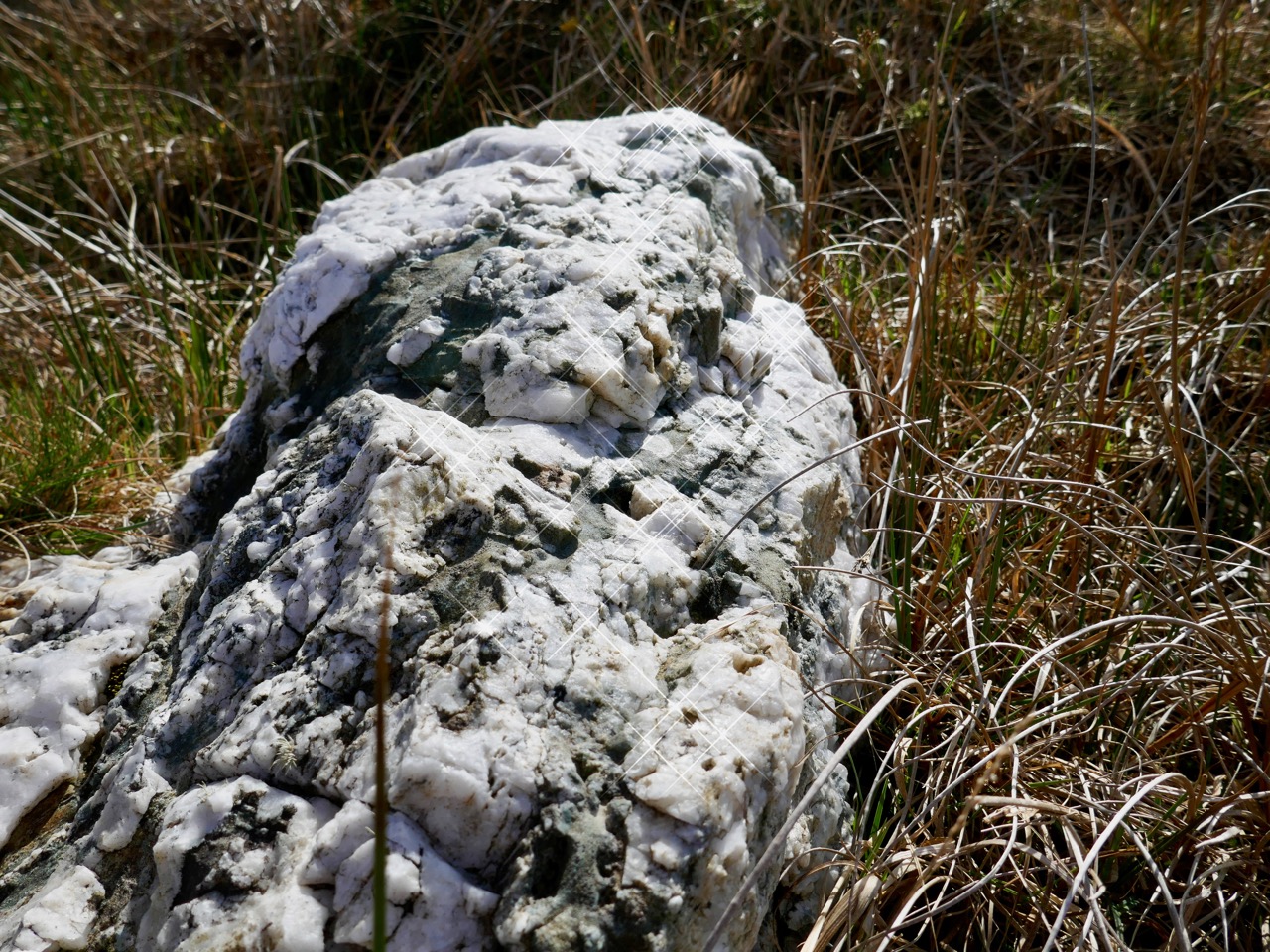
In some places the old walls seem to have a prehistoric feel: the use of slabs embedded vertically like standing stones is quite unusual in West Cork. The presence of large quartz rocks, too, is reminiscent of ancient sites, although they are natural geological occurrences here.

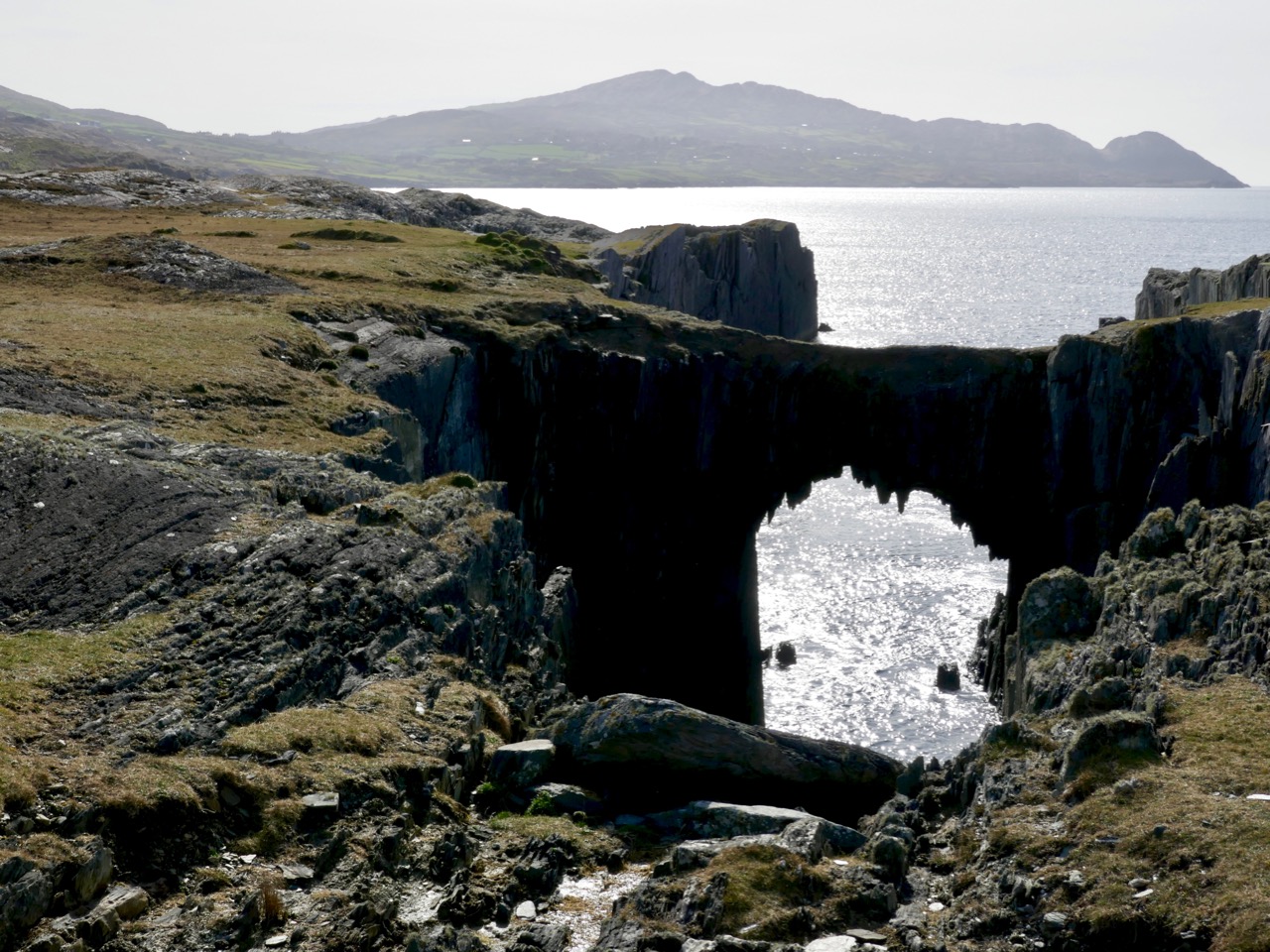
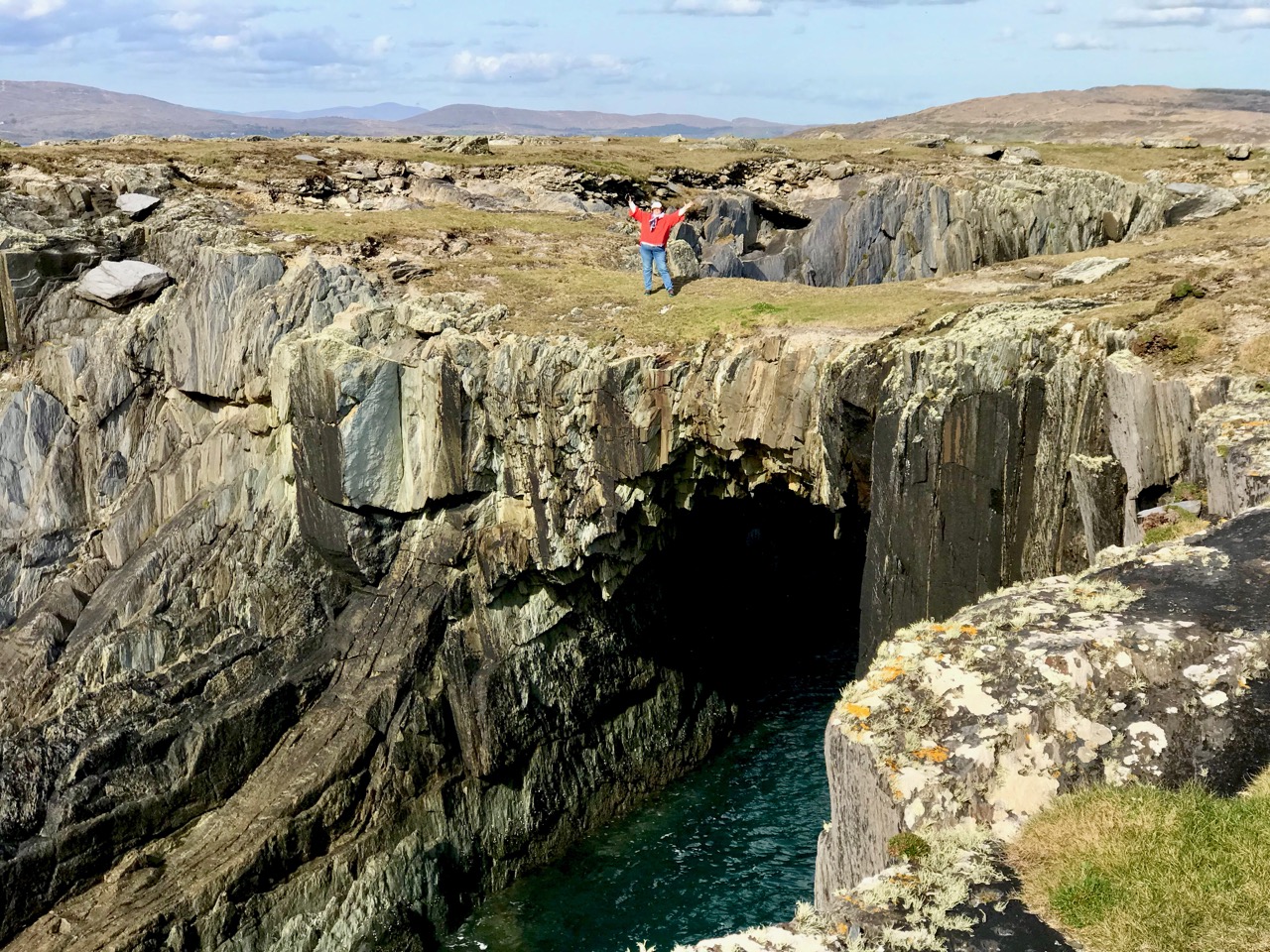
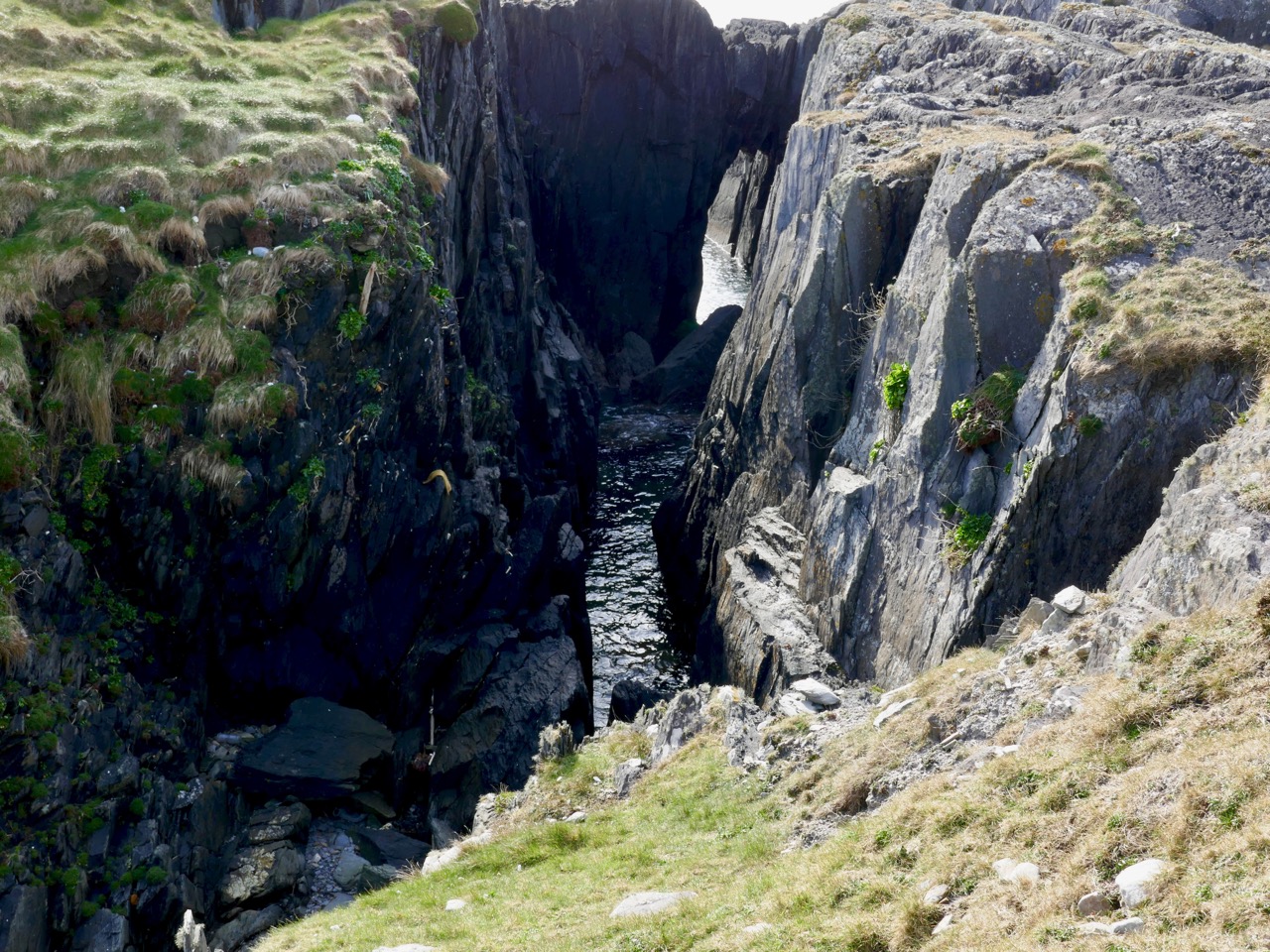
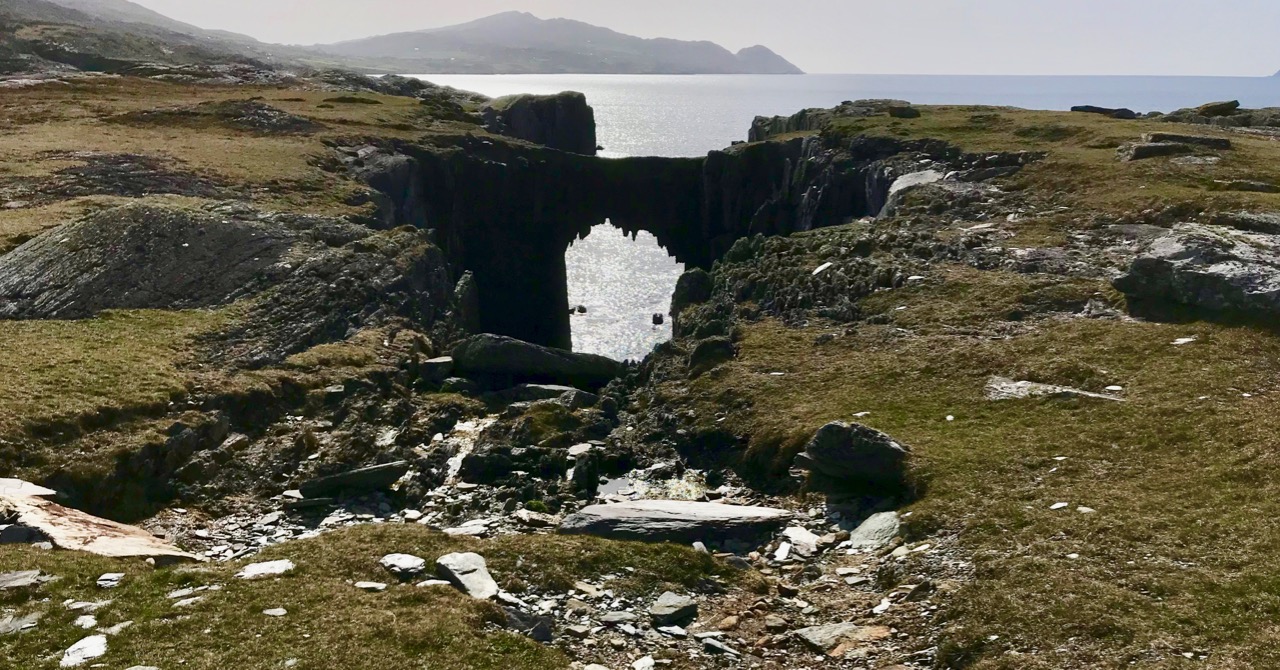
Other natural features on the peninsula include two ‘sea arches’ – bridges formed through erosion of the rocks and chasms by the ocean.

It’s a landscape of vestigial fields, sea – and stones. Nothing more. But I find it a mesmeric place; partly because we can see that it bears the marks of human toil, and we want to know more about who was there and how they lived. It’s a remote piece of Ireland to call ‘home’. Those marks remain after how many years – hundreds, thousands? They intrigue us, and compel us to explore.

Inspired by Stone

One of the many archaeological excitements in Ireland last summer was the discovery of a hitherto unknown passage grave with significant carvings beside Dowth Hall in the Bru na Boinne area of County Meath. These carvings are likely to date from around 5,500 years ago. In the picture above (courtesy of agriland.ie) from left to right are Minister for Culture, Heritage and the Gaeltacht Josepha Madigan; agri-technology company Devenish’s lead archaeologist Dr Cliodhna Ni Lionain; Devenish’s executive chairman Owen Brennan; and Professor Alice Stanton.

As you know, we are Rock Art addicts, so this week went along to this year’s Stone Symposium in Durrus, West Cork, to hear Cliodhna, above, give a fascinating illustrated talk on the finds at Dowth. Have a look at this post on the inaugural Stone Symposium from 2017. It’s great that the event is thriving and attracting interest and participants from far and wide.

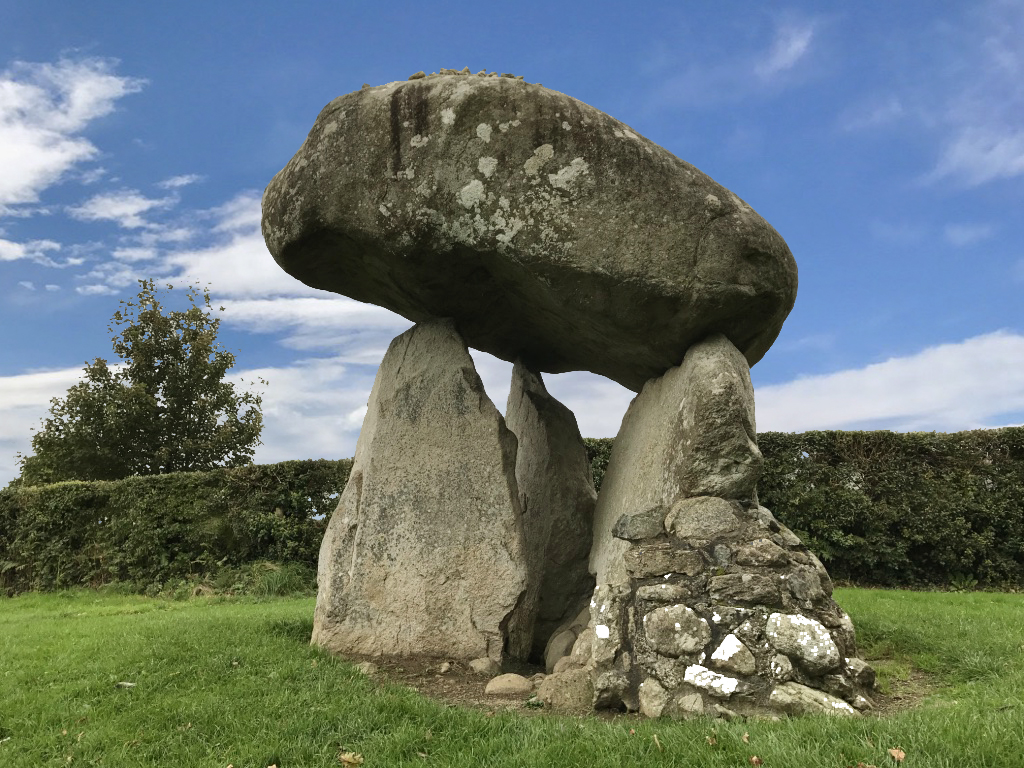
Our attendance at the Symposium set me thinking about the whole subject of stone. It’s the most basic of creative materials, as relevant today in construction and art as it was to our Neolithic ancestors. Proleek Dolmen in County Louth (above) is an example of the early use of stone to create a structure which made a huge impact on the landscape. It’s a portal tomb over 3 metres high, and the supporting stones are around 2 metres high: the capstone is estimated to weigh 35 tons. It’s probably a more visually impressive structure today – in its ‘naked’ state – than it was when completed, as it is likely to have been covered over with a mound of earth and / or stones. There is folklore attached to this monument: it is known locally as the Giant’s Load, having been  carried to Ireland by a Scottish giant named Parrah Boug McShagean, who is said to be buried in the tomb or nearby.

Here’s another portal tomb – the largest in Europe – which I discussed in this post from last year. It’s known as Brownshill Dolmen, and is in County Carlow. Finola is in the picture to give the scale. This capstone is said to weigh 103 tons. The portal tombs demonstrate the use of stone in its rawest and most spectacular state: they are examples of Ireland’s earliest architecture, and we don’t really know what they were for. Perhaps it’s to do with status, either of the builders or of the chiefs or priests who might have been buried in them. They certainly make mighty marks on the landscape…

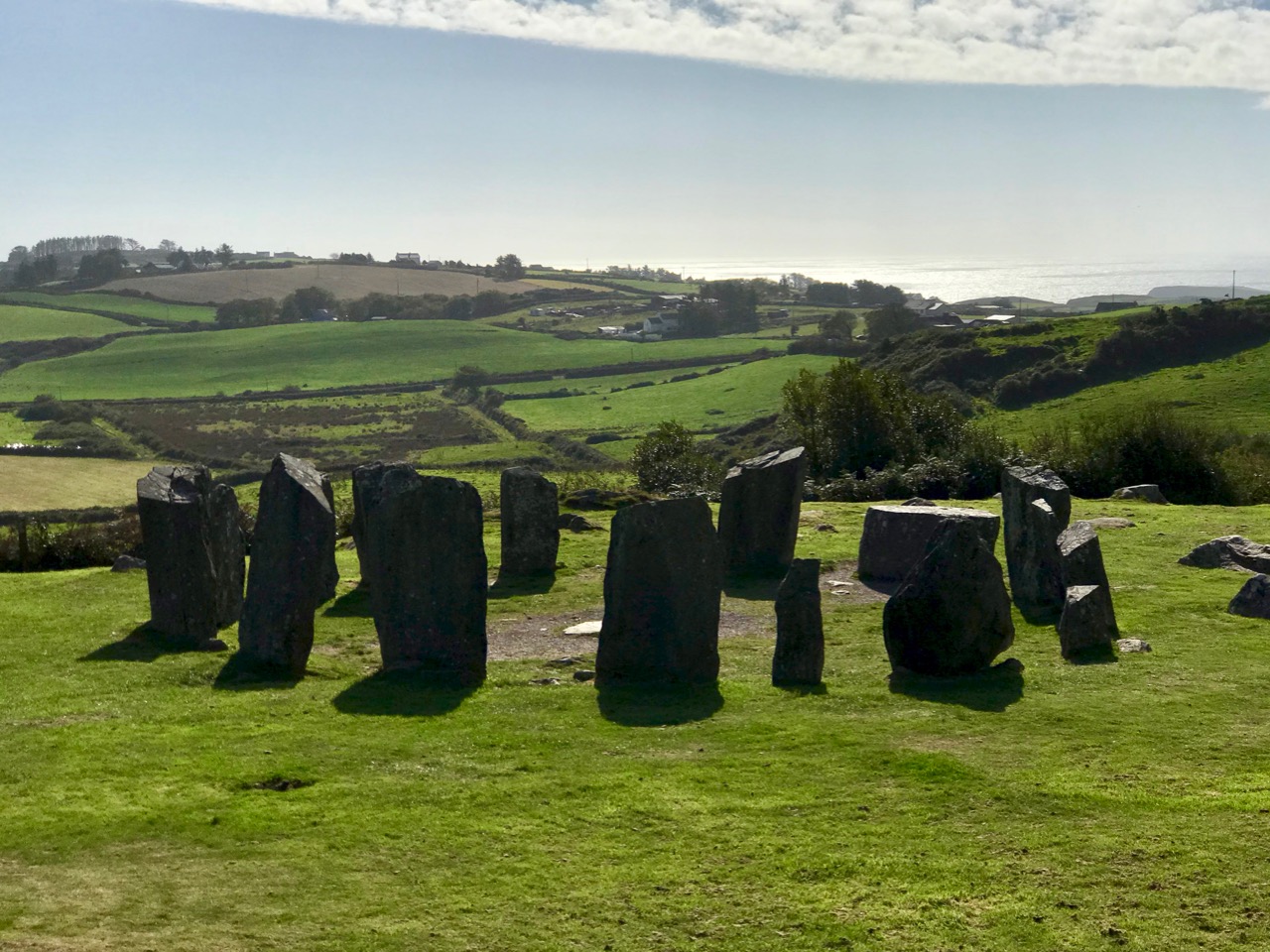
…As do all the other stone monuments which celebrate their makers – although perhaps they remain enigmatic to us today. Bronze Age stone circles have always fascinated, and at least we know that they have orientations which must have been significant. Drombeg in West Cork (above) is much visited at the winter solstice, when the path of the setting sun falls over the recumbent stone when observed through the two portal stones at the east side of the circle.

While the earliest dwellings of the inhabitants of Ireland thousands of years ago were probably constructed from organic materials  – earth, sticks and furze – stone began to play a part in architectural construction in Christian times. The remarkable Gallarus Oratory (above) on the Dingle Peninsula, County Kerry, was long thought to have dated from around the 8th century, although an early commentator – antiquarian George Petrie, writing in 1845 – suggested:

I am strongly inclined to believe that it may be even more ancient than the period assigned for the conversion of the Irish generally by their great apostle Patrick . . .

It’s a fascinating discussion to follow – Peter Harbison sets it out in detail here, and concludes that the Oratory could have been built as late as the 12th century, even after the great Romanesque flowering which included the building of monastic settlements and round towers.

The 12th century cathedral and (possibly earlier) round tower at Ardmore, County Waterford (above), should be a Mecca for stone enthusiasts because of its monumental architecture and carvings: St Declan founded the site in the 5th century, and his monastic cell survives. The Romanesque period in Ireland has many other examples of stone craftsmanship to show, proving that working with stone had become a high art in those medieval times. The examples below are from Killaloe Cathedral in County Clare.

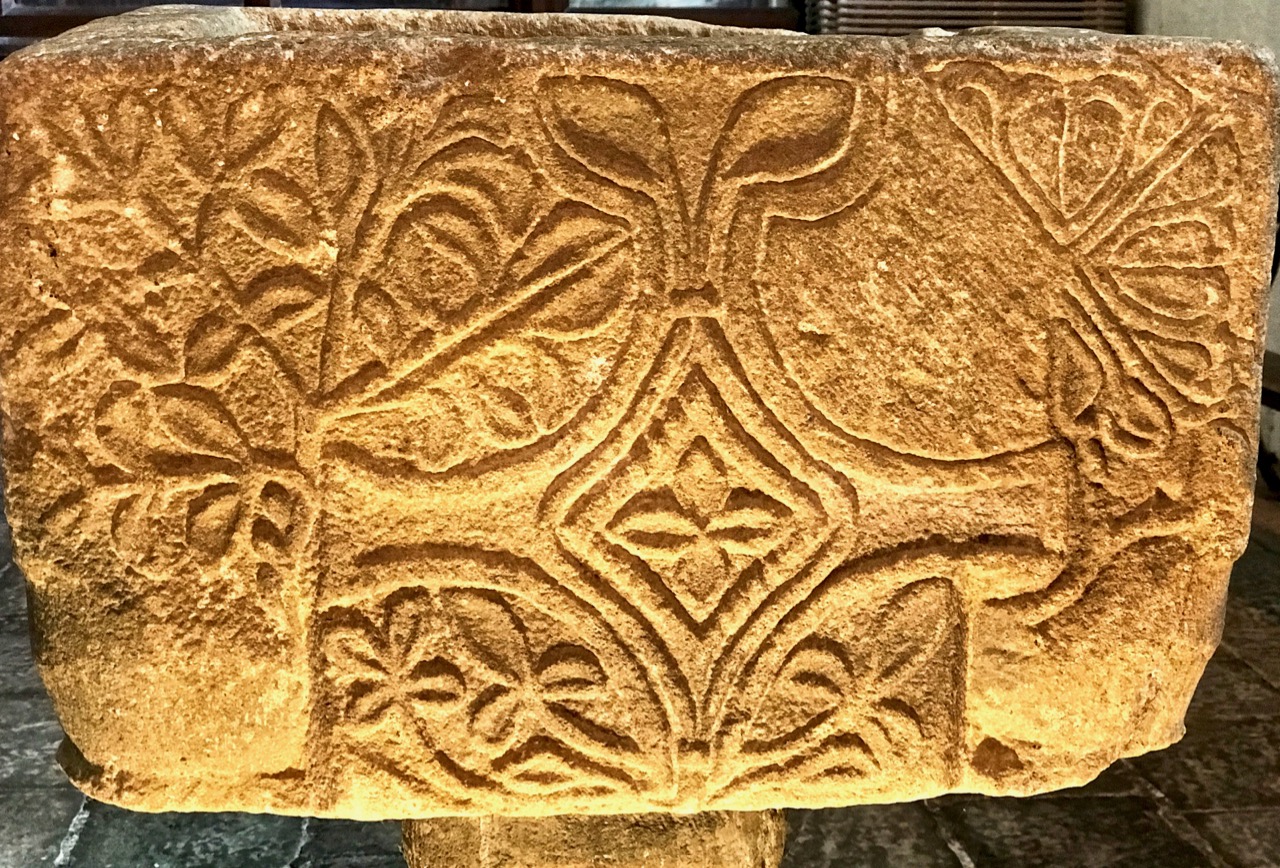
One of the finest Romanesque sites is the Rock of Cashel in County Tipperary. Finola has written in detail on this architectural gem here and here. Suffice it for me to illustrate only one of its treasures – Cormac’s tomb, a sarcophagus beautifully carved in the ‘Urnes’ style – a Scandinavian tradition of intertwined animals.

For centuries, stone has also been a ubiquitous utilitarian building material all over Ireland. ‘Castles’ or – more properly ‘Tower Houses’ – date from roughly 1400 to around 1650, and many remain in a ruined condition, particularly on the coastline of West Cork: we can see five of them from Nead an Iolair. Some have been restored in modern times, including Jeremy Irons’ Kilcoe Castle. The example below is from Conna, East Cork.

Ireland’s landscape is sculpted from stone. Drystone walling is an ancient tradition still practiced for dividing up land, and varies considerably in style regionally, reflecting the differing geology across the island. Two examples from the Beara Peninsula (below) show the essential geometry of field patterns which stone wall building has created over the centuries.

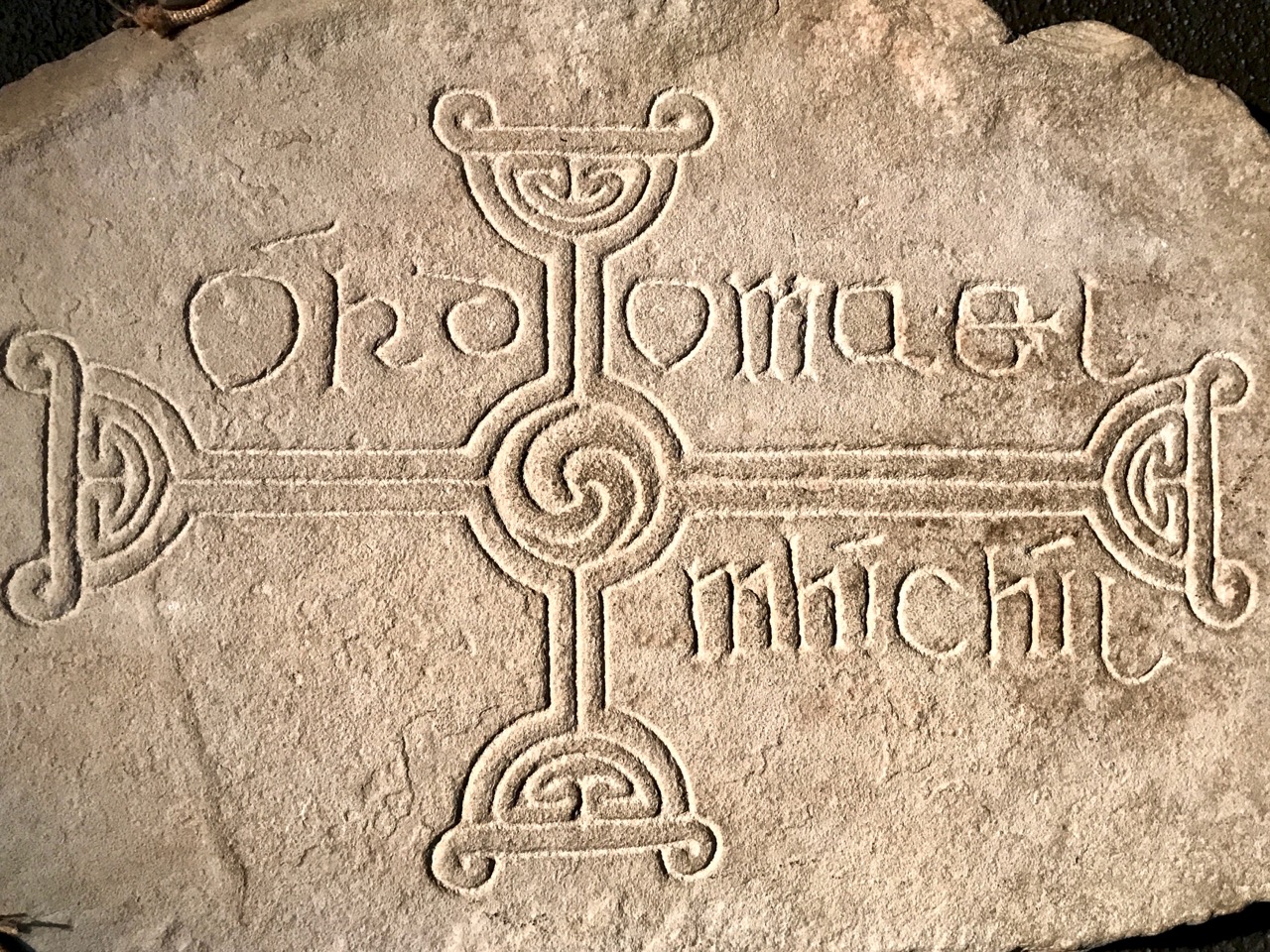
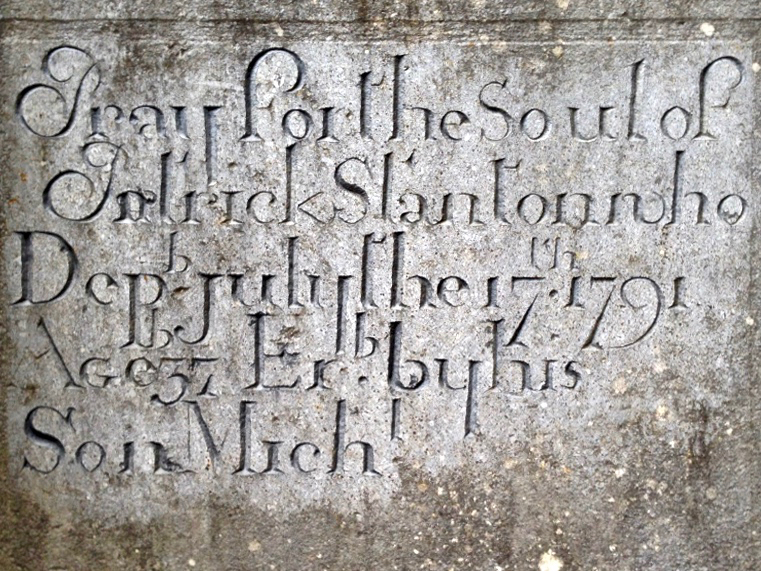
Stone has also long been a medium for communication. We have commemorated our ancestors for centuries with grave markers, often with elegantly carved lettering. Of the two examples below, the first is from Clonmacnoise, and is likely to be early medieval, while the second is an inscription from 1791.

This is just a brief history of our use of stone, dating over thousands of years: I have chosen many examples – almost at random – but hope that I have demonstrated how important it is to continue this ancient craft. The West Cork Stone Symposium is doing sterling work in promoting it today: long may this continue!

Celebrating George Walsh

Robert and I are just back from a magical celebration in Dublin – the launch of a solo show by the stained glass artist George Walsh, at the Trinity Gallery. It was a joyful occasion and a huge success. As one of the organisers said afterwards, “It’s a long time since there was a queue outside a Dublin gallery for an exhibition.” The piece above, Ancestral Fields, is a good example of the vibrant and glowing glass – stained, fused, painted – on display.

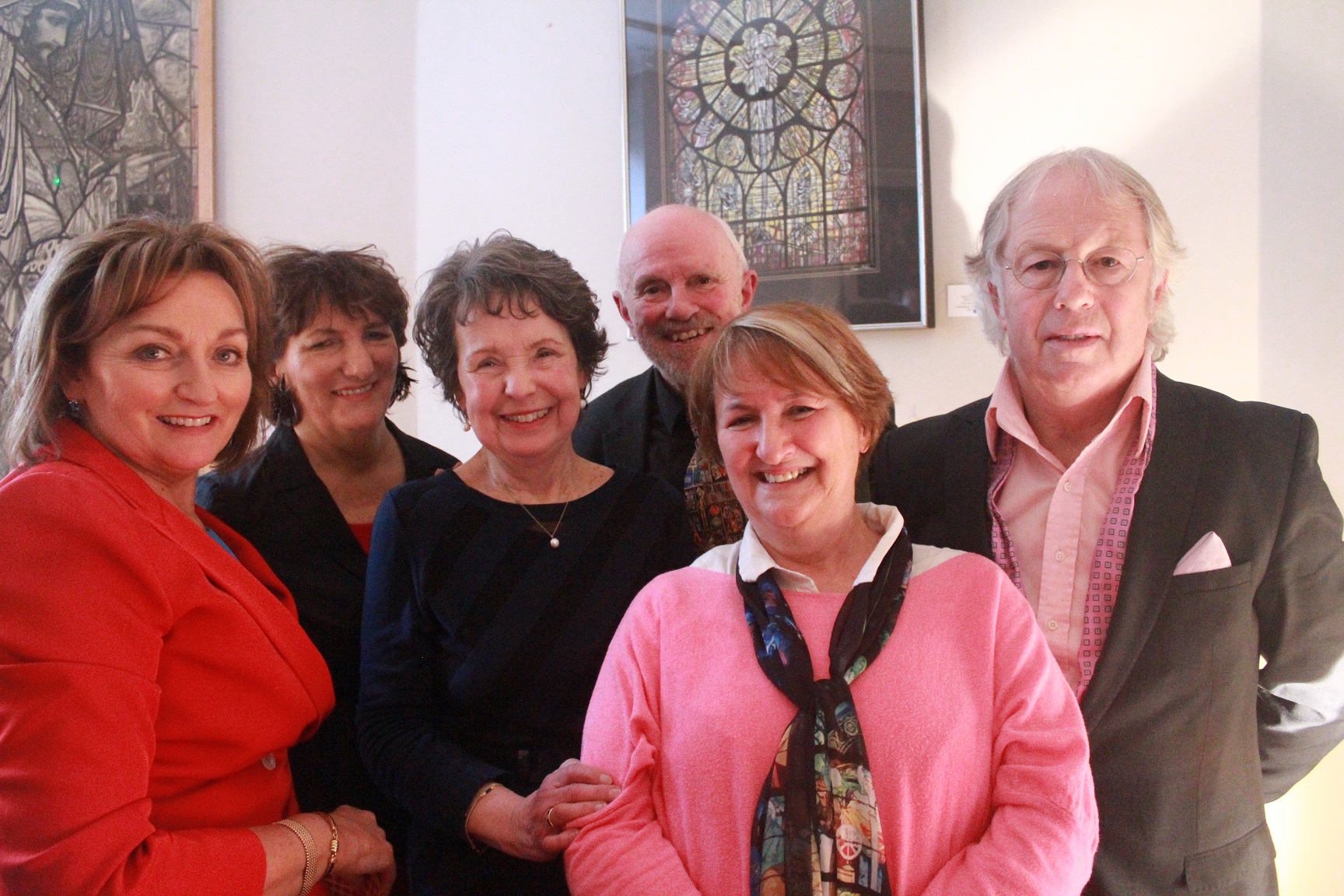
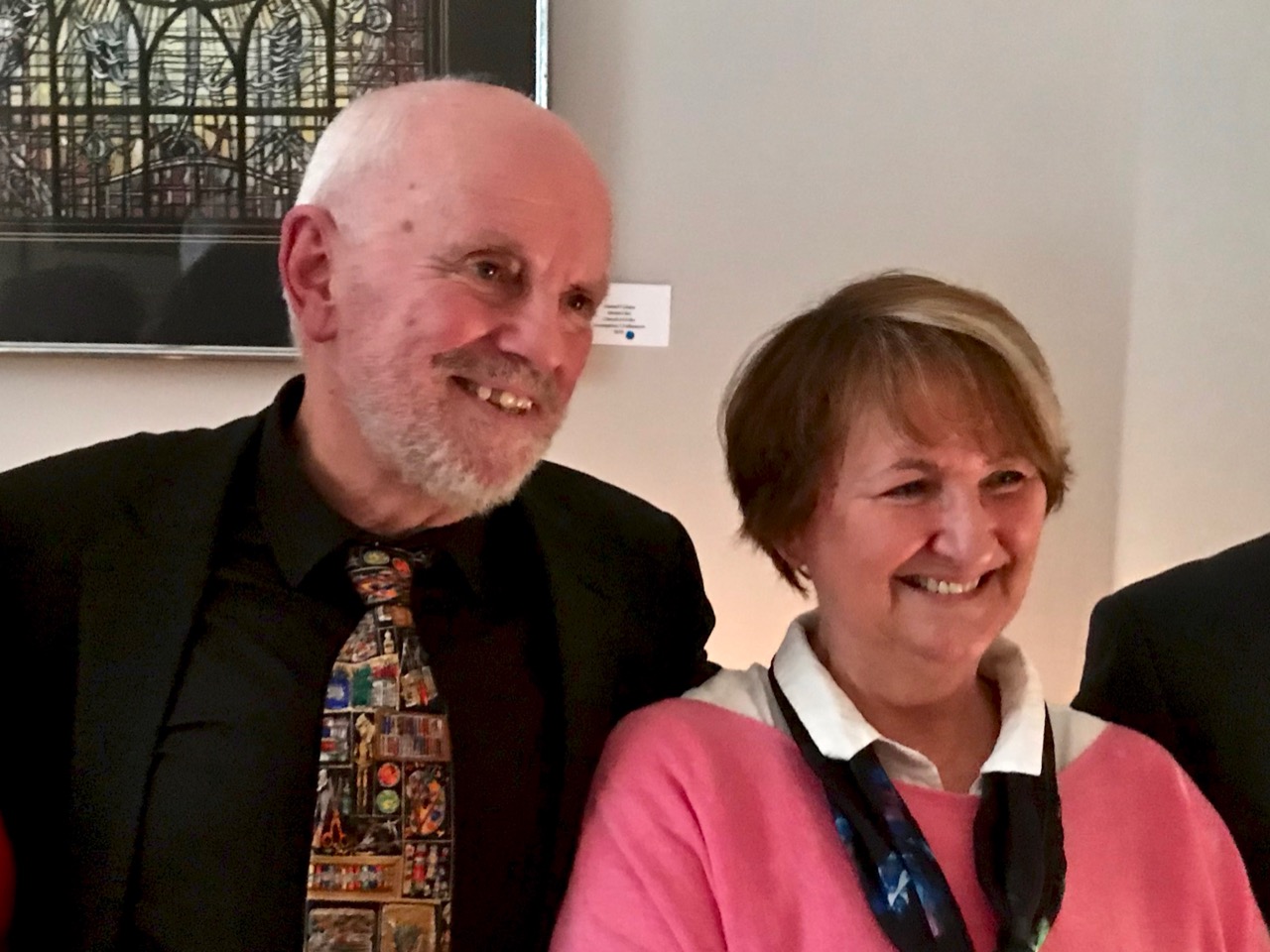
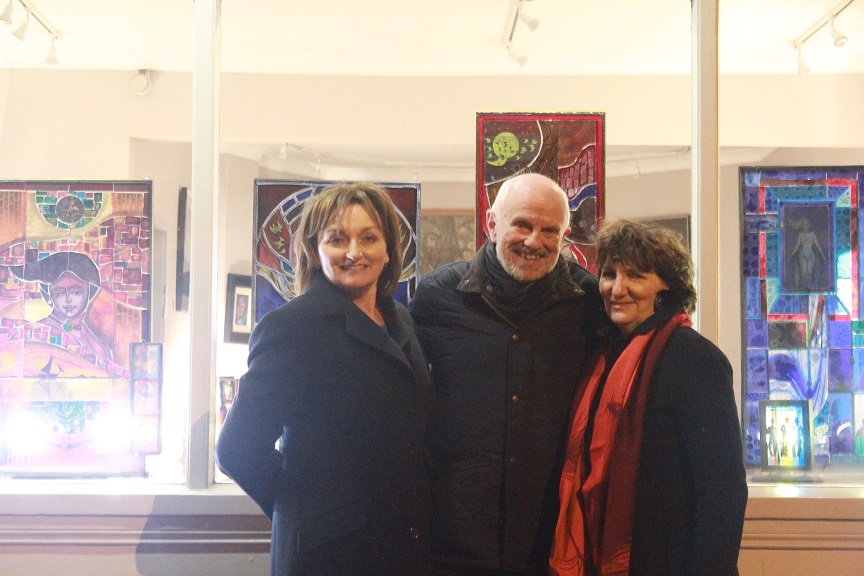
At the exhibition opening at the Trinity Gallery: Imelda Collins and Loretto Meagher, Gallery Owners, Janet and George Walsh, Yours Truly and Eamonn Mallie (Photo by Stephen Walsh)

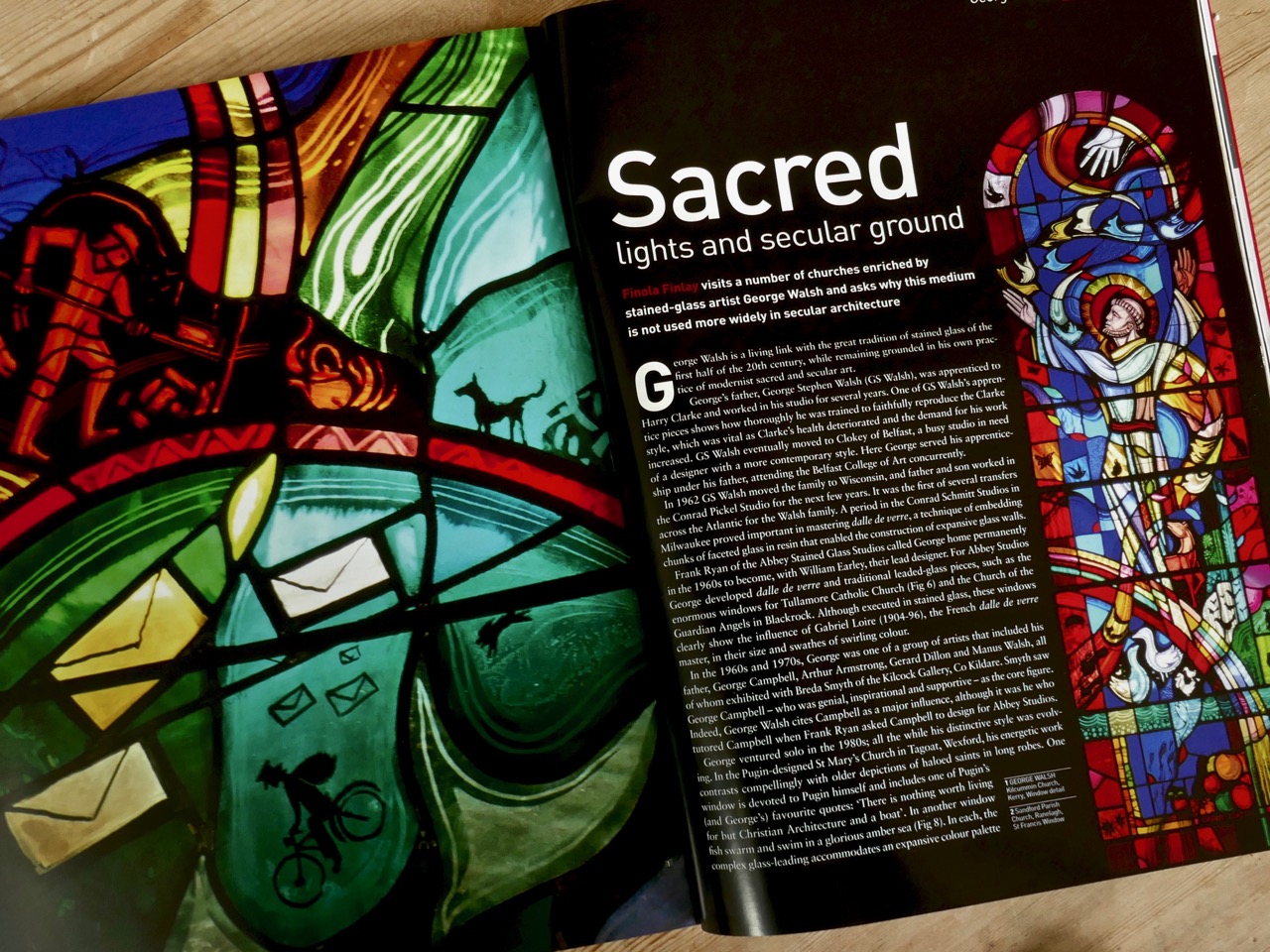
This month, my piece on George was published by the Irish Arts Review – I have been waiting for that to come out, and for this exhibition to open, before I write too much about him in the blog. It’s been difficult to sit on it all, because I’ve been studying his work seriously now for a couple of years, growing more and more entranced with every window.

The March 2019 Irish Arts Review, featuring my 6 page article about the art of George Walsh

Regular readers of the blog, or our Facebook Page followers, will recognise George’s work right away from the occasional image we share on either platform. We ‘discovered’ him on a trip to the Beara five years ago, and have been encountering his work all over the place ever since, initially by chance and more recently as part of a concerted effort to document his body of work for a specific project – more on that project later.

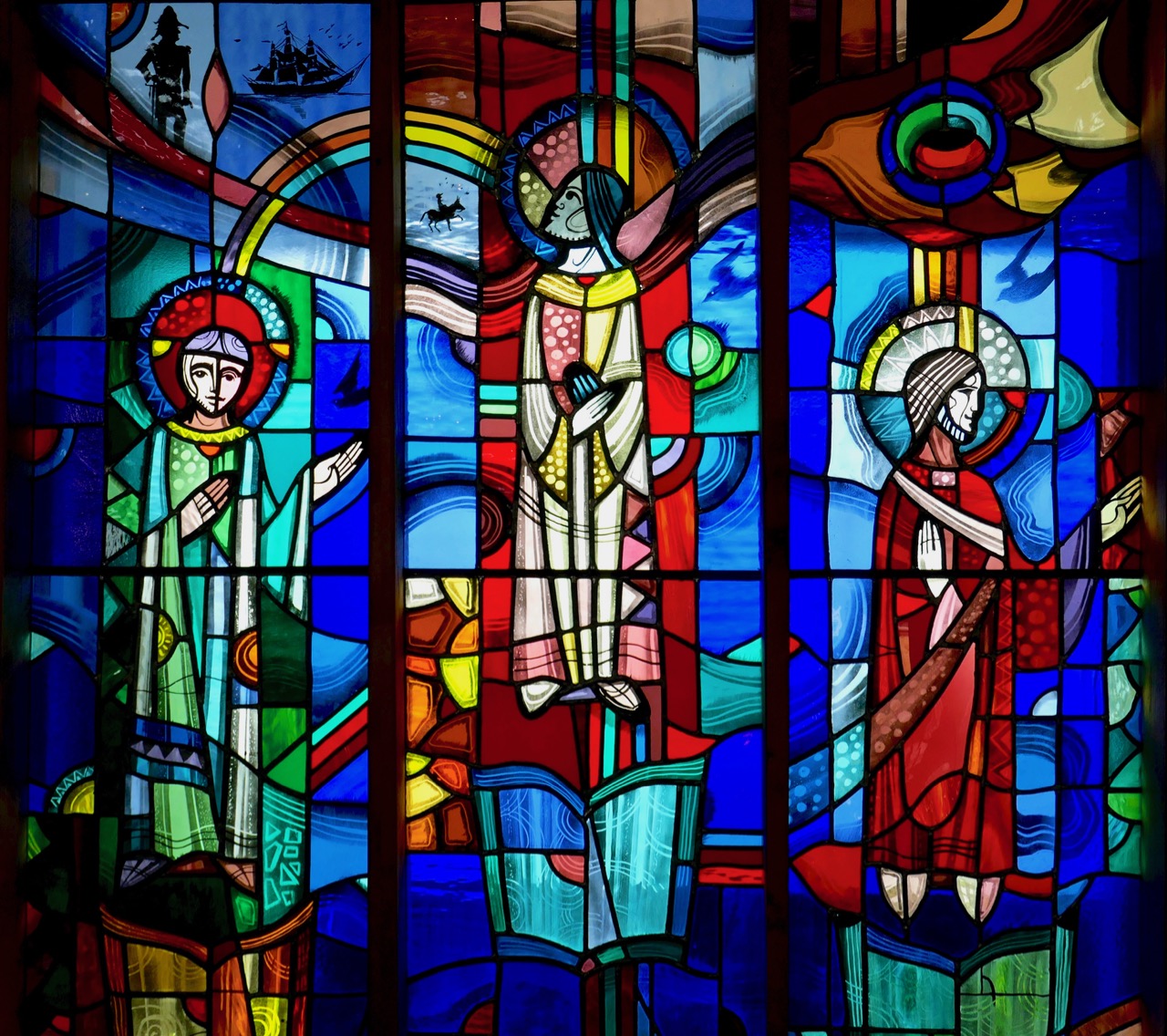
Saints, from a window in Kilcummin, near Killarney

Researching and writing the Irish Arts Review article has been a fascinating journey, as it involved capturing images of George’s work, interviewing colleagues and gallery owners, and most of all getting to know George and Janet as I peppered them with questions and as Robert and I spent time in their company.

George apprenticed with his father who, in turn, had apprenticed under Harry Clarke. They (father and son) worked together and separately both in the United States and in Ireland, producing wonderful windows for several studios and finally, in George’s case, settling down in Ireland and going out on his own. George’s son, Stephen, also an artist and currently living in London, is developing a website to showcase George’s work – visit it here as a work-in-progress – and also runs an Instagram feed full of gorgeous images.

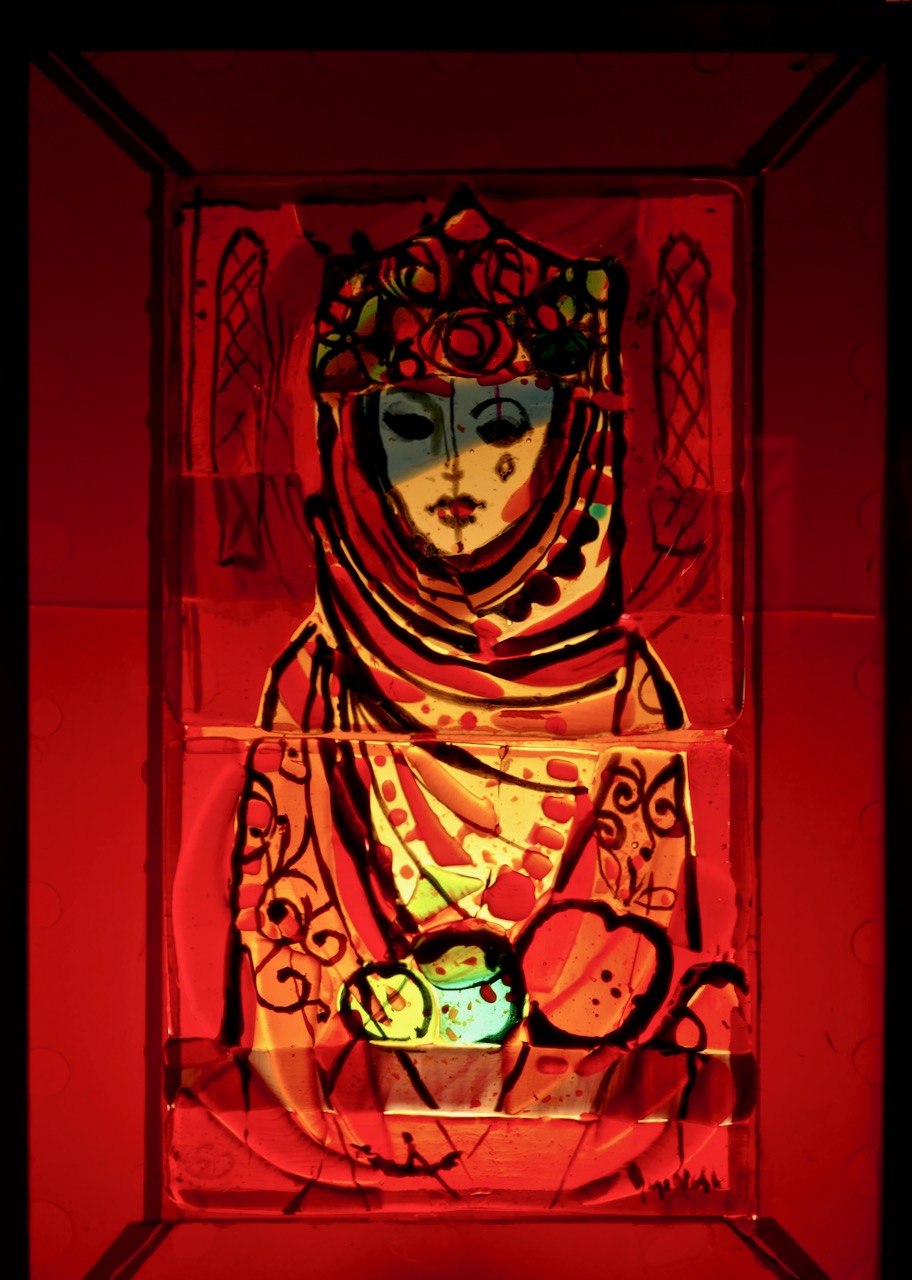
George is inspired by Venice – another exhibition piece

George has collaborated with several architects to design and decorate new churches. His work with Holly Park Studios is breathtaking, demonstrating as it does what can be achieved when a project is conceived with stained glass as an integral part of the design from the start.

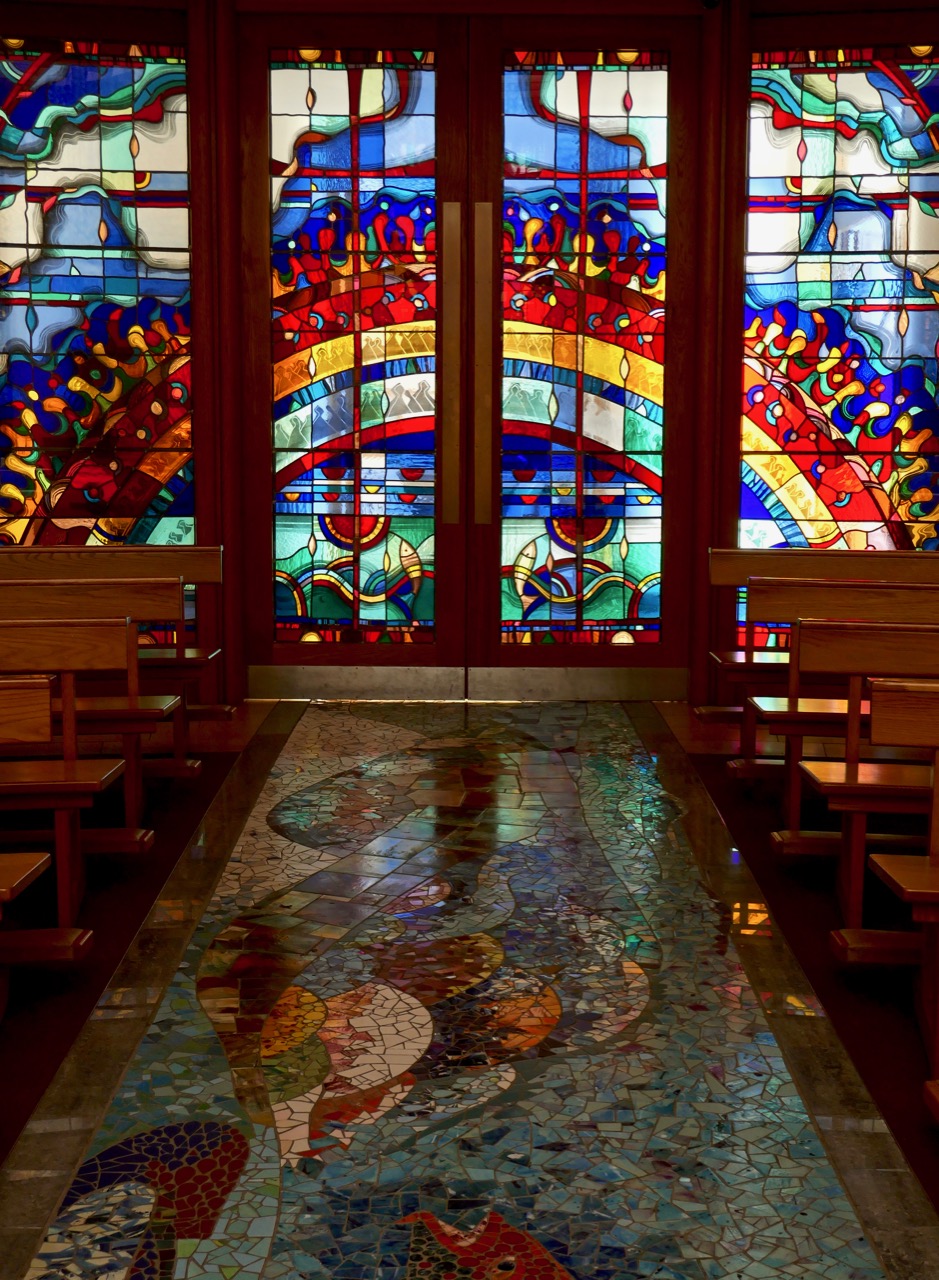
This screen door is but one of the stained glass pieces in the award-winning Church of the Holy Family in Belfast designed by Holly Park Studio. The mosaic flooring is by ceramic artist Laura O’Hagan, whom I was delighted to meet at the opening

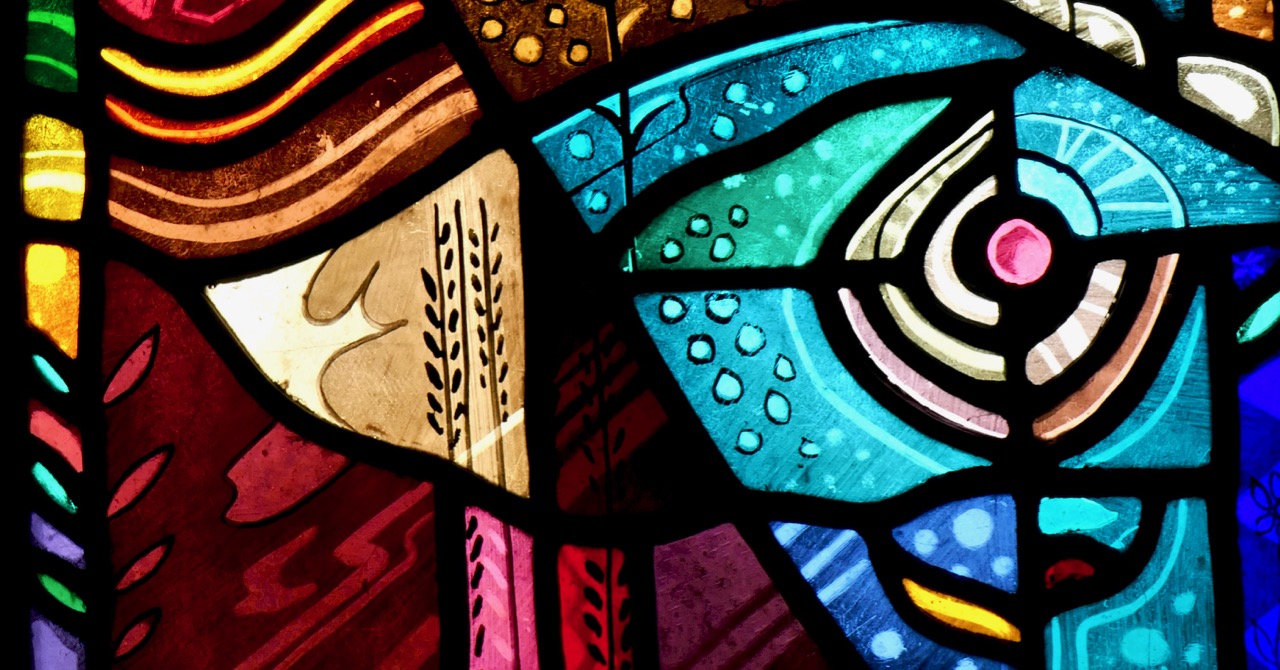
But even where windows have been added over time (as is more normal in church architecture) George’s work shines and is instantly recognisable. First of all, his windows blaze with colour. What I have discovered by spending time with them is that he has this amazing ability to convince you that he is using primarily bold and primary colours but in fact any section taken at random in any of his windows reveal a host of colours, many of them subtle and gentle – it’s the way his choices of colour combine that result in the vibrancy and energy that are so typical of his windows.

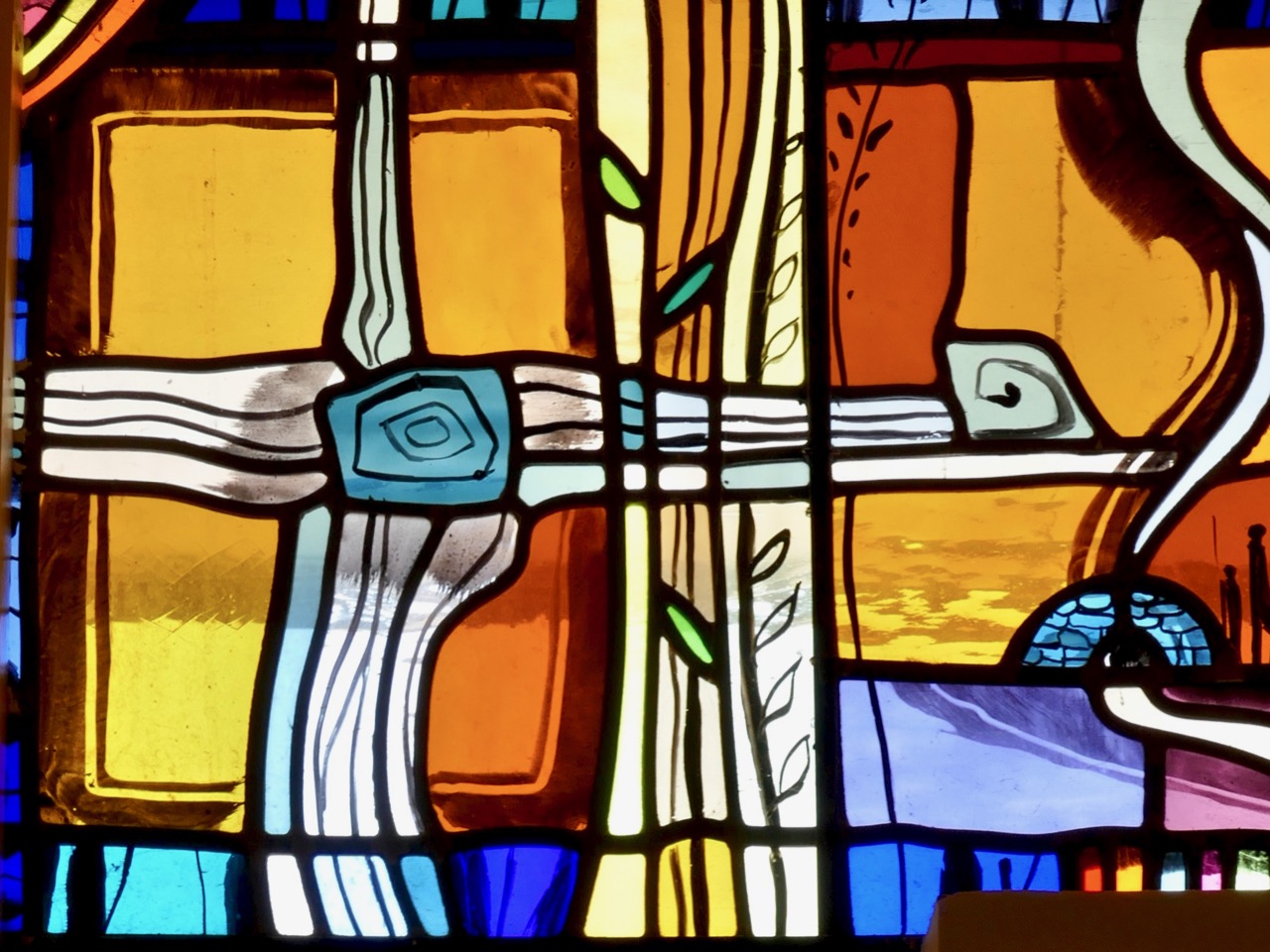
The second thing is his complete mastery of his chosen artistic medium – glass. Perhaps this is best revealed in the complexity of the leading. Only an artist that has been classically trained in stained glass techniques could produce such incredibly complex images.

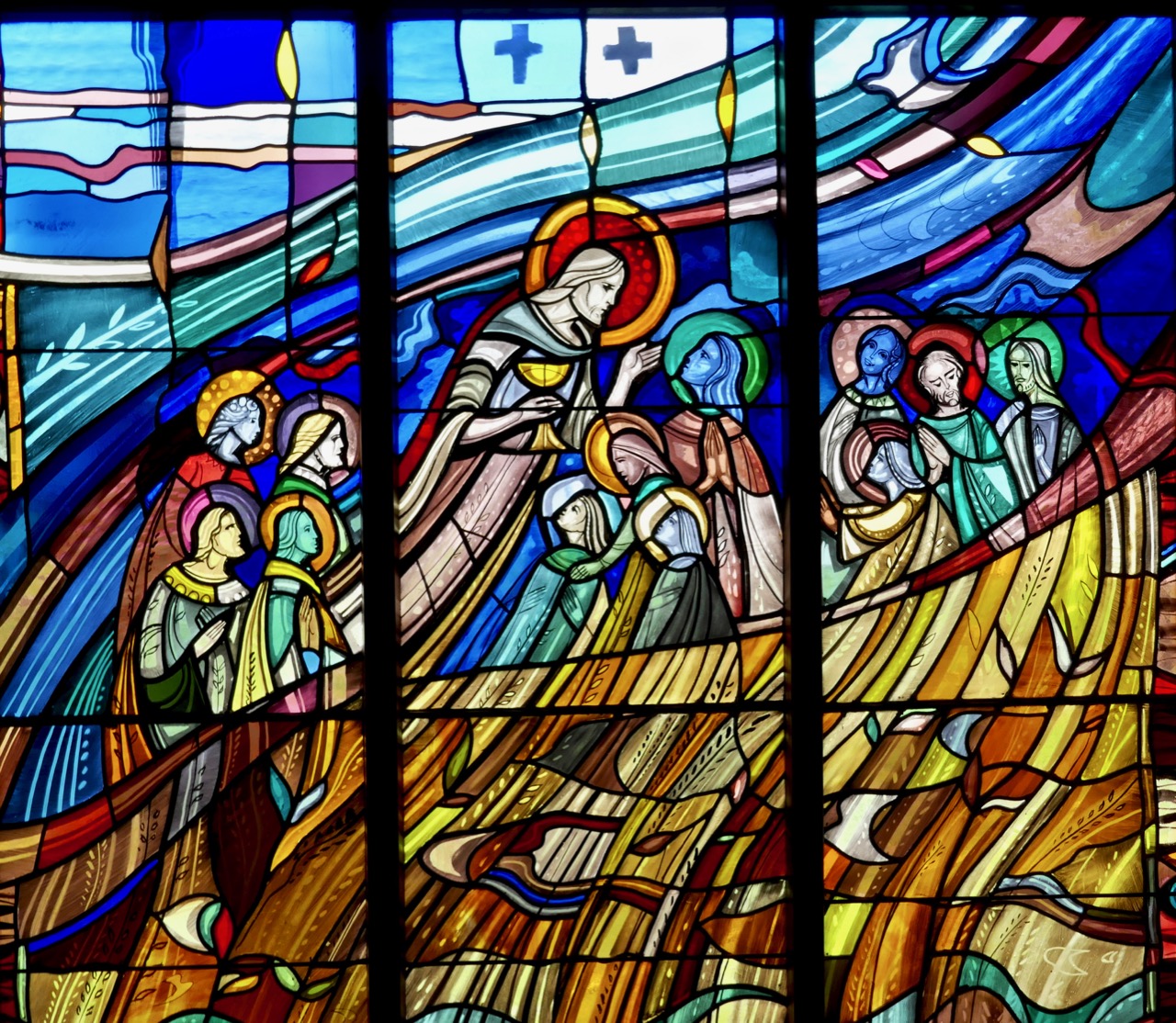
Larger expanses of a single colour (always painted and textured in subtle and not-so-subtle ways) are balanced by areas of the window is which each colour is a tiny sliver of glass, all cut and shaped in different ways and all leaded together to produce a final exciting effect. Just this week I stood in front of a Last Supper (below), which George had decided to depict in a field of wheat. The wheat occupied more than a third of the window and I estimate that it contained hundreds of different pieces of glass, all separated by twisted and swirling lead lines. it spoke to a level of skill and experience, a practice of perfectionism, and an acceptance of nothing less than the full realisation of the vision that only dedicated artists attain.

Finally, he is as comfortable with the transcendent as he is with the everyday. While most parishes want specific sacred images, he also makes himself familiar with the area so he can convey that sense of place that is so characteristic of his windows.

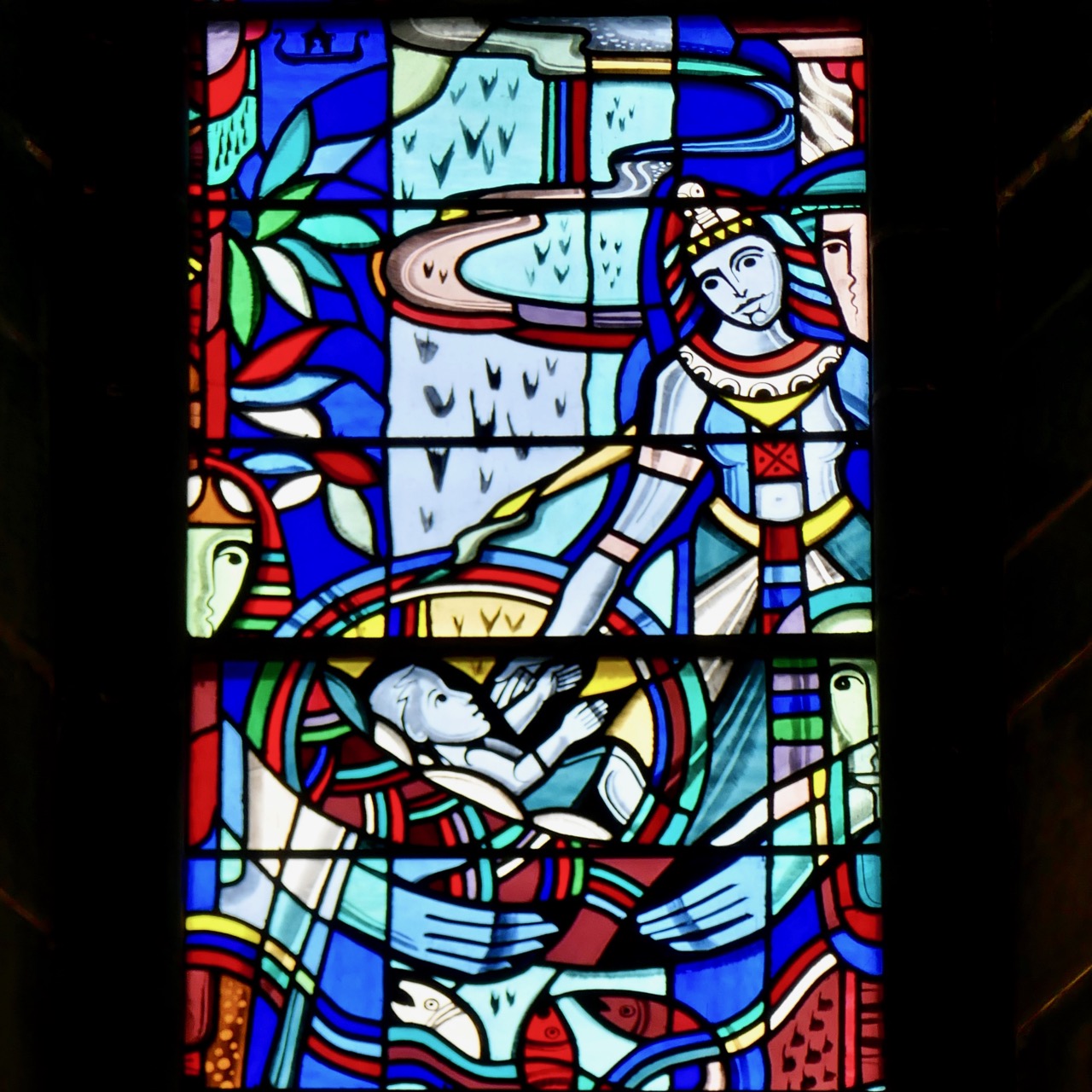
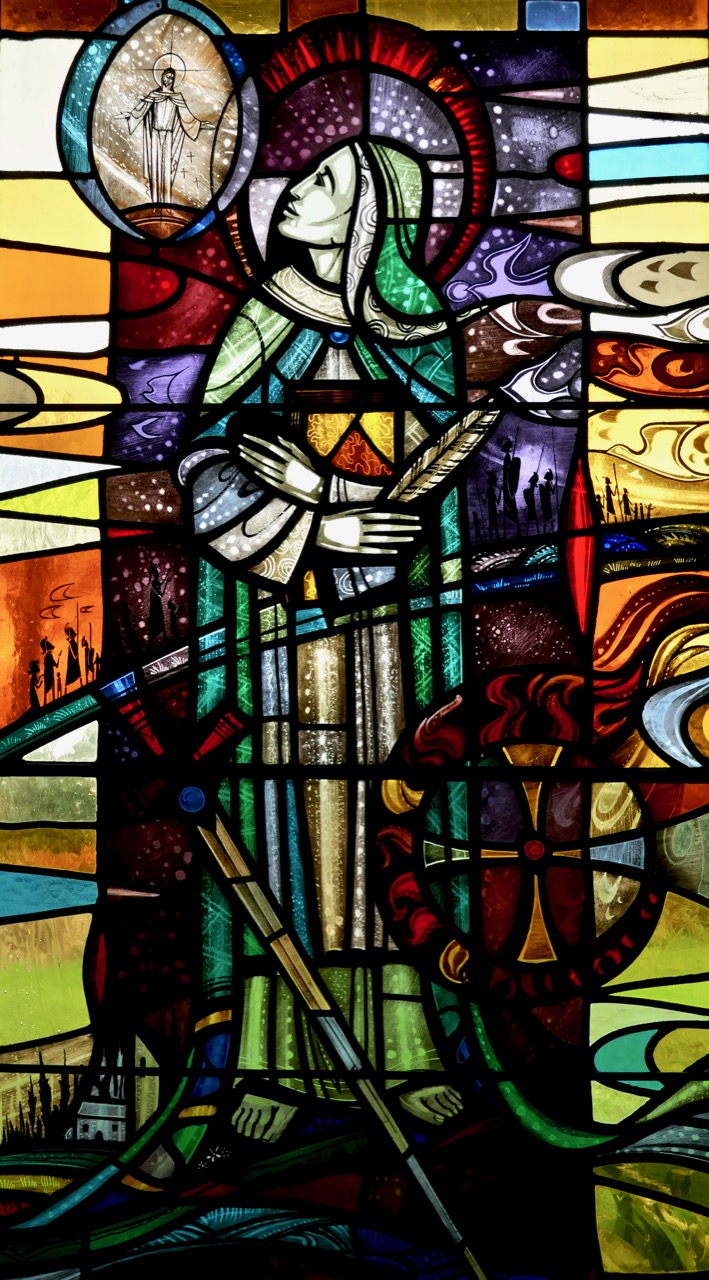
Above: Moses in the basket, Galway Cathedral. Below: St Catherine of Alexandria, from St Maur’s Church in Rush, Co Dublin. Catherine is shown with her usual attributes – the martyr’s palm, the sword which was the instrument of her death and the wheel which was used to torture her. But the Catherine Wheel is also a firework – called after St Catherine’s torture wheel, and George has introduced a subtle reference to that in his depiction of the wheel 

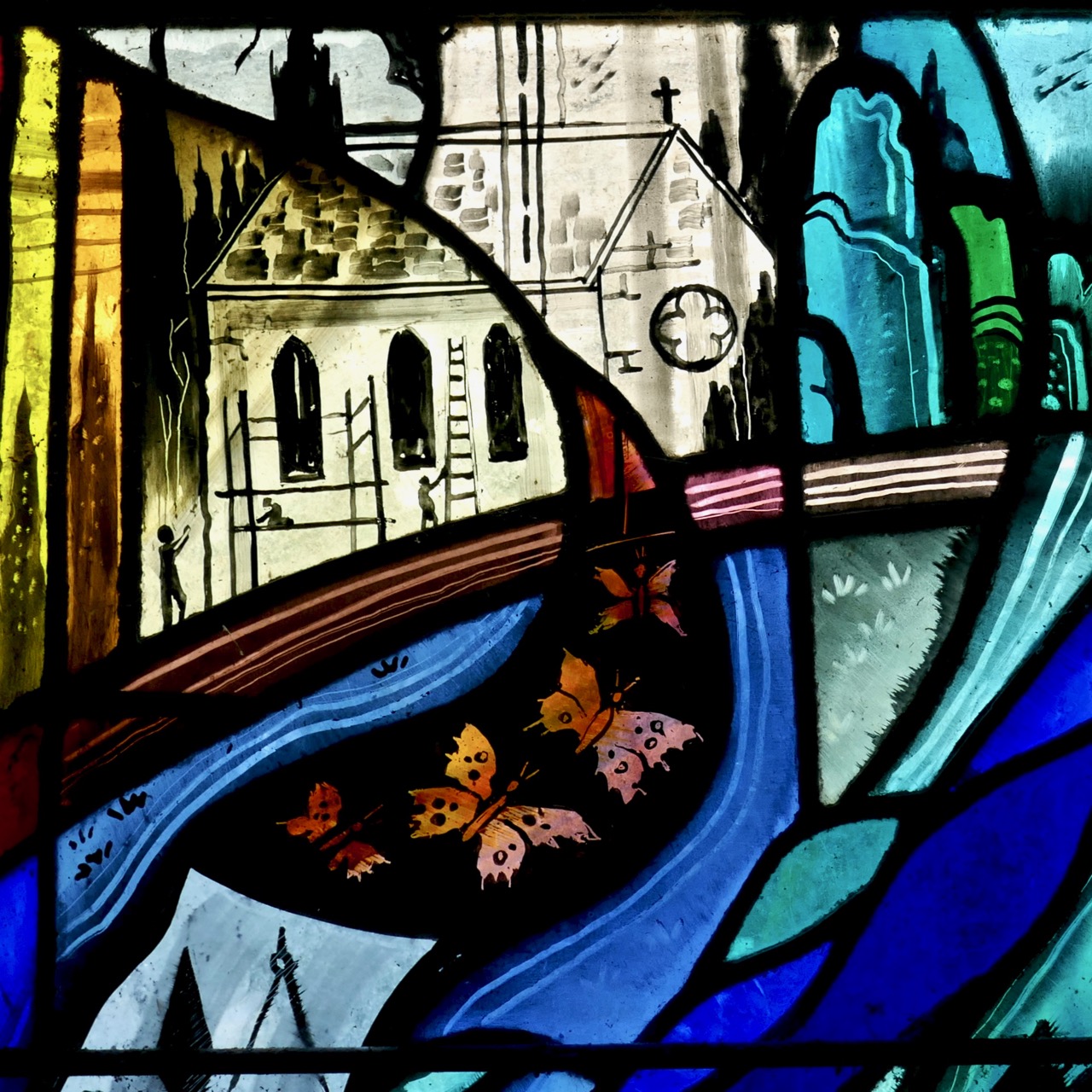
He loves to add in quirky little items that keep you searching through the windows for things that make us smile – pterodactyls and construction cranes, butterflies and elephants, rats and hares, flowers and insects, beehive huts and Brendan with his whale, a postman on a bicycle, water that flows from window to window around the church.

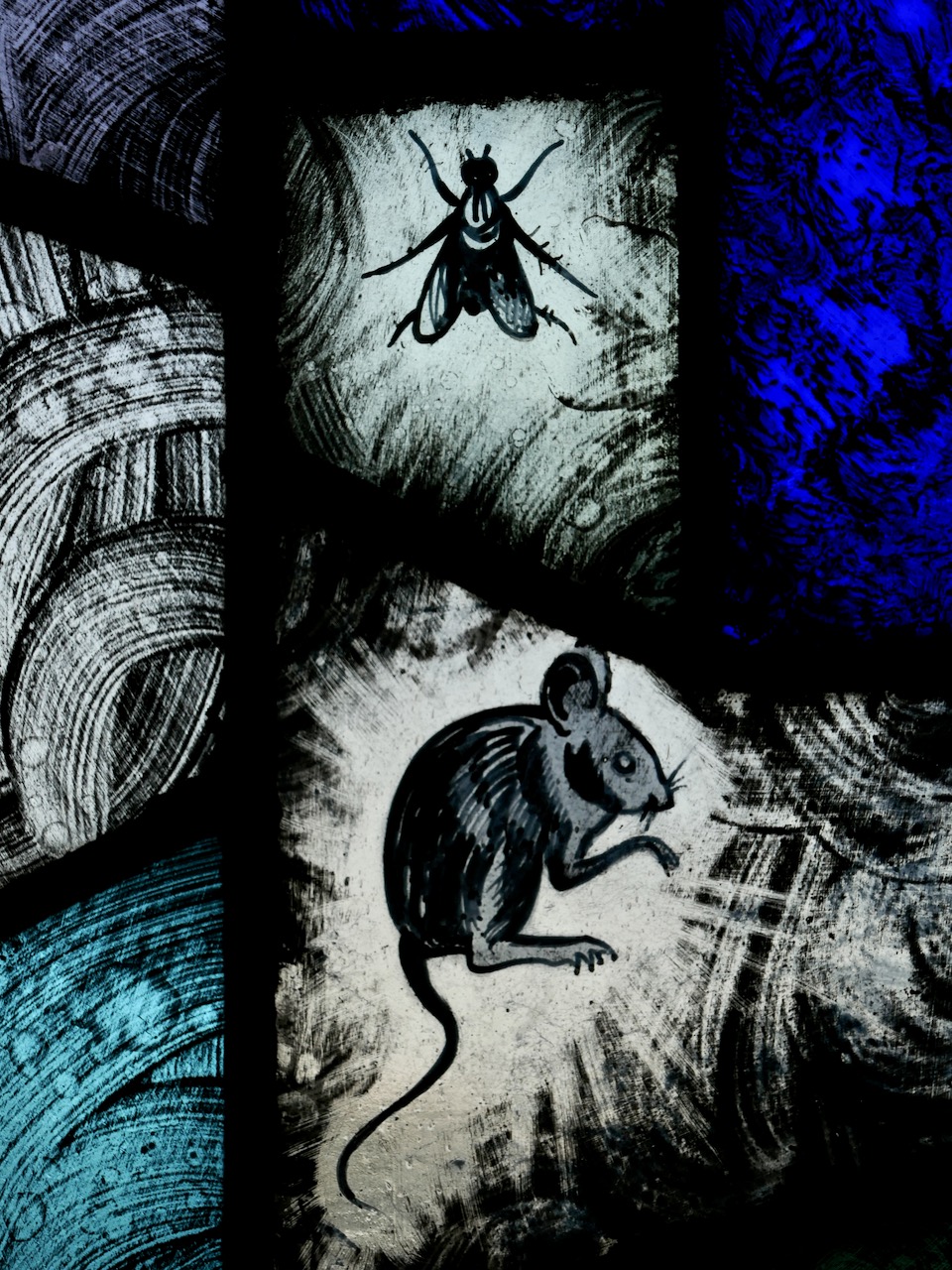
Above: A reference to church renovations. Below: A mouse and a fly are both characters in the story of St Colman Mac Duagh, and these little critters are from his Kilmacduagh window in Tirneevin, Co Galway

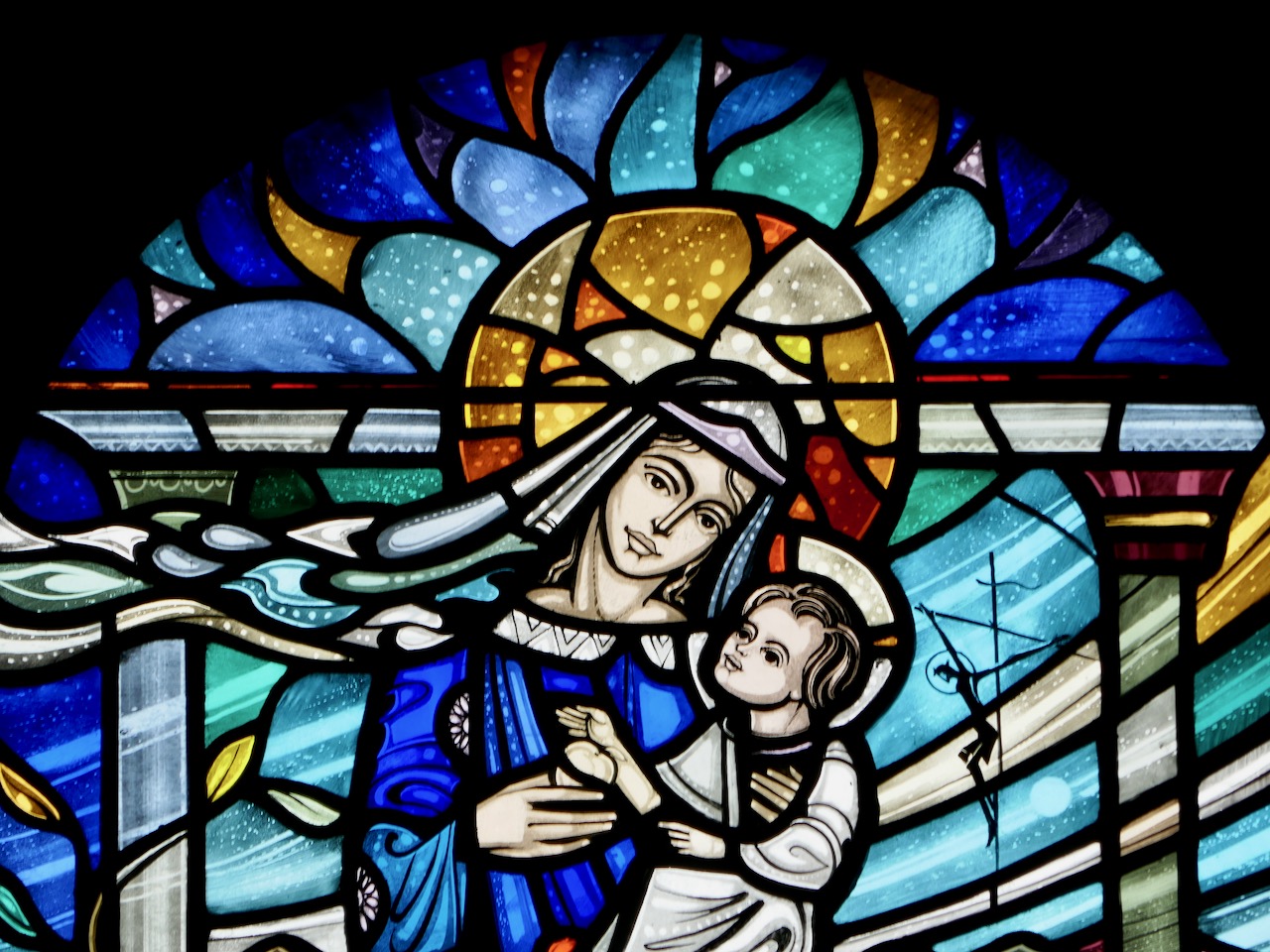
Lately I have come to recognise his model for his Madonna and Child images – in one of his explanations of his windows he refers to the “tender figure of motherhood” and that is exactly what he captures – and the Marian figures always manage to look remarkably like Janet.

And the ultimate project? My friend and relation-by-marriage, David Caron, is bringing out a second edition of the Gazetteer of Irish Stained Glass, and George is to be included. The first edition, long out of print, was written by David, and by Nicola Gordon Bowe and Michael Wynne, both of whom have passed away. The original Gazetteer listed the works of Harry Clarke and the artists associated with An Túr Gloine (The Tower of Glass). David will update this with a listing of artists of the mid- and late-twentieth century who chose to work in stained glass (many of them worked in other media as well) and who made a significant contribution to the art form.

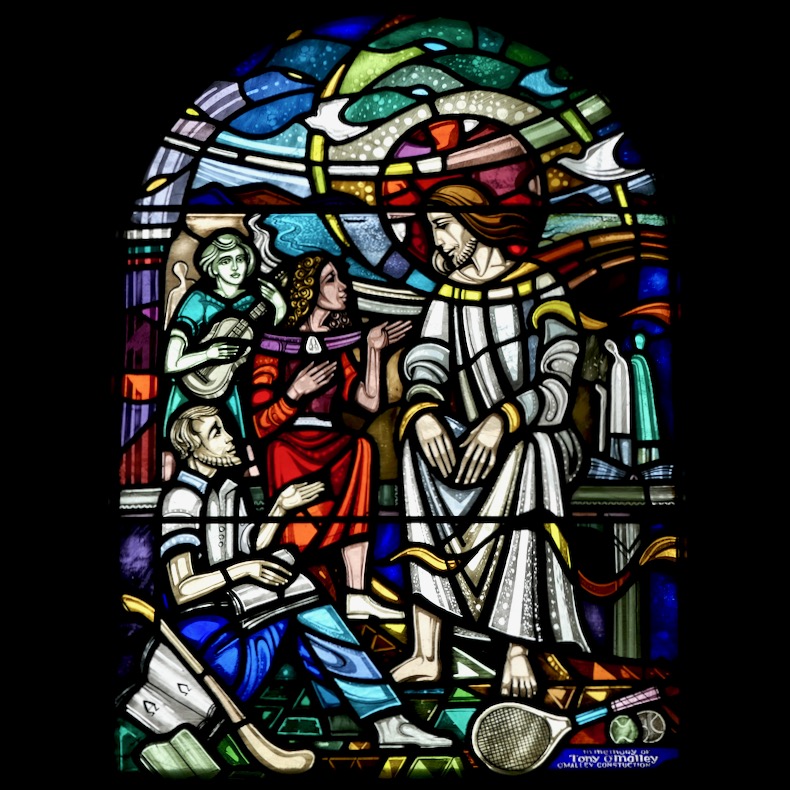
This window is in the National University of Ireland, Galway, Chapel of St Columbanus. It depicts a conversation or debate between students and God

If you’d like to follow David’s progress, he maintains a great Instagram feed as he tracks down stained glass windows all over the place. It’s at Irish Stained Glass and it’s always got something new!

Some of George’s windows are simply enormous. This one is in the Augustinian Church in Galway City

I have taken on the task of documenting George’s windows for this new edition. I’m only part way through my quest – I have several more on my list and keep discovering new ones all the time. George has been amazingly prolific, so much so that he hasn’t kept track of all his windows, so if any of you out there know of any, let me know. I don’t think you will have any difficulty recognising a ‘George Walsh’ if you find one!

George, Imelda and Loretto outside the Gallery (Photo by Stephen Walsh)

Drop into the Trinity Gallery on Clare Street in Dublin if you are in the area – the exhibition runs until the 19th of March. But if you can’t make it to that, there are at least two examples of his work in West Cork – the famous Eyeries windows that turned us on to all this in the first place, and a more recently discovered set in the little country church of Darrara, near Clonakilty.

St Michael window from Darrara, near Clonakilty

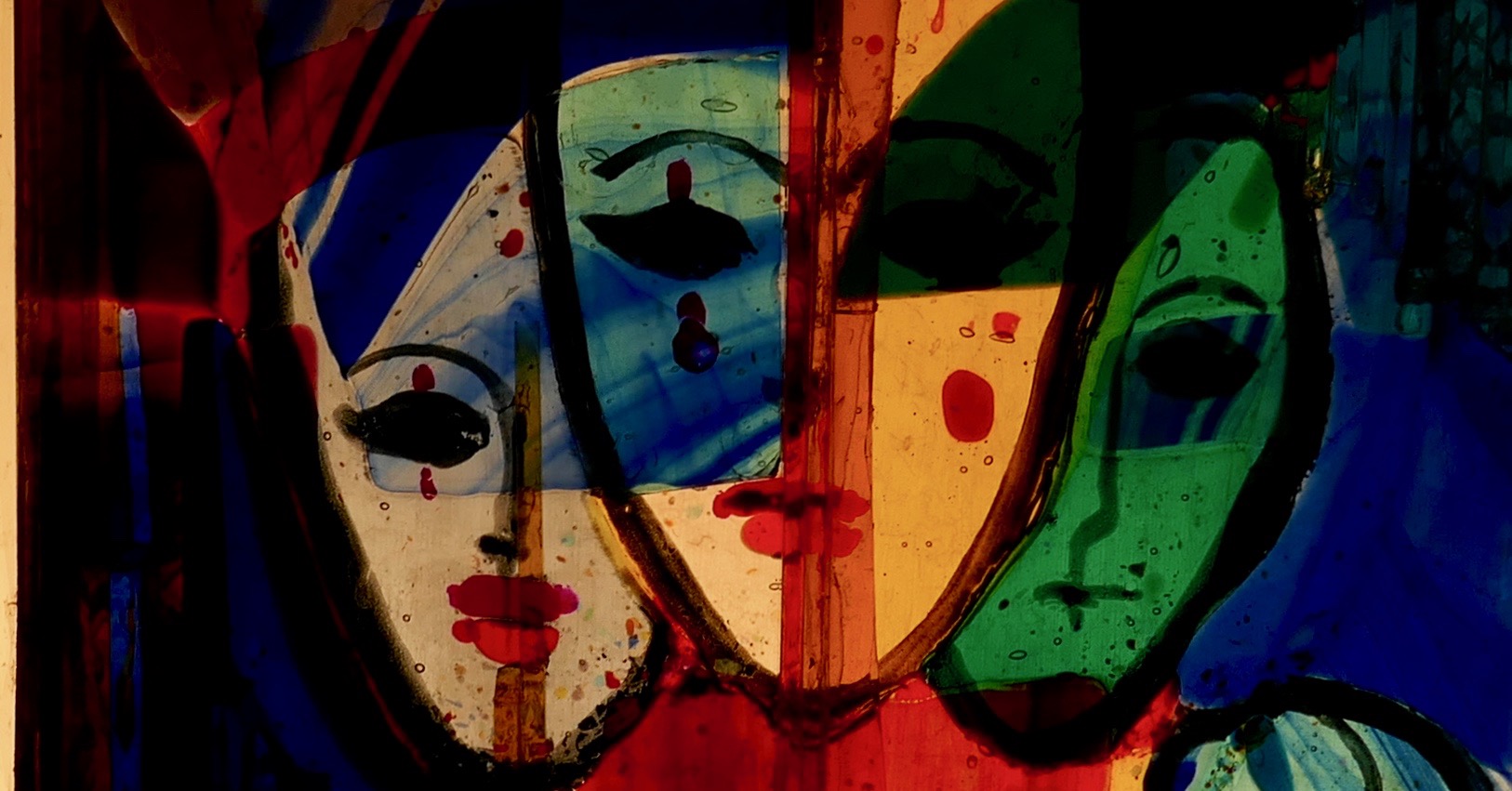
I will leave you with one of George’s exhibition pieces, below, just to remind you that there is more, much more, to stained glass that what we see in churches. It is a complex medium, difficult to master, but so rewarding in the hands of a true artist/craftsman. This one was titled Masks and reflects his love of all things Venetian.


Saint Manchan, his Miraculous Cow, and his Shrine

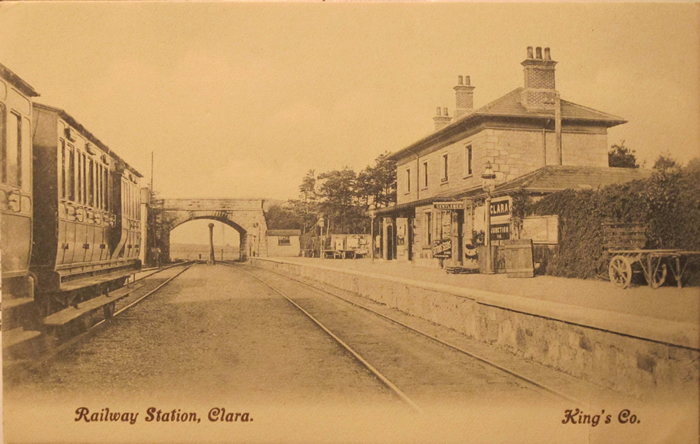
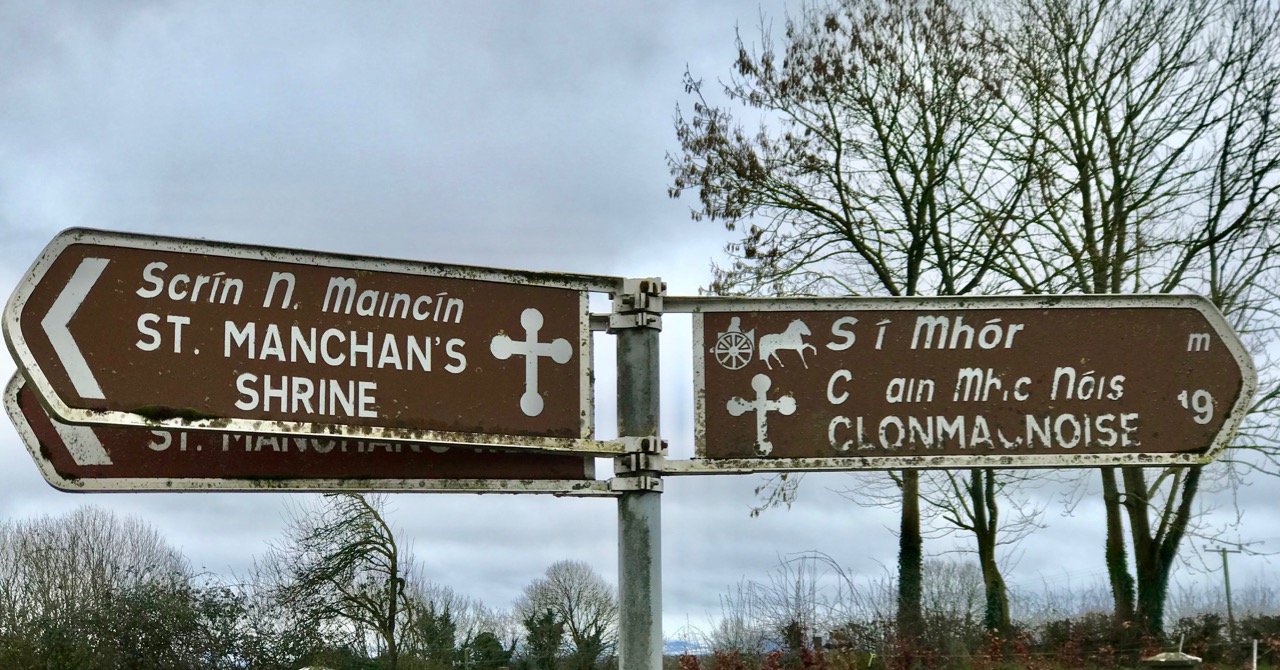
I was in the little two-horse train which labours west from Clara to Banagher and the outlook was desolate. There was another chap in the carriage. He sat hunched up in the corner with his nose to the window. One glance convinced me that it was useless to say anything and there the two of us kept on staring rather lovingly at a wilderness of bog stretching away to the Slieve Bloom Mountains. It seemed to me that there was a kind of promised land on the other side. On past a few scattered farm houses some grey boulders and the ruins of a church. I found myself thinking dismally enough of the tourists. After all what do they get? Just ruins, ruins and more ruins – the saddest ruins in Europe. Then suddenly I heard my friend of the opposite corner speak in a mournful kind of way with his nose still glued to the window – “That’s Leamanaghan, a quare kind of place, decent people, too, the best in the world, people who’d give you all the milk you could drink but wouldn’t sell a drop of it for all the gold in Ireland and it’s all by raison of a cow, Saint Manchan’s cow.”


(St Manchan By Tomas O’Cleirigh, Midland Tribune 27th April 1935)

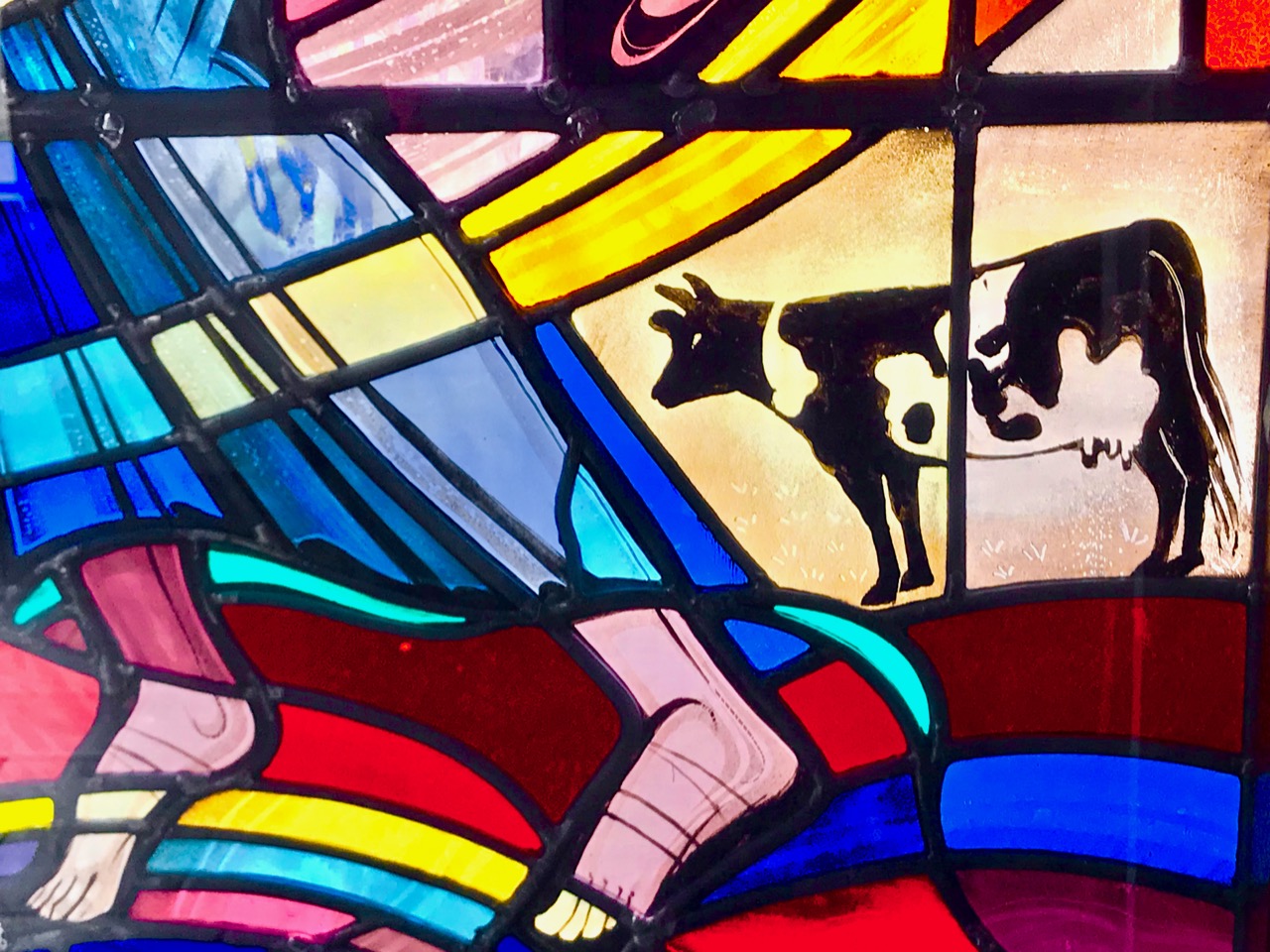
Upper – Finola is featuring the work of stained glass artist George Walsh this week. We were fortunate to find his portrait of Saint Manchan and his cow in the  little church at Baher , Co Offaly, on our travels. Centre – The Church of Saint Manchan

(From Robert’s diary, 2012) – St Manchan had a Cow, a miraculous animal that was always in milk, and the people of Leamonaghan had the milk for free (and, to this day, will not charge anyone for a pint straight from the herd). We tramped through a field of cows as we searched for St Manchan’s holy well: they gazed at us with some disdain. The well is a curious affair – old stones, concrete and rather ugly. The water is alive with tadpoles. We were tentative as we sampled the rank, slow moving stream – but it gave us the gift of credulity!

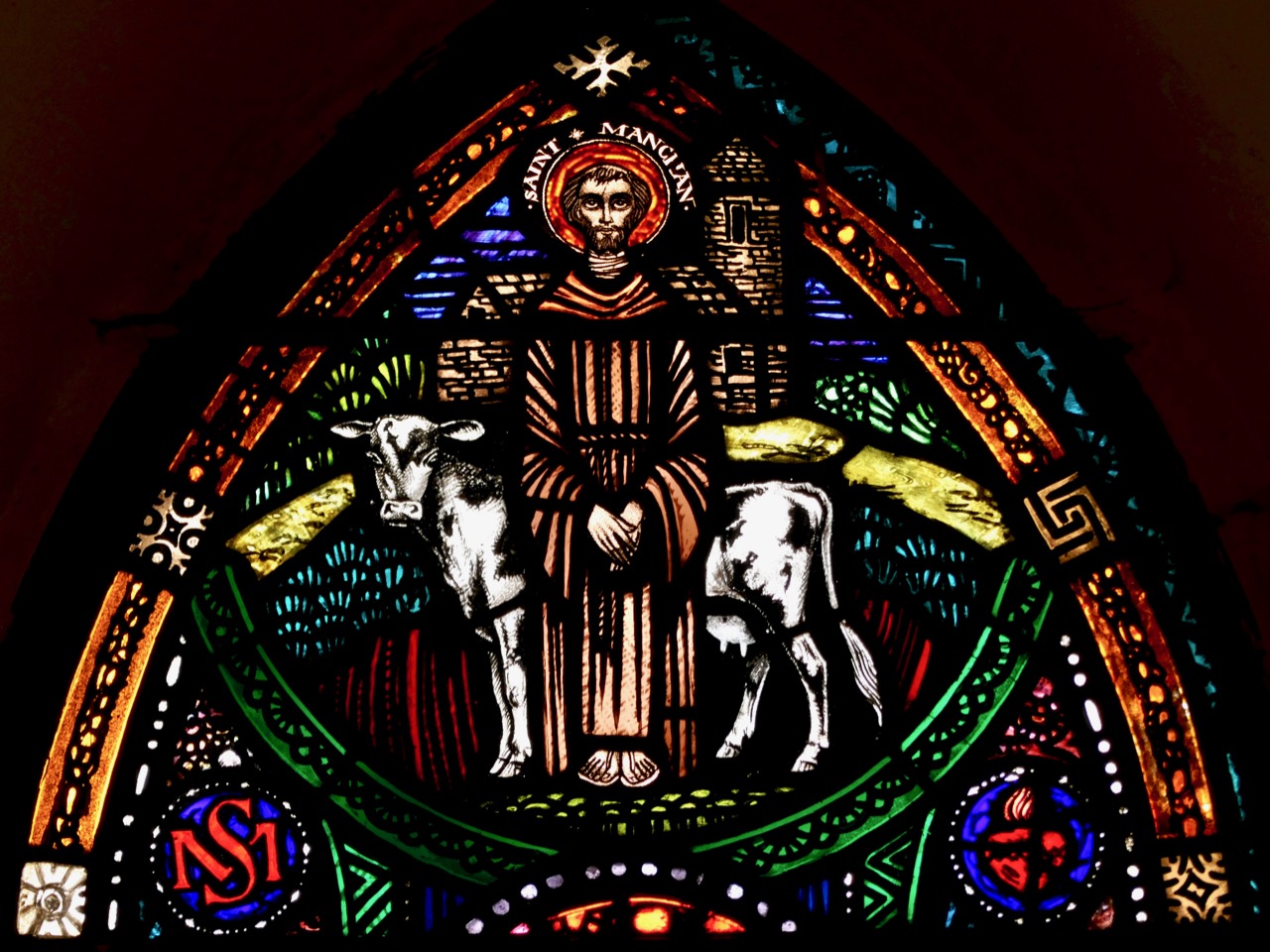
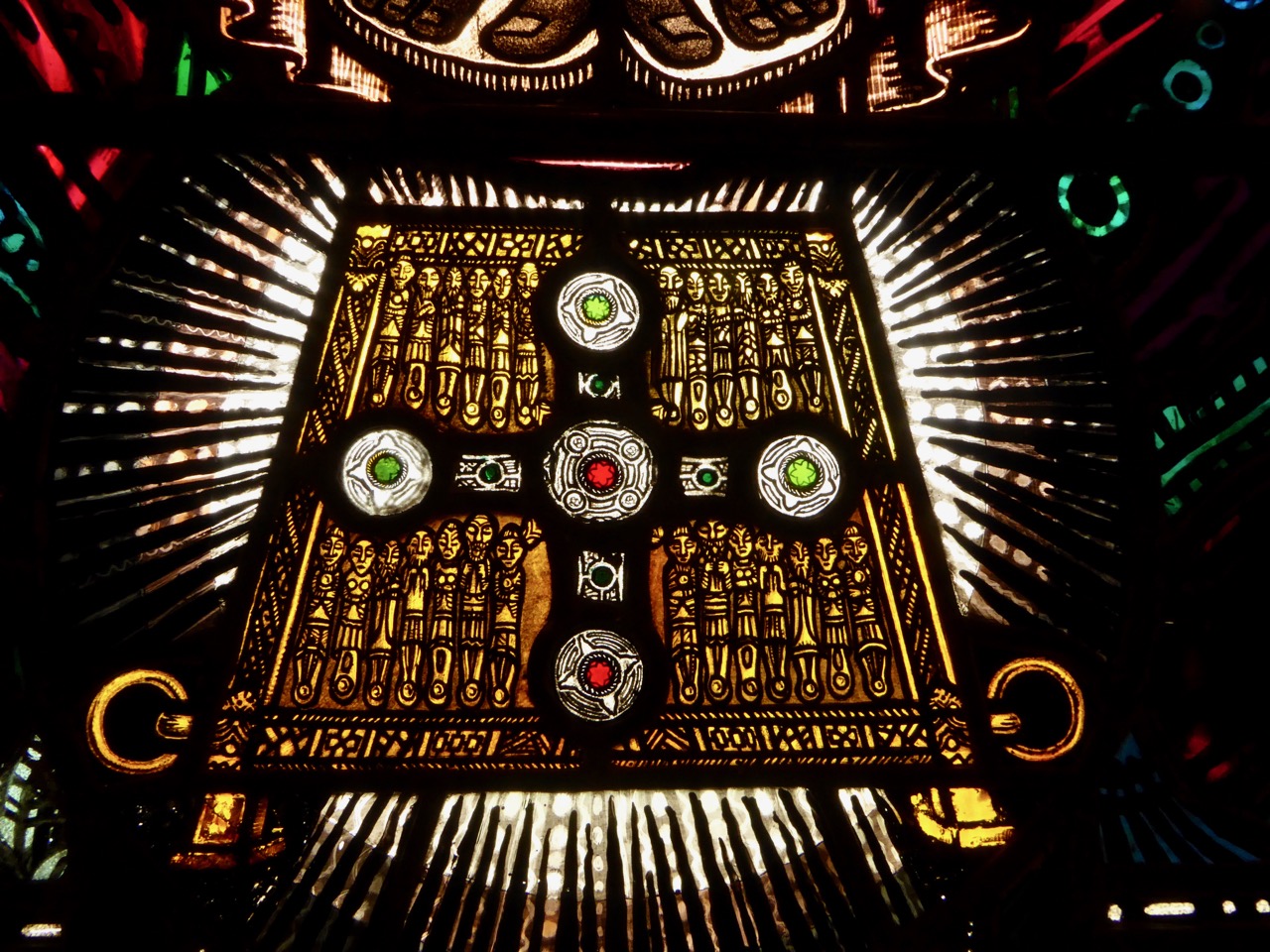
This detail from the Harry Clarke Studio window at St Manchan’s Church (dating from 1931) shows the miraculous cow

I went through a storm of real Irish rain to see Leamanaghan that very evening. It is four miles from Ferbane in County Offaly and hidden away in a vast bog region which is dotted with scattered boulders of magnesian limestone. The general depression is summed up in the name – Liath Manchan – the grey land of Manchan. Aye! The grey, lonely, chill land of Manchan. Saint Manchan lived here and died in AD 664. That might have been only yesterday, however as far as the good neighbours are concerned because he is the one subject over which every man, woman and child can get really voluble. I was taken to see the ruins of his church and then down to his well and heard how when you are sick you should pray here, walk three times round it and then go back and leave a little present for the saint himself in the window of the church . . . I was told that on the 24th January when all the rest of the world works, the people of Leamanaghan just take a holiday and make merry because it would be the unpardonable sin to think of work on their Saint’s day.


(Tomas O’Cleirigh, 1935)

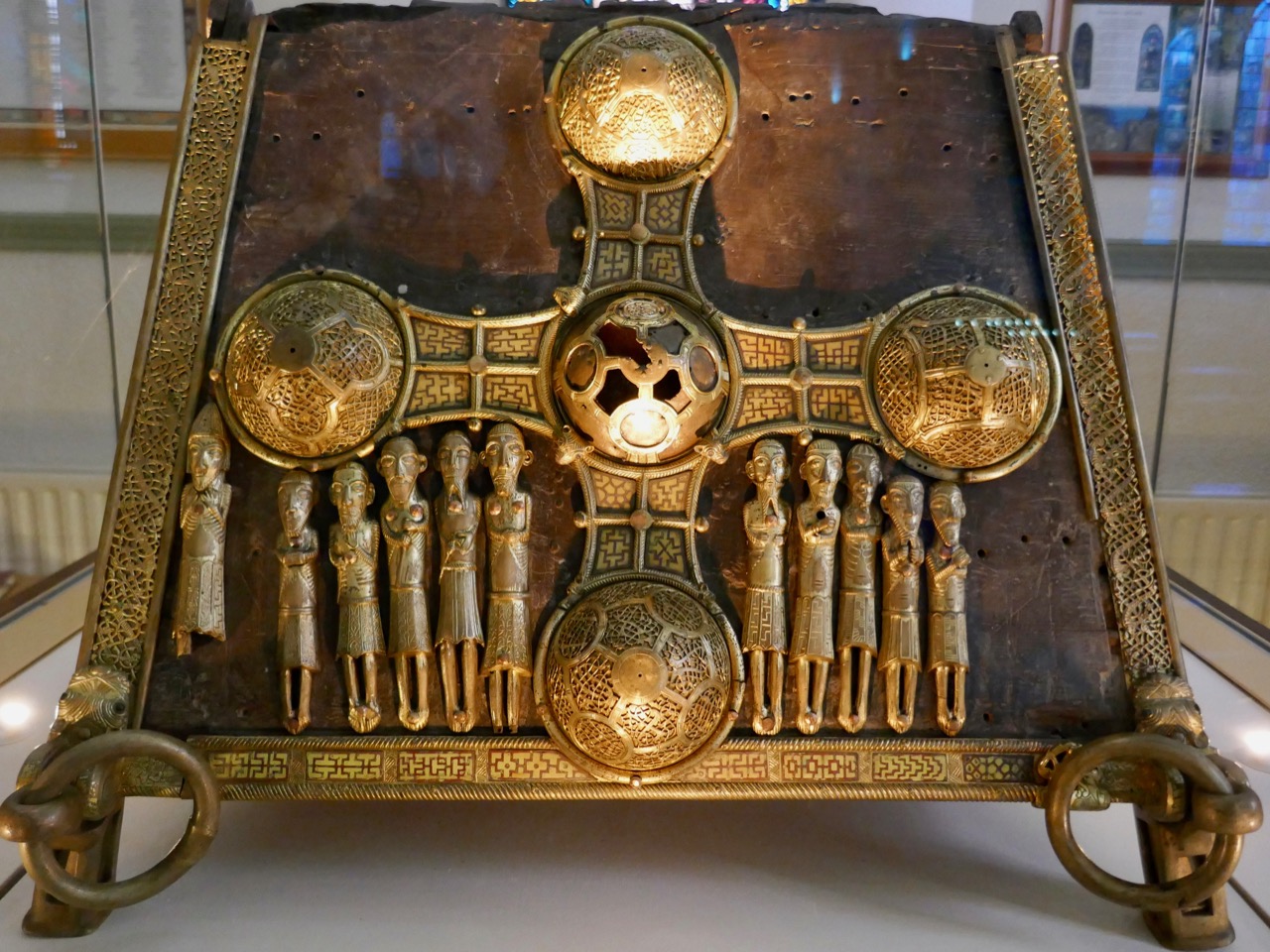
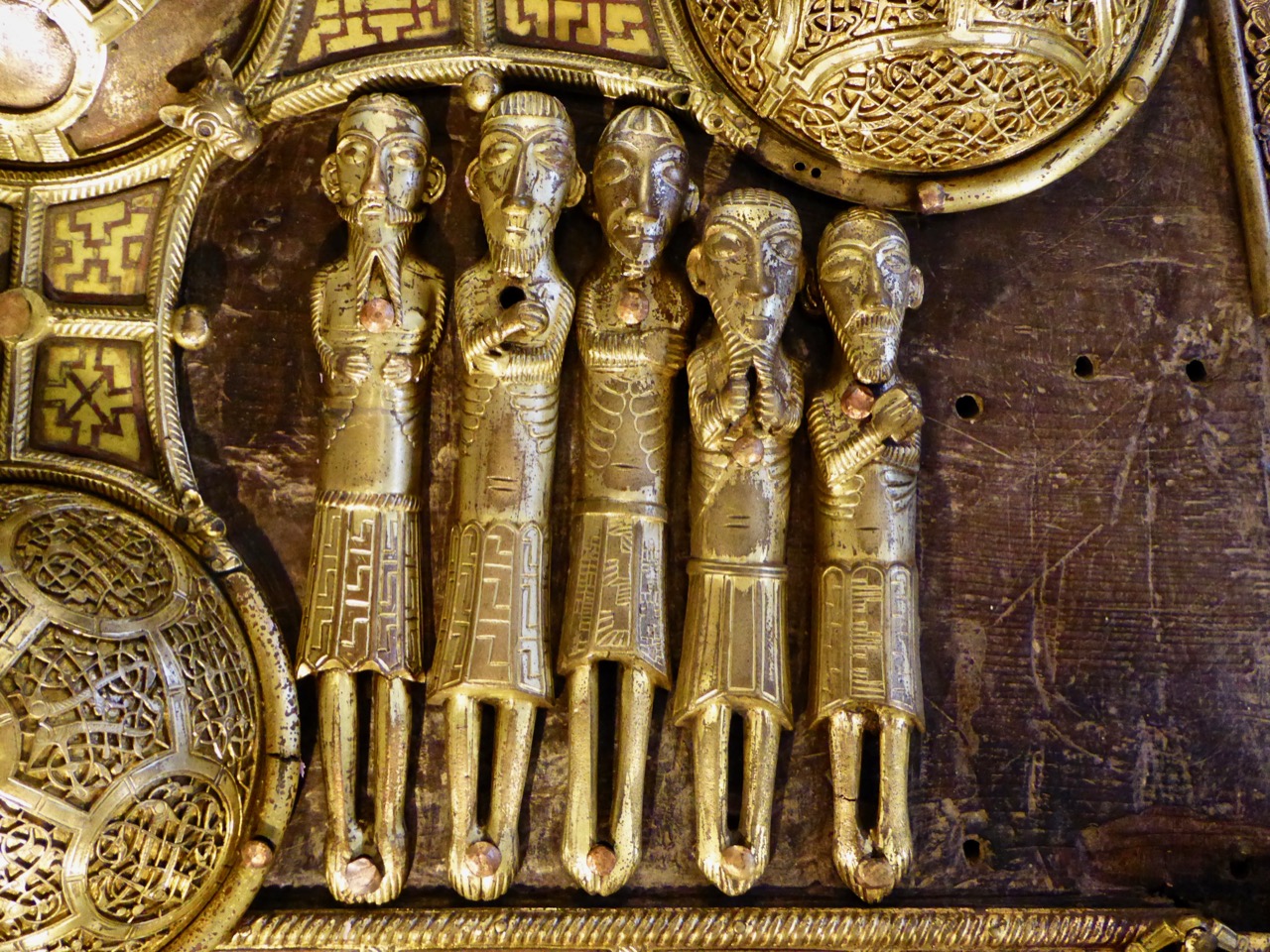
The twelfth century shrine of St Manchan securely displayed in the church today, with the Harry Clarke Studio window behind it

St Manchan died in a plague which he had asked God to bring on his sinning people. After his death, his herdsmen – Bohooly (from which the name Ua Buachalla – or Buckley – is derived) found it necessary to call upon the Saint to help recover the Community’s cattle, which had been stolen by raiders. Manchan duly appeared, but one of his faithful herdsmen was so overjoyed to see his old master again that he threw his arms around him. This he should not have done, as he was a mortal sinner: the Saint fell into a heap of dry bones, but the cattle were recovered. We learn that Manchan’s bones were gathered up and taken to Clonmacnoise, where a fine casket was made to house them, out of yew wood, bronze and gold. Nearly a thousand years later we stumbled on this same shrine in the little church at Boher which carries the Saint’s name, with a glorious representation of itself shining out from a Harry Clarke Studio window set behind it. It resided in a case of armoured glass, alarmed and watched by cameras  – incongruous…. and ineffective: the day after we saw it there the shrine was stolen in broad daylight, evidently after only a few minutes’ work. (Robert’s diary, 2012)

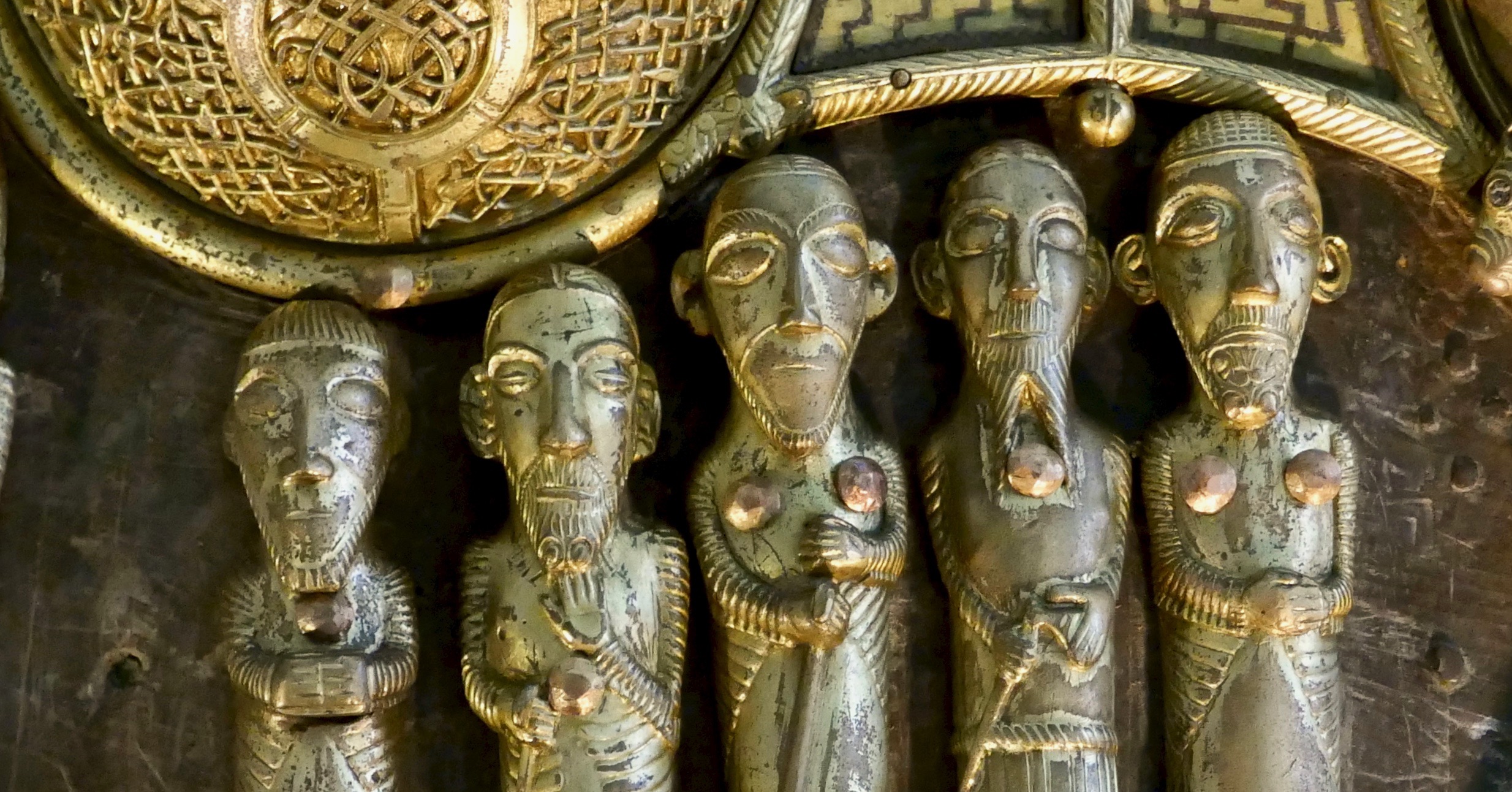
It’s wonderful that we can see the actual reliquary containing St Manchan’s bones returned to the church at Boher, Co Offaly, close to the ruins of the monastery at Leamonaghan which the Saint founded in the seventh century. Although it has suffered some damage over the centuries, the detailing is exquisite: it is one of Ireland’s finest medieval treasures 

They have all kinds of stories about the good saint but the best one of them all explains why Leamanaghan people don’t sell milk. Here it is: Saint Manchan had a cow – a wonderful cow that used to give milk to the whole countryside – good, rich milk for which no charge was ever made by the saint. Then, the people of the neighbouring Kil Managhan got jealous and watched for their chance. One fine day when Manchan was absent they came and stole the cow and started to drive her along the togher through the bog back home to Kil Managhan. The good cow, suspecting something was wrong, went backwards and most unwillingly, fighting, struggling and disputing every inch of the way. Now she’d slip designedly on the stones: again she’d lie down but every where she went, she managed to leave some trace of her rough passage on the stones of the togher. The marks are there to this day, – hoof marks, tail marks – every kind of marks and the chef-d’oeuvre of them all has a place of honour at the entrance to the little school. Alas! In spite of that very gallant resistance, the cow was finally driven to Kil Managhan. There, horrible to say, she was slain and skinned.


(Tomas O’Cleirigh, 1935)

The shrine wonderfully depicted in the Harry Clarke Studio window at St Manchan’s Church, Boher

Prior to being housed in the church the shrine had rested in an ancient chapel. This burned down, but the shrine was rescued and then was kept in a thatched cottage nearby: legend has it that the ruin of this cottage became the unprepossessing holy well that we had found . . . Miraculous cows; plagues; holy wells; a modern theft – St Manchan’s bones do not rest lightly in his casket. The stories tell that Manchan was a tall man with a limp. When the shrine was sent to the British Museum some years ago for refurbishment, the experts examined the bones and proclaimed that they belonged to a tall male who had suffered from arthritis. (Robert’s diary, 2012)

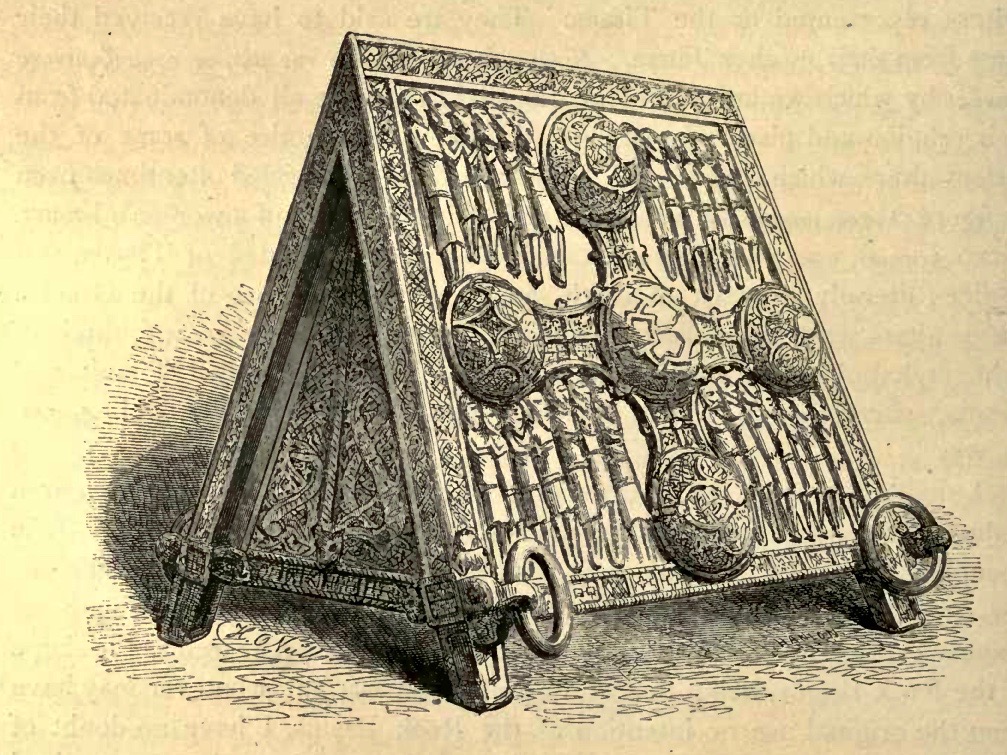
Remarkably, St Manchan’s Shrine has been exactly replicated. This full-sized copy of the reliquary is in the National Museum of Ireland: all the ‘missing’ figures and details have been restored. The drawing dates from 1867, and is a plate in a book titled The Towers and Temples of Ancient Ireland by Marcus Keane MRIA. In that book it is said that the copy belonged to Sir William Wilde, and it may well have been commissioned by him. It is likely that the Harry Clarke Studio modelled their version of the shrine on the replica, rather than on the original

In the meantime, the saint returned, missed his cow, and straightaway started in pursuit. He succeeded in tracing the thieves by the marks on the stones and arrived just at the moment when she was about to be boiled. He carefully picked the portions out of the cauldron, pieced them together, struck at them with his stick and immediately the cow became alive again. She was every bit as good as ever, too, except that she was a wee bit lame on account of one small portion of a foot which was lost. She continued to supply the milk as before, and, of course, no charge was made by the saint. Ever since the famous custom still lives on, and good milk is given away but never gold by the loyal people of Leamanaghan. Now, can any lover of the grand faith of Medievaldom beat that?


(Tomas O’Cleirigh, 1935)

A detail of the original Shrine in St Manchan’s Church

There’s one more piece to this Saint’s story: the fame of his miraculous cow grew and the people of neighbouring Kilmonaghan were jealous, and sent out some rustlers to drive the cow over into their own parish. The cow proved reluctant and stalled and slipped all the way, leaving hoof marks on the many stones that lay on the road. Those marks are still on the stones to this day (they say) and the Saint was able to follow her tracks and recover her. (Robert’s diary, 2012)

Saint Manchan, depicted in stained glass: Harry Clarke Studio (left) and George Walsh (right). Both can be seen in the church at Boher, Co Offaly

The very old vellum books state that Manchan of Liath was like unto Hieronomus in habits and learning. I can well believe it. Some distance away from the church is the little rectangle cell which he built for his mother – Saint Mella. Cold, austere and with no window, you get the shivers by even looking at it. There is also a large flag-stone on the togher leading from the well, and they say the saint and his mother used to meet here every day and sit down back to back without speaking a word because the saint had vowed never to speak to a woman!


(Tomas O’Cleirigh, 1935)