The Souvenir Shop

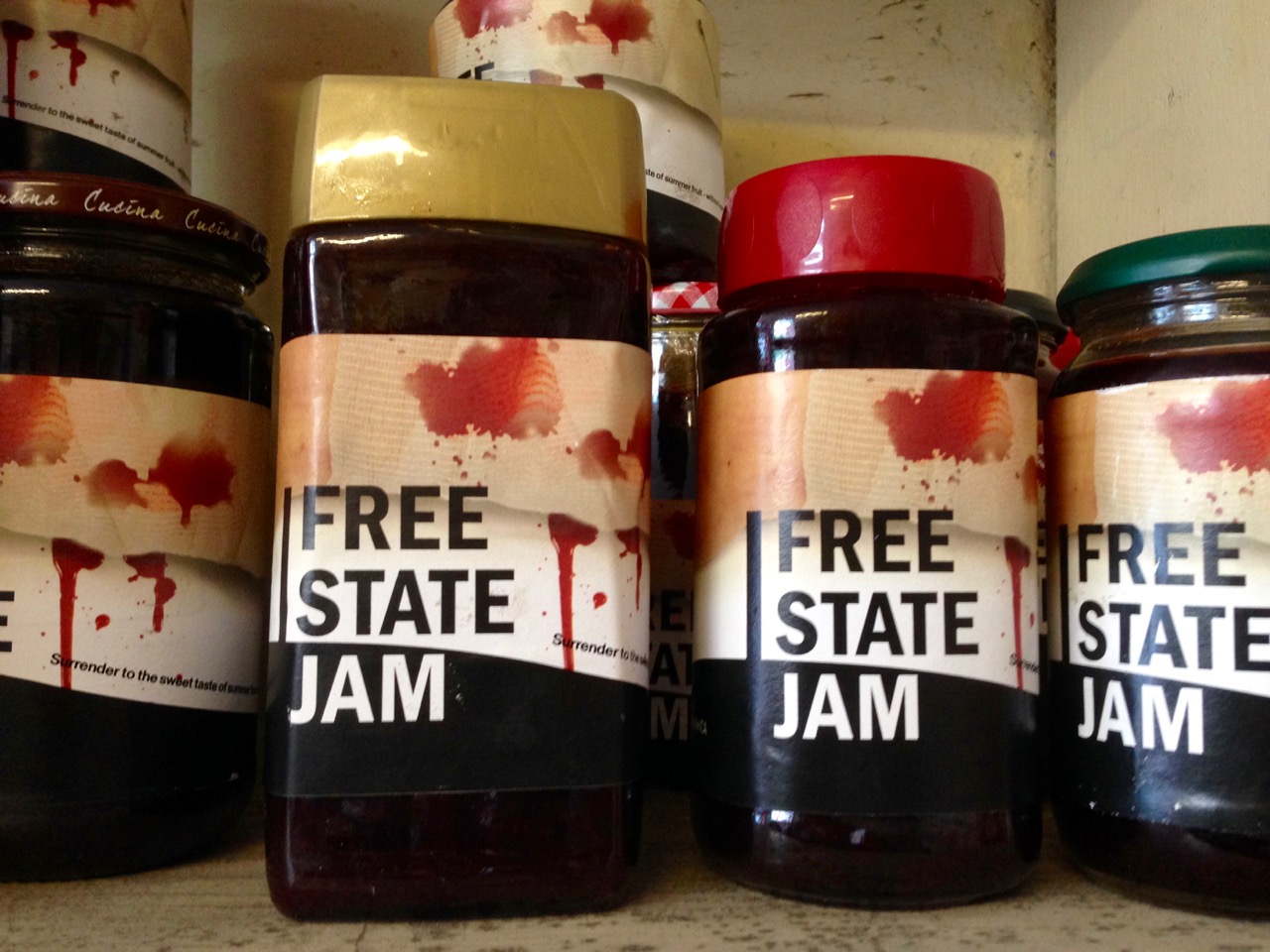
Free State Jam

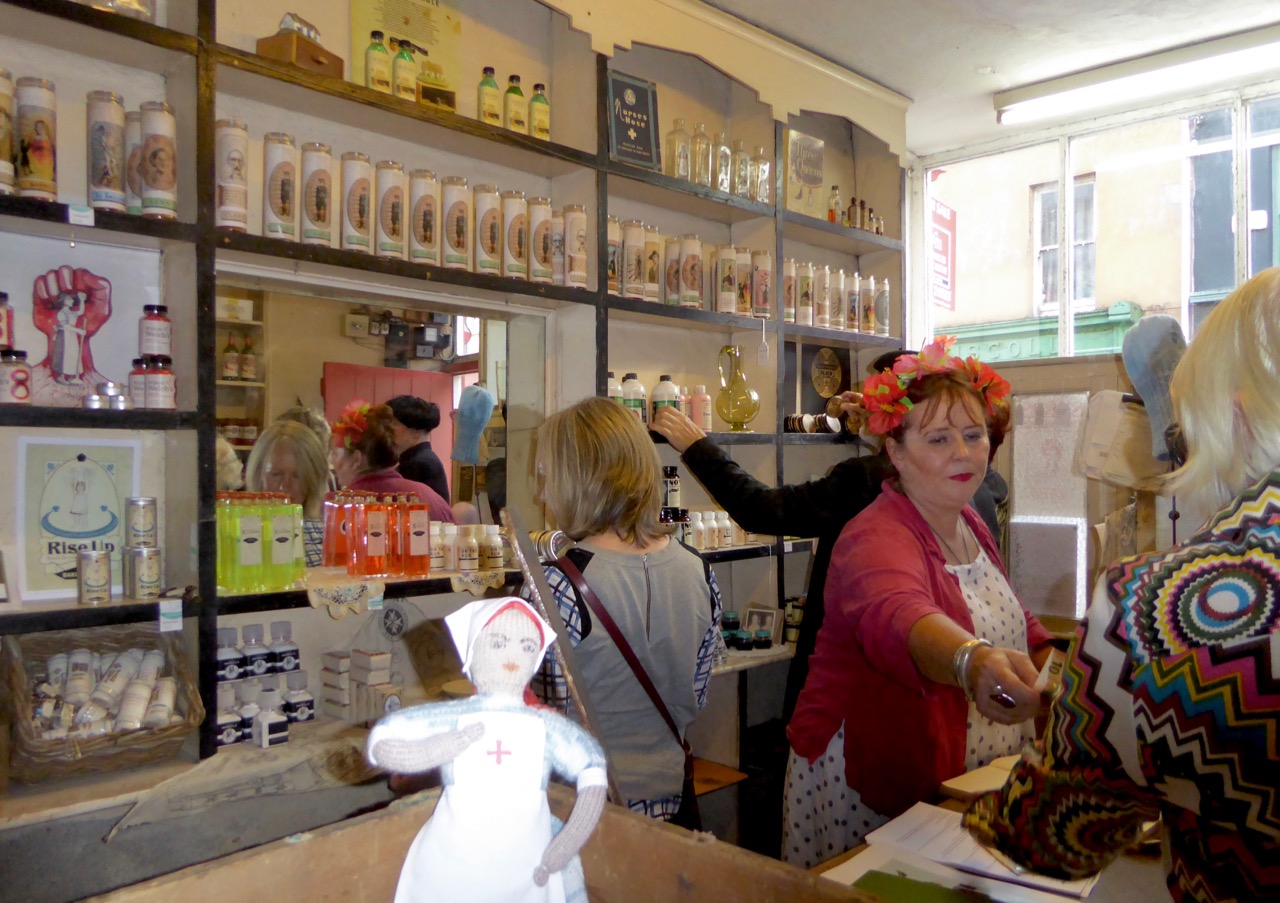
This is a first – a ‘live’ blog post! I’m writing it inside an art installation running as part of the excellent Skibbereen Arts Festival. The installation is The Souvenir Shop, and it’s a huge hit with visitors. The project is conceived by Belfast artist Rita Duffy and curated by Helen Carey, and is a very unusual perspective on the 1916 Rising commemorations.
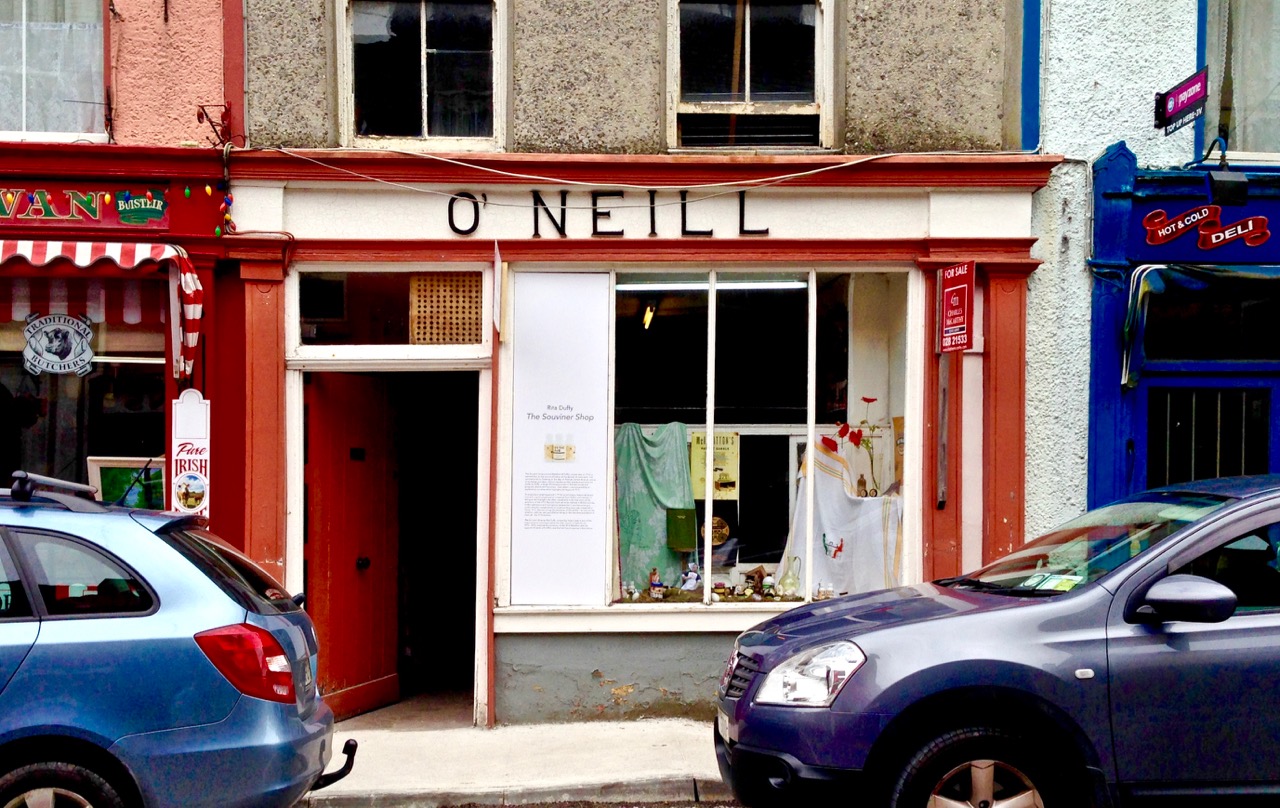
o'neill'sshop

The Souvenir Shop was first shown in Dublin earlier this year – here is a review from the Irish Times – and it’s now in the perfect setting here in West Cork: O’Neill’s old sweetshop on Townshend Street in Skibbereen. The premises has been empty for years and stepping inside it today is stepping into the past: a shop unchanged over generations.

customers

Rita in Shop

The atmospheric and nostalgic interior of O’Neill’s shop brought back to life by Rita Duffy (above): it displays and sells ‘souvenirs’ of the 1916 Rising and the events around it. It’s a piece of art which includes and embraces its customers and the ‘invigilators’ who, today, are Roaringwater Journal creators Finola and Robert

Finola and I are on our second stint behind the counter: we are the shopkeepers! We try to keep order as customers crowd in to look at the wares in display, all of which are designed by Rita. We met her in the shop on the first day of the exhibition and she explained that, during the Rising on Easter Monday 1916, many shops in Dublin were looted: the first was Noblett’s Sweet Shop on Sackville Street, and another was Tom Clarke’s tobacconist shop on Great Britain Street (now Parnell Street). She has re-made or re-imagined these shops for the installation, and filled the empty shelves of O’Neill’s with an incredible array of objects – most of which are for sale.

Dublin’s 1916 Easter Rising was accompanied by widespread looting of shops: Noblett’s Confectionery (top left – Dublin City Photographic Collection) and Clarke’s Tobacconist (bottom – National Library of Ireland) were among the first casualties. Tom Clarke himself (above right) was the first to sign the Proclamation of Independence, and was a driving force behind the rebellion

Rita Duffy’s subversive commentary on the Rising and the events that led from that time towards the present uneasy ‘peace process’  includes re-interpretations of everyday items that we would expect to see on the shelves of our local shops – soap, boot polish, tinned foods, tea, sweets, packets of seeds… It all looks very normal when you walk in – with a period flavour. We are finding that many of the customers today have fond memories of O’Neill’s sweet shop recalled from their childhoods and are delighted to come in and see it back in business: we can’t resist nostalgia. The initial impression is exactly that – a rosy-hued look back on our remembered past. Then we all start looking more closely at what is on the shelves and we are jolted out of our reveries…

Just a few of the items on sale today in The Souvenir Shop. Look carefully – ‘No Surrender stain remover’ shows James Connolly’s blood stained shirt worn during the Easter Rising; ‘His Majesties Ltd comforting diasporic foot soak for the wanderer who seeks a better footing’; ‘On The Run embrocation for the sore and twisted limbs of the dissident thinker (apply before sleep in a safe house)’; ‘Put my grandfather back together’ bandages; ‘Towards a New Republic Clear the Air vapour candle’…

It makes you laugh, initially – and then you have to think what you are laughing about. Balaclavas, in powder blue and pink with orange trim, for example. Black and Tan boot polish…? There’s a whole lot more to The Souvenir Shop. Rita Duffy has engaged the services of the Irish Countrywomen’s Association in Cavan (her studio is in Ballyconnell) to make Free State Jam and to knit – the balaclavas for example – but also some wonderfully bizarre religious iconography: did you ever see a knitted Pietá before?

Unexpected knitting courtesy of the Cavan Irish Countrywomen’s Association

Rita has also produced tea towels, t-shirts, and some embroidered place-mats carrying rather uncomfortable messages to entertain your dinner guests with. There are also ceramics: teapots, dishes and glassware. It’s such an eclectic range of goods on offer in this shop. That’s why the crowds come in and spend what seems like hours browsing the shelves that once held jars of sweets and packets of tea. There are sweets and tea here today – children are delighted to be given some free samples – but they probably don’t understand the hidden messages on the colourful packaging.

Most stark, perhaps, are the seeds: Seeds of the Revolution: two packets for 5 Euros. The messages here are fairly easy to read, although harder to digest. They really are seeds in those packets, but you’ll have to plant them to find out what comes up, perhaps something else that has a subversive implication: I’ll tell you what mine are next spring!

Seed rack

There’s so much in The Souvenir Shop that I haven’t included in this little review – and I’m far too busy trying to fend off the demands of the customers while I’m writing this. If only they would get into an orderly queue – it’s like some sort of insurrection in here… But we’ll cope – and encourage you to come and see this piece of artwork while it’s still on (it finishes on Monday 1st August at 5pm). Step inside and you become part of the exhibit – just like we are right now. You’ll enjoy it, perhaps more than you should. It will certainly leave you thinking.
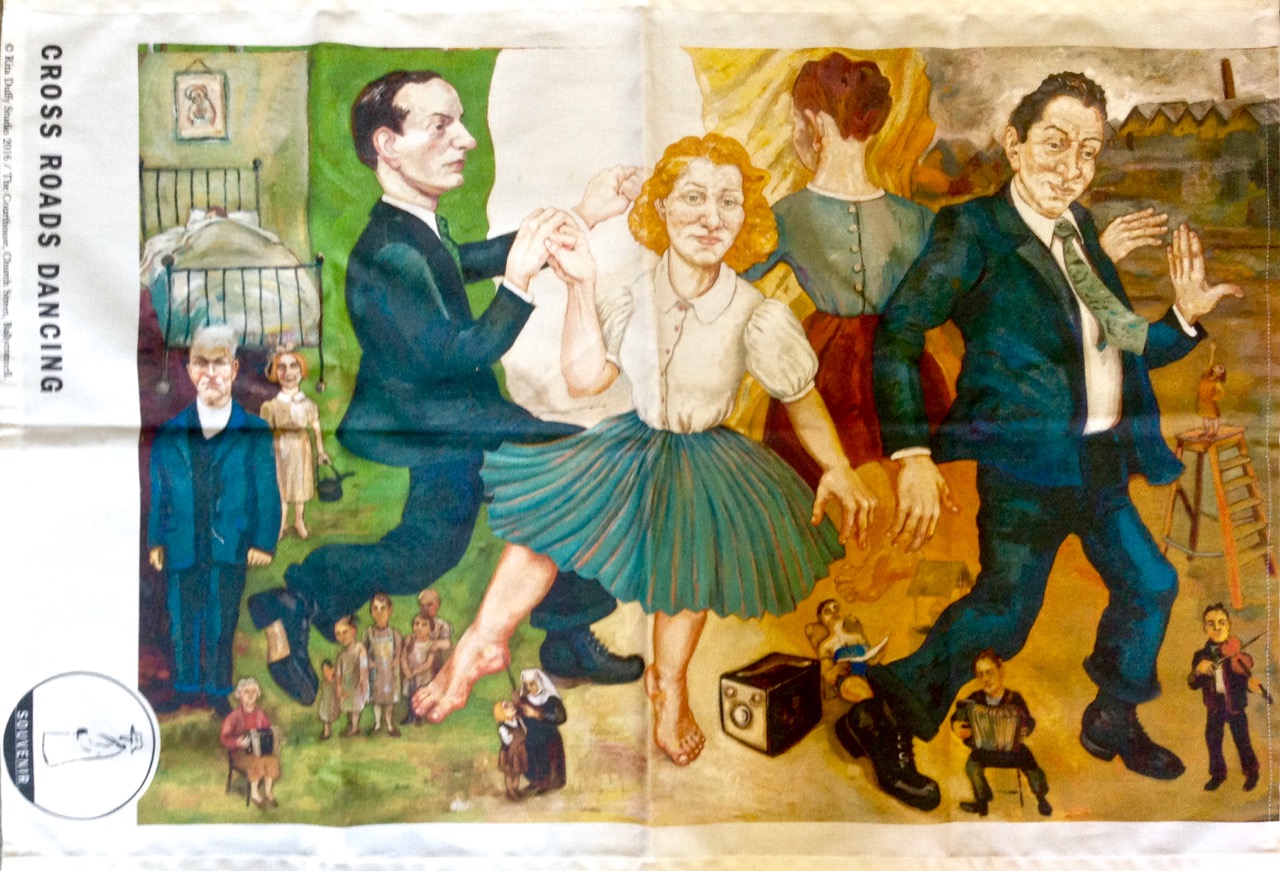
Cross Roads Dancing

The Souvenir Shop (…nothing is as it seems…) is one of the major projects commissioned by the Arts Council of Ireland’s Art 1916-2016, marking the centenary of the 1916 Rebellion – with the support of Cavan Arts Office and the Irish Countrywomen’s Association. It runs through the Skibbereen Arts Festival between July 22nd and August 1st in O’Neill’s old sweetshop on Townshend Street

Peas + Beans

Two Seáns

after gaiety

Meeting the President at the Ó Riada sa Gaiety Concert, March 1969 – from left: Seán Ó Riada, Seán Ó Sé, Niall Toibín, President Éamon de Valera, Ruth Ó Riada and Breandán Ó Buachalla (Irish World)

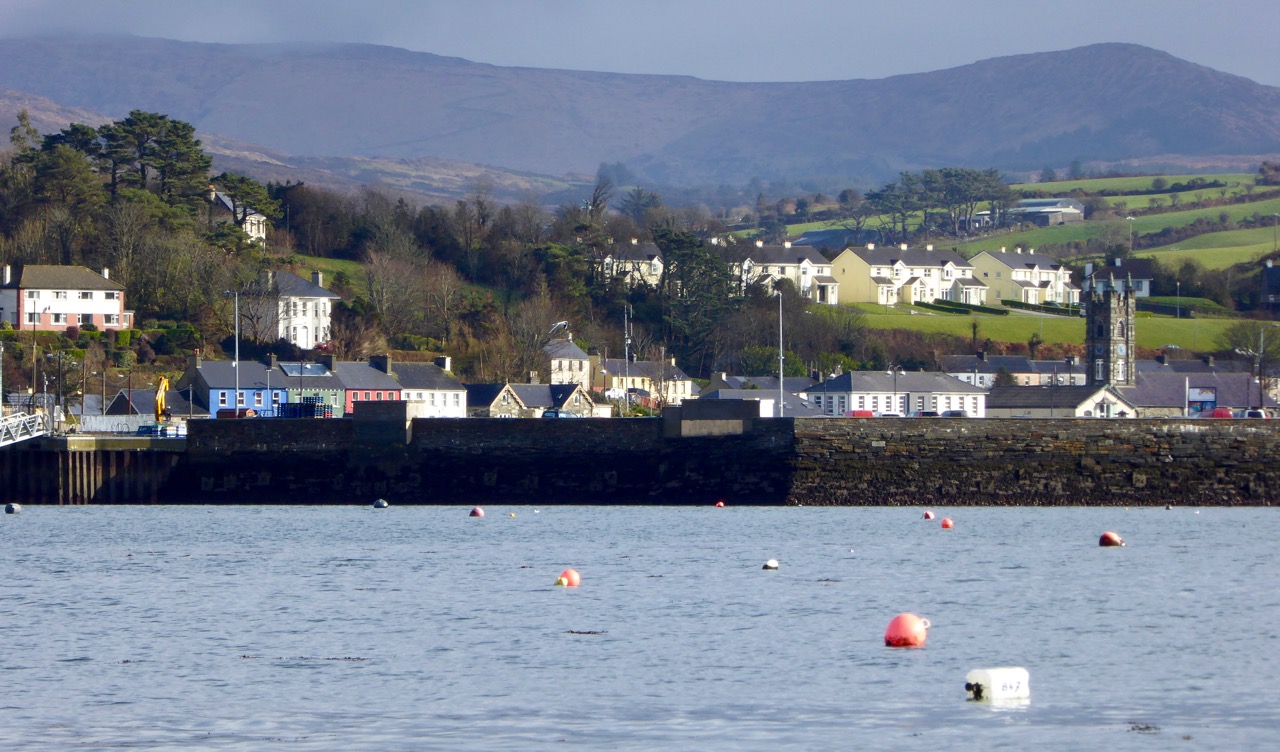
Festivals are high points of summer here in West Cork. Whatever the weather (and it’s always erratic), there is a very predictable buzz abroad wherever they happen. Rain or shine, people gather – the streets are busy, the cafés are full, the excitement is palpable.

Bantry from the water

Colourful Bantry in the festival season

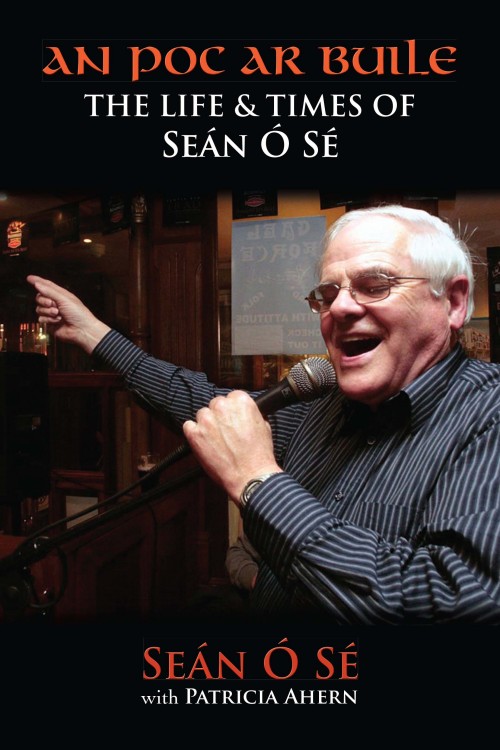
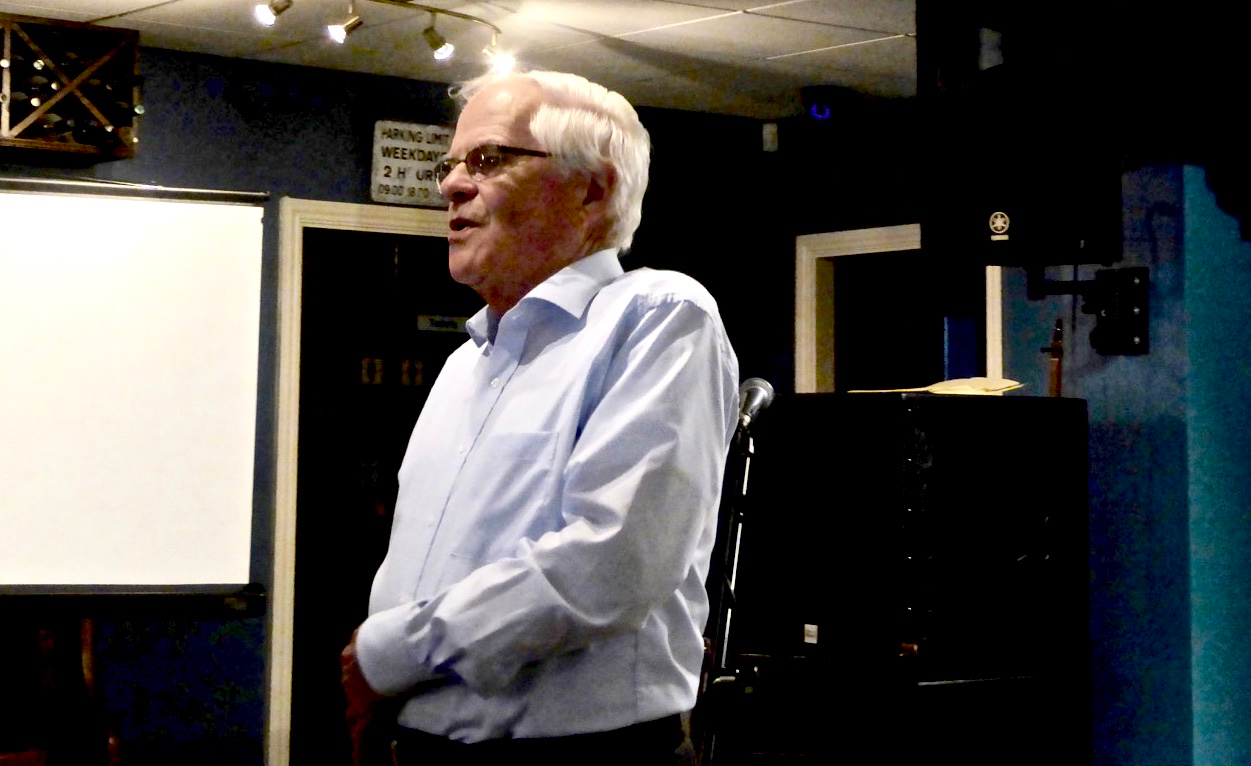
A highlight for us at the moment is the Literary Festival in Bantry, and we were particularly engaged this week by a couple of hours of chat, readings and songs from a ‘Bantry boy’ now turned eighty – Seán Ó Sé. Last year Seán became an author or, more exactly, he collaborated with Patricia Aherne to tell the story of his life – which is a fascinating one.

Seán_Ó_Sé

This Seán comes across as completely honest, unpretentious, and with a deeply embedded faith. Life has taken him on a long journey from Ballylickey – on the shores of Bantry Bay – to a world stage. Woven in with a full time teaching career in Wicklow and Cork (…I never took a day off in my teaching career to go singing… says Seán …Singing was for sport, but if there was jam, that was fine too…) he has been to – and performed in – Canada, America, Cuba, Russia and China, and is still a legend in his own country of Ireland – and particularly in his own corner of it, County Cork.

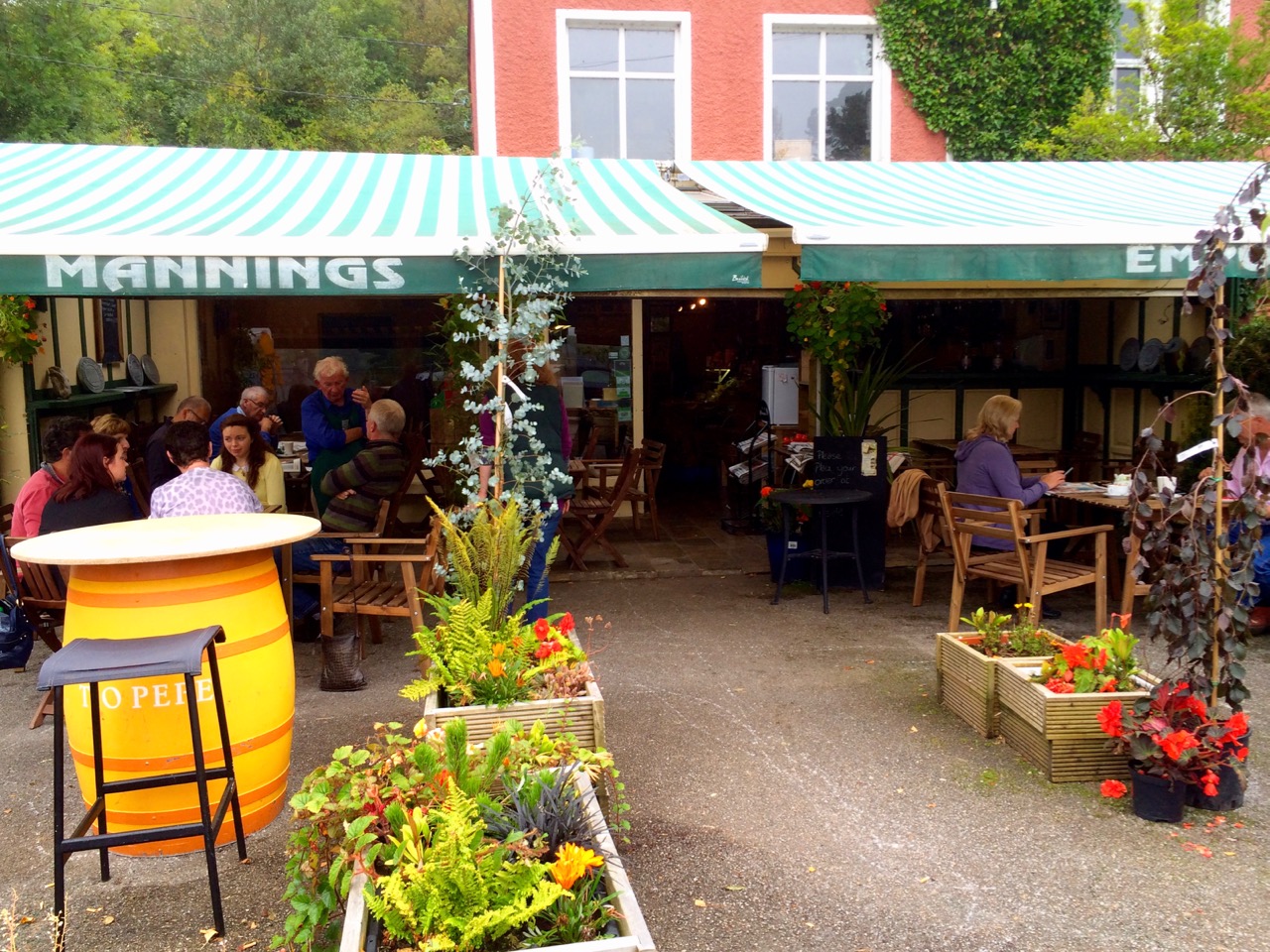
Mannings

Seán Ó Sé was brought up in Ballylickey; he remembers Mrs Manning (Val’s mother) opening the shop – Manning’s Emporium – that now has a coveted reputation as one of West Cork’s favourite good food venues

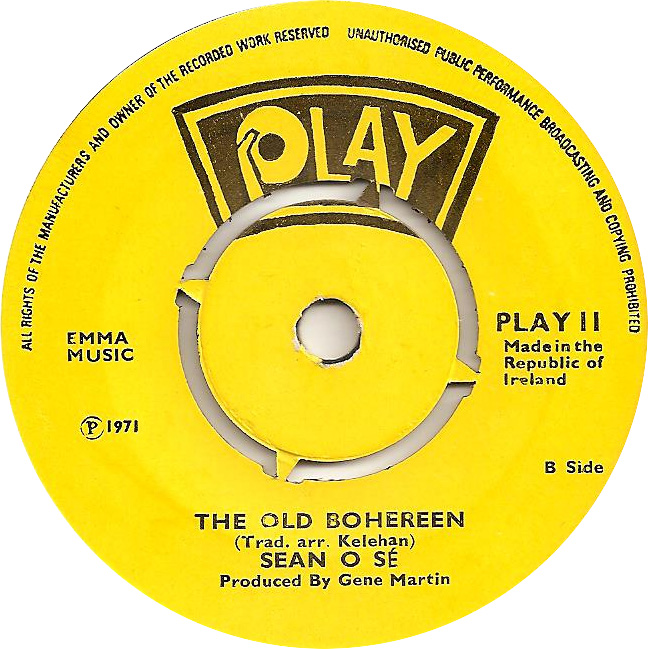
He is both raconteur and singer and he has been close friend and colleague of our second Seán: Seán Ó Riada – a most profound influence on music in Ireland in the twentieth century. Seán number one told us about his first meeting – an audition – with Seán number two in the 1960s. In spite of being chronically shy the younger man must have made a good impression, and Ó Sé worked closely with Ó Riada on many of his major projects until the latter’s untimely death in 1971 – at the age of 40.

Famously, Seán Ó Sé was part of a group led by Ó Riada who performed at the Gaiety Theatre, Dublin, in March 1969. The concert was recorded and is now regarded as classic: …crucial in the outburst of quality traditional music in the 1970s and ever since... (Gael Linn). It’s interesting that this group debuted sounds that were hitherto little known in Ireland, where traditional music was mainly seen as a past-time indulged in only by ‘rural individuals with string tied around their trousers’ or by large ceilidh bands following in the dance hall convention. In fact, Ó Riada’s vision was already a reality in the Irish communities around Camden Town in London in the 1950s and 60s, fortunately recorded by collectors such as Bill Leader and Reg Hall. And, in any case, many of the members of the Ó Riada sa Gaiety group had been playing together since 1962: they called themselves The Chieftains!

Seán Ó Riada (left) and (right) the memorable Ó Riada sa Gaiety concert that ushered in a ‘new’ era of Irish Traditional Music: this is Ceoltóirí Chualann in March 1969, (l–r): Seán Ó Riada (Director and harpsichord), Peadar Mercier (bodhran), Éamon de Buitléar (accordion), Mairtin Fay, Sean O’Ceallaigh, Sean O’ Cathain (fiddles), Seán Potts (whistle), Micheal O’Toibride (flute) and Paddy Moloney (uillean pipes). Seán Ó Sé (vocalist) is at the front. Courtesy Gael Linn. The dress code was at Ó Riada’s insistence

Before the Gaiety concert Ó Riada had already made his name writing scores for Irish films, including the 1959 documentary by George Morrison on Ireland’s struggle for freedom in the period 1896-1918. Mise Éire (I am Ireland) uses music which draws on traditional themes. The film was hugely popular when the 1916 rising was commemorated fifty years on, and in the recent 2016 centenary commemorations the main theme – based on Róisín Dubh was often featured.  Róisín Dubh means “Dark Rose” and is one of Ireland’s most famous political songs. The modern translation is credited to Pádraig Pearse. Here’s a link to a fascinating recent TG4 documentary about the making of the film, which includes extracts.

mis eire film

Mise Éire was a sensation when it came out in 1959. It was widely shown during the 1966 commemoration of the Easter Rising in Dublin

Our own Seán – Ó Sé – entertained us thoroughly at the Bantry Literary Festival, telling us his stories of a full and fascinating life, and his memories of growing up on the shores of Bantry Bay. Of course, he sang for us as well: a real treat…

singing in the mariners

That book title: An Poc ar buile; it means ‘The Mad Puck Goat’. Wherever Seán goes he will be asked to sing the song, and our session with him in Bantry was no exception. It’s supposedly a patriotic fighting song. In Irish, it tells the tale of a large billy goat who defied Cromwell and ran down the mountain to warn the people of Killorglin, Co Kerry, of the invading army. Killorglin survived the attack, and the event is commemorated every year on August 10th, when a wild goat is raised to the top of a scaffold tower and presides for three days over the festivities. Here is Seán singing about the goat’s exploits at the Cavan Fleadh Cheoil in 2010.

puck-fair

Killorglin’s Puck Fair, 1900

Ag gabháil dom sior chun Droichead Uí Mhóradha
Píce im dhóid ‘s mé ag dul i meithil
Cé casfaí orm i gcuma ceoidh
Ach pocán crón is é ar buile…

curfá

Ailliliú, puilliliú, ailliliú tá an puc ar buile!

Do ritheamar trasna trí ruillógach,
Is do ghluais an comhrac ar fud na muinge,
Is treascairt do bhfuair sé sna turtóga
Chuas ina ainneoin ina dhrom le fuinneamh…

curfá

Níor fhág sé carraig go raibh scót ann
Ná gur rith le fórsa chun mé a mhilleadh,
S’Ansan sea do cháith sé an léim ba mhó.
Le fána mhór na Faille Bríce…

curfá

Bhí garda mór i mBaile an Róistigh
Is bhailigh fórsa chun sinn a chlipeadh
Do bhuail sé rop dá adhairc sa tóin ann
S’dá bhríste nua do dhein sé giobail…

curfá

I nDaingean Uí Chúis le haghaidh an tráthnóna
Bhí an sagart paróiste amach ‘nár gcoinnibh
Is é dúirt gurbh é an diabhal ba Dhóigh leis
A ghaibh an treo ar phocán buile…

curfá

As I set out with me pike in hand,
To Dromore town to join a meithil,
Who should I meet but a tan puck goat,
And he’s roaring mad in ferocious mettle.

Chorus:
Aill-il-lu puill-il-iu – Aill-il-lu it’s the mad puck goat.

He chased me over bush and weed,
And thru the bog the running proceeded,
‘Til he caught his horns in a clump of gorse,
And on his back I jumped unheeded.

Chorus

He did not leave a rock that had a passage through,
Which he did not run with force to destroy me,
And then he gave the greatest leap,
To the big slope of Faille Bríce.

Chorus

When the sergeant stood in Rochestown,
With a force of guards to apprehend us,
The goat he tore his trousers down,
And made rags of his breeches and new suspenders.

Chorus

In Dingle Town the next afternoon,
The parish priest addressed the meeting,
And swore it was The Devil himself,
He’d seen riding on the poc ar buile.

Chorus

old bohereen

The City of Shrone – and a talking cow!

shrone walls + gap

It’s May Day, and we’re in Ireland, so it’s no surprise that we should encounter a talking cow. We are in Kerry County and it’s a Kerry Cow that’s doing the talking. This is an ancient breed of cattle – probably the oldest in Europe – so our cow has a lot of stories to tell.

city cow

We found the cow – or, at least, the story she has written – in the City of Shrone. What sort of a metropolis is that, you wonder? It’s a pretty diminutive one: it’s almost certainly the smallest city in the world. It has no skyscrapers and no traffic jams…

no parking

Shrone does, however, have a long, long history. According to the local expert on this subject, Dan Cronin, …Historians have satisfied themselves that The City was one of the first places in Ireland to be peopled. It was here on a barren elevated site that the Tuatha Dé Danann had their base established, naming the mountains at whose base they had settled, Dhá Chich Danann, The Two Paps of Dana…

in the shadow

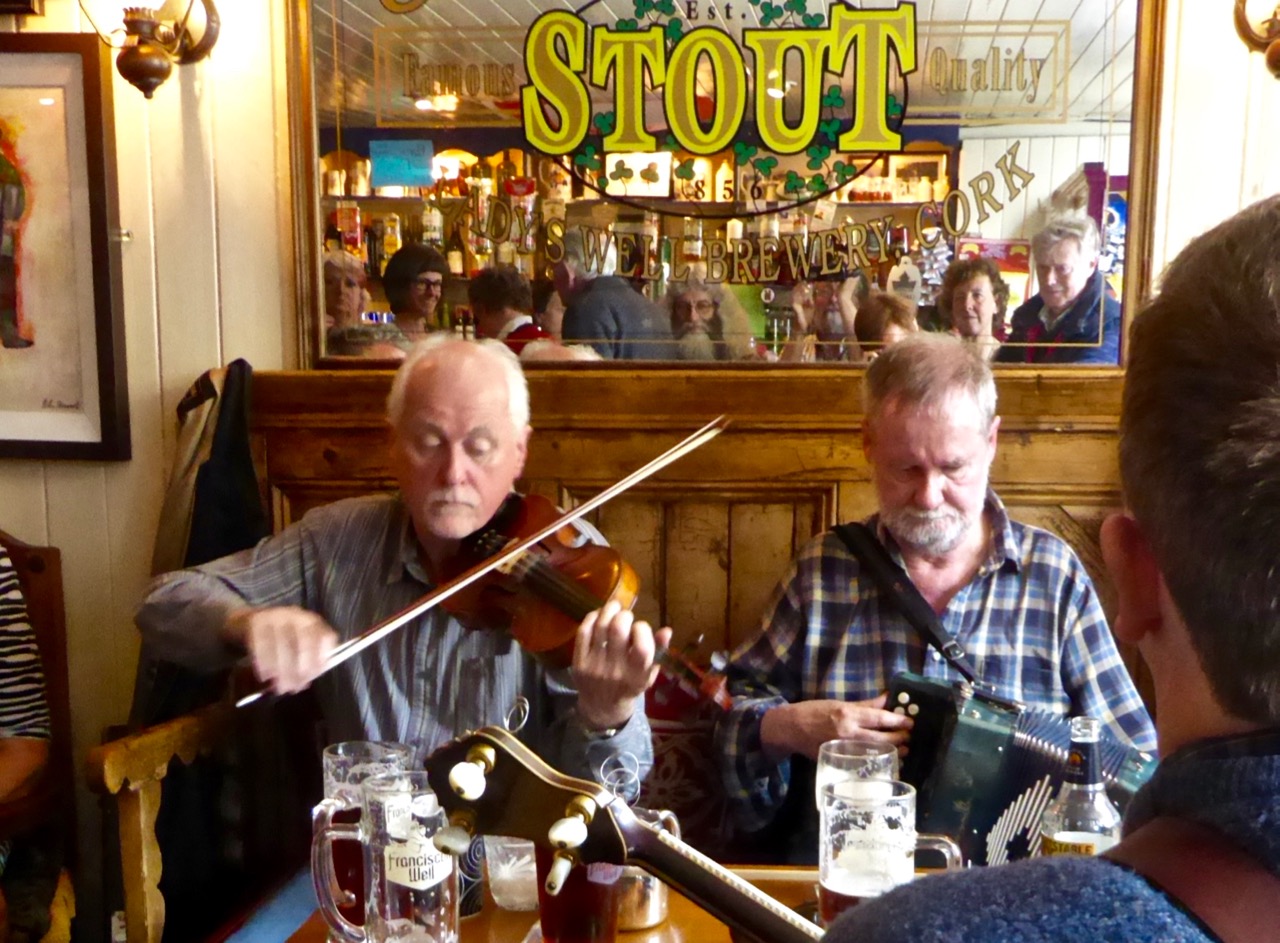
Dan’s book (published in 2001 by Crede, Sliabh Luachra Heritage Group) is the definitive work on The City, The Paps, and the life and traditions of the Sliabh Luachra – which is the name given to the mountains and rushy glens on the borders of Cork, Kerry and Limerick. It’s an area which has long been famous for its traditional music: at our own Ballydehob Fastnet Maritime and Folk Festival – coming up in June – two of the most notable musicians carrying that living tradition, Jackie Daly and Matt Cranitch, will once again be in residence.

Jackie Daly and Matt Cranitch

Matt Cranitch and Jackie Daly in Ballydehob, at last year’s Fastnet Maritime and Folk Festival

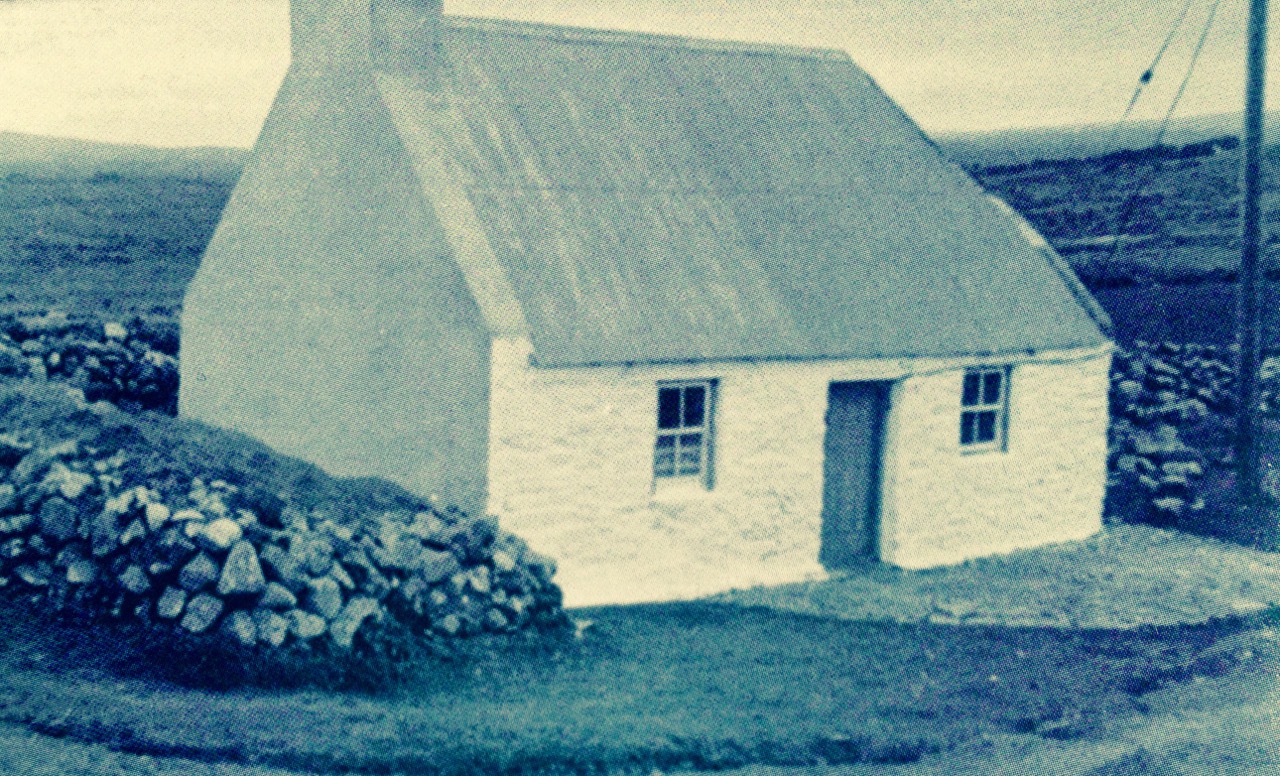
Meanwhile, back in the City, we have deliberately timed our visit for the First of May: this is Shrone’s big day! The City is 50 metres in diameter – it’s a very ancient stone cashel or ring fort. The Irish name for it is Cathair Crobh Dearg, meaning ‘Mansion of the Red Claw’. On the western side of the finely preserved four metre thick stone walls is an entrance (known as the gap), and anyone coming in that way has to pass by a holy well. Today is the Pattern Day for the well, and elaborate rounds are performed, culminating in taking the holy water. There is much to do with cattle at this site: the Tuatha Dé Danann are said to have originated in Boeotia – the Land of Cattle – in Greece, and the well water is notably good for cattle, especially on this day. The well was formerly in another site nearby and there cattle were driven around it to ensure good health and fertility for the herd. Farmers still take water from here and sprinkle it on their animals.

shrone aerial

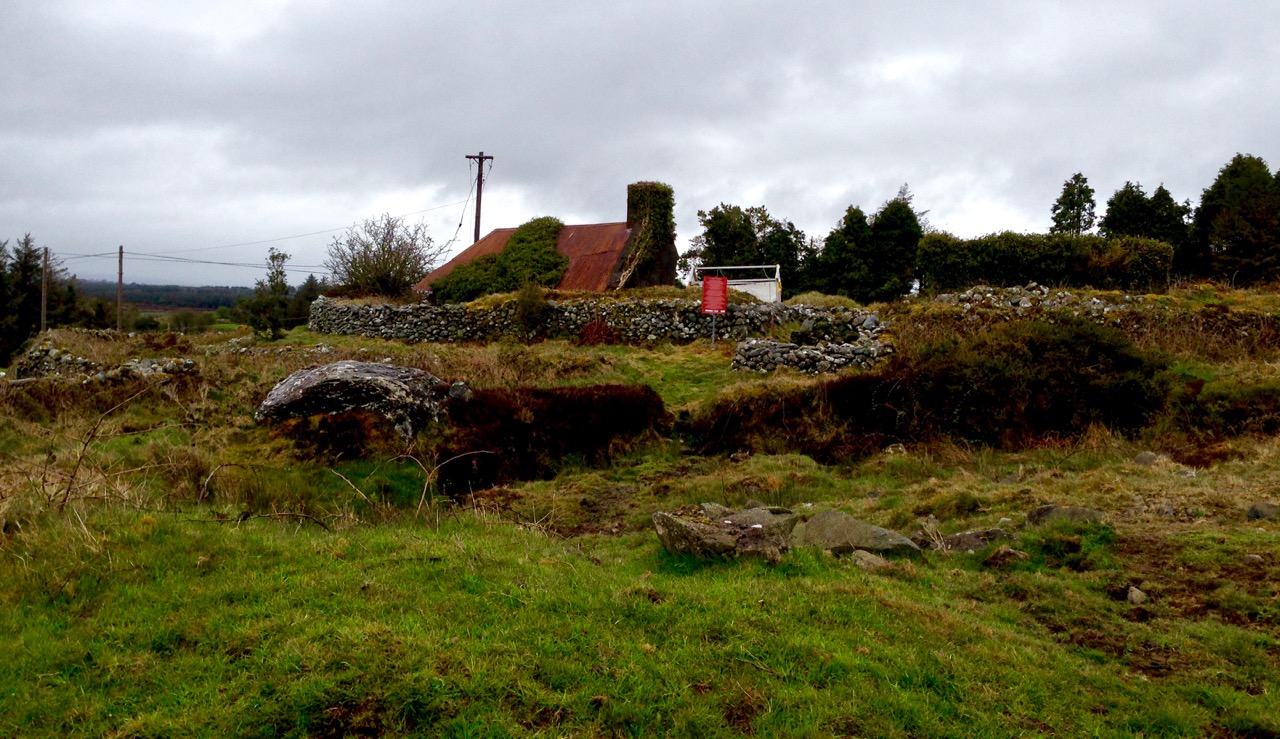
Satellite view of The City of Shrone: the circular cashel wall is clear. On the left is ‘The Gap’ and the holy well. Beside ‘The Gap’ and inside the city is the ruin of Paddy Quinihan’s House (below and bottom): in the 1930s he was the deerhough (caretaker) of the holy well

keeper's house

the house

Today is Lá Bealtaine (pronounced Law Byowl-tinneh): the Irish word might refer to the ‘Fires of Baal’, reflecting a tradition of lighting fires on hilltops or in sacred places. In Ireland it was important to drive cattle through, or by, the flames as a purification ritual. As May Day was usually the first day that the animals were brought out of byres and sent to the summer pastures (booleys), it makes sense that the purification would have taken place at this time. So we have the various seasonal elements of water and fire connected with cattle and their health and fertility: it’s no wonder that our commentator at Cathair Crobh Dearg is a cow!

The holy well water at Shrone is good for animal health and fertility: Robert gives it a try!

The City of Shrone is below the Paps. According to Cronin, the early celebrants – the Danann – …were wont to go up to the top of the Paps for the fertility and immortality rituals. Fragments of ancient pagan altars still remain to this day. Petitions were made to the gods for fertility for man and beast, good return from the land, good crops and fodder. Even today, 4000 years later, several small offerings are placed on ledges near the ruins of pagan altars on top of the Paps Mountains for health of the family and of cattle and for fertility… Many of those acquainted with this old pagan custom have remarked on the peculiarity of its perseverance and continuity… I would like to explore those high parts but, ‘on the day that’s in it’, they are not even visible, and it would be unwise to venture into such a shrouded domain when, at this turning point of the year, the spirits of the hills might be abroad…

way to the paps

The way to the Paps: it’s unwise to venture there when you can’t even see the summits of the sacred mountains…

Cronin again: …So the May Day or Lá Bealtaine festivities were held each year and the years rolled by. On May Day, The City and its surroundings were a hubbub of activity. The music of pipes and fiddles re-echoed from the hills and valleys, and the lowing of cattle mingled with the sweet music of the harp. Jesters and jugglers plied their respective trades, with everybody trying to make themselves heard. It is very evident that ale was brewed here in plenty. Champions were performing feats of valour, while throngs of admirers looked on… What will we find happening today, May Day, at the smallest but most ancient city in the world?

mary and walls

Setting Up

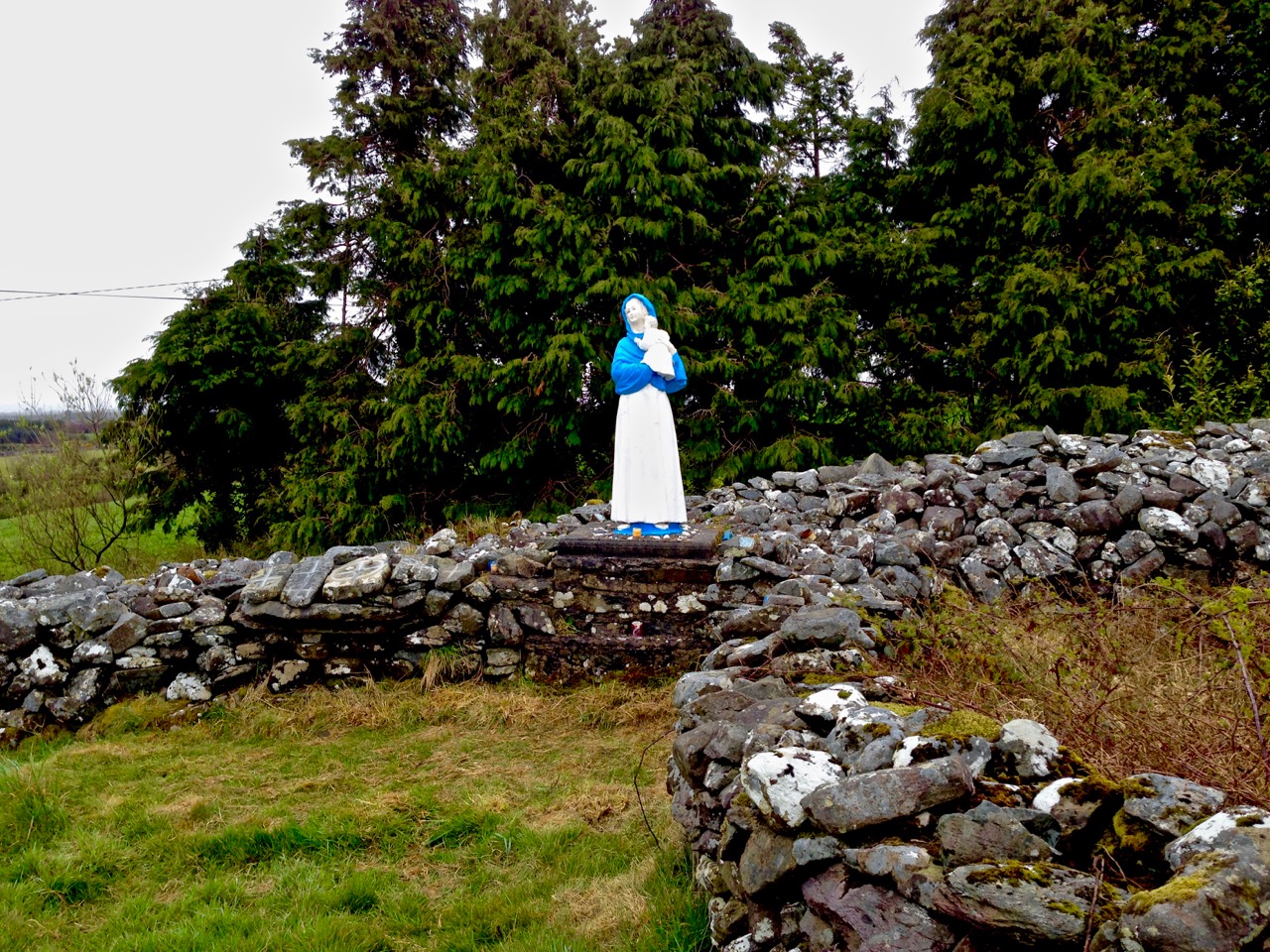
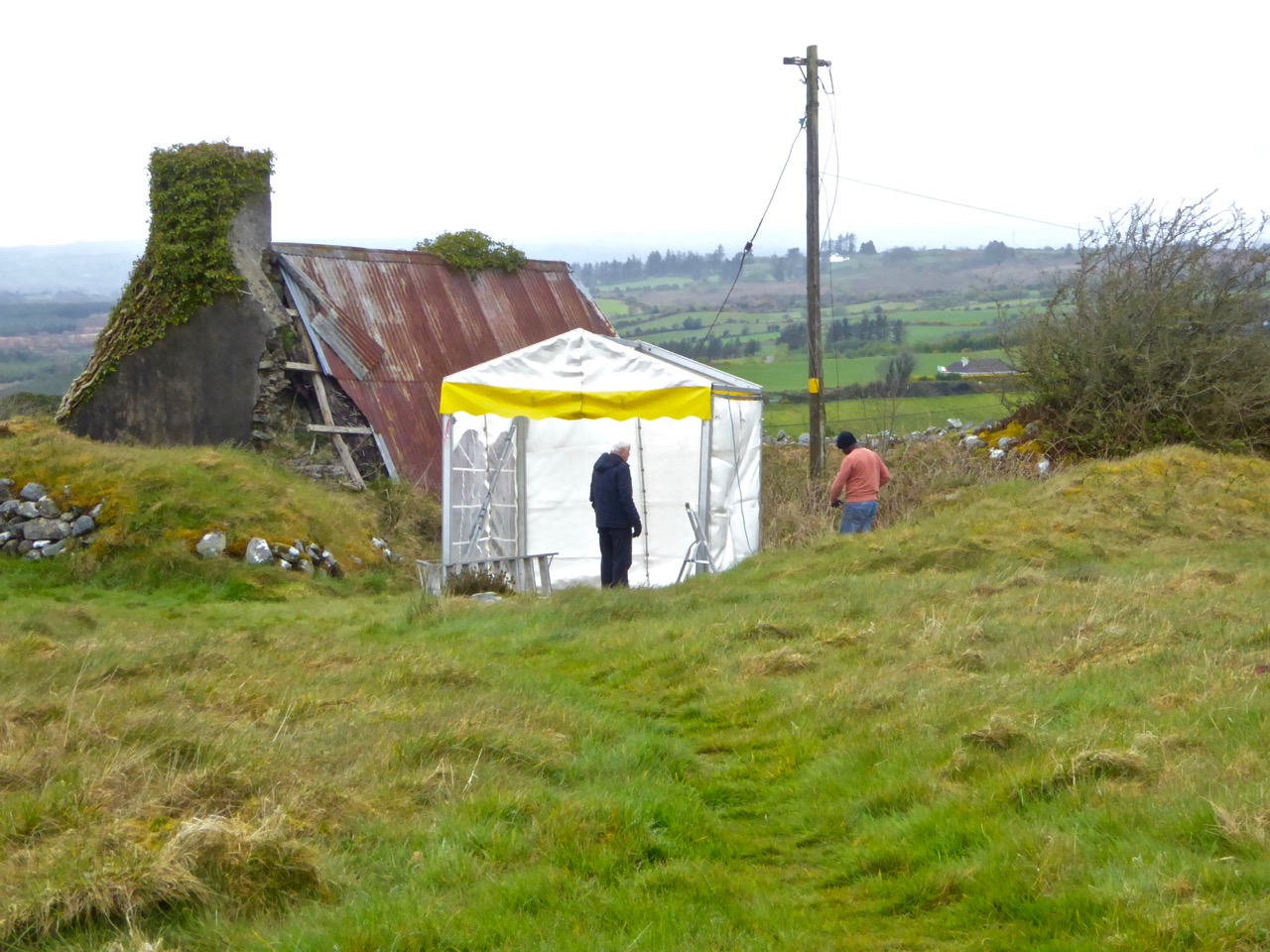
Our Lady of the Wayside guards the sacred site now (above) while (below) preparations are made for the Bishop’s visit

It’s still a sacred site and the crowds still come. But it’s Our Lady of the Wayside who looks out over the City walls now. A Mass is performed within the Cashel on May Day afternoon. This year the Bishop of Kerry is in attendance, as is a devouring Kerry mist. I listen in vain for the echoes of harp, pipes and merrymaking. The City of Shrone on a cold, damp First of May seems a desolate place – yet an absolutely fascinating one. The pilgrims visit and the curious passer-by (like me) pauses to drink from the well. As always here in Ireland, history is writ large on the landscape, and continuity is assured both through holy ritual and piseogs…

making the mark

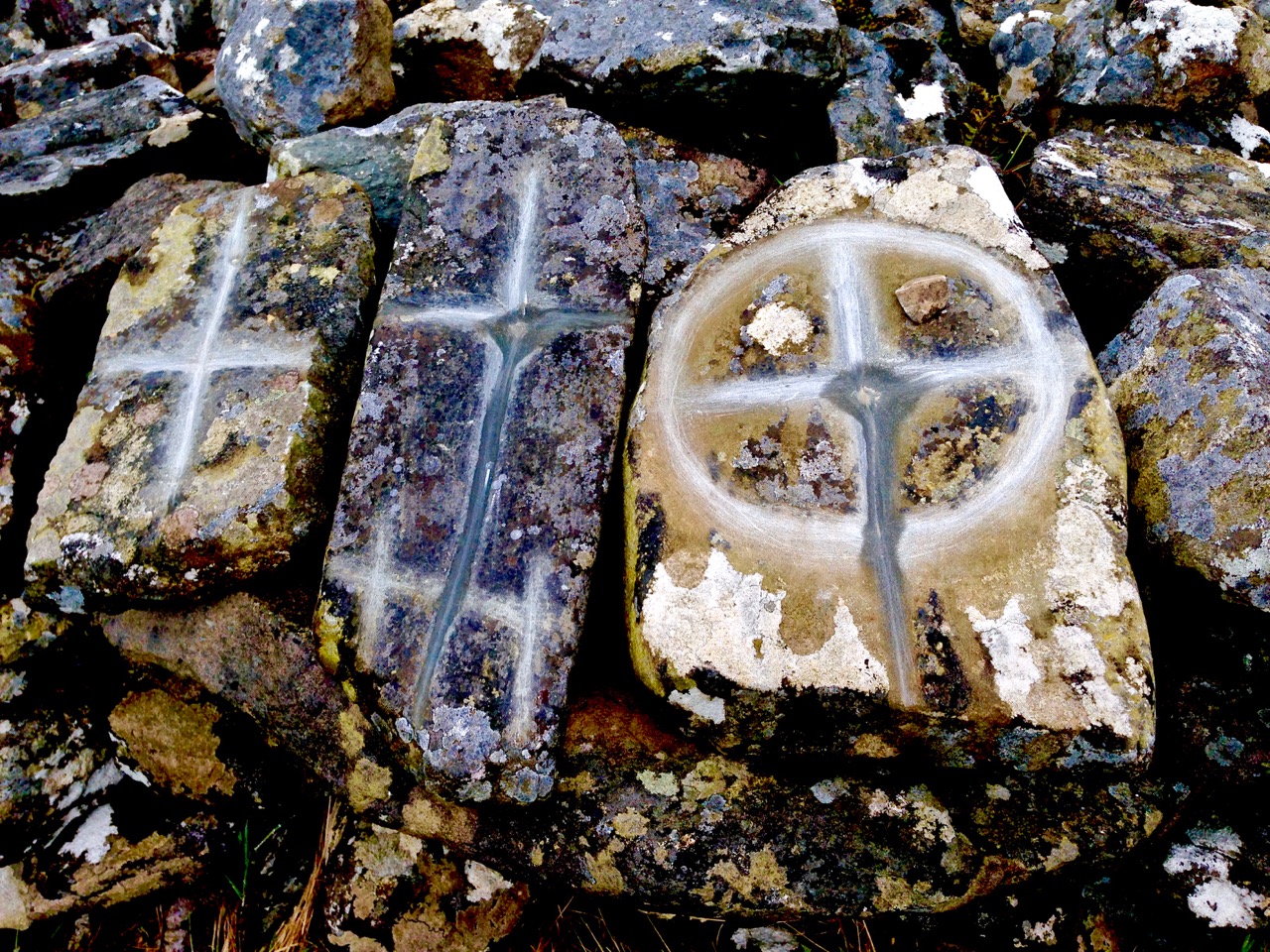
Pilgrims leave their marks on a ‘Neolithic altar’ under the statue of Mary

Another record of the day at The City can be viewed on Louise Nugent’s page, here. Amanda has covered the holy well at Shrone here. Voices from the Dawn website published an interview with Dan Cronin, who wrote In the Shadow of the Paps.

Walking the Past

Robert taking a picture

How fortunate are we? We are free to spend our days wandering the world’s most beautiful landscapes, here in Ireland: landscapes which have changed relatively little over the last five thousand years. They have changed, of course, but the human hand has had less impact in this country than in many other developed nations, especially in these wilder parts. That is why we relish our explorations: we are walking the past.

breeny landscape

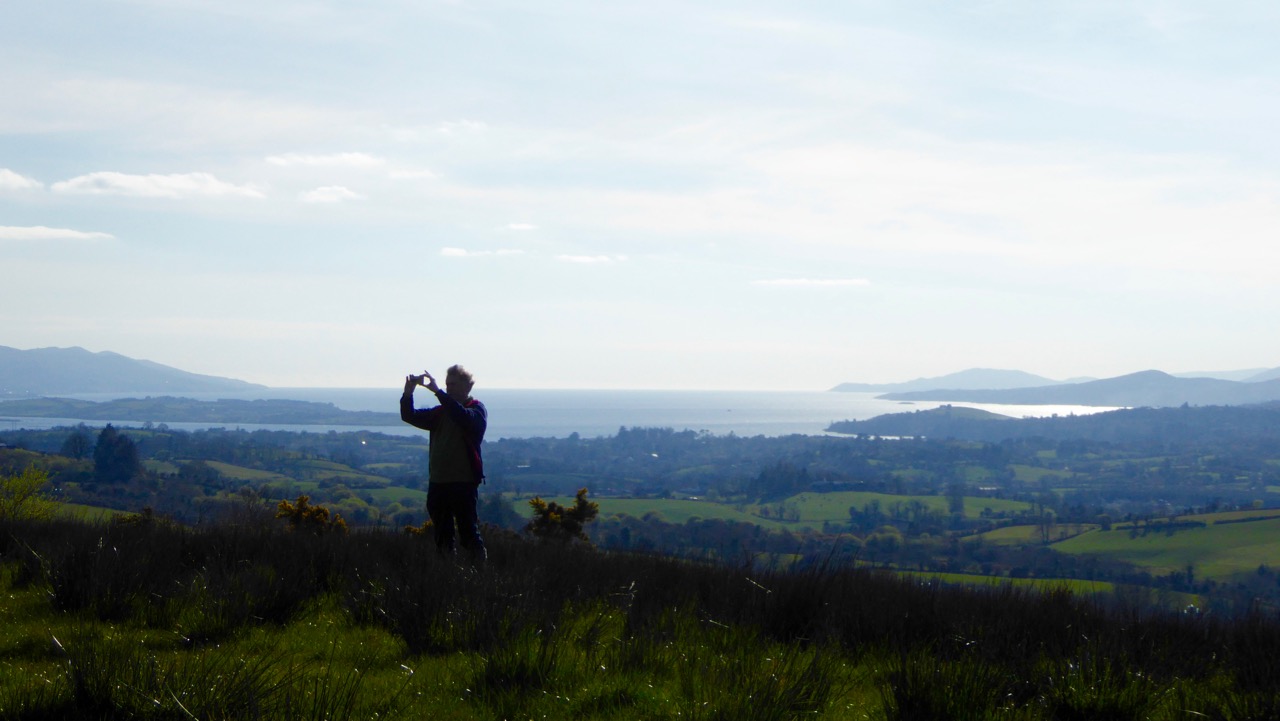
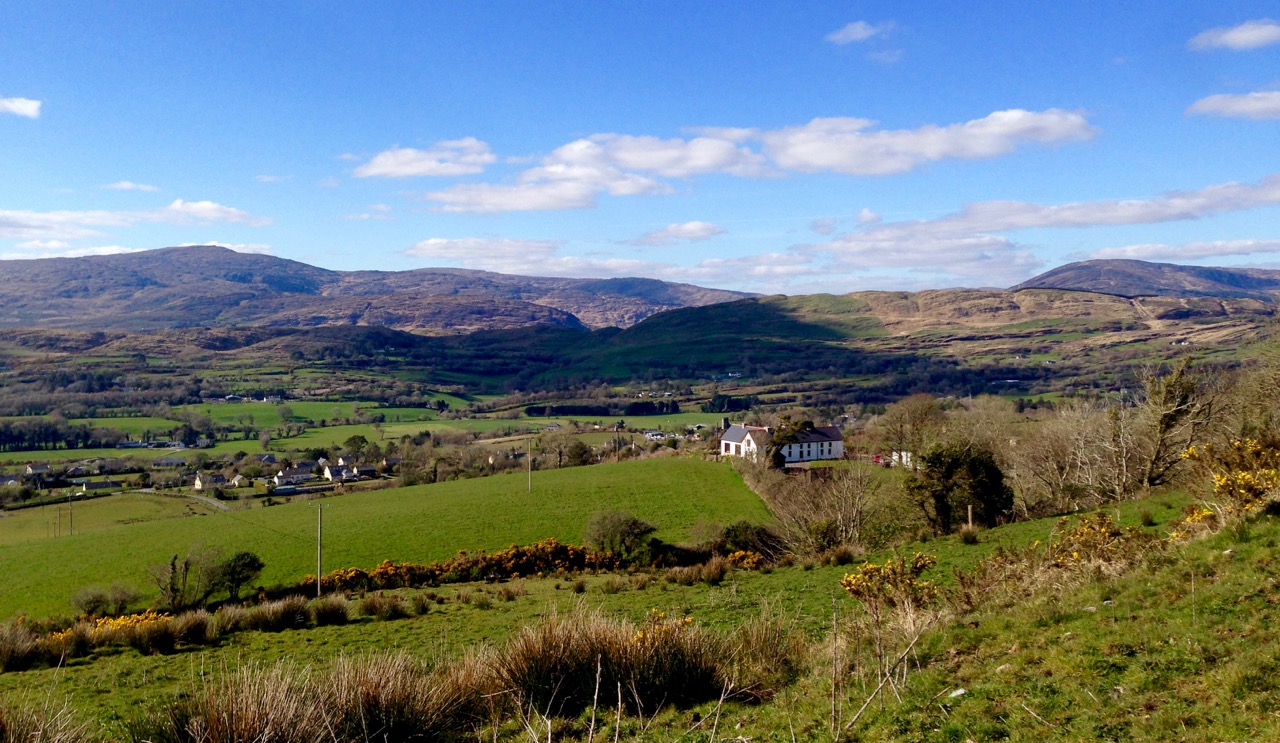
Top picture: Robert taking in the setting of the monuments at the Kealkill complex. Above: the view towards Kealkill village from Breeny More

Every expedition requires a little pre-planning. This week we were keen to catch up with a group of monuments known as ‘boulder burials’. Finola tells me that, when she was first studying archaeology, they were known as ‘boulder dolmens’: I prefer that term – perhaps because it has a touch of the antiquarian about it – and, in any case, the use of the word burials implies a definitive function which has not been universally borne out with the examples that have been excavated. But I will leave Finola to delve into the specifics of that subject in her post Boulder Burials: a Misnamed Monument?

workspace

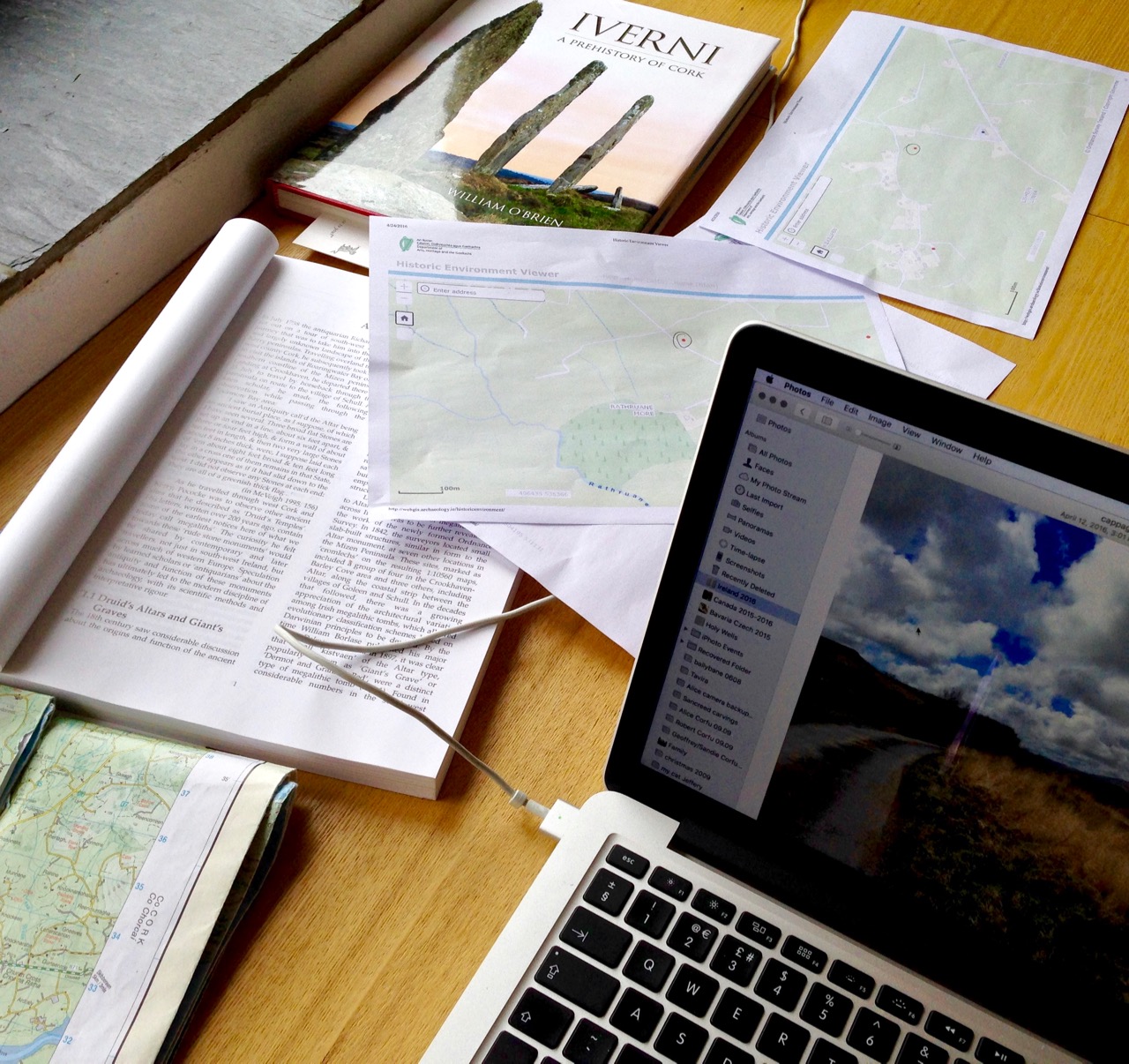
Blogging in progress: prequel to an expedition…

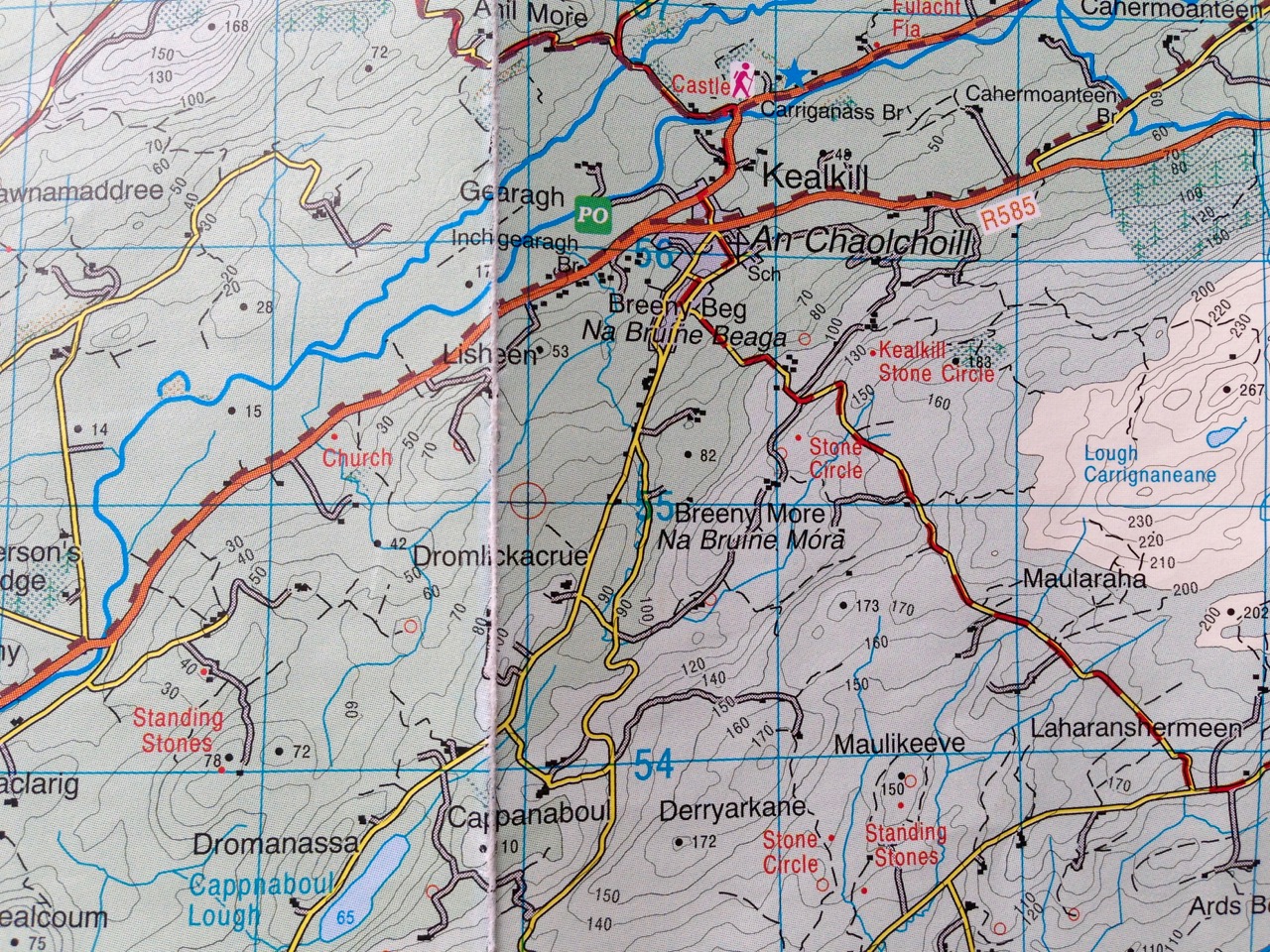
First, we look to the available information: William O’Brien’s Iverni – A Prehistory of Cork (The Collins Press 2012) is an essential primer on the pre-Christian era in this corner of Ireland since the first human foot was set on its shores. Then there are maps to be consulted: the Ordnance Survey Office was created in 1824 to carry out a survey of the whole island for land taxation purposes. The original survey at a scale of 6 inches to 1 mile was completed in 1846 and Ireland thus became the first country in the world to be entirely mapped at such a detailed scale. From the outset, known historic sites and monuments were recorded and the present Discovery Series at 1:50,000 scale provides a wealth of information to the fingertips of historians and adventurers.

kealkill OS map

One of our bibles: the Discovery Series of the 1:50,000 Ordnance Survey maps – well used and well worn! The monument sites are marked in red

Before setting out we usually consult with the Archaeological Survey Database of the National Monuments Service: this gives us the fine detail on where to find recorded historic sites. Yet in the end the most valuable information often comes from knocking on doors. Farming families here often go back through many generations and local knowledge is always passed down through them. It’s here that you sometimes pick up the ‘stories’ that are associated with ancient sites – for me, these are just as interesting as any formal records.

Breeny More landscape

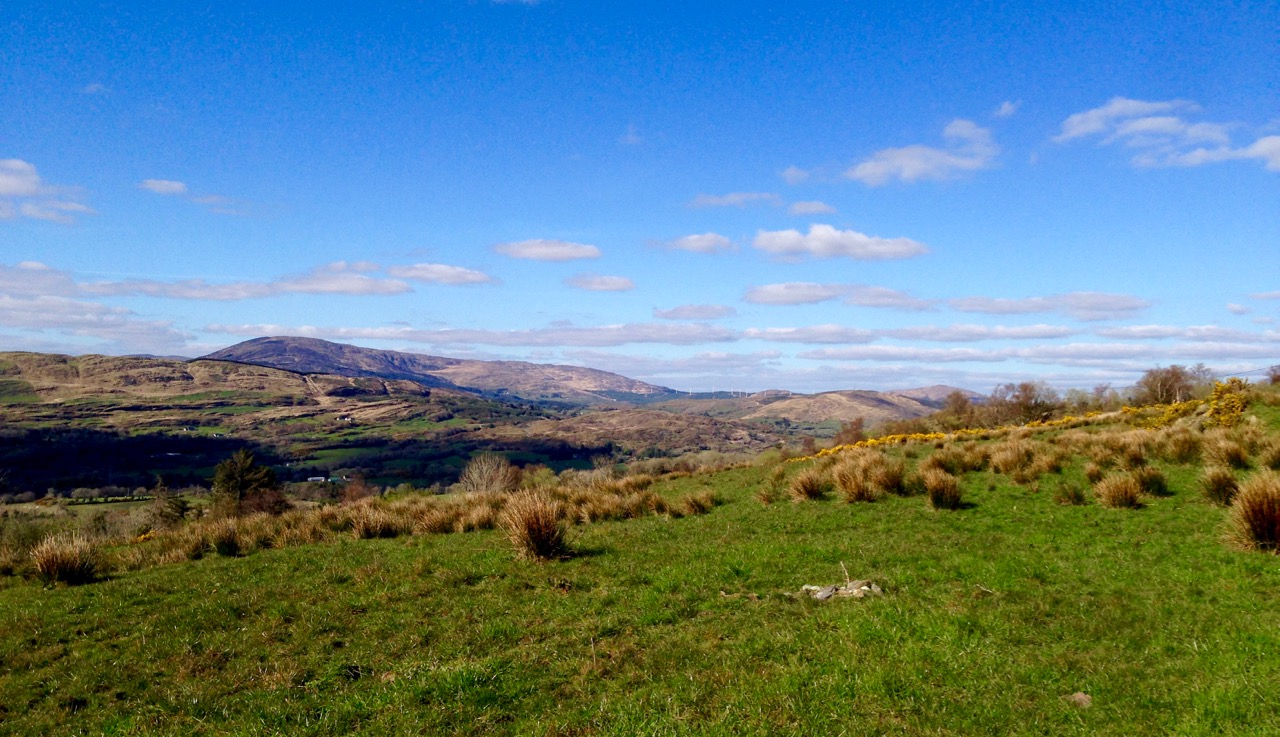
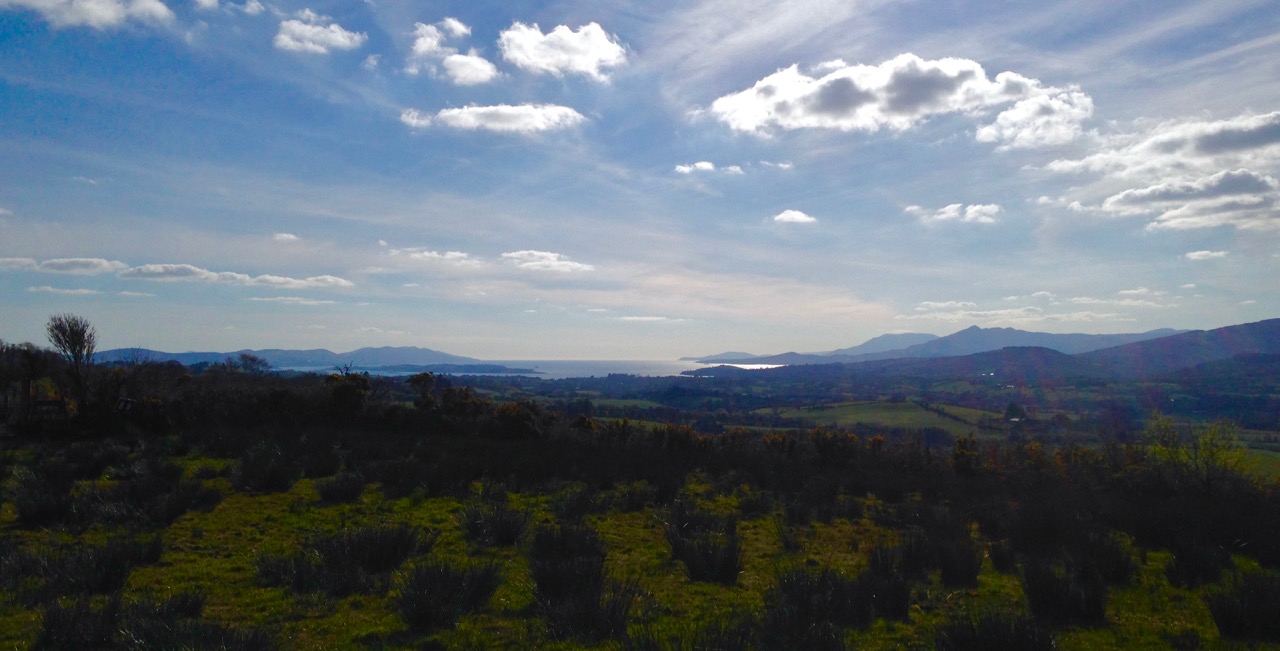
View to Bantry Bay across the Breeny More archaeological site

This week our travels brought us to the Breeny More and Kealkill complexes, high up in the hills above Bantry, heading towards the wonderfully named Cnoic na Seithe – the Mountains of the Spirits. This was on a perfect spring day: the views all the way down the bay with the Beara on one side and the Sheep’s Head on the other can only be described as spectacular.

kealkill landscape

view west

Two views from the Kealkill complex

It can’t be accidental, surely, that these ancient sites occur in places like this, that make the senses reel? In many cases there are long views in all directions, often taking in prominent horizons, hilltops, the sea, inlets and islands. ‘As far as the eye can see’ is an expression that truly comes into its own: these vistas must have had special meanings to the ancestors who were here in the Neolithic and Bronze ages. Were they trying to define it in some way by building such impressive large-scale structures, most likely for some ceremonial purpose? It was certainly not construction work which could have been undertaken lightly or frivolously. Here’s O’Brien in Sacred Ground, Megalithic Tombs in Coastal South-West Ireland (NUI Galway 1999):

…Antiquarian interest in Ireland dates from the visit of Edward Lhuyd at the end of the 17th century and was encouraged by the discovery of great megalithic centres like the Boyne Valley in Co Meath and Carrowmore in Co Sligo. The early antiquarians were to link these ‘Giants Graves’ to invaders or colonists from the East, to Scandinavian incursions and eventually to the events and characters of early Irish literature…

boulder cluster

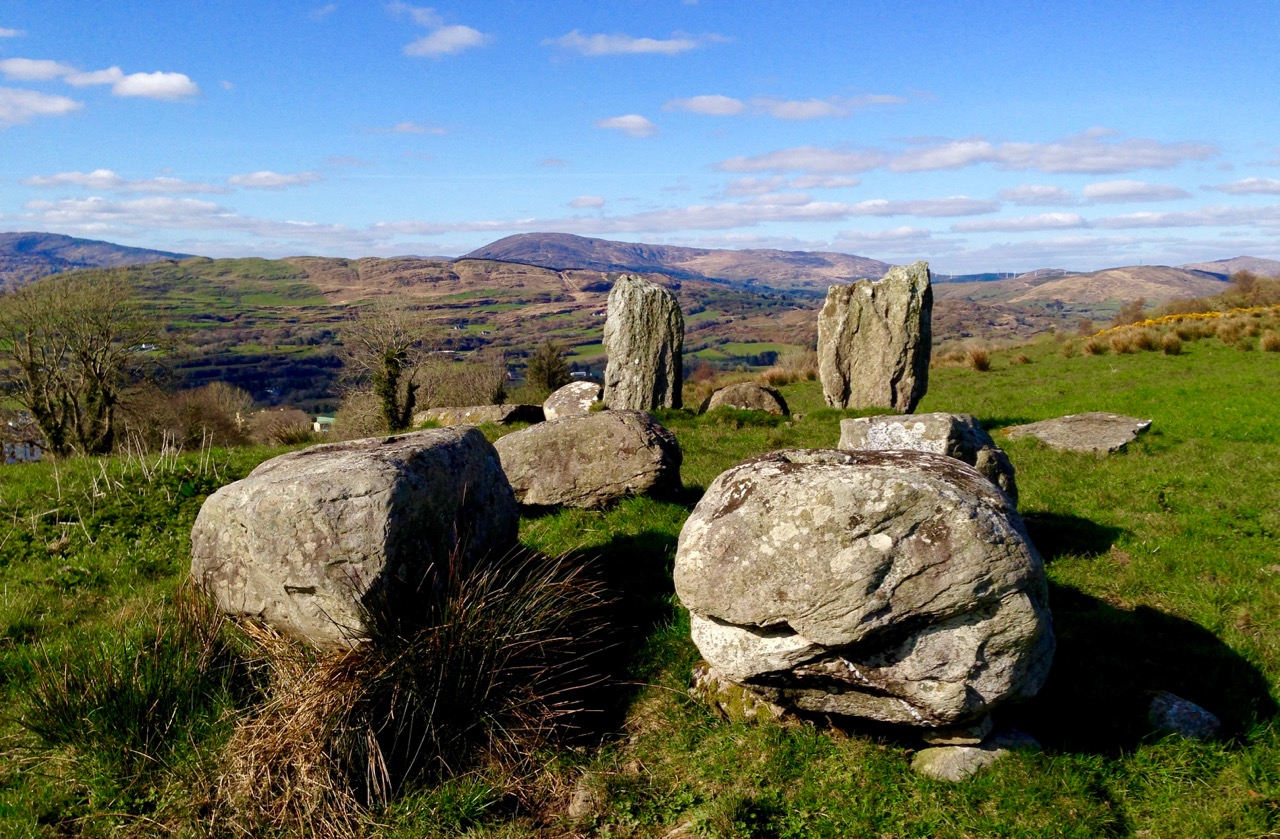
The Breeny More complex:  no less than four boulder burials, a multiple stone circle and a (much later) ring fort, all on one superbly located site

Robert Kealkill Complex

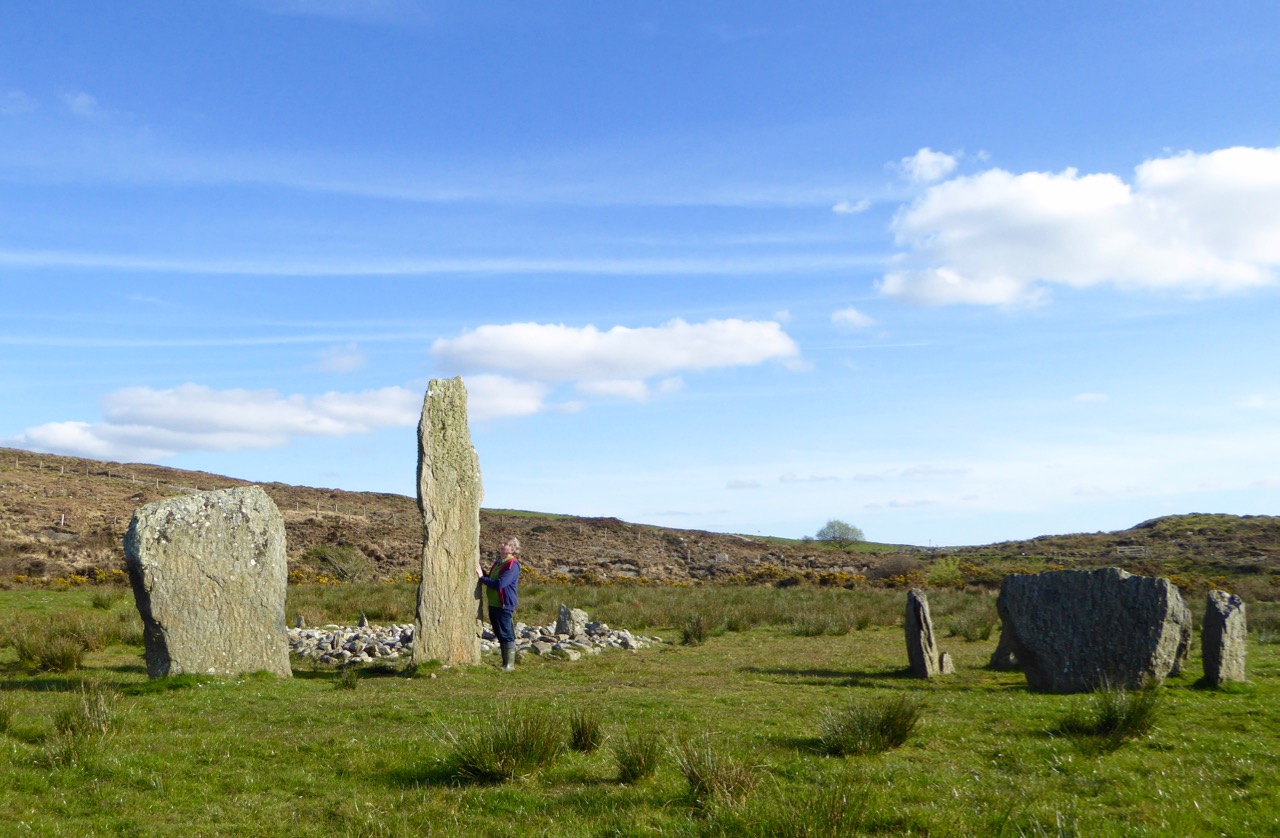
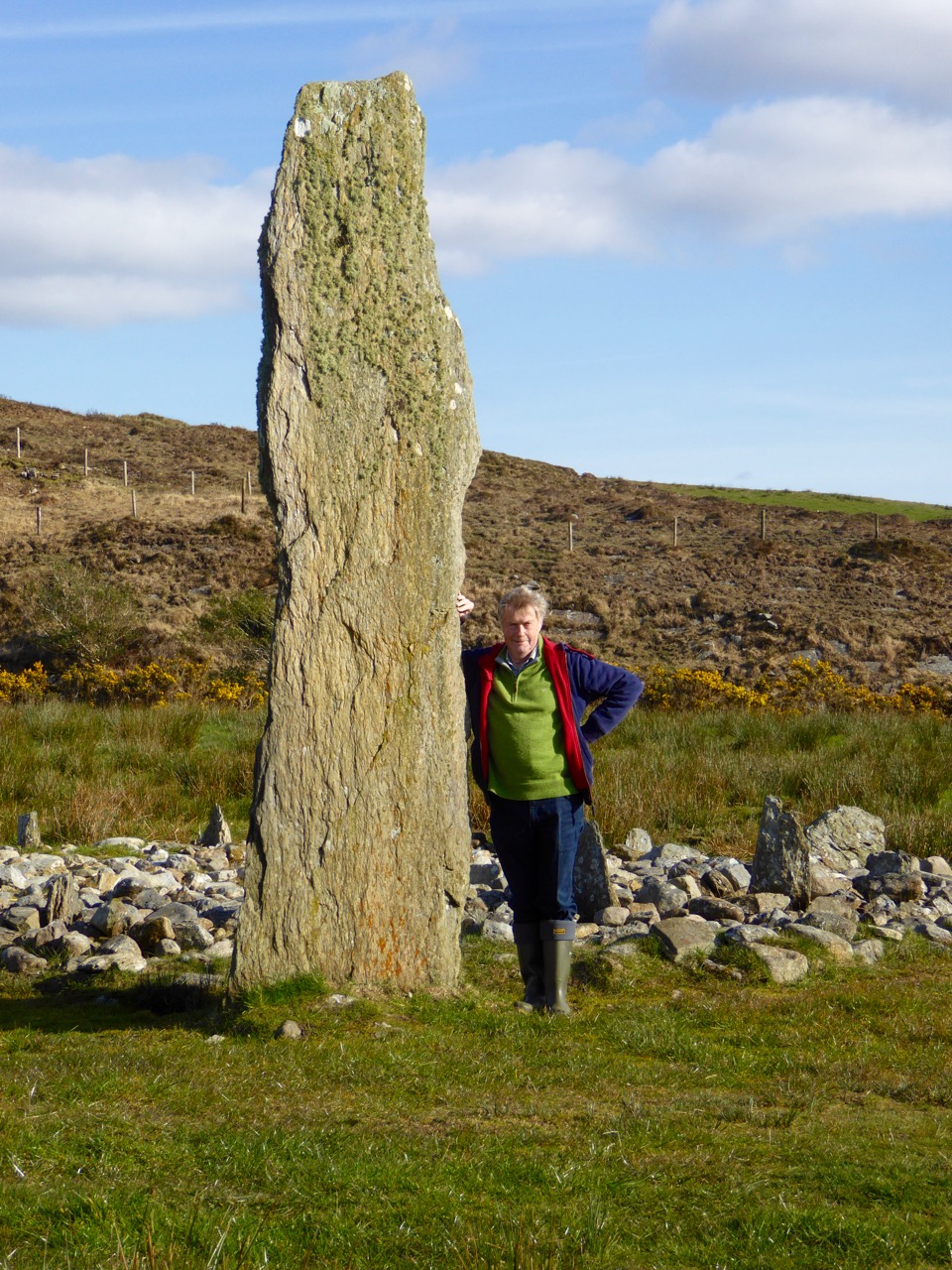
A cause for wonder: the tall standing stone at the Kealkill complex. A stone circle lies to the west while a radial cairn is behind (to the south of) the stone pair

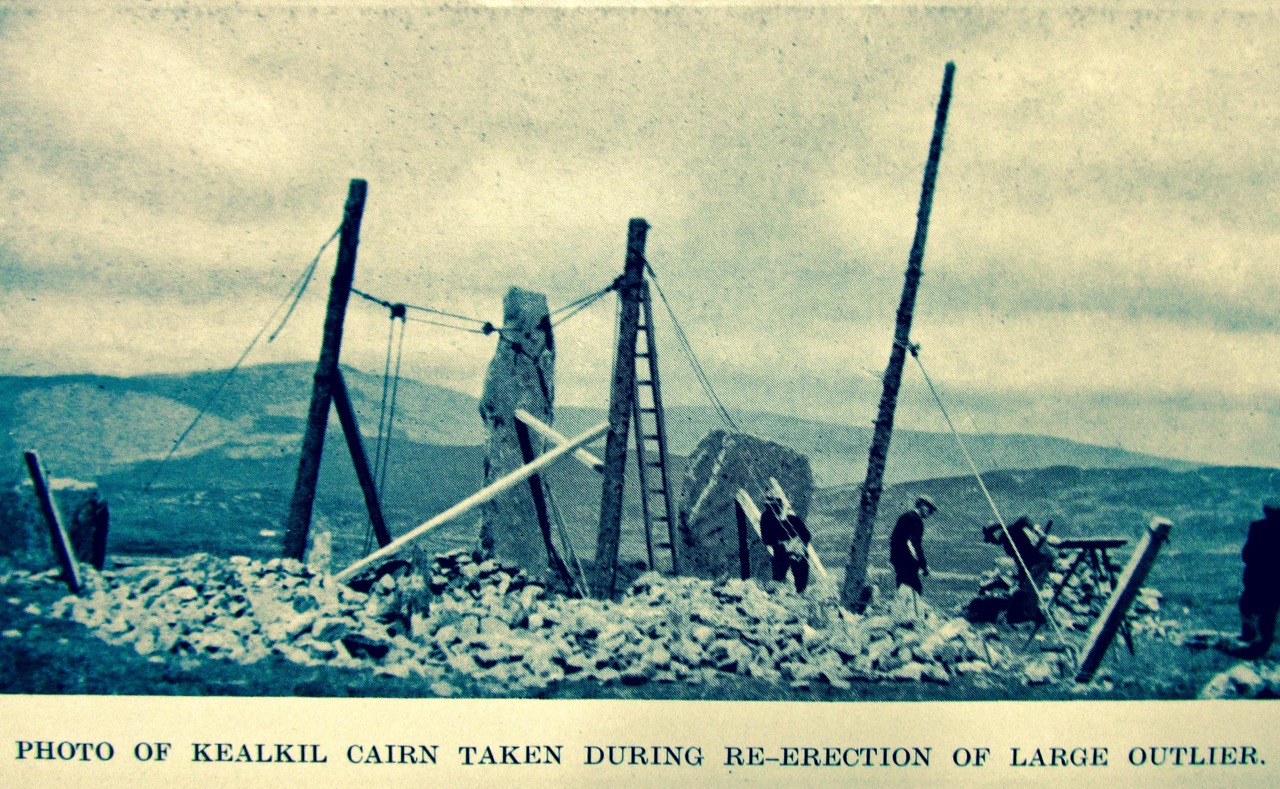
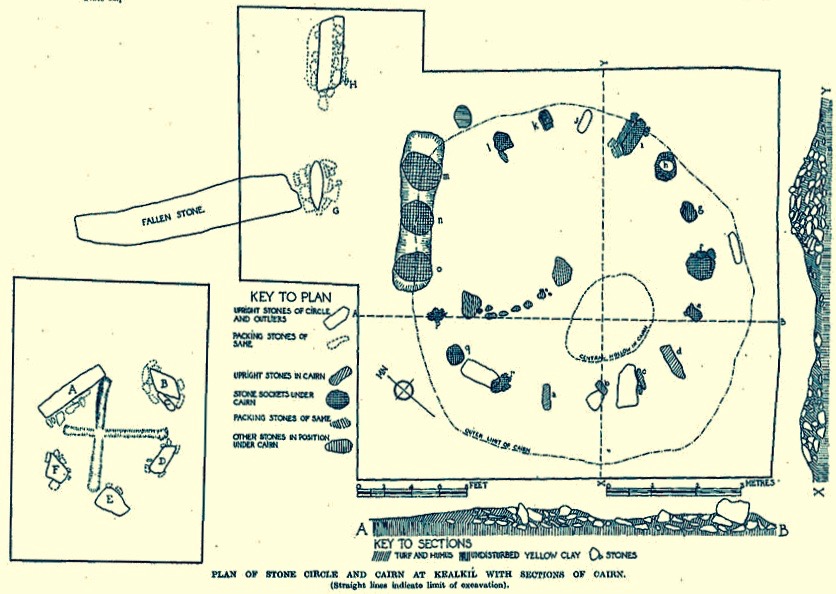
So, it’s Finn McCool and the Tuatha de Danaan that we have to look to, perhaps, for explanations as to why we find these incursions on our natural landscape standing as solidly and unchangingly as they did a few millennia ago. Perhaps not quite unchangingly, in fact: archaeologists have had a hand in the present day appearance of some of them. In the photo above you can see me wondering at the 4.6 metre high megalith which is part of the Kealkill complex. When the site was explored by Sean P O’Ríordáin in 1938 that stone had broken off and had fallen: O’Ríordáin re-erected the remaining part of the menhir. The original would have been at least a metre higher than what we see today.

kealkill excavation report

kealkill diagram

From O’Ríordáin’s published report of the excavation of the Kealkill complex: top, the taller standing stone being re-erected and, below, a survey diagram of the findings. From the Journal of The Cork Historical Archaeological Society, Volume XLIV ,1939

The Breeny More site and the Kealkill complex are near neighbours. Both contain various artefacts: standing stones, stone circles and boulder burials. Kealkill also has a radial cairn. Both are set against a background of moorland, mountain and bay. Kealkill is easily accessible although boggy.

Most sites are on private land and permission should always be sought to visit, unless it is obvious that access is welcomed, as here at Kealkill

Our second archaeological adventure this week was also boulder burial orientated. This was close to home in the townlands of Rathruane, Lisheen Lower and Bawngare. Again, Finola has detailed the findings in her post, but I was struck at each of these sites that the their settings, too, were on high ground with excellent distant views. In each case, mountains were prominent. I couldn’t help thinking that the boulders could have been placed where they are specifically because of the visibility to the various peaks. Might it even be that territories were marked out by these huge stones? Boundaries have always been important to human strategies: we have been identifying and ‘naming’ the land before records began to be written. Field names, townland names, parishes, baronies… A whole lot more to be researched, visited and recorded. Our long walk through Ireland’s past has barely begun!

Robert at Kealkill

Hill of Slane

abbey + college

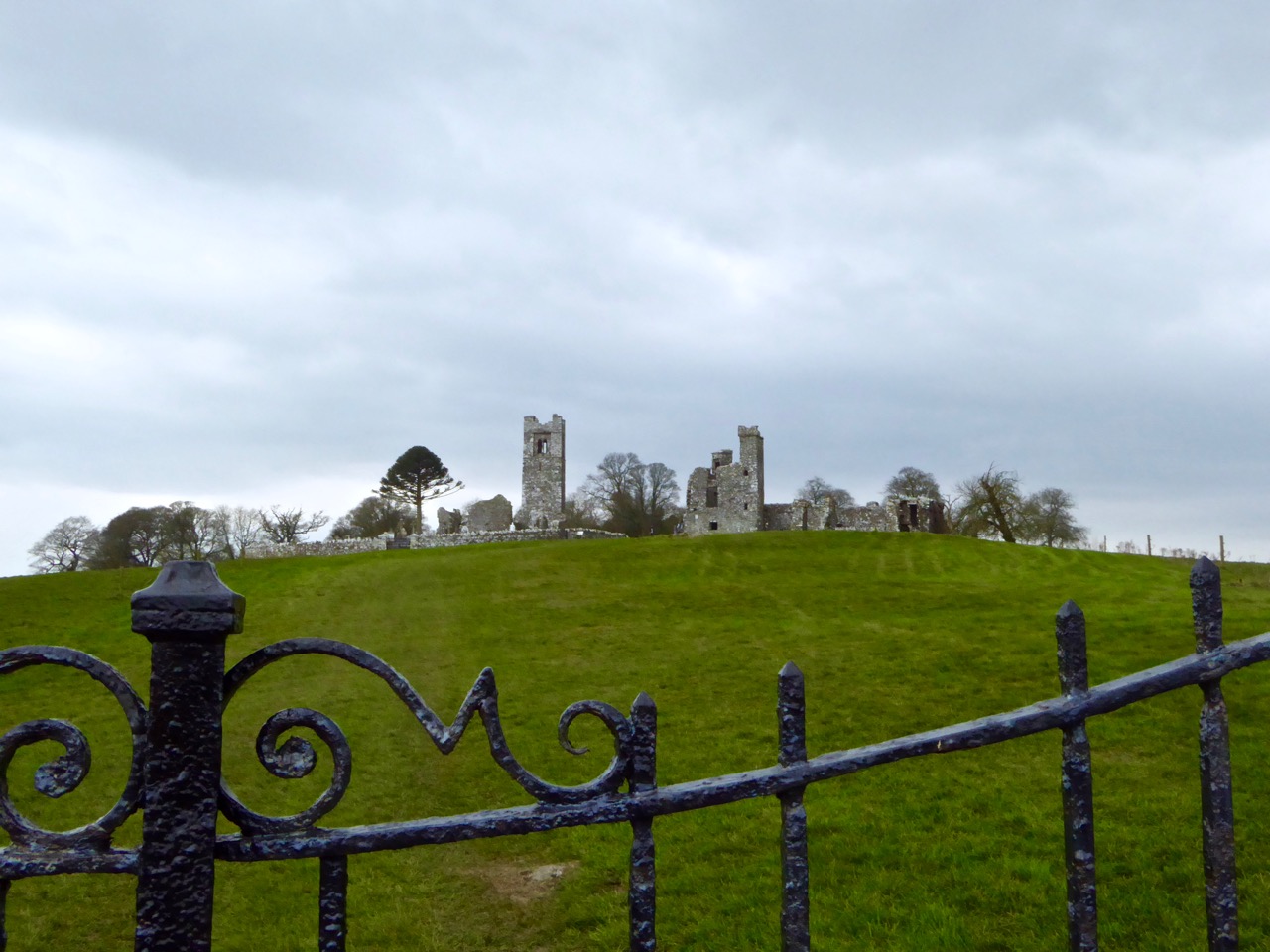
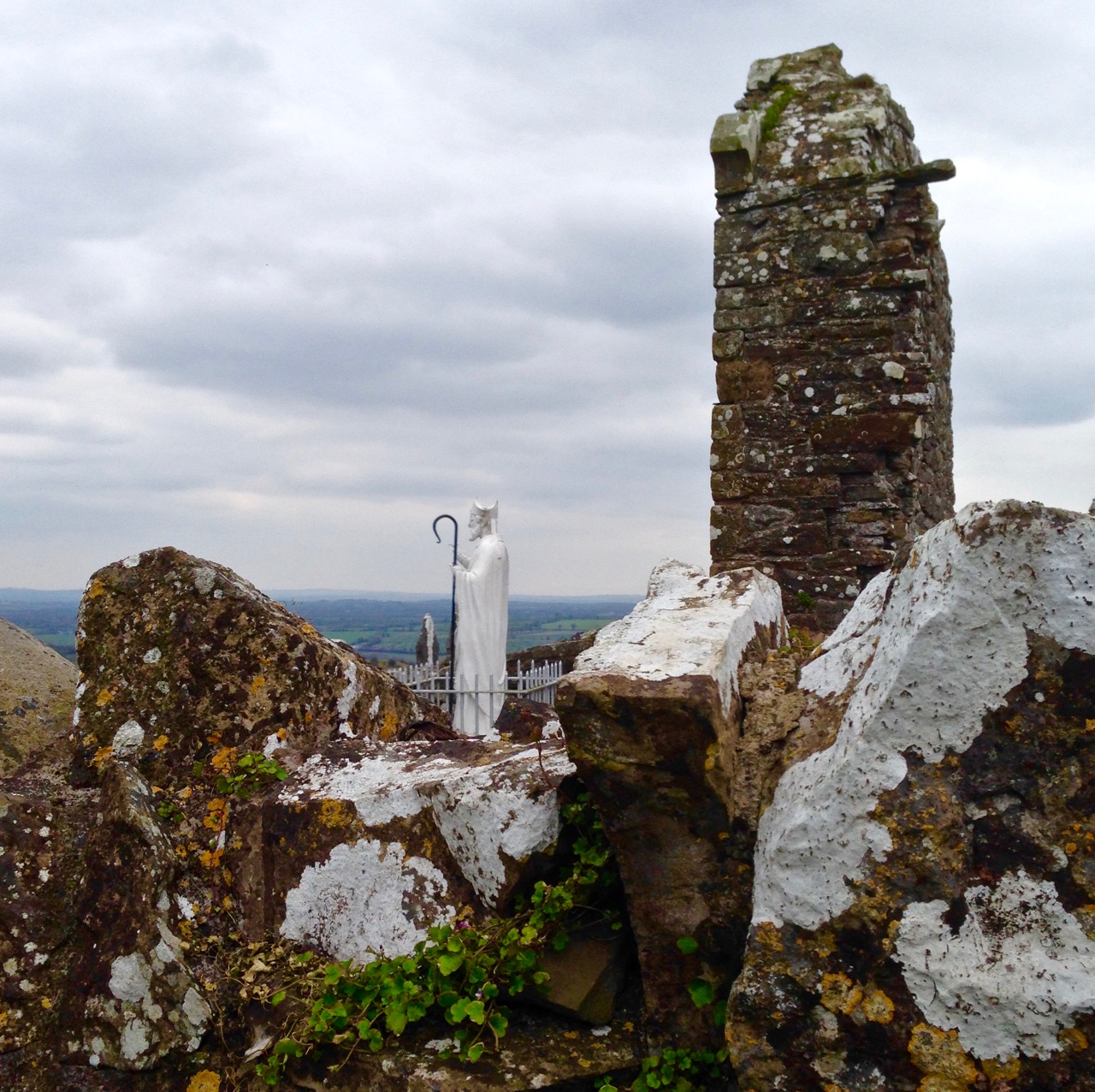
Our travels took us to the Hill of Slane. On its summit overlooking the River Boyne a depleted Saint Patrick (he’s lost his hands) looks forever out to the east, facing towards the mound of Millmount at Drogheda, about 15 kilometres away according to our Crow. Millmount is reputed to be the site of an ancient passage grave – and the burial place of Amhairgin mac Míled, who was regarded as the originator of the arts of song, poetry and music. The very first Irish poem The Song of Amhairgin was recited by him as he entered Ireland from the River Boyne, below the mound. Here’s a version of it translated (from the original Irish) by Lisa Gerrard:

I am the wind on the sea
I am the stormy wave
I am the sound of the ocean
I am the bull with seven horns
I am the hawk on the cliff-face
I am the sun’s tear
I am the beautiful flower
I am the boar on the rampage
I am the salmon in the pool
I am the lake on the plain
I am the defiant sword
I am the spear charging to battle
I am the god who put fire in your head

Who made the trails through stone mountains?
Who knows the age of the moon?
Who knows where the setting sun rests?
Who took the cattle from the house of the Warcrow?
Who pleases the Warcrow’s cattle?
What bull, what god created the mountains’ skyline?
The cutting word – the cold word?

The Saint lit the Pascal Fire on the Hill of Slane soon after his mission in Ireland began (the flame is still lit at Easter). That seems to me a symbolic action: a challenge issued, perhaps to the pagan traditions that had gone on for generations before the new religion arrived. Patrick’s fire-raising activities are also a comparatively recent addition to the lore of the hill: according to the Metrical Dindsenchas – combining poems from the Book of the Dun Cow, the Book of Leinster, the Rennes Manuscript, the Book of Ballymote, the Great Book of Lecan and the Yellow Book of Lecan – all sources well over a thousand years old and themselves most likely compiled from the timeless oral traditions of the Bards – Slane is the burial place of an ancient king:

…Slaine, whence the name? Not hard to say. Slaine, king of the Fir Bolg, and their judge, by him was its wood cleared from the Brugh. Afterwards, he died at Druim Fuar, which is called Dumha Slaine, and was buried there: and from him the hill is named Slaine. Hence it was said: Here died Slaine, lord of troops: over him the mighty mound is reared: so the name of Slaine was given to the hill, where he met his death in that chief abode….

(Translated by Edward J Gwynn in 1903)

The ‘mighty mound’ must surely be the enigmatic earthworks hidden in the trees to the west of the abbey and college ruins: these are variously described as a barrow or a motte.

Over the gate

Top: medieval profile; Above left: ‘Creature of Slane’ decorating the walls of the old college, and Above right: the tower of the monastery which dates from the 16th century

Mostly what we see today on the summit here is medieval: the hill remained a centre of religion and learning for many centuries after St Patrick. A friary church was established on the site of an earlier monastery in 1512: it was abandoned in 1723. Beside it is a medieval college, probably also 16th century. The stonework here includes some extraordinary carvings, sadly much dilapidated.

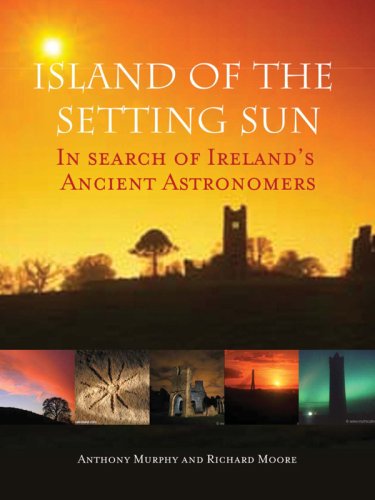
I musn’t shy away from another tradition associated with Slane Hill: the authors of this book make a convincing case for an alignment right across Ireland that takes in several historically important sites:

41s5jHsihjL…The Millmount-Croagh Patrick alignment stretches over 135 miles from the east coast of Ireland to the west, and has significant St Patrick associations … we found that the line from Millmount to Slane westwards travels all the way to Croagh Patrick, perfectly intersecting the little chapel on the summit of The Reek with breathtaking accuracy. Significantly, this line skirts the hills of Loughcrew on its way, and also travels directly through Cruachan Aí, one of the largest archaeological complexes in the whole world, with 200 monuments located in a 10-mile radius. Croagh Patrick, known in prehistoric times as Cruachan Aigle, is the place where, according to legend, Patrick banished the serpents from Ireland…

If nothing else, the theory at least demonstrates that St Patrick’s influence stretches the length and breadth of the country: witness his statue looking out from the Hill of Slane and another looking across from the lower slopes of The Reek!

croagh patrick 6

croagh patrick 5

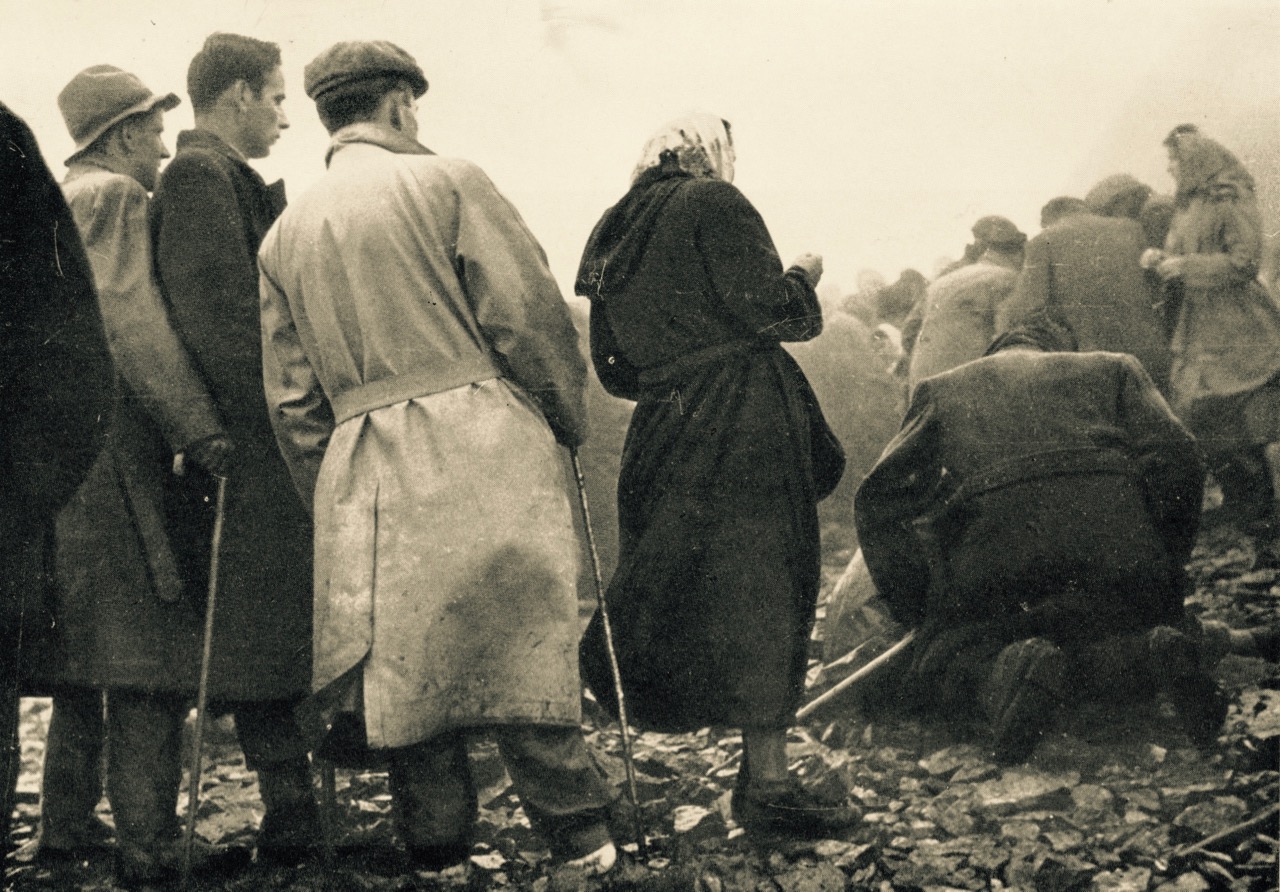
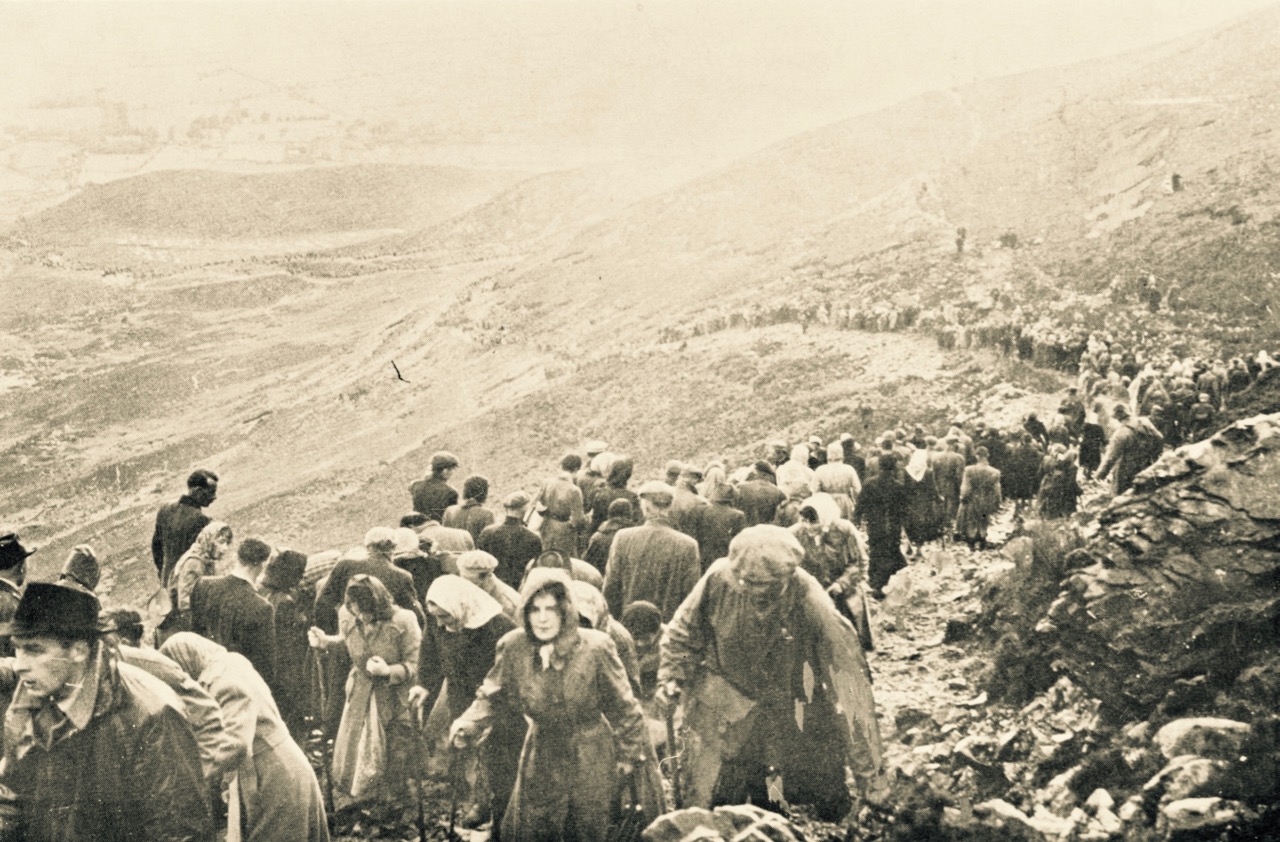
Pilgrimage for St Patrick on The Reek: Photos from the collection of Tomás Ó Muircheartaigh, who documented life in rural Ireland between the 1930s and the 1950s

St Patrick (his day was last week), Easter (this weekend), the Boyne neolithic monuments, Irish poetry, ancient kings and their battles, a little bit of astro-archaeology, the commemoration of the 1916 uprising in Dublin, the fight for Irish freedom… All seem to have joggled along beside each other in our recent explorations. Somehow they fit together and define an Irish-ness which is all-encompassing but not overwhelming. History is dancing all around us: alive and relevant.

watching saint p


1916 and 485

485

We’re in Dublin this week, at the height of the centenary commemorations for the Easter Rising of 1916. There is much to do and see but I’ve decided to focus on a place where the men and women who died in the struggle for Irish freedom are remembered every day – Glasnevin, our ‘national cemetery.’

Work in progress

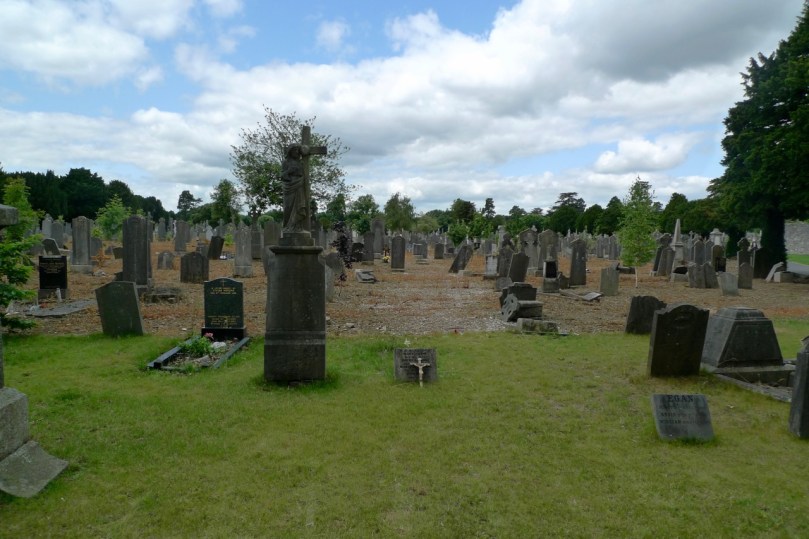
This part of the cemetery is still a work in progress. Slowly but surely all areas are being reclaimed and restored

Glasnevin is one of Ireland’s top tourist attractions – a cemetery, imagine! This is all the more remarkable when you realise that only a few years ago it was a tangled mess of weeds and ivy with row upon row of broken and fallen headstones, neglected and unsung. Now, after an extensive restoration project there is a handsome new museum (the world’s first cemetery museum) and avenues of statuary and bowers the like of which you might see in Paris.

Glasnevin Statuary

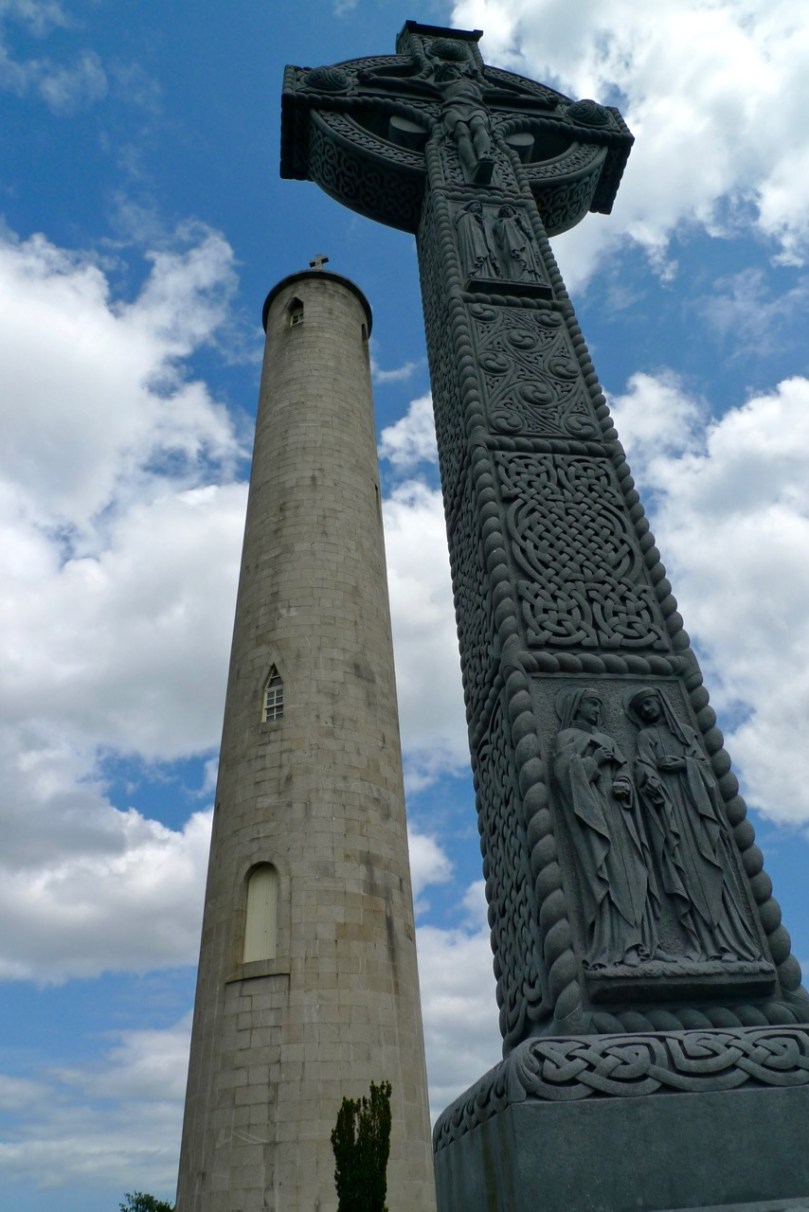
But of course it’s who is buried here that marks it as a focus for this year of commemoration. The giants of Irish history – poets and politicians, painters and writers, priests and suffragists – can all be found here. And, most impressively, all religions. Daniel O’Connell, whose crypt and round tower dominate the scene, helped to found this graveyard as a burial place for all denominations.

Tower and Cross

Daniel O’Connell’s round tower rises above all other monuments

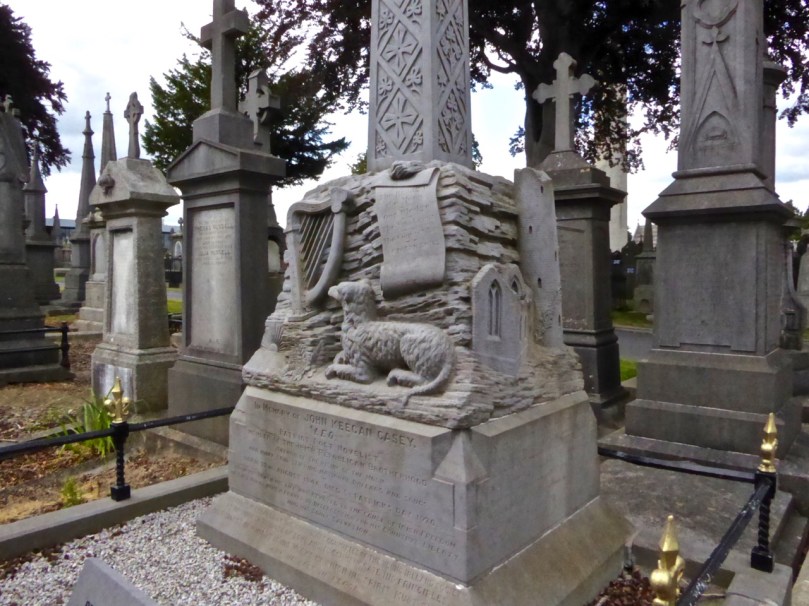
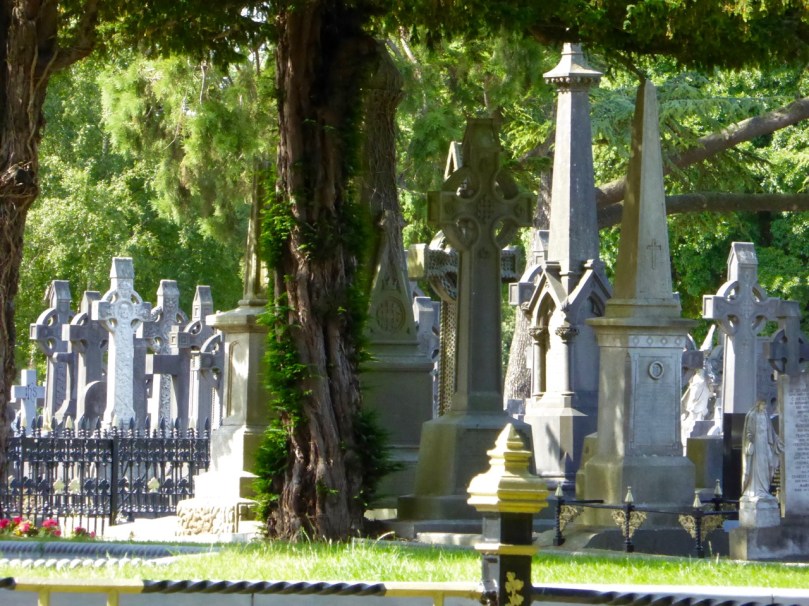
The history of headstone trends can be read in this graveyard too. Victorian statuary and sylvan avenues dominate the earlier periods but it was all Celtic Crosses and Maids of Erin at the turn of the century. The modern period has brought austere and understated granite slabs. 

Casey Memorial

Restored MonumentThe Celtic Revival was not just about literature – trends in art extended to gravestone designs. The top one above is the gravestone of John Keegan Casey, author of soul stirring national ballads and songs; the lower one commemorates several different patriots

Outlaws and Felons

Last year, the focus was on O’Donovan Rossa (see my posts about Rossa here and here and here). The oration at his graveside in Glasnevin was given by Patrick Pearse: it was re-printed and widely distributed and is usually credited with marking an important starting point to the 1916 Rising, one year later.

Rossa Oration

An actor re-enacts the oration given by Patrick Pearse in 1915 at the graveside of O’Donovan Rossa

Many of the participants in that rising found their final resting place here in Glasnevin, although not the leaders who were immediately executed, most of whom were buried in quicklime at Arbour Hill cemetery, in what was once a prison yard. But here are Eamon de Valera, Countess Markievicz, Thomas Ashe, Harry Boland, Cathal Brugha, Austin Stack, Sir Roger Casement, Elizabeth O’Farrell (see below) and many more. They were men and women, Catholic and Protestant: although the new state that grew from independence was predominantly Catholic, many Protestants numbered in the ranks of the revolutionaries. See the always entertaining Come Here To Me blog for a thorough investigation of this. Of all the graves the most famous belongs to Michael Collins, about whom Robert has written. Collins’ grave has the distinction of being the most visited in the cemetery, and always has fresh flowers on it. 

Michael Collins Gra ve

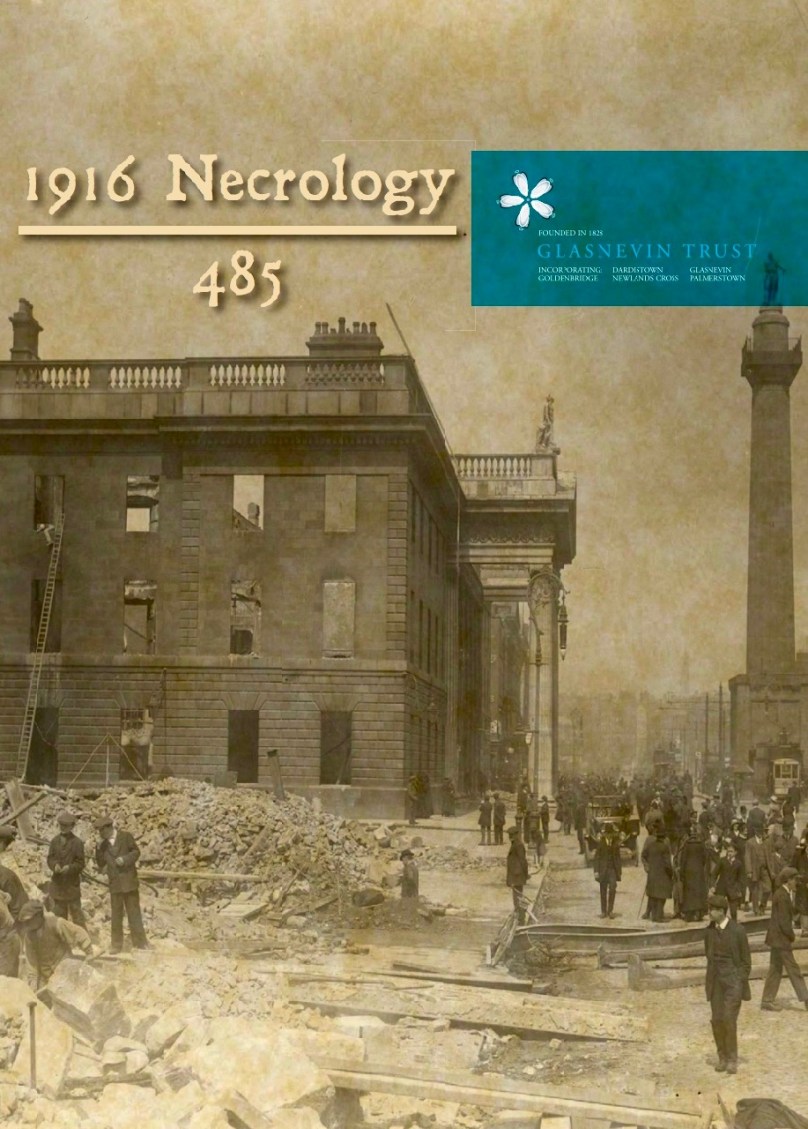
But the most startling and important association that Glasnevin Cemetery has with 1916 is not captured by the roll call of the leaders and foot soldiers of the IRB and Volunteers who fought in the various actions. No – the real story here is in the sheer numbers of people who died during that conflict and who were buried here. That number (so far) is 485 men, women and children.

Museum

The modern Glasnevin Museum houses displays, vast records, and a visitor centre

This number is the result of a massive research effort by Glasnevin Trust.** Here is what their website has to say about their findings:

This major research work has revealed many interesting and previously unknown facts. The majority of the dead were civilians, 54% of the total dead, caught up in the fighting. British Army dead accounted for 26% of those killed while the rebel forces had 16% of the casualties. The remaining percentage is made up of members of the Dublin Metropolitan Police and Royal Irish Constabulary. The numbers of civilians killed each day steadily increased, peaking on the final day of the rebellion 29 April when 45 died. This was also the most violent day of the rebellion during which 78 people lost their lives. 26 April, the day of the Battle of Mount Street Bridge, was the worst for the British Army losing 30 men during the fighting throughout the city. The rebels also suffered their worst casualties on this day with 13 men killed. For the police the day of the Battle of Ashbourne, 28 April, proved to be their worst.
The vast majority of those killed were buried at Glasnevin Cemetery in the aftermath of the fighting. The staff of the cemetery struggled to deal with the large numbers of bodies being brought for burial. Despite great strain they succeeded in giving all a dignified burial and recorded their details in our registers.

Celtic Crosses

If you’re in Dublin, do go on a tour of Glasnevin Cemetery. And when you’re there, stop at the new memorial to all those who died in the 1916 Rising (to be unveiled in early April), and reflect not only upon the insurgents or the soldiers and policemen, but upon the innocents. It is fitting that their lives and their deaths should also form part of what we remember and understand about that week of conflict.

Much has been written lately about the many women who played active roles in the Rising. One of those was Elizabeth O’Farrell, the nurse who carried the white flag of surrender out of the GPO – and who was almost airbrushed from history

And that planned new memorial – a ‘necrology wall’ listing the 485? It is, inevitably, controversial. Depending on what you read it is either a bewildering, ‘bizarre’ and revisionist decision, or a brave new effort to recognise all the dead equally and non-judgementally. But perhaps that is, after all, the job of a cemetery. 

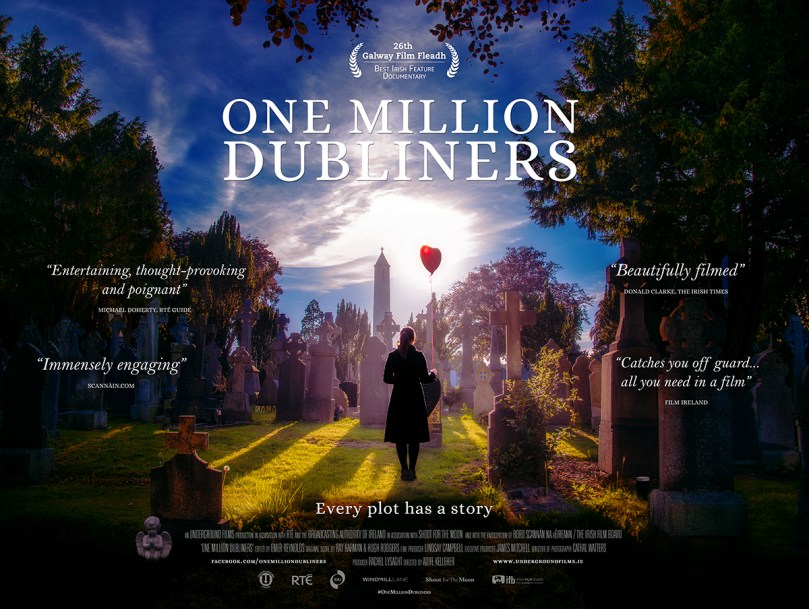
One-Million-Dubliners

And if you can’t get to Glasnevin, try to see the film One Million Dubliners. It’s a brilliant, moving, evocative and beautifully made film that will show you why this historic cemetery has so rightly earned its place as one of Ireland’s major tourist attractions.
** The first photograph in this post is the front cover of the research report 1916 Necrology by the Glasnevin Trust