Transcending Violence: Harry Clarke’s Sublime Lea-Wilson Window

Percival Lea-Wilson was assassinated by the IRA 100 years ago tomorrow, June 15th, 1920. The story has been well documented and is truly a tale of horror. Lea-Wilson was a Captain in the British Army detail looking after the prisoners who had surrendered from the General Post Office during the 1916 Rising. He was distinguished by his rough treatment of the prisoners and in particular for humiliating Tom Clarke by ordering him to strip naked in public.

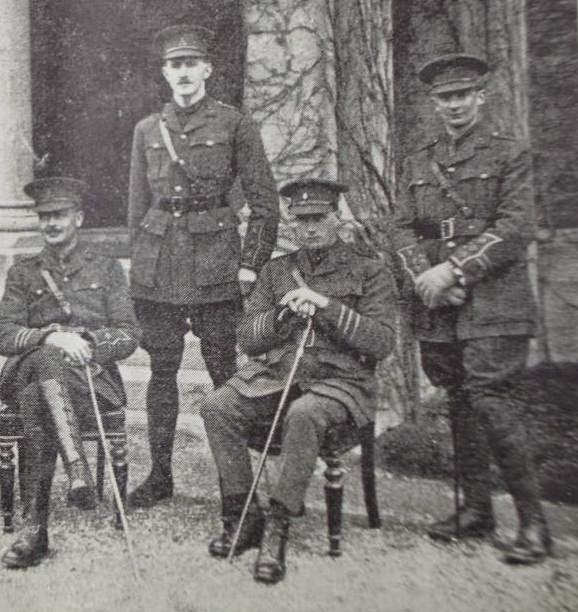
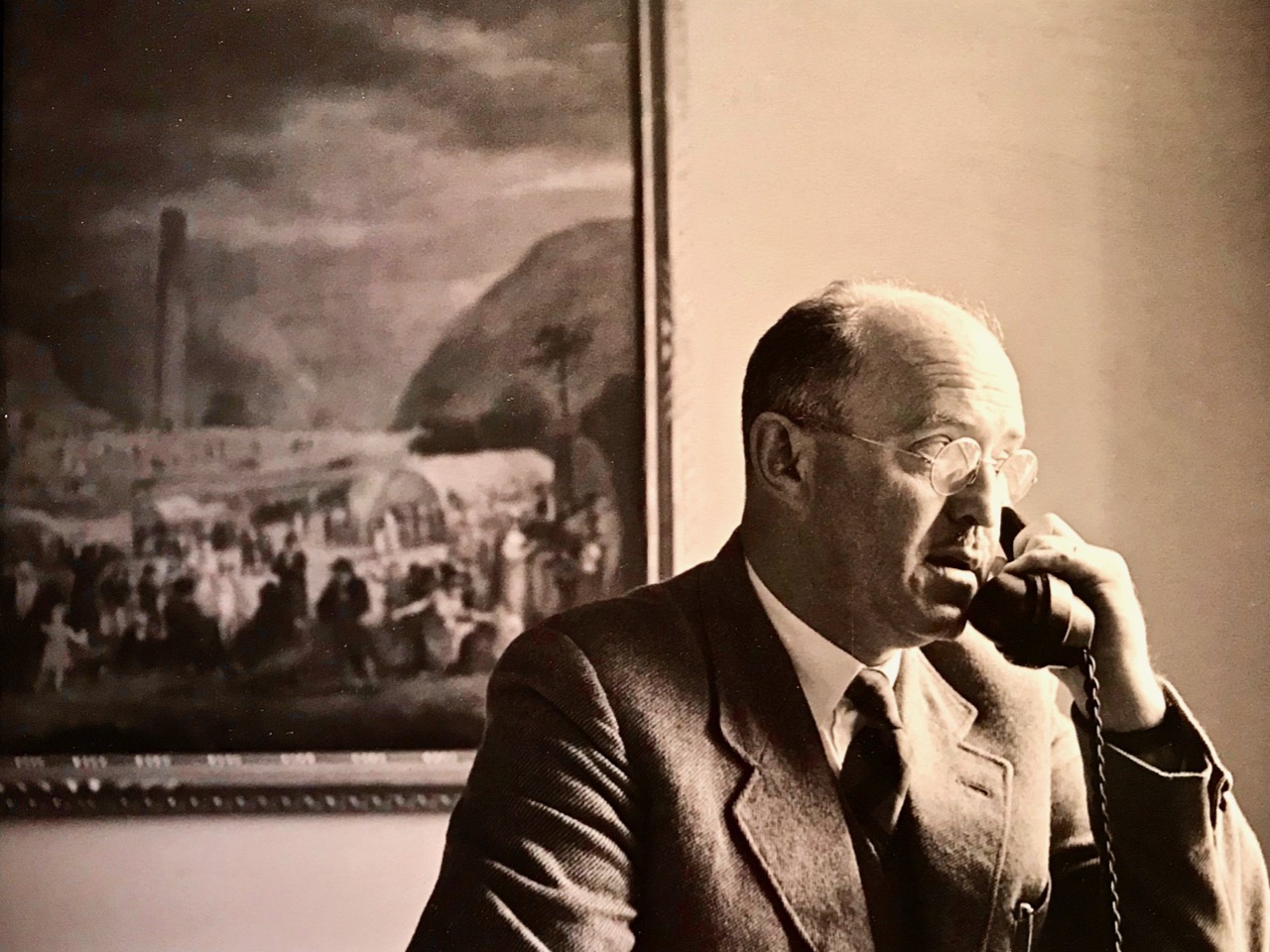
Lea-Wilson is standing on the right

His actions were observed by many, including Michael Collins. Four years later Lea-Wilson, who had since re-joined the Royal Irish Constabulary (RIC) was shot dead on the street in Gorey, Co Wexford, possibly by direct order from Collins. Perhaps many Irish people would not have mourned his passing, but Lea-Wilson’s wife was devastated and the depths of her feeling led to the creation of one of Harry Clarke’s masterpiece windows.

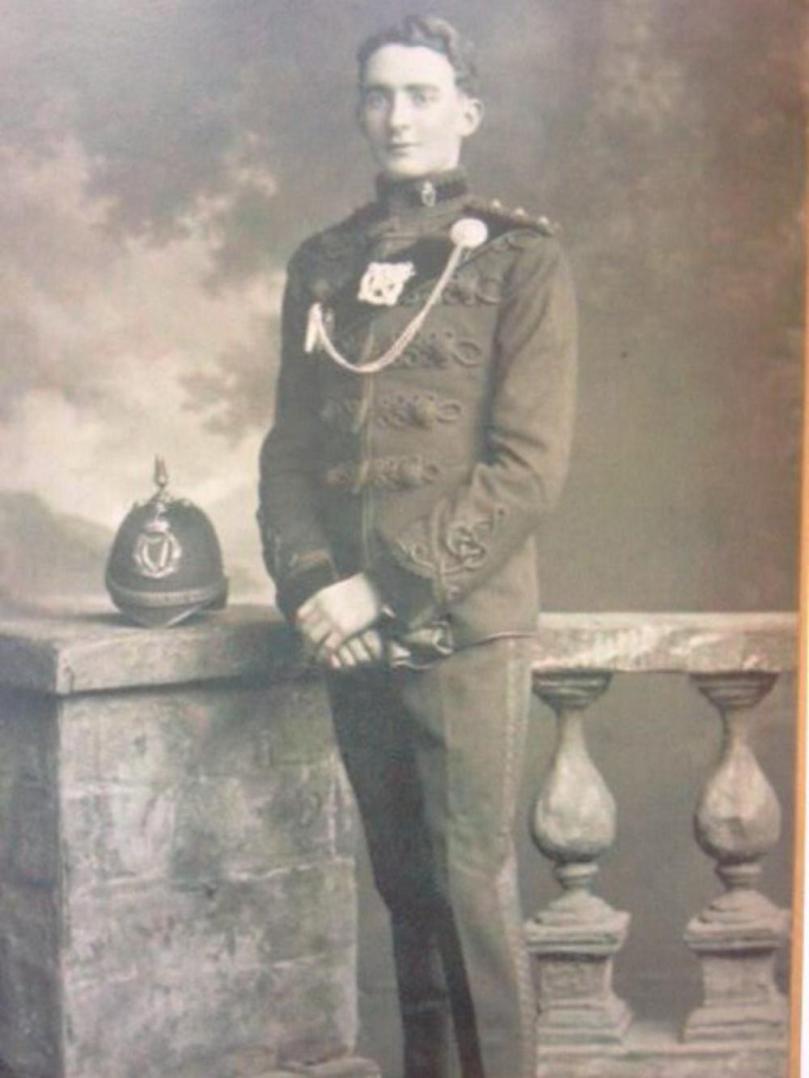
Percival as he might have looked around the time of his marriage to Marie

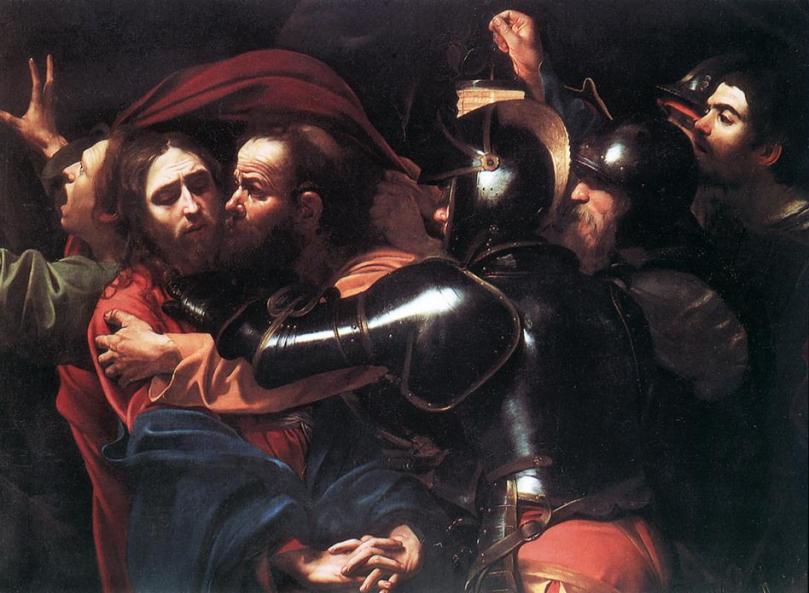
There is a second amazing story about Marie Monica Lea-Wilson (her friends called her Monica) and her acquisition of yet another masterpiece, Caravaggio’s The Taking of Christ, (below) now a centrepiece of the National Gallery in Dublin. My post is about the Clarke window, but you will find lots online about the Carravaggio, for example here and here.

Marie Ryan, a Catholic, grew up in Charleville, Co Cork, where she met the young Percival when he was posted there as a member of the RIC. Percival was from a well-to-do family in London (his grandfather had been Lord Mayor and his father was a stockbroker) and had been privately educated at Winchester and Oxford. They married in a Catholic Church, but Percival did not convert – the window I am writing about is in the Church of Ireland Church in Gorey, the church he attended when he moved there as a District Inspector with the RIC, having re-joined after his stint in the army.

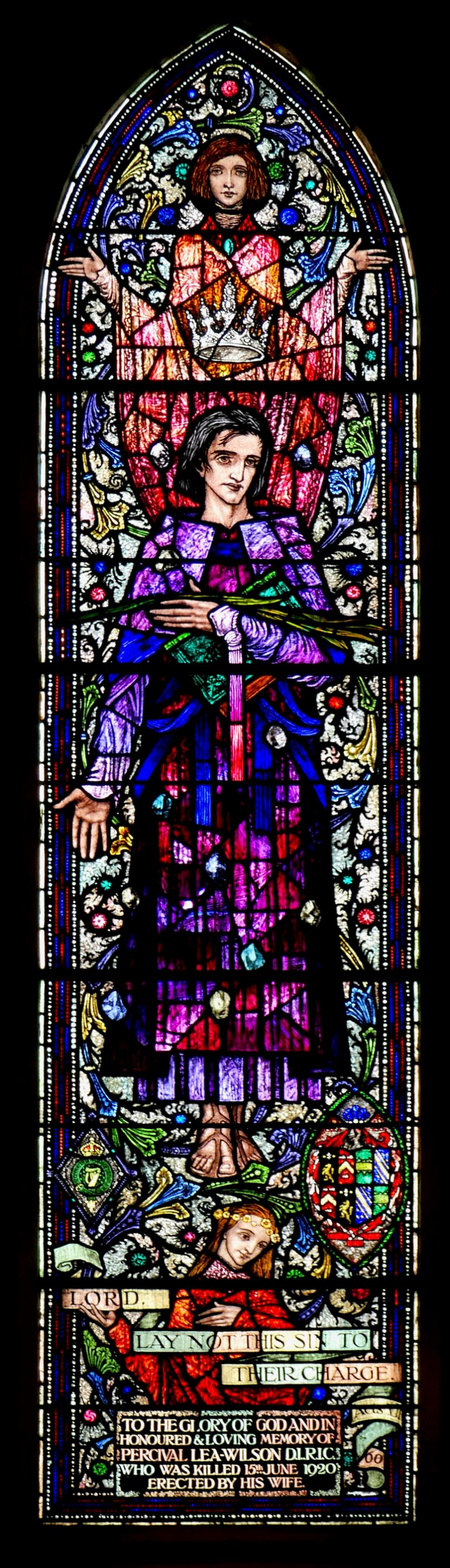
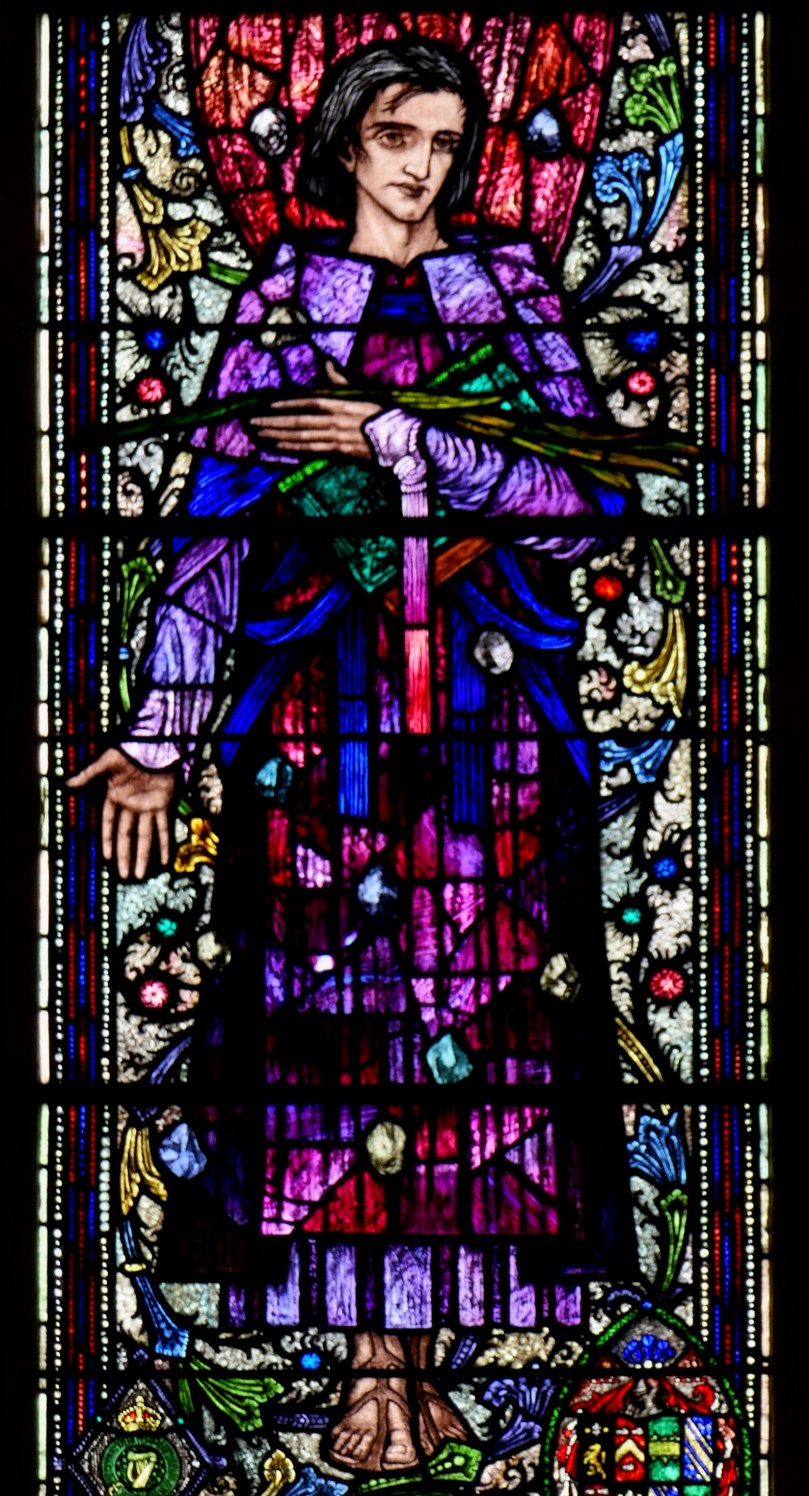
Harry Clarke’s Lea-Wilson window, Christchurch, Church of Ireland, Gorey, Co Wexford

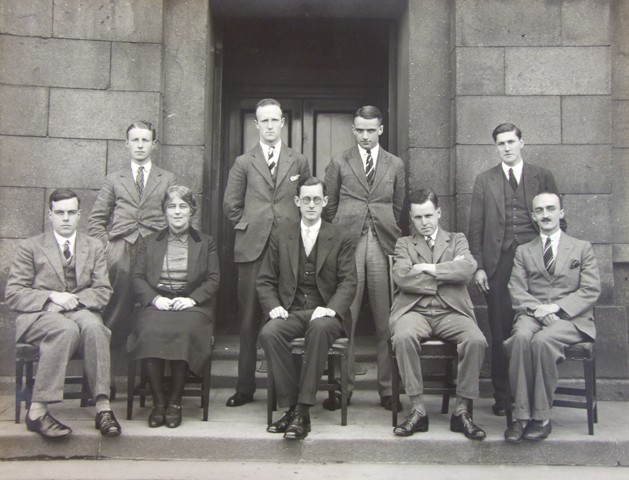
Marie Lee-Wilson never got over his death and never re-married but went on to become a highly-regarded paediatrician. Here she is in later life with her colleagues at Sir Patrick Dun’s Hospital in Dublin, now closed.

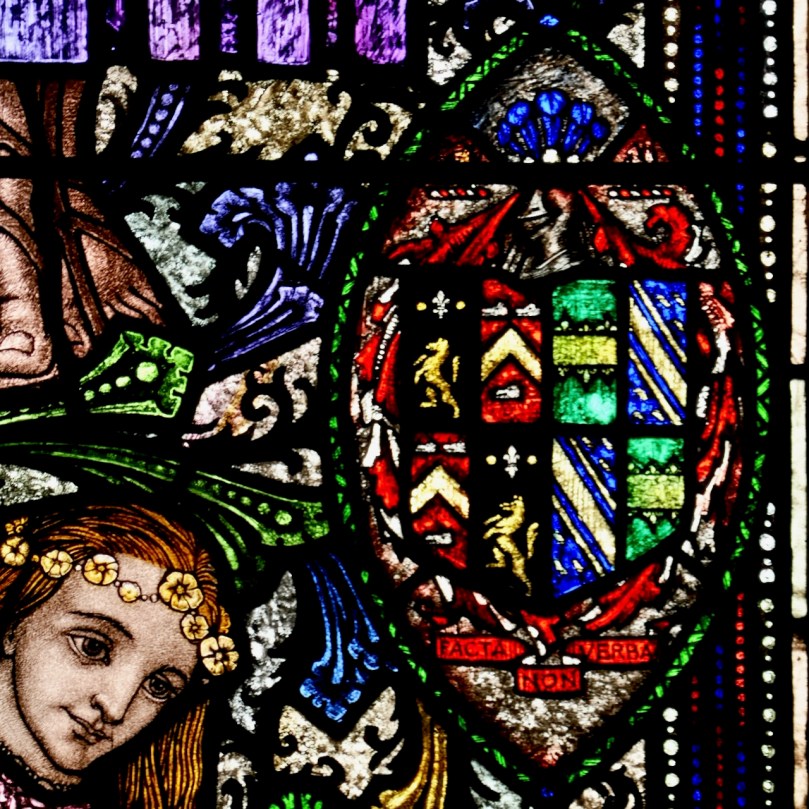
In shock after his assassination, she wrote to Harry Clarke and asked him to create a window for her husband. The theme of St Stephen was agreed and other elements which Marie suggested or requested were to be incorporated, such as the Wilson coat-of-arms.

The Wilson coat of arms with the motto Facta non Verba – deeds not words

At this time, Harry’s reputation was well established and he was in great demand. Marie may have been familiar with his window in nearby Wexford town, the Church of the Assumption, commissioned by Mrs O’Keeffe for her war hero son the year before. Harry had difficulty hiring and keeping apprentices and assistants, upon whom he relied given the pressure of work. In the case of Marie’s window, he persuaded Kathleen Quigly to come to work at the studio more steadily, by offering to increase her wages, and it was Kathleen who worked on this window with him, always under his close supervision and following his design.

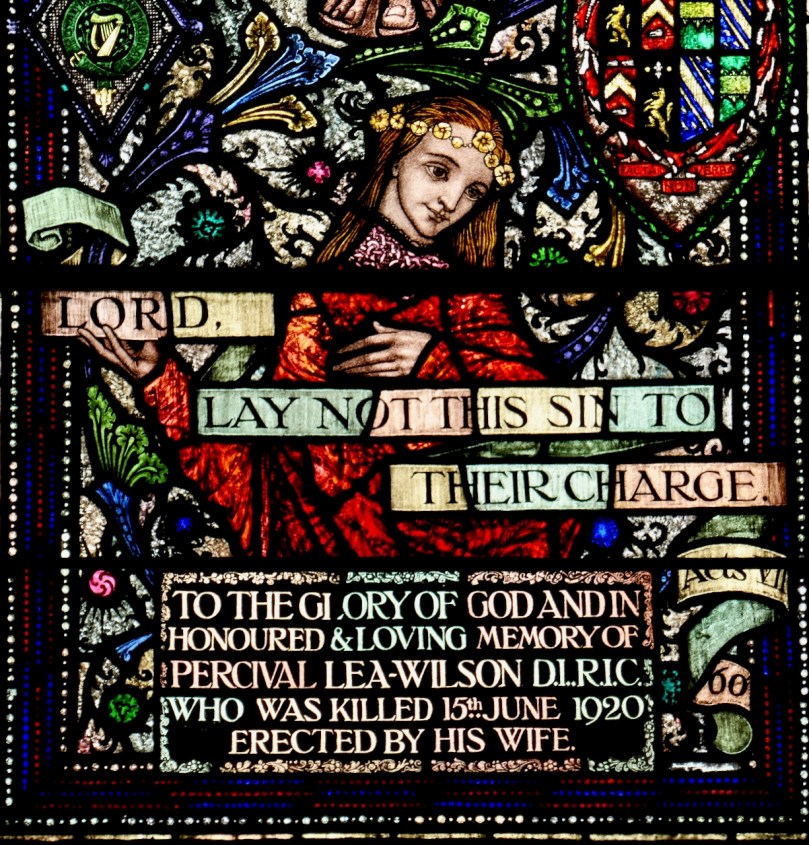
Another detail to note is the insignia of the Royal Irish Constabulary in the top left corner – a harp within a belt

The choice of St Stephen is telling. St Stephen was the first Christian martyr, stoned to death for “blasphemy” – that is, speaking up for his truth in a Jewish Synagogue. Here’s the passage from Acts 7, King James Version.

When they heard these things, they were cut to the heart, and they gnashed on him with their teeth. But he, being full of the Holy Ghost, looked up steadfastly into heaven, and saw the glory of God, and Jesus standing on the right hand of God, And said, Behold, I see the heavens opened, and the Son of man standing on the right hand of God. Then they cried out with a loud voice, and stopped their ears, and ran upon him with one accord, And cast him out of the city, and stoned him: and the witnesses laid down their clothes at a young man’s feet, whose name was Saul. And they stoned Stephen, calling upon God, and saying, Lord Jesus, receive my spirit. And he kneeled down, and cried with a loud voice, Lord, lay not this sin to their charge. And when he had said this, he fell asleep.

It is evident that Marie perceives Percival as a martyr, but in her choice of inscription, lay not this sin to their charge, she also invokes a sprit of forgiveness rather than of bitterness or revenge. The wife and lover in her mourns him deeply and sees his death as an injustice and as undeserved. But the Irish Catholic woman is fully alive to the political and social upheavals of her time and understands the complications of such a situation. Her choice of iconography and scripture embodies the hopelessly tanged web of relationships and reprisals that characterised the Irish War of Independence and her own invidious position as the wife of a British Office and RIC man.

Harry Clarke understood all this too, and his sensitive design works out the emotions and the messages she wished to convey. Here is Nicola Gordon Bowe’s description of the window, from the magnificent Life and Work of Harry Clarke.

. . . the subject is St Stephen, the first Christian martyr, whom Harry has shown carrying the symbolic palm of martyrdom and bearing a book in his left arm while his right hand is extended, palm forward, suggesting his innocence. The stones by which he was slain are shown leaded into the rich purples, mauves, rubies and pinks of his simple vestments, contrasting with the emerald green of the book he holds. His face is pale and angular, the head inclined to the left with a long nose and sad, pensive eyes. This soulful Celtic face is reflected in the equally direct unstylized treatment of the hands and sandalled feet. The two girl angels above and below the Saint are gentle and childlike. . .

Interestingly there is another window, beside this one, also dedicated to Lea-Wilson and also done in the Clarkes’ establishment. But this one, although similar in many ways to the first, is not signed by Harry but bears the signature of J Clarke and Sons. It must have been done by somebody else working in the studio – perhaps by Kathleen Quigly?

The second Lea-Wilson window

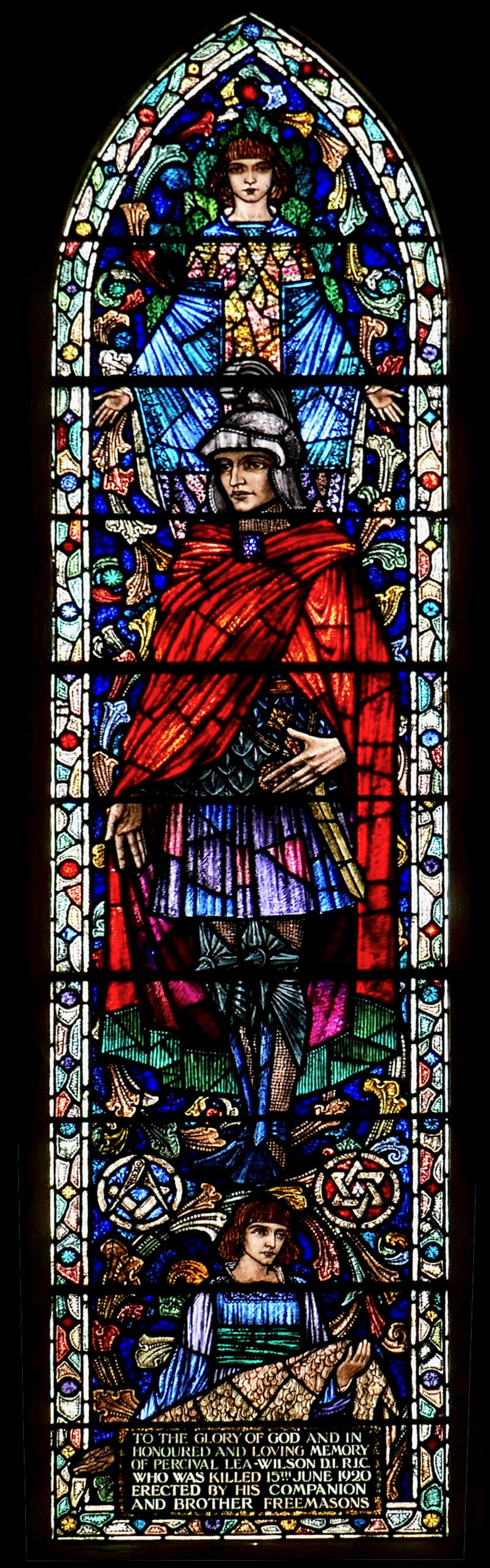
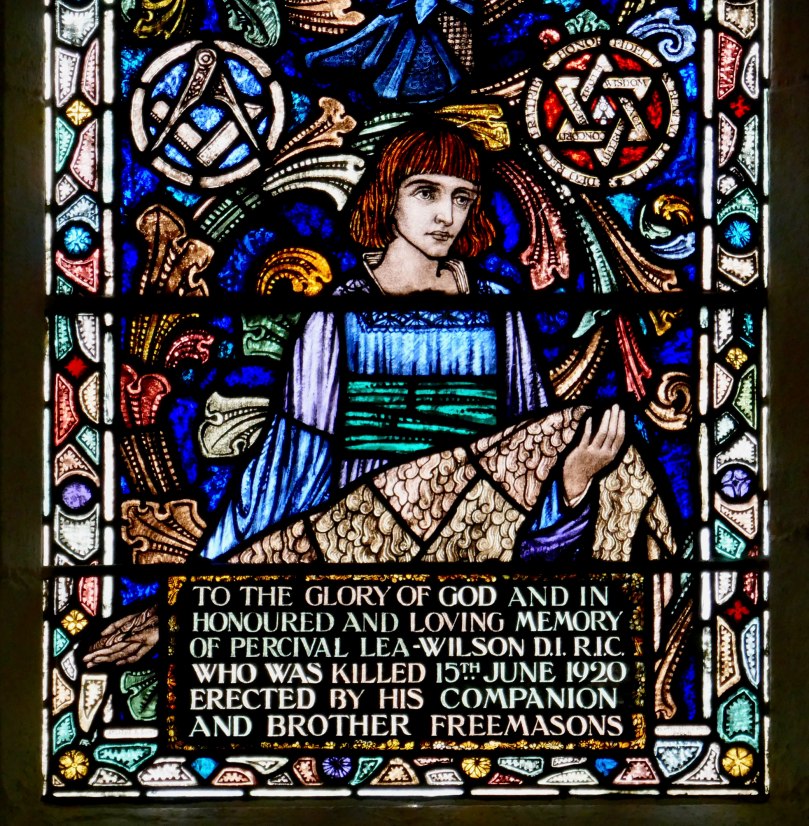
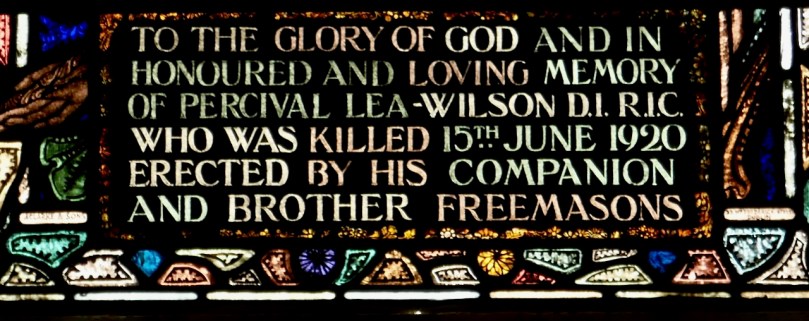
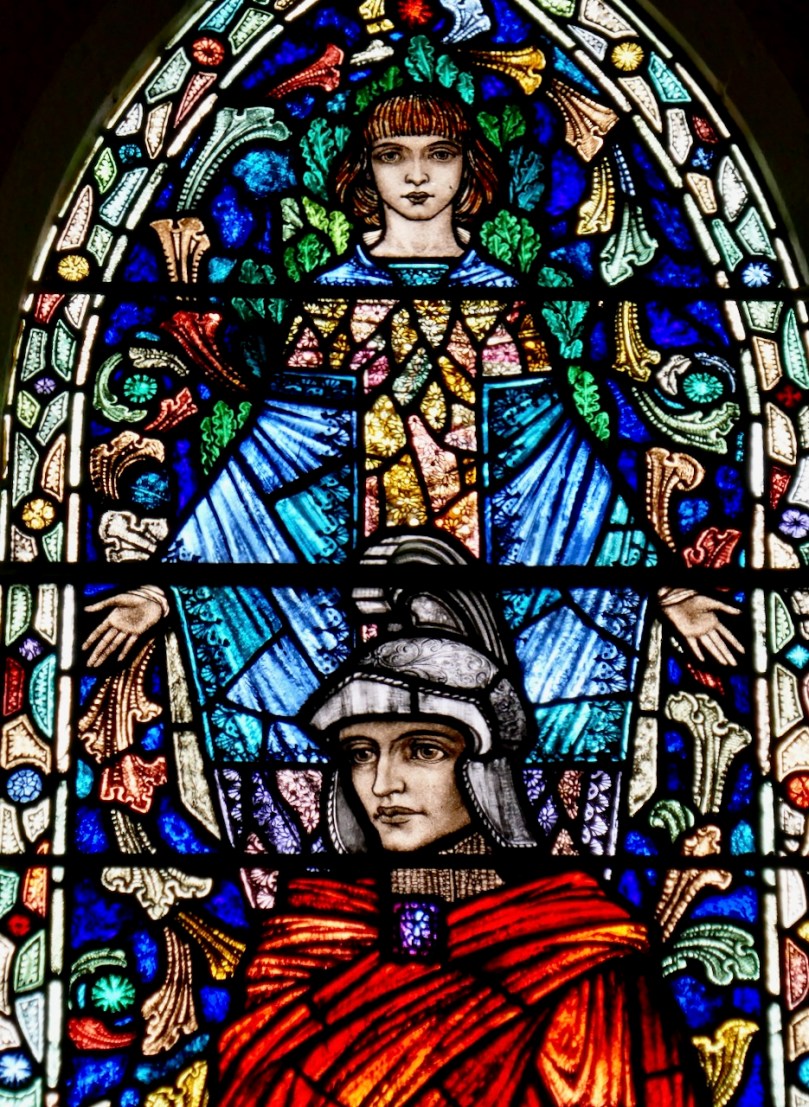
This one was donated by Percival’s ‘companion and brother freemasons’. The image is of a warrior in armour and a striking red cloak. There is an upper and lower angel, to match Harry’s design. The lower angel holds a fleece, indicating that this is an image of Gideon, the biblical soldier who slew a far greater army of Midianites, under God’s guidance. As such, it does not appear to hold the same reconciliatory feeling that Harry’s window does. However, look at the quote below the image (it’s from this source)

In the medieval era, the story of the angel’s visit to Gideon was often paired with the gospel story of the angel Gabriel’s visit to the Virgin Mary. In both accounts, an angel greets both Gideon and Mary with the words “The Lord is with you”, shares news of salvation for Israel and informs each of them of their special role in achieving this. As a result of this comparison, Gideon’s miracle of the fleece became a symbol of the Virgin Birth. This is because both events showed that God could make the impossible possible.

My friend Brian O’Riordan asks Could the angel holding the fleece be referring to the grieving wife, Marie?

Looking at the two windows, it is apparent why it is often difficult to say what is ‘a Harry Clarke’ and what is not. The design of the Gideon window is closely based on the St Stephen window, even to the floral decoration in the background. Elements of Gideon’s apparel are familiar – his helmet, for example echoes that of St Martin’s in the Castletownshend window I wrote about here.

Can you make out the signature and address? To the left of ‘and brother’ is J Clarke and Sons, while to the right of ‘freemasons’ is 33 Nth Frederick Street Dublin

But that’s the thing – Harry trained his apprentices rigorously to reproduce his style and whoever did this window would have been competent and comfortable at producing a look-alike. The fact that is is not signed by Harry, however, must be the primary guide in ascribing it to the Joshua Clarke Studio, rather than to Harry. It is possible that budget was an issue – an almost-Clarke would have been less expensive than a wholly-Clarke.

Gideon and the angel above him are painted in an exact rendition of Harry’s style

What is extraordinary about the Lea-Wilson story is that not one, but two great works of art stem directly from it. The story most often told is the Caravaggio one – I hope this post helps to redress that balance.

If you are anywhere close to Gorey, go visit Christchurch. There are more Harry Clarkes in that church and several other notable windows. For more Roaringwater Journal posts on Harry Clarke and on Irish stained glass, click on this link.

Coomhola Country

As the Coomhola River tumbles from Borlin to the sea, gathering tributaries, it forms many pools amongst the riffles and glides. These pools, in summer, provide leafy shelters for salmon and trout. To anyone who has fished or walked the river, each pool has its own character, and each its own name . . .


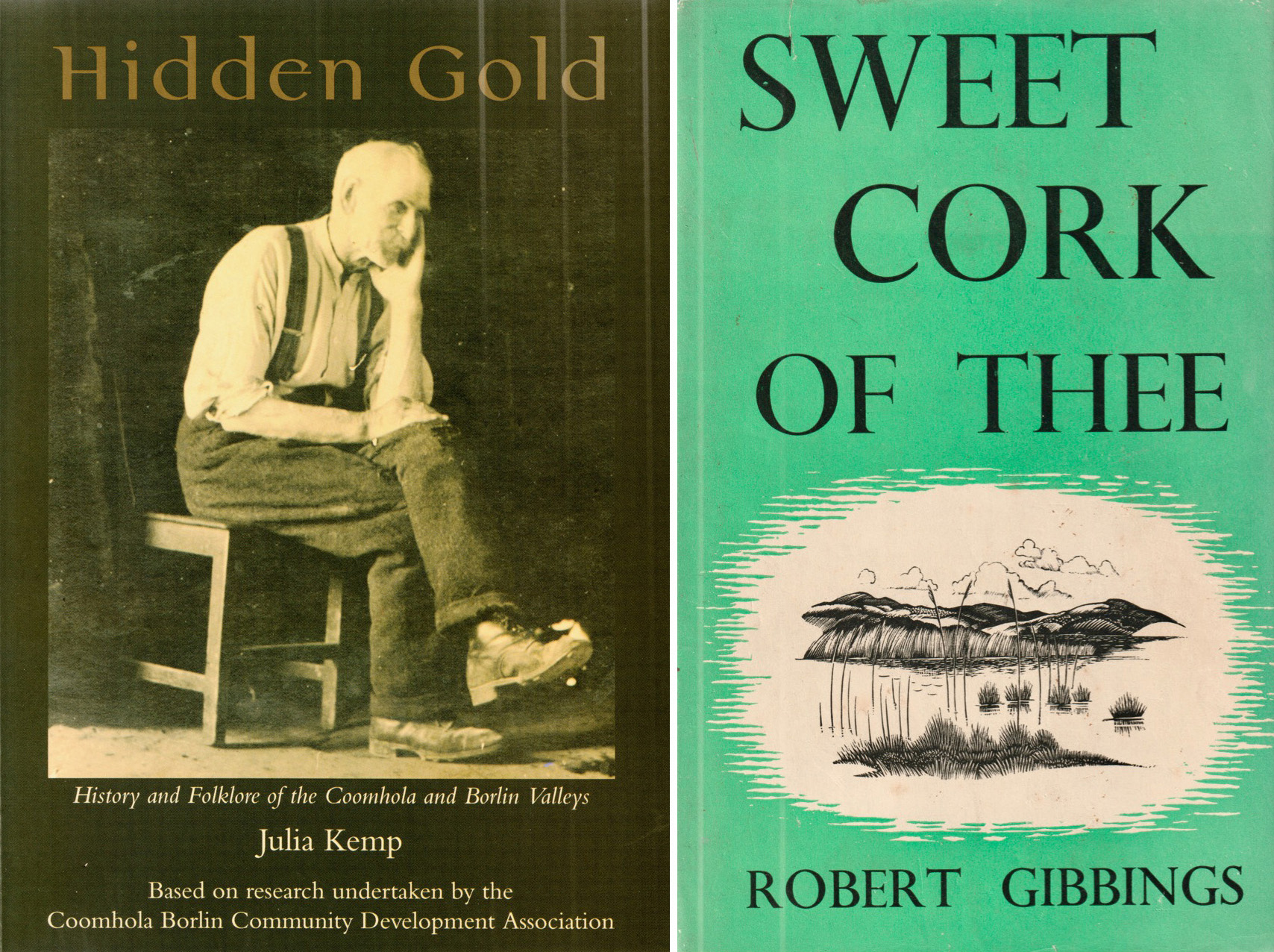
[From Hidden Gold, History and Folklore of the Coomhola and Borlin Valleys Julia Kemp: Coomhola Borlin Community Development Association 1998]

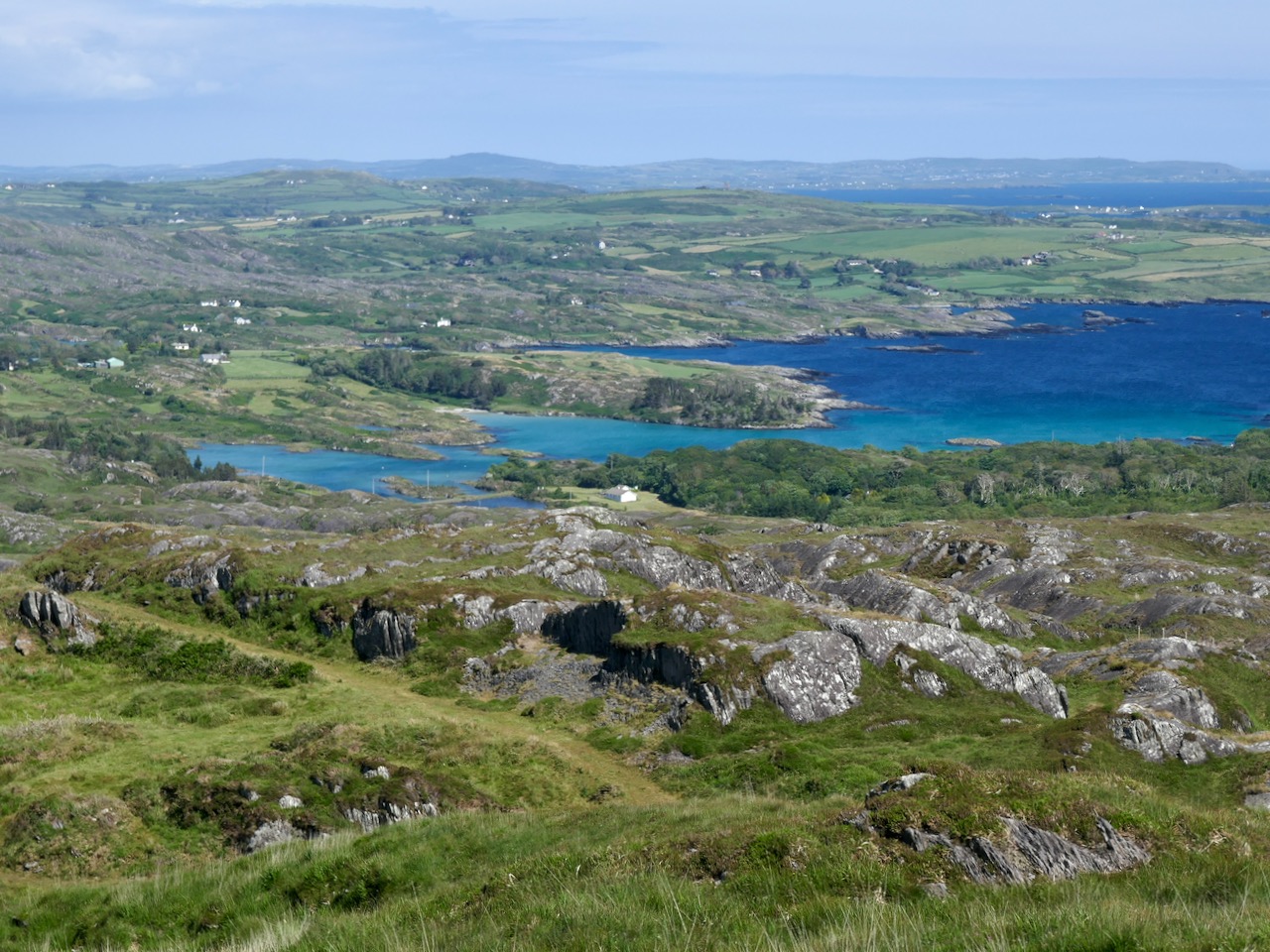
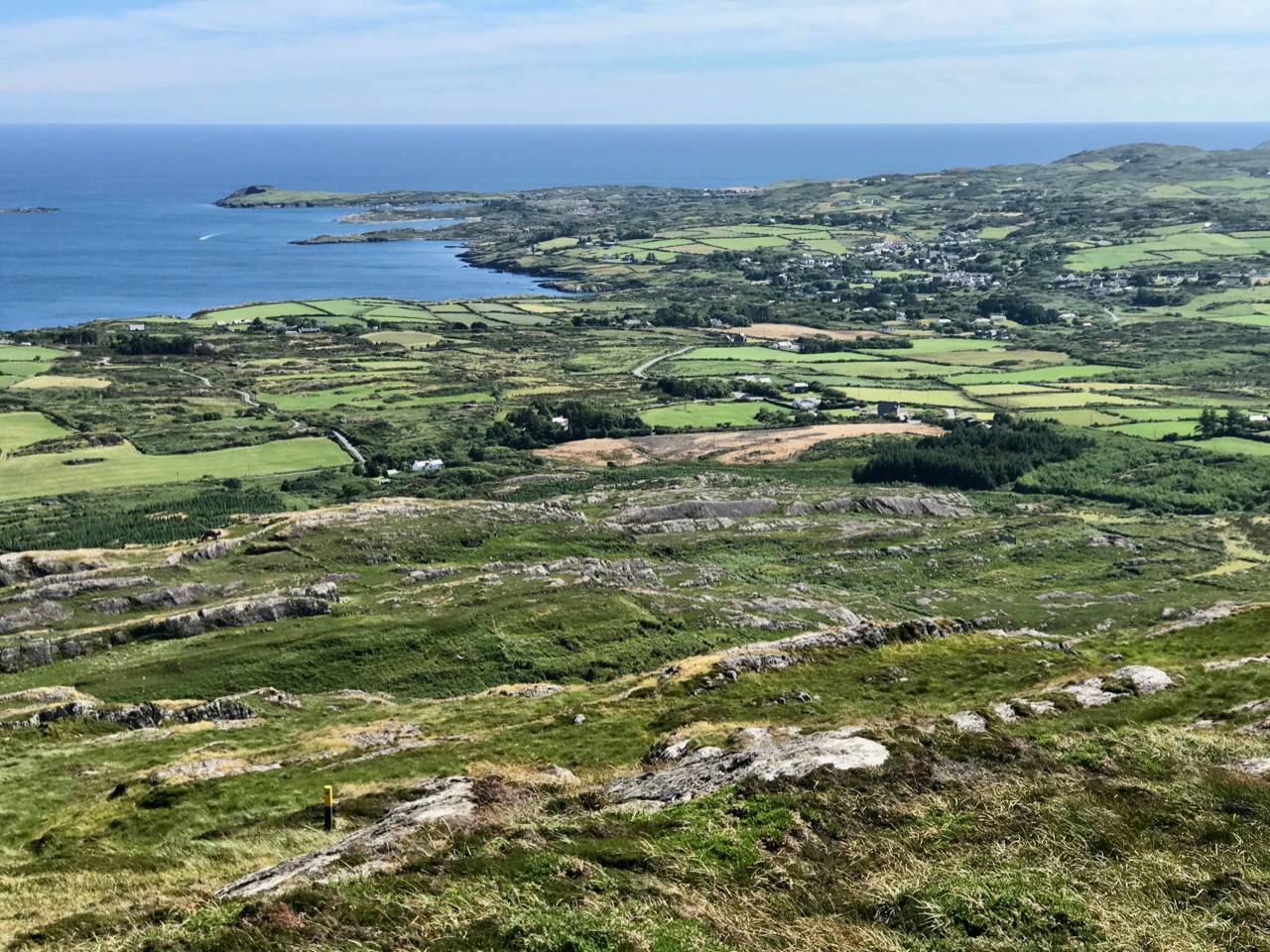
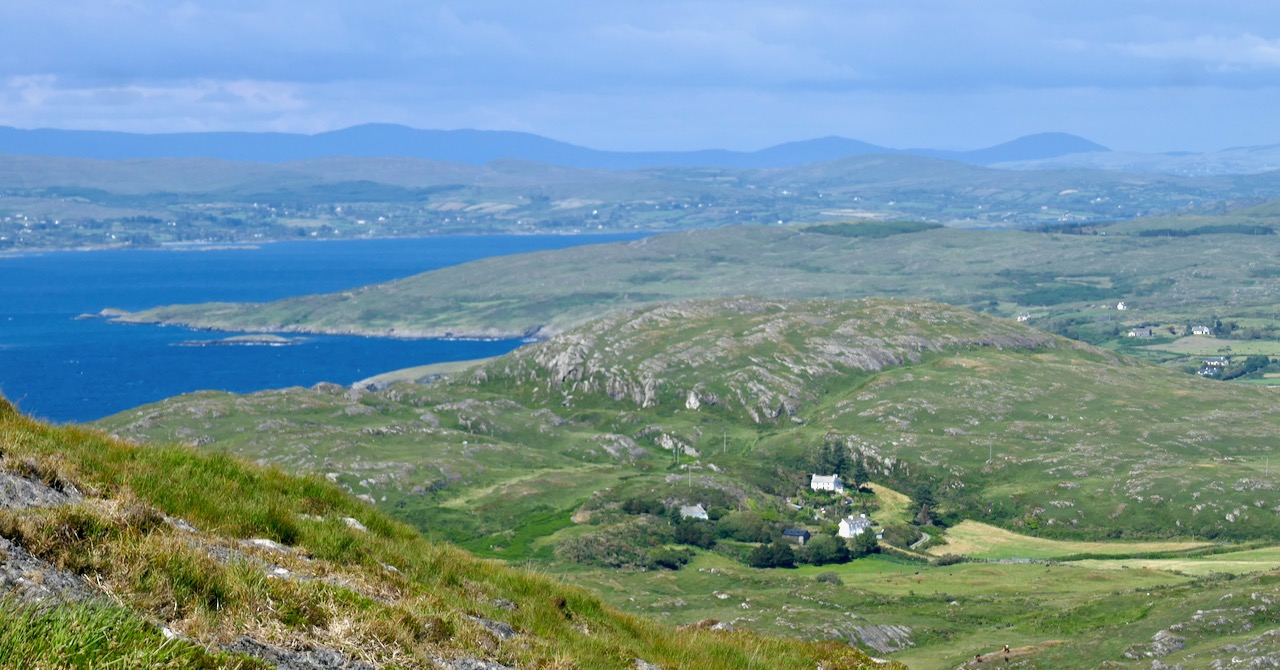
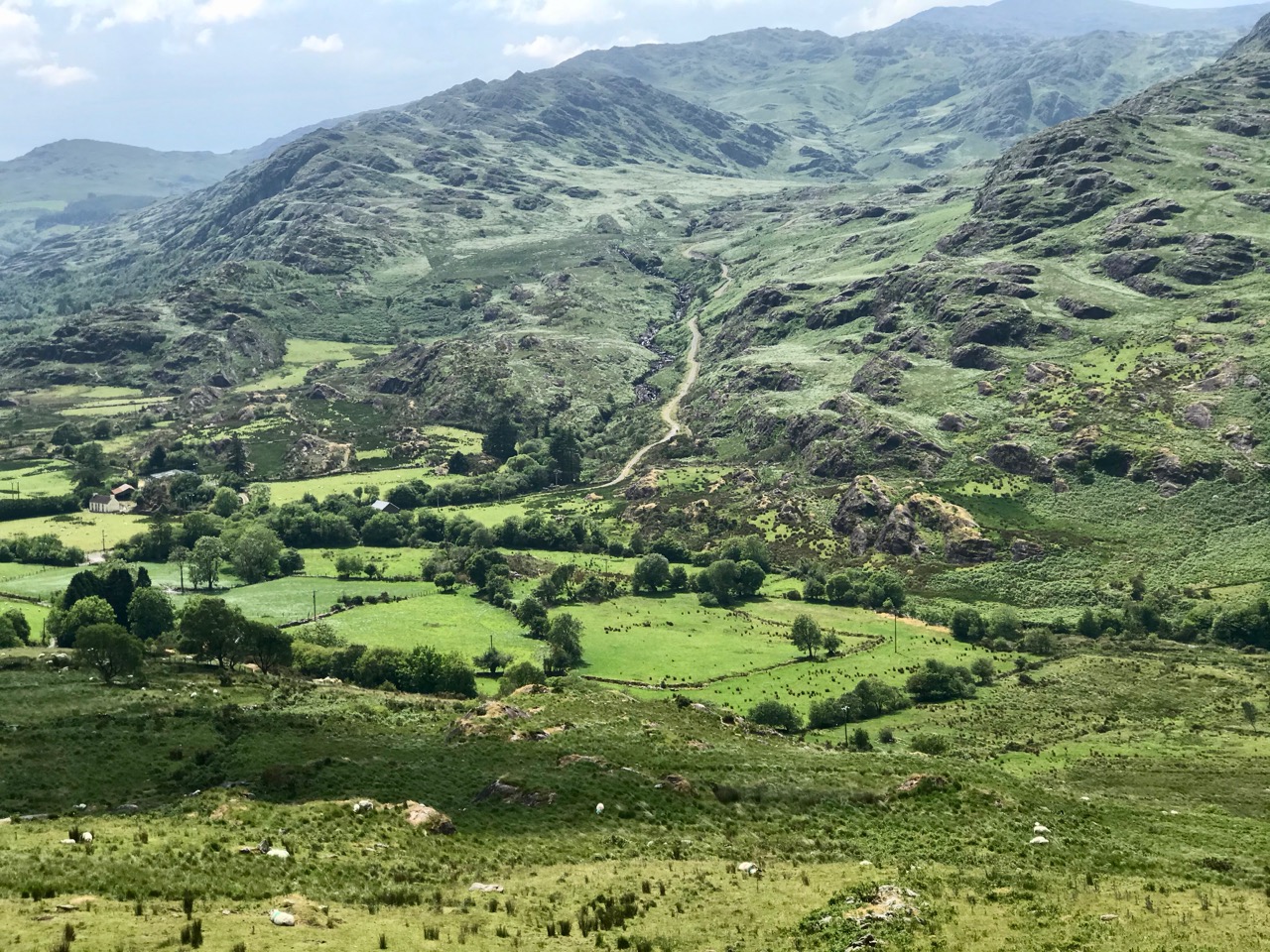
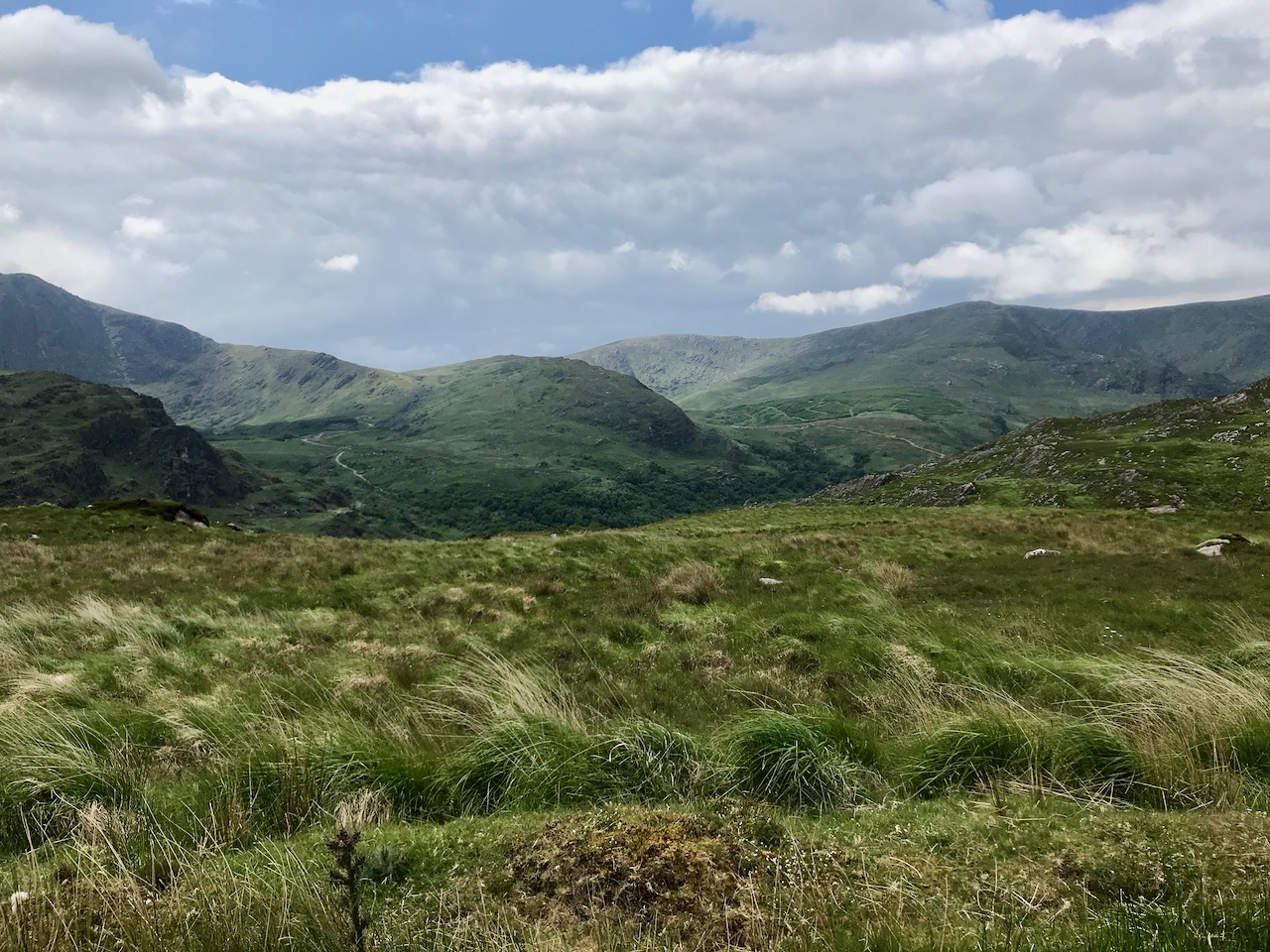
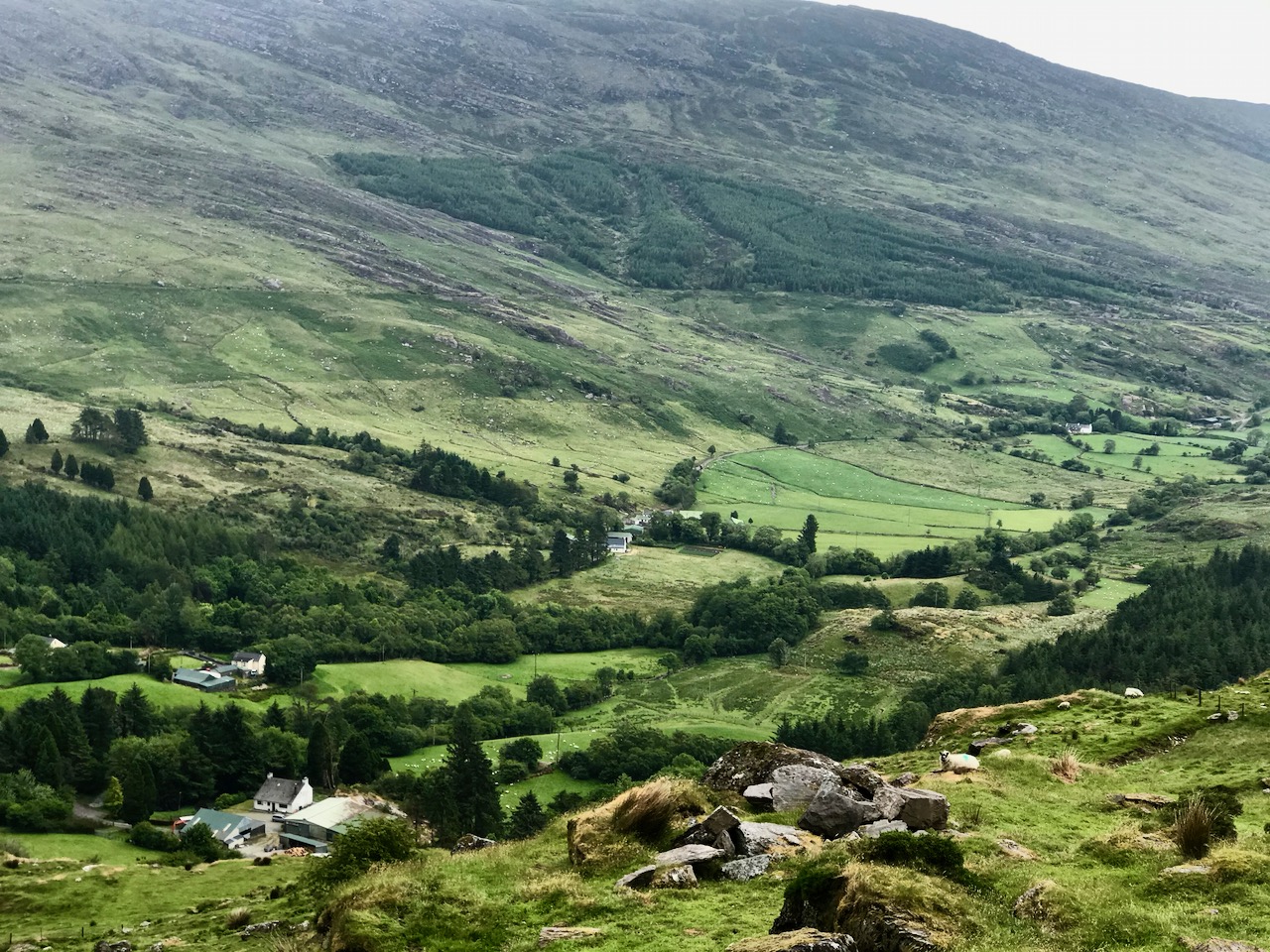
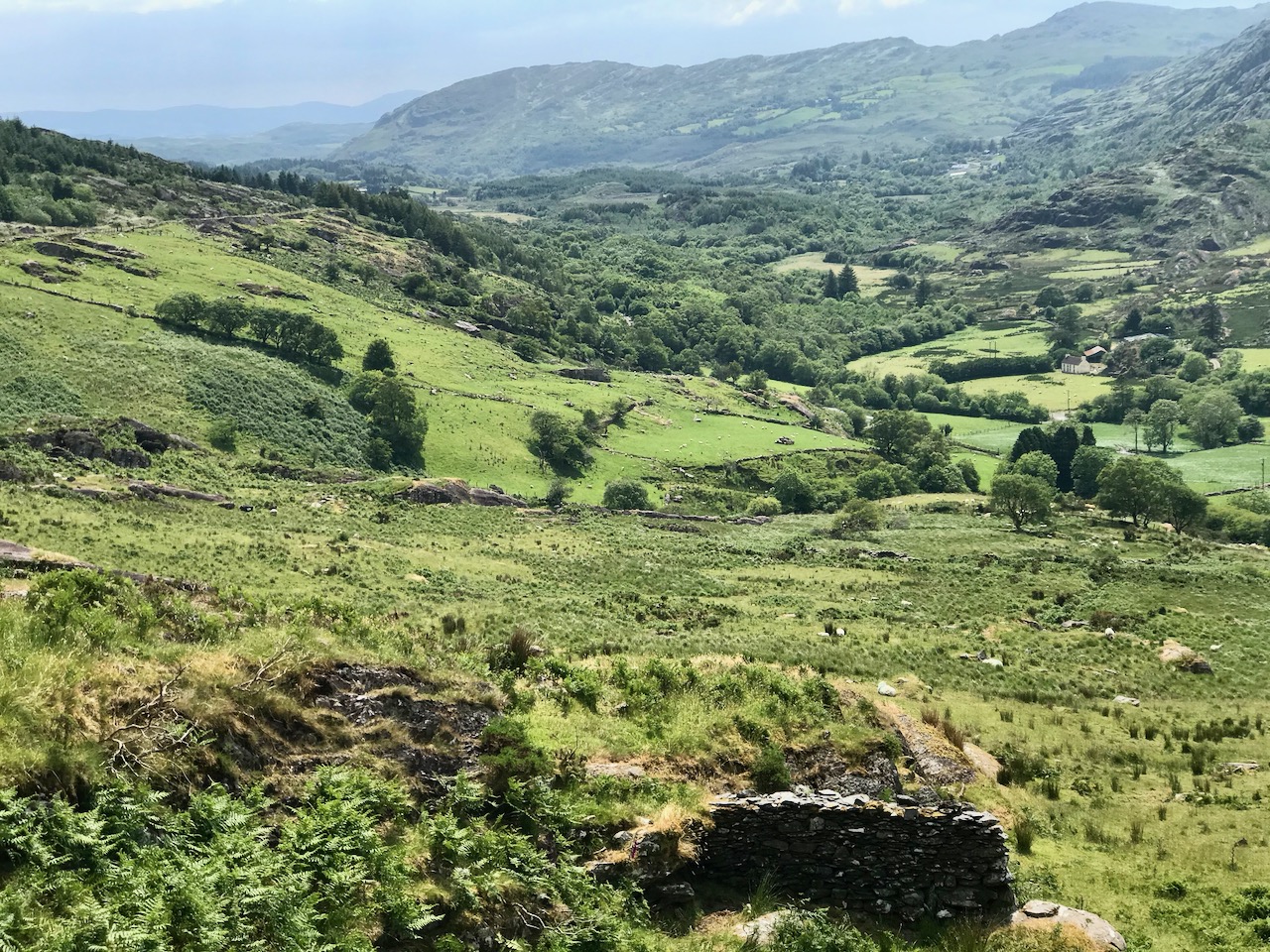
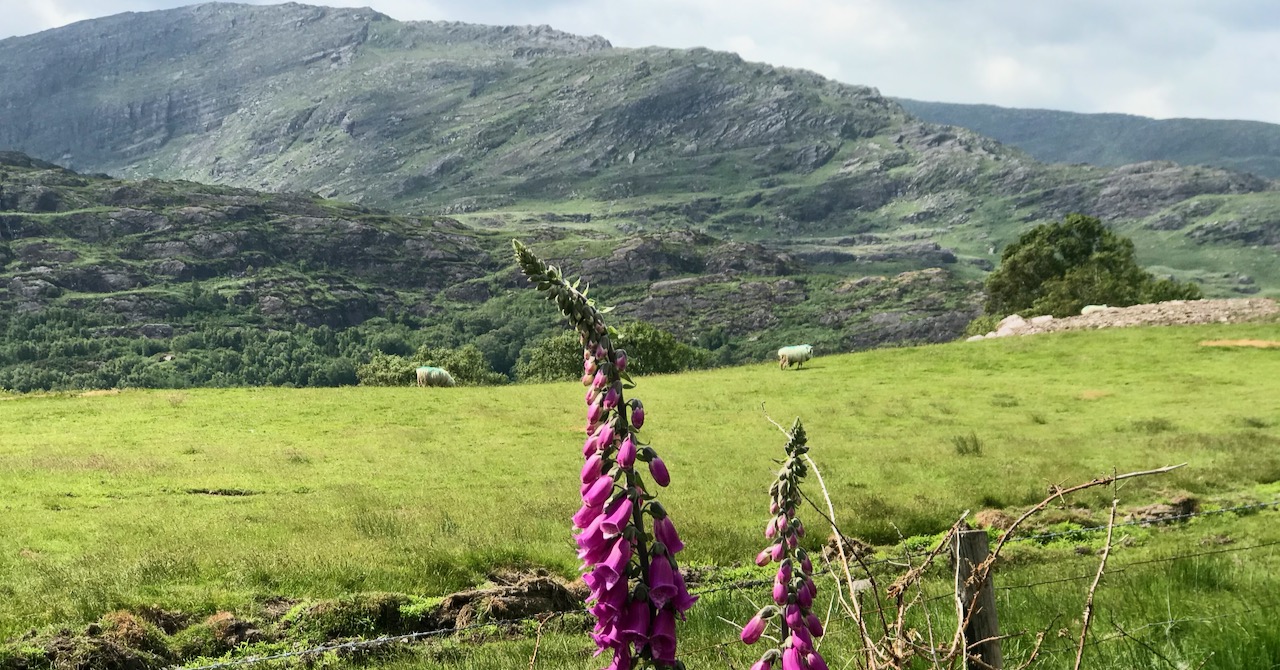
On the header is the spectacular view from Borlin, looking down the great glen where the Coomhola River finds its way through a country formed by glaciers in the Midlandian period, about 10,000 years ago. The rugged Shehy mountain range (Cnoic na Seithe in Irish, meaning Hills of the Animal Hides) with its peaks of Knockboy, Caoinkeen and Kinkeen provides some of the most dramatic scenery in West Cork, its scarred outcrops clearly showing the downward progress of the ice sheets. The contrast between the barren high land and the lush pastoral meadows laid out below evoke a beauty which is hard to match – anywhere in the world!

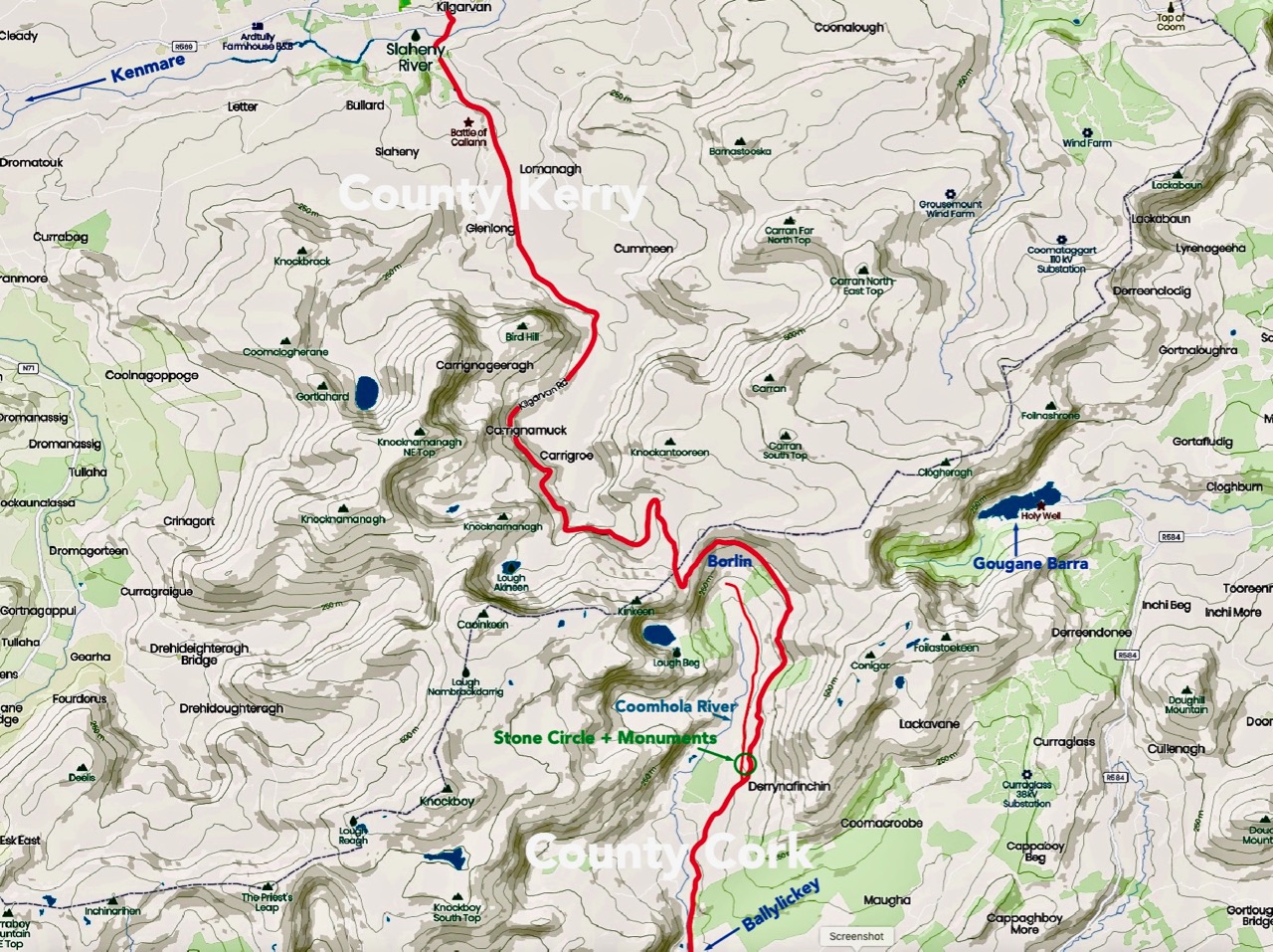
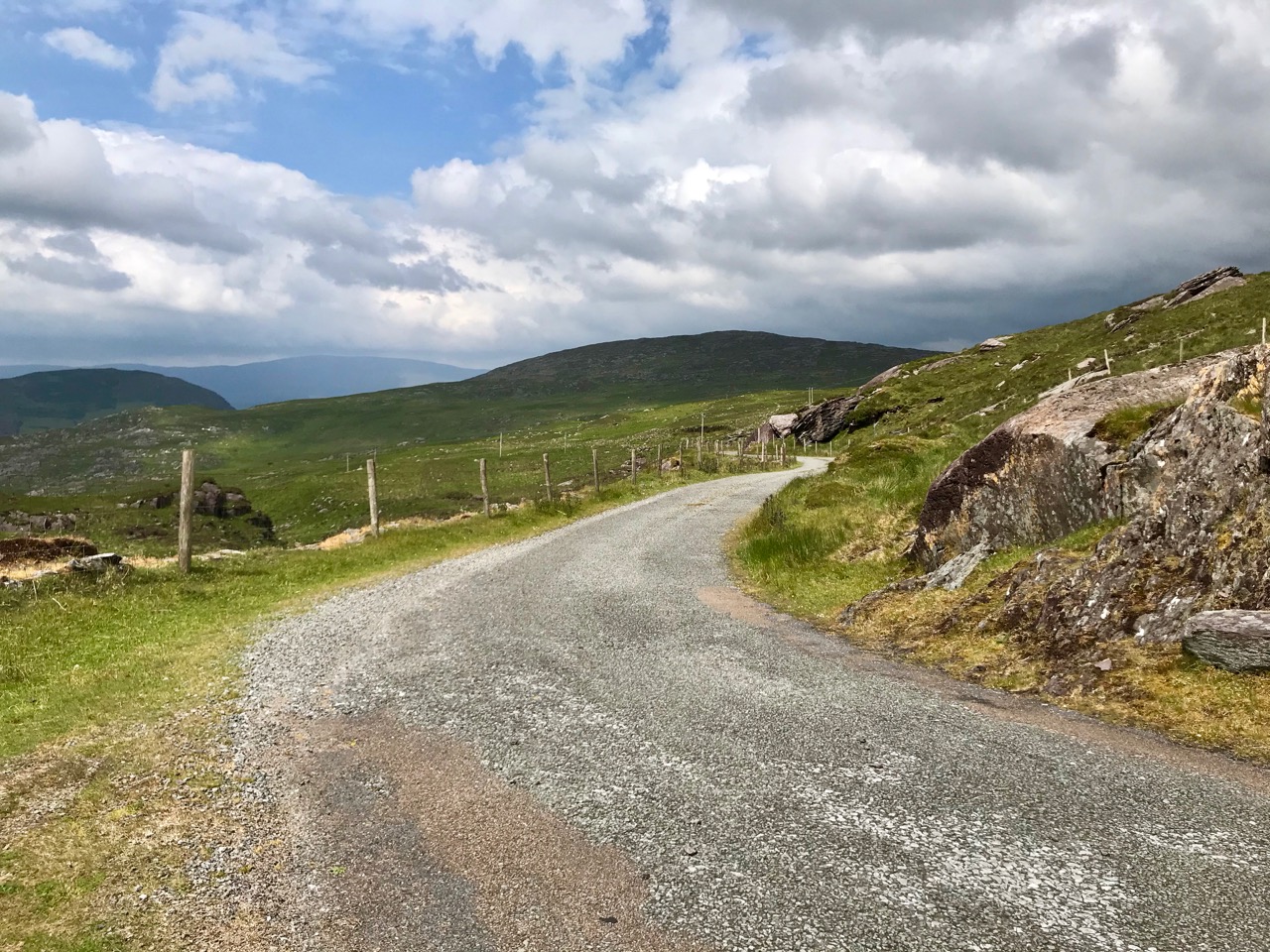
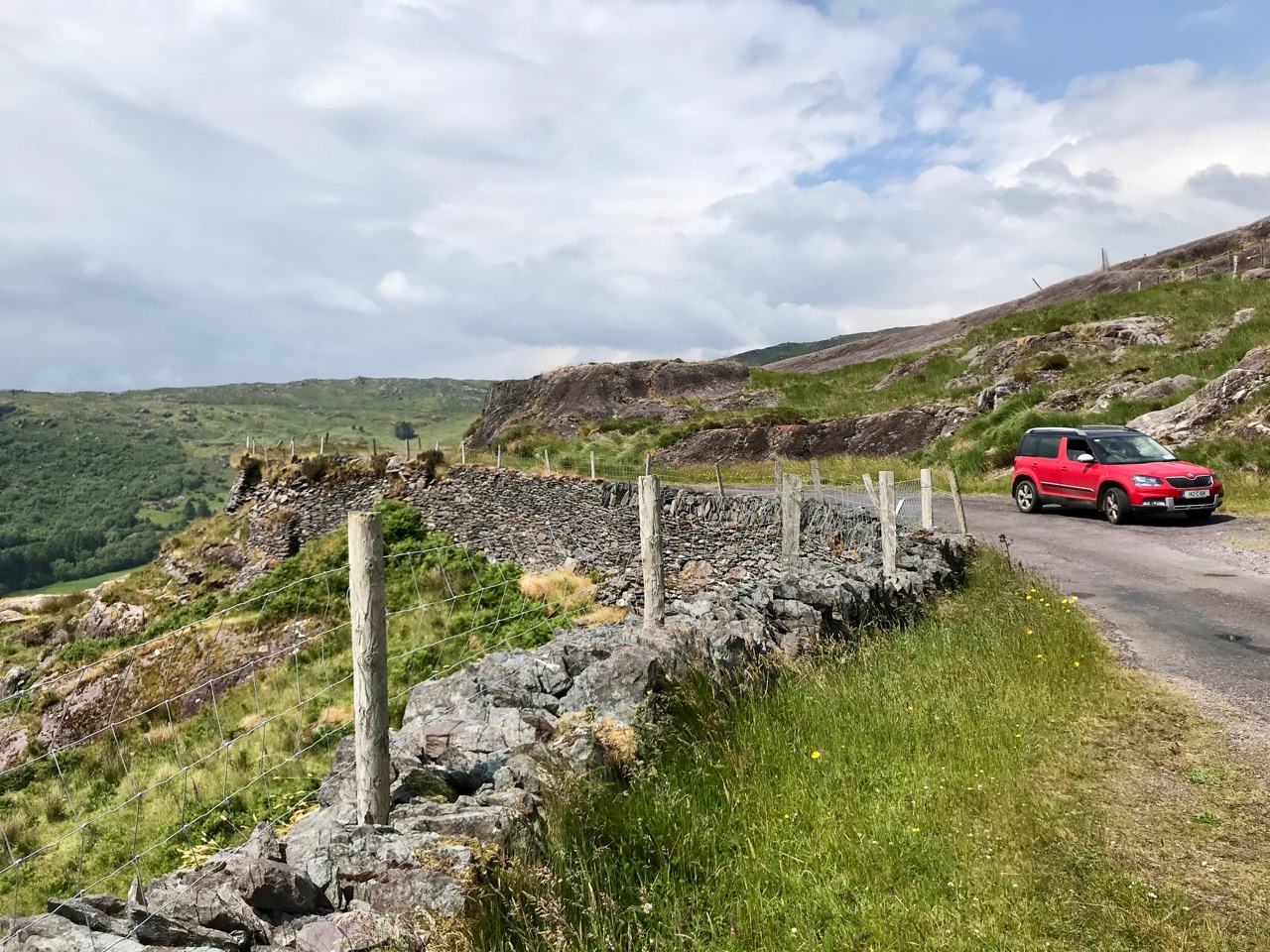
The Kilgarvan (Co Kerry) to Ballylickey (Co Cork) road is one of the unsung feats of Irish engineering. Until the middle of the nineteenth century it was no more than a system of ‘nearways’, providing rough, narrow access tracks to remote mountain dwellings and hard-won field systems. A famine improvement project c1846, involving metalling, a tunnel, cuttings and stone retaining walls, transformed it to the ‘through road’ which exists today – although it may seem to us no more than a boreen. It’s there for all to travel on, and will provide a breathtaking experience – but be aware that it could also deliver some hair-raising reversing episodes on the rare occasions when a vehicle is encountered coming the other way. The upper photo shows the road ‘clinging on’ to the face of a mountain outcrop, while the map gives a good idea of the circuitous route that the way takes to keep as far as possible to a level contour on its journey.

This is the country of St Finnbar. If you follow the County border east from the top of the Borlin Glen (off-road) you will very soon come to the site of his sixth century monastic settlement at Gougane Barra. This whole area was loved by the Cork born writer and illustrator Robert Gibbings, whose book Sweet Cork of Thee tells of a seven month sojourn in this mountainous region in 1949, beautifully illustrated by his woodcuts.

Mountain Road by Robert Gibbings, woodcut from Sweet Cork of Thee, published 1951

As we drove along the road beside the Inchigeelagh lakes, we could see moorhens gathering material for their nests among the taselled reeds and swans on islets, piling up dead rushes in readiness for their eggs. A corncrake was calling from a meadow. Celandines and kingcups outshone the gorse.


Mick said to me: ‘My father’s sister lived a mile to the north of us here. She married a man by the name of Scanlan. His mother came from Gougane and ’twas one evening when she was travelling west by the lake – there was no road there then, only a little bit of a track – she looked in the lake and what did she see but fields of corn and sheep and every sort of land and crop and stock. She was an old woman at the time and she knew well enough ’twas a kind of enchantment must be on the lake, so she says to herself, if I can keep an eye on it all and throw a bit of iron at it the spell will be broken. So she kept her eyes fixed on the fields and the cattle and the pigs and the hens, and all the time she was thinking where would she get a bit of iron. And the only bit she could think of was in the heel of her shoe. ‘Twould be worth it to throw in the shoe, says she. But when she went to unrip the lace wasn’t it tangled in a knot, and for the glint of a second she took her eye off the land. When she looked again ’twas all disappeared and the lake was there the same as ever.’


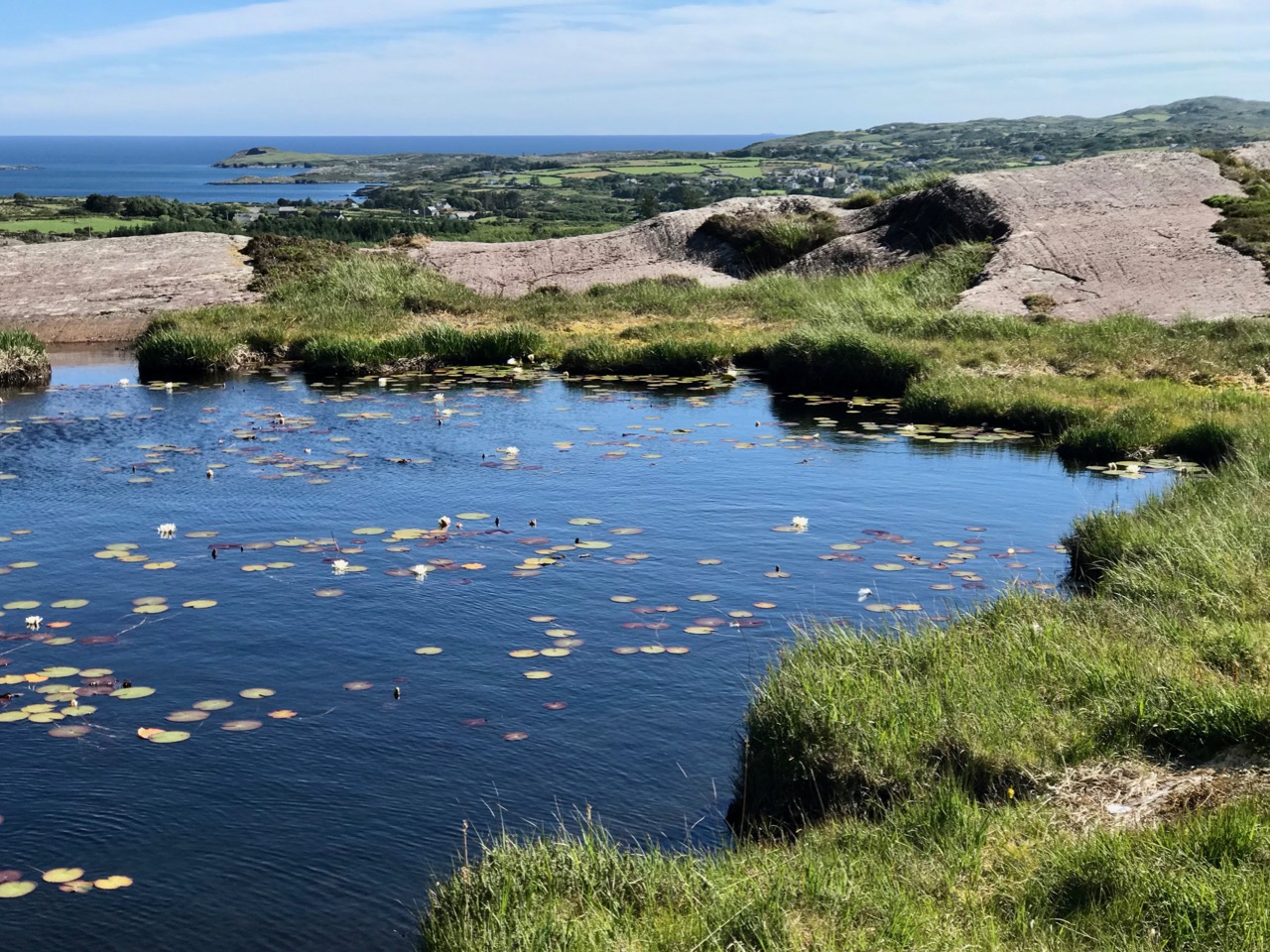
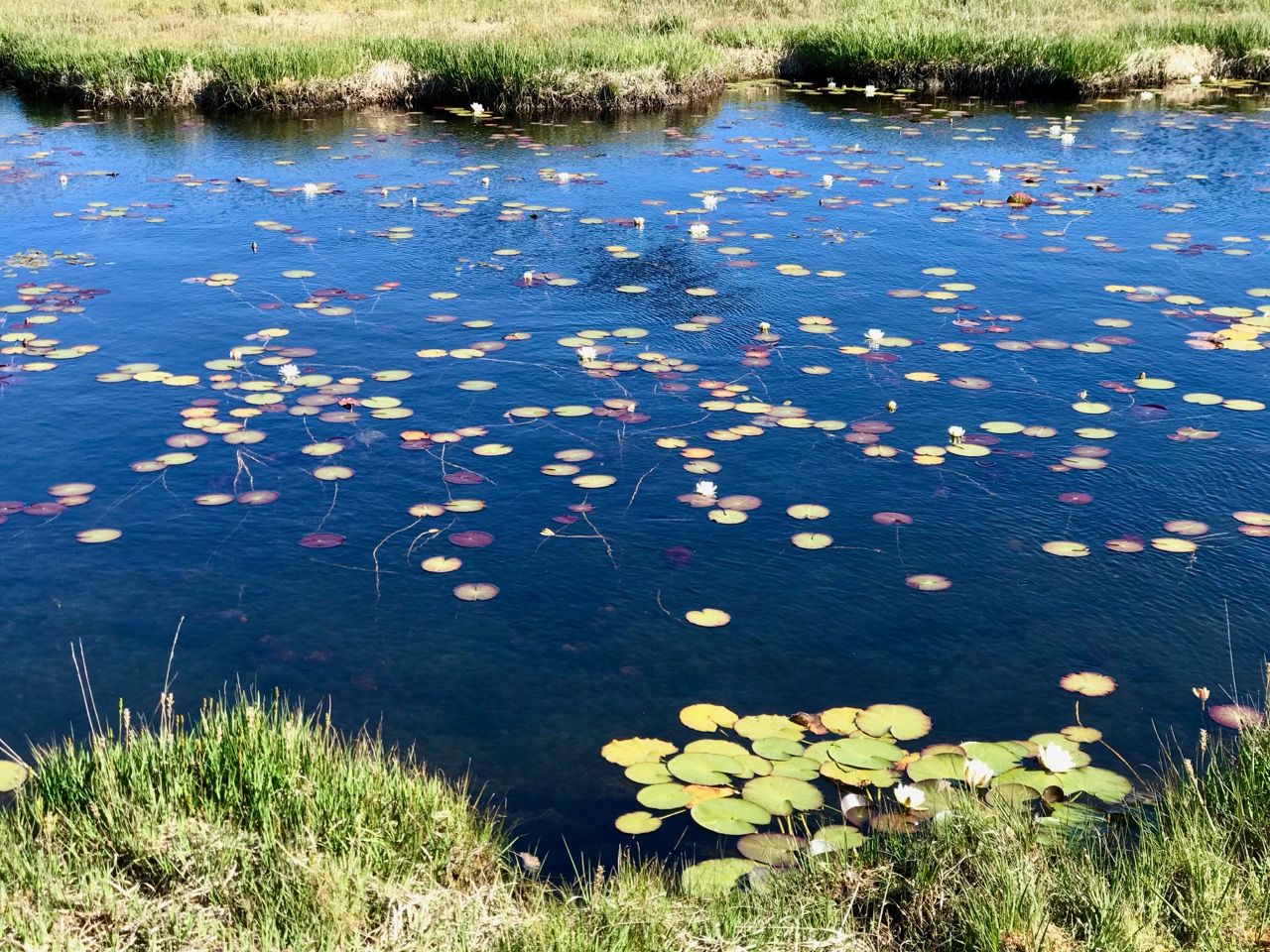
Our road turned south, through a wilderness of rock and bog and lilied pools . . .


[Robert Gibbings Sweet Cork of Thee, J M Dent & Sons 1951]

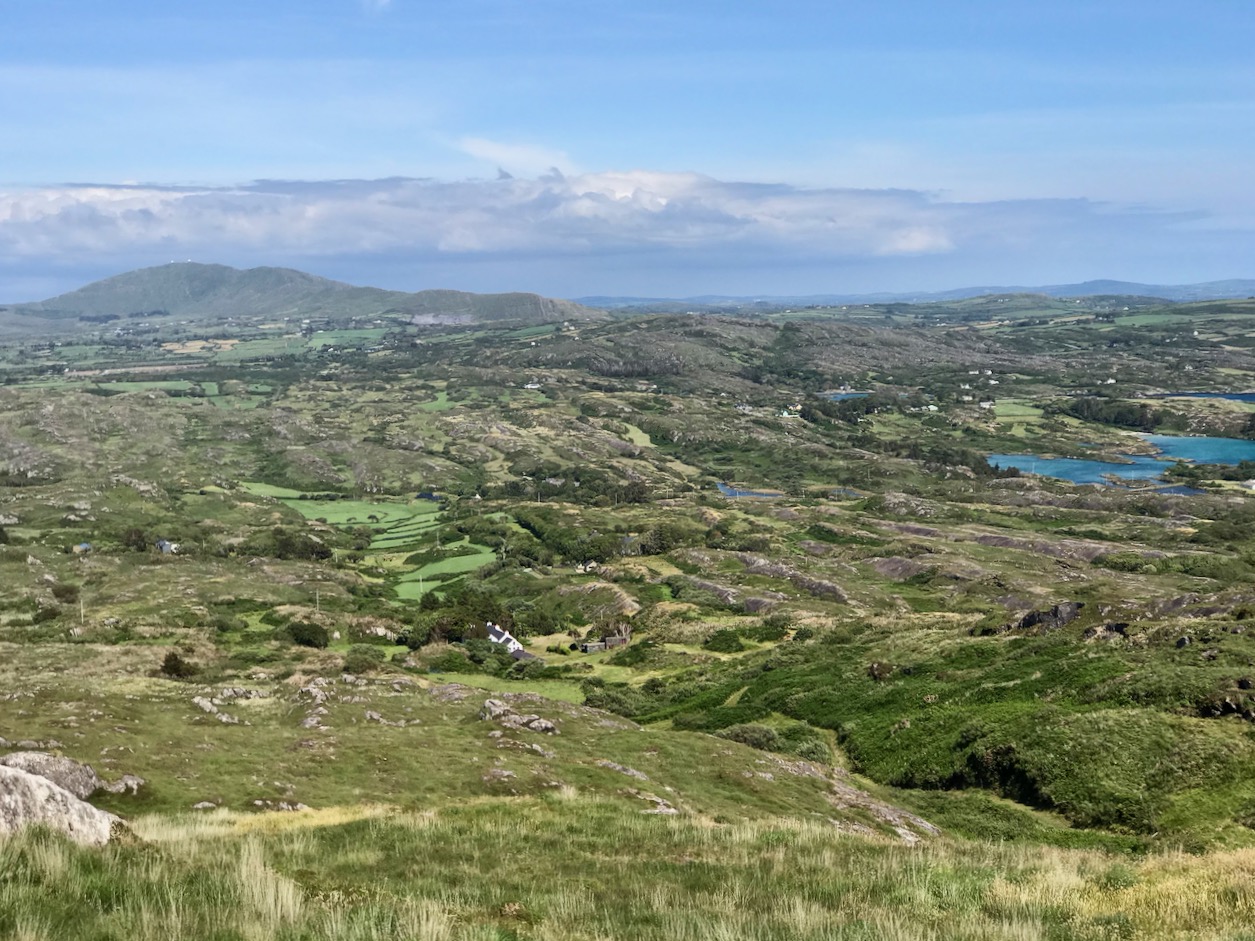
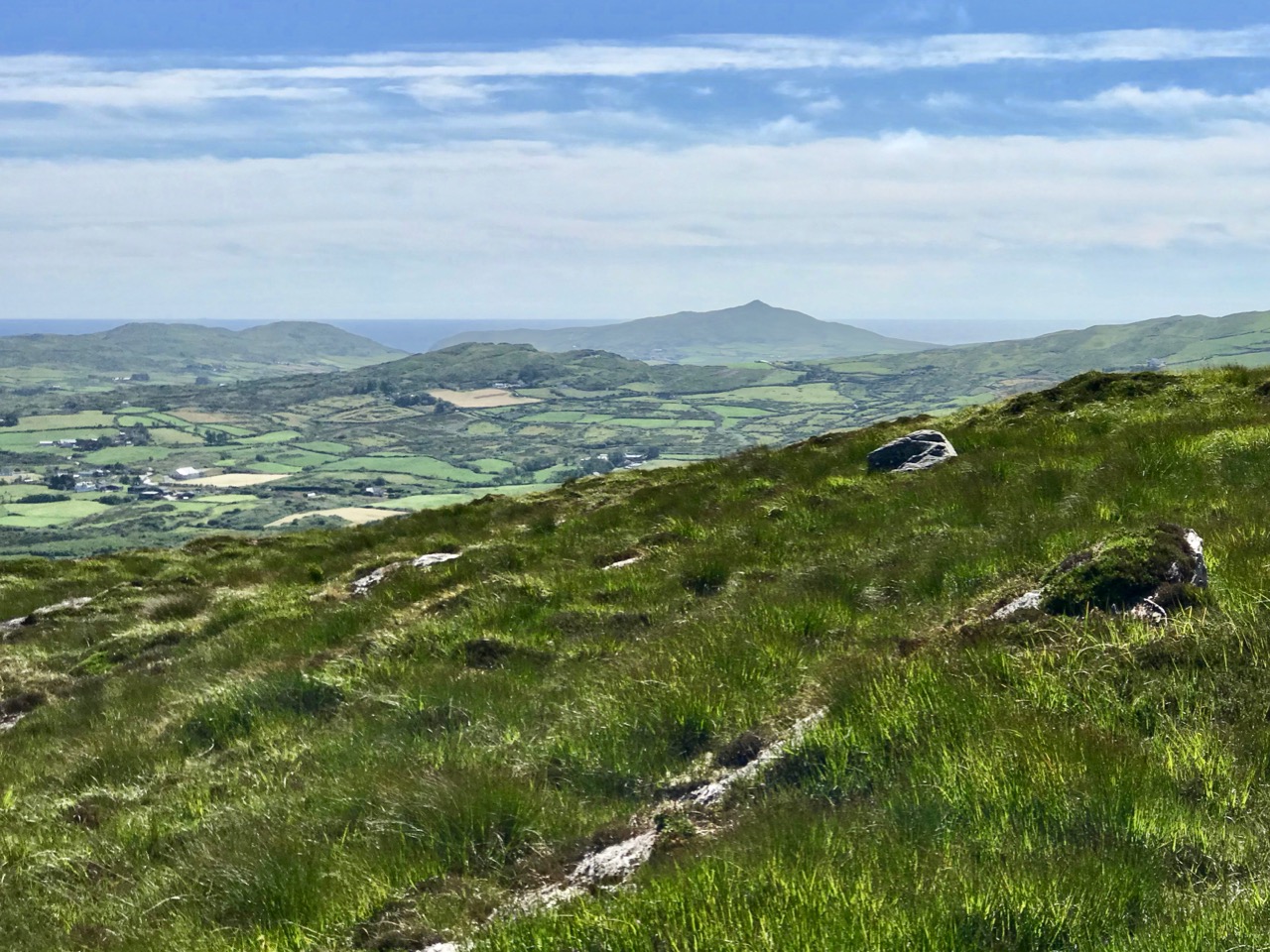
From the highest rim of Borlin Glen (upper picture), the Comhoola River valley is laid out below. Home to sheep and ravens, the scattered farmsteads emerge from rock and forest and provide a living – as they have for countless generations – to a hardy people.

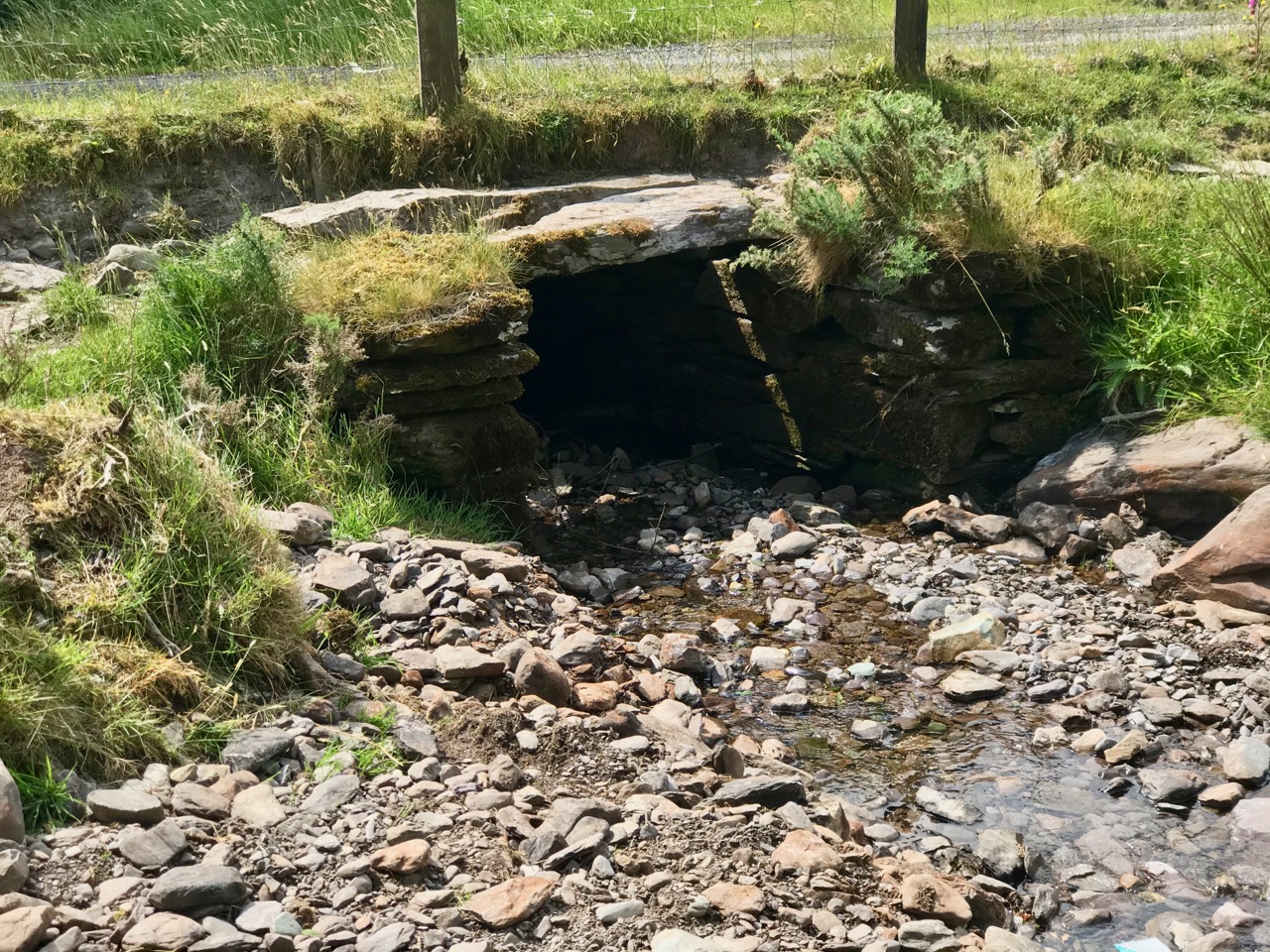
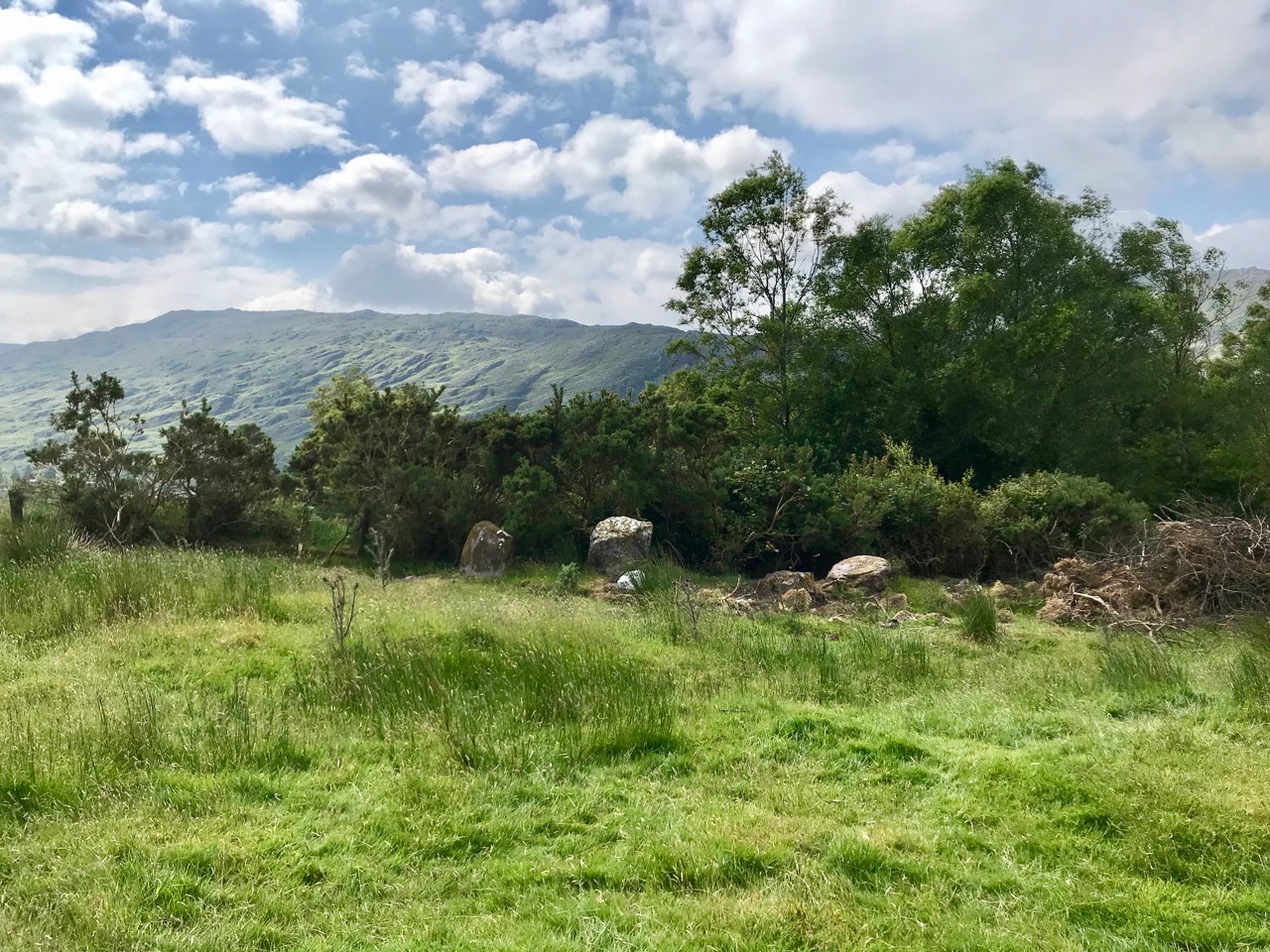
On the lush valley floor are signs of ancient activity and occupation. A stream flows through a meadow dotted with whitethorn trees (upper), while an old stone clapper bridge has been superseded by the modern boreen taking its way up to the Borlin Valley settlements (centre). Lower – a fascinating stone circle and mass rock site is interrupted by the field fence. Here, too, is a bullaun stone and cupmarked rock (below).

Let us give the last word to Johnny O’Driscoll from Snave, recorded by his grandson Sean O’Driscoll in the 1930s and featured in Julia Kemp’s Hidden Gold:

There is little gold in this area, but there is one place where it is said a crock of gold is buried. It is about a hundred yards from the Glaslough, between Coorycomade and Ardnatrush, about a mile and a half from Coomhola National School.


There is a bush growing at the exact location, and beneath the bush is a large stone which covers the hidden treasure. It belongs to a tiny dwarf, and anybody who visits the place at midnight can see this little creature on the bush above the gold.


People did go on one occasion in search of the gold, but they were unsuccessful. A little bright light is visible about midnight above the bush. I have seen it myself on several occasions . . .

A Hobby Horse in Ireland?

Surviving tradition in Ireland – a May garland seen on a threshold in Schull, West Cork. on May Day this year

We are in the month of May. How significant is that here in Ireland? Well, if it’s any indication, it’s a fact that Irish folklorist Kevin Danaher (1913 – 2002) gives far more space in his writings to May and traditional May customs than to any other single subject or season.

Kevin Danaher of Athea, Co Limerick, at the Irish folklore Commission in 1954. the photographer was Dorothea Lange, who features in this post

In the west of England, which has always had close links with Ireland in terms of language, culture and industry – the month of May has long been celebrated with a strong focus on the ‘Hobby Horse’, a phenomenon which bridges the worlds of superstition, spectacle and folklore. In two places – Padstow in Cornwall and Minehead in Somerset – Hobby Horse (or, colloquially ‘Obby Oss’) festivals are huge events – usually. In 2020, sadly, both had to be cancelled due to Covid19 restrictions: probably the first time in hundreds of years that they have not taken place. The Minehead Oss has a recorded history that goes back to at least 1465, while in Padstow they will tell you that the Obby Oss has been revered forever on the First of May with never a break.

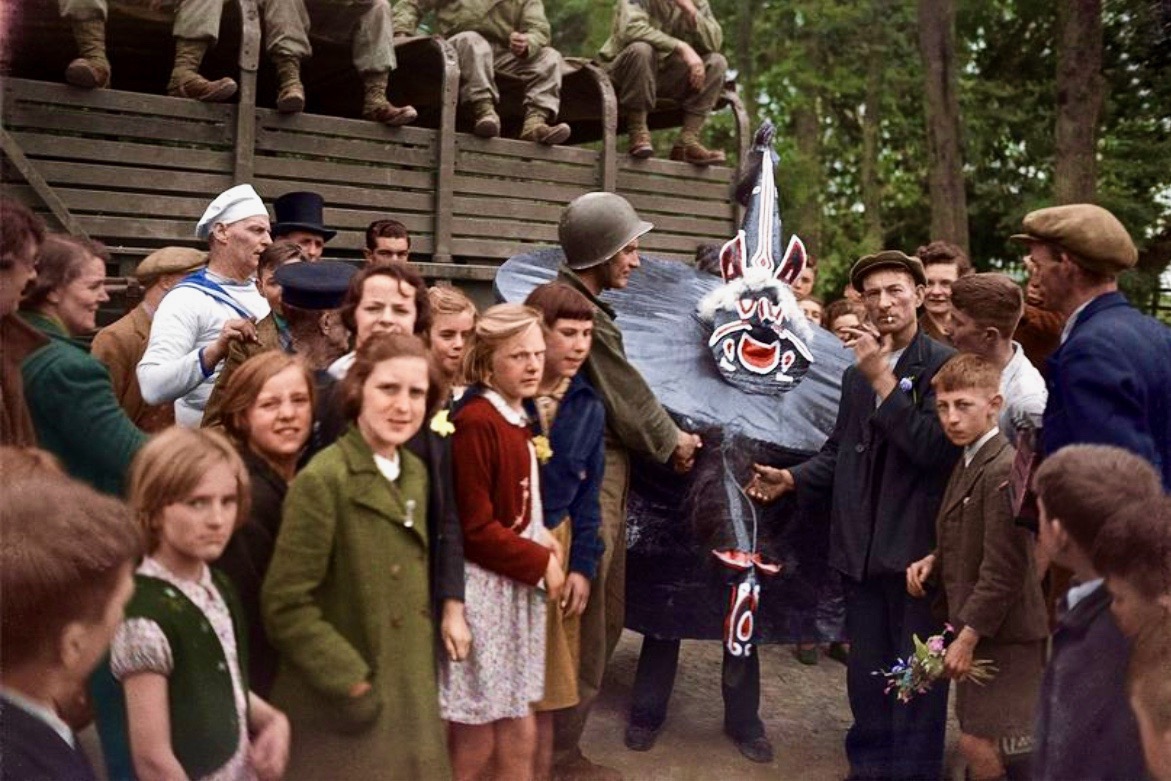
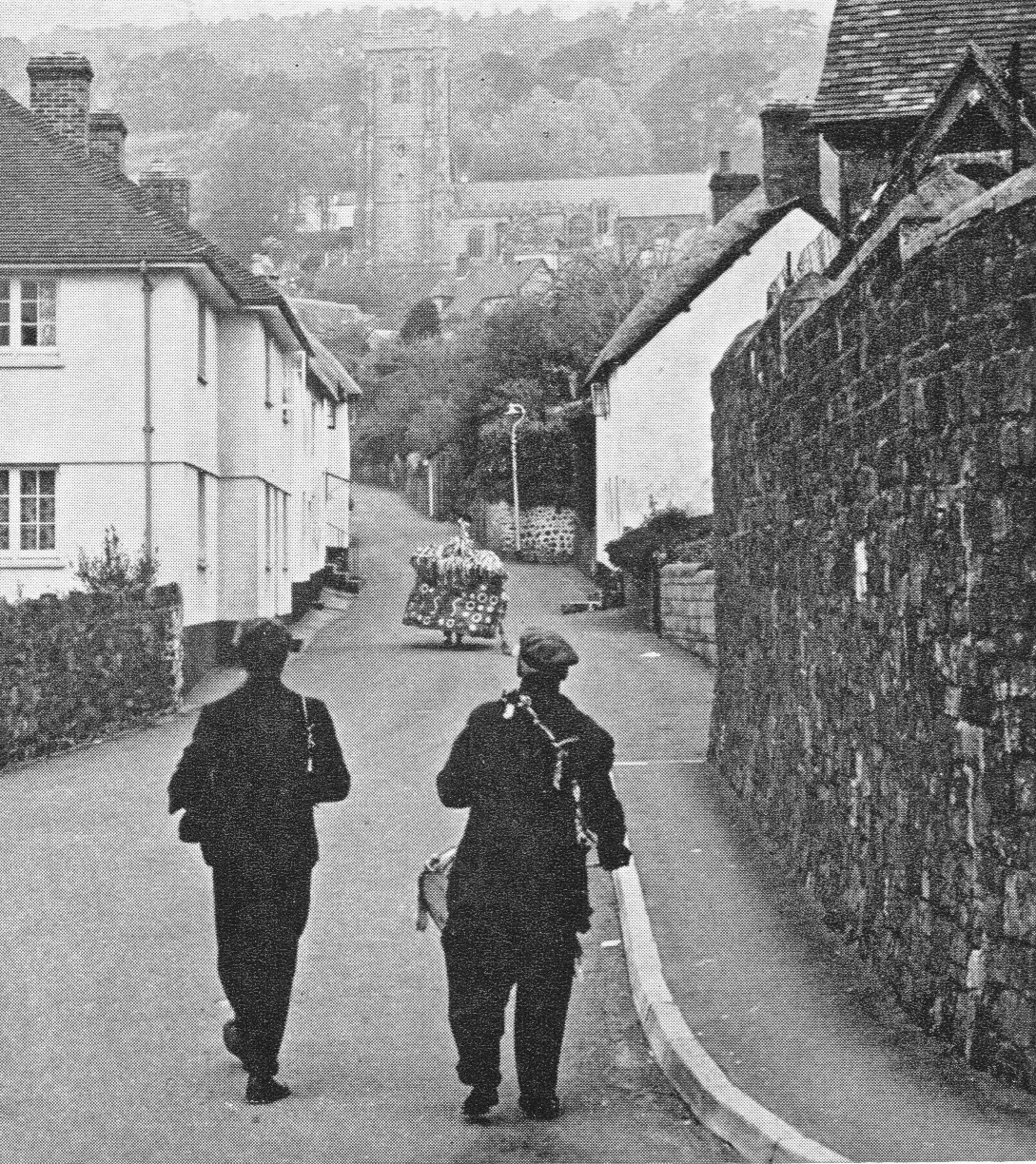
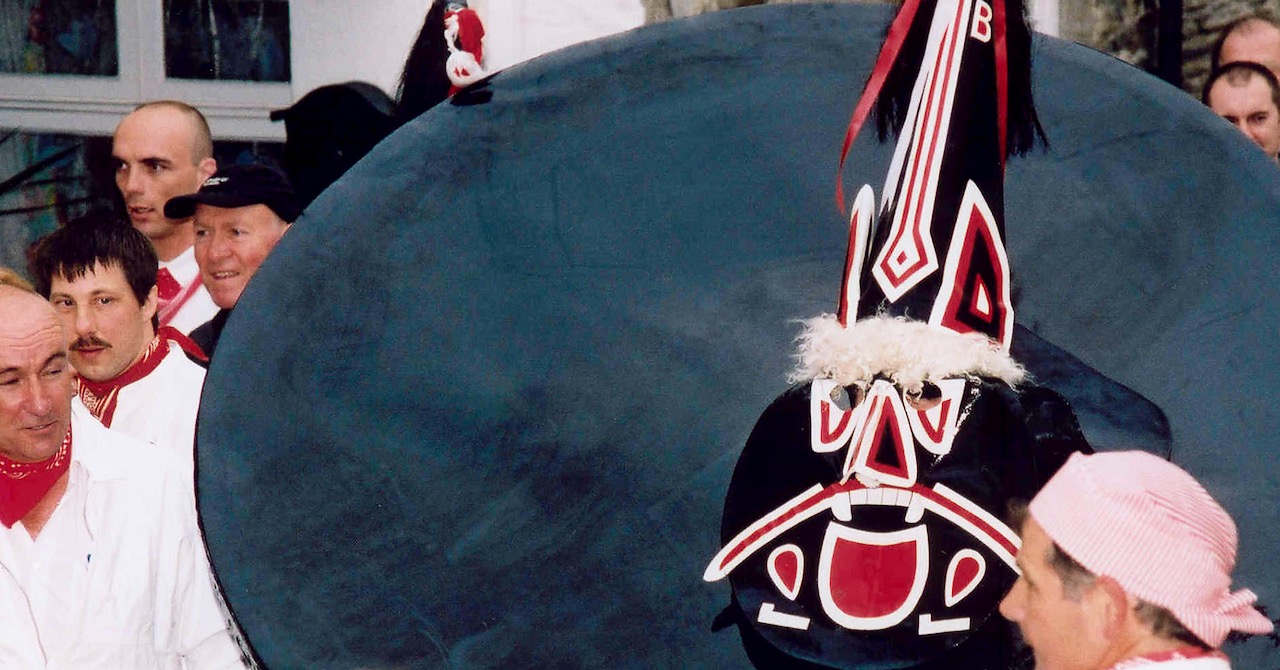
The Padstow Oss has survived through peacetime and wartime. This rare photograph (above) – attributed to Joshua Barret – was taken in 1944, while the early 20th century photograph (below) of the Minehead Oss is my all time favourite of a folk custom: the Oss always has and always will perambulate the town every year, even if no-one is interested in watching it!

As we find this very strong May tradition thriving (usually) in the west of England, we might expect to see an equivalent in Ireland, but you can’t immediately think of a Padstow or Minehead equivalent. Oh, yes – the Hobby Horse is purely Irish, in that there was once a now extinct breed – called a Hobby – which is said to have been the genetic source of all race horses since pre-Roman times!

. . . It is possible to trace the root of the Irish Hobby back to the northern Iberian Peninsula where this peculiar population of horse seemed to first be recognised about 700 BC, identified as the Celtic Horse. It was a small horse, gaited and exceedingly fast. It was the fastest horse in the known world back then, by 400 BC the Greeks called them the Thieldones and immortalized them on the frieze of the Parthenon, and this breed was already the Roman’s preferred steeds for racing. Pliny even writes about them in 77 AD, and we know when the Romans invaded Britain they brought those horses with them. But the Romans found that when they arrived they were met by the natives who had Celtic Horses already–horses which had been brought to Britain centuries earlier in trade from Spain by the Phoenicians for the metal mined there . . .

(Source – Sport Horse Breeder.com)

I won’t dwell on this idea that the Irish Hobby Horse was the ancestor of all modern pure bred sports horses – and was probably responsible for the innate Irish love of everything to do with horses and sport – as I am getting completely out of my depth here, and it’s all a bit off-topic anyway! Although, who knows how and where that name might have migrated over the centuries?

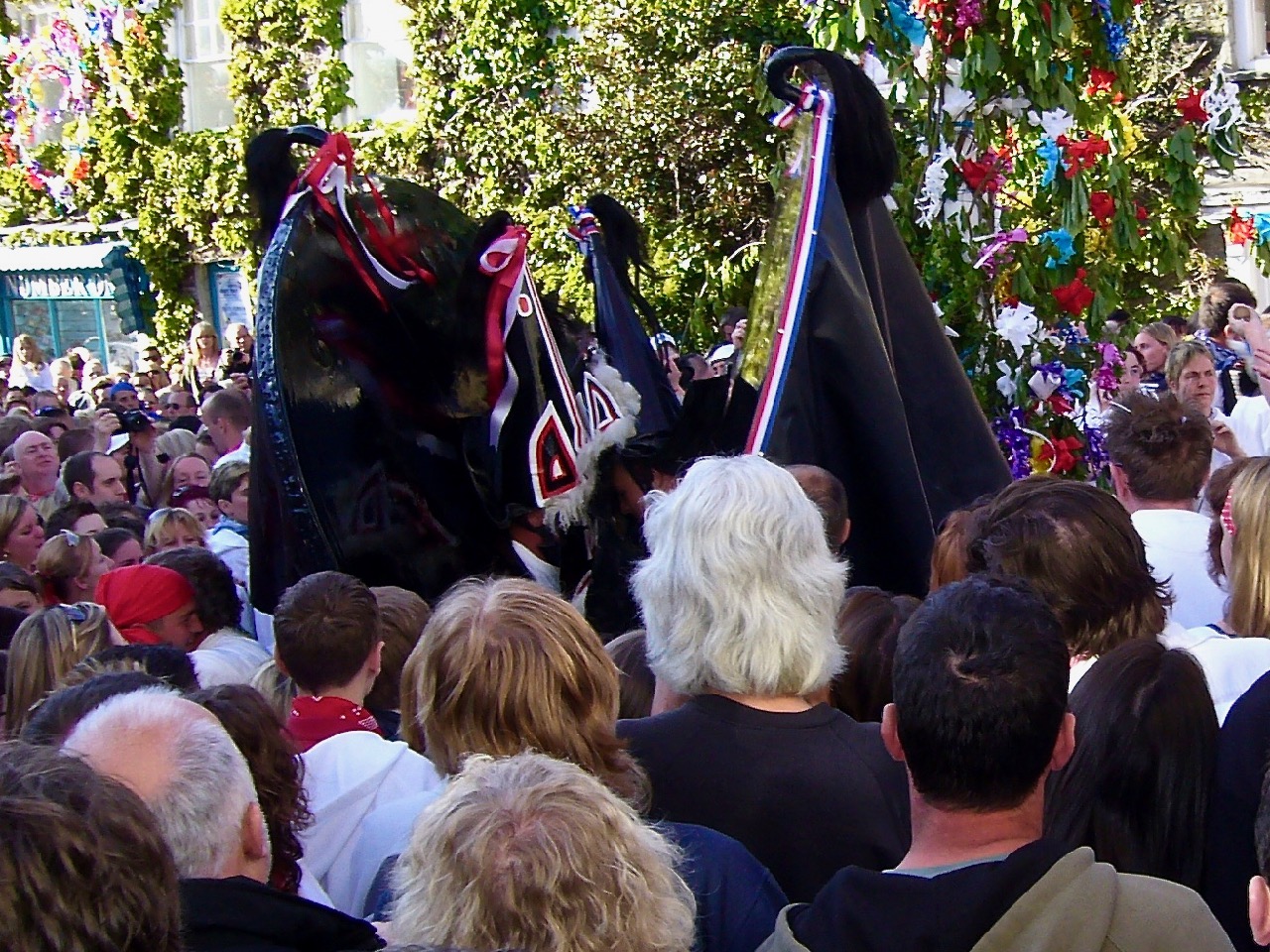
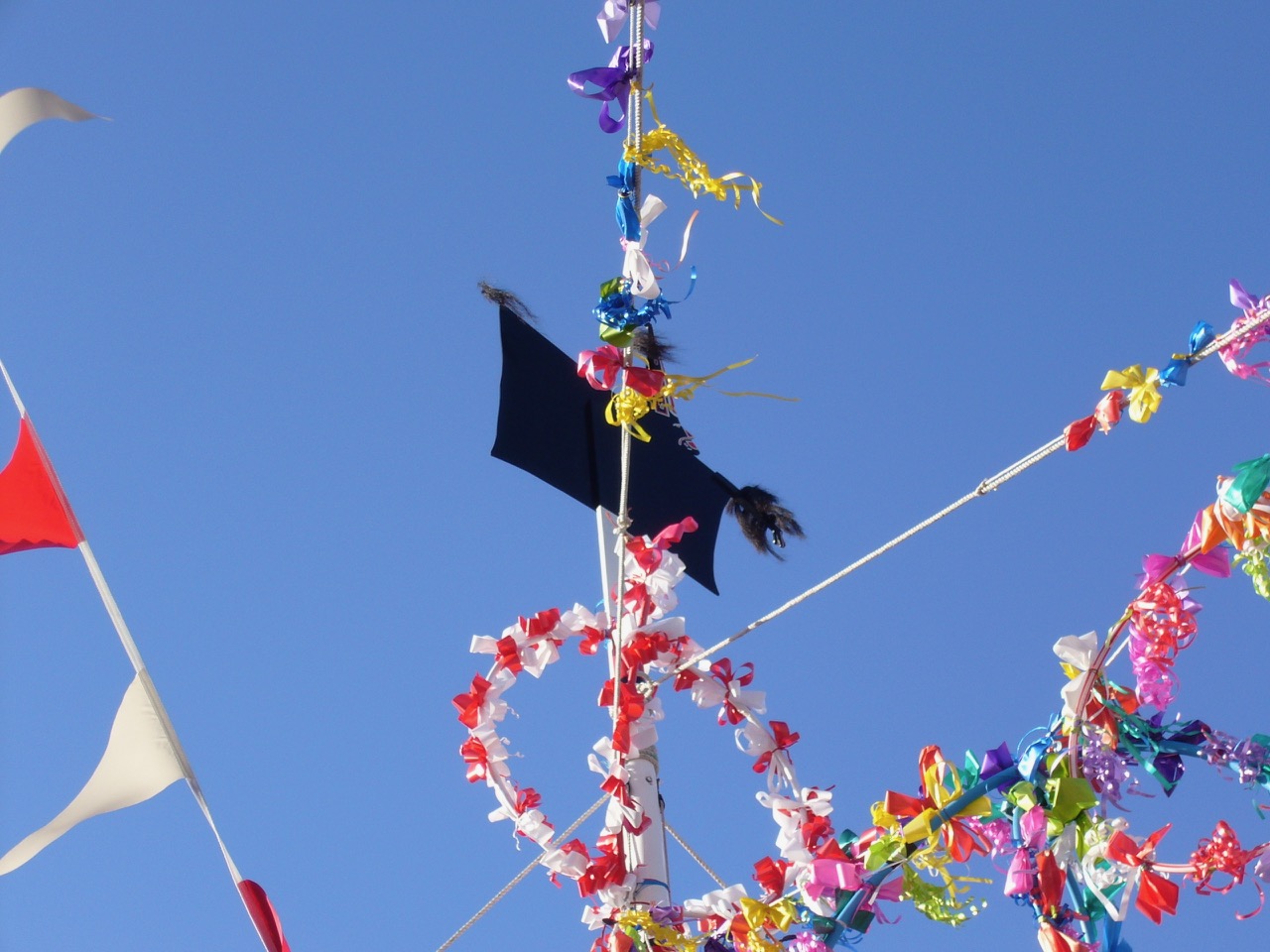
The culmination of the Padstow ceremony on May Day is the ‘meeting’ of the Red and Blue Oss at the huge maypole in the Town Square on the evening of the day (above). They have to close the town to all traffic because of the enormous crowds who attend, and you can see why the ‘social distancing’ rules could never have been applied to the event. Let’s hope that in future years ‘normality’ will have returned sufficiently to our lives to ensure that these ancient customs continue. In my lifetime I have been to Padstow on May Day at least thirty times, and also to Minehead on many occasions: I have good memories of them both.

In order to find a precedent in Ireland for a traditional Oss, I have mined the enormous archive that Kevin Danaher left behind in the Irish Folklore Commission, and I am pleased to report a whisper of success! Danaher uses various sources to summarise an account of traditions taking place in Ireland on May Day:

From the diary of Joshua Wight, a Quaker, we learn that so late as the middle of the eighteenth century, propitiatory rustic processions took place in the south of Ireland. The observer records, that about noon in the month of May, 1752, there passed through the streets of Limerick many thousand peasants marshalled in companies, representing various branches of agriculture…


And Thomas Crofton Croker (1825) tells us of what he calls mummers:


‘They consist of a number of the girls and young men of the village or neighbourhood, usually selected for their good looks, or their proficiency, – the females in the dance, the youths in hurling and other athletic exercises. They march in procession… Two of them bear each a holly-bush, in which are hung several new hurling-balls. the bush is decorated with a profusion of long ribbons which adds greatly to the gay and joyous, yet strictly rural appearance of the whole. The procession is always preceded by music; sometimes of the bagpipes, but more commonly of a military fife, with the addition of a drum or tambourine. A clown is, of course, in attendance: he wears a frightful mask, and bears a long pole, with shreds of cloth nail to the end of it, like a mop, which ever and anon he dips in a pool of water, or puddle, and besprinkles such of a crowd as press upon his compassions, much to the delights of the younger spectators… The Mummers during the day parade parade the neighbouring villages, dancing and receiving money. The evening, as might be expected, terminates with drinking’.


Patrick Kennedy, in The Banks of the Boru, describes a similar procession:


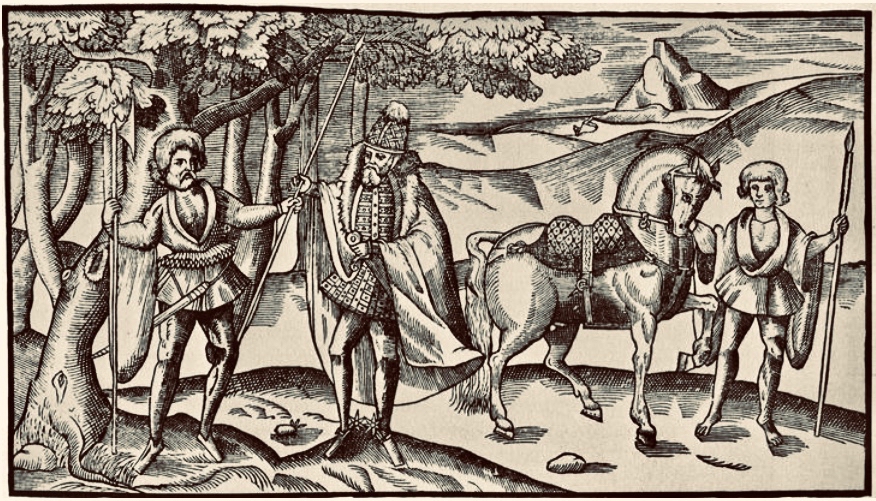
‘After a reasonable pause we had the delight of seeing twelve young men come forth, accompanied by the same number of young women, the boys dressed much more showily than the girls… To heighten the beauty of the spectacle, out sprung the fool and his wife, the first with some head-dress of skin, a frightful mask, and a goat’s beard descending from it. Though we knew that the big bluff, good-natured countenance of Paudh himself was behind the vizard, we could scarcely refrain from taking flight, not being able any more than other children to look on an ugly mask without extreme terror. His wife (little Tome Blanche, the tailor) was in an orange-tawny gown, flaming handkerchief and mob-cap, and had a tanned, ugly female mask, fitting pretty close to her face. Paudh’s first salute to his friends was a yell, a charge in various directions, and a general thrashing of the crowd with his pea-furnished bladder suspended from a long stick. Mrs Clown had a broom, and used it to some purpose when she found her friends disposed to crowd her.’


There is also mentioned by Sir William Wilde, together with something like a hobby horse (Popular Irish Superstitions, 67):


‘From Monaghan we have a graphic account of a somewhat similar proceeding: there the girls dressed up a churn-dash a s a “May babby” and the men, a pitchfork, with a mask, horse’s tail, a turnip head, and ragged old clothes, as a “May boy” but these customs have, we believe, long since become quite obsolete.’

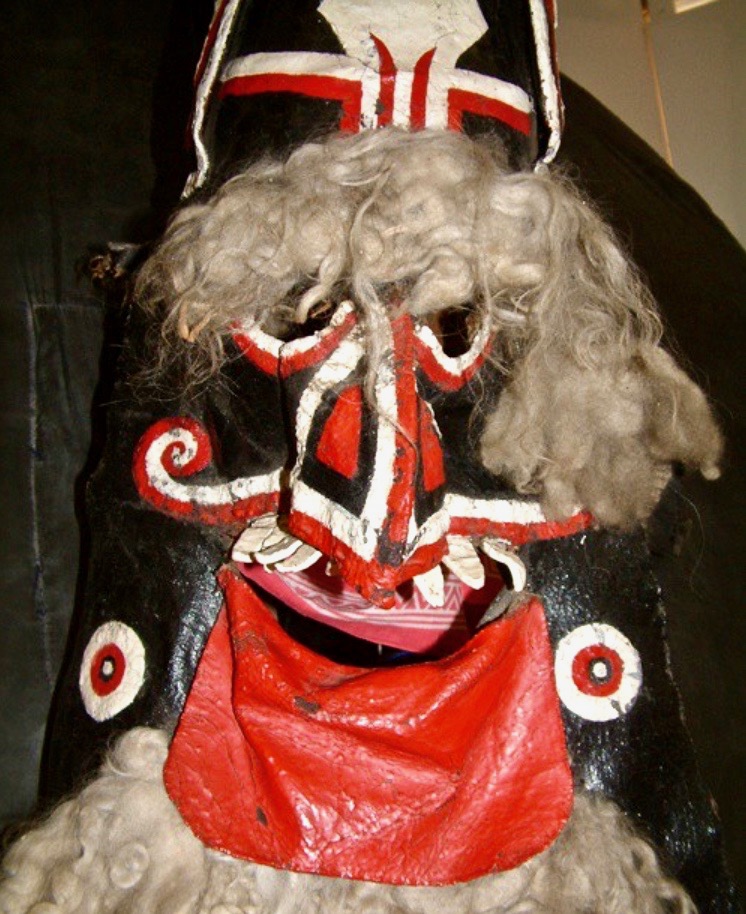
The mask worn by the Obby Oss at Padstow could have evoked the description by Patrick Kennedy, above: some head-dress of skin, a frightful mask, and a goat’s beard descending from it . . . This particular representation, once used in the Padstow processions, is now a museum piece. So here I present my argument that we can find descriptive evidence of traditional Hobby Horses in Ireland as part of the May festivities. If anyone finds other instances or has direct personal experience or stories passed down which involve Hobby Horses, or activities which sound like the examples described in Danaher’s reports, above, please let me know.

Behold, Their Bright Shining Future Rising Before Them

This is the first in a series of posts being published simultaneously by Roaringwater Journal and the Ballydehob Arts Museum, celebrating 33 years of an aspect of art history in West Cork. The Living Landscape series of art exhibitions ran from 1987 to 1996, masterminded and driven by the energies of Cóilín Murray. Cóilín has recently donated an invaluable file of photographs to the Museum, connected to a sculpture trail which was set up between Skibbereen and Schull in the early 1990s as part of this project. We are indebted to Cóilín for these items, and I will be using many of them in these posts.

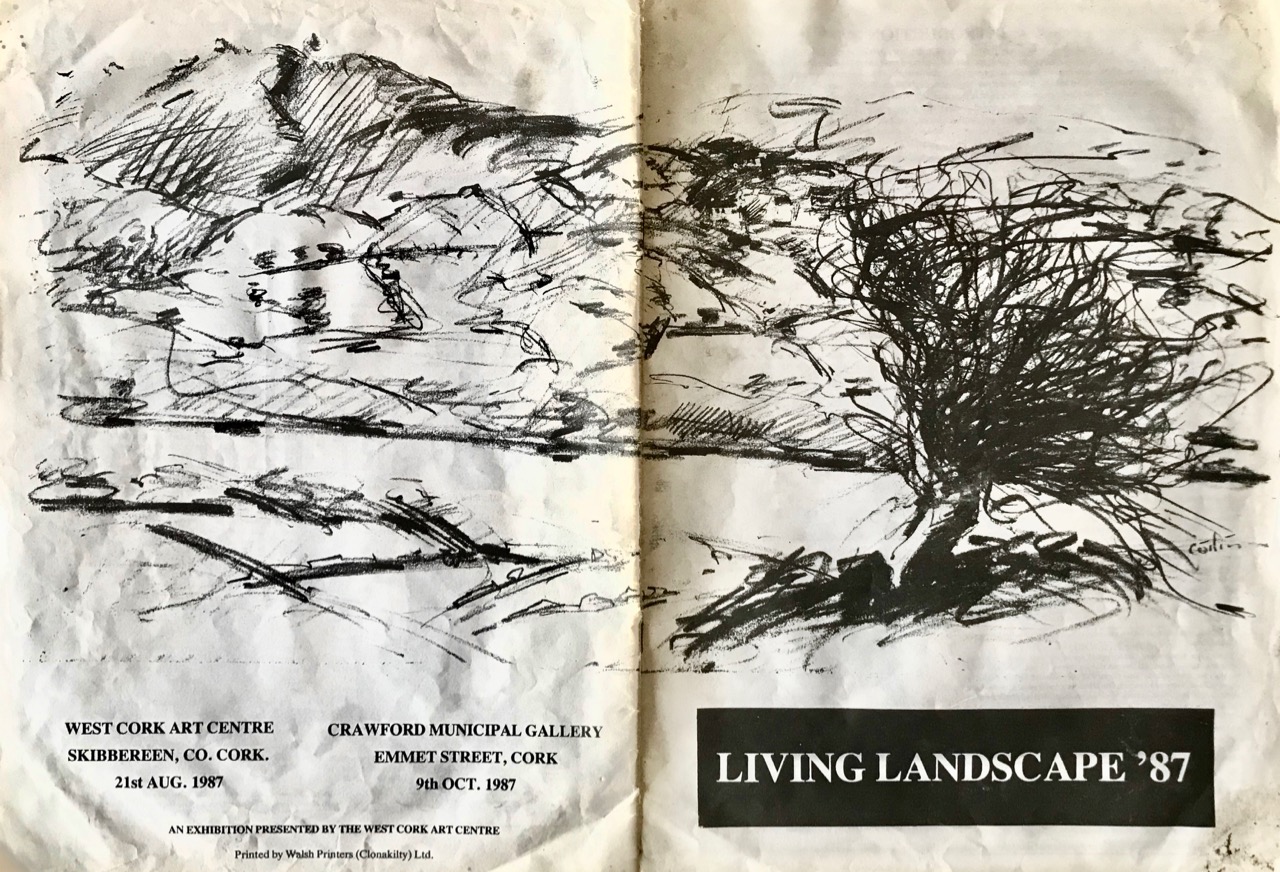
Catalogue from the first Living Landscape exhibition, launched by the West Cork Arts centre and the Crawford Gallery, Cork, in 1987. The cover illustration is by Cóilín Murray

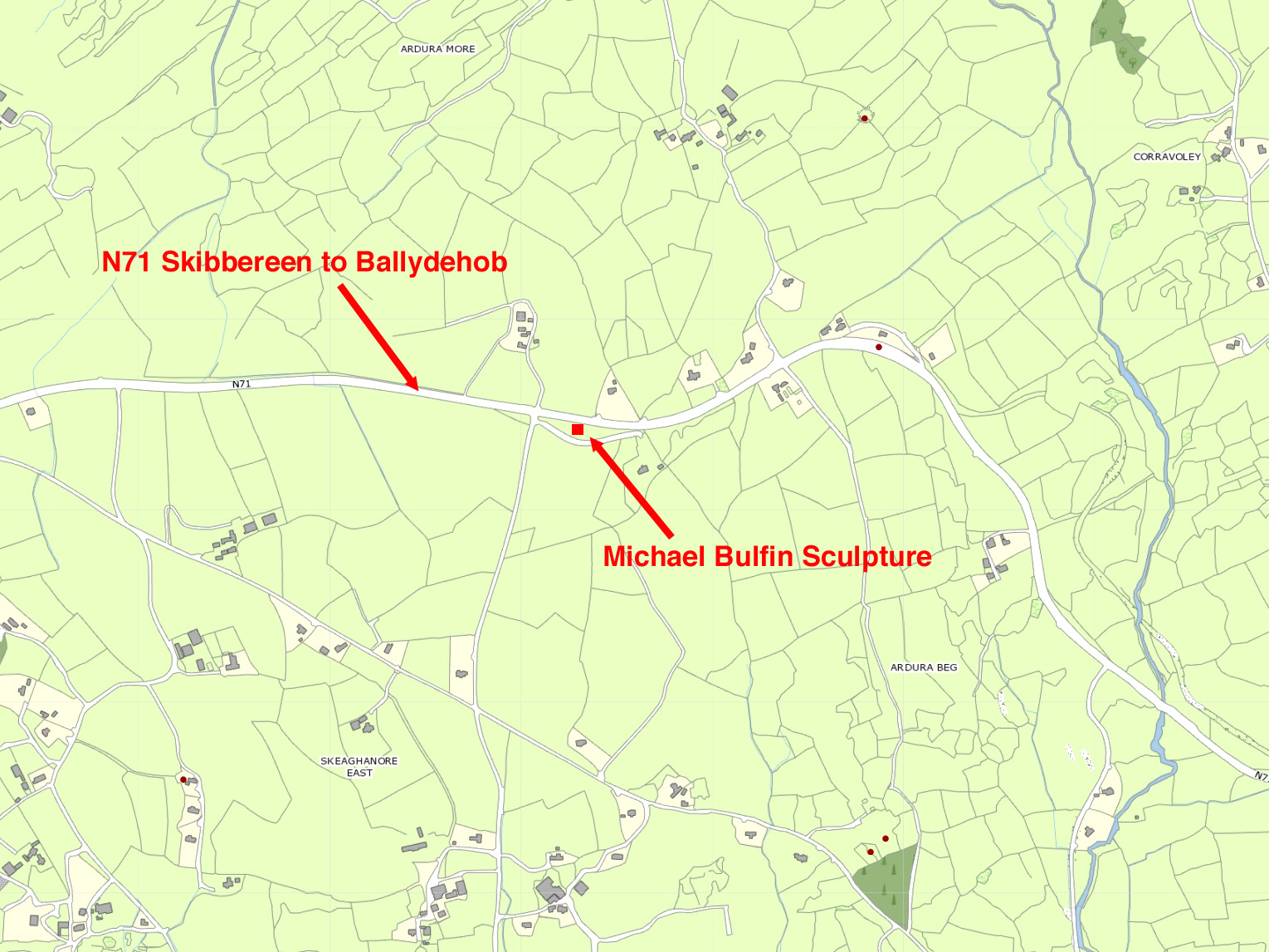
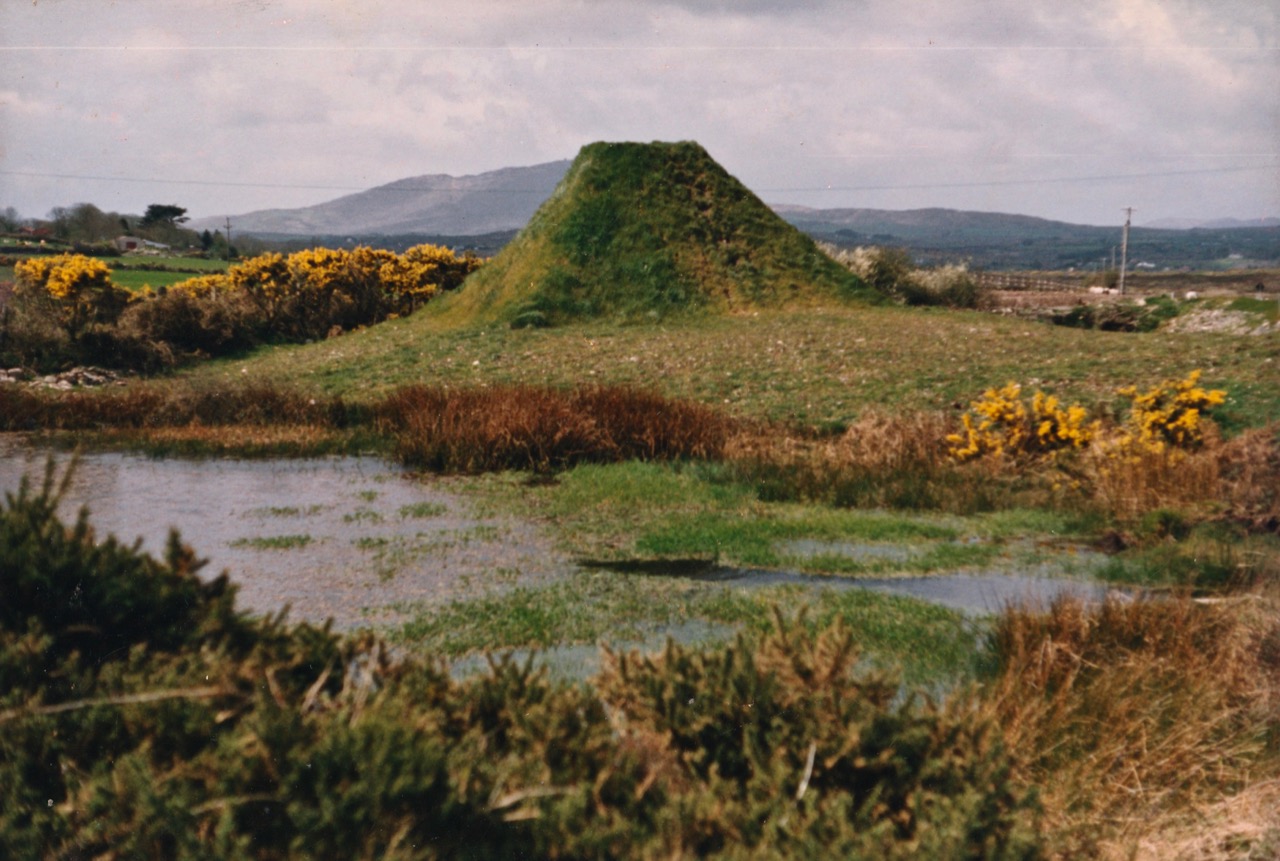
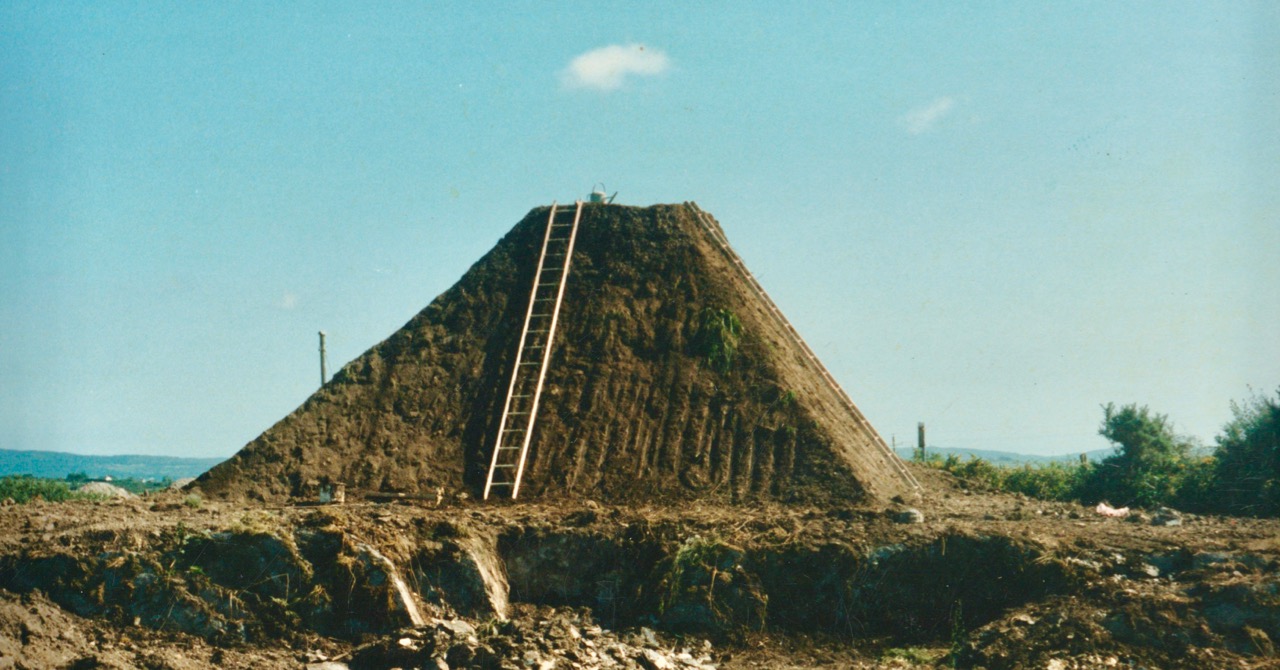
It’s fascinating to trace the sculptures which were set up more than 25 years ago along the N71 and R592 roads connecting Skibbereen with Schull. Most have vanished – some back to nature, some through destruction. But those which remain are now ‘enigmatic’ and must often excite comment and questions. This is particularly the case with the one in our header picture (taken recently), which is the central subject of today’s post. It’s a work by Michael Bulfin, born in 1939, one of Ireland’s most respected artists and a member of Aosdána (an association of artists whose work is deemed to have made an outstanding contribution to the creative arts in Ireland). The title of the sculpture is the title of this piece: Behold, Their Bright Shining Future Rising Before Them

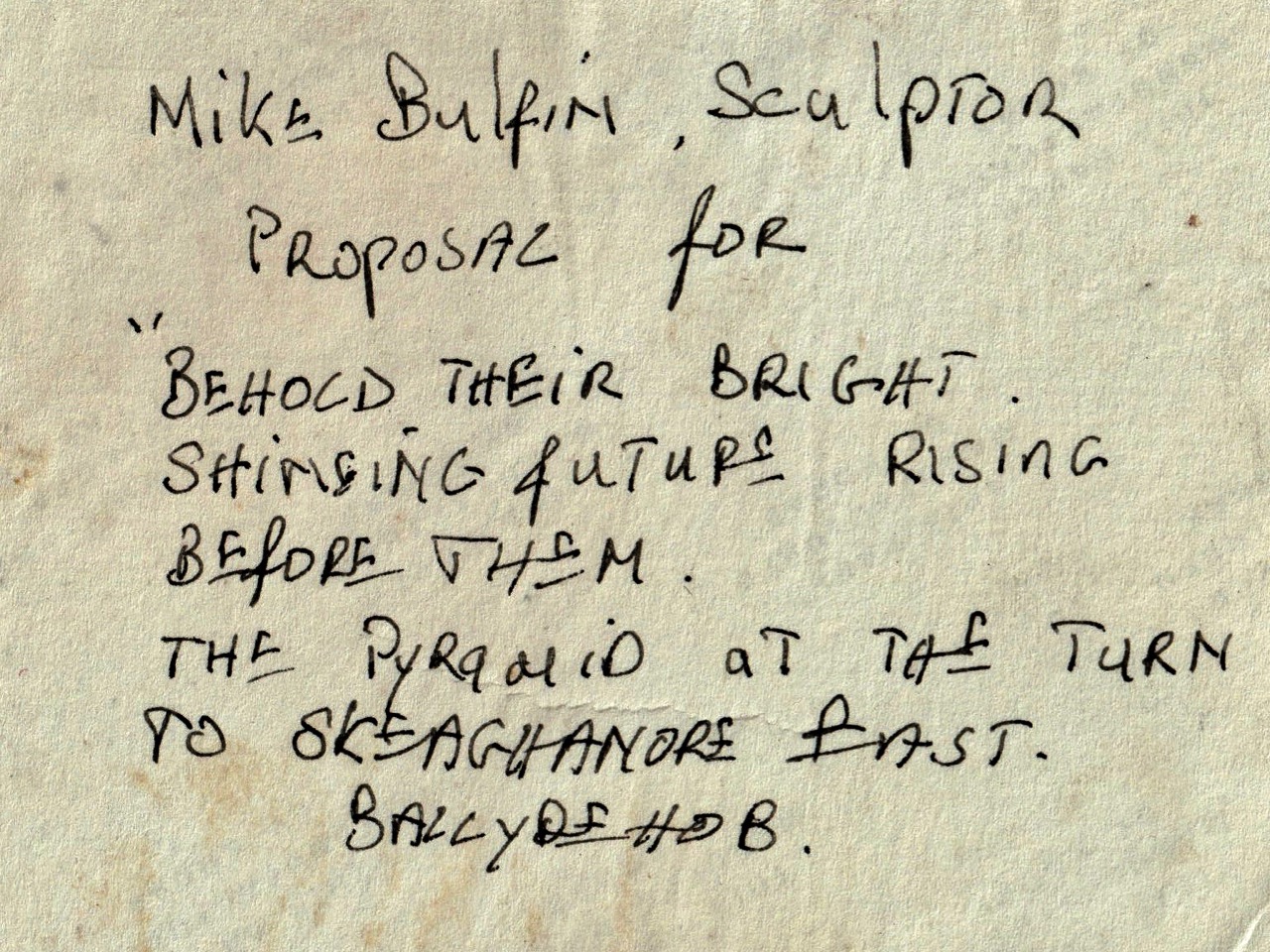
Michael Bulfin’s exhibition proposal was a piece of land art: a giant grass-covered earth pyramid crowned by a stainless steel pinnacle, with a cascade of boulders flowing down the surface – facing on to the main road running through the townland of Skeaghanore East. Upper, the design for the piece was submitted as a model. Lower – the inscription from the back of the original photograph.

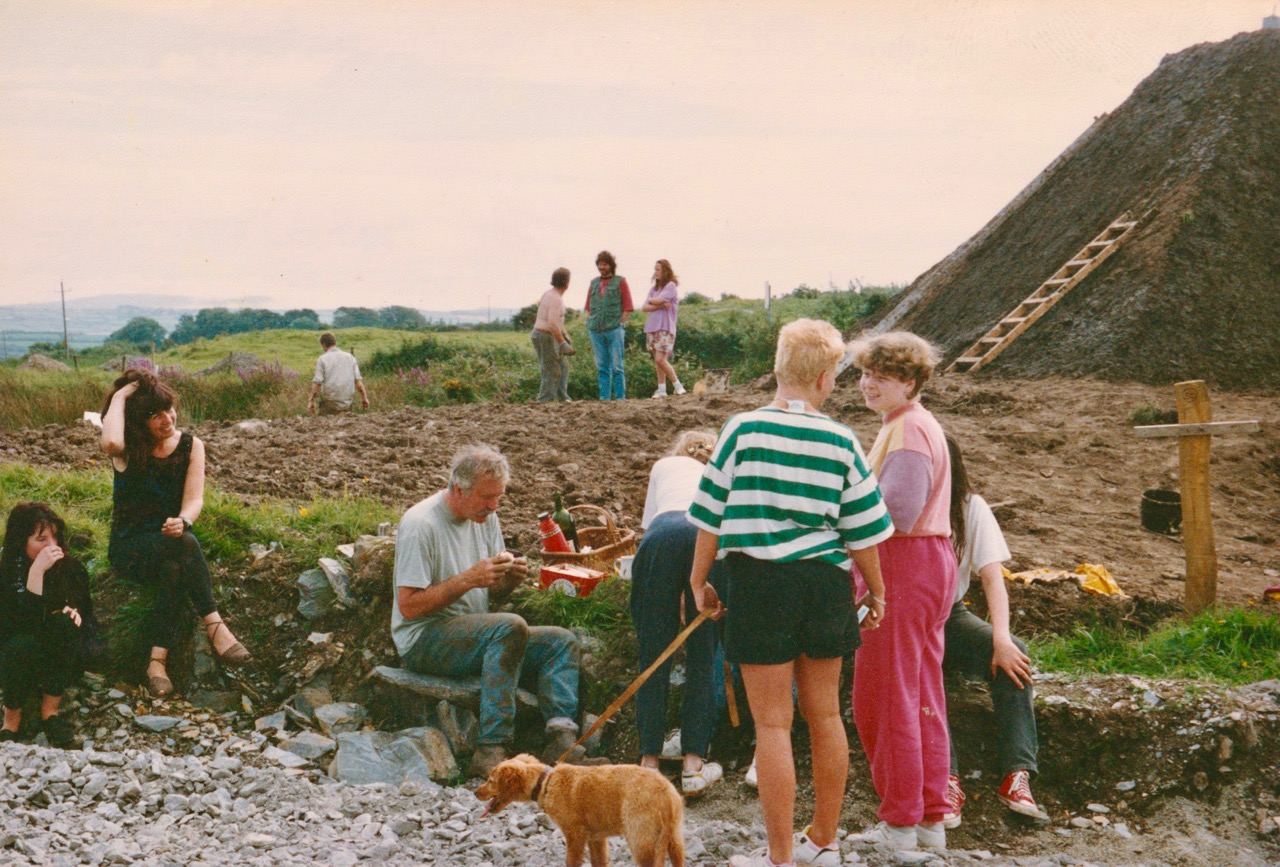
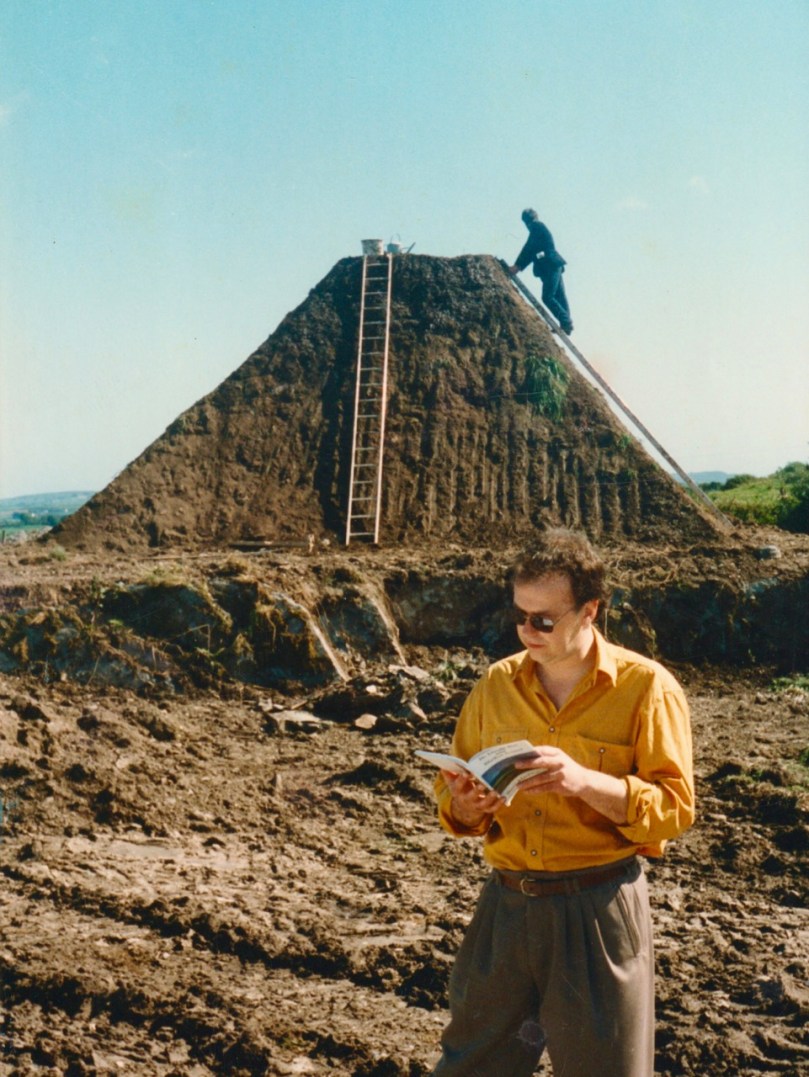
The task of physically realising this monumental piece was the product of many hands, including a number of volunteers from West Cork’s artistic community. The following ‘work in progress’ shots document some captured moments in time.

In this shot, Michael Bulfin is on the ladder, and painter Maurice Desmond watches the process

‘Lunch break on the day the mound was seeded’ – identified in this picture are (foreground left to right): Aoife Desmond, Deirdre Heaney, Mike Bulfin, Rosemary Murray (serving lunch), Ailne Murray and Niamh Murray. (Background): Simon Holler, Cóilín Murray, Gerry Walker and daughter

The project was well publicised; here Mike Bulfin is being interviewed by Anita Whooley for RTE, with Cóilín Murray looking on

The mound ‘greening up’: the stainless steel pinnacle was added at a later date. The ‘cascade of boulders’ is not evident today: I am assured it is still there, shrouded by gorse and brambles

At the official opening of the Living Landscape Sculpture Trail the poet Steve McDonagh, founder of Brandon Books based in Dingle, Co Kerry, read from his work at each location. Steve McDonagh died in November 2010. As can be seen, the pyramid was unfinished on opening day!

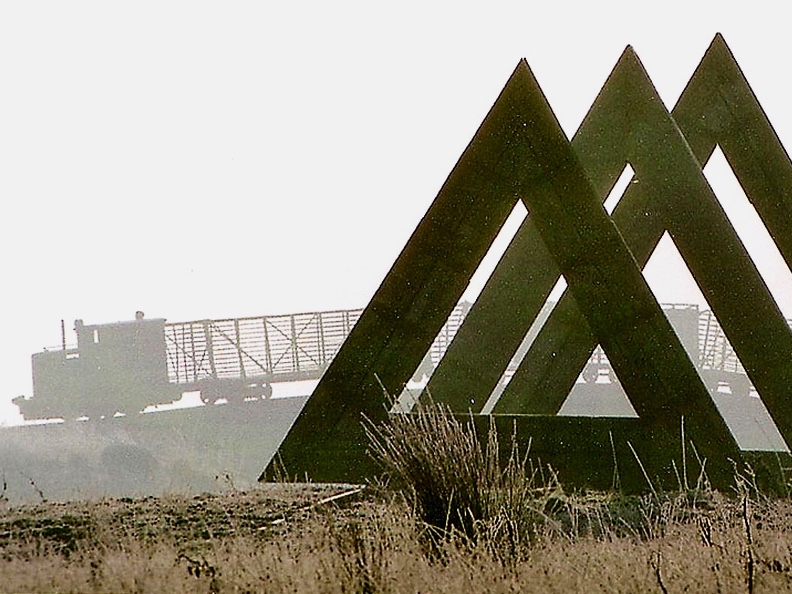
Michael Bulfin remains active in Ireland to this day. He lives in Co Offaly, and there is impressive work from him at the Lough Boora Parklands, including the eye-catching ‘Skytrain’ sculpture:

Something that could be considered in the future is a creative project based on the West Cork Sculpture Trail. This might restore or resurrect some of the pieces from the 1990s, and provide an opportunity for new work to take the place of those sculptures which are now lost.

Glens of the Scientists

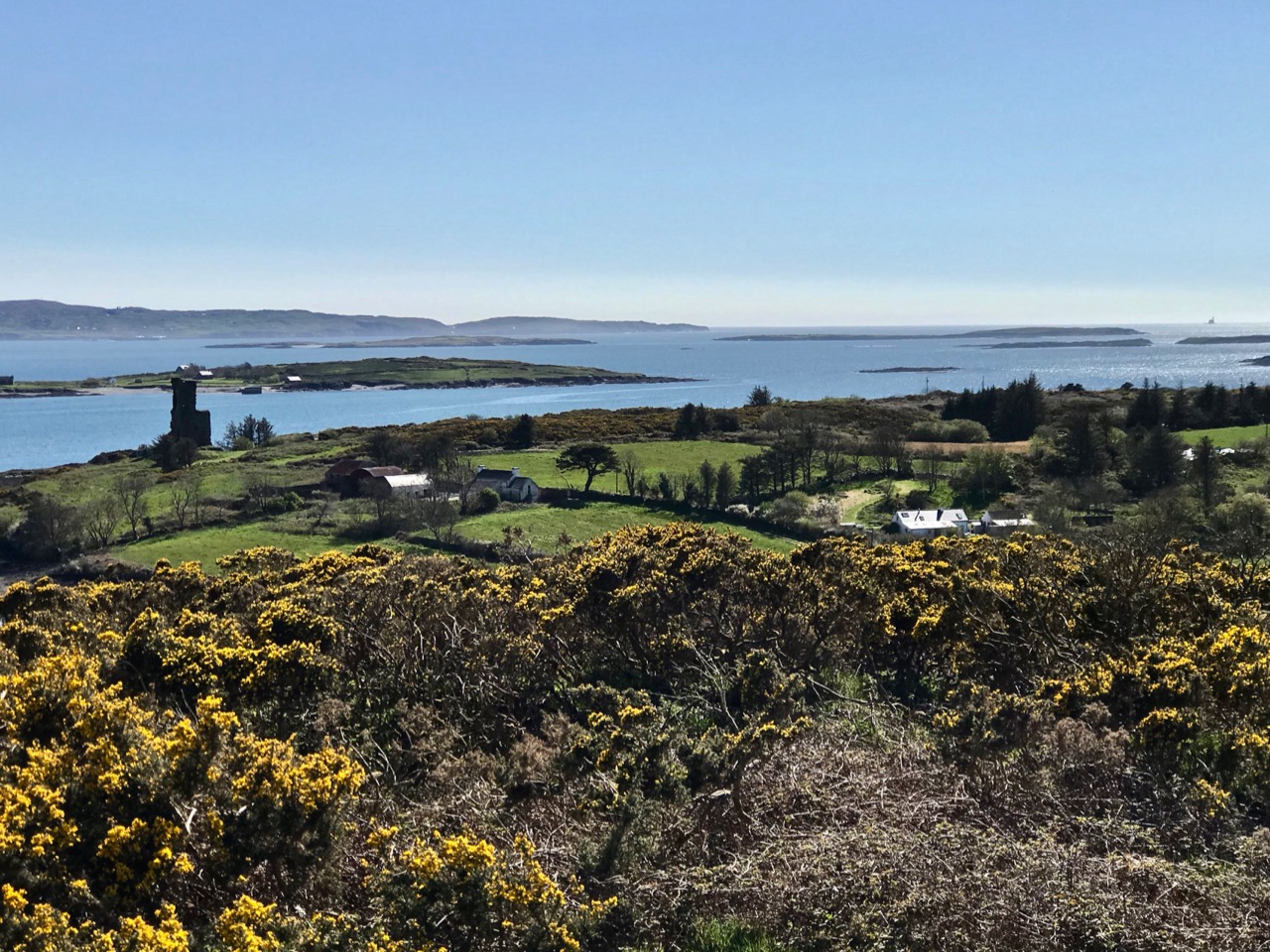
It’s Easter Sunday, but we didn’t see the sun dancing at dawn this morning. In fact, so far it’s the first wet day that we’ve had since we’ve been in ‘lockdown’ because of the Covid 19 crisis. Such a contrast from the view over Roaringwater Bay yesterday (Saturday, see above) when the weather was absolutely flawless: no wind, blue sky over balmy sea, and temperatures akin to midsummer. But for today’s post I’m going back a few weeks to the days when Coronavirus was just something that was happening, in the news, a world away from West Cork – and we were still free to roam the countryside.
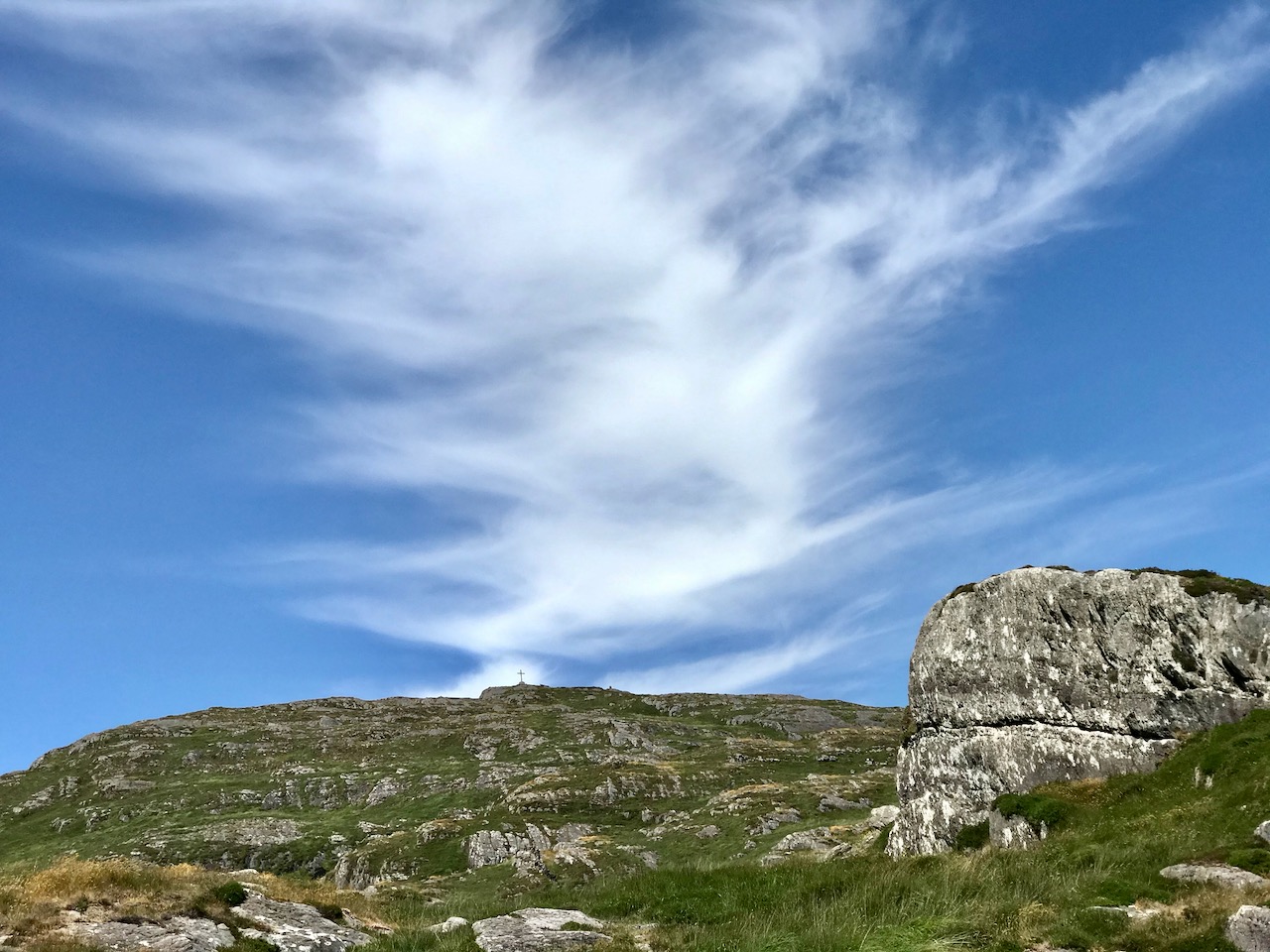
Spring equinox came early this year. We were out for it, in a biting east wind but dry under clear skies. Our destination was a vast landscape of glens and hills to the east of Bantry town. The place fascinates us: it is alive with prehistory. There are literally dozens of scheduled monuments spread over many townlands. They include stone circles, standing stones, stone alignments, ancient cairns and other anomalous stone groupings. This is probably one of the west of Ireland’s richest and most concentrated areas which records, through physical remains, human activity from the Neolithic period – the earliest settled farmers – through to the Bronze Age, when the first metallurgists began to explore and exploit the underlying geology of the landscape.
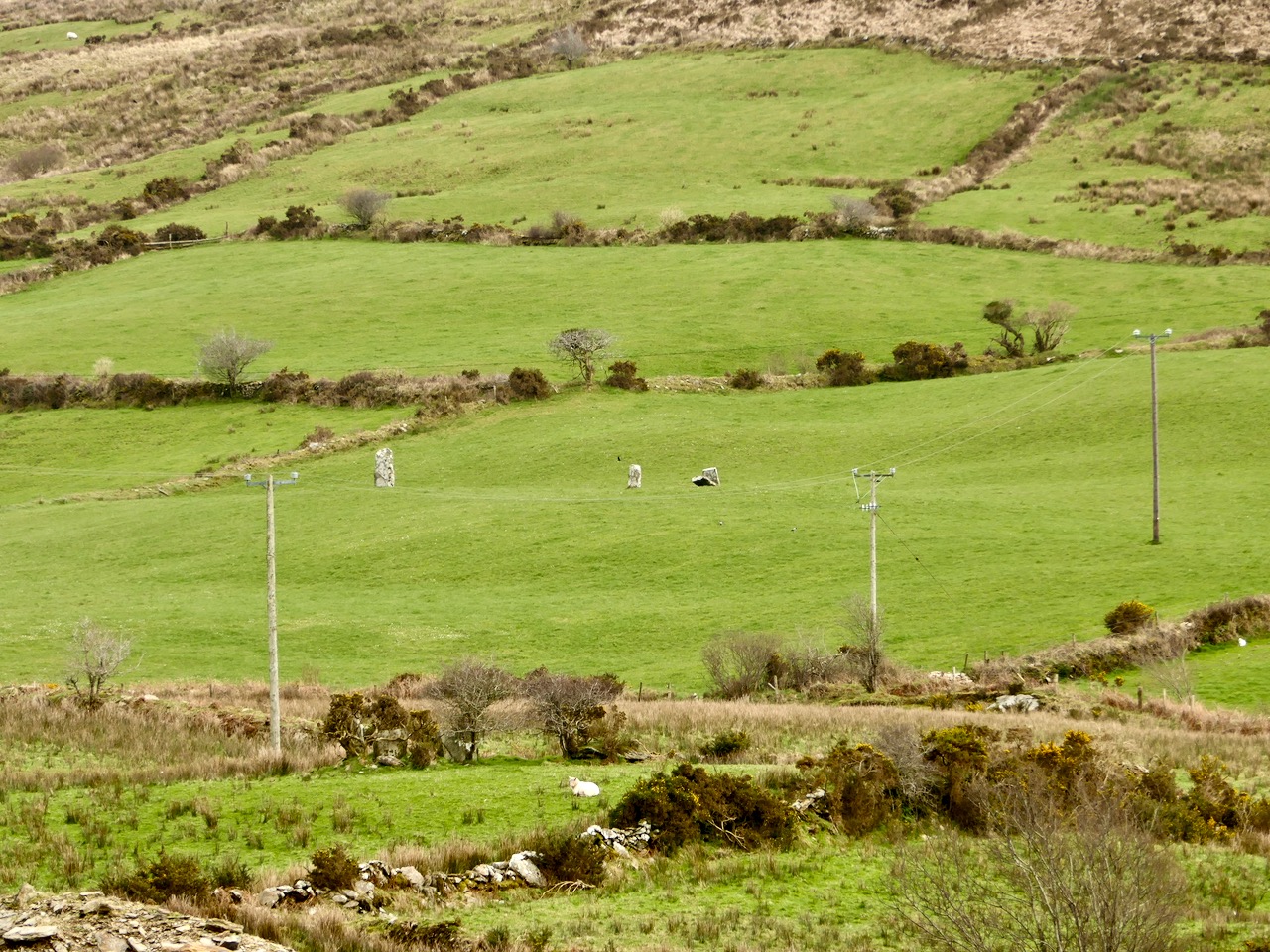
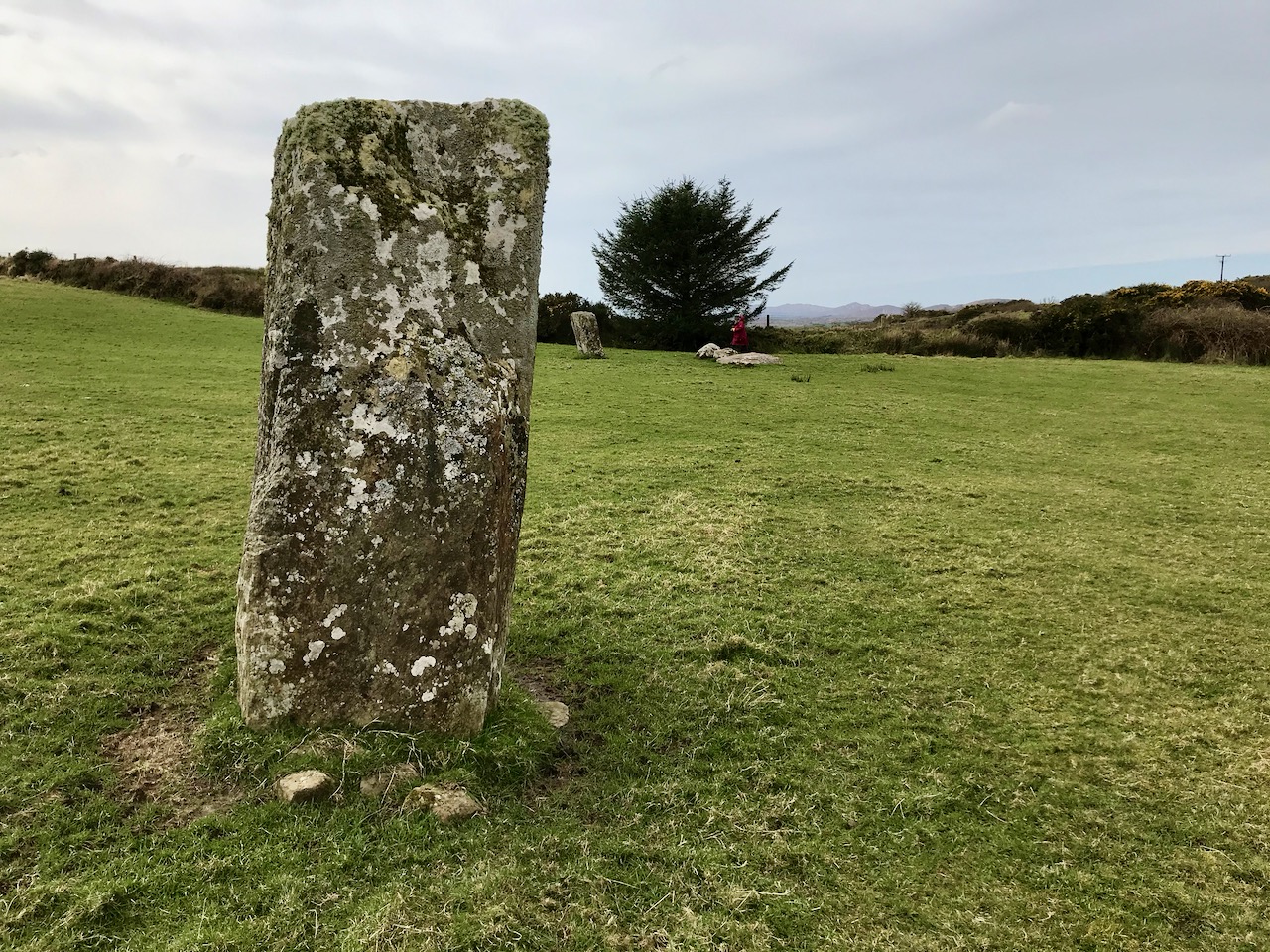
Upper – look carefully – there’s an alignment of three significant standing stones in these fields in Cullomane West, but our first stop was a nearby anomolous stone grouping which included an equinox alignment – (lower) – towards the west horizon

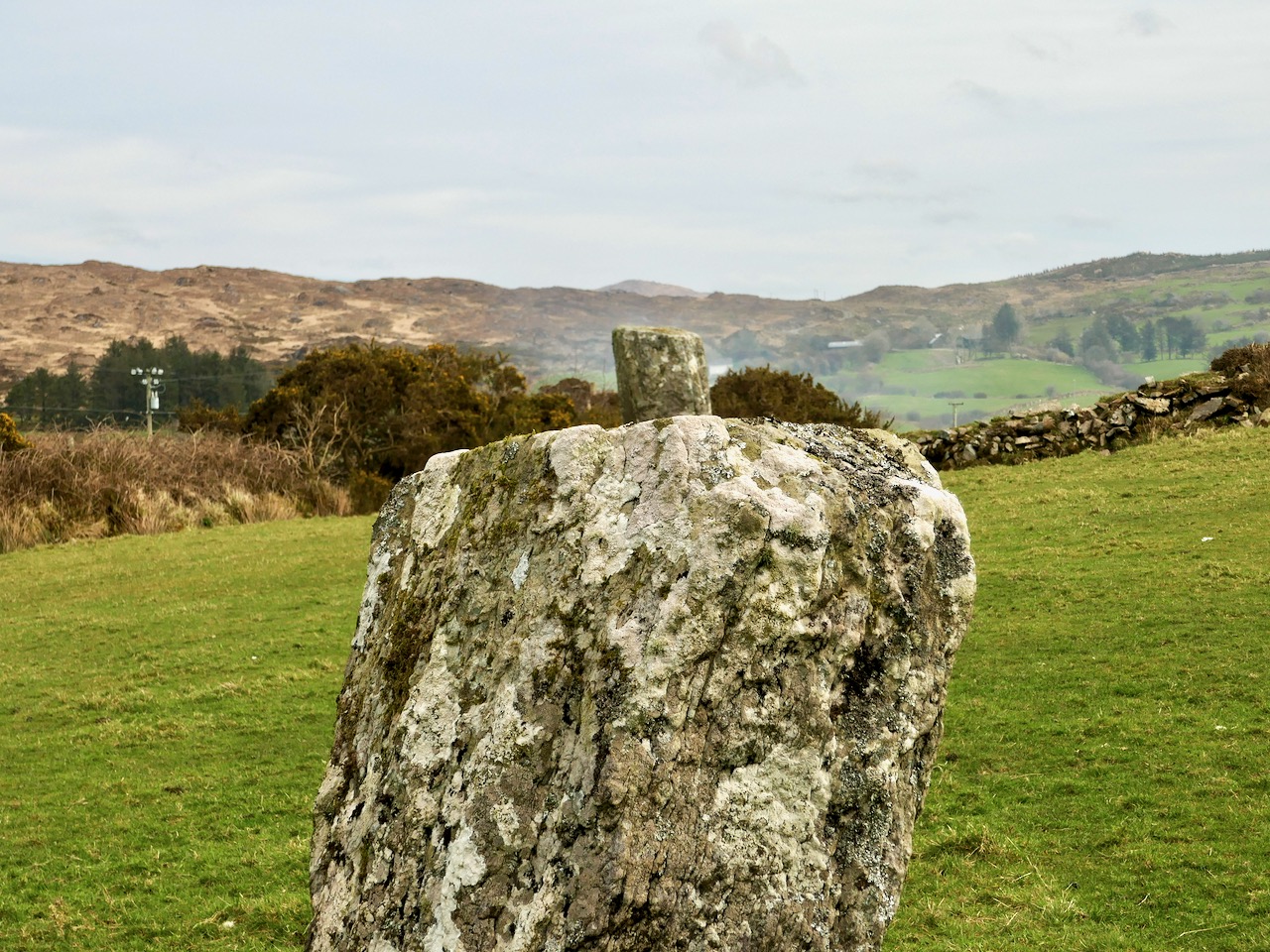
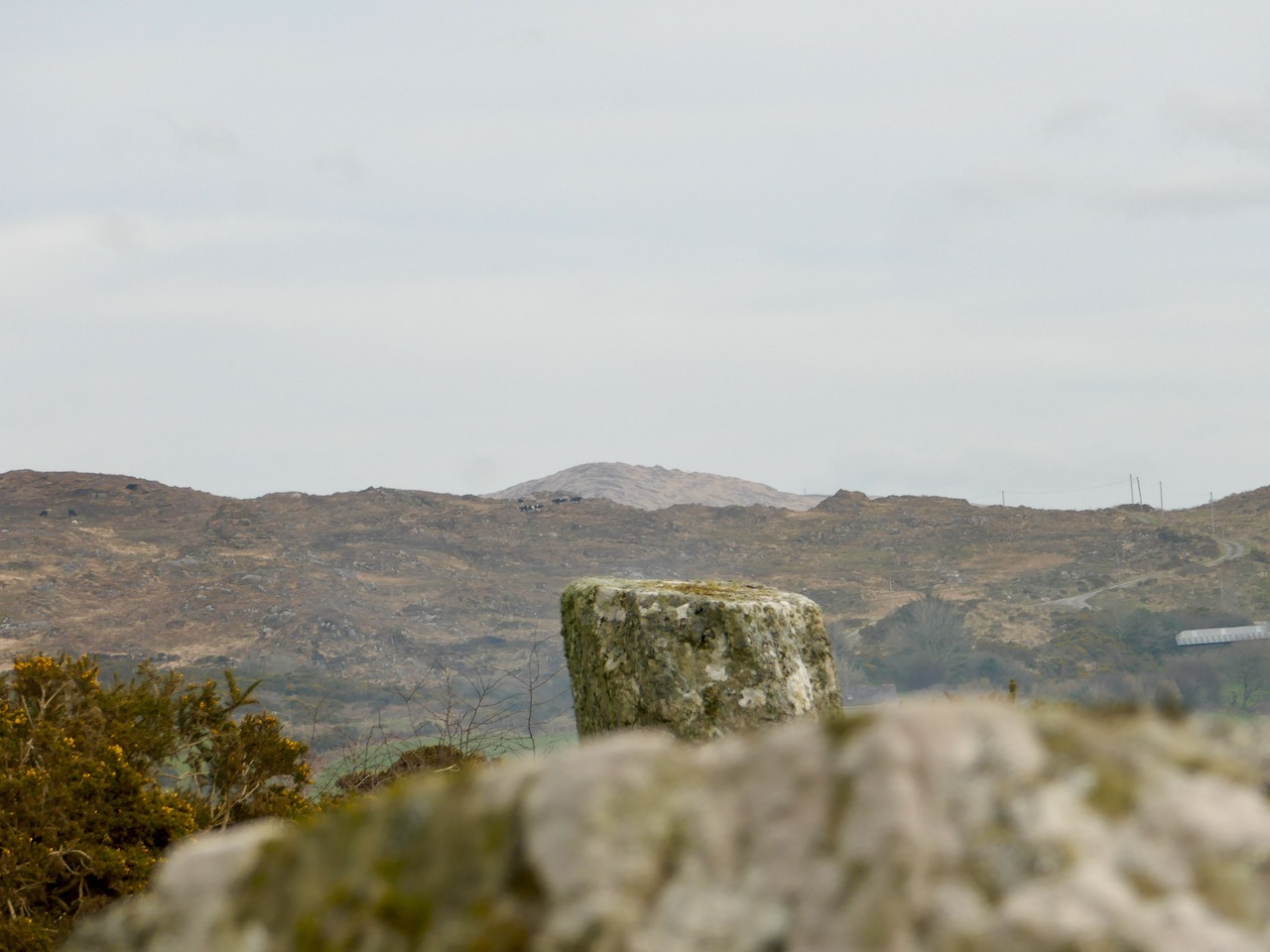
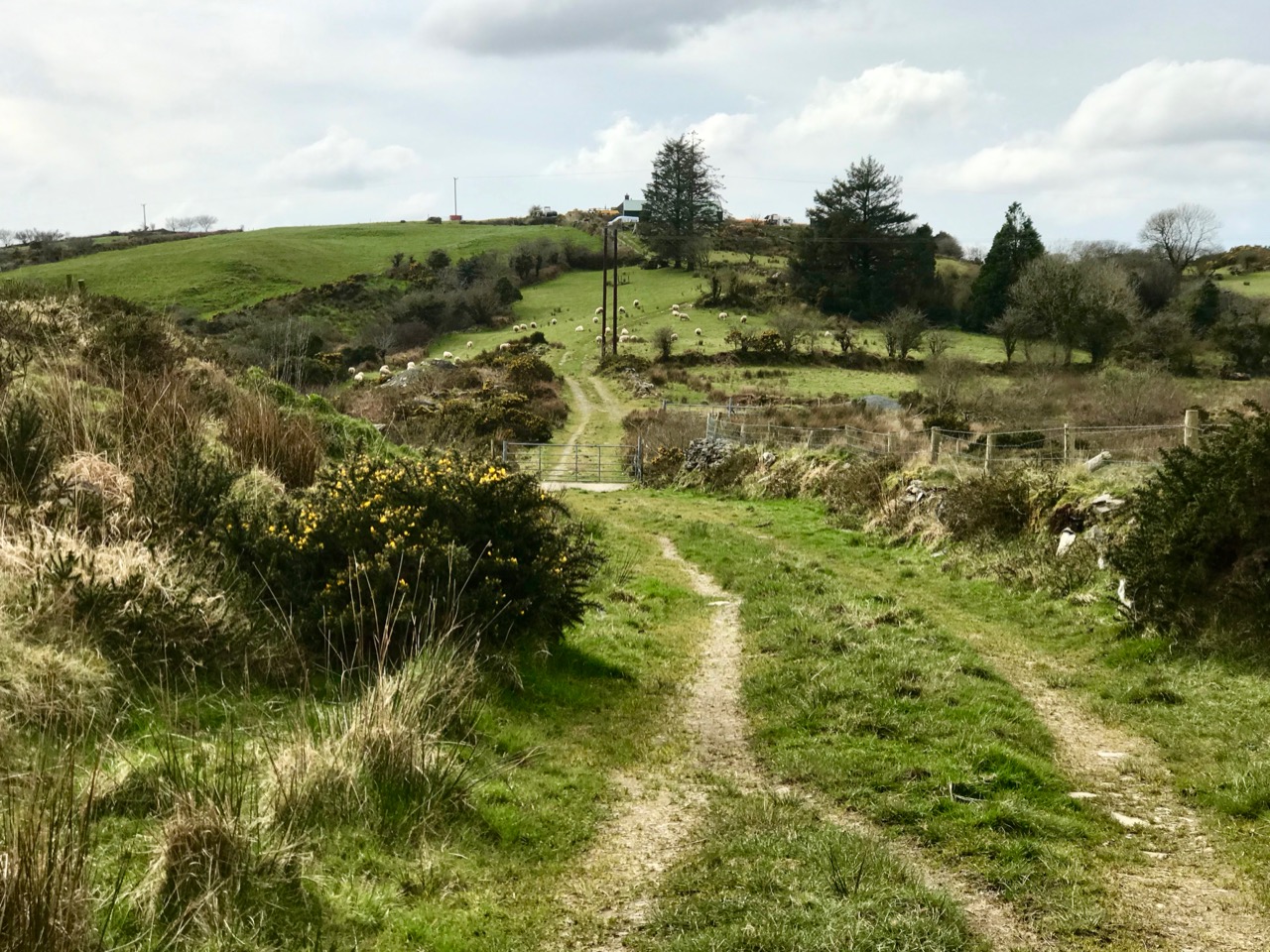
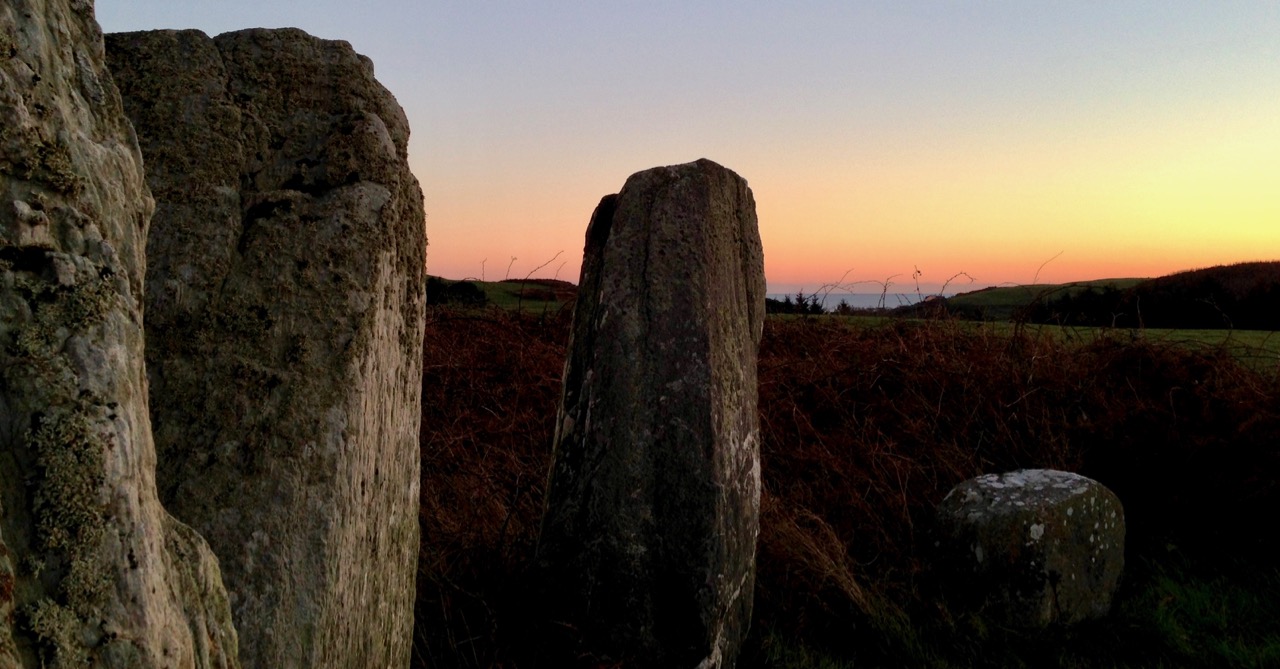
It was pure chance that we were out on the day of the spring (or vernal) equinox – the time when the length of the day equals the length of the night. And pure chance, also, that our first stop, in the townland of Derreengreanagh, presented us with a spring equinox alignment. We had the permission of the landowner to cross her fields to access these stones which are hidden away from any highway or byway. We found two substantial standing stones and a small group of recumbent stones. By checking the relative positions of the two tall stones on a ‘sunseeker’ app, we were able to establish that they line up perfectly with the spring equinox sunrise to the east and the spring equinox sunset to the west. Furthermore, the point at which the sun rises on the eastern horizon on this day is marked by a distant hilltop – also in perfect alignment:

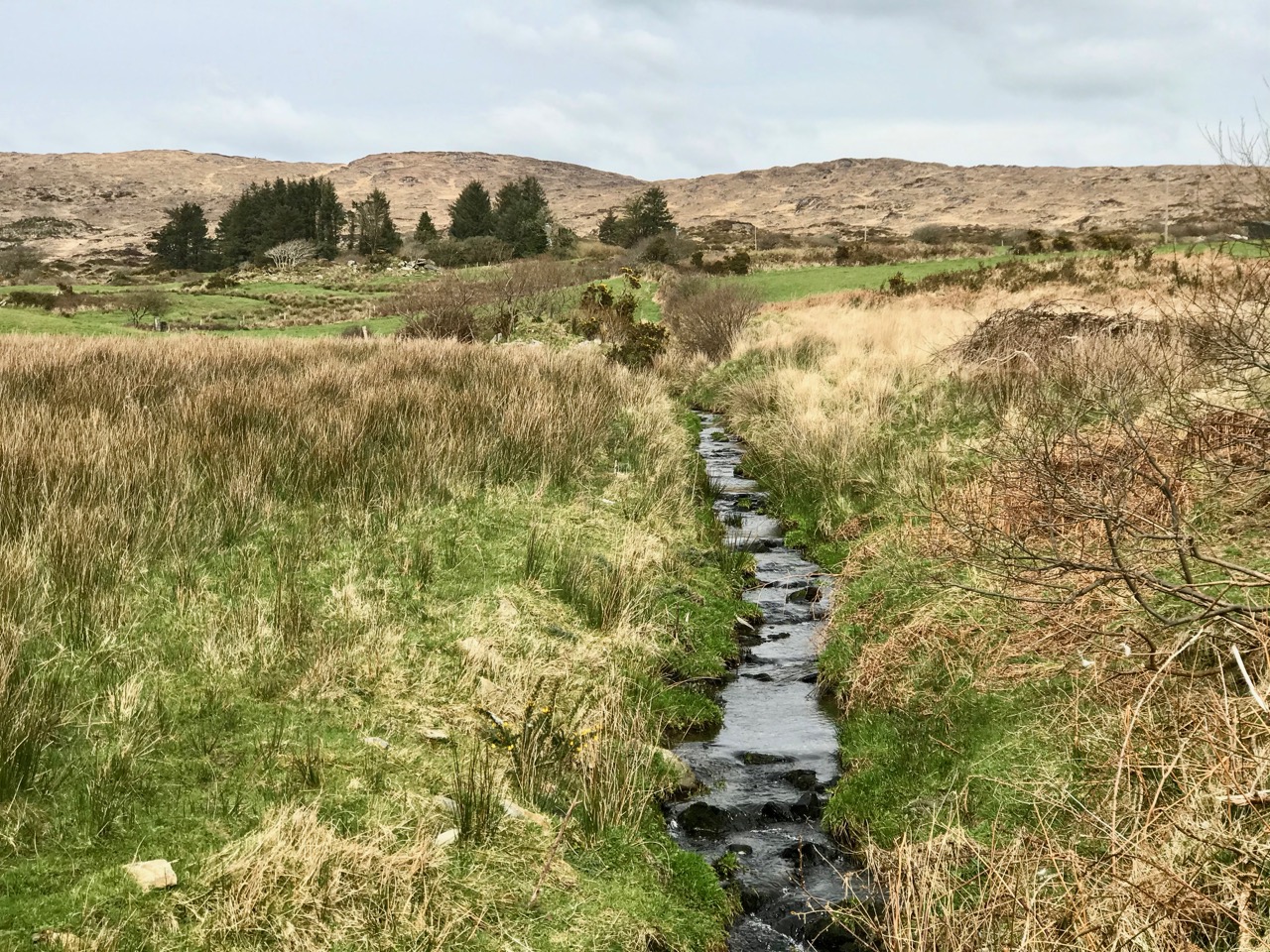
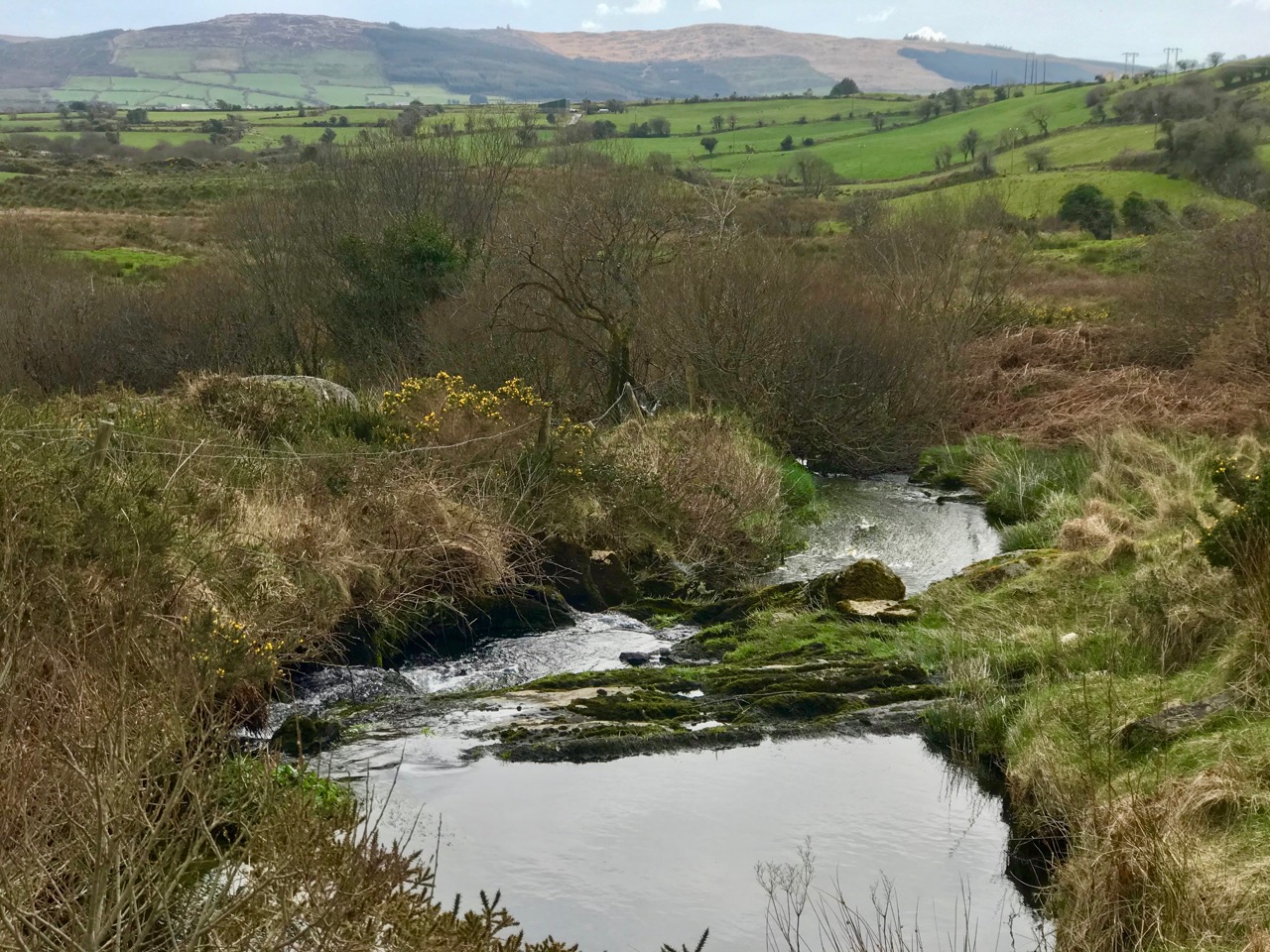
As I look around the glens on our wanderings, I see into the past. I see rich, sheltered meadows watered by natural streams, stunted oak forests, sunlit glades. I feel the warmth of the sun as it gets stronger, contained by the bowl shaped landscapes; I find flocks of sheep which don’t seem to mind our trespassing (carefully) on their domains – they are content with their environment. The place is at peace in its own time.

I try to feel closer to those who dwelled in this relative tranquility thousands of years ago. I can imagine that the shape of the landscape, and its natural offerings, attracted them. They might have been my own distant ancestors, or yours. But they were no different from you and me. Their lives were technologically unlike ours, but we can’t suppose that their responses to what was around them would be unrecognisable to us. They would have welcomed the abundance which fed them, through their ability to understand the principles of sowing and harvesting; they were able to make shelters from natural materials – wood, stone and furze. But, beyond the practicalities, surely they would have seen wonder in nature. How could they not respond to the ever changing light, the vastness of the sky, the awesome infinity of the stars? The strange movements of sun and moon… The constancy of things all around them?

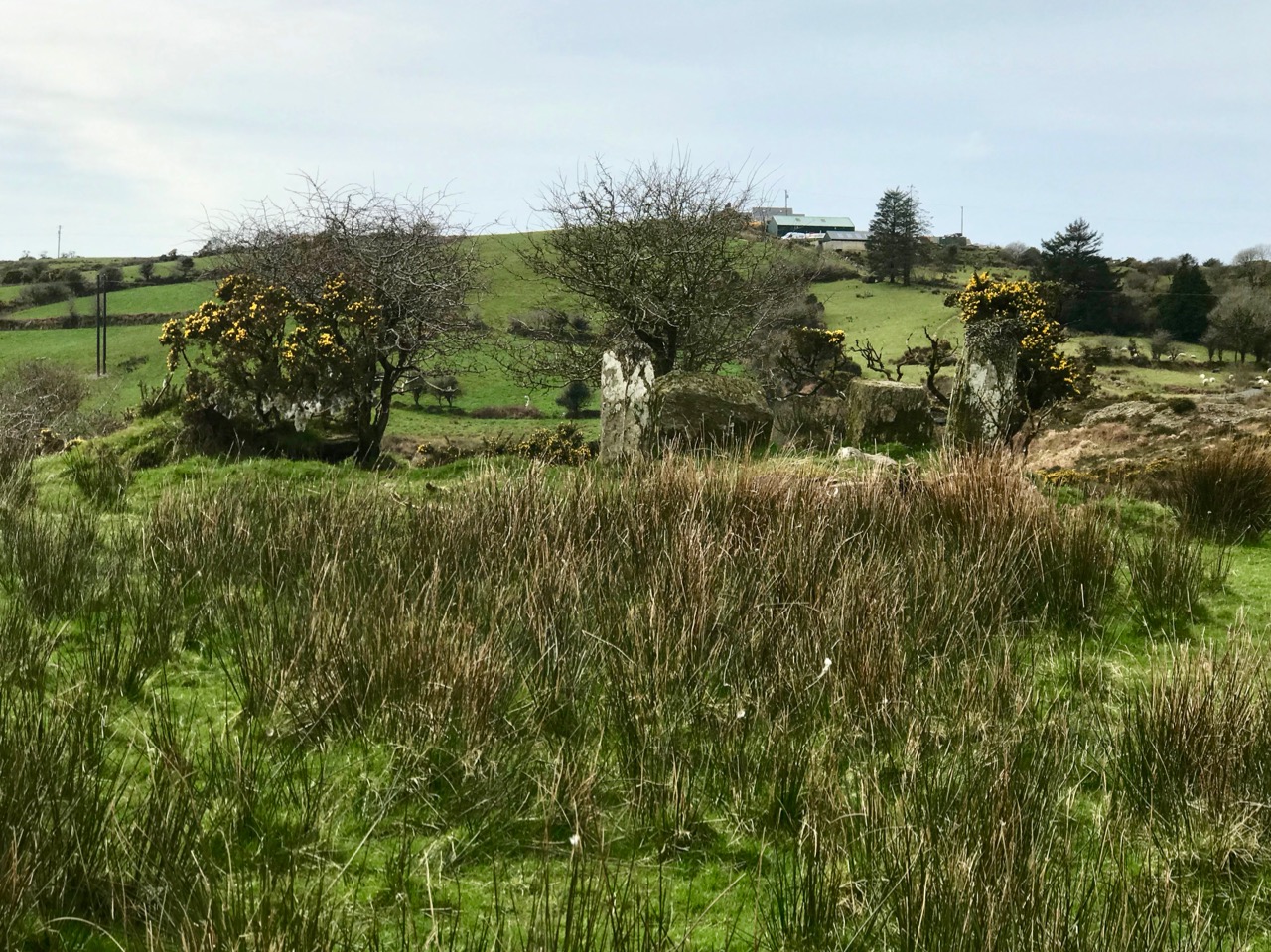
Hiding in nature: this five-stone circle in Baurgorm townland is heavily overgrown and guarded by thorn trees, yet it survives: its orientation and the alignment of the stones was undoubtedly deliberate

The next townland over from Derreengreanagh is Baurgorm, where our researches were rewarded with an almost intact five-stone circle. Within site of this is another stone alignment (see picture 3 above), and several other scheduled monuments are nearby. There is no ‘Stonehenge’ or ‘Newgrange’ in these glens: everything is relatively low-key and is unlikely to impress the average 21st century sightseer. Yet these stones are still there, set in the landscape where they were first placed – with a purpose – in these glens so many generations ago.

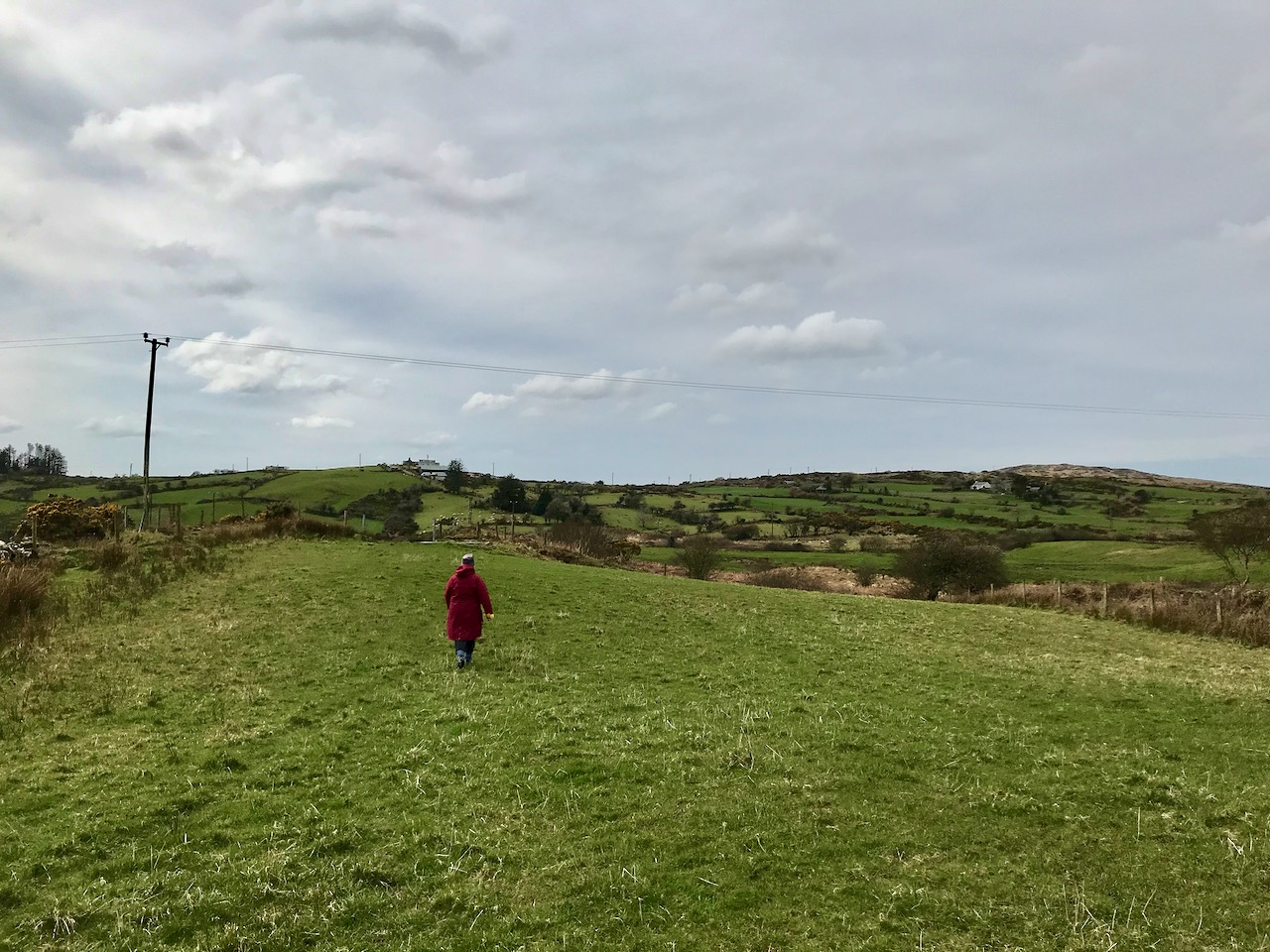
Walking the glens: walking through prehistory

In my opinion (and this is only my opinion, remember), the people who lived in these glens were our earliest scientists, and the surviving ancient stones are the hard evidence of their science. They were observing and recording the world they saw around them and marking the elements of that world which were of the greatest significance. One of these must have been the solar cycle. The equinoxes were of paramount importance: through the half-year after the spring equinox the days were longer, lighter and warmer, while through the half-year after the autumn equinox, their world was darker and colder with short days and long nights. The alignment of the standing stones at Derreengreanagh marks this calendrical division with great accuracy, and must have taken a great deal of time and human endeavour to set up. The shape of the terrain, the undulations of the horizon, and the daily progression of the sun had to be understood and integrated into a  construction so monumental that it has survived intact for 3,000 years or more. There’s nothing magic about this, or mystic or religious: it’s pure science.

Not just the sun, but the phases of the moon and the trajectories of the stars would have been observed and studied by our ancestors. What came before Christianity in Ireland? St Patrick’s work was to convert the Irish, but all he says in his own Confessio about them is that they worshipped ‘idols and unclean things’. But he also refers to ‘all those who adore’ the sun. That’s a fascinating concept: ‘adoration of the sun’. Patrick didn’t use the phrase worship of the sun. but he had specifically mentioned worship of idols. I could be reading too much into the Confessio as it has come down to us, but the concept of ‘adoring’ as opposed to ‘worship’ fits well with the idea of Ireland’s earliest settled people being obsessively concerned with the movement of this source of light, heat – and life. In the remotest regions of West Cork we find an ancient wisdom.

Living in Lockdown!

Main Street, Ballydehob: 4 April 2020. You’ve never seen it like this before on a Saturday morning. We are only out because we have urgent shopping to do. We are permitted to go to the shops, the dispensary and the dump (we live too far out of town to have any waste collections). Oh, and we can exercise within a two kilometre radius of home (here’s Finola’s account of that). It’s a strange life – but we are gratefully alive…

We completed our last ‘long’ walk on Friday 27 March – to the summit of Mount Corrin, for my Mizen Mountains post. On that evening the government announced the ‘lockdown’ and we are now isolated in Cappaghglass for the foreseeable future, although the 2km restriction will allow us to trespass into our adjacent townlands of Stouke, Cappanacallee, Foilnamuck, Rossbrin, Ballycummisk and Kilbronogue, provided we keep our distance from other walkers. We see very few.

When the sun is shining, there’s no better place to be than home – looking out over Roaringwater Bay! We have plenty to occupy us. Not least, keeping up with this journal and my new venture Swantonstown Sessions – compensation for the enforced adjournment of the weekly traditional music meetings in Ballydehob. It’s an online forum for sharing tunes, songs and related ‘chat’. Please join in!

There’s not much activity in Schull, our other centre for essential supplies, either. The main street (upper) and pier (above) are deserted on Saturday morning, when it’s normally buzzing. All the businesses in our villages and towns rely on customers: we hope for their sakes (and ours) that the situation doesn’t last too long, although we do all understand how necessary the restrictions are.

Join us for one of our walks – along to Rossbrin – to look at the water and the always changing scenery as spring gets under way. That’s the boreen leading down to it, above.

Rossbrin Castle, the home of the ‘Scholar Prince’ Finghinn O’Mahony in medieval times, is the local landmark which always draws us towards the Cove. It has stood for centuries, although very gradually returning to nature: parts of it will remain for generations to come, and will intrigue those who chance upon it, as I first did some thirty years ago. It is on private land, remember, but it can be seen from many accessible vantage points.

It’s no hardship to be ‘marooned’ out here in rural Ireland. The one thing we miss above all else is meeting and chatting with friends and neighbours: that’s unnatural. But we will survive it. After our walks there’s always the road home to look forward to (do you see the celandines lining the way?):

Roaringwater Journal wishes to heartily thank all those in our communities who are supporting the rural population through these abnormal times: medical teams, pharmacies, shopkeepers, producers and suppliers . . . All who keep our facilities and utilities going . . . They are helping us to stay healthy and upbeat in times of disquiet. We appreciate all of you.