Living in Lockdown!

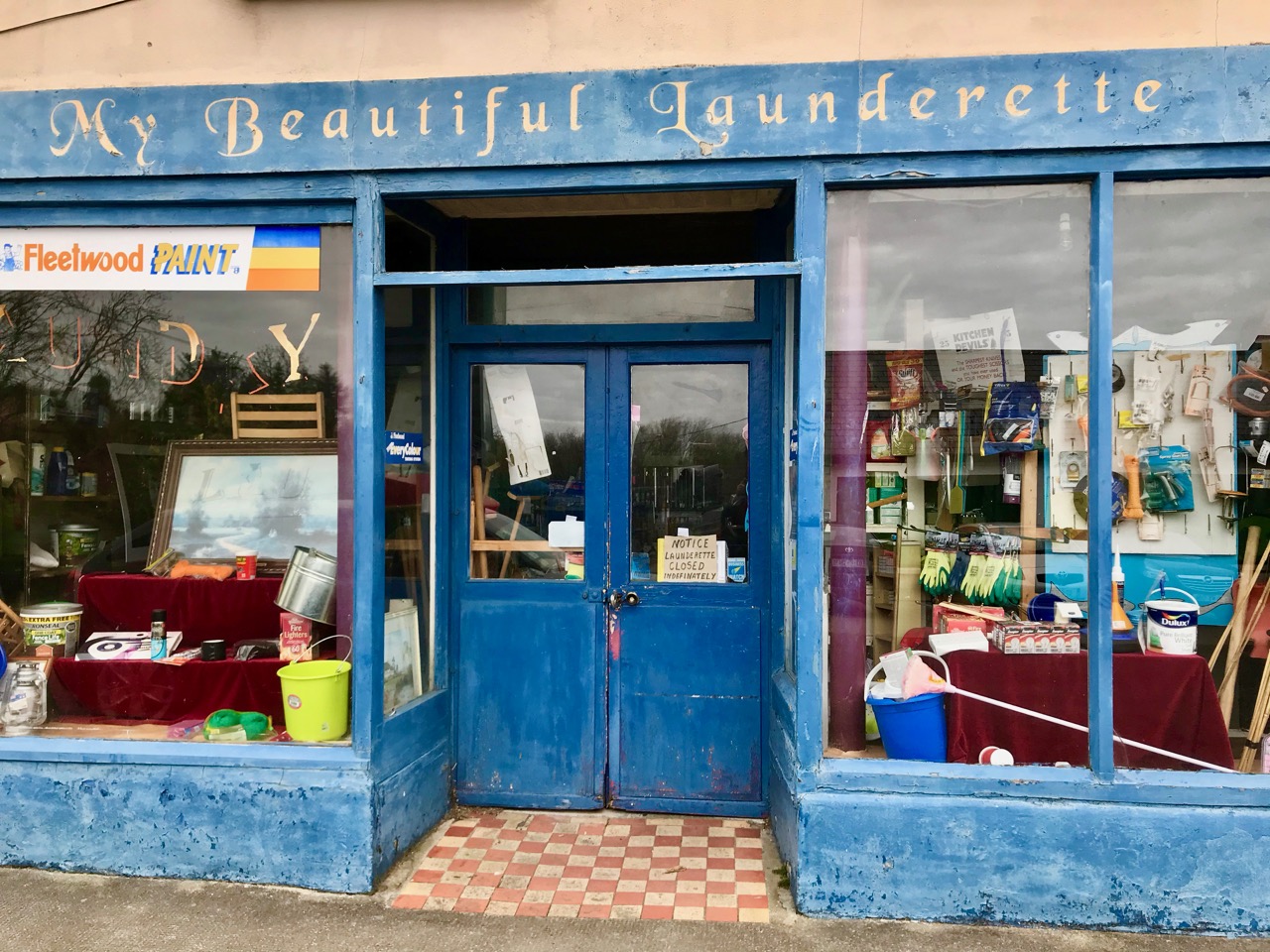
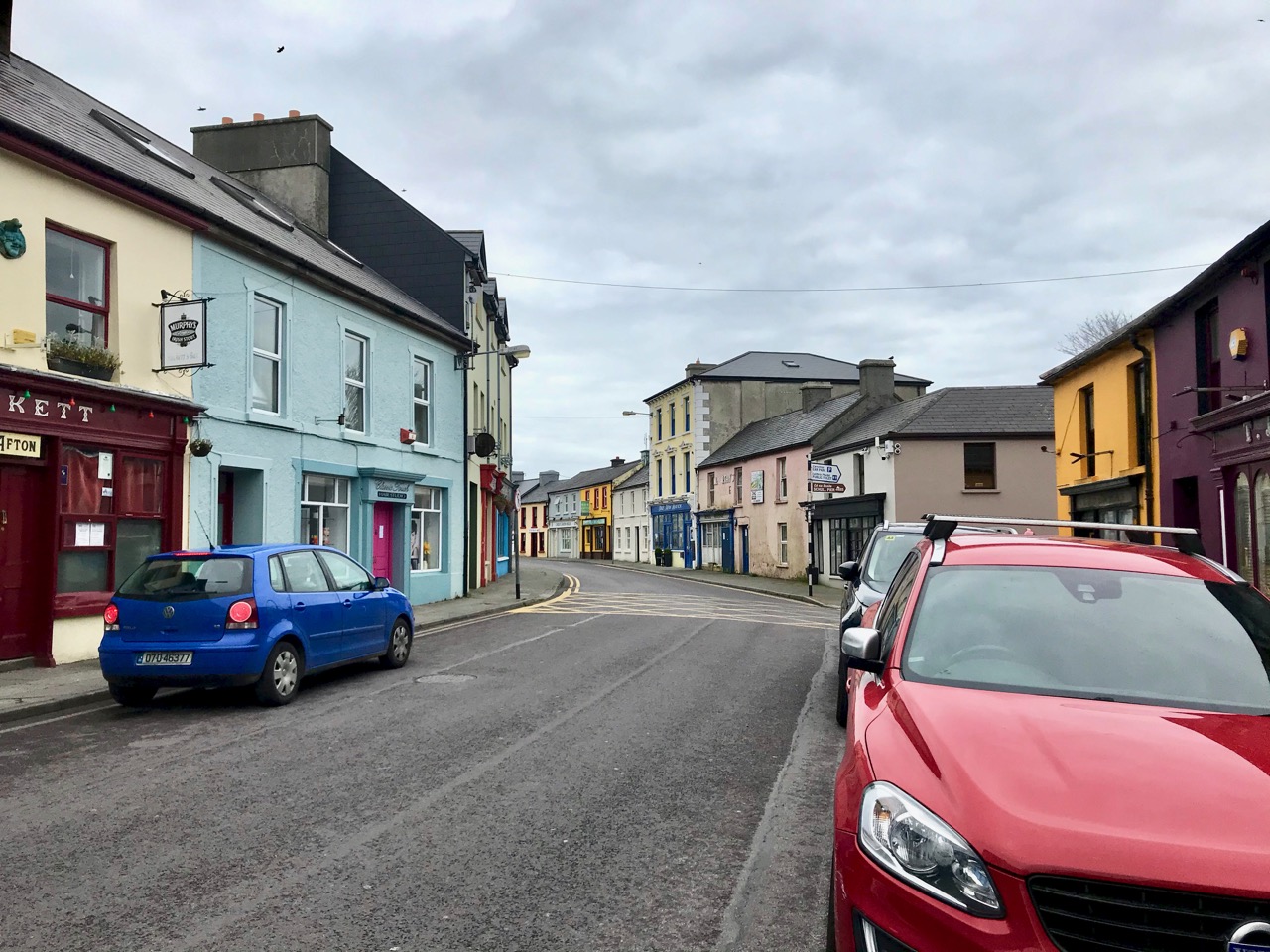
Main Street, Ballydehob: 4 April 2020. You’ve never seen it like this before on a Saturday morning. We are only out because we have urgent shopping to do. We are permitted to go to the shops, the dispensary and the dump (we live too far out of town to have any waste collections). Oh, and we can exercise within a two kilometre radius of home (here’s Finola’s account of that). It’s a strange life – but we are gratefully alive…

We completed our last ‘long’ walk on Friday 27 March – to the summit of Mount Corrin, for my Mizen Mountains post. On that evening the government announced the ‘lockdown’ and we are now isolated in Cappaghglass for the foreseeable future, although the 2km restriction will allow us to trespass into our adjacent townlands of Stouke, Cappanacallee, Foilnamuck, Rossbrin, Ballycummisk and Kilbronogue, provided we keep our distance from other walkers. We see very few.

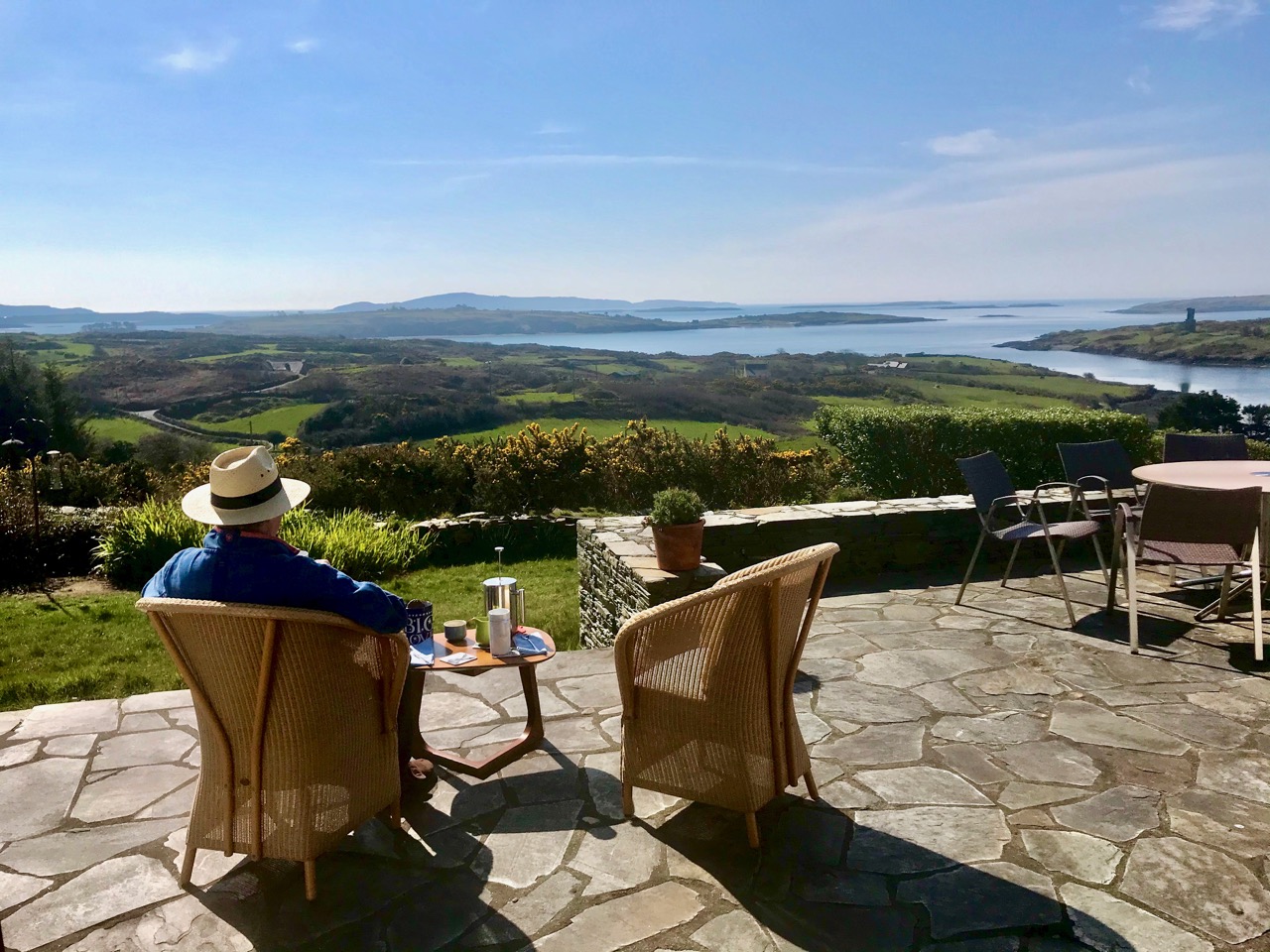
When the sun is shining, there’s no better place to be than home – looking out over Roaringwater Bay! We have plenty to occupy us. Not least, keeping up with this journal and my new venture Swantonstown Sessions – compensation for the enforced adjournment of the weekly traditional music meetings in Ballydehob. It’s an online forum for sharing tunes, songs and related ‘chat’. Please join in!

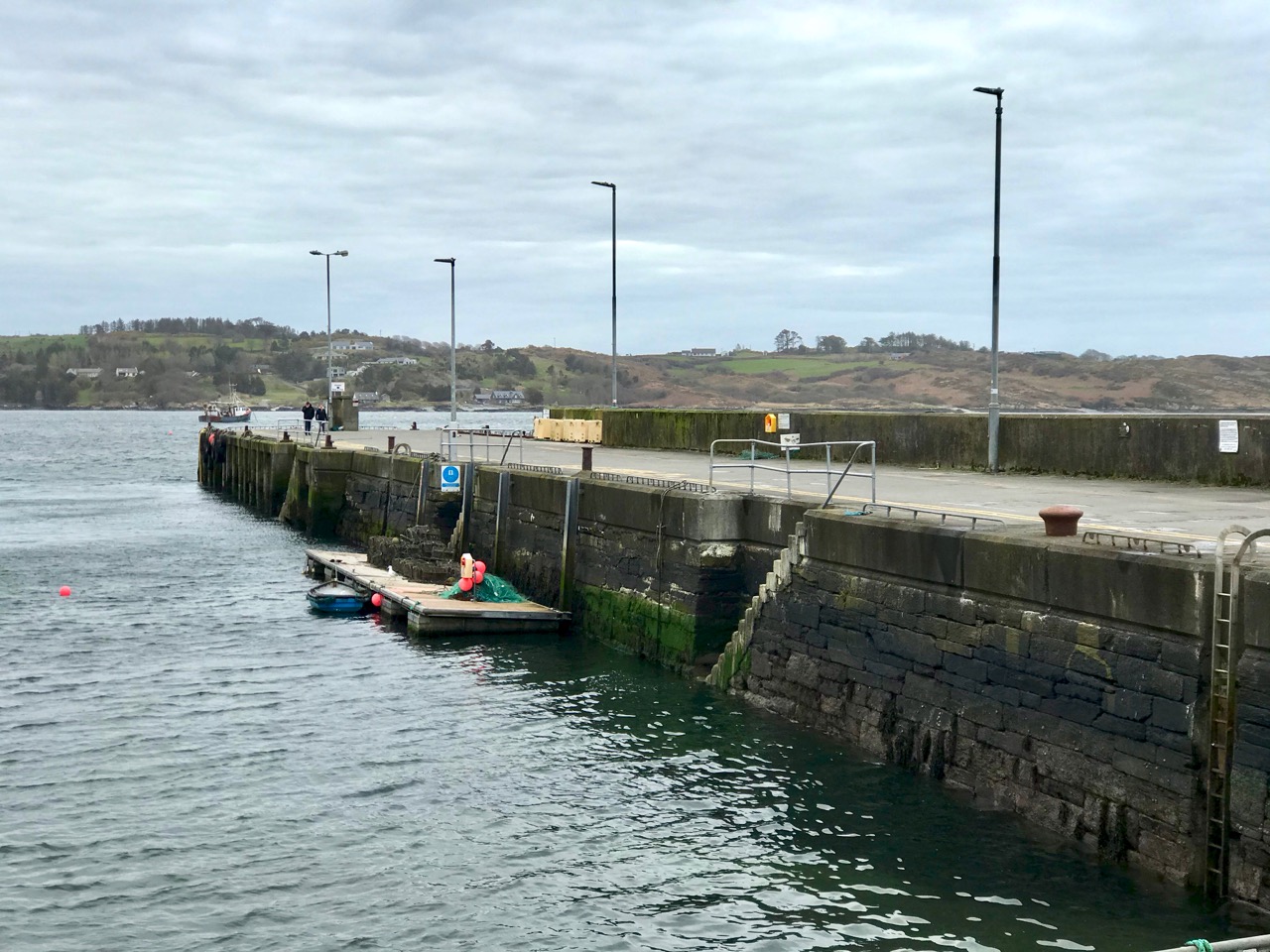
There’s not much activity in Schull, our other centre for essential supplies, either. The main street (upper) and pier (above) are deserted on Saturday morning, when it’s normally buzzing. All the businesses in our villages and towns rely on customers: we hope for their sakes (and ours) that the situation doesn’t last too long, although we do all understand how necessary the restrictions are.

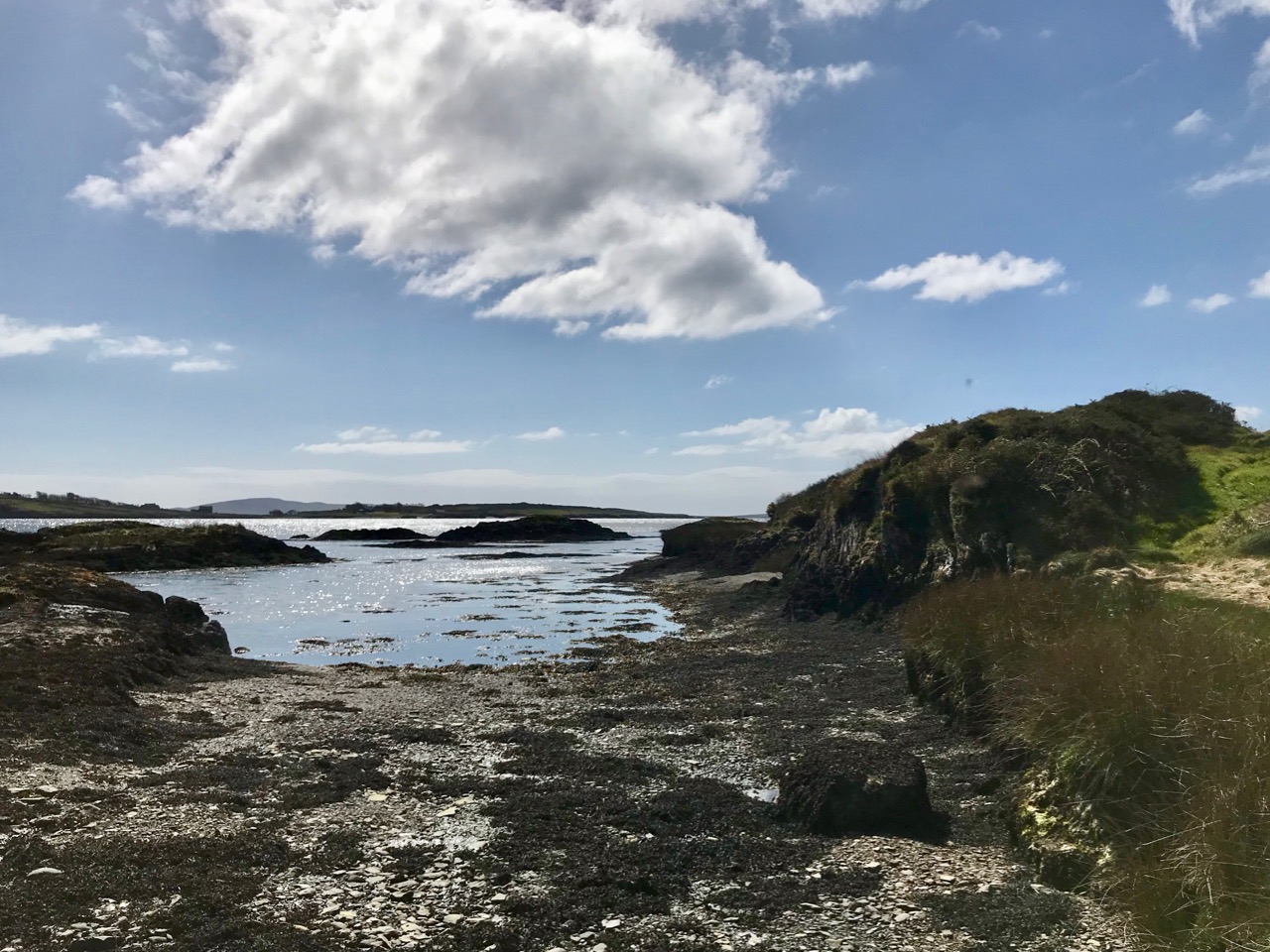
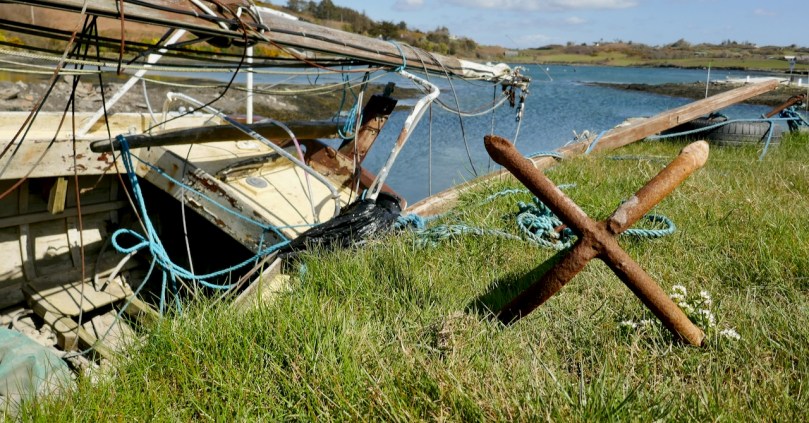
Join us for one of our walks – along to Rossbrin – to look at the water and the always changing scenery as spring gets under way. That’s the boreen leading down to it, above.

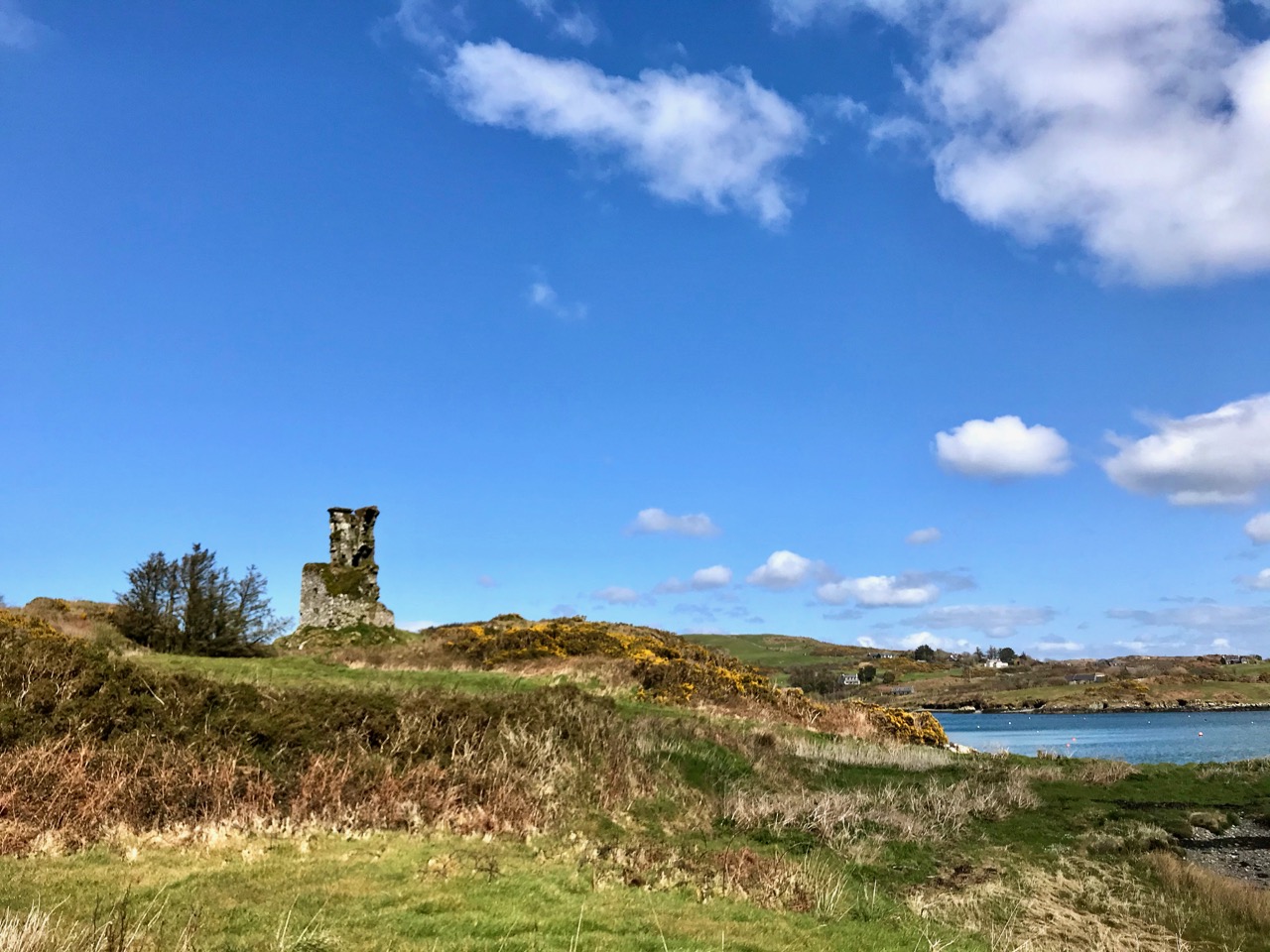
Rossbrin Castle, the home of the ‘Scholar Prince’ Finghinn O’Mahony in medieval times, is the local landmark which always draws us towards the Cove. It has stood for centuries, although very gradually returning to nature: parts of it will remain for generations to come, and will intrigue those who chance upon it, as I first did some thirty years ago. It is on private land, remember, but it can be seen from many accessible vantage points.

It’s no hardship to be ‘marooned’ out here in rural Ireland. The one thing we miss above all else is meeting and chatting with friends and neighbours: that’s unnatural. But we will survive it. After our walks there’s always the road home to look forward to (do you see the celandines lining the way?):

Roaringwater Journal wishes to heartily thank all those in our communities who are supporting the rural population through these abnormal times: medical teams, pharmacies, shopkeepers, producers and suppliers . . . All who keep our facilities and utilities going . . . They are helping us to stay healthy and upbeat in times of disquiet. We appreciate all of you.

Two Kilometres

That’s all we’re allowed during the Covid19 lockdown for ‘necessary exercise.’ But I have spent years now exploring the townlands around us and I like nothing better than to ramble out with my camera looking out for whatever comes my way, like Rossbrin Castle, above. Robert has done something similar this week – each of us with our own take on what life is like here right now.

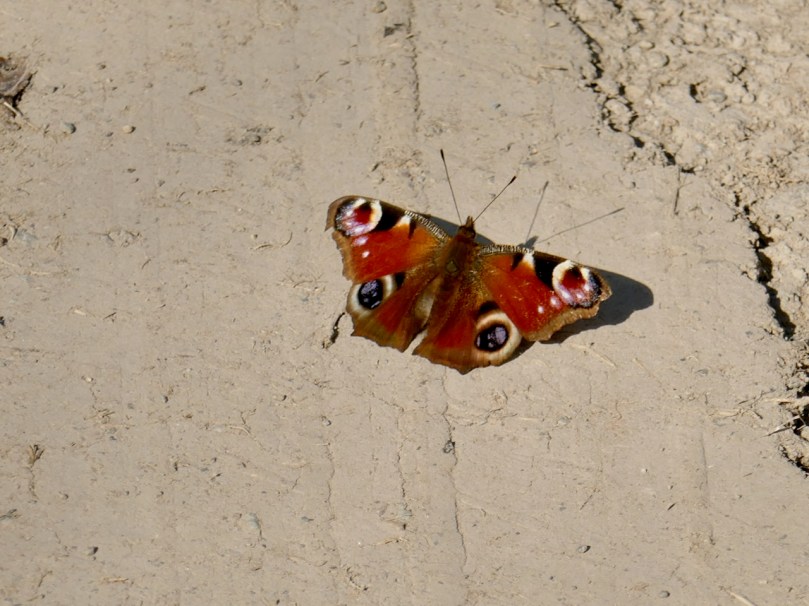
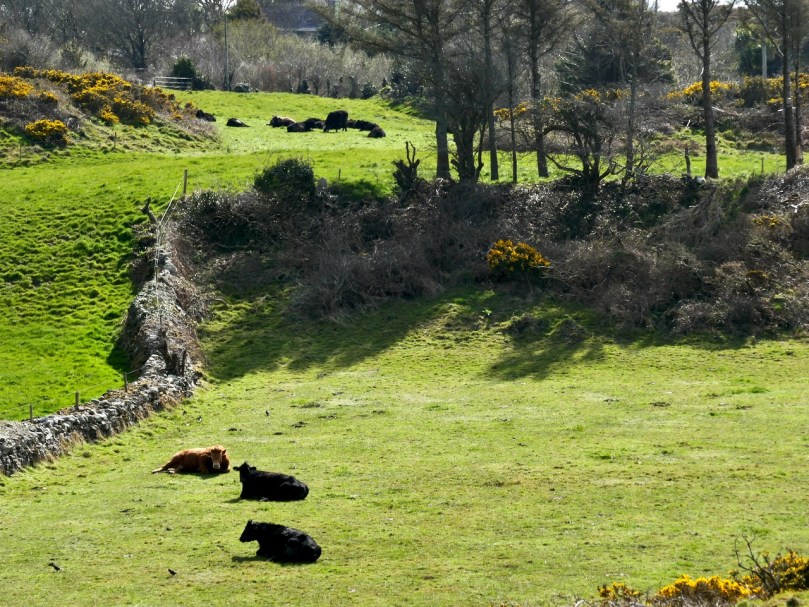
From the top: Seven-spot Ladybird; Peacock Butterfly; Mr Bull and his two cows observing social distancing

I’ve learned so much this way about the natural world. A lot of it has ended up as blog posts on Roaringwater Journal or as entries on my Wildflowers of West Cork Facebook Page.

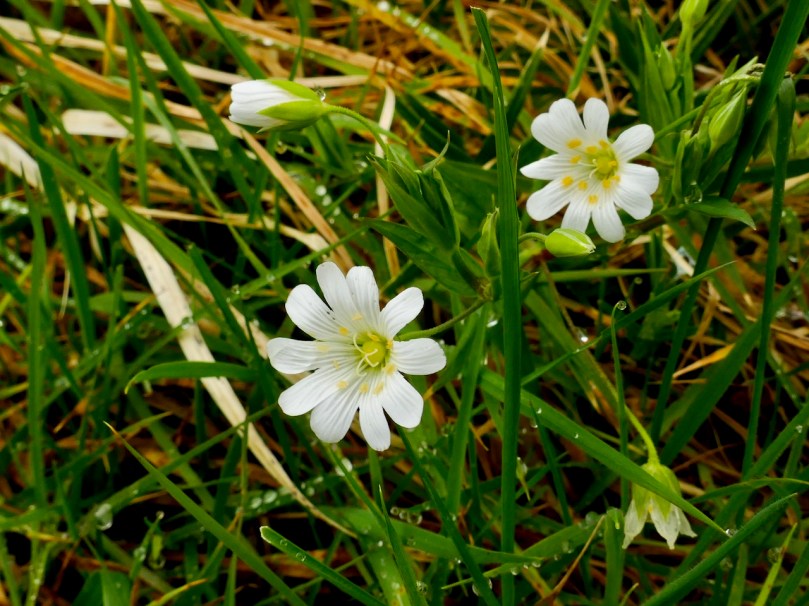
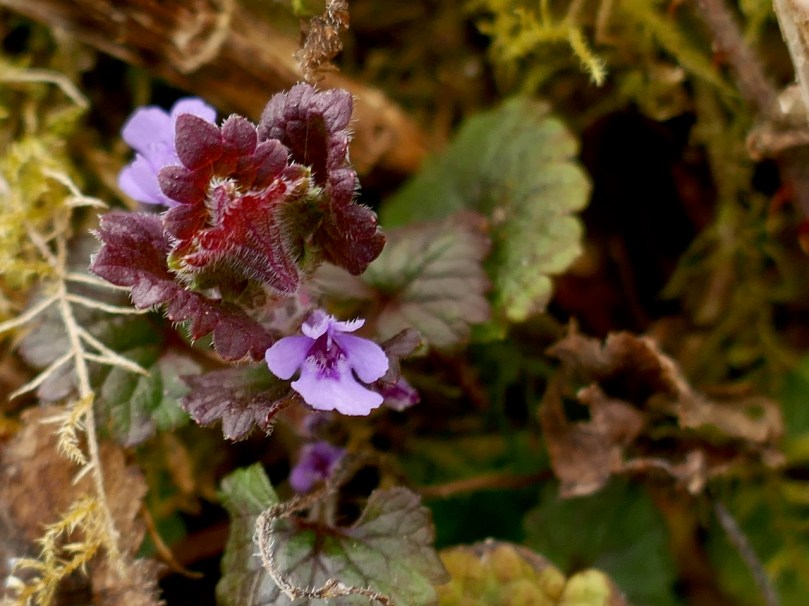
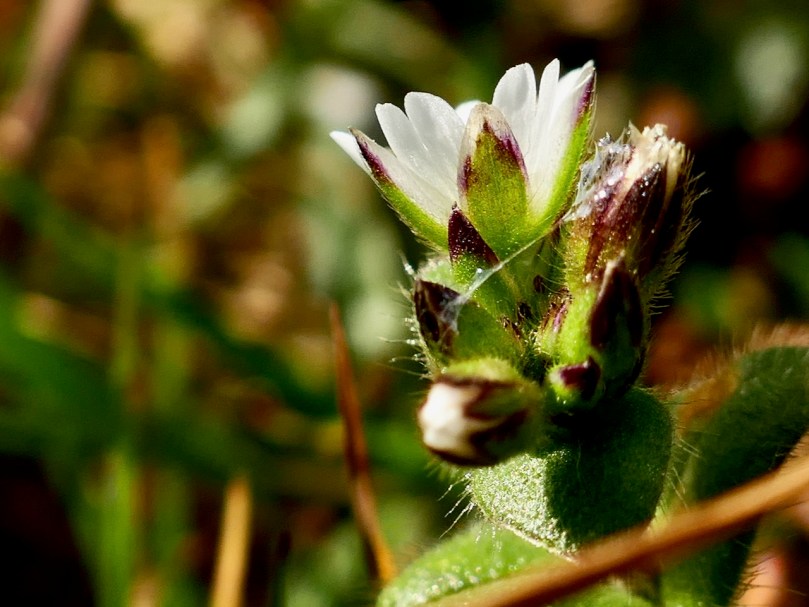
From the top: Herb Robert, Greater Stitchwort and Ground-ivy

There is archaeology and history all around us too, from a wedge tomb to a tower house, from mining complexes to ring forts and standing stones.

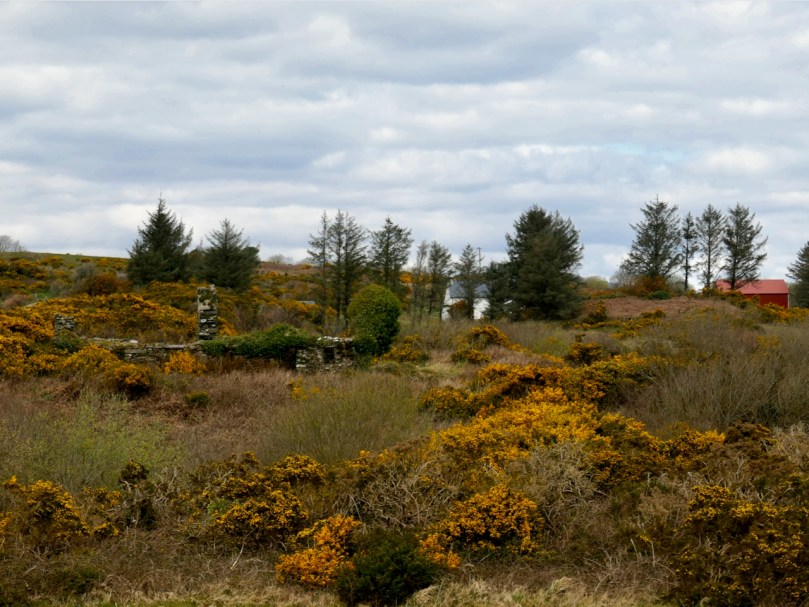
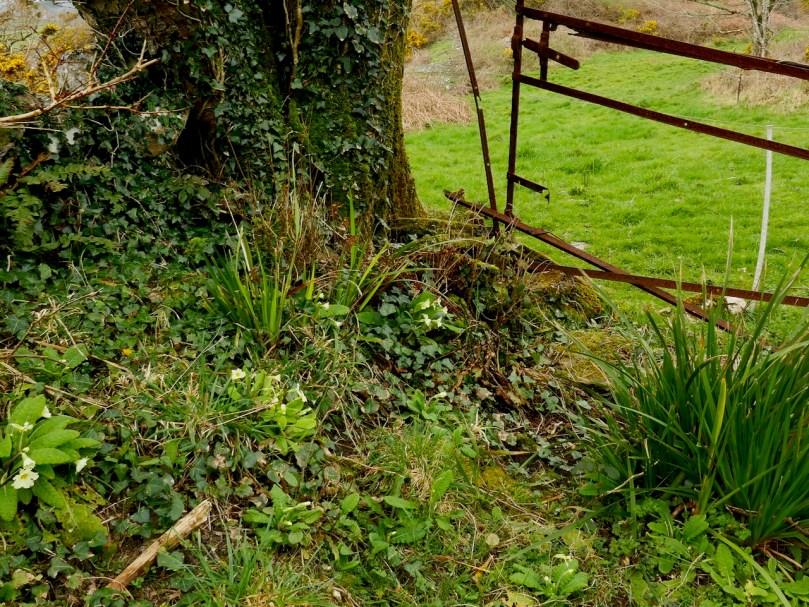
From the top: a ruined farmstead bears witness to population decline; Mount Gabriel looms over a pastoral scene; the old gate once led into a mine

We miss our friends, The Chat in Budds, our Irish lessons and conversation group, the Book Club and Art House Cinema and Talks at the Vaults and all the other events that get us out into the community and keep us curious and learning. We miss our long drives, our Holy Well and Stone Circle hunting trips – and our lattes!

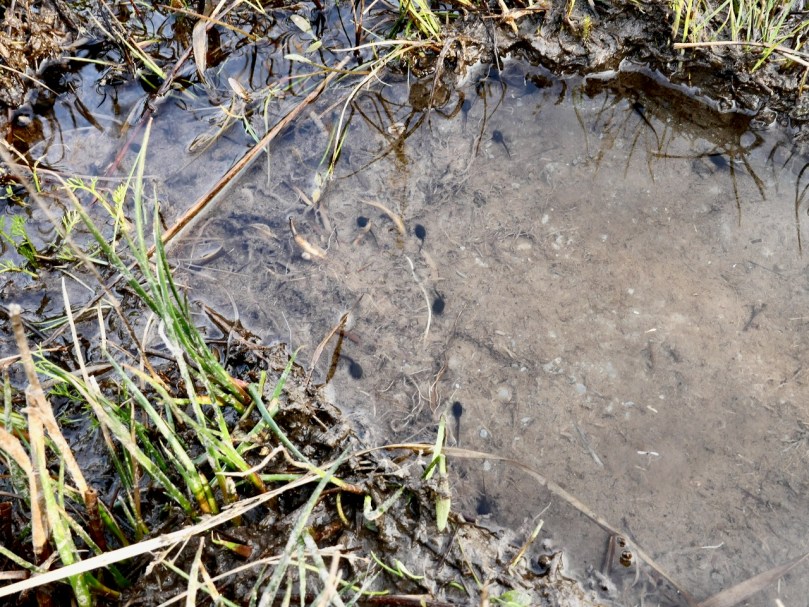
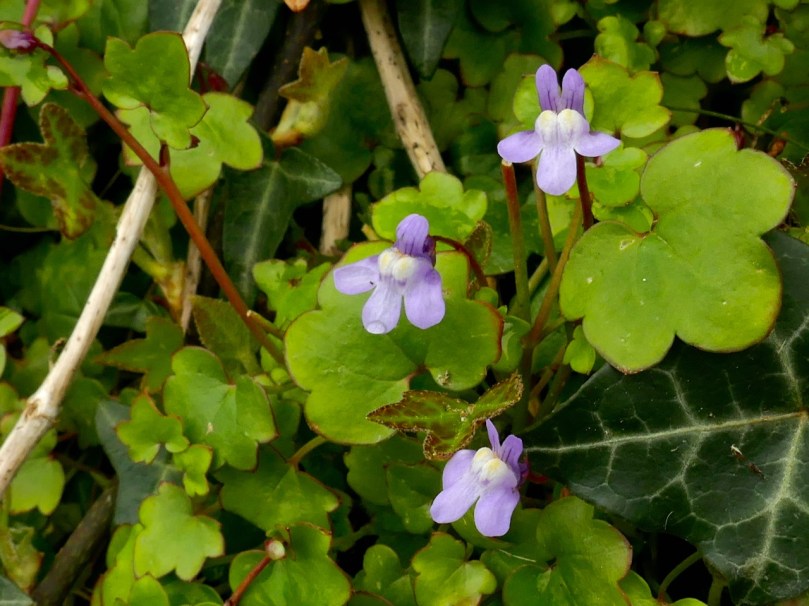
From the top: Tadpoles; Ivy-leaved Toadflax on an old stone wall

But these are small, first world, complaints and we do know how privileged we are to be well, to be able to buy groceries online, not to have small children to entertain and educate at home, and most of all to live in such incredible surroundings. It’s a good reminder not to take those privileges for granted.

I think I have barn envy

Meanwhile, we want to support everyone’s efforts to flatten the curve and we are in awe of the selfless dedication of so many people and desperately sympathetic to those who have lost income. The best way we know to do this is to be cooperative and follow the rules. And that’s what we are doing, mostly staying at home and when we go out keeping our walks to a 2km radius.

From the top: Contrasting textures – bark and barn; Distant view of Castle Island with the remaining castle wall and the abandoned farm houses

So herewith is a selection of what we’ve seen in the past few days as we walk several different 2km routes that present themselves from our front gate. Many of the wildflowers are tiny and only lots of practice enables me to spot them in the verges or the fields.

From the top: Dandelions and Celandine; Common Mouse-ear; Thrift and Scurvygrass 

It seems like spring has been slow to come this year although when I look back at previous years I see much the same assemblage of flowers for late March and early April. But beyond a golden day or two, it hasn’t warmed up yet so there is no sense of spring suddenly ‘bustin’ out all over’. Nevertheless the hedgebanks are slowly coming to life and I see something new every day.

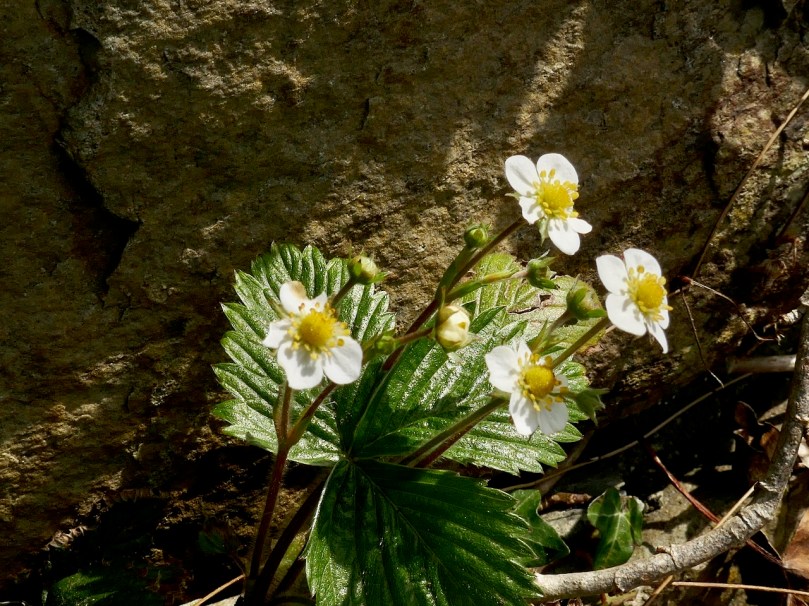
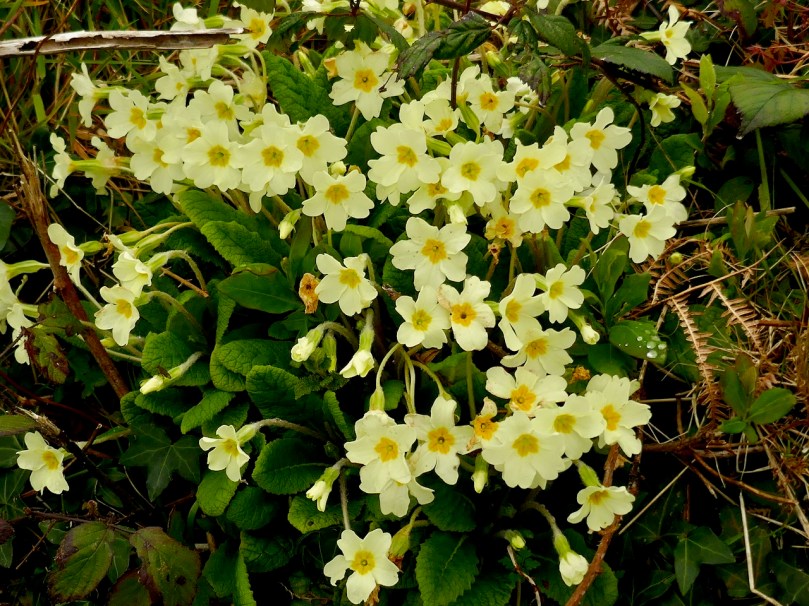
From the top: Wild Strawberry; Three-cornered Garlic (AKA Three-cornered Leek); Scarlet Pimpernel; Primrose

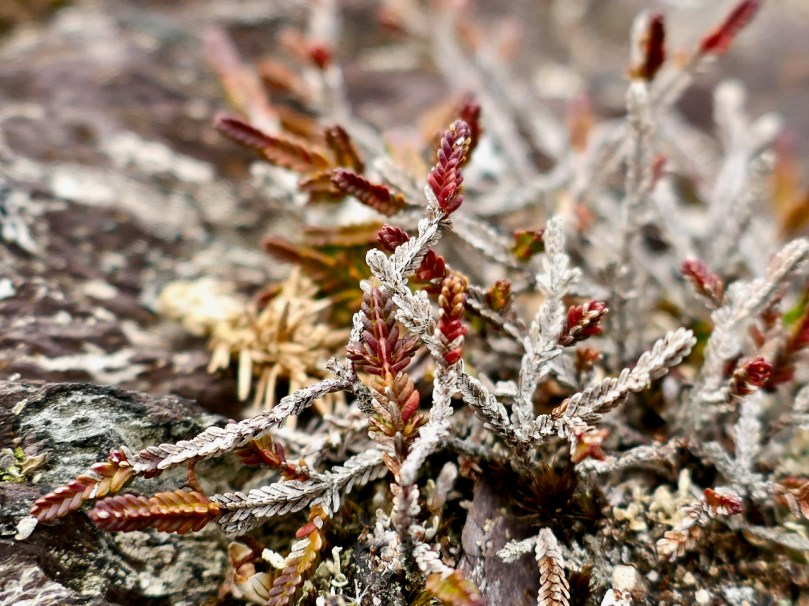
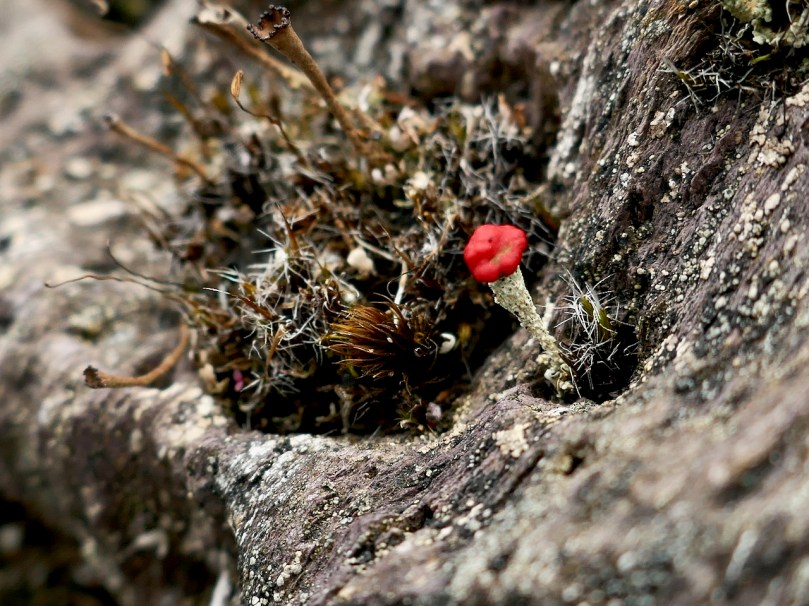
The rock faces at my favourite bog soak are always fascinating, although you have to lie flat with your face an inch from the surface to really grasp the miniature world that teems on its surface. I’m still determined to improve my knowledge of lichen and mosses, but I can’t pretend I’ve advanced much.

From the top: Devil’s Matchstick, a type of Cladonia lichen: I don’t know

How are you all doing out there? Leave a comment and let us know – we want all our dear readers to stay safe and well!


Mizen Mountains 4 – Corrin

The world is in trouble – but in our tiny corner of it we find ourselves taking the time to get out into the open air, lapping up any chance of sunlight, and bracing ourselves against the bitter east winds that seem to prevail at the moment. Following last week’s escapades, when we discovered new territory just beyond the boundaries of the Mizen, we decided to take up the challenge of one of the most significant Mizen peaks – Mount Corrin.

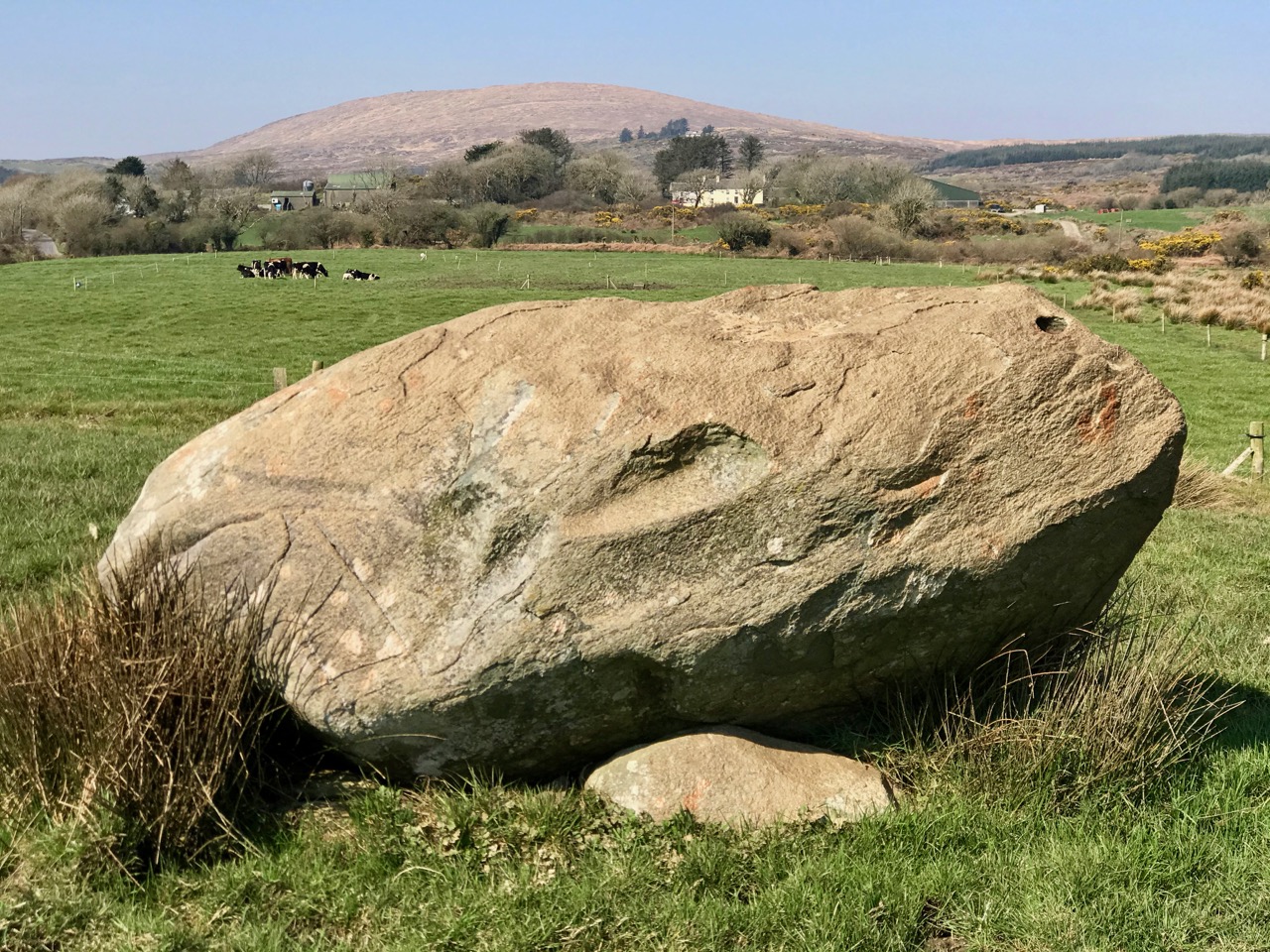
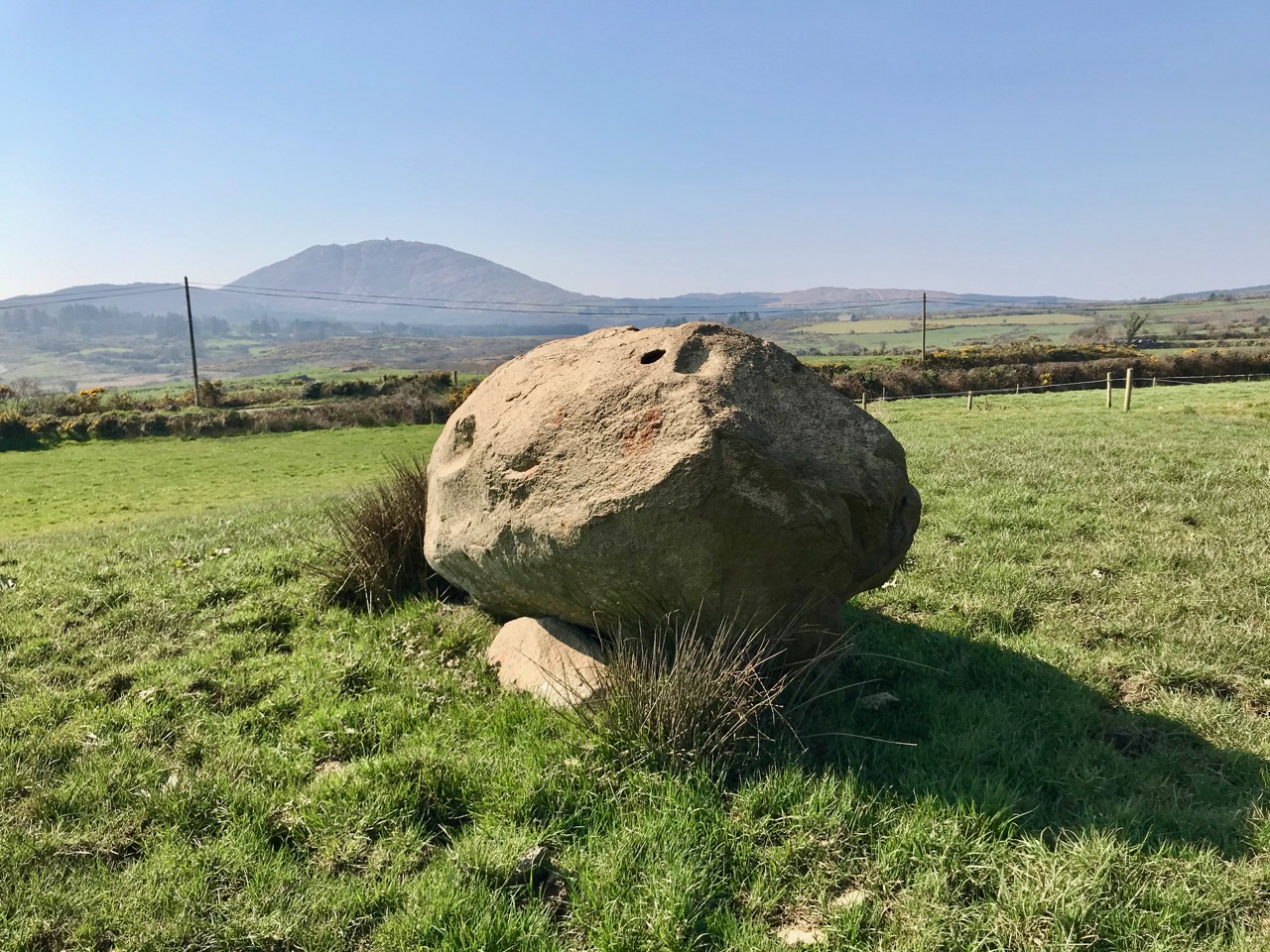
Upper – the elevated boulder burial at Rathruane – probably Bronze Age – seems to echo the profile of Mount Corrin – a perfect peak – away to the west, while – lower – the same monument also stands in context with Mizen’s highest mountain – Gabriel – to the south

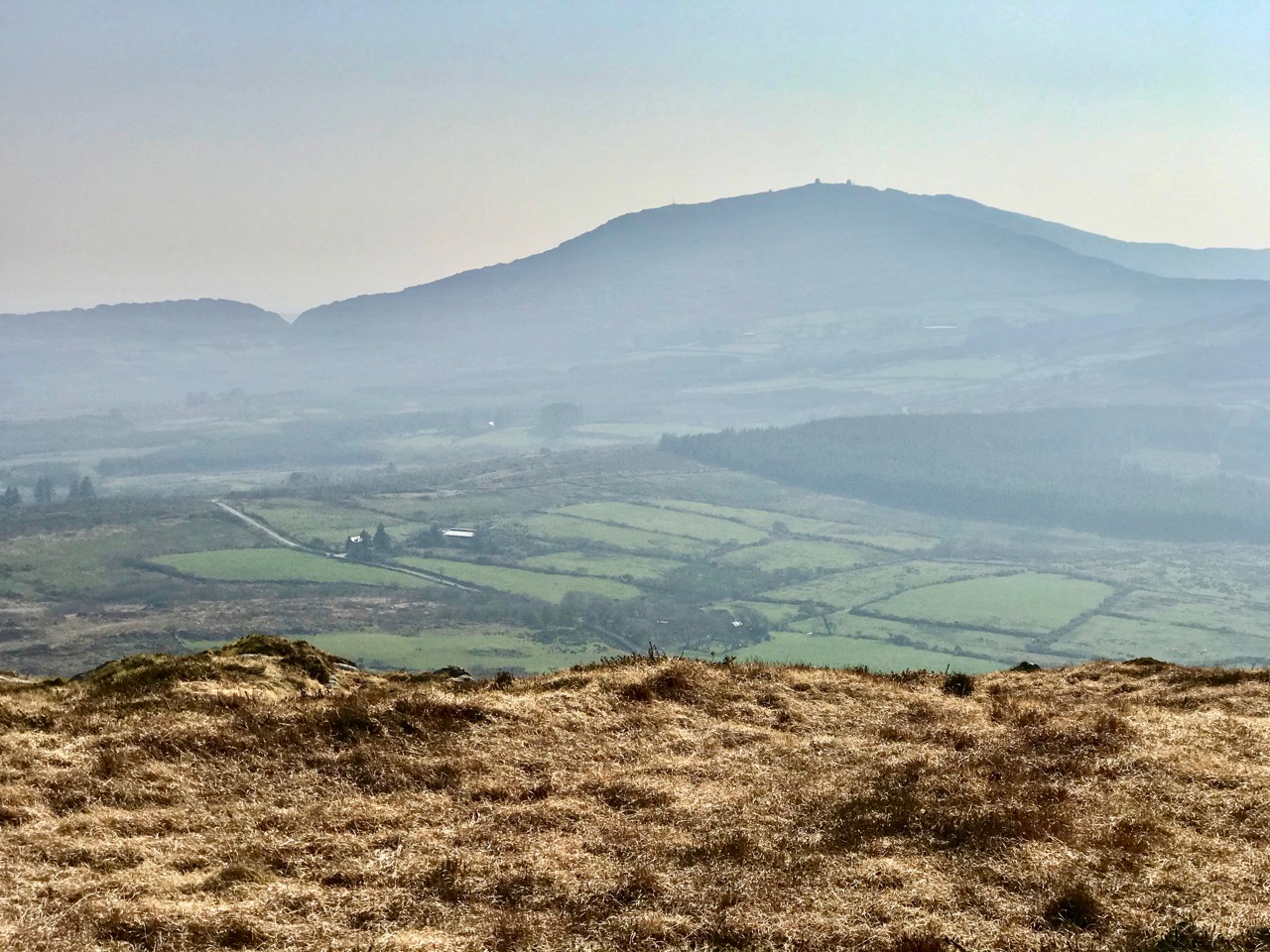
We have passed the spring equinox, and days are now longer than nights. It’s a good time to consider seriously exploring the high ridges again. Corrin – 284 metres – is not the highest summit on the Mizen, but its profile is one of the most distinctive as it rises from lower ground on all sides – a ‘proper’ mountain! in this respect it is  surpassed only by the Mizen giant – Mount Gabriel. We’ll tackle that one later on. We notice that Gabriel is always visible to us, from whatever elevated ground we traverse.

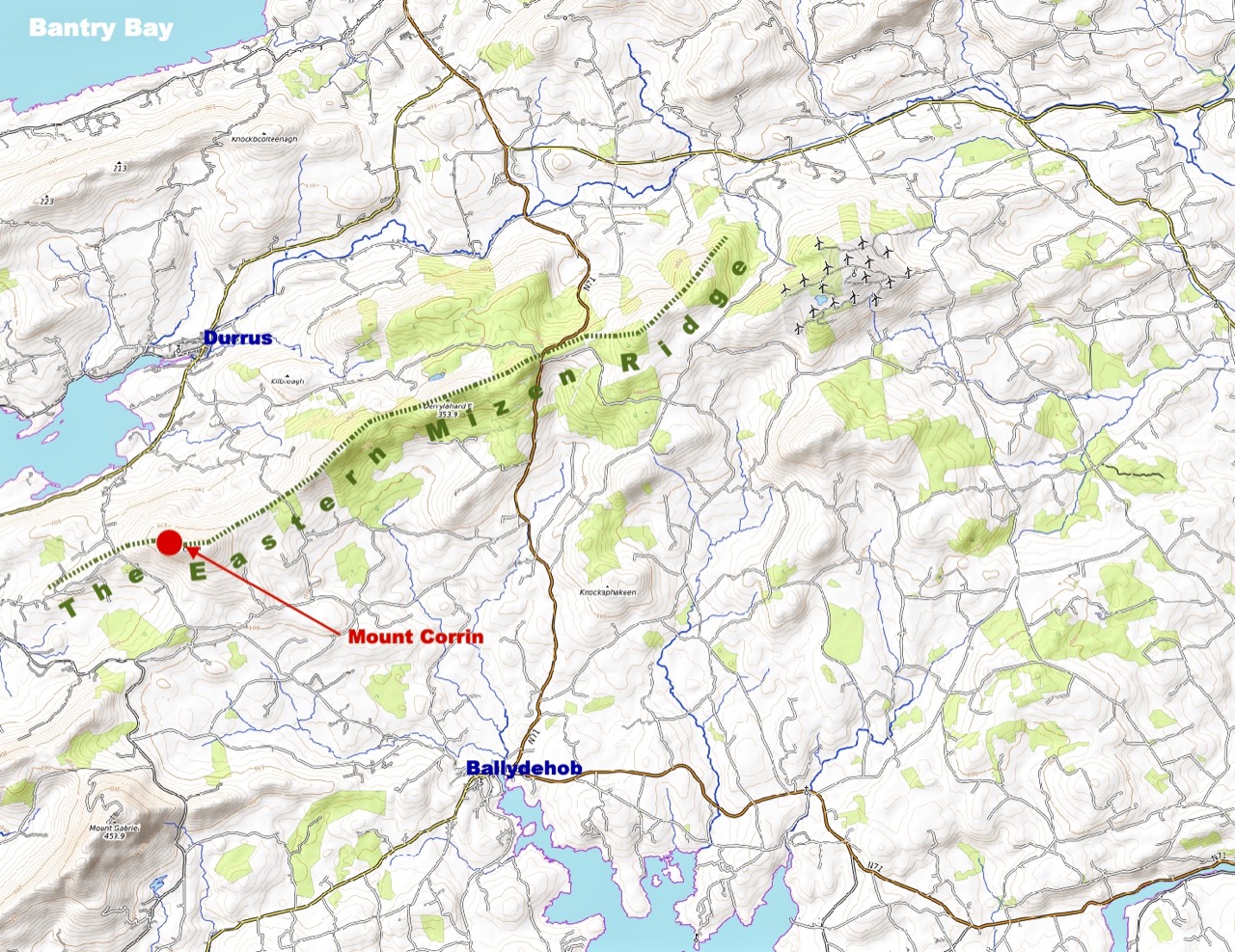
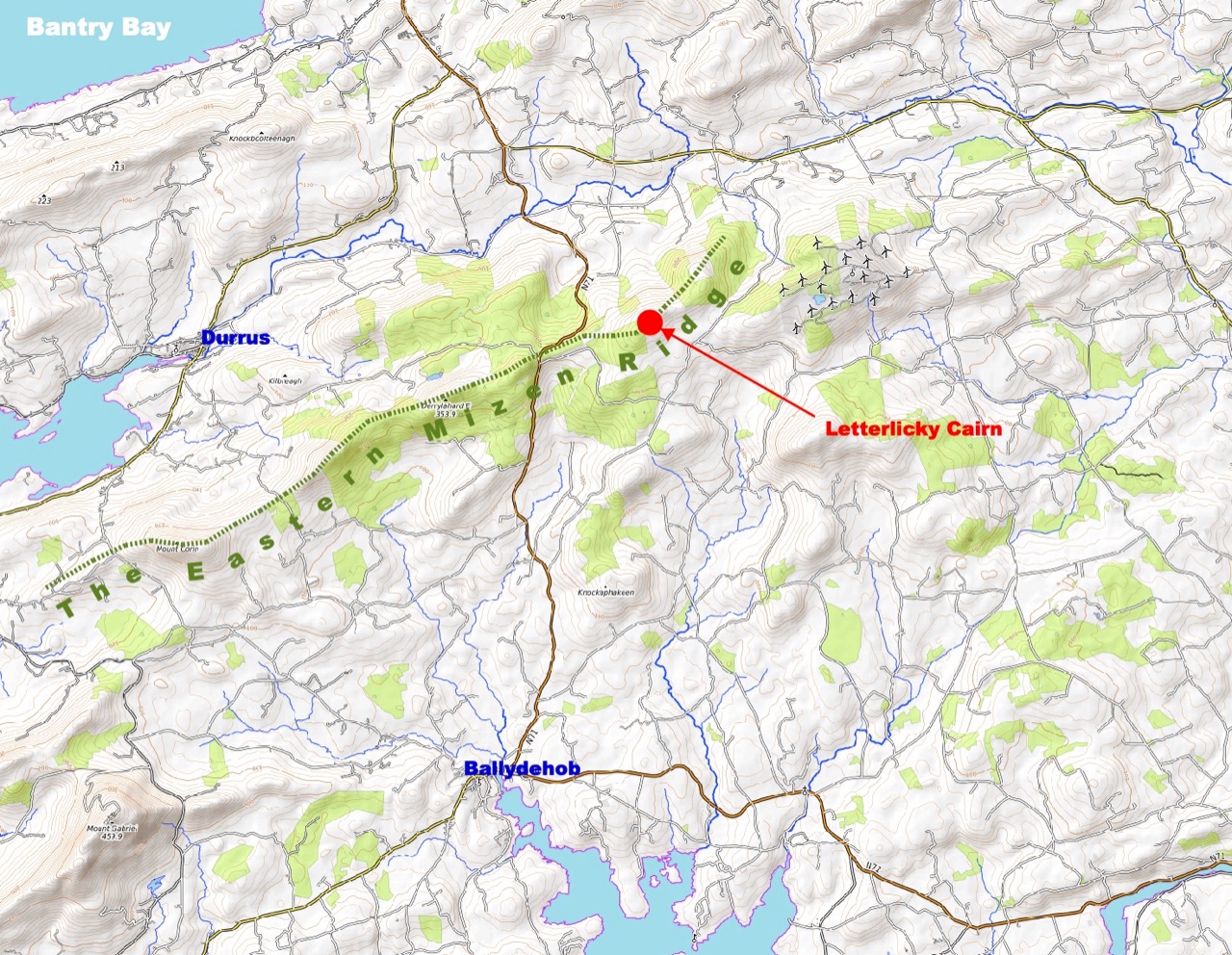
Last time we tackled Letterlicky, which is at the furthest edge of the eastern Mizen Ridge: today’s summit is on the west side of the same ridge  We have, of course, been to the top of Corrin before: Finola’s post of October 2015 describes previous expeditions. Then, the light was magnificent and the skies were clear blue – such a contrast to the beginning of this week, when the landscape has been pallid – all washed-out browns and yellows: spring  still hiding its face in West Cork.

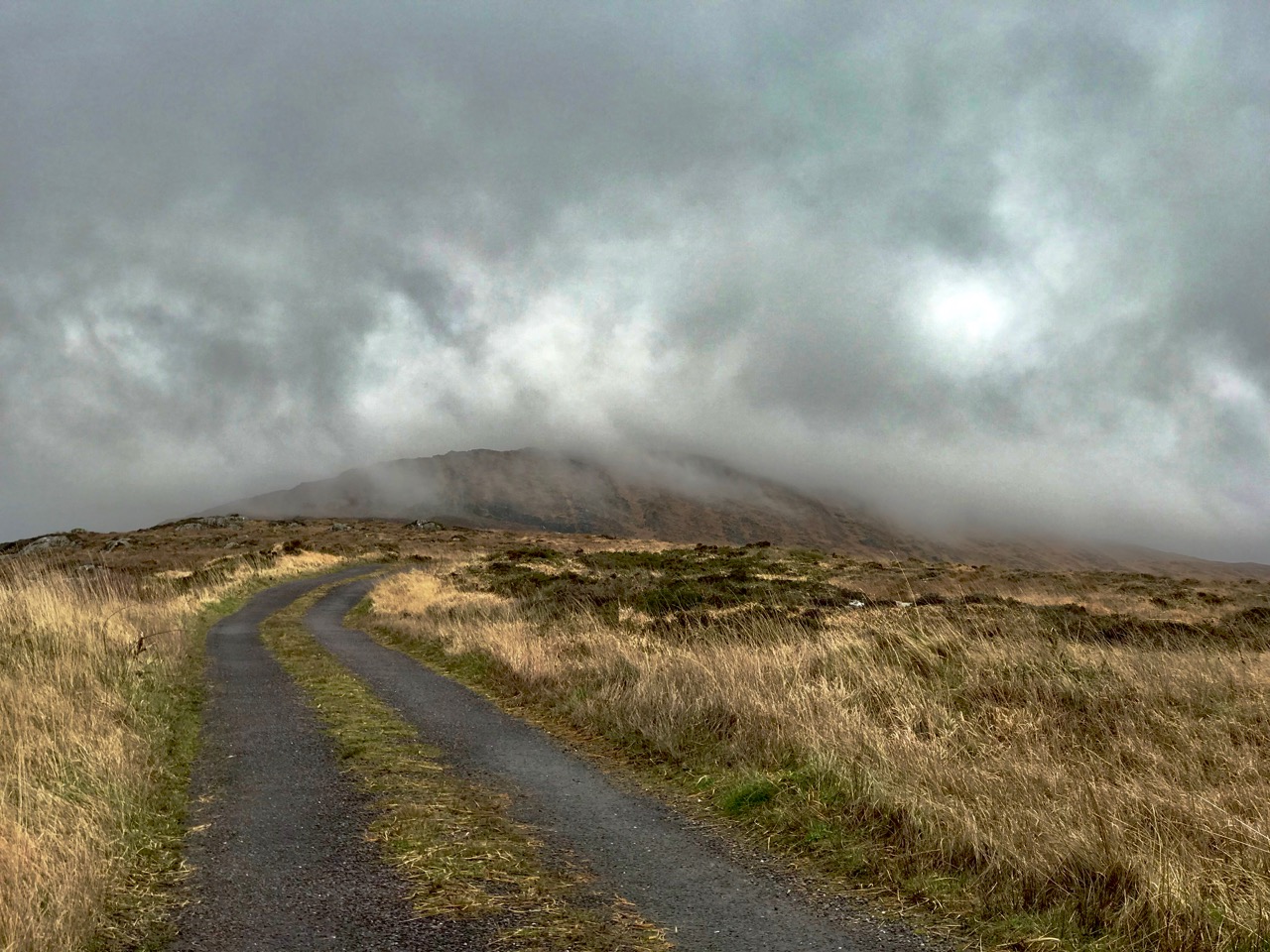
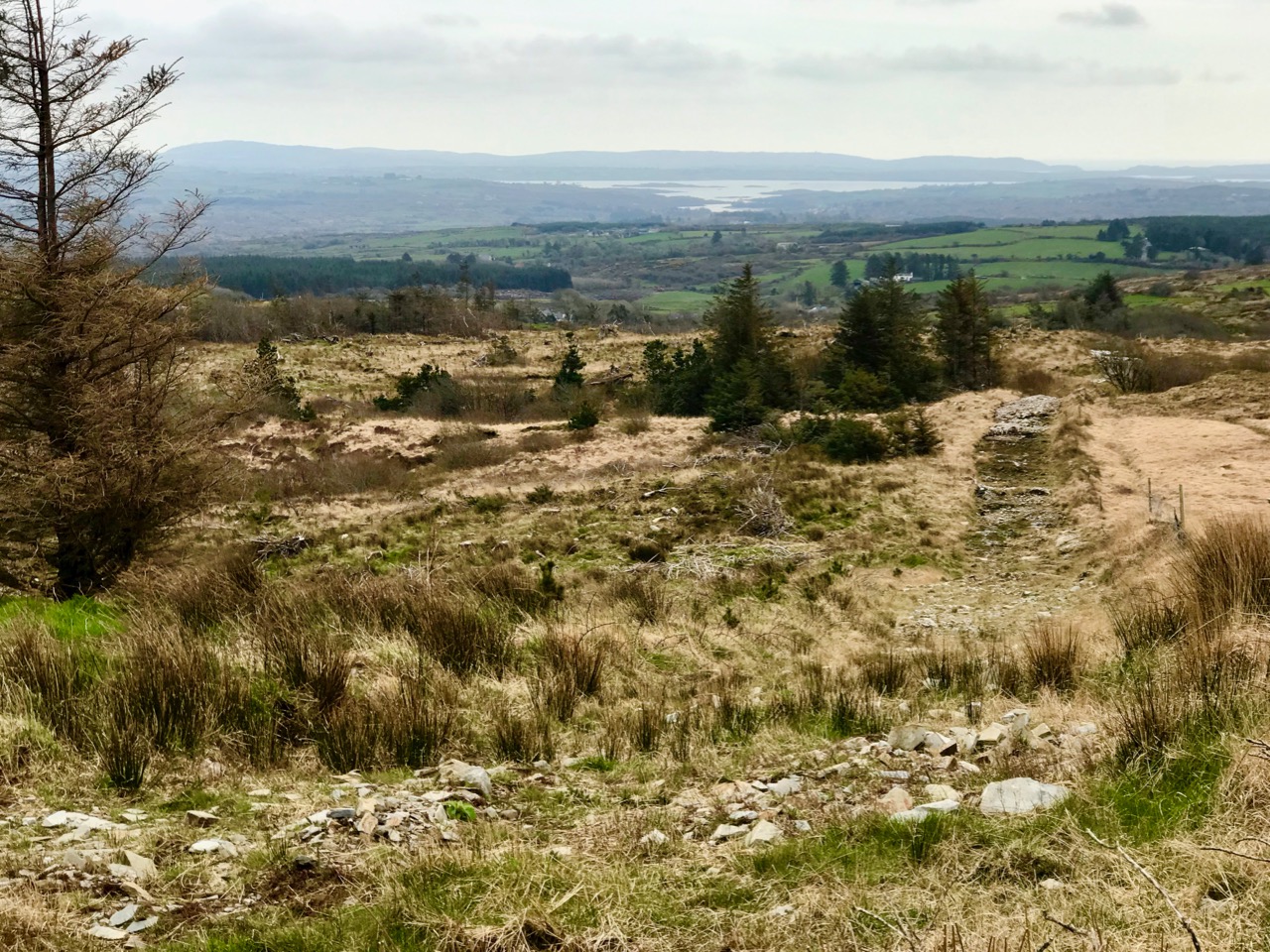
Upper – approaching Corrin on a challenging day. Lower – on the ascent, good distant views can be got to Ballydehob Bay, in spite of poor weather

We were the only souls on the mountain: it’s a good way of being self-isolated. But any walk in a natural environment in these strange times is exhilarating. In fact, we made two journeys to Corrin in the week: the first had to be abandoned in haste when halfway up due to waterlogged footwear and a biting cold easterly.

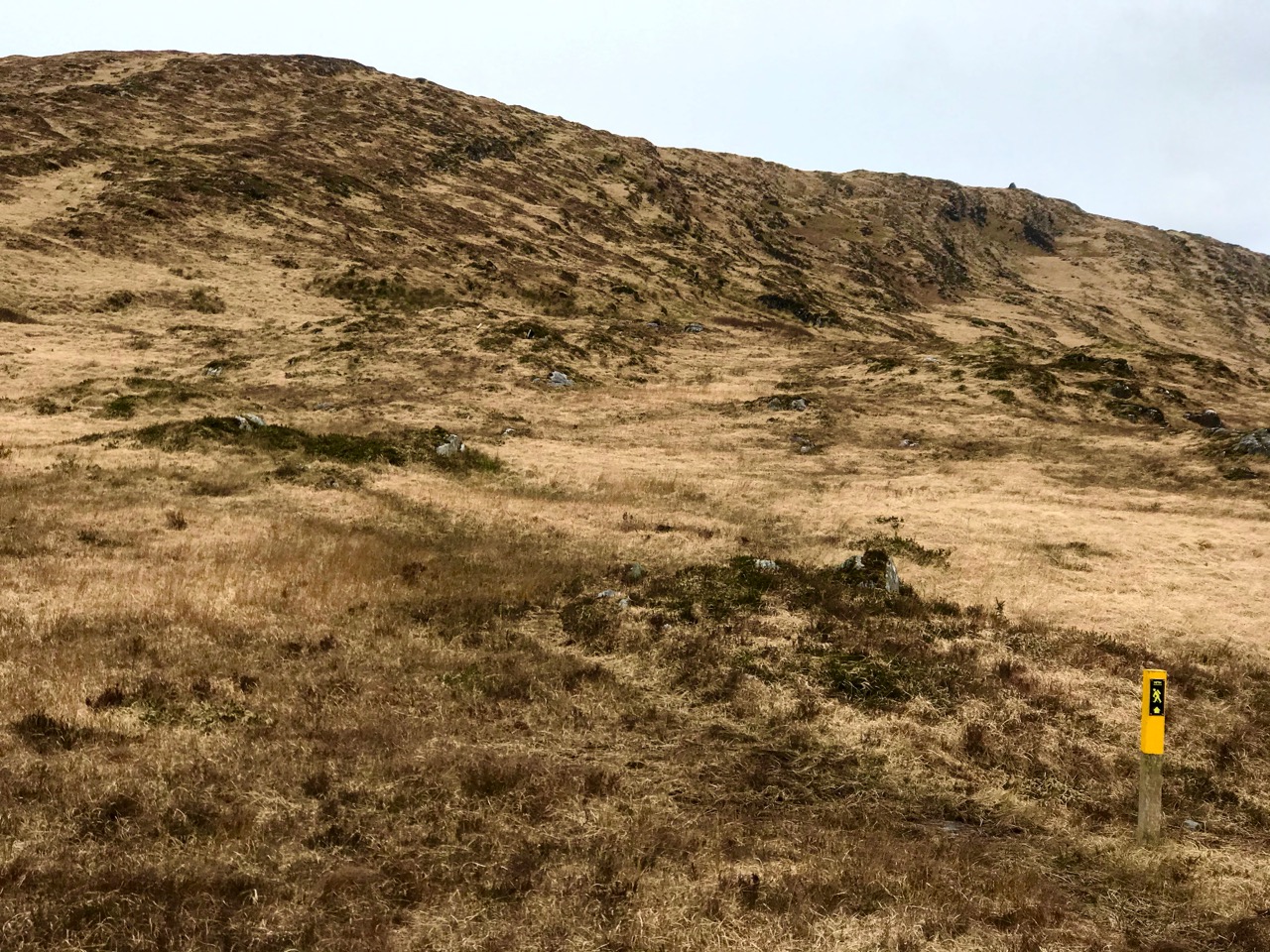
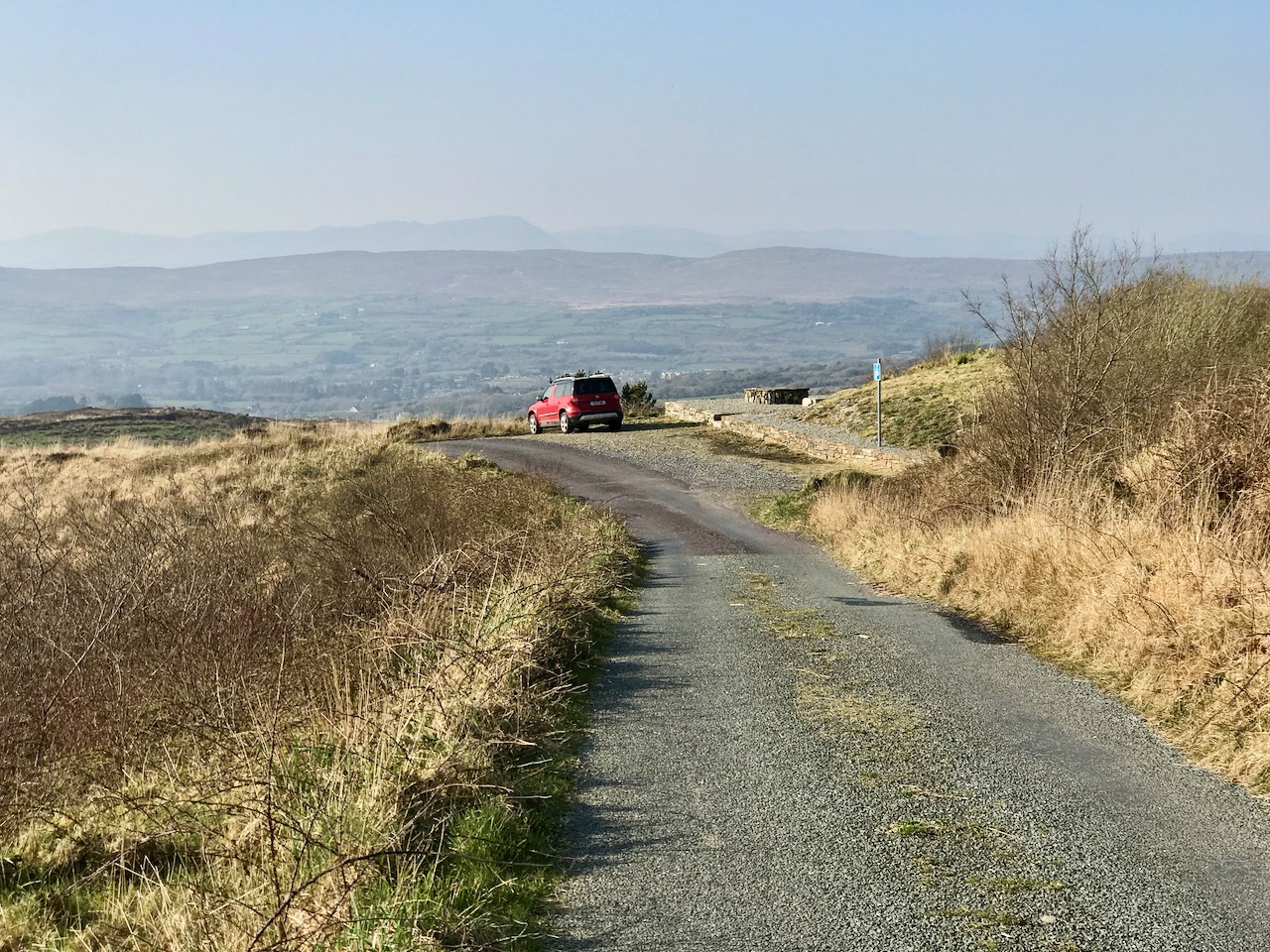
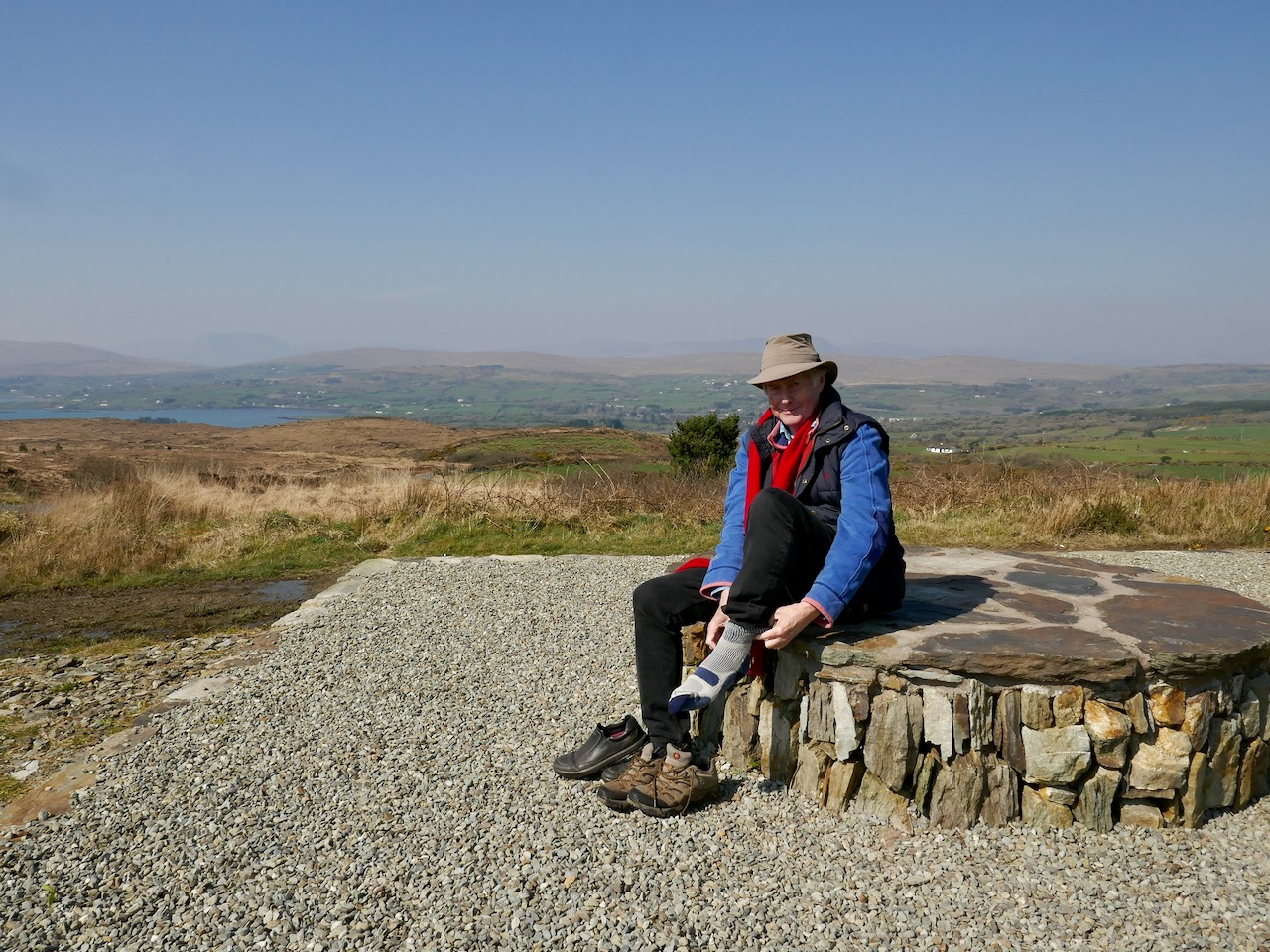
Upper – on our first attempt on Corrin we got as far as this wilderness before turning back. Centre – park here for the Corrin trail! It’s well marked and accessible from the east side. Lower – a convenient seat for donning the right footwear! This is on our second attempt, in much improved conditions

Suddenly – on Friday – everything changed. Out of nowhere came a bright, clear and windless day. We hurried out to complete our journey to the summit, revelling in the light. It was as though, for the first time in the year, there was a sense of expectant renewal. When we arrived home, it was to discover that Ireland had been plunged into lockdown: we (the ‘elderly and vulnerable’) have to stay in our homes unless needs are urgent (food and medicine) although we are permitted to exercise close to home, always keeping a safe distance from others.

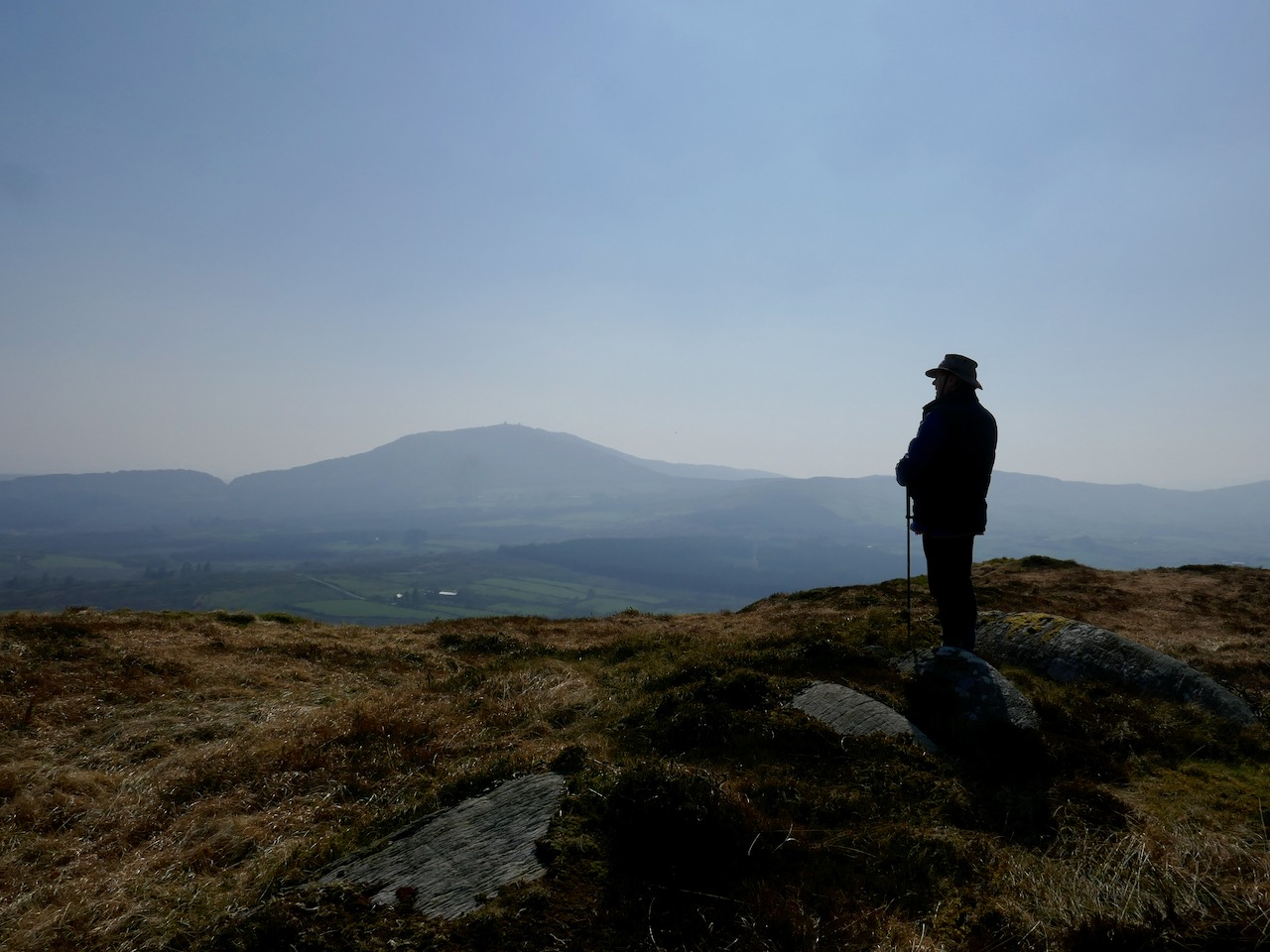
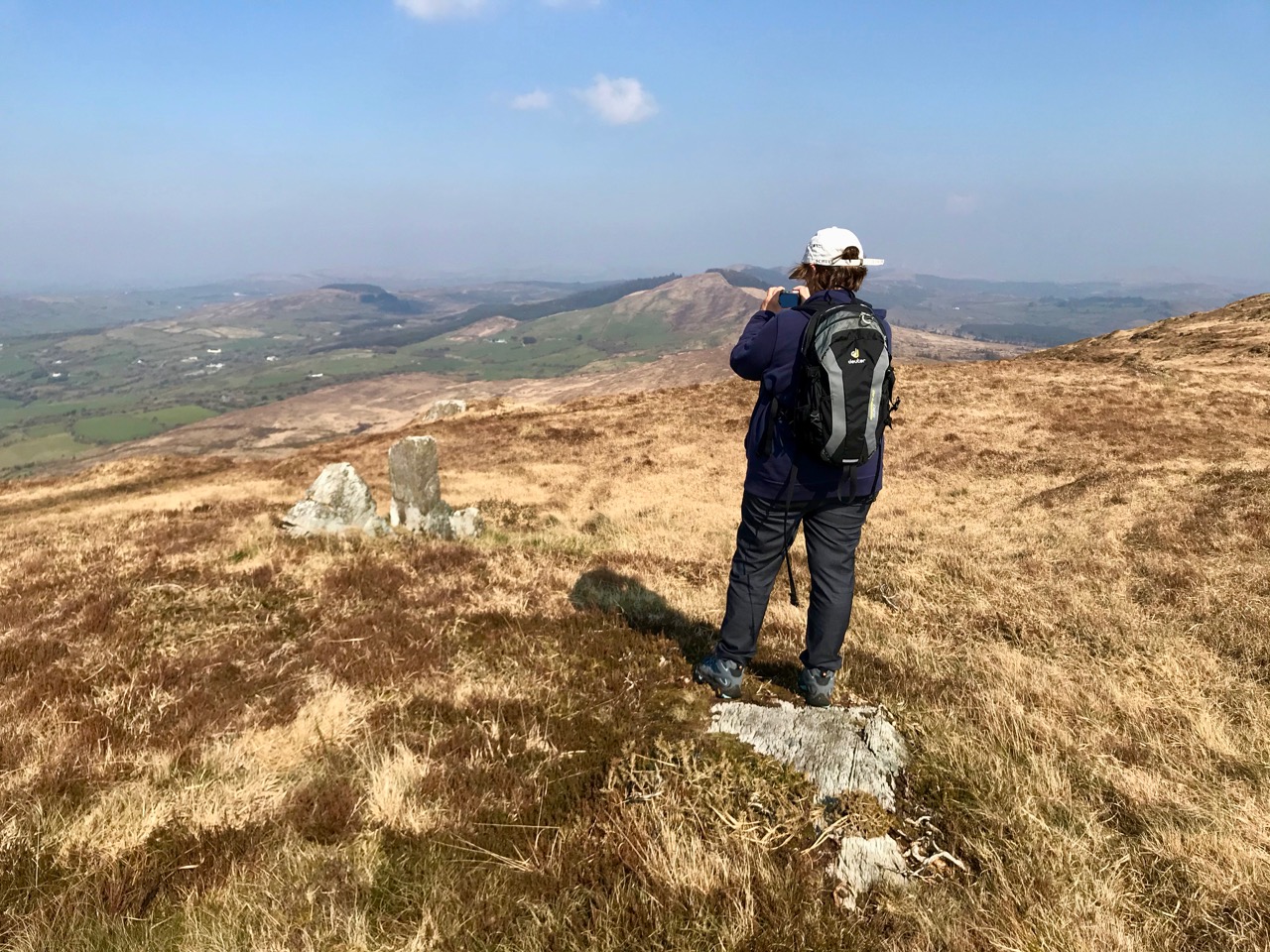
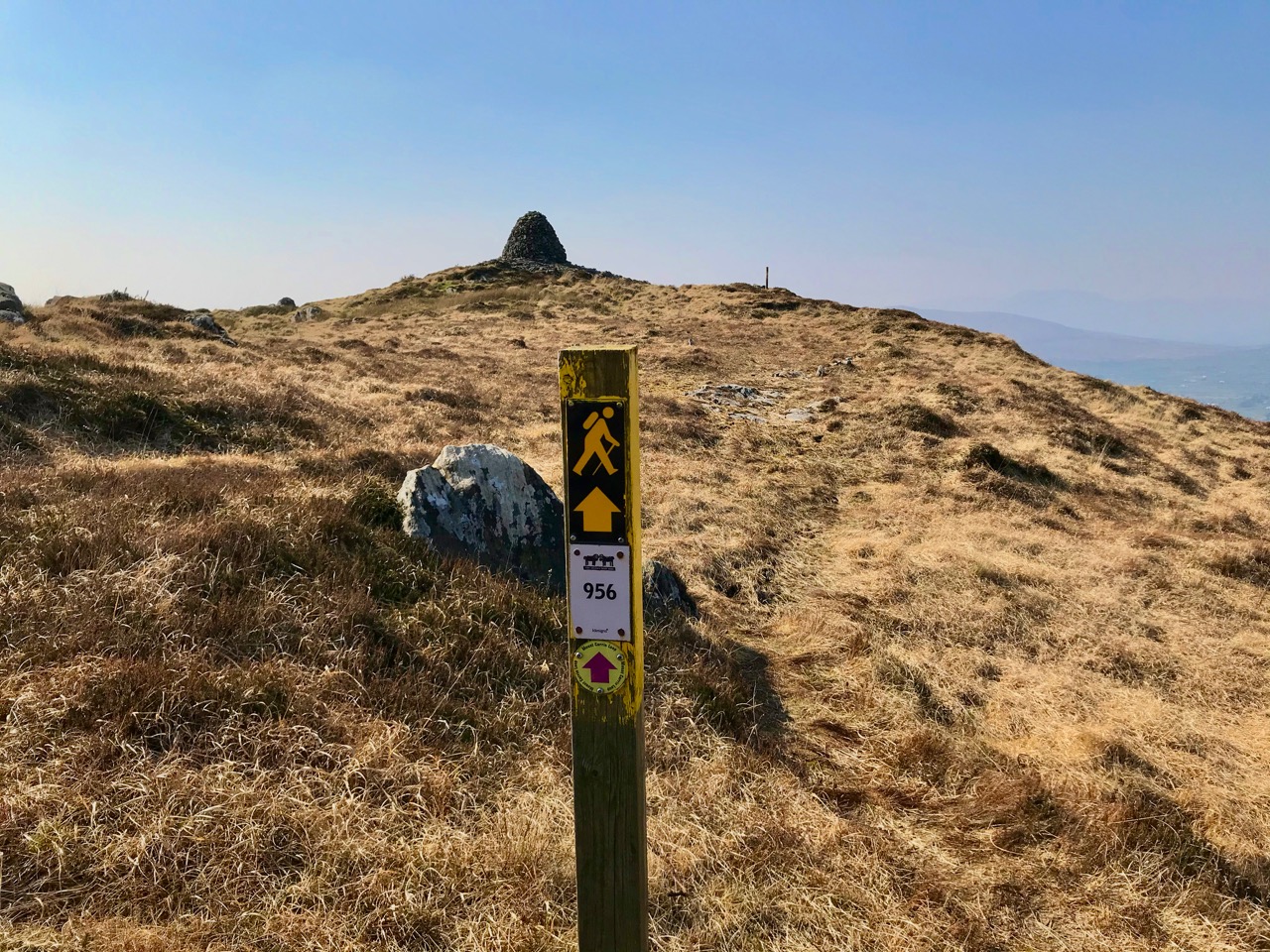
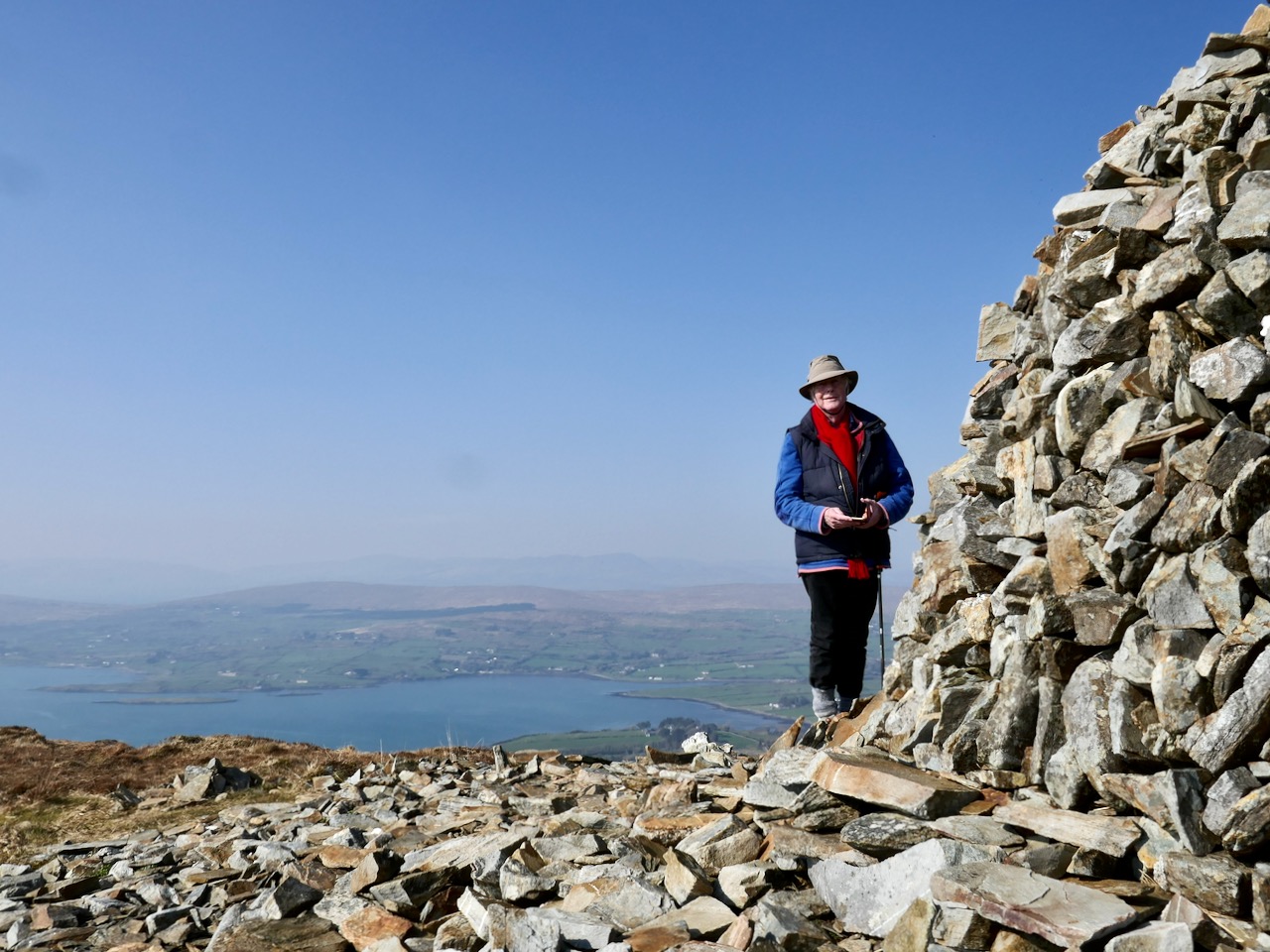
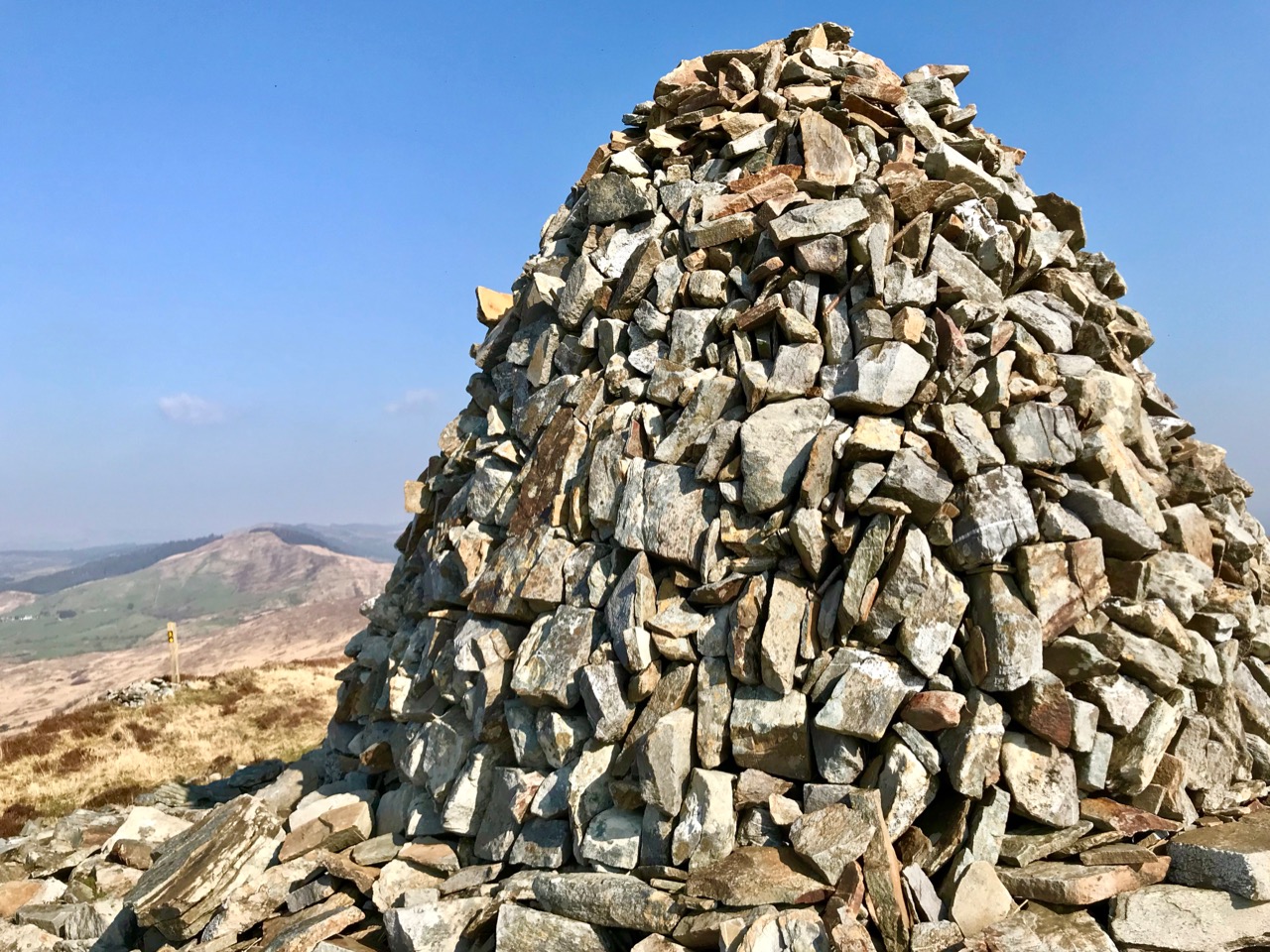
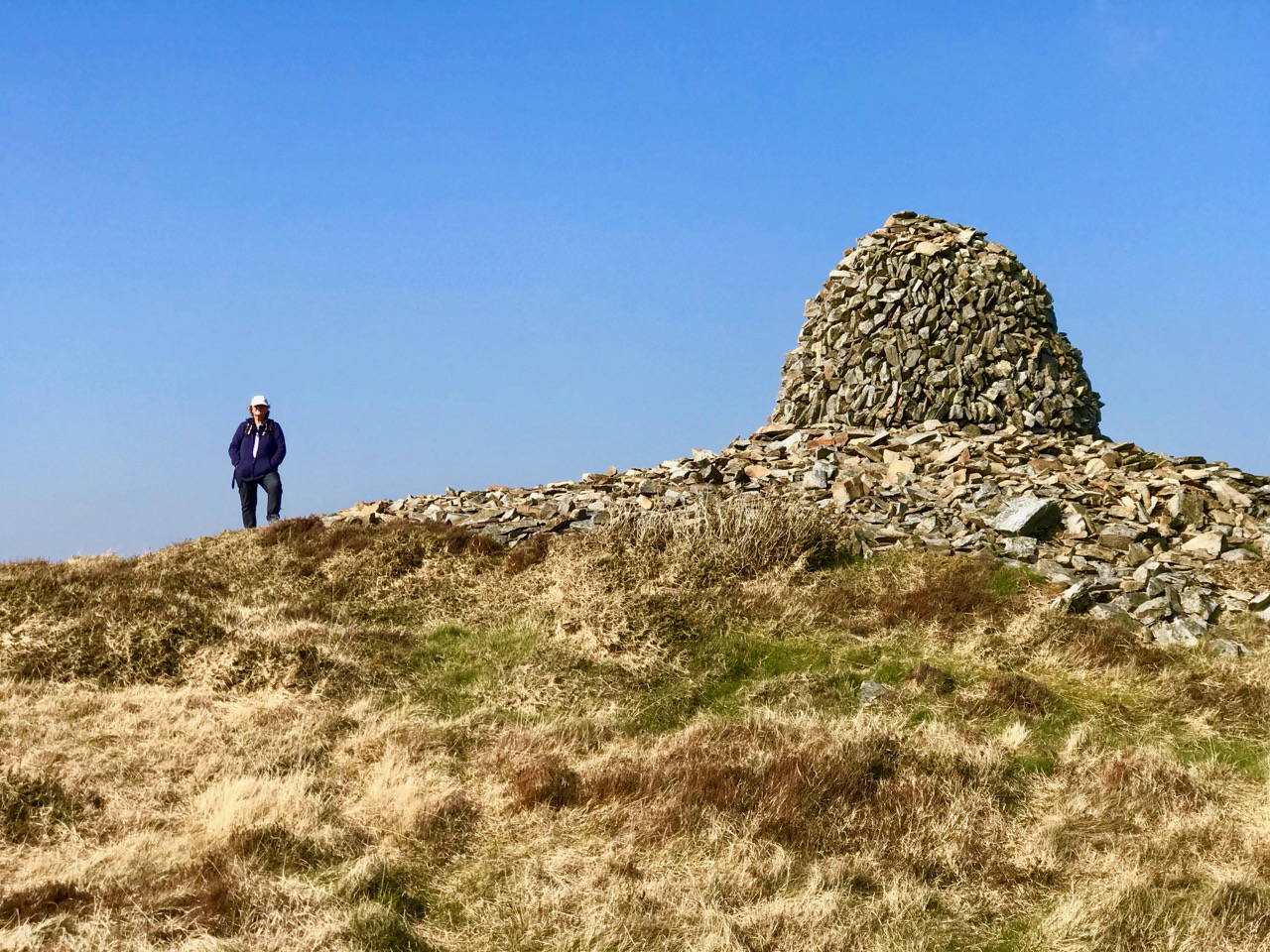
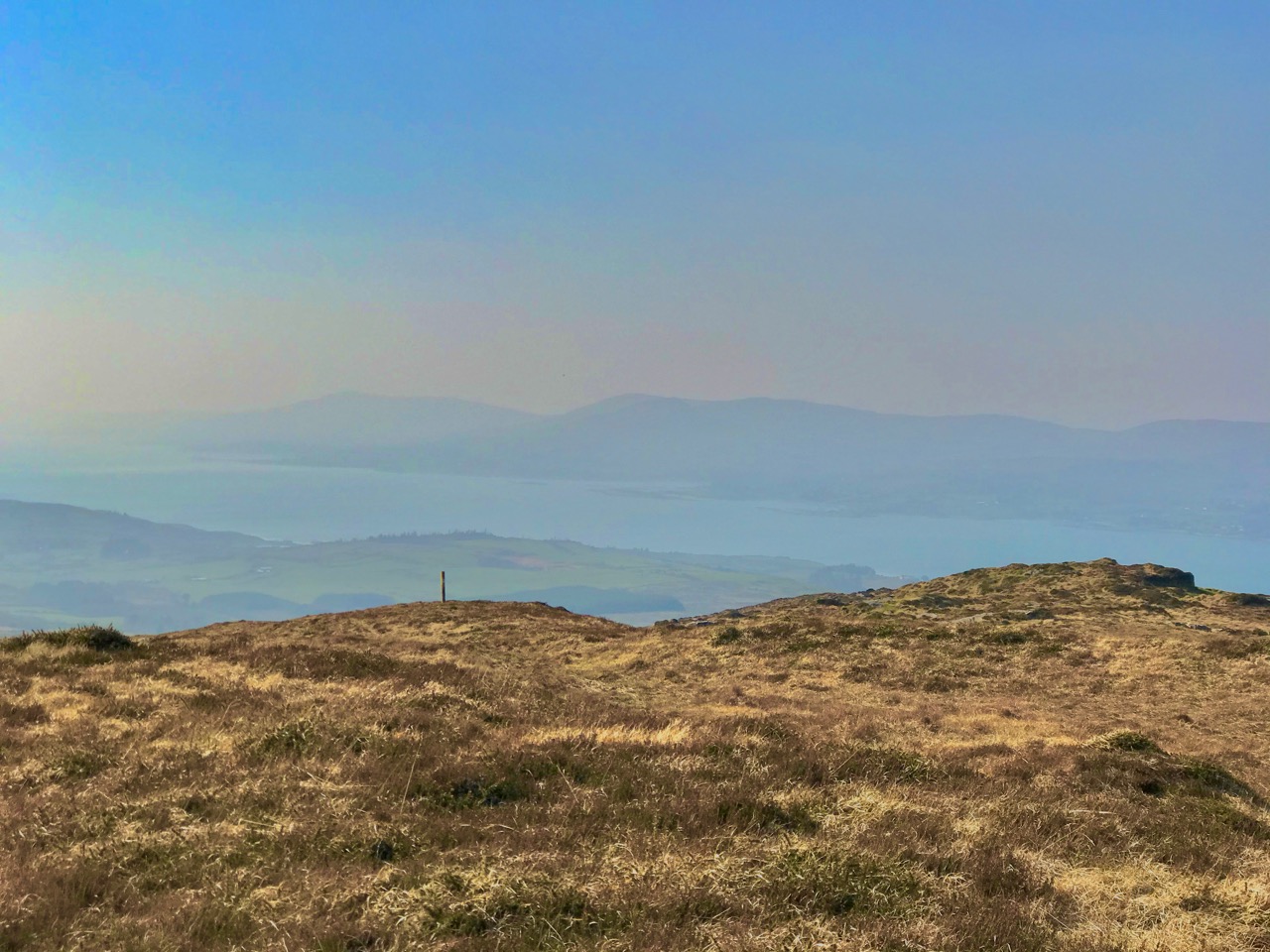
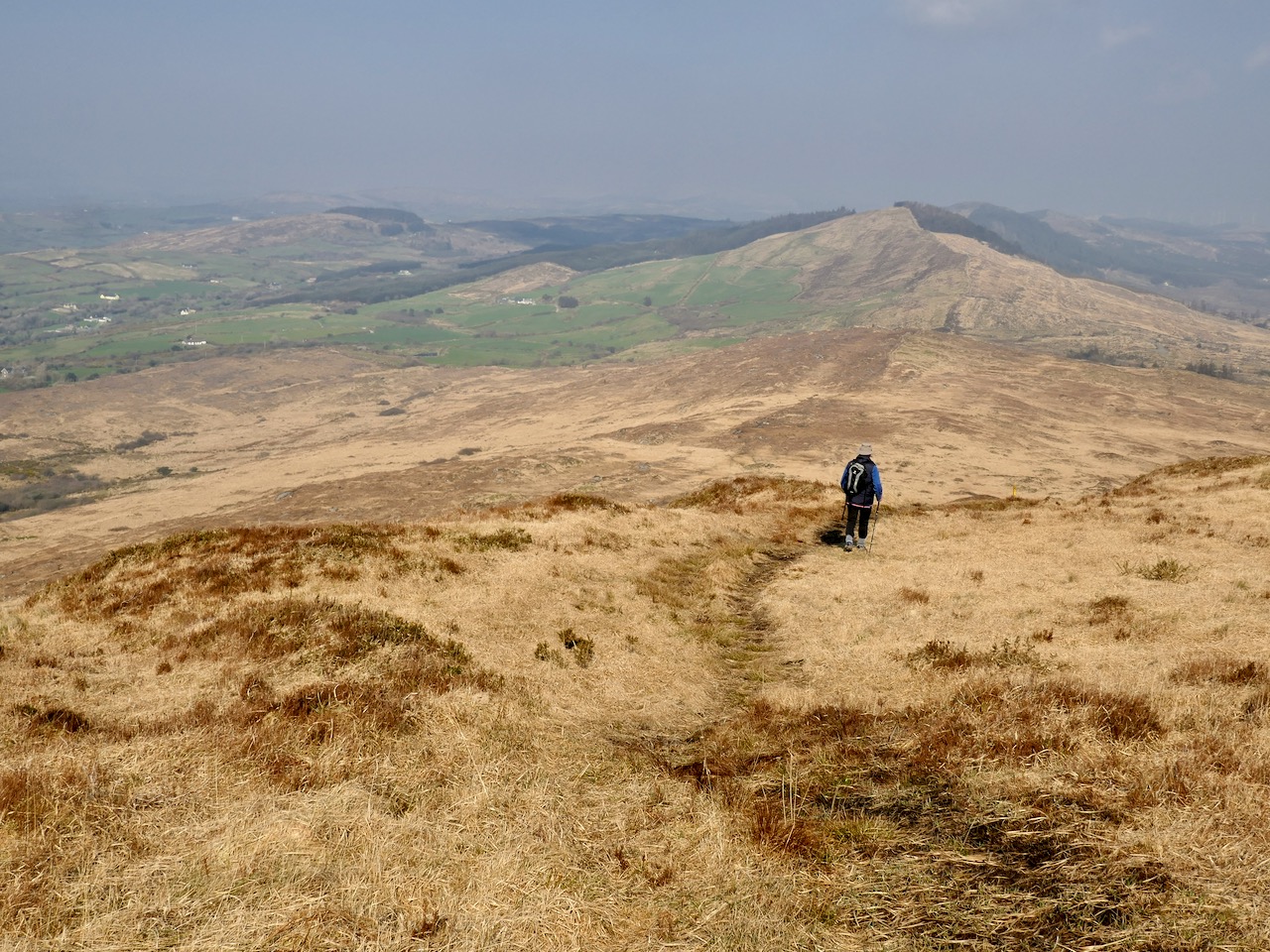
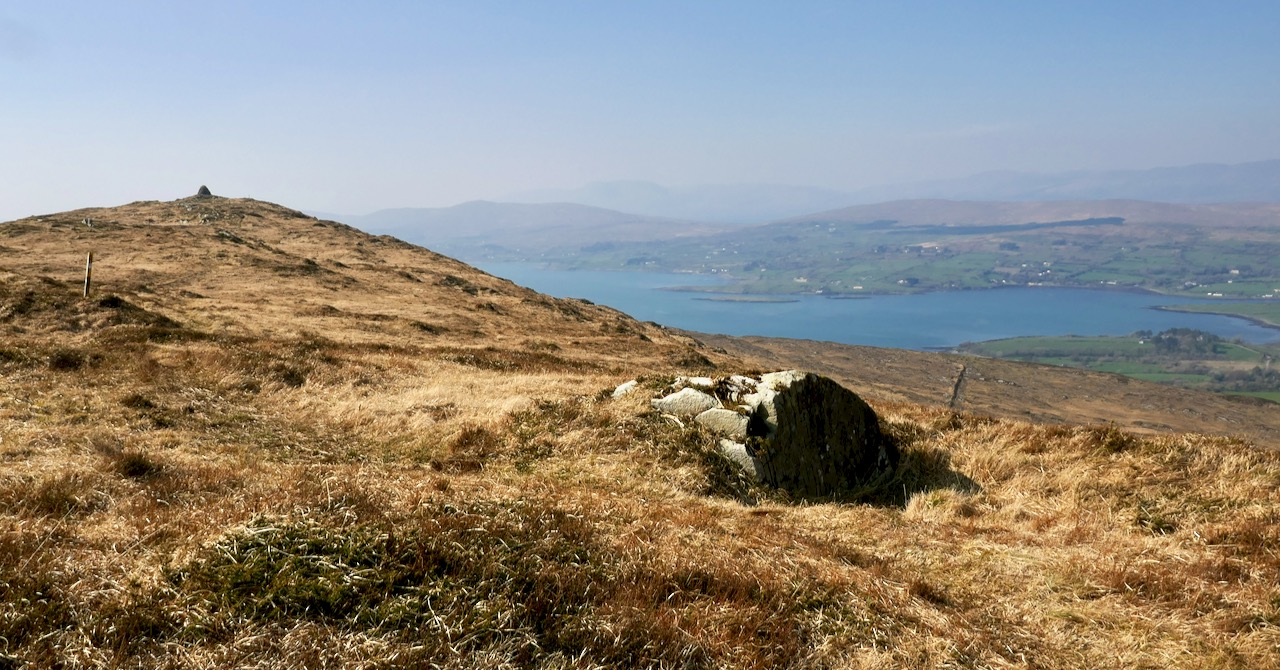
Upper – Finola looks back along the ridge towards our previous goals (Lisheennacreagh and Letterlicky). Centre – spectacular views of Gabriel and the Barnaclleeve Gap are had from Corrin. Lower – the track is well marked: we are approaching the summit cairn

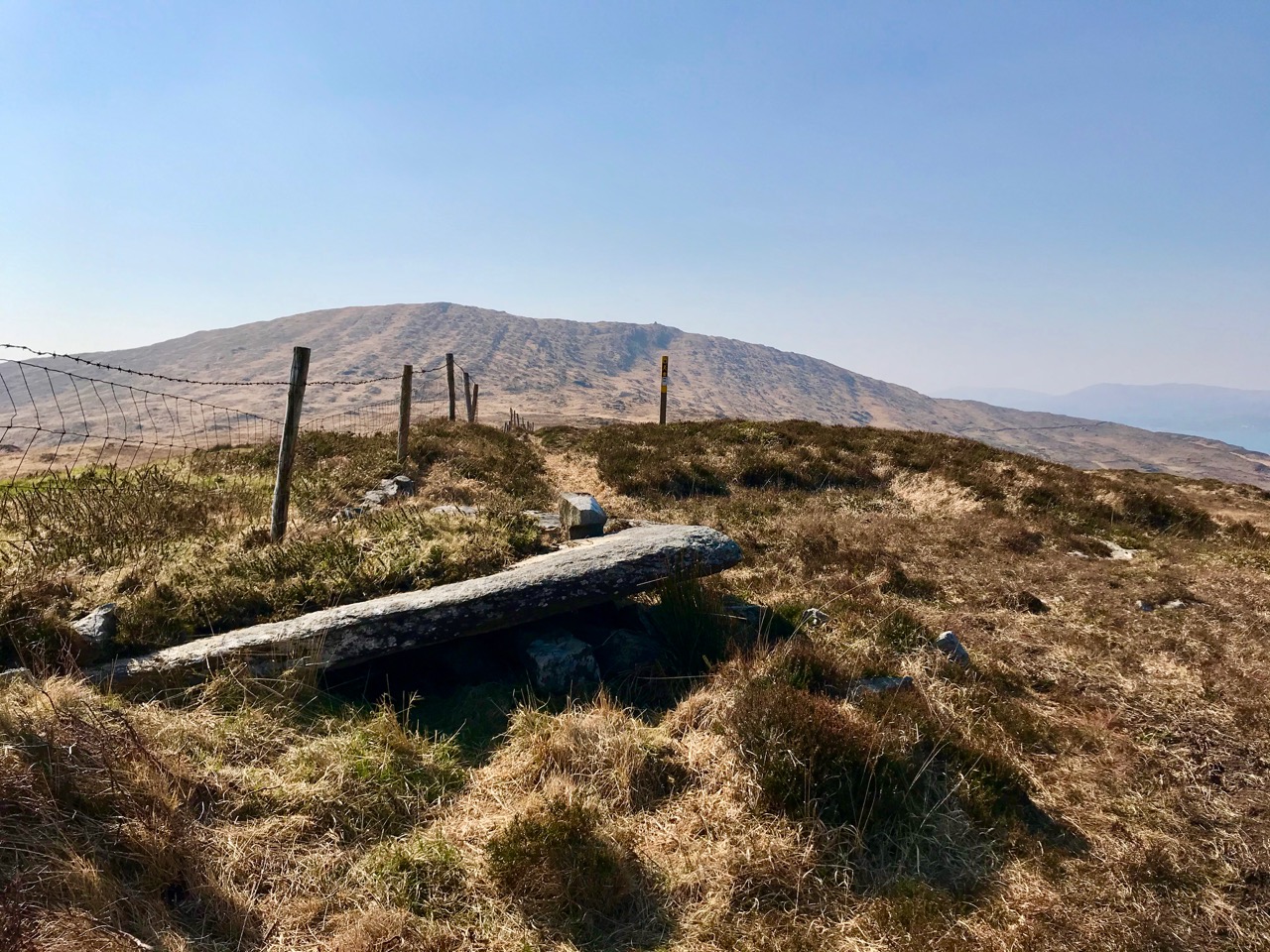
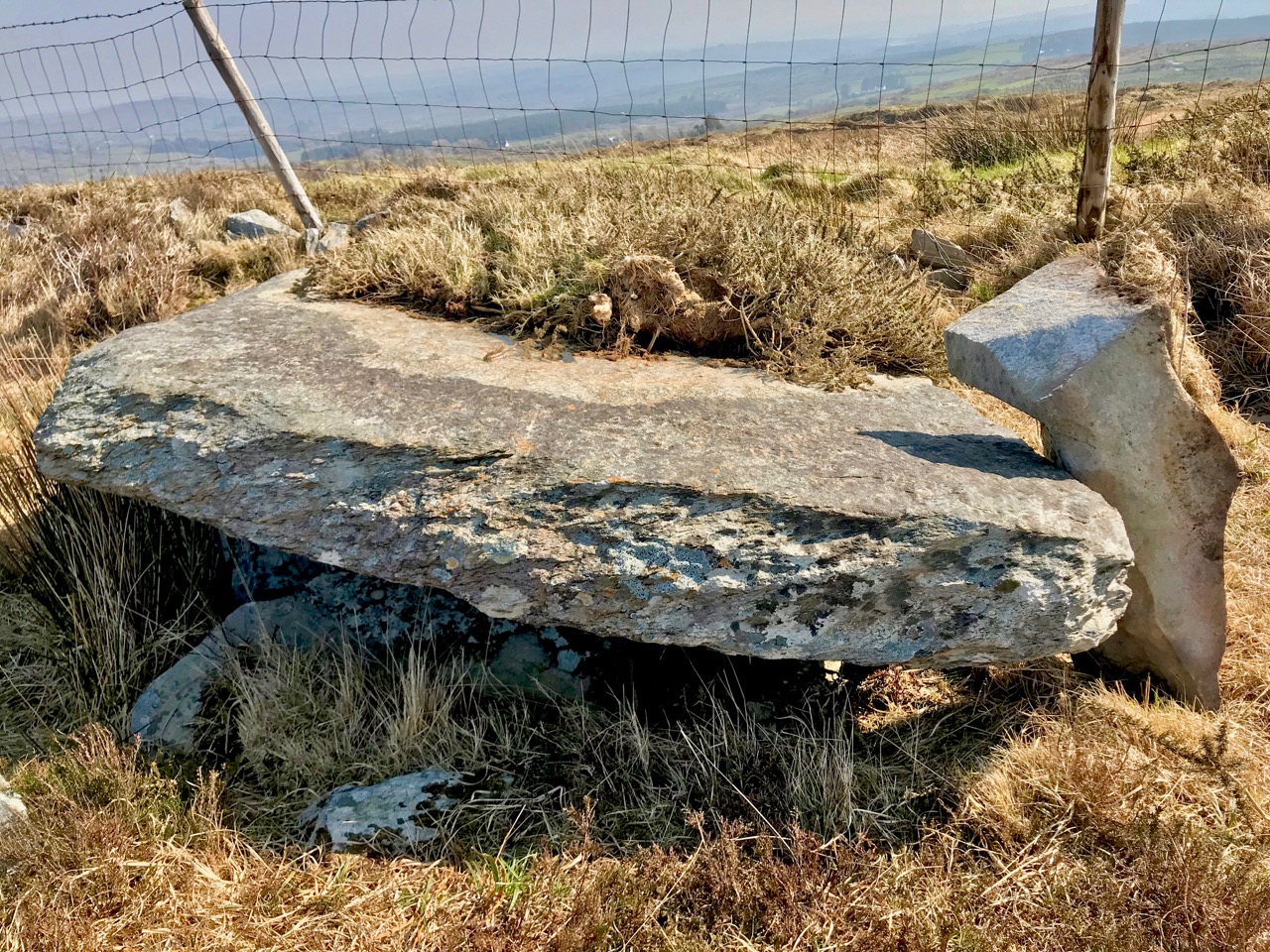
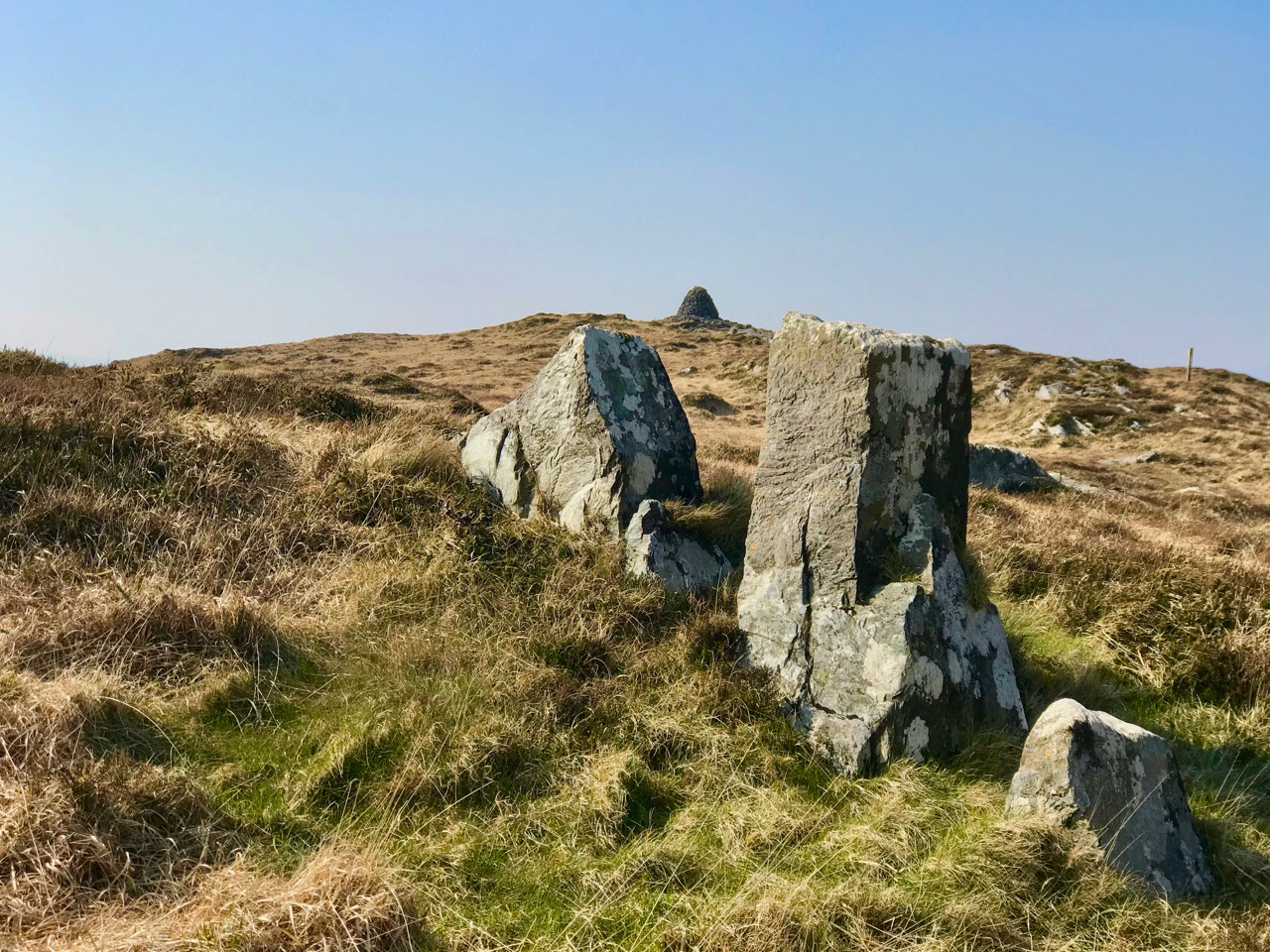
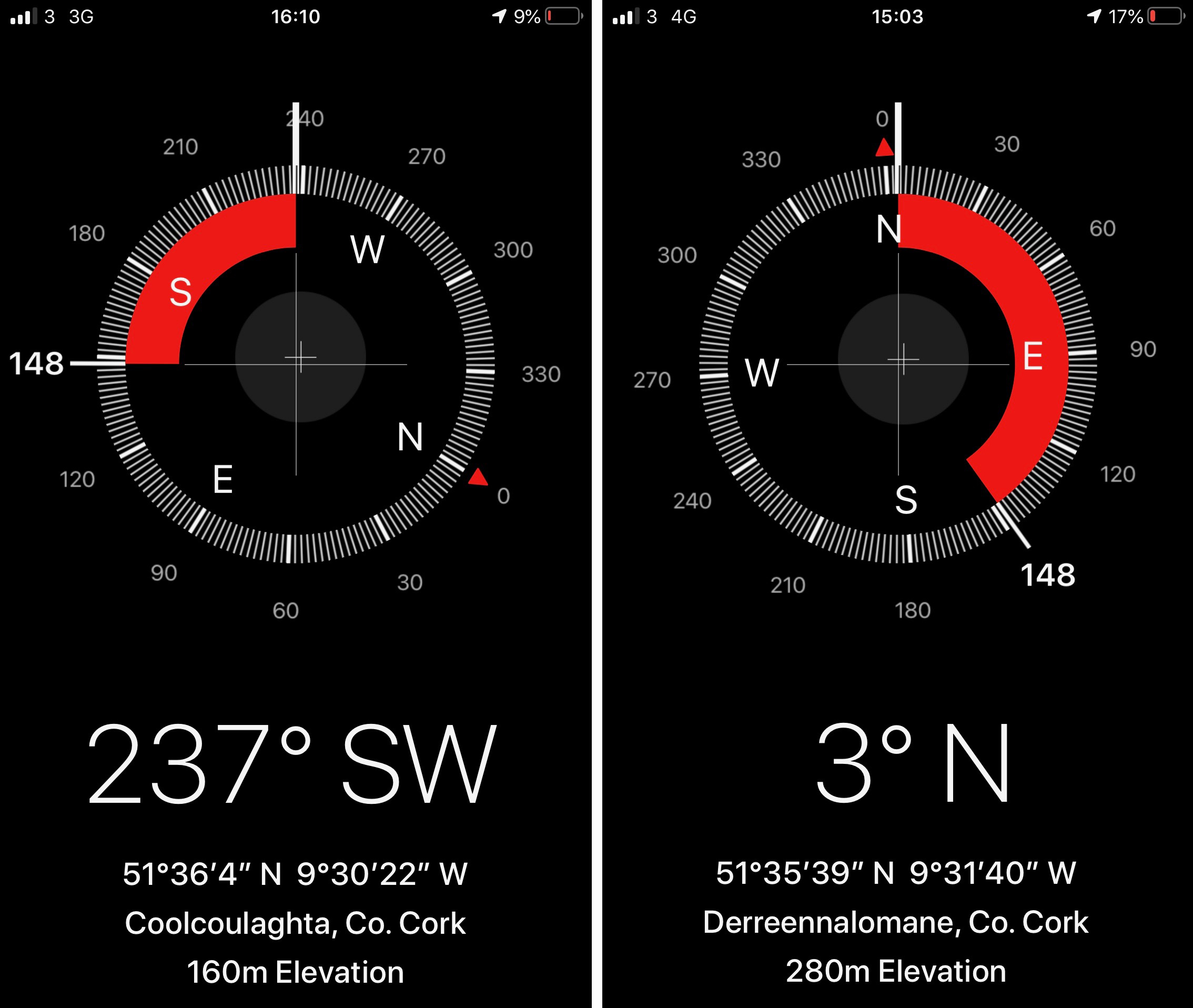
There is history on this mountain. The summit is crowned by a significant cairn. If the peak is named from the cairn – which seems likely (West Cork folk would pronounce ‘cairn’ corrin), it must have had ancient roots going back through many generations. The National Monuments Record makes brief mention of it: Class: Cairn – unclassified – Townland: Coolcoulaghta, Derreennalomane – On top of  Mount Corrin, commanding view. Sub-circular cairn (H 0.7m; 13.6m E-W; 15m N-S); modern cairn built in centre (H 2.7m; circ. 10.9m). On the way up from the east side, the path passes directly over some large prostrate slabs which look very much like a broken wedge tomb. The NMR says only this: Megalithic structure. There are also, near the summit, three substantial stones in an alignment. The NMR is silent on these.

Upper and centre – a possible broken wedge tomb on the slopes of the mountain. Lower – a convincing three-stone alignment which doesn’t get a mention in the Scheduled Monuments Record

Duchas has a far more exciting mention of Mount Corrin, with this ‘True Old Story’ recorded in 1936 from Dreenlomane School:

A True Old Story

. . . About eighty years ago where there was no talk of anyone being able to fly there lived in Screathan Uí Laoghaire [Scrathanleary] a very clever man named Julian Camier. He had a house built, and quarried slate on the other side of Cnoc an Chairn at a place called Leaca Dhubh, and then he made a pair of wings. He told all the people that he would fly if each one of them brought a couple of slates home for him. When the day came crowds of people ascended on Mount Corrin to see him fly. He went on top of a high cliff and put on his wings but they failed to work when he spread them out and he jumped into the air and he fell off the cliff and hurt his leg. All the people took pity on him and each one brought a couple of slates down to his house so he got the slate brought home easy, and after that he was known as “Fly away Julian” . . . 


Patrick Donovan, Dreenlomane, Ballydehob, Skibbereen

Obtained from my father, Patrick Donovan 52 yrs

The Duchas Schools Folklore Collection also mentions folktales told about the mountain:

It is said that there is a chieftain buried under a heap of stones in Mount Corrin and there are other chieftains buried in Coolcoulachta . . .  There is a cairn on the top of ‘Corrin’ hill and it is said that a giant Mc Gun and his horse were buried there . . .

Upper – view from Corrin’s summit across the Sheeps Head Peninsula. Lower – descending from the peak

It would be wonderful to think that folk tales about ancient burials on the mountain top is a memory carried down through countless generations. Clearly this Mizen summit holds histories and mysteries. but, regardless of any lore that we might find in our researches, it’s one of the finest walks that you can take in this part of West Cork, with rewarding views over the whole peninsula.

From start to finish the round walk from the eastern access point to Mount Corrin summit and back involves an ascent of 120 metres and a distance of around 6km

Mizen Mountains 3 – Letterlicky Cairn, or ‘The Old Bog Road’

I confess I’m stretching things a bit here: the 297m peak in the townland of Letterlicky, West Cork, fits well enough into my definition of mountains – anything above the 200 metre contour line. But is this one on the Mizen? We think of our own village of Ballydehob as being ‘The Gateway to The Mizen’ in the south-east, and it would be logical to have another ‘Gateway’ at Durrus, where the northern coastline of the Mizen meets the Sheeps Head. If you draw a straight line between these two points, then today’s subject misses out. But – there are no straight lines in nature, and this peak is a continuation of a natural ridge line that rises down on the Mizen near Mount Corrin and runs east.

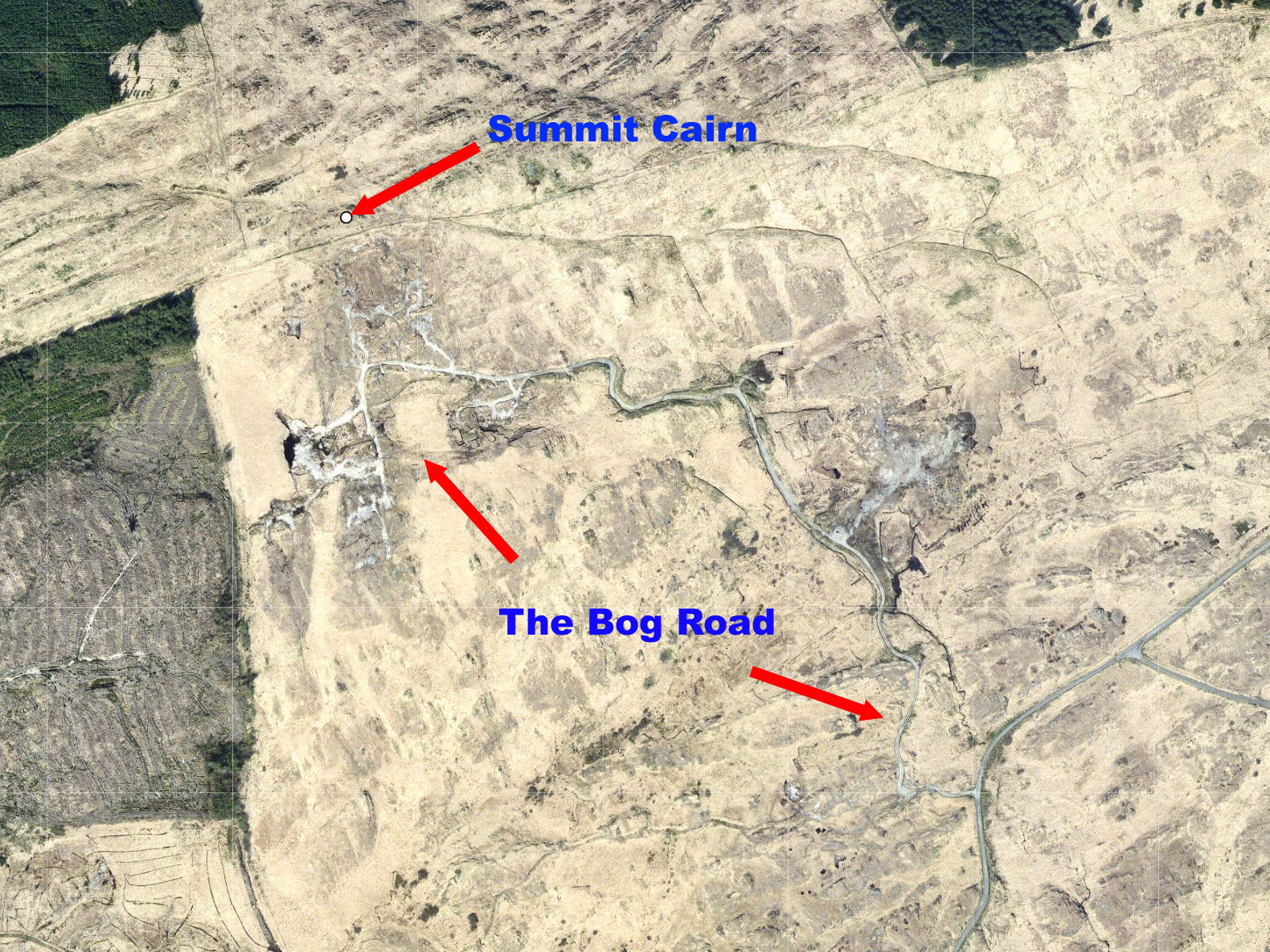
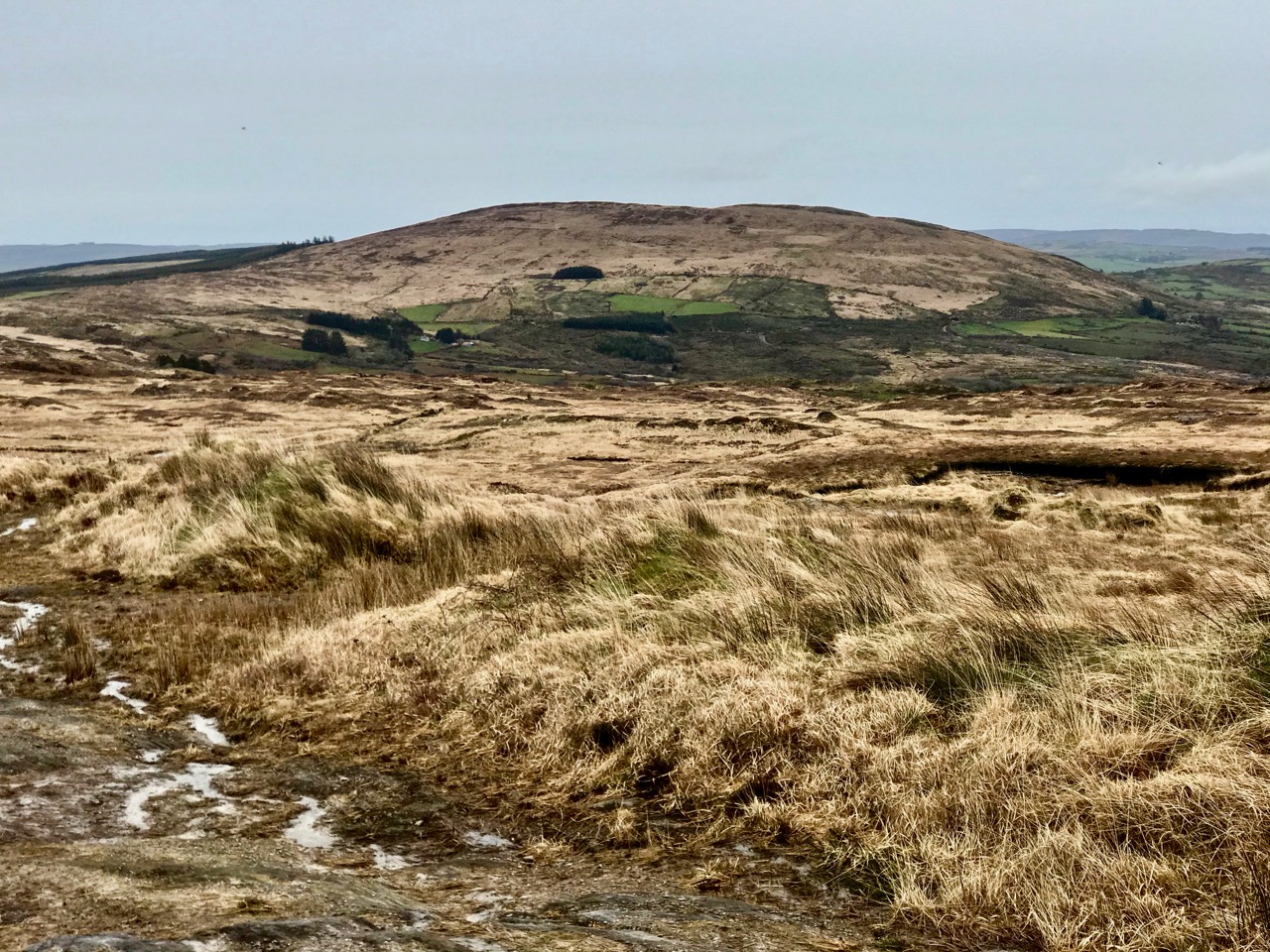
But if you are uncomfortable with my concept of what is or isn’t the Mizen, just go with the subtitle of this post: The Old Bog Road. We found Letterlicky Cairn quite by accident as our exploration set out to follow a trackway that we had often passed, on the high road to the north of Ballybane West. We had no idea where the track would take us, but it’s very well defined, roughly paved and probably quite old. As we journeyed up into the hills, we could see that the track was there to serve peat workings which must have been used for generations. The extent of the peat workings – and the line of the old road serving them – show up well on the aerial map view below.

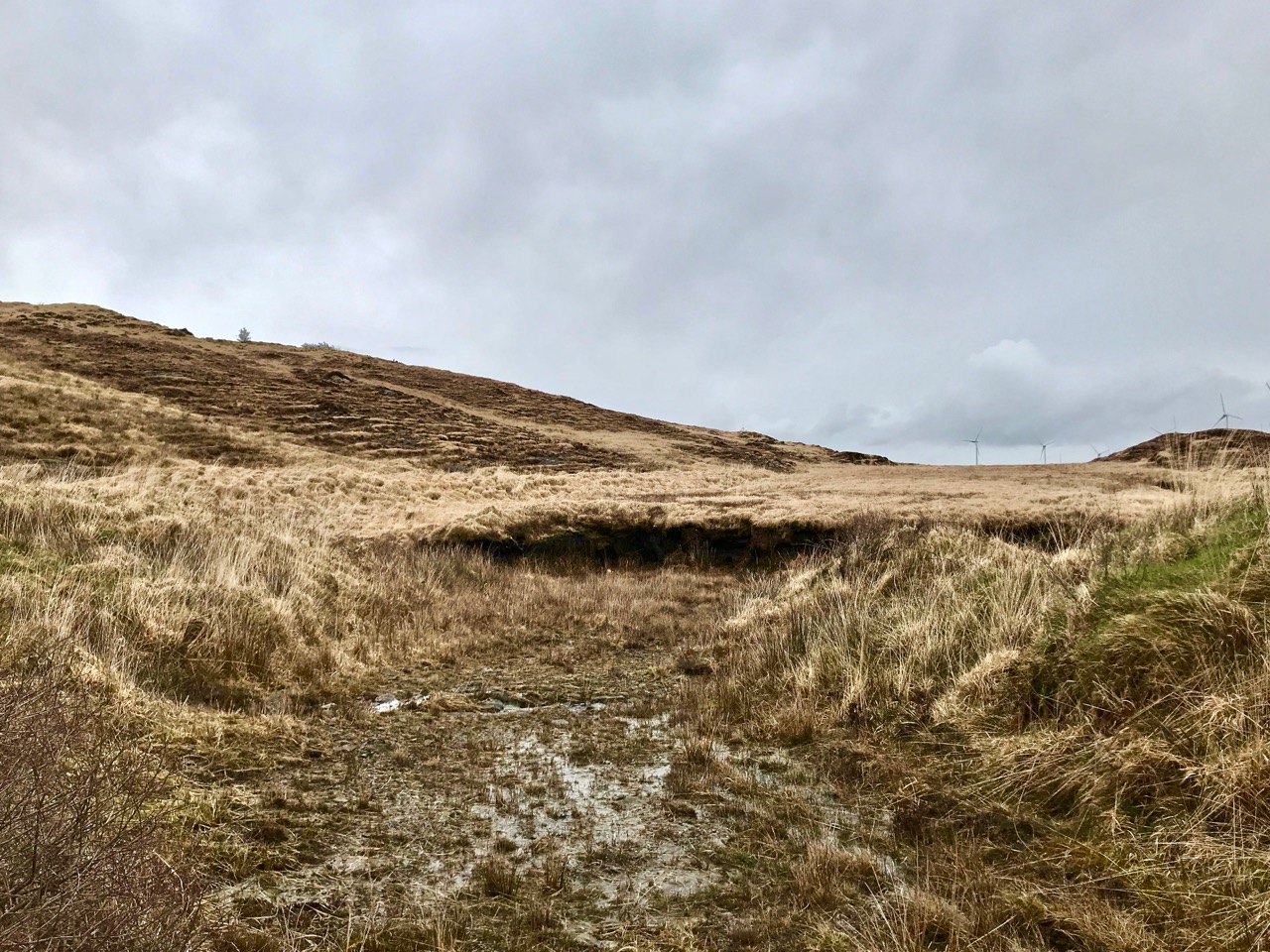
It was a sunless mid-March day when we set out: the wind was in the east and there was little colour in the landscape. There were, as yet, few signs of spring. We could see the ridge in the distance and, happily, the track appeared to climb towards it. In Ireland, the days of cutting peat for fuel are numbered: commercial operations will cease by 2025. Generations of families in rural areas have historically cut peat by hand and lay claims on the rights to do this. Increased regulation will eventually see this tradition declining along with all other fossil fuel production as carbon neutral ways to produce energy are developed. It seemed significant that the large array of 20 giant wind turbines on the high land to the east was a constant backdrop on our journey along the Old Bog Road.

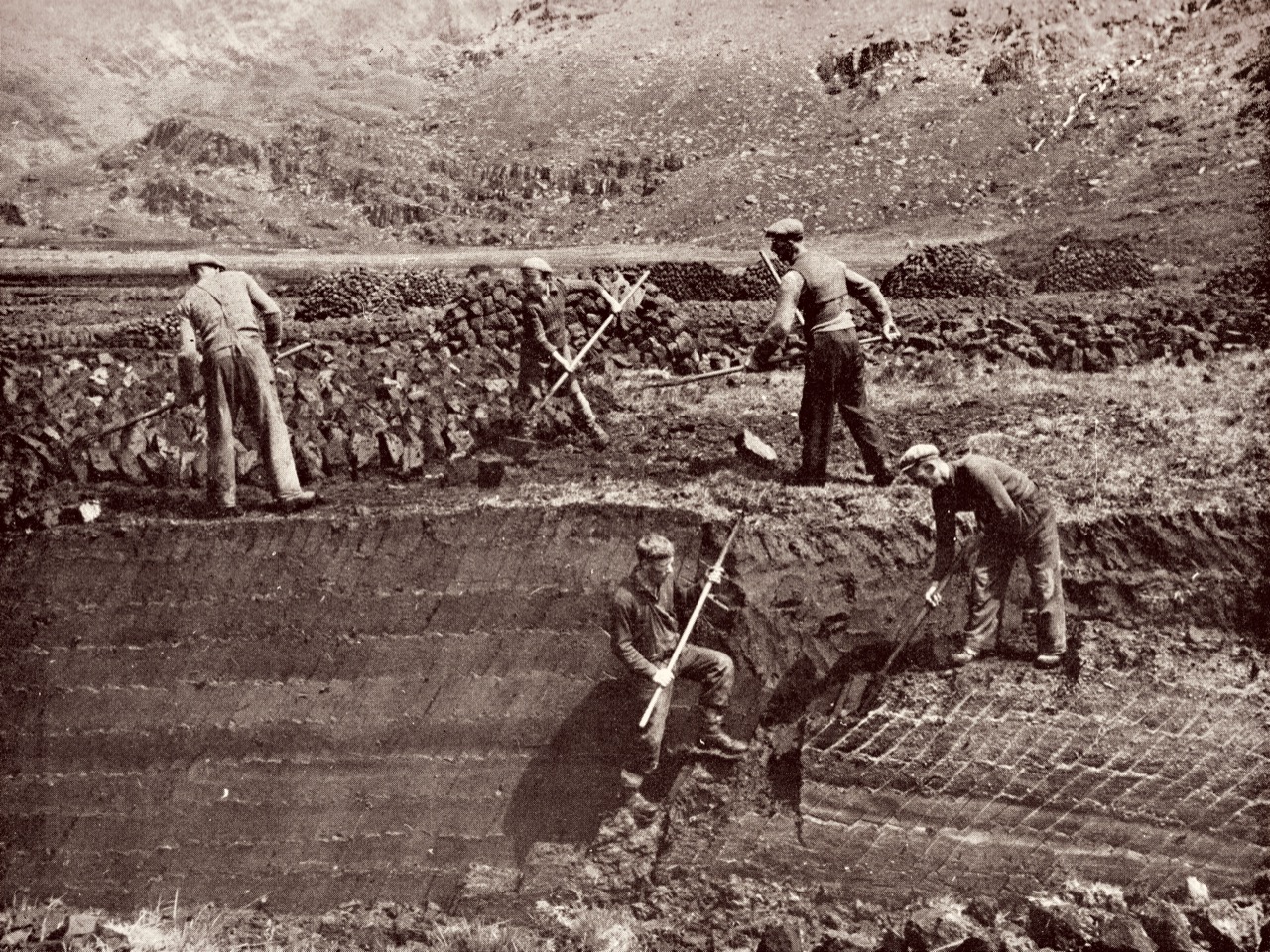
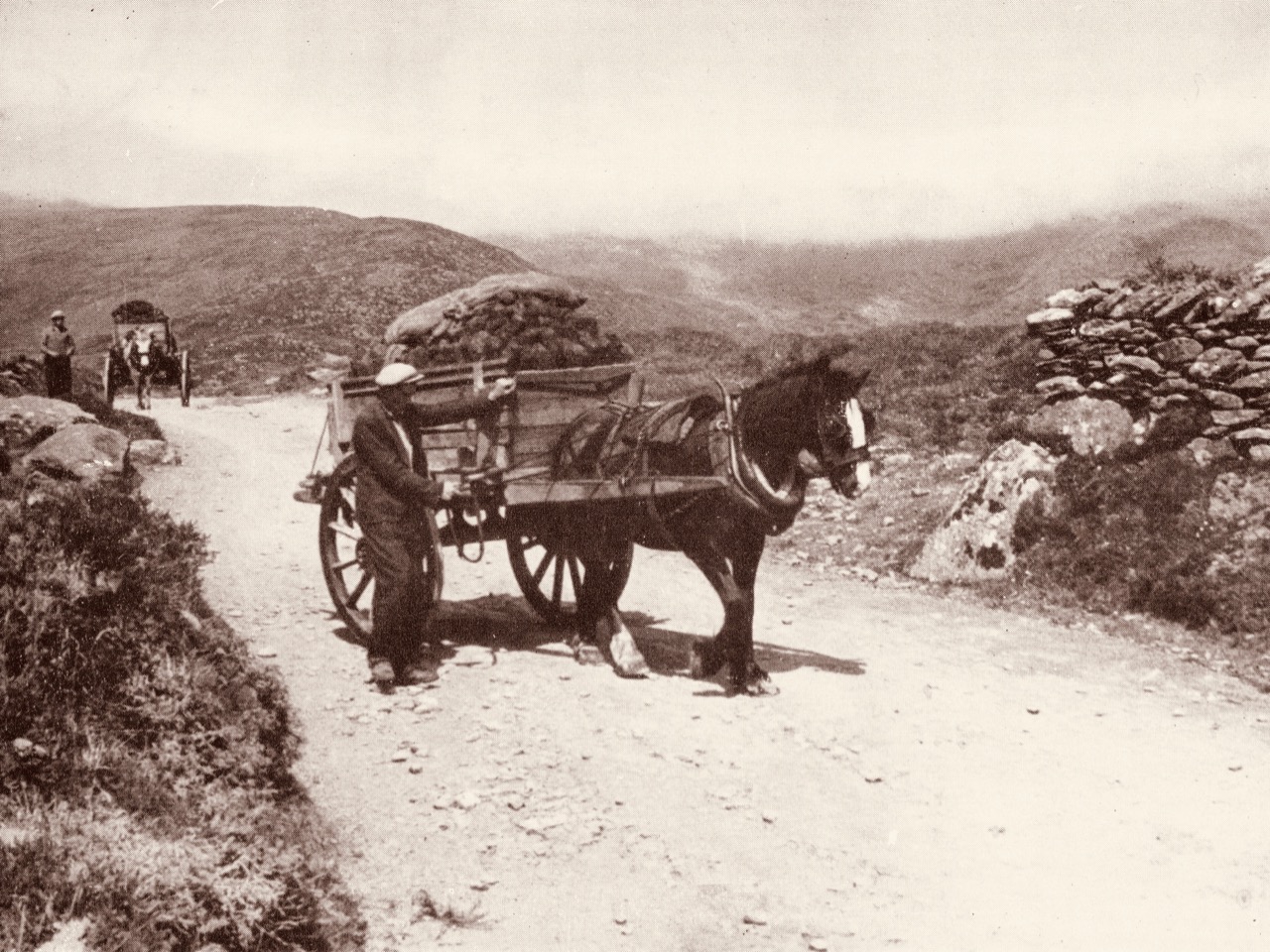
Tomás Ó Muircheartaigh (1907 – 1967) was an amateur photographer who recorded life in rural Ireland during the first half of the twentieth century. We have used examples of his work in previous posts. These two prints (above) demonstrate the hand-working of peat faces and the transporting of sods from the workings. Our Old Bog Road would have seen similar sights in its heyday.

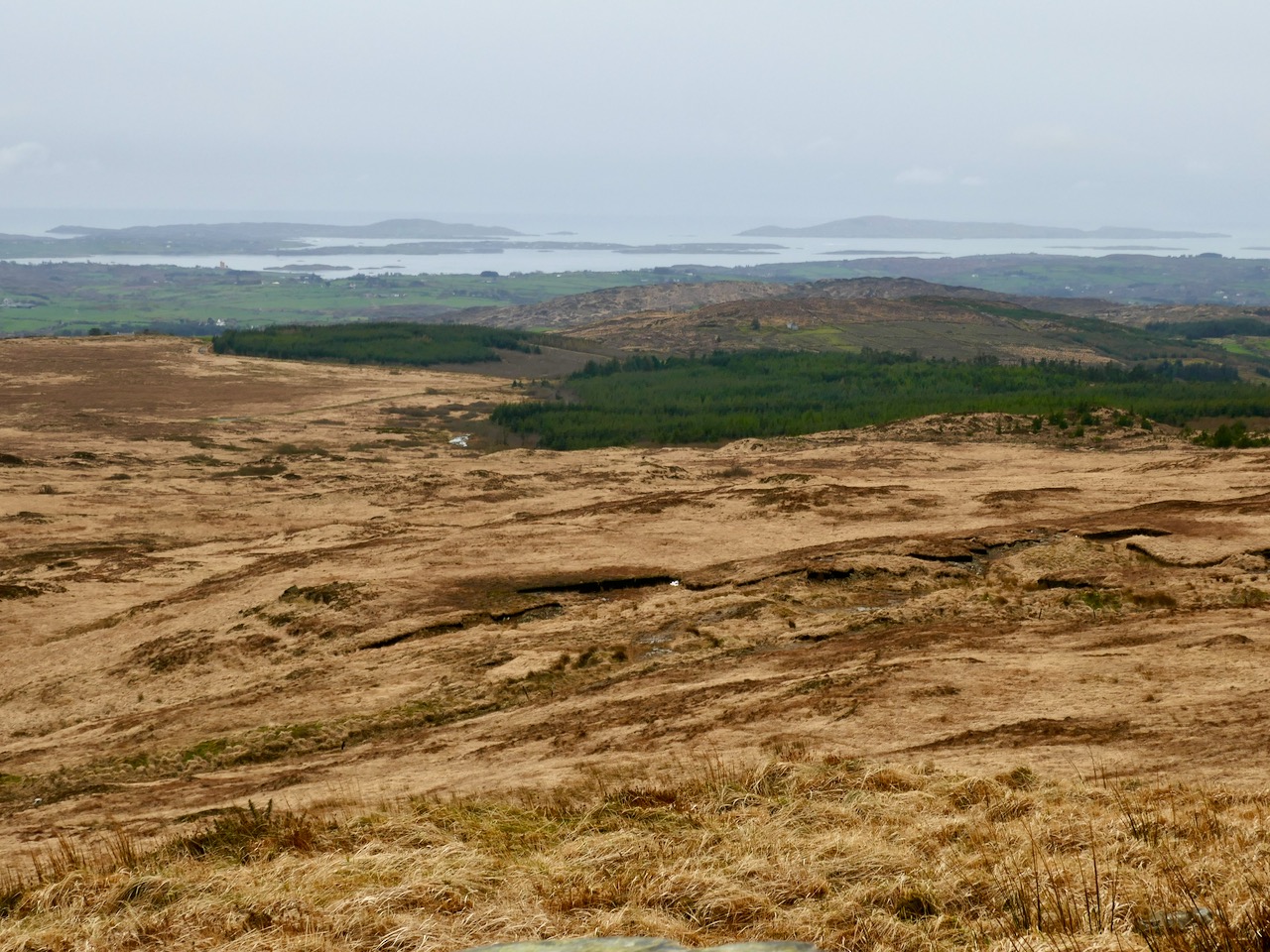
As we threaded our way through the peat workings, we could see the track carrying on towards the ridge. We had done no prior research into the area we were traversing, but as the way grew higher and higher – and we realised we must be coming to a high point in the landscape – we wondered whether there would be any signs of ancient activity on the mountain top. We could see other high points around us – Mount Kidd to the south and Mount Gabriel to the west – and, beyond, a spectacular distant view over Roaringwater Bay: a place like this would have been considered special, surely, to those who knew it thousands of years ago.

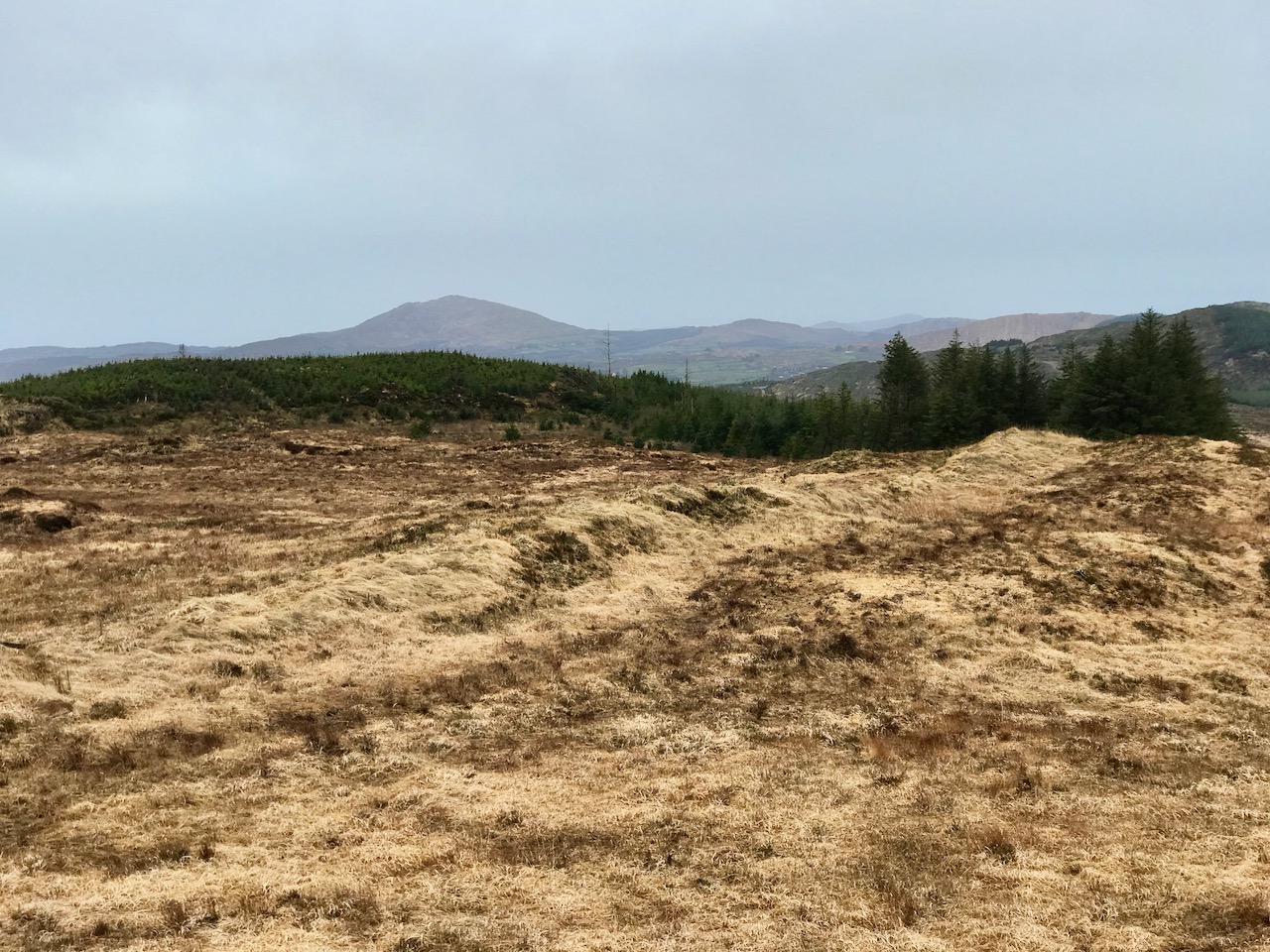
Views from the Old Bog Road: upper – Mount Kidd; middle – Mount Gabriel, and lower – the islands of Roaringwater Bay

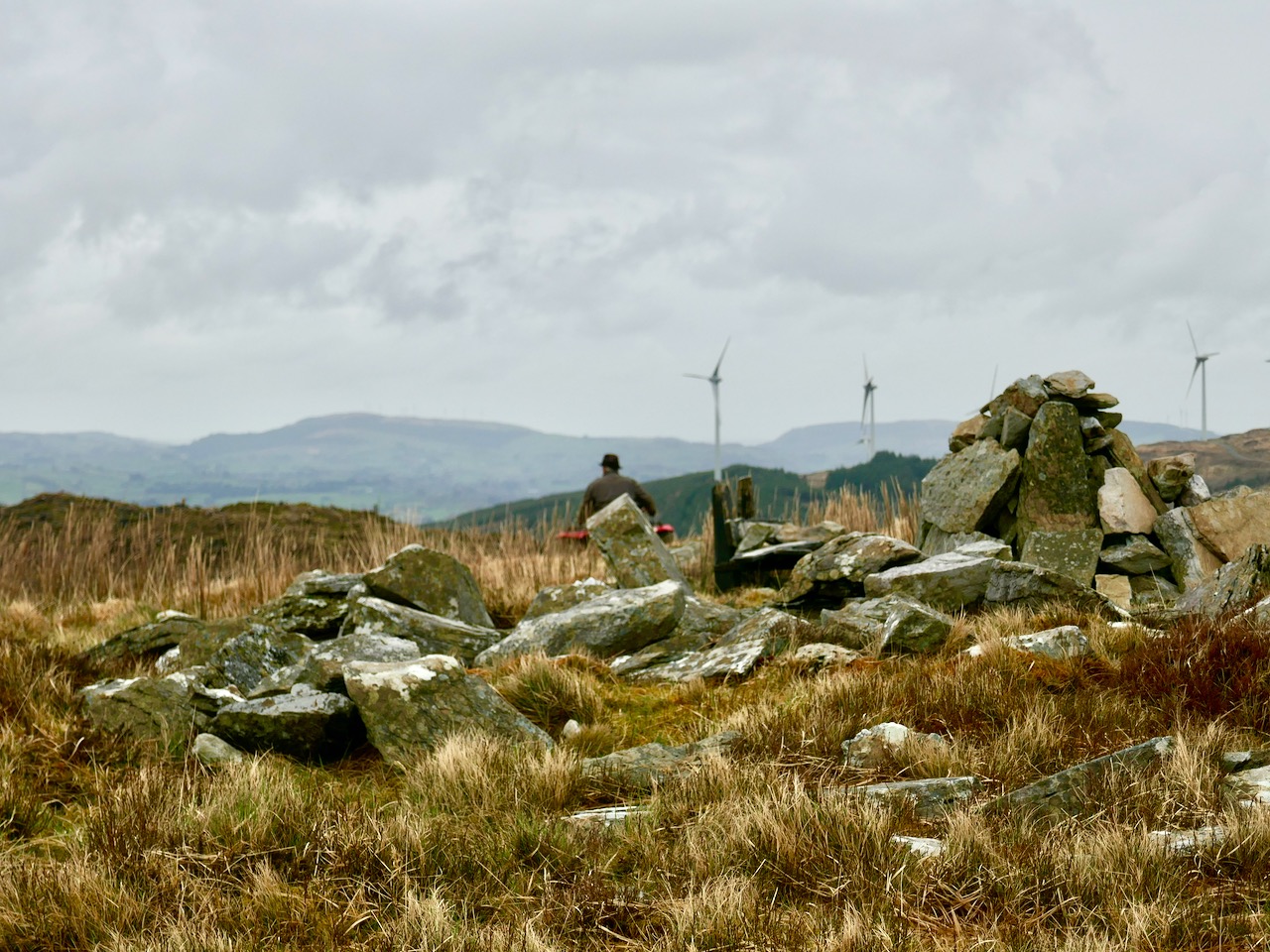
As we rounded the last bend in the trackway we could see the summit ahead of us. Initially, we were delighted to see a substantial cairn. But we were surprised by the number of larger, roughly shaped boulders and slabs which were lying around it. Also, there seemed to be a substantial earthen raised platform.

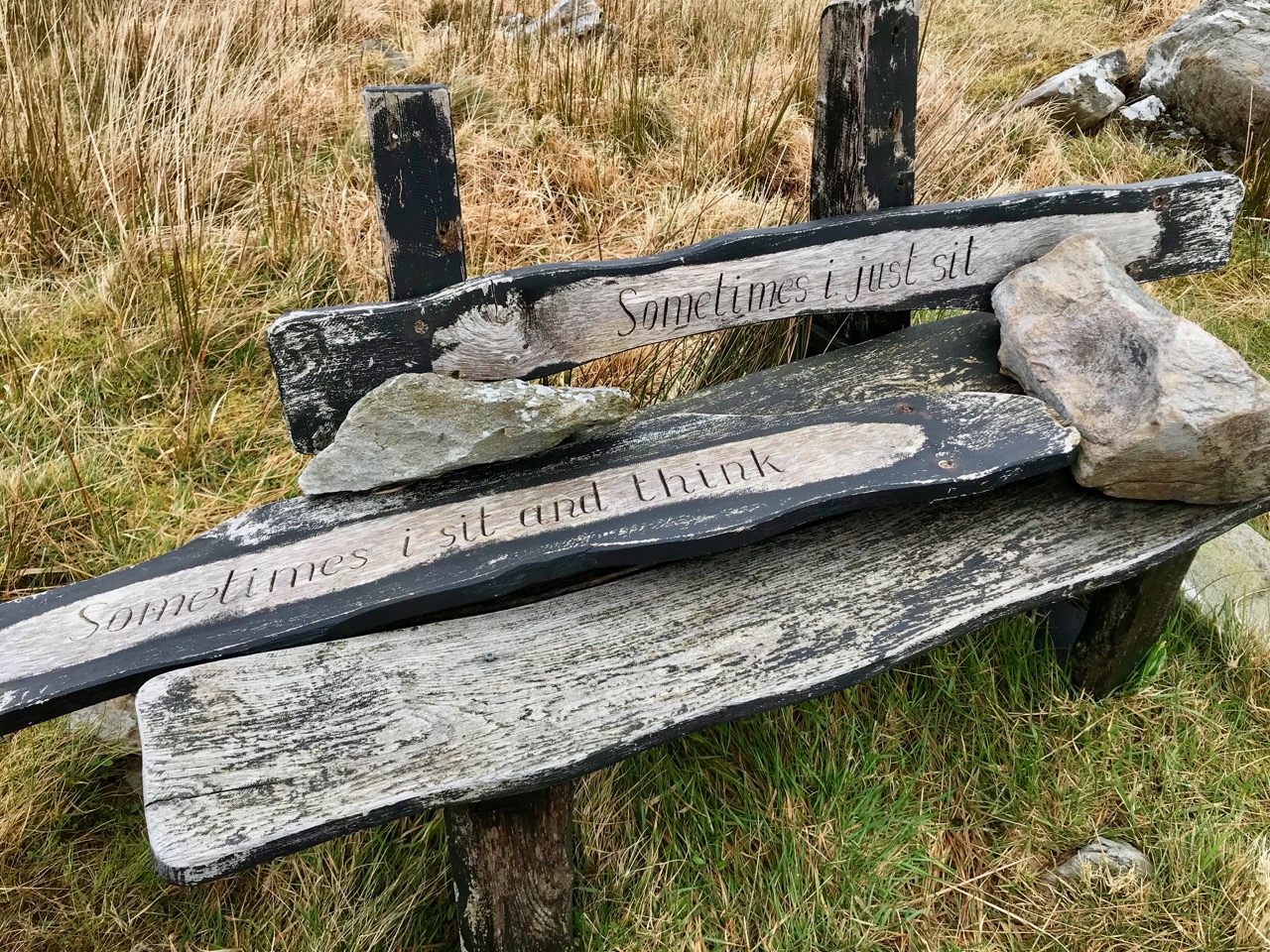
To add to the interest – and the enigma – there were some 21st century monuments on the same hilltop. An inscribed bench and a carved wooden marker which resembled a gravestone, with wording on both sides:

Our subsequent enquiries have given us a little information about Mick Townshend (1951 – 2012). He was well know locally, related to the Townshends of Castletownshend, and lived near Ballybane West. The bench was made by his friend Charlie, and was intended to be installed in Ballydehob: we don’t know why it is now here at the mercy of the elements, but it’s easy to imagine someone finding such a place inspirational, and perhaps asking to be remembered at this spot.

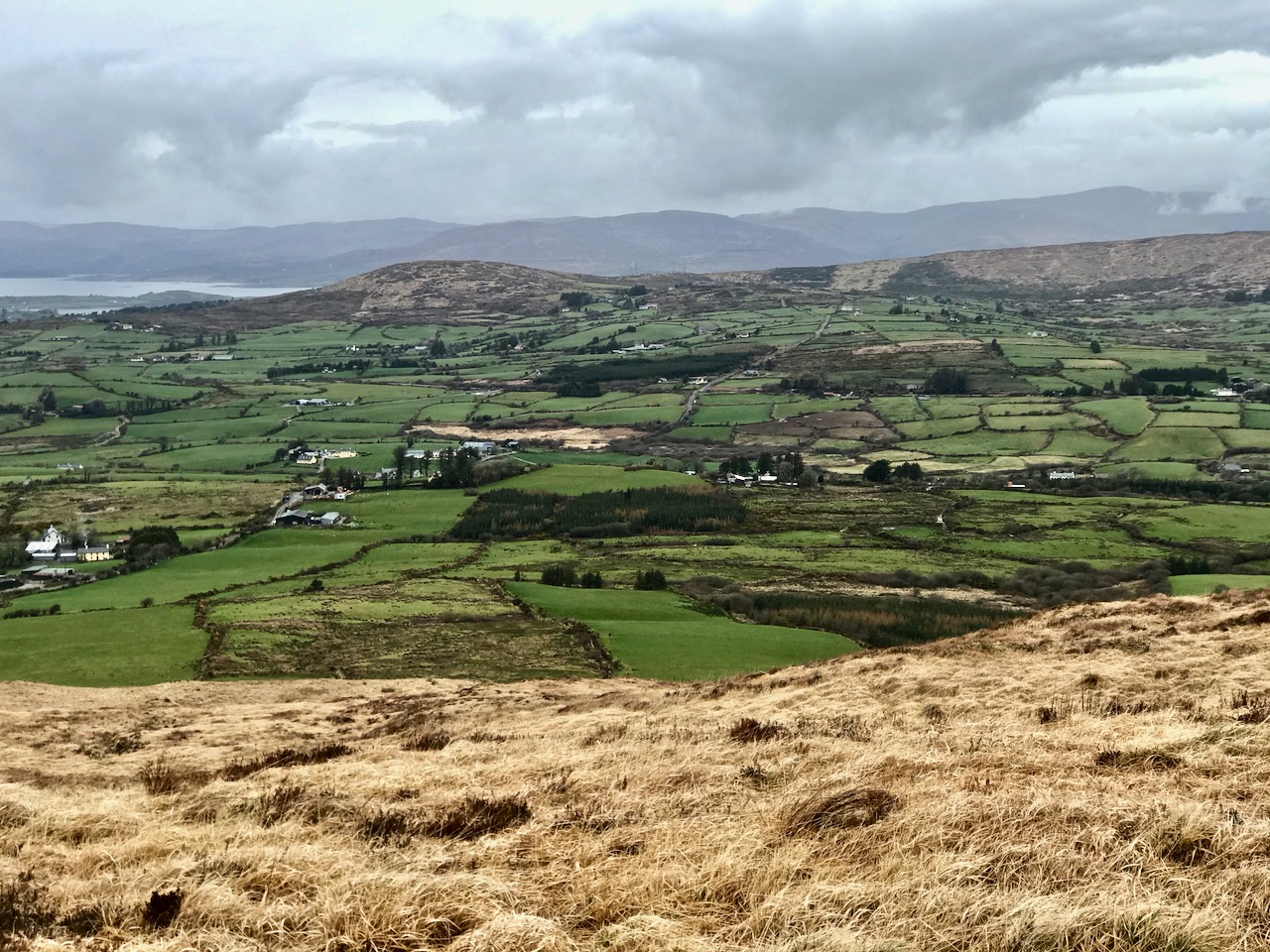
Although it wasn’t the best of days, the view to the north was exceptional, taking in Bantry Bay and the Beara mountains beyond. It’s a place that demands to be returned to. As we prepared for the descent we heard the sound of a small engine, and suddenly there was farmer Florence McCarthy arriving on a quad bike with two collies running behind: they were searching for lost sheep. Good chat was had – although, in deference to the Coronavirus crisis, we all kept the currently regulation distance apart. It felt very unnatural to not shake hands, and we forgot to ask for a photograph, until Florence was just disappearing over the brow of the hill!

Florence

The cairn is a scheduled monument, described prosaically on the Archaeological Survey Database as: Circular area (19.5m N-S; 19m E-W) defined by scatter of large rectangular stones. The Duchas folklore collection proved far more interesting, although I can’t be sure that this entry from Gort Uí Chluana School, Bantry, in 1936 is referring to the same cairn:

Long ago when some of the people from the north of Ballydehob used be carrying their “firkins” of butter to Cork they used go through an old road in the town land of Letter Lickey . . .


On the side of this old road it is supposed that one man killed another with a stone. After that it was the custom with the old people; who ever happened to pass that stone should throw a stone near the spot the stone was dropped at the man or if not something would happen to the person afterwards. Up to the present day there is a cairn of stones to be seen on the side of this old road . . .

A Medieval High Cross – Out of Place

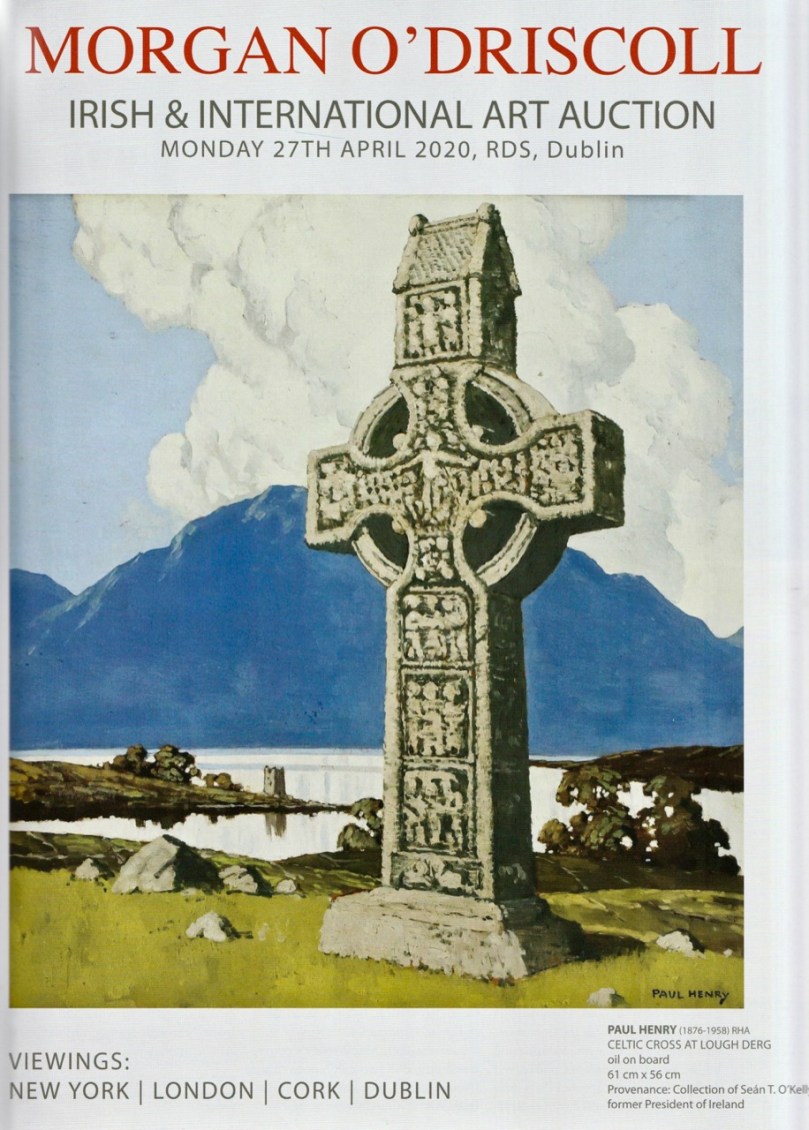
I was intrigued by this advertisement in the current edition of the Irish Arts Review (March – May 2020). Morgan O’Driscoll is based in Skibbereen, West Cork and specialises in Irish art. Paul Henry (1876 – 1958) fought an uphill battle in his own lifetime to get his work recognised. In 1911 Paul Henry and his wife Grace exhibited in Leinster Hall, Dublin. One critic commented that the Henrys: ‘ . . . seldom rise above the dead level of mediocrity and too often fall below it . . . ‘  In that exhibition was a work, The Potato Diggers: it didn’t sell until the 1930s. In 2013 it was included in a sale by James Adams & Sons, Dublin – and fetched €400,000! Just a decade ago, a Paul Henry might have been expected to sell for a few thousand – now, 40 years after his death, he’s a star!
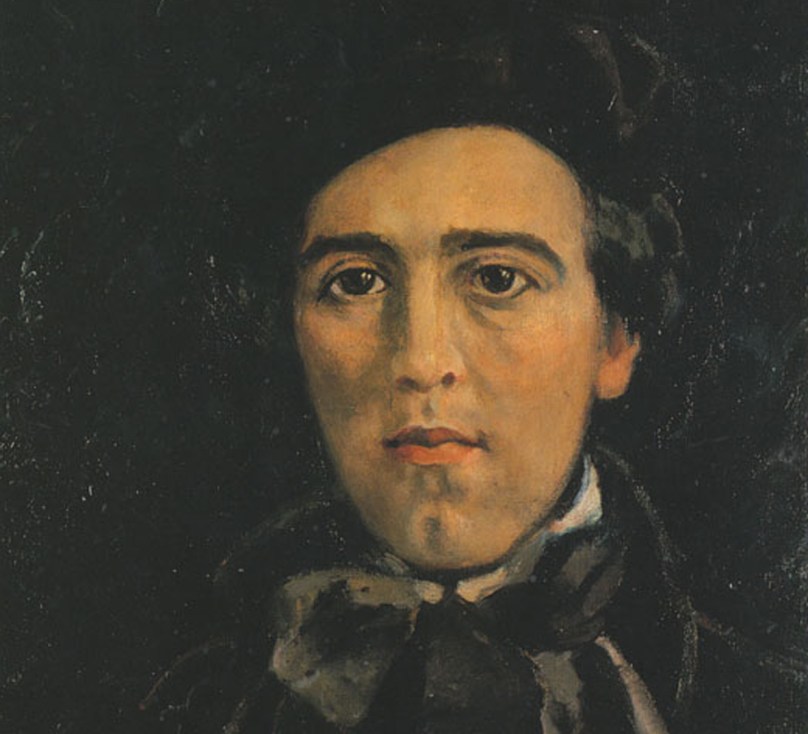
Paul Henry painted by his wife Grace in 1899

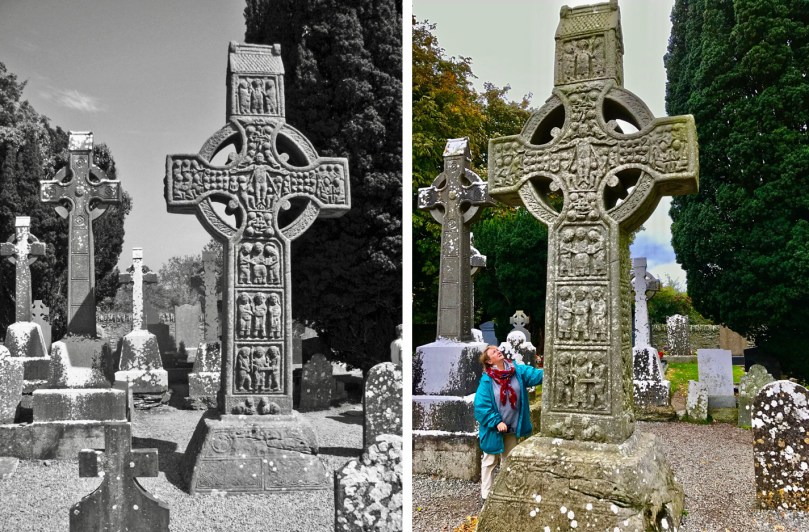
So why am I intrigued by the O’Driscoll advertisement? Take another look – the title of the painting is given as Celtic Cross at Lough Derg. I have taken an interest in Irish medieval High Crosses, and published a few articles on them in this Journal. In particular, this one – The Wonders of Monasterboice. Here’s a couple of photos from that post: the left one is an image of the west face of Muiredach’s Cross taken in the early years of the twentieth century – when the carving appears to be more clearly defined than it is today – and on the right is Finola, giving scale to the same cross just a couple of years ago. This cross – named after Abbot Muiredach mac Domhnaill, who died in 923AD – is one of the finest in the country, standing 5.5 metres tall.
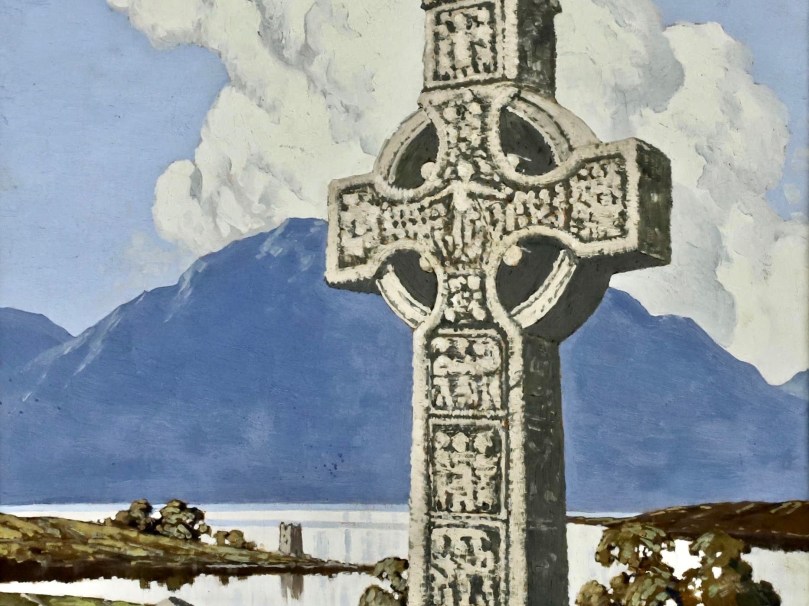
Looking at a detail from the Paul Henry painting (above), there is a remarkable similarity between the ‘Lough Derg’ cross and Muiredach’s Cross at Monasterboice. So – I hear you suggest – are they twins? Not exactly: in fact, through the medium of painting, one cross can be in two places at once! There is no ‘Celtic Cross’ at Lough Derg, so our artist has taken Muiredach’s Cross and placed it in his picture. Why?
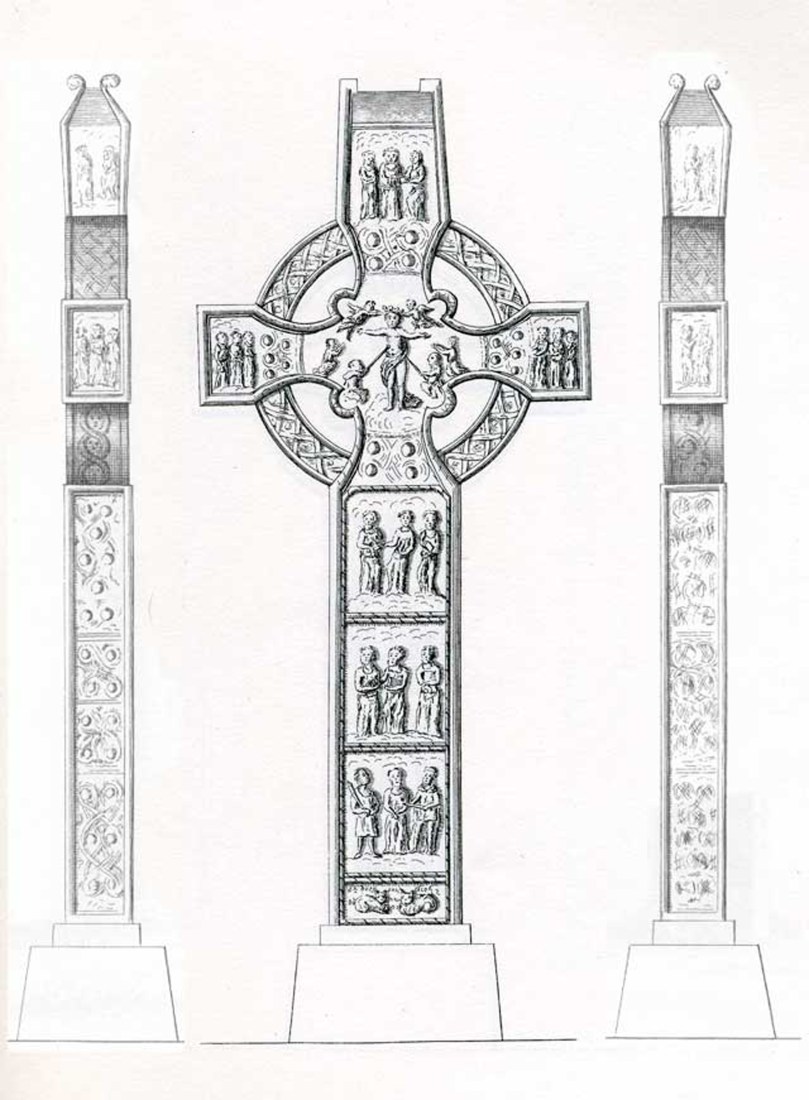
At this point I can’t resist showing you this antiquarian drawing of Muiredach’s Cross (above), probably dating from the eighteenth century, although I haven’t been able to find the author of it. It’s fascinating that all the elements of the cross are portrayed: the central figure in the roundel – presumably Christ – the various figures on the  panels above and below and on either side, and the two cats on the base looking very much like comfortable fireside moggies. But look how all the images have become stylised: medieval has been transported to Georgian neo-classical!
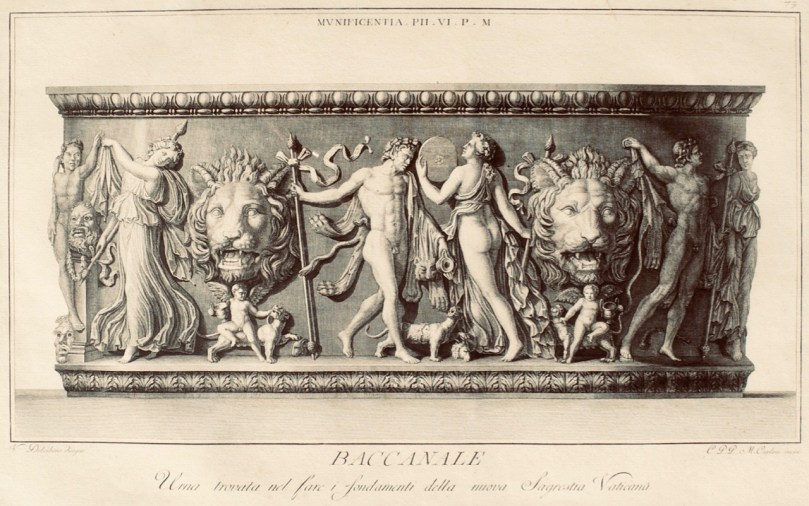
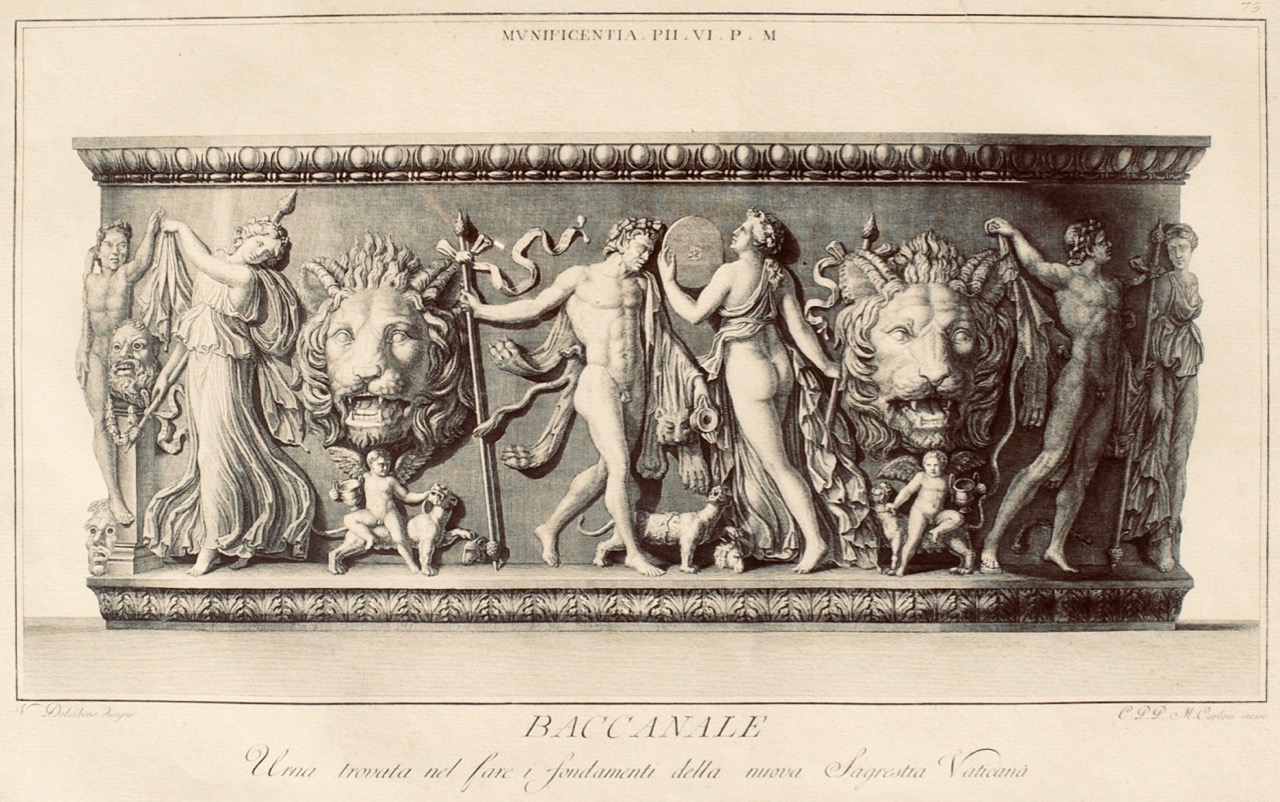
Baccanale – an example of a 1782 copperplate engraving by Marco Carloni, Rome

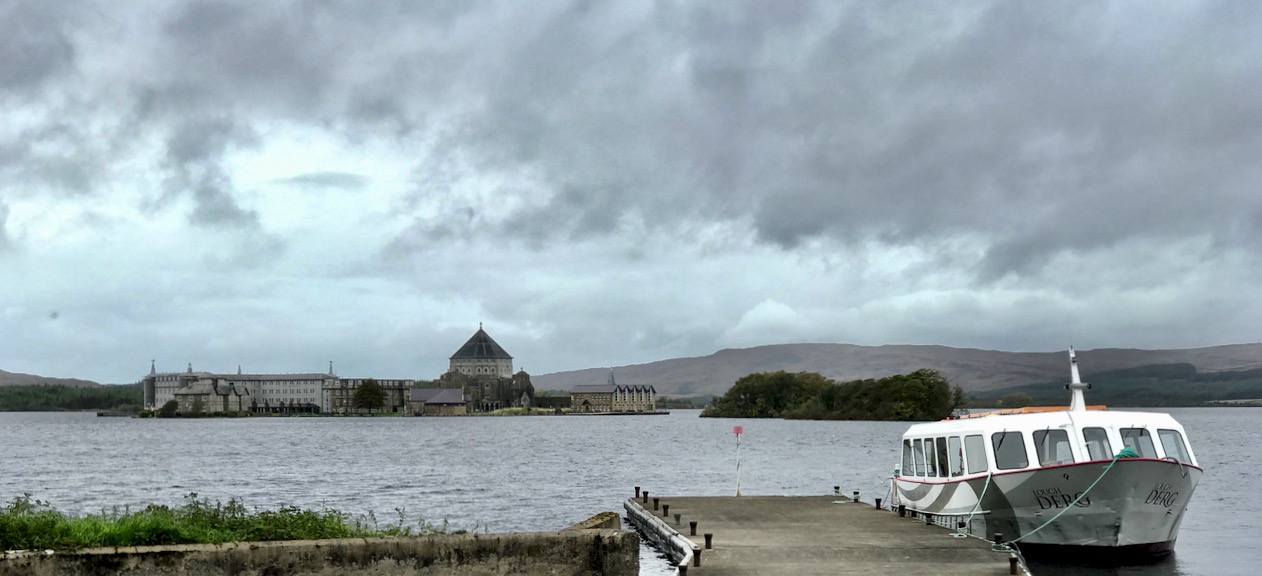
Before we explain Paul Henry’s stretching of the truth, let’s consider something else: there are a few Lough Dergs in the country, but the most famous – and the one most likely to be depicted by an artist who is showing off Ireland might be Saint Patrick’s Purgatory, which I covered in this post, also from two years ago.
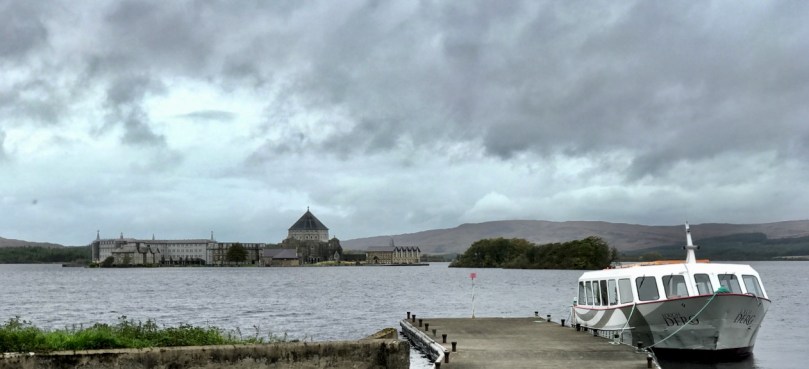
Lough Derg, showing the pilgrimage site of Station island, and the surrounding landscape

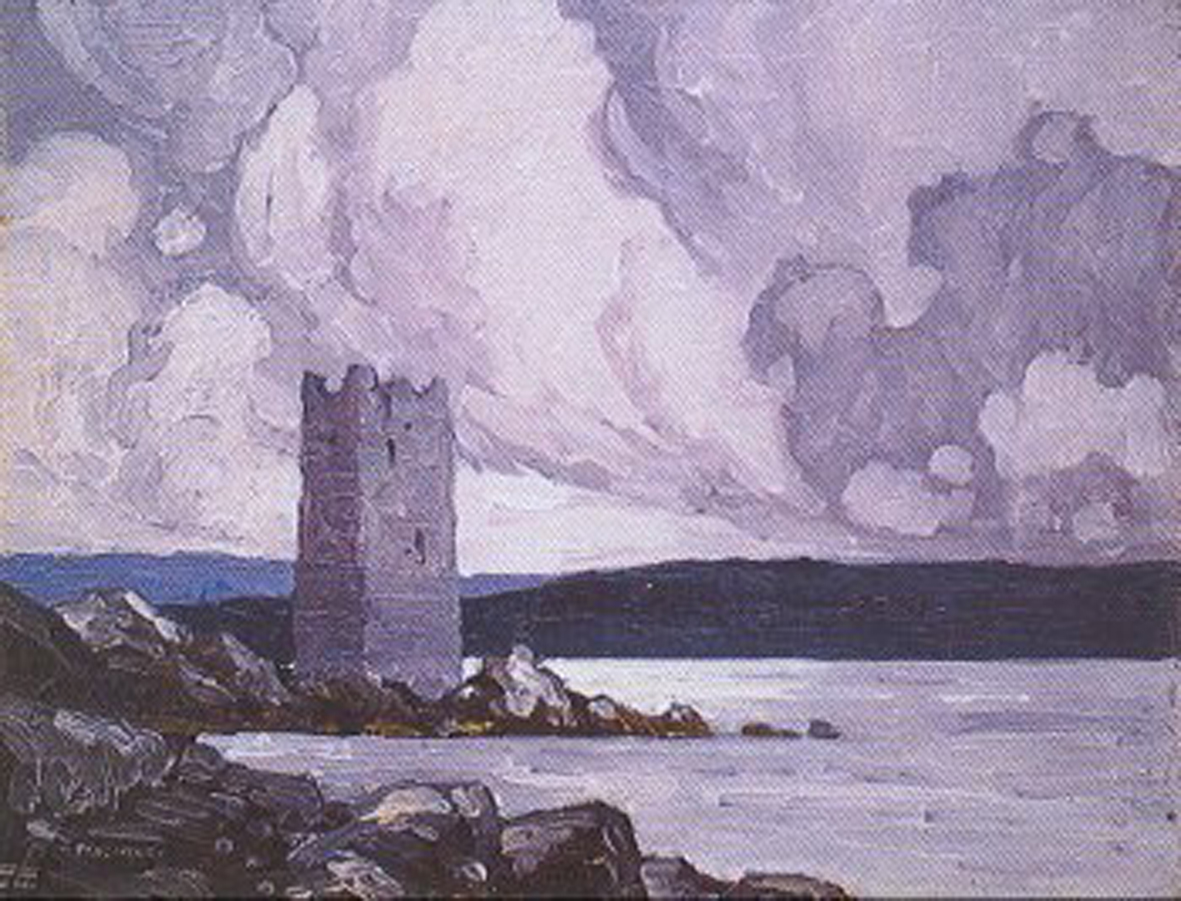
It’s a bit of a stretch of the imagination to see the setting of Lough Derg, with its fairly low-lying hills, in the background of Paul Henry’s painting. And where is that little tower house on the spit of land behind the ‘Celtic Cross’? Well – maybe it’s here:
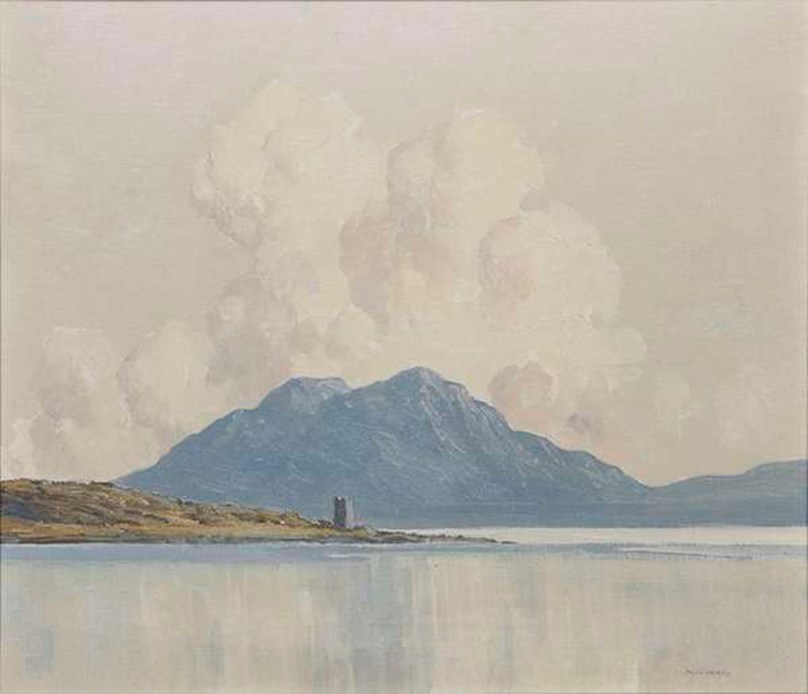
This painting by Paul Henry is known as Grace O’Malley’s Castle: it is picturesquely situated at Kildavnet, in the south-east corner of Achill Island, County Mayo, which Paul and Grace first visited in 1910. So inspired were they by the landscape and the apparently idyllic simple way of life that they remained on Achill for a decade. Here’s another view of the O’Malley castle by Paul Henry:
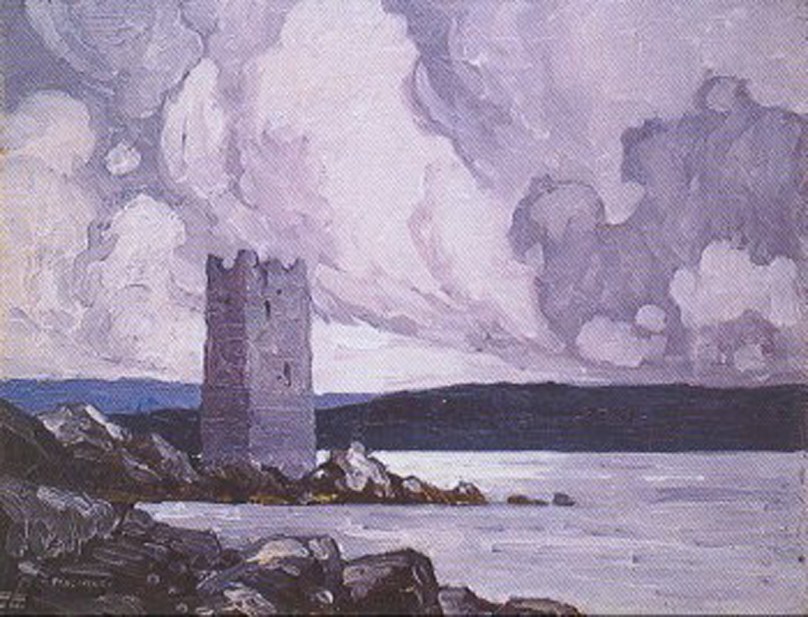
So the ‘Celtic Cross at Lough Derg’ is, in fact, a medieval high cross from Monasterboice, County Louth, and it is set against the stunning scenery of Achill, County Mayo. We can’t blame Morgan O’Driscoll (or anyone else who can be identified) for giving the painting a misleading name. It seems that originally the work was just titled ‘Celtic Cross’: here are some insights from Paul Henry’s biographer, Brian Kennedy, in the Irish Arts Review Yearbook 1989 / 1990 –

. . . Henry was egocentric and occasionally used artistic licence with historical facts in the same way he might have done in a painted composition . . .

. . . In 1917 the Irish Times thought he was developing a decorative treatment of the landscape whereby his imagery was not realistic but was symbolically Irish . . .

And the following is from Paul Henry: With a Catalogue of the Paintings, Drawings, Illustrations, by S B Kennedy, Paul HenryYale University Press, 2007: it tells us that the painting was clearly known as ‘Celtic Cross’ in 1924, and was in the collection of Seán T O’Kelly, Ireland’s second President (between  June 1945 and June 1959). When sold by Adams in 1984 the painting had acquired the additional wording . . . at Lough Derg . . .

. . . 611 Celtic Cross 1924. Oil on board 24 x 22 (61 x 56). Signed ‘PAUL HENRY’ . . .

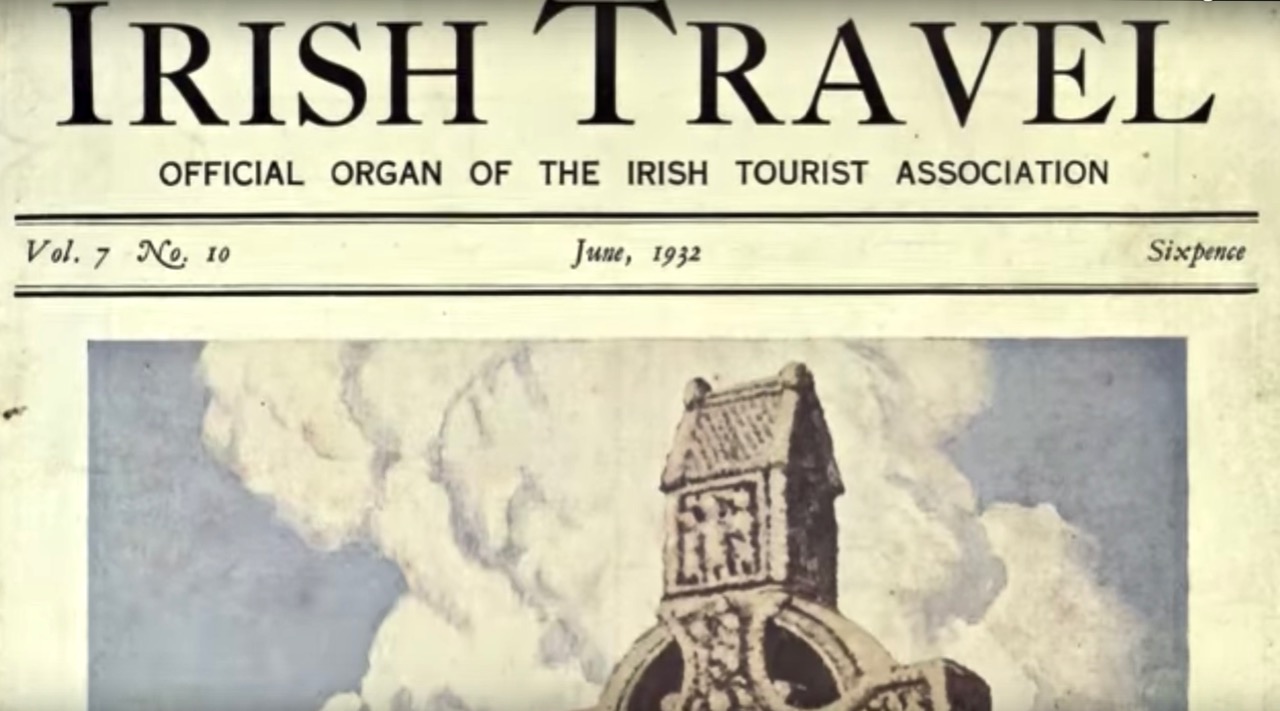
Private collection. Prov: Sean T O’Kelly; sale, Adams, Dublin 19 July 1984. Lot 86, as Celtic Cross at Lough Derg, repr. Irish Travel, vol 7, no 10, June 1937 repr. on front cover. Almost certainly a composite composition . . .
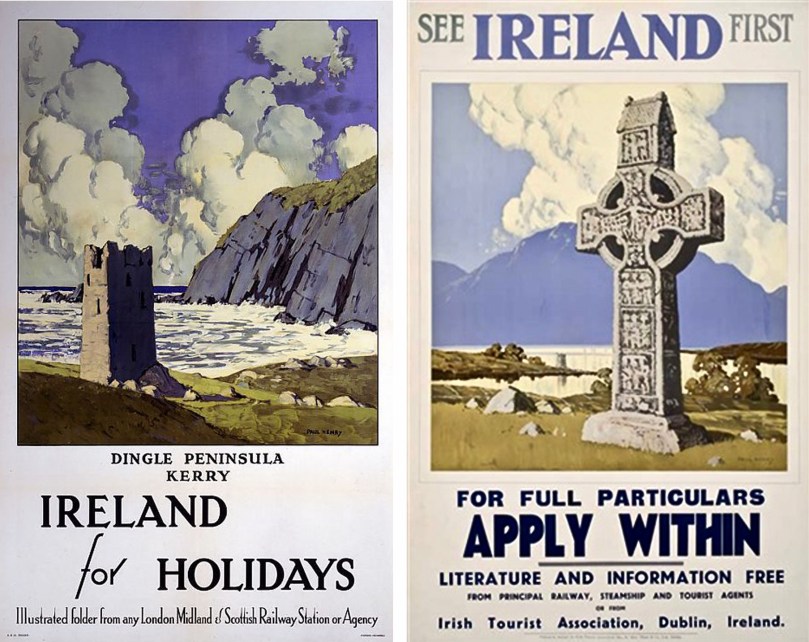
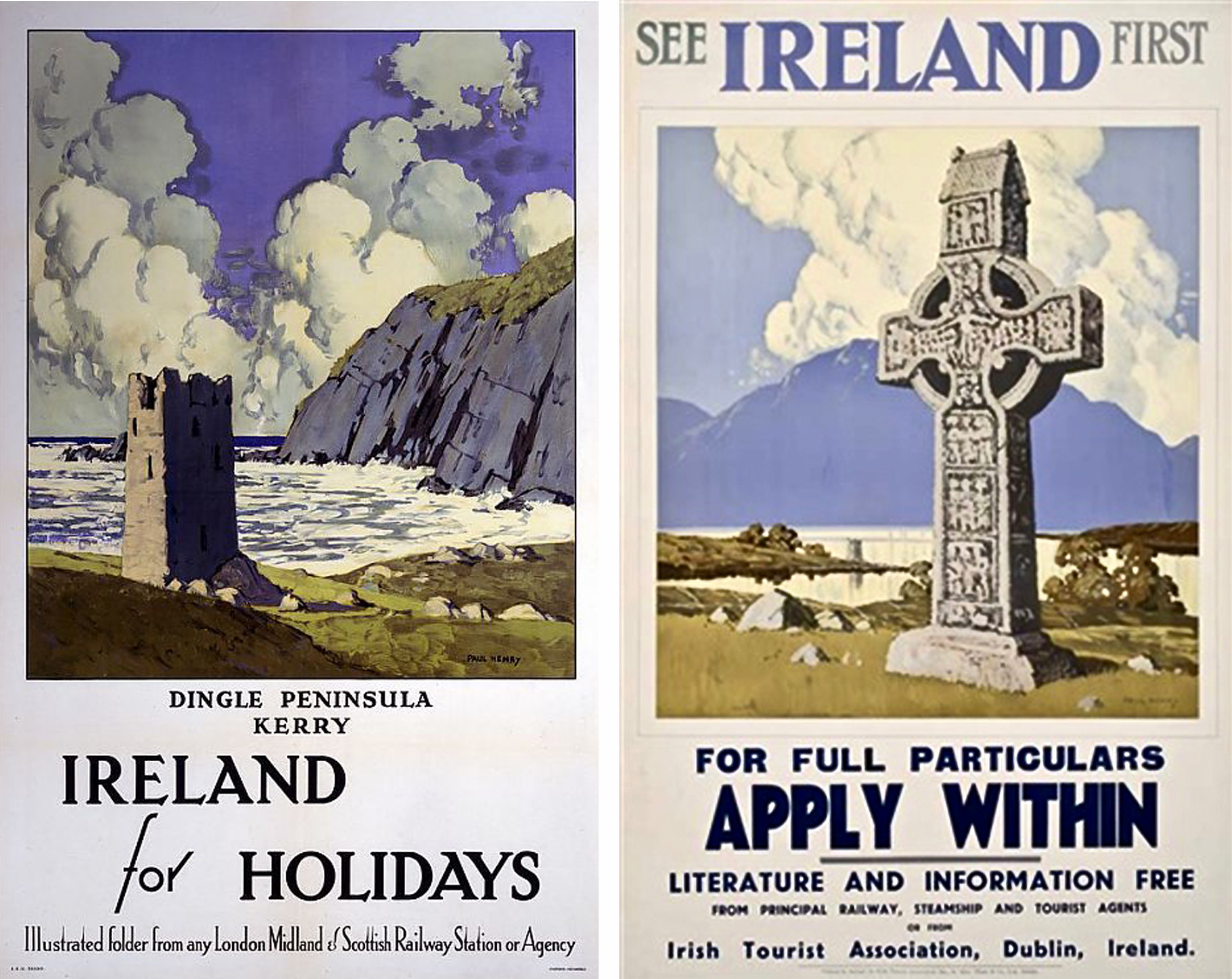
As with most artists – who need to earn a living – Paul Henry willingly accepted commissions. He was successful in selling ‘popular’ work to railway companies and the Irish Tourist Association (above – 1920s and 30s).
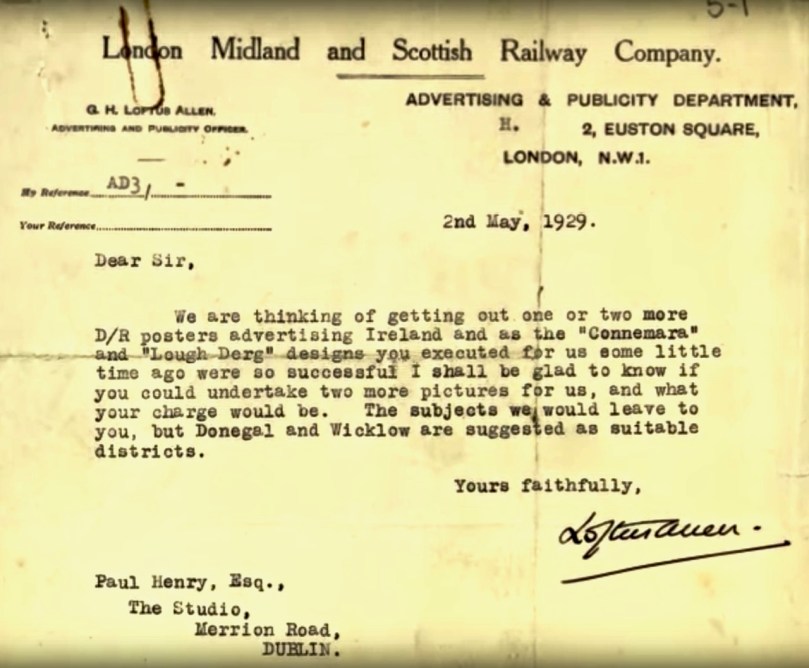
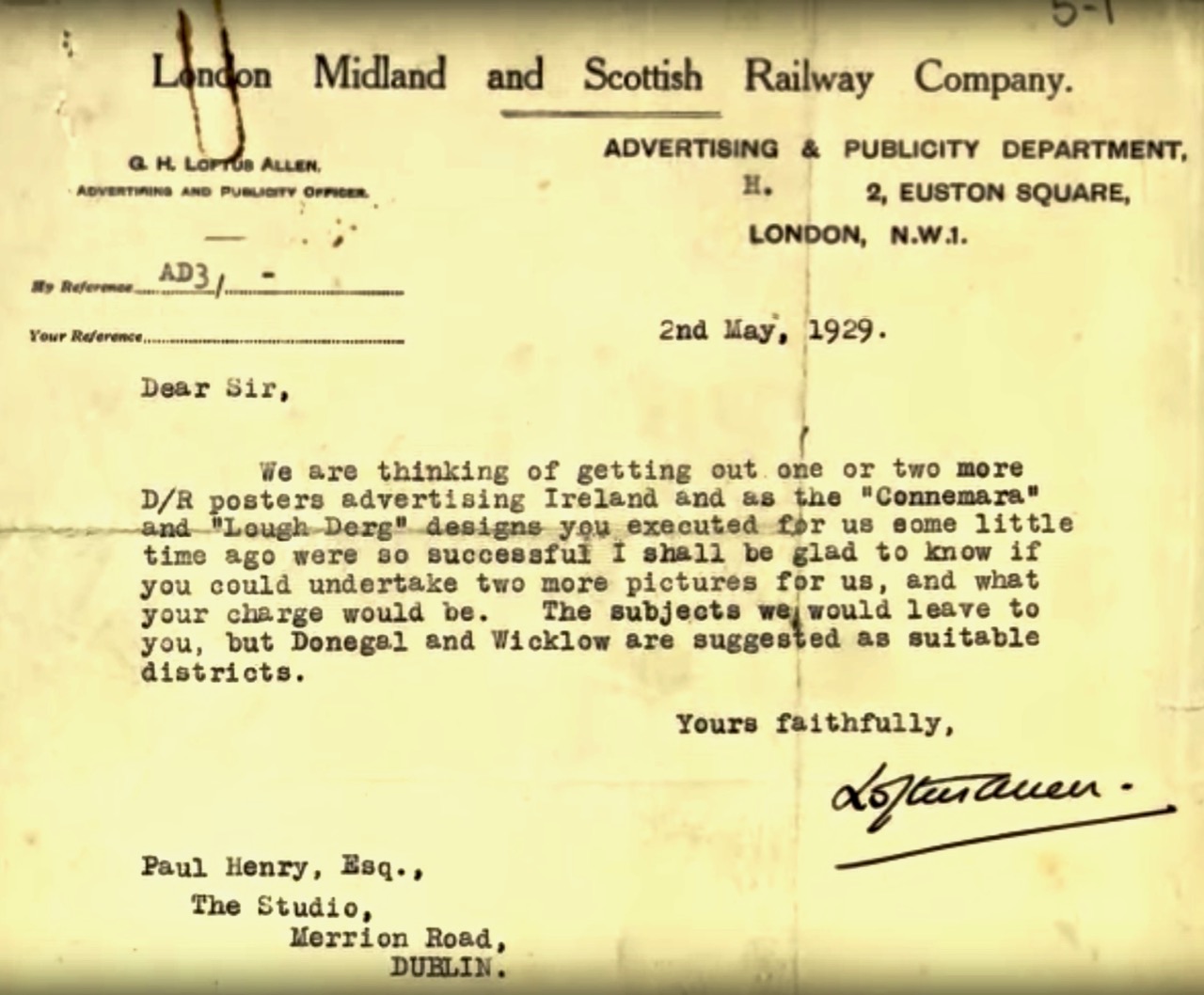
A “Lough Derg” design is mentioned in the Railway Company’s letter (above). Below is another – for British Railways: this is more likely to be the Lough Derg on the Shannon.

Has this helped to unravel the enigma of Paul Henry’s Celtic Cross at Lough Derg? Whether or not you are convinced, I’m sure you would like to have the painting hanging on your wall – me too! Although it would be so much better if it could go permanently into a public collection The sale is coming up in April . . .
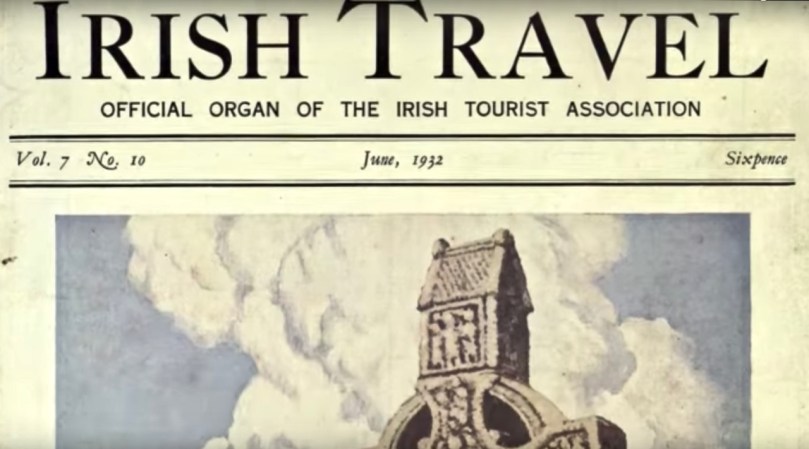
 

Antiquarians Loved Glendalough

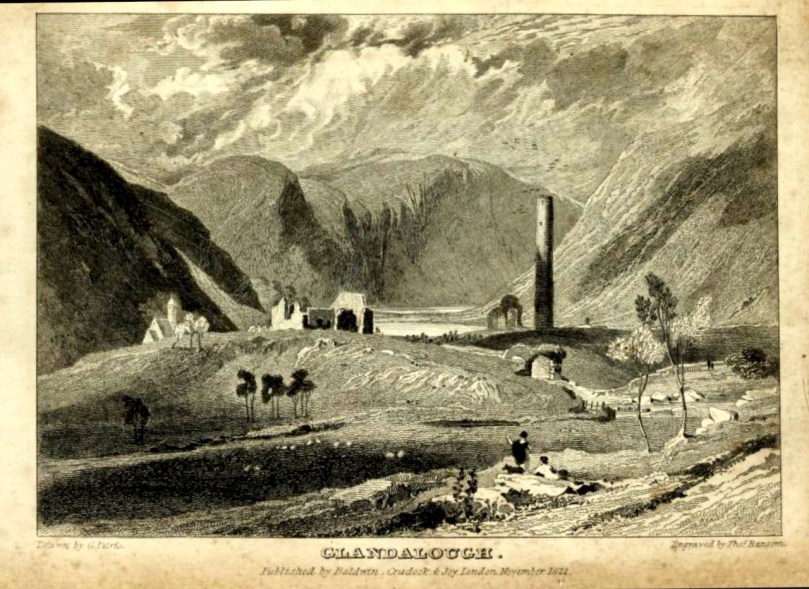
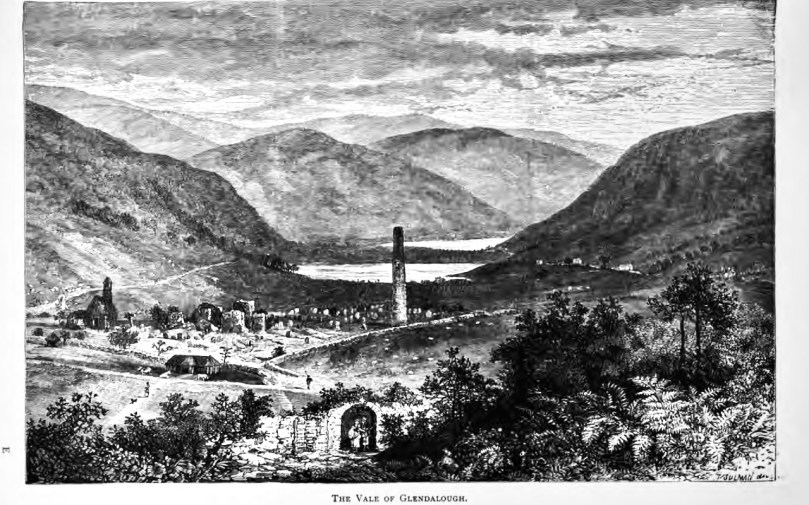
Researching a post on Romanesque architecture at Glendalough, I have come across so many depictions of Glendalough by tourists and antiquarians that I thought I would start by sharing some of these with you, by way of a general introduction to this outstanding heritage site. Situated in the heart of the Wicklow Mountains, the ecclesiastical settlement of Glendalough occupies one of the most beautiful valleys in Ireland and this combination of wild scenery and picturesque ruins made it a favourite of antiquarians, travellers and illustrators.

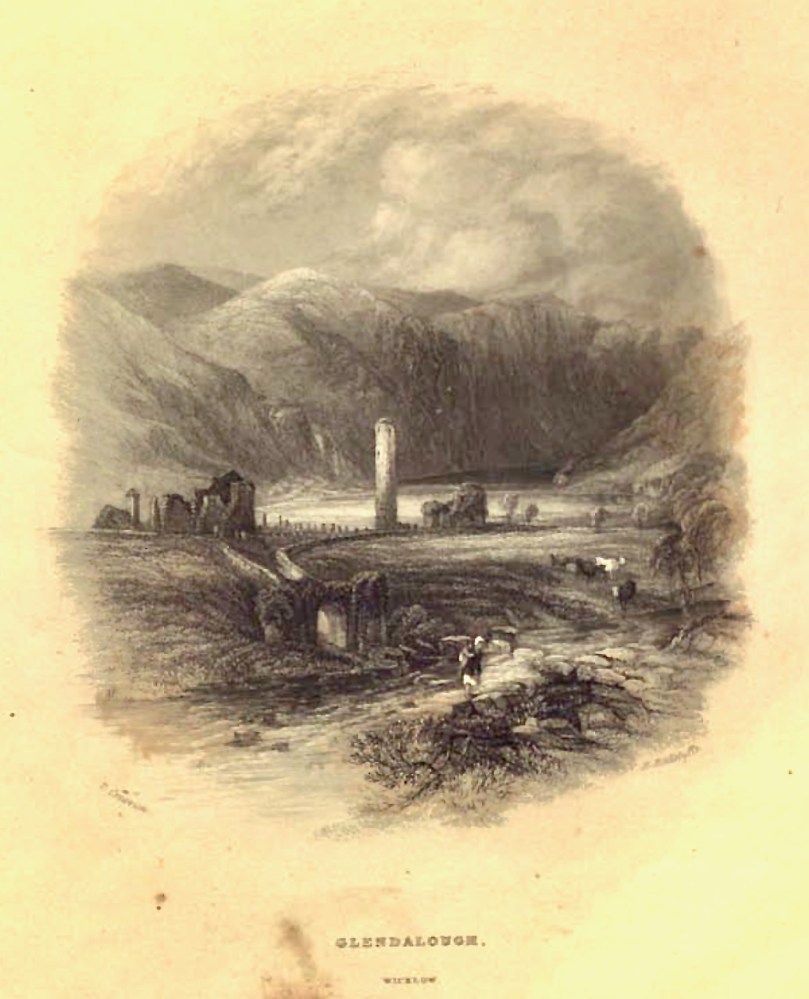
This illustration from Halls Tour of Ireland, Vol II, published in the early 1840s, concentrates less on architectural accuracy and more on an impression of romantic picturesqueness, although it does get the main features more or less right

Another view, this time by Lovett from his Irish Pictures of 1888

This is also a highly significant archaeological and historical site. I’ve been reading a most lucid and illuminating guide to it and I highly recommend it – Glendalough by Christiaan Corlett. Chris is an archaeologist with the National Monument Service and nobody knows this place better than he. Of the valley he says, Is there anywhere else in the Christian world that can boast so many churches and related buildings dating from before the year 1200 that have remained so intact?

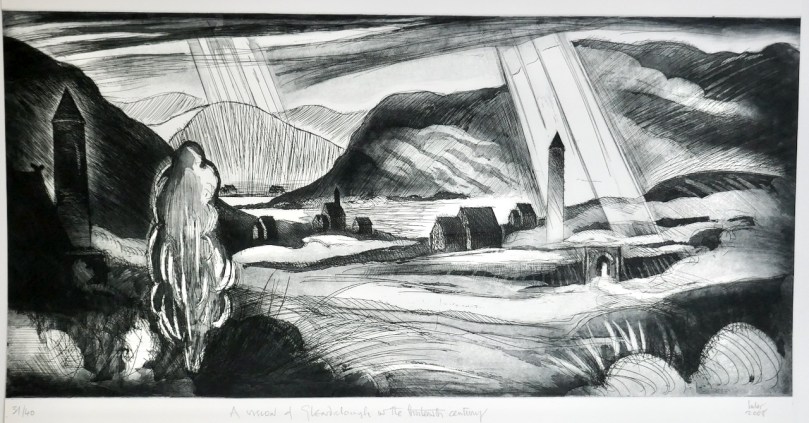
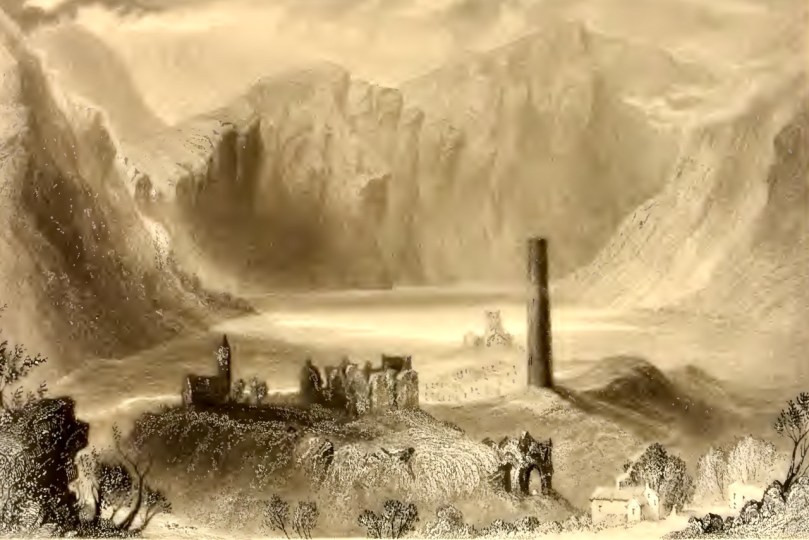
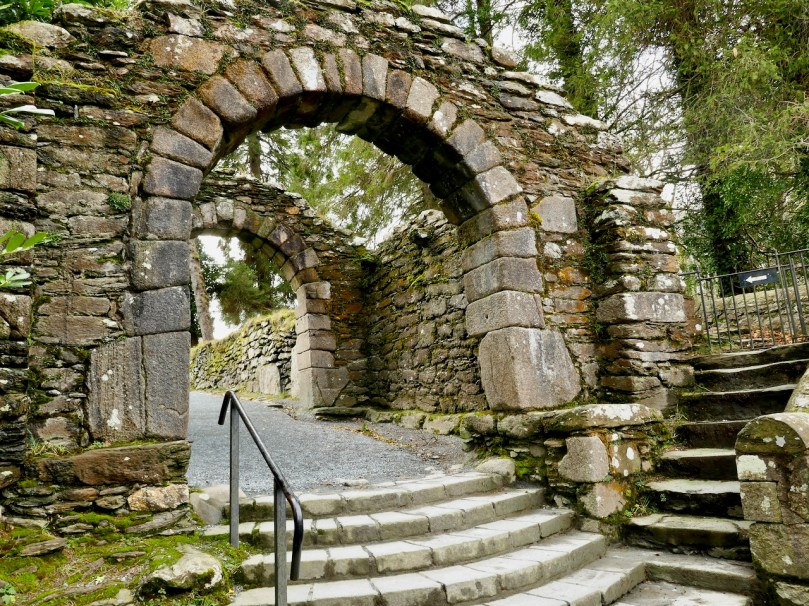
I’ve started this post with the most recent image, done in 2008 by our friend Brian Lalor, but in the style of an antiquarian drawing and showing the full scope of structures at Glendalough – eight churches and three towers – as the valley would have been seen in the thirteenth century. The round tower is the most prominent feature on the landscape – and the image that most visitors take away with them. It was, of course, originally a bell tower (although it may have served other functions) since the call to prayer was an important part of the monastic day. In the drawing directly above, done by W H Bartlett (see last week’s post about this wonderful illustrator) about the same time as the Hall’s Tour sketch, you can see that the round tower is roofless. Although once again Bartlett is careful to create a wildly romantic scene he also shows the principal structures, including the Gatehouse, which is pictured below as it is today.

Note the projections of the wall on either side of the arch – these features are known as antae and were typical of early church construction in Ireland. See my post Irish Romanesque – an Introduction for more on this topic

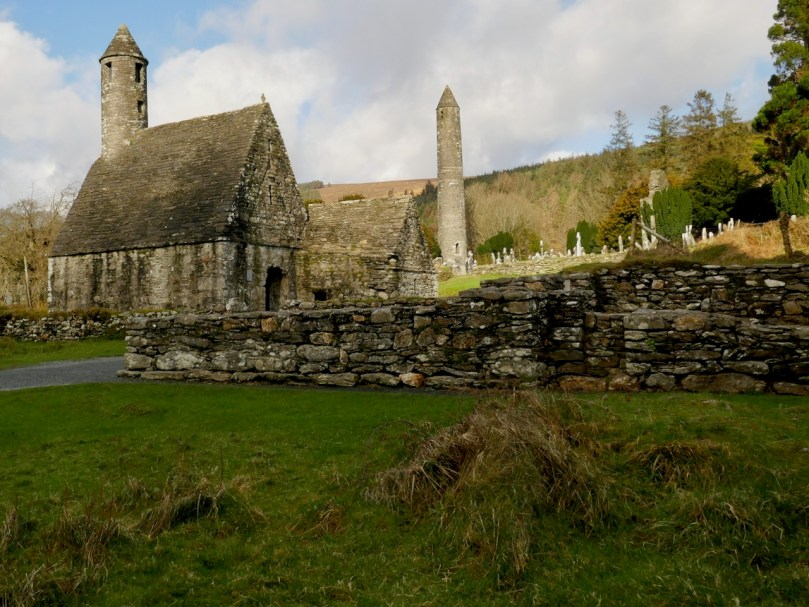
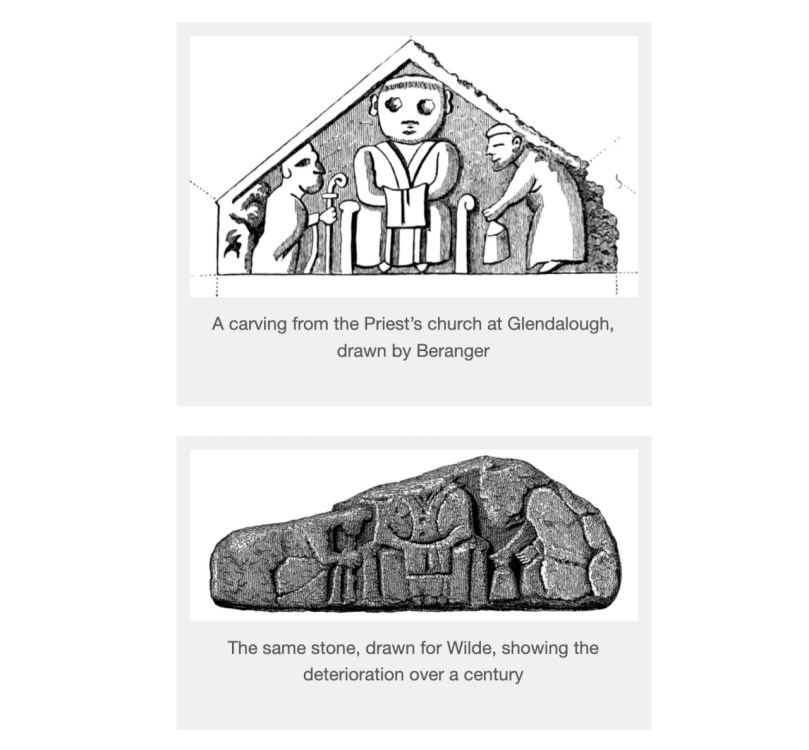
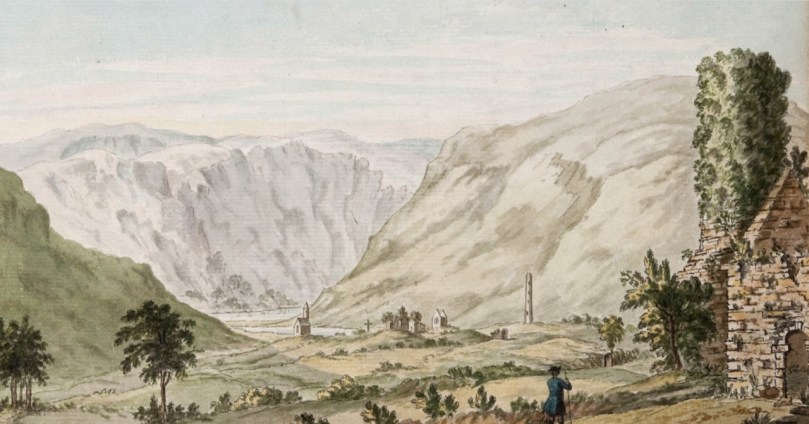
Of the two other bell towers, only the one atop St Kevin’s Church still exists. The other was similarly situated on Trinity Church but has since collapsed. But we do have evidence of it – see the final illustration in this post! Here we see why antiquarian drawings are so important. The ravages of time have taken their toll on the buildings and carvings at Glendalough: some have simply disintegrated away while some carvings recorded by these early illustrators have disappeared, presumably stolen.
St Kevin’s Church, the vestiges of St Ciaran’s Church (foreground), the Round Tower, and the east wall of the Cathedral

There’s another consideration too – the well-meaning rebuilding efforts of the Victorian period. As a consequence of the Disestablishment of the Church of Ireland which came into effect 150 years ago on Jan 1, 1871, responsibility for all the ancient ecclesiastical sites transferred from the Church of Ireland to the state, and from there to the Office of Public Works. An urgent need to conserve ruinous buildings combined with an enthusiastic approach to ‘reconstruction’ and improvement led to many monuments all over Ireland getting a make-over. As one of Ireland’s premier tourist destinations, then and now, Glendalough became the focus of such activity.
A Petrie engraving from 1827

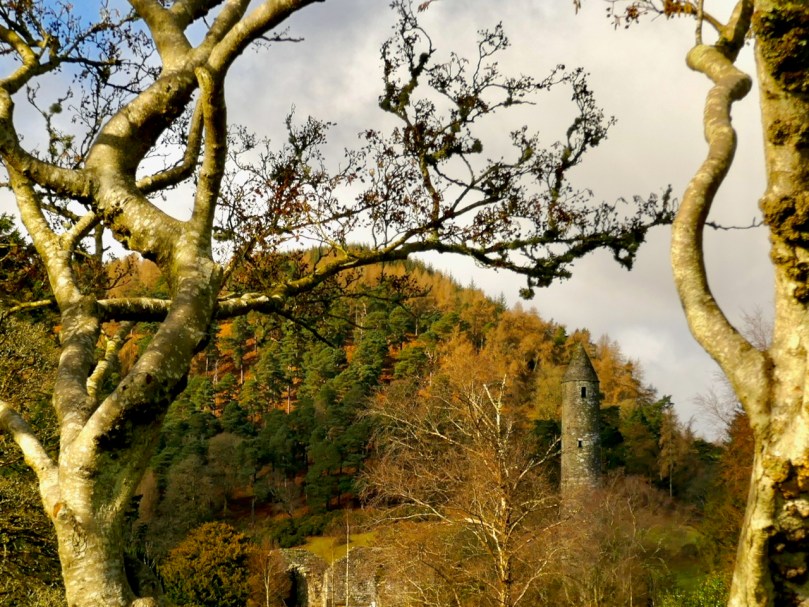
Perhaps the most visible change was to the round tower, which was blessed with a brand new conical cap. The work was done carefully, using stones found at the site, and there is ample evidence that this was the original shape of the roof.

Some of the other reconstruction efforts may be less accurate, perhaps based more on conjecture than on evidence, but at least in the case of Glendalough the antiquarian drawings could provide some clues as to the condition of the monuments within the last 100 years, if not in their original state.

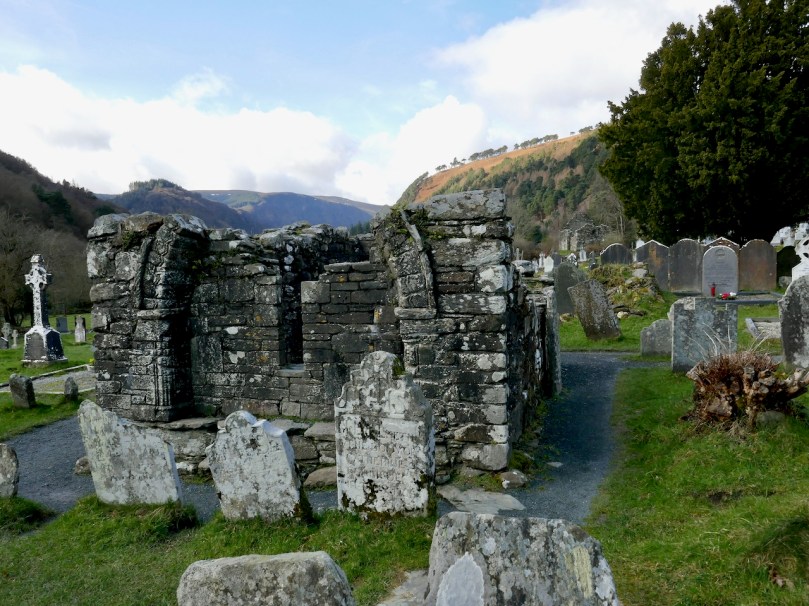
The Priests’ House (above) is a case in point. It had almost totally collapsed. As Corlett says, what can be seen today is a reconstruction carried out in the 1870s from the stones that survived among the rubble. This has presented a lot of problems for our attempts to understand the original nature of function of this building.

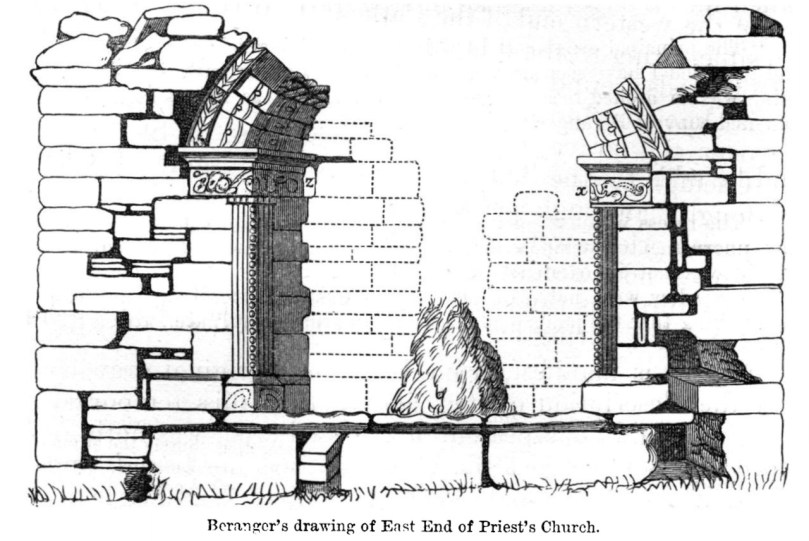
The Board of Works focused on the drawings of Gabriel Beranger from 1779 and rebuilt the elaborate romanesque arch as Beranger had depicted it. It remains somewhat controversial since it is highly unusual for such a feature to be on the outside of a building, although Corlett points out that its function may be related to the veneration of relics inside the chapel by pilgrims mounting the step to gaze through the small window.

Next time, I will concentrate on the architecture of Glendalough. It dates mostly from the 12th century and illustrates gloriously the persistence of traditional building designs from the early Irish church as well as the introduction of the Romanesque style with its arches and carvings. Some of the best examples are those that fewest people visit, so you may have a couple of surprises in store.

Beranger’s painting of Glendalough, done in the 1770s and showing the bell tower on Trinity Church, now gone