Scenery and Antiquities – W H Bartlett in Nineteenth Century Ireland

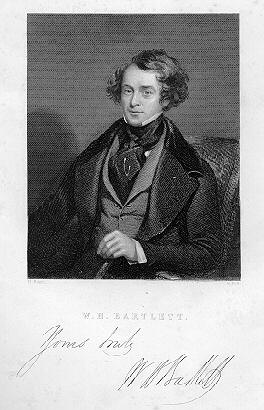
William Henry Bartlett was one of the foremost geographical illustrators of his day and he travelled the world producing images for his publisher, George Virtue. He came to Ireland at least twice, as witness his illustrations for Ireland Illustrated, published in 1831 and for Scenery and Antiquities of Ireland in 1841.

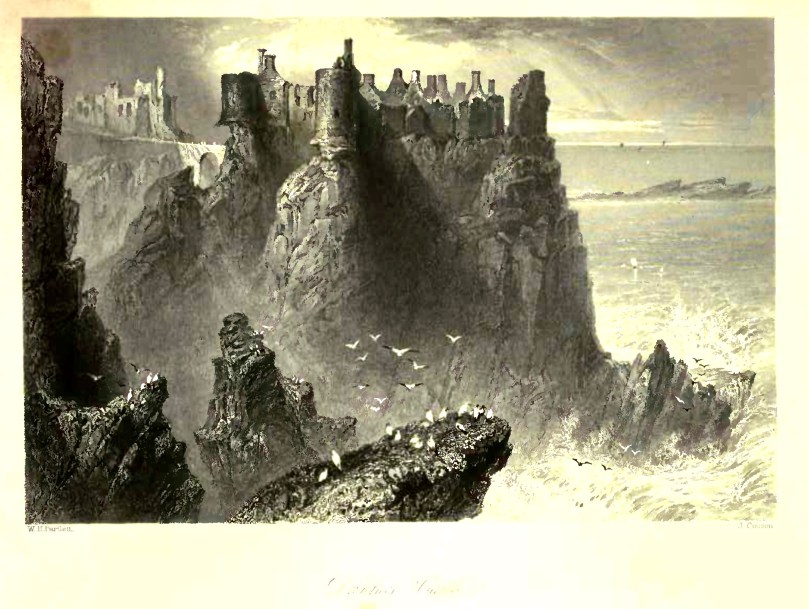
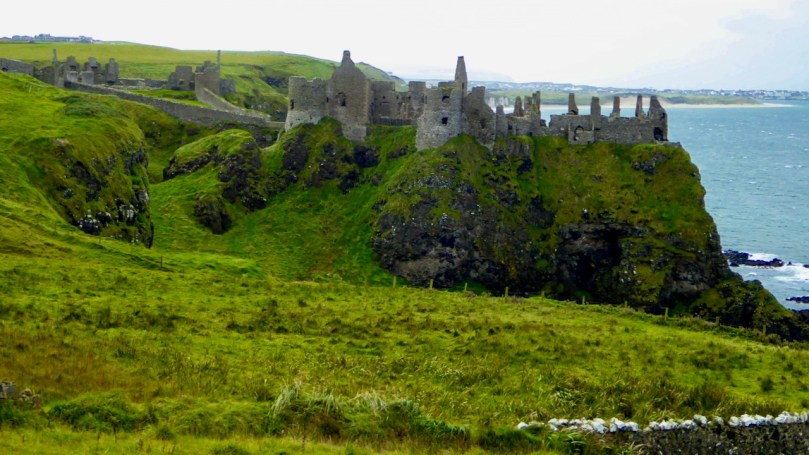
Dunluce Castle By Bartlett and a recent photograph. While accurate in architectural detail, Bartlett also manages to convey the impression of the wildly romantic, remote and craggy location in a way a photograph simply fails to do

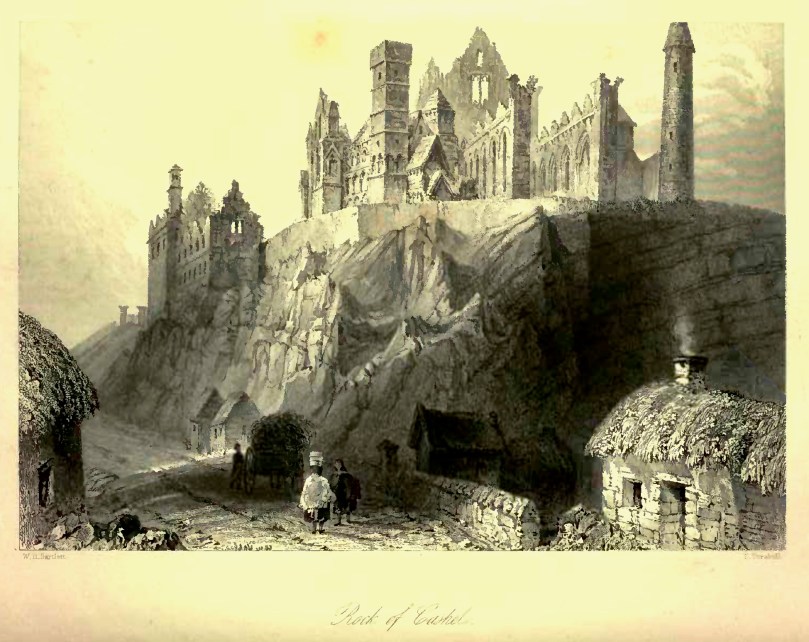
Bartlett’s method was to do a sepia wash painting, as detailed and accurate as possible, and this was then engraved by the expert engravers employed by Virtue – he used the same ones as Turner. But Bartlett was also an artist, not content with reproducing only in a factual manner. Like other artists of the period he strove to convey an impression, particularly of monumental scale and wild romanticism.

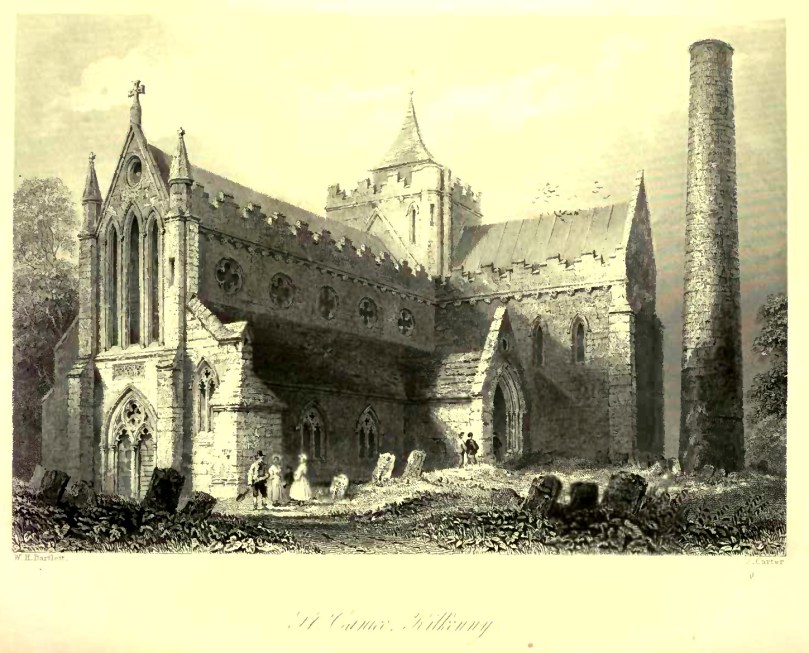
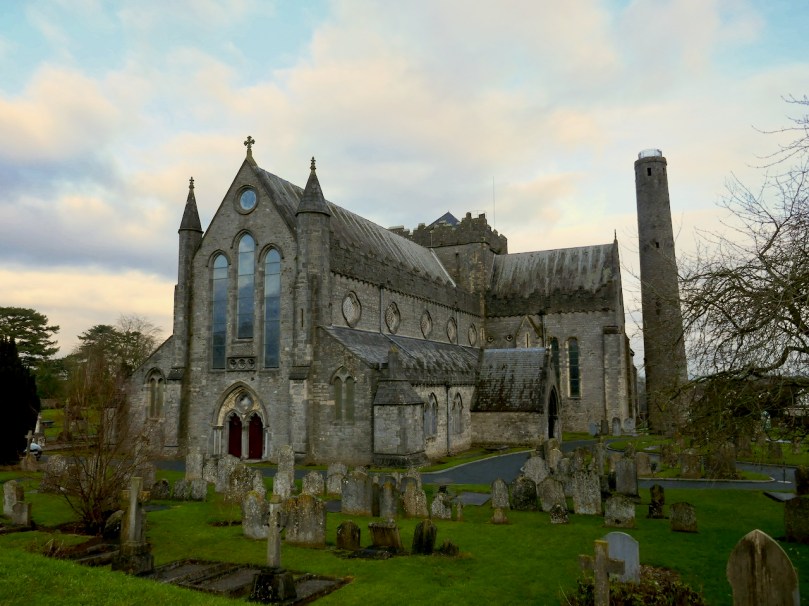
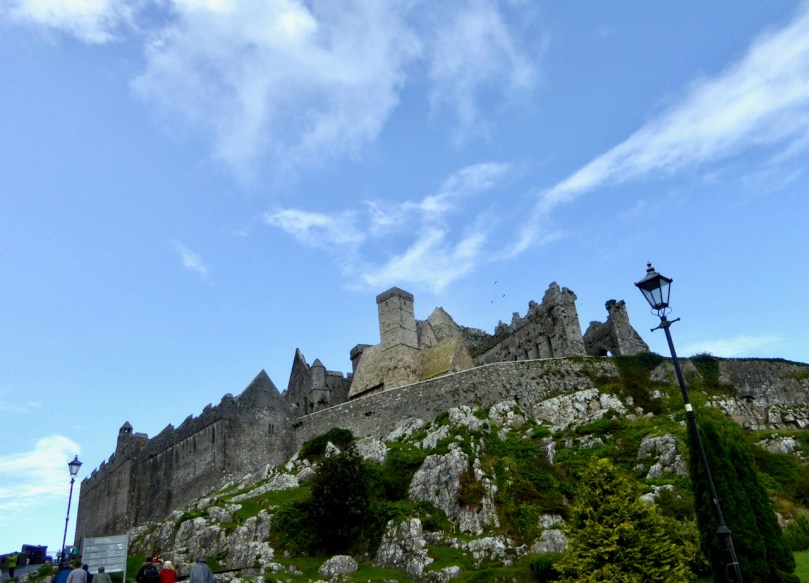
The results for his Irish engravings are wonderful indeed – and important, since they enable us to compare what he saw with what remains today. Some of his illustrations are so exact that comparison with a modern photograph shows that the object of the drawing has survived in much the same condition for almost 200 years.

St Canice’s Cathedral, then and now

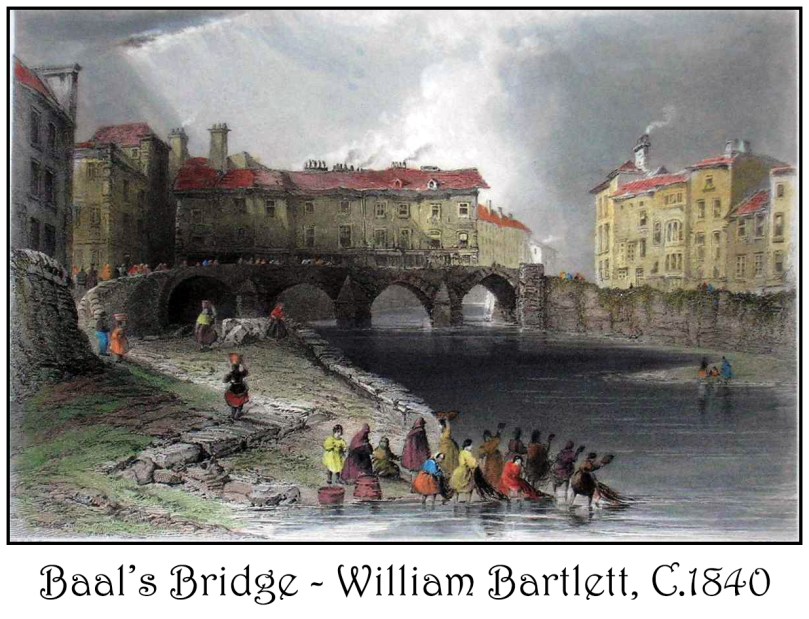
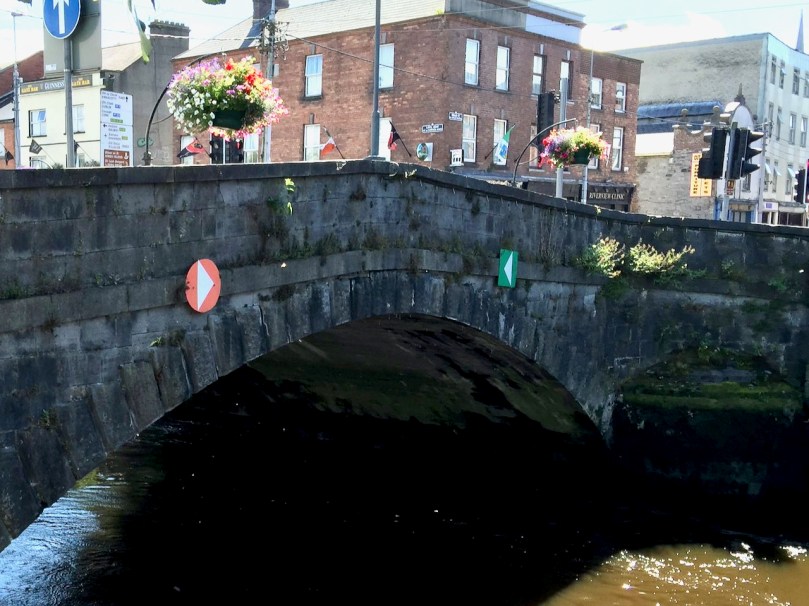
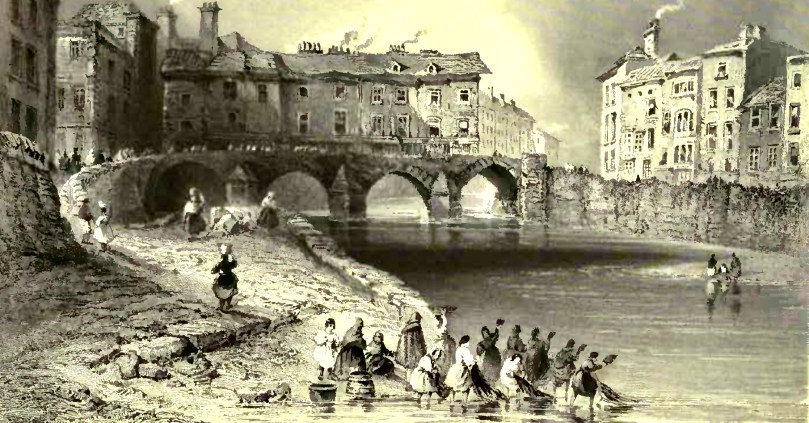
Others allow us to see what is no longer visible on the ground – the Old Baal’s Bridge, in Limerick, for example, was demolished by 1830, so Bartlett’s pictures of it are an essential reminder of this picturesque and unusual structure.

A colourised version (not sure when this was done) of Bartlett’s Old Baal’s Bridge in Limerick, and the bridge that is there today

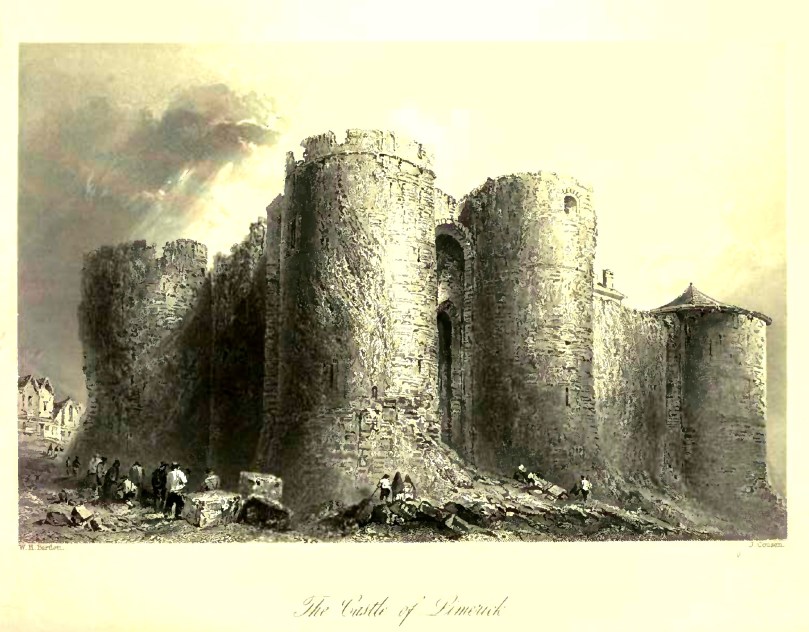
Although he illustrated streetscapes and contemporary buildings, Bartlett had a particular fondness for antiquities. Wherever he could, he selected scenes that contained ruins of abbeys or castles or ancient monuments such as high crosses.

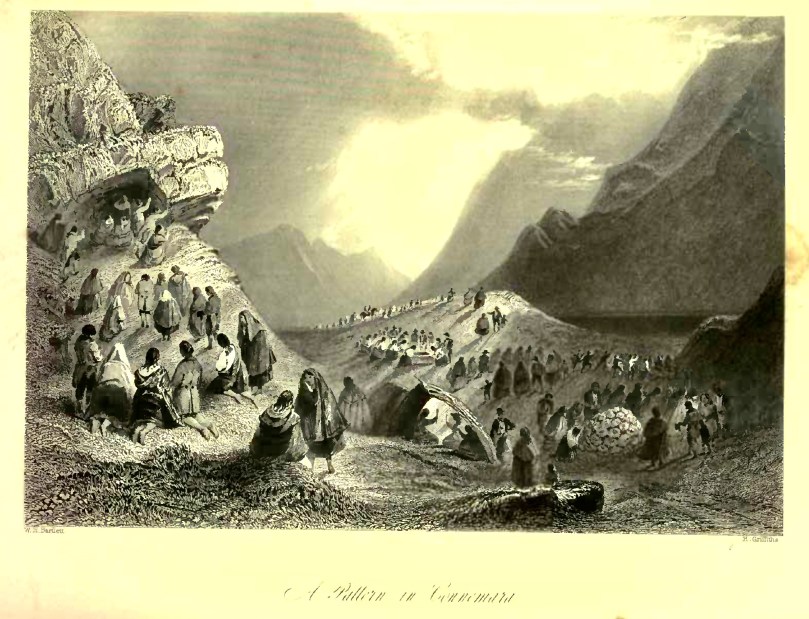
He also, almost incidentally, has left us many scenes of daily life or of special occasions, such as the women washing clothes at the Old Baal’s Bridge, or the Pattern in Connemara.

I have provided comparison shots for Bartlett’s illustrations wherever I have them, and have limited myself to a few of the better-known places in Ireland. The writers of Scenery and Antiquities, N P Willis and J Sterling Coyne, also deserve a post of their own at some point, so I can see that we will be re-visiting this book in the future!

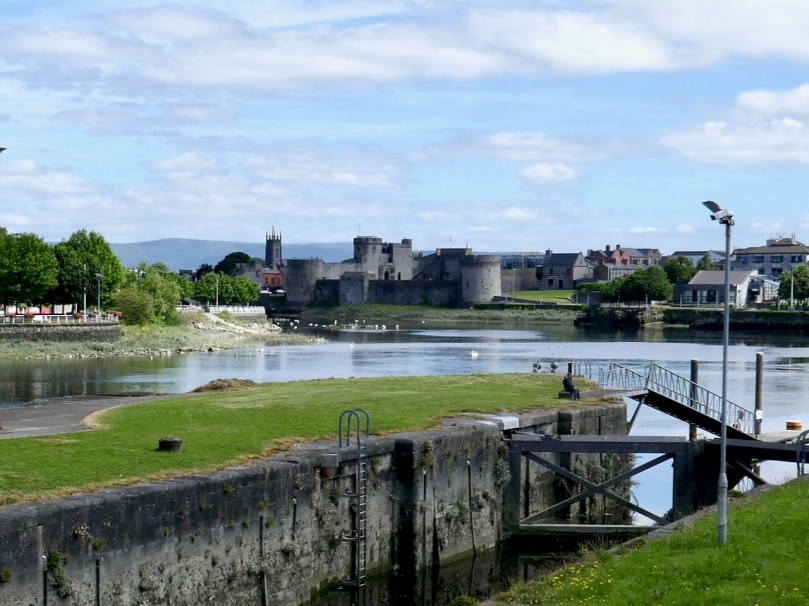
King John’s Castle in Limerick, and below is Bartlett’s original engraving of the Old Baal’s Bridge


Ireland in the 1950s – Through the Lens of Robert Cresswell

This post complements last week’s overview of the work of Dorothea Lange, who spent several weeks in County Clare in 1954, documenting the rural way of life she observed there in over 2,400 monochrome photographs. That’s a monumental collection which can only be fully accessed by visiting the Oakland Museum of California. We are fortunate to have a book of some of her Irish work – Dorothea Lange’s Ireland – published by Eliott & Clark, Washington, 1996 and a current exhibition which includes some of her images at Dublin’s Museum of Decorative Arts & History, Collins Barracks. That same exhibition features the work of two further documentary photographers, one of whom is our subject today: Robert Cresswell (below):

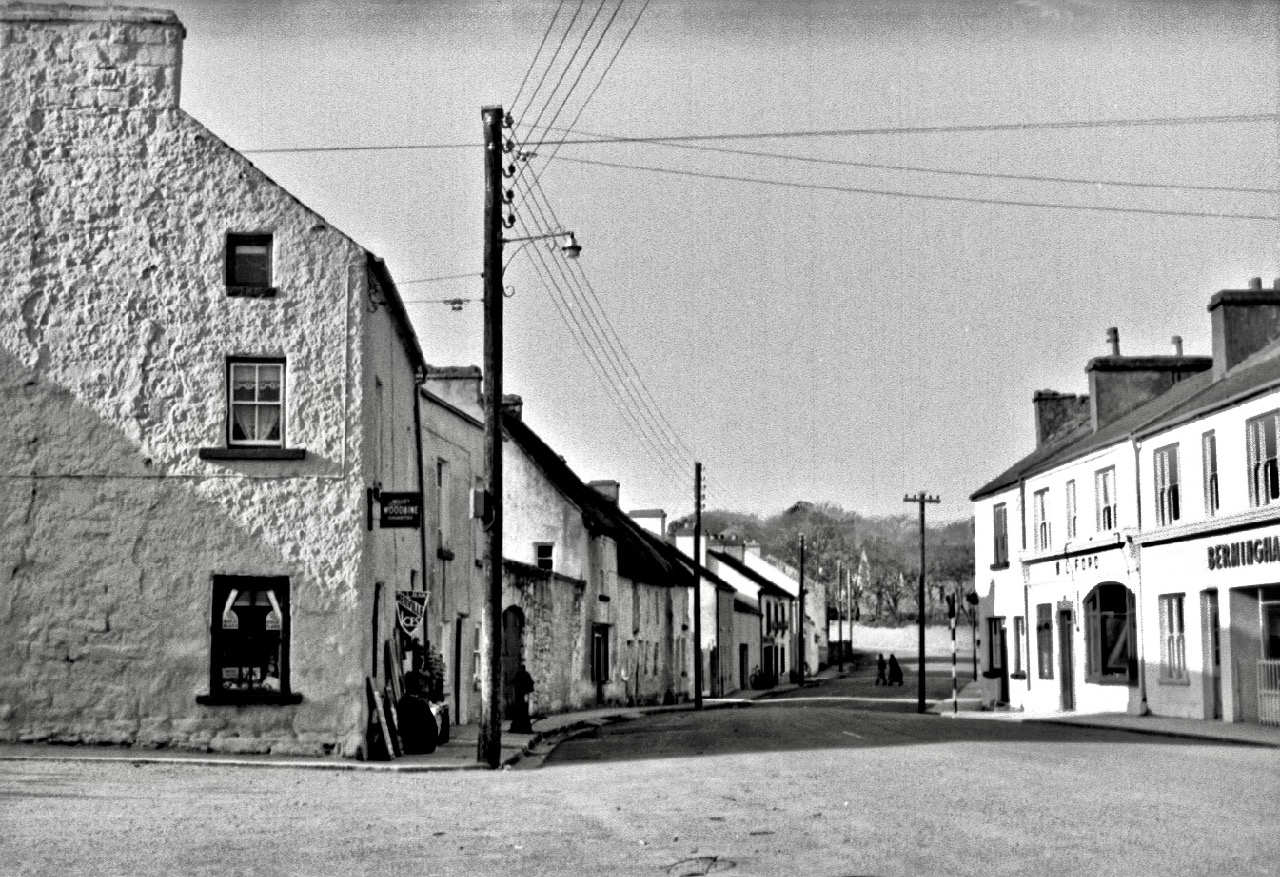
The Paris-based American anthropologist Robert Cresswell (1922-2016) remained on in France after WWII, having served in the US army there for four years. Following the completion of his studies in anthropology in Paris, he arrived in Ireland in 1955 with the ambition of carrying out an anthropological analysis of an Irish rural community. Taking the advice of the Irish Folklore Commission he chose Kinvara, County Galway. The small rural town of Kinvara and its agricultural hinterland would become the base for his study, published in 1969 as ‘Une Communauté Rurale de l’Irlande’ . . .

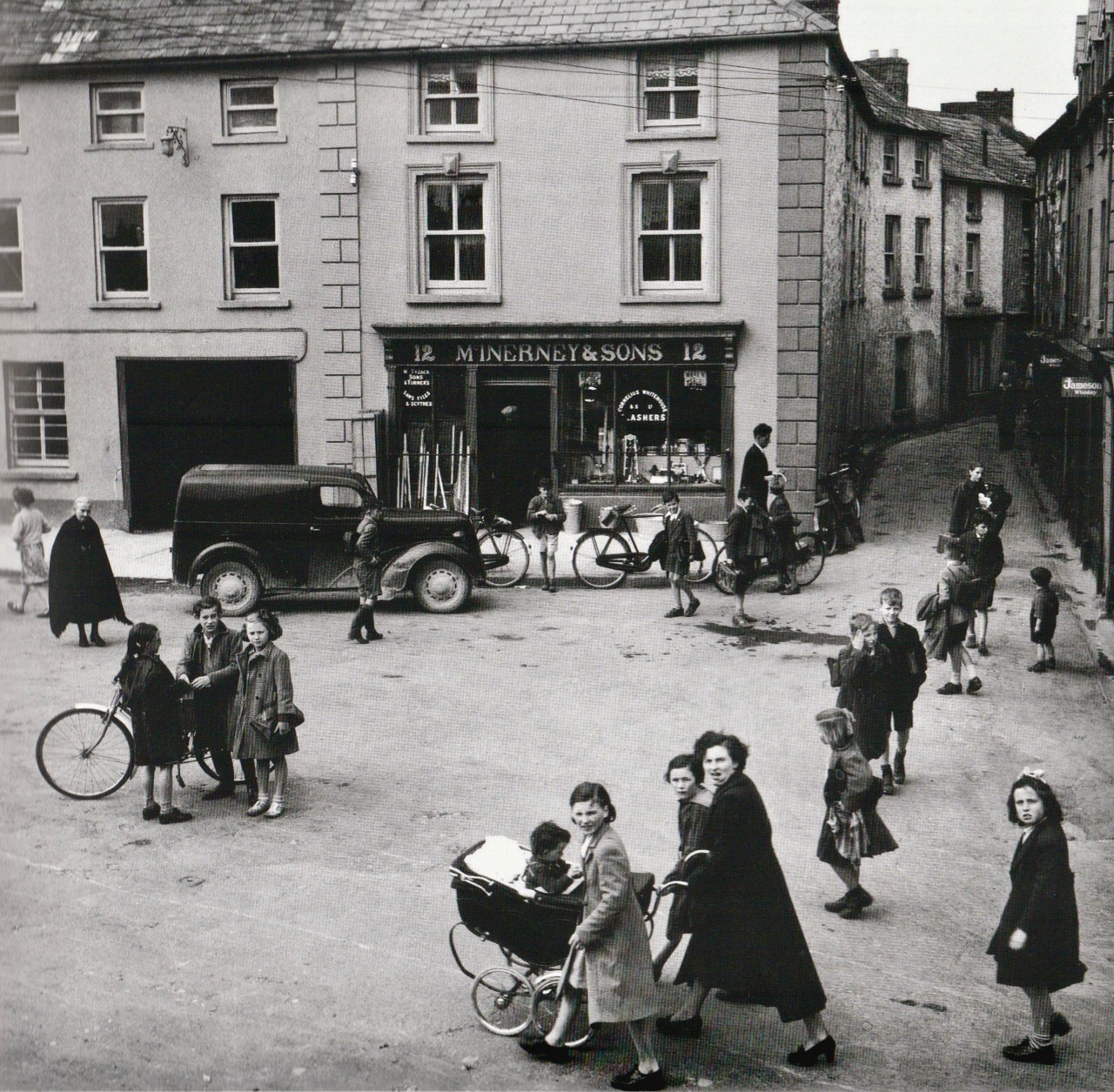
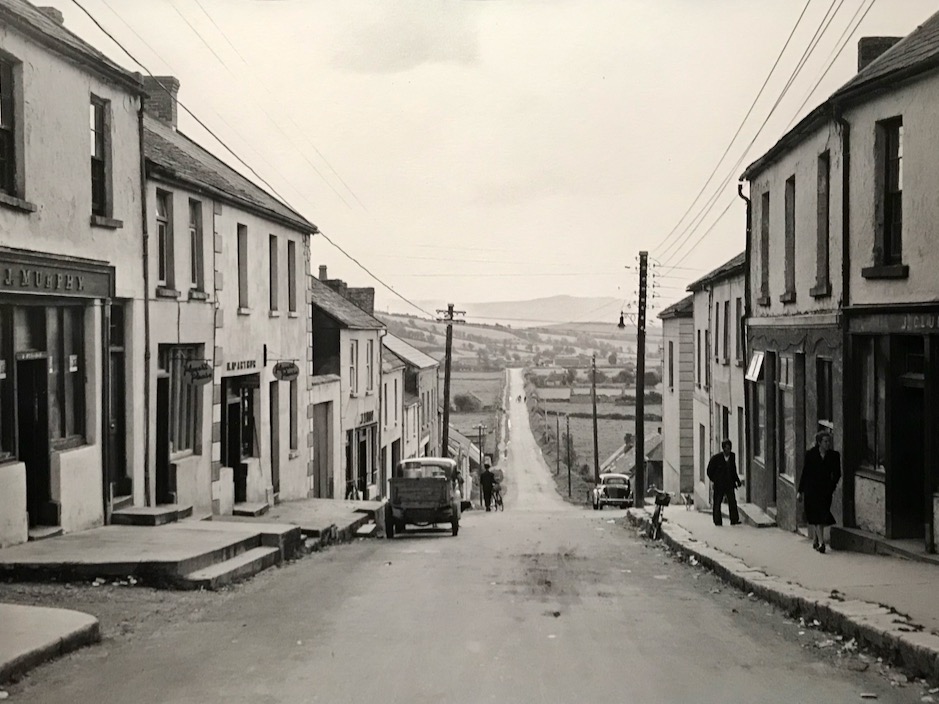
Header – Kinvara on Fair Day, 1955 by Robert Cresswell. Above – Kinvara, Co Galway, streetscape; compare these to Dorothea Lange’s views of Ennis and Tulla, Co Clare (in last week’s post), taken in the same period

While the photographic essays by Dorothea Lange and Robert Cresswell bear close comparison – and how hugely interesting it is for us to see Irish rural life through those lenses nearly 70 years ago – it’s fascinating to consider that both came from very different backgrounds and disciplines, but were equally absorbed by the iconic images each of them was capturing – giving us a visual ‘time capsule’ of Ireland as it was apparent a few generations ago.

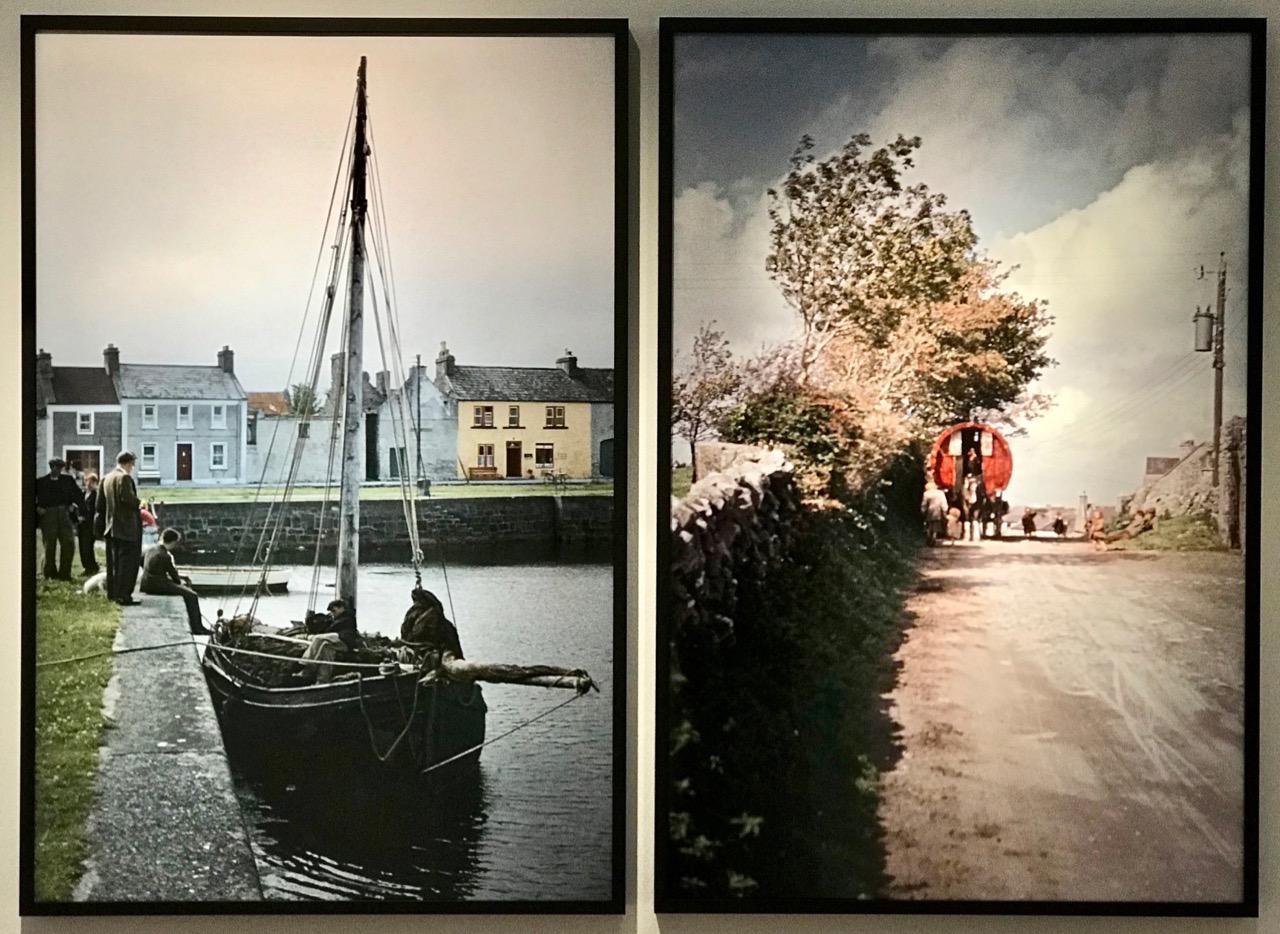
Above – examples from the Dublin exhibition showing the work of Cresswell taken from his colour slides

Robert Cresswell was a pioneer in some respects, in that he used Kodachrome film to produce colour slides, in the days when monochrome documentary photography was the norm. Some professional photographers could not cope with the idea of using colour, partly because they considered the images were not realistic. Ansell Adams felt that ‘. . . color could be distracting, and could therefore divert the artist’s attention away from creating a photograph to its full potential . . .’ while Henri Cartier-Bresson famously uttered his opinion that ‘. . . color is bullshit . . .’ – which was all he ever said about it, allegedly! My own (humble) opinion is that there is something about monochrome photographs which seems to draw the eye and enhance the atmosphere, particularly with historic images. I can’t explain this – there is no logic: it’s just a personal response which I am always aware of.

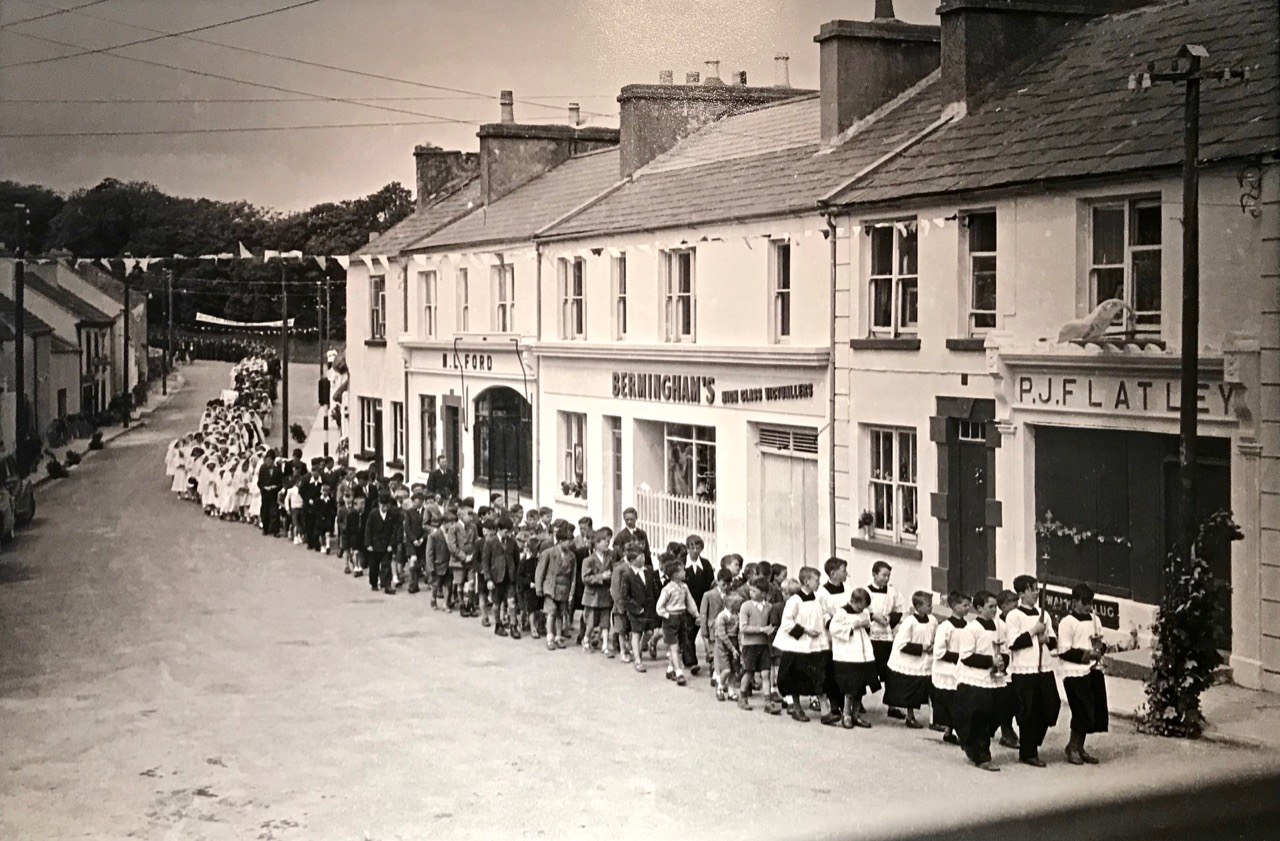
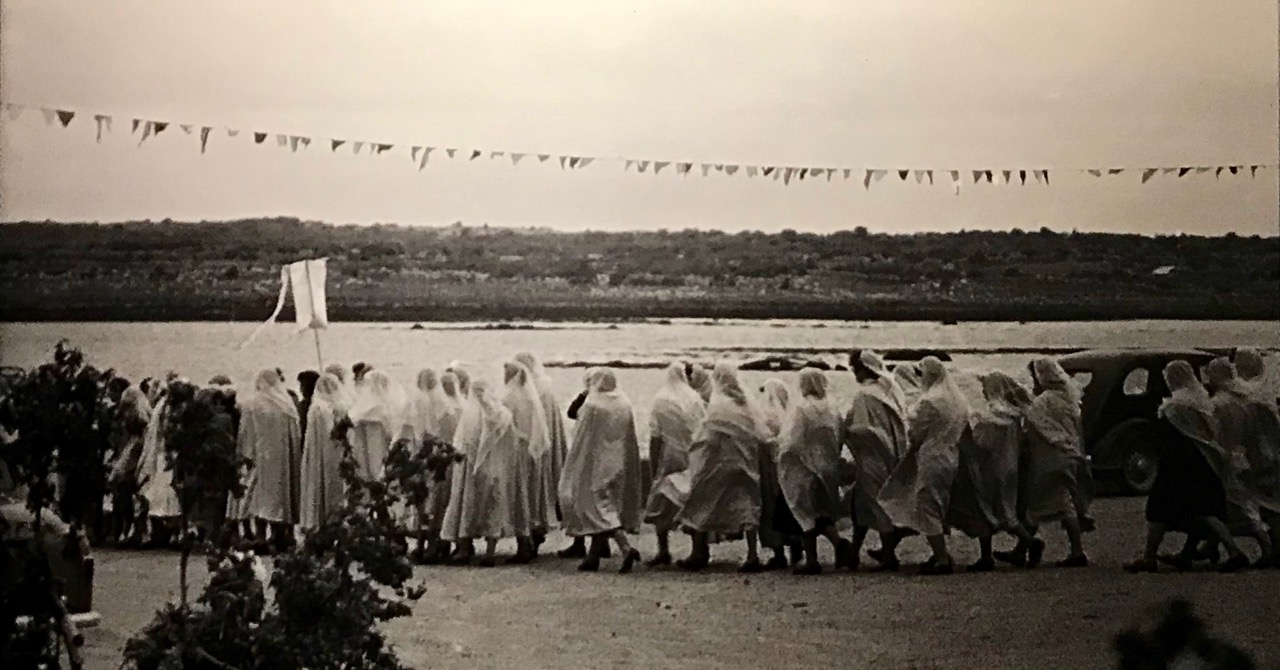
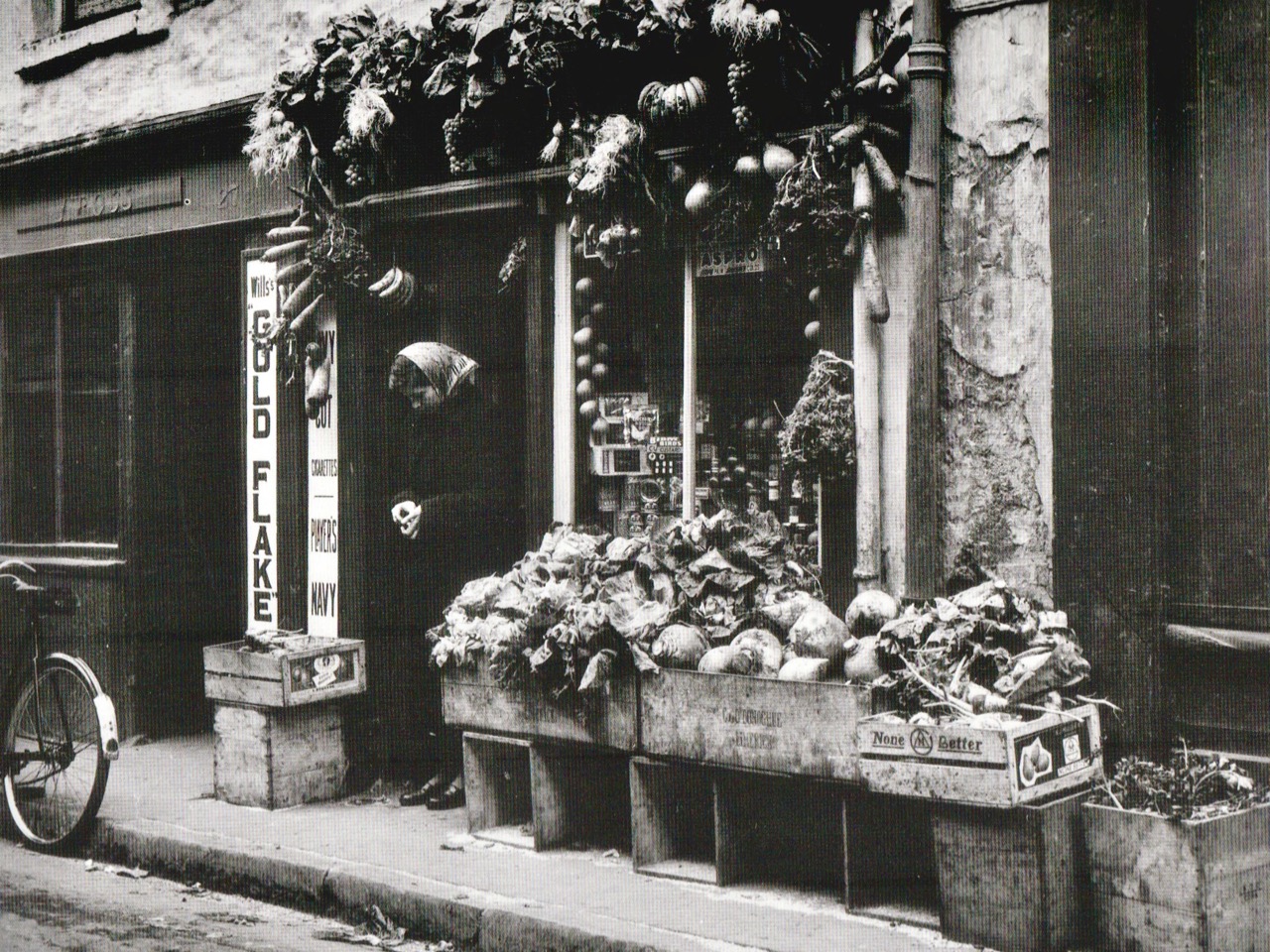
Above – monochrome Kinvara: the Forge, and Corpus Christie procession

Robert Cresswell lived in the Kinvara community for fifteen months between 1955 and 1956, returning for short periods in 1957 and 1958. The quotations in this post are from the exhibition text panels:

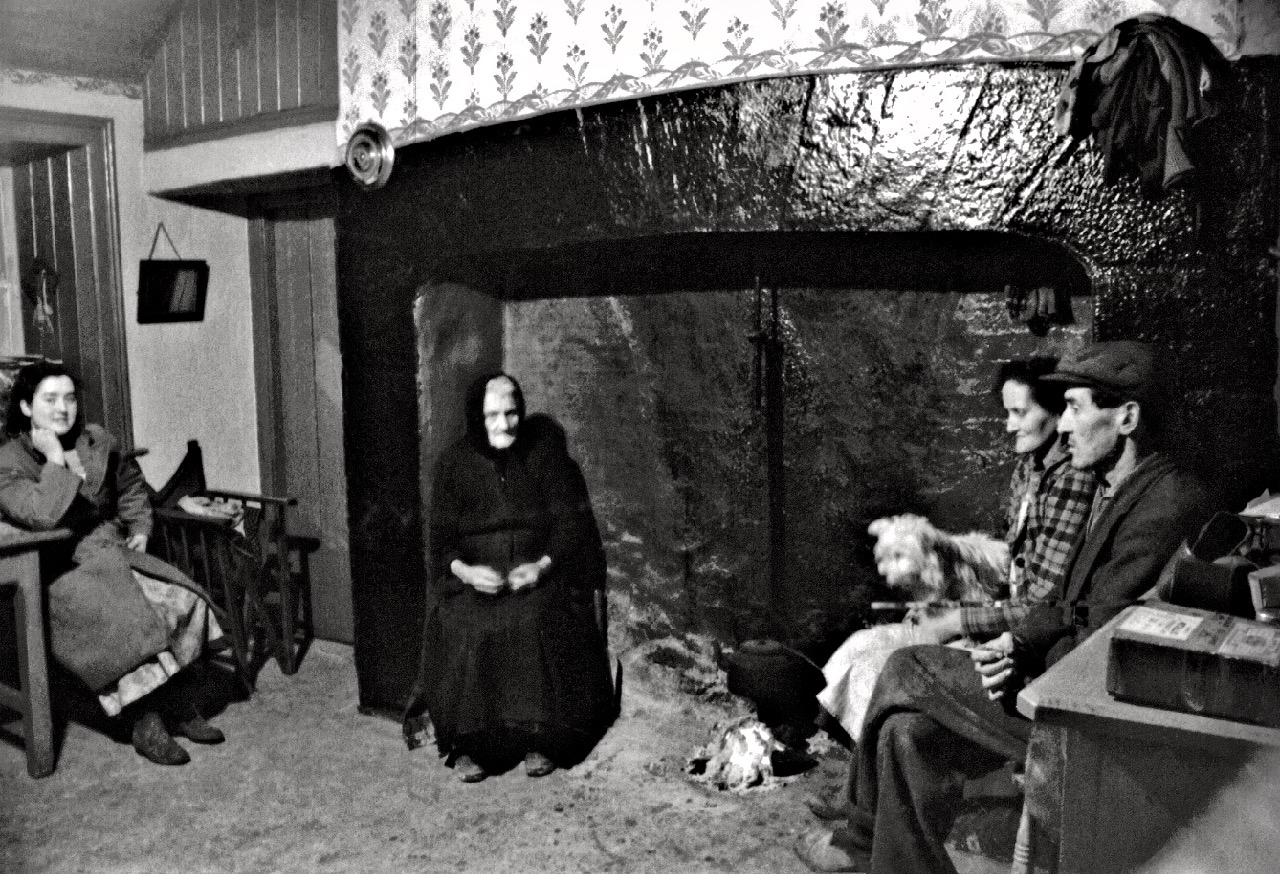
Capturing more than five hundred images . . . Cresswell photographed the people of Kinvara, their countryside, their work on sea, shore and land, the daily lives, religious processions, and fairs and markets. Documenting the changes that were occurring in the shift from a traditional farming community to a wider market-led economy, he was motivated to emphasise a community in transition over one operating in the continuity or stagnation of tradition. His photographs generally portray a well-functioning society, but his interpretation of emigration as the ultimate destructive agent in community and country profoundly influenced his understanding of rural life in a small community in 1950s Ireland . . . The population of the parish of Kinvara sustained a net loss of 80% between 1841 and 1956 . . .

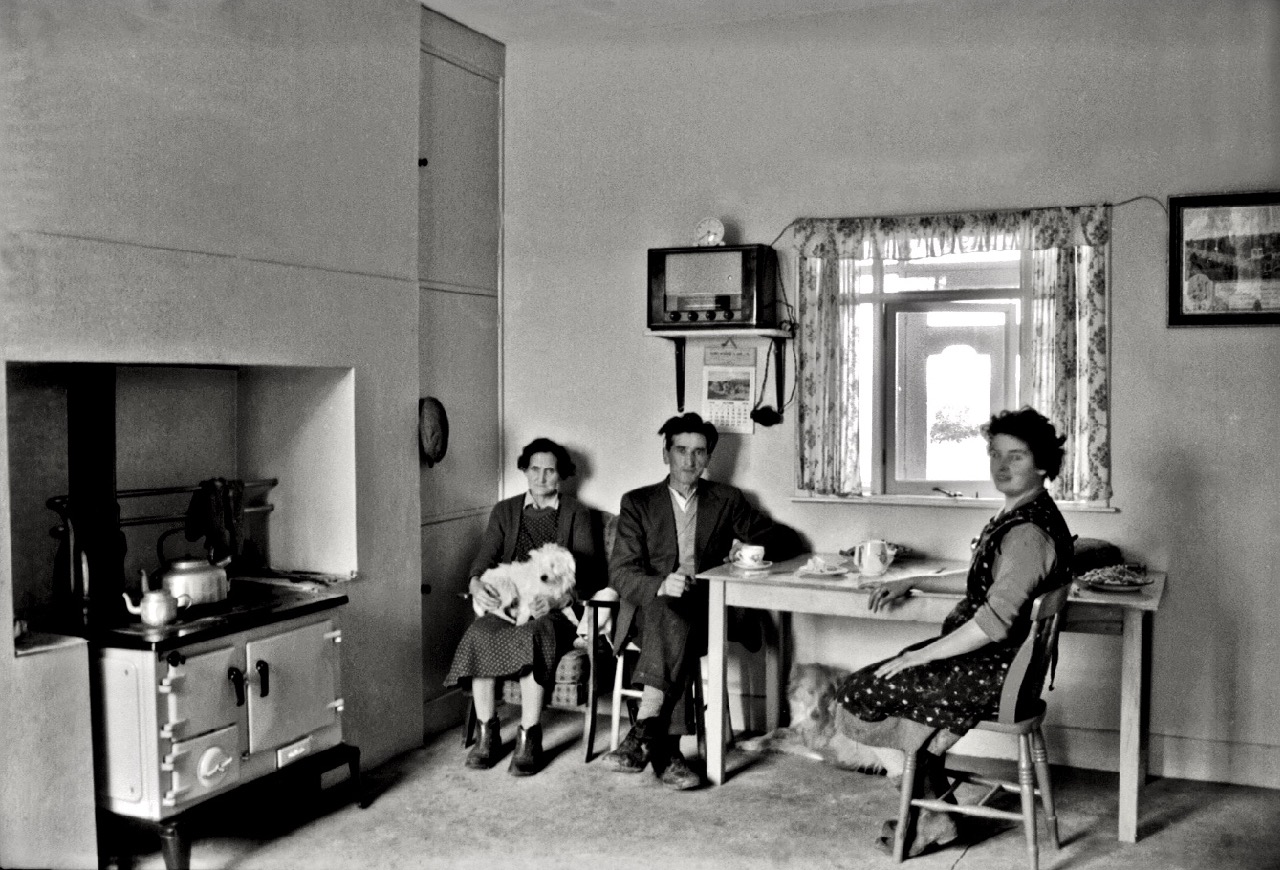
Above: a community in transition – contrasting pictures of family life in Kinvara recorded by Cresswell in the mid 1950s

Tempting though it is to show you much more of Cresswell’s work here, I really want you to go and see for yourselves. The exhibition at Collins Barracks, Dublin continues until April this year, and is well worth making the effort to visit. Robert Cresswell lived a long life; in 2010, then aged 88, he donated his entire collection of documentary photographs and cine film of Kinvara to the Irish nation. He waived his own copyright to this unique work in favour of all persons who wish to use any of it for educational or heritage purposes (but not for commercial gain without prior permission). Copyright now rests with Kinvara Community Council, who have published an excellent website here. I have used a small number of images from the collection to supplement those we found at the exhibition, in order to give you a fair cross-section of the entirety of Cresswell’s opus.

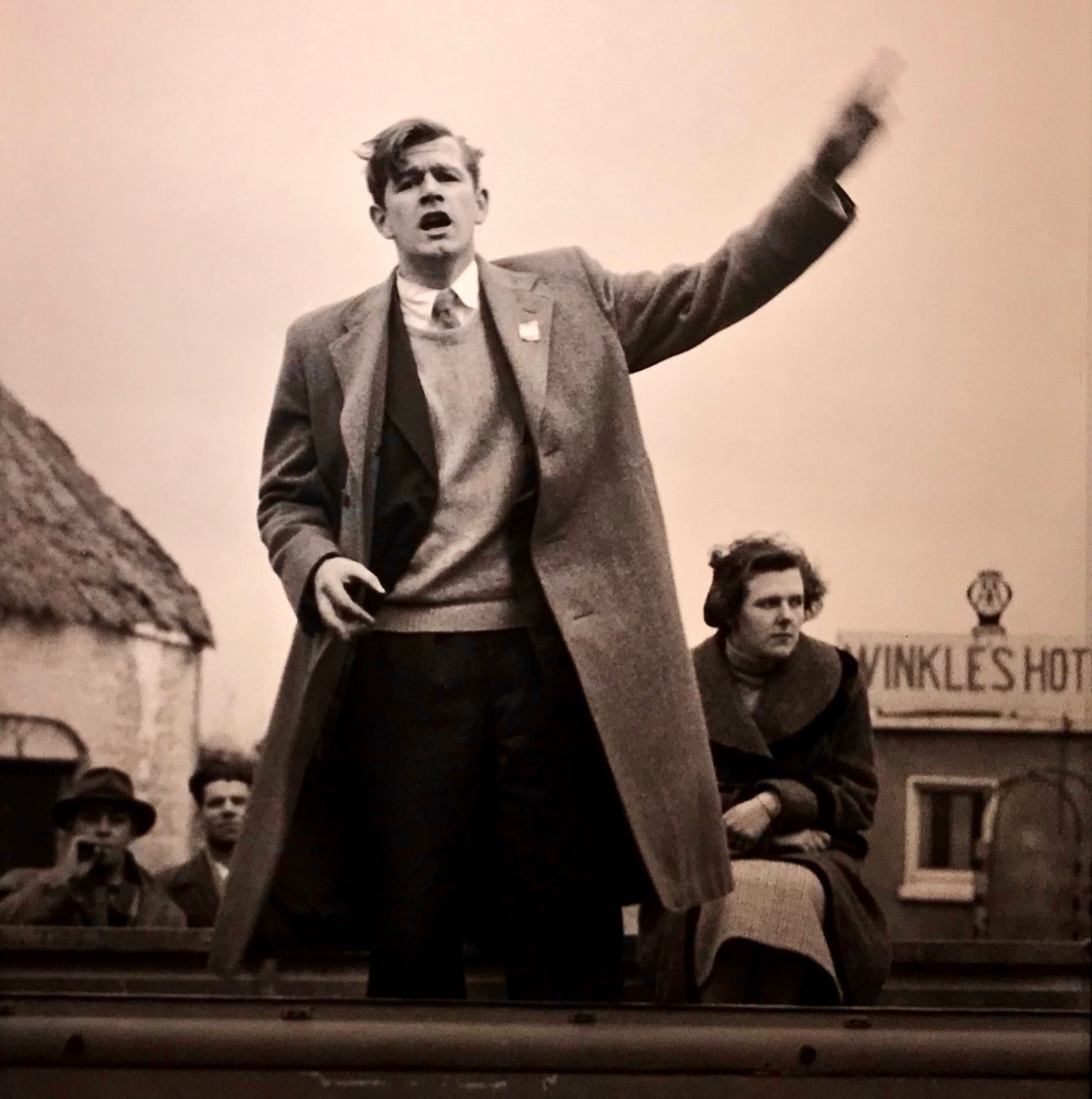
In a mirror of present-day events in Ireland, here’s a shot by Cresswell of the Sinn Fein candidate Murchadh Mac Ualtair canvassing in Kinvara for the 1957 General Election with Peggy Linnane. In that election Fianna Fáil, under Éamon de Valera, took 78 seats with 48.3% of first preference votes, and Sinn Féin took 4 seats with 5.3% of first preference votes. In our 2020 election, just passed, Sinn Féin, under Mary-Lou McDonald, took 37 seats with 24.5% of first preference votes in a thoroughly divided result, leaving us all in a bit of a dilemma! But I digress . . .

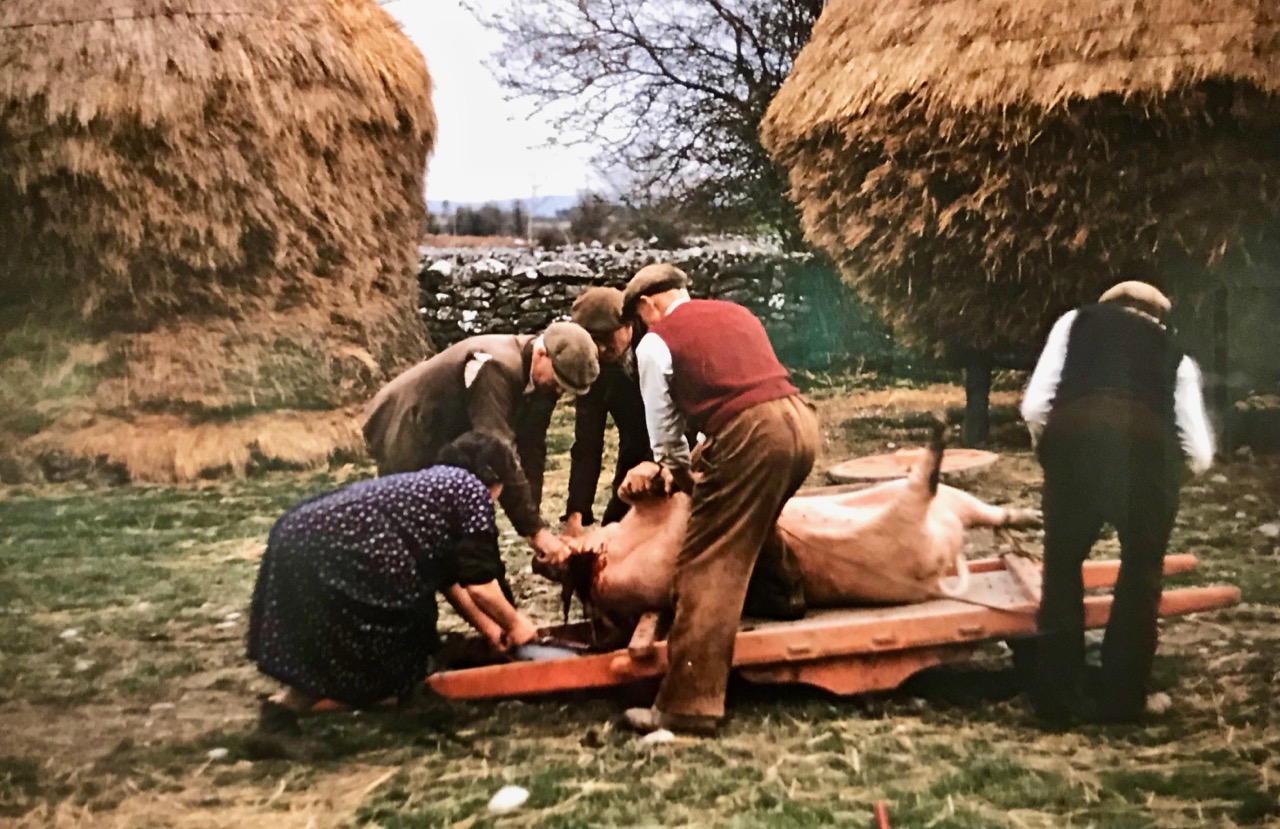
Another of Cresswell’s colour images, showing the killing of the pig – a family affair

There is one more photographer in this exhibition, who I will feature in a future post – watch this space! One last image from Robert Cresswell, possibly another view of the Corpus Christie parade:

1950s Ireland

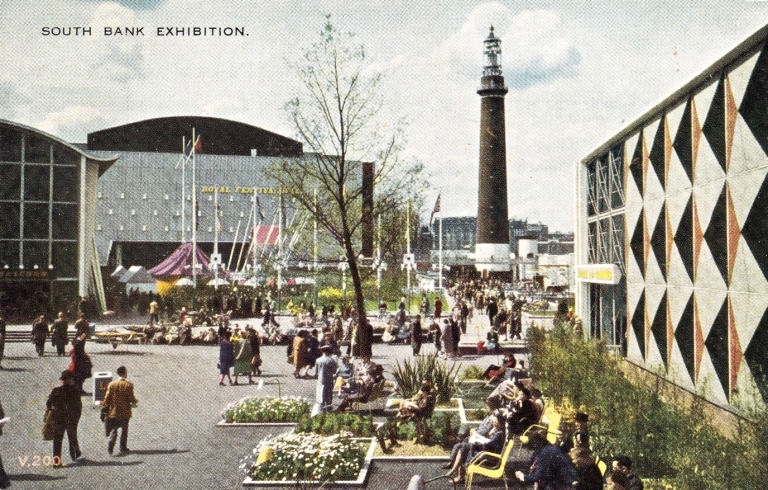
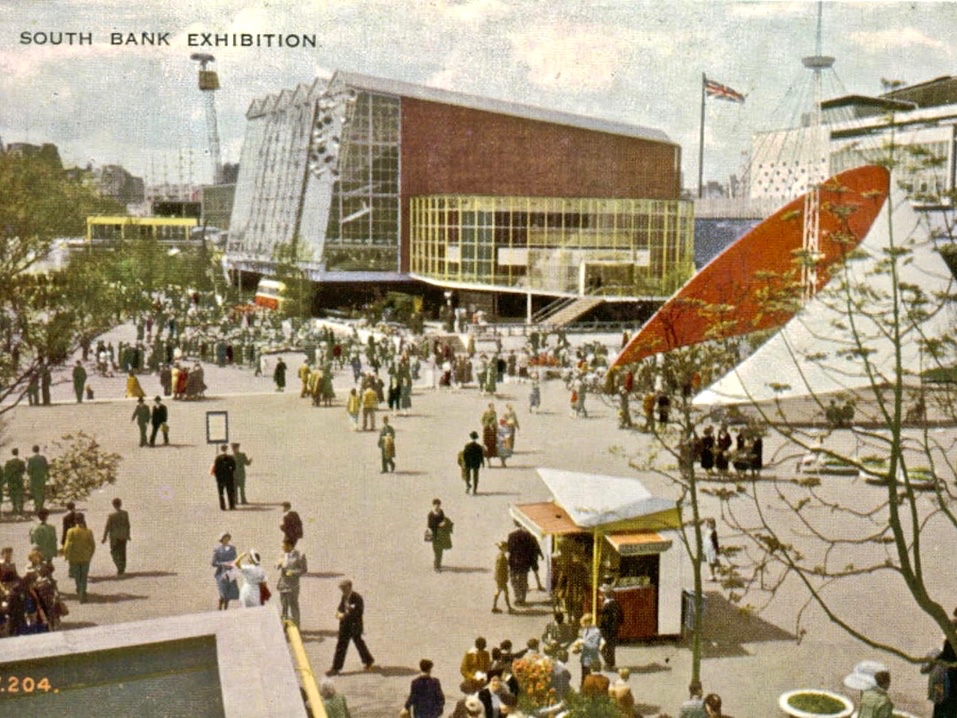
1950 happened 70 years ago – obviously. My earliest substantial recollection of the 50s era was a visit to the Festival of Britain, London, in 1951: I was five years old, and the memory has lasted. Incidentally, that year also saw my very first day at school, a traumatic experience from which I have never fully recovered – but that’s a story for another day!

I suppose that the seeds of an interest in building and engineering structures must have been in me then, because it is the architecture of that Festival that has stayed with me – and which probably influenced me in my own later career. Not that I ever designed a Dome of Discovery, or a Skylon – more’s the pity, but I think I have always related to the throwing off of tradition and the embracing of new and exciting shapes and colours which came out of the Festival. I believe we are overdue a revival of that bravado to lift our spirits once again.

I was pleased to find these contemporary picture postcards of the 1951 Festival of Britain: everything is exactly as I remember!

In the words of the Festival’s Director-General, Gerald Barry, it represented “a tonic to the nation” after twenty years in which Britons had successively endured economic depression, total warfare and acute post-war austerity. However, the Festival of Britain was the product of a left-wing government and it has been said that Churchill (then leader of the opposition) held the view that the whole venture was “three dimensional socialist propaganda”. I’m not sure that this is really true, as he attended the Festival and evidently spent all day riding up and down the escalators – then a novelty – with great delight! I also remember those escalators: we called them moving stairs (I still do – just like I still call the cinema the pictures). Finola clearly remembers riding on Ireland’s first moving stairs, in Roche’s Department Store, Dublin. But that was 1963; today’s post is all about the 1950s, but in rural Ireland.

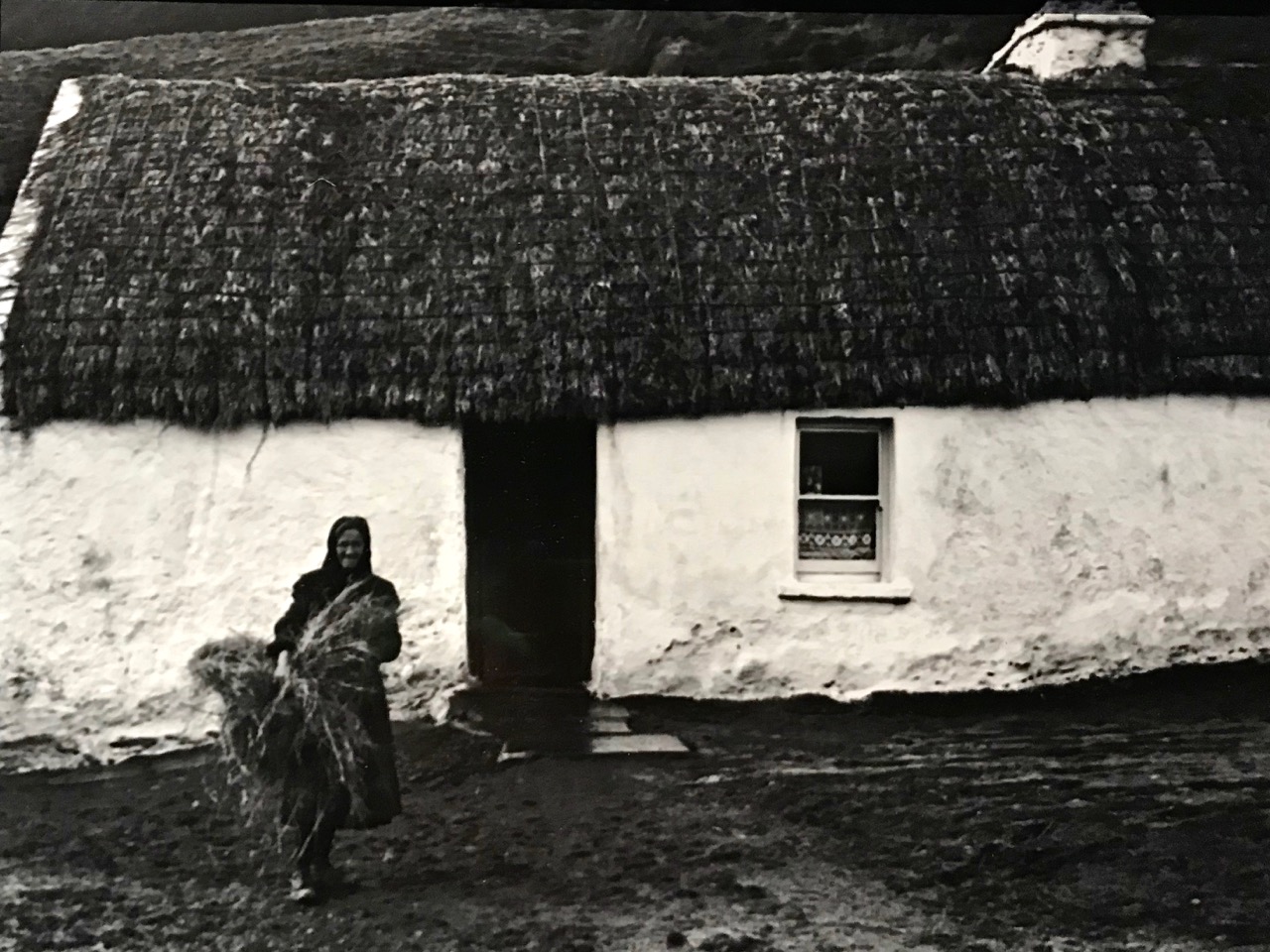
The Half Door, an image from rural Co Clare by Dorothea Lange

On a recent trip to Dublin we visited Ireland’s Museum of Decorative Arts & History at Collins Barracks. We went specifically to see an exhibition: Ireland in Focus: Photographing Ireland in the 1950s. This features “rare images of forgotten Ireland” by three world renowned documentary photographers, one from France and two from North America. Each of them visited Ireland during the 1950s to record a traditional way of life that was perceived to be vanishing as the twentieth century progressed. For anyone interested in Ireland and its recent history, this is not to be missed: it runs until April. In this post I shall show some examples of the work of one photographer: Dorothea Lange. The others will get a showing in future posts.

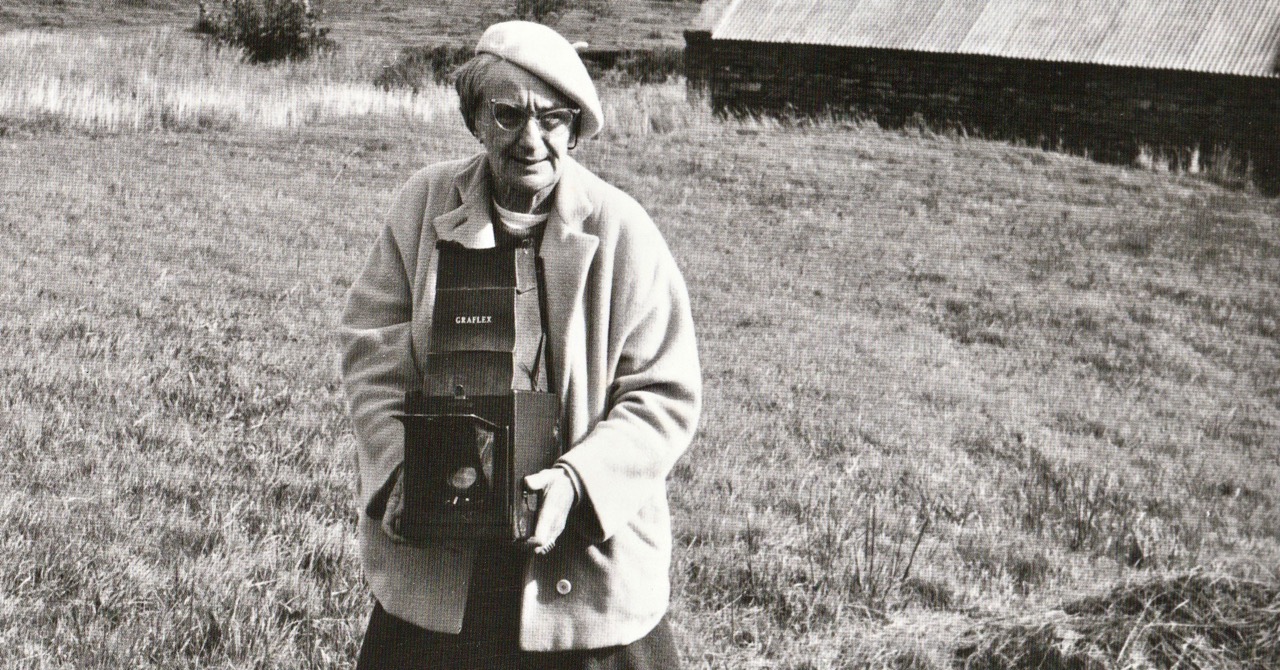
Dorothea Lange, a portrait taken by her husband Paul S Taylor on the Texas Plains in 1935

We had already been introduced to Dorothea Lange as my good friend John (also an expert photographer) recently gave us a copy of a book of her Irish photographs. Sponsored by Life Magazine, she visited the western seaboard in 1954, staying for several weeks in County Clare. She took over 2,400 photographs, which are now fortunately archived in the Oakland Museum of California. In the introduction to the book Dorothea Lange’s Ireland Eliott & Clark Publishing, Washington, 1996, Daniel Dixon writes:

. . . Dorothea Lange was not an avid reader. But among the few books which became her favourites was a description of the sort of culture that drew her attention time and again throughout her career, a rural society where customs, beliefs, and the way of life itself were tied to the soil. The book was called The Irish Countryman. Written in 1937 by a young anthropologist from Harvard, Conrad Arensberg, it documented and analyzed the social and economic traditions of Irish rural life and discussed how they were affected by religion and superstition. In it, Arensberg located the family farm at the hub of this complex system and explained how each generation placed an overriding importance on ‘keeping the family name on the land’ . . .

Why is it that we are so drawn to old photographs? Lange’s pictures paint a view of rural life in Ireland that is barely a lifetime away – yet it seems far longer ago. But, living in rural Ireland today, we can so easily relate to those times and – most probably – regret that they have passed. Of course, if we lift the veneer of nostalgia, we know that life was harsh, then and – for all the problems of this world – it is so much easier now. We doubtless have regrets principally for the loss of the people that are portrayed; moments preserved for all time on film, but that can never be recaptured.

Quite apart from the people, we do like to see how places have changed. These images of 1950s Ennis, now a sizeable county town, hark back to simpler times, for sure, in Lange’s work:

You won’t see every one these pictures in the exhibition – I have taken some from the book. They all complement each other. But it’s all only a small part of what Dorothea Lange recorded. What of the several hundred other images? At least they are kept safe, although not available on line. Lange was born in 1895 and succumbed to cancer in her seventieth year, 1965. A few months after her death the Museum of Modern Art in New York mounted a retrospective of her work. It was the first one-person retrospective by a female photographer held at MoMA. She is remembered far more for her images of the Great Depression years in the American West than she is for her visit to Ireland, but here we should be grateful for her documentary work that has added to our records of Irish rural life in the last century.

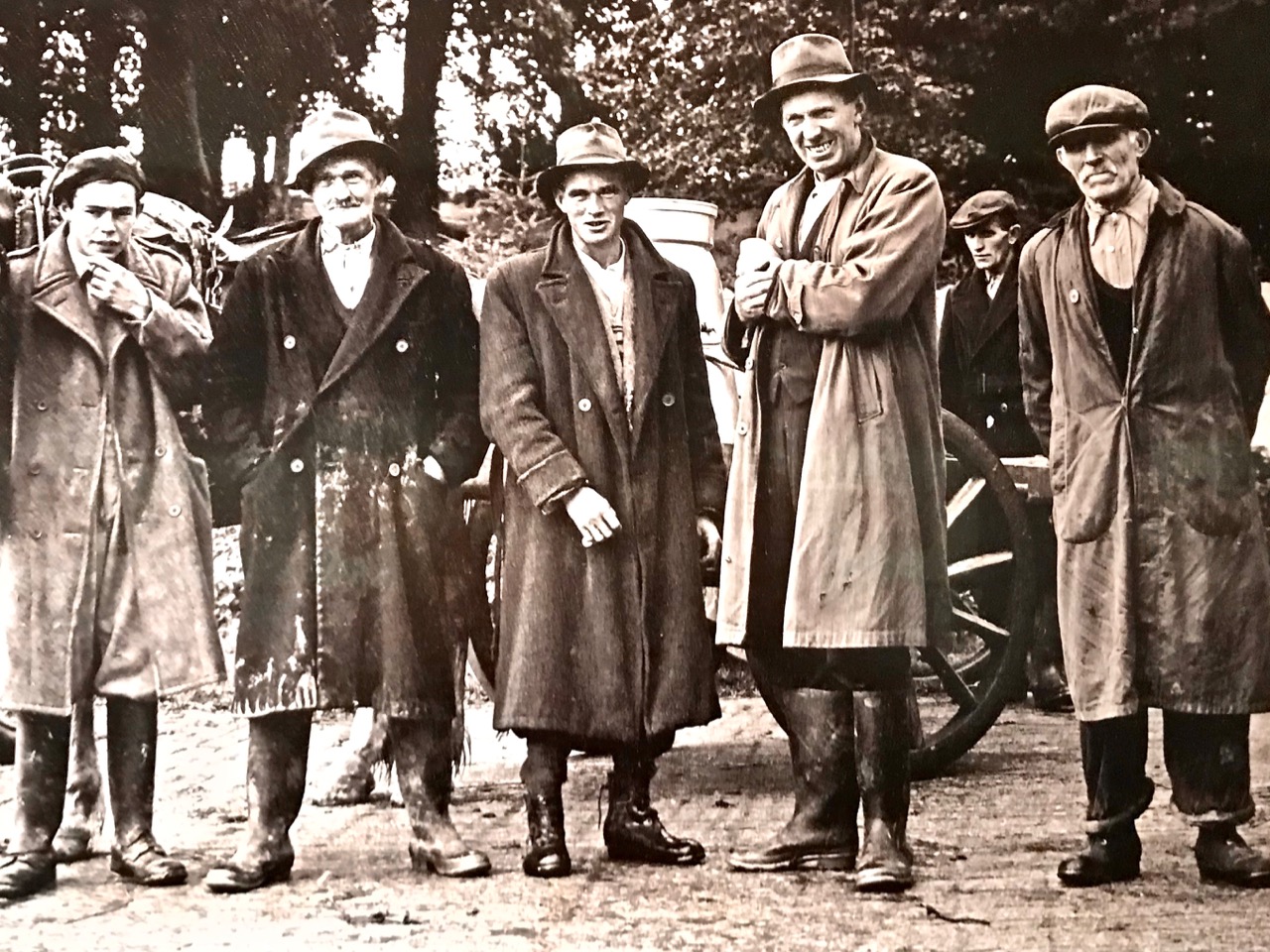
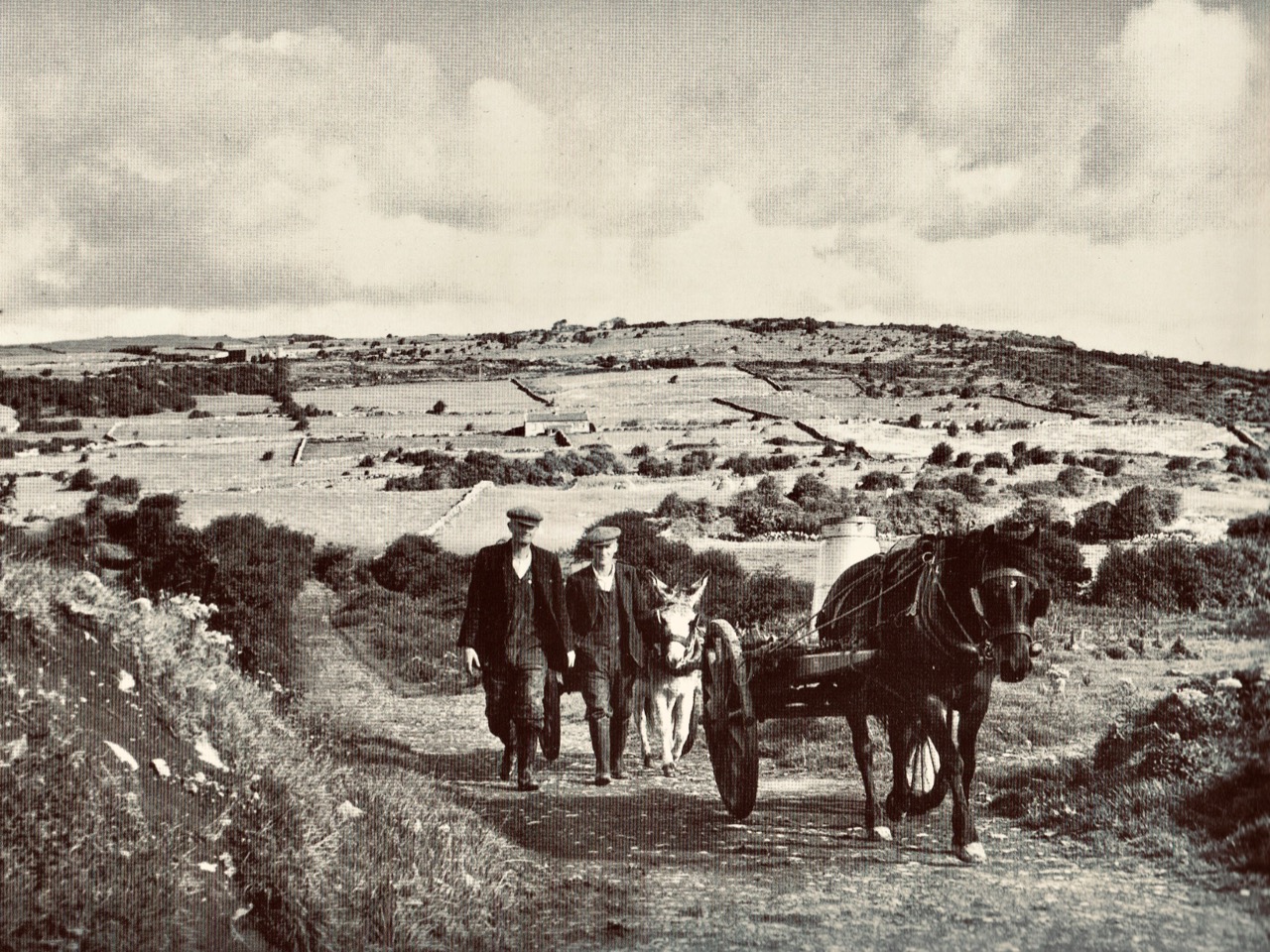
Top – Tulla, Co Clare; above – going to the Creamery, Co Clare, 1954. Below: Dorothea Lange in Ireland

Mizen Magic 17: Delights of Dunmanus

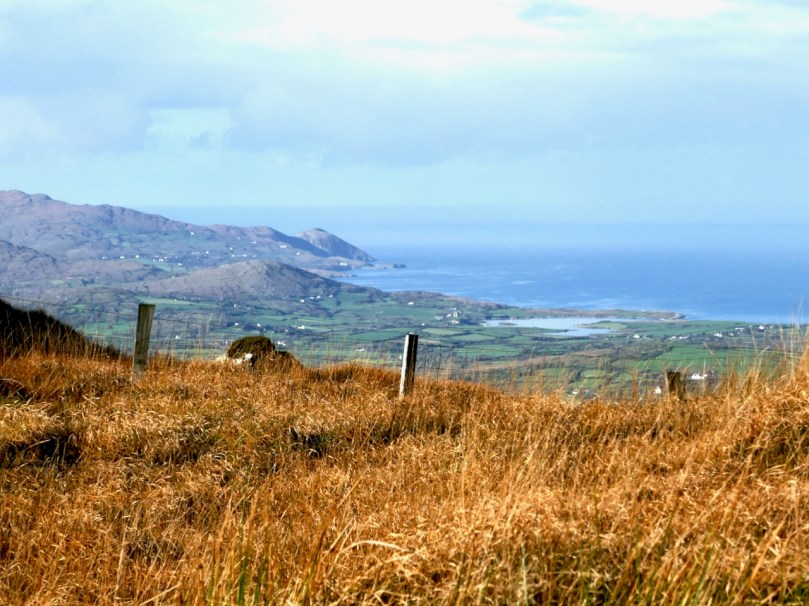
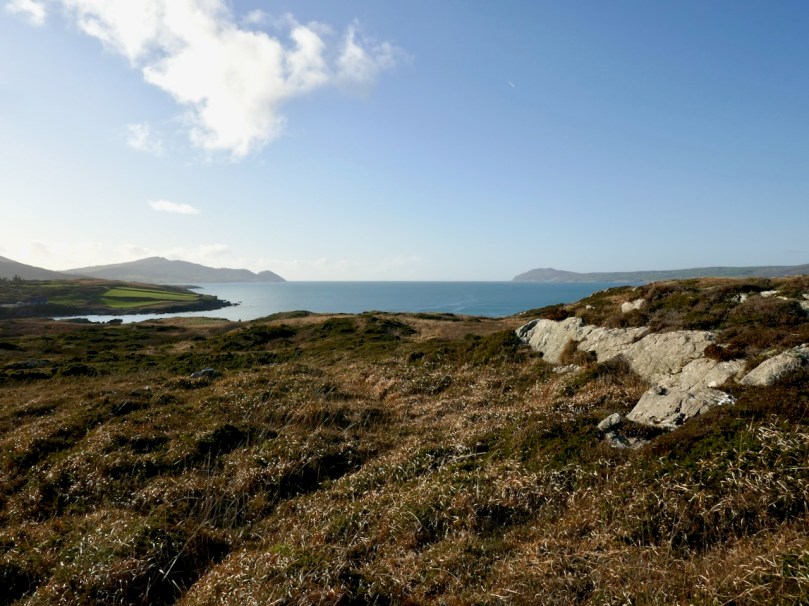
As we often do, we set out on a sparkling day last month to explore a part of the Mizen we aren’t familiar enough with yet. Our plan consisted of pouring over the OS Number 88 map and having an AHA! moment of realising that we haven’t been to a particular spot. This time, the dart landed on an area just northeast of Dunmanus Castle (seen above from Mount Gabriel), where it looked like there was a trail running along the water that would afford magnificent views of Dunmanus Bay and the Sheep’s Head. Things didn’t go quite as planned. . .

Red line: the trail we wanted to walk. Blue line, the trail we actually walked.
Arrows – yellow, Dunmanus Castle; pink, boulder burial; blue, Killhangel Church

We’ve written about this area before – specifically, in Mizen Magic 13 Robert described the promontory immediately to the northwest of the castle, with its ancient stone walls and its spectacular sea arches. This area has recently been re-fenced and isn’t as easy to access as it was.

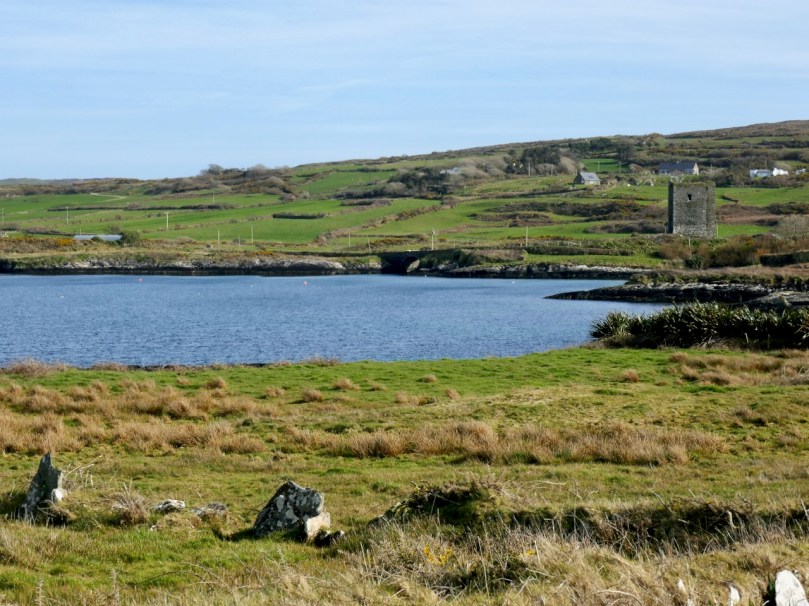
The Castle and bridge from the promontory

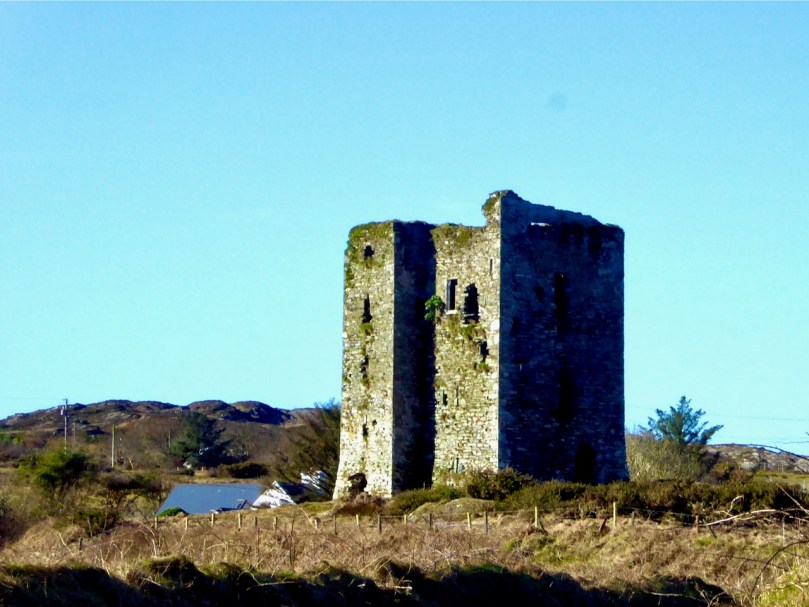
The Castle, of course, is the most prominent landmark in this area. Built by the O’Mahony’s in the 15th century, it is a classic early ‘raised entry’ type of tower house, with complicated internal architecture that allows restricted access to different parts of the building at different levels – including to an oubliette. My post When is a Castle..? has a good description of these kinds of castles, typical of West Cork.

But today we were heading away from the Castle, towards the townland of Knockeens, where, on the map, we could see this promising trail. But you can’t just go right there – a little meandering is always in order when you’re in countryside this beautiful and this interesting.

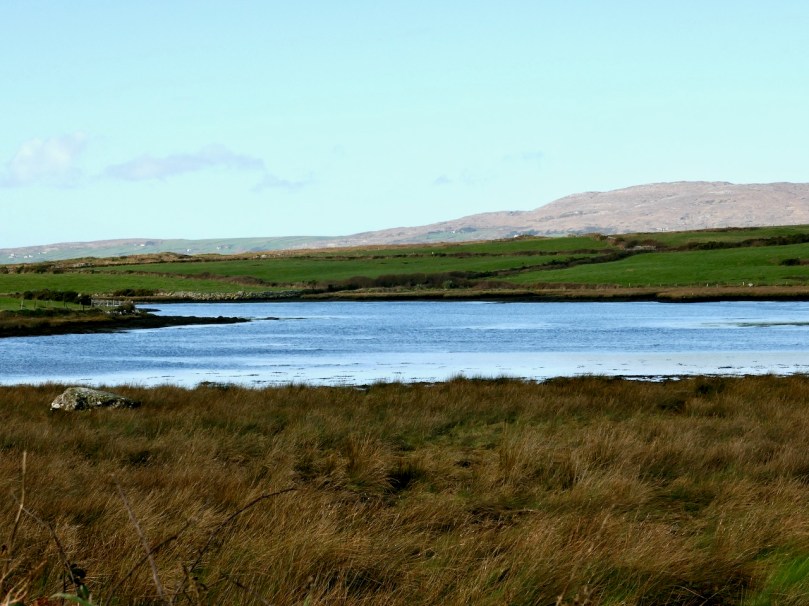
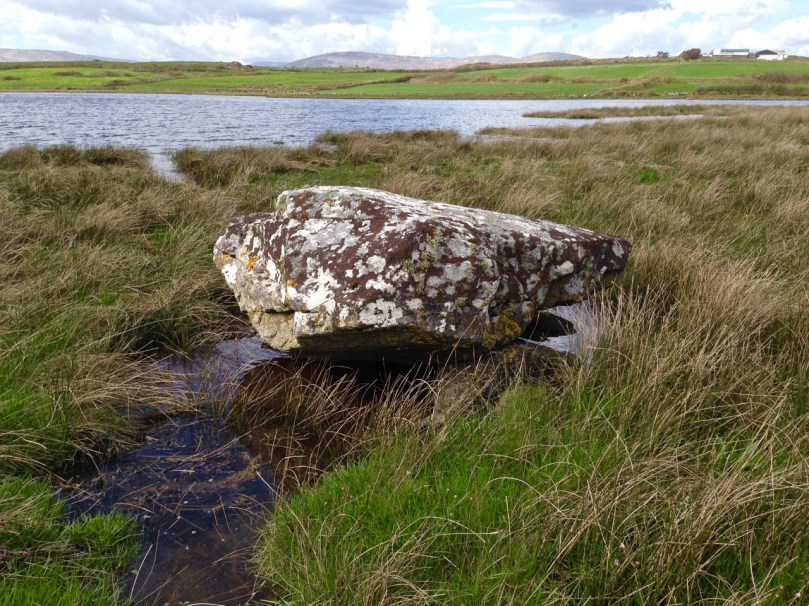
So we stopped to admire the Dunmanus boulder burial (it’s the rock in the lower left of the photograph above). Boulder burials are Bronze Age monuments, although they may have been used for purposes other than to mark burials. See my post Boulder Burials: a Misnamed Monument? for more about this intriguing group of archaeological sites, more widespread in West Cork than other parts of the country, and often associated with stone circles or standing stones. This one is unusual in that it is low-lying (most are in more commanding positions) and the base gets covered at high tides.

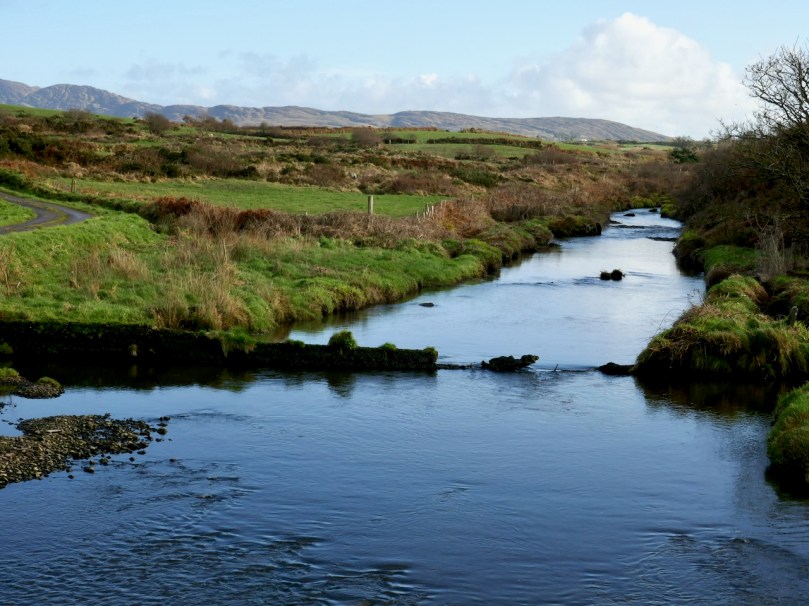
Crossing over an unnamed stream that rises on Mount Gabriel and empties into the sea here, we arrive at the point where we can leave the car and proceed on foot.

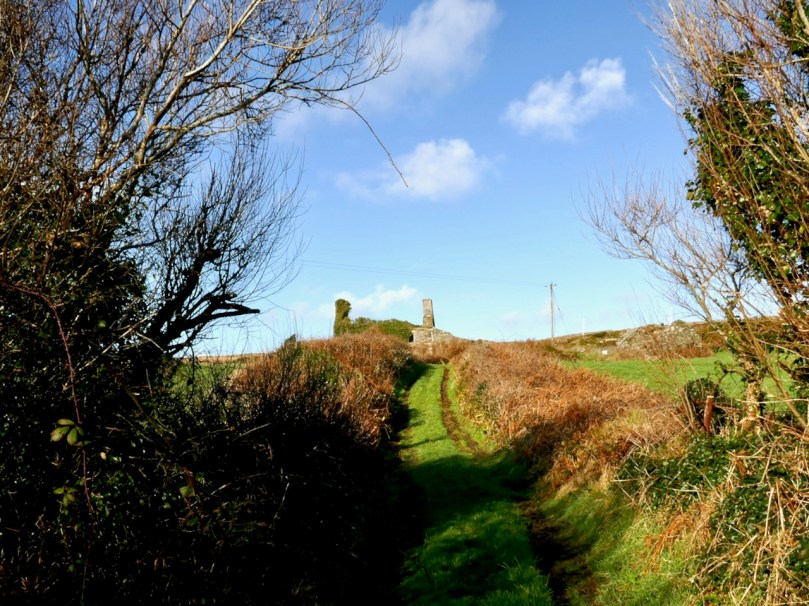
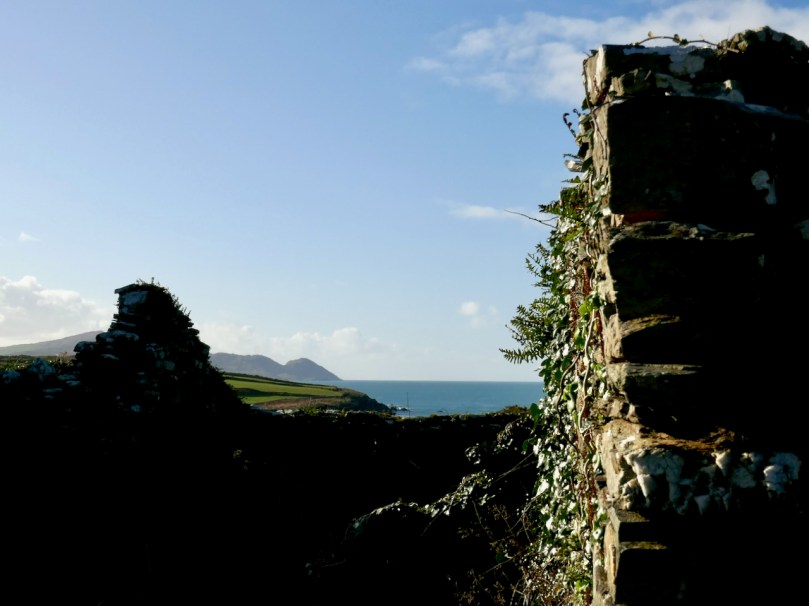
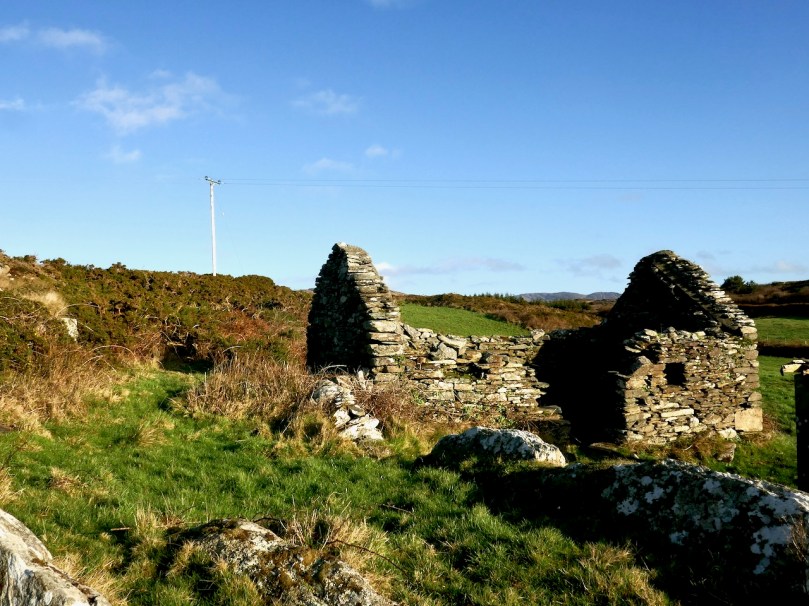
A short walk up an old boreen leads us to a clachán – a tiny settlement of houses, now all in ruins. The residents had magnificent views back down to the bay in their day, but as people say around here, you can’t eat scenery and the families who lived here are long gone to a better life elsewhere.

Just beyond the clachán we ran into our roadblock – an enormous puddle extended over the path. It was too deep to walk through and the boreen was fringed with thick gorse bushes we couldn’t push past. Stymied, we decided to climb up above the path and look for a way around. Easier said than done – between stands of gorse, boggy patches to go around (or sink into), sheep paths that went nowhere, we spent an hour or so wandering around the hillside and finally admitted defeat.

It wasn’t wasted time though – it was wonderful to be out in the crisp air, surrounded by all the magnificence of the Mizen, thinking about the generations who had wrested a subsistence out of that unpromising land. When we finally got back to the car we decided to see if we could approach the trail from the other side, and set off in that direction.

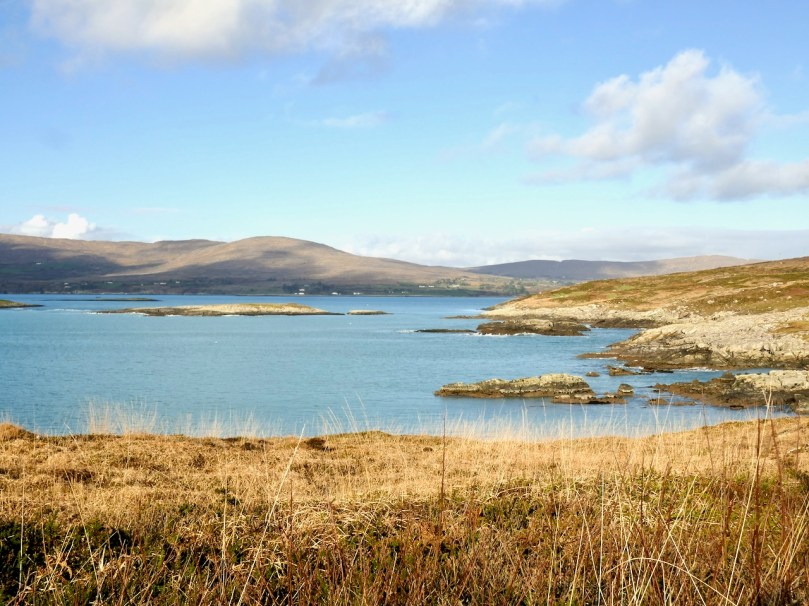
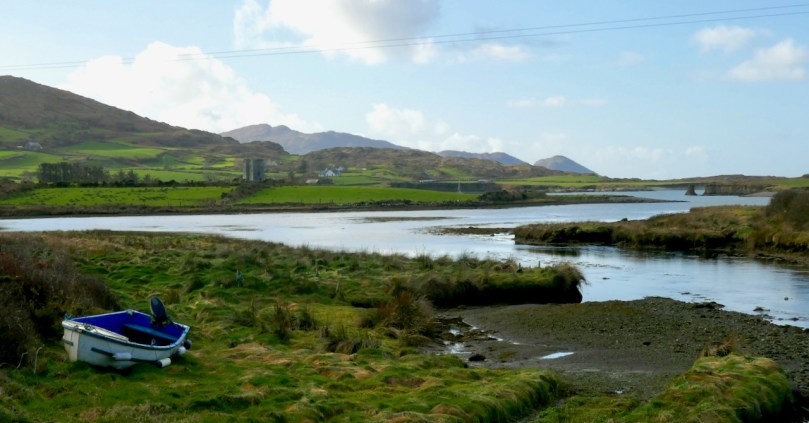
Looking across to the Sheep’s Head

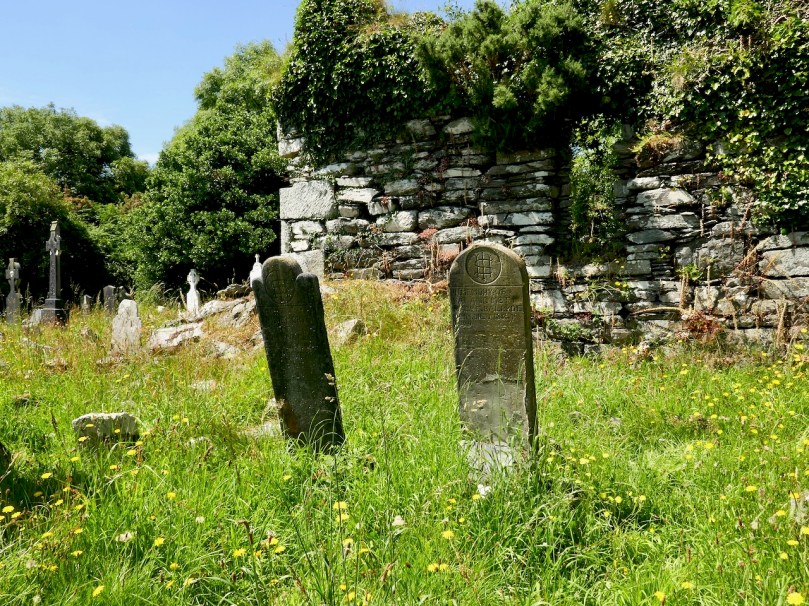
Along the way we had a quick stop at the ruined late-medieval Kilheangul Church (Church of the Angels). It’s a special little spot that deserves a post of its own someday, so I won’t say much about it now. This photograph of it was taken in the summer.

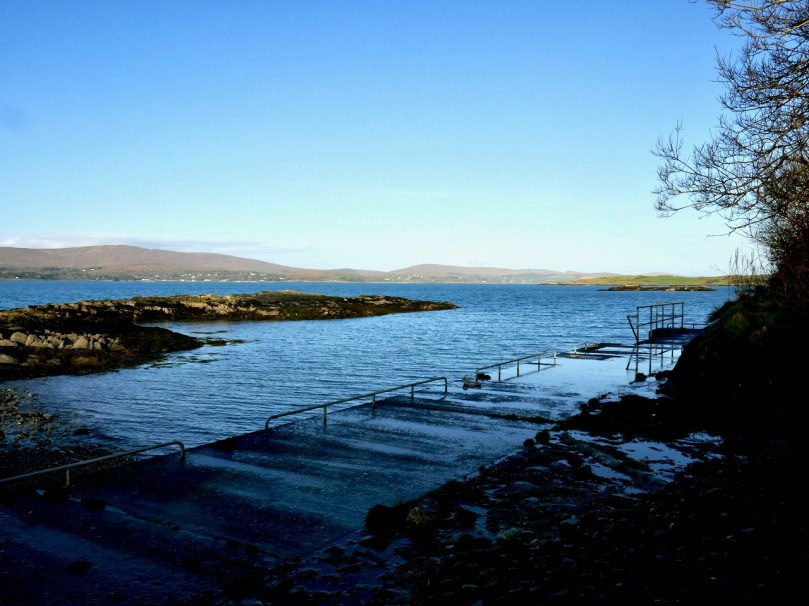
By the time we arrived at the other end of the trail, beside a small pier, it was starting to get dark, as befits a January afternoon, so discretion dictated that we leave the rest of the adventure to another day. 

The day started out to be about walking the trail – it ended up being about everything around it. That’s the thing about the Mizen – the journey is the destination. 


Looking at Rossbrin

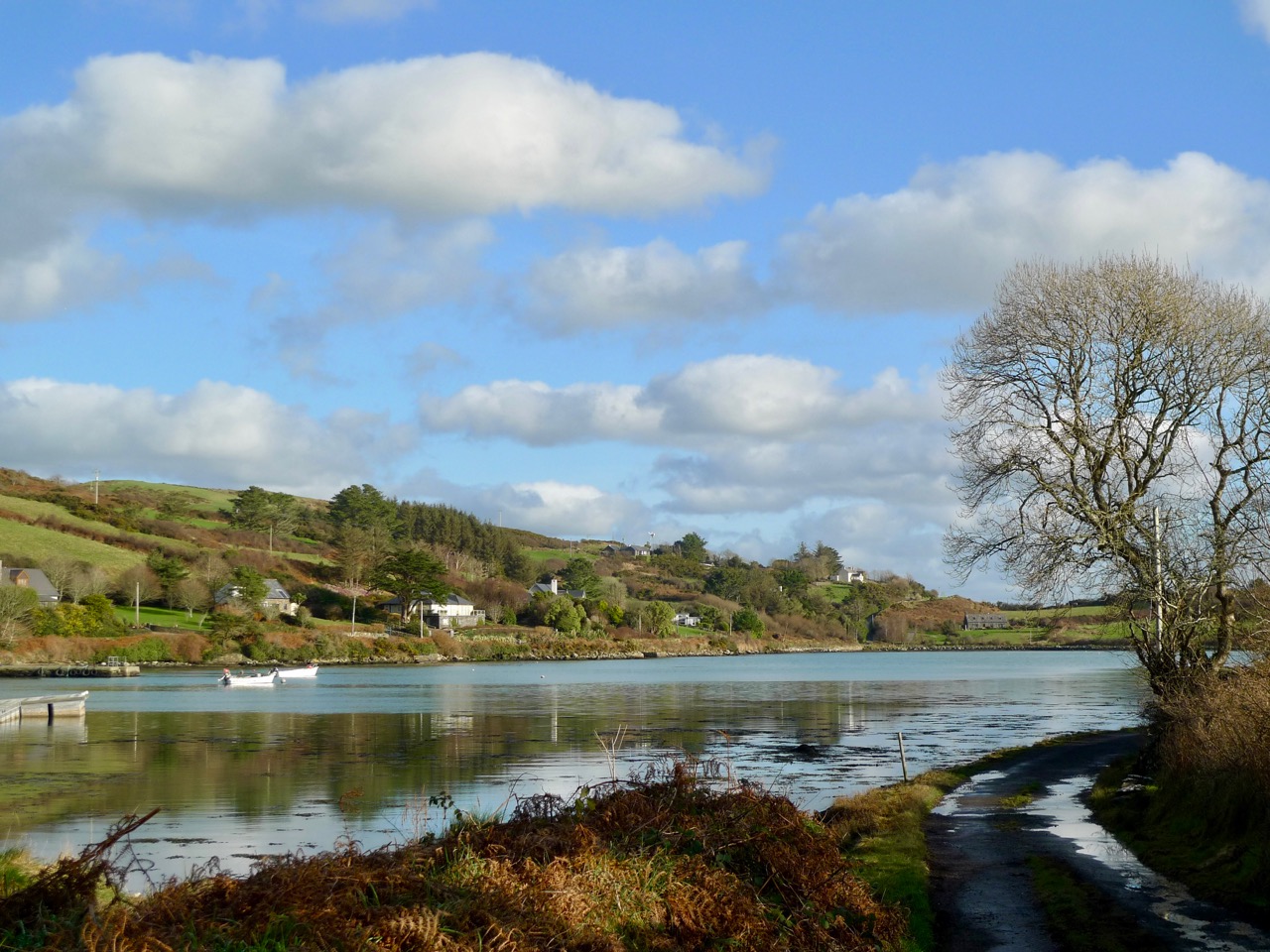
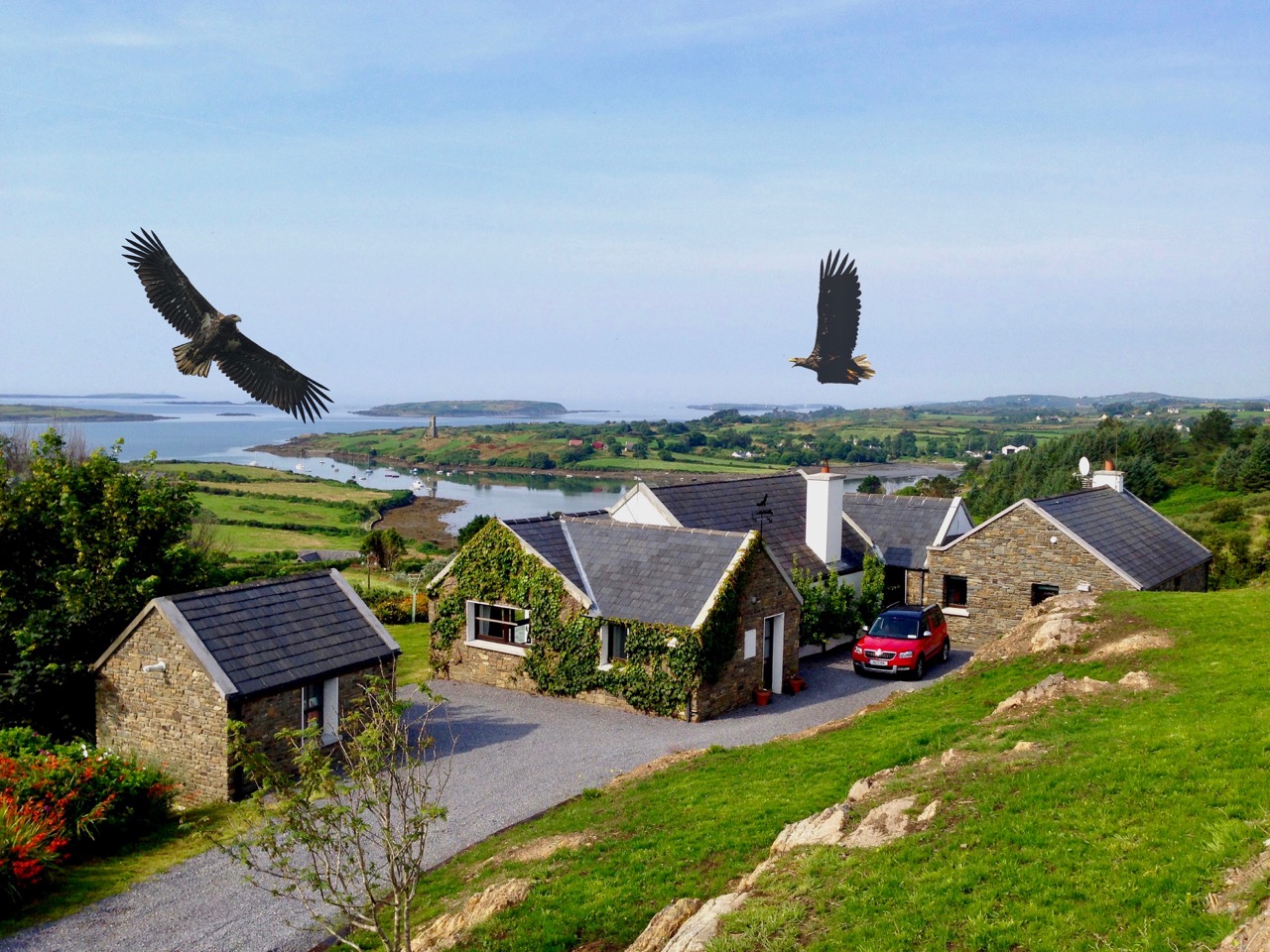
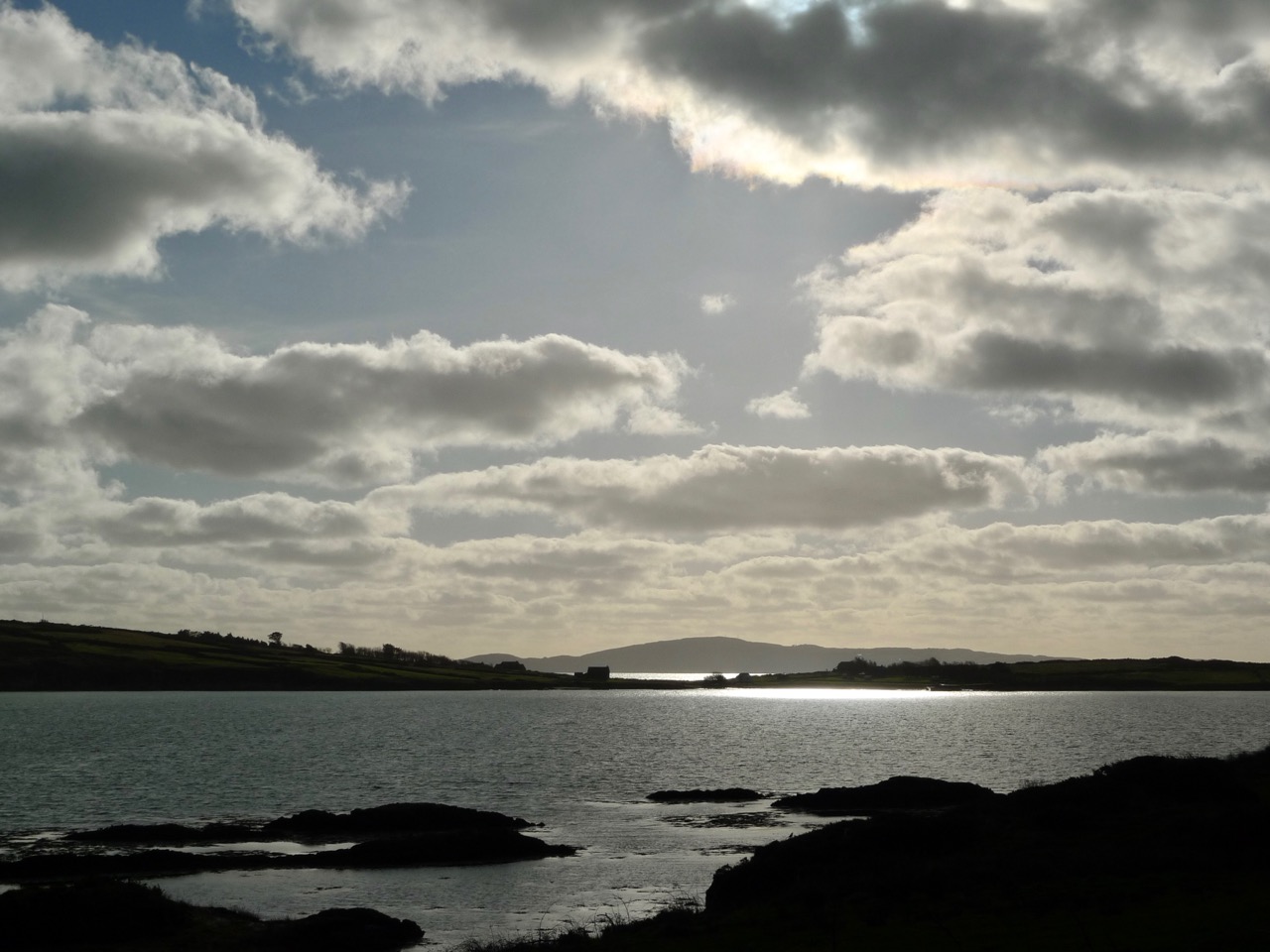
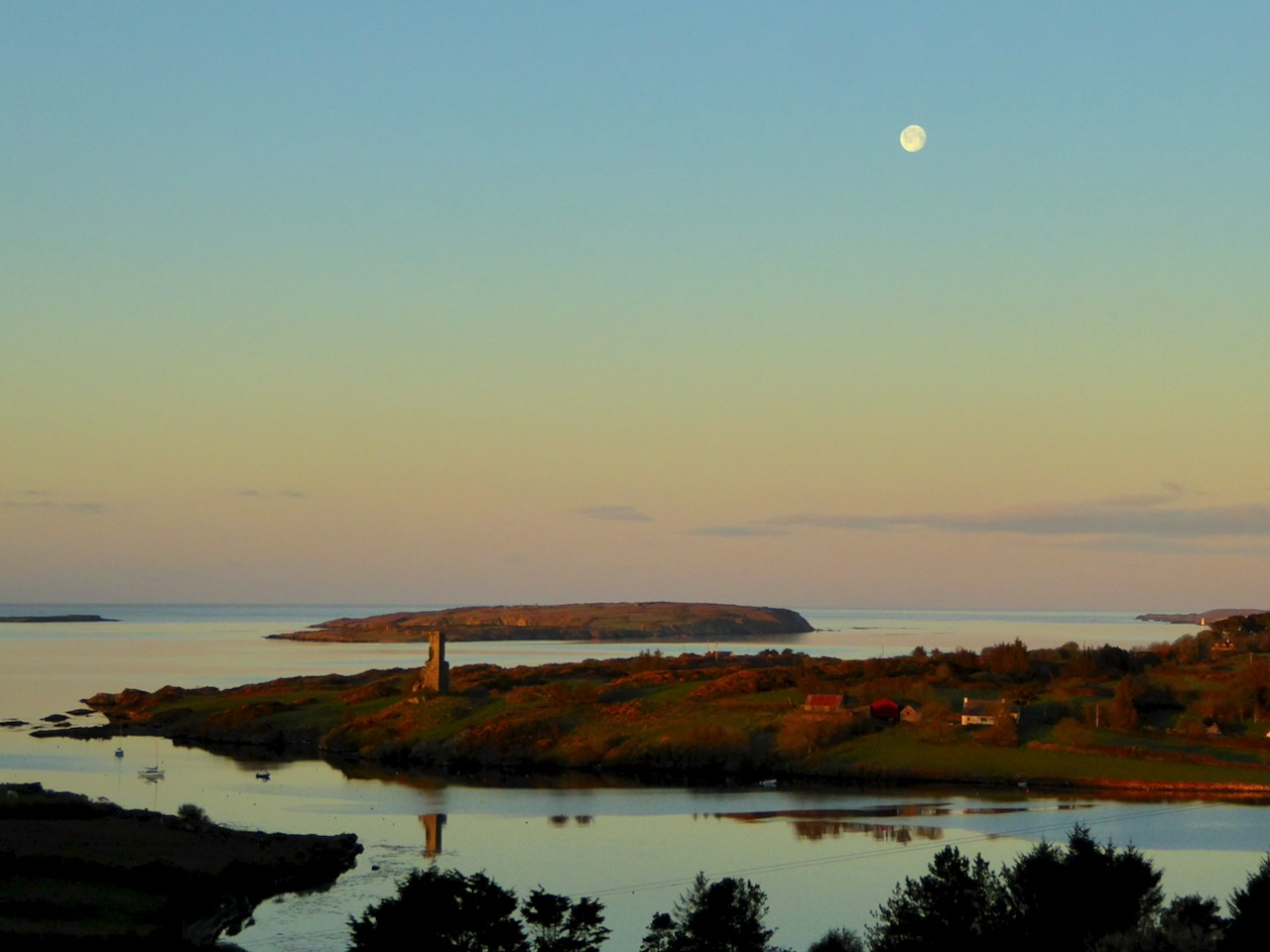
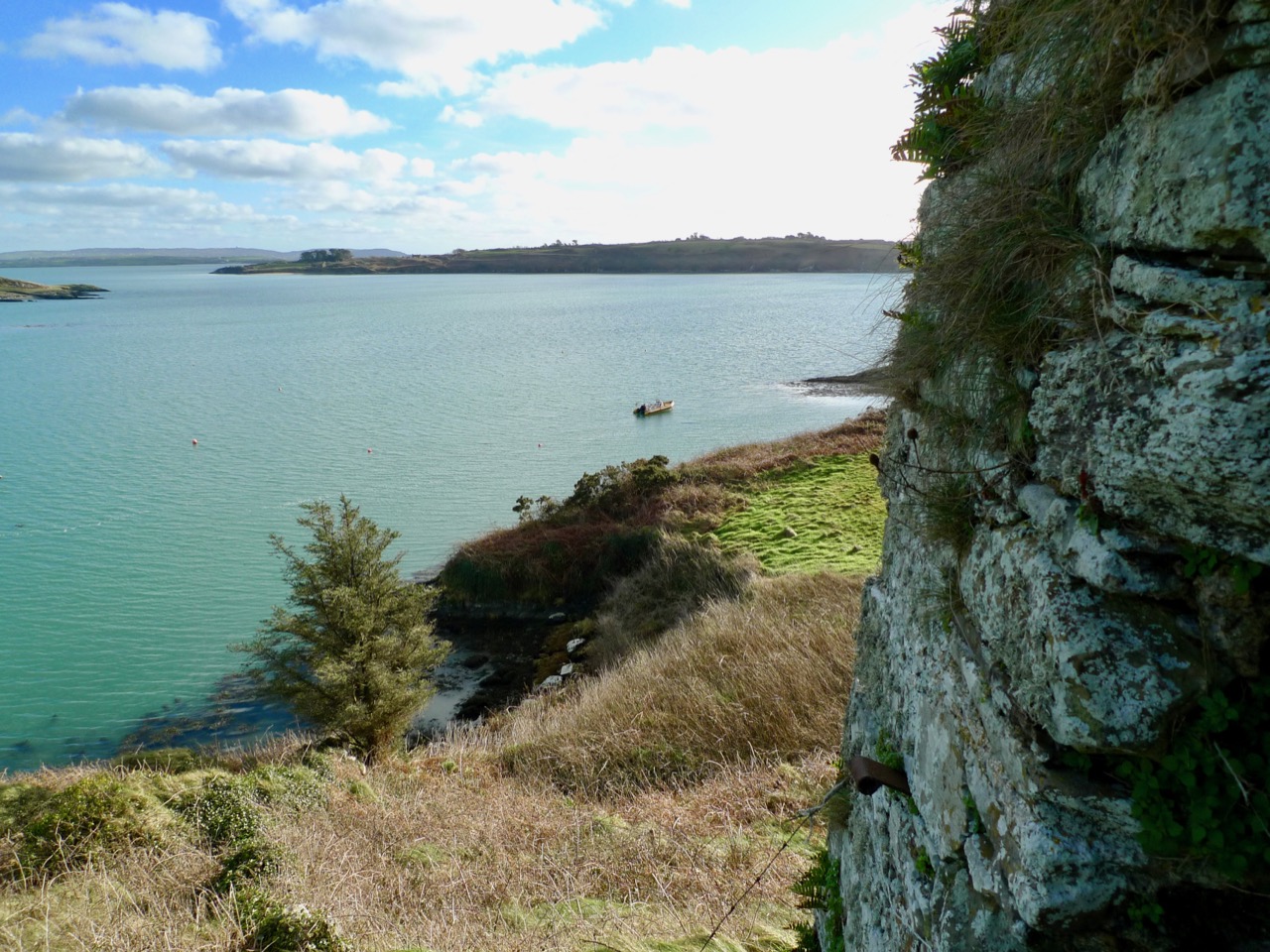
Last week we talked a little about the history of Rossbrin’s medieval castle, and the importance of this natural inlet as a historical centre of fishery, scholarship and European culture. Rossbrin Cove stills serves as an anchorage and refuge for sailing boats on the edge of Roaringwater Bay, but is now a peaceful haven, with only the sounds of the shore birds and slapping masts to lightly disturb an overriding tranquility that gives the place a very particular atmosphere. Our photograph (above) is taken on the boreen going to the castle; on the skyline in the centre is a wind turbine, and just below that is Nead an Iolair (Irish for Eagle’s Nest). The picture below shows the eagles wheeling over our house, with Rossbrin Castle and our view to the Cove beyond.

I have been exploring images of the Cove and its castle – some historic photographs and a few artists’ impressions. As it’s right on our doorstep, we have taken many pictures of Rossbrin during our years here. I am also sifting through a few of these.

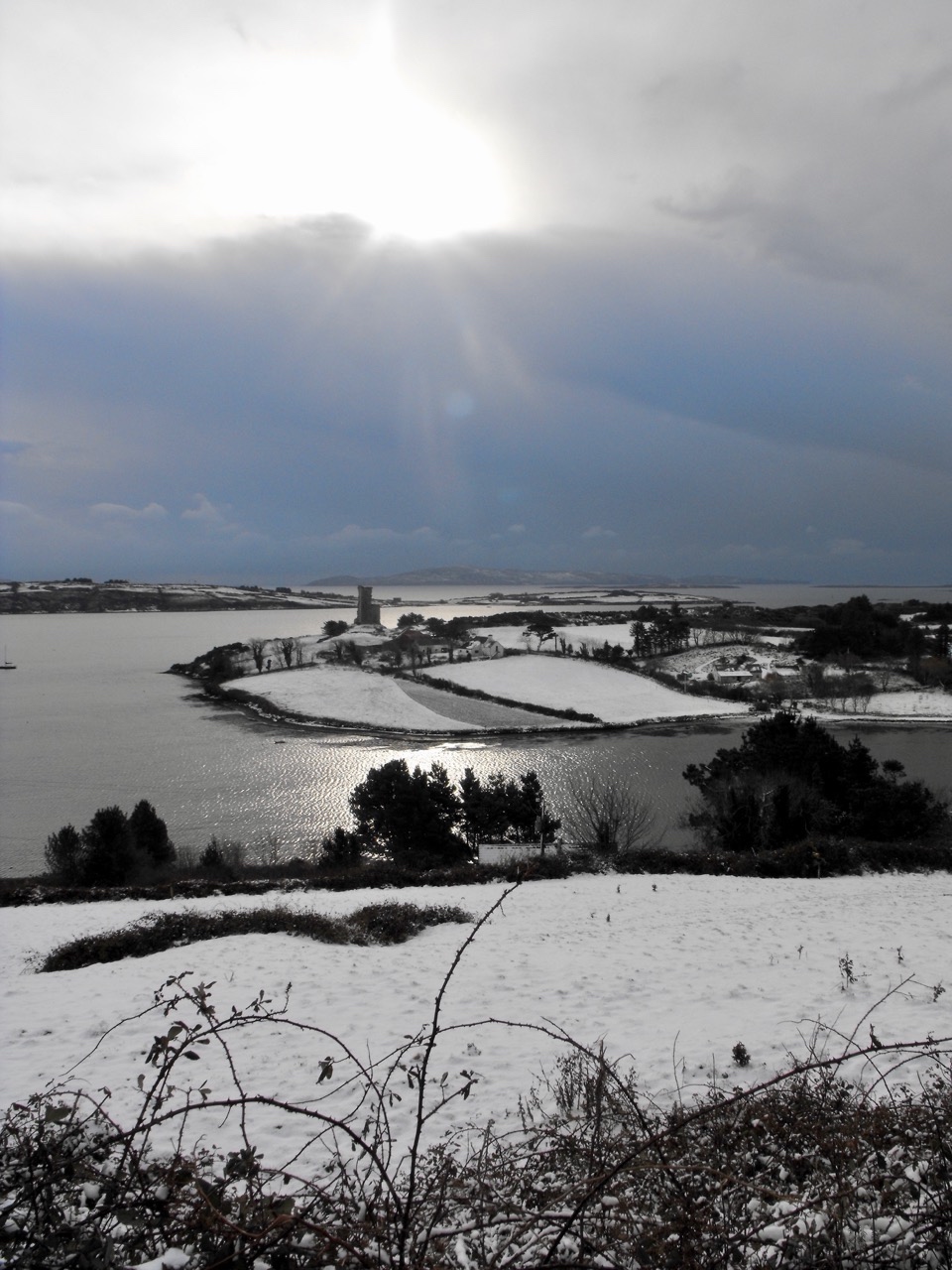
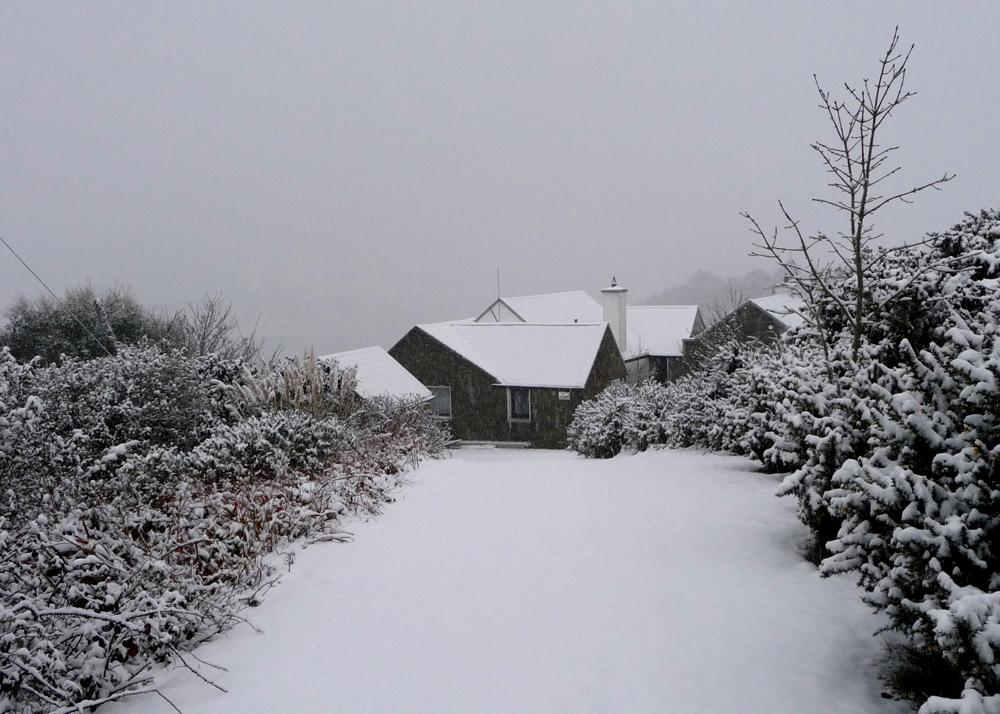
Ten years ago, the west of Ireland experienced an exceptional snowfall, and above is a photograph taken by our near neighbour, Julian van Hasselt, before we arrived. Mostly, our weather is relatively mild due to the effects of the gulf stream on the south-western coast. The castle can clearly be seen here, beyond the fields of Castle Farm. This view of our house (below) was also taken in 2010 by our neighbours Dietrich and Hildegard Eckardt:

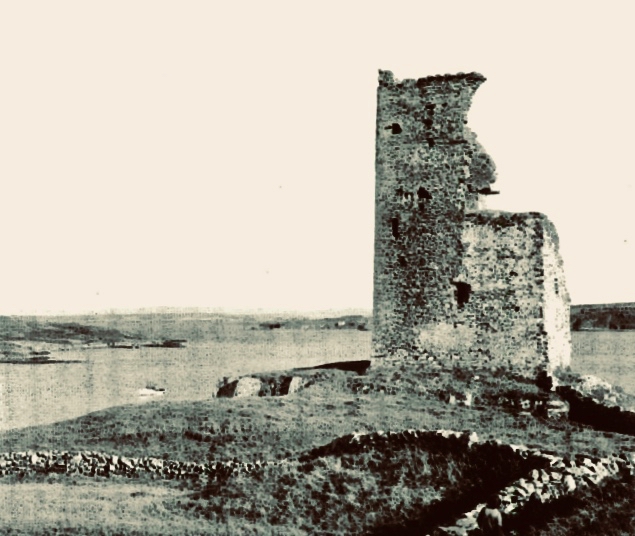
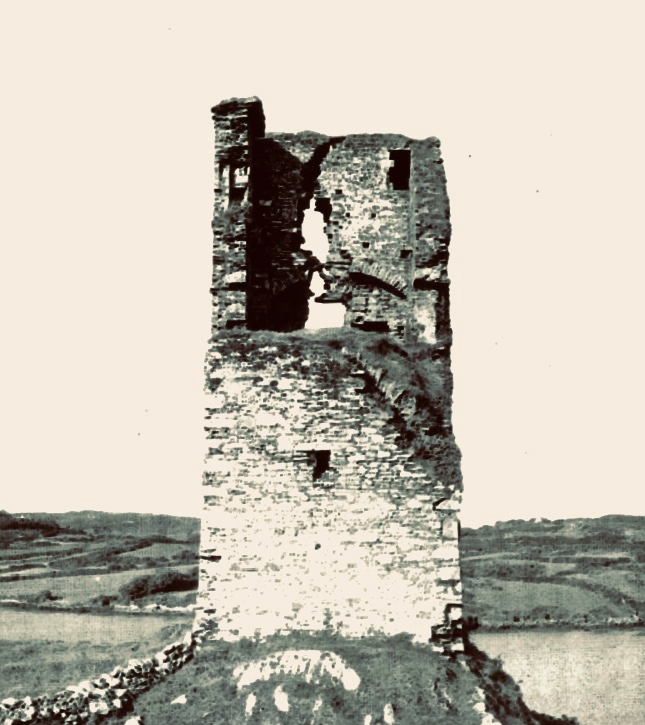
I showed a couple of early photographs of the castle last week. Here are two more taken before a substantial part of the ruined structure was toppled by a storm in the 1970s:

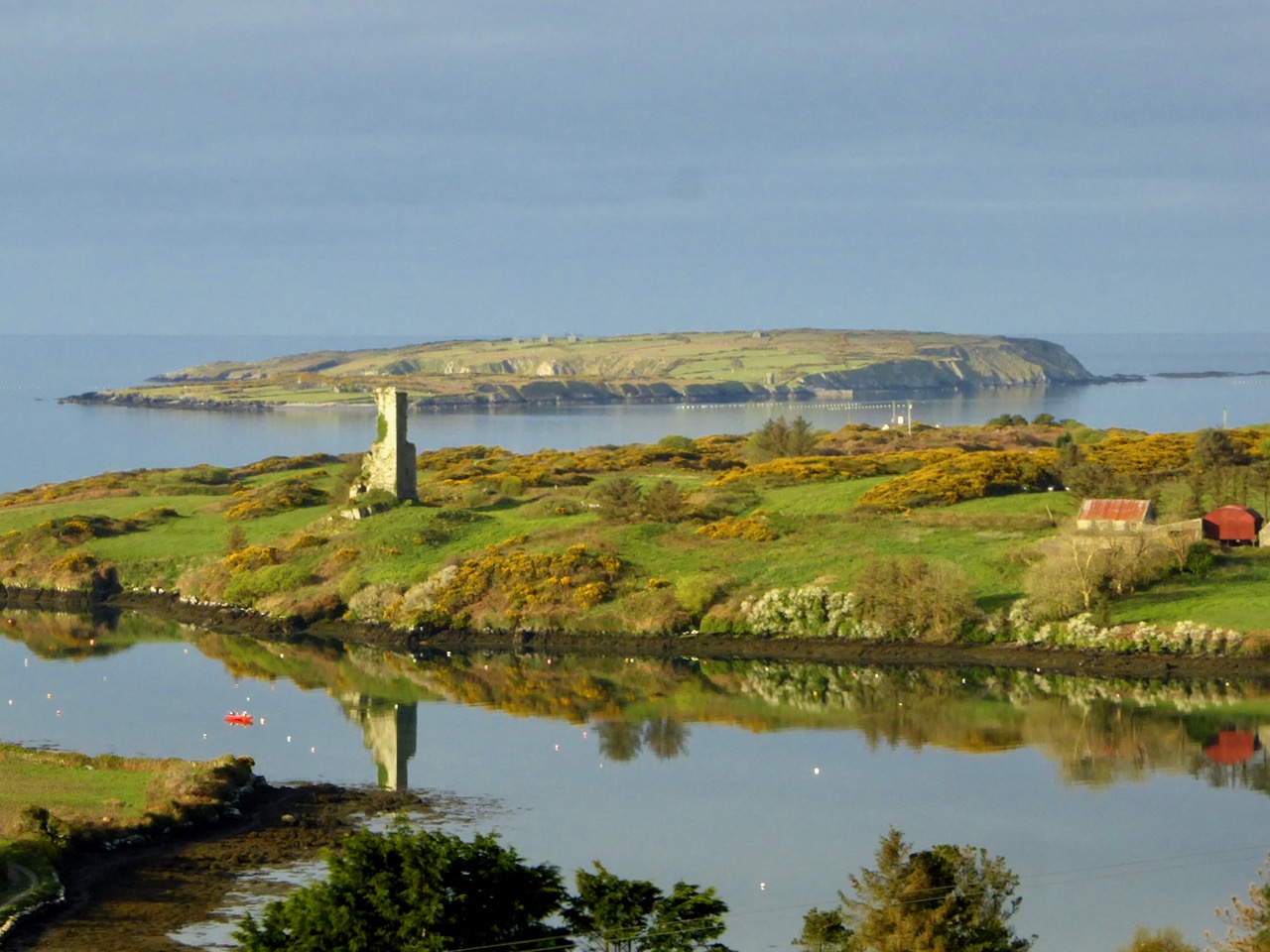
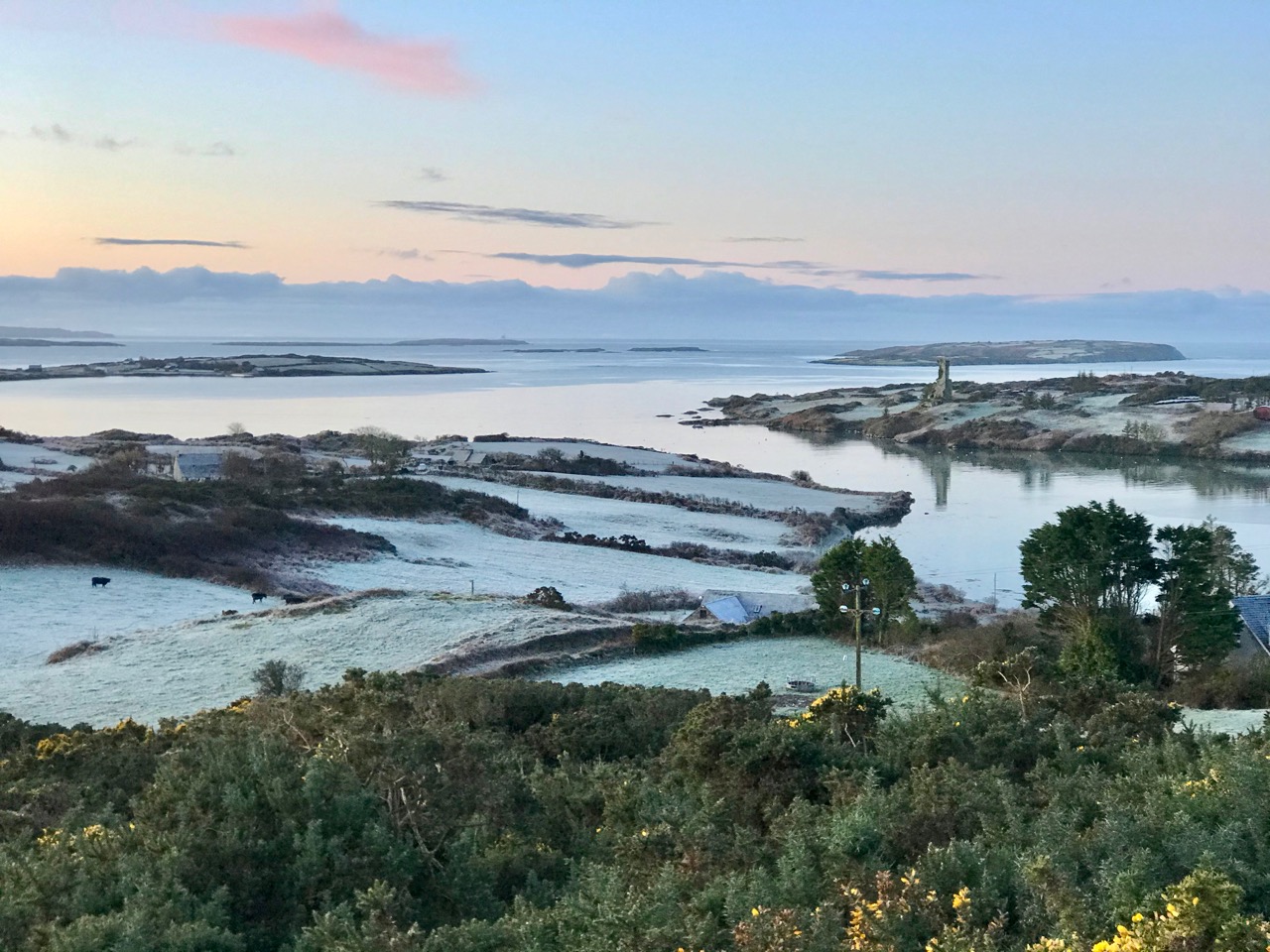
It’s good to see a bit of context, so here is another winter view of the castle on its rock with Castle Island behind. That island was also part of the O’Mahony territory. It is farmed by its present owner but no-one lives there now. You can make out the ruined castle on the island by the shore, just to the right of centre; it’s one of many that can be seen on, or close to, the shores of the Bay.

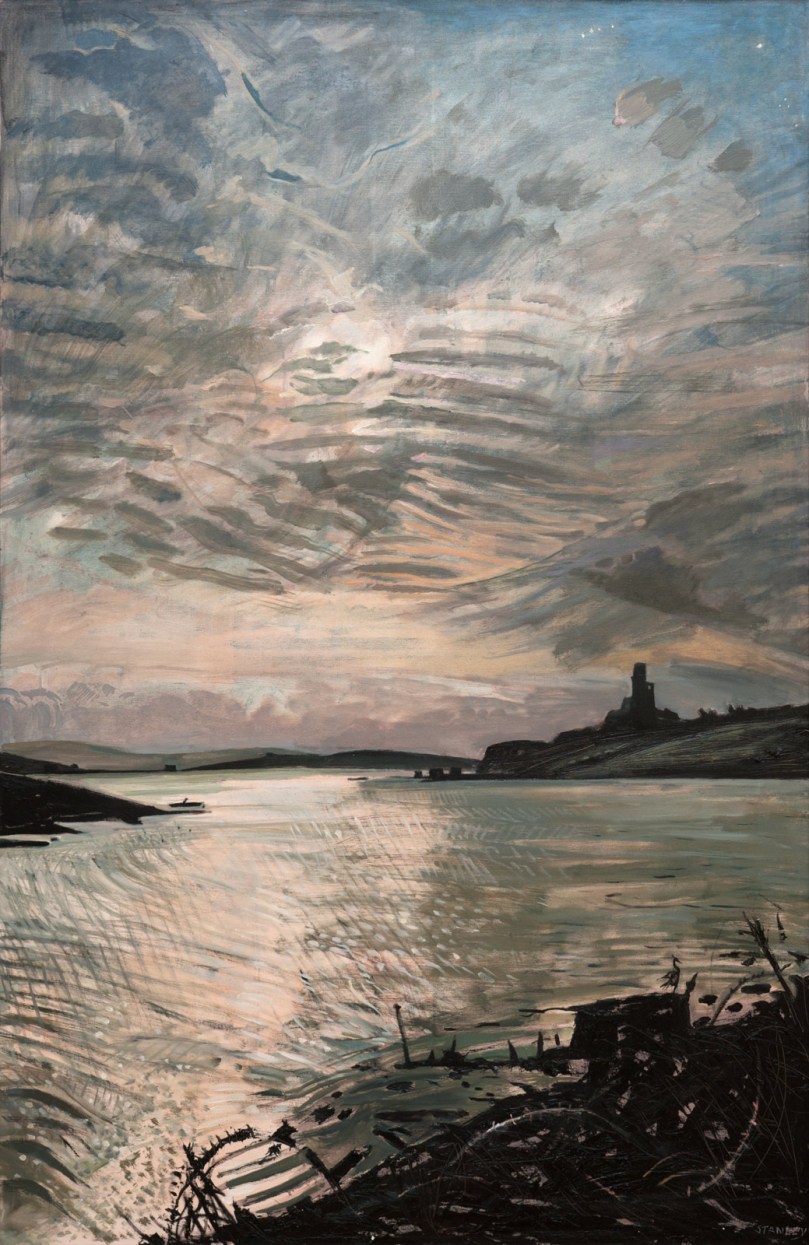
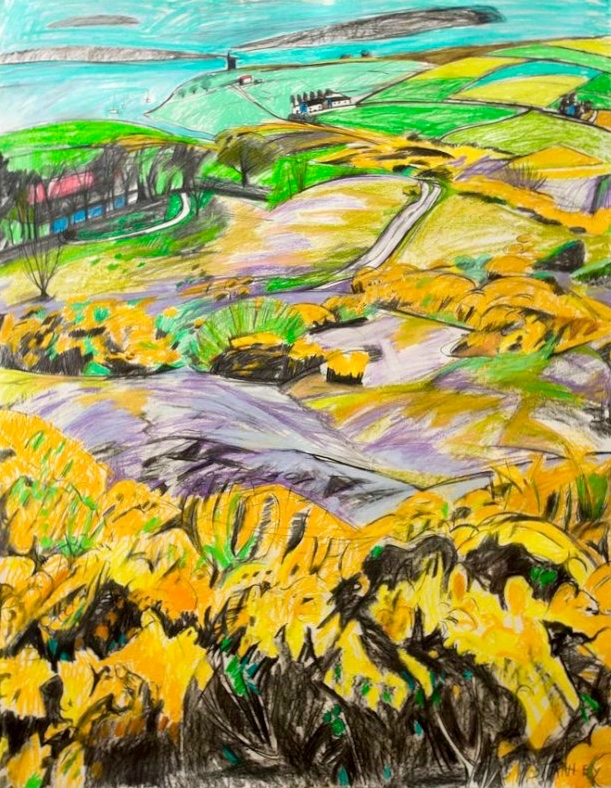
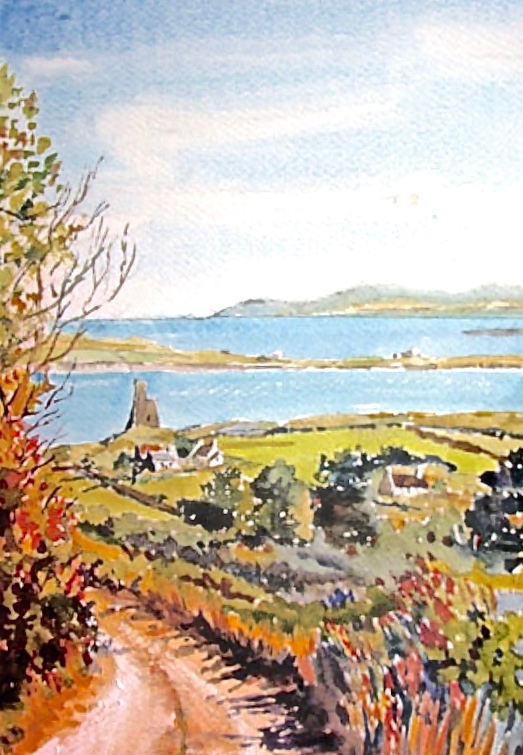
Let’s have a look at some of the art works that feature the Cove and the Castle. Jacqueline Stanley was one of many artists who was attracted to the beauty of West Cork. Now in her nineties, she moved from England to Ireland in the mid 1970s and purchased the old School House at Rossbrin as a country retreat: it has only recently changed hands.Here are two of her works, depicting Rossbrin. You can find more on her website.

I particularly like this view (above) which was painted by Jackie from the vantage point above the high road going down to the Cove, close to the remains of the copper mine at Ballycumisk. Last week I showed a painting by Geraldine van Hasselt, Julian’s mother, also from the 1970s. Every painting or photo is a historical document – and important to retain, in view of the fragile nature of the structure today.

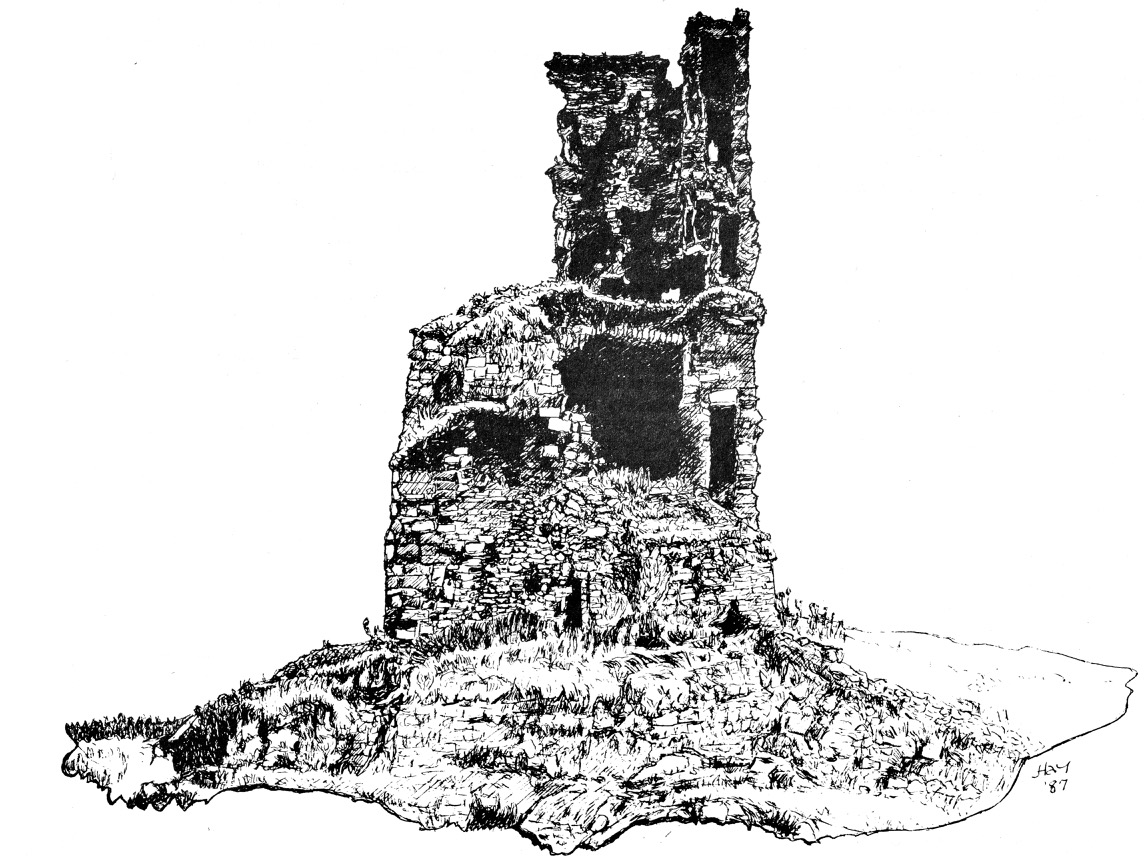
Our friend Peter Mabey is an architect and artist. He has lived in West Cork for a long time: he and I were at college together in Kingston, Surrey, and were surprised to meet each other by chance in Skibbereen market a good few years ago now. Above is one of his attractive watercolours looking down towards the Cove. The vantage point looks remarkably like the one chosen by Jackie Stanley. Below is a drawing of Rossbrin from the monumental work The Castles of County Cork by the late James N Healy, published in 1988 by Mercier:

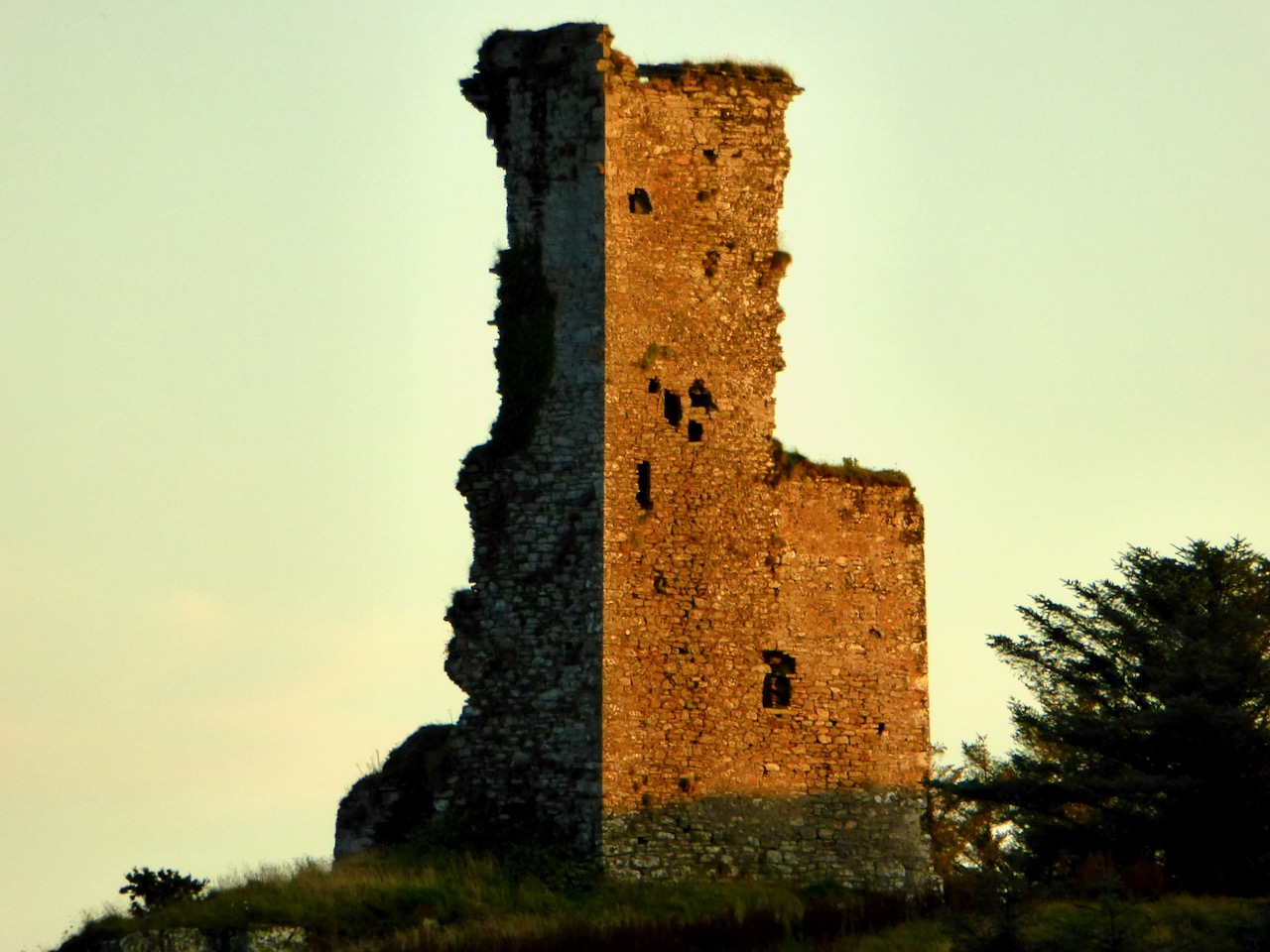
The ruin is a romantic reminder of past times, enhanced by the changing weather moods of Roaringwater Bay. This photograph, by Finola, emphasises the character of the place:

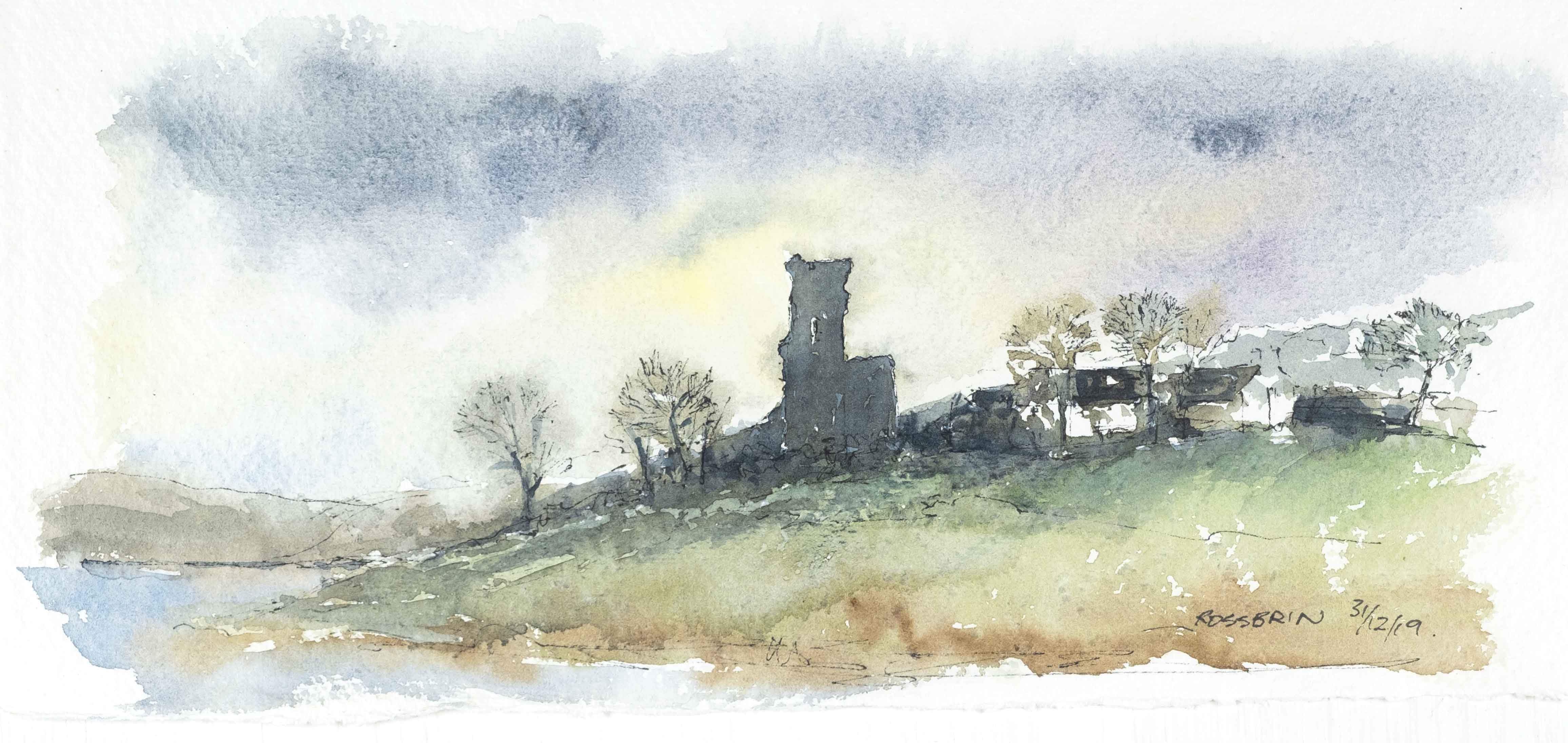
I can’t resist finishing this little two-part foray into the medieval remnants of our historically significant ‘centre of culture and learning’, which now languish on the edge of the waters below us with an artist whose work we admire: Peter Clarke, who writes and illustrates the Hikelines blog. His watercolour sketches are exquisite and always atmospheric. He has kindly allowed me to use his portrayal of Rossbrin Castle as my tailpiece. Thank you, Peter – and thank you to all the other artists who have been inspired by this remote and beautiful part of Ireland.

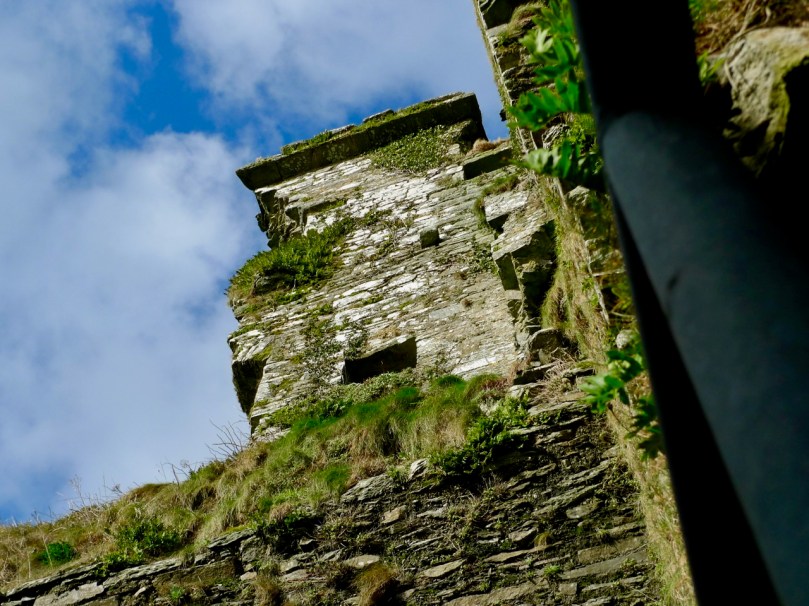
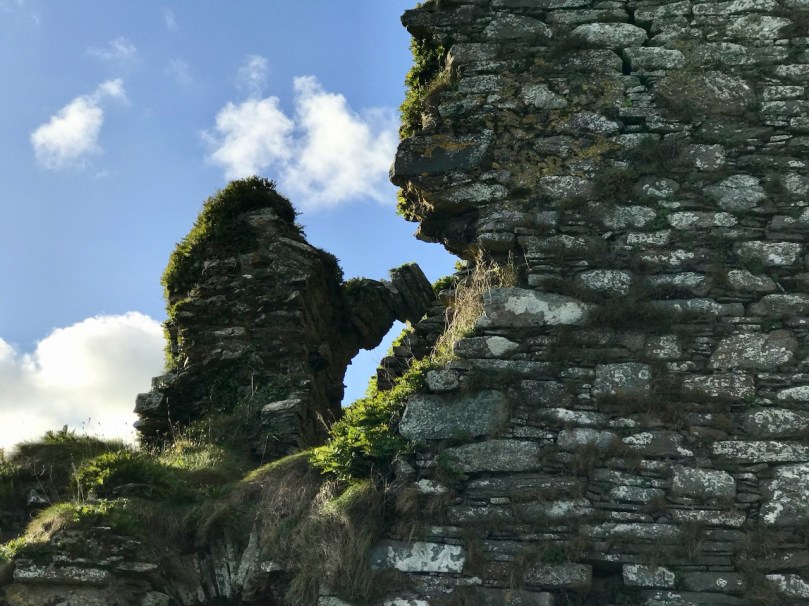
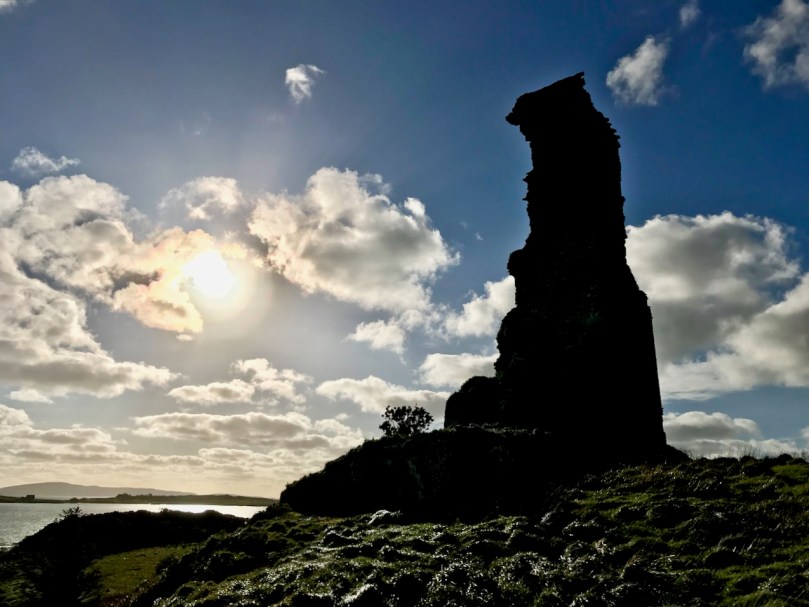
The Castle of Rossbrin

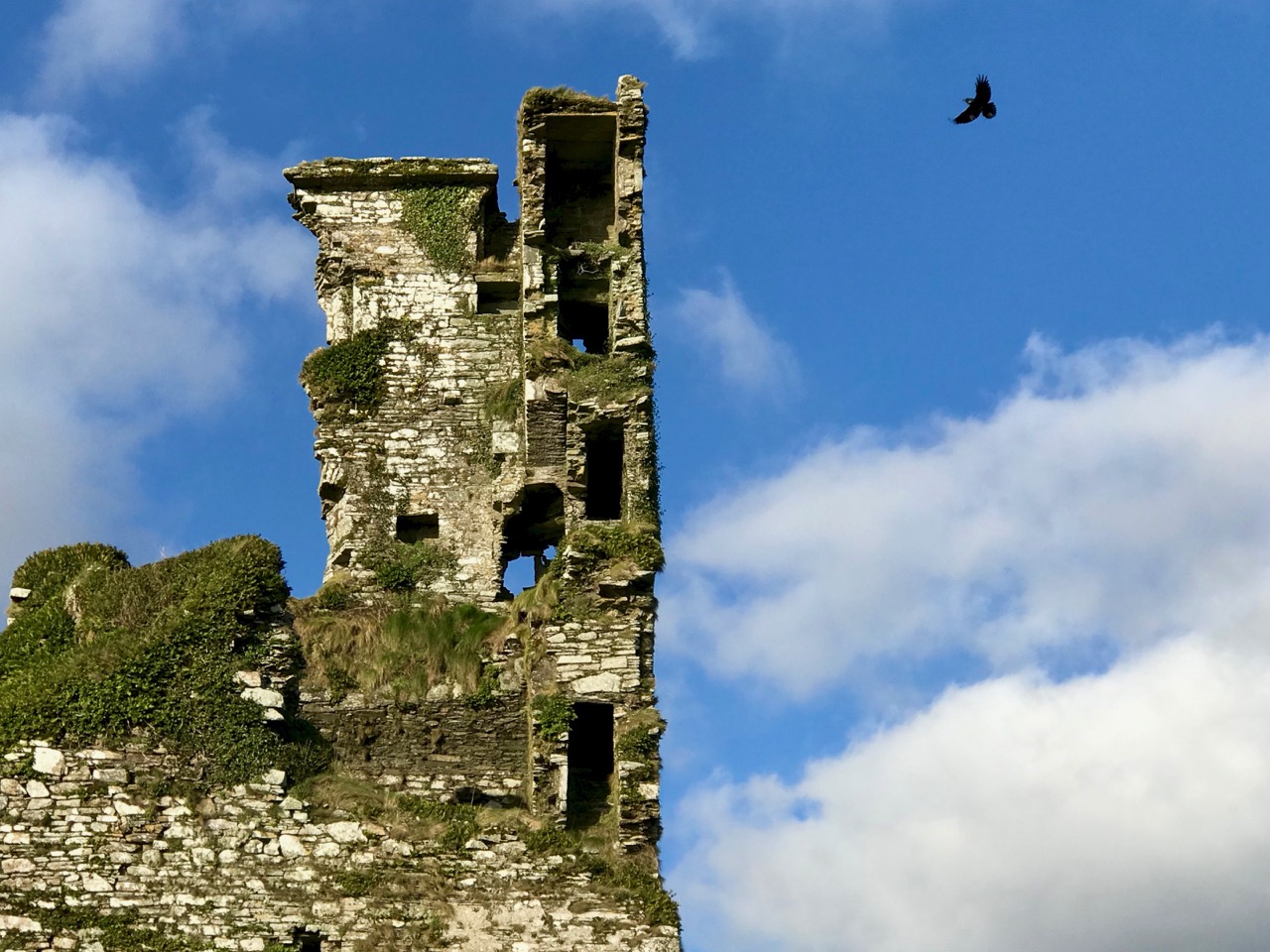
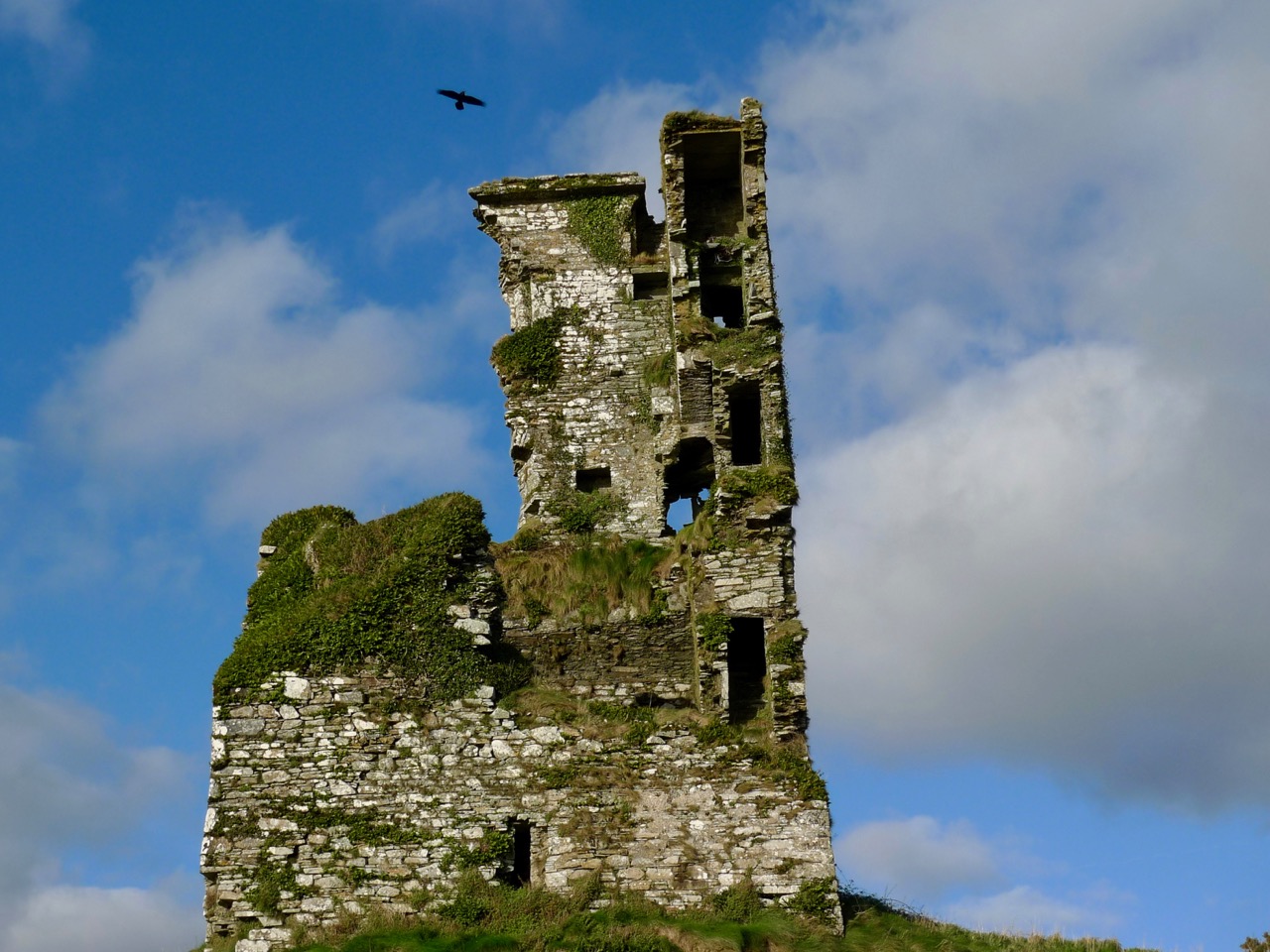
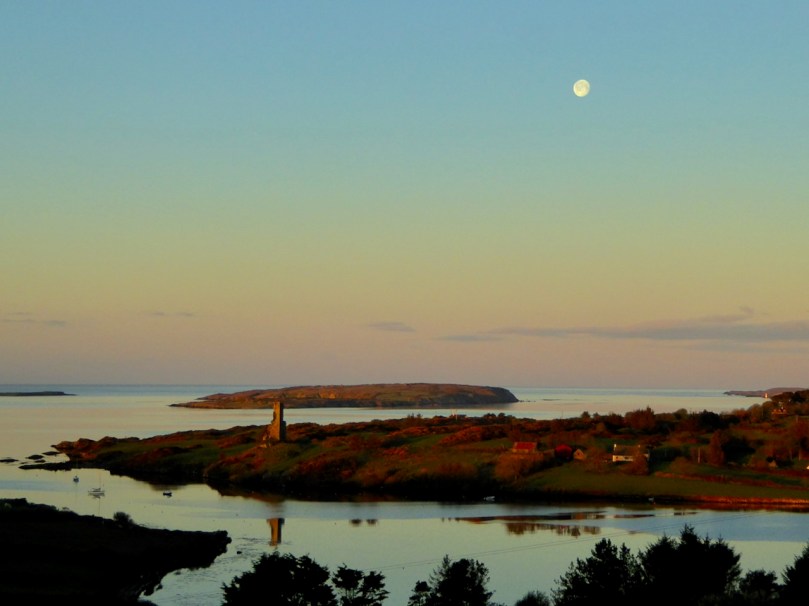
It was just Raven and I, down at Rossbrin today. We were both inspecting the O’Mahony stronghold which has stood here for, perhaps, 800 years in one form or another. Peter Somerville-Large explored the area and its history in the early 1970s:

Down beside a narrow inlet which empties at low tide stands Rosbrin, the most easterly of the O’Mahony castles. Like the O’Driscolls, the O’Mahonys had a passion for building castles: they built twelve, and six survive, all overlooking or right on the edge of the sea. They shared with the O’Driscolls one of the finest fishing grounds in Europe, controlling the waters and exacting dues from visiting fishing boats in much the same way. ‘None of the fisheries of Munster are so well known,’ wrote an observer in 1688, ‘as those of the promontory of Ivaha, whereto a great fleet of Spaniards and Portuguese go, even in the midst of winter . . .’

The Coast of West Cork, 1972
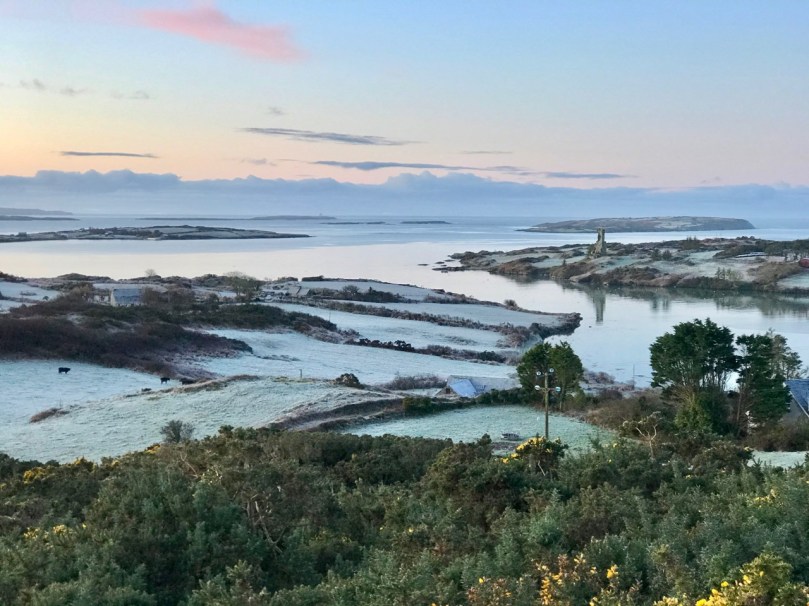
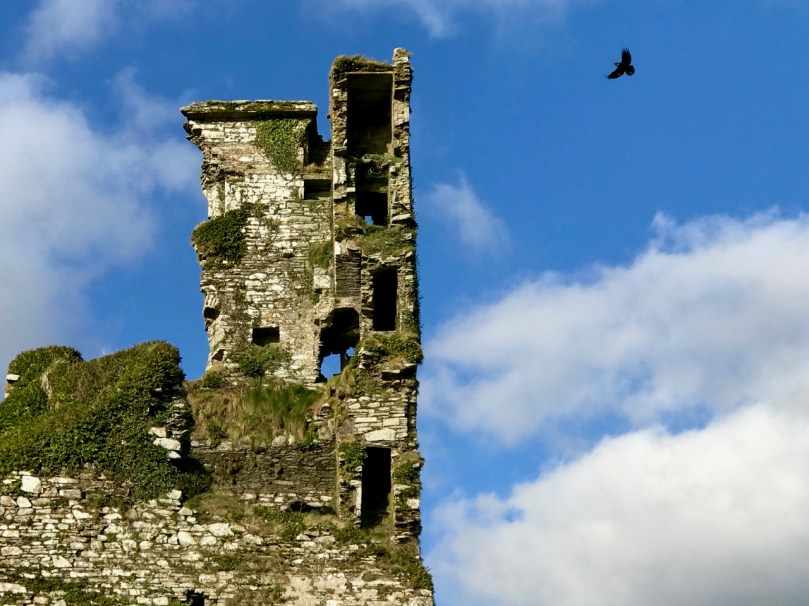
Neither Raven nor I would be deterred by the winter weather. On a day of hard frost followed by blue skies and sunshine, nowhere could be more beautiful than Rossbrin, and nothing could be more poignant than the quiet remoteness of this western corner of Ireland, once considered ‘the greatest centre of learning in Europe’. I walked in the company of the wisest of the corvids over the vanished ruins of a great university.
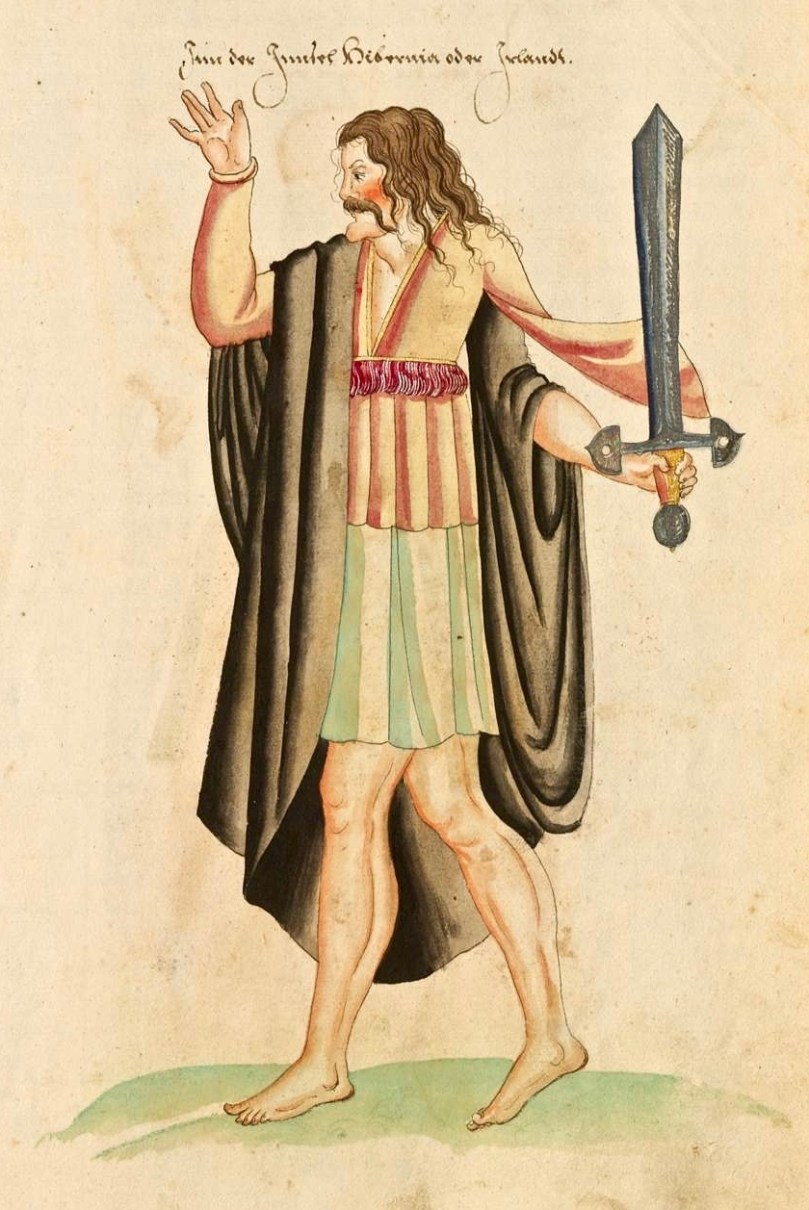
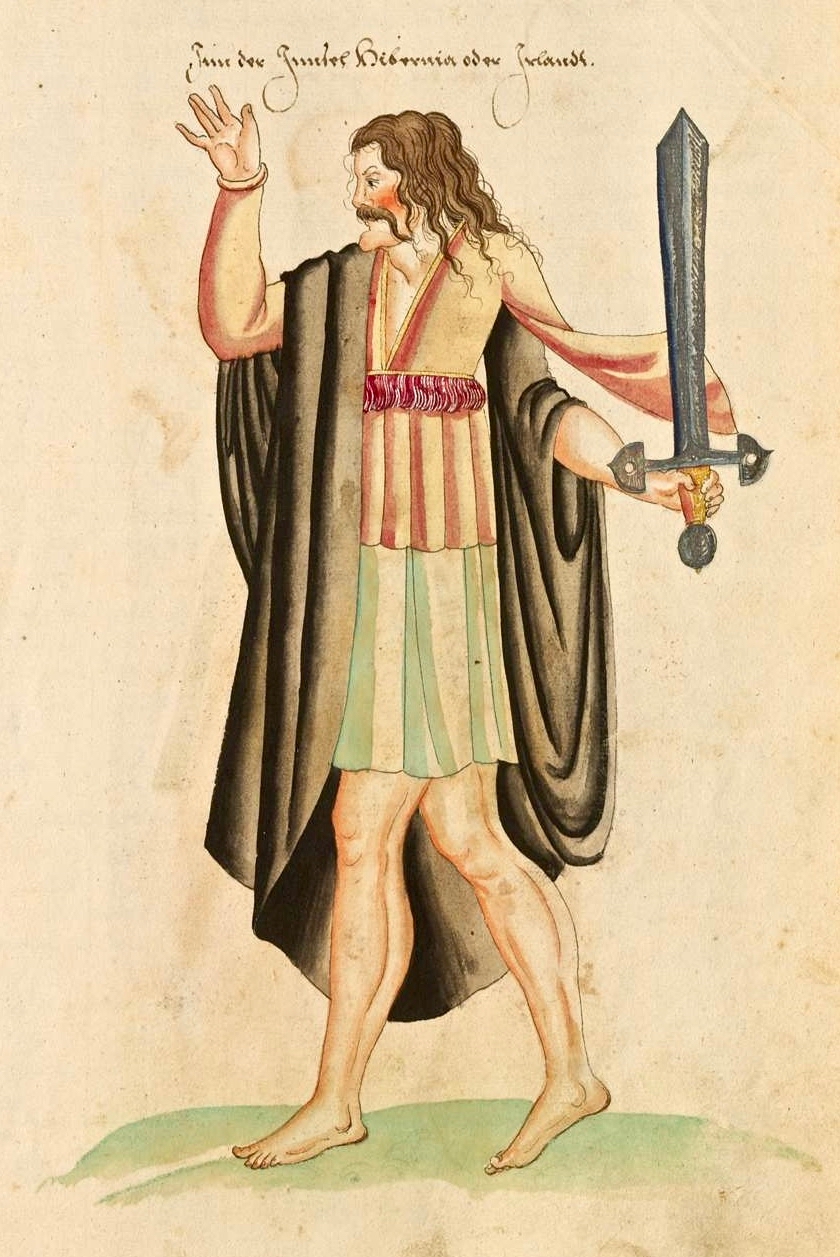
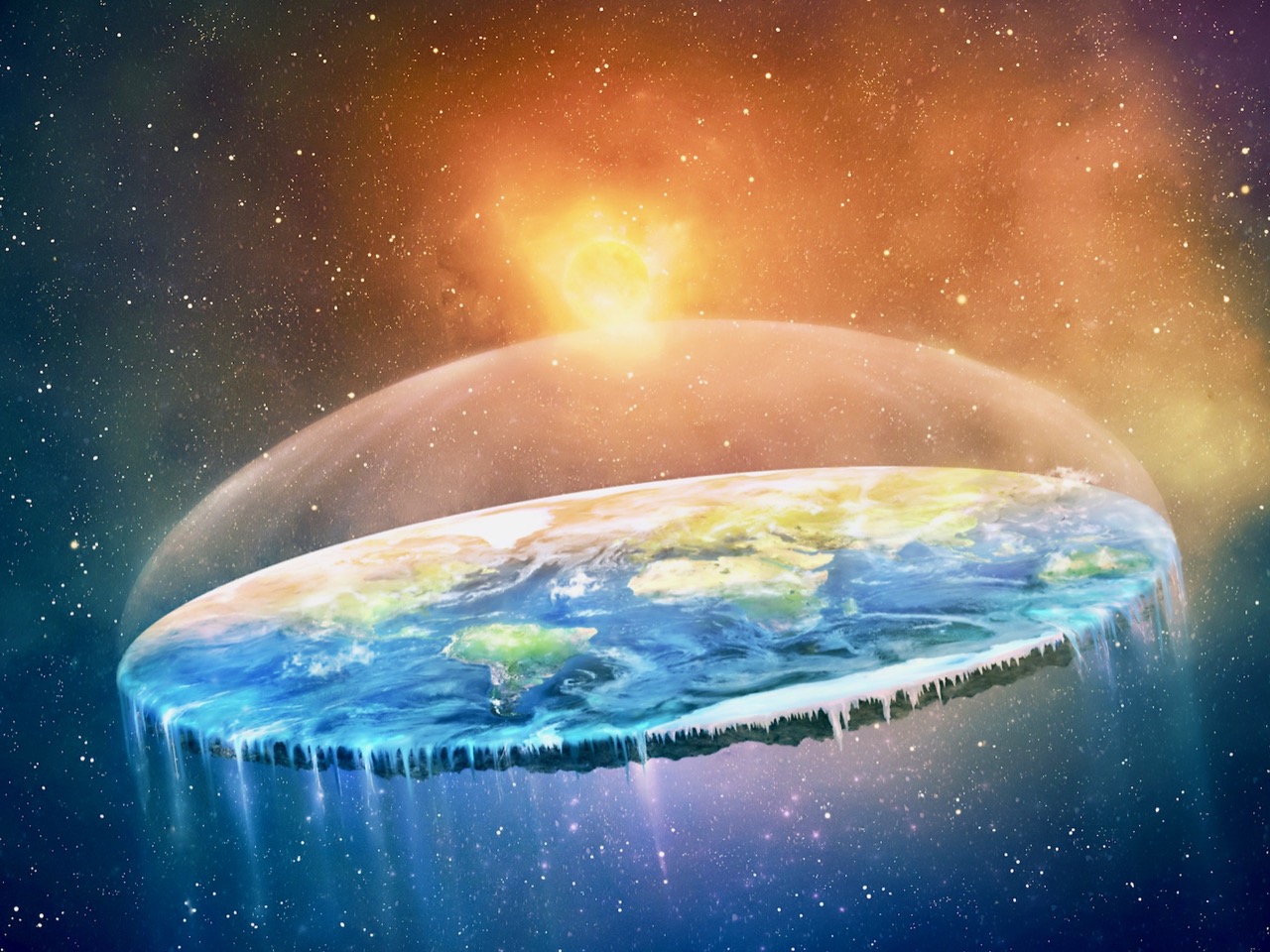
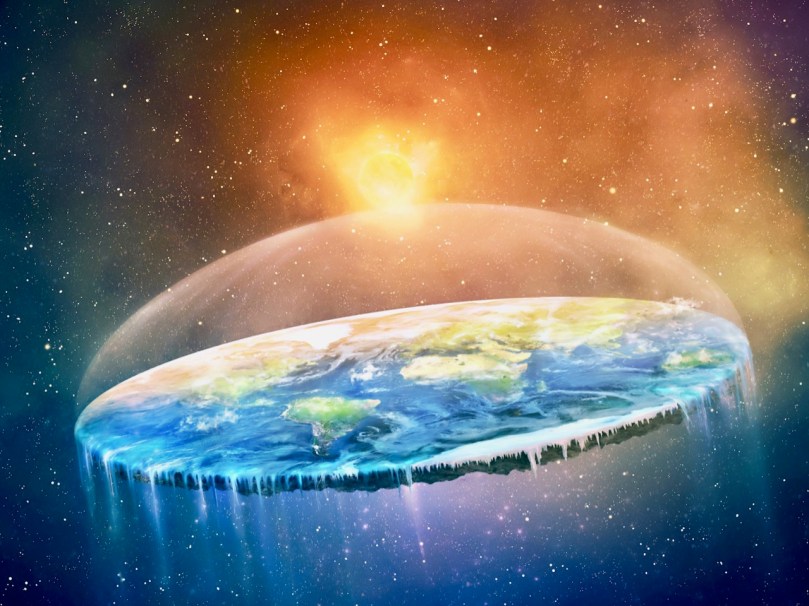
Finnin O’Mahony – Taoiseach, or chieftain, of the clan – as he may well have looked in the latter part of the fifteenth century (above): cultured, fashionable, flamboyant even, and powerful. It’s sobering to think that, while Columbus was following in the footsteps of Saint Brendan to rediscover the New World, scholars and scribes were busy on the shores of Roaringwater Bay writing and translating treatises, medical manuscripts and historical accounts of travellers busy in their quests to prove the earth may not be flat after all . . .
The Annals of Ulster tell us that Finghinn Ó Mathúna of Rossbrin Castle who died in 1496 was an acclaimed historian of the then known world. And, the Annals of Connaught lauded him as ‘a great scholar in Irish, Latin and English’. The Annals of the Four Masters referred to Finghinn Ó Mathúna as being unmatched in Munster for hospitality and scholarship. The O’Mahony territory was inclusive of today’s parishes of Dromore and Caheragh and all the lands westwards to Mizen Head. Finghinn made Rossbrin Castle both his residence and a rendezvous for Irish scholars . . . Most writers who laud the scholarship of Finghinn Ó Mathúna lament the loss of many of Rossbrin Castle’s manuscripts . . .

From an article by Alfie O’Mahony in the Skibbereen and District Historical Society Journal, Volume 6, 2010
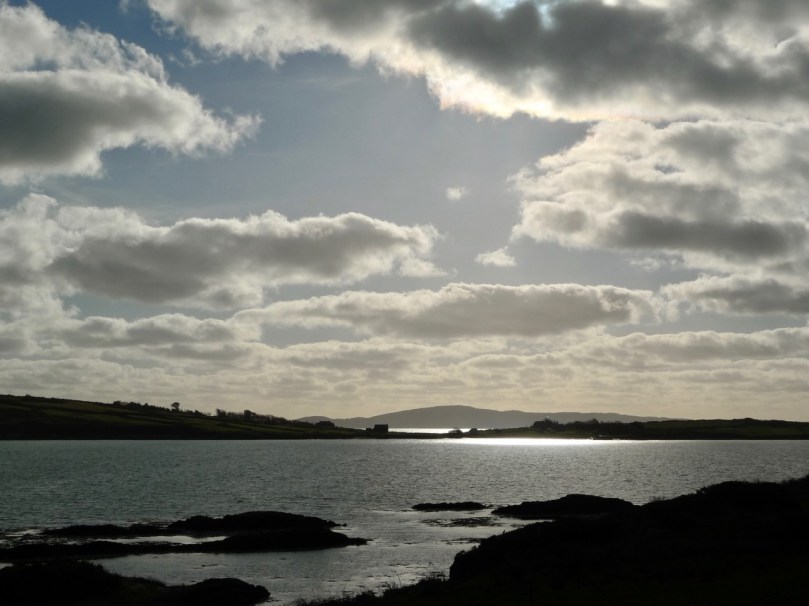
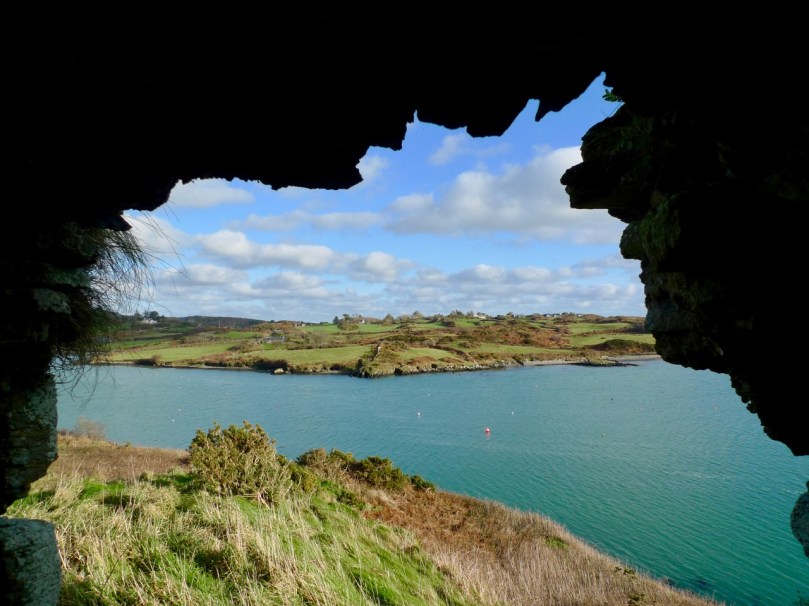
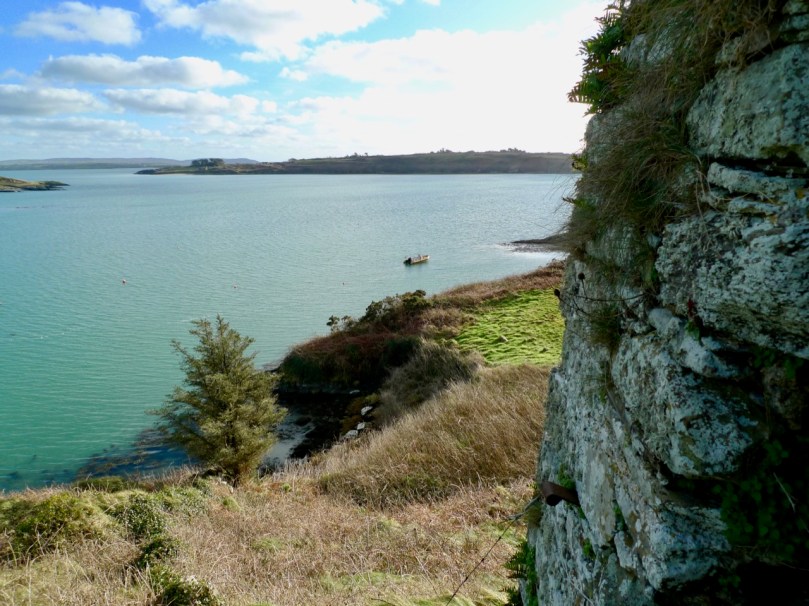
Roaringwater Bay – the view to the south, today, from Rossbrin. In the foreground is Horse Island, and beyond is the profile of Cape Clear, also a place of learning to this day: students of the Irish language spend time on the island, one of the Gaeltacht areas where Irish is still the native tongue. One of the reasons for Finghinn being so expert in languages himself was the desire to communicate with the visiting fishermen whose needs provided him and his clansmen with a good living. As well as a celebrated place of learning, Rossbrin Cove would have supplied fish palaces and all the trappings of the industry: barrels and salt for preserving, victuallers, alehouses, brothels . . . It must have been a boisterous and vibrant place.
Peter Somerville-Large gives a commentary on the more recent history of the castle:

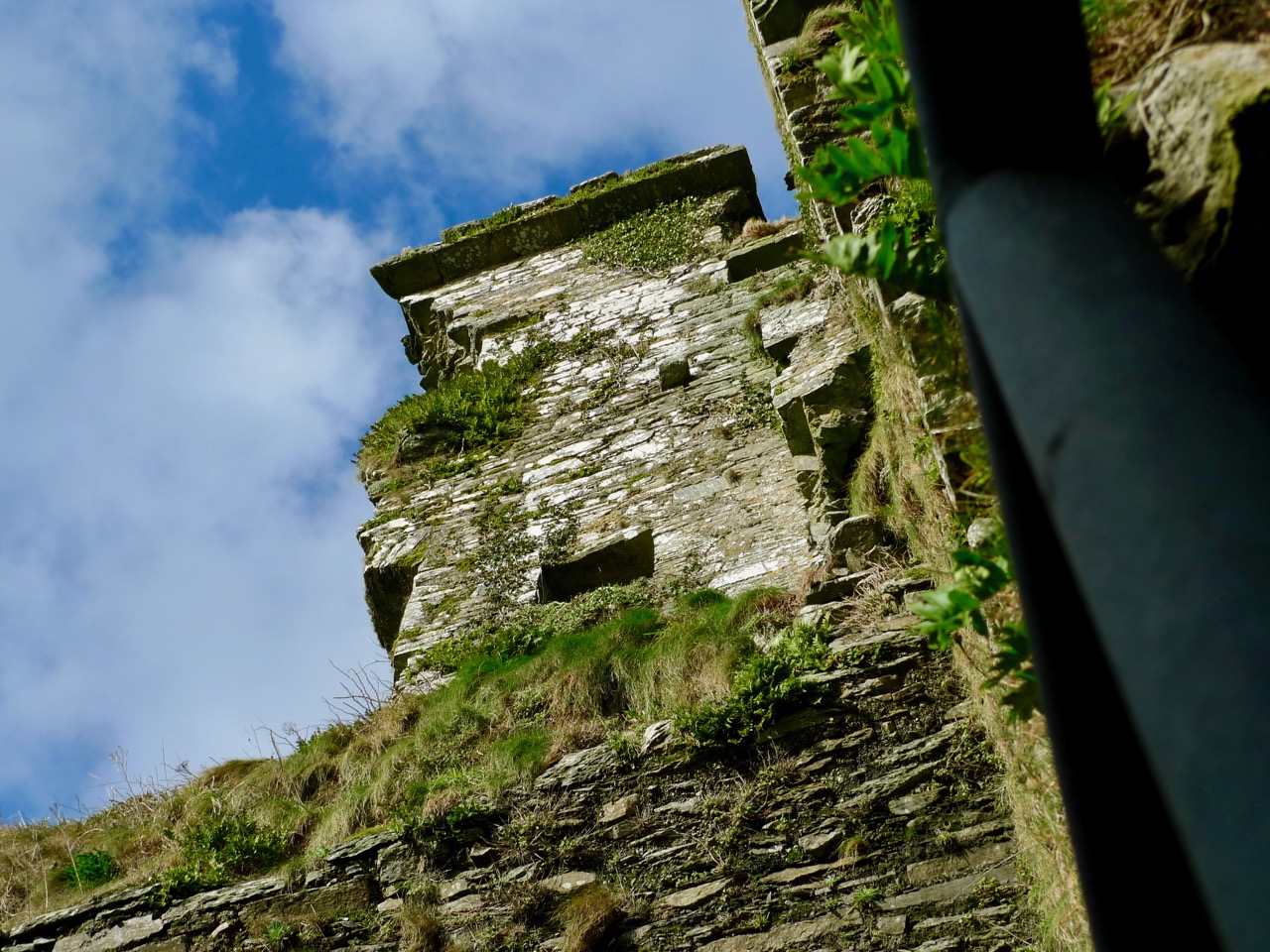
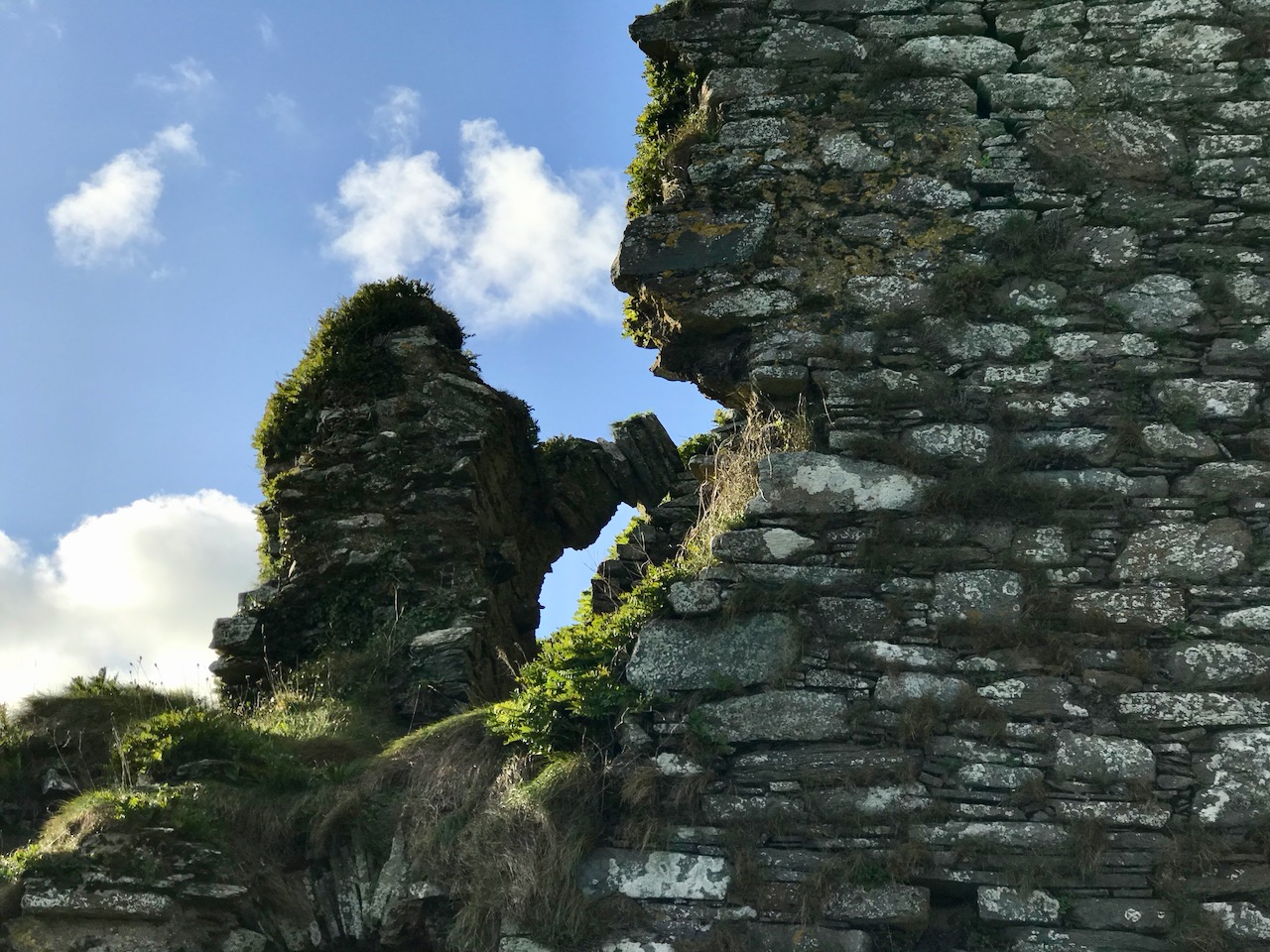
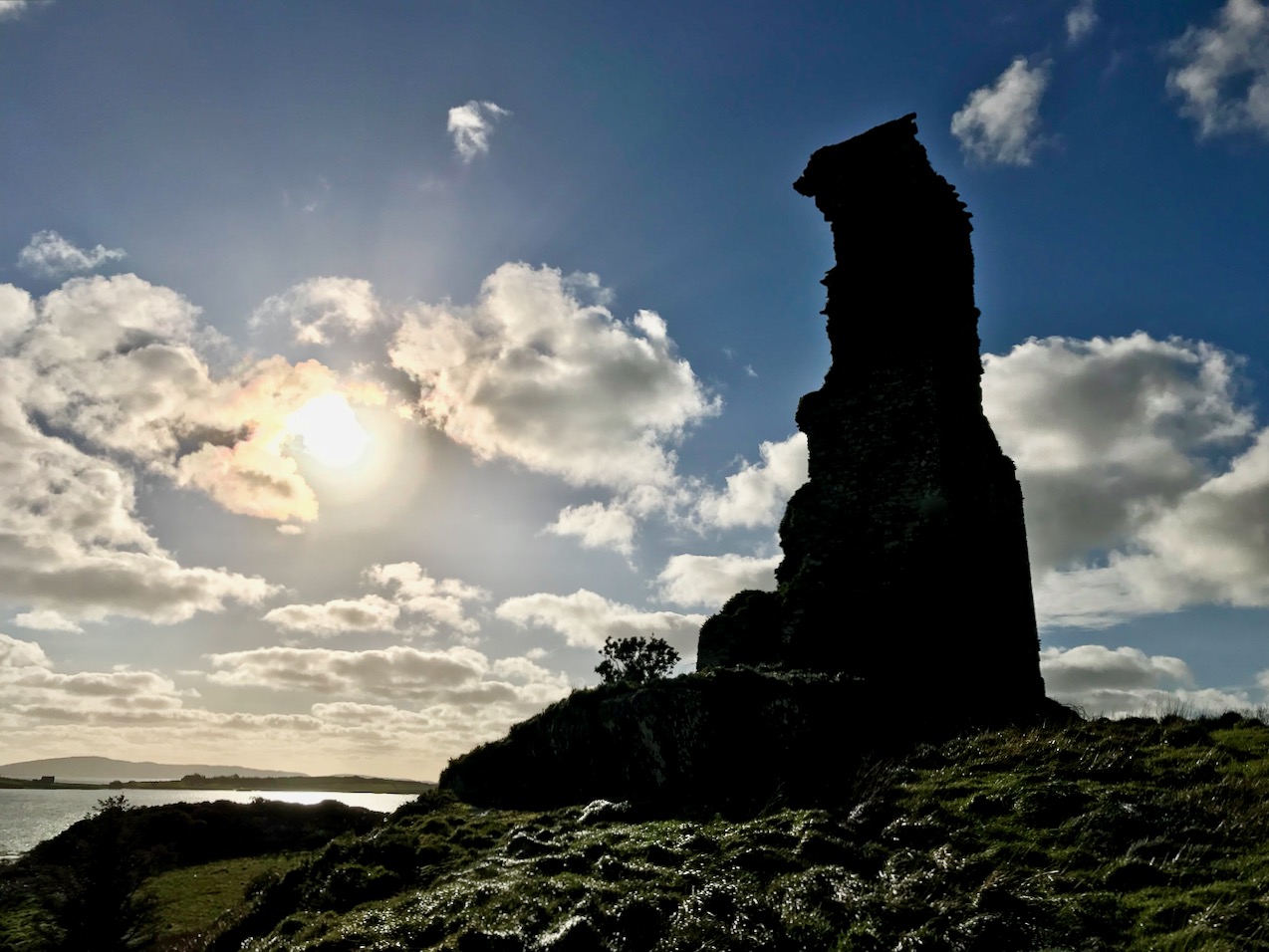
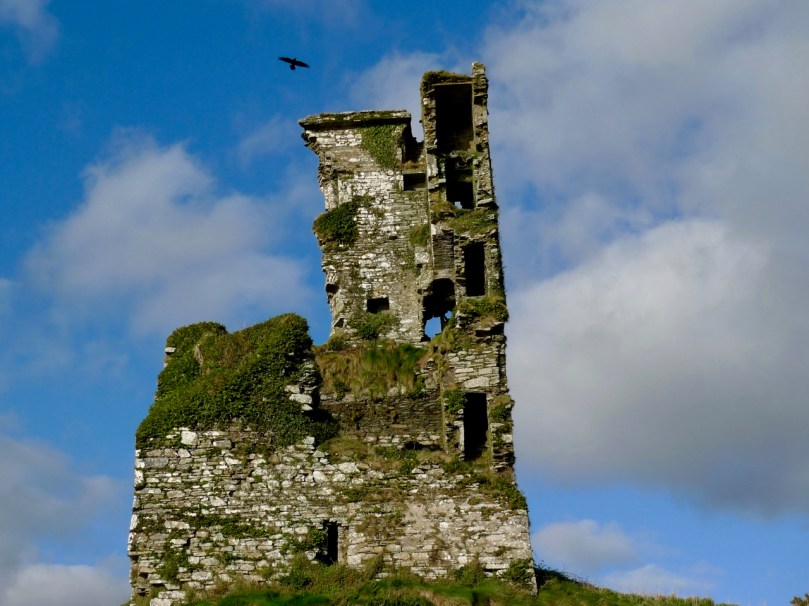
One wall of the splintered tower has a crack running down the side. Another was partly blown down by a storm in 1905. If there is another great storm like that one, Rosbrin might well disappear without trace, like the O’Mahony castles at Ballydevlin, Castle Meighan and Crookhaven. It is sited on an area which is very difficult to approach from either land or sea, standing on a rock. Contrary to what might be written in Holy Scripture, buildings on rocks have little in the way of foundation, and when they fall down or are swept away there is nothing left of them except a memory . . .
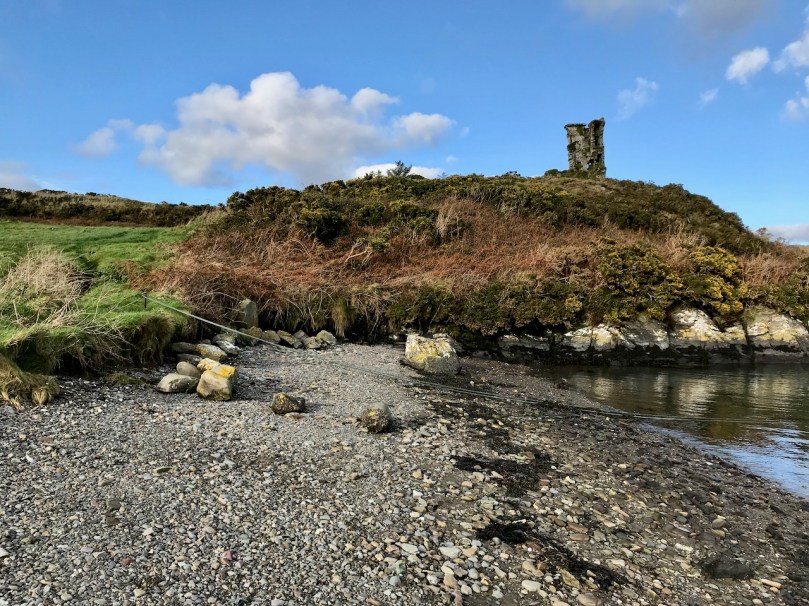
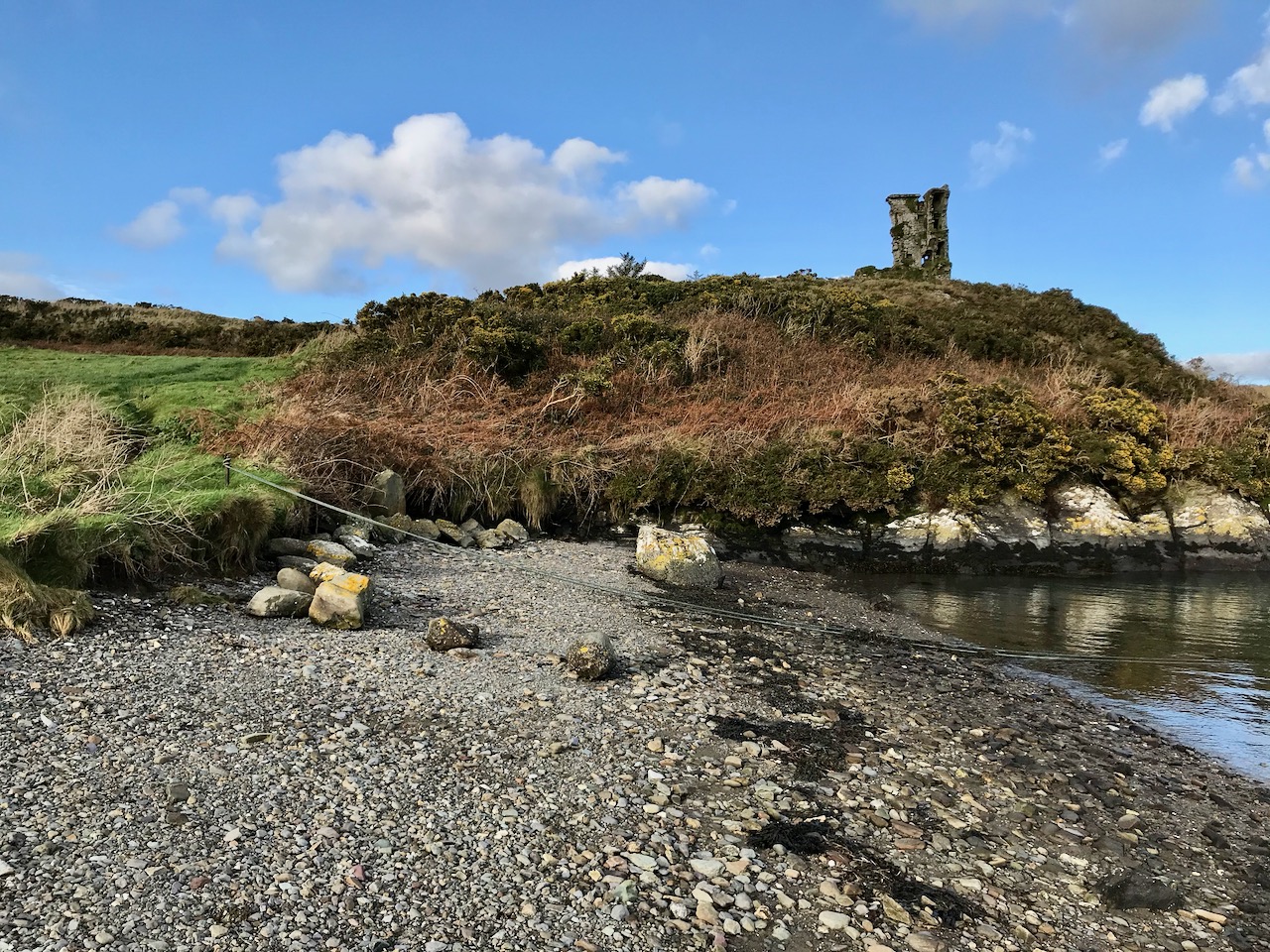
To the south of the rock on which the castle stands are the vestigial remains of an ancient stone quay (above), still in use as a landing place. The Cove itself – a natural haven – would have been the main harbour area serving the fishing fleets. The castle stands sentinel above the harbour entrance, ensuring that no-one could approach unseen.
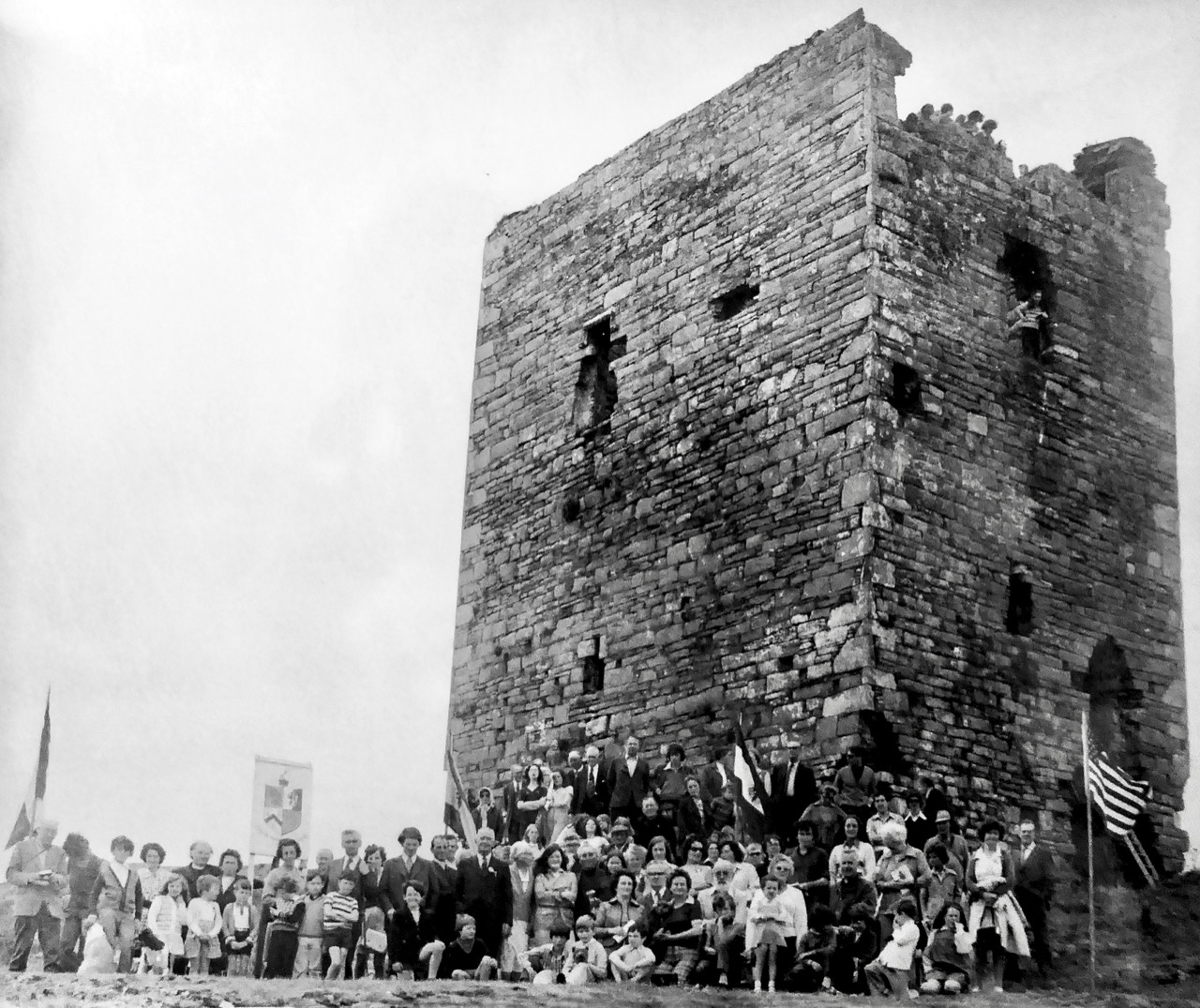
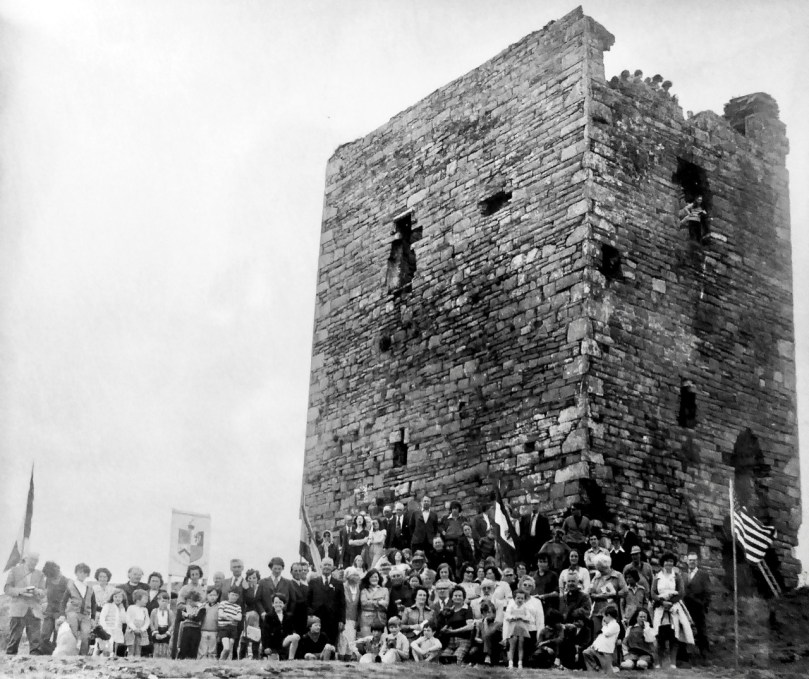
I have been looking for older illustrations of the castle, in order to ascertain how much erosion is taking place as the years go by. Here’s a fascinating record of an O’Mahony Clan Gathering, photographed in 1975 by Michael Minihan of Skibbereen. There is a lot more of the building intact at that time. Can you see the spectators high up on the walls and roof? [Note: I was mistaken – this is actually Leamcon or Black Castle before reconstruction. I am leaving it in to illustrate what Rossbrin may have looked like before it started to fall apart.]
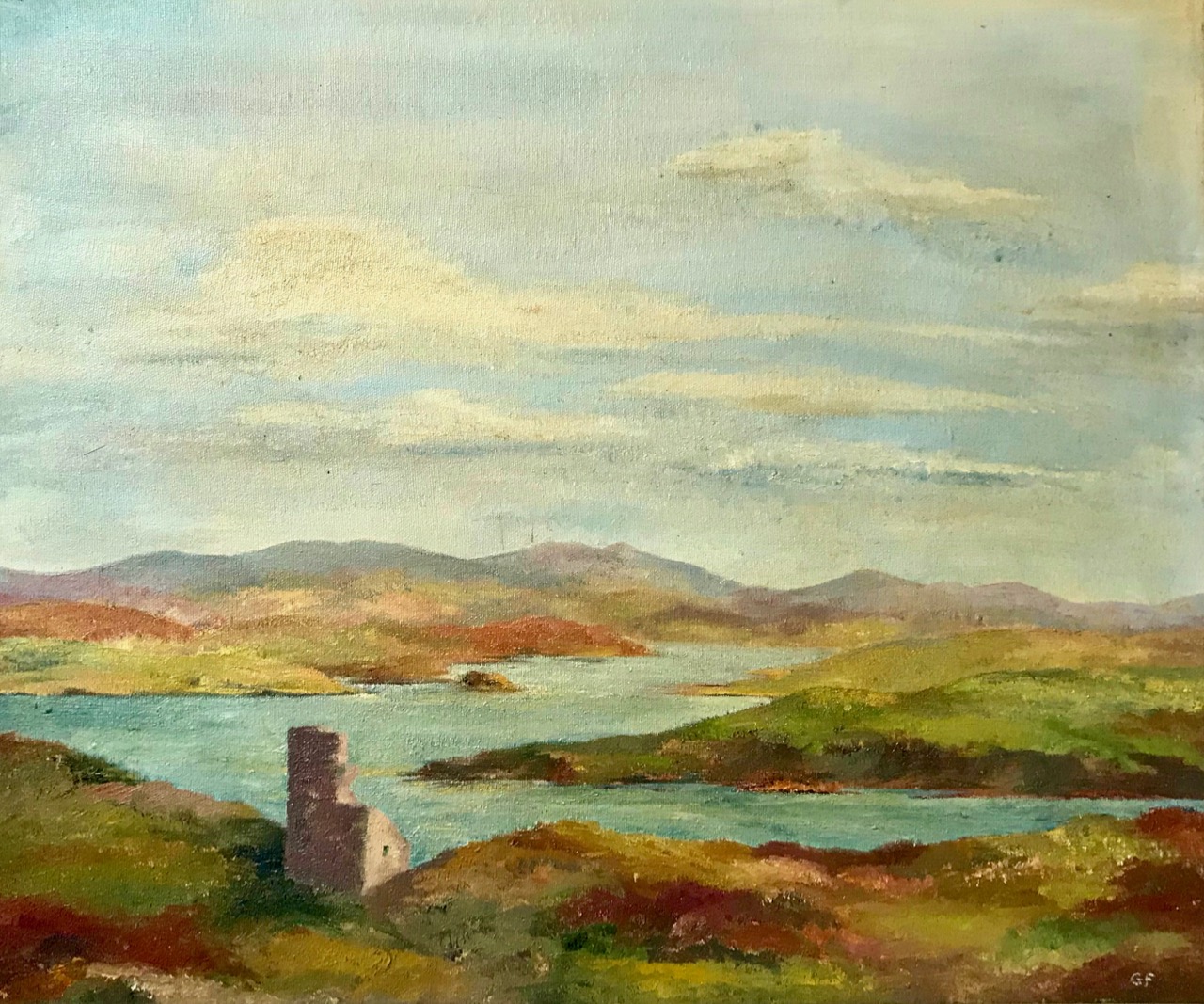
As most of you will know, we look down on Rossbrin Cove and Castle from our eyrie up at Nead an Iolair. We consider anyone living on or by the Cove a neighbour. One of these is Julian, the first to welcome us when we arrived here many years ago. On my walk today I called in on him – he lives next door to the Castle Farm. I was over the moon when he showed me a portrayal of the Castle which his mother, Geraldine, painted in the 1970s, only a year or so after the gathering at Leamcon, above. A substantial part of the Rossbrin castle walls has collapsed in relatively recent times.
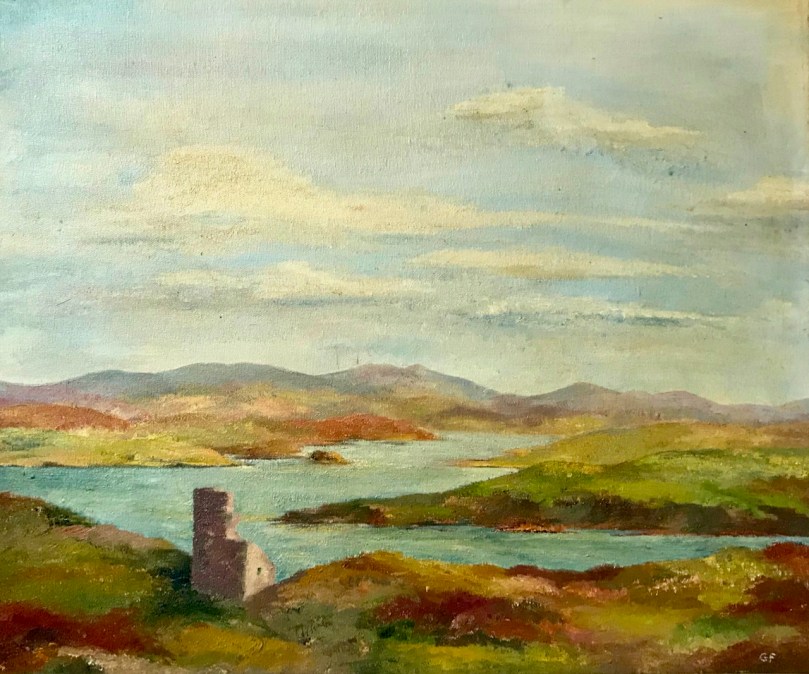
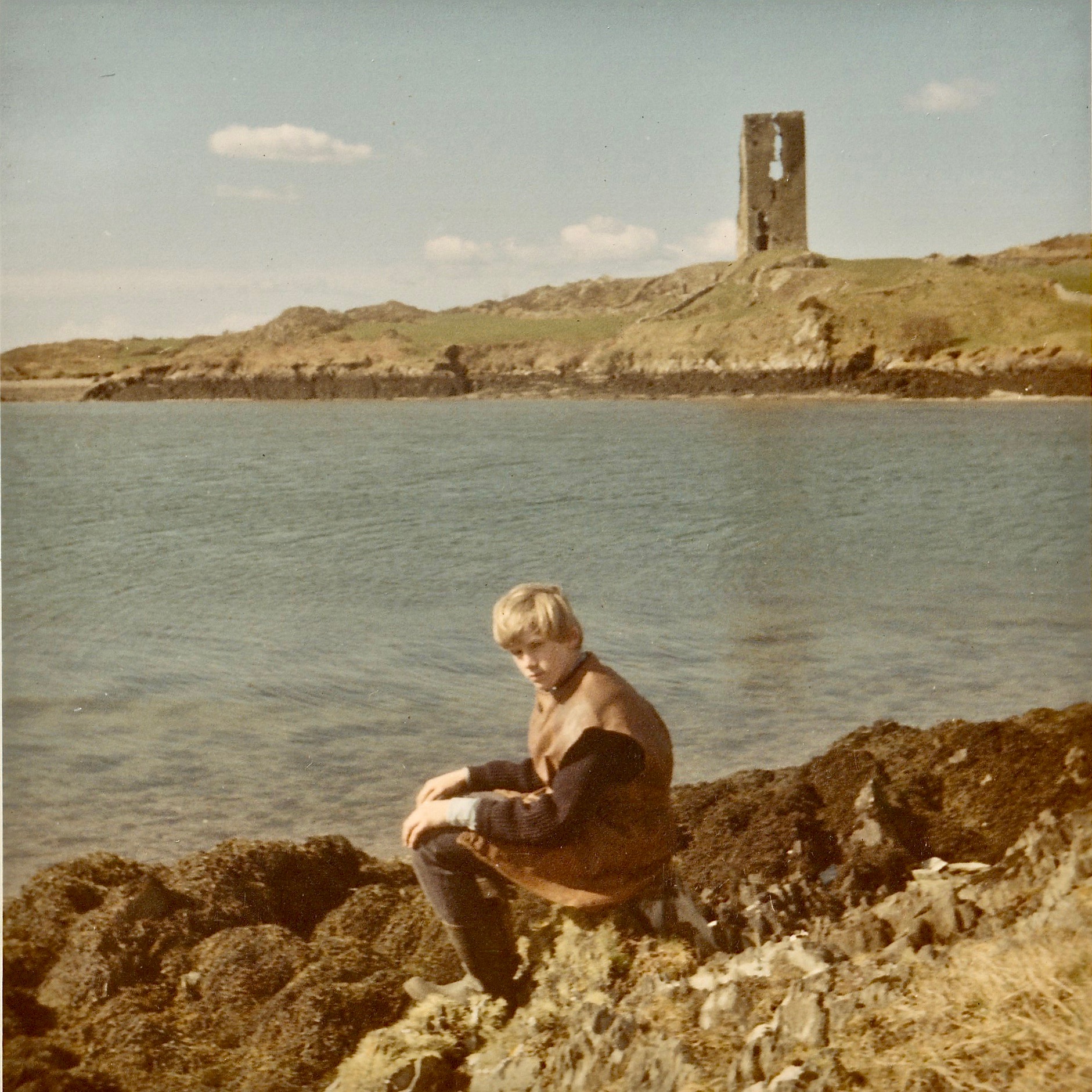
Rossbrin Castle, painted by Geraldine van Hasselt in the 1970s (above). Best of all, though, is a photograph of Julian – her son – taken at Easter, 1969: significant parts of the walls have collapsed since this picture was taken.
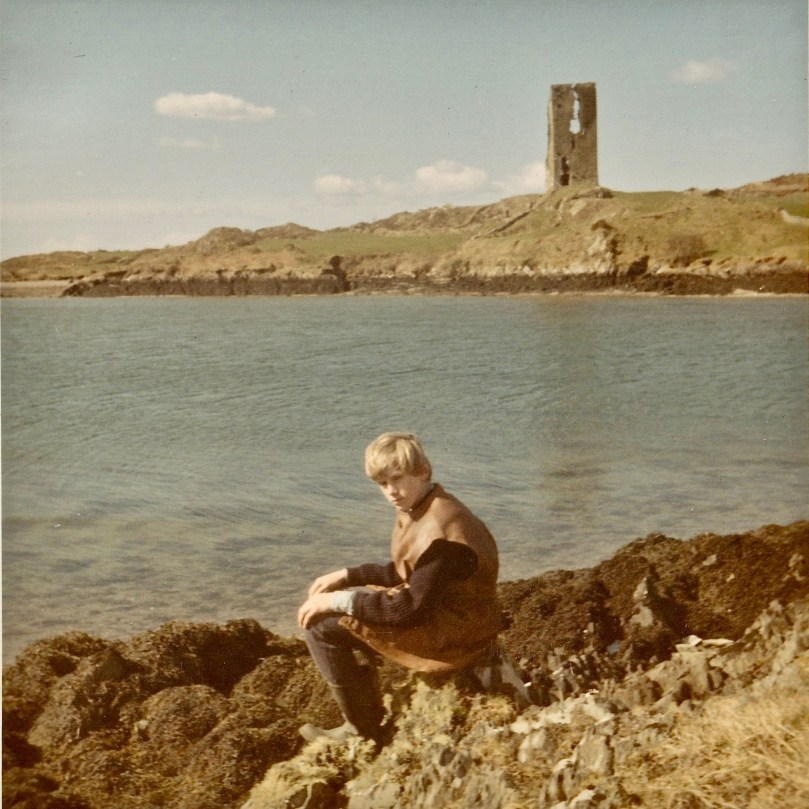
Julian van Hasselt on Rossbrin shore: behind him is a clear view of the castle. You can see the vertical crack which eventually led to the collapse of half the tower.
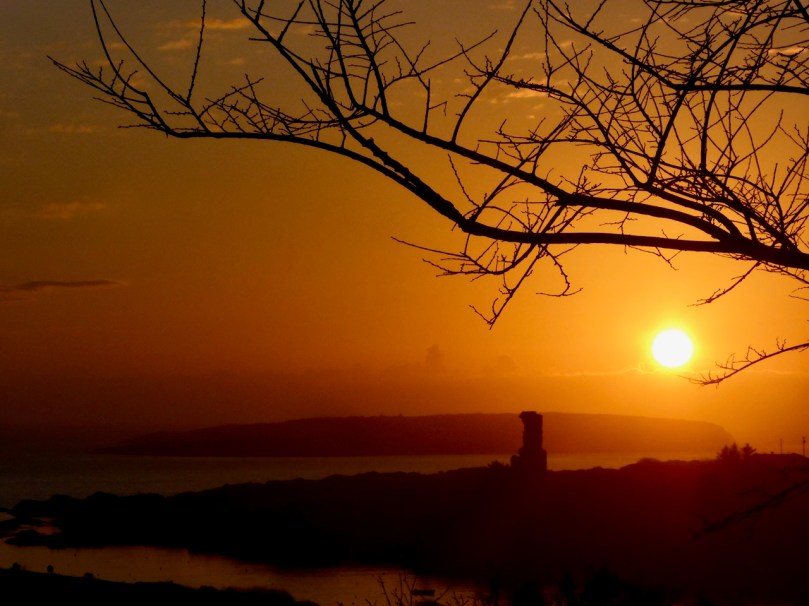
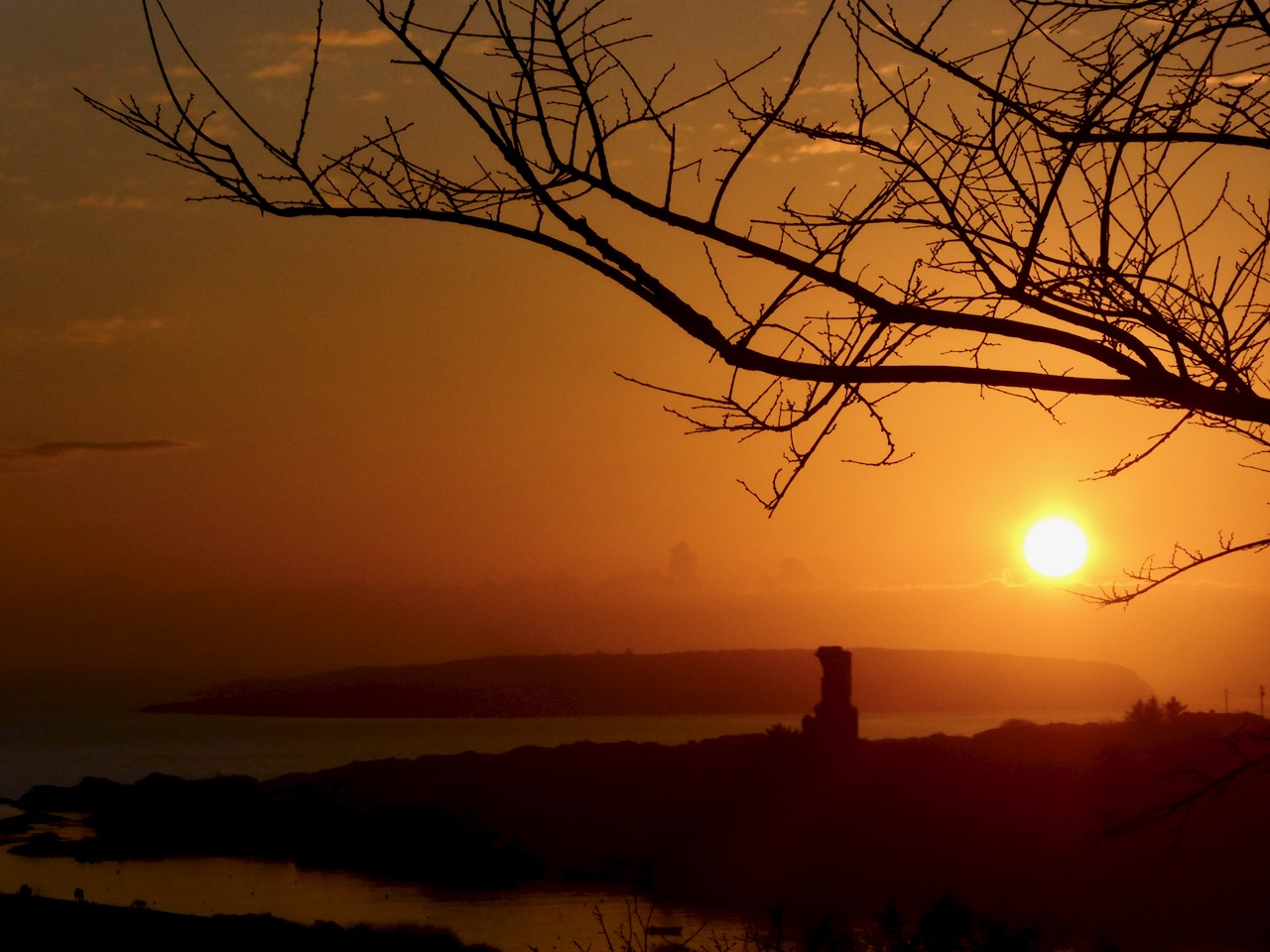
At this time of the year we get excellent sunsets when the weather is right. Today’s was a good one! I reluctantly said goodbye to Raven, my companion whose constant cronking seemed to follow me as I perambulated this place of deep history. I wonder: was it just Raven? Or might it have been Finghinn himself, speaking to me in yet another of his languages? I think I’ll have to return to Rossbrin to find out!
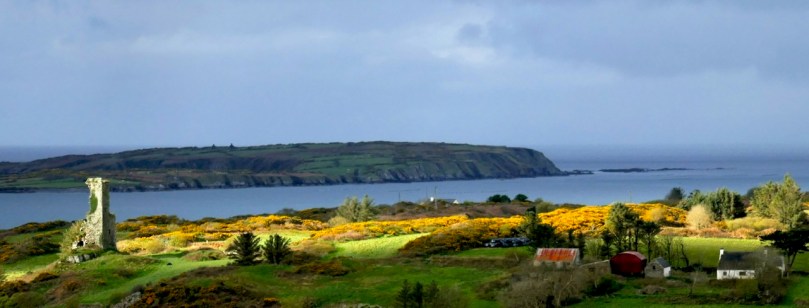
With many thanks to friends Julian and Raven . . .