A Hare’s Tale

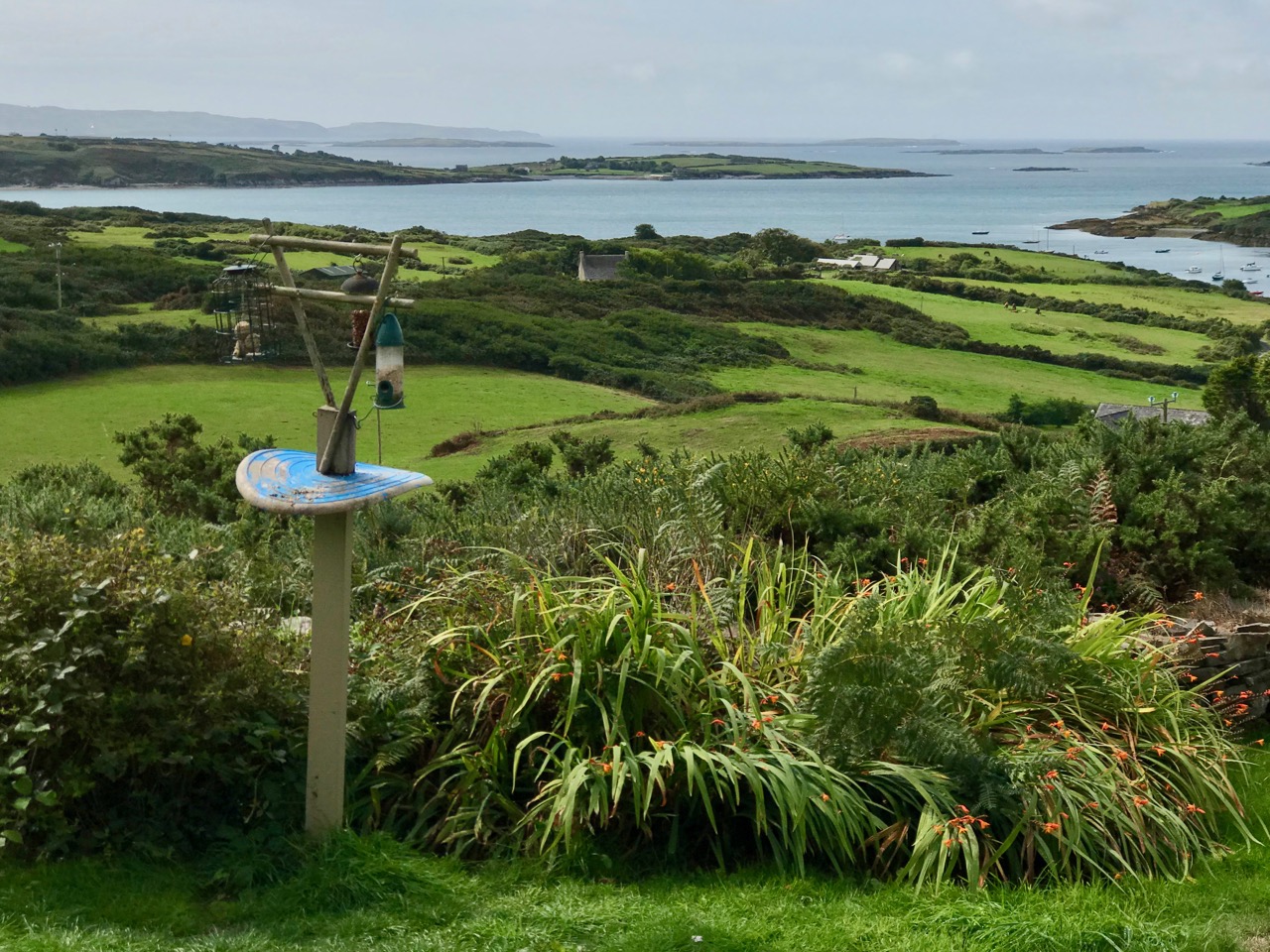
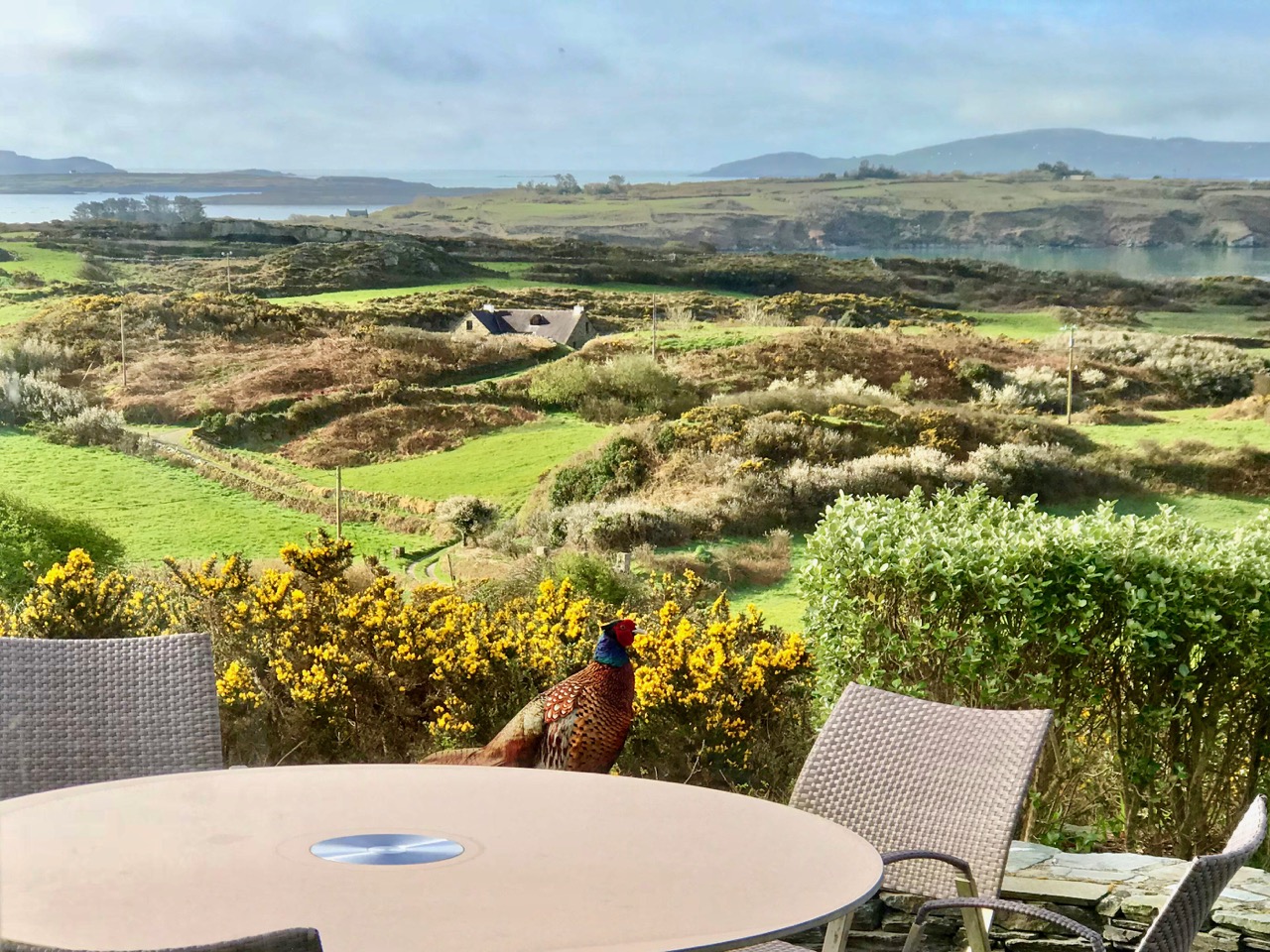
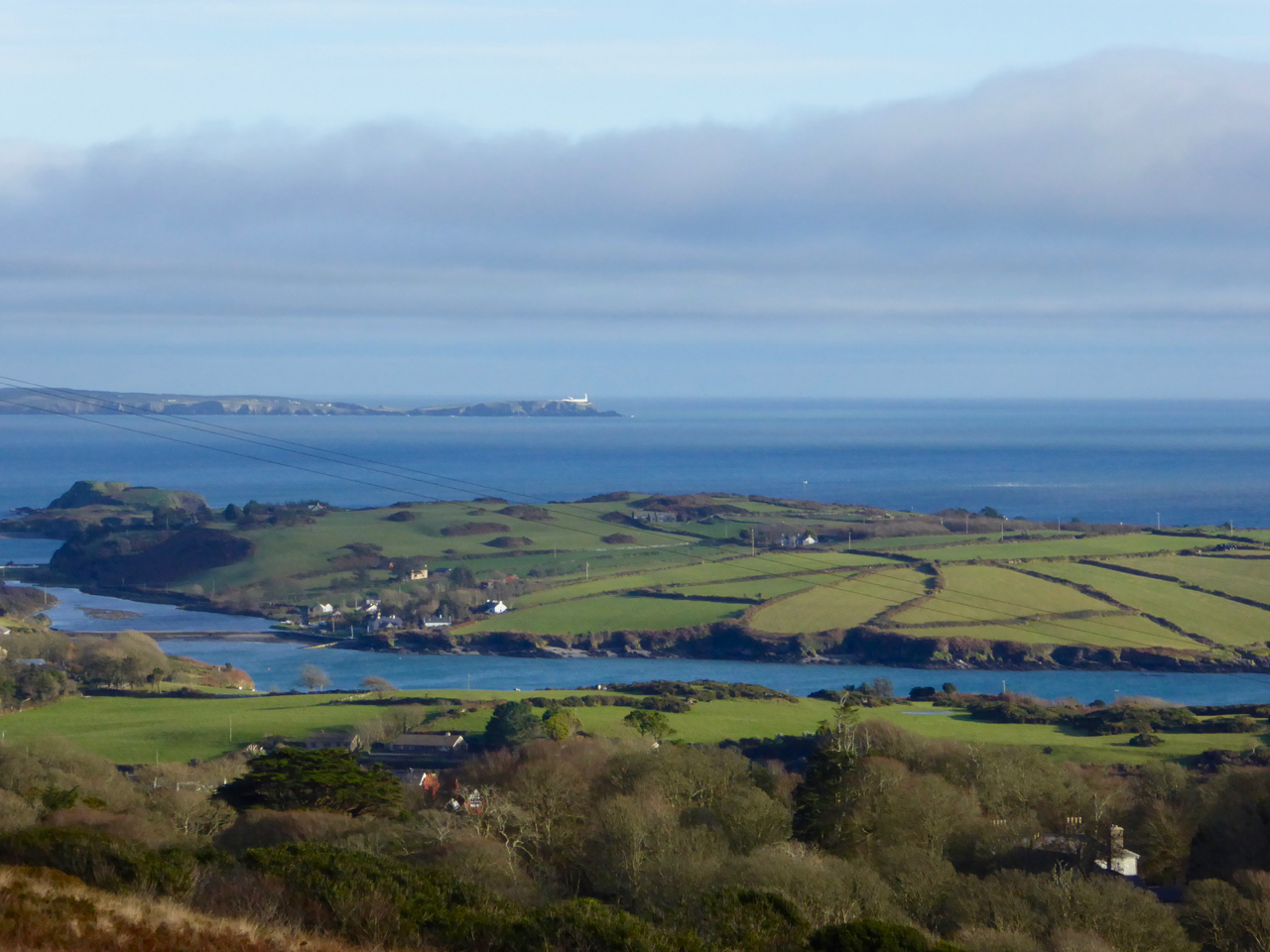
A country for hares . . . The idyllic landscape that surrounds us is a haven for Nature in all her moods and varieties, including the human intervention of agriculture (above). Regular non-human visitors to our garden at Nead an Iolair which is, after all, just a slightly tamed piece of the natural landscape, provide a constant source of interest and entertainment, as we have demonstrated in previous posts, including this one.

This summer of 2018 has been exceptionally dry – our usually green sward, and the view beyond (above), turned the colour of straw instead of verdant green. When the rains started a couple of weeks ago it didn’t take long for things to get back to normal (below), and the fresh green shoots of grass attracted an unusual, but most welcome, visitor.

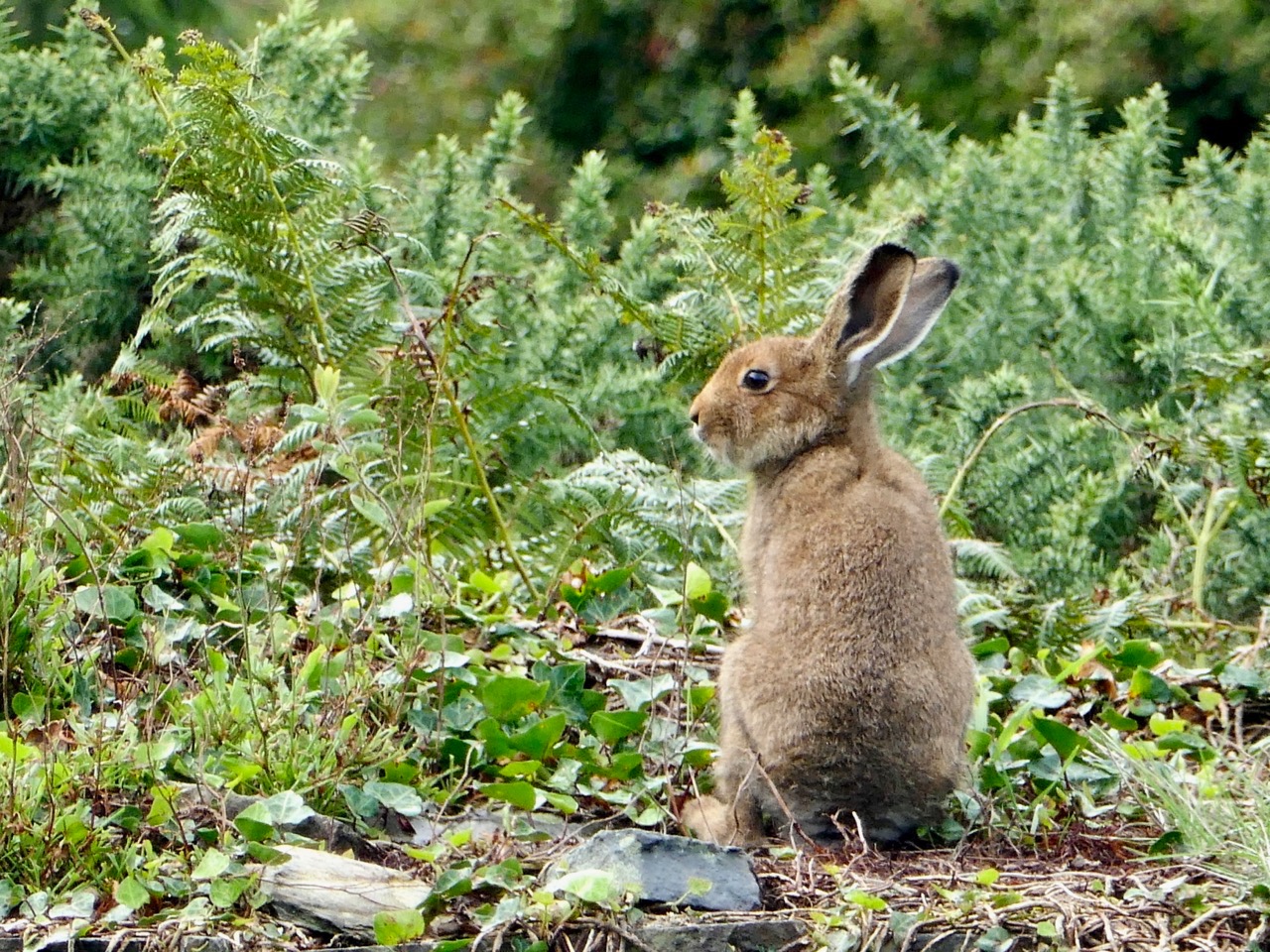
Here he is: Berehert the Hare. He’s young, probably about half adult size, but completely independent. Leverets are born fully developed – furred with open eyes, and lead a mainly solitary life. Hares can run faster than any other European land mammal – an amazing 37 body lengths a second. For comparison, Cheetahs can only manage 23 body lengths per second. It’s their speed that can keep them safe: they can easily outrun a single greyhound but, unfortunately, humankind makes the odds most unfair by setting two or more dogs against them in hunting and coursing which, unbelievably, are legal in Ireland, even though the conservation prospects of the Irish Hare are considered ‘very poor’ under the Berne Convention and EU Directive 92/43 Annex V see page 104. There have been attempts to change this bizarre situation – so far unsuccessful: you might like to tackle your own TD next time there’s an election coming up.

Berehert (have a look here to see where his name comes from) stayed around our garden for three days, and this provided an unprecedented opportunity (for me, anyway) to closely observe the animal’s characteristics and behaviour. In the picture above, where he’s looking a little glum on our terrace in the rain, you can see his wonderful russet colouring and his very long legs, particularly the hind ones. These enable him to take great leaps – fully grown he can jump four and a half metres from a standing start in any direction. This is another protection mechanism: if a hare is approached or surrounded by predators – usually dogs – he’ll wait until they close in on him and then jump that distance and run off. The dogs, which rely on scent more than sight, are completely confused and by the time they sort out where he’s gone, he has (hopefully) vanished.

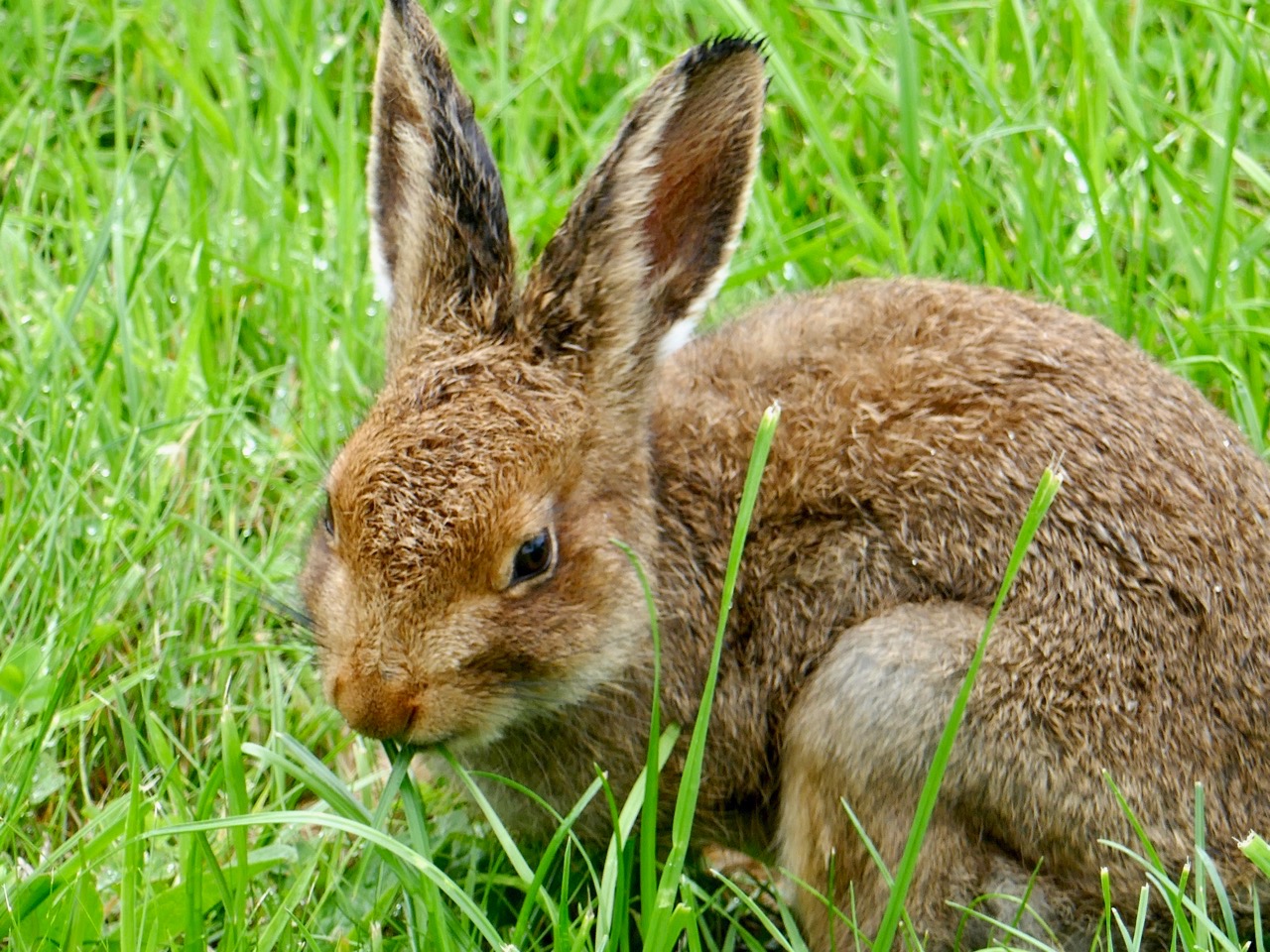
Fortunately, Nead an Iolair’s resident greyhounds (which came with the house) wouldn’t be much use in the chase: they certainly didn’t seem to deter our visiting hare. Young Berehert did everything which was expected of him while I was watching. He allowed me to get quite close to him – and was perfectly aware that I was there, then suddenly he leapt up and was away, a gangly confusion of legs and ears. But he only went as far as the next patch of new green shoots. Here he is, nibbling away . . .

Hares are restless animals: they don’t stay in one place for very long, and it’s quite normal for them to range over 2km at a time when foraging. Berehert is still out there somewhere, and I’m hoping that he will revisit us occasionally. I’d rather not dwell on the fairly short average life span of hares in the wild (four to nine years) and the fact that only one in five leverets survives their first year. For our continuing education in the natural world of wild West Cork we will have to rely on our more regular and stable visitors: Finnbarr the Pheasant’s family and the myriad of small birds who populate our feeders, not to mention the wide variety of insect life and, in these shortening evenings, the colony of Common Pipistrelle Bats who are busily out hunting: if you think you don’t like bats, just bear in mind that each one can eat around 3,500 small insects, such as midges, in one night.

Thank you, Finola, for all those excellent photographs of Berehert: not the easiest of animals to capture on film!

Out in the Field

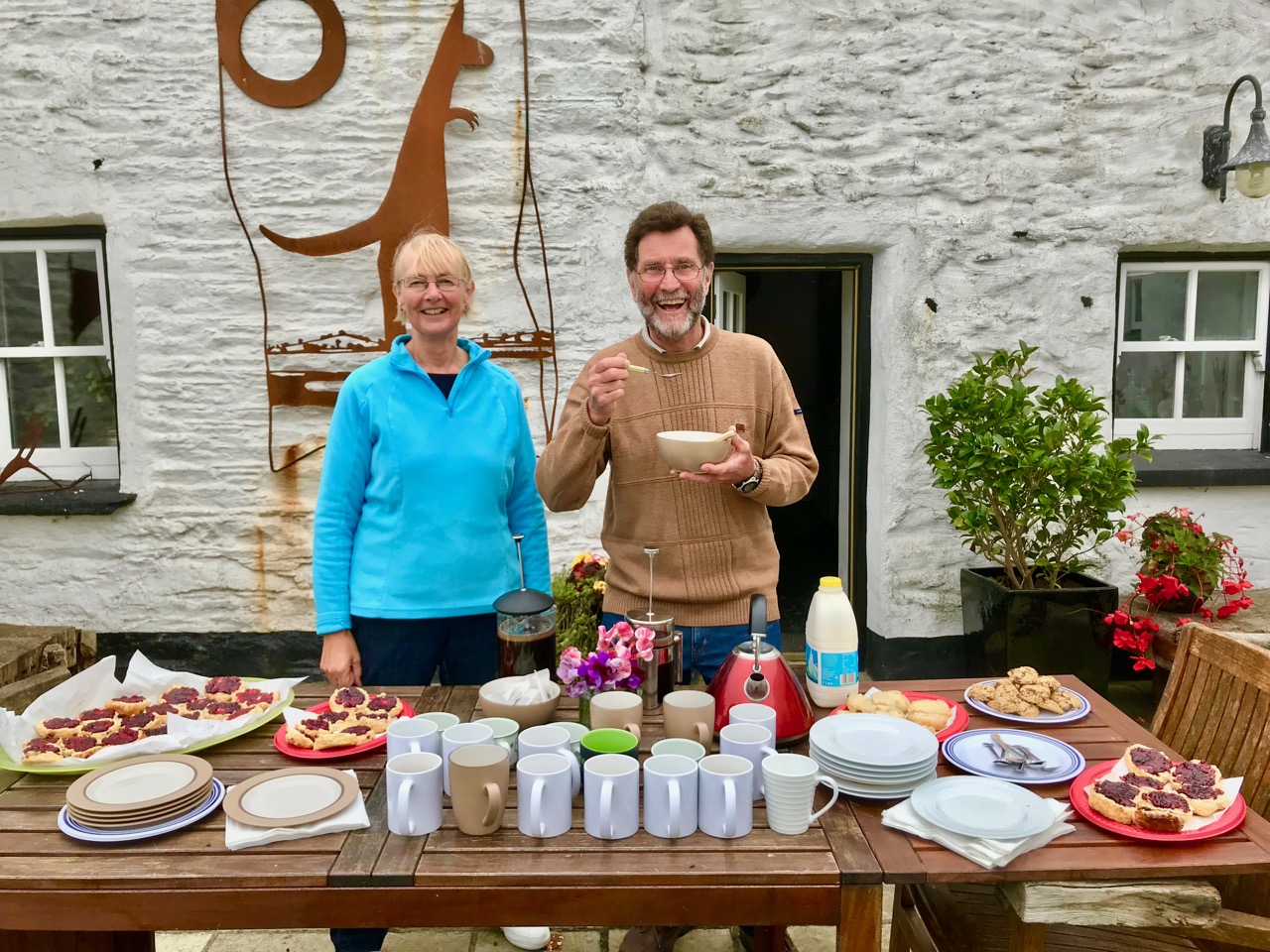
During the West Cork History Festival field trips, led by Roaringwater Journal last week, treats were in store. Many thanks to volunteers Jenny and Ray who worked hard to provide the refreshments (and who baked the scones!) on Friday’s ‘Art and The Great Famine’ excursion, which arrived at Reen Farm in time for tea.

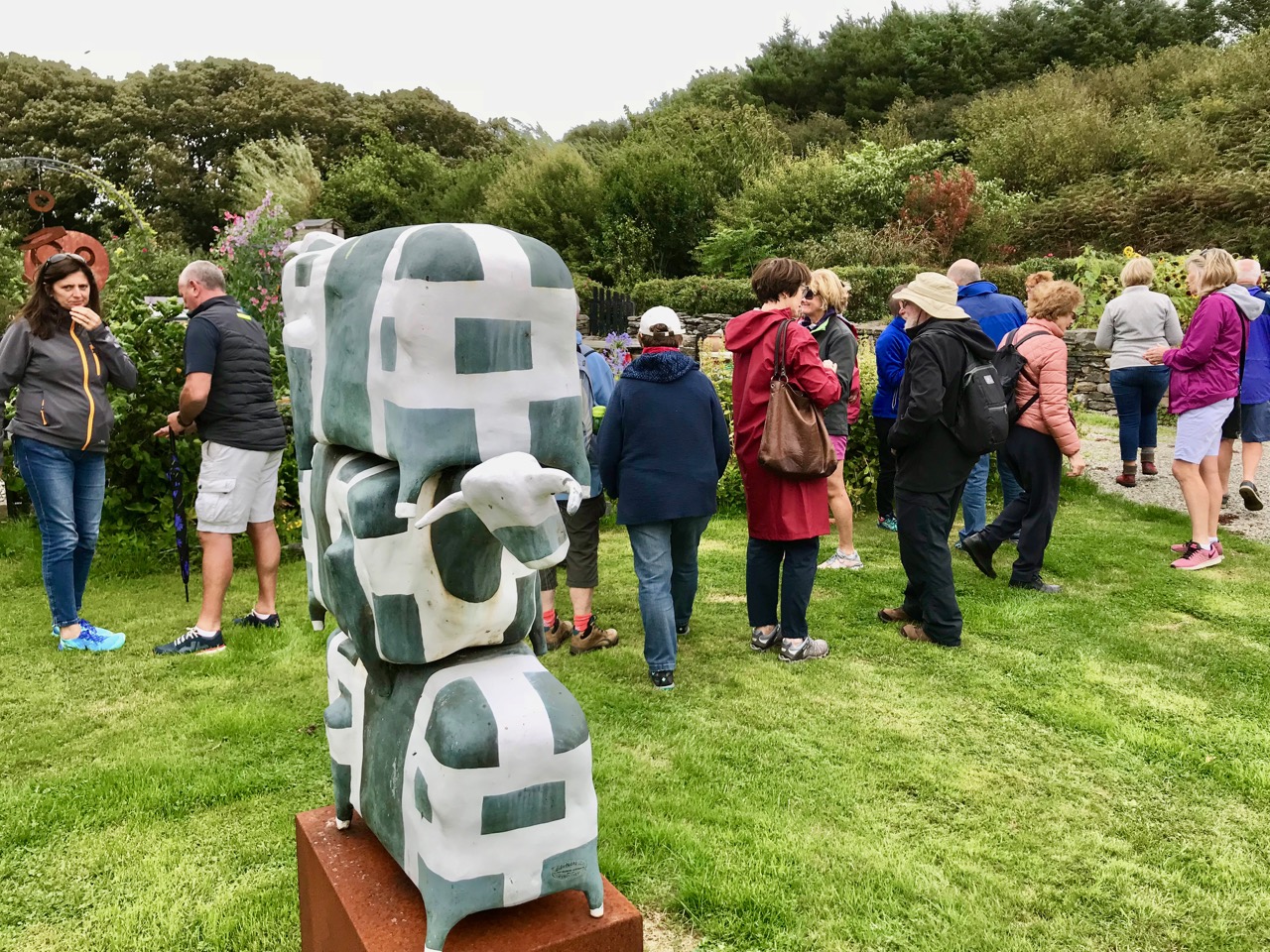
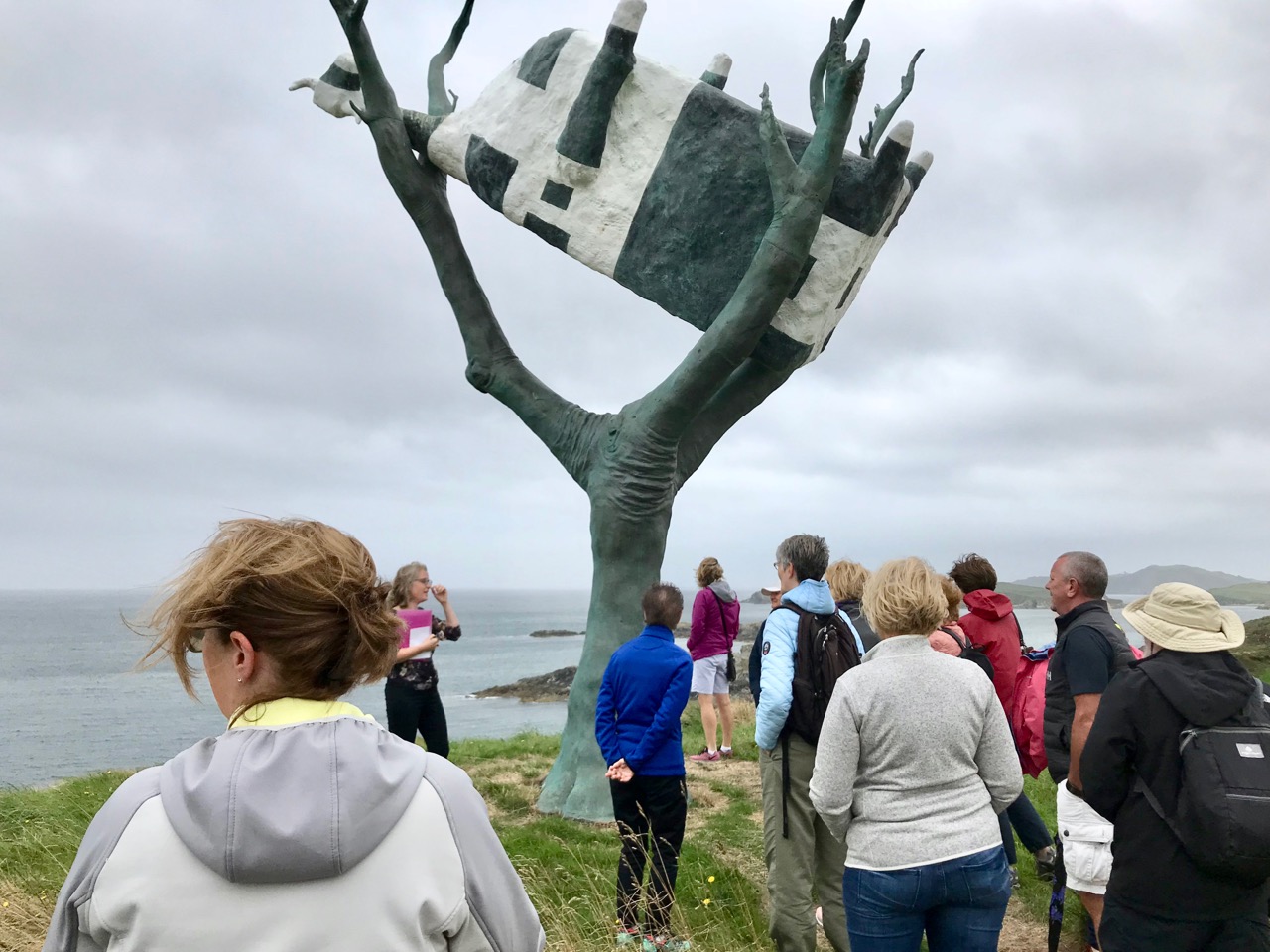
Artist John Kelly‘s cows are abundant at his home at Reen, and the experience of the connections with this unique place and Famine times were admirably and sensitively presented by Siobhan Burke of West Cork Experiences (she’s on the left, facing the bronze tree, below).

The day included organised visits to the 110 Skibbereen Girls project at the old workhouse site in Skibbereen – where we were given a presentation by artist Toma McCullim – and a guided tour by West Cork Arts Centre’s Zenda Williams of the Coming Home – Art and The Great Hunger exhibition at Uillinn, followed by a visit to the mass famine graves in Abbeystrewery, where Philip O’Reagan of the Skibbereen Heritage Centre explained the site’s enormous significance. Just as well we had those scones to bolster us up!

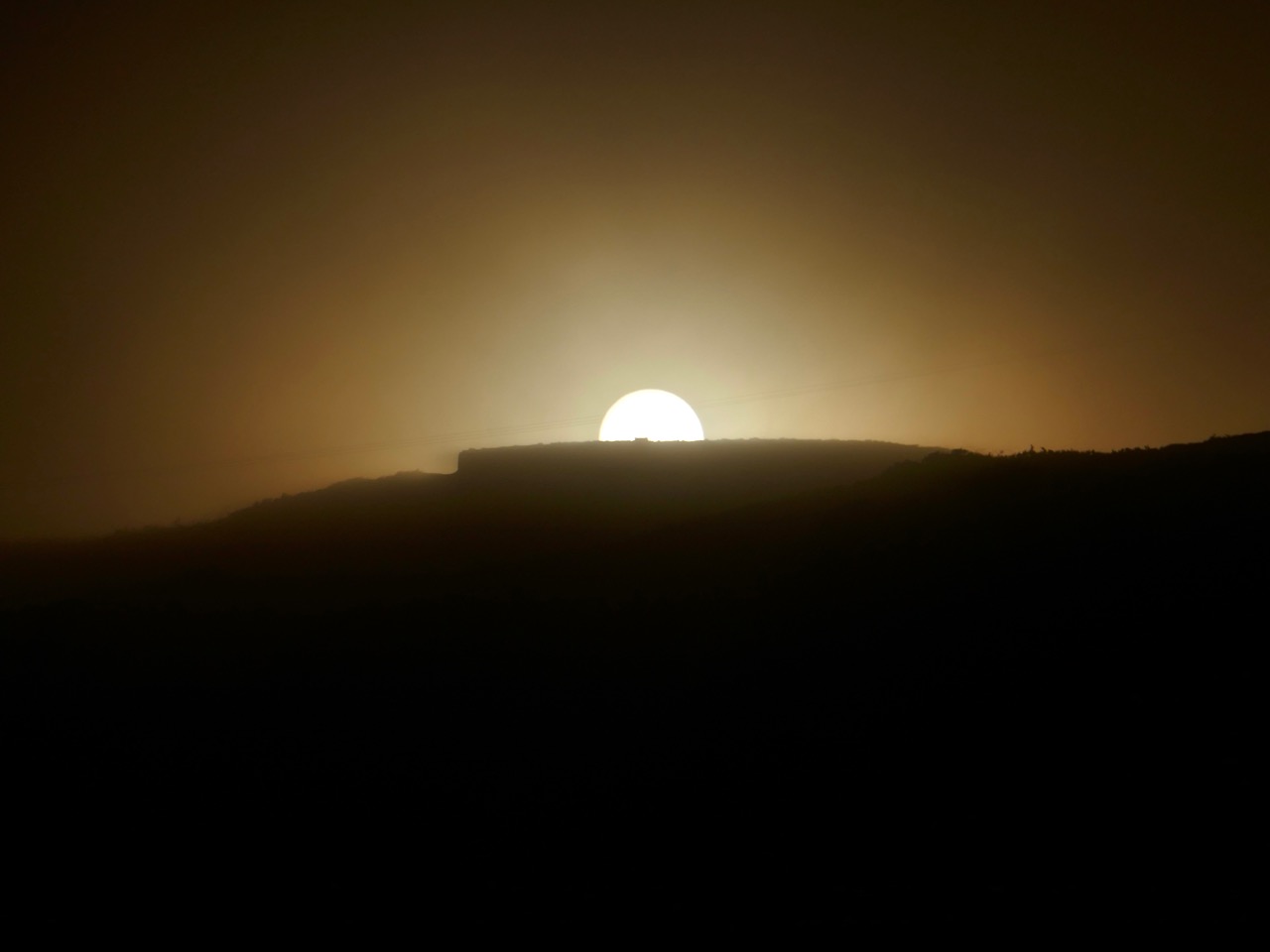
On the previous day we began the ‘West Cork Archaeology’ tour at Knockdrum Fort, where – in benevolent weather – you get the most spectacular views (above). Finola talked about the Rock Art on the site, which takes it back in time perhaps 5,000 years, and she also explained about the alignment with the Bealtaine sunset discovered by Boyle Somerville, described here – and which we witnessed ourselves earlier this year (below).

Highlights of that day’s expedition also included an entertaining time at Castletownshend hosted by George Salter-Townshend (below, he’s leading us into the Castle which has been owned by his family since medieval times).

After more on archeoastronomy from Finola, at Drombeg Stone Circle (above), a further treat was in store at Castle Salem, near Rosscarbery, where we were given a tour and talk by its owner Peter Daly (below).

We were delighted to be given the opportunity to provide this ‘lead-in’ to the History Festival weekend itself which – as last year – was a roaring success. If you didn’t go to it, take a look at the festival programme, and see what you missed!

Because our time has been taken up with the festival we haven’t written any posts this weekend. Normal service will be resumed next week. I can’t resist finishing off with another look at John Kelly’s sculpture garden at Reen.

Off the M8 – Searching out Péacáin

Once again we followed in the footsteps of our friends Amanda and Peter – she of Holy Wells of Cork and he of Hikelines. They had visited the Glen of Aherlow in County Tipperary and pointed us to St Berrahert’s extraordinary site at Ardane which I described in this post. Not far away is another site, which Amanda reported on fully in her own post, here. It is equally remarkable, and related to St Berrahert’s Kyle in that they were both restored by the Office of Public Works in the 1940s. They are also both very easily accessible in a few minutes from the M8 motorway at Cahir.

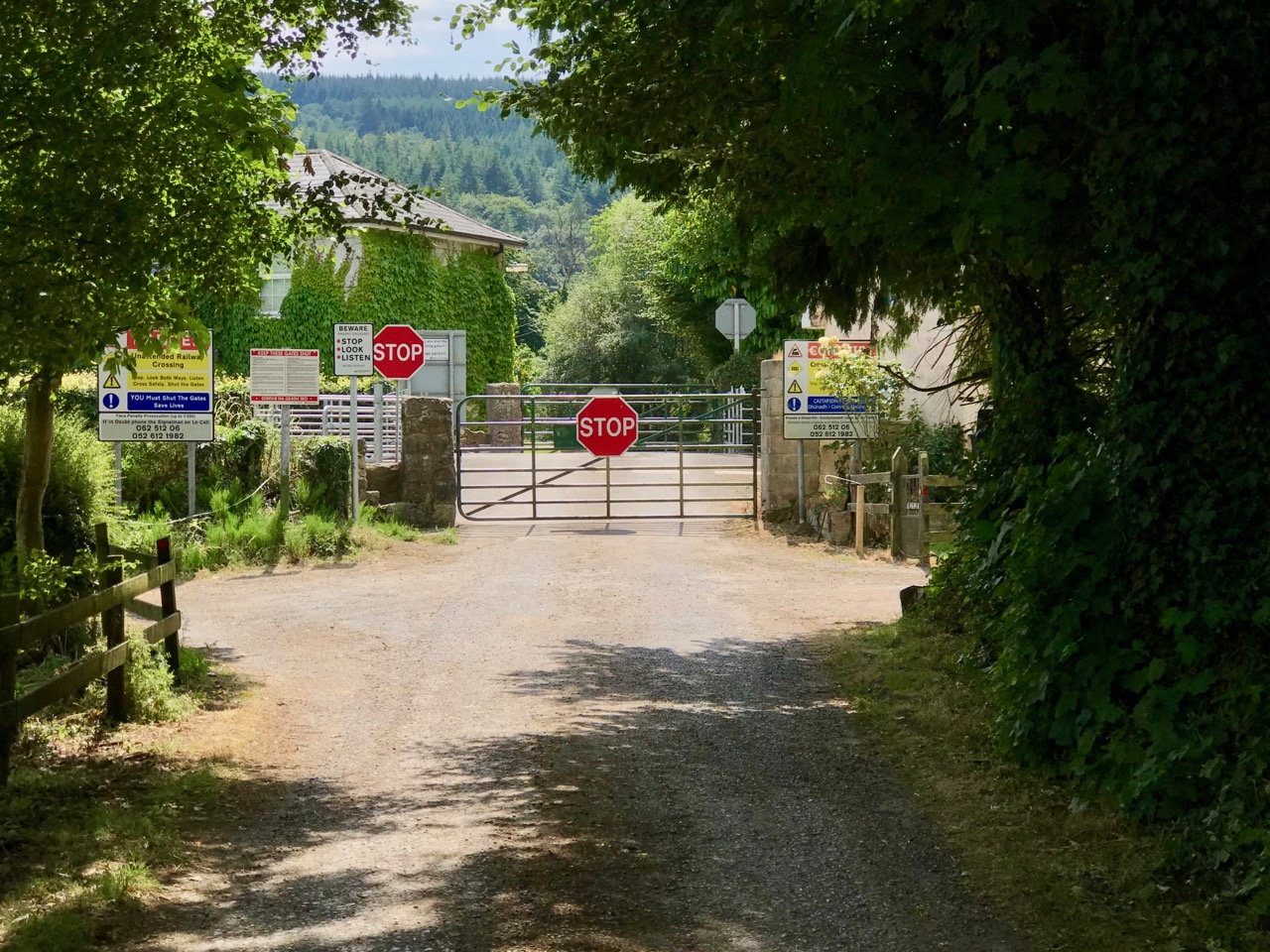
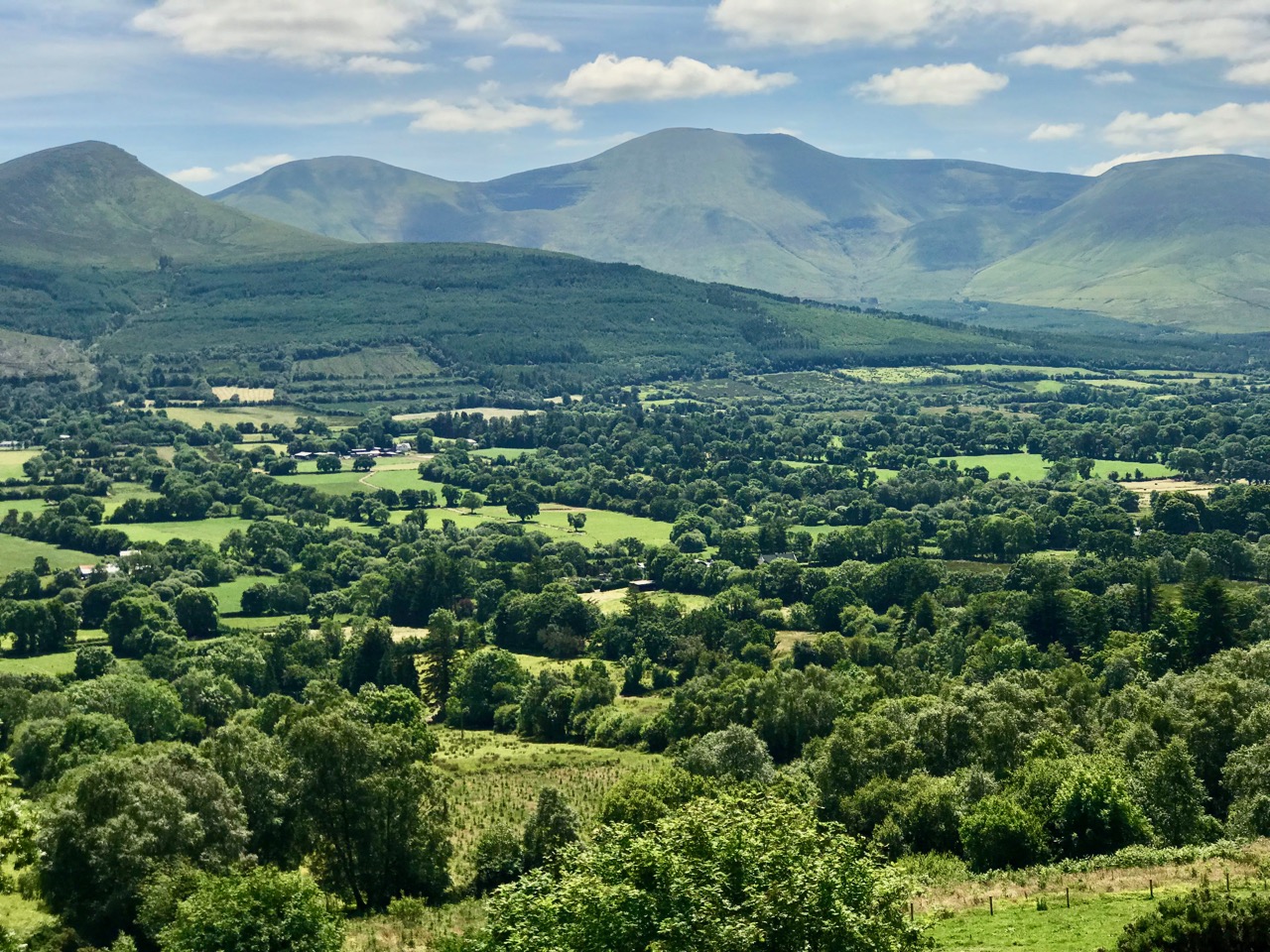
We were delighted to be travelling again through the beautiful Glen in the shadow of the Galtee Mountains (above) as we searched out a boreen that led us down to the railway, as directed by Amanda. We parked and crossed at the gate, watching out carefully as this is the Waterford to Limerick Junction line used by two trains a day (except on Sundays!)

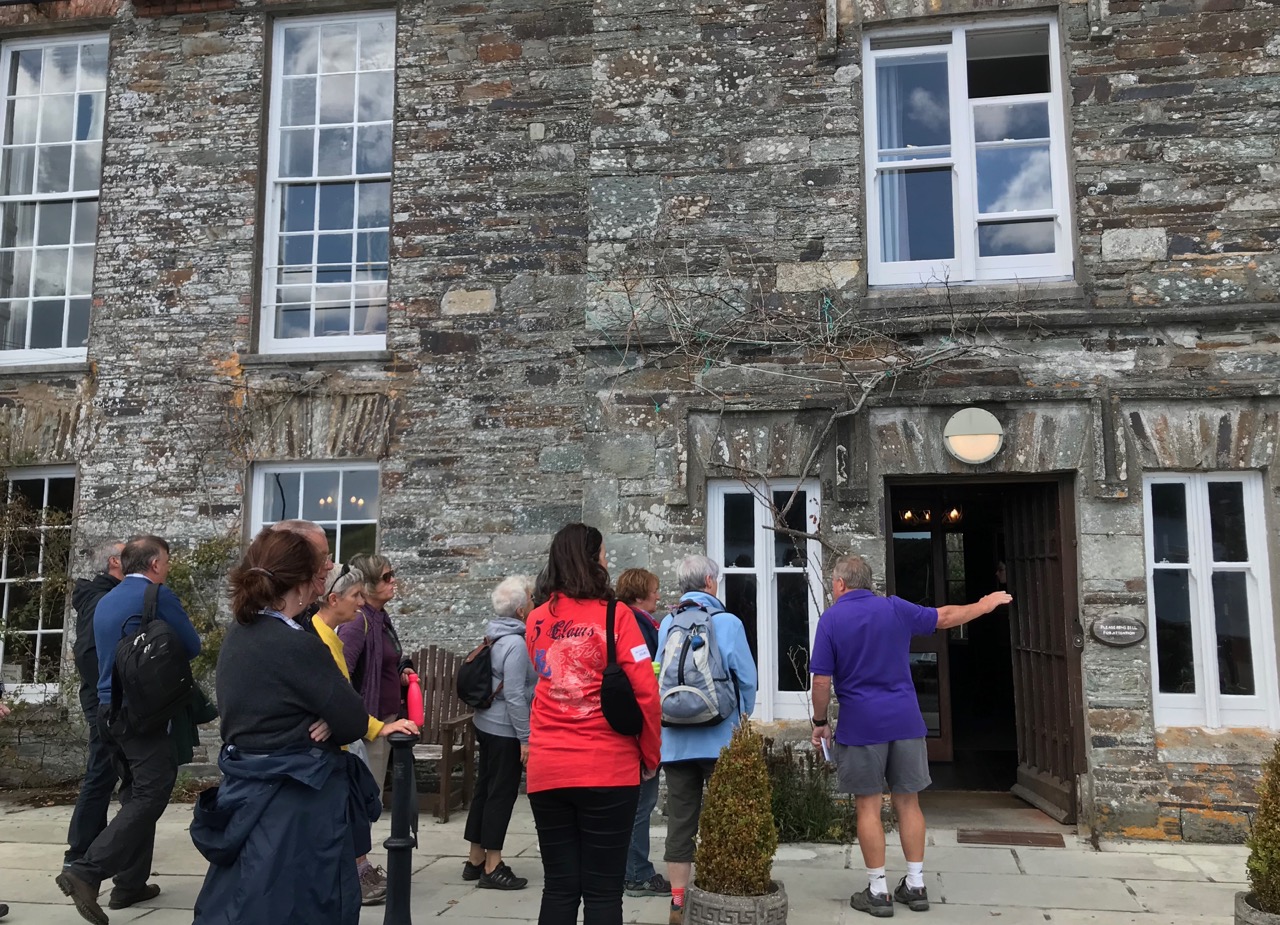
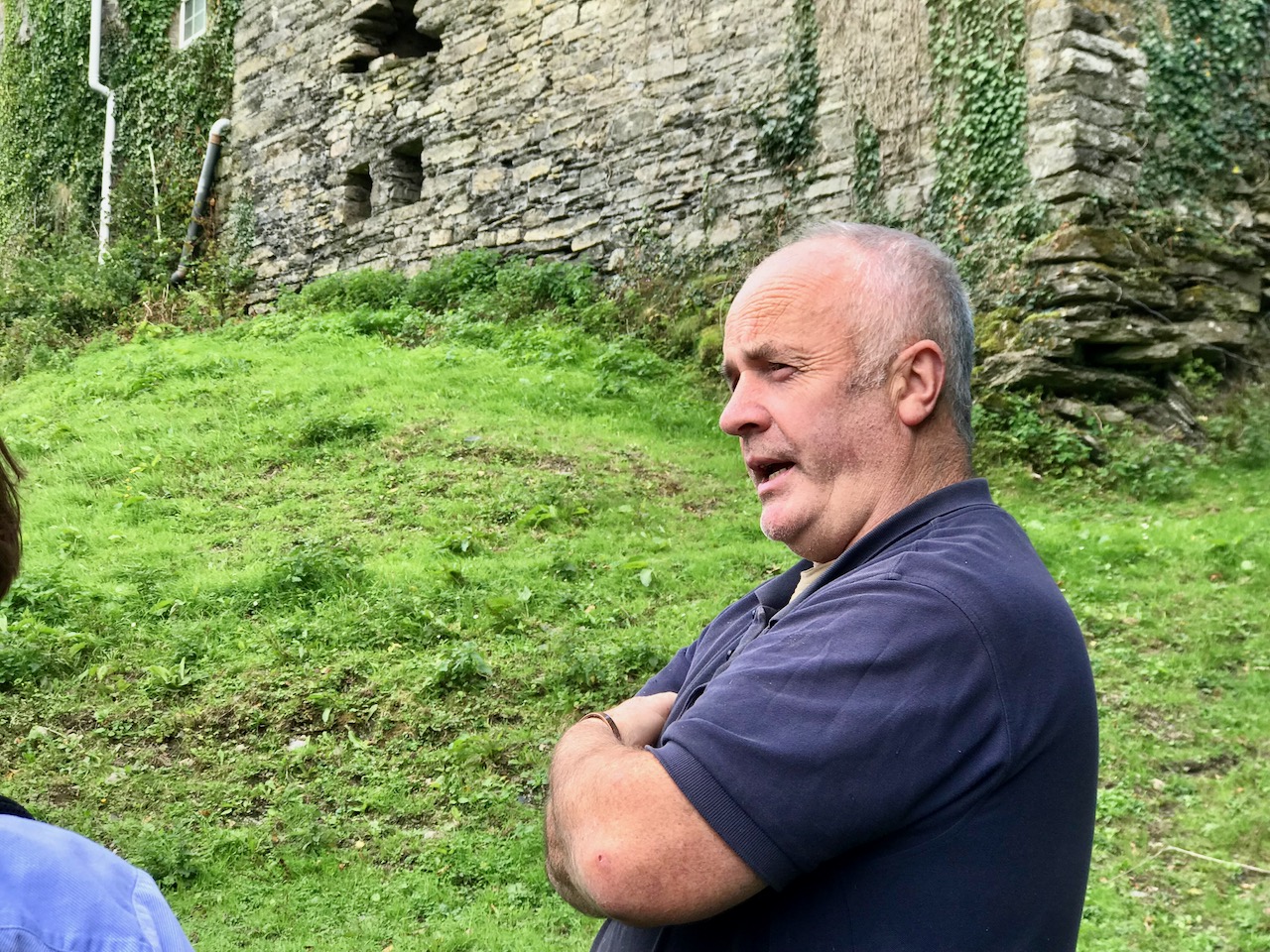
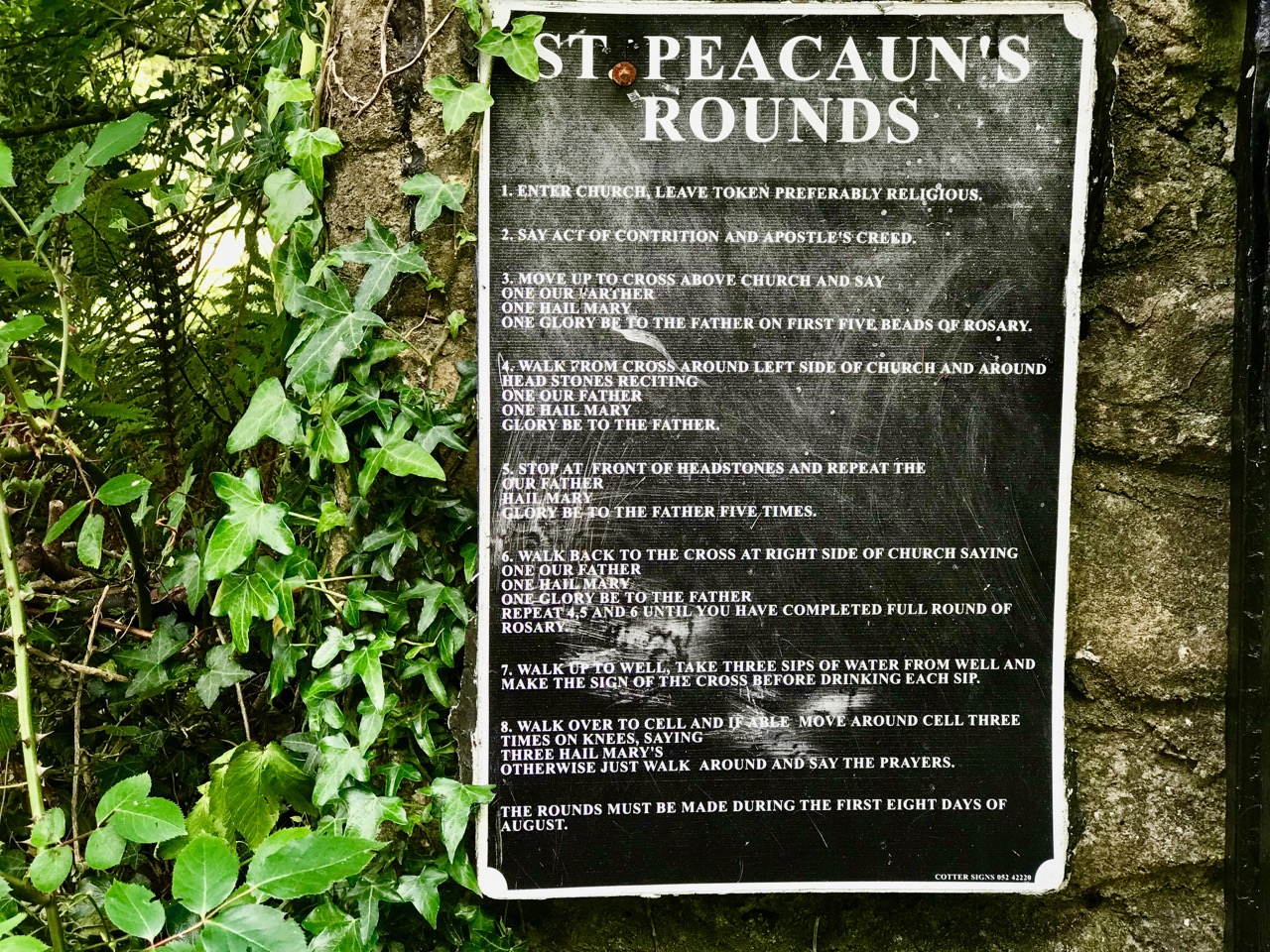
Once across, we were in an idyll. It’s a private lane, running alongside a gentle stream, but the Bourke family allow visitors to walk (as they have done for centuries) to the old church, the cell and the holy well of Saint Péacáin. Ancient stone walls line the way, and trees overhang, shading the dappled sunlight in this most exceptional of Irish seasons. We met Bill Bourke, who regaled us with tales of his life spent mostly far away from this, his birthplace – but who returned to rebuild the family home and to enjoy perpetual summer in what is, for him, the most beautiful setting in the world. He also told us of the crowds who used to come to celebrate St Péacáin at Lughnasa – 1st August – paying the rounds and saying the masses.

In her monumental work (it runs to over 700 pages) The Festival of Lughnasa – Oxford University Press 1962 – Máire MacNeill points out the harvest feast day was such an important ancient celebration that it survives as the focus of veneration of many local saints who would otherwise have been known for their own patron day, and she particularly mentions Tobar Phéacáin in this regard: a place well away from any large settlement where the great agricultural festival was so critical to the cycle of rural life.

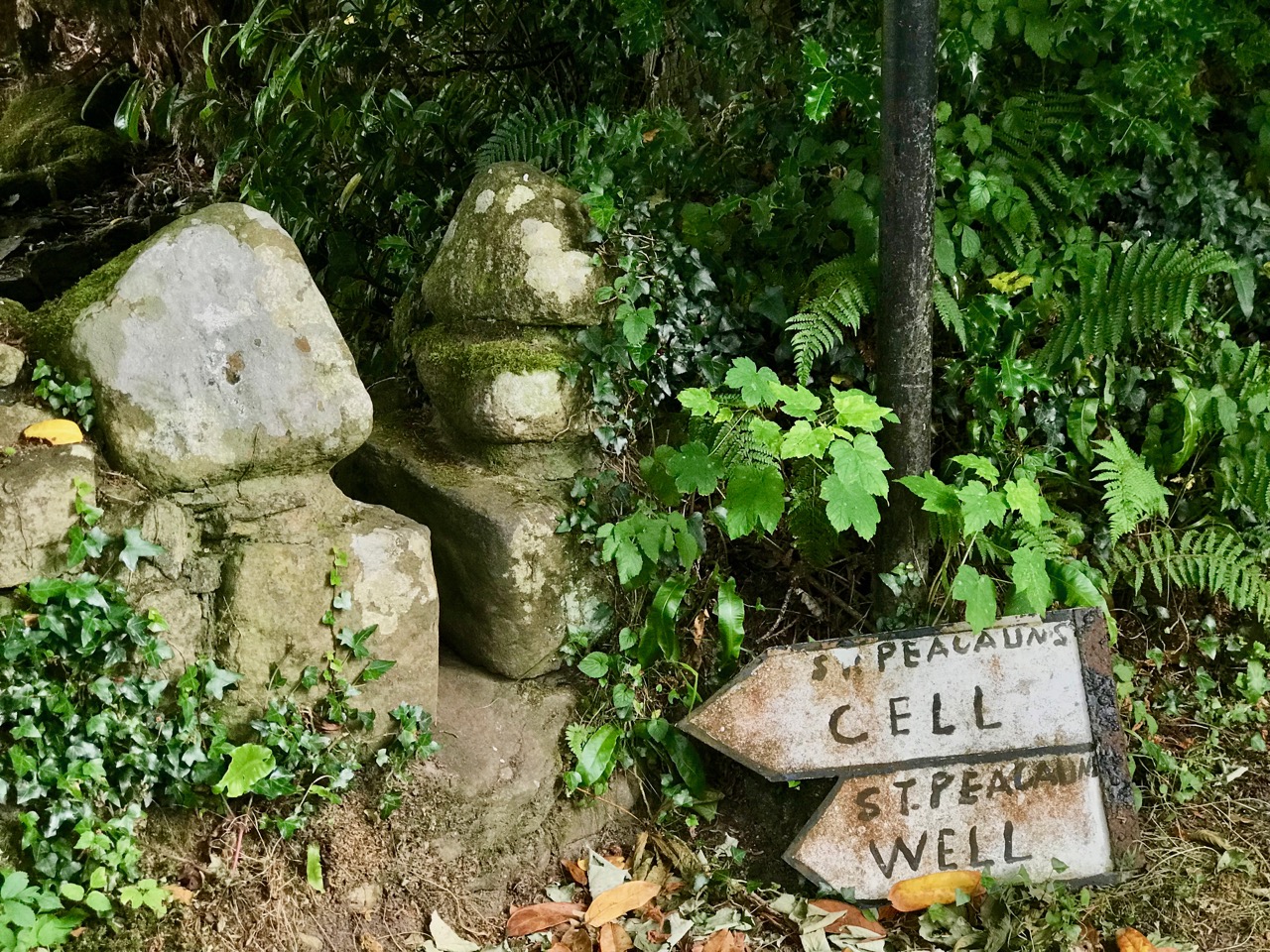
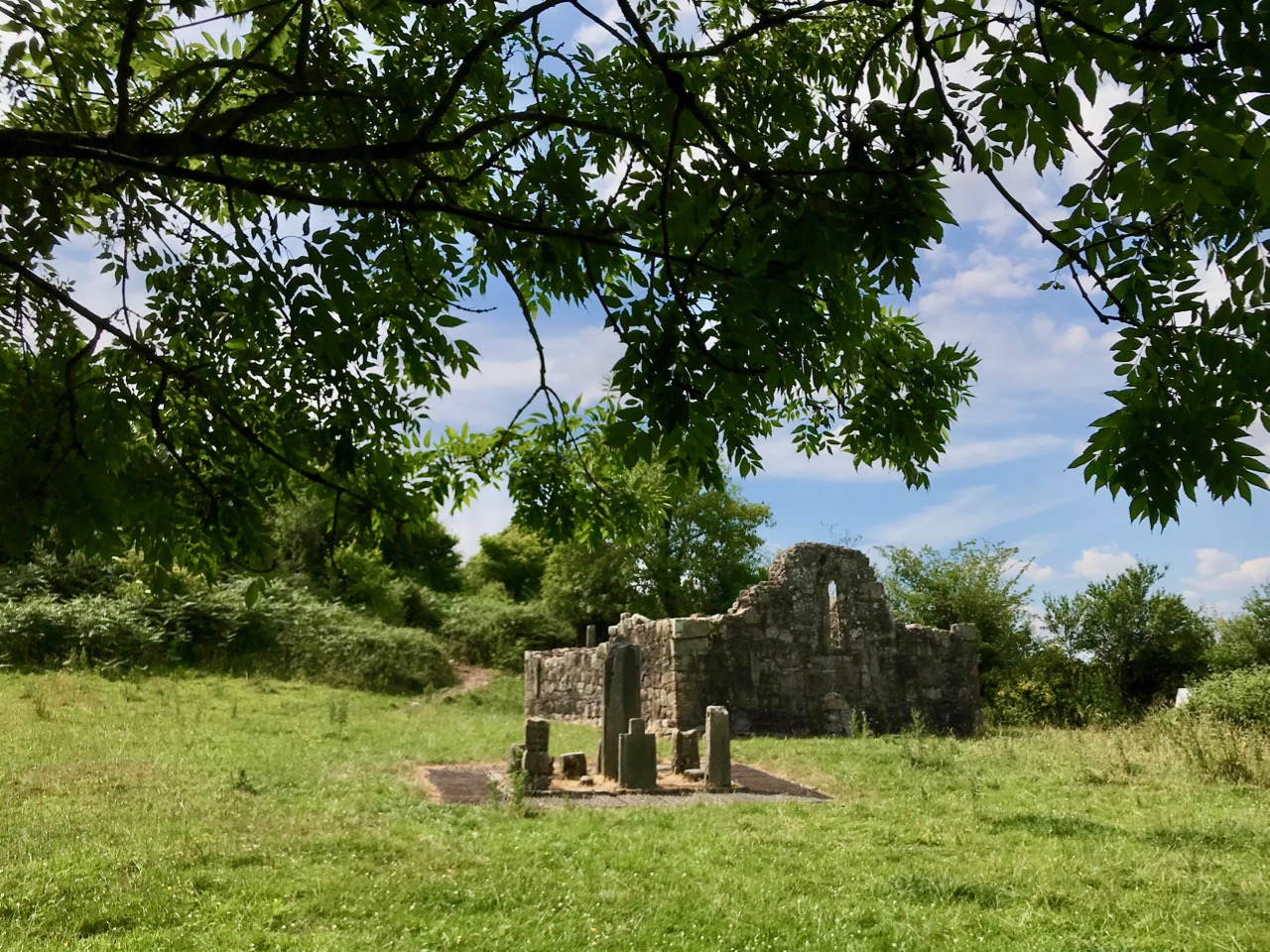
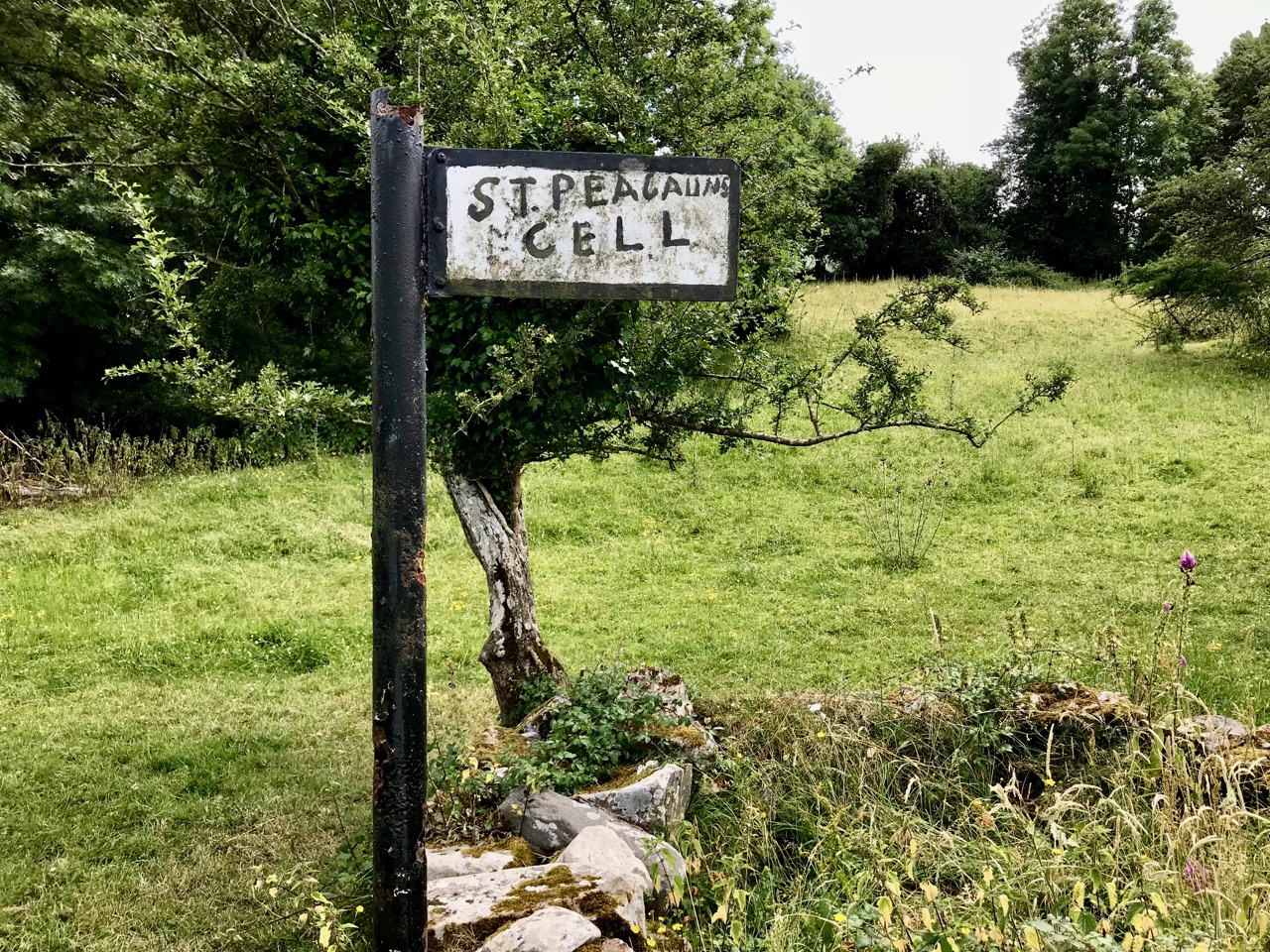
The rural setting of St Péacáin’s Cell can be seen above, just in front of the trees; the church and the well are nearby. MacNeill provides a description of Tobar Phéacáin and includes some variant names:

. . . Tobar Phéacáin (Peakaun’s Well), Glen of Aherlow, Barony of Clanwilliam, Parish of Killardry, Townland of Toureen . . . On the northern slope of the Galtee Mountain at the entrance to the Glen of Aherlow and about three or four miles north-west of Caher there is a well and ruin of a small church. About a mile beyond Kilmoyler Cross Roads a path leads up to it . . . In 1840 O’Keefe, of the Ordnance Survey team, reported that the old church was called by the people Teampuillin Phéacáin, or just Péacán . . .

. . . The well, which he described as lying a few perches south-east of the church was called Peacan’s Well or Tobar Phéacáin. It was surrounded by a circular ring of stonework. He stated: ‘The pattern-day still observed at this place falls on the 1st of August, which day is, or at least until a few years since, has been kept as a strict holiday.’ Devotions were also, he said, performed there on Good Friday . . .

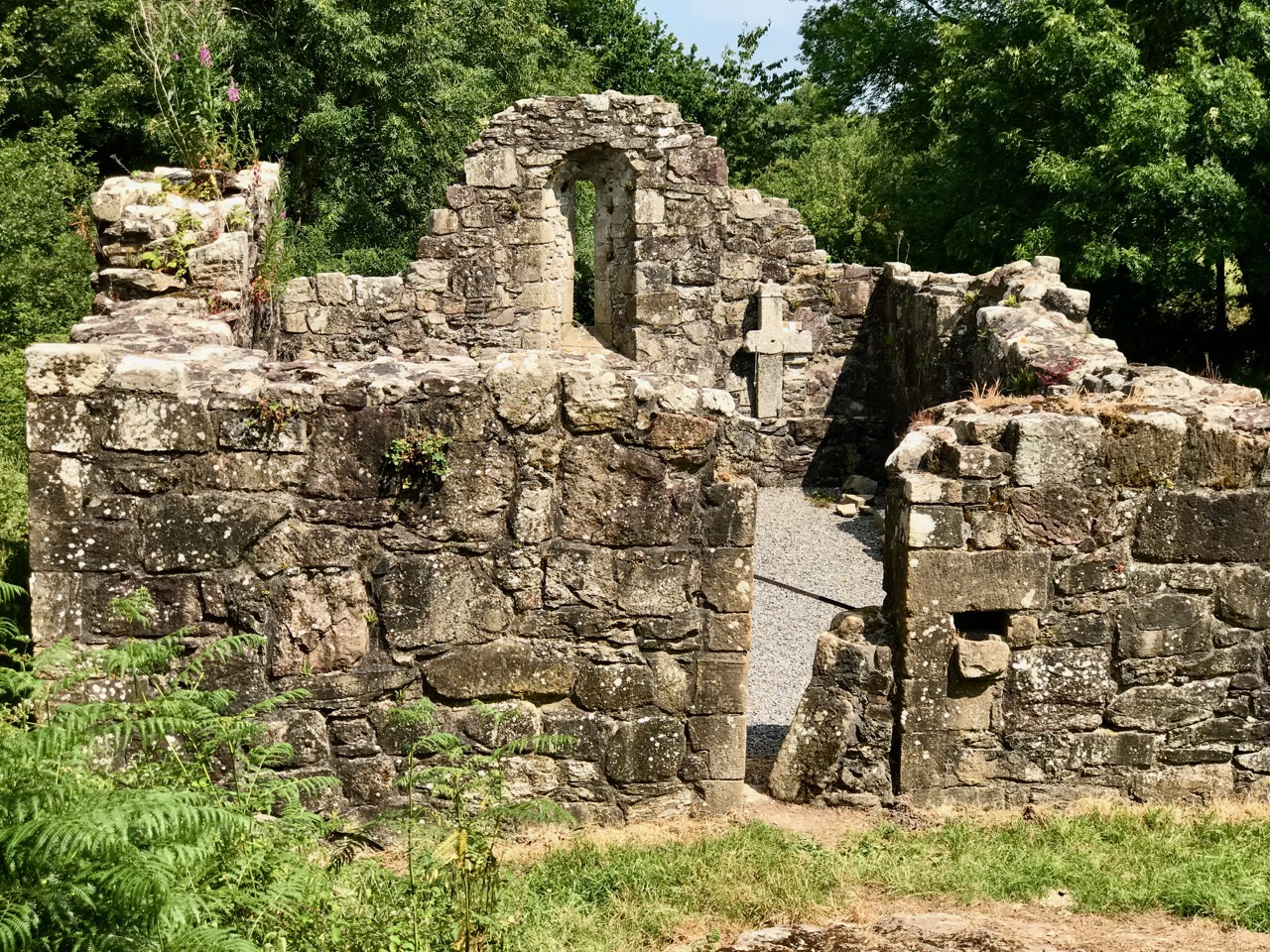
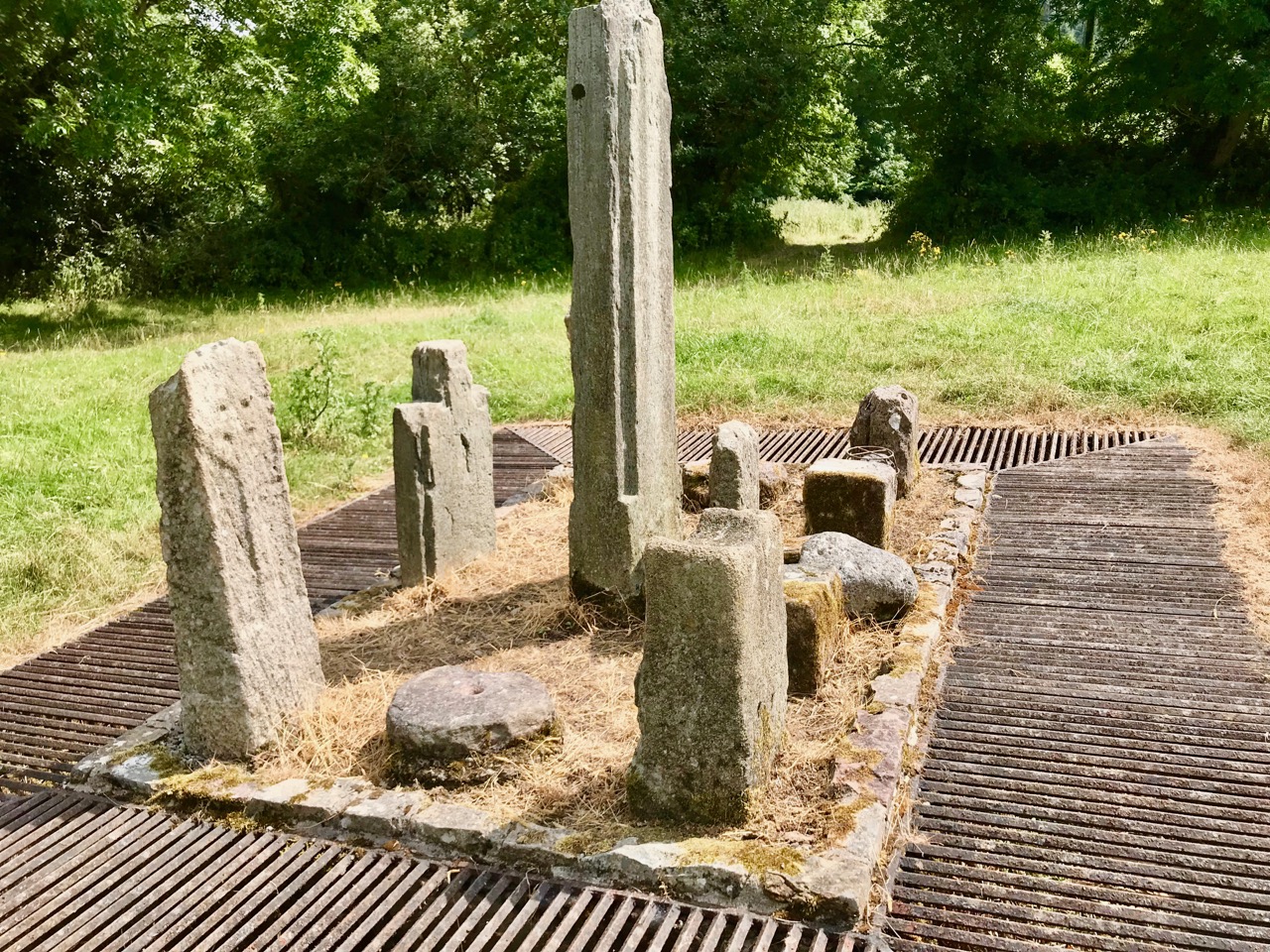
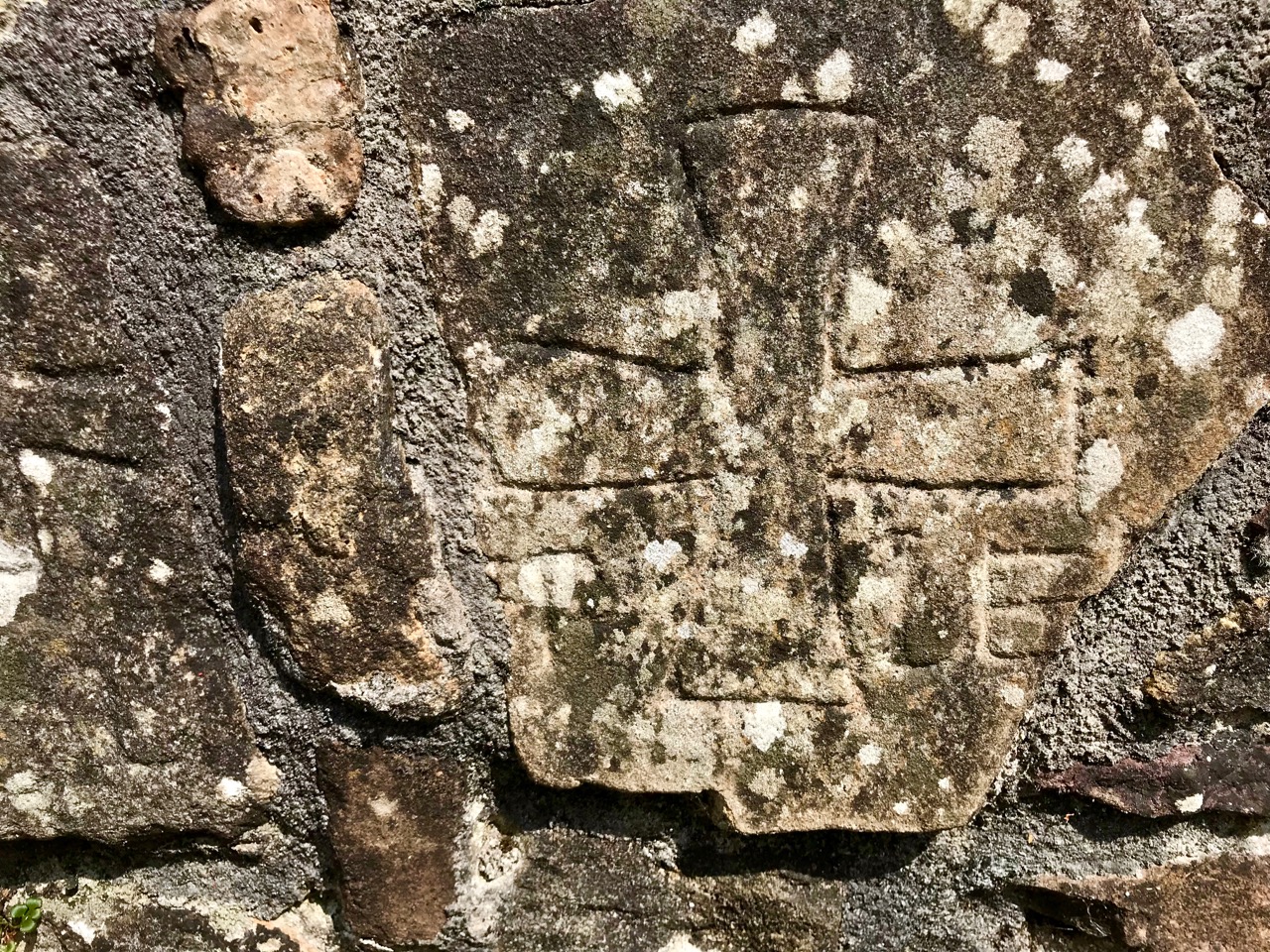
A hundred years after O’Keefe wrote this, the church ruins were tidied up by the Office of Public Works. As at St Berrihert’s Kyle, it seems there were numerous carved slabs on the site and remnants of high crosses, implying a significant ecclesiastical presence here. All these have been fixed in and around the church ruin for safekeeping, and in an intelligent grouping. It’s wonderful to be able to see such treasures in the place they were (presumably) made for, and to experience them in such a remote and peaceful ambience.

McNeill continues:

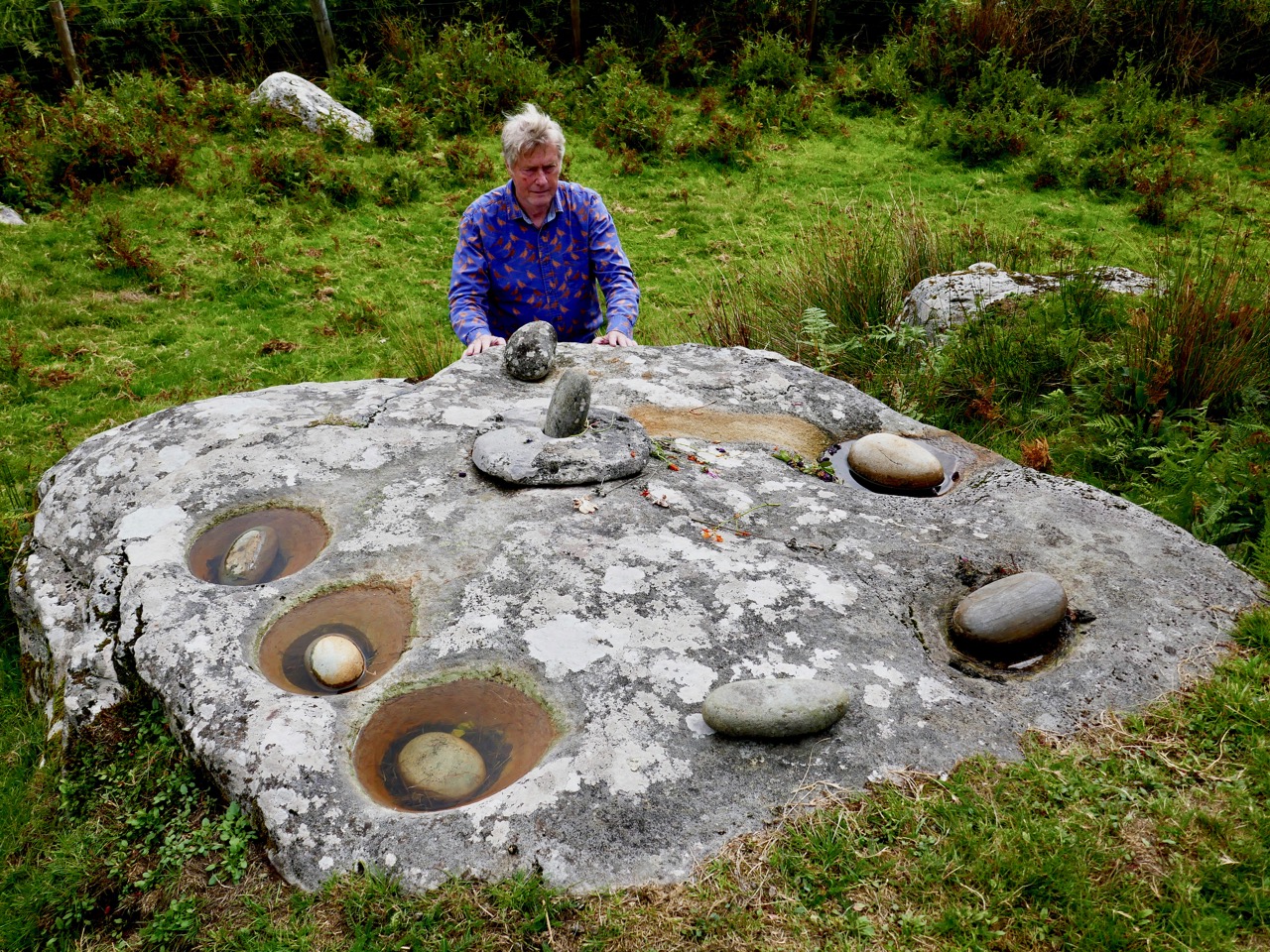
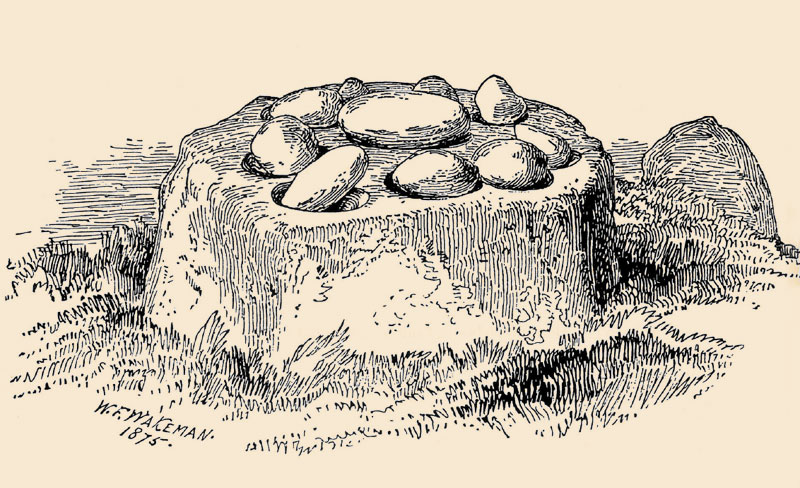
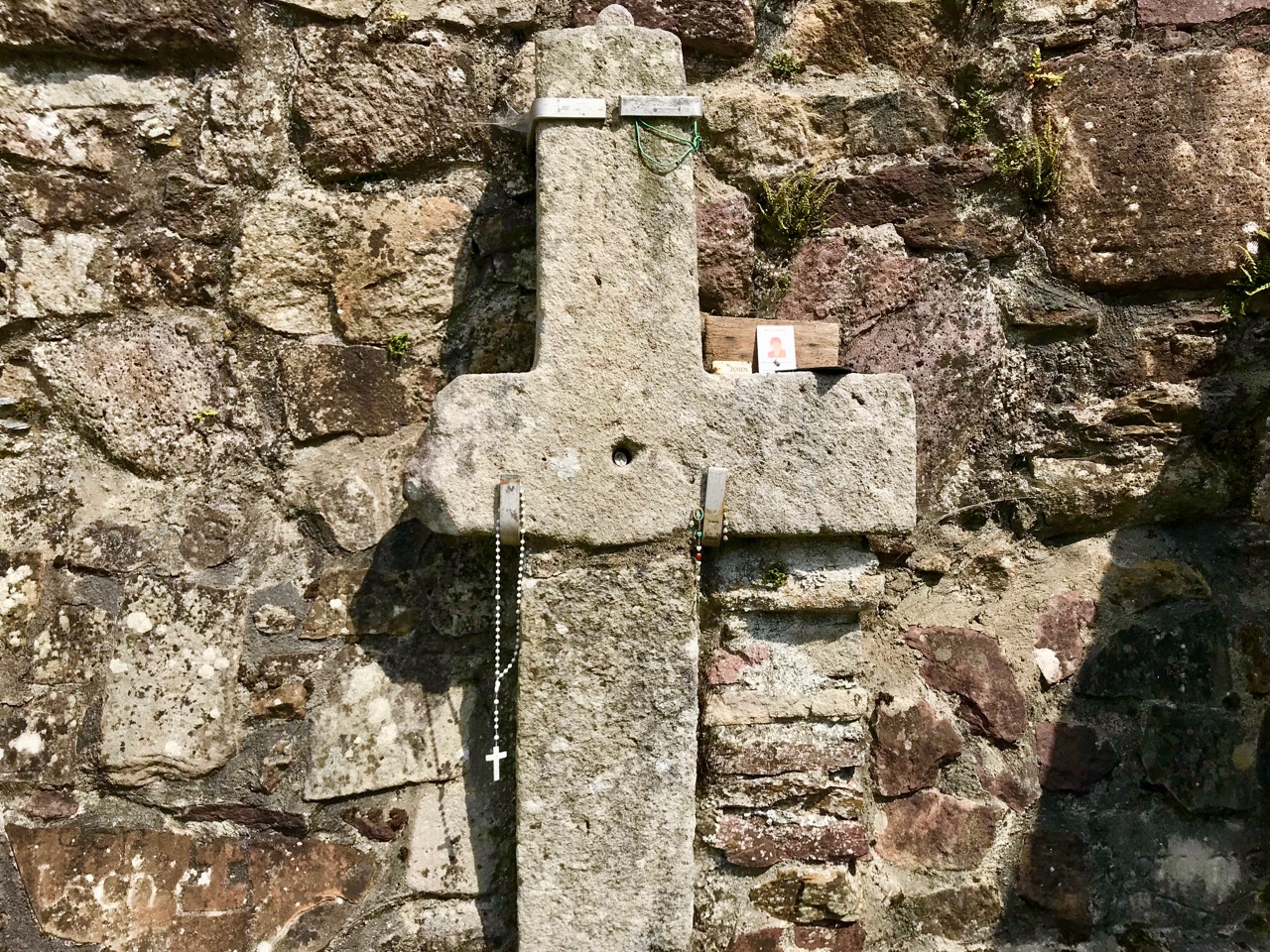
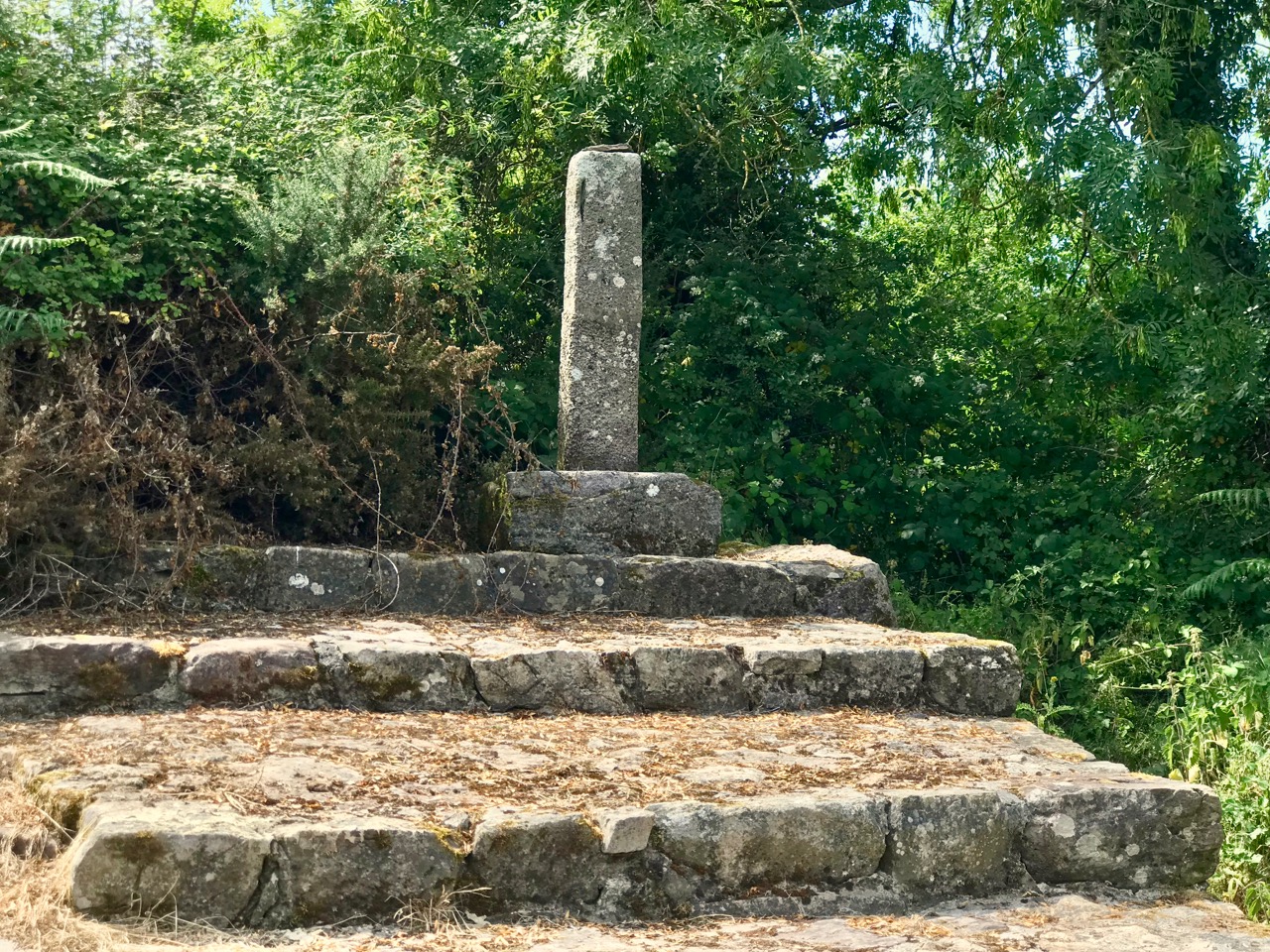
. . . Nearby is the shaft of a cross which tradition avers was broken in malice by a mason who was then stricken with an inward pain and died suddenly as a punishment for his sacrilege . . . O’Keefe was told a story of a small stone, 6 or 7 inches long and 4 or 5 in depth, having ten little hollows in it and resting in a hollow of the ‘altar’ of the old church. Christ, or according to others St Péacán, asked a woman, who had been churning, for some butter; she denied having any and when the visitor departed she found the butter had turned into stone which retained the impression of her fingers . . . Nuttall-Smith speaks also of a cave where the saint used to practice austerities . . .

The carved fragments are quite remarkable and are in all likelihood well over a thousand years old. I have yet to see anywhere in Ireland – outside of museums – which has such an extensive collection of fascinating medieval antiquities as these sites in the Glen of Aherlow. Here you can also see cross slabs and a sundial said to date from the eighth century.

Nuttall-Smith’s ‘cave’ – quoted by MacNeill above – is likely to be St Péacáin’s Cell, set in a field on the far side of the river. This was probably a clochán, or beehive-hut, of the type once used by anchorites. It is protected by a whitethorn tree, but was quite heavily overgrown on the day of our visit. We could make out the ballaun stones inside, said to be the knee prints of the Saint who made his constant devotions there. Amanda – in her post on the holy well – reports that Péacáin would also stand daily with arms outstretched against a stone cross, chanting the psalter.

McNeill discusses the significance of weather at the August celebrations:

. . . Paradoxically for a day of outing so fondly remembered, no tradition of the Lughnasa festival is stronger than that which says that it is nearly always rainy. No doubt this has been only too often experienced. Saint Patrick’s words to the Dési: ‘Bid frossaig far ndála co bráth’ (Your meetings shall always be showery) must be as well proved a prophecy as was ever made. Still there must be more significance in the weather beliefs than dampened observation. Certainly it was expected that rain should fall on that day, and sayings vary as to whether that was a good or bad sign . . . There are a few interesting beliefs about thunder, which was also expected on that day: the loud noise heard at Tristia when the woman made rounds there to have her jealous husband’s affection restored; the prophecy that no-one would be injured by lightning at Doonfeeny, a promise also made by St Péacán . . .

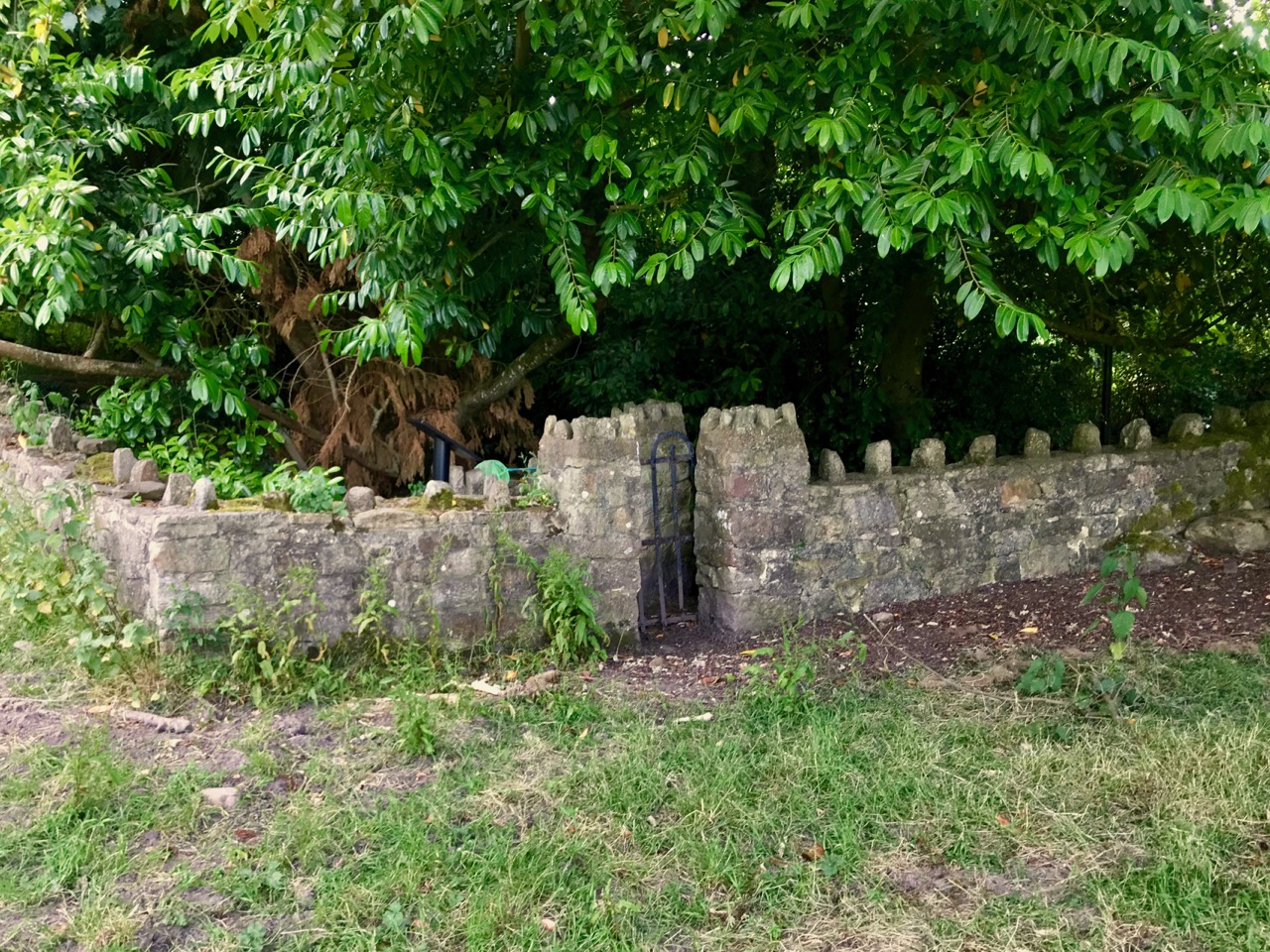
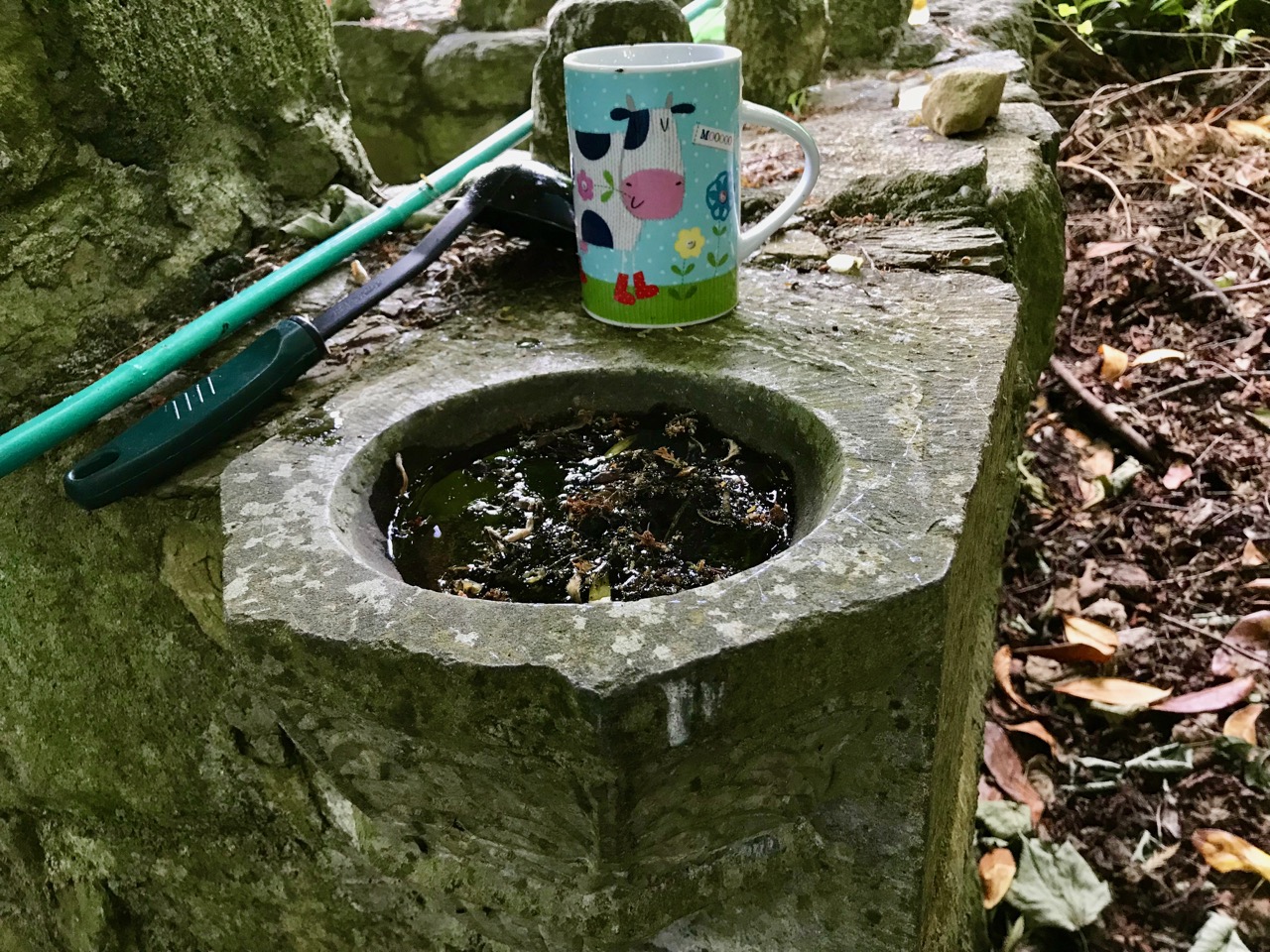
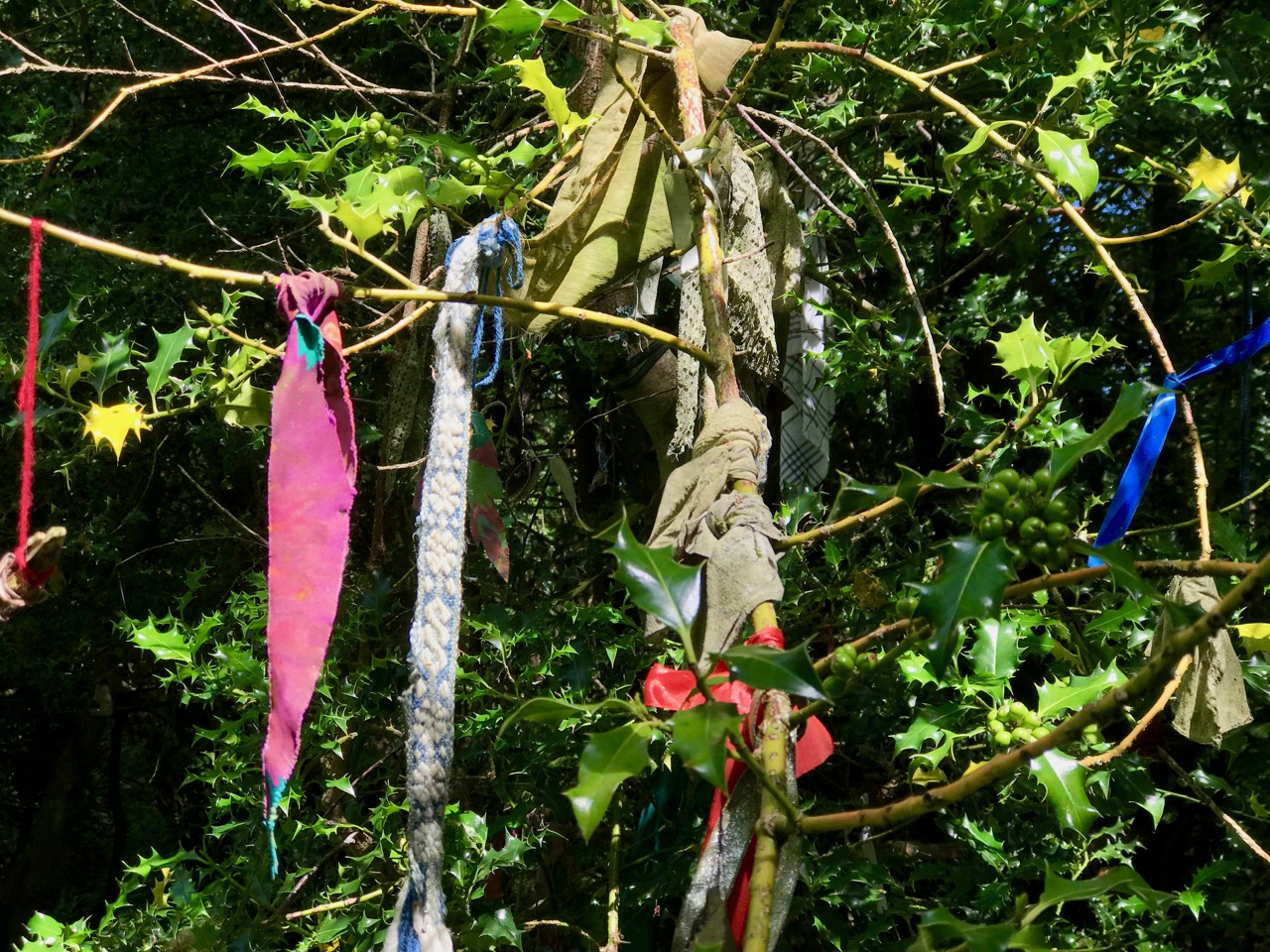
The holy well is tucked away in a stone-walled enclosure hidden under the trees on the edge of the field which contains the Saint’s cell. It’s also a tranquil place, obviously still much visited: the water is crystal clear, refreshing and will ensure protection from burns and drowning.  This is a magical setting to complete the day’s travels in the beautiful Glen of Aherlow.

Off the M8 – A Secret in The Glen of Aherlow

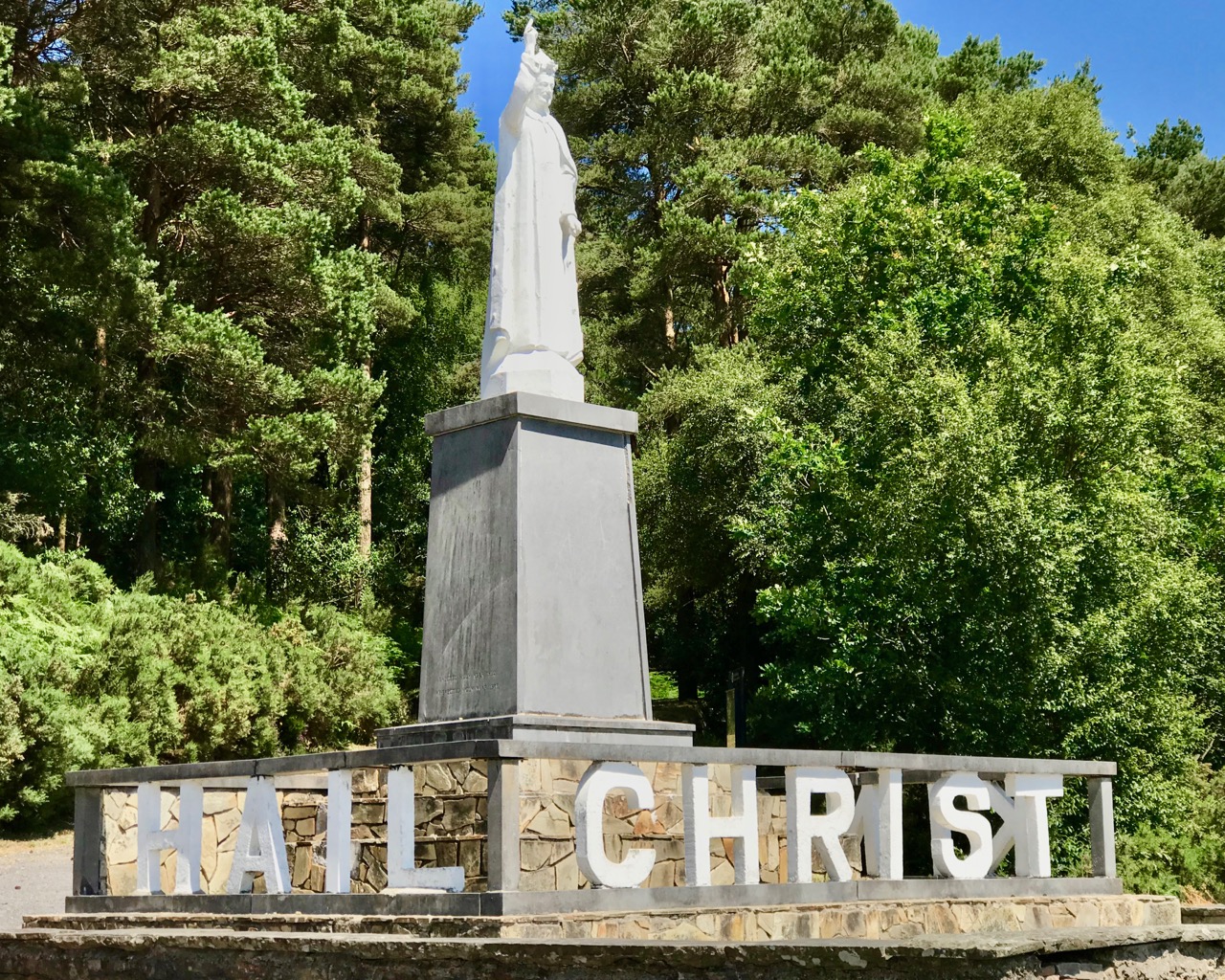
The Glen of Aherlow, County Tipperary: I had never heard of it. However, as you can see from the view, above, the place deserves to be explored: it’s about 20 minutes from junctions 10 and 11 near Cahir. That’s not too much of a diversion. From the spot where this photo was taken – on our travels this week – you can look out across to the Galtee Mountains, a prospect enjoyed for eternity by this imposing statue of Christ the King, whose hand is raised . . . in blessing the Glen, its people and all those who pass by . . . The statue was originally placed here by volunteers in the Holy year of 1950, and recreated in 1975. It has become the symbol of the Glen.

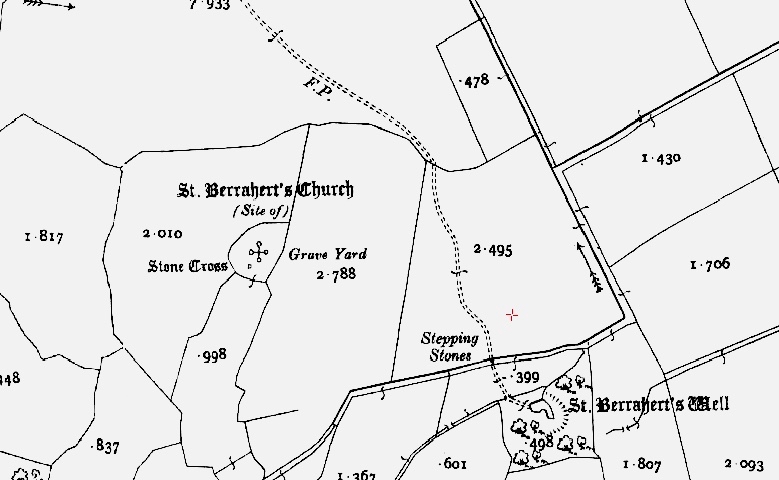
We were passing on our way to search out a secret which the Glen holds: somewhere in the townland of Ardane, we knew that there is a very ancient site where treasures have been hidden away for centuries. The first edition of the Ordnance Survey map has it marked:
I was intrigued, because a ‘Stone Cross’ indicated in this way often implies a High Cross, and a monastic settlement, so I was anxious to investigate. You will remember previous posts I have written on the many magnificent examples of these medieval treasures which Ireland holds. We had been alerted to this site by our friends Amanda and Peter, who have recently visited, and Amanda has given a comprehensive account of St Berrahert’s Well (also shown on the map) in Holy Wells of Cork. Like Amanda, I am unsure if there is a ‘correct’ spelling of St Berrahert: he is also known as Berrihert, Berehert, Bernihardt, Bericheart, and Bernard! Not a lot is known about him, other than that he came to the Glen after the Synod of Whitby in AD 664 and died on 6 December 839 – one of the saints who, like St Ciarán . . . the first Saint of Ireland . . . had a remarkably long life and who has left his name behind in the heart of Tipperary.

The place is generally known as St Berrahert’s Kyle (from the Irish word cill, ‘church’). It’s hard to find. We enlisted the help of Jimmy Martin, a local resident, who regaled us most entertainingly – and at great length – about hooded monks, crows and strange characters he had personally encountered at the site, and cures which he had witnessed at the well. Following his instructions we crossed fields, passed somnolent cows, and saw before us the remarkable ‘Kyle’.

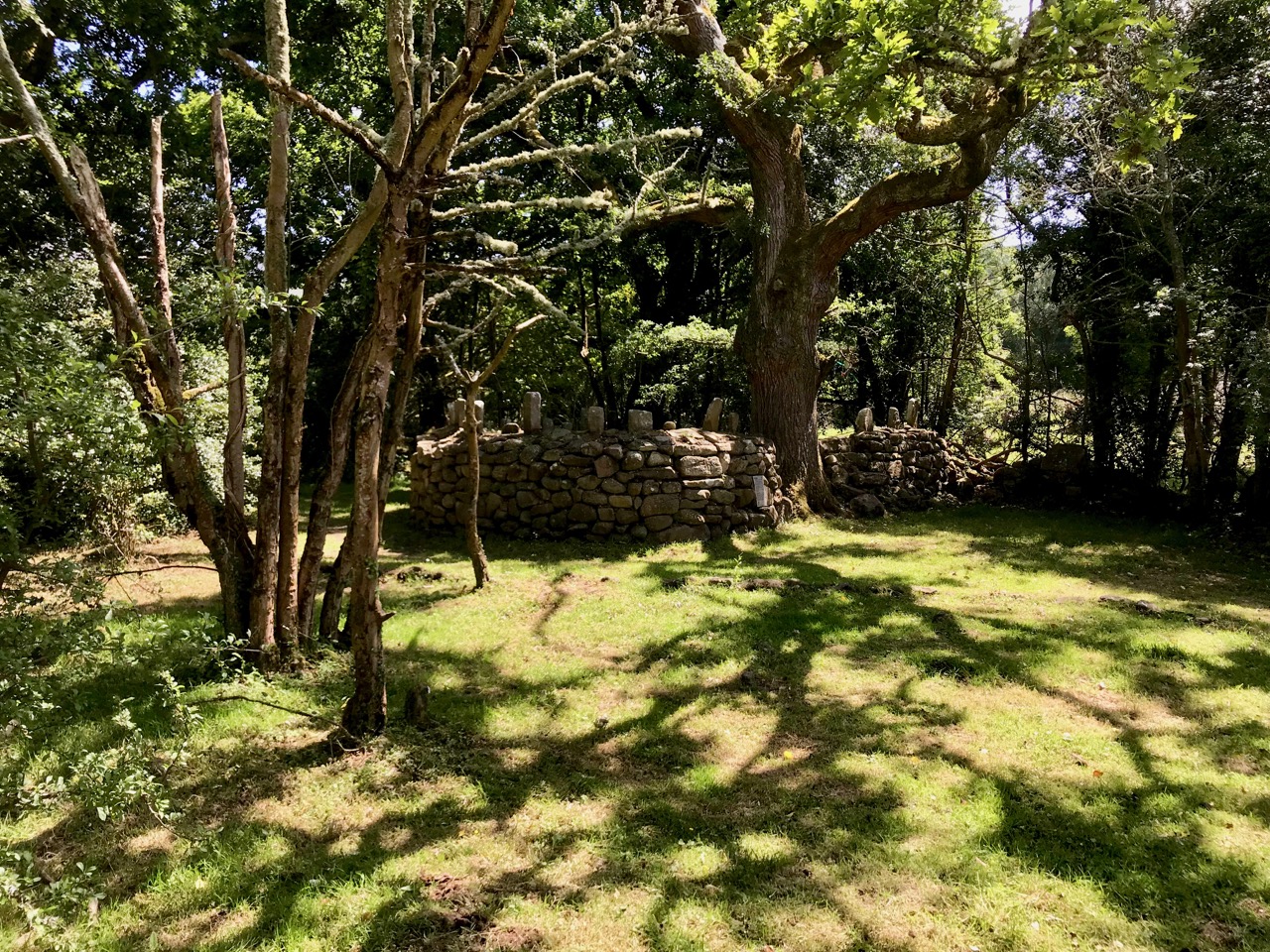
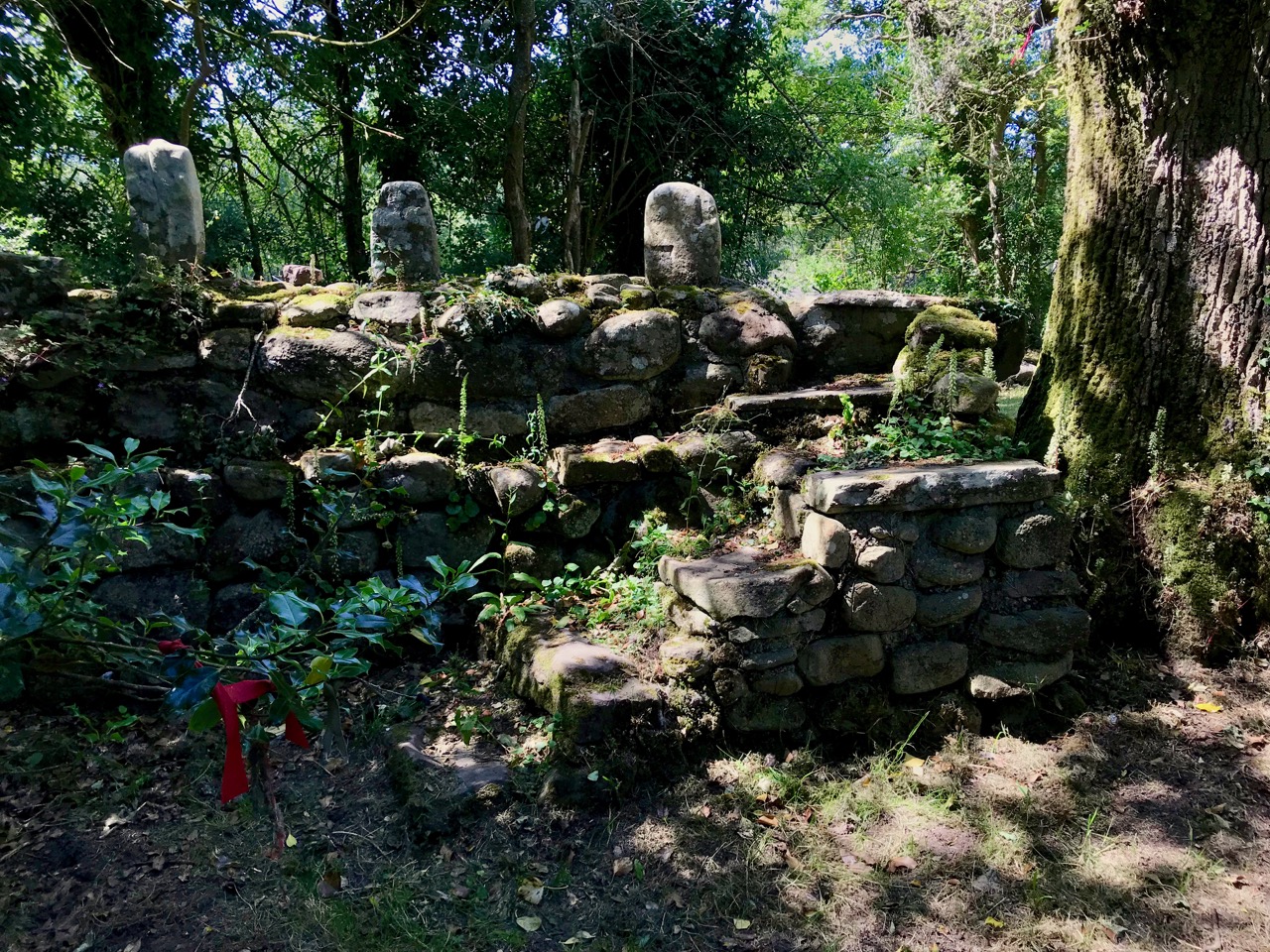
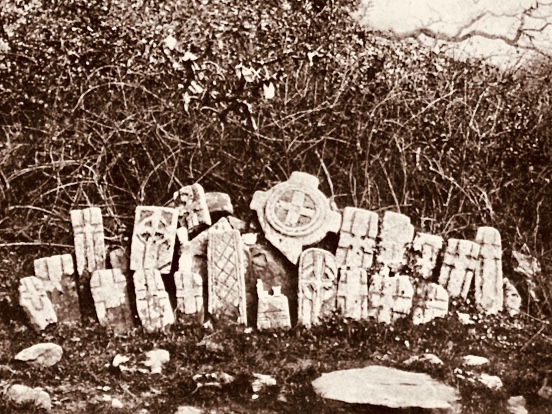
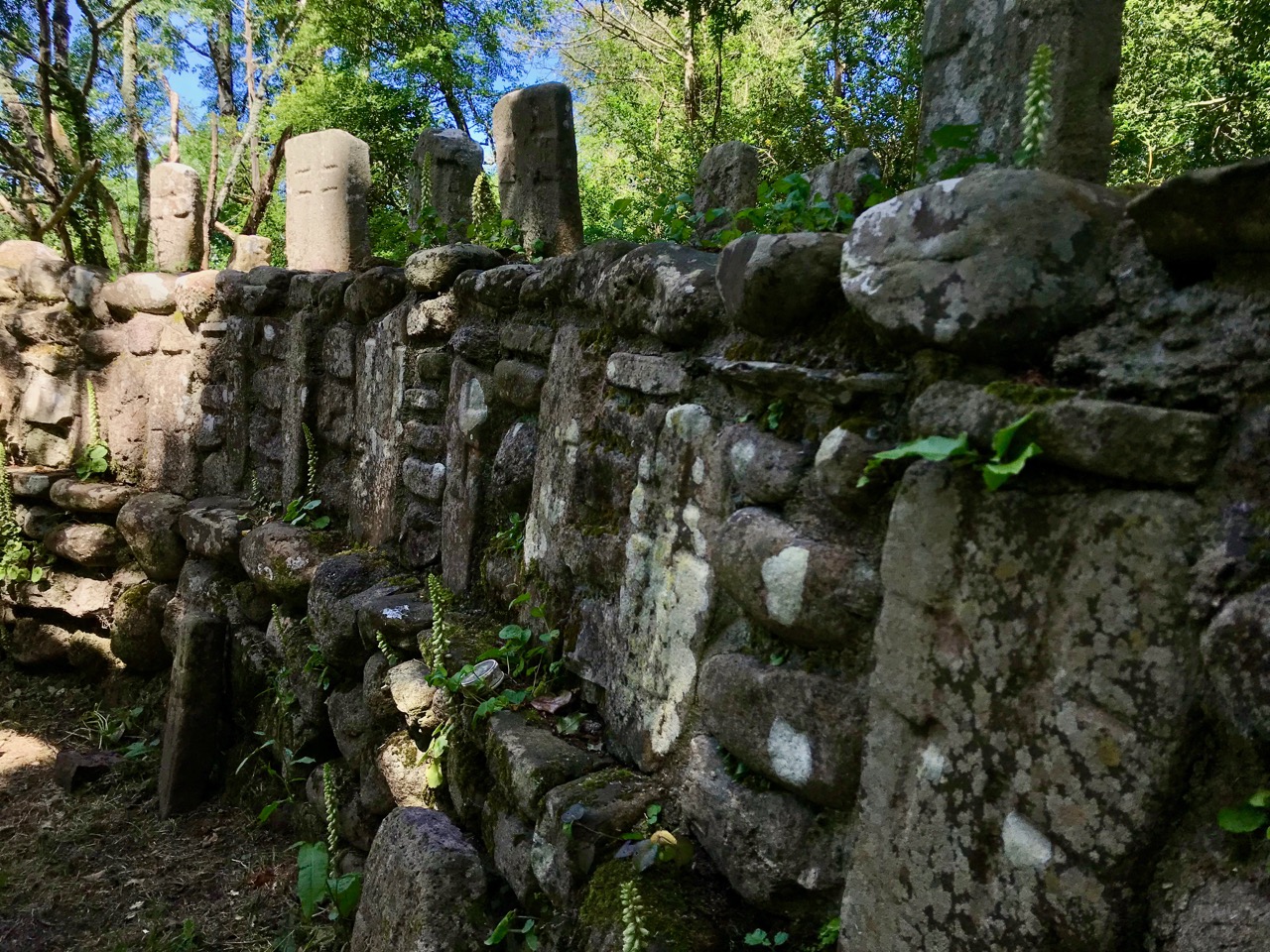
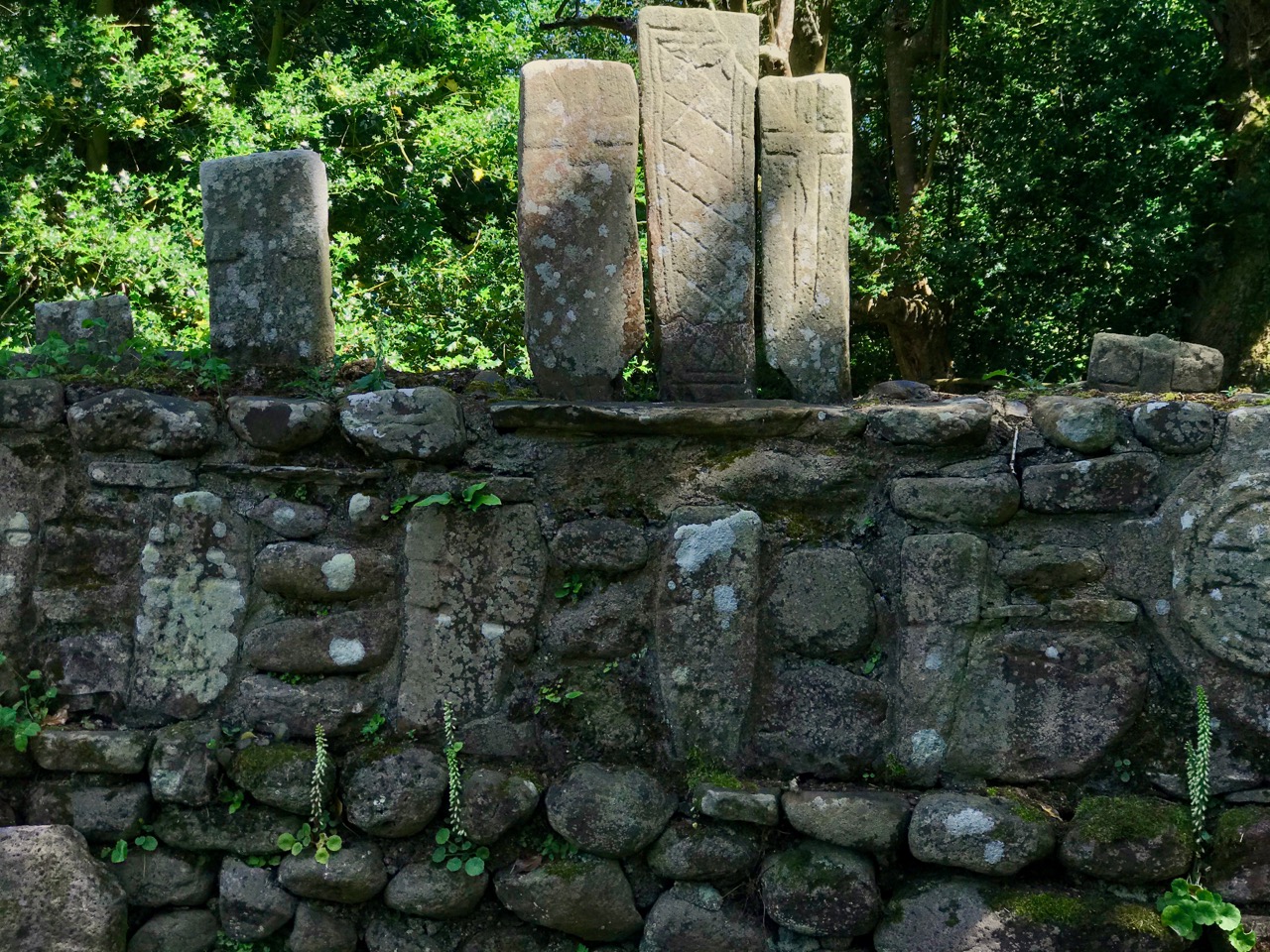
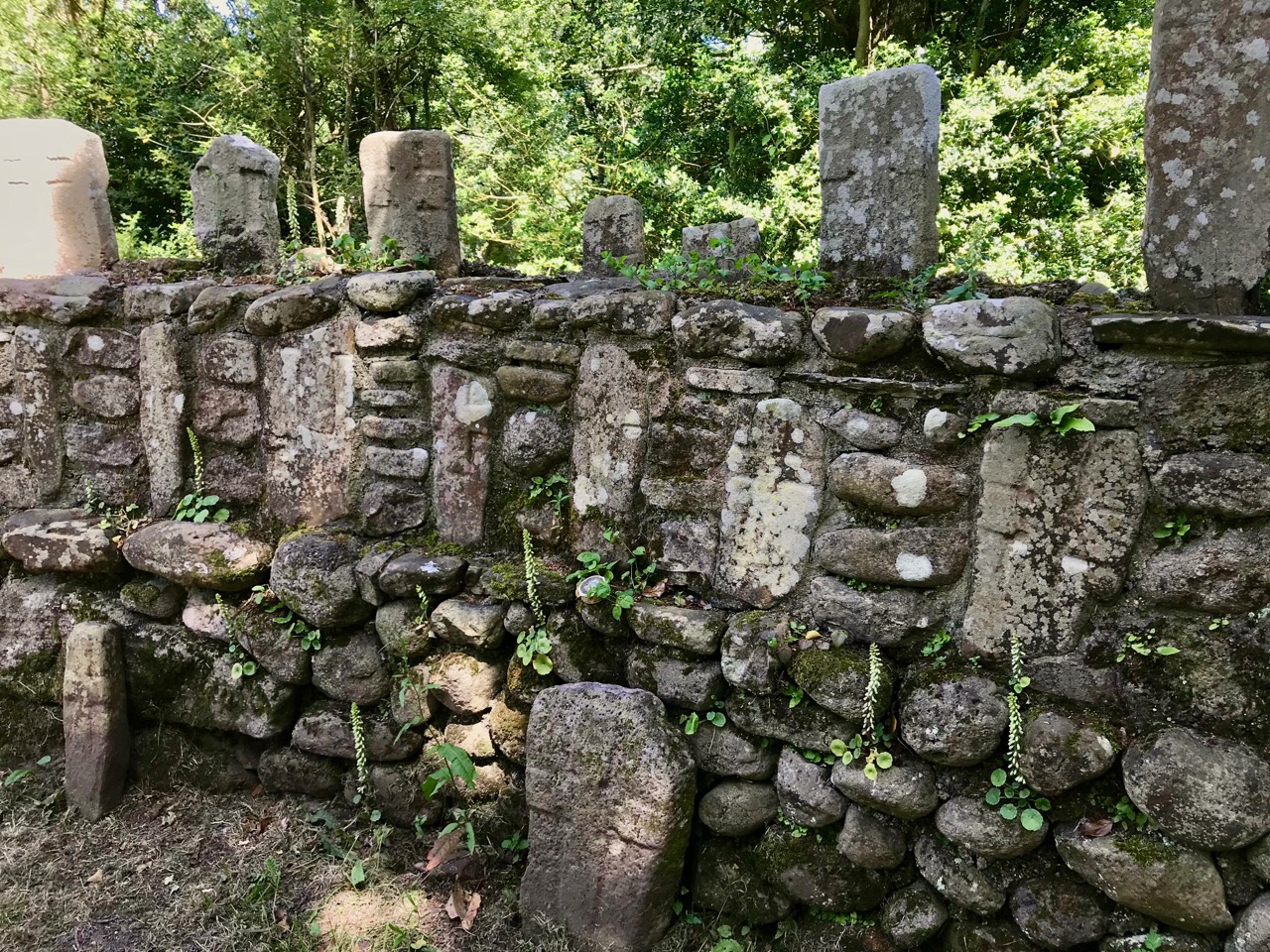
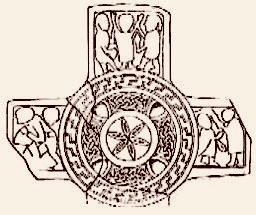
Stone walls and large trees completely encircle an oval shaped enclosure, and the only way in is by steps going over the wall. You are unlikely to be fully prepared for what you find inside. I had hoped for a High Cross – or the fragments of one: we did find a High Cross (perhaps two), but we also found around 70 other stone crosses! Somehow, the Kyle has become a repository for them, but hardly anything is known of their history. After our visit I looked into the stories and found that the enclosure itself – which feels timeless – is probably only as old as I am…

This photograph was taken in 1907. It shows that, for whatever reason, by that time a collection of stone crosses was assembled here. Suggestions have been made that an ancient church on this site was robbed of good building stone, but ‘sacred’ marked stones were left behind out of respect (or from fear of divine retribution). But records do show that the stone enclosure was built in 1946 by the Office of Public Works. What we see today, therefore, is (like me) 72 years old, although of course the stones themselves must have been carved long ago.

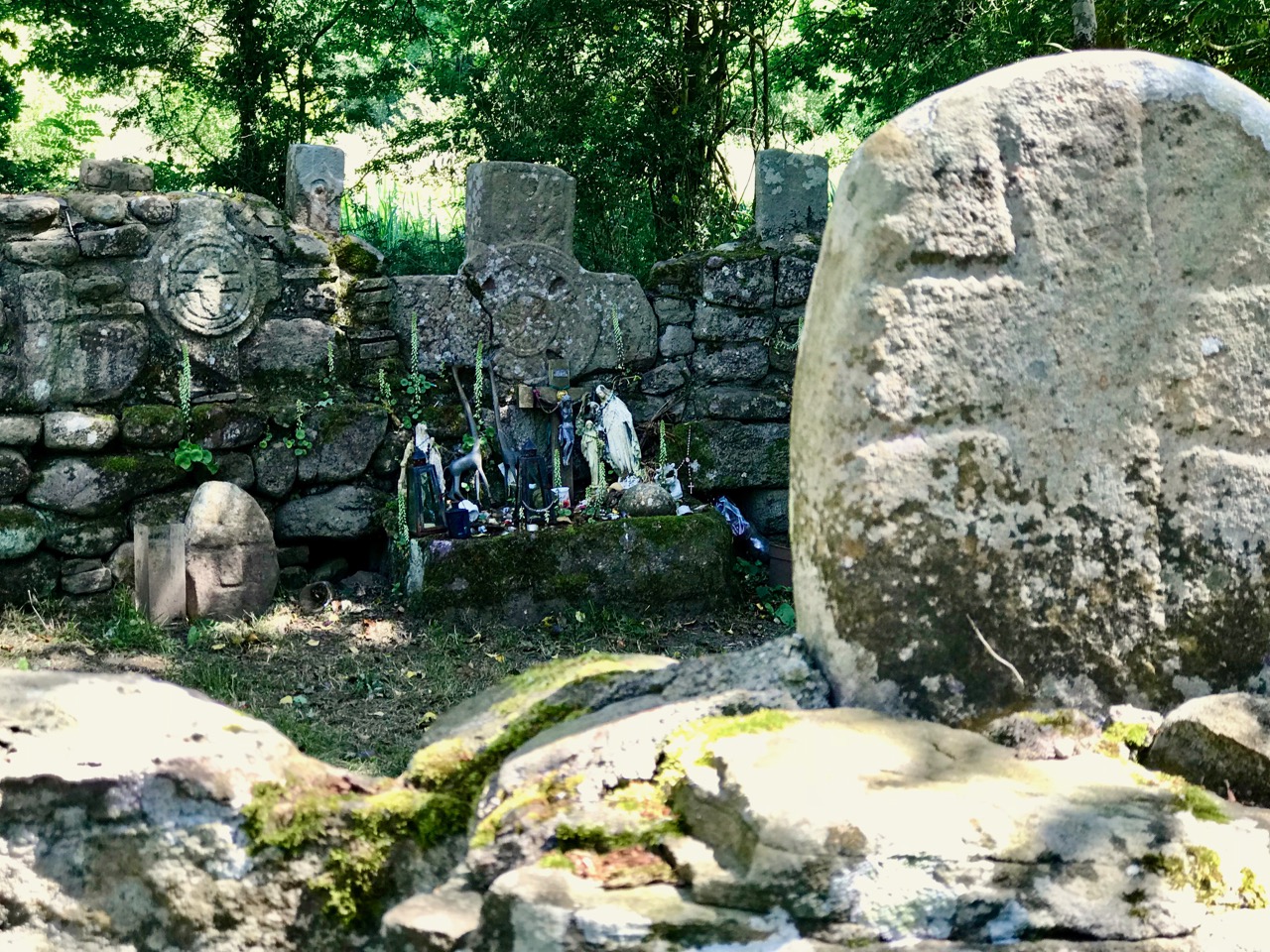
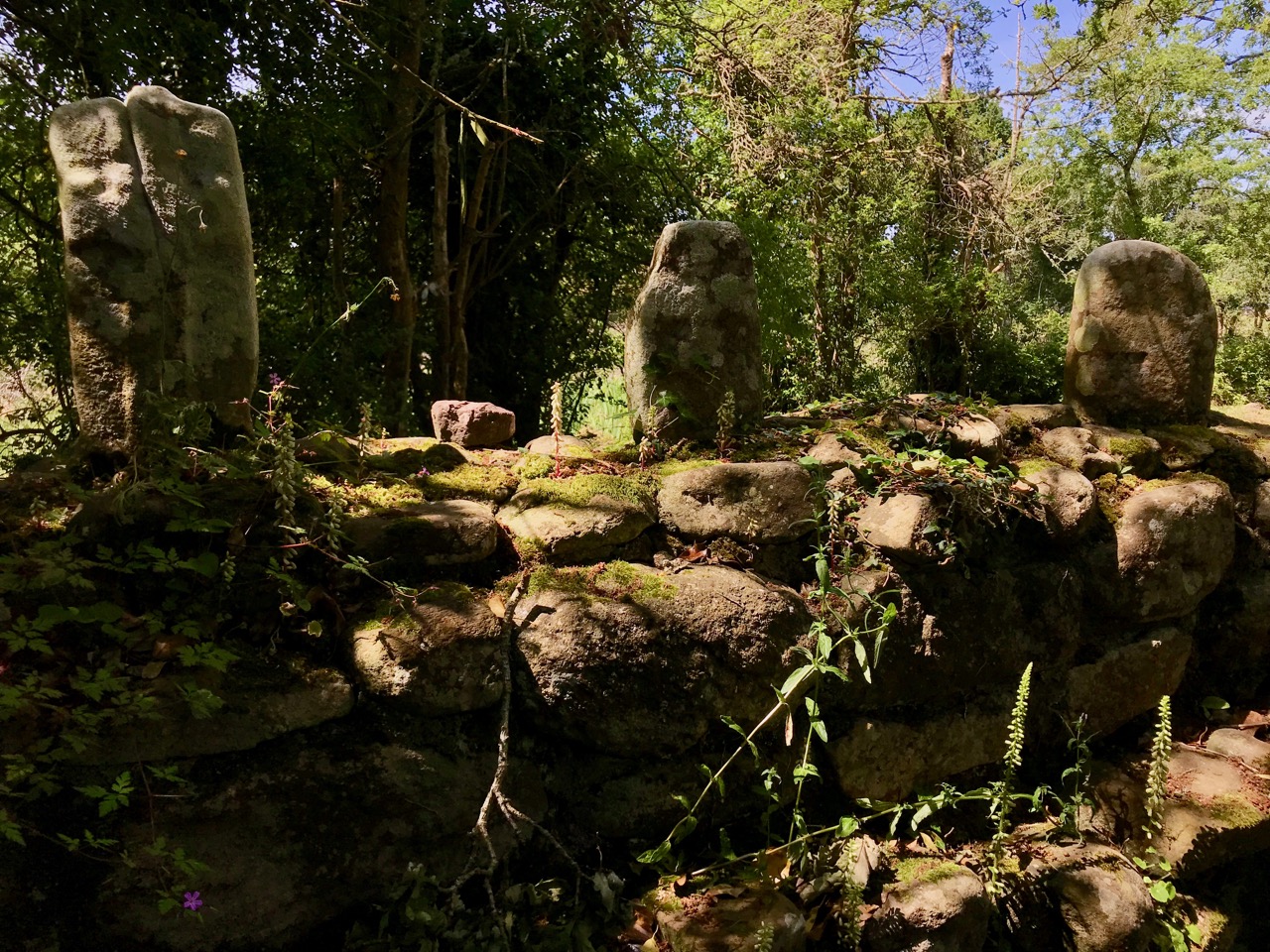
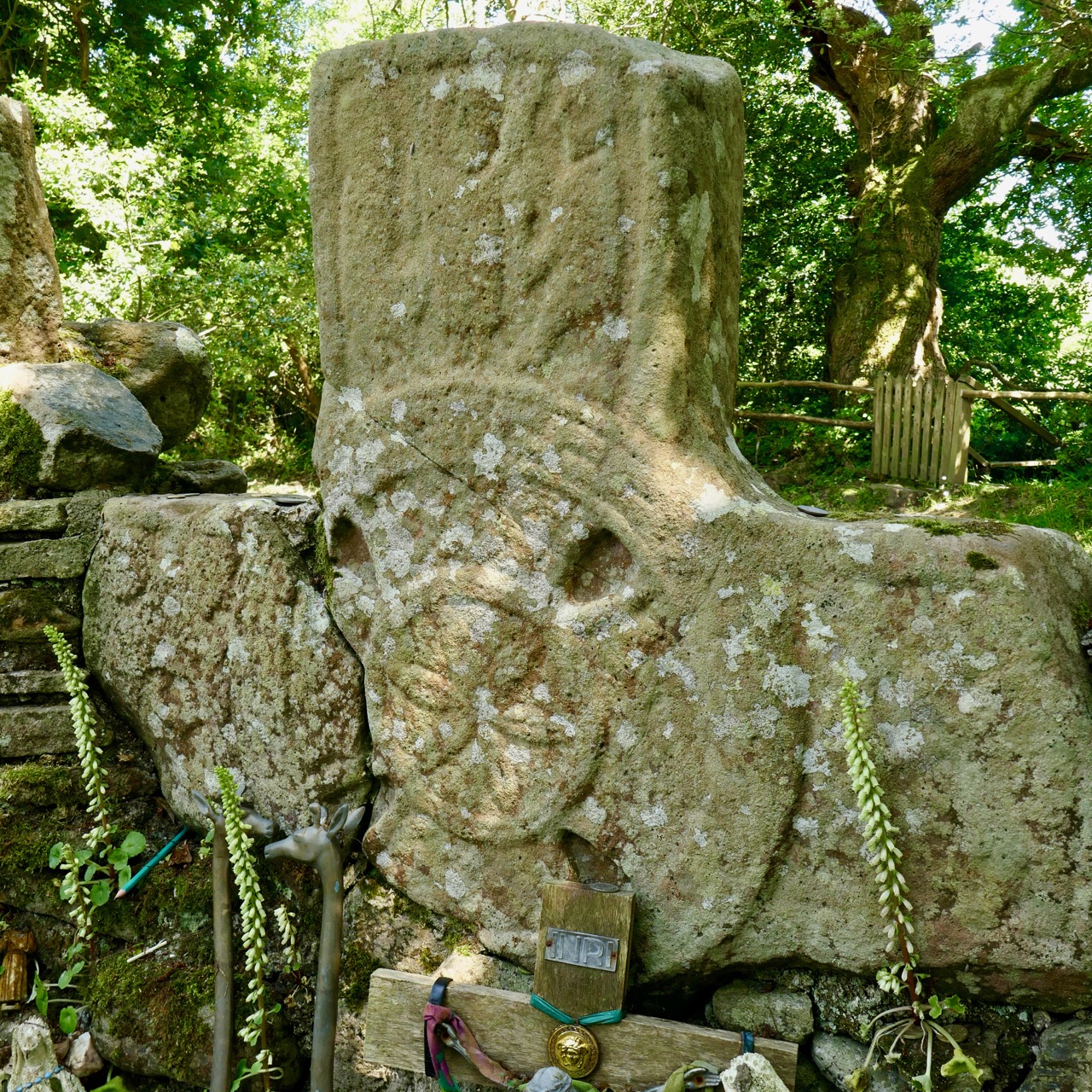
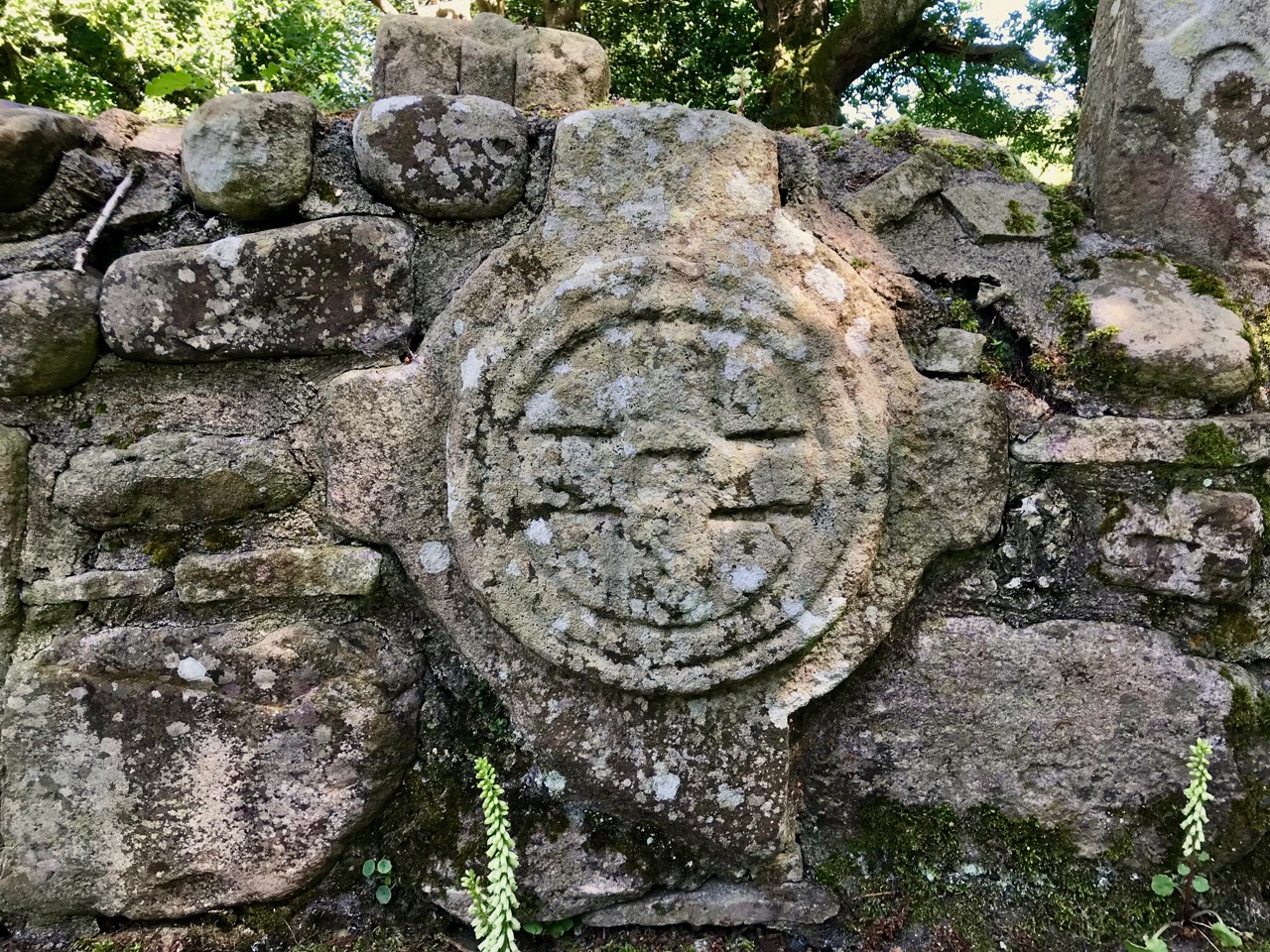
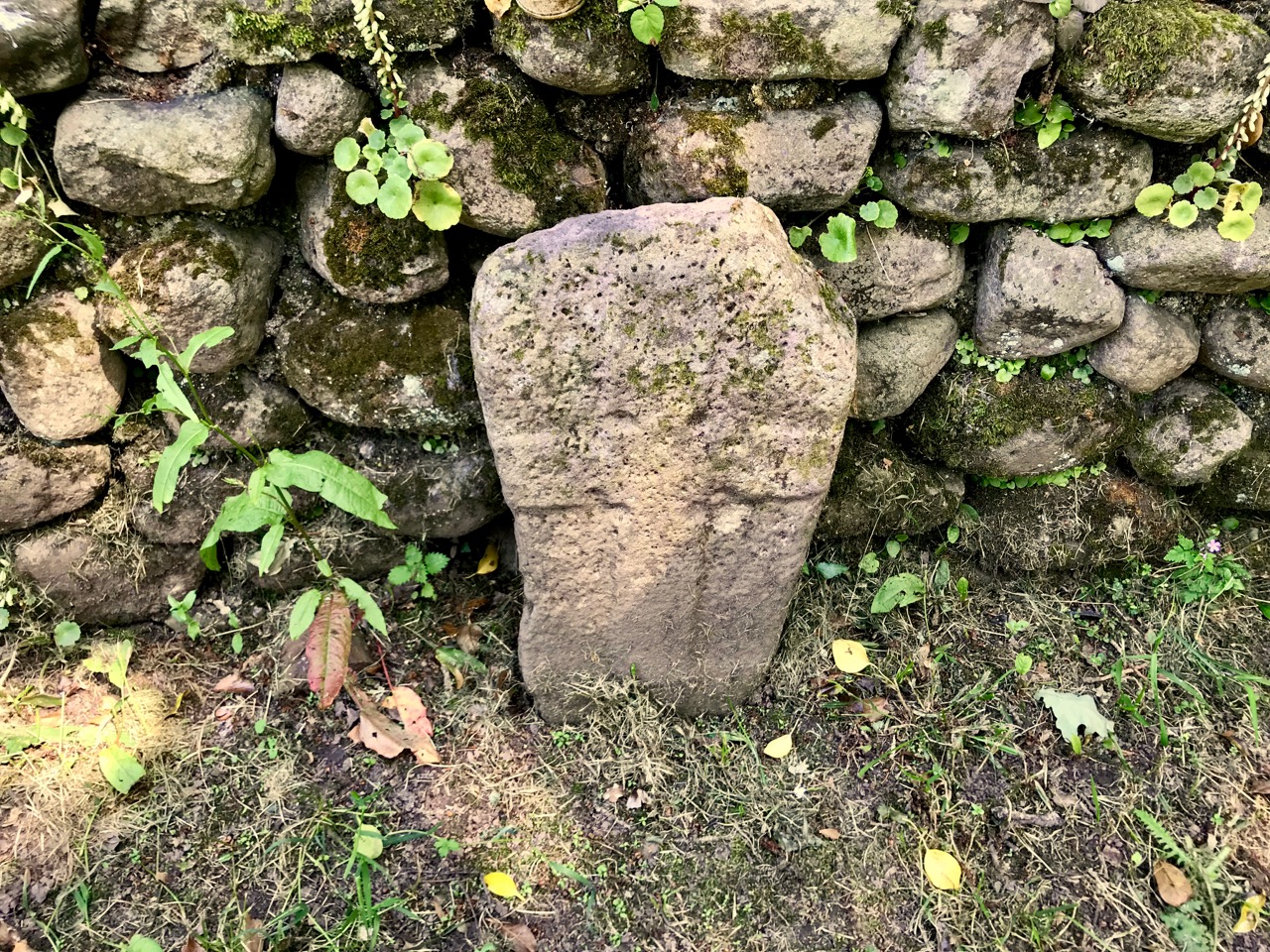
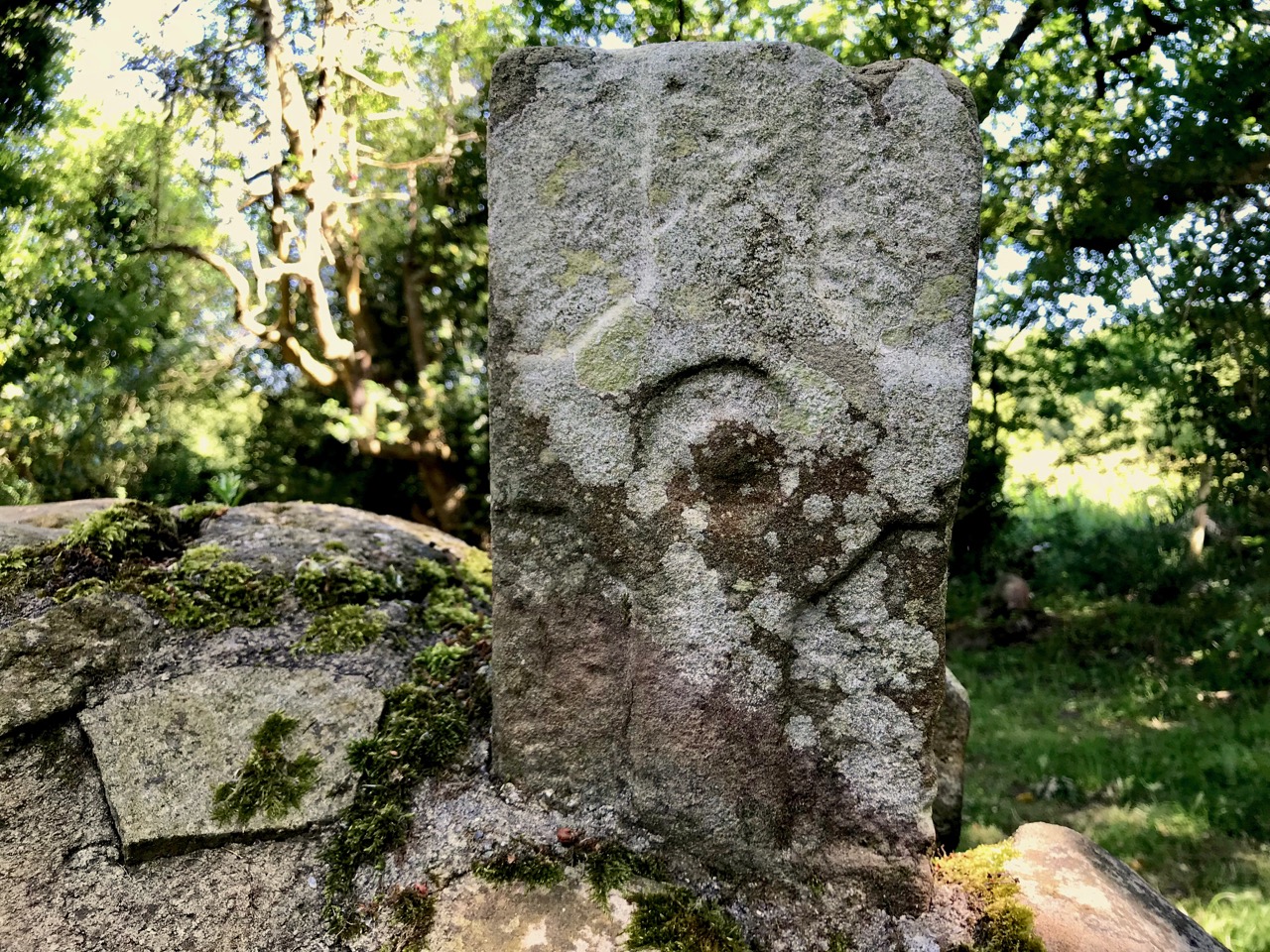
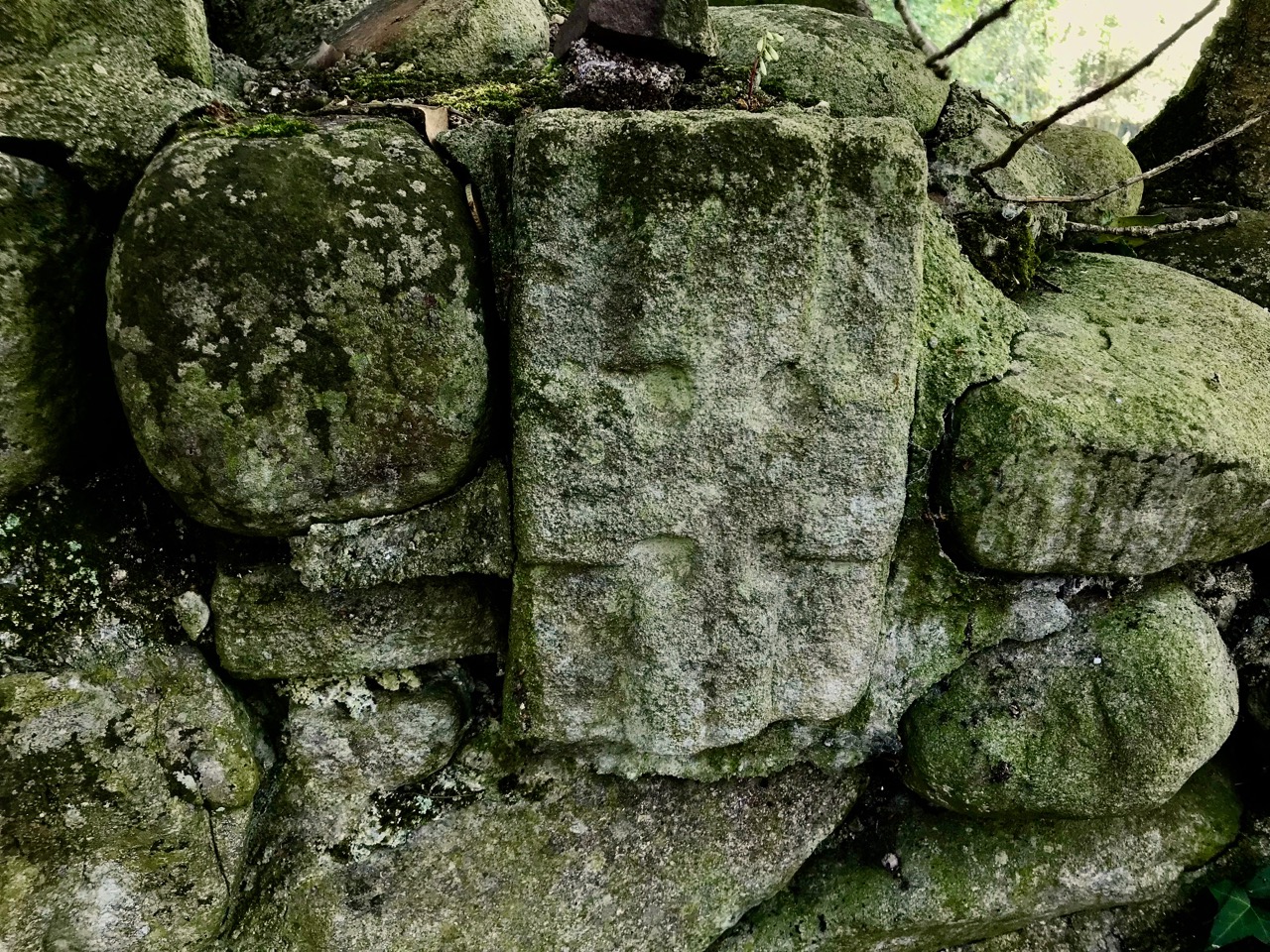
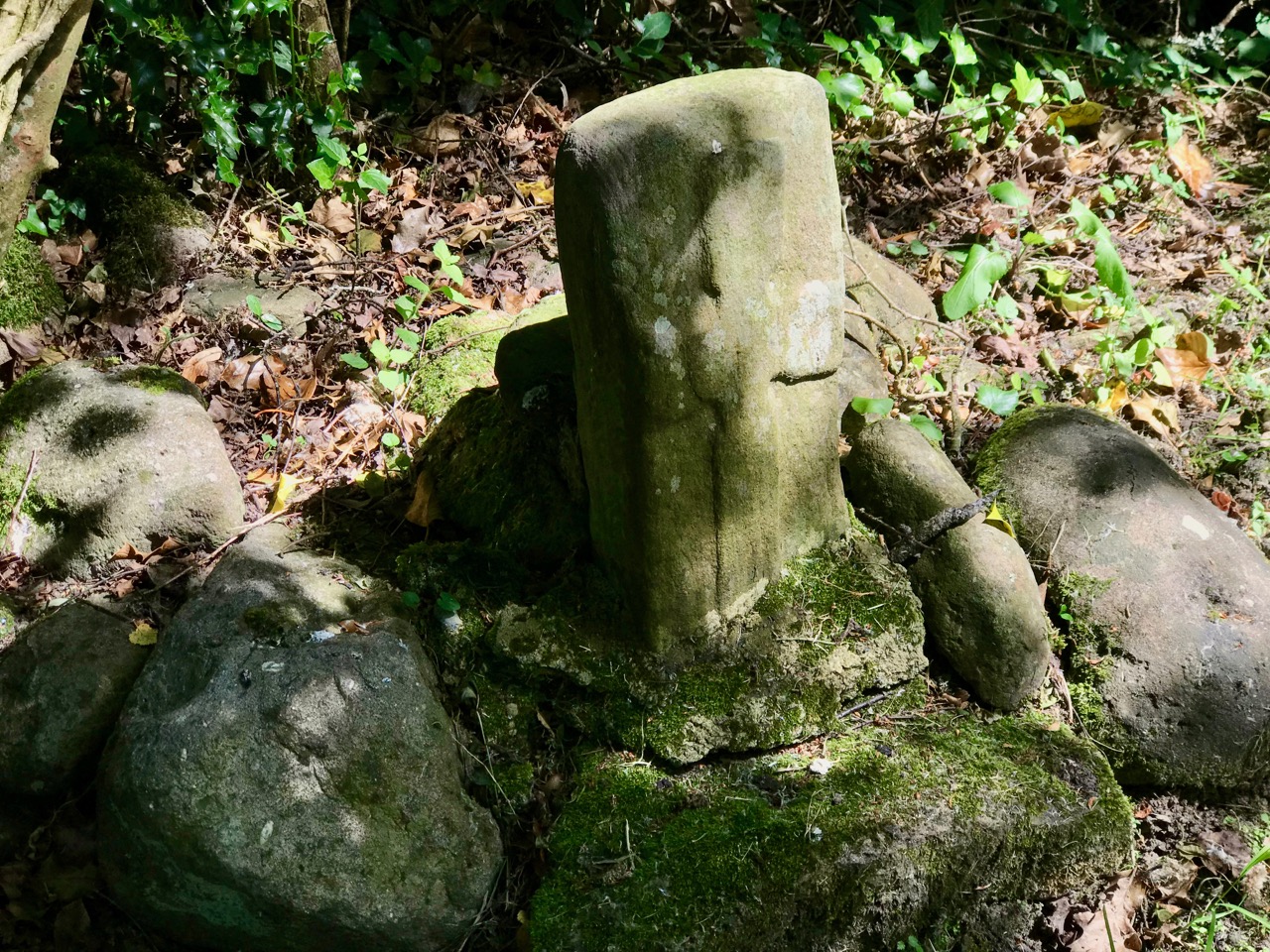
The whole collection of stone cross slabs, cross wheels and decorated pillar stones has been put together into an aesthetically pleasing composition which is exciting and – relatively – in safe keeping. To my mind it’s a far better way of displaying these enigmatic pieces than being tucked away in a museum. On a day when the harsh sunlight and perfect blue sky cast deep shadows and outlined the carvings so clearly the place was absolutely magical: the outside world seemed so very far away. The two largest crosses are set close to each other, built into the wall itself. The first is – to my mind – undoubtedly a High Cross in the medieval tradition; it is likely to have originated here, in St Berrahert’s holy place. As to the others, their stories will probably remain untold. But I wish them all well, and hope that future generations appreciate that what has been put together here has a life of its own and should remain an open secret, to be revealed to anyone who makes the effort to search it out.

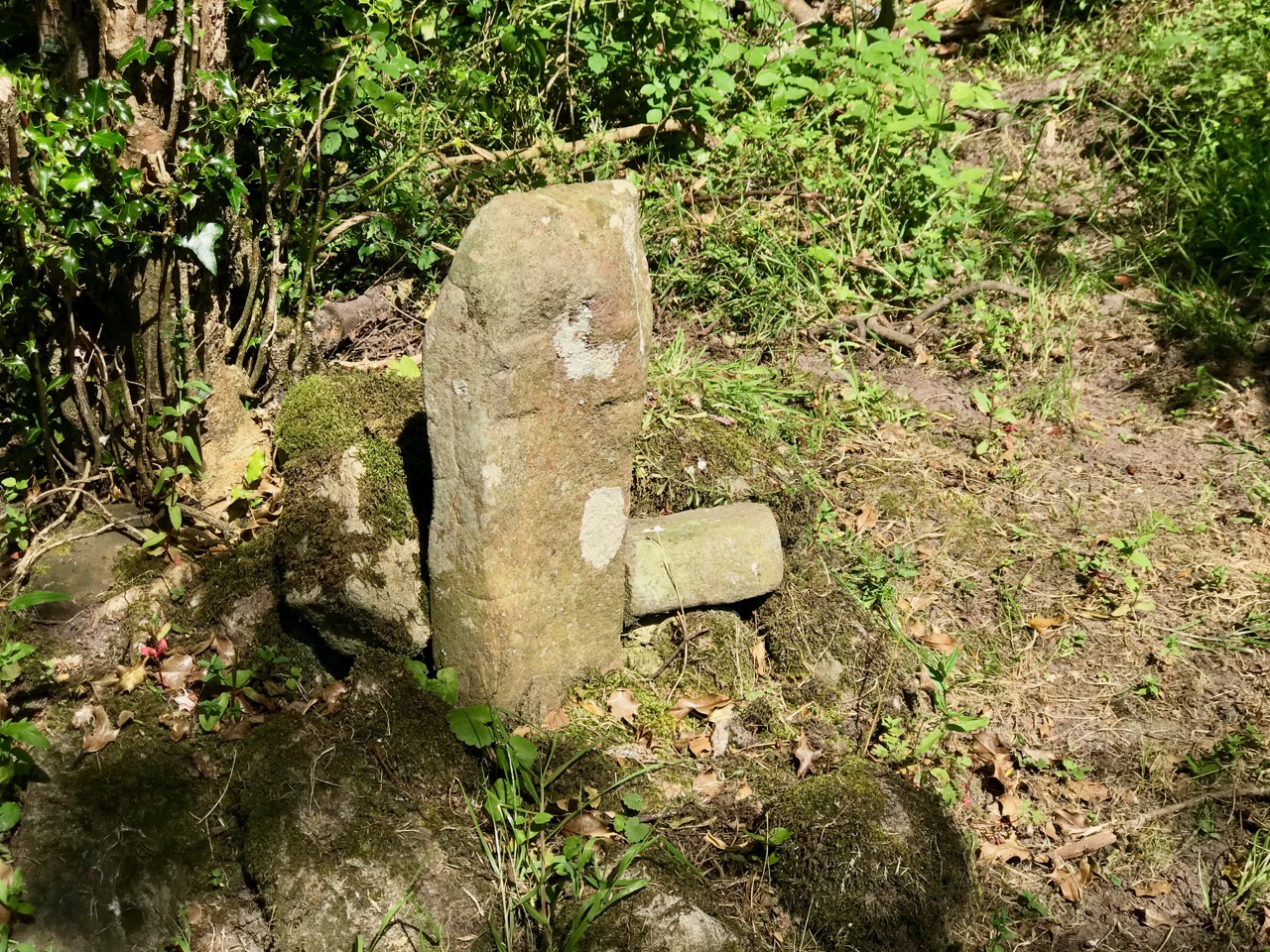
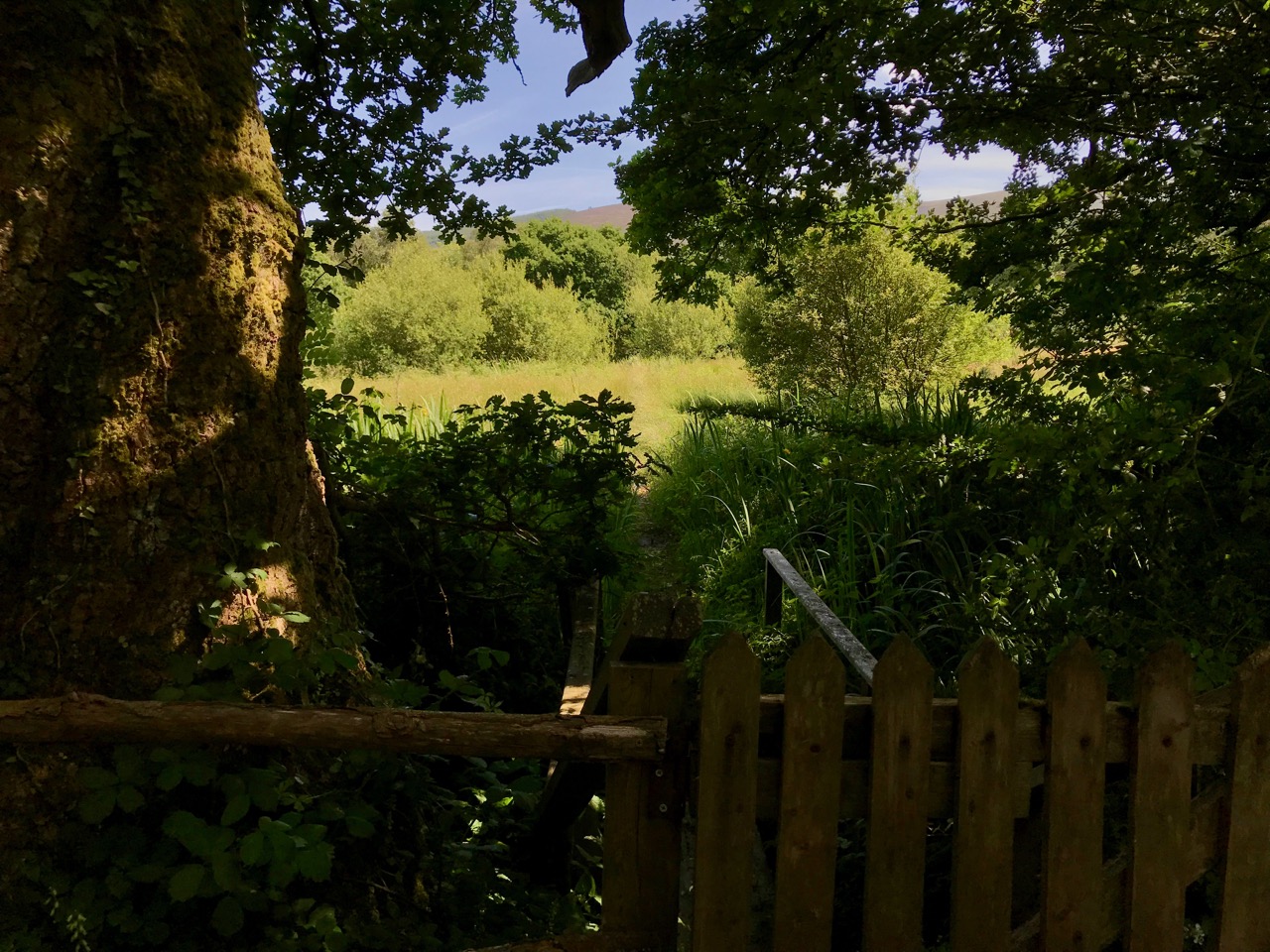
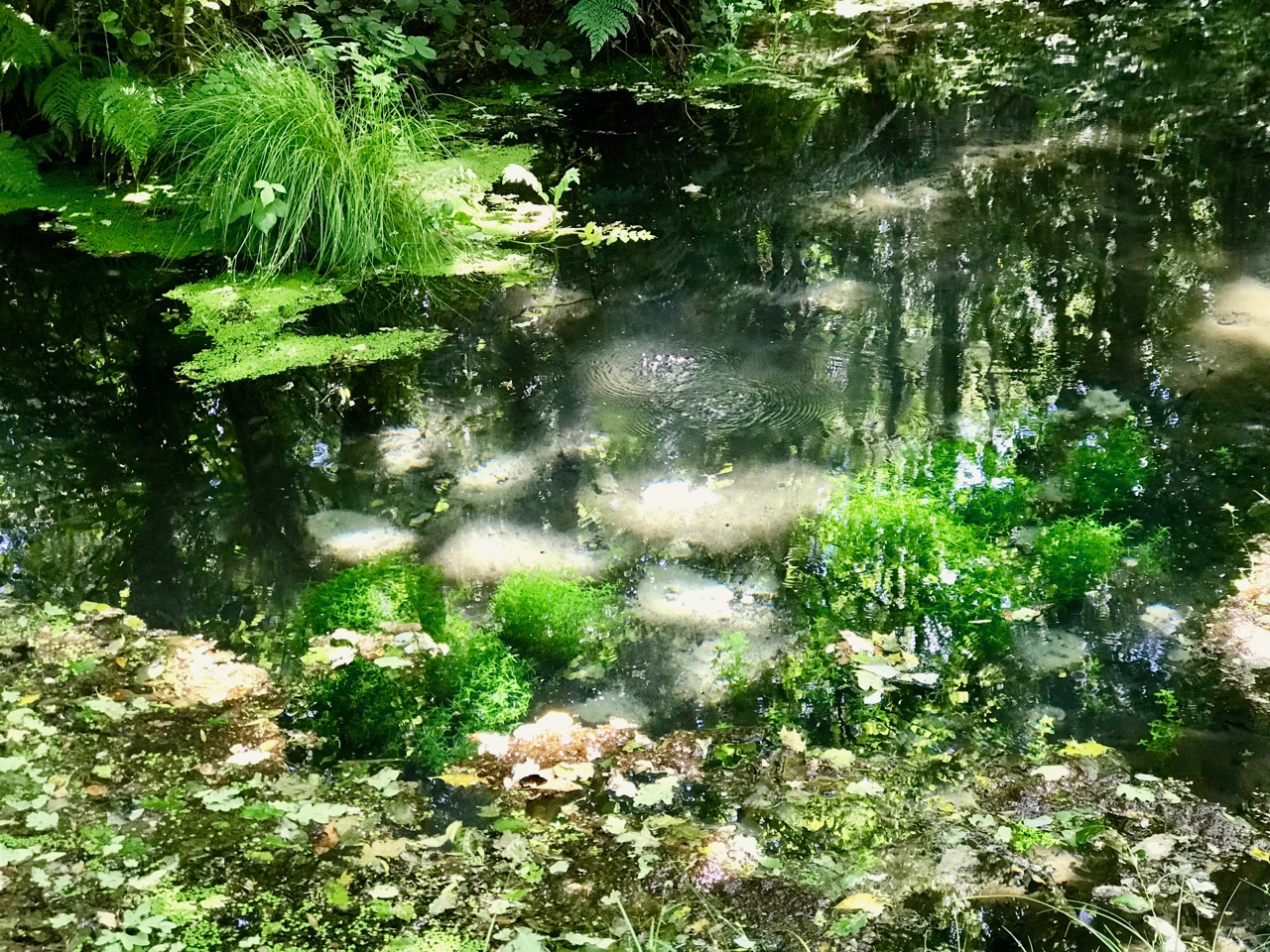
A pilgrim path – set out with ‘stations’ – encircles the enclosure (photos below). Would this be part of the 1946 construction? From here, the way to the well is marked across more fields, and requires negotiating a boardwalk. It’s a trip that has to be made, though, as the well itself – continuously bubbling up from the sandy bed – is just as magical as the Kyle.

A Day on Cape Clear: Guest Post by Hugo Caron, 11

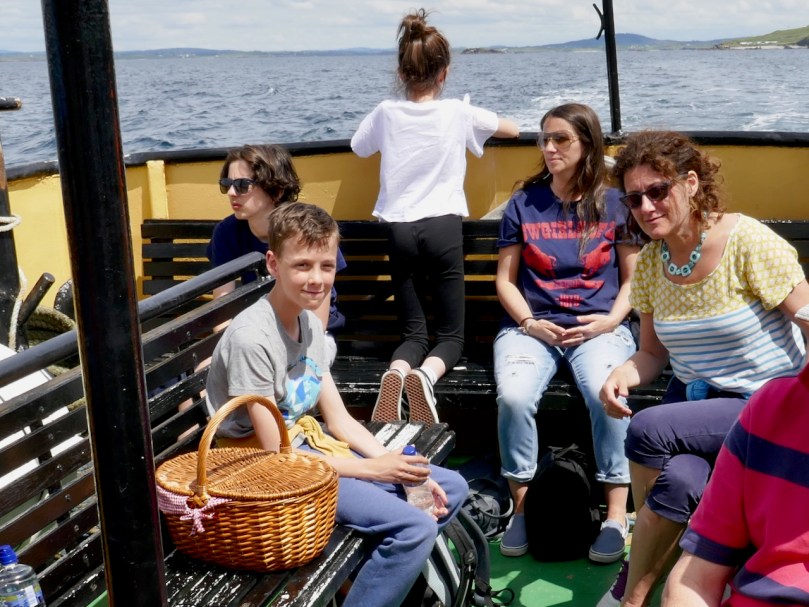
On Tuesday 12th June my Mum, my Aunt, Finola, and I went to Cape Clear. We left the house at about 10 o’clock. We went to a coffee shop before we went to Cape Clear. I had a hot chocolate (which I would later throw up over the side of the boat).

When we got to the boat I started taking photos of the other boats.

It took about an hour to get to Cape Clear.

My Mum bought an ice-cream for me when we got there . After we had the ice-creams, we walked up a mountain on Cape Clear.

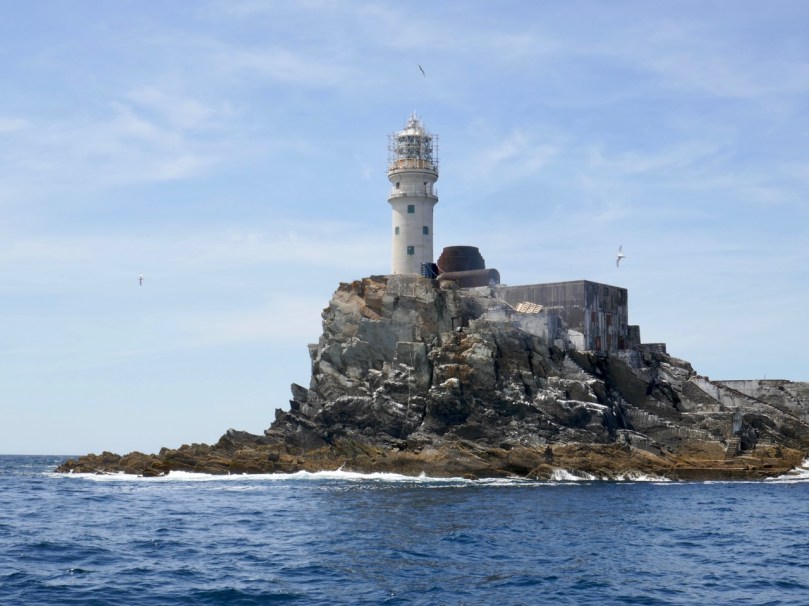
We got on the boat to Fastnet Rock.

We got back to Cape Clear, and waited for the boat back to Schull.

When we got back to my Aunt’s house, I cropped all my photos (there was 172). I had great day.

Note from the Aunt: Hugo took (and processed) all the photos except one (last one, above, of Hugo and his mum), and wrote the text for this post. The reason I took the last one is that he was feeling queasy (see paragraph 1). 

Heir Island – a Modern Paradise

You know that term, Island Paradise? Well, this week I went there. It’s called Heir Island, and it’s one of the inhabited islands of Roaringwater Bay. It was the first of many visits, I hope, and it was taken in the good company of Trish Punch and two Islanders, Christine Thery and Sarah Mathews.

This is the view of Heir Island from our own home – the grouping of houses behind the sandy beach is called Paris!

Heir (sometimes rendered as Hare) is Inis Ui’Drisceoil in Irish, and indeed it was very much part of the O’Driscoll territory up to the 1600s. The population has dwindled, along with that of all the islands, until now there are only about 20 permanent residents. But it’s a popular destination in the summer, with an active sailing school, a renowned restaurant (the Island Cottage) and of course the Bread-Making School that Robert and I attended and enjoyed enormously.

It’s got wonderful peaceful boreens, picturesque cottages, panoramic views over Roaringwater Bay and to the other islands, golden beaches – all this and it’s only a four minute ferry ride to the mainland. But shush – don’t tell anyone else or they’ll all want to come.

Trish is doing a long-term photographic project focusing on the islands of the Wild Atlantic Way and was keen to get back to Heir to capture the views. I had been following a Facebook Page called Heir Island Wildlife Project and had contacted Christine and Sarah, two of the admins on that page, to see if they would meet us when we came and tell us a little about their project. They did better than that, walking the length of the Island with us, and answering all our questions. (Not to mention the coffee and those Portuguese buns!)

I had boned up a little on the island plants, with the help of The Wild Plants of Sherkin, Cape Clear and adjacent Islands of West Cork by John Akeroyd et al, a publication of the Sherkin Island Marine Station that we had visited way back. The book outlines the habitats and growing conditions of the islands, and enumerates the “astonishing” richness of plant species that are to be found on them. Heir is second only to Sherkin in the number of Flowers and ferns to be found, several of which are nationally rare.

The islands ‘specialise’ in heathland species, due to the dominance of open ground, the lack of trees and the broken rocky nature of the terrain. As Akeroyd explains, Thin soils dry out during the summer, thus preventing encroachment by more vigorous species and allowing the plants themselves to die down and the seeds to ripen. Most of this group of plants are annuals more characteristic of southern Europe and the Mediterranean region. . . 

This slideshow requires JavaScript.

And indeed what I found was an astonishing variety of wildflowers. When I got home I counted that I had taken photographs of 45 different plants! But that was only part of the wildflowers we saw, since I didn’t photograph everything we came across. Several were new to me, including the Amphibious Bistort and the Pond Water-crowfoot that had arrived unbidden in Sarah’s newly-dug pond.

Butterflies, hover flies and bumble bees seemed to be everywhere we looked. The orange-tip butterfly (the one that loves the Cuckooflower) wouldn’t stay still enough for a snap, but a Common Blue Butterfly with its iridescent wings, and a Cinnabar moth with bold stripes both cooperated.

At the West end of the Island rugged cliffs provide a perfect breeding ground for European Shags. These birds have been amber-listed in Ireland because breeding populations are very localised. Therefore, it’s important that they have found a suitable nesting site on Heir and it’s wonderful to see that this small colony seems to be successfully hatching their young. Looking quite like a cormorant and similar in size, up close they have a striking green gloss to their feathers.

The headland from which we observed the shags provided a carpet of spring heath on which to loll about and admire the views across the Cape Clear and the Mainland. My eyes were immediately drawn down, however, to the ground beneath me. Orchids, Wild Thyme, Thrift, Lousewort, and a beautiful rose-coloured Kidney Vetch provided swaths of pink and purple, while Milkwort and Dog-violet yielded hint of blue and Scurvygrass (Common, I think) rounded it all out with a mat of white flowers.

I didn’t find (or didn’t recognise) some of the very rare plants that grow on these islands, like Wormwood, Deptford Pinks and Spotted Rockrose. Obviously another expedition is called for!

I worry all the time about habitat loss in West Cork. The sound of the rock breaker is a constant in our lives, carving out new fields where there was heath and hedge, and thereby reducing food and shelter for our pollinators and small mammals. I feel despair when I arrive at my favourite place to see a certain set of wildflowers, only to find that someone has been in there with Roundup and it’s now a brown wasteland. Places like Heir Island have a unique opportunity, perhaps even a responsibility, to stay as pristine as possible, to remain an Island Paradise as long as possible for all our sakes. Fortunately, lots of the local residents think so too and that make me hopeful.
A glimpse into Christine’s studio – her exhibitions are always eagerly anticipated locally

Thank you, Sarah and Christine for a wonderful day, and Trish for your excellent company. Let’s do it again soon!