Into the Woods

Pools

Glengarriff Woods – serene, beautiful and incredibly diverse

The second (now annual) Ellen Hutchins Festival has just concluded in West Cork. We wrote about this exciting new festival last year in the post Ellen Hutchins: The Short and Remarkable Life of Ireland’s First Female Botanist. This year there were all sorts of events and activities once again but we were able to participate only in one, a guided walk through Glengarriff Woods. Robert and I agree that we learned more about plants in that three hour walk than we had in most of our lives to date!
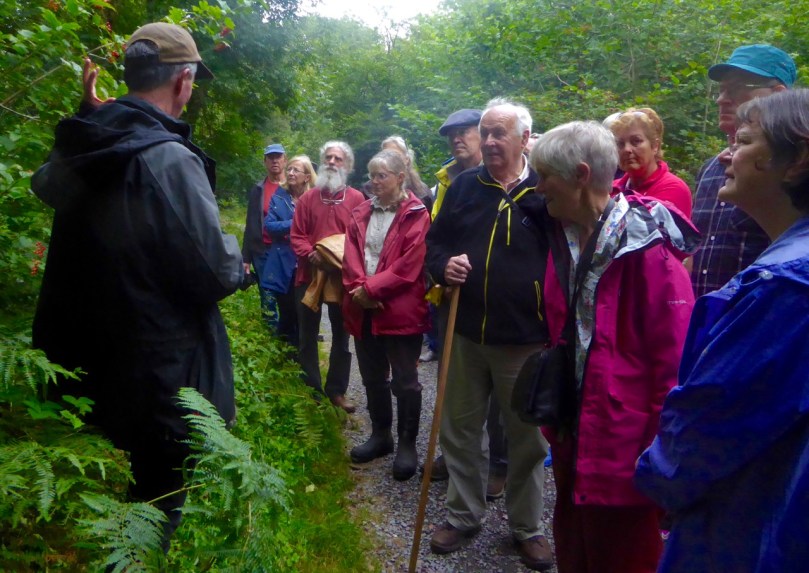
Teaching 2: Guelder Rose

Padraig pauses in front of the Guelder Rose (see below for more on this species)

Our guide and educator was Dr Padraig Whelan, a former Chief Scientist at the Charles Darwin Research Station on the Galapagos Islands, and now with the School of Bio, Earth and Env Sciences at UCC. Erudite and encyclopaedic in his understanding of individual species and in the interactions between the living organisms in the woods, Padraig’s talk was riveting. Nothing was above our heads, everything was explained in the simplest terms, but we came away with something approaching a profound appreciation for biodiversity. (Padraig is also camera-shy – I am honouring his request not to use full photographs of him.)

Howard Fox

Dr Howard Fox, the lichen expert

Along on the walk also, and contributing on the way, were Dr Howard Fox of the Office of Public Works, who had earlier given a sold-out two day workshop on Lichens, Algae, Fungi & Bryophytes (mosses and liverworts), as well as Clare Heardman, a Conservation Ranger with the National Parks and Wildlife Service, and Madeline Hutchins, great great grandniece and biographer of Ellen.

St Patrick’s Cabbage – there are three varieties of it here

The talk started with an outline of what makes Glengarriff Woods such a special habitat. It’s the rain, of course, combined with a mild climate, that leads to the perfect conditions for a temperate rain forest. We learned that these woods are home to many Lusitanian species that are mysteriously only found here, or on the Iberian Peninsula. One of these is St Patrick’s Cabbage, a member of the Saxifrage family. The attractive flowers had finished, but you can see what they look like here. In Irish they are called Cabáiste an Mhadra Rua, or Fox Cabbage. Nobody yet knows how plants that grow in Spain and Portugal managed to flourish in the south west of Ireland, skipping France and Britain entirely on their traverse, but it’s probable that they arrived after the last ice age.
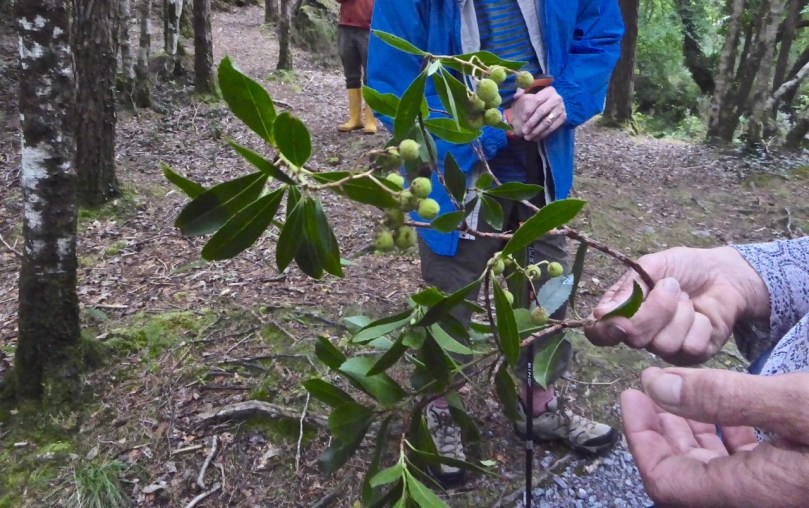
Strawberry tree

Another Lusitanian tree we encountered was the strawberry tree, which apparently is a member of the heather family, but grows to tree height in our West Cork climate. There was some discussion about the edibility of the fruit – it’s supposed to taste fig-like, but only one person present had tasted it and wasn’t recommending the experience. The examples we saw hadn’t ripened yet – it really does have the hue of a strawberry once fully ripe.
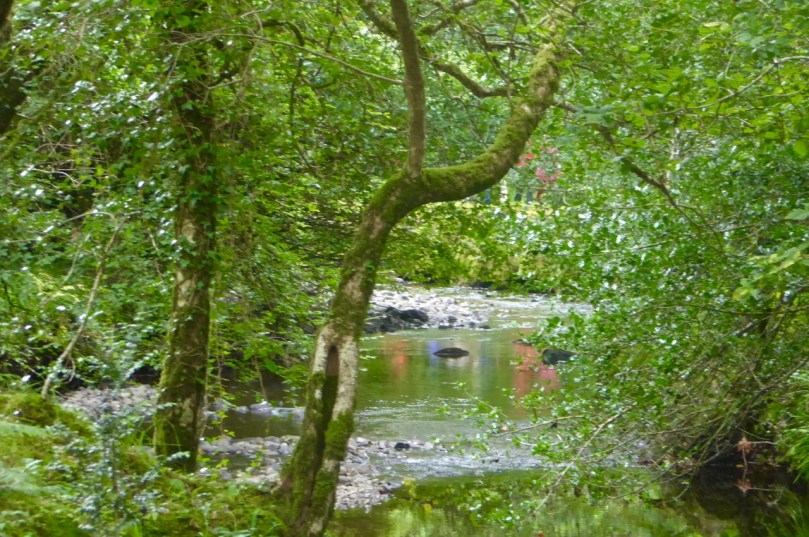
Walkers reflected

Walkers are reflected in the stream that flowed along our route

A second theme of the walk was ‘alien’ species – those non-native plants that have colonised the area as a result of importing activities. In this regard, the Glengarriff Woods are facing a double whammy – the botanic gardens at Garnish, and the arboretum at Ardnagashel, ironically started by the Hutchins family. Padraig pointed us to a young myrtle tree as an example of just such an alien intruder – they belong in Chile and Argentina, not in Ireland.

Myrtle grove

The Myrtle Grove at Ardnagashel

The culprit, of course, is the famous Myrtle Grove at Ardnagashel, which we visited last year and where myrtle trees imported by a Hutchins ancestor flourish. In Glengarriff it was threatening to take over all the available space for trees and measures had to be undertaken to limit them, as they create so much shade that little can grow underneath them. It was painstaking work, but there are now very few growing actively in the Woods and they can be eliminated more easily.
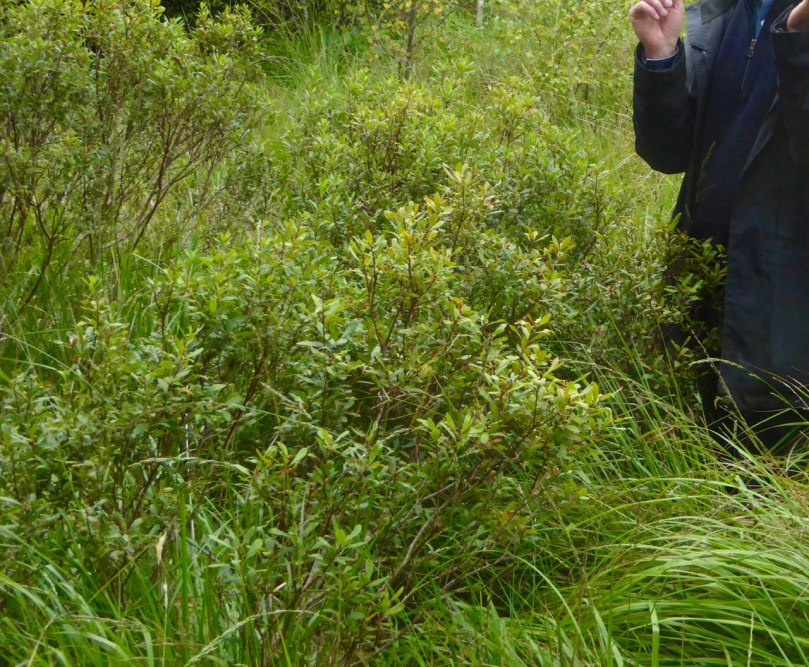
Bog Myrtle

Bog Myrtle

Interestingly, there is a native myrtle – the Bog Myrtle, an aromatic shrub. We passed around crushed leaves to inhale the woodsy scent. According to my favourite wildflower source, Bog Myrtle was used to flavour beer before the advent of hops.

Fuchsia Montbretia and blackberries

Fuchsia and Montbretia (or Crocosmia) flourish in the West Cork Hedgerows, but are actually alien species

Ironically also, the colourful and attractive wayside flowers that we think of as quintessentially West Cork, Fuchsia and Montbretia, are introduced species. Rhododendron was introduced in the 19th century and is considered a terrible threat to native species in Kerry. The same is true for Gunnera (that giant rhubarb disaster that has colonised vast tracts of Connemara), and Griselinia (ubiquitous for hedging). None of them would have been known to Ellen Hutchins. As Clare Heardman pointed out, Ellen recorded over a thousand plants, with no mention of them.
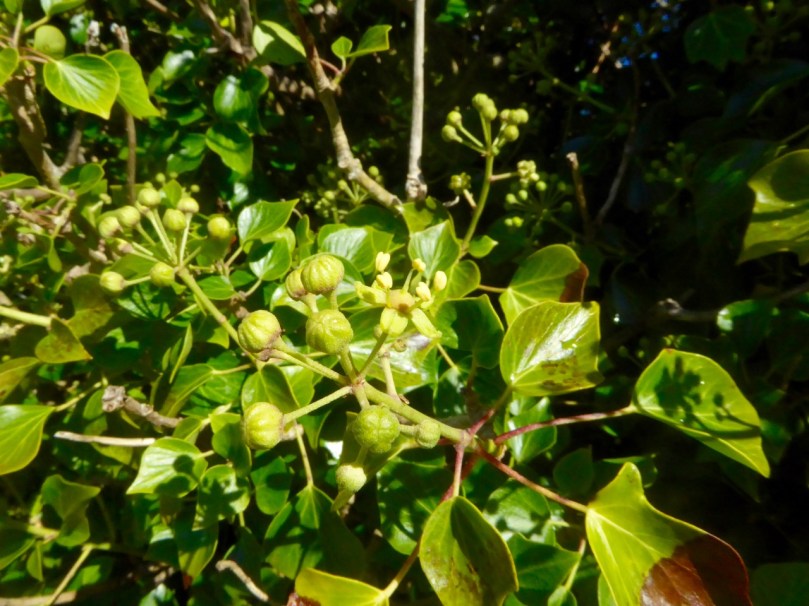
Holly Flowers

Ivy is just on the brink of flowering – we found one open bud after much searching

A third theme was the inter-dependence of species, both floral and faunal. About now, ivy starts to bloom, just as other flowers finish, and the ivy flower becomes an important food source for bees, moths, butterflies and other insects, such as hover flies. Unfortunately, ivy gets a bad rap for its habit of covering and damaging archaeological sites, such as medieval castles and churches and I wouldn’t have been sympathetic to it before our walk. Now I look at it in a whole new light. Pollinators also depend on holly, and the berries can also be a food source for field mice.

Royal Fern

The Royal Fern – an unusual native fern

There are a huge number of native plant species in Glengarriff Wood, and the conservation work that goes on there is of national importance. Padraig pointed out the filmy ferns that grow here and are rarely found in the rest of Ireland. He also showed us the native Royal Fern, which is unusual in that the spores grow not on the underneath of the fronds but on separate stalks.
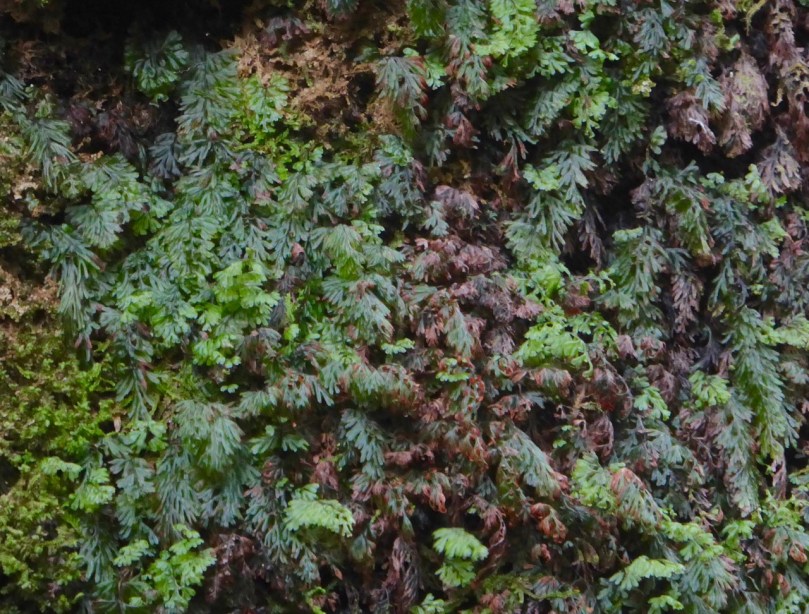
filmy ferns

Filmy Ferns

Howard introduced us to a macro-lichen that, because the underneath bears a resemblance to lung tissue, was once tried as a cure for breathing ailments. Lichens, of course, are normally microscopically tiny, so an enormous one like this is rare, and exciting to visiting lichen-specialists. Like ivy, I gained a new appreciation for lichens – up to now, my normal emotion in regards to lichen has been frustration, since it functions to obscure rock art and stone carvings.

Large lichens like this one are very unusual, but Glengarriff Woods provide perfect conditions for them

Glengarriff Woods has preserved meadowland as well as woods. Important species use this habitat, such as the hairy wood ant and frog species that may be specifically Irish.
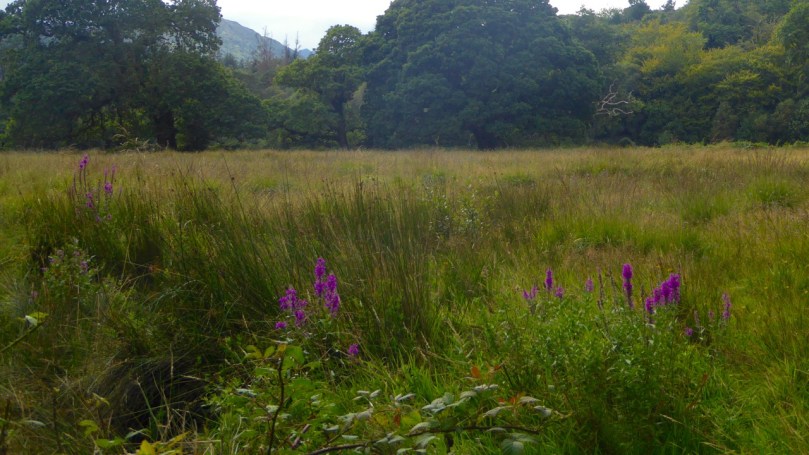
Meadow

The meadow

There was more, much more, but I will mention only one – the Guelder Rose tree. The dense and intensely red berries provide winter food for birds, but the flowers make it an attractive shrub in the early summer. There are some growing wild in the hedgerows just below us here along the Fastnet Trail Rossbrin Loop. I hadn’t been able to identify it until now. Pointing out that it would make a wonderful and ornamental garden plant, Padraig made a plea to us to insist on such native varieties when we develop our own gardens.
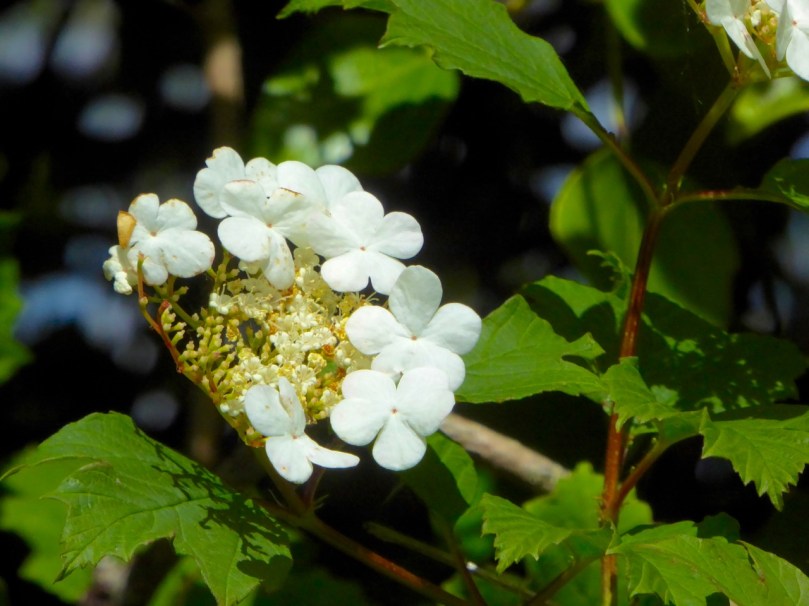
Guelder Rose Flower, June

A Guelder Rose tree found near our house in early summer

Throughout the walk, we meandered by the river that runs through these woods. It’s an important factor in the lush growth here, carrying high acidity levels from the bogland above. It’s also beautiful, serene and musical, adding immeasurably to the pleasure afforded by a walk in this woodland national treasure.
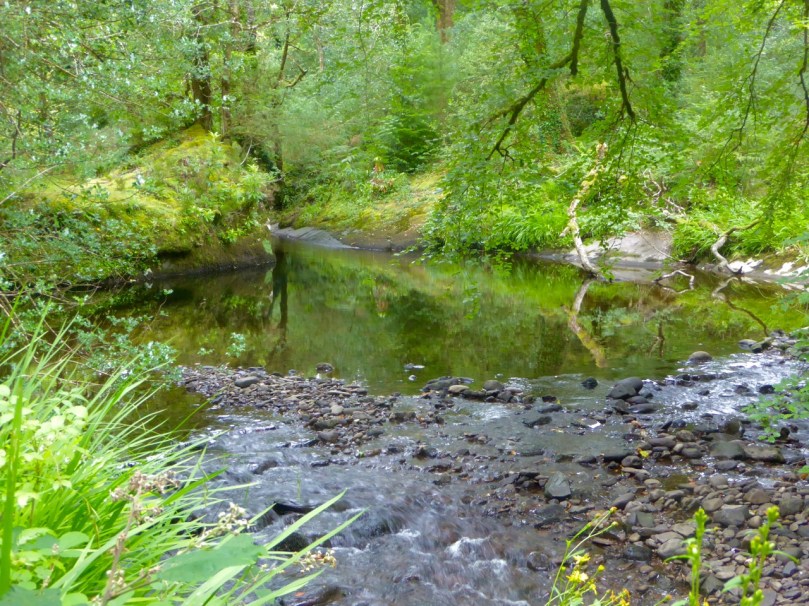
Still and Moving stream

Thank you to the Ellen Hutchins team for yet another fascinating botanical adventure!
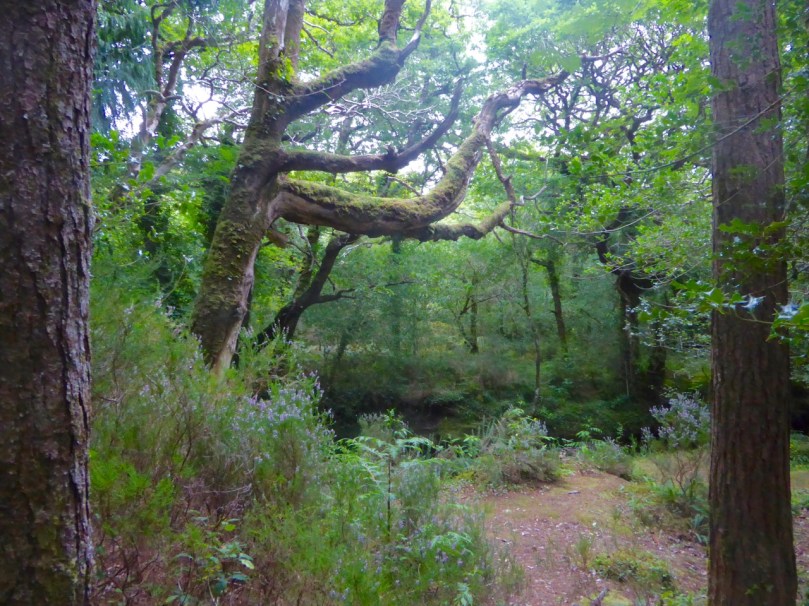
By the stream

‘Will the Hare’ – and the Mizen Olympics!

street market

…In ancient Ireland the festival of the beginning of the harvest was the first day of Autumn, that is to say, it coincided with 1 August in the Julian calendar. This has continued in recent tradition, insofar as Lúnasa or Lammas-Day was still taken to be the first day of Autumn; the gatherings and celebrations connected with it were, however, transferred to a nearby Sunday, in most parts of Ireland to the last Sunday in July, in some places to the first Sunday in August… The old Lúnasa was, in the main, forgotten as applying to the popular festival and a variety of names substituted in various localities, such as Domhnach Chrom Dubh, Domhnach Deireannach (Last Sunday), Garland Sunday, Hill Sunday and others…

making the stack

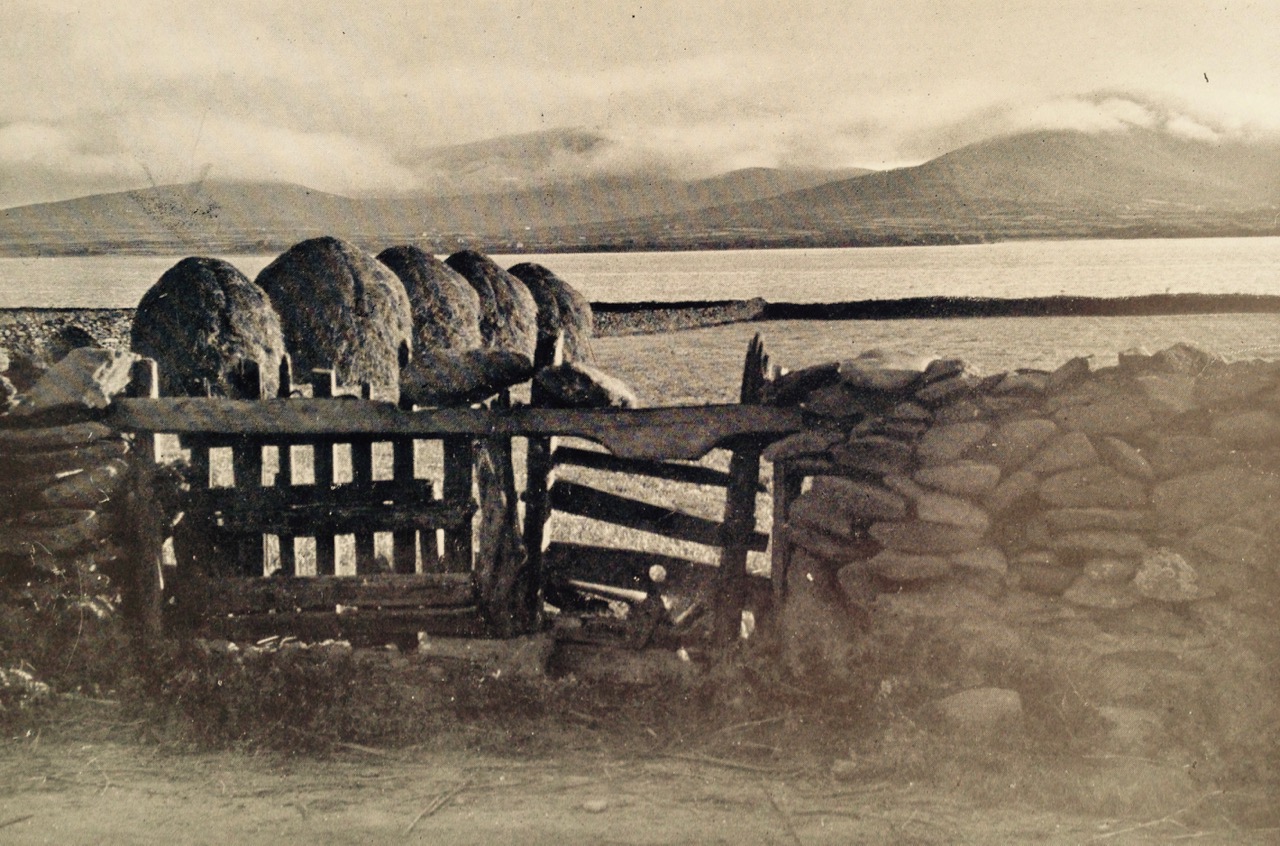
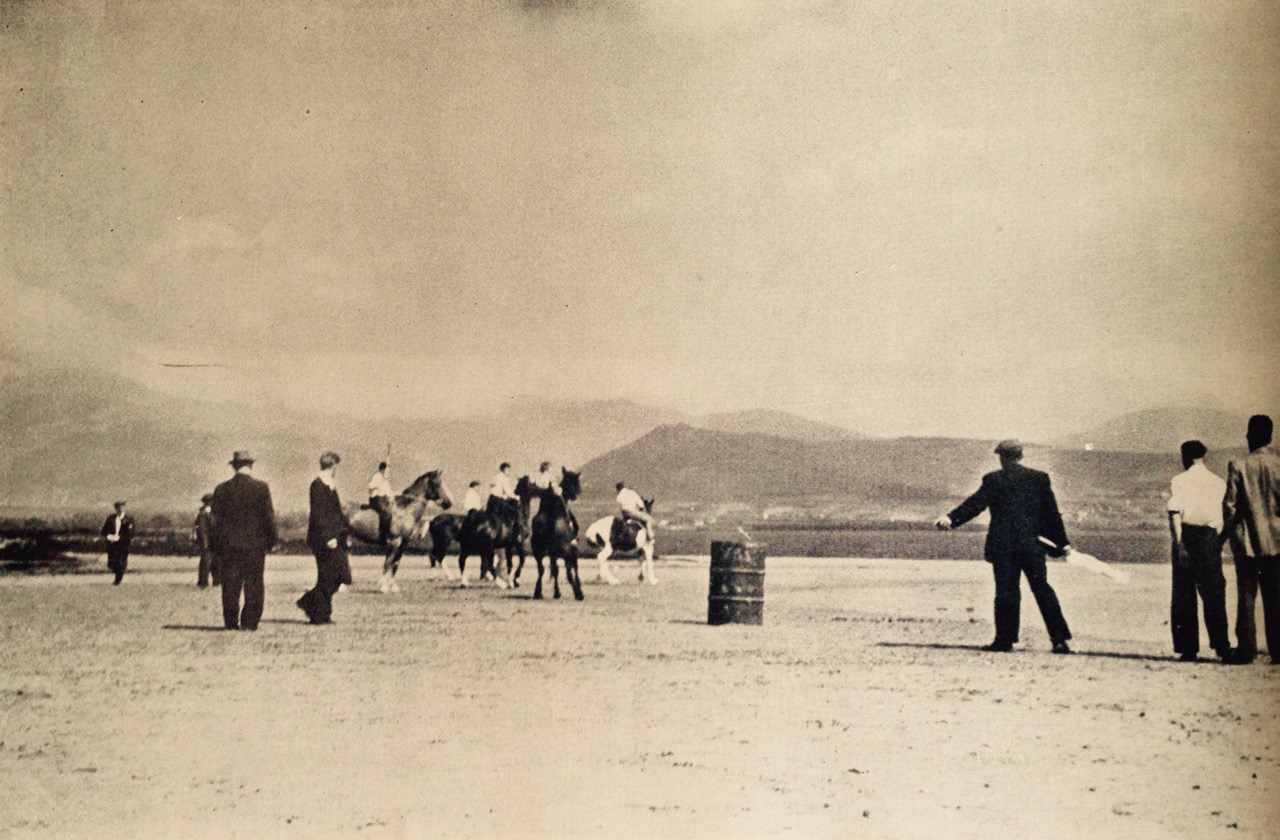
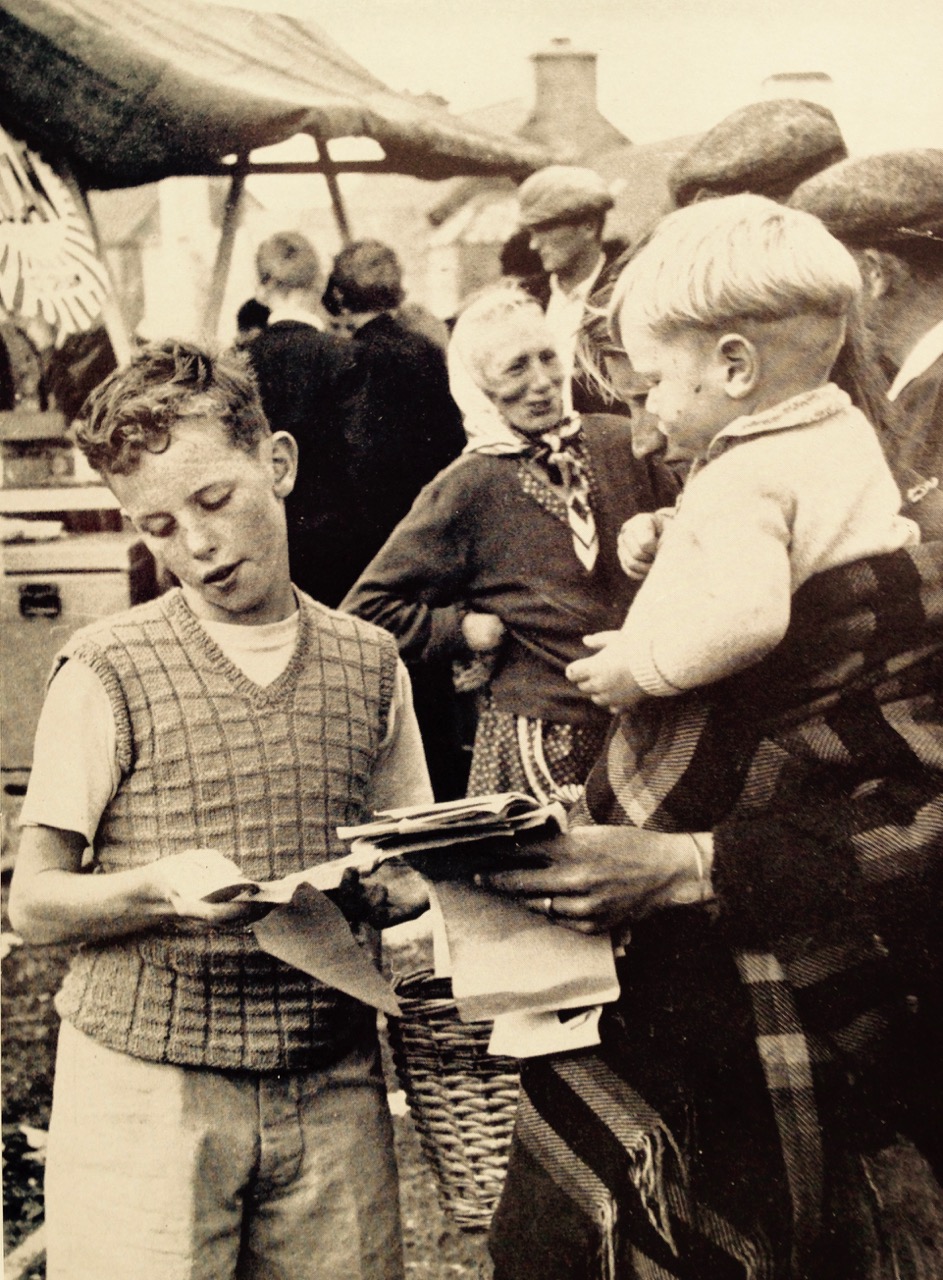
All the photographs in this post are from the collection of Tomás Ó Muircheartaigh who travelled and photographed the west of Ireland during the 1930s, 40s and 50s and is an invaluable documentary of the times in which he lived. Generally, the locations of the photographs are not noted, and very few are likely to be specific to the Mizen: they do however record life as it would have been lived at that time in all the rural areas

Today we celebrate Lúnasa – the festival of the bringing-in of the harvest. Kevin Danaher (The Year in Ireland, Mercier Press 1972) wrote (above) about what he observed in the middle of the last century, when things were already changing and many of the old customs were, as he notes, ‘in the main forgotten’, although still talked about. What changes do we see in Ireland, a few generations on?

seascape

Northside of the Mizen by Patrick McCarthy and Richard Hawkes was written in 1999 (Mizen Productions) and is a collection of memories and stories still being told then about traditional life in this westerly part of of the country:

…The heat of the summer was eased by the cooling breezes from the Atlantic. It was busy on land and sea, with seine fishing by night and fish curing and farming by day, but there was always time for scoriachting, games and dance, sometimes on Carbery Island or across Dunmanus Bay…

…Once in the year Carbery Island was the location for a dance and in settled weather the Northsiders could shout across and give the signal to the people of Muintir Bháire to meet at Carbery Island. As many as forty-five people in three boats would cross Dunmanus Bay to the White House, and a good crowd of men and women from Bear Island would also come to the dances. They were great hearty people. Ann Daly from Kilcrohane and Agnes O’Donovan of Dunkelly played the melodeon…

I like the idea of the Northsiders shouting across the water to the residents of the Sheep’s Head, two miles away! I wonder if they would be heard nowadays?

horse race

…There were competitions at Dunmanus for swimming, running, jumping and weight lifting, and you could be sure that the Northsiders were well represented in each of the events. ‘Will the Hare’ (William McCarthy of Dunkelly Middle), was good at the long jump and the running races and would often win and bring great honour to the Northside. It was said that ‘Will the Hare’ got his name by catching a hare on the run! It was also said that when you blew the whistle to gather the men for seining, by the time you had finished, ‘Will the Hare’ would be at Canty’s Cove waiting!

boat race

…Wild John Murphy would take the lads to the Crookhaven Regatta which was held on The Assumption (15th August). It was a long pull around the Mizen but a good time was had by all. The Northsiders were great with the oars, but it was hard to beat the Long Island crews in the boat races…

(Danaher): …In very many localities the chief event of the festival was not so much the festive meal as the festive gathering out of doors. This took the form of an excursion to some traditional site, usually on a hill or mountain top, or beside a lake or river, where large numbers of people from the surrounding area congregated, travelling thither on foot, on horseback or in carts and other equipages… Many of the participants came prepared to ‘make a day of it’ bringing food and drink and musical instruments, and spending the afternoon and evening in eating, drinking and dancing…

picnic

…Another welcome feature of the festive meal was fresh fruit. Those who had currants or gooseberries in their gardens, and this was usual even among small-holders in Munster and South Leinster, made sure that some dish of these appeared on the table. Those who lived near heather hills or woods gathered fraucháin (‘fraughans’, whortleberries, blueberries) which they ate for an ‘aftercourse’ mashed with fresh cream and sugar. Similar treatment was given to wild strawberries and wild raspberries by those lucky ones who lived near the woods where these grow… A number of fairs still held or until recently held at this season bear names like ‘Lammas Fair’, ‘Gooseberry Fair’, ‘Bilberry Fair’…

market in town

One interesting custom was the driving of cattle and horses into the water. This is mentioned in the 1680s by Piers in his Description of the County of West-Meath:On the first Sunday in harvest, viz in August, they will be sure to drive their cattle into some pool or river, and therein swim them; this they observe as inviolable as if it were a point of religion, for they think no beast will live the whole year thro’ unless they be thus drenched; I deny not but that swimming of the cattle, and chiefly in this season of the year, is healthful unto them…

at the fair

Discovering Carrowmore

stone and sky

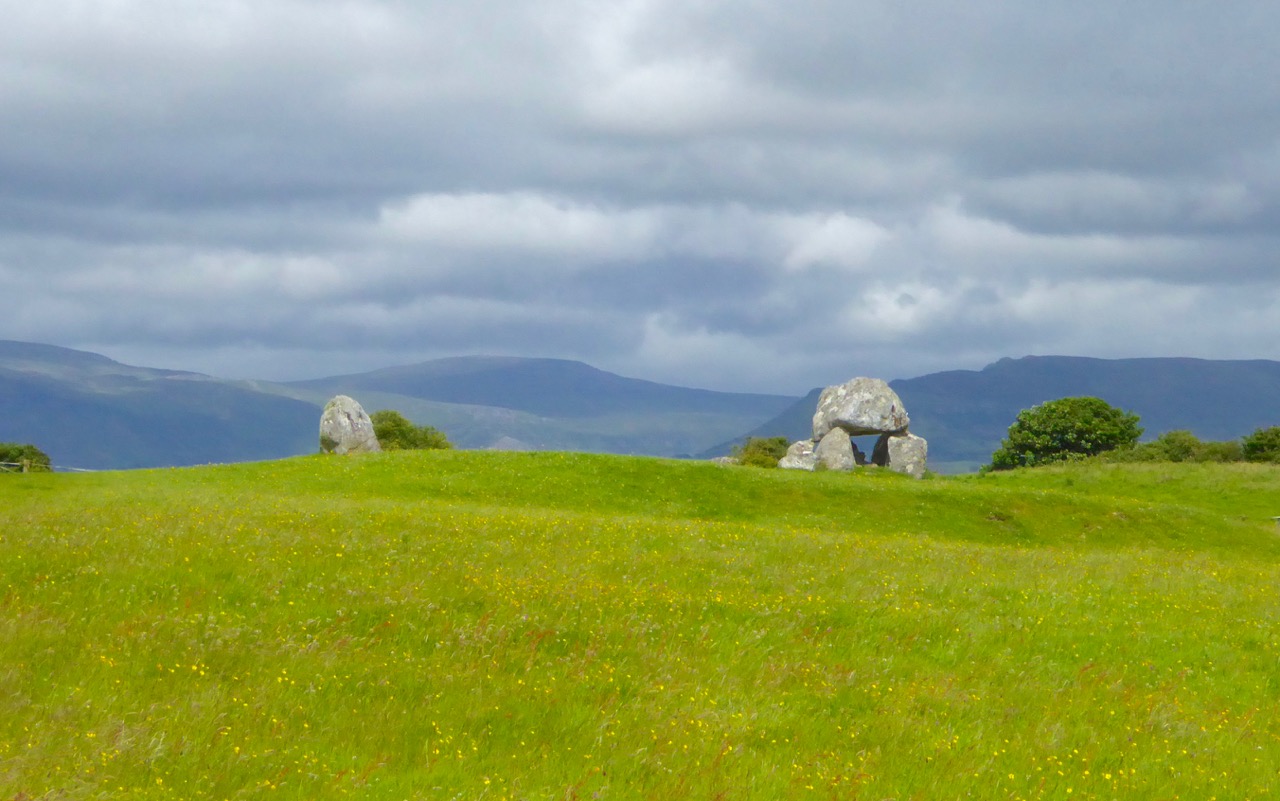
At the heart of the Coolrea peninsula in County Sligo lies one of the greatest megalithic complexes of ancient Ireland, An Cheathrú Mhór or Carrowmore as we call it today: the Irish name means ‘The Great Quarter’. Spread over a plateau of some 150 acres and centred on the high point of Listoghil are thirty recognisable tomb sites but it is suggested that there were once at least a hundred monuments here.

Carrowmore 1

The Carrowmore monuments that we know today cover over 150 acres: it’s likely that there is much more to this site which has been lost, or which remains to be recovered

The changing landscape has taken its toll: from the 18th century onwards land clearance and quarrying have damaged and obliterated many of the remains and even as recently as 1983 Sligo County Council sought to place a municipal landfill dump adjacent to the known sites. Fortunately a few alert local residents objected and took the case to the High Court in Dublin. Initially their objections were overruled but in 1989 an appeal to the Supreme Court was successful and the very important landscape context of Carrowmore has been saved, hopefully for all time. In that same year the state commenced purchase of a part of the site and has developed a sensitively planned visitor facility now run by the Office of Public Works. Since then more of the surrounding site has been purchased and is in public ownership.

stone and skyscape

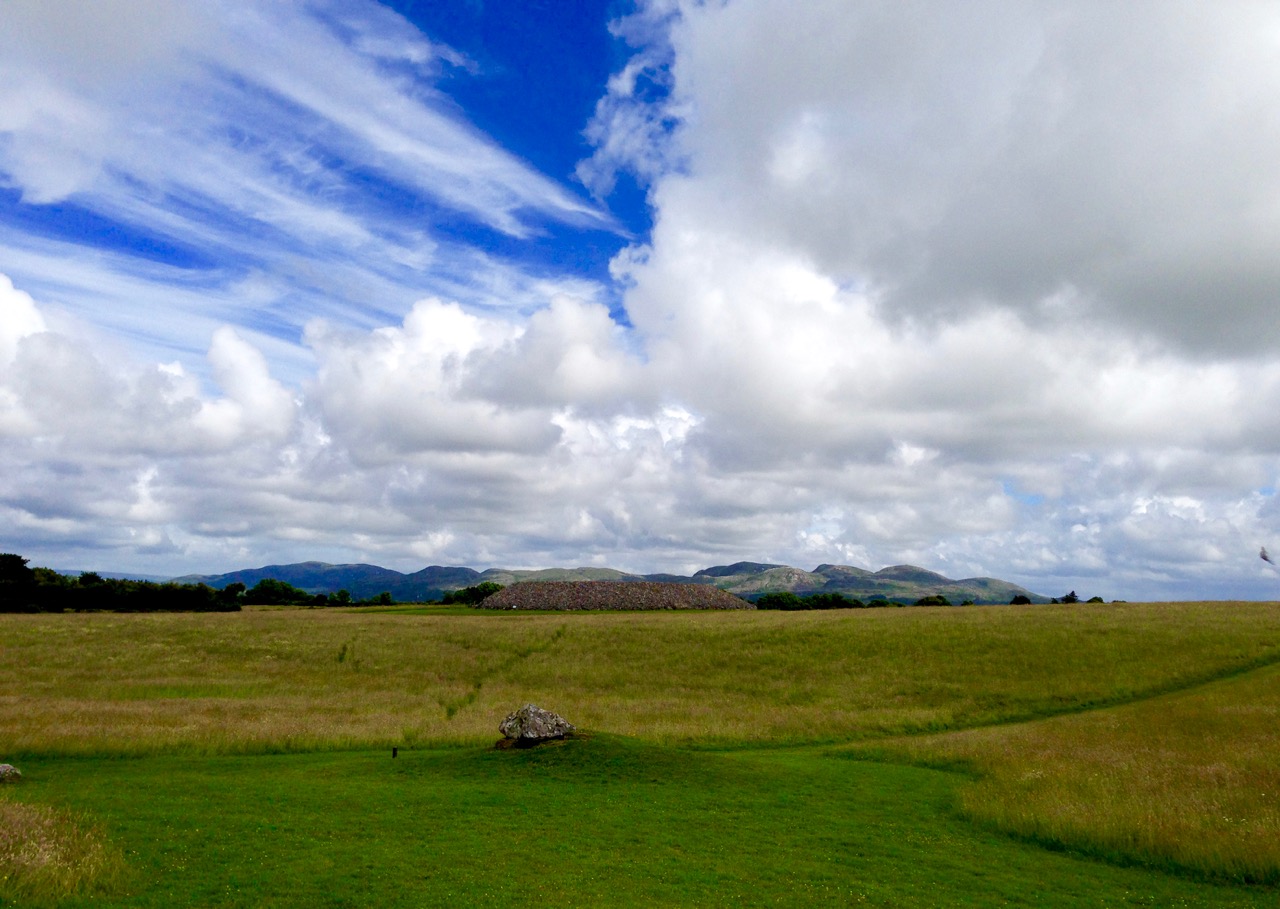
Carrowmore landscape: this view to the great central cairn on Listoghil shows the nature of the terrain and the context of the monuments which it is so important to preserve

It’s the integrity of the complex that is so special here. The monuments found at Carrowmore are called boulder circles, though several have central dolmens or rudimentary passages. Generally around 12 to 15 metres in diameter, the circles contain 30 to 40 boulders, usually of gneiss, the material of choice for the tombs. Sometimes an inner boulder circle is also present.They are considered to be an early type of chambered cairn, or passage grave, though in fact, they may be the ancestor of a few monument types. This is the view of local man Martin Byrne, historian, artist, musician and our tour guide for the day. He pointed out to us how the passage of each of the boulder groupings is oriented, not towards a solar or calendrical event but to Listoghil, where an enormous cairn encloses a box-like stone chamber with a large capstone.

Monument, mountain and sky

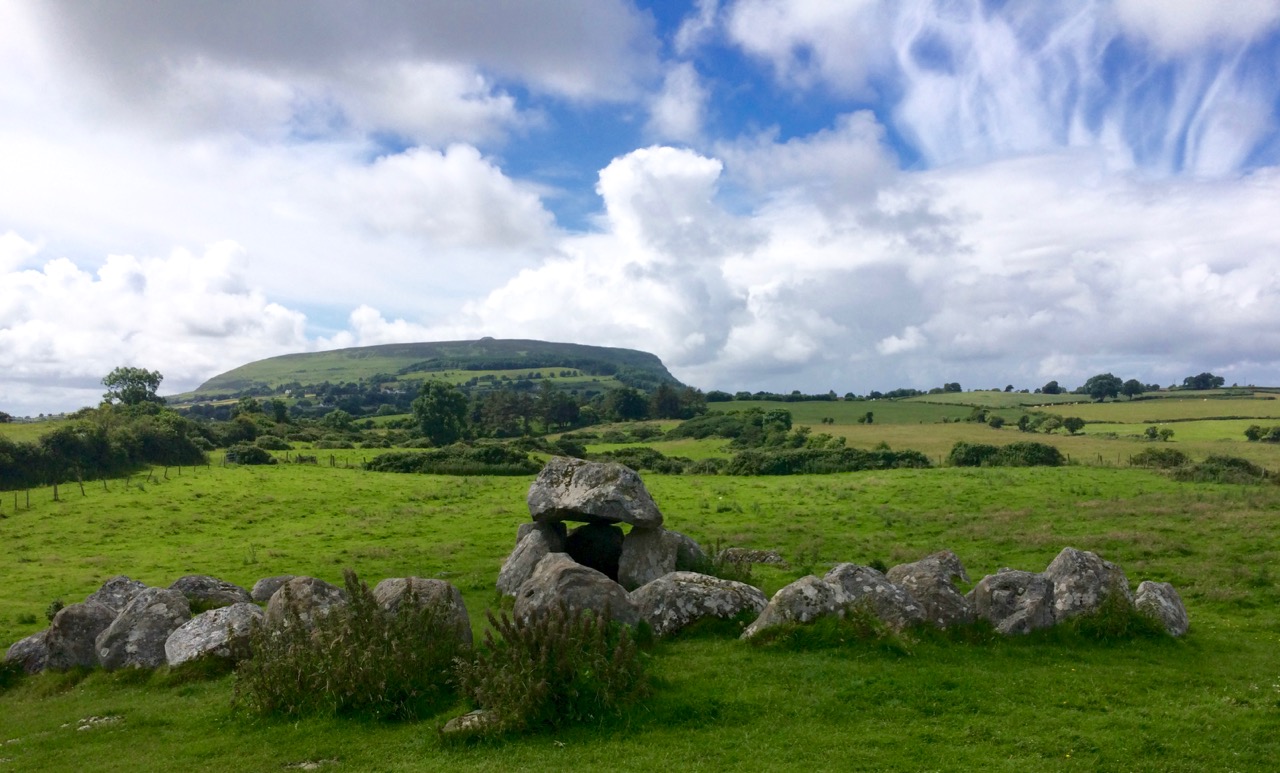
One of the boulder circles at Carrowmore with its central chambered tomb. This view is looking away from Listoghil and towards another significant landscape feature, Knocknarea, which is topped by the cairn known as Queen Maeve’s Tomb, 6 km to the west. There are 6 more mountain-top cairns on the peaks of the Ox Mountains to the south. The central focus of the Carrowmore complex is the cairn on Listoghil, although this is not as dramatically visible as many of the surrounding cairns

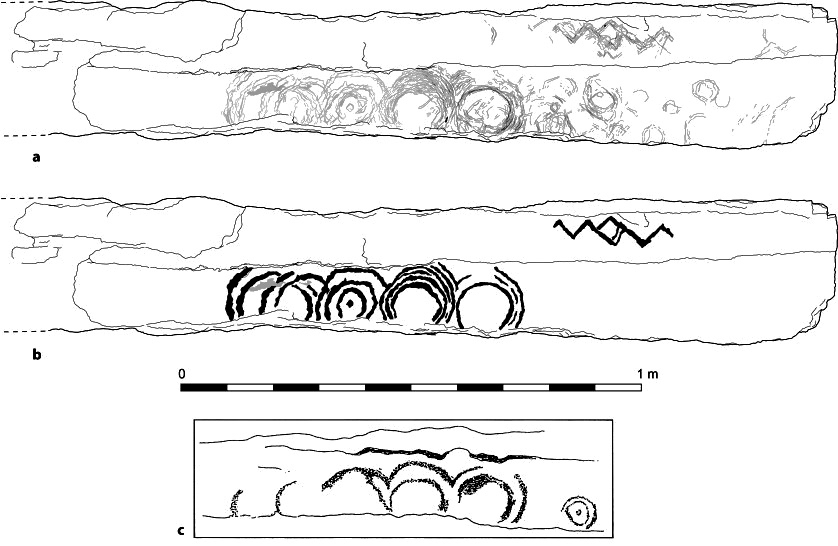
The chamber on Listoghil has been given a modern context, with the original cairn covering having been cut away to allow access. This chamber displays the only examples of rock art to be found so far within the Carrowmore complex. This is hard to see in normal lighting conditions, but successive observations have enabled these images to be made:

Listoghil carvings Guillaume Robin 1994

The formerly covered central chamber of the Listoghil cairn: top left is a photograph taken during excavations by Göran Burenhult in 1996-98 – this shows three boulders in front of the tomb which are said to have been an earlier Neolithic monument displaced by the tomb construction. Top right is the OPW interpretation board for the chamber and above are drawings of the rock art on the edge of the roof slab compiled by Guillaume Robin

It’s startling to discover that the Carrowmore complex could be over 6,000 years old: carbon dating from some of the finds has suggested this. If so, then it’s the earliest of the passage grave cemeteries in use in Ireland. Many cremated remains have been found over this site (spread over a long period of time), although unburnt human bones were also recovered in the Listoghil chamber. It could be speculated that the focal point of Listoghil must have been the resting place of a very important person – or dynasty; we will never know for sure. 

‘Accidental’ rock art and rock scribing noticed on monuments at Carrowmore: these boulders have natural markings on them but it is possible that the monument builders were attracted by these marks, which may themselves have inspired carvings

The Carrowmore complex has been visible enough historically to attract the attention of antiquarians – which is useful for later archaeologists, as some parts which are now lost have been historically recorded, albeit using methodology which would nowadays be considered inadequate. Gabriel Beranger, who was born in Rotterdam in 1725, settled in Dublin in 1760 and was a notable illustrator of antiquities in Ireland during a long lifetime; he visited and recorded Carrowmore. A local landlord, Roger Walker, carried out some excavations of the tombs in the 19th century but made no significant records; it is suggested that he was a treasure hunter. George Petrie surveyed the site and numbered the tombs in 1837 but it was another 50 years before archaeologist William Gregory Wood-Martin made the first methodically recorded excavations. William Wakeman produced some exquisite watercolour sketches in 1879. More recently Swedish archaeologist Göran Burenhult undertook detailed studies between 1977-1982 and 1994-1998 and this work included the excavation and subsequent reconstruction of the Listoghil cairn.

Upper Left: the work of Gabriel Beranger who visited the area in the 1700s – this shows Queen Maeve’s Tomb on Knocknarea. Upper right: William Wakeman’s watercolour of Tomb 4 in 1879 (Sligo County Library). Above: Listoghil chamber tomb today

Our guide Martin has studied the complexes at both Carrowmore and Carrowkeel (a future destination for us) for many years and is imbued with the archaeology and the landscape. He gently pointed us to the fact that relationships can perhaps be seen between the profiles of some of the boulders – particularly the capstones of the tombs – and the more distant landscape. I find this fascinating: I have always felt, as an architect, that there should be a conscious designed relationship between any building that is erected by human endeavour and the setting of that building within nature. Could these parallels that we might be seeing at Carrowmore be conscious?

Dolmen and Mountain

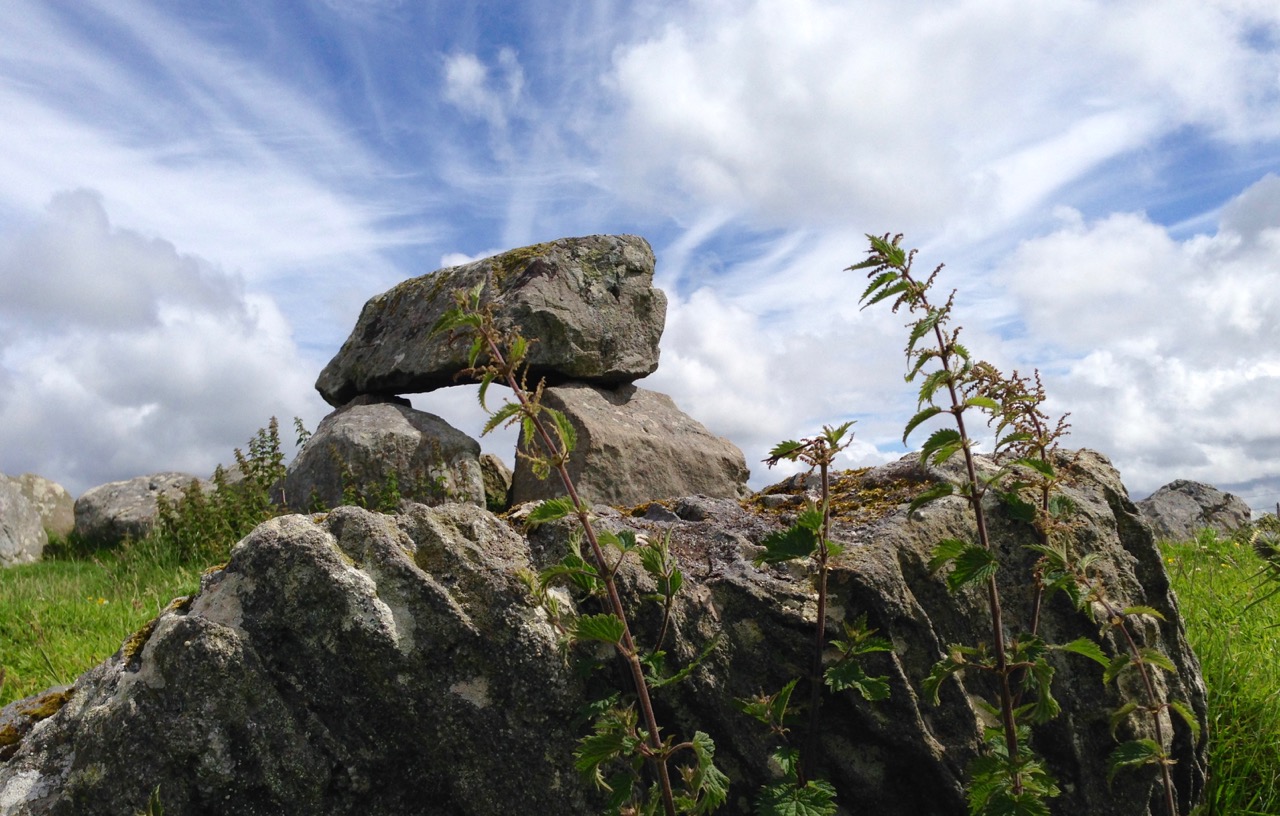
Rocks reflecting nature? Were the capstones chosen to specifically echo the landscape context? A debatable – and very subjective – notion…

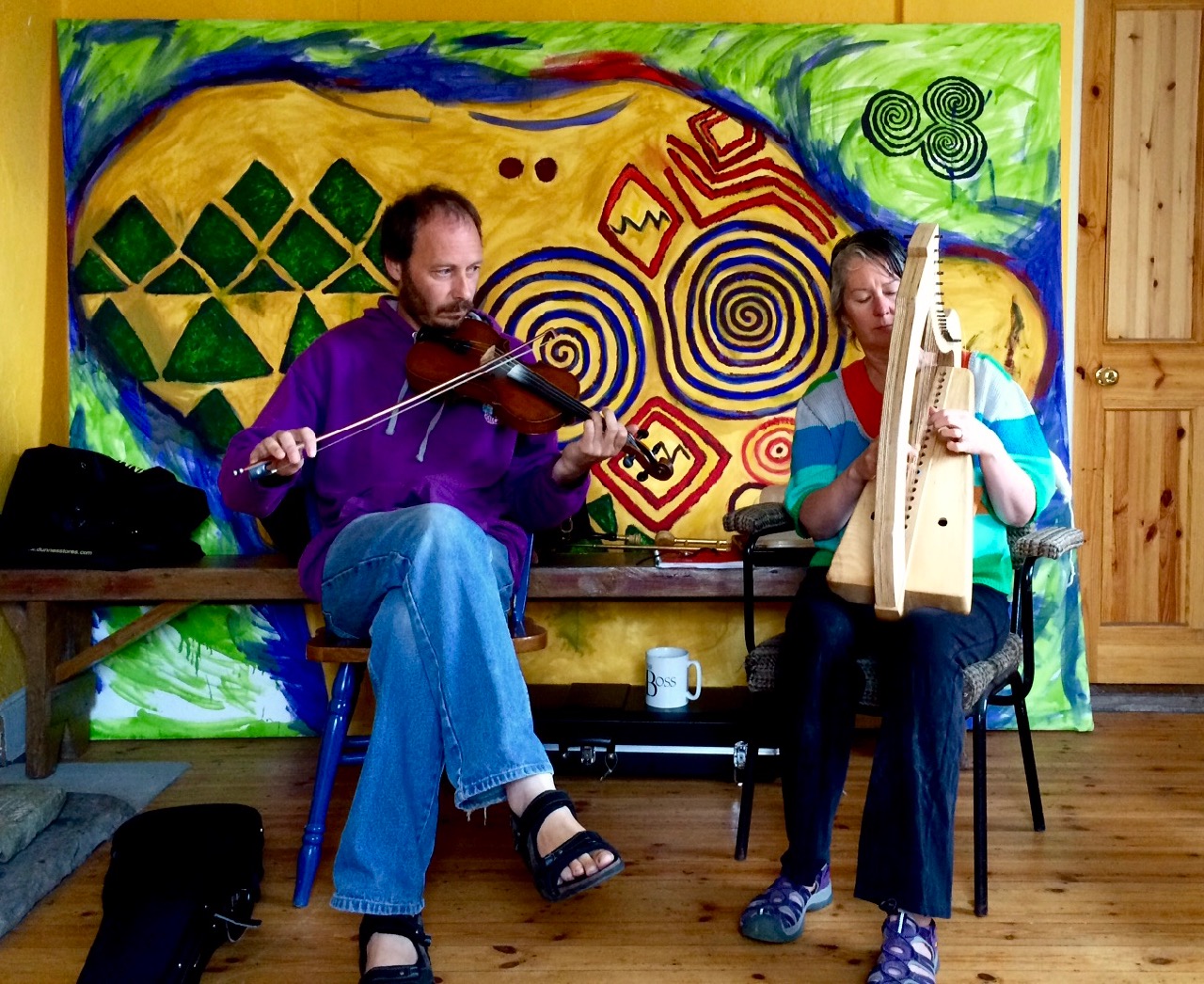
My day was made when I discovered that Martin was a musician – as is Margaret, and I joined them in their colourful house for a little session!

martin + margaret

Susan’s Burren

Valerian

Valerian provides a carpet of red in a Burren field

We want ‘A Susan Day’, we told her – and what a day we got! Readers may remember our visit (Showing off West Cork) from Susan Byron of Ireland’s Hidden Gems. We’ve been planning a return visit ever since, so that Susan could show us HER Burren. 

Fields of Stone

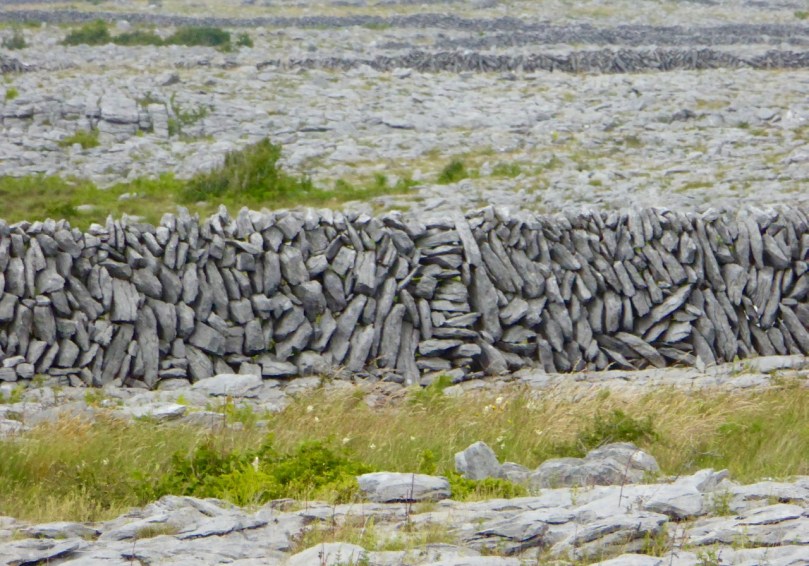
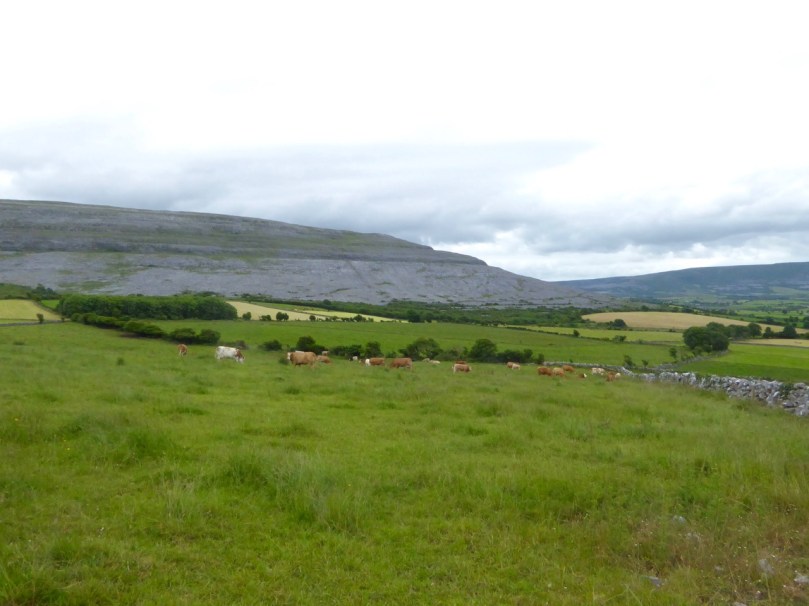
I’ve written about the Burren before – the unique karst limestone landscape full of heritage and wildflowers in West Clare. But this time we had the benefit of Susan’s intimate knowledge of the place – she lives there and has been exploring it for years. Since we only had one full day, she planned an outing that covered everything we love about this part of Ireland – you’ll see what I mean.

DESTINATION
Our destination: Turlough Hill

Leaving the car in a convenient spot, we set off up a long green road, Susan pointing out the wildflowers as we walked, here and throughout the day. We stopped at numerous places to admire features in the landscape: Corcomroe Abbey, for example, lay below us in all its medieval glory.

Corcomroe

Corcomroe – a wonderful site to visit if you’re in this area

Our first real stop was St Colman’s Holy Well. It’s a beauty, with all the remote wildness that lends such atmosphere to these ancient sacred spots. One of our blogging heroes, Ali Isaac of the wonderfully researched and entertaining site Aliisaacstoryteller had visited this same route a couple of weeks earlier. We were walking in her footsteps, although in reverse. She tells of her journey here and has extensive details about the holy well and St Colman here.

St Colman's well

St Colman's Well 2

Robert and Susan at Colman’s Well and a peek into the interior of the well

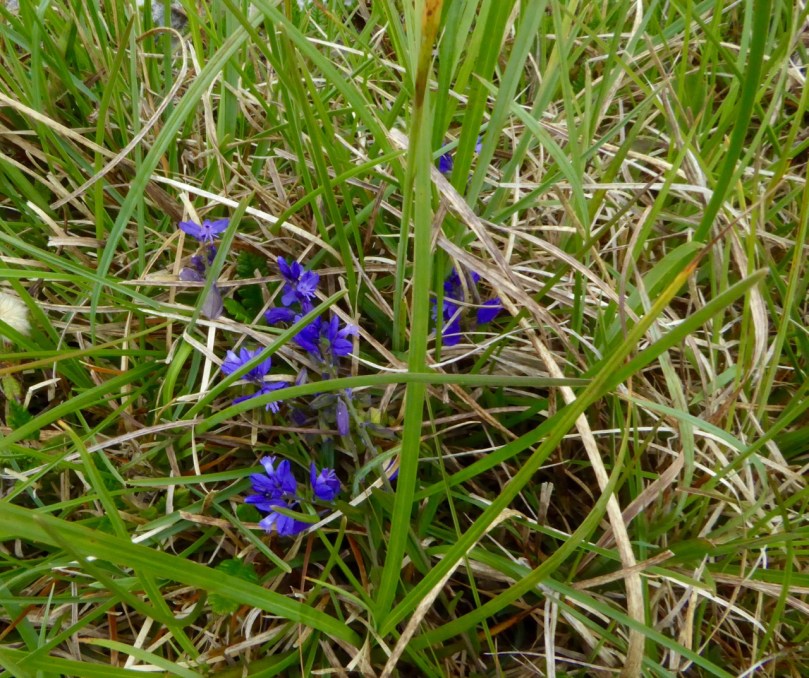
Ali had walked through the Burren in time to see the last of the electric blue Gentians that grow here and in the Alps. They were gone by the time we got there, but we were not disappointed in the wildflowers, which were everywhere underfoot in the most prodigal abundance.

Carpet of Orchids

Bloody Cranesbill, left, and a white orchid

Brilliant magenta Bloody Cranesbill jostled with delicate Orchids and tiny yellow Potentilla (or Cinquefoil), while Wild Thyme scented the air. One field was awash in Valerian. A rare Lesser Butterfly Orchid was spotted in the long grass and lovely Burnet Roses in a hedge.

Clockwise from top left: Burnet Rose, Lesser Butterfly Orchid, Mountain Avens and Spotted Orchid

Milkworth

Milkworth lurking in the grasses

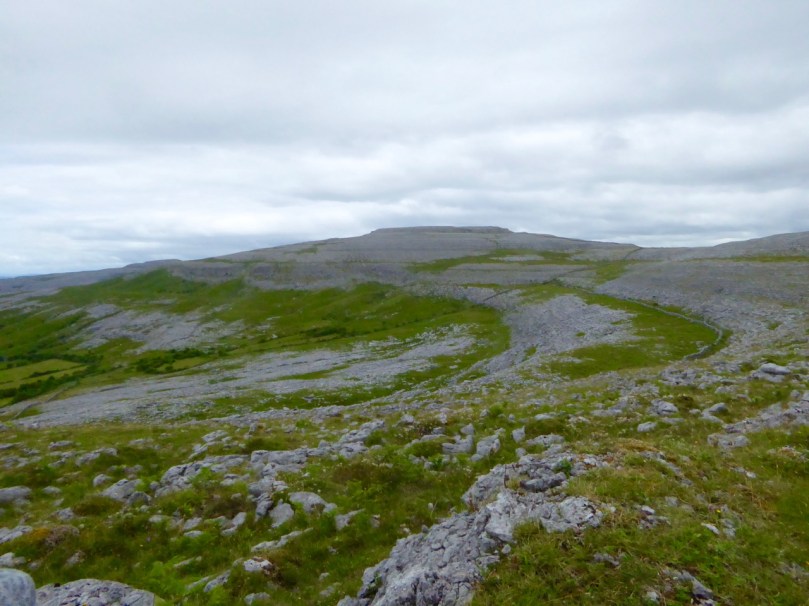
Hiking up Turlough Hill was an excellent opportunity to see how the Burren is laid out. From below, it looks like bare rock, but as you ascend, you realise that the hills are stepped in a series of terraces, the evidence of retreating beach levels after the ice age. These terraces provide important forage for sheep and cattle, who, in turn, help in the regeneration of the plant life. The going isn’t easy – we didn’t stick to any defined path but simply clambered up the steep slopes. The flat parts had been deeply rutted by cattle hoofs – we had to be vigilant to prevent stumbles and ankle injuries.

Turlough Terraces

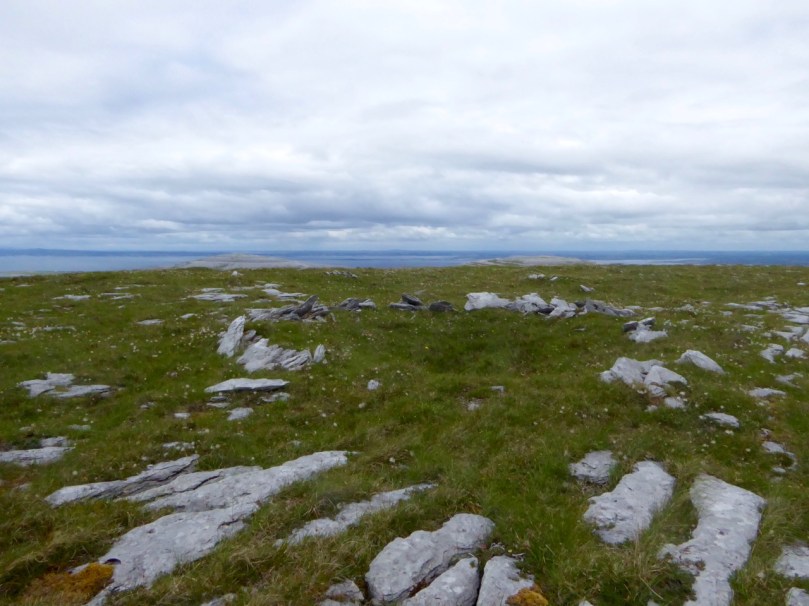
But the rewards were enormous – ever-increasing panoramas of North Clare, across Galway Bay and south into the hinterland.

Cattle enclosure?

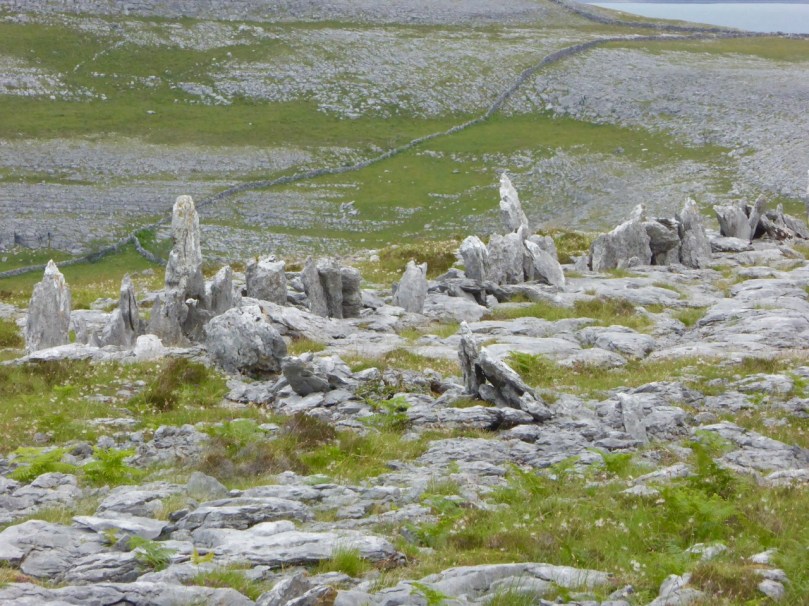
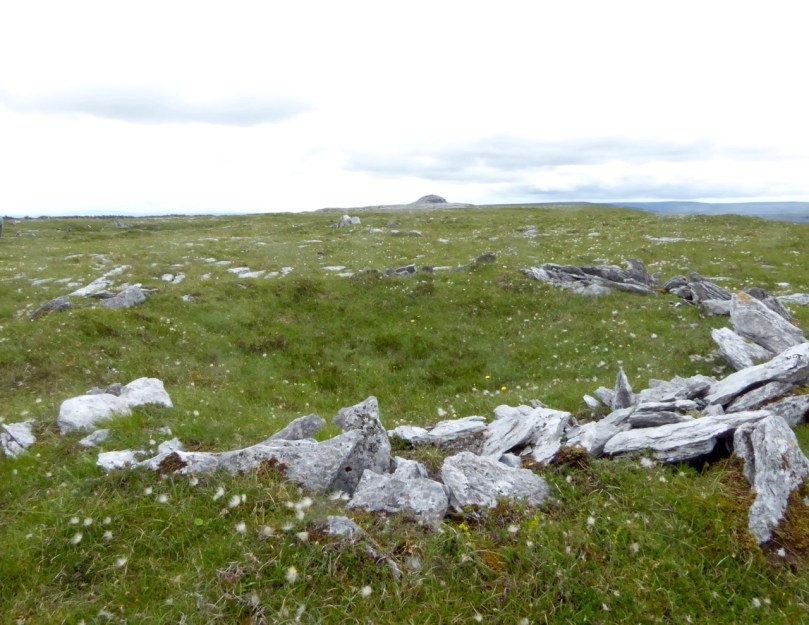
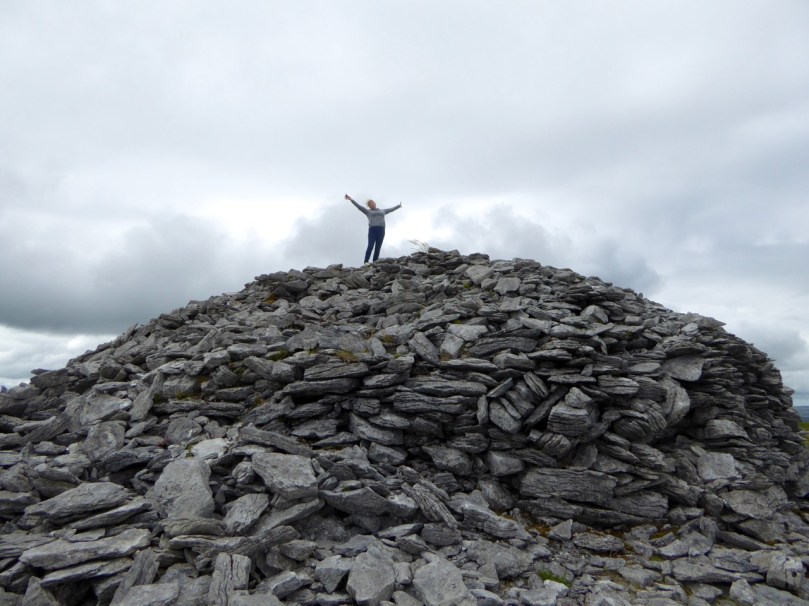
We had an objective in mind. At the top of Turlough Hill, and most visible in arial photographs, is a prehistoric ‘village’ of over 150 hut sites and some larger enclosures. On the summit is an enormous cairn.

Turlough Hill

Turlough Hill 2

Hut site and cairn

From the top: An aerial image of the hut circles and cairn (look closely!)  from the National Monuments Service, a hut circle looking north to the sea, a hut circle looking towards the cairn

This mysterious site has been the subject of an initial investigation to establish the extent of it. The report had this to say:

Even though the hut sites, in a morphological sense, are domestic in character, it is very hard to see their role and function as primarily domestic, considering their location on this inaccessible and exposed hilltop. The activity that required the building of about 150 hut sites on this inaccessible and extremely windy summit, consisting mainly of bare bedrock, was most likely of a strong social and/or ritual character, with few direct links to secular way of life.

Susan on Cairn

This will give you a sense of how huge the cairn is

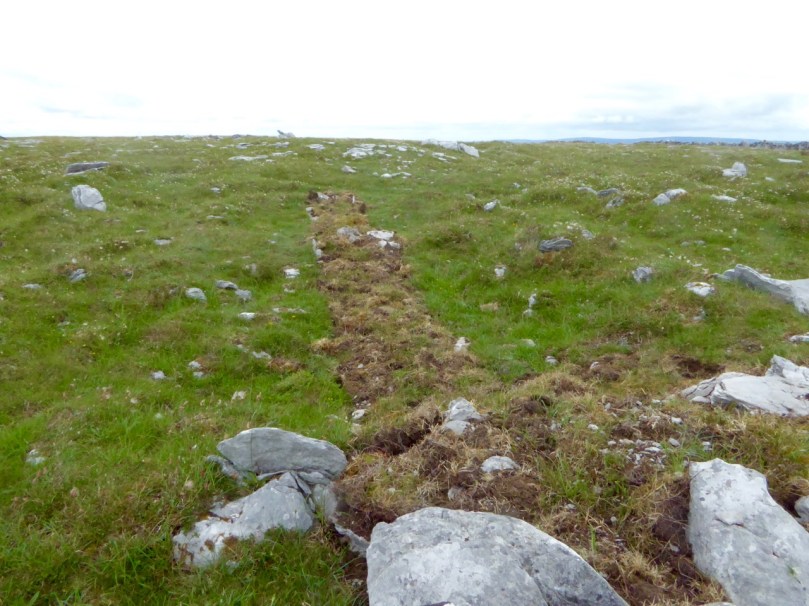
Earlier this year, Dr Stefan Bergh of UCG conducted a preliminary excavation within the hut-site concentration. You can read about that in this Irish Times piece. We saw the neatly back-filled trench, and look forward to his results.

Trench

Coming down, as all hikers know, is often more difficult than going up – the knees certainly protest! In this case, some chunks of it were accomplished by dint of sliding down on my butt and picking the thorns out afterwards. Oh – and the tick! Do check yourself after all walks in long grass where cattle and sheep have been grazing.

From the Cairn

The view from the cairn

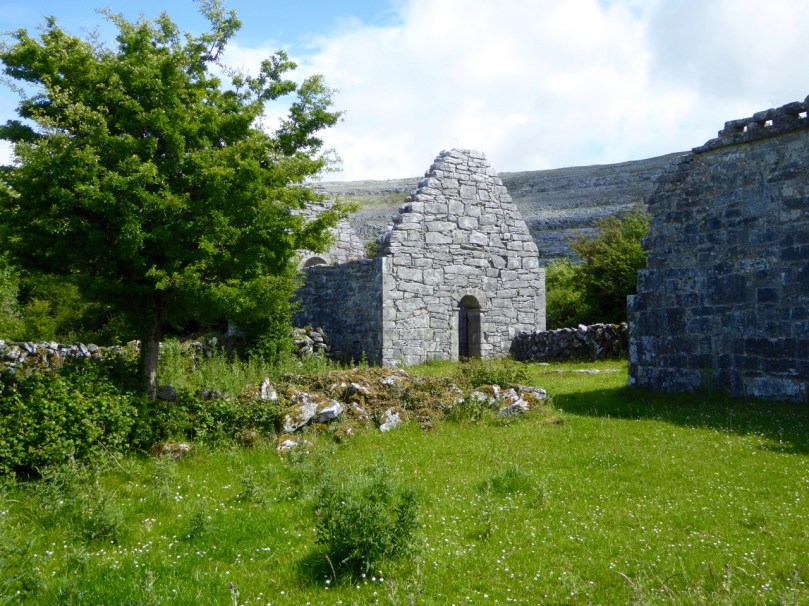
We ended up at an early medieval site that quickly banished all thoughts of aching muscles – Oughtmama, of the Seven Churches. Meaning The Breast of the High Pass, there are actually only three churches at Oughtmama, but they pre-date the 12th century Cistercian foundation at Corcomroe, and as such they are excellent examples of early monastic structures in the Romanesque tradition.

Oughtmama Churches

There are several examples of churches built with ‘cyclopean’ masonry in Clare, and here at Oughtmama you can see the huge stones used in the courses of the outer walls that give it this name. Associated with St Colman (of the Holy Well) these churches probably fell into decline after Corcomroe was completed.

We hiked back to the car in the soft afternoon sunlight. It’s hard to believe that one day could be so packed with experiences. Thank you, Susan, for sharing YOUR Burren with us. We’ll be back – we’ll let you know when to put the kettle on again.

Wild Thyme

Wild Mountain Thyme

Foxglove Fever

Foxgloves in our own boreen

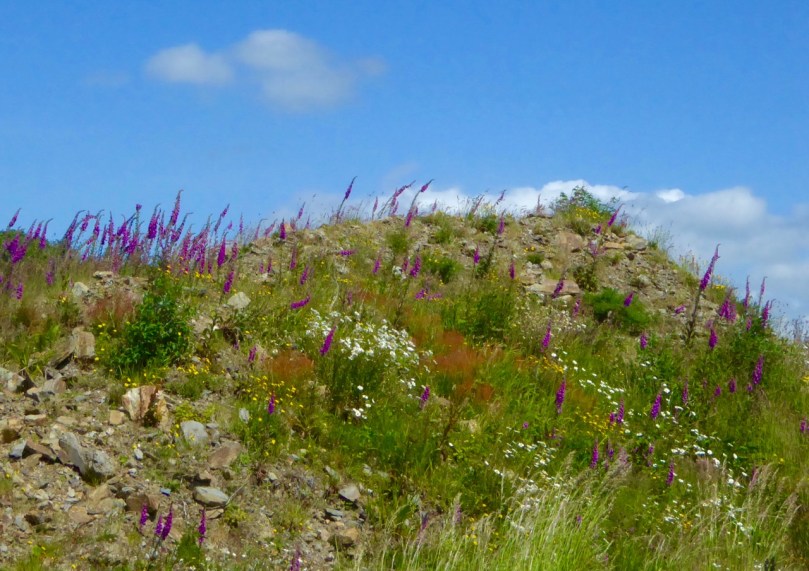
Nobody can remember a year like this one for the foxgloves. In fact, all wildflowers seem to be crowding out the boreens and invading the fields everywhere you look, including our own little patch of paradise, above.

ragged robin and oxeye daisies

Ragged Robin, Oxeye Daisies, Buttercups and Thistles

Back Road to Schull

Along the back road to Schull from Ballydehob

Last year I wrote a post, Close Reading, about the June wildflowers. The theme of the piece was that to really see what was in the hedgerows you should slow down, stop and seek.

Massed foxgloves

Not this year! This year we cycle or walk along fragrant, colourful paths that threaten to overwhelm the senses. The bounty is simply laid out before us.

Half way there

Foxgloves can have as many as 75 blooms on one stem. This one’s half way there

Foxgloves, tall and straight, are everywhere, singly or in masses. Nobody knows why it’s called foxglove, beyond the obvious explanation which doesn’t seem to quite fit the size of the flower in relation to a fox’s paw. But we do know its latin name, digitalis, was based on the idea of the flower easily slipping over a finger. It’s an important medicinal plant used in heart treatments but highly toxic if ingested raw or improperly, earning it the nicknames dead men’s bells or witches gloves.

They are a native to Ireland, quickly colonising waste ground and common near moorland. Sometimes called fairy thimbles or fairy bells here, they were associated with the little people and it was considered unlucky to have them in the house. That’s good, as they are an important source of nectar for bees and other insects.

Wasteland

This patch was cleared last year and looked barren. Here’s what’s happening now!

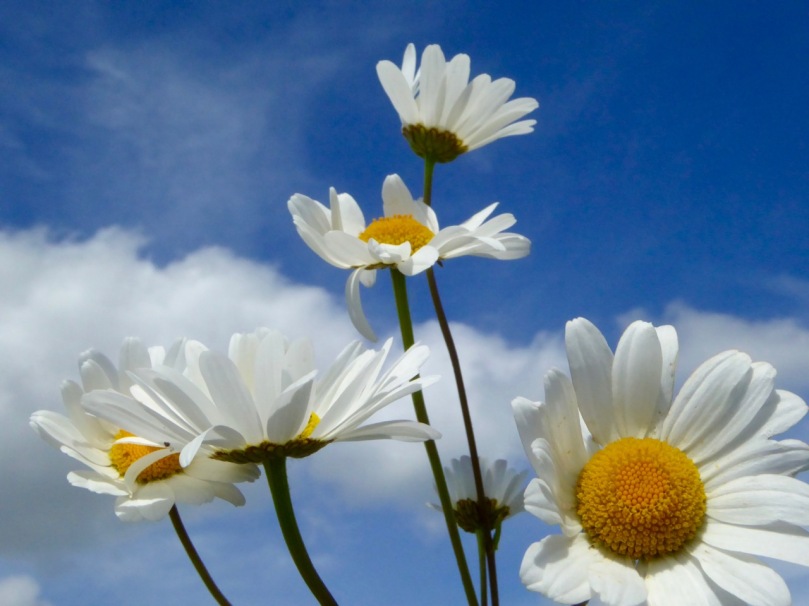
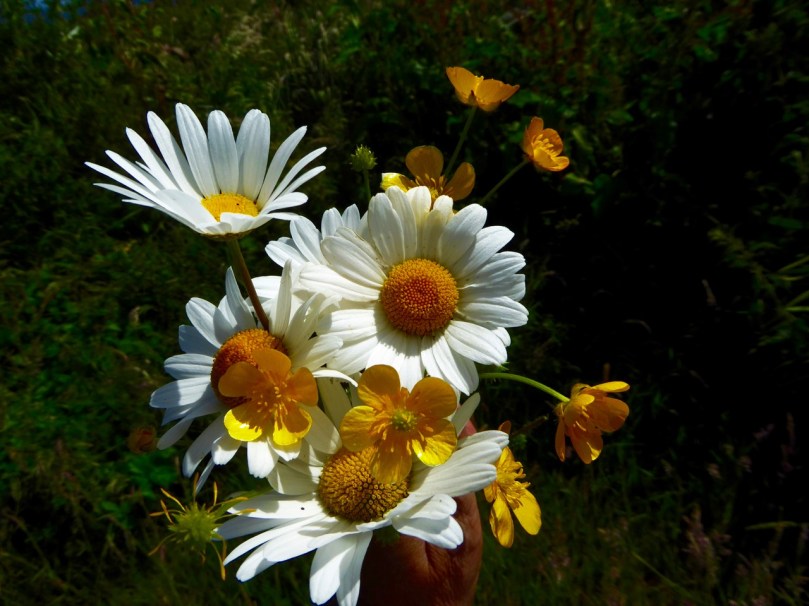
The other ubiquitous flowers of June in West Cork are the Oxeye Daisy and the Buttercup, often growing together in a riot of white and yellow. Both are native plants and, like the foxglove happily and quickly colonise any ground that’s been recently cleared. We grew up calling them dog daisies and bringing them home in great bunches for our mother, who would quietly dispose of them once we’d gone to bed – their perfume didn’t match their good looks.

oxeye daisies blue sky

And Buttercups – is there another such yellow? We held them under each other’s chins to see the yellow reflection. If it was there, it meant you liked butter. It never occurred to us to question the validity of the predictive method.

oxeye daisies and buttercups darker

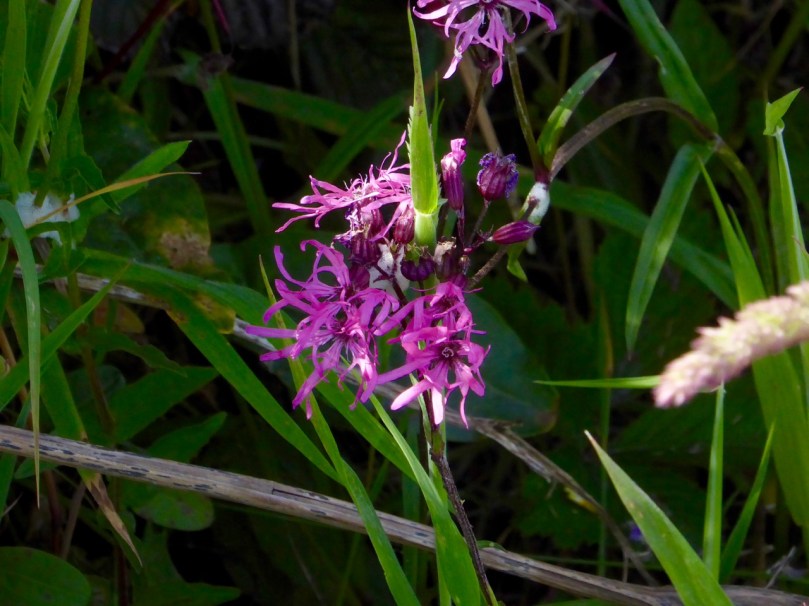
Ragged Robin – such an apt name for this native! A tiny haggard near us is full of them, much visited by butterflies. This lovely flower used to be more common, but the draining of wetlands and boggy areas has left less of their preferred habitat for them.

Ragged robin

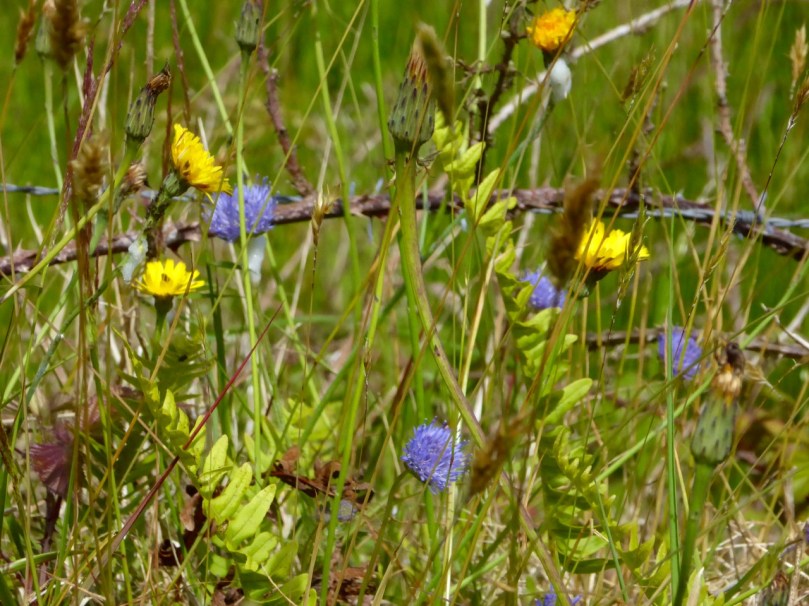
Scabious is everywhere and its brilliant periwinkle blue plays off beautifully against the yellow of the humble dandelion. The bane of gardeners everywhere, the dandelion was used in Ireland to make a tea that was supposed to be a great tonic for one of ‘consumptive habits.’ As kids, we delighted in blowing the seed heads to see what o’clock it was, and rubbing the milk on our warts as a cure. On a less charming note, we called them piss-a-beds and teased each other that touching them would result in wetting the bed.

Scabious

Scabious and DandelionsThe honeysuckle and the fuchsia are just starting to make their presence felt now. The bramble flowers and the wild roses are punctuating the hedges and the bird’s foot trefoil has taken over part of our lawn. My father waged war on anything but grass on his lawn, especially the little lawn daisies. He didn’t mind us pulling those up to make daisy chains, or to play he loves me, he loves me not.

Clockwise from top left: Birdsfoot trefoil, Wild Rose, Lawn Daisies, Campion, Foxglove and bramble flower

Of course, there is still a bit of seeking and peering involved for the tiny flowers in the hedges or fields. Speedwell, Herb Robert and Campion (below) reward the slow down and look closely approach.

Flaming June, some people call it (although the original Flaming June is actually a painting), and perhaps this year it’s a better description than ever.

colourful haggard

Capturing the View: Belvederes in West Cork

Swift's Tower

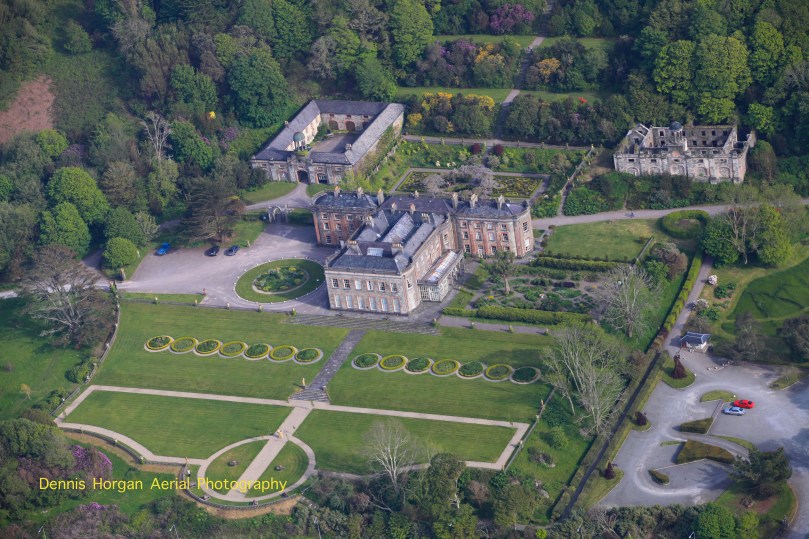
The 18th century was a time of profound change in garden design in Britain, and by extension in Ireland. In the opening decades of the 1700s great and small estates included formal gardens laid out in the French and Dutch styles that emphasised symmetry and geometry, parterres and avenues of trees. The gardens at Bantry House are a good example of this garden style. Although developed in the first half of the 19th century, they were perhaps influenced heavily by the gardens at Versailles and great European houses visited by the Earl of Bantry on his Grand Tour.

Bantry House 1

Thanks to Dennis Horgan, aerial photographer extraordinaire, for allowing me to use his shot of Bantry House. Note the formal and geometric layout of the gardens and the parterres immediately behind and to the right of the house

However, for the previous century a different style of landscaping had dominated garden design in Britain, pioneered by William Kent and Charles Bridgeman and reaching its peak in the work of Lancelot ‘Capability’ Brown. The effect they strove for was naturalistic (as opposed to natural) – a planned layout that mirrored but enhanced their idea of a ‘wild’ and romantic landscape. Large expanses of grass, strategically placed lakes and ponds, plantings of carefully chosen tree and shrub species, and clever little structures such as temples, summer houses and belvederes all combined to delight the eye, create a romantic mood and, of course, attest to the taste and wealth of the owner.

base of ruined tower belvedere New Court

Nothing remains but the stub of what was once a belvedere in the shape of a round tower on the edge of the River Ilen, on the old New Court demesne.

Echoes of these designed landscapes can be found here and there in West Cork, even where the big houses themselves have disappeared. Lately I have been on the hunt for belvederes and have found several intriguing examples. A belvedere (bel-beautiful, vedere-to see) was an edifice from which to enjoy a view. It could be as simple as a platform at a high point, or as complex as a multi-storey tower, but its most important attribute was its positioning to command a breathtaking vista.

Killiney Hill belvedere

Killiney Hill, just south of Dublin

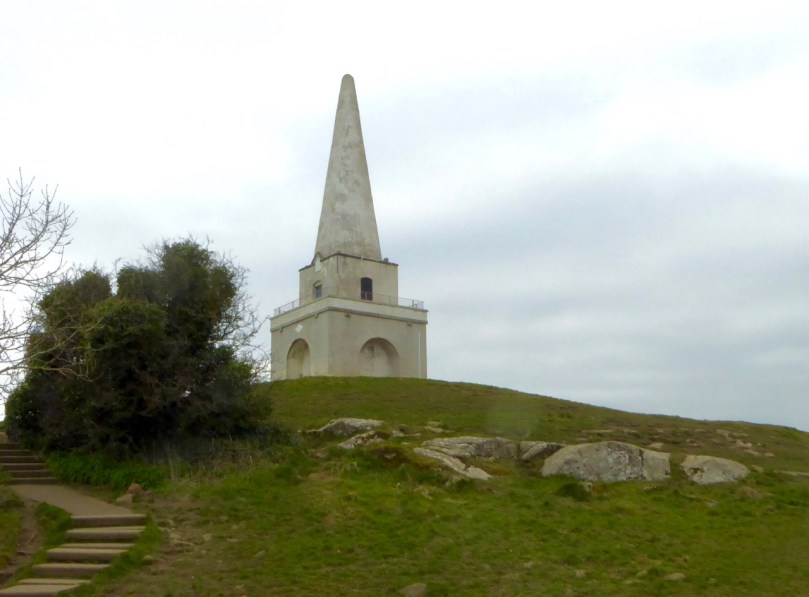
Perhaps the best known belvedere in Ireland is the one on top of Killiney Hill in Dublin. It was built in 1742 by the then-owner of the hill, John Mapas, to provide an opportunity to admire one of Ireland’s most iconic prospects. The room on the second floor had a little fireplace, windows, and a door to the exterior viewing deck, which was surrounded by wrought-iron railing. It’s no longer in use as a belvedere and many people think of it as some kind of memorial or folly.

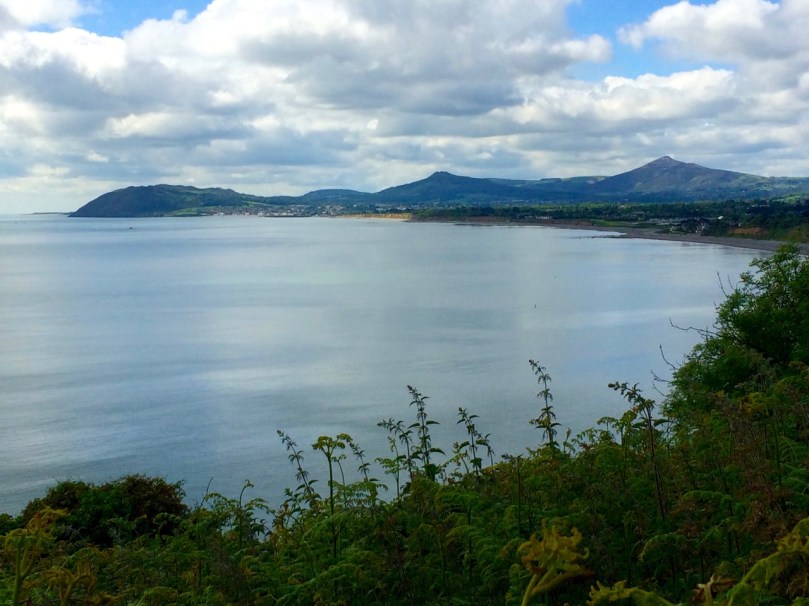
View from Killiney Hill

The view from Killiney Hill

In West Cork, the belvedere at Aughadown (known locally as the gazebo) is of the most simple kind, a viewing platform. It was associated with Aughadown House, a fortified mansion built by the Bechers that I wrote about in Trading Up In Tudor Times: Fortified Houses in West Cork.  

Belvedere, Aughadown

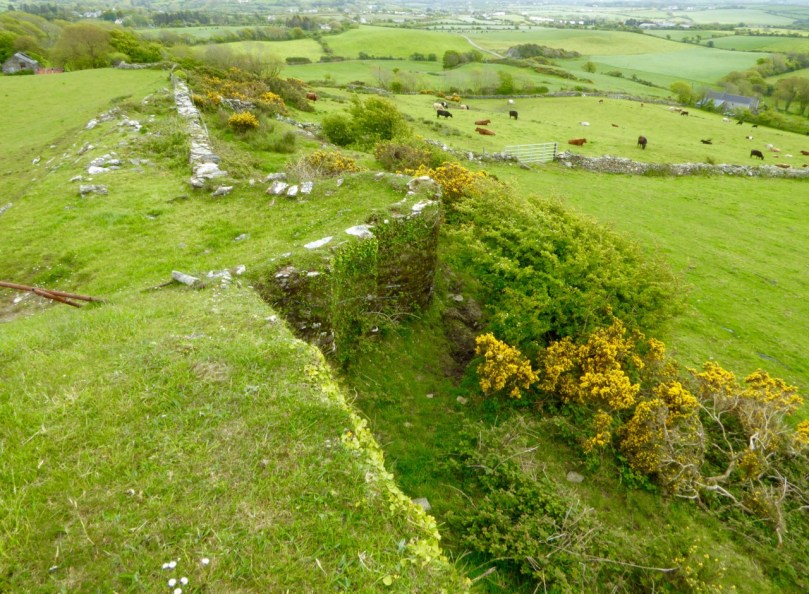
Peter Somerville-Large, in The Coast of West Cork, quoting Daniel Donovan*, says: Donovan described it as “a strong castellated mansion, entered by a drawbridge, surrounded by beautiful grounds and having a gazebo on one of the heights behind”. He continues: This gazebo was approached by a ramp along which the quality used to drive their carriages in order to enjoy the magnificent view out over Roaring Water Bay to the islands and the Fastnet in the distance. I found the ramp running above a field of winter wheat.

Aghadown Belvedere and tower house siting

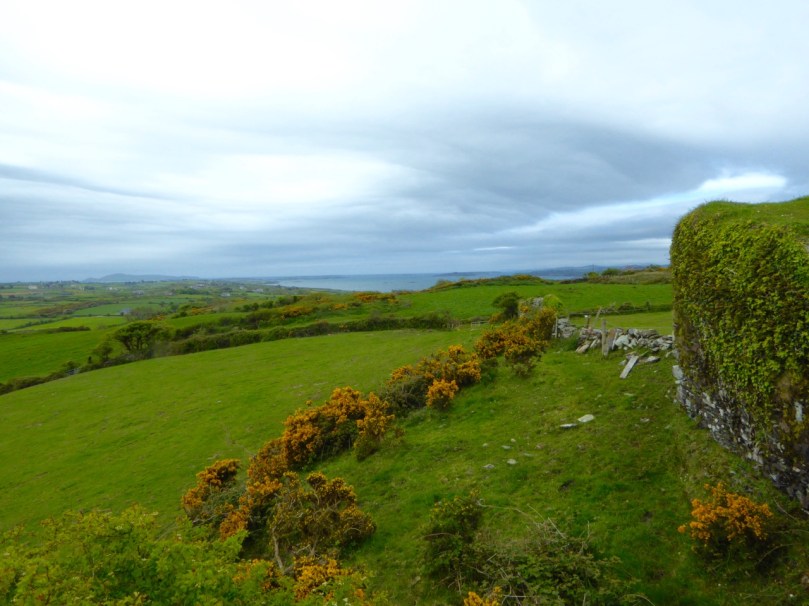
The view from Becher’s ‘gazebo’ across to Roaringwater Bay

On each side of the Ilen River lie belvederes, in the form of towers. Imagine the ladies of the house and their guests, walking or being driven down to the water’s edge. Servants would have arrived earlier and the tea would be ready and a little fire laid against the breezes. They ascend the internal staircase to the second floor or perhaps to the roof and admire the views of the lazy Ilen River as it wends its way to the sea at Roaringwater Bay.

Creagh House Belvedere

The Creagh House belvedere

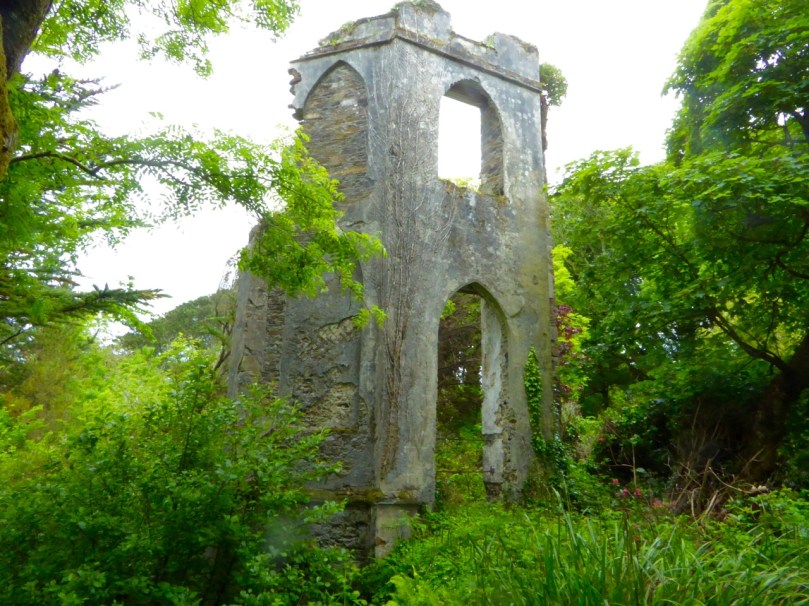
The belvedere at Creagh House exists now as a picturesque ruin. Octagonal in design, with pointed gothic windows and a small fireplace inside, it rises to three stories. Some sources describe it as the remains of a mill, and the artificial pond beside it as a mill pond, but it has all the hallmarks of a romantic garden structure.

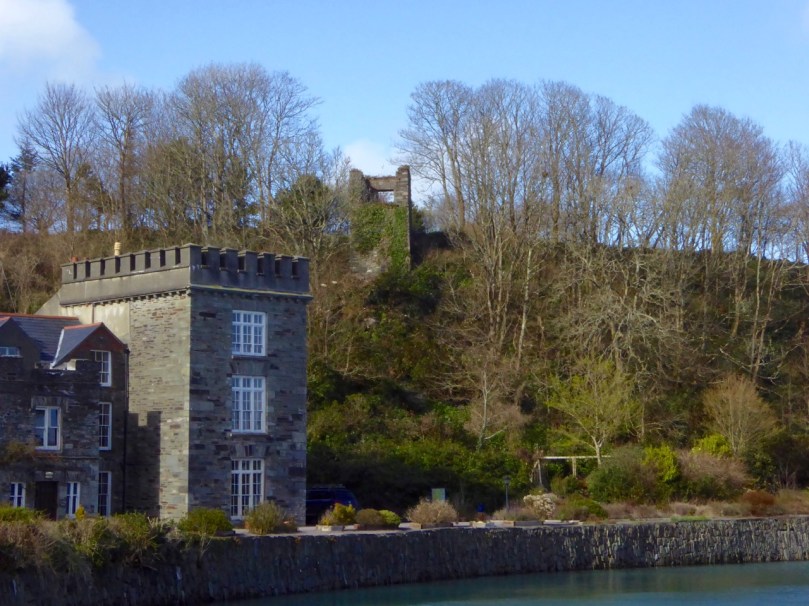
Across the river at New Court there were once three such ornamental towers. One is gone, the second is a mere stump, but the third still stands to its original height and offers lovely views of the river both to the east and the south.

Belvedere, New Court

One of the three original belvederes that once dotted the New Court Estate

At Castletownshend the local gentry were enthusiastic builders of ‘pleasure architecture’. Castletownsend Castle boast two structures of interest. The first is in the walls, an octagonal tower that is made to look like a defensive feature but in fact is purely decorative. Since there is apparently no entrance, this one may have to count as a folly rather than a belvedere.

Castle Townsend Belvedere turret

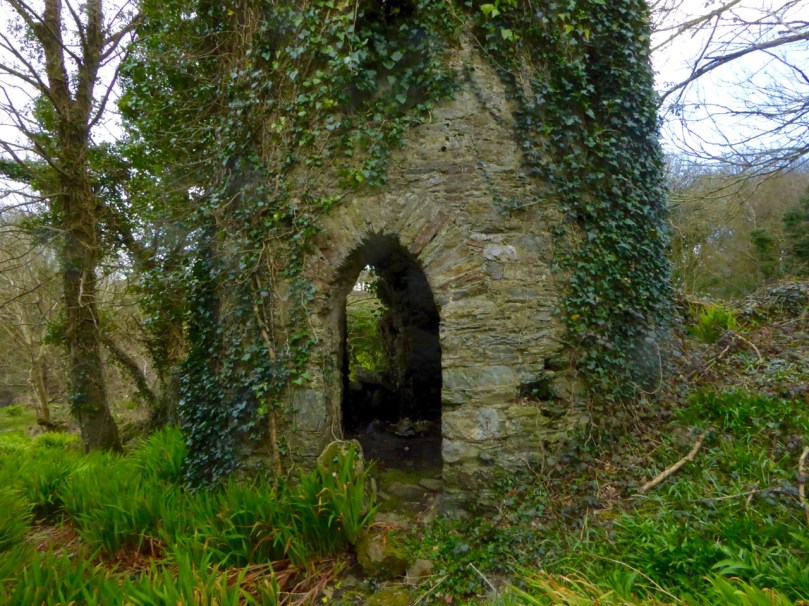
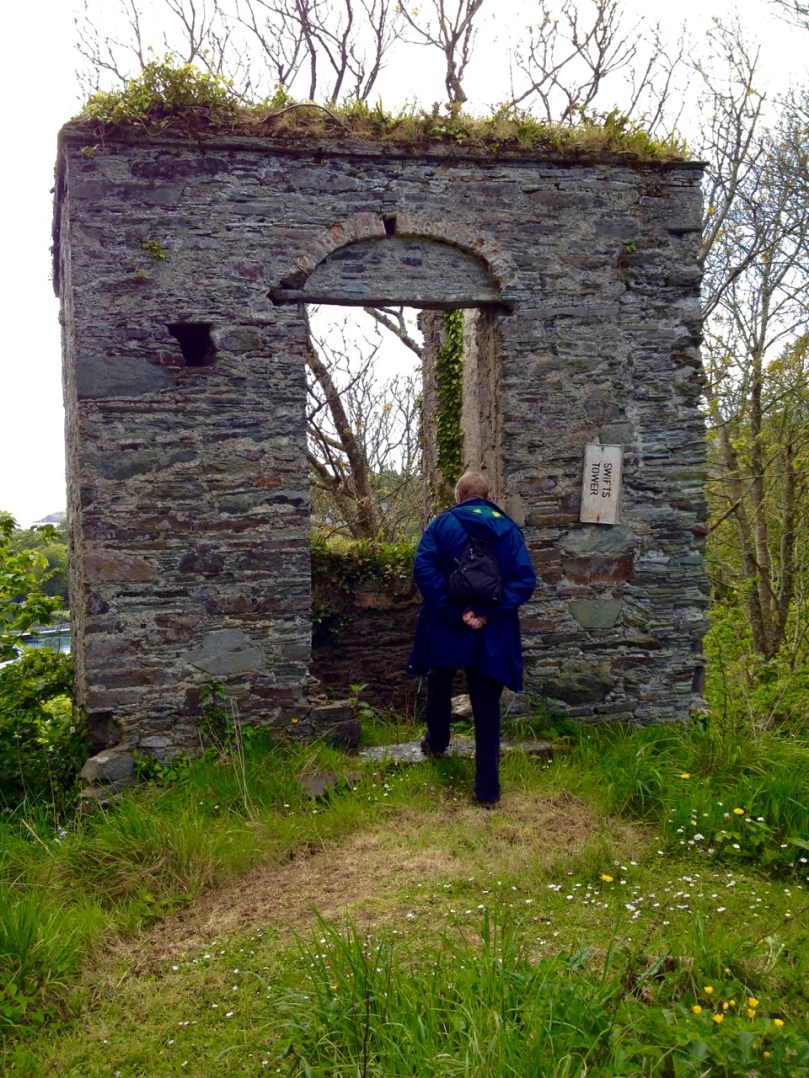
Behind the castle is the structure known as Swift’s Tower (see the very first photograph for an idea of its placement). Following the death of his beloved Vanessa in 1723, Dean Swift embarked on a long summer trip to the south west. it was in this tower, tradition has it, that he wrote the Latin poem Carberiae Rupes, which translates as The Crags of Carbery.

Swift's Tower 3

Once again we are indebted to Daniel Donovan’s Sketches in Carbery for an account of the poem and even a translation. Donovan did not have a high opinion of the poem (although he says that Dean Swift himself preferred it above other, better poems) and another critic referred to it as “a set of indifferent verses” describing a “bleak and deadly landscape”.

Carberiae Rupes

What do you think – his finest work?

Perhaps the Dean’s depressed state was to blame, or maybe he should have just stuck to prose. Or perhaps the servants hadn’t lit the fire and provided the tea – the tower certainly looks bleak enough now to bring on a fit of the dismals, in spite of the magnificent view.

Swift's Tower, Belvedere

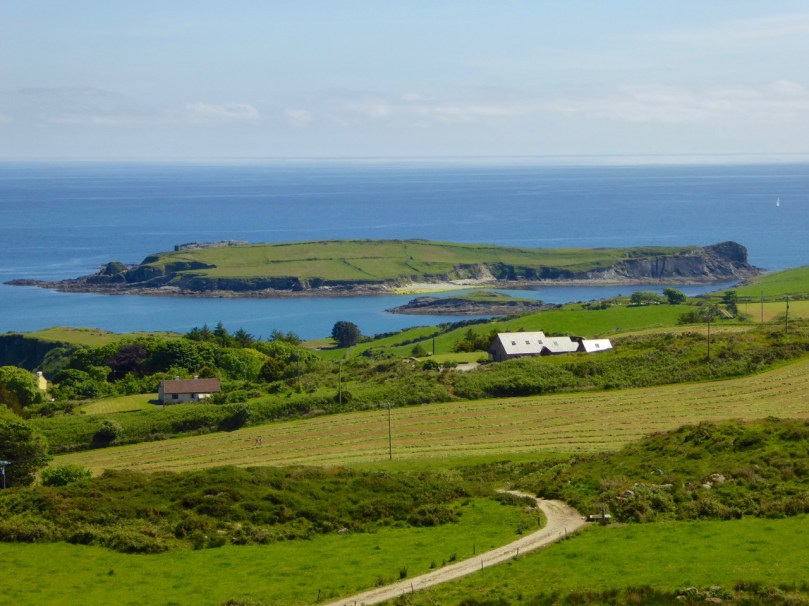
On Horse Island, just outside of Castlehaven Inlet, there is the base of a round tower that may also have been a belvedere. A visit there would have made a wonderful pleasure outing on a fine day, and the views would be stupendous.

Horse Island, Castlehaven, belvedere

You can just make out the remains of a round wall at the top left of Horse Island

There is a whole set of monuments in West Cork that are labelled as Belvederes in the National Monuments Service Inventory, but as Signal Towers in the records maintained by the National Inventory of Architectural Heritage.  These contradictory interpretations are fascinating and these towers are worth a post on their own. I will save that for another day, but to show you what I mean, take a look at the two towers on Rock Island, near Crookhaven. Belvederes or Signal Towers – what do you think? (If you’re not sure what signal towers are, take a look at this post from Amanda Clarke of Sheep’s Head Places.)

Crookhaven belvederes

Looking across to Rock Island from Crookhaven. Experts differ about the functions of the two towers

But what about nowadays? Do we still worship the view in West Cork? And do we still build belvederes from which to admire that view? The answer to both those questions can be found at Sailor’s Hill, just west of Schull!

Sailor's Hill 1

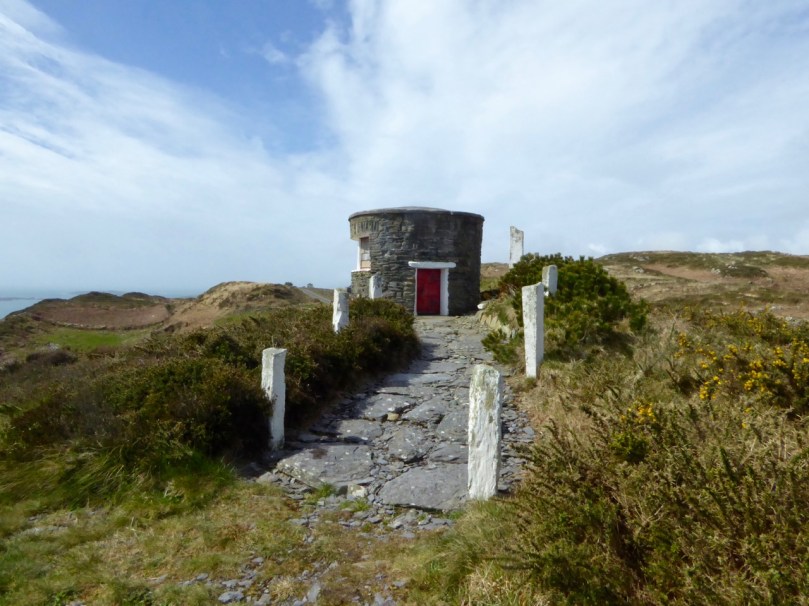
Sailor’s Hill Belvedere

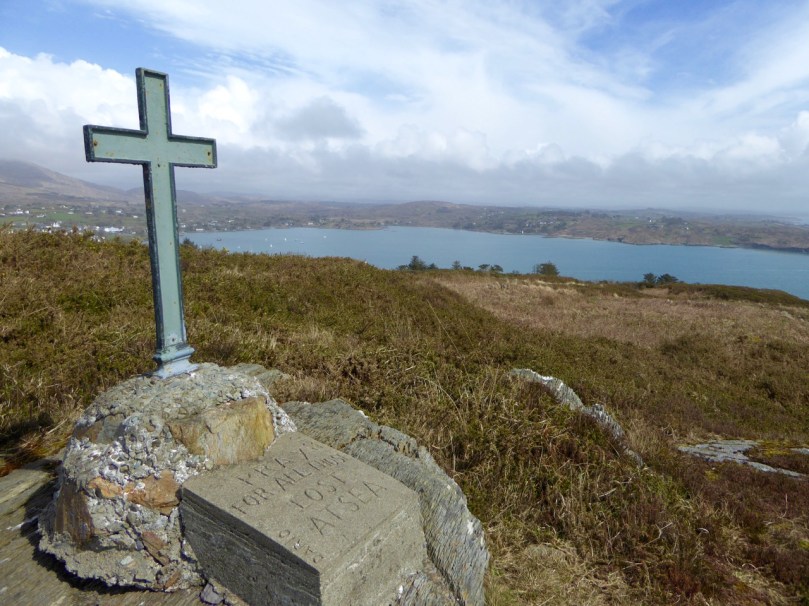
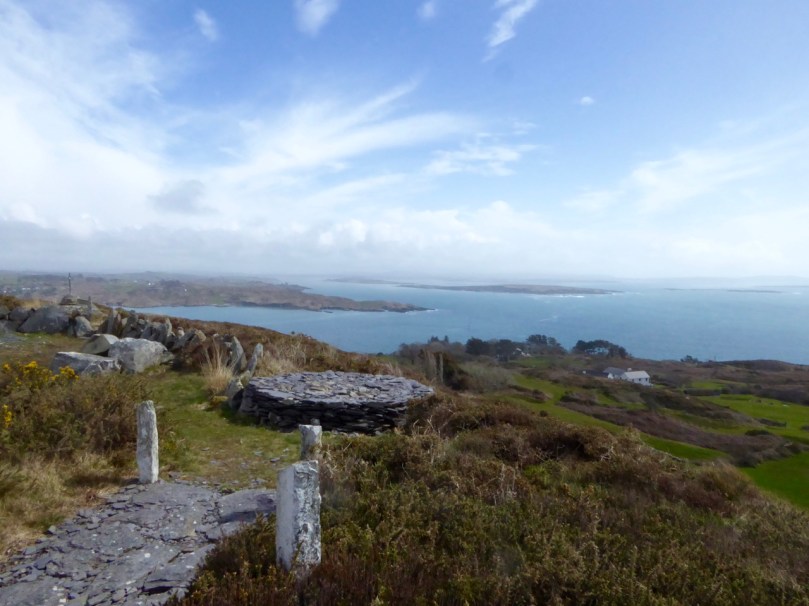
Sailor’s Hill is a labour of love by Connie Griffin who has worked on the sea and lived in this area all his life. It’s partly a memorial to those lost at sea and partly a place of contemplation to simply sit and soak up the panoramic views that stretch gloriously before you in ever direction.

Sailor's Hill Memorial 2

Schull Harbour in the background

Sadly now a little overgrown and vandalised, it is still an incredible experience to arrive at Connie’s little round tower and see vast stretches of the Cork coast to the south, while the mountains of the Beara and Kerry rise behind you.

Sailor's Hill Views

It’s a testament to the power that landscape and seascape has over us: the power to move us and uplift us; the power to inspire us to try to capture it in paint and in words. We can’t really, but, like Connie, we keep trying.

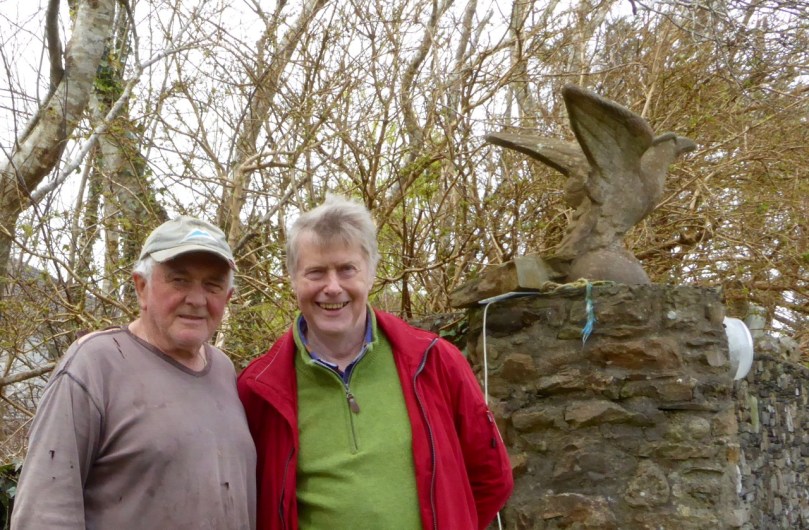
Connie Griffin and Robert

Connie Griffin and Robert

*Somerville-Large attributes this information to Sketches in Carbery by Daniel Donovan. However, I have not been able to find the quote and wonder if it’s from another book.