Molaga of the Bees

bees!

I know I’ve said this before – but, wherever you find yourself in Ireland there’s history on the ground, and a story to be found! Recently we ventured into North Cork: so large is this county that it is a good half a day’s journey from Nead an Iolair, here in the far west, to Mitchelstown, beyond which lie the wild frontiers of Tipperary and Waterford. The purpose of our journey was exploration – archaeology, history, folklore – and we found ourselves drawn back into the time of the Saints.
1400 AD

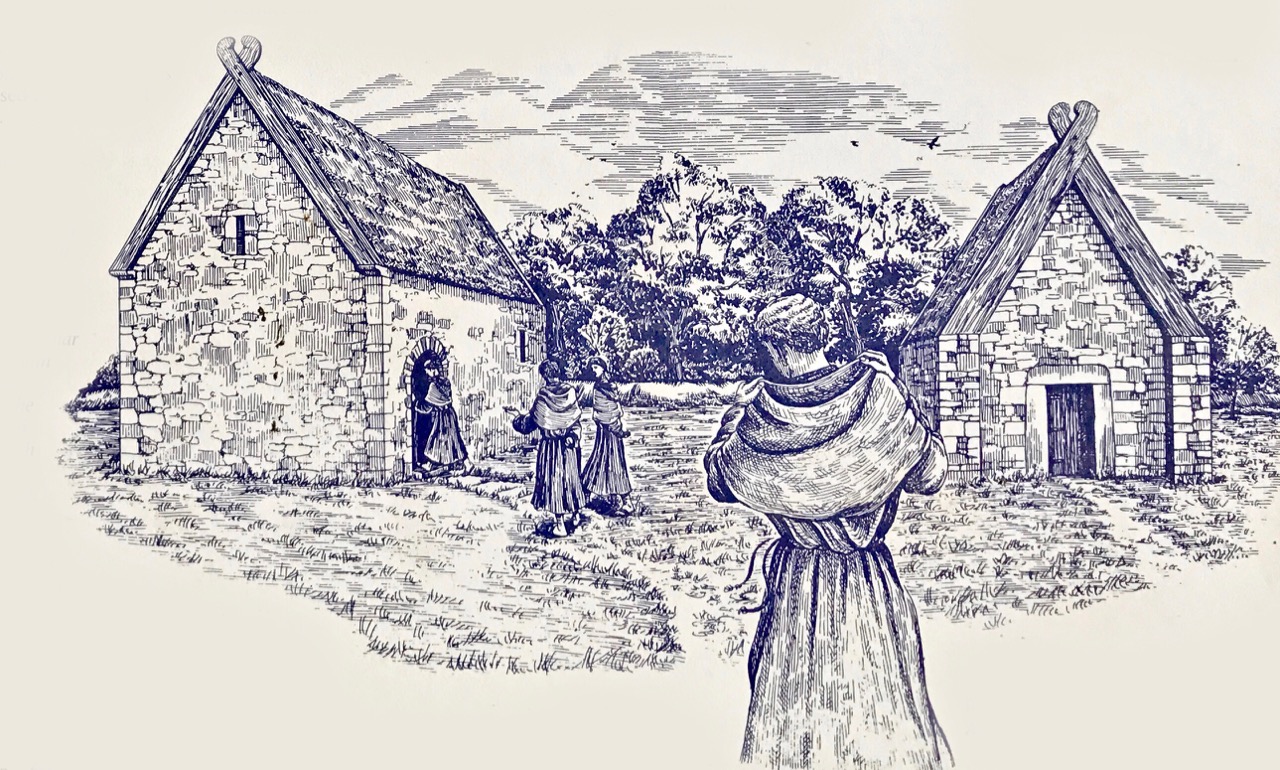
Artist’s reconstruction of the site at Labbamolaga as it might have looked in 1400 AD: the smaller building on the right is the saint’s original oratory, dating from the seventh century. Note the antae – the projecting stone walls on either side of the entrance, supporting the huge verges. These features represent the builders’ wish to recreate in stone the very earliest timber churches: in every age of Christian church building the aspiration was to hearken back to ‘the time of the Saints’, whatever era that might have been . The building on the left is a later medieval Parish Church known as Templemolaga (image from Dúchas – The Heritage Service)

Well off the beaten track we found ourselves at an ancient site known as Labbamolaga, in the townland of Labbamolaga Middle. Labba Mollaga: it means ‘the bed of Molaga’, who was a saint living in the 7th century. He is said to have founded a monastery on this site and the earlier building here could have been his original church.

7th c entrance detail

through the portal

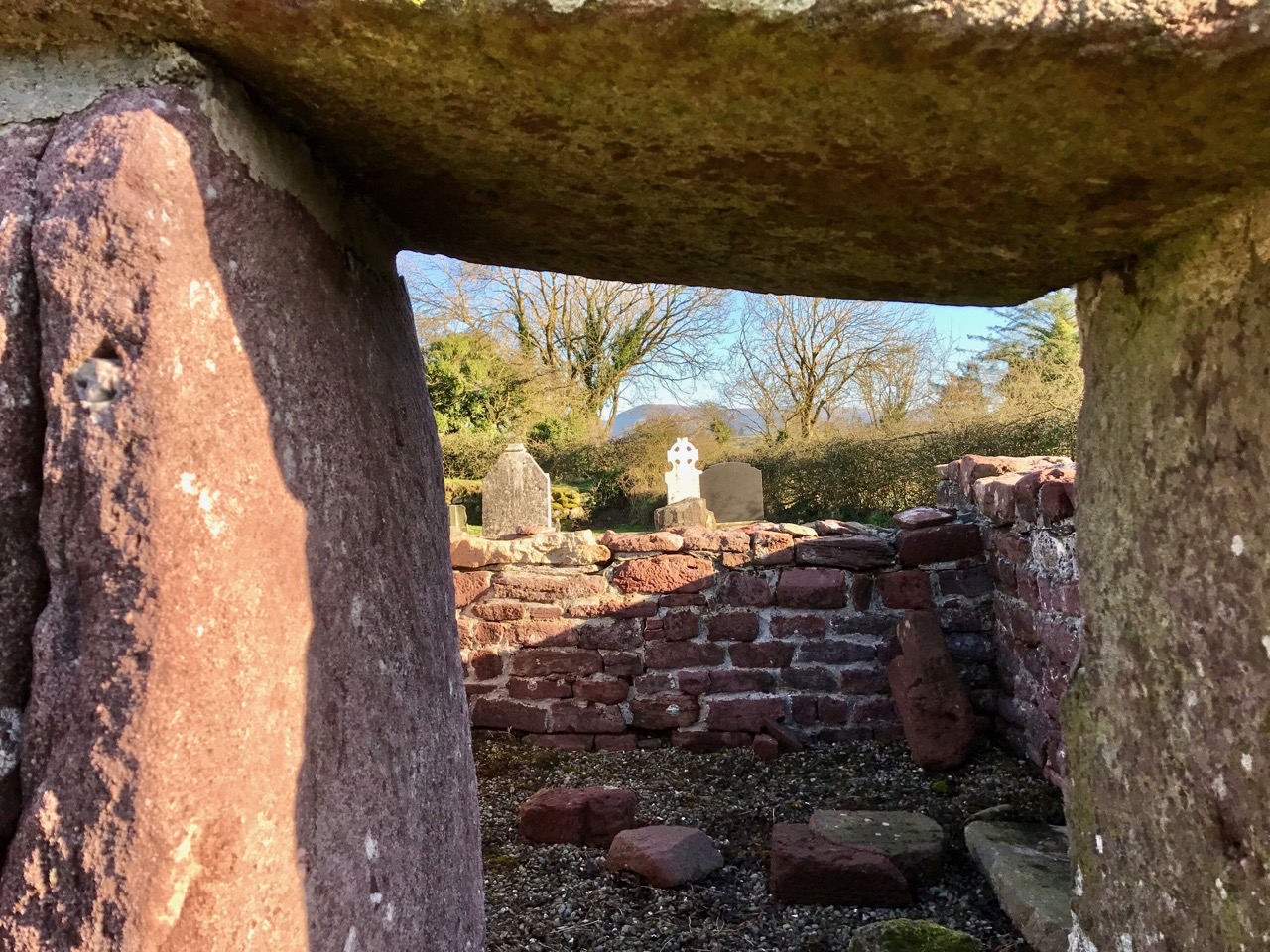
A seventh century oratory? Upper picture shows the entrance elevation with its pronounced antae, and the doorway which seems to be constructed from monoliths. It has been suggested that these stones could have been robbed from the megalithic monument which lies in a field to the south of the site. The middle picture looks through the entrance to the prostrate stone against the south wall: this is known as Molaga’s Bed: tradition states that the saint would lie on this stone at the end of each day’s work. It is also said to be his burial place and has curative powers, particularly for rheumatism. The lower pictures show the saint’s bed in 1905 (left) and in the present day (right) with its strange carving, which has been described as a volute

The architecture is fascinating: here we have one of the few examples remaining in Ireland of this most ancient church form, albeit in a ruinous state. In 1975 a similar ruin in Connemara was reconstructed to its likely original form at St MacDara’s Island, Carna. This gives us some idea of what St Molaga’s oratory could have looked like.

The oratory on St MacDara’s Island – early photograph (left) and 1975 reconstruction (right)

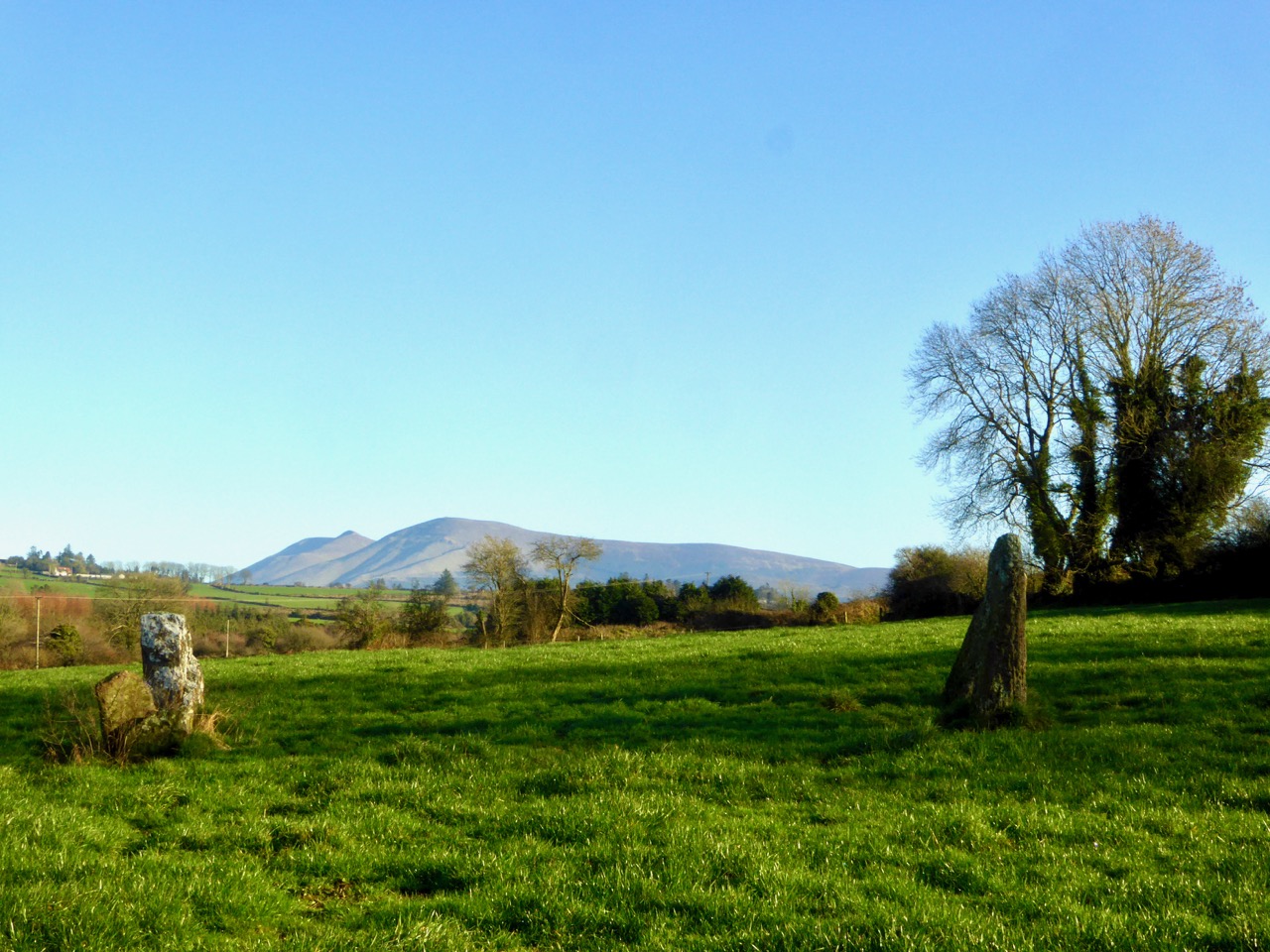
The site at Labbamolaga has much more more to attract the curious. There are the nearby megaliths: we would assume they considerably predate everything else, yet local lore tells us that they are four villains who stole the chalice and holy relics from the saint’s oratory but were caught in mid-flight and were turned into four pillars of stone by him! A further legend noted by John Windele, the Cork antiquarian and historian, in the 19th century relates to a holy well which once existed – some say under the saint’s bed:

…There was formerly a beautiful well of clear spring water here, but one day an old woman profanely washed her clothes in it; that night the well disappeared and was seen never more…
stone alignments

stones in graveyard

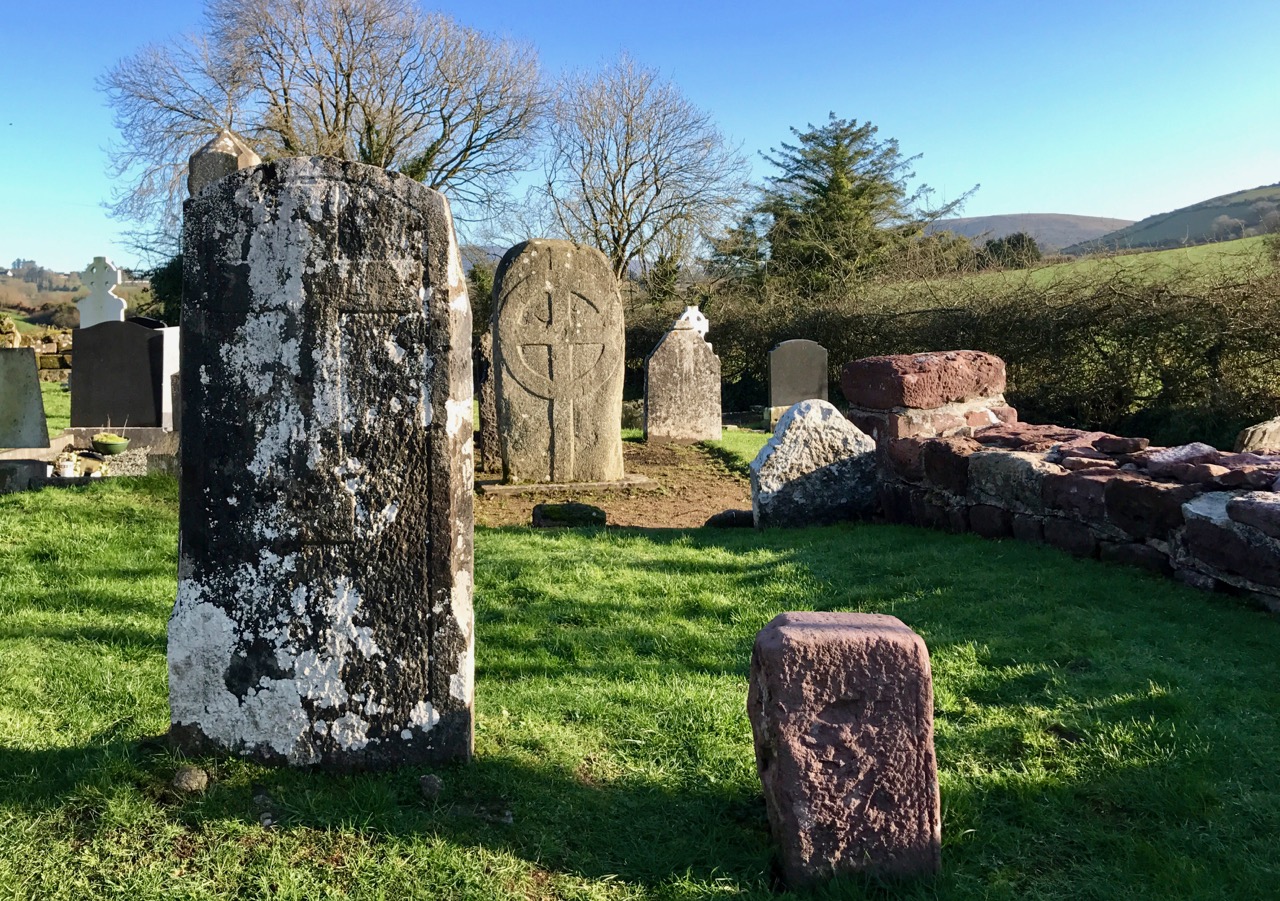
Upper picture: four standing stones in a field (known as Parc a Liagain, ‘Swardy Field of the Pillar Stones’ to the south of the ecclesiastical site – supposedly petrified villains who robbed the monastery. Lower pictures: the monastery site has become a burial ground – strange and fascinating stones abound. The centre stone is an ancient looking Celtic cross; the circular pile is an enigma – burial vault or old well house? The site also once contained Cursing Stones, but these are said to have been removed

What of the saint himself? He has a recorded history: born in Fermoy of parents who were well past child bearing age (a miraculous sign), he travelled to Scotland and then to Wales, where he became a follower of St David. Returning to Ireland he founded monasteries at Timoleague, West Cork (the name means House of Molaga), and at this site in North Cork. Sources say that in Wales he learned the craft of bee-keeping, and a colony of bees attached itself to him on his journey back to Ireland: the same sources credit him with introducing bees to Ireland, but the earlier Saint Gobnait – patron saint of bees – also has this reputation. Some mixing of hagiographies here, perhaps. Also confusing is the information given in catholicireland.net which gives the name St Modhomhnóg as ‘Irish Saint of the Bees’ and tells a similar story, although this saint returned to Ireland from Wales (with bees) and set up a community in Bremore, near Balbriggan, County Dublin – today known as the Church of the Beekeeper but also connected with St Molaga, who is there said to have procured his bees from St Modhomhnóg. To add to the confusion, the feast day of Saint Gobnait is on 11 February, while that of Modhomhnóg is on 13 February.
molaga

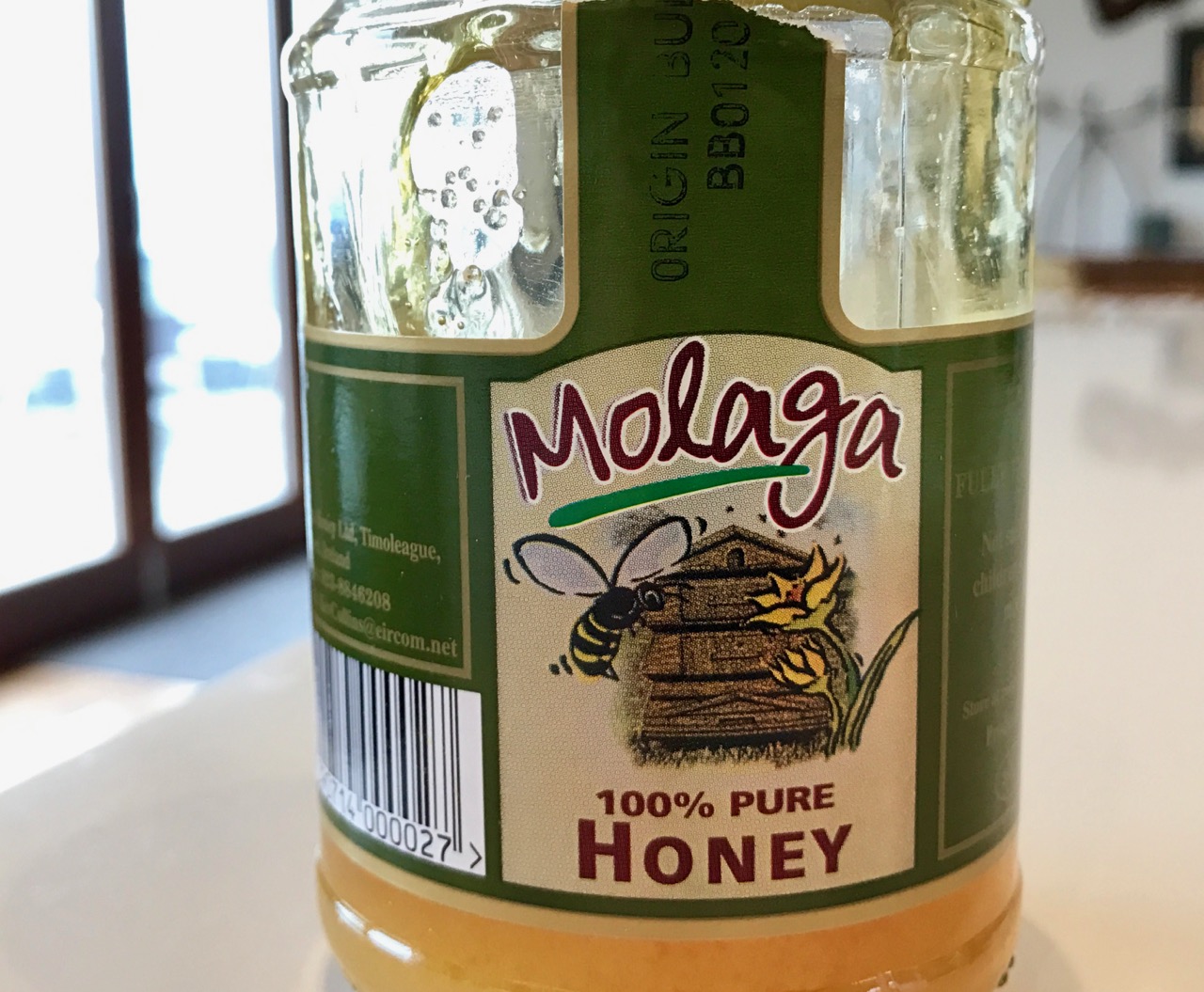
We hadn’t realised until we unearthed these stories that we have the saint’s name in our larder! Our favourite honey is known as Molaga – we get it from our local supermarket. There is nothing on the jar to explain the name (this is one of various spellings), but the honey is distributed from Timoleague (the house of Molaga) in West Cork. There is much more to the story of this slightly elusive saint, perhaps to be told another day.

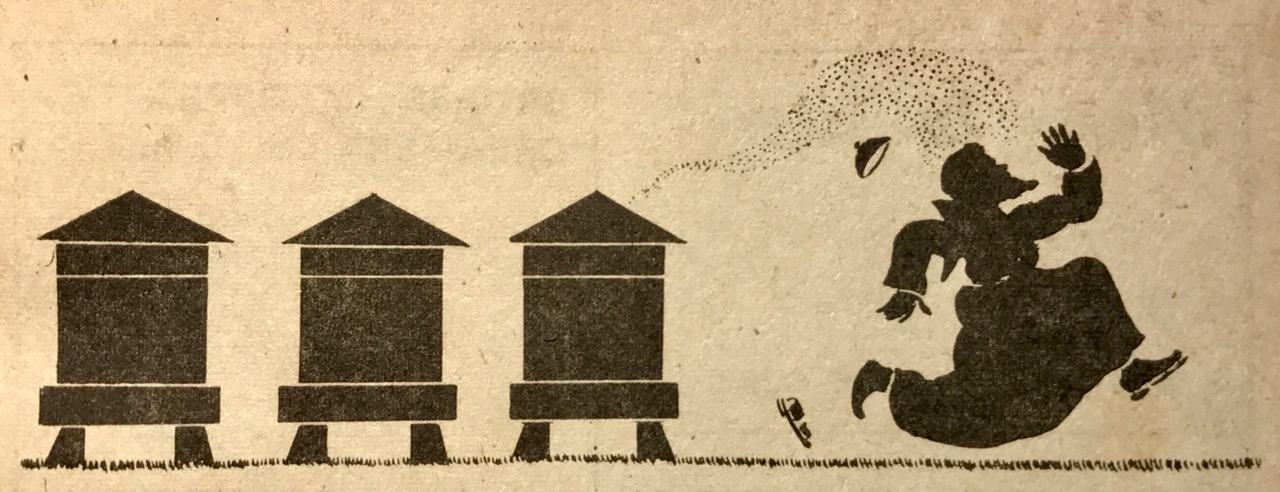
Many thanks to Brian Lalor for gifting us his copy of The Capuchin Annual 1944. It is wonderfully illustrated with cameos of monastic life drawn by ‘Father Gerald’: the header is one of these. The 1983 postage stamp illustration below is by Michael Craig

postage stamp

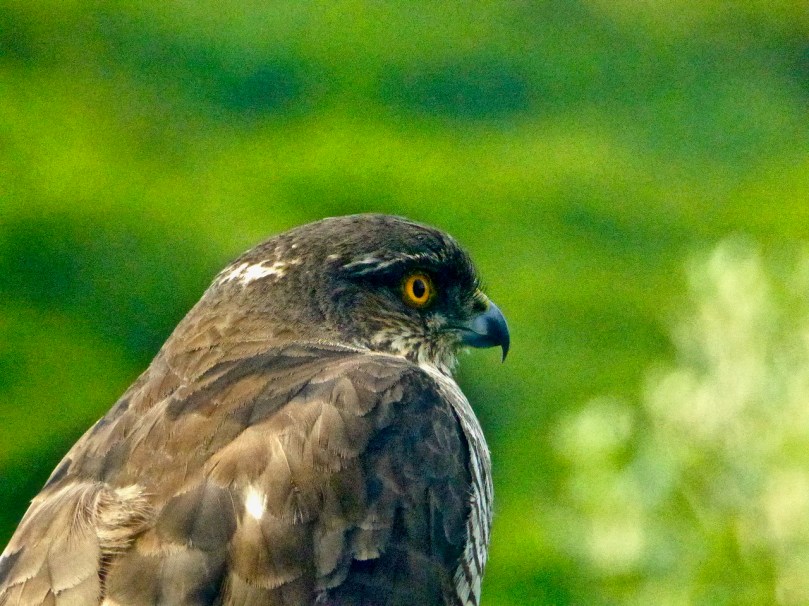
Spioróg, the Sparrowhawk

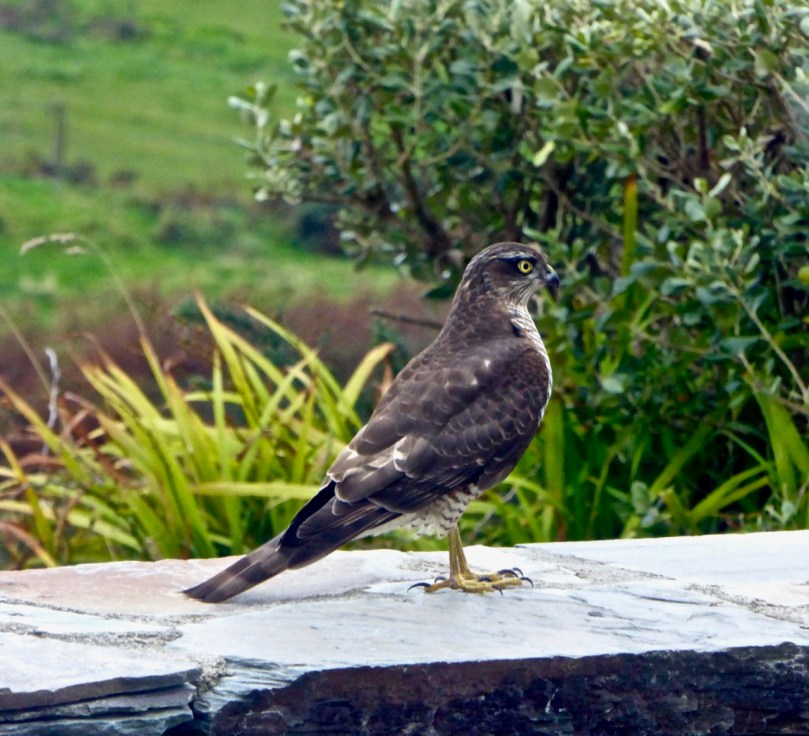
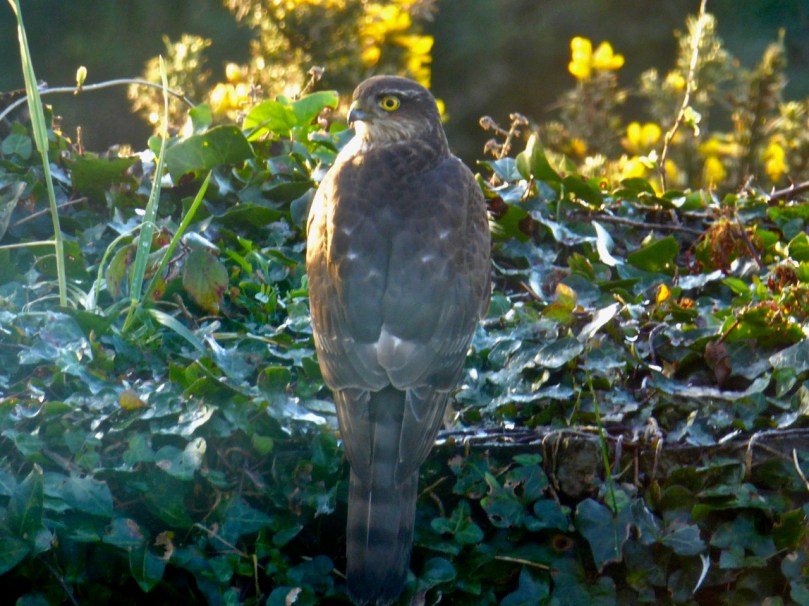
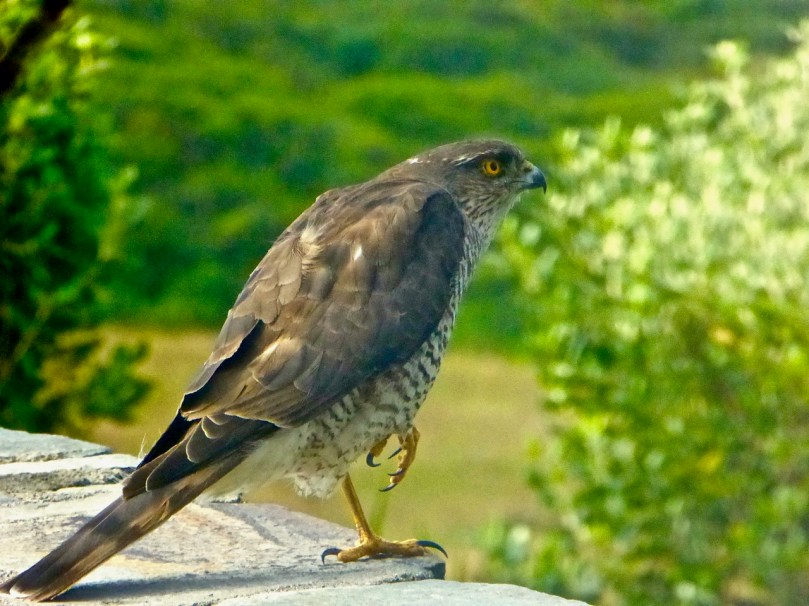
Spiro watchfulWe’ve been calling it Spiro from the Irish work for sparrowhawk – Spioróg (spuh-rogue). Ours is just one of the many sparrowhawks in West Cork – this is not a bird that is endangered in any way at the moment. They’ve been classed as secure. There was a decline back in the old DDT days, but the population has fully recovered since then.

Spiro head

Look at that raptor face – the hooked beak and the piercing yellow eyes

This is one ferocious hunter; but efficient, not so much. In fact, it catches about one bird for every ten it chases. Exhausting! We have watched it plummet from the sky to land on or beside our bird feeder. We’ve watched it chase birds into the bushes only to emerge battered but empty handed. We’ve never seen it actually catch something, although no doubt that will happen in time. When we suddenly see every bird at the feeder or on the ground disappear, we know the signal has been given and Spiro is around.

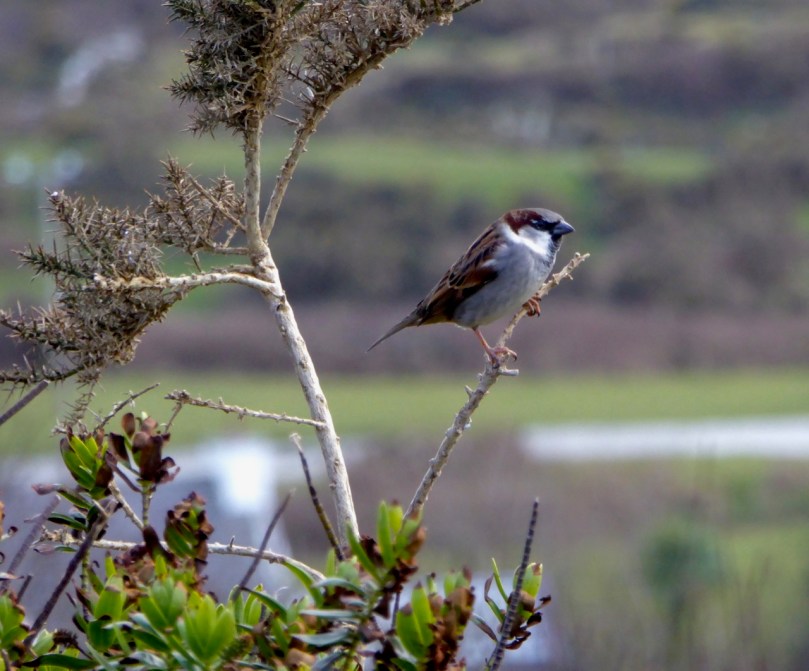
sparrow

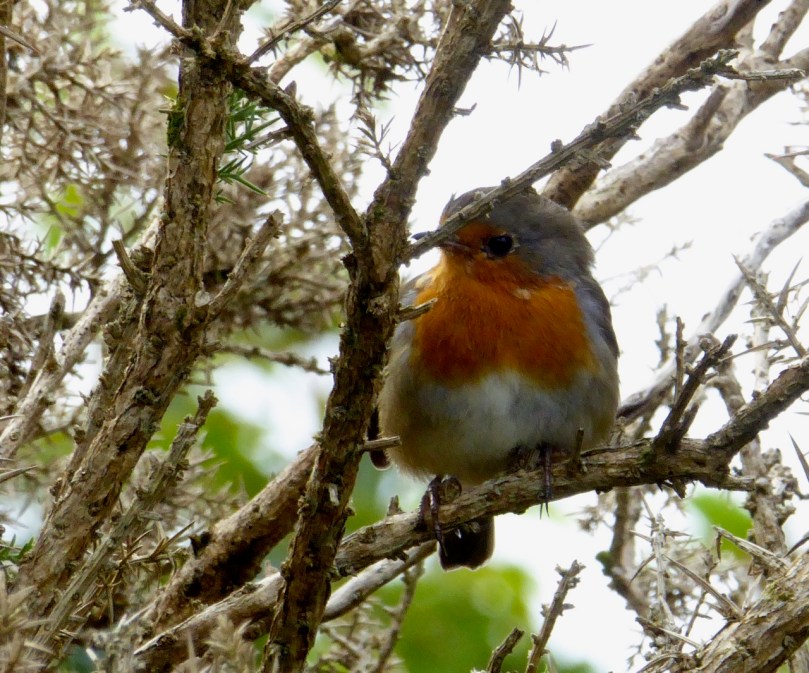
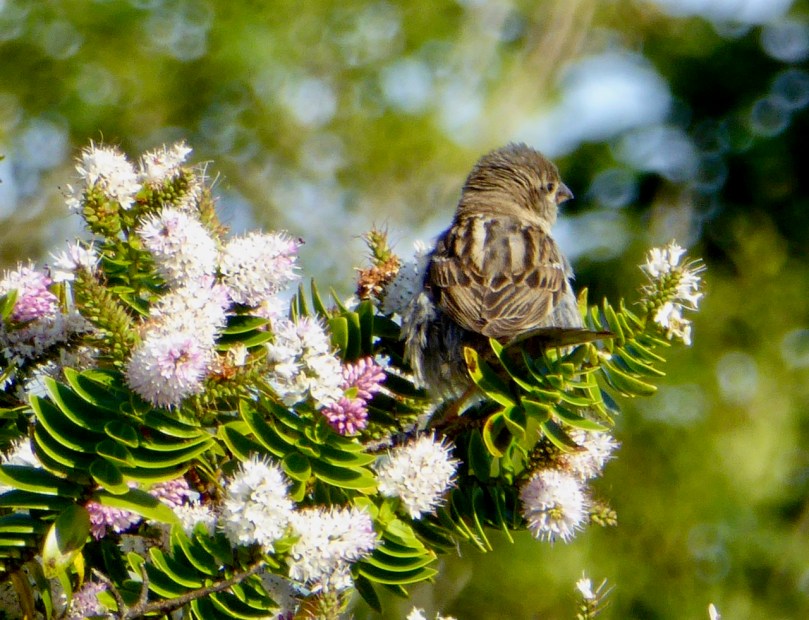
Robin among thornsTop: an adult male sparrow keeps watch for Spiro. Bottom: Small birds, like this robin, will take refuge in thorn bushes. Sparrowhawks will go after them but often damage themselves in the process

Sparrowhawks rely on their agility to create the element of surprise. They will fly low on the other side of a hedge and at the last moment swoop up and over it to where birds have gathered on a lawn. Or they will catch them in flight, having used trees to hide in until the bird gets close enough. They can weave through branches like Ninjas, ducking and swooping with supreme manoeuvrability. In the open they flap and glide and never hover – it’s one way of telling them from kestrels.

Spiro looking left

They nest in wooded areas and their eggs hatch in May and June – about the same time the smaller birds hatch too. This means that they rely on a diet of fledglings to feed their young, and of course fledglings are easier to catch than adult birds.

Spiro Oct 2015

This is the smaller, darker, sparrowhawk – we think it’s the male

But it’s the male who goes after the fledglings. The female is larger – almost twice as large – and she hunts bigger birds such as pigeons and even pheasants. Females are paler too, so we think Spiro is a female. But we’ve seen a smaller, darker one too – must be the husband. We’ll call him Spirogín.

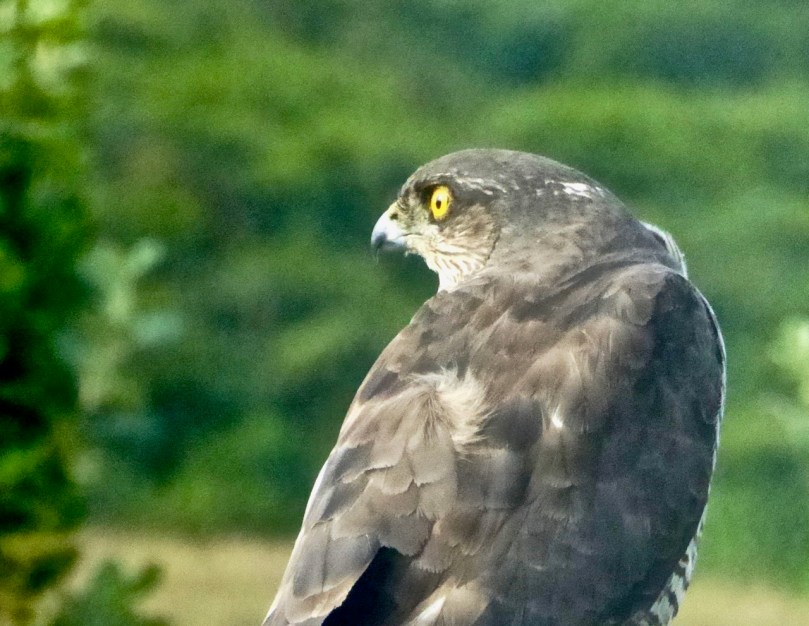
Spiro neck swivel

Like owls, sparrowhawks can swivel their heads to look behind them

A backyard feeder, such as we have, provides a source of small birds for sparrowhawks. So here we have unwittingly colluded with Mother Nature to help out Spiro and her family. We console ourselves that the birds of prey are important too and need to eat – but in fact, as I said, we have yet to witness a successful kill.

fledging sparrow

This recently-fledged sparrow is a prime target

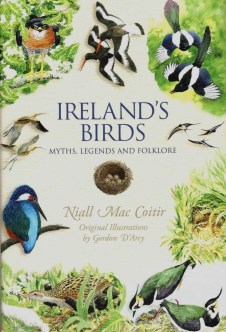
Ireland's Birds CoverThe sport of falconry was introduced in Ireland by the Anglo-Normans, who arrived in the 12th century. In his wonderful book Ireland’s Birds: Myths, Legends and Folklore (The Collins Press 2015), Niall Mac Coitir tells us that the

…male sparrowhawk was called the musket and was traditionally the hawk kept by priests. The word musket was later used for a crossbow bolt and later still for the new invention of the handgun. Kestrels were the lowliest of falcons, used only by naves or servants. Nevertheless, they had a use, as they were traditionally kept near dovecotes to scare sparrowhawks away, because they would not bother the doves themselves. It was even said that pigeons would seek out a kestrel for protection if a sparrowhawk was about.

Most of the references from Irish folklore and mythology don’t specify what hawk is being talked about. The word for hawk, seabhac (show-ock, where ‘show’ rhymes with ‘cow’), is used generically. But Mac Coitir looks to the behaviour of the bird for clues to find sparrowhawks in Ireland’s great sagas. For example, in the Táin Bó Cúailnge (The Cattle Raid of Cooley) the warrior Cúchulainn warned his rival Fergus to stand aside or he would ‘swoop on you as a hawk swoops on little birds.’ 

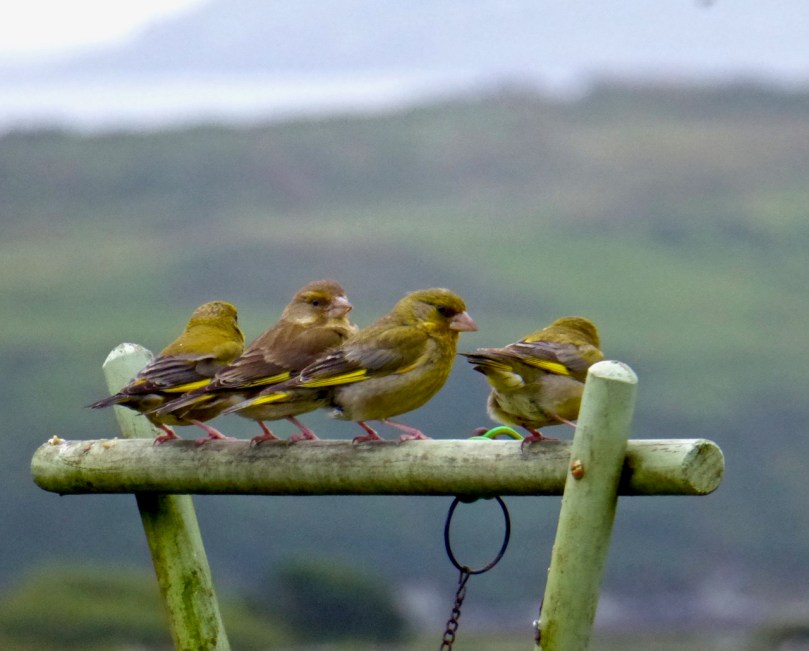
Yellow finches

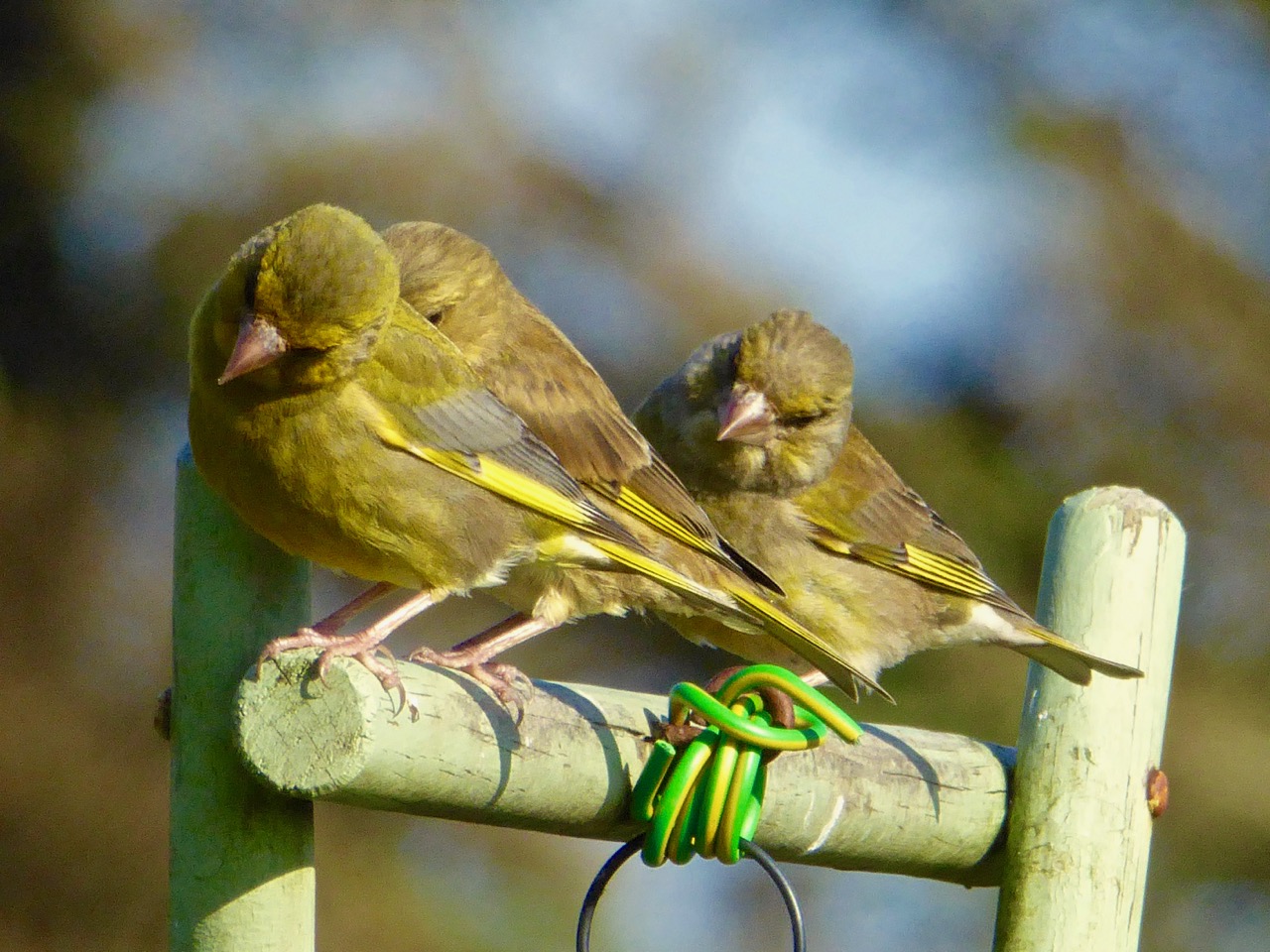
Our ‘little birds’ (green finches) keeping a wary eye open for Spiro

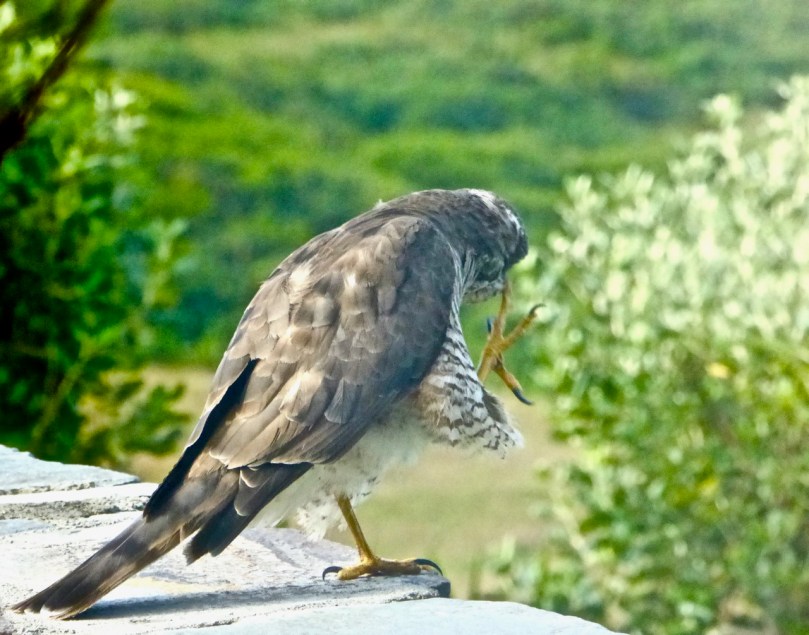
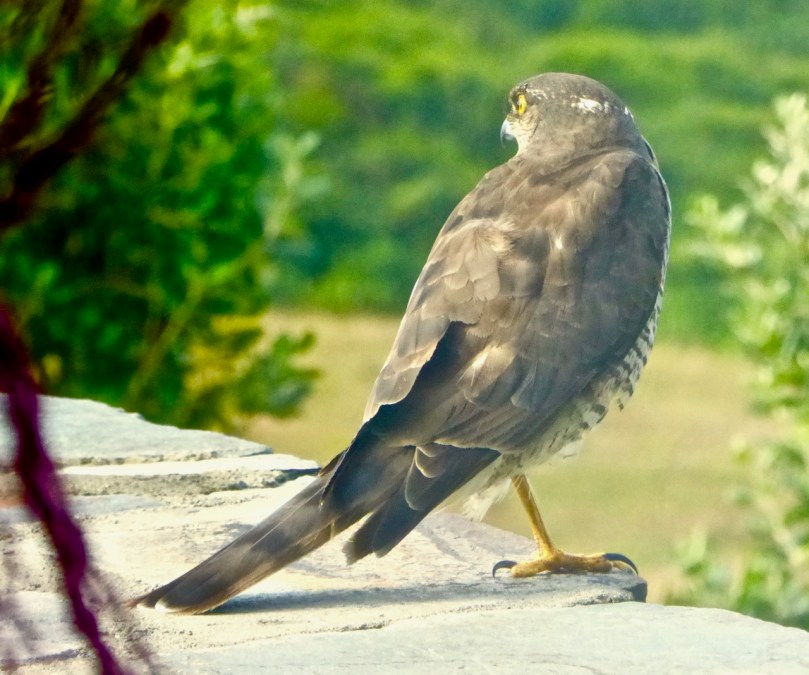
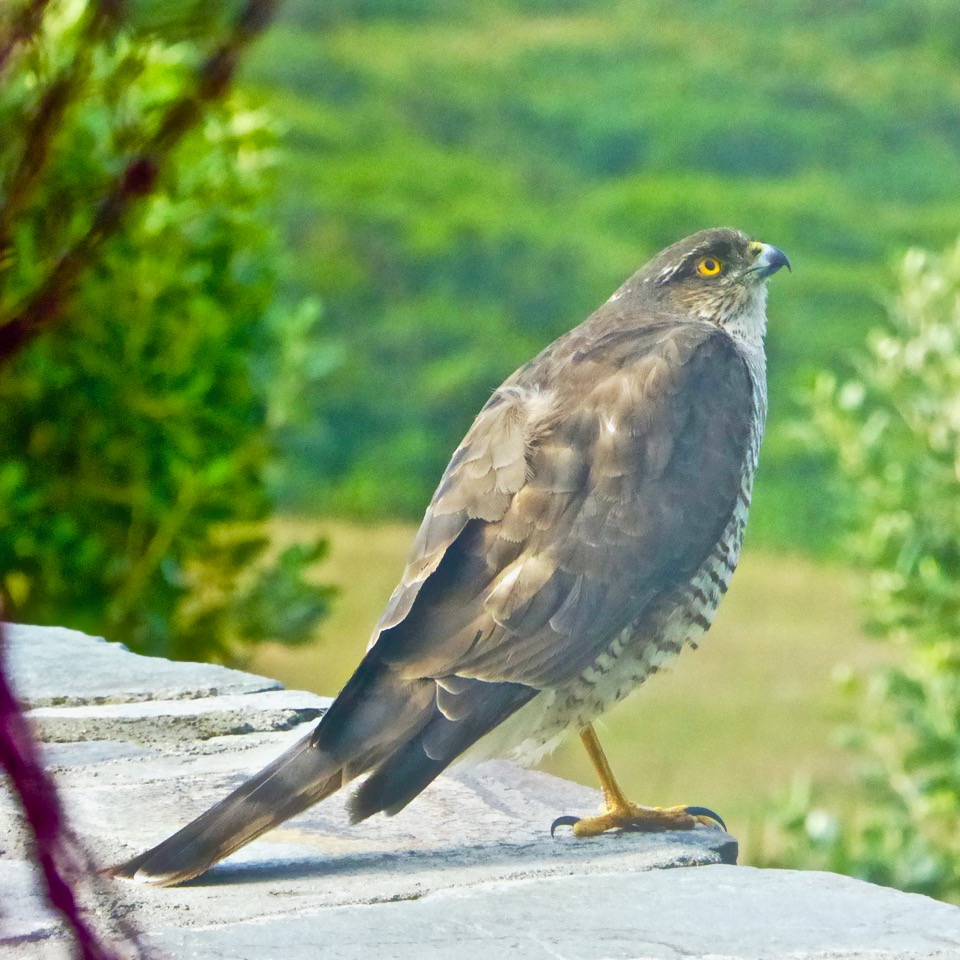
Robert talked about Spiro in his The Wild Side post, but we both thought she deserved a post of her own. Most of the photographs of the sparrowhawks in this post were taken, of necessity, very quickly and through a window, so I’ve had to work on them a bit. However, we were lucky enough to be lying in bed one Sunday morning when Spiro herself came and sat on the low terrace wall outside the bedroom window. She stayed for a while, alternately grooming and watchful.

Spiro Having a Scratch

We felt very privileged to be so close to such a fierce wild female.

Spiro on one foot

The Wild Side

Tortoiseshell

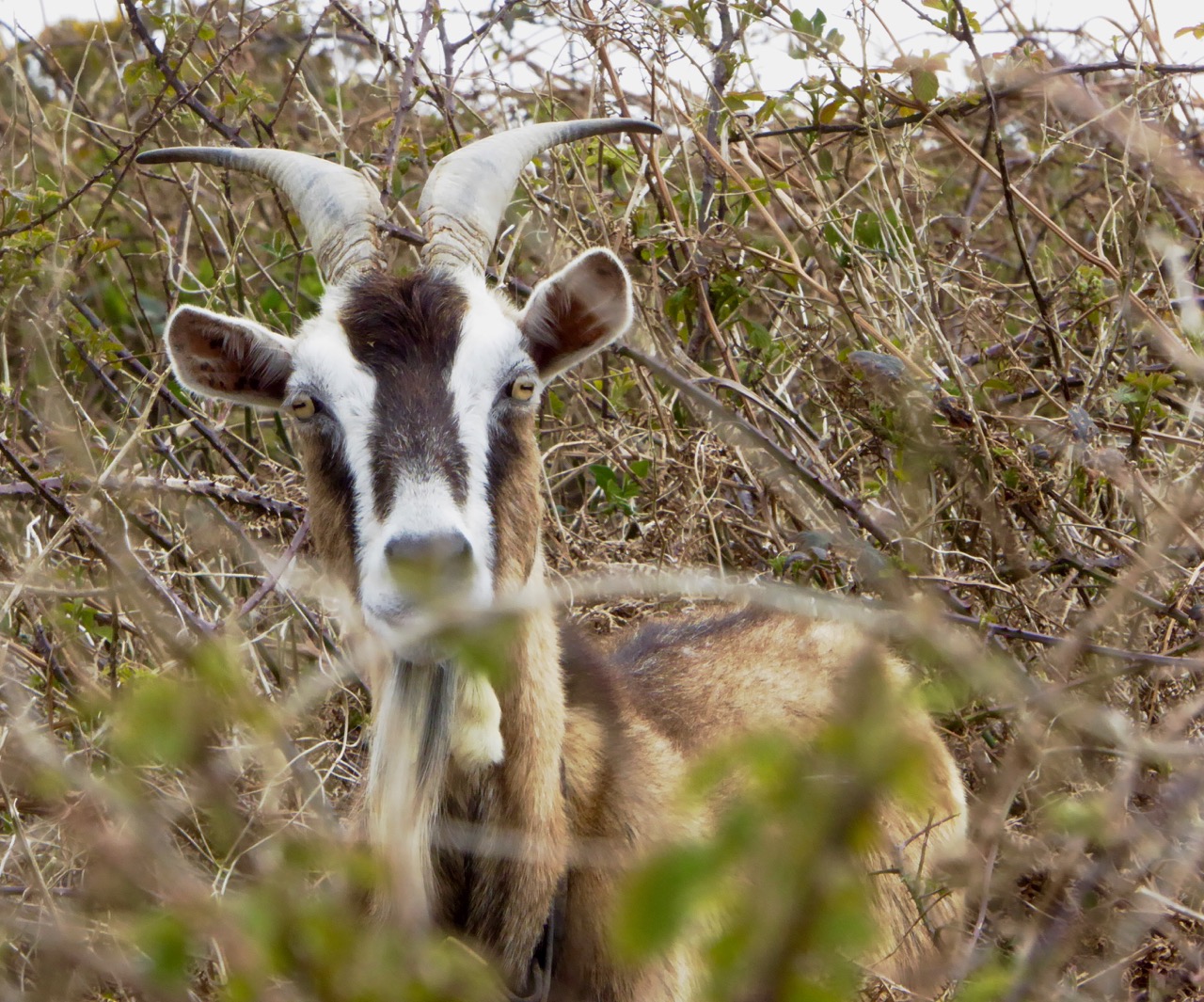
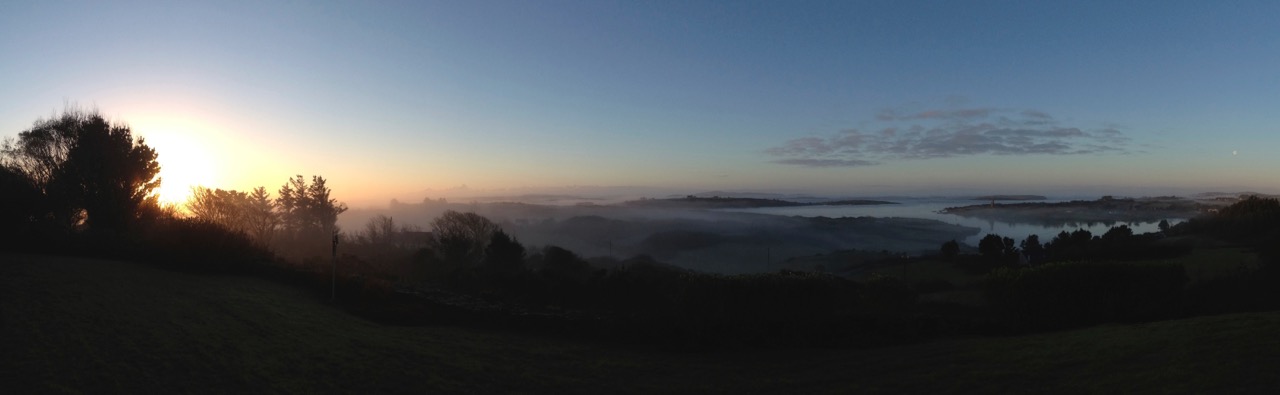
Up here in Nead an Iolair, in the townland of Cappaghglass, we luxuriate in the nature all around us. Our house was built in the 1980s on a piece of land which had belonged to the successors of the mining company – the copper mines were active for a few generations in the 19th century both here and on Horse Island, just across the water. The post-industrial landscape which surrounds us is alive: small, stone-enclosed fields are grazed by cattle, ponies and a few goats while in equal measure are large tracts of gorse, heather and rock. Here and there are the remains of the mine workings – a stump of a chimney, fenced-off and walled shafts, quarries, ruined workshops and cottages: the architecture of abandonment.

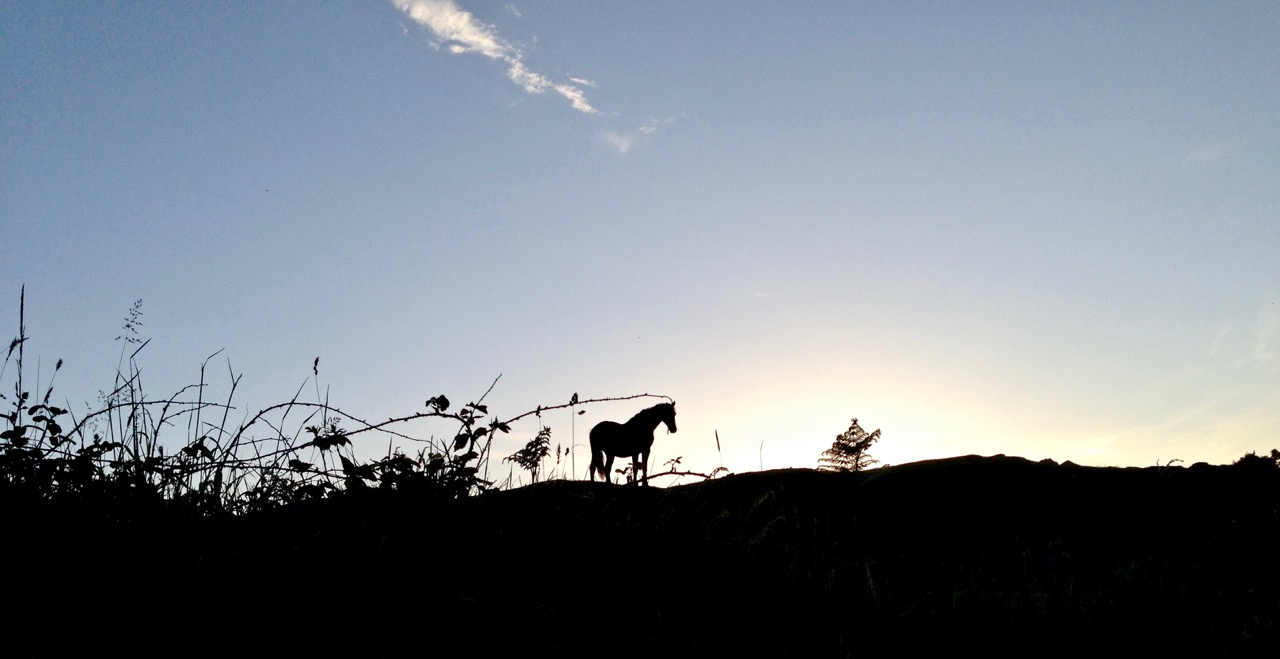
horse on horizon

Nick's Goat

nead birds

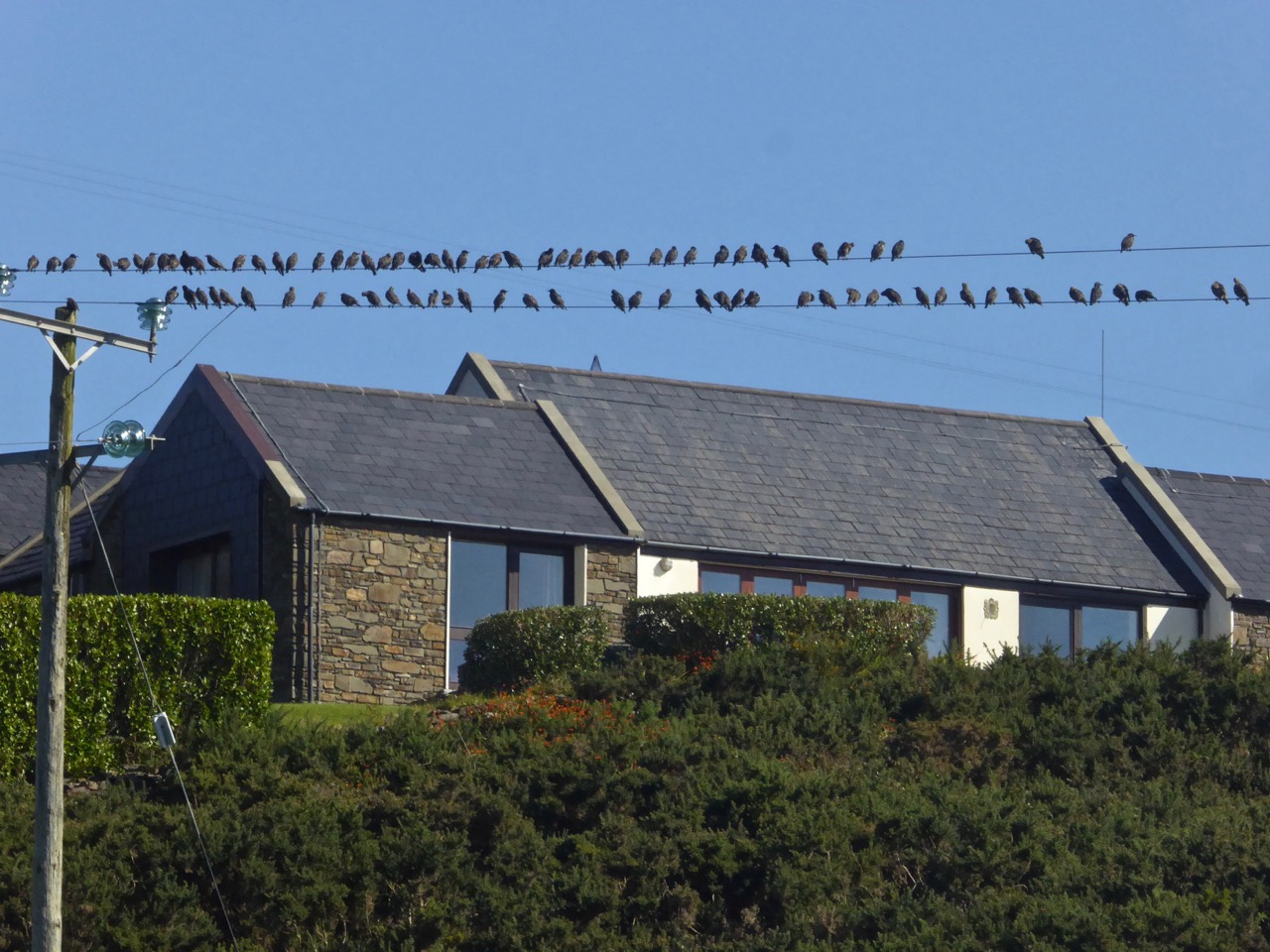
It seems to me that our house interrupts nature, with our lawns, our haggard, stone terrace, hedges and fences, but nature is well able to adapt and cope. Of course, we encourage this: we enthusiastically nurture all the little birds that visit our feeders – and the big ones: rooks, pheasants, magpies: they all get their share. And there are those that don’t come to the feeders but nevertheless forage the land – choughs (which perch on our roof and shout out their names – cheough – cheough… before flying off to give us an endless and entertaining display of dizzying acrobatics), starlings, blackbirds, thrushes and – always on a Sunday – Spiro the sparrowhawk who unsuccessfully dive-bombs the feeder, scattering – but never catching – the small birds. After the effort he rests on one leg on the low terrace wall and stares thoughtfully out to the Cove.

Can YOU see it?

Chough on the post

Spiro

From The Galleries

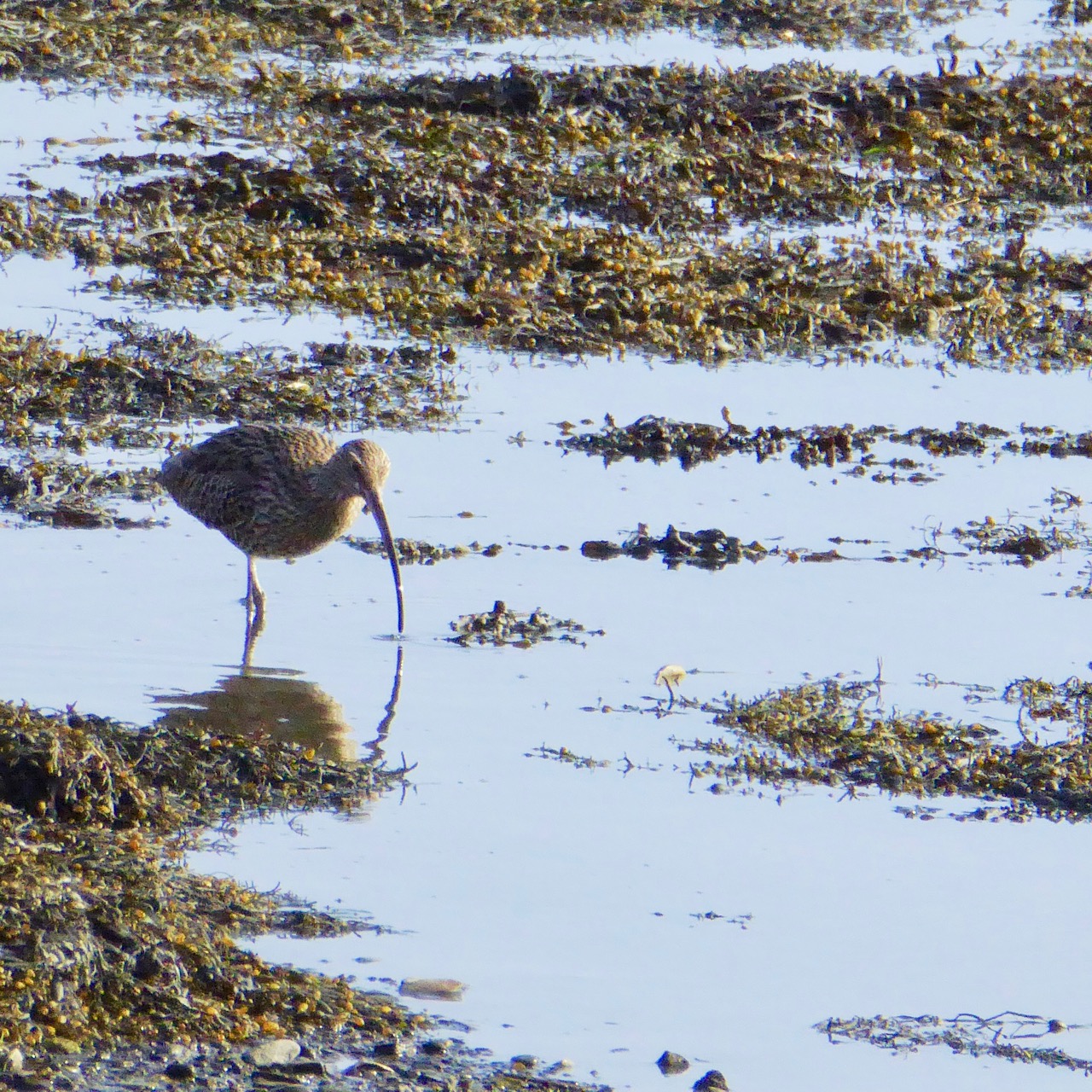
Michael, whose family has farmed the fields around us for generations, tells us that the land above us is known as The Galleries – possibly because there is such a spectacular view to be had from these fields to Rossbrin below us and to the islands of Roaringwater Bay beyond. The Cove itself is a paradise for the waders, especially at low tide, and for crustaceous life in the rock pools.

Muddy shanks

Curved beak

All around are the hedgerows that, in the spring, summer and autumn, support a wealth of wildflowers. In turn these are the haunt of nectar-seeking insects, especially bees and butterflies.

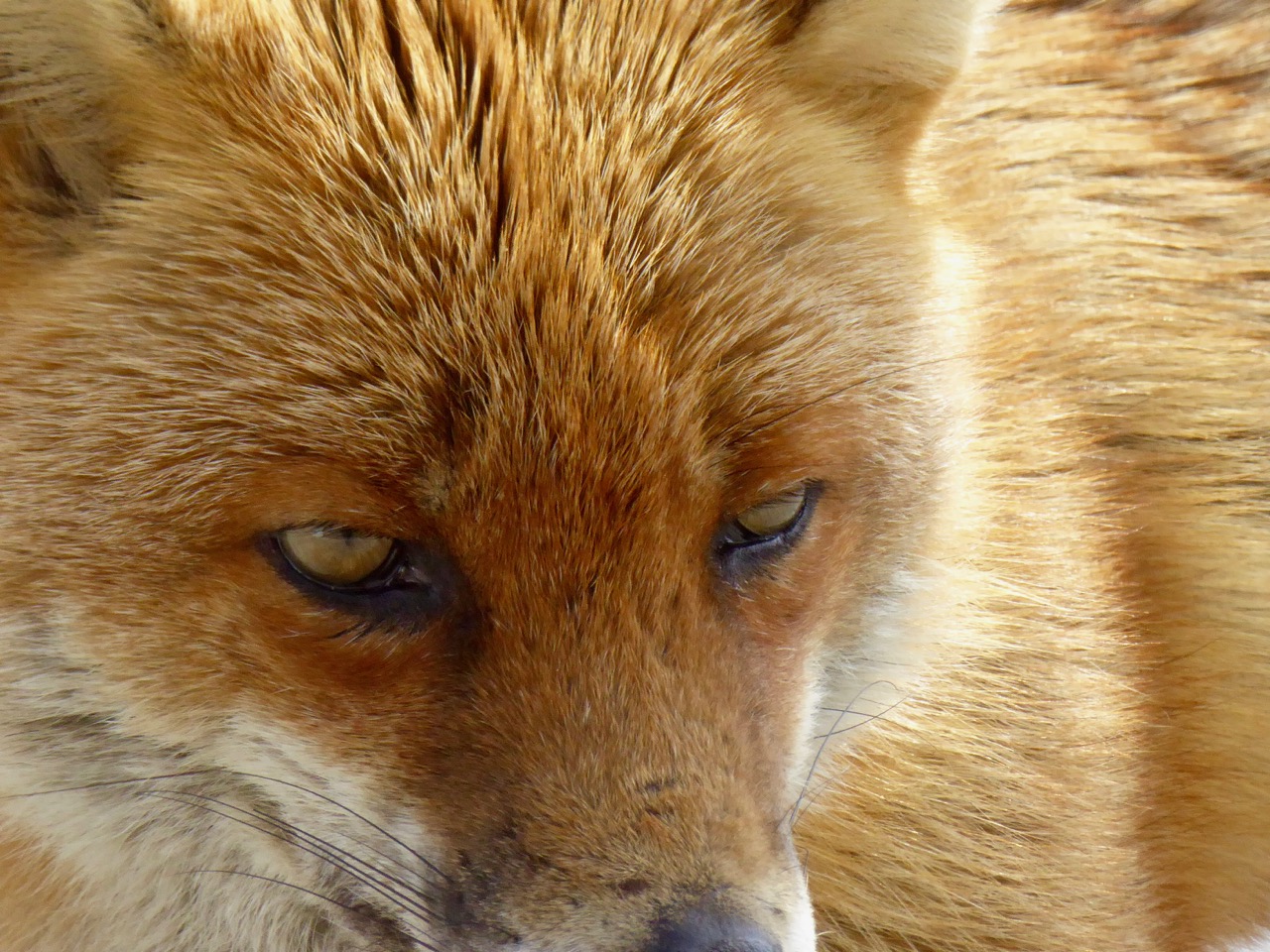
We are visited by four-legged mammals in all shapes and sizes: I’m pleased to see some of the decimated rabbit population returning after a recurrence of myxomatosis these past couple of years. We don’t get hares in the immediate neighbourhood: they seldom mix with the smaller Leporidae, but we sometimes catch a glimpse of them from the road that goes down to the village. Rats, mice and shrews are never far away, but are kept under control by our larger visitors – feral cats and foxes. Our own Ferdia has gone from us during this past year – he was an ancient fox who had made a pact with the human world: I’ll sit picturesquely on your terrace and entertain you provided you keep the food scraps coming – we did, of course. His descendants make fleeting visits, passing through but, as yet, never pausing to make our acquaintance.

Ferdia's Eyes

Bunny eyes a daisy

When it comes to observation of the natural world there’s never a dull moment here. We are fortunate that some globally threatened species seem to thrive around us – curlews can always be seen by the water, for example. The small birds crowd in, especially when I refill the feeders: sometimes we have to fight our way through the melee when we want to go out. It’s a great way to live, and a great place to live in. Thank you, Mother Nature.

RH and friend

Photographs (from the top down): Tortoiseshell butterfly; Cappaghglass field; Nick’s goat; Nead an Iolair with starlings; greenfinches; chough on our gatepost; Spiro the sparrowhawk; view across Roaringwater Bay from The Galleries; muddy shanks; curlew in the Cove; 2 x bees; Ferdia the fox; rabbit; Nead bird feeder with goldfinches, greenfinch, bluetits and great tit – and pheasant; Robert and friends; heron hairdo. Grateful thanks to Finola for many of these pics

Heron Mullet

Into the Heartland

Elphin Windmill

Because we live on it, sometimes we get carried away by the notion that The Wild Atlantic Way represents the best that Ireland has to offer. A recent trip to the midlands – the Heartland of Ireland – convinced us (if we needed it) that there is no part of Ireland that isn’t beautiful and full of fascinating things to do and see. (Like the Elphin Windmill, Co Roscommon, above.)

Parked at Coolnahay

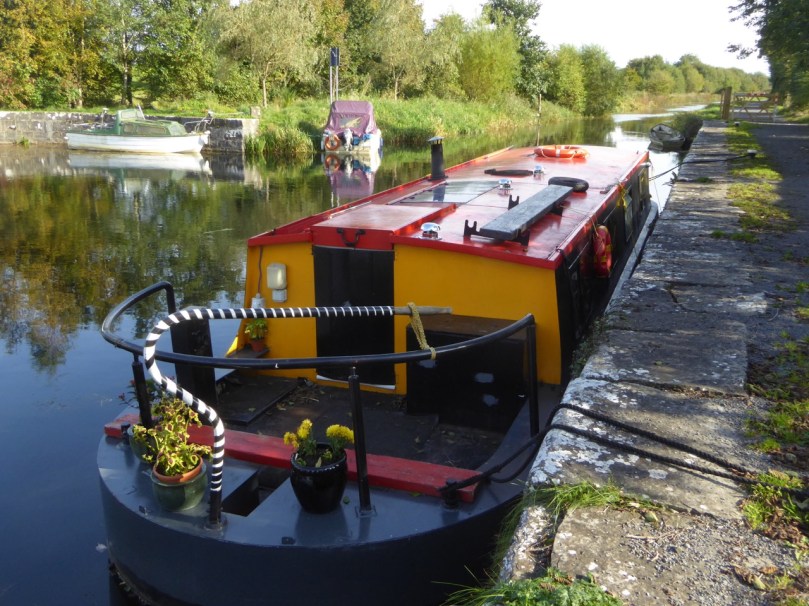
We spent a lot of time along rivers and canals! 

Robert explains the background and purpose of our trip in his post, Travel by Water. I knew very little about canals before I met Robert and it’s been eye-opening to learn about the history and the sheer extent of Ireland’s inland waterways. We spent a lot of time exploring the canals – walking and driving – and enjoyed it all tremendously.

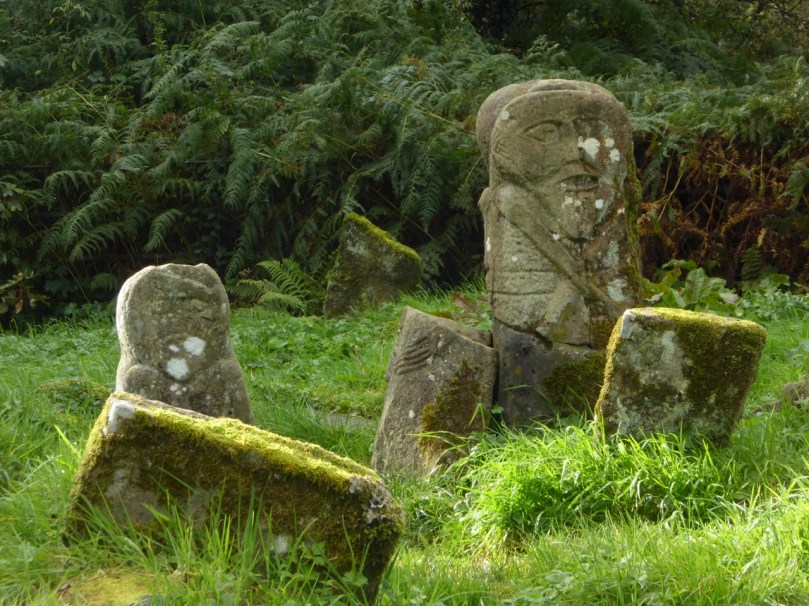
Boa Island figures

Boa Island on Lough Erne, Co Fermanagh, is home to these mysterious carved figures. Lower left: heads on a medieval church in Kilmallock, Co Limerick. Lower right: a contemporary sculpture celebrates the mythical Finn McCool, in Keshcarrigan, Co Leitrim

But wherever we went there were always other places luring me away – tower houses and fortified houses, churches and graveyards, friendly villages and colourful houses, stained glass windows and prehistoric sites. We drove along roads where we counted ring forts in every field. We explored ancient graveyards and we found a Holy Tree. We visited two sites we posted about last week, the Corlea Iron Age Trackway, and the Hill of Uisneach.

Holy Chestnut

The Holy Tree. A local man we met called it a ‘holy show’ and it certainly had some very questionable items mixed in with the statues and offerings

It’s autumn now, and, while we do experience a change of colour here in West Cork, it’s really in the midlands that the colours of the deciduous trees can overwhelm the senses. They were just starting to turn. I’m strongly tempted to head back in another couple of weeks for the full experience.

Birr Castle Gardens 2

These photographs were all taken at Birr Castle Gardens. Birr Castle (Co Offaly) was one of the most interesting and beautiful places we visited, home of the famous telescope and beautifully maintained

We visited thirteen of Ireland’s 32 counties on this trip – and never came close to the sea or the Wild Atlantic Way. Instead, everywhere we went we saw notices for the latest iteration of the Tourist Board’s marketing scheme. This one is called Ireland’s Ancient East, and appears to take in every county that isn’t on the Atlantic seaboard. A good resource, if you’re considering a trip like this, is Neil Jackman’s guidebook, Ireland’s Ancient East – we kept it by us and found it invaluable.

Grange Stone Circle, Lough Gur

Grange Stone Circle, the largest in Ireland, is one of a complex of monuments at Lough Gur, Co Limerick

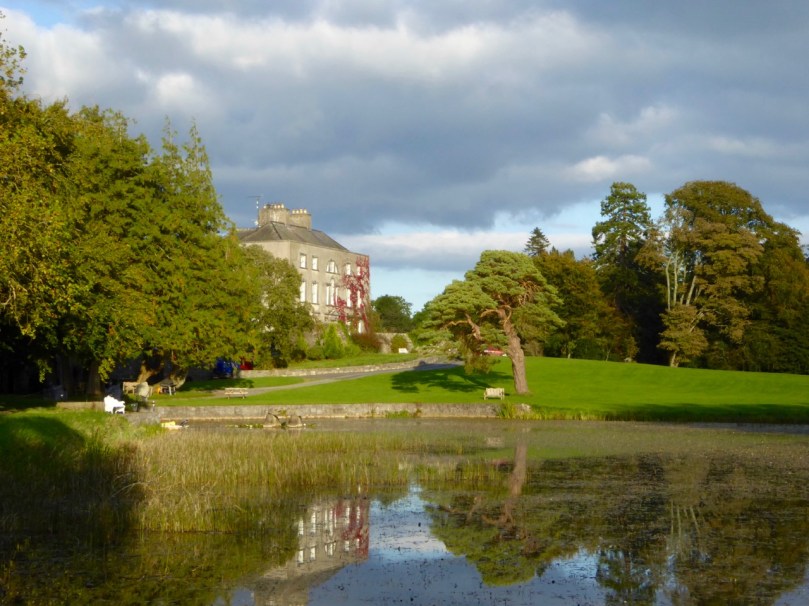
Our headquarters for the biggest chunk of our time away was the incomparable Mearescourt House near Mullingar, Co Westmeath. George and his team made us welcome and comfortable, there were glorious grounds to wander around and animals to meet, and delicious breakfasts that left us feeling full for the rest of the day.

Mearescourt House

Mearescourt House – highly recommended!

When tourists are interviewed about their holidays in Ireland they praise the scenery, the food, the music – but most of all, they say, it’s the people who make it so enjoyable. We agree! Everywhere we went we ended up in conversation, as you do here, with local people delighted to help out with information, share old stories, invite us to the sessions, tell us where to go for a nice dinner, or point out places off the beaten track (and then rescue us later when we got lost).

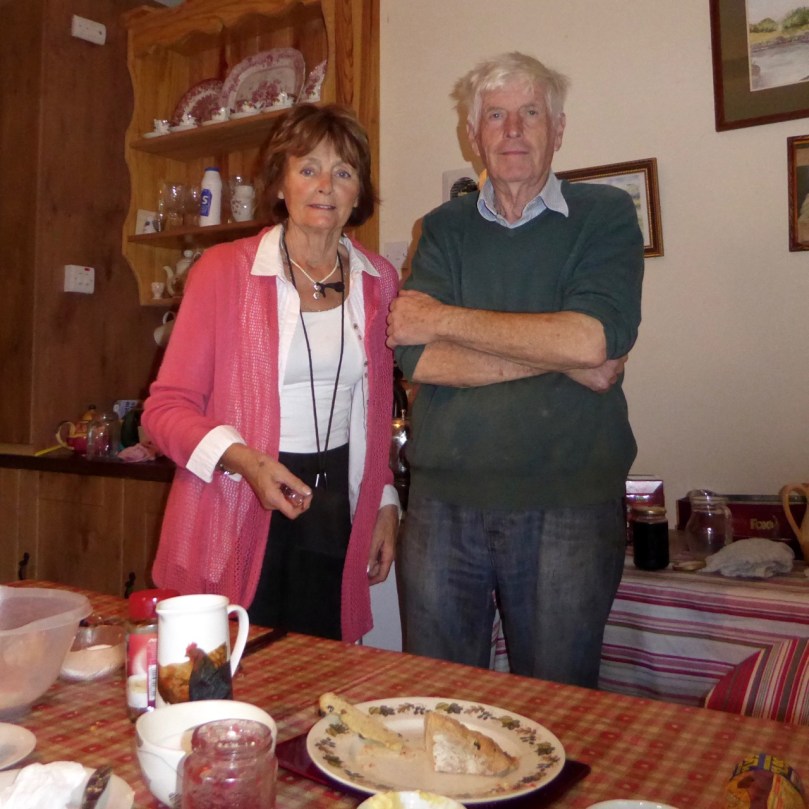
Claire and Paddy Crinnegan, Coolnahay

Paddy and Claire Crinnegan maintain the canal lock at Coolnahay on the Royal Canal. in Co Westmeath They made us tea, fed us Claire’s delicious currenty bread, told us about the trad concert that evening, loaned us a book, and related stories of growing up at the lock, where Claire’s father was the lock keeper.

Future posts will go into more depth on some of what we saw and experienced on this trip. This one is just an introduction, to share some of our impressions and drop some hints about what might be upcoming.

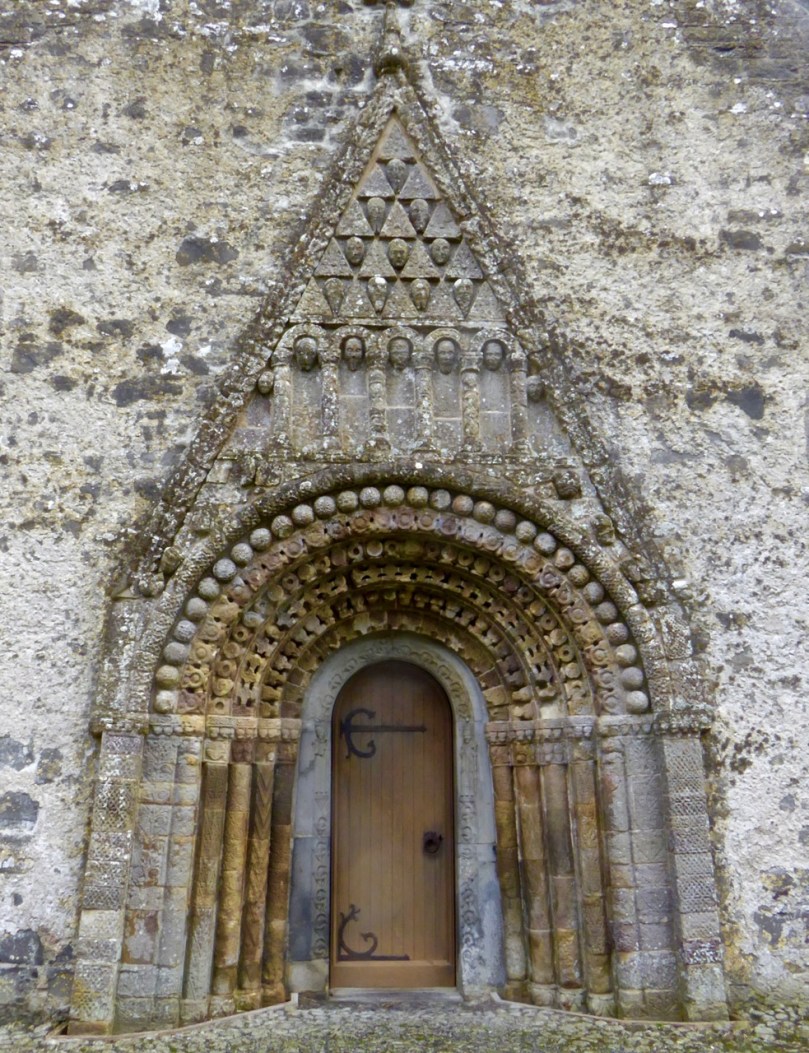
Clonfert Doorway

Clonfert Cathedrall (Co Galway) has the most beautiful Romanesque doorway I have ever seen
Along the canals and rivers, flora and fauna
Top left: in case you might get too happy with yourself; top right: the imposing gates to Portumna Castle, Co Galway, a 17th century house now owned and managed by the Office of Public Works; Bottom left: I peeped inside the priest’s section of a confession box and observed how he maintains an efficient count of time spent on each confession; bottom right; we disturb the rooks at Ballycowan Castle, Co Offaly

HC Studio, Athlone

Athlone Cathedral (Co Westmeath) has a gorgeous set of enormous windows from the Harry Clarke Studios – this is a detail from just one of them.

Can you detect a future post or two?

Tracking the Past

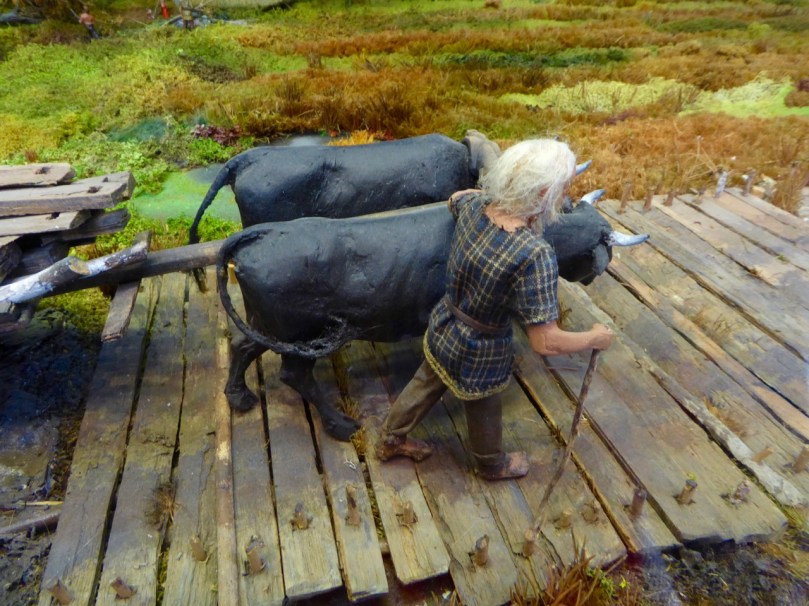
Guiding the oxen

Bogs are mysterious and dangerous places now, and they were even more so for our ancestors. The raised bogs of the midlands were laid down after the ice age and covered vast areas of land, creating difficulties and opportunities for prehistoric peoples.

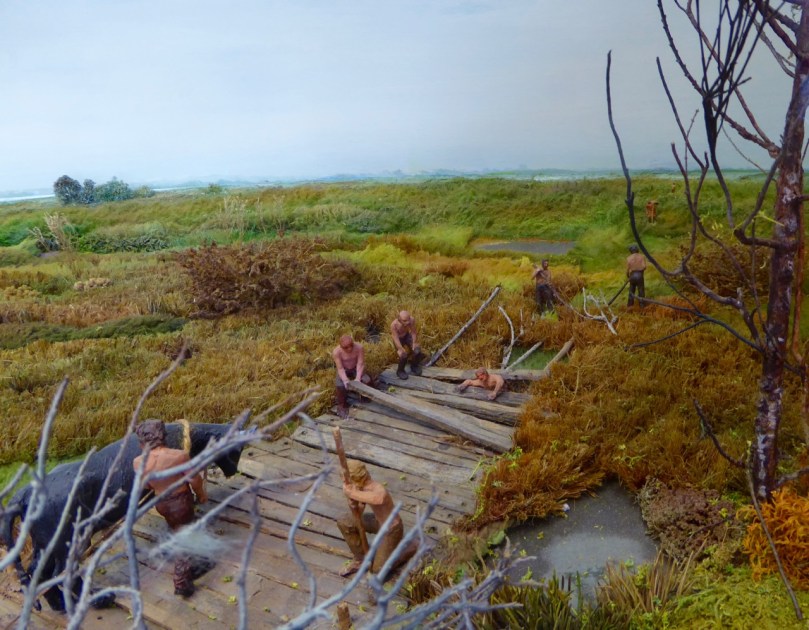
Construction

The top photo and this one are of the imaginatively assembled diorama showing how the trackway was built

Turf cutters find things in bogs all the time – last year we wrote about the extensive field systems under the blanket bogs of the Ceide Fields of Mayo. Bog bodies are the most fascinating finds no doubt, but all kinds of organic materials can be preserved in the acidic and anaerobic environment of the bog.

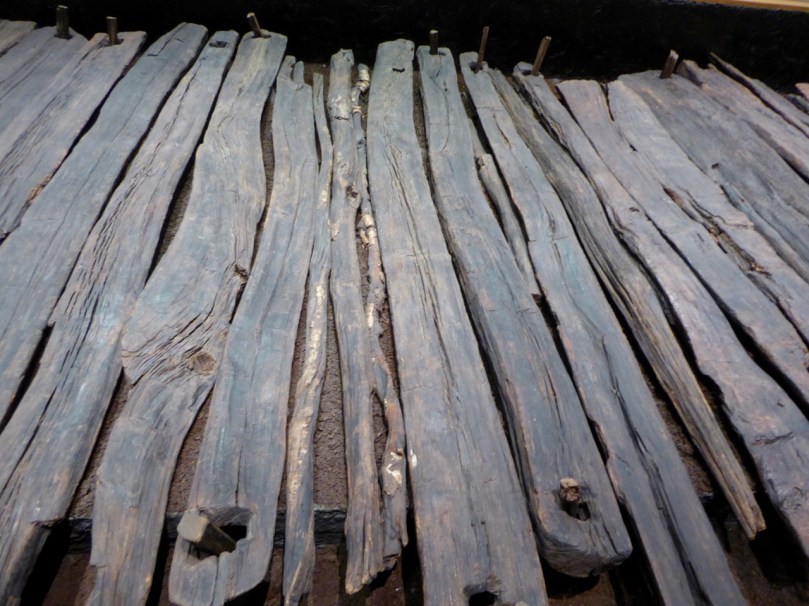
Section and Pegs 2

A long section of trackway has been conserved and is on view in a climate-controlled room

In  Corlea, County Longford, what was found turned out to be the longest and largest Iron Age trackway ever discovered. It was excavated by Dr Barry Raftery in the late 80s/early 90s and a whole section of it is conserved and on display in an attractive visitor’s centre in Corlea, which is located exactly where the trackway was found. Noel Carbery was our guide on a recent visit and we couldn’t have asked for a more enthusiastic and knowledgeable person to answer our questions and show us around. 

Visitor Centre

Building the road was a massive undertaking and must have taken hundreds of people working together. Using dendrochronology to date the oak, archaeologists determined that the trackway was constructed in 148BC, placing it in the Iron Age. It is speculated that it provided a routeway from the Shannon to the royal inauguration site of Rathcroghan in Co Roscommon, allowing wheeled vehicles to cross the bog. We can picture warriors in their chariots and full regalia following a ceremonial way to some great feast at Cruachain.

The trackway was held in place by means of wooden stakes

Ironically, its very magnitude proved its undoing – it was so heavy it sank into the bog within ten years of being built. Oak planks were laid on runners, occasionally supported by additional brushwood, and fixed in place with stakes which served to peg the boards to the underlying peat and keep them from moving around. A layer of peat on top may have helped to even out the surface.

Infill

Gaps are filled in with branches and saplings of oak, ash or birch

The builders showed considerable skill in splitting the logs to form planks and in whittling the stakes and boring the sockets, using metal axes and adzes. Gaps were filled in with round saplings  and brushwood.

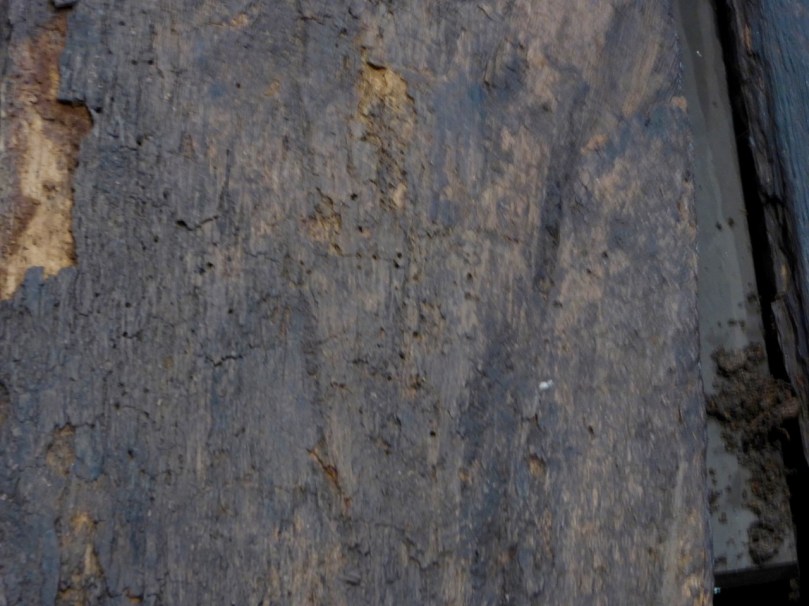
Woodworm?

Top left – 2000 year old silver birch bark, beautifully preserved. Top right – some shrinkage of the interior wood is visible. Below – is this woodworm?

The excavation and conservation was as large an effort as building the road. Once the planks were revealed they had to be kept dry, then immersed in special substances and freeze dried. Finally, they were returned to Corlea, to the new visitor centre where they are kept in climate-controlled conditions. Nevertheless, some deterioration is inevitable and on our visit we observed shrinkage of one runner away from its bark, and some signs of what looked like woodworm in one of the planks, indicating the difficult task of conserving two thousand year old timbers.

Chopping

There is lots of fascinating information at the Visitor Centre about other trackways (including some from much earlier) and about building methods. I particularly loved the little diorama that an artist had made showing the trackway under construction. We also learned a lot about the bog itself, which surrounds the Visitor Centre on all sides.

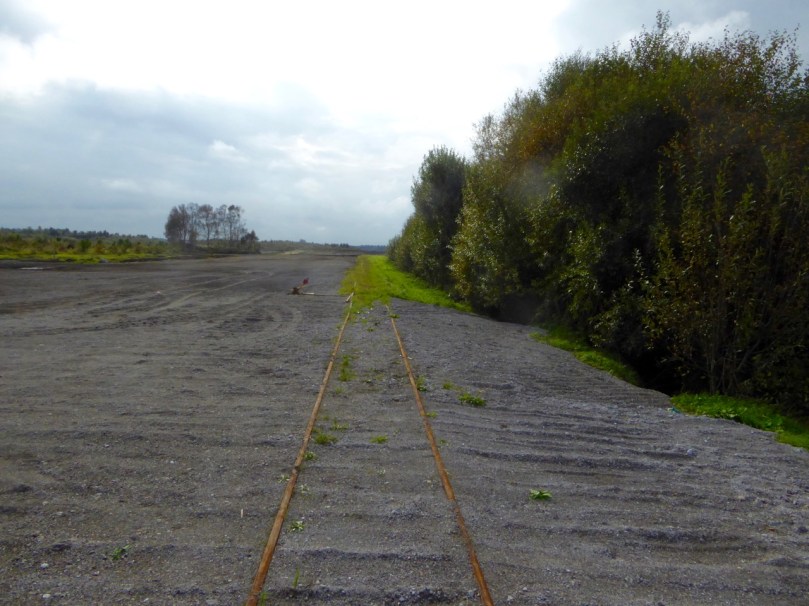
Modern Bog Trackway

Top – a modern bog trackway, in the form of narrow-gauge railway tracks. Below left – this bog is being ‘milled’ to provide fuel for a power station. Below right – a more traditional cutting to provide domestic fuel

The Corlea Trackway deserves to be much better known than it is. I highly recommend a visit if you’re anywhere close by – it’s not everyday you get to walk beside a 2000 year old royal road!

Home sweet home

Late Bloomers: Invasive, Naturalised and Native

Creeper on white cottage wall

This is my last wildflower post! You must be getting tired of my wildflower obsession by now. So, no more after this one. (Well, at least not in 2016.) The thing is, I had assumed that there was nothing left to see at this point. We are in October after all, and autumn is coming early this year after a cool and misty summer. But a walk today put flight to that notion.

Bee on Ivy Flower

Bracken undergrowthThe ivy flowers are alive with bees right now (above) and the bracken is putting on its winter coat

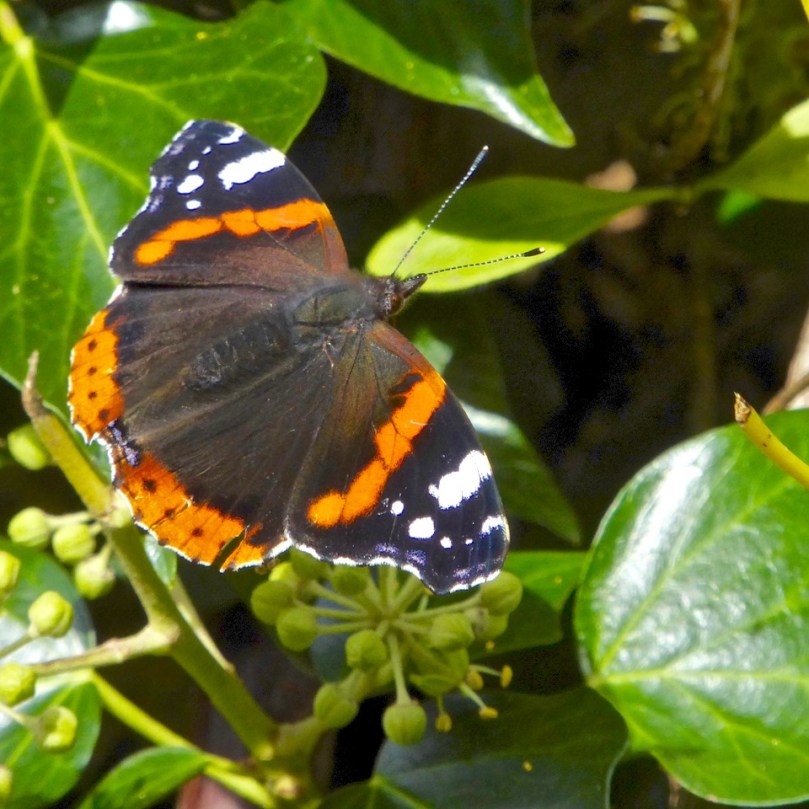
The predominant colour of the countryside is changing now as the brackens take on their winter amber-brown. The ivy is in full flower. Stand near a patch and you will be instantly aware of the hum. Our little black Irish bees are gathering while they still can and depend on this late flowering and ubiquitous plant for the last remaining nectar. Ivy honey is darker in colour and can smell a little rank, but it has a great reputation as a soothing cure for coughs and colds (especially if mixed with a little whiskey).

Bee on Ivy 2

Red Admiral on IvyThe bees and the Red Admiral Butterflies depend on this late flowering ivy

The trees haven’t quite started to turn yet, but brambles and creepers are in brilliant autumn reds. On our walk today this white cottage wall with its scarlet creeper caught my eye.

Creeper on cottage wall

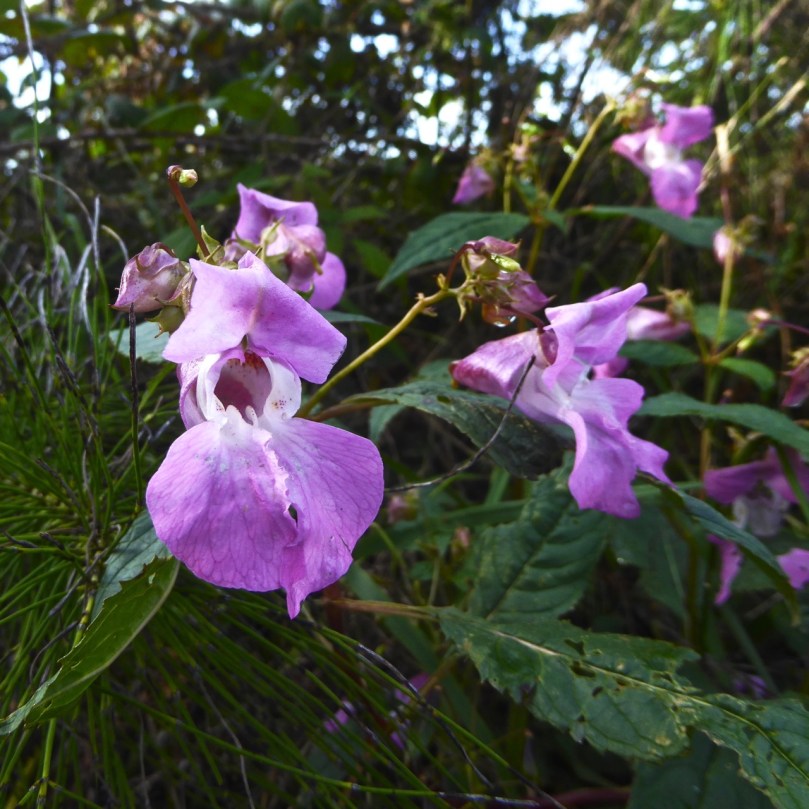
A couple of surprises awaited us today. The first one was to come across a stand of Indian Balsam. This alas, is an invasive species, introduced as far back at 200 years ago from the Himalayas. The distribution map at the Botanical Society of Britain and Ireland does not show it in West Cork, but I guess I can now say it’s here. In fact, I submitted a report to Invasive Species Ireland – anyone can do this via their Alien Watch Program. Although it is certainly beautiful, it’s a divil – read all about its negative impacts on the Invasive Species Ireland website. Among its other attributes, it has a explosive seedpod that can throw seed up to six metres!

Indian Balsam

Indian Balsam – Invasive Species Ireland lists it with Rhododendron, Japanese Knotweed and Giant Hogweed as the most damaging invasive species

So  what’s the difference between non-native plants that are labelled invasive versus this that are called simply naturalised? Although it can be a matter of debate and perception, in the main we use the term invasive for those non-native plants that spread to such a degree as to exclude native species from the habitat they favour, or cause damage to the environment or the economy. Happily, the only invasive species we encountered on our walk was the Indian Balsam. However, we did come across lots of non-native, naturalised flowers too.

Greater Periwinkle

The Greater Periwinkle – seen a few days ago on The Mizen

The first one (actually seen a few days ago) is this beautiful Greater Periwinkle. It’s not a native plant but has been here a long time. It’s supposed to have great medicinal properties, especially as a laxative and, in an ointment it’s good for, er, piles. According to Zoe Devlin’s Wildflowers of Ireland (my go-to guide) The 17th century herbalist, Nicholas Culpeper wrote ‘that the leaves eaten by man and wife together, cause love between them. Ooh – think I might head back to where I saw it…

Ivy-leaved Toadflax

Ivy-leaved Toadflax

Another non-native species is the Ivy-Leaved Toadflax – not an attractive name for a very pretty little creeper found commonly on rock walls. During the 1600s, wealthy Brits started to import Italian marble into England in the form of building material and statuary. The Toadflax came along for the ride and is now so completely naturalised that few people realise it’s not a native plant. They look wonderful on rock walls but it’s not usually necessary to plant them yourself. According to one source I read, seeds, complete with a starter-pack of organic growing medium, are usually delivered by birds.

Pink Sorrel

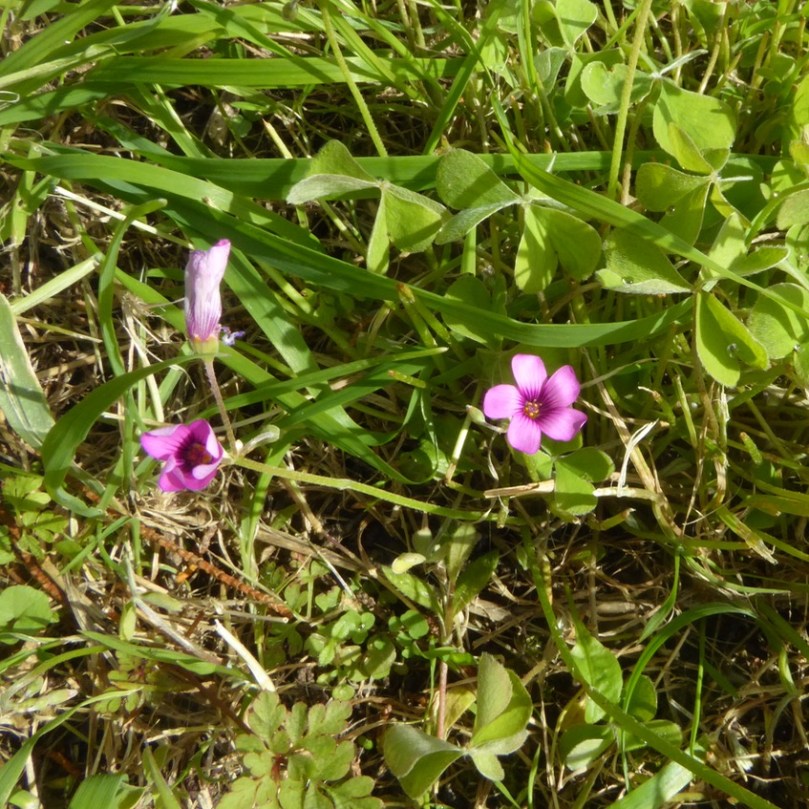
Pink Sorrel

The final non-native flower we saw today was the pink sorrel. I thought at first it was Herb Robert, which is a native plant that grows everywhere and is still blooming, but closer examination revealed  a deeper pink, a more massed growth pattern and very different foliage. It’s a garden escape, now naturalised across the south and south east of Ireland.

Fuchsia on bare branches

Actually, I suppose I also have to add the fuchsia to the naturalised non-native list, even though we think of it as the quintessential West Cork flowering shrub. It’s still hanging in there, even though most of the leaves have dropped already.

Creeping Buttercup

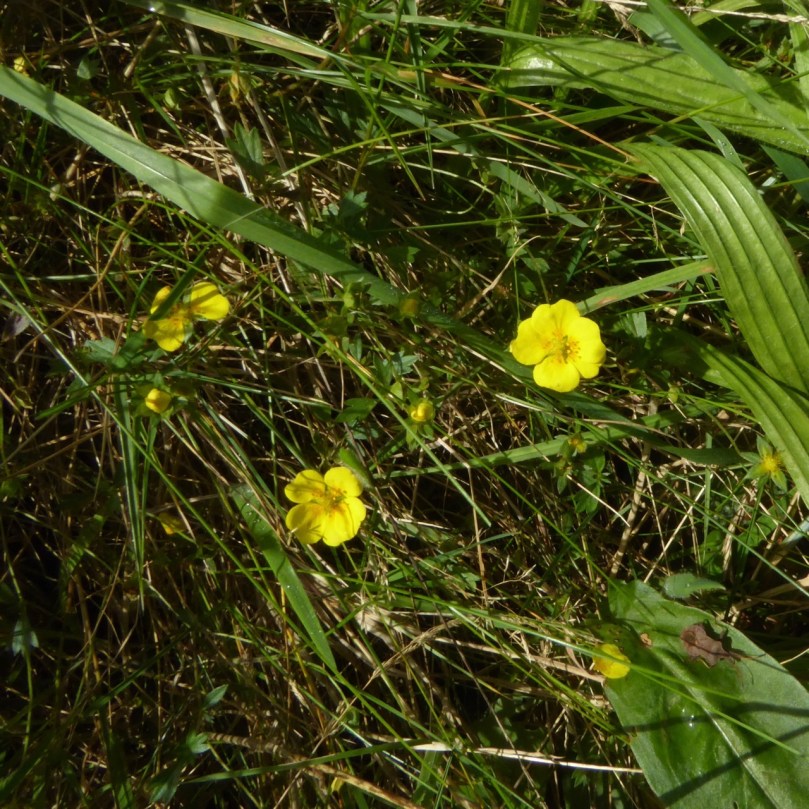
Tormentil

The native plants still bravely blooming to delight us tended to be tiny, but bright enough among the grasses, brambles and bracken to immediately catch the eye. We saw Herb Robert, Prickly Sowthistle, Tormentil and patches of what might be Sea Radish (or perhaps not). 

Prickly Sowthistle

Prickly Sowthistle

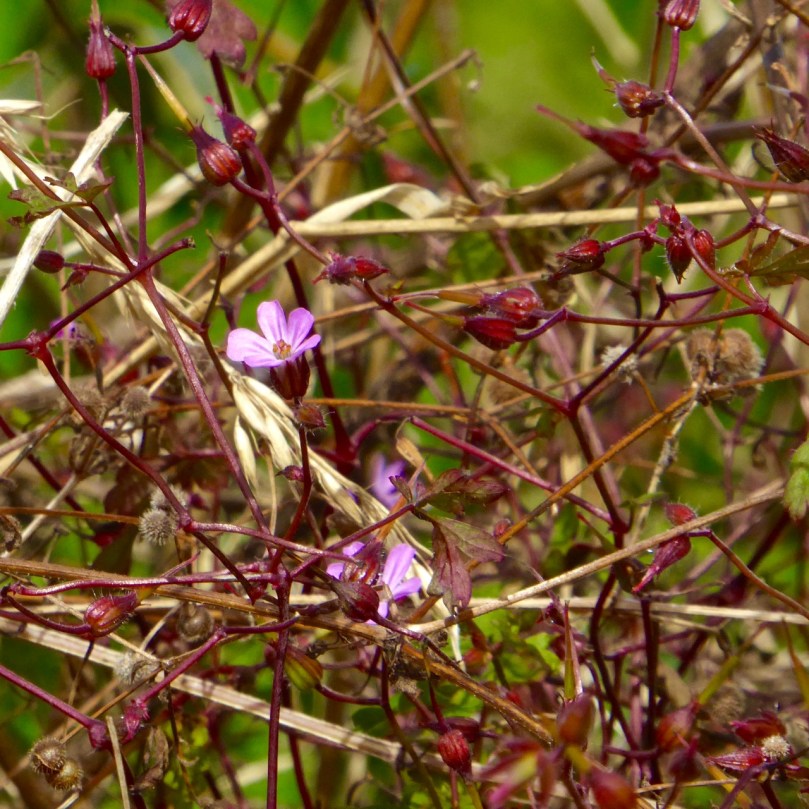
Herb Robert is such a hardy little flower – it seems to peep out and last longer than almost everything else in the hedgerows. Birds love the seeds of the Prickly Sowthistle – it has guaranteed its survival by appealing to them and providing food when other sources are fading.

Herb Robert

Sea Radish

Herb Robert (top) and possibly Sea Radish

As  a member of the cabbage family, the leaves of the Sea Radish are edible, if a little peppery. Interestingly, it normally finishes flowering in July, so the ones we found today must be in a particularly sheltered spot. But this also raises the possibility that this is a different plant. Can anyone help identify it?

Tormentil Patch

And finally the strangely named Tormentil – it sounds like it may cause pain but in fact it’s the opposite. There are all kinds of medicinal uses for this little flower and its parts, some of which relieve the ‘torment’ of pain. It also, according to this website,  imparts nourishment and support to the bowels and the fresh root, bruised, and applied to the throat and jaws was held to heal the King’s Evil. You heard it here first!

Ballycummisk Coppermine and Gabrial

Our walk today, along one of the Fastnet Trails, took us past the old Ballycummisk mine site and gave us distant views of Mount Gabriel