Foxglove Fever

Foxgloves in our own boreen

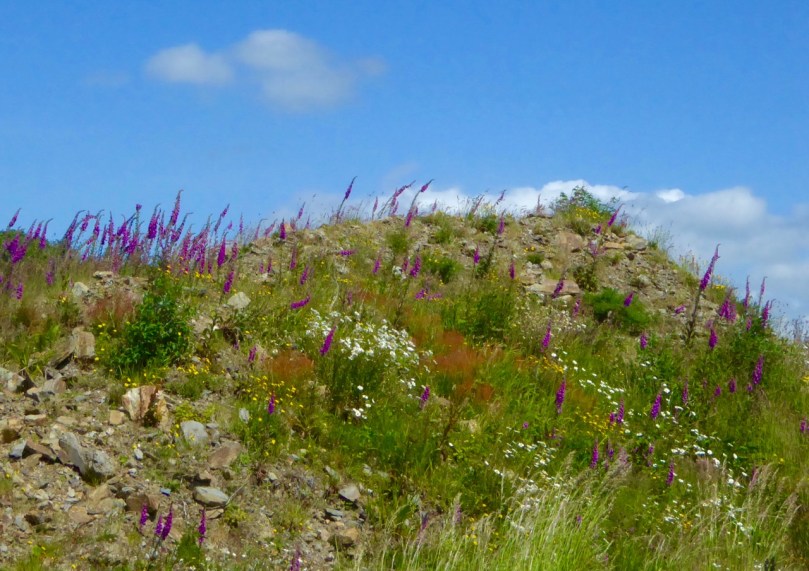
Nobody can remember a year like this one for the foxgloves. In fact, all wildflowers seem to be crowding out the boreens and invading the fields everywhere you look, including our own little patch of paradise, above.

ragged robin and oxeye daisies

Ragged Robin, Oxeye Daisies, Buttercups and Thistles

Back Road to Schull

Along the back road to Schull from Ballydehob

Last year I wrote a post, Close Reading, about the June wildflowers. The theme of the piece was that to really see what was in the hedgerows you should slow down, stop and seek.

Massed foxgloves

Not this year! This year we cycle or walk along fragrant, colourful paths that threaten to overwhelm the senses. The bounty is simply laid out before us.

Half way there

Foxgloves can have as many as 75 blooms on one stem. This one’s half way there

Foxgloves, tall and straight, are everywhere, singly or in masses. Nobody knows why it’s called foxglove, beyond the obvious explanation which doesn’t seem to quite fit the size of the flower in relation to a fox’s paw. But we do know its latin name, digitalis, was based on the idea of the flower easily slipping over a finger. It’s an important medicinal plant used in heart treatments but highly toxic if ingested raw or improperly, earning it the nicknames dead men’s bells or witches gloves.

They are a native to Ireland, quickly colonising waste ground and common near moorland. Sometimes called fairy thimbles or fairy bells here, they were associated with the little people and it was considered unlucky to have them in the house. That’s good, as they are an important source of nectar for bees and other insects.

Wasteland

This patch was cleared last year and looked barren. Here’s what’s happening now!

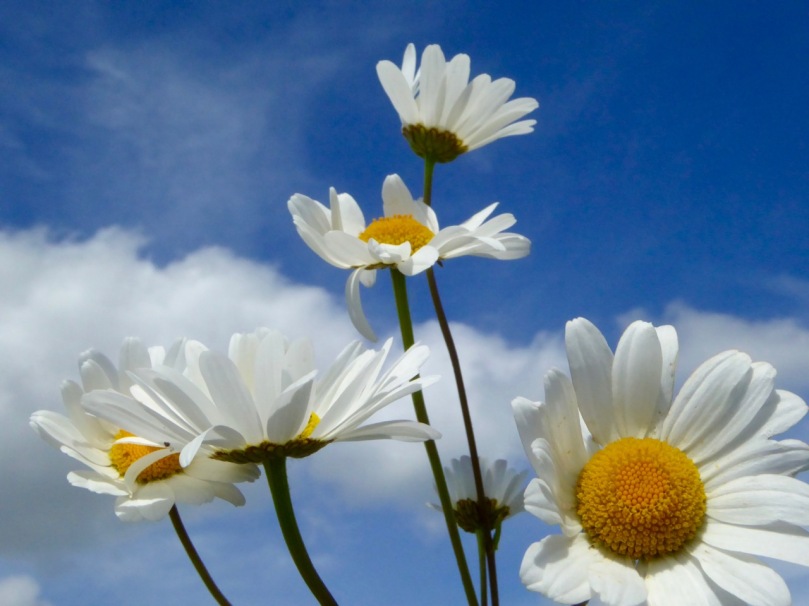
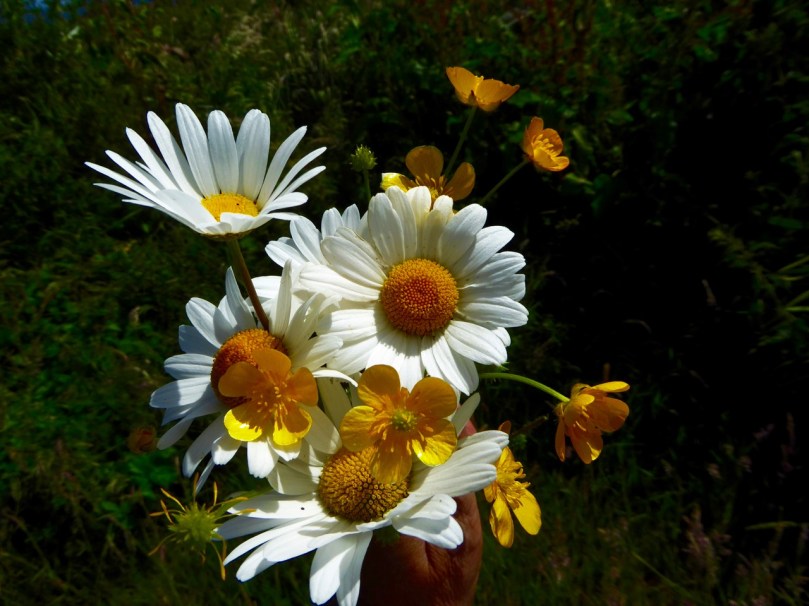
The other ubiquitous flowers of June in West Cork are the Oxeye Daisy and the Buttercup, often growing together in a riot of white and yellow. Both are native plants and, like the foxglove happily and quickly colonise any ground that’s been recently cleared. We grew up calling them dog daisies and bringing them home in great bunches for our mother, who would quietly dispose of them once we’d gone to bed – their perfume didn’t match their good looks.

oxeye daisies blue sky

And Buttercups – is there another such yellow? We held them under each other’s chins to see the yellow reflection. If it was there, it meant you liked butter. It never occurred to us to question the validity of the predictive method.

oxeye daisies and buttercups darker

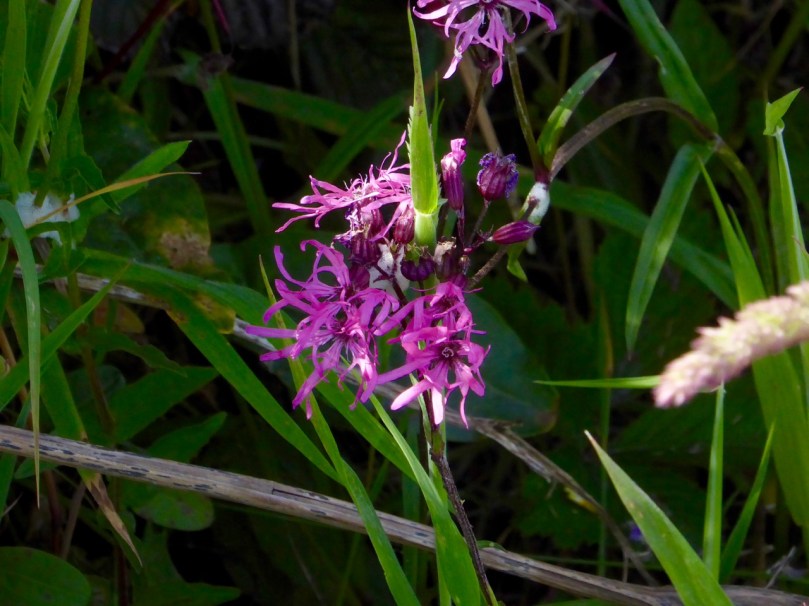
Ragged Robin – such an apt name for this native! A tiny haggard near us is full of them, much visited by butterflies. This lovely flower used to be more common, but the draining of wetlands and boggy areas has left less of their preferred habitat for them.

Ragged robin

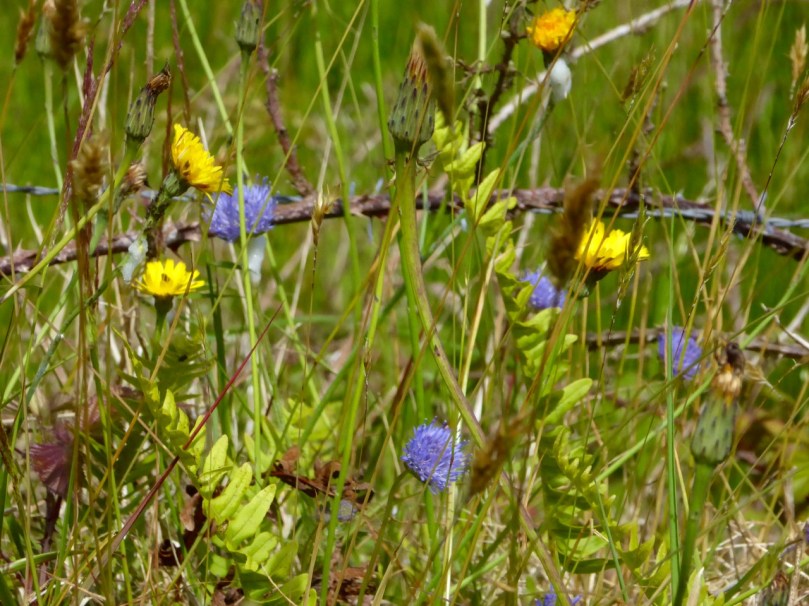
Scabious is everywhere and its brilliant periwinkle blue plays off beautifully against the yellow of the humble dandelion. The bane of gardeners everywhere, the dandelion was used in Ireland to make a tea that was supposed to be a great tonic for one of ‘consumptive habits.’ As kids, we delighted in blowing the seed heads to see what o’clock it was, and rubbing the milk on our warts as a cure. On a less charming note, we called them piss-a-beds and teased each other that touching them would result in wetting the bed.

Scabious

Scabious and DandelionsThe honeysuckle and the fuchsia are just starting to make their presence felt now. The bramble flowers and the wild roses are punctuating the hedges and the bird’s foot trefoil has taken over part of our lawn. My father waged war on anything but grass on his lawn, especially the little lawn daisies. He didn’t mind us pulling those up to make daisy chains, or to play he loves me, he loves me not.

Clockwise from top left: Birdsfoot trefoil, Wild Rose, Lawn Daisies, Campion, Foxglove and bramble flower

Of course, there is still a bit of seeking and peering involved for the tiny flowers in the hedges or fields. Speedwell, Herb Robert and Campion (below) reward the slow down and look closely approach.

Flaming June, some people call it (although the original Flaming June is actually a painting), and perhaps this year it’s a better description than ever.

colourful haggard

Into the Kingdom

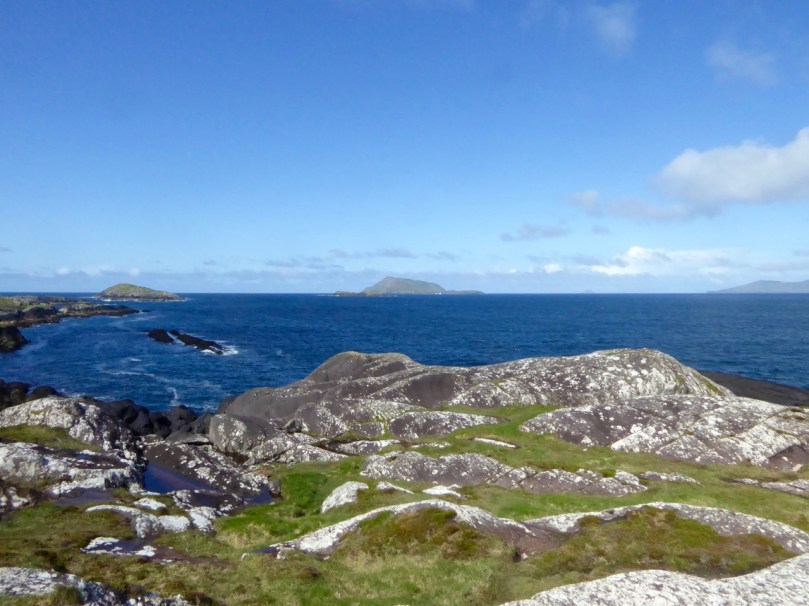
To the Skelligs

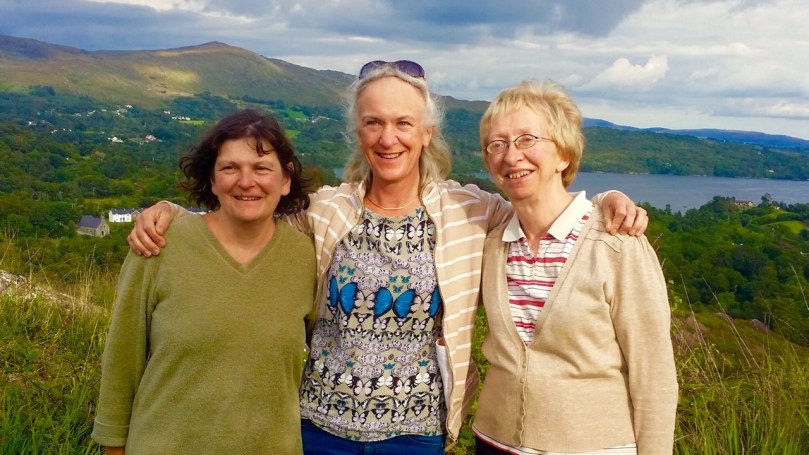
The Kingdom? No, we didn’t go to Britain – we went to Kerry. It’s always been called the Kingdom, possibly based on ancient Irish precedents, although other theories abound. Many people think it’s because of the sheer magnificence of the scenery, and I wouldn’t disagree.

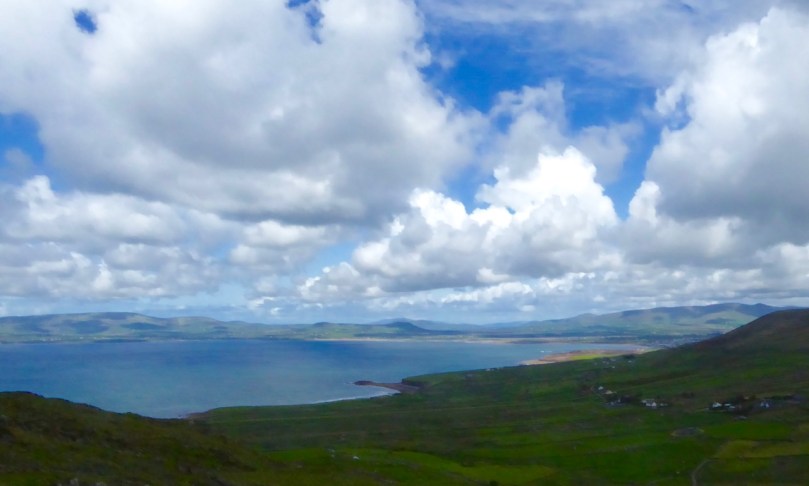
Ballinskelligs Bay

Ballinskelligs Bay. The first photograph is also Ballinskelligs Bay, with a glimpse of the famous Skelligs Islands in the background – subject of a future post, we hope!

Our journey took us on the Ring of Kerry, along the south side of the Iveragh Peninsula, by the sea. This is prime tourist territory – bus after bus passed us and every lay-by was thronged with camera-wielding tourists, including us. We came back through the middle of the peninsula, through deep valleys and high mountain passes.

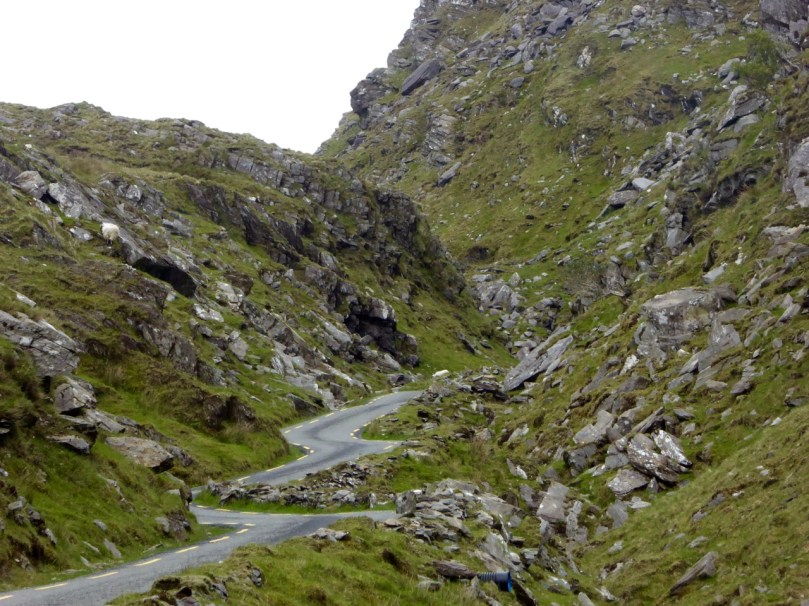
To Ballaghbeama

Not for the tour busses!

These are not roads that busses can manoeuvre through, so we had it mostly to ourselves, the locals, and a few tourists armed with small cars and good maps. I love this Iveragh backcountry. It’s where I spent my student days, conducting my research. I even recognised the place where I crashed my Honda 50 into a bog.

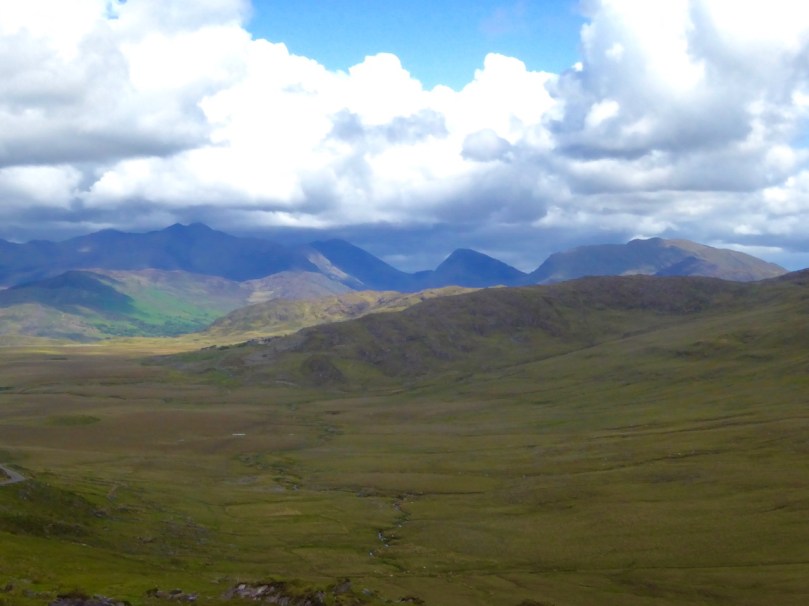
Ballaghasheen Pass

Although it seems totally mountainous, vast sheltered valleys occupy some of the hinterland of the Iveragh Peninsula  

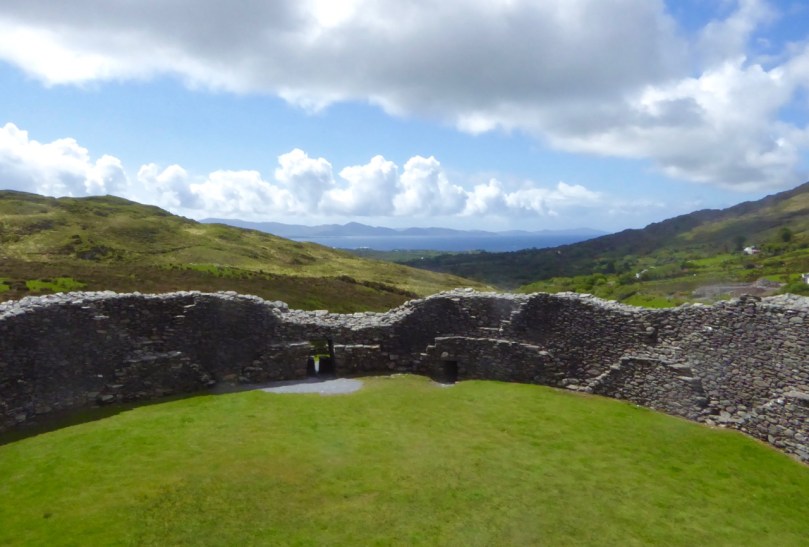
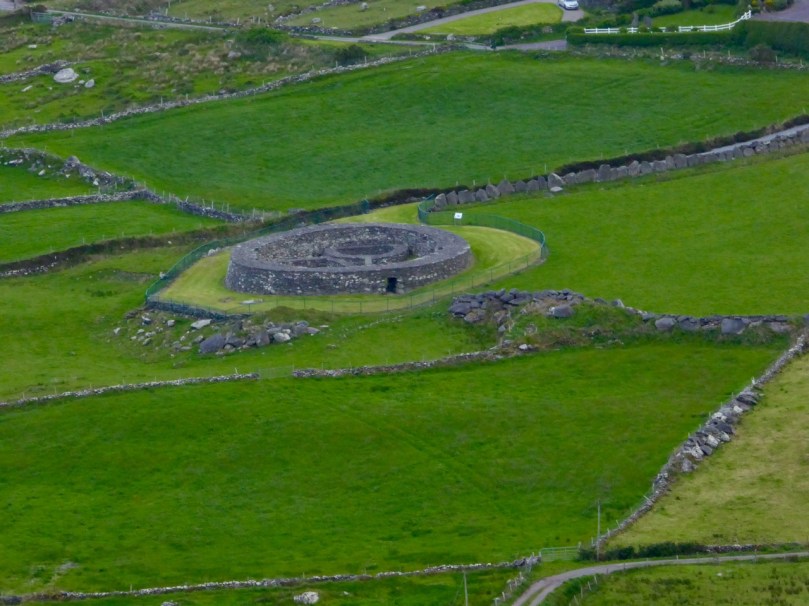
We visited two stone forts, the mighty Staigue and the lesser-known Loher, and of course some rock art. Staigue Fort is generally reckoned to be Iron Age (about 250AD), while Loher, although very similar, was built later, around the 9th Century.

Staigue Interior and outlook

Loher Stone Fort
Staigue Fort (upper), at the head of a long valley, commands views to the sea. Loher is also strategically sited with extensive views all around.

We toured Daniel O’Connell’s House at Derrynane and took the Nature Trail walk along the dunes, using the app developed by local man Vincent Hyland.

Shoreline walk

Wild flowers a-plenty on the dunes at Derrynane. Top: Sea Pinks and Sea Sandwort. Bottom: Pyramidal Orchid and Kidney Vetch

We searched in vain for the holy well devoted to Saint Crohane, patron saint of Caherdaniel – we’ll have to go back with Amanda to help us find it.

Across to the Beara

We didn’t find St Crohane’s well but when we finished our search, in twilight, this is what was waiting for us. The mountain range in the background is the Beara Peninsula in Cork

In fact, the primary purpose of our trip was to re-connect with cousins that I haven’t seen for about 45 years. The last time I saw Annie and her siblings they were kids, and we were all piled on to a donkey and cart in a vain attempt to get from Lamb’s Head to Staigue Fort. It’s a long story, but suffice it to say that the donkey came out the winner. Most of the family still live around Caherdaniel, in jaw- dropping surroundings, and we were accommodated and hosted with true Kerry hospitality.

The view from Annie's

Top: The view from Annie’s house, across to Lamb’s Head where the family grew up

Along the way we saw a house shaped like a ship (Robert has more – much more – about this!), had our first experience of bottle-feeding a lamb, and we watched Rex the sheepdog gently herd a flock of chickens into their pen for the night. We visited my cousin Betty’s grave – she died a few months ago, the heart of the family, much mourned. It was, we hope, the first of many visits, back and forth.

Abbey Island

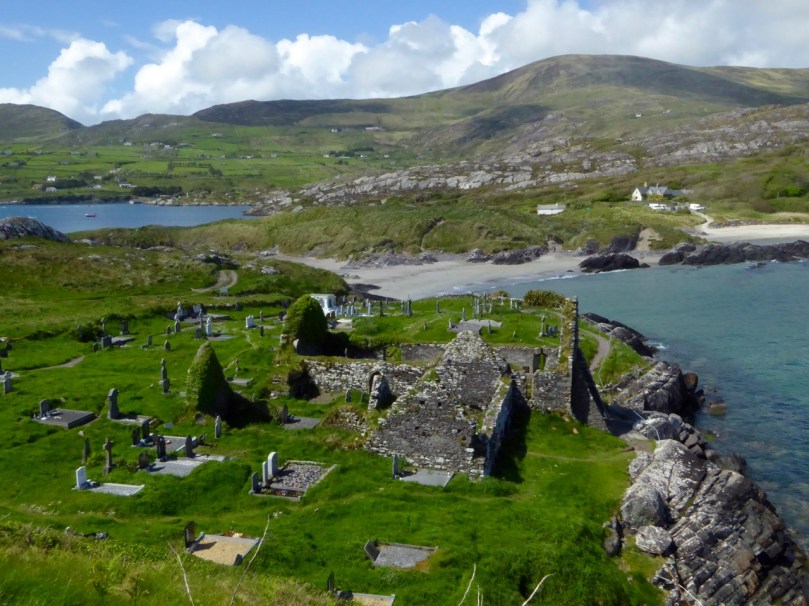
Abbey Island, Betty’s last resting place, must be one of Ireland’s most beautiful graveyards. To access it, you must walk across the sand and keep an eye out for high tides. The original monastic site was founded by St Finian in the sixth Century, although the ruined church, Ahamore Abbey, probably dates from the 10th Century.

This post is to give you a flavour for our neighbouring county and to show you why it is justly famous for its history and archaeology, but most of all for what is surely some of the most spectacular scenery in the world.

Lamb's Head to Scariff and Deenish IslandsScarrif and Deenish are the two islands out from Derrynane Bay. Uninhabited for 40 years, they are the site of salmon farms now. We walked down Lamb’s Head to get a better view of them.

Tiny green fields

As in West Cork, everywhere in Kerry you can see the traces of tiny settlements. Abandoned long ago, possibly after the famine, each field may have provided enough potatoes for one family. Now only the sheep graze peacefully.

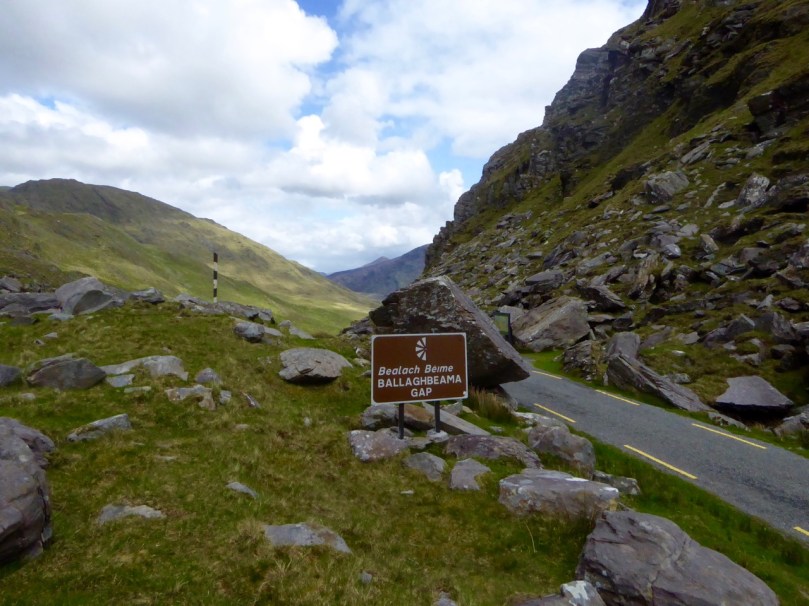
Ballaghbeama Gap

We headed home through the Ballaghbeama Gap. On the south side is Ireland’s greatest concentration of prehistoric rock art. We wrote about this in our post Derrynablaha Expedition.

Down from Ballaghbeama

Heading down towards Derrynablaha and home

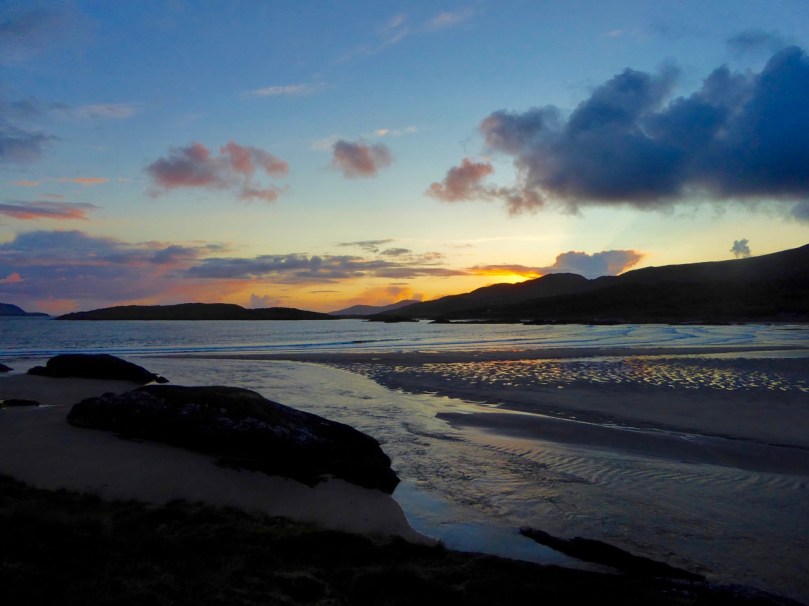
Derrynane Sunset

It was hard to leave Derrynane!

Coomkeen, Summer and Winter

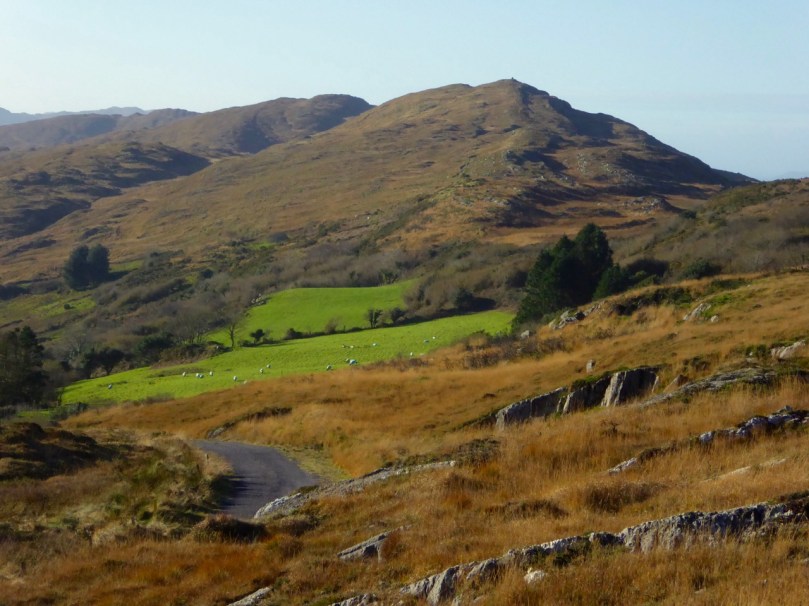
Coomkeen Road, winterThe Coomkeen Loop Walk on the Sheep’s Head is one of the most richly satisfying walks in West Cork. And that’s saying something, in this land of jaw-dropping vistas and absorbing heritage.

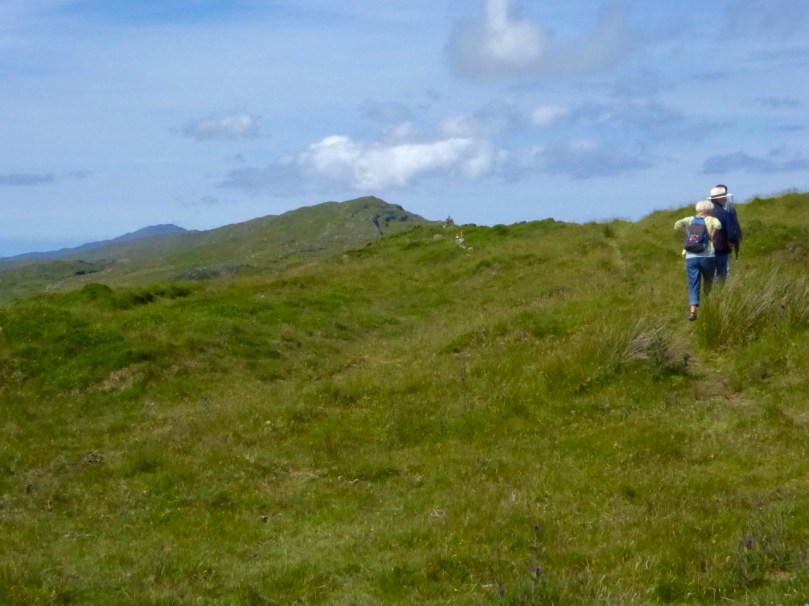
Start, summer

The start of the trail in June

We walked it in June with our friends Amanda and Peter and again in November with our friend John. We had extraordinary days on both occasions. While the November day was cloudless, the one in June provided enough scattered cloud to supply that variation in light and shade that lends such atmosphere to the West Cork landscape.

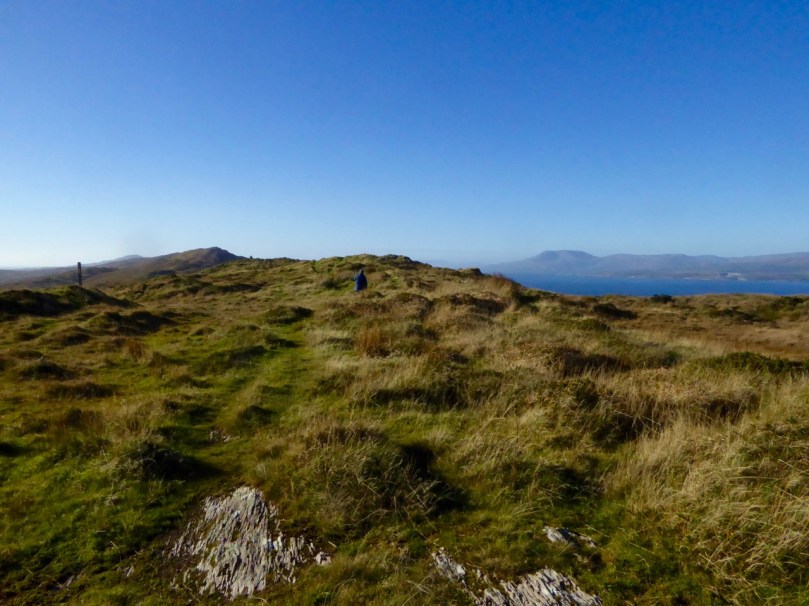
And in November

And in November

To reach the start of the Coomkeen trail, drive from Durrus towards Ahakista and turn right at the Church of Ireland (before you get to the pier). Ascend to the top of that road and you will find a parking spot and the clearly marked trailhead. There are various ways you can do this walk. The complete loop is a 7km walk that brings you along the spine of the peninsula before you drop down onto tracks and then the road back up to the parking place. Our own favourite option is to walk until you reach the little lake and then retrace your steps along the ridge. Lough na Fuilla, Lake of Blood, is so called, the story goes, because thirst-crazed cattle found it dry and attacked each other in their frenzy.

Lough na Fuilla

Either way is fairly easy, although the complete loop presents a long steep climb back to the starting point. As with all Sheep’s Head walks, be prepared for any weather, wear good boots, bring a camera and leave the dog at home. If you want more information, consult the section on the Durrus Trailhead in Walking the Sheep’s Head Way.

Winter fields on Bantry Bay

Winter fields on Bantry Bay

Perhaps you think that it sounds fine to go for a mountain hike in June – but November? Yes, it was a little cooler and a lot windier, but the November hike was just as spectacular as the June one had been. Most striking of course, is the change in colour.

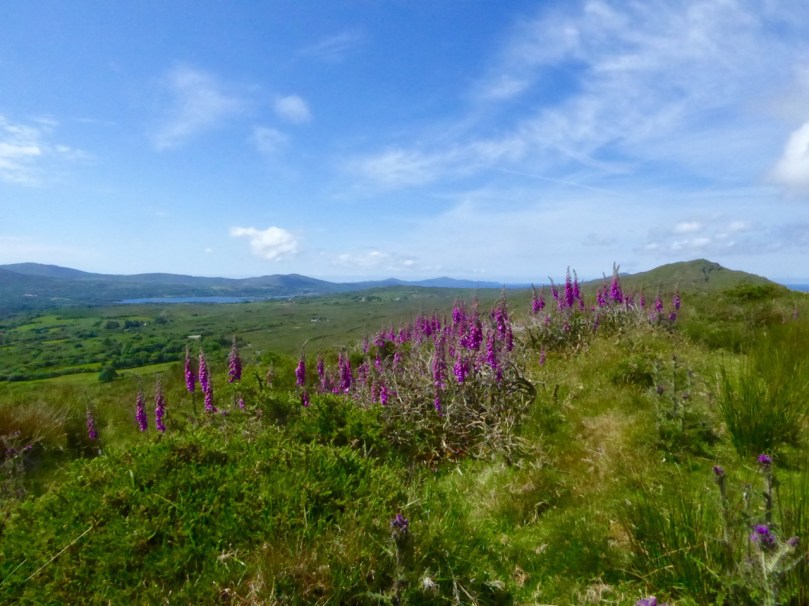
In summer the foxgloves are everywhere

In summer the foxgloves are everywhere

Because this is a ridge walk, the views are immense. To the north is Bantry Bay and Whiddy Island with its huge oil tanks. Beyond that are the mountains of the Beara, looking as wild and remote as, in fact, they are. To the south is Dunmanus Bay and the Mizen Peninsula. 

The Summit

The Summit

Amanda and Peter were able to show us an enormous standing stone on our June trip, although we missed it in November.

Rooska East standing stone

But we did visit the same ruin of a small farmhouse on the north side of the ridge. Incredible to think that someone eked out a living so high up. Although only a few broken down walls remain, the poignancy of the site comes from what was once a garden by the house, with thorn trees still bravely clinging on.

Further on are the remains of booleys – small huts used by the young people sent to mind the cattle on the high ground during the summer. Perhaps the little farmhouse was part of that endeavour.

Robert and John inspect the little ruined farmhouse

Robert and John inspect the little ruined farmhouse

Running along the ridge and crisscrossing the mountain are the remains of old stone walls. Impossible to tell how long ago they may have been first built, or how recently they functioned to separate pastures.

Walls, Summer

Walls, winterIn November the dominant colours are the blond of the grasses (called fionán, pronounced fyuh-nawn) and the amber, brown and honey tones of the bracken and heather, interspersed with the greenery of gorse and pasture. Although visually stunning, the predominance of the fionán (properly called Purple Moor Grass) and bracken have a less positive underlying meaning. They take hold where the hillside has been set on fire time and again. The fires that we often see here are supposedly to control the gorse and increase grazing for sheep, but in fact according to Birdwatch Ireland, repeat burning “has led to a loss of cover (protection) for Red Grouse…depletes moorland fauna, and can lead to soil acidification, leaching and thus soil degradation.”

In summer, it’s all green but the wild flowers provide bursts of colour.

In November, the only wild colour to be found came from a yellow brain fungus on a dead gorse trunk. Yes, it’s really called that, and is normally yellow but darkens after dry weather. It’s not feeding on the gorse, apparently, but on other fungus that is feeding on the wood. Charming.

Yellow brain fungus on gorse?

Do the walk, any time of year. Then show the photos to your friends and watch them make plans for a trip to West Cork. Or should we just keep this our secret?

Contemplating the route

All Around the Bloomin’ Heather

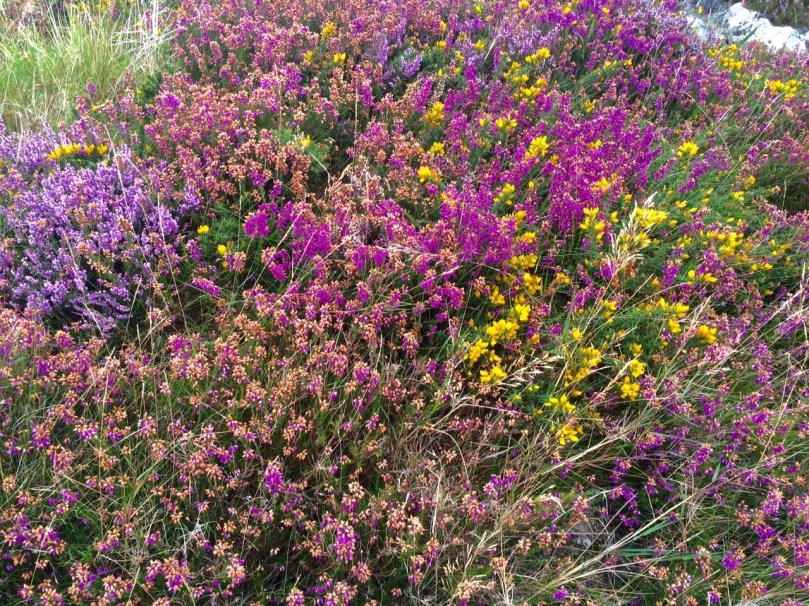
heathers CappaghglassHeather blooms here in late summer and through the autumn – not, as in the song lyrics, when “the summer time is comin’”. It washes the hillsides with a rich pink-purple that has to be seen to be truly appreciated. The gorse has a late bloom too and the combination of the purple heather and the brilliant yellow gorse is one of my favourite things at this time of year.

We’ve been walking the little roads around us in West Cork again, and observing the new cycle of hedgerow flowers since I last reported on them in June.

boreen

Inspired by my Ellen Hutchins experience, I set out to identify some of the most conspicuous of them, aided by my Zoë Devlin book and my friend Amanda.

Fuchsia Montbretia and blackberries

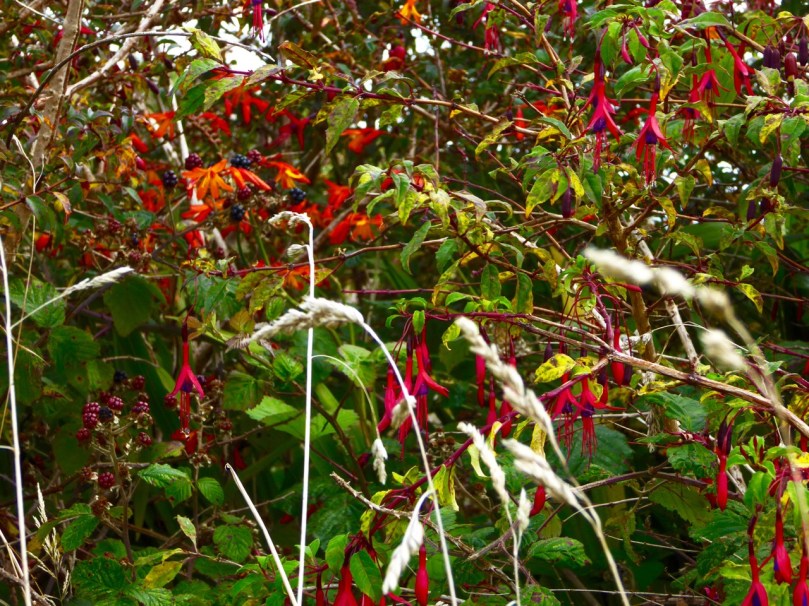
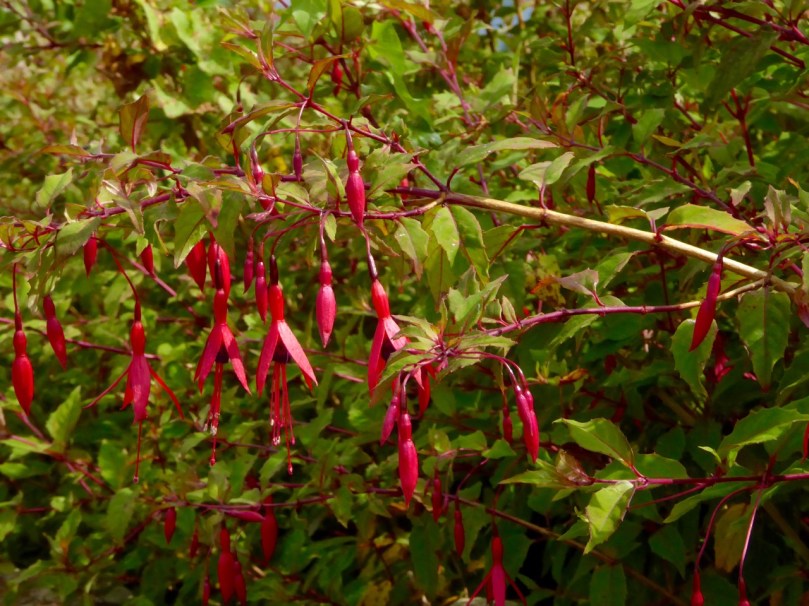
Most striking, of course, is that combination of drooping fuchsia and the gaily waving montbretia (or crocosmia) underneath. Although technically both are introduced species, together these two flowers define the south west of Ireland – it’s what we see in our mind’s eye when we think of West Cork.

Mainly montbretia

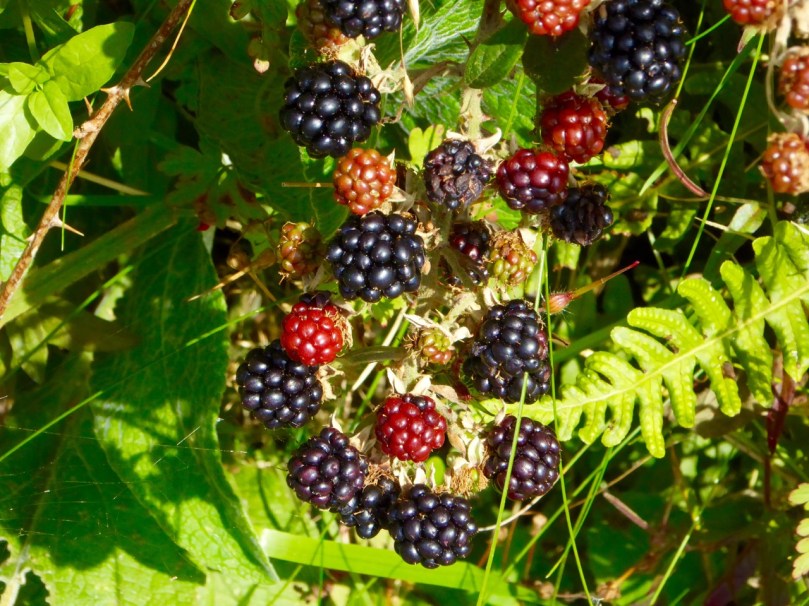
Now the berries are ripening and it’s impossible to walk without keeping an eye out for particularly juicy blackberries.

Blackberries

Although, because we’ve had a cold and wet summer, lots of the brambles are only flowering now.

blackberry flowers

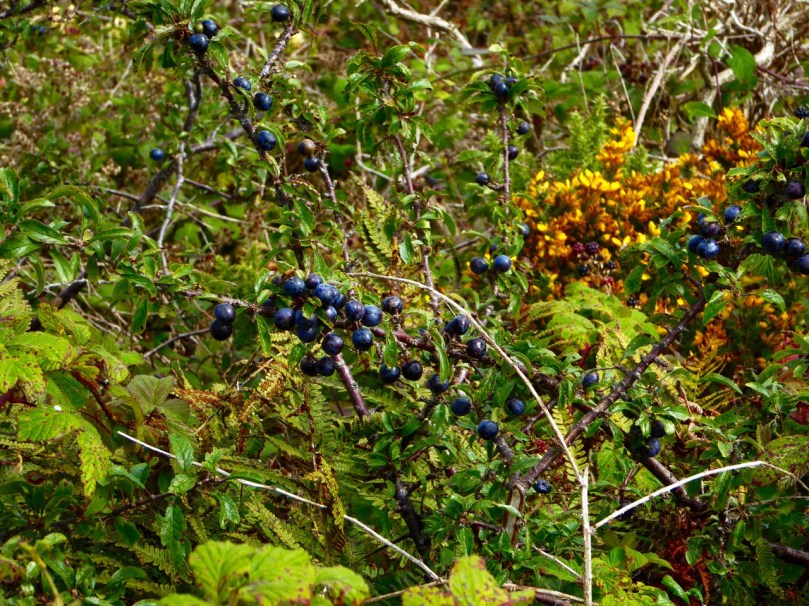
Sloes too, with their glossy blueblack skins are there for the picking. Sloes are the fruit of the blackthorn, often used for making sloe gin. They are actually a type of small plum and are considered edible after the frost. (Note to self – must try one!) Blackthorn hedges are common around here as they make an impenetrable, thorny cattle-proof fence. The wood was prized in the past for making walking sticks that could also be used as clubs, sometimes called shillelaghs. Traditionally, they were cured and acquired their glossy black colour by sticking them up the chimney.

Sloes

Whitethorn, or hawthorn, hedges and their red berries, or haws, are equally ubiquitous in September. We love to see our garden birds descend on the whitethorn trees in the winter, knowing that the haws provide an important source of nutrition for them.

Haws

The wild roses, white and pink, still sport a few blooms but now mostly the colour comes from the rose hips, the more domesticated ones huge and glossy and the wilder ones smaller and half-hidden among the brambles. I’ve never made rose hip jelly, which is apparently packed with Vitamin C, but I did pick up a delicious rose hip and apple jam at one of our local markets recently, and I’ve been enjoying it on my morning toast.

One of the dominant flowers in the hedges and ditches now is purple loosestrife. In lower-lying marshy ground it masses in a vivid amaranthine swath.

Loosestrife

We can admire it freely here, although when I lived in Canada I knew it as an invasive weed to be feared and eliminated. Researching this online, I came across this excellent article by the Examiner’s Dick Warner. As he explains it, once purple loosestrife established itself in North America…

In these new homes, without any natural ecological controls, it became invasive and threatened to choke up important watercourses. The main reason this doesn’t happen in Ireland is that purple loosestrife is kept in check by a number of specialised and very efficient insect predators.

There are known to be two species of beetle, two species of weevil and one species of moth that feed virtually exclusively on purple loosestrife and control its spread. In America, the first thing they tried when it started to become a problem was to control it mechanically, by cutting and removing it. When this didn’t work they tried chemical control, spraying it with herbicides. Not only was this equally unsuccessful, it had some very undesirable environmental repercussions. Using toxic substances in or around water is always problematic.

Then the scientists looked to Europe. They decided the moth with caterpillars that ate purple loosestrife was itself a potential pest, so they left it alone. But they imported the beetles and the weevils and they did an excellent job. It’s one of the classic success stories of biological pest control.

The grasses, brackens, hogweed and ragwort have colonised the hedges and jostle for space in the corners of the fields.

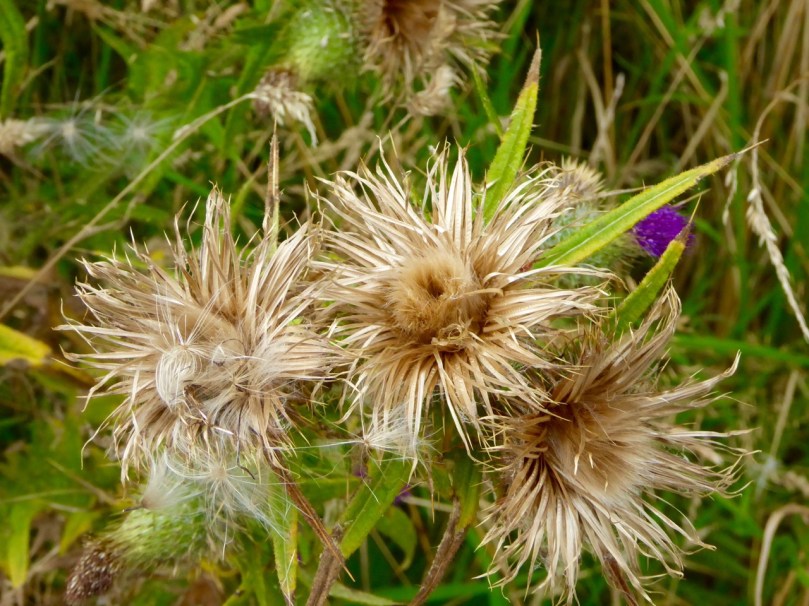
Thistles have now mostly lost their purple heads but are no less spectacular for that.

thistle seedheads

In fact seed heads of all kinds provide an ethereal fringe to many of the hedges, while the breeze in the grasses supplies the music. 

Thistles and seedheads

Knapweed (top) and ragwort seed heads

A few of the smaller flowers can be easily missed.

Common dog-violet (left) and tormentil (right)

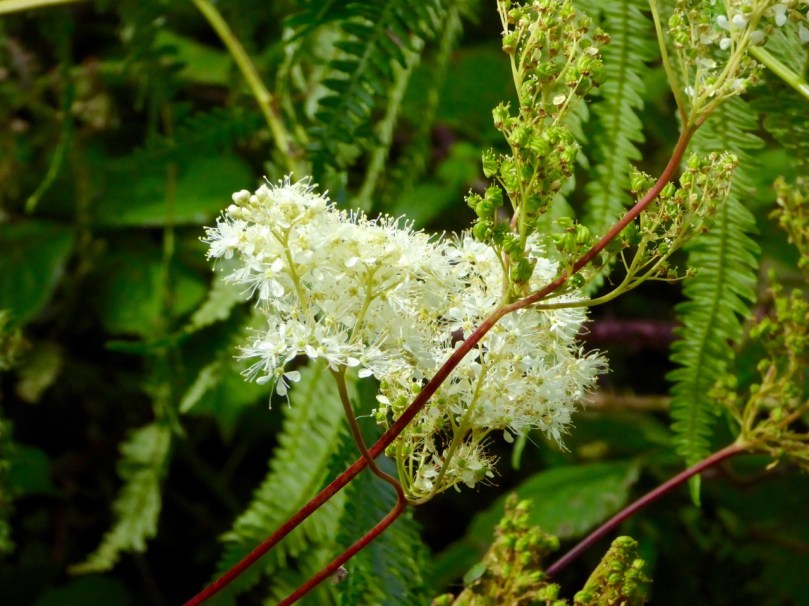
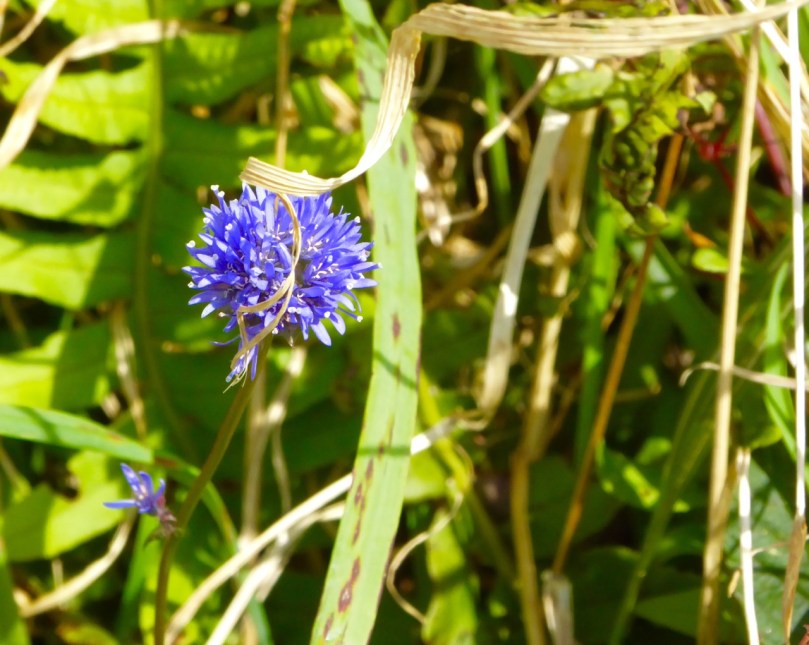
And even some of the larger ones are easy to ignore because they’re so common. But look closely…

meadowsweet

Scabious

Meadowsweet (upper) and Scabious (lower)

And here’s a handsome one – Hemp Agrimony, sometimes known as Holy Rope or St John’s Herb. Apparently you’re supposed to boil the root in ale as a purgative or to cure dropsy. Now you know.
Hemp Agrimony

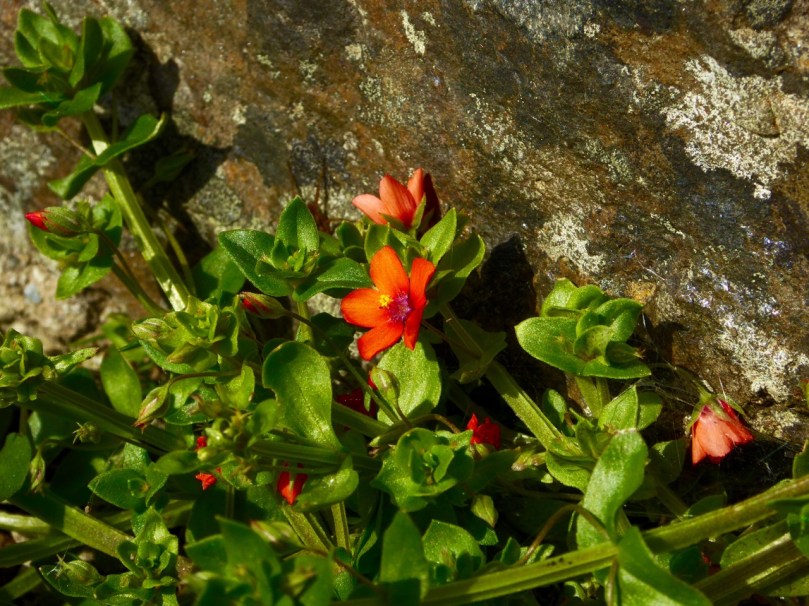
Finally, and because many of you cherish the memory of curling up with Baroness Orczy as teenagers, here’s a Scarlet Pimpernel.

Scarlet pimpernel

All the photographs in this collection, with one exception, were taken on one day, September 8. There’s more, so much more, to see and hear at this time of year along the boreens of West Cork, but I’ll leave it at that for now, except to show you whom I was sharing all this with on my walk.

FLY ON BLACKBERRY

Clockwise from top: blackberry, dog rose, rose hip, hawkbit, herb robert and a species of willowherb. All with visitors.

Oh and one more thing… there are many versions of the song Wild Mountain Thyme on YouTube, but this one struck me because of the lyrics. Subtle changes make the song both more romantic and more accurate. See what you think.

fuchsia

Ellen Hutchins: The Short and Remarkable Life of Ireland’s First Female Botanist

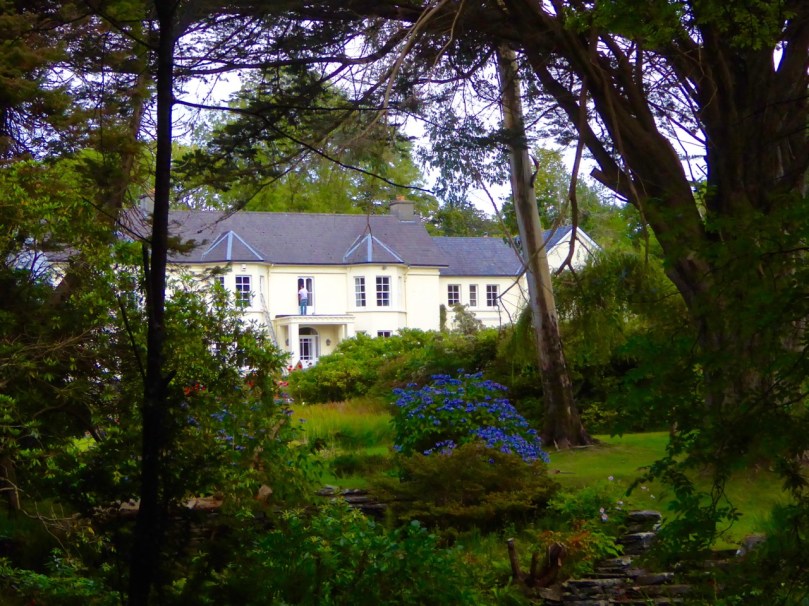
Ballylickey House, Home of Ellen Hutchins. Although the burned down, it was rebuilt exactly as the original.

Ballylickey House, Home of Ellen Hutchins. Although the house burned down, it was rebuilt exactly as the original

In West Cork, we have been celebrating the short but extraordinary life of Ellen Hutchins who died 200 years ago this year. Acknowledged in her lifetime as one of the most knowledgeable and accomplished botanists in the British Isles, she contributed specimens and drawings to the great collections in Glasnevin and Kew and kept up a lively and learned correspondence with some of the leading botanical scientists of the day. When she died, aged only 29, her name had already been memorialised: several plant specimens bore the title hutchinsia.

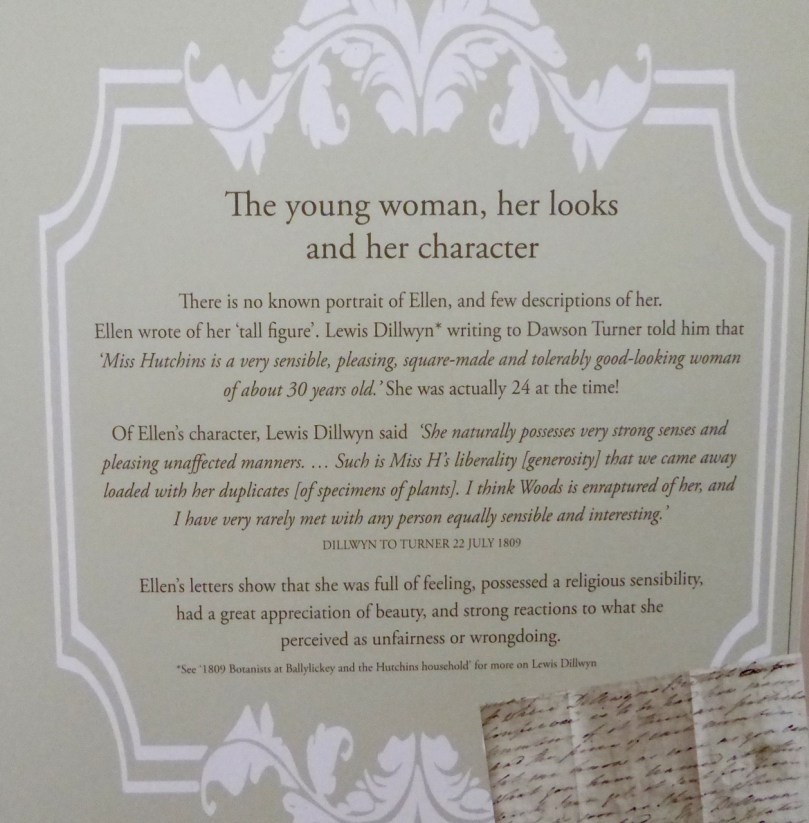
Looks and character

It’s been a fantastic week of lectures, guided walks, exhibitions and demonstrations. Jointly organised by the Bantry Historical Society, the National Parks and Wildlife Service and the Hutchins family, the week has been a marvellous success, with all the events well attended and everyone eager to learn more about Ellen. For a program of what was available, take a look at the excellent Ellen Hutchins website and the Facebook page.
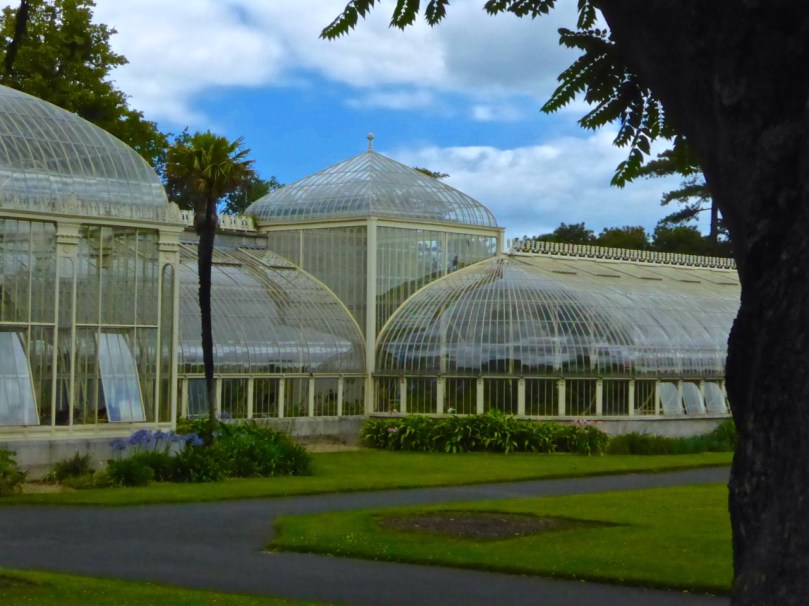
Dublin Botanic Gardens

While many of Ellen’s specimens ended up in Kew Gardens, some went to what has become the Dublin Botanical Gardens

The website contains biographical data about Ellen, her accomplishments, her family and her place in the scientific community, and a links and resources section leading to much more information. Ellen Hutchins was born in Ballylickey, near Bantry, in 1785 and spent most of her life there. During schooldays in Dublin she lived with family friend Dr Whitley Stokes who introduced her to the discipline of botanizing. She became an avid and scholarly collector of plants and seaweed, annotating, sorting and cataloguing as she went, and an expert illustrator of marine and terrestrial specimens.

Ellen identified new species of seaweeds on the shores around Bantry Bay

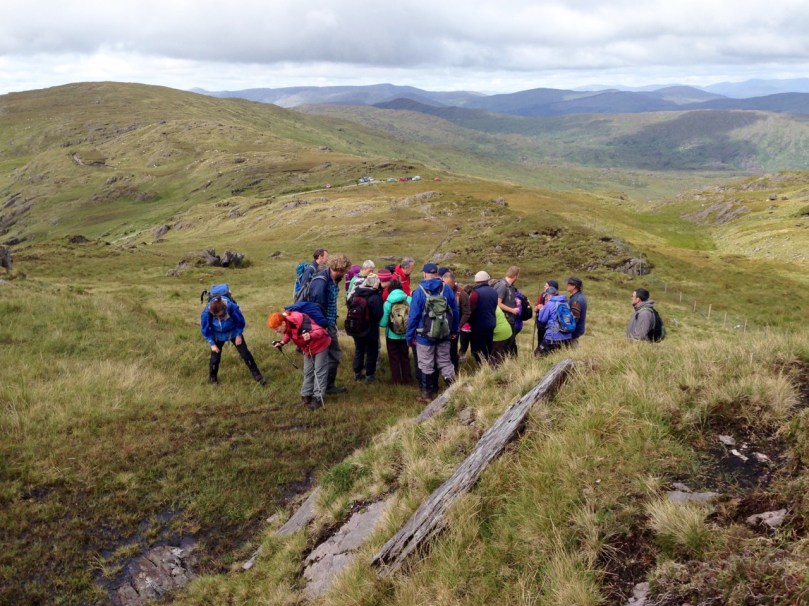
She roamed freely around the shores of Bantry Bay and took her family’s boat out to Whiddy Island. She also climbed (we’re not sure how) to the top of Knockboy, the highest mountain in Cork at 700m, identifying new species of plants right at the top. We followed her footsteps last weekend, led by Wildlife Officer Clare Heardman of Glengarriff Nature Reserve, botanist Rory Hodd, writer Kevin Corcoran, and Madeline Hutchins, great great grandniece of Ellen, who has been uncovering all kinds of new material on her ancestor.

group botany

What a day we had! It was warm and dry until we got to the top, where we were subjected to a hailstorm for form’s sake before the sun re-emerged. It was an insight into what gets botanists excited – tiny plants, apparently, with subtle variations from other tiny plants.

We were in awe of the knowledge on display, and the boundless enthusiasm of all the plant experts in the group. The highlights for them were finding some of the species that bore Ellen’s name, although Rory and Clare were particularly pleased to find a dwarf willow at the summit that had originally been identified by Ellen over 200 years ago. Along the way, we also learned a lot about the characteristics of that kind of high mountain environment, with its burden of boggy moss and highly acidic environment.

Kevin Corcoran demonstrated the properties of sphagnum moss, and showed us how soft the bog underneath us was, by probing with his staff

Knockboy descent

We felt on top of the world on Knockboy. We drove up to Priest’s Leap and only climbed the final 300m.  But how did Ellen get up there, with her long skirts and her intermittent poor health?

In Bantry House we viewed Ellen’s drawings, beautifully framed and presented and on loan from their permanent homes in Kew Gardens, Trinity College, Dublin and elsewhere. Her drawings were used by other botanists to illustrate books and were considered to be superior in their exactitude.

The Bantry Library hosted an exhibition about her life. This was curated by Madeline Hutchins and here we came closer to appreciating the woman herself, of whom no portrait exists. We learned, through her letters, of the struggles of a home life dominated by an ailing mother, a disabled younger brother and two bitterly feuding older brothers. She suffered from intermittent ill health, which often prevented her from collecting, but when she was strong her delight in her outdoors pursuits was palpable. One of her greatest pleasures was her correspondence with fellow botanists, among whom she earned true respect, especially Dawson Turner.

Dawson Turner

Dawson Turner: Although they never met, he thought of Ellen as a beloved sister and was devastated when she died

Although we were not able to join the group tour of the Ardnagashel Arboretum, we ventured down there on our own and were shown around the east section by the gracious Arethusa Greacen, herself a Hutchins on her mother’s side. The arboretum was started by Ellen’s brother and was maintained and added to by succeeding generations of Hutchins – the botany gene was obviously strongly embedded in the family!

Myrtle Woods Path

Ardnagashel colourMyrtle groves and colour at Ardnagashel

The enormous contribution made by Ellen Hutchins to science has languished in obscurity for two centuries, known only to a few experts in the field (a bit like that other West Cork woman of science, Agnes Clerke of Skibbereen). All that changed last week. West Cork, and Bantry/Ballylickey in particular, has celebrated and honoured Ellen Hutchins in style. There is talk of future events, perhaps even a summer school.

Ellen Plaque

A new plaque has been erected on the wall of the old ruined church in Garryvurcha graveyard, final resting place of Ellen Hutchins

Well done to the hardworking organisers of this exceptional festival! Thank you to them for illuminating the life of this remarkable woman and to helping us appreciate, in the most hands-on and interesting way, her enormous contributions to science.

Madeline Clare Angela

The team behind the Ellen Hutchins Two Hundred Year Celebration: Madeline Hutchins, great great grandniece and biographer of Ellen; Clare Heardman of the National Parks and Wildlife Service; Angela O’Donovan of the Bantry Historical Society. This photo was taken from the Ellen Hutchins 200 Years Facebook Page, with appreciation

Don’t forget to check out the website Ellen Hutchins: Ireland’s First Female Botanist for so much more detail than I could give you in a blog post.

Fastnet Trails: Rossbrin Loop, Part 2

Start this walk at the Rossbrin boat slip

Start this walk at the Rossbrin boat slip

A joint post by Finola and Robert

In Part 1 of this trail post, we took you around the first leg of the Rossbrin Loop trail, which we have broken into two shorter rambles.

This one is steeper and climbs higher, but it’s full of interest and you can take it as easy as you like. For this walk, you park at the Rossbrin boat slip, at the eastern end of Rossbrin Cove.

Rossbrin trails route revised Export

You won’t need off-road boots and you can take the dog. Give yourself two to three hours, depending on whether you decide to do the detour to see the wedge tomb. This is a nice, rambling pace, with lots of time to stop and chat to anybody you meet, admire the wonderful views, take lots of photographs, and maybe indulge in a picnic along the way. 

The first hill affords lovely views back to Rossbrin Castle

The first hill affords lovely views back to Rossbrin Castle

Set off north and turn right after the boat yard and then left up the hill. As you ascend you will see the remains of old mine workings to your left. The earliest records of mining at Ballycummisk refer to 16 tons of ore raised in 1814 and 42 tons in 1815. In 1838 a shaft was sunk 20 fathoms, mainly through barytes and shale. In 1857, 174 tons of ore were sold, mainly copper. By 1861 the mine was recorded as being ‘one of the best developed and very satisfactorily worked.’ The ‘Lady’s Vein shafts’ are marked on the OS 6” map. The Ballycummisk Mining Company worked the mine from 1872. In 1878 a section down to 228 fathoms was noted, but in the same year the mine was recorded as ‘abandoned’. Nowadays some concrete pillars and the slag heap are the most visible remains of the once thriving mine-site.

Old Mine site

There are extensive views over the countryside beyond the old mines

At the top of the hill, where you will find a sign to the riding stables, turn left and head through the townland of Ballycummisk with pleasant country views to the west. Once you get to the crossroads you may see a little wayside stall selling vegetables on the honour system. If you’ve brought a backpack, this would be a good place to stock up on carrots, potatoes, or yellow tomatoes.

Beware of the bull

Wayside StallAt this point, we recommend a detour to see the Kilbronogue wedge tomb. Turn left and walk until you reach the next crossroads. Go straight through the crossroads and a short distance on you will see a lay-by on the right side of the road. Step over the wire and find your way up the path that has been generously maintained by the landowner. In early summer this path is awash with ox-eye daisies. It meanders up through a birch plantation until you emerge in a small clearing to find the wedge tomb.

Path to wedge tomb, Kilbronogue

Like most wedge tombs, this one is orientated to the west – take a look at our post Wedge Tombs: Last of the Megaliths for lots of information on this class of Bronze Age monuments. This is a lovely example, and we are grateful to Stephen Lynch for ensuring its wellbeing and providing access to it.

Kilbronogue Wedge tomb

Retrace your steps to the second cross roads and turn left up the hill, turning right when your reach a T junction, and then take the left fork at the Y. This is a pleasant country road – farmland stretches on either side, with ruined or abandoned houses dotted here and there among the neat modern farmhouses with their colourful paint and bowery entrances.

In spring and summer the hedgerows are heady with wild flowers of every variety.

Turn right again at the next junction and you will come shortly to the beautiful and atmospheric Stouke burial ground. Although we have read that there are the ruins of an old church in this graveyard, we have never found it. But there are other items of great interest here, the traditional burial place of many island dwellers. In the centre you will find the grave of two priests, Fathers James and John Barry, who were parish priests here during the time of the famine. According to the Historic Graves listing for Stouke  “Sarah Roberts who is buried here in this tomb, died at an early age… worked as a housekeeper for the parish priest… When his sister died and was also buried here, Sarah’s coffin was in perfect condition. She was reburied with the parish priest even though she was not a Catholic. People of the parish come to pray at this tomb on the 24th June at John’s Feast Day.”

A little way to the right of this grave is a rock, partially covered by heather, that contains a bullaun stone, known locally as the Bishop’s Head. Once again, according to the Historic Graves entry, “The bishop was confirming children in a nearby church. Red coats came in and beheaded the bishop.”

Amanda photographs the bullaun stone

Amanda photographs the bullaun stone

There are offerings of coins in jars at the bullaun stones, and at the priests’ grave. Leave one too, along with a prayer or wish for a loved one.

Bishops Head bullaun stone, Stouke Graveyard

Bishop’s Head bullaun stone, Stouke Graveyard

From Stouke the road drops down to a cross roads. Go straight through and start to climb again up to Cappaghglass. Ignore the left turn and carry on until you reach a Y junction. Take the right fork, pass all the ripe blackberries (if you’re able) and as you crest the hill the whole of Roaringwater Bay is laid out before you. Few views in the country can equal this one for sheer scope: all the islands in Carbery’s Hundred Isles come into view, The Baltimore Beacon gleams on its rocky outcrop to the east, while the Fastnet Rock sits sturdily on the horizon, and the Mizen Peninsula stretches away to the west.

Roaringwater Bay from Cappaghglass

Descend the steep hill, turning right at the T junction, and meander down to Rossbrin Cove.

Shaft of Sun

Now a peaceful boat harbour, Rossbrin in the 15th Century was the domain of Finghín O’Mahony, the Scholar Prince of Rossbrin, a man who used the riches extracted from taxes paid by Spanish and French fishermen to fund a centre of learning here in Rossbrin where scribes and learned men wrote and translated books which still exist today. The ruined section of the castle still standing gives little evidence of the erudite court that was once respected throughout Europe. A fish ‘palace’ for processing pilchards once provided employment to the people of Rossbrin, but little trace remains of it, or the holy well at the shore that once attracted those seeking cures for their ailments.

Kayaks at Rossbrin Cove

If the weather’s warm and the tide’s in, this is a good spot for a dip. No? Well, a photograph, then. 

We hope you’ve enjoyed the two Rossbrin Loop walks – do let us know how you got on.

Ballycummisk Mine

Ballycummisk Mine